
A long driveway creates more than a route to the garage. It shapes the first impression of your entire property and builds anticipation before the house comes into view. The best **25 long driveway landscaping entrance ideas** coordinate the surface, layout, borders, plants, lighting, and entry features as one complete design. Trees can strengthen perspective, curved beds can soften large paved areas, and pillars or gates can establish a clear threshold. Materials also matter. Gravel feels relaxed and rural, pavers add pattern, while concrete and asphalt provide a clean foundation for layered planting. Thoughtful landscaping helps the driveway feel connected to the architecture rather than separate from it. Explore these practical **25 long driveway landscaping entrance ideas** to create a welcoming approach with lasting curb appeal. ()

1. Tree-Lined Gravel Driveway Entrance
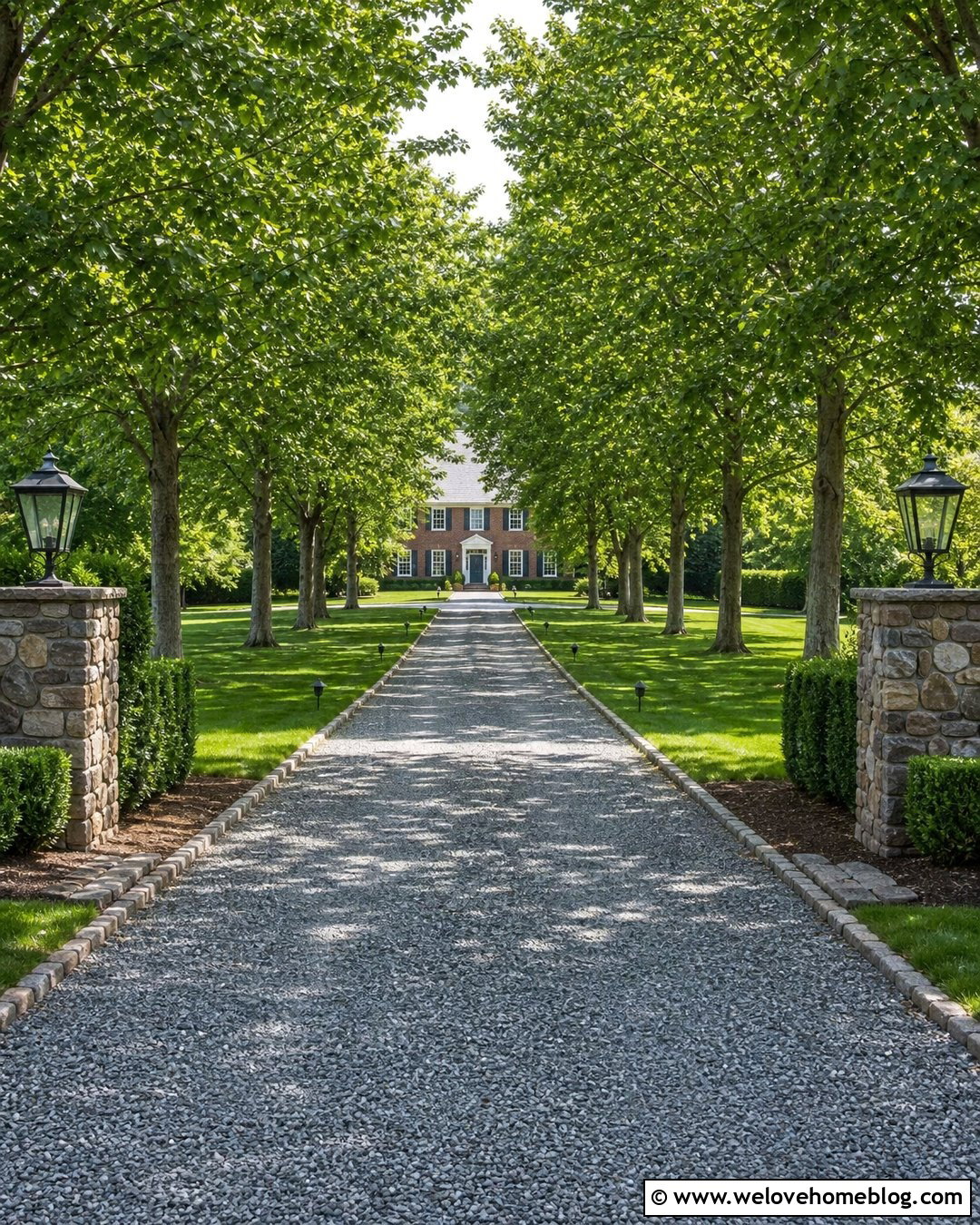
A straight gravel driveway lined with evenly spaced trees creates a strong sense of arrival. Use compacted gray crushed stone for a stable, neutral surface, then frame the entrance with substantial fieldstone pillars. Continue the formal rhythm using deciduous shade trees planted far enough from the driveway to allow comfortable vehicle clearance as they mature. A low hedge beneath the trees can define the edge without making the approach feel crowded. Add broad lawn strips between the gravel and planting beds to keep the long layout open. Lanterns mounted on the entrance pillars establish a focal point, while discreet ground lighting can repeat along the route. This complete look suits colonial, Georgian, and traditional country homes particularly well. ()
2. Curved Asphalt Driveway With Native Landscaping
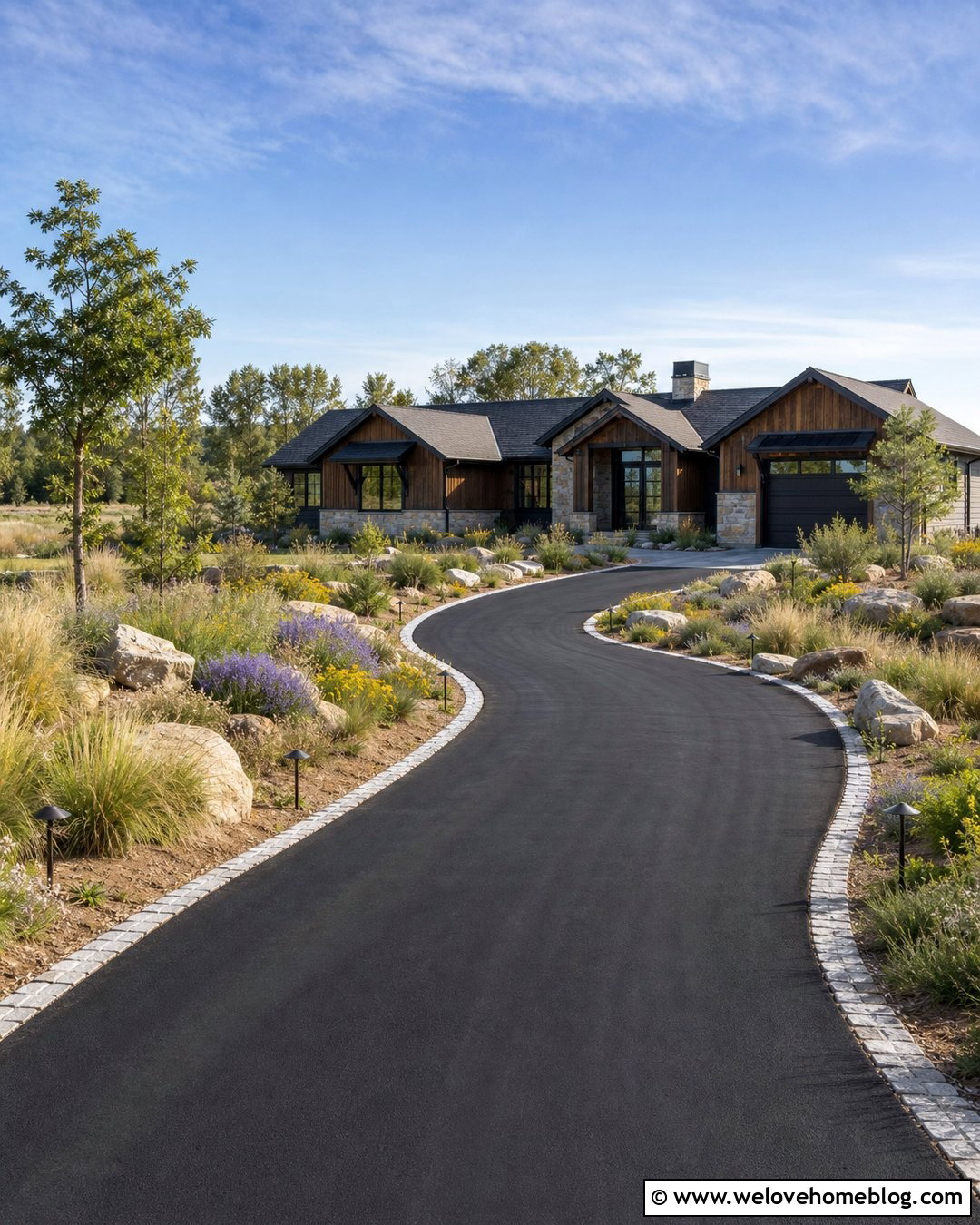
Does a long asphalt driveway feel too plain or rigid? A gentle curve can make the journey more interesting while revealing the house gradually. Choose smooth black asphalt and soften both sides with sweeping beds of native grasses, flowering perennials, and groups of local shrubs. Large boulders placed near the entrance add scale and help connect the dark surface to the natural setting. Use a flush cobblestone edge to create a clean transition without introducing a raised obstacle. Instead of planting matching rows, arrange vegetation in loose drifts that follow the driveway’s curve. Low path lights can guide vehicles without dominating the daytime view. This relaxed entrance works beautifully with ranch, woodland, and contemporary rustic homes surrounded by open land.
3. Concrete Driveway With Brick Pillars And Flower Beds
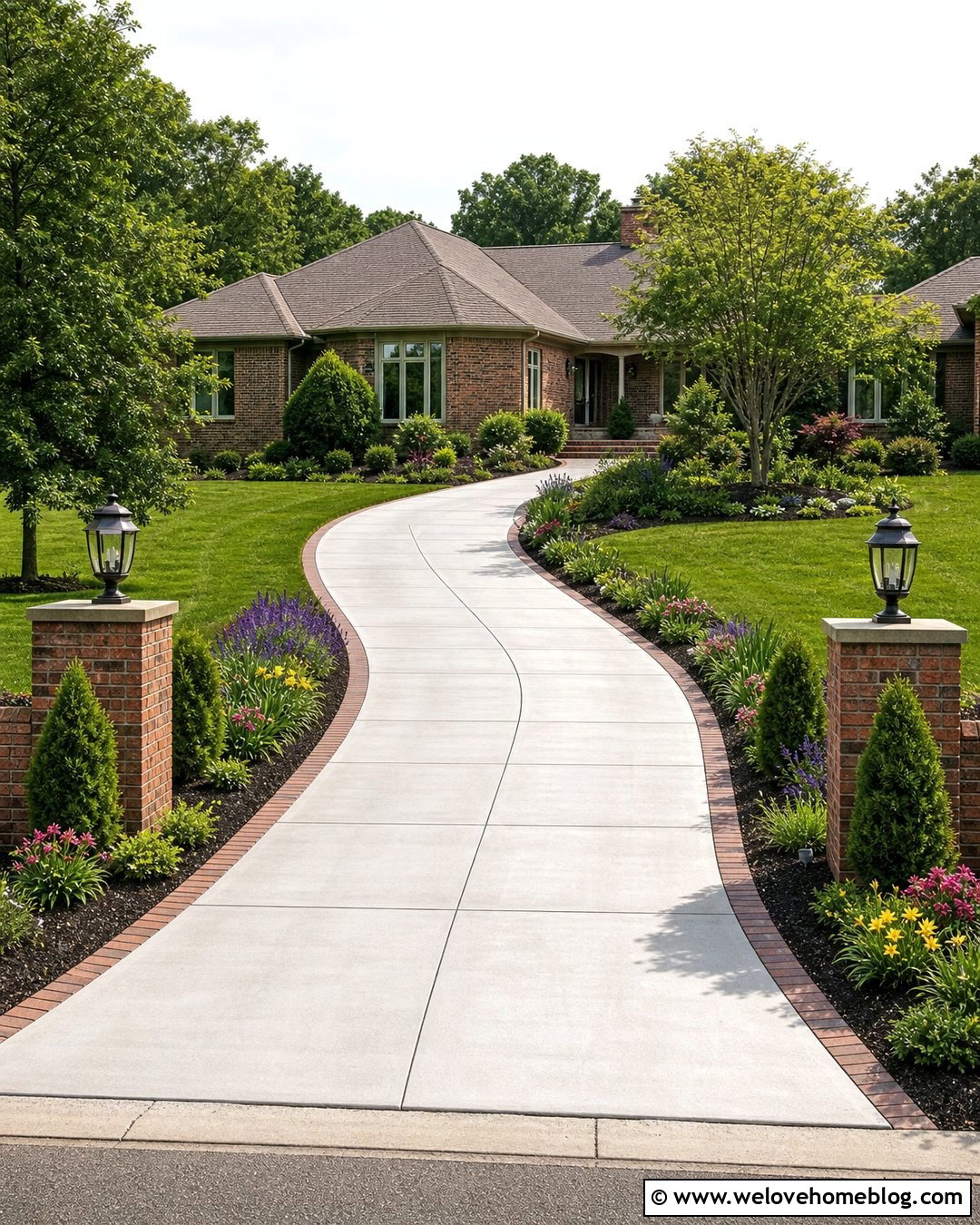
Warm brick pillars can transform a basic poured concrete driveway into a polished residential entrance. Start with light gray concrete divided by evenly spaced control joints, then use a curved layout to reduce the visual length. At the street, install brick pillars that match details on the house. Add wide planting beds around their bases, using compact evergreen shrubs for structure and colorful perennials for seasonal interest. A narrow brick ribbon along both driveway edges ties the pillars to the surface and provides a finished transition into the lawn. Keep taller plants behind lower flowers so drivers maintain clear sightlines when leaving the property. The coordinated materials make this design a natural match for brick ranch, traditional, and colonial homes.
4. Pea Gravel Driveway With Split-Rail Fencing
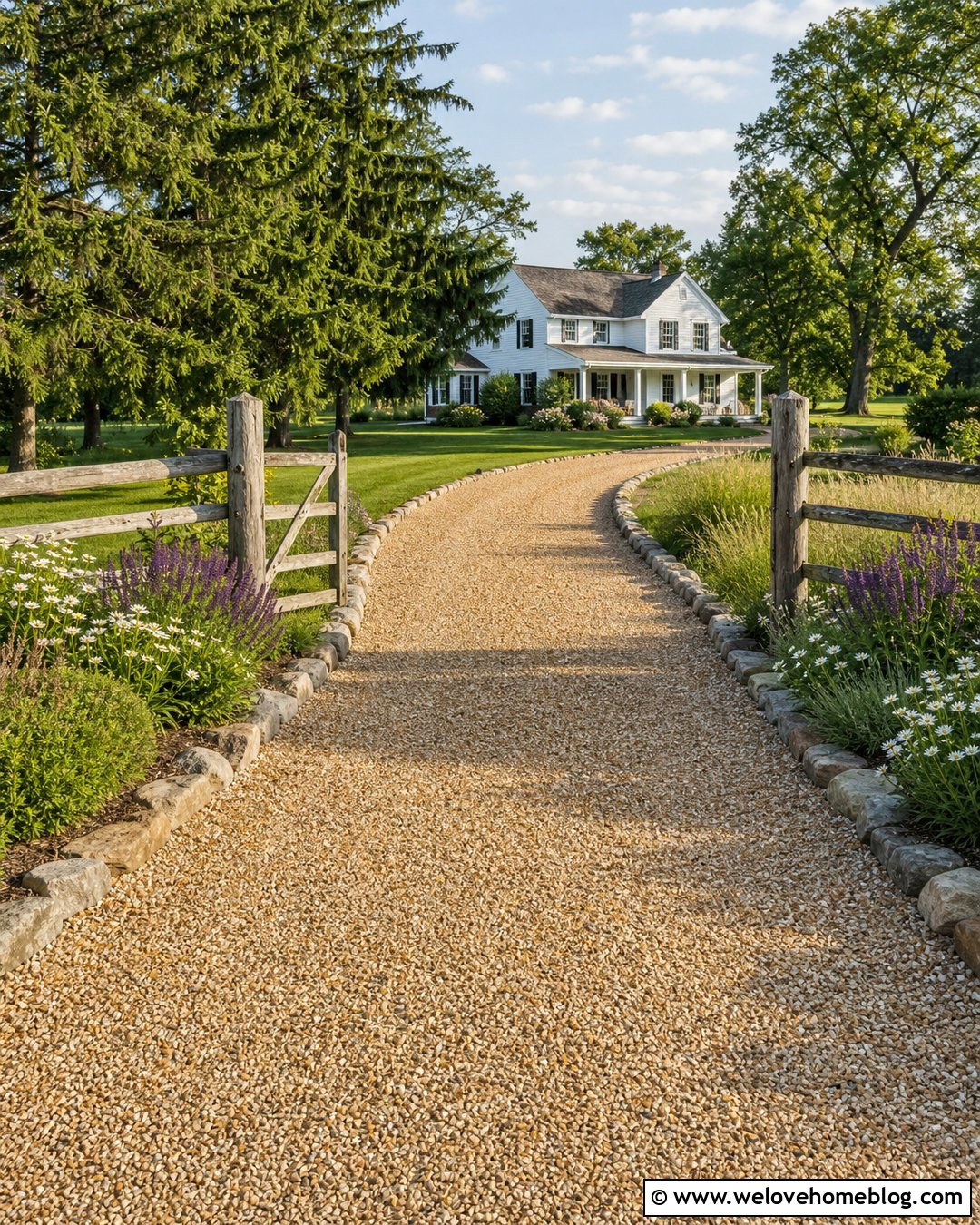
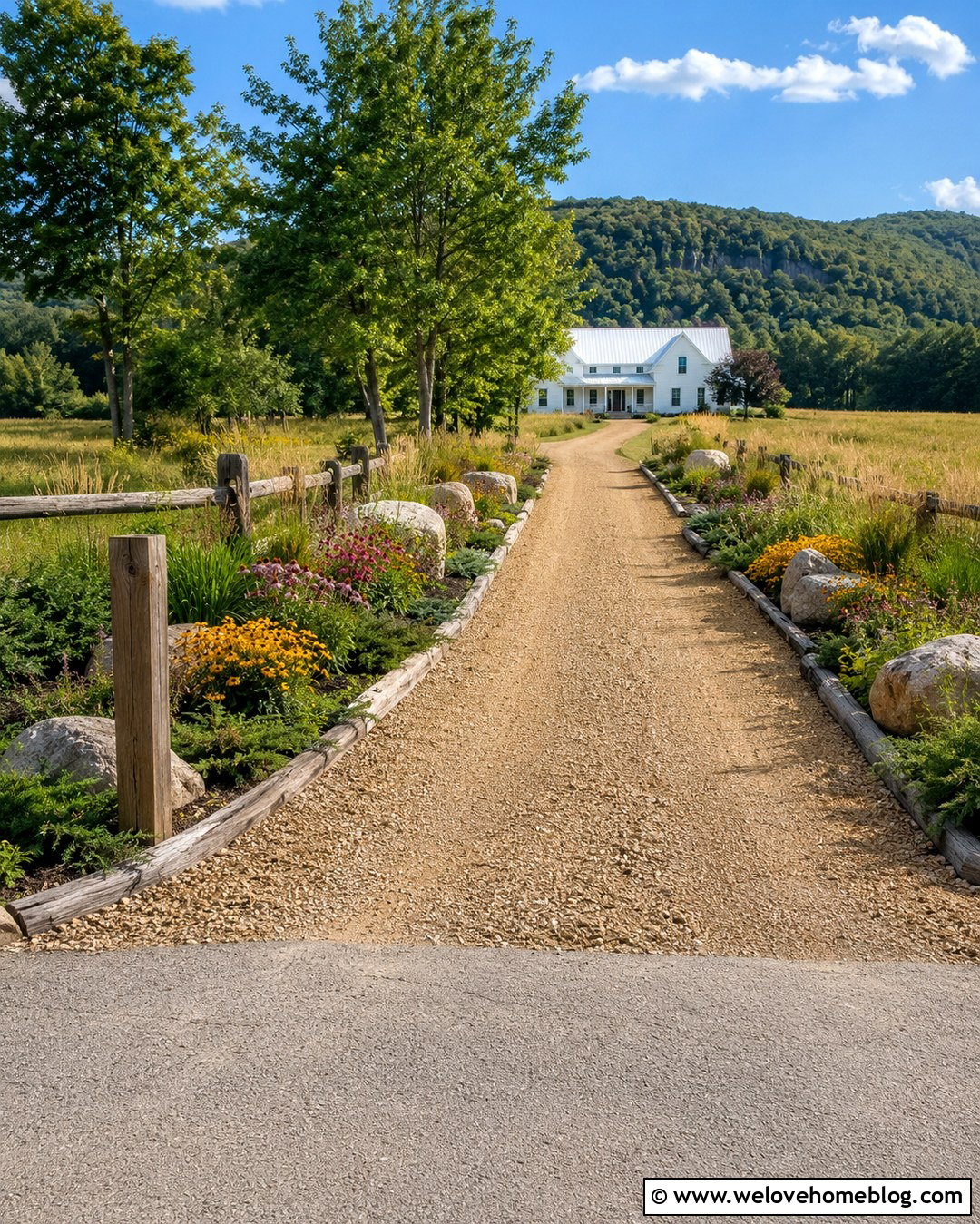
Picture a quiet country entrance where warm pea gravel winds between meadow planting and weathered wood fencing. A long, gently curved driveway made from compacted golden pea gravel gives the property a relaxed rural character. Run split-rail fencing along selected portions rather than enclosing the entire route, allowing views of the yard and surrounding landscape to remain open. Near the road, widen the planting beds with ornamental grasses, daisies, salvia, and low spreading evergreens. Natural stone edging helps contain loose gravel while reinforcing the informal look. A simple wooden gate and understated address marker can complete the entrance. This combination feels especially appropriate for farmhouses, barns, equestrian properties, and country cottages with generous front yards.
5. Paver Driveway With Formal Hedges And Gates
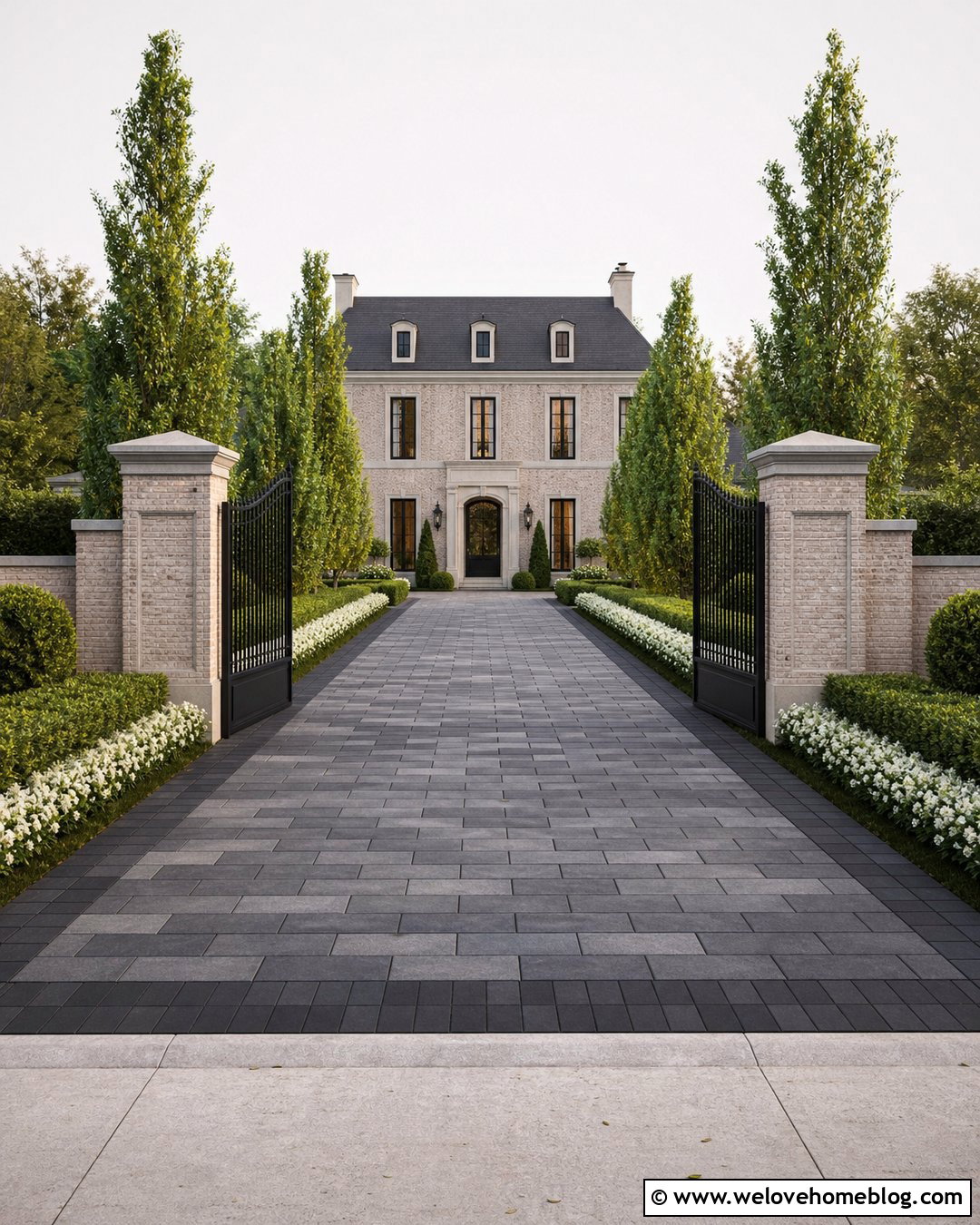
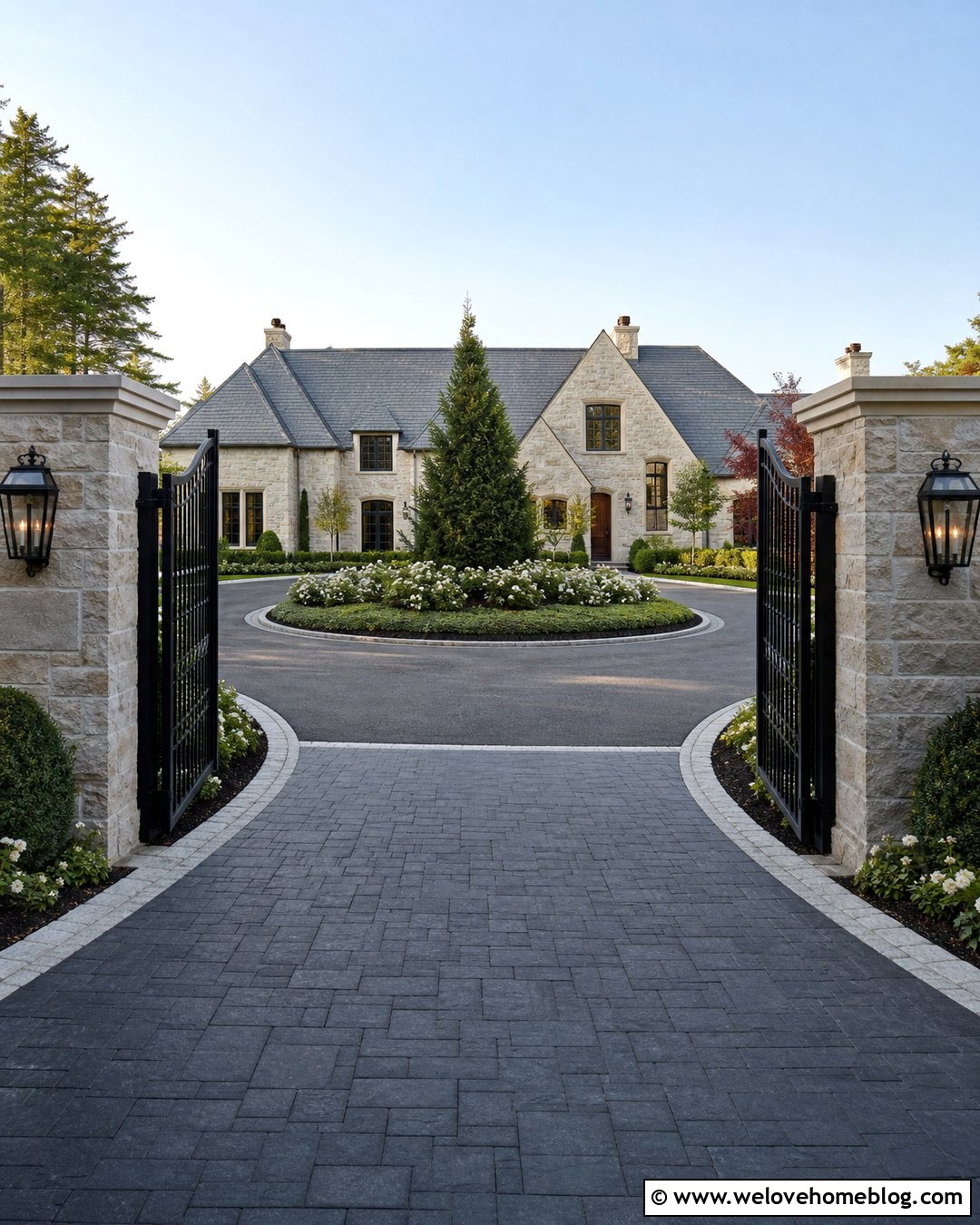
A long paver driveway can feel grand without becoming overly decorative. Choose charcoal and warm gray concrete pavers in a running-bond pattern, using a darker soldier-course border to emphasize the driveway’s length. Place black metal swing gates between masonry pillars at the entrance, leaving enough setback for vehicles to wait safely away from the road. Clipped hedges on both sides create symmetry, while evenly spaced upright trees reinforce the view toward the house. Break up the continuous greenery with small beds of white flowers near the pillars and front walkway. Low fixtures concealed beneath the hedge can illuminate the edge after dark. This complete composition complements formal brick homes, French-inspired houses, and symmetrical modern residences. ()
6. Exposed Aggregate Driveway With Ornamental Grasses
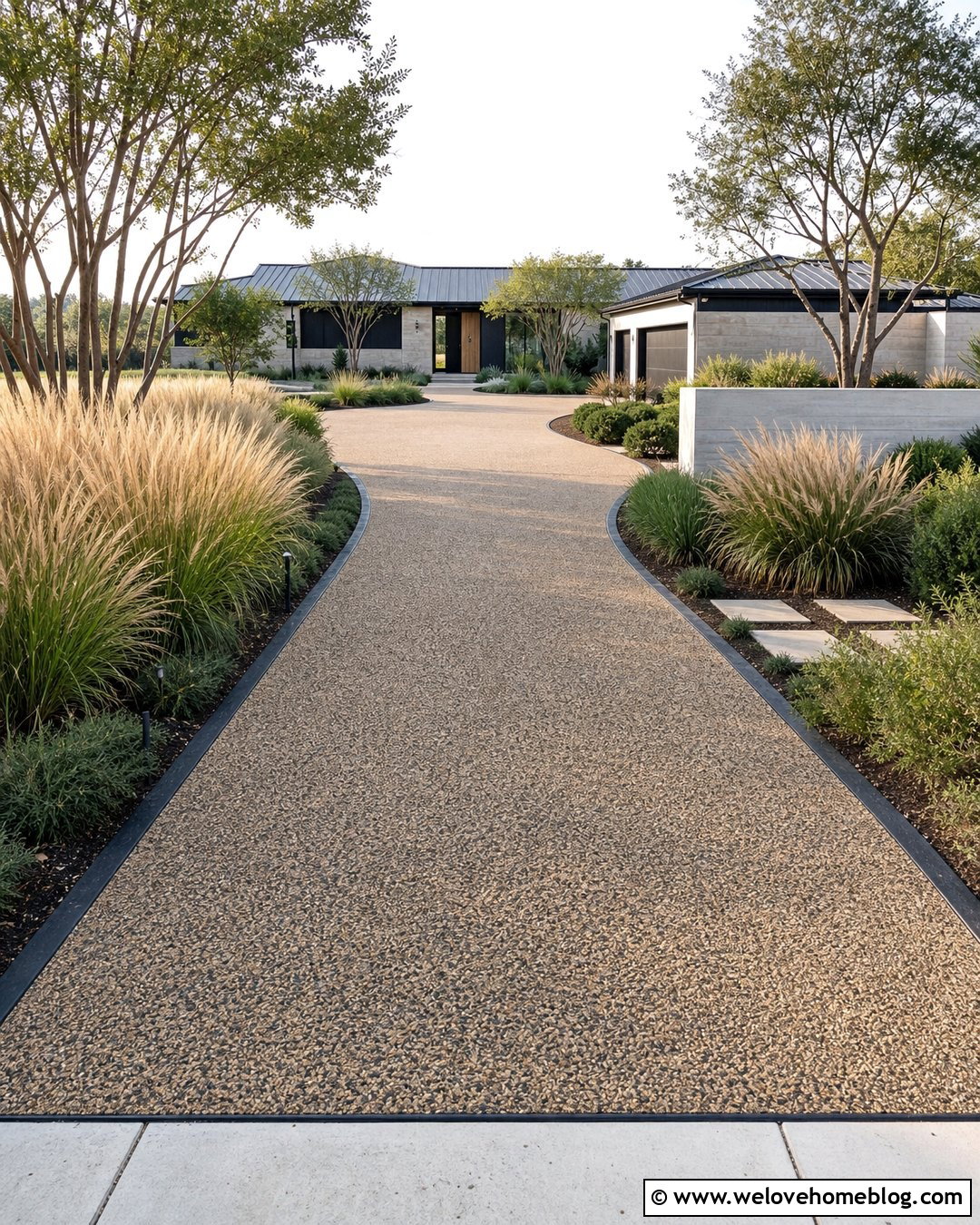
For a modern entrance that still feels connected to nature, combine exposed aggregate concrete with layered ornamental grasses. The textured surface offers more visual depth than standard gray concrete, especially when finished in soft tan and charcoal tones. Keep the long driveway mostly straight, but introduce a subtle flare at the entrance and garage. Use dark steel edging to separate the pavement from broad planting beds filled with feather reed grass, switchgrass, compact shrubs, and small multi-stem trees. Rectangular concrete stepping pads can form a walkway parallel to the drive without blending into it. Finish the entrance with a low horizontal address wall and restrained lighting. The crisp lines and moving grasses work well beside modern ranch and contemporary houses.
7. Long Driveway With Circular Arrival Court
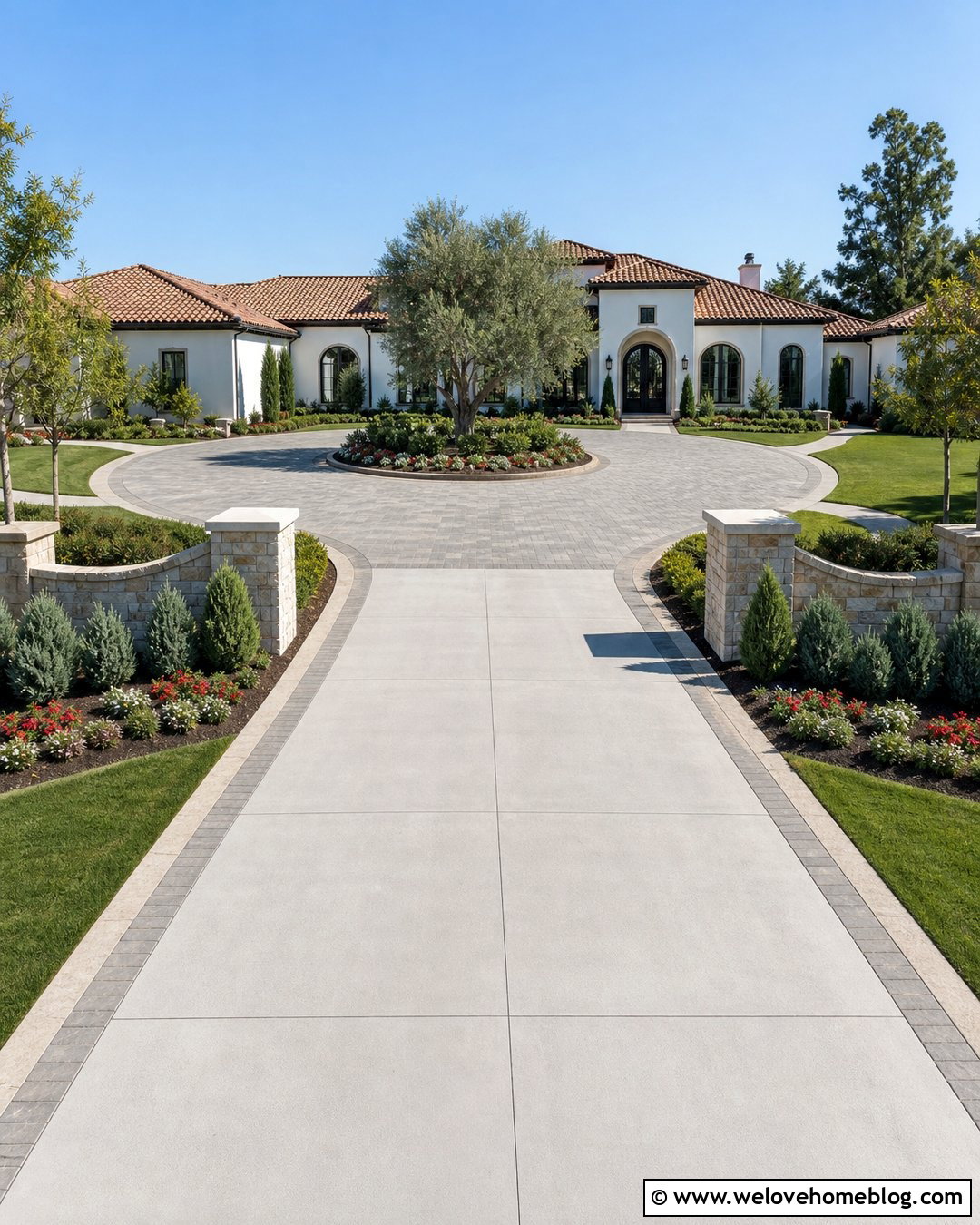
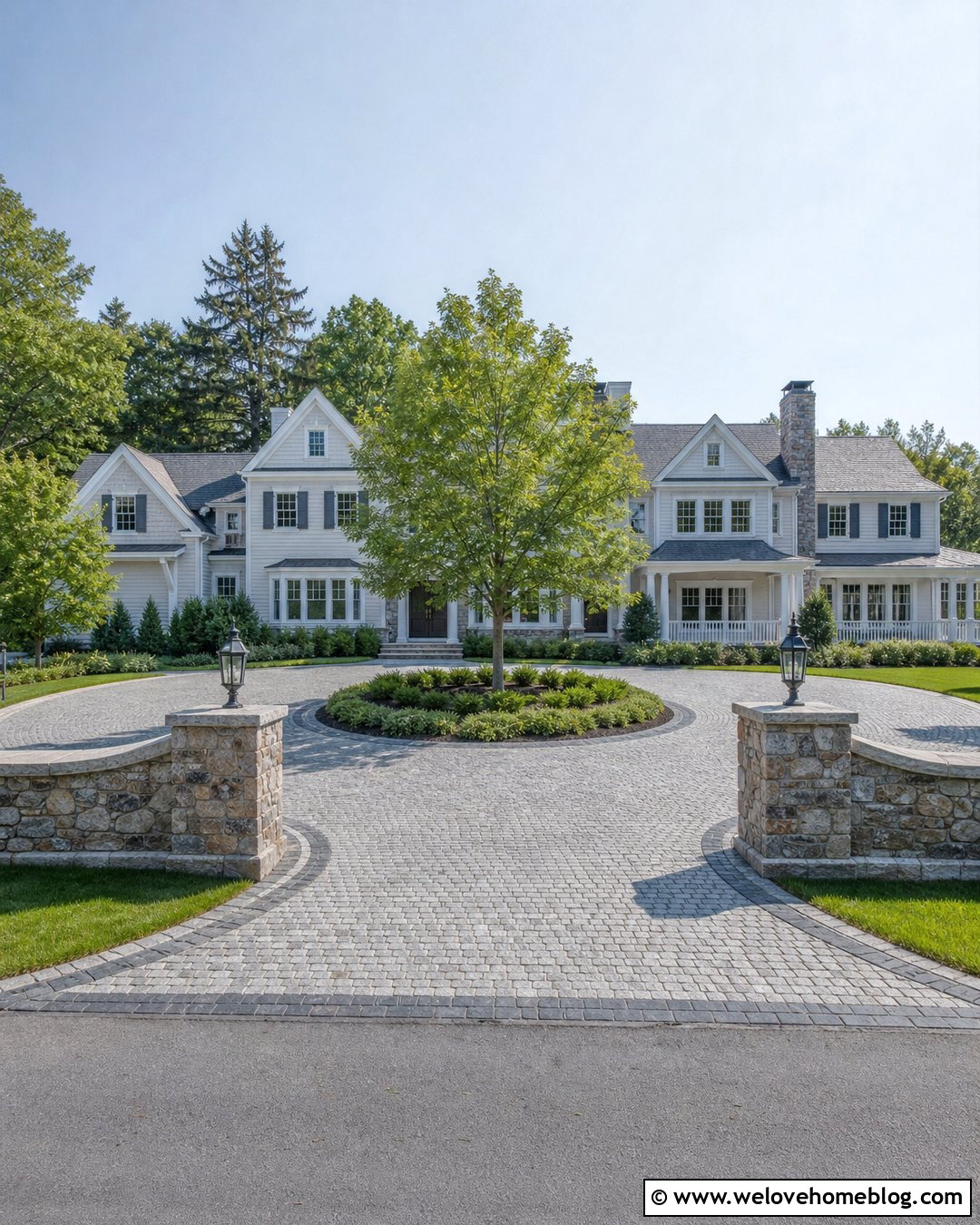
A circular arrival court gives a long driveway a graceful destination and makes turning around easier. Build the main approach from light gray concrete or asphalt, then transition to contrasting concrete pavers around the circular area near the house. A landscaped center island can hold a specimen tree, low shrubs, and seasonal flowers without blocking views of the front door. Continue matching planting beds down both sides of the approach so the circle does not appear disconnected. At the street, use low stone walls that curve outward to create a generous, welcoming entrance. Repeating the same stone around the island unifies the design. This layout suits large ranch, Mediterranean, colonial, and estate-style homes with broad front yards. ()
8. Permeable Paver Driveway With Rain Gardens
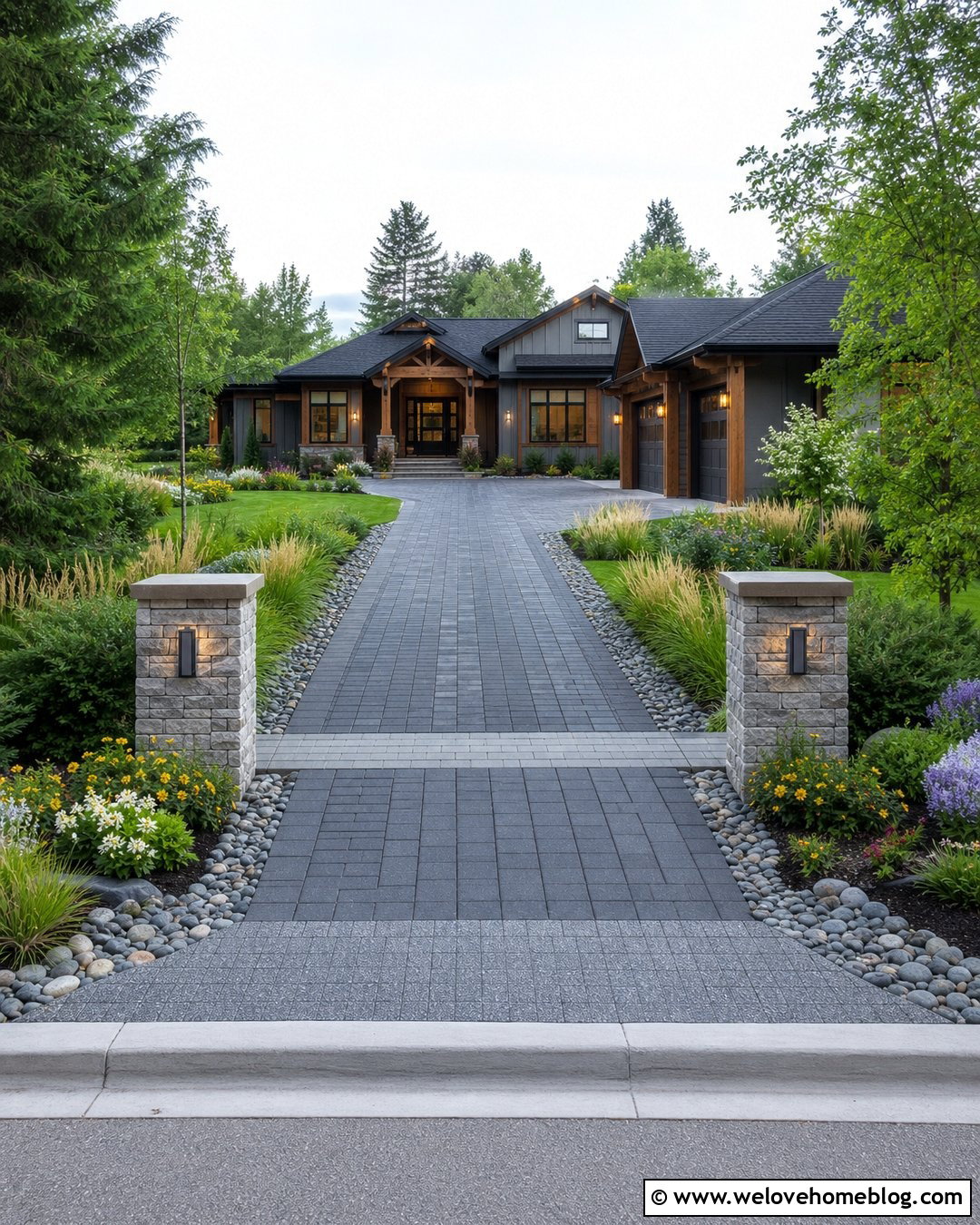
Water-conscious landscaping can become one of the driveway’s most attractive features. Use charcoal permeable concrete pavers for the long approach, arranging them in a simple linear pattern with slightly darker borders. Along low points on each side, create shallow rain garden beds filled with moisture-tolerant grasses, flowering perennials, and rounded river stone. Gently curved planting areas will soften the paver geometry and help the landscape appear natural. At the entrance, install simple stone columns surrounded by low vegetation rather than dense hedging. A short bridge-like paver section over a drainage swale can add character while maintaining the continuous route. This practical look pairs especially well with craftsman, contemporary, and environmentally focused homes. ()
9. Resin-Bound Driveway With Lavender Borders
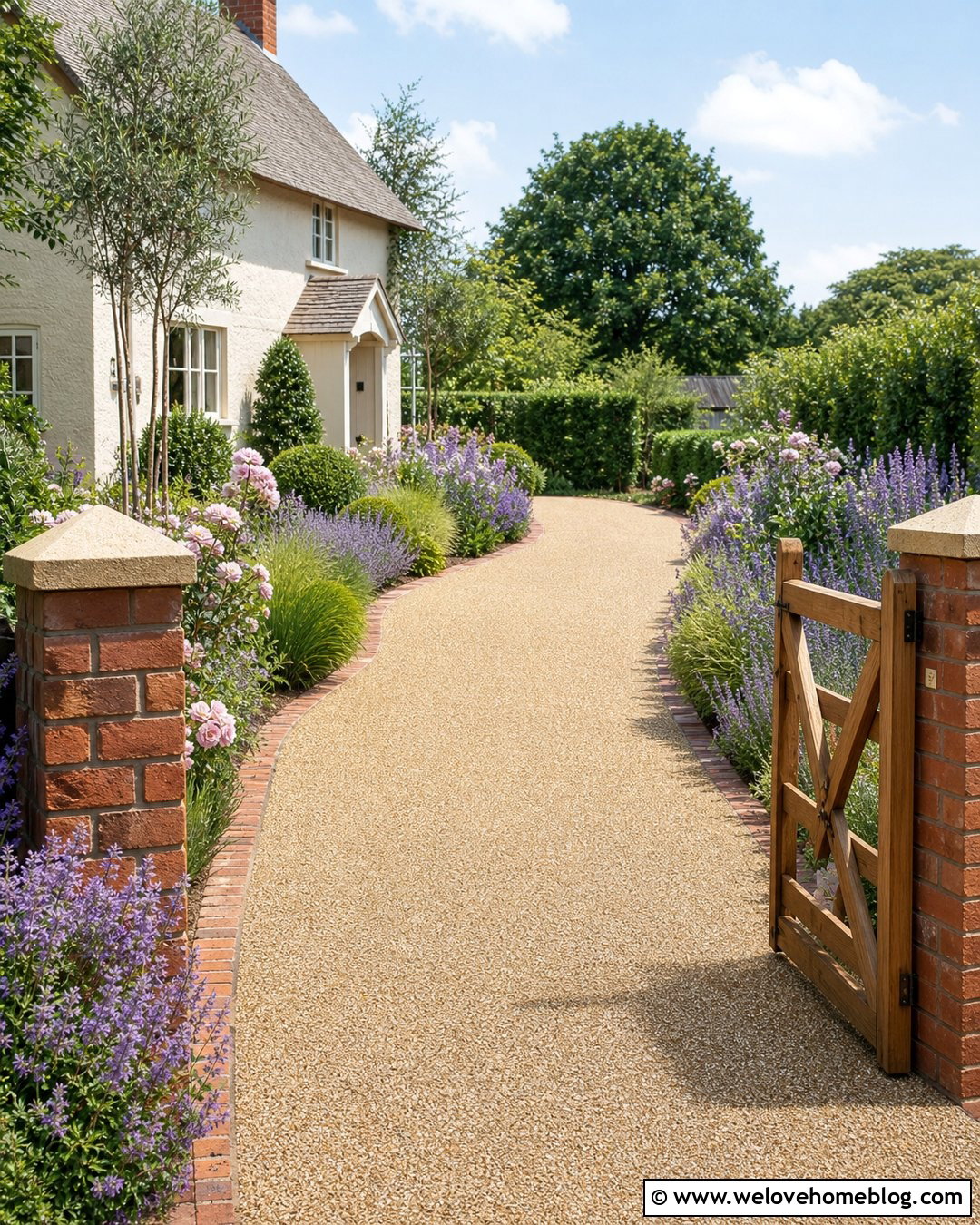
A smooth resin-bound gravel driveway offers a clean background for soft, colorful planting. Select a warm beige aggregate blend and use a gently curving layout leading toward a cottage or light-colored farmhouse. Define the surface with narrow clay brick edging, then plant broad drifts of lavender, catmint, ornamental grasses, and compact roses along sunny sections. Keep plants lower near the road so the entrance remains visible and easy to navigate. Taller evergreen shrubs can be added farther along the drive where additional privacy is useful. At the entrance, low brick piers and a simple timber gate connect the landscaping to the house. The combination balances tidy construction with abundant planting, producing a welcoming approach that changes naturally through the seasons.
10. Black Asphalt Driveway With White Fence
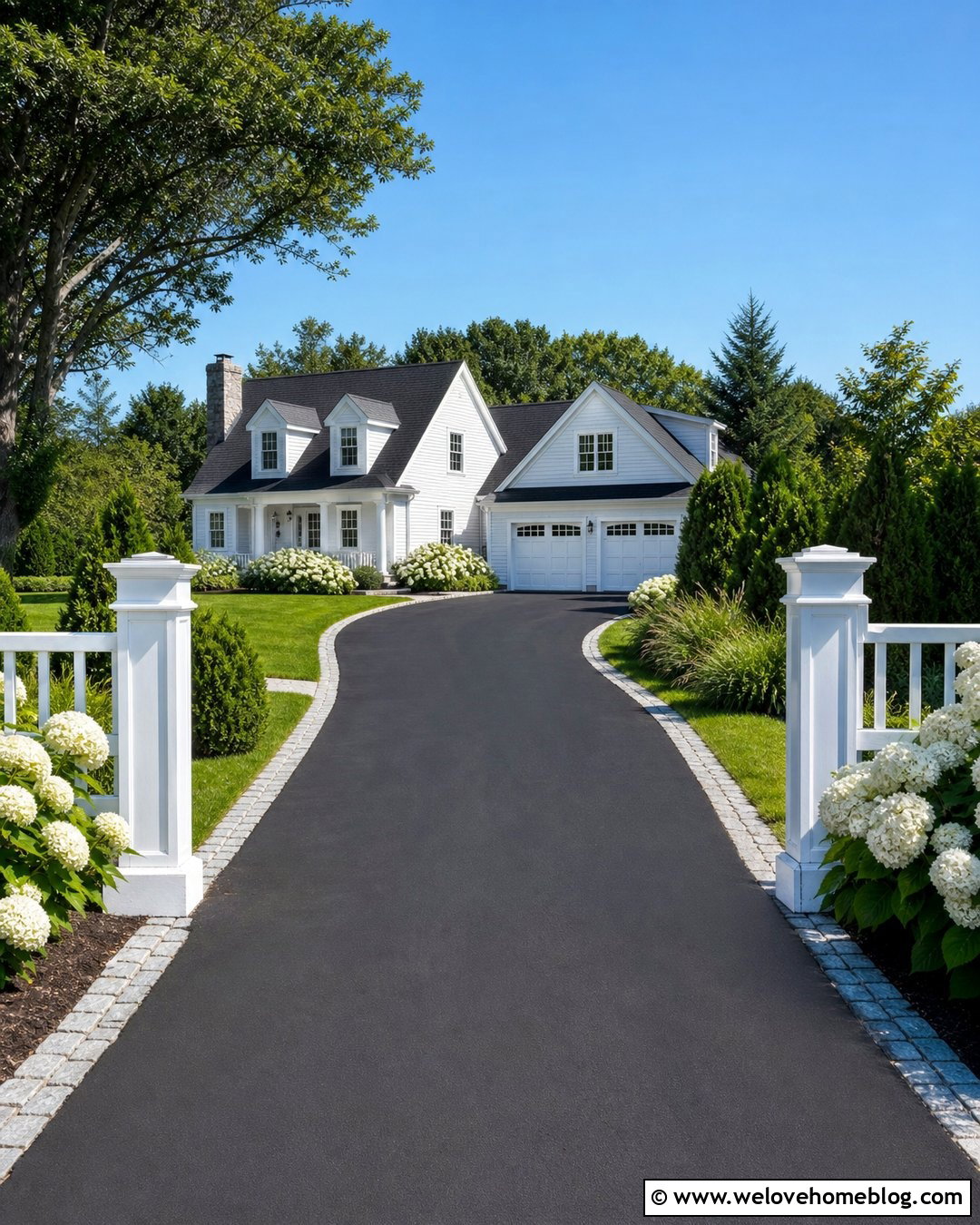
Strong color contrast can make an inexpensive asphalt driveway look carefully designed. Use fresh black asphalt for a straight or slightly curved approach, then frame the entrance with white post-and-rail fencing. Continue the fence for a limited distance before transitioning into large beds of hydrangeas, ornamental grasses, and evergreen shrubs. A light cobblestone border will separate the dark pavement from the planting and make the edge more visible. Add white gateposts or simple square pillars that echo the fence without overwhelming a modest home. Repeating white flowers near the garage helps connect the beginning and end of the long driveway. This bright, familiar composition works especially well with Cape Cod houses, white farmhouses, coastal homes, and updated suburban ranches.
11. Cobblestone Driveway With Woodland Planting
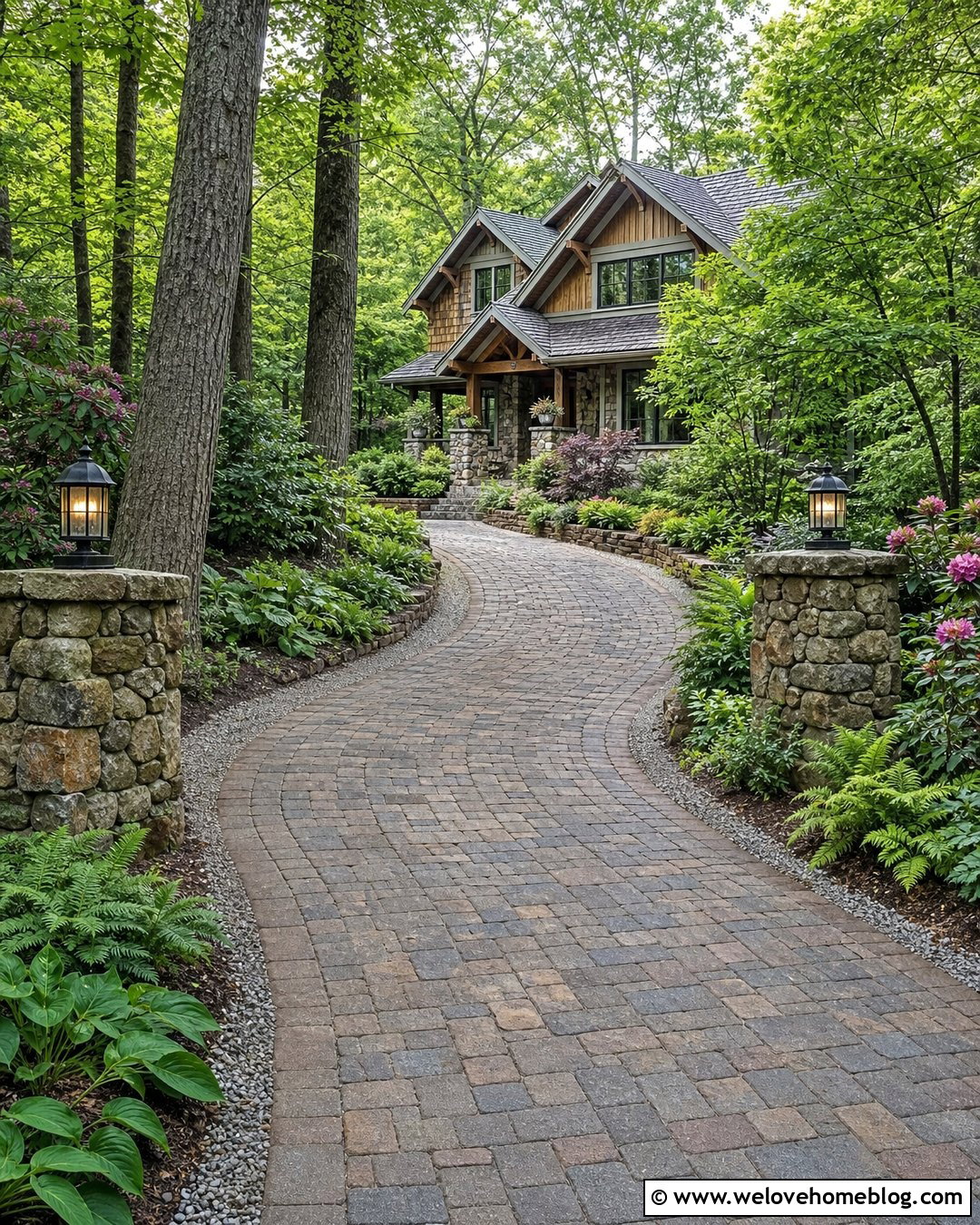
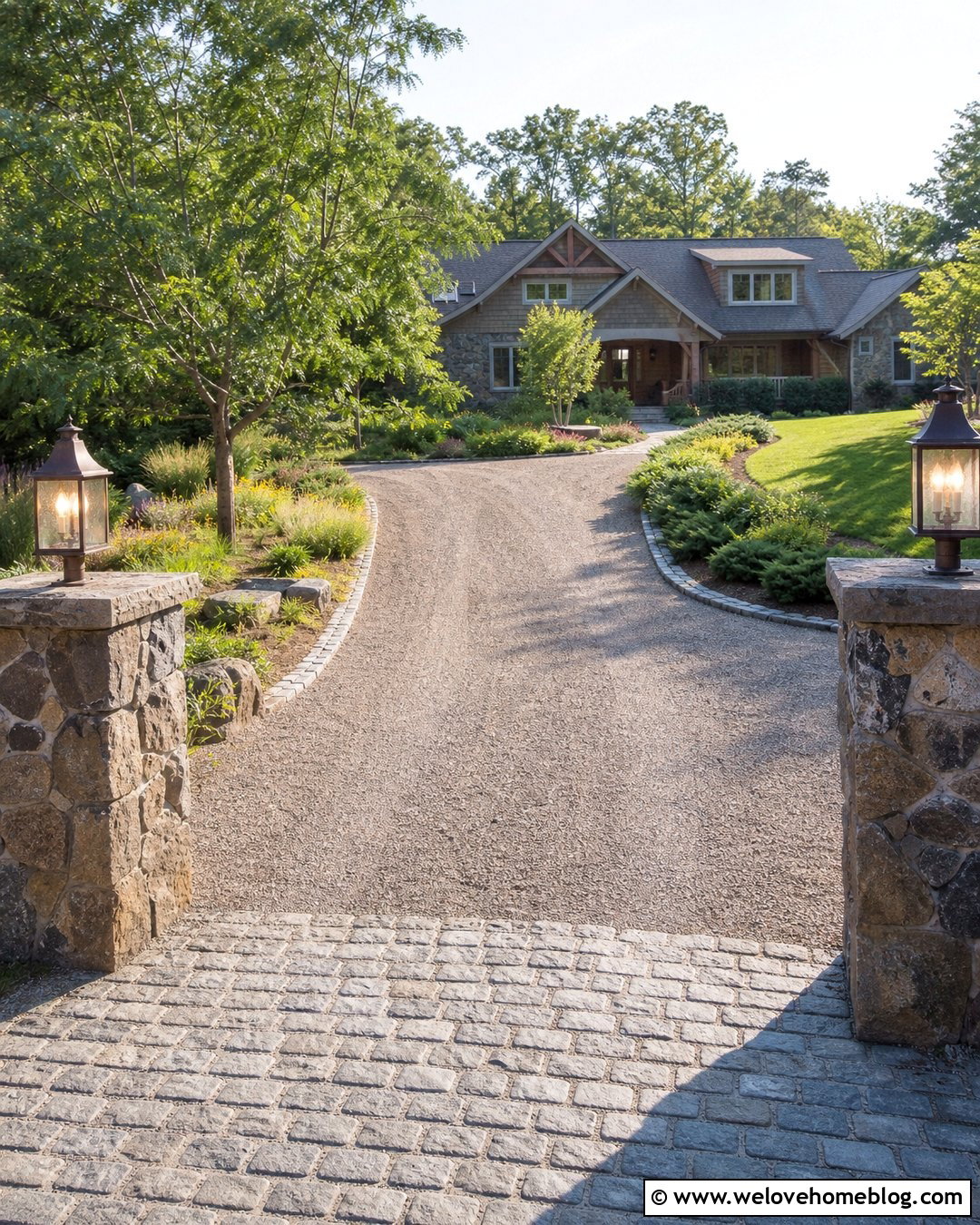
A shaded woodland property calls for an entrance that feels established and natural. Lay a long cobblestone driveway in mixed gray and brown tones, using a gentle curve that works around existing mature trees. Border the stone with narrow bands of compacted gravel to improve the transition into planting beds. Ferns, hostas, woodland sedges, rhododendrons, and low native ground covers can create lush layers without relying on formal symmetry. Use mossy fieldstone pillars at the entrance and repeat the same stone in low retaining walls where the terrain changes. Simple black lanterns provide definition against the greenery. The varied stone surface, mature canopy, and informal planting produce a fitting approach for craftsman houses, cabins, cottages, and traditional woodland homes.
12. Decomposed Granite Driveway With Xeriscaping
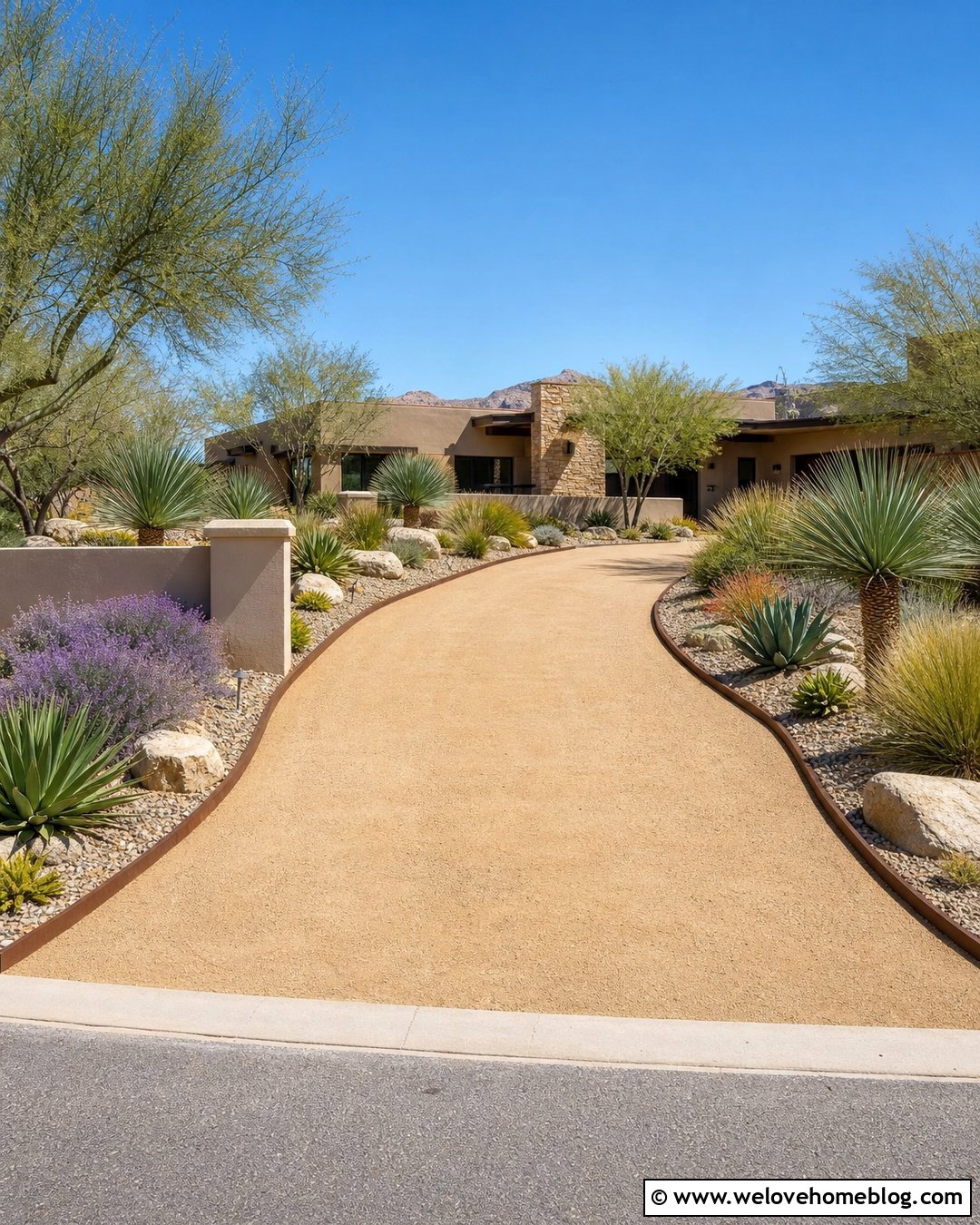
In a dry climate, a long driveway can look vibrant without being surrounded by thirsty lawn. Choose stabilized tan decomposed granite for the surface and create a broad, softly curved route toward a stucco or desert-modern home. Edge it with rust-colored steel or local stone, then arrange drought-tolerant plants in generous groups. Agaves, yuccas, flowering sage, desert grasses, and sculptural boulders can create strong shapes at the entrance. Leave open areas of gravel mulch between plant clusters so each form remains visible. Low stucco walls can hold an address plaque and mark the threshold without requiring a full gate. Use downcast lighting near boulders and major turns to support safe navigation while preserving the clean desert character.
13. Concrete Ribbon Driveway With Meadow Planting
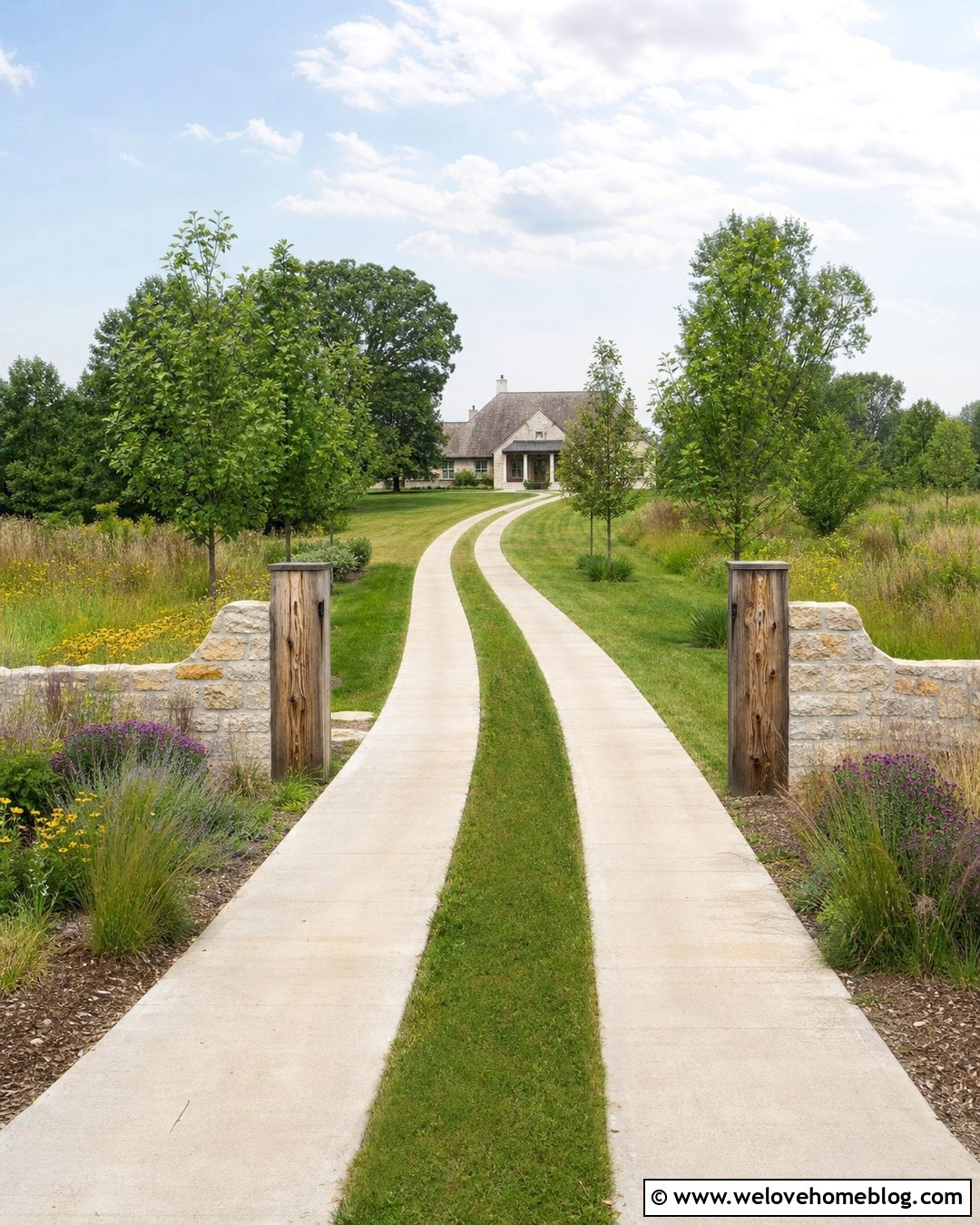
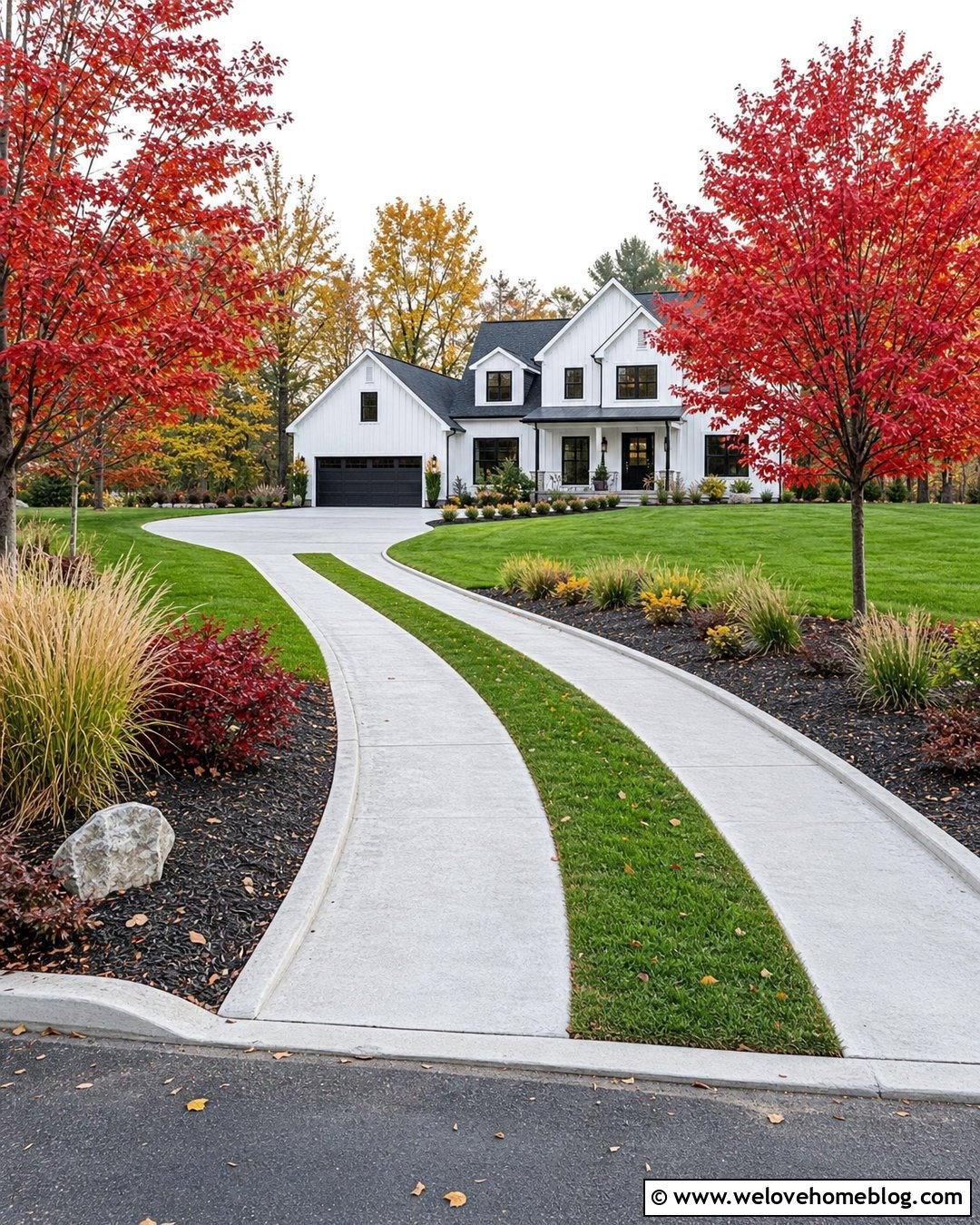
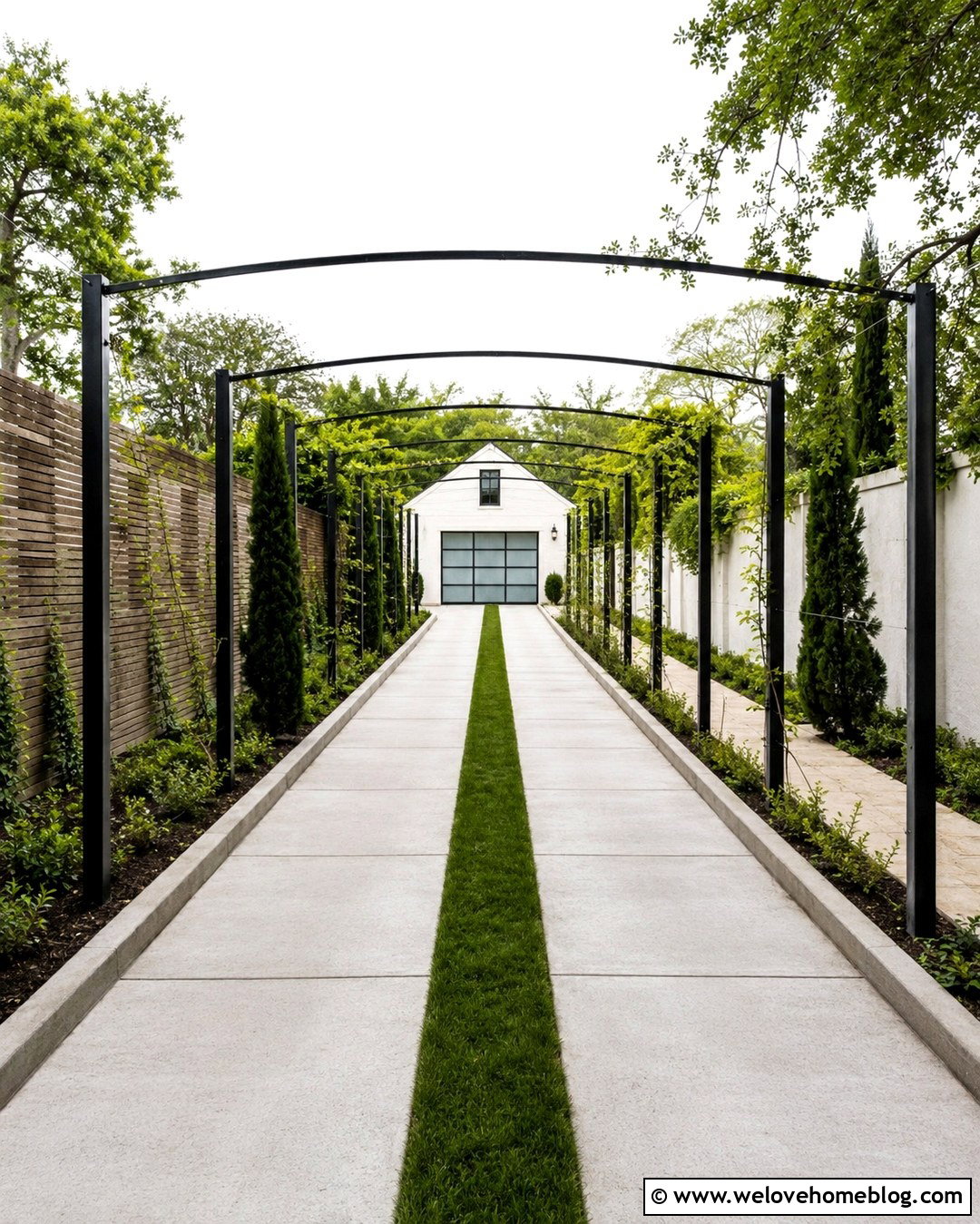
A concrete ribbon driveway reduces the amount of solid paving visible in the landscape. Two pale gray concrete tracks follow the tires, while a tough grass or low ground-cover strip fills the center. Run the long driveway through a meadow-like landscape of native grasses and pollinator-friendly flowers, keeping a regularly mowed edge beside the tracks for a neat transition. Near the entrance, low natural stone walls can curve outward and support simple timber posts. Farther along, occasional clusters of small trees add vertical interest without creating a rigid allée. The design works best where the terrain is relatively gentle and maintenance needs are understood. It offers an informal, garden-focused approach for cottages, farmhouses, and country properties. ()
14. Brick Driveway With Boxwood Borders
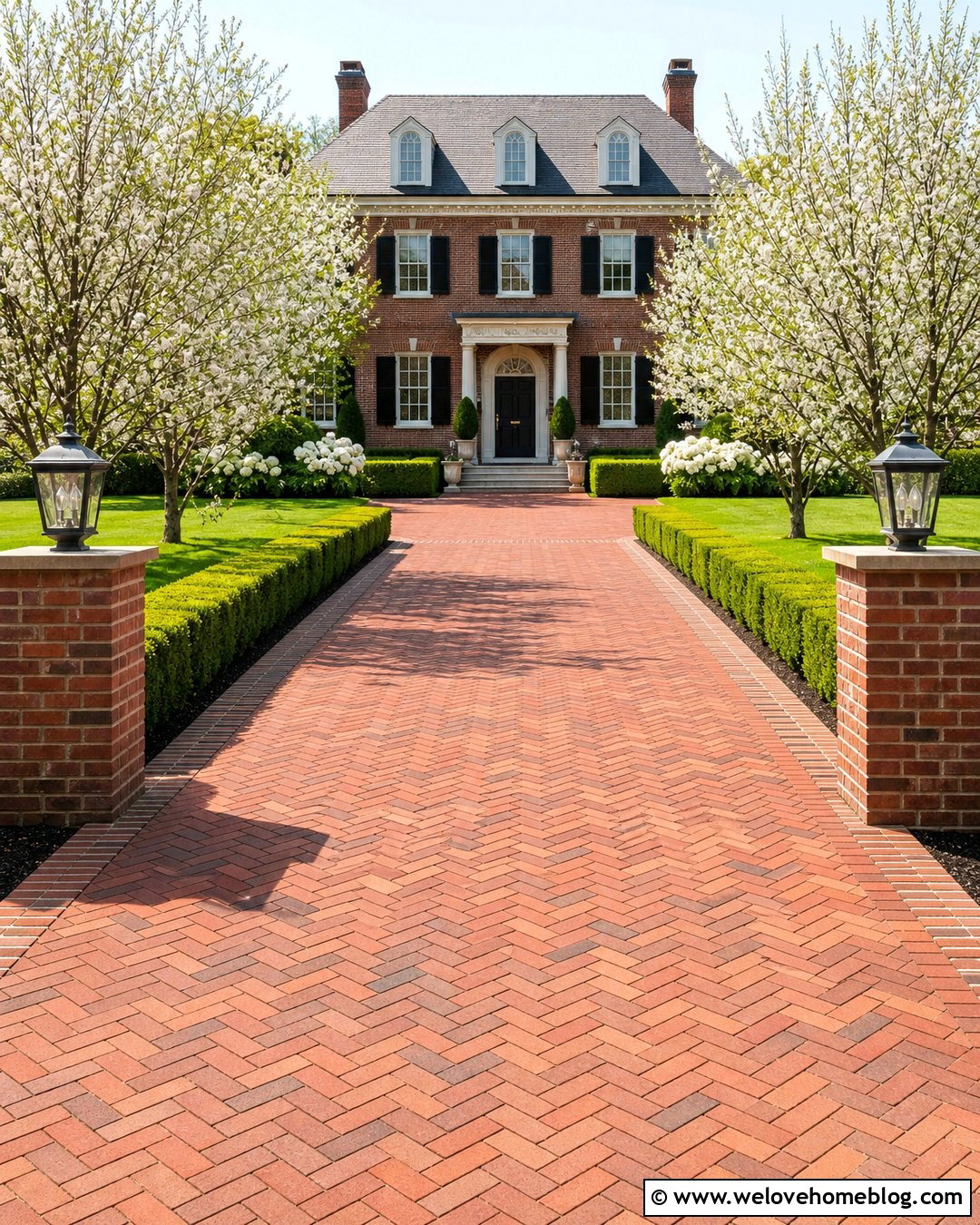
Red clay brick gives a long driveway warmth, pattern, and a strong connection to traditional architecture. Lay brick pavers in a herringbone pattern for the main surface and use a straight soldier-course edge to contain the layout. Low clipped boxwood hedges can frame both sides, with wider planting beds added near the street and house. Place matching brick pillars at the entrance and top them with simple metal lanterns. To keep the long approach from looking overly rigid, introduce small flowering trees at measured intervals behind the hedges. White flowering shrubs and green lawn provide a clean contrast with the brick. This coordinated entrance is especially effective for colonial, Georgian, Tudor, and traditional brick houses with symmetrical facades.
15. Gravel Driveway With Oak Trees And Lantern Posts
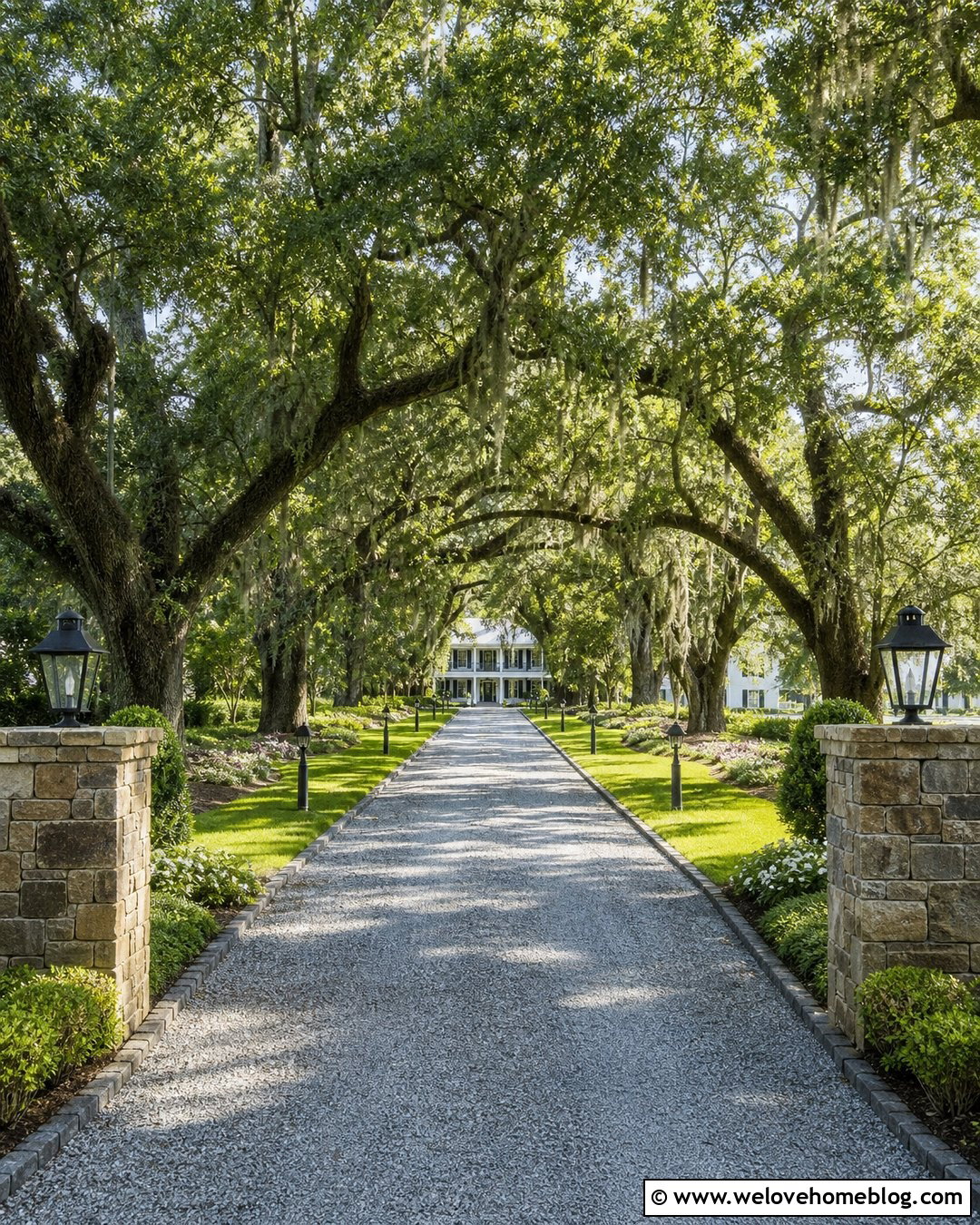
Broad-canopied oak trees can give a long rural driveway a memorable sense of scale. Use compacted gray gravel for a straight approach and allow generous lawn strips between the surface and tree trunks. The spacing should feel consistent, but existing mature trees can guide a slightly more relaxed arrangement. Frame the street entrance with chunky stone pillars and black lanterns, then repeat smaller lantern posts at important bends or intersections. Beneath the oaks, keep landscaping simple with mown grass, shade-tolerant ground covers, and occasional masses of daffodils or other seasonal bulbs. A dark metal gravel grid or stone edging can control spreading near the entrance. This stately yet natural design works well with Southern, farmhouse, and traditional country architecture.
16. Steep Concrete Driveway With Retaining Walls
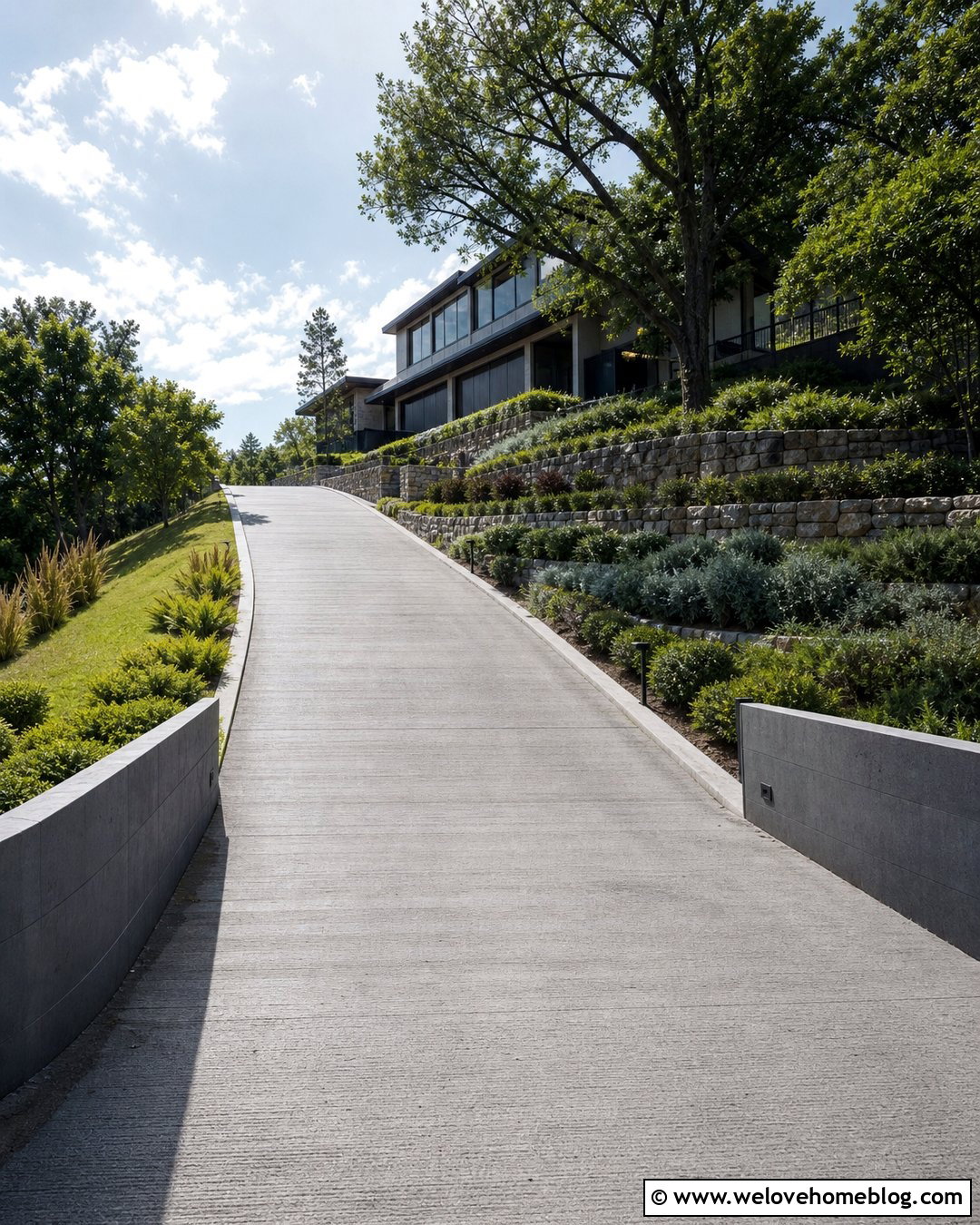
A steep driveway needs landscaping that supports the grade while keeping the route visually open. Use broom-finished concrete for traction and divide the long surface into clear sections with subtle horizontal joints. On the uphill side, build tiered retaining walls from textured concrete block or natural stone. Plant the terraces with low shrubs, ornamental grasses, and spreading ground covers that will not obstruct visibility. The downhill edge can feature a sturdy curb, lawn slope, and regularly spaced bollard lights. At the entrance, short walls should angle outward so drivers have a comfortable turning area. Coordinate the wall material with the house foundation or facade. This integrated approach brings order and softness to sloped properties while making the driveway feel intentional rather than purely functional.
17. Narrow Driveway With Layered Shrub Borders
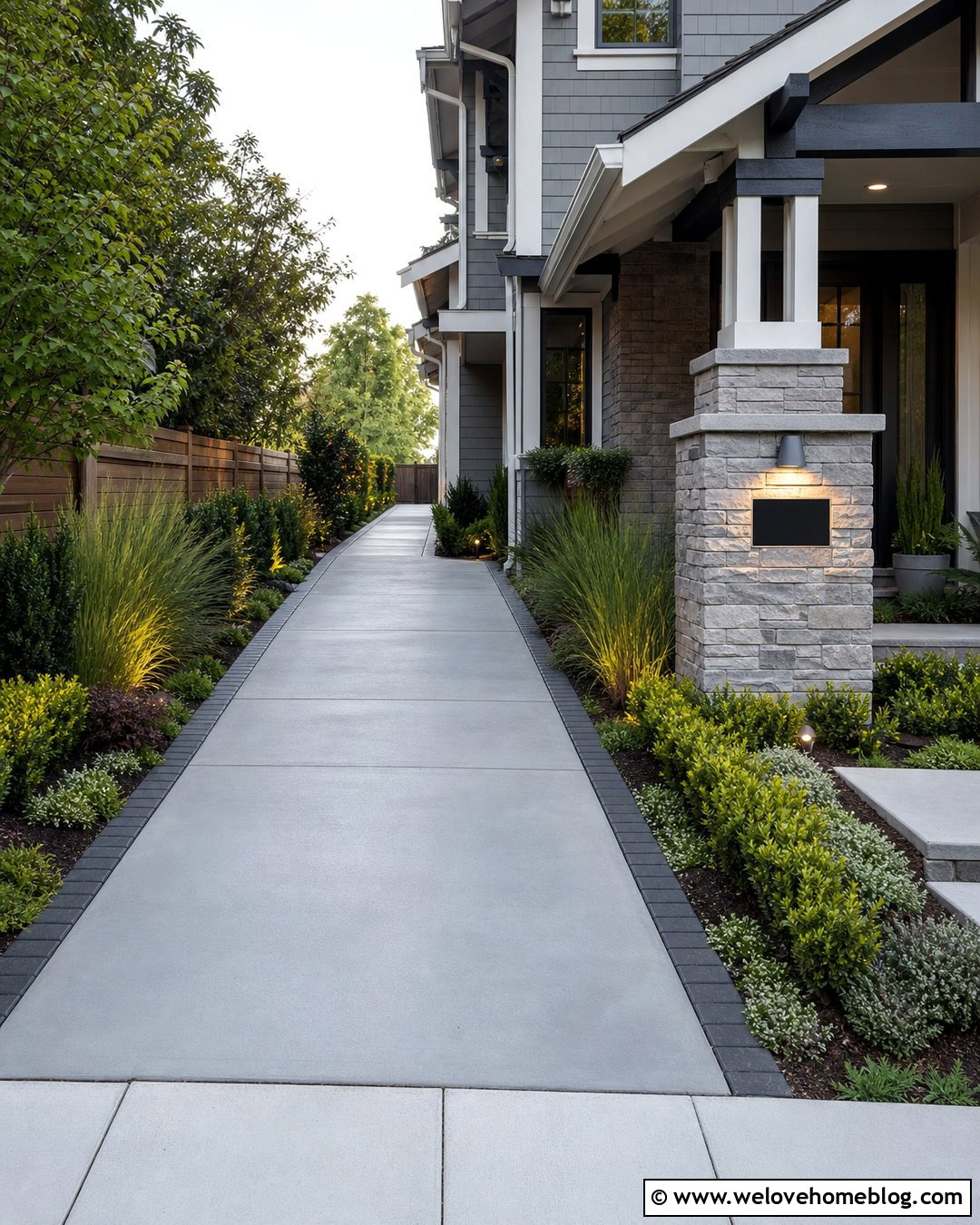
Limited width does not mean a long driveway must look bare. Start with a clean light-gray concrete or asphalt surface and keep raised edging to a minimum. Install narrow planting beds containing layers of compact shrubs, upright grasses, and low ground covers selected for their mature size. Place the lowest plants beside the pavement and taller evergreens toward the property boundary. This arrangement preserves vehicle clearance while creating depth. A slim paver ribbon can define the edge without consuming valuable space. At the entrance, use narrow stone columns, vertical address numbers, and simple downlights instead of broad walls or swinging gates. The streamlined landscaping is useful for flag lots, suburban side-yard driveways, and properties where neighboring fences restrict the available planting area.
18. Driveway Entrance With Mailbox Garden
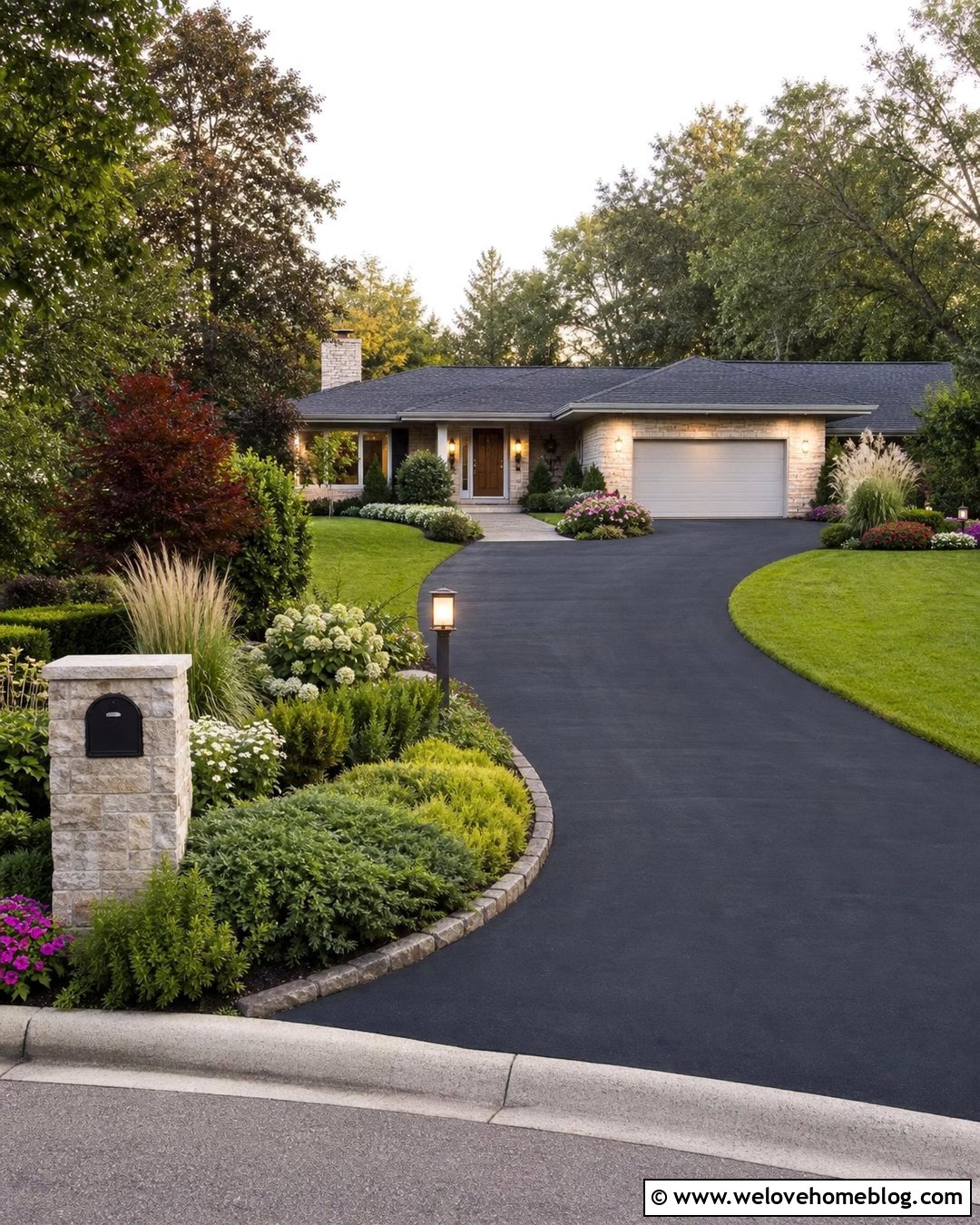
A well-designed mailbox garden can give a very long driveway an obvious and inviting starting point. Pair a smooth asphalt or poured concrete approach with a widened planting bed at the street. Set the mailbox on a brick, stone, or painted timber post that coordinates with the house. Surround it with low evergreen shrubs, ornamental grasses, and long-blooming perennials, keeping all plants clear of sightlines and roadside access. Extend a matching stone or paver border from the mailbox bed along the first portion of the driveway. Low entrance lights can make the address easier to locate without creating glare. Farther down the drive, repeat one or two plants from the mailbox garden to connect the entrance visually with the home.
19. Farmhouse Gravel Driveway With Cedar Gate
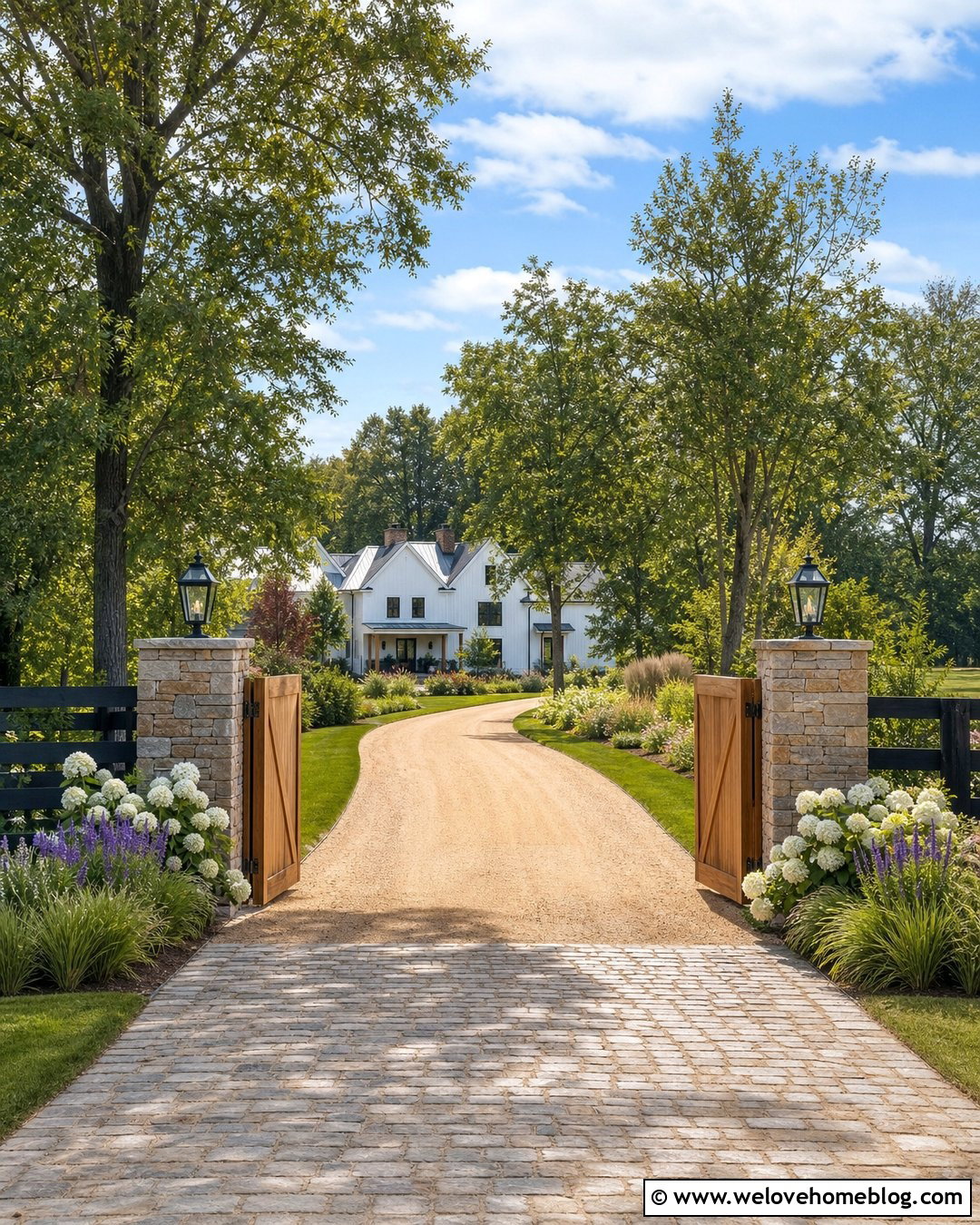
Natural materials give a farmhouse driveway warmth before visitors ever reach the house. Build the long surface from compacted buff gravel and shape it with a relaxed curve through open lawn. A simple cedar gate set between square fieldstone pillars creates a clear entrance without feeling formal. Continue black post-and-rail fencing from both pillars, then soften it with masses of hydrangeas, flowering grasses, and native perennials. A cobblestone apron at the road can help create a sturdy, defined transition into the gravel. Farther along, plant occasional shade trees rather than continuous rows. Add galvanized or black lanterns to the pillars for a practical finishing detail. The completed look feels welcoming, durable, and appropriate for modern or traditional farmhouse architecture.
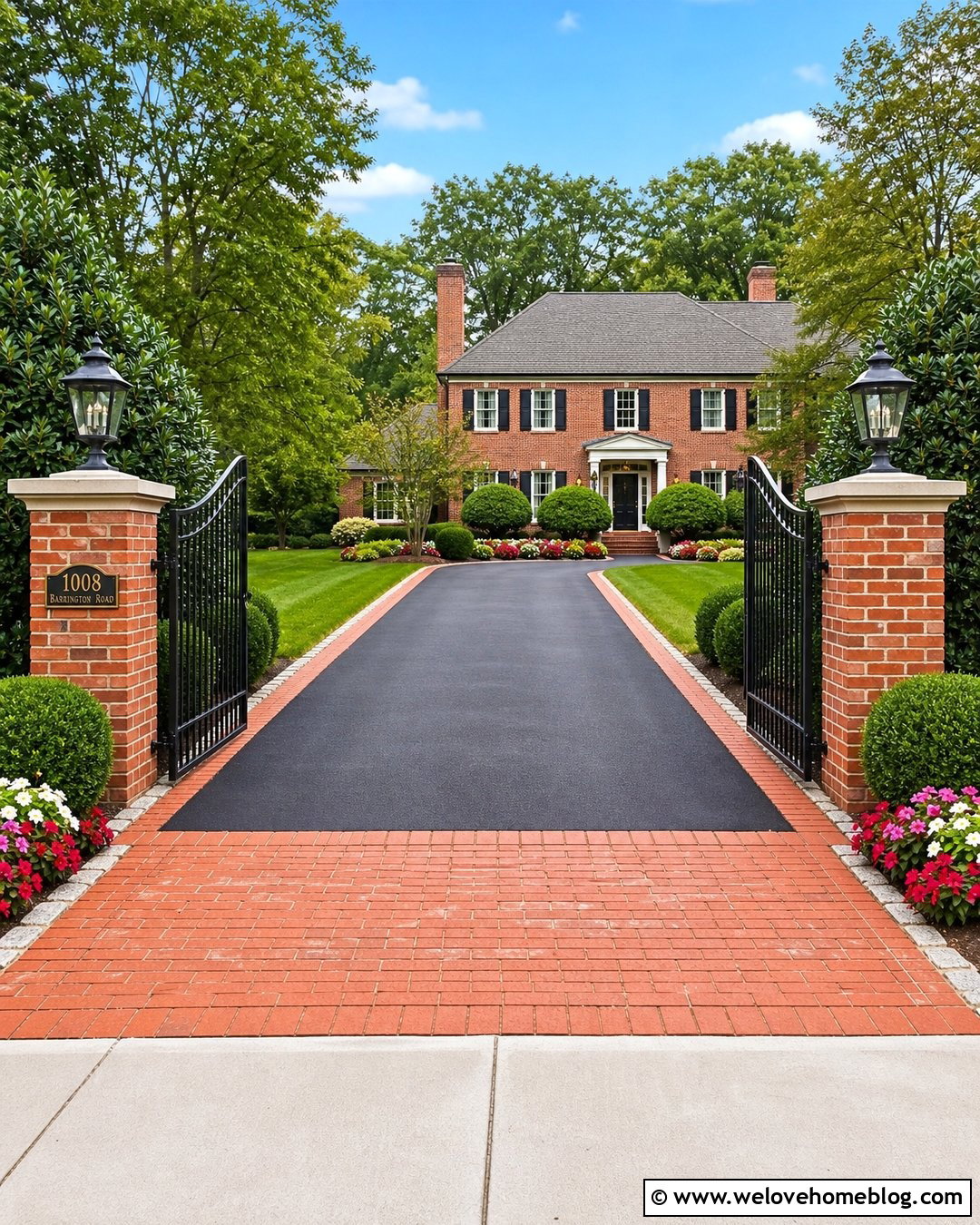
20. Modern Concrete Driveway With Address Wall
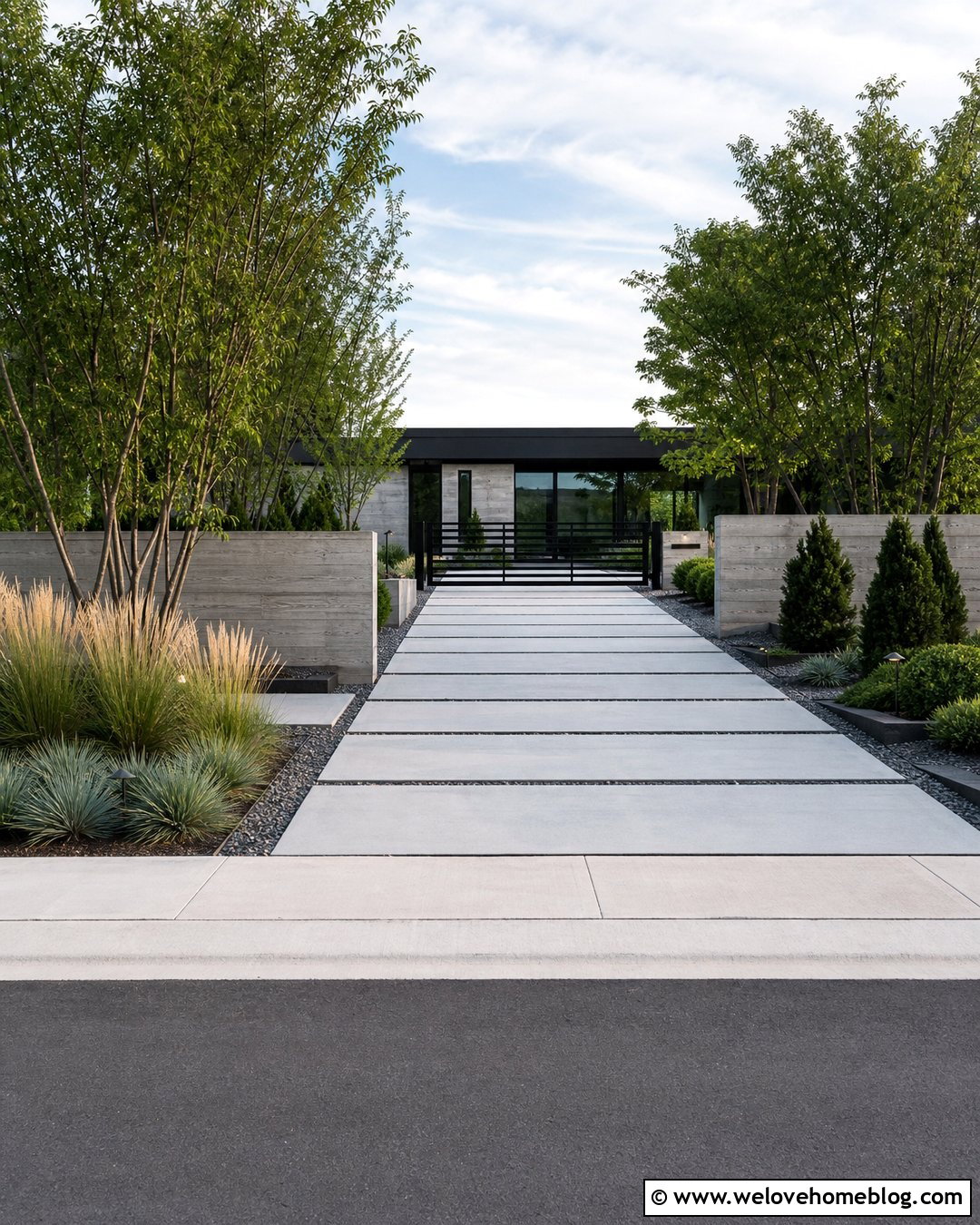
Clean geometry can turn a long concrete driveway into an architectural feature. Use large-format pale gray concrete slabs separated by narrow dark gravel joints. Keep the approach straight or introduce one broad angular bend that aligns with the house. At the street, install a low board-formed concrete address wall with integrated lighting and a horizontal wood or black metal gate. Plant sculptural grasses, compact evergreens, and multi-stem ornamental trees in rectangular beds around the wall. Dark steel edging should maintain crisp transitions between the driveway, gravel mulch, and lawn. Repeat the wall’s concrete finish in planters near the garage or entry walkway. This coordinated entrance works especially well with flat-roofed modern homes, contemporary ranches, and minimalist facades featuring glass, wood, or stone.
21. Crushed Shell Driveway With Coastal Landscaping
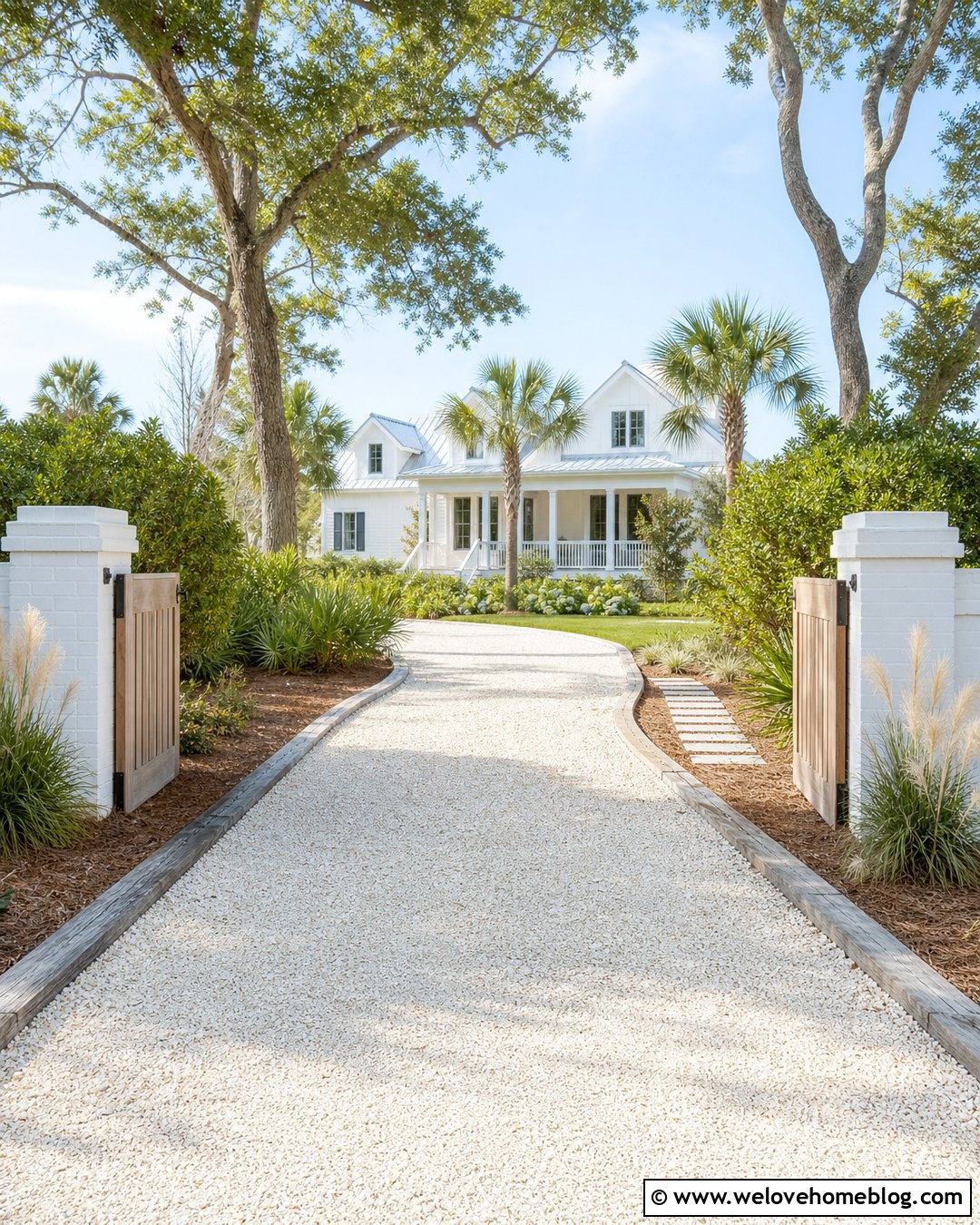
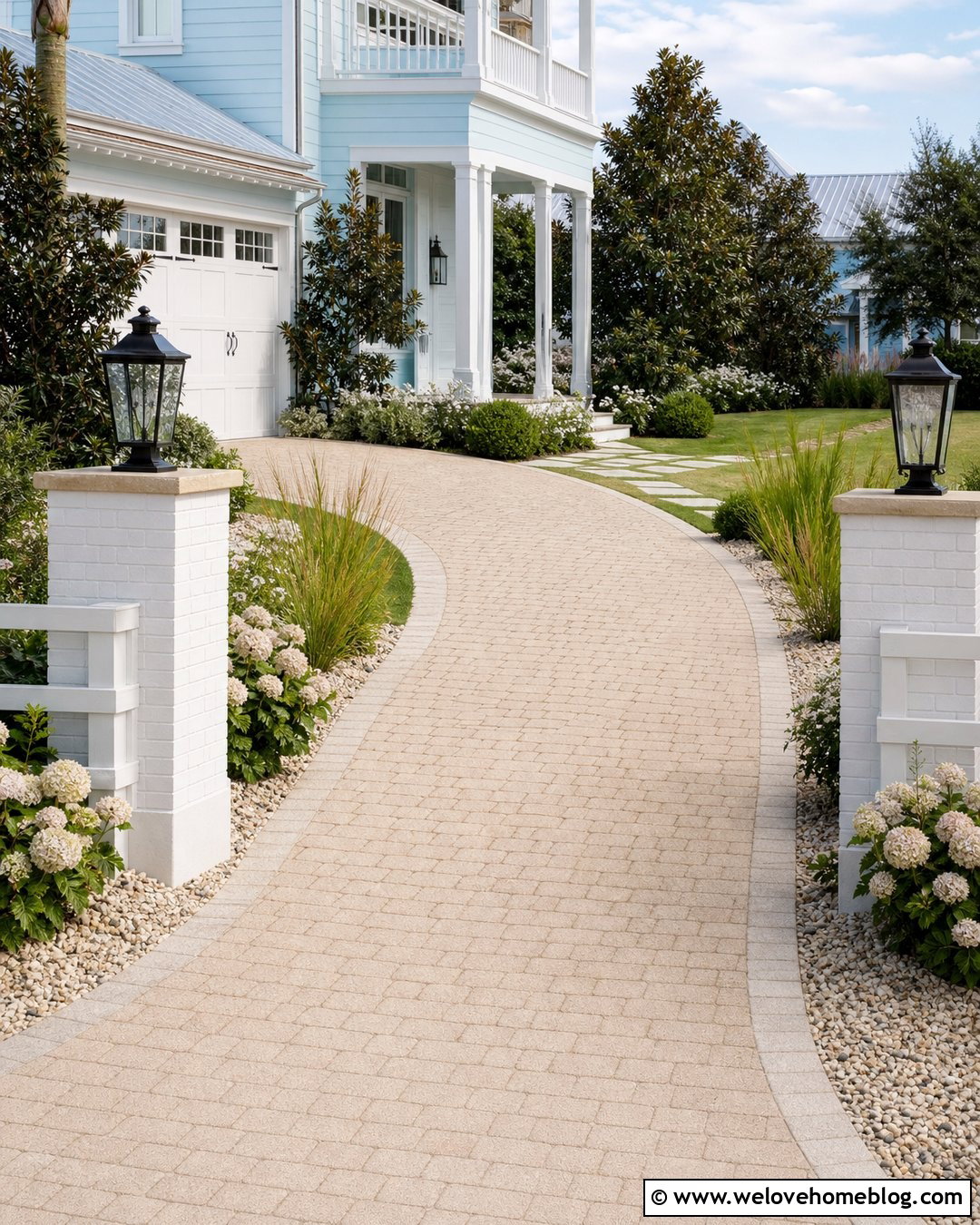
A pale crushed shell driveway creates a bright, relaxed entrance for coastal and Southern properties. Shape the long route with a gentle curve and contain the shell using weathered timber, pale cobblestone, or low-profile metal edging. Frame the street entrance with white masonry pillars and simple wooden gates. Use salt-tolerant-looking ornamental grasses, wax myrtle, dwarf palmettos, hydrangeas, and other regionally appropriate plants to build loose layers on both sides. Avoid dense planting immediately beside the driving surface, where open gravel margins will keep the layout tidy. A shell or stepping-stone walkway can branch toward the front porch near the house. The combination of light material, moving grasses, and white architectural details creates an airy entrance suited to coastal cottages and Lowcountry homes.
22. Curved Paver Driveway With Woodland Lighting
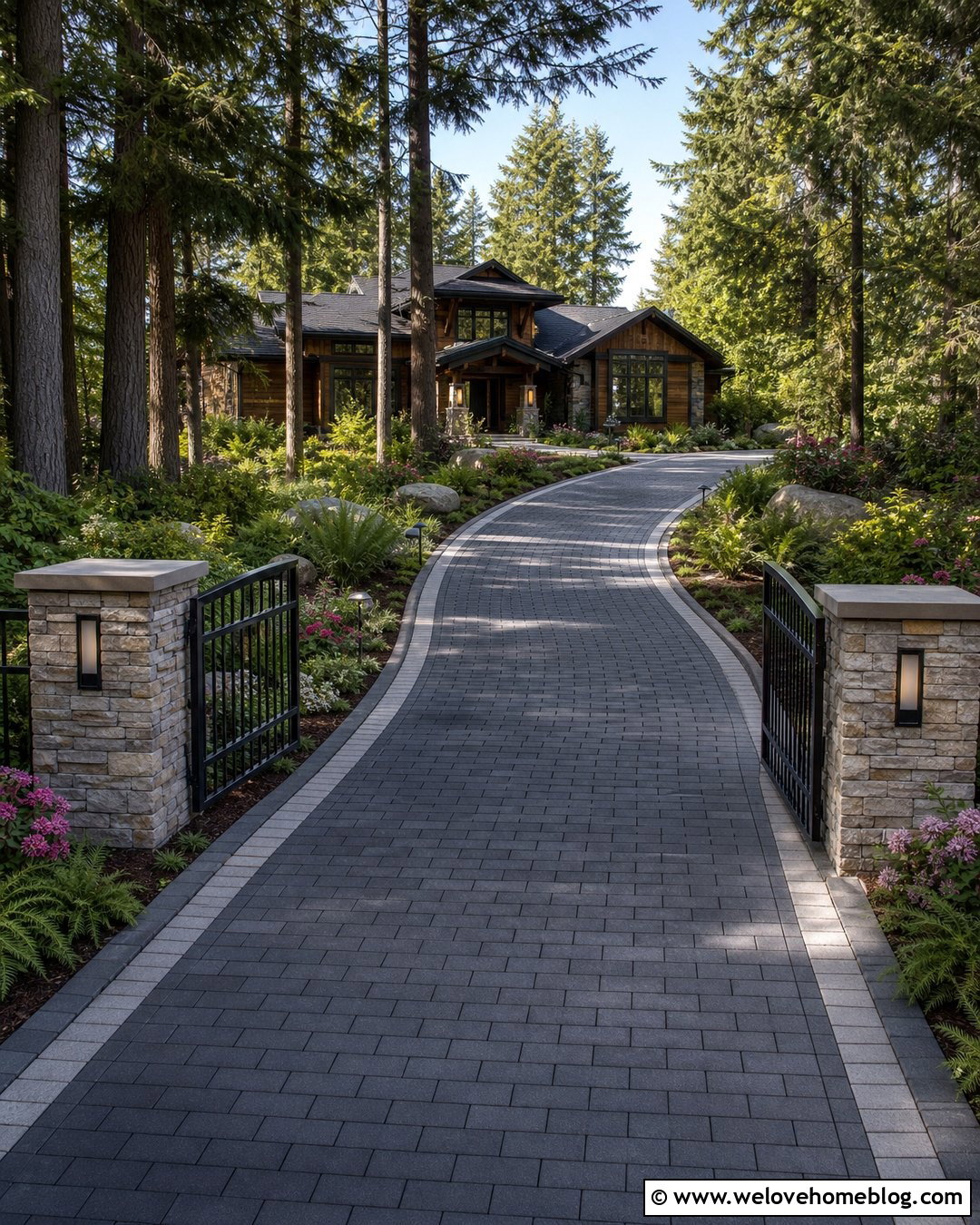
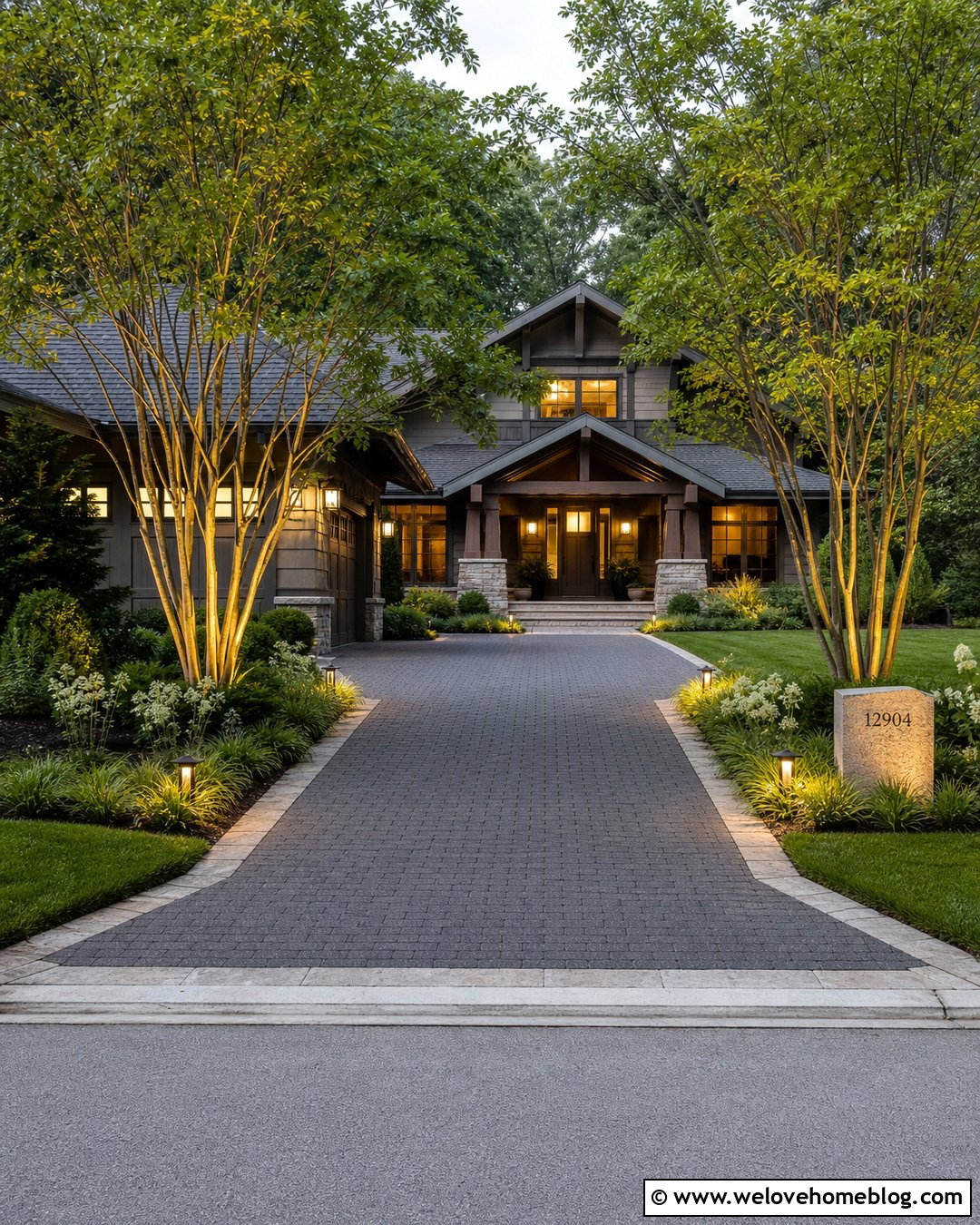
A long driveway winding beneath trees becomes more practical when the landscaping and lighting define every bend. Install charcoal concrete pavers in a running-bond pattern, bordered by a lighter paver course for visibility. Allow the route to curve naturally around mature trees rather than forcing a straight line through the site. Layer ferns, flowering shrubs, woodland grasses, and evergreen ground covers beyond the border. At the entrance, stone pillars and a black metal gate create a strong but understated threshold. Place shielded path lights near curves, transitions, and drainage crossings instead of spacing fixtures mechanically along the entire drive. The result feels calm and established during the day while offering clear guidance after dark. It complements craftsman, mountain-modern, and wooded contemporary homes. ()
23. Budget Asphalt Driveway With Mulch Beds
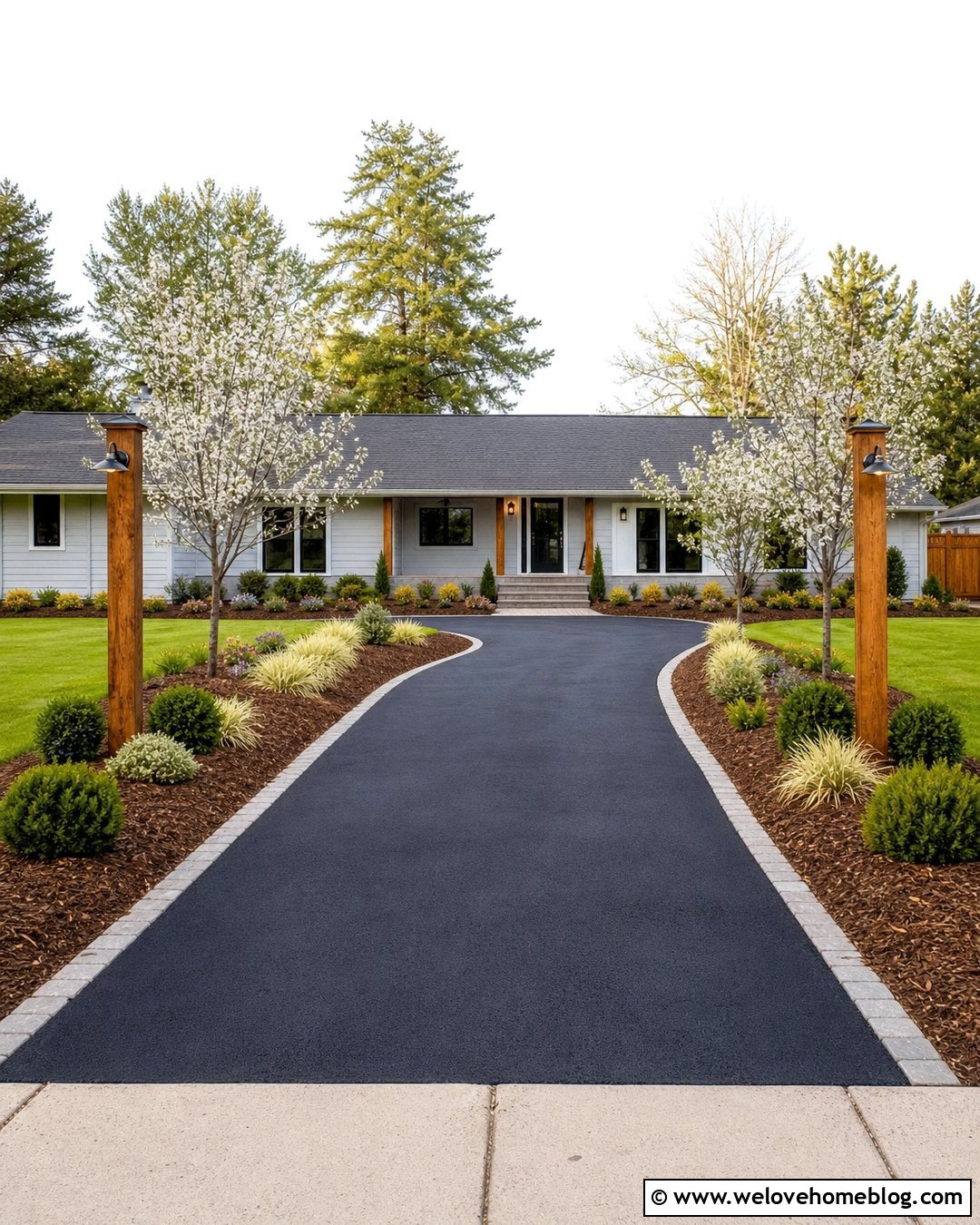
A modest budget can still produce a complete and attractive long driveway entrance. Retain a sound black asphalt surface, repair damaged edges, and add a narrow border of economical concrete pavers. Create broad mulch beds near the street rather than planting the entire driveway at once. Fill them with groups of hardy ornamental grasses, compact evergreen shrubs, and one small flowering tree on each side. Continue smaller planting pockets at major curves and near the garage so the design feels connected. Simple pressure-treated timber posts can hold the address sign and solar-compatible downlights. Maintaining clean lines between asphalt, mulch, and lawn makes the biggest visual difference. This phased approach works for ranch homes, starter properties, and long rural driveways requiring manageable maintenance.
24. Evergreen Driveway With Four-Season Color
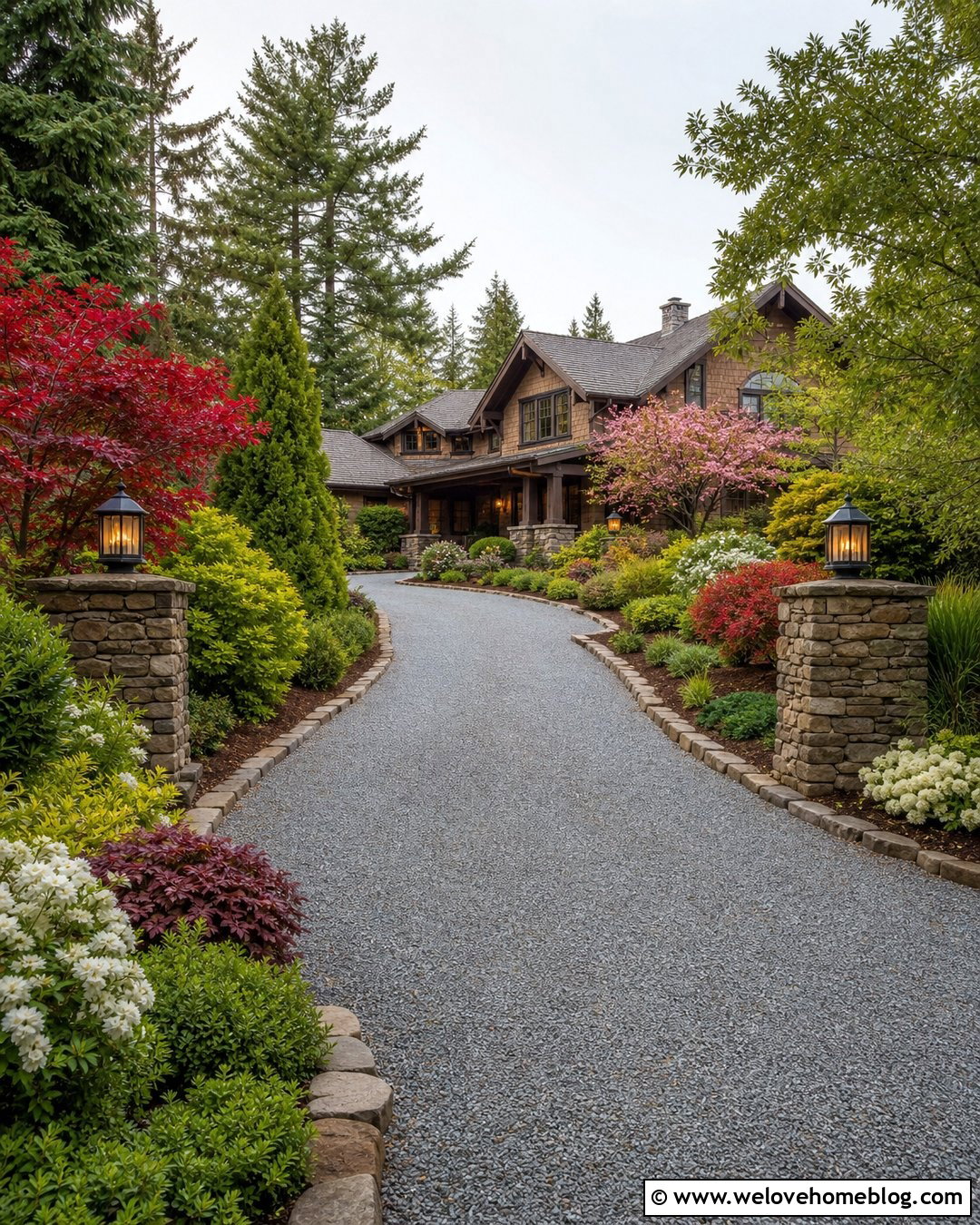
A long entrance should remain attractive even when flowers are out of season. Pair a neutral gray gravel or concrete driveway with layered evergreen planting on both sides. Use compact conifers and broadleaf shrubs as the permanent structure, then weave in ornamental grasses, red-twig dogwood, flowering shrubs, and seasonal perennials. Curved beds will break up the driveway’s length, while a consistent stone edge keeps the varied planting organized. At the road, substantial stone pillars can anchor the composition and support classic lanterns. Repeat selected evergreens near the house so the entrance feels connected to the destination. This balanced planting plan offers changing texture and color throughout the year without relying on one short bloom period. It suits traditional, craftsman, and woodland homes.
25. Horseshoe Driveway With Landscaped Entrance Island
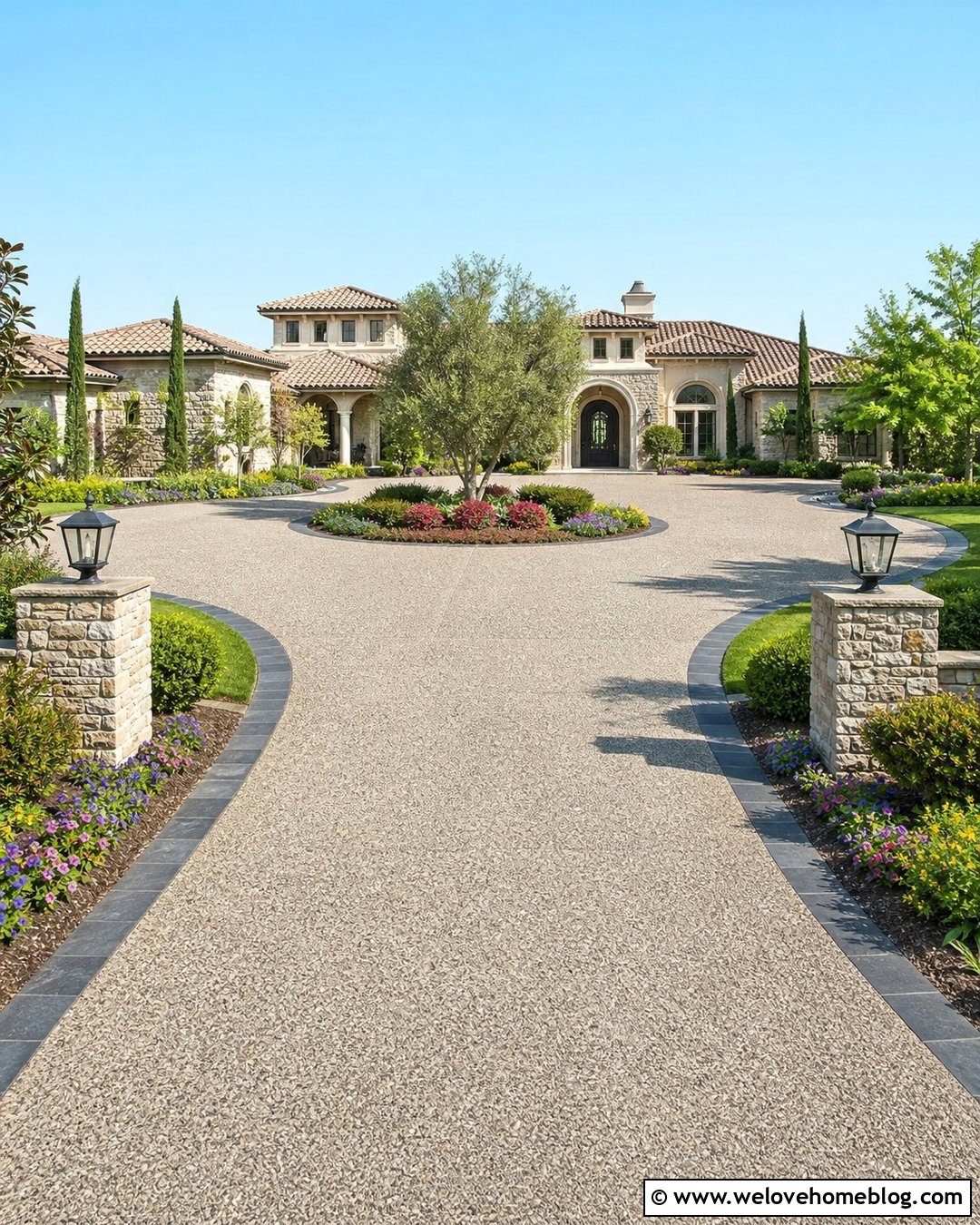
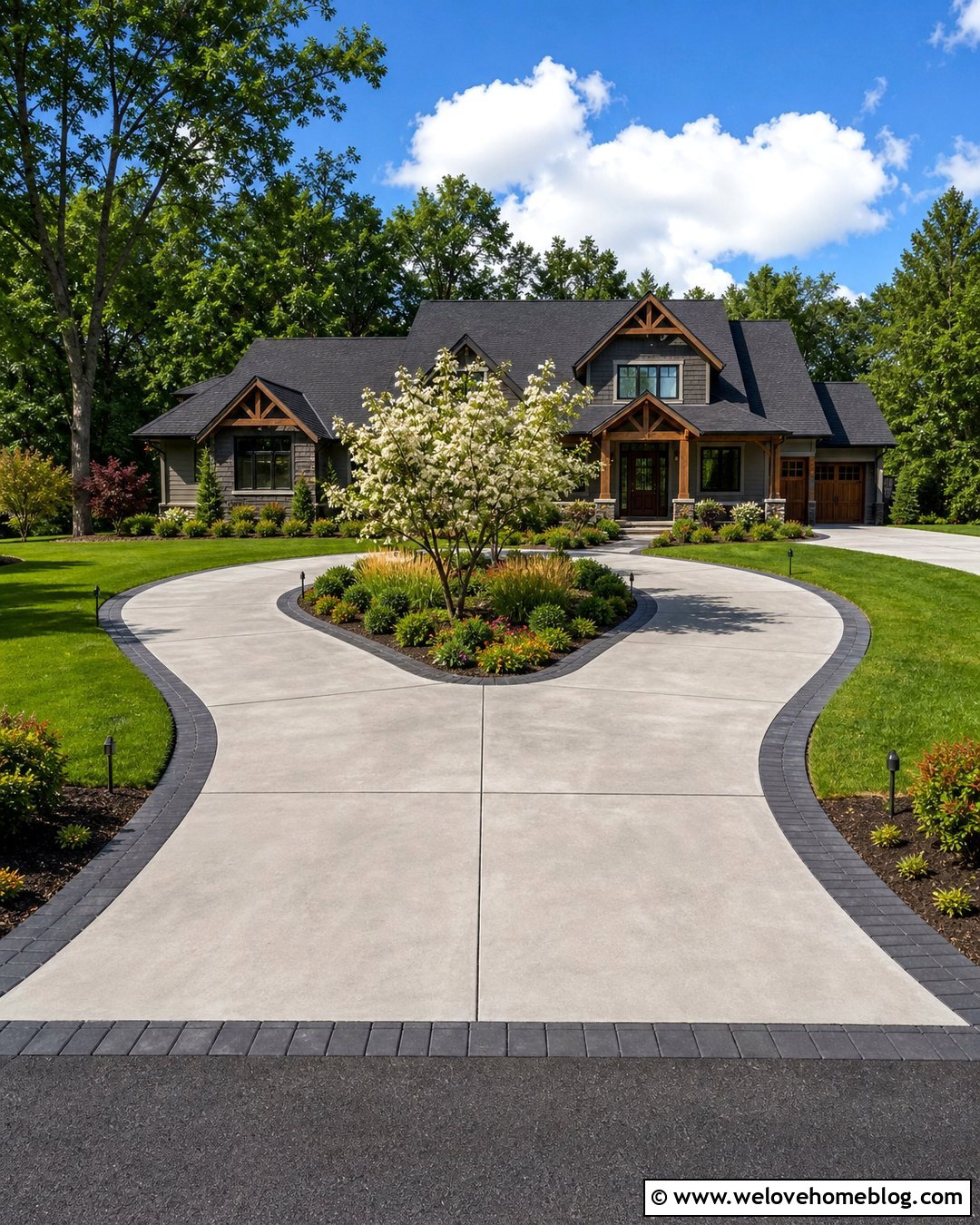
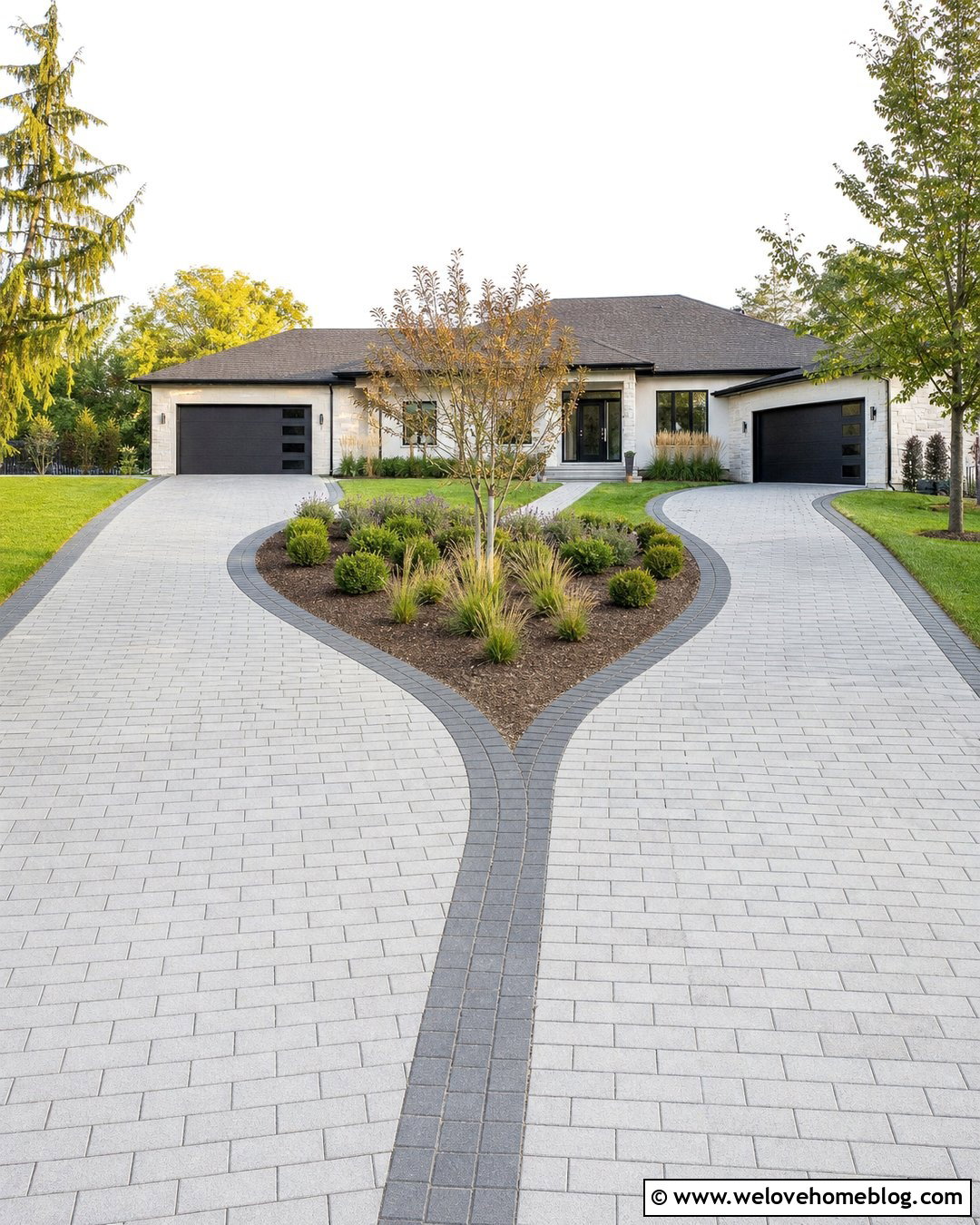
A horseshoe layout gives a long driveway two street connections and creates an impressive landscaped foreground. Use warm gray pavers or exposed aggregate concrete for the curved driving surface, with darker stone borders marking both edges. Between the two entrances, develop a large central island containing a specimen tree, layered shrubs, flowers, and neatly maintained lawn. Matching stone pillars at each opening make the entire frontage feel unified. Continue low planting along the outer driveway curves while keeping taller vegetation away from street sightlines. Near the house, broaden the paving into a comfortable arrival area and connect it to a separate front walkway. This complete layout provides a graceful sense of movement and works particularly well with wide ranch, colonial, Mediterranean, and estate-style homes.
Conclusion:
The most successful **25 long driveway landscaping entrance ideas** treat the entire approach as one connected outdoor space. Start with a surface and shape that suit the property, then select borders, plants, pillars, gates, and lighting that complement the house. A straight tree-lined drive can feel formal, while gravel, meadow planting, and gentle curves create a relaxed country entrance. Narrow or budget-conscious driveways can still look finished through clean edging and well-placed planting beds. Always preserve vehicle clearance, turning space, visibility, and drainage as you develop the design. Whether the final look is modern, traditional, coastal, or rustic, repeating a few key materials and plants will create a clear, welcoming journey from the street to the front door.

Related posts:
Leave a Reply