
A well-planned driveway does more than provide parking. It shapes the first impression of your home, guides visitors toward the entrance, and connects the architecture with the surrounding landscape. The best driveway design ideas balance appearance with practical details such as drainage, turning space, maintenance, climate, and daily traffic. Concrete, asphalt, gravel, brick, natural stone, and permeable pavers can each create a distinct look when paired with the right layout, edging, and planting. Current designs often combine materials, landscape islands, decorative borders, and permeable sections to make large paved areas feel more attractive and functional. () Whether you have a narrow suburban lot or a spacious country property, explore these 45 Driveway Design Ideas for complete looks that improve curb appeal.

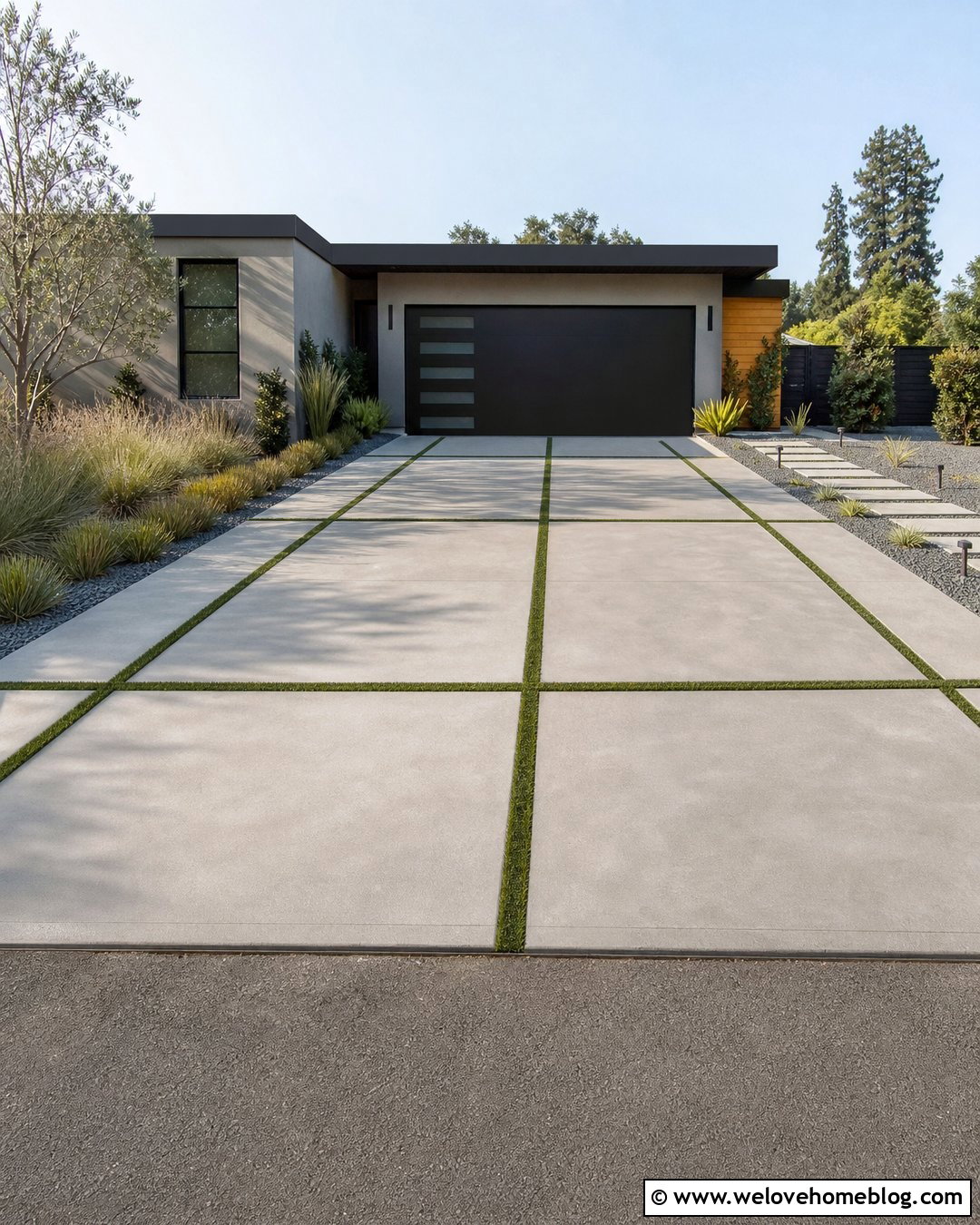
1. Modern Concrete Driveway With Grass Strips
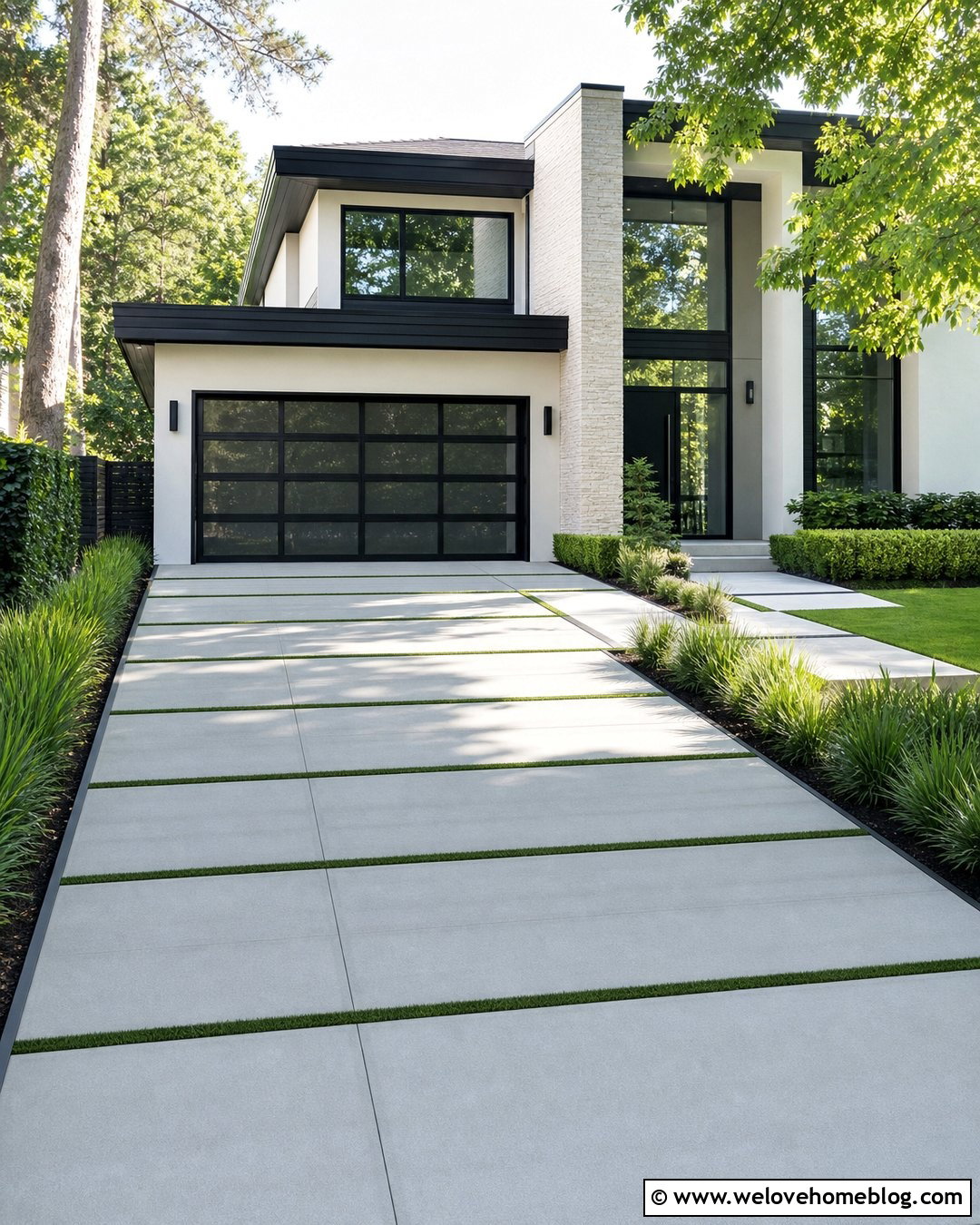
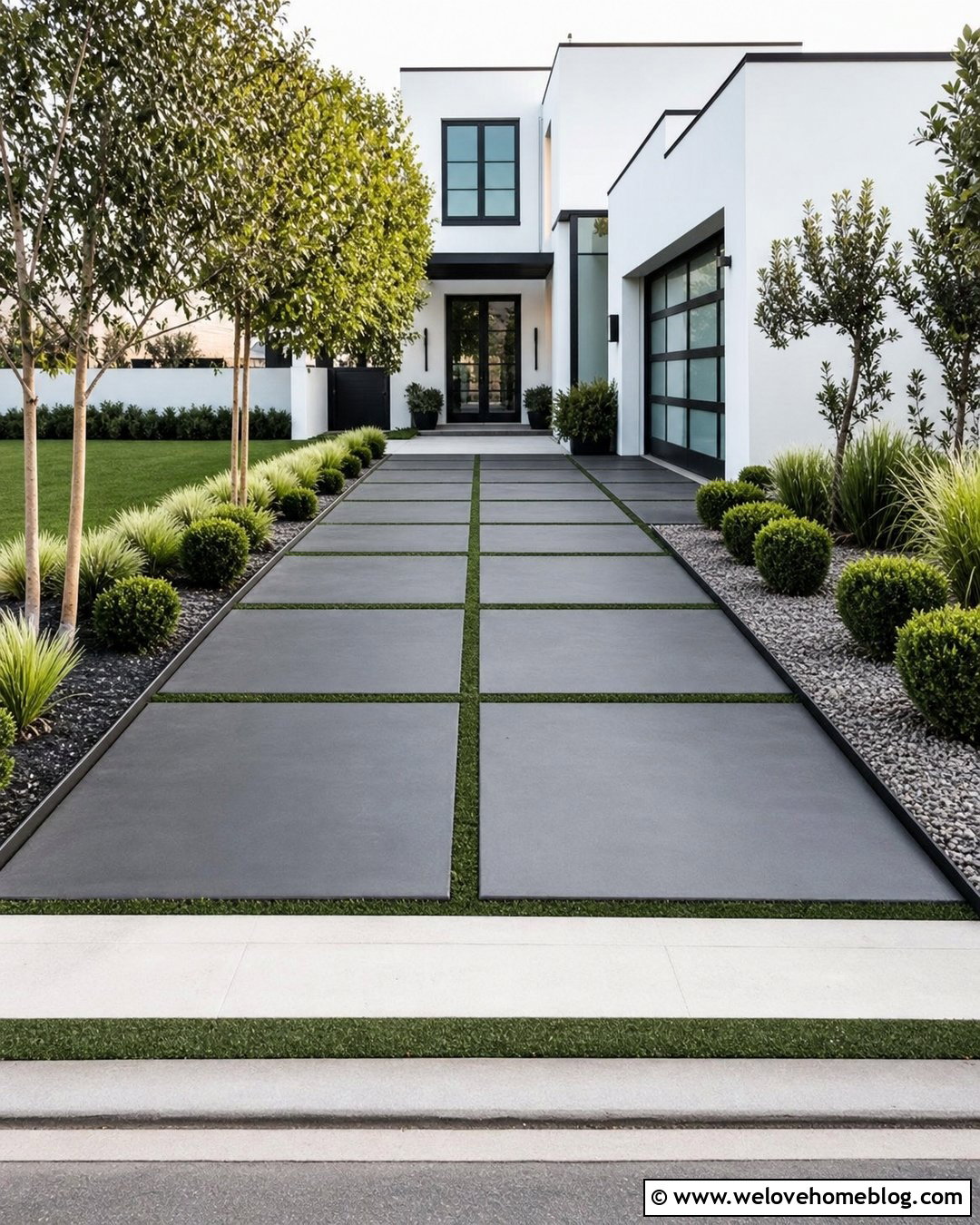
Large concrete slabs separated by narrow grass strips create a clean driveway that works especially well with modern architecture. The green joints visually soften the hard surface while emphasizing the driveway’s straight lines. Choose smooth, light gray poured concrete for a bright appearance, or use a lightly brushed finish for better traction. Keep the grass channels wide enough to maintain easily, and consider durable ground cover if regular mowing would be difficult. Steel or dark concrete edging can prevent soil from spreading over the slabs. Complete the look with rectangular planting beds, ornamental grasses, and a simple concrete walkway. This design is most successful on relatively level properties where accurate grading keeps water from collecting between the individual sections.
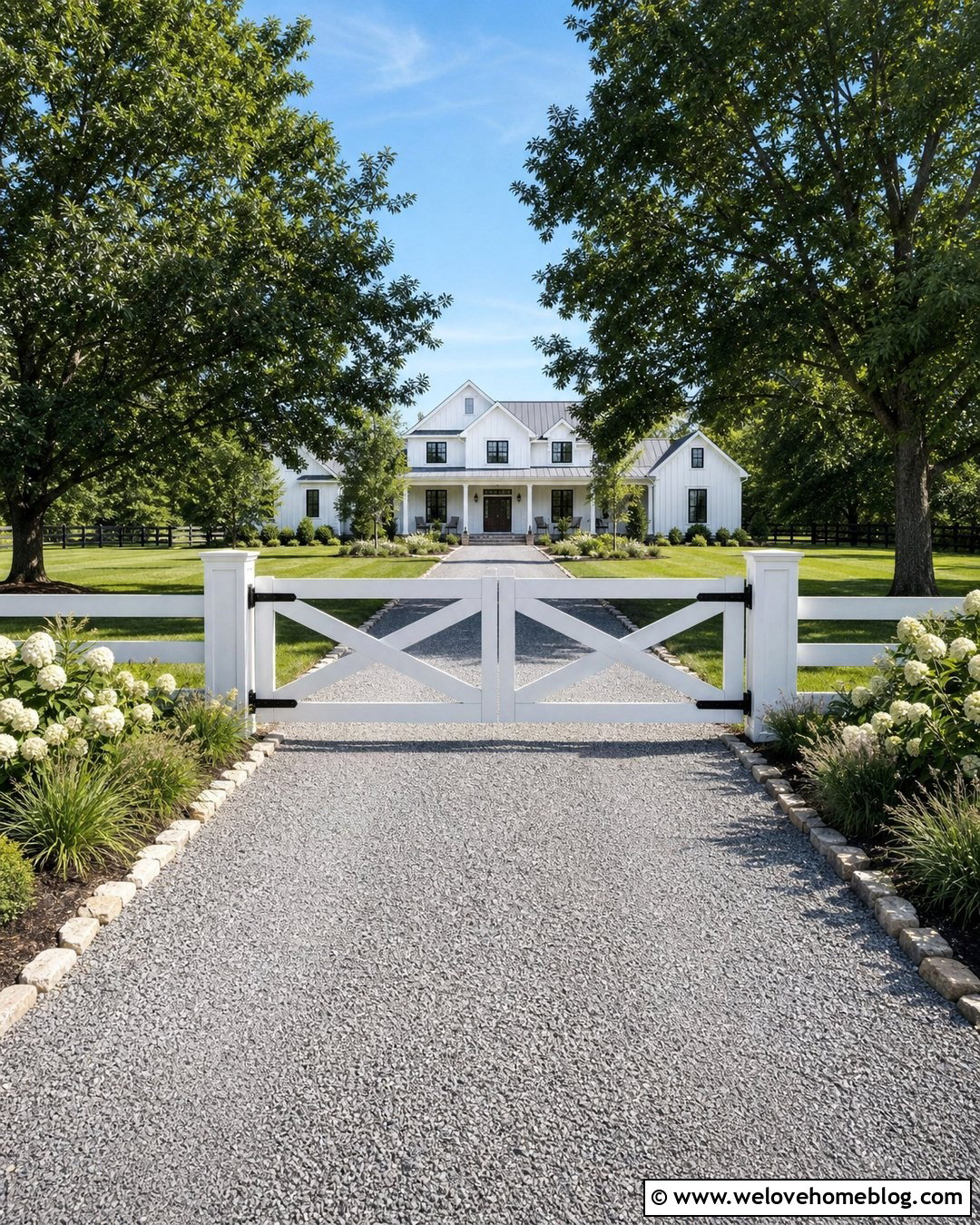
2. Curved Gravel Driveway With Stone Edging
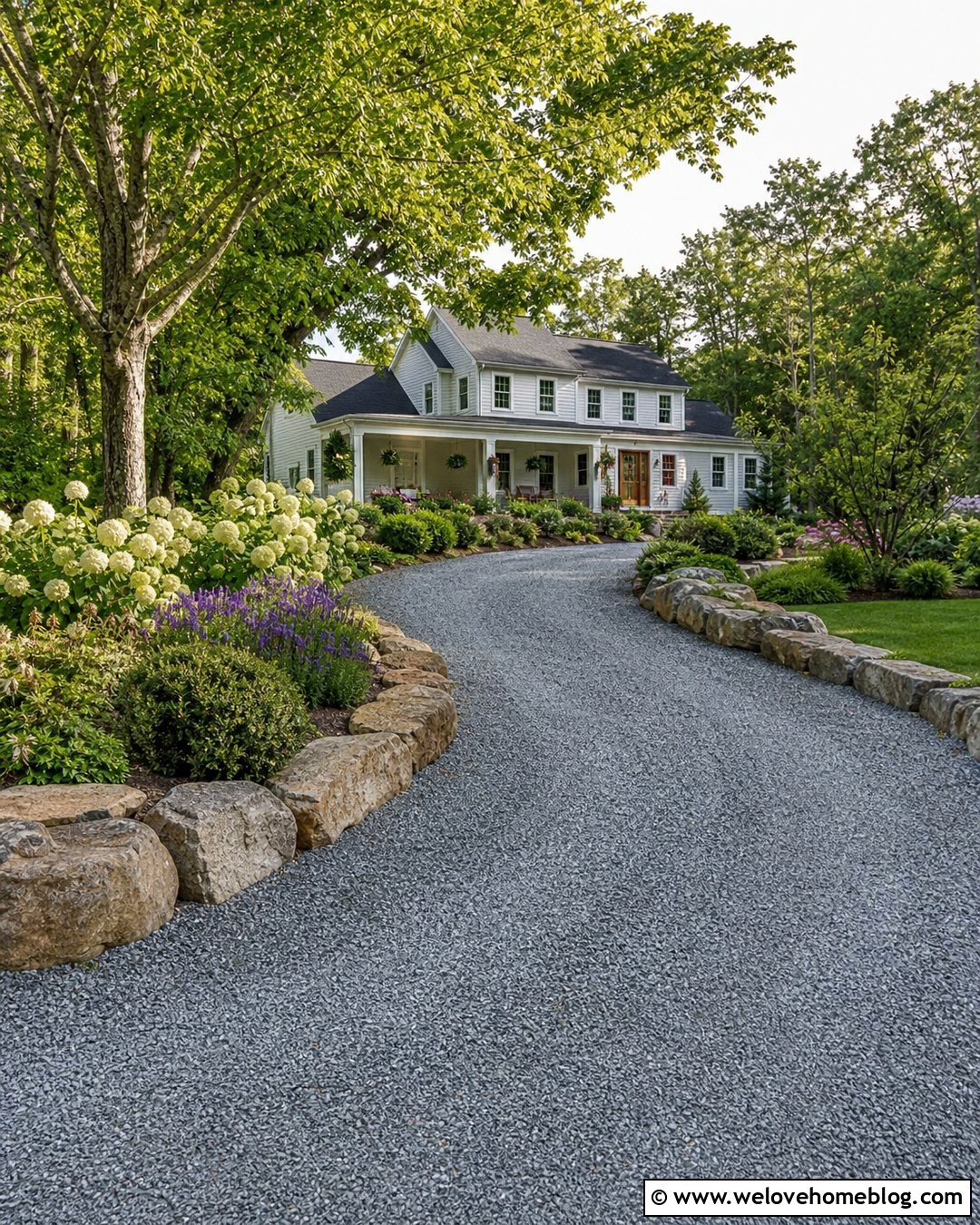
A curved gravel driveway creates a relaxed approach that reveals the house gradually instead of presenting everything from the street. Use compacted gray crushed stone for the driving surface and install larger natural stones along both sides to contain loose material. The broad curve should feel intentional and provide enough room for vehicles to move comfortably. Planting beds filled with hydrangeas, low evergreens, and flowering perennials can follow the same sweeping shape. A few well-positioned shade trees add height without restricting visibility near the entrance. Gravel requires occasional raking and replenishment, but strong edging helps reduce spreading. This complete design suits country homes, traditional houses, and wooded properties where a rigid paved driveway might look too formal.
3. Brick Herringbone Driveway With Cobblestone Border
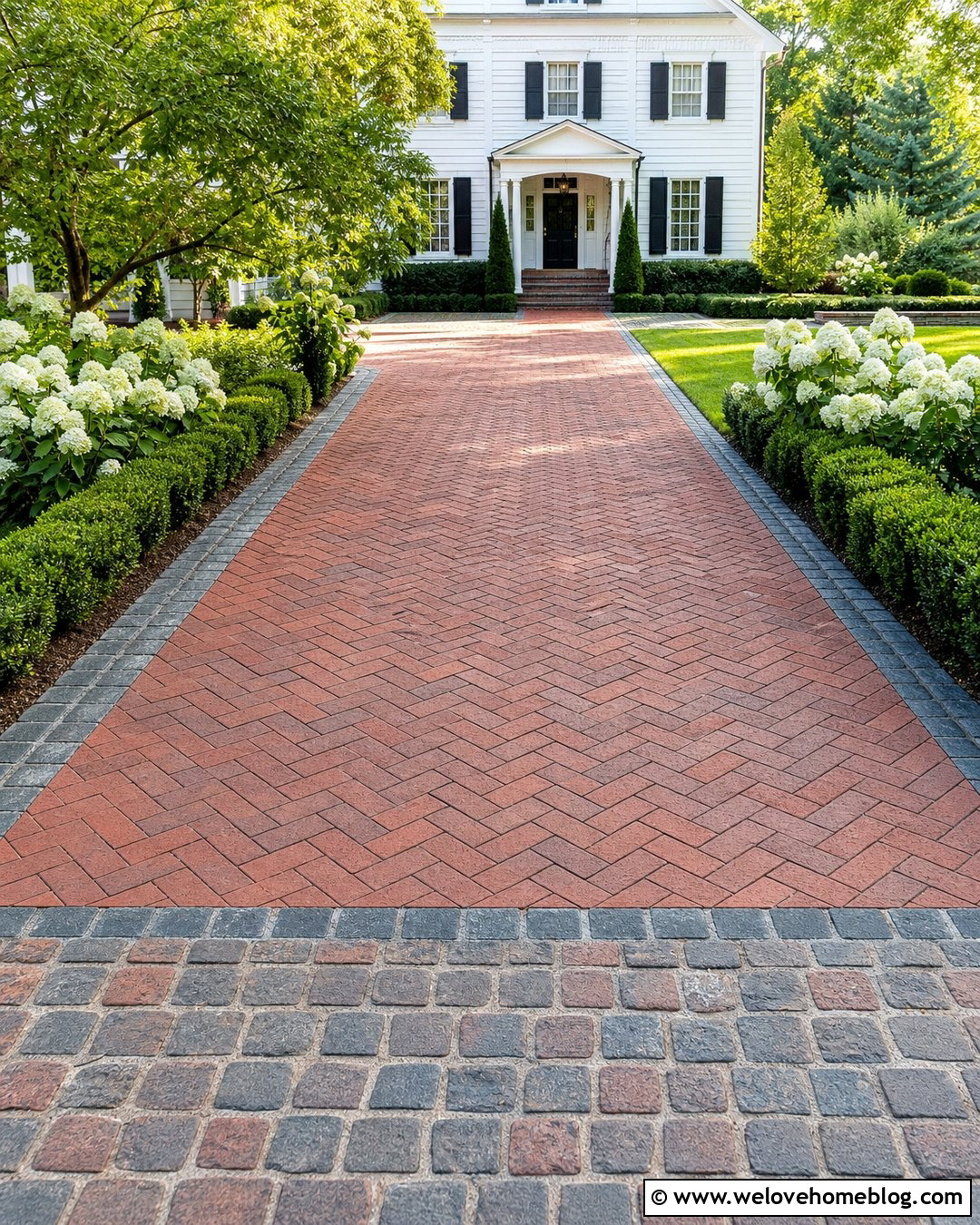
Clay brick pavers laid in a herringbone pattern bring warmth and traditional character to a driveway. The interlocking arrangement also gives the surface a strong visual structure that suits frequent vehicle traffic. Frame the brick field with dark granite cobblestones to define the edges and create a durable transition beside the lawn. For a cohesive entrance, repeat the cobblestone around nearby planting beds or across the driveway as a decorative apron. Boxwood hedges, white flowering shrubs, and a brick walkway complement the classic surface without making it feel overly busy. Select brick colors that relate to the home’s facade or roof. Proper base preparation and joint filling are essential because a beautiful paver pattern will only perform well when its foundation remains stable.
4. Circular Paver Driveway With Center Garden
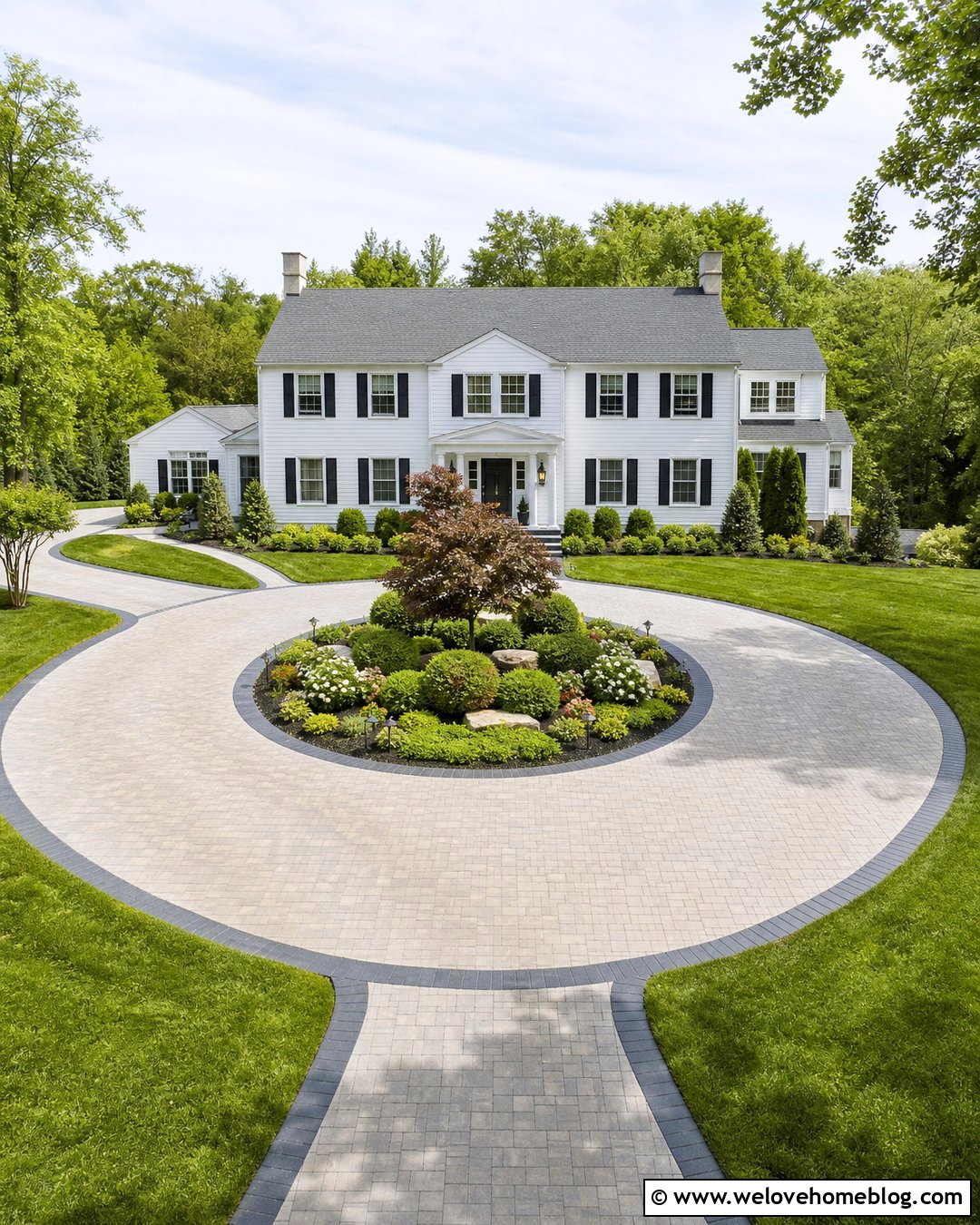
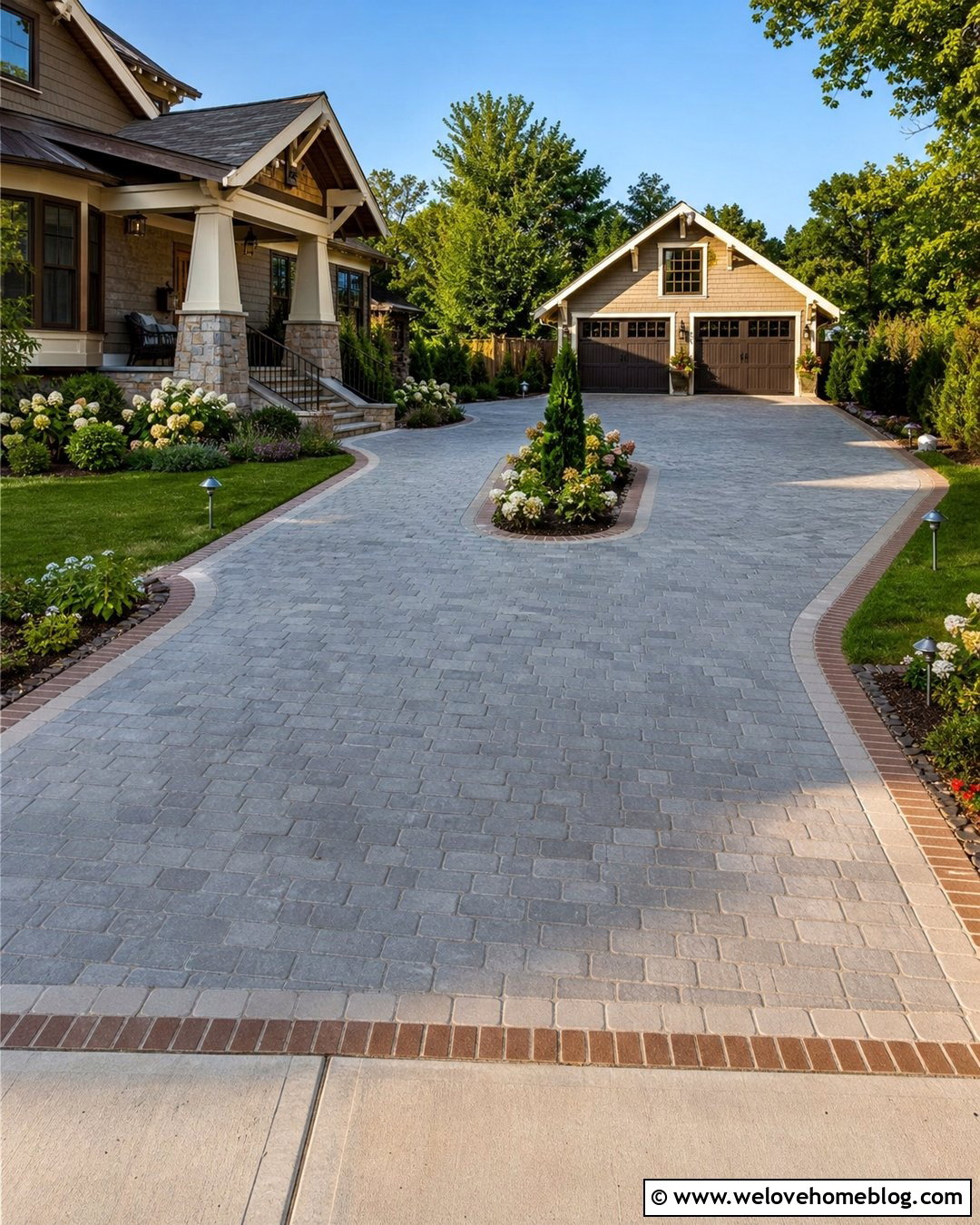
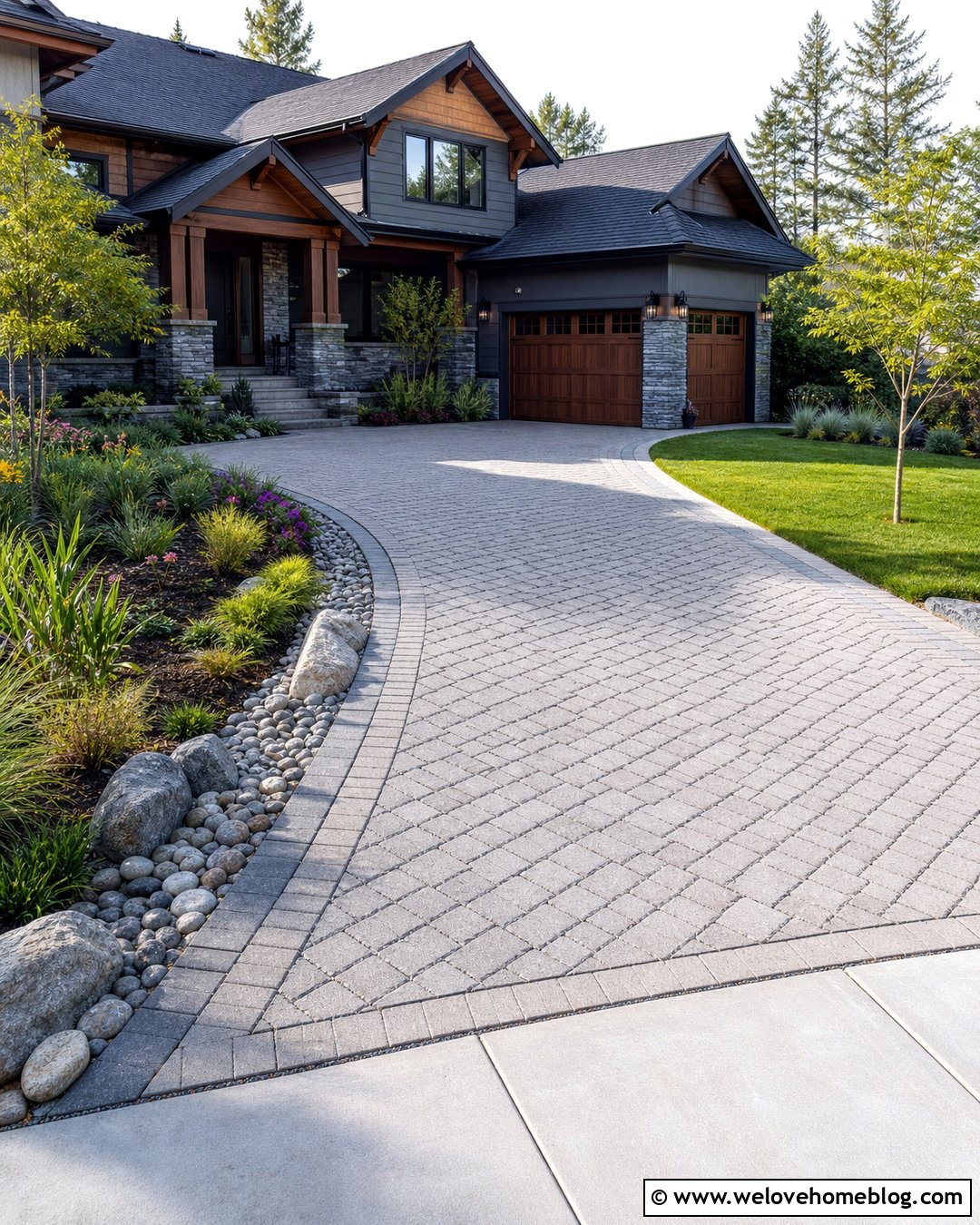
A circular driveway can improve traffic flow while turning the center of the front yard into a landscaped focal point. Concrete pavers in a warm gray blend provide a refined surface without competing with the garden island. Fill the center with one ornamental tree, layered evergreen shrubs, seasonal flowers, and low landscape lighting. Keep taller plants away from the driveway entrances so drivers can see approaching pedestrians and vehicles. A contrasting paver band around the island reinforces the circular shape and protects the planting bed from tires. Circular and semicircular layouts can reduce the need for reversing, although they require enough frontage and careful planning of turning space. () This arrangement works particularly well with broad ranch, colonial, and estate-style homes.
5. Black Asphalt Driveway With Brick Apron
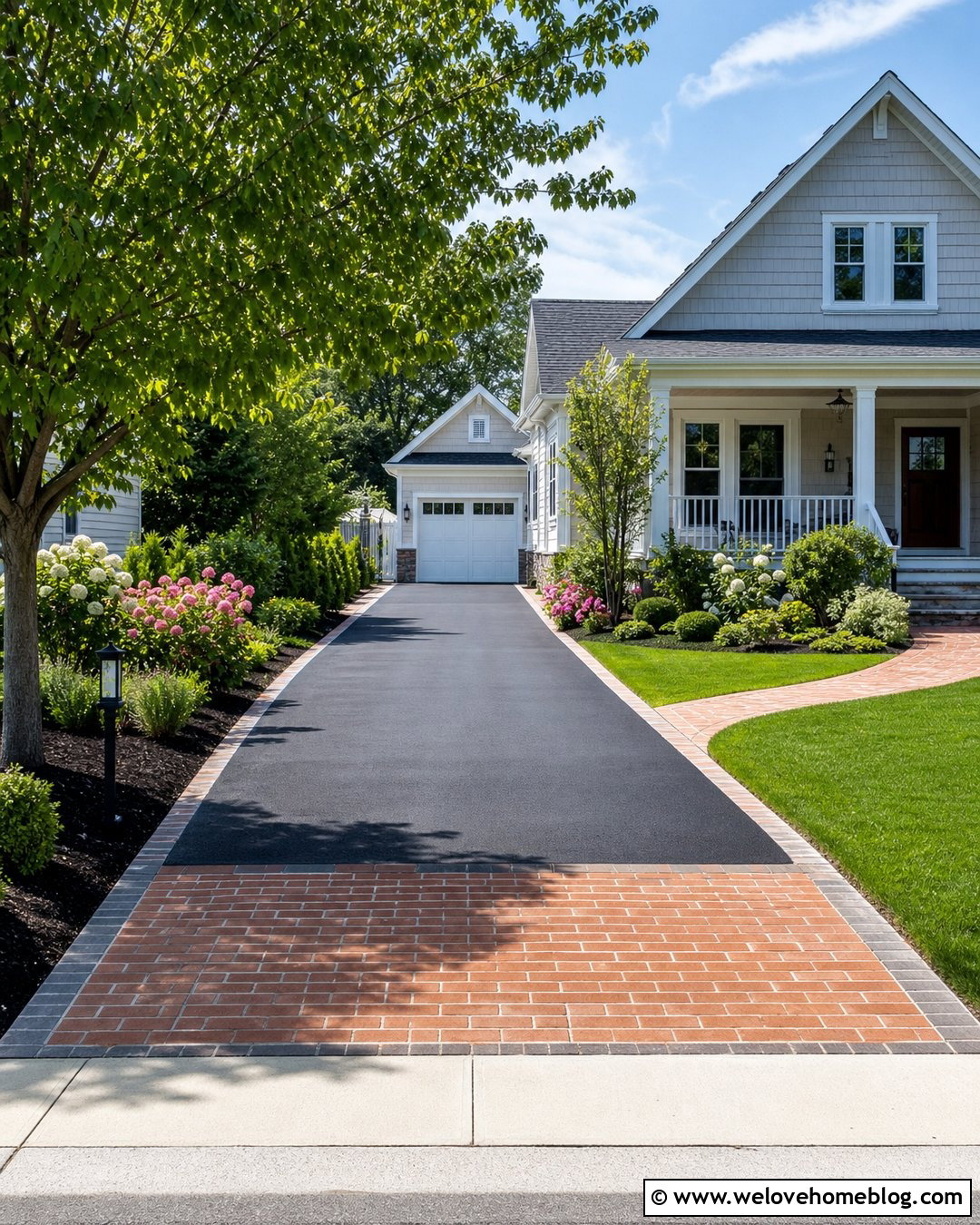
Black asphalt offers a smooth, uncomplicated surface that can be made more attractive with a brick entrance apron. Lay red or brown clay brick pavers across the first several feet of the driveway to establish a welcoming transition from the street. A matching brick border along the asphalt edges makes the entire layout appear finished rather than purely functional. The dark pavement creates a strong contrast with green lawn, light-colored siding, and white flowering plants. Use gently curved planting beds near the entrance to soften the straight driveway. Asphalt may be practical for a long approach, while the smaller amount of decorative brick keeps the design visually interesting without covering the entire area in premium material. Repeat the brick near the garage for additional continuity.
6. Exposed Aggregate Driveway With Paver Bands
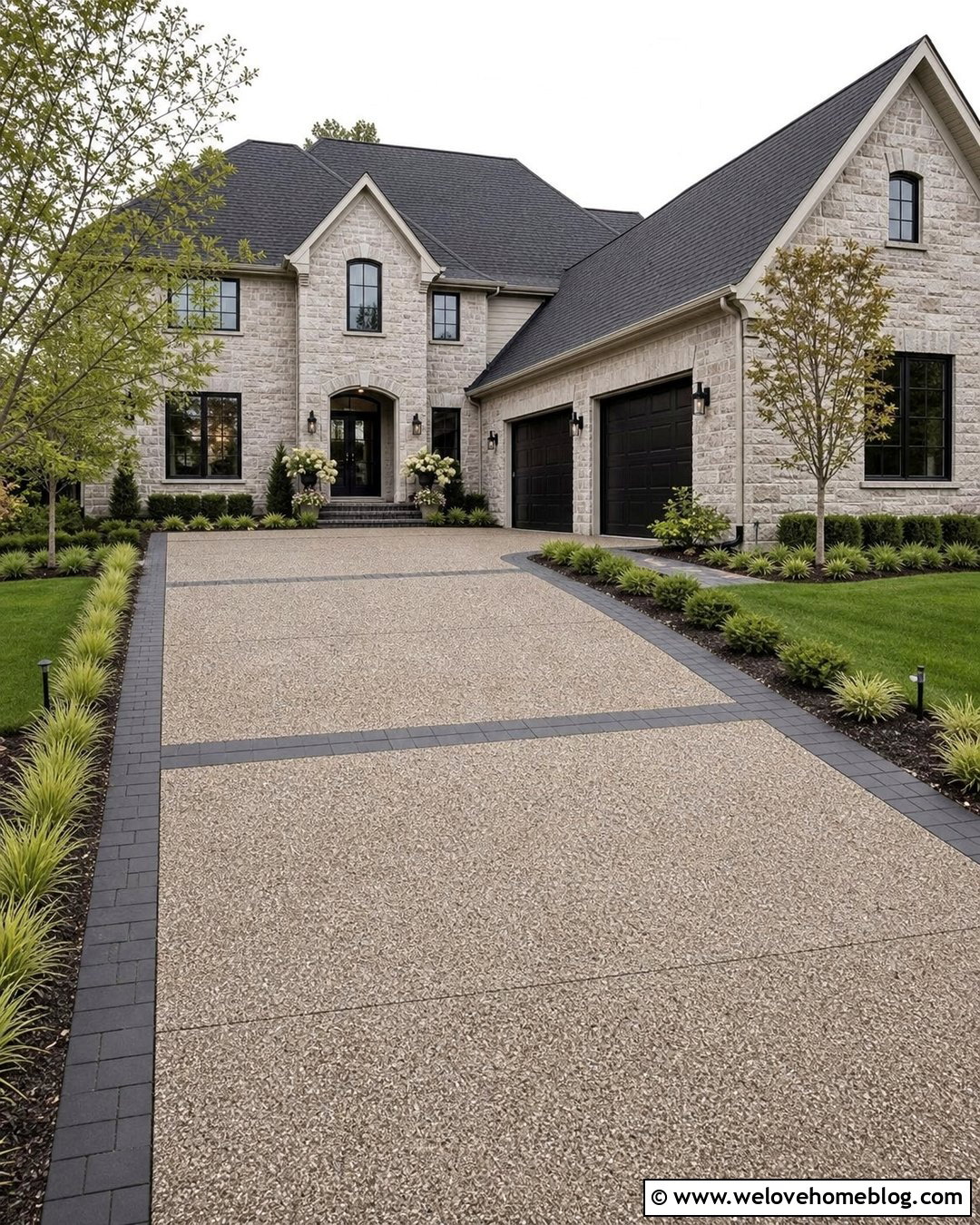
Exposed aggregate concrete has a textured surface that hides minor marks and introduces natural color variation. Break up a wide driveway with charcoal concrete paver bands placed across the surface at regular intervals. These decorative lines can visually organize parking spaces and make a large concrete area appear more proportionate to the house. Continue the same pavers around the perimeter to form a crisp border. Low shrubs, ornamental grasses, and a simple lawn provide enough greenery without concealing the textured finish. Choose aggregate colors that coordinate with the home’s stonework, roofing, or exterior paint. Because the surface contains visible stone, review a physical sample before installation. A carefully chosen blend can connect contemporary architecture with natural landscaping in a subtle, practical way.
7. Farmhouse Gravel Driveway With Timber Edging
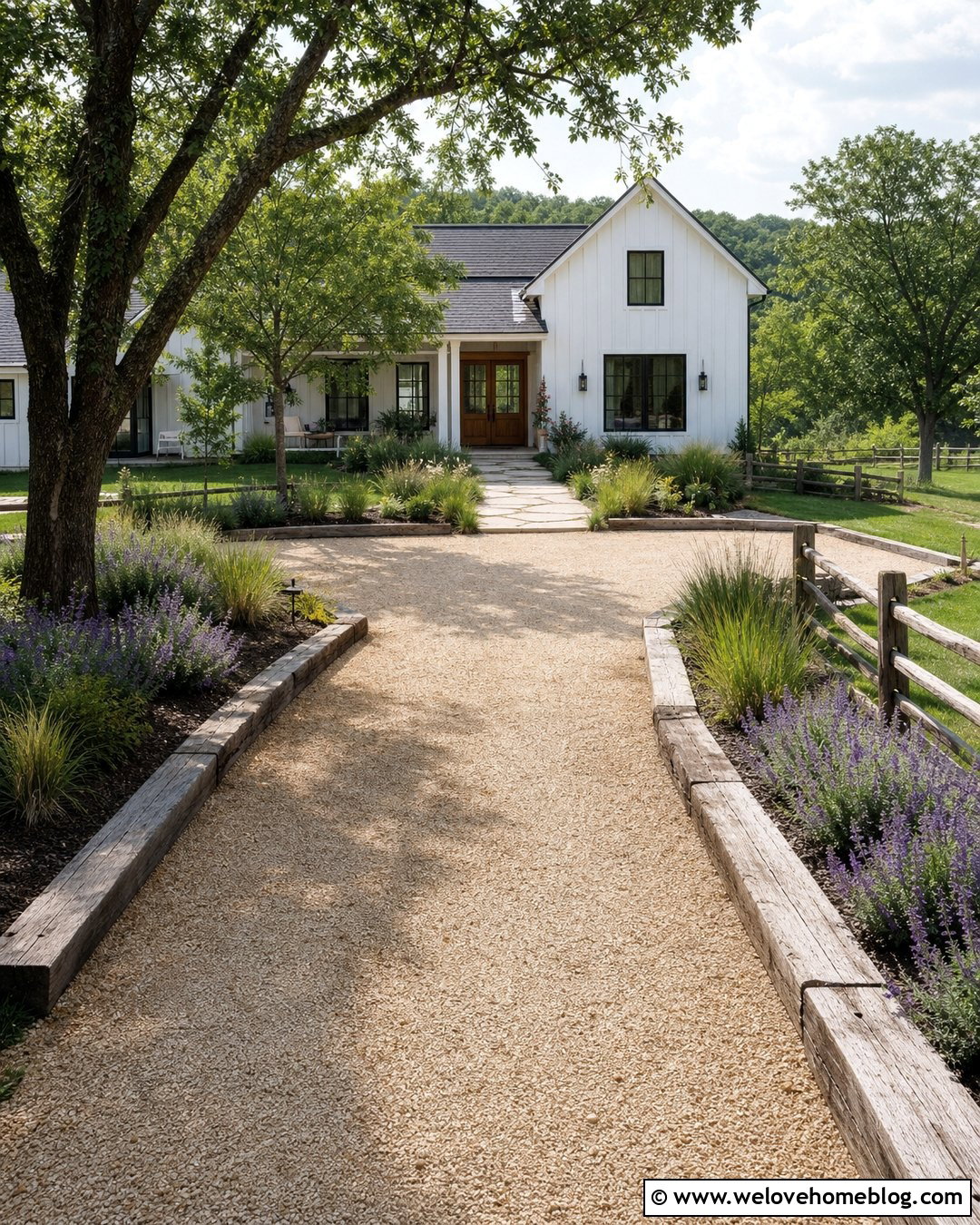
Warm beige gravel, weathered timber edging, and informal planting create an inviting driveway for a farmhouse or country home. Keep the driveway mostly straight, then widen it near the garage or barn to provide turning and guest parking space. Heavy timber beams contain the gravel while reinforcing the property’s rustic character. Plant lavender, catmint, ornamental grasses, and native flowering perennials along the outer edges. A split-rail fence can frame the entrance without making it feel closed off. Use compacted angular gravel rather than loose rounded pebbles in the main tire area because it forms a firmer surface. Occasional raking, weed control, and gravel replacement will be necessary, but the approachable appearance works beautifully with white siding, metal roofing, and mature country landscaping.
8. Concrete Ribbon Driveway With Ground Cover
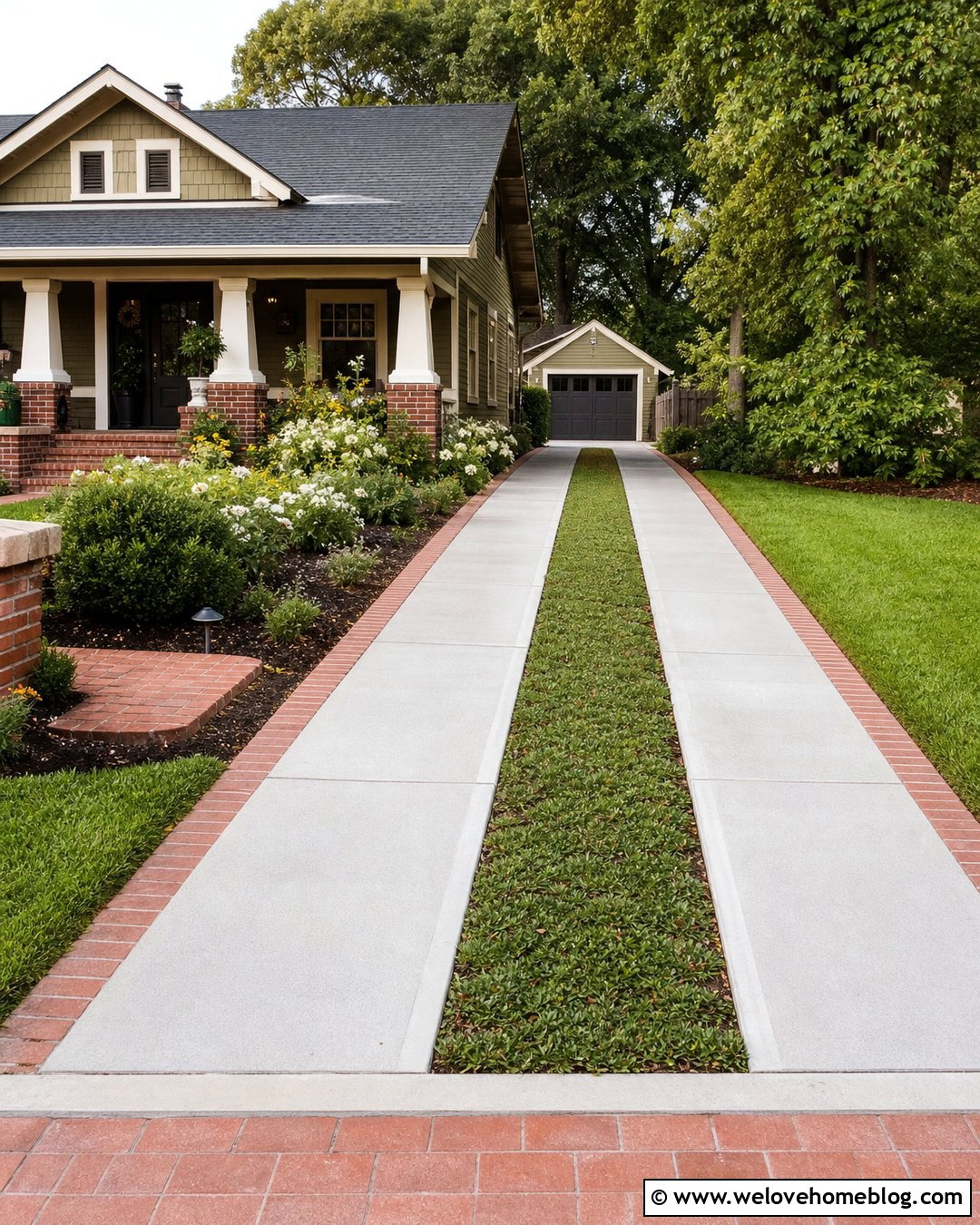
A concrete ribbon driveway uses two paved tire tracks with a planted center strip, reducing the visual weight of a fully paved surface. This layout looks especially natural in front of cottages, bungalows, and older homes. Fill the middle with low-growing ground cover that tolerates local sun exposure and occasional foot traffic. Keep the planting level below the concrete so soil and water do not wash onto the driving strips. Brick or stone edging along the outer sides can add definition and connect the driveway with the front walkway. Ribbon driveways are traditionally associated with older residential properties and can introduce greenery into a compact front yard. () Before choosing this design, confirm that the track spacing and turning area suit the vehicles used at your home.
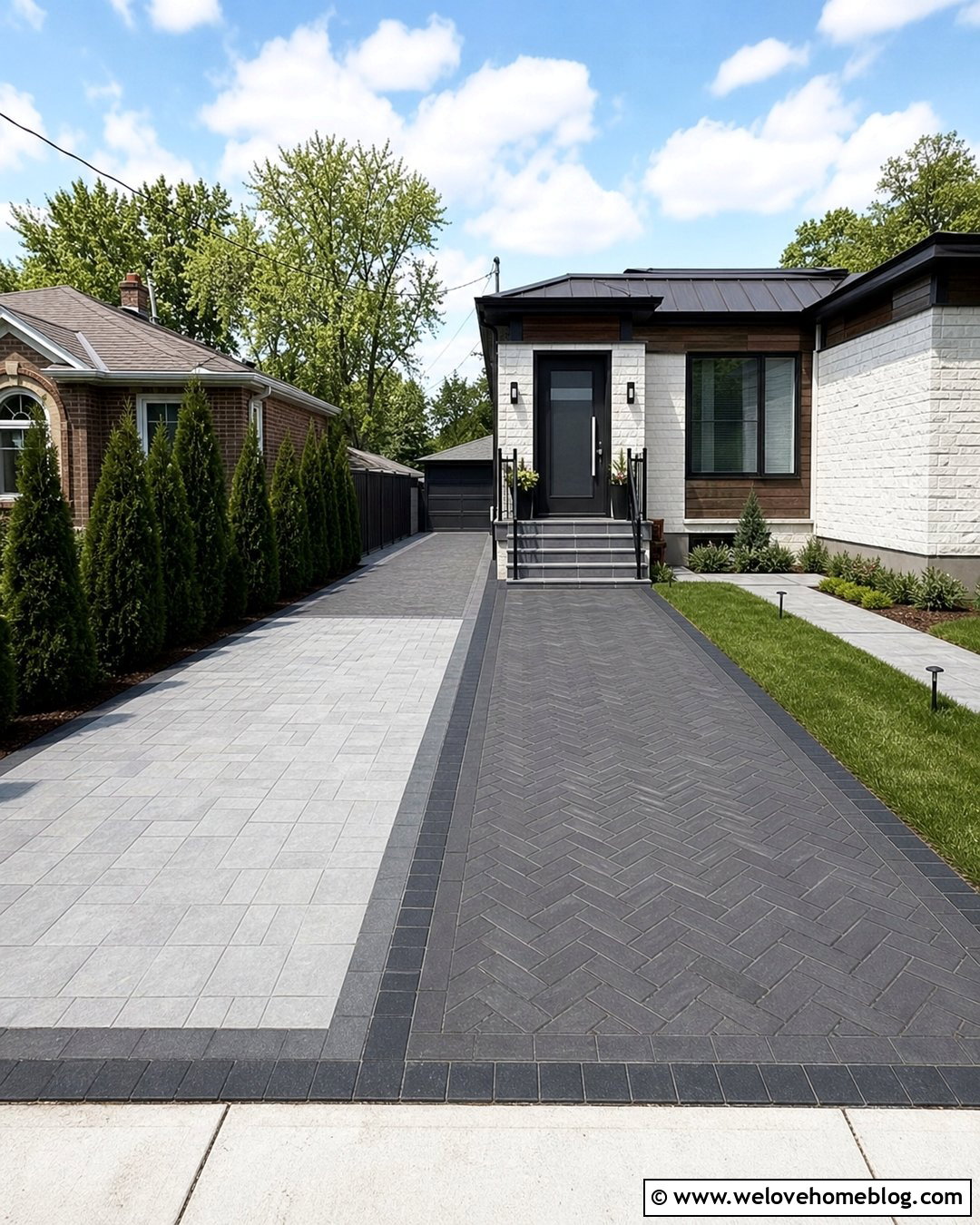
9. Gray Paver Driveway With Charcoal Border
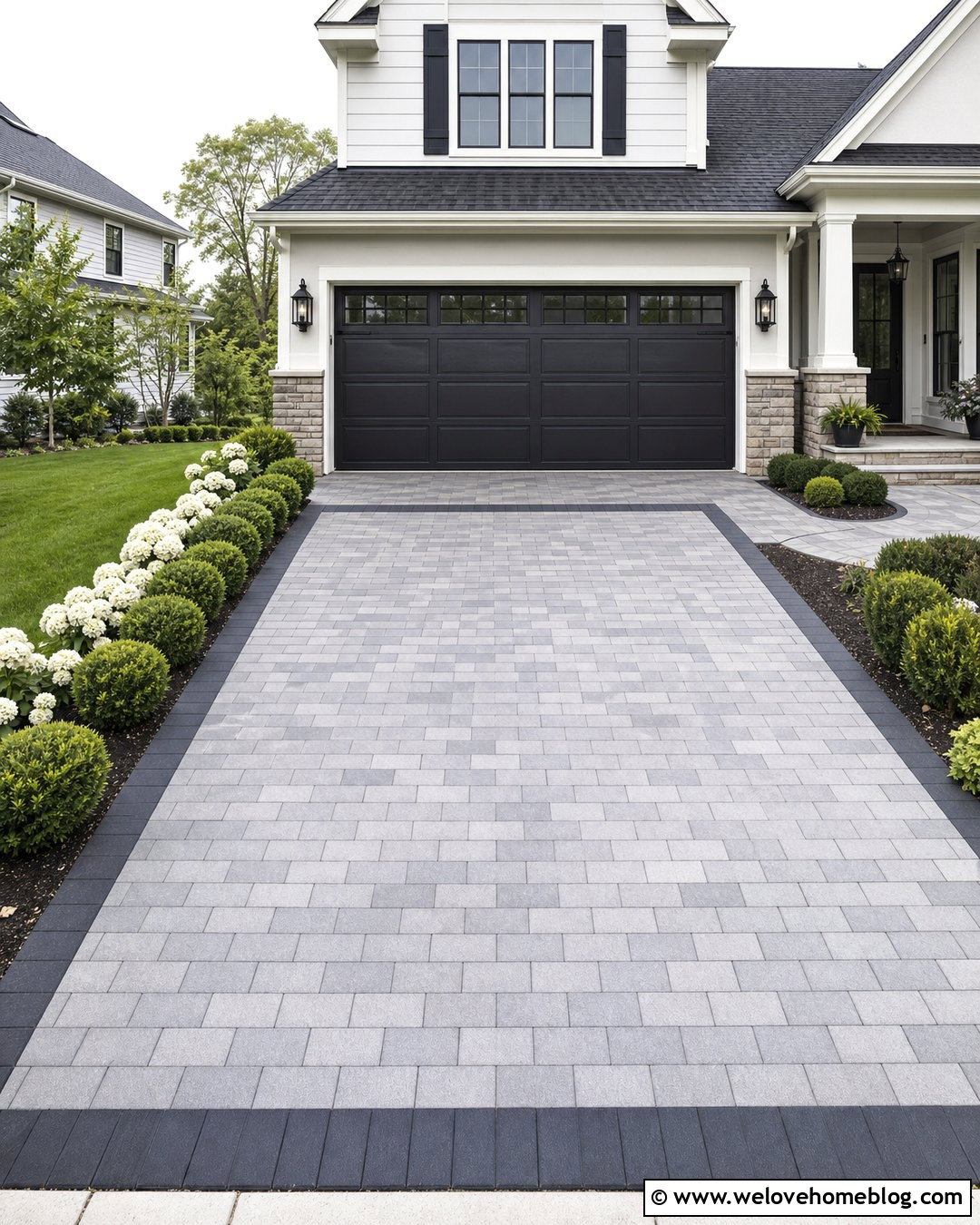
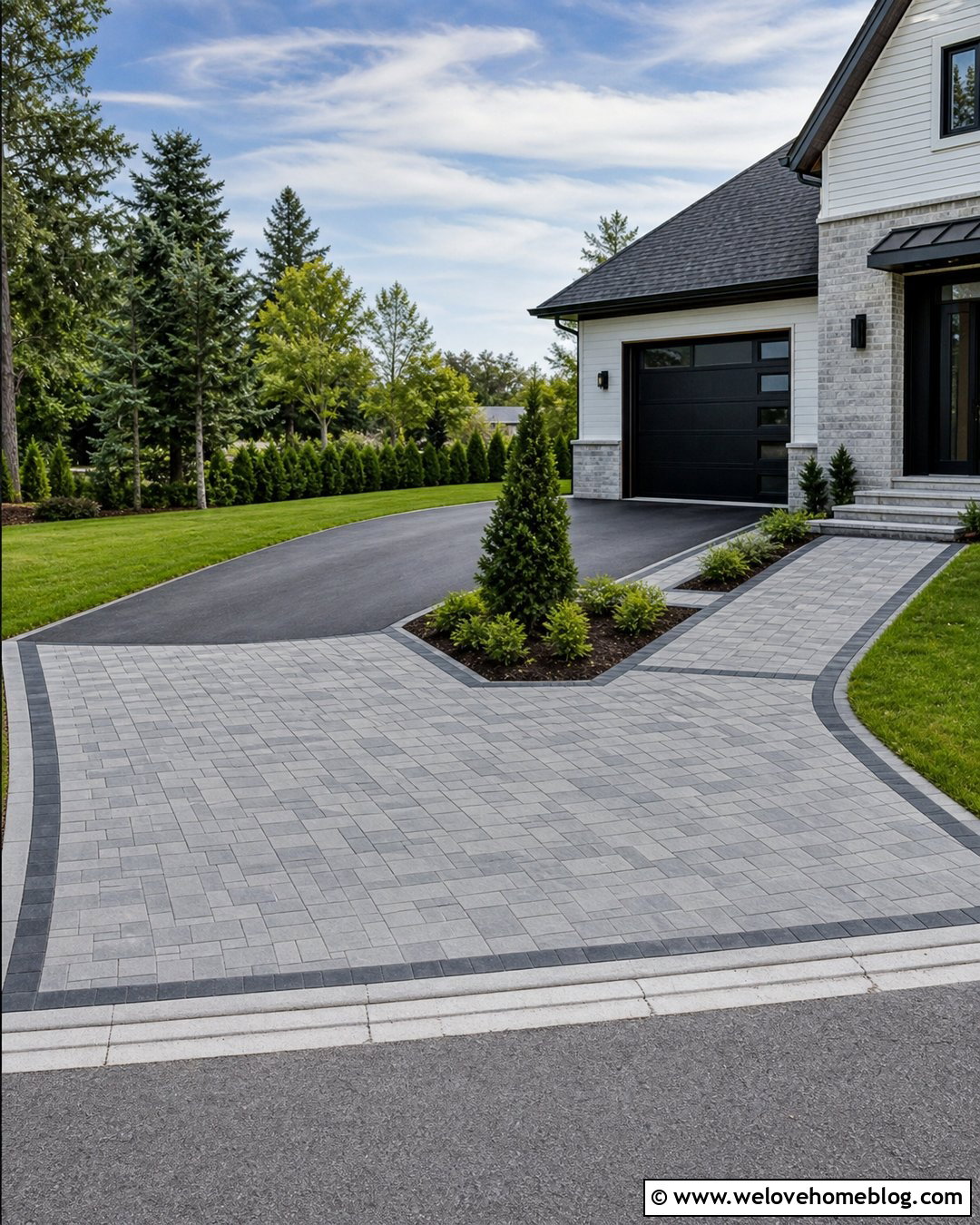
A gray concrete paver driveway provides a flexible foundation for contemporary, transitional, or traditional homes. Select medium-gray rectangular pavers for the main field and frame them with a charcoal soldier-course border. The darker edge clearly defines the driveway against lawn and planting beds while helping a wide paved area feel more tailored. A running-bond or subtle modular pattern keeps the surface calm and easy to coordinate with other exterior materials. Add clipped evergreen shrubs, white flowers, and a matching paver walkway to create continuity from the curb to the front door. If the house has a large garage, use an additional charcoal band near the doors to visually separate the driveway from the garage apron. Keep the overall color palette limited so the detailed paving does not overwhelm the facade.
10. Cobblestone Driveway With Formal Hedges
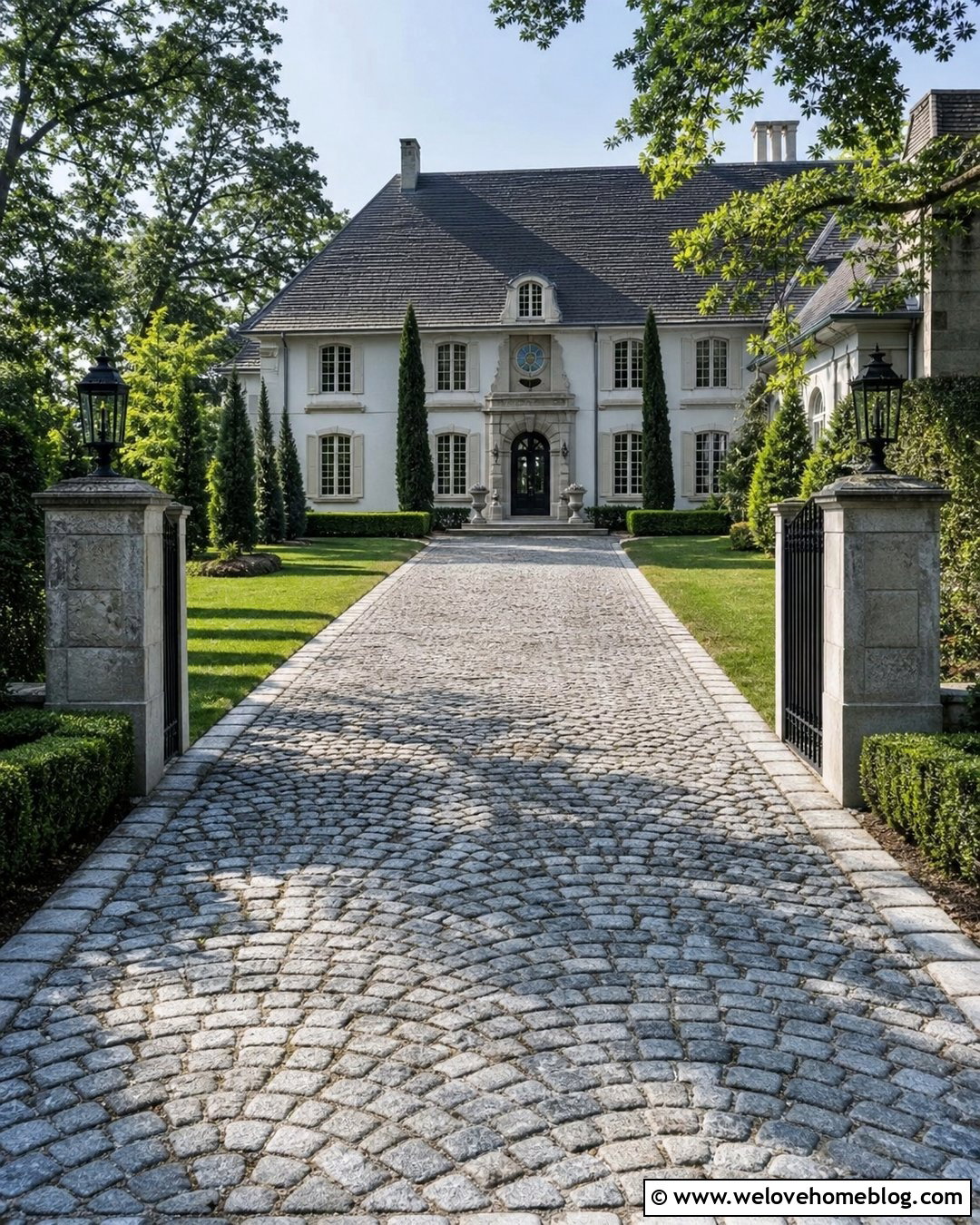
Full cobblestone paving creates a richly textured driveway suited to historic, European-inspired, and stately traditional homes. Use weathered gray granite cobbles in a fan or running pattern, then define the edges with slightly larger stone setts. Low clipped hedges can follow the driveway’s shape and bring order to the irregular stone surface. Place taller columnar evergreens near the house rather than beside the street, where they might limit sightlines. A straight approach emphasizes symmetry, especially when aligned with a centered front entrance. Cobblestone requires skilled installation and a carefully prepared base, but its varied tones and durable appearance can make the driveway feel established from the beginning. Warm landscape lighting, stone gateposts, and a matching walkway complete the formal design without adding unnecessary colors or materials.
11. Stamped Concrete Driveway With Stone Border
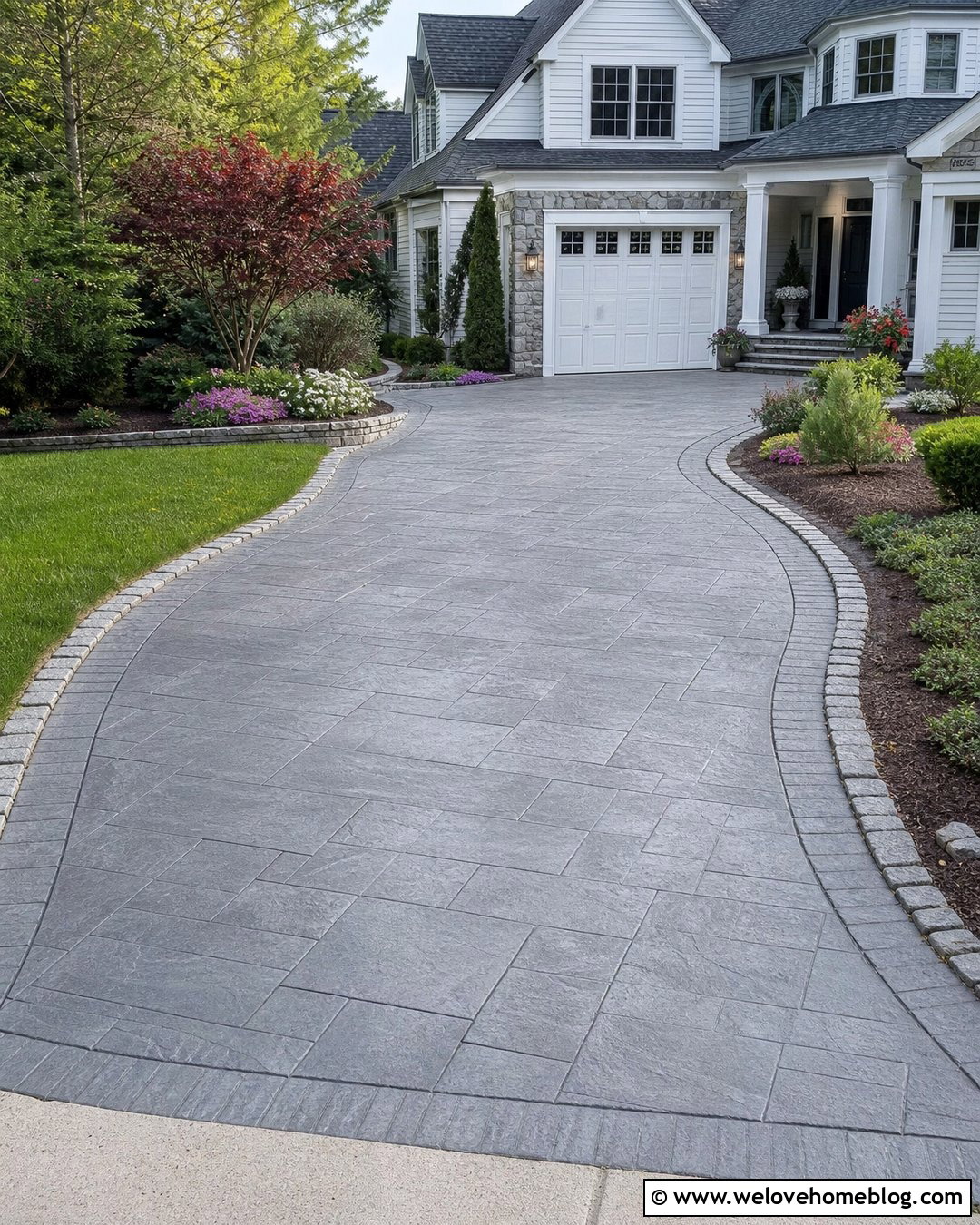
Stamped concrete can provide the appearance of individual stone pieces while retaining the continuous structure of poured concrete. Choose a restrained ashlar stone pattern in soft gray or taupe rather than an overly dramatic texture. A border of real stone or contrasting concrete pavers gives the stamped field a more convincing, finished edge. Use a gently curved layout to soften the repetition and guide visitors toward the garage. Plant compact shrubs, flowering ground cover, and one small ornamental tree along the outside curve. Control joints should be incorporated carefully into the pattern so they look intentional. Ask to see large samples in outdoor light because color can appear different across broad surfaces. This approach suits homeowners who want decorative detail with fewer individual joints than a full paver driveway.
12. Permeable Paver Driveway With Rain Garden
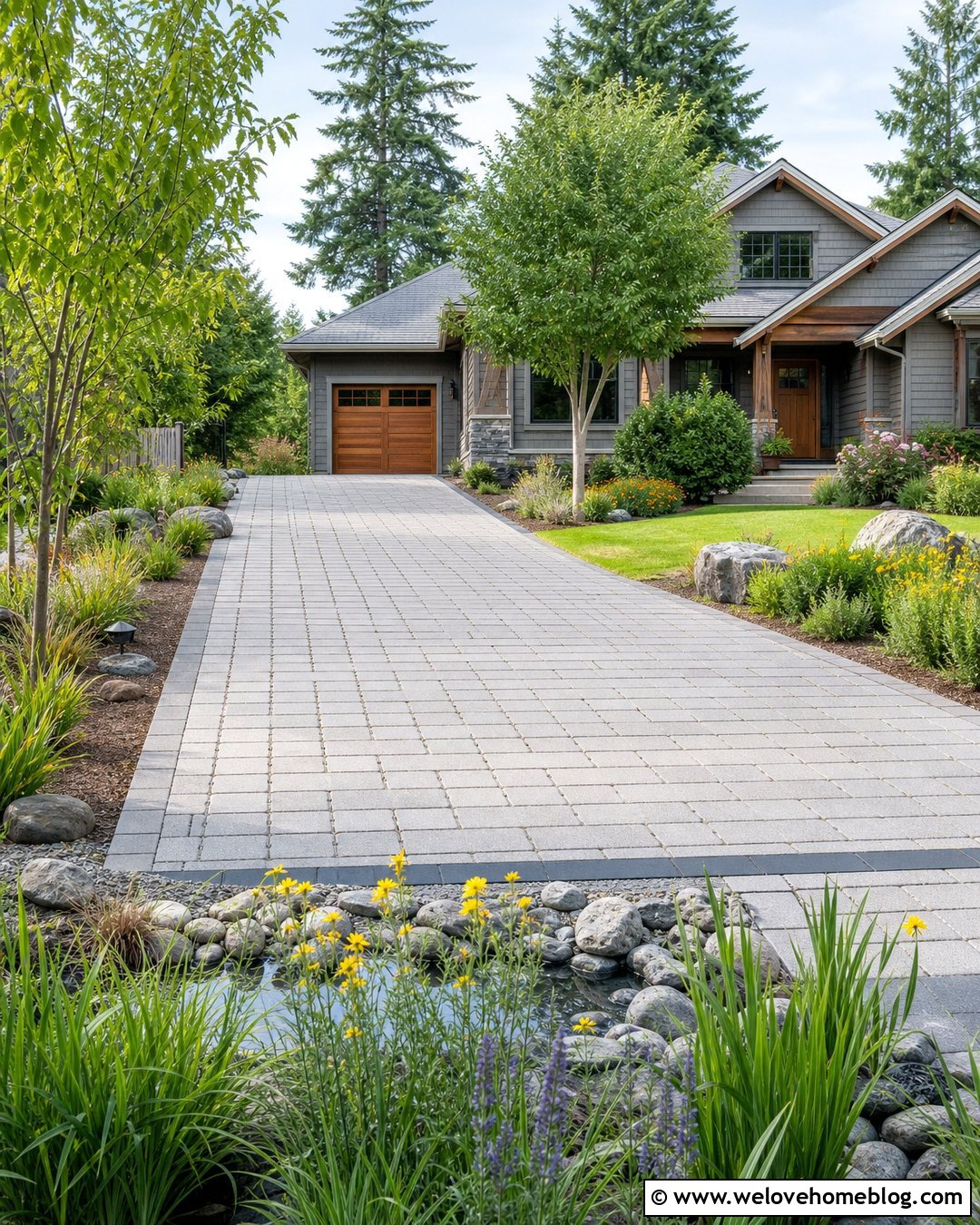
Permeable concrete pavers and a neighboring rain garden create a driveway that feels integrated with the landscape. Select rectangular pavers in a natural gray blend with wider, aggregate-filled joints that allow water to move through the surface system. Along the lower side of the driveway, form a shallow planted basin with moisture-tolerant grasses, flowering perennials, and small shrubs appropriate for the local climate. Stone edging can define the rain garden without blocking drainage paths. Keep the driving layout simple and straight so the planting becomes the main visual feature. Permeable paving requires the correct open-graded base and site-specific planning rather than only wider surface joints. When designed properly, the driveway, drainage area, walkway, and front garden can function as one attractive composition.
13. White Gravel Driveway With Lavender Borders
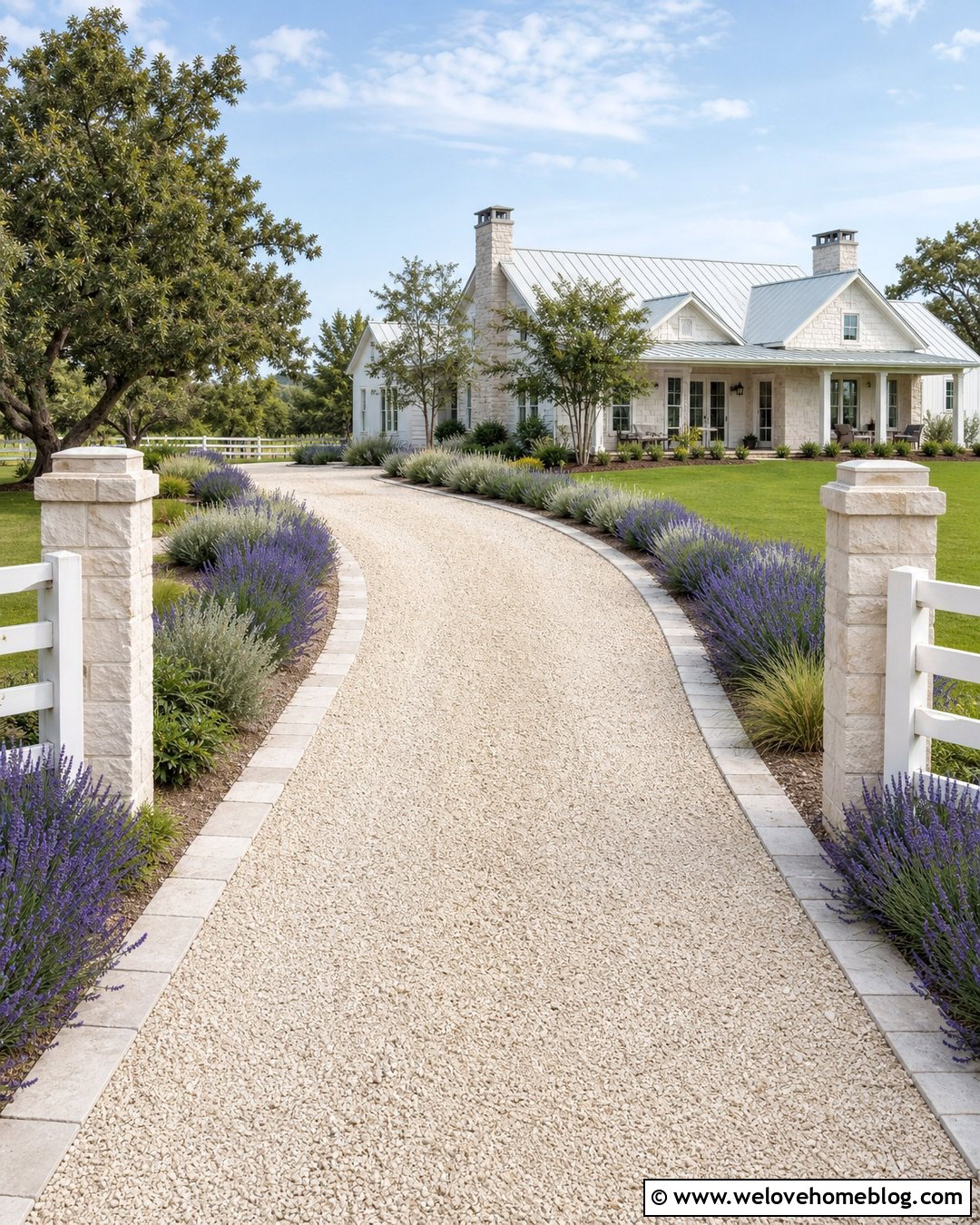
Pale gravel reflects light and creates a fresh entrance for a cottage, coastal home, or light-colored farmhouse. Use compacted limestone gravel for the main driveway and edge it with understated steel or pale stone. Lavender borders introduce soft color and fragrance while emphasizing the driveway’s length. Add rosemary, ornamental grasses, and silvery foliage to continue the drought-tolerant palette where the climate allows. A slightly curved layout prevents a long driveway from looking severe, while a wider parking court near the house provides practical maneuvering room. Pale gravel can show leaves and soil more readily than darker stone, so it works best where regular raking is manageable. Finish the entrance with simple timber posts, white fencing, or limestone pillars that coordinate naturally with the bright driving surface.
14. Modern Paver Driveway With Gravel Joints
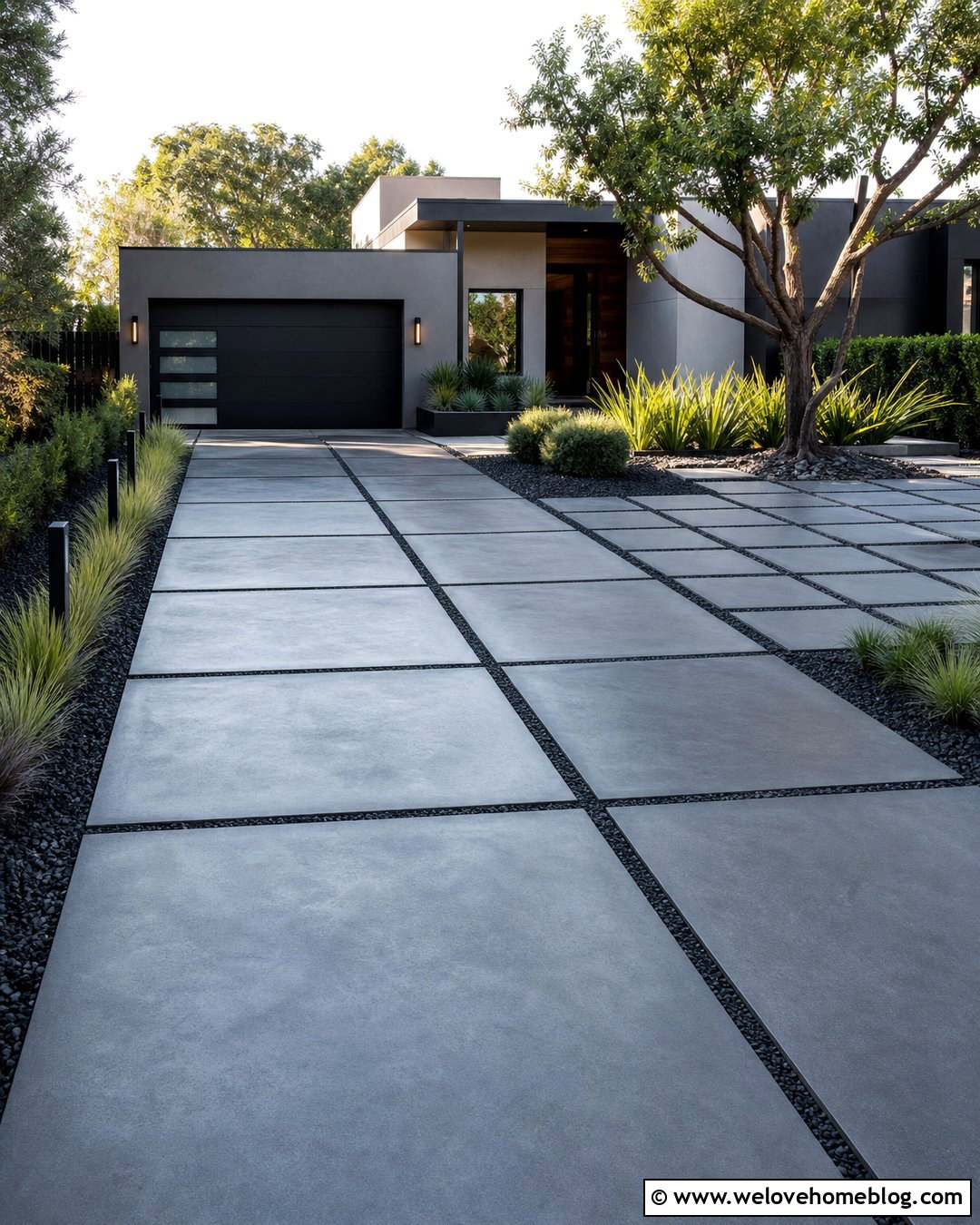
Oversized concrete pavers separated by narrow gravel joints create a strong geometric driveway for modern homes. Use smooth charcoal or medium-gray slabs in a linear grid, then fill the spaces with small black pebbles or crushed granite. The contrasting joints make each paver visible and prevent the broad surface from resembling one plain concrete slab. Maintain a straight layout aligned with the garage and repeat the same grid in the front walkway. Minimal planting works best: consider ornamental grasses, clipped shrubs, architectural succulents in warm regions, and one sculptural tree. Metal edging keeps gravel from migrating into planting beds. The finished design should look precise but not empty, with greenery positioned to soften the architecture while preserving the clean view toward the house.
15. Natural Stone Driveway With Woodland Landscaping
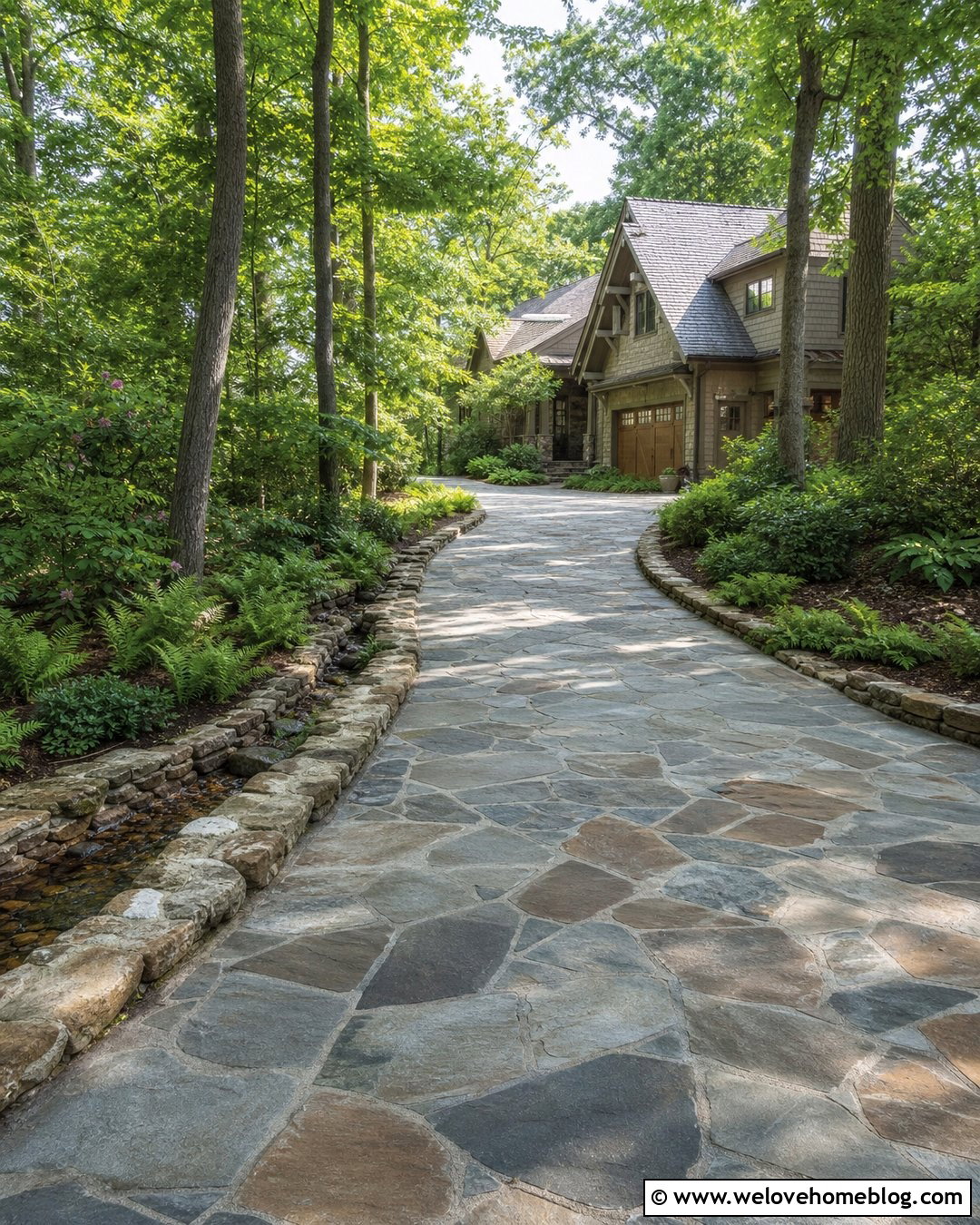
Irregular natural stone paving blends beautifully with a wooded property when its tones reflect the surrounding landscape. Choose durable stone approved for vehicle use in mixed gray, brown, and muted green shades. A gently winding driveway can move around mature trees rather than cutting through the property in a rigid line. Border the paving with ferns, native ground covers, shade-tolerant shrubs, and leaf mulch, leaving enough clearance to protect visibility and vehicle access. A stone drainage channel along the lower edge can become part of the design. Near the house, widen the driveway into a simple parking court and connect it to a matching stepping-stone walkway. The result should feel established and natural while still offering defined edges, stable paving, and an obvious route to the entrance.
16. Red Brick Driveway With White Colonial House
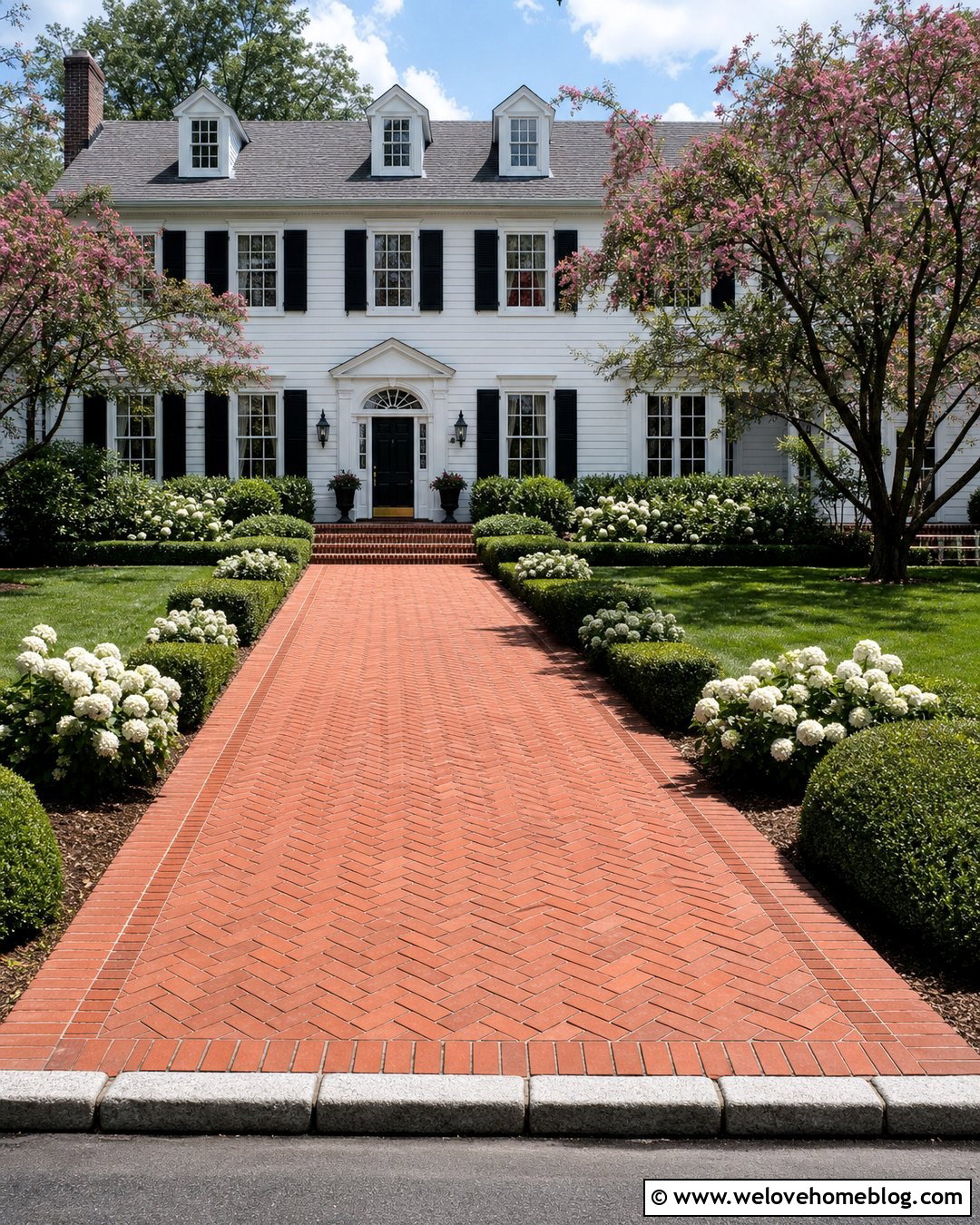
A red brick driveway can strengthen the balanced appearance of a white colonial home. Arrange clay brick pavers in a 45-degree herringbone pattern and use a straight soldier-course border to frame the edges. Align the driveway with the garage while adding a brick walkway that leads directly toward the centered front door. Symmetrical boxwood beds, white hydrangeas, and small flowering trees reinforce the home’s orderly architecture. If the driveway is wide, introduce a subtle darker brick band to define the parking area without changing materials completely. Brick color should complement shutters, roofing, and foundation details rather than matching every element exactly. A properly scaled design allows the warm paving to stand out against the white facade while the structured landscaping keeps the overall curb view polished.
17. Decomposed Granite Driveway With Desert Landscaping
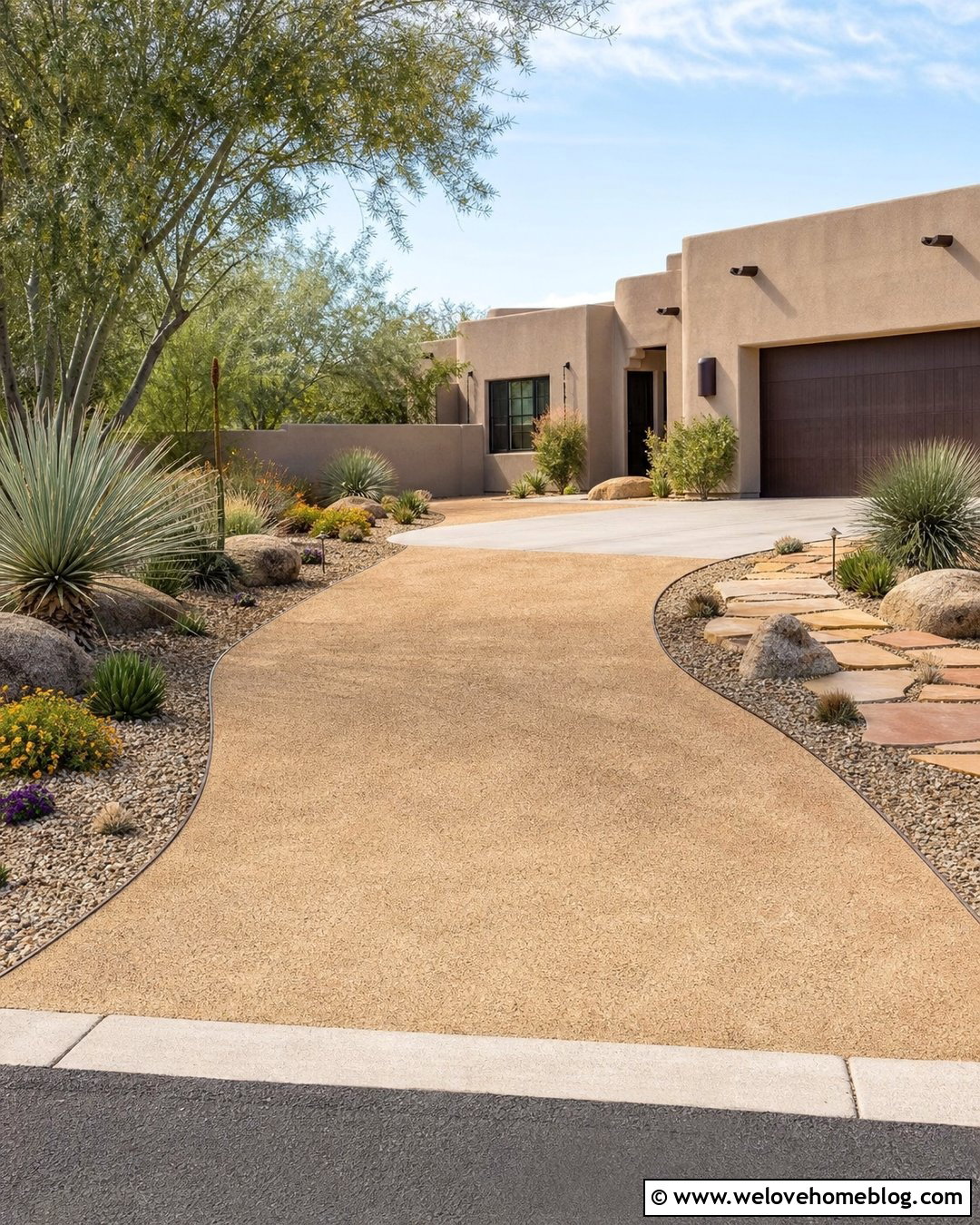
Compacted decomposed granite creates an earthy driveway that fits naturally into Southwestern and drought-conscious landscapes. Choose a stabilized tan or warm rust blend that complements stucco, adobe-inspired architecture, and desert stone. Define the straight or softly curved driveway with steel edging, then surround it with gravel mulch, boulders, agave, yucca, native grasses, and other regionally suitable plants. Leave open space between plant groupings so the entrance does not look crowded. A concrete or stone apron near the garage can reduce loose material where vehicles turn frequently. Drainage and compaction deserve careful attention, particularly on sloping sites. The finished driveway should share colors with the house and garden, allowing the surface to recede while sculptural plants and natural rock guide the eye toward the entrance.
18. Horseshoe Driveway With Landscaped Island
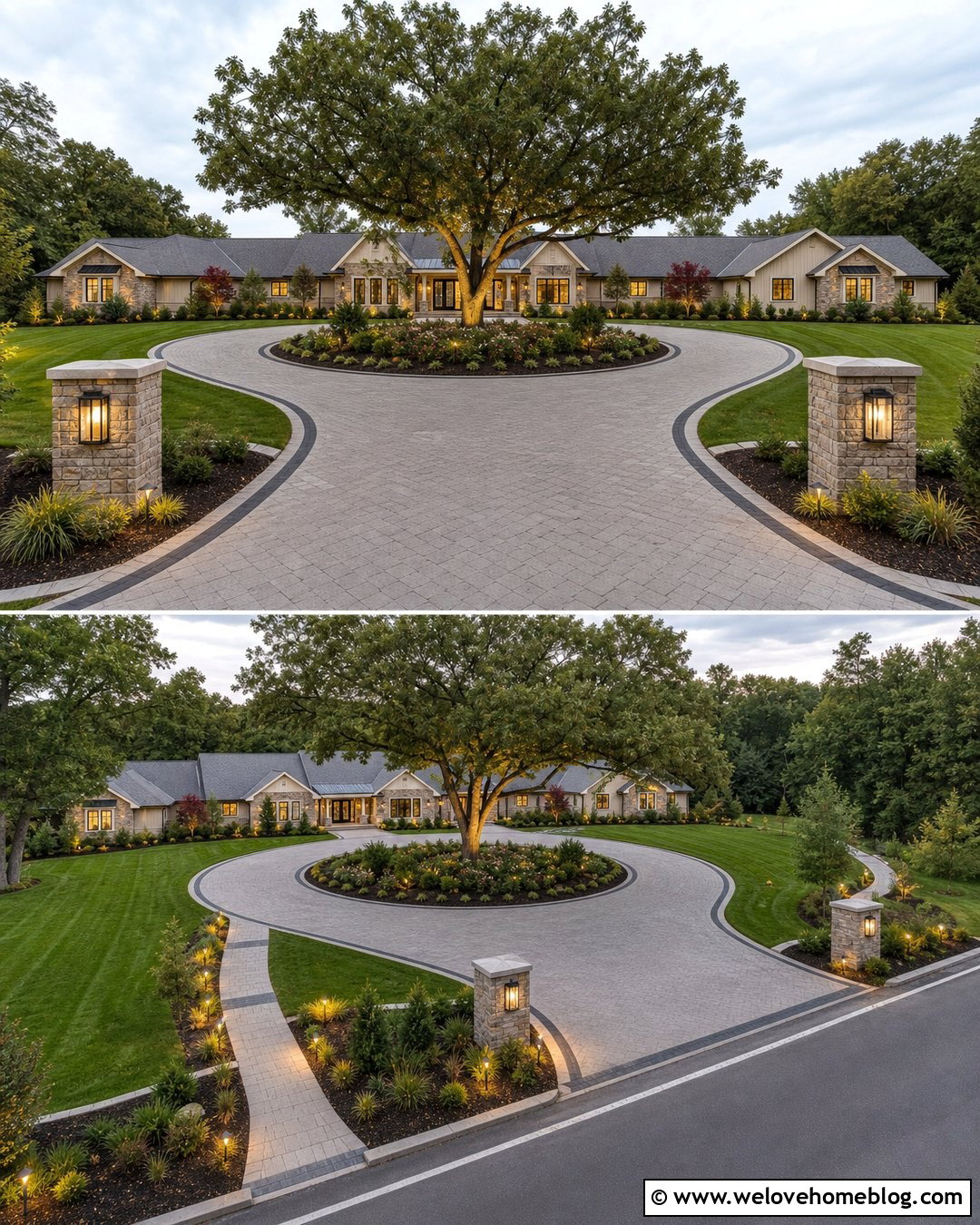
A horseshoe driveway provides two street connections and a graceful arrival sequence for a wide front yard. Use warm gray concrete pavers for the driving loop and outline both edges with darker stone. The central lawn or garden island should be broad enough to look purposeful, with one canopy tree, layered shrubs, and a curved walkway leading to the front door. Keep planting low near both street openings to maintain clear visibility. Matching masonry pillars can mark the entrances, while understated lighting defines the approach after dark without dominating the daytime view. The paver pattern should follow the curve smoothly, and the driveway width should remain consistent. This complete design suits substantial ranch, colonial, and transitional homes where convenient vehicle movement is as important as formal curb appeal.
19. Concrete Driveway With Brick Ribbon
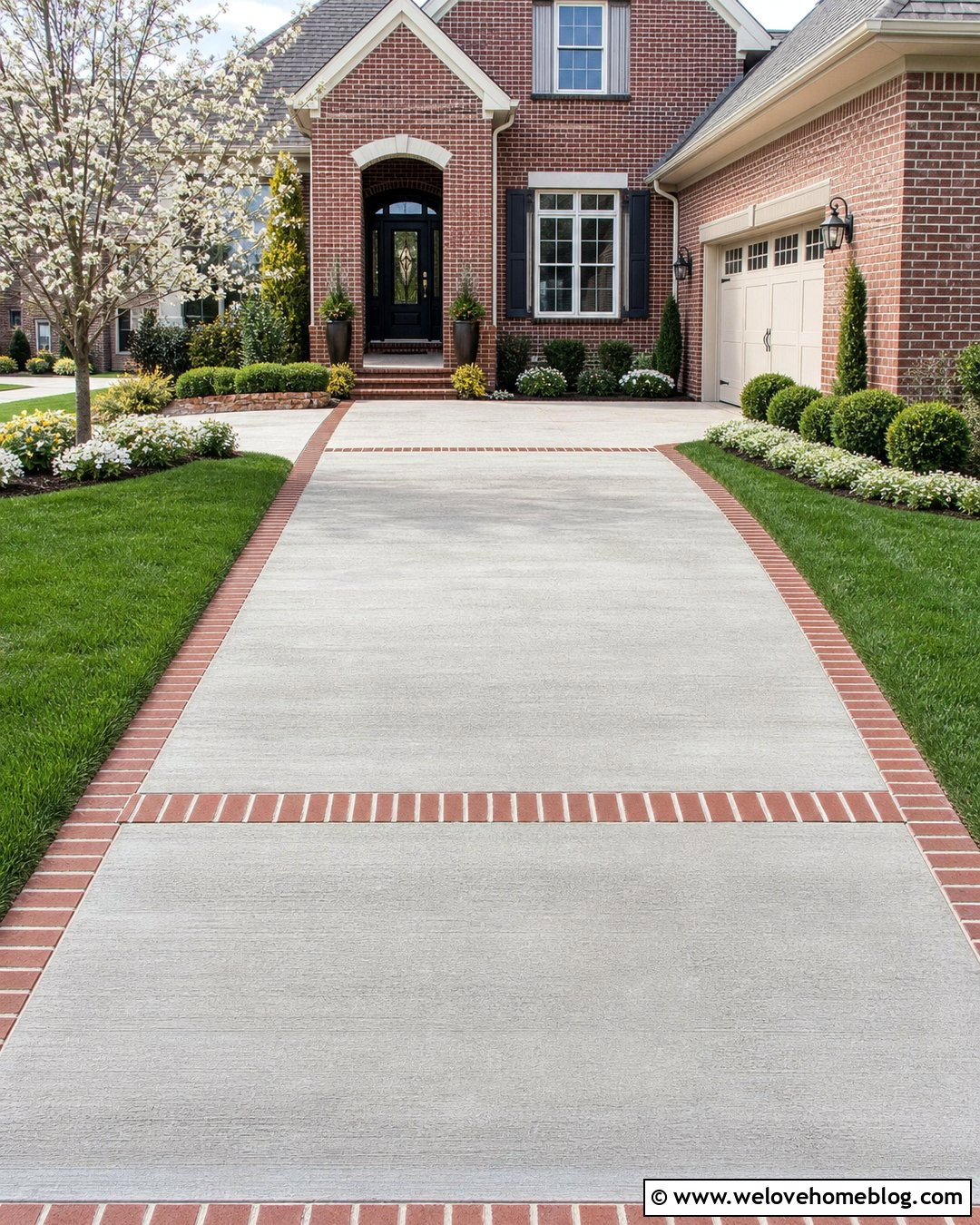
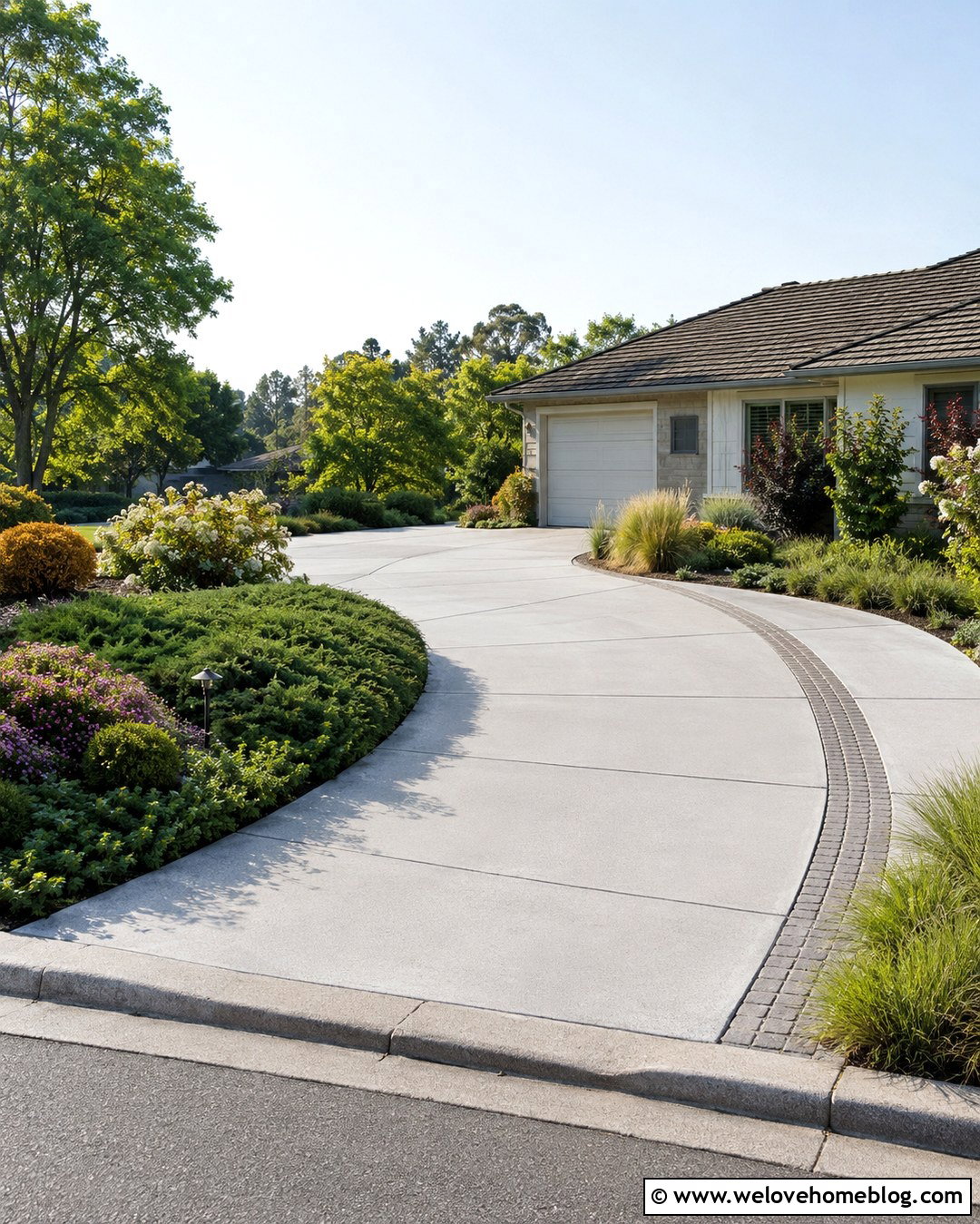
A brick ribbon can give a standard poured concrete driveway a more custom appearance without covering the entire surface in decorative masonry. Install a red or charcoal brick band along each side and repeat it across the driveway near the street and garage. Light gray brushed concrete keeps the central field practical and visually quiet. The brick detail can then continue into the walkway, porch steps, or planting-bed edging. Use a straight layout for a compact suburban property, with foundation shrubs and a small flowering tree balancing the garage facade. Select brick with enough texture and durability for exterior vehicle areas. Thoughtful placement matters more than the number of accent bands. A few coordinated lines create structure, while too many divisions can make a short driveway feel unnecessarily fragmented.
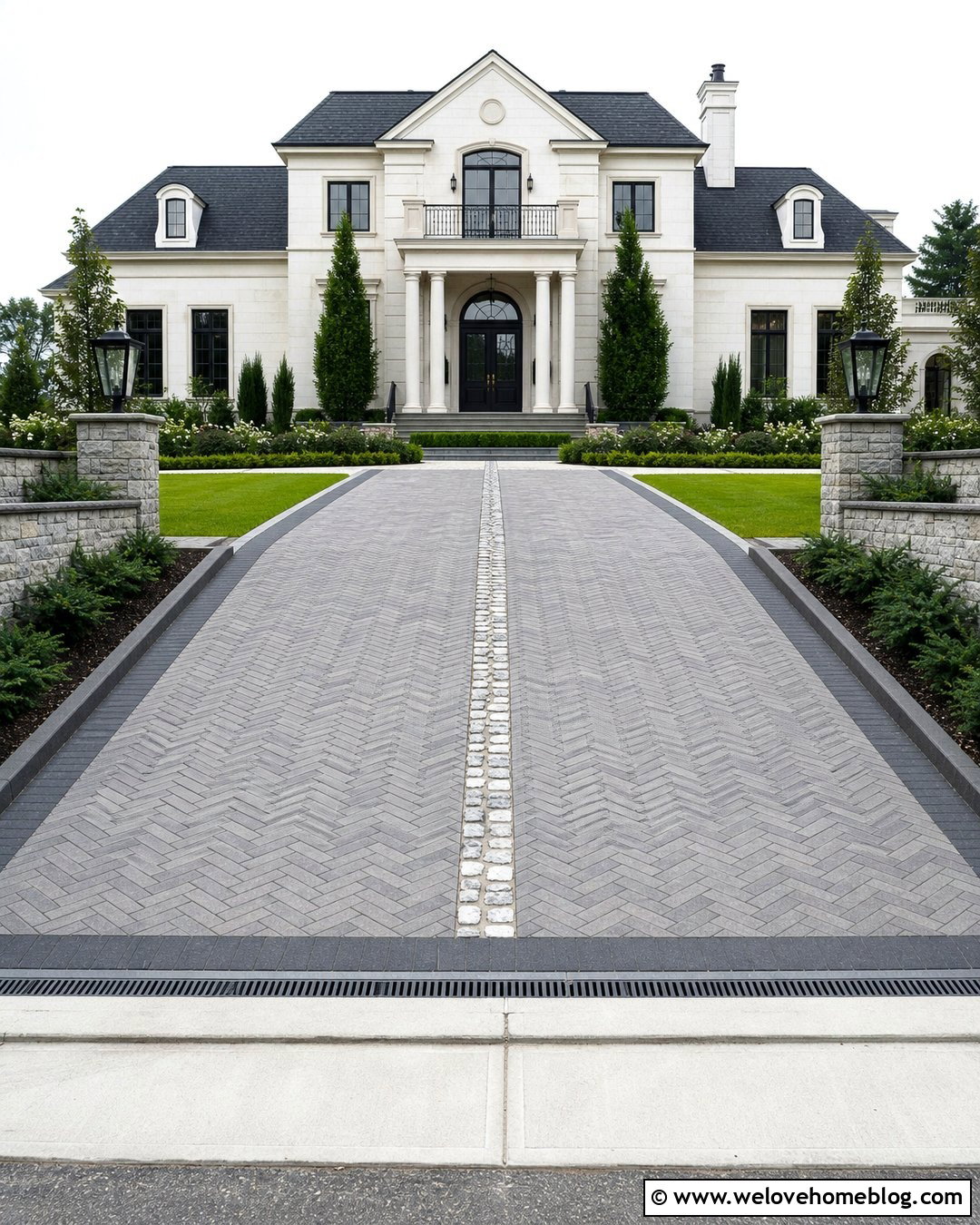
20. Pea Gravel Driveway With Belgian Block Edging
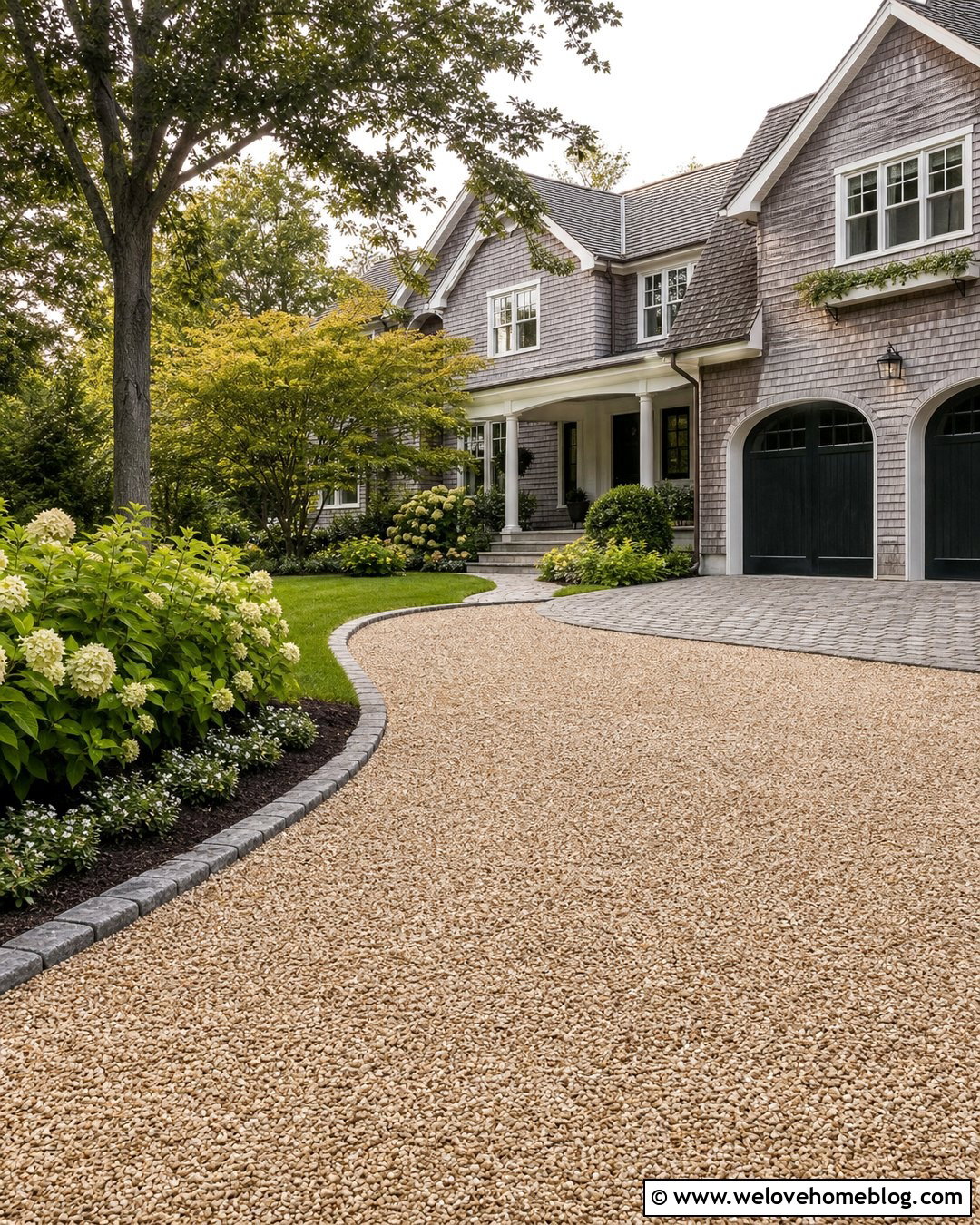
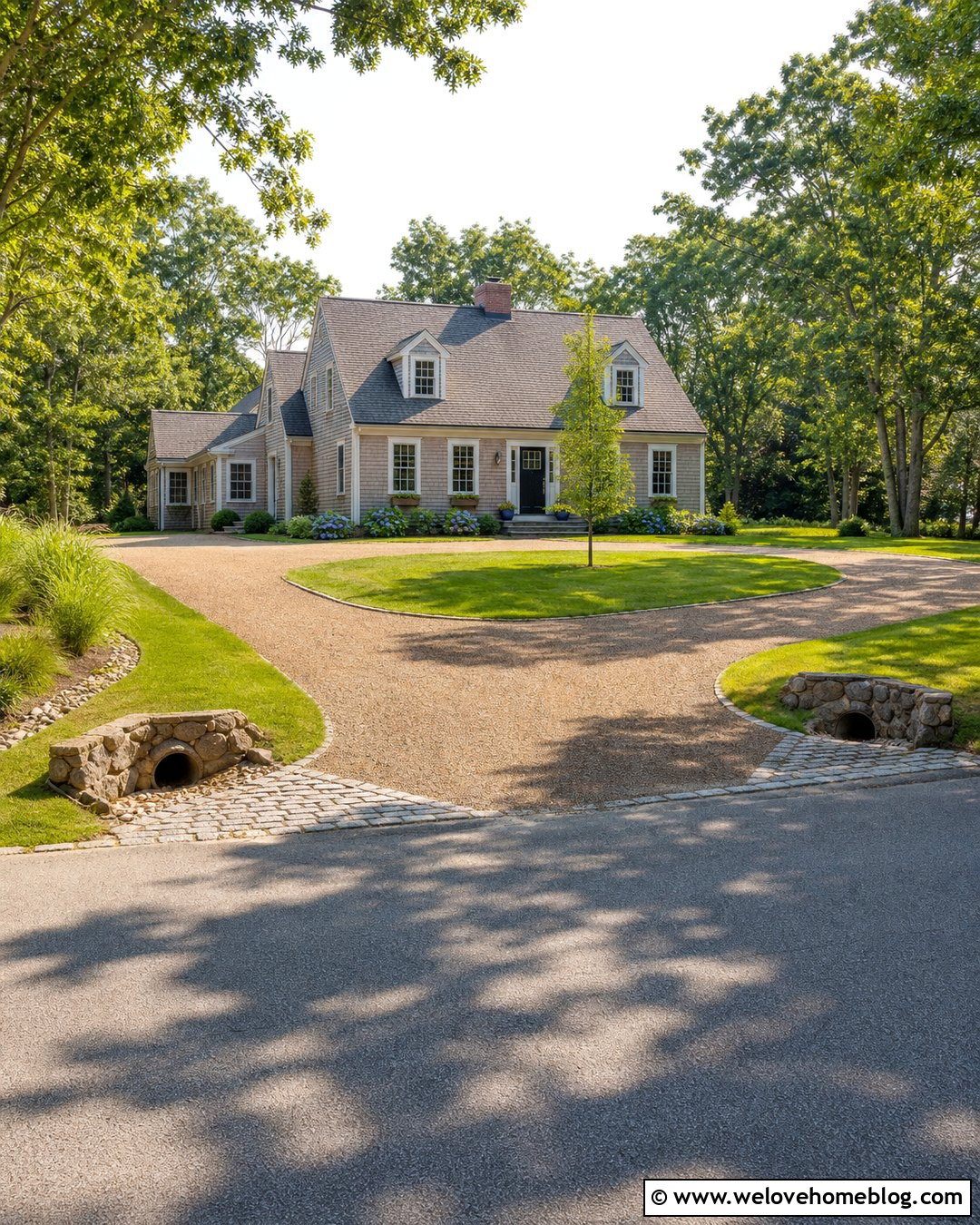
A pea gravel driveway has a softer, more relaxed appearance than angular crushed stone, but it needs dependable edge containment. Dark Belgian block set along both sides creates a durable boundary and an attractive contrast with warm beige gravel. Use the material on a broad, gently curved driveway where the rounded stones can be maintained with occasional raking. Near the garage, consider a cobblestone apron to reduce gravel movement at the busiest transition. Layered hydrangeas, evergreen shrubs, and flowering ground cover can follow the curves while leaving clear space for doors and tires. Because rounded pea gravel shifts more readily, discuss depth, base construction, stabilizing grids, and maintenance with an experienced installer. The finished look suits shingle-style, traditional, and country homes with informal but carefully maintained gardens.
21. Split Driveway With Central Planting Bed
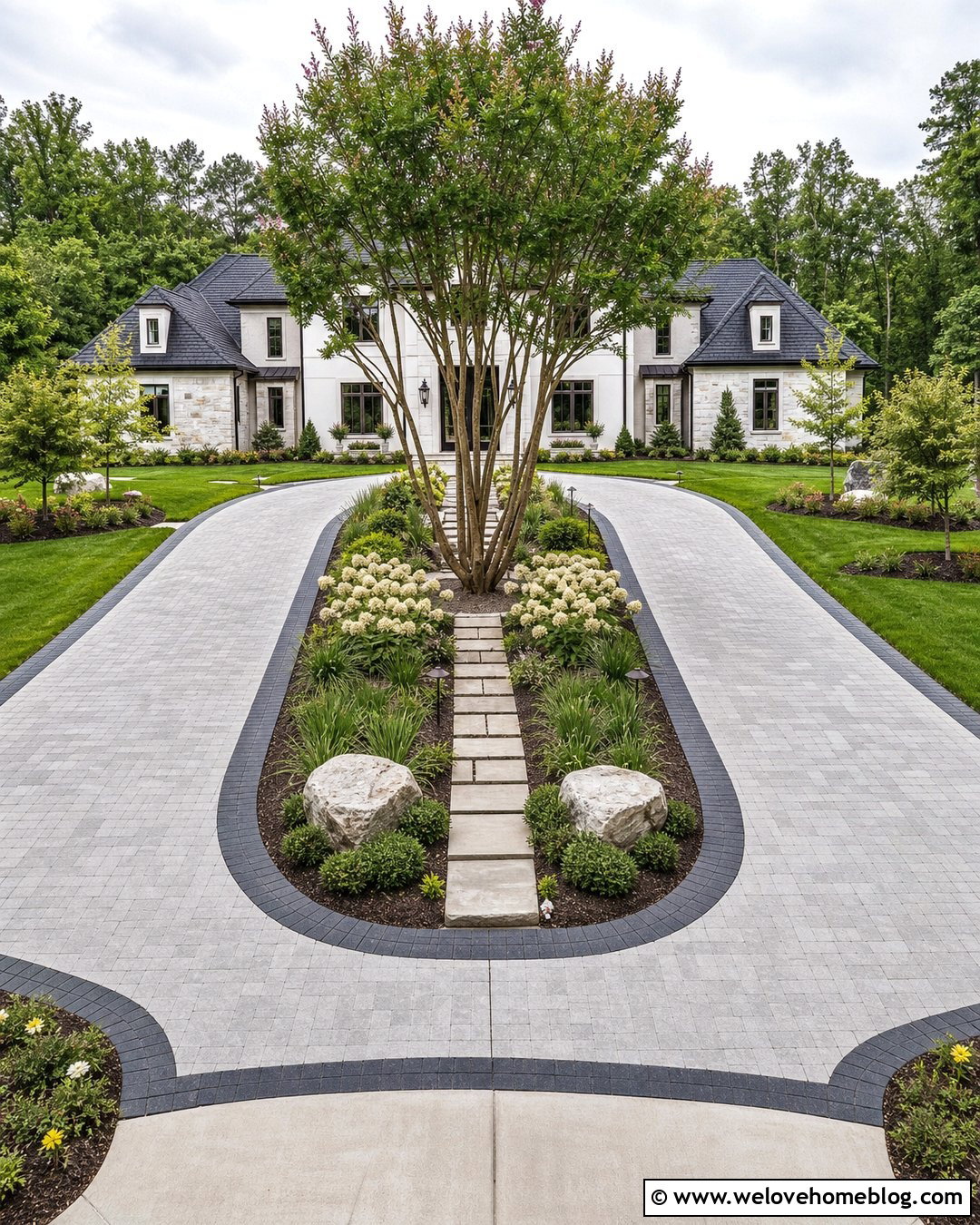
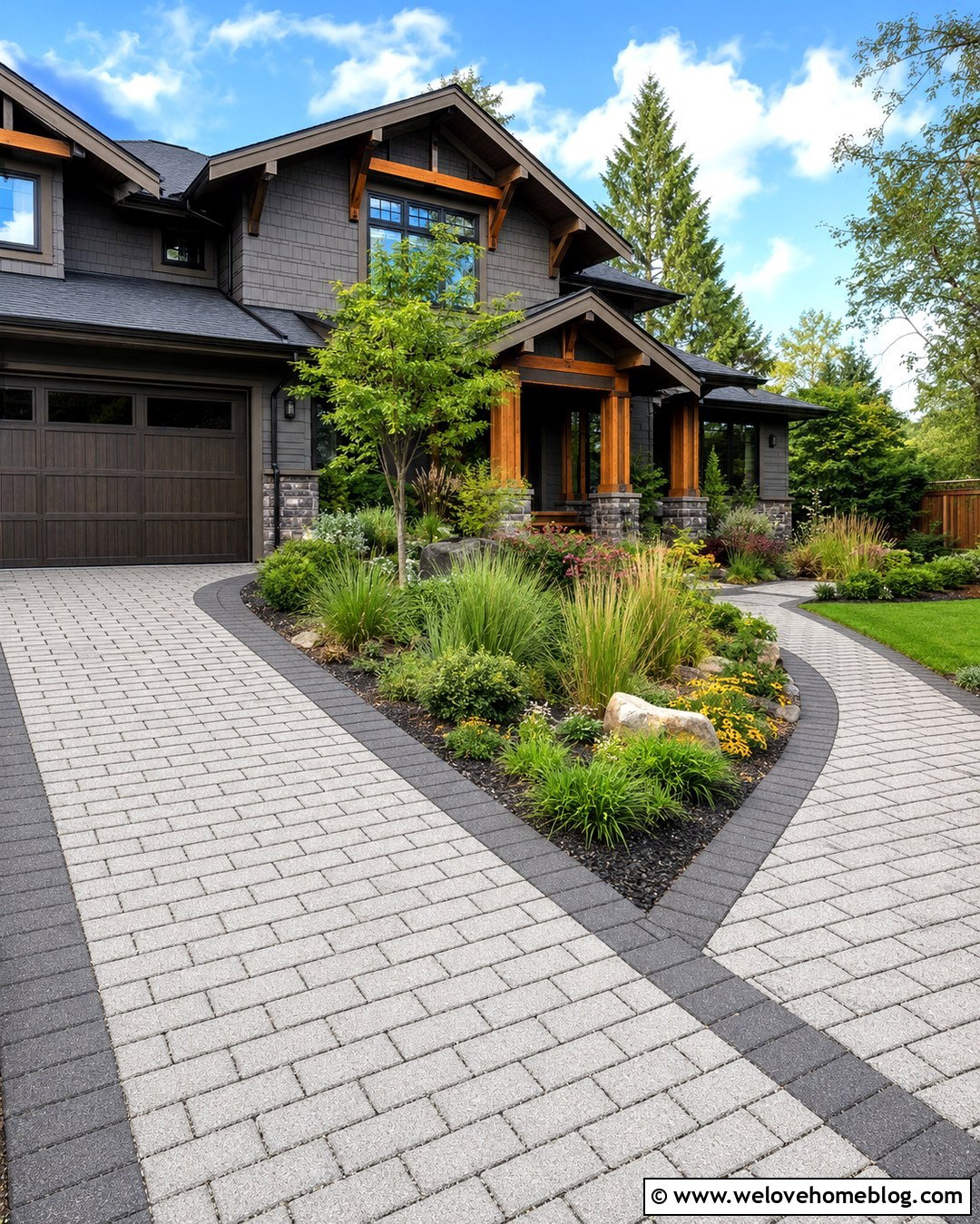
A split driveway divides the approach into two branches, creating a central planting bed that makes a wide front yard feel organized. Use smooth gray concrete pavers on both branches and maintain the same width, border, and pattern for visual unity. The center bed can contain a multi-stem ornamental tree, low grasses, flowering shrubs, and decorative stone, but plants should not block views between drivers and pedestrians. One branch may lead toward the garage while the second provides guest parking or reconnects to form a loop. Add a walkway through or beside the central bed so visitors have an obvious route to the front door. This layout requires more space than a basic straight driveway, yet it can reduce the appearance of one oversized paved area when the landscape island is properly proportioned.
22. Dark Concrete Driveway With Modern Landscaping
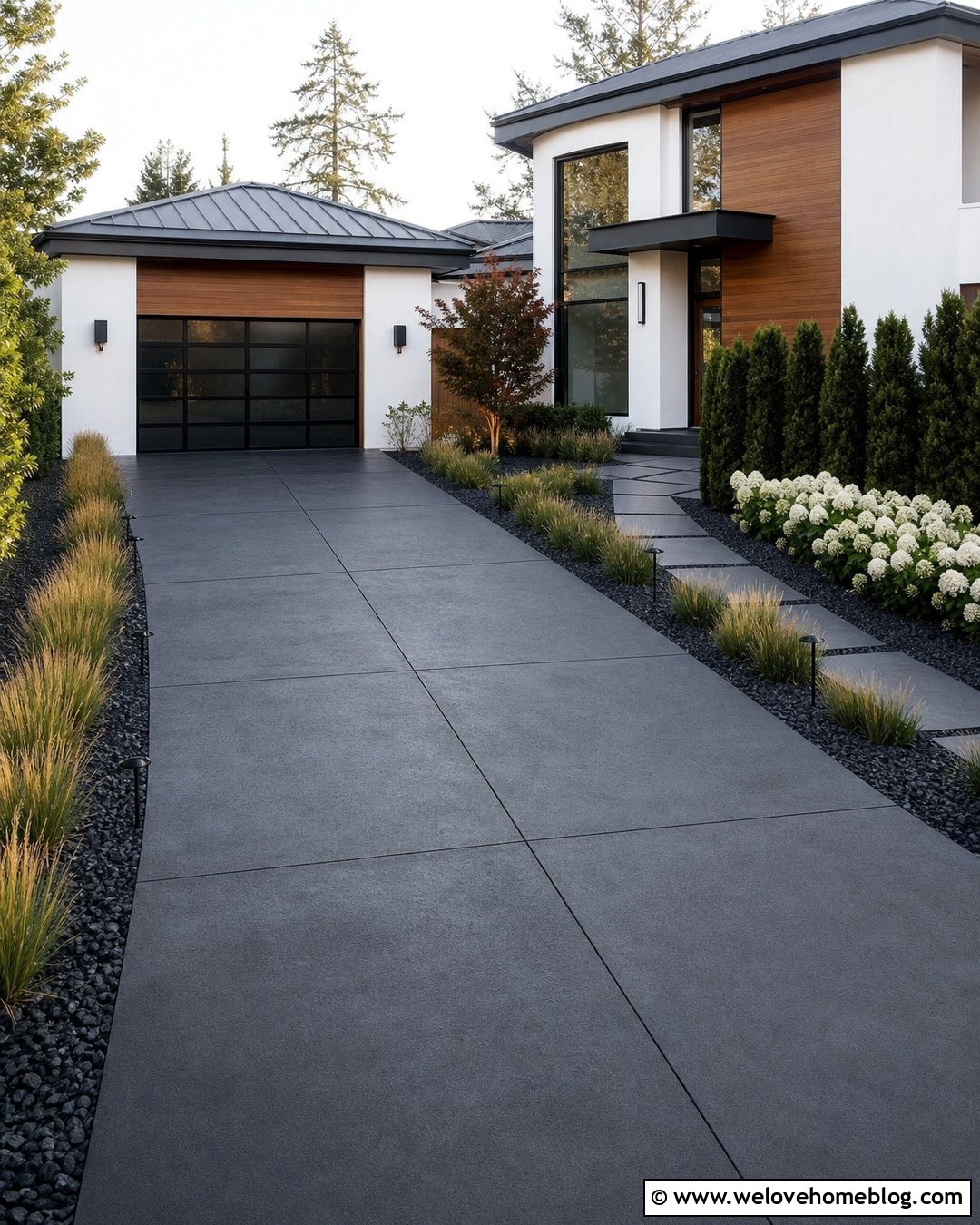
Charcoal integral-color concrete creates a dramatic entrance for a modern house with pale stucco, warm wood, or light stone cladding. Divide the driveway into large rectangular panels with straight control joints that align with the garage doors and architecture. A narrow border of black river rock or crushed basalt can strengthen the dark palette without introducing another paving pattern. Frame the surface with linear beds containing feather reed grass, compact evergreens, and white flowering plants. Use a matching concrete walkway to connect parking with the front entrance. Dark surfaces can become visually dominant, so preserve enough lawn or planting to balance the hardscape. The final design should feel crisp and deliberate, with each joint, planting bed, and edge relating to a line already present on the home.
23. Paver Driveway With Raised Planting Beds
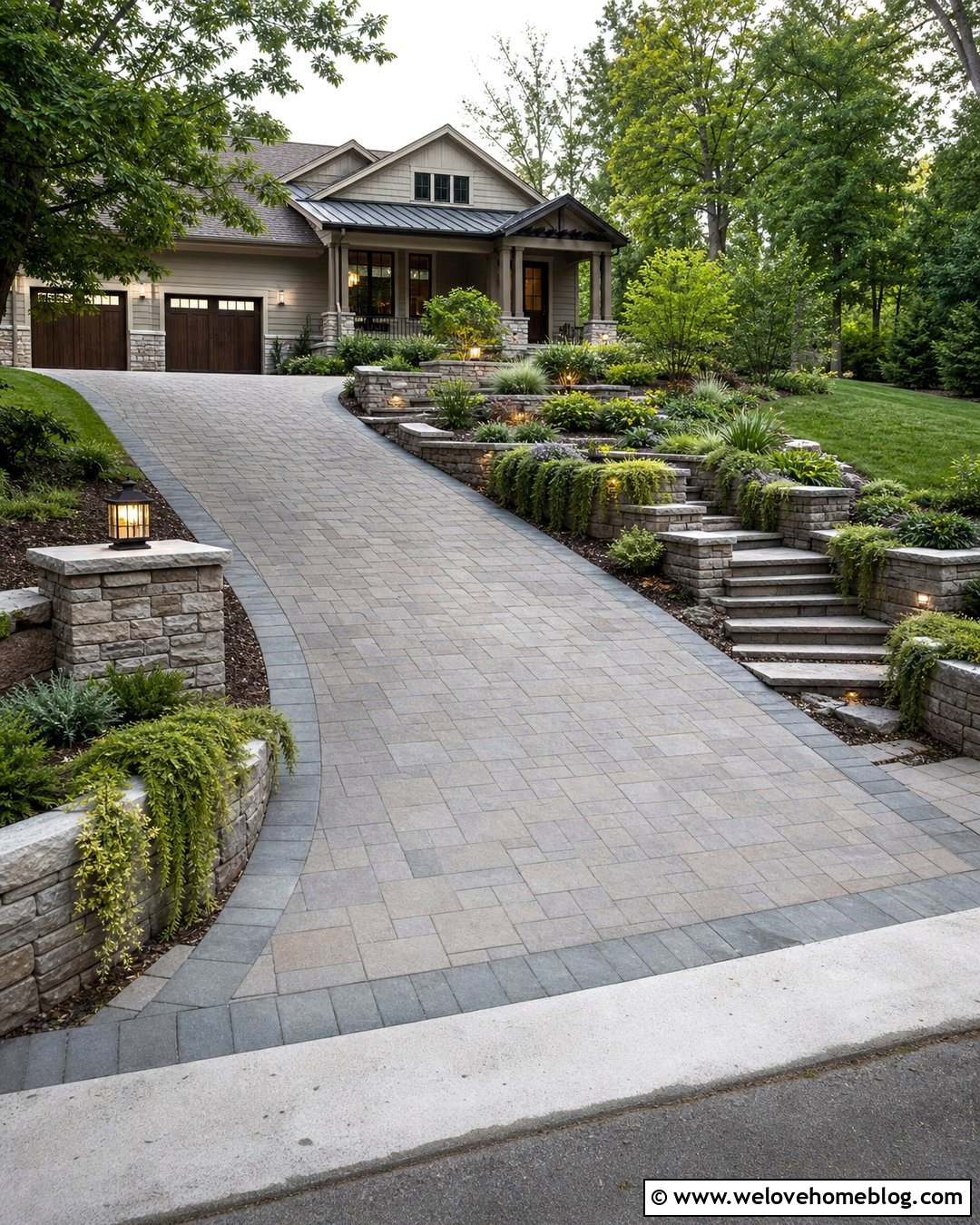
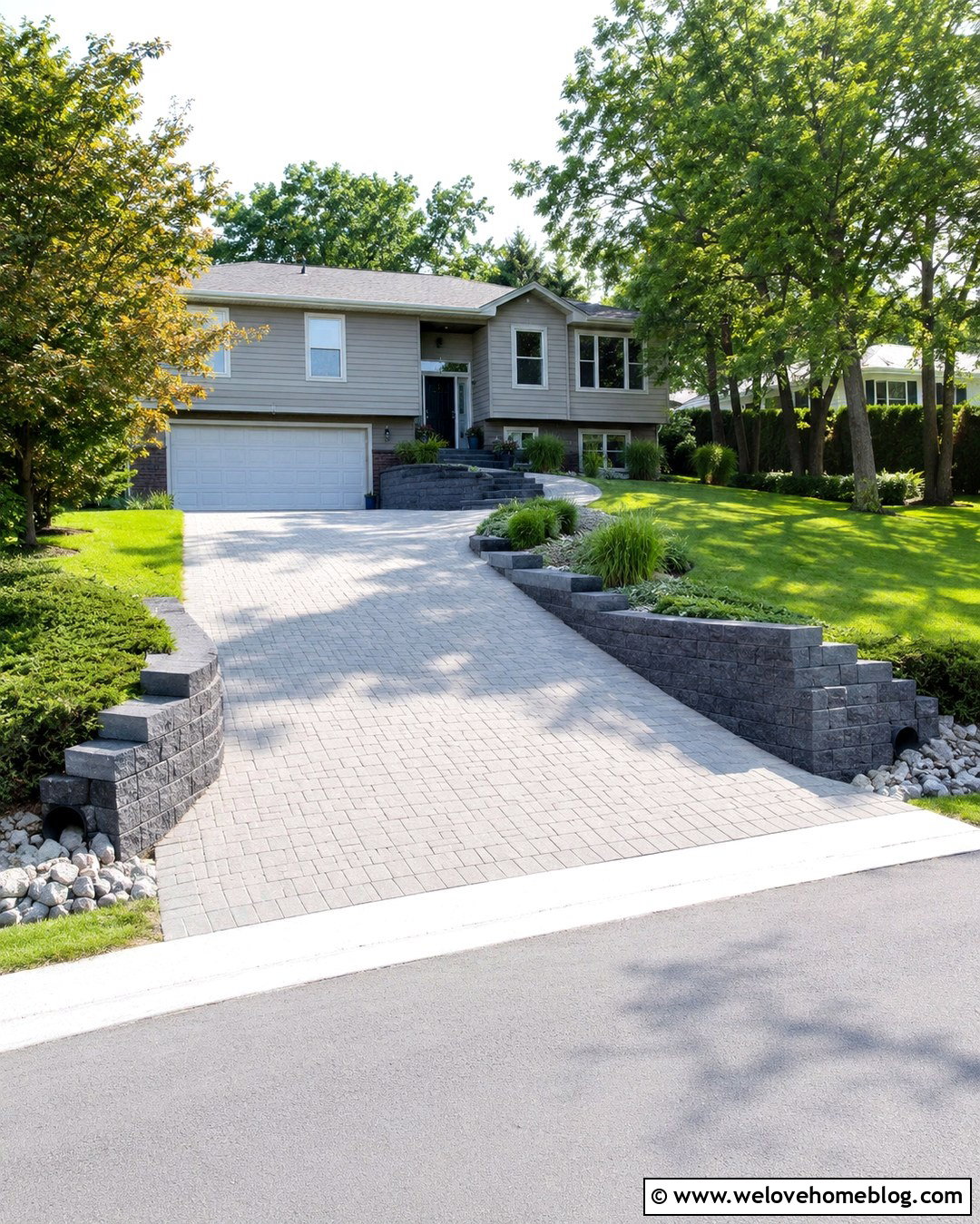
Raised planting beds can make a sloping or elevated driveway feel intentionally connected to the front yard. Choose warm gray concrete pavers in a simple running-bond pattern, then construct low retaining walls from matching wall block or natural stone. Fill the beds with layered shrubs, ornamental grasses, and cascading ground cover that softens the wall edges. Keep walls lower near the street and driveway turns so they do not reduce visibility. Wide capstones can provide a finished appearance and help shed water away from the masonry. Integrate low-voltage lighting beneath selected caps to define the driveway edge. The retaining walls, paving, steps, and walkway should share related colors, allowing the planting to provide contrast. Proper drainage behind the walls is essential for a durable, attractive result.
24. Crushed Stone Driveway With Metal Edging
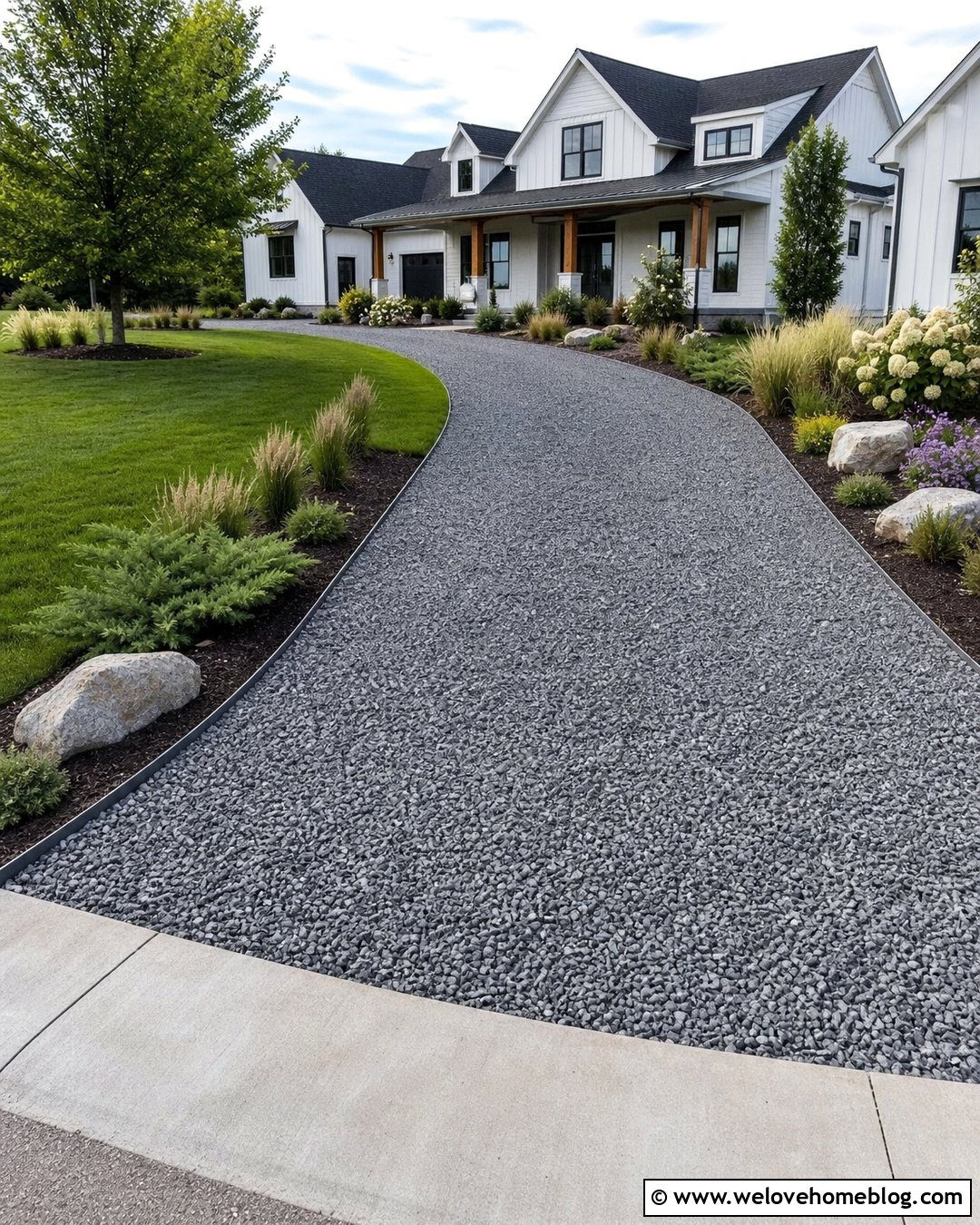
Angular crushed stone creates a firmer gravel surface than rounded decorative pebbles and works well for simple residential driveways. Choose medium-gray stone with fines that can compact into a stable driving layer. Slim steel edging provides a clean boundary without adding a heavy visual border, making this design suitable for contemporary cottages and modern farmhouses. Shape the driveway with one gentle curve and widen it near the garage for turning. Along the edges, use drifts of ornamental grass, low juniper, flowering perennials, and a few natural boulders. A concrete or paver apron at the street creates a neat public-facing transition. The restrained materials allow the landscape and house to remain prominent while the crisp metal edging keeps the crushed stone from gradually spreading into nearby lawn and planting beds.
25. Concrete Driveway With Drought-Tolerant Borders
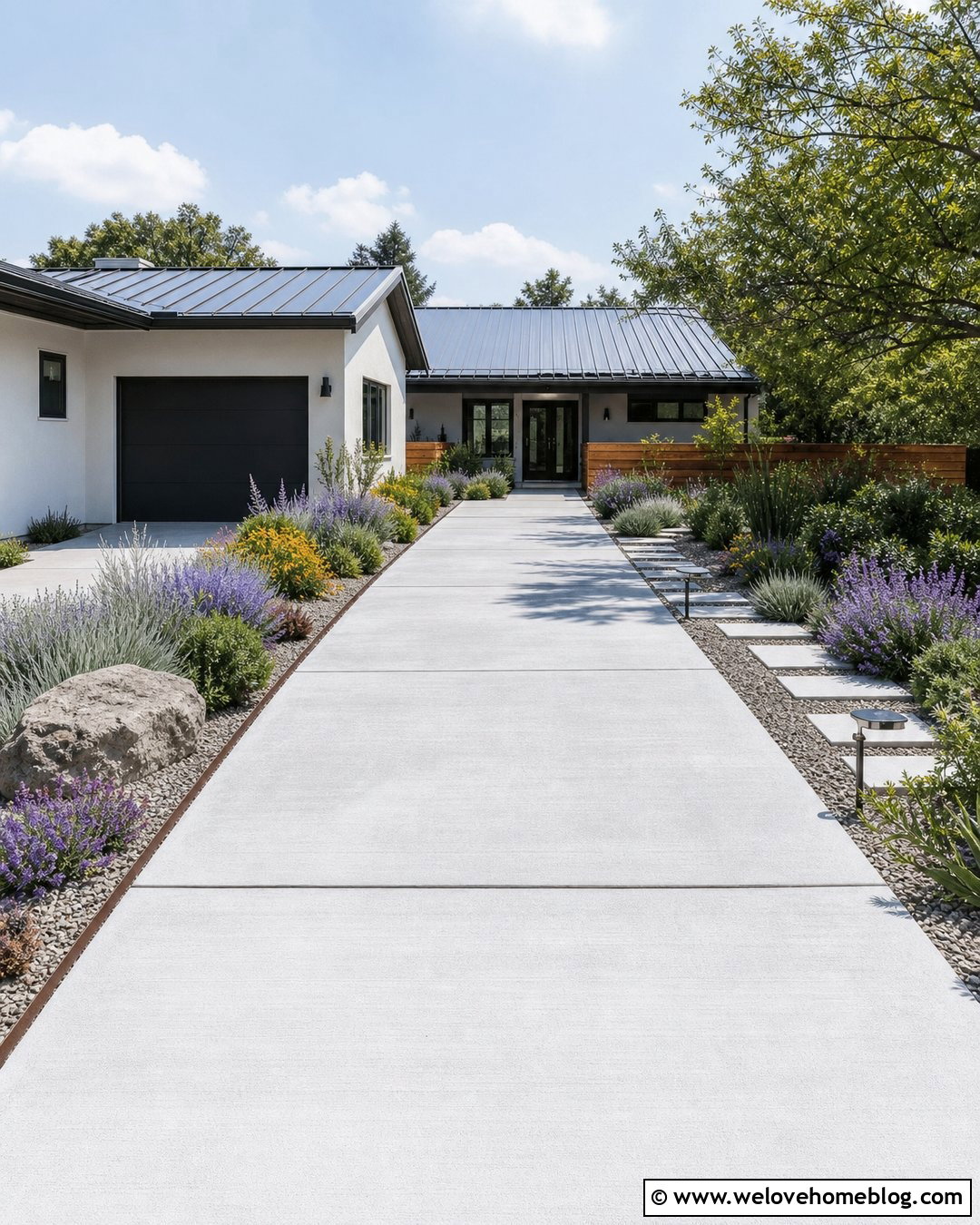
A simple concrete driveway becomes more appealing when broad planting borders reduce its hard, exposed appearance. Use light gray brushed concrete in a straight layout, then shape drought-tolerant beds along both sides with gravel mulch and steel edging. Combine ornamental grasses, lavender, salvia, compact shrubs, and regionally appropriate succulents or native perennials. Repeat plants in groups instead of using many unrelated varieties, creating a calm rhythm from the curb to the house. A few large stones can connect the driveway with a stone-clad facade. Keep mature plant widths in mind so growth does not interfere with vehicle doors or pedestrian movement. This design can conserve lawn area while providing seasonal texture, but plant selection should always reflect local heat, rainfall, soil, and winter conditions.
26. Fan Pattern Paver Driveway With Stone Pillars
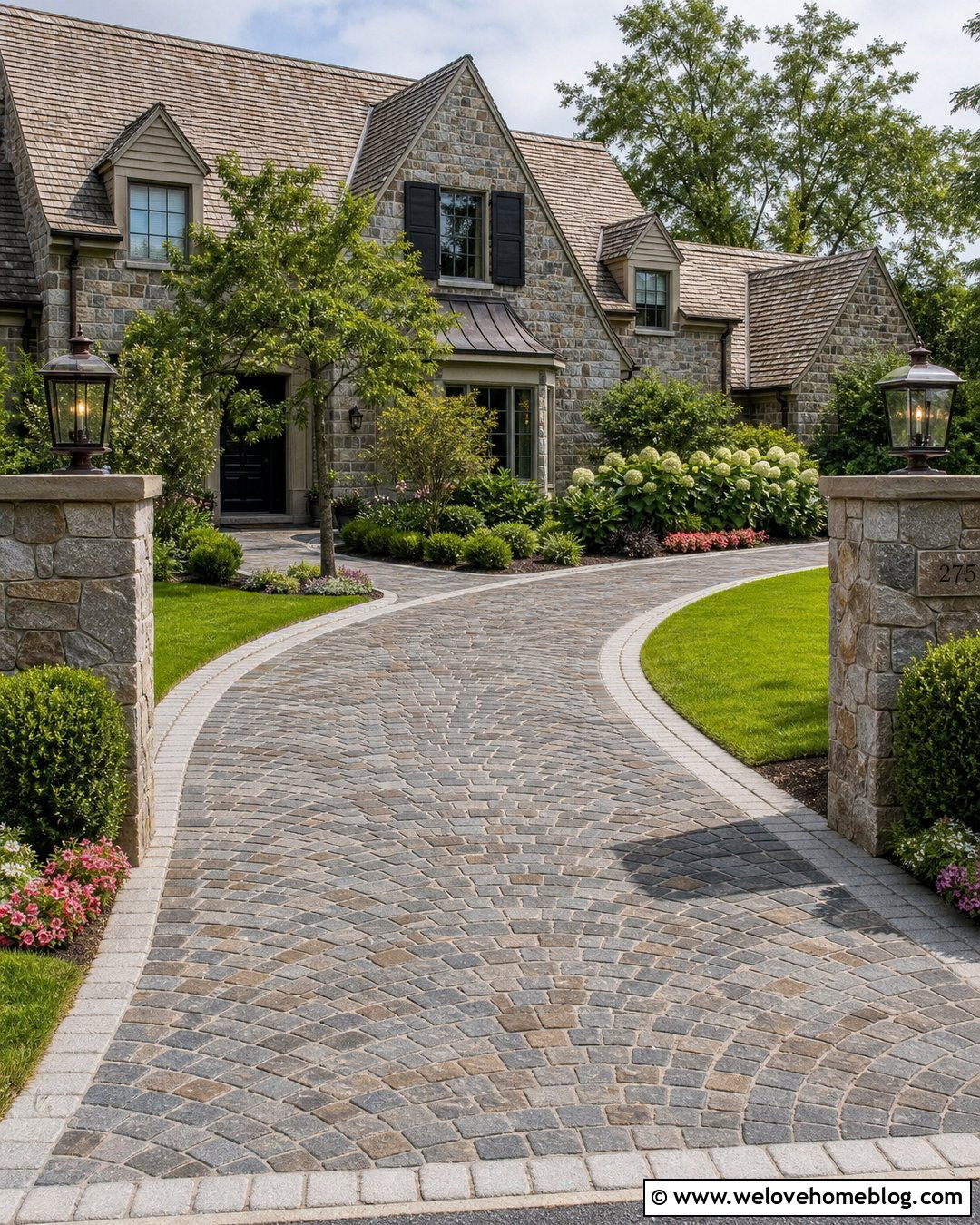
Concrete or clay pavers arranged in a fan pattern add movement to a broad driveway without requiring multiple surface materials. Choose a blended gray-brown paver that complements traditional stonework, then frame the surface with a straight soldier-course border. At the street, install two substantial natural stone pillars with simple lanterns and low planting beds at their bases. The driveway can curve gently toward the house, allowing the fan pattern to reinforce the sense of movement. Continue matching stone on retaining walls, porch columns, or the home’s facade for cohesion. Keep gates optional and visually light if included, since the detailed paving and masonry already create a strong entrance. This complete composition works best on larger properties where viewers have enough distance to appreciate the sweeping paver layout.
27. Asphalt Driveway With Cobblestone Edging
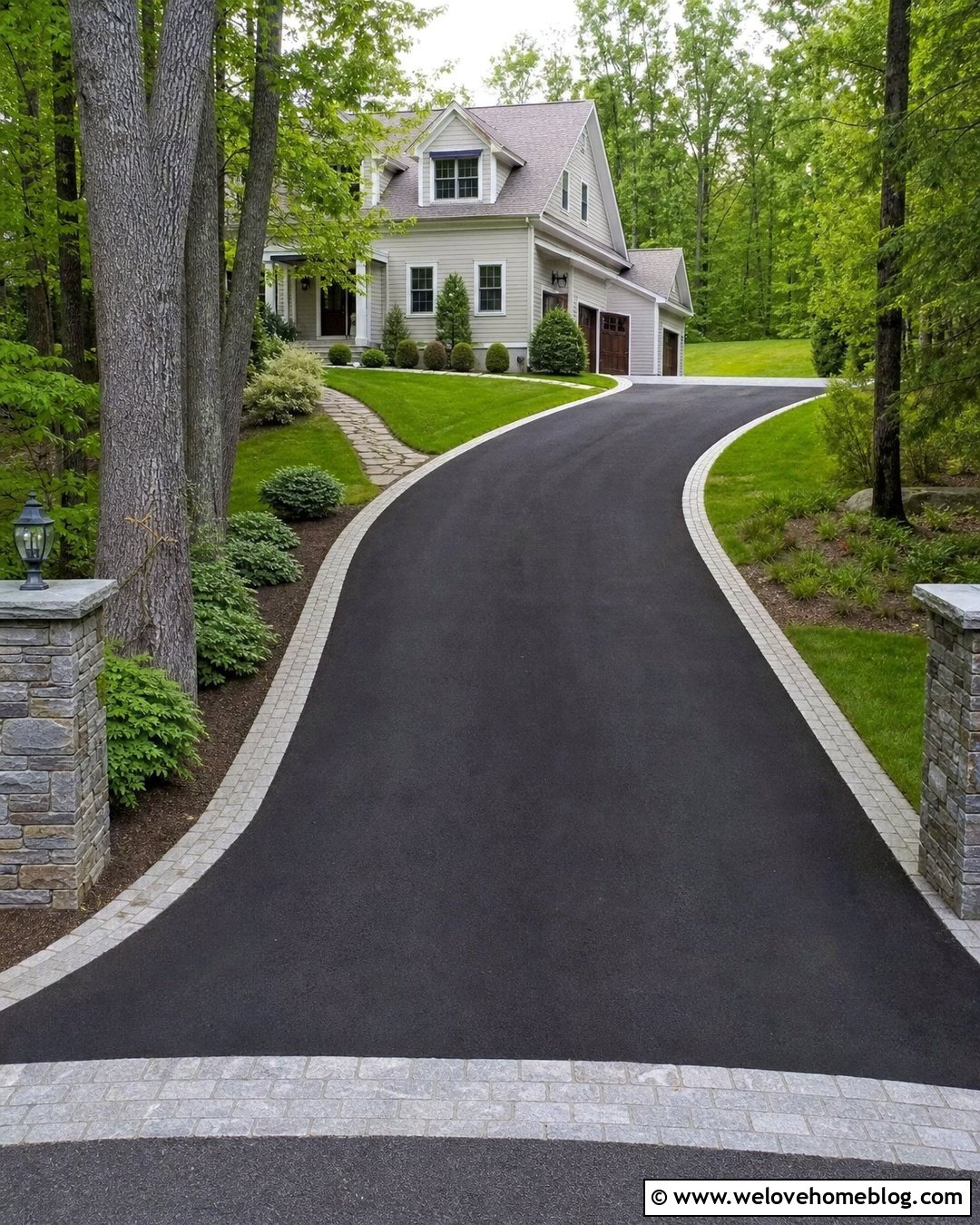
A long asphalt driveway can feel more polished when cobblestone edging defines its borders from the street to the garage. The nearly black surface provides a practical background, while gray granite cobbles add texture and traditional character. Create a cobblestone apron at the entrance and repeat another band before the garage doors. On a wooded or country property, allow the driveway to curve gradually between lawn, mature trees, and informal shrub beds. The stones should be installed securely enough to withstand tires and maintenance equipment. Use low plantings along inside curves so drivers can see the full route ahead. This combination offers a balanced approach: asphalt covers the largest area, while carefully placed natural stone gives the driveway a more permanent, site-specific appearance without overwhelming the surrounding landscape.
28. Concrete Paver Driveway With Grass Grid
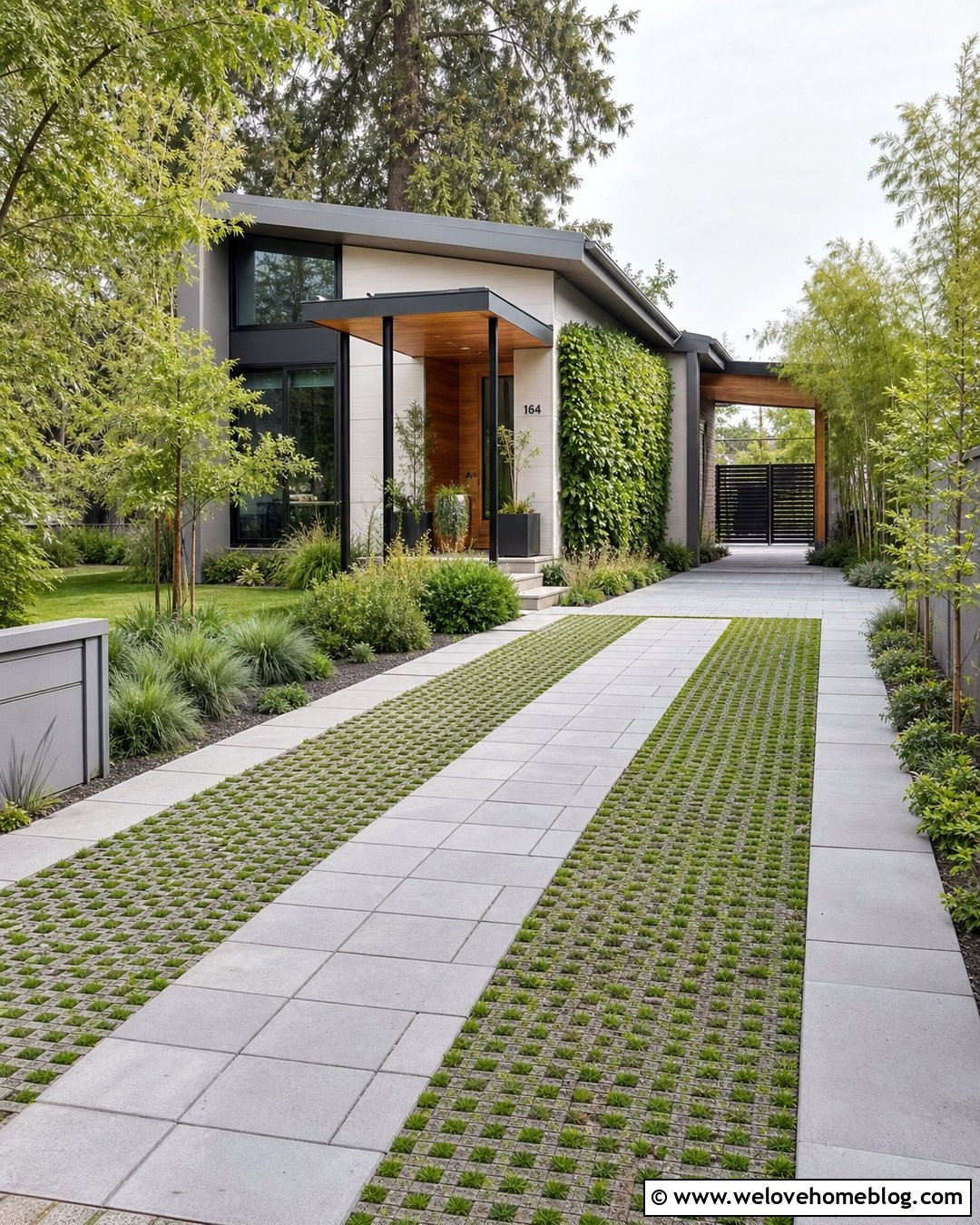
Alternating concrete pavers and reinforced grass sections can reduce the appearance of a large parking area. Use durable rectangular pavers for the primary tire paths and permeable grass-grid units in lighter-use zones. A straight layout with clearly defined parking bays helps the mixed surface look planned rather than unfinished. Surround the driveway with simple lawn, native planting beds, and a paved walkway that remains comfortable in wet weather. Grass-grid systems require appropriate soil, drainage, irrigation, and a grass variety suited to local conditions and traffic. They may not stay uniformly green in every climate or heavily used location. When carefully specified, however, the green sections connect the front yard visually and soften the approach to a contemporary or environmentally focused home.
29. Rustic Stone Driveway With Split-Rail Fence
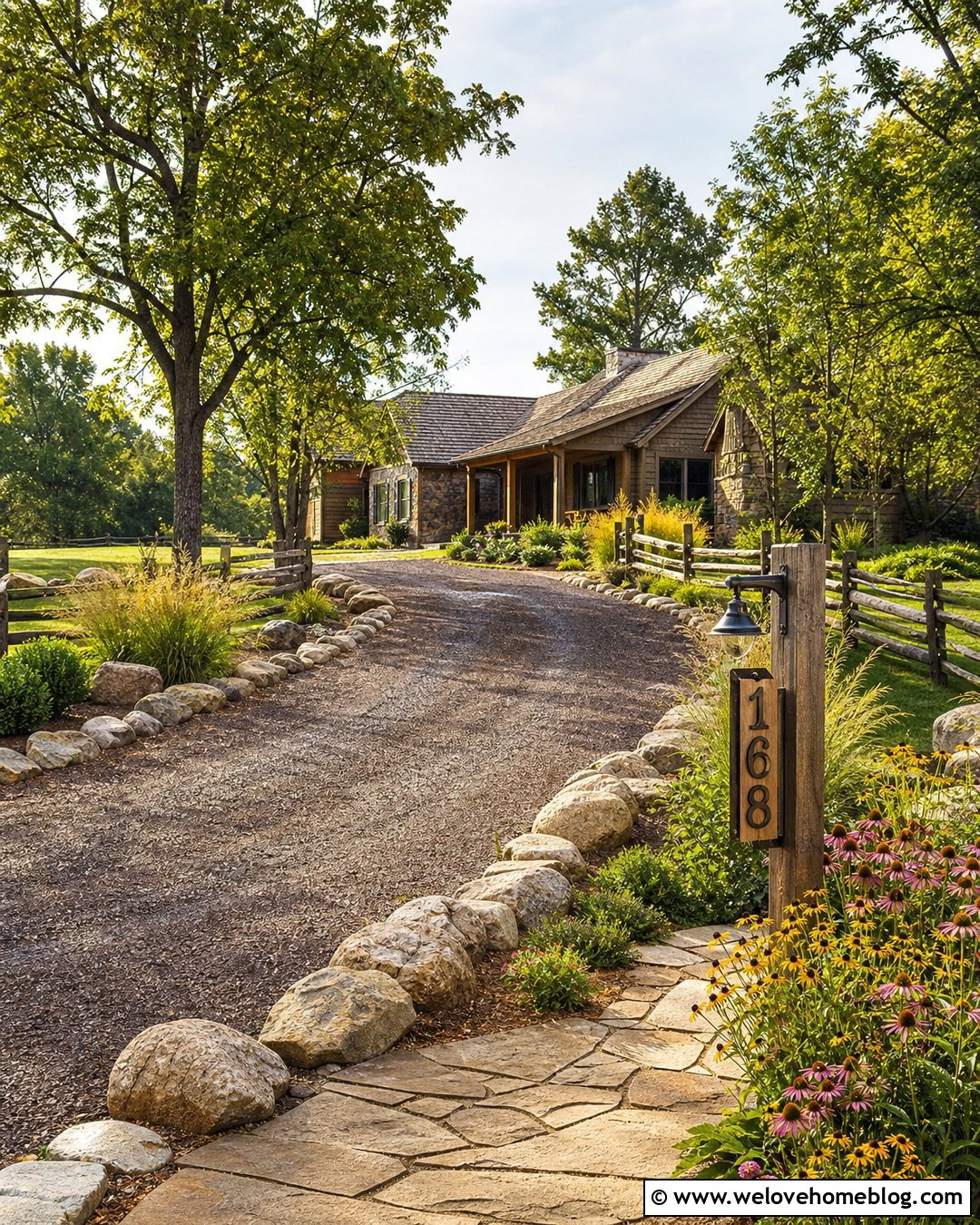
A rustic stone driveway framed by a split-rail fence creates a natural entrance for a country, ranch, or cabin-inspired home. Use compacted brown-gray crushed stone for the main surface and larger fieldstone along the edges. Follow the natural contours of the property with a gradual curve rather than forcing a perfectly straight route. The fence can run beside one or both sides, leaving a generous setback from the driving area. Plant native grasses, black-eyed Susans, coneflowers, and informal shrubs in broad drifts beyond the stone border. A timber gate or simple address post can mark the street entrance. Near the house, transition to a wider gravel court with a stone walkway. The restrained design feels welcoming because every material relates naturally to the rural setting.
30. Driveway Courtyard With Mixed Pavers
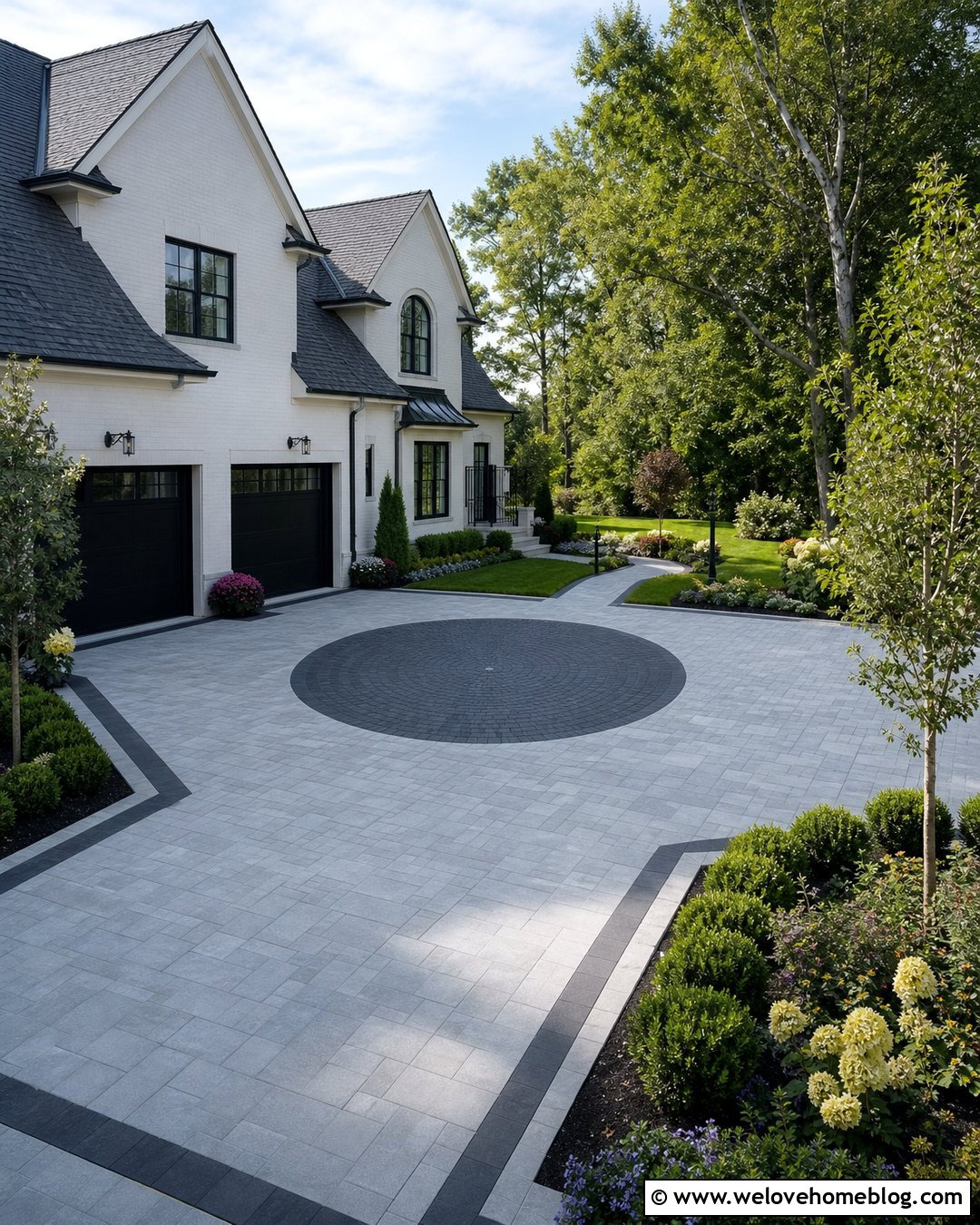
A driveway courtyard creates an organized arrival and parking area near the house, especially when garages face the side. Use large-format gray concrete pavers for the primary surface, then define the center or turning zone with smaller charcoal pavers in a circular pattern. This change in scale helps drivers understand how to move through the space while breaking up a wide expanse. Add planting beds at the corners with clipped shrubs, ornamental trees, and seasonal flowers. A matching walkway should provide a clear route from the courtyard to the front door. Mixed materials and green space can make larger driveways feel less monotonous when their colors remain coordinated. () Keep drainage routes, garage access, and turning dimensions central to the layout rather than treating the courtyard only as decoration.
31. Coastal Shell Driveway With Grass Border
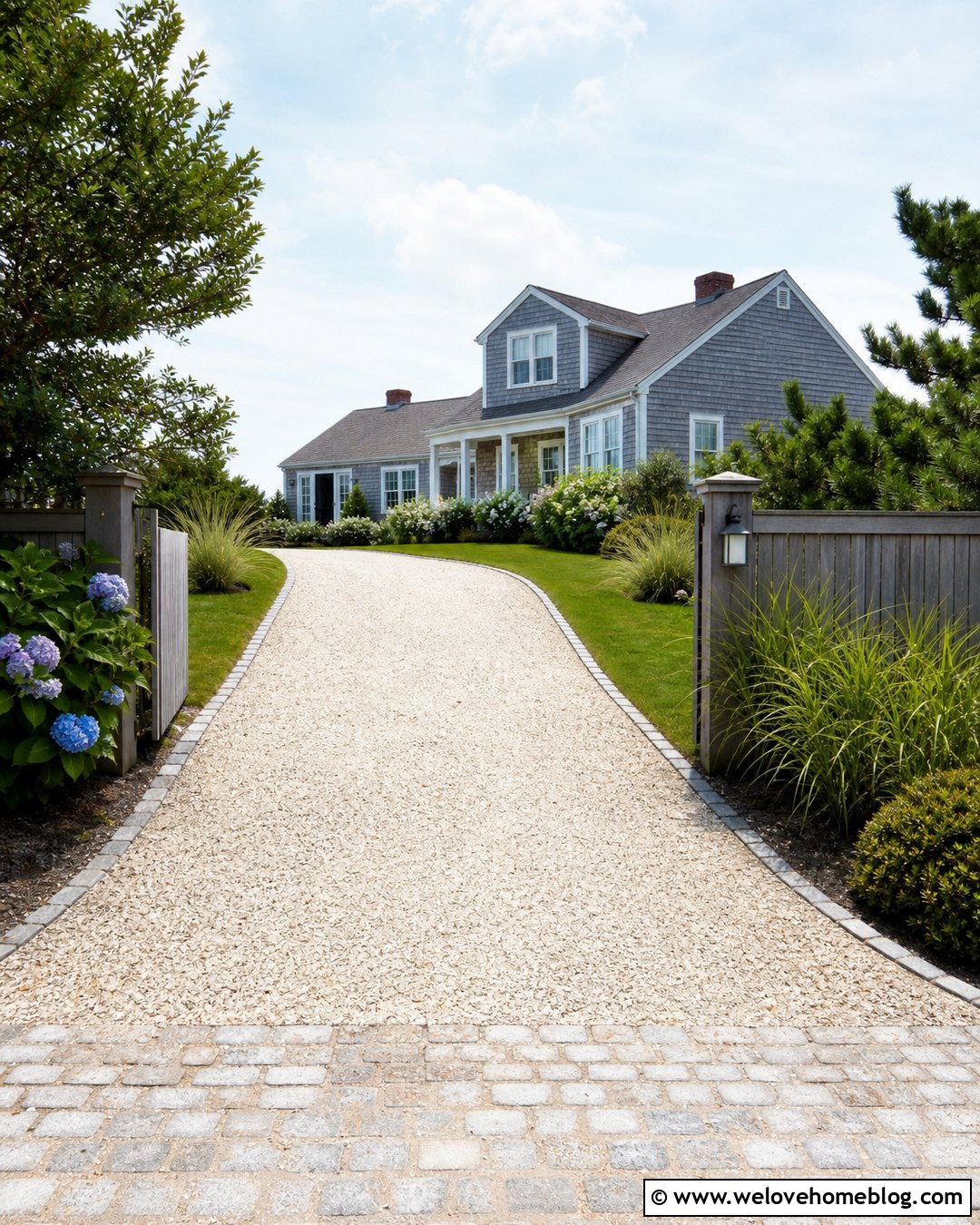
A crushed shell driveway offers a bright, regionally appropriate look for coastal and Cape Cod-inspired homes. Use compacted white or pale cream shell in a straight or softly curved layout, contained by discreet steel edging or a narrow cobblestone border. Green lawn on both sides creates crisp contrast, while hydrangeas, beach grass, and salt-tolerant shrubs support the coastal character. A shell or stone walkway can lead from the parking area to a shingled home with white trim. Because shell availability, suitability, and maintenance vary by region, source it responsibly and confirm local installation requirements. The surface may need periodic replenishment as pieces compact or migrate. A simple timber gate, cedar fence, and understated entrance posts complete the driveway without distracting from its light, relaxed appearance.
32. Sloped Concrete Driveway With Retaining Walls
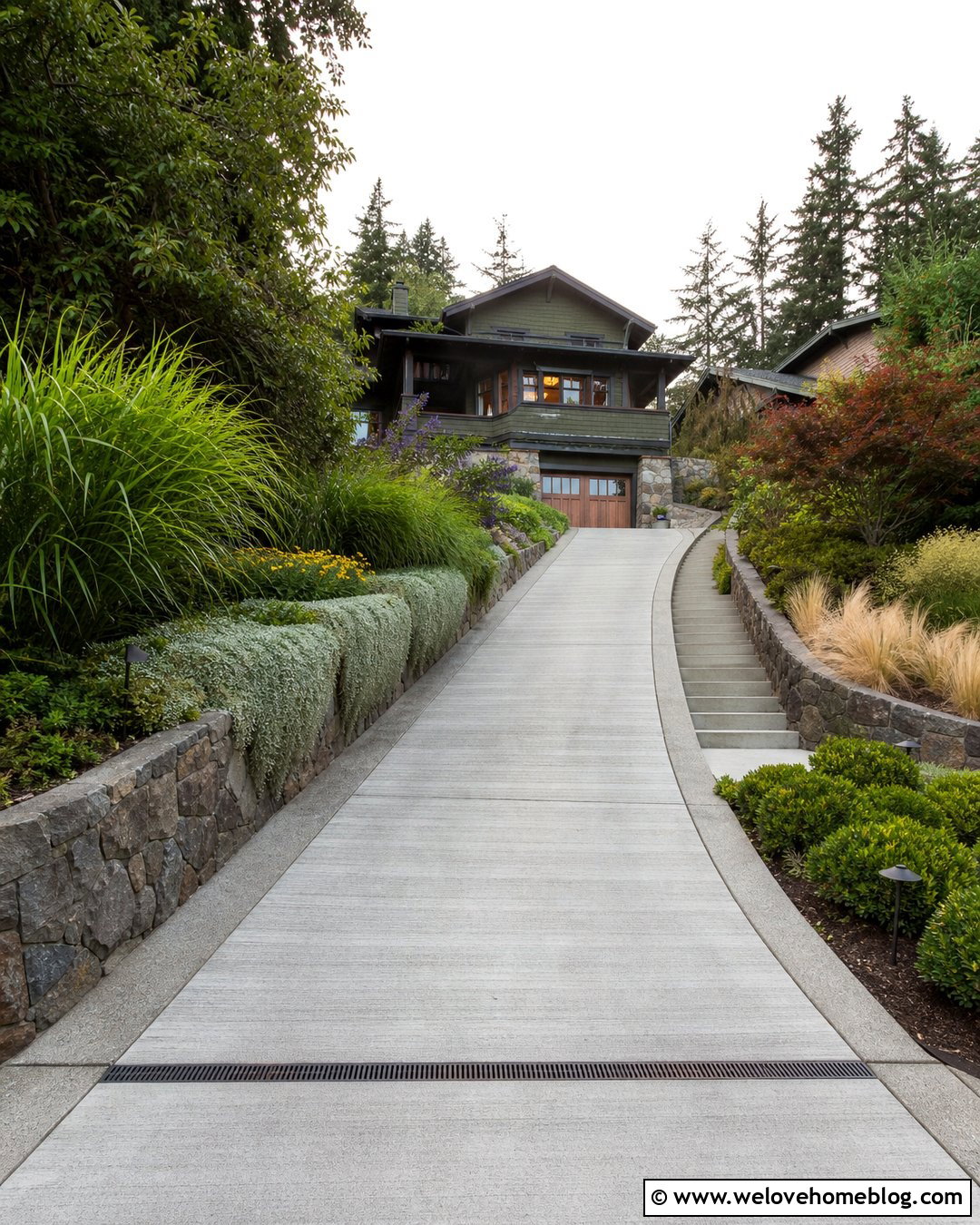
A sloped driveway needs a design that addresses water movement, traction, and changes in elevation while remaining attractive. Use broom-finished gray concrete for grip and divide the surface with well-positioned joints. Low stone retaining walls can hold planting beds on the uphill side and protect the driveway from eroding soil. On the lower edge, include a curb or drainage solution selected for the property’s grading plan. Plant the terraces with deep-rooted shrubs, ground cover, and ornamental grasses that do not obstruct visibility. A gently curving alignment may reduce the driveway’s steep visual appearance when space allows. Because slope conditions vary considerably, drainage, base preparation, transitions, and winter safety should be evaluated by qualified local professionals before choosing surface finishes or decorative details.
33. Modern Circular Driveway With Concrete Slabs
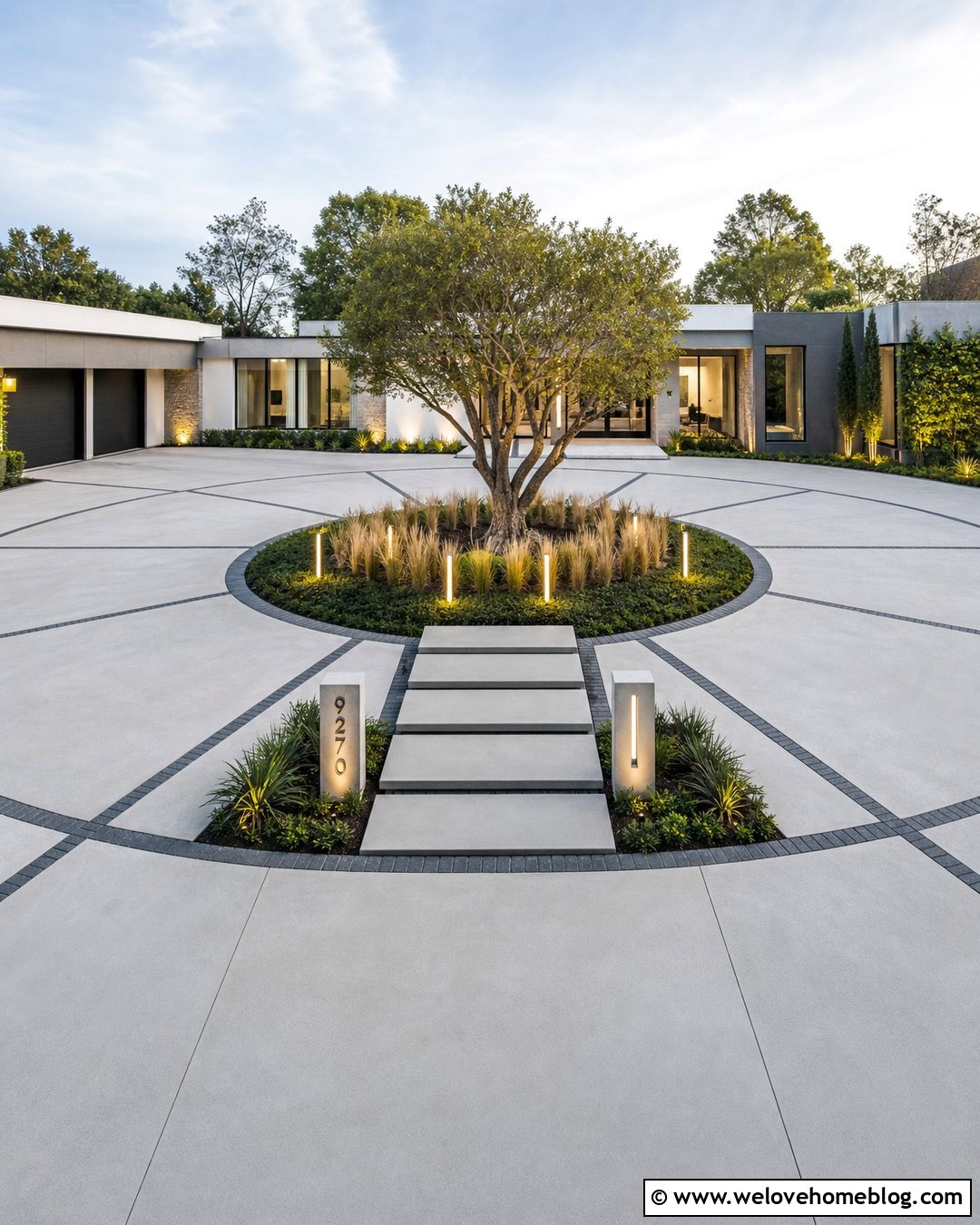
Large-format concrete slabs can give a circular driveway a contemporary appearance when the joints and curves are carefully coordinated. Use smooth light gray concrete panels separated by narrow bands of dark gravel or charcoal pavers. In the center island, plant one sculptural tree surrounded by ornamental grasses and low evergreen ground cover. Avoid filling the island with too many small decorations, which can weaken the clean geometry. Extend a wide slab walkway from the inner circle toward the front entrance, creating a direct pedestrian route. Low linear lights and simple address pillars can mark the street openings. The circular layout, modern planting, and architectural paving should share a restrained palette, allowing the form of the driveway to make the strongest impression from the curb.
34. Farmhouse Concrete Driveway With Brick Border
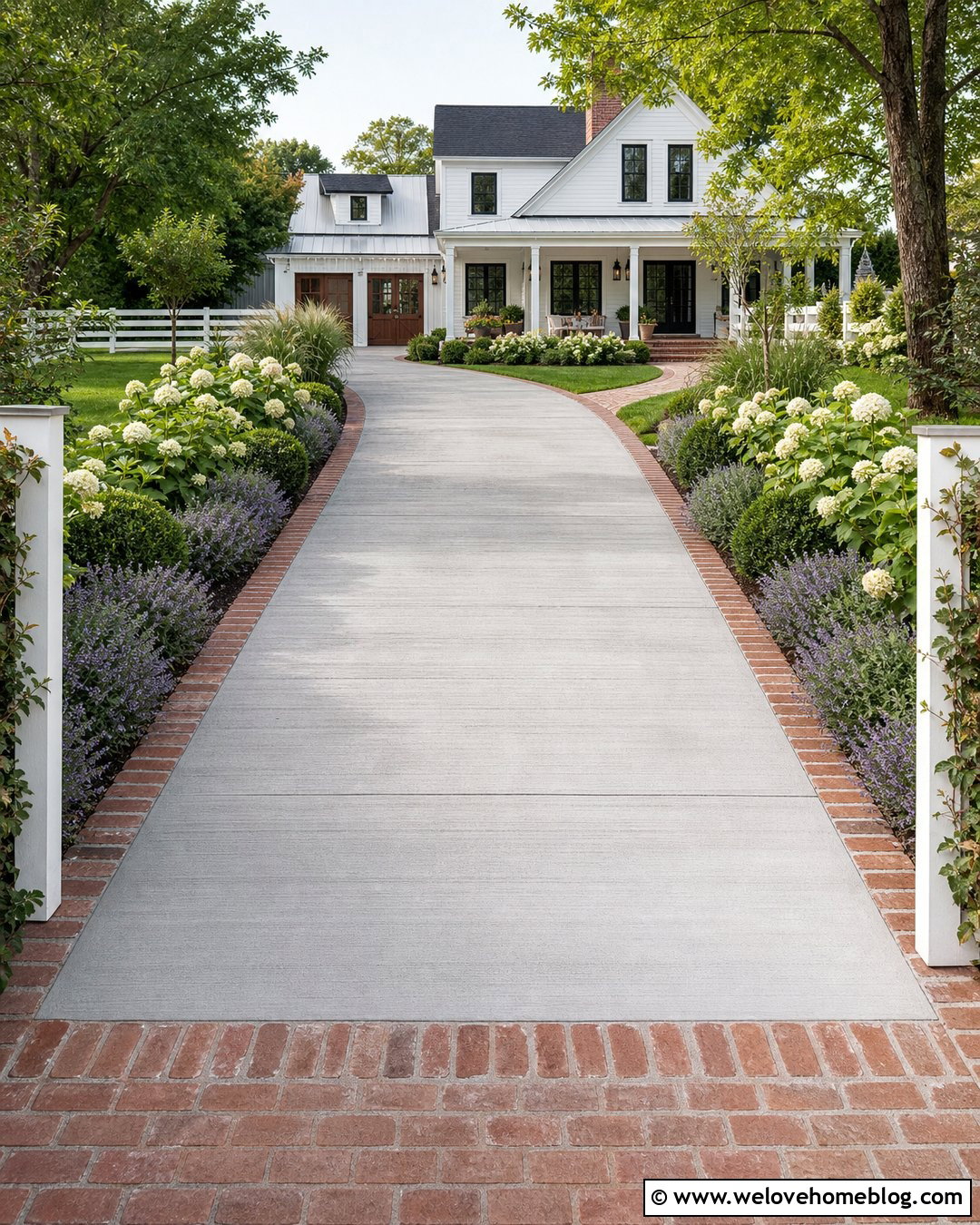
A brushed concrete driveway becomes warmer and more compatible with farmhouse architecture when framed by reclaimed-look brick pavers. Use light gray concrete for the broad driving surface and a single red-brown brick course along both sides. Repeat the brick across the entrance apron and around the front walkway. Gently curved planting beds filled with hydrangeas, catmint, boxwood, and ornamental grass can soften the edges without hiding the border. A wide straight approach suits a practical farmhouse layout, while a small parking extension near the garage accommodates guests. Add white fence sections or simple wooden posts near the street for a recognizable country detail. Limiting the design to concrete, brick, and layered greenery keeps it approachable and prevents decorative farmhouse features from becoming excessive.
35. Gravel Driveway With Paver Parking Pads
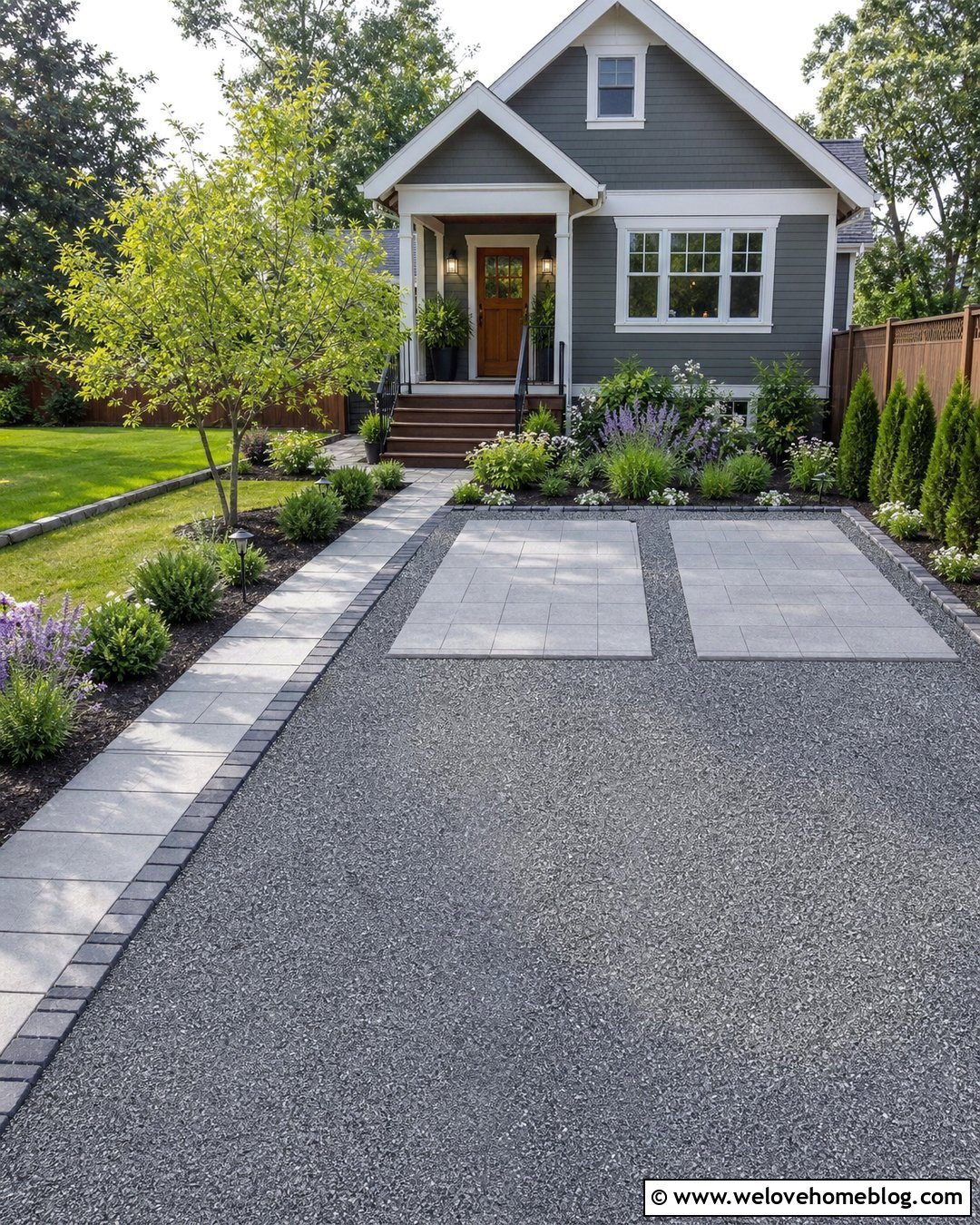
Combining compacted gravel with paver parking pads directs the most durable material toward heavily used areas. Use gray crushed gravel for the approach and install large concrete pavers where vehicles regularly stop near the house. The paver pads can form two clearly defined bays, framed by a dark stone border that connects visually with the gravel. Add a matching paver walkway from the parking area to the front door so visitors do not have to cross loose stone in dress shoes. Low evergreen shrubs, flowering perennials, and a small shade tree can surround the bays without narrowing access. This mixed design works well for budget-conscious renovations because the decorative paving covers a limited area. Careful grading ensures the transition between gravel and pavers remains smooth and easy to maintain.
36. Small Driveway With Diagonal Pavers
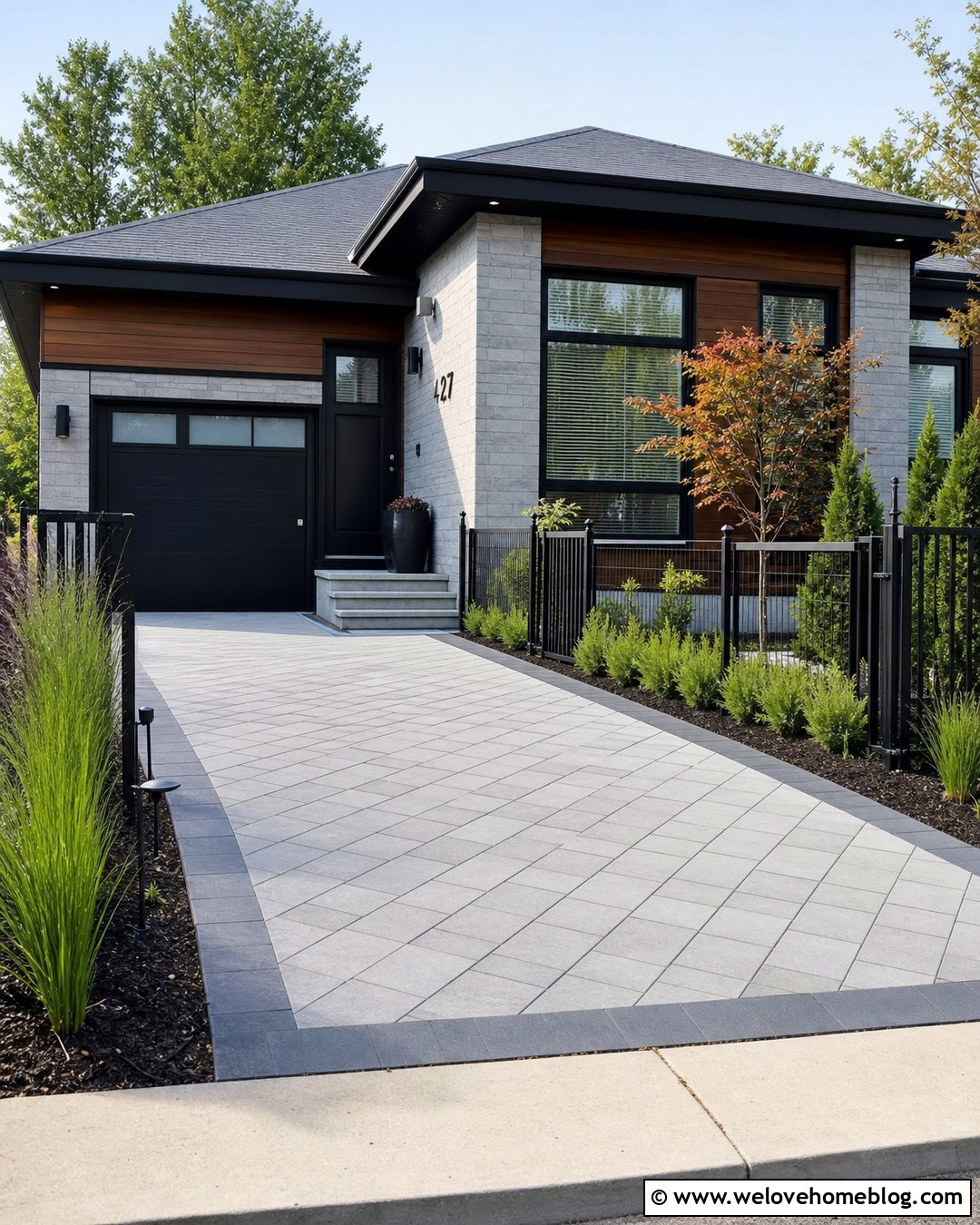
A compact front yard can feel wider when rectangular pavers are installed on a diagonal. Choose medium-gray concrete pavers with a darker border to keep the pattern controlled. Maintain a simple rectangular driveway shape and avoid unnecessary curves that reduce usable parking space. Along one side, create a narrow planting strip with upright grasses, compact shrubs, and a small ornamental tree. On the other side, integrate a matching paver walkway rather than squeezing in a separate material. A low wall or metal fence can define the property without making the entrance feel enclosed. The diagonal lines create movement, while the limited color palette keeps the design from appearing crowded. Accurate measurements are important because every inch must support vehicle access, door clearance, drainage, and comfortable pedestrian movement.
37. Long Driveway With Tree-Lined Entrance
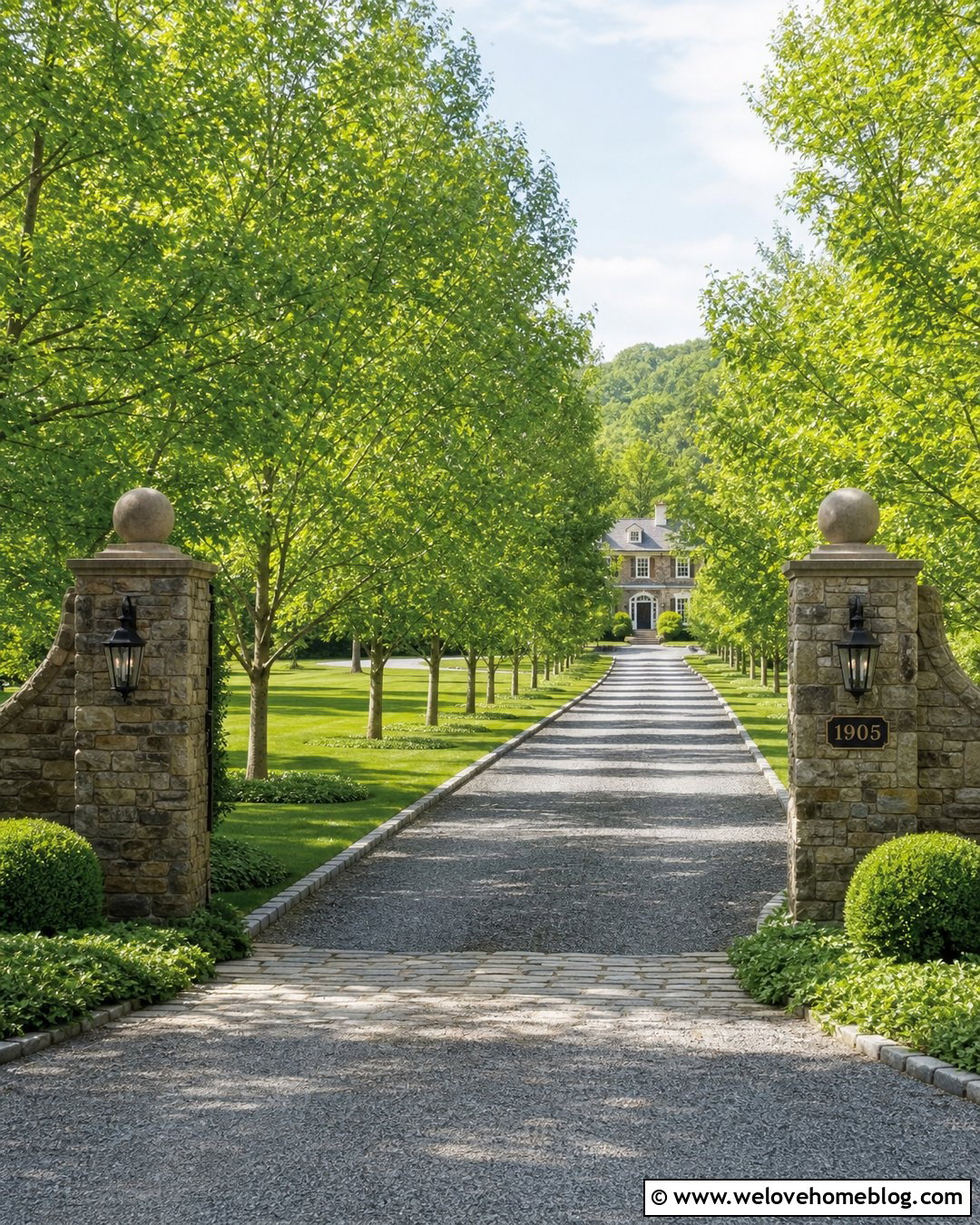
A long driveway gains structure when evenly spaced trees frame the approach and direct attention toward the house. Use compacted gray gravel or smooth asphalt for an understated driving surface, then add natural stone edging that follows the route. Select tree species suited to the local climate, soil, available root space, and mature height. Position trunks far enough from the pavement to prevent conflicts with vehicles and future growth. Beneath the trees, use lawn or simple ground cover so the repeated canopy remains the main feature. Mark the entrance with low stone pillars and continue the same masonry near the house. A straight driveway feels formal and symmetrical, while a gentle curve produces a more relaxed reveal. Both versions depend on consistent spacing and long-term landscape planning.
38. Concrete Driveway With Center Paver Strip
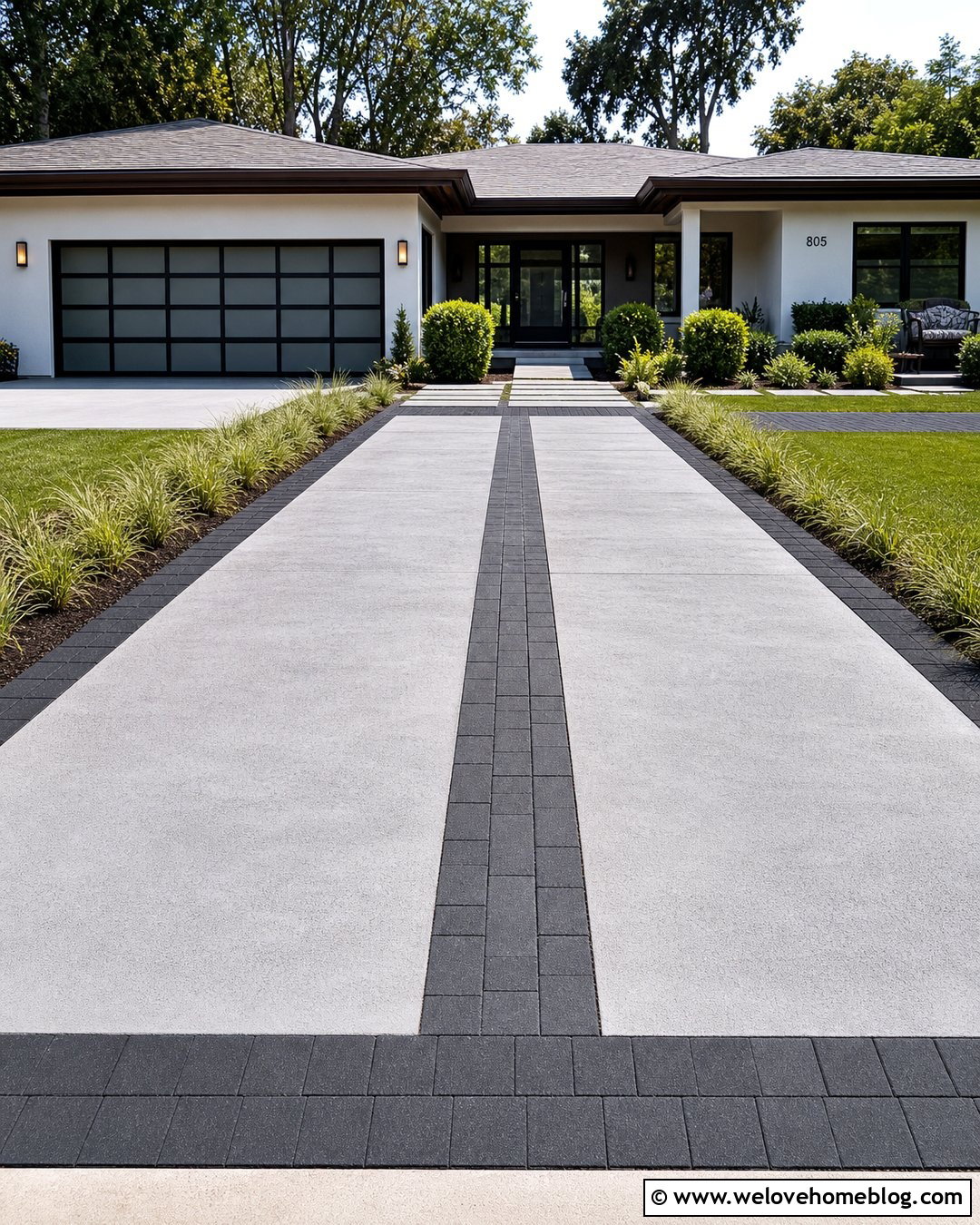
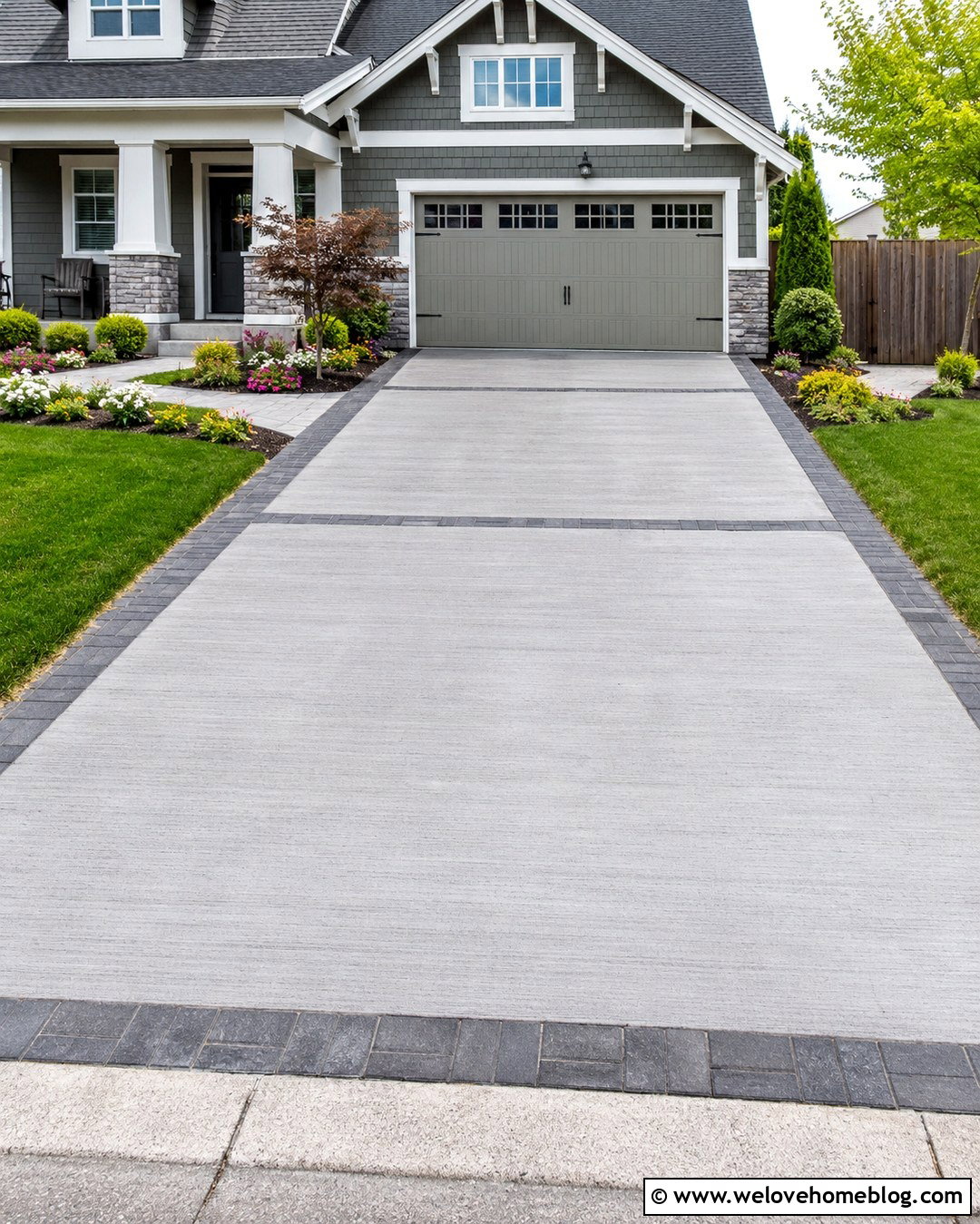
A decorative center strip can update a plain concrete driveway without creating a complicated pattern across the entire surface. Pour two wide bands of light gray brushed concrete and place charcoal rectangular pavers between them. The paver section may function as a visual divider rather than a grass strip, providing a low-maintenance alternative for homeowners who want strong linear detail. Repeat the charcoal pavers at the street apron and in the front walkway. Narrow planting beds with ornamental grasses and clipped shrubs reinforce the elongated layout. Ensure the center strip is designed for vehicle loads because tires may cross it during turning or parking. This look suits modern ranch and contemporary suburban homes where simple geometry, limited colors, and easy-to-maintain landscaping support the architecture.
39. Tumbled Paver Driveway With Cottage Garden
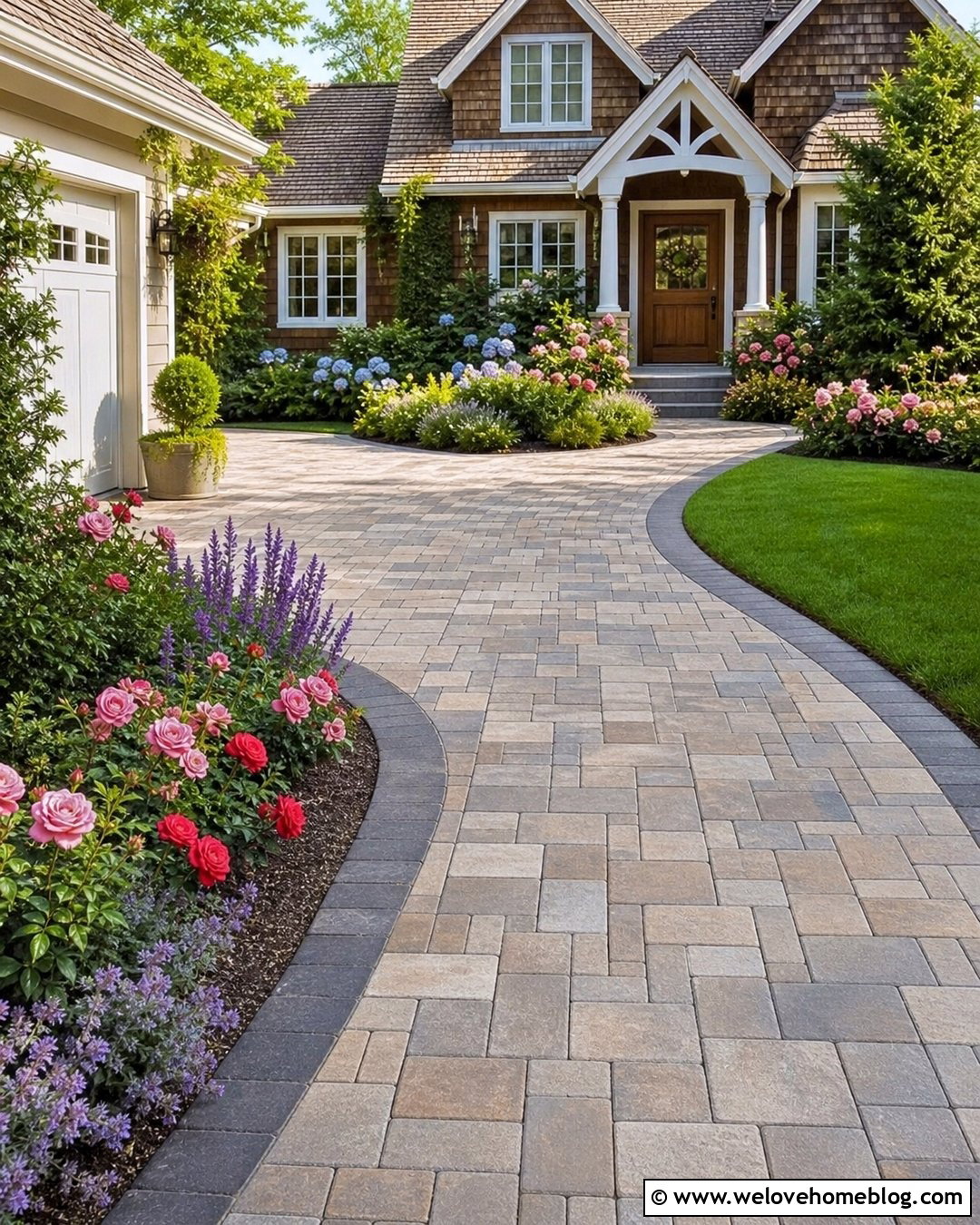
Tumbled concrete pavers provide softly weathered edges that pair naturally with an informal cottage garden. Choose a blend of warm gray, sand, and muted brown pavers laid in a random modular pattern. Shape the driveway with a gentle curve and define it using a narrow darker paver border. Allow planting beds to follow the curve, combining roses, salvia, catmint, hydrangeas, and evergreen structure in layered groups. Keep flowers set back from parking areas so they are not damaged by open doors or snow storage. A matching winding walkway can connect the driveway to a small porch. Although the garden may look relaxed, the driveway edges and plant placement should be carefully controlled. This contrast between structured paving and abundant planting creates an inviting, lived-in entrance.
40. Resin-Bound Gravel Driveway With Modern Border
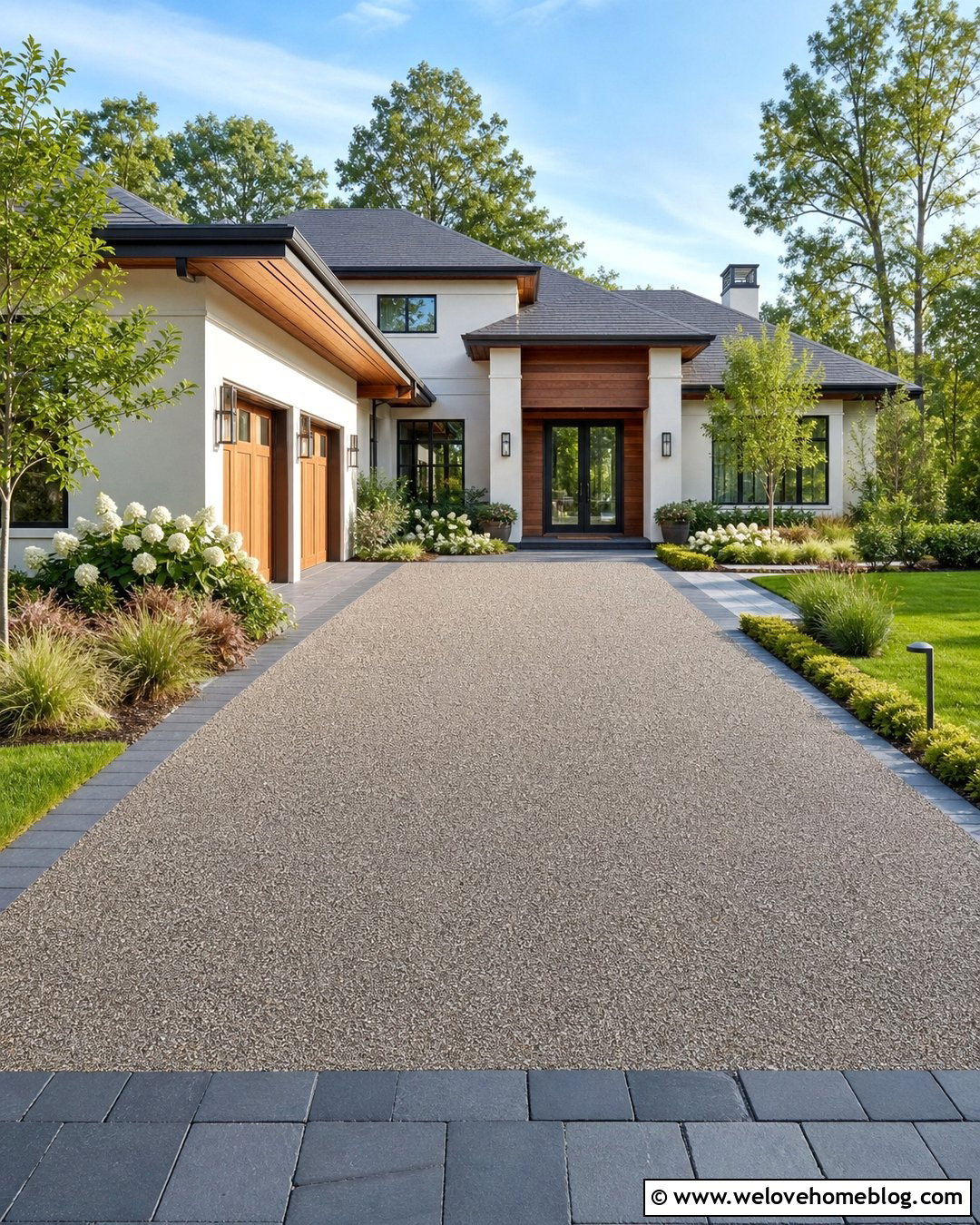
Resin-bound gravel creates a smooth-looking surface with the visual texture of small aggregate. Choose a warm gray or natural beige blend and install it in a clean, straight driveway layout. A charcoal concrete paver border can define the perimeter and form a contrasting apron near the street. Pair the surface with simple planting beds containing grasses, low evergreen shrubs, and white flowering perennials. The fine texture works well beside modern stucco, brick, or fiber-cement siding because it adds detail without a busy paving pattern. Product specifications, permeability, base requirements, temperature limits, and installation methods vary, so use a qualified contractor familiar with local conditions. The complete design should include coordinated drainage, a matching walkway, and strong edging rather than relying on the resin surface alone for visual impact.
41. Flagstone Driveway With Gravel Joints
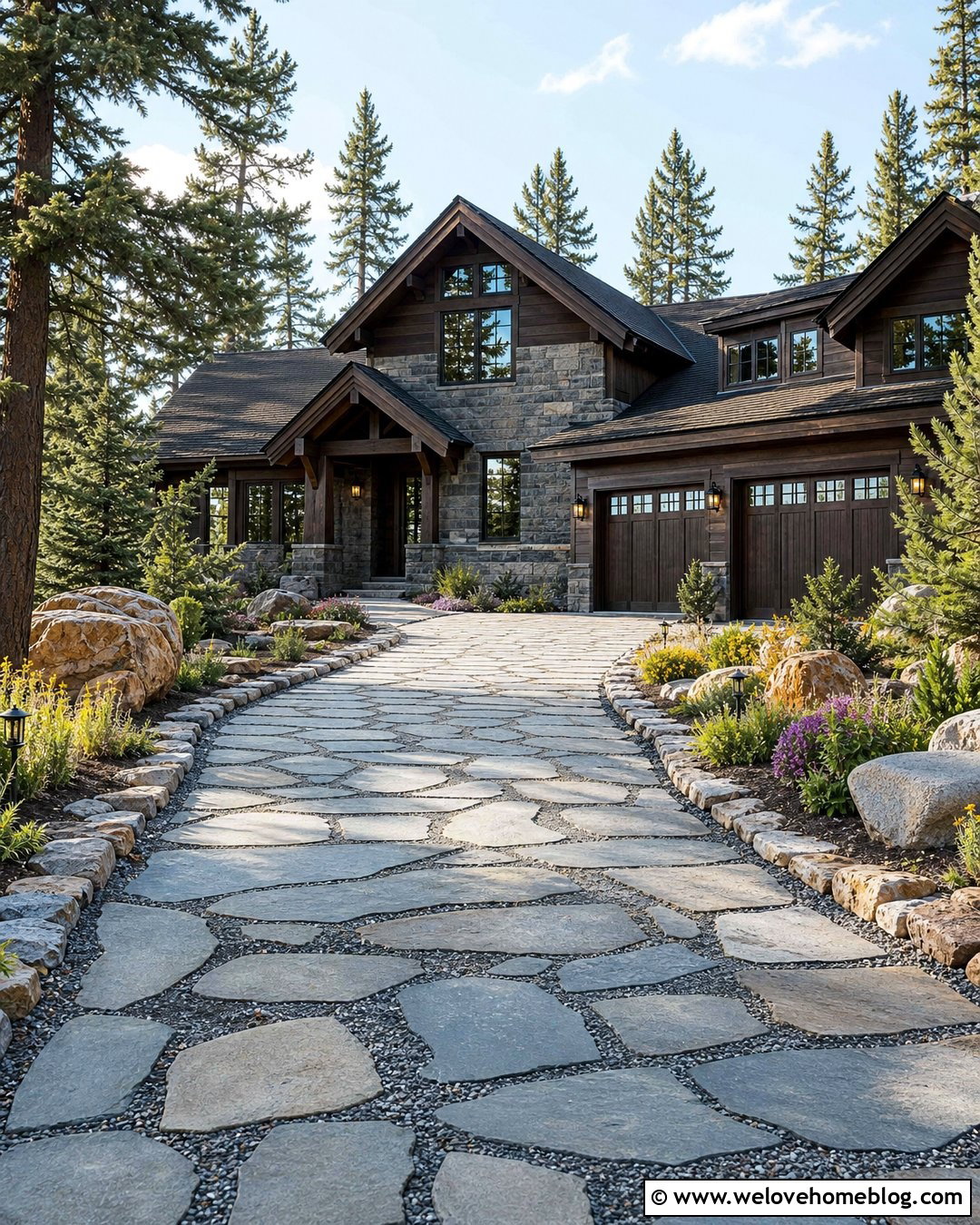
Large flagstones set with compacted gravel joints produce a natural, handcrafted entrance for a rustic or mountain-style home. Choose thick, vehicle-rated stone in irregular gray and brown shapes, then fill the joints with small angular gravel that complements the slabs. Keep the driveway gently curved and wide enough that tires remain on the reinforced surface. Fieldstone edging can contain the joint material and connect the driveway with nearby retaining walls. Surround the approach with native grasses, evergreen shrubs, boulders, and drought-tolerant perennials. The stone pattern should feel organic while maintaining a stable, carefully engineered base. Near the garage, use more closely fitted stones to create a smoother parking area. This design works best when the driveway, architecture, and natural site share similar tones and textures.
42. Two-Tone Paver Driveway With Geometric Border
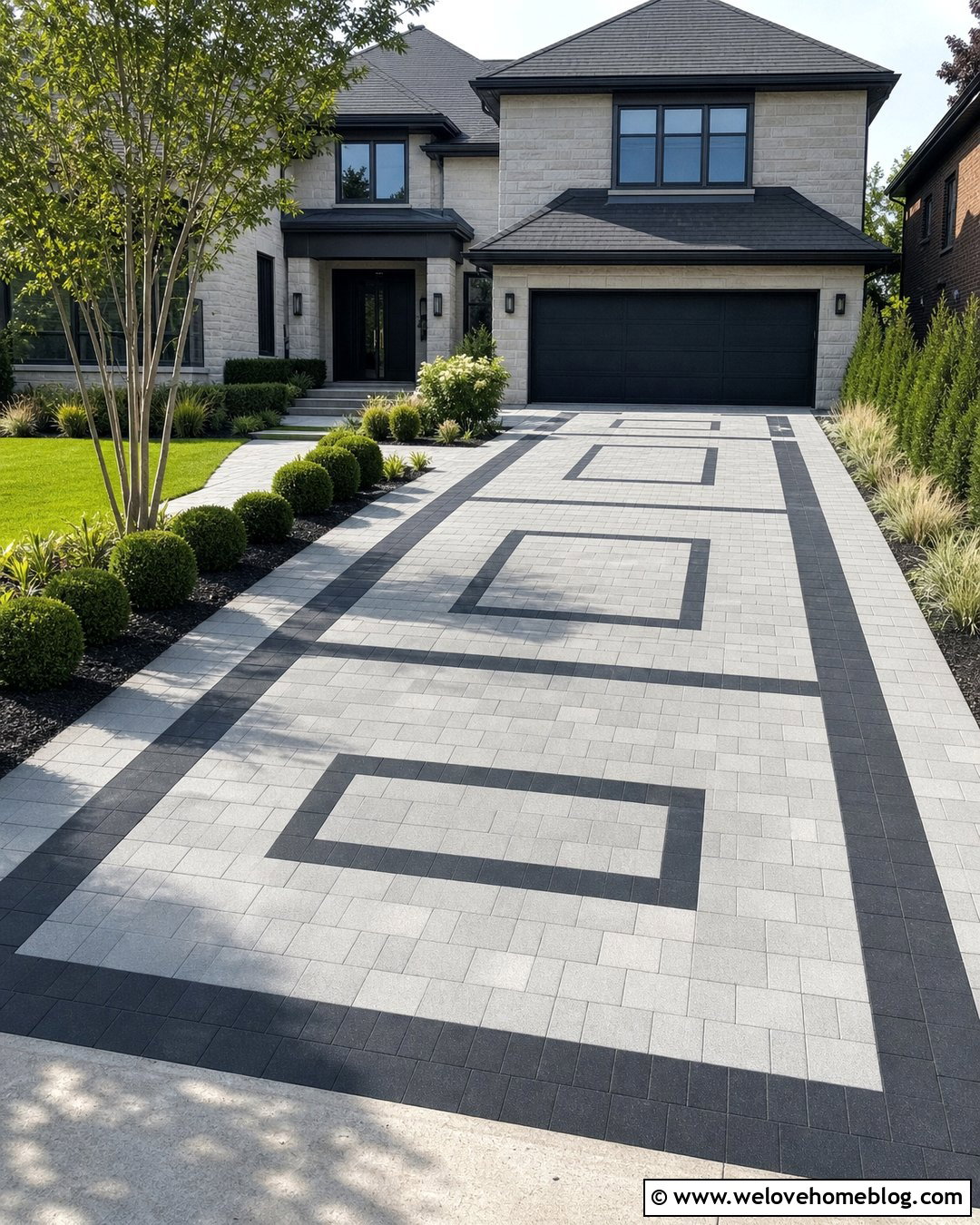
Two coordinated paver colors can create a distinctive driveway without making the surface excessively ornate. Use light gray rectangular concrete pavers for the central field and charcoal pavers for a wide geometric frame. At the garage, extend the dark border inward to outline individual parking bays. A straight layout emphasizes the crisp pattern and complements contemporary or transitional architecture. Balance the hard lines with rounded shrubs, ornamental grasses, and one multi-stem tree in a nearby planting bed. Repeat the lighter paver on the walkway and use charcoal only as an accent. This controlled repetition helps the driveway relate to the house instead of functioning as an isolated decorative feature. Before installation, map the border dimensions carefully so cuts remain consistent around corners, curves, and drainage structures.
43. Driveway Entrance With Stone Gate Pillars
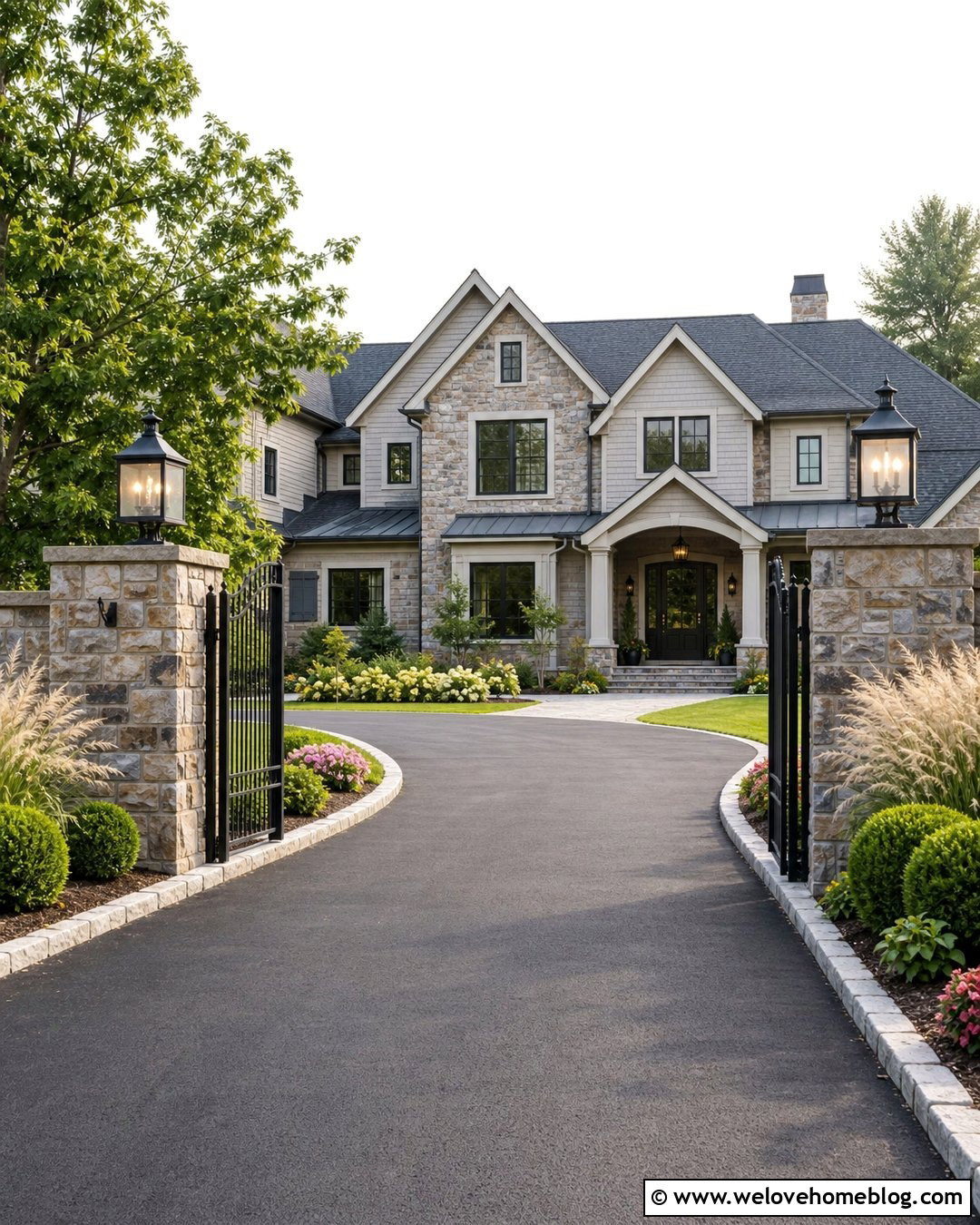
Stone gate pillars can establish a strong driveway entrance when they are scaled appropriately for the house and street frontage. Pair the pillars with a curved black asphalt driveway edged in matching natural stone. Use simple black metal gates or leave the opening unobstructed if security is not required. Low planting beds around the pillars can contain boxwood, ornamental grass, and seasonal flowers, but greenery should not hide house numbers or restrict driver visibility. Install lantern-style fixtures that suit the home’s architecture and illuminate the entrance without creating glare. Continue the pillar stone on a low wall, mailbox surround, or house facade to make the entrance feel connected. The complete look should guide visitors clearly while leaving generous space for turning into and out of the property.
44. Driveway With Integrated Walkway
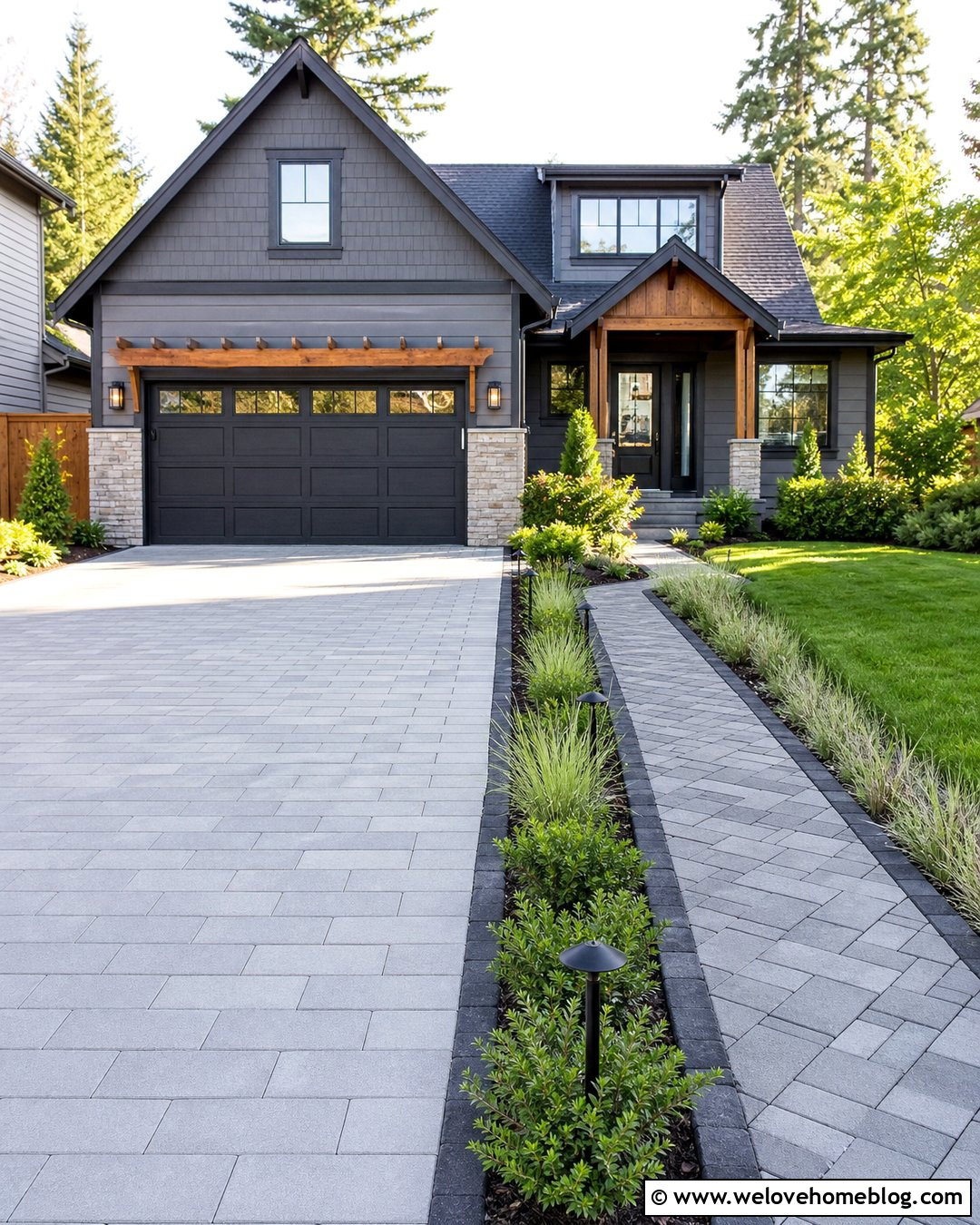
An integrated walkway creates a safer, clearer route to the front door while keeping the driveway design visually unified. Use smooth gray concrete pavers for a wide straight driveway and continue the same paver family into a narrower path along one side. Change the walkway pattern or add a charcoal border so pedestrians can distinguish it from the vehicle area. Between the two surfaces, install a slim planting bed with ground cover, ornamental grasses, and low lighting where space allows. Near the garage, use a flush transition that avoids awkward steps. The walkway should connect logically with the sidewalk, parking area, and porch rather than ending beside a planting bed. Coordinating both routes from the beginning produces a cleaner layout than adding an unrelated path after the driveway is complete.
45. Mixed Material Driveway With Landscaped Parking Court
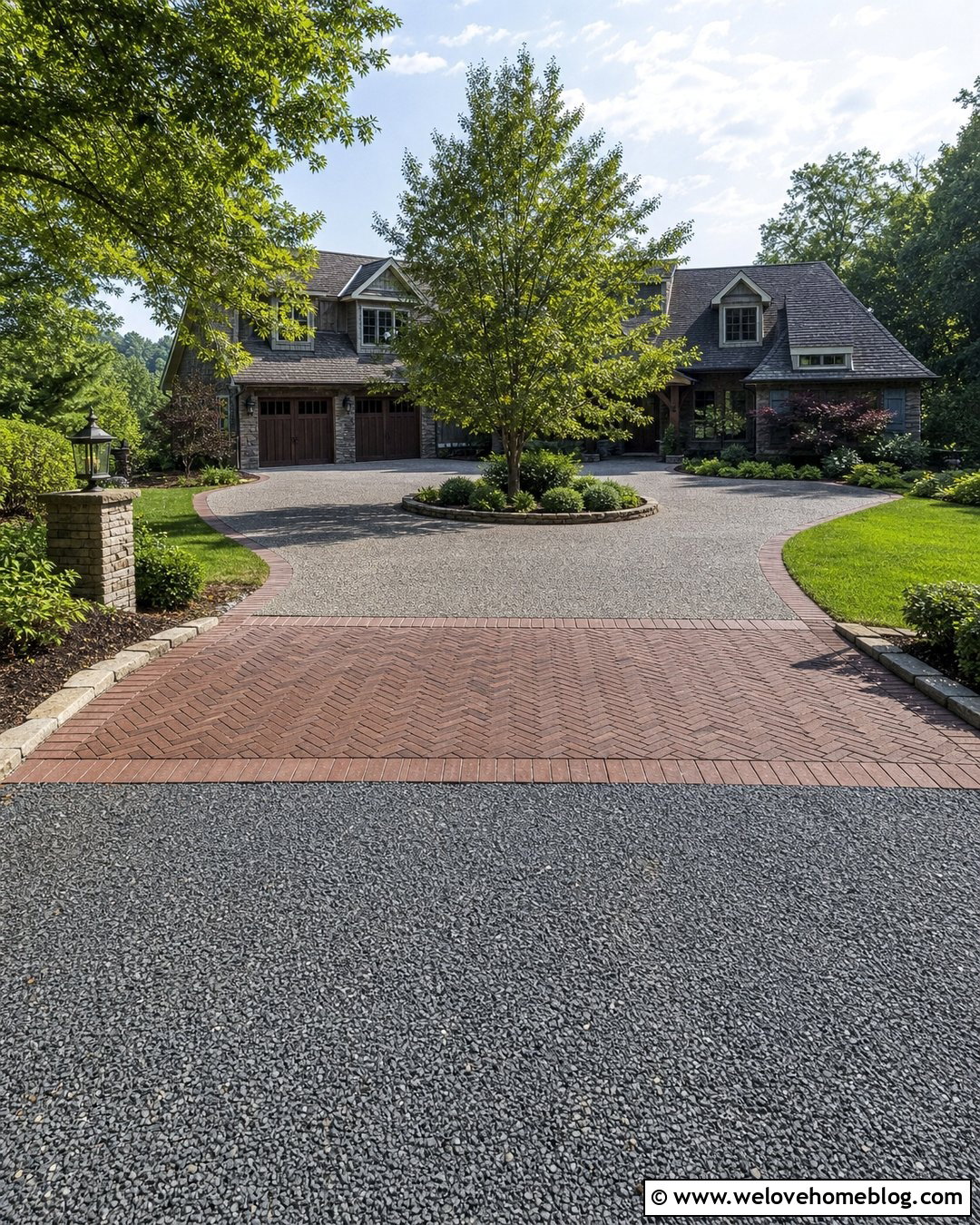
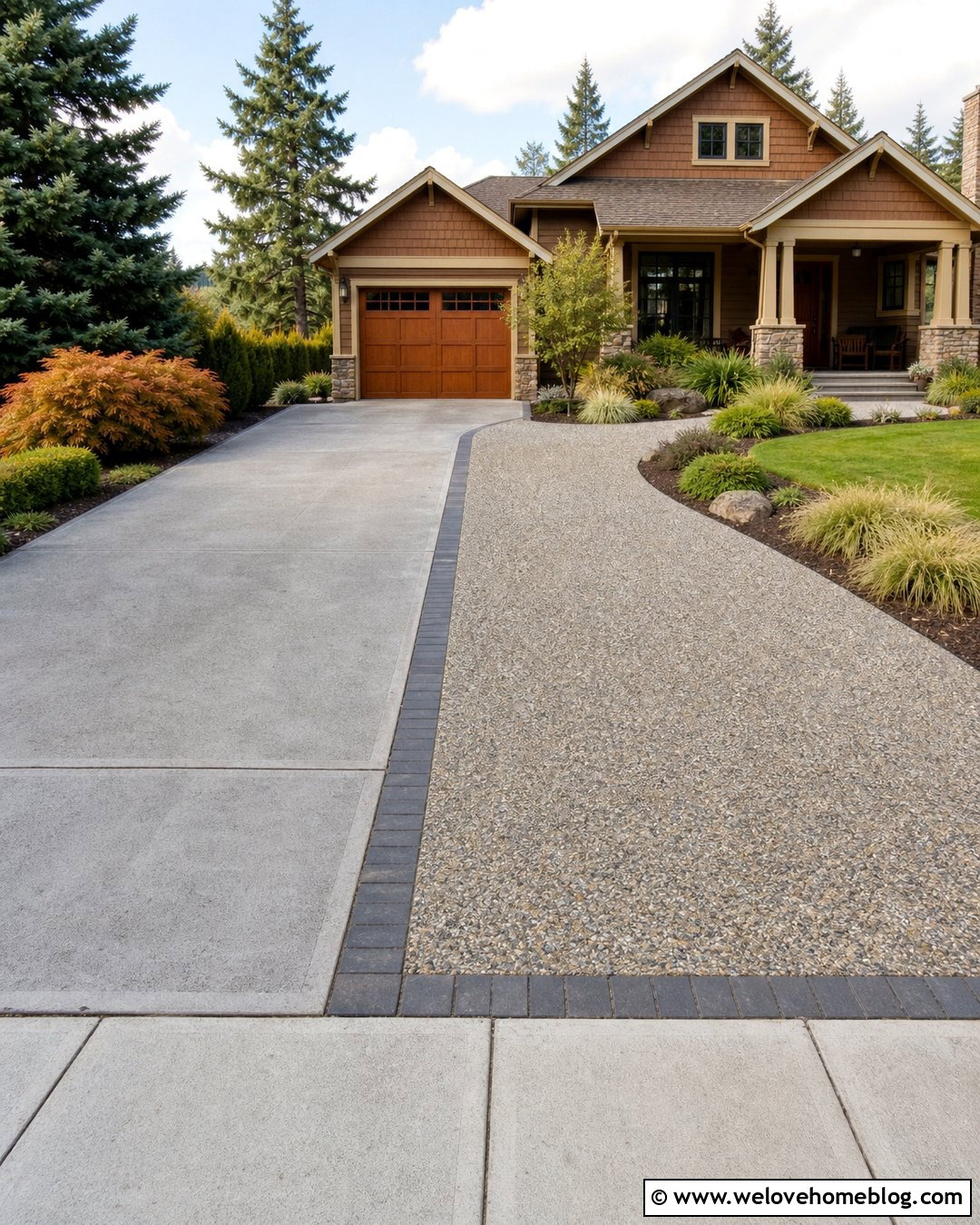
A thoughtfully planned mixed-material driveway can combine affordability, durability, and strong curb appeal. Use compacted gray gravel for the long approach, clay brick pavers for the entrance apron, and exposed aggregate concrete in the parking court near the house. Repeat a narrow brick ribbon around the concrete to connect all three surfaces. In the center of the court, create a small landscaped island with an ornamental tree, low shrubs, and ground cover. Natural stone edging can contain the gravel and define nearby lawn. Keep the material colors closely related so the driveway looks cohesive rather than pieced together. Mixed surfaces are most effective when each one has a clear purpose and the transitions are engineered carefully for drainage, settlement, vehicle loads, and comfortable movement.
Conclusion:
The right driveway should make everyday arrival easier while strengthening the character of your home and landscape. Begin with practical needs, including parking capacity, turning space, drainage, slope, maintenance, and local requirements. Then select a surface, shape, border, and planting scheme that complement the architecture. Simple materials can look refined when edges and transitions are carefully planned. Premium paving can also lose impact when the layout feels crowded or disconnected. Use these 45 Driveway Design Ideas as starting points rather than rigid formulas. Adapt colors, plants, proportions, and materials to your property, climate, and budget. A coordinated design will create better curb appeal and a welcoming entrance that remains functional for years.

Related posts:

Leave a Reply