
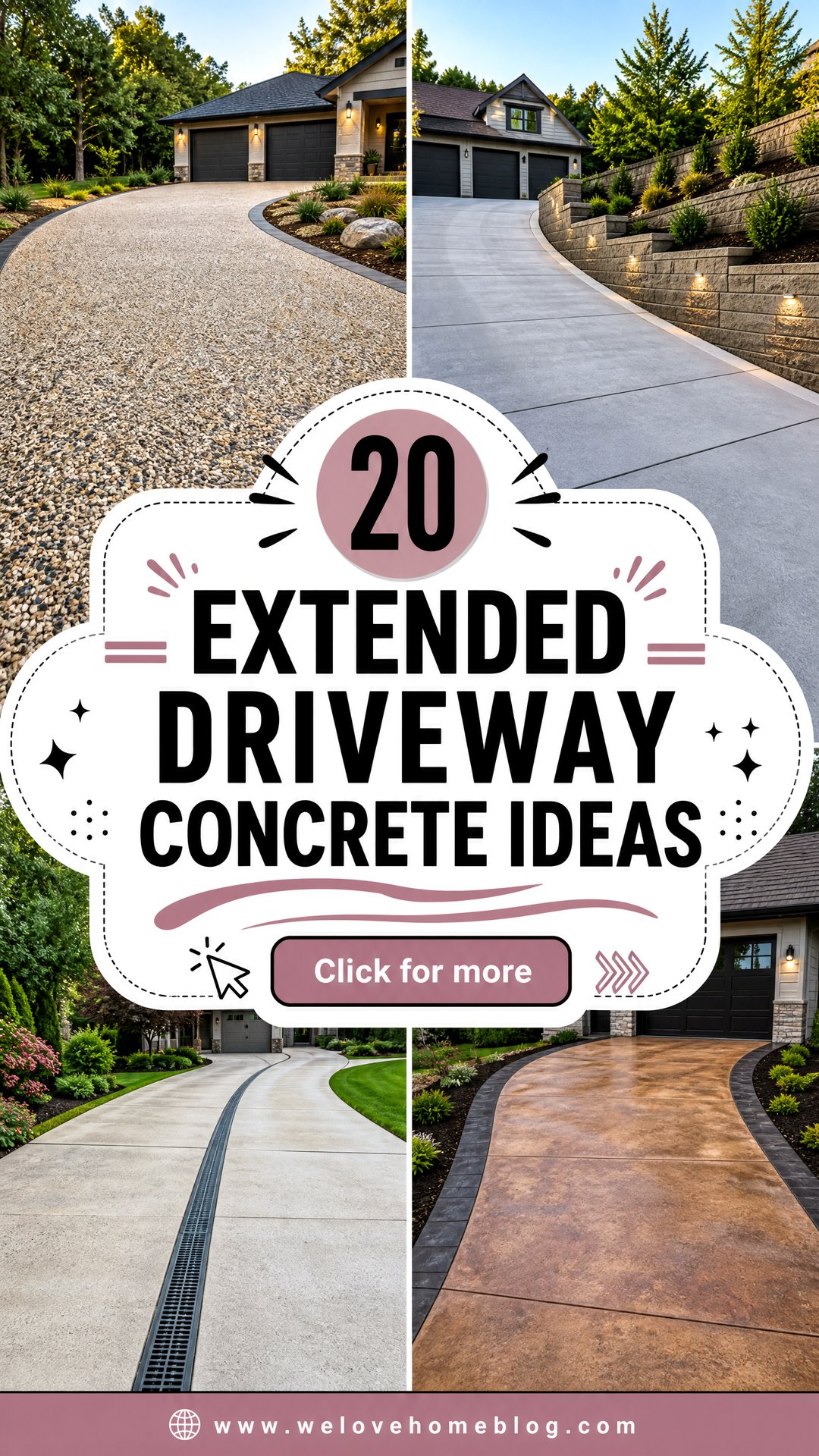
An extended concrete driveway can add parking, improve traffic flow, and make the front of a home feel more balanced. The best 20 Extended Driveway Concrete Ideas go beyond simply pouring a wider slab. They consider how the new concrete connects with the existing surface, garage, walkway, lawn, and street. Finishes such as broom-textured concrete, exposed aggregate, staining, and stamping can help the extension look intentional. Borders and planting beds also soften the larger paved area. Before construction, check local setback, drainage, permit, and HOA requirements, especially when changing the driveway apron or connection to the road. () The complete designs below offer practical inspiration for planning attractive and functional 20 Extended Driveway Concrete Ideas.
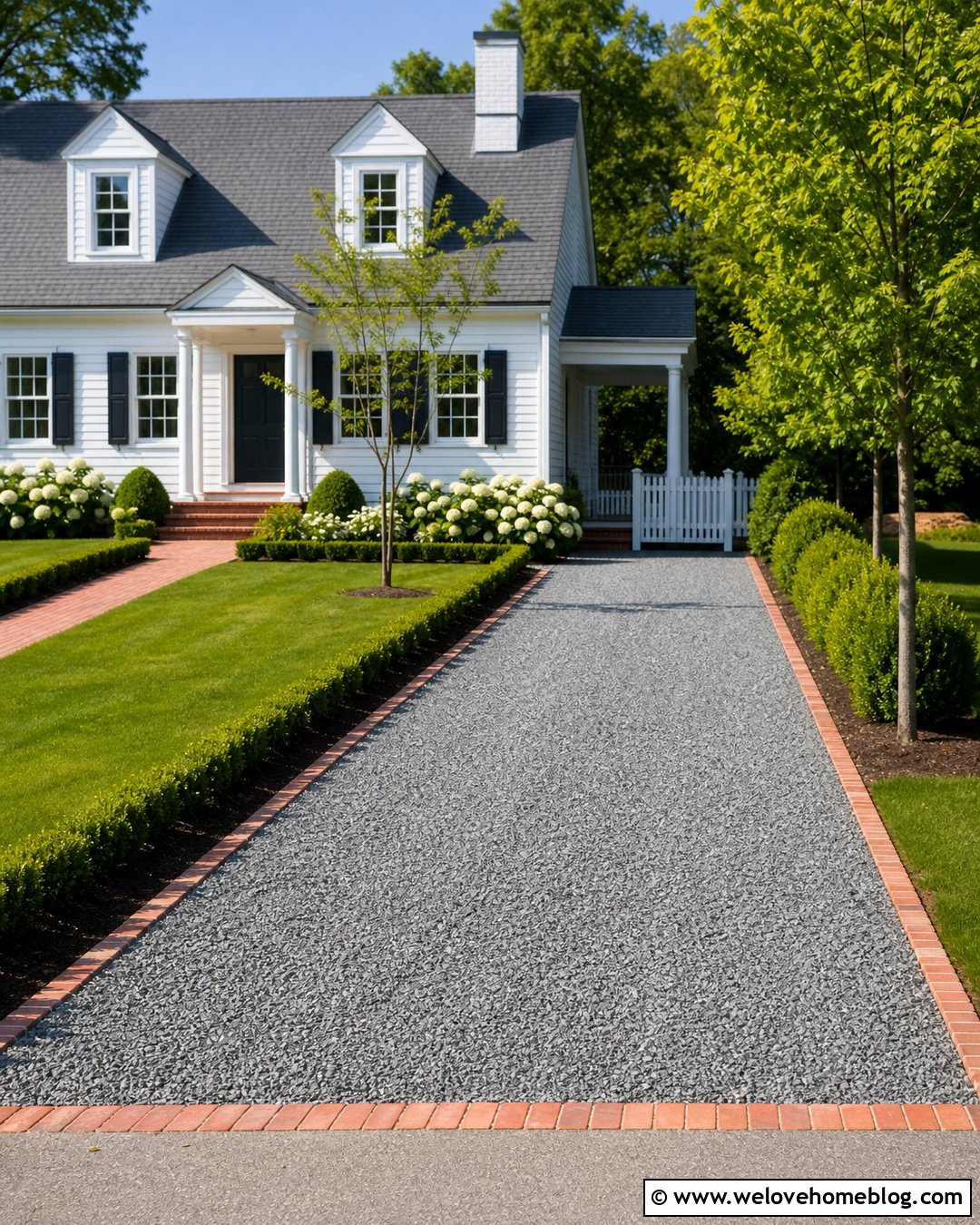
1. Wide Concrete Driveway With Brick Border
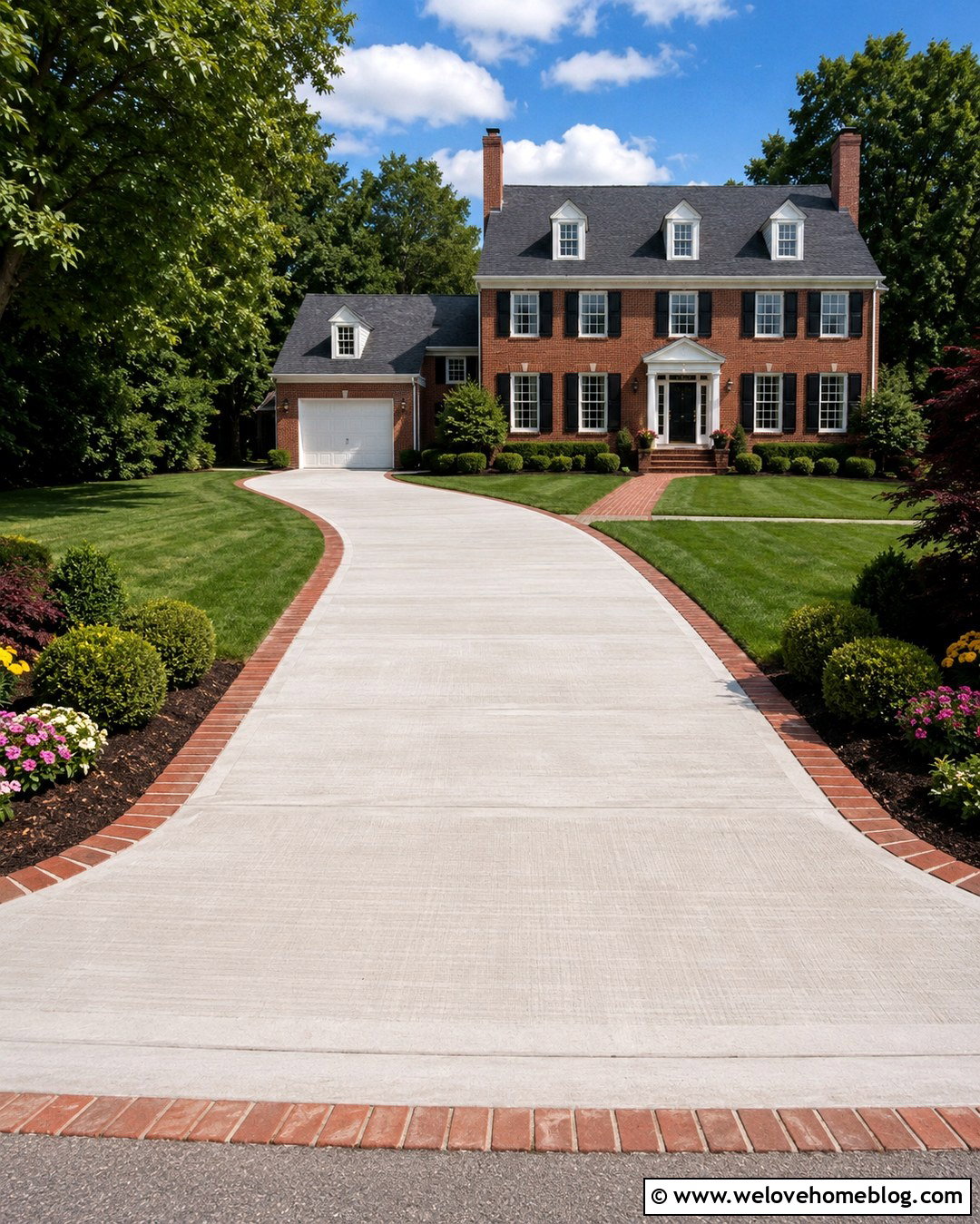
A brick border gives a widened concrete driveway a clear, established shape instead of making the addition look like an afterthought. Use light gray broom-finished concrete for the main surface, then frame both sides with red or charcoal brick pavers. Extending the border across the garage entrance creates a unified outline. This approach works especially well with colonial, Cape Cod, and traditional brick homes. Keep the driveway straight for easy parking, but curve the outer corners slightly where they meet the lawn. Low boxwood shrubs, flowering perennials, and a matching brick walkway can complete the setting. When widening only one side, repeat the brick along the original edge so the entire driveway reads as one balanced design.
2. Concrete Driveway Extension For Third-Car Parking
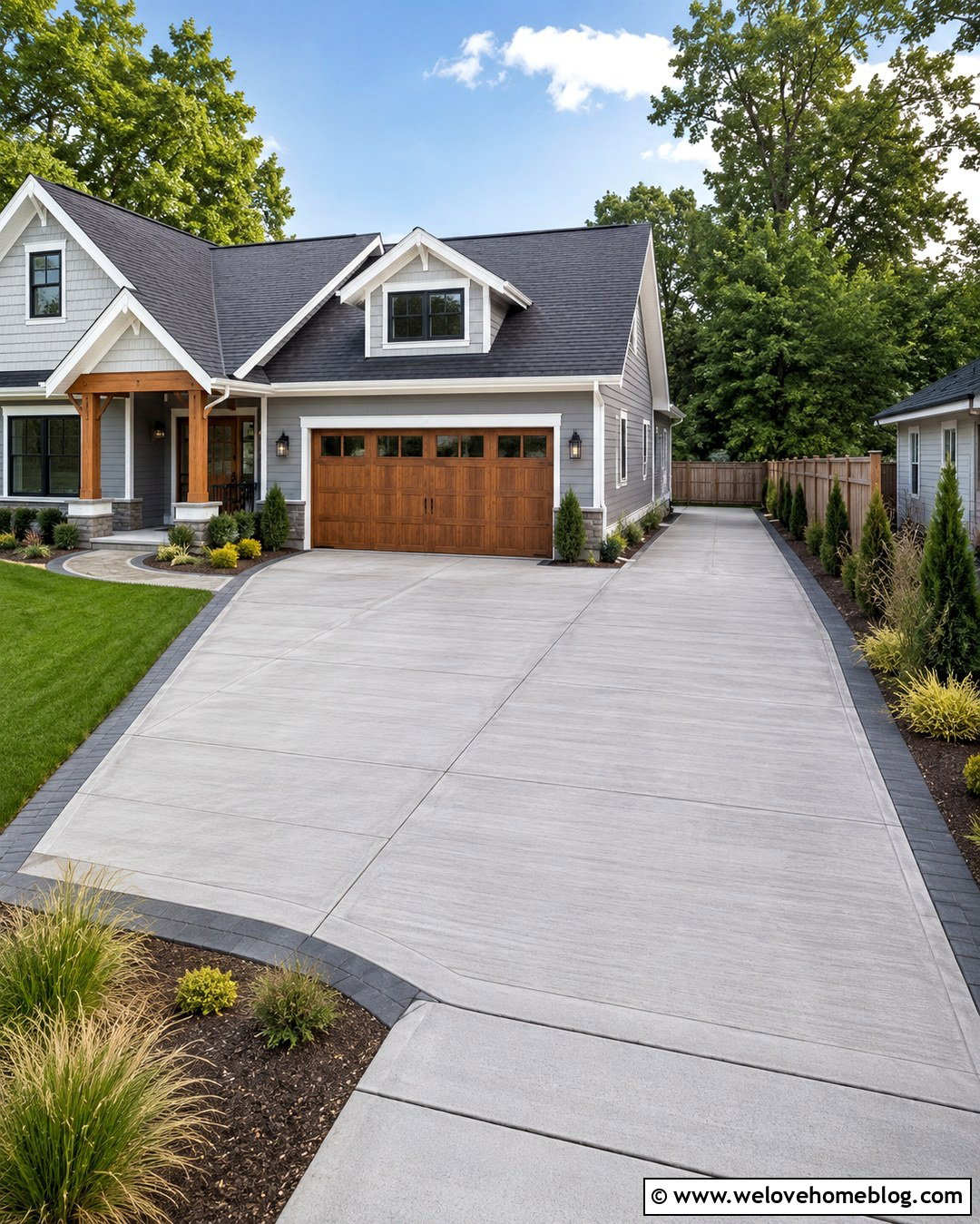
Need more parking without turning the entire front yard into pavement? Add a full-length concrete lane beside the existing two-car driveway. Align the extension with the outer wall of the garage or porch to make its placement feel deliberate. A matching broom finish offers the most consistent appearance, while carefully spaced control joints can continue the pattern found in the original slab. Finish the new outer edge with a narrow planting bed containing ornamental grasses, compact shrubs, and mulch. A gentle flare near the street makes entering the added lane easier. If the concrete colors cannot be matched closely, staining or resurfacing the completed driveway can create a more uniform result. ()
3. Curved Concrete Driveway With Stone Edging
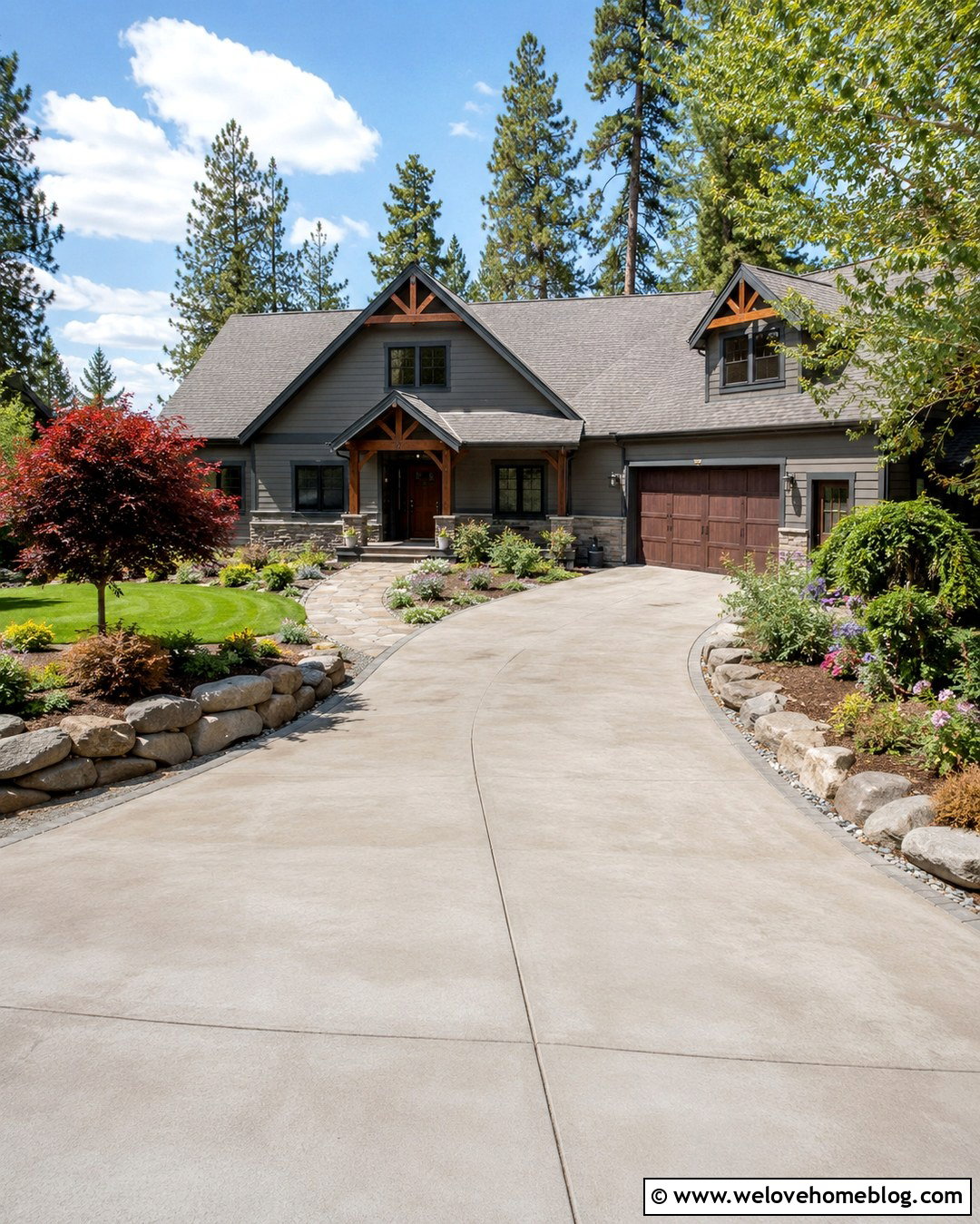
Soft curves can help a concrete driveway extension flow around an existing tree, sloped lawn, or deep planting bed. Instead of adding a rigid rectangular strip, widen the driveway gradually and carry the outer edge into a smooth curve near the house. Warm gray concrete pairs naturally with limestone, fieldstone, or granite edging. The stone border should follow the full curve, creating a durable transition between the pavement and landscaping. Plant layered beds with ground cover near the driveway, medium shrubs behind it, and one small ornamental tree for height. This complete look suits craftsman, cottage, and rustic homes. A curved extension also creates more maneuvering room while preserving a softer, garden-focused front yard.
4. Stamped Concrete Driveway Extension
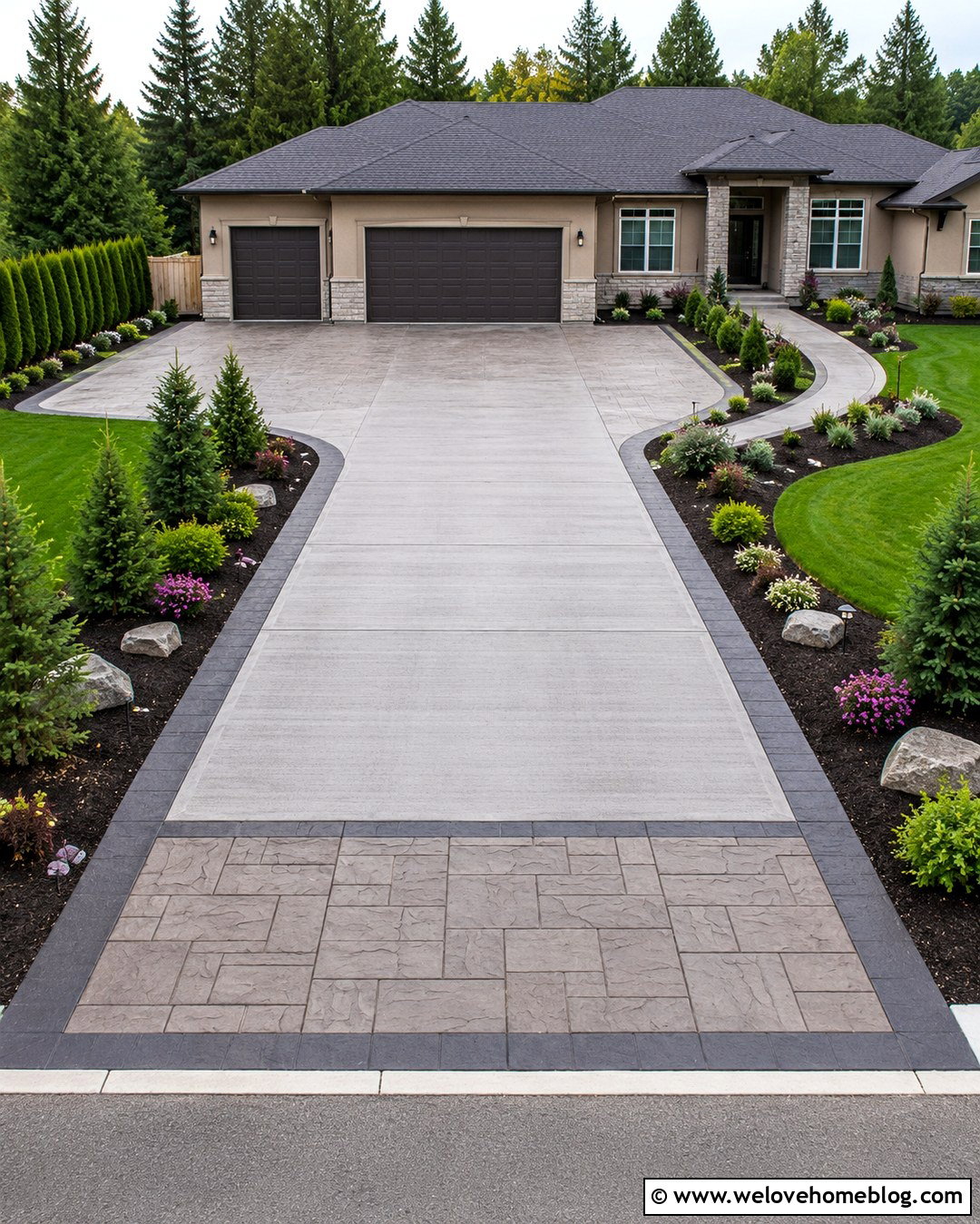
Stamped concrete can visually connect a new driveway extension with an older slab while adding more character to the entire approach. One effective plan uses smooth or broom-finished concrete through the center and stamped concrete along the widened sides. Choose a restrained pattern resembling slate, brick, or rectangular stone rather than an overly detailed texture. A medium taupe or charcoal tone can define the extension without fighting the house facade. Carry the stamped treatment into the driveway apron or a nearby walkway for continuity. Simple evergreen beds and clean lawn edges prevent the design from becoming too busy. This combination works well when the additional pavement needs to appear decorative but still function as practical daily parking.
5. Exposed Aggregate Concrete Driveway
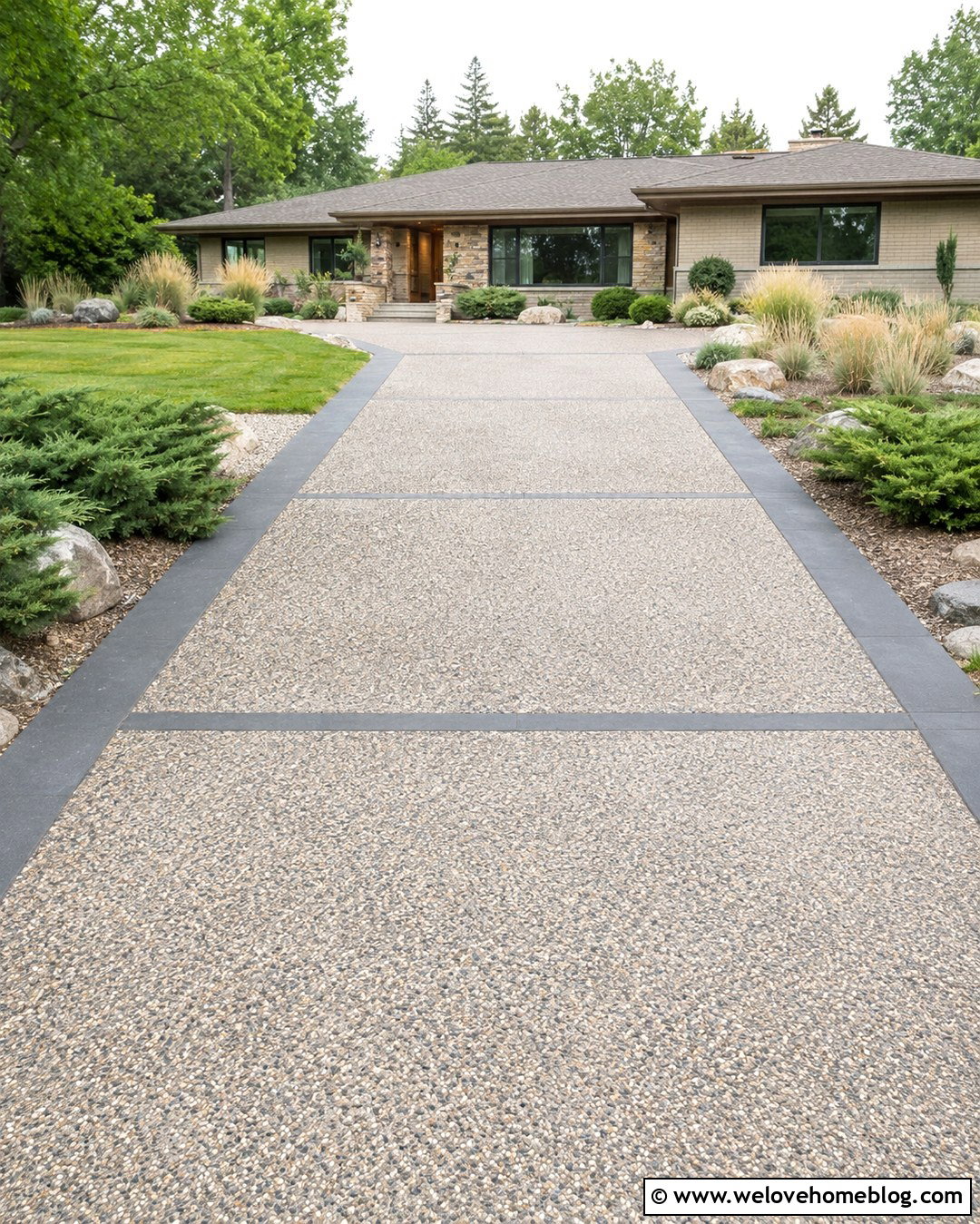
Exposed aggregate gives an extended driveway a textured surface with natural color variation. For a cohesive result, use the finish across both the original driveway and the new extension rather than limiting it to one narrow strip. A mixture containing gray, tan, and cream stones complements many neutral home exteriors. Frame the expanded area with smooth concrete bands to create crisp edges and visually organize the broad surface. A straight layout works well for ranch and midcentury homes, especially when paired with horizontal planting beds. Add low junipers, ornamental grasses, and a few larger landscape rocks. The contrasting perimeter makes the driveway look finished while helping the aggregate surface, landscaping, and architecture work together as one composition.
6. Modern Concrete Slab Driveway With Grass Joints
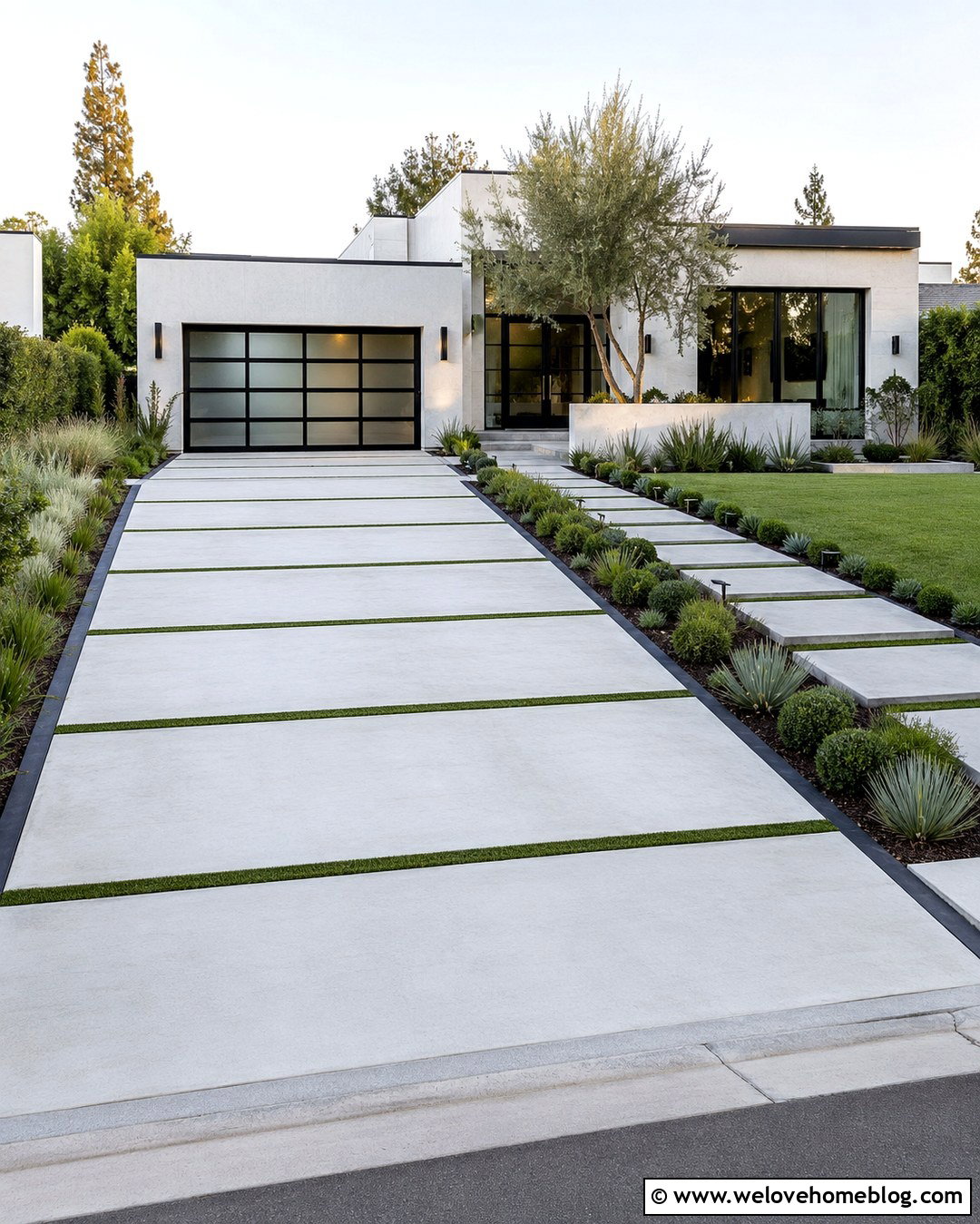
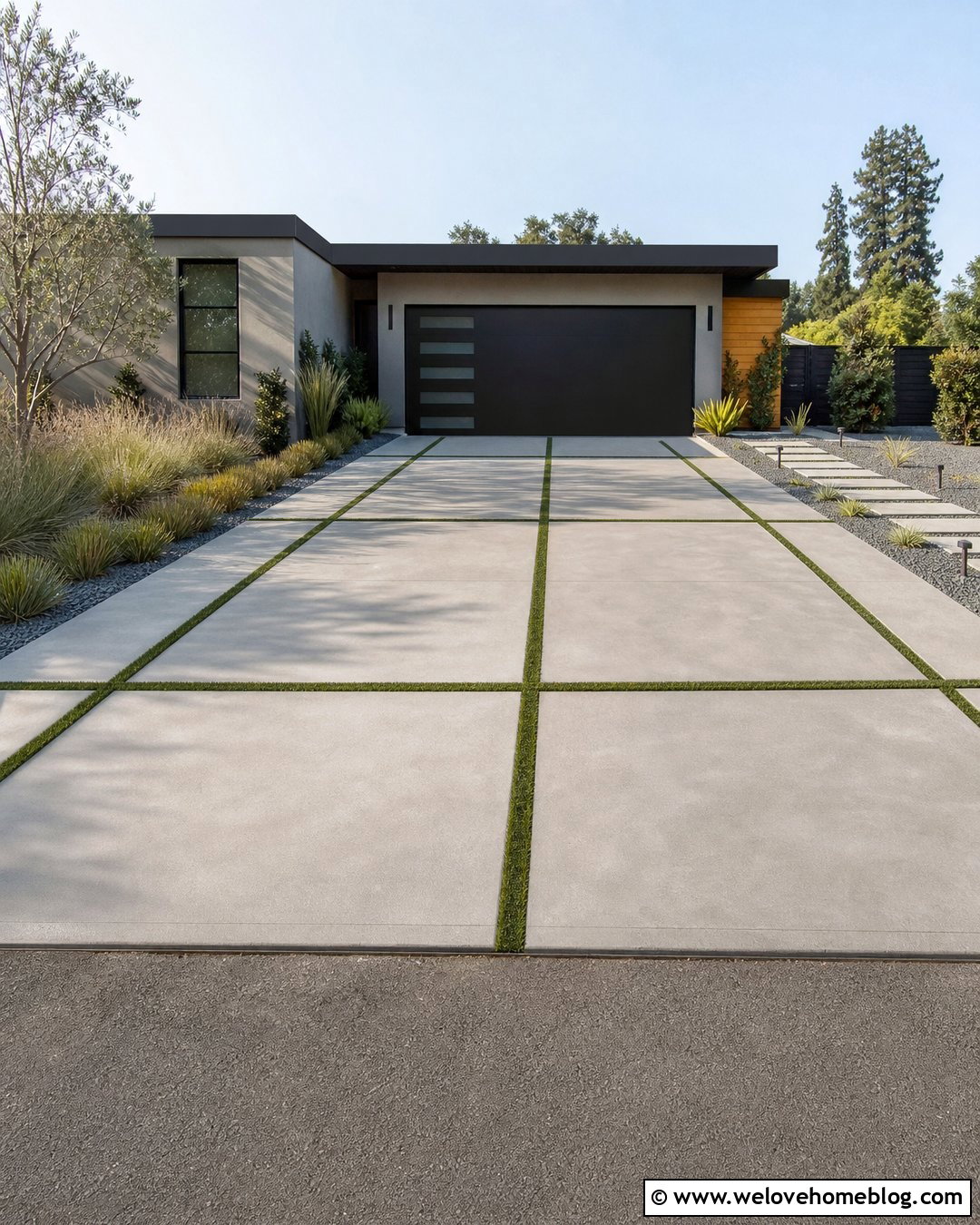
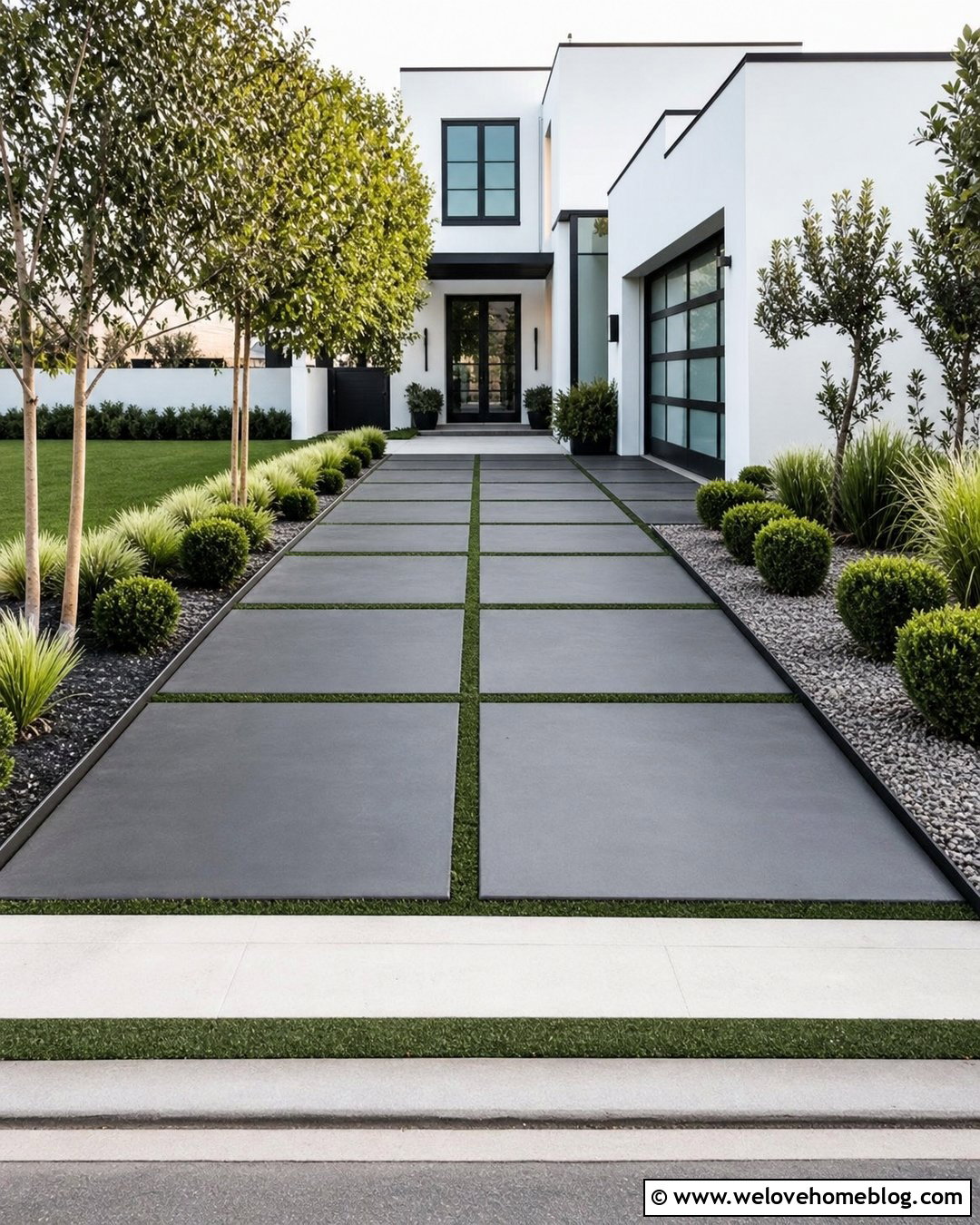
Large concrete slabs separated by narrow grass joints can make an extended driveway feel lighter and more connected to the yard. Keep the slabs rectangular and evenly spaced, using pale gray poured concrete with a smooth matte finish. Extend the layout sideways for extra parking, then repeat the same joint pattern from the existing driveway. Real turf can create a lush appearance, while durable low-growing ground cover may reduce trimming in selected climates. This design looks most convincing beside a modern home with clean rooflines and simple materials. Use linear planting beds, sculptural grasses, and a straight concrete walkway nearby. Oversized slabs and green bands are especially effective for breaking up the visual mass of a wide driveway. ()
7. Broom Finish Concrete Driveway With Paver Ribbon
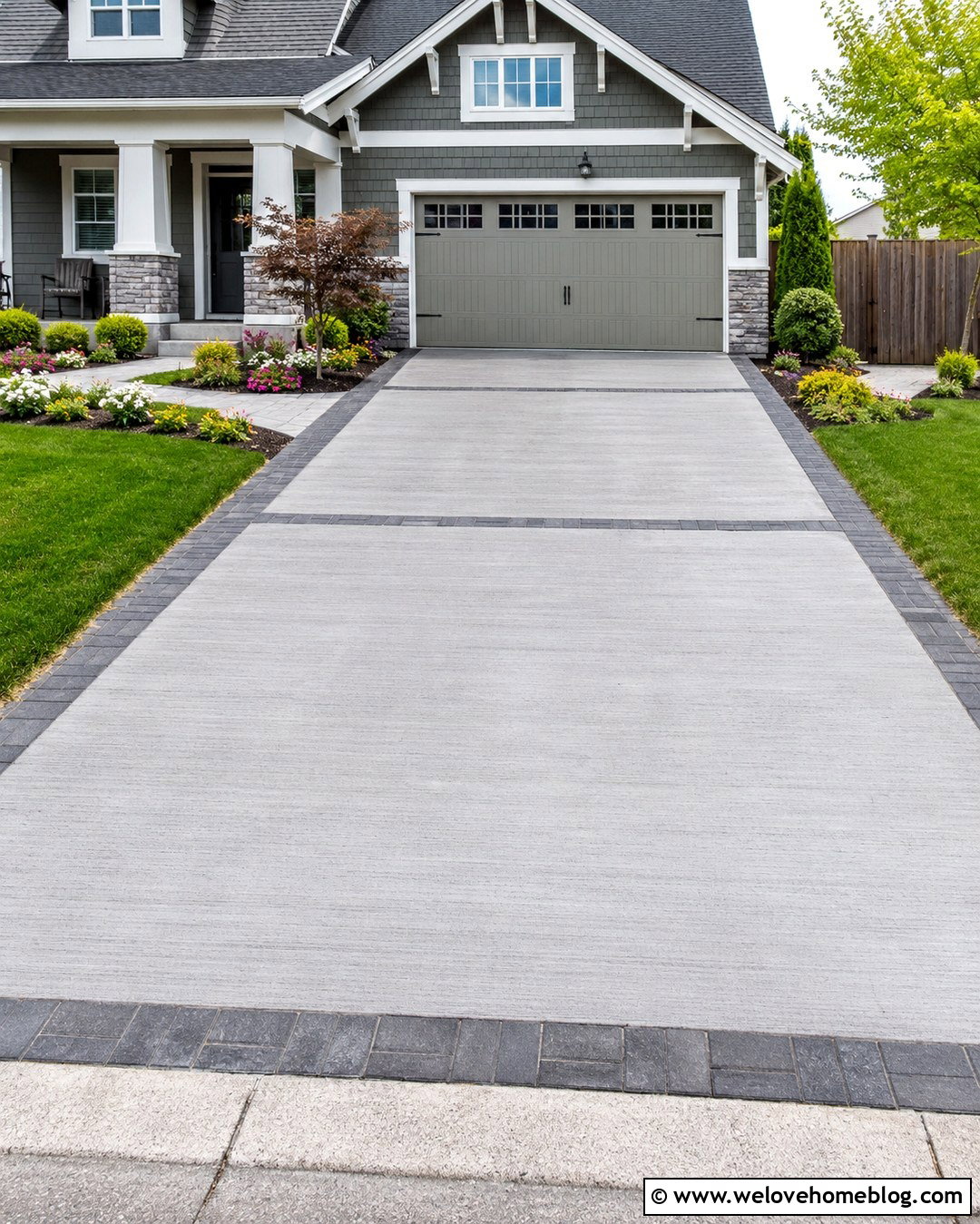
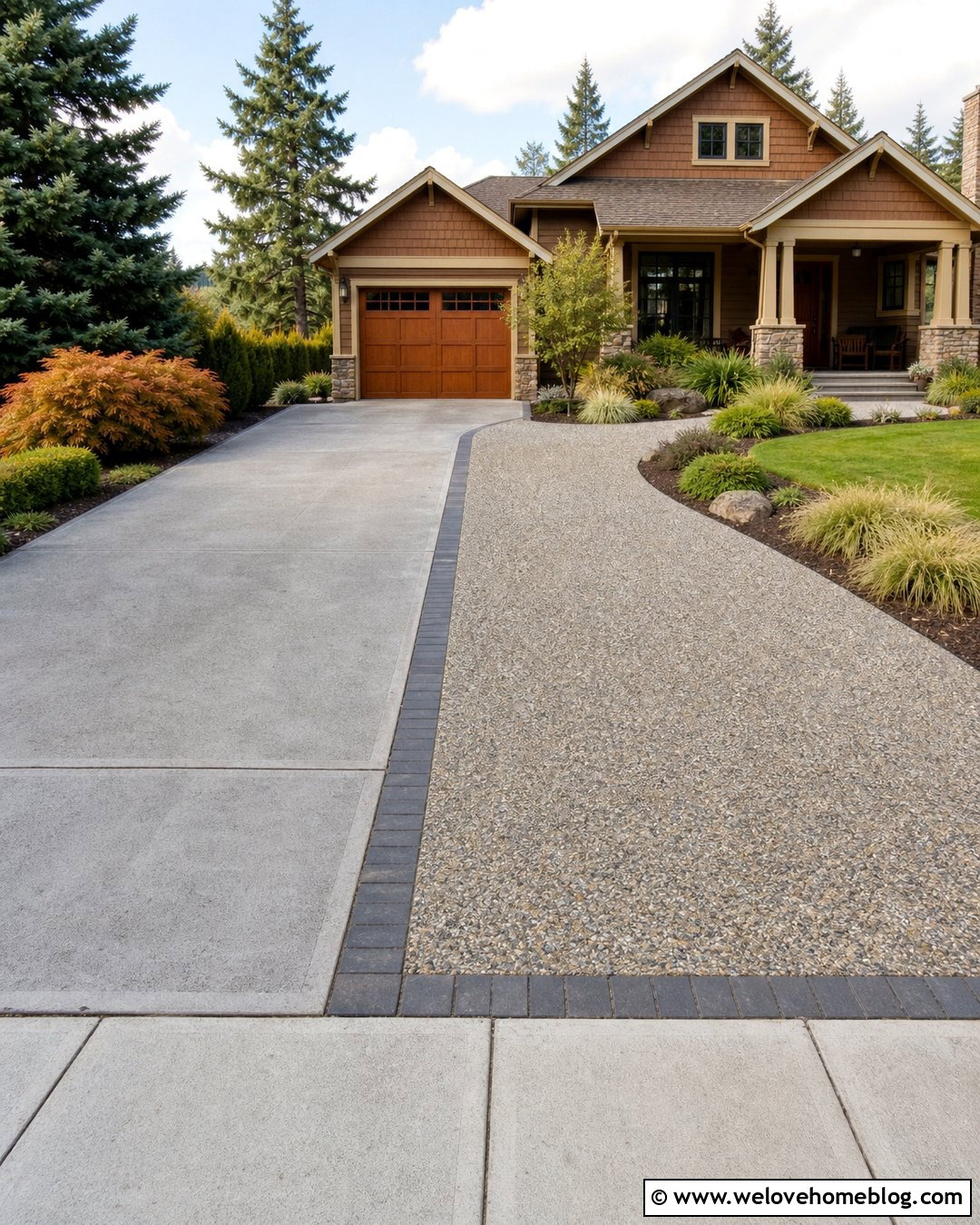
A paver ribbon can disguise the transition between an existing driveway and its concrete extension. Pour matching broom-finished concrete along one or both sides, then install a charcoal or tan paver band where the surfaces meet. Continue additional ribbons across the driveway at regular intervals so the first band appears to be part of a planned pattern. This layout provides definition without covering the practical concrete surface. Match the paver color to the roof, shutters, garage door, or front walkway. Along the outer edge, use a narrow lawn strip or tidy beds filled with compact shrubs and seasonal flowers. The finished look is adaptable enough for suburban ranch, craftsman, and contemporary homes.
8. Concrete Side Parking Pad
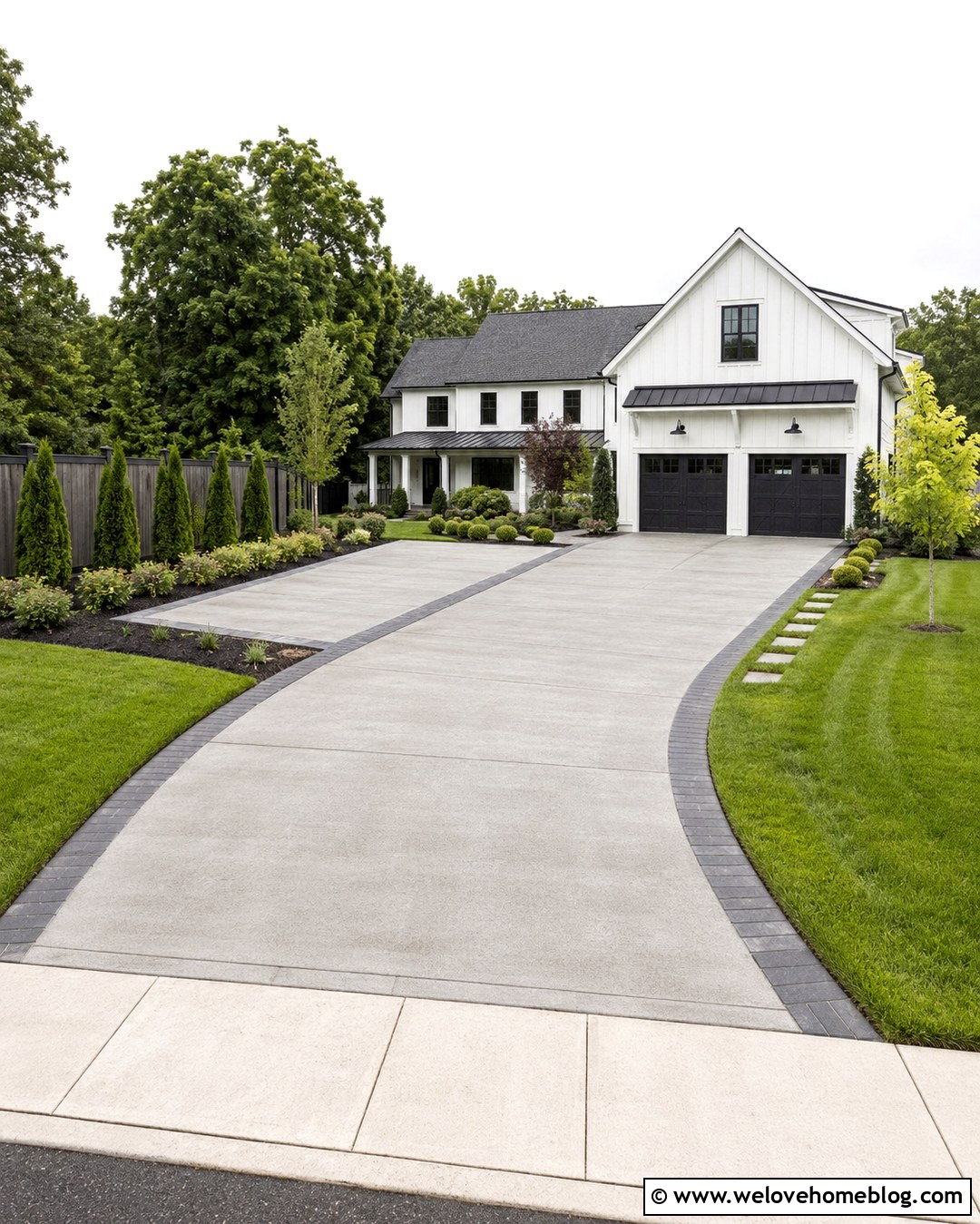
A side parking pad adds usable space without widening every part of the driveway. Position a rectangular concrete pad near the garage or farther back beside the house, then connect it to the main driveway with a gently tapered entrance. Matching gray broom-finished concrete creates continuity, while a paver border can define the pad as a separate functional zone. Screen the outer side with upright evergreens, decorative fencing, or layered shrubs, but keep plants far enough away for doors to open comfortably. A narrow stepping-stone path can connect the parking area to a side entrance. This arrangement preserves more front lawn than a full-width extension and gives guests or household vehicles a designated place away from the primary driving lane.
9. Circular Concrete Driveway Extension
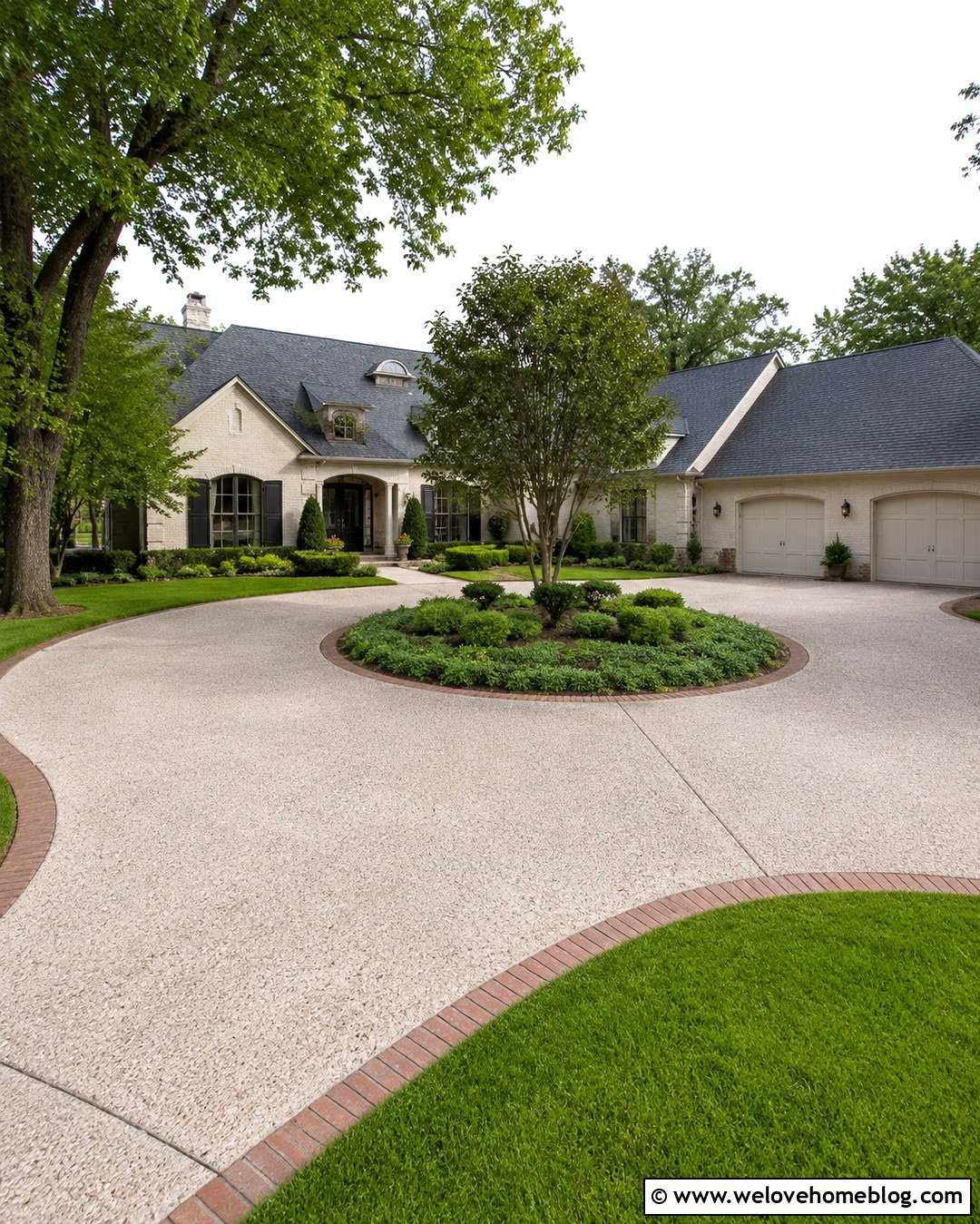
A circular extension can transform a straight driveway into a more flexible arrival area. Create a broad concrete loop in front of the house while retaining the original section as the main garage approach. Light broom-finished or lightly exposed aggregate concrete keeps the larger paved space visually calm. Place an oval or circular landscape island in the center, edged with brick, natural stone, or dark concrete curbing. Fill it with one ornamental tree, low evergreen shrubs, and ground cover that will not block sightlines. The island gives the extension a strong focal point and reduces the appearance of uninterrupted concrete. This design is most suitable for wide lots where vehicles have enough space to follow the loop comfortably.
10. Concrete Driveway With Turnaround Pad
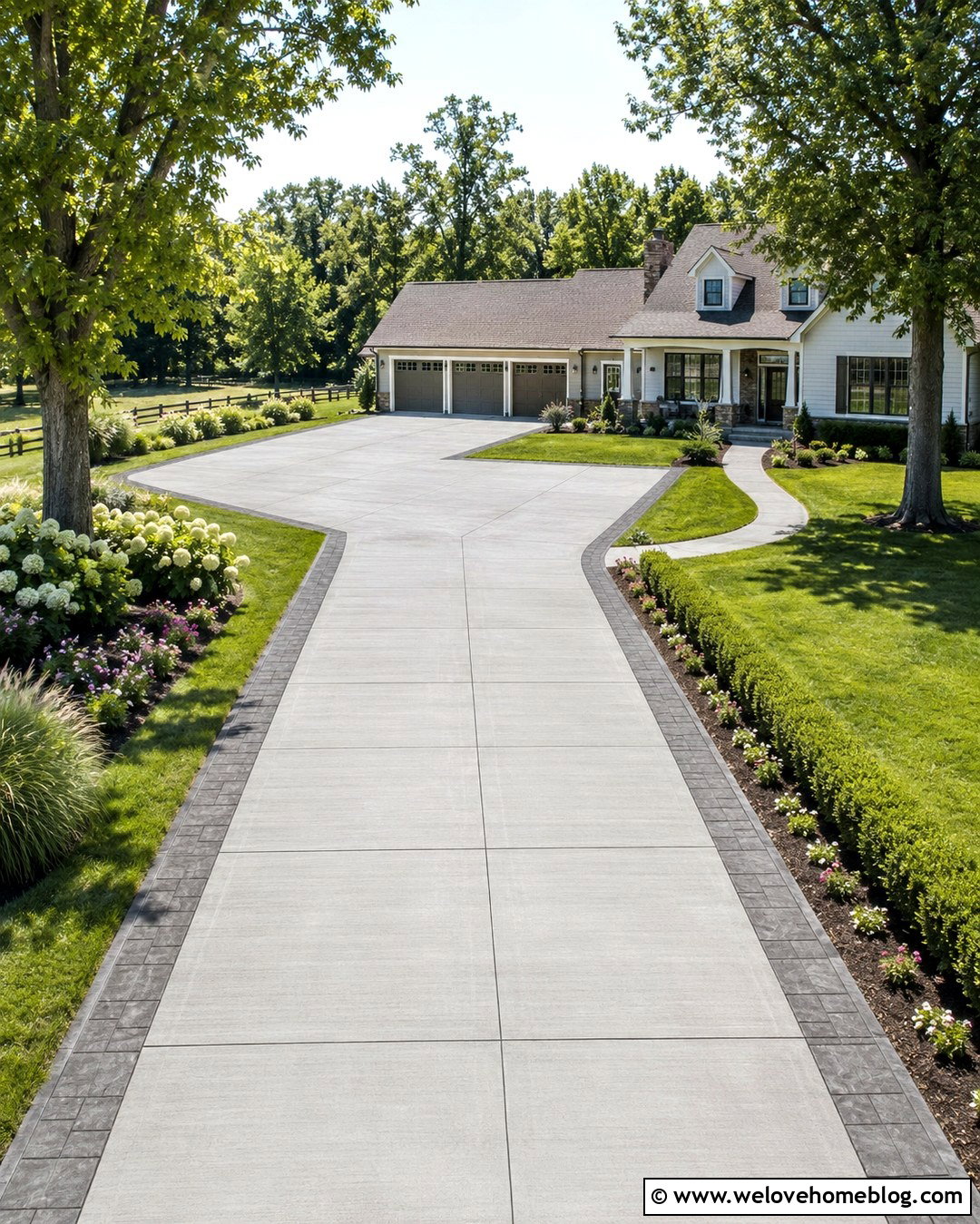
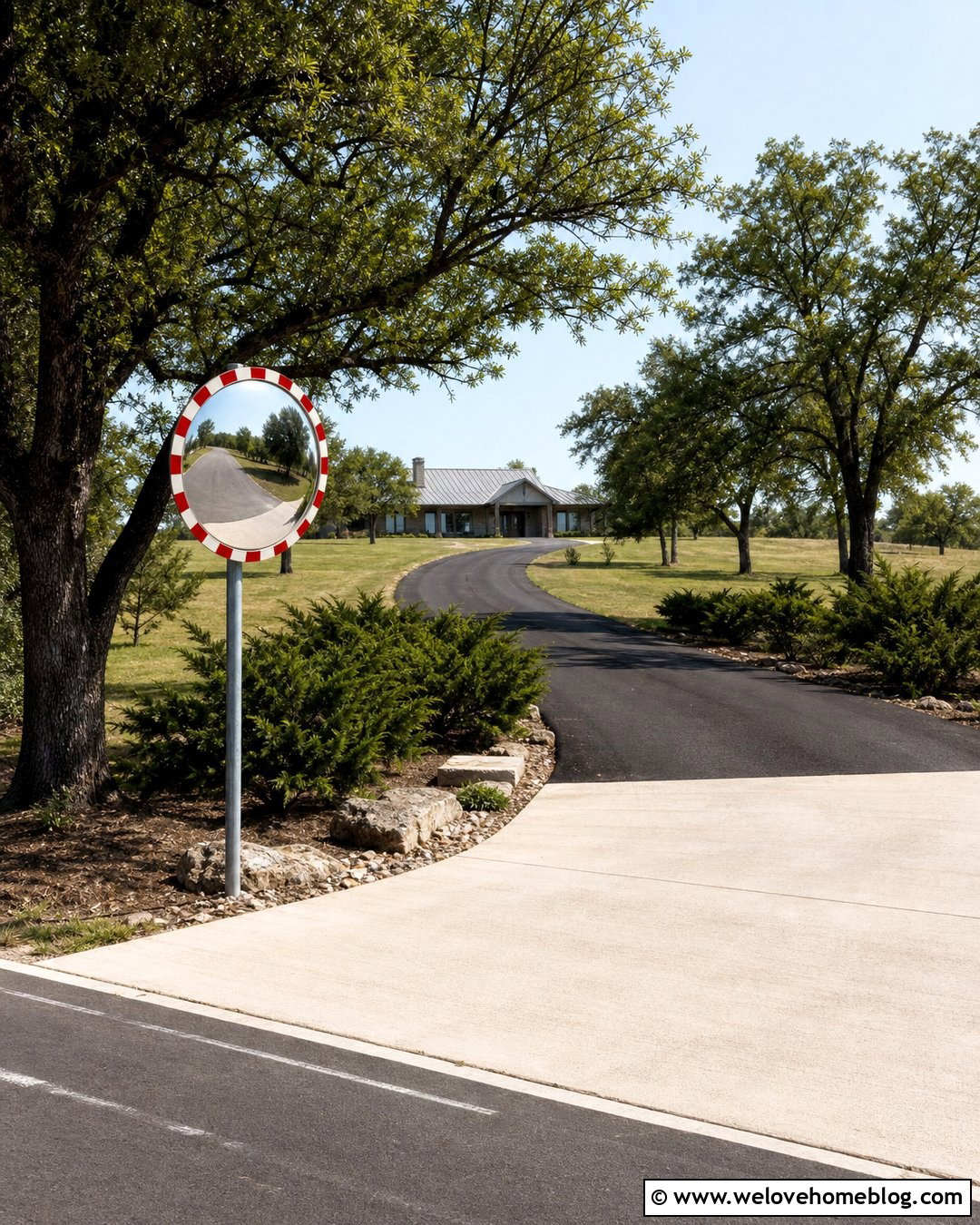
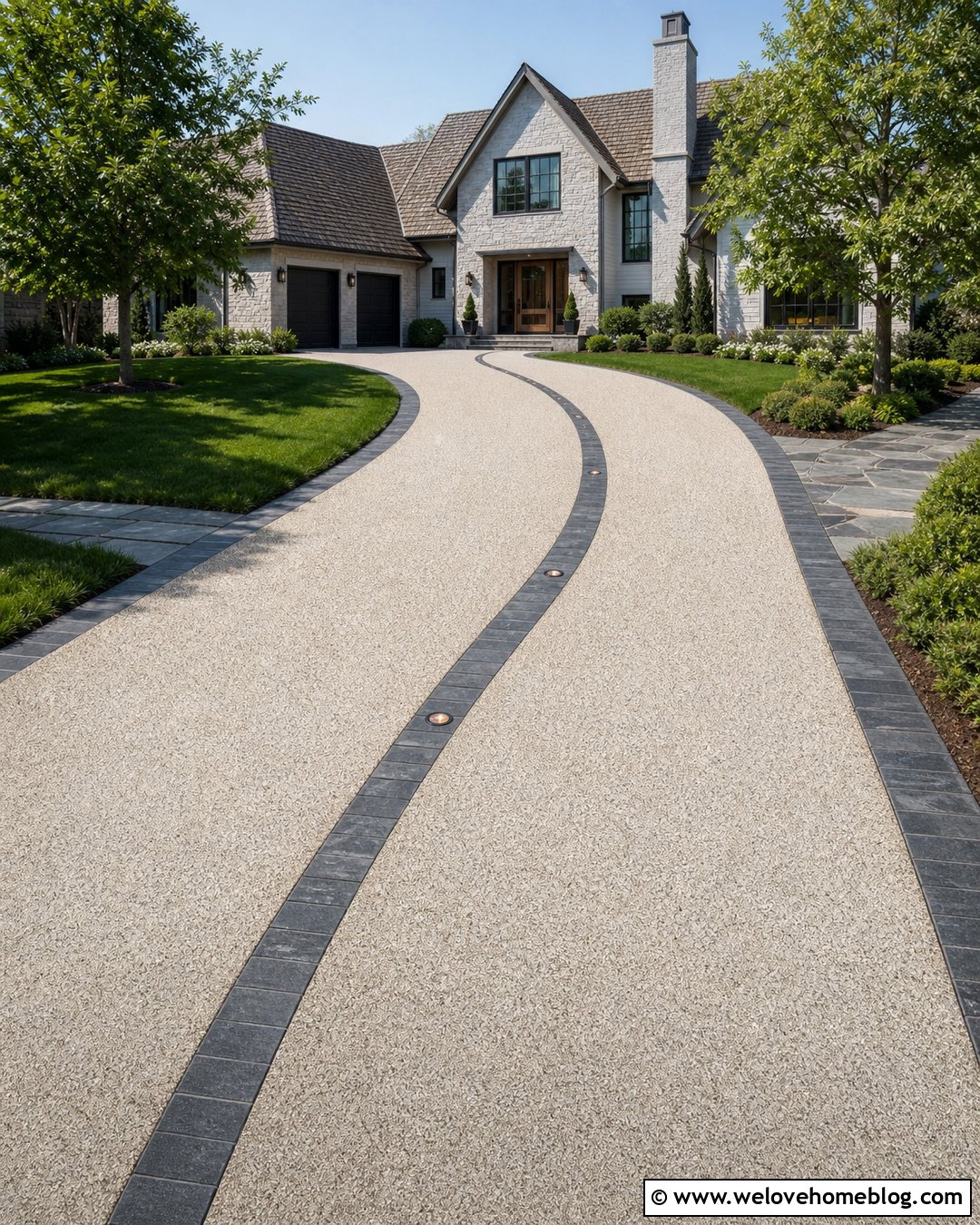
A turnaround pad makes a long concrete driveway safer and easier to navigate, particularly when backing toward the street is inconvenient. Add a square, rectangular, or subtly curved concrete area near the garage and connect it smoothly to the main drive. Use the same broom finish throughout, but outline the pad with saw-cut borders or a contrasting stamped band. Repeating the driveway’s control-joint spacing across the new surface creates visual order. Frame the outside edge with a lawn, low hedge, or broad planting bed rather than tall plants that reduce visibility. For a polished look, align one side of the pad with the garage wall. The result provides maneuvering space without making the driveway appear randomly oversized.
11. Concrete Driveway Extension To Detached Garage
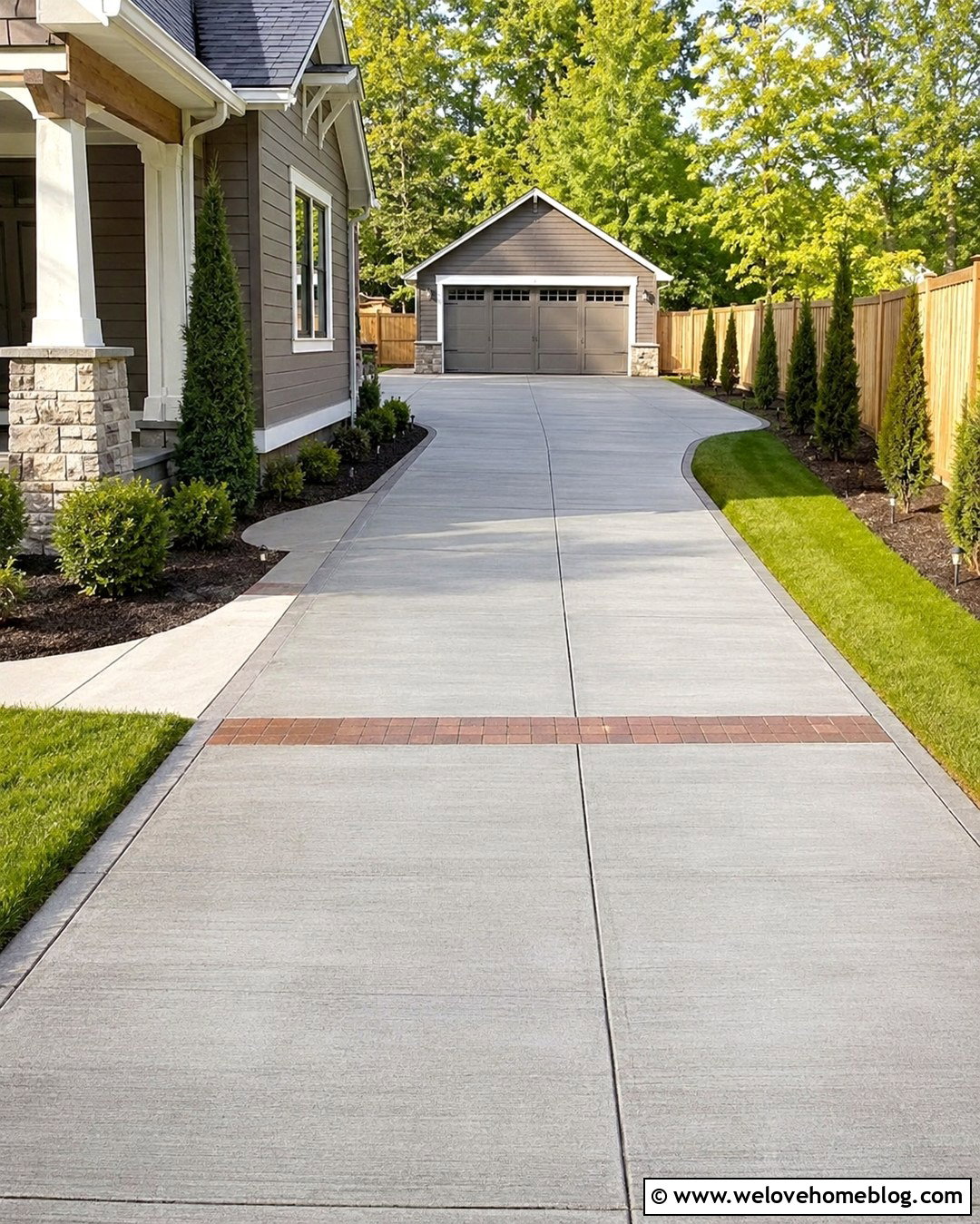
Connecting a main driveway to a detached garage requires a design that looks integrated with the yard. Extend a narrow concrete lane along the side of the house, then widen it gradually near the garage doors. A medium gray broom finish offers a practical surface, while a brick or cobblestone ribbon can mark the transition from the front driveway to the rear section. Border the lane with slim planting beds, columnar evergreens, or a simple fence where space is limited. Maintain enough open width for comfortable access without removing every trace of landscaping. Matching exterior colors on the house and detached garage will strengthen the visual connection. Good lighting and a linked walkway can make the extended route feel complete.
12. Concrete Driveway With Walkway Extension
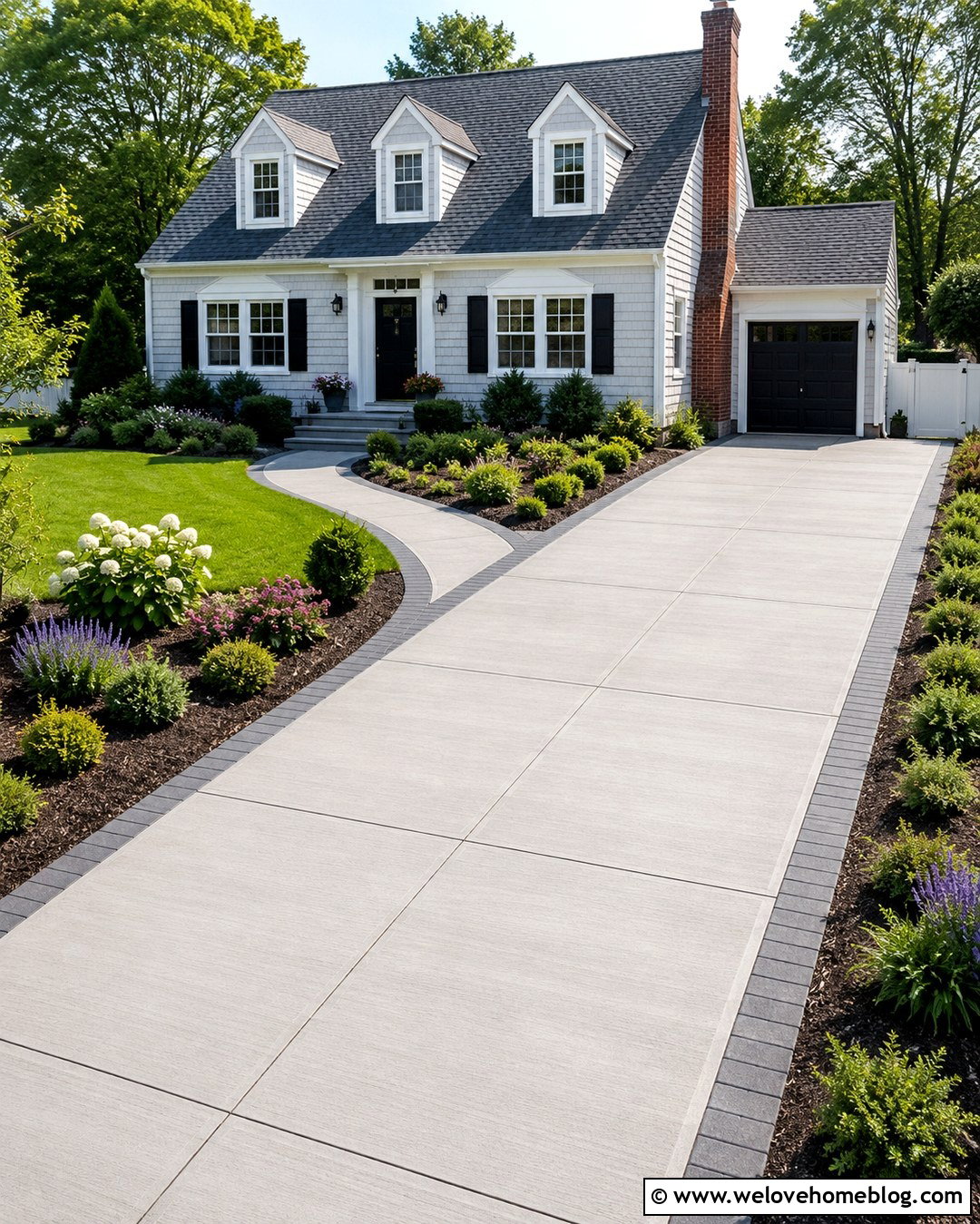
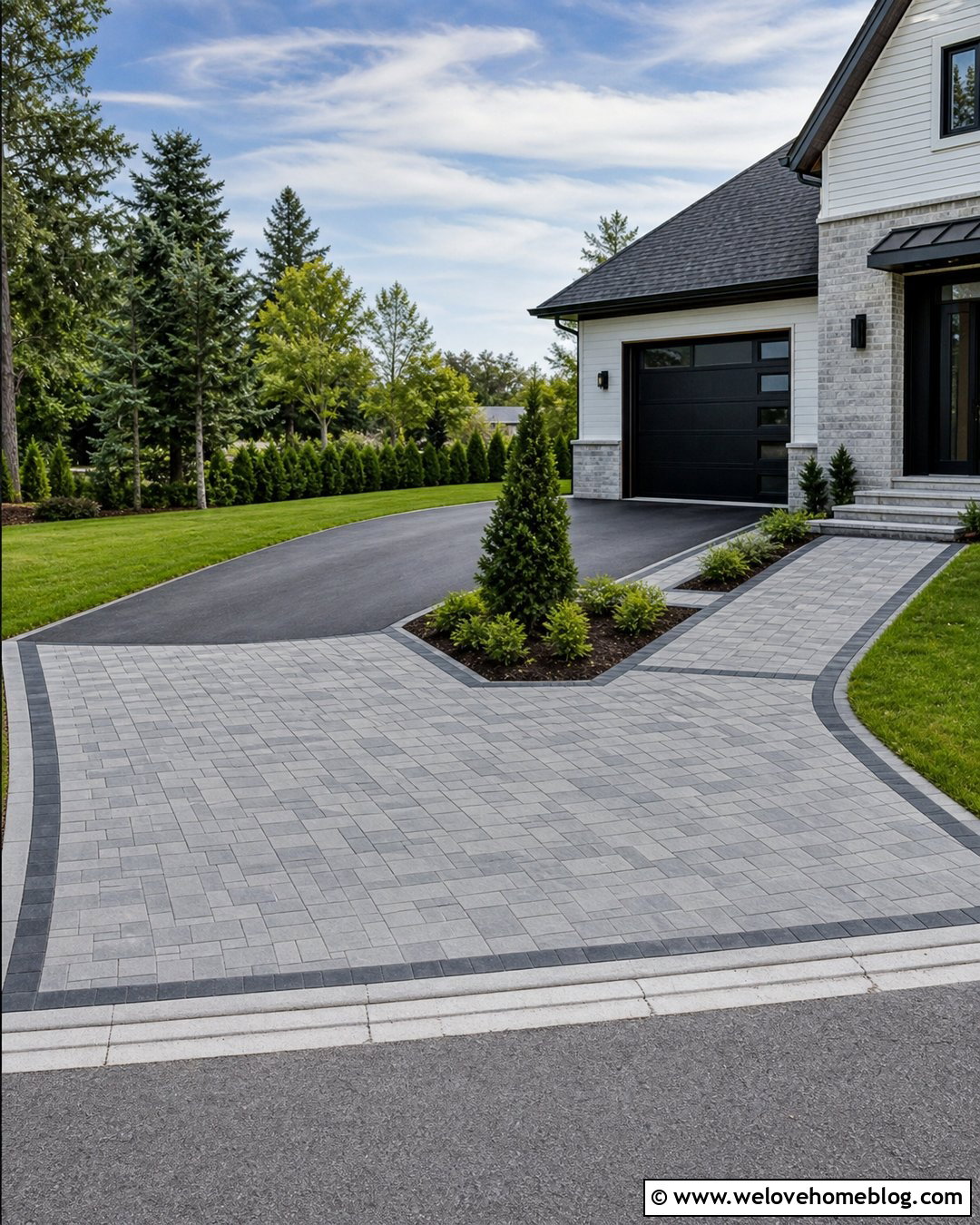
Combining a driveway extension with a dedicated walkway improves parking space and pedestrian movement at the same time. Widen the concrete driveway near the lawn, then separate a four-season walking route with a dark paver ribbon, shallow planting strip, or contrasting concrete band. The walkway can curve gently toward the porch while the driving surface remains straight. Use broom-finished gray concrete for dependable visual continuity and add clean control joints that follow both routes. Low flowers, dwarf shrubs, and ground cover can soften the split without obstructing the path. This arrangement is useful when parked vehicles regularly block access to the front door. It makes the extension feel like a coordinated landscape upgrade rather than extra pavement added only for cars.
13. Two-Tone Concrete Driveway
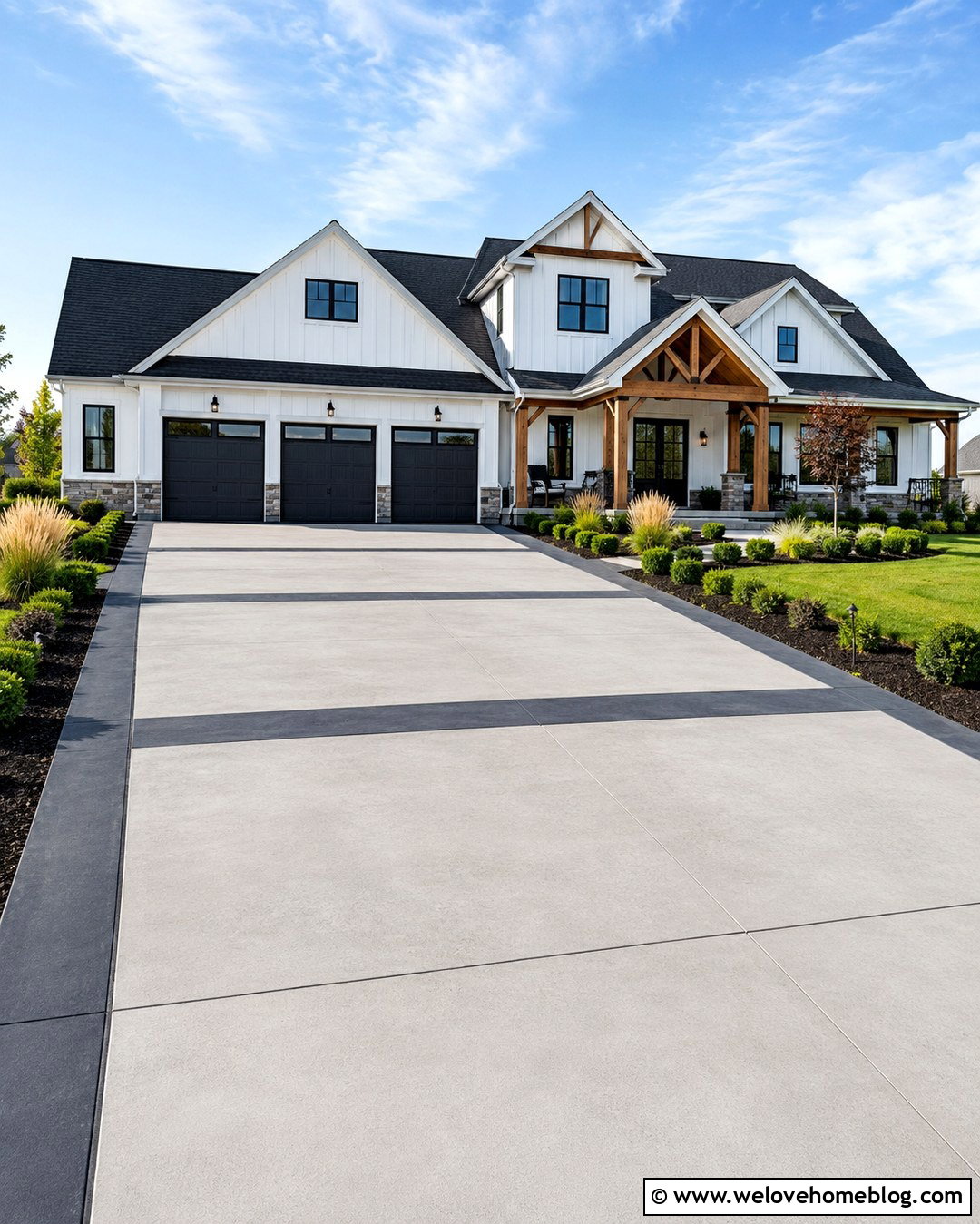
Two concrete colors can make a large driveway extension look structured and intentional. Use light warm-gray concrete across the main driving and parking areas, then add darker integral-color concrete around the perimeter. A charcoal border approximately one to two feet wide can visually frame the widened surface and connect it to dark garage doors or roof accents. Continue the darker concrete into several crossbands to divide a long driveway into balanced sections. Keep the surrounding landscape simple with rectangular beds, clipped shrubs, and ornamental grasses. This full design works especially well with modern farmhouse and contemporary homes. When existing concrete differs visibly from the addition, a coordinated stain treatment may help both areas share the same finished color palette.
14. Concrete Driveway With Cobblestone Apron
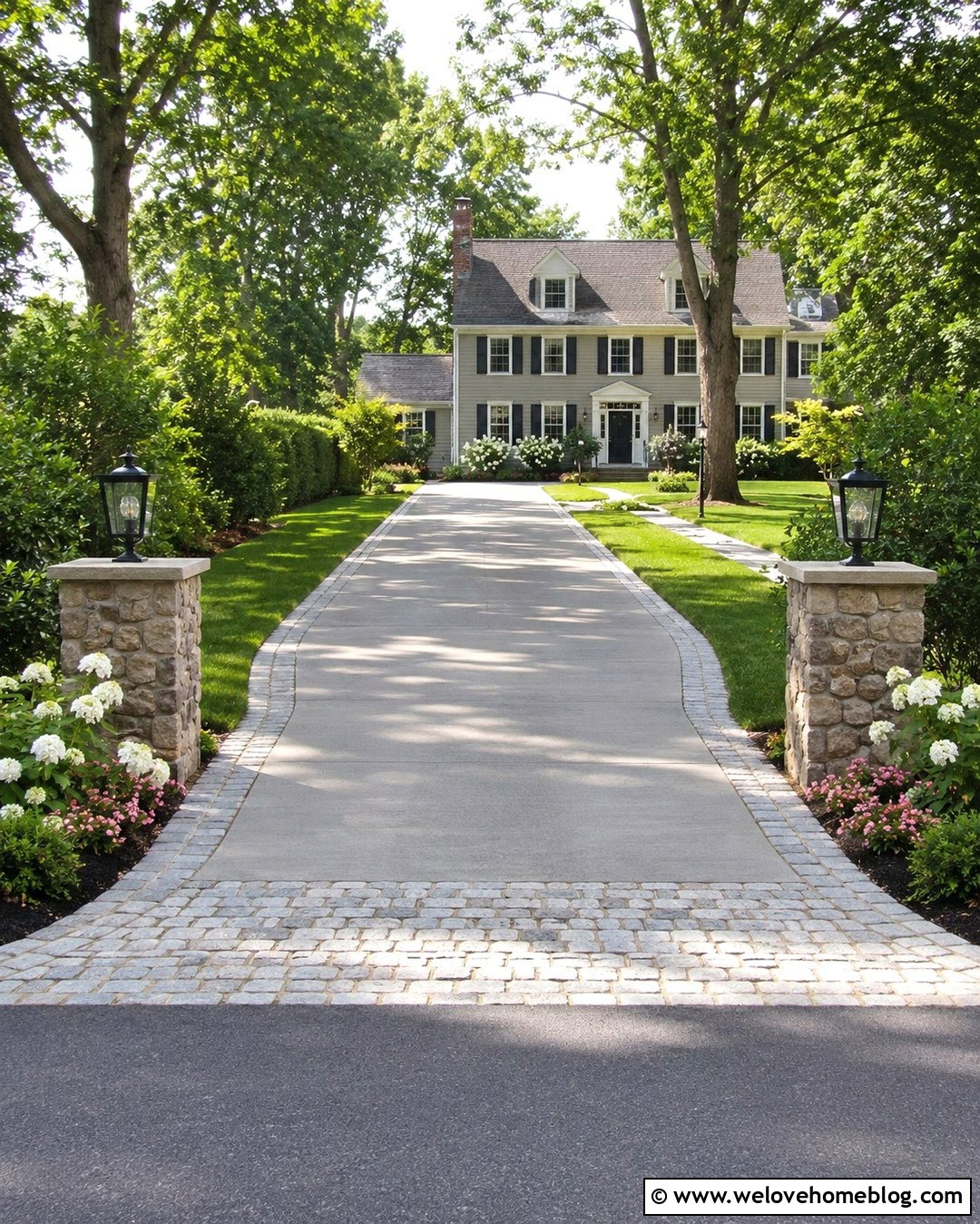
A cobblestone apron creates a distinctive entrance while tying an extended concrete driveway to the street. Use durable gray broom-finished concrete for the long main surface and place natural granite cobblestones across the first portion near the curb. Continue a single cobblestone row along both driveway edges to frame the widened layout. The darker, varied stone tones provide contrast and make the approach feel more established. Stone entrance pillars, lantern-style fixtures, and low planting beds can reinforce the traditional look without overwhelming it. This combination suits colonial, European-inspired, and country homes. A gently flared concrete entrance improves the transition from the road, while the cobblestone section clearly marks the beginning of the private driveway.
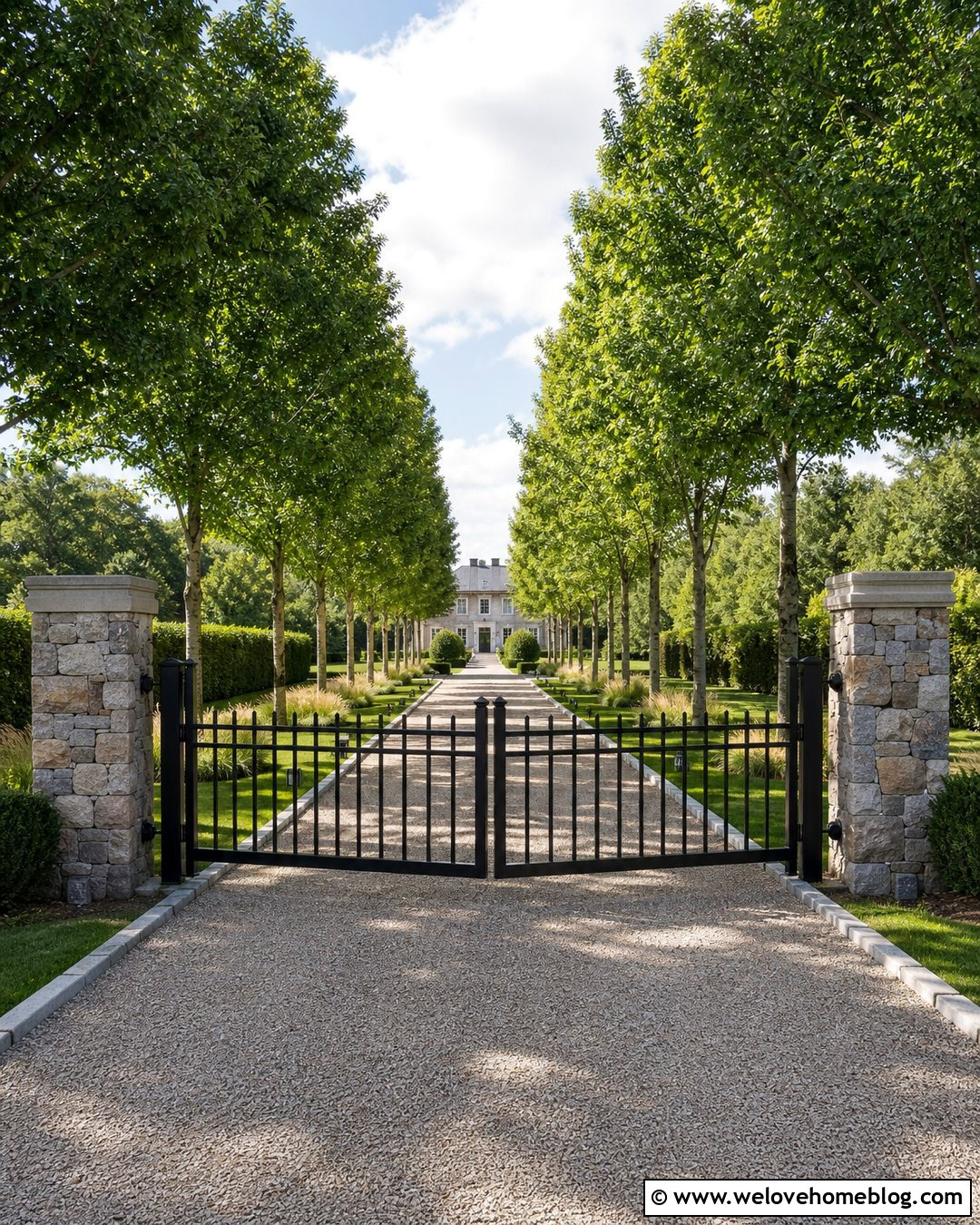
15. Tapered Concrete Driveway Extension
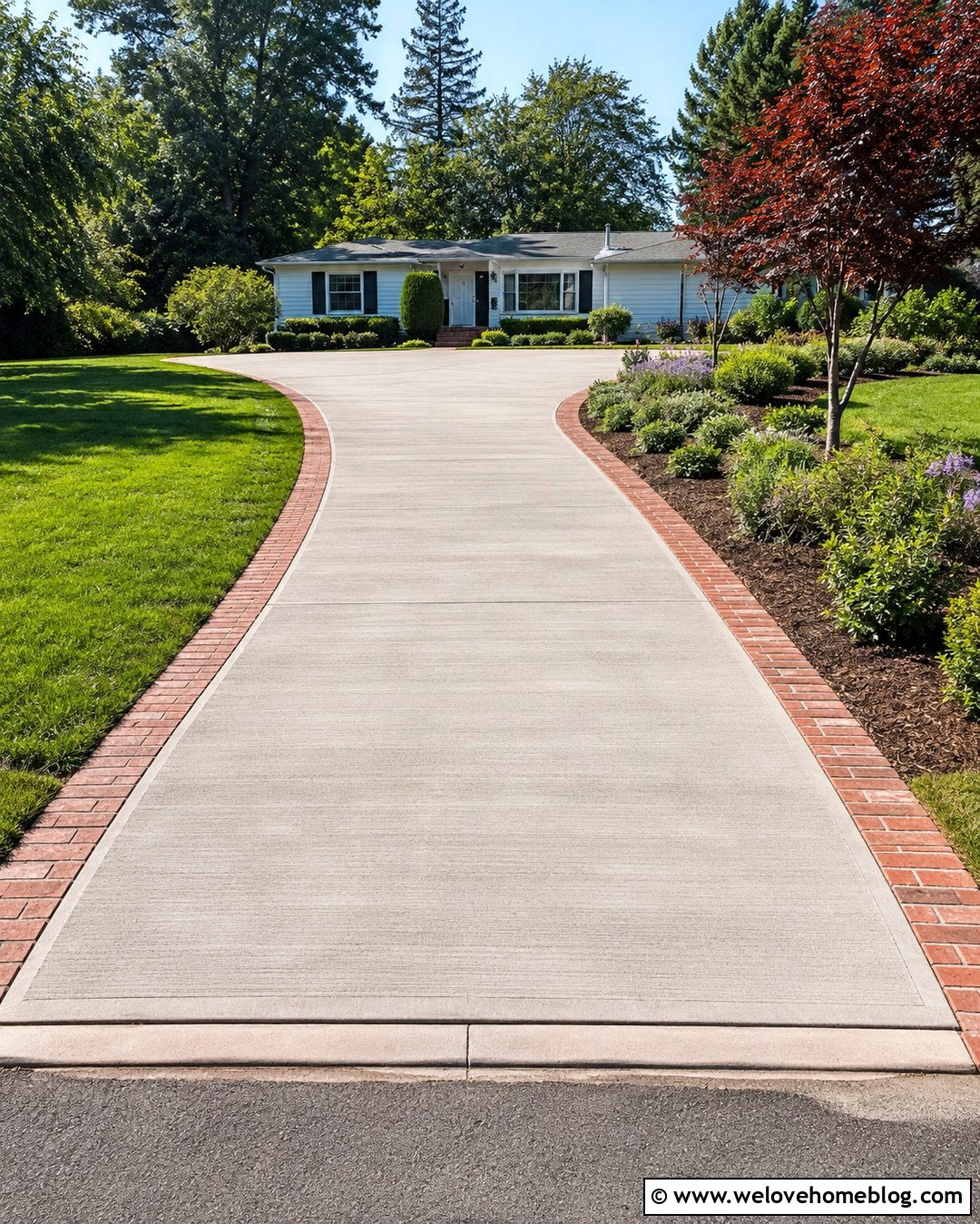
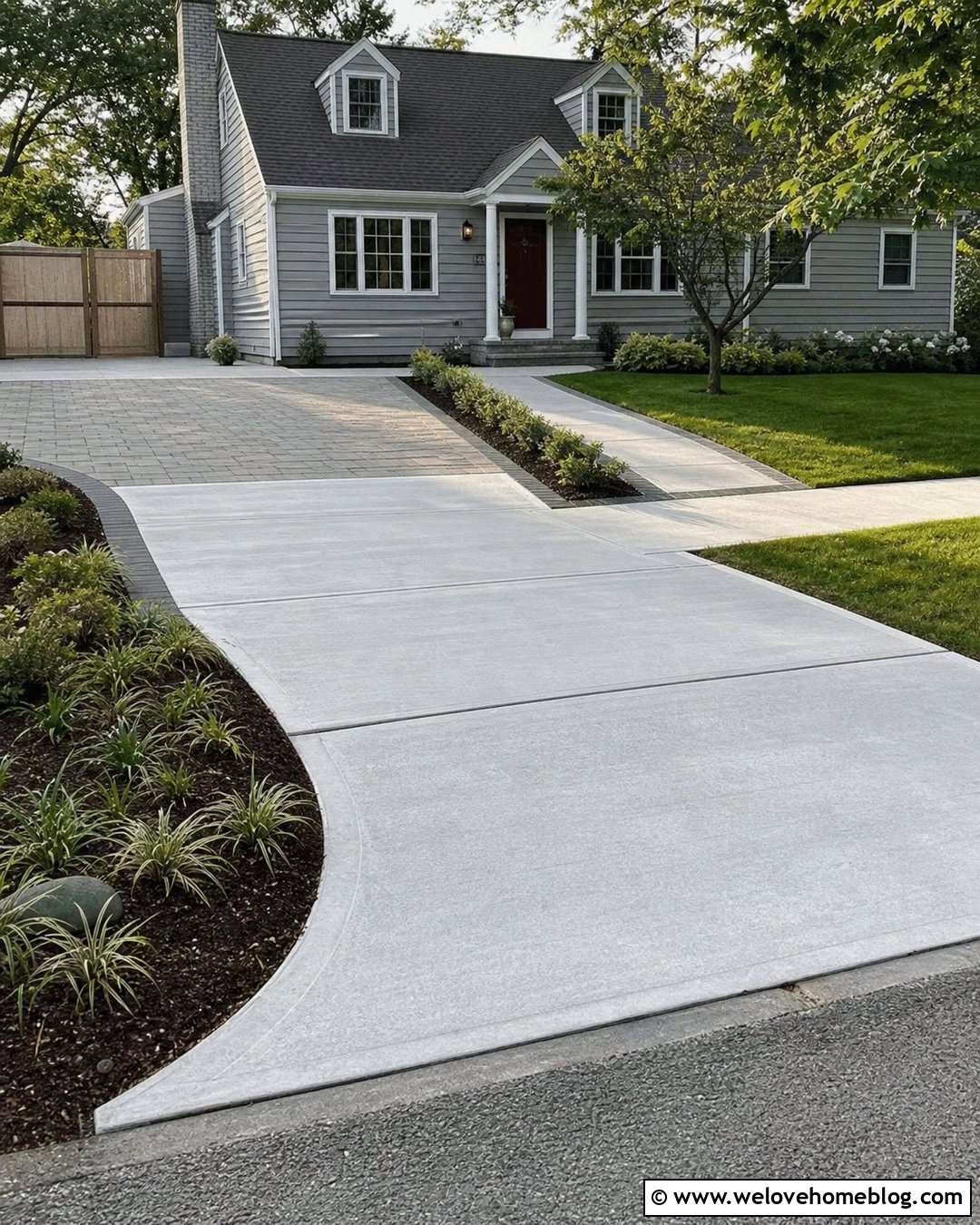
A tapered extension works well when more space is needed near the garage but the street entrance must remain narrow. Begin with the existing driveway width at the curb, then gradually widen the concrete toward the house. Use sweeping straight lines or subtle curves rather than an abrupt angled corner. Matching broom-finished concrete keeps the transition understated, while a slim brick or stamped concrete border emphasizes the controlled shape. Balance the expanded side with a long planting bed containing low shrubs, perennials, and one ornamental tree. The opposite side can remain open lawn for visual breathing room. This layout increases parking and door clearance while maintaining a proportionate entrance that does not dominate the front yard.
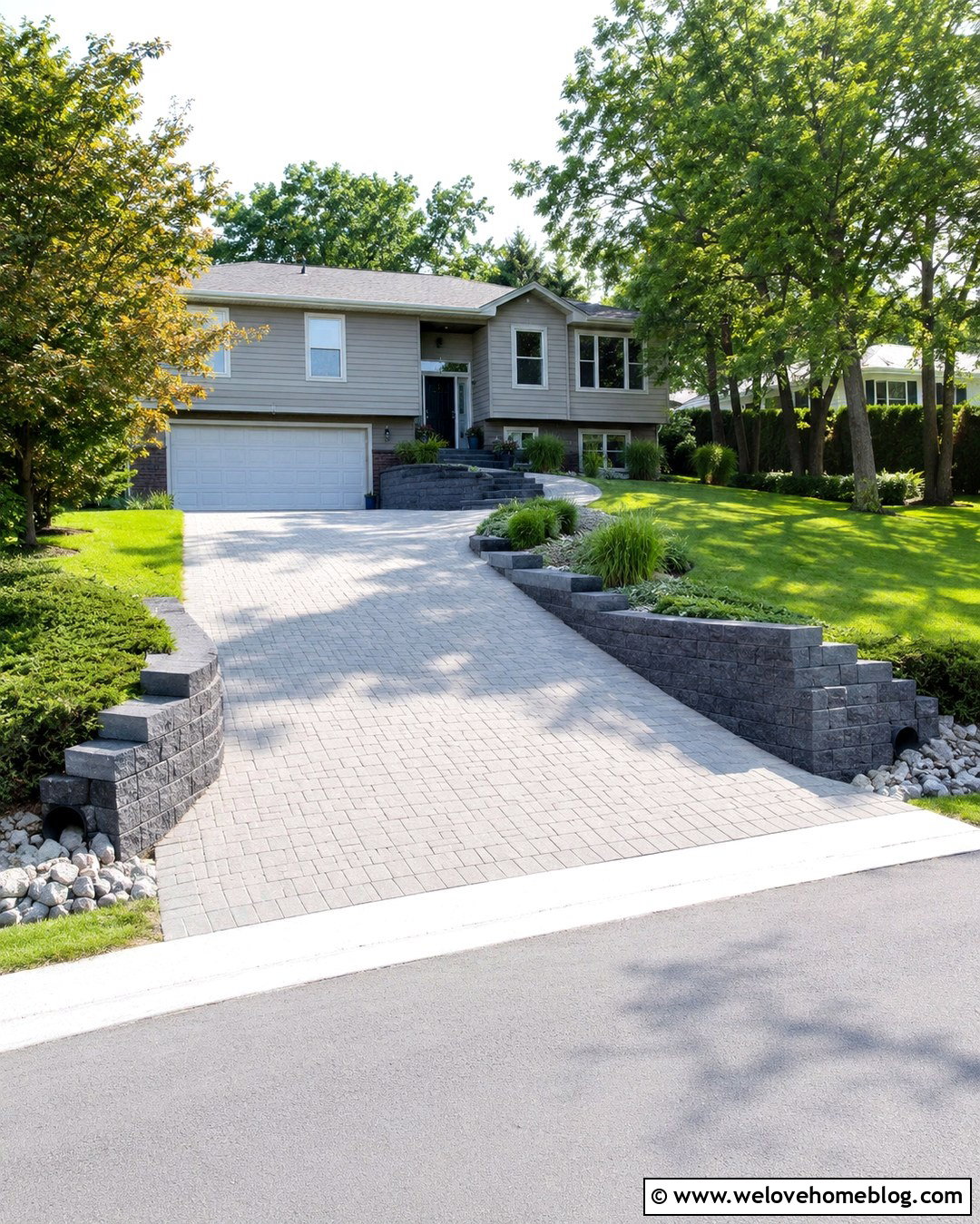
16. Concrete Driveway With Retaining Wall
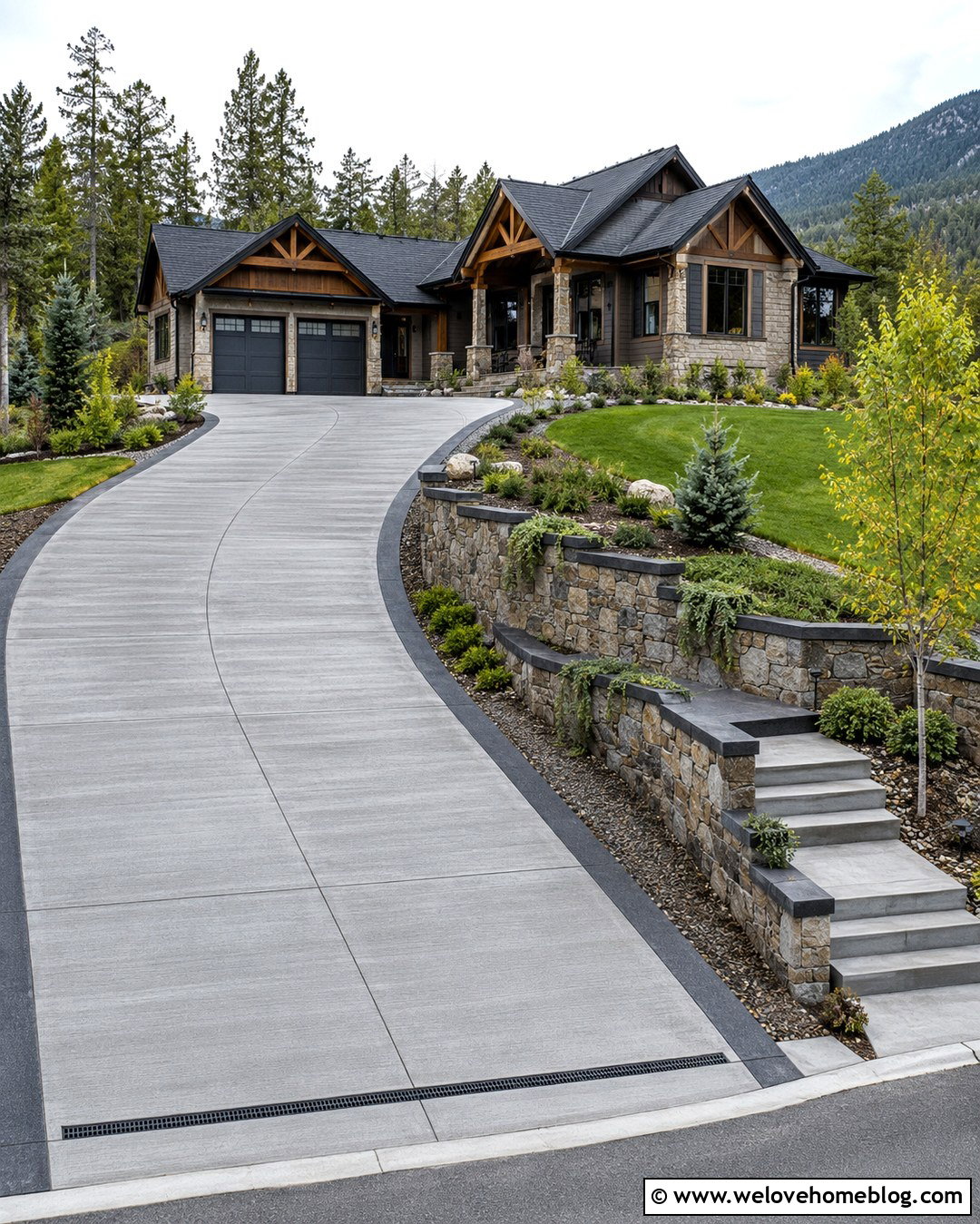
Sloped yards often need more than a simple slab when a concrete driveway is extended. A low retaining wall can support the widened side while giving the driveway a finished architectural edge. Use reinforced gray concrete for the surface and natural stone veneer, segmental blocks, or poured concrete for the wall. Follow the driveway slope with a stepped wall rather than forcing one tall, heavy structure. Add a narrow planting bed above the wall with trailing ground cover and compact shrubs. On the lower side, continue the lawn or install a matching walkway. Integrated drainage should be planned before pouring the extension so water does not collect against the wall or new pavement. Professional grading is especially important for this complete design.
17. Concrete Driveway With Drainage Strip
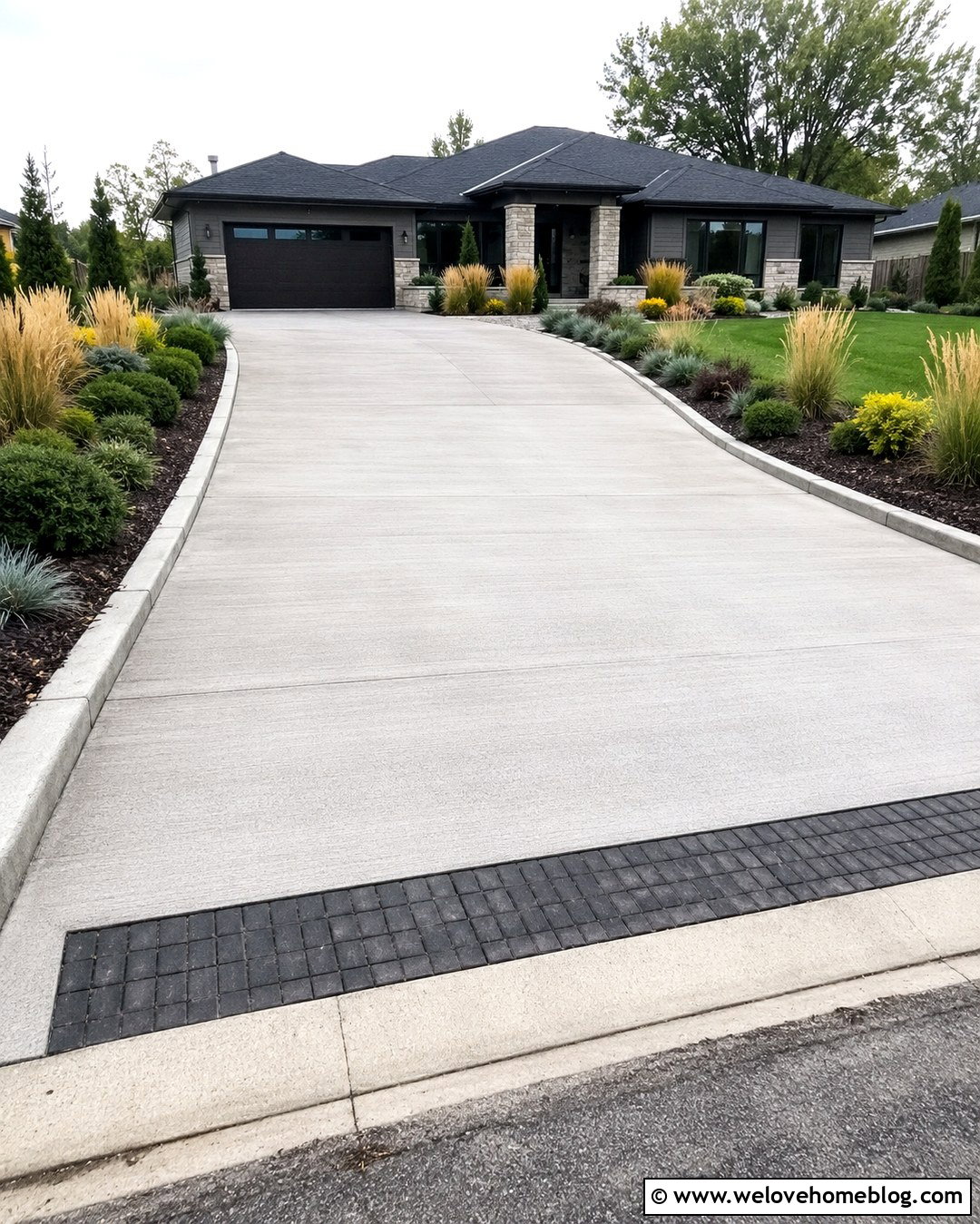
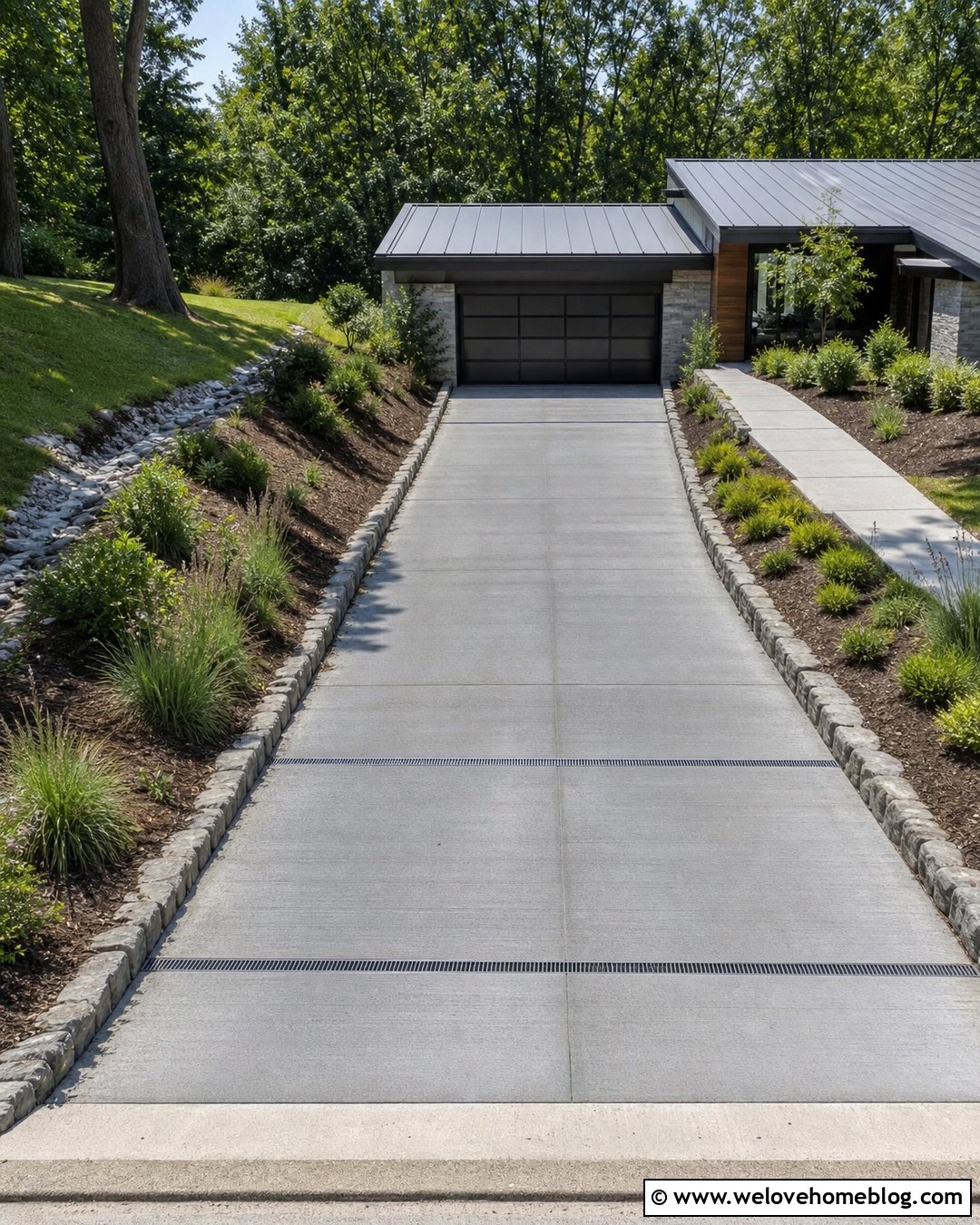
A decorative drainage strip can become part of the driveway design instead of looking purely utilitarian. Widen the driveway with light gray broom-finished concrete, then place a linear strip of dark permeable pavers or decorative river rock along the lower edge. Use metal edging or concrete curbing to keep loose stone contained. The strip should follow the driveway’s slope and connect to an appropriate drainage solution designed for the property. Repeat the dark material in the walkway border or entrance apron for consistency. Rain-tolerant ornamental grasses and compact shrubs can frame the outside edge. This combination is especially attractive beside contemporary and ranch homes, where strong horizontal lines complement the architecture and organize the expanded pavement.
18. Concrete Driveway Extension With Landscape Island
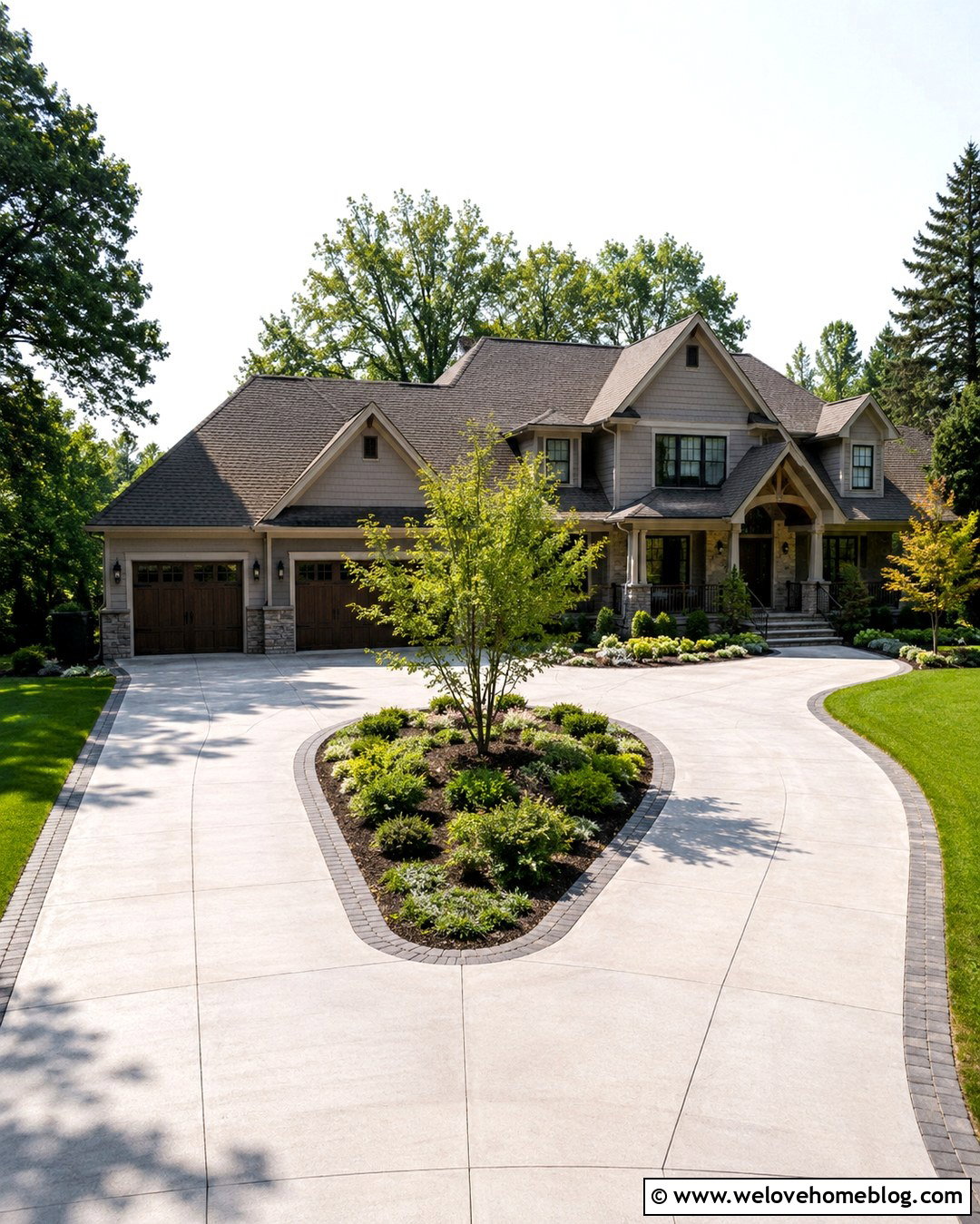
A landscape island can soften a broad concrete driveway while directing vehicles toward separate parking areas. Extend the driveway with pale gray poured concrete and divide the new space using a long oval or teardrop-shaped planting bed. Edge the island with brick, cobblestone, or smooth concrete curbing that contrasts with the driveway surface. Choose a small ornamental tree as the anchor, then add low shrubs and ground cover that preserve clear views. The island can guide one lane toward the garage and another toward a parking pad or turnaround. This design is especially useful for wide suburban lots. Matching beds near the porch and street entrance will make the island feel connected to the entire front-yard landscape.
19. Stained Concrete Driveway With Dark Border
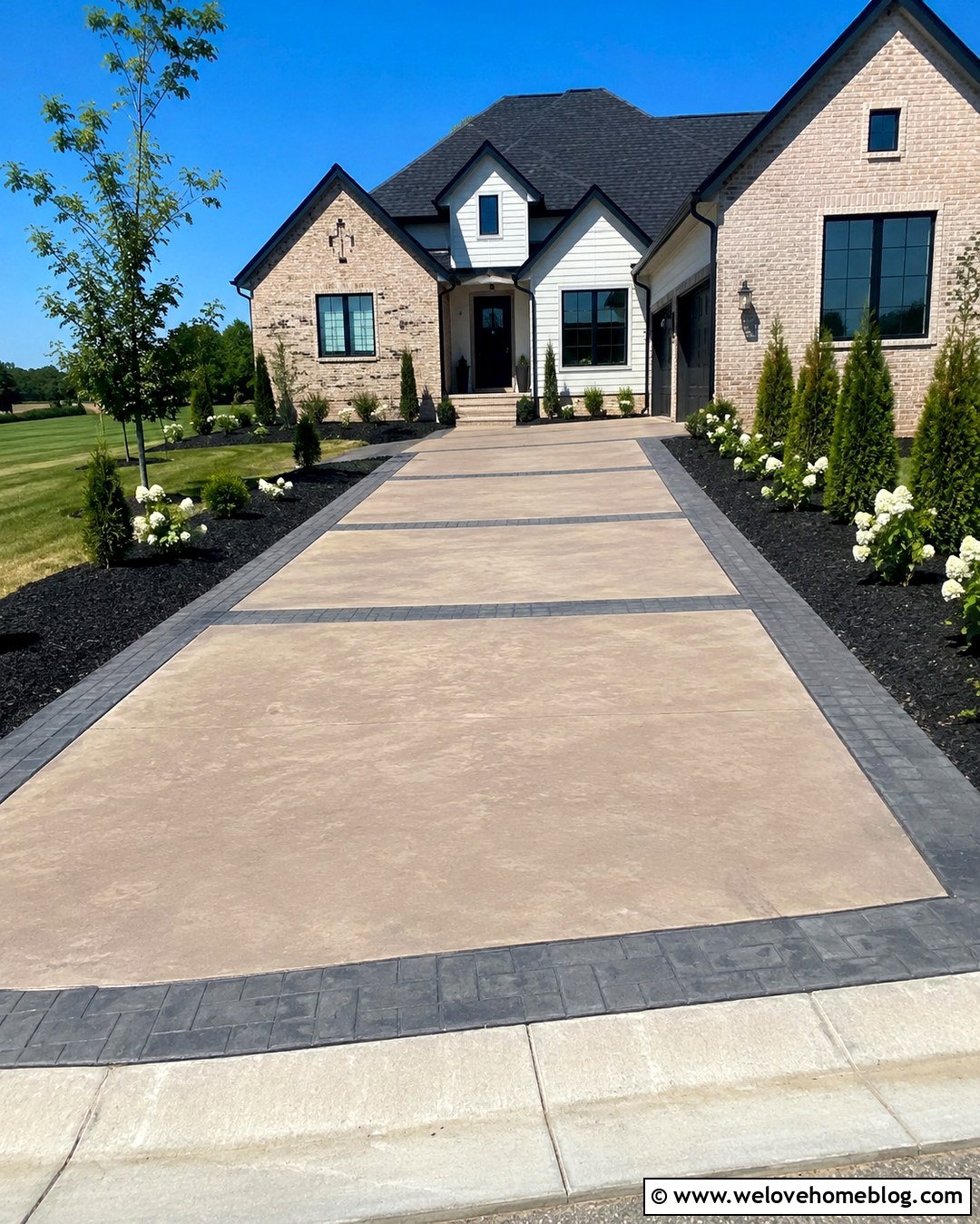
Concrete stain can unify an extension and existing driveway when their natural gray tones do not match. A medium greige or soft taupe stain often creates a warm neutral foundation, while a charcoal border adds definition around the widened area. Apply the darker tone to a stamped perimeter or smooth concrete band, then repeat it across selected joints. The contrast helps visually divide a large surface without introducing several unrelated materials. Pair the driveway with dark mulch, evergreen shrubs, and light-colored flowers for a balanced landscape. This design complements brick, stucco, and modern farmhouse exteriors. Always test stain colors on a small section because the final appearance can vary with concrete age, texture, and surface condition.
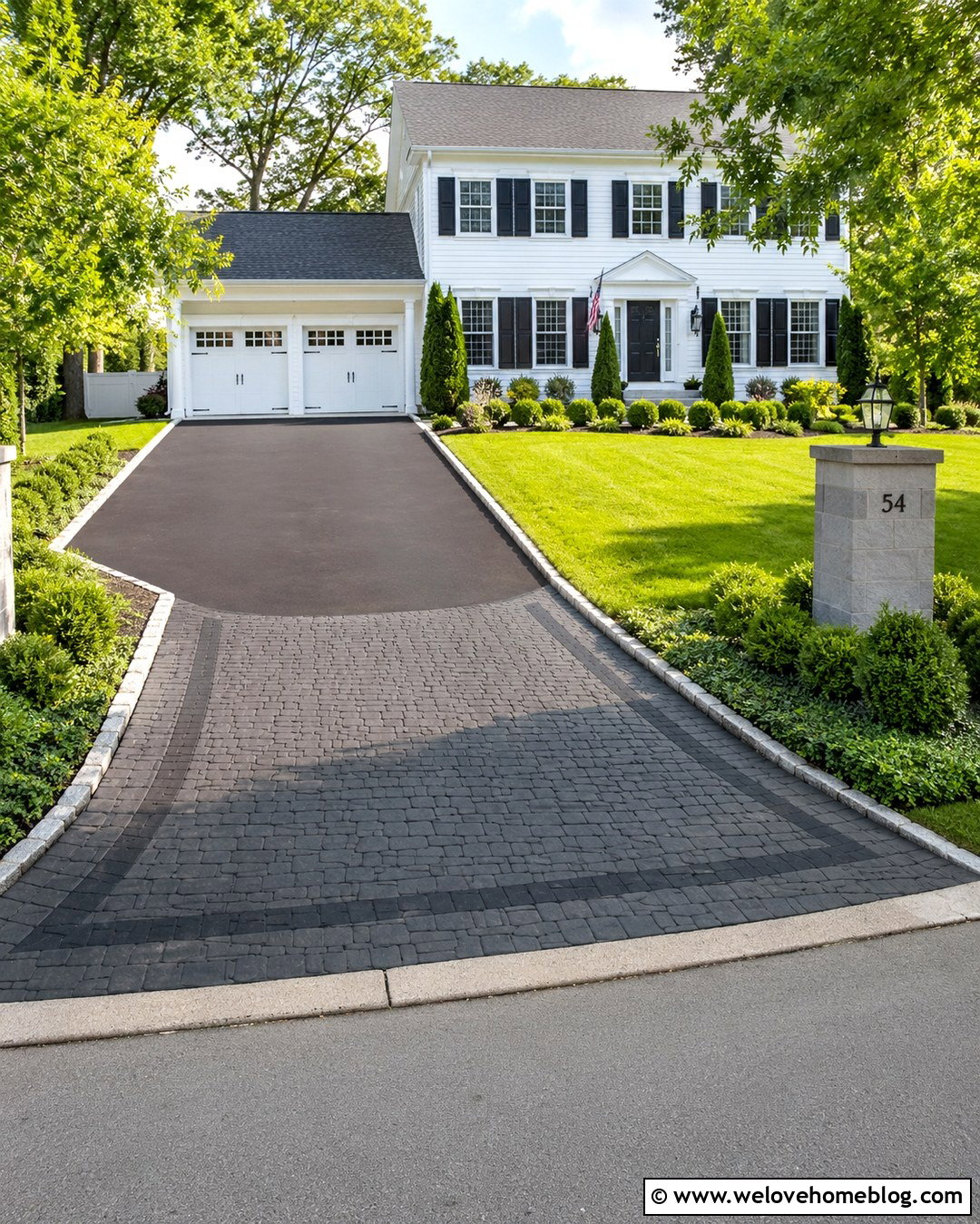
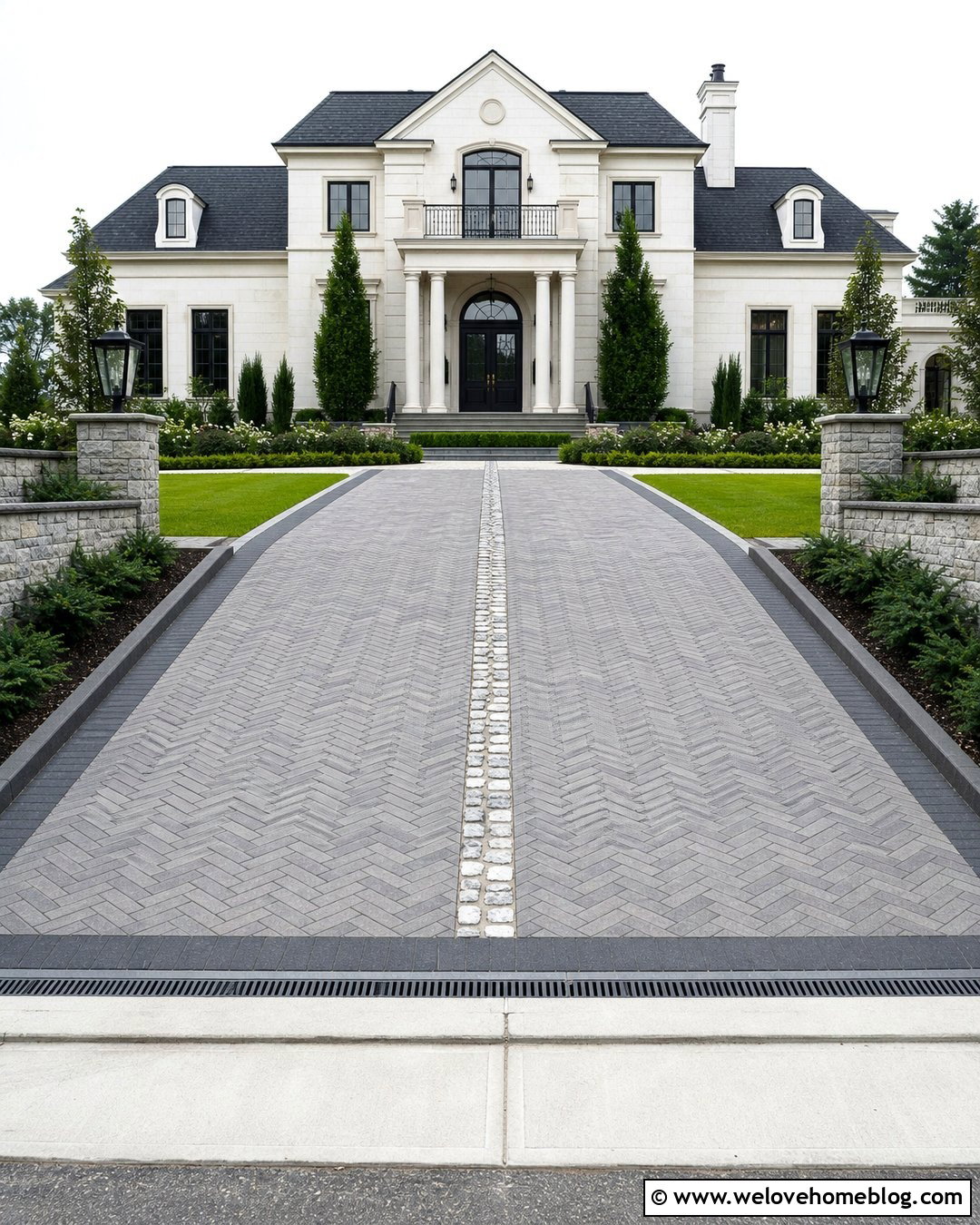
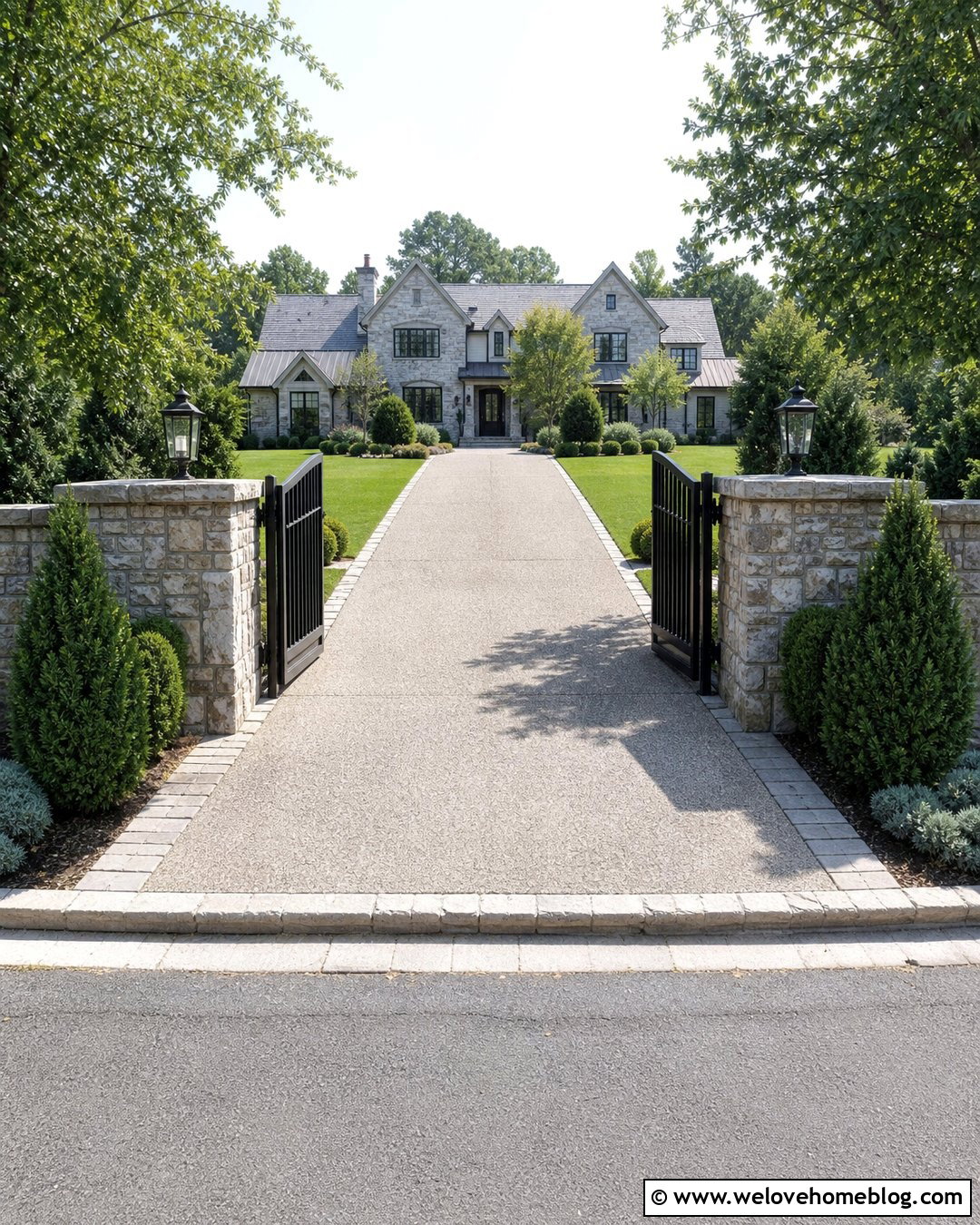
20. Concrete Driveway Extension With Gate And Pillars
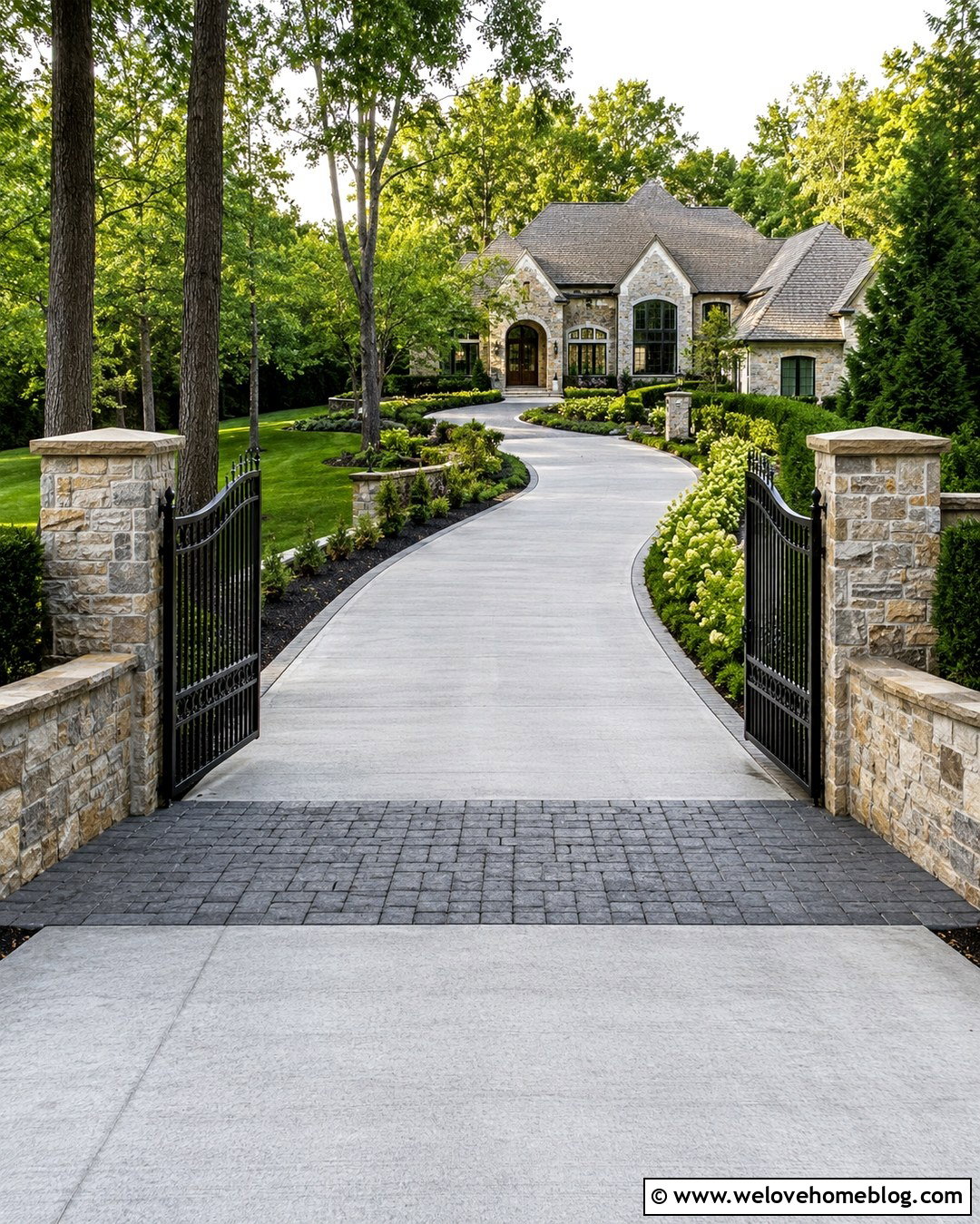
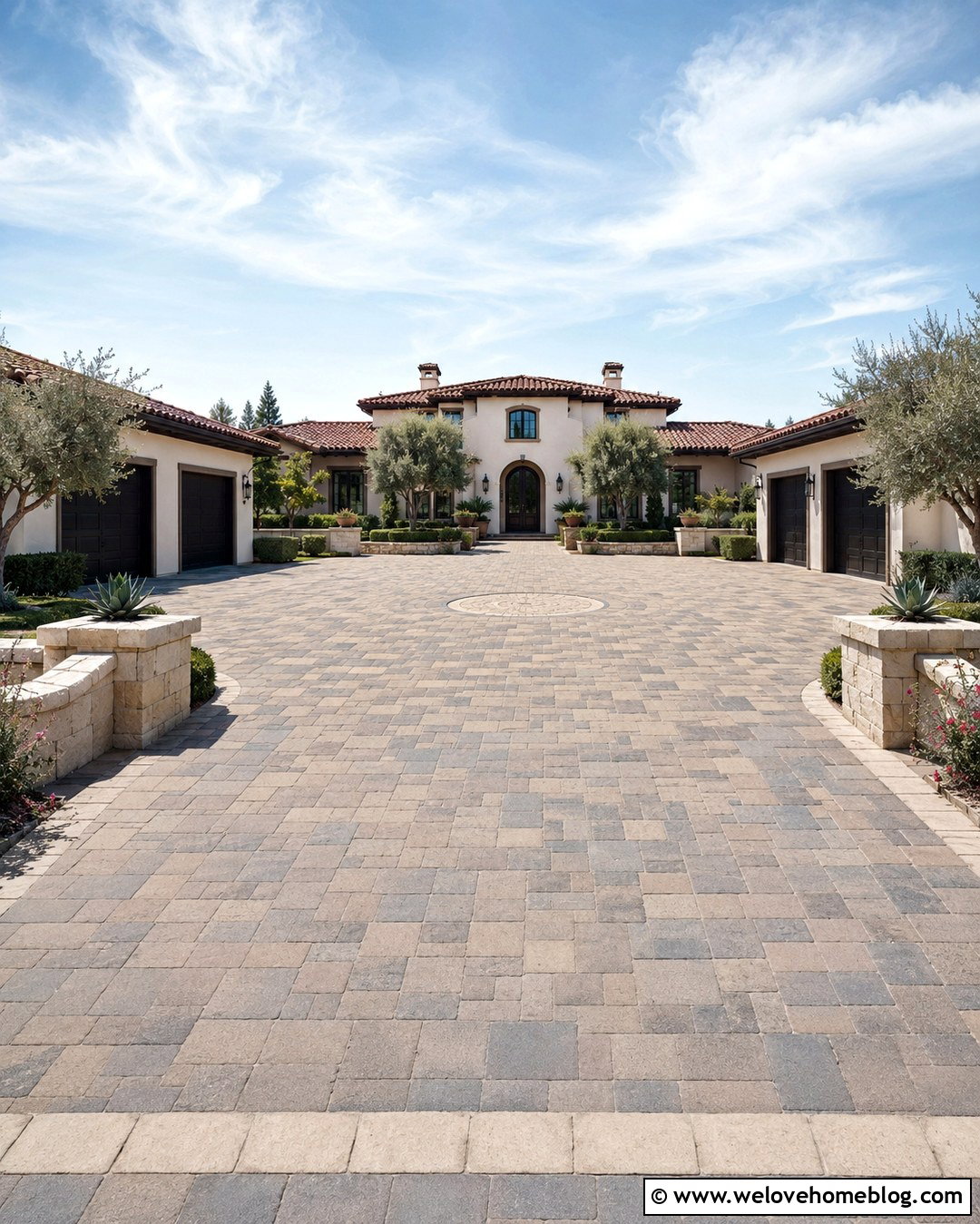
A gated entrance can give a long, extended concrete driveway a clear beginning and a strong connection to the home. Use smooth or broom-finished light gray concrete in a straight or gently curved layout, widening the surface beyond the gate for easier movement. Position brick, stone, or stucco pillars outside the main driving path and align them with a contrasting paver apron. Low walls or hedges can continue outward from the pillars, while layered landscaping softens the entrance. Keep trees and tall shrubs away from sightlines near the road. Check local rules before changing the apron, driveway width, drainage, or gate placement because approval requirements vary by municipality and HOA. ()
Conclusion:
Successful 20 Extended Driveway Concrete Ideas combine additional pavement with thoughtful shaping, coordinated finishes, defined borders, and balanced landscaping. A wider lane may solve daily parking problems, while a side pad, turnaround, circular loop, or tapered extension can improve how vehicles move around the property. The concrete should relate to the home through its color, texture, joint pattern, and surrounding materials. Brick ribbons, cobblestone aprons, planted islands, and dark borders can help new work blend with an older driveway. Before construction begins, confirm drainage, grading, property lines, permits, and HOA standards. With careful planning and professional installation, an extended driveway can feel like an original part of the home.

Related posts:
Leave a Reply