
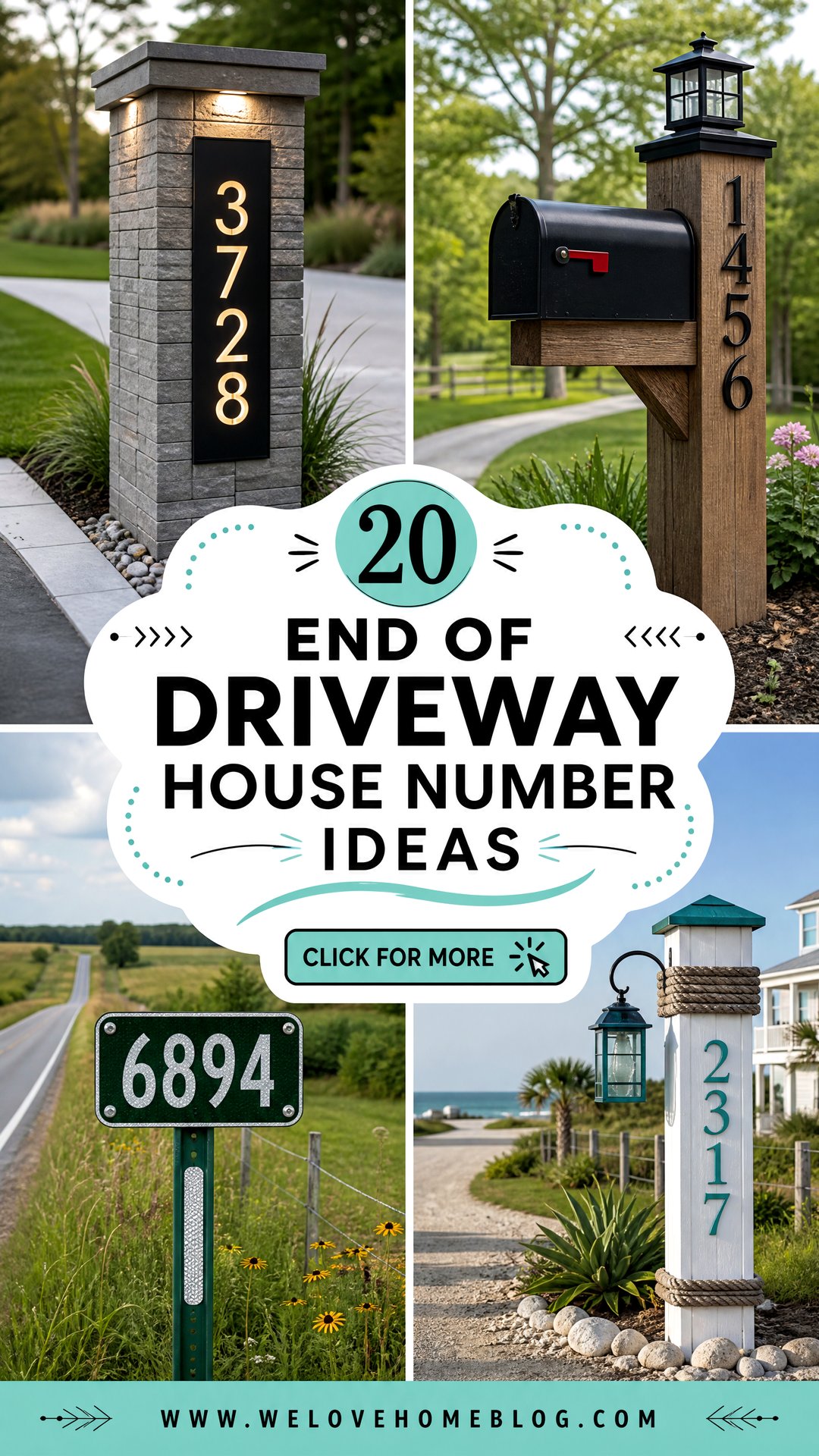
The best end of driveway house number ideas combine clear visibility with a welcoming, well-planned entrance. Instead of treating the address marker as an afterthought, coordinate it with the driveway surface, edging, mailbox, lighting, and surrounding plants. Large numbers, strong color contrast, and an open sightline make an address easier to see from the road. For long or hidden driveways, the marker should sit close to the entrance and remain visible from both traffic directions, including after dark. () Whether your home has a modern concrete drive, a rustic gravel lane, or a traditional brick approach, there is a design that will feel connected to the property. Explore these practical and attractive 20 End Of Driveway House Number Ideas.
1. Modern Driveway House Number Pillar
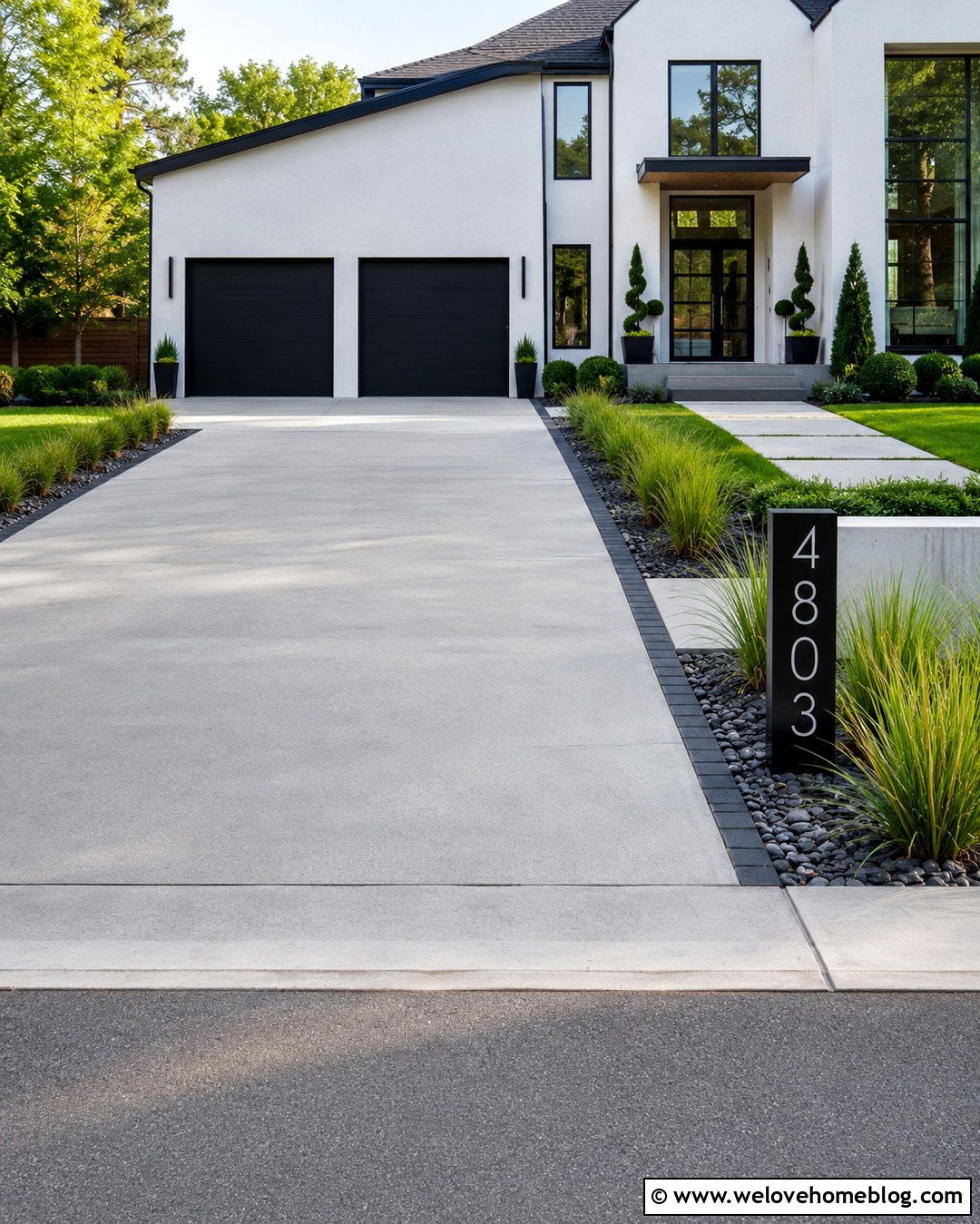
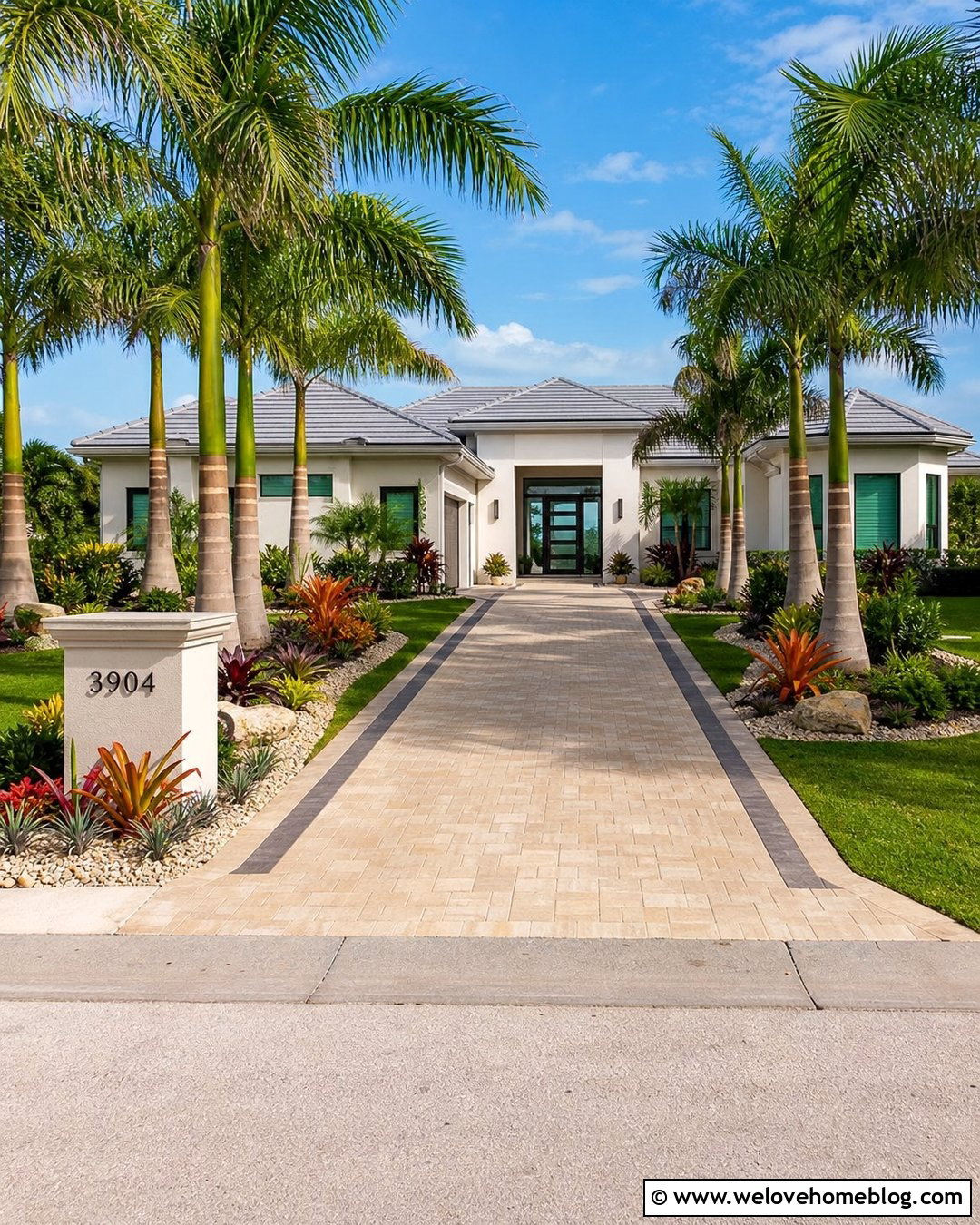
A slim black address pillar creates a clean focal point beside a straight concrete driveway. Choose powder-coated steel or aluminum that can withstand rain and sun without demanding frequent care. Large white or stainless-steel numbers provide sharp contrast against the dark finish. Position the pillar inside a narrow planting bed rather than directly beside moving vehicles. Low ornamental grasses, river rocks, and a clipped evergreen keep the entrance simple without hiding the address. A matching black paver border can visually connect the sign to the driveway. This complete look works especially well with modern homes featuring white stucco, dark siding, or mixed wood details. Add a concealed solar light above or inside the pillar so the numbers stay readable without exposing unattractive cables.
2. Stone Driveway House Number Pillar
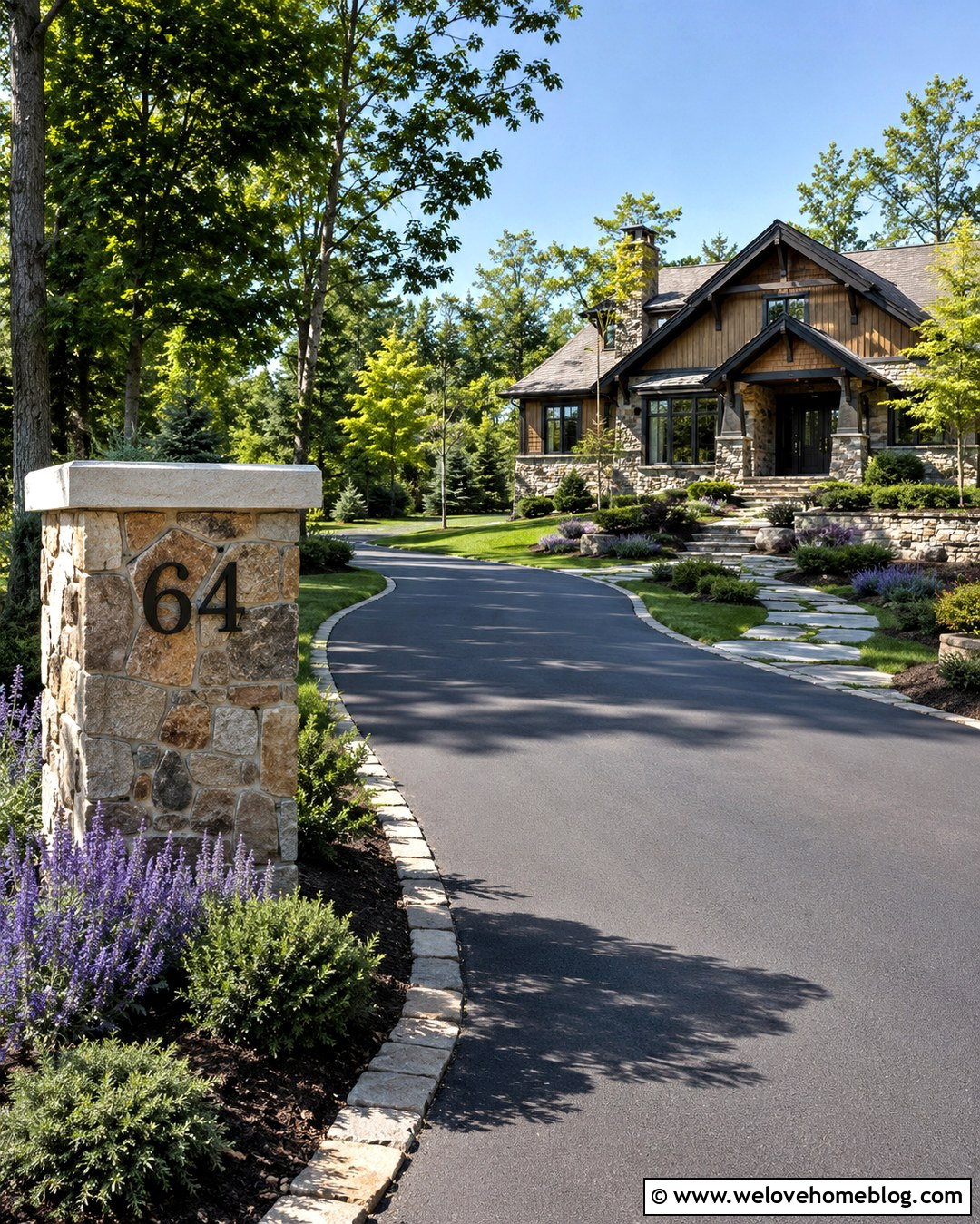
Natural stone gives an asphalt driveway entrance a substantial, established appearance. Build one compact pillar from fieldstone, limestone, or stone veneer that repeats colors found on the home’s facade. A smooth cap protects the masonry and provides a finished top. Mount oversized metal house numbers on the road-facing surface, using a dark finish against pale stone or brushed silver against darker rock. Surround the pillar with a curved mulch bed containing dwarf juniper, salvia, and low ground cover. The bed should remain short enough to preserve the sightline. A matching stone strip along the driveway edge makes the pillar feel integrated rather than added later. This entrance suits craftsman homes, mountain properties, and wooded suburban lots with gently curved black asphalt driveways.
3. Brick Driveway House Number Mailbox
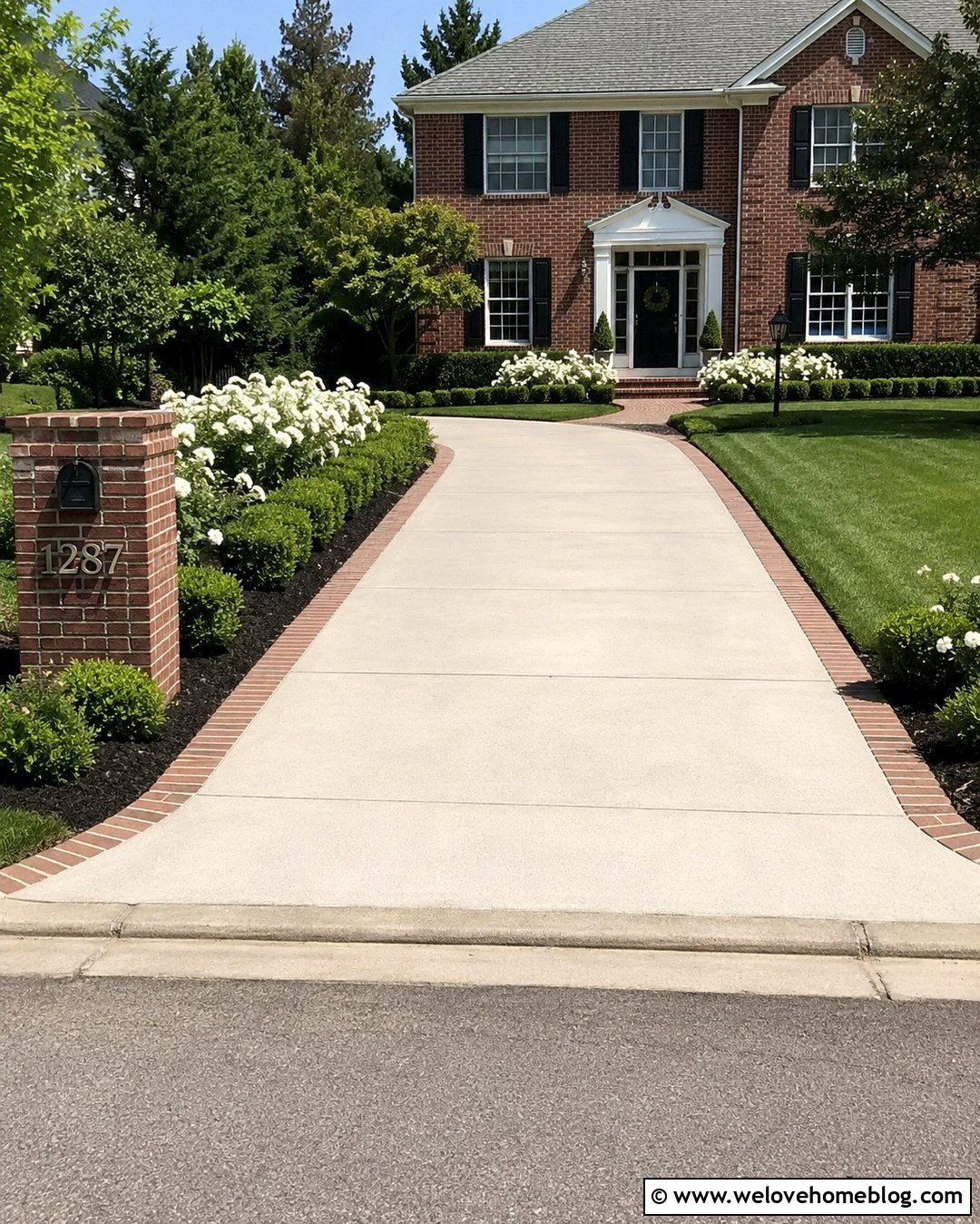
Warm brick can unite a traditional mailbox, house number display, and driveway border in one coordinated feature. Build a compact brick column beside a light gray poured-concrete driveway, then install a black mailbox and matching metal numbers. A soldier-course brick cap introduces subtle detail without making the structure overly decorative. Continue the same red or brown brick as a narrow ribbon along each side of the driveway. Around the column, create a tidy planting bed with white flowers, boxwood, and dark mulch. Keep vines and spreading shrubs away from the numbers so they remain unobstructed. This complete entrance looks natural beside colonial, Georgian, and traditional two-story homes. It also helps a plain concrete driveway feel more connected to an older brick facade.
4. Wooden Driveway House Number Post
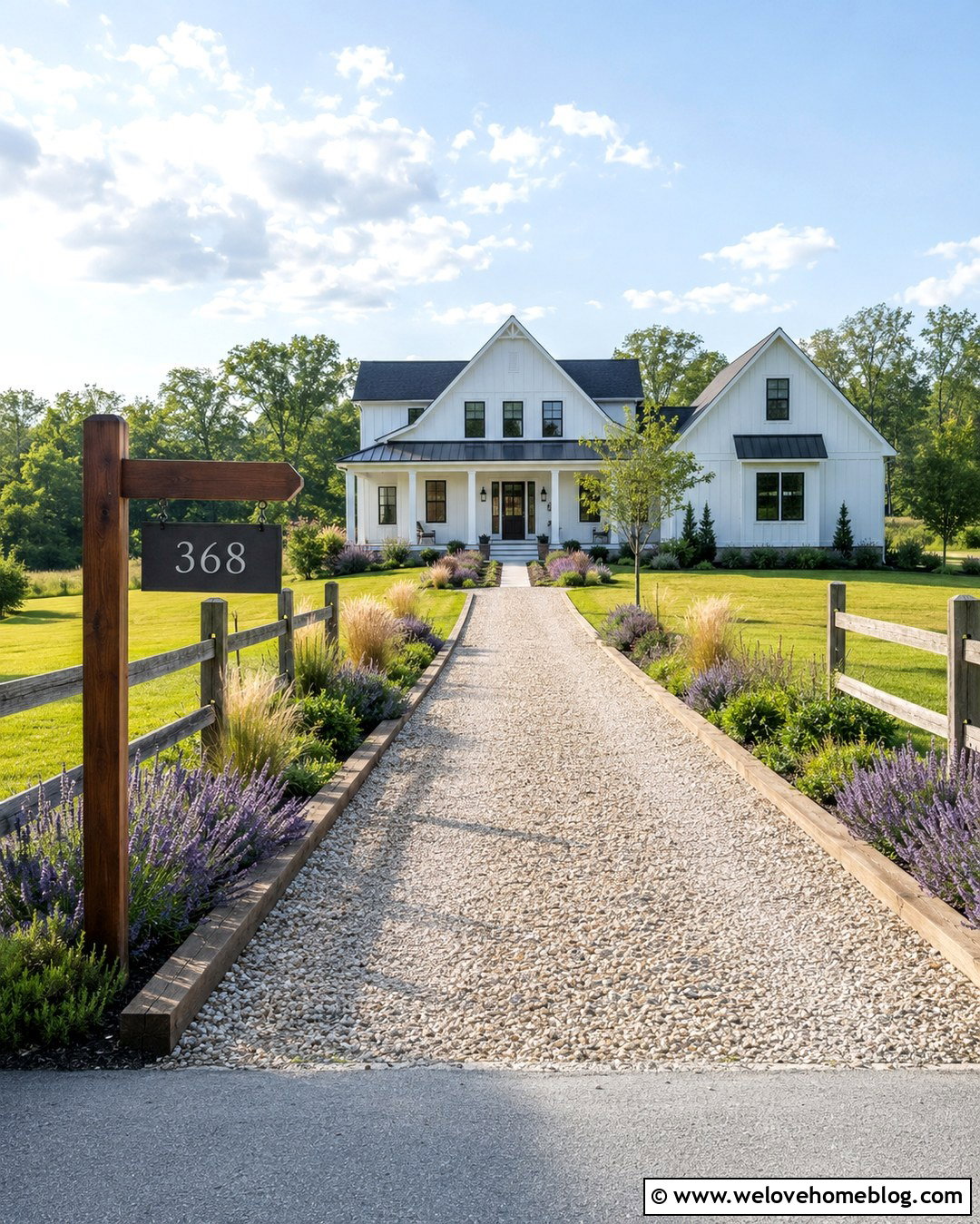
A wooden address post brings a friendly farmhouse character to the entrance of a pale gravel driveway. Use a thick cedar or pressure-treated timber post with a horizontal arm supporting a double-sided hanging plaque. The sign can feature white numbers against a charcoal background for easy viewing from either direction. Frame the gravel with sturdy timber edging that repeats the material of the post. Lavender, catmint, and compact ornamental grasses soften the base while leaving the sign open to view. A straight driveway leading toward a modern farmhouse makes the arrangement feel orderly and welcoming. Seal the wood in a natural medium-brown tone, or paint it white to coordinate with the house. A small downward-facing solar fixture can provide useful nighttime illumination.
5. Boulder Driveway House Number Sign
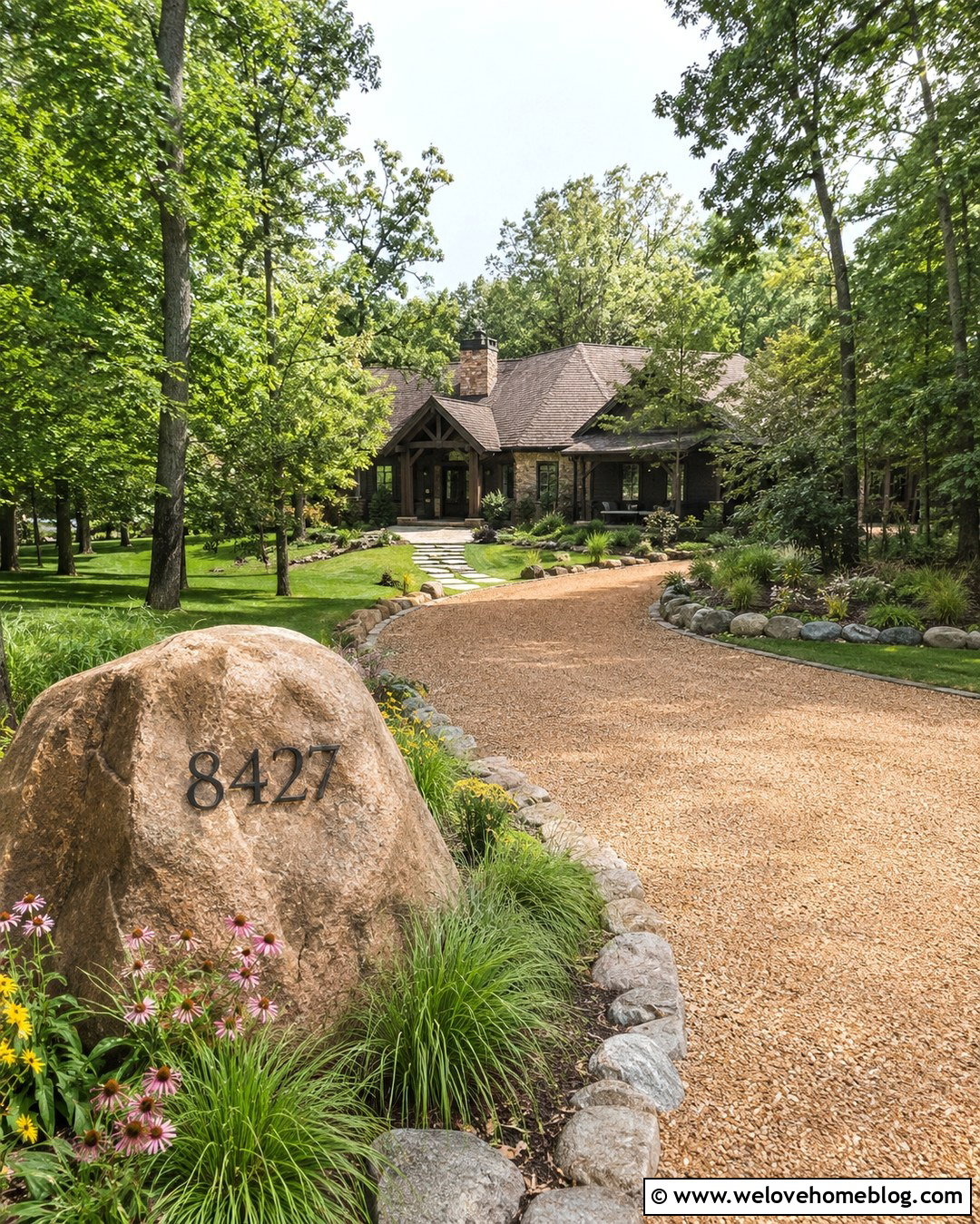
A large natural boulder can become an understated address monument at the entrance to a curved gravel driveway. Select a broad stone with a relatively flat face, then attach dark metal numbers using exterior-rated anchors. For greater contrast, mount the numbers on a small weather-resistant plaque rather than directly against heavily textured rock. Repeat similar stones along the driveway edge to make the marker part of a larger landscape plan. Native grasses, coneflowers, and low sedges can surround the boulder without overwhelming it. This relaxed arrangement is well suited to ranch homes, cabins, and wooded country properties. Use gray crushed stone or warm tan gravel for the driveway, choosing whichever tone best complements the boulder and exterior of the home.
6. Backlit Driveway House Number Panel
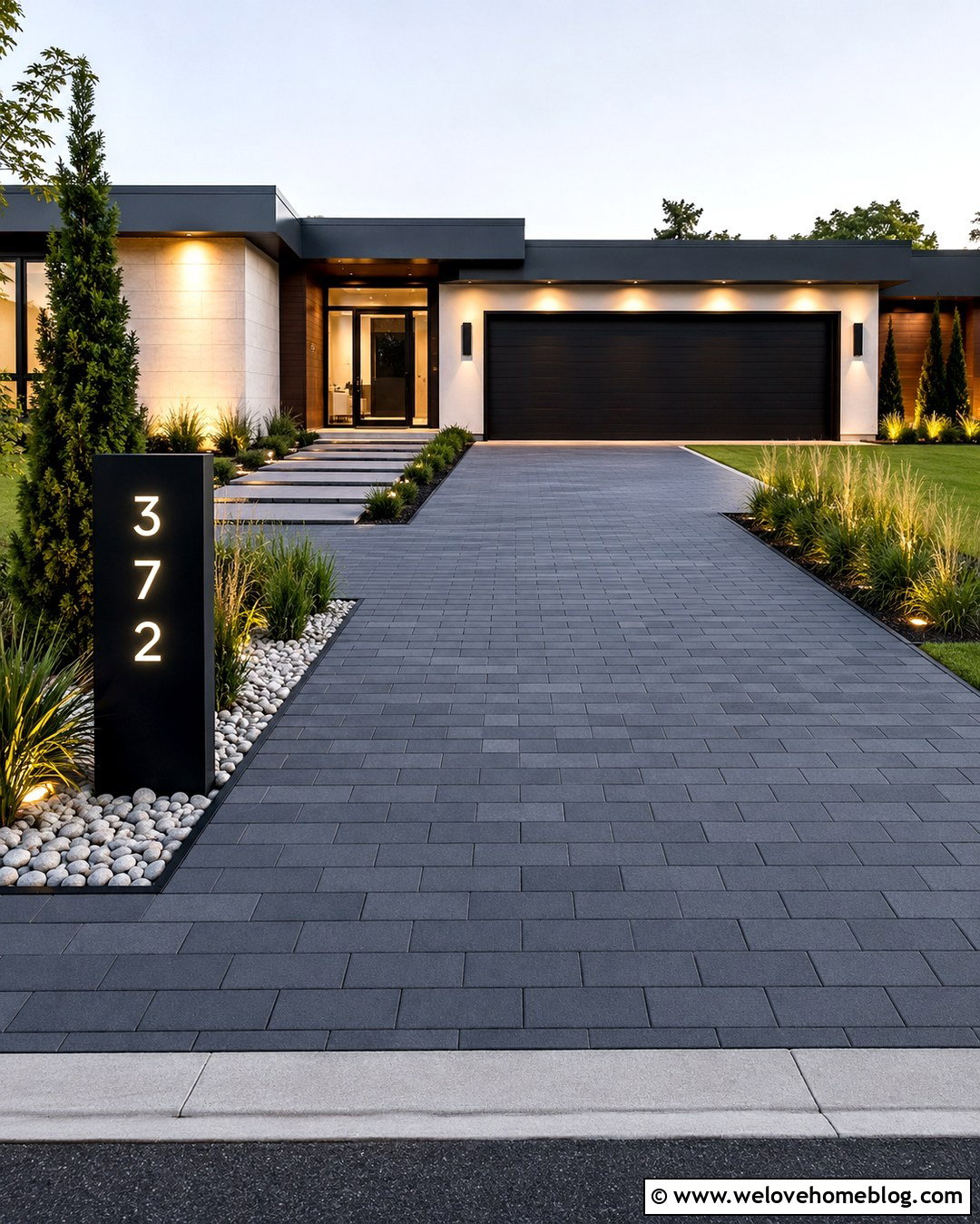
Backlit numbers turn a practical address marker into a polished feature beside a modern paver driveway. Install large cutout numerals in a matte-black metal panel with a translucent white backing. Internal low-voltage or solar lighting creates a clear glow while keeping the fixture itself discreet. Set the panel within a rectangular bed of white river pebbles, sculptural grasses, and one compact evergreen. Large-format charcoal concrete pavers laid in a running bond give the driveway a crisp surface that complements the sign. A thin black metal edge can define the planting bed and driveway transition. This complete design works beautifully with a flat-roofed modern home, especially when the facade includes black window frames and warm wood accents. Keep the number panel simple and free from decorative lettering.
7. Solar Driveway House Number Post
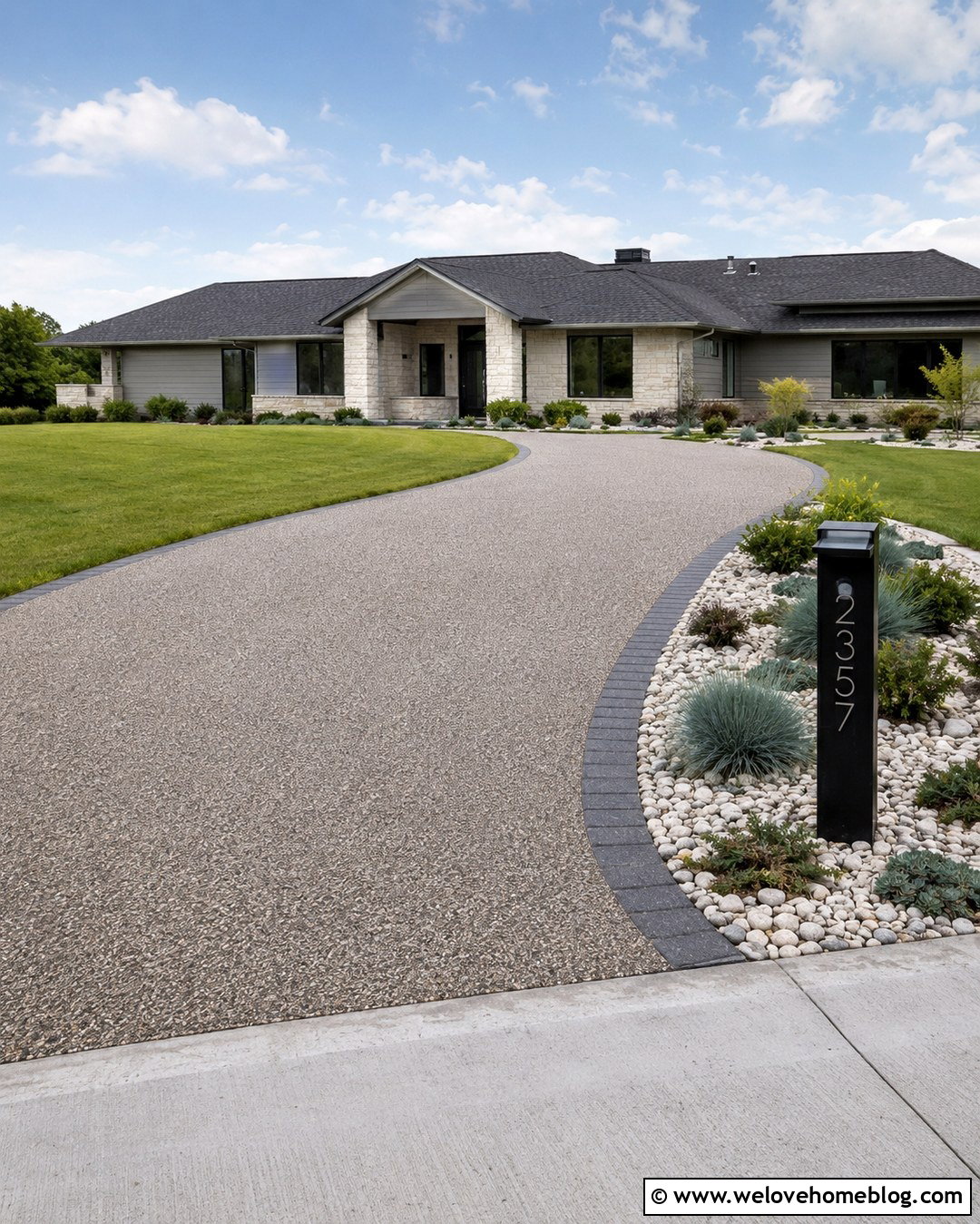
A solar-lit address post is useful when electrical wiring does not reach the end of a long driveway. Choose a weather-resistant aluminum post with illuminated cutout numbers and a solar collector positioned for direct daylight. A warm gray resin-bound gravel driveway provides a smooth, refined background while remaining visually softer than plain concrete. Edge the drive with charcoal pavers to echo the dark sign. Surround the base with pale decorative stones, low sedum, and compact blue fescue that will not cover the numerals. The combination suits contemporary suburban homes and renovated ranch houses. Place the post where approaching drivers can see the face clearly, but keep it safely back from the pavement. The result is a streamlined entrance that remains attractive during the day and functional after sunset.
8. Planter Driveway House Number Sign
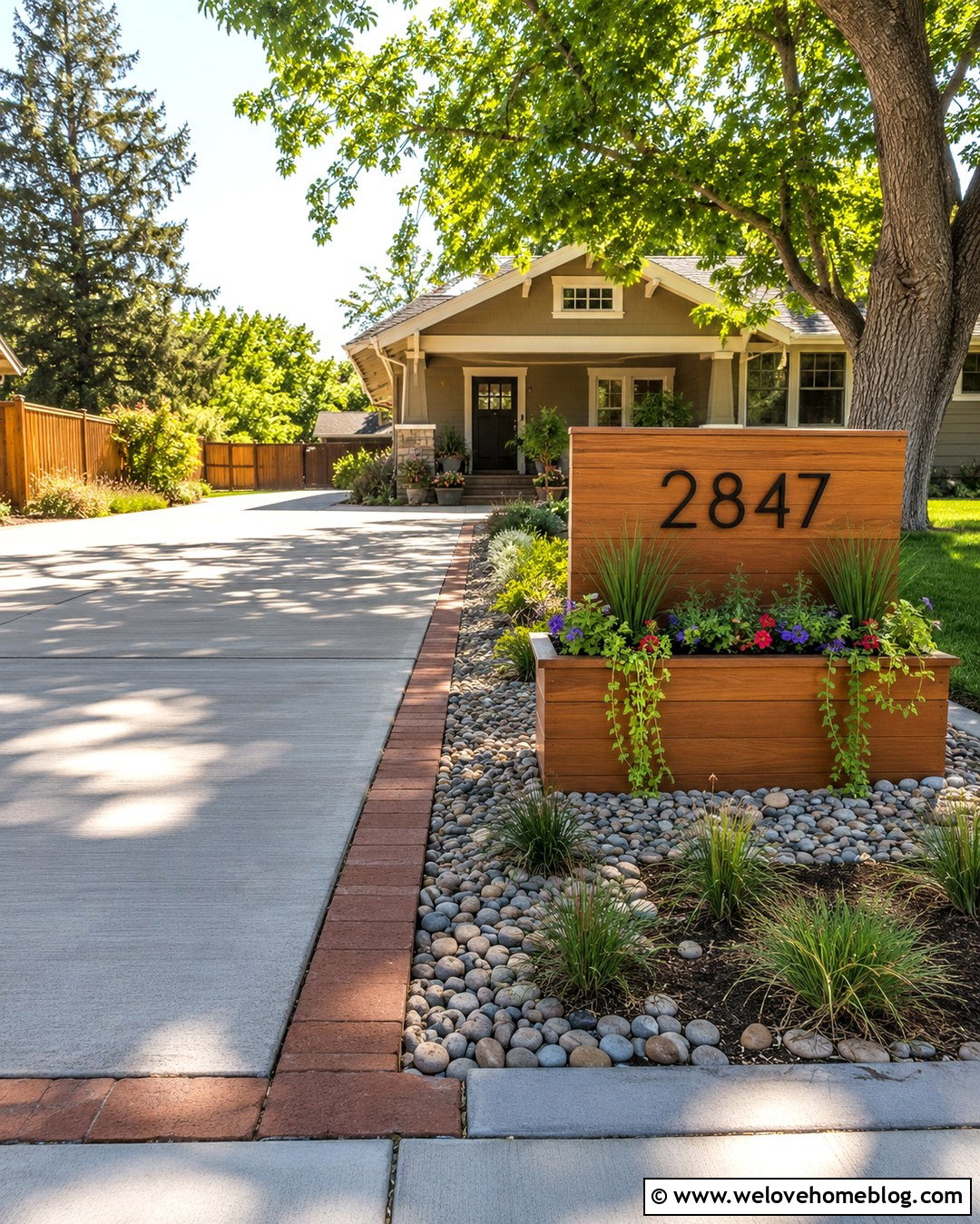
Why choose between an address marker and a planter when one structure can provide both? Build a wide cedar planter with a tall back panel displaying large black or bronze house numbers. Place it beside a straight broom-finished concrete driveway with warm clay-paver edging. Fill the box with compact seasonal flowers, trailing greenery, and upright grasses, keeping the tallest plants below the numbers. The wood can be stained to match porch posts, shutters, or a front door. This arrangement feels especially welcoming in front of a craftsman bungalow or cottage-style home. A simple gravel strip around the planter prevents soil from splashing onto the sign. Since plants change through the seasons, choose a number panel with enough height and contrast to remain visible even when the planter is full.
9. Fence Driveway House Number Sign
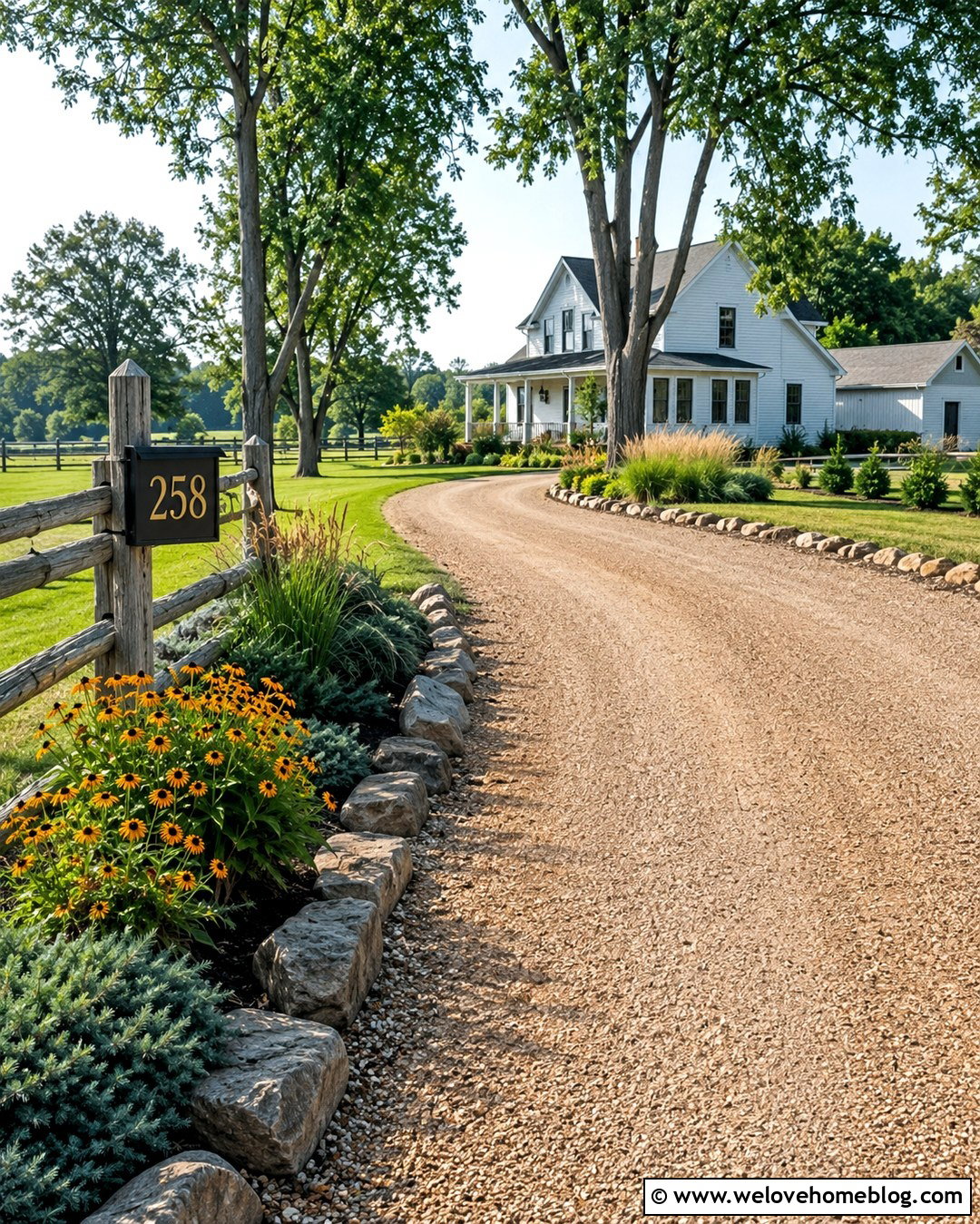
A house number marker attached to a split-rail fence can make a country driveway entrance feel naturally connected to the surrounding land. Use a rectangular black or deep green plaque with large white reflective numerals. Mount it on a dedicated post at the fence end so it remains visible even when a gate is open. A gently curved tan gravel driveway bordered by fieldstone reinforces the rural character. Plant black-eyed Susans, switchgrass, and low evergreen shrubs behind the fence rather than directly in front of the sign. This design works well for farmhouses, equestrian properties, and large wooded yards. Repeat the fence material near the house or along a neighboring pasture for continuity. A modest overhead solar light can improve visibility without changing the entrance’s relaxed, natural appearance.
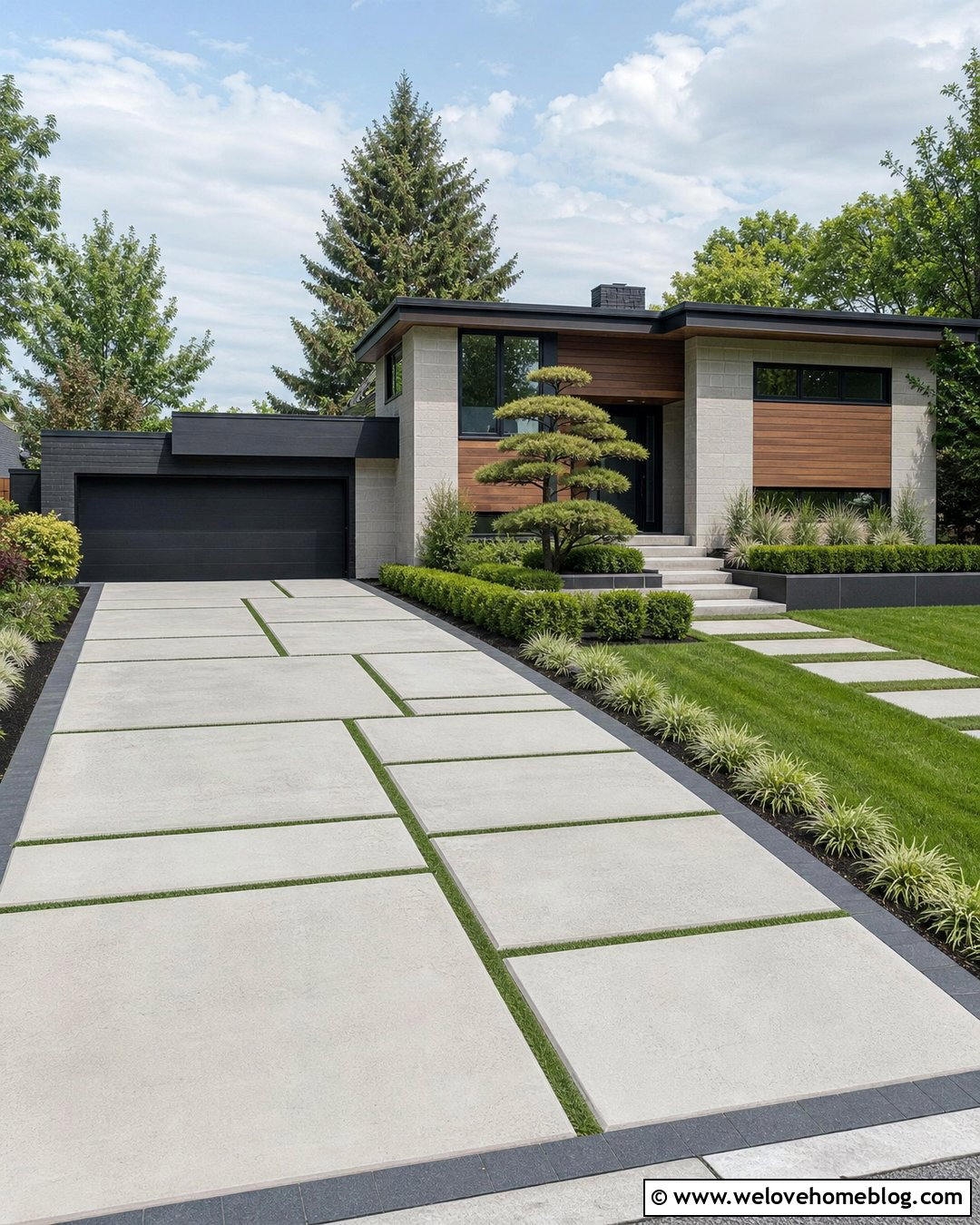
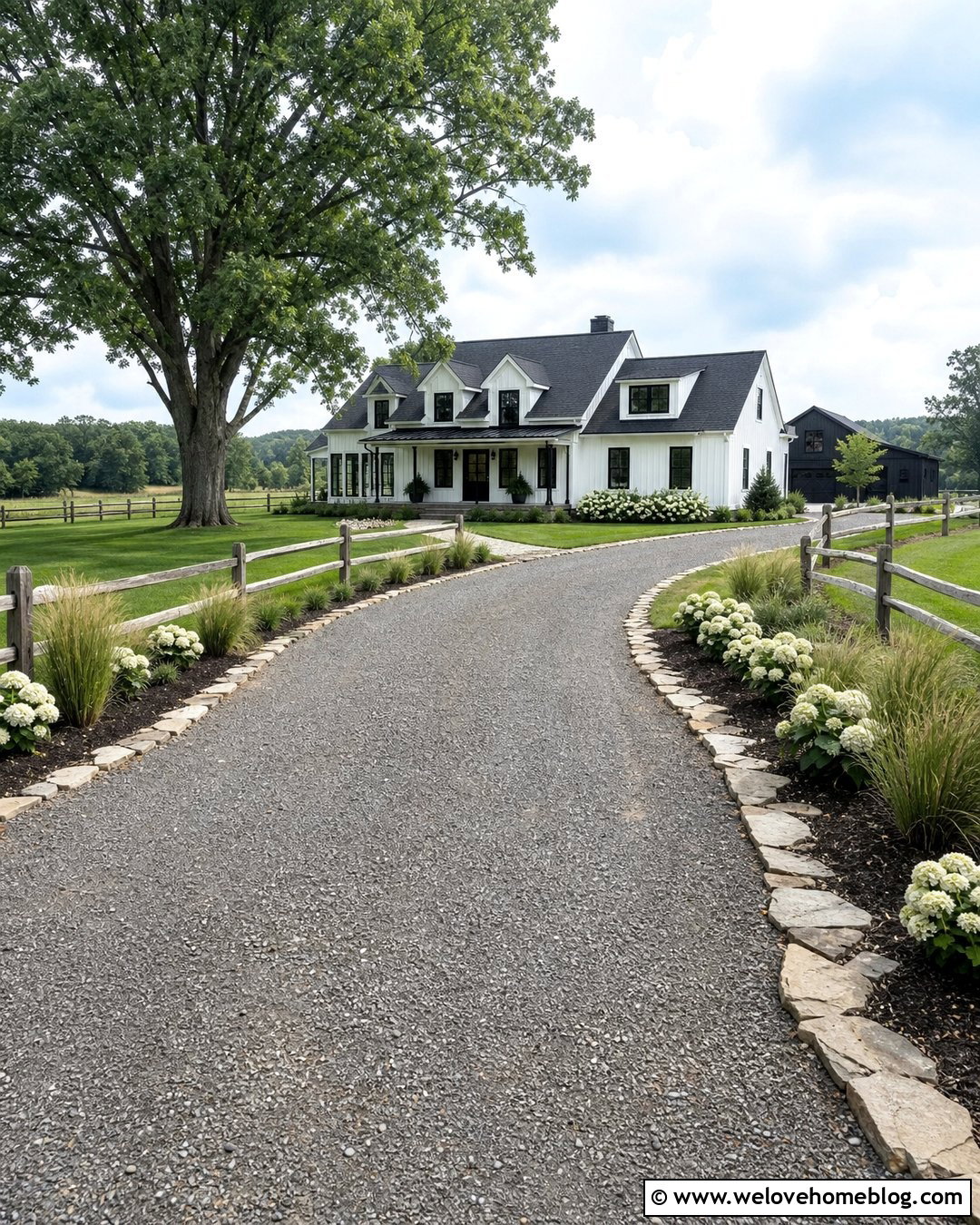
10. Driveway House Numbers On Entrance Pillars
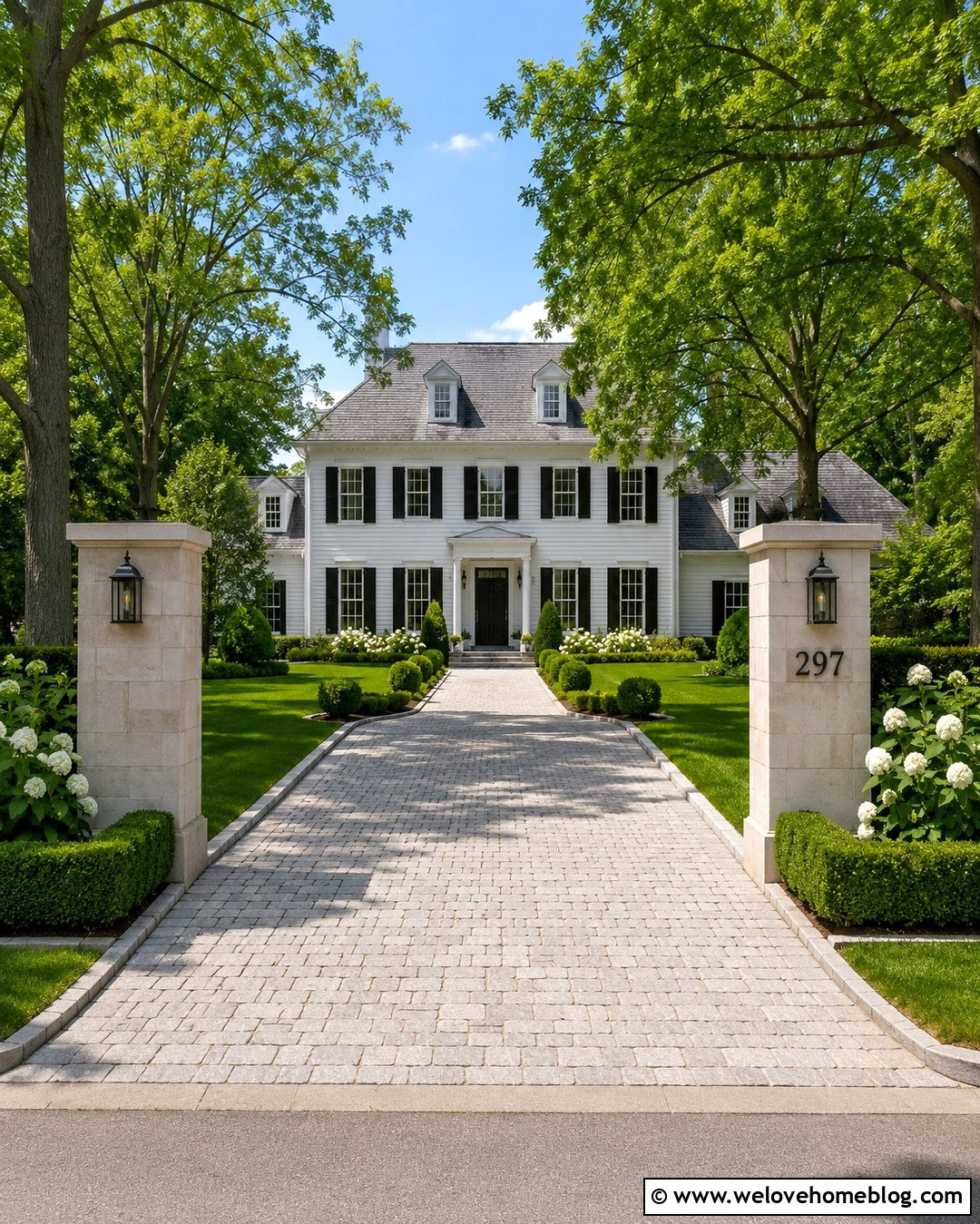
Matching entrance pillars give a wide cobblestone driveway a balanced and formal appearance. Construct two low pillars from pale limestone or smooth stucco, then place the house numbers on the pillar closest to approaching traffic. Use dark bronze or black numerals large enough to stand apart from the masonry. Flat stone caps and restrained lanterns can finish both pillars, although the address side should receive the strongest illumination. Frame the entrance with symmetrical boxwood, hydrangeas, and neatly edged lawn. The cobblestone driveway can continue in a straight or gently flared layout toward a colonial or European-inspired home. Avoid placing identical number sets on both pillars if that creates confusion. Instead, let one clear address display serve as the focal point while the second pillar provides visual balance.
11. Retaining Wall Driveway House Numbers
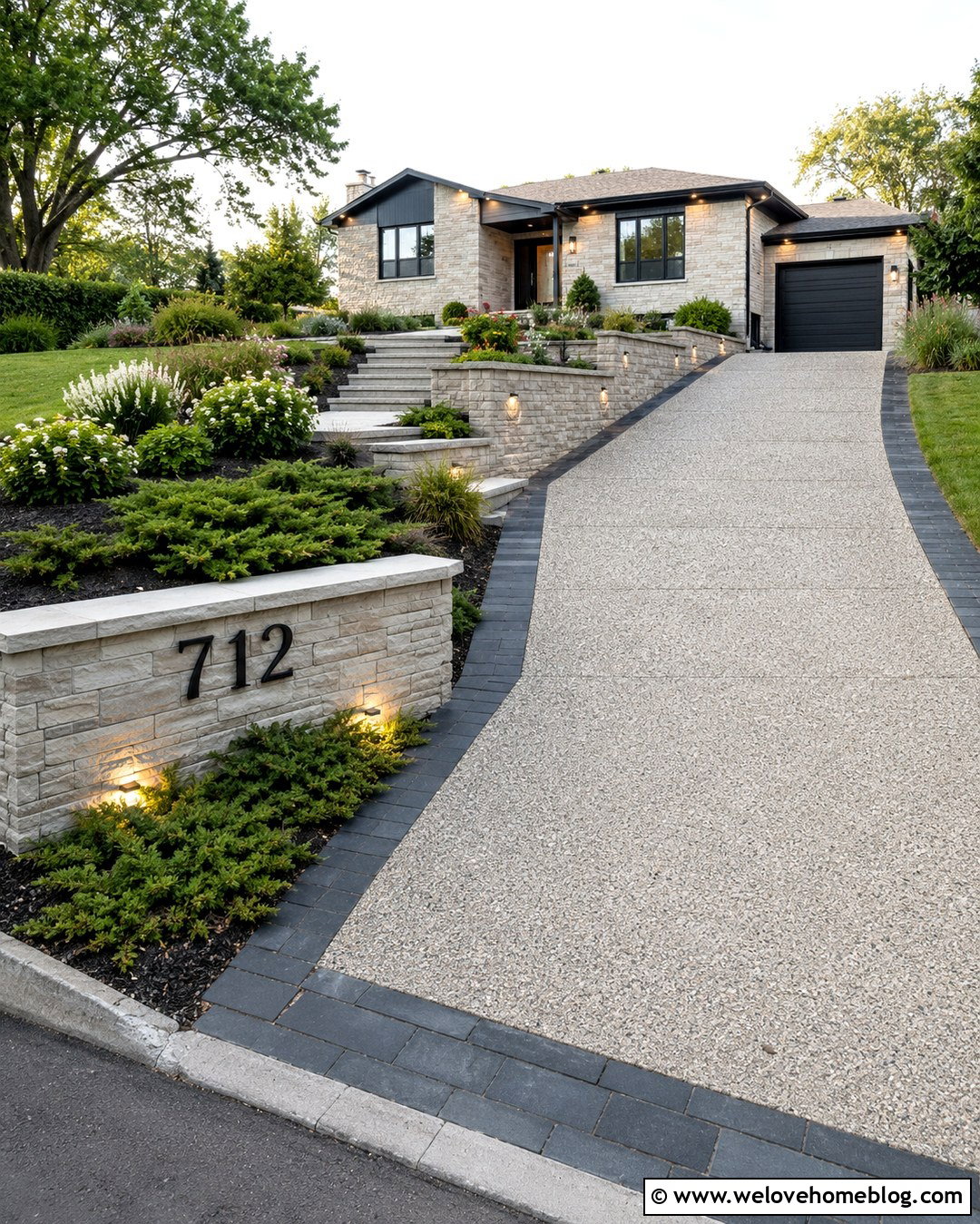
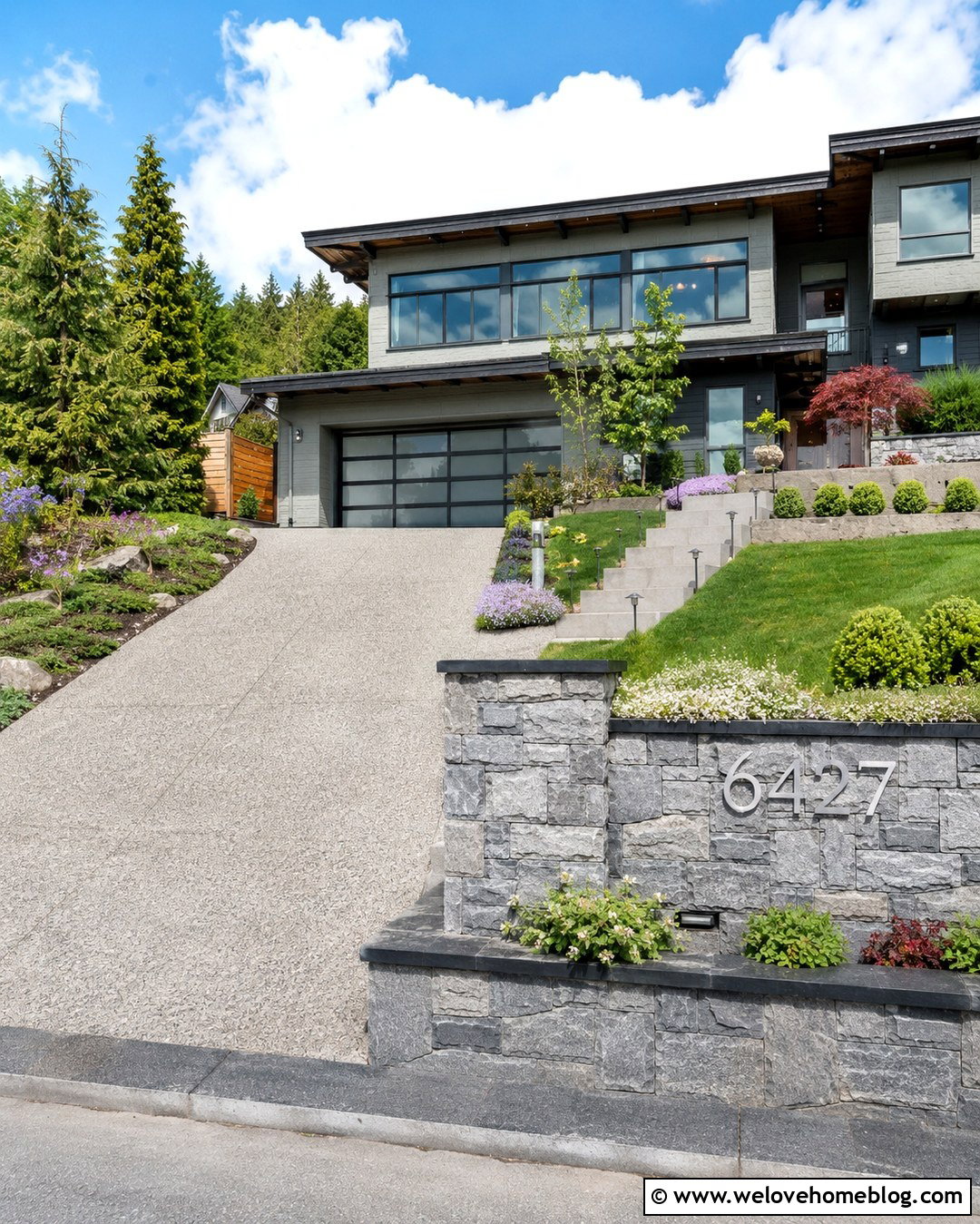
A low retaining wall offers a practical place for house numbers when the driveway rises from the road. Build the wall from smooth concrete block or light stone veneer and mount the numerals near the entrance, where landscaping will not conceal them. A sloped exposed-aggregate concrete driveway complements the textured wall while providing a durable-looking, coordinated surface. Add a dark paver border along the driveway and wall base to visually tie the materials together. Above the wall, use spreading juniper, ornamental grasses, and compact flowering shrubs. Keep mature plant height in mind before installation. This arrangement works particularly well for split-level houses and suburban homes on uneven lots. Small recessed lights beneath the wall cap can brighten the numbers without adding a visible freestanding fixture near the road.
12. Mailbox Driveway House Numbers
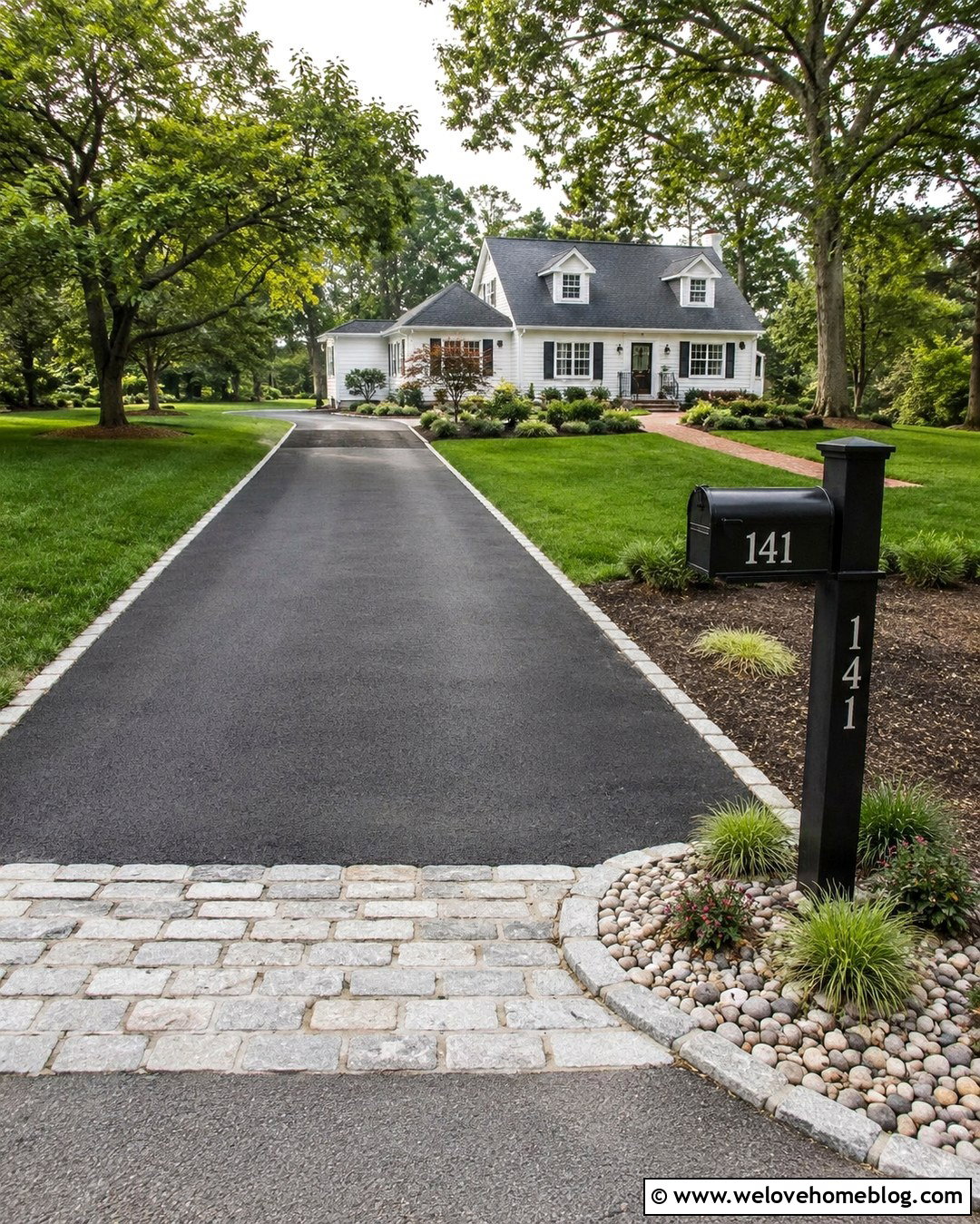
A coordinated mailbox and address display is one of the easiest ways to improve a simple asphalt driveway entrance. Replace a leaning wooden post with a sturdy black steel or painted cedar support. Add large numbers to both road-facing sides so the address can be read from either direction. A black asphalt driveway with a clean cobblestone apron gives the entrance a more finished appearance. Surround the mailbox with a circular bed of river rock, dwarf grasses, and low flowers that will not interfere with mail access. This approachable design suits ranch, Cape Cod, and traditional suburban homes. Match the mailbox color to exterior lighting, shutters, or garage hardware. If the mailbox is located across the road or grouped with others, use a separate marker beside the actual driveway to prevent confusion.
13. Vertical Driveway House Number Sign
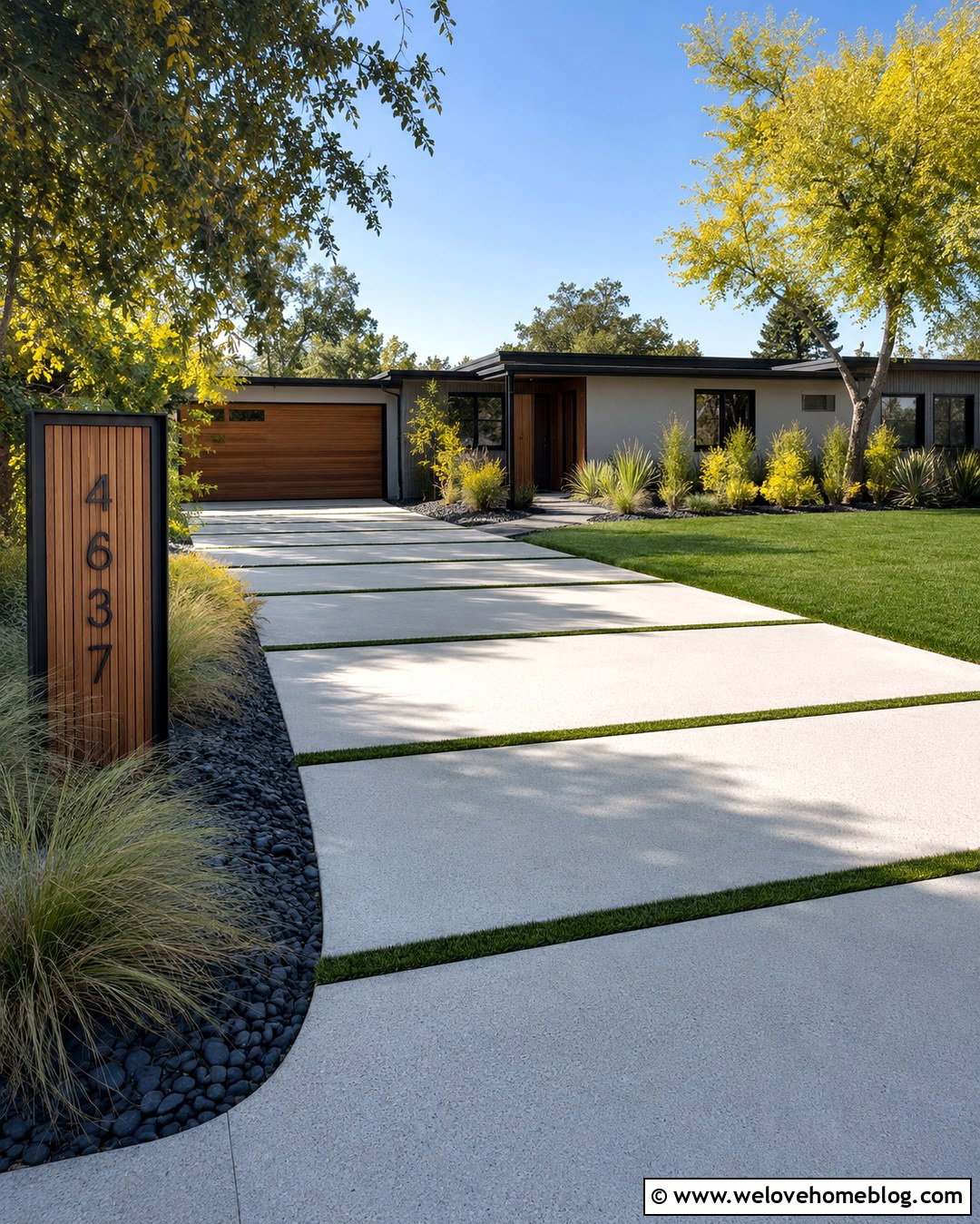
Vertical numbers fit neatly on a narrow monument where horizontal space is limited. Create a cedar-slat panel supported by a black metal frame, then arrange oversized matte-black or white numerals from top to bottom. Position the marker beside a modern concrete ribbon driveway with green grass or decorative gravel between the wheel tracks. Carry the cedar tone into the garage door, entry canopy, or front fence to make the entrance feel intentional. A narrow bed of feather reed grass and dark landscape rock can frame the panel without blocking it. This complete look is ideal for a modern ranch or midcentury-inspired house. Maintain generous spacing between the digits, and test their readability from a vehicle before final installation. A slim integrated light can illuminate the full vertical arrangement evenly.
14. Driveway House Number Monument
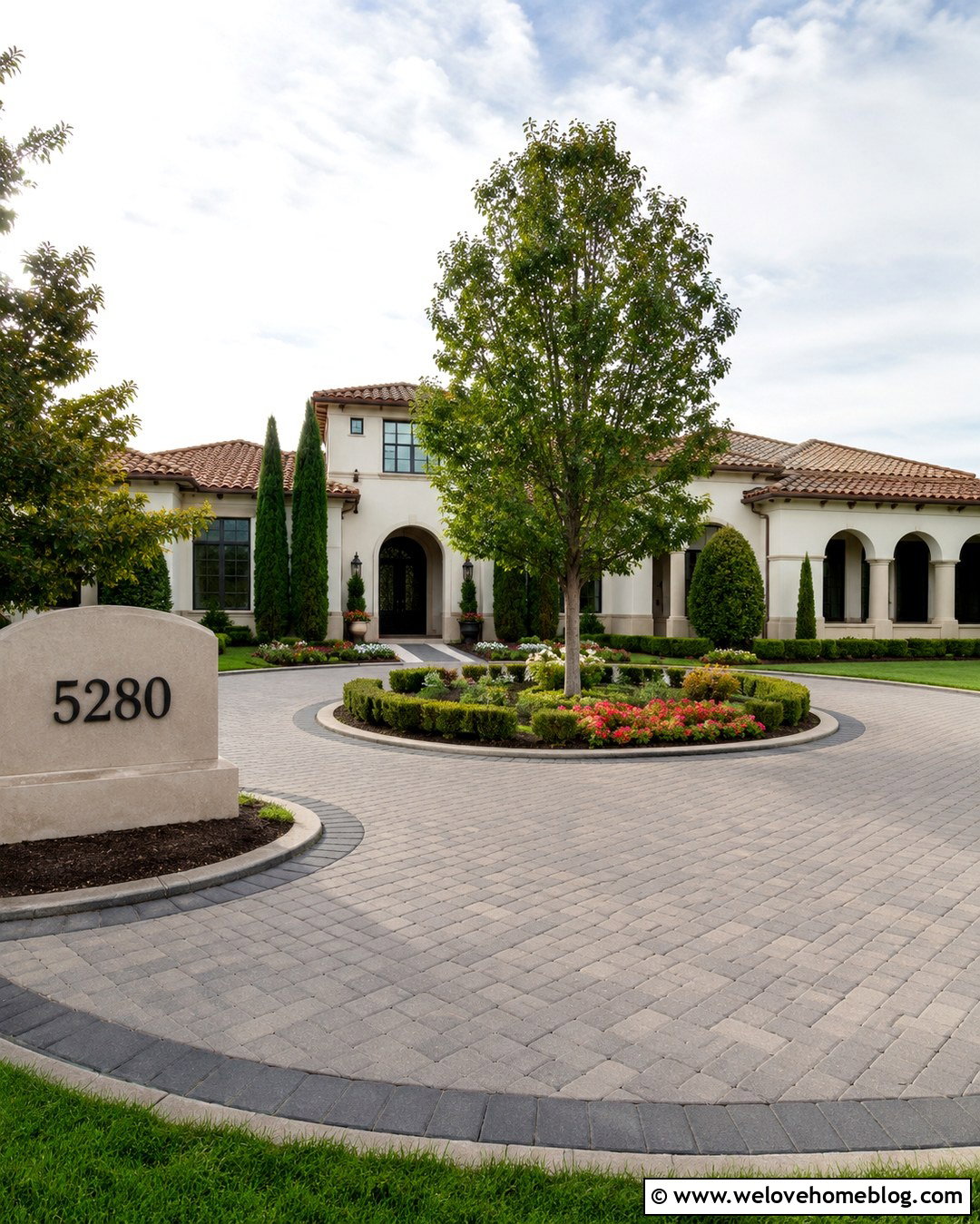
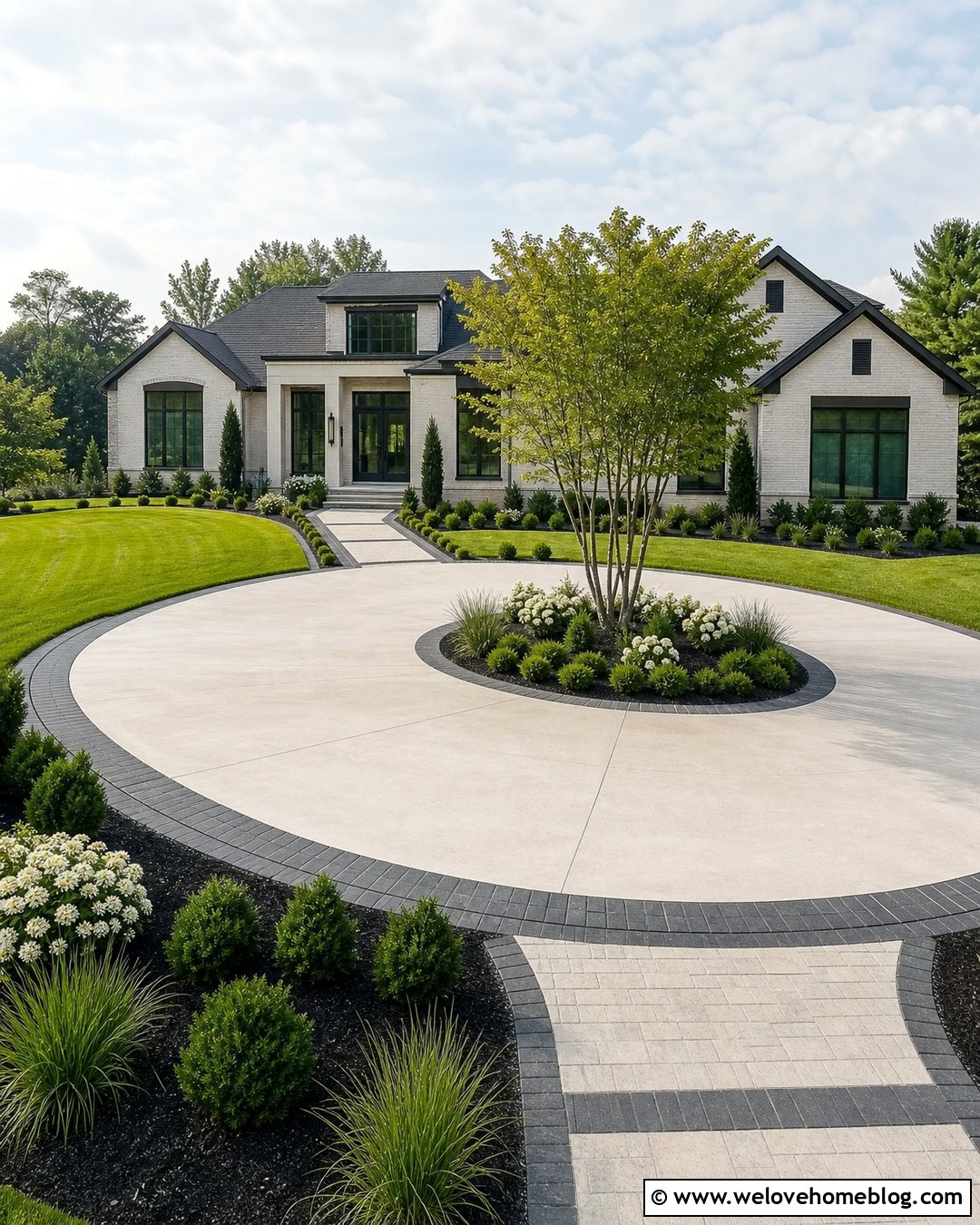
A broad address monument can anchor the outer edge of a circular driveway and establish a clear sense of arrival. Construct a low rectangular structure from smooth stucco, precast concrete, or stone that coordinates with the home. Place large centered numbers on the longest road-facing surface, using a contrasting finish that remains easy to distinguish. A circular driveway built from warm gray interlocking concrete pavers creates an elegant foreground. Define its curves with darker paver bands and a landscaped center island containing a small ornamental tree, clipped shrubs, and seasonal flowers. This design works for Mediterranean, transitional, and large traditional homes. Keep the monument lower than nearby gate pillars so it does not compete with the architecture. Concealed landscape lights can wash the face evenly without producing distracting glare.
15. Reflective Rural Driveway House Number Sign
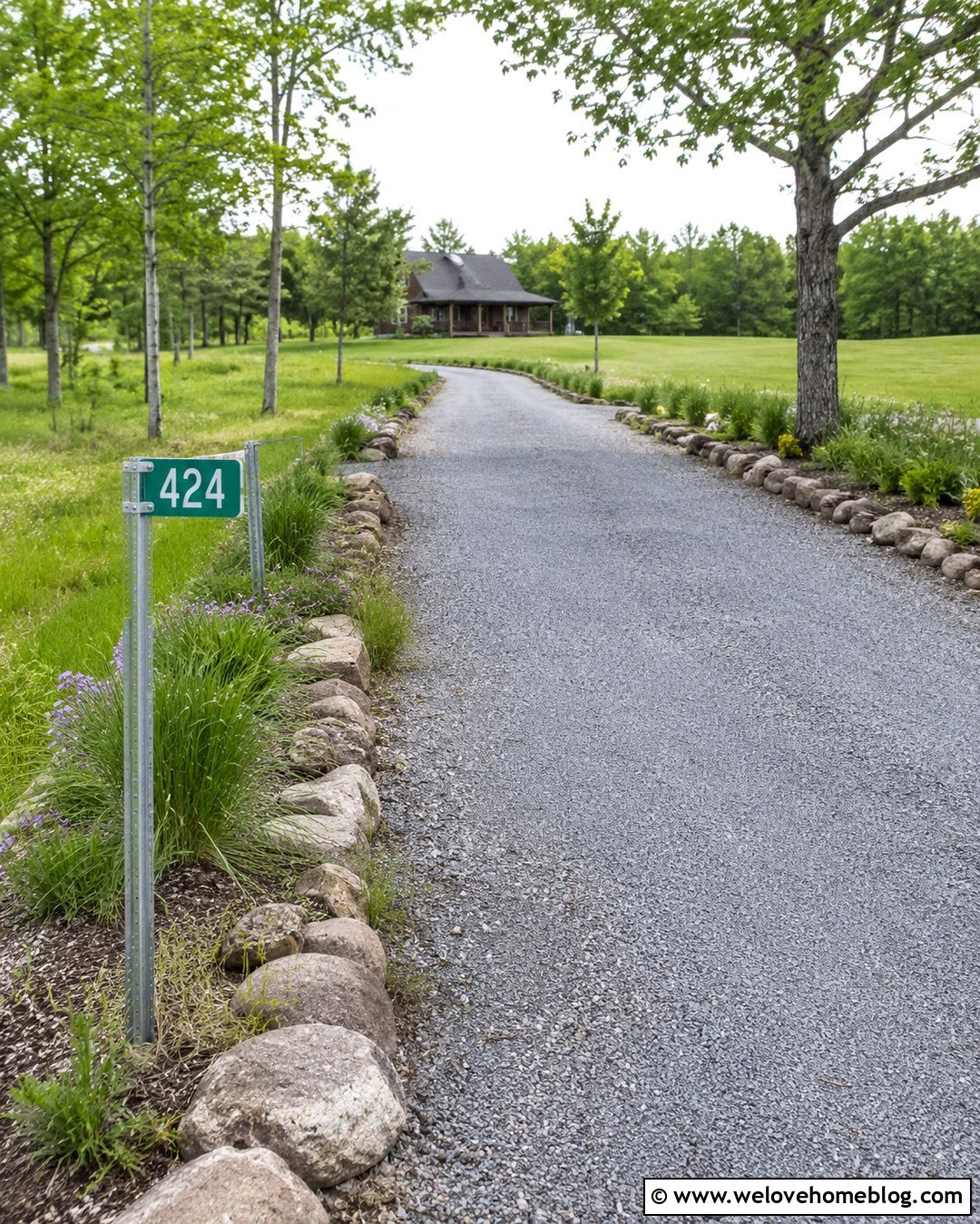
A reflective address marker brings dependable visibility to a long rural driveway while still fitting into an attractive entrance. Mount a green, blue, or black reflective plaque perpendicular to the road on a simple galvanized-steel or dark timber post. Display numbers on both sides when traffic can approach from either direction. Pair the marker with a straight gray crushed-gravel driveway bordered by native grasses and occasional fieldstones. A mowed strip around the post keeps weeds, snow, and branches from hiding the sign. This straightforward layout suits country homes, barns, cabins, and properties where the house cannot be seen from the street. Rather than disguising the marker with dense landscaping, use a few low perennials nearby. Practical placement should lead the design, with the natural driveway and planting scheme providing visual warmth.
16. Coastal Driveway House Number Post
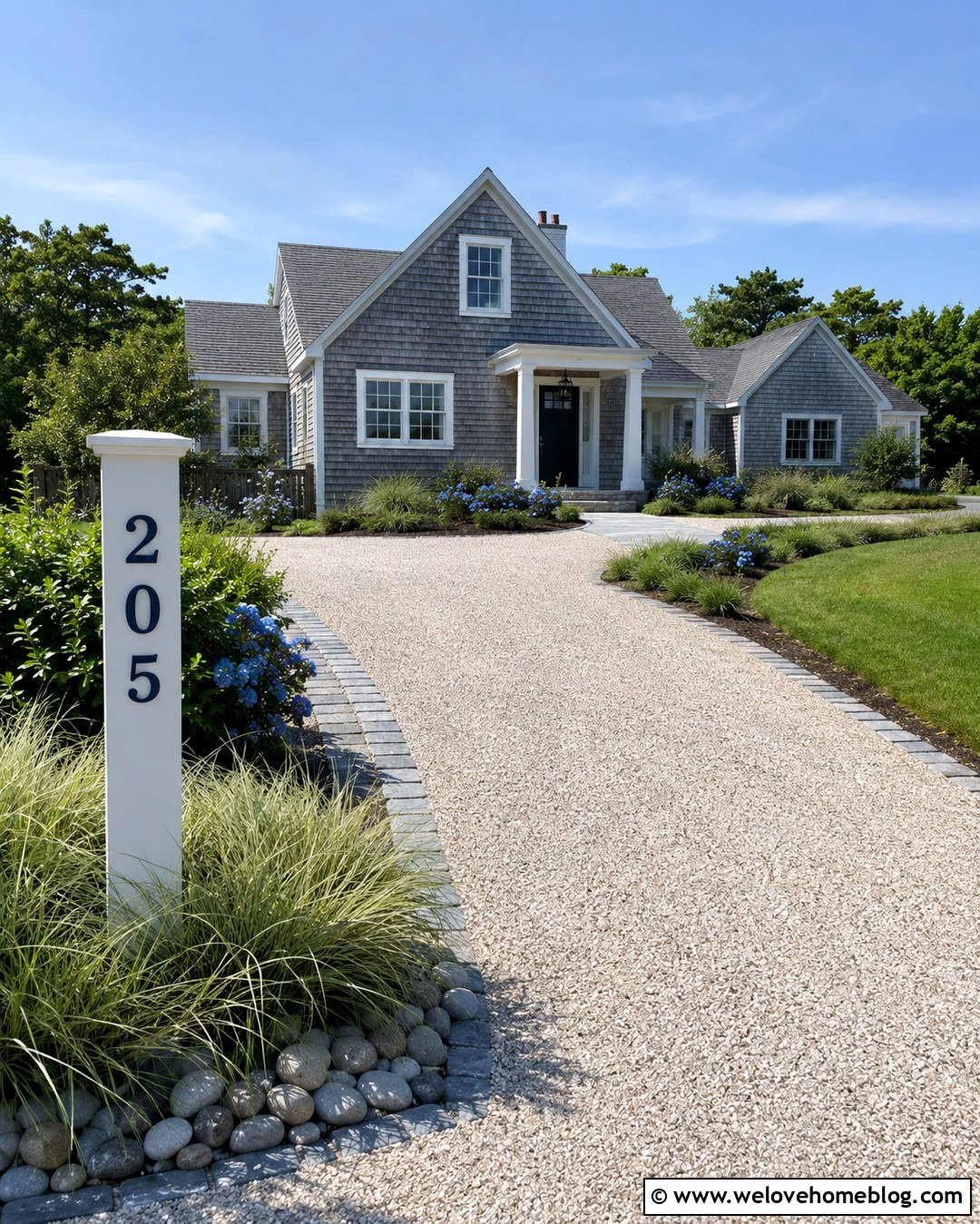
A white address post can create a fresh entrance for a coastal cottage without feeling overly decorative. Choose cellular PVC, painted cedar, or another exterior material that handles wet conditions well. Mount deep navy numbers on a wide horizontal panel beneath a simple cap. Pair the sign with a pale shell-gravel driveway laid in a gently curved shape and contained by gray cobblestone edging. Surround the post with beach grass, low hydrangeas, and smooth stones in soft blue-gray tones. The driveway should lead toward a shingle-sided Cape Cod or light-painted coastal home. Leave open space around the sign so the pale structure does not disappear into white flowers or bright sand. A discreet solar cap light can highlight the numbers while maintaining the clean, breezy character of the complete entrance.
17. Gabion Driveway House Number Pillar
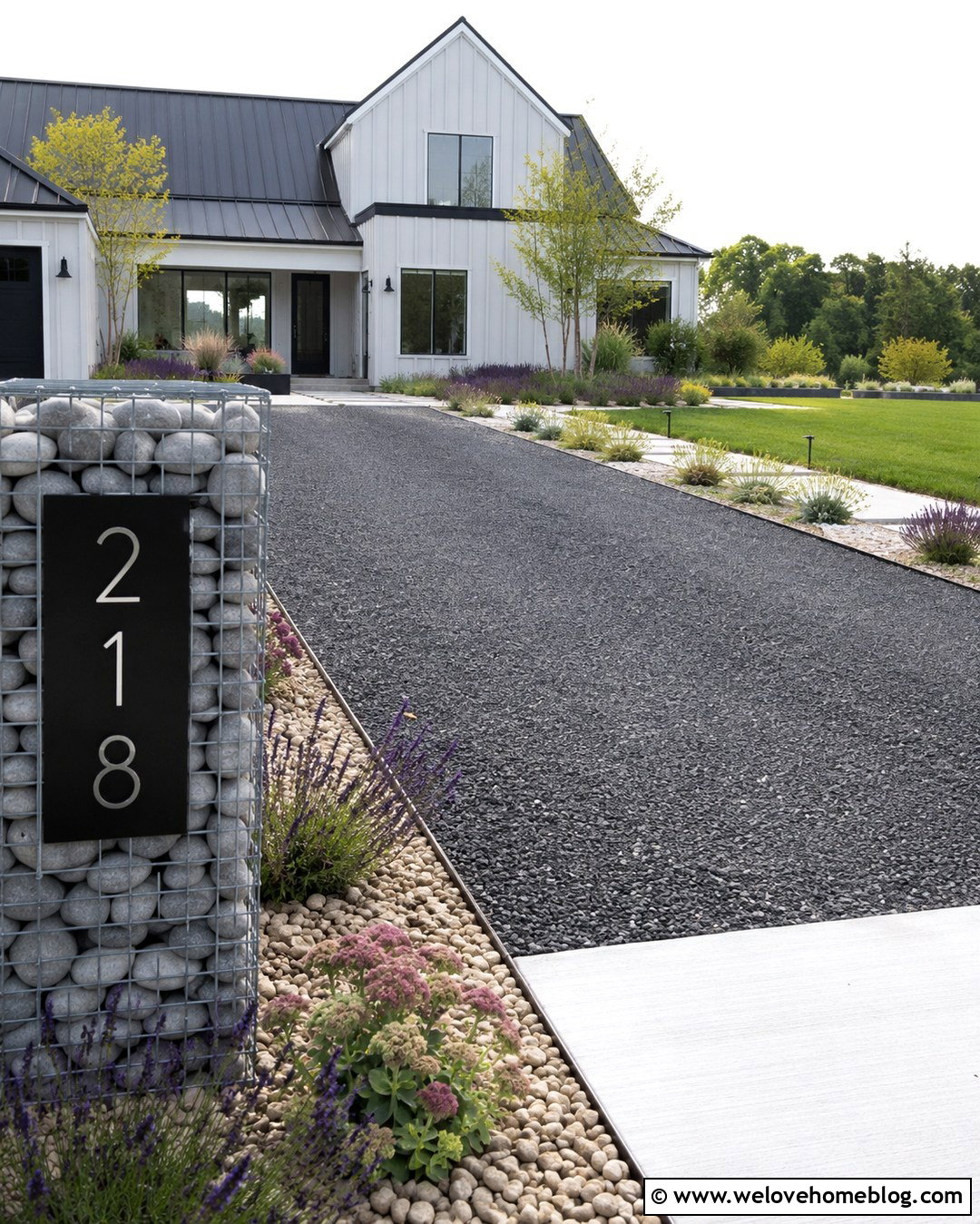
A gabion pillar combines rugged stone texture with the sharp lines of a contemporary address sign. Fill a narrow galvanized-steel cage with uniform gray river stones, then attach a smooth black metal number panel to the front. Use a charcoal gravel driveway with a straight layout and dark steel edging to repeat the pillar’s modern materials. Around the base, plant drought-tolerant grasses, lavender, and low sedum in pale stone mulch. This complete arrangement works well beside an industrial farmhouse, desert-modern home, or updated ranch. Keep the pillar narrow enough that it does not obstruct views when vehicles leave the property. The flat panel is important because numerals can become difficult to distinguish against loose stones. A small integrated solar fixture can illuminate the sign without weakening its minimalist appearance.
18. Corten Steel Driveway House Number Sign
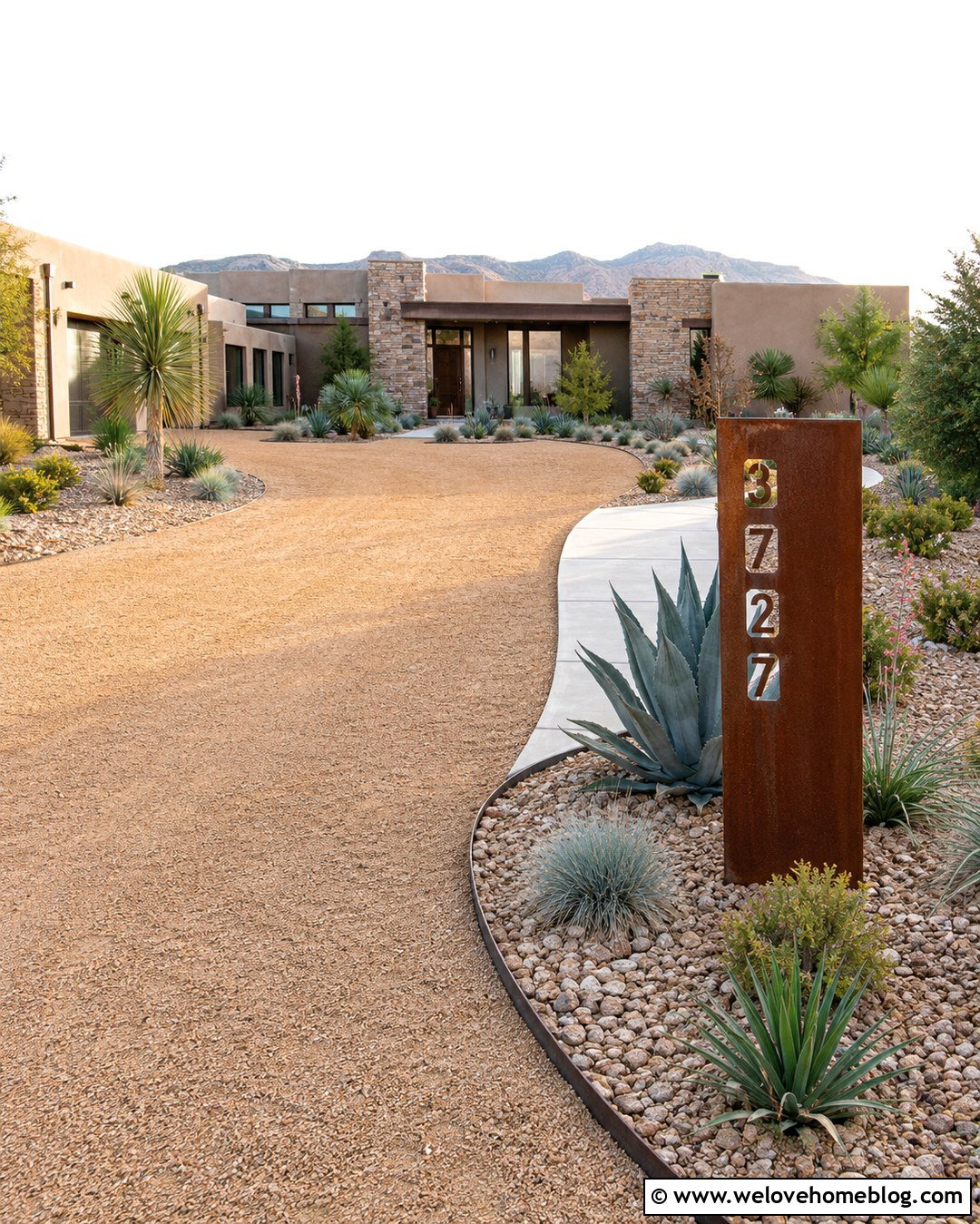
Weathered Corten steel introduces a rich rust-colored accent beside a warm decomposed-granite driveway. Choose a tall rectangular panel with laser-cut house numbers backed by a contrasting pale insert. Set the sign slightly away from light paving materials because early weathering may produce runoff stains. Black steel edging can contain the gently curved driveway and repeat the marker’s clean shape. Create a drought-tolerant planting bed with agave, yucca, blue fescue, and decorative gravel, adjusting plant choices for the local climate. This distinctive entrance complements contemporary, Southwestern, and modern ranch homes. Use Corten details sparingly so the address panel remains the focal point. The driveway’s earthy color, sculptural plants, and weathered metal should read as one coordinated composition rather than several unrelated decorative features.
19. Lamp Post Driveway House Number Sign
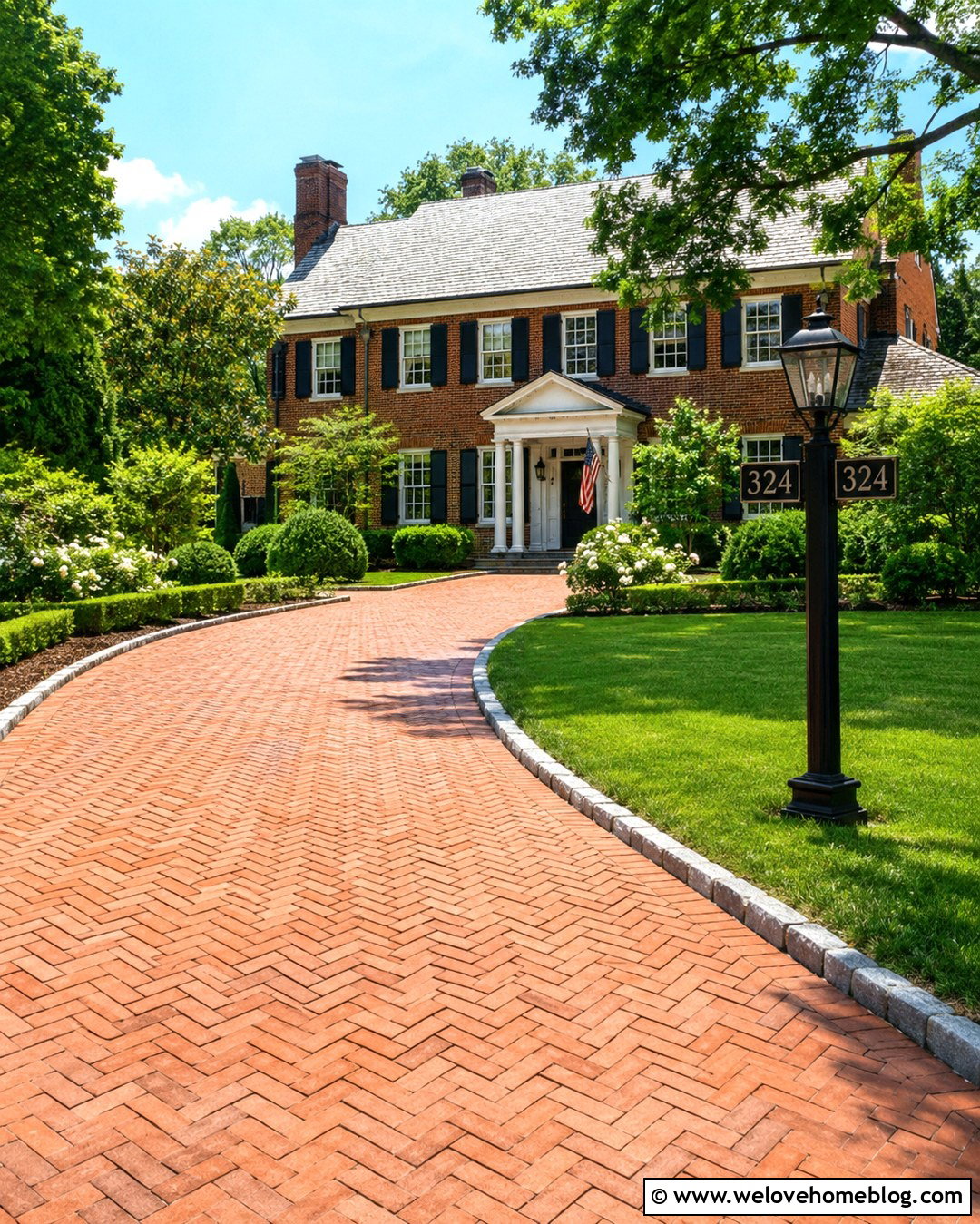
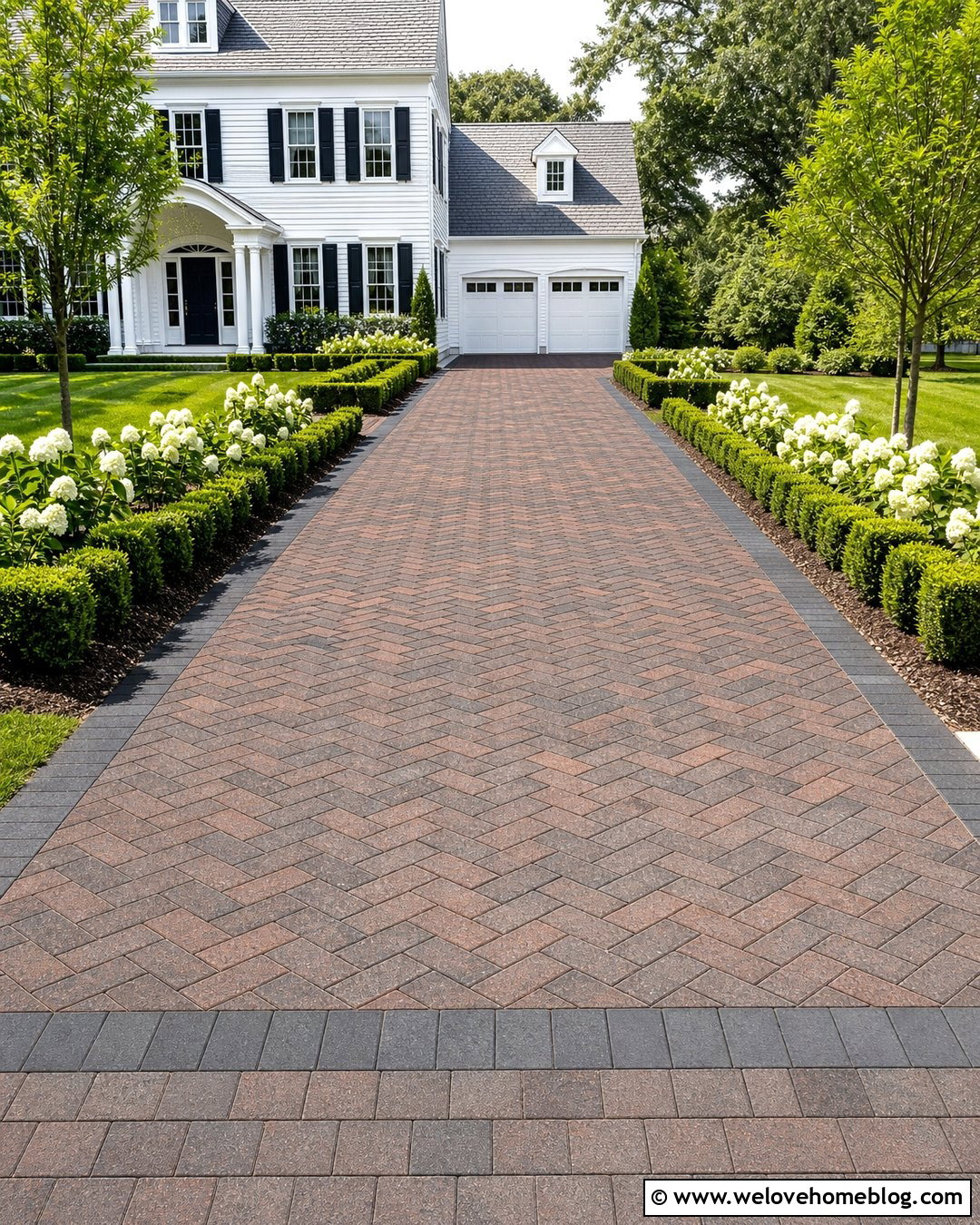
A traditional lamp post can hold a visible address plaque while adding structure to a brick driveway entrance. Select a black post with a simple lantern and mount a double-sided oval or rectangular plaque below the fixture. Use cream or white numbers against a black background for crisp contrast. A red clay brick paver driveway laid in a herringbone pattern creates a classic approach to a colonial home. Frame the entrance with boxwood, white roses, and a narrow lawn border, leaving the plaque unobstructed. A granite or concrete curb can contain the brick and protect nearby planting beds. Keep the lantern appropriately scaled rather than overly ornate. During installation, angle the plaque toward the road and confirm that the light illuminates its face instead of casting the numbers into shadow.
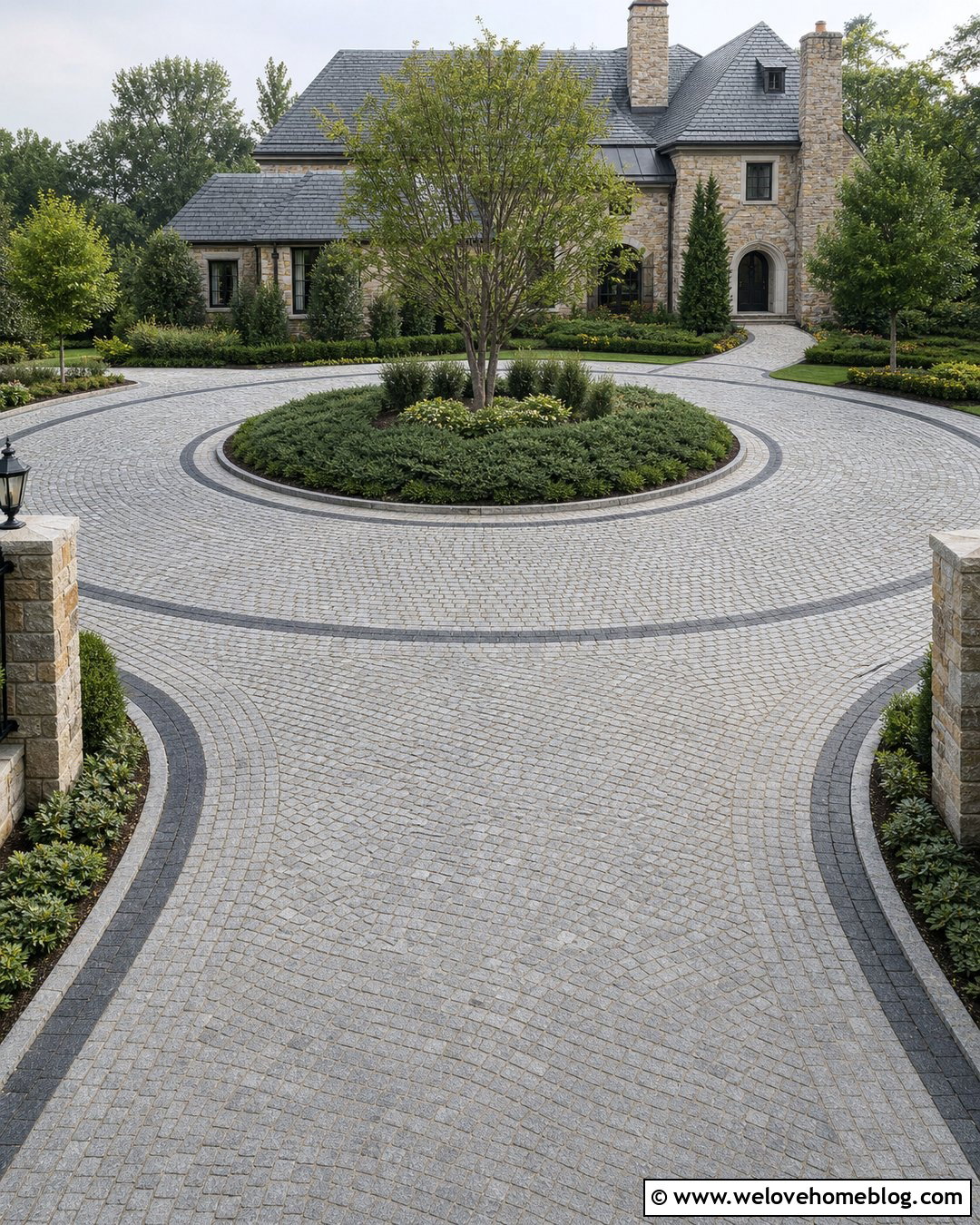
20. Double-Sided Driveway House Number Sign
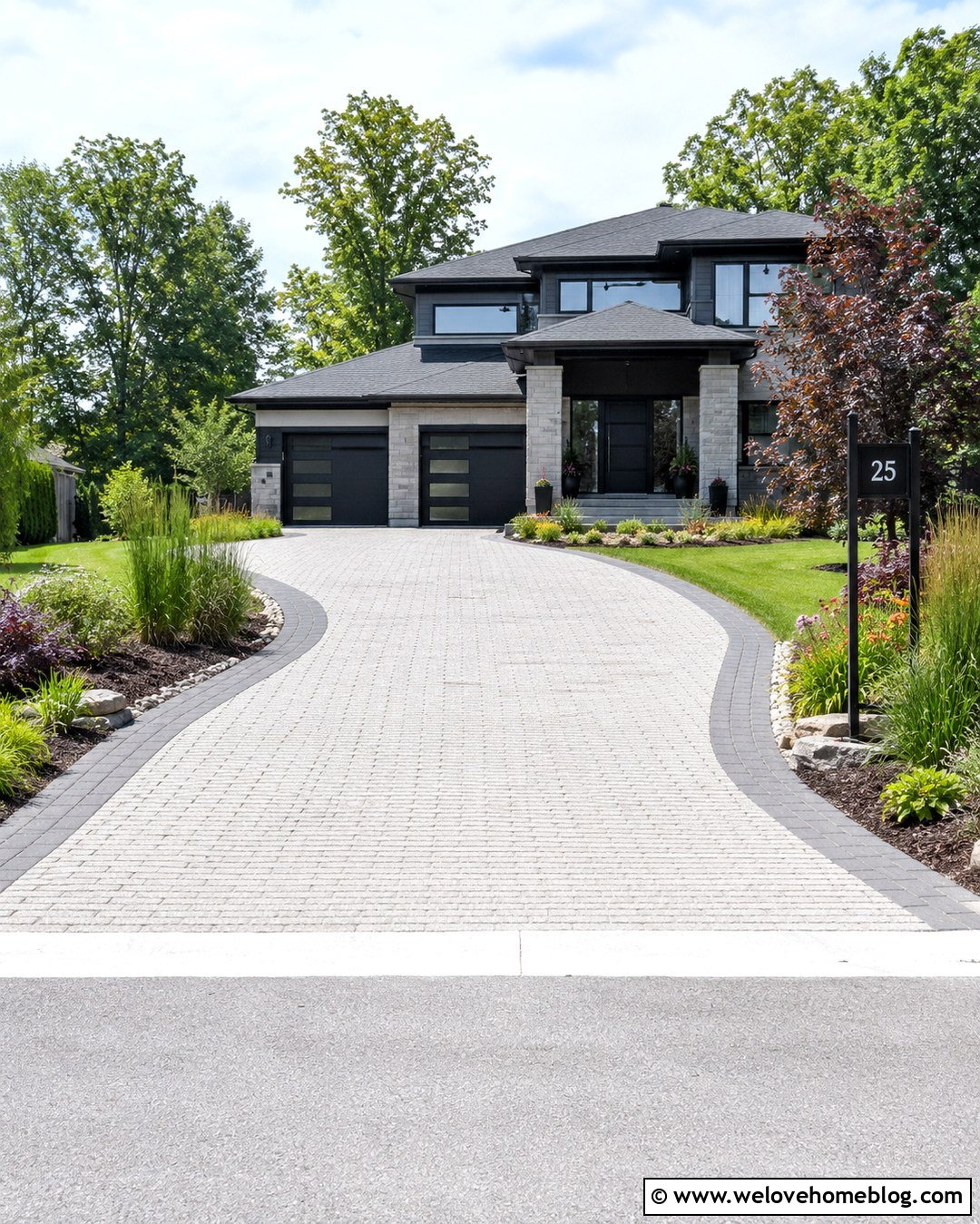
A double-sided blade sign is especially effective at a long driveway where the address must be recognized from both traffic directions. Install the narrow plaque perpendicular to the road on a black metal post, using bold white numerals on each face. Pair it with a wide permeable paver driveway that gently flares at the entrance before narrowing toward the house. Dark paver borders can define the edges, while rain-garden planting beds capture the visual transition between the road and lawn. Use low rushes, sedges, flowering perennials, and a small ornamental tree without crowding the sign. This organized entrance suits contemporary suburban and environmentally conscious home designs. For a shared driveway, add separate directional markers farther inside so visitors can clearly identify each branch without cluttering the roadside display.
Conclusion:
Successful 20 End Of Driveway House Number Ideas should make a property easier to locate while strengthening its overall curb appeal. Start with clear, generously sized numbers and strong contrast, then select a structure that complements the driveway and house. Steel pillars feel modern, stone monuments add permanence, wood posts suit relaxed landscapes, and integrated mailboxes save space. Lighting, reflective finishes, and double-sided displays can improve visibility when the home sits far from the road. Before installing posts, pillars, wiring, or masonry, confirm property boundaries, utility locations, mailbox requirements, and applicable local rules. Most importantly, view the proposed marker from a moving vehicle in both directions. A beautiful address display is only successful when people can find it easily.

Related posts:
Leave a Reply