
A well-designed driveway entrance makes the entire property feel more welcoming. These 20 landscape for driveway entrance ideas combine attractive driveway materials with practical planting, edging, lighting, gates, and architectural details. The best entrance should complement your home while keeping sightlines clear and allowing vehicles to turn comfortably. It should also account for drainage, maintenance, climate, and mature plant sizes. Whether you have a compact suburban lot, a long country drive, or a wide circular layout, you can create a polished arrival without overcrowding the space. Use these complete designs to find the right balance of structure, greenery, color, and everyday function for your home. Here are 20 landscape for driveway entrance ideas.

1. Gravel Driveway Entrance With Stone Pillars
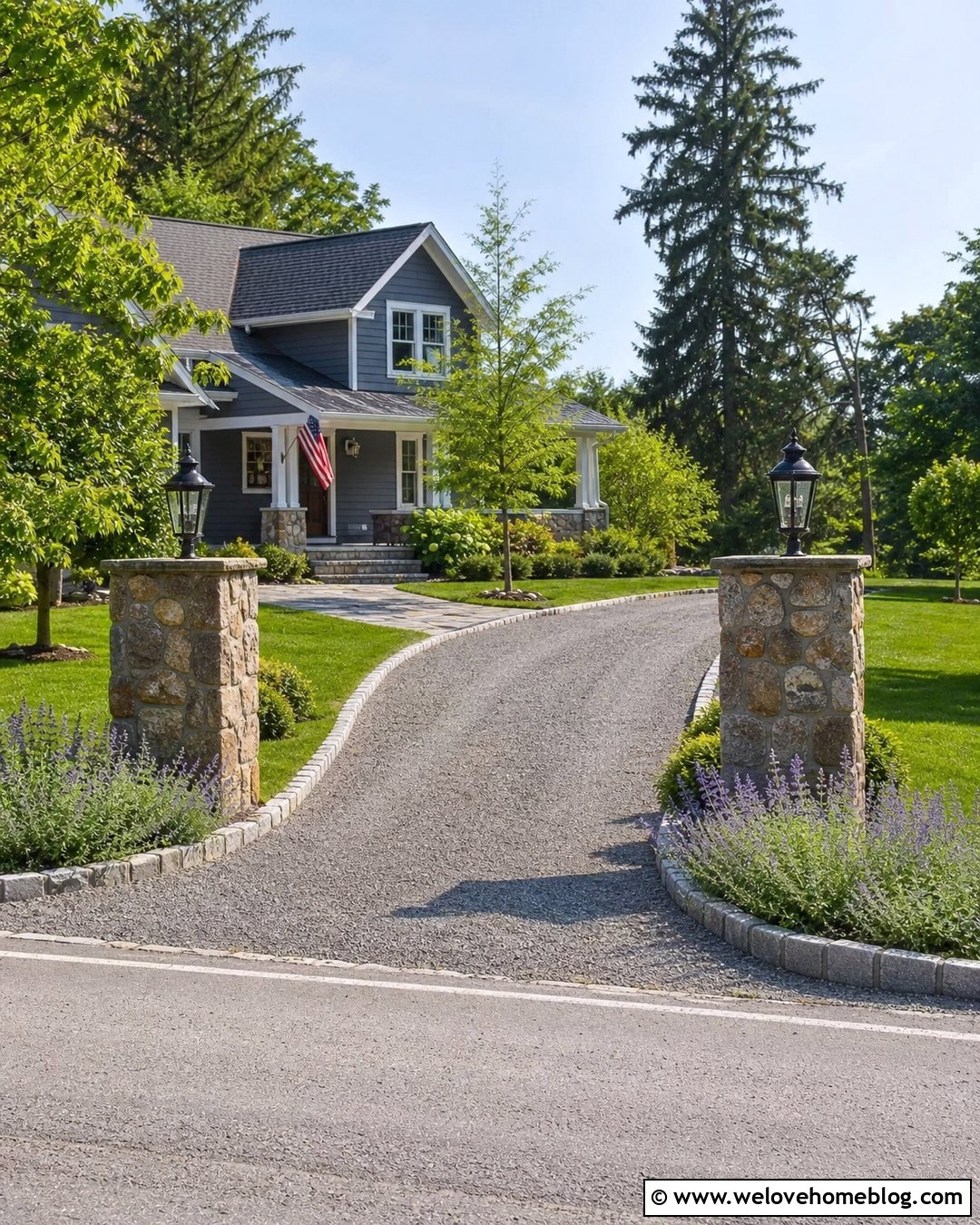
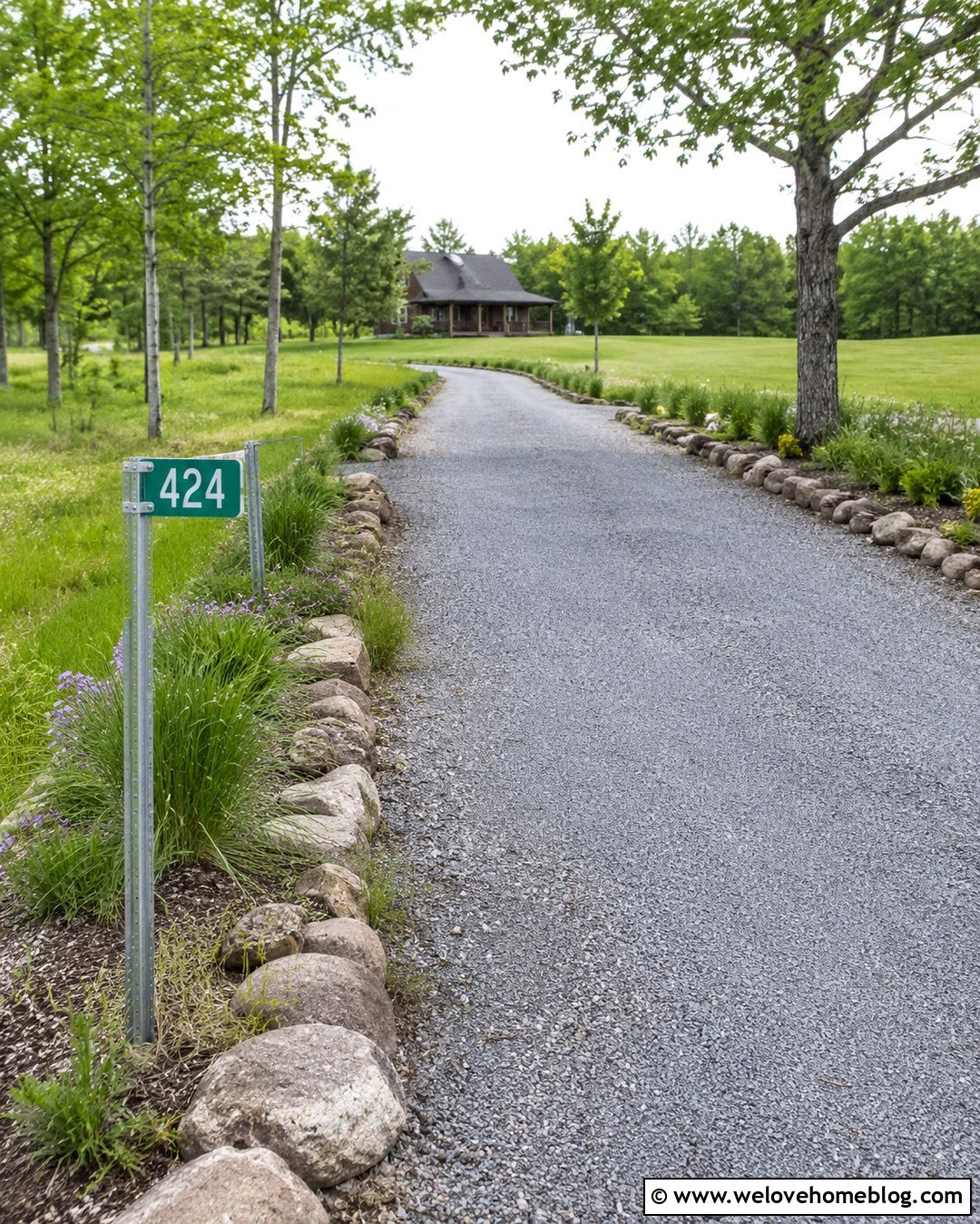
A curved gravel driveway framed by stone pillars creates a defined entrance without feeling overly formal. Choose compacted gray gravel for the driving surface and install cobblestone edging to prevent loose material from spreading into the lawn. Place the pillars several feet inside the property line so vehicles have enough room to enter safely. Low evergreen shrubs around each pillar provide year-round structure while preserving clear views of the road. Add flowering perennials in front for seasonal color. Lavender, catmint, and salvia work especially well in sunny locations. Matching lanterns can finish the pillars and improve visibility after dark. This complete look suits traditional, craftsman, and country homes surrounded by open lawn.
2. Asphalt Driveway Entrance With Brick Garden Beds
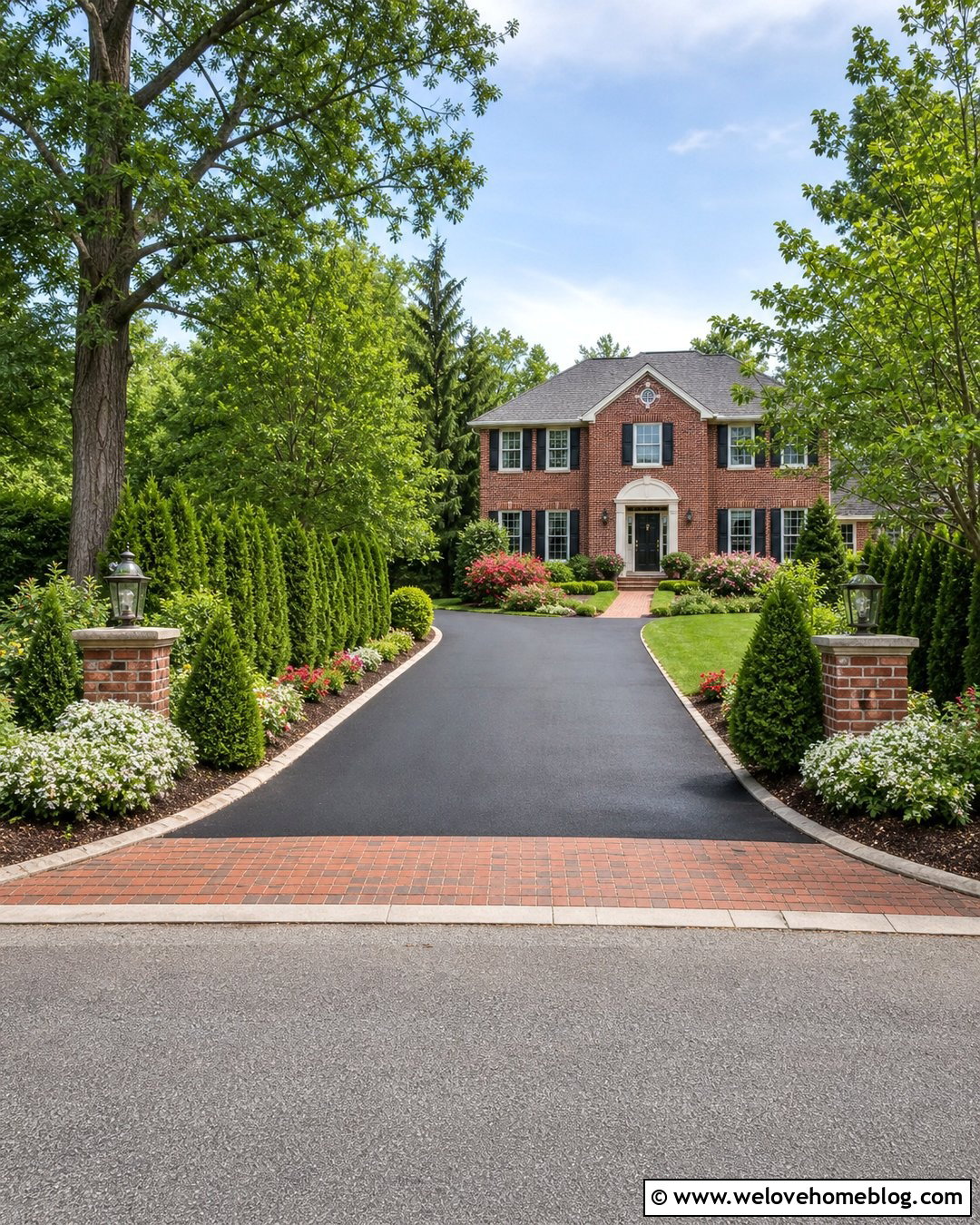
Black asphalt looks more intentional when the entrance is softened with symmetrical brick-edged garden beds. Use a red or brown brick ribbon along the driveway apron to connect the pavement with the surrounding landscape. On both sides, create gently curved beds that guide the eye toward the house instead of forming abrupt square corners. Layer compact evergreens in the back, flowering shrubs in the middle, and low ground cover along the front. Keep plants nearest the street short enough to protect visibility. Repeating brick from the home’s facade will make the entrance feel especially cohesive. This balanced design provides classic curb appeal and is easy to adapt for colonial, ranch, and suburban homes.
3. Modern Concrete Driveway Entrance With Ornamental Grasses
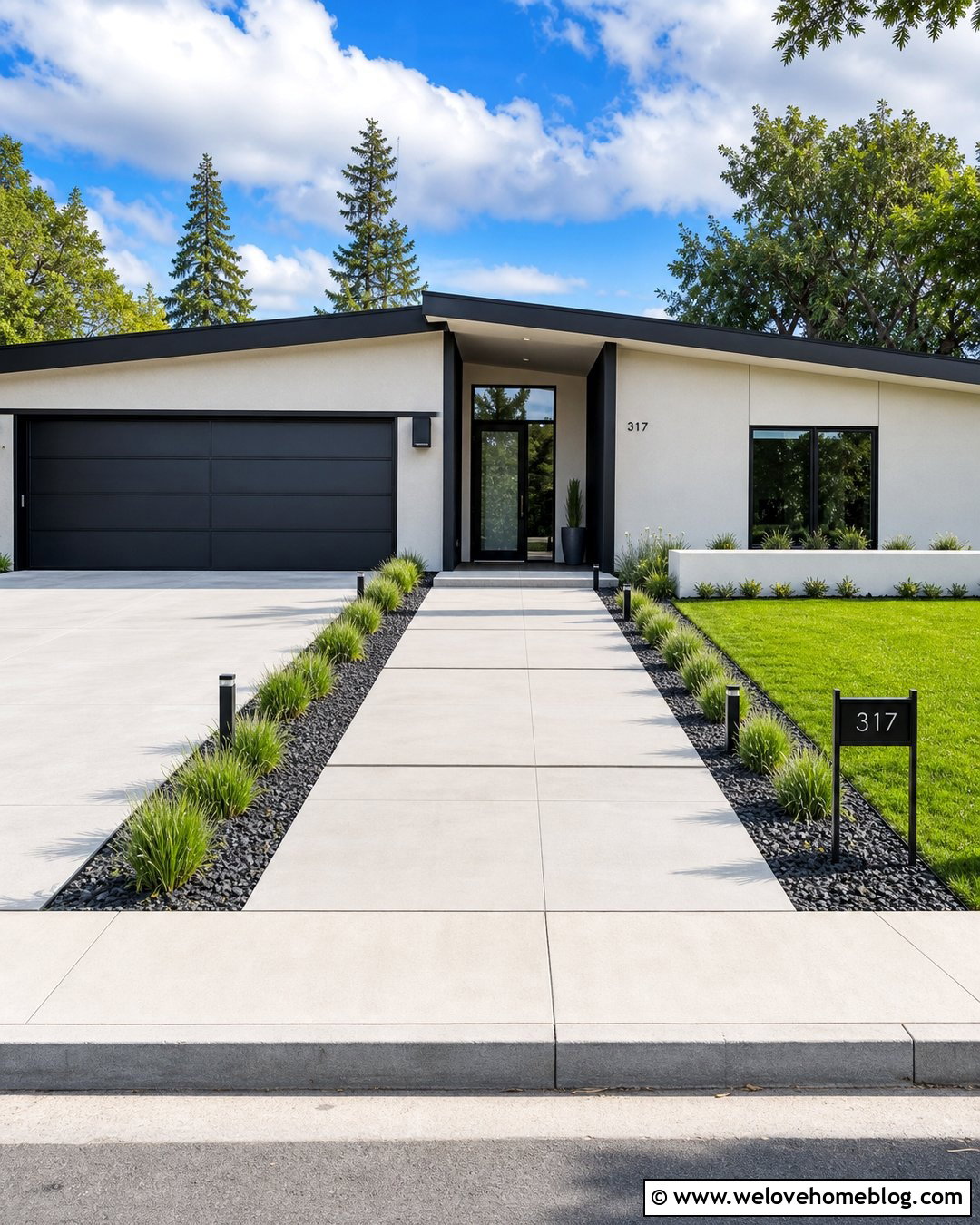
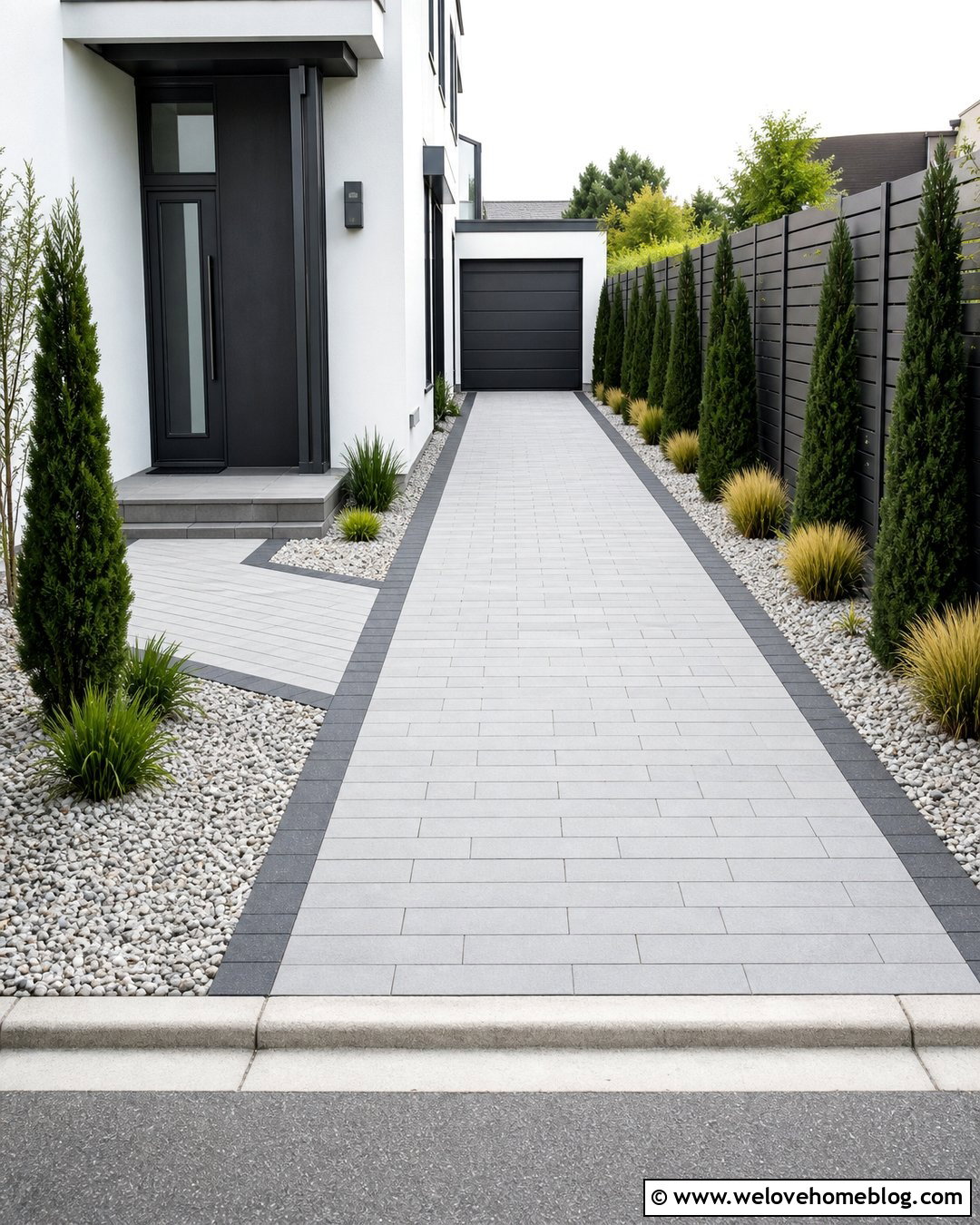
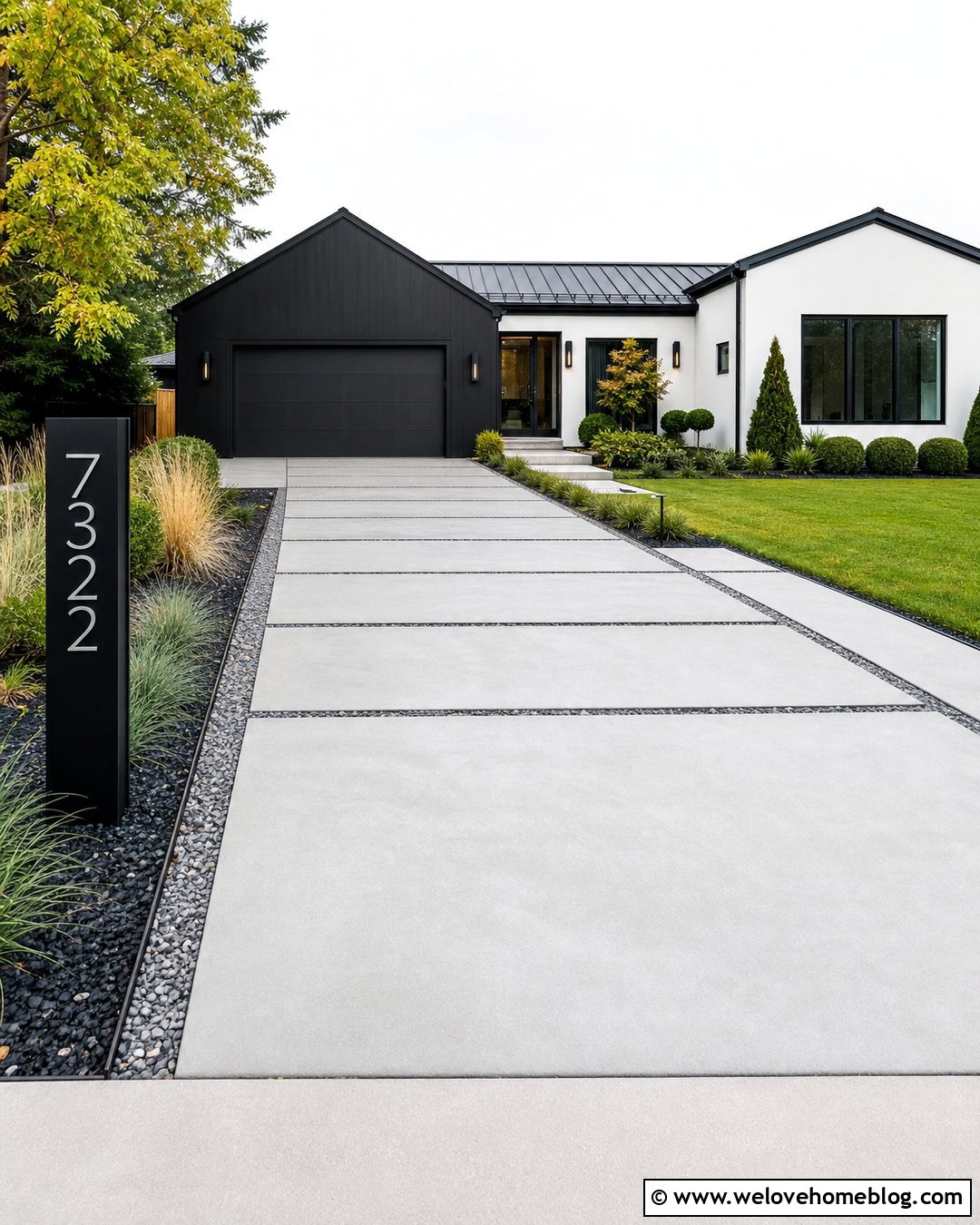
Clean lines and controlled planting give a modern driveway entrance a polished appearance. Start with a straight, light-gray poured concrete driveway finished with subtle saw-cut joints. Add narrow beds bordered by black steel edging on both sides of the entrance. Plant upright ornamental grasses in evenly spaced groups, leaving open areas filled with dark gravel or river rock. A slim metal address sign can serve as the main focal point without cluttering the design. Choose grasses that remain compact and do not lean into the driving area. Low concrete path lights or simple black bollards reinforce the contemporary character. This complete entrance works beautifully with modern, midcentury, and minimalist home exteriors.
4. Farmhouse Driveway Entrance With Hydrangeas
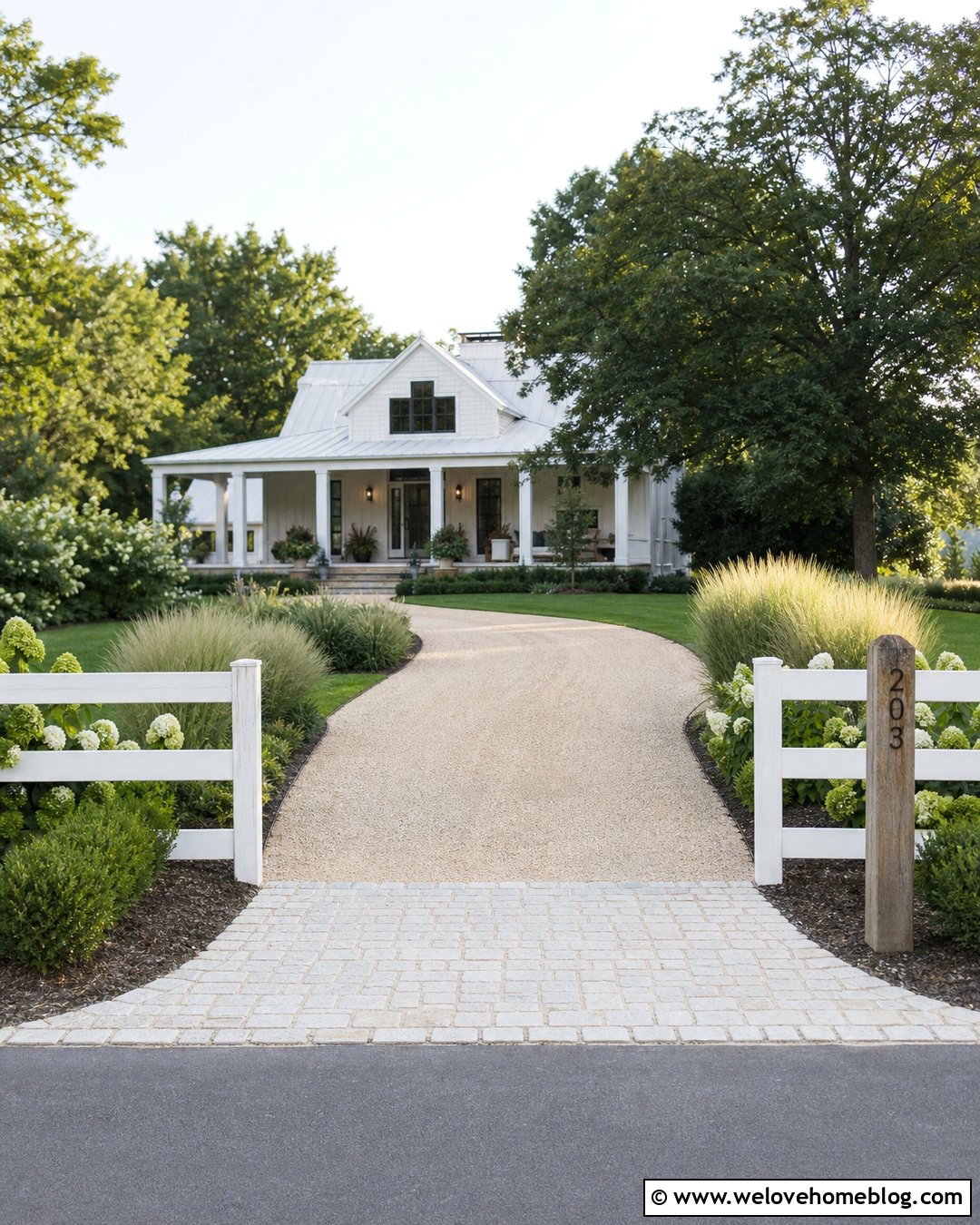
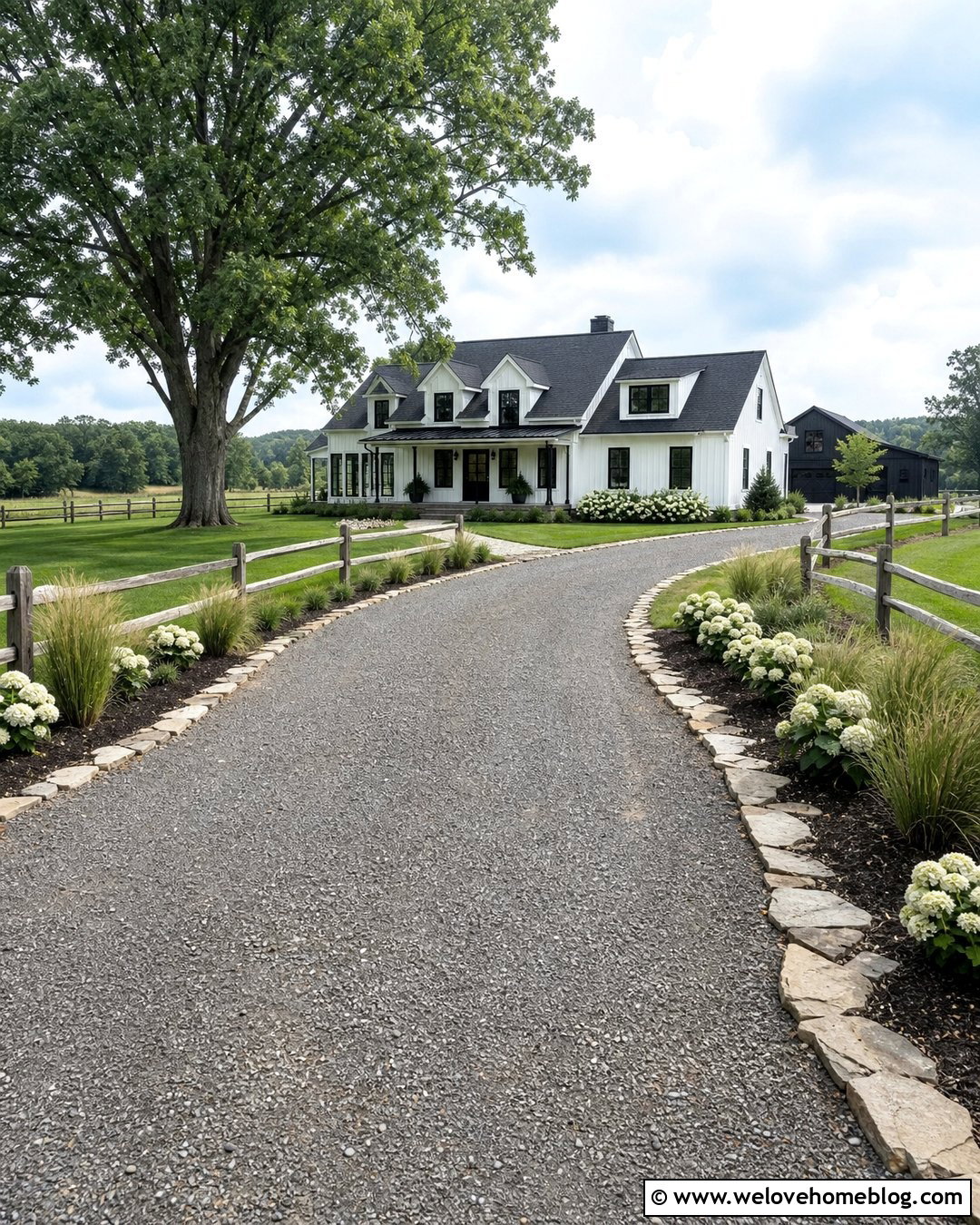
Picture a pale gravel drive passing between white fencing and generous flowering beds. This farmhouse entrance combines beige crushed stone with a wide cobblestone apron for a stable transition from the road. Short sections of white split-rail or paddock fencing define both sides without enclosing the entire front yard. Plant panicle hydrangeas behind low boxwood or inkberry shrubs to create layered color and structure. Add ornamental grasses near the outer corners for movement, but keep them away from important sightlines. A simple wooden address post can match the fence and introduce a practical focal point. The relaxed combination feels welcoming beside a modern farmhouse, Cape Cod, cottage, or renovated country home.
5. Circular Driveway Entrance With Central Garden
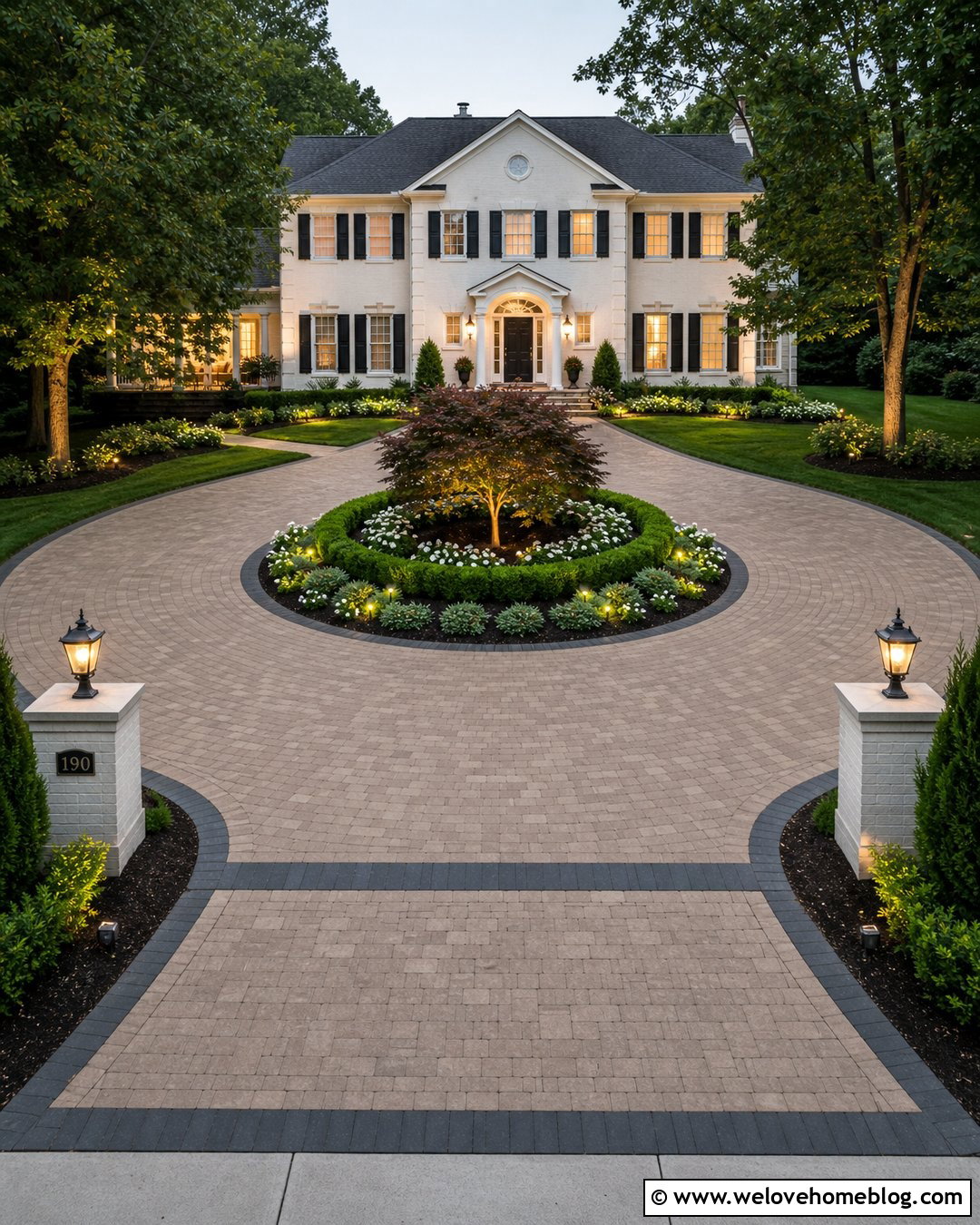
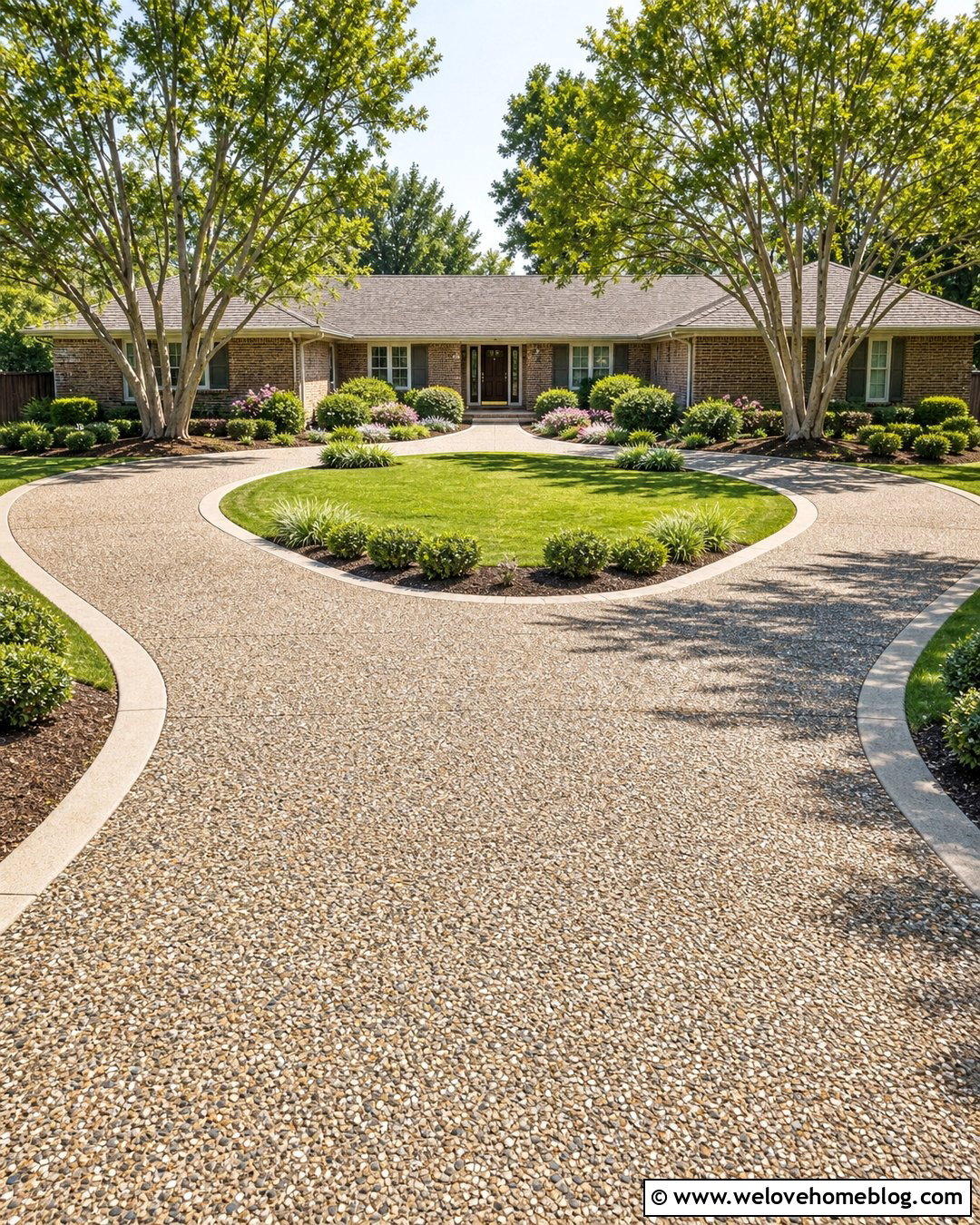
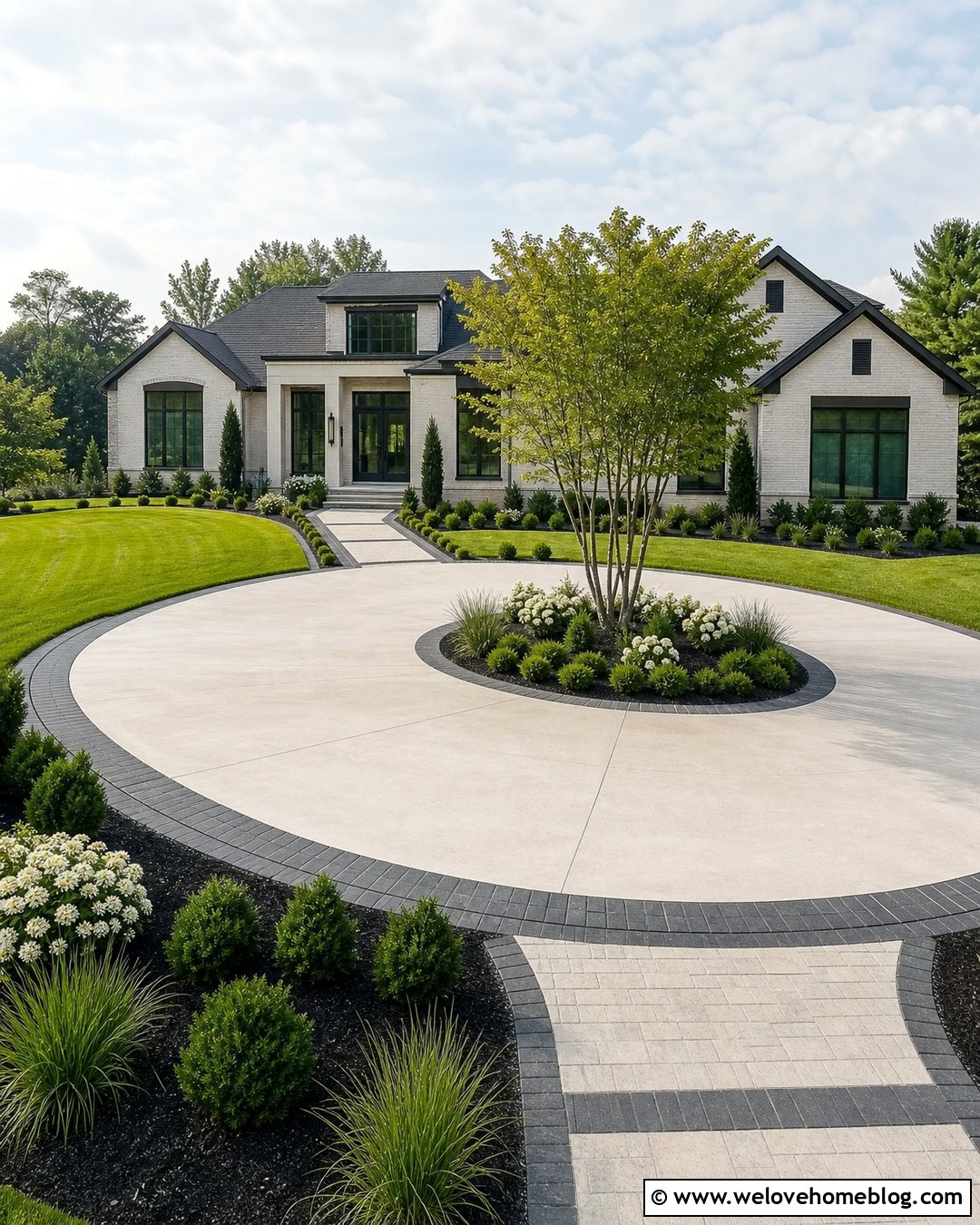
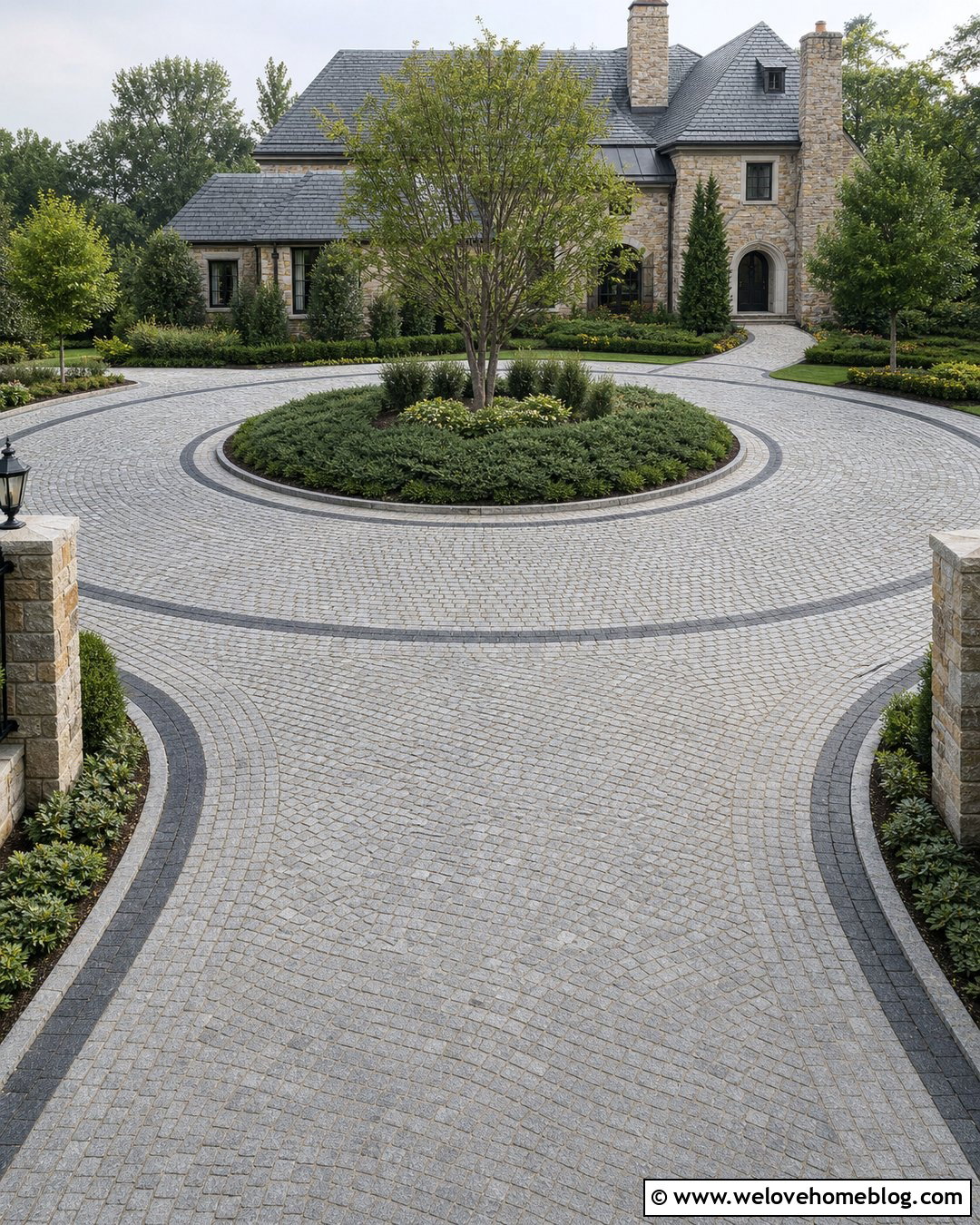
A circular paver driveway becomes more memorable when its center is treated as a complete landscape feature. Use warm taupe concrete pavers in a running-bond pattern, with darker pavers defining the outer curves and entrance. In the center island, plant one small ornamental tree surrounded by evergreen shrubs, flowering perennials, and a neat ground cover. The layered planting should look attractive from every direction because drivers will circle around it. Low-voltage uplighting can highlight the tree without shining toward the road. Repeat a few of the island plants near the two driveway openings for continuity. This elegant layout works best where the yard provides generous turning space and an open view.
6. Brick Driveway Entrance With Lavender Borders
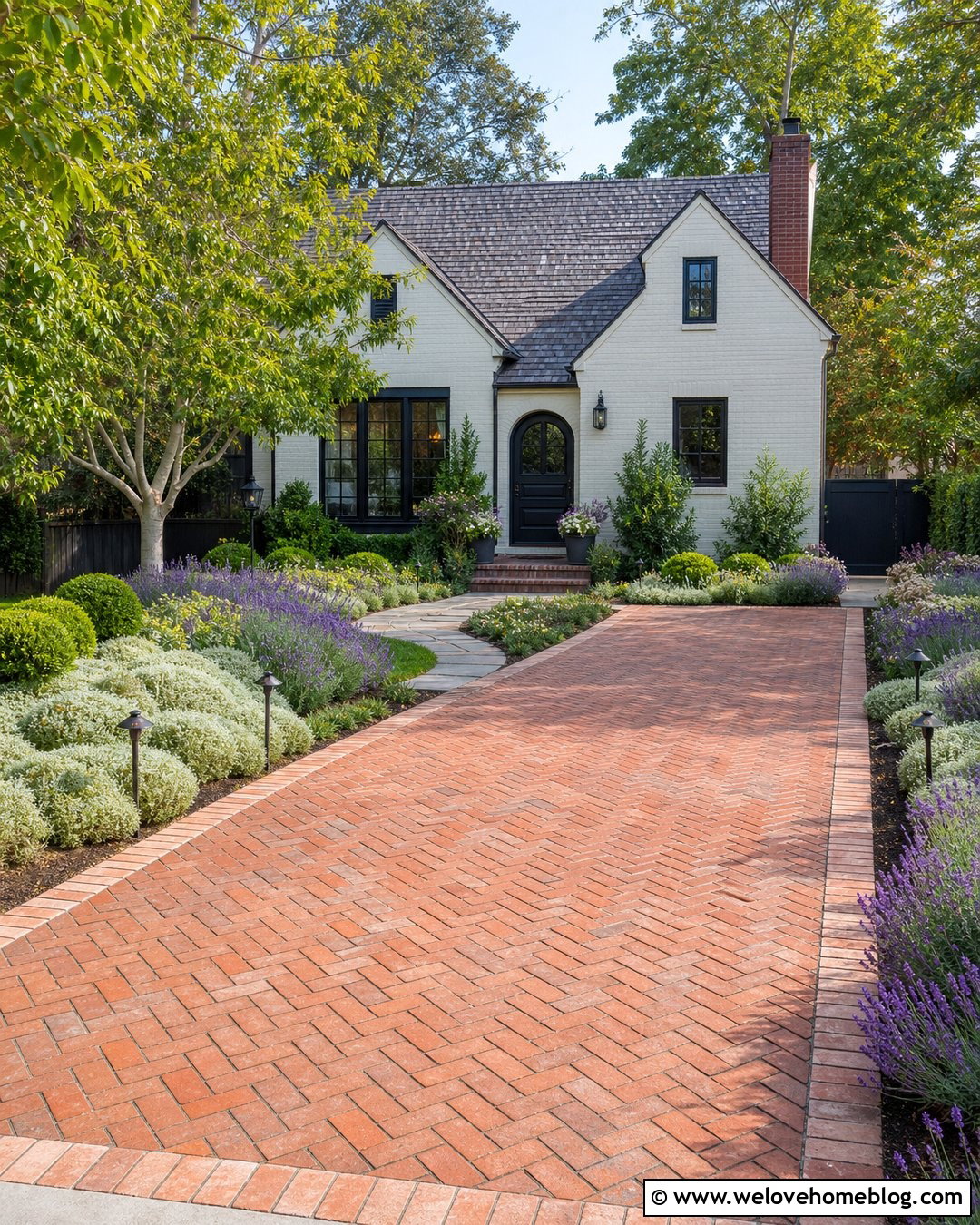
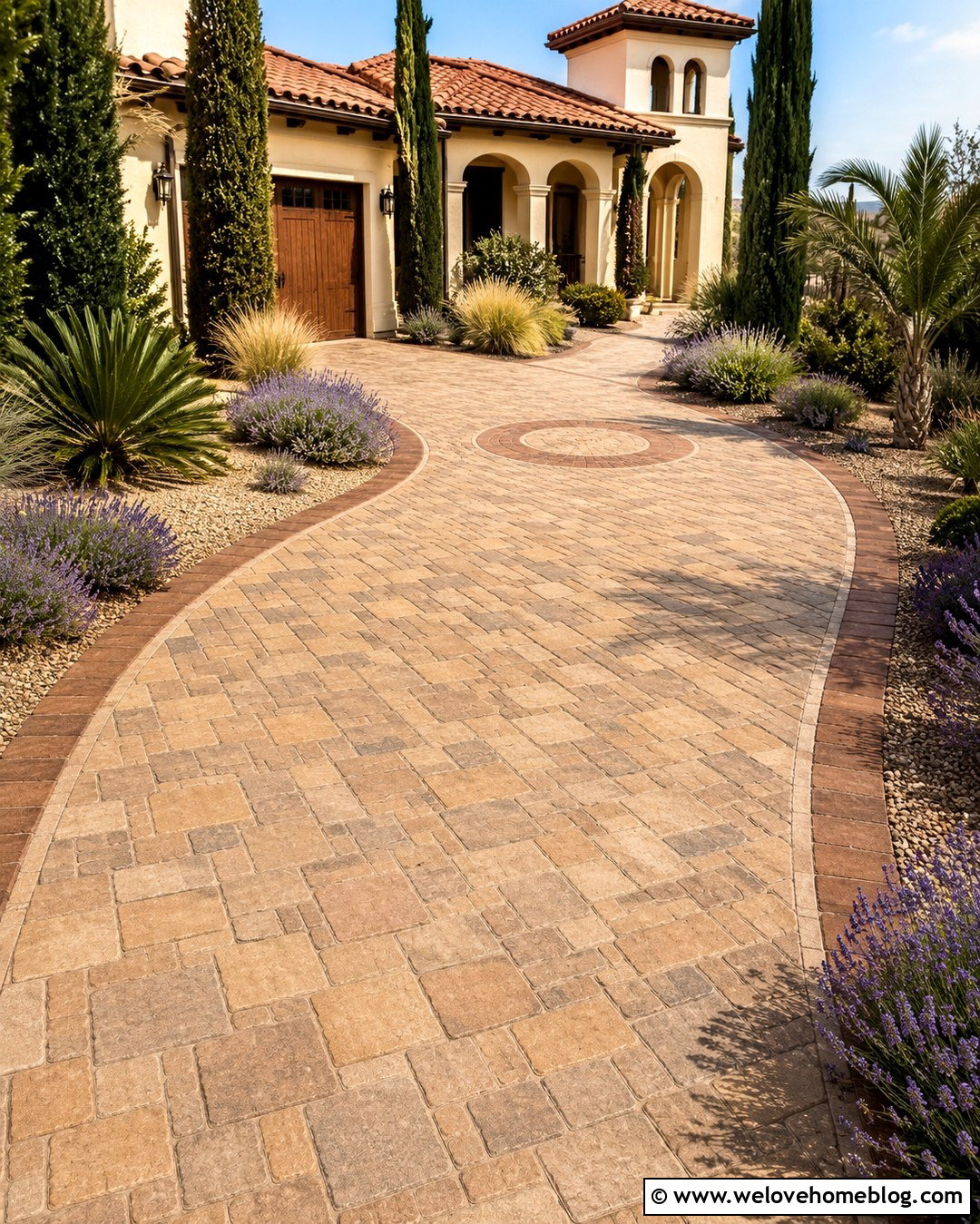
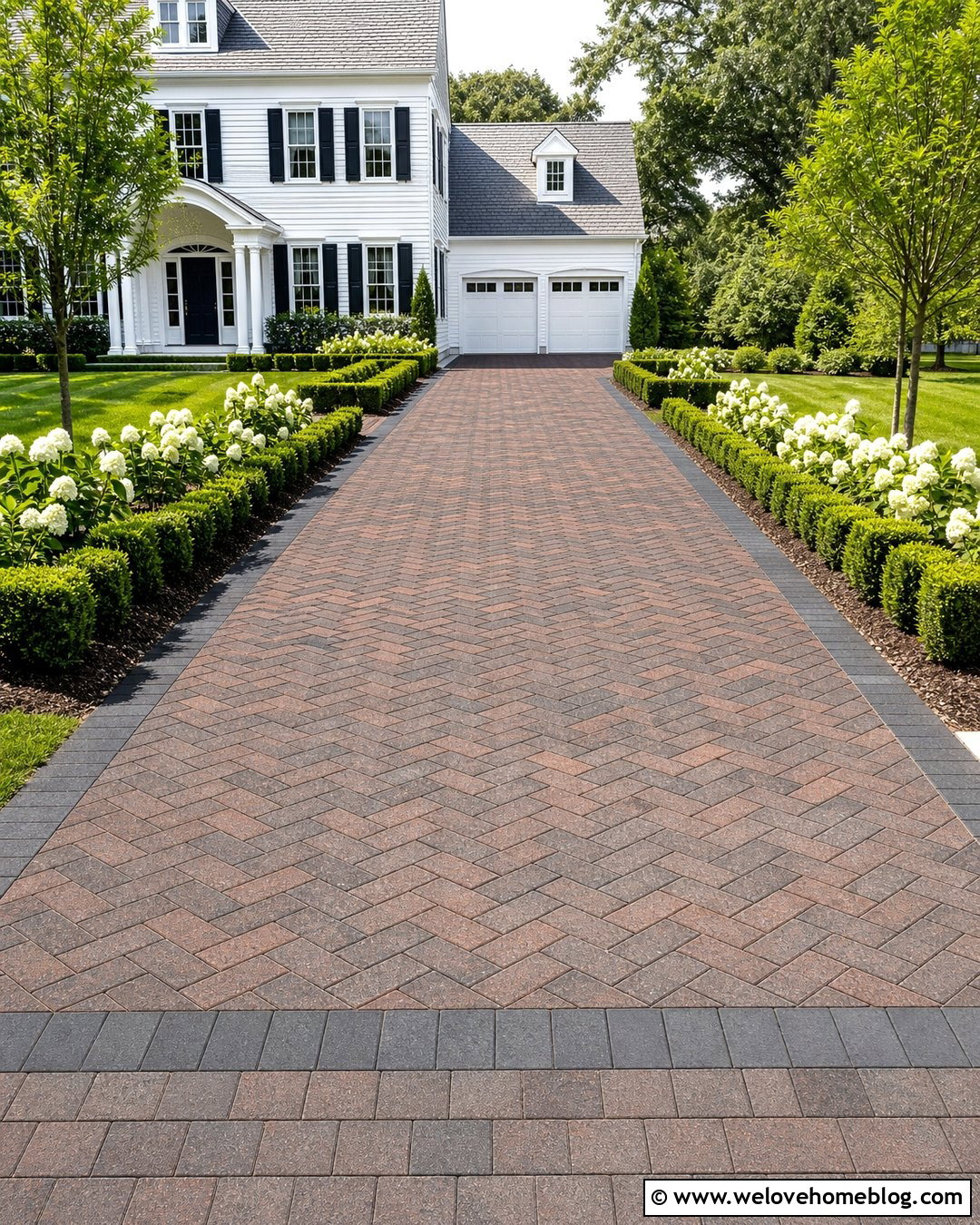
Clay brick pavers and lavender create a warm entrance that suits cottages and traditional homes. Lay the driveway in a herringbone pattern for visual interest and use a soldier-course brick border to hold the edges firmly in place. Along both sides, create narrow planting beds with repeated lavender mounds, compact evergreen shrubs, and silver-leaved ground covers. The controlled repetition keeps the entrance tidy rather than overly busy. If the site receives limited sun, replace lavender with another compact plant suited to the local conditions. Low black path lights can disappear into the planting during the day. This complete look connects a richly textured driving surface with soft color, fragrance, and classic garden character.
7. Exposed Aggregate Driveway With Xeriscape Planting
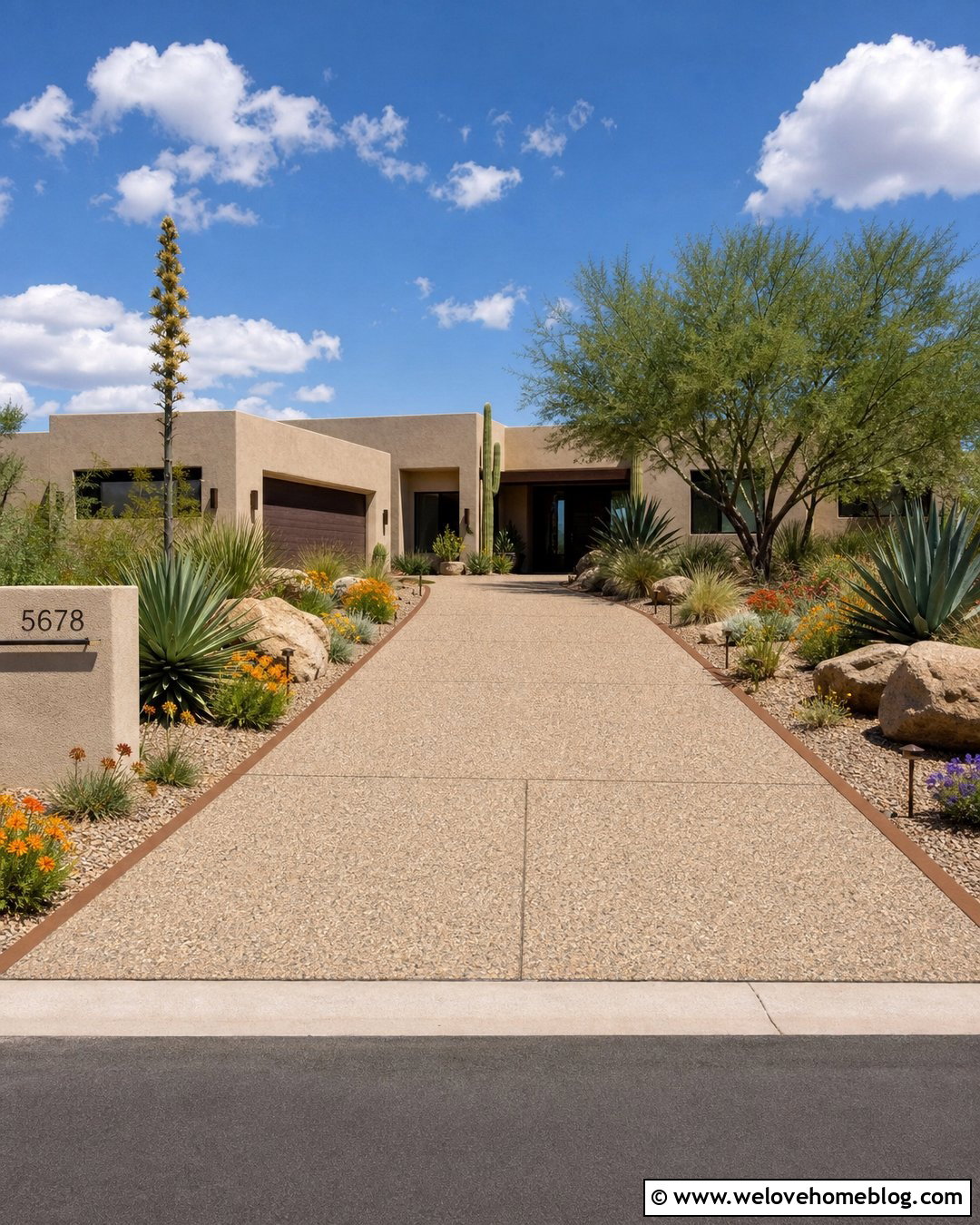
Hot, dry front yards can still have a lush-looking driveway entrance without demanding constant irrigation. Choose tan exposed aggregate concrete for the driveway and frame its straight approach with rust-colored steel edging. Fill the entrance beds with decomposed granite, sculptural boulders, agave, yucca, compact ornamental grasses, and flowering drought-tolerant perennials. Arrange plants in small groups rather than scattering individual specimens across the bed. This creates a stronger design and leaves visible areas of decorative stone between them. A stucco address monument can match the home and provide a clear focal point. Keep thorny or sharply pointed plants well back from vehicles, sidewalks, and areas where passengers may exit.
8. Long Driveway Entrance With Tree-Lined Landscaping
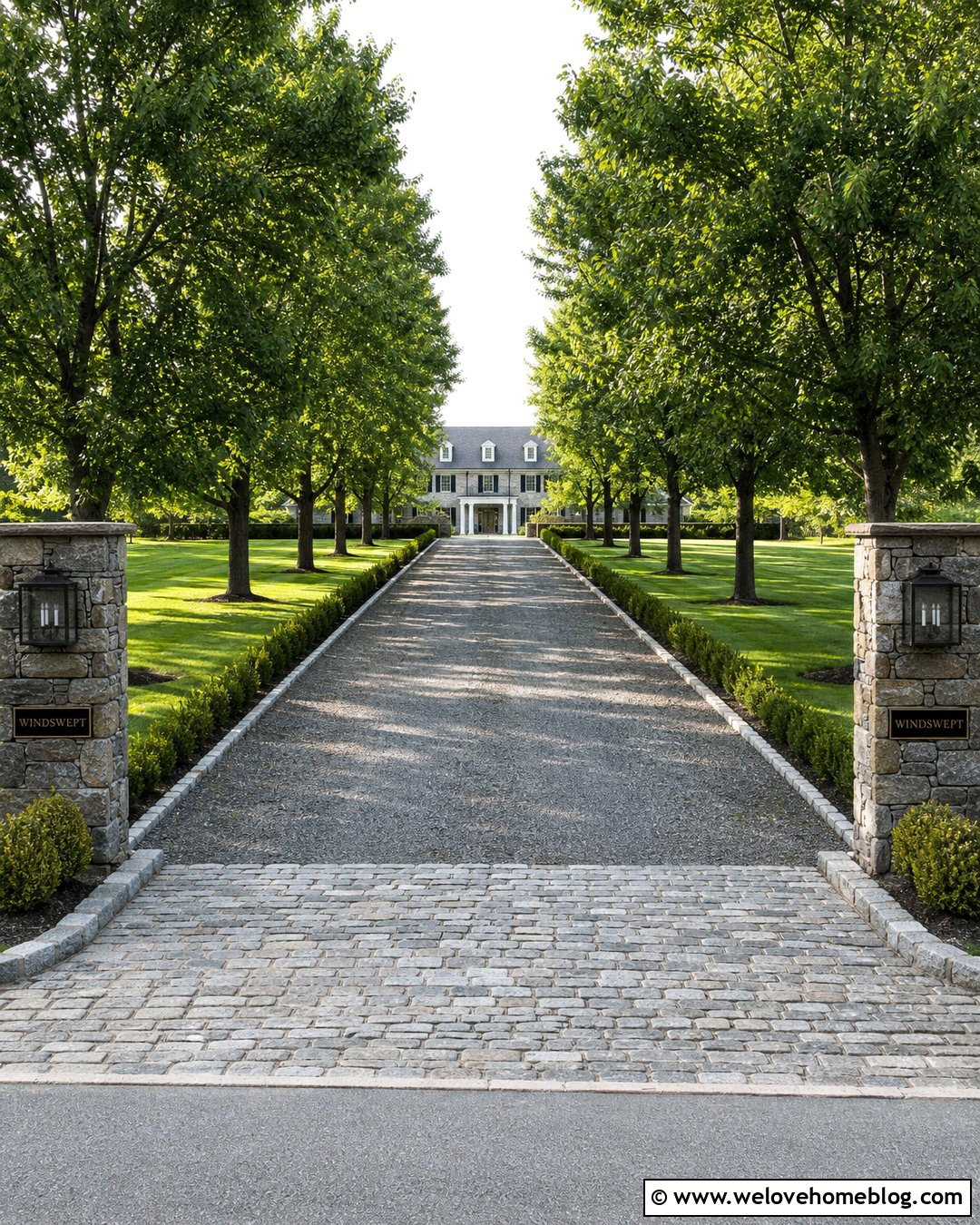
A long driveway benefits from landscaping that establishes direction and makes the approach feel connected to the house. Begin with a cobblestone apron at the road, then continue with a straight gray gravel driving surface. Plant evenly spaced deciduous trees along both sides, setting them far enough back to accommodate mature trunks, branches, snow storage, and maintenance equipment. A low hedge beneath the trees can strengthen the formal lines, while broad lawn strips prevent the entrance from feeling cramped. Stone edging keeps the gravel contained throughout the approach. Matching masonry pillars at the road provide a visual starting point. This design is particularly effective for colonial, Georgian, estate, and large country homes.
9. Small Driveway Entrance With Low Shrubs
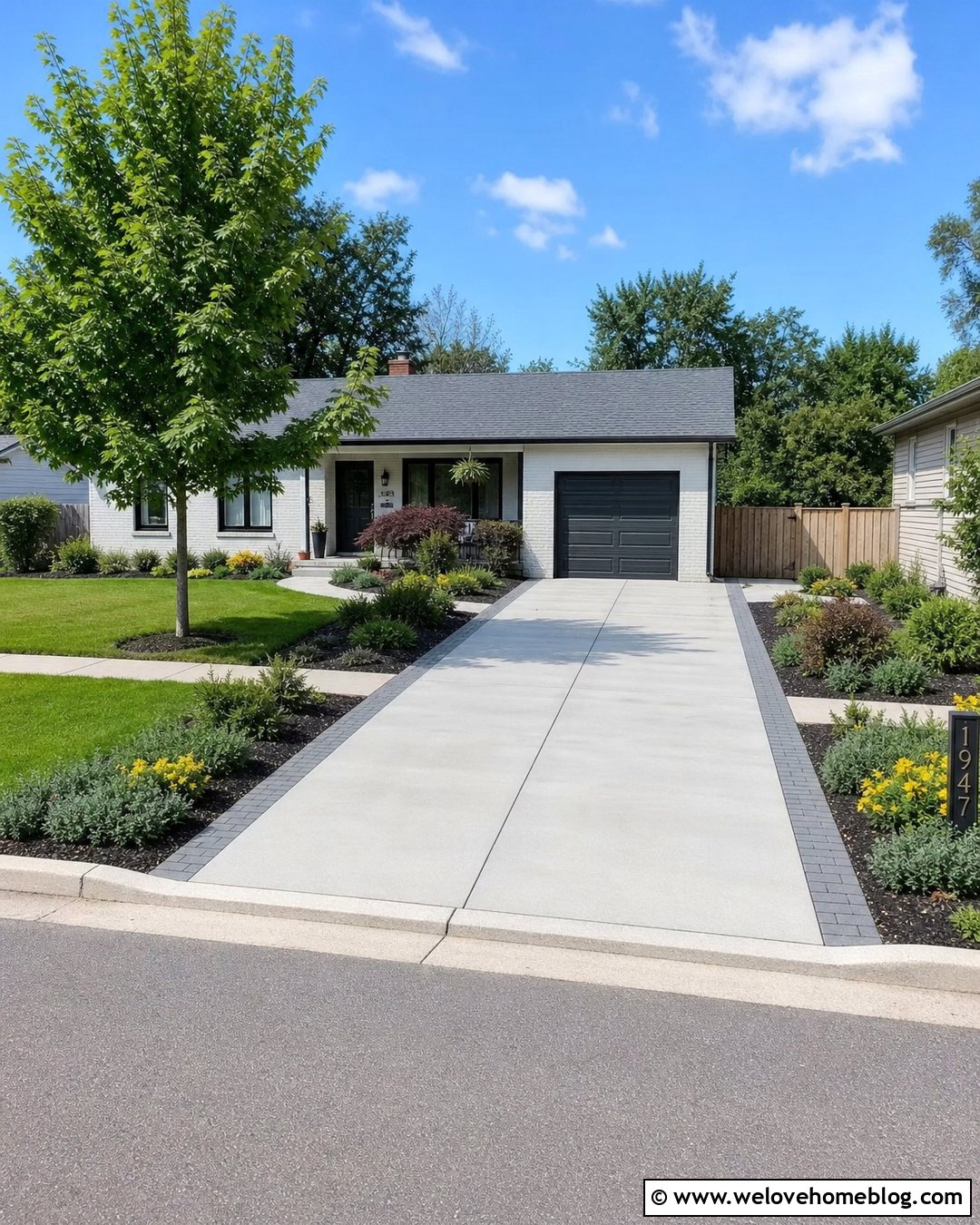
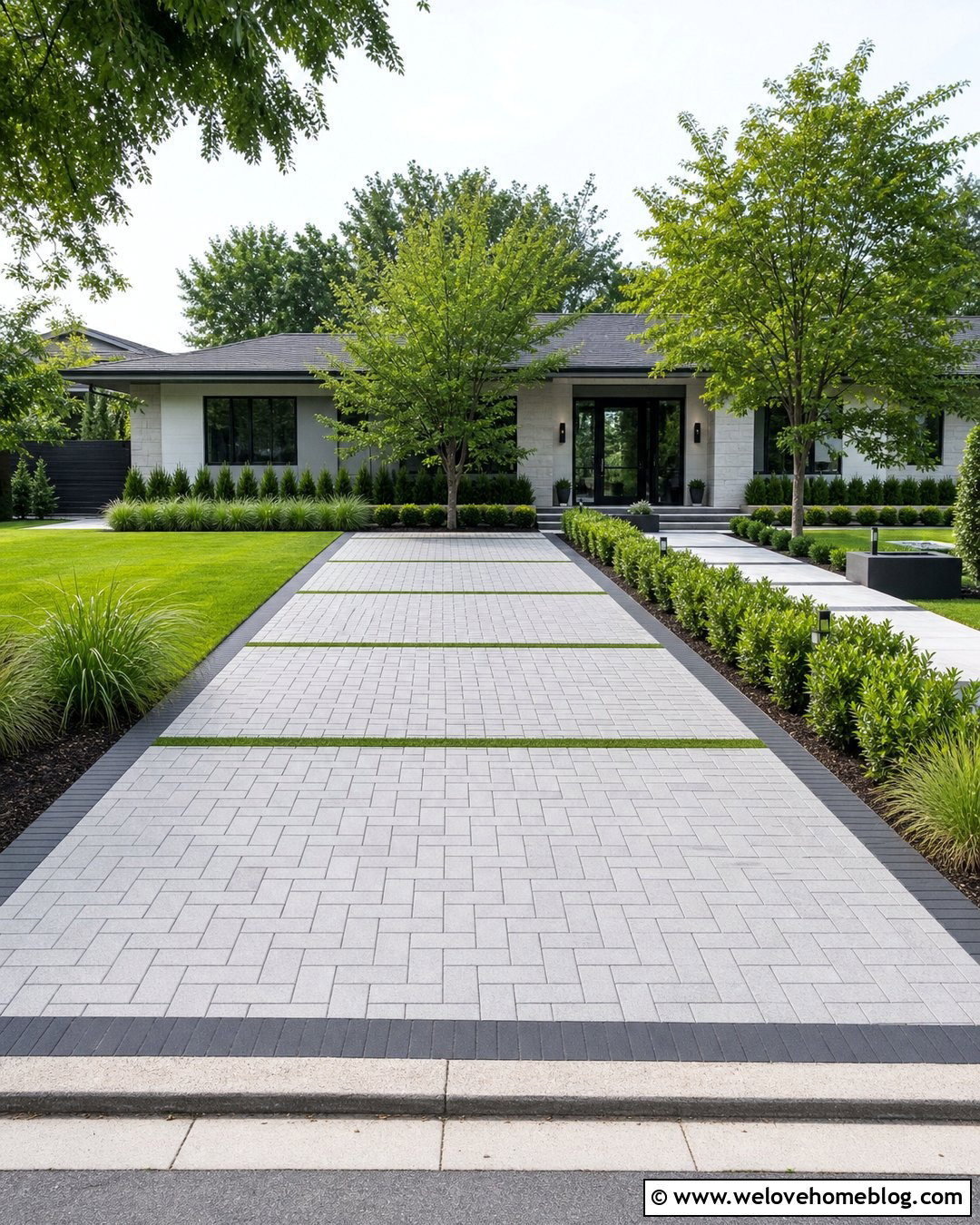
Limited space calls for simple landscaping that frames the driveway without narrowing it. Use a light-gray concrete driveway with a thin charcoal paver border to create definition. At the street, shape two compact planting beds that curve away from the pavement and blend into the front lawn. Select low evergreen shrubs, spreading ground covers, and a restrained mix of seasonal flowers. Avoid large trees, wide hedges, and tall grasses that could overwhelm the entrance or block views. A narrow address marker placed toward the house side of one bed adds function without creating clutter. This design gives a small ranch, bungalow, or townhouse entrance a finished appearance while preserving convenient access for cars, deliveries, and pedestrians.
10. Gated Driveway Entrance With Stone Walls
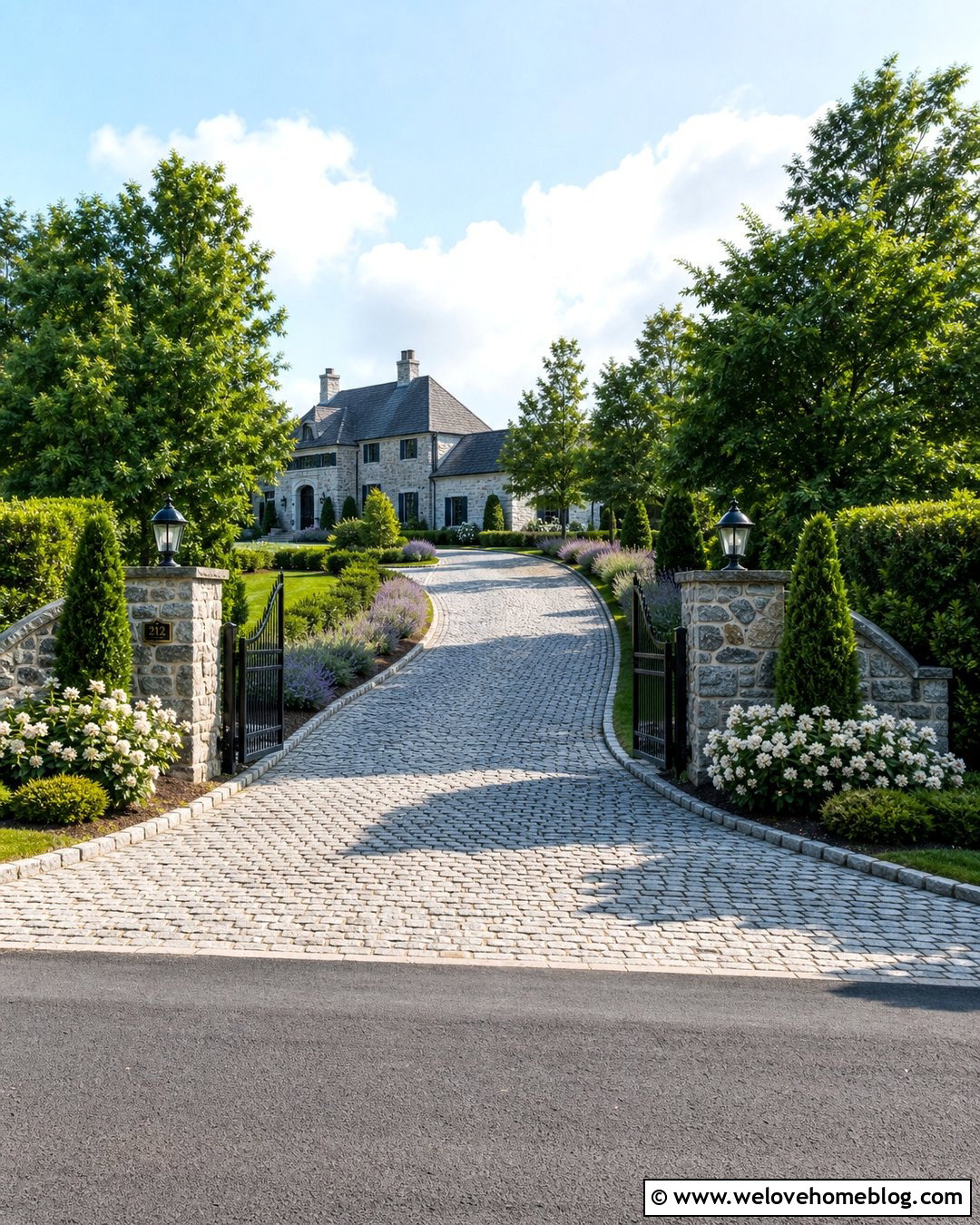
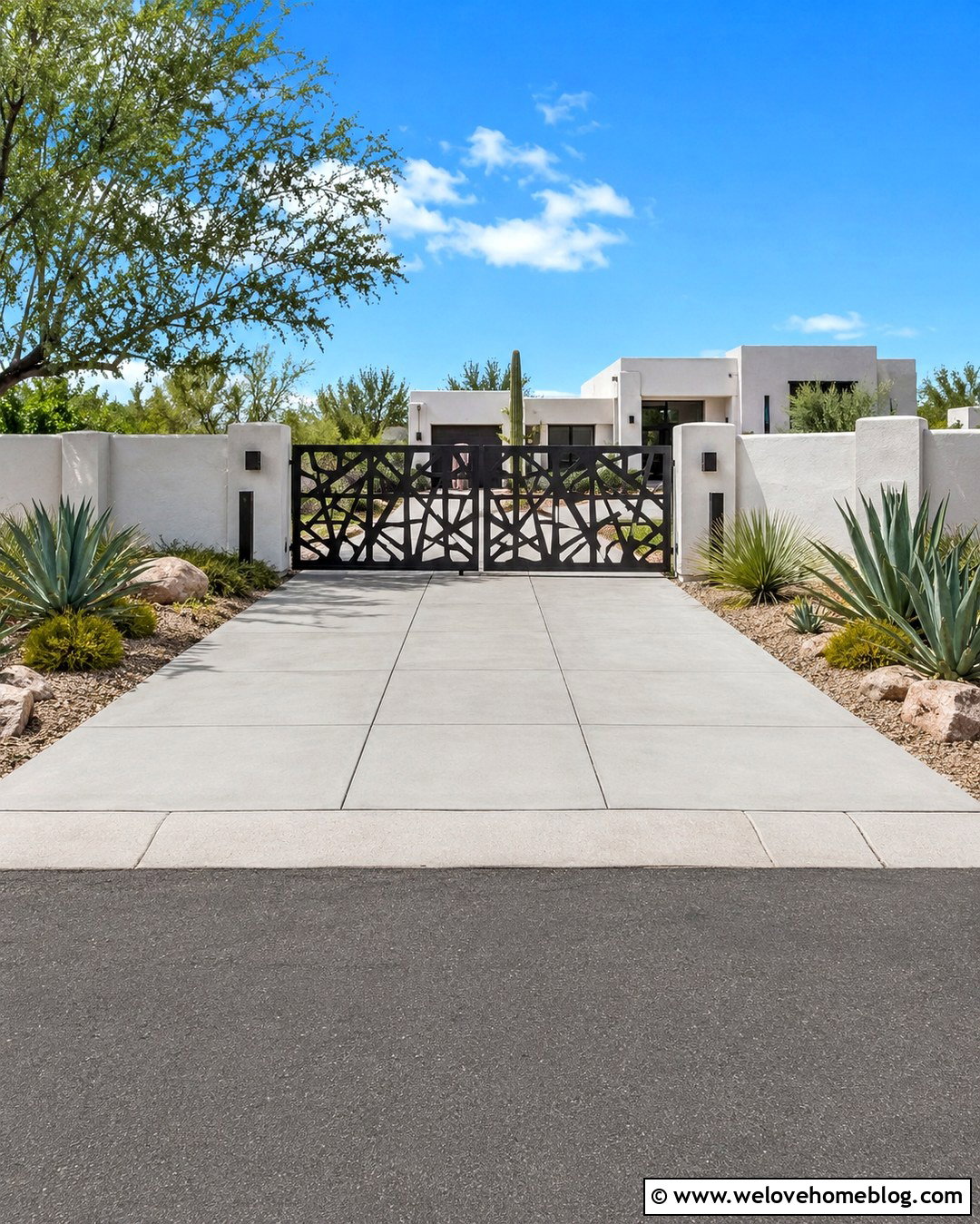
For a gated property, the surrounding landscaping should make the security feature feel integrated rather than added later. Pair a curved cobblestone driveway with substantial natural-stone pillars and short matching walls. Set the gate back from the street so a vehicle can wait without blocking traffic. Extend planting beds along the outside of the walls using clipped evergreens, ground-cover roses, and low perennials. On the property side, larger shrubs can soften the masonry and connect it to the broader yard. Install discreet lighting on the pillars and beneath selected plants. The driveway material, wall stone, gate finish, and house facade should share compatible tones. This produces a stately but welcoming entrance with strong architectural balance.
11. Driveway Entrance With White Fence Landscaping
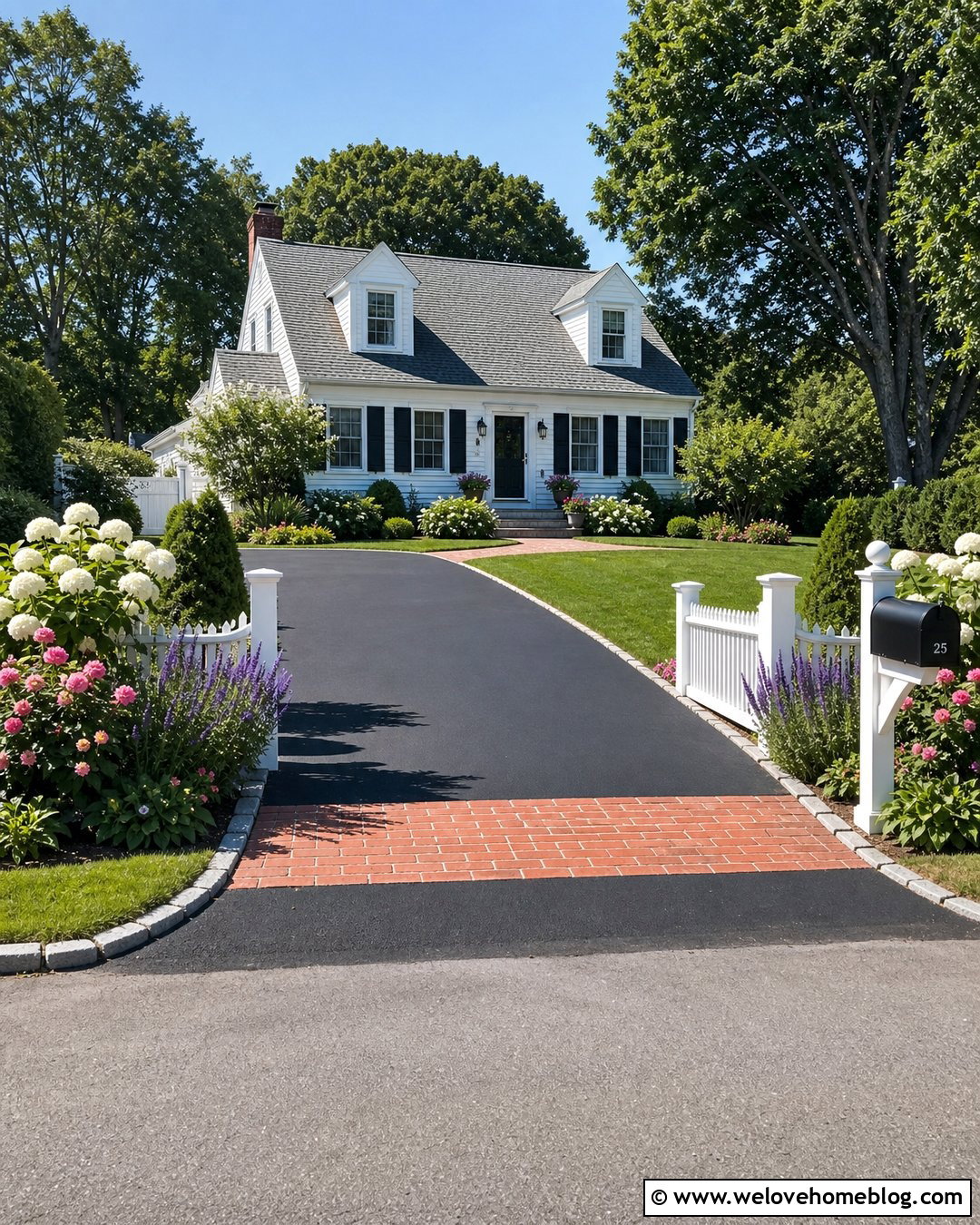
White fencing can brighten a driveway entrance and create a clear boundary between the lawn and road. Combine a black asphalt driveway with a warm brick apron, then install short fence sections that angle gently away from both sides. This flared arrangement helps the entrance appear wider and more inviting. Plant flowering shrubs behind the fence and lower perennials in front so the rails remain visible. White hydrangeas, pink roses, salvia, and compact evergreens create a classic layered border. Finish the design with simple post caps and a matching mailbox or address plaque. Regular spacing and repeated plant varieties keep the look organized. It is a natural fit for Cape Cod, farmhouse, and colonial properties.
12. Driveway Entrance With Boulders And Native Grasses
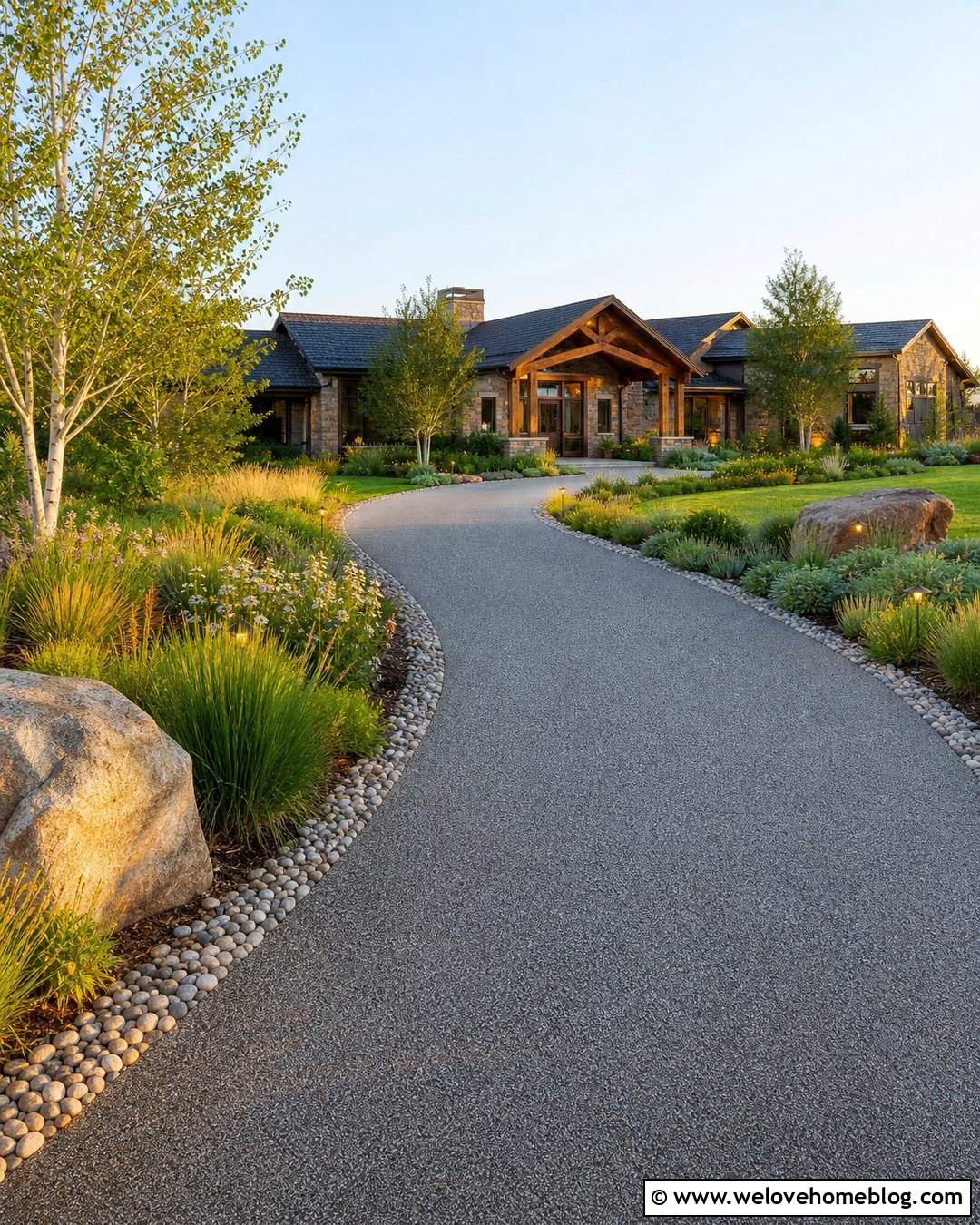
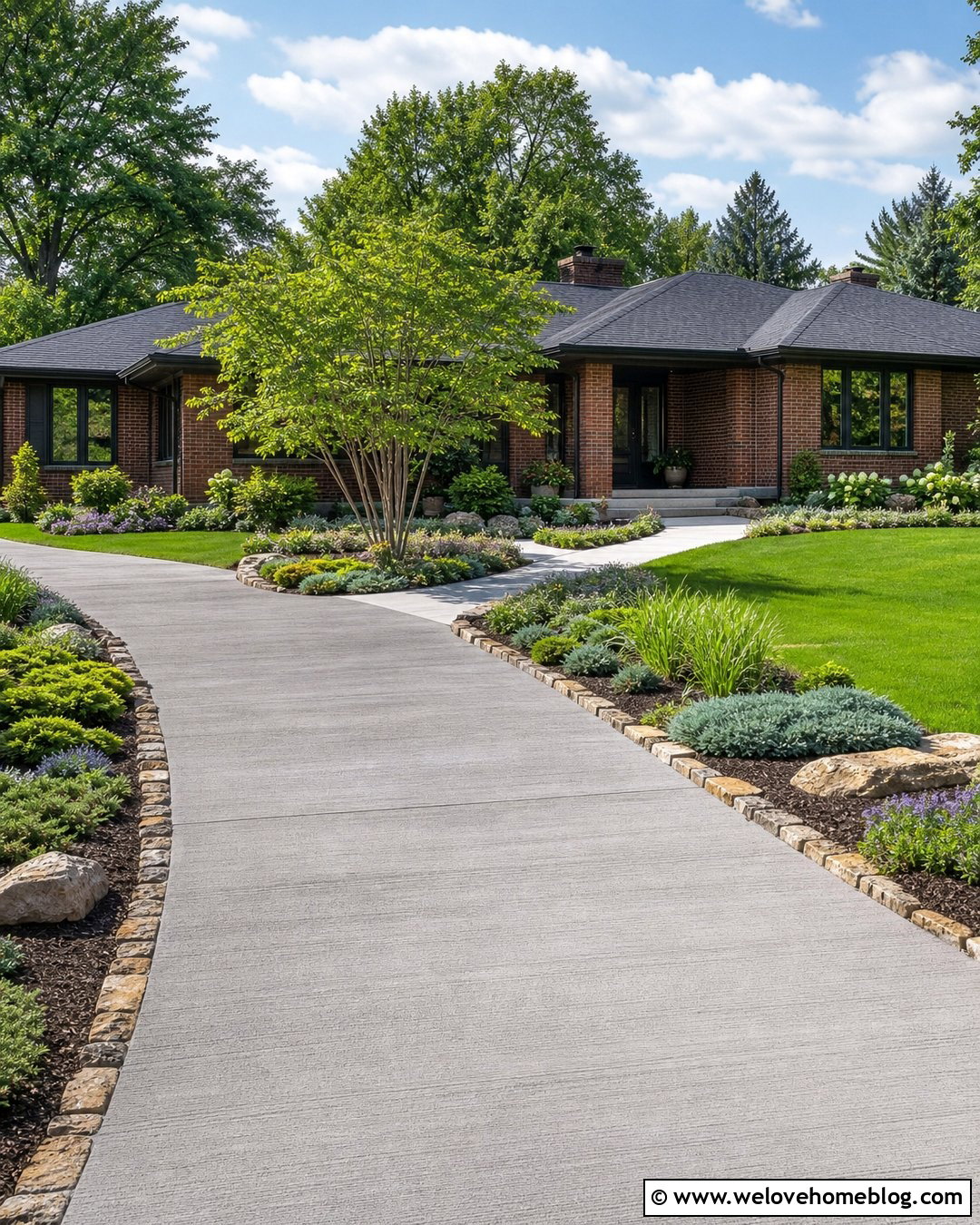
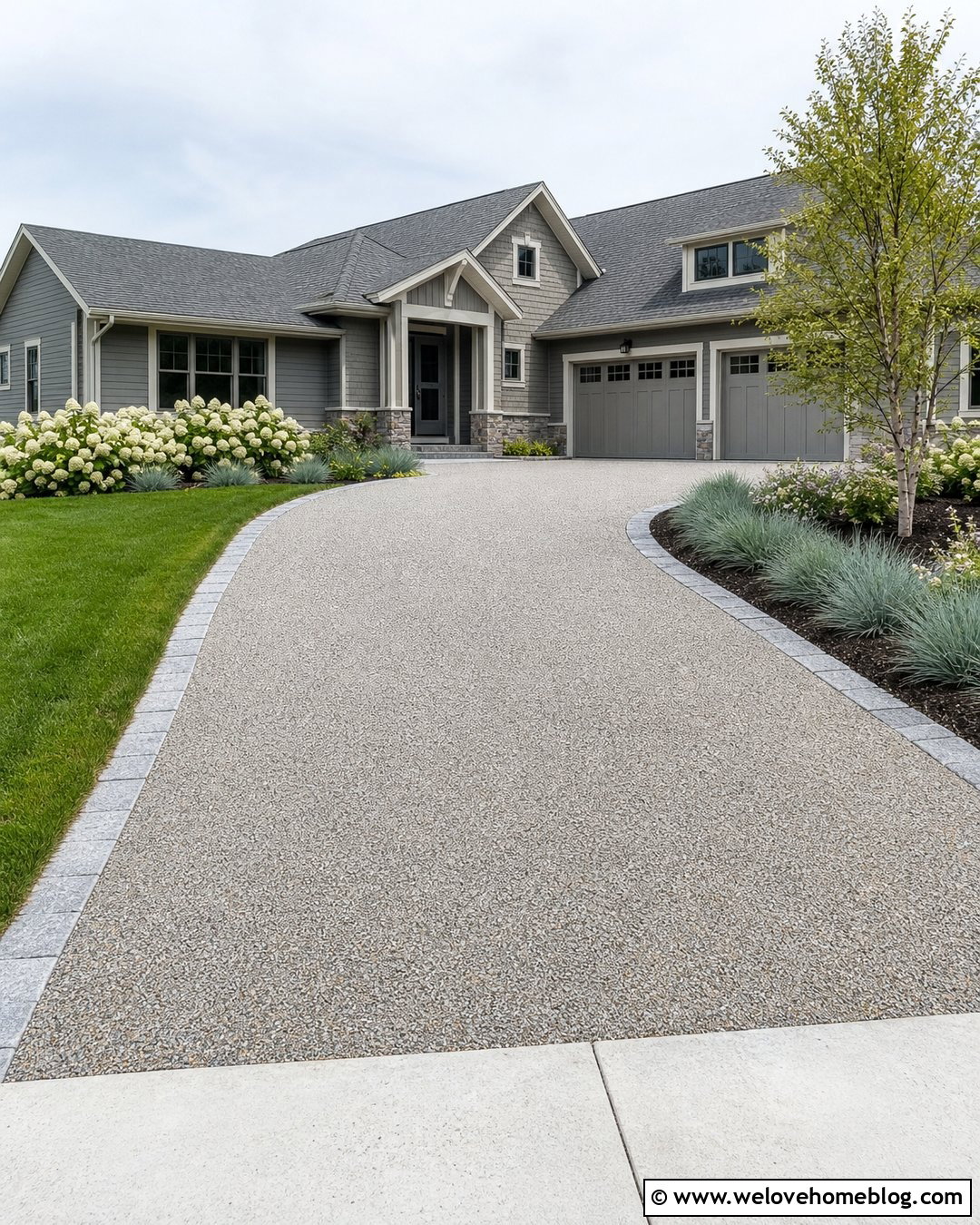
Large boulders can anchor an informal entrance when they are arranged as part of a wider landscape rather than placed alone. Use a warm gray resin-bound gravel driveway with natural stone edging and gently curved planting beds. Position one or two locally appropriate boulders inside each bed, partially settling them into the ground for a natural appearance. Surround them with native grasses, flowering perennials, and low spreading shrubs. Vary plant heights while keeping the roadside corners open for visibility. Small uplights can emphasize the stone forms and grass textures in the evening. This low-fuss design works especially well with rustic ranch homes, mountain properties, prairie-inspired landscapes, and wooded suburban lots.
13. Sloped Driveway Entrance With Retaining Walls
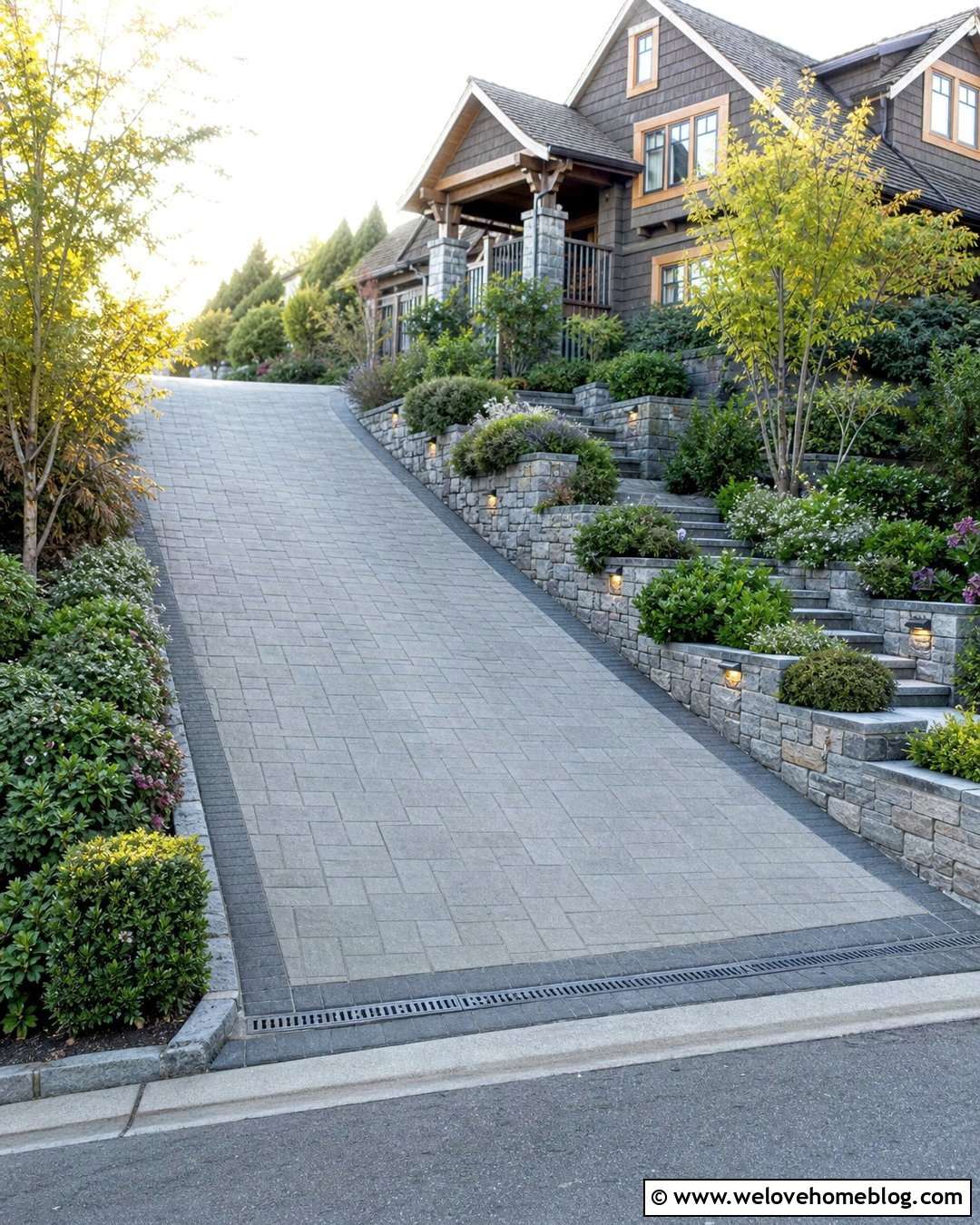
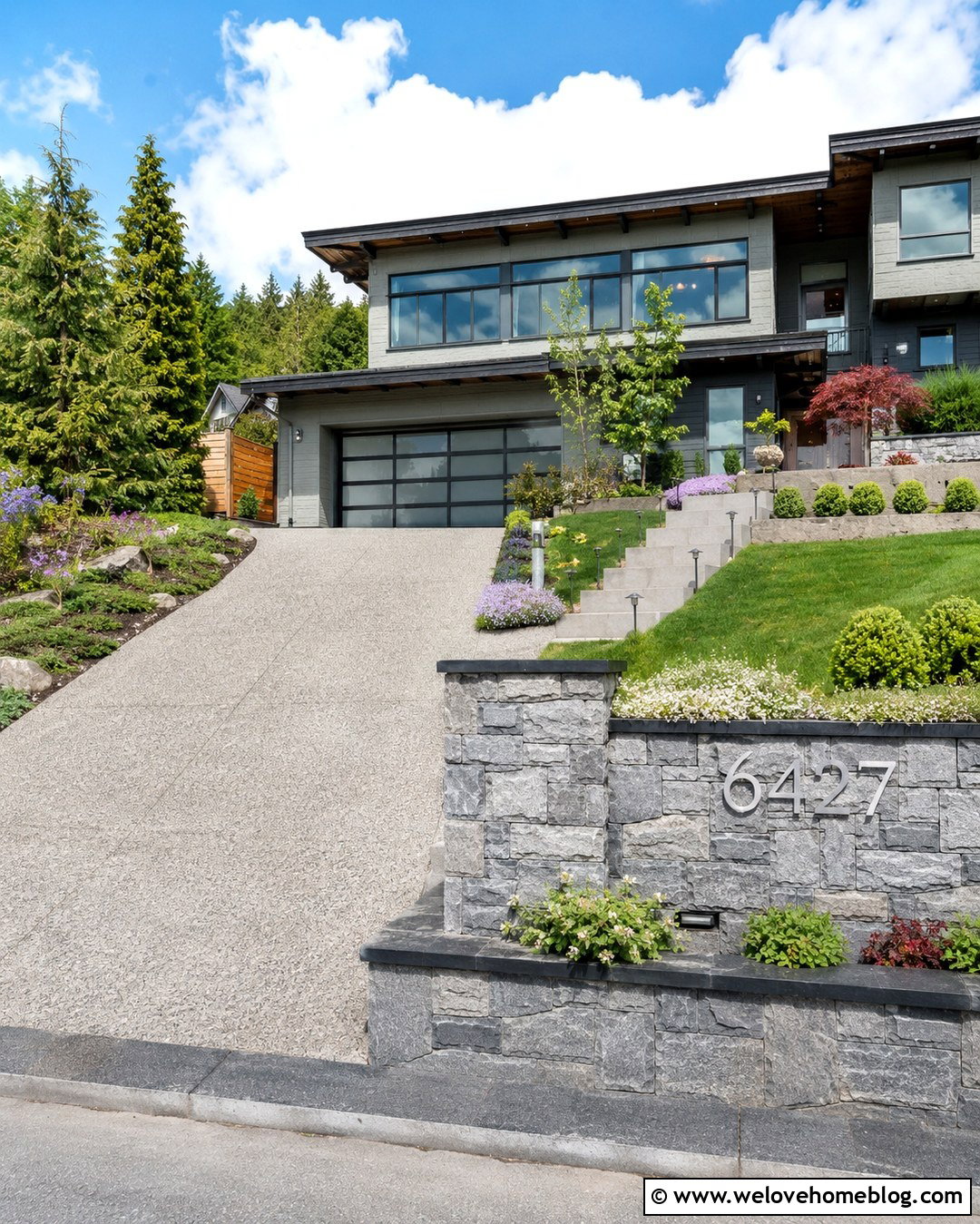
A sloping entrance needs landscaping that controls soil while creating a comfortable visual transition from the street. Choose textured concrete pavers for traction and use low retaining walls to support raised planting beds on either side. Wall materials should relate to the house, such as natural stone for a craftsman exterior or smooth concrete block for a modern home. Plant cascading ground covers along the wall tops, with compact shrubs and small ornamental trees farther back. Properly placed drains can direct runoff away from the driveway surface and neighboring property. Add step lights or recessed wall lights for nighttime visibility. The result is a structured entrance where practical grade management becomes an attractive part of the overall design.
14. Driveway Entrance With A Rain Garden
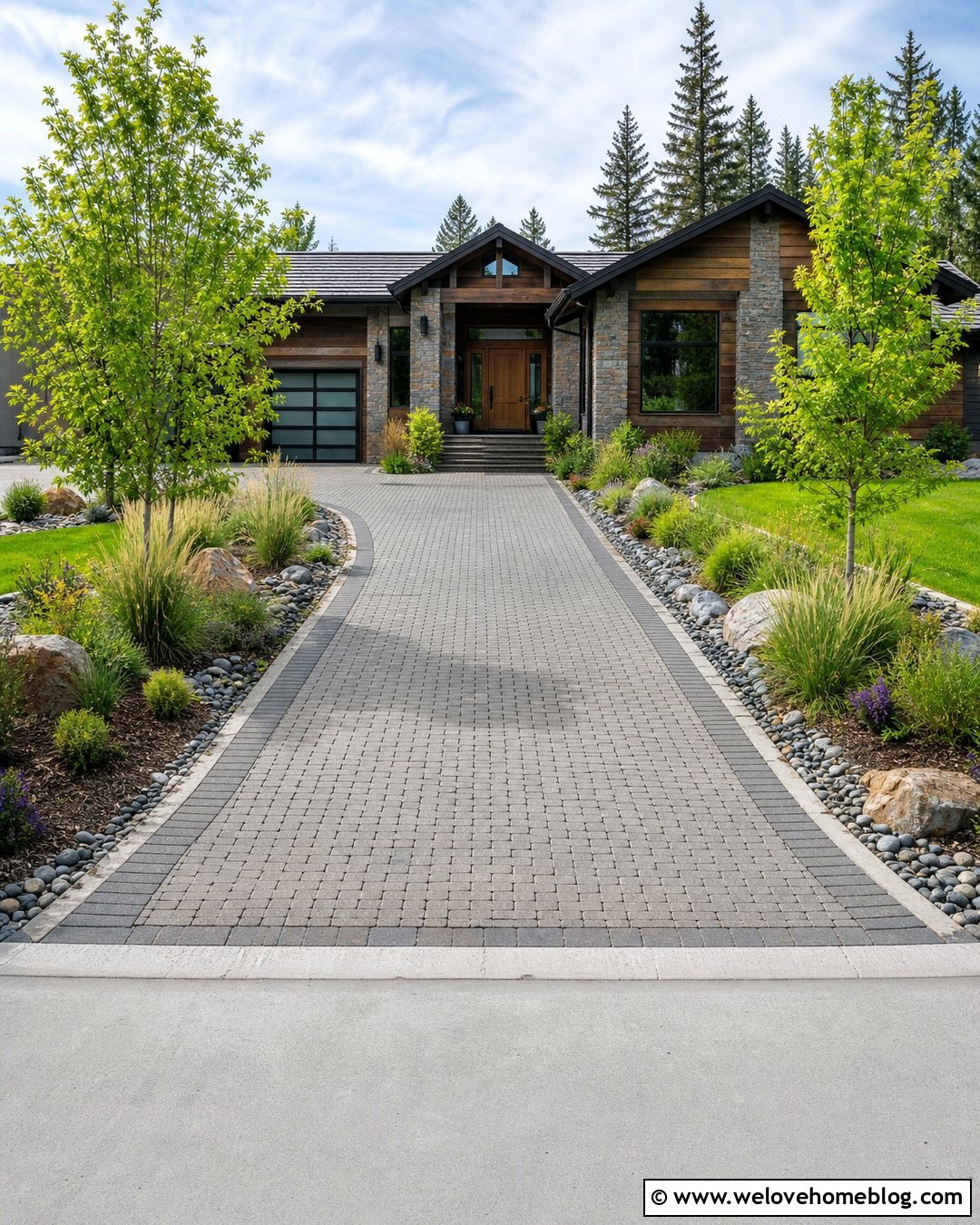
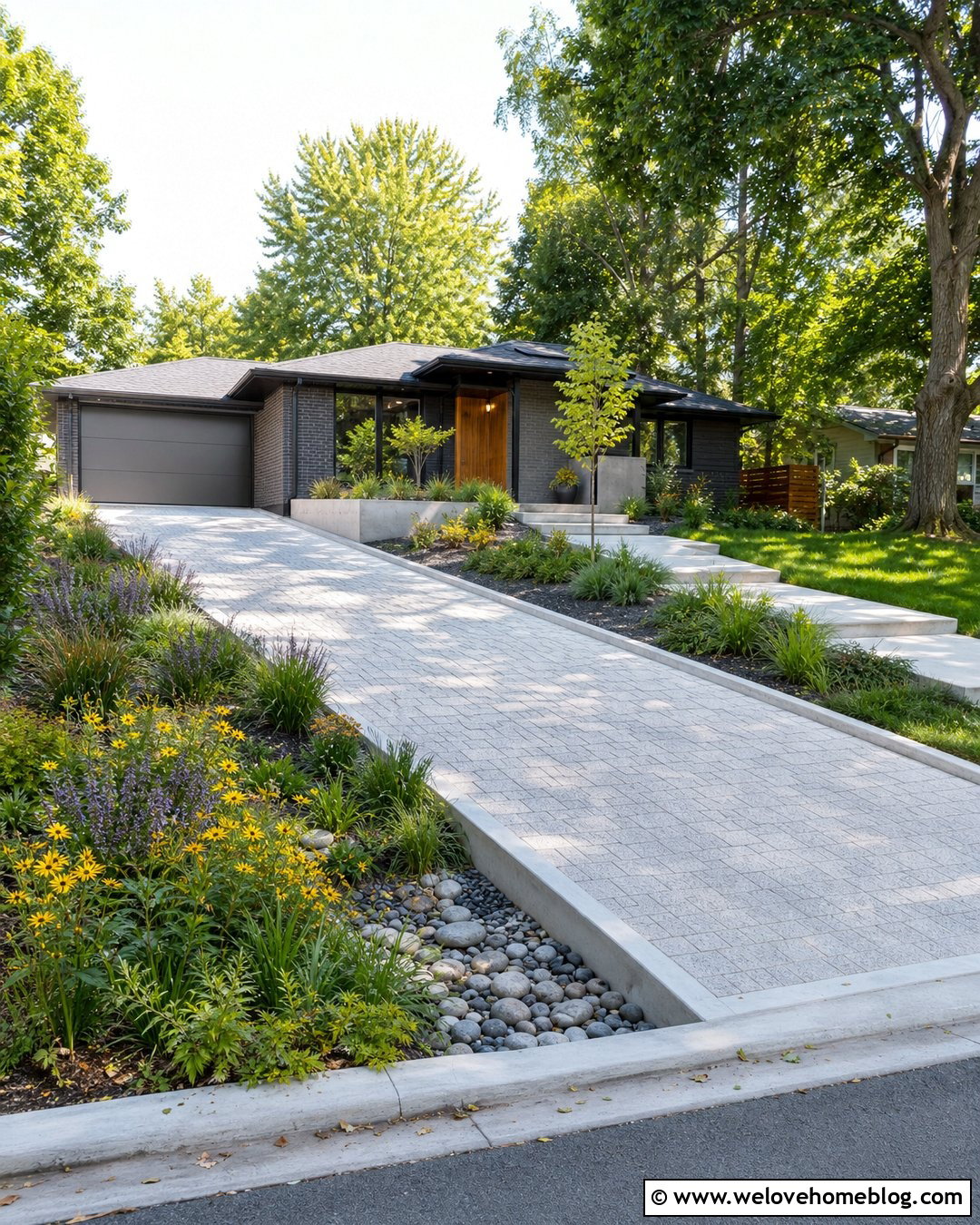
Does water collect beside your driveway after heavy rain? A planted rain garden can turn a drainage problem into an appealing entrance feature when local conditions allow. Pair a permeable concrete paver driveway with shallow curved basins located beyond the pavement edges. Fill the basins with plants that tolerate periods of both moisture and dryness, using species appropriate for your region. Decorative river stone can mark the route of water and reduce bare soil near the inlet. Keep the deepest sections away from sidewalks, utility equipment, and vehicle turning areas. Add a clearly defined paver edge so the driveway remains visually tidy. This environmentally thoughtful look suits contemporary, craftsman, and nature-inspired homes.
15. Driveway Entrance With Lighted Brick Pillars
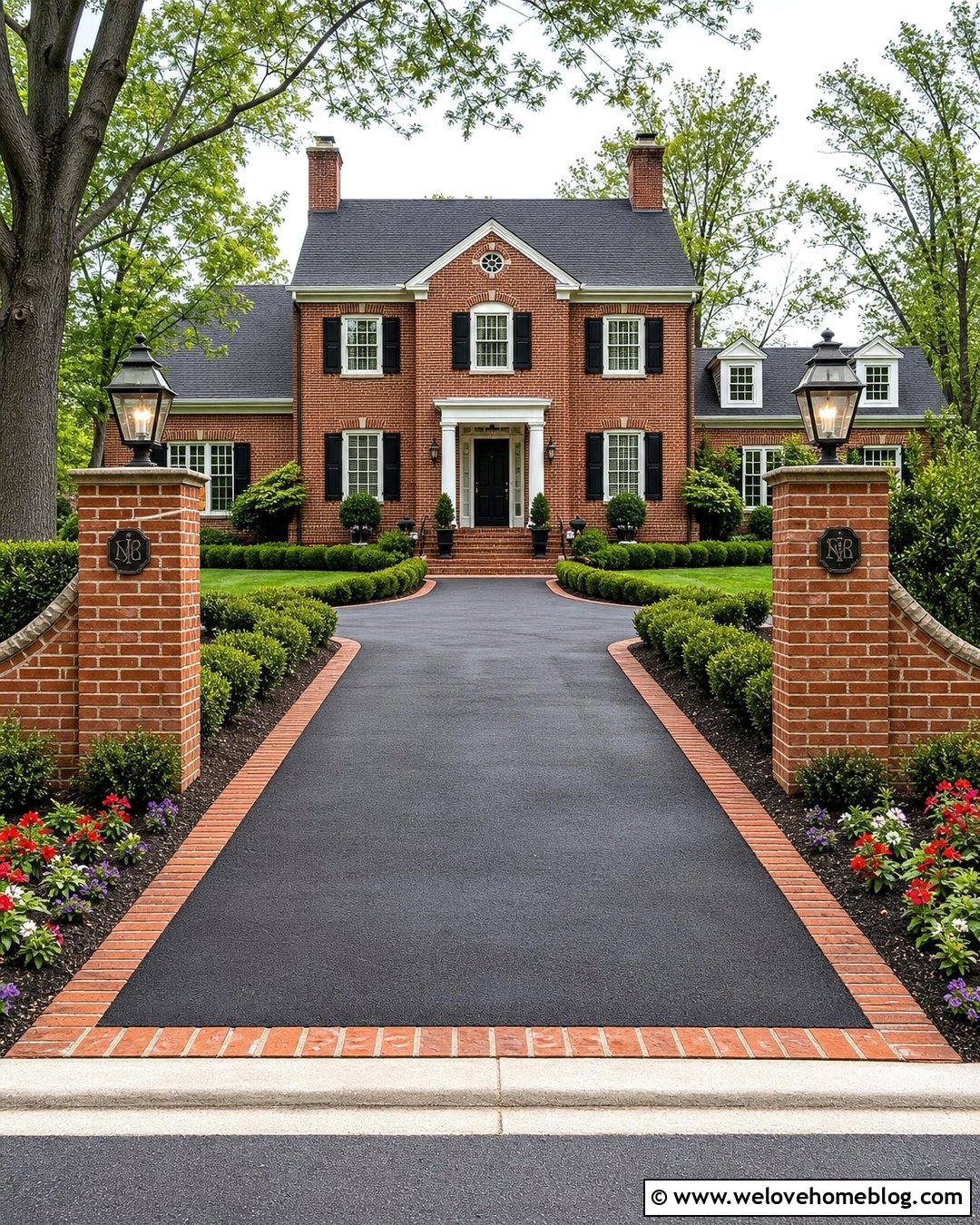
Brick pillars topped with lanterns can transform a plain driveway into a welcoming nighttime entrance. Start with a dark asphalt surface and add a red brick border that visually connects the driveway to the pillars. Build curved planting beds around the masonry bases, leaving enough open space for maintenance and gate hardware if needed. Use low boxwood, dwarf hollies, or compact native evergreens for year-round structure. Seasonal flowers can fill the front edge without hiding the brickwork. Select shielded, appropriately scaled lanterns that illuminate the entrance without producing excessive glare. Repeating the home’s brick color creates a unified composition. This symmetrical arrangement is particularly attractive with colonial, Georgian, and traditional suburban architecture.
16. Driveway Entrance With Mailbox Garden
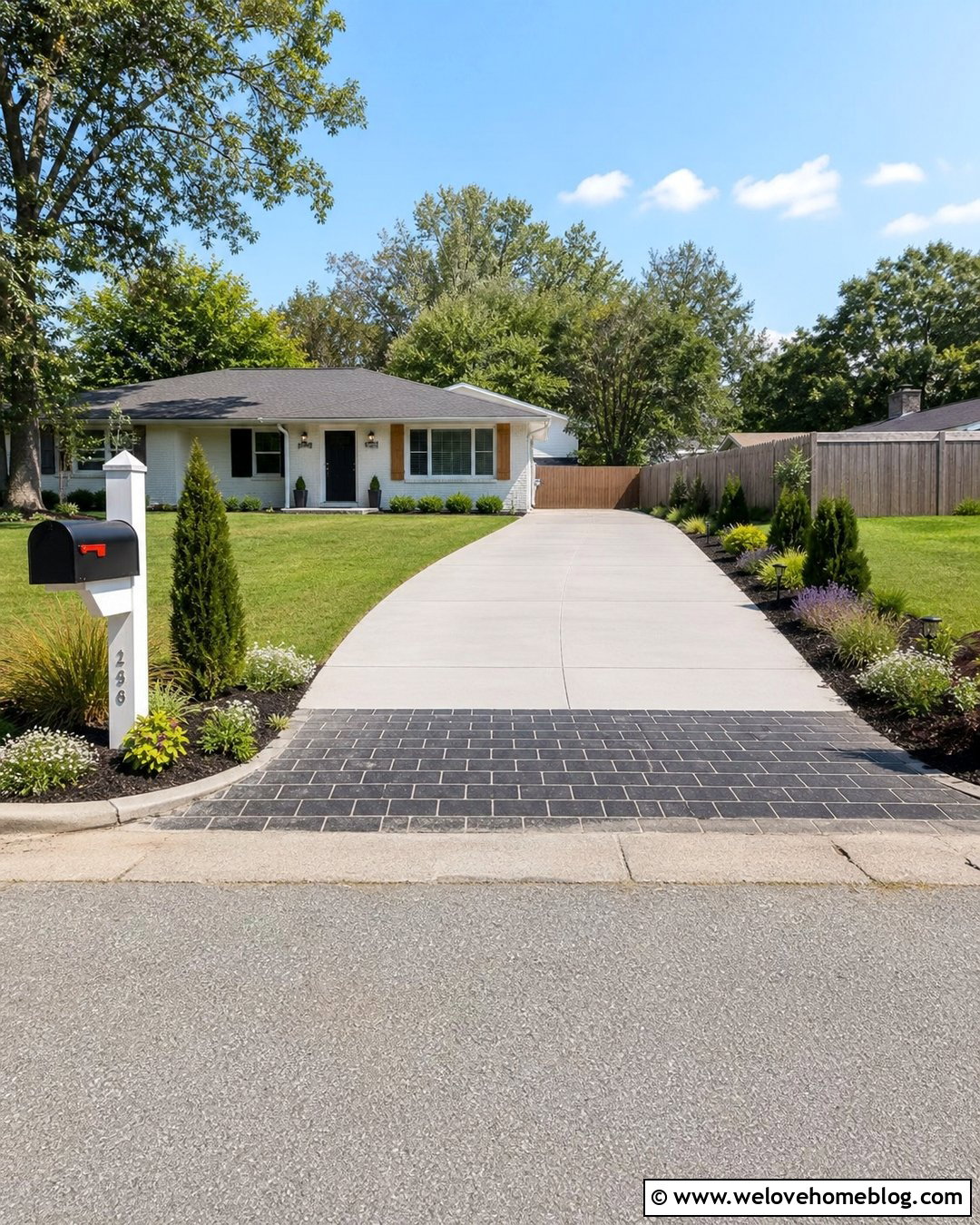
A mailbox can become part of the driveway landscape instead of standing in an isolated patch of grass. Pair a brushed concrete driveway with a charcoal cobblestone apron and a curved garden bed that wraps around the mailbox post. Choose a post material that coordinates with the house, such as painted wood, brick, stone, or powder-coated metal. Plant compact evergreens behind the mailbox and low perennials or ground covers around the front. Leave clear access for mail delivery and avoid plants that interfere with the door or street view. Continue a smaller companion bed on the opposite side of the driveway to create balance. This affordable update gives an ordinary suburban entrance a noticeably more finished appearance.
17. Coastal Driveway Entrance With Beach Grass
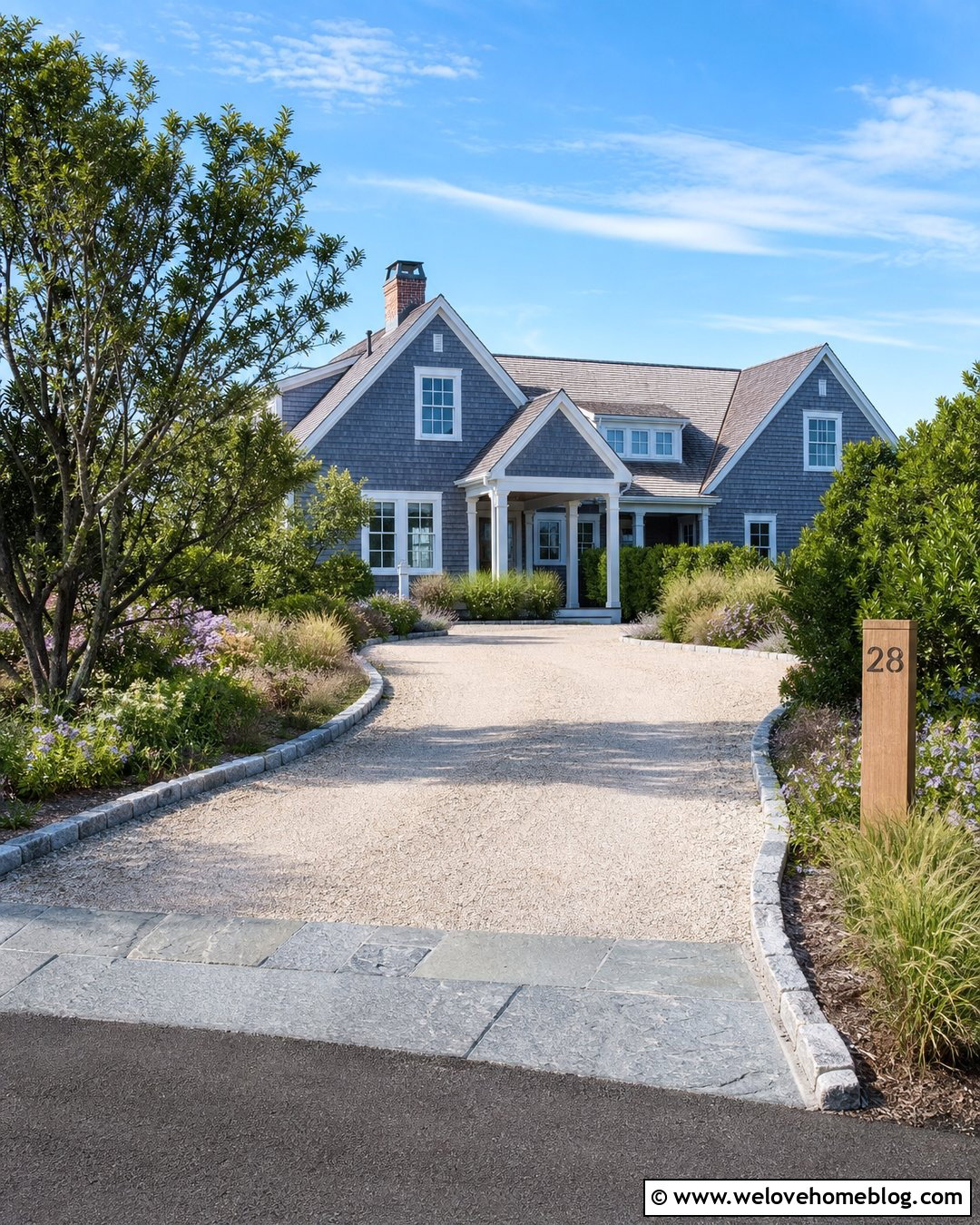
A coastal entrance feels most convincing when the materials and plants reflect the light, relaxed setting. Use compacted crushed shell or pale pea gravel for the driveway, supported by a stable base and edged with weathered granite blocks. Create broad, informal beds on both sides with beach grass, bayberry, low juniper, and salt-tolerant flowering plants appropriate for the region. A simple cedar address post adds warmth and will gradually develop a natural weathered finish. Avoid making the planting too symmetrical; loose groups better support the coastal character. A bluestone or cobblestone apron can reduce loose material near the road. This breezy design complements shingle-style, Cape Cod, and coastal cottage homes.
18. Woodland Driveway Entrance With Ferns
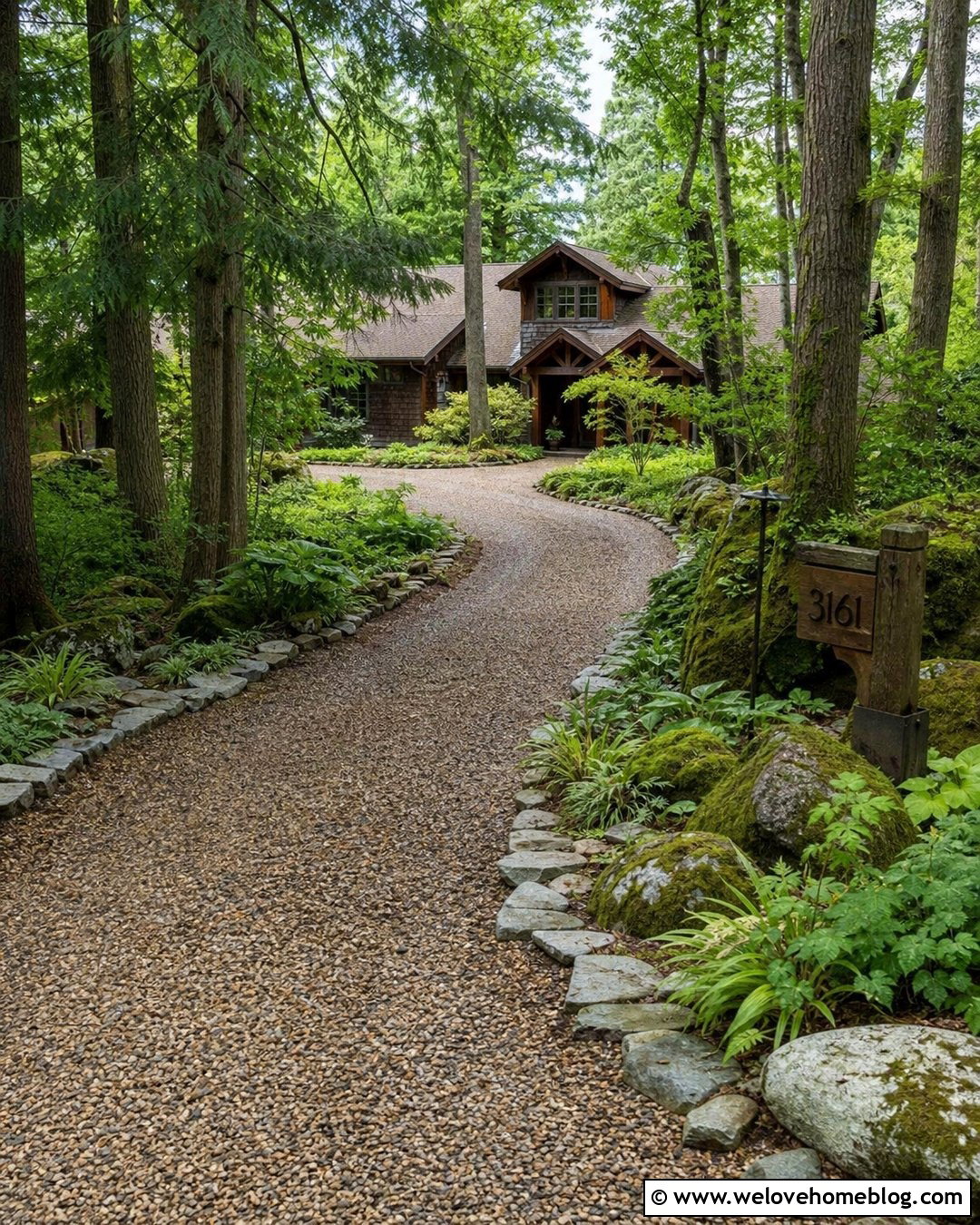
Filtered light, layered foliage, and natural stone can make a wooded driveway entrance feel peaceful and established. Choose brown-toned gravel for a gently curved driveway, with irregular fieldstone edging that blends into the surroundings. Under existing trees, create generous beds containing ferns, sedges, woodland ground covers, and shade-tolerant shrubs. Use plants suited to the available moisture and protect established tree roots during installation. Mossy boulders or a simple timber address sign can provide a focal point without fighting the natural setting. Keep vegetation trimmed near the road and maintain clear overhead space along the driving route. This entrance pairs beautifully with cabins, craftsman houses, rustic cottages, and secluded contemporary homes.
19. Tropical Driveway Entrance With Palm Landscaping
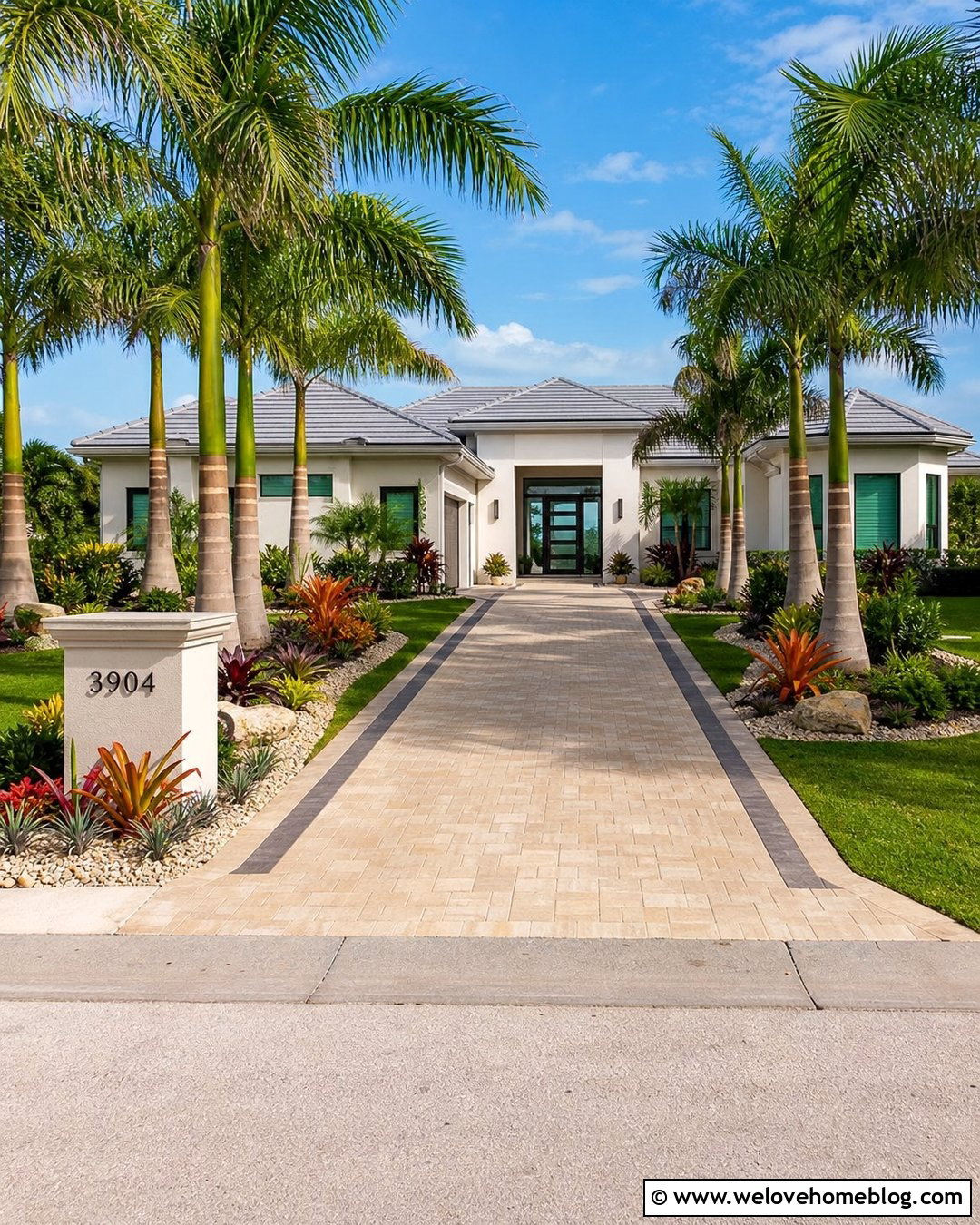
In a warm climate, a tropical driveway entrance can feel vibrant without becoming visually chaotic. Use sand-colored concrete pavers in a simple running-bond pattern and define the edges with darker stone bands. Place symmetrical clusters of palms beyond the driveway corners, allowing adequate clearance for mature trunks and fronds. Beneath them, layer crotons, liriope, bromeliads, and compact evergreen foliage according to local growing conditions. A low stucco wall or address monument can repeat the color of the home’s facade. Decorative gravel between plants keeps the ground plane clean and reduces exposed soil. This complete arrangement creates a resort-like arrival for Mediterranean, coastal, Spanish, and modern Florida-style homes.
20. Budget Driveway Entrance With Mulch Beds
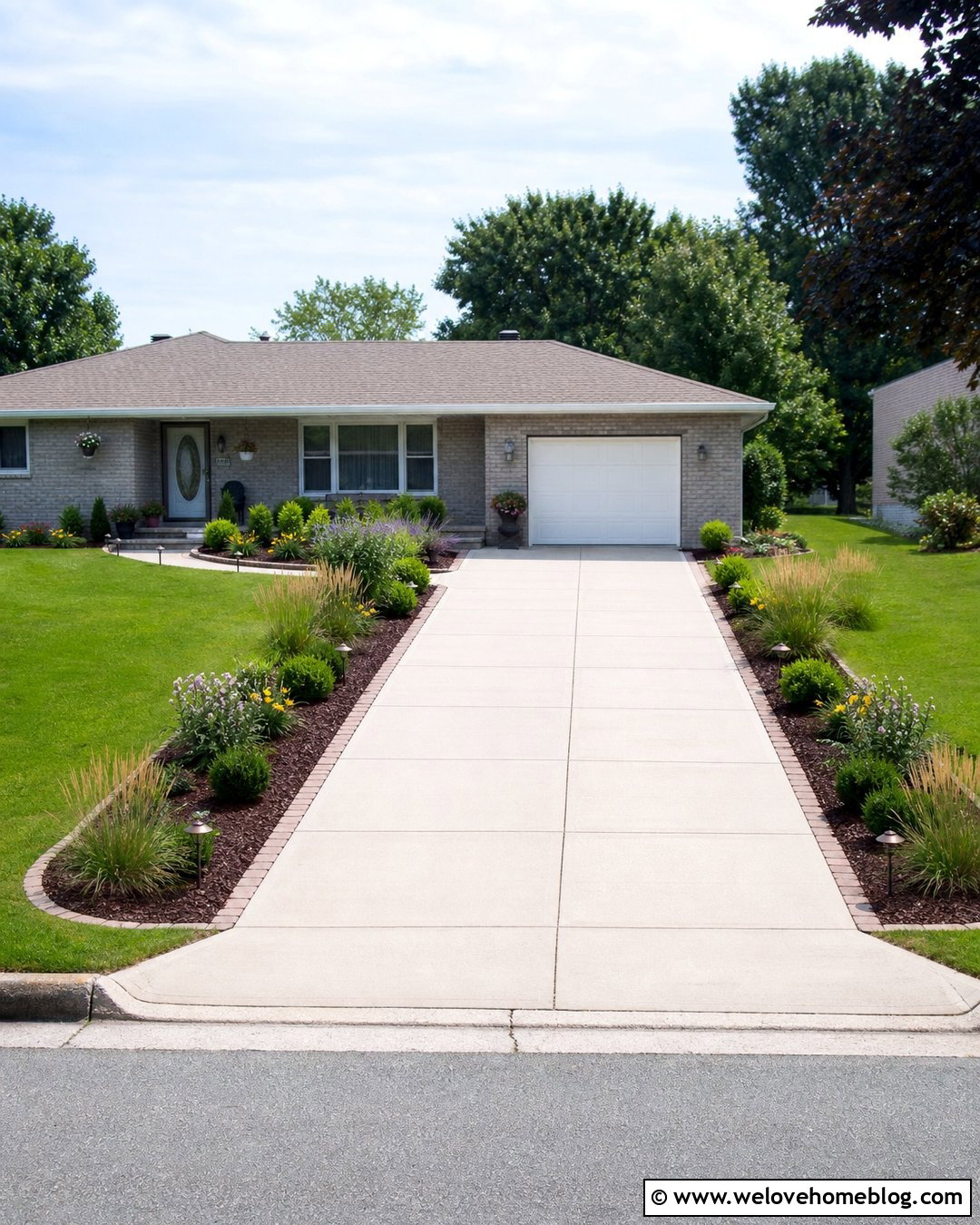
You do not need new pavement to make an entrance look cared for. Refresh an existing asphalt or concrete driveway by cutting two matching curved beds into the lawn near the street. Define them with affordable brick, steel, or flexible composite edging, then add a clean layer of dark mulch. Use a small number of reliable plants repeated on both sides, such as one compact evergreen, several ornamental grasses, and groups of long-blooming perennials. Solar or low-voltage stake lights can mark the entrance, but space them evenly and avoid overcrowding. Pressure-wash the driveway and repair visible cracks before planting. This practical design delivers stronger curb appeal while keeping material, installation, and ongoing maintenance costs manageable.
Conclusion:
The most successful driveway entrance feels like a natural extension of the house, front yard, and driveway itself. As these 20 landscape for driveway entrance ideas show, even a small change can create a clearer and more welcoming arrival. Begin with practical needs such as visibility, drainage, vehicle clearance, maintenance, and local growing conditions. Then select plants, borders, pillars, lighting, and signs that complement the driveway material and home facade. Repeating a few colors and materials will create better visual flow than combining too many unrelated features. Whether you prefer a formal, modern, rustic, coastal, or budget-friendly look, design the entire entrance as one connected landscape rather than a collection of separate decorations.

Related posts:
Leave a Reply