
Driveway pavers can turn a basic parking area into a polished extension of your home. These 35 driveway pavers design ideas explore complete looks that combine durable surfaces, practical patterns, defined borders, thoughtful landscaping, and architecture-friendly colors. You will find classic brick, modern concrete, natural stone, permeable systems, and cobblestone-inspired options for properties of many sizes. Each concept also considers the driveway shape, entrance, planting beds, walkways, and garage transition. Before choosing a look, confirm that the pavers are rated for vehicles and suited to your climate. Proper excavation, drainage, base preparation, joint material, and edge restraint are equally important. Use these 35 driveway pavers design ideas to compare complete layouts and find an approach that fits your home.

1. Herringbone Brick Paver Driveway
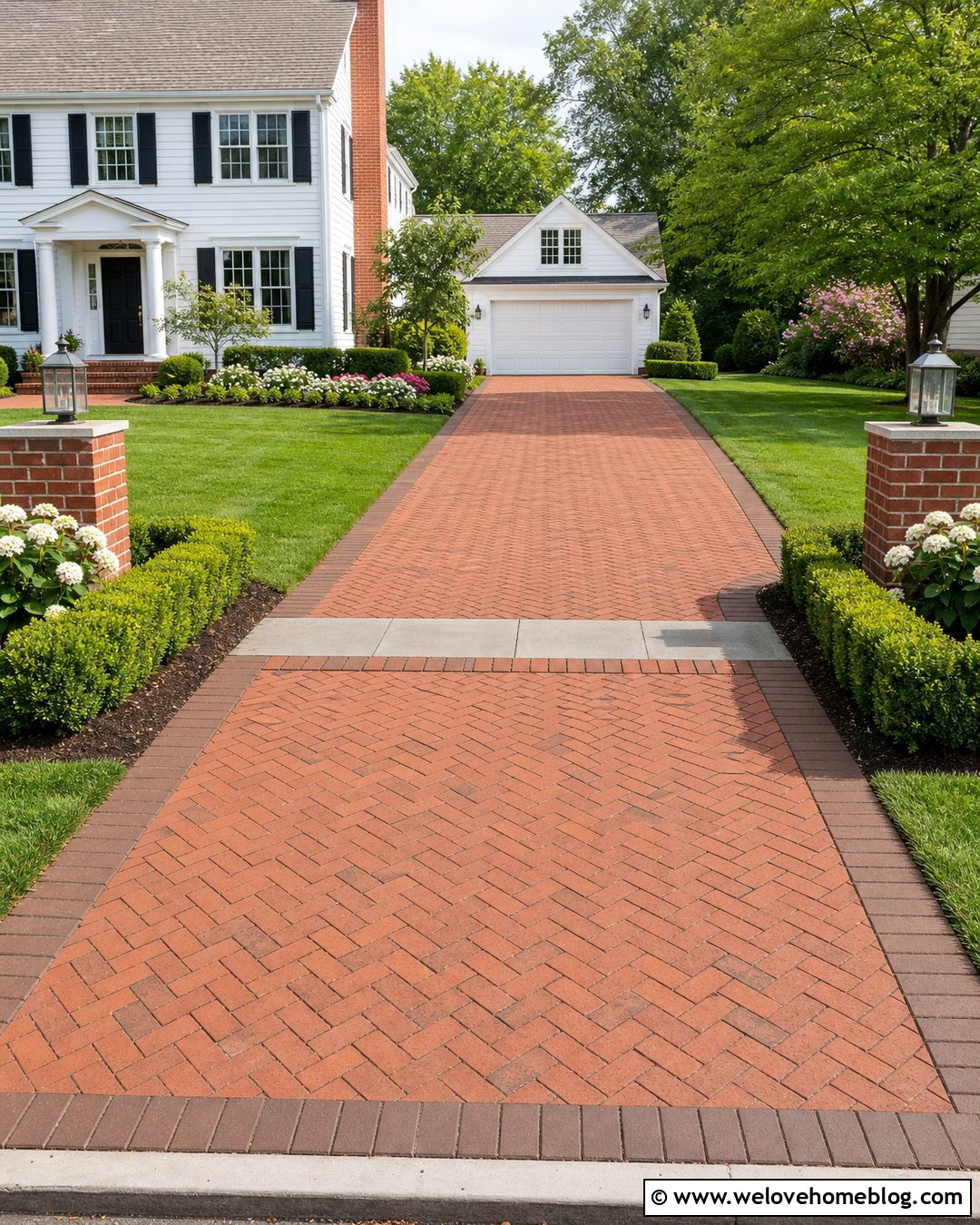
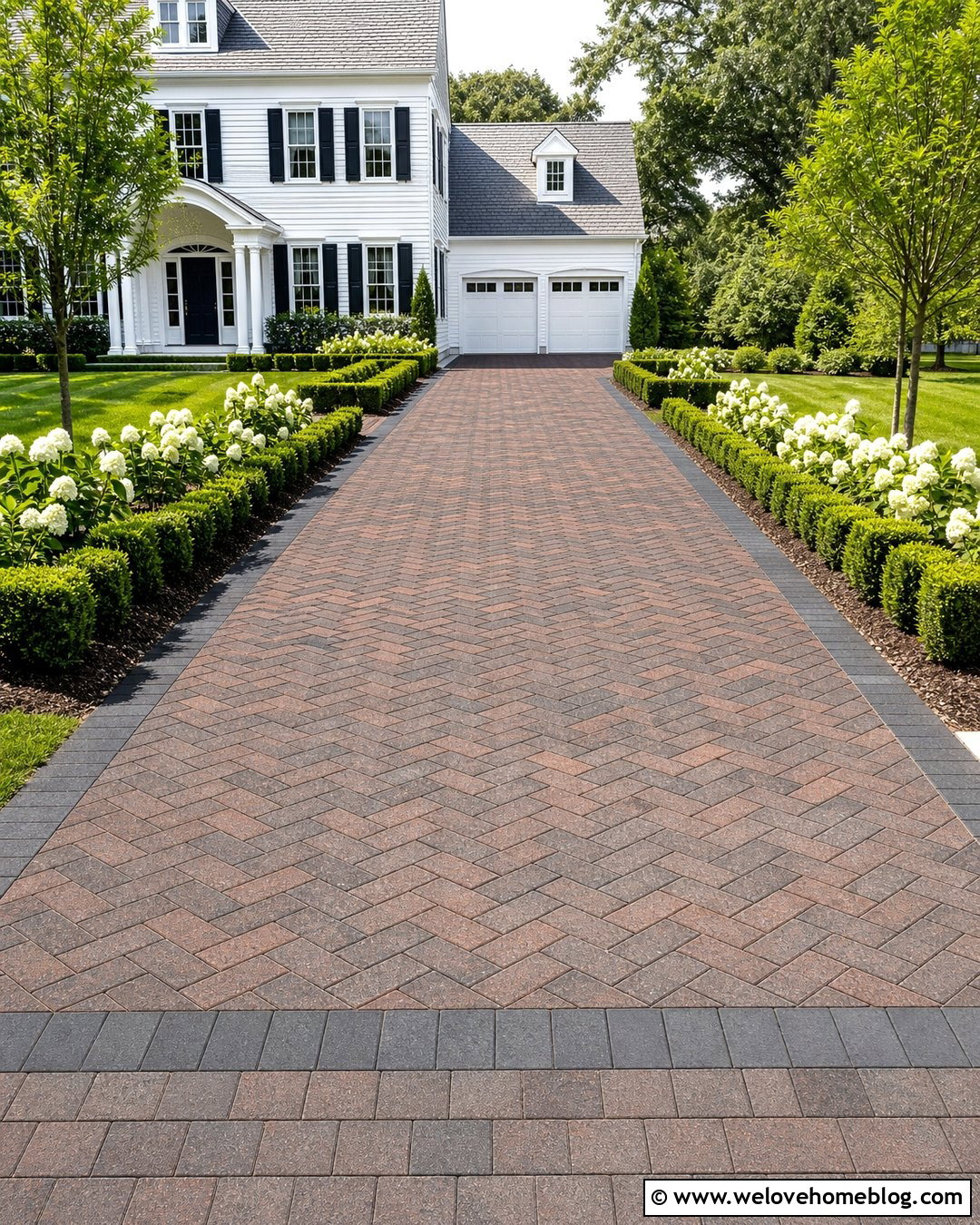
A herringbone layout gives a brick paver driveway a classic pattern with plenty of visual movement. Use warm red or brown clay brick pavers across a straight driveway, then frame the surface with a darker soldier-course border. The contrasting edge creates a clean outline and helps connect the driveway with brick steps, porch columns, or facade details. Low boxwood hedges and simple lawn panels keep the entrance orderly without competing with the pattern. Near the garage, continue the border across the driveway as a finished transition band. This complete look works especially well with Colonial, Cape Cod, and traditional homes. Select driveway-rated bricks, and ask the installer to plan cuts carefully around curves, drains, and walkway connections.
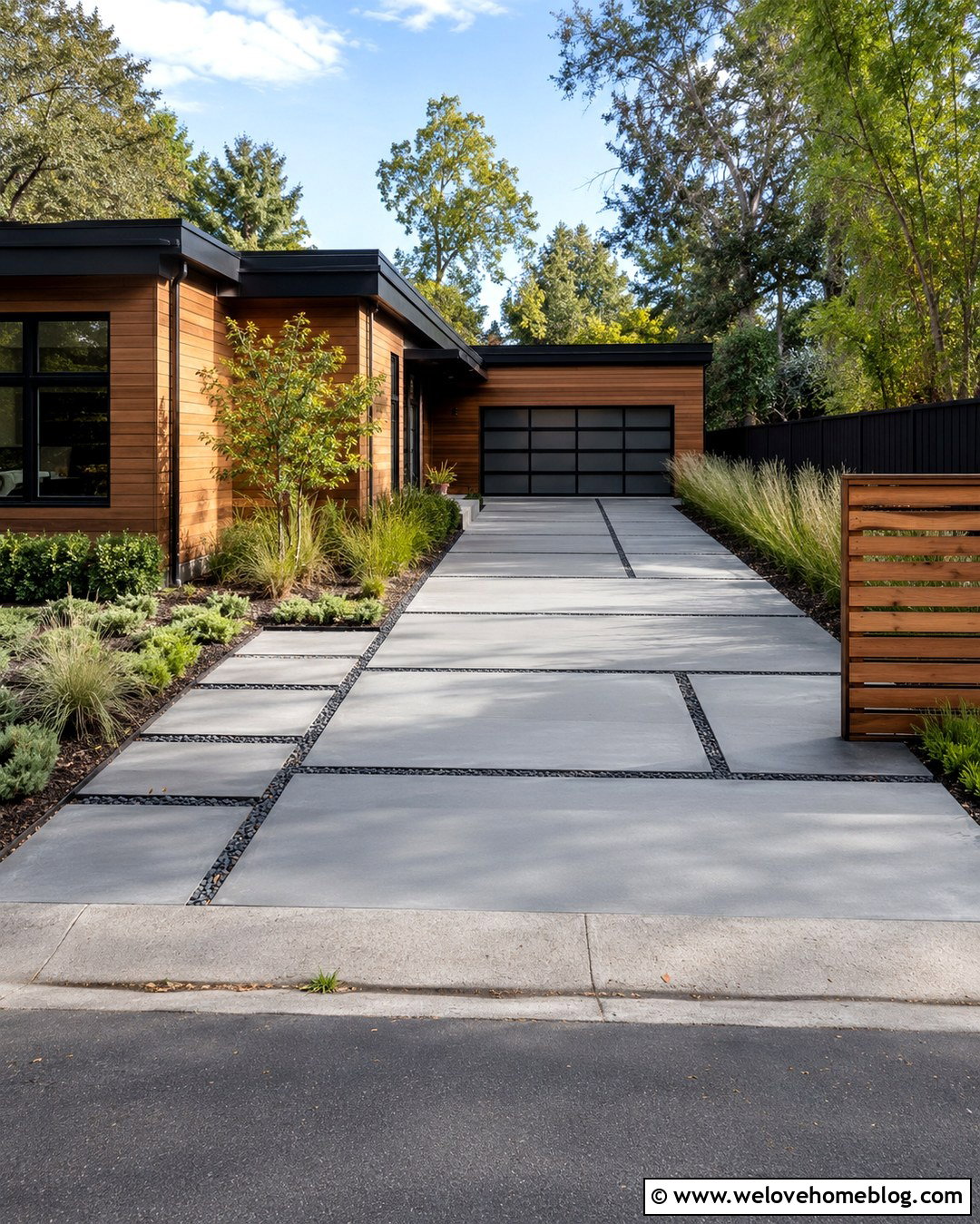
2. Modern Gray Concrete Paver Driveway
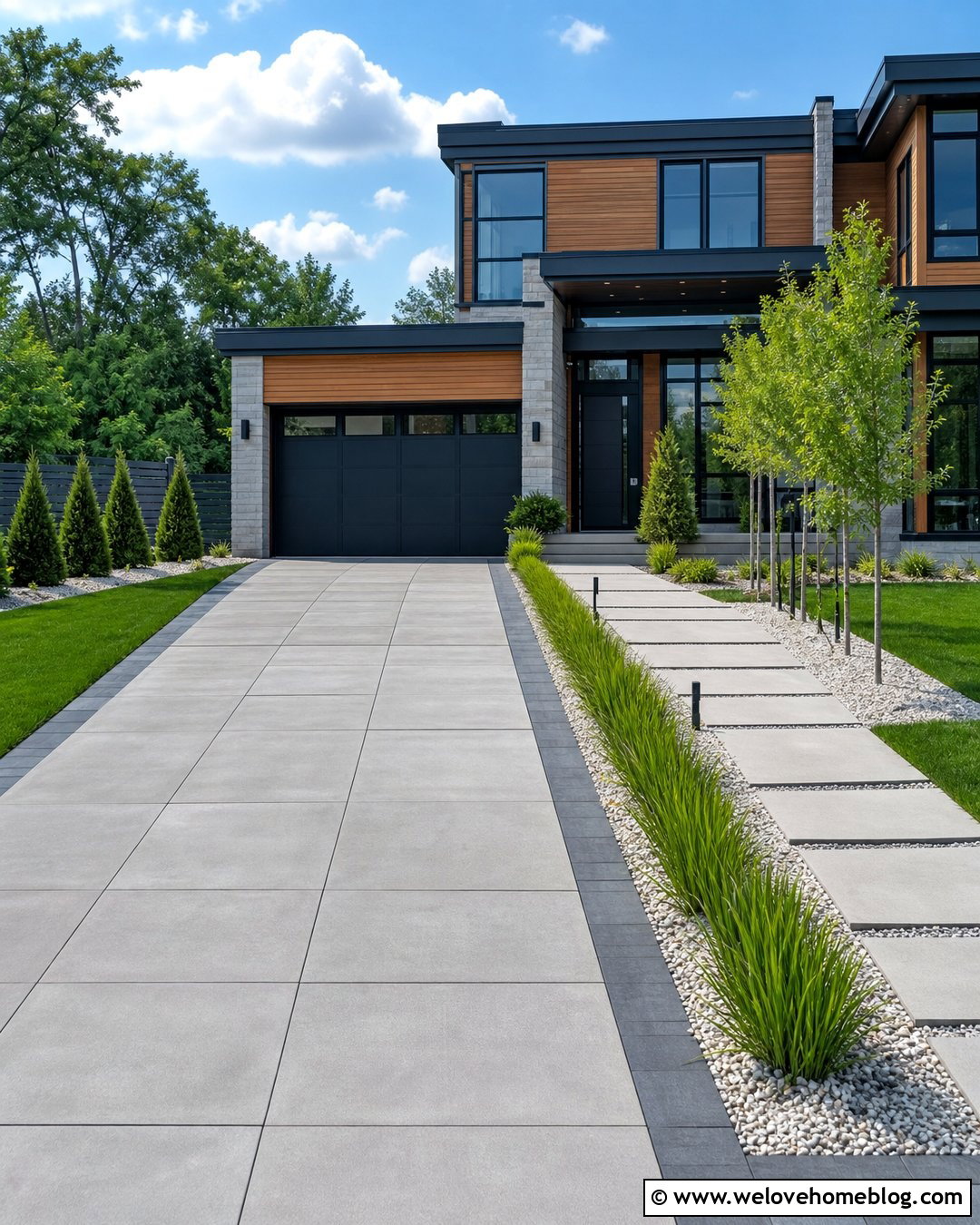
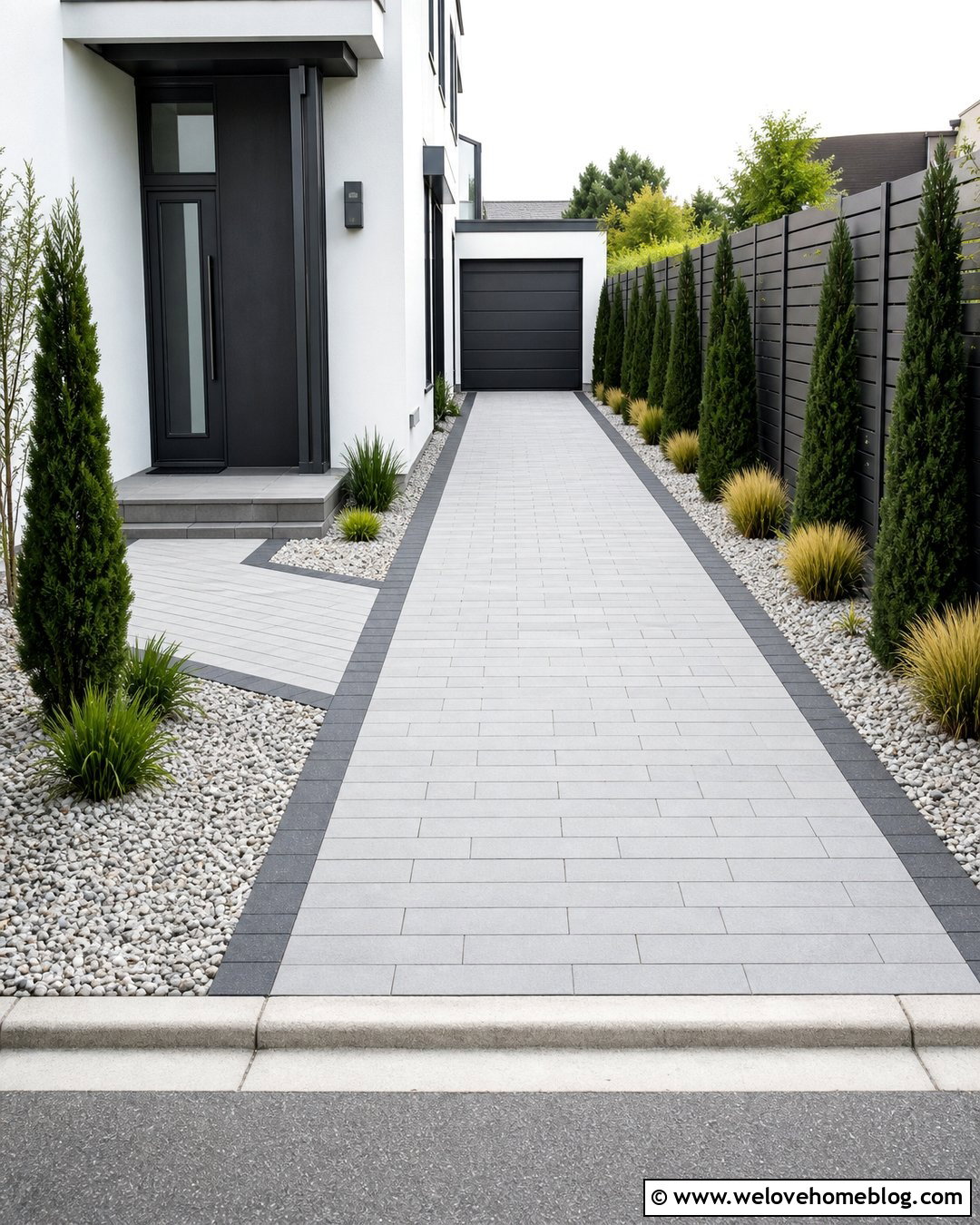
Large gray concrete pavers create a clean entrance for a modern home without making the yard feel cold. Choose rectangular units in two or three compatible sizes and arrange them in a modular layout. A charcoal paver border can frame the driveway while matching dark windows, metal roofing, or a black garage door. Keep the shape straight and use crisp planting beds filled with ornamental grasses, compact evergreens, and pale decorative stone. A wide concrete-paver walkway should connect the parking area to the front door using the same color family. This repetition makes the exterior feel coordinated. Limit the palette to a few materials, and avoid adding too many contrasting bands. The result should look simple, balanced, and intentionally connected to the architecture.
3. Permeable Paver Driveway With Gravel Joints
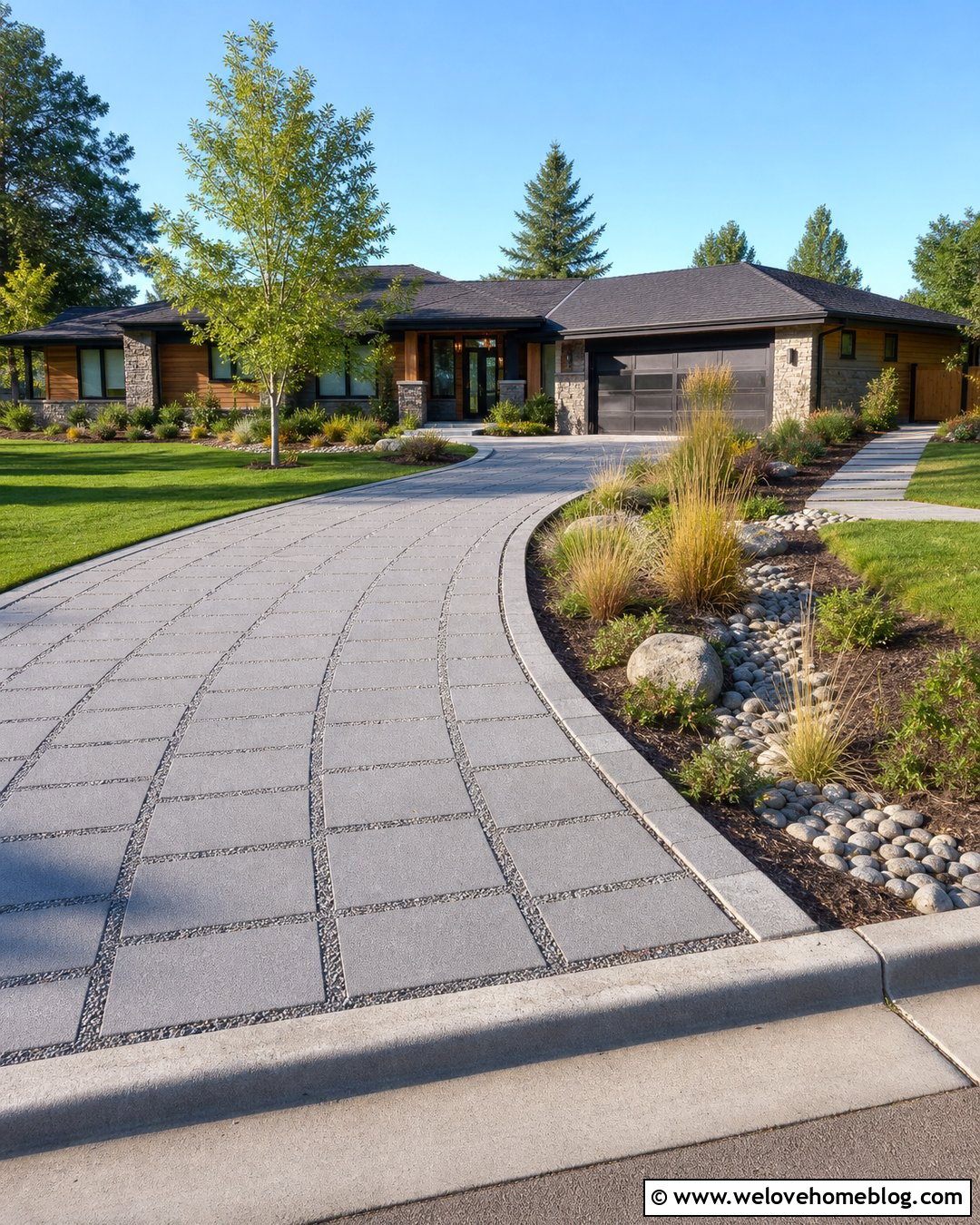
Permeable concrete pavers offer a practical way to create a structured driveway with visible texture. Select charcoal or medium-gray pavers made for permeable installation, then fill the wider joints with clean angular aggregate recommended for the system. A straight or gently curved layout will keep the patterned joints easy to read from the street. Use flush stone edging along both sides so water can enter the surface without loose soil washing into the joints. Native grasses, rain-garden plants, and river rock can reinforce the drainage-focused design. The underlying base must be designed for local soil, vehicle loads, and stormwater conditions. When installed correctly, the pavers, open joints, landscaping, and drainage layers function as one coordinated driveway rather than separate decorative features.
4. Circular Cobblestone Paver Driveway
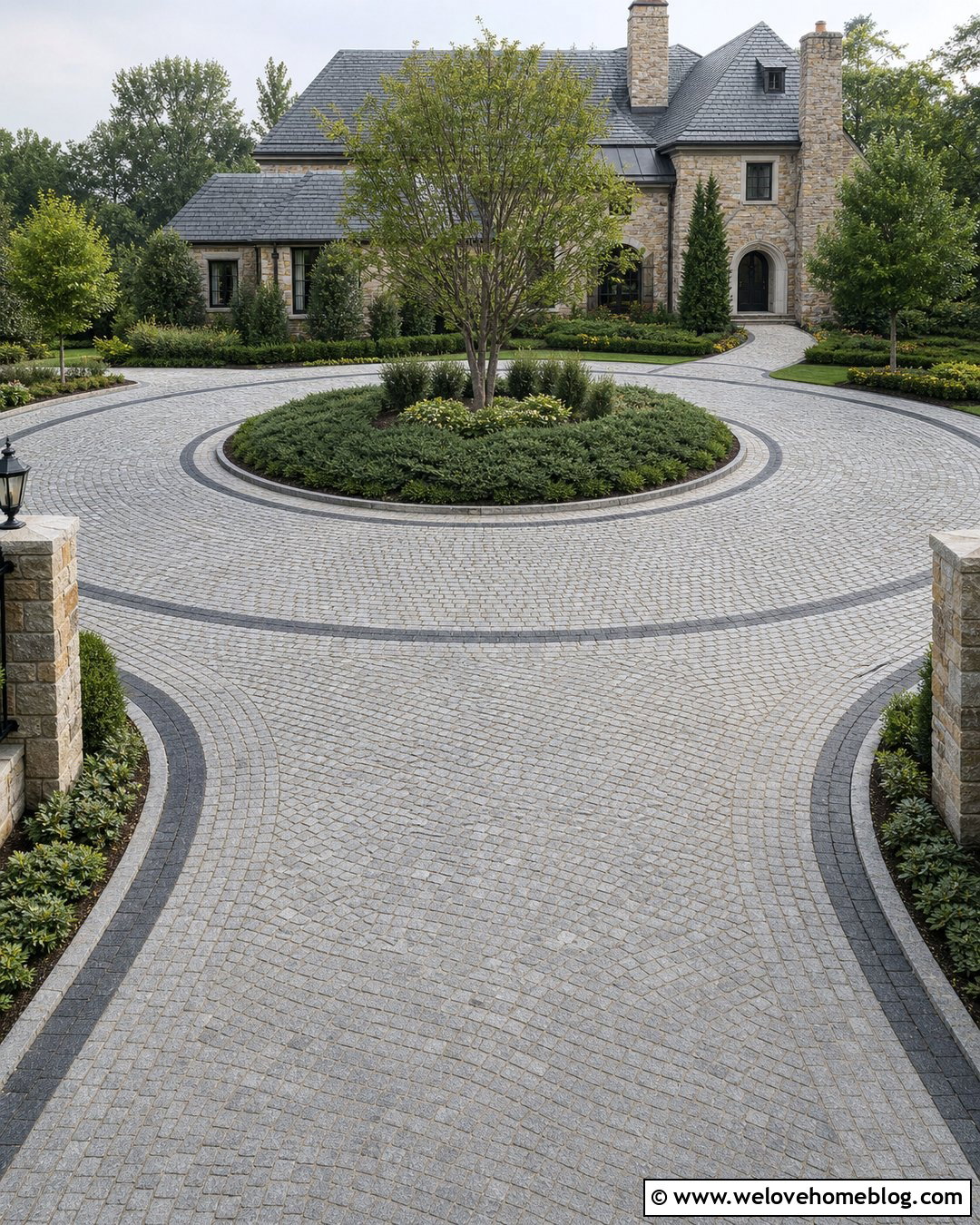
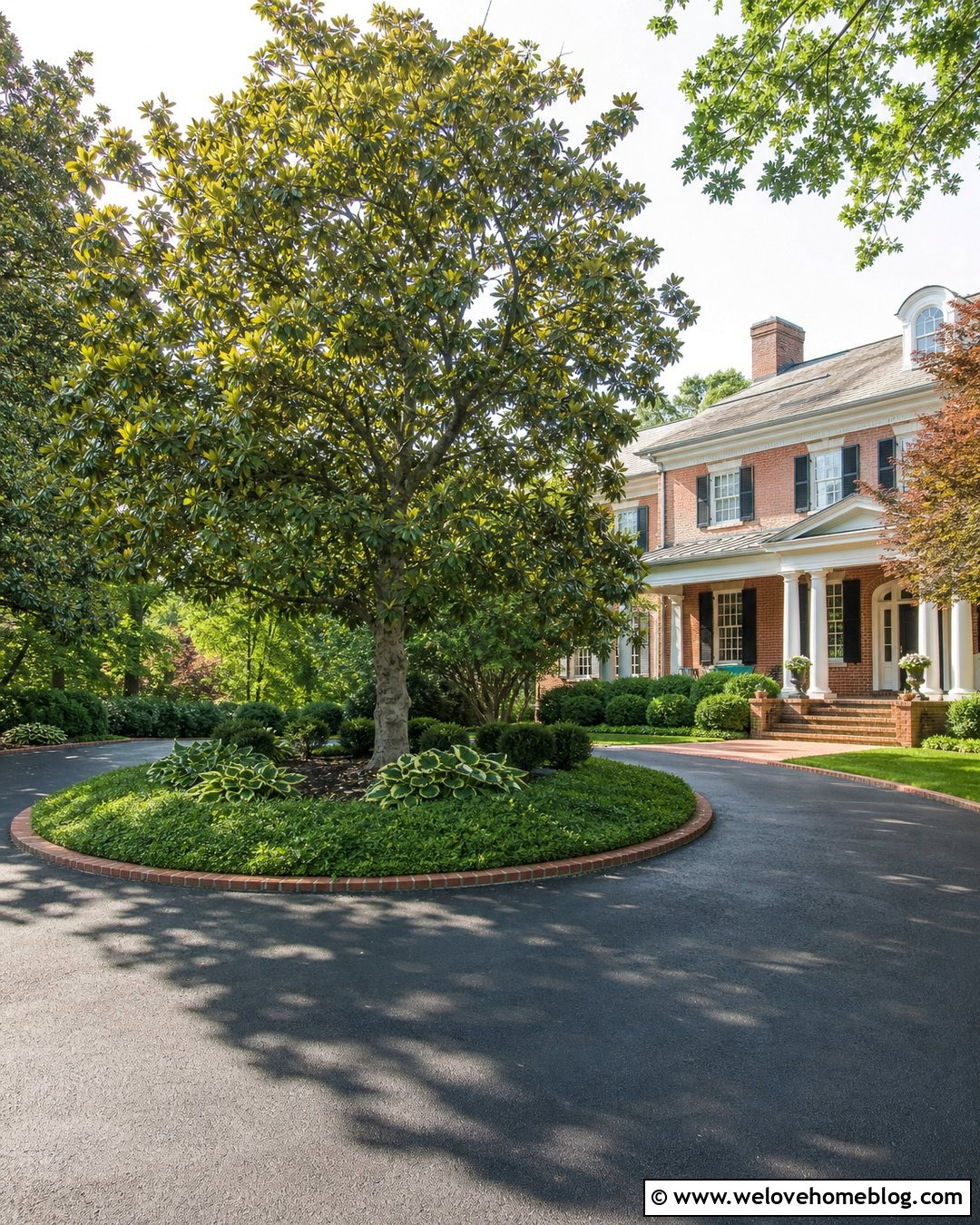
A circular cobblestone paver driveway creates a formal arrival area while making it easier to approach and leave the house. Use granite cobblestones or driveway-rated concrete pavers with a cobbled finish in blended gray and brown tones. Lay the main surface in sweeping arcs that follow the driveway’s curve. A darker double border can emphasize the circular shape and contain the pattern. Place a landscaped island in the center with one small ornamental tree, low shrubs, and ground cover that will not block important sightlines. Matching stone pillars can mark the two entrances without overwhelming the property. This design fits Tudor, European-inspired, stone, and traditional homes. Confirm turning dimensions early so the attractive center island does not interfere with comfortable vehicle movement.
5. Basketweave Brick Paver Driveway
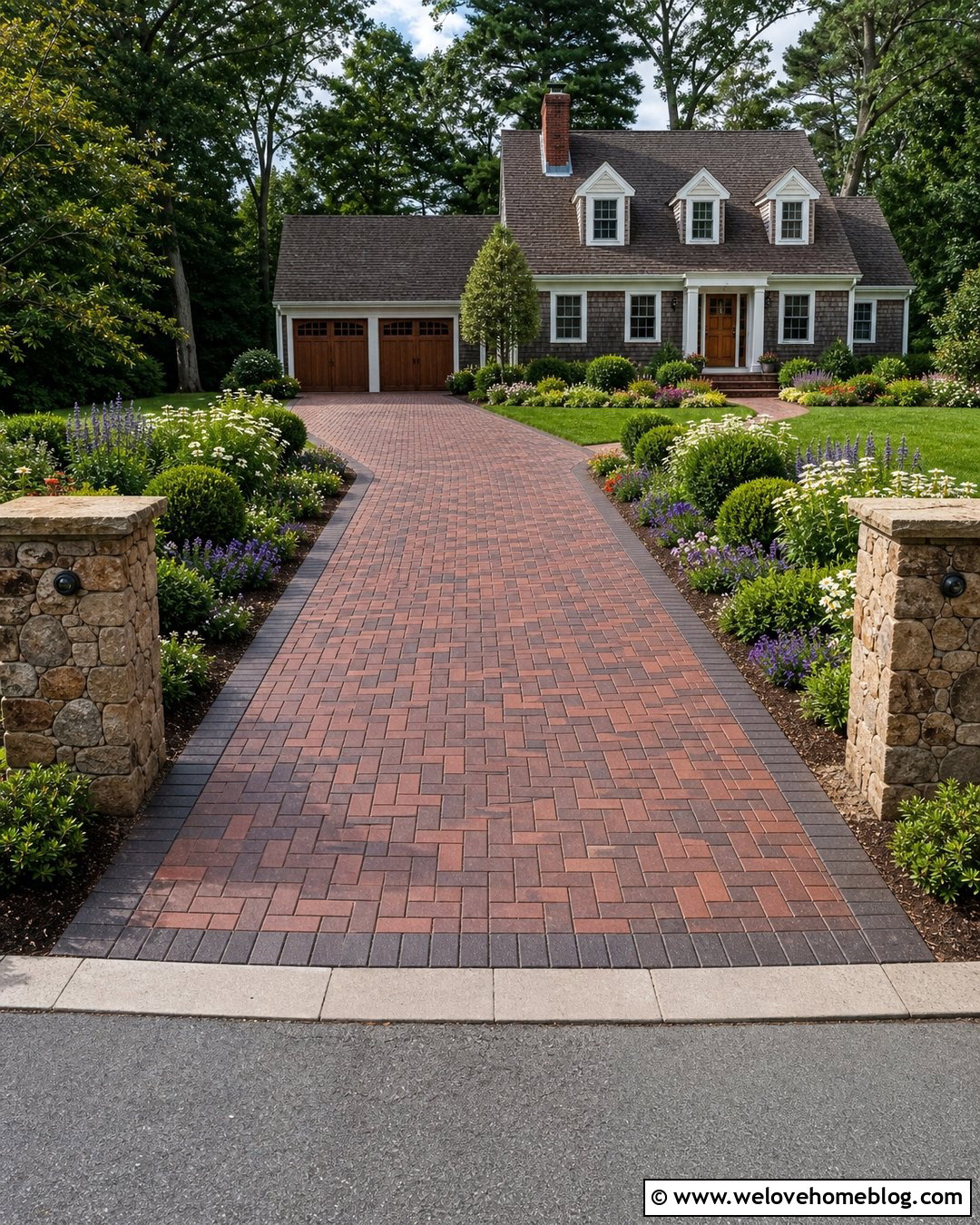
Basketweave brick pavers give a driveway a neat geometric surface that feels traditional but less directional than herringbone. Alternate pairs of rectangular clay bricks to form repeating square-like blocks across the main parking area. Rich brown, burgundy, and muted red tones can hide minor surface dirt while complementing warm exterior materials. Frame the field with a simple running-bond border in a darker brick. A straight driveway with symmetrical planting beds will keep the detailed paving from looking busy. Add clipped shrubs near the house and small flowering perennials closer to the street. Carry the same border around the connecting walkway for continuity. Because the repeating pattern makes alignment especially noticeable, accurate layout lines and consistent joints are essential to achieving a finished, professional appearance.
6. Running Bond Concrete Paver Driveway
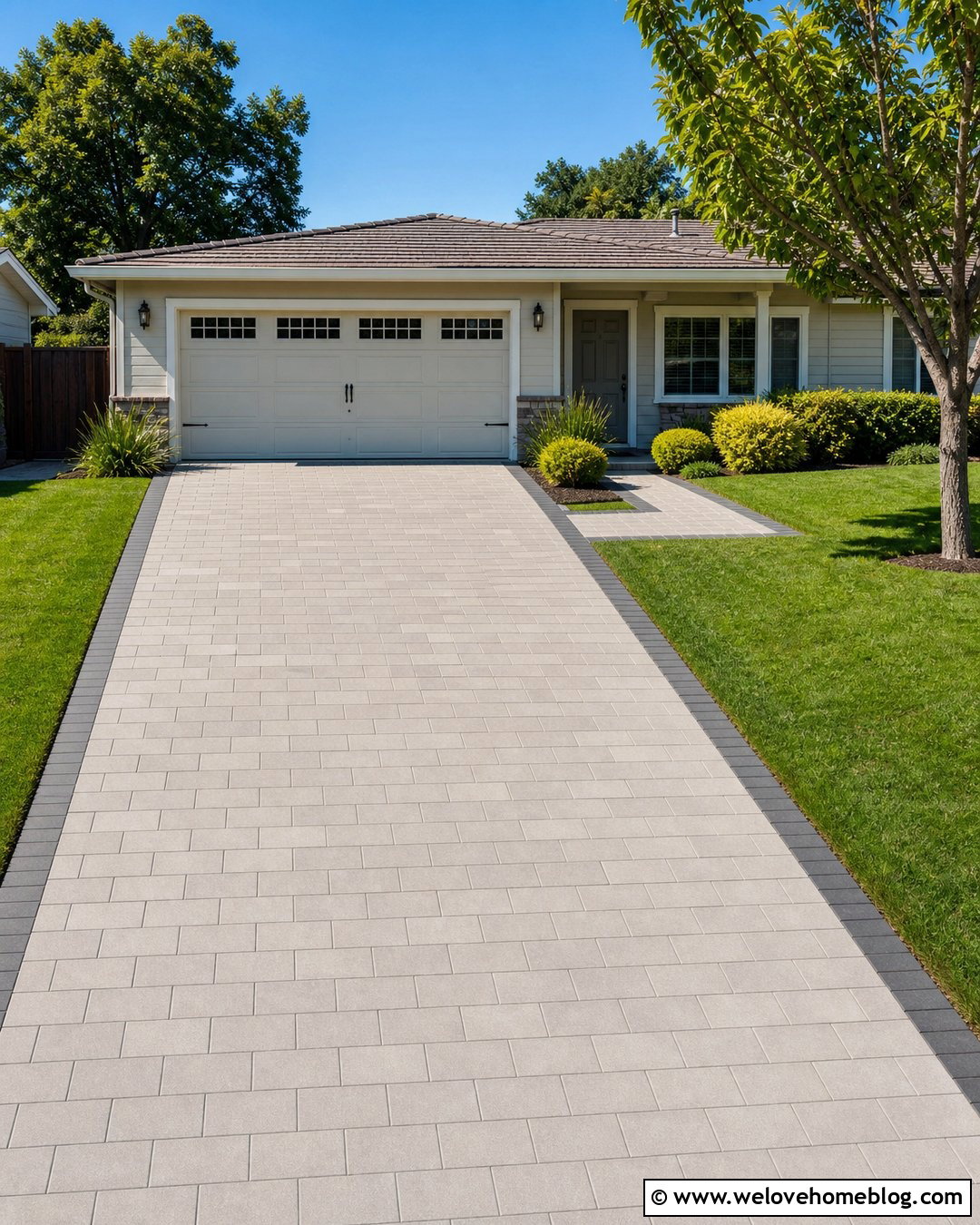
Running bond is a straightforward choice for homeowners who want a calm, orderly paver driveway. Install rectangular concrete pavers with staggered joints running toward the garage to visually lengthen a short entrance. Soft beige, greige, or light gray pavers can brighten the approach and coordinate with many siding colors. Add a perpendicular charcoal border to clearly separate the driveway from lawn and planting beds. The layout suits ranch homes, suburban two-story houses, and compact properties because it does not introduce excessive pattern. Use matching pavers for the walkway, but turn their direction to distinguish pedestrian space. Foundation shrubs, a small shade tree, and broad lawn edges complete the look. Keep utility covers and drainage points aligned with cuts whenever possible for a cleaner final surface.
7. Ashlar Paver Driveway With Mixed Sizes
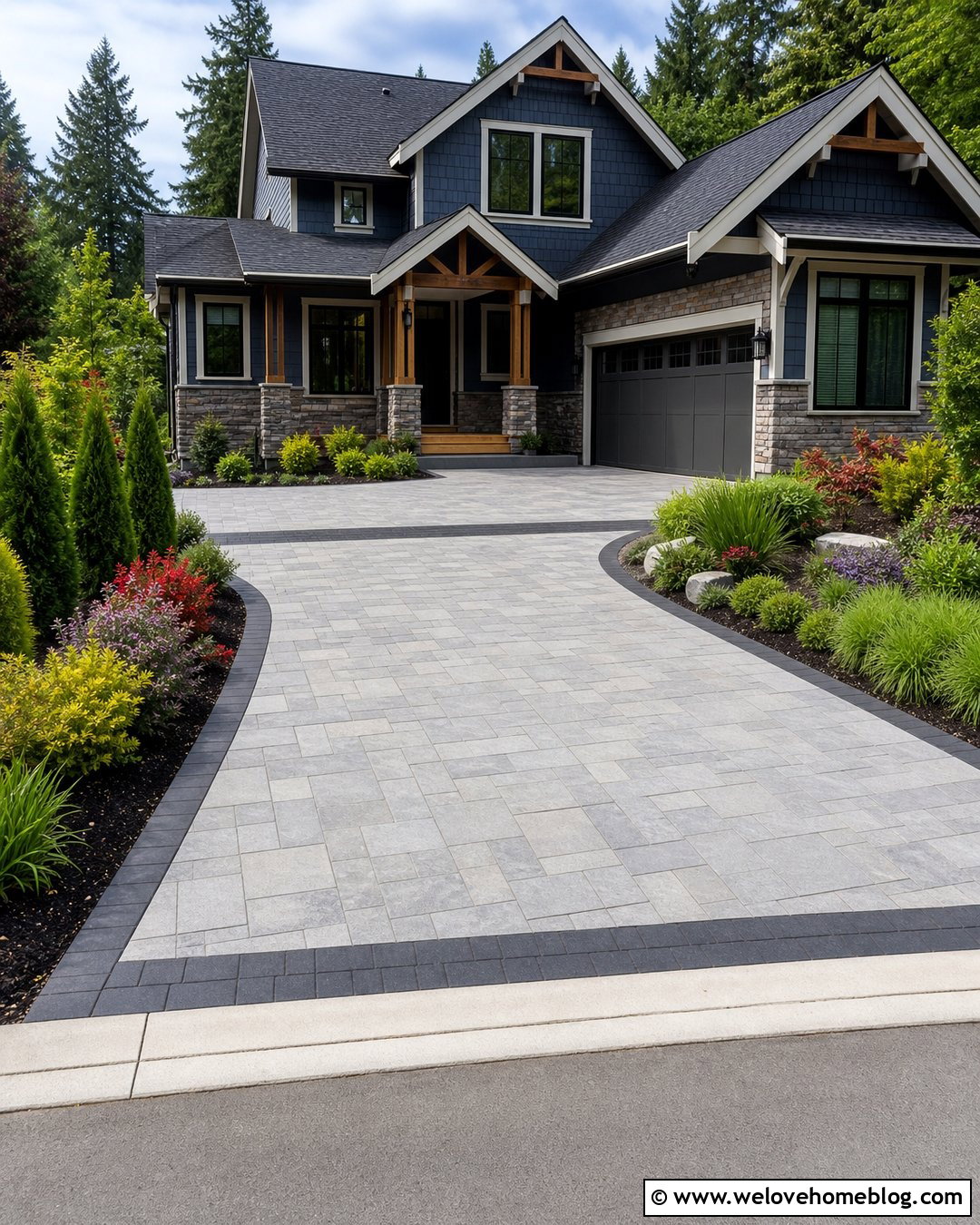
An ashlar layout combines square and rectangular concrete pavers to give the driveway varied texture without relying on bold colors. Choose three or four compatible sizes in a blended limestone, sandstone, or gray palette. The irregular-looking arrangement works particularly well on wide driveways because it breaks up a large paved area. Use a solid charcoal border to contain the mixed pattern and provide contrast at the lawn. Curved planting beds filled with layered evergreens, flowering shrubs, and ornamental grasses can soften the driveway’s width. Near the garage, add a straight accent band that visually finishes the pattern. This complete design complements Craftsman, transitional, and contemporary homes. Review the manufacturer’s approved driveway pattern to distribute sizes properly and avoid awkward clusters of small or repeated units.
8. Curved Tan Paver Driveway
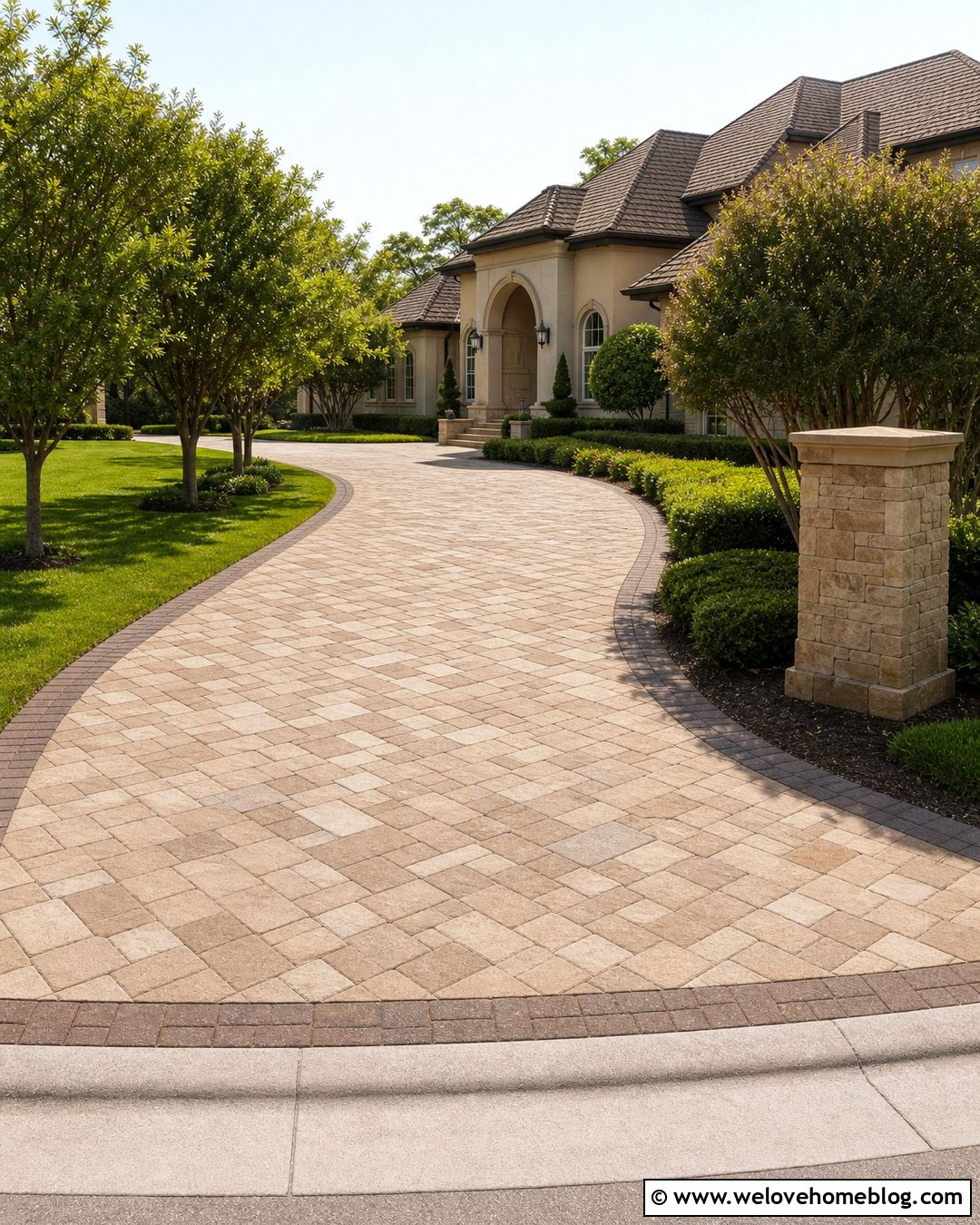
A gently curved paver driveway can make the approach feel more natural, especially on a deep or sloping lot. Use tumbled concrete pavers in tan, cream, and muted brown to create a softly aged surface. Lay the field in a random modular pattern, then follow the curve with a dark brown paver border. The edging should form smooth, continuous lines rather than a series of abrupt angles. Plant ornamental trees along the outside bend and use lower shrubs on the inside to preserve visibility. A stone mailbox or address pillar can mark the entrance using colors found in the pavers. This layout works well with stucco, stone, and warm brick houses. Subtle color blending will keep the broad driveway attractive without creating a patchy appearance.
9. Charcoal Paver Driveway With Light Border
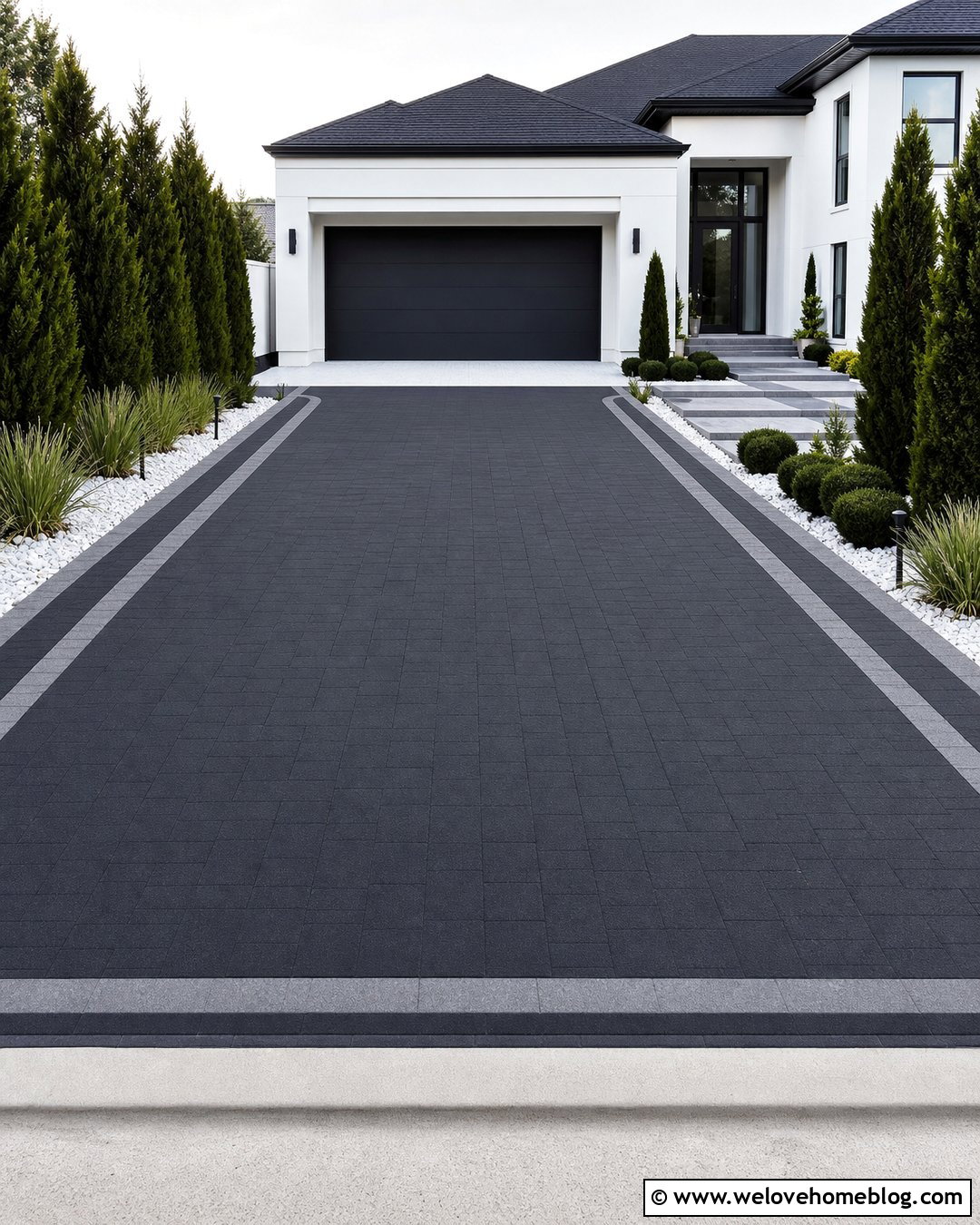
Dark charcoal pavers give a driveway a strong contemporary presence, while a pale border prevents the surface from appearing too heavy. Use smooth or lightly textured concrete pavers in a straight modular layout. Surround the dark field with one or two rows of light gray pavers, and repeat that color at the garage apron and front walkway. White siding, natural wood accents, and black-framed windows provide an ideal architectural background. Keep landscaping restrained with clipped evergreens, green ornamental grasses, and light gravel mulch. Because very dark paving can show pale dust and mineral residue, inspect full-size samples under local outdoor conditions before deciding. The finished design should balance contrast across the entire property, connecting the driveway with the facade rather than treating it as an isolated dark surface.
10. Light Limestone Paver Driveway
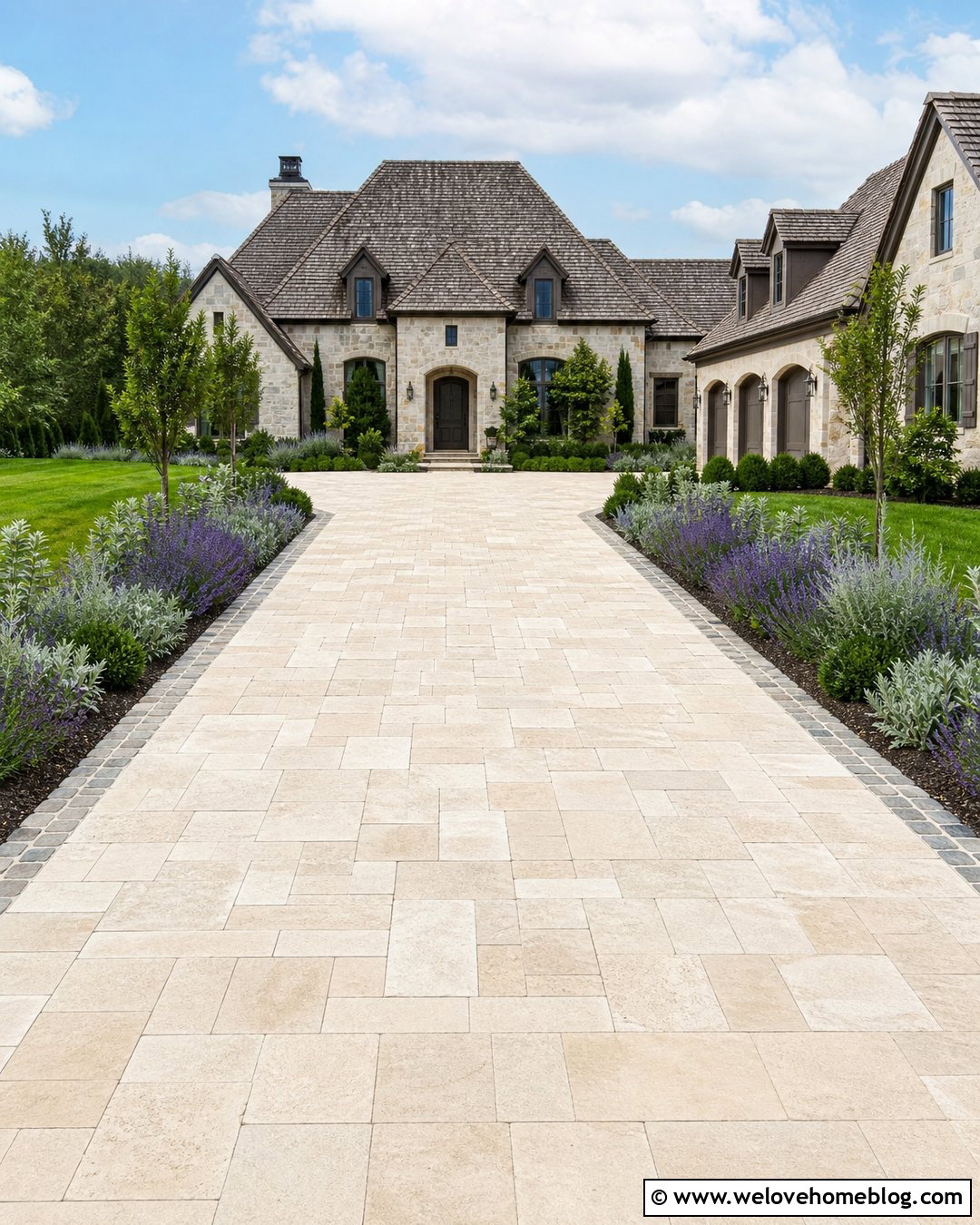
Cream and pale beige limestone pavers can give a driveway a bright, refined appearance. Select dense, driveway-suitable stone with a textured, slip-conscious finish rather than polished indoor tile. Use a mixed rectangular layout across a broad, straight driveway and outline it with taupe or medium-gray stone setts. The darker edging defines the light surface and reduces the visual impact of soil along planting beds. Pair the driveway with a stucco, painted brick, or French country home. Lavender, catmint, compact shrubs, and silvery foliage can create a soft landscape frame. Allow the driveway pattern to continue into a generous entrance court near the garage. Natural stone varies in color and performance, so review actual material samples and confirm suitability for local freeze, moisture, and maintenance conditions.
11. Travertine Paver Driveway With Stone Edging
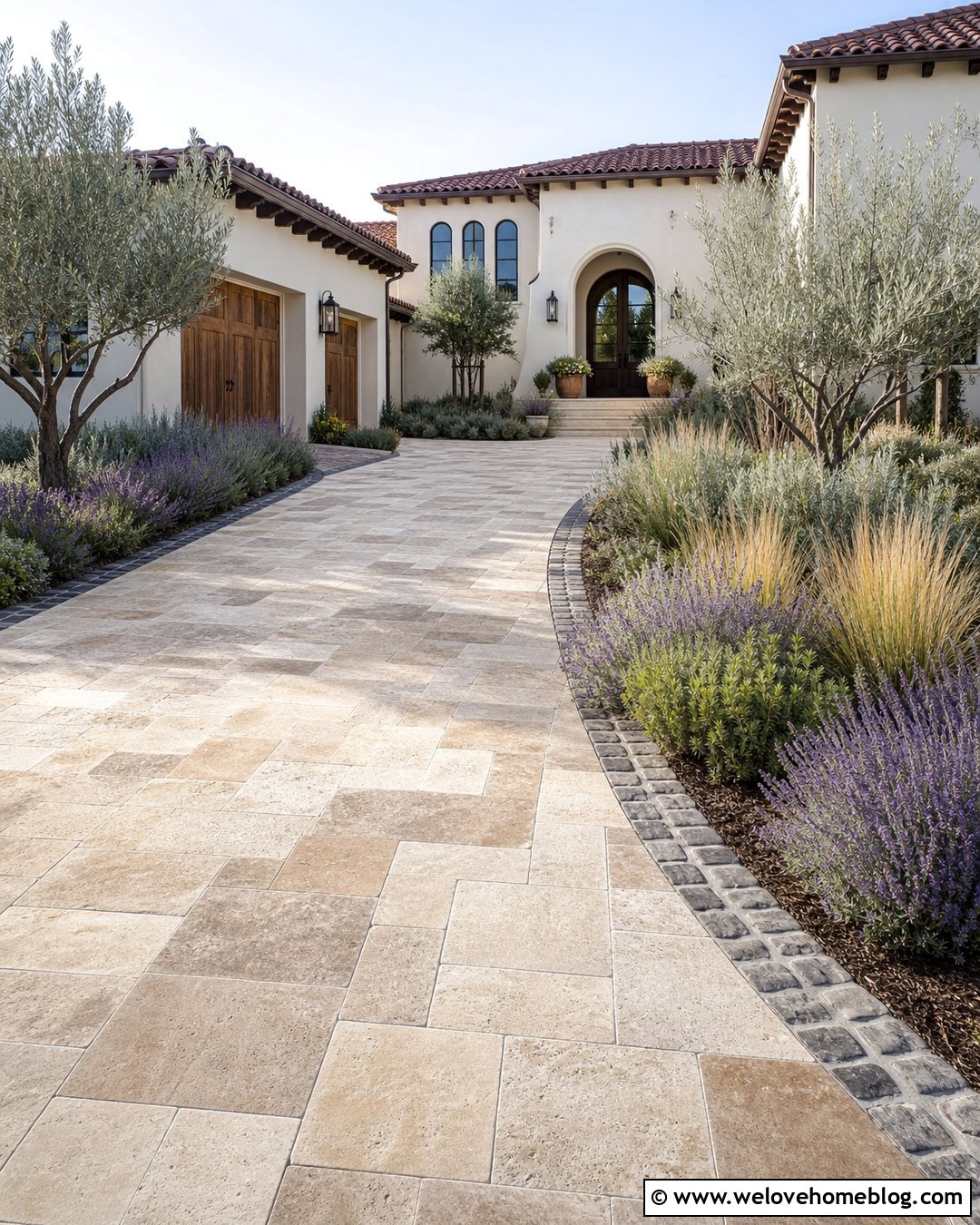
Driveway-rated travertine pavers create a warm, upscale surface for homes in suitable climates. Choose ivory, walnut, or blended beige stone with a textured finish, and arrange the pavers in a French pattern to distribute color naturally. A curved driveway can be outlined with darker limestone or concrete cobblestone edging for definition. Mediterranean shrubs, olive-like ornamental trees, and drought-aware ground covers reinforce the warm palette around a stucco house. Use the same travertine on the entry walkway while simplifying the pattern near steps. Travertine products differ significantly, and not every tile is appropriate for vehicle traffic or cold weather. Confirm the paver thickness, finish, structural installation, climate compatibility, and sealing expectations before purchase. This protects both the appearance and long-term function of the design.
12. Bluestone Paver Driveway With Brick Border
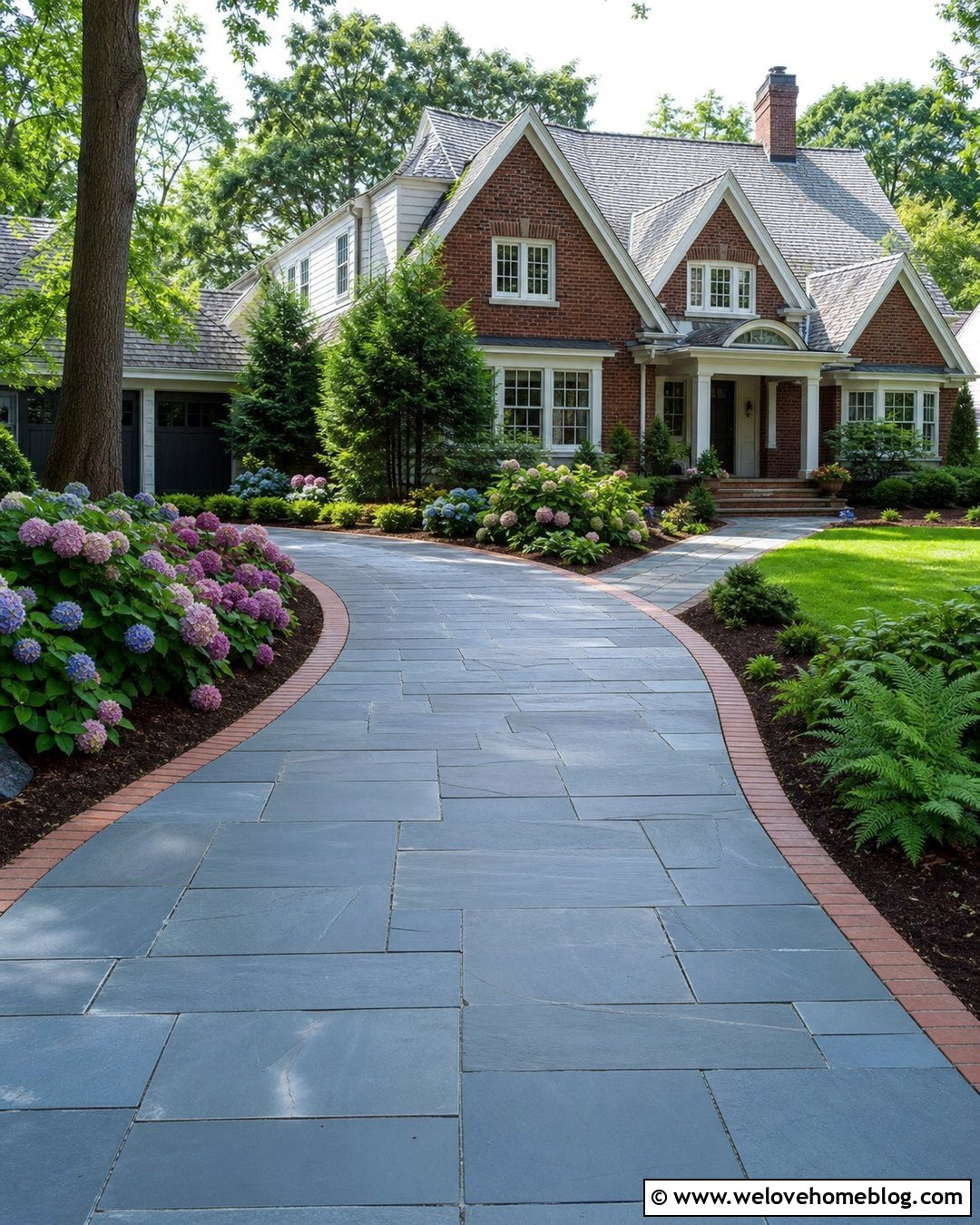
Bluestone pavers bring rich blue-gray color to a driveway and pair naturally with red brick, fieldstone, and cool painted siding. Use thick, vehicle-rated bluestone in rectangular sizes arranged in an ashlar layout. A muted red clay brick border warms the stone and creates a clear connection to a brick facade or chimney. Shape the driveway with a gentle curve leading toward a detached garage or traditional home. Ferns, hydrangeas, evergreen shrubs, and shaded planting beds suit the cooler color palette. A matching bluestone walkway can branch from the driveway and lead to the porch. Since natural stone can vary in thickness and texture, installation requires careful material selection and base preparation. A restrained border lets the stone’s natural tonal movement remain the main visual feature.
13. Granite Cobblestone Paver Driveway
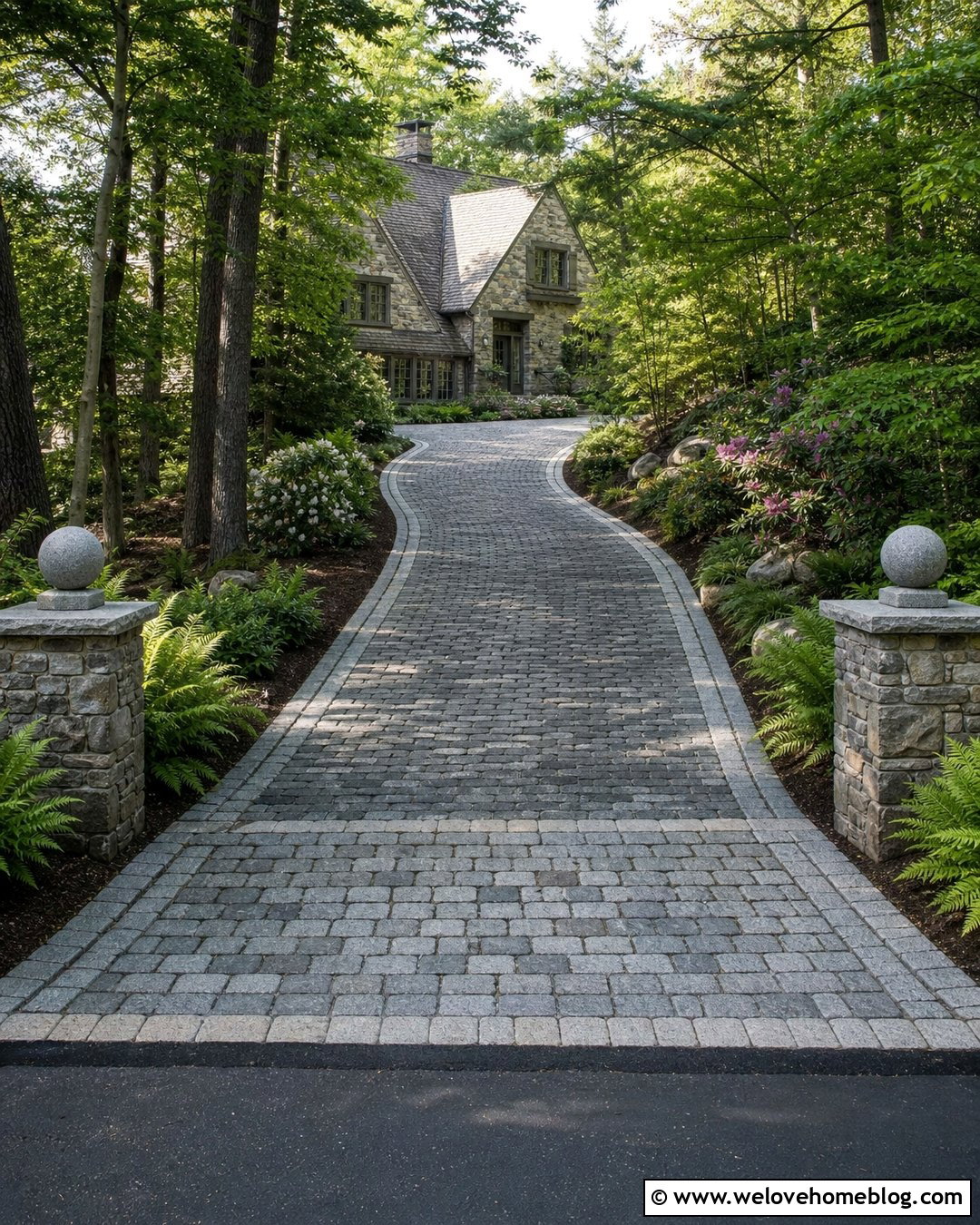
Granite cobblestones create a durable-looking driveway with unmistakable historic character. Choose rectangular granite setts in mixed silver, charcoal, and warm gray tones. Lay them in a traditional running pattern or gentle arcs that suit the driveway’s shape. A flush double row of larger granite stones can define the perimeter without introducing another color. This surface looks especially fitting beside stone cottages, historic homes, and wooded properties. Frame it with informal planting beds containing ferns, flowering shrubs, ground covers, and mature trees. Near the street, use a slightly wider cobblestone apron to establish a clear entrance. Granite can produce a strongly textured surface, so material finish, joint width, accessibility, snow removal, and drainage should all be considered when developing the complete layout.
14. Sandstone Paver Driveway With Mediterranean Landscaping
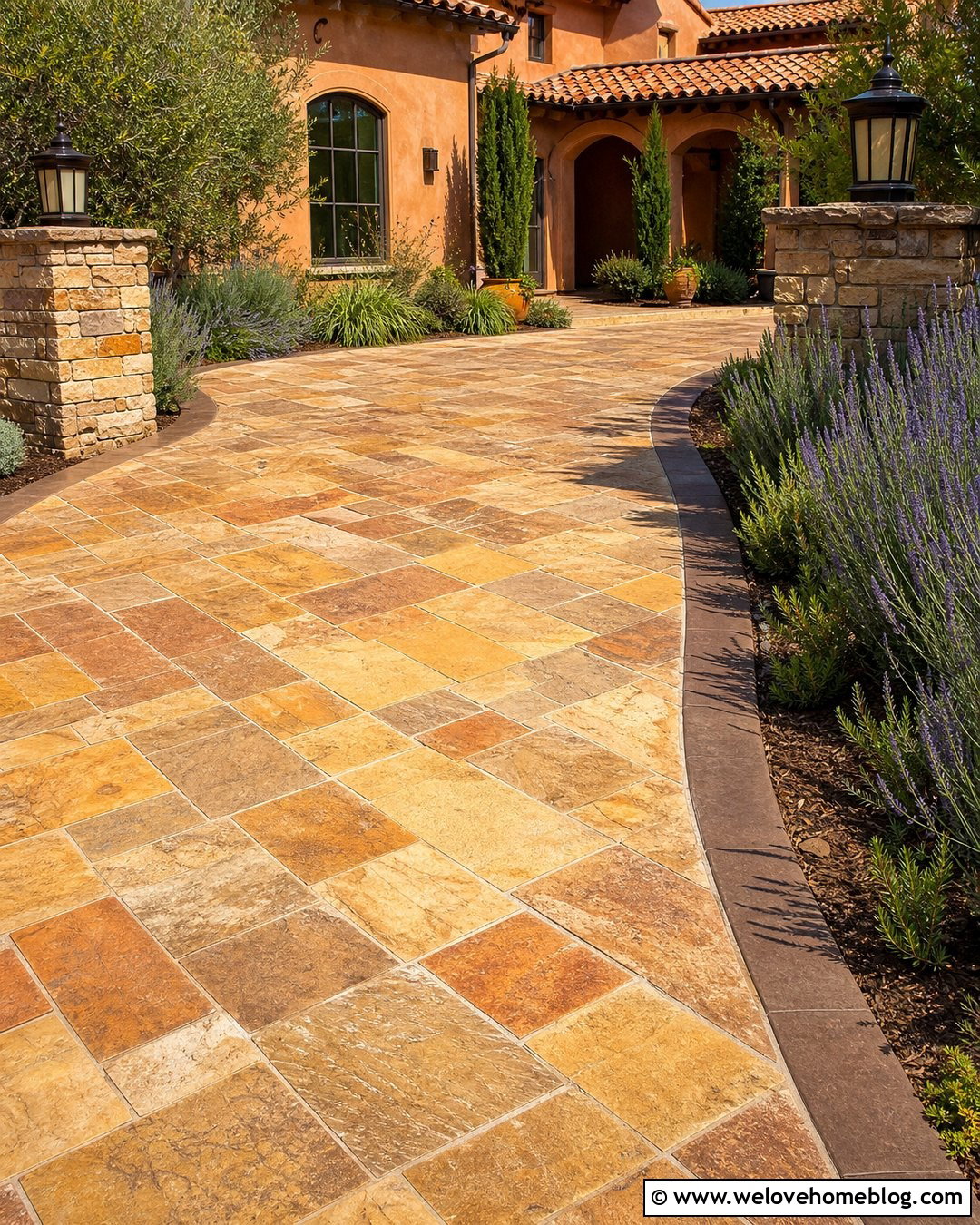
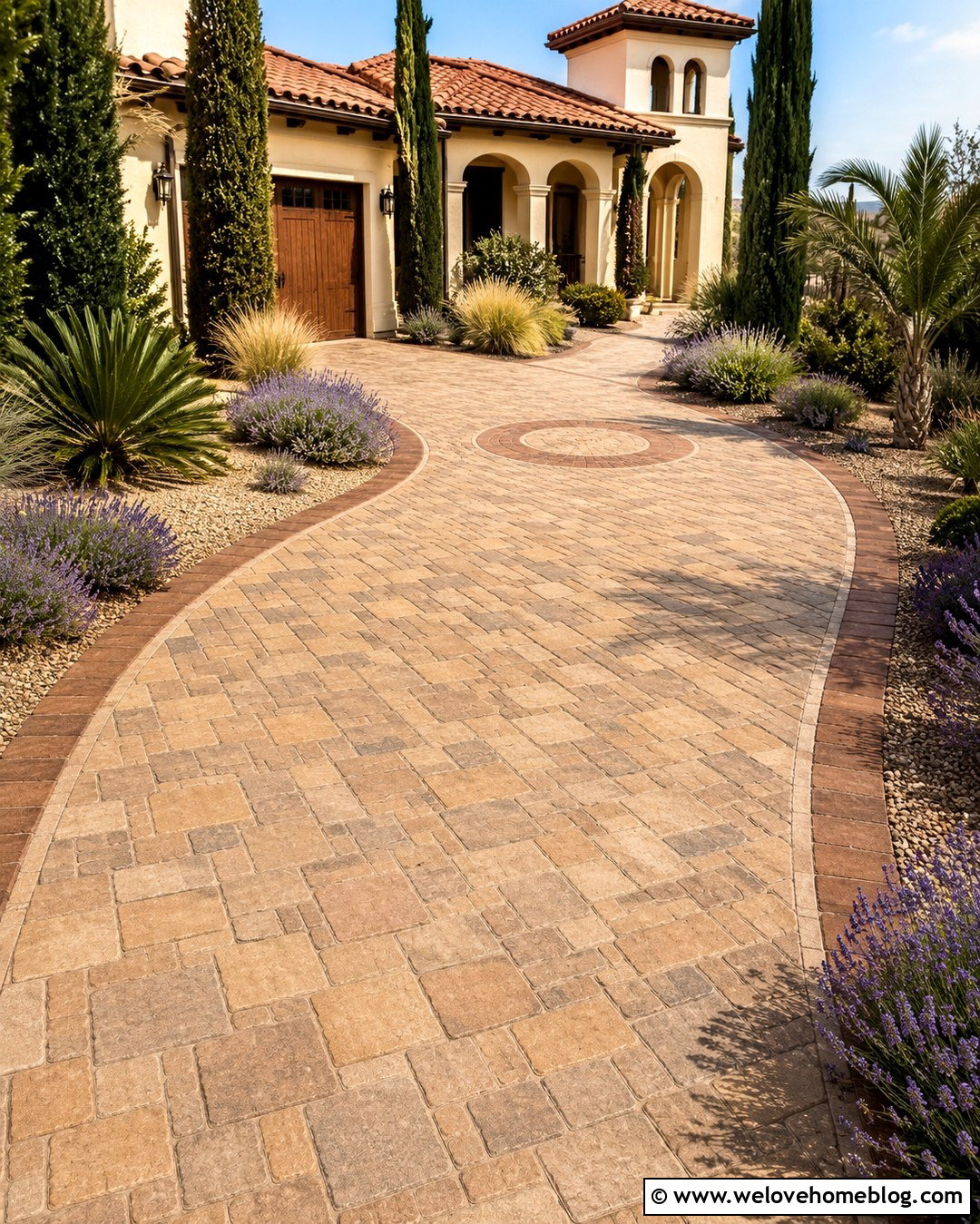
Warm sandstone pavers can create an inviting driveway for a Mediterranean or Spanish-inspired home. Use driveway-rated stone in blended buff, gold, and soft rust tones with a textured surface. A fan or random rectangular pattern will highlight the color variation without becoming overly formal. Border the driveway with dark brown concrete setts or deep red clay pavers. Curved beds filled with rosemary, lavender, ornamental grasses, and drought-tolerant shrubs can follow the paving edge. Terracotta-colored walls and simple stone entrance pillars complete the approach. Keep larger plants away from the inner curves so drivers maintain clear views. Because sandstone density and durability vary, choose a product specifically approved for the expected climate and traffic. The paving and planting should share warm, sun-washed colors.
15. Farmhouse Brick Paver Driveway
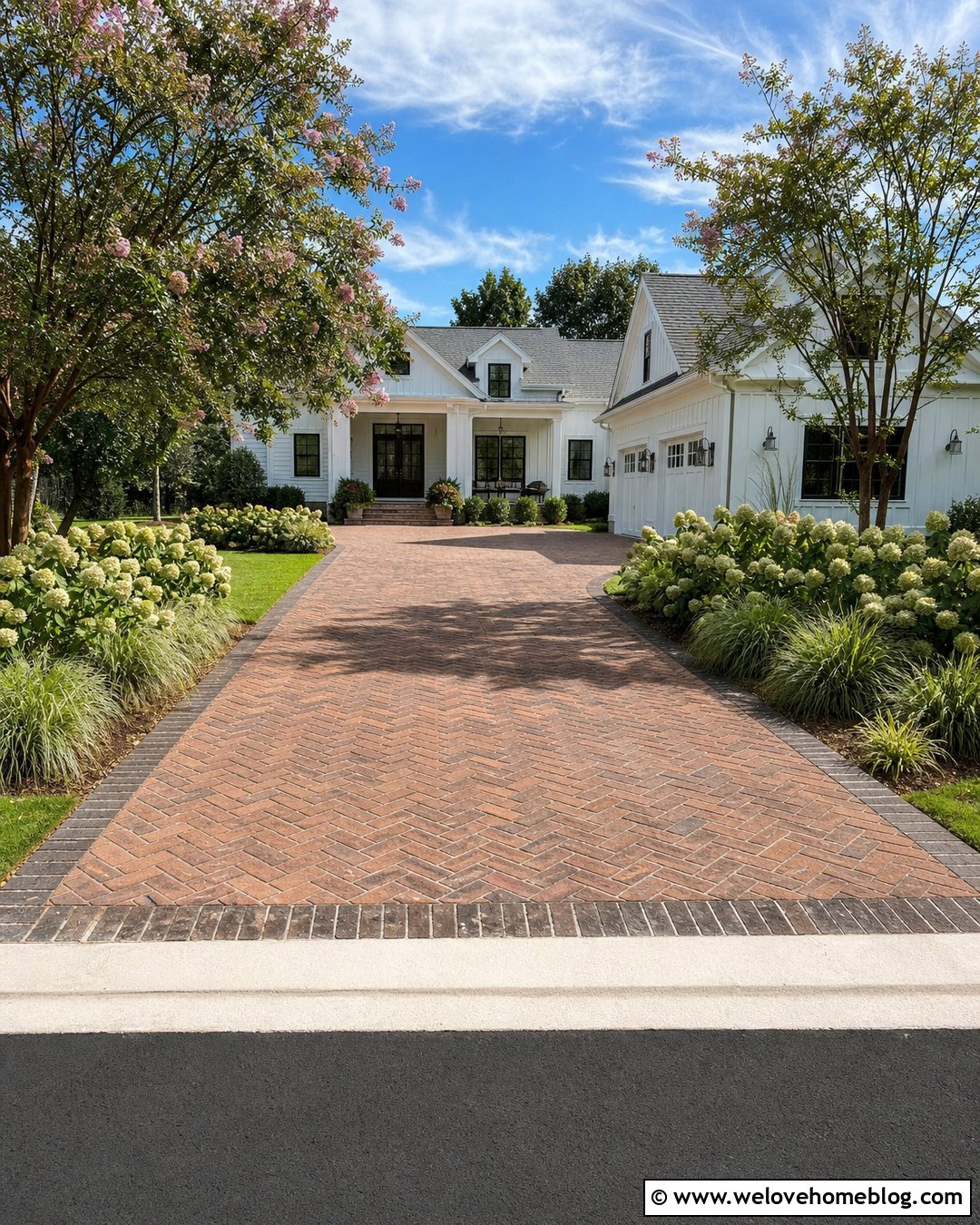
A farmhouse brick paver driveway feels welcoming when its materials are simple and slightly rustic. Use red and brown clay brick pavers in a herringbone field, then add a dark weathered-brick border. A straight driveway leading to a white modern farmhouse creates a strong contrast between the warm surface and light facade. Wide planting strips can include hydrangeas, panicle shrubs, ornamental grasses, and small flowering trees. Near the garage, install a broad brick apron with the pattern turned ninety degrees to mark the transition. A matching walkway can branch toward the porch and repeat the same border. Avoid excessive decorative inlays, which can compete with the farmhouse’s straightforward architecture. Slightly varied brick tones will provide character while keeping the overall driveway cohesive and practical.
16. Colonial Paver Driveway With Brick Apron
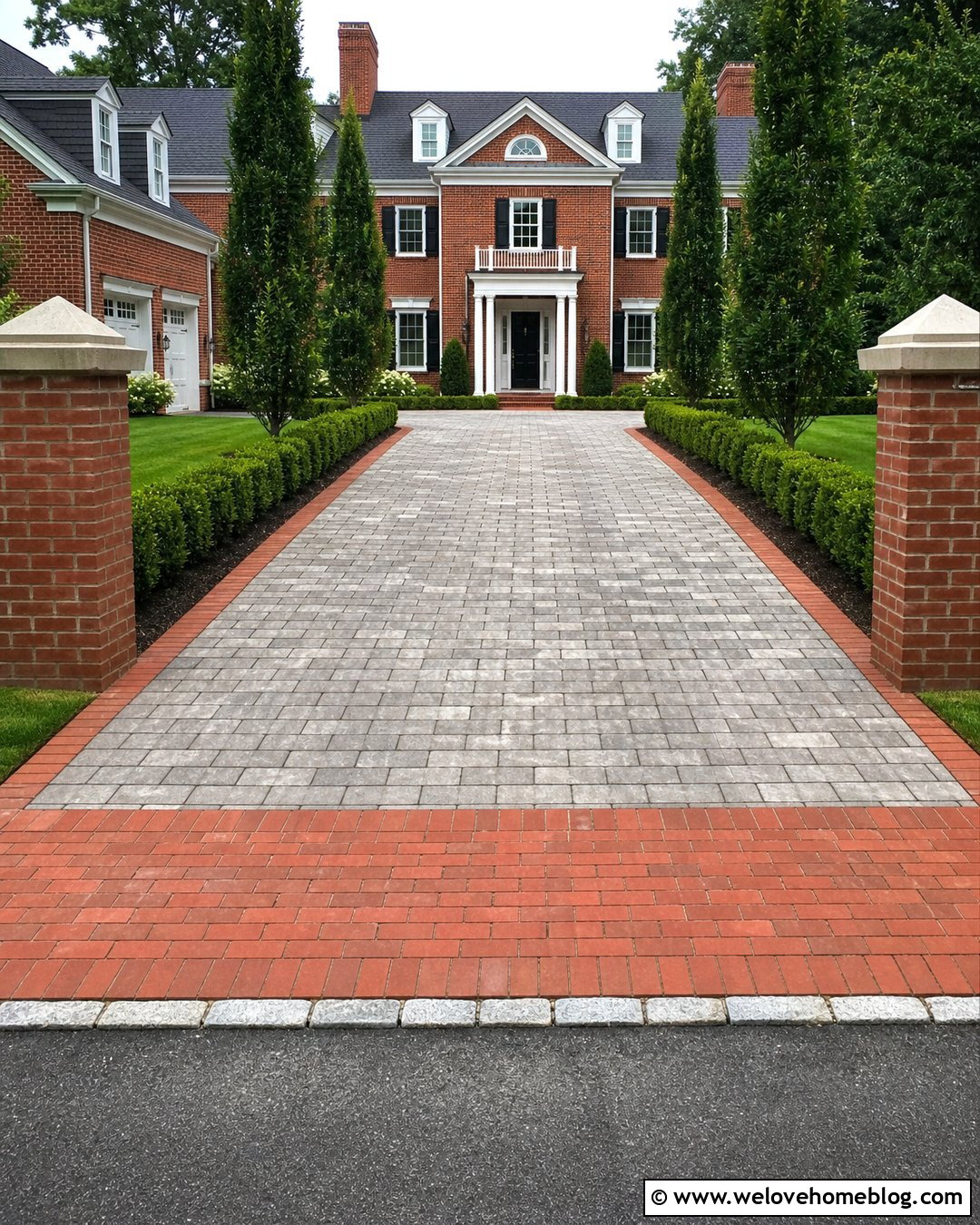
Symmetry is the foundation of a successful Colonial paver driveway. Choose rectangular concrete pavers in a muted charcoal, taupe, or weathered gray blend. Arrange them in a running bond across a straight driveway, then install a wide red clay brick apron near the street. Repeat the brick around the perimeter and at the garage threshold to connect the paving with the home’s facade. Matching lawn panels and balanced planting beds should frame both sides of the approach. Use clipped boxwood, upright evergreens, and one ornamental tree on each side where space allows. Brick entrance pillars can further strengthen the formal layout. Keep all border lines crisp and align the central driveway axis with the front elevation, garage doors, or primary landscape feature for an orderly finished appearance.
17. Craftsman Paver Driveway With Earth Tones
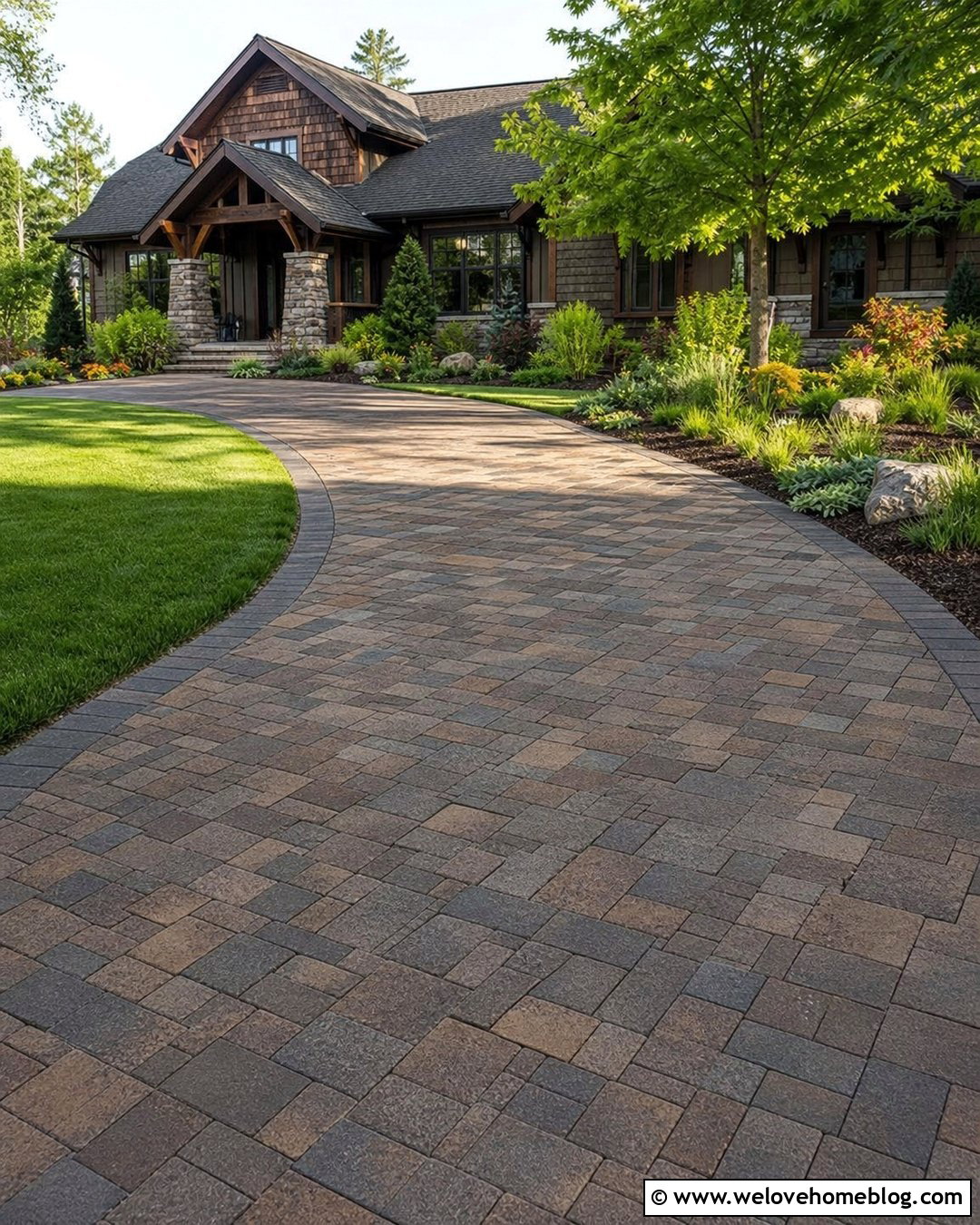
A Craftsman home pairs naturally with pavers that have warm, grounded colors and visible texture. Select concrete pavers in a blend of brown, mossy gray, charcoal, and muted tan. A random ashlar pattern can echo the layered appearance of stone porch columns and shingle siding. Outline the driveway with dark brown pavers, then connect it to a wider front walk made from the same field material. Planting beds should feel full but organized, using evergreen shrubs, native grasses, flowering perennials, and one small canopy tree. A gently curved driveway will soften the architecture and create a gradual arrival. Repeat one paver color in porch steps or a low garden wall. This shared palette makes the driveway feel like part of the original home design.
18. Modern Paver Driveway With Grass Strips

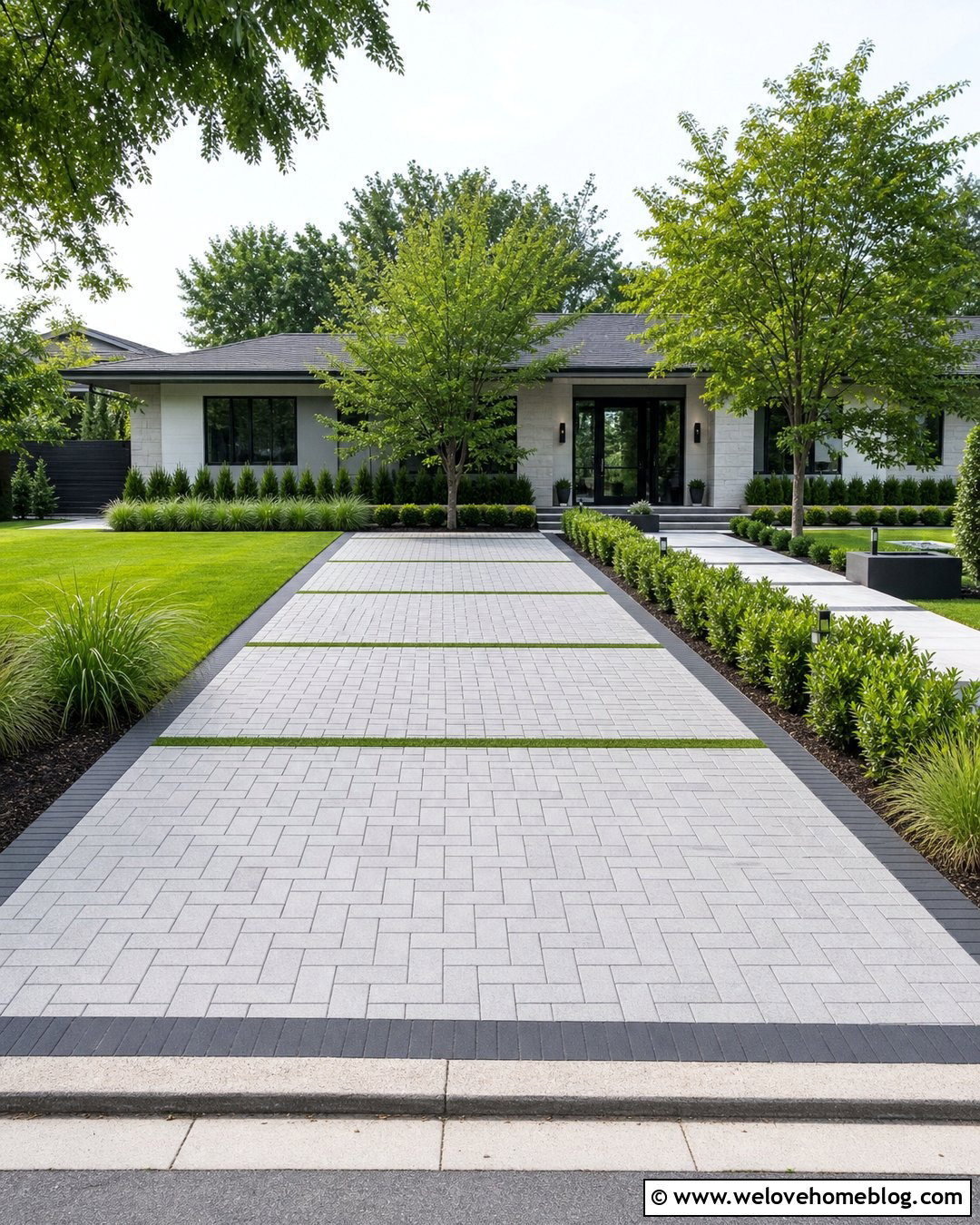
Concrete pavers separated by narrow green strips can soften a modern driveway while emphasizing its geometry. Use large rectangular charcoal or light gray pavers in straight vehicle lanes with consistent planted joints. Choose a durable turf or low-growing ground cover suited to the light, climate, maintenance routine, and occasional traffic. Solid paver borders should frame the driveway and stabilize transitions near the sidewalk and garage. Pair the layout with a flat-roof or boxy contemporary home, linear planting beds, architectural grasses, and a few sculptural shrubs. Keep the driveway’s lines parallel with windows, walls, and garage doors. This look requires more detailed planning than simply leaving gaps between ordinary slabs. Drainage, base construction, joint dimensions, irrigation, and plant access should be designed as an integrated system.
19. Small Paver Driveway With Light Colors
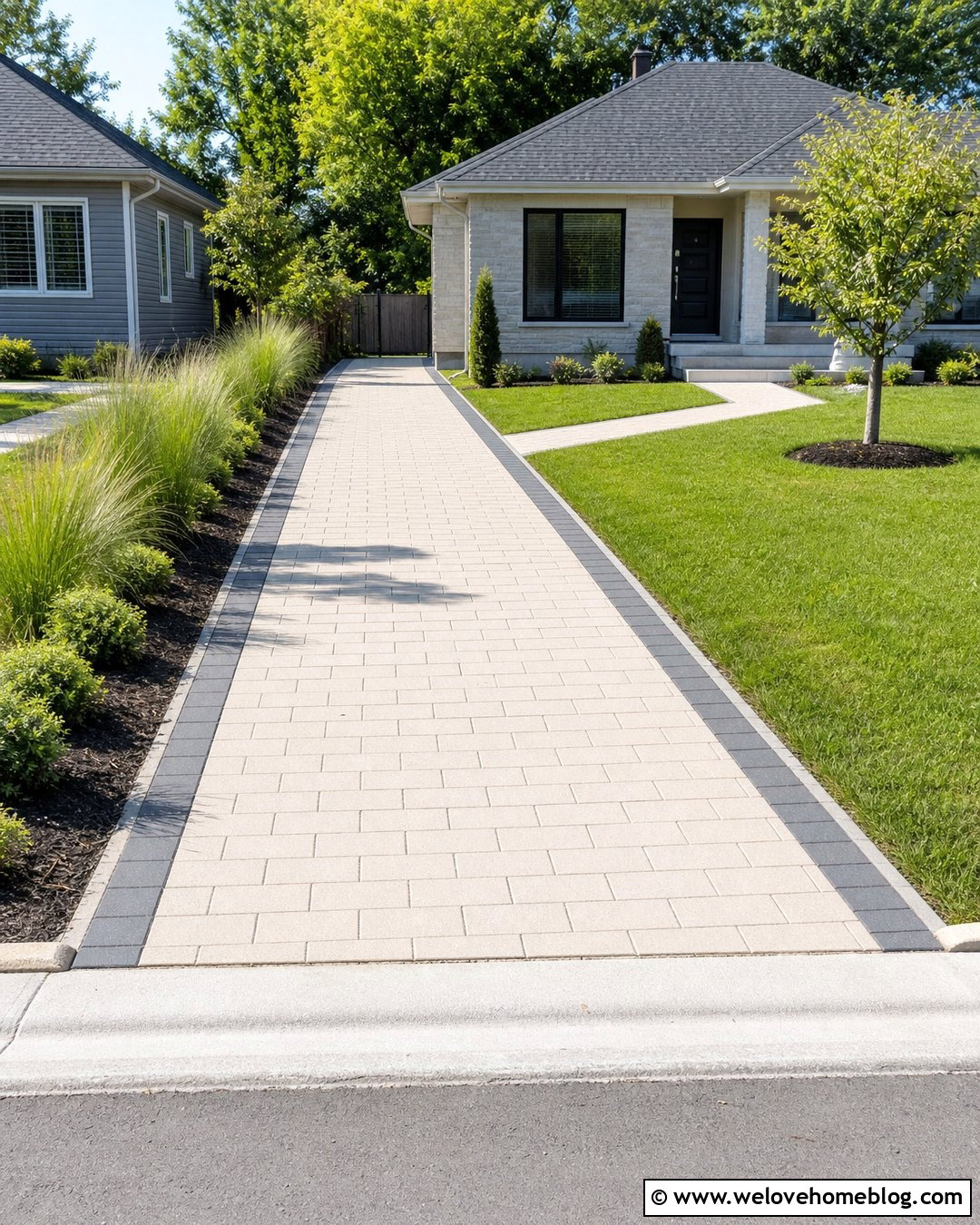
A compact driveway can feel more open when the paving uses light colors and a simple pattern. Install cream, pale gray, or sandy concrete pavers in a running bond directed toward the house. Frame the field with a narrow charcoal border to create definition without reducing the surface visually. Keep the driveway straight and avoid oversized medallions that could make the area feel crowded. A slim planting bed on one side can hold upright grasses, compact shrubs, or a small ornamental tree. On the opposite side, connect a matching paver walkway to the front door. Choose restrained landscaping that leaves enough room for doors, bins, and pedestrian movement. Careful dimensions and full-scale planning are especially important because every border, cut, and transition is noticeable in a small space.
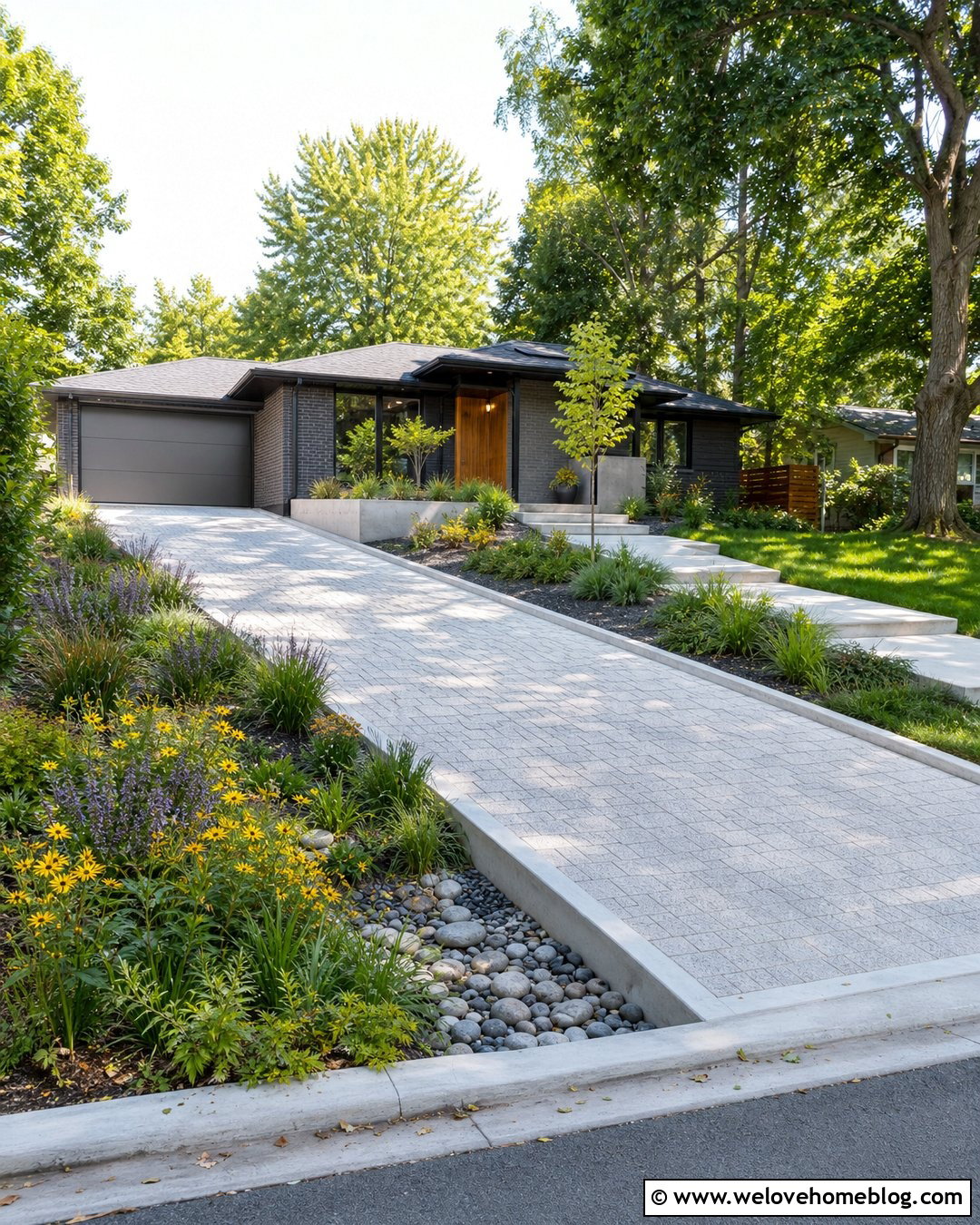
20. Wide Paver Driveway With Double Border
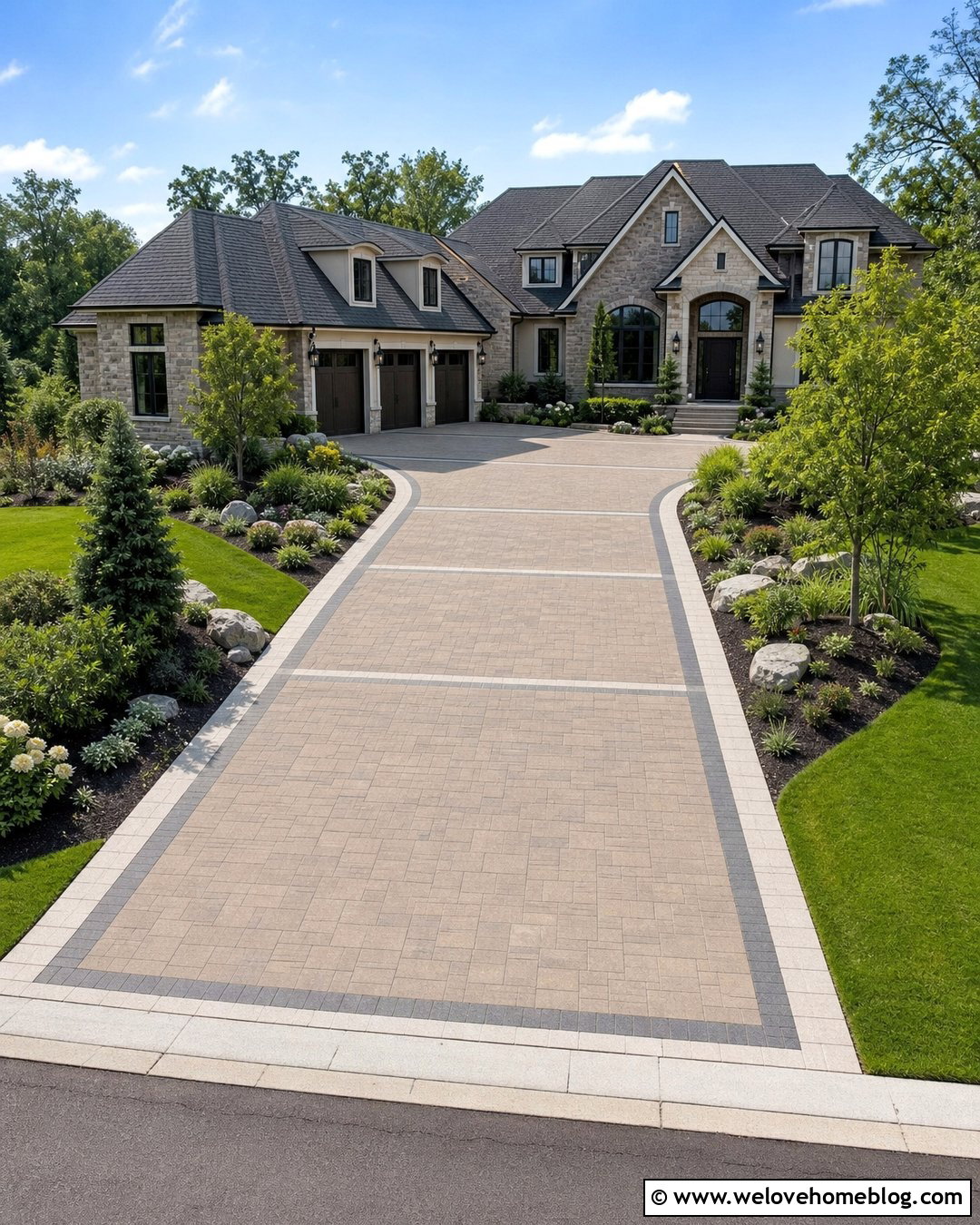
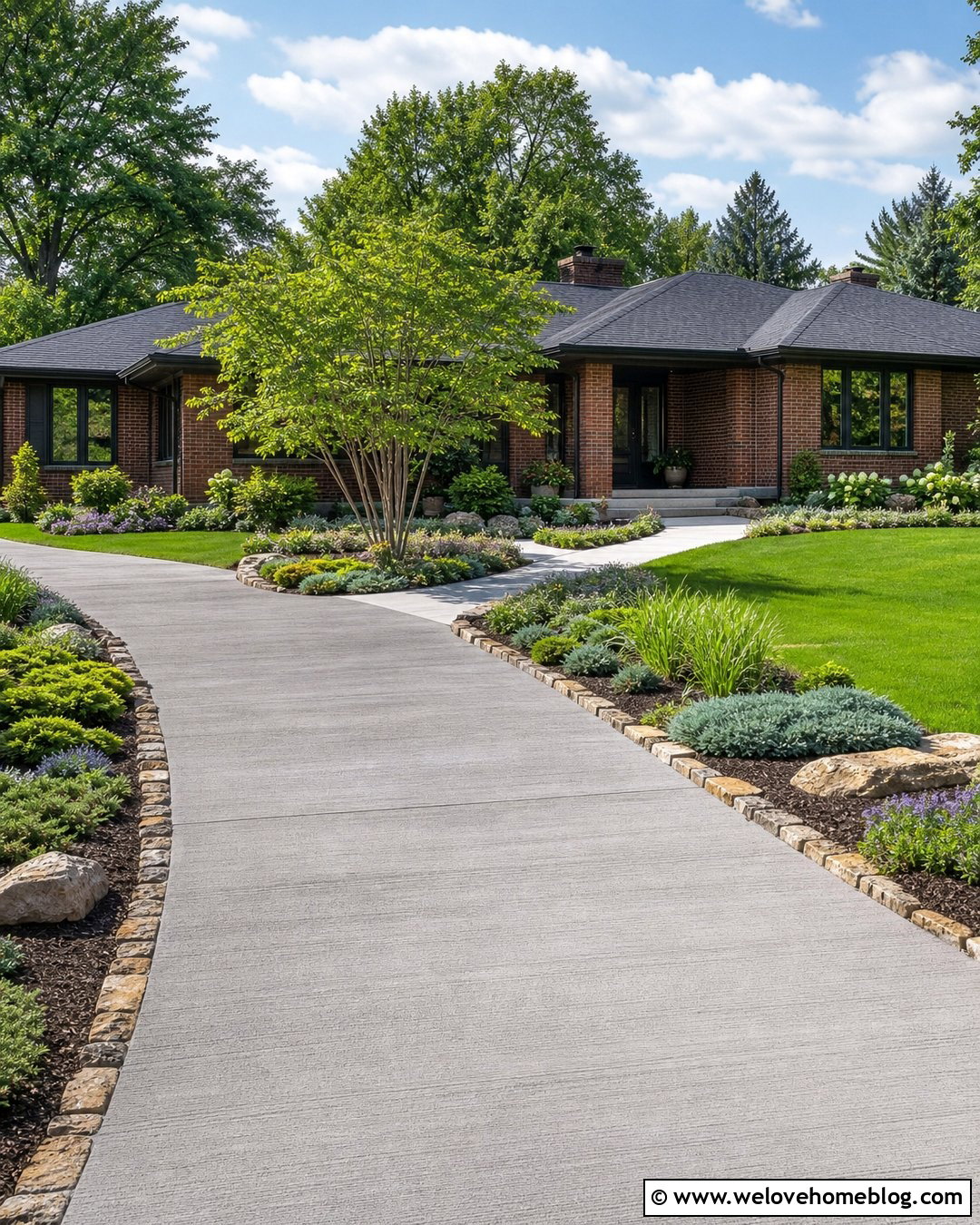
A double border gives a wide paver driveway stronger definition and prevents the main field from looking unfinished. Use blended tan or gray concrete pavers in an ashlar layout, then frame them with an inner charcoal course and an outer light stone course. Carry both border colors across the driveway near the garage to create a coordinated threshold. Broad planting beds should balance the paved area with layered shrubs, ornamental trees, and sweeping ground-cover masses. If the house has multiple garage doors, add subtle paver bands that align with the divisions between bays. These details organize the width without creating separate parking boxes. Keep decorative patterns large enough to suit the scale of the driveway. Thin, complicated accents may disappear when viewed from the street or upper windows.
21. Paver Driveway With Contrasting Ribbons
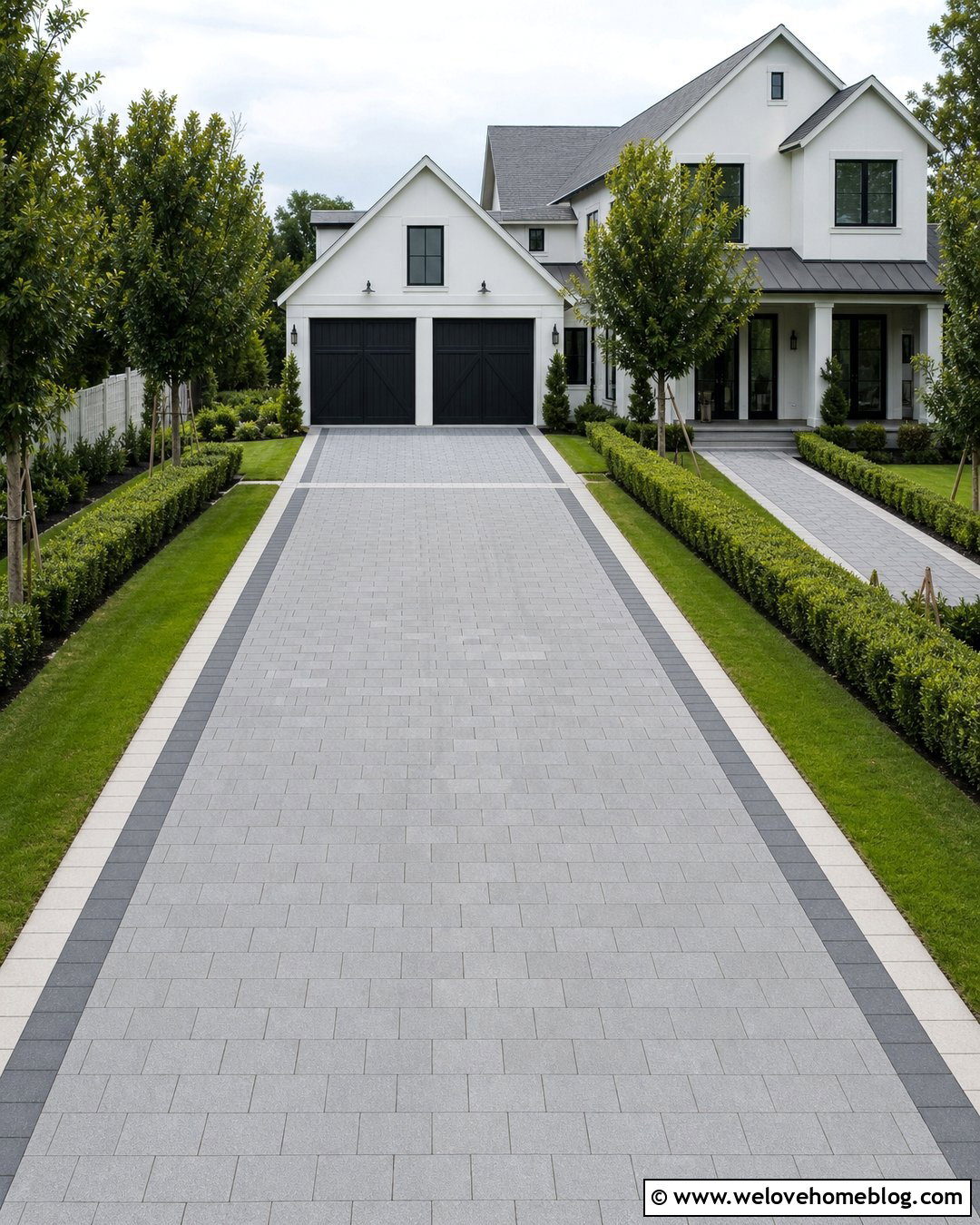
Contrasting paver ribbons can organize a long driveway and add detail without covering the entire surface in a busy pattern. Begin with a medium-gray concrete paver field laid in running bond. Install two parallel charcoal bands along the expected wheel paths or position a single ribbon near each outer edge. Continue the accent color around a light border and across the garage apron. A straight layout works best because it keeps the ribbons visually aligned with the house. Use narrow lawn strips, low hedges, and evenly spaced trees to reinforce the same direction. The bands should be planned around actual driveway dimensions rather than assumed tire positions. When proportions are carefully considered, the ribbons provide structure and visual length while remaining part of a complete, understated entrance design.
22. Paver Driveway With Circular Medallion
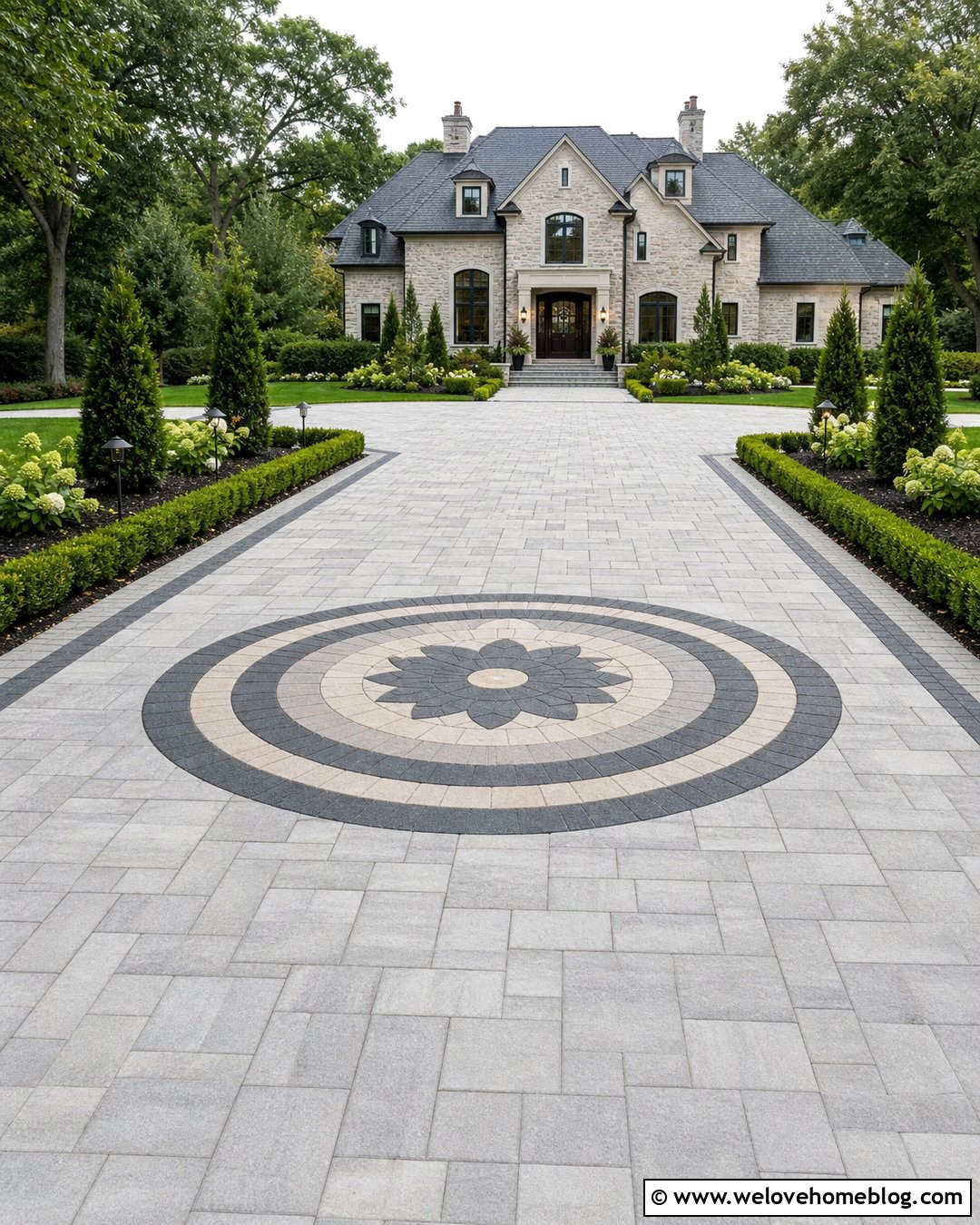
A circular paver medallion creates a central focal point in a large driveway or entrance court. Surround the feature with neutral concrete pavers in a simple ashlar or running-bond pattern. Build the medallion from charcoal, cream, and warm gray pavers arranged in concentric circles. Limit the color palette so the design looks integrated rather than added later. Position the circle where it can be seen from the street without interfering with turning or parking. Repeat the darkest medallion color in the driveway border and nearby walkway. Formal shrubs, balanced planting beds, and low landscape lighting can frame the approach. Before installation, map the entire design at scale so the medallion aligns with the front door, garage, fountain, or another important architectural feature.
23. Fan Pattern Cobblestone Paver Driveway
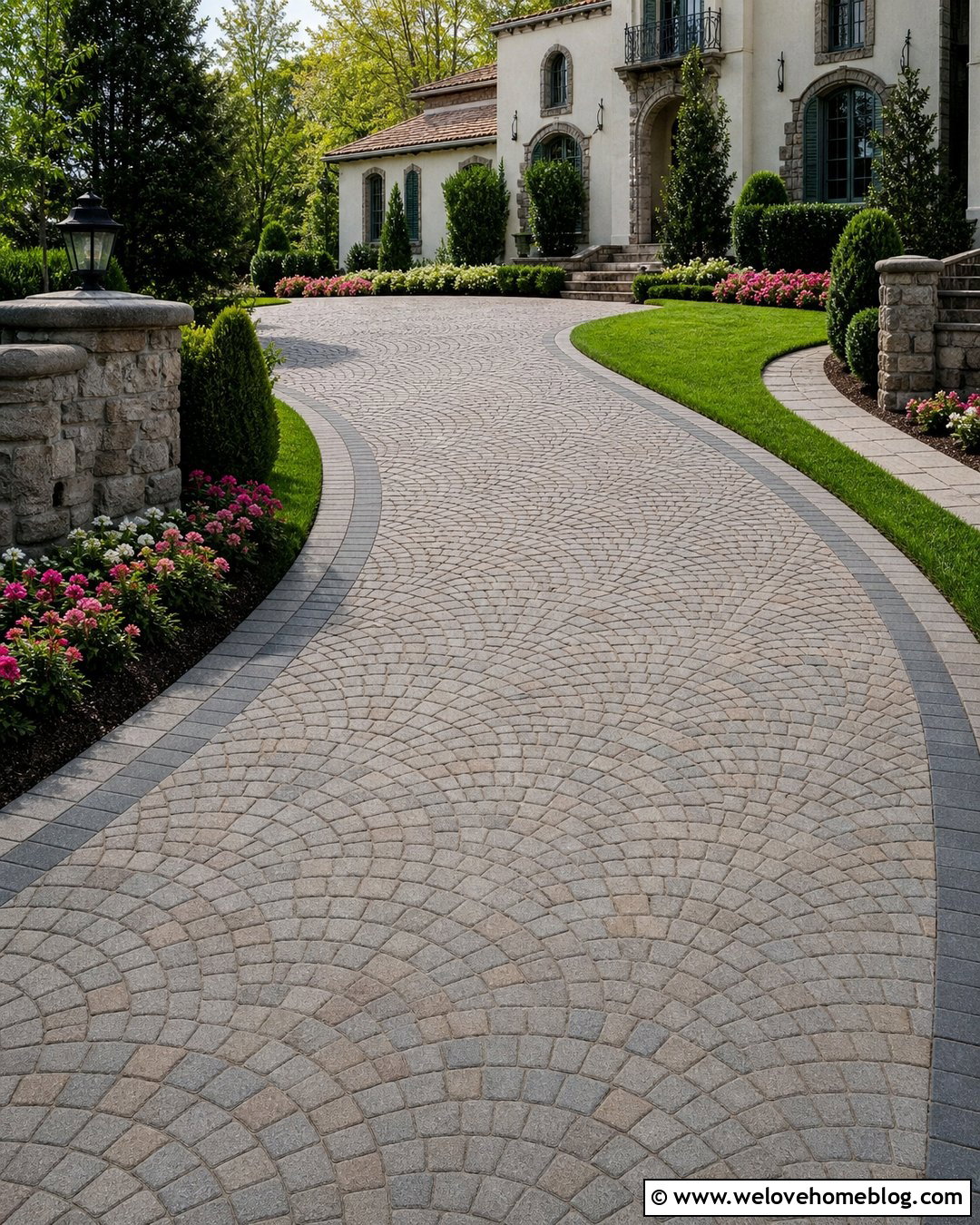
Fan-pattern pavers bring graceful movement to a driveway inspired by European cobblestone streets. Use small concrete cobblestone pavers in blended gray, charcoal, and muted brown. Arrange them in repeating fan shapes that open toward the house or follow the curve of the approach. A simple dark border will contain the detailed surface without distracting from it. This design works best on a visible entrance court, circular driveway, or broad area where several full fans can be displayed. Pair the paving with a stone or stucco home, clipped evergreen shrubs, flowering borders, and simple masonry pillars. The layout involves many changes in joint direction, so experienced installation is valuable. Keep surrounding hardscape quiet and allow the patterned driveway to provide the primary decorative statement.
24. Checkerboard Grass Paver Driveway
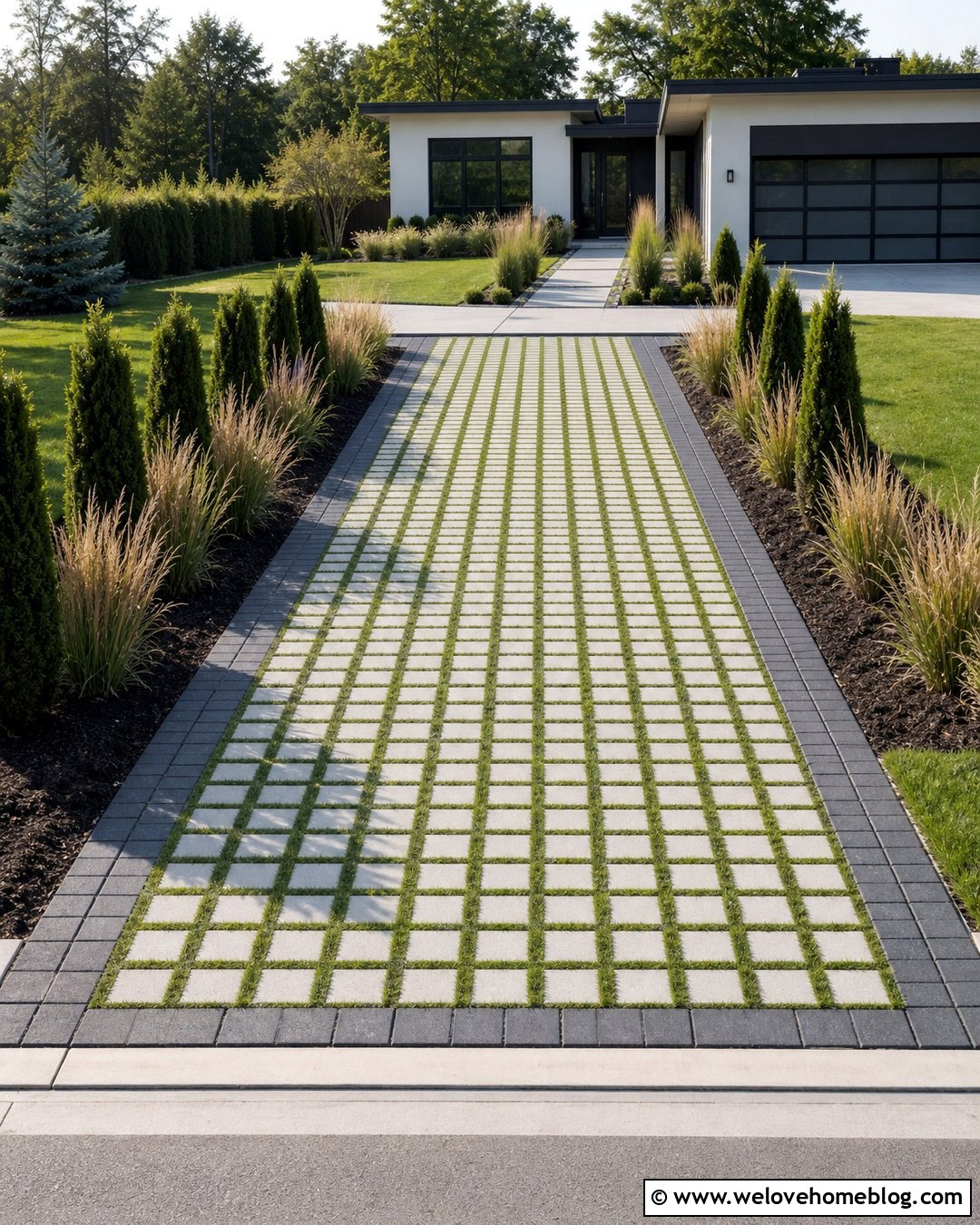
A checkerboard driveway combines solid concrete pavers with planted openings for a distinctive green surface. Use square, driveway-rated light gray pavers arranged in a precise grid, with alternating spaces filled by reinforced turf or a suitable low ground cover. Solid paver lanes near the garage can create smoother parking and walking zones. Frame the checkerboard field with charcoal edging to clearly define its boundaries. This look pairs well with midcentury, modern, and minimalist homes surrounded by simple lawns. Add linear planting beds with ornamental grasses and compact evergreen forms. The planted areas need appropriate soil depth, irrigation, sunlight, drainage, and protection from frequent turning. Carefully position the grid so the green sections support the overall design rather than appearing as random missing pavers.
25. Coastal Paver Driveway With Shell Colors
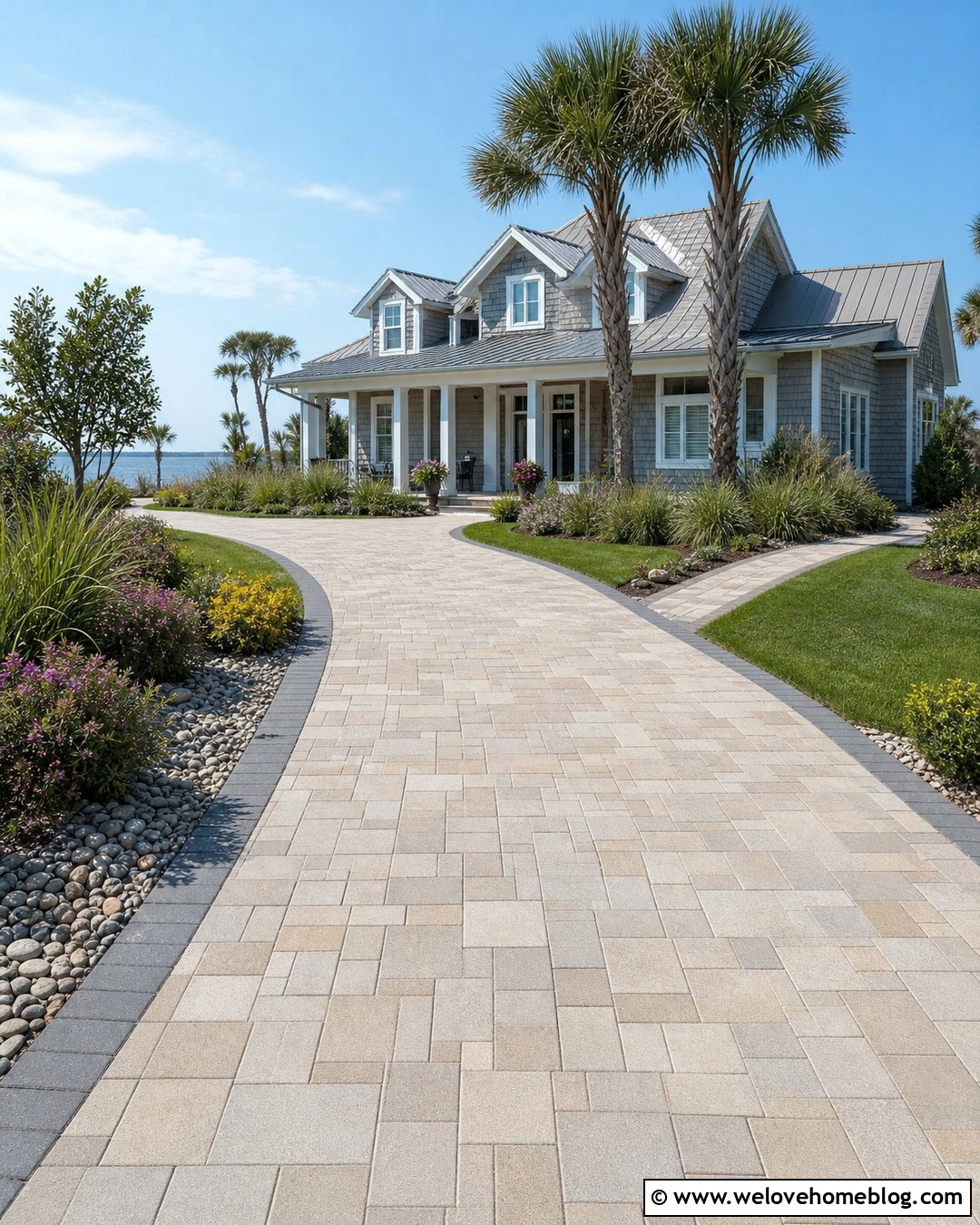
Pavers in shell-inspired colors create a bright driveway that suits a relaxed coastal home. Select textured concrete pavers in ivory, pale sand, warm gray, and subtle beige. Arrange them in a mixed-size modular pattern across a gently curved or straight driveway. Use a medium-gray border to contain the light field and coordinate with weathered shingles or a cool-toned roof. Landscaping can include salt-tolerant ornamental grasses, compact palms where appropriate, flowering shrubs, and clean stone mulch. A matching walkway should curve toward the porch without introducing a second paving material. Avoid pure white surfaces that may produce harsh glare or show stains quickly. A softly blended palette gives the driveway depth while maintaining the light, open quality associated with coastal residential architecture.
26. Southwest Paver Driveway With Desert Landscaping
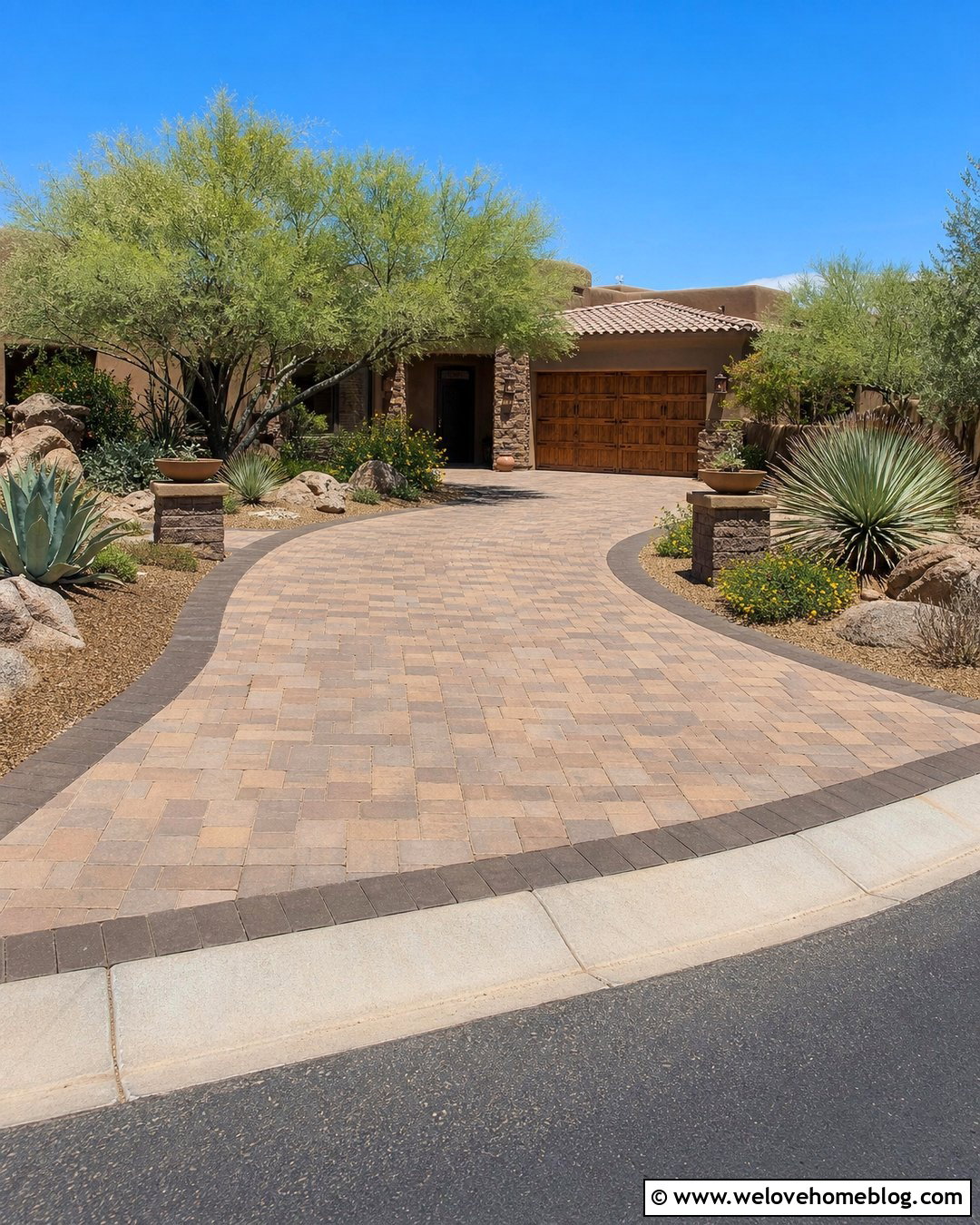
A Southwest driveway looks cohesive when the pavers repeat the warm colors found in the house and surrounding landscape. Use textured concrete pavers in adobe, terra-cotta, sand, and muted brown. Lay them in a random rectangular pattern across a broad, gently curved driveway. A dark brown paver border can define the shape against decomposed granite and desert planting beds. Frame the entrance with agave, yucca, ornamental grasses, flowering desert shrubs, and carefully placed boulders. Keep thorny plants set back from parking areas and pedestrian routes. Stucco walls, simple masonry pillars, and a wood garage door reinforce the earthy palette. Select paver colors from physical samples viewed in bright sun, since intense outdoor light can significantly change how warm and pale tones appear.
27. Rustic Paver Driveway For A Wooded Home
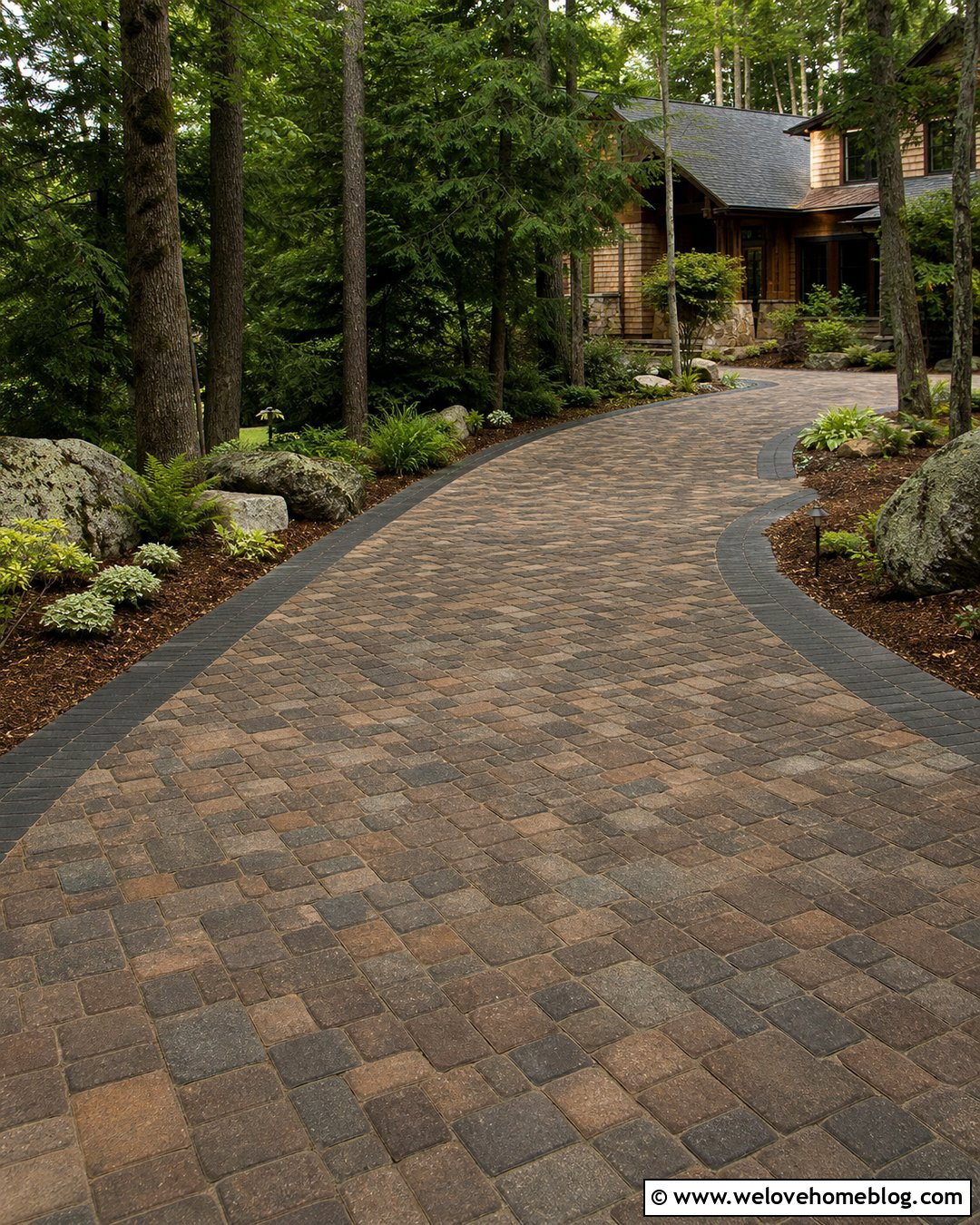
A wooded property benefits from a paver driveway that feels structured but not overly formal. Choose tumbled concrete pavers with a cobblestone finish in brown, charcoal, and mossy gray. A curved layout can follow the natural terrain and reduce the need for a rigid, straight approach. Border the driveway with larger dark pavers, then transition into mulched planting beds containing ferns, shade-tolerant shrubs, native ground covers, and existing trees. Natural boulders can mark the entrance or help manage gentle grade changes. Use warm landscape lighting sparingly along the edge without interrupting the woodland character. Leaf litter may be visible on darker blended paving, but the surface still needs regular clearing so joints, drainage paths, and transitions remain functional and easy to inspect.
28. Paver Driveway With Gate And Stone Pillars
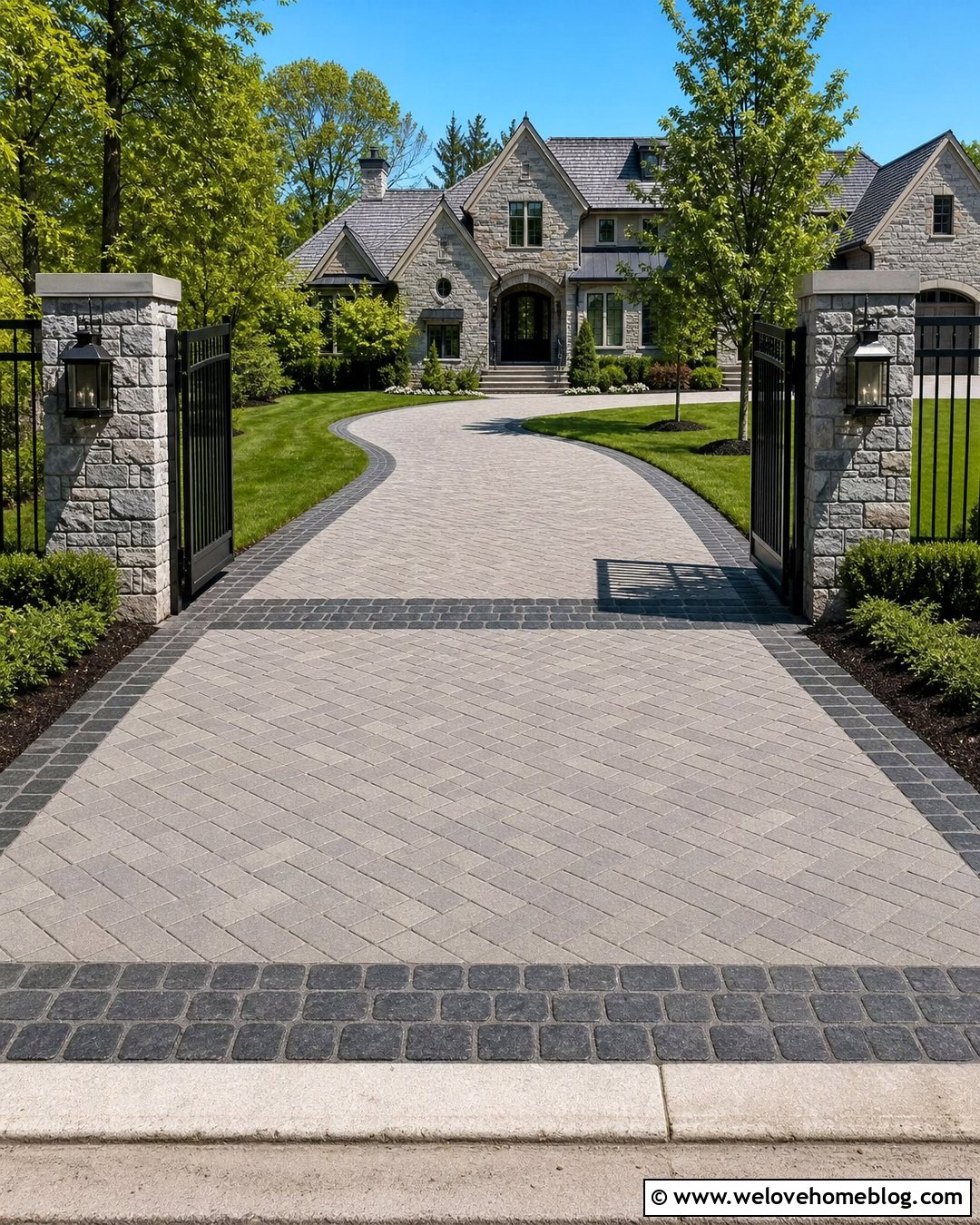
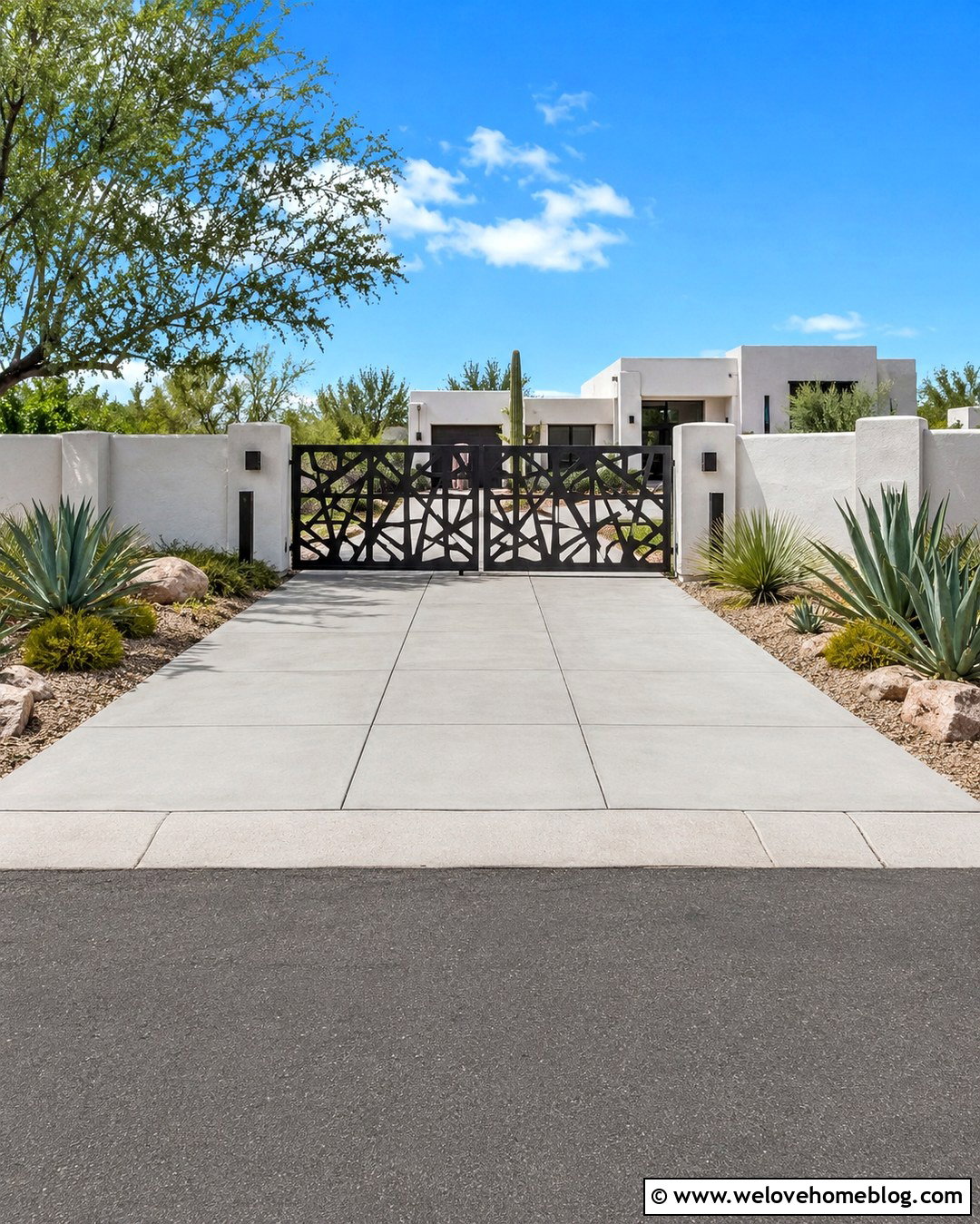
A gate becomes more convincing when the driveway surface and entrance masonry share a coordinated palette. Use warm gray concrete pavers in a herringbone layout across a straight driveway. Add a darker cobblestone border that widens into an apron beneath the gate. Stone-clad pillars can stand beyond the roadside sight triangle, with low shrubs placed far enough back to keep the entrance visible. Continue the pavers past the gate toward a traditional, farmhouse, or estate-style home. A curved walkway and balanced planting beds can soften the formal structure. Plan drainage so water does not collect near gate tracks, hinges, electrical equipment, or access controls. The opening width, setback, vehicle waiting space, and gate movement should be resolved before finalizing the decorative paver pattern.
29. Paver Driveway With Landscape Lighting
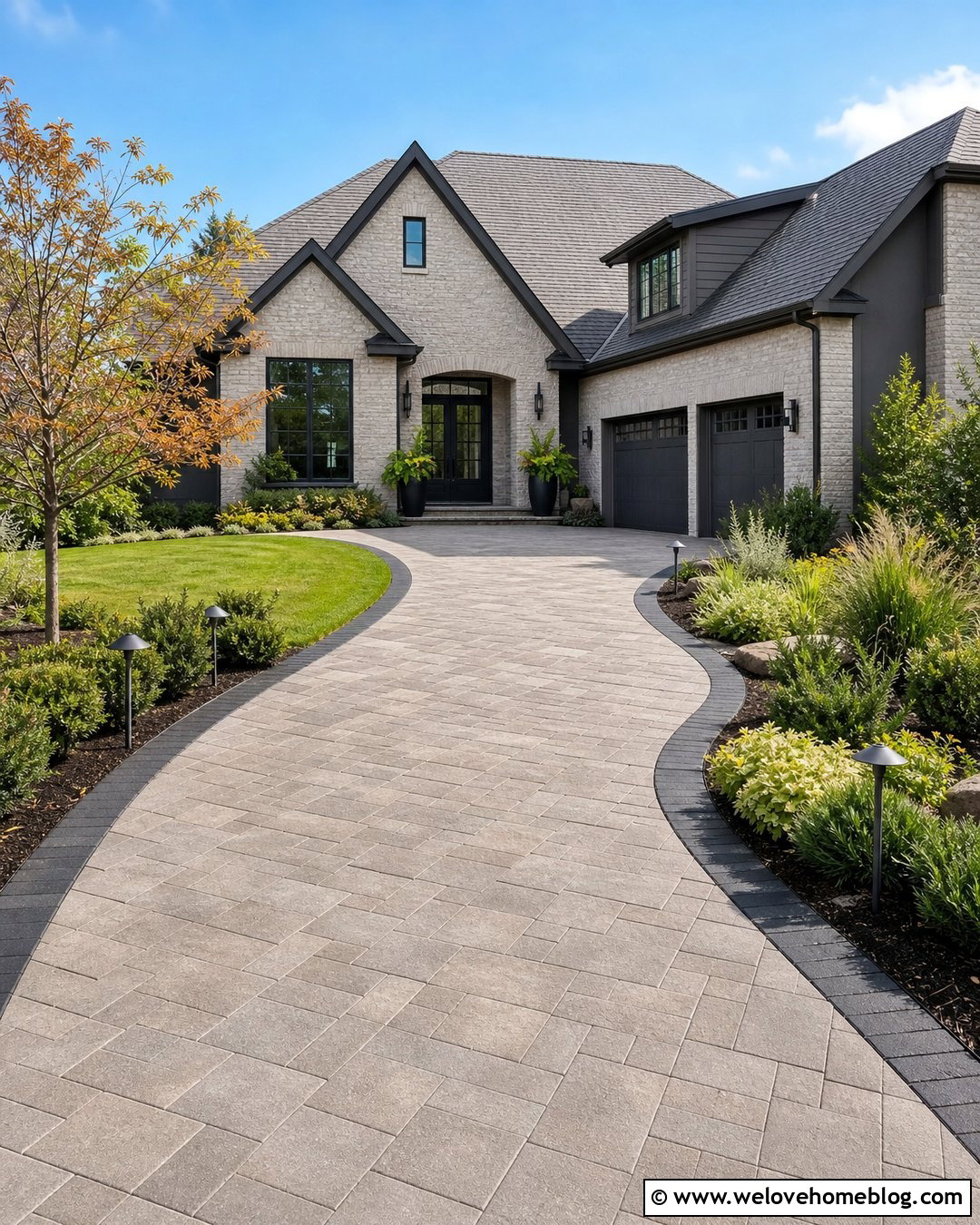
Integrated lighting can improve the nighttime usability of a paver driveway while remaining subtle during the day. Start with textured taupe concrete pavers in a curved ashlar layout. Frame them with a charcoal border and install low shielded fixtures in the adjacent planting beds rather than randomly across the driving surface. Place lights near curves, elevation changes, walkway intersections, and entrance pillars. Small ornamental trees, layered shrubs, and ground covers will catch enough light to define the driveway edge. During daylight, the complete design should still rely on balanced paving and landscaping for curb appeal. Coordinate fixture locations with drainage, irrigation, snow removal, and vehicle overhang. Choose a consistent fixture finish that matches the house hardware, gate, or garage lights for a unified exterior.
30. Paver Driveway With Retaining Wall
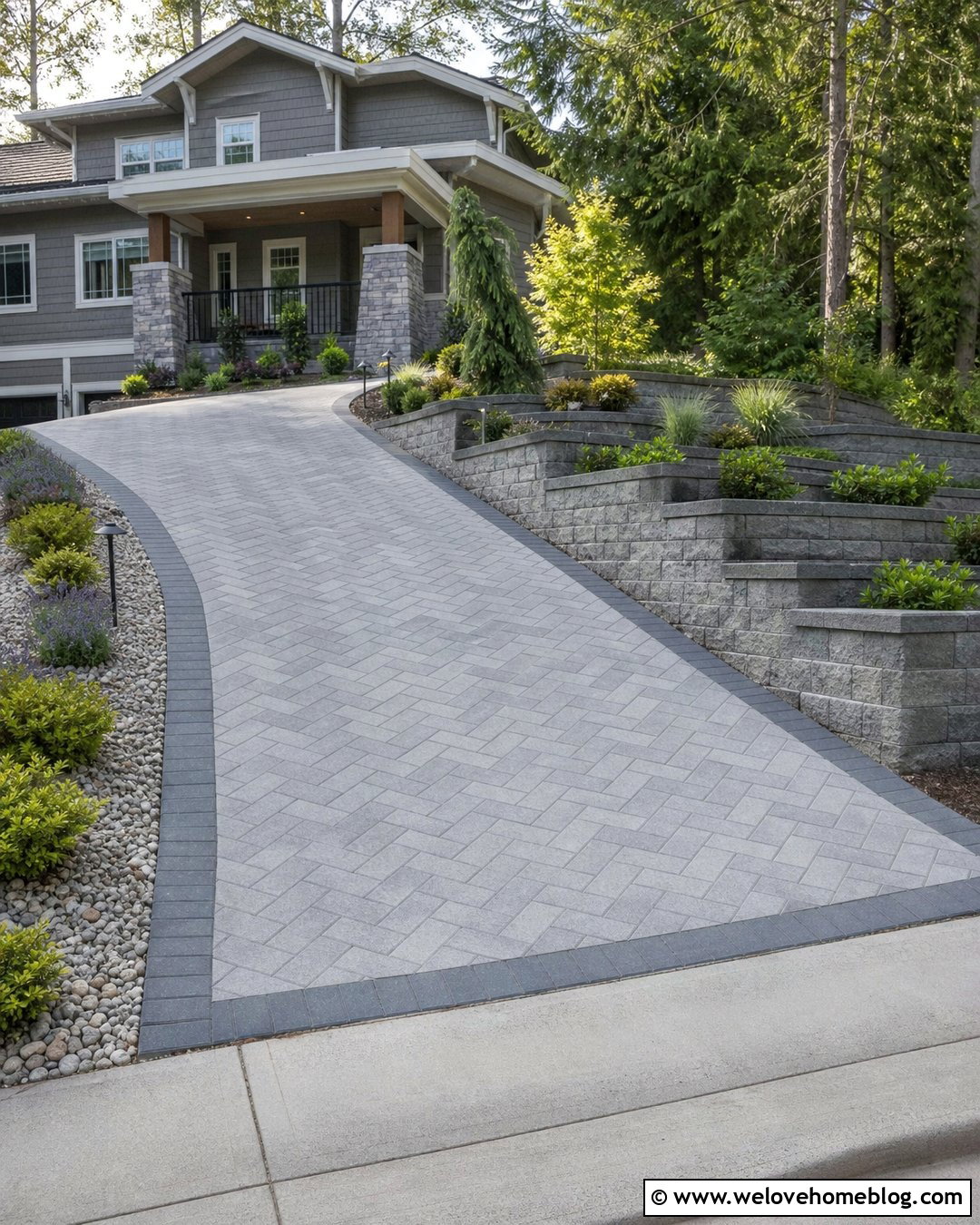
A sloped front yard often requires the driveway and retaining wall to be planned together. Use medium-gray concrete pavers in a herringbone pattern for a curved uphill driveway. Define the lower edge with charcoal pavers and build a compatible segmental retaining wall along the higher side. The wall color should repeat one of the lighter tones in the driveway rather than matching every paver exactly. Add stepped planting beds above the wall with ground covers, compact shrubs, and ornamental grasses that soften the masonry. Integrate the front walkway where the grade provides a safe, logical connection. Drainage behind the wall and beneath the driveway requires professional planning. A well-coordinated layout makes the grade change feel intentional while keeping the paving, wall, planting, and house visually connected.
31. Paver Driveway With Matching Walkway
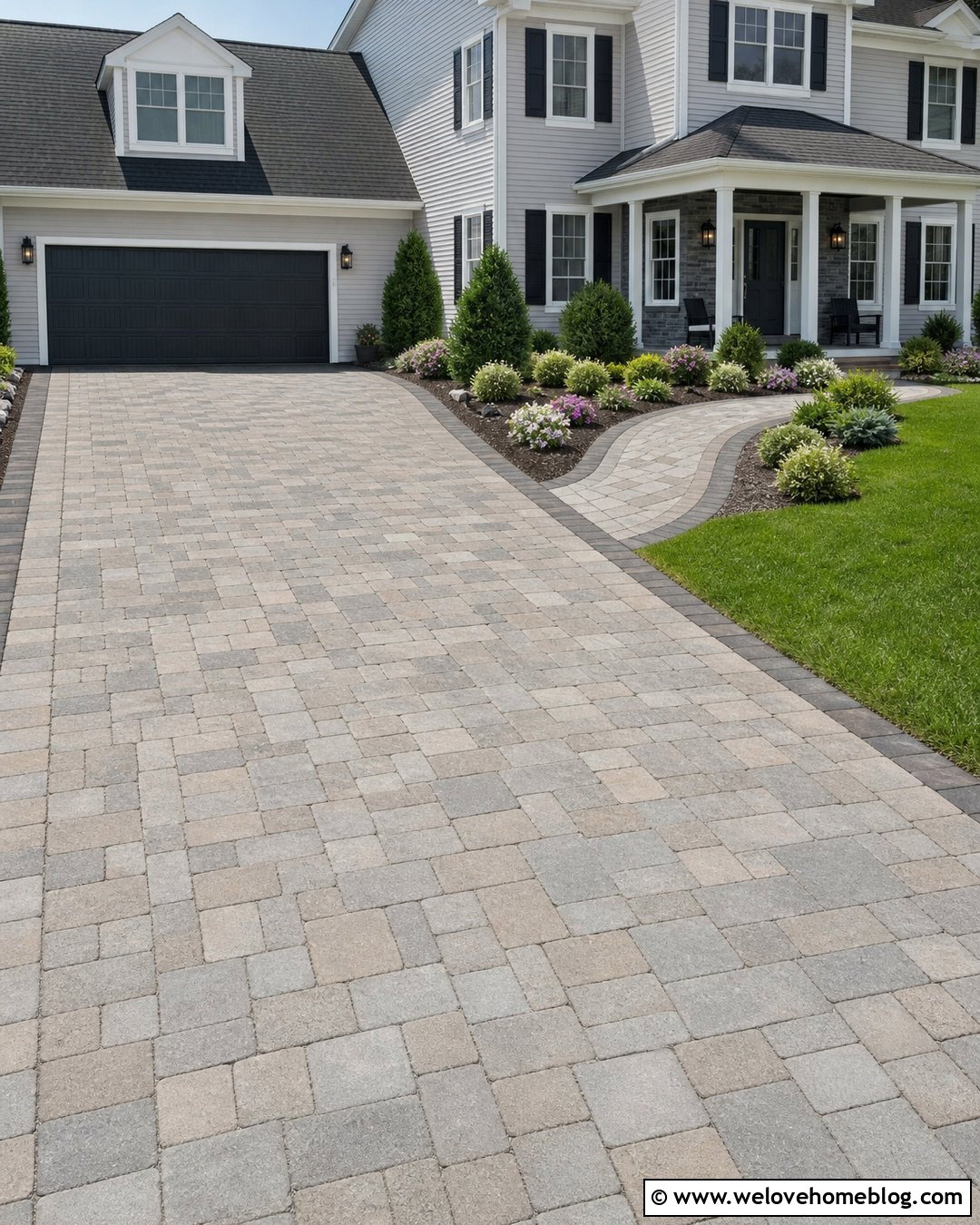
Connecting the front walk and driveway with the same paver family creates an orderly entrance. Use beige and gray concrete pavers in an ashlar pattern across a straight driveway. Branch the walkway toward the porch using slightly smaller pavers from the same collection. A dark border can wrap both surfaces, but turn the walkway pattern or add a cross band to distinguish pedestrian space. Widen the connection point so it feels deliberate and provides comfortable movement around parked vehicles. Plant low flowers and compact shrubs along the walk while reserving taller landscaping for areas away from sightlines. Match the paving colors to the porch stone, siding, or roof. This coordinated approach is especially effective on suburban properties where the driveway occupies much of the visible front yard.
32. Split Paver Driveway For Two Garages
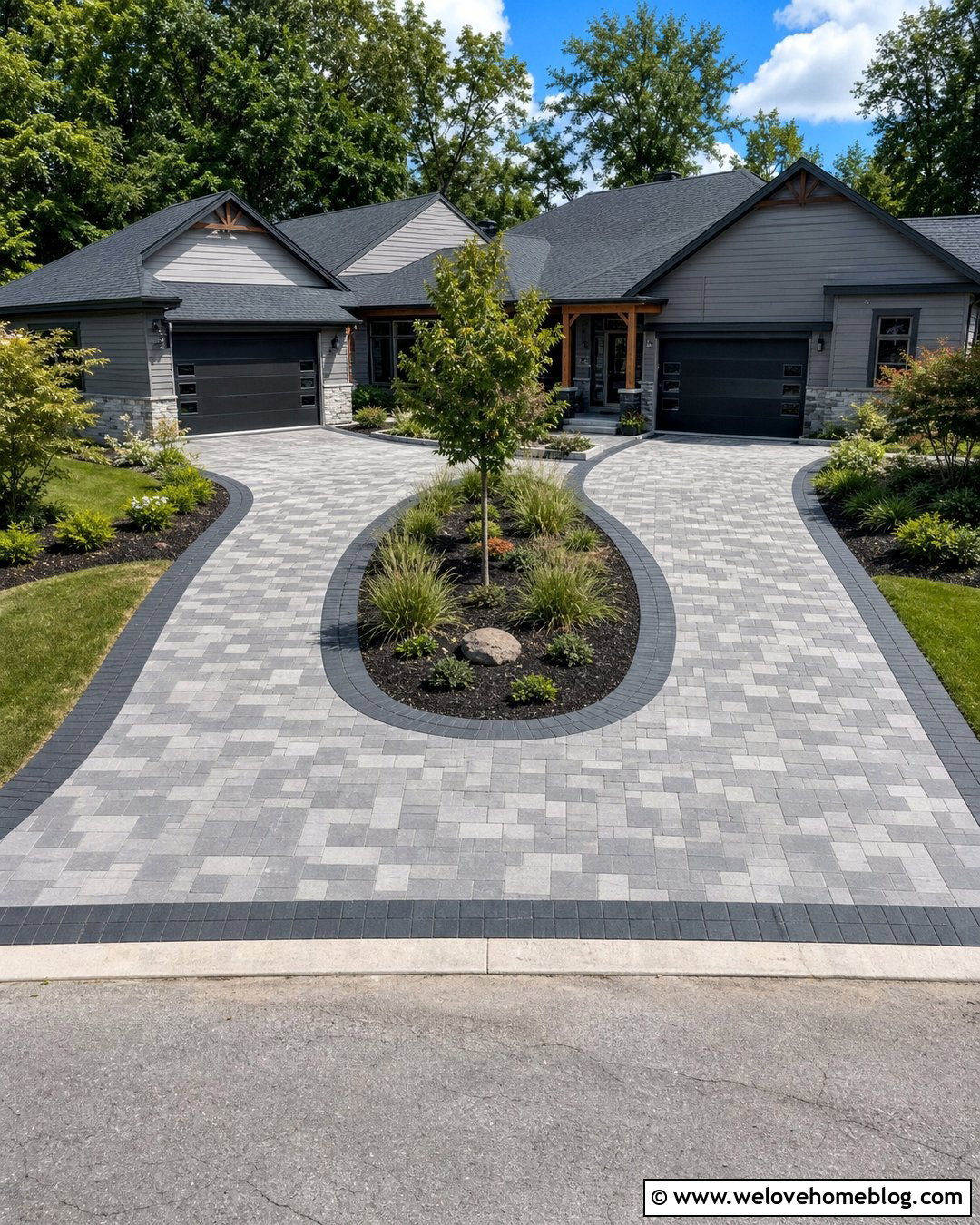
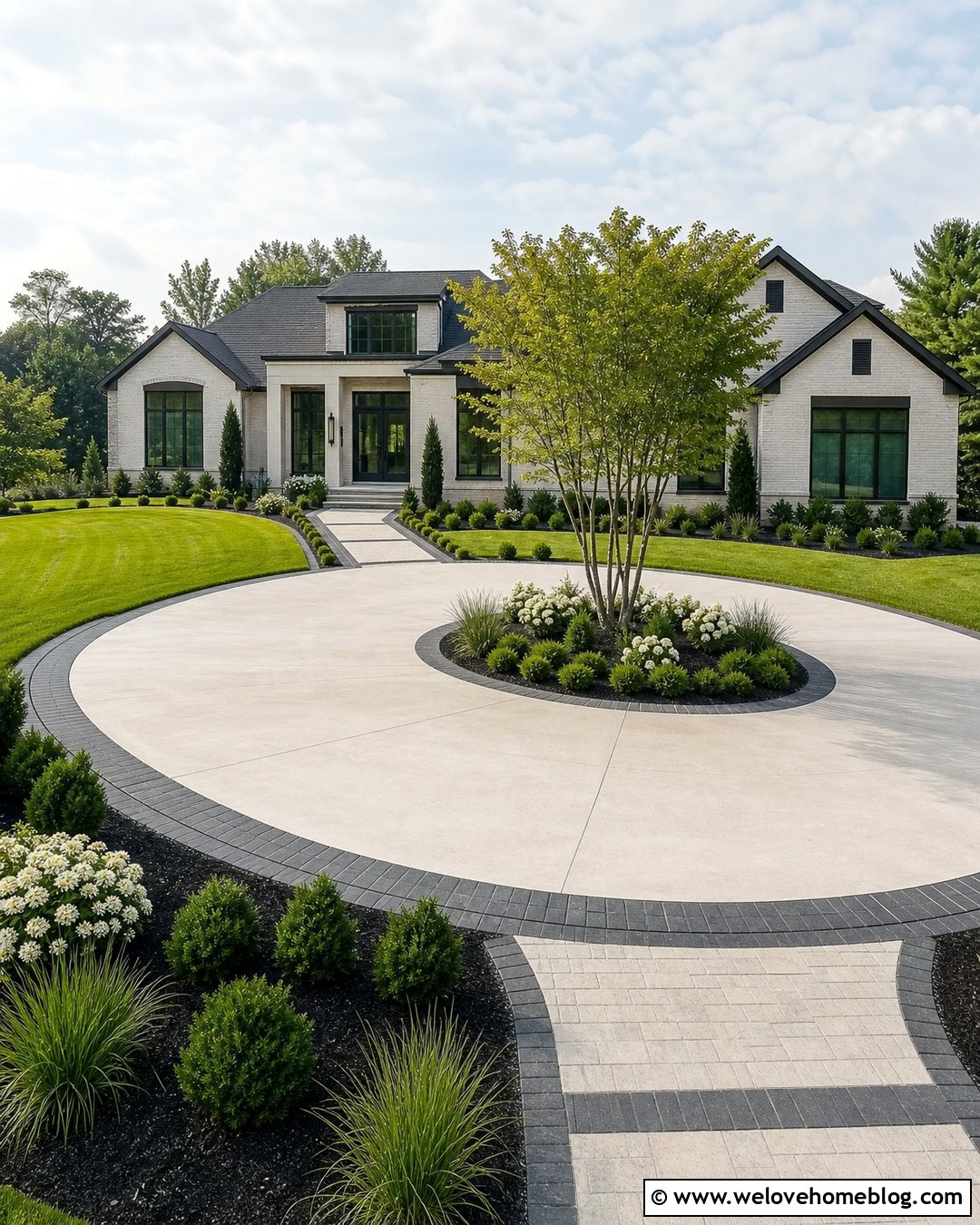
A split driveway can serve separate garage bays while leaving room for landscaping between them. Use rectangular charcoal and light gray concrete pavers in a modern modular pattern. Begin with one wide entrance near the street, then divide it into two gently curving branches. Create a central planting island with a small ornamental tree, low grasses, and ground cover that will not obstruct visibility. Outline both branches with the same dark paver border and reconnect the palette through a matching front walkway. This arrangement works well on wide lots with side-facing garages or separated parking areas. Turning paths, delivery access, snow storage, and emergency access should be checked before setting the island dimensions. The division should improve circulation rather than create tight or inconvenient corners.
33. Horseshoe Paver Driveway
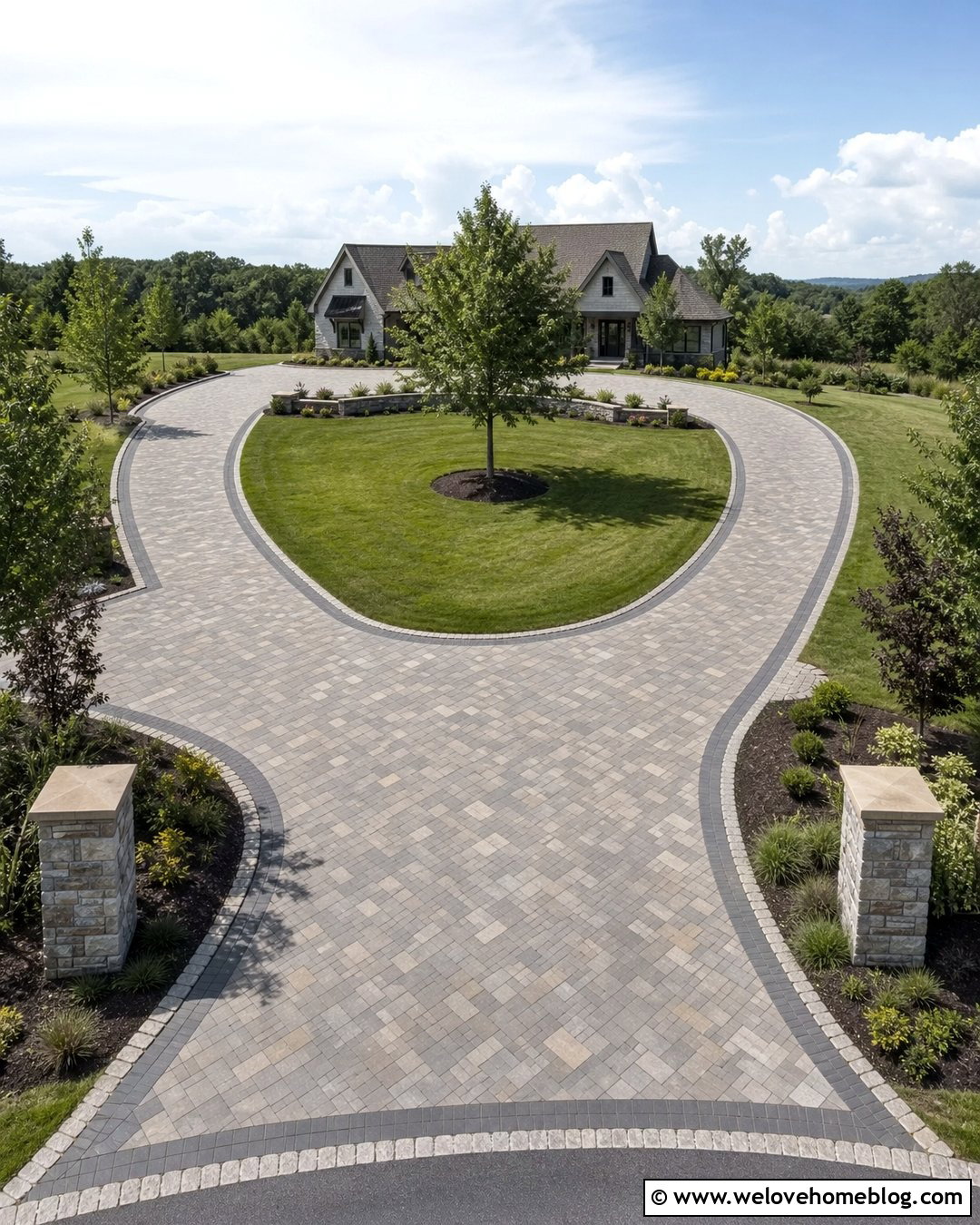
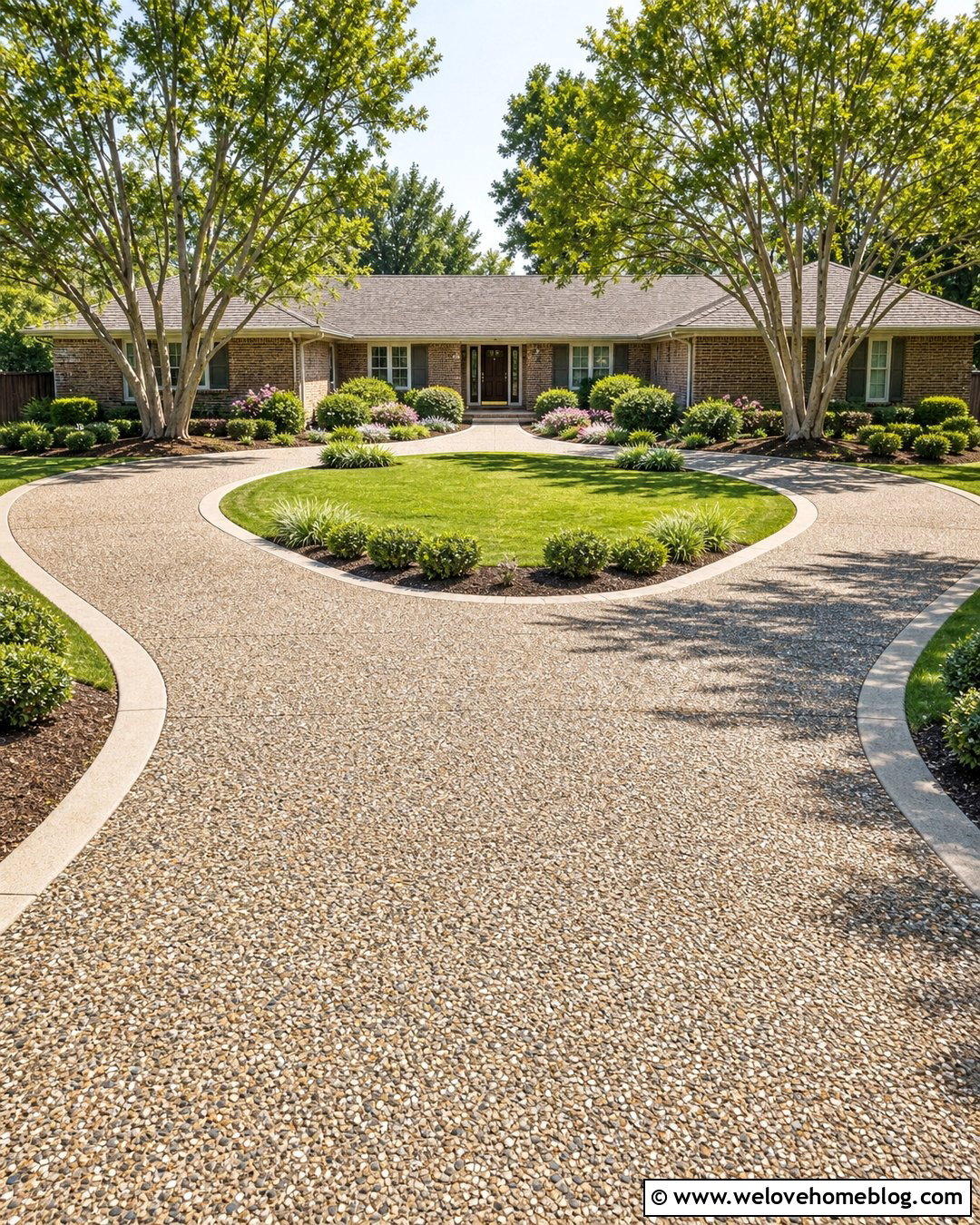
A horseshoe paver driveway provides two street connections and a graceful approach to the house. Choose blended beige and gray concrete pavers in a random ashlar pattern that flows through both curved entrances. A dark double border can trace the complete horseshoe and emphasize its shape from the curb. Fill the central lawn area with a balanced combination of open grass, one feature tree, and low planting beds. Add matching masonry pillars at each entrance, but keep plants and structures clear of required visibility zones. Near the house, widen the driveway into a practical drop-off area without interrupting the main curve. This layout suits larger traditional, ranch, and country homes. Confirm local access requirements and carefully plan comfortable turning movements before selecting the final border and paving pattern.
34. Paver Driveway With Contrasting Entrance Apron
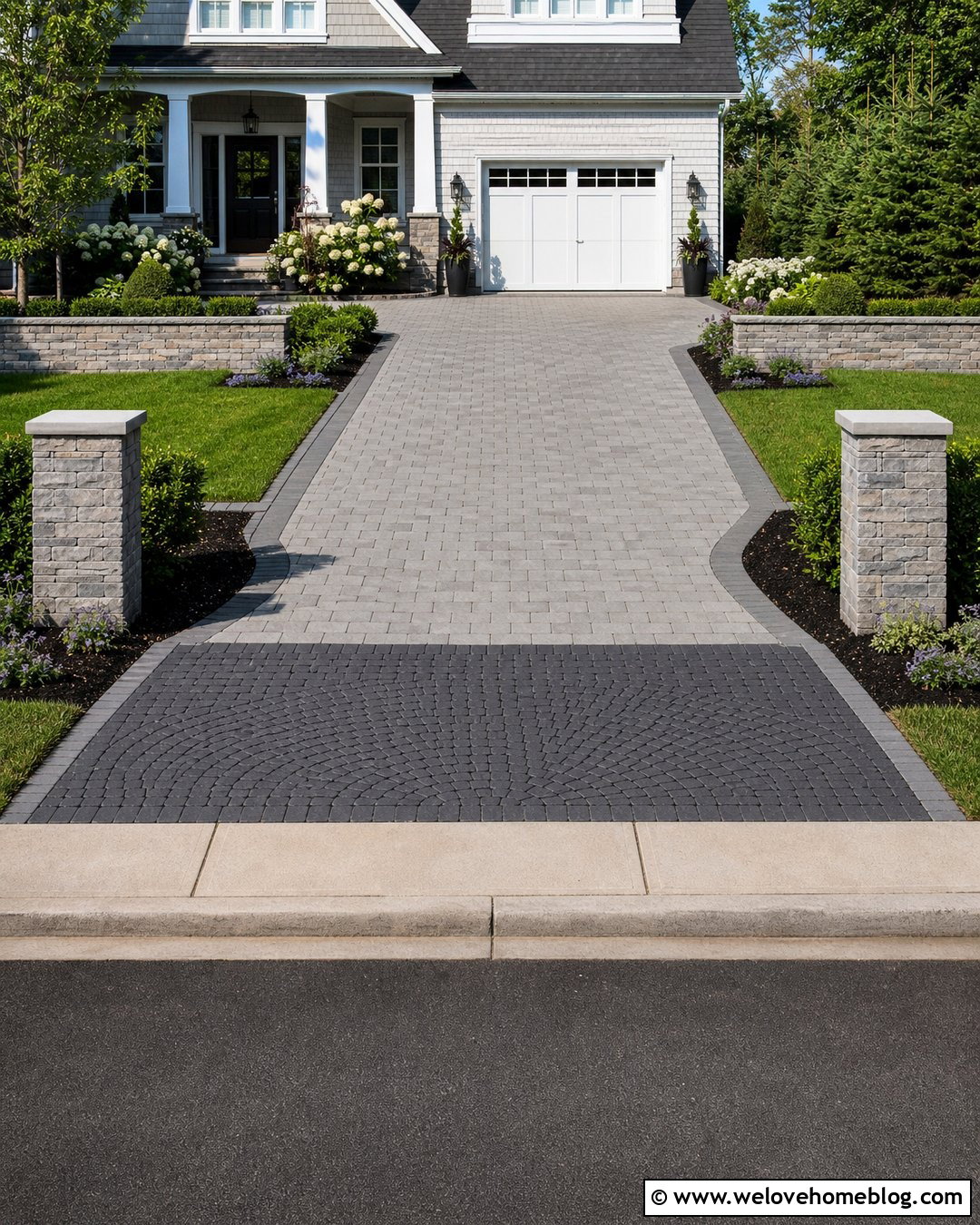
A contrasting entrance apron gives a paver driveway a strong connection to the street. Use medium-gray interlocking concrete pavers in running bond for the main straight driveway. At the curb, install a wide apron made from charcoal cobblestone pavers arranged in gentle arcs. Repeat the charcoal material as a narrow perimeter border and a band near the garage. This repetition prevents the apron from looking unrelated to the rest of the surface. Low stone walls, an address pillar, and symmetrical planting beds can frame the entrance. Keep the apron deep enough to read as a purposeful feature but proportional to the driveway length. Account for sidewalk crossings, curb geometry, drainage flow, and municipal requirements before installation. The final look should guide the eye smoothly from street to house.
35. Simple One-Color Paver Driveway
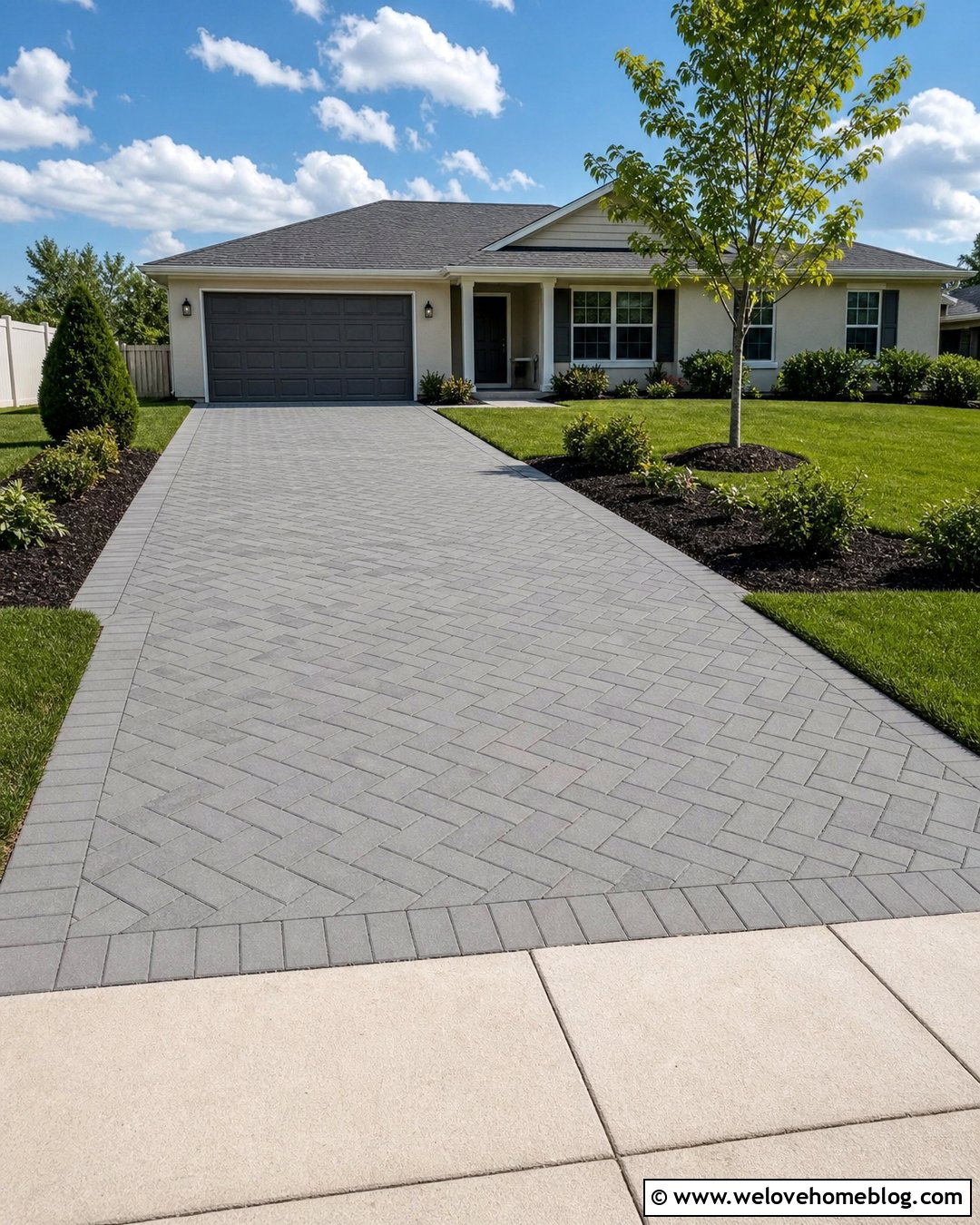
A single-color paver driveway can look polished without elaborate patterns or expensive decorative details. Choose a widely available, driveway-rated rectangular concrete paver in medium gray, warm tan, or muted brown. Lay it in a straightforward herringbone or running-bond pattern across a straight driveway. Use the same paver turned in a different direction to form a simple border, eliminating the need for a second product. Neat lawn edges, two uncomplicated planting beds, and a matching walkway will provide enough visual structure. This approach works with ranch, bungalow, and modest suburban homes. Spend available resources on sound excavation, drainage, base construction, compaction, edge restraint, and accurate installation. A well-built restrained design generally looks better than an overly complicated pattern installed with poor alignment or weak transitions.
Conclusion:
The best 35 driveway pavers design ideas treat the driveway as part of the entire front yard rather than a separate paved strip. Material, pattern, color, borders, landscaping, drainage, and architecture should support one another. A small property may benefit from light pavers and a simple running bond, while a larger entrance can accommodate medallions, double borders, or curved layouts. Whatever look you prefer, use pavers rated for driveway traffic and develop the installation around local soil, climate, drainage, and access requirements. Review samples beside the house before ordering. Most importantly, prioritize a properly prepared base and stable edges. Strong construction allows the selected pattern and landscaping to remain attractive, practical, and cohesive.

Related posts:
Leave a Reply