
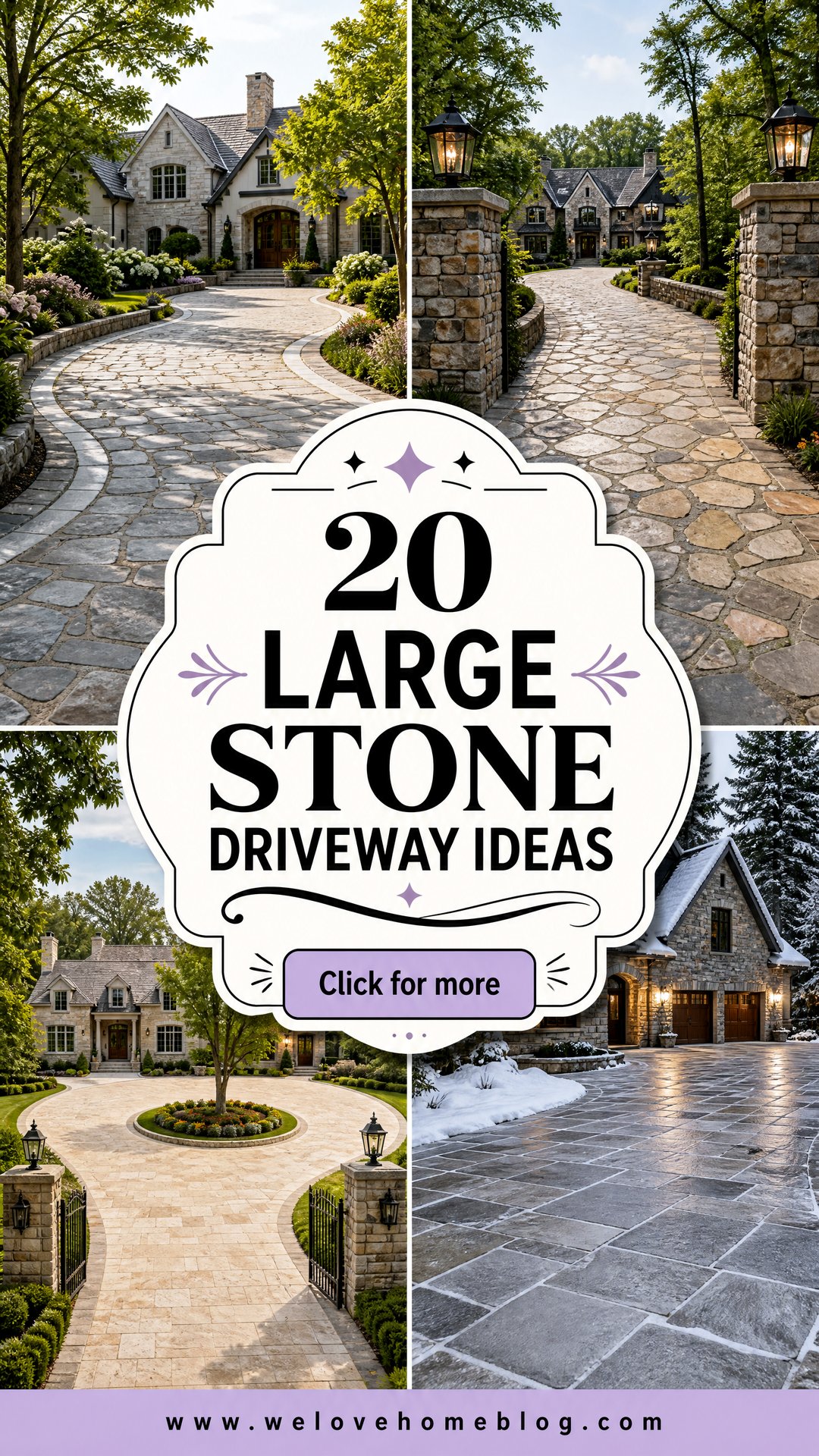
Large-format natural stone can turn a practical driveway into a strong architectural feature. The best 20 Large Stone Driveway Ideas combine vehicle-ready stone, a well-planned layout, defined borders, and landscaping that connects the drive to the house. Oversized flagstone, limestone slabs, granite setts, sandstone, basalt, and reclaimed stone can all create distinctive results. However, appearance is only one consideration. Stone thickness, surface texture, drainage, joint material, and the compacted base must suit vehicle traffic and local weather. Whether you prefer a modern grid, a relaxed country entrance, or a formal circular approach, the complete setting matters. Explore these 20 Large Stone Driveway Ideas to find a durable layout that complements your home, yard, and maintenance preferences.
1. Large Flagstone Driveway With Gravel Joints
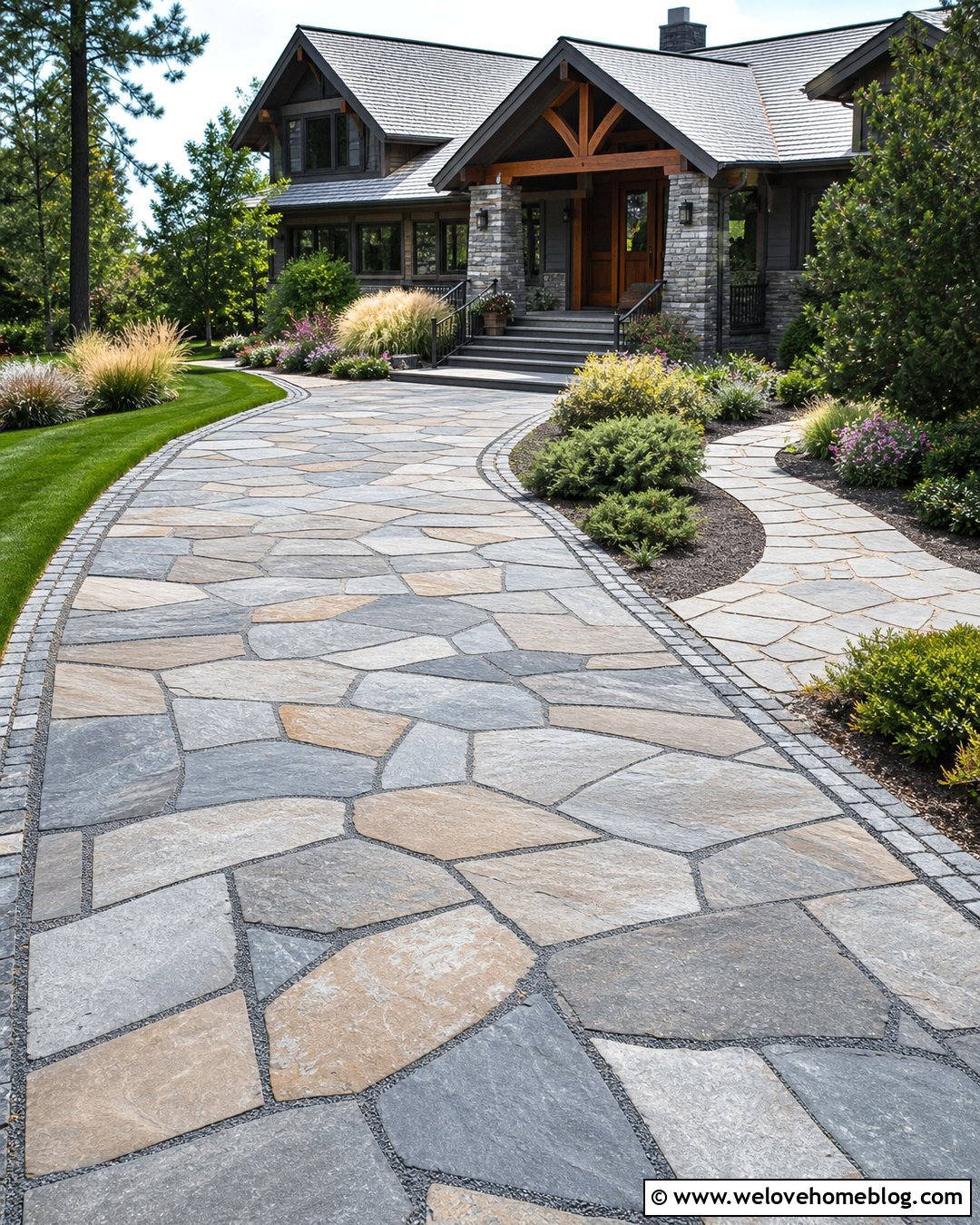
Large irregular flagstones laid over a properly prepared base create a relaxed driveway that feels connected to the surrounding landscape. Choose thick, vehicle-rated stones with naturally textured surfaces rather than thin patio flagstone. Fill the joints with angular gravel that locks together better than smooth pea gravel. A curved layout can make the irregular shapes appear more intentional while softening the approach to a country or craftsman home. Add a cobblestone border to contain the joint material and protect the edges from turning tires. Native grasses, low junipers, and flowering perennials can frame the driveway without hiding the stone. Keep the planting beds slightly below the paved surface so soil and mulch do not wash across it during heavy rain.
2. Large Limestone Slab Driveway With Grass Joints
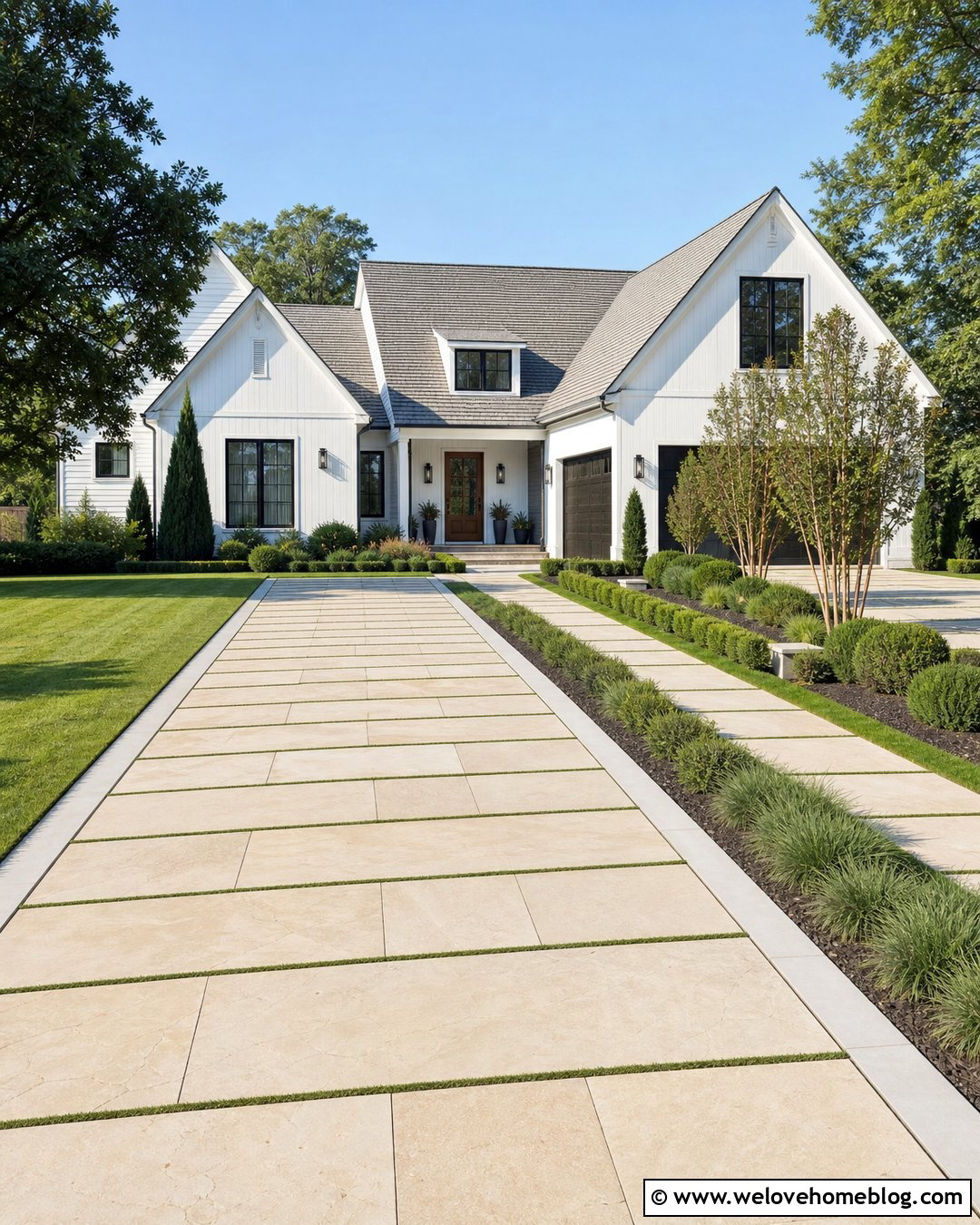
Wide limestone slabs separated by narrow grass joints create a clean but welcoming driveway. This arrangement works especially well with modern farmhouses, pale brick homes, and limestone facades. Use rectangular slabs in a running pattern so the driveway has visible direction from the street to the garage. The planted joints should remain narrow and sit over a carefully designed drainage system rather than ordinary compacted soil. Select a tough, low-growing ground cover suited to vehicle traffic and your climate. Straight-cut limestone edging can define the outer boundaries and prevent the lawn from creeping into the driveway. Simple planting beds with boxwood, ornamental grasses, and multi-stem trees reinforce the orderly layout. The final design feels lighter than a completely paved surface while preserving a strong architectural appearance.
3. Large Granite Stone Driveway With A Curved Layout
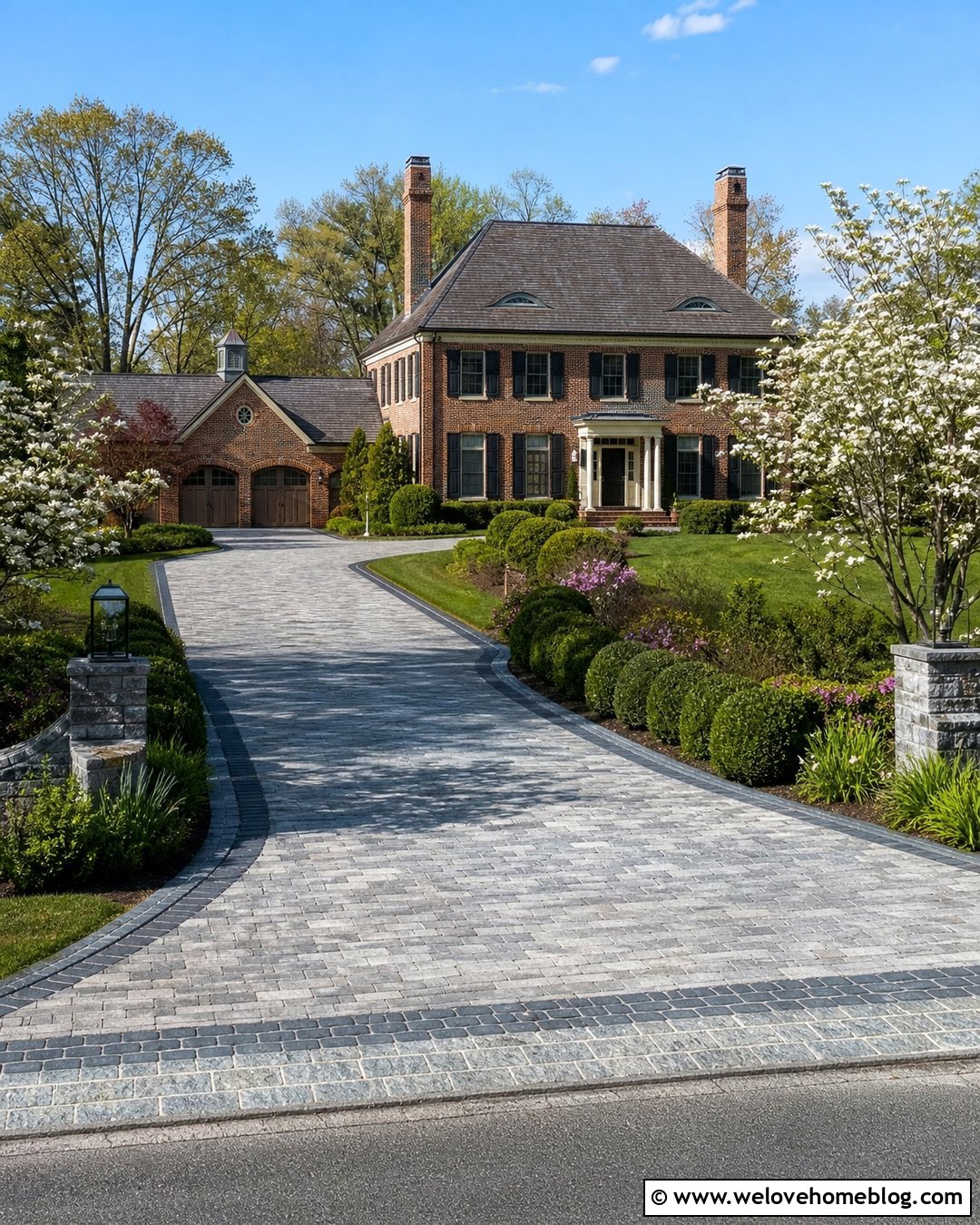
Granite is a practical choice when you want a substantial driveway with rich natural color and a highly durable surface. Large granite pavers in charcoal, silver, and muted brown can follow a broad curve leading toward a colonial or traditional home. Use a staggered pattern rather than long continuous joints, which can make the installation look overly rigid. Smaller granite setts along both sides provide a secure transition between the large stones and adjacent planting beds. The curve can be highlighted with clipped shrubs on the inside and taller flowering trees along the outer edge. A matching granite apron at the street gives the entrance a finished appearance. Because some granite finishes can become slippery, choose a flamed, bush-hammered, or naturally cleft texture designed for exterior vehicle areas.
4. Large Sandstone Driveway With Brick Edging
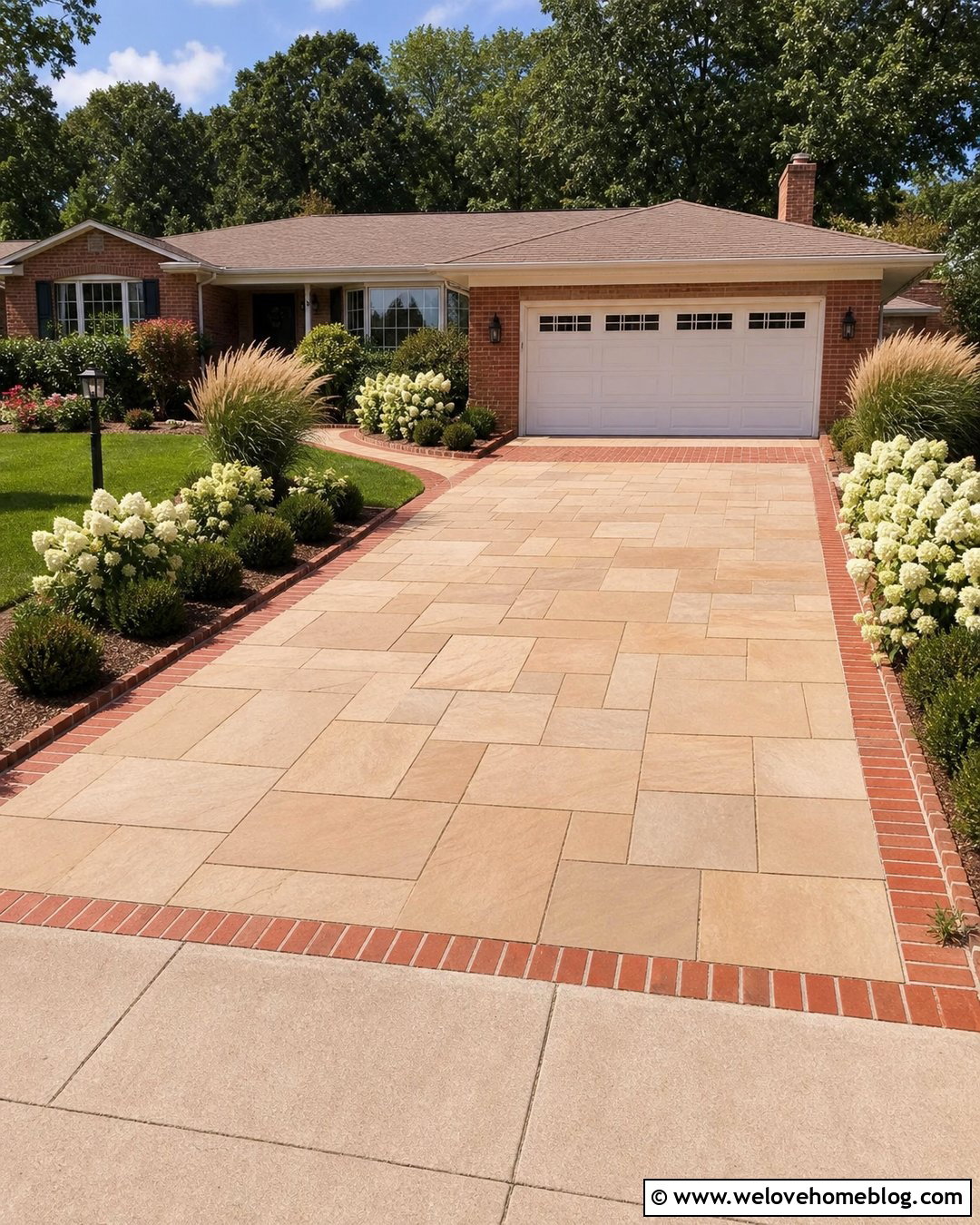
Warm sandstone slabs and red clay brick edging create a driveway that suits ranch, cottage, and traditional brick homes. Select buff, tan, or light brown sandstone with enough thickness and strength for vehicle use. A random rectangular pattern brings subtle variation without making the broad driveway appear visually busy. Install the brick border as a flat soldier course or double ribbon to contain the stone and connect the surface to brick details on the house. Soft landscaping can include hydrangeas, fountain grass, dwarf evergreens, and a generous lawn. At the garage, repeat the brick as a wider transition band to disguise small changes in stone size. Natural sandstone can vary in porosity, so discuss climate suitability, drainage, and an appropriate finish with a qualified local stone installer before choosing the material.
5. Large Slate Driveway With Dark Gravel Joints
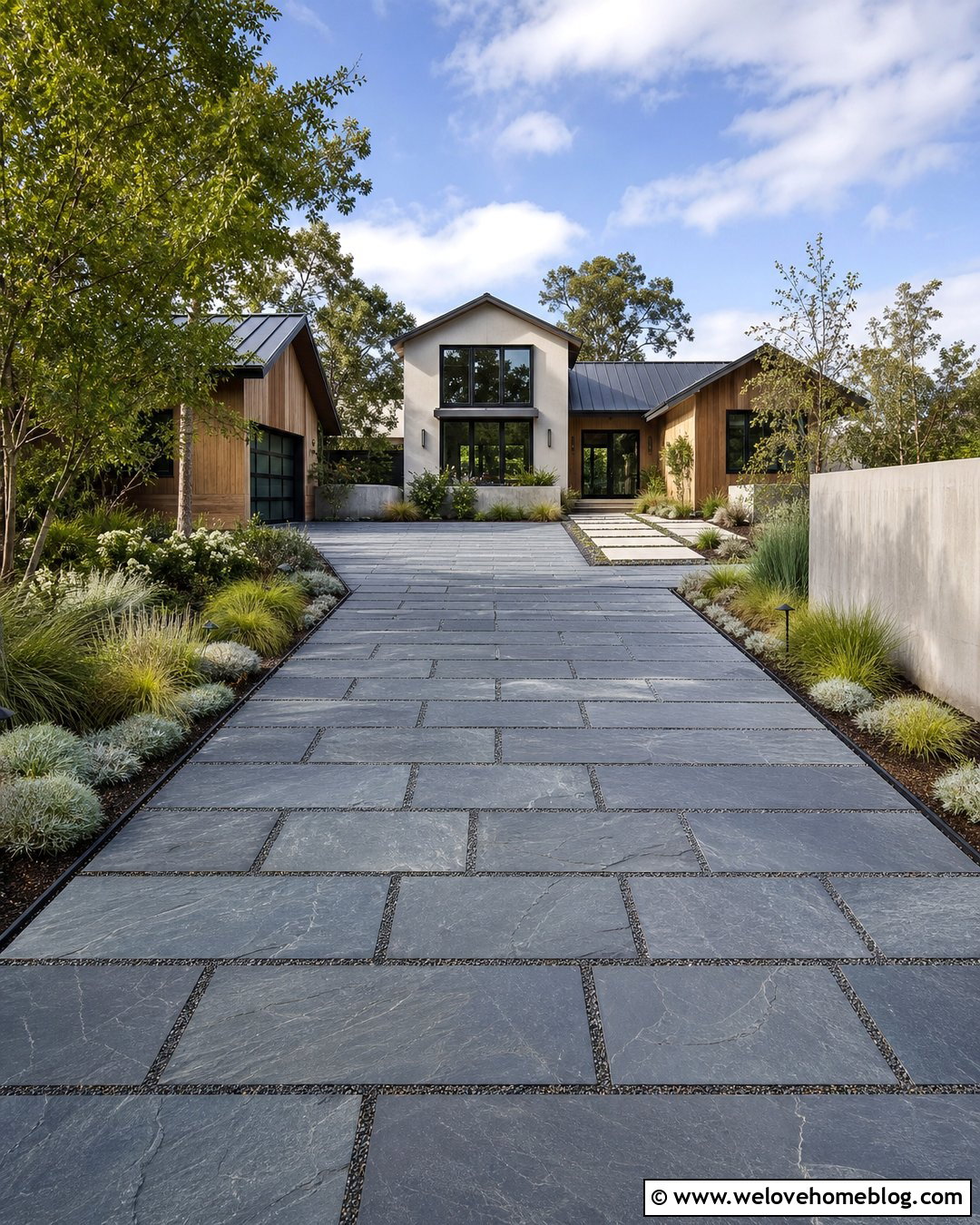
A large slate driveway can create a dramatic entrance when the stone is selected specifically for exterior paving. Use broad, irregular slabs in blue-gray and charcoal tones, with compacted dark crushed stone filling the joints. The combination looks especially striking beside a contemporary house with black windows, timber siding, or dark masonry. Keep the driveway straight and generously proportioned to emphasize the long horizontal lines of the architecture. Steel edging can hold the outer gravel in place while maintaining a slim, nearly invisible boundary. Light green ornamental grasses, white flowers, and silver foliage provide contrast without competing with the surface. Slate quality varies considerably, and unsuitable stone may split under traffic or freeze-thaw exposure. Confirm that the selected product is vehicle-rated and appropriate for the regional climate before installation.
6. Large Fieldstone Driveway With Stone Pillars
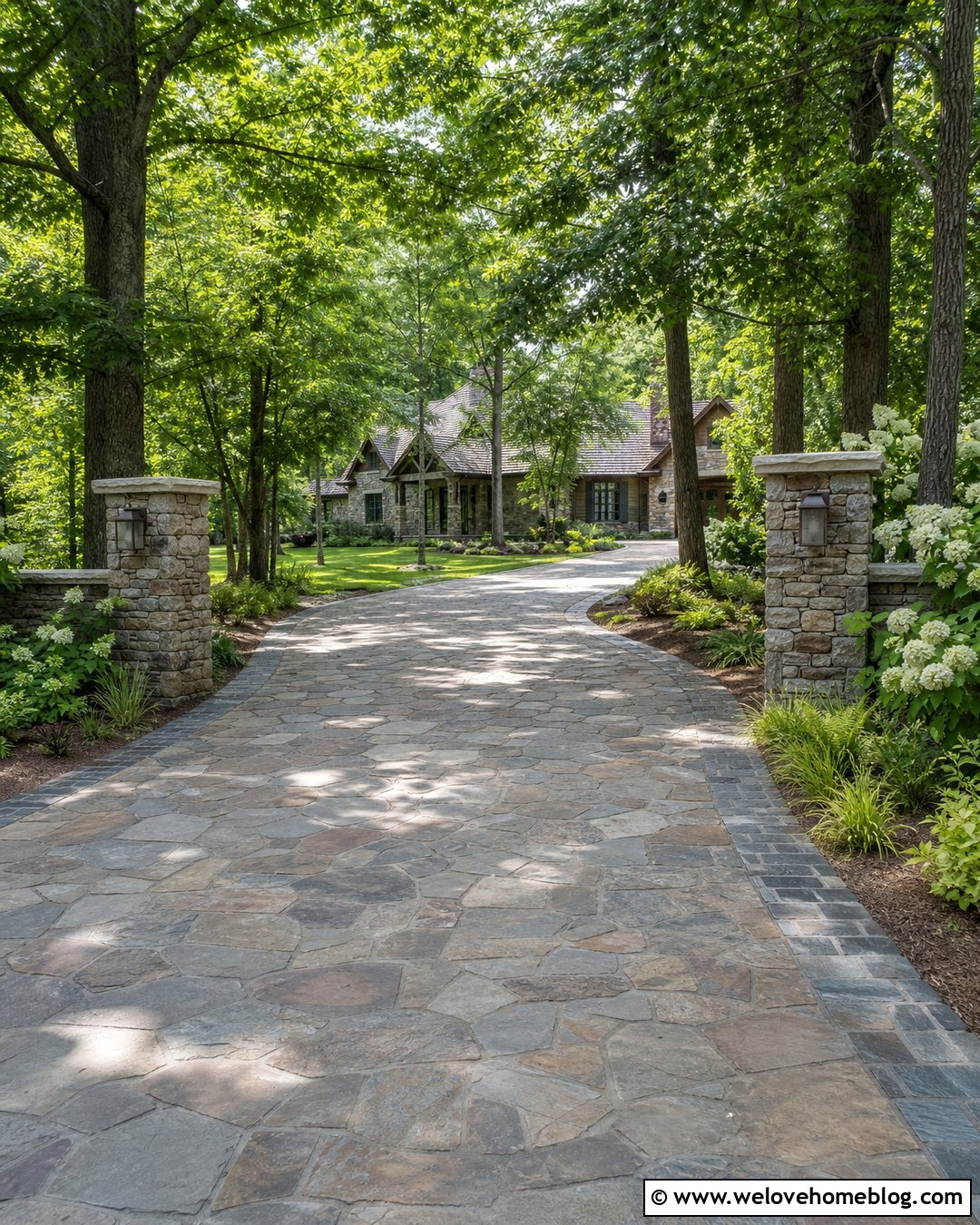
A fieldstone driveway framed by substantial entrance pillars brings a natural, estate-like character to a large property. Use flat, carefully fitted fieldstone rather than rounded or uneven rocks that could create an uncomfortable driving surface. A gently curving approach allows the irregular shapes and earthy colors to blend with wooded surroundings. Build the entrance pillars from matching fieldstone and top them with simple cut-stone caps. Low walls can extend a short distance from each pillar to guide the eye toward the house without making the entrance feel closed. Inside the driveway, plant ferns, oakleaf hydrangeas, shade-tolerant grasses, and native understory trees. A narrow band of smaller stone setts should define the edges and reduce damage from vehicle tires. Subtle address plaques can be incorporated into one pillar for a functional finishing detail.
7. Large Travertine Circular Driveway
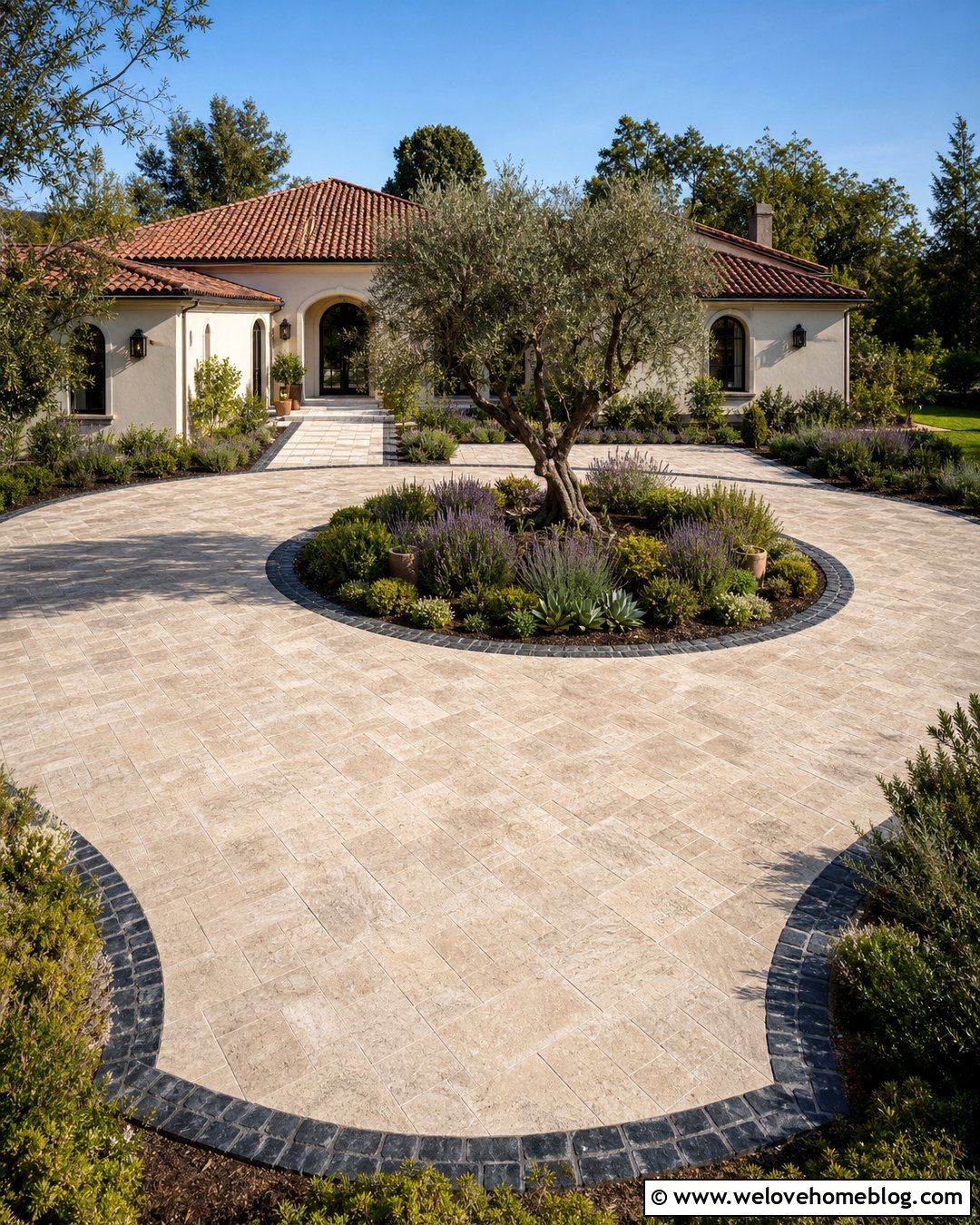
A circular driveway paved with large travertine slabs creates a bright, formal approach to a Mediterranean, Spanish, or stucco home. Choose an exterior-grade travertine with a textured finish rather than polished stone. Oversized rectangular pieces can be arranged in a modular pattern that follows the circular route without producing too many small cuts. Use darker cobblestone bands around the outer edge and central island to sharpen the shape. In the island, a mature olive tree, sculptural evergreen, or drought-tolerant planting bed provides a clear focal point. Repeat the travertine in the front walkway so the driveway and entrance feel connected. Warm stone colors work beautifully with terracotta roofs and cream walls. In cold or wet climates, confirm that the product, joint system, and installation method are suitable for local conditions.
8. Large Quartzite Driveway With Steel Edging
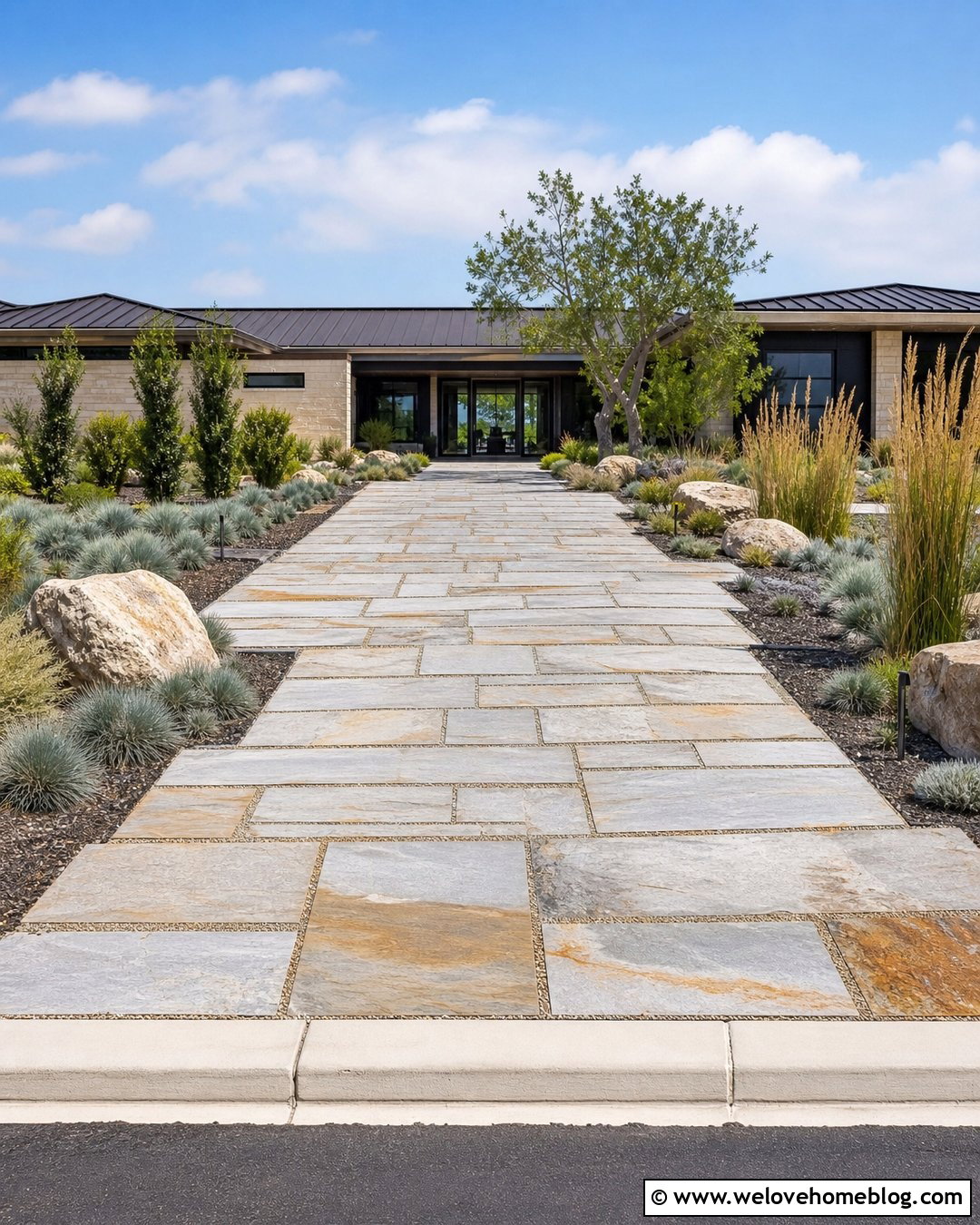
Quartzite offers lively color variation and a naturally sophisticated surface for a contemporary stone driveway. Large rectangular slabs in silver, gray, rust, and subtle green can be installed in an offset grid leading to a low-profile modern home. Use dark steel edging to create a sharp boundary between the stone and drought-tolerant planting beds. The steel should sit close to the finished grade so it defines the driveway without becoming a trip or tire hazard. Crushed granite in the wider joints can visually connect the mixed stone tones. Surround the approach with blue fescue, agave where climate allows, upright grasses, and sculptural boulders. Keep the driveway layout simple because quartzite already provides considerable movement and texture. A wide matching walkway can branch from the driveway toward the front door, making the entire entrance feel coordinated.
9. Large Reclaimed Granite Block Driveway
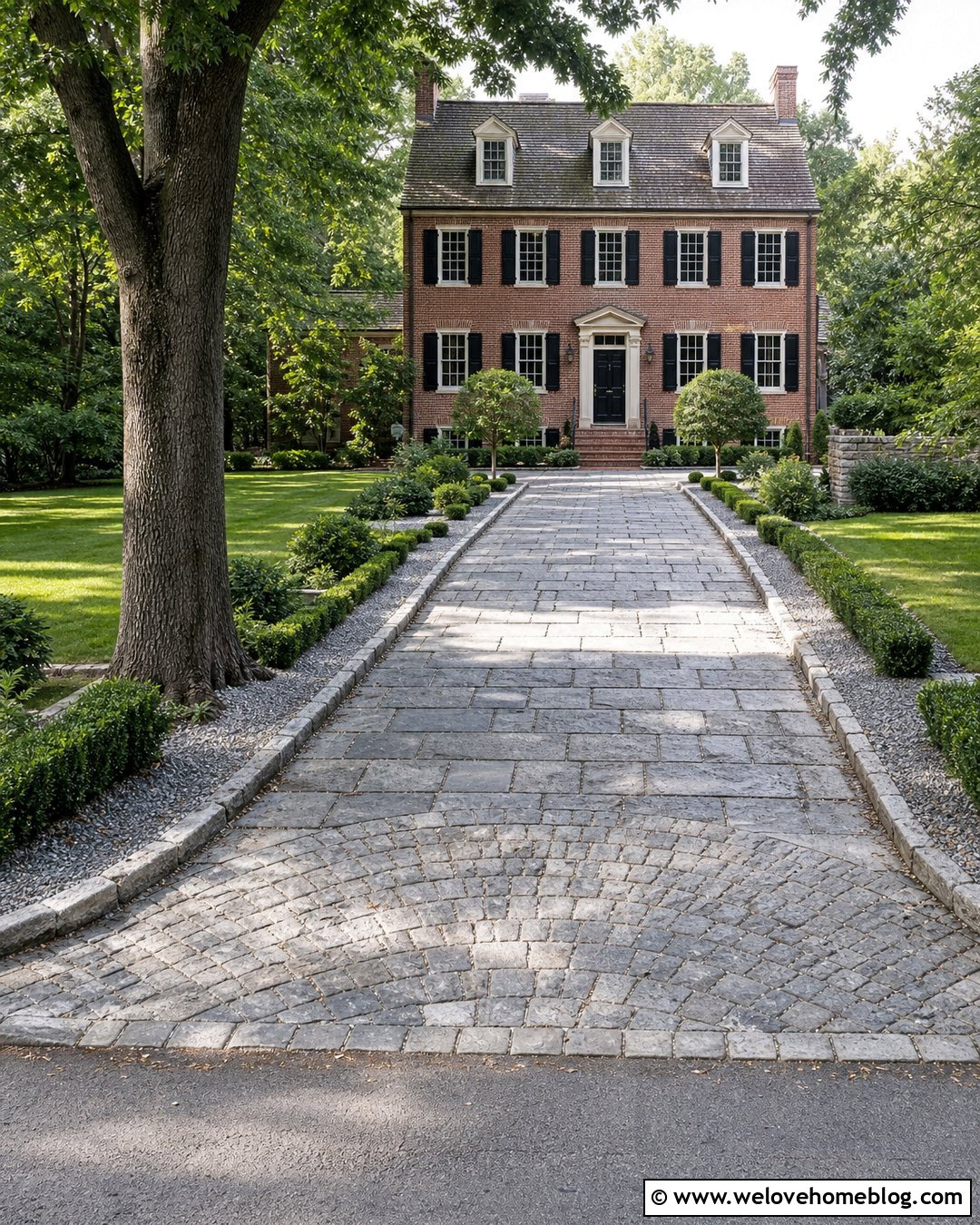
Reclaimed granite blocks bring age, texture, and lasting character to a traditional driveway. Their worn faces and varied gray tones work naturally with historic homes, renovated farmhouses, and brick colonials. Arrange larger rectangular blocks in running courses, placing the longest dimension across the direction of travel for a visually grounded appearance. A broad fan pattern at the entrance can ease the transition from the street and make turning more comfortable. Pair the granite with low clipped hedges, mature shade trees, and simple gravel planting beds. Matching reclaimed curbstones can form strong edges that keep soil away from the paved surface. Since salvaged blocks may differ in depth and shape, careful sorting and installation are essential. The finished driveway should look gently aged, but it still needs an even, stable surface for everyday vehicles.
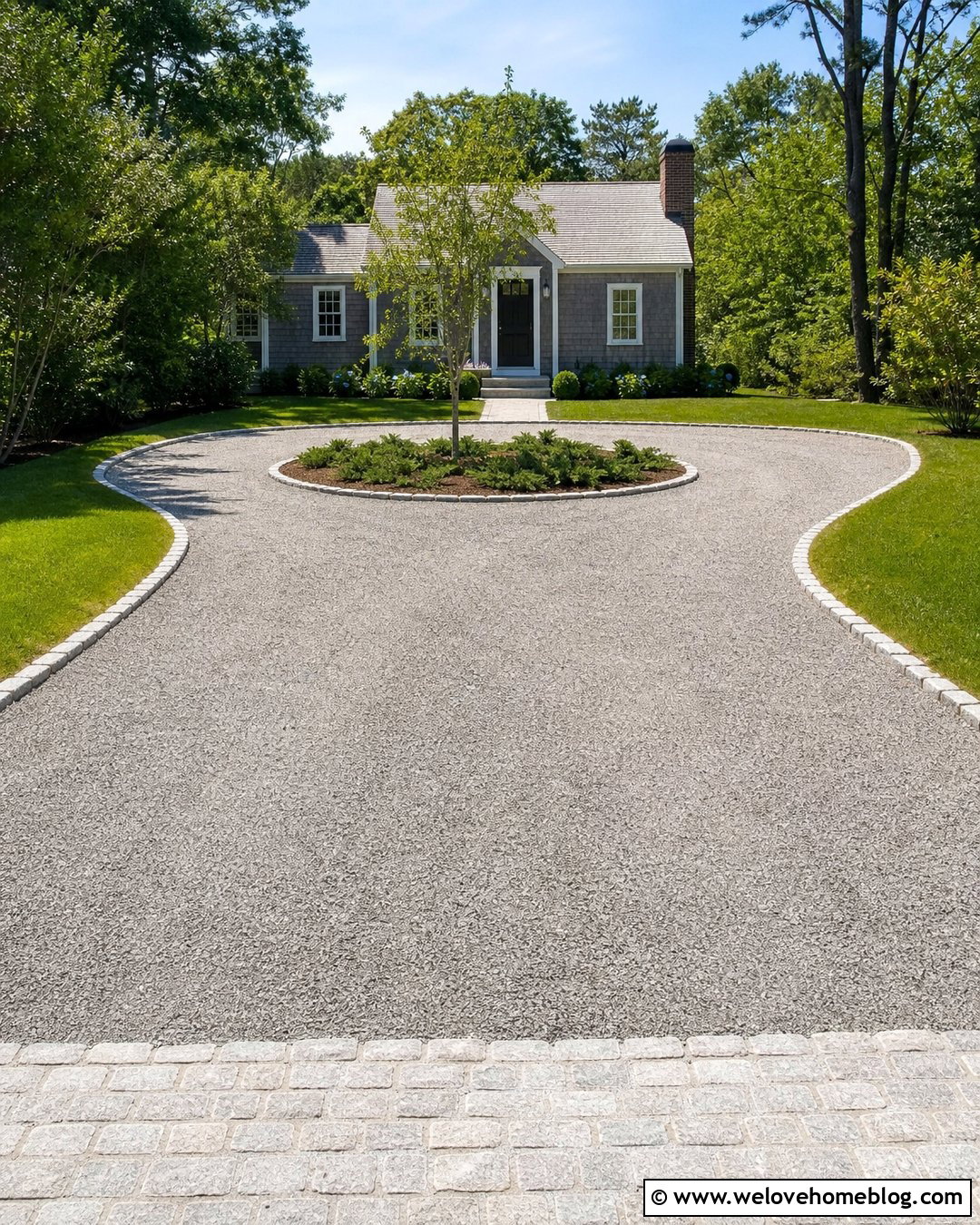
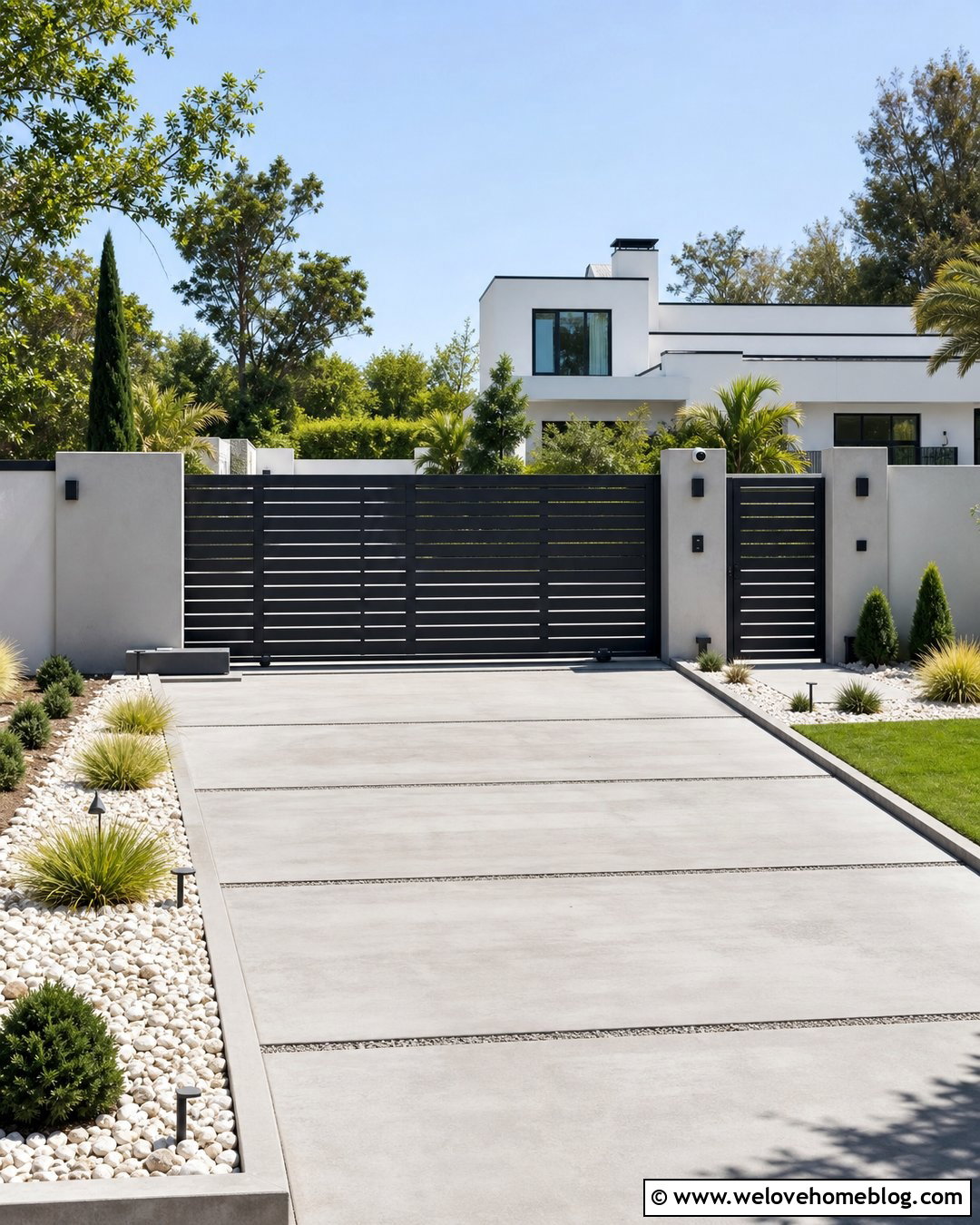
10. Large Flagstone Driveway For A Cottage House
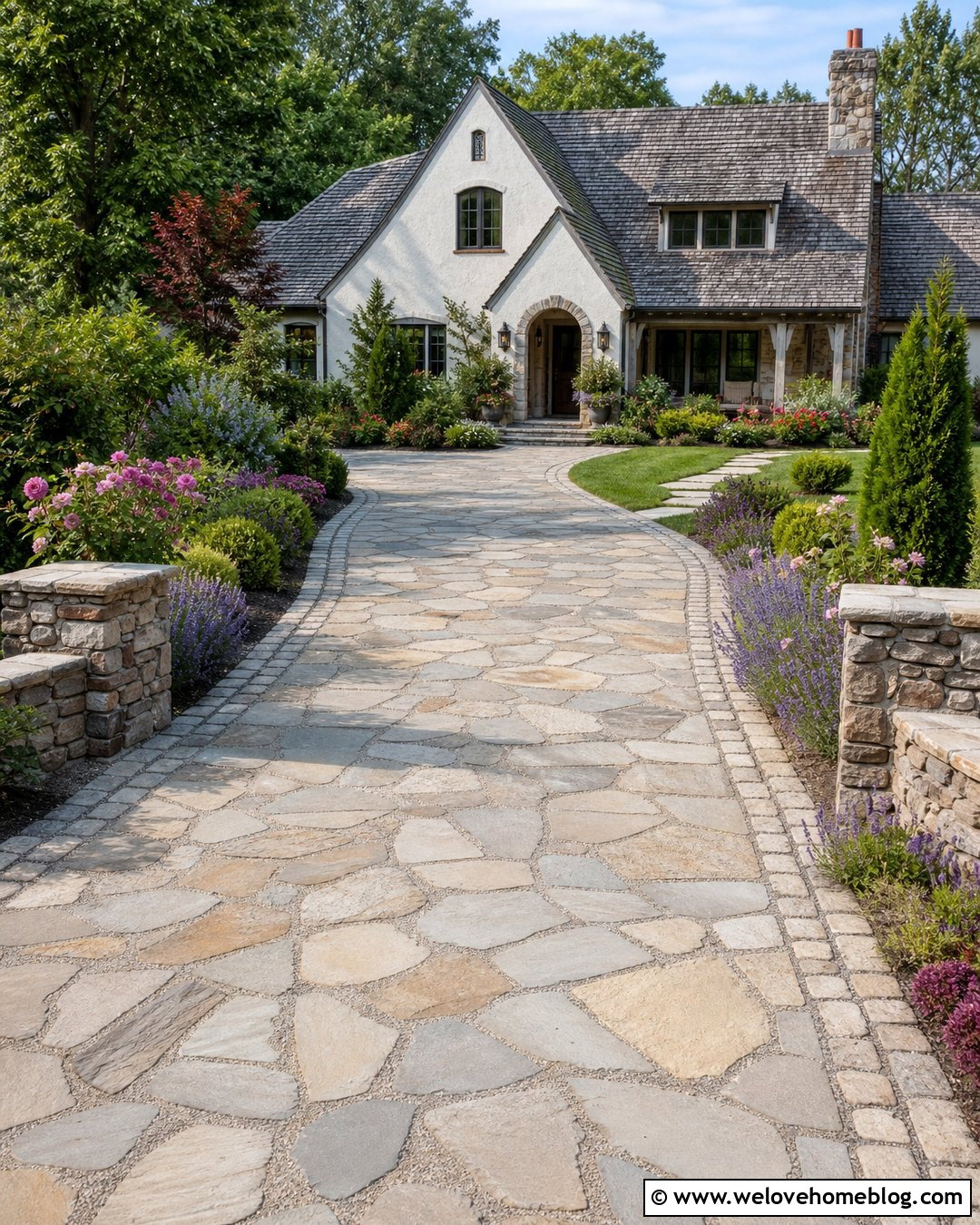
What makes a cottage driveway feel inviting instead of overly formal? A softly curved route, irregular flagstone, and abundant planting can create the right balance. Use large buff and gray flagstones with tightly controlled crushed-stone joints so the surface remains practical while retaining its handcrafted appearance. Add a narrow cobble border that follows the curves and separates the driveway from garden beds. Lavender, catmint, roses, dwarf evergreens, and flowering shrubs can spill gently toward the edge without obstructing vehicle space. A flagstone walkway should branch naturally toward the front porch using the same colors and joint treatment. Near the road, widen the driveway slightly and add low stone markers rather than imposing pillars. The complete setting feels established and welcoming, especially when the stone tones repeat those found on the cottage facade.
11. Large Basalt Stone Driveway With Modern Landscaping
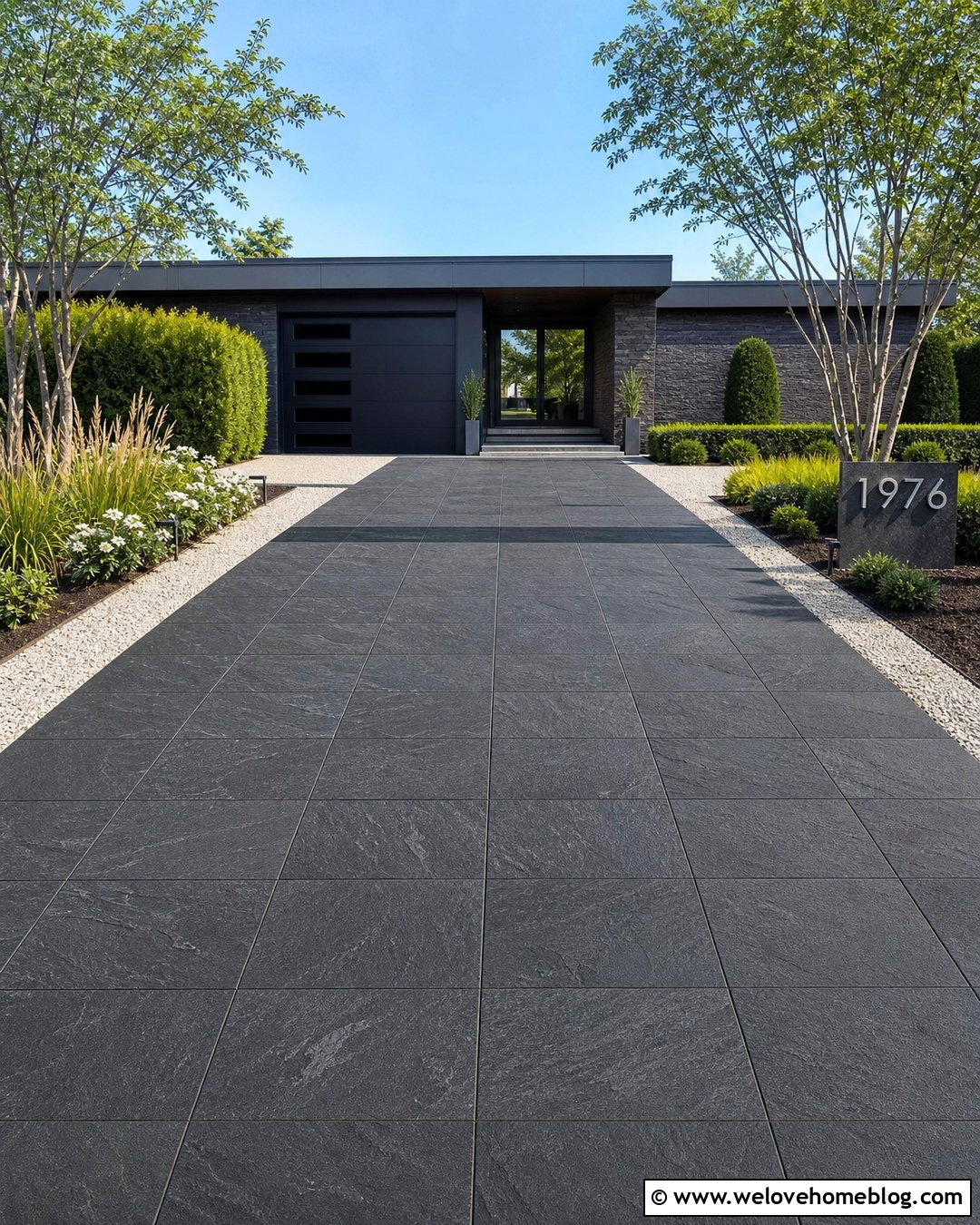
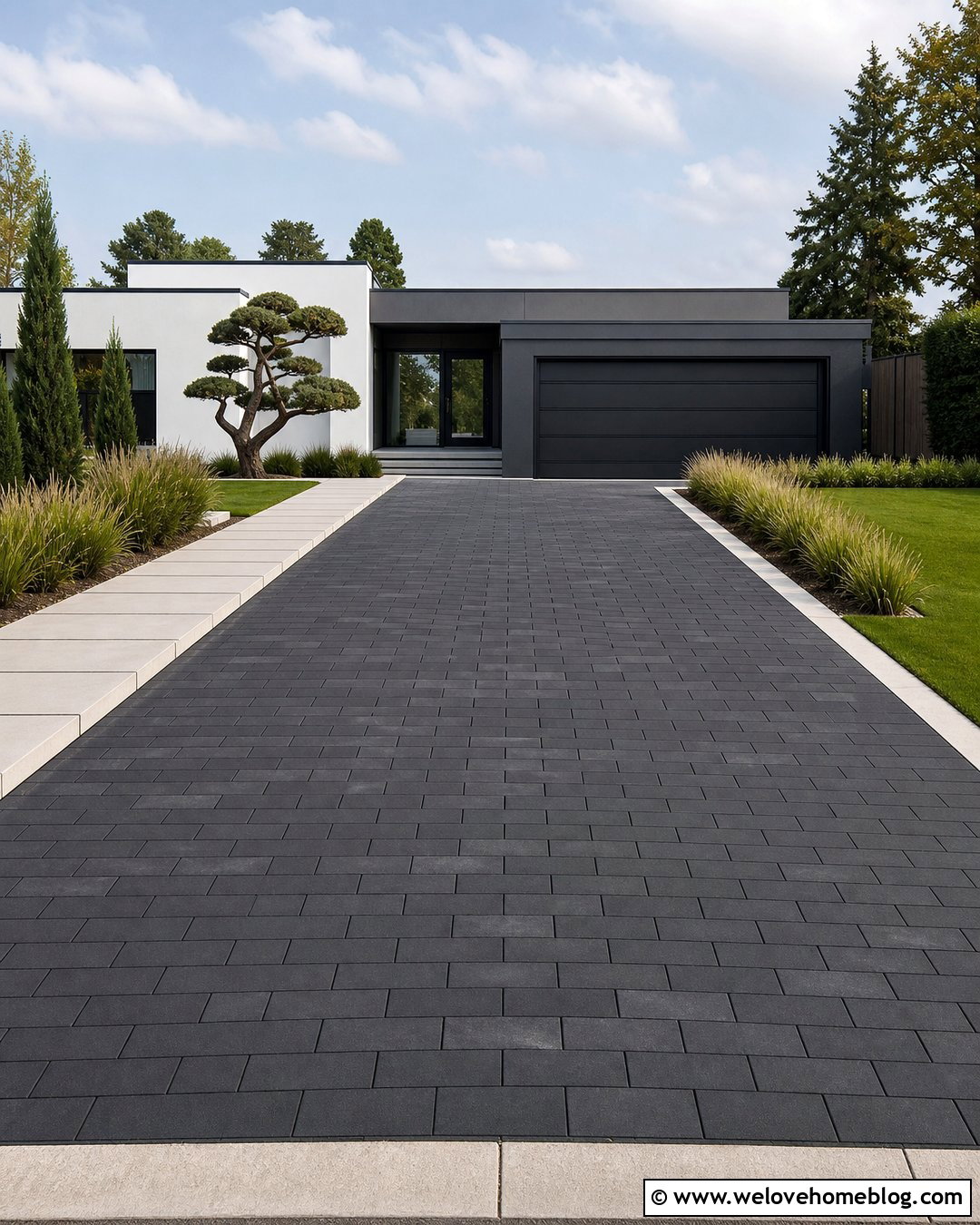
Dark basalt slabs can give a modern driveway a bold, streamlined appearance. Choose large-format pavers with a flamed or textured finish in charcoal or near-black tones. Install them in a straight grid with narrow joints to emphasize the geometry of a flat-roofed or minimalist house. Pale gravel bands along the sides create contrast and assist with visual drainage cues. Use concrete or metal edging to maintain the crisp boundary between the driveway, gravel, and planting beds. Modern landscaping might include upright ornamental grasses, clipped evergreens, white flowering perennials, and a few multi-stem trees. Avoid filling every open area with plants; negative space helps the dark stone remain the main feature. Linear walkway connections and a simple address monument can repeat the driveway’s proportions, giving the entire front yard a unified and deliberate composition.
12. Large Stone And Crushed Gravel Driveway
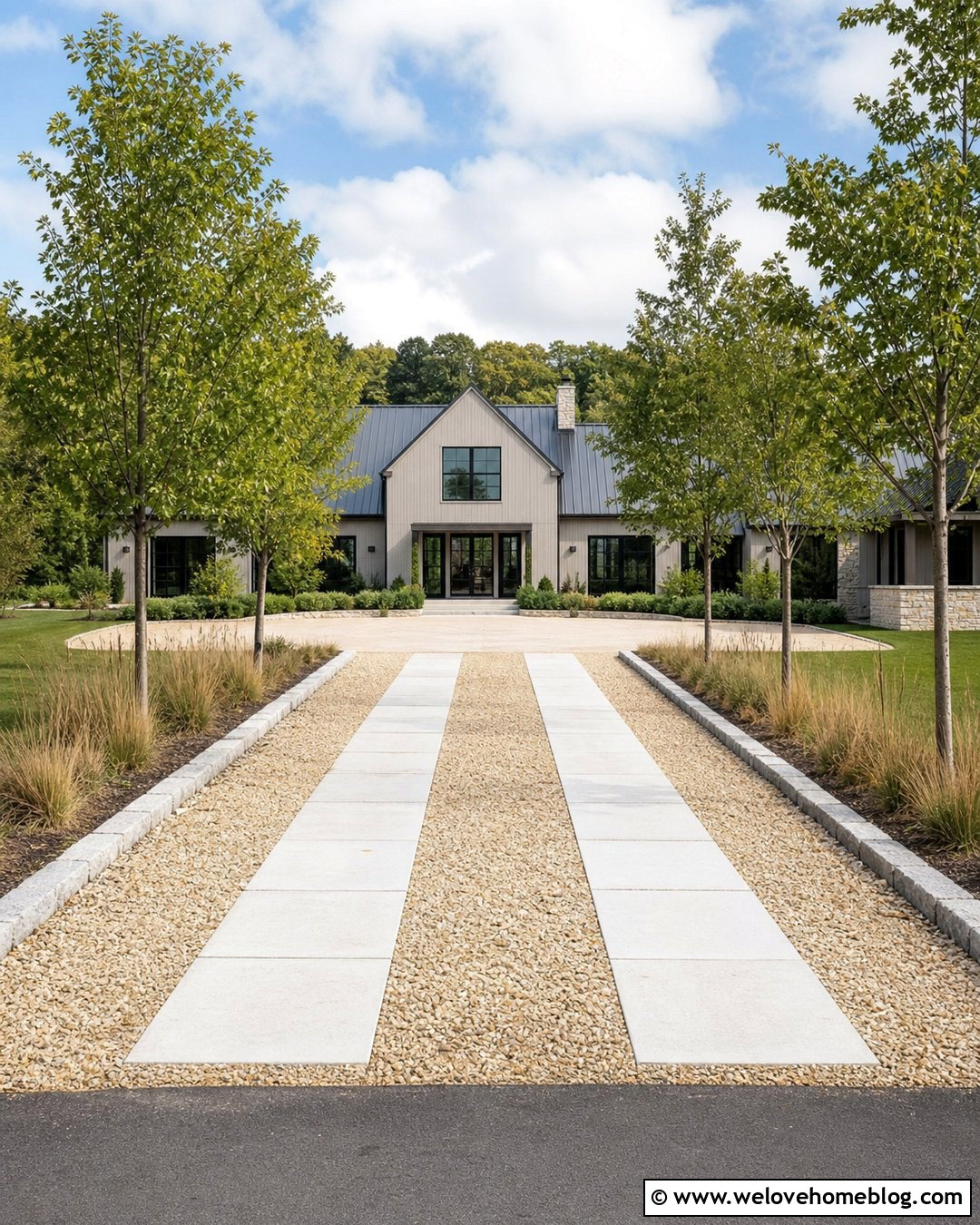
Combining large stone slabs with crushed gravel can reduce the visual weight of a wide driveway. Place vehicle-rated limestone, granite, or flagstone in two broad driving tracks, then fill the center and outer areas with compacted angular gravel. The tracks must match normal tire paths while remaining wide enough to accommodate different vehicles. A straight layout works well for long country driveways, while a subtle curve can make the approach feel more natural. Use matching stone curbs or metal edging to stop gravel from spreading into the lawn. Trees spaced along both sides establish rhythm and provide a strong visual frame. Near the garage, expand the stone into a full-width parking apron for easier turning. This hybrid design offers textural contrast, but both materials still require a properly engineered base and effective water management.
13. Large Bluestone Driveway With Cobblestone Borders
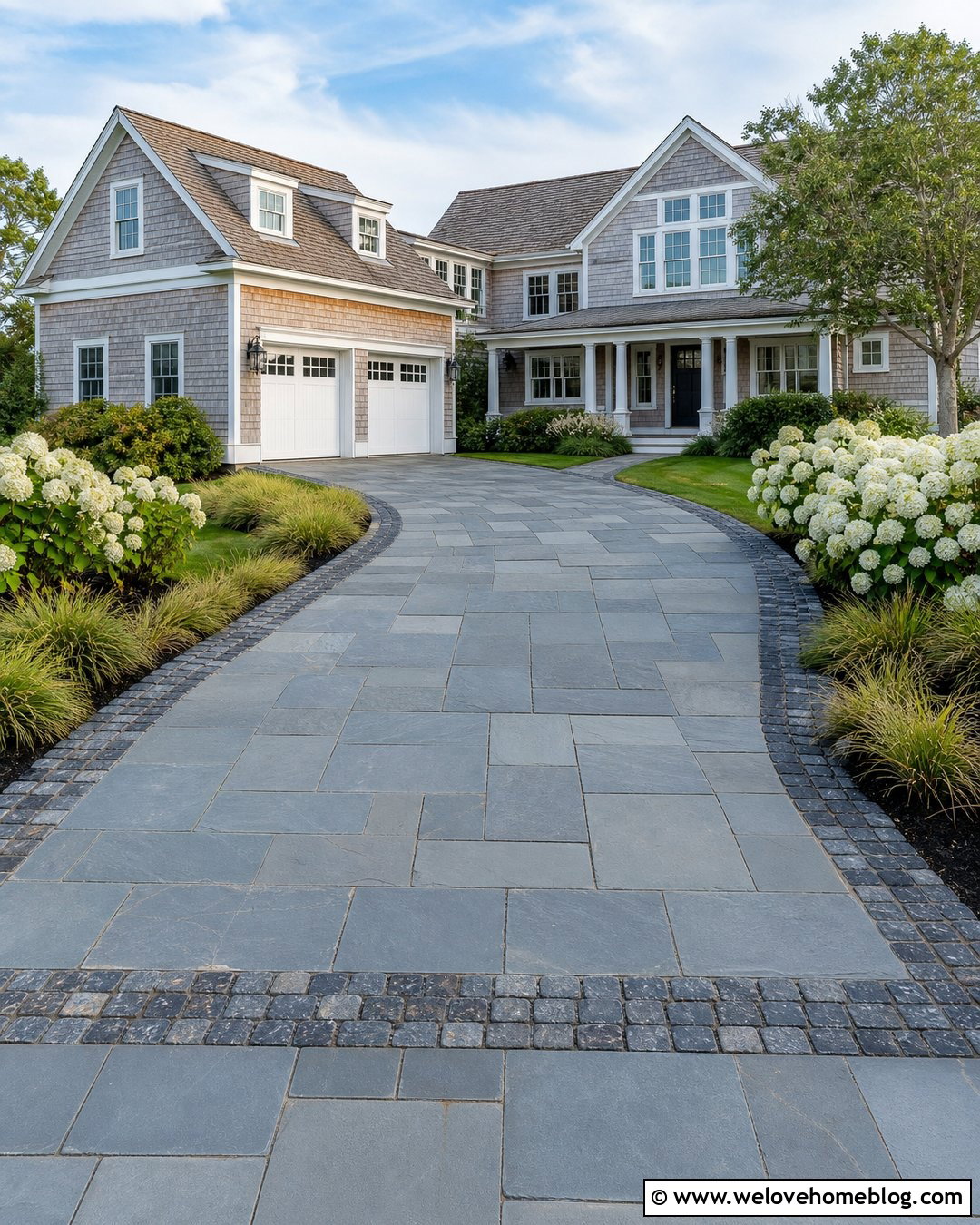
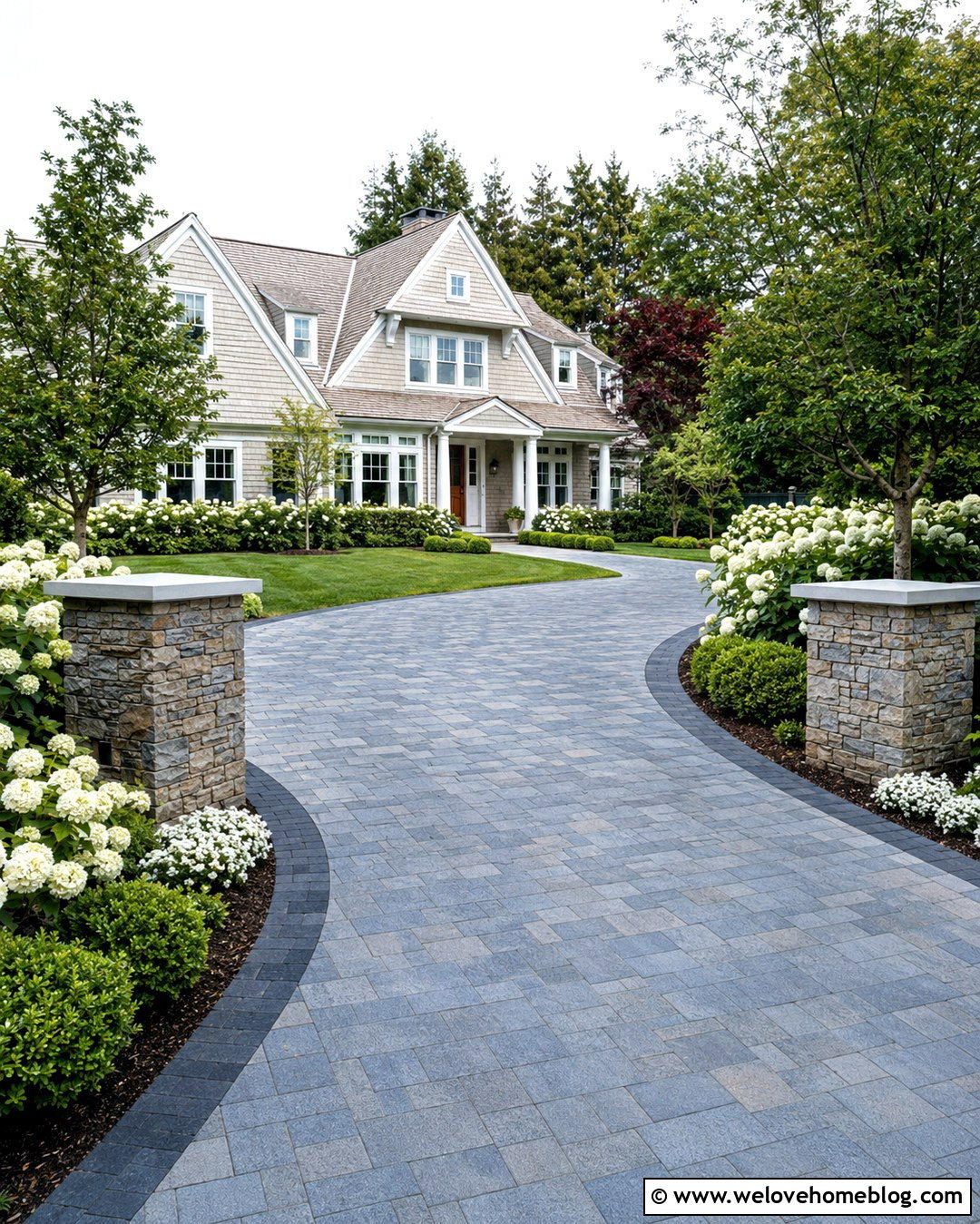
Cool blue-gray bluestone creates a polished driveway that pairs naturally with Cape Cod, colonial, and shingle-style homes. Use large rectangular slabs in a staggered pattern to highlight the stone’s subtle color shifts. Dark granite cobblestones along the perimeter provide contrast and protect the larger slab edges from turning vehicles. A cobblestone band can also mark the garage threshold and the beginning of the front walkway. Frame the driveway with white hydrangeas, inkberry holly, ornamental grasses, and a well-maintained lawn. If the approach is long, introduce a gentle curve rather than running the paving in a perfectly straight line. This makes the landscaping more visible from the street. Select a naturally cleft or textured bluestone finish for traction, and review the stone’s suitability for deicing practices and winter weather in your area.
14. Large Belgian Block Courtyard Driveway
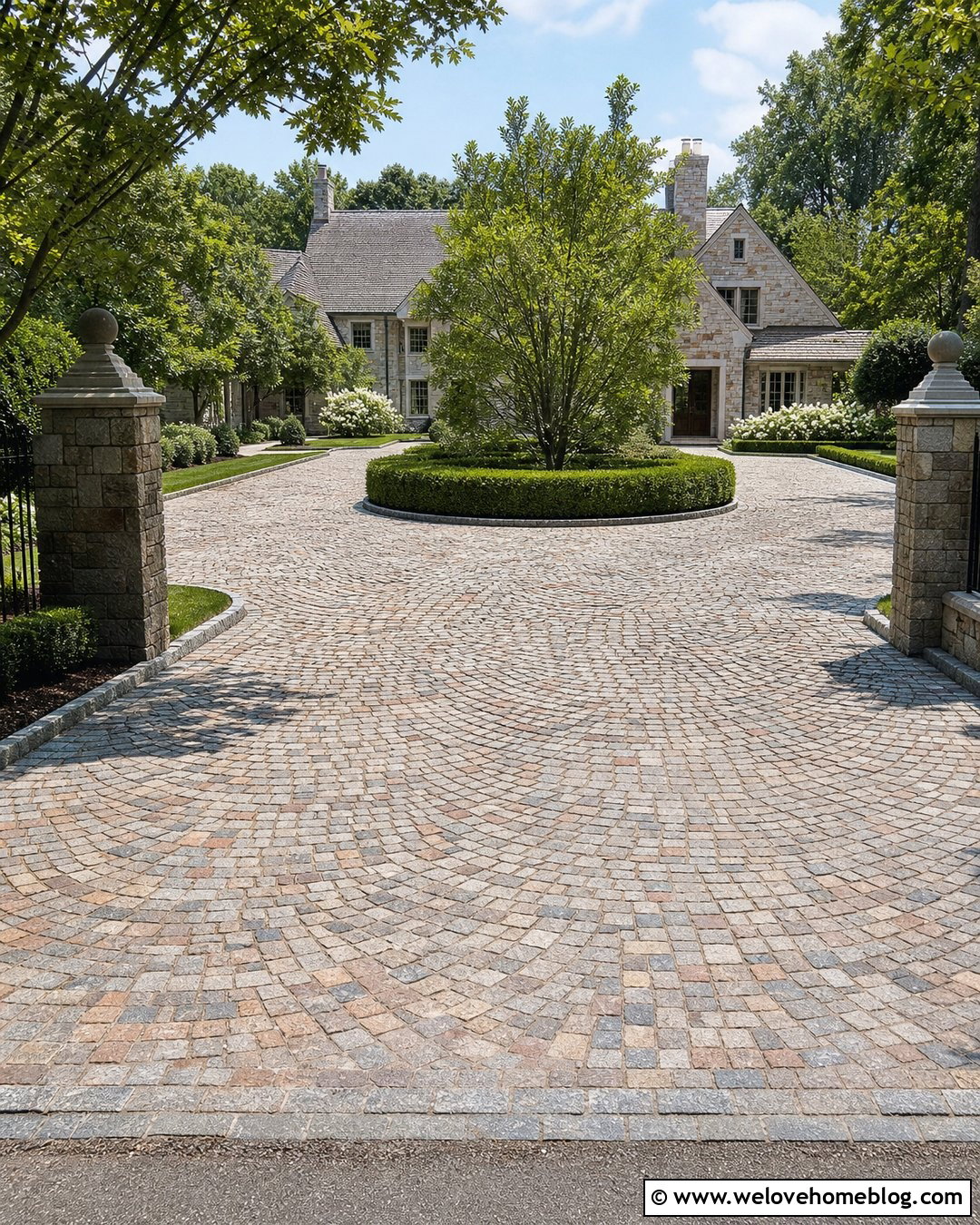
A courtyard driveway made with large Belgian blocks feels substantial and appropriate for an expansive traditional home. Lay the stone in sweeping arcs or fan patterns that help distinguish the parking and turning zones. Mixed gray, brown, and muted rose blocks create gentle variation without requiring extra decorative materials. A flush granite curb can surround the courtyard and form a clean transition to planting beds. In the center, use a clipped evergreen, small ornamental tree, or low circular hedge as a focal point while maintaining clear vehicle visibility. Stone pillars at the entrance can repeat the block colors and establish a formal boundary. Because a large courtyard contains many joints, the base, edge restraint, and joint system need careful planning. An even installation preserves the historic character while making the surface comfortable for regular use.
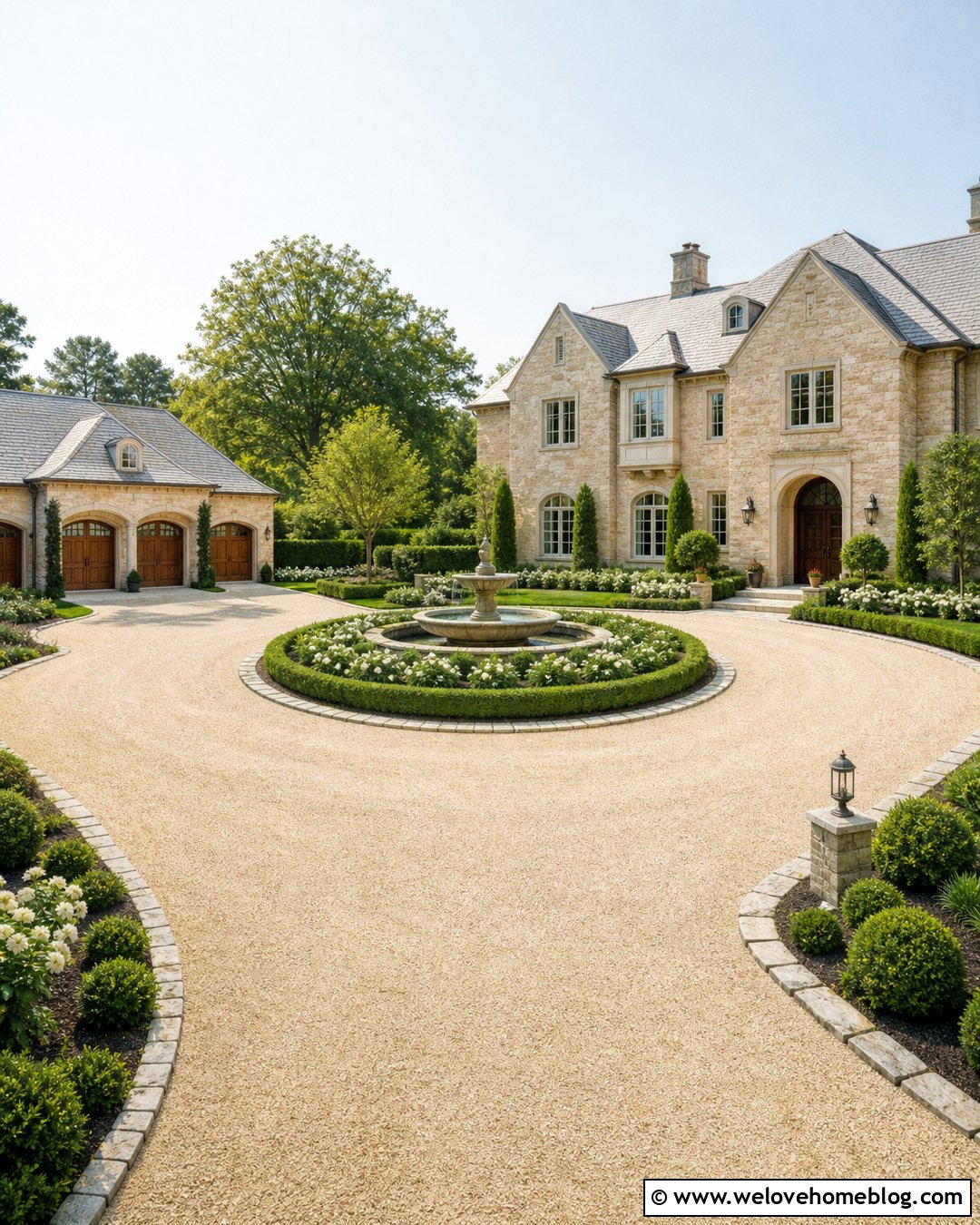



15. Large Limestone Horseshoe Driveway
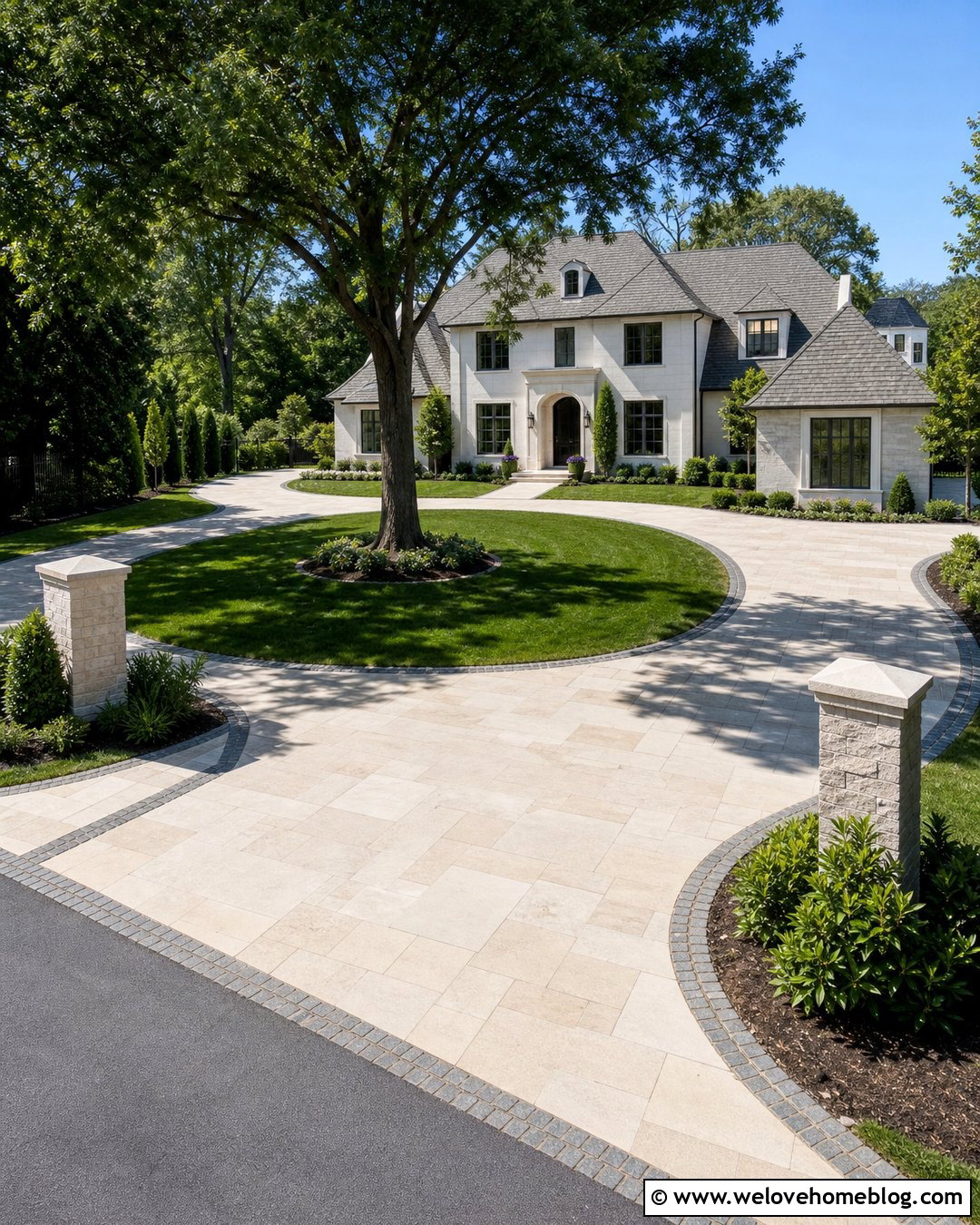
A horseshoe layout makes a large limestone driveway convenient for homes with enough front-yard depth. Two separate openings allow vehicles to enter and leave without complicated reversing. Pale cream or light gray limestone slabs keep the broad paved area from appearing too dark or heavy. Arrange the stones in a modular rectangular pattern, then use charcoal granite setts to define both entrances and the inside curve. The central lawn can hold a mature shade tree surrounded by a simple circular planting bed. Along the house, repeat the limestone in a direct walkway to the front door. Low shrubs should preserve clear sightlines where the driveway meets the street. Before finalizing the shape, confirm suitable turning space, drainage direction, and local entrance requirements so the finished layout functions as smoothly as it looks.
16. Large Granite Plank Stone Driveway
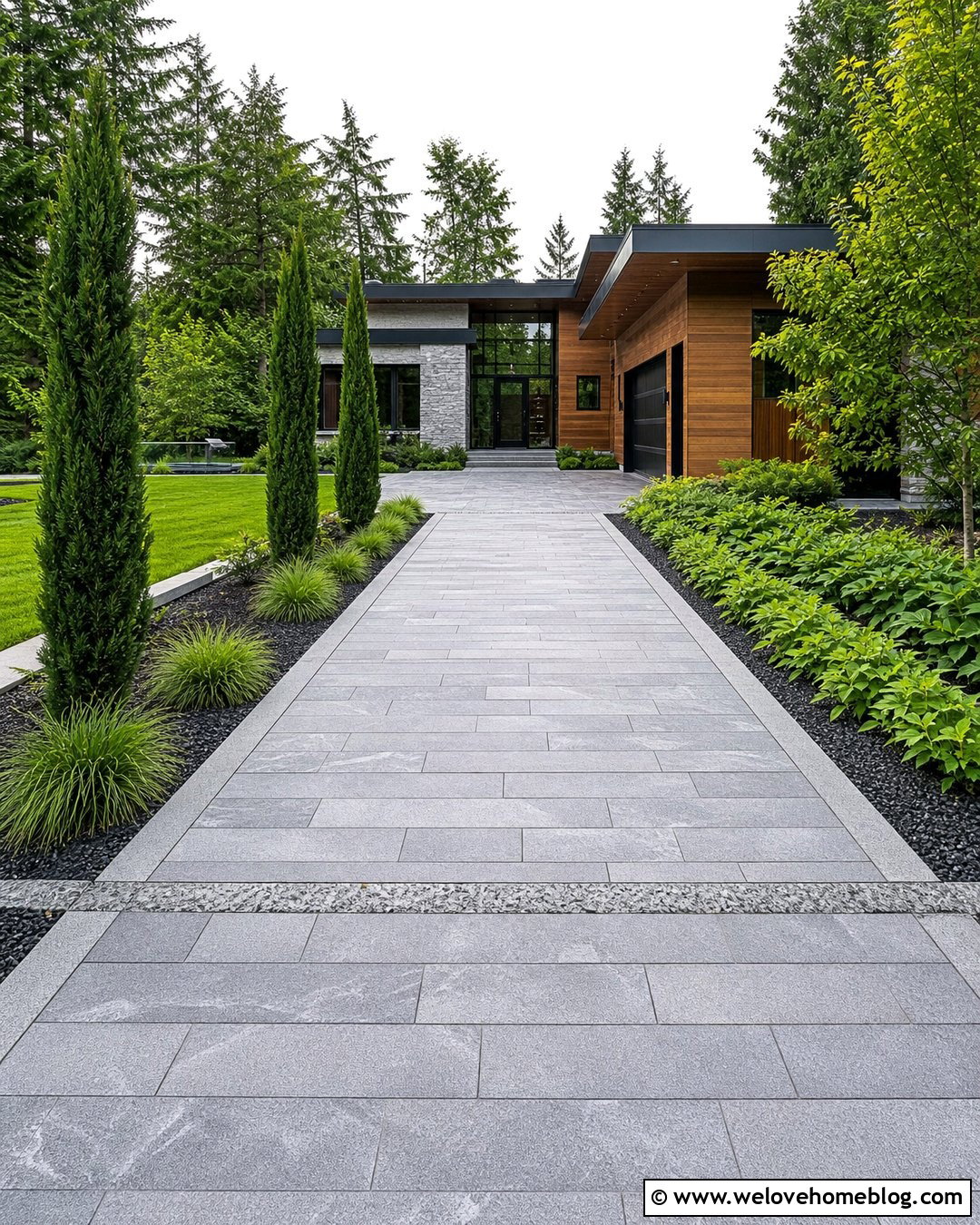
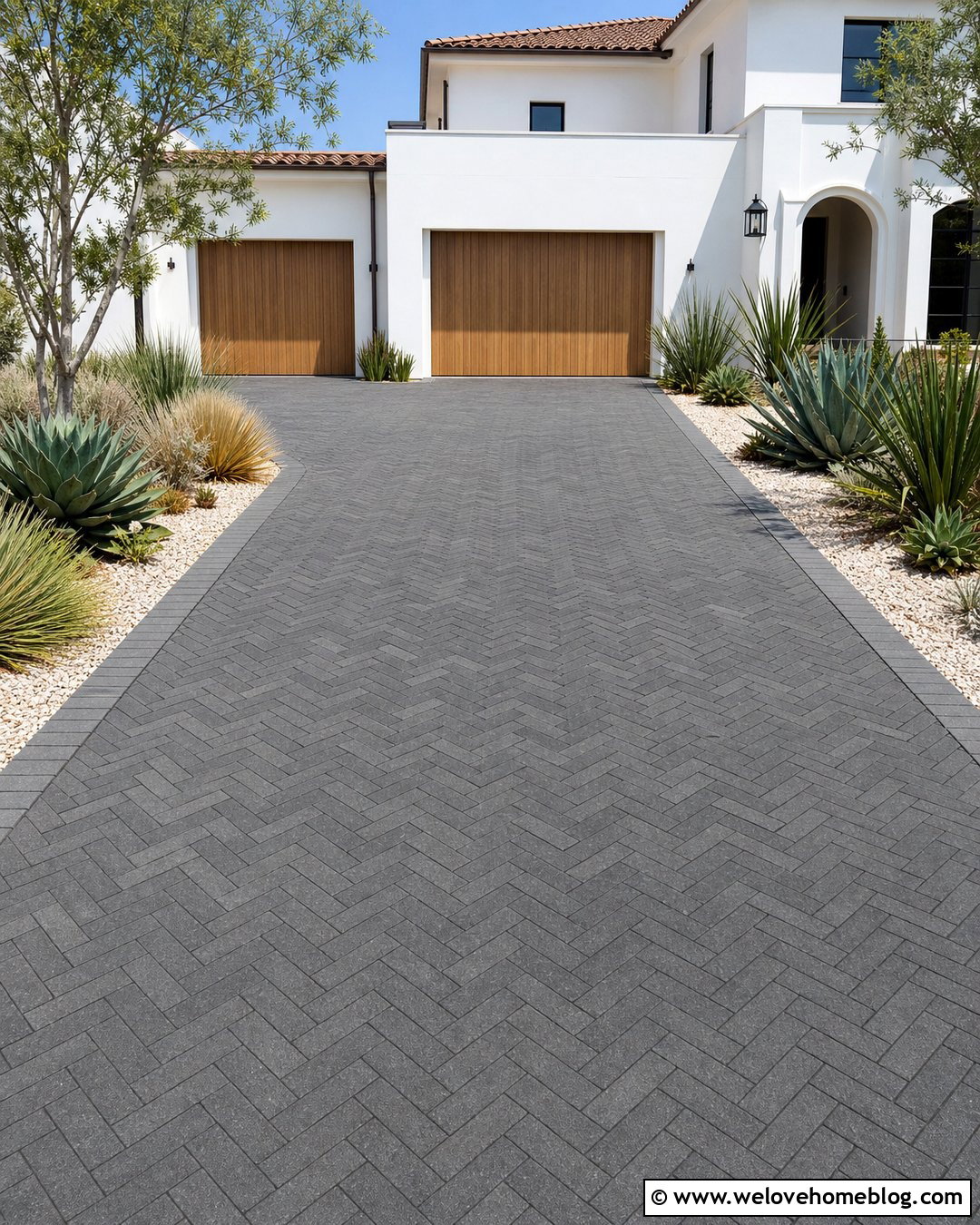
Long granite plank pavers create a linear driveway with a distinctive contemporary rhythm. Use vehicle-rated pieces in several coordinated lengths and stagger the joints so the surface does not resemble a basic tile grid. Medium gray granite works with many exterior colors, including cedar, white stucco, brick, and dark metal siding. Narrow bands of black crushed stone can separate selected rows and visually stretch the driveway toward the house. Add matching granite edging where the surface meets lawn or planting beds. A restrained landscape of columnar trees, low grasses, and broad ground-cover masses supports the linear design. At the street, rotate the planks to form a crosswise entrance band. This subtle change marks the property boundary and provides an attractive transition without introducing a completely different material or decorative pattern.
17. Large Stone Driveway With Boulder Retaining Walls
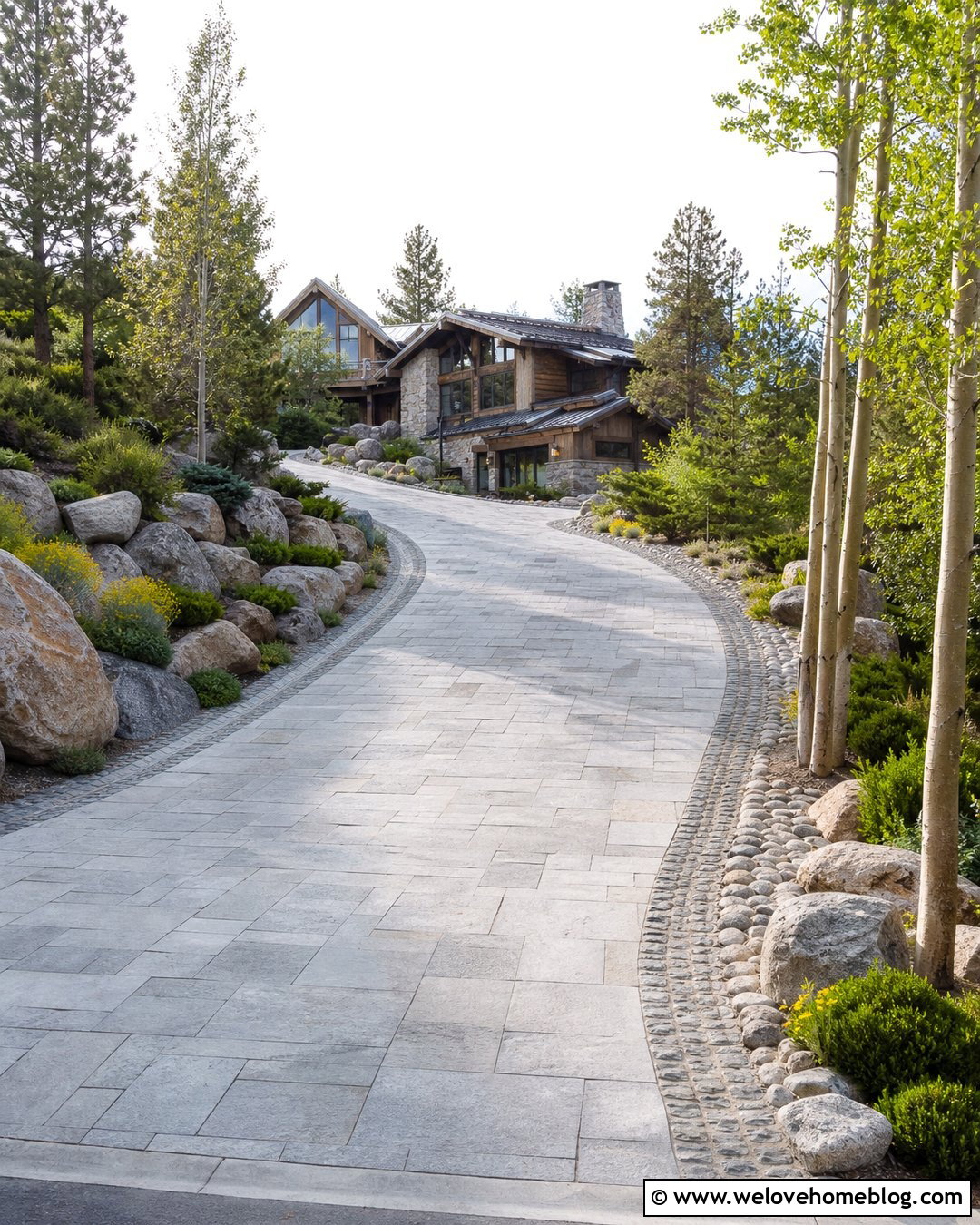
Sloped properties can benefit from a large stone driveway framed by natural boulder retaining walls. Use thick granite or limestone slabs on a gently curving approach, keeping the surface pattern simple so it does not compete with the rugged walls. The boulders should appear carefully integrated into the grade rather than stacked as a decorative afterthought. Plant the pockets between them with creeping juniper, sedges, native flowers, and compact shrubs suited to the site. A cobblestone drainage channel along the uphill side can become an intentional design detail while directing water away from the driveway surface. On the downhill edge, low stone curbing provides definition without blocking the view. Coordinate the slab color with the retaining boulders, but allow some tonal variation so the driveway retains depth and natural character.
18. Large Stone Driveway With Planted Joints
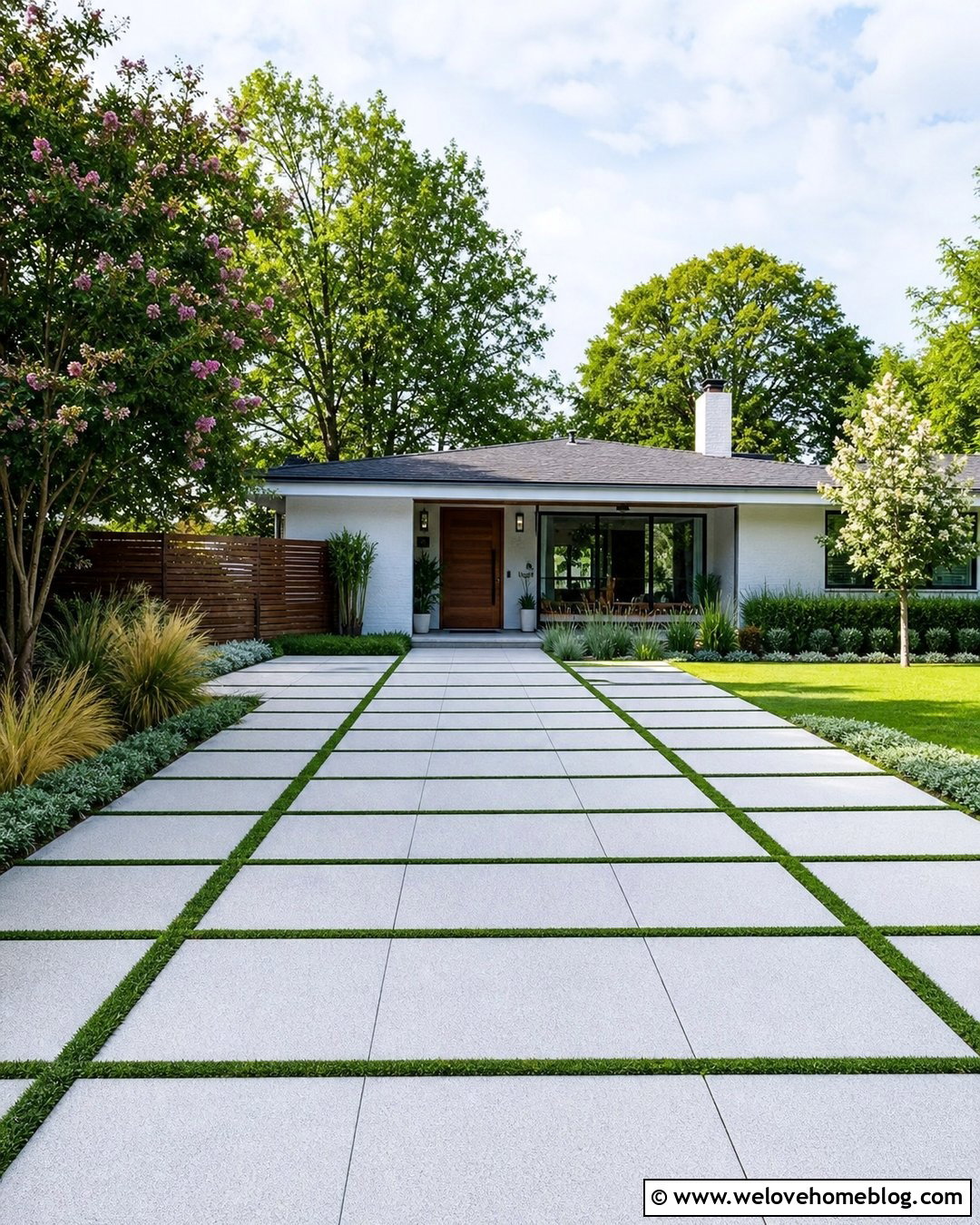
Planted joints can soften an expansive stone driveway and help it blend into a green front yard. Start with large rectangular granite, limestone, or concrete-backed natural stone units arranged in a spacious grid. Fill selected joints with a durable, low-growing plant chosen for the site’s sunlight, moisture, climate, and expected traffic. Keep the main tire paths more tightly jointed to reduce wear, reserving wider planted strips for lower-pressure areas. A straight driveway leading to a midcentury or contemporary ranch home suits this organized pattern. Continue the grid into a nearby walkway for a seamless approach. Simple lawn panels, ornamental grasses, and small flowering trees can frame the pavement. This design requires more maintenance than sealed joints, so plan for trimming, irrigation, weed control, and occasional replacement of damaged plants.
19. Large Mixed Stone Driveway With A Paver Ribbon
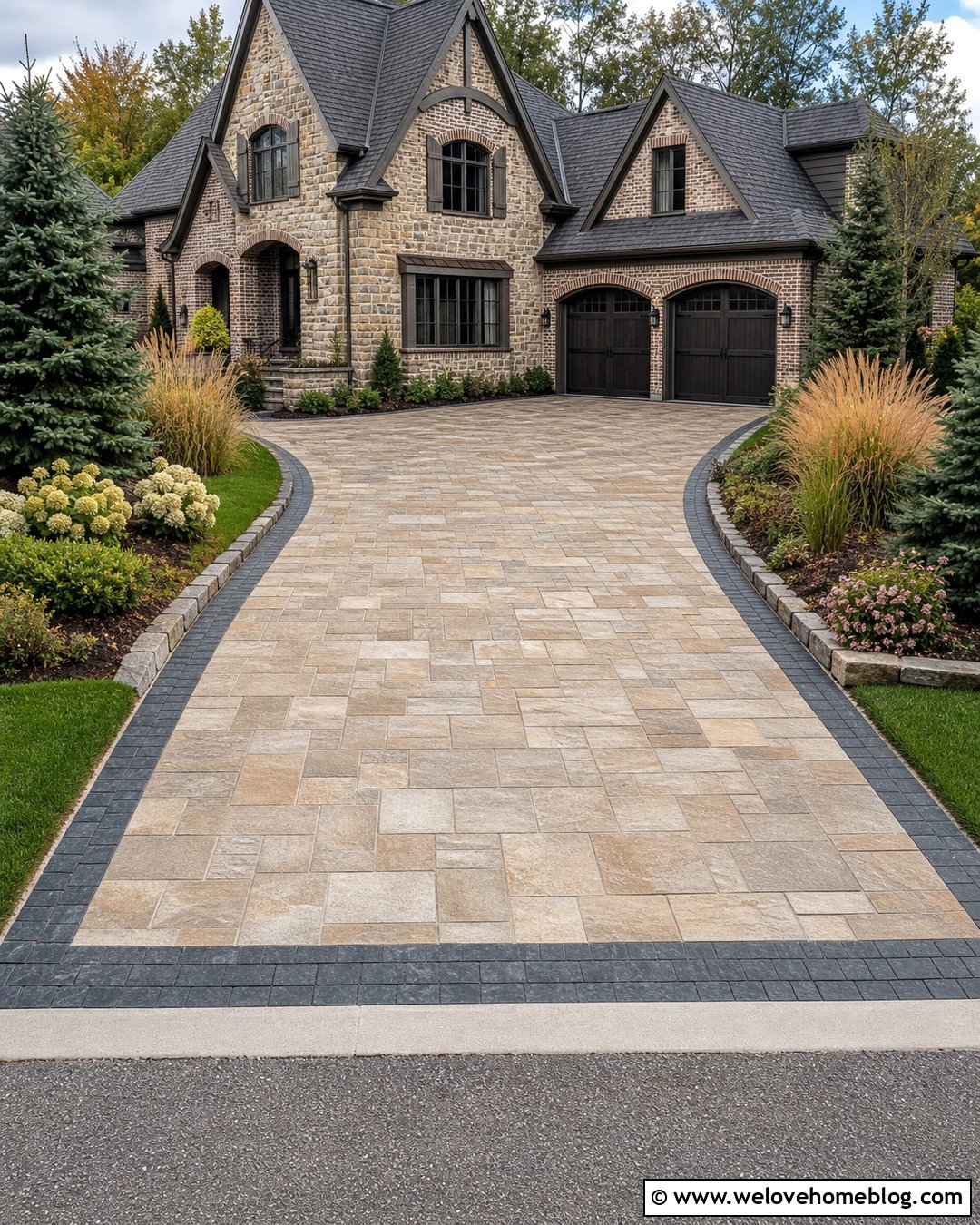
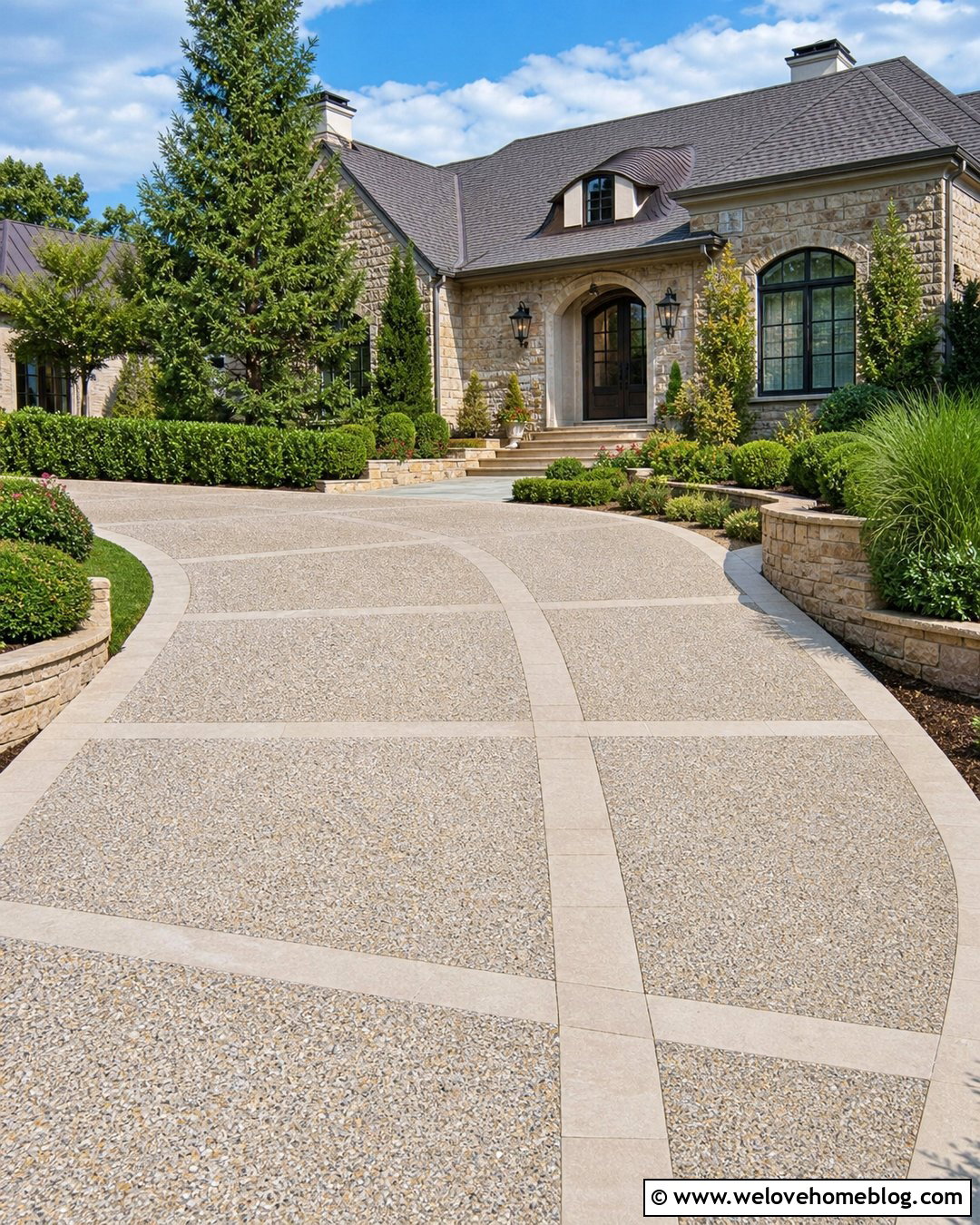
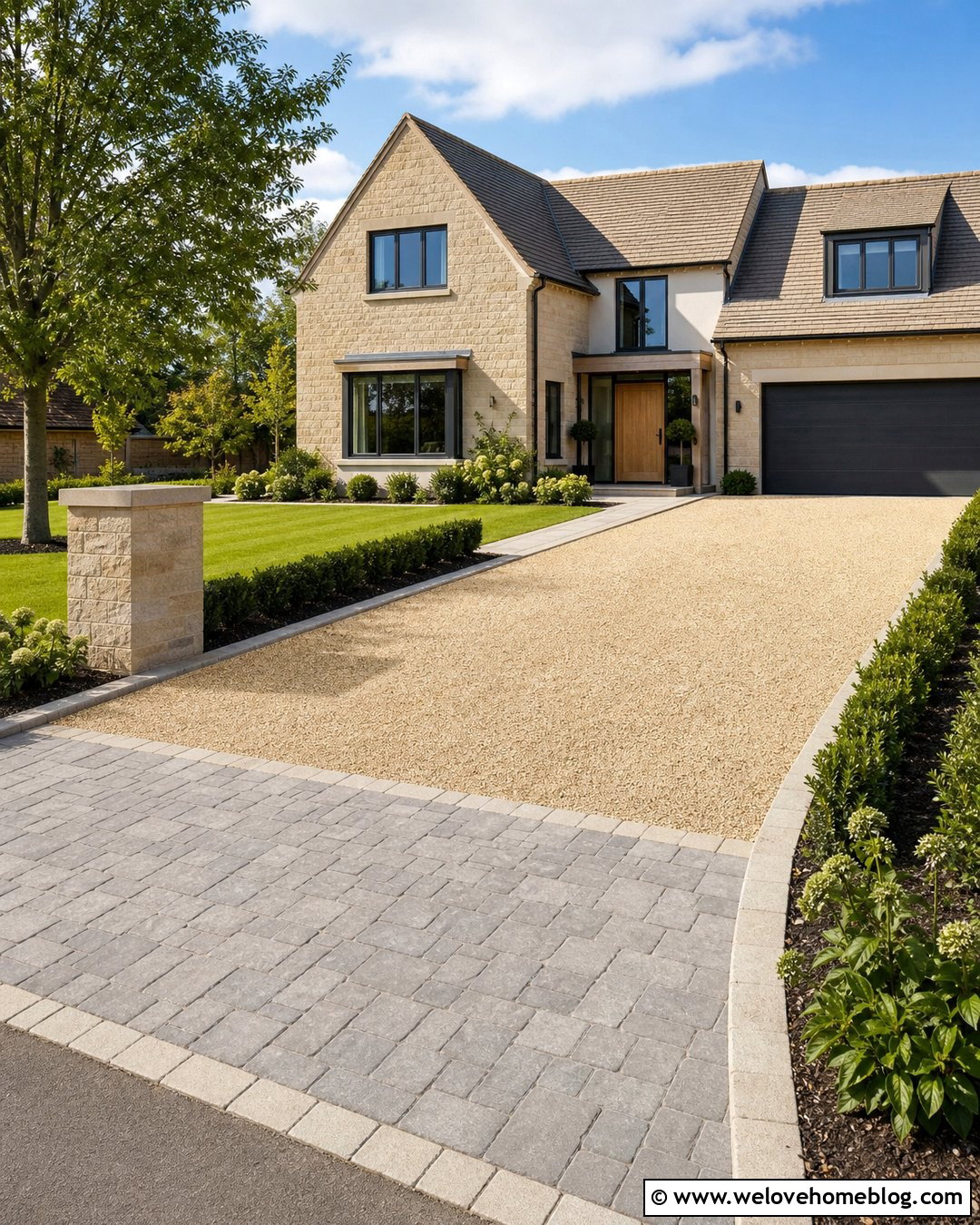
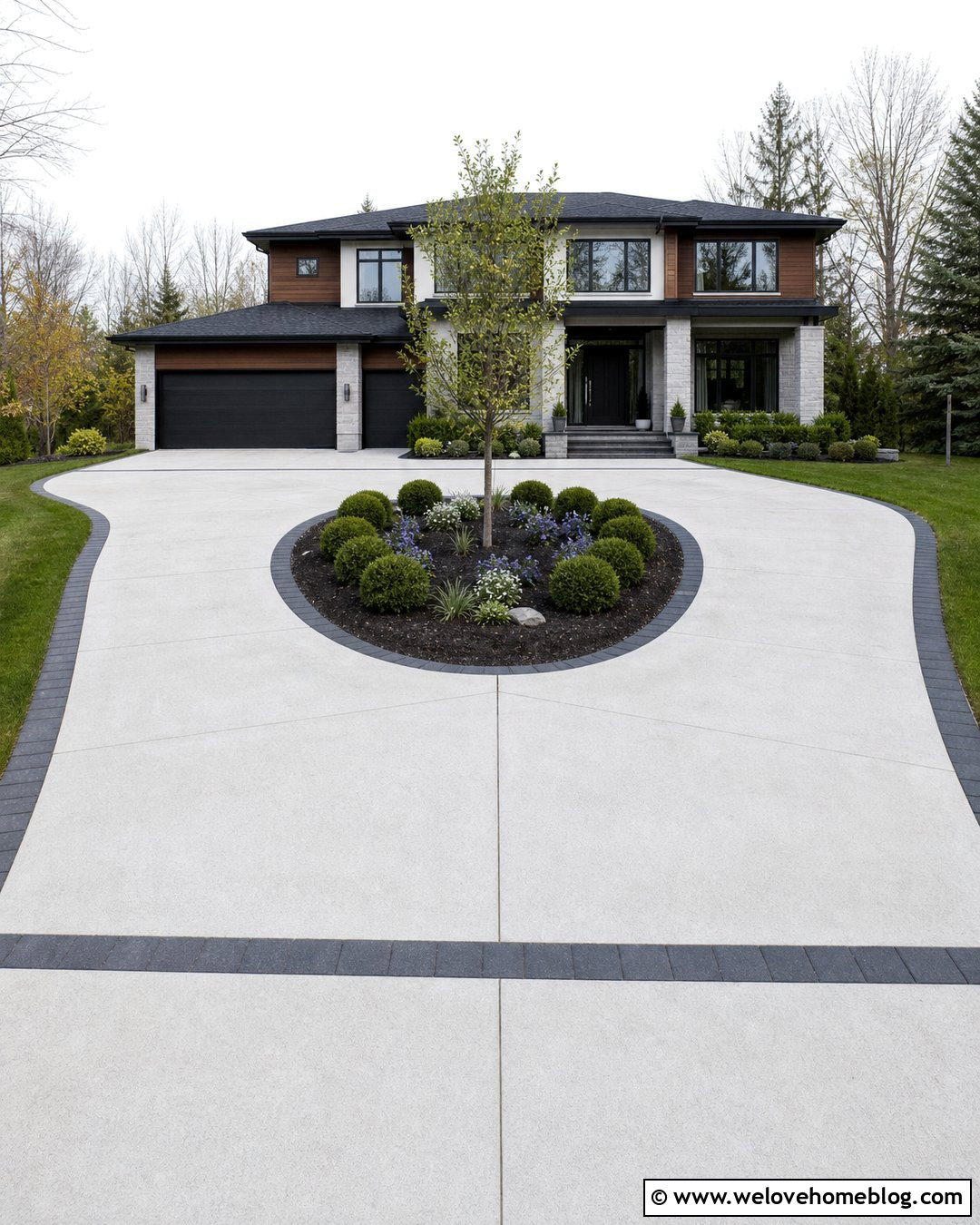
Mixing two natural stones can make a broad driveway more interesting without creating a complicated surface. Use large tan flagstone or limestone slabs as the primary material, then add a dark granite paver ribbon along the borders and across key transition points. One crosswise ribbon can mark the street entrance, another can define the parking area, and a final band can frame the garage threshold. A gently curved layout helps the contrasting bands follow the landscape naturally. Plant low evergreen shrubs and airy grasses along the edges, leaving enough open space for doors, deliveries, and snow storage where necessary. The secondary stone should contrast clearly but share an undertone with the main slabs. Repeating the dark granite in the walkway edging or porch steps will make the mixed-material design feel intentional throughout the property.




20. Large Sawn Granite Driveway For Cold Climates
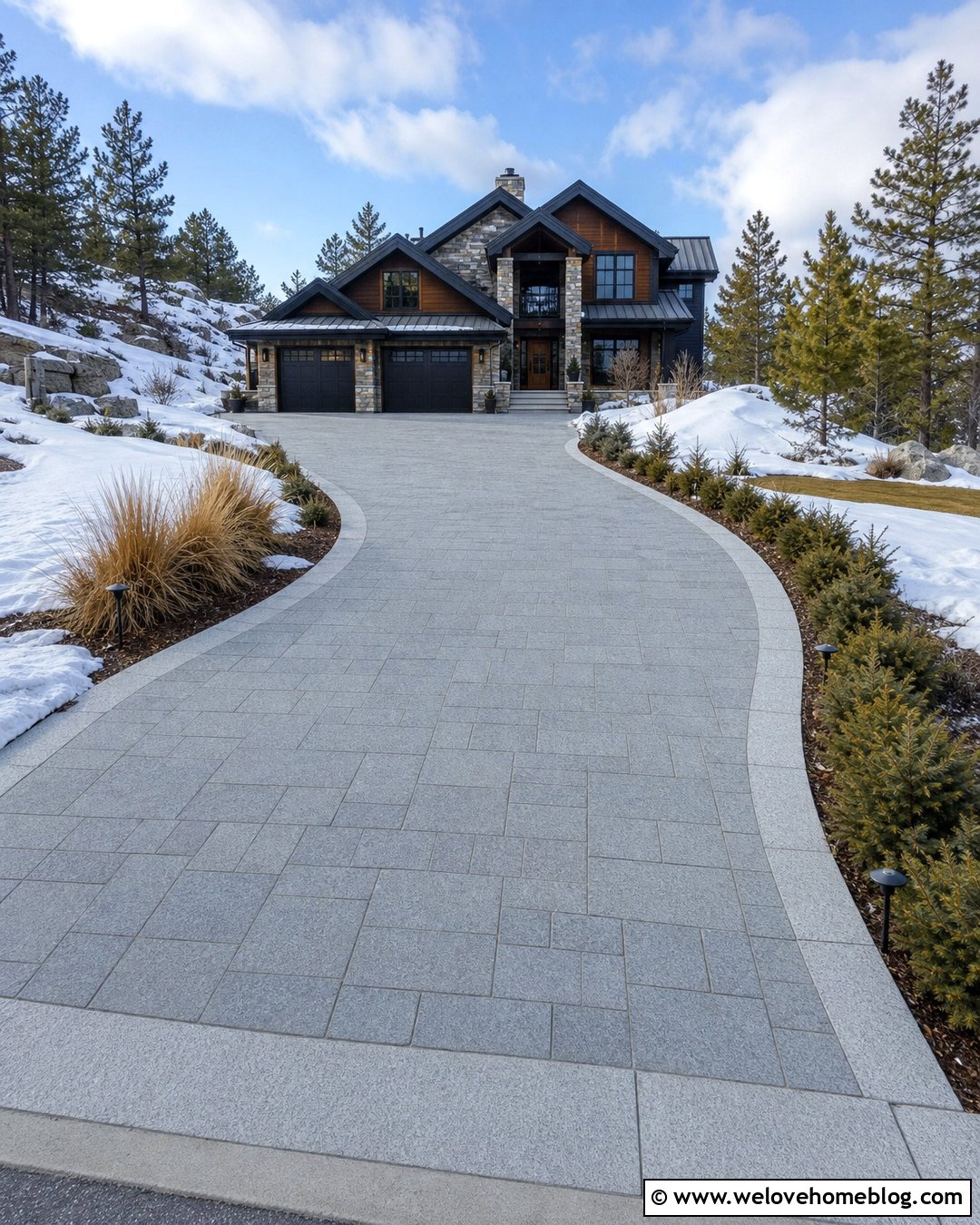
A sawn granite driveway can provide a clean appearance for homes in regions with demanding winter conditions. Choose thick, exterior-grade slabs with a flamed, sandblasted, or otherwise slip-resistant surface instead of a smooth polished finish. Medium gray stone is practical because it coordinates with snow, wet weather, and many facade materials without showing every small mark. Use a straight or lightly curved layout with tight, consistent joints and strong granite curbing. Leave practical snow-storage areas beside the driveway, planted with salt-tolerant shrubs selected for local conditions. Low pathway lights can define the edges without creating obstacles for plows. Discuss frost-resistant construction, drainage, deicing products, and snow-removal equipment with the installer. Thoughtful detailing helps protect both the stone surface and adjacent landscaping through repeated seasonal use.
Conclusion:
The most successful 20 Large Stone Driveway Ideas treat the driveway as part of the entire front landscape. Stone type matters, but so do the layout, joint treatment, edging, drainage, planting, and relationship to the house. Irregular flagstone can create an informal country approach, while sawn granite, basalt, and limestone slabs support cleaner architectural designs. Circular and horseshoe layouts add convenient movement when the property has sufficient space. Gravel joints, cobblestone ribbons, grass strips, stone pillars, and boulder walls provide even more ways to personalize the result. Before installation, select vehicle-rated materials and have the base designed for local soil and weather. This creates a driveway that looks impressive and performs reliably.

Related posts:



Leave a Reply