
Parisian interior design embodies a sense of effortless elegance and timeless sophistication. It masterfully blends old-world charm with contemporary elements, creating spaces that feel both lived-in and luxurious. This style isn't about rigid rules but rather a curated approach that honors historical architecture while embracing personal expression. At its core, Parisian design is about creating a backdrop of classic features—like intricate moldings and high ceilings—and layering it with a thoughtful mix of antique finds, modern art, and comfortable furnishings. The result is a chic, uncluttered aesthetic that feels both inspiring and deeply personal, capturing the romantic spirit of Paris itself.
1. Herringbone Hardwood Floors
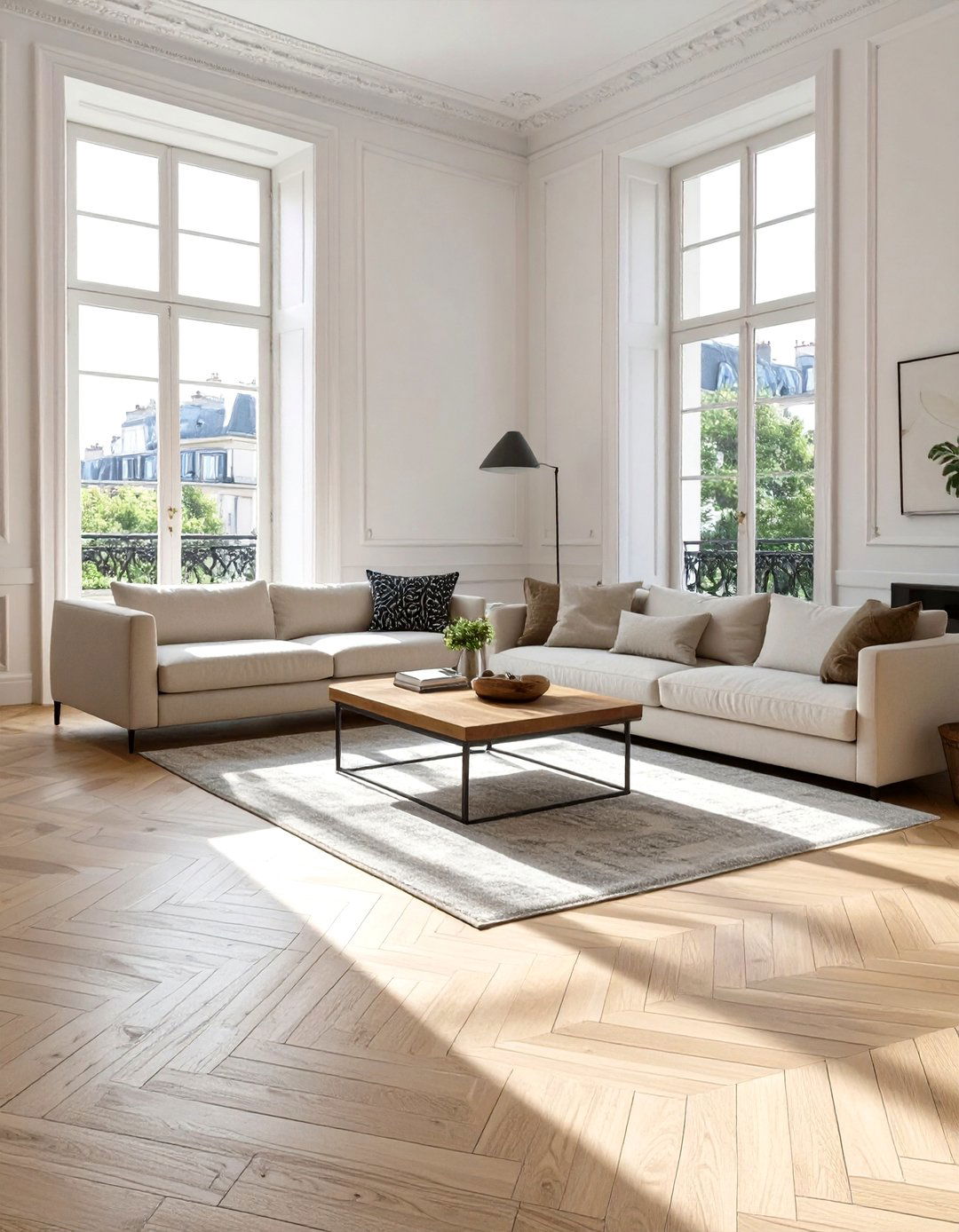
A quintessential element of Parisian interior design is the use of herringbone hardwood floors. This distinctive zigzag pattern, often crafted from oak, adds a layer of graphic texture and historical depth to any room. The geometric arrangement draws the eye across the space, creating a sense of movement and understated luxury. These floors serve as a beautiful, neutral foundation that complements both classic and modern furniture. To achieve the look, light to medium wood tones are preferred, as they enhance the feeling of brightness and space, reflecting the natural light that streams in from large windows, a common feature in Parisian apartments.
2. Ornate Wall Moldings (Boiserie)
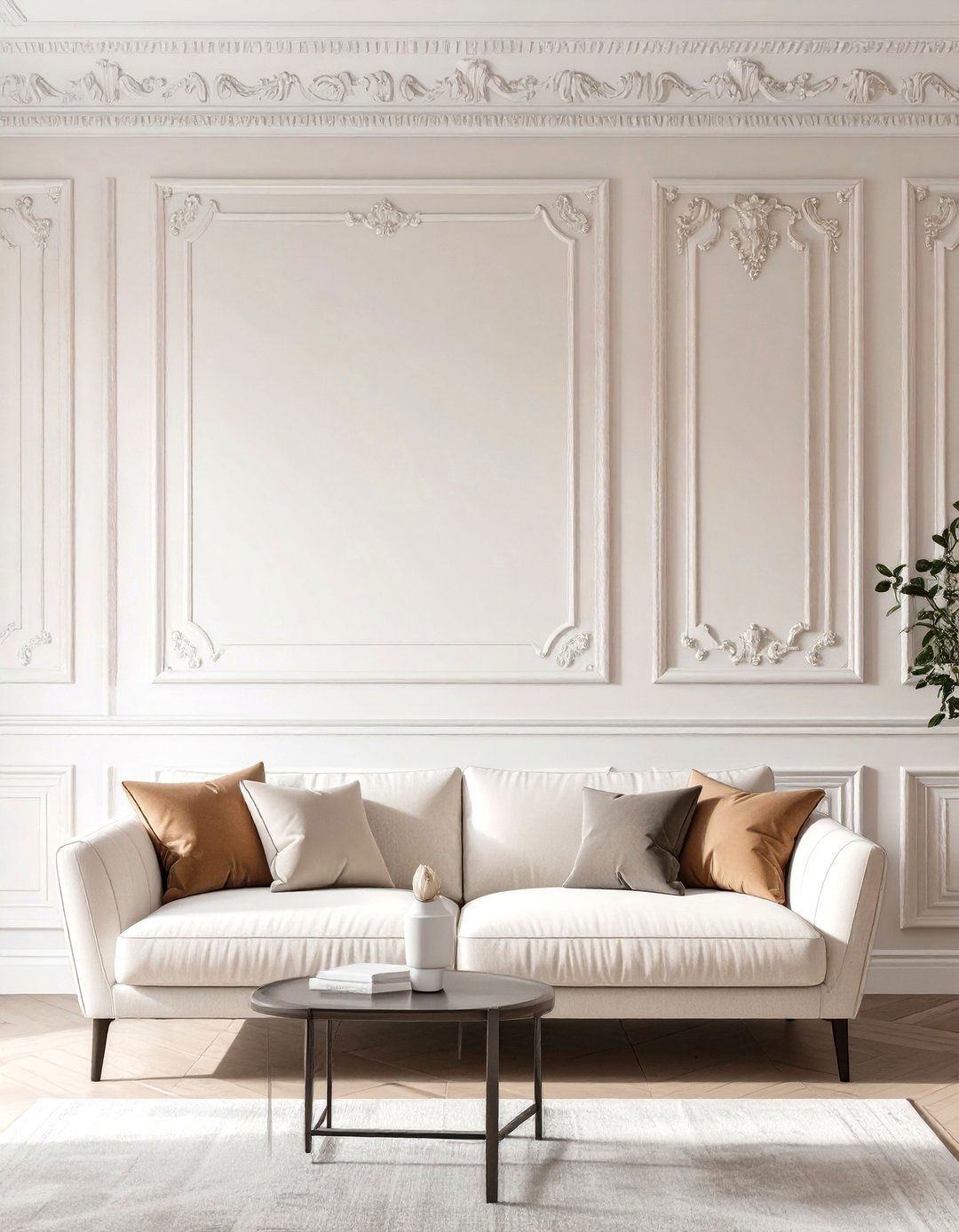
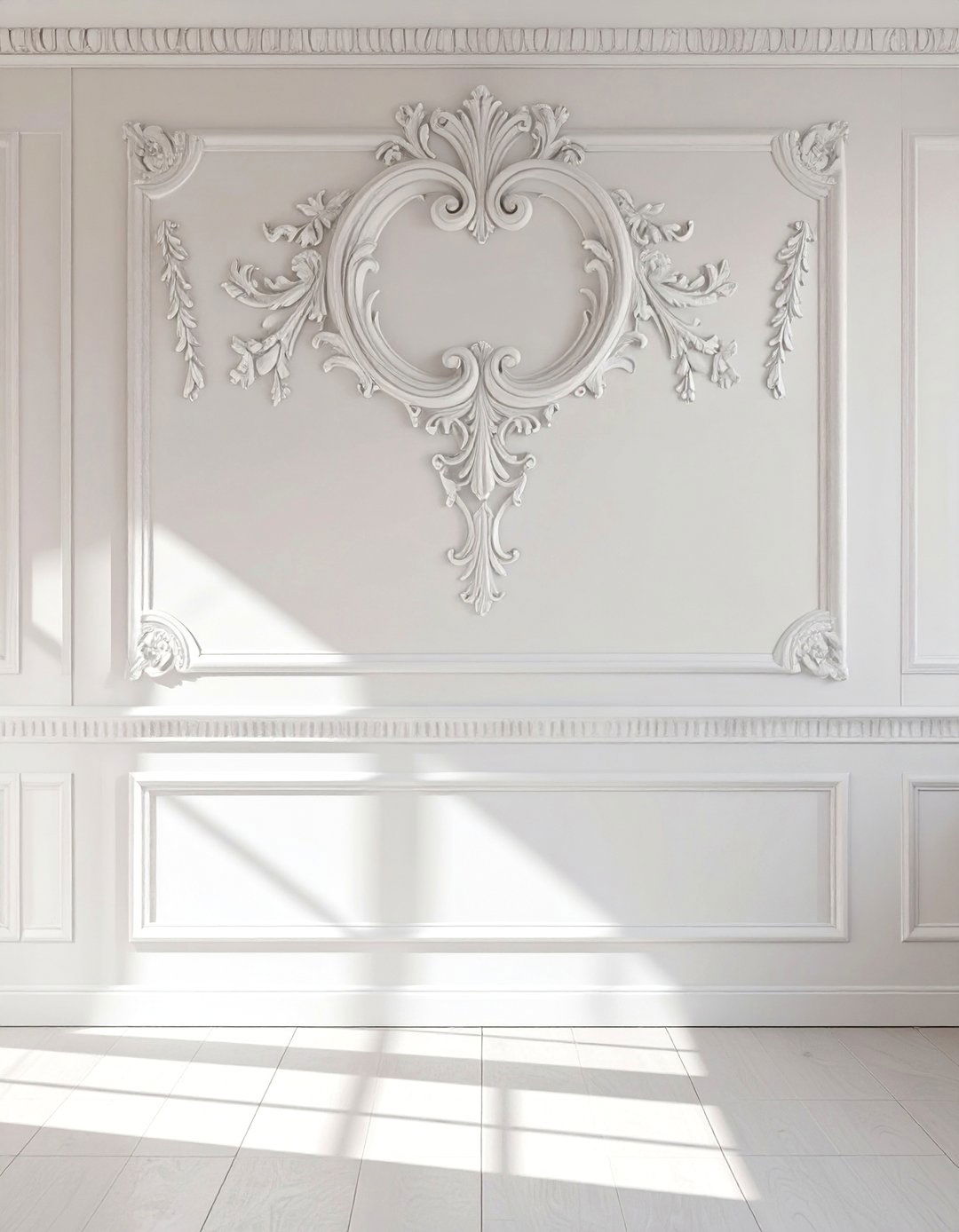
Intricate wall moldings, known as boiserie, are a defining characteristic of classic Parisian interiors. These decorative panels add architectural interest and a sense of grandeur to otherwise simple walls. Typically painted in the same shade as the walls—often a soft white, cream, or light grey—the moldings create subtle shadow lines that lend texture and sophistication. Boiserie frames the room, providing a traditional backdrop that contrasts beautifully with contemporary furniture and art. This detail honors the Haussmannian heritage of many Parisian buildings, elevating the space from a simple dwelling to a work of art in its own right.
3. Marble Fireplace Mantels
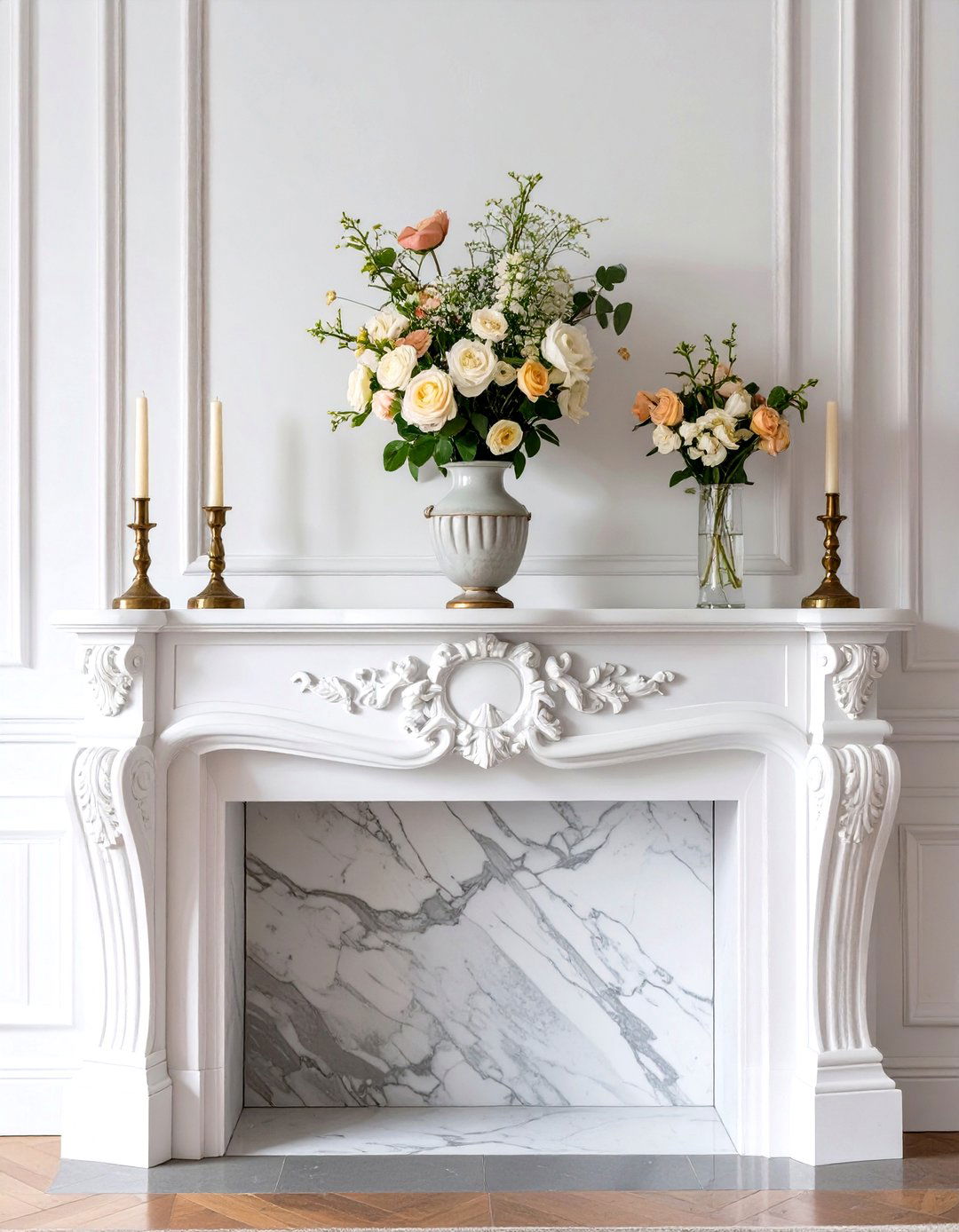
A marble fireplace serves as the elegant heart of a Parisian living room. Often original to the historic apartments, these mantels are typically crafted from white, black, or grey marble and feature simple, yet graceful, carvings. They act as a natural focal point, grounding the room's design and providing a surface for curated decor, such as an ornate mirror, modern sculpture, or a simple vase of fresh flowers. Even when non-functional, the fireplace mantel maintains its importance, symbolizing warmth and history. Its presence adds a layer of architectural significance that is central to achieving an authentic Parisian aesthetic.
4. Large Gilded Mirrors
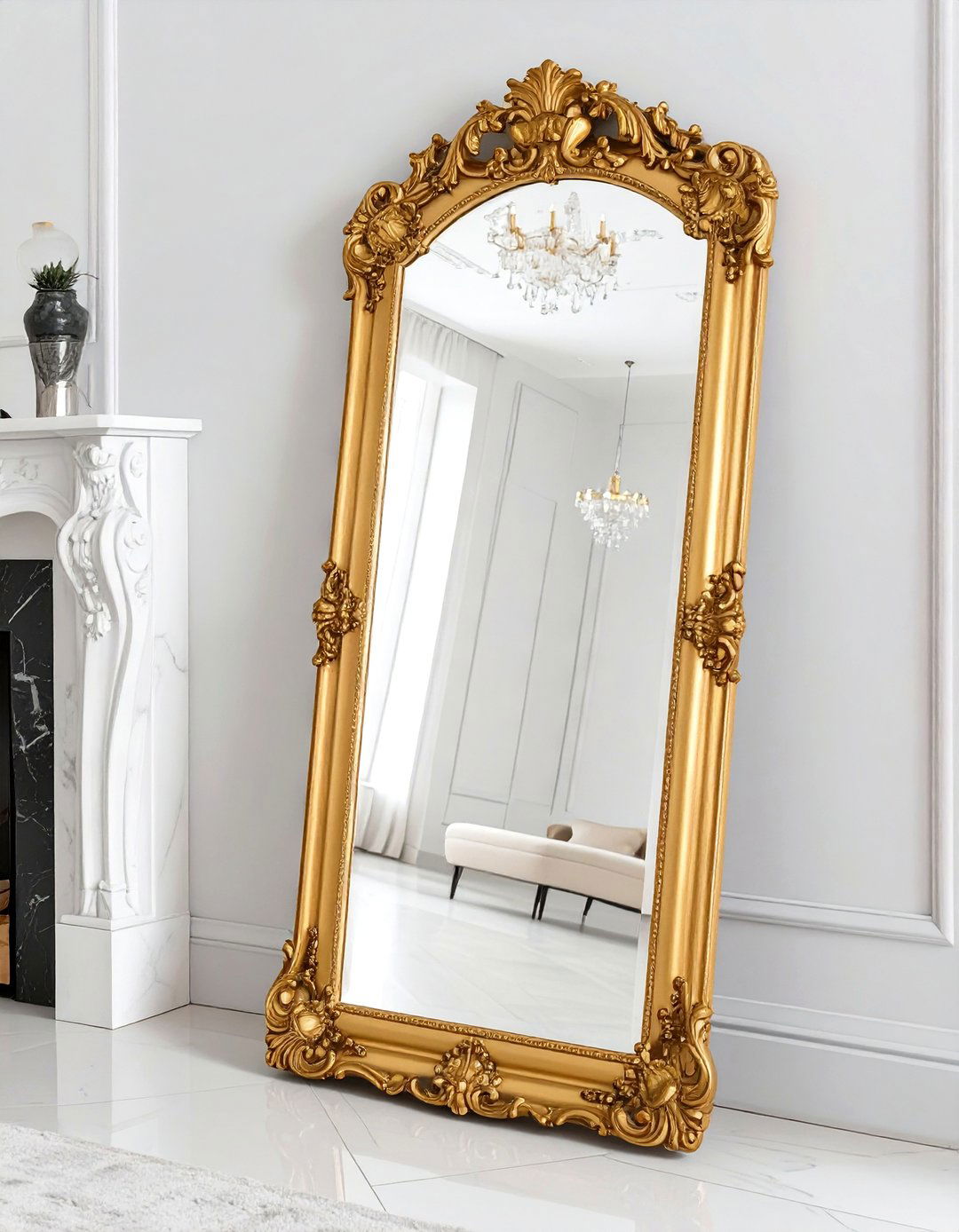
Positioned prominently above a marble fireplace or leaning casually against a wall, a large gilded mirror is a non-negotiable in Parisian design. These ornate mirrors, often featuring intricate rococo or neoclassical frames, do more than just reflect an image; they amplify light, create the illusion of a larger space, and add a touch of antique opulence. The contrast between the elaborate gold frame and the often minimalist surroundings is key to the Parisian look. This single statement piece can anchor an entire room, infusing it with a sense of history and glamour that is both dramatic and effortlessly chic.
5. Crystal Chandeliers as Statement Lighting
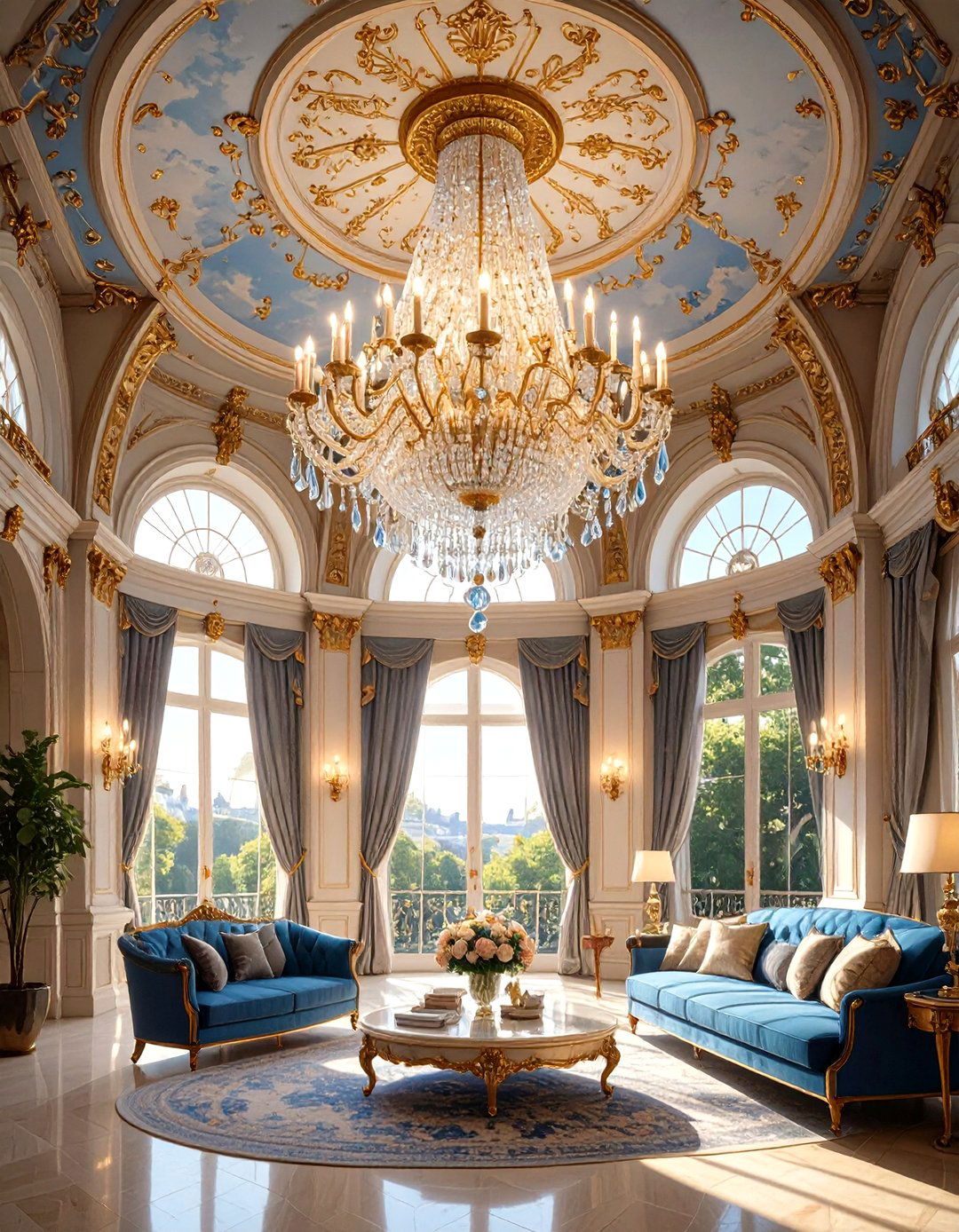
In Parisian interior design, lighting is never merely functional; it is a statement piece. A crystal chandelier hanging from a ceiling medallion is a classic choice that injects instant glamour and sophistication. This fixture serves as a glittering jewel in the room, scattering light beautifully and drawing the eye upward to appreciate the high ceilings. The juxtaposition of a dazzling, traditional chandelier with more contemporary or understated furnishings creates a dynamic tension that defines the Parisian style. It’s a nod to old-world luxury that feels perfectly at home in a modern, lived-in space, blending opulence with everyday comfort.
6. A Neutral Color Foundation
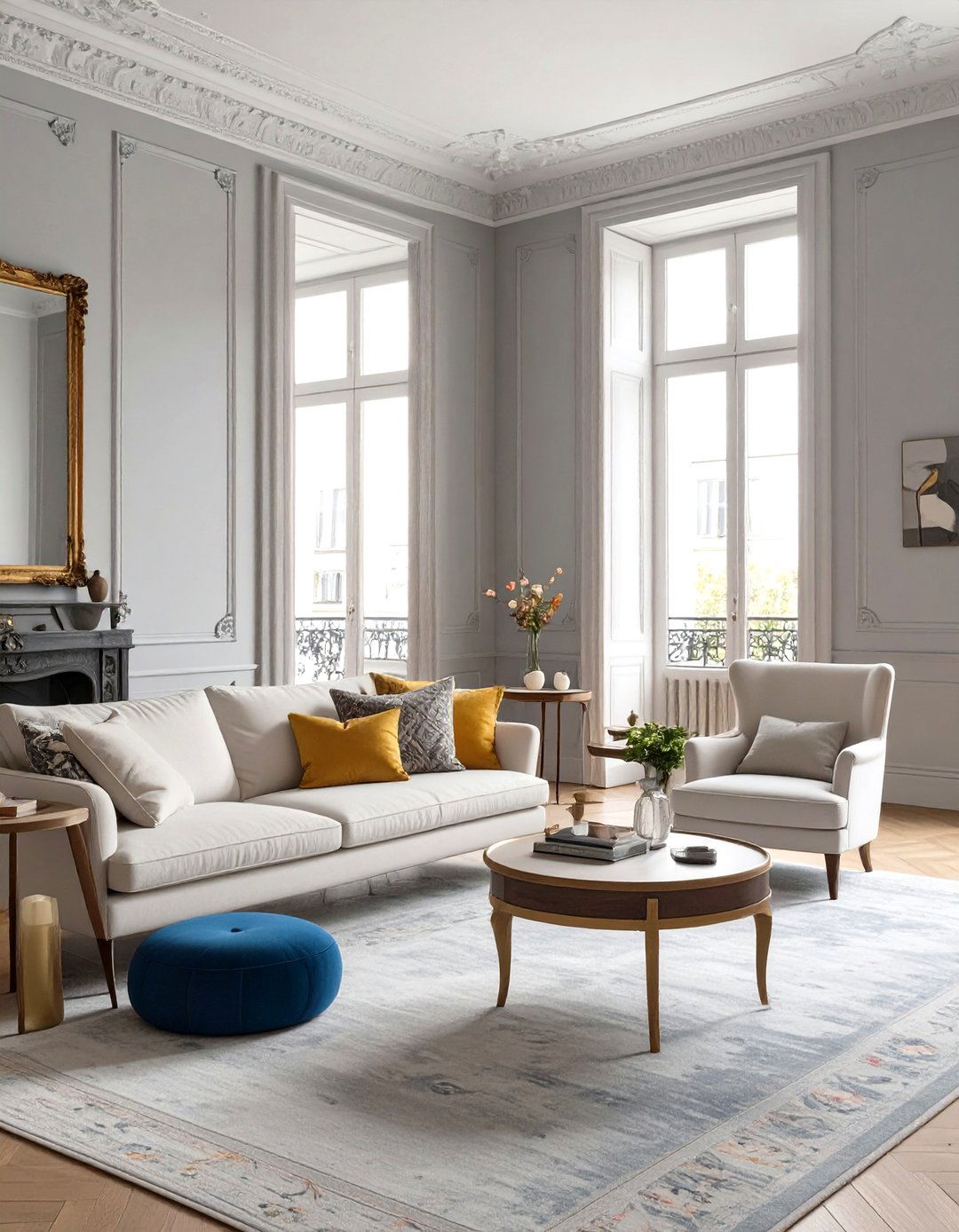
Parisian interiors are built upon a foundation of soft, neutral colors. Walls are typically painted in shades of white, cream, soft grey, or muted taupe. This restrained palette serves multiple purposes: it enhances the feeling of light and airiness, highlights the architectural details like boiserie and cornices, and provides a versatile canvas for art and furniture. Rather than feeling stark, these neutral tones create a serene and sophisticated atmosphere. Splashes of color are introduced thoughtfully through artwork, textiles, or a single piece of furniture, ensuring the overall look remains calm, curated, and effortlessly elegant.
7. Velvet Upholstered Furniture
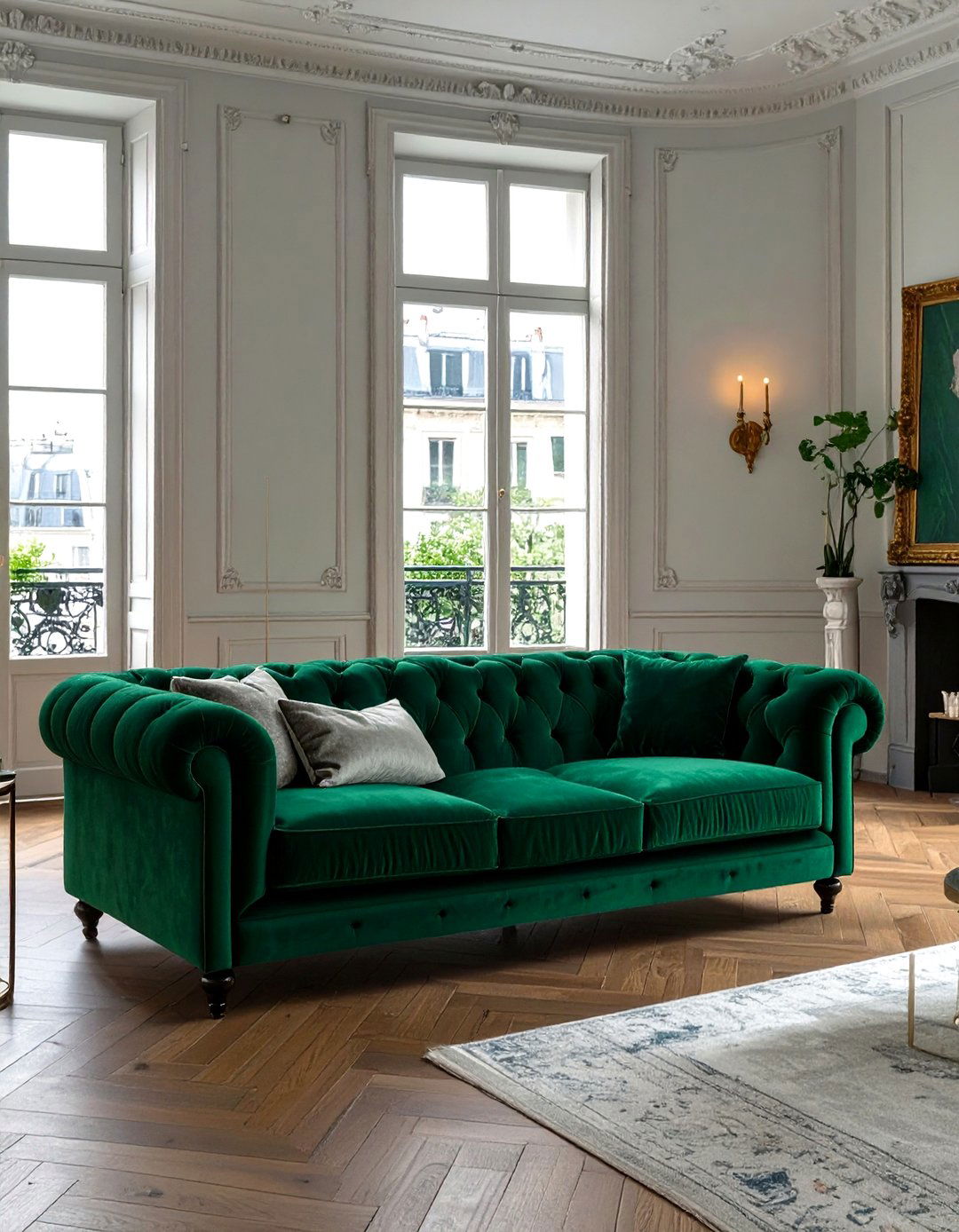
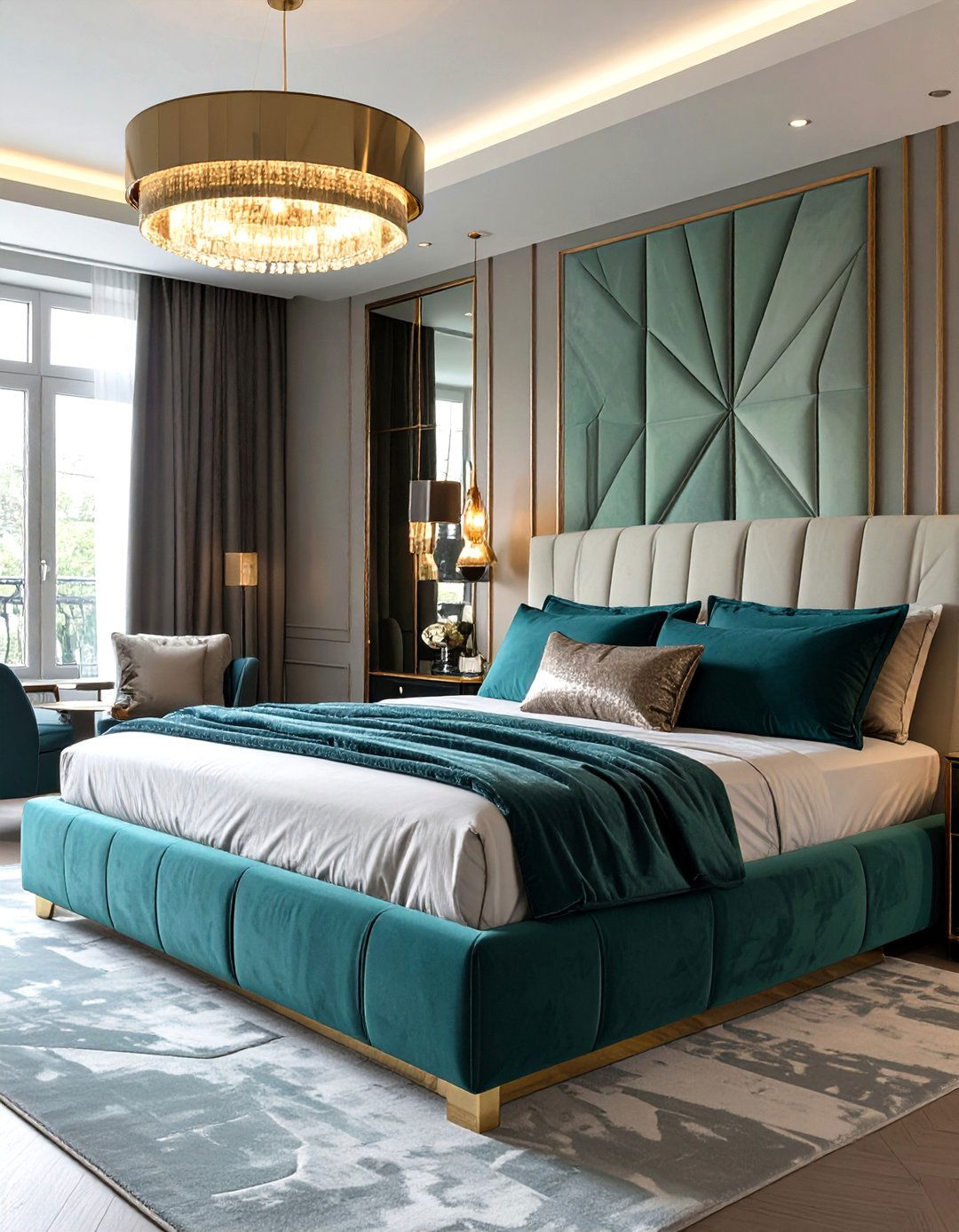
To introduce texture and a touch of opulence, Parisian design often incorporates velvet upholstery. A velvet sofa or armchair in a rich jewel tone—like emerald green, sapphire blue, or deep burgundy—can serve as a stunning focal point against a neutral backdrop. The plush, tactile quality of velvet adds warmth and a sense of luxury without being ostentatious. This material choice bridges the gap between classic and contemporary, offering both comfort and visual interest. It perfectly embodies the Parisian knack for mixing textures to create a space that is both sophisticated and invitingly comfortable for everyday living.
8. Mixing Antique and Modern Furniture
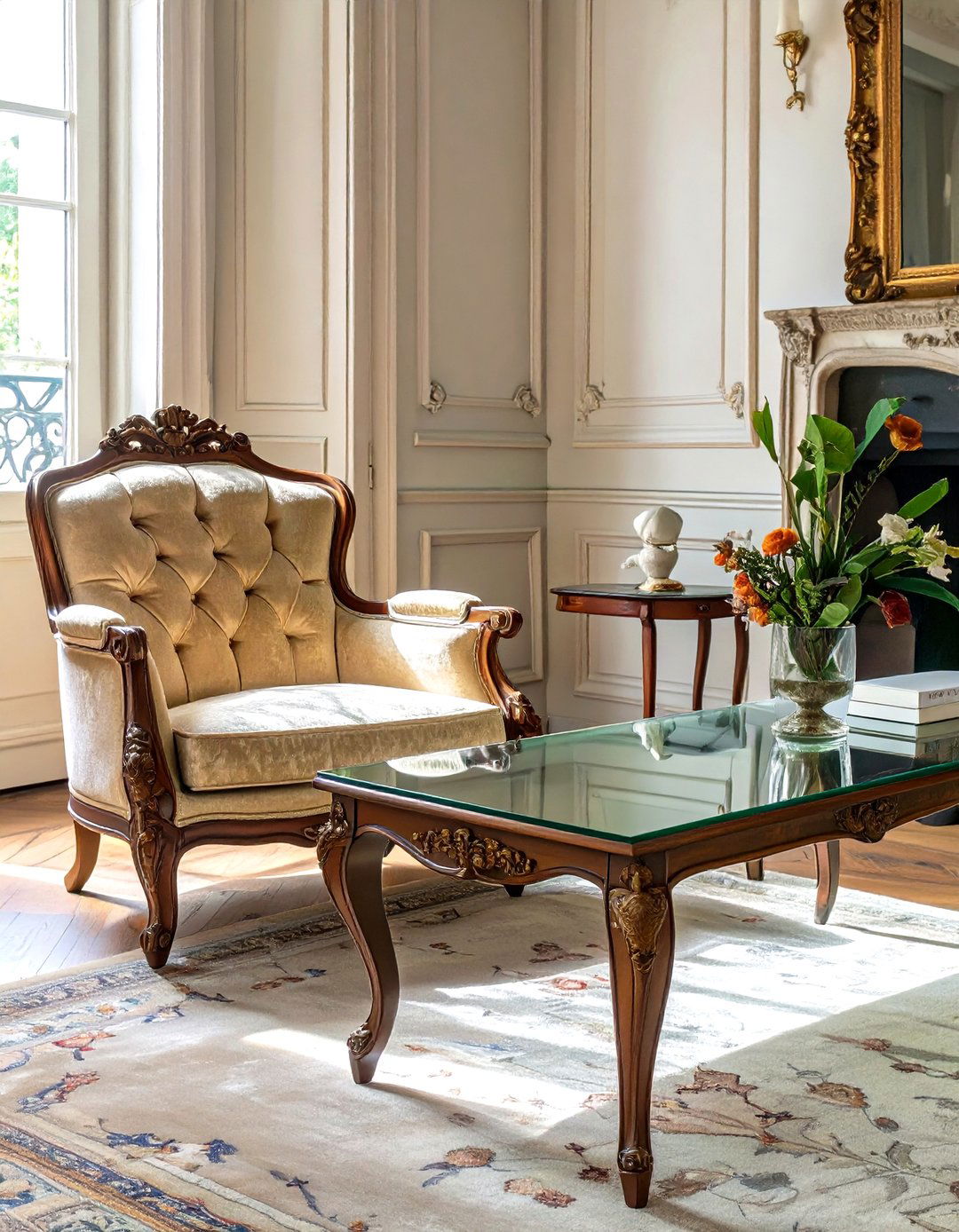
The art of Parisian design lies in the masterful mix of old and new. An antique Louis XVI armchair might sit beside a sleek, contemporary coffee table, or a vintage wooden armoire might stand opposite a modern minimalist sofa. This intentional pairing creates a dynamic and personal space that feels collected over time rather than decorated all at once. The contrast highlights the unique beauty of each piece, celebrating both historical craftsmanship and modern innovation. This approach prevents the interior from feeling like a museum, instead creating a lived-in, evolving home that tells a unique story.
9. Contemporary Art in Classic Settings
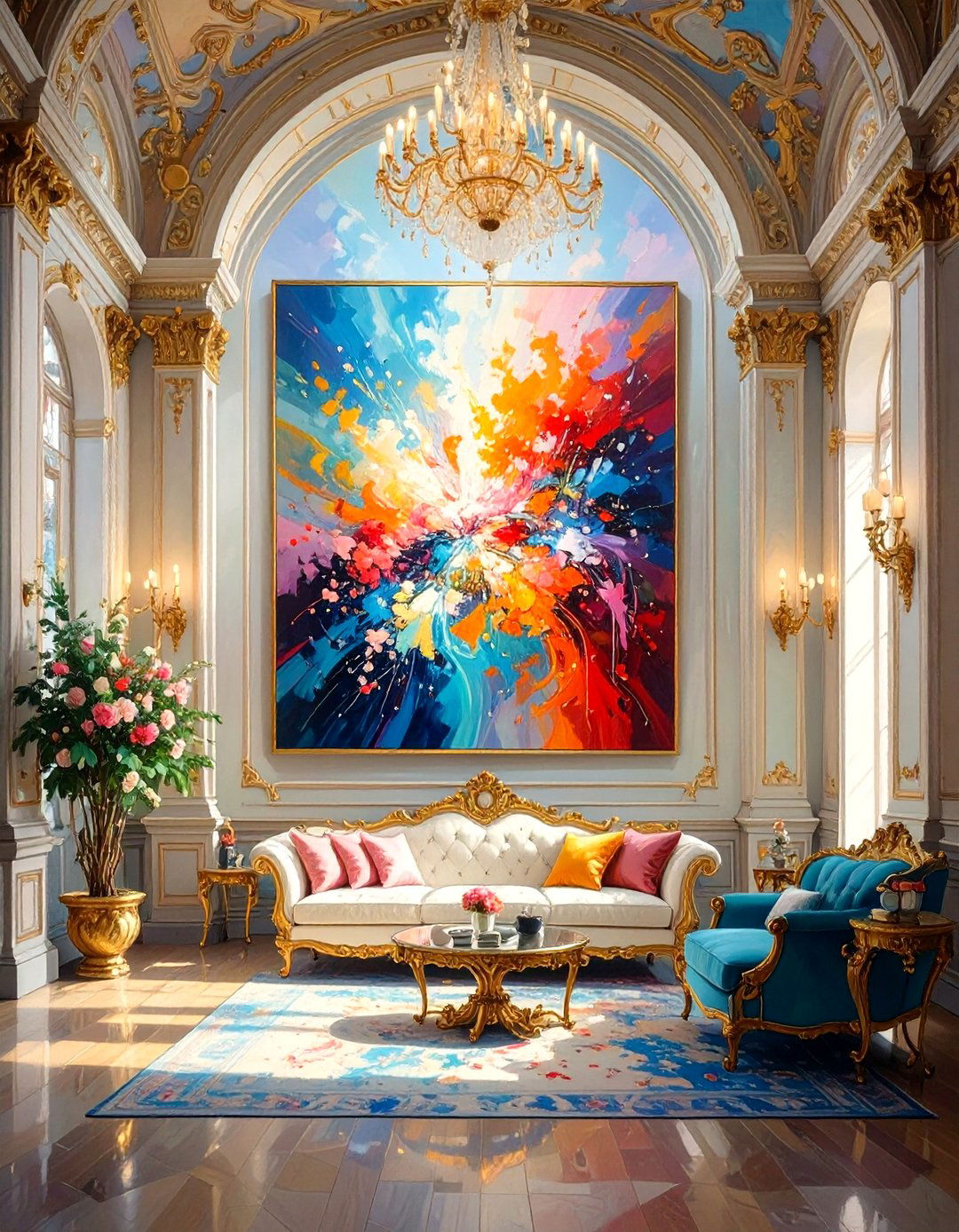
A hallmark of modern Parisian style is the placement of bold, contemporary art within a classically designed room. A large abstract painting or a modern photograph hung on a wall with ornate boiserie creates a striking and sophisticated contrast. This juxtaposition energizes the space, preventing the historic architecture from feeling stuffy or dated. The art adds a layer of personality and edginess, showing that the home is rooted in history but lives firmly in the present. It’s a confident design choice that reflects a cultured and modern sensibility, perfectly capturing the spirit of Paris itself.
10. Floor-to-Ceiling Windows and Drapes
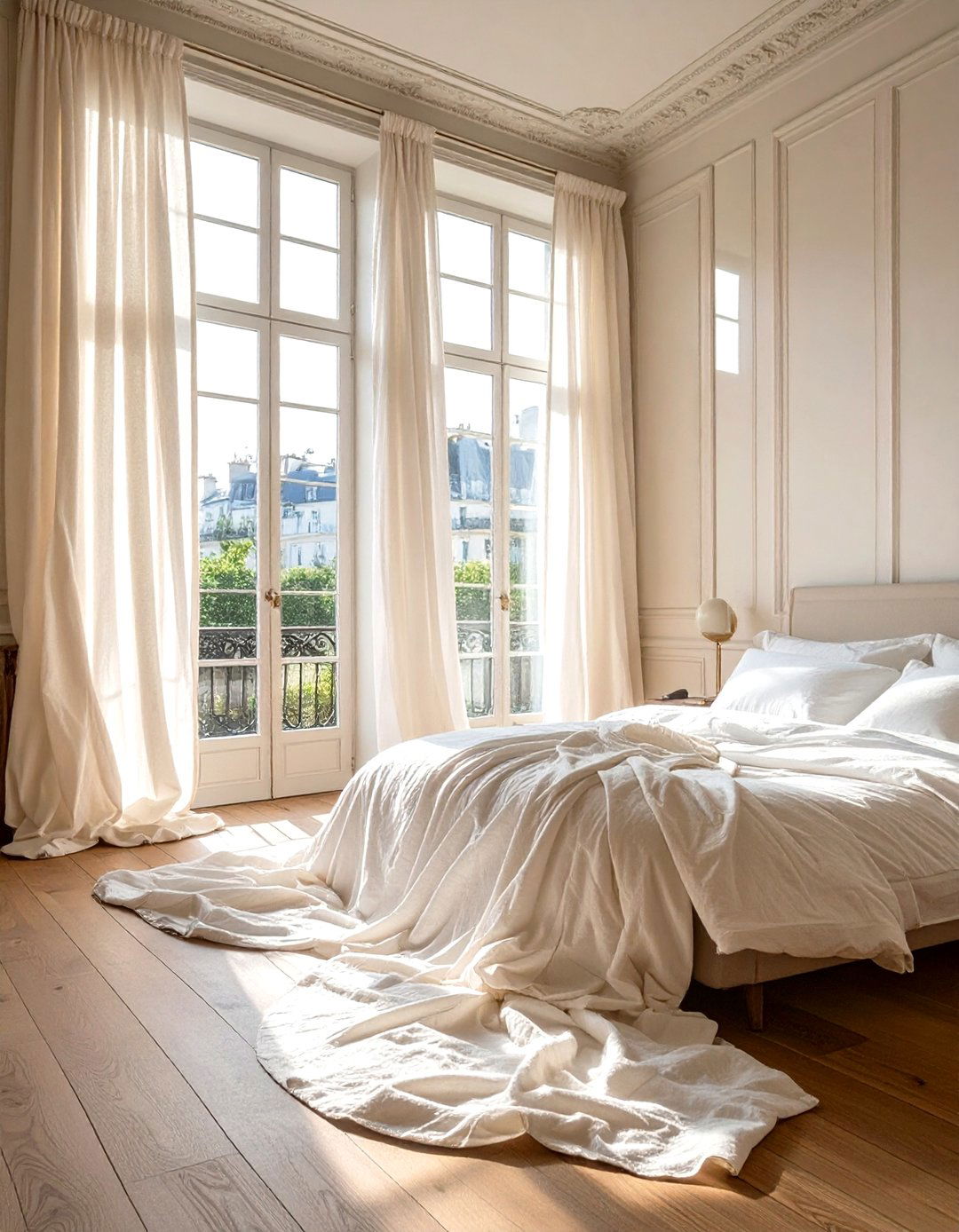
Parisian apartments are renowned for their large, floor-to-ceiling windows, often called French windows, which flood the interiors with natural light. These architectural features are typically dressed with elegant, flowing drapes that pool slightly on the floor. Lightweight fabrics like linen or sheer cotton are popular choices, as they soften the light without blocking it completely, maintaining an airy and bright atmosphere. The tall drapes accentuate the height of the ceilings, adding a sense of grandeur and drama to the room. This simple yet effective treatment frames the outdoor view while contributing to the overall gracefulness of the space.
11. The Charm of Juliette Balconies
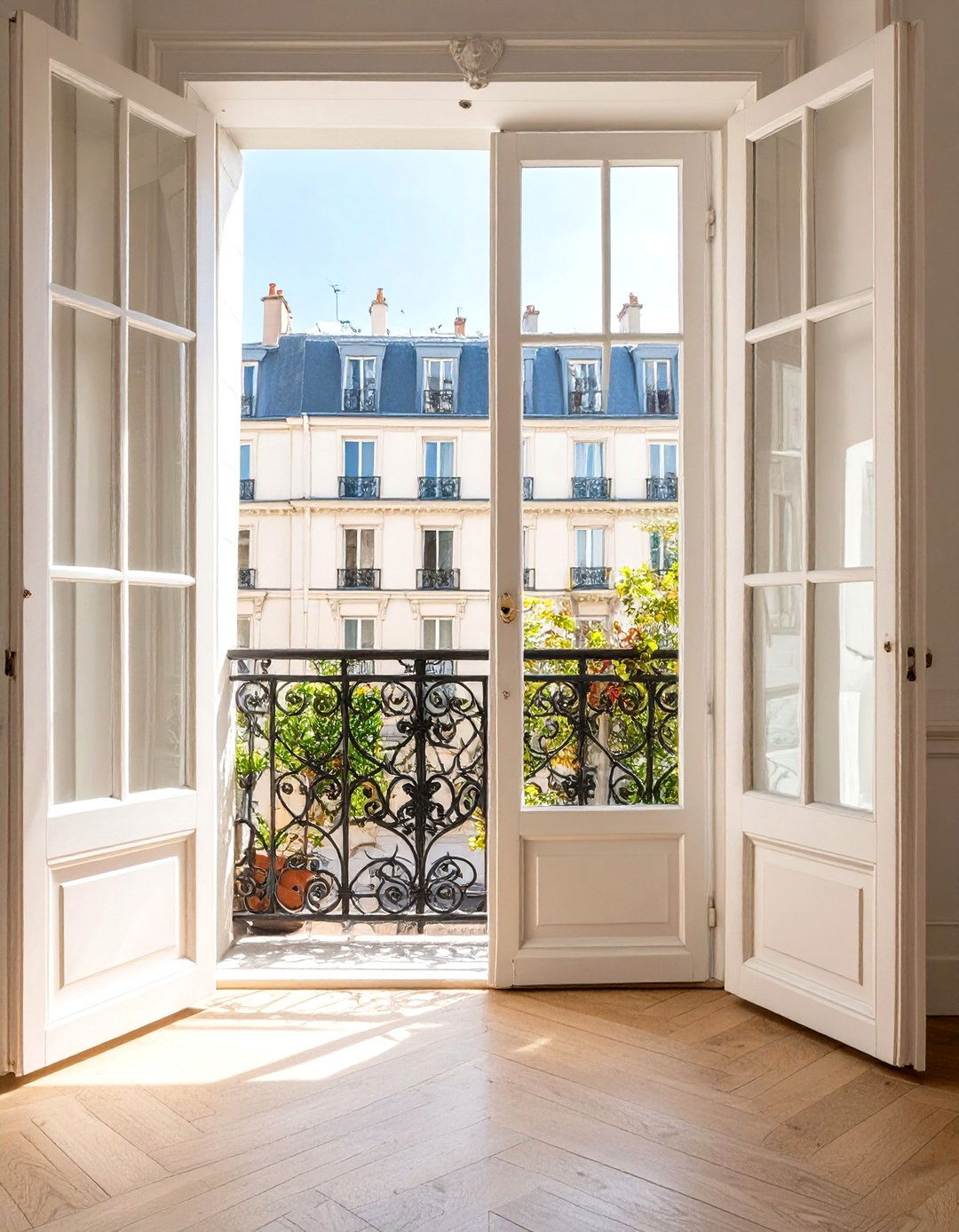
A Juliette balcony is a quintessential feature of Parisian architecture that directly influences the interior. While not a balcony you can walk out on, this decorative iron railing just outside a floor-to-ceiling window or French doors creates a seamless connection with the outdoors. It allows residents to open the doors wide, letting in fresh air and the sounds of the city, blurring the line between inside and out. The ornate ironwork adds a romantic, decorative element to the façade that is also visible from within, framing the view and contributing to the apartment's overall charm and character.
12. Strategically Placed Books and Bookcases
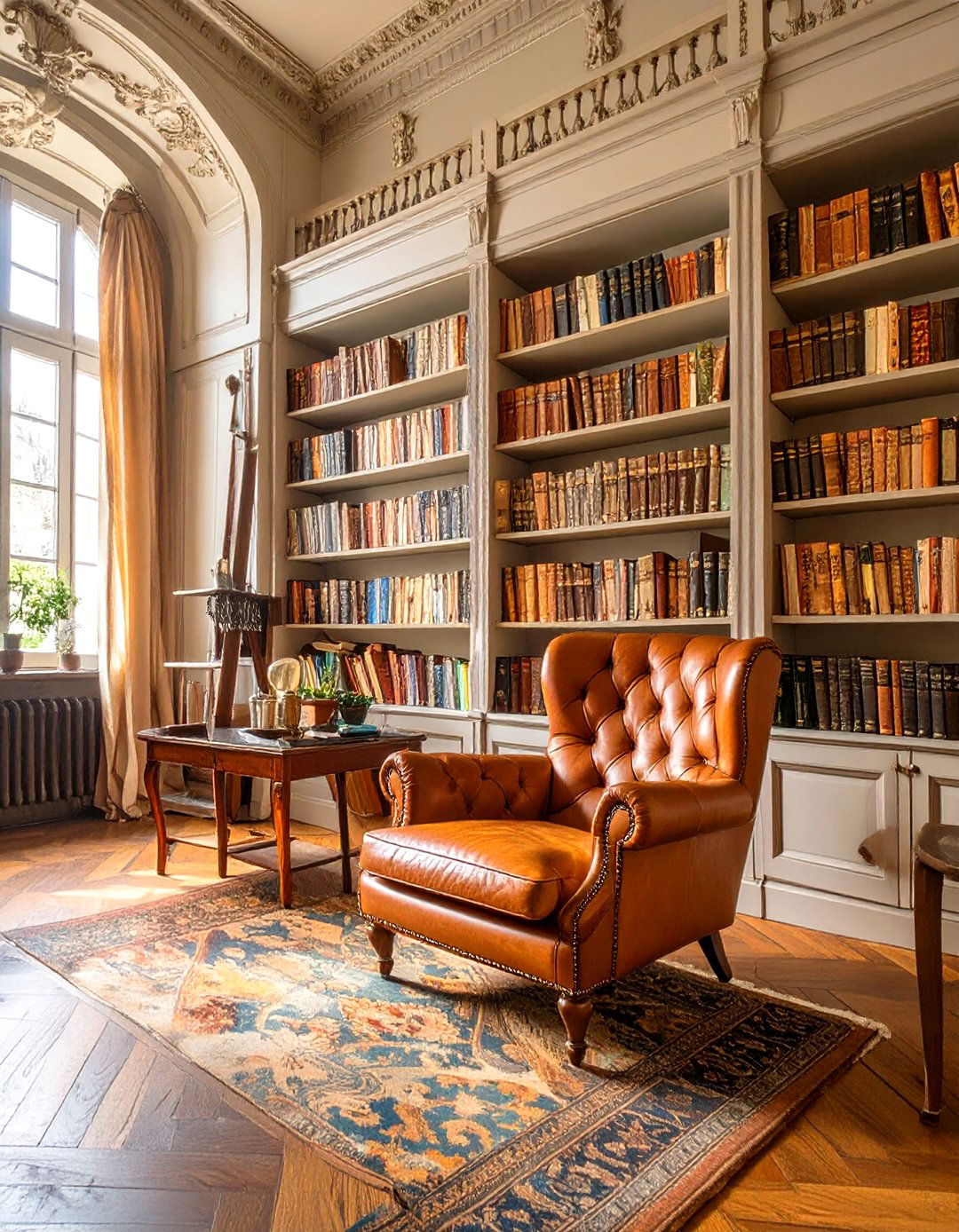
In a Parisian home, books are not just for reading; they are an integral part of the decor. Whether neatly organized in a grand, built-in library or casually stacked on a coffee table, books add intellectual weight and a lived-in quality to the space. They signal a life of culture and curiosity. A towering bookcase can also serve as an architectural feature, drawing the eye upward and adding color and texture to the room. The artful display of books—some upright, some stacked horizontally—contributes to the "perfectly imperfect" aesthetic that is central to Parisian interior design, making the home feel personal and authentic.
13. Incorporating Natural Linen Textiles
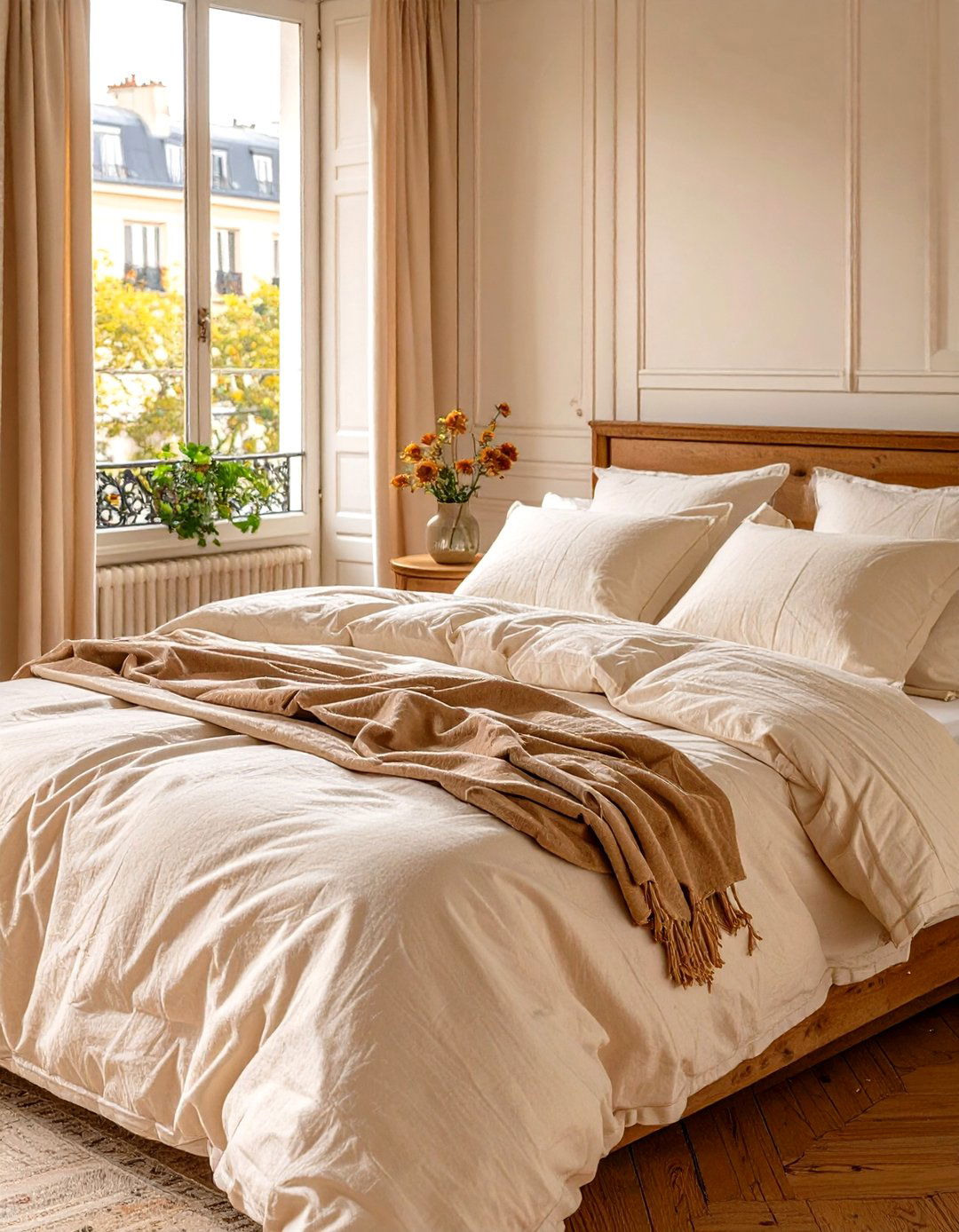
Linen is a favored textile in Parisian interiors for its understated and natural elegance. From crumpled linen bedding to flowing curtains and soft upholstery, this material adds a layer of relaxed texture and comfort. Its slightly wrinkled appearance is embraced, contributing to the effortless, "undone" look that Parisians master. Linen’s breathability and softness make it both practical and beautiful, embodying a sense of casual luxury. Using linen in neutral shades of white, beige, or soft grey enhances the light, airy feel of the space while adding a tactile element that is both sophisticated and invitingly down-to-earth.
14. An Understated, Uncluttered Approach
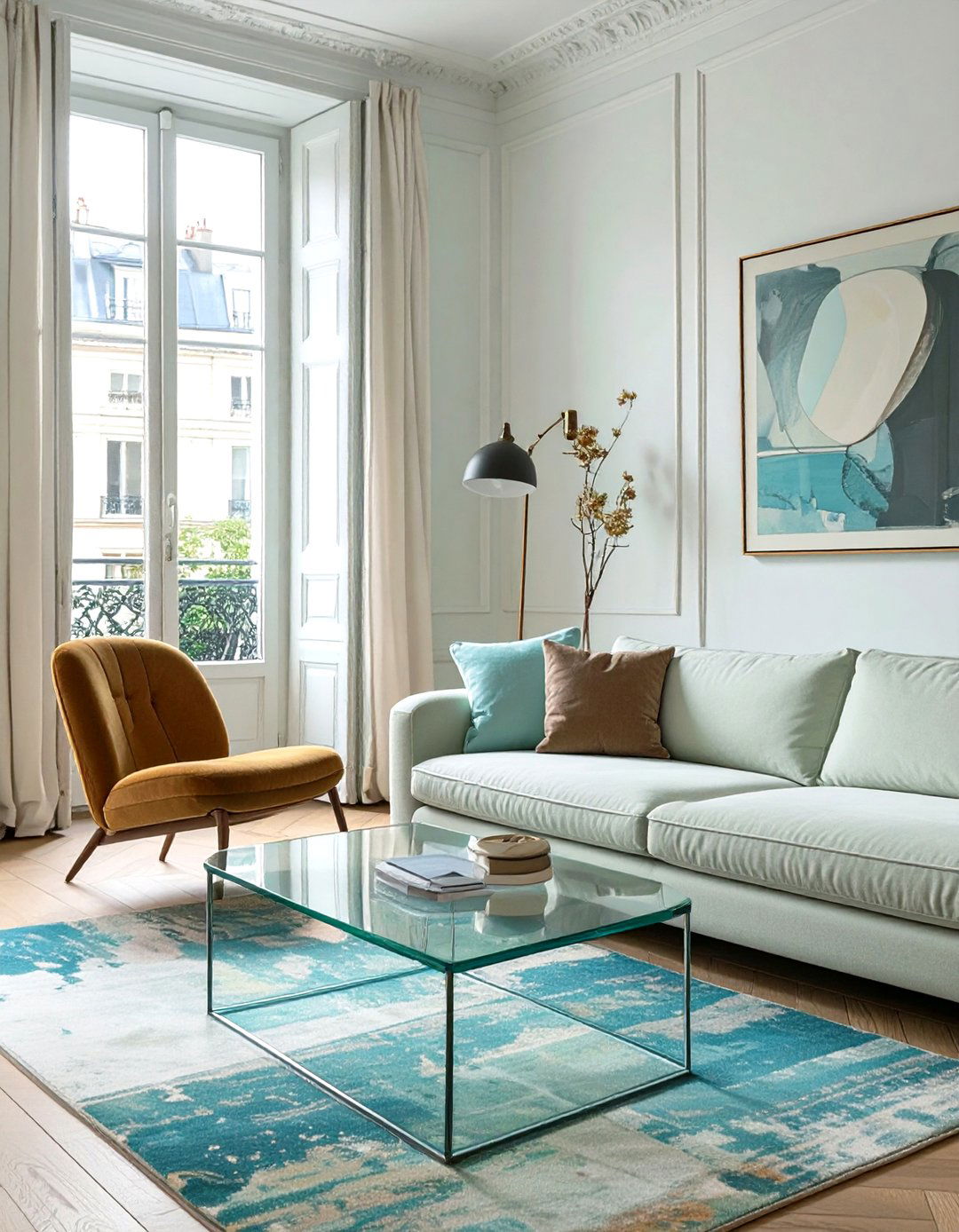
Despite the presence of ornate architecture and antique pieces, Parisian interior design is fundamentally uncluttered. The philosophy is "less is more," with each object carefully chosen for its beauty, history, or personal meaning. Surfaces are kept relatively clear, allowing the architectural details and statement furniture to take center stage. This intentional minimalism prevents the space from feeling chaotic or over-decorated. It’s about creating breathing room, where the quality of the individual items can be appreciated. This curated approach results in a serene and sophisticated environment that feels both spacious and thoughtfully composed.
15. The Use of Parquet de Versailles Flooring
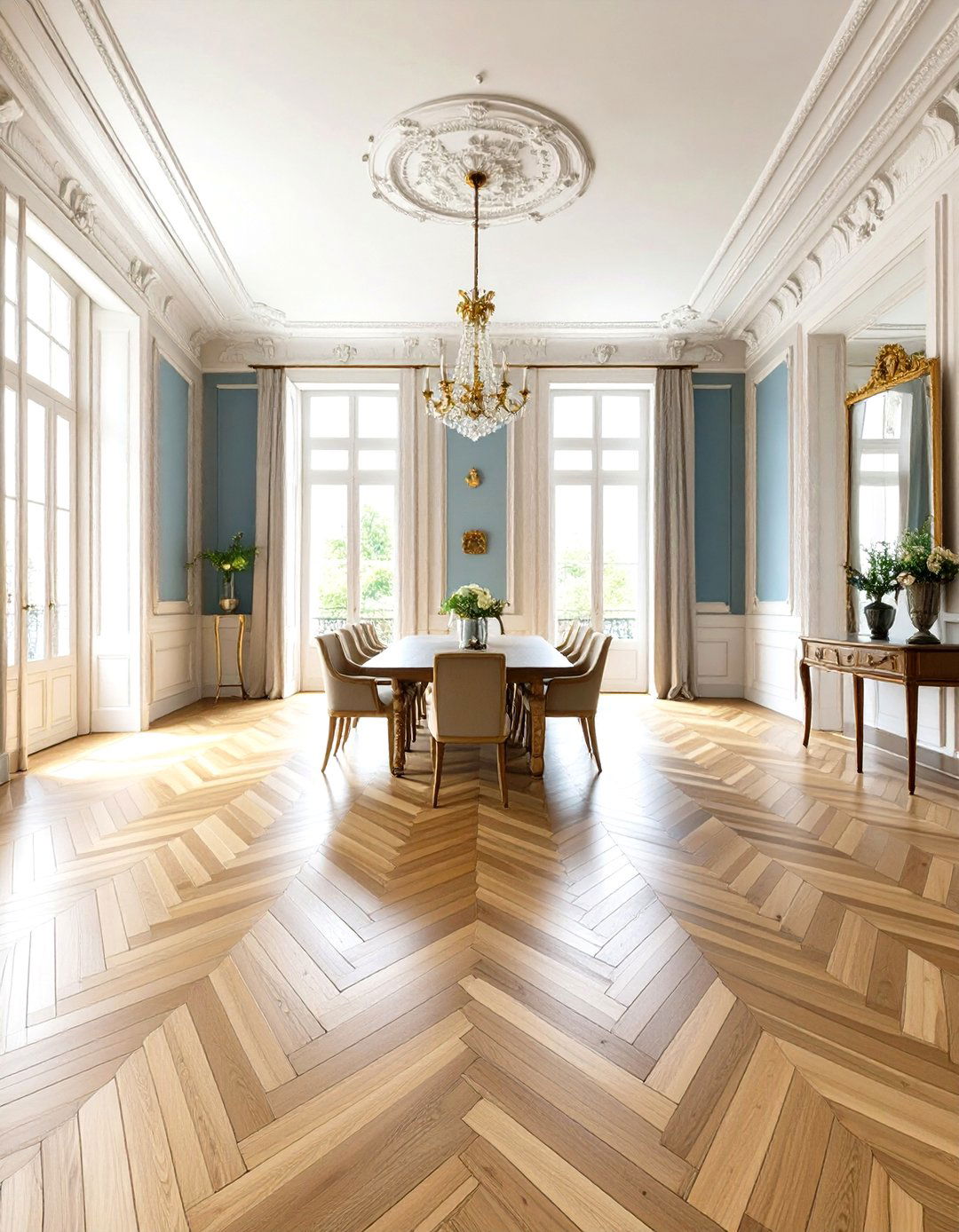
Beyond herringbone, the Parquet de Versailles is another iconic flooring style found in grand Parisian homes. This pattern consists of intricately woven squares of wood, creating a more formal and decorative geometric design. Named after the palace it was created for, this flooring instantly imparts a sense of history and regal elegance. It serves as a stunning work of art underfoot, providing a rich, textured base for the room's decor. While a significant investment, its presence alone can define a space, adding a layer of unparalleled craftsmanship and aristocratic charm that is deeply rooted in French design history.
16. Embracing Imperfection and Patina
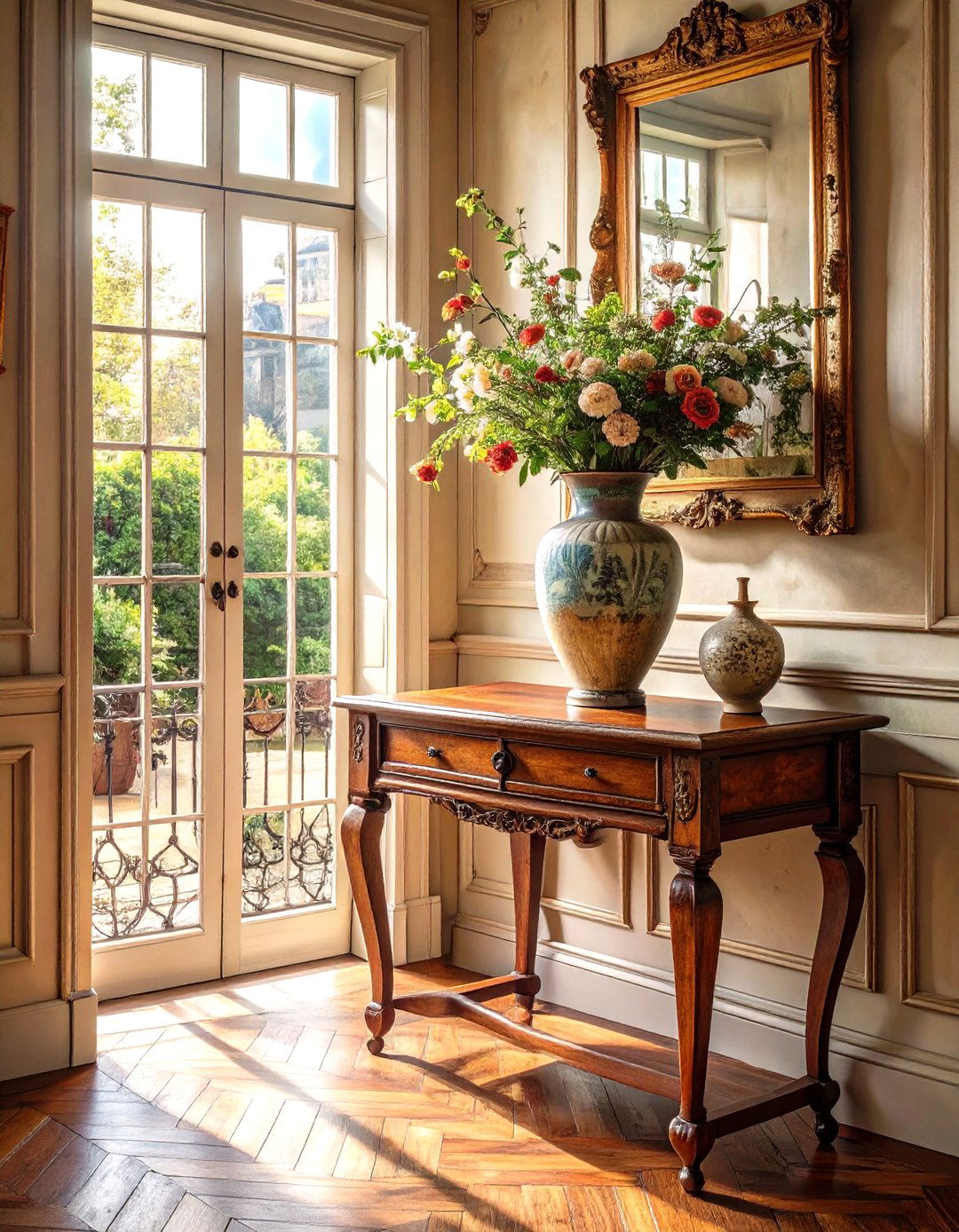
Parisian style celebrates the beauty of imperfection. Instead of pristine, brand-new items, there is an appreciation for pieces with history and patina. A slightly chipped gilt mirror, a worn leather armchair, or aged plaster walls are not seen as flaws but as marks of character and a life well-lived. This concept of "wabi-sabi" adds soul and authenticity to a home, making it feel warm and approachable rather than sterile. This acceptance of the past and its gentle decay is what gives Parisian interiors their unique, effortless charm, creating a space that is both elegant and deeply human.
17. Thoughtfully Curated Art Collections
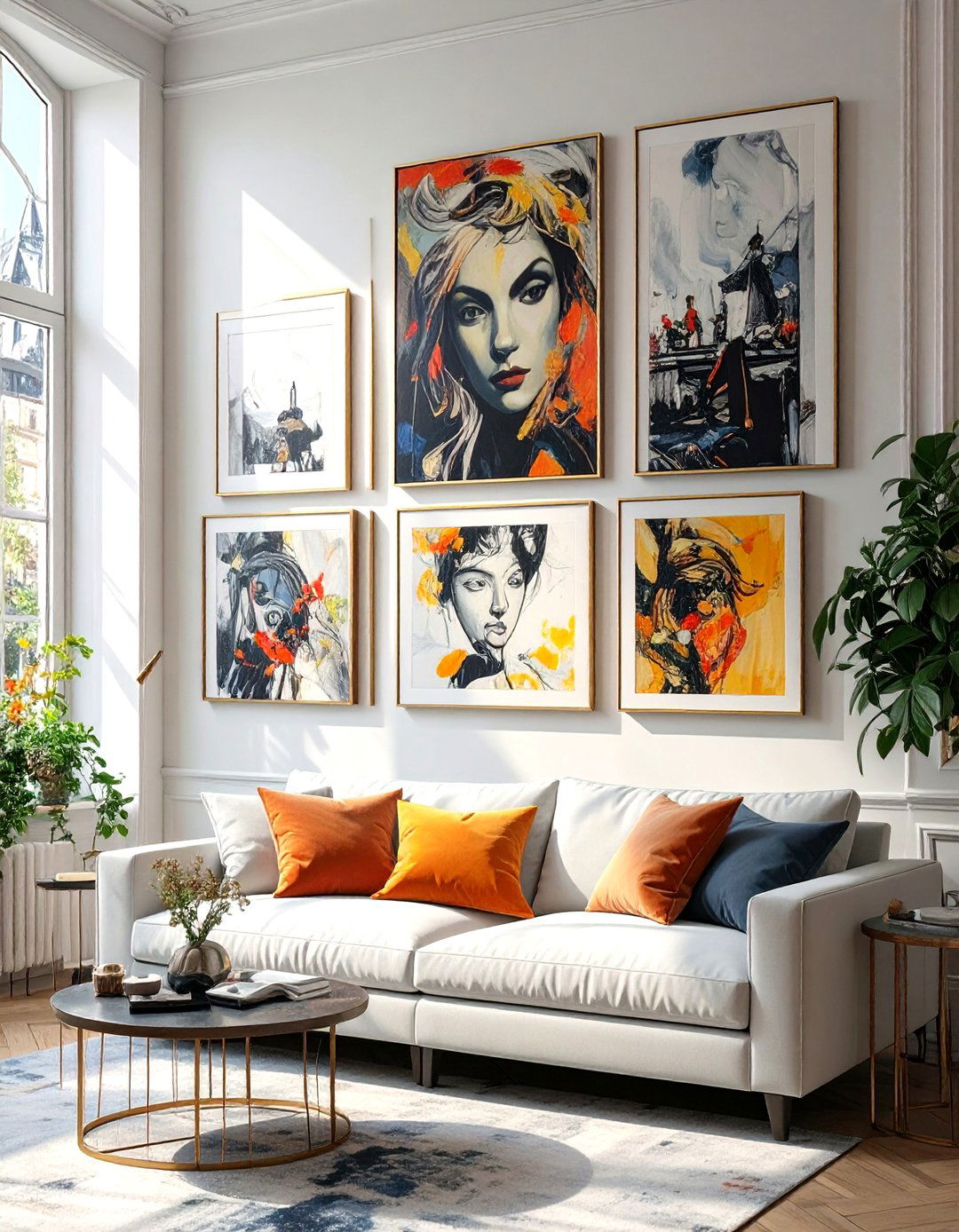
Art is not an afterthought in Parisian design; it is a central element of the home's narrative. Collections are personal and eclectic, often mixing different styles and eras. A classic portrait might hang next to a modern abstract piece, or a gallery wall could feature a mix of oil paintings, sketches, and personal photographs. The arrangement feels organic and evolved, reflecting the owner's tastes and experiences. This approach to art makes the interior dynamic and deeply personal, turning the walls into a canvas for storytelling and adding intellectual and emotional depth to the overall design scheme.
18. Integrating Sculptural Elements
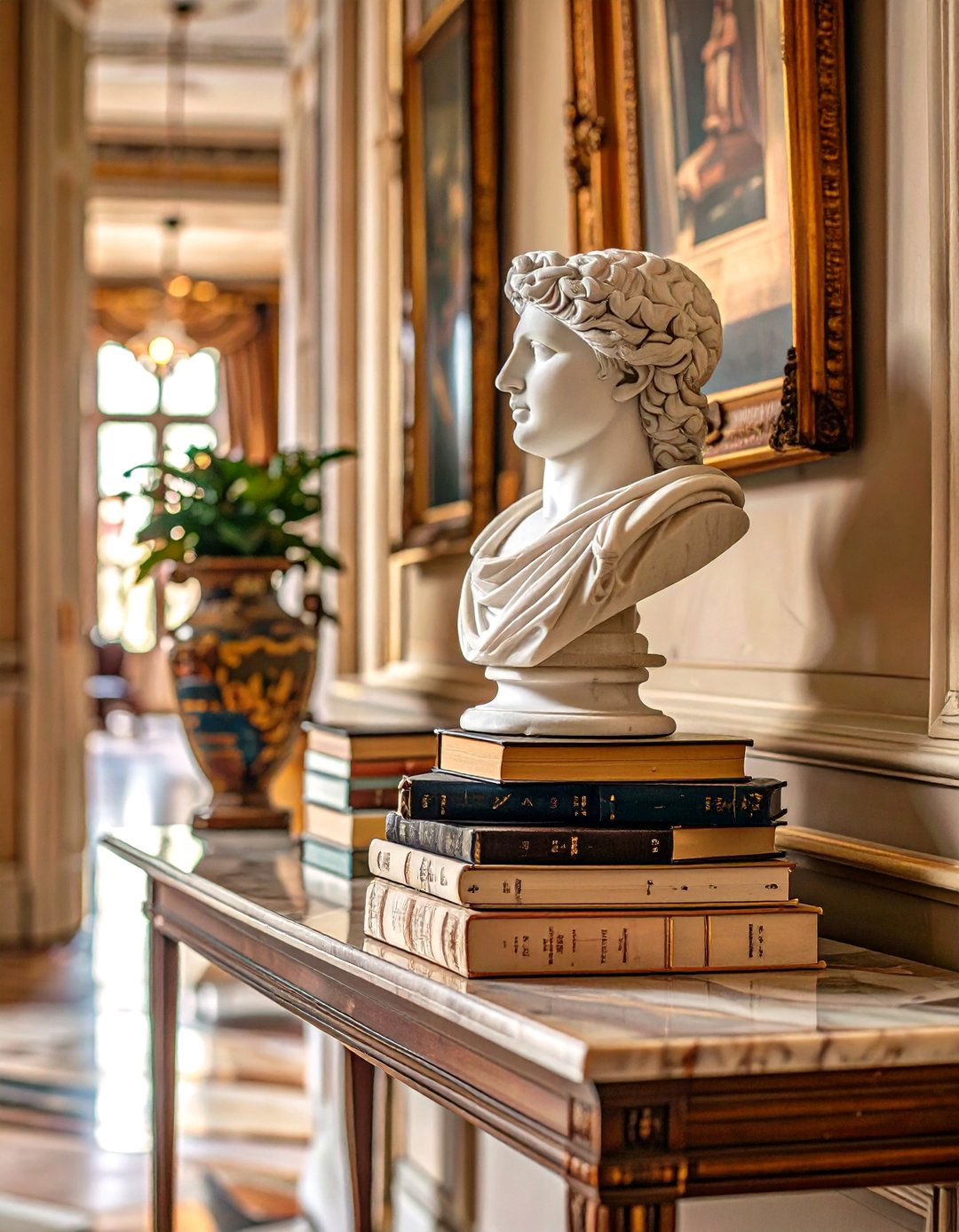
Beyond furniture and art, sculptural objects play a key role in adding interest to a Parisian interior. This could be a classic bust placed on a mantelpiece, a modern abstract metal sculpture on a console table, or even a uniquely shaped floor lamp. These three-dimensional pieces break up the flat planes of walls and surfaces, adding form and a point of intrigue. They are chosen for their shape and material, contributing to the room's layered texture and sophisticated feel. A single, well-placed sculptural element can elevate a simple corner into a curated vignette, showcasing a keen artistic eye.
19. The Essential Role of Fresh Flowers
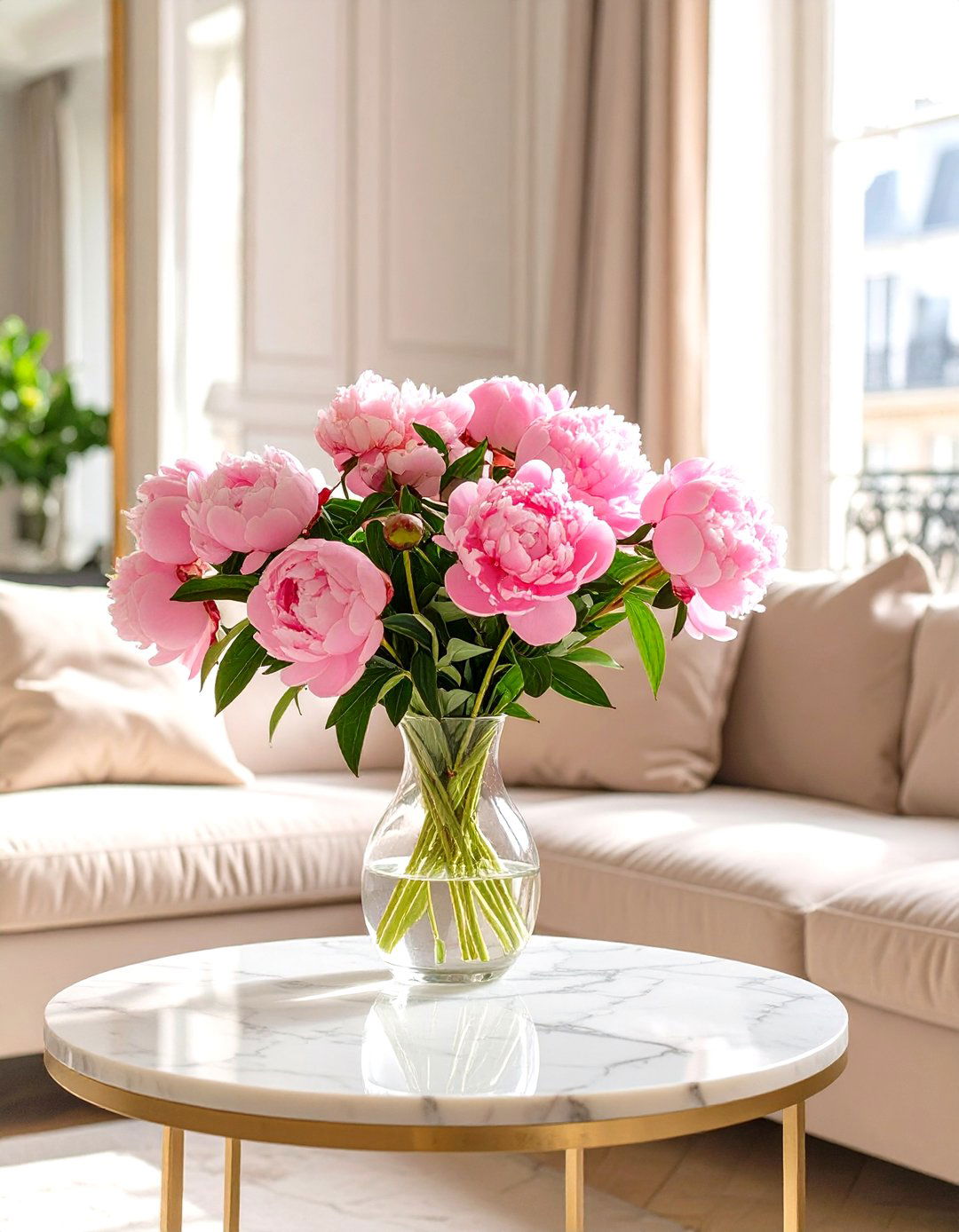
No Parisian apartment is complete without the presence of fresh flowers. A simple bouquet of roses, tulips, or peonies in a clear glass vase adds a touch of life, color, and natural beauty to any room. Placed on a coffee table, mantel, or bedside table, flowers soften the space and bring a piece of the outdoors inside. They are a small but significant detail that signals care and an appreciation for everyday beauty. This practice aligns with the Parisian ethos of finding joy in simple pleasures and elevates the home from a decorated space to a living, breathing environment.


20. Elegant Double Doorways
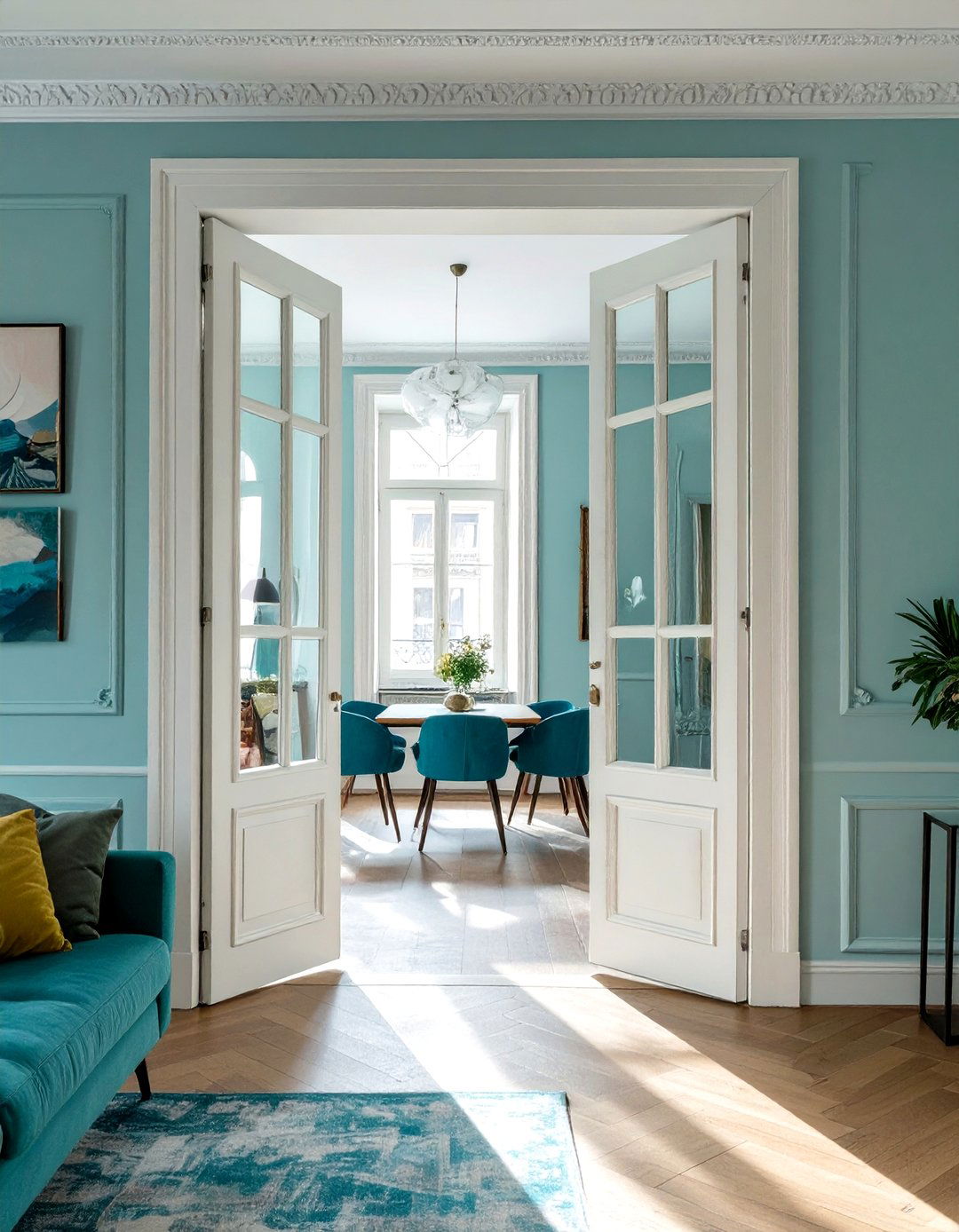
Grand double doors are a common architectural feature in Haussmannian apartments and are central to the Parisian aesthetic. Often tall and framed with decorative molding, these doors create a sense of occasion when moving from one room to another. When left open, they enhance the sense of flow and spaciousness, creating a more open-plan feel within a traditional layout. They serve as an elegant framing device, offering tantalizing glimpses into the adjoining rooms. Painted in the same neutral tones as the walls, they blend seamlessly while adding a touch of classic architectural grandeur to the interior.
21. Subtle Gilded Details and Accents
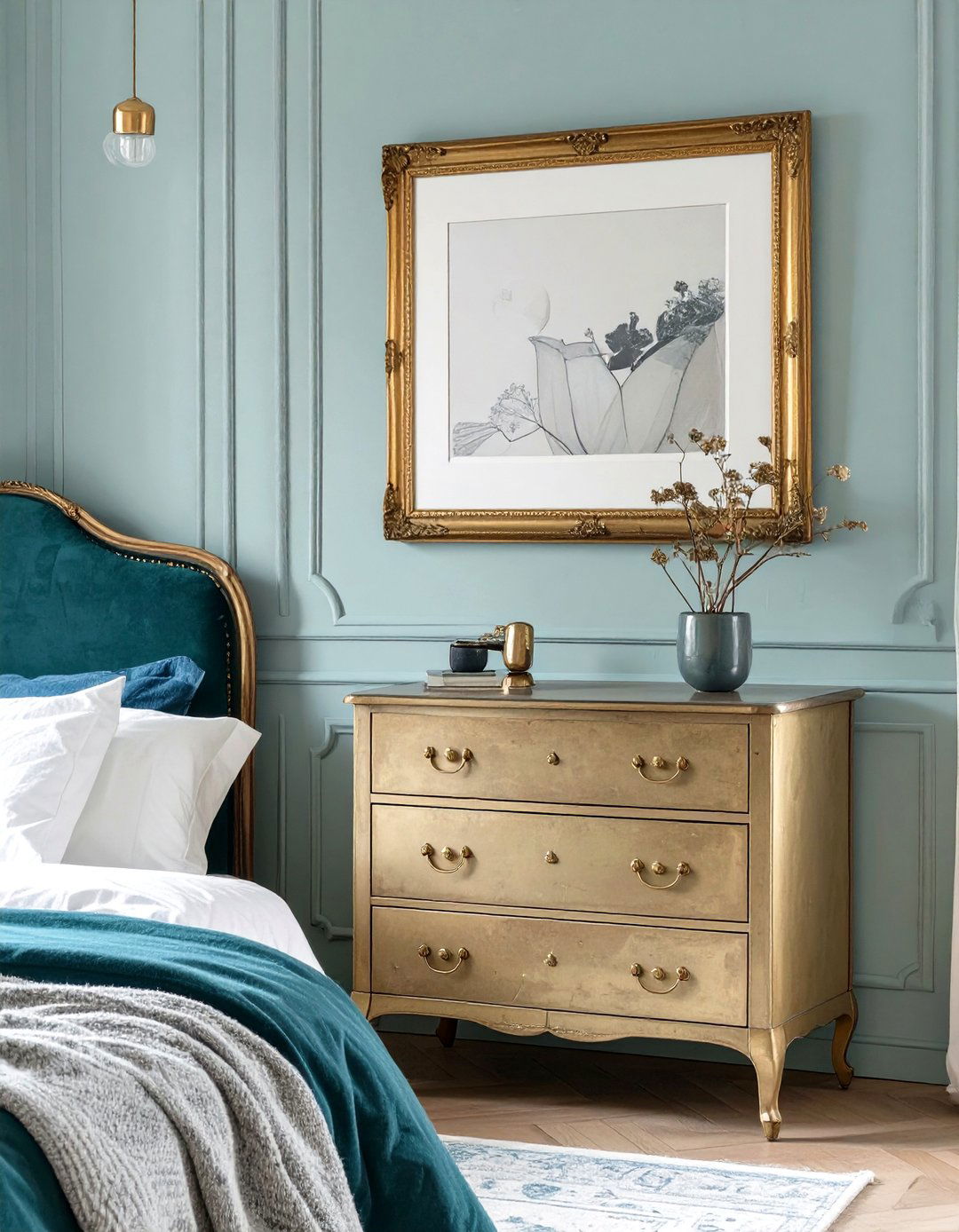
While a large gilt mirror might be a focal point, smaller gilded accents are used throughout a Parisian interior to add a subtle touch of warmth and luxury. This could be the gold leaf on a picture frame, the brass hardware on a cabinet, a delicate brass side table, or the base of a table lamp. These metallic hints catch the light and add a quiet sparkle that elevates the space without overwhelming it. The key is moderation; these details are sprinkled in thoughtfully to complement the neutral palette and add a layer of refined elegance.
22. Aged Plaster or Lime Wash Walls
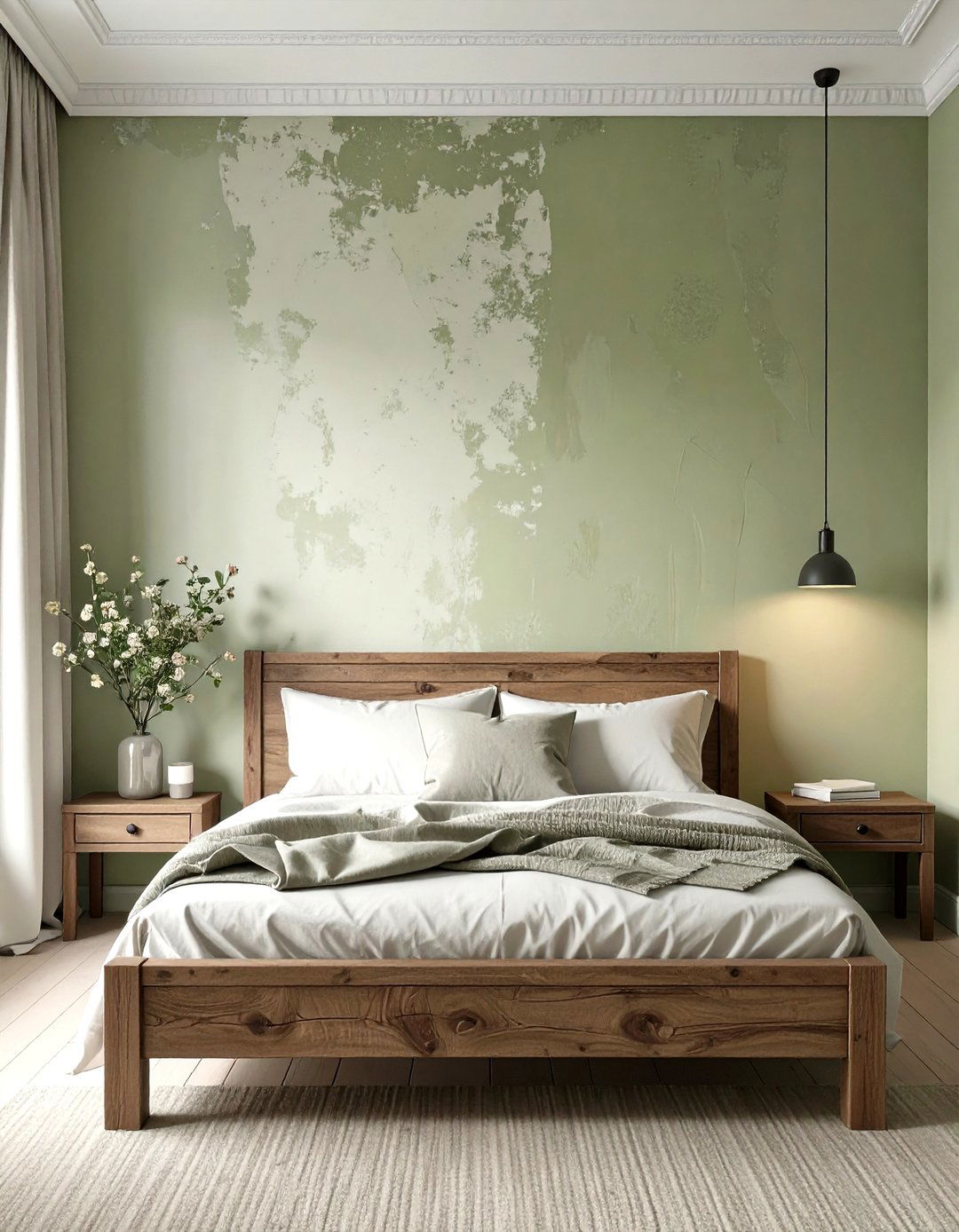
For a more rustic and soulful take on Parisian design, some interiors feature aged plaster or lime-washed walls. This finish provides a soft, chalky texture with subtle variations in color, creating a surface that feels ancient and full of character. Unlike a flat coat of paint, a lime wash finish has a depth and movement that adds warmth and a sense of history to the room. It pairs beautifully with both rustic antiques and sleek modern furniture, embodying the Parisian love for patina and texture. This wall treatment creates a romantic and slightly undone backdrop that is both sophisticated and earthy.
23. The Importance of a Comfortable Sofa
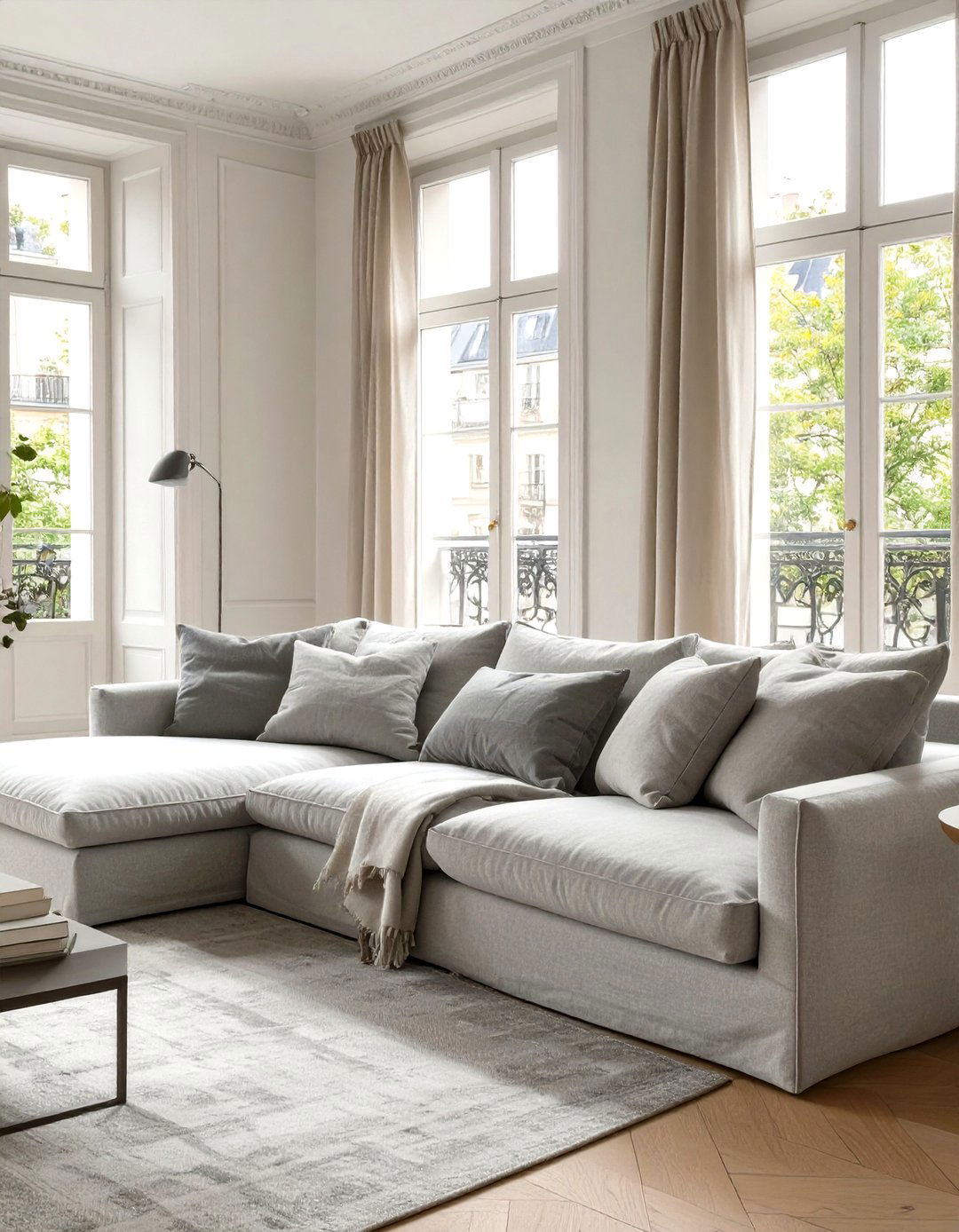
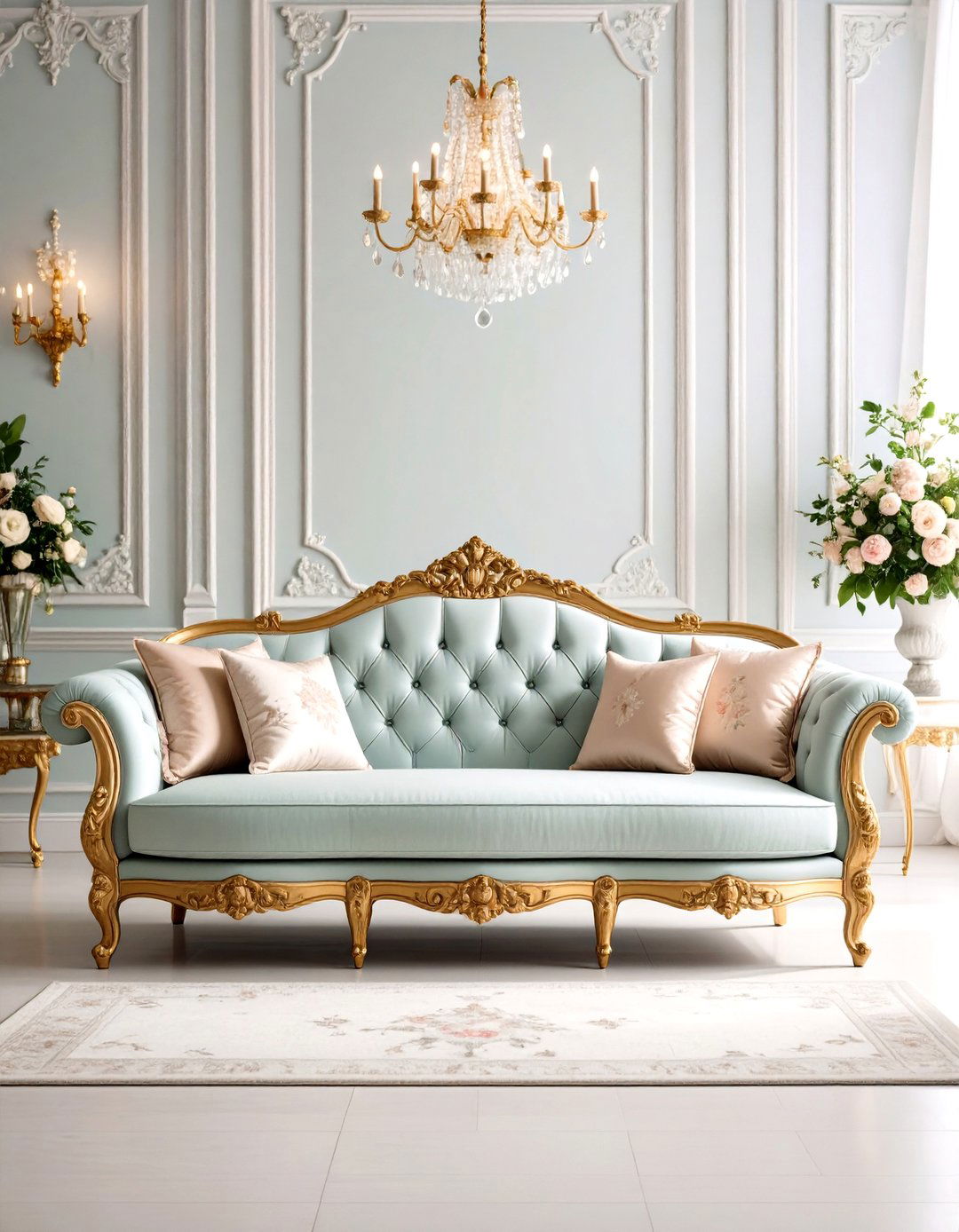
While aesthetics are paramount, comfort is never sacrificed in Parisian design. The sofa is often the centerpiece of the living room, chosen for its inviting and comfortable nature. It might be a classic style with soft, loose cushions or a modern design with deep seats. Upholstered in a durable yet beautiful fabric like linen, cotton, or velvet, it’s a piece meant for living—for reading, conversing, and relaxing. Throws and pillows are added to enhance the feeling of comfort, making the elegant space feel like a real, usable home rather than a formal showroom.
24. Free-Standing Bathtubs in Bathrooms
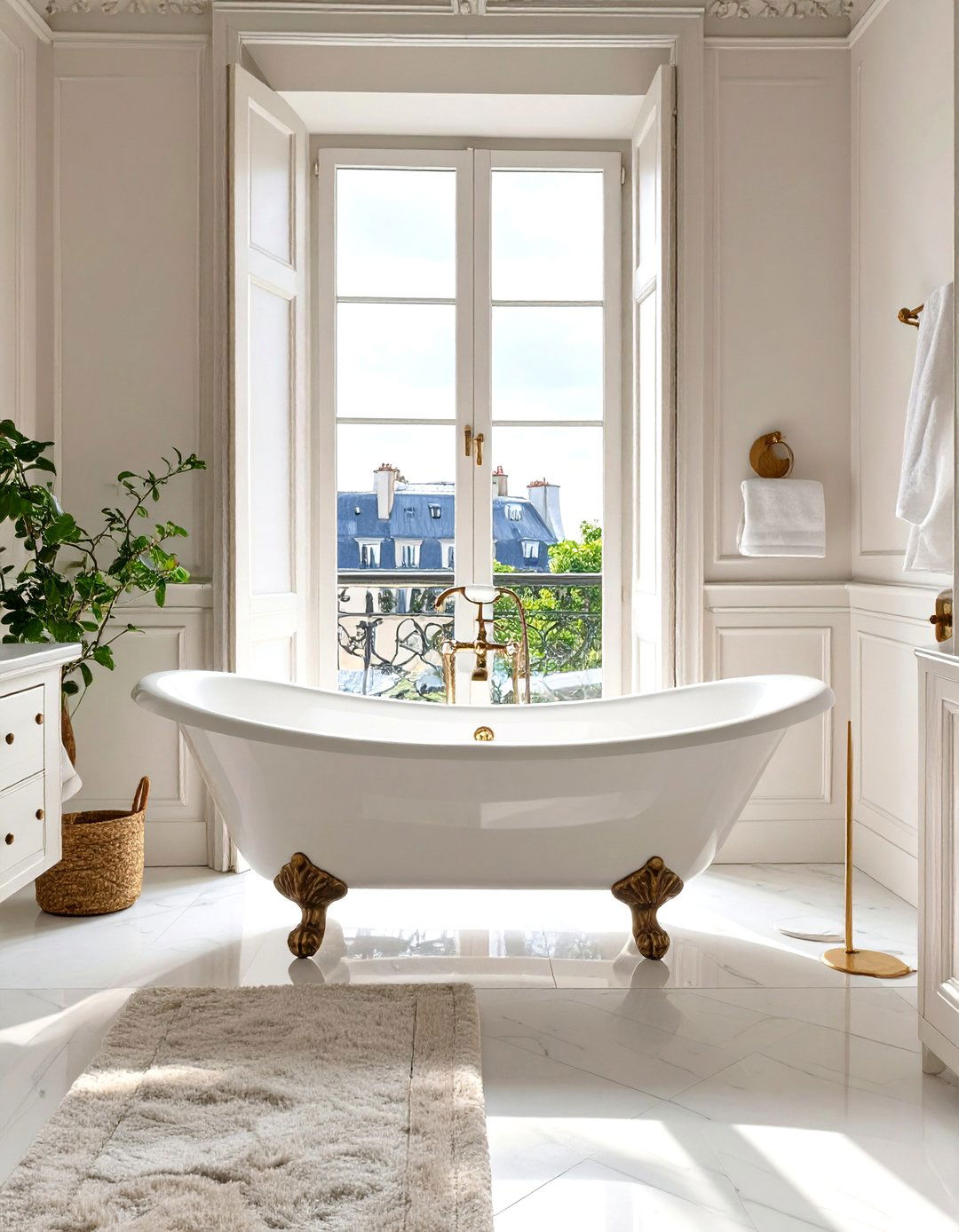
The Parisian appreciation for luxury and relaxation often extends to the bathroom, where a free-standing clawfoot or pedestal bathtub is a coveted feature. This classic fixture serves as a beautiful sculptural element, instantly elevating the space from purely functional to a spa-like retreat. Placed against a simple tiled wall or near a window, it becomes the room's stunning focal point. A vintage-style tub adds a touch of old-world charm and invites long, leisurely soaks, embodying the Parisian philosophy of savoring life's simple, elegant pleasures and creating beauty in every corner of the home.
25. Mixing Seating Styles in Dining Areas
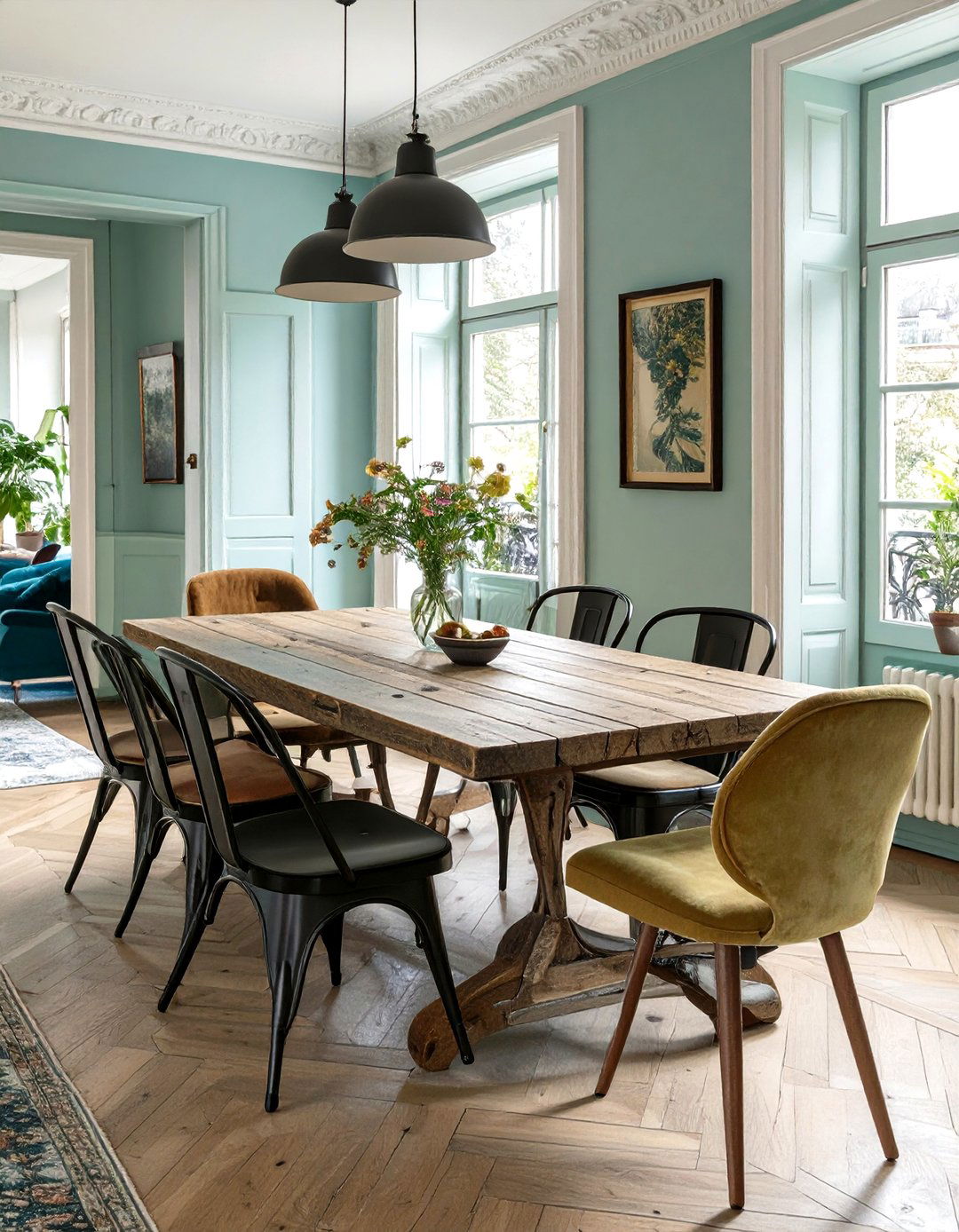
In a Parisian dining area, you will rarely find a perfectly matched set of chairs. Instead, the style favors mixing different seating options around the table. A wooden bench might be paired with a couple of antique upholstered chairs and some modern metal or molded plastic seats. This eclectic approach adds visual interest and a relaxed, informal feel to the space. It gives the impression that the collection of chairs has been acquired over time, each with its own story. This "perfectly imperfect" assembly is chic and personal, making the dining area feel more dynamic and welcoming.
26. Using Rugs to Define Zones

In spacious Parisian rooms with high ceilings and wood floors, area rugs are used strategically to define specific zones and add warmth. A soft, plush rug can anchor a seating area in the living room, while a vintage kilim might add color and pattern to a hallway or dining space. Rugs are chosen to complement the existing decor, often featuring abstract patterns or muted, traditional designs. They add another layer of texture, absorb sound, and make the grand spaces feel more intimate and cozy, breaking up the expanse of hardwood flooring with a touch of softness underfoot.
27. Sheer, Billowing Curtains
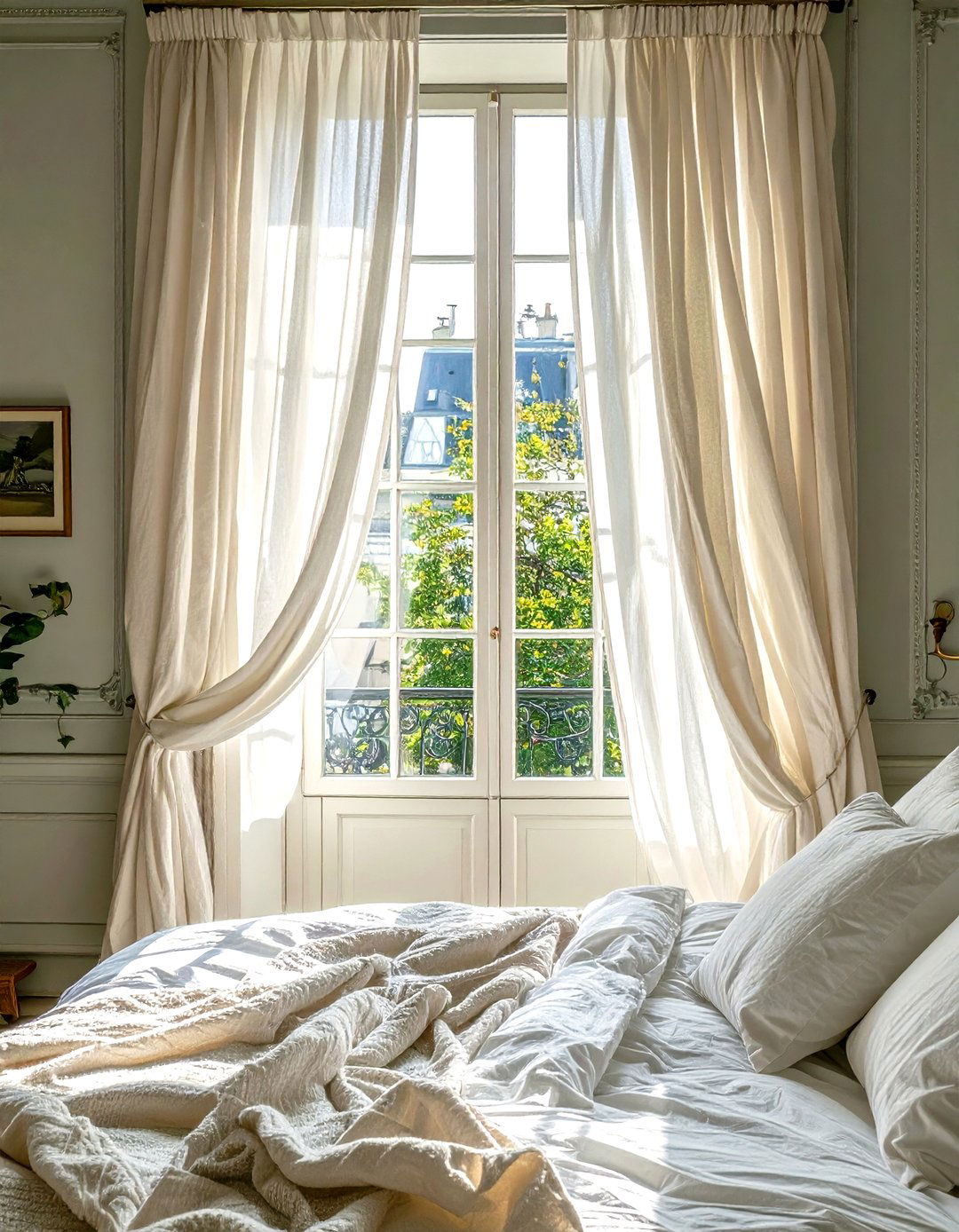
To maximize natural light while maintaining privacy, Parisian interiors often feature sheer, billowing curtains. Made from lightweight materials like voile or linen, these curtains are hung high and wide around the large windows. They diffuse the incoming light, casting a soft, ethereal glow throughout the room and creating a romantic, dreamy atmosphere. Unlike heavy drapes, sheer curtains don't obstruct the view or make the space feel heavy. They move gently with the breeze when the windows are open, adding a sense of life and movement to the elegant and airy interior design scheme.
28. A Touch of Wrought Iron
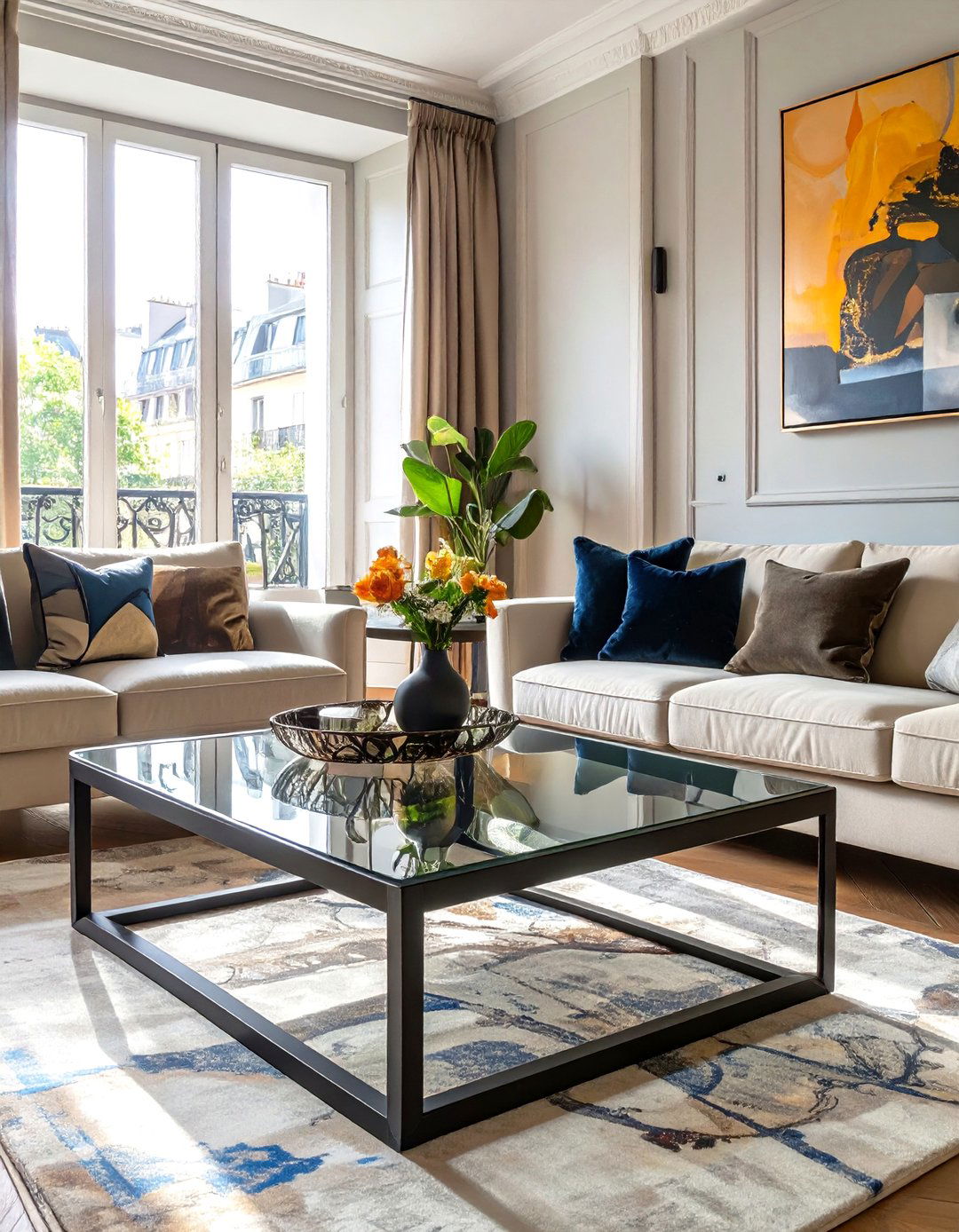
Wrought iron is a material that appears frequently in Parisian design, most notably in Juliette balcony railings and outdoor furniture. This element can also be brought indoors to add a touch of graphic, industrial-chic contrast. A wrought iron coffee table base, a slender candelabra, or a simple bed frame can introduce a dark, linear element that grounds the often light and airy color scheme. Its delicate yet strong appearance complements both the ornate historical details and the clean lines of modern pieces, adding another layer of texture and authentic Parisian character to the space.
29. Incorporating Modern Lighting Fixtures
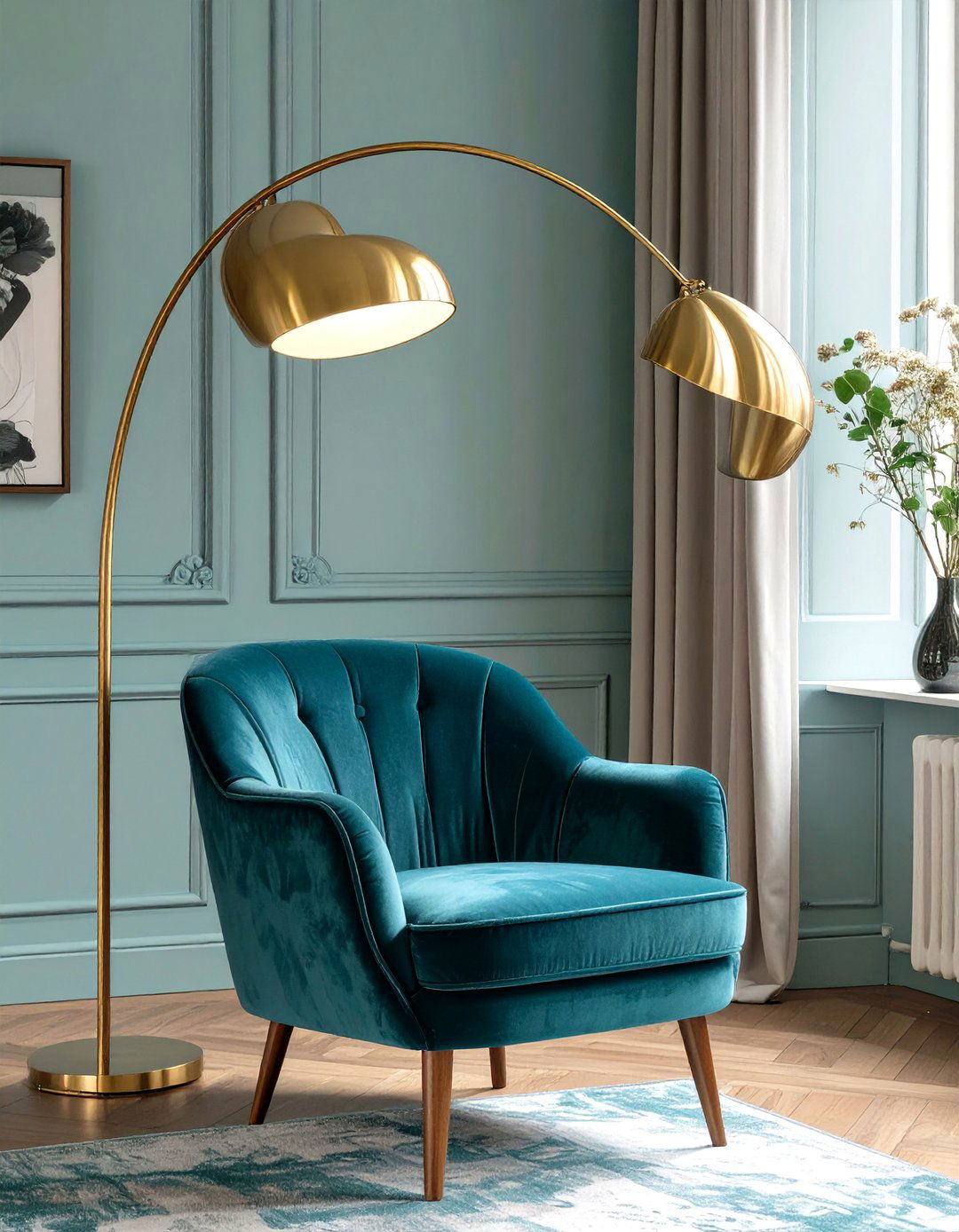
While crystal chandeliers are a classic, modern Parisian style also embraces contemporary lighting fixtures. A sculptural pendant lamp over a dining table or an architecturally interesting floor lamp next to an armchair can create a striking focal point. This mix of lighting styles is another example of blending old and new. A modern fixture can add an unexpected, artistic touch to a room with classic bones, highlighting the high ceilings and providing functional light with a design-forward sensibility. This choice demonstrates confidence and keeps the historical interior feeling fresh, relevant, and current.
30. Minimal Window Treatments
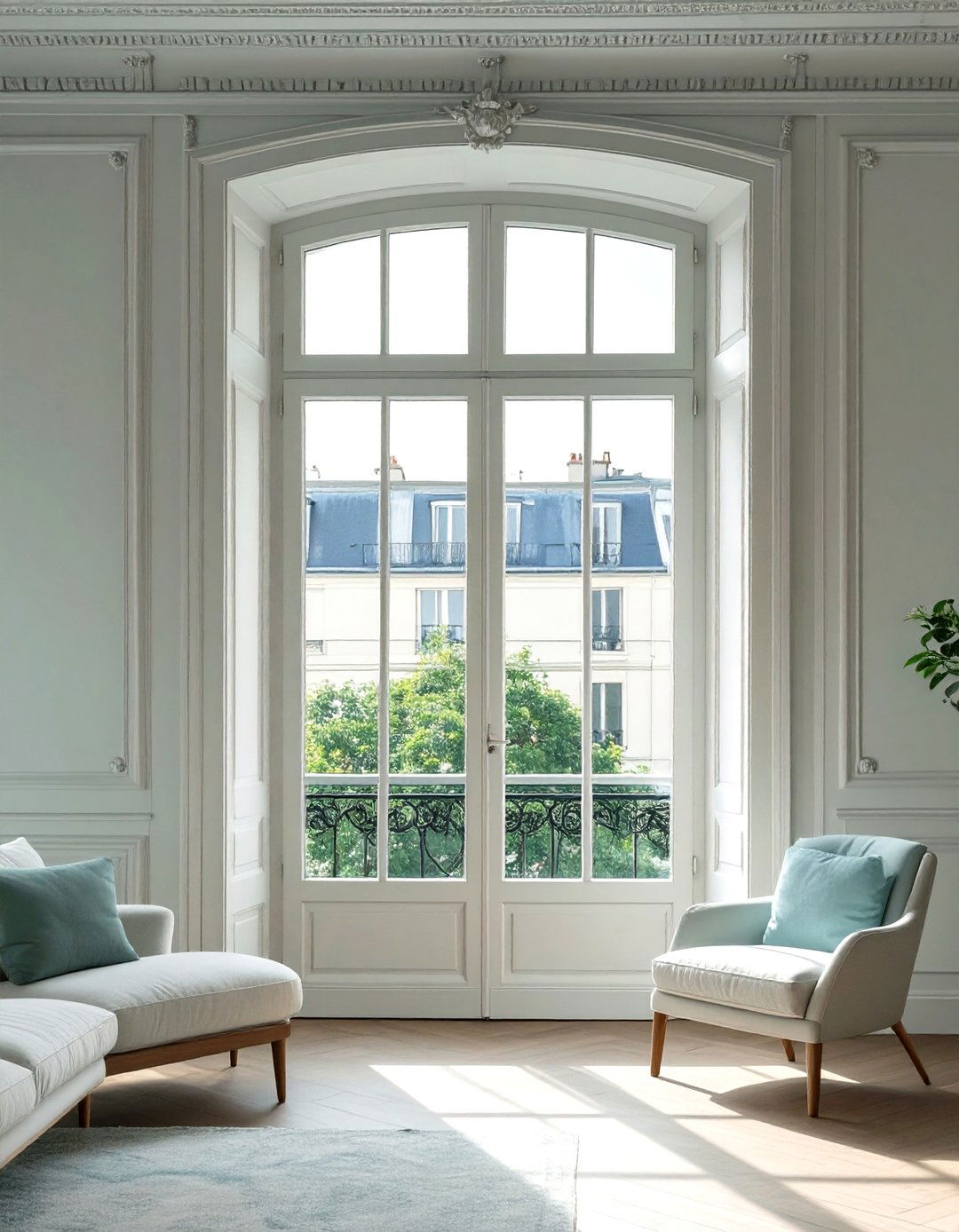
In many Parisian apartments, the beauty of the large, architecturally significant windows is enough on its own. As a result, a common approach is to use minimal or no window treatments at all. Leaving the windows bare allows for maximum natural light and an unobstructed view of the city, connecting the interior directly with its surroundings. This choice reflects a confidence in the room's inherent beauty, where ornate moldings and tall proportions don't need to be hidden. It’s a minimalist statement that enhances the sense of space and light, contributing to the bright, airy feel of the home.
Conclusion:
Ultimately, Parisian interior design is a celebration of curated elegance and personal history. It masterfully balances ornate architectural details with clean, contemporary lines, creating spaces that feel both grand and intimately lived-in. The style hinges on a neutral palette, the artful mix of antique and modern pieces, and a deep appreciation for items with character and patina. By focusing on quality over quantity and embracing a "perfectly imperfect" aesthetic, this design approach achieves a timeless, sophisticated charm that is effortlessly chic and deeply inspiring, proving that true style is about telling a story.

Related posts:




Leave a Reply