
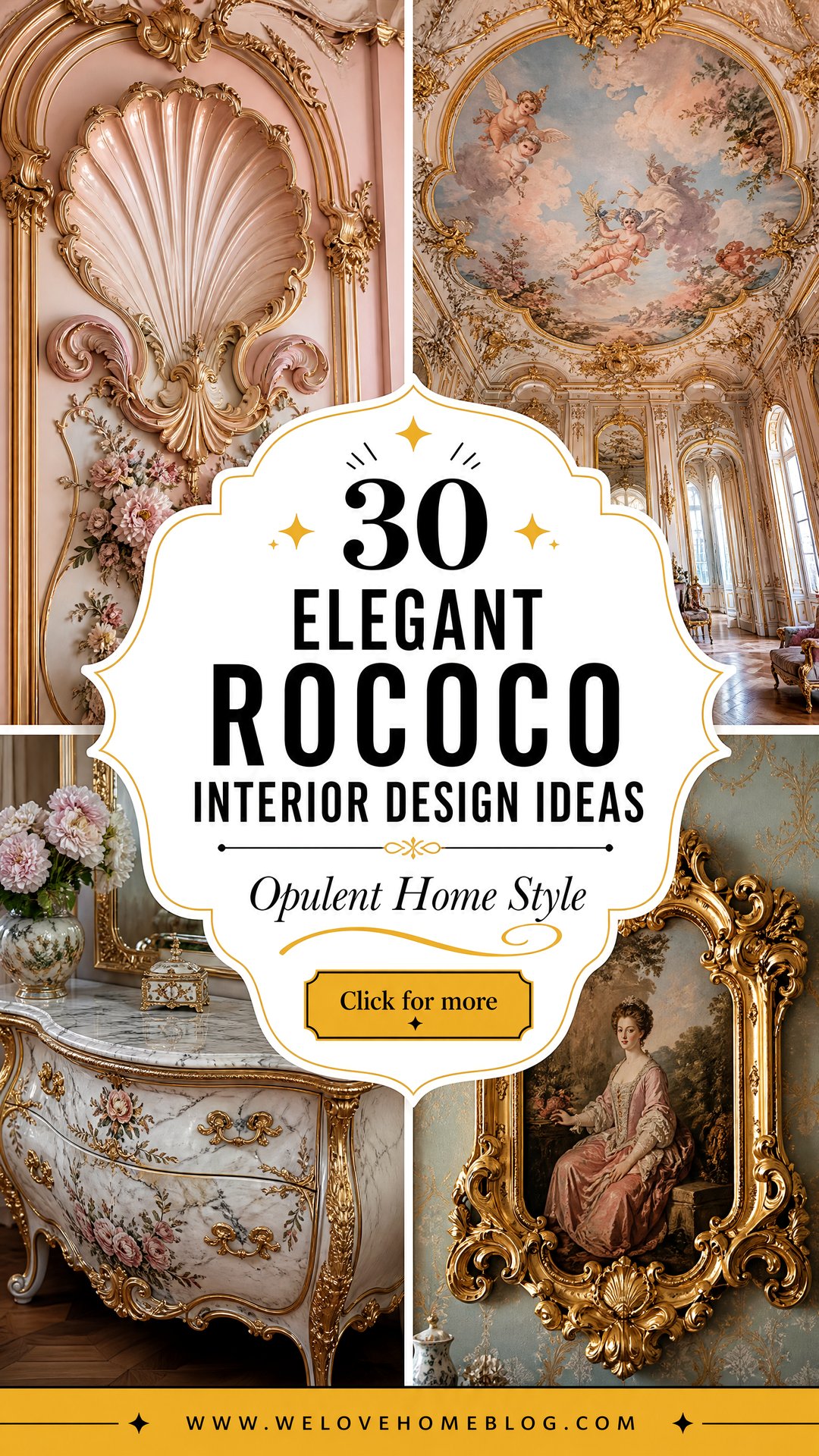
Rococo interior design emerged in 18th-century France as a softer, more playful reaction to the rigid grandeur of the Baroque era. Characterized by its ornate detailing, pastel color palette, and asymmetrical forms, this style emphasizes elegance, light, and comfort. Rococo interiors often feature intricate scrollwork, shell motifs known as "rocaille," and nature-inspired elements like flowers and leaves. Gilded surfaces, crystal chandeliers, and luxurious fabrics such as silk and damask are hallmarks of this opulent yet graceful aesthetic. It creates spaces that feel both highly decorative and intimately charming, perfect for sophisticated living and socializing.
1. Pastel Rococo Color Palette
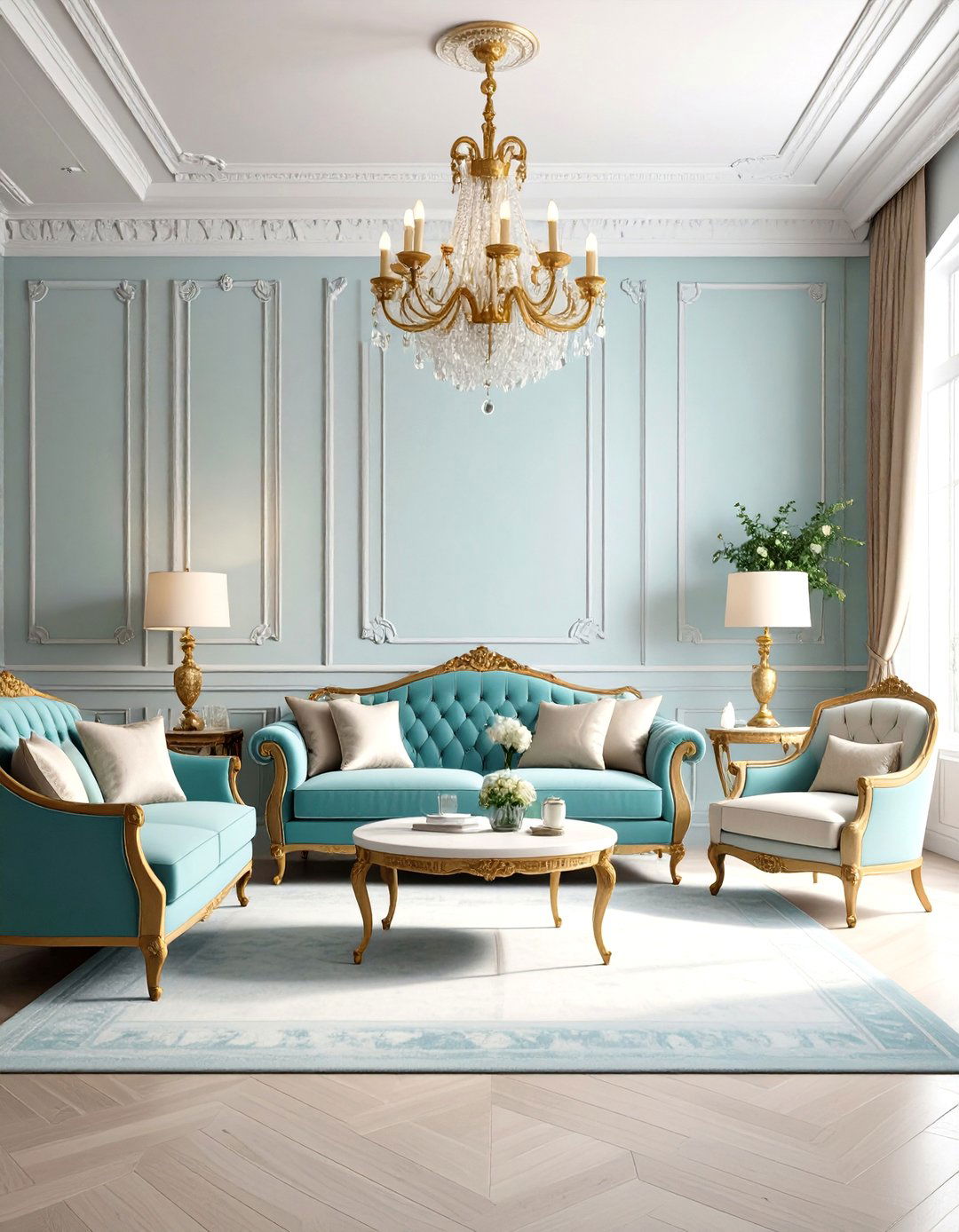
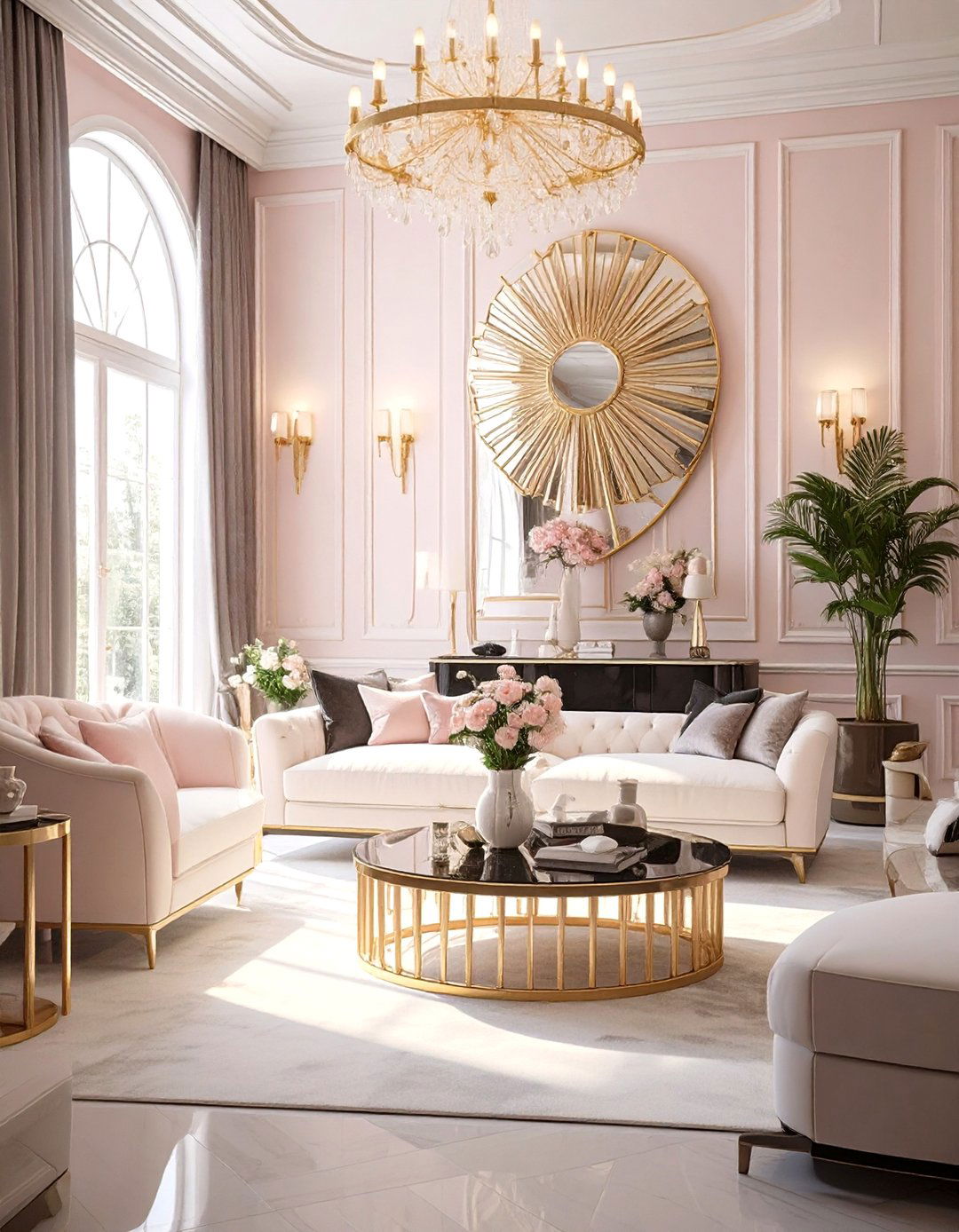
A foundational element of Rococo design is its signature color scheme. To achieve this look, embrace a palette of soft pastels like powder blue, mint green, pale pink, and creamy ivory. These light and airy hues create a sense of delicacy and romance, reflecting the style's departure from the darker, more dramatic Baroque period. Use these colors generously on walls, upholstery, and draperies to establish an authentic Rococo atmosphere. Combining these pastels with white or cream accents enhances the brightness and provides a clean backdrop for more ornate decorative elements, ensuring the space feels open and gracefully elegant.
2. Ornate Gilded Rococo Mirrors
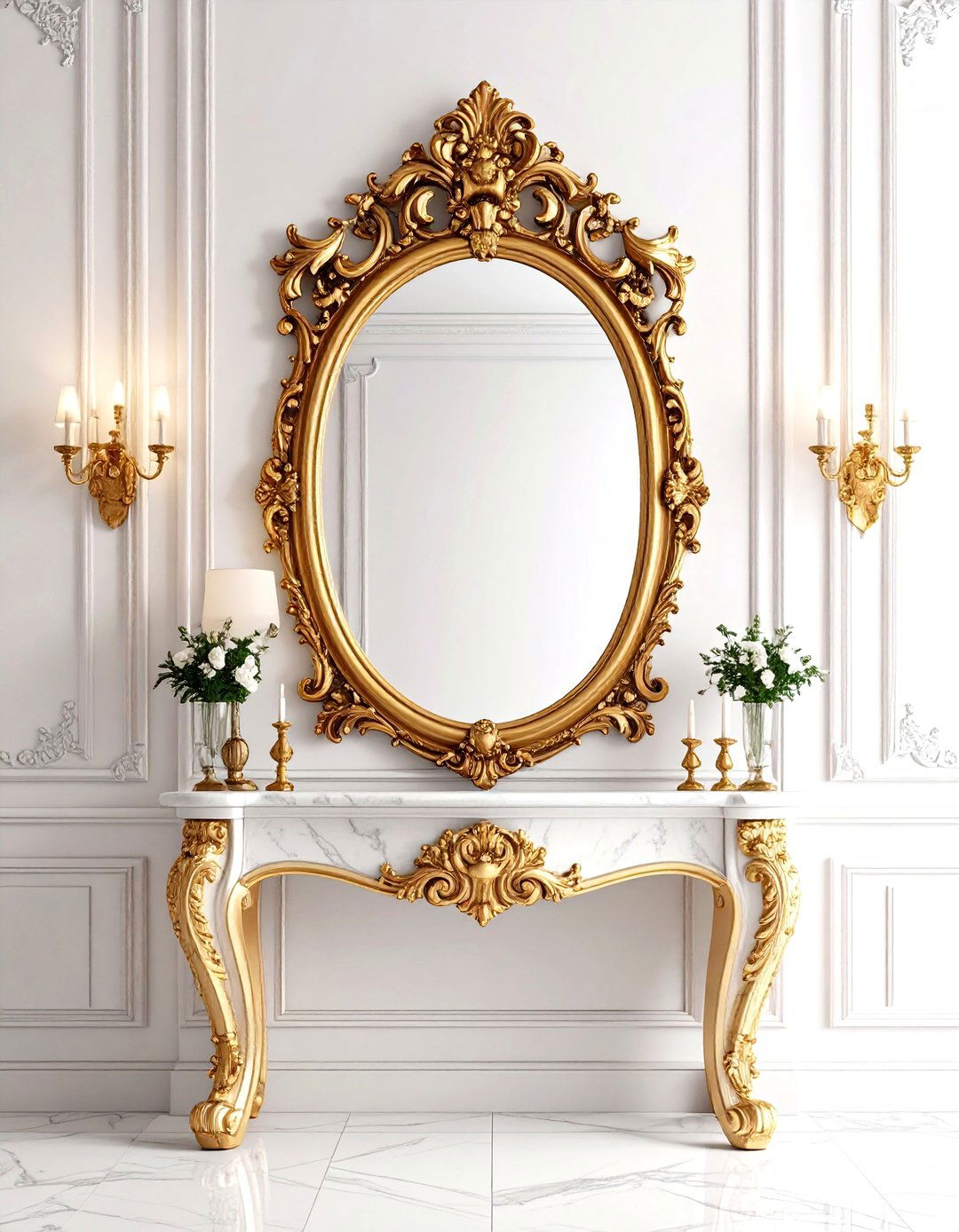
Incorporating an ornate gilded mirror is essential for capturing the Rococo spirit. Look for mirrors with elaborate, asymmetrical frames featuring intricate carvings of scrolls, leaves, and floral motifs. These pieces are not just functional; they are major decorative statements that amplify light and create an illusion of greater space. Placing a large gilded mirror above a fireplace mantel or a console table serves as a stunning focal point. The gold finish adds a touch of opulence and luxury that contrasts beautifully with the soft pastel wall colors, epitomizing the lavish yet lighthearted essence of Rococo interiors.
3. Rococo Boiserie Wall Panels
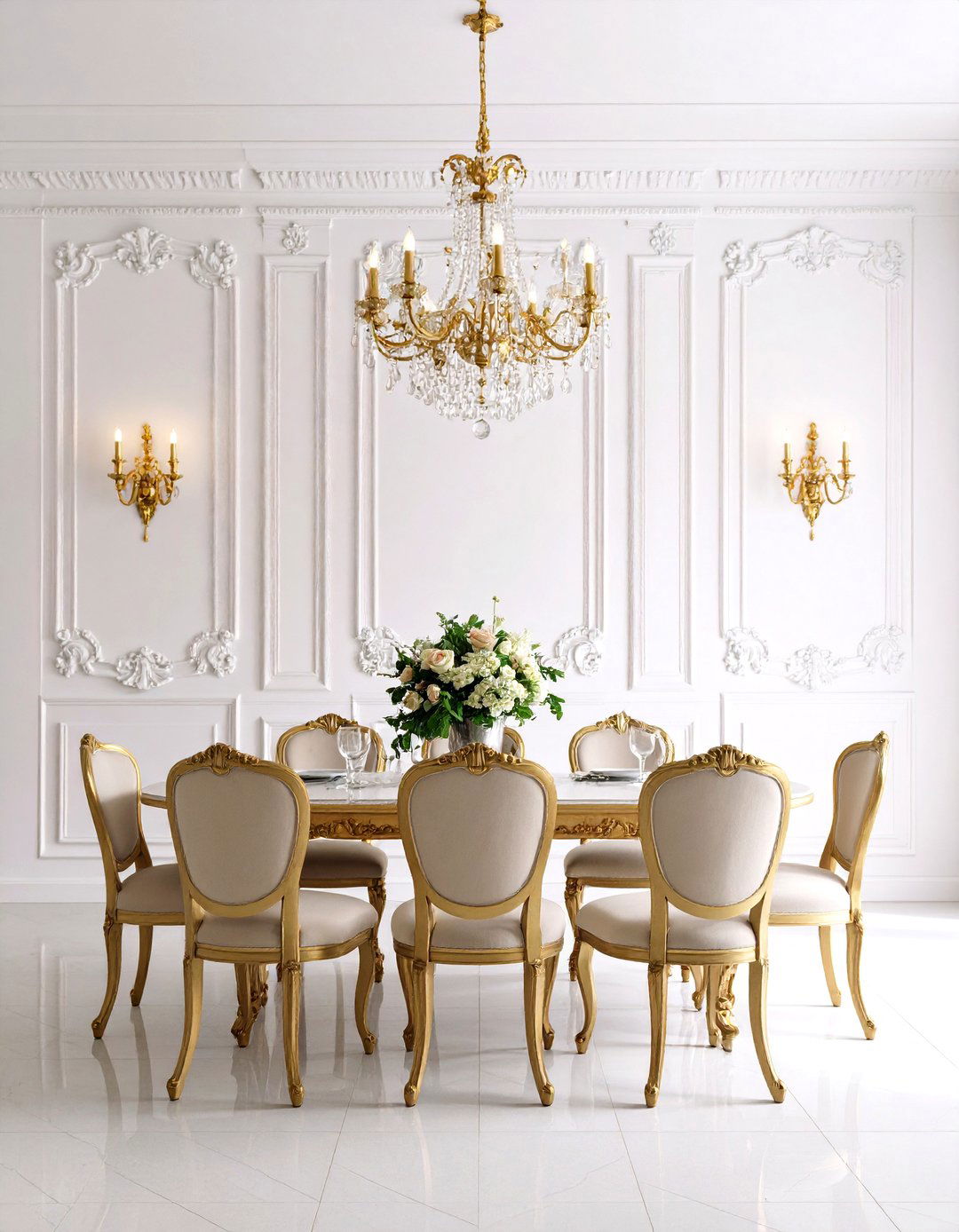
To infuse a room with authentic Rococo charm, install boiserie, which consists of intricately carved wooden panels. These panels are typically painted in light colors like white, cream, or a pale pastel to match the room's palette. The carvings often feature sinuous C-scrolls, S-scrolls, floral garlands, and the characteristic rocaille shell motif. Boiserie adds architectural interest, texture, and a sense of historical grandeur to the walls. It can be applied to the entire room or used to create an accent wall, framing artwork or mirrors beautifully and elevating the overall design to a new level of sophistication.
4. Crystal Rococo Chandeliers
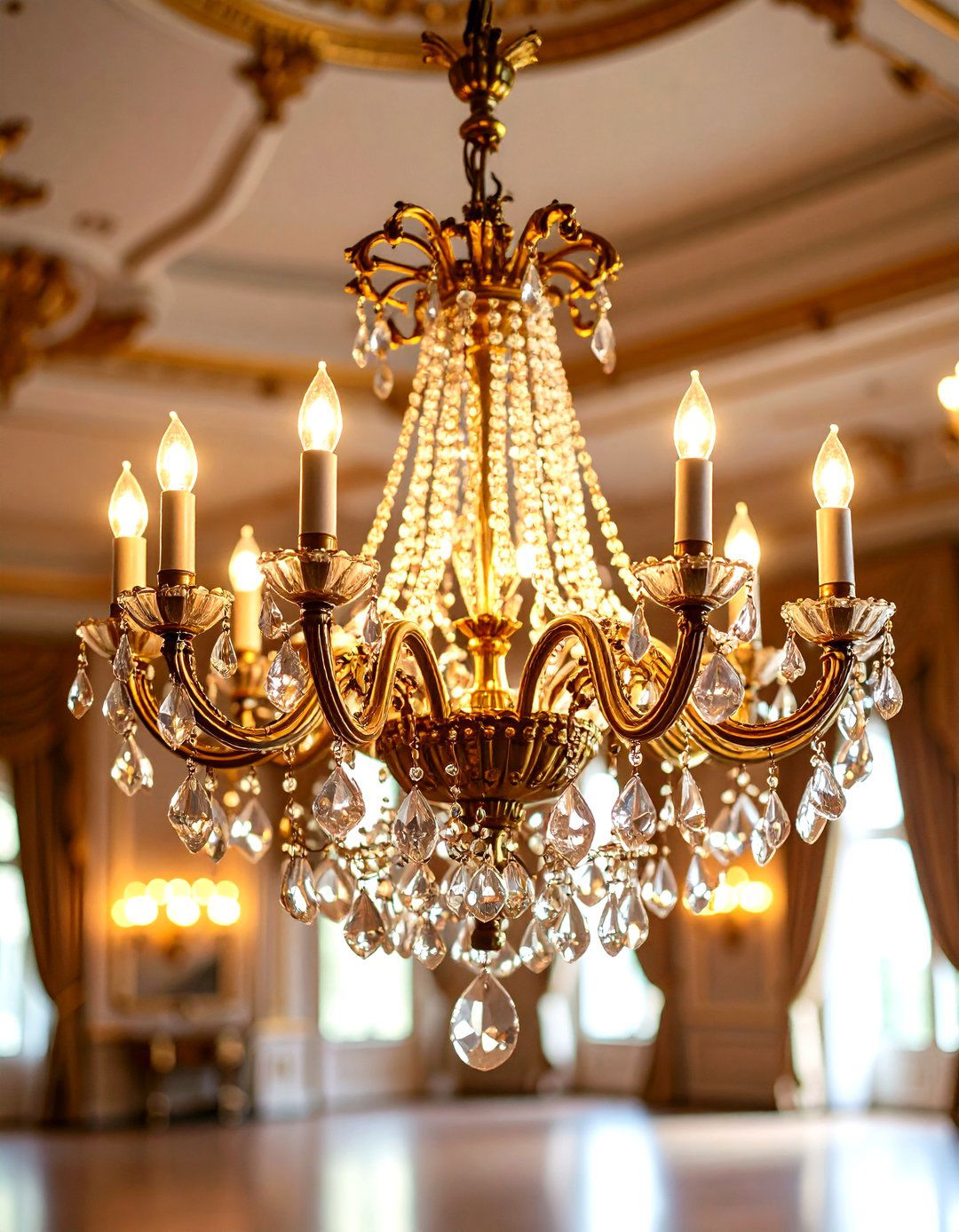
A magnificent crystal chandelier is a non-negotiable centerpiece in any Rococo-inspired interior. This fixture should be grand and dazzling, dripping with multiple tiers of shimmering crystals that catch and refract light throughout the room. The frame, often in a gold or silver finish, should feature graceful, curving arms. Suspend it centrally in a living room, dining room, or even a grand bedroom to create a dramatic focal point. The chandelier not only provides illumination but also adds an unparalleled sense of opulence and celebration, perfectly embodying the lavish and festive nature of the Rococo style.
5. Rococo Furniture with Cabriole Legs
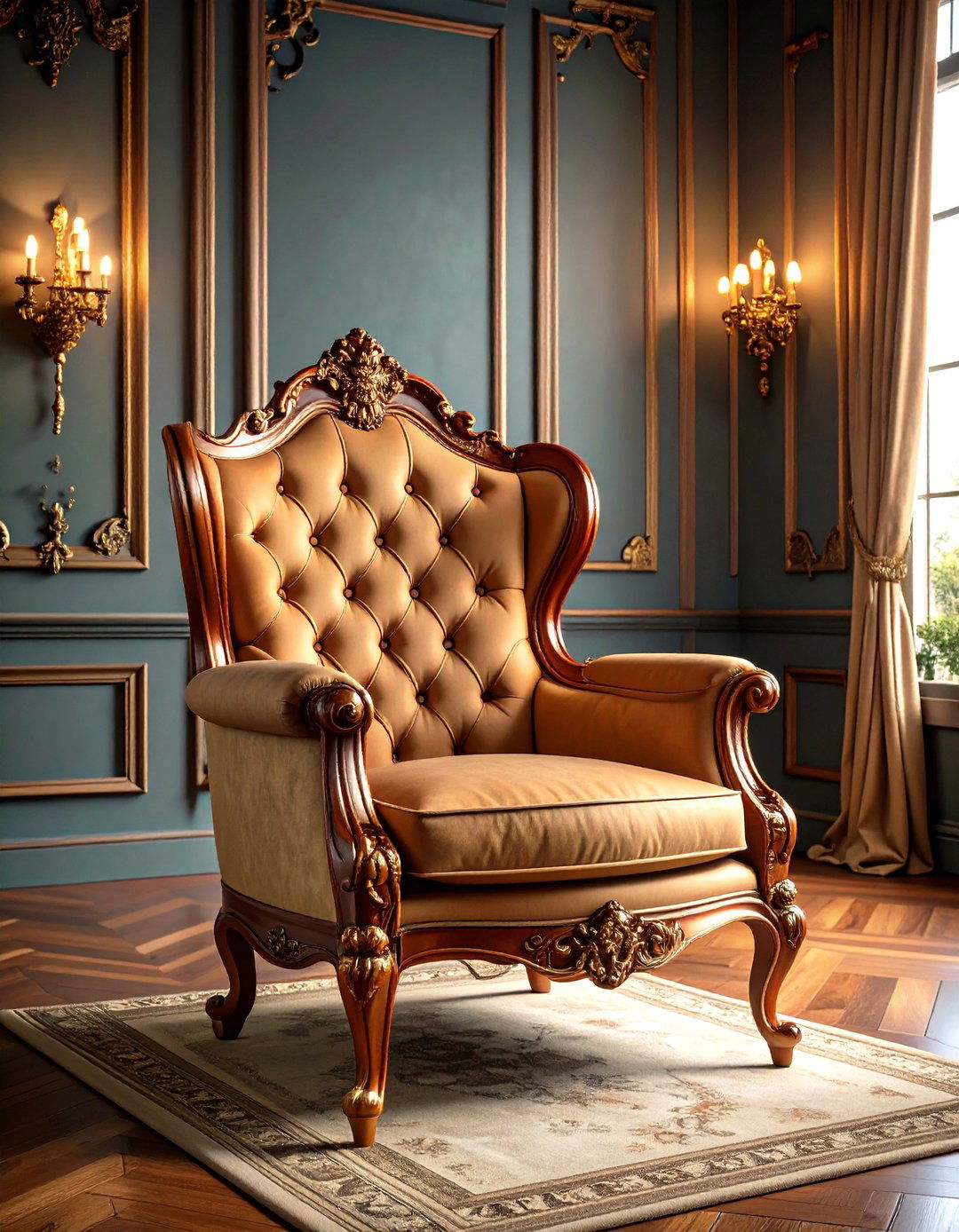
Selecting furniture with cabriole legs is a key step in creating an authentic Rococo interior. This distinctive leg design features a double curve—convex at the top and concave at the bottom—ending in an ornamental foot. It imparts a sense of lightness, elegance, and dynamic movement to pieces like chairs, sofas, and tables. Look for settees, armchairs, and console tables crafted from polished woods or with a gilded or painted finish. The cabriole leg is a defining characteristic that instantly signals the Rococo style, contributing to the room's overall grace and fluid, organic aesthetic.
6. Asymmetrical Rococo Arrangements
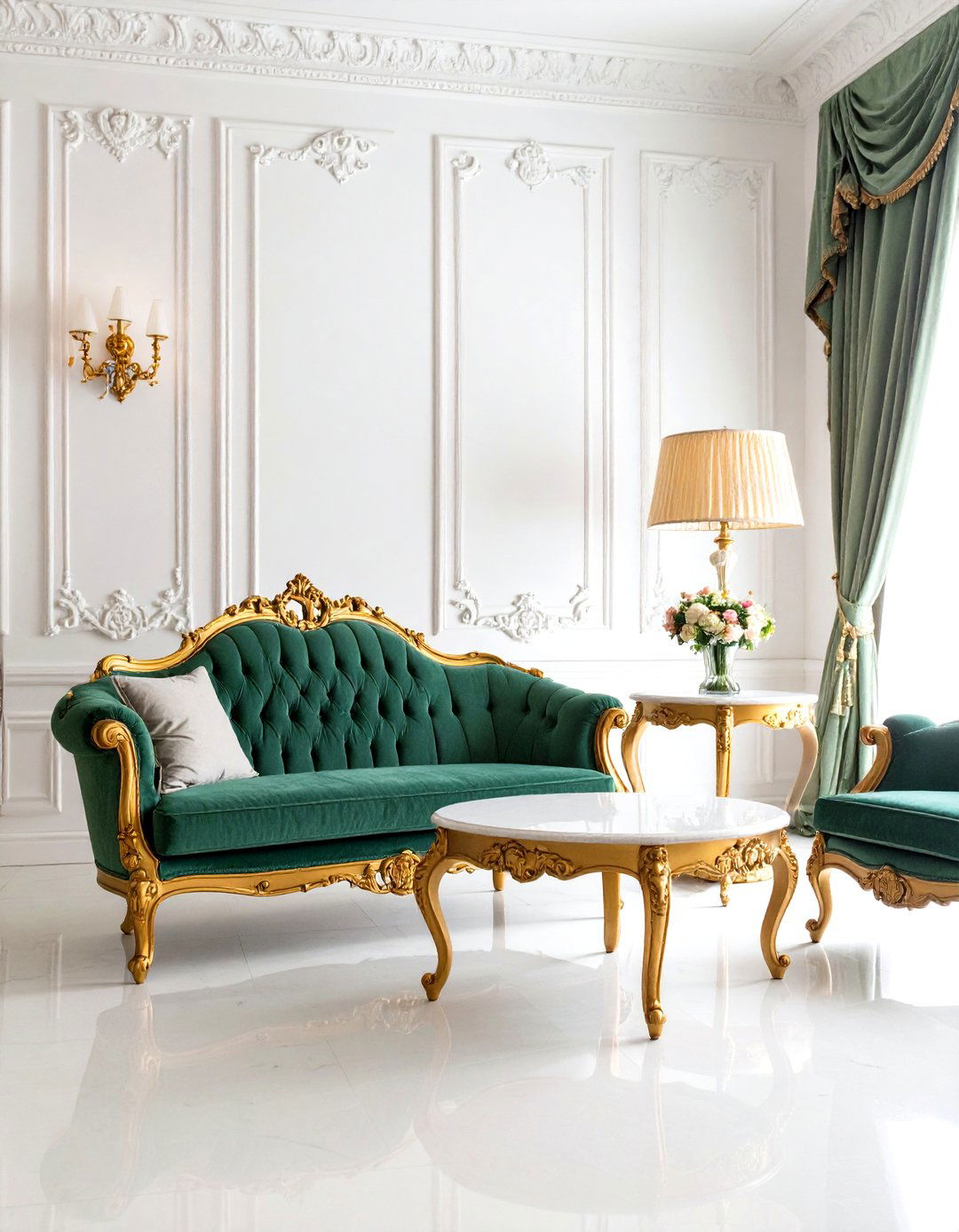
Unlike the rigid symmetry of the preceding Baroque style, Rococo design celebrates asymmetry and fluid lines. Embrace this principle by arranging furniture and decor in a more relaxed and organic way. For instance, instead of placing identical side tables on either side of a sofa, use two different but complementary tables. Hang artwork in a gallery style that feels dynamic rather than strictly gridded. This approach creates visual interest and a sense of playful energy. Asymmetry should be applied thoughtfully to maintain balance, resulting in a space that feels spontaneous, charming, and gracefully composed.
7. Floral Motif Rococo Upholstery
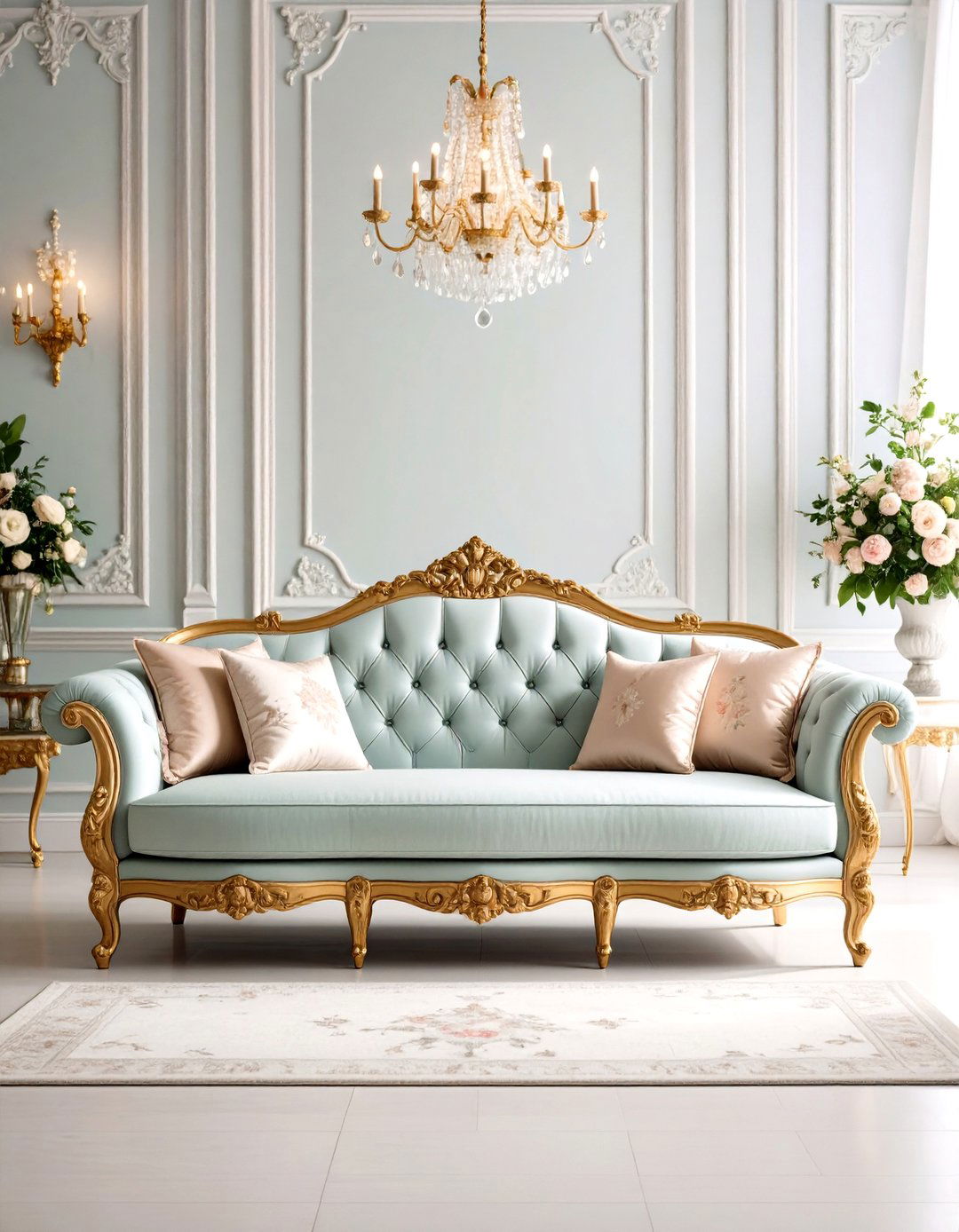
Floral motifs are central to the Rococo aesthetic, reflecting the era's fascination with nature. Incorporate these patterns through luxurious upholstery on sofas, armchairs, and chaises. Choose fabrics like silk, damask, or brocade featuring delicate, small-scale floral designs in pastel shades. These botanical patterns add a layer of softness, romance, and intricate detail to the furniture. Pairing floral upholstery with solid-colored pillows or draperies in coordinating pastel tones creates a balanced look. This use of nature-inspired textiles enhances the room's overall charm and contributes to the light, whimsical, and elegant atmosphere characteristic of the style.
8. Luxurious Silk and Damask Rococo Curtains
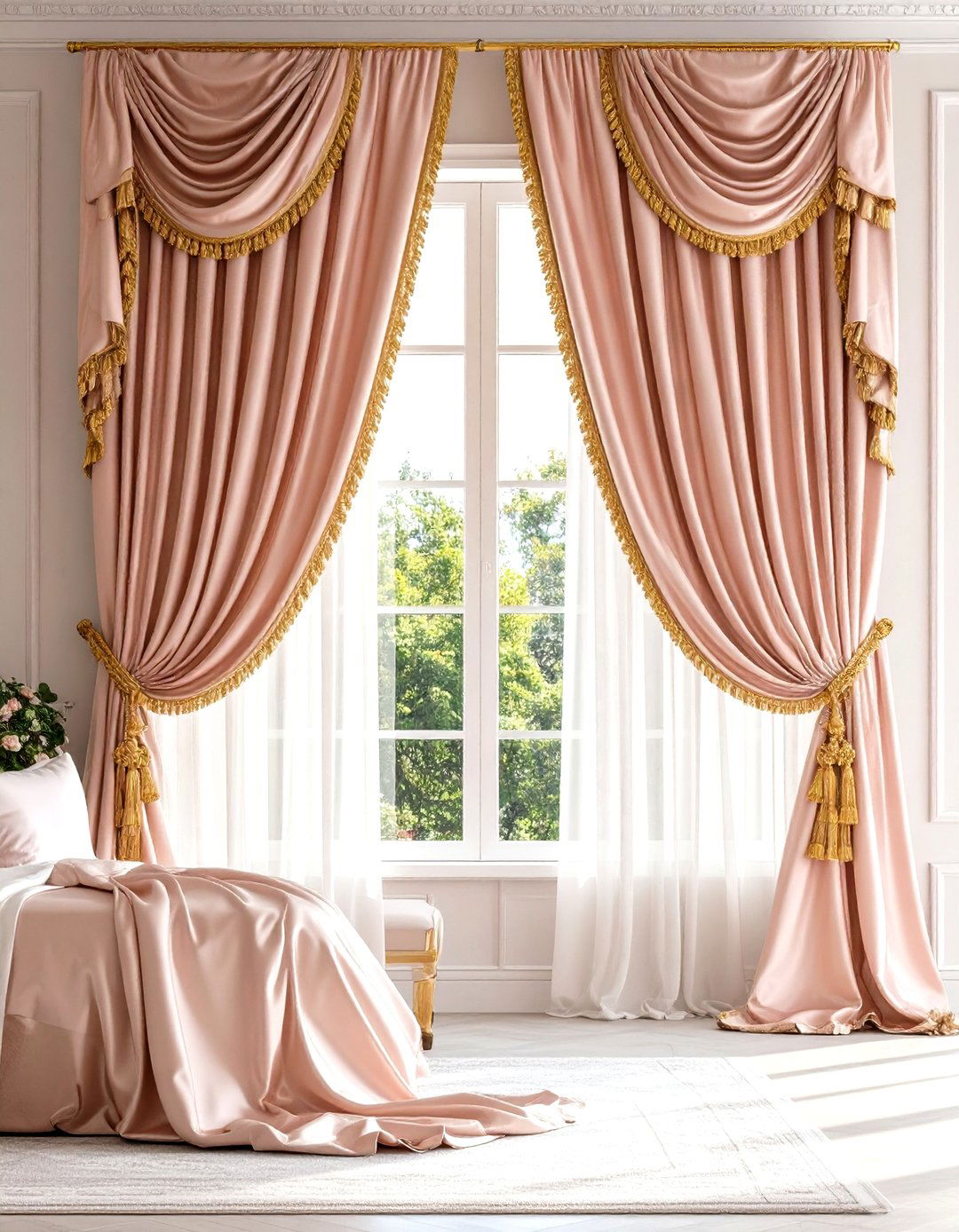
Dressing windows with luxurious fabrics is crucial for achieving a complete Rococo look. Opt for draperies made from heavy silk, rich damask, or opulent brocade. These materials drape beautifully, adding a sense of grandeur and softness to the room. Choose curtains in pastel hues or with subtle floral or chinoiserie patterns that coordinate with the overall color scheme. Enhance their lavish appearance with ornate tie-backs, tassels, and elaborate pelmets or valances featuring carved and gilded details. These sumptuous window treatments not only provide privacy but also frame the view and contribute significantly to the room's decadent, layered aesthetic.
9. Serpentine Front Rococo Commodes
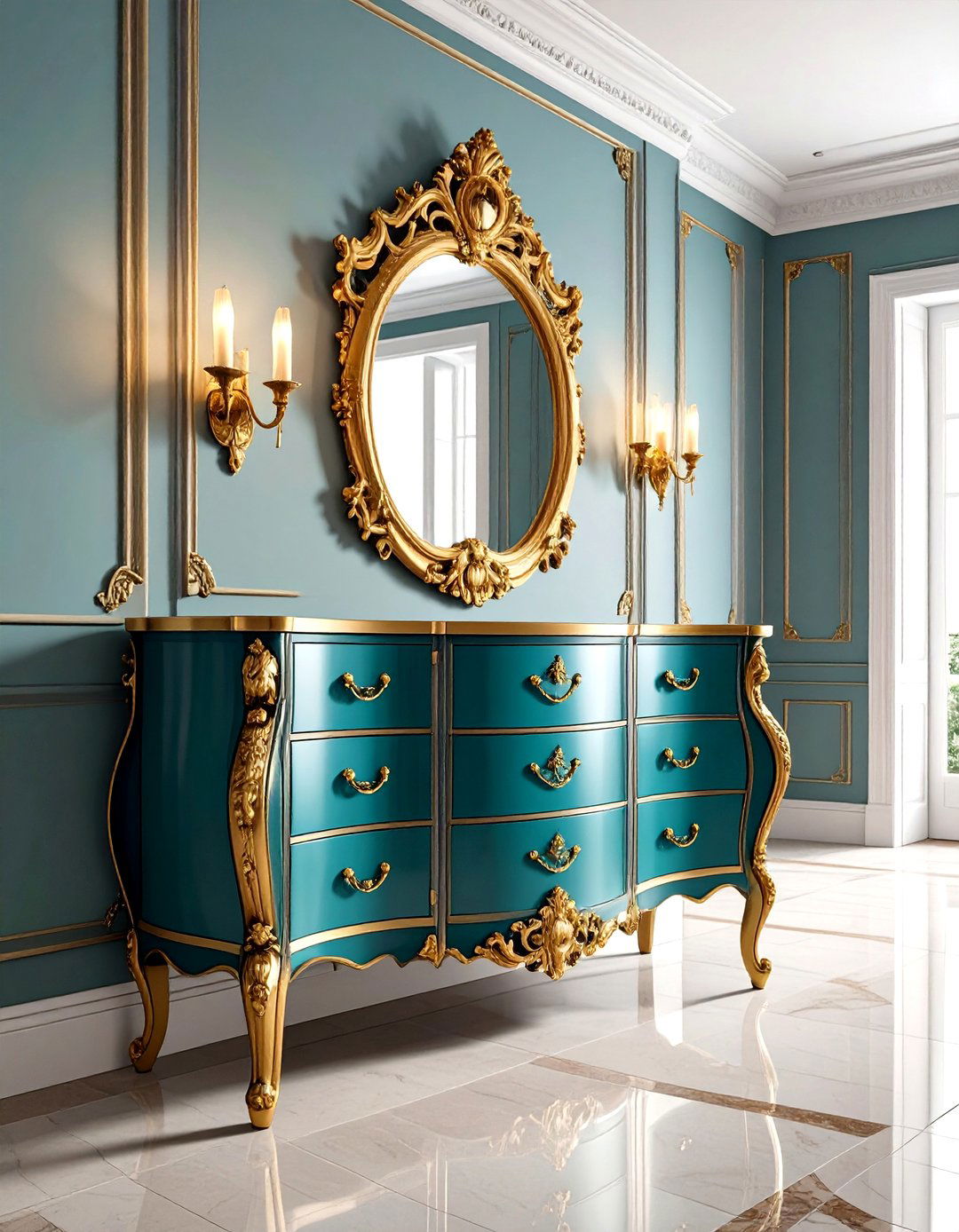
A serpentine front commode or chest of drawers is a quintessential piece of Rococo furniture. The term "serpentine" refers to the undulating, S-shaped curve of the furniture's facade, which adds a sense of fluid motion and elegance. These pieces are often adorned with ornate hardware, marquetry, and gilded accents. Place a serpentine commode in a bedroom or hallway as a beautiful and practical storage solution. Its curved silhouette breaks the monotony of straight lines, contributing to the dynamic and graceful feel of the space. It serves as both a functional item and a sculptural work of art.

10. Chinoiserie Inspired Rococo Decor
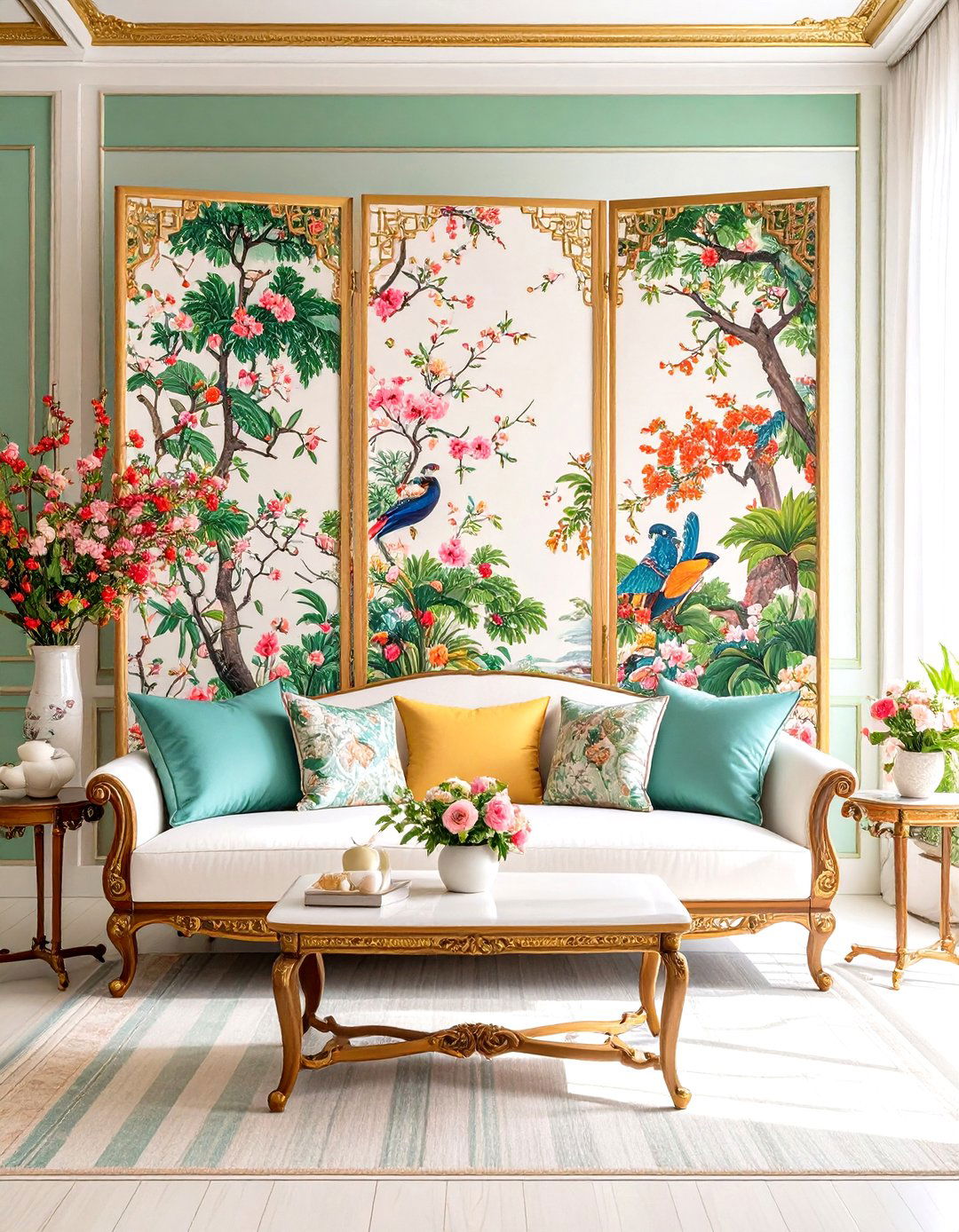
During the Rococo period, there was a great fascination with East Asian art and design, leading to the popularity of Chinoiserie. Integrate this trend by using decorative elements inspired by Chinese art. This can include hand-painted wallpaper featuring pagodas, exotic birds, and delicate landscapes, or porcelain vases and figurines in blue and white. A folding screen decorated with Chinoiserie motifs can serve as a beautiful room divider or a decorative backdrop. These exotic touches add a layer of whimsy, worldliness, and intricate storytelling to a Rococo interior, complementing its playful and imaginative spirit perfectly.
11. Rococo Cartouche Wall Decorations
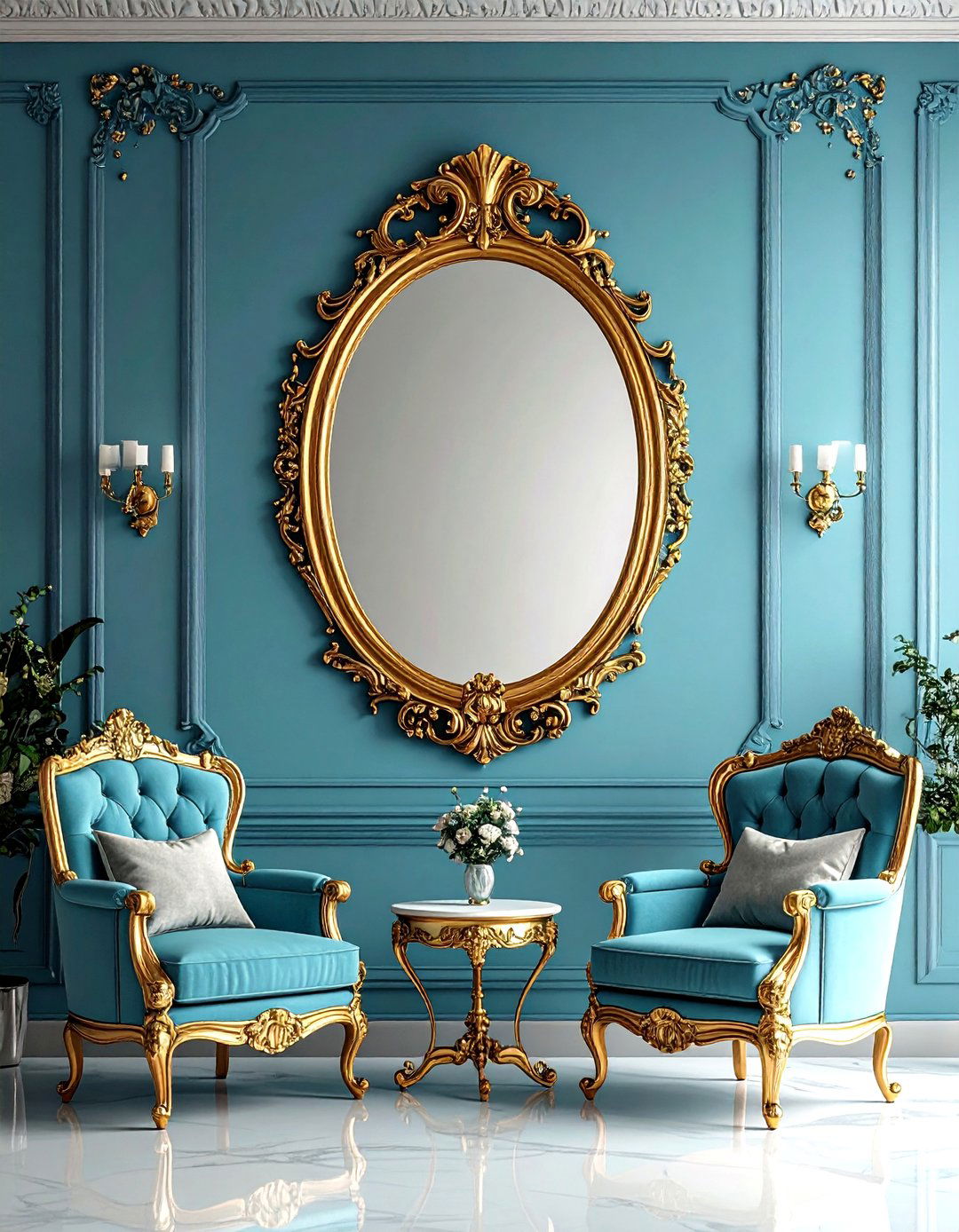
Incorporate cartouches as a distinctive Rococo wall embellishment. A cartouche is an ornamental frame, often oval or oblong, with scrolled or elaborately carved edges. In Rococo design, these are typically asymmetrical and feature rocaille, floral, or C-scroll details. They can be used to frame a small painting, a monogram, or simply act as a standalone decorative element. Often finished in gold leaf or painted to match the wall paneling, cartouches add a touch of sophisticated, architectural detail. Placing them strategically on walls or above doorways enhances the room's classical elegance and demonstrates a commitment to authentic period details.
12. Rocaille Shell Motif Rococo Details
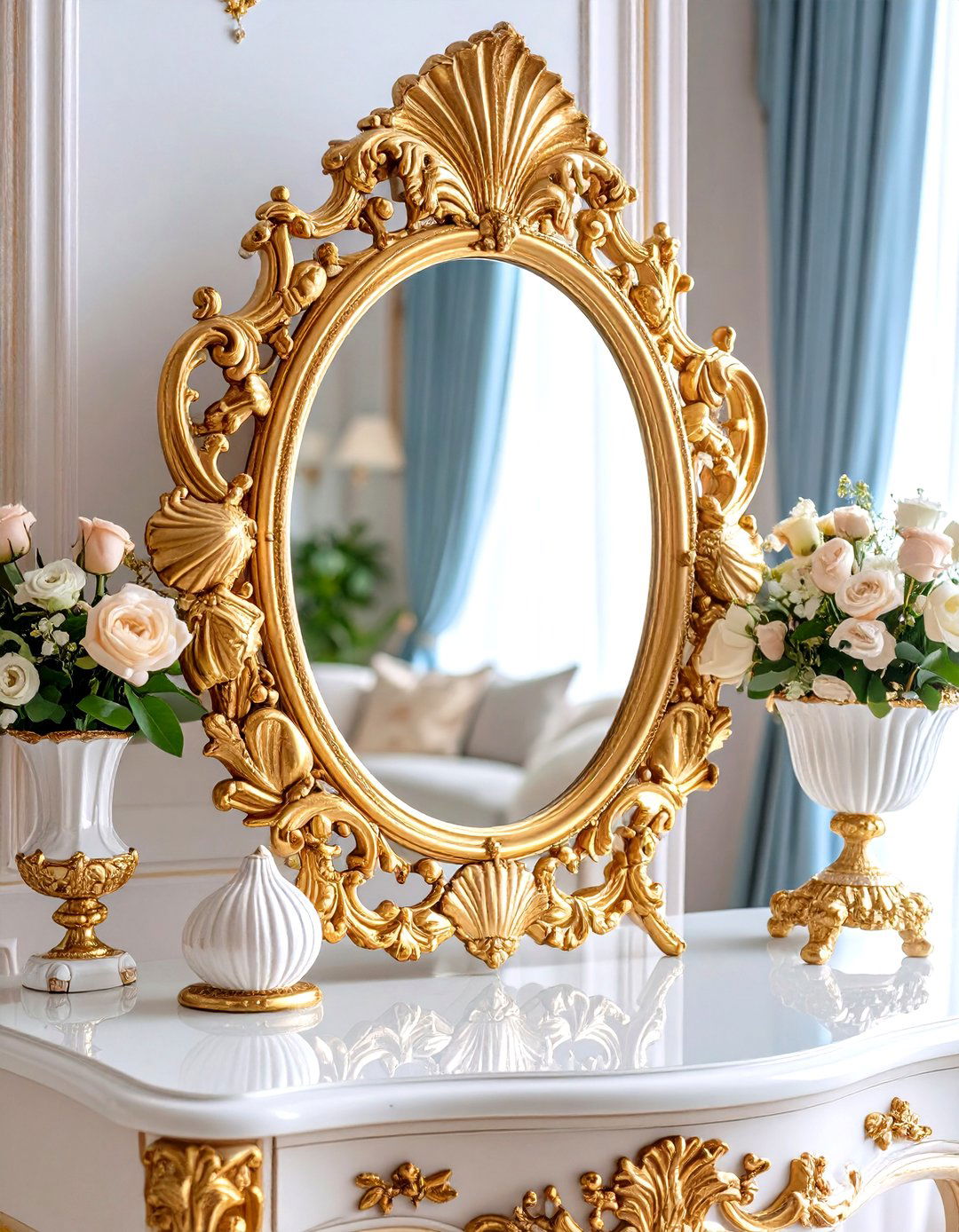
The "rocaille" or shell motif is the very heart of the Rococo style—so much so that the name "Rococo" is derived from it. Integrate this essential element throughout your design. Look for it in the carvings of furniture, the frames of mirrors, the design of sconces, and the plasterwork on walls and ceilings. The stylized, asymmetrical shell shape, often combined with C-scrolls and acanthus leaves, embodies the naturalistic and whimsical spirit of the era. Sprinkling these rocaille details subtly across different decor items ties the entire room together and anchors the design firmly in its historical origins.
13. Cherub and Putti Rococo Ceiling Medallions
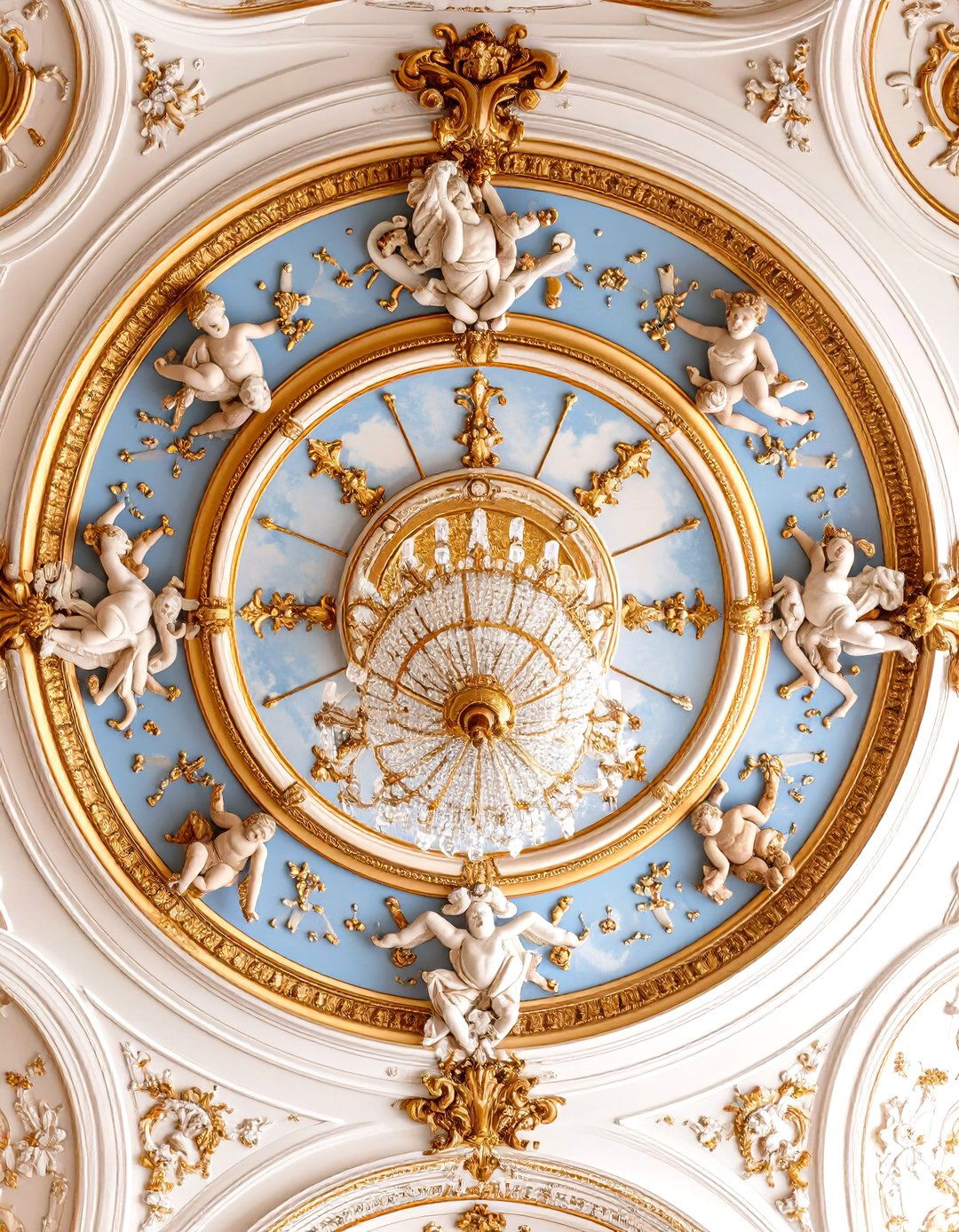
For a truly opulent touch, adorn your ceiling with a plaster medallion featuring cherubs or putti. These playful, winged infants were a popular motif in Rococo art and decoration, symbolizing love and mirth. A central ceiling medallion, from which a grand chandelier hangs, creates a stunning vertical focal point that draws the eye upward. The intricate, three-dimensional relief of the cherubs adds a layer of texture, artistry, and heavenly charm to the room. Painted white or detailed with gold leaf, this feature elevates the space, transforming a plain ceiling into a canvas of classical, whimsical art.
14. Trompe-l'œil Rococo Ceiling Murals
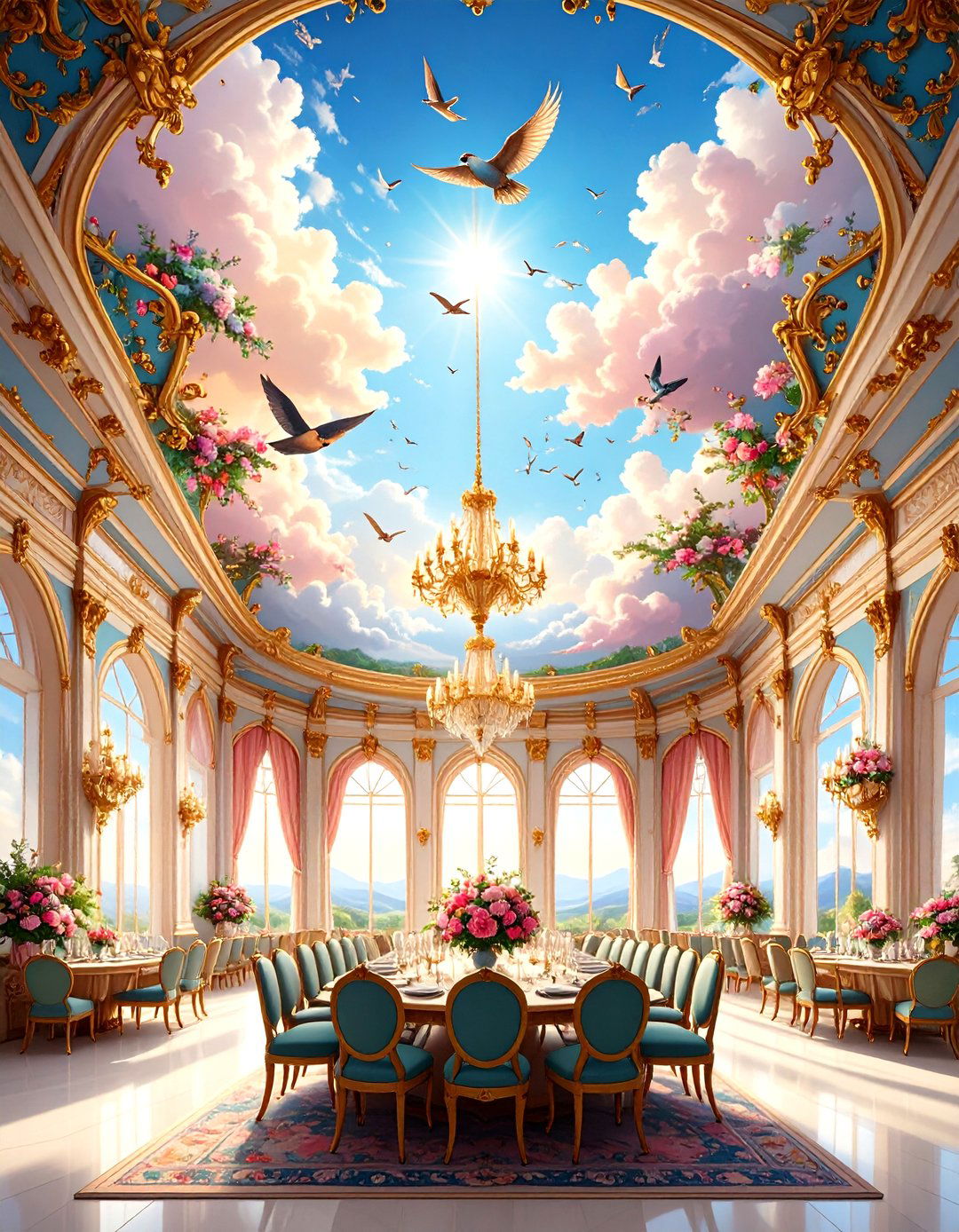
To create an illusion of boundless space and divine beauty, consider a trompe-l'œil ceiling mural. This artistic technique, meaning "to deceive the eye," was popular in the Rococo era for creating dramatic, three-dimensional effects on a flat surface. A typical scene might depict a celestial sky with clouds, birds, and cherubs, appearing as if the roof has opened up to the heavens. This ambitious feature transforms the ceiling into the room's main attraction, imbuing the space with a sense of wonder, fantasy, and boundless grandeur. It’s a breathtaking statement that perfectly captures the theatricality of Rococo design.


15. Ornate Rococo Console Tables
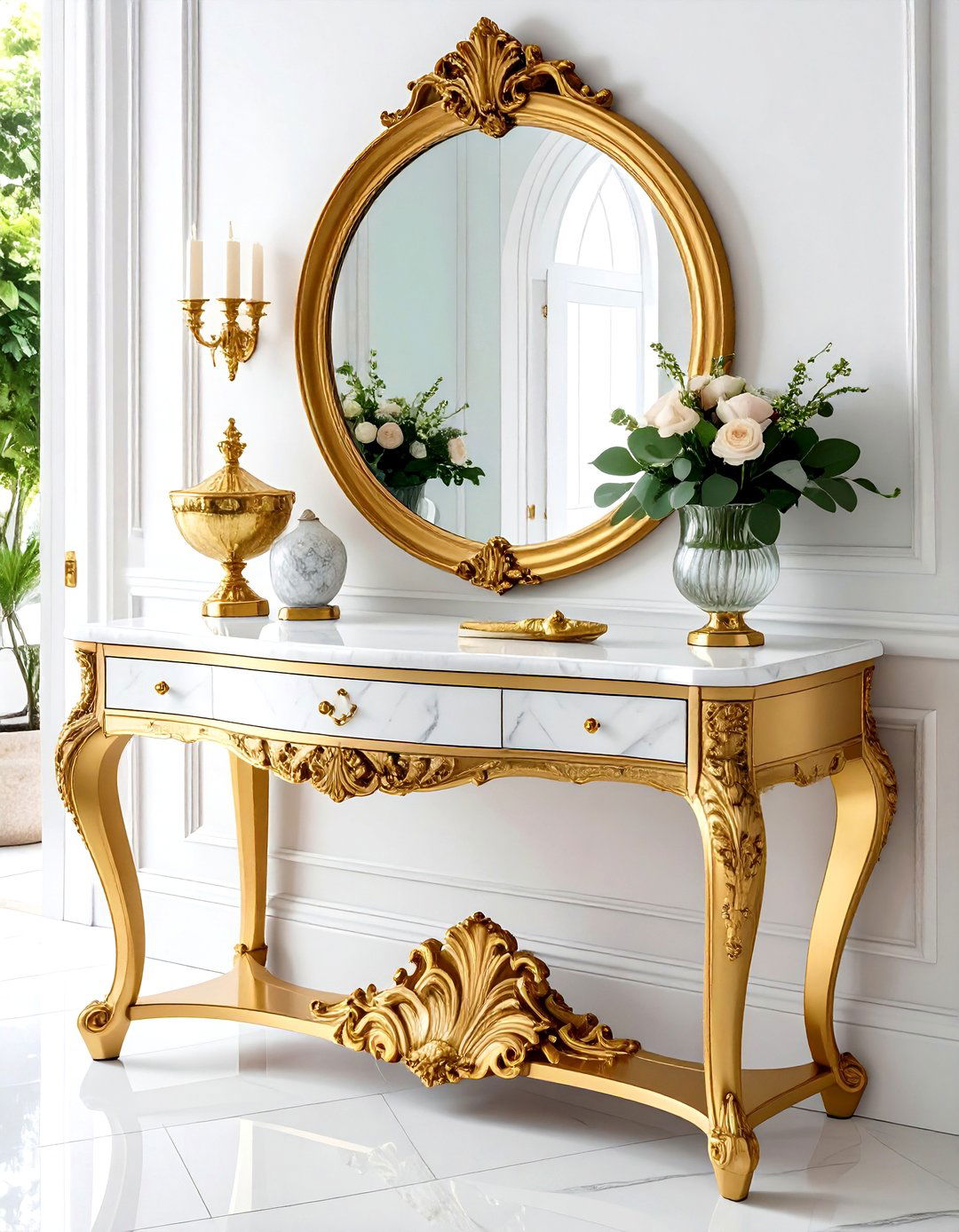
An ornate console table is a staple of Rococo hallways and living rooms. These tables are typically slender, designed to be placed against a wall, and are characterized by their elaborate carvings and curved cabriole legs. Often topped with a marble slab, the base is usually heavily carved and gilded, featuring prominent rocaille, floral, or scroll motifs. A console table serves as the perfect platform for displaying decorative objects like porcelain vases, candelabras, or a small sculpture. Paired with a large gilded mirror above it, it creates a classic Rococo vignette that exudes elegance and grandeur.
16. Gilded Rococo Wall Sconces
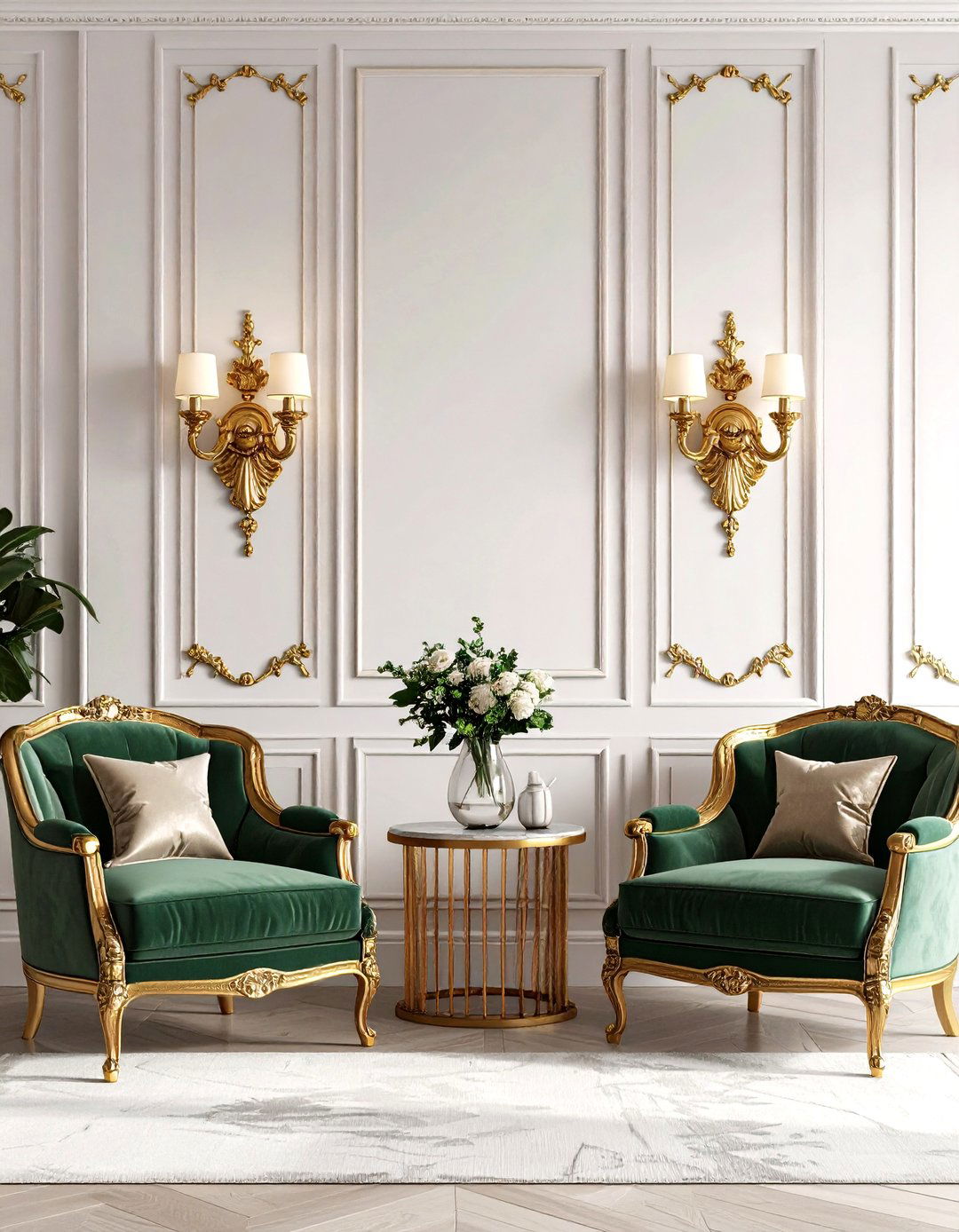
Illuminate your space with the soft, flattering glow of gilded wall sconces. In Rococo design, sconces are more than just light fixtures; they are intricate works of art. Look for designs with curving, branch-like arms, often adorned with floral, leaf, or rocaille details, all finished in a brilliant gold leaf. Typically installed in pairs to flank a mirror, fireplace, or piece of art, they add symmetrical balance and a layer of ambient lighting. The warm light reflecting off the gilded surfaces creates an intimate and inviting atmosphere, enhancing the room's overall sense of luxury and charm.
17. Lavish Rococo Upholstered Headboards
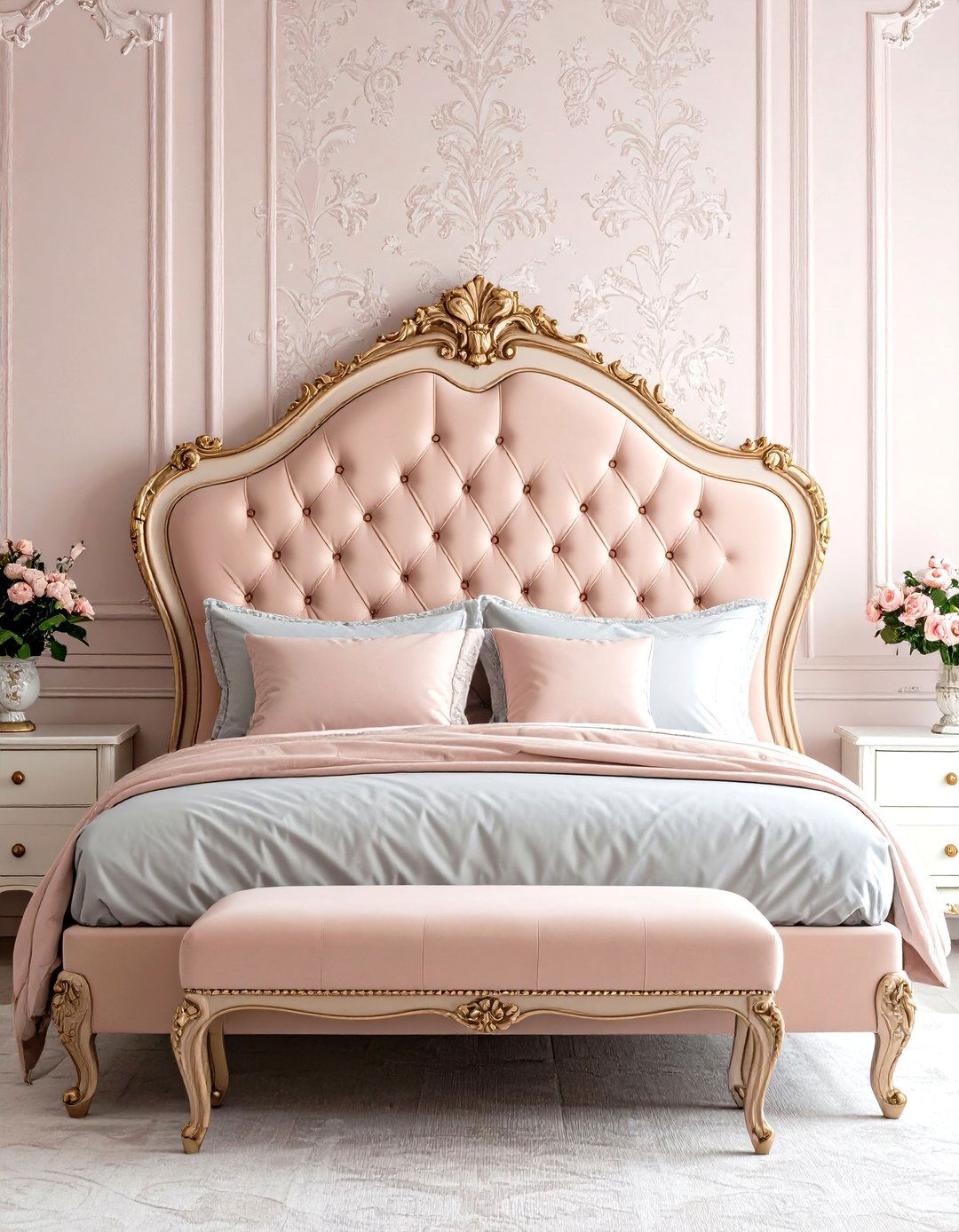
Transform a bedroom into a luxurious sanctuary with a lavishly upholstered Rococo headboard. Choose a headboard with a gracefully curved, ornately shaped frame, often carved and finished in gold, silver, or a soft painted color. The upholstery should be plush and inviting, using fabrics like tufted velvet, silk, or damask in a pastel shade or a delicate floral pattern. This statement piece not only provides a comfortable backrest but also serves as the dramatic focal point of the room. It embodies the Rococo love for comfort, opulence, and exquisitely detailed craftsmanship, creating a truly romantic and regal sleeping space.
18. Rococo Curved Settees and Sofas
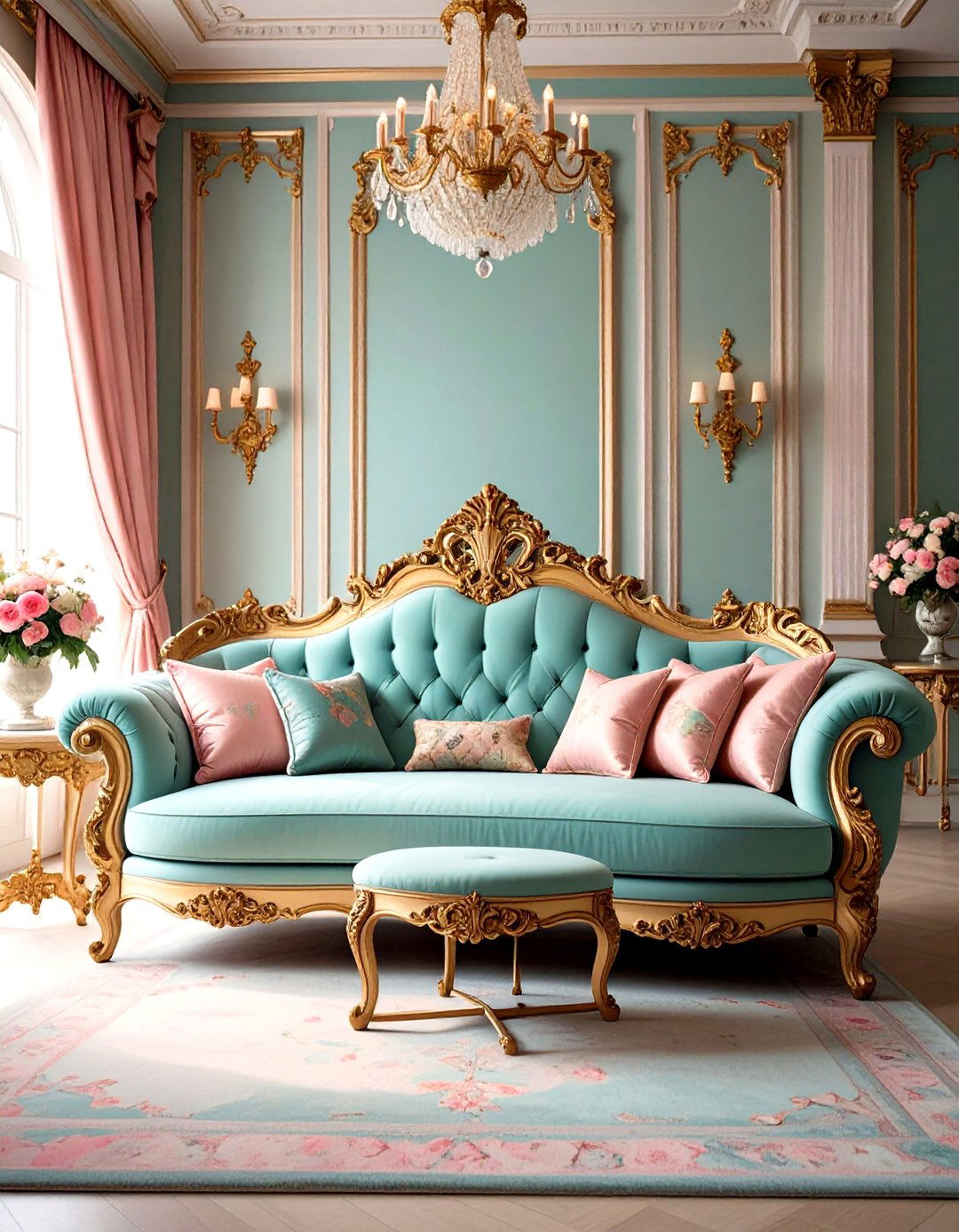
Rococo seating prioritizes comfort and intimate conversation, making curved settees and sofas an ideal choice. Move away from rigid, straight-lined couches and opt for pieces with flowing, sinuous shapes. Sofas like the "canapé" or "chaise lounge" feature elegant curves, exposed carved wood frames, and plush upholstery. These designs encourage a more relaxed and social seating arrangement. Placed centrally in a living room, a curved settee with its delicate cabriole legs and ornate detailing becomes a graceful centerpiece, inviting guests to sit and converse in a setting of sophisticated comfort and style.
19. Delicate Porcelain Rococo Figurines
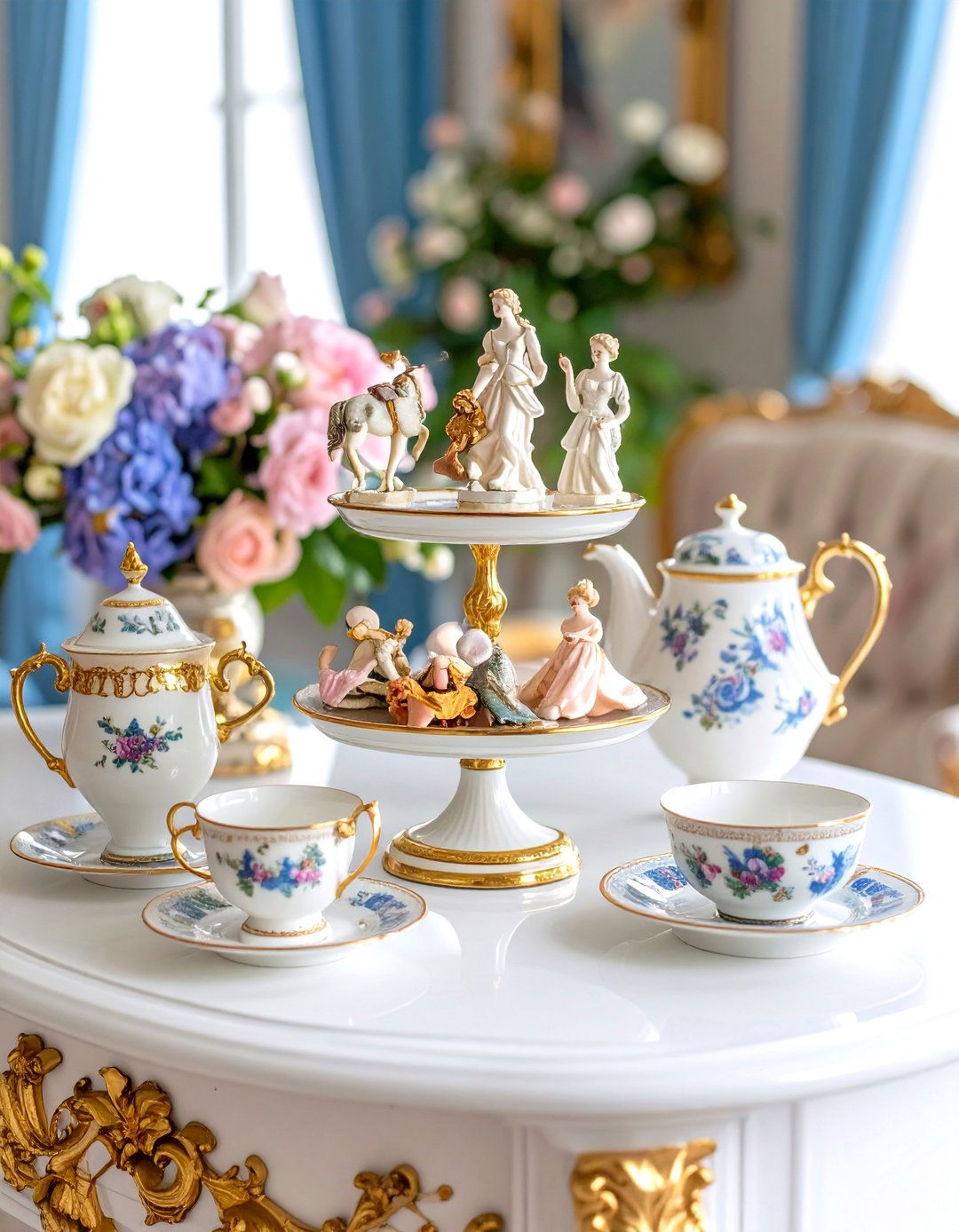
Accessorize your Rococo interior with delicate porcelain figurines. During the 18th century, manufactures like Meissen and Sèvres produced exquisite figures depicting pastoral scenes, courtly lovers, cherubs, and characters from the commedia dell'arte. These small sculptures add a touch of narrative, charm, and artistry to the space. Display them on mantels, console tables, or within a glass-fronted cabinet. Their fine craftsmanship and often whimsical subject matter perfectly complement the playful and elegant spirit of Rococo design, providing those small but significant details that bring the entire room to life.



20. Elaborate Rococo Fireplace Mantels
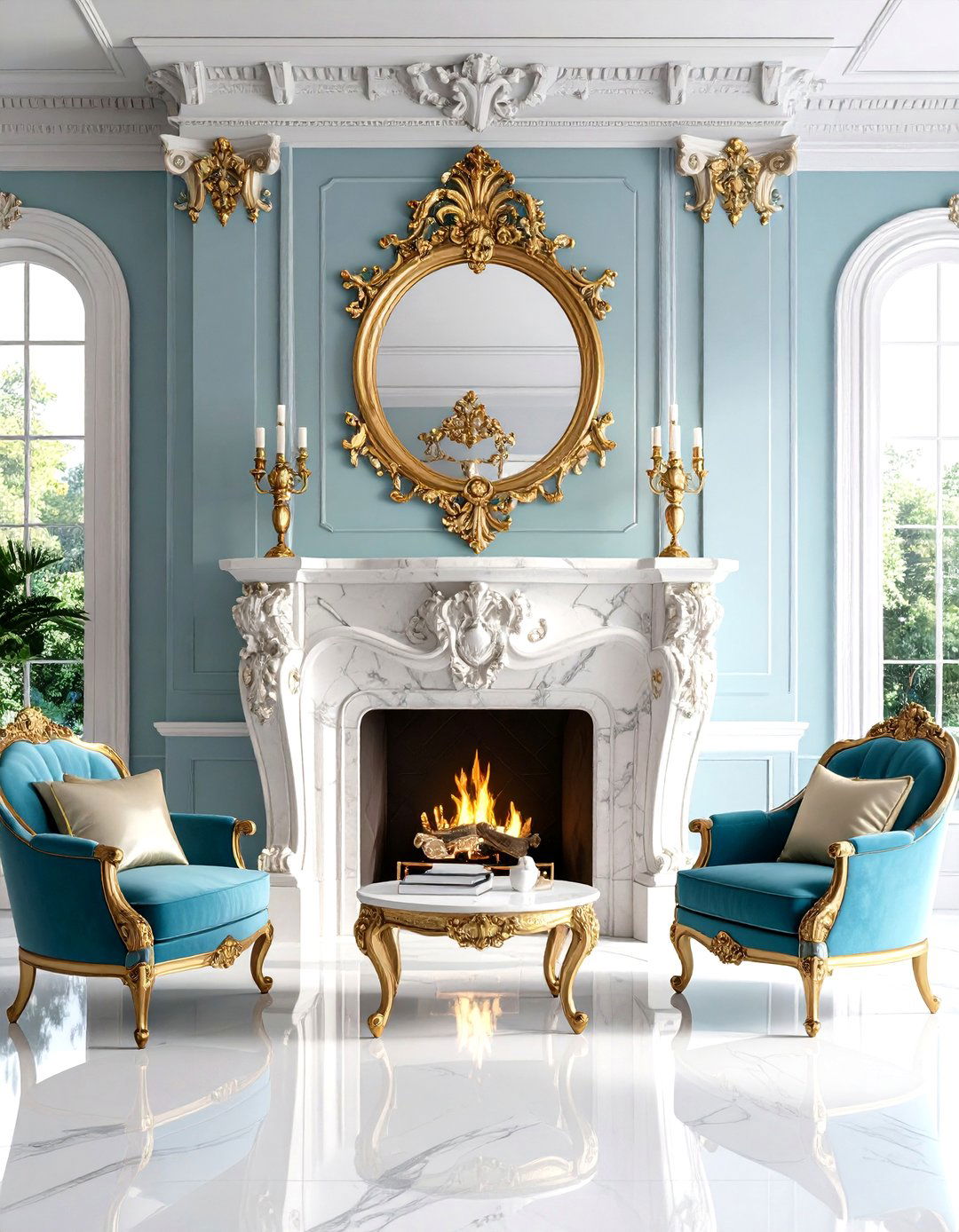
The fireplace is often the heart of a Rococo room, and its mantel should be appropriately grand. Select a fireplace surround made from marble or carved wood, featuring elaborate, asymmetrical designs. Key motifs to look for include a central cartouche, C-scrolls, S-scrolls, and cascading floral or rocaille details. The mantel shelf provides an ideal stage for displaying an ornate clock, porcelain figurines, and candelabras. A beautifully crafted Rococo mantel serves as a powerful architectural anchor, radiating warmth and elegance and providing a natural focal point for the room’s social gatherings.
21. Rococo-Style Swag and Jabot Curtains
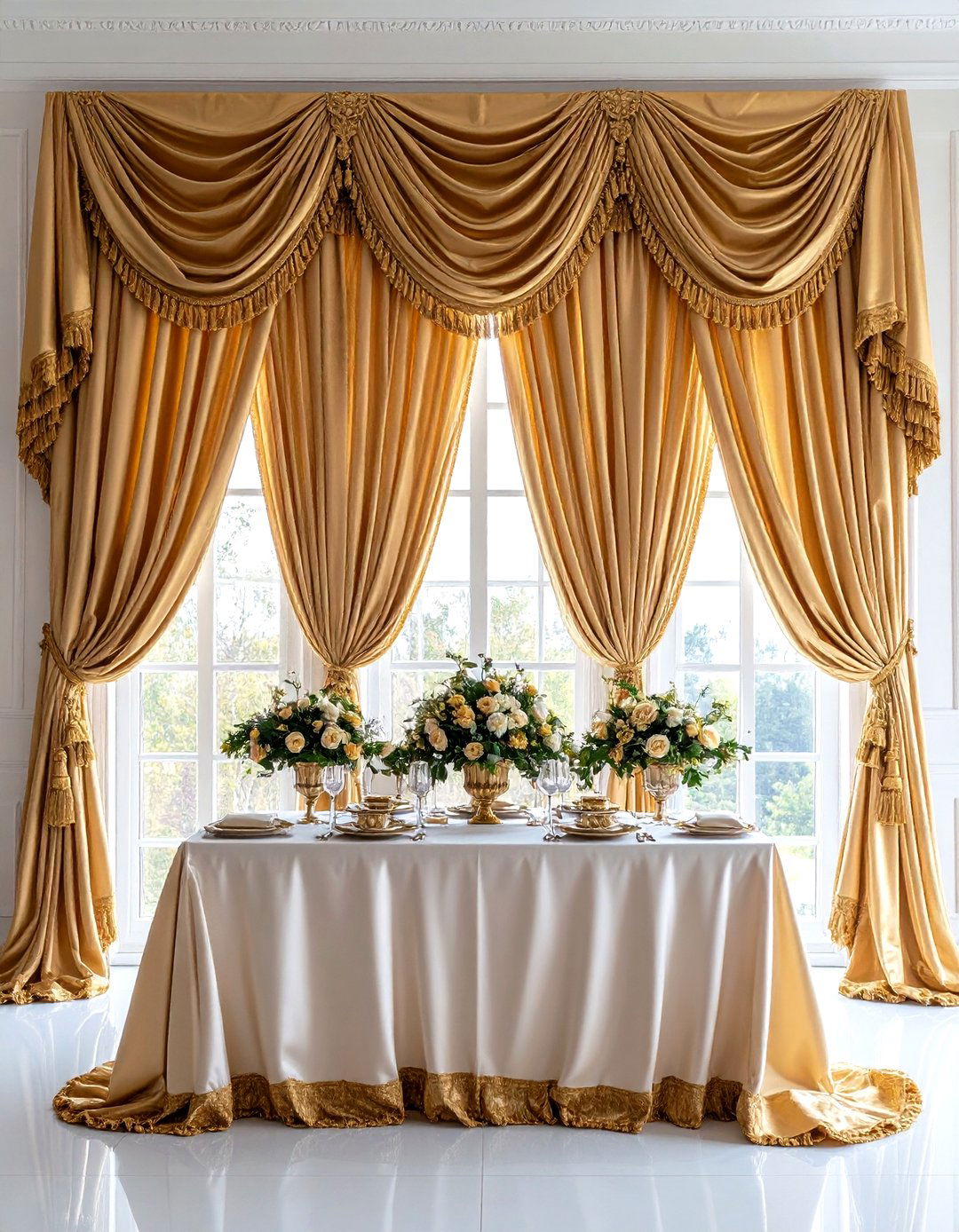
For an authentic window treatment, embrace the elegance of swag and jabot curtains. This style involves fabric loosely draped in a soft curve (the swag) across the top of the window, flanked by vertical cascades of fabric (the jabots) that frame the sides. Typically crafted from luxurious materials like silk or damask, this arrangement adds a soft, theatrical, and romantic touch. It complements the curves and flowing lines found elsewhere in Rococo decor. This layered and decorative approach to window dressing enhances the room's sense of opulence and sophisticated charm, perfectly framing the view outside.
22. Decorative Rococo Folding Screens
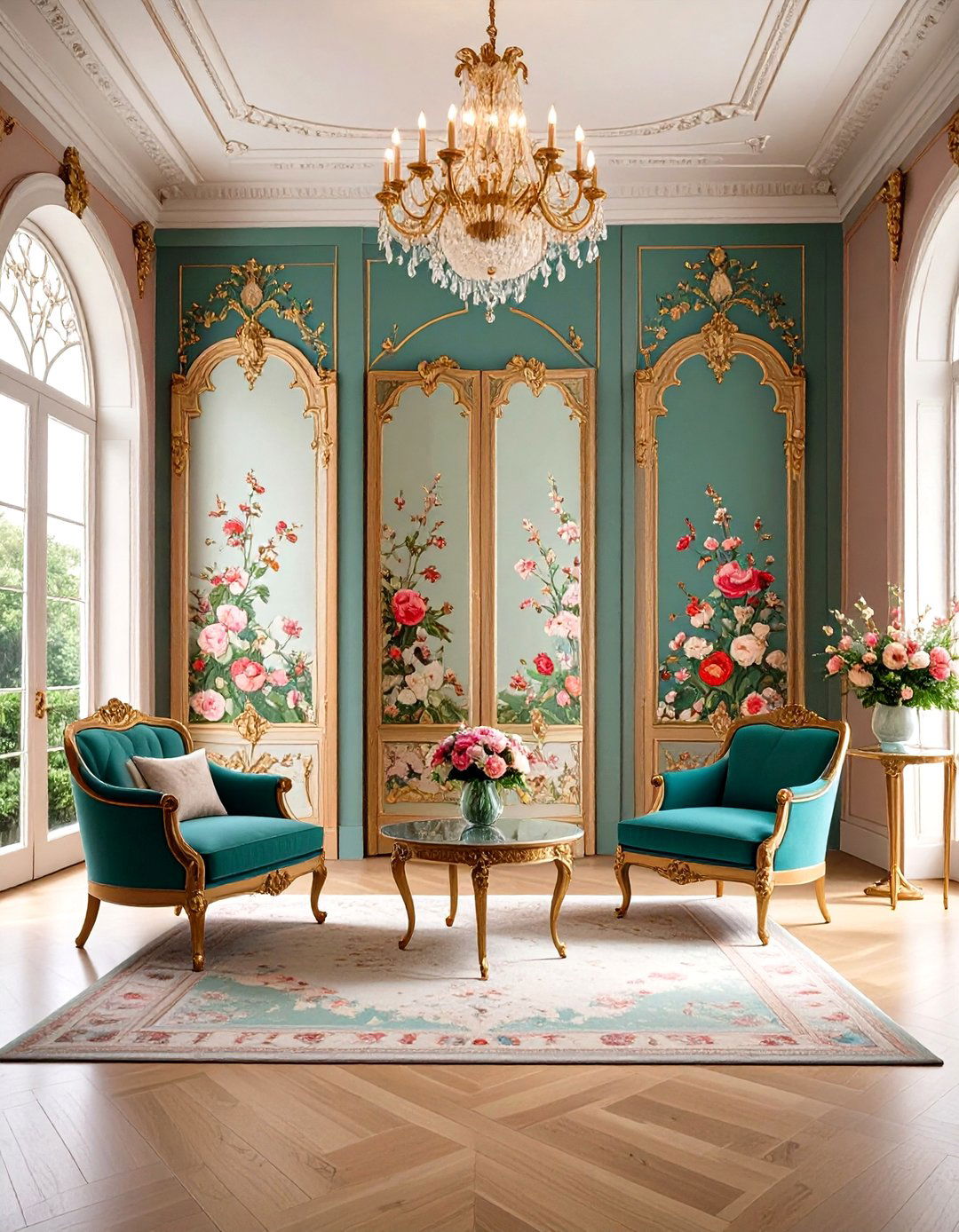
Introduce a decorative folding screen, or "paravent," for a touch of functional elegance and artistry. These screens were popular in the Rococo era for creating intimate nooks, hiding service doors, or simply as a beautiful decorative backdrop. Choose a screen with multiple panels, each featuring hand-painted Chinoiserie scenes, romantic landscapes, or delicate floral patterns on silk or lacquered wood. The screen's articulated structure adds architectural interest, while its artistry introduces color and narrative into the room. It’s a versatile piece that embodies the Rococo love for beauty, privacy, and imaginative decoration.
23. Marble Topped Rococo Furniture
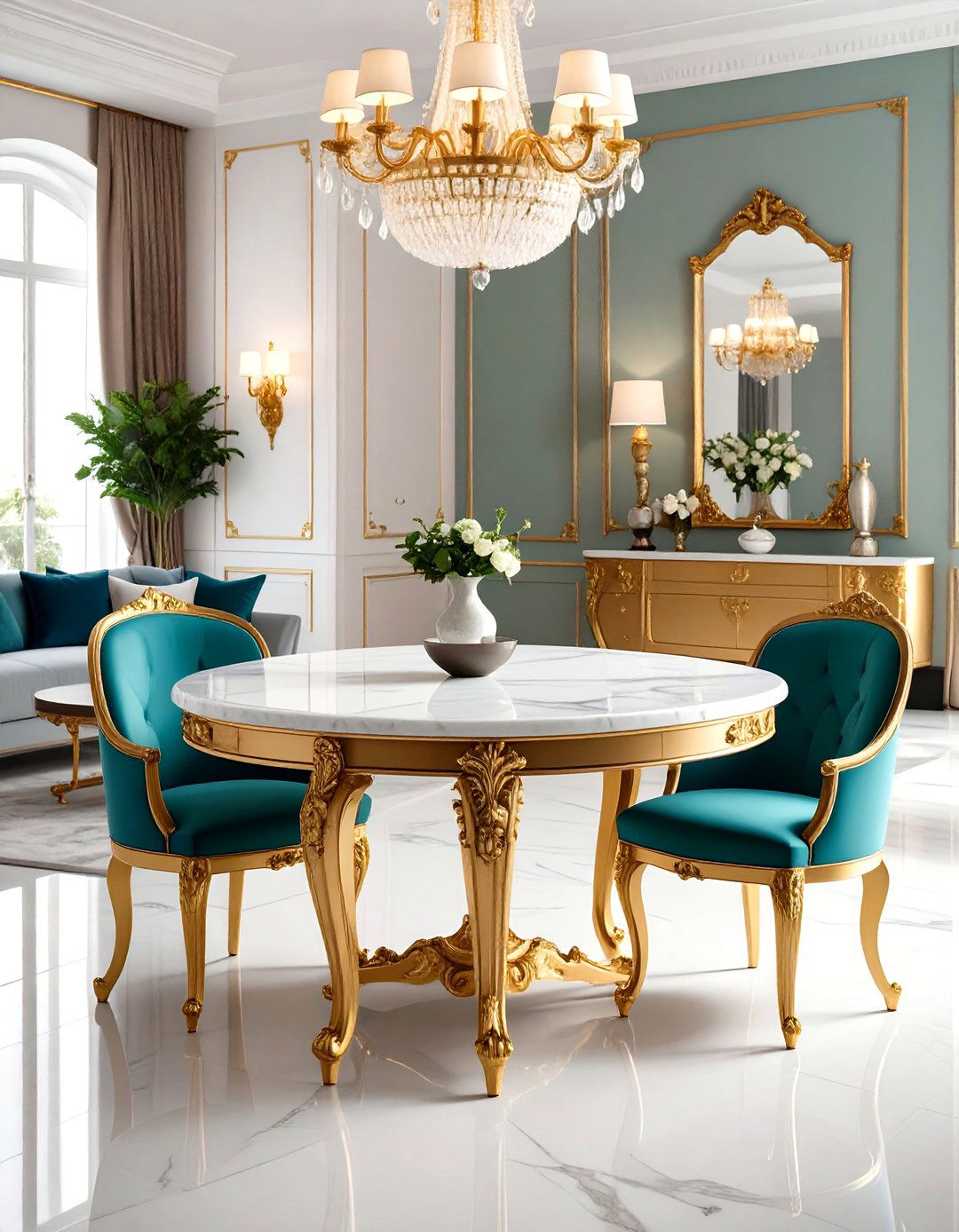
Integrating marble surfaces adds a touch of cool, classical elegance to a Rococo interior. Look for console tables, commodes, and small side tables topped with slabs of finely veined marble. The smooth, polished stone provides a beautiful textural contrast to the intricately carved and gilded wooden bases of the furniture. Popular marble choices in the era included Carrara, Rosso Levanto, and various colored varieties that complemented the pastel color schemes. This use of marble introduces an element of enduring luxury and substance, balancing the otherwise light and delicate nature of Rococo design.
24. Intricate Marquetry Rococo Details
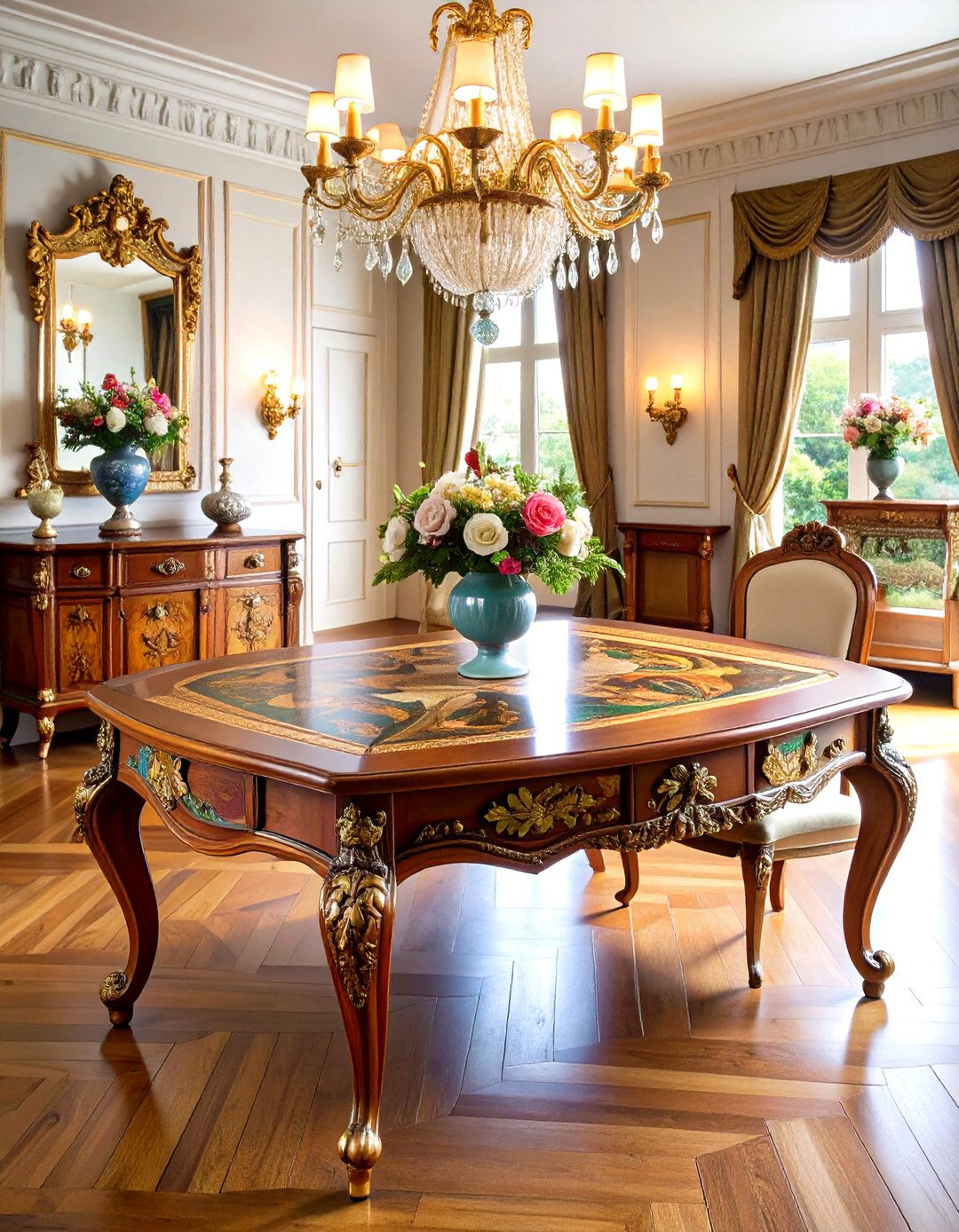
Showcase superior craftsmanship with furniture featuring intricate marquetry. This decorative technique involves inlaying small pieces of different colored veneers—such as exotic woods, mother-of-pearl, or ivory—to form complex patterns or pictorial scenes. In Rococo furniture, marquetry was often used on the surfaces of commodes, desks, and small tables to create elaborate floral arrangements, scrolling vines, or geometric designs. This detailed work adds a layer of color, texture, and unparalleled artistry, turning a functional piece of furniture into a treasured masterpiece that highlights the era's dedication to exquisite detail.
25. Rococo-Inspired Damask Wallpaper
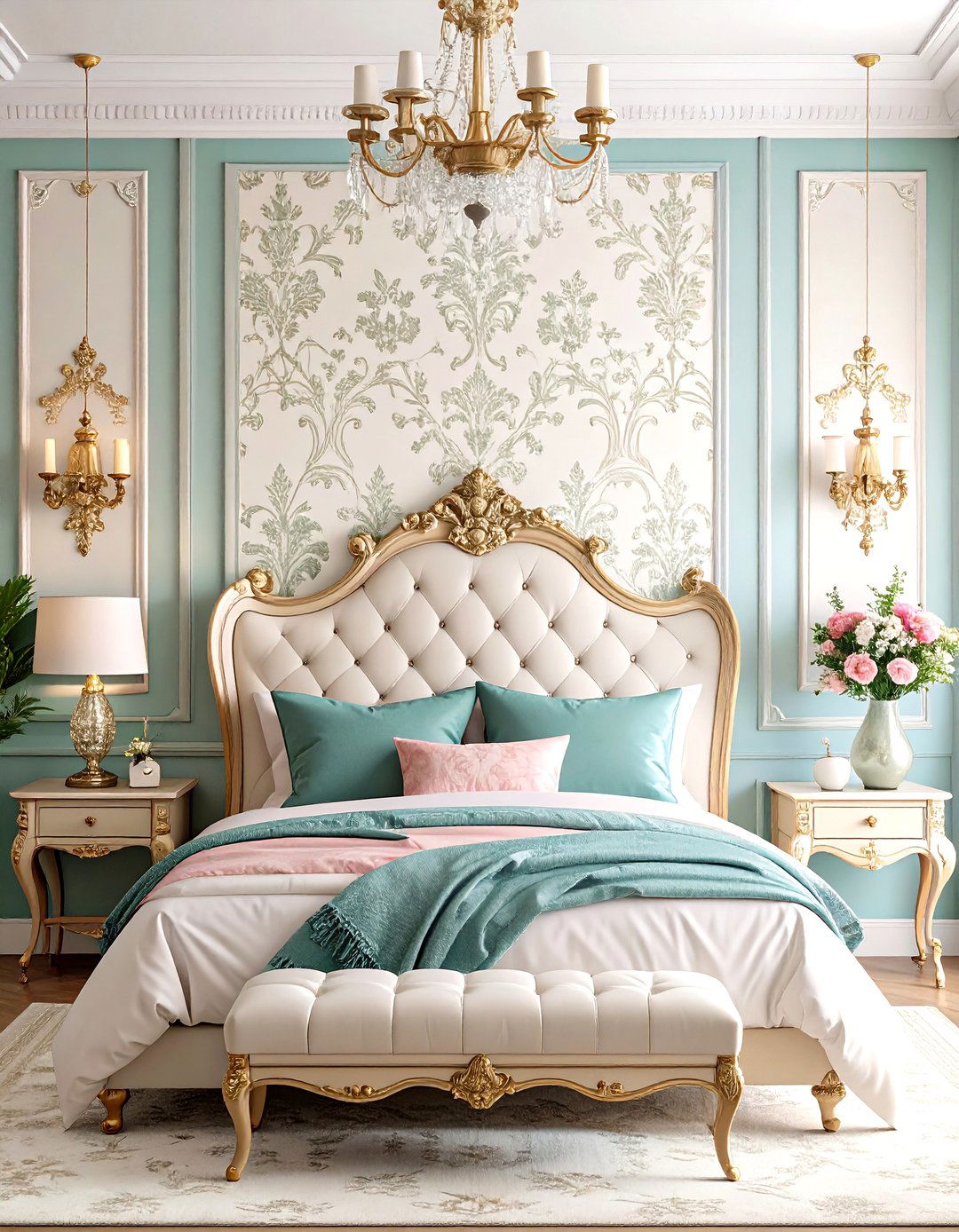
For a truly immersive Rococo experience, adorn your walls with damask-patterned wallpaper. This classic design features a woven, reversible pattern of stylized floral or foliage motifs. In a Rococo context, opt for tone-on-tone damask in a soft pastel color or a subtle metallic sheen. The wallpaper adds a rich texture and a sense of depth to the walls that paint alone cannot achieve. It provides a luxurious and historically accurate backdrop for gilded mirrors, artwork, and ornate furniture, wrapping the room in a continuous layer of subtle elegance and sophisticated pattern.
26. Gilded Rococo Picture Frames
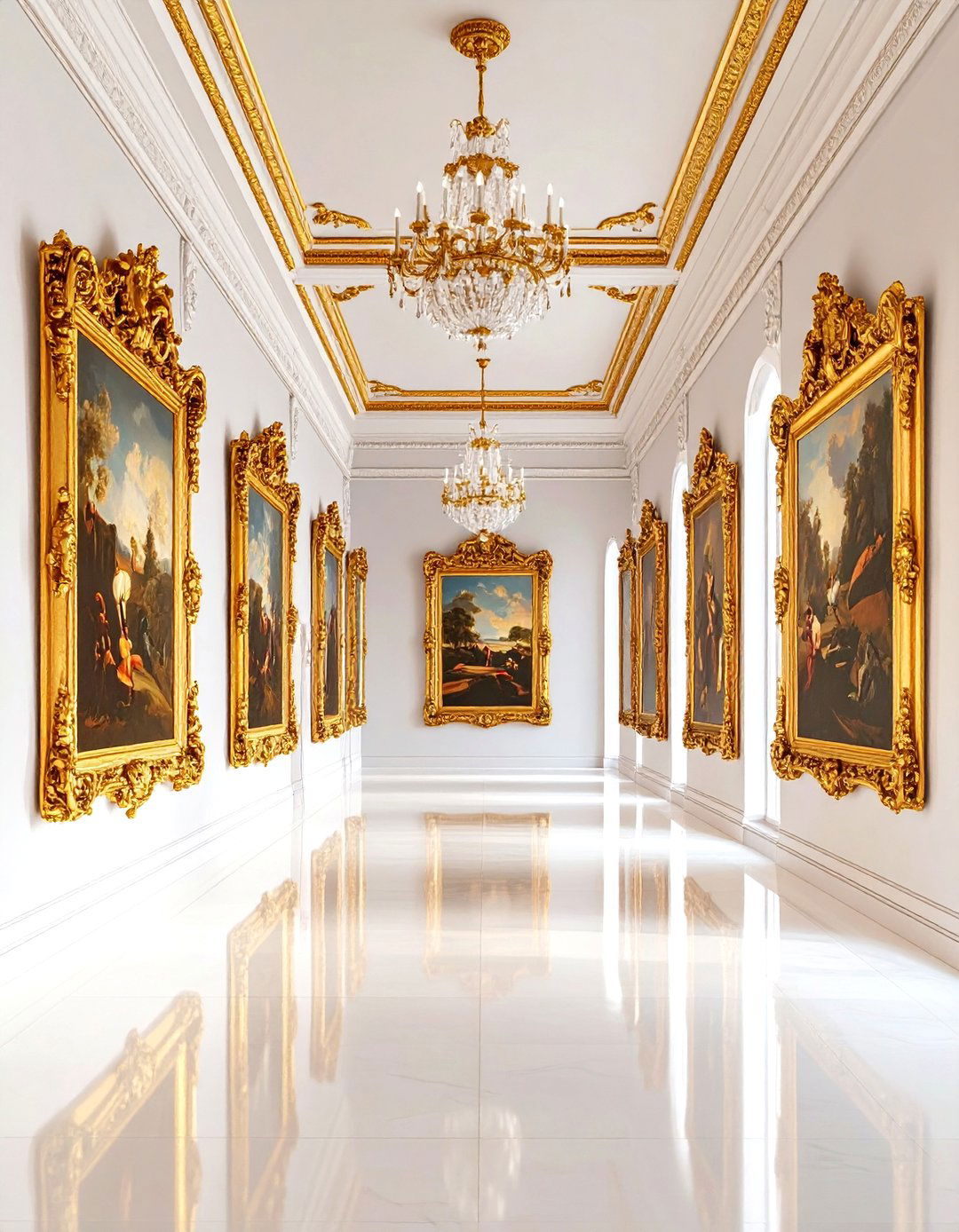
Display artwork in frames that are as beautiful as the art itself. Rococo picture frames are highly ornate, typically carved from wood and finished with gold leaf. They are characterized by their complex, often asymmetrical, patterns of C-scrolls, S-scrolls, rocaille shells, and acanthus leaves. These elaborate frames do more than just contain the artwork; they enhance it, drawing the eye and integrating the painting or print into the room's overall decorative scheme. Grouping several artworks in these magnificent frames on a single wall creates a stunning gallery effect that is pure Rococo extravagance.
27. Rococo Boudoir Chairs
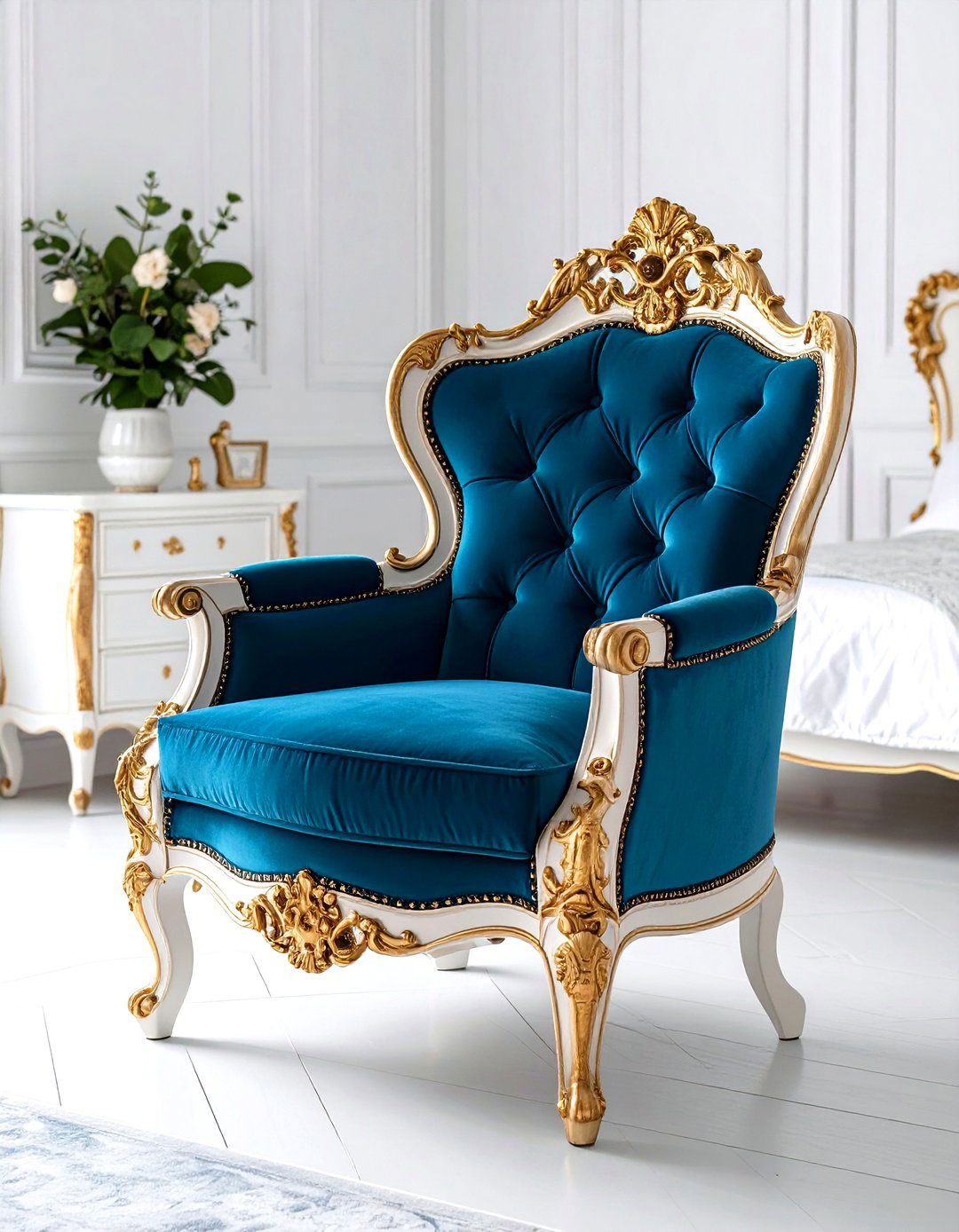
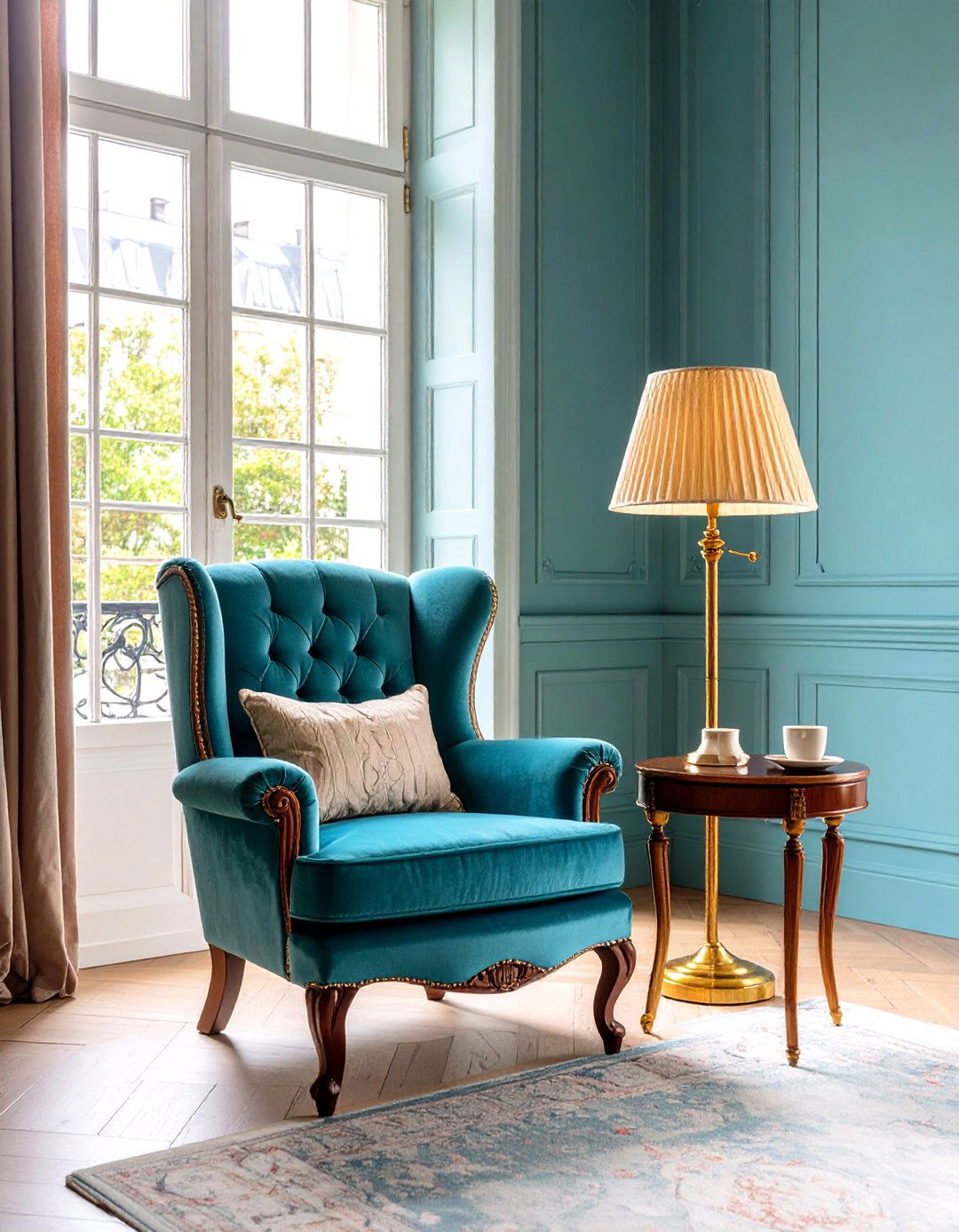
To create an intimate and comfortable seating area, especially in a bedroom or private sitting room, include a Rococo boudoir chair. Also known as a "bergère," this type of armchair is characterized by a deep, wide seat and an upholstered back and armrests within a carved wooden frame. The exposed wood is often painted or gilded, and the cushions are plush and inviting. Its enveloping shape provides a sense of comfort and seclusion. A boudoir chair upholstered in a soft velvet or a delicate floral silk epitomizes the Rococo pursuit of luxurious comfort and elegant living.
28. Ornate Rococo Desks (Bureau Plat)
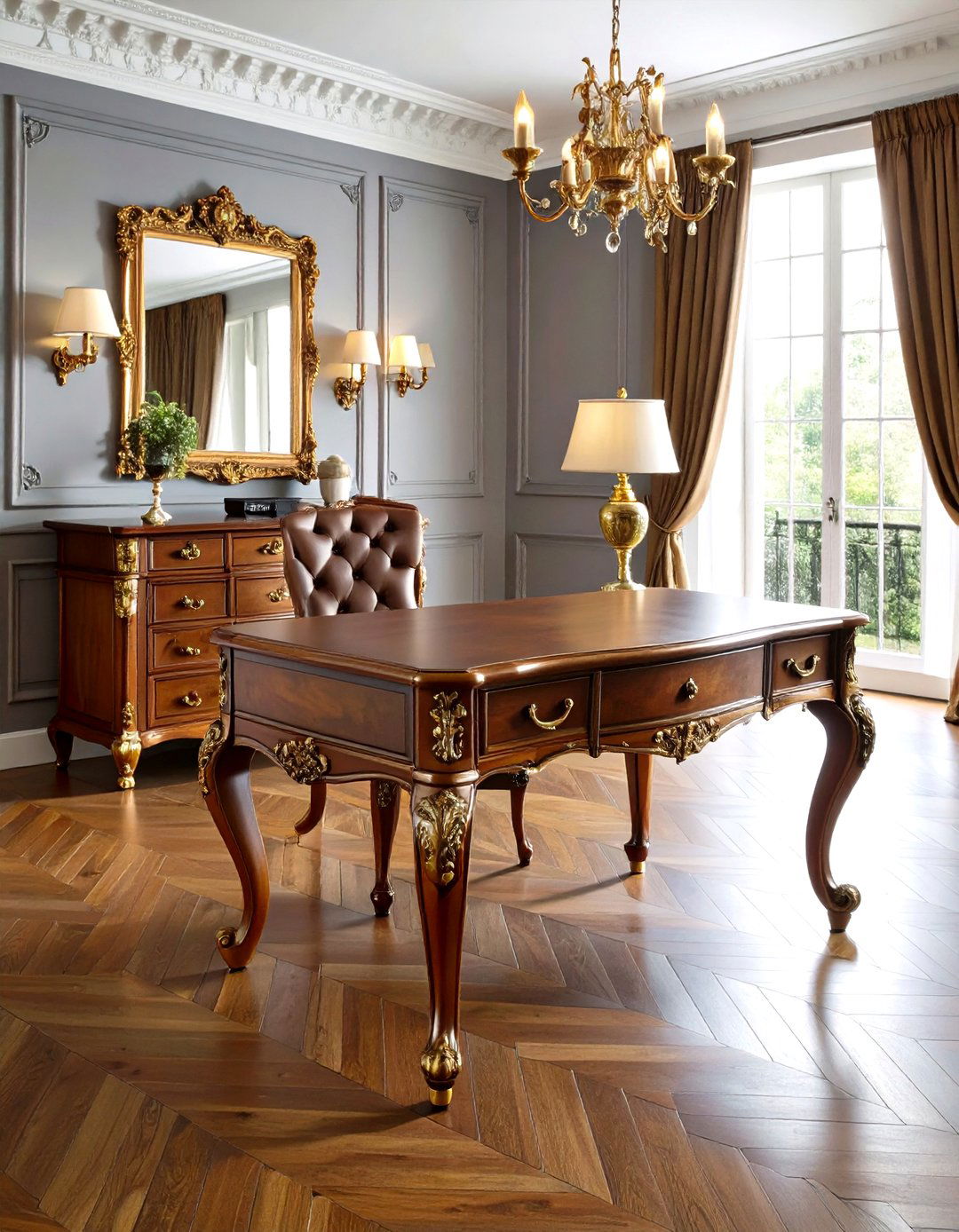
Introduce a "bureau plat," or flat-topped writing desk, as a functional yet highly decorative element. These Rococo desks are renowned for their elegant design, featuring graceful cabriole legs, serpentine lines, and ornate bronze or gilt-bronze mounts (ormolu) on the corners and drawer pulls. The top is often inlaid with a leather writing surface. A bureau plat is not only a practical space for writing but also a statement piece of furniture that showcases exquisite craftsmanship. Placed in a study or a corner of a living room, it adds a touch of intellectual sophistication and refined taste.
29. Rococo Aubusson Tapestries and Rugs
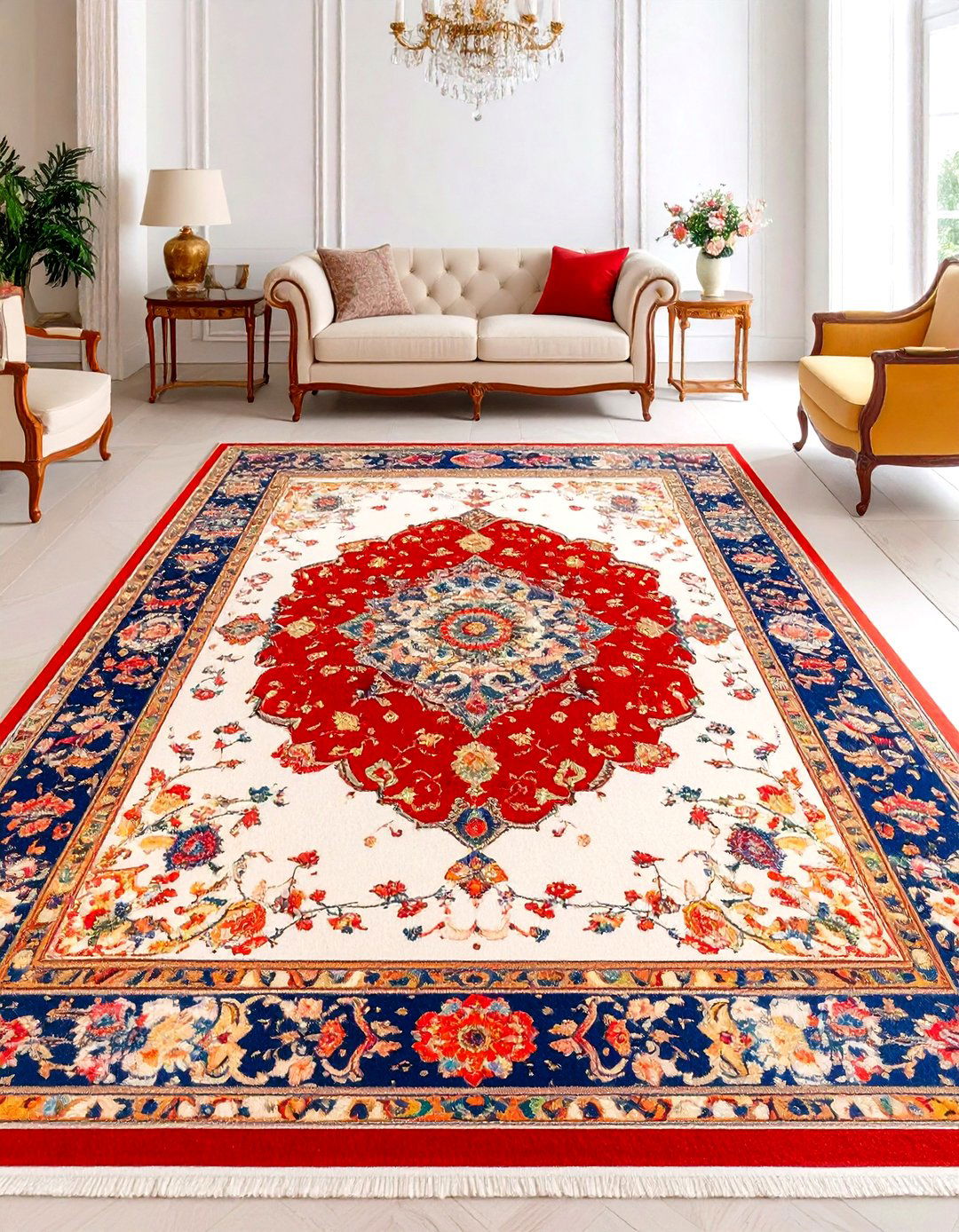
Cover floors and walls with the rich artistry of Aubusson tapestries and rugs. Woven in the French town of Aubusson, these textiles are famous for their fine quality and elegant designs. Rococo-era Aubusson rugs often feature a central floral medallion surrounded by garlands, scrolls, and pastel-colored fields, mirroring the designs seen in ceiling plasterwork. Hanging a large tapestry depicting a pastoral or mythological scene adds texture, color, and a grand narrative element to the walls. These textiles soften a room's acoustics and provide a luxurious foundation that unifies the entire decorative scheme.
30. Gilded Bronze Rococo 'Ormolu' Mounts
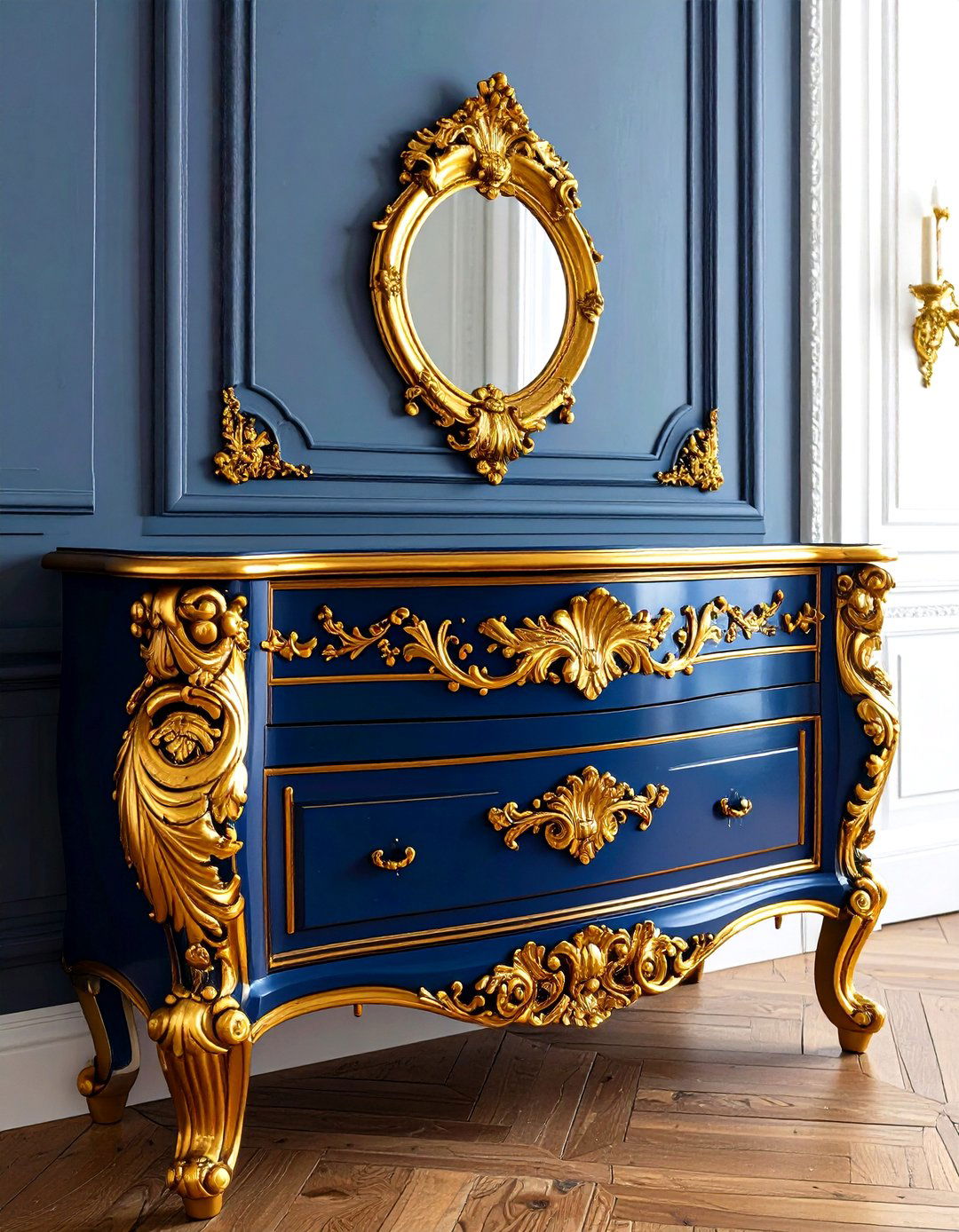
Pay attention to the smallest details by selecting furniture that features "ormolu" mounts. Ormolu is a French term for gilded bronze, which was applied to furniture as protective and decorative hardware. These mounts were often sculpted into elaborate designs like acanthus leaves, scrolls, and cartouches and were used to adorn the corners, keyholes, and feet of commodes, desks, and tables. The rich gleam of the ormolu against polished wood or lacquer surfaces adds a final layer of opulence and exquisite detail, highlighting the furniture's fine craftsmanship and signifying the highest level of Rococo luxury.
Conclusion:
Rococo interior design is a celebration of elegance, light, and intricate artistry. By integrating its core elements—such as a pastel color palette, gilded mirrors, boiserie panels, and furniture with cabriole legs—you can create a space that feels both opulent and intimately charming. The style's emphasis on asymmetry, natural motifs like florals and shells, and luxurious materials like silk and crystal, results in an atmosphere of playful sophistication. Ultimately, a well-executed Rococo interior is a timeless tribute to comfort, beauty, and the art of graceful living, transforming any home into a personal Versailles.

Related posts:


Leave a Reply