
A well-designed rock patio can transform your backyard into a stunning and functional outdoor living space. Using natural stone offers durability, timeless beauty, and a seamless connection to the surrounding landscape. From smooth river rocks to rustic flagstones, the variety of materials allows for endless creativity. Whether you envision a cozy spot for morning coffee, an expansive area for entertaining, or a tranquil retreat, there's a rock patio idea to suit your style and needs. These designs showcase how different types of rock, layouts, and complementary features can create the perfect foundation for your outdoor oasis, blending practicality with natural charm.
1. Irregular Flagstone Rock Patio with Mossy Gaps
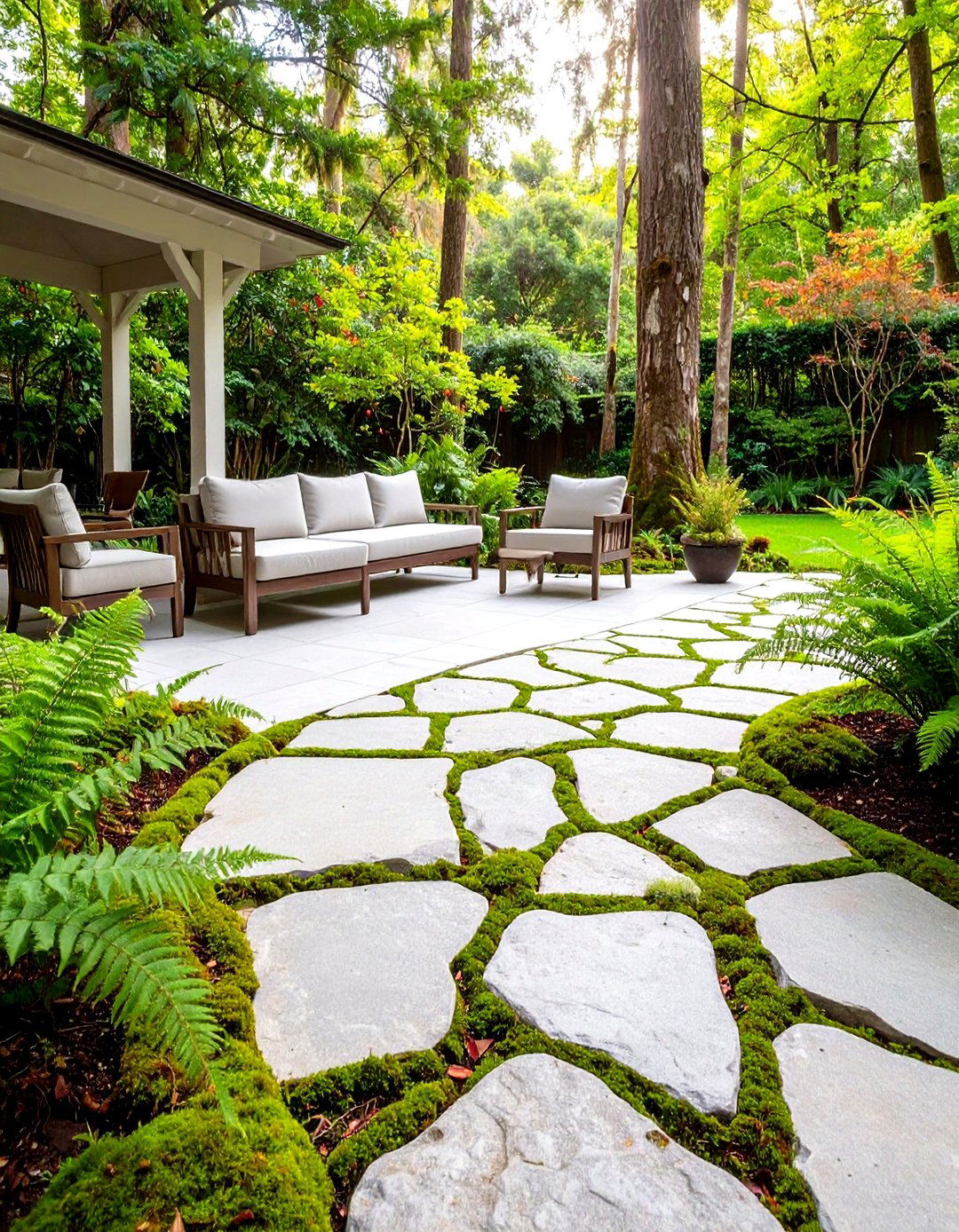
Consider a flagstone rock patio where irregularly shaped stones are laid out in a charming, puzzle-like pattern. The beauty of this design lies in its imperfection, creating a rustic and organic feel. To enhance the naturalistic look, the gaps between the large, flat stones are filled with soil and planted with lush green moss or other low-growing groundcovers like creeping thyme. This not only adds a soft texture and a pop of color but also helps with drainage. This style works wonderfully in shaded, damp areas of a garden, blending the patio seamlessly into a woodland or cottage-style landscape for an aged, timeless appearance.
2. Smooth River Rock Patio Border
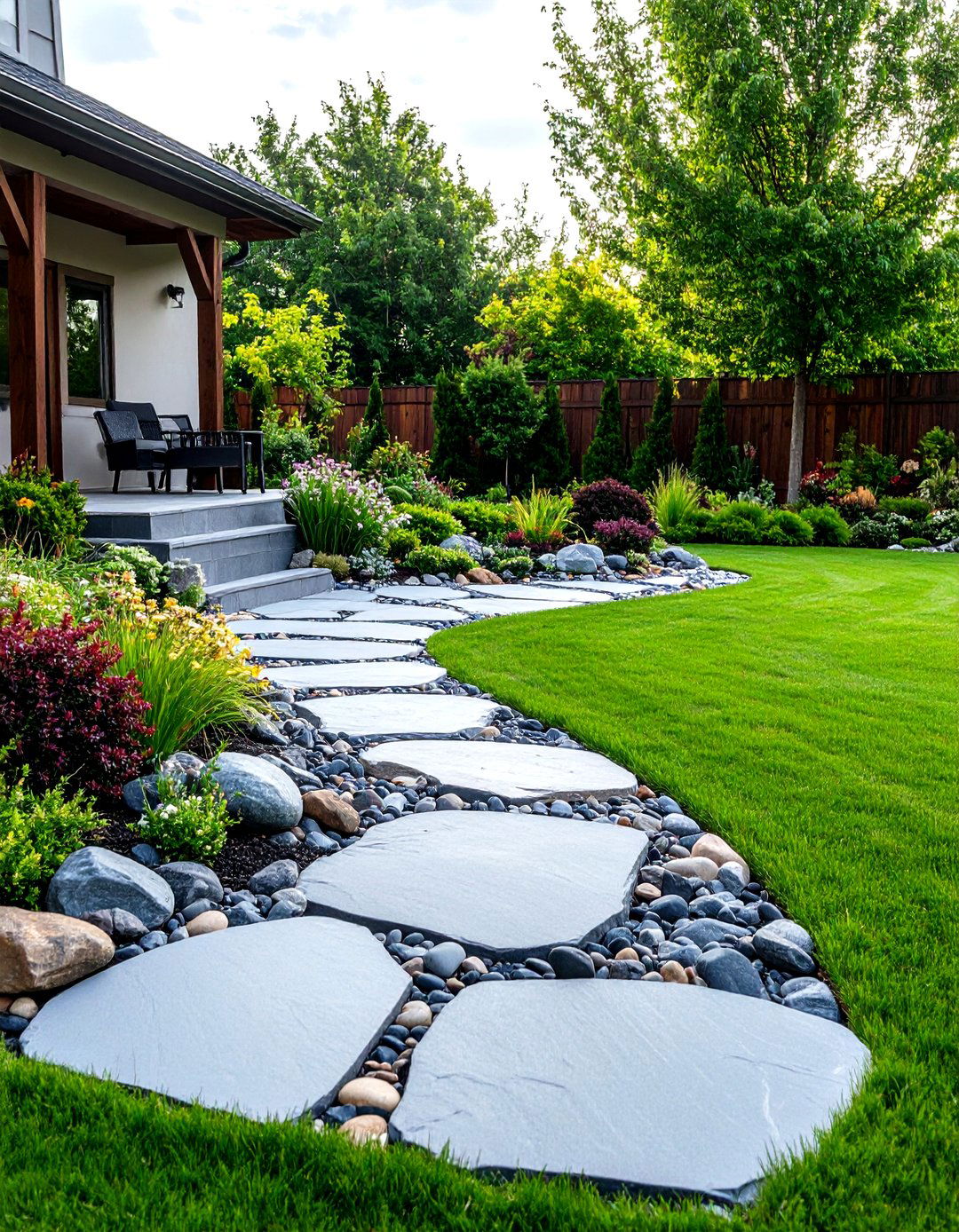
To define your main patio area, incorporate a border made of smooth, rounded river rocks. This technique creates a clean, polished edge that contrasts beautifully with larger, more angular paving stones or even a simple concrete slab. The river rocks can be set in a single line or a wider band, held in place with mortar or landscape edging. Their varied colors, from gray and black to tan and white, add subtle visual interest and a textural break. A river rock border is a simple yet effective way to frame your rock patio, preventing mulch or grass from encroaching and giving the entire space a finished look.
3. Gravel and Stone Paver Rock Patio
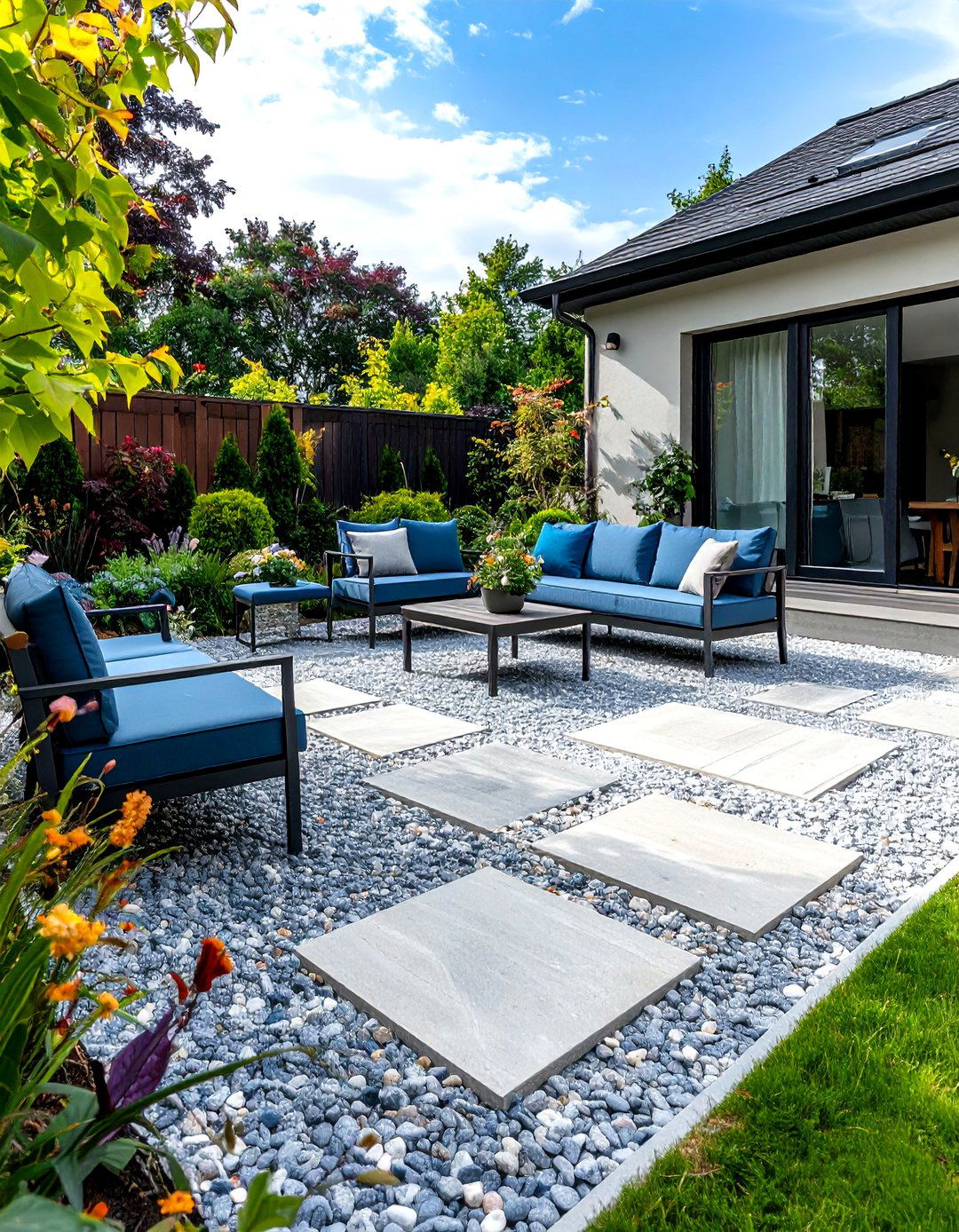
For a budget-friendly and low-maintenance option, combine large, flat stone pavers with a gravel base. This mixed-media approach creates a modern yet rustic rock patio. The pavers provide stable, comfortable surfaces for placing furniture and walking, while the surrounding pea gravel fills the space, suppresses weeds, and ensures excellent drainage. You can arrange the pavers in a geometric grid for a contemporary feel or scatter them randomly for a more organic path-like design. The contrast between the solid pavers and the fine texture of the gravel adds depth and visual appeal, making it a versatile choice for various backyard styles.
4. Multi-Level Rock Patio with Stone Steps
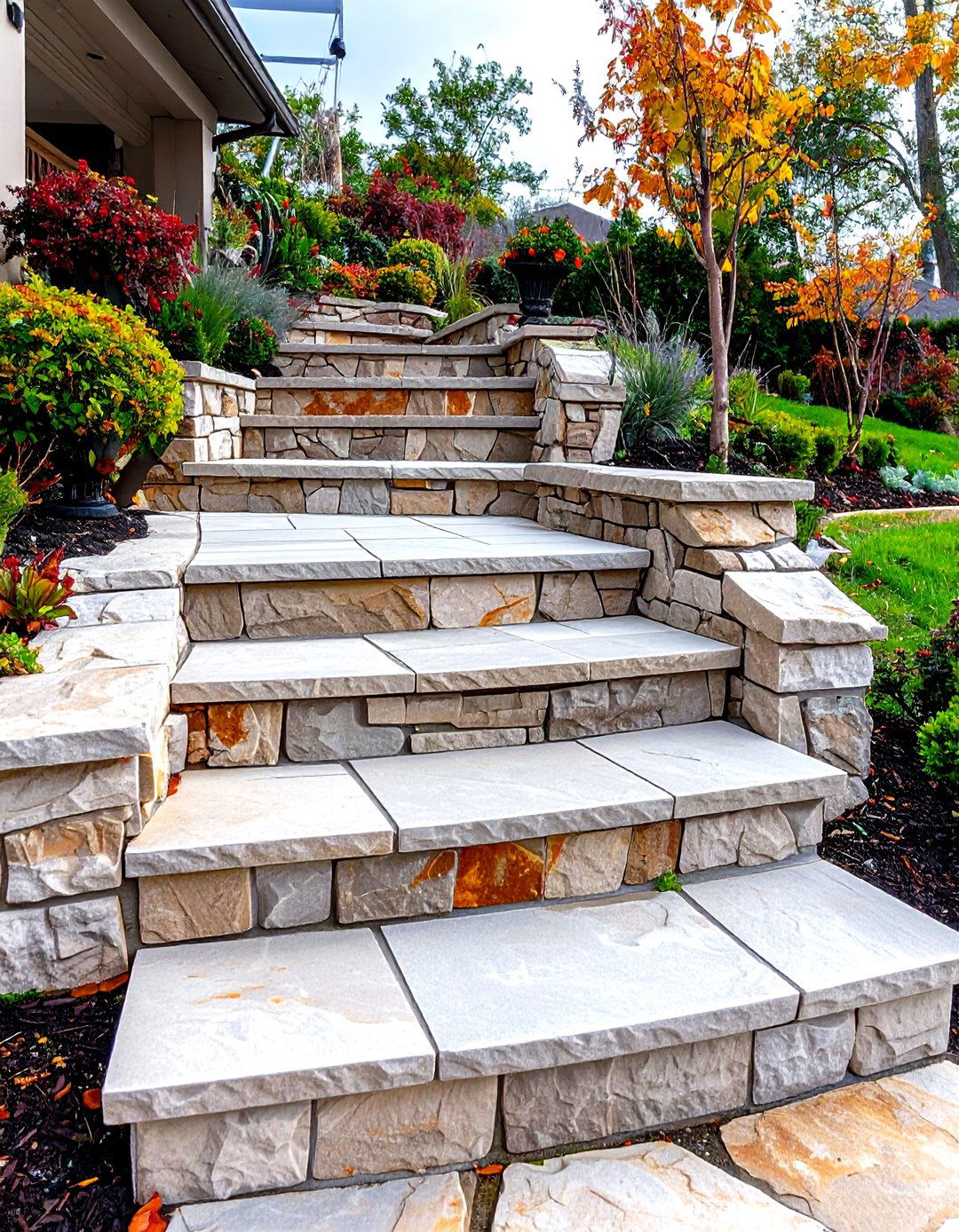
Transform a sloped backyard by creating a multi-level rock patio connected by wide, sturdy stone steps. This design breaks up the space into distinct zones, perfect for separating a dining area from a lounging spot. Each level can be paved with flagstone or slate, while the retaining walls and steps are built from matching or complementary stacked stone. This adds dimension and architectural interest to your landscape, turning a challenging incline into a stunning feature. Integrating planters into the retaining walls further softens the look, bringing greenery and color to the different tiers of your functional and beautiful outdoor living area.
5. Circular Rock Patio with a Central Fire Pit
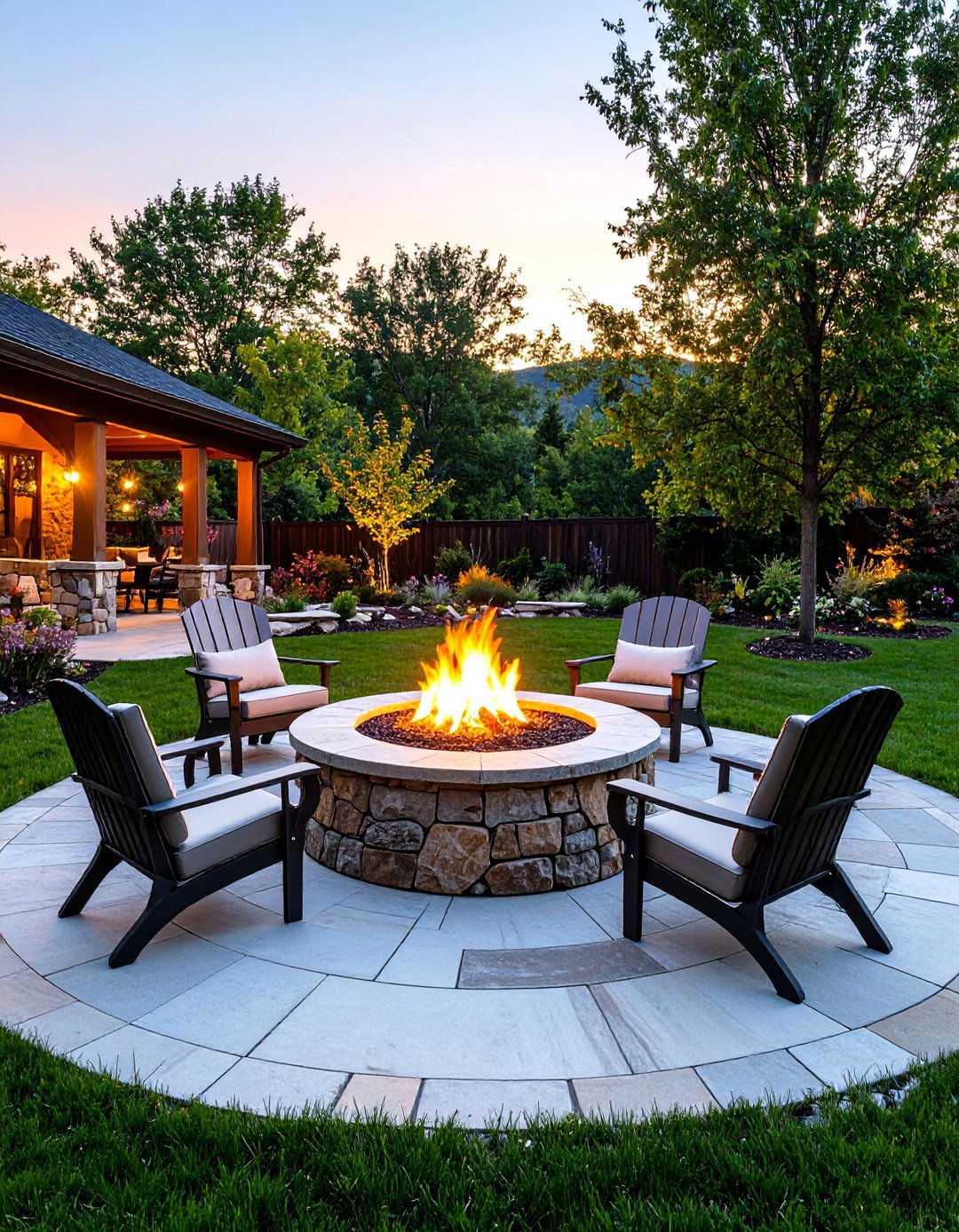
Create a natural gathering spot by designing a circular rock patio with a fire pit at its center. Using stones like flagstone or bluestone laid in a radial pattern draws the eye inward, making the fire pit the undeniable focal point. The circular shape encourages conversation and creates an intimate, cozy atmosphere perfect for evening get-togethers. Benches made of matching stone can be built along the perimeter to provide permanent seating. This design is not only aesthetically pleasing but also highly functional, providing a dedicated space for warmth, light, and socializing under the stars, making your backyard the go-to destination for friends and family.
6. Decomposed Granite Patio with Boulders
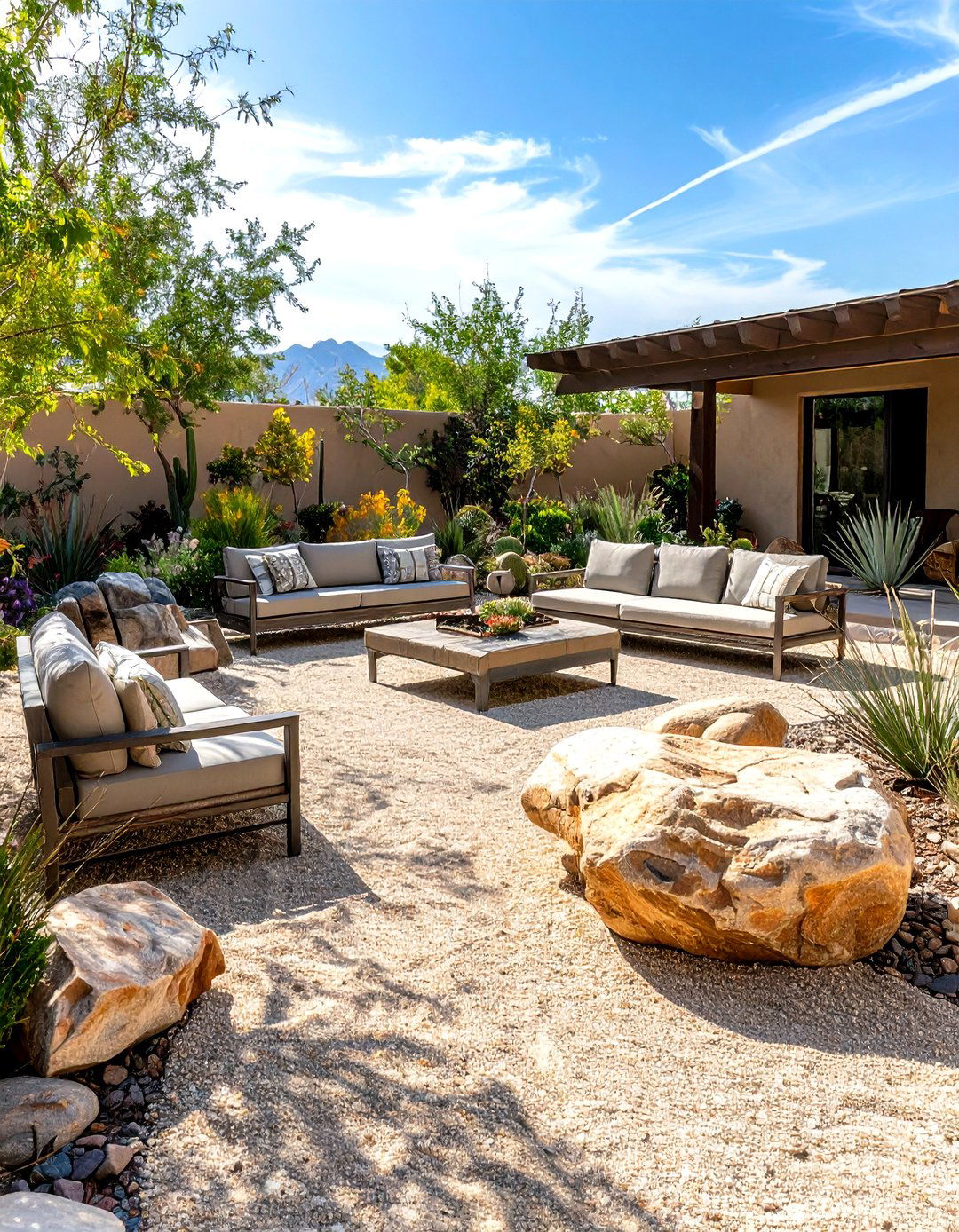
For a soft, natural-looking surface, a decomposed granite patio is an excellent choice. This material consists of fine rock particles that compact to form a stable yet permeable base, offering a softer feel underfoot than hard pavers. To add structure and a dramatic natural element, strategically place large boulders around the perimeter or even within the patio space itself. These boulders can serve as informal seating or simply as sculptural accents that tie the patio to the wider landscape. The warm, earthy tones of decomposed granite combined with the rugged texture of the boulders create a relaxed, elemental, and low-maintenance outdoor area.
7. Slate Tile Rock Patio for a Modern Look
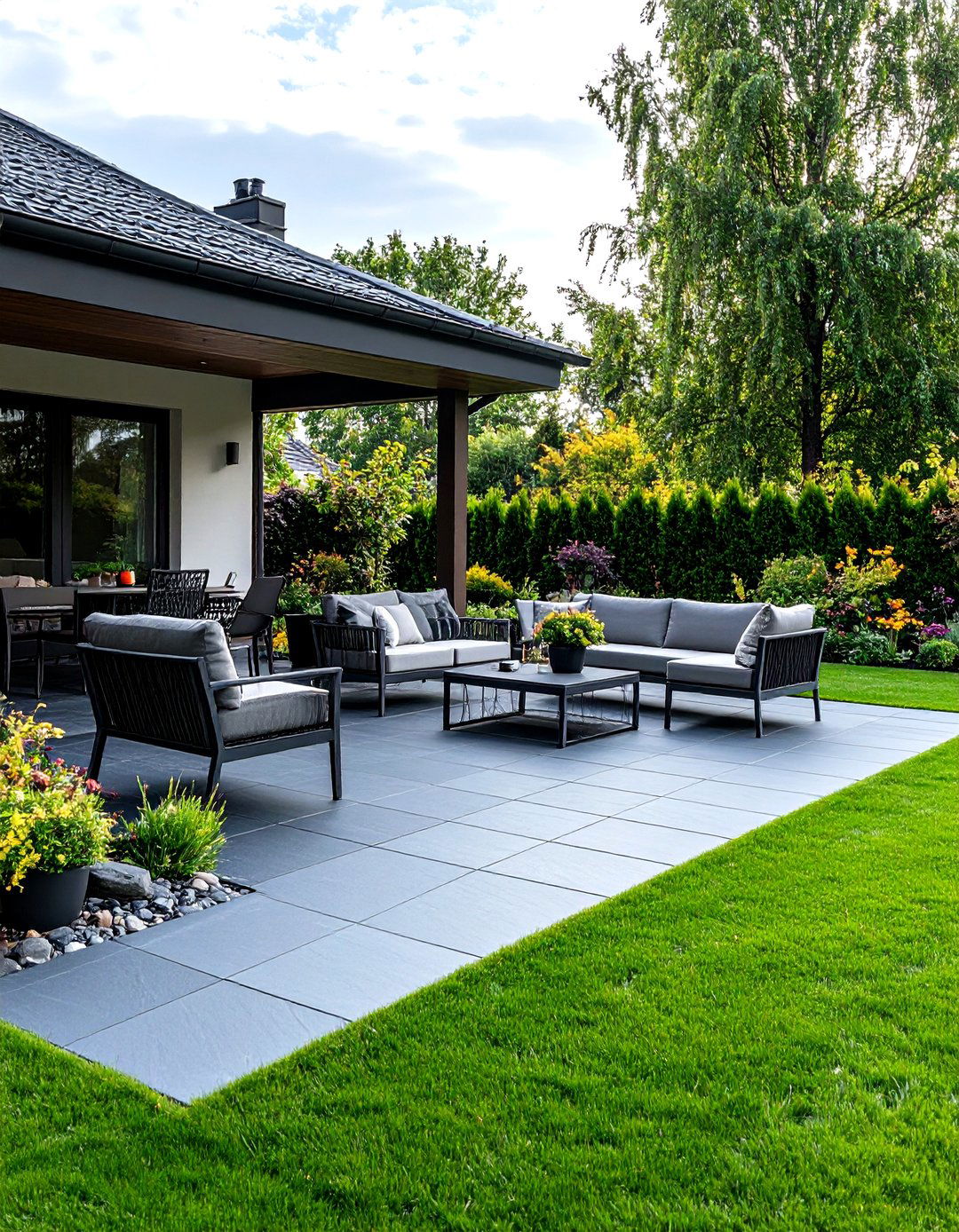
Achieve a sleek, contemporary aesthetic with a slate tile rock patio. The clean lines and uniform size of slate tiles create a sophisticated and polished surface. Available in shades of gray, black, and even hints of green or purple, slate offers a dramatic and elegant foundation for your outdoor furniture and decor. The natural cleft surface provides good slip resistance, making it a practical choice. Laid in a simple grid or a more complex running bond pattern, a slate patio feels luxurious and modern, seamlessly extending your indoor living space into the outdoors for a chic and cohesive design statement.
8. Cobblestone Rock Patio for Old-World Charm
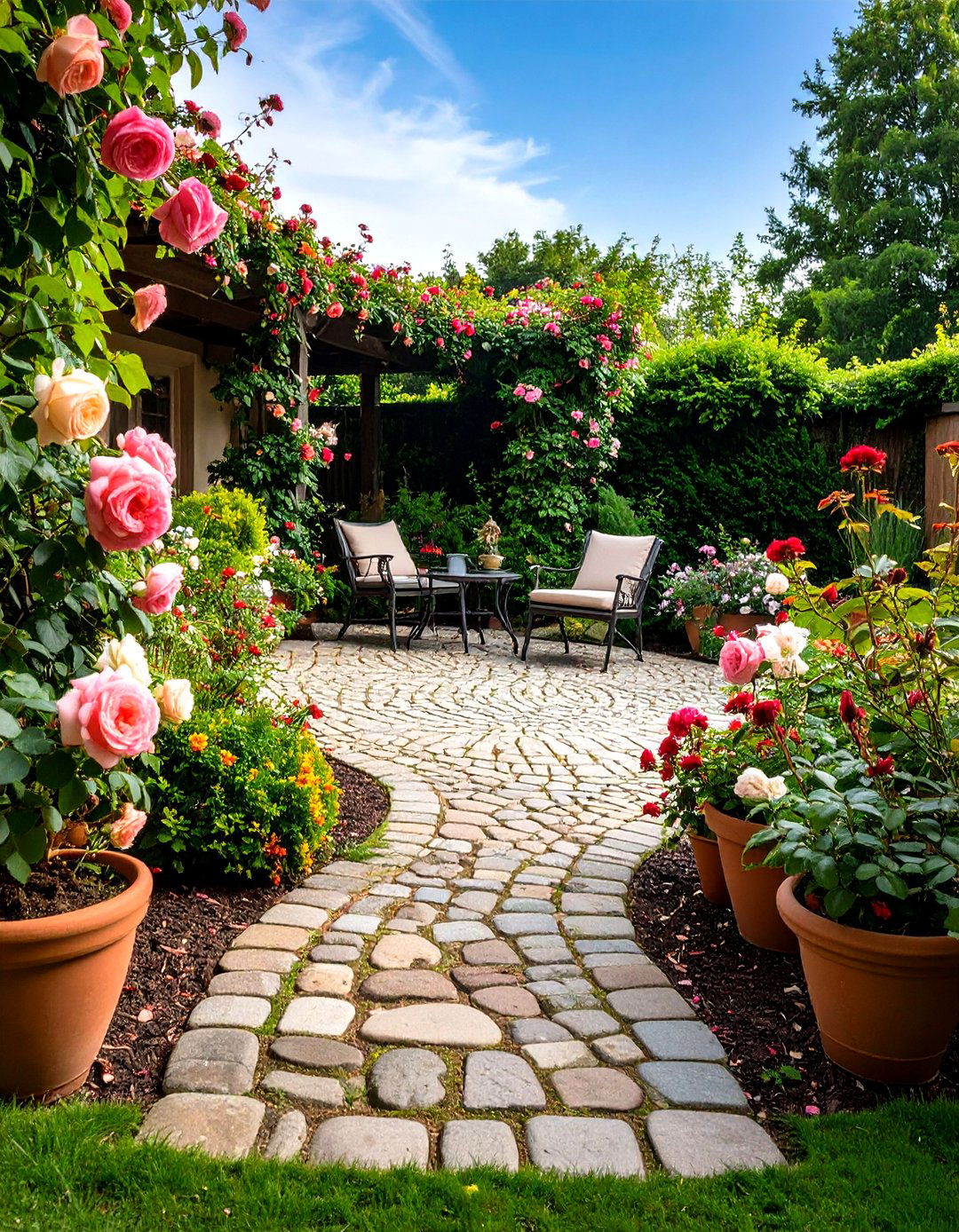
Evoke the feeling of a historic European courtyard with a cobblestone rock patio. These small, rounded stones, traditionally used for streets and plazas, bring immense character and texture to any outdoor space. Their durable nature ensures a long-lasting surface that ages beautifully over time. Whether set in a traditional fan pattern or a simple running bond, a cobblestone patio adds a touch of rustic elegance and old-world charm. This style is perfect for cottage gardens, historic homes, or anyone looking to infuse their backyard with a sense of history and timeless appeal, creating a durable and visually captivating foundation.
9. Permeable Rock Patio with Grass Joints
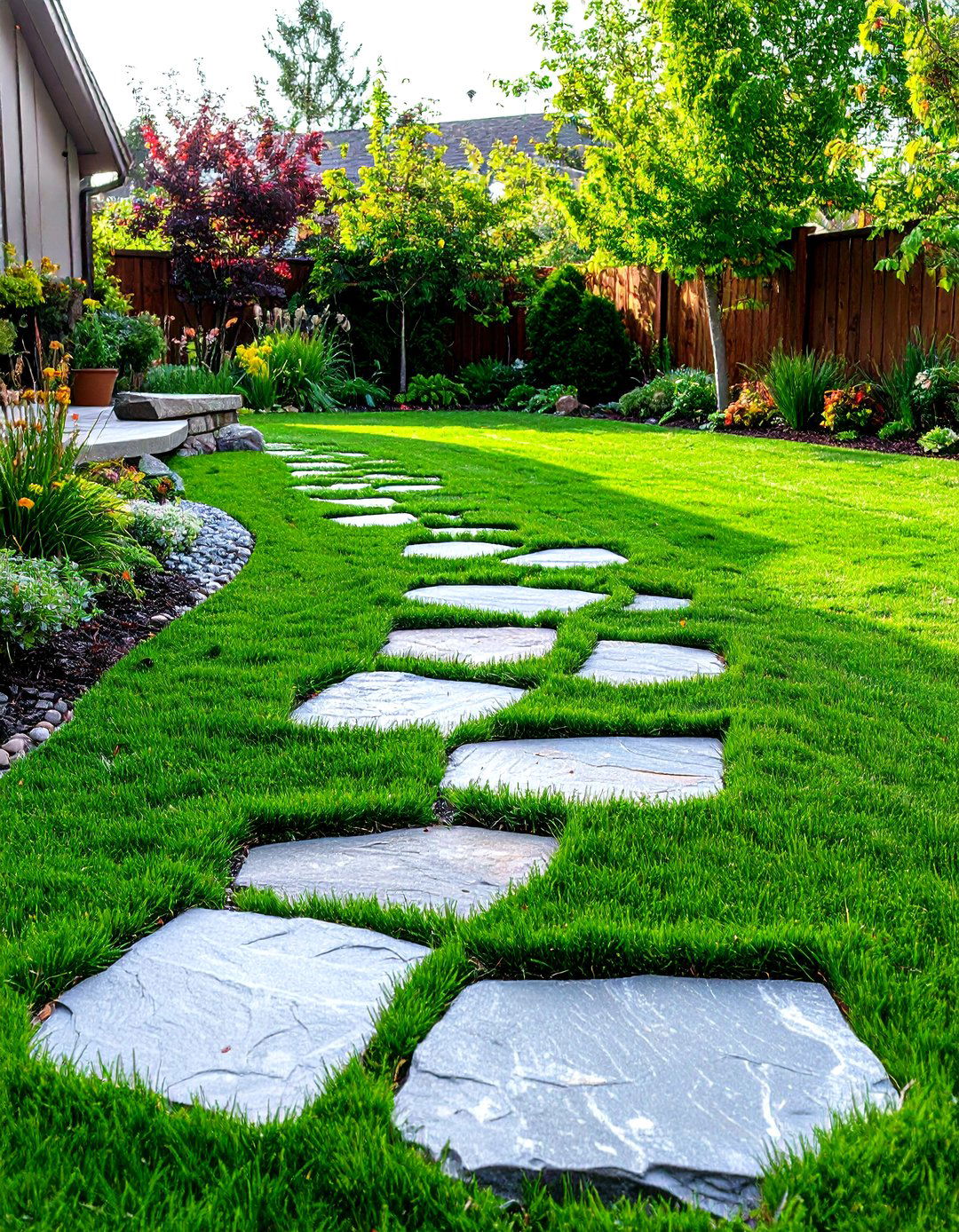
For an eco-friendly and visually soft design, consider a permeable rock patio featuring pavers with grass-filled joints. By leaving wide gaps between large stone slabs and planting them with resilient turf, you create a surface that allows rainwater to soak directly into the ground. This reduces runoff and helps replenish groundwater. The grid of green against the stone creates a striking geometric pattern that feels both modern and natural. This "living patio" blends seamlessly with the surrounding lawn, softening the hardscape and creating a cooler surface in the summer heat, making it a sustainable and attractive choice.


10. Rock Patio with an Integrated Water Feature
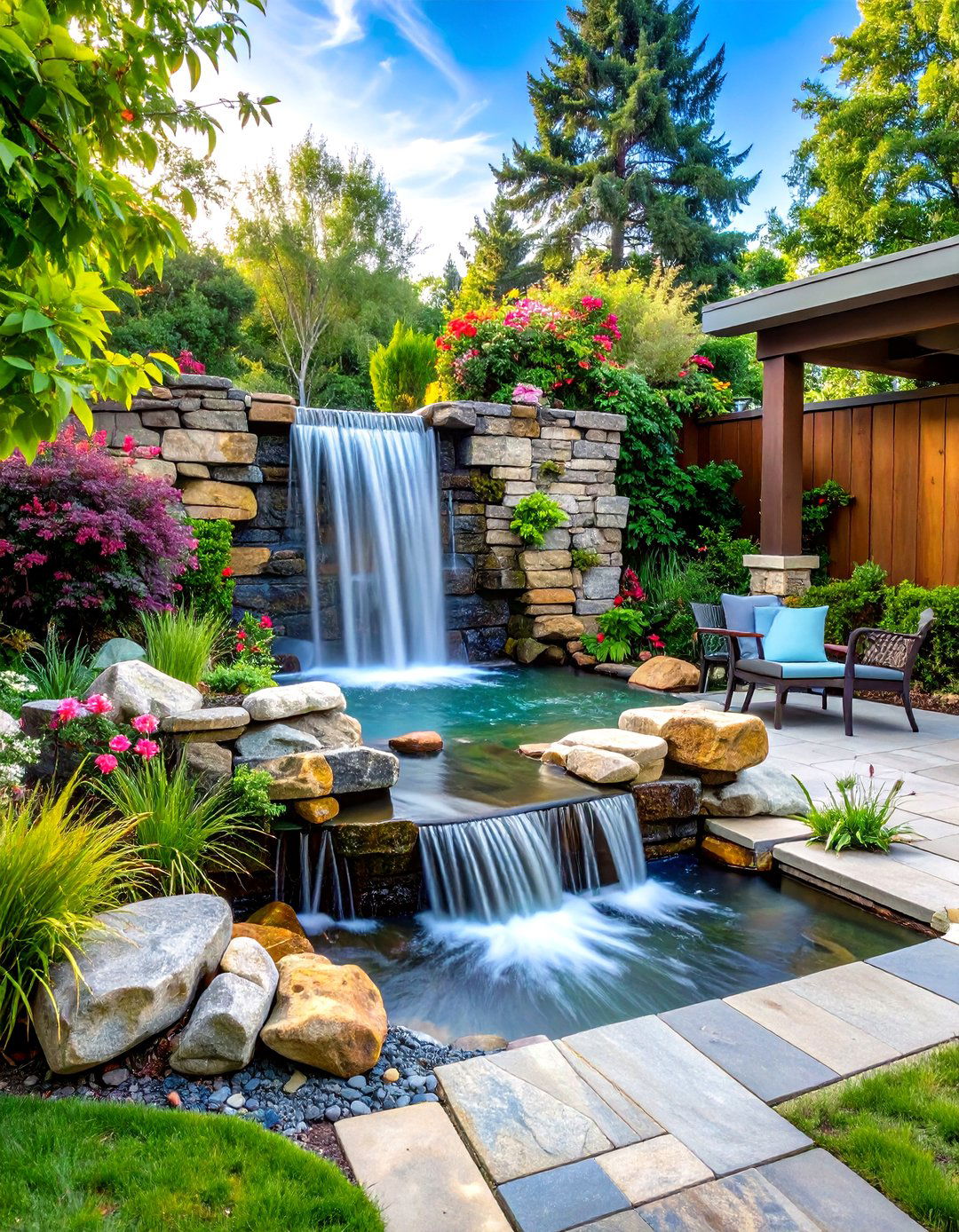
Elevate your rock patio from a simple seating area to a tranquil oasis by incorporating an integrated water feature. Imagine a small pondless waterfall built into a raised stone wall at the edge of your flagstone patio, with water cascading over rocks into a hidden reservoir below. The gentle sound of moving water creates a soothing ambiance, masking neighborhood noise and promoting relaxation. The feature can be built from the same rock as the patio for a cohesive look or a contrasting stone to make it a standout element. This addition brings sound, movement, and a connection to nature right to your doorstep.
11. Lava Rock Patio Accents
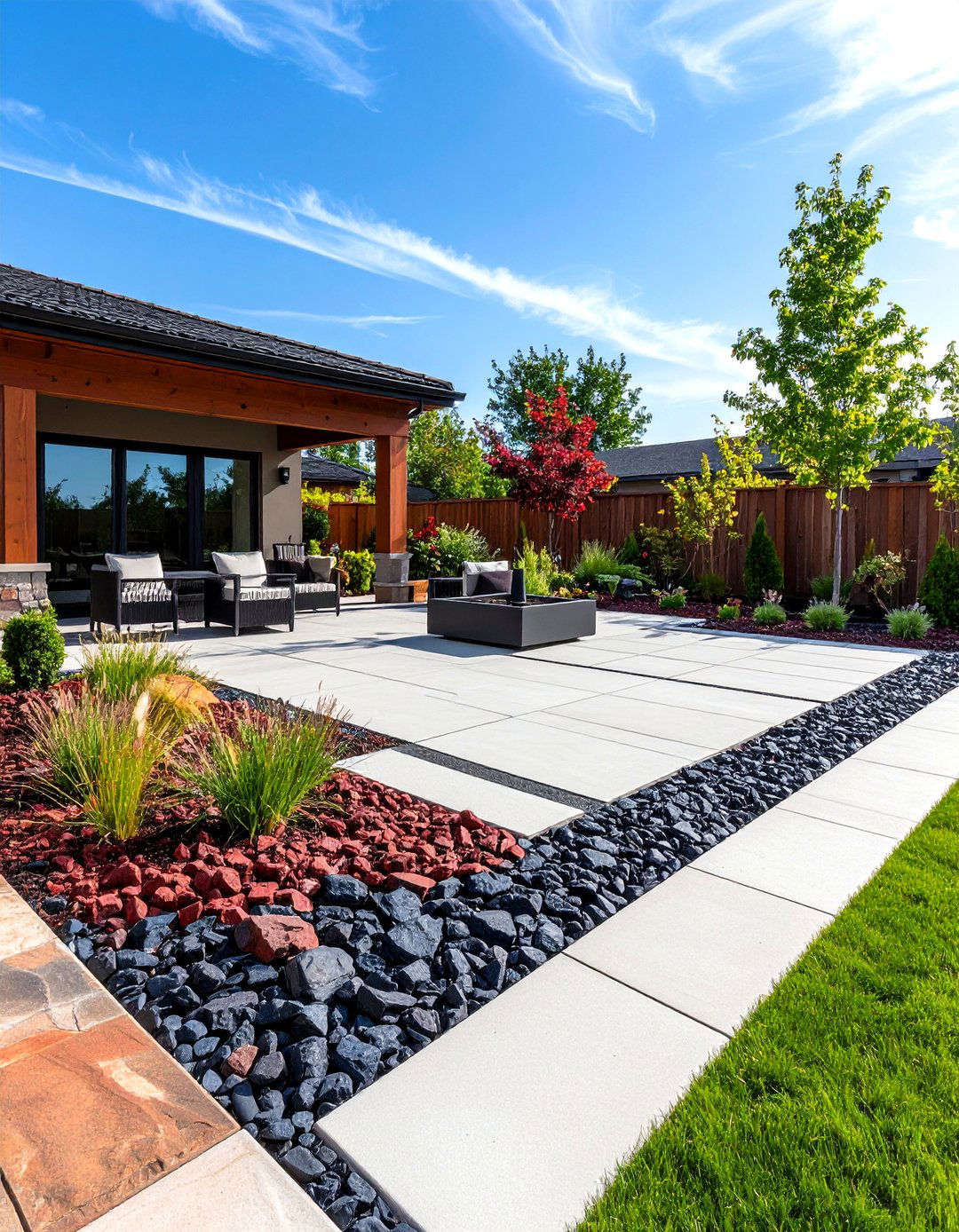
Incorporate lava rock into your patio design for a unique textural and color contrast. While not ideal for the main walking surface due to its sharp texture, lava rock is perfect for creating striking borders, filling gaps between large pavers, or as a decorative mulch in adjacent planter beds. Its porous nature makes it lightweight and excellent for drainage. Available in dramatic shades of black and red, lava rock can add a bold, modern, or even tropical flair. Using it as an accent around a smoother flagstone or concrete patio creates a dynamic visual interplay between different materials, adding depth and a touch of the exotic.
12. Sand-Set Flagstone Rock Patio
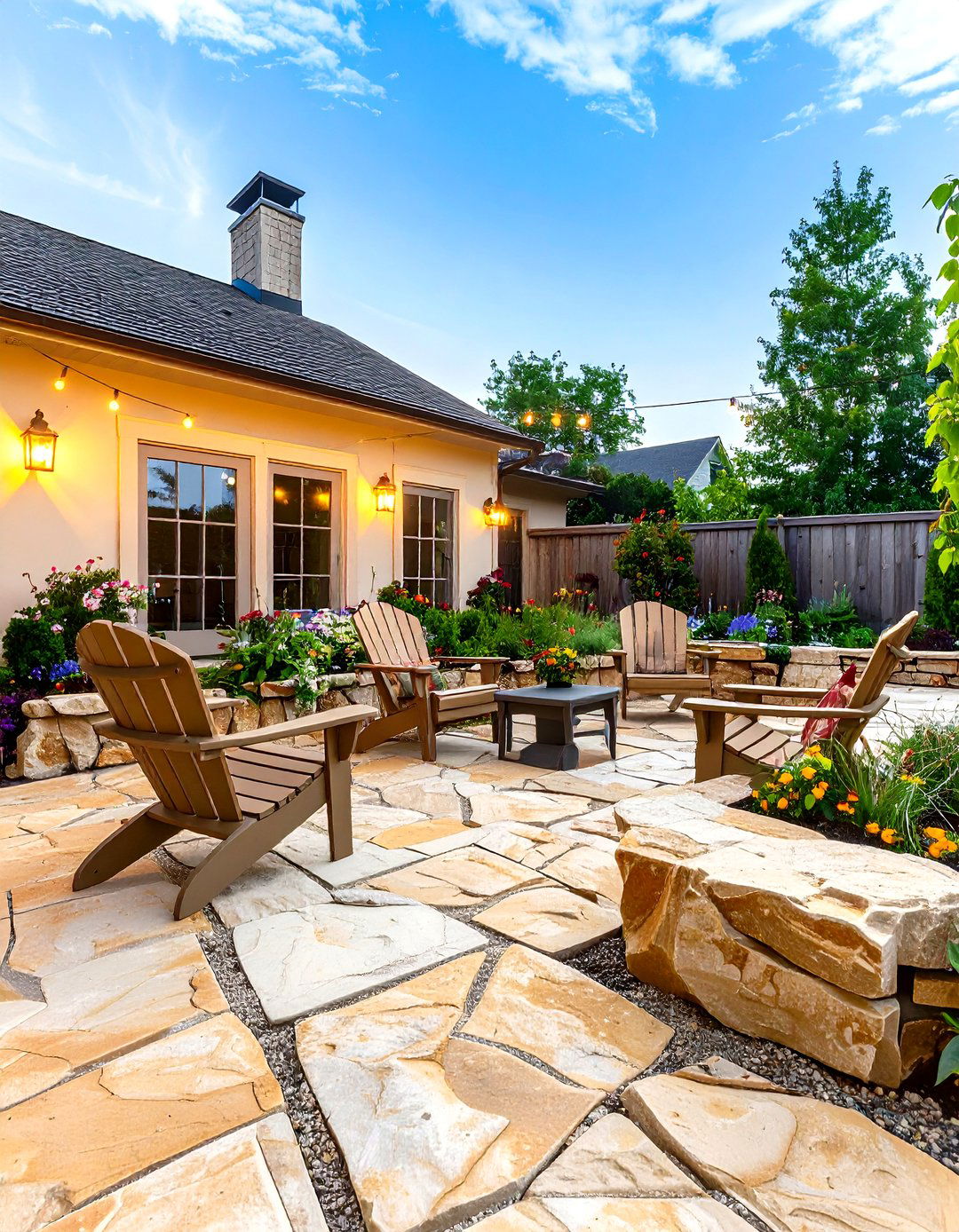
Create a relaxed, informal rock patio using the sand-set method. This technique involves laying irregular flagstones directly onto a compacted base of sand and gravel, without the need for mortar. The gaps are then filled with more sand, which allows for slight movement and creates a more rustic, cottage-style look. This installation is DIY-friendly and more forgiving than mortared patios, as stones can be easily adjusted or replaced. The result is a durable, permeable surface that feels natural and blends effortlessly into a garden setting, perfect for creating a casual and charming outdoor living space.
13. Rock Patio with a Built-In Stone Bench
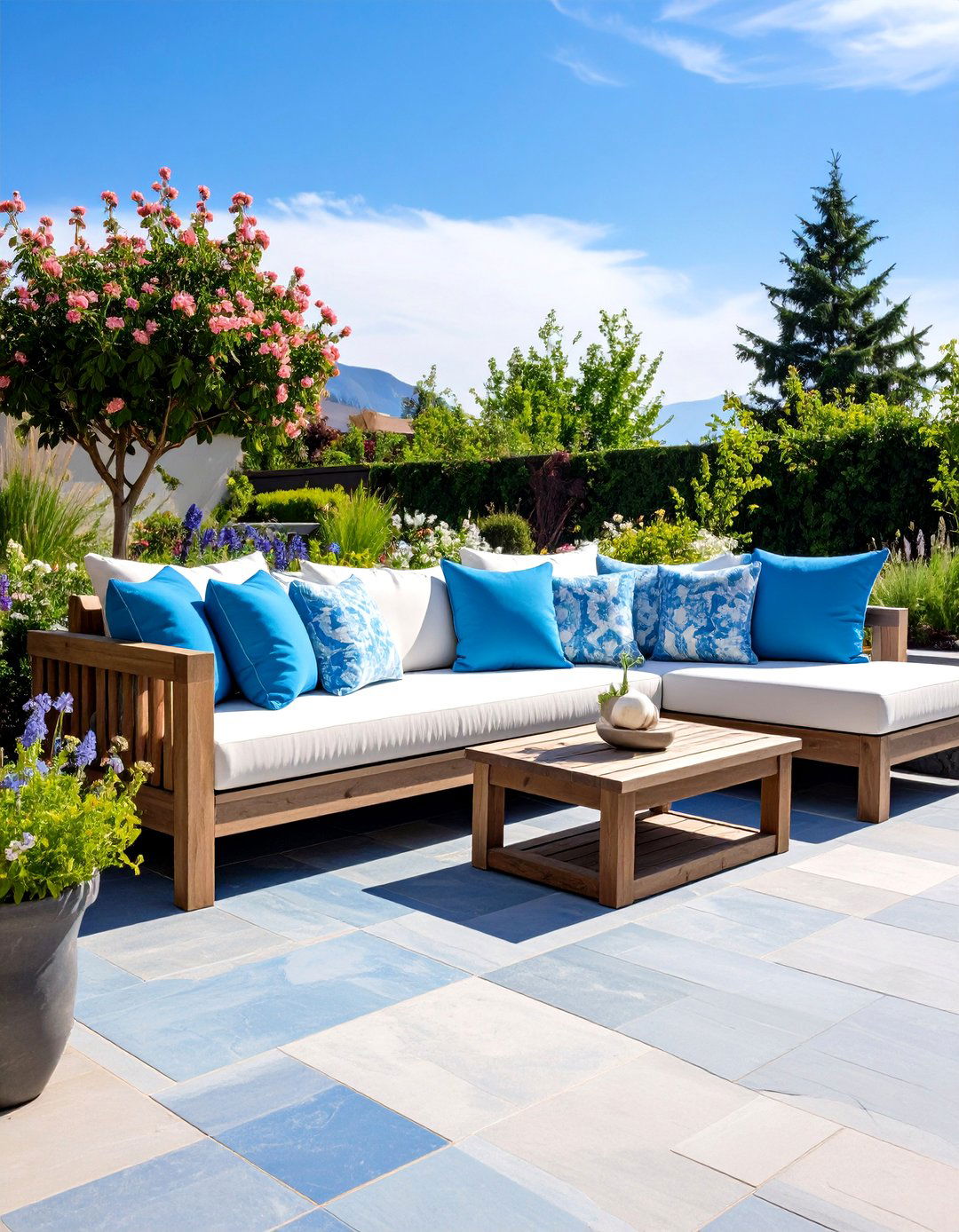
Maximize space and add permanent seating by incorporating a built-in stone bench into your rock patio design. This feature can be constructed along the edge of the patio, often as part of a low retaining wall. Using the same stone as the patio floor, such as limestone or bluestone, creates a seamless and integrated look. The bench provides a durable, weather-resistant seating solution that eliminates the need for extra chairs, making the area feel larger and less cluttered. Top it with comfortable outdoor cushions for added comfort and a splash of color, creating a functional and stylish focal point for your outdoor gatherings.
14. Polished Pebble Mosaic Rock Patio
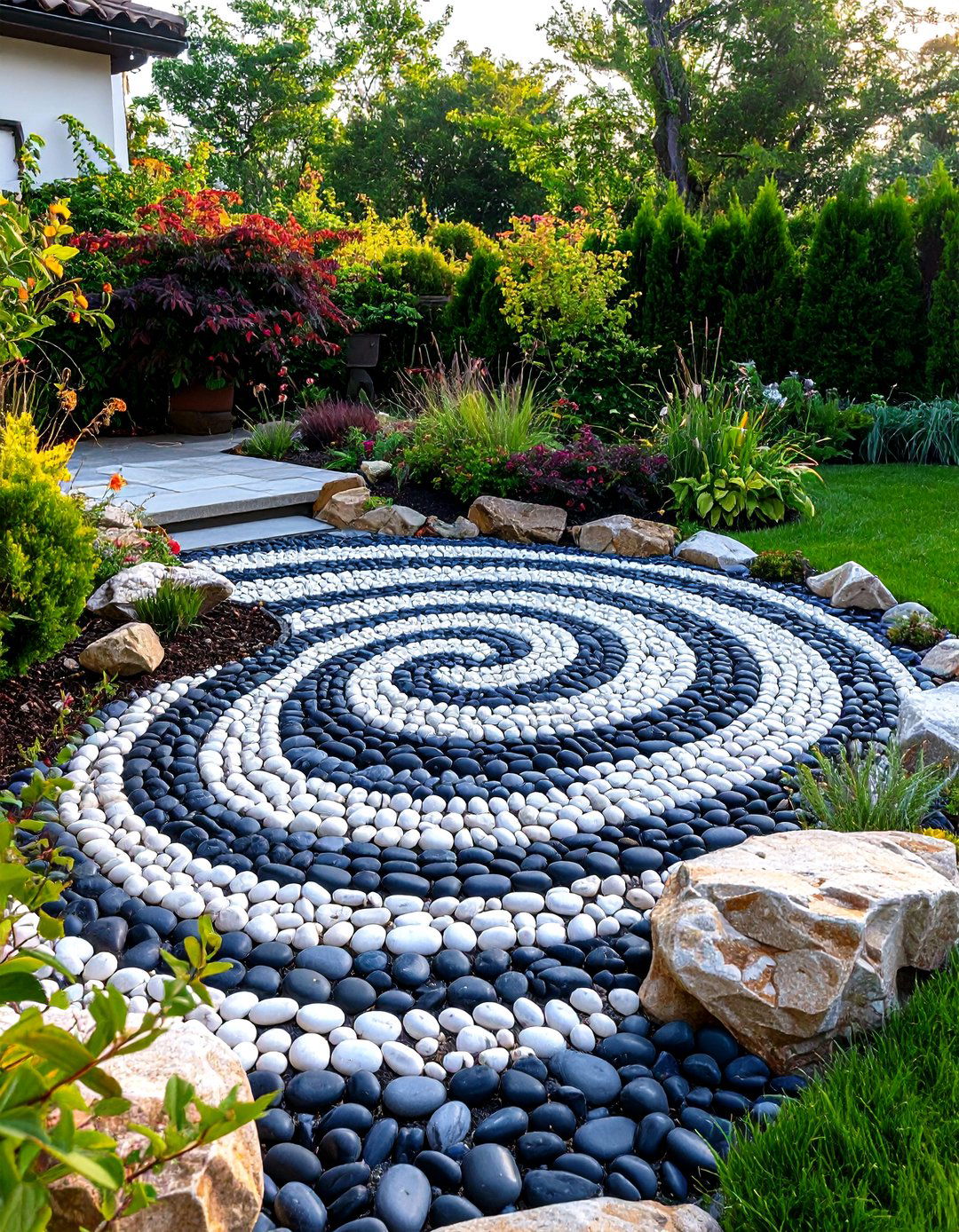
For a truly artistic and unique surface, design a section of your patio as a polished pebble mosaic. This intricate technique involves setting small, smooth river pebbles on edge in mortar to create beautiful patterns, such as spirals, waves, or floral motifs. While labor-intensive, the result is a stunning, one-of-a-kind feature that acts as a piece of outdoor art. It's ideal for a smaller, focal-point patio or as an inset within a larger area of flagstone or concrete. The textured, jewel-like surface is beautiful to look at and adds a tactile element to your design, transforming a simple space into a masterpiece.



15. Rock Patio Edged with Corten Steel
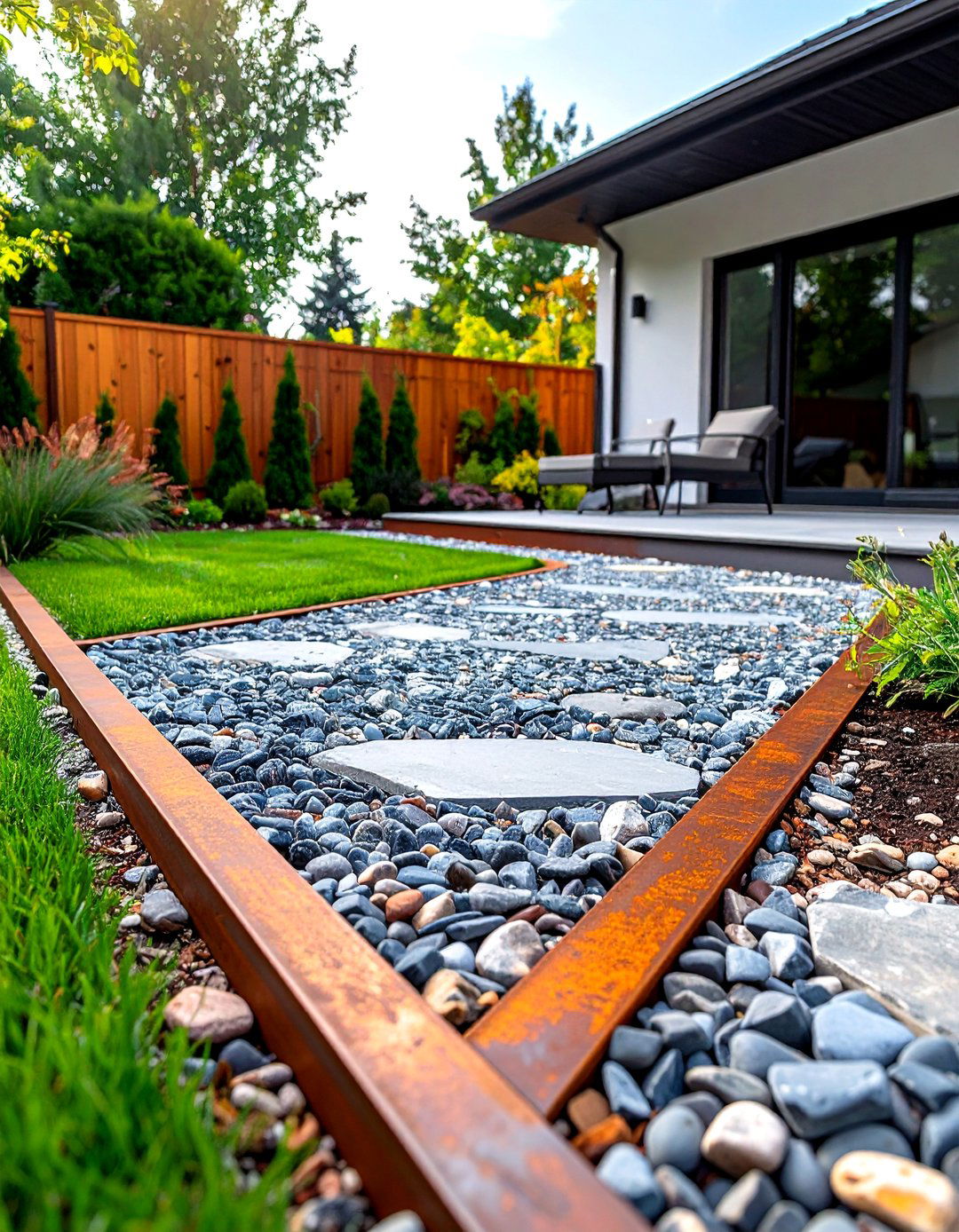
Combine the rustic charm of natural stone with the clean, modern lines of Corten steel edging for a striking look. A flagstone or gravel rock patio gains a sharp, contemporary definition when framed with this unique metal. Corten steel develops a stable, rust-like patina over time that provides a beautiful, warm-toned contrast to the cool grays and tans of the stone. This durable edging keeps gravel in place and prevents grass from creeping in, maintaining a crisp border between the patio and the lawn or garden beds. The mix of raw, earthy materials creates a sophisticated and industrial-chic aesthetic.
16. Mediterranean-Style Travertine Rock Patio
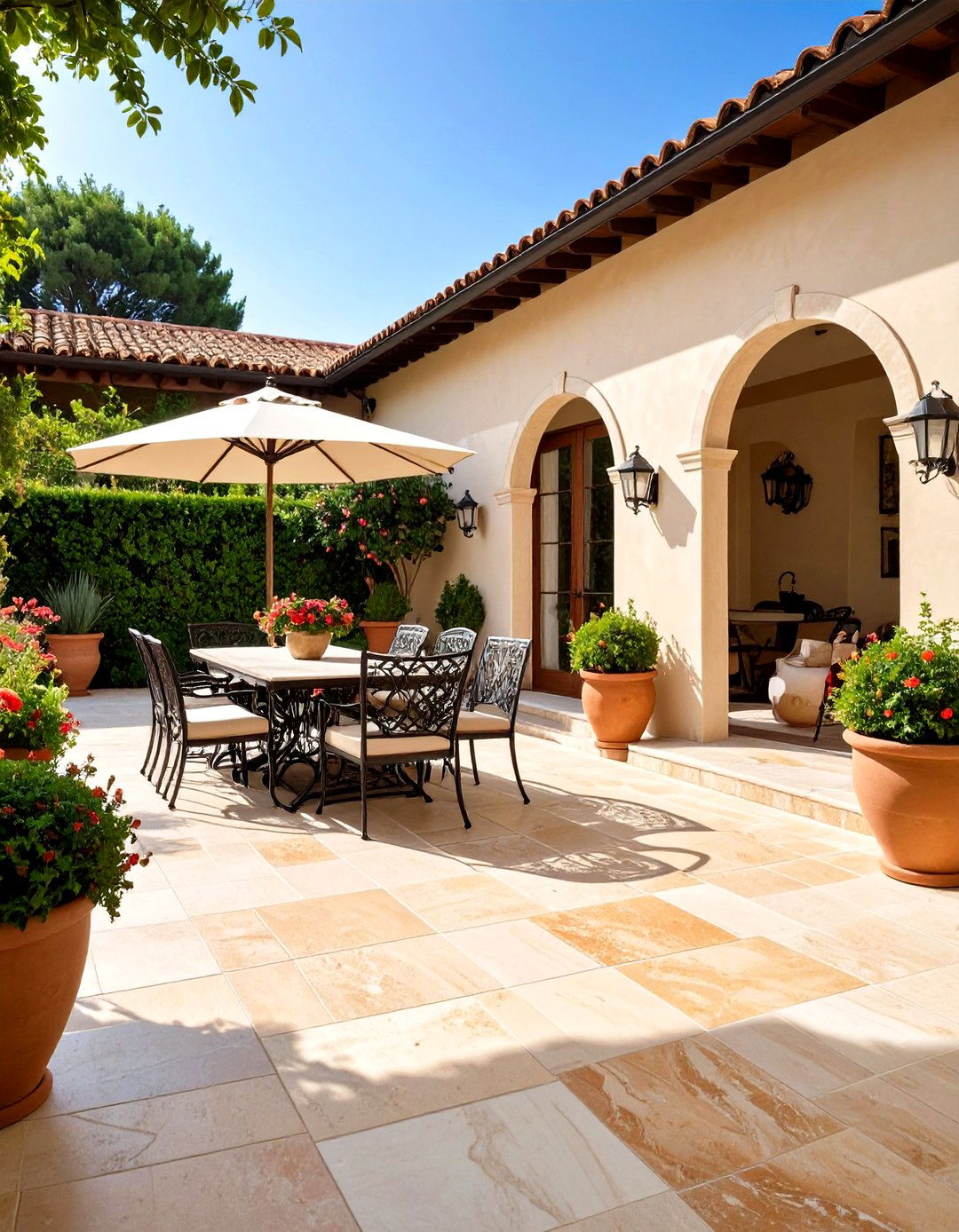
Capture the essence of a sunny Mediterranean villa with a travertine rock patio. This natural stone is characterized by its soft, earthy tones, ranging from ivory and beige to golden brown. Its porous surface stays cooler underfoot than many other materials, making it an excellent choice for hot climates. Travertine pavers often have a slightly tumbled edge, giving them a classic, rustic appearance that is both elegant and inviting. Paired with terracotta pots, lush greenery, and wrought-iron furniture, a travertine patio creates a warm, timeless, and sophisticated outdoor living space reminiscent of a European coastal retreat.
17. Rock Patio with a Vertical Garden Wall
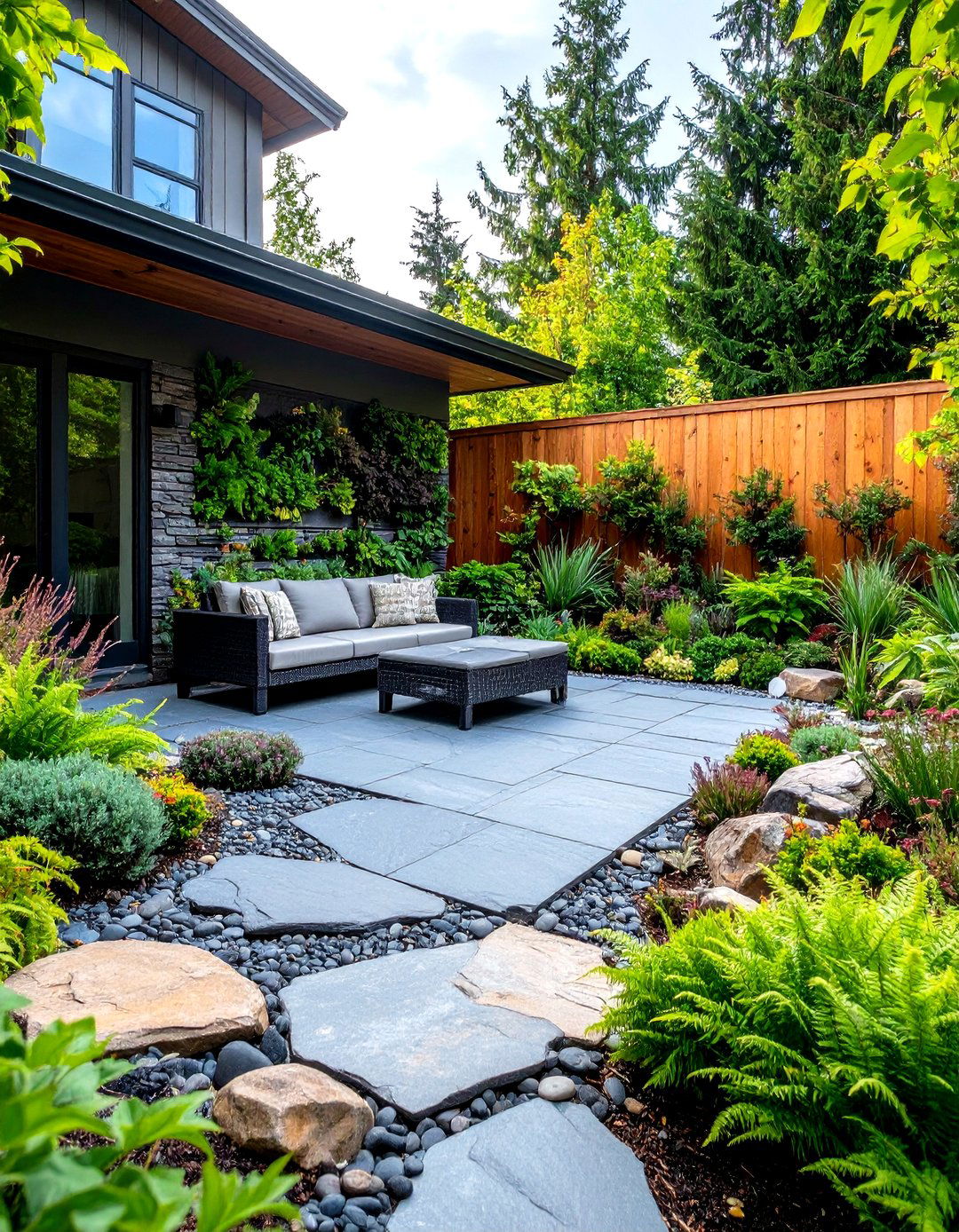
Integrate nature vertically by adding a living garden wall as a backdrop to your rock patio. This feature can be mounted on a fence or an exterior house wall adjacent to your flagstone or slate patio. The wall can be planted with a mix of lush ferns, colorful succulents, or fragrant herbs, creating a stunning tapestry of greenery. This not only adds a vibrant focal point and a sense of privacy but also maximizes planting space in smaller yards. The combination of the solid, earthy stone underfoot and the soft, living texture of the vertical garden creates a beautiful and dynamic contrast, enveloping the space in nature.
18. Bluestone Patio with Formal Hedges
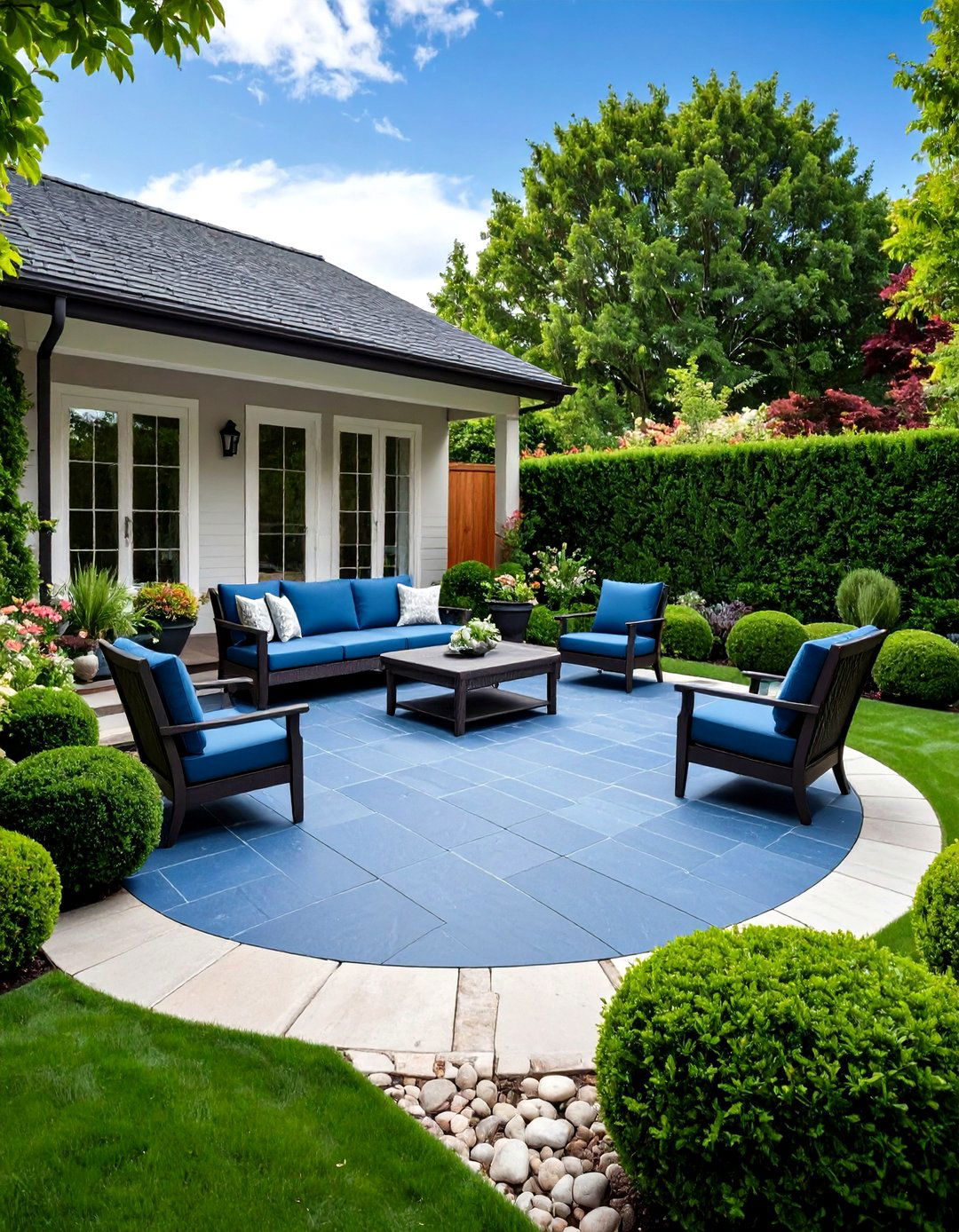
For a look that is both classic and elegant, design a bluestone rock patio enclosed by neatly clipped formal hedges. The cool, rich blue-gray tones of thermal bluestone provide a sophisticated and uniform surface. When framed by the deep green of boxwood or yew hedges, the result is a timeless, structured outdoor room. This design approach creates a strong sense of enclosure and privacy, perfect for a formal dining area or a quiet retreat. The clean lines of the cut stone and the manicured greenery work together to create an atmosphere of refined order and traditional garden beauty that is always in style.
19. Rock Patio with Integrated Outdoor Lighting
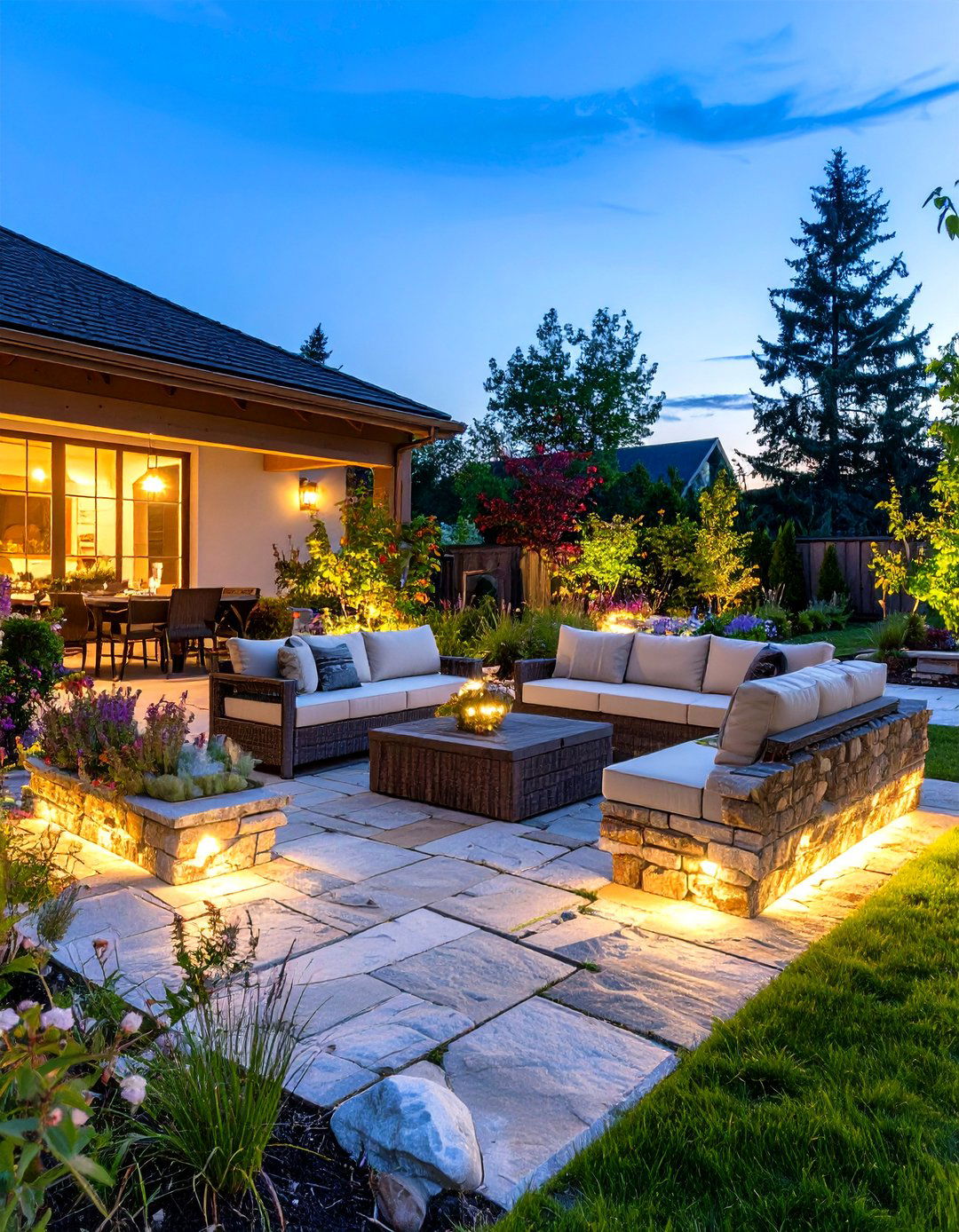
Extend the usability of your rock patio well into the evening with thoughtfully integrated outdoor lighting. Low-voltage lights can be discreetly installed within retaining walls, under the caps of stone benches, or along the edges of pathways. Uplighting can be used to highlight the texture of a stone wall or a nearby specimen tree. In-pavement well lights can be set flush with the flagstones, casting a gentle glow across the surface for safety and ambiance. This not only enhances the beauty of the stonework at night but also ensures safe navigation, transforming your patio into a magical and functional nighttime gathering space.

20. Crushed Stone Patio for a Casual Feel
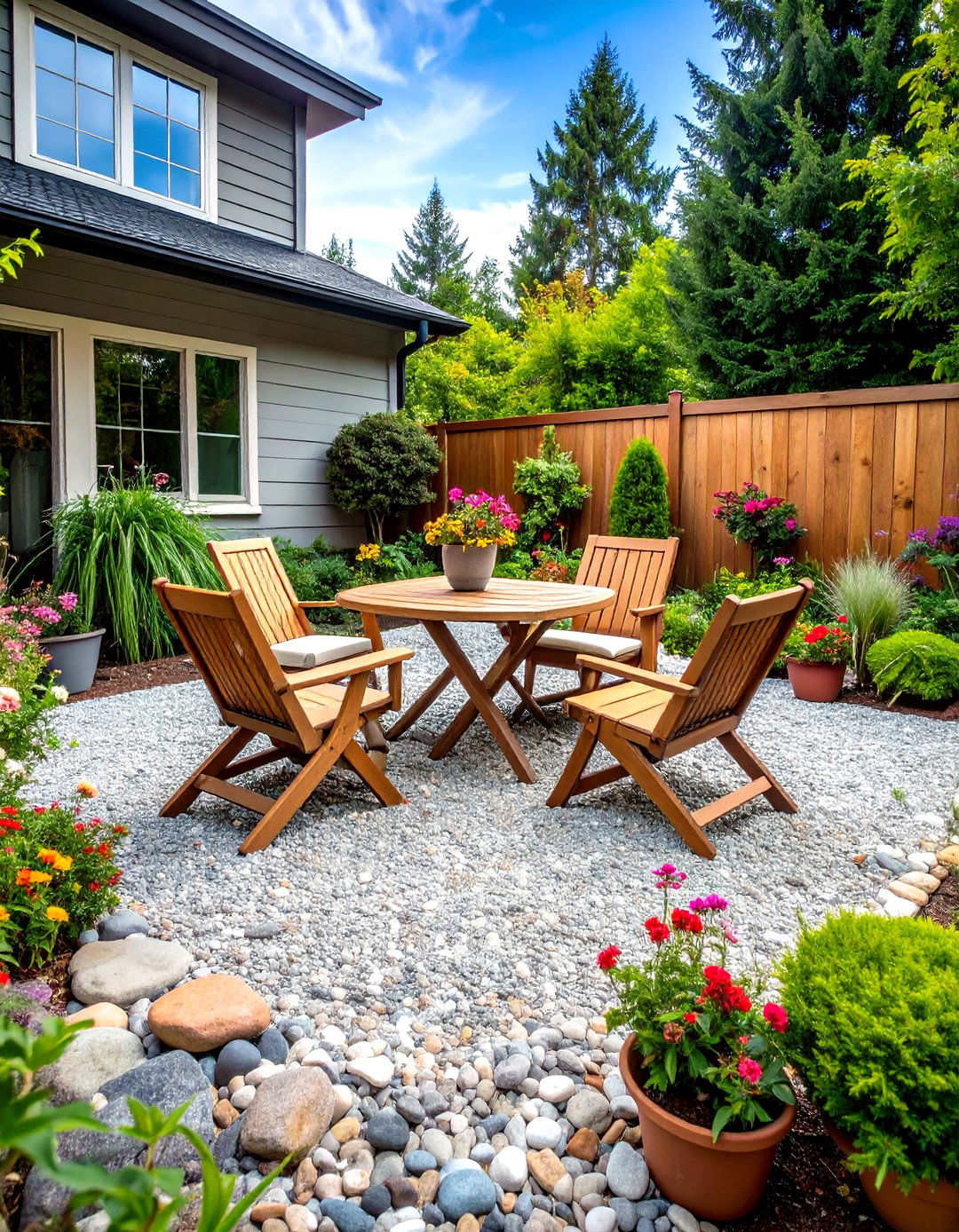
For an easy, informal, and cost-effective outdoor surface, a crushed stone patio is an excellent solution. Materials like pea gravel or crushed granite are spread over a compacted base and contained with edging. This type of patio has a relaxed, rustic charm and provides a satisfying crunch underfoot. It’s perfect for creating a casual seating area, a space for a bistro set, or a base for a collection of container plants. The surface is fully permeable, allowing for excellent drainage. Its simplicity makes it a great DIY project, offering a quick way to establish a functional and attractive outdoor zone with minimal fuss.
21. Quartzite Rock Patio for Durability and Sparkle
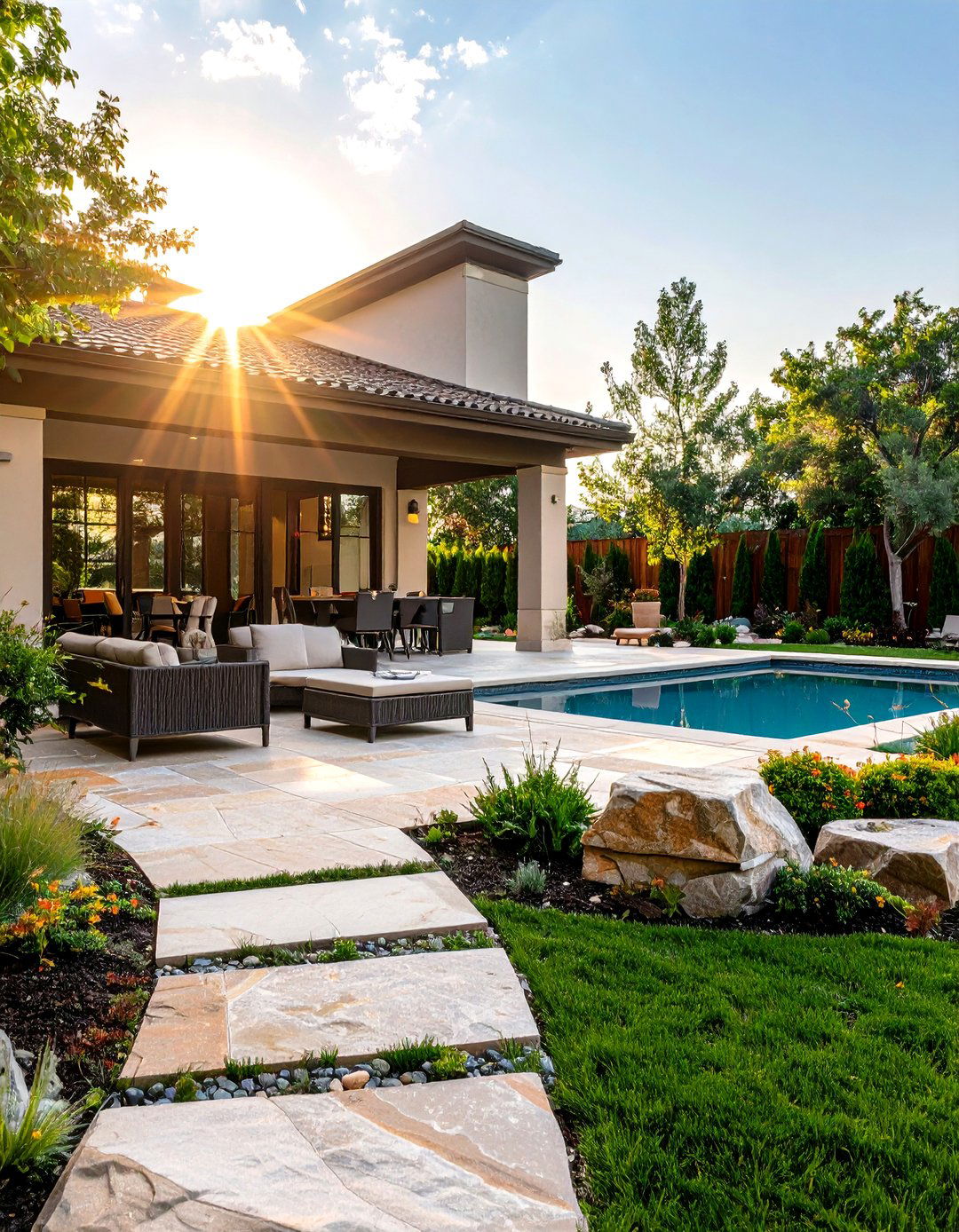
Choose a quartzite rock patio for a surface that combines incredible durability with a touch of natural glamour. Quartzite is a metamorphic rock that is harder than granite, making it extremely resistant to wear, weathering, and staining. What makes it truly special is the presence of quartz crystals, which give the stone a subtle, beautiful sparkle when it catches the sunlight. Available in a range of colors from white and gray to shades of green and blue, quartzite offers a luxurious and high-end finish. Its natural non-slip texture makes it a safe and stunning choice for any outdoor living space.
22. Rock Patio with a Pergola Overhead
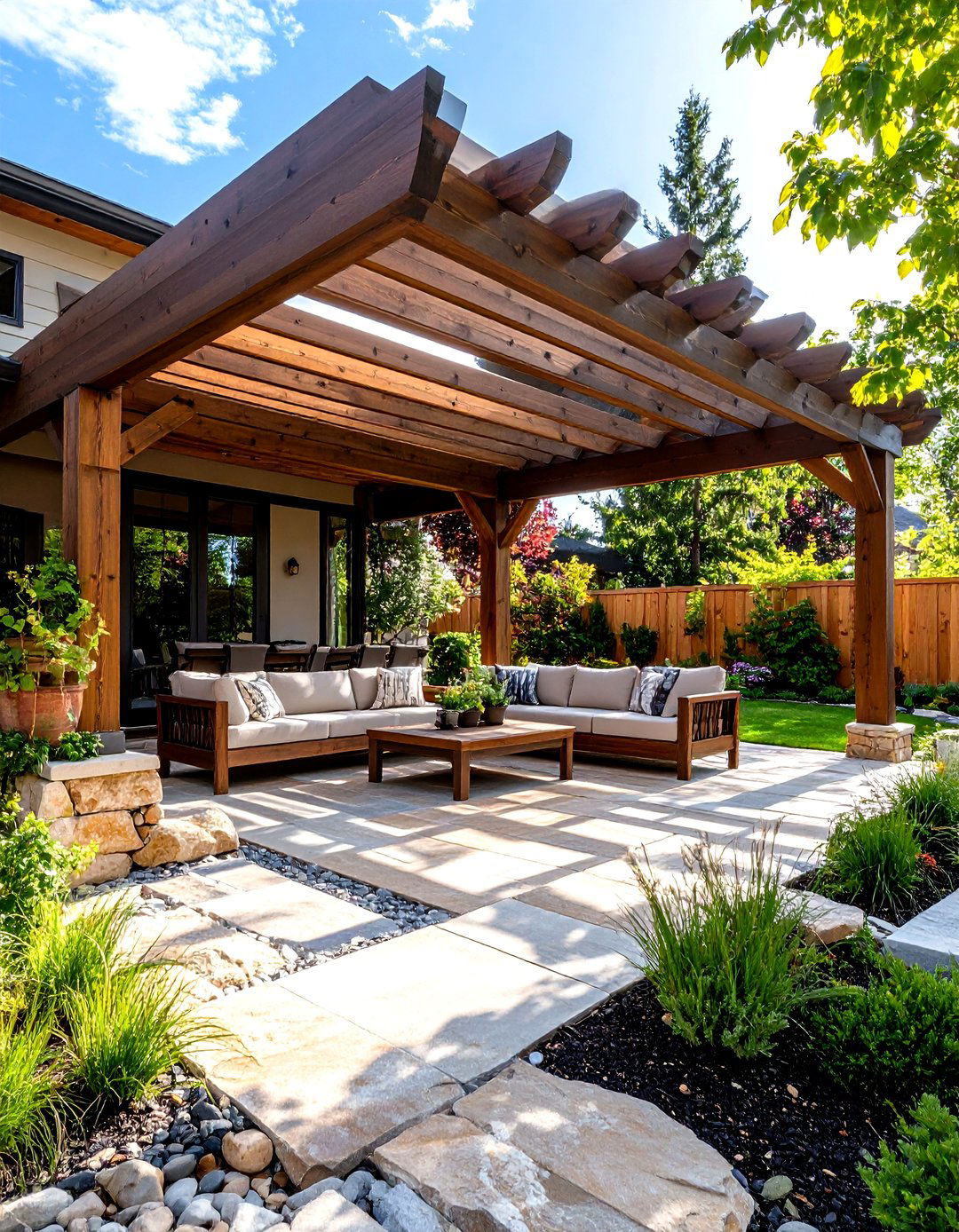
Define your rock patio and add welcome shade by installing a pergola overhead. This structure adds a vertical architectural element and creates the feeling of an outdoor room. A wooden or metal pergola can be designed to complement the style of your home and patio, whether it's rustic or modern. You can leave the top open to the sky, add a retractable canopy for adjustable shade, or train climbing plants like wisteria or grapevines to grow over it for a lush, green canopy. The interplay of light and shadow filtering through the beams onto the stone surface below adds dynamic beauty throughout the day.
23. Japanese Garden-Inspired Rock Patio
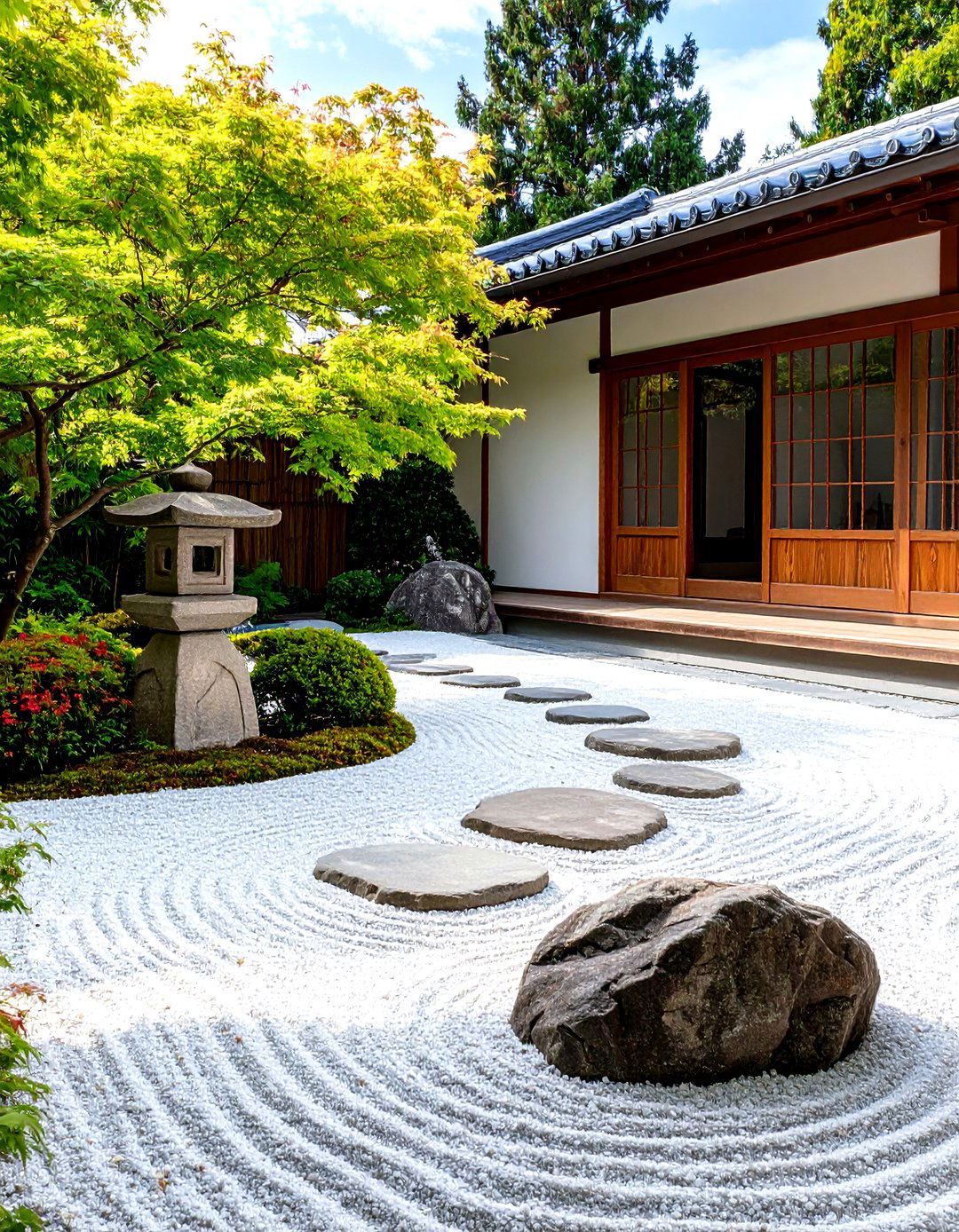
Create a serene and meditative space with a Japanese garden-inspired rock patio. This design philosophy emphasizes simplicity, natural materials, and tranquility. Use a combination of carefully placed stepping stones (tobi-ishi) set within a field of raked gravel (samon) to represent islands in a sea. Incorporate elements like a stone lantern (tōrō), a water basin (tsukubai), and thoughtfully pruned plants like Japanese maples or bamboo. The focus is on asymmetry, balance, and creating a peaceful atmosphere for contemplation. This style transforms your patio from a mere social space into a calming, spiritual retreat connected to nature.
24. Sunken Rock Patio Design
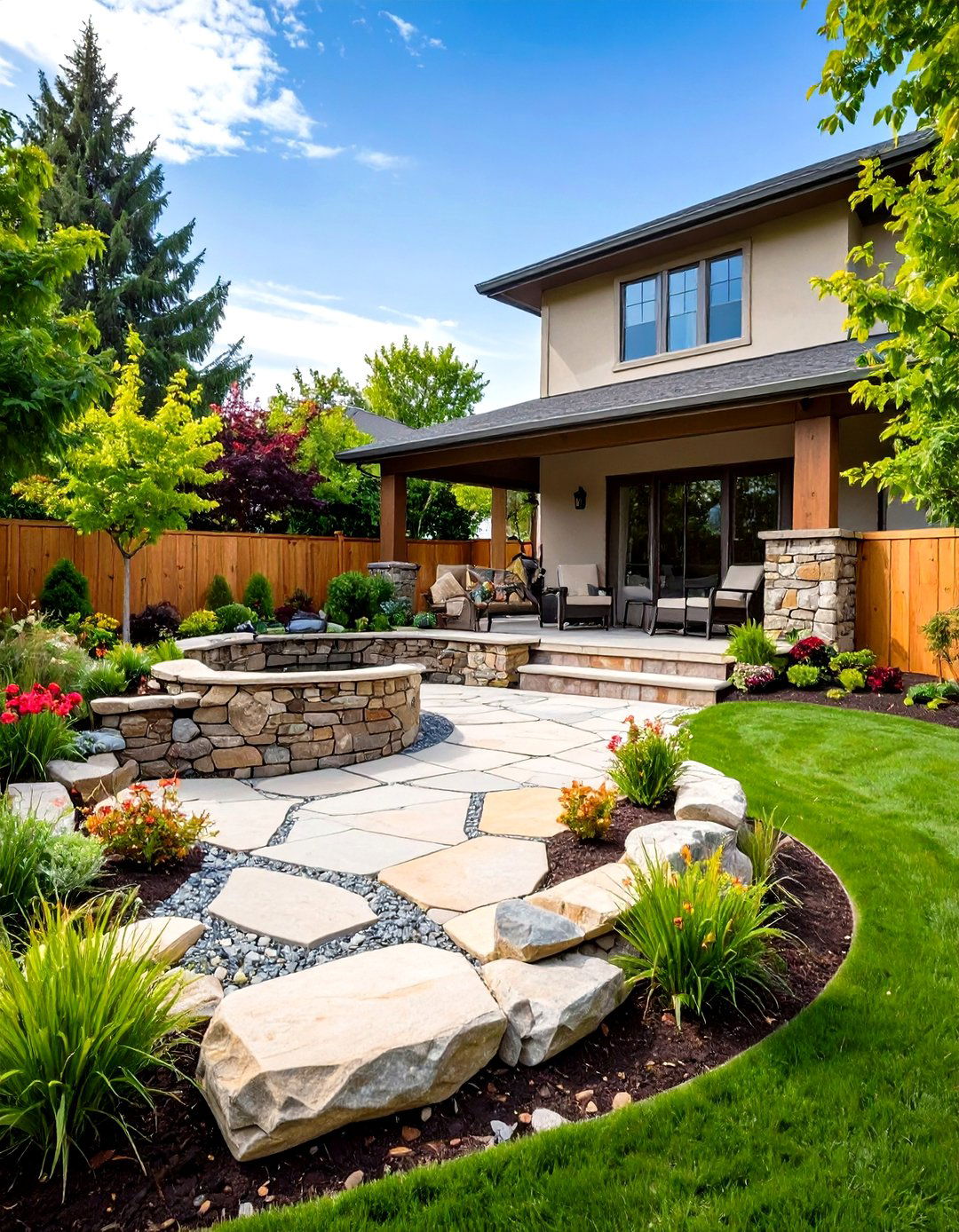
For a truly intimate and sheltered outdoor space, consider a sunken rock patio. By excavating down a foot or two, you can create a cozy, enclosed area that feels like a secluded room. The surrounding earth is held back by low retaining walls, which can be made from stacked stone or concrete blocks faced with a stone veneer. These walls also provide extra seating. This design offers protection from the wind and a strong sense of privacy, making it an ideal spot for a lounge area or a hot tub. The change in elevation adds significant architectural interest to your landscape.
25. Rock Patio with Rustic Wood Accents
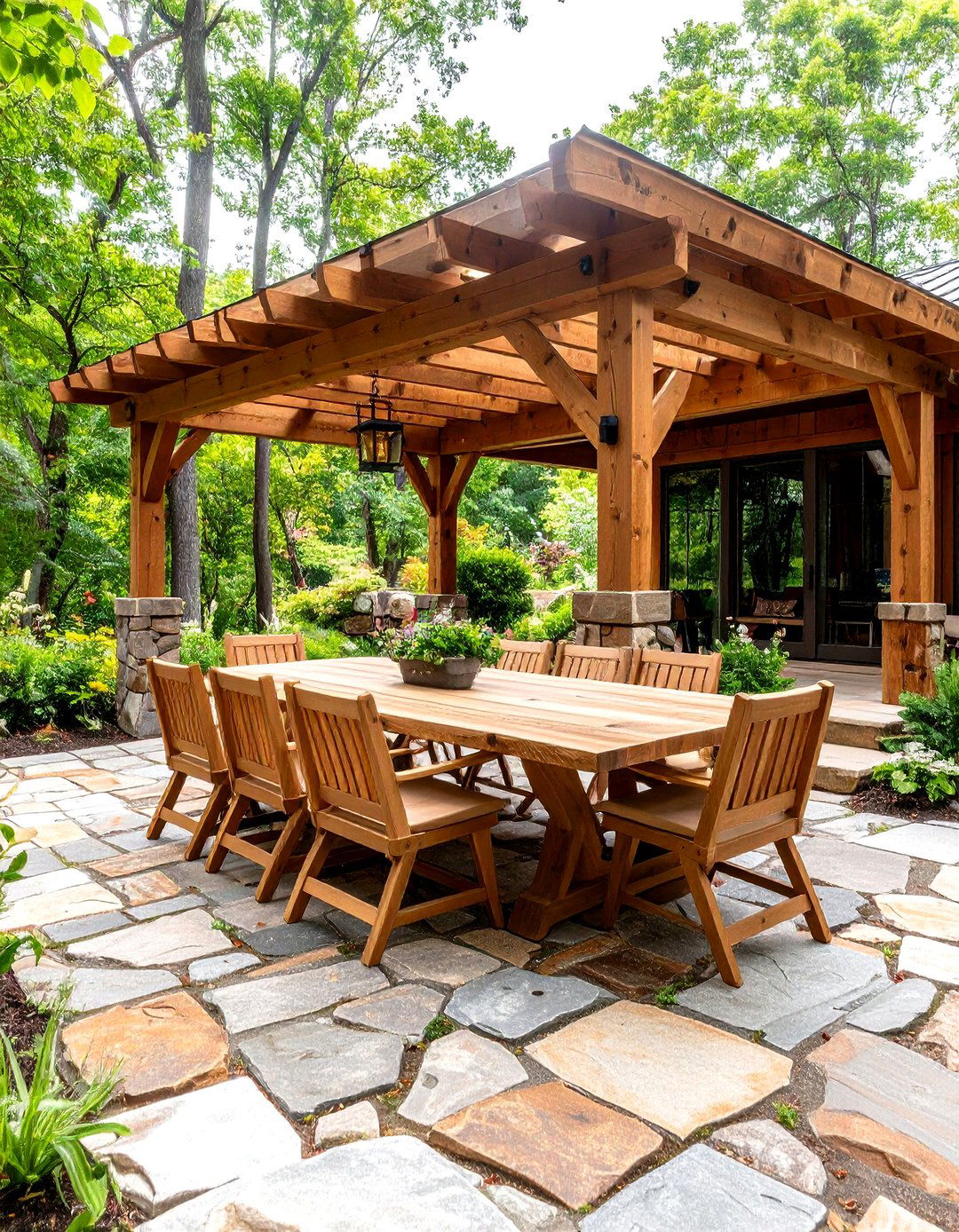
Combine the enduring quality of stone with the natural warmth of rustic wood for a balanced and inviting patio design. Lay a foundation of rugged flagstone or fieldstone, then introduce wood elements through a heavy timber pergola, a live-edge wooden bench, or planters made from reclaimed barn wood. The contrast between the cool, hard stone and the warm, soft wood creates a harmonious and tactile experience. This pairing works beautifully in cabin, farmhouse, or woodland settings, blending the man-made structure seamlessly with the natural environment and creating a cozy, welcoming atmosphere for relaxation and entertaining.
26. Checkered Pattern Rock and Grass Patio
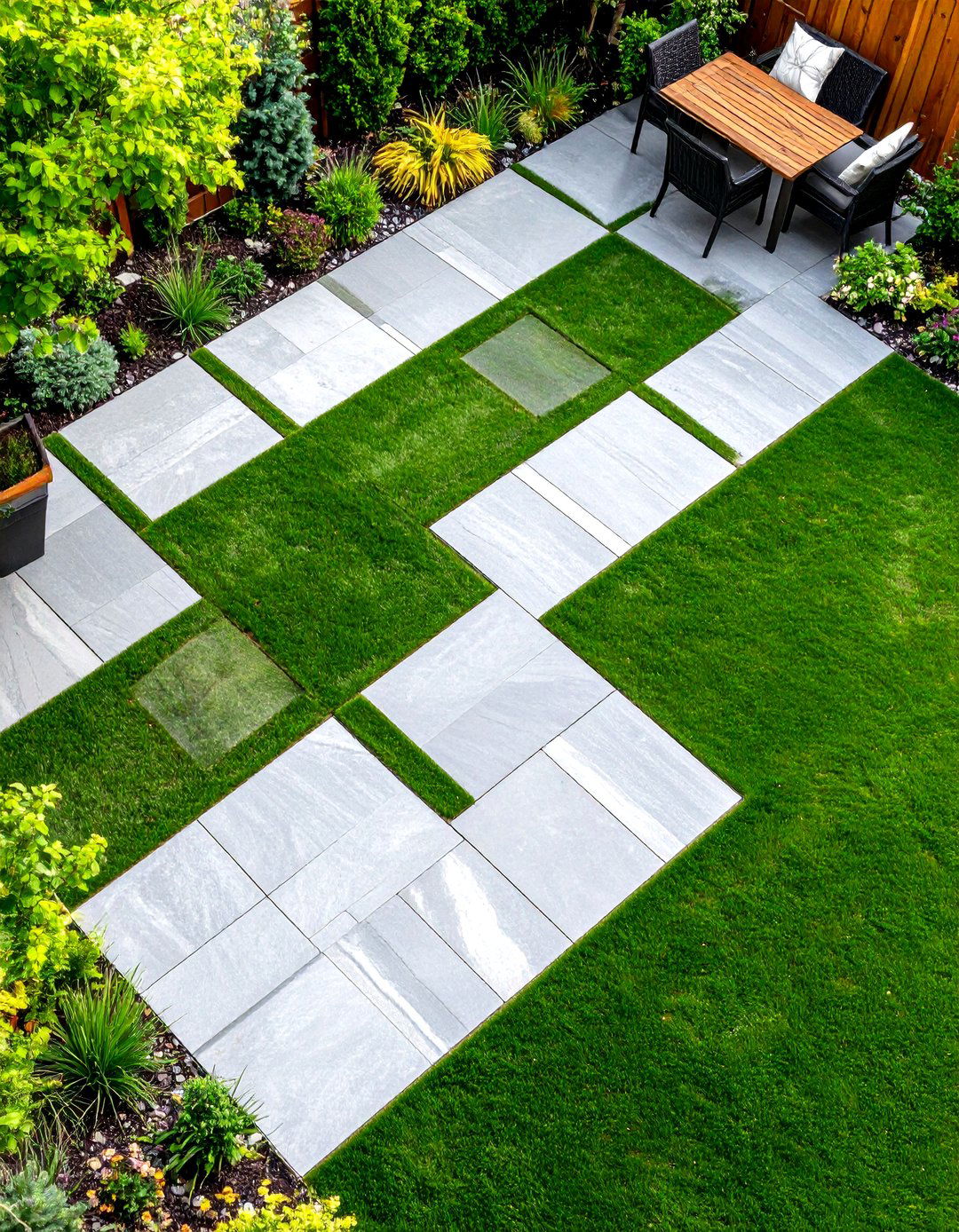
For a playful and graphic look, design a checkered patio using square stone pavers alternating with squares of lush green grass. This pattern creates a living chessboard effect that is both visually striking and eco-friendly. The grass squares soften the hardscape, provide permeability for rainwater, and keep the surface cooler on hot days. This design requires precise layout and installation but results in a unique and contemporary outdoor floor. It’s an excellent way to break up a large expanse of stone and integrate the lawn directly into the patio space, creating a fun, interactive, and beautifully patterned area.
27. Fieldstone Rock Patio for a Natural Look
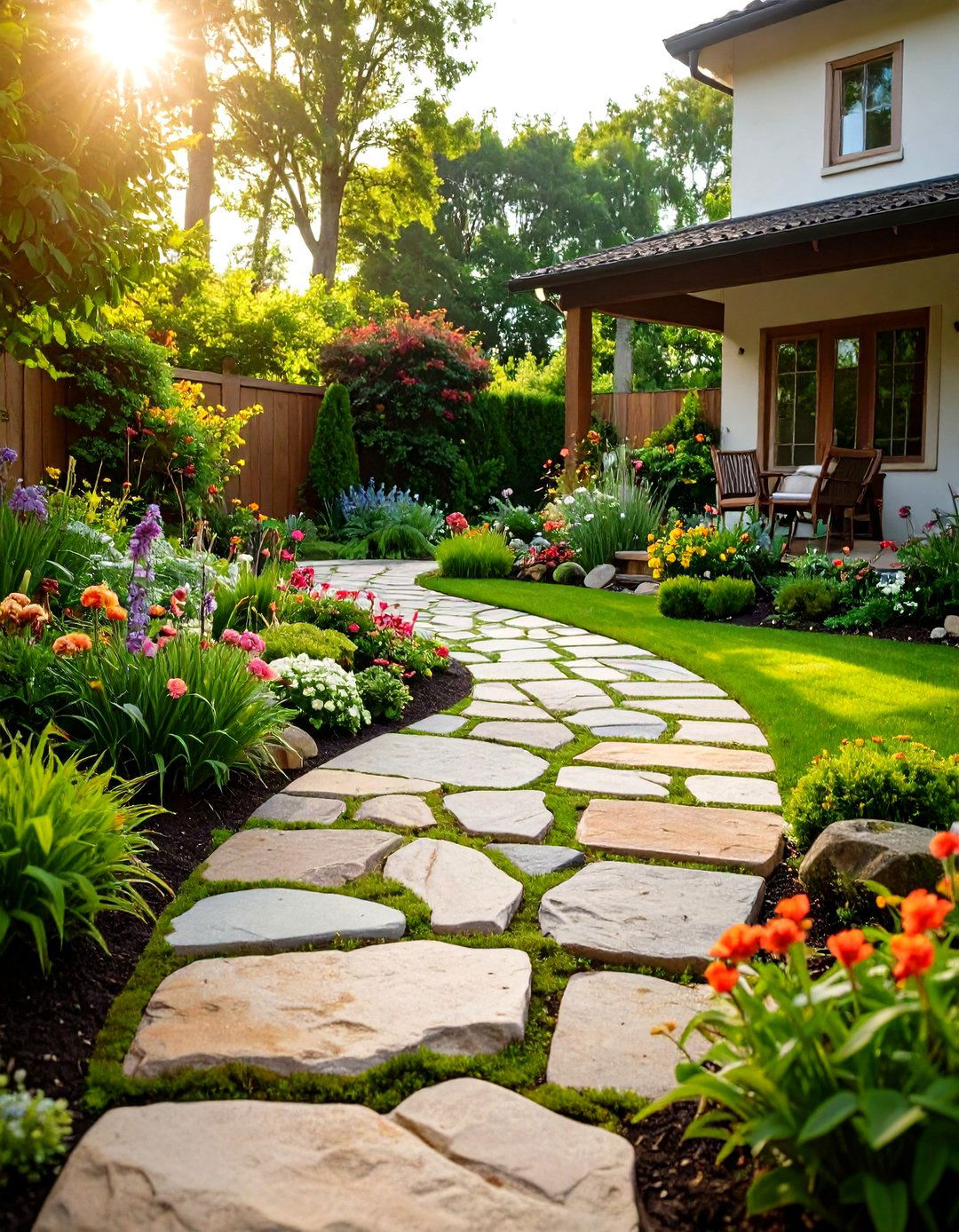
To create a patio that looks as if it were placed by nature itself, use fieldstone. These are naturally occurring, weathered stones collected from fields or riverbeds, characterized by their irregular shapes and rustic, earthy colors. A fieldstone patio has an organic, unrefined appearance that blends perfectly into a country, cottage, or woodland landscape. The stones are typically set in a random pattern with wide, sand-filled or planted joints, enhancing the naturalistic feel. This type of patio celebrates the imperfections and unique character of each stone, resulting in a timeless and ruggedly beautiful outdoor space.
28. Limestone Rock Patio for a Classic Finish
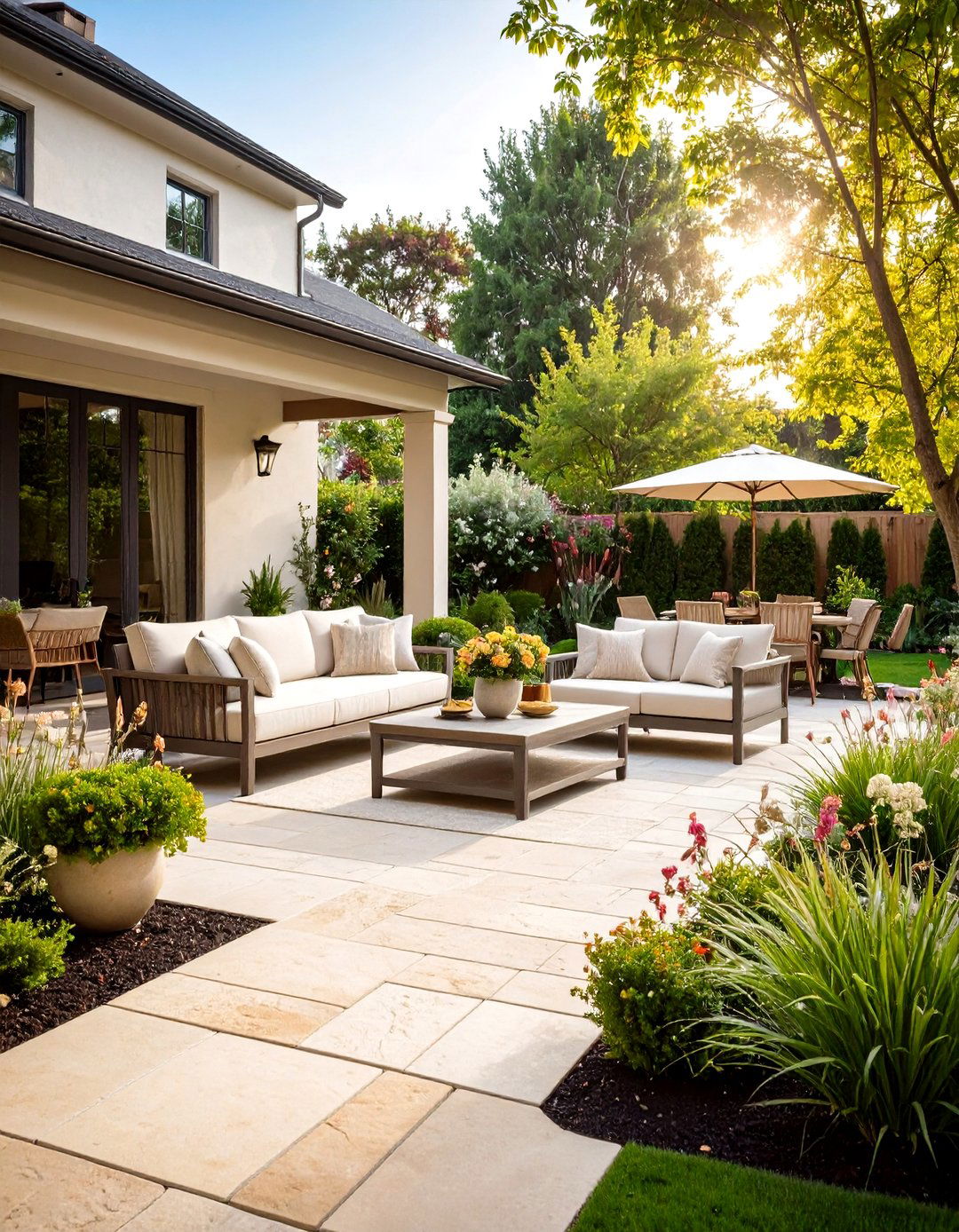
For a refined and classic aesthetic, a limestone rock patio is a superb choice. Limestone offers a consistent color palette, typically in soft shades of beige, gray, and white, which provides a clean and elegant backdrop for outdoor furnishings. Its fine-grained texture and smooth, yet non-slip, surface feel comfortable underfoot. Limestone pavers can be cut into uniform shapes for a formal look or used in more irregular forms for a slightly more rustic feel. This versatile stone complements a wide range of architectural styles, from traditional to contemporary, lending an air of understated luxury and timeless appeal to any outdoor area.
29. Rock Patio with a Stone Pizza Oven
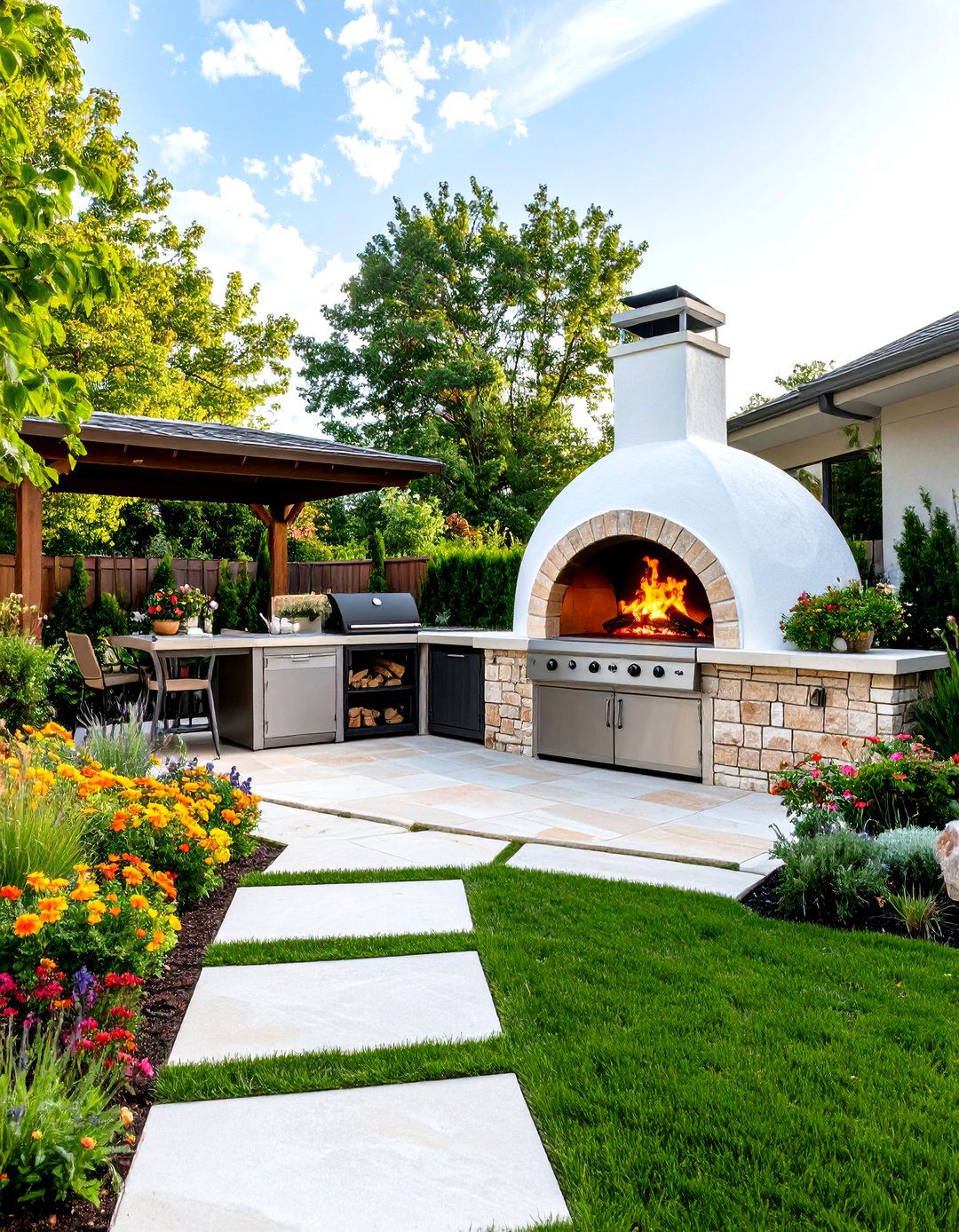
Turn your rock patio into the ultimate destination for outdoor entertaining by incorporating a stone pizza oven. Built from brick or clad in the same stone as your patio floor, the oven becomes a dramatic and functional focal point. It not only bakes incredible pizzas but also radiates warmth, creating a cozy gathering spot on cool evenings. Position the oven at one end of your patio and consider adding a built-in counter space for food preparation. This feature enhances your outdoor cooking capabilities far beyond a standard grill and makes your patio the heart of culinary creativity and social gatherings.
30. Exposed Aggregate Concrete and Rock Patio
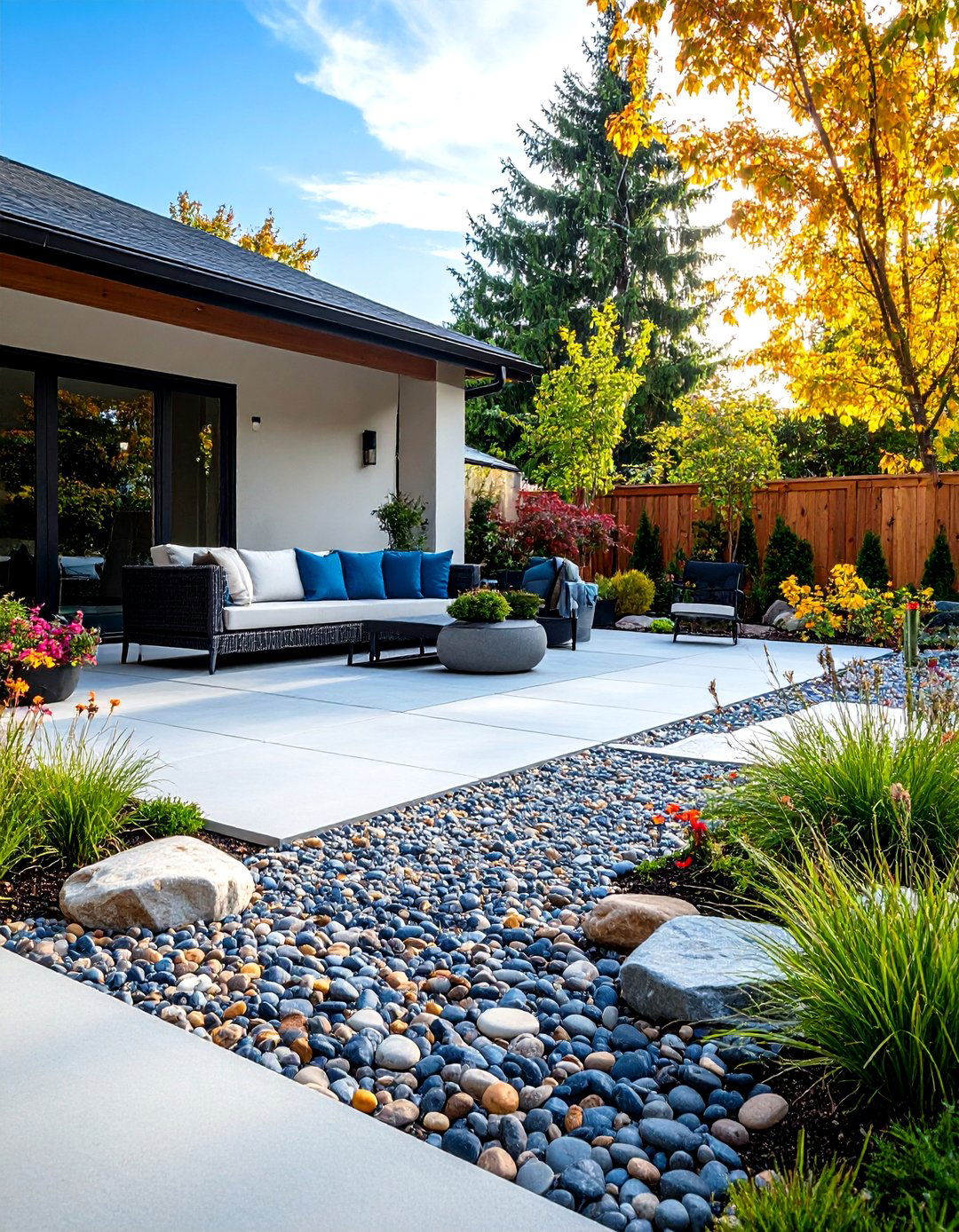
Combine the durability of concrete with the beauty of natural stone by creating an exposed aggregate patio. This technique involves mixing decorative rocks, pebbles, or crushed stone into the concrete and then washing away the top layer of cement paste to reveal the textured aggregate. This creates a durable, non-slip surface with a unique, speckled appearance that sparkles in the sun. You can use this as the main patio surface or as a border around larger flagstone pavers. It’s a customizable and hard-wearing option that offers a more decorative finish than plain concrete, blending texture and strength.
Conclusion:
Ultimately, a rock patio is a versatile and enduring addition to any home. From the rustic charm of irregular flagstone to the sleek sophistication of slate tiles, there is a stone and style to match every vision and landscape. By considering elements like multi-level designs, integrated features such as fire pits or water fountains, and creative combinations with materials like gravel or grass, you can craft a truly unique outdoor living space. A well-planned rock patio not only enhances your property's beauty and value but also provides a durable, natural foundation for countless memories.

Related posts:




Leave a Reply