
A paving stone driveway can turn a practical parking area into one of the most attractive features of your front yard. Unlike a plain surface, individual pavers offer color, texture, pattern, and flexibility. They can complement almost any home, from a traditional brick colonial to a clean-lined modern build. The best designs also treat the driveway as a complete landscape. Paver size, laying pattern, borders, planting beds, walkways, and entrance details should feel connected. Properly selected driveway-rated stones and professional base preparation are equally important for long-term performance. Whether you prefer classic herringbone, permeable joints, or large contemporary slabs, these **20 Paving Stone Driveway Ideas** provide practical inspiration for creating a durable and polished entrance. Explore the complete looks below to compare **20 Paving Stone Driveway Ideas**.

1. Herringbone Paving Stone Driveway
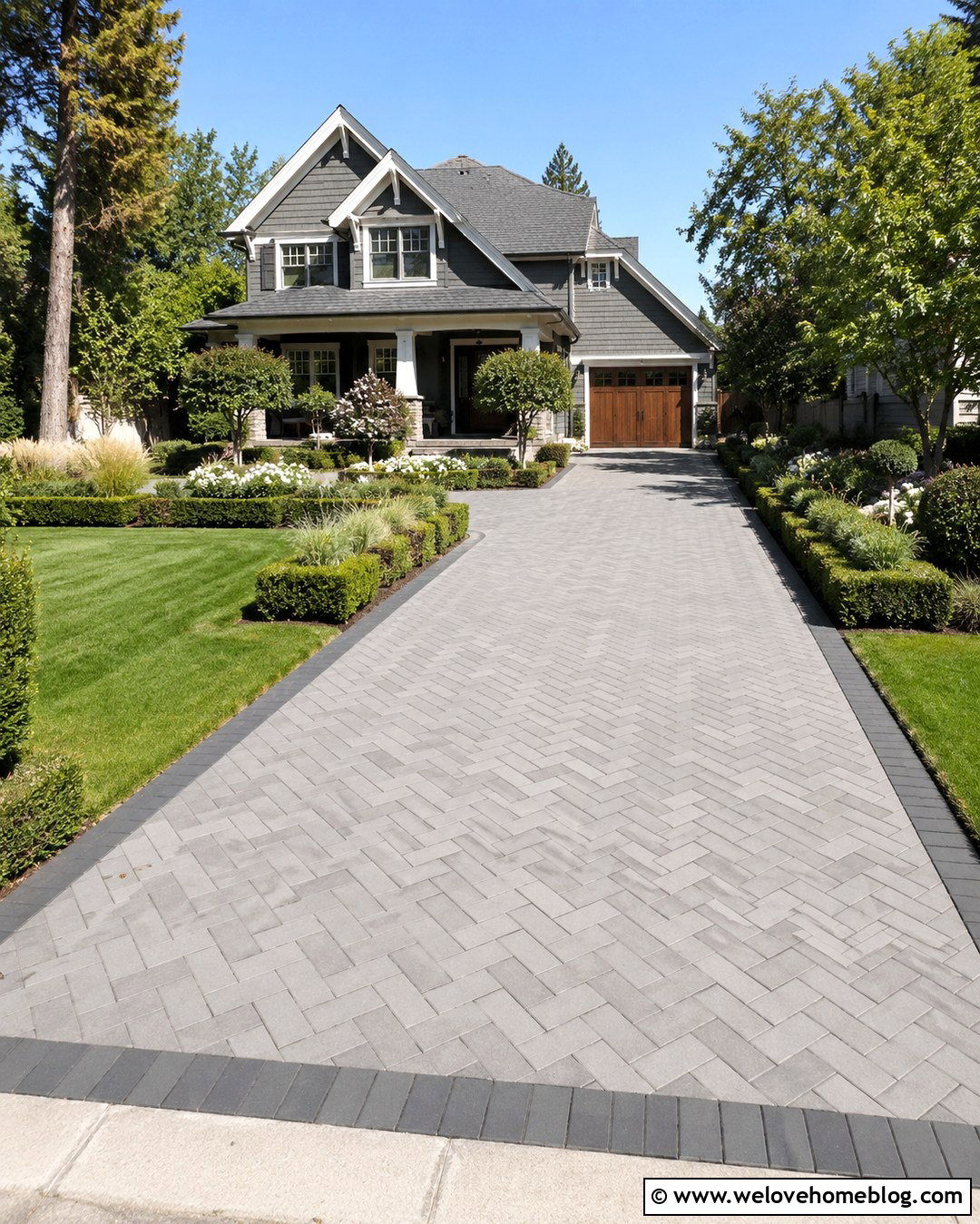
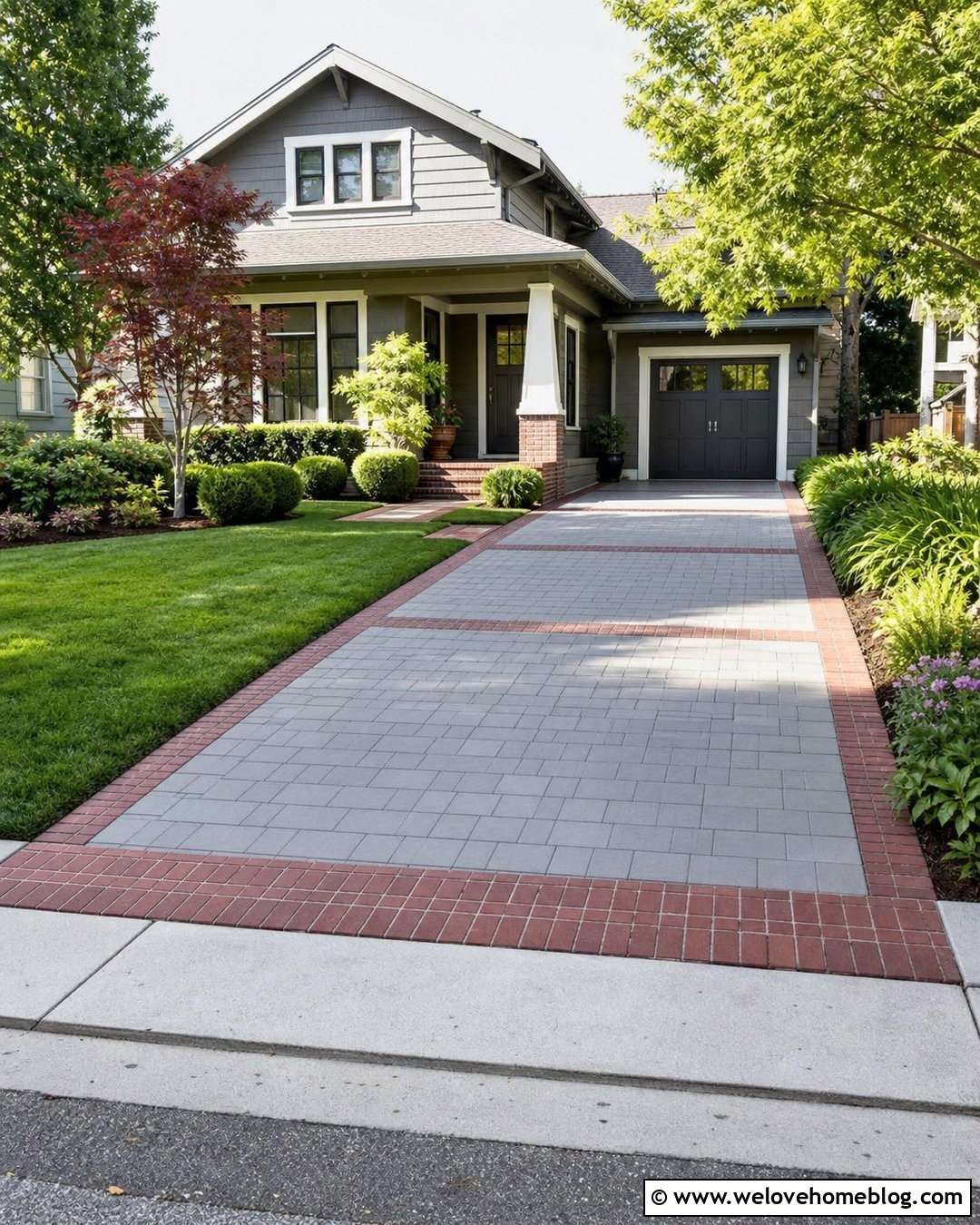
A herringbone layout gives a paving stone driveway a structured surface with plenty of visual movement. Rectangular concrete pavers can be installed at a 45-degree angle to direct attention from the street toward the garage. Choose warm gray stones for the main field, then frame them with a straight charcoal soldier-course border. This combination defines the driveway without making it appear overly decorative. Low boxwood hedges, ornamental grasses, and a simple paver walkway can connect the driveway to a craftsman-style porch. Herringbone is especially suitable for busy driveways because its interlocking arrangement helps distribute movement across multiple stones. Keep the color palette limited to two related tones so the pattern remains attractive rather than visually crowded.
2. Large Gray Paving Stone Driveway
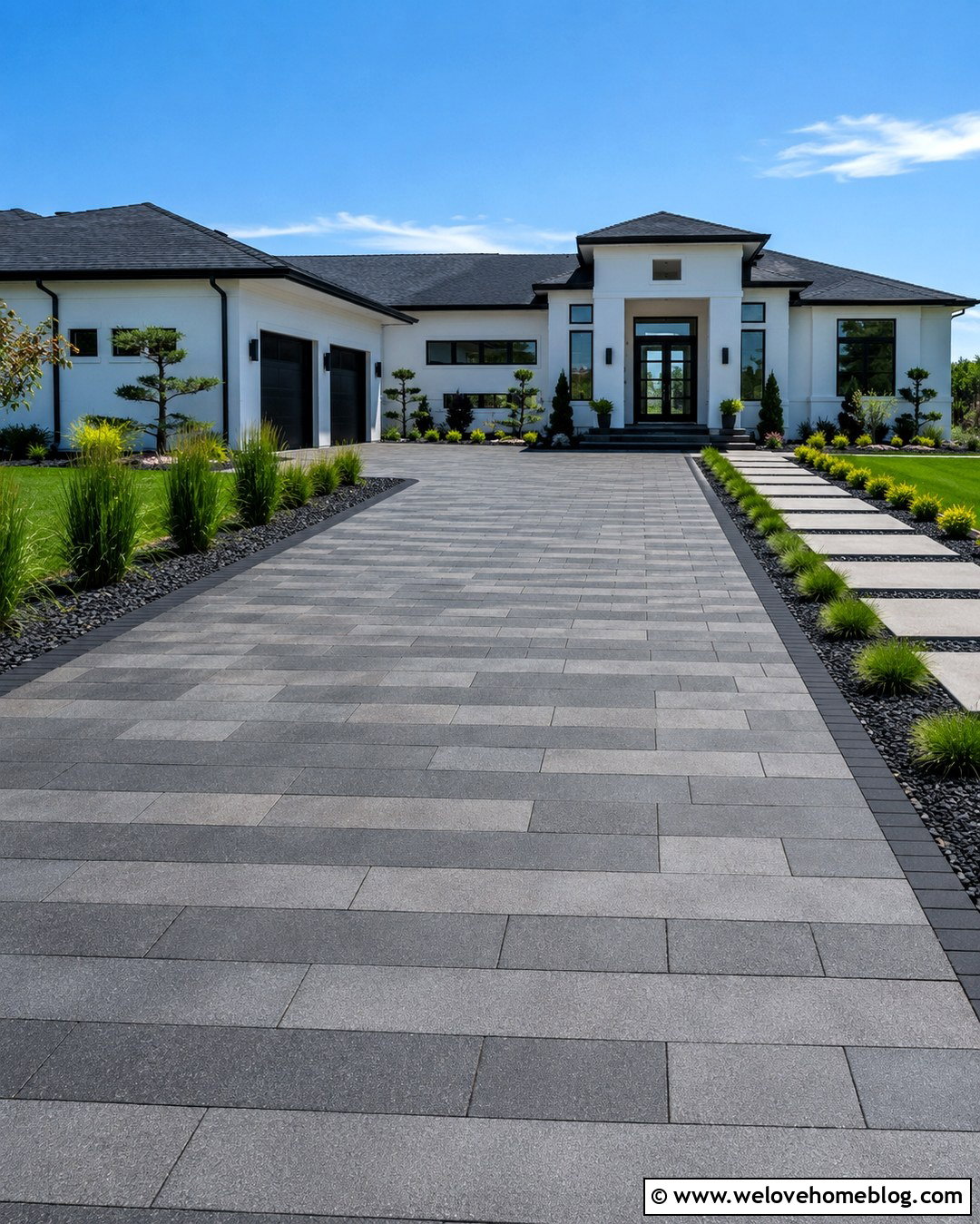
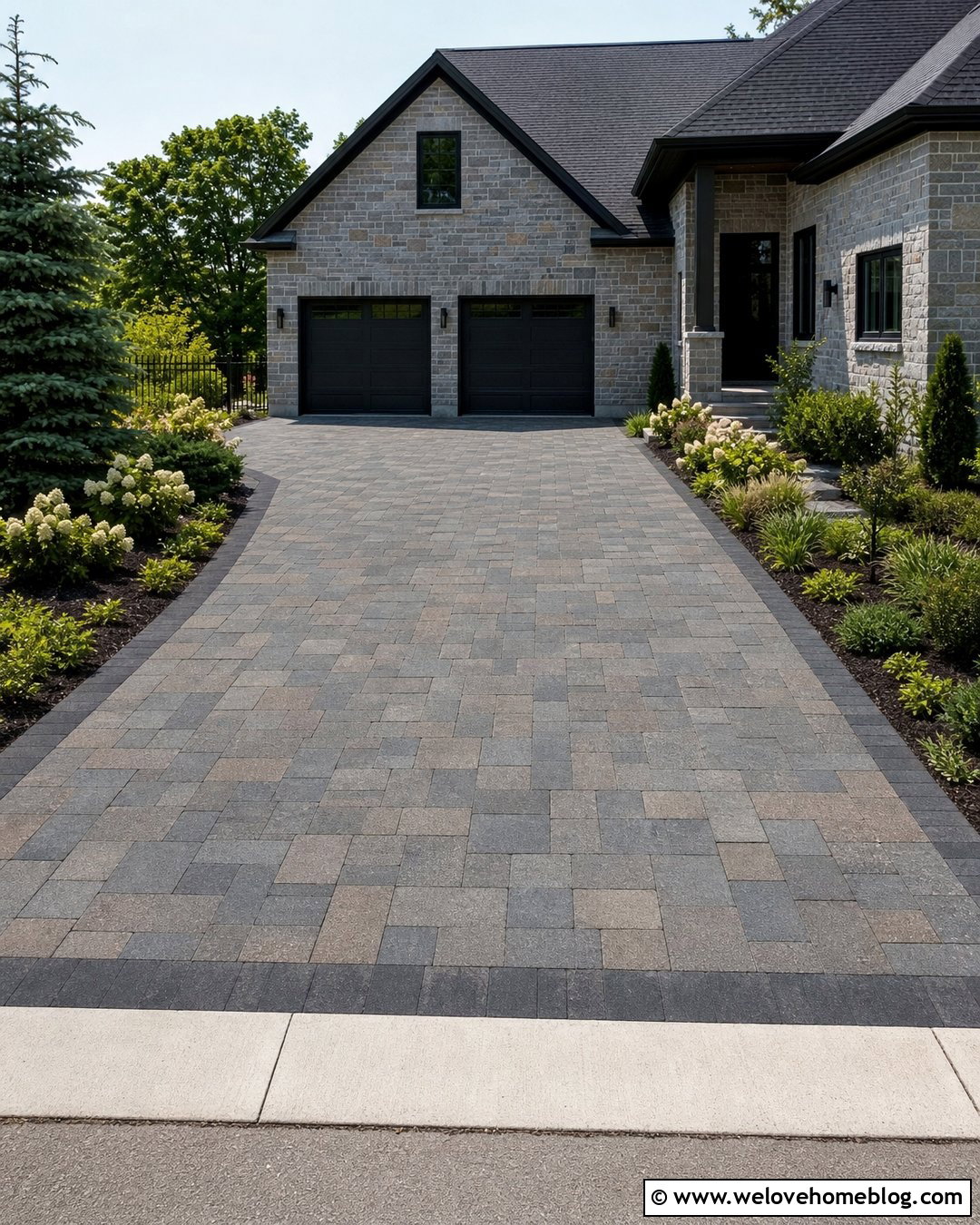
Large rectangular paving stones create a clean, modern driveway with fewer visible joints. Use smooth concrete pavers in medium and charcoal gray, arranged in a staggered linear pattern that follows the direction of travel. A straight driveway works particularly well because the long stones emphasize its simple geometry. Add narrow black paver borders and matching stepping slabs leading toward the front entrance. Landscaping should remain restrained, with clipped shrubs, upright grasses, and beds covered in dark decorative gravel. This design suits a contemporary home with white stucco, black windows, or natural wood siding. Large pavers need a carefully prepared, load-bearing base to remain stable beneath vehicles. When properly installed, the result feels spacious, orderly, and visually connected to modern architecture.
3. Curved Cobblestone Paving Stone Driveway
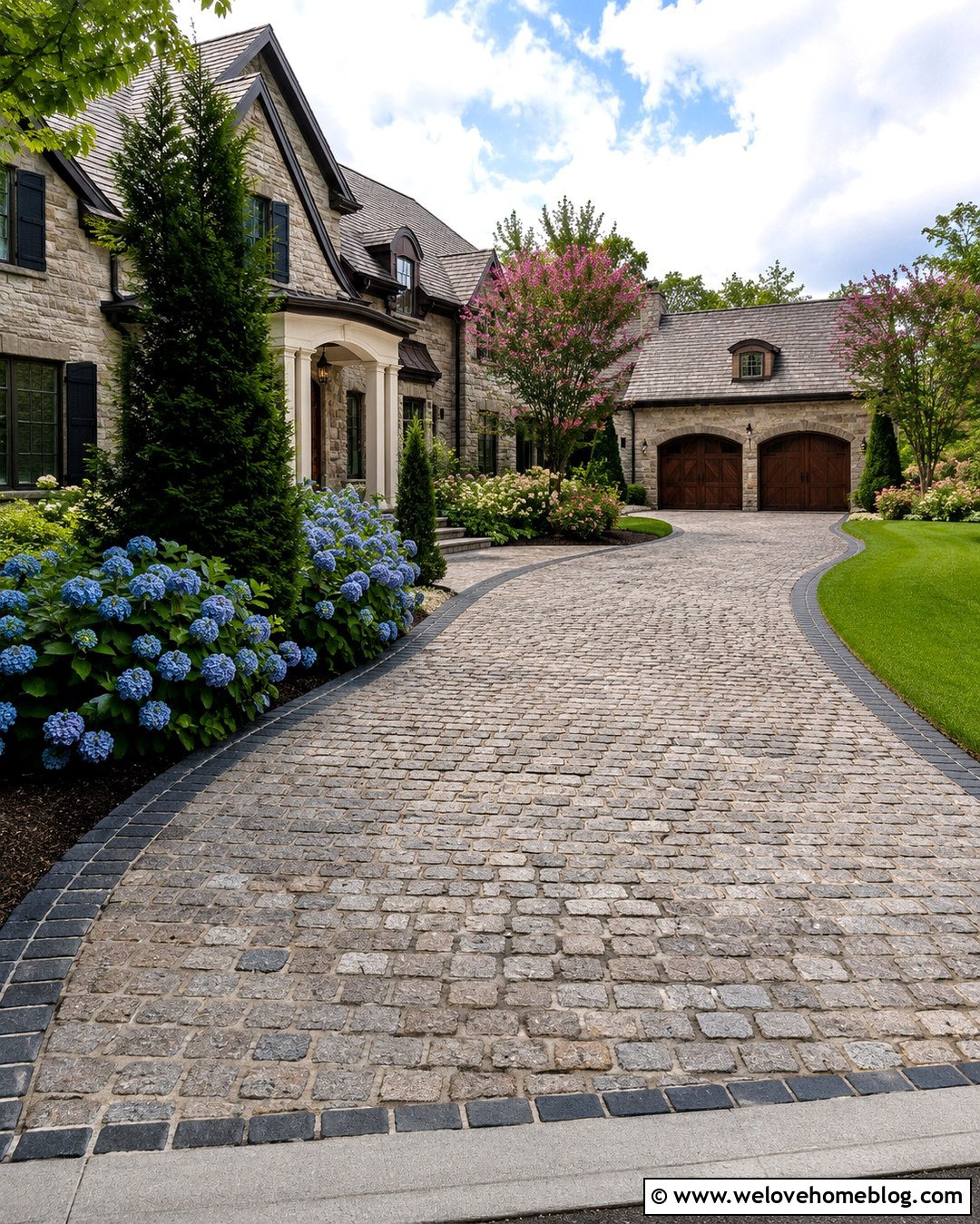
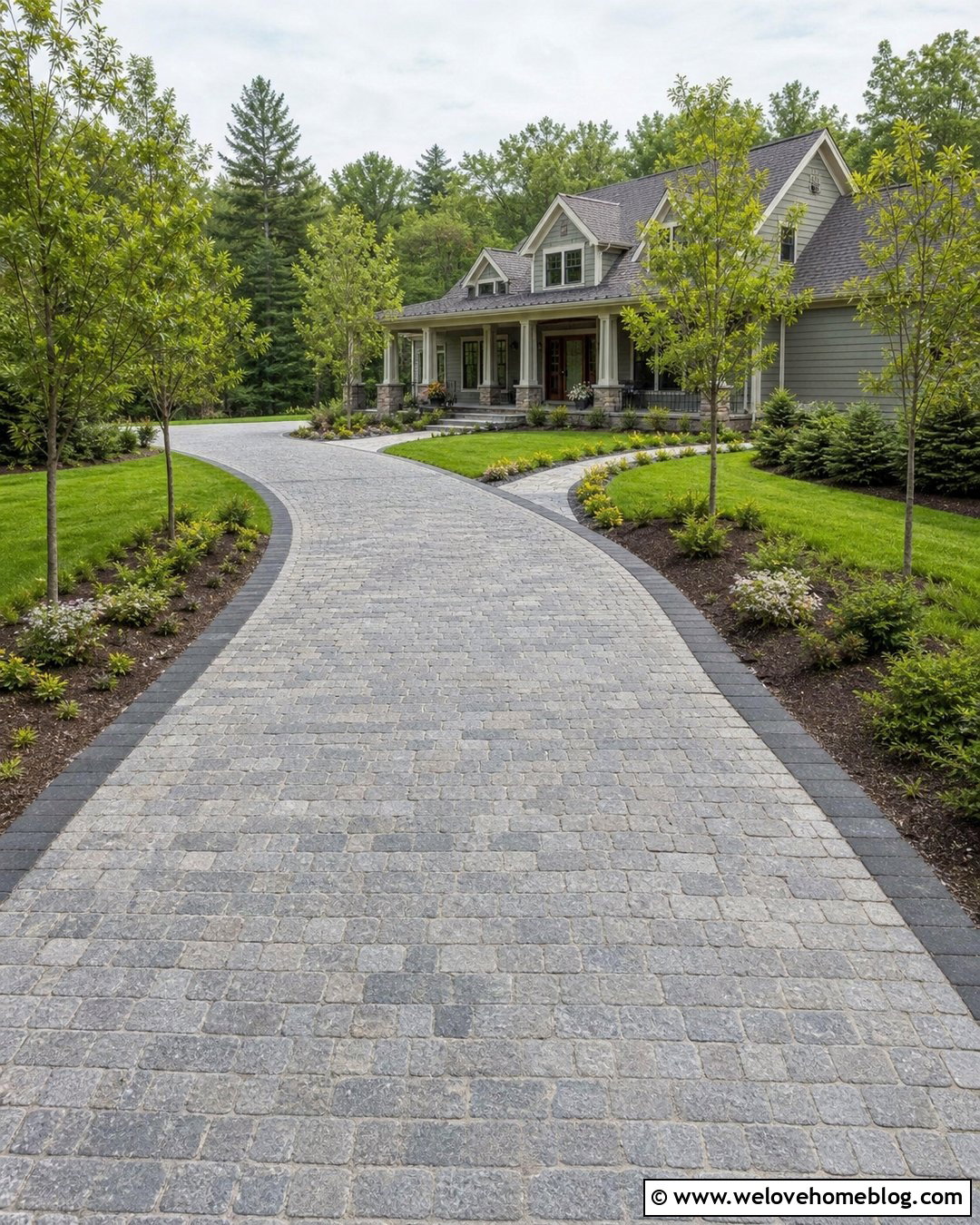
A curved cobblestone driveway brings an established, traditional character to the front of a home. Use tumbled concrete paving stones with a granite cobblestone appearance, blending soft gray, taupe, and muted brown tones. The driveway can sweep gently through the lawn before widening near the garage or front entry. A darker cobblestone border helps emphasize the curve and keeps the edge looking crisp. Layered planting beds filled with hydrangeas, evergreen shrubs, and small flowering trees soften the broad paved surface. This complete look works beautifully with Tudor, European-inspired, and stone-front houses. Avoid adding too many separate patterns along a curved layout. The natural-looking color blend and graceful shape already provide enough detail, allowing the house and surrounding landscape to remain prominent.
4. Red Brick Paving Stone Driveway
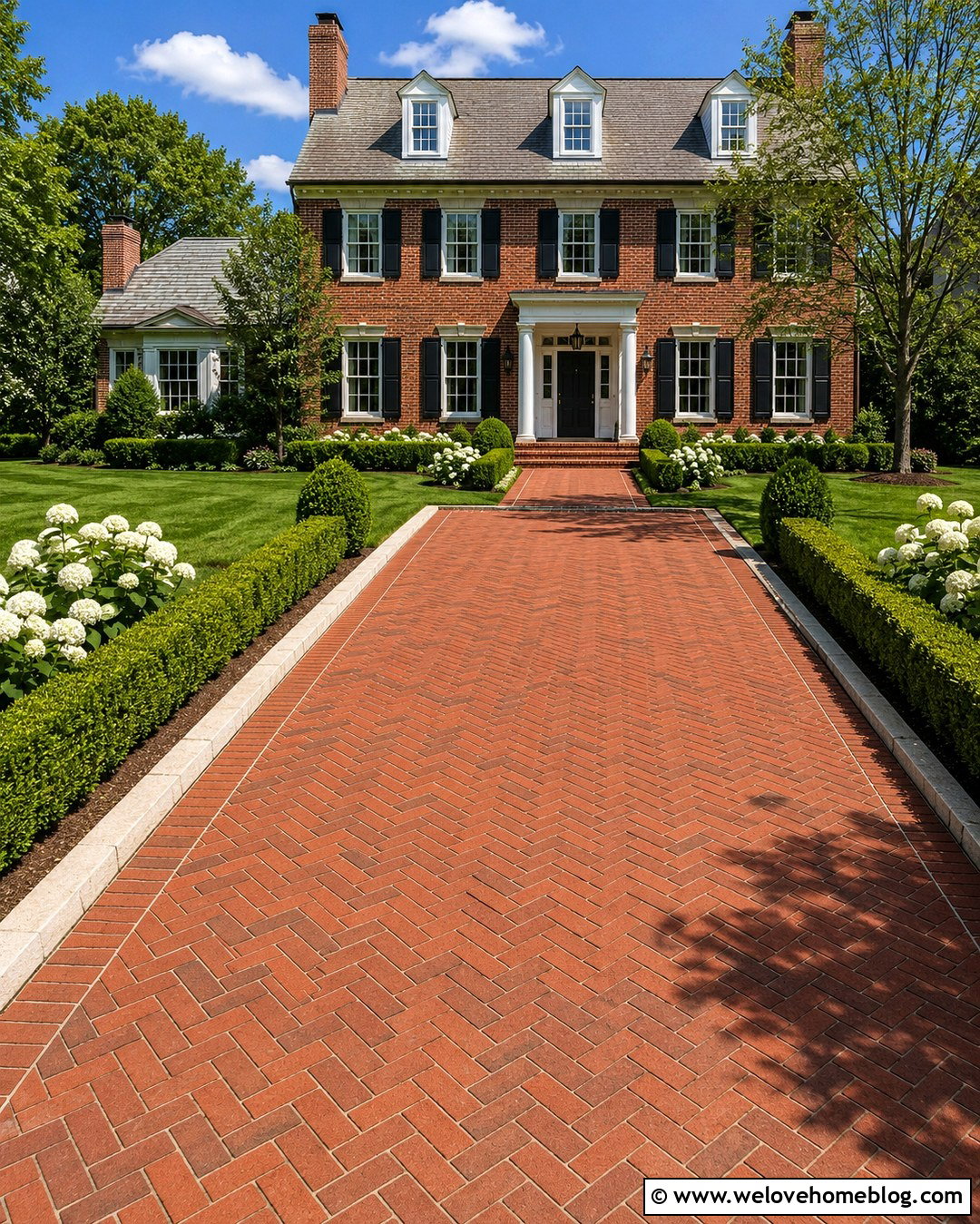
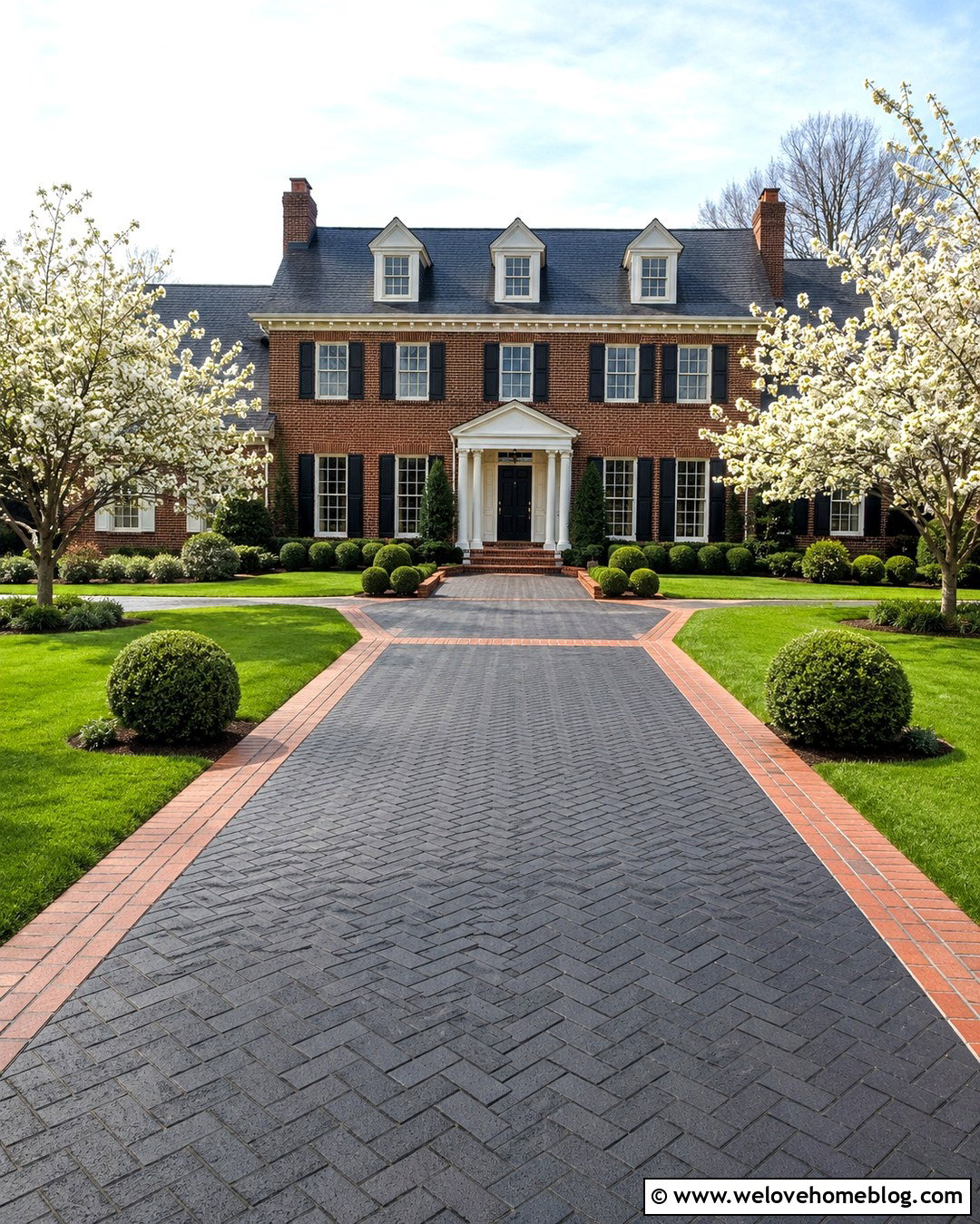
Red clay brick pavers offer a warm driveway surface that pairs naturally with colonial and traditional architecture. Lay driveway-rated brick paving stones in a 45-degree herringbone pattern, then use a straight soldier-course border around the perimeter. Deep red, rust, and brown variations make the surface feel less uniform and help disguise everyday dust. Cream limestone edging can provide a bright transition between the brick and surrounding lawn. Complete the entrance with symmetrical planting beds, clipped hedges, white flowering shrubs, and a brick walkway leading to the front door. If the house already has a red brick facade, select driveway pavers that are slightly darker or lighter. A small amount of contrast prevents the home and driveway from blending into one uninterrupted field of brick.
5. Permeable Paving Stone Driveway
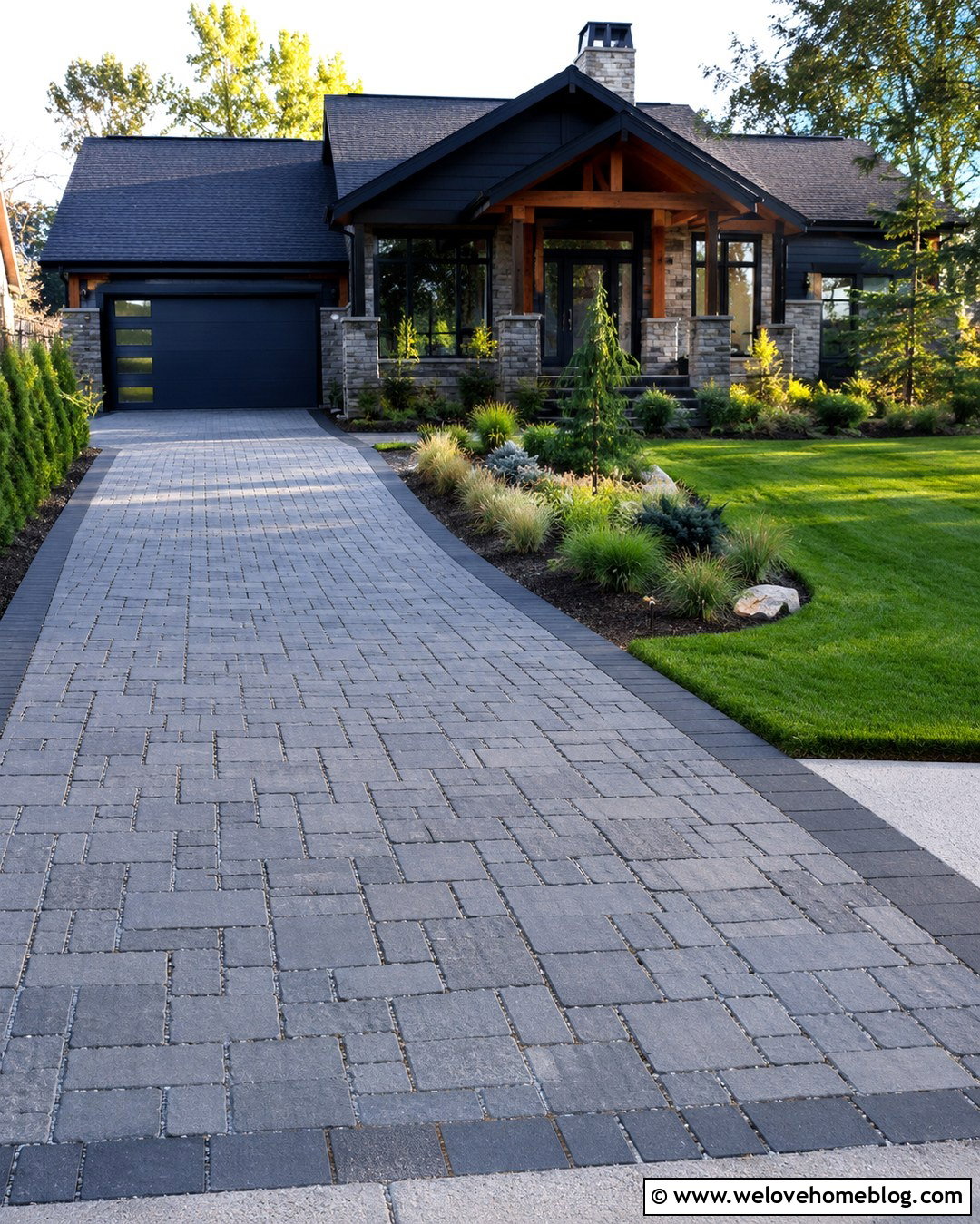
Permeable concrete paving stones combine an organized driveway surface with wider joints that allow water to move into a specially prepared drainage base. Choose square and rectangular pavers in a natural gray blend, installed in a simple ashlar layout. Fill the joints with clean, small aggregate rather than ordinary soil. A border of solid charcoal pavers can create a finished edge and separate the permeable field from planting beds. Rain gardens, native grasses, and moisture-tolerant shrubs strengthen the practical landscape design. This look is especially useful for properties where runoff management is an important concern, although local requirements and soil conditions should be reviewed first. The finished driveway can look just as polished as conventional paving while feeling lighter and more connected to the yard.
6. Circular Paving Stone Driveway
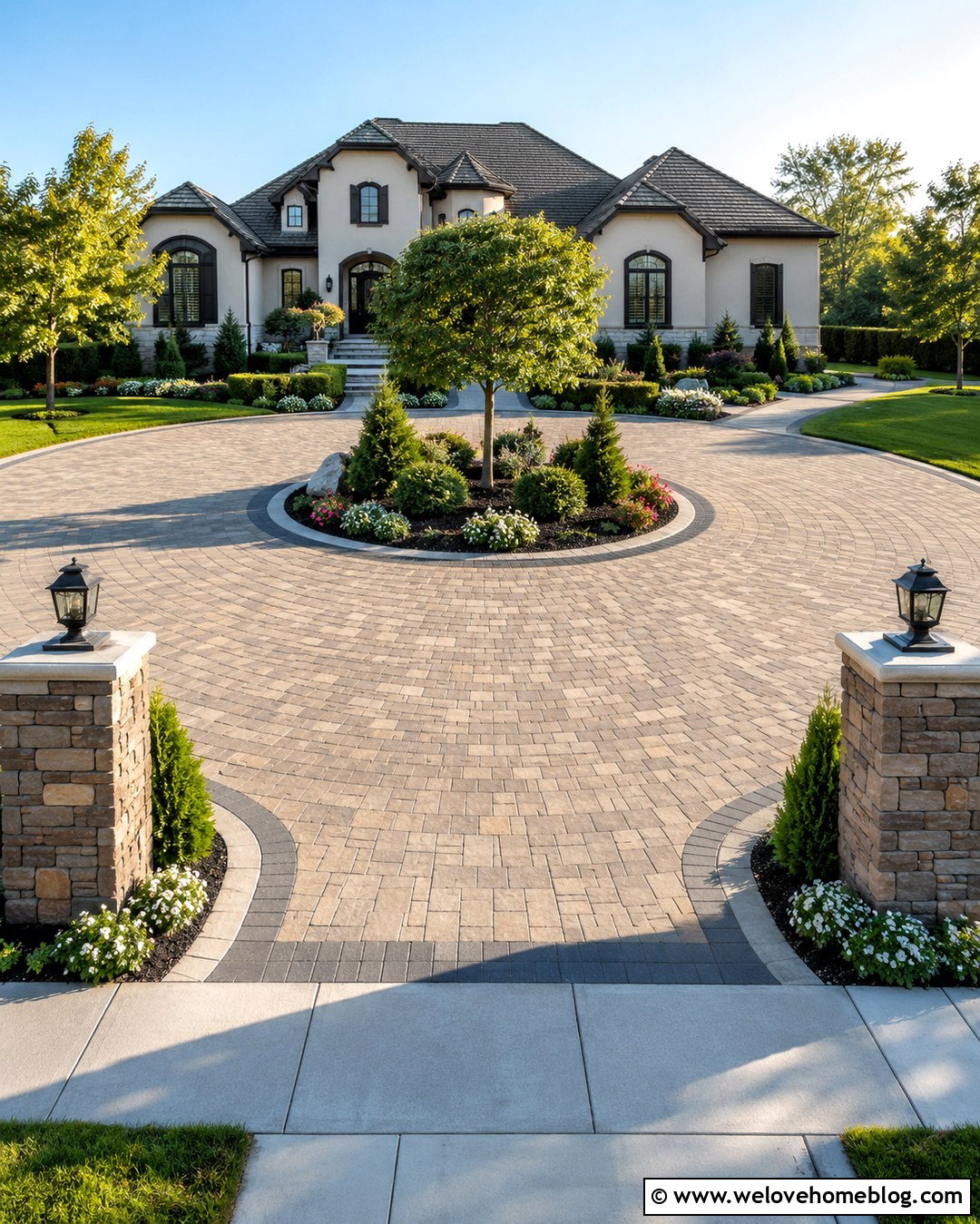
A circular paving stone driveway creates an elegant arrival area while allowing vehicles to enter and leave without extensive reversing. Use multitone concrete pavers in a fan or radial pattern around a landscaped center island. Warm beige, gray, and sand-colored stones work well with a traditional stucco or stone house. Frame the outer edge with darker rectangular pavers to reinforce the driveway’s circular shape. In the center, plant one small ornamental tree surrounded by low evergreen shrubs and seasonal flowers that will not block sightlines. Stone entrance pillars can repeat the colors found in the paving. Make sure the circle provides enough turning space for expected vehicles. When the scale is correct, the driveway, island, entrance, and house create one balanced front-yard composition.
7. Mixed Size Paving Stone Driveway
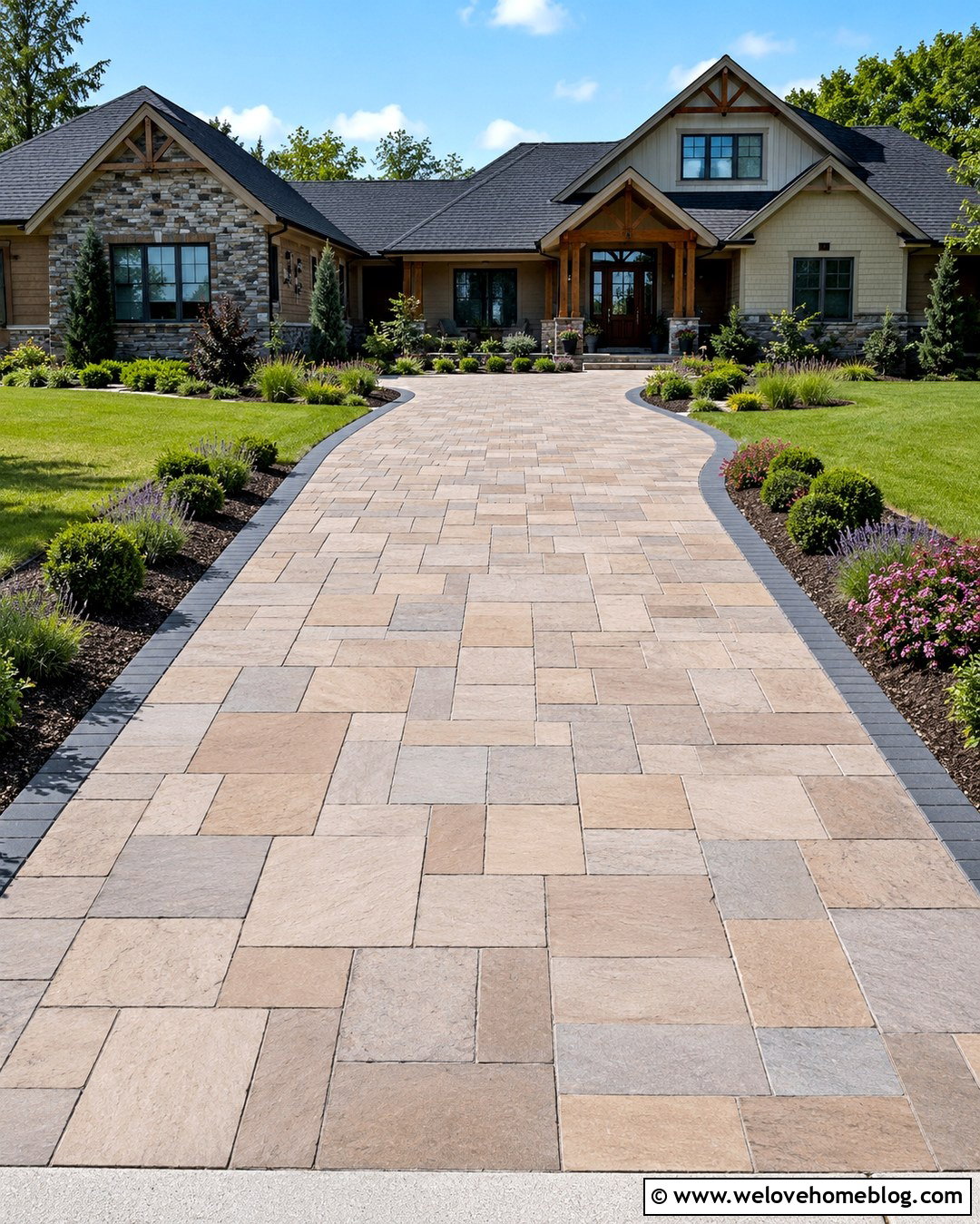
Mixed-size paving stones produce a relaxed, natural-looking driveway without sacrificing a clean finished surface. Combine large squares, small squares, and rectangular concrete pavers in a repeating ashlar pattern. A blend of limestone beige, light gray, and soft brown complements many ranch, transitional, and craftsman homes. Use a single row of darker stones around the outside to contain the varied pattern. Broad planting beds with rounded shrubs, ornamental grasses, and flowering perennials can balance the texture underfoot. Carry one or two paving sizes into the front walkway so the hardscape feels connected. Before installation, plan the pattern across the full driveway width to avoid awkward clusters or excessive cuts. The completed design should appear varied but intentional, with colors distributed evenly from curb to garage.
8. Two Tone Paving Stone Driveway
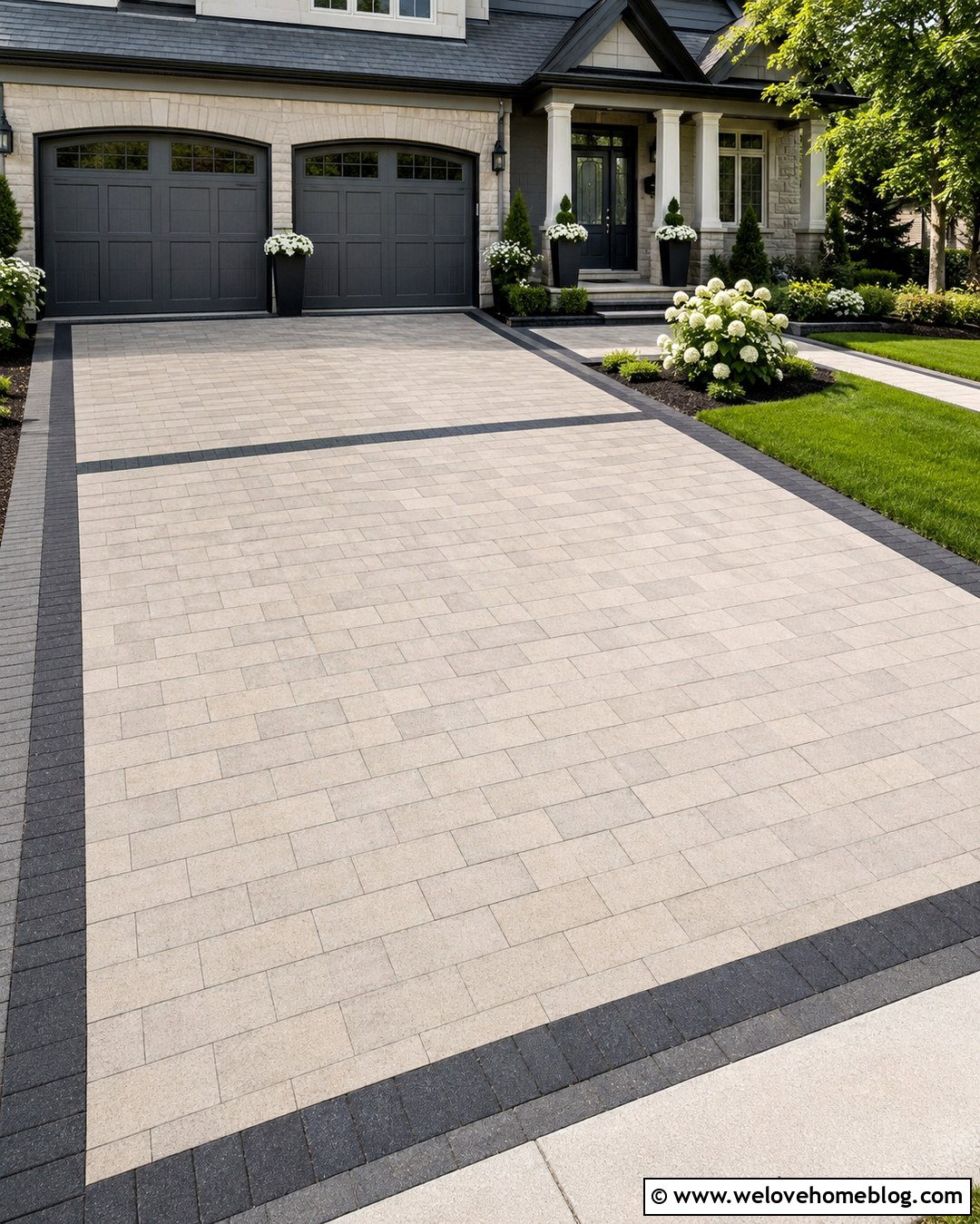
Two related paver colors can give a driveway definition without introducing a complicated pattern. Use light taupe concrete paving stones across the main surface and charcoal pavers for a wide double border. A straight running-bond field keeps the center calm, while the darker frame adds depth and makes the driveway shape easier to read. Repeat the charcoal tone in porch steps, planters, or a narrow walkway band. Green lawn and simple white-flowering shrubs provide a fresh contrast to the neutral hardscape. This approach works well with suburban homes that need more curb appeal but not an overly formal entrance. Ask for full-size paver samples and view them outdoors beside the facade. Sunlight can make paving colors appear noticeably different from small indoor samples or catalog photographs.
9. Fan Pattern Paving Stone Driveway
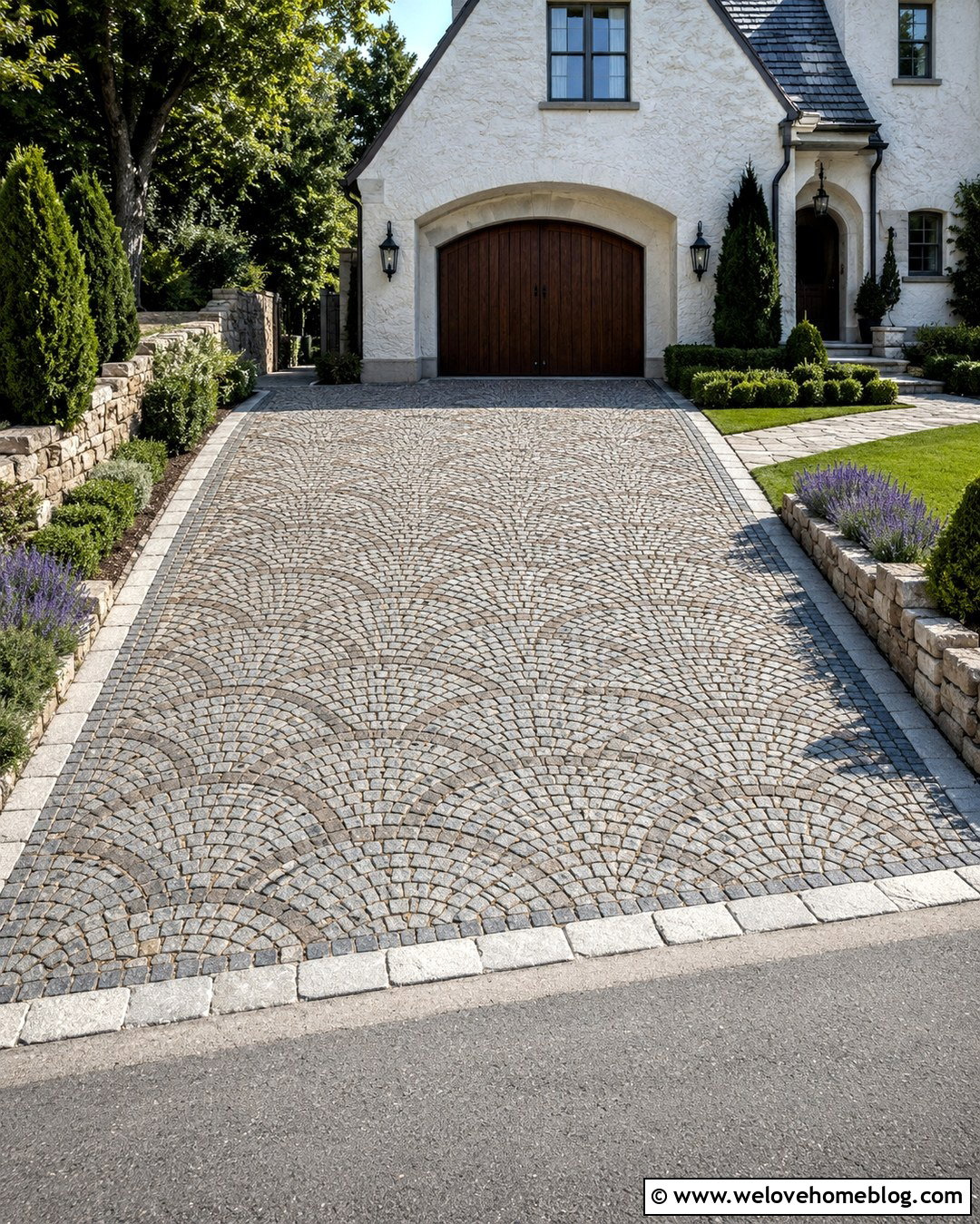
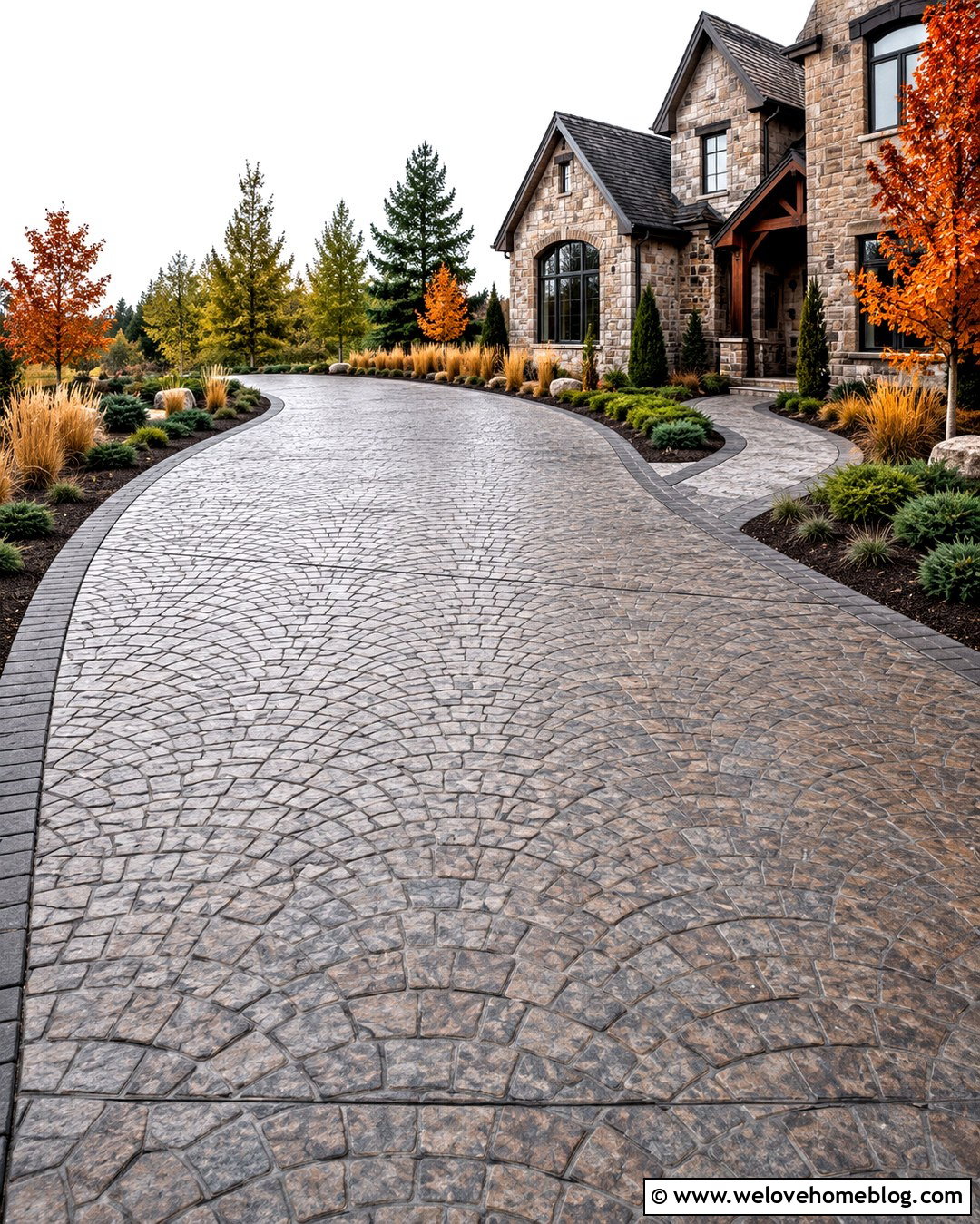
A fan pattern creates a decorative paving stone driveway inspired by traditional European streets and courtyards. Small granite setts or cobblestone-look concrete pavers are arranged in repeating arcs that spread across the surface. Soft gray stones with subtle tan variation give the design dimension while keeping it suitable for everyday residential use. Use the same material in a straight border so the curved fans finish neatly along the edges. This pattern looks particularly striking on a driveway apron, circular turnaround, or widened parking court. Frame the paving with clipped evergreens, lavender, and simple stone walls rather than busy flower beds. Because fan layouts involve many cuts and precise curves, experienced installation is valuable. A well-executed pattern looks smooth, balanced, and intentionally aligned with the house.
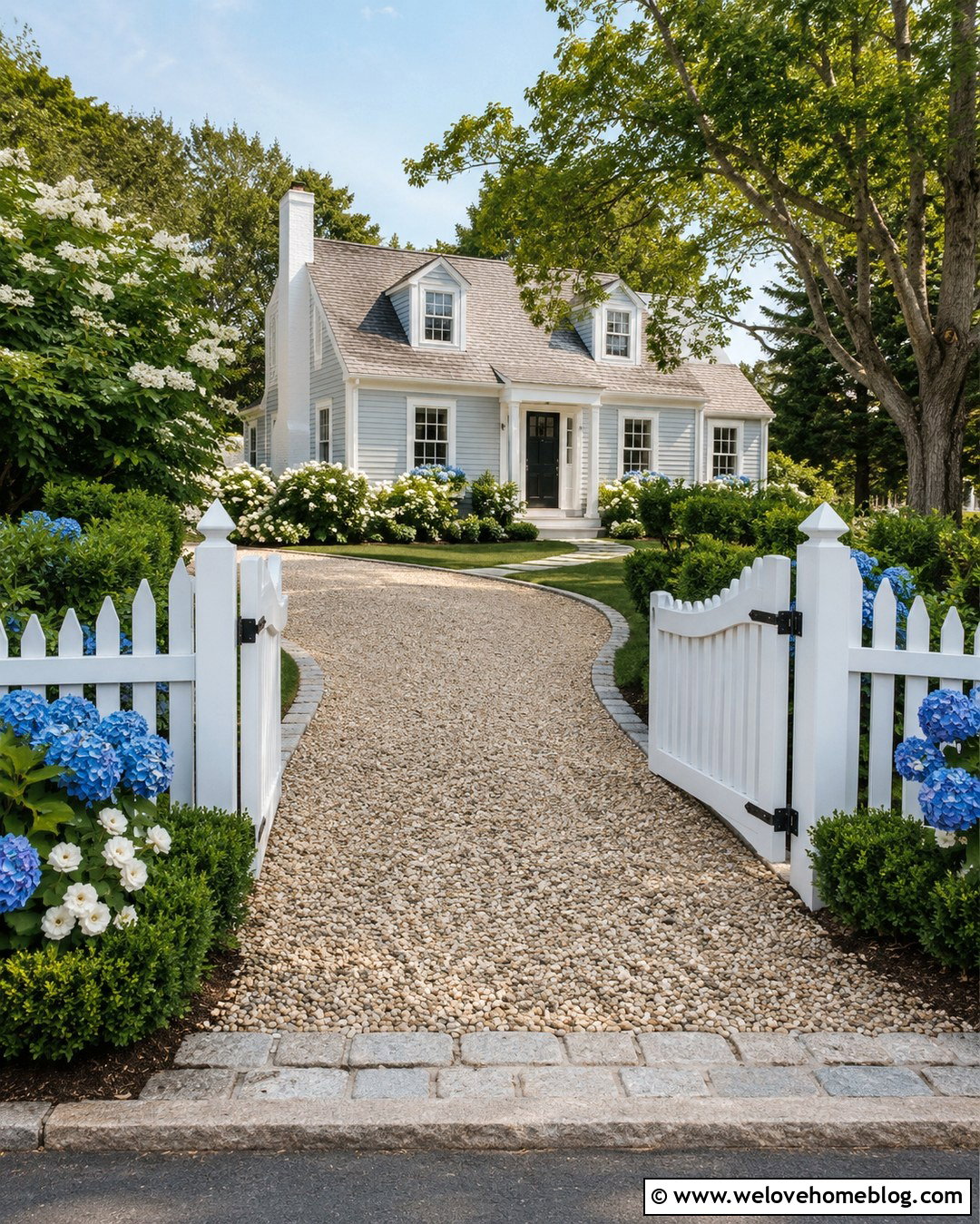
10. Basketweave Paving Stone Driveway
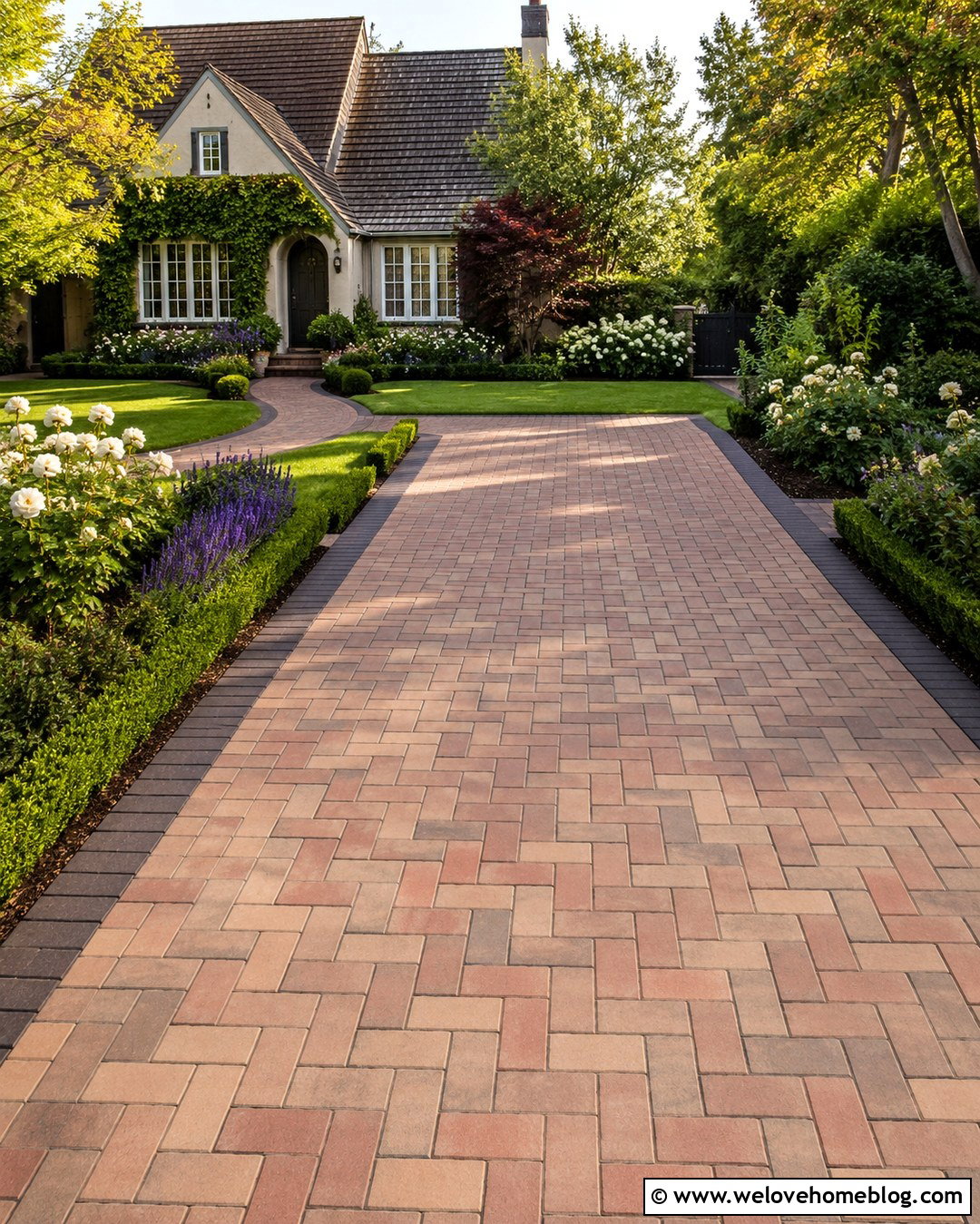
A basketweave pattern delivers traditional character through pairs of rectangular paving stones placed in alternating directions. Choose warm tan or weathered red concrete pavers for a cottage-inspired driveway, then define the perimeter with a darker brick-colored soldier course. A short, straight layout keeps the repeating pattern easy to appreciate from the curb. Cottage landscaping can include low hedges, roses, salvia, and a curved front walkway using the same border stone. The patterned surface should complement the house rather than compete with it, so avoid mixing several strong colors. Basketweave is best selected with driveway-rated pavers and a properly engineered foundation. Its orderly rhythm adds interest to small and medium driveways, where details remain visible and help the entrance feel thoughtfully finished.
11. Running Bond Paving Stone Driveway
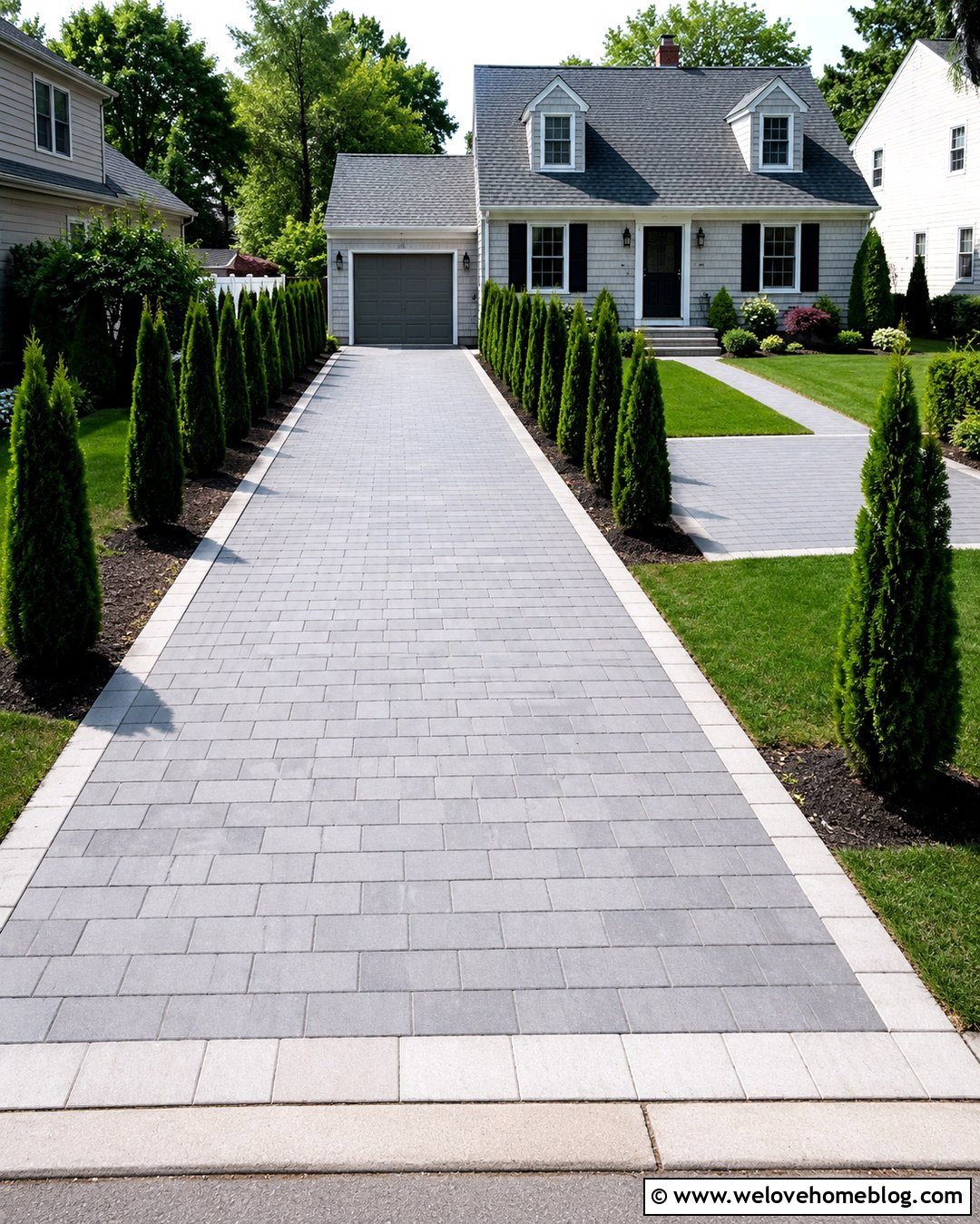
Running bond is a straightforward paving pattern that makes a narrow driveway feel longer and more organized. Rectangular concrete pavers are laid in offset rows, preferably following the driveway’s direction rather than crossing it. Mid-gray stones create a versatile main surface, while a light stone border separates the paving from lawn and garden beds. Continue the same pavers into a parking pad or side walkway for a seamless transition. Upright evergreens and slim planting beds can frame the driveway without reducing usable width. This look works especially well beside a Cape Cod, ranch, or compact suburban home. The pattern is visually quiet, making it a practical backdrop for stronger architectural details. Careful edge restraint and consistent joint spacing keep the long rows looking straight and secure.
12. Grass Joint Paving Stone Driveway
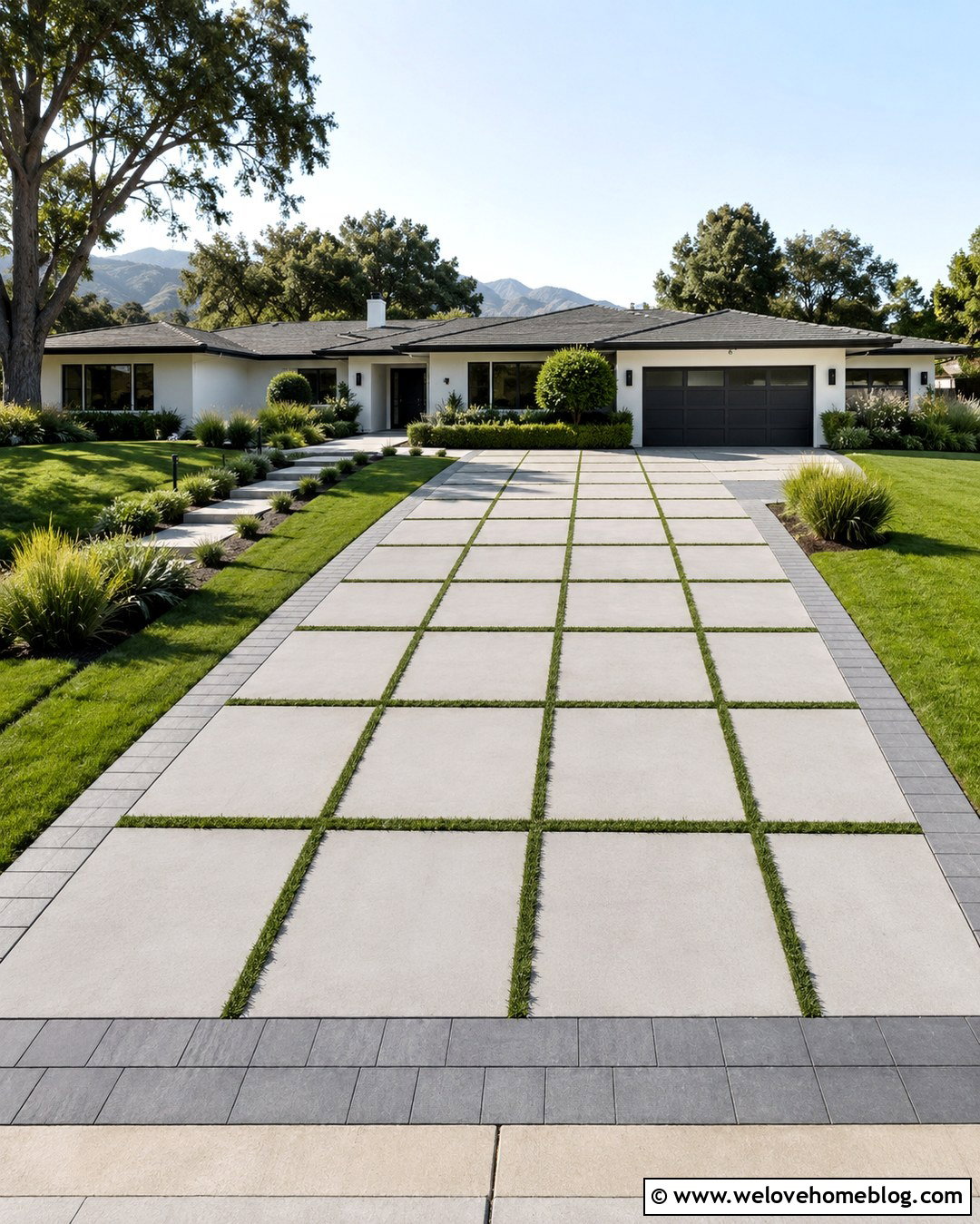
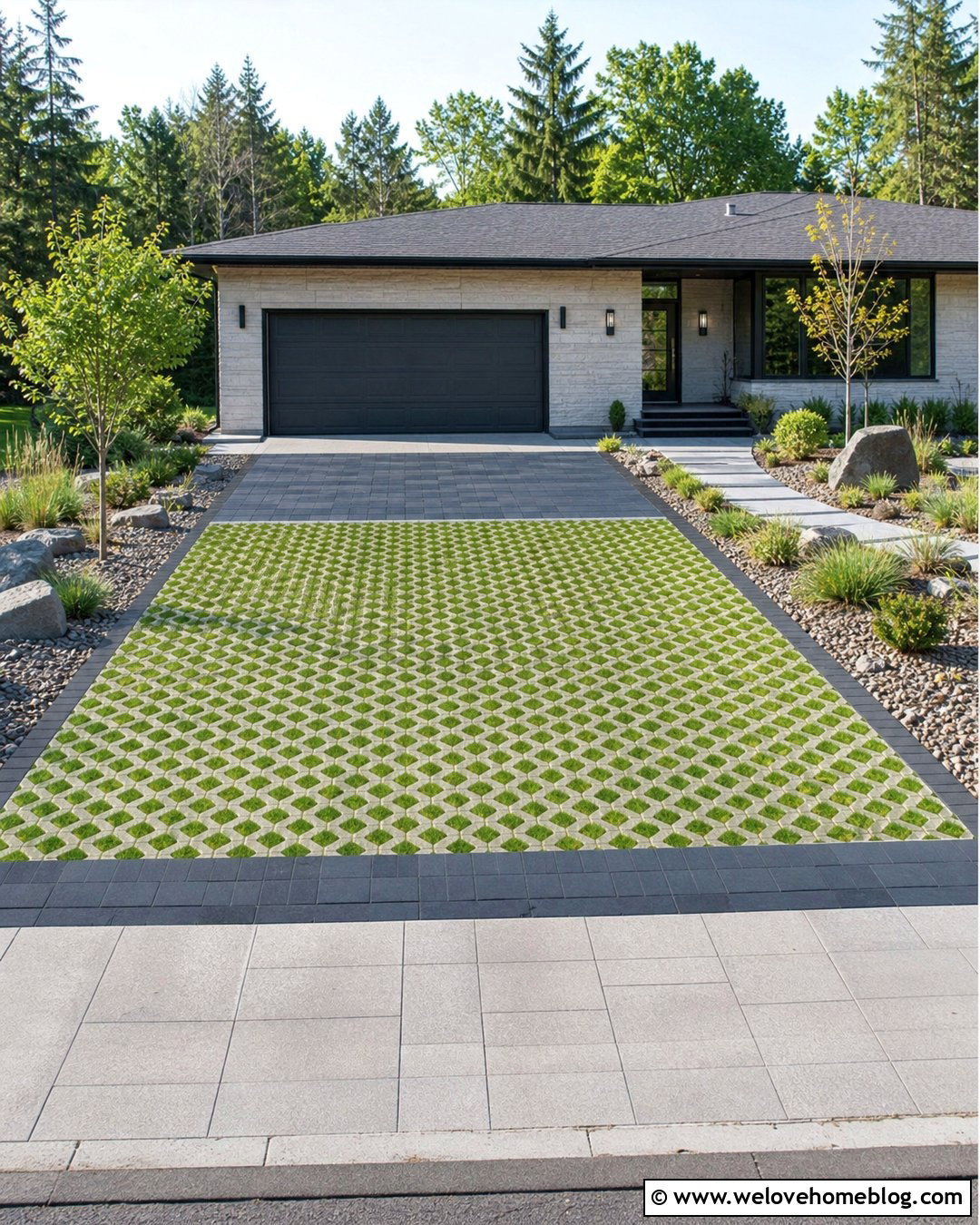
Widely spaced paving stones with planted joints can soften the appearance of a large driveway. Use vehicle-rated square concrete pavers in pale gray, arranged in a clean grid with narrow strips of durable grass or low ground cover between them. The layout can cover the entire parking area or appear only within a central section surrounded by solid paver borders. Pair the geometric surface with a modern ranch house, open lawn, and restrained beds of ornamental grasses. This type of driveway requires suitable growing conditions, drainage planning, and regular trimming to stay crisp. It may not suit every climate or heavy-use situation. Where practical, however, the combination reduces the visual weight of the paving and creates a greener transition between the street, front yard, and home.
13. Paving Stone Driveway With Matching Walkway
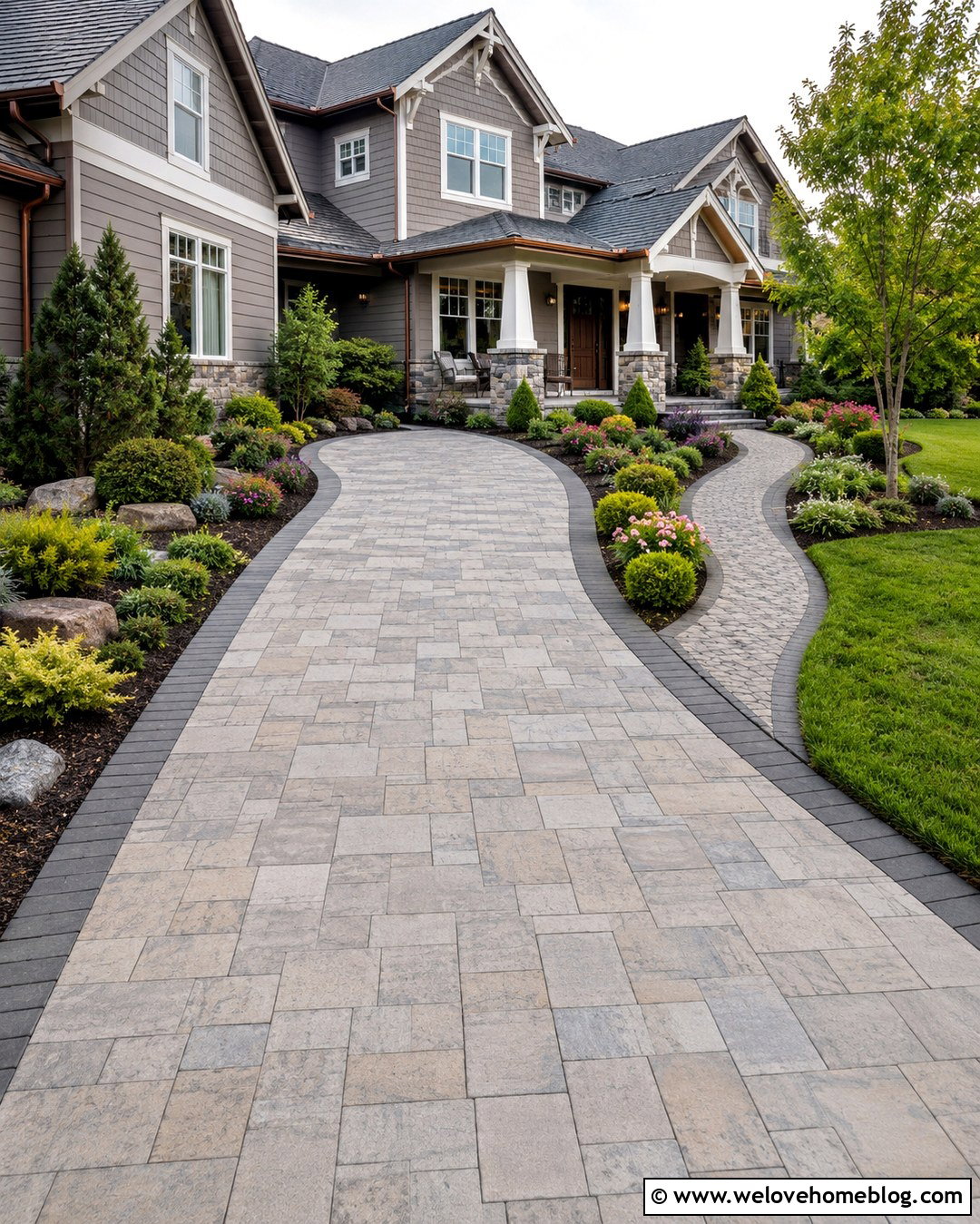
Connecting the driveway and front walkway with the same paving stone family creates a polished, unified entrance. Use textured concrete pavers in a soft gray and beige blend across a gently curved driveway. Build the walkway with the same stones in a smaller size or a different pattern so it remains visually distinct. A dark border can outline both surfaces and guide guests from the curb toward the front door. Place layered planting beds between the walkway and driveway, using evergreen shrubs, flowering perennials, and one small ornamental tree. This arrangement prevents the hardscape from becoming one oversized paved area. It also suits many home styles, including craftsman, transitional, and modern farmhouse designs. Coordinating materials make later additions feel original rather than attached as an afterthought.
14. Paving Stone Driveway With Gravel Center
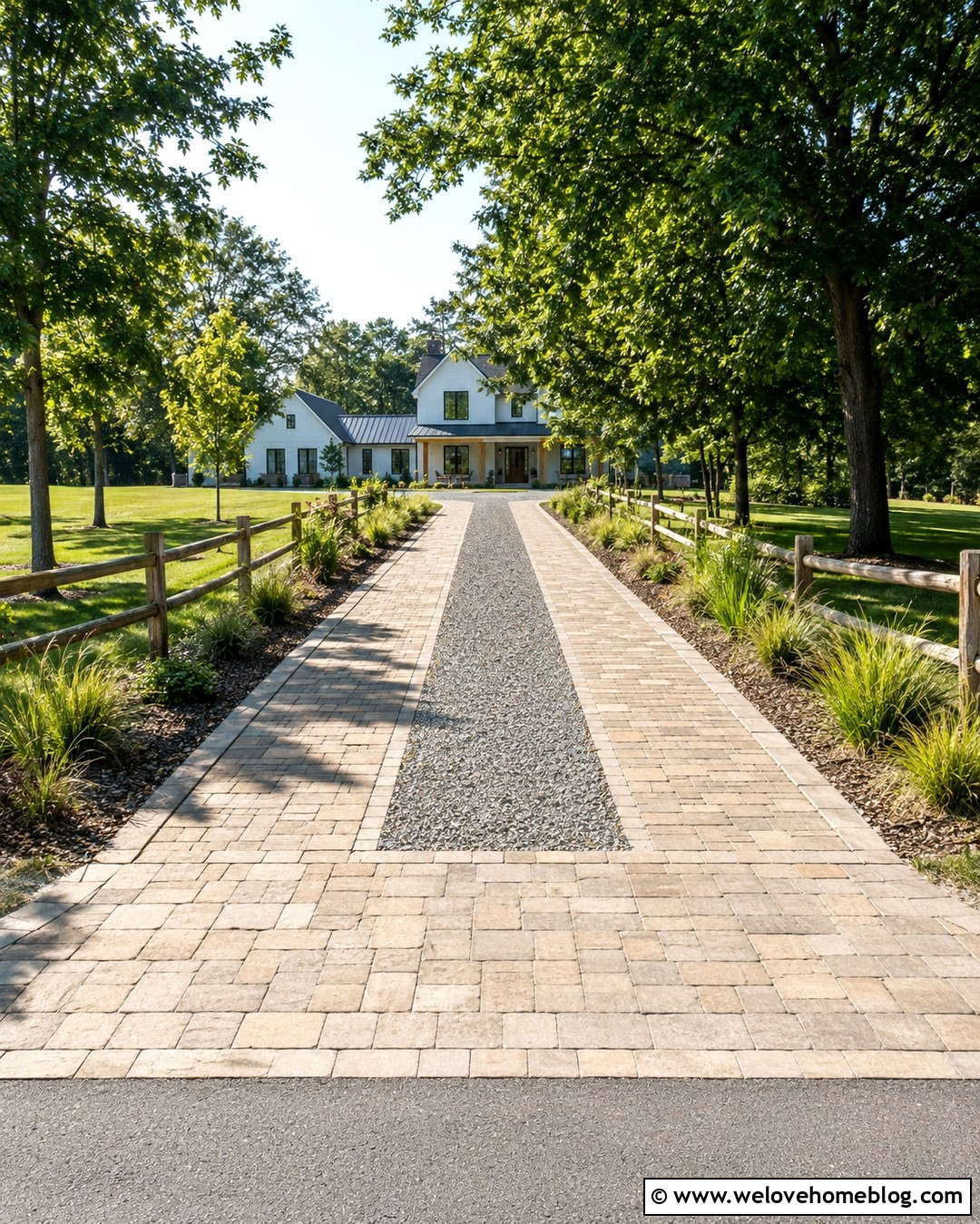
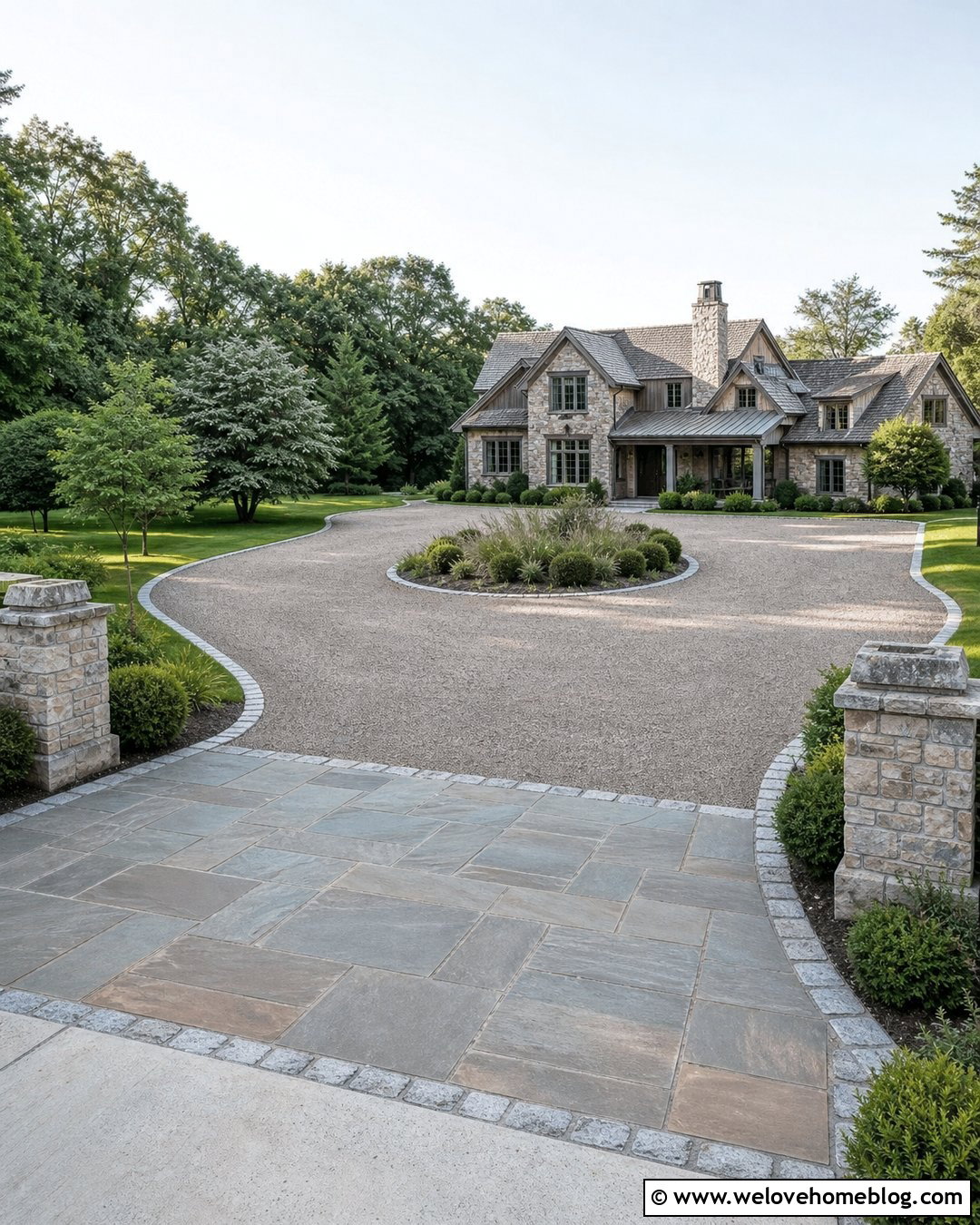
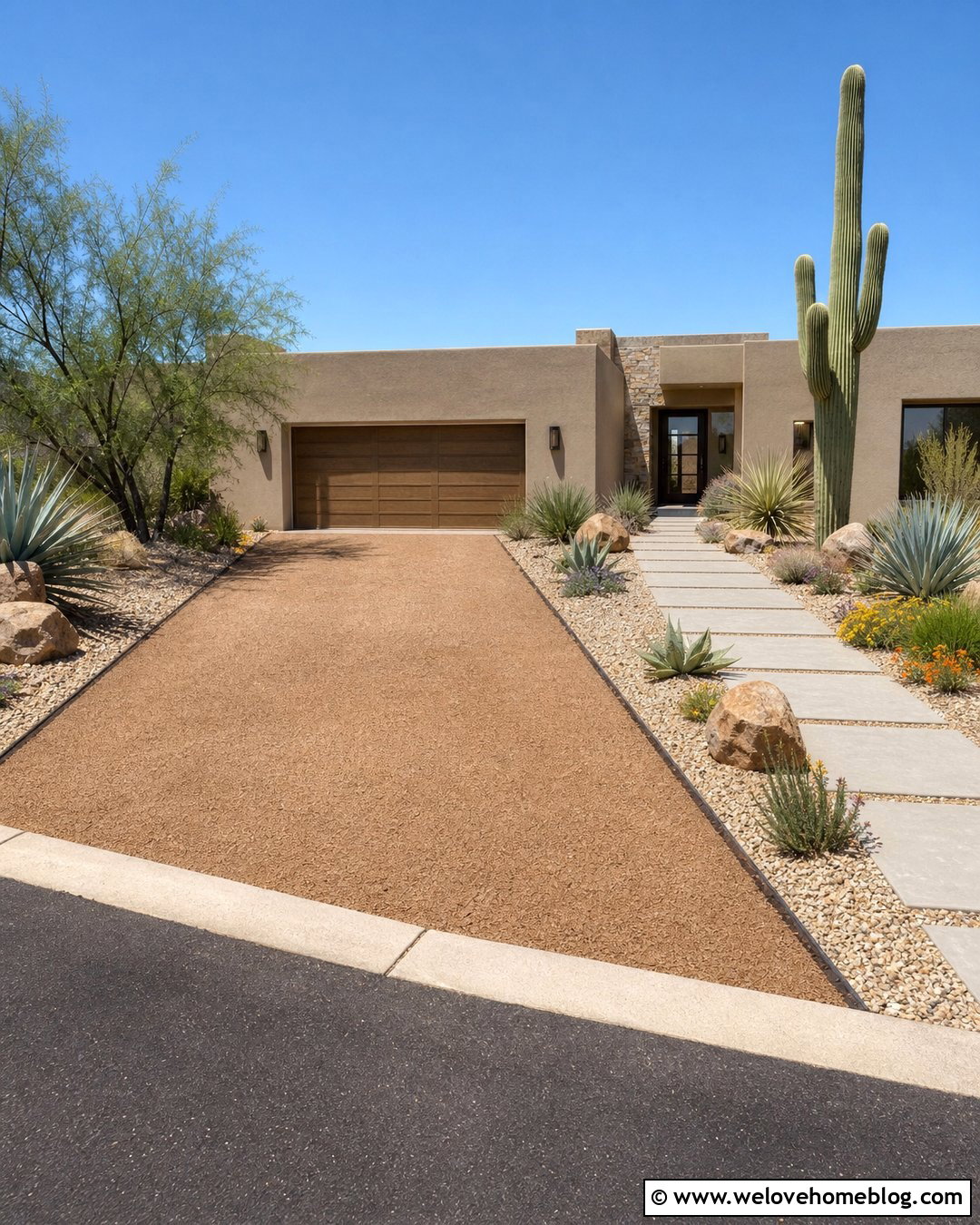
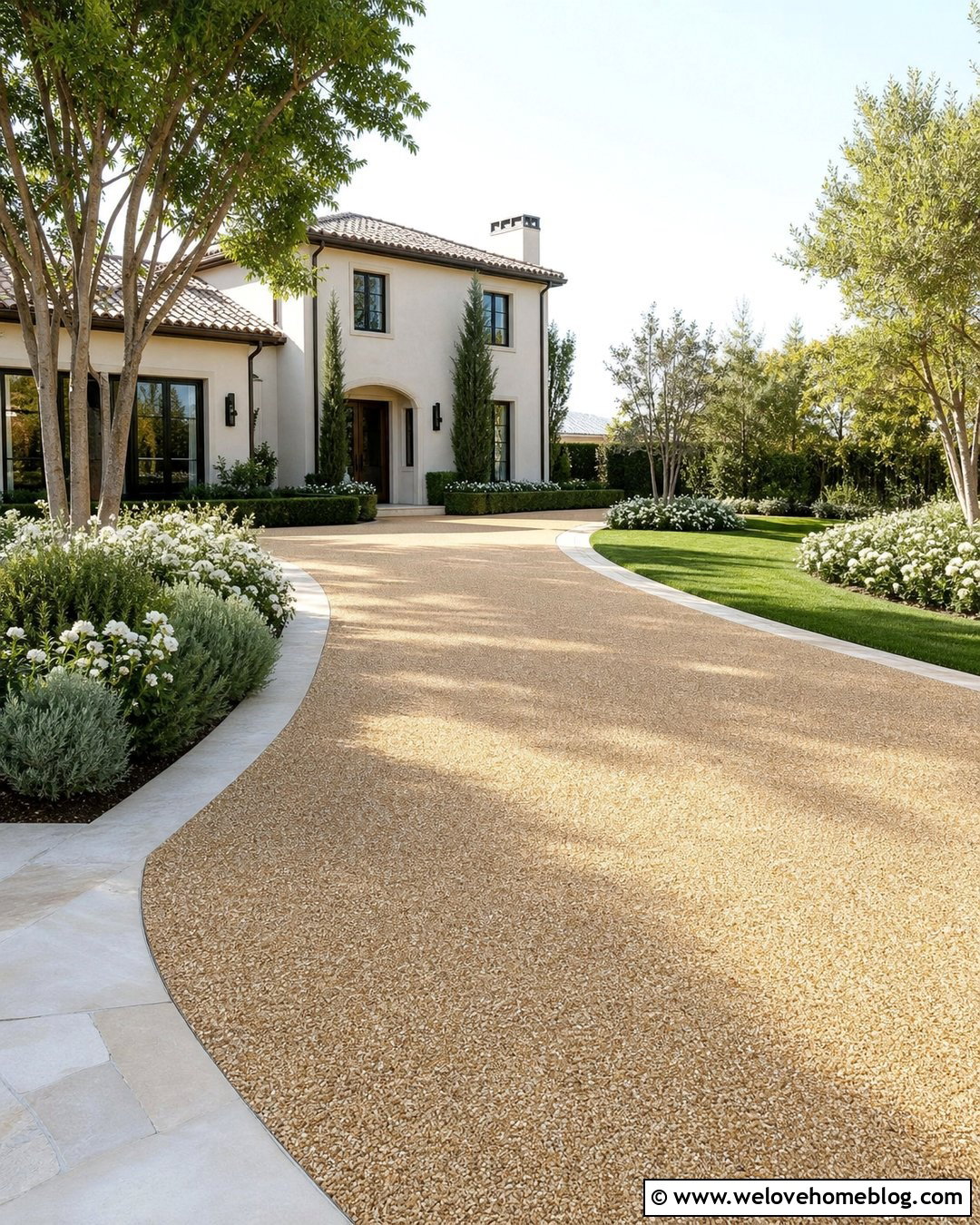
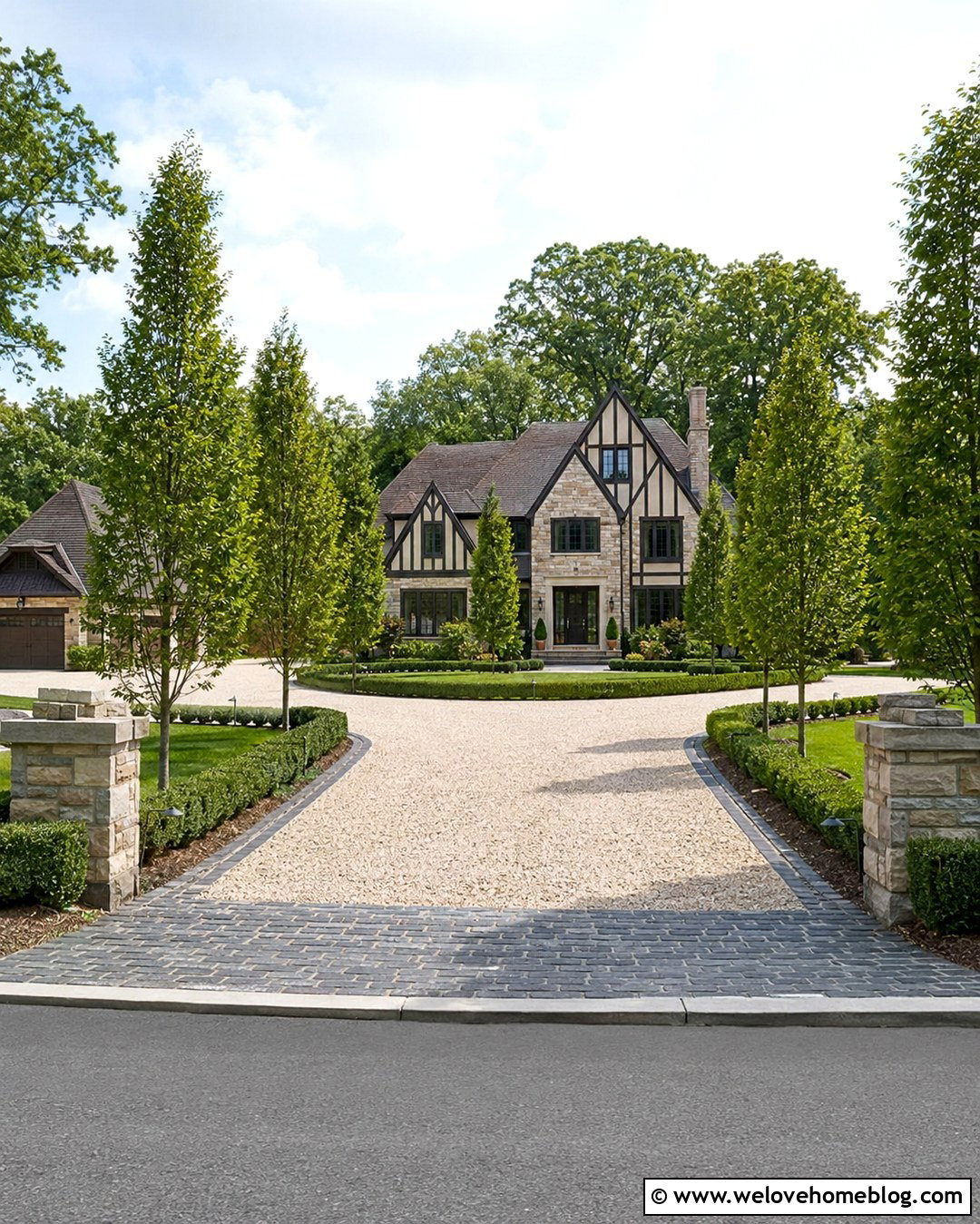
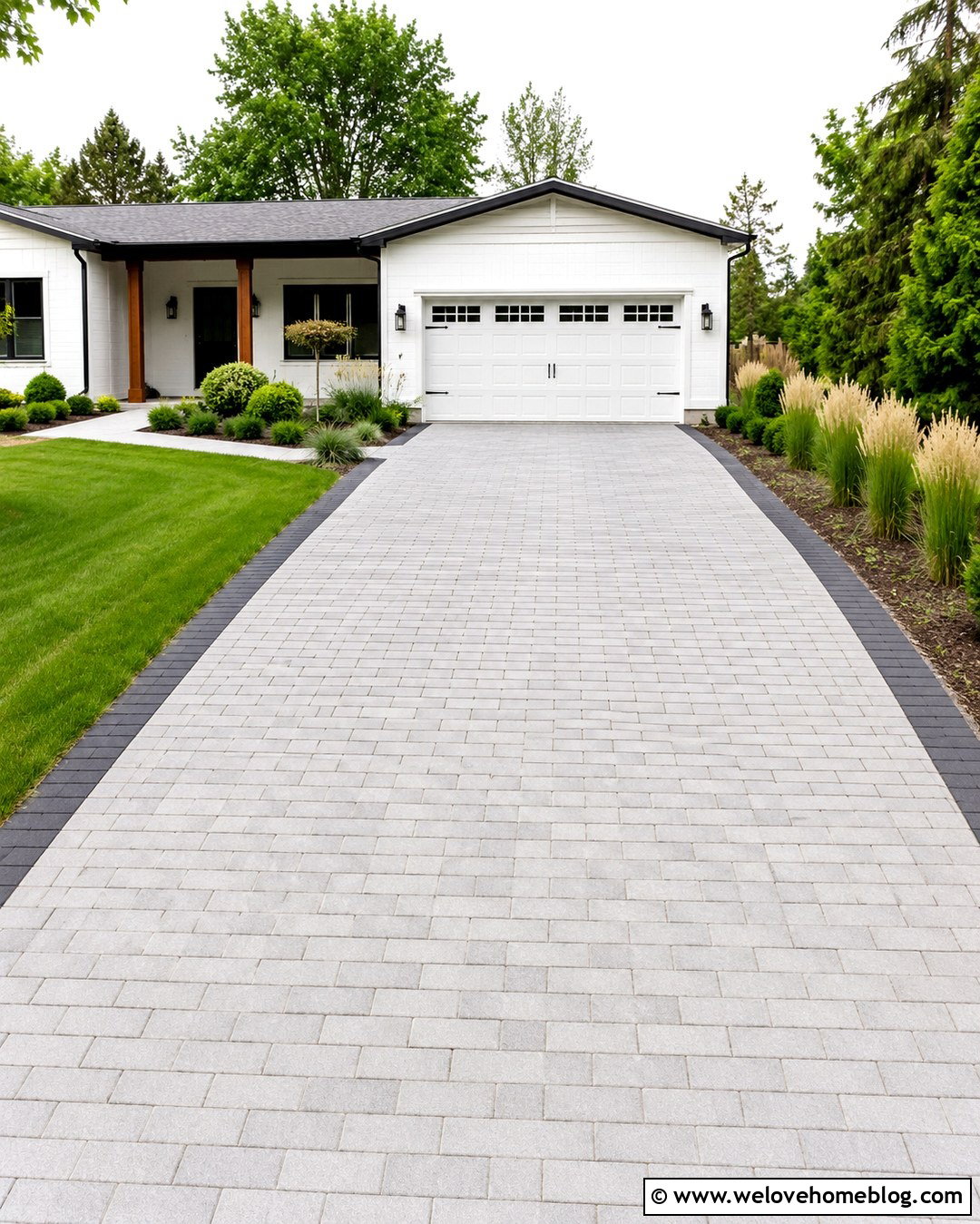
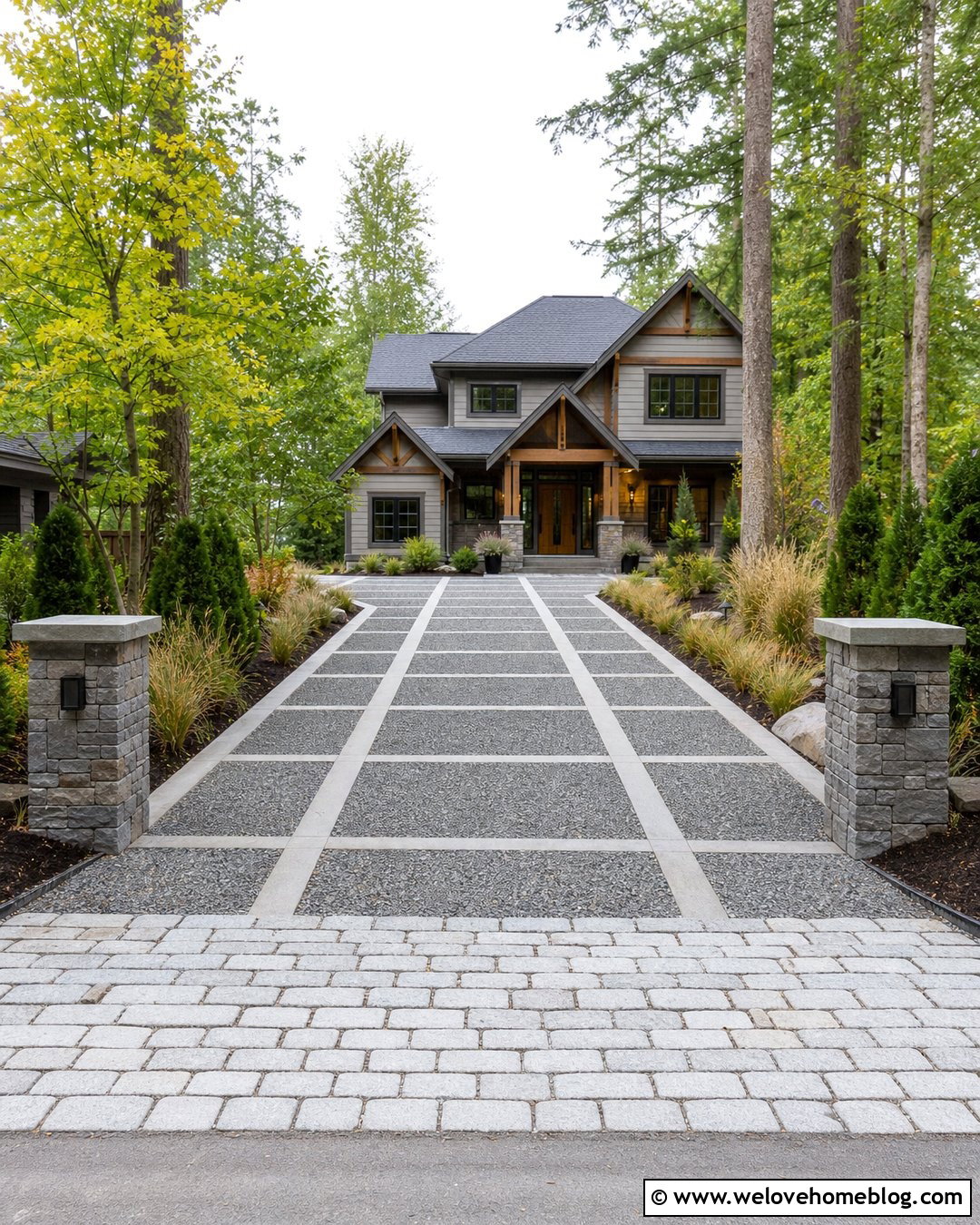
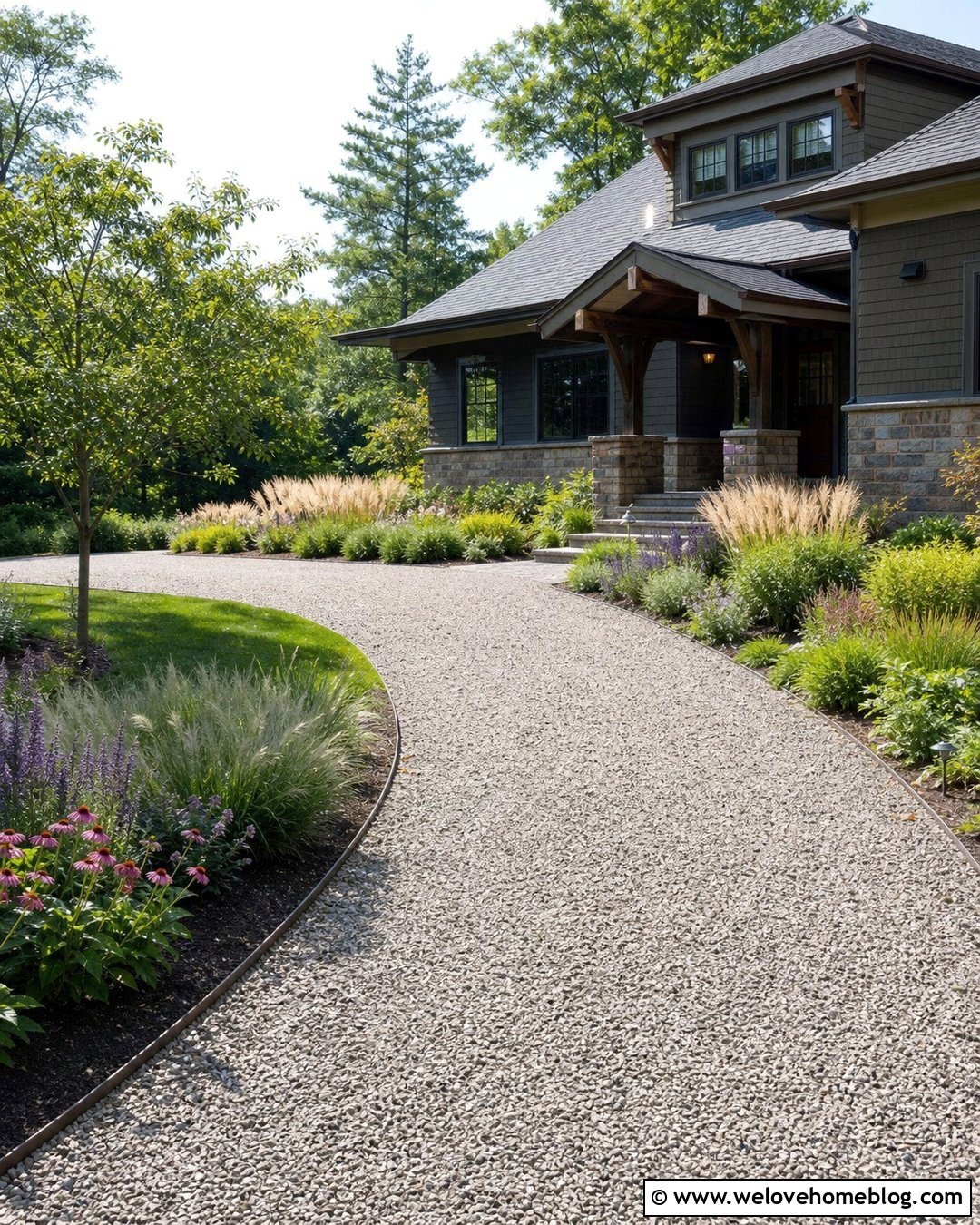
Combining paving stones with compacted gravel creates a textured driveway suited to country and farmhouse settings. Install wide wheel tracks or substantial paving bands using tumbled tan concrete stones, then fill the center and side areas with angular gray gravel. A complete paver apron at the street helps contain loose aggregate and gives the entrance a more finished appearance. Use matching pavers as strong edge restraints along the driveway’s length. Frame the approach with native grasses, split-rail fencing, shade trees, and broad lawn. This mixed-material design can reduce the amount of full-surface paving, but it still requires a stable base and effective gravel containment. The colors should relate closely so the two materials feel coordinated. Warm paving stones and cooler gravel create gentle, practical contrast.
15. Tumbled Paving Stone Farmhouse Driveway
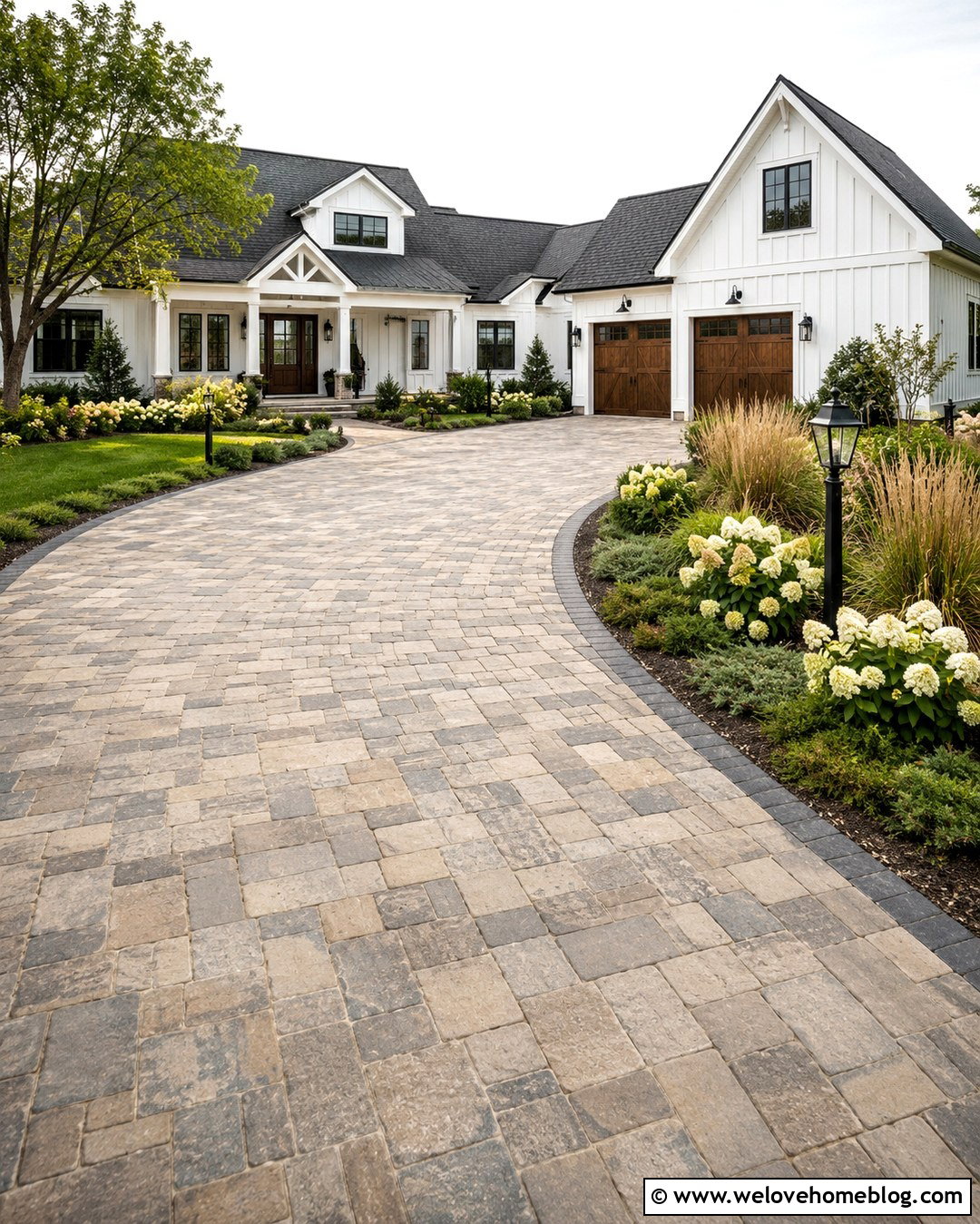
Tumbled concrete paving stones have softened edges and varied surfaces that suit the relaxed character of a modern farmhouse. Select warm greige, sandstone, and muted brown pavers in a mixed rectangular pattern. A broad, gently curved driveway can lead toward a white board-and-batten house with a dark roof and wood garage doors. Border the paving with darker tumbled stones, then add large beds of hydrangeas, ornamental grasses, and low evergreens. Simple black post lights can mark the approach without making it overly formal. Keep the paver color blend subtle, as extreme variation may look busy across a large area. Repeating the stone around the porch or front walkway helps connect the driveway to the architecture and creates a welcoming, established appearance.
16. Charcoal Paving Stone Driveway
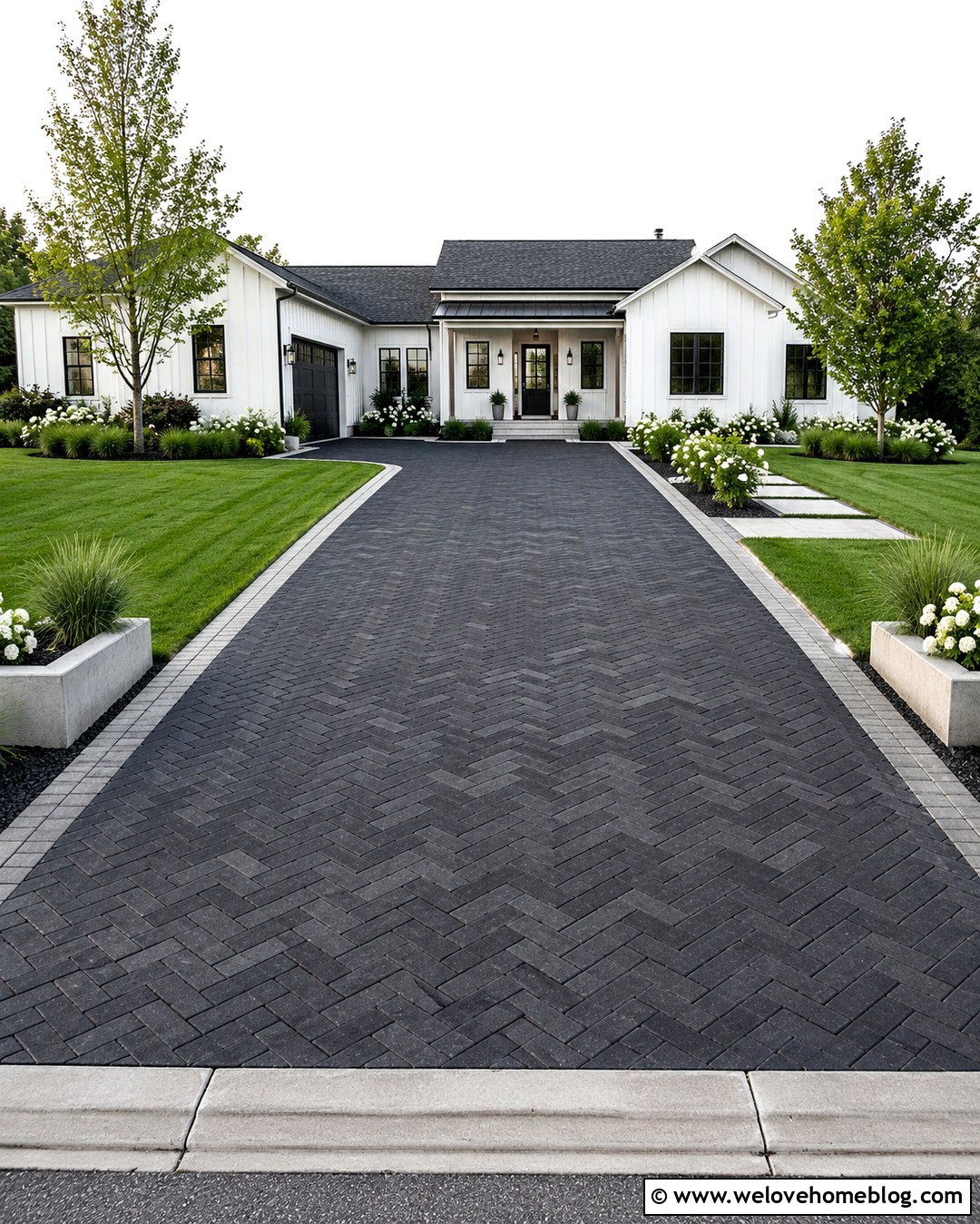
Charcoal paving stones create a dramatic driveway that looks especially sharp beside a light-colored house. Choose textured concrete pavers in dark gray rather than solid black, since subtle variation can make dust and surface marks less noticeable. Lay them in a straightforward herringbone or staggered rectangular pattern. A light gray double border will outline the driveway and prevent the dark surface from feeling heavy. Add pale stone planters, green ornamental grasses, and white flowering shrubs to brighten the surrounding yard. This palette complements modern, Scandinavian-inspired, and updated ranch homes. In hot, sunny regions, consider how dark paving may feel and perform in exposed areas before selecting the final color. Used thoughtfully, charcoal pavers give the entire entrance a crisp and confident visual foundation.
17. Geometric Paving Stone Driveway
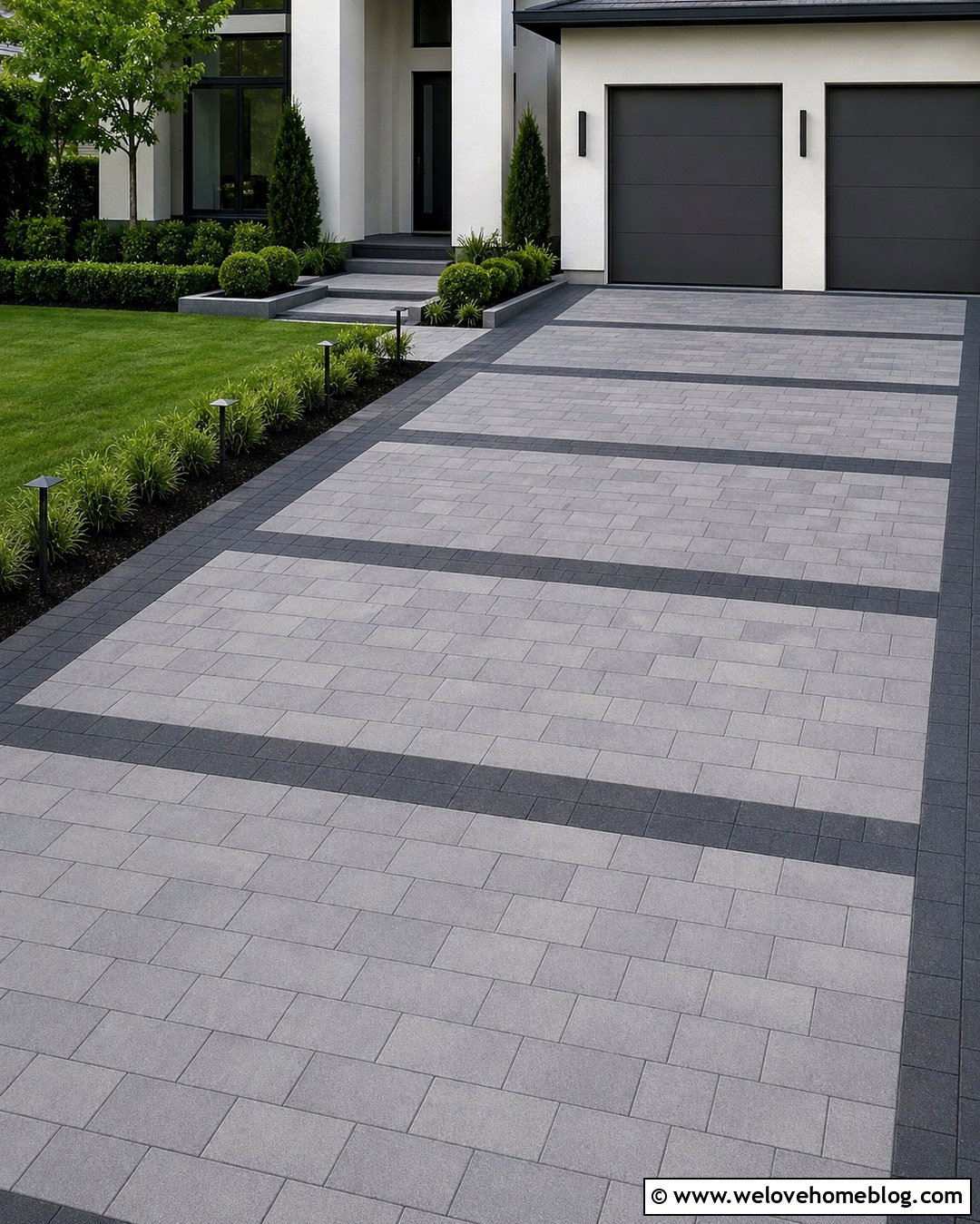
Geometric inlays can transform a broad paving stone driveway into a structured design without covering it in multiple competing patterns. Start with medium-gray rectangular concrete pavers in a running bond. Add narrow charcoal bands that divide the surface into large rectangular panels or frame a central parking court. Keep the lines aligned with garage doors, facade columns, or window positions so they feel connected to the architecture. Minimal planting beds, clipped shrubs, and linear pathway lights reinforce the organized layout. This approach is particularly effective in front of a contemporary home with strong horizontal and vertical lines. Limit the driveway to two colors and one accent pattern. Precise measurements are essential because uneven bands or poorly centered panels will become obvious across the open paved surface.
18. Light Paving Stone Coastal Driveway
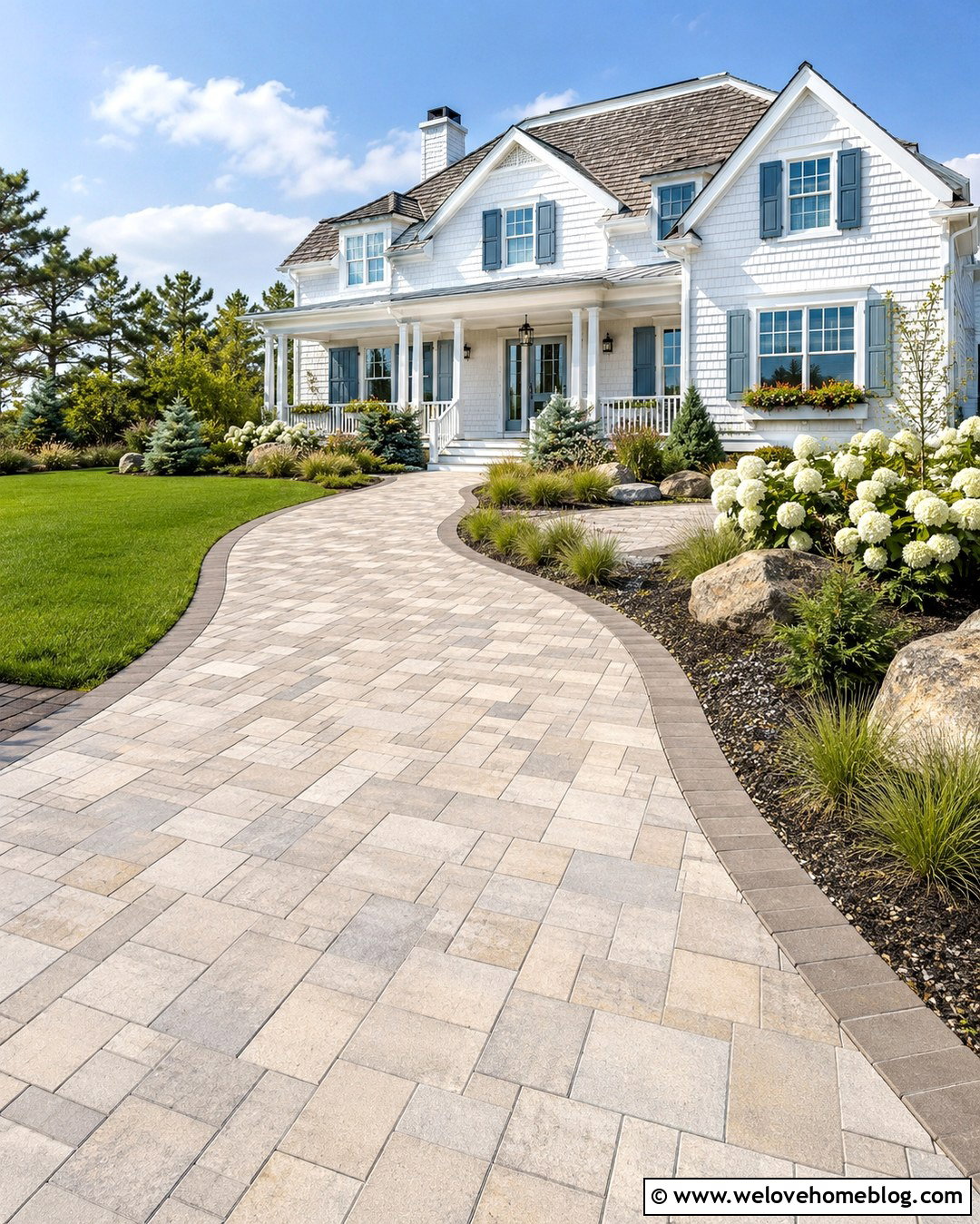
Pale paving stones help a coastal driveway feel bright, relaxed, and visually connected to a light-colored home. Use textured concrete pavers in sand, cream, and soft gray, installed in a mixed-size ashlar pattern. A gently curved layout can lead toward a coastal cottage with white siding, blue-gray shutters, and a welcoming porch. Define the edges with slightly darker taupe stones that resist showing soil from nearby beds. Salt-tolerant grasses, low evergreen shrubs, hydrangeas, and sandy-colored landscape rock complete the setting. Avoid an overly white driveway, which may produce glare and reveal stains more easily. A softly blended palette provides the same airy effect with greater visual depth. The final design should feel informal yet carefully planned from curb to front entry.
19. Natural Stone Paver Driveway
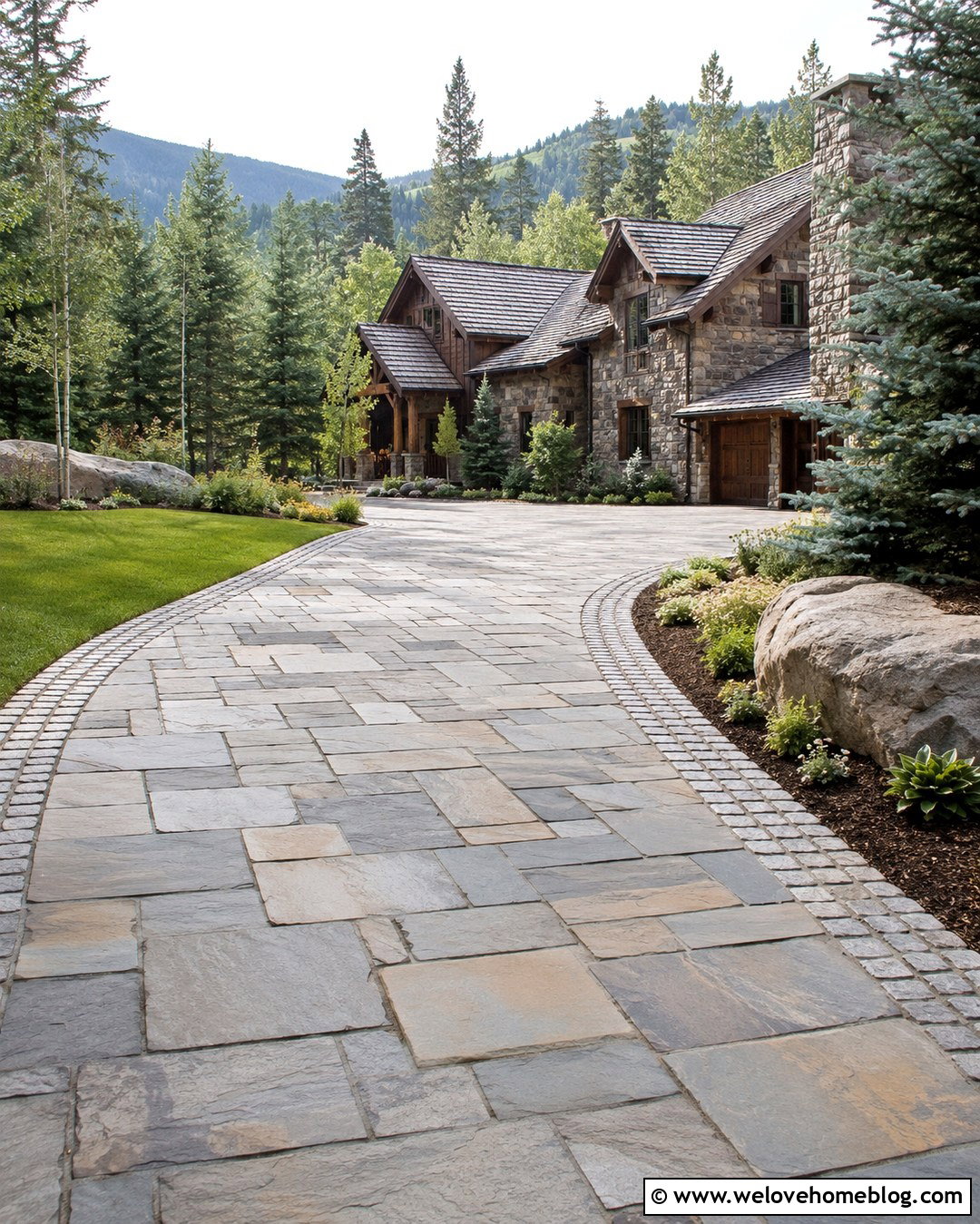
Natural stone pavers give a driveway genuine color variation and texture that manufactured surfaces can only approximate. Use thick, vehicle-suitable bluestone, granite, or sandstone units cut into squares and rectangles for a stable, organized layout. A random ashlar pattern works well on a broad driveway leading to a rustic, mountain, or stone-clad home. Edge the surface with granite cobbles to create a durable visual frame. Native shrubs, large boulders, evergreen trees, and a flagstone walkway can connect the driveway to the surrounding landscape. Natural stone varies in strength, thickness, and maintenance needs, so the chosen product must be appropriate for vehicles and local weather. Keeping the layout simple allows the material’s natural markings and changing tones to become the main feature.
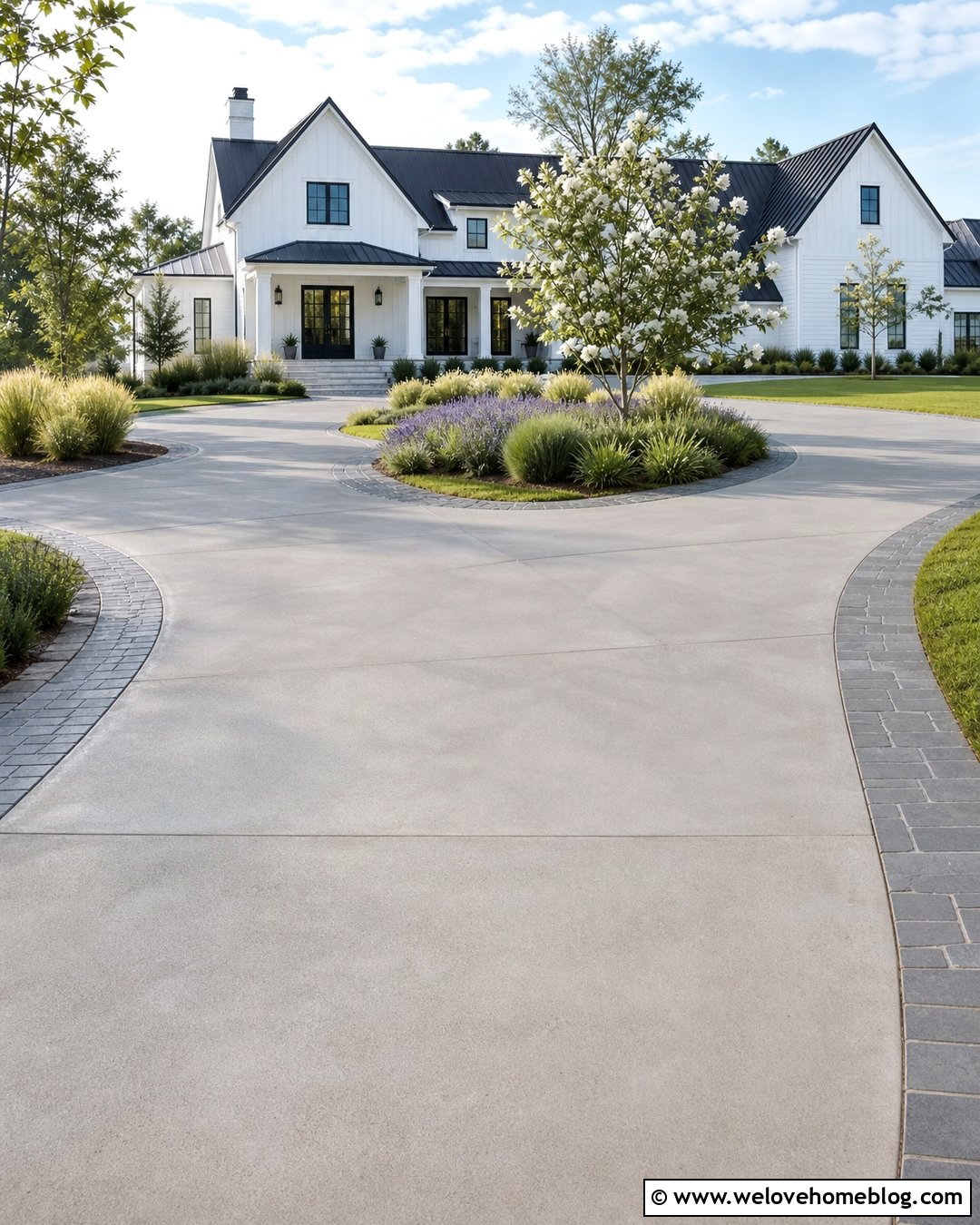
20. Simple Concrete Paving Stone Driveway
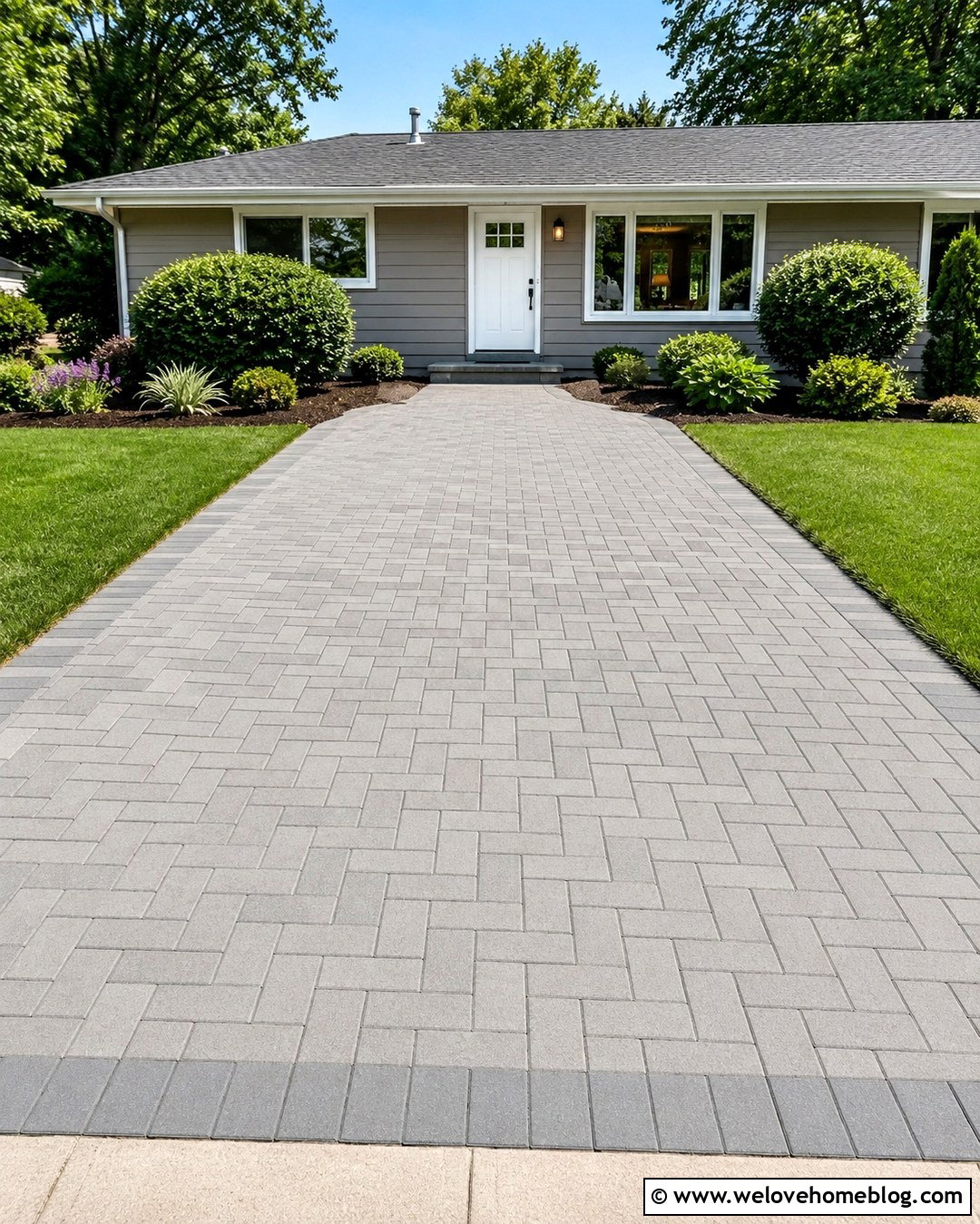
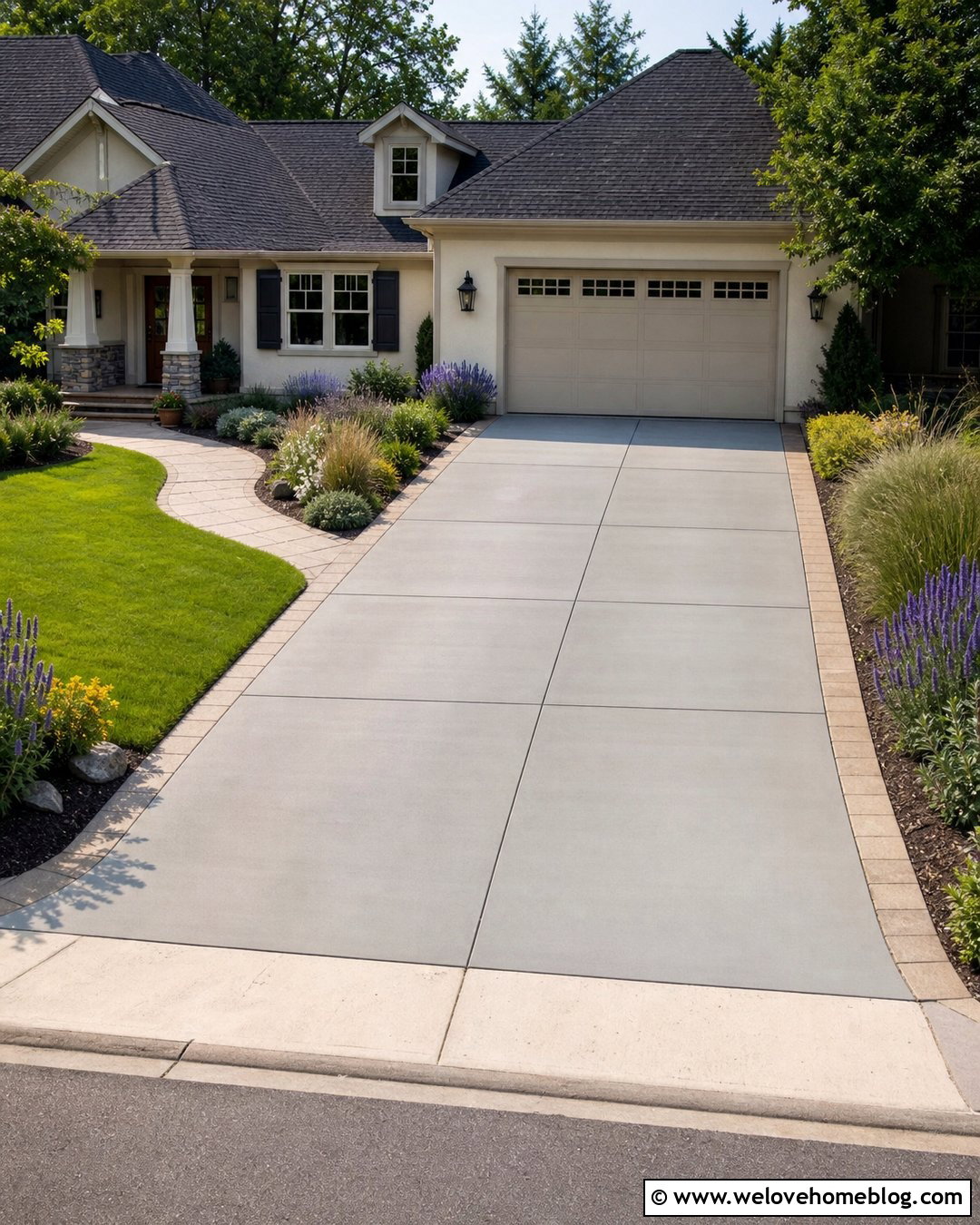
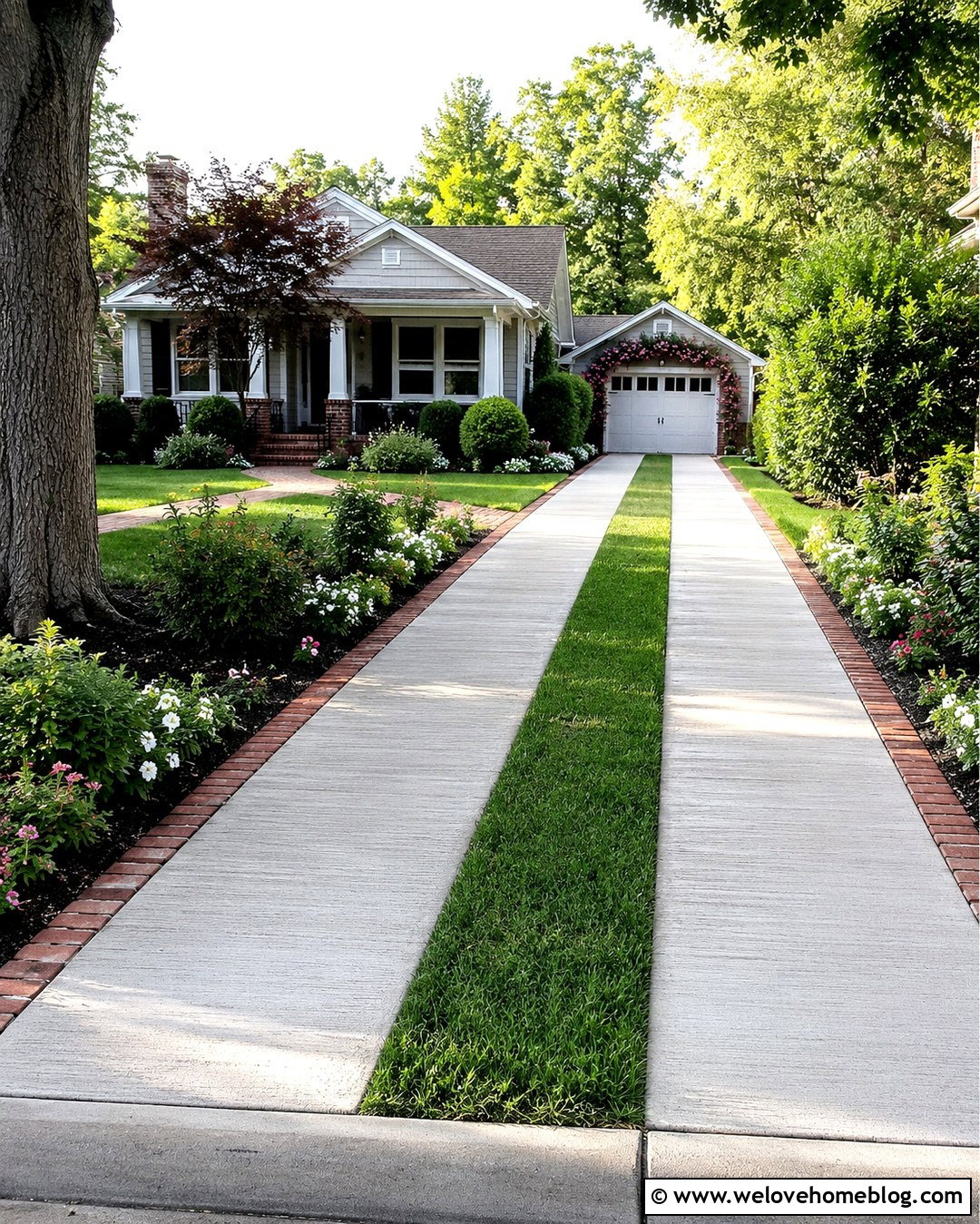
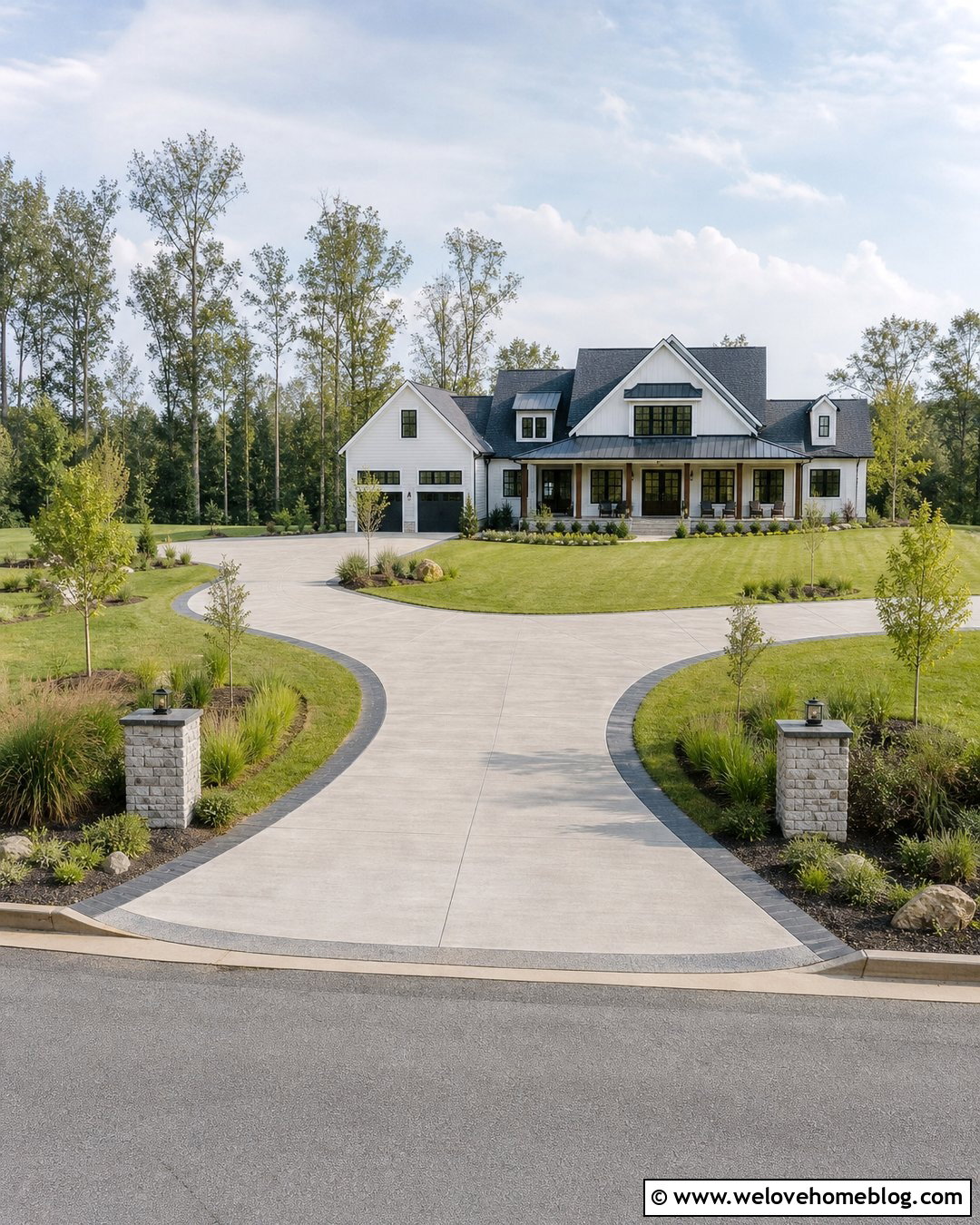
A simple driveway made with standard concrete paving stones can look refined without relying on expensive inlays or elaborate patterns. Choose durable rectangular pavers in one medium-gray tone and install them in a running bond or 90-degree herringbone layout. Use the same paver turned in a different direction to form a subtle soldier-course edge. A straight driveway minimizes complicated cuts and supports an efficient, uncluttered appearance. Add a narrow lawn border, two balanced planting beds, and a matching walkway to create a complete front-yard design. The quality of the base, compaction, drainage, and edge restraint matters more than decorative extras. With careful installation and a restrained color palette, an affordable paver selection can produce strong curb appeal and suit almost any modest suburban home.
Conclusion:
The best paving stone driveway brings the surface, pattern, borders, landscaping, and architecture together as one complete design. Herringbone and running bond layouts offer dependable structure, while fan patterns, inlays, and mixed-size arrangements create stronger visual impact. Color also shapes the finished look. Warm tumbled stones suit farmhouse and traditional homes, while large gray pavers complement modern facades. Before choosing a design, compare full-size samples outdoors and confirm that the product is rated for driveway use. Drainage, base preparation, edge restraint, and professional installation will influence performance as much as appearance. Use these **20 Paving Stone Driveway Ideas** to plan an entrance that feels attractive, practical, and naturally connected to your home.

Related posts:
Leave a Reply