
1. Black Wrought Iron Curved Driveway Gate
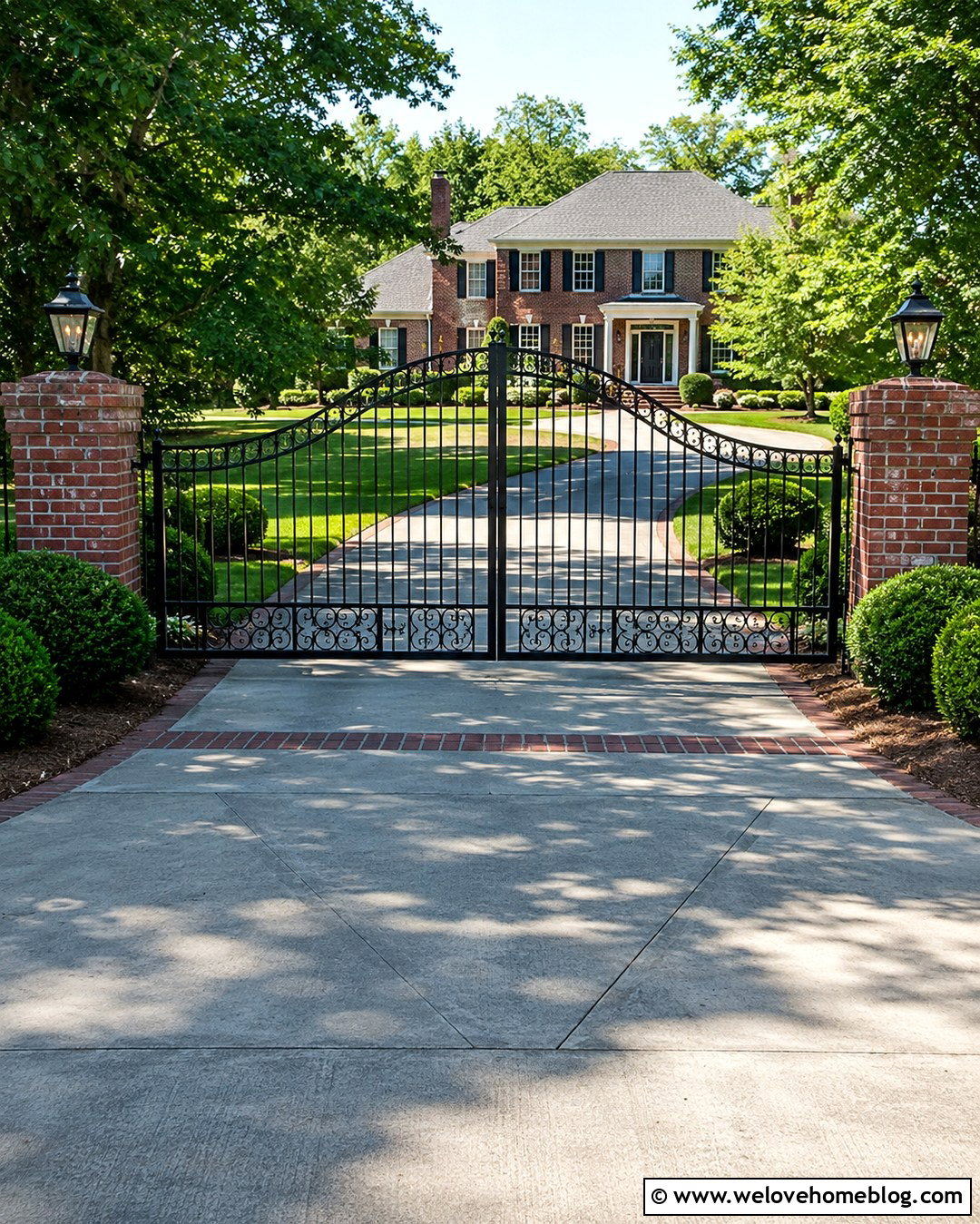
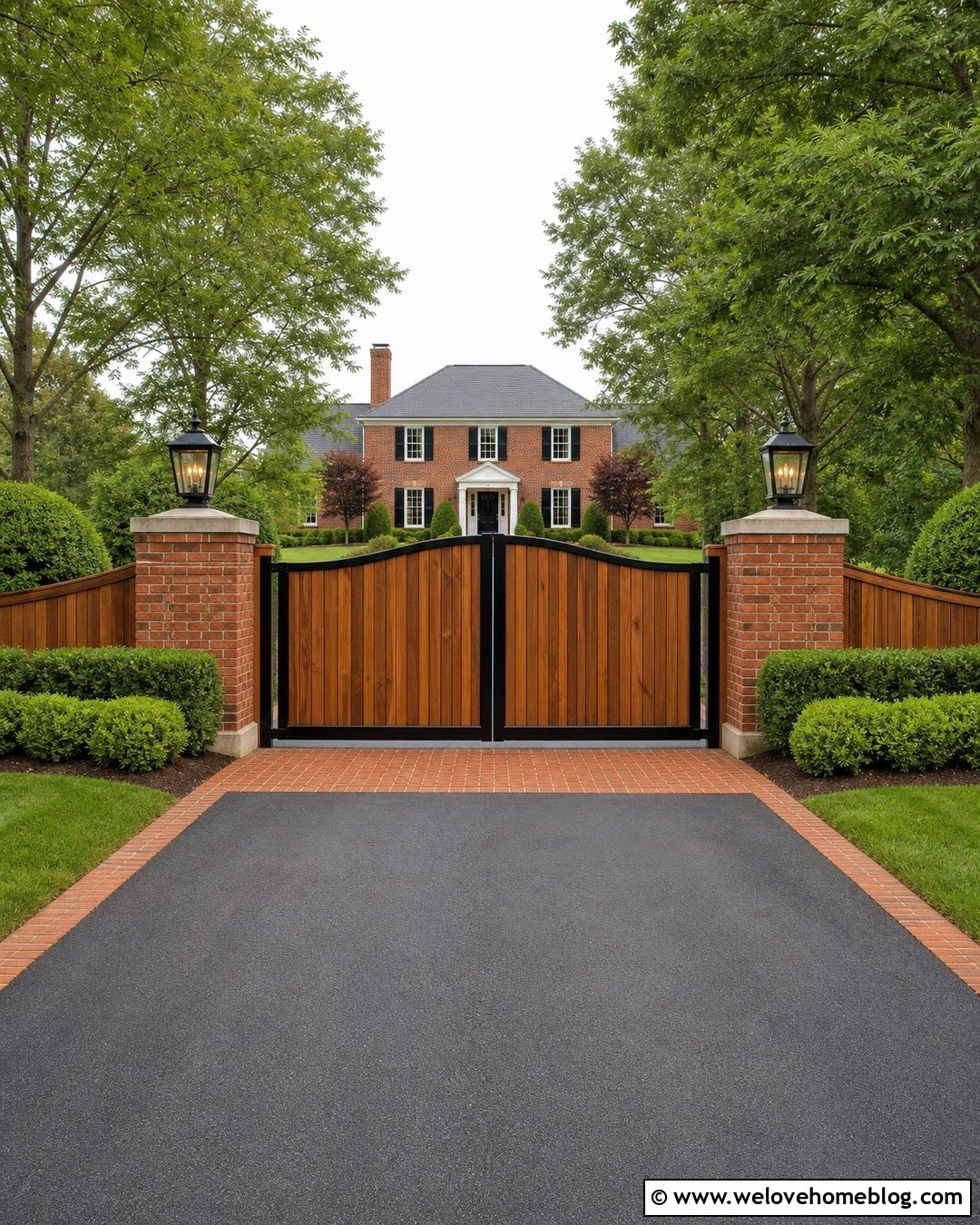
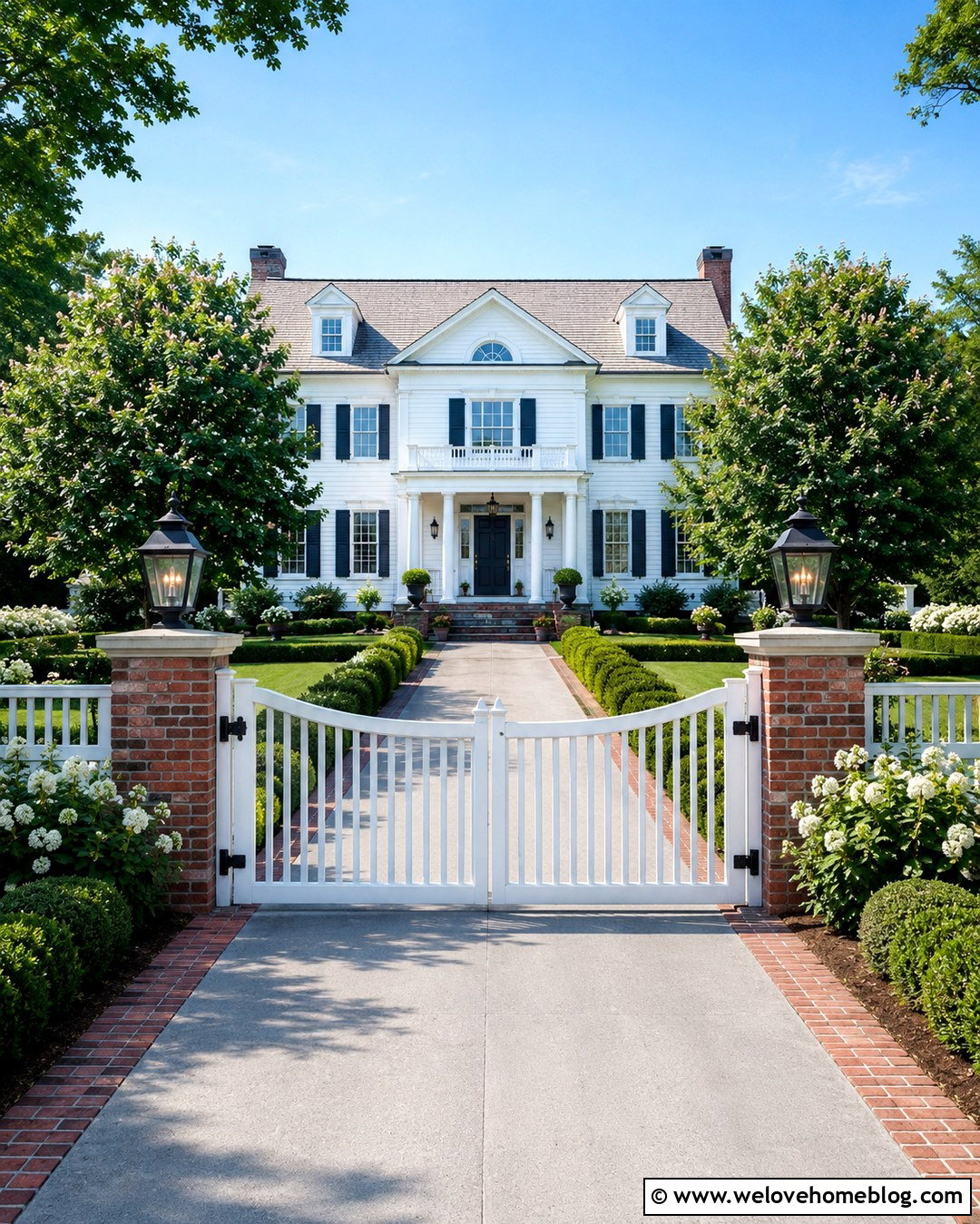
A black wrought iron gate creates a clear focal point without hiding the home beyond it. Choose a double-swing design with a smooth arch that rises gently toward the center. Simple vertical bars keep the entrance open, while restrained scrollwork adds traditional detail. Pair the gate with a curved gray concrete driveway and red brick pillars for a balanced Colonial look. Low boxwood hedges can trace the driveway edges without interfering with visibility. Add matching black lanterns to the pillars and use a brick ribbon where the driveway meets the road. This combination feels established but not overly ornate. Keeping the iron pattern relatively simple also lets the curve, masonry, and landscaped approach work together as one coordinated entrance.
2. Modern Aluminum Curved Driveway Gate
Can a curved gate still look modern? A powder-coated aluminum design with narrow horizontal slats offers a clean answer. Use a shallow curved top rather than a dramatic arch, allowing the profile to soften the entrance while preserving crisp lines. Charcoal aluminum works especially well beside an exposed aggregate concrete driveway with dark steel edging. Square concrete pillars, architectural grasses, and a straight walkway reinforce the contemporary setting. Space the slats slightly apart if you want filtered views, or place them closer together for more privacy. A curved driveway approaching a flat-roof modern home completes the composition. Limit decorative hardware and conceal the automation system whenever possible so the entrance remains streamlined, calm, and visually connected to the house.
3. Cedar Curved Driveway Gate With Stone Pillars
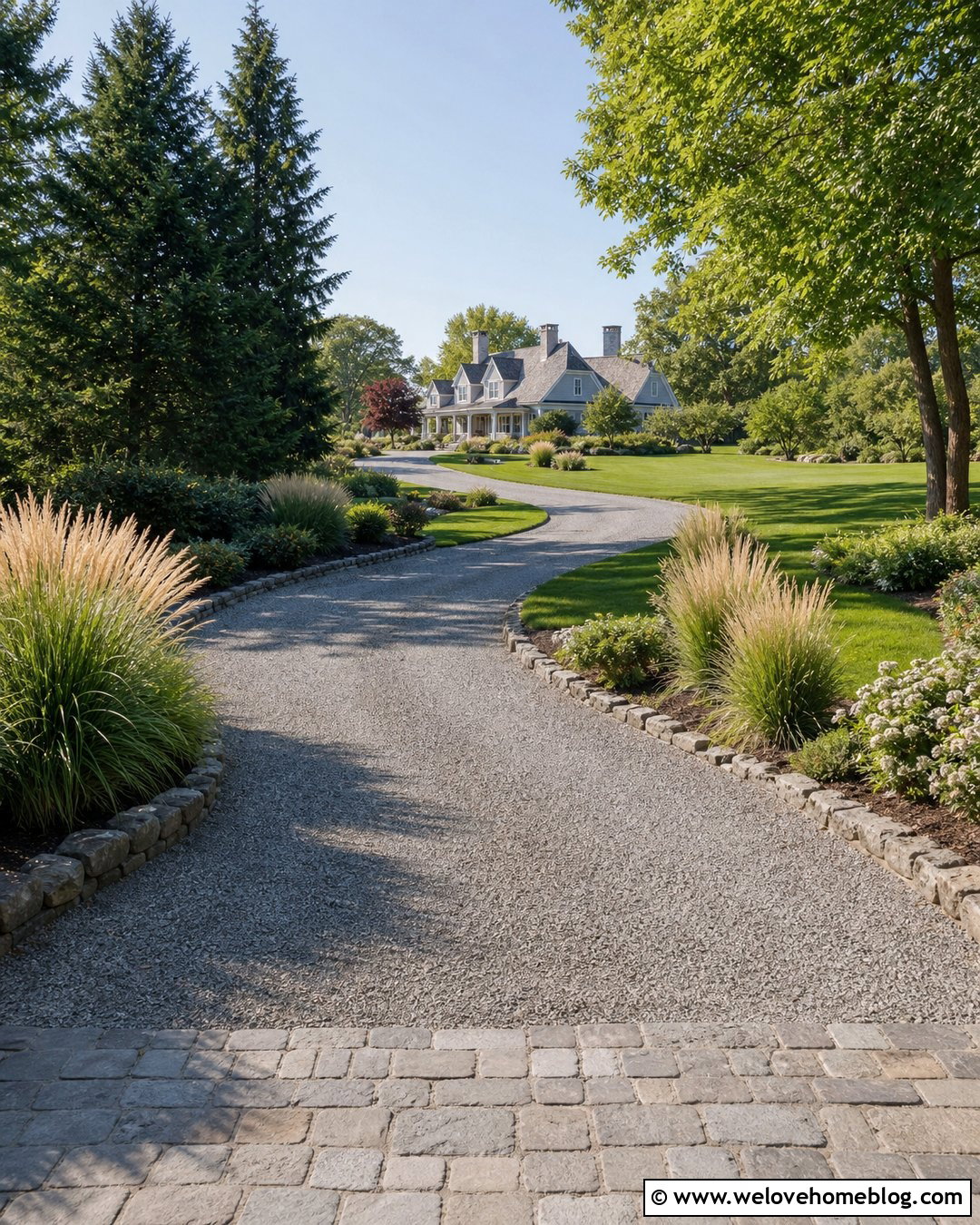
Warm cedar brings an inviting character to a sweeping gravel driveway. Use vertical boards within a sturdy metal frame and shape the upper edge into a broad center arch. Natural fieldstone pillars give the gate visual weight and help it belong in a country landscape. Continue the stone along short entrance walls, then soften the structure with ornamental grasses, hydrangeas, and native shrubs. A curved gray gravel driveway edged with larger river stones keeps the surface contained while complementing the cedar tones. This entrance looks especially natural with a modern farmhouse or rustic ranch house. Allow the wood grain to remain visible beneath a protective stain. Black strap hinges and simple lanterns provide enough contrast without making the gate feel busy or overly formal.
4. White Scalloped Curved Driveway Gate
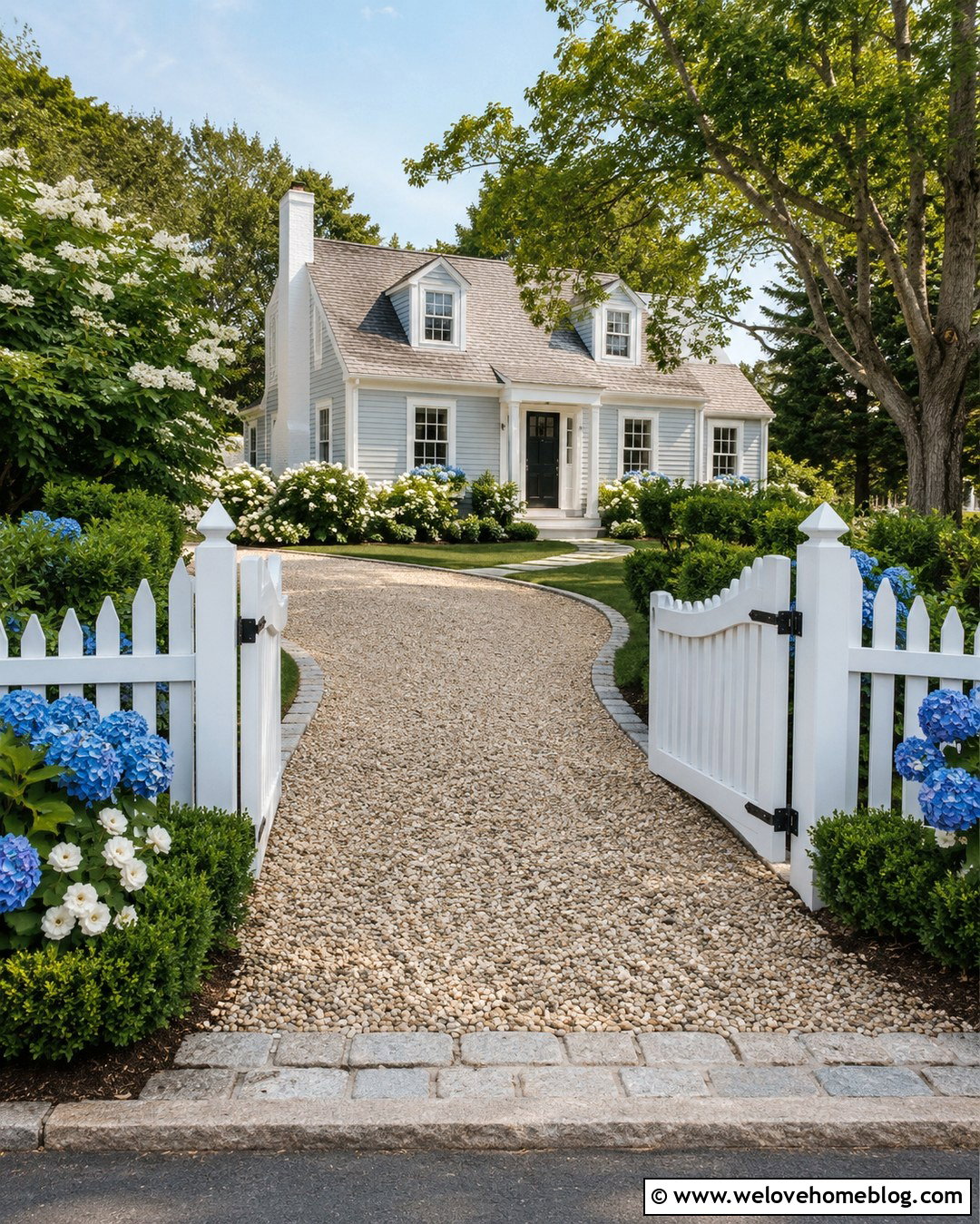
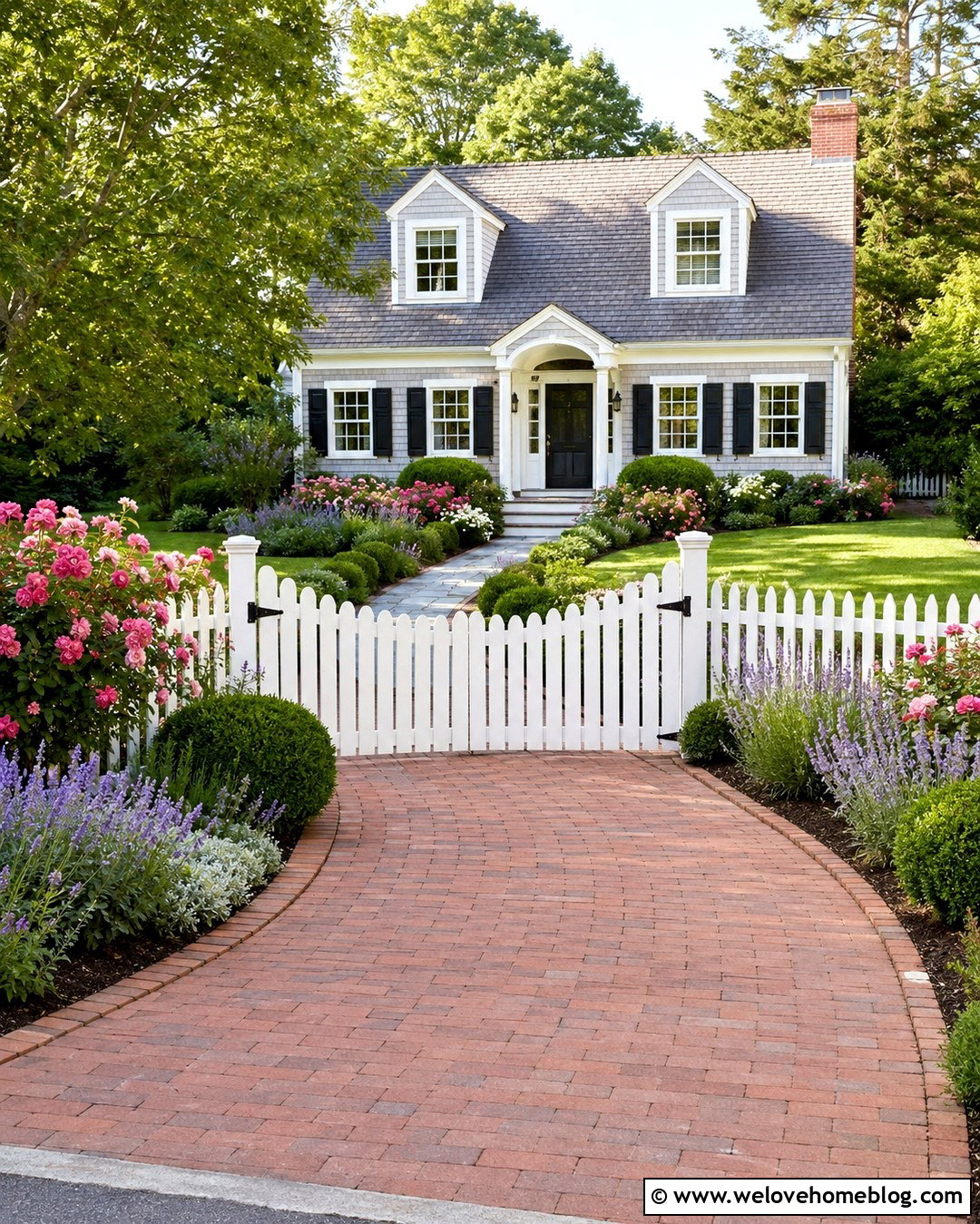
A scalloped gate curves downward toward the center, creating a softer profile than a traditional rising arch. Painted white timber suits this shape beautifully, especially when the gate connects to a matching picket fence. Pair it with a curved red brick driveway leading to a cottage or Cape Cod house. Brick edging can define planting beds filled with roses, salvia, catmint, and clipped evergreen shrubs. Black hinges and a centered latch add sharp contrast to the white boards. Keep the gate partially open in appearance by using spaced vertical pickets above a solid lower rail. The result feels welcoming from the street while still marking the property boundary. Repeating the scalloped line subtly in nearby hedges can make the complete entrance look thoughtfully planned.
5. Wood And Steel Bell Curve Driveway Gate
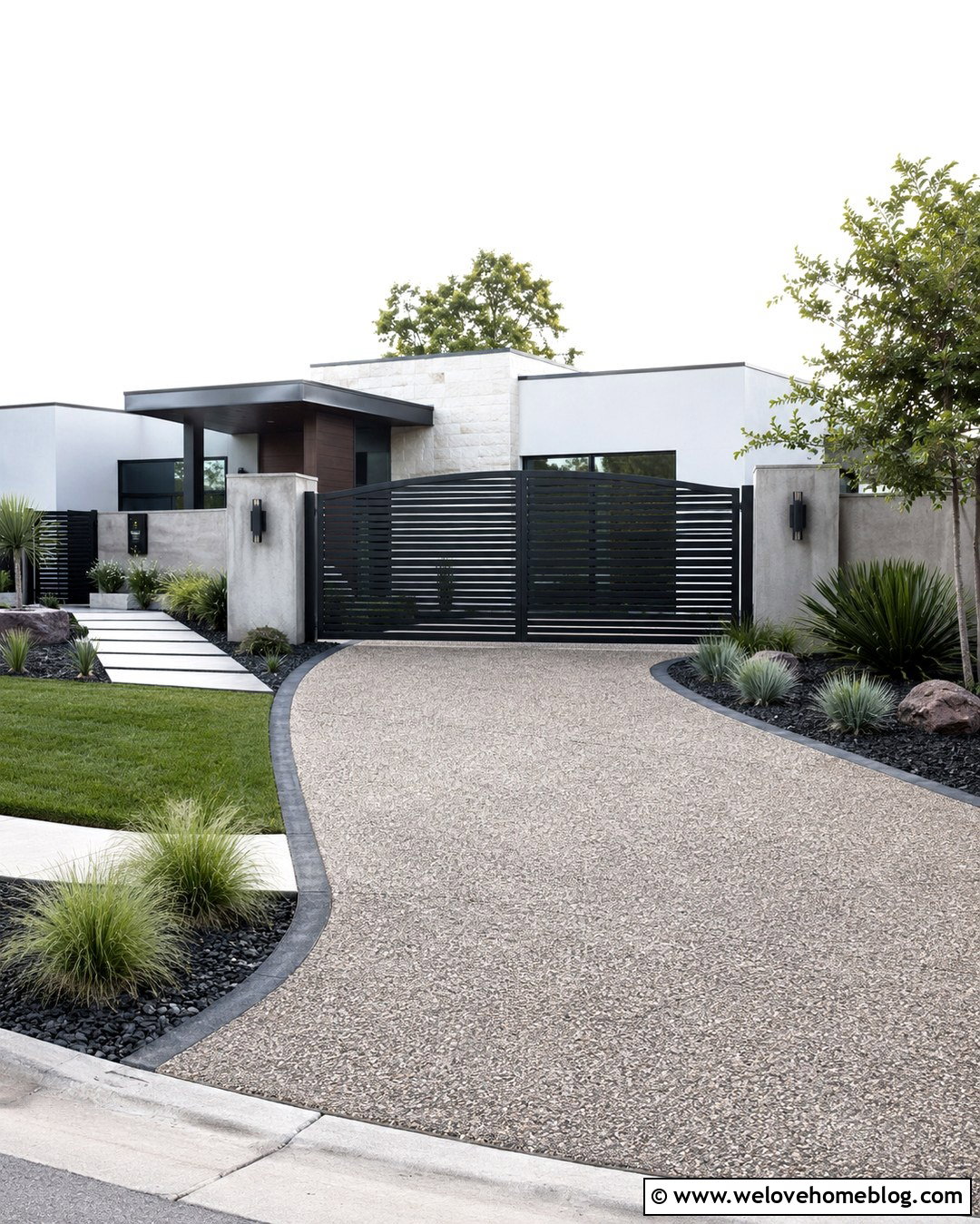
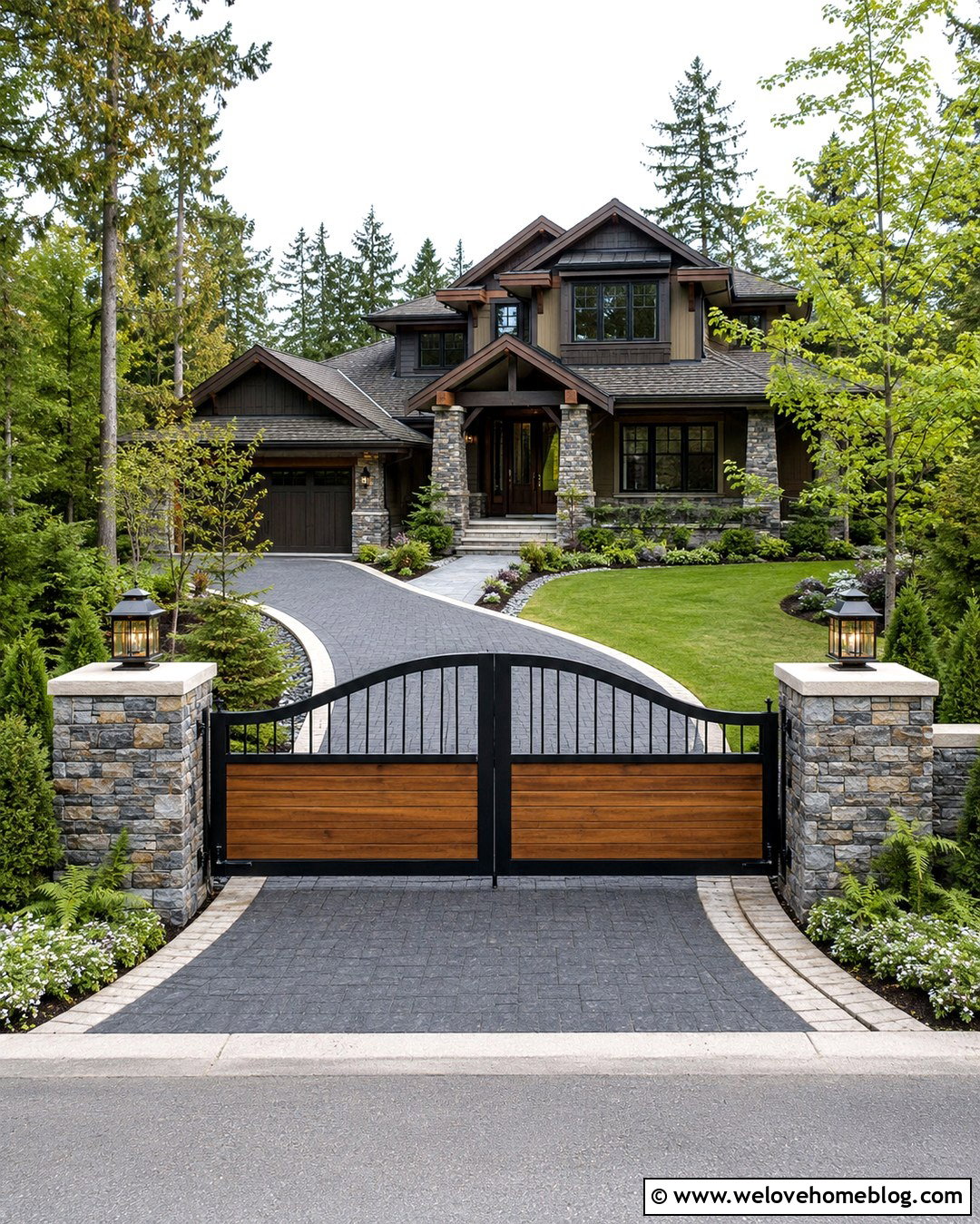
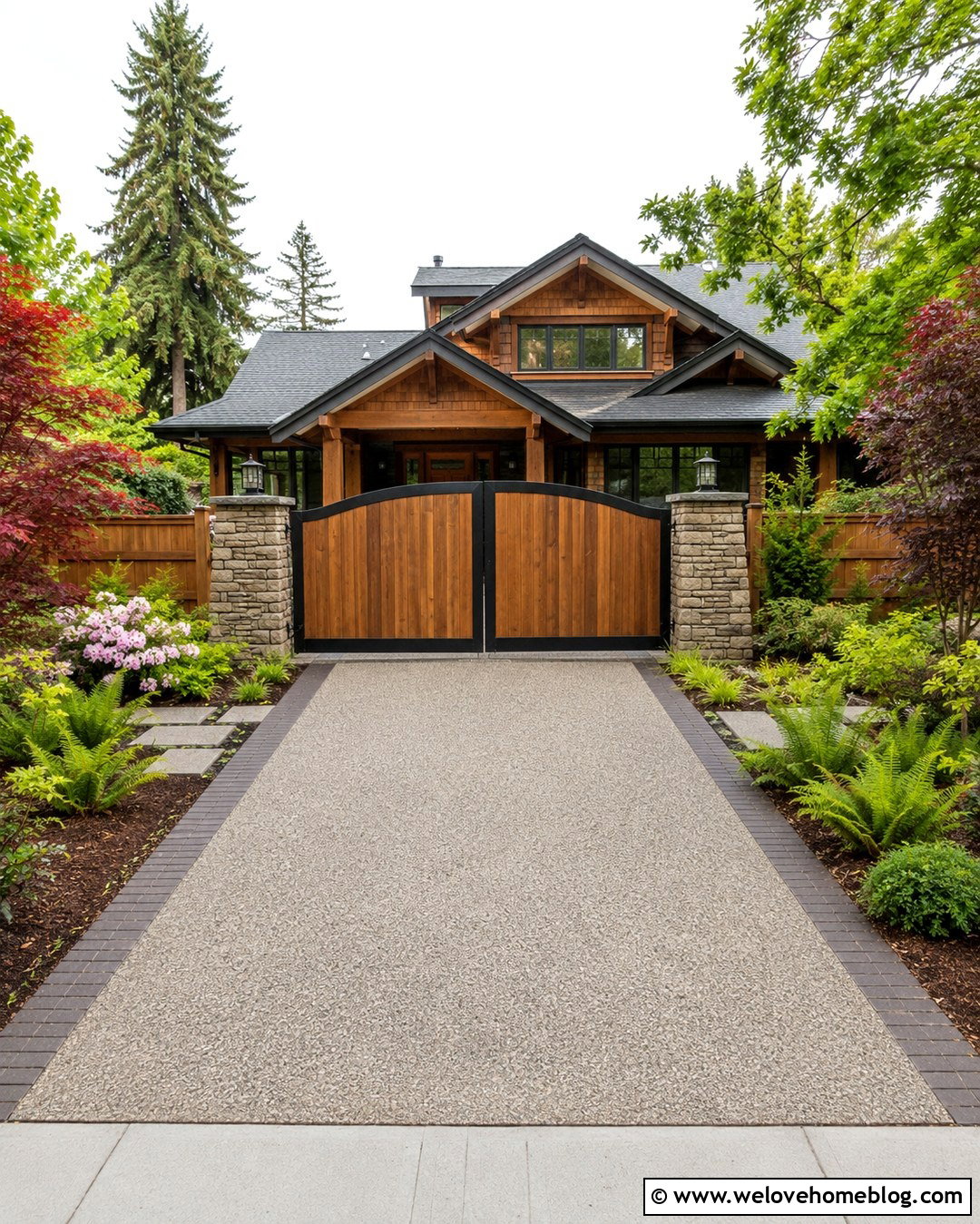
A bell curve rises gradually near the sides and becomes more pronounced at the center, giving the gate a strong but graceful silhouette. Build the frame from matte black steel and fill it with warm horizontal wood boards. This mixed-material approach fits a Craftsman home with stone accents and deep rooflines. Use charcoal concrete pavers in a gentle curved driveway layout, then add a lighter paver border for definition. Stone gate pillars can repeat materials found on the house foundation. Plant compact evergreens, ferns, and flowering ground cover around the entrance to keep the setting layered but tidy. The steel frame supplies crisp structure, while the wood prevents the gate from feeling cold. Together, the materials create a practical transition between traditional and modern design.
6. Mediterranean Curved Iron Driveway Gate
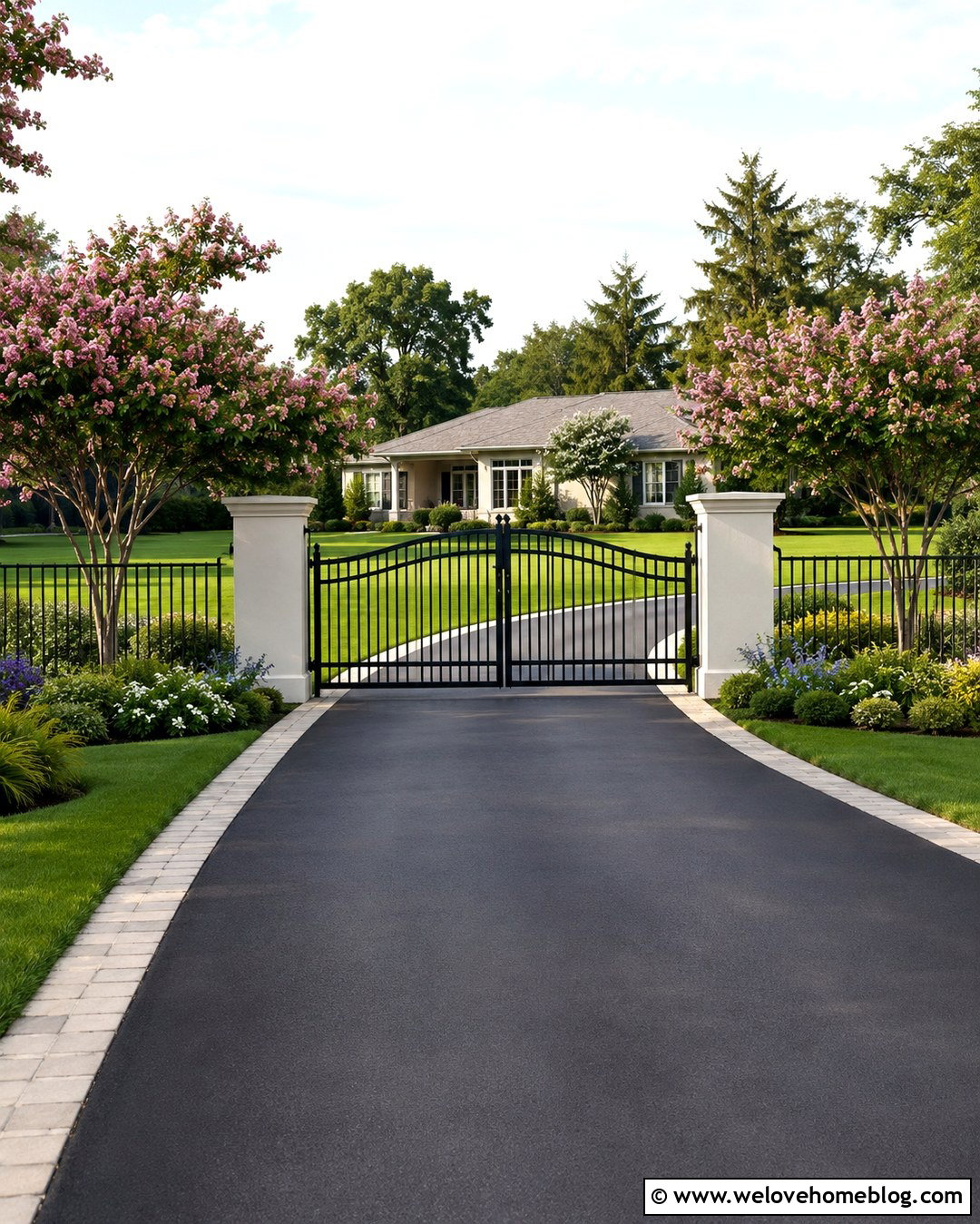
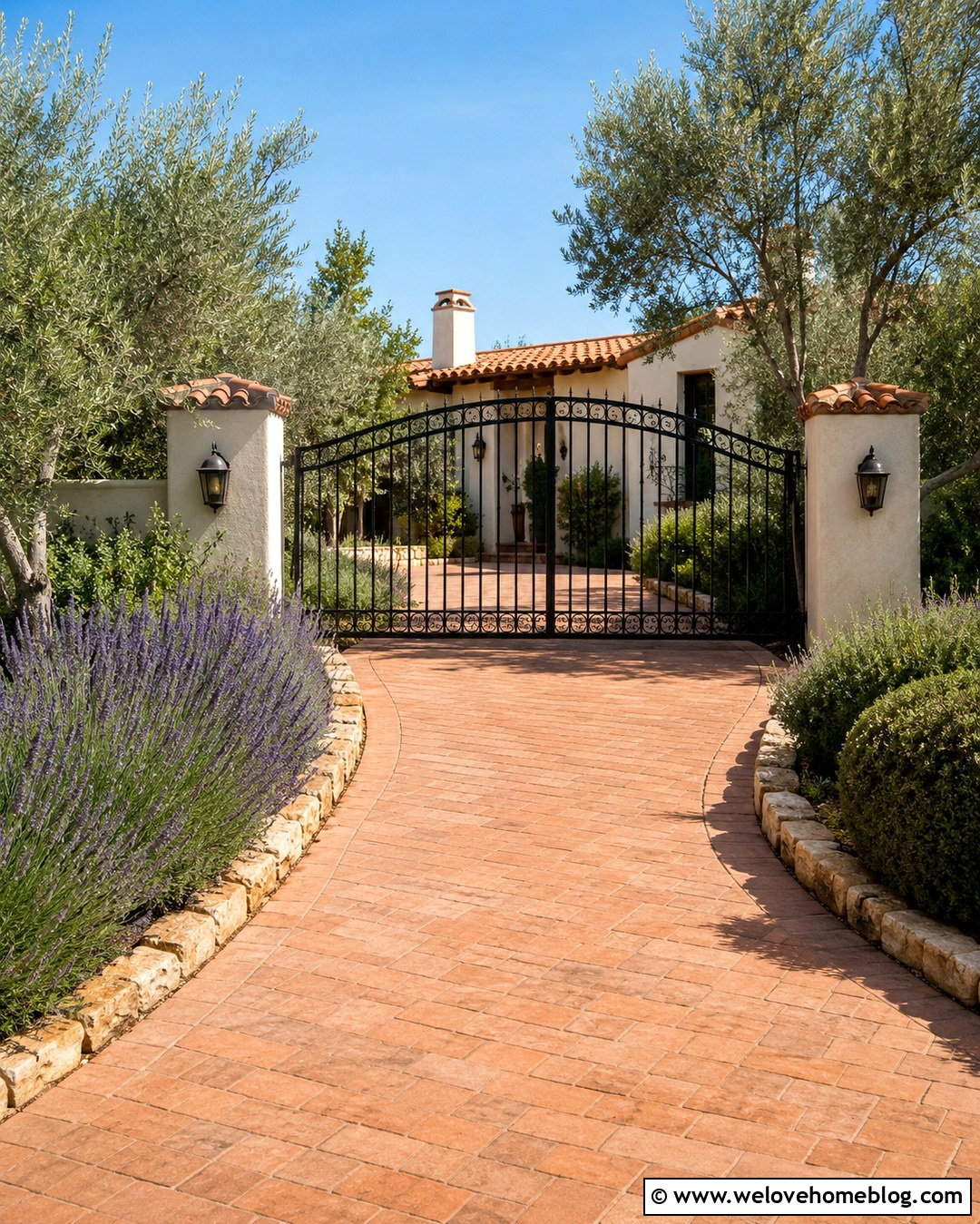
Decorative iron feels at home beside stucco walls, clay roof tiles, and warm-toned paving. Select a double gate with an arched upper rail, slender vertical pickets, and limited scrollwork around the center. A curved driveway made from terracotta-colored concrete pavers can carry the Mediterranean palette toward the house. Frame the entrance with cream stucco pillars topped by clay caps. Olive trees, rosemary, lavender, and rounded evergreen shrubs bring texture without overwhelming the iron pattern. Antique bronze or soft black finishes often feel gentler than glossy black in this setting. Repeat the gate curve in the top of an adjoining garden wall or pedestrian opening. This creates a connected entrance where the driveway, gate, masonry, planting, and architecture share the same relaxed visual language.
7. Laser Cut Steel Curved Driveway Gate
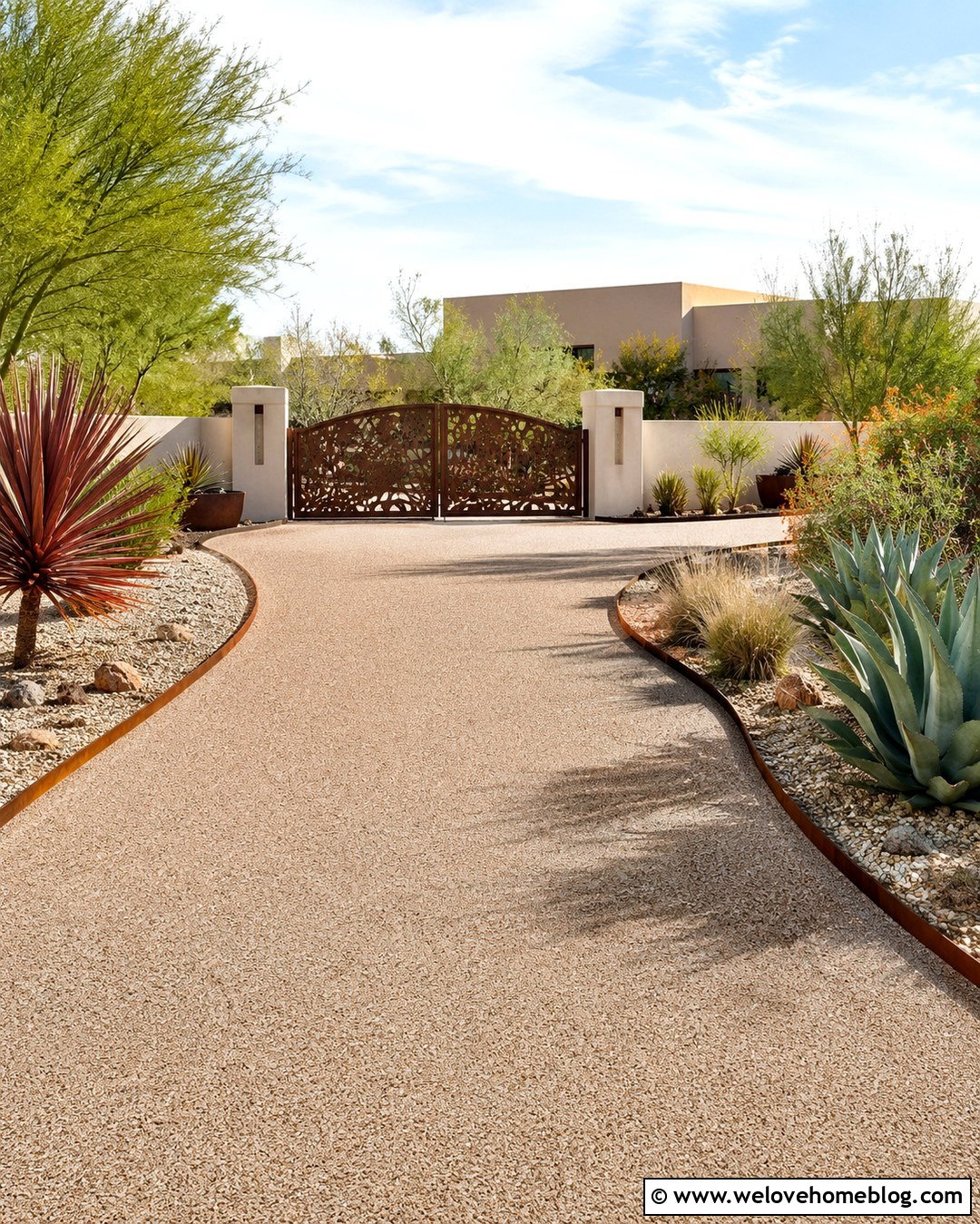
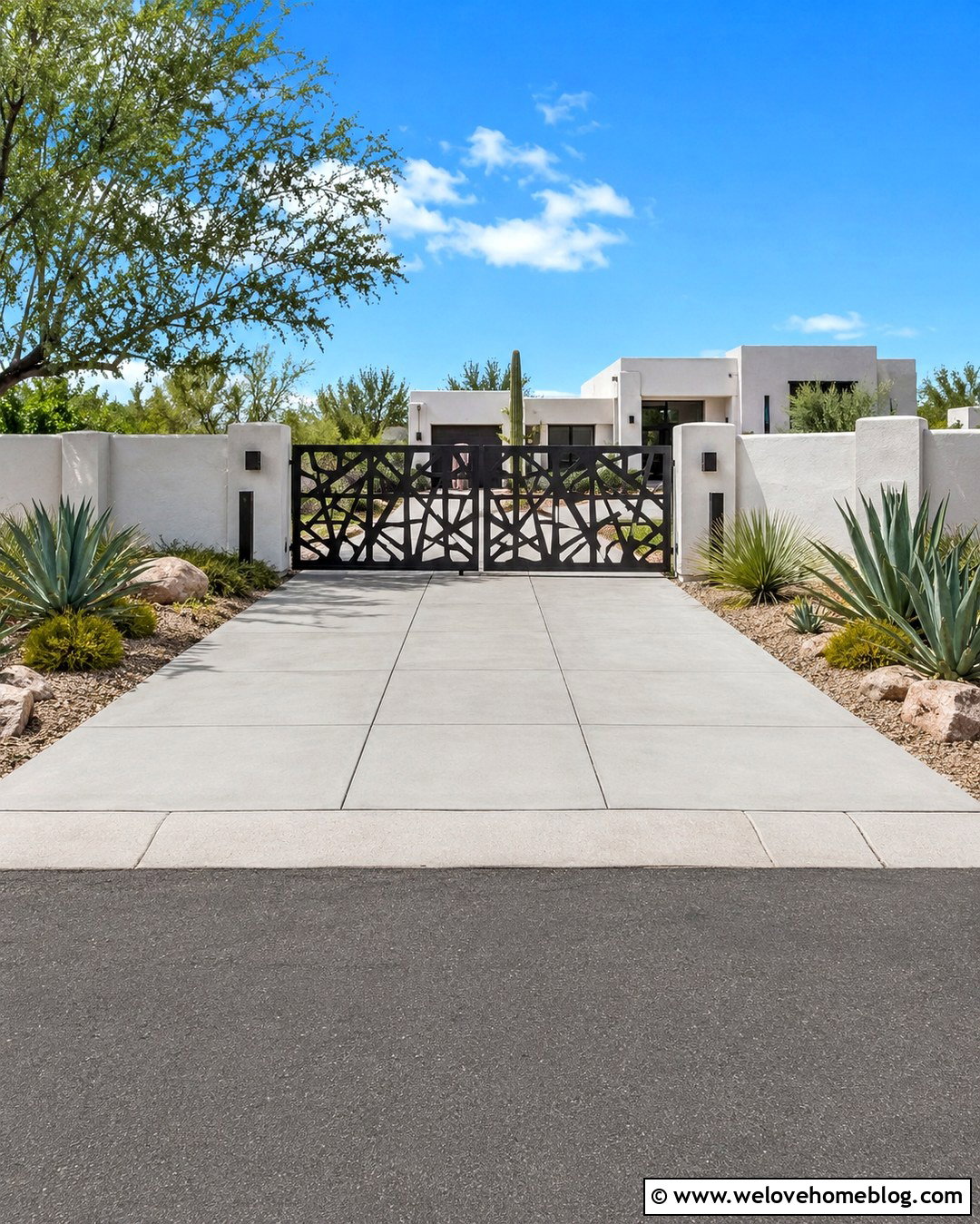
Laser-cut steel panels can give a curved gate privacy while adding a controlled decorative pattern. Choose an abstract leaf or geometric design with enough open space to prevent the entrance from looking heavy. A shallow arched top keeps the panel contemporary. Pair weathered steel or matte charcoal panels with a light tan resin-bound gravel driveway that follows a broad curve toward a modern desert home. Smooth stucco pillars and rust-colored steel edging can repeat the gate finish around nearby planting beds. Use sculptural grasses, agave, yucca, and low flowering perennials for a drought-conscious appearance. The gate pattern should remain the focal point, so keep the address sign and lighting minimal. This complete look combines artistic detail with strong, uncluttered lines and practical privacy.
8. Black Aluminum Double Curved Driveway Gate
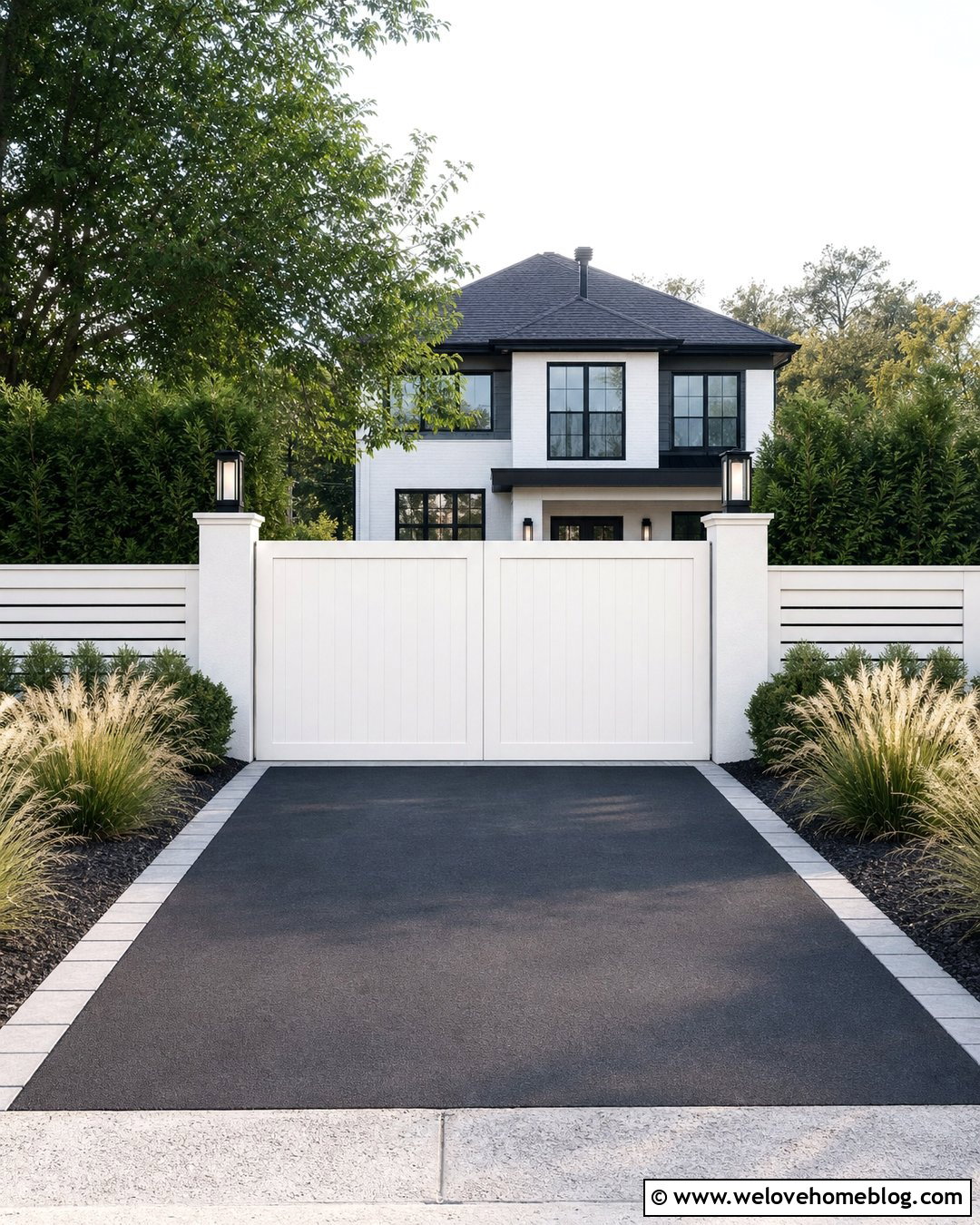
A double gate is a useful visual match for a wide driveway because the center opening naturally emphasizes symmetry. Choose black aluminum pickets with a moderate arch on each leaf. The two curves should meet neatly at the center rather than forming an exaggerated peak. Set the gate between painted masonry columns and continue black metal fencing along both sides. A smooth black asphalt driveway can curve through an open lawn toward a ranch-style home. Define its edges with a narrow border of pale concrete pavers for contrast. Small flowering trees and low foundation shrubs keep the approach attractive without narrowing vehicle sightlines. Aluminum delivers the appearance of traditional metalwork with a lighter visual presence, making this design appropriate for large entrances that should feel secure but still approachable.
9. Curved Privacy Driveway Gate
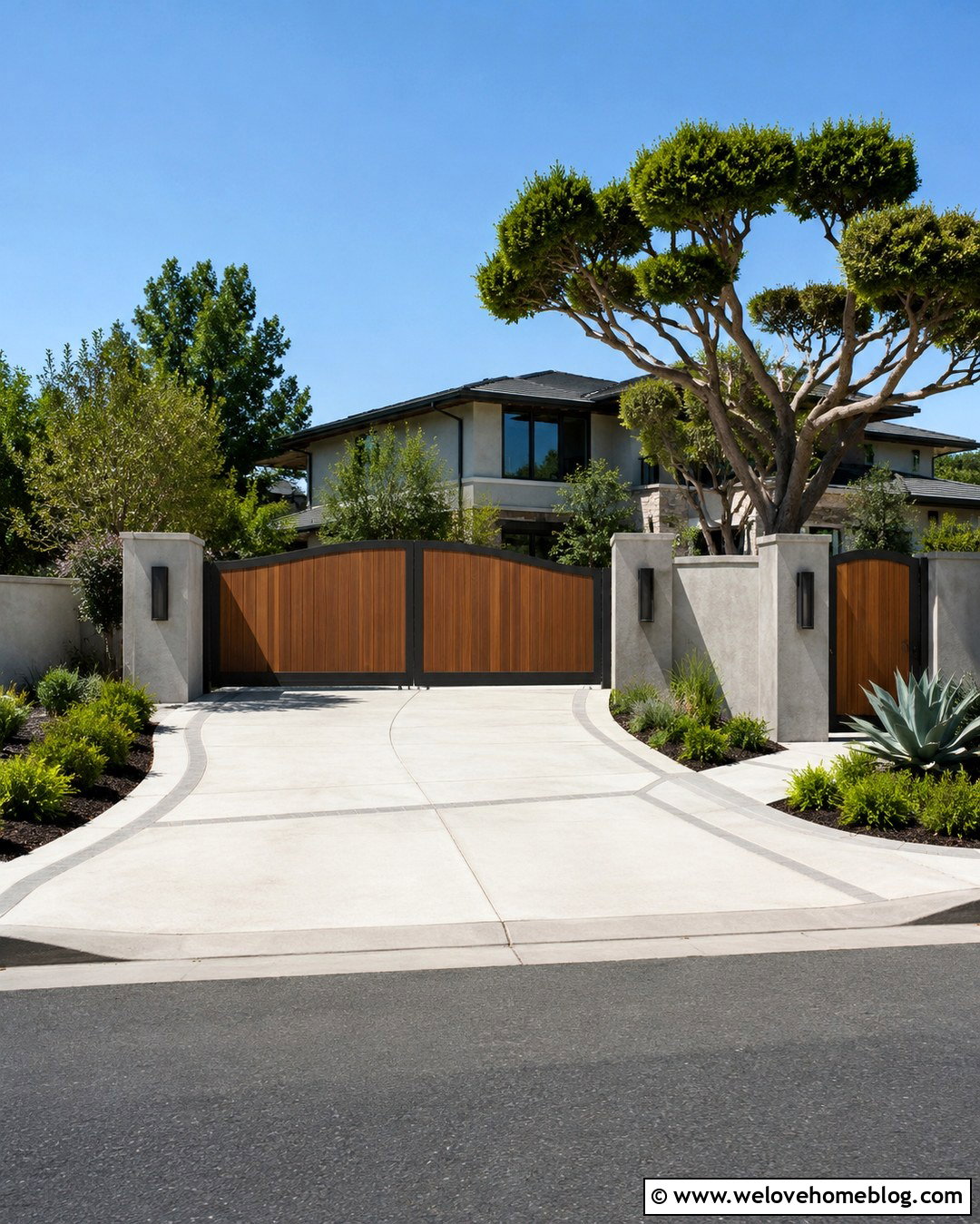
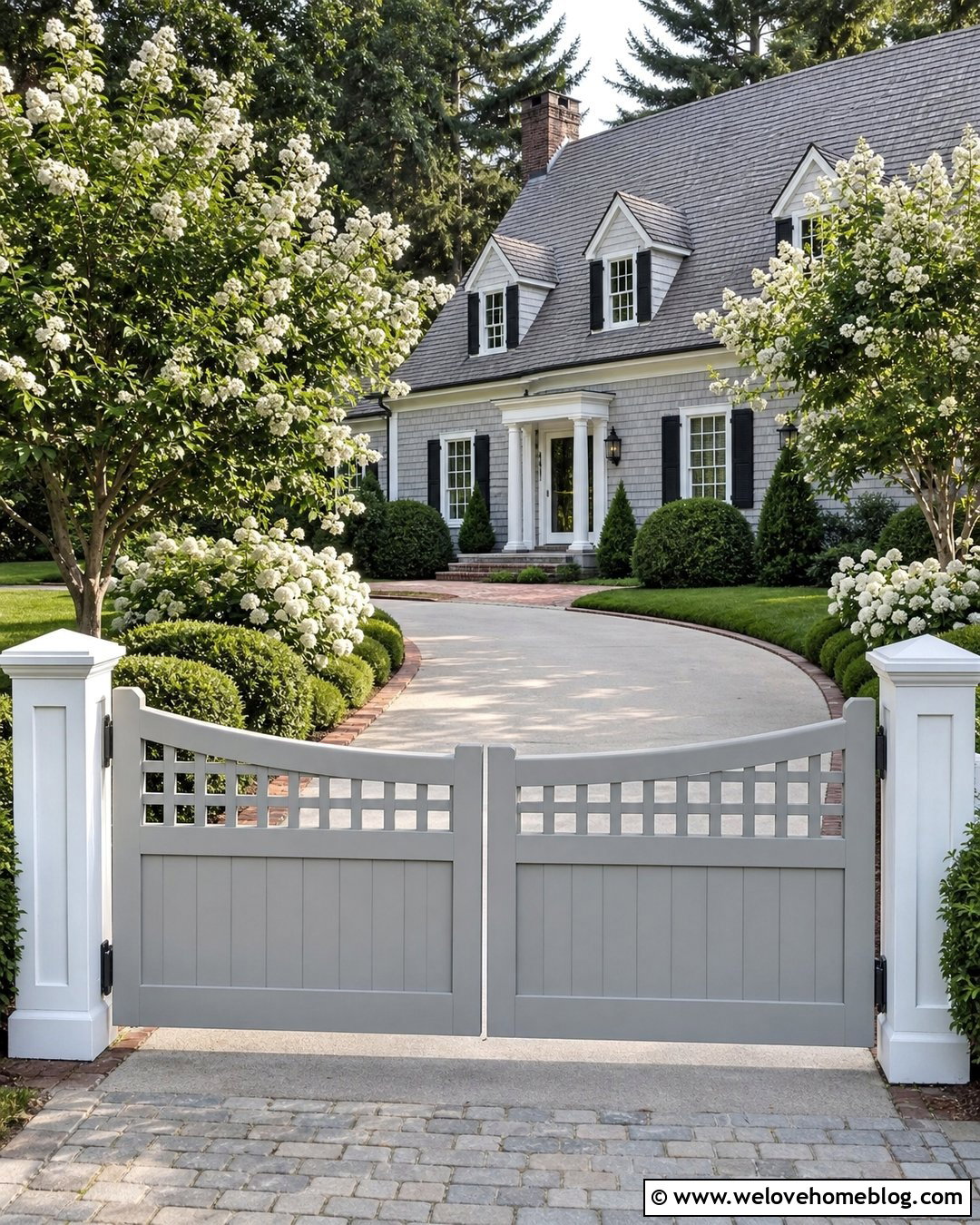
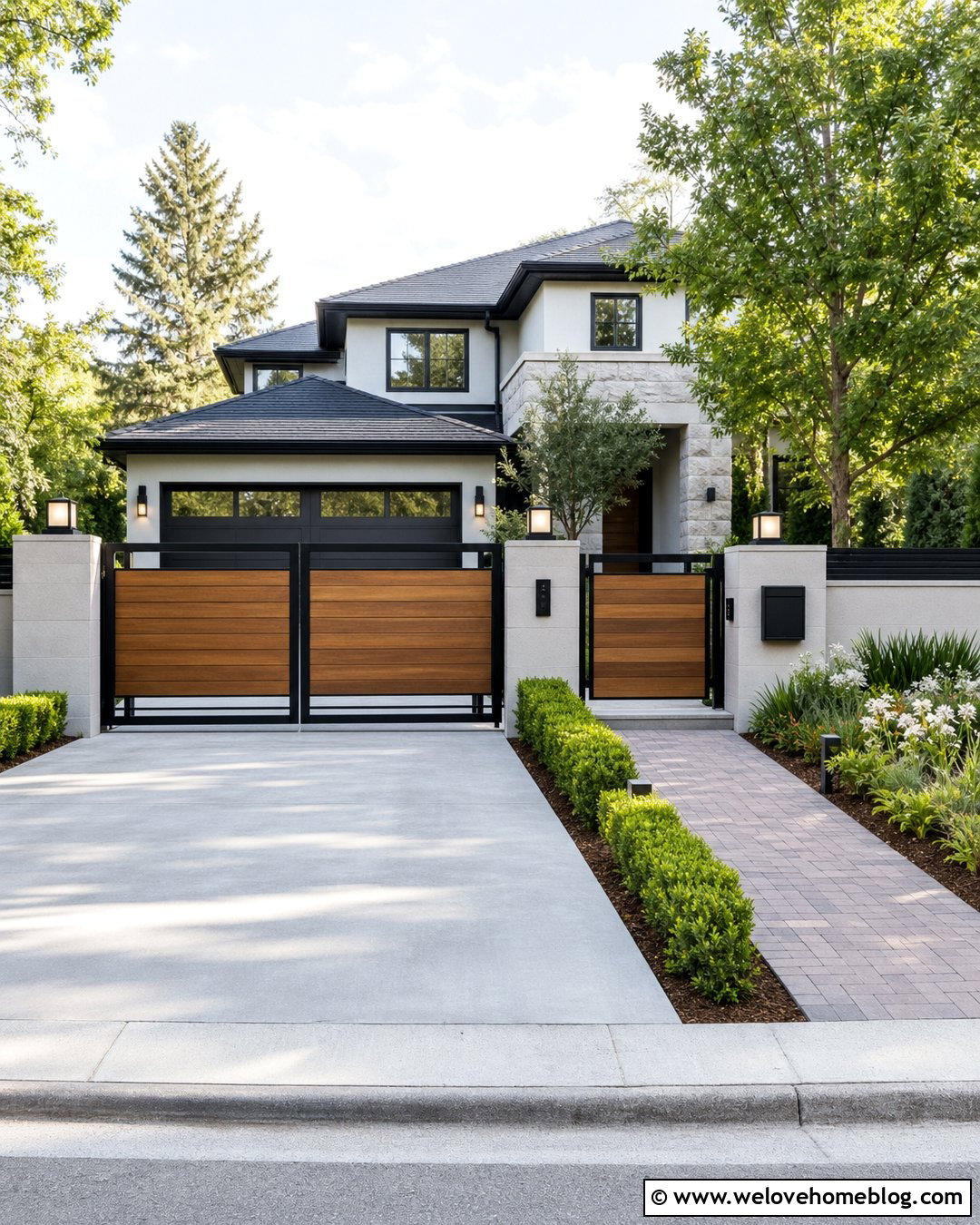
For a home close to the street, a solid curved gate can make the front yard feel more private. Use tongue-and-groove wood panels inside a dark steel frame, with the upper edge rising gently toward the center. The solid surface should coordinate with nearby fencing instead of appearing as a separate wall. Pair it with a curved light gray poured concrete driveway featuring narrow grass strips or darker concrete bands. Smooth rendered pillars and simple rectangular lights support a modern exterior. Add layered shrubs behind the boundary and one sculptural tree near the entrance. A pedestrian gate in the same materials can create convenient access without opening the main leaves. Keeping the curve shallow and the boards evenly spaced visually helps the substantial entrance feel refined rather than imposing.
10. Curved Picket Driveway Gate
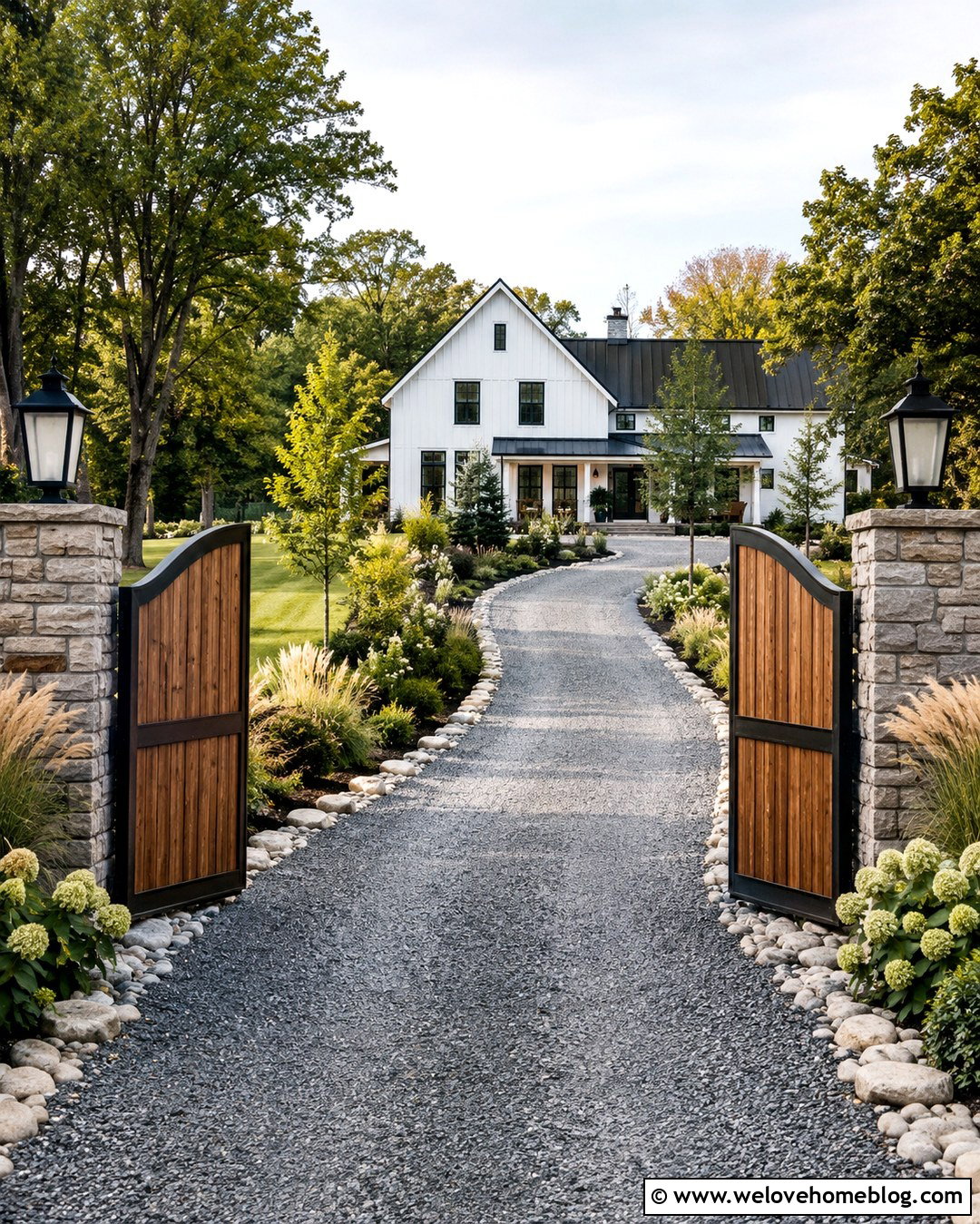
A curved picket gate brings open, friendly character to a smaller front yard. White or pale gray timber pickets can rise gradually toward the middle, echoing the roofline of a Cape Cod or coastal cottage. Pair the gate with a gently curved pea gravel driveway contained by cobblestone edging. Continue the picket fence beside the entrance, then place blue hydrangeas, white roses, and clipped boxwood behind it. A flagstone walkway should branch from the driveway and lead clearly to the front porch. Black hardware provides a practical accent and keeps the pale gate from looking washed out. Because the pickets preserve views into the property, the driveway shape and landscaping remain part of the street-facing composition. The finished look feels bright, neat, and welcoming rather than overly enclosed.
11. Curved Timber Farm Driveway Gate

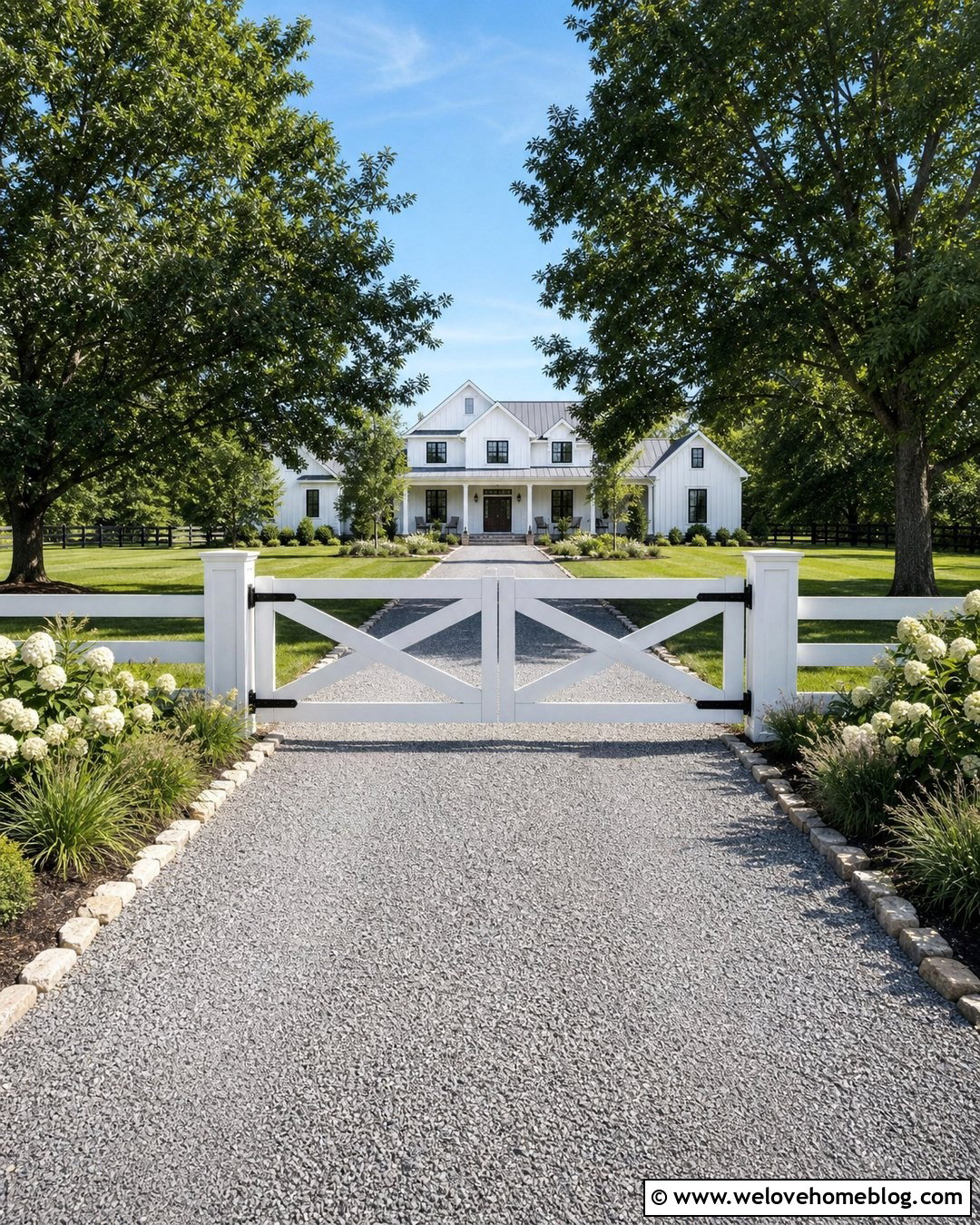
Chunky timber rails create a relaxed entrance for a rural property. Instead of using a completely straight farm gate, add a subtle curved upper rail that rises toward the center. This small change gives the structure a more finished residential appearance. Install the gate between substantial timber posts or rough-cut stone pillars. A curved crushed limestone driveway suits the natural materials and remains visually soft against open lawn. Use split-rail fencing, meadow grasses, oak trees, and simple native planting to frame the approach. Black metal braces can strengthen the design while adding contrast. Keep decorative details limited so the gate still feels appropriate for a working landscape. A modern farmhouse in the distance ties everything together, making the entrance practical, attractive, and consistent with its spacious country surroundings.
12. Curved Driveway Gate With Stone Columns
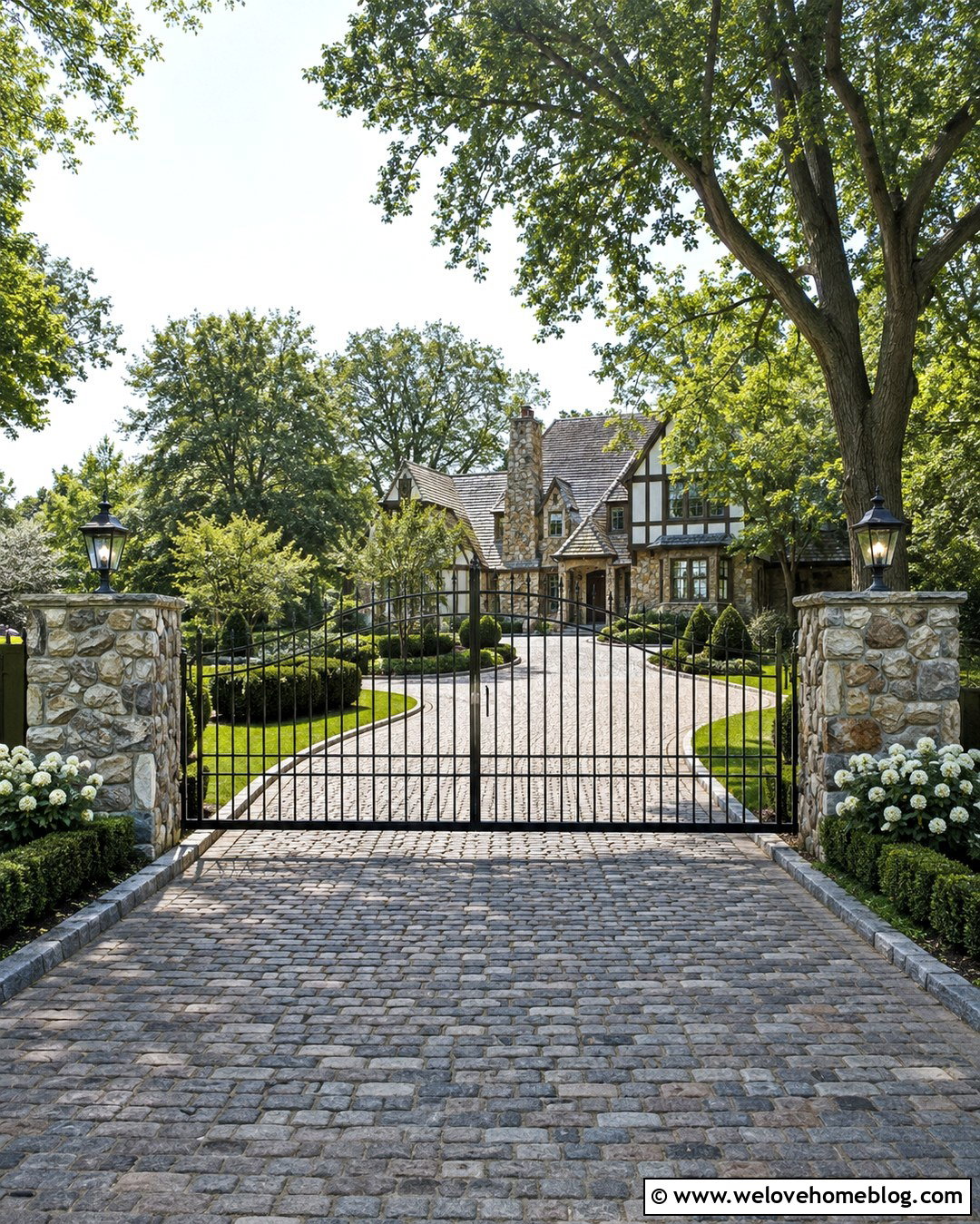
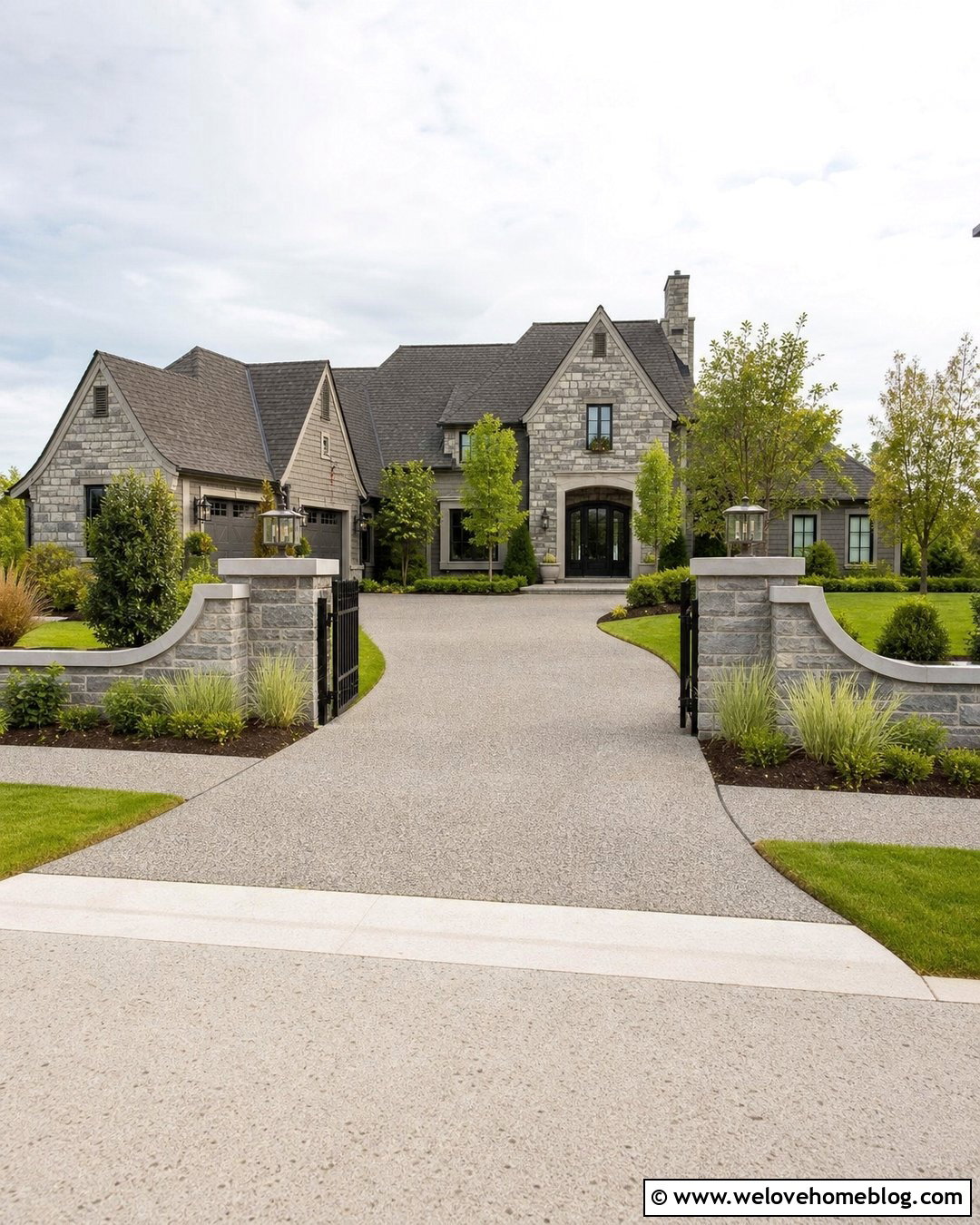
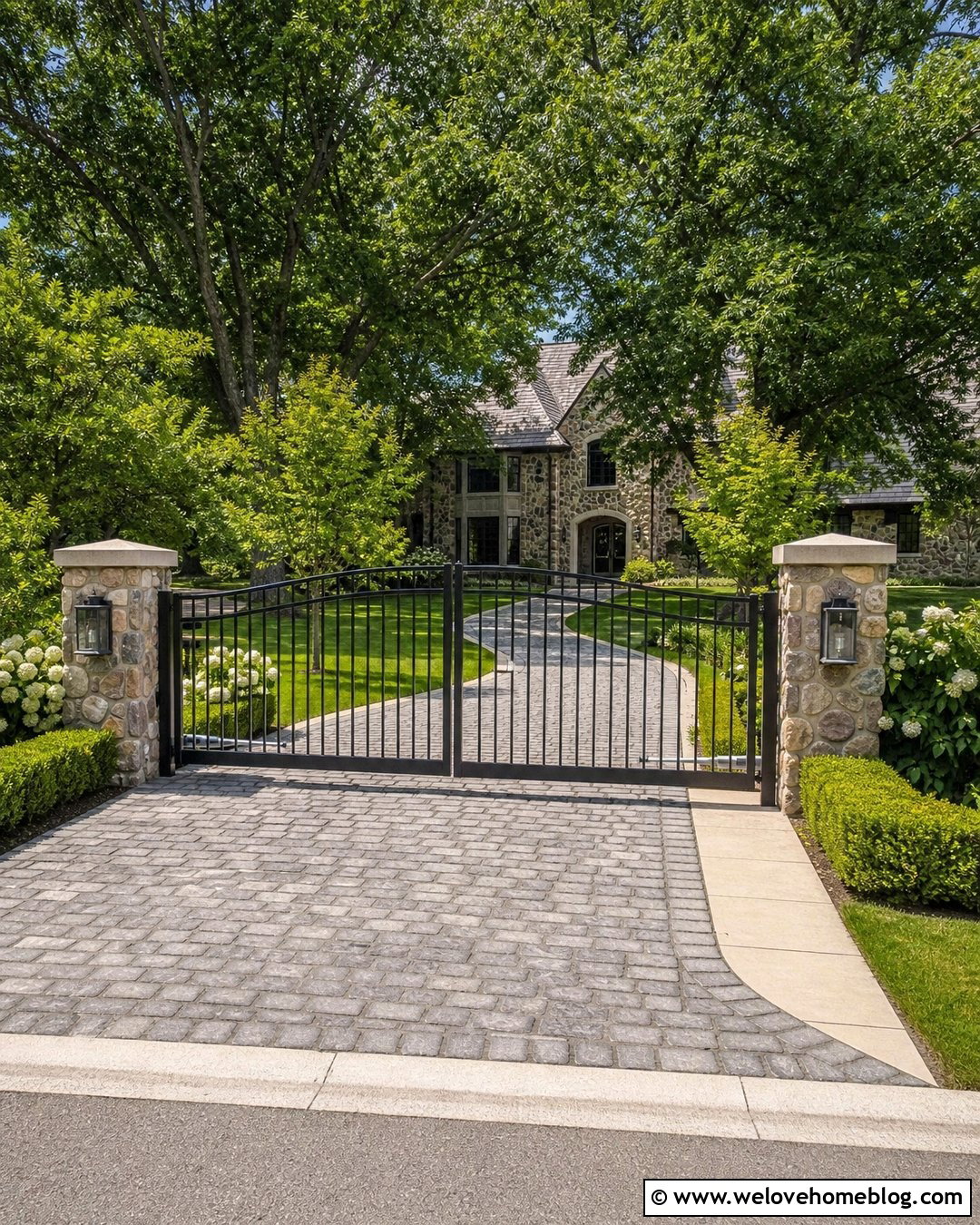
Stone columns can make even a simple gate feel permanent and well proportioned. For a Tudor-inspired property, choose a black steel gate with an understated center arch and vertical bars. Build the columns from irregular gray and brown stone that matches the home’s facade or chimney. A curved cobblestone driveway strengthens the traditional character, while a narrow granite border creates a clean transition into planting beds. Use clipped yew, white flowering shrubs, and mature shade trees to frame the entrance. Lantern-style fixtures mounted near the tops of the columns provide useful illumination without covering the stonework. Keep the gate ornament restrained because the masonry already supplies rich texture. The combined curve, stone, cobblestone, and layered greenery creates a substantial entrance that feels connected to the architecture.
13. Bronze Curved Driveway Gate
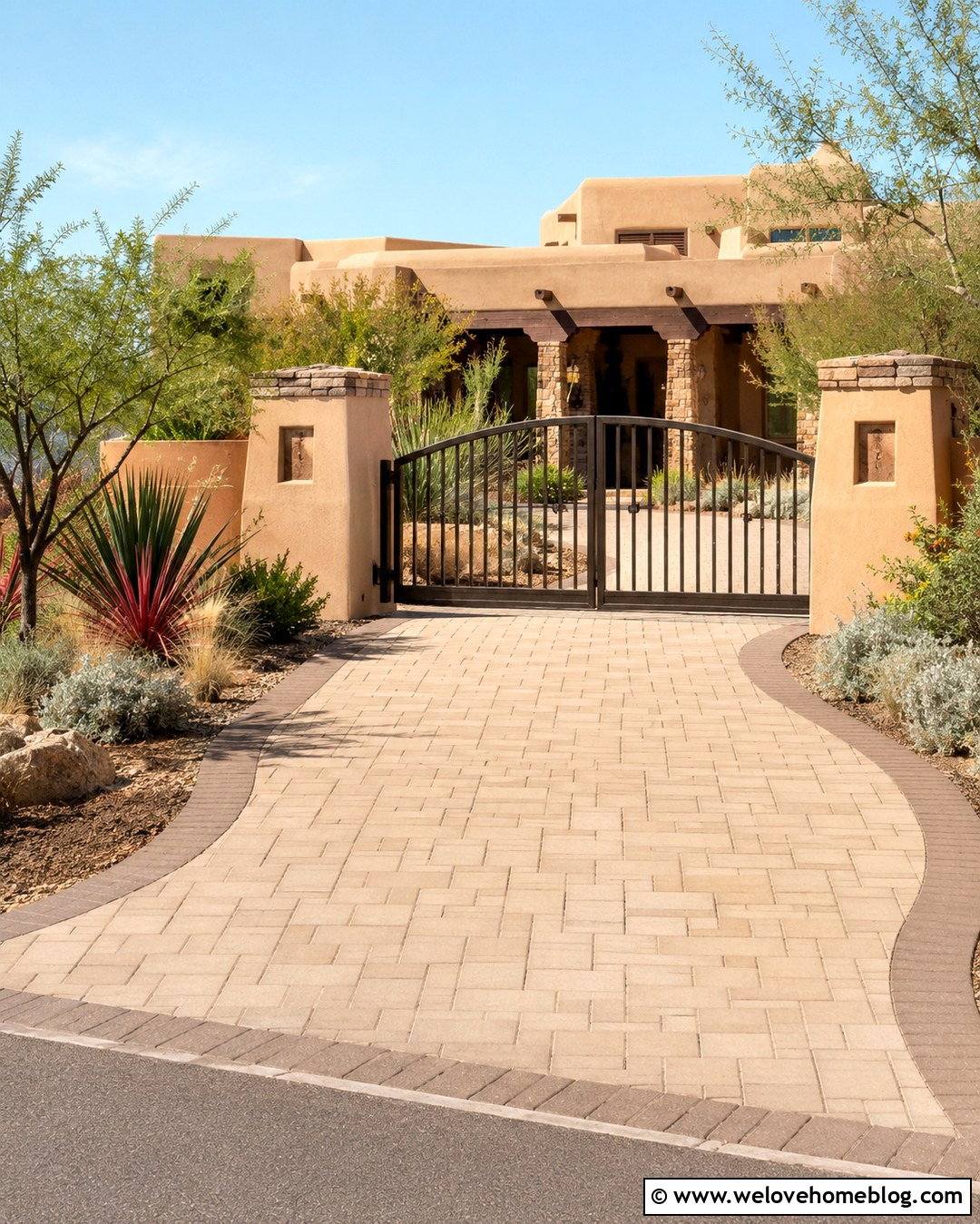
Bronze-toned metal offers a softer alternative to black, especially beside tan stone and warm landscaping. Choose an aluminum or steel gate with a powder-coated bronze finish and a low arched top. Narrow vertical bars with one simple horizontal accent keep the design clean. Pair the gate with a curved driveway made from sand-colored concrete pavers laid in a running bond pattern. Stucco pillars, natural stone caps, and desert-friendly plants support a Southwestern home without relying on excessive ornament. Use red yucca, sage, ornamental grasses, and small desert trees to frame the entrance. Dark brown edging can define the paver surface and echo the bronze finish. The overall palette feels warm and cohesive, allowing the gate curve to stand out gently rather than creating a harsh boundary.
14. Curved Sliding Driveway Gate
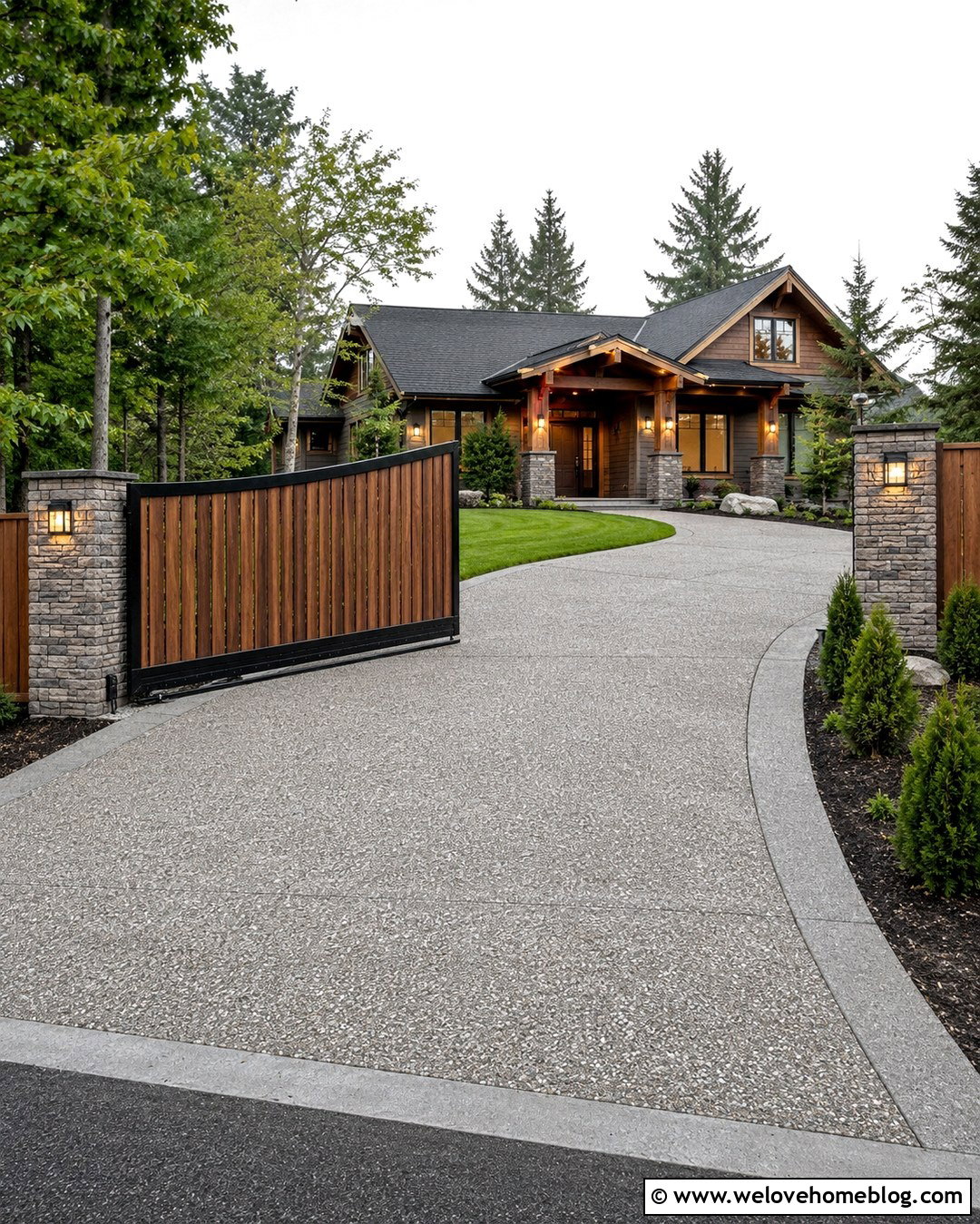
A sliding gate can carry a curved upper profile even though its movement remains parallel to the fence line. This makes it a useful design direction where the driveway approach does not comfortably accommodate swinging leaves. Choose a cantilever-style black steel frame with vertical cedar slats and a gentle center rise. Pair it with a curved exposed aggregate driveway leading uphill toward a contemporary Craftsman house. Continue cedar fencing along the side where the gate retracts, helping the moving panel disappear into the boundary. Stone pillars, compact shrubs, and recessed entrance lighting complete the look. Carefully coordinate the gate position with the driveway curve and available stacking space. The combination delivers warm material contrast, a clear entrance, and an uncluttered approach without requiring a wide interior swing area.
15. Low Curved Driveway Gate
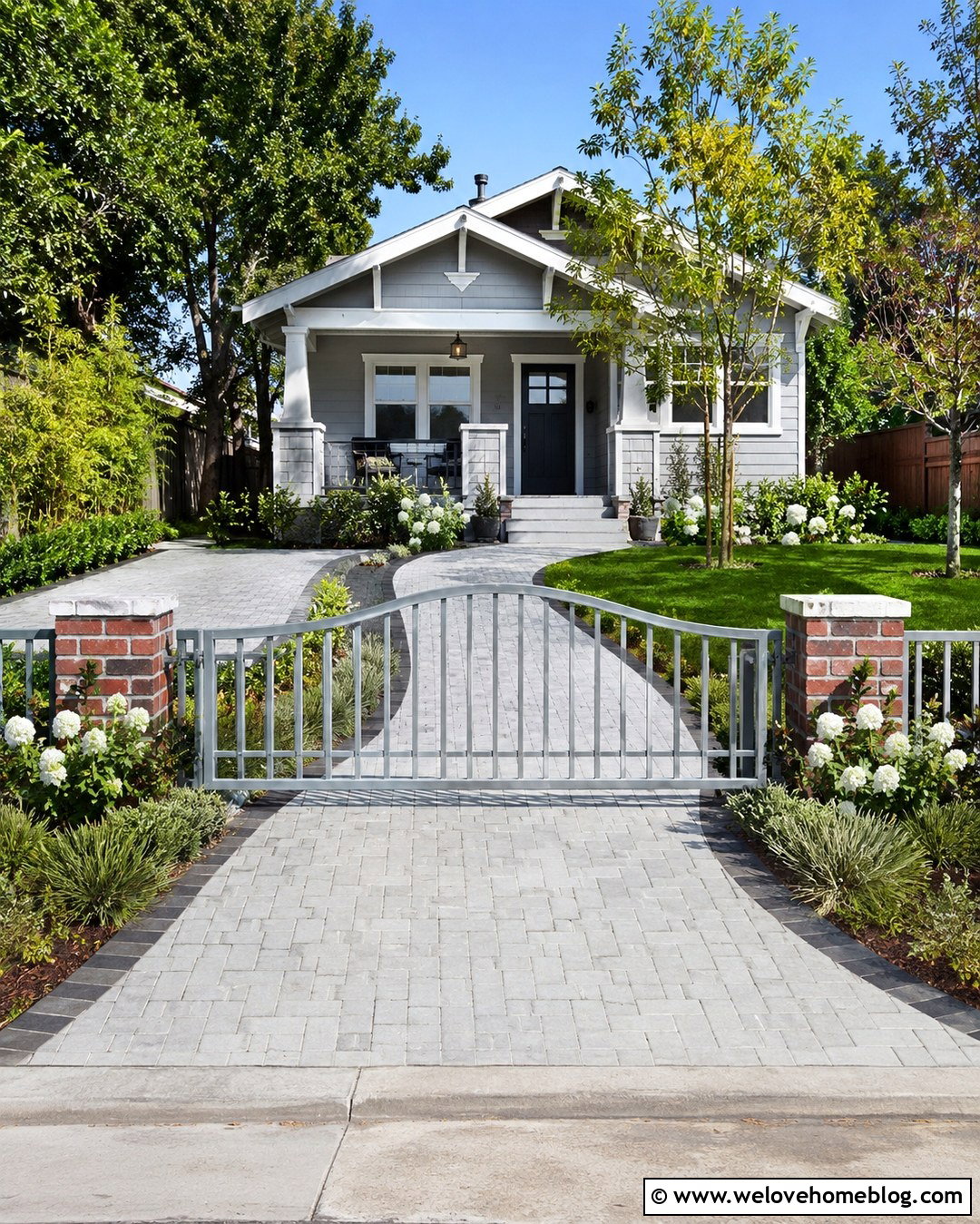
A low gate can define a compact property without making the entrance feel closed off. Use painted wood or powder-coated aluminum with widely spaced vertical pickets and a shallow central arch. A height similar to the adjoining fence creates a continuous street-facing line. Pair the gate with a curved driveway of light gray concrete pavers leading to a Craftsman bungalow. Dark brick edging can separate the paving from narrow beds filled with dwarf grasses, compact hydrangeas, and evergreen ground cover. Taper the landscaping near the curb to preserve a spacious appearance. Two short brick pillars provide support without overpowering the house. This design works best when boundary definition and curb appeal matter more than full privacy. Its restrained scale keeps the home visible and the small front yard bright.
16. Tall Curved Security Driveway Gate
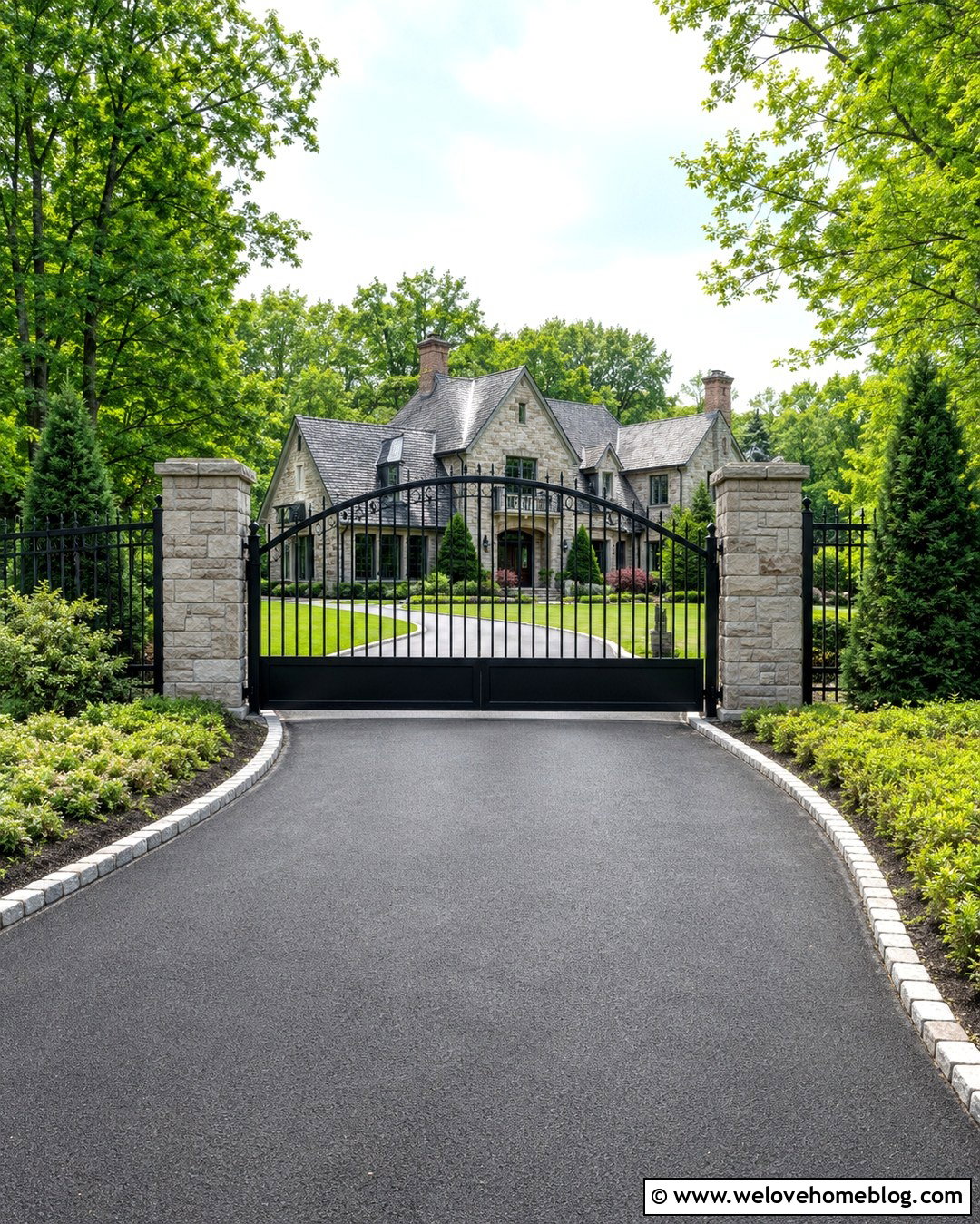
A tall gate can provide stronger visual separation while still appearing graceful. Choose a steel design with solid lower panels, open vertical bars above, and an arched top. This balance gives the entrance weight without turning it into a completely blank surface. Use a matte black finish beside a broad curved asphalt driveway with granite block edging. Large stone pillars and coordinating metal fencing help the gate feel properly supported. Plant upright evergreens behind the boundary, but leave breathing room around intercoms, sensors, and moving components. A traditional estate house at the end of the approach provides an appropriate backdrop. Keep spikes and elaborate ornament to a minimum. Clean proportions, durable-looking materials, and layered landscaping can create a secure entrance that still feels composed and residential.
17. Curved Wood Gate With Metal Inlay
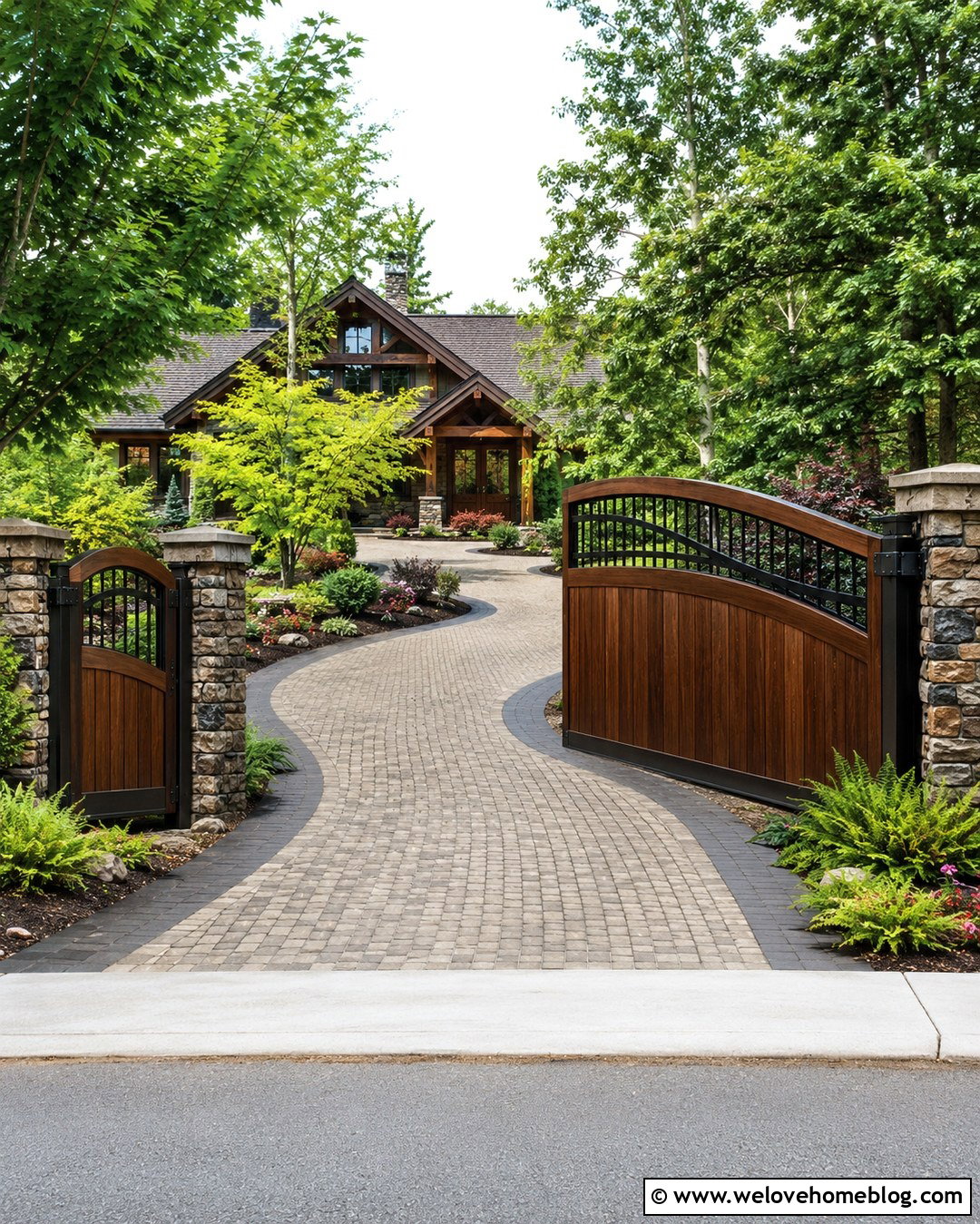
A narrow metal inlay can turn a solid wood gate into a distinctive feature without covering it in decoration. Use rich brown vertical boards inside a black steel frame, then place a simple curved iron grille near the upper center. Shape the entire top edge into a broad arch. Pair this gate with a curved driveway made from permeable concrete pavers and dark stone borders. Craftsman-style stone columns can connect the entrance to a home with timber beams and natural masonry. Layer ferns, flowering shrubs, and small ornamental trees around the pillars. The metal opening breaks up the wood surface and allows a limited view through the entrance. Repeating the same grille shape on a nearby pedestrian gate helps the complete boundary look intentional, balanced, and professionally designed.
18. Curved Driveway Gate With Pedestrian Gate
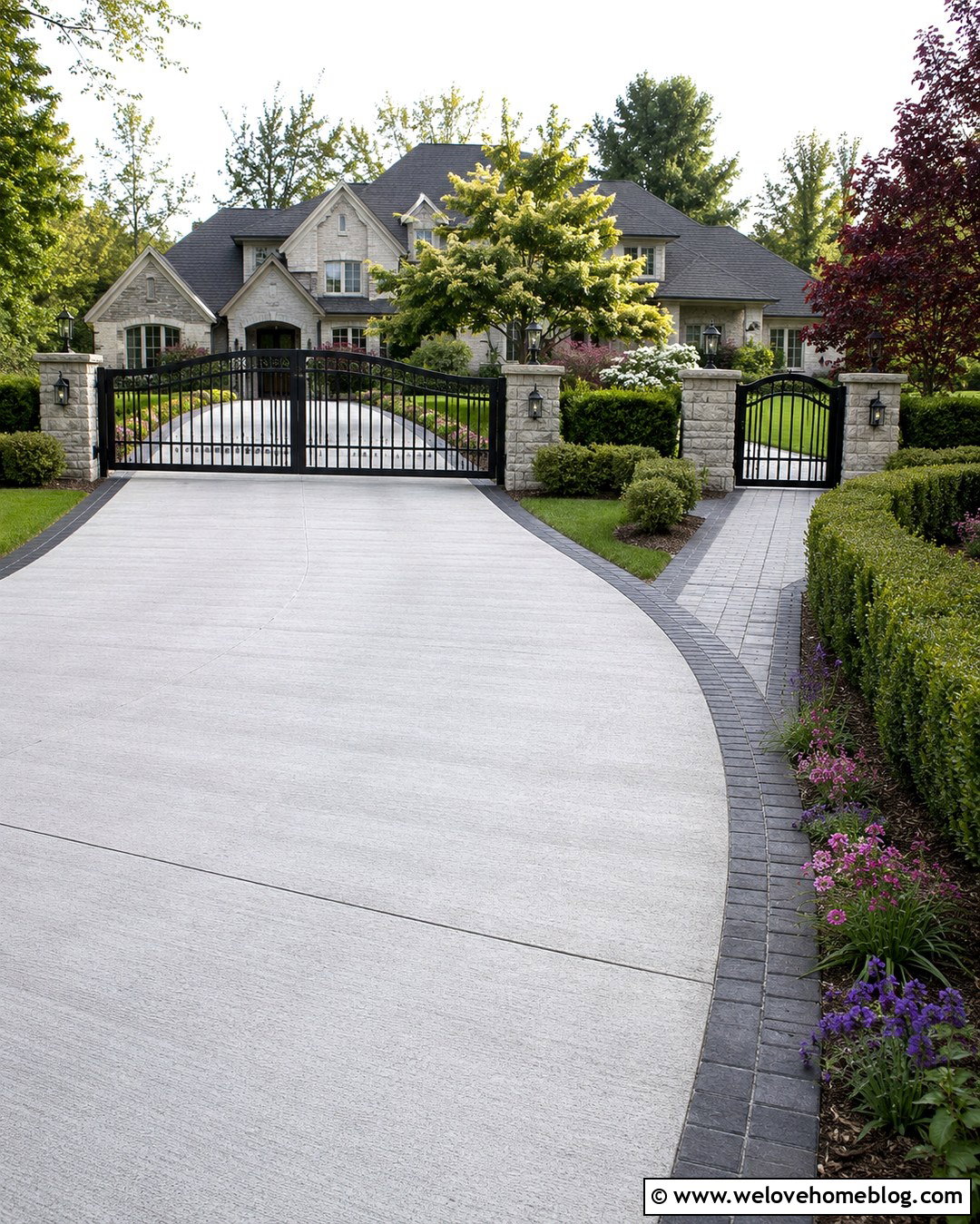
A separate pedestrian gate makes everyday access clearer and prevents the main driveway gate from dominating the entire frontage. Use a curved double-swing aluminum gate with a smaller matching walk gate placed beside one pillar. Both openings should share the same shallow arch, vertical spacing, color, and hardware. Pair the entrance with a curved broom-finished concrete driveway bordered by charcoal pavers. A paved walkway can begin at the pedestrian gate and travel independently toward the front porch. Add low hedges, flowering perennials, and one ornamental tree to separate foot and vehicle routes visually. This arrangement suits a traditional suburban home with a busy household. Consistent materials keep the two gates connected, while the well-defined walkway makes the entrance feel organized, welcoming, and easy to understand.
19. Curved Driveway Gate With Lantern Pillars
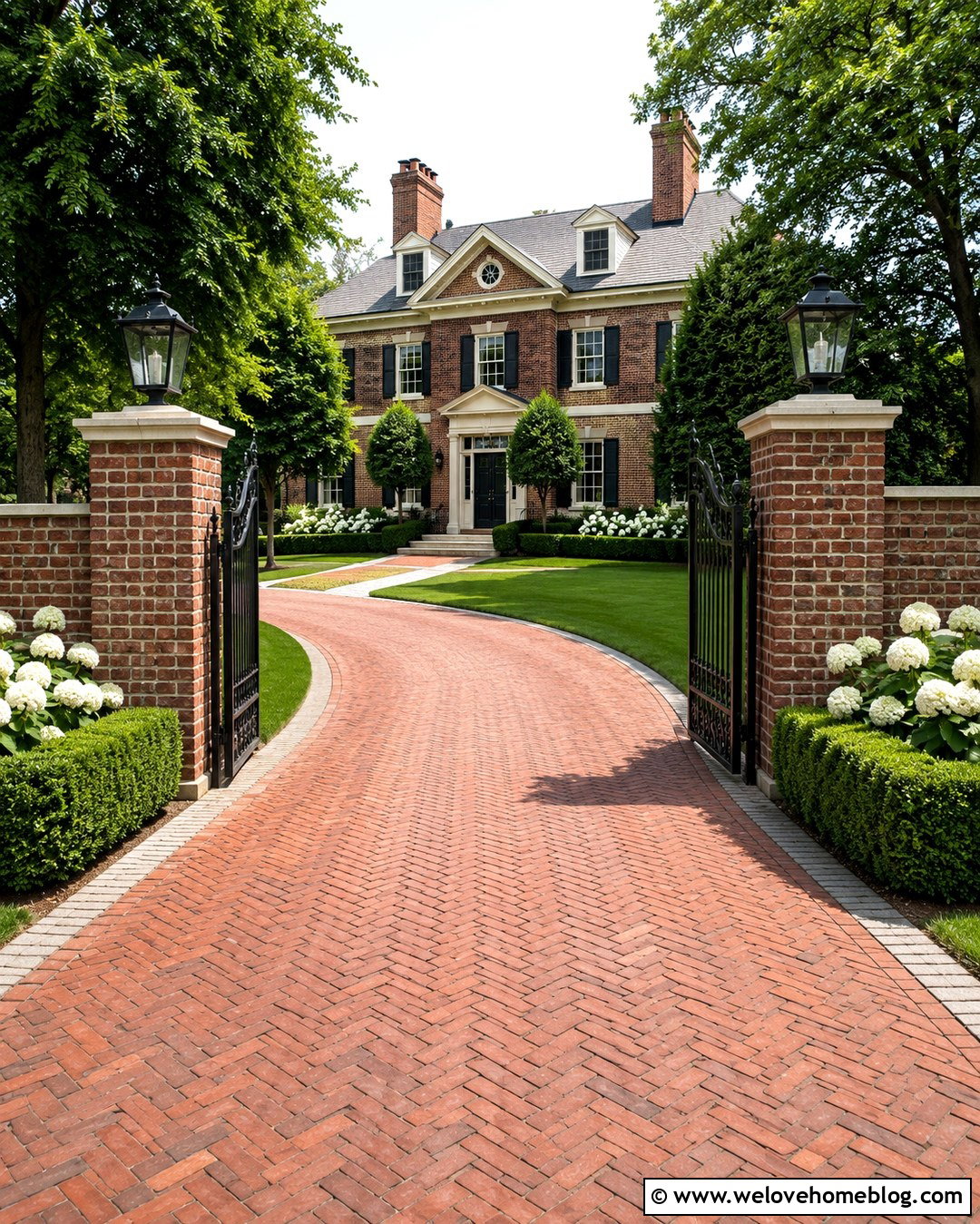
Lighting becomes part of the architecture when lanterns are integrated into substantial gate pillars. Choose a black iron gate with a smooth center arch and restrained scroll details. Set it between red brick columns capped with pale limestone. Large black lanterns can sit on top, drawing attention to the entrance while repeating the gate finish. Continue the traditional palette with a curved clay brick paver driveway laid in herringbone. Use a soldier-course brick border to sharpen the edges. Boxwood, white hydrangeas, and neatly shaped trees complement a Colonial house in the background. Keep the pillars proportional to the gate so they frame rather than overwhelm it. This complete entrance gains character from symmetry, repeated materials, and a clear relationship between the gate, lighting, paving, and home.
20. Automated Curved Driveway Gate With Address Sign
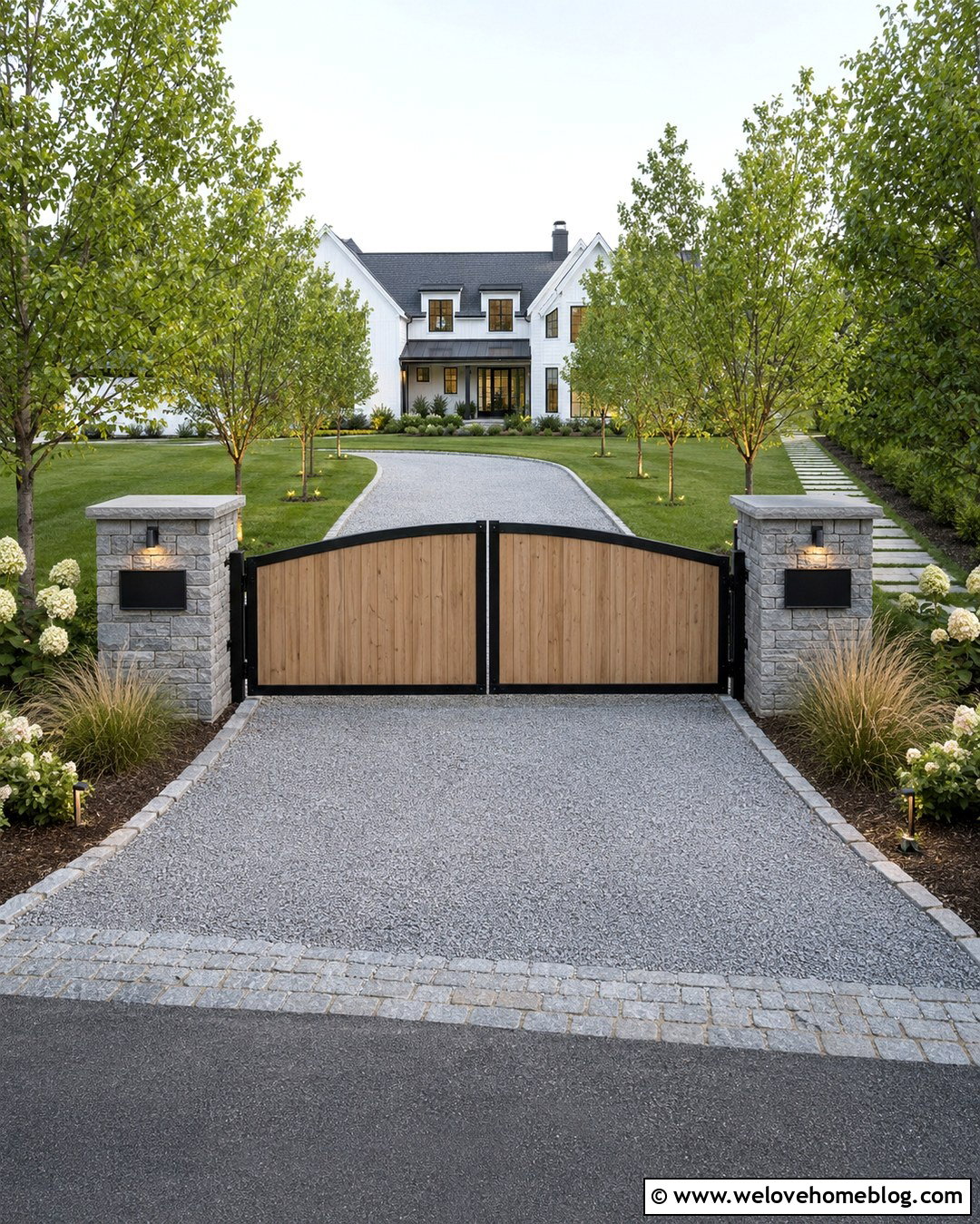
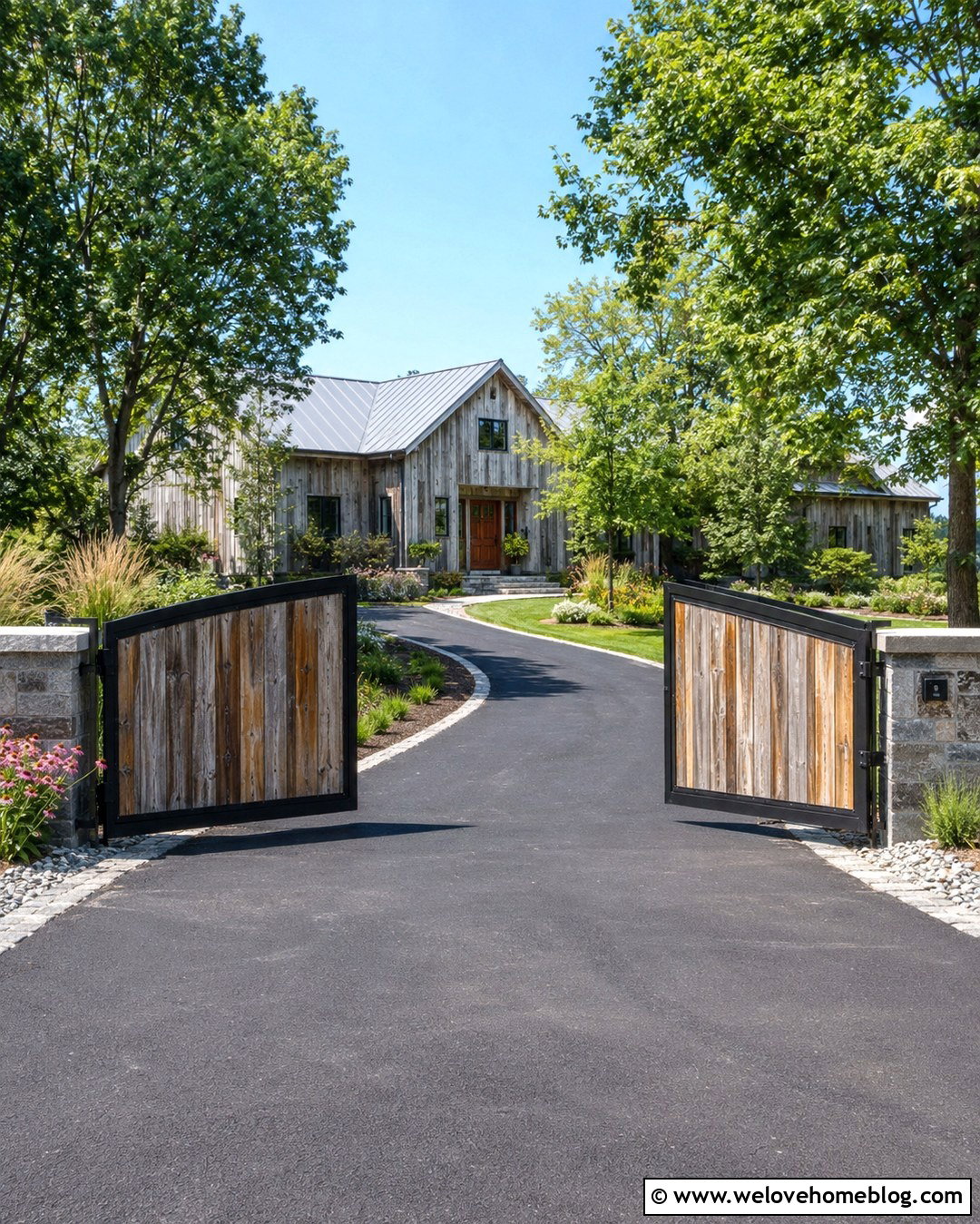
Automation can be integrated without sacrificing a warm residential appearance. Choose a double-swing cedar gate with a shallow arch, black steel framing, and concealed-looking operating hardware. Mount a simple metal address plaque on one stone pillar rather than across the gate itself. A curved gray gravel driveway with Belgian block edging creates a relaxed approach to a contemporary farmhouse. Add low native grasses, flowering shrubs, and evenly spaced trees to guide the view toward the house. Small pillar lights and discreet ground-level fixtures can support safe navigation while keeping the entrance uncluttered. Leave suitable clear space around access controls and moving gate leaves. By coordinating the wood, metal, stone, signage, gravel, and planting, the automated entrance feels like a complete landscape feature instead of a mechanical add-on.
Conclusion:
The strongest 20 Curved Driveway Gate Style Ideas connect the gate to the entire front approach rather than treating it as an isolated feature. Consider how the arch, material, opening method, pillars, driveway surface, fencing, and plants will look from the street. Iron and stone can create a formal entrance, while wood and gravel feel warmer and more relaxed. Aluminum, steel panels, and streamlined masonry suit contemporary homes. Practical details matter just as much as appearance, including vehicle clearance, pedestrian access, visibility, and automation space. Whether you prefer a low picket gate or a tall privacy design, consistent colors and repeated materials will help the entrance feel balanced, attractive, and naturally connected to your home.

Related posts:
Leave a Reply