
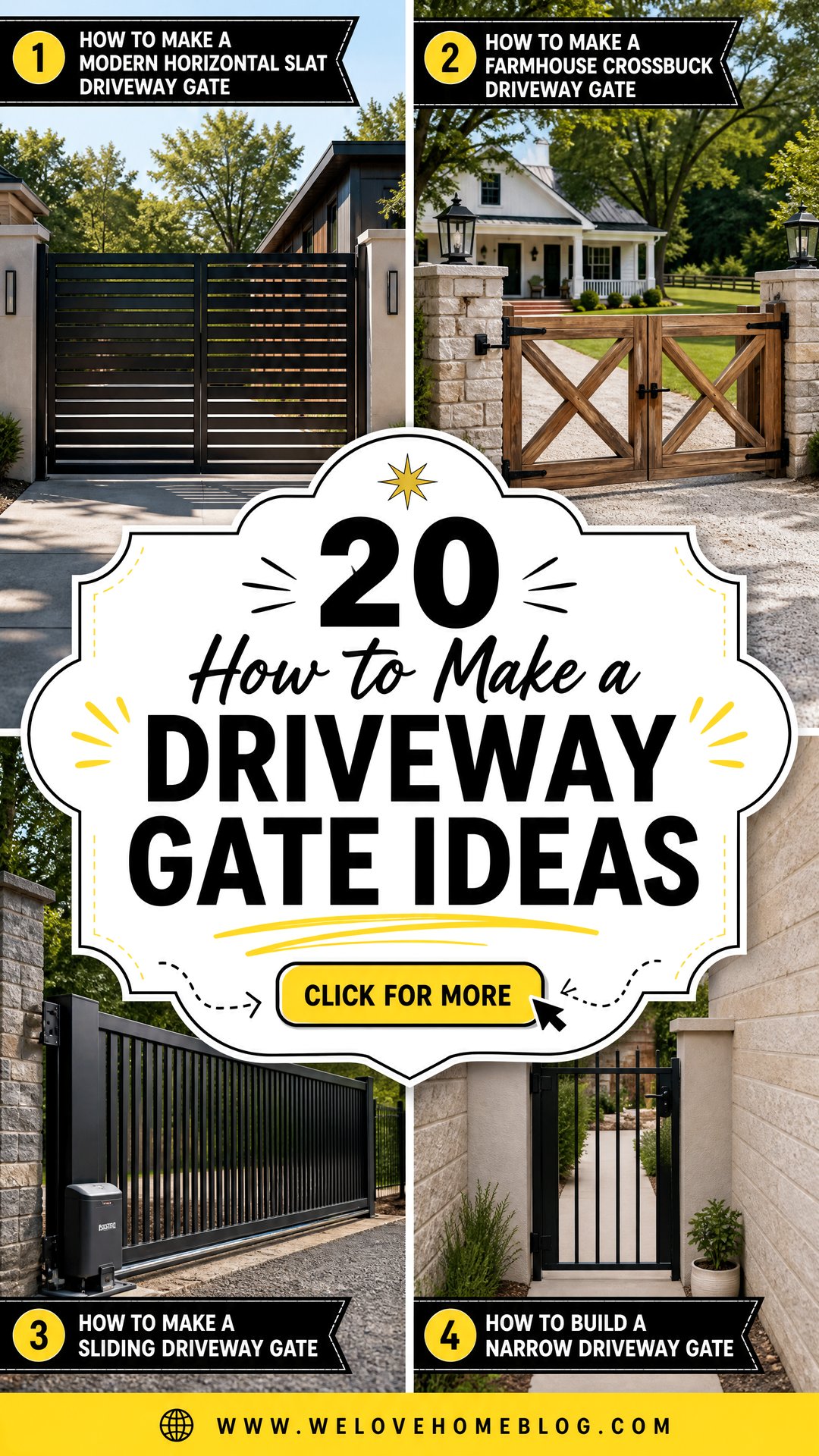
A well-built driveway gate can improve privacy, guide vehicles, and give the entire property a more finished entrance. The best design starts with accurate measurements, sturdy posts, suitable hardware, and a gate layout that matches the driveway’s width and slope. Wood creates warmth, metal adds strength, and mixed-material gates offer both character and durability. Swing gates work well where opening clearance is available, while sliding designs can suit tighter or sloped spaces. Automation adds convenience but requires correctly selected equipment and safety features. () Each option below combines the gate, driveway surface, entrance posts, fencing, and landscaping into one practical curb-appeal plan. Explore these 20 How To Make A Driveway Gate Ideas for a design that fits your home.
1. How To Build A Simple Wooden Driveway Gate
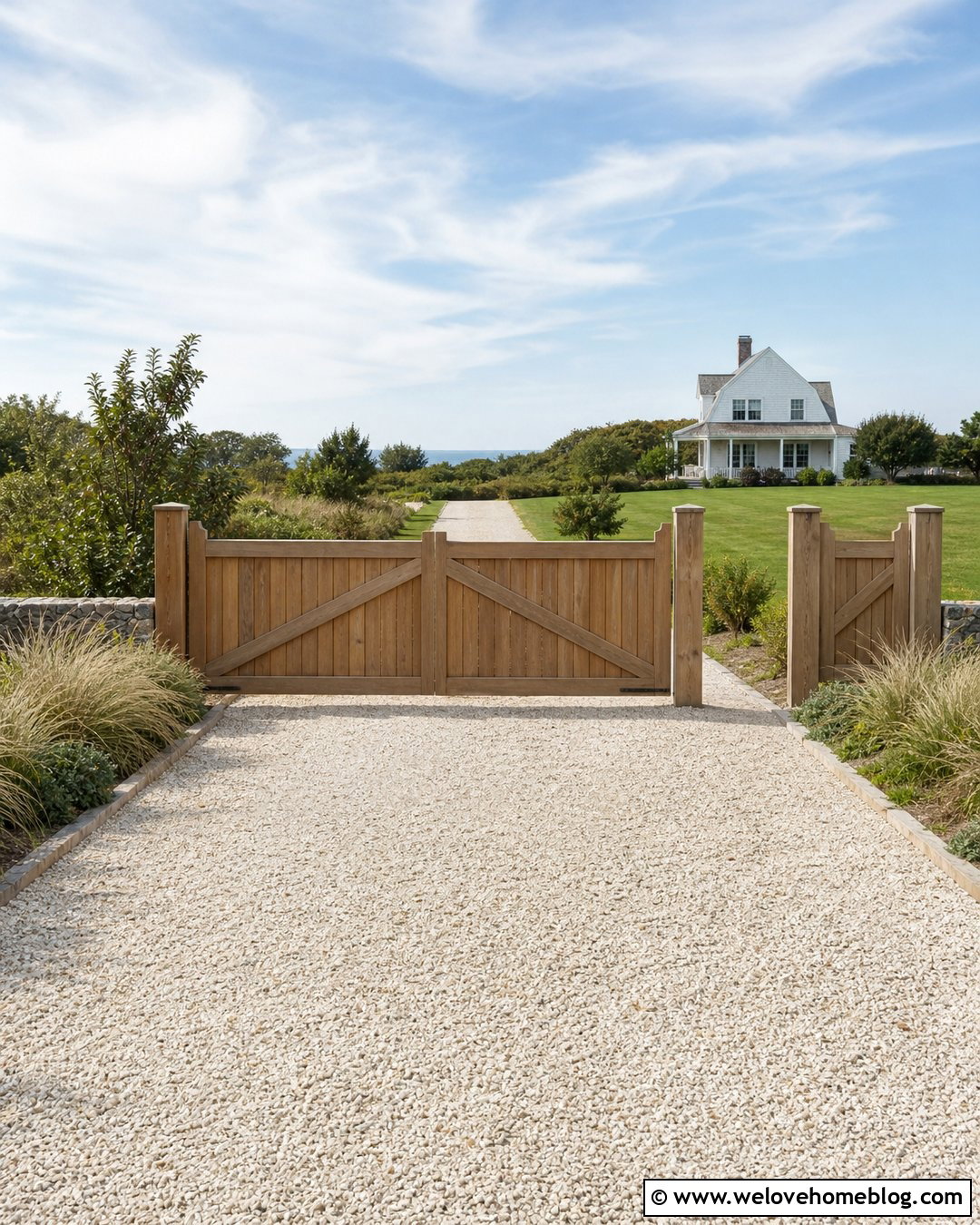
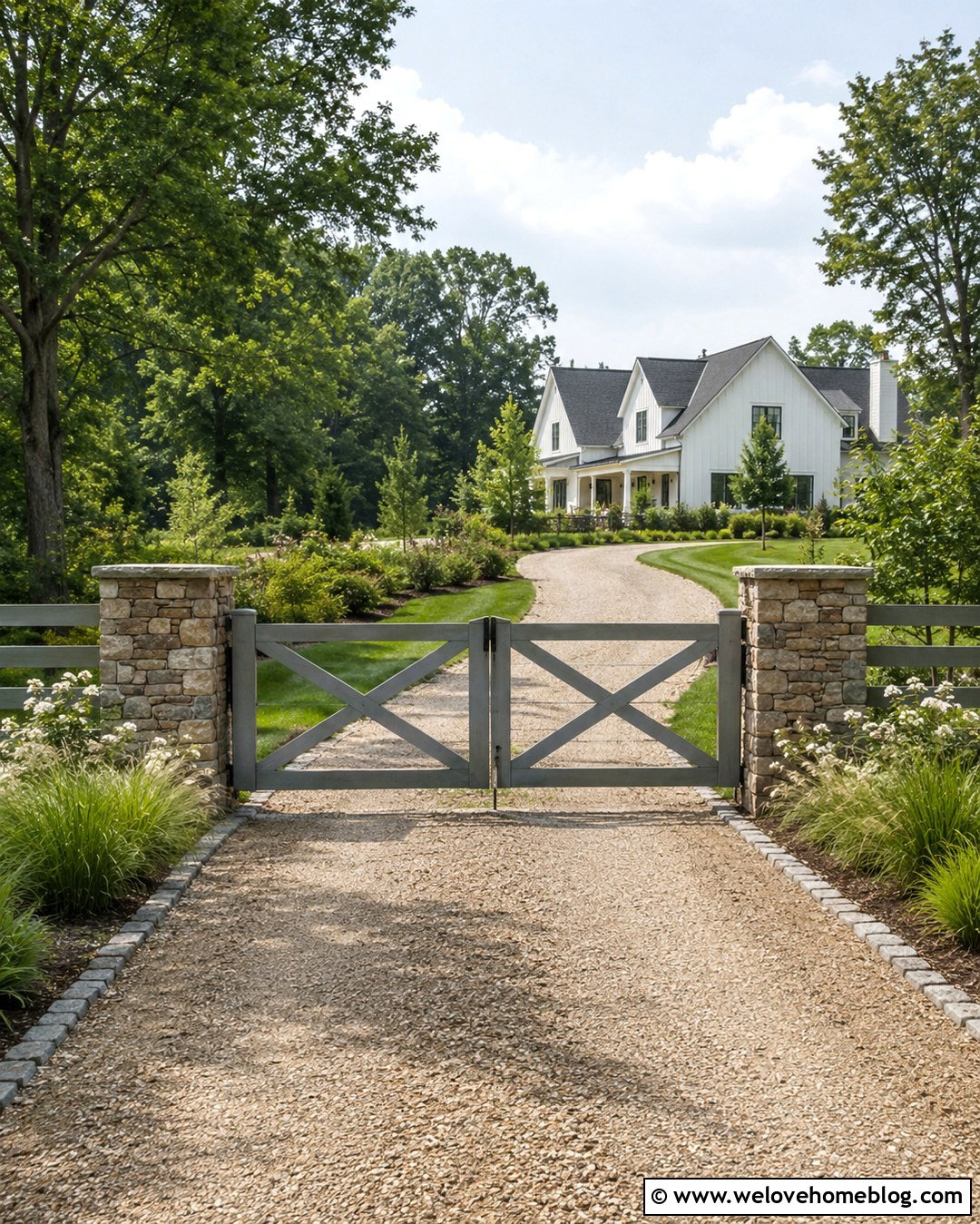
A simple wooden driveway gate works beautifully with a straight gravel driveway and a relaxed country home. Begin by measuring the opening between two securely anchored posts. Build a rectangular frame from pressure-treated lumber, then add a diagonal brace running from the lower hinge corner toward the upper latch corner. This direction helps transfer the gate’s weight back toward the hinges. Attach evenly spaced vertical boards for a clean, semi-private finish. Heavy-duty adjustable hinges make future leveling easier if the wood shifts. Finish the gate with exterior stain or paint, galvanized hardware, and a dependable latch. Add timber driveway edging, low native grasses, and a matching pedestrian gate so the entire entrance looks intentional rather than pieced together.
2. How To Build A Double Swing Driveway Gate
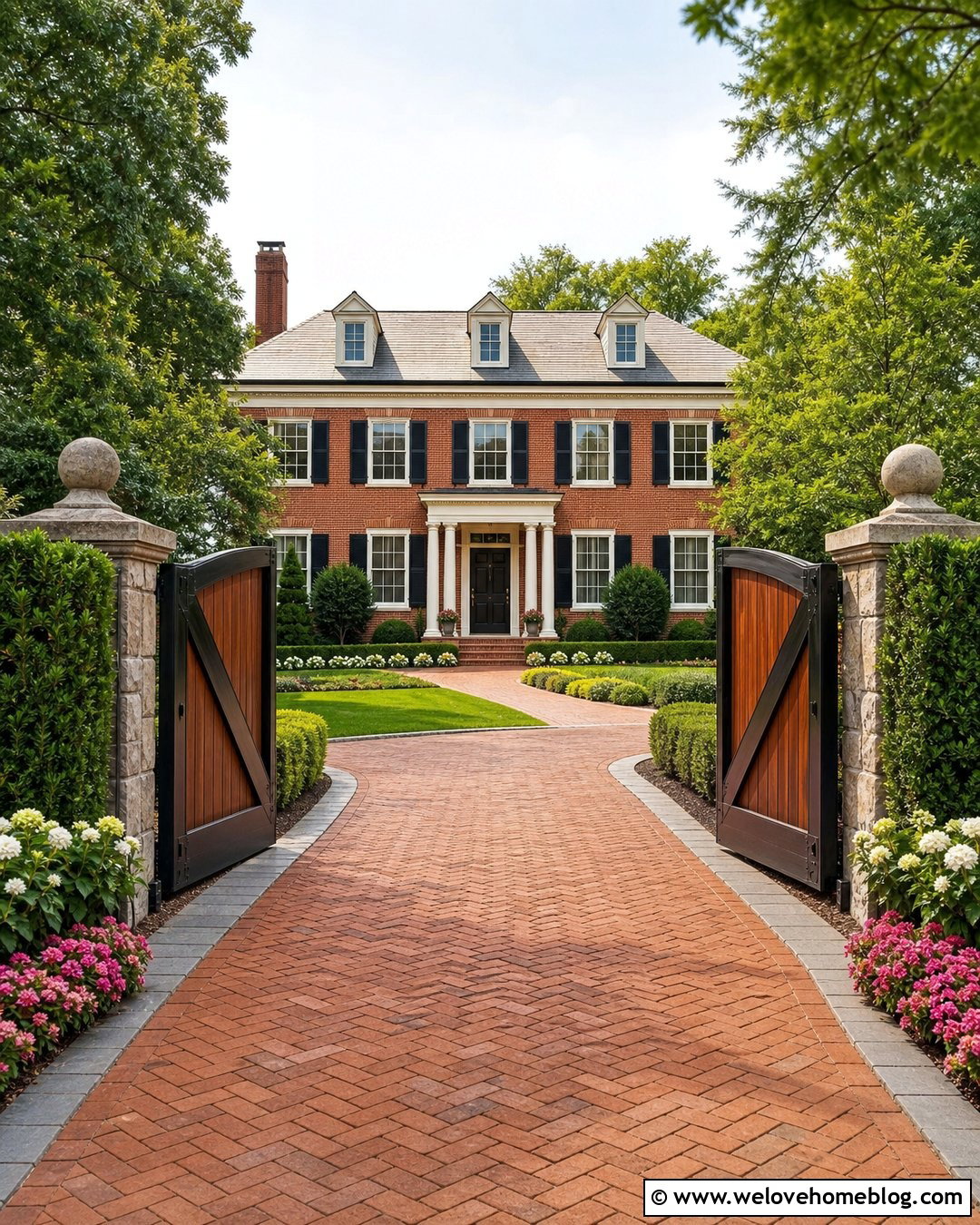
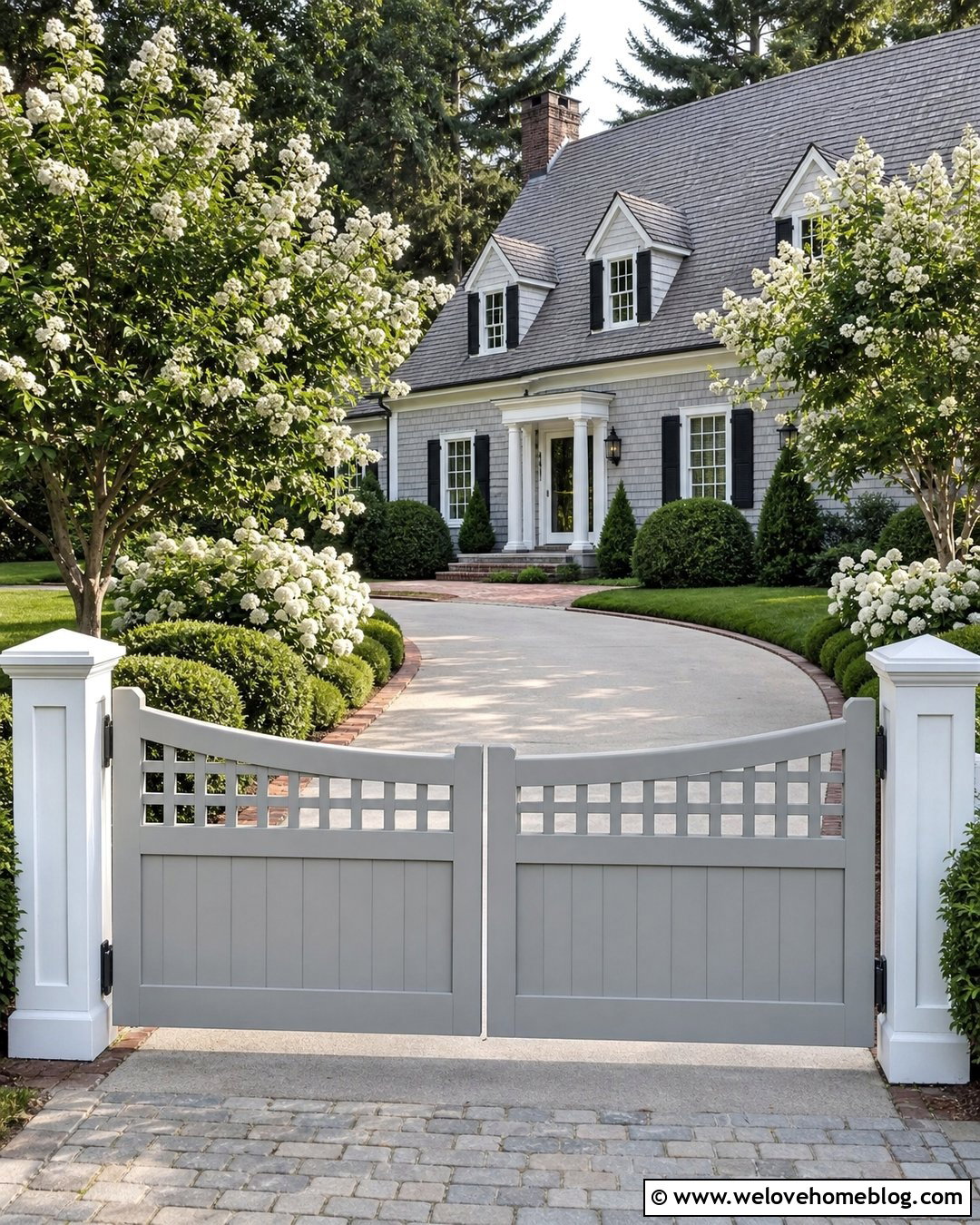
Could two smaller gate leaves work better than one oversized panel? A double swing driveway gate divides the weight between two posts and creates a balanced entrance for a wide driveway. Build matching metal or timber frames, checking that each remains perfectly square before installing the infill boards. Add diagonal bracing to both leaves and use adjustable hinges rated for the completed weight. The center should meet evenly, with enough clearance below for drainage and seasonal ground movement. A center drop rod can secure one leaf, while a latch holds the pair together. Combine this gate with a curved brick paver driveway, masonry posts, clipped hedges, and symmetrical planting beds. Confirm that both leaves can open fully without striking slopes, landscaping, or parked vehicles.
3. How To Make A Modern Horizontal Slat Driveway Gate
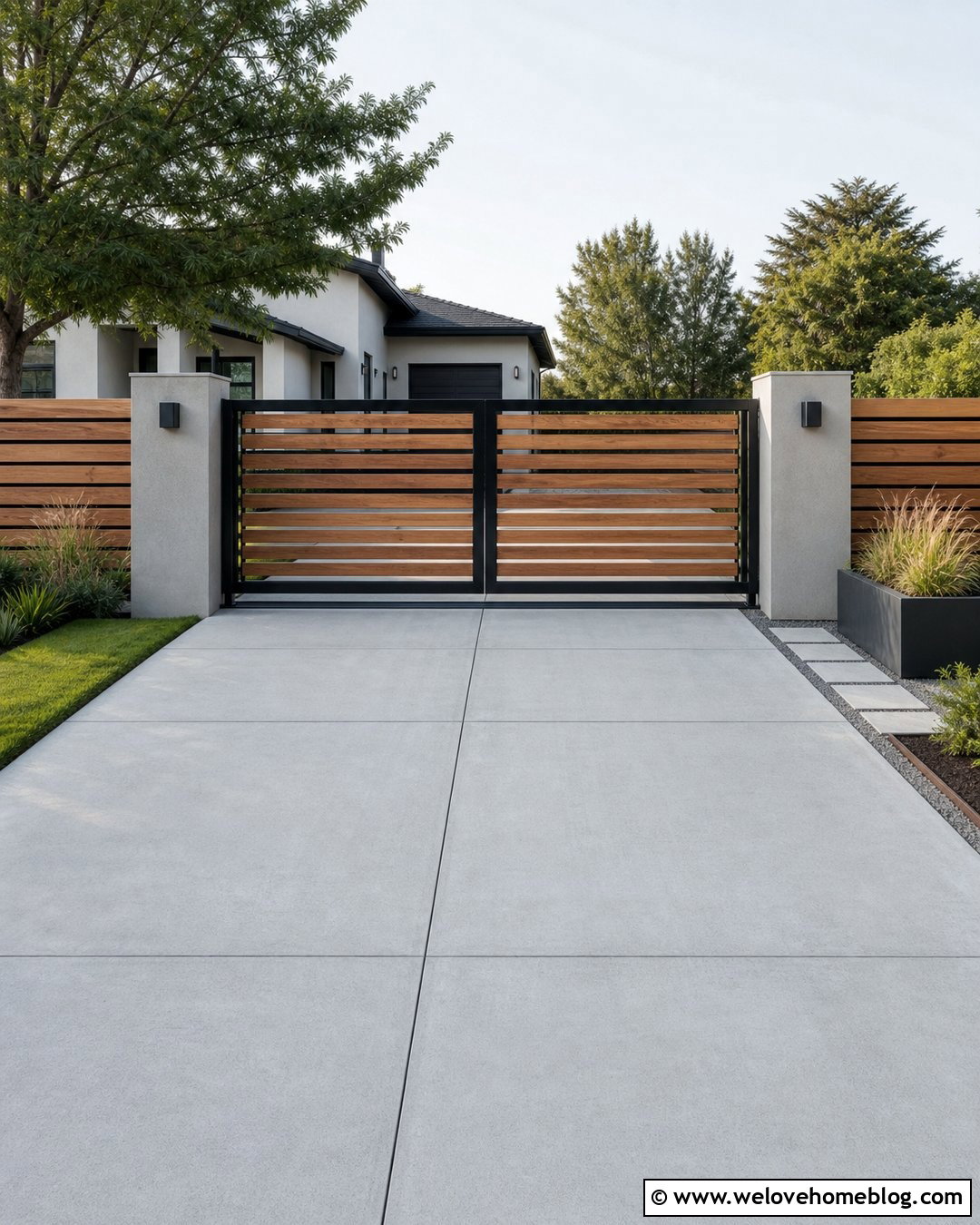
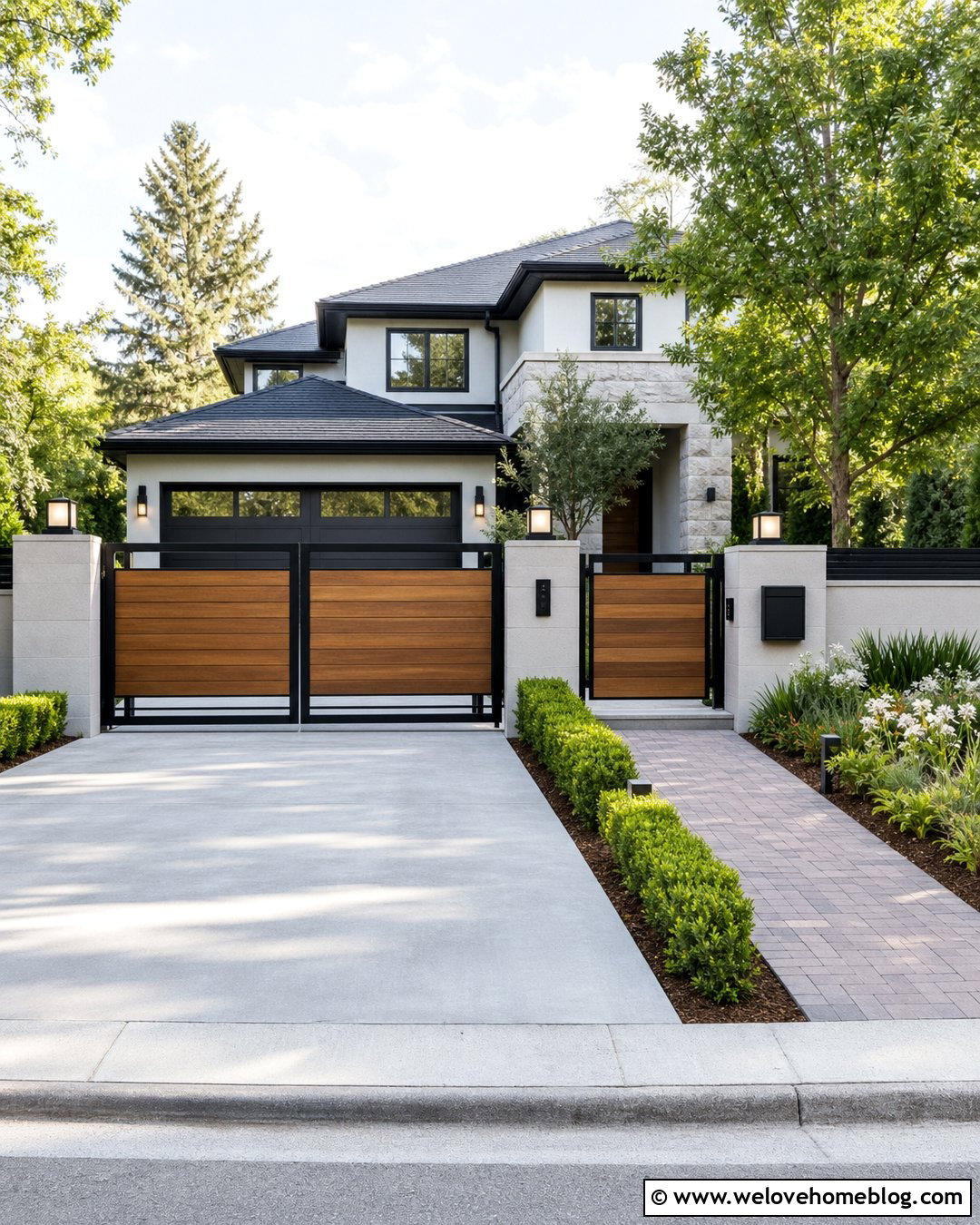
Crisp horizontal lines can turn a practical gate into a strong architectural feature. Start with a welded or bolted metal frame because long horizontal boards may twist when unsupported. Install cedar, composite, or aluminum slats with consistent gaps, using a spacer block to keep the pattern even. Narrow gaps provide privacy, while wider spacing creates a lighter appearance and improves visibility near the street. Coat the frame in matte black and seal natural wood slats for a modern contrast. This gate pairs well with a gray poured concrete driveway, matching side fencing, rectangular planters, and structured ornamental grasses. Keep the entrance posts simple and square. Conceal cables and opener brackets where possible so automation does not interrupt the gate’s streamlined appearance.
4. How To Make A Farmhouse Crossbuck Driveway Gate
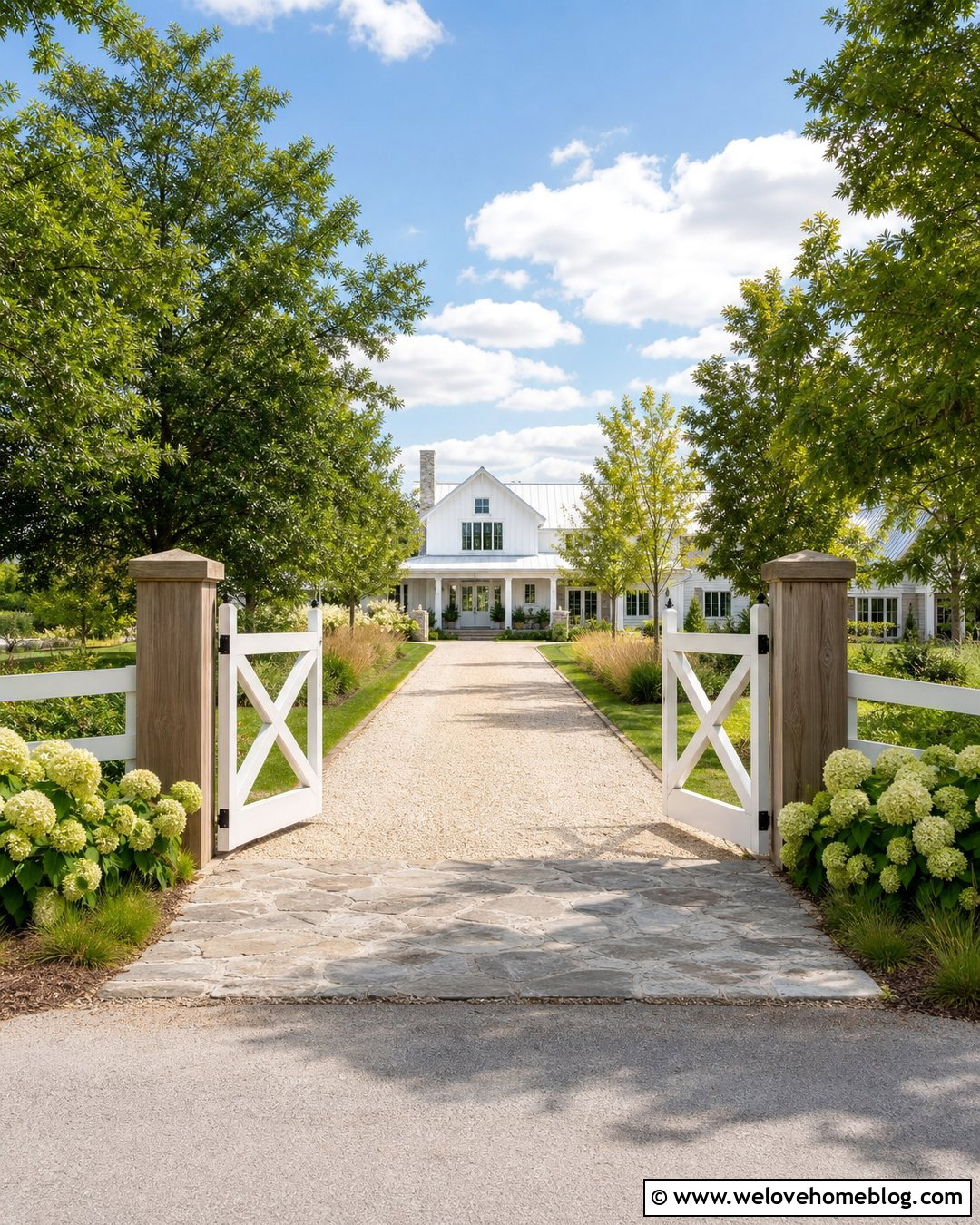
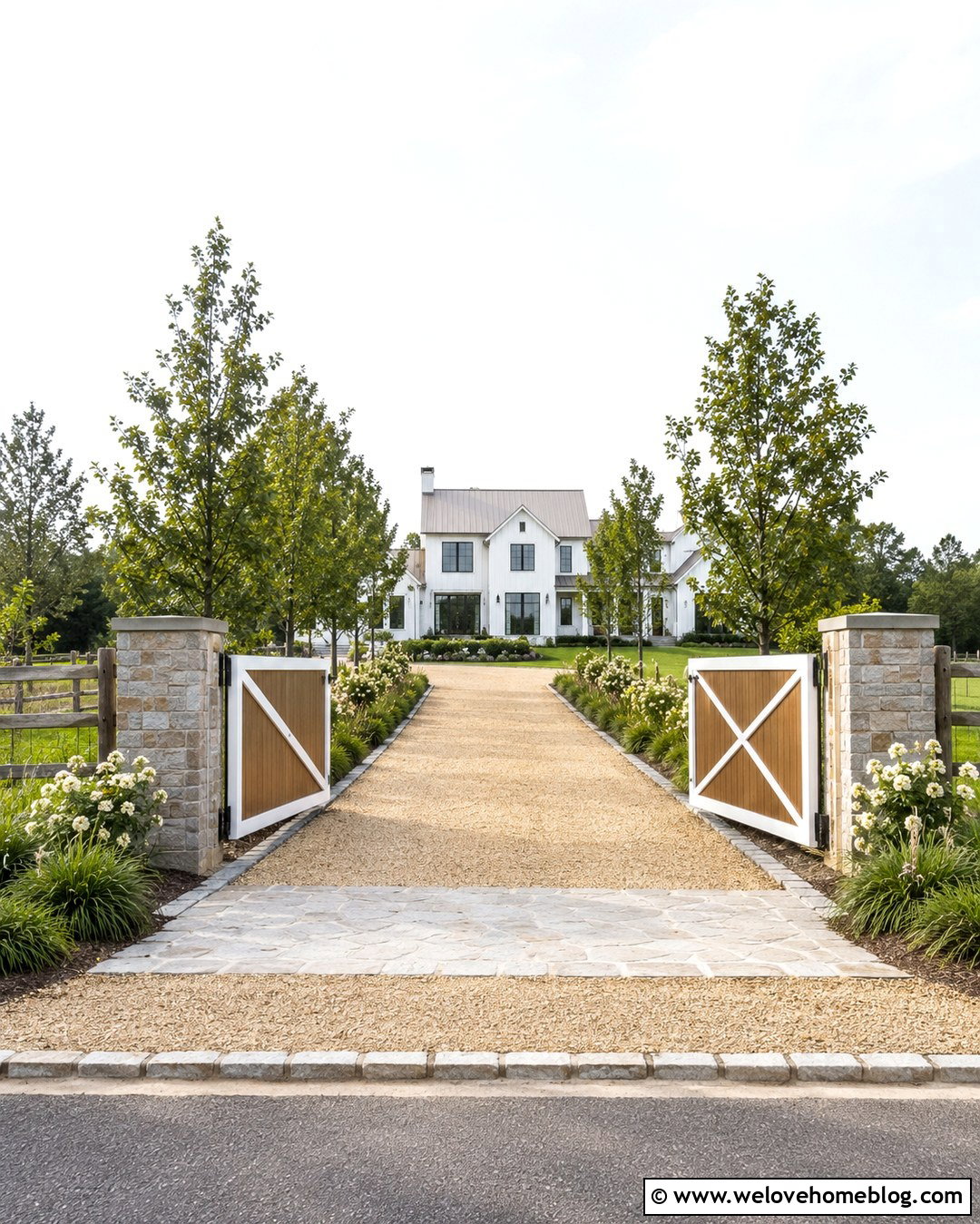
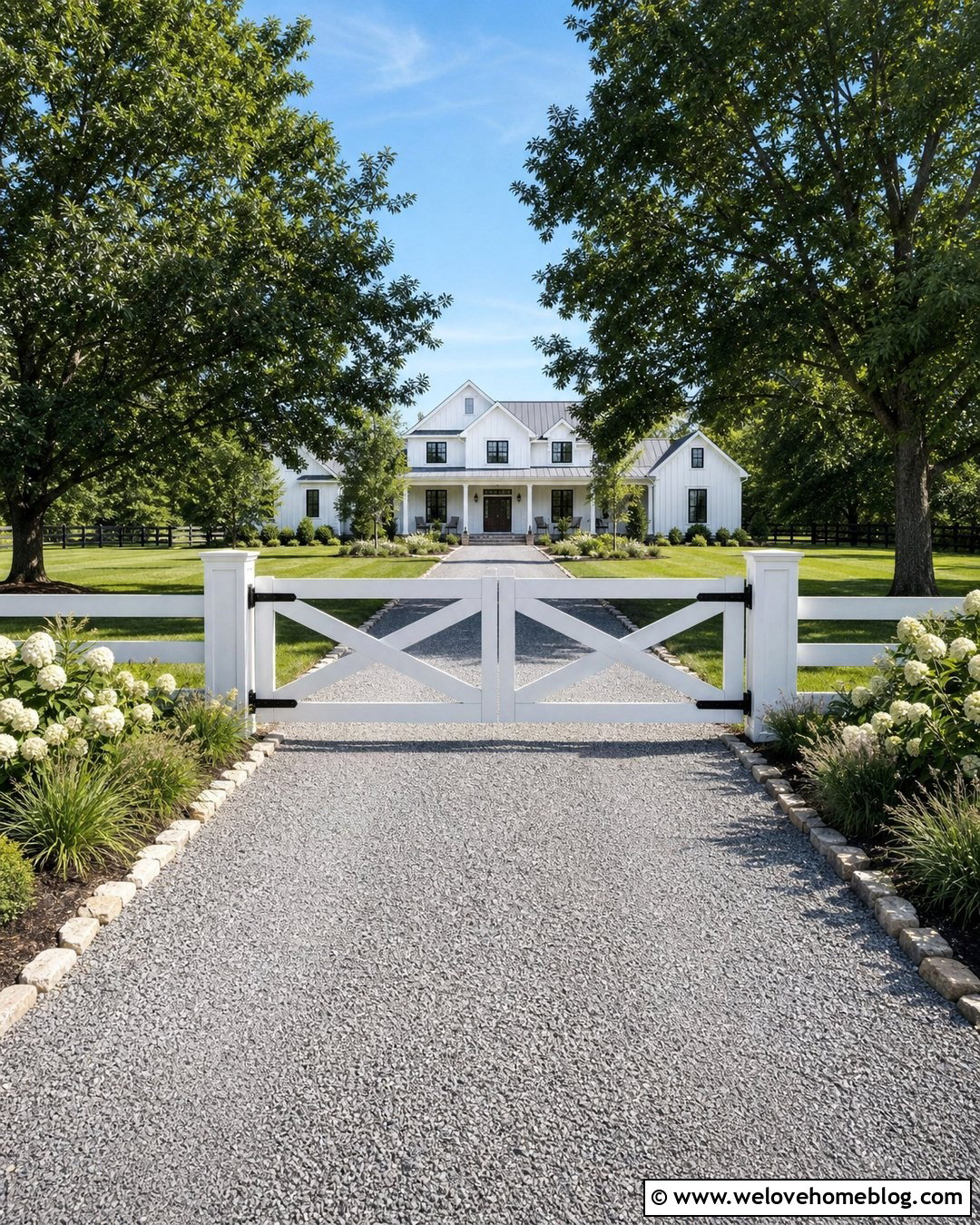
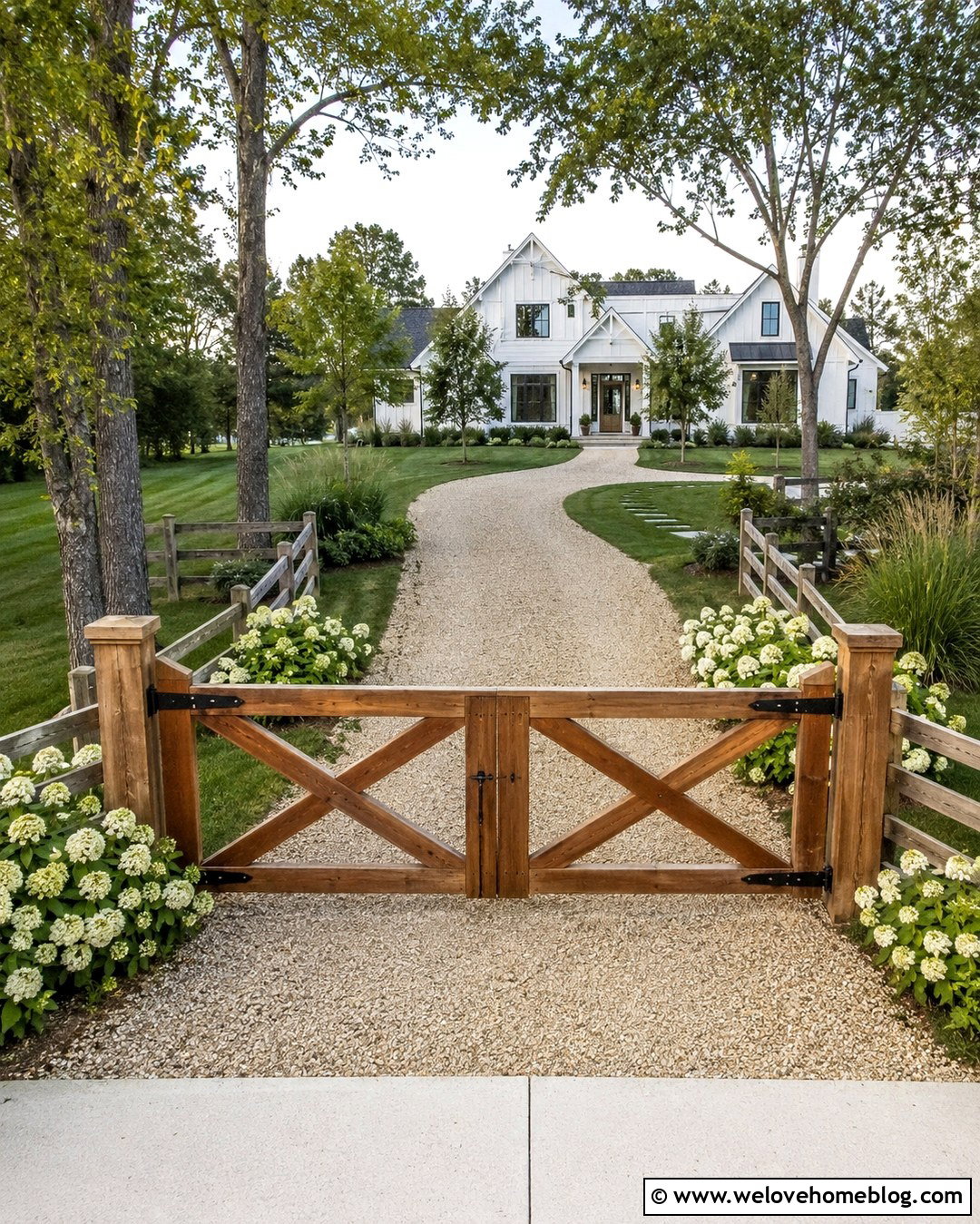
The familiar X-shaped brace gives a farmhouse driveway gate both visual character and structural support. Build each rectangular gate leaf from weather-resistant lumber, then fit vertical boards or spaced pickets inside the frame. Add crossbuck braces across the front, making accurate angled cuts so every joint sits tightly. Exterior-rated bolts provide a more durable connection than decorative fasteners alone. White paint creates a traditional look, while a semitransparent stain feels more rustic. Set the gate between substantial timber posts beside a pale crushed-stone driveway. Continue the design with post-and-rail fencing, meadow grasses, hydrangeas, and a simple concrete or stone apron at the entrance. The finished gate should complement the farmhouse without becoming overly decorative or visually heavy.
5. How To Build A Metal Frame Wood Driveway Gate
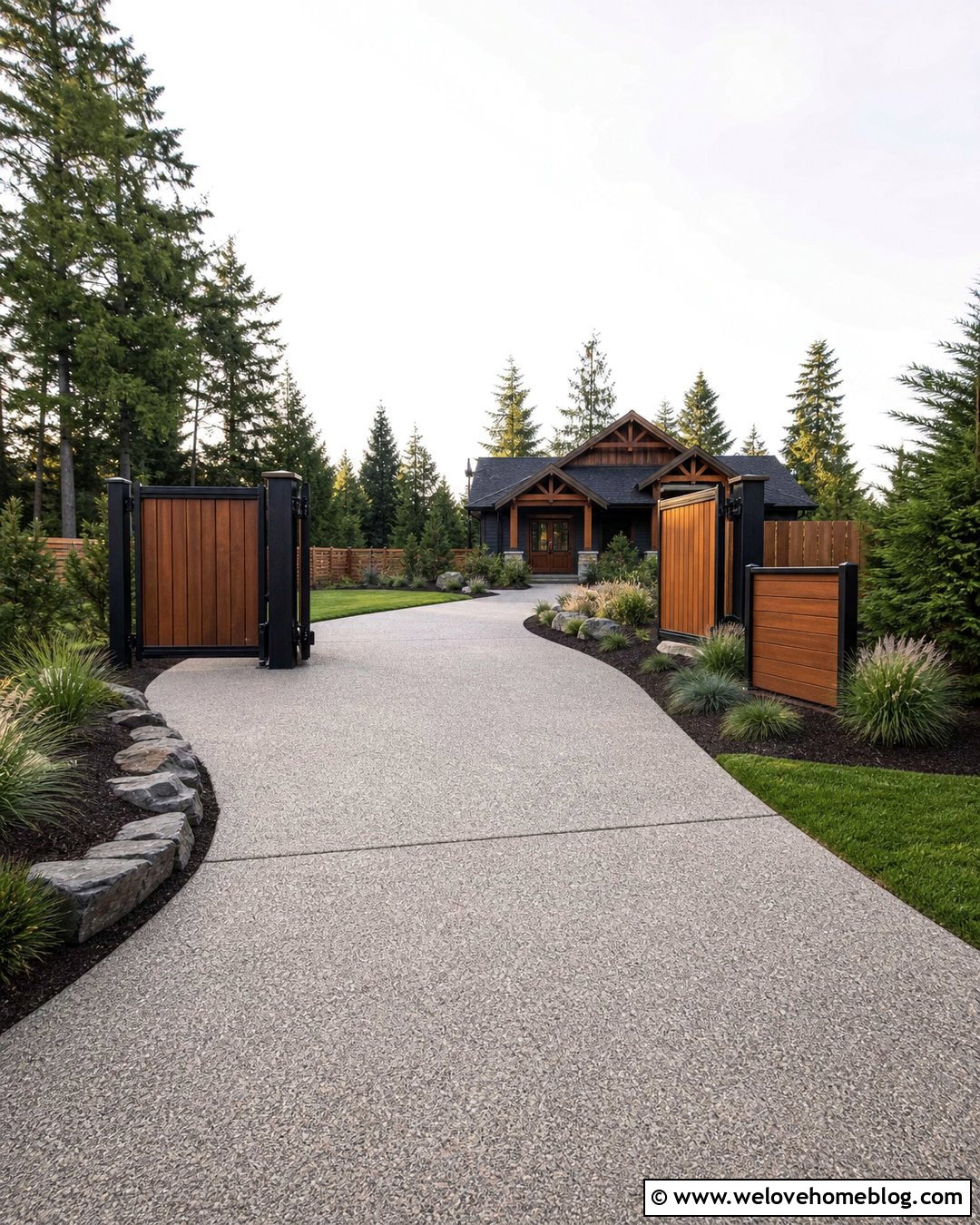
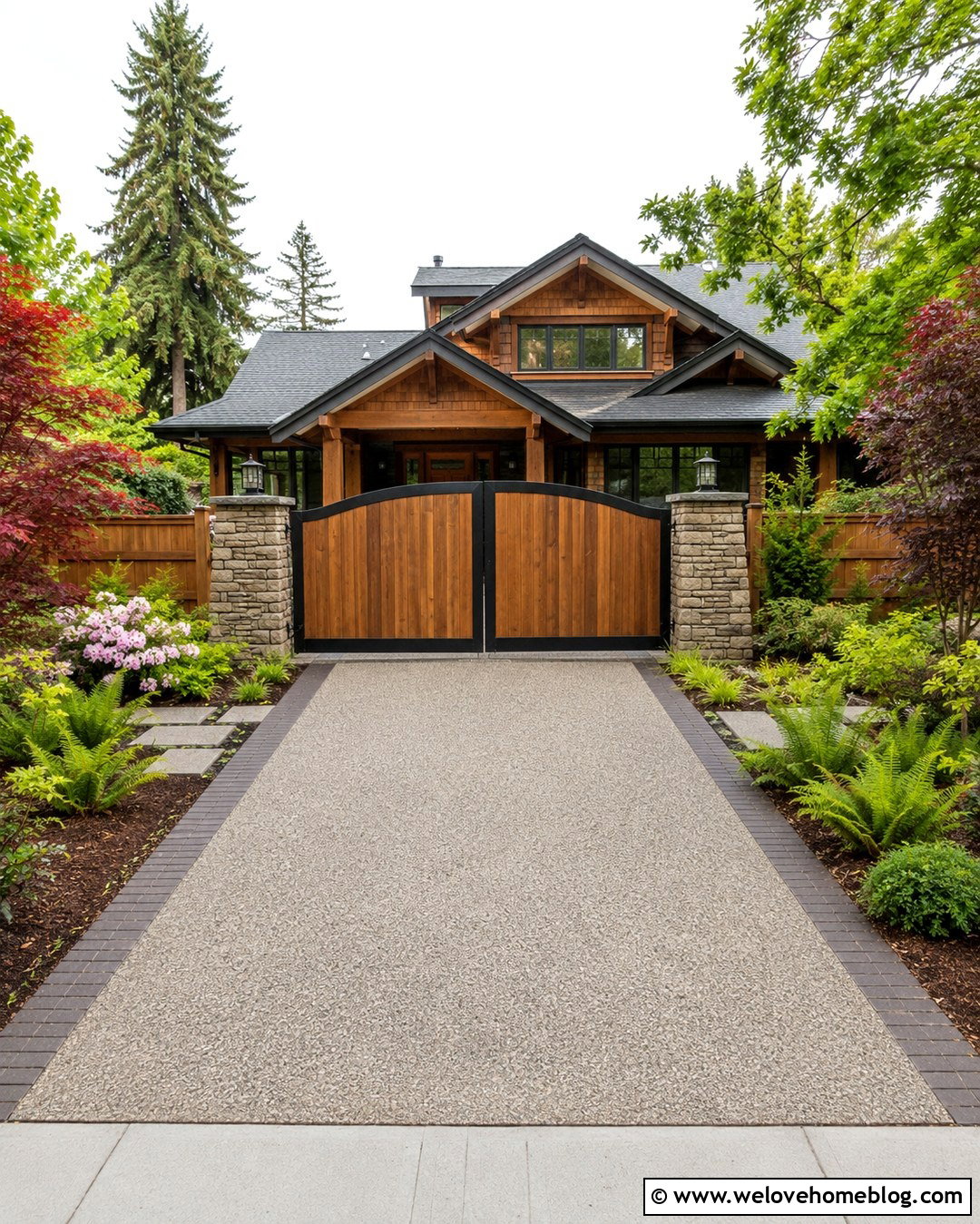
Wood brings warmth, but a metal frame gives a wide driveway gate greater rigidity. Fabricate a square or rectangular steel frame sized for the opening, including an internal diagonal brace or additional vertical supports. After applying rust-resistant primer and exterior metal paint, attach cedar or redwood boards using suitable bolts and isolating washers. Small gaps between boards allow expansion and help water escape. The frame should connect to strong steel posts with heavy-duty adjustable hinges. Pair this mixed-material gate with an exposed aggregate driveway, dark steel fencing, stone-edged planting beds, and a contemporary craftsman house. Repeat the gate’s wood tone on the garage door or address sign. This creates a coordinated entrance while keeping the driveway gate practical, stable, and easier to maintain.
6. How To Make A Sliding Driveway Gate
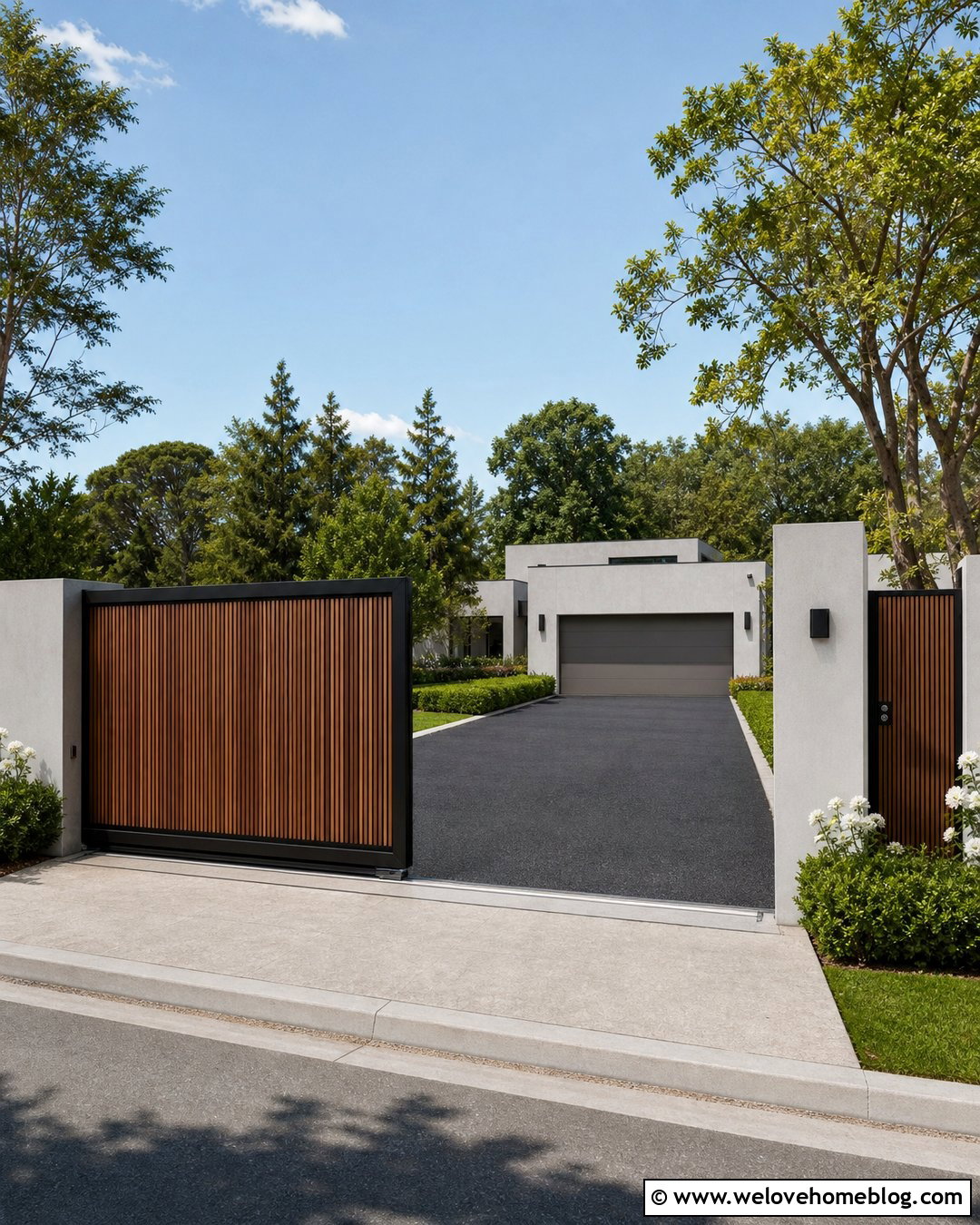
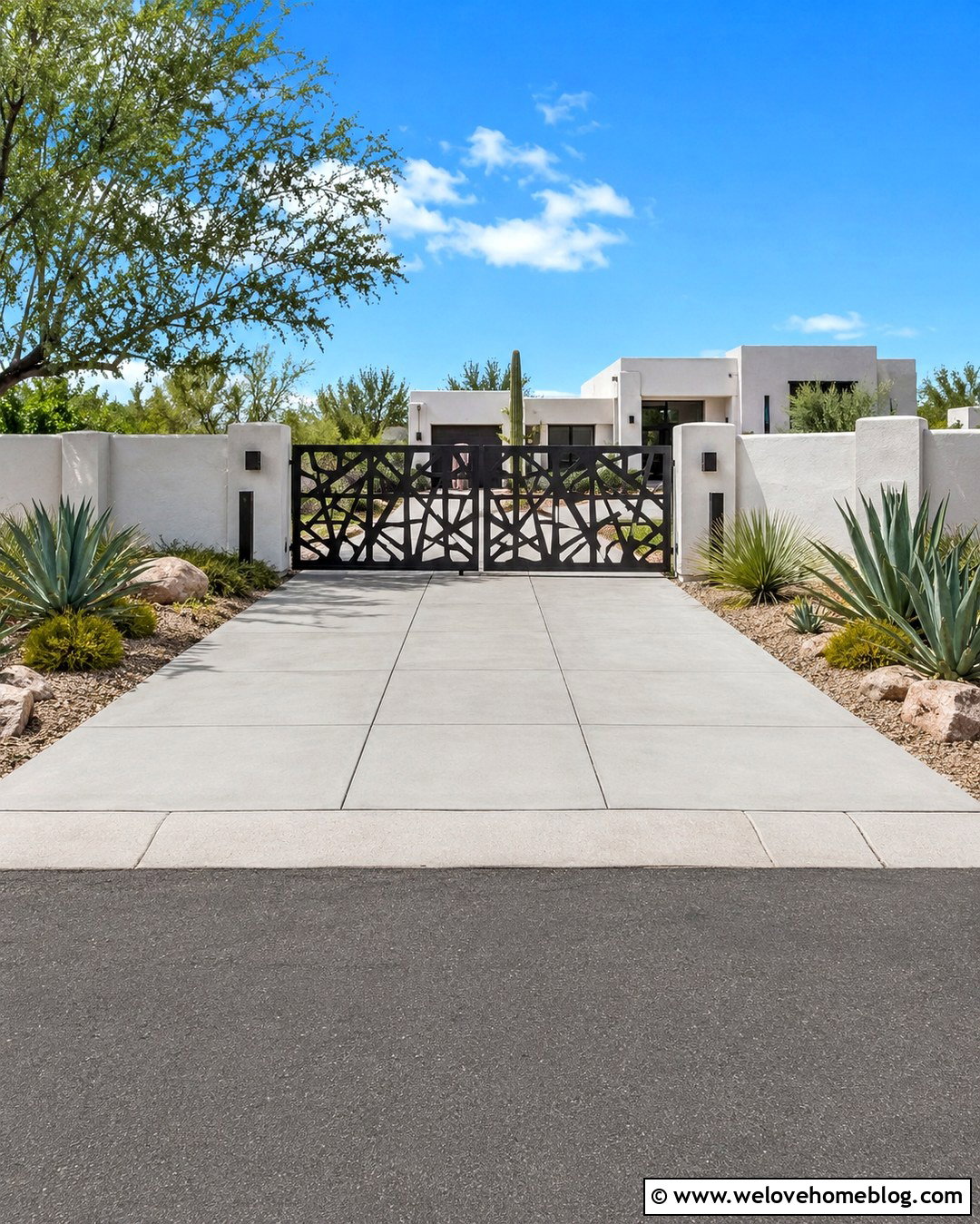
A sliding driveway gate moves sideways instead of occupying valuable space in front of or behind the entrance. First, confirm that there is enough clear fence line for the entire gate to retract. Build a rigid metal frame and select rollers, track components, guides, and stops designed for its size and weight. The ground track must remain straight, stable, and clear of gravel, soil, and standing water. Add vertical wood slats or powder-coated metal infill to suit the house. A black asphalt driveway creates a smooth visual base, while a concrete entrance strip can support the track. Frame the opening with modern stucco walls, low shrubs, and a separate pedestrian gate. Sliding hardware should be protected from vehicle tires and routine landscape maintenance.
7. How To Build A Cantilever Driveway Gate
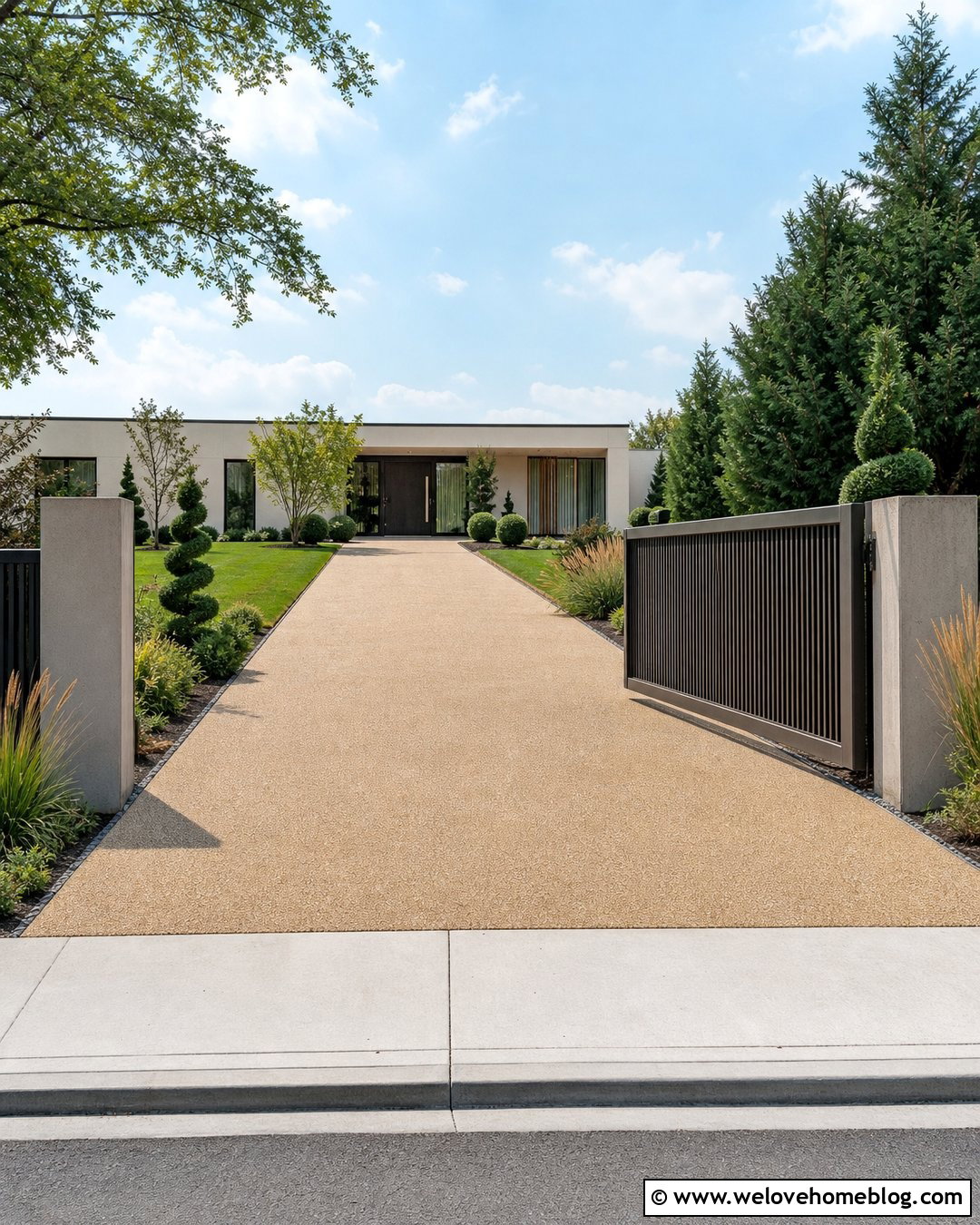
Where leaves, ice, gravel, or uneven paving could interfere with a ground track, a cantilever driveway gate offers a cleaner alternative. The gate is supported from one side and slides above the driveway surface, so its frame must extend beyond the actual opening to form a counterbalance. This makes accurate engineering, rigid construction, and correctly sized posts especially important. Use a fabricated steel or aluminum frame with vertical slat infill to reduce unnecessary weight. Install the roller assemblies and guide posts on substantial foundations, following the hardware manufacturer’s specifications. Pair the gate with a resin-bound gravel driveway, rendered entrance walls, sculpted evergreens, and a flat-roof modern house. Professional fabrication is sensible for large spans because alignment directly affects reliable movement and long-term performance.
8. How To Make An Automatic Driveway Gate
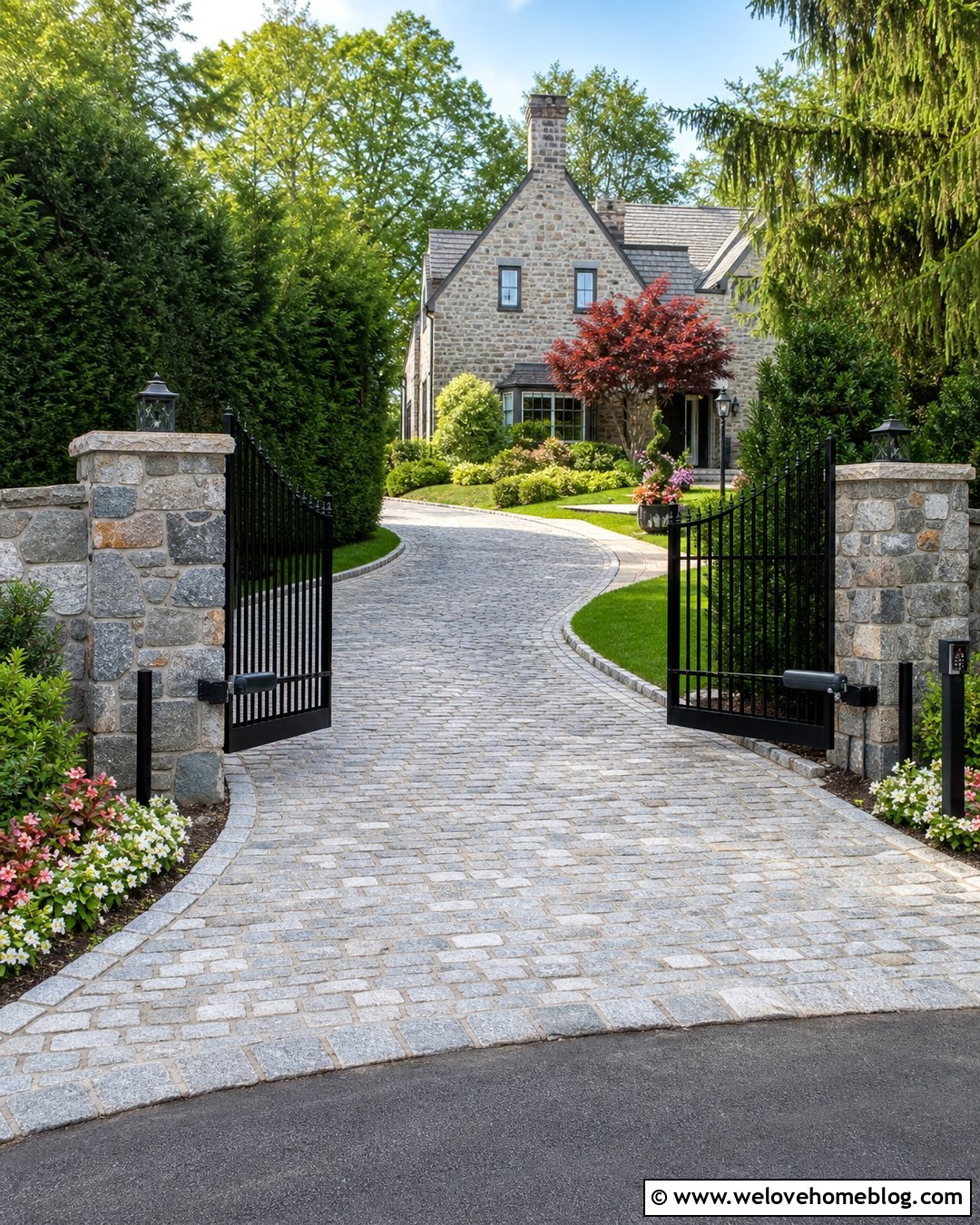
Arriving home becomes easier when a gate opens without leaving the vehicle. Begin with a properly installed swing or sliding gate that moves smoothly by hand before adding automation. Choose an opener designed for the gate’s type, length, weight, and expected daily use. Plan the power supply, control box, keypad, remotes, vehicle access, and emergency manual release as one complete system. Automatic gates also require appropriate obstruction detection and safety equipment, so installation instructions and applicable local requirements should guide every decision. () A professional installer is often the safest choice. Combine the system with a cobblestone driveway, stone pillars, discreet photocells, and layered evergreen landscaping. Keep controls accessible without placing them where a vehicle could strike them.
9. How To Build A Solar Powered Driveway Gate
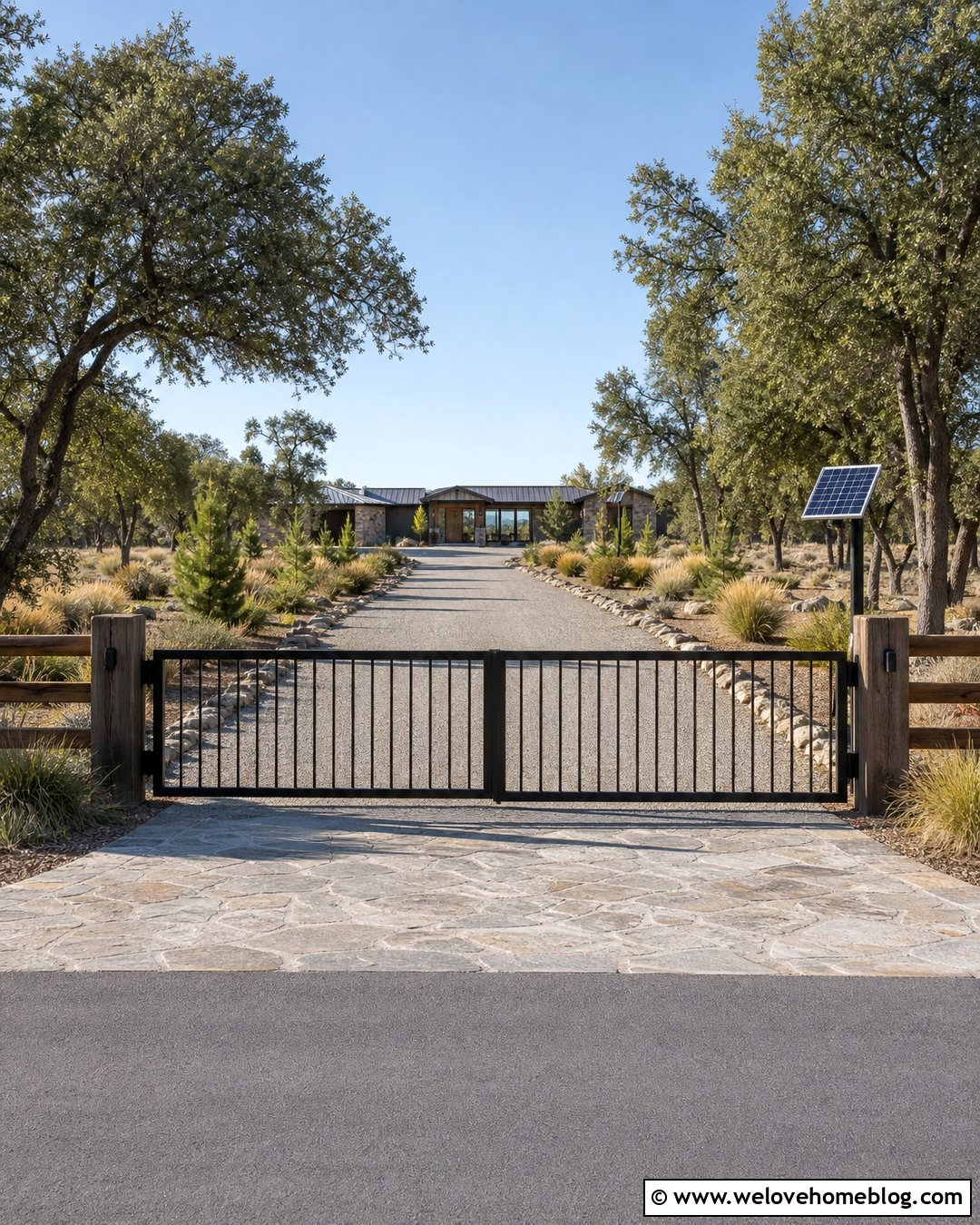
A solar-powered driveway gate can be useful when running electrical service to a distant entrance would be difficult. Select an opener that matches the gate’s operating style and weight, then size the solar panel and battery system for local sunlight and expected use. Position the panel away from tree shade and orient it according to the manufacturer’s directions. The gate itself should swing or slide freely so the motor does not waste energy overcoming poor alignment. A lightweight aluminum frame with spaced vertical bars can reduce operating demand. Complete the entrance with a long gray gravel driveway, timber posts, ranch fencing, and drought-tolerant plants. Mount the equipment neatly inside the property, protect the wiring, and preserve clear access for battery inspection and seasonal maintenance.
10. How To Make A Privacy Driveway Gate
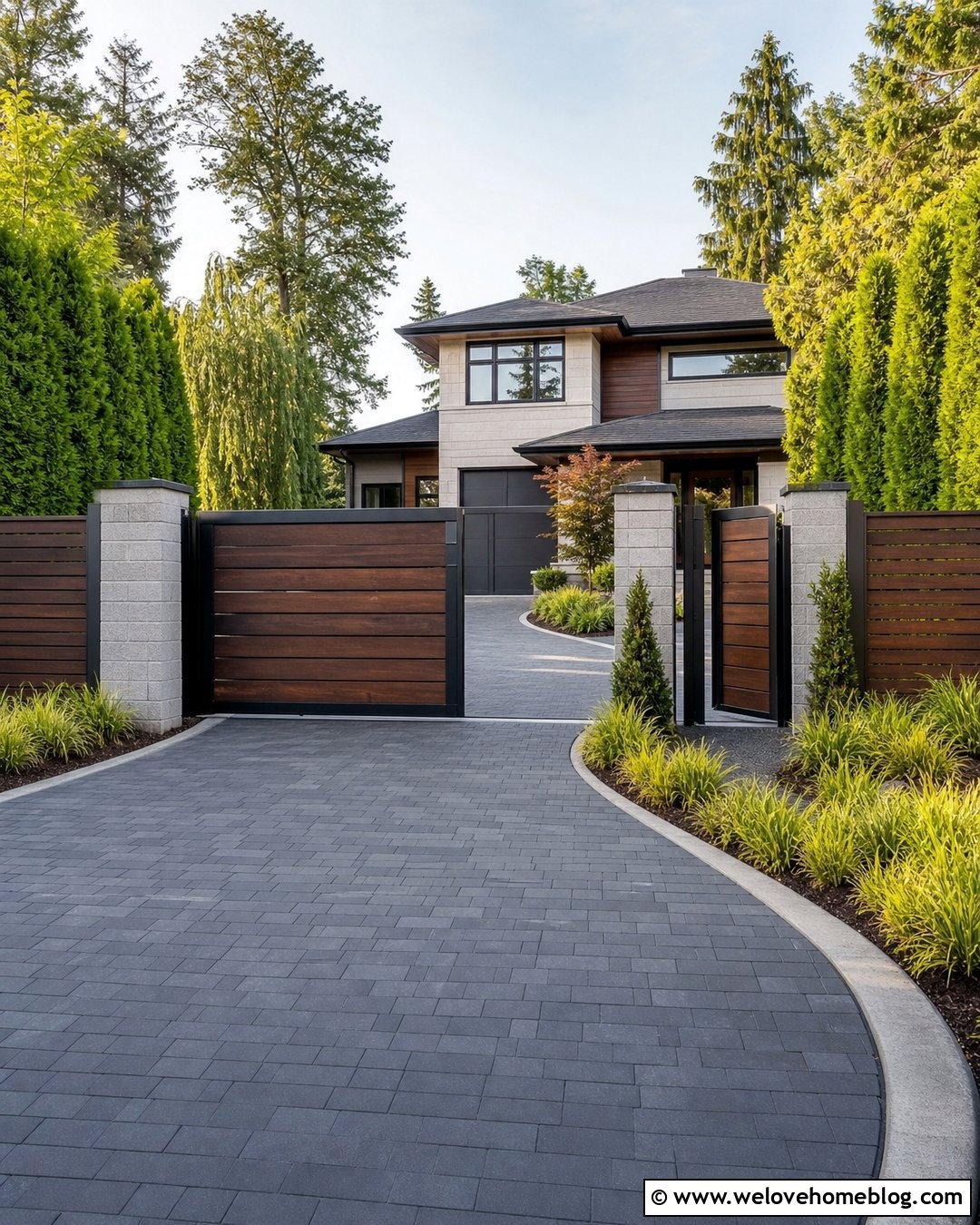
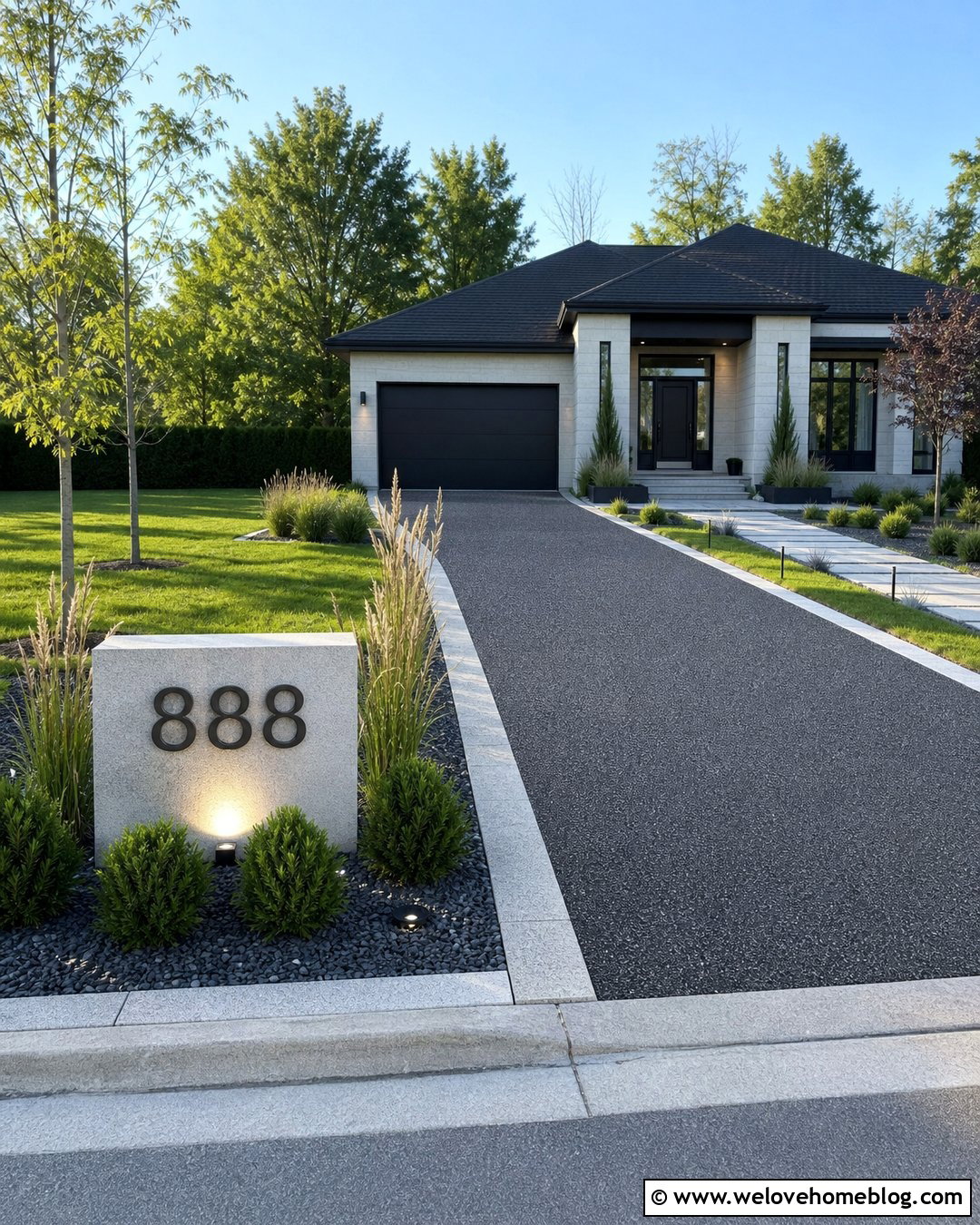
A solid driveway gate can screen vehicles and outdoor living areas from the street, but its size and wind exposure require careful planning. Build a reinforced steel or heavy timber frame, then attach tongue-and-groove cedar boards or durable composite panels. Leave planned expansion gaps and seal every exposed wood edge. Because a solid panel catches more wind than an open gate, the posts, hinges, footings, and opener must suit the additional load. A dark-stained double gate looks cohesive with a curved concrete paver driveway, horizontal privacy fencing, and dense evergreen borders. Add a recessed pedestrian entrance and visible address marker beside the vehicle gate. Keep nearby shrubs trimmed so they do not hold moisture against the panels or interfere with hinges and safety hardware.
11. How To Build A Picket Driveway Gate
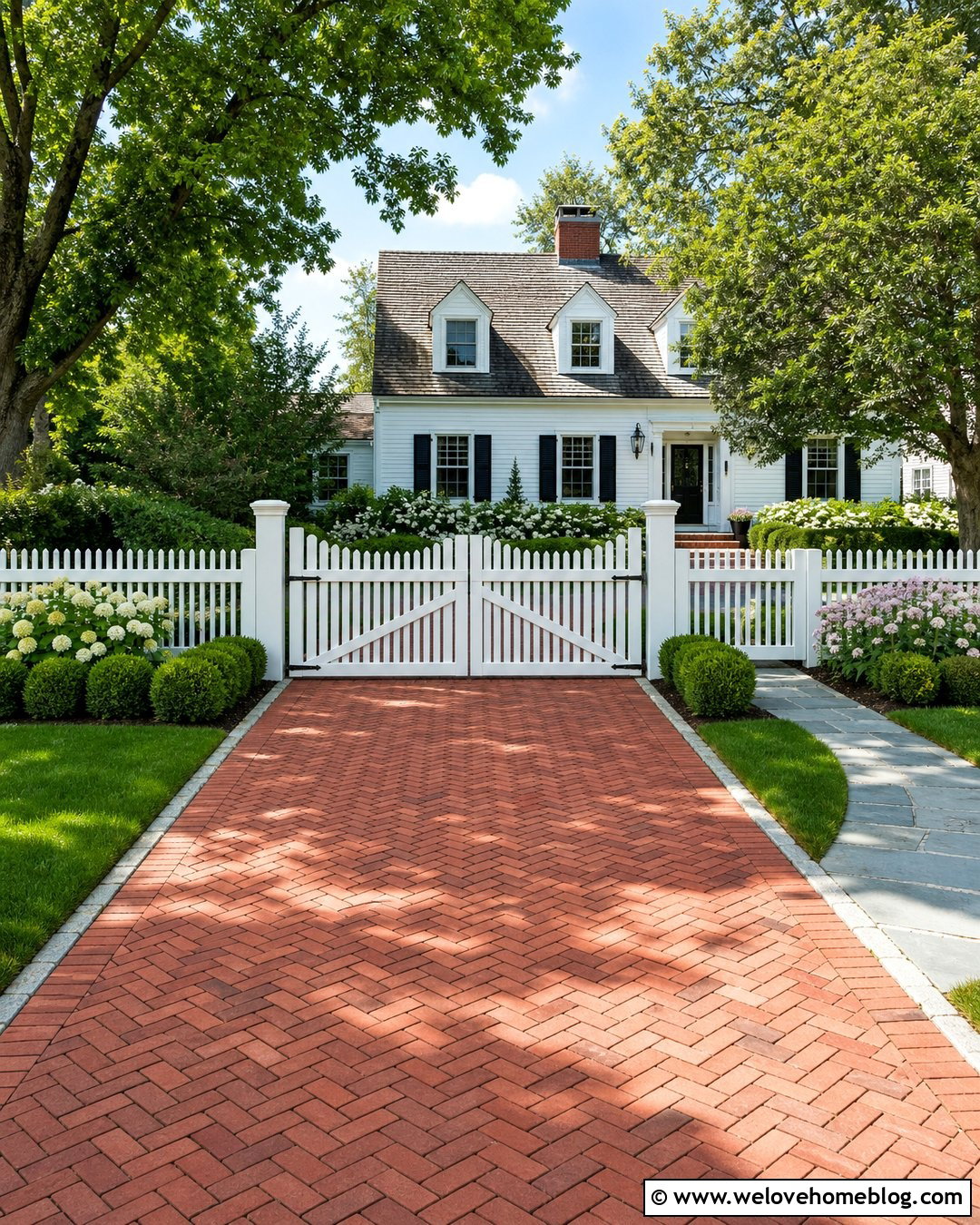
An open picket gate keeps the entrance bright and welcoming while establishing a clear property boundary. Build matching timber frames for a double swing layout, then install evenly spaced vertical pickets using a spacer for consistent alignment. Slightly pointed or gently rounded tops work well with traditional homes, but simple square pickets are easier to cut. Reinforce each leaf with a diagonal brace and protect the bottom edges from moisture. White exterior paint creates a classic finish beside a red clay brick driveway and Cape Cod house. Continue the picket pattern along the side fencing, then add boxwood borders, flowering perennials, and a flagstone walkway. The gate height should feel proportional to the home and maintain enough visibility for vehicles entering or leaving the driveway.
12. How To Make A Wire Mesh Driveway Gate
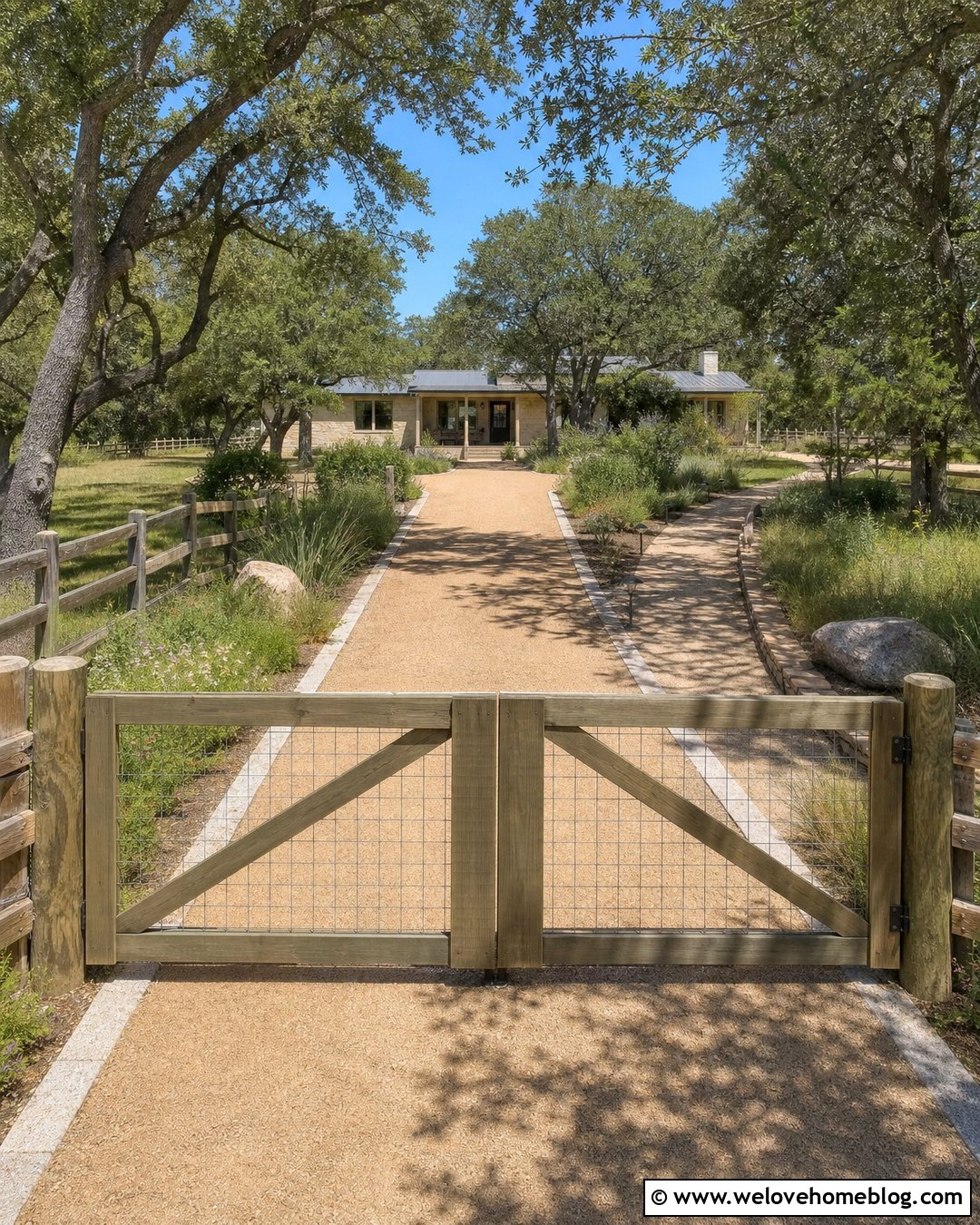
For an affordable entrance that remains open to views, combine a timber frame with galvanized welded wire mesh. Construct a rectangular frame from pressure-treated lumber and add a central rail plus diagonal bracing. Cut the mesh carefully, secure it to the inside face with heavy-duty staples or timber battens, and cover sharp edges completely. A matching wood frame around the mesh makes the project look finished rather than purely utilitarian. Use this gate across a tan decomposed granite driveway leading to a ranch or cottage home. Round timber posts, split-rail fencing, native grasses, and informal wildflower beds reinforce the relaxed setting. Choose openings small enough for the intended pets, while preserving enough ground clearance to prevent the gate from dragging over loose driveway material.
13. How To Build A Pipe Driveway Gate
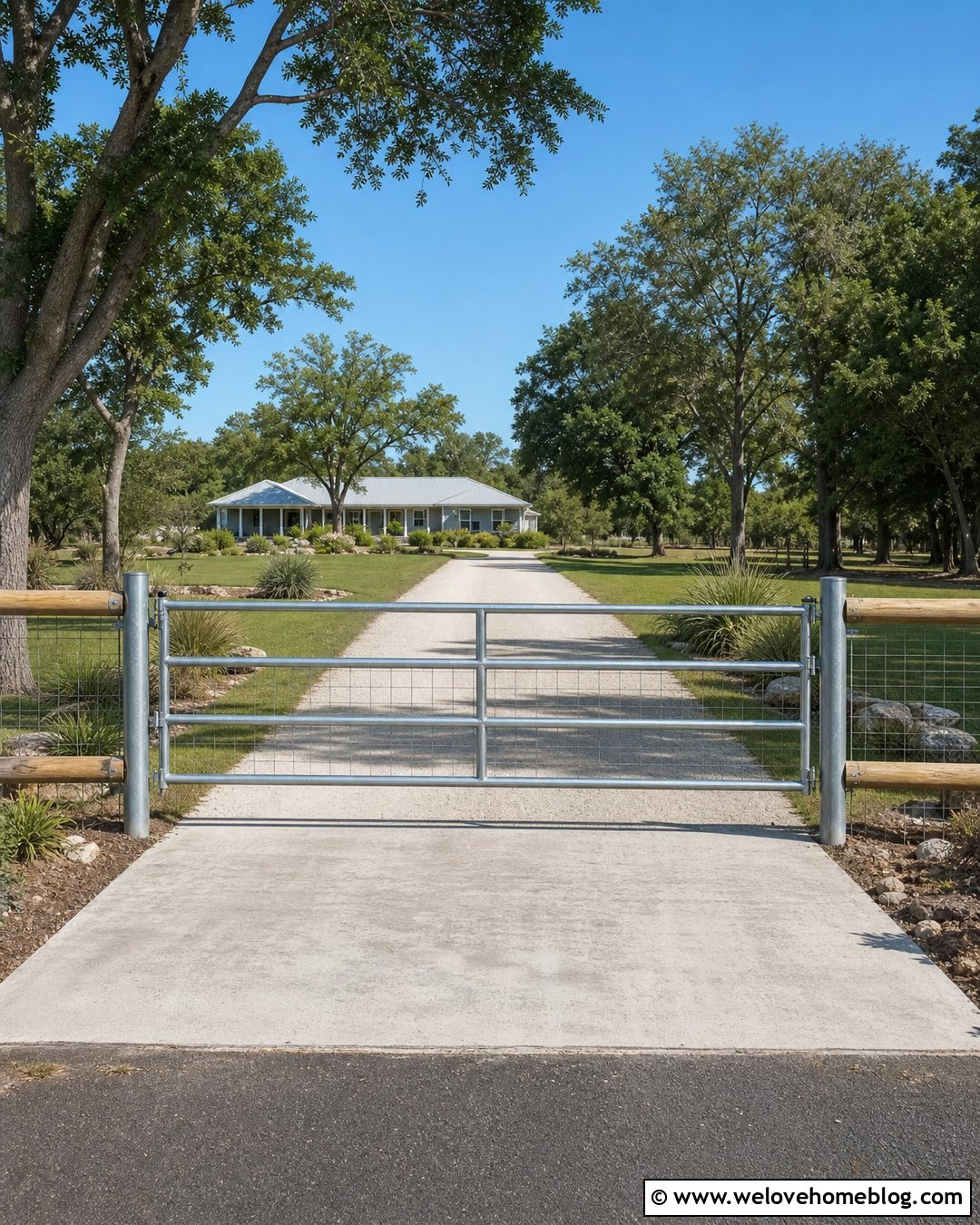
A pipe driveway gate creates a durable, straightforward entrance for a rural property. Use galvanized steel tubing or a prefabricated tubular frame, then add horizontal rails, vertical bars, or welded wire infill depending on the level of enclosure needed. Keep the frame square during assembly and protect cut or welded areas with a compatible corrosion-resistant coating. Hang the gate from a substantial steel post using adjustable hardware. A wheel can assist certain long manual gates, provided the driveway surface is firm and level enough for smooth travel. Pair the gate with a broad crushed limestone driveway, timber-and-wire fencing, shade trees, and a simple modern ranch house. Finish the entrance with a compacted apron so loose stones do not collect around the latch or hinge area.
14. How To Make A Wrought Iron Look Driveway Gate
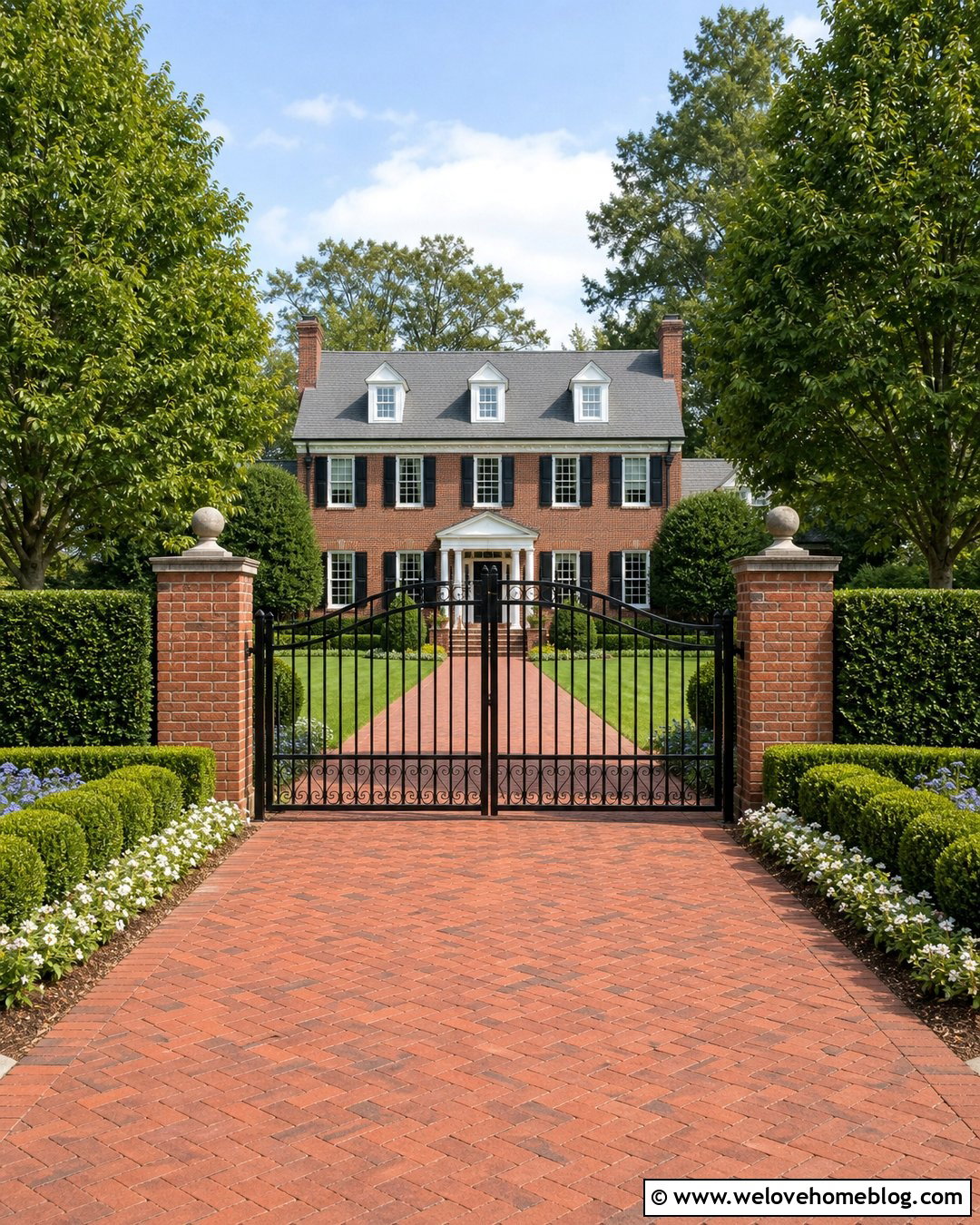
You can create the appearance of traditional wrought iron without filling the entrance with excessive ornament. Start with a fabricated steel frame and add evenly spaced vertical bars, a gently arched top rail, and restrained scrollwork or geometric details. Welded construction offers a refined result, while modular decorative components can simplify customization. Apply a corrosion-resistant primer and durable black exterior coating before installation. Set the double swing gate between brick pillars beside a herringbone brick driveway. Formal hedges, symmetrical trees, and low flowering borders strengthen the traditional character of a colonial home. Keep decorative points visible but not dangerously low or close to controls. The gate should remain visually open enough to preserve sightlines when a driver approaches the road from inside the property.

15. How To Build A Cedar Driveway Gate
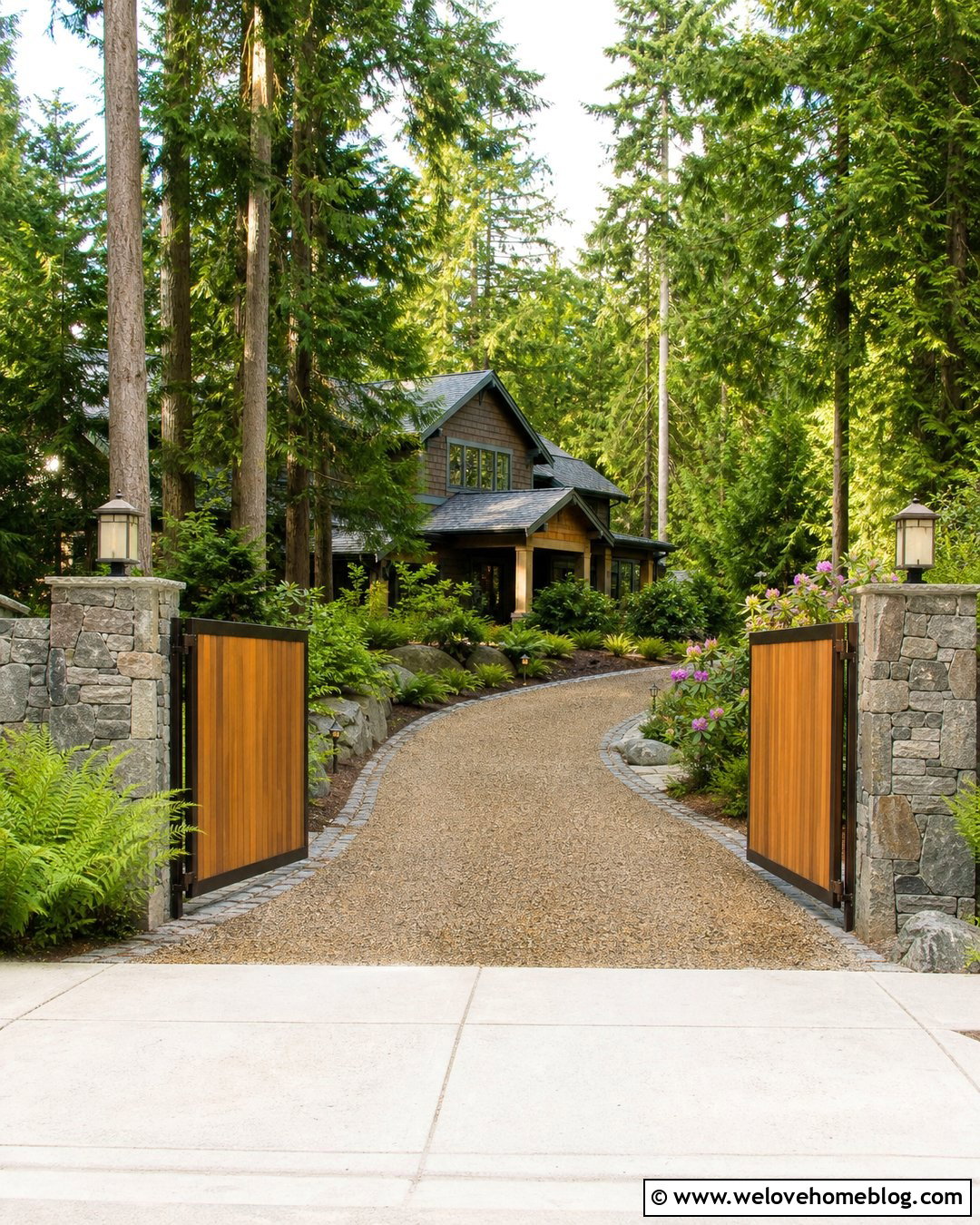
Fresh cedar introduces natural color and texture at the entrance to a craftsman or wooded suburban home. Build a rigid frame from suitable structural lumber or powder-coated steel, then fasten cedar boards as the visible infill. Vertical boards emphasize height, while diagonal or alternating-width boards create a more custom appearance. Seal all faces before assembly when possible, paying special attention to end grain. Stainless or coated exterior fasteners help reduce staining around connections. Combine the gate with a warm-toned pea gravel driveway, dark cobblestone edging, stone posts, ferns, and layered evergreen shrubs. A clear or lightly tinted finish preserves cedar’s early color, although regular maintenance will be needed. Wider leaves should include strong bracing and adjustable hinges to limit future sagging.
16. How To Make A Driveway Gate On A Slope
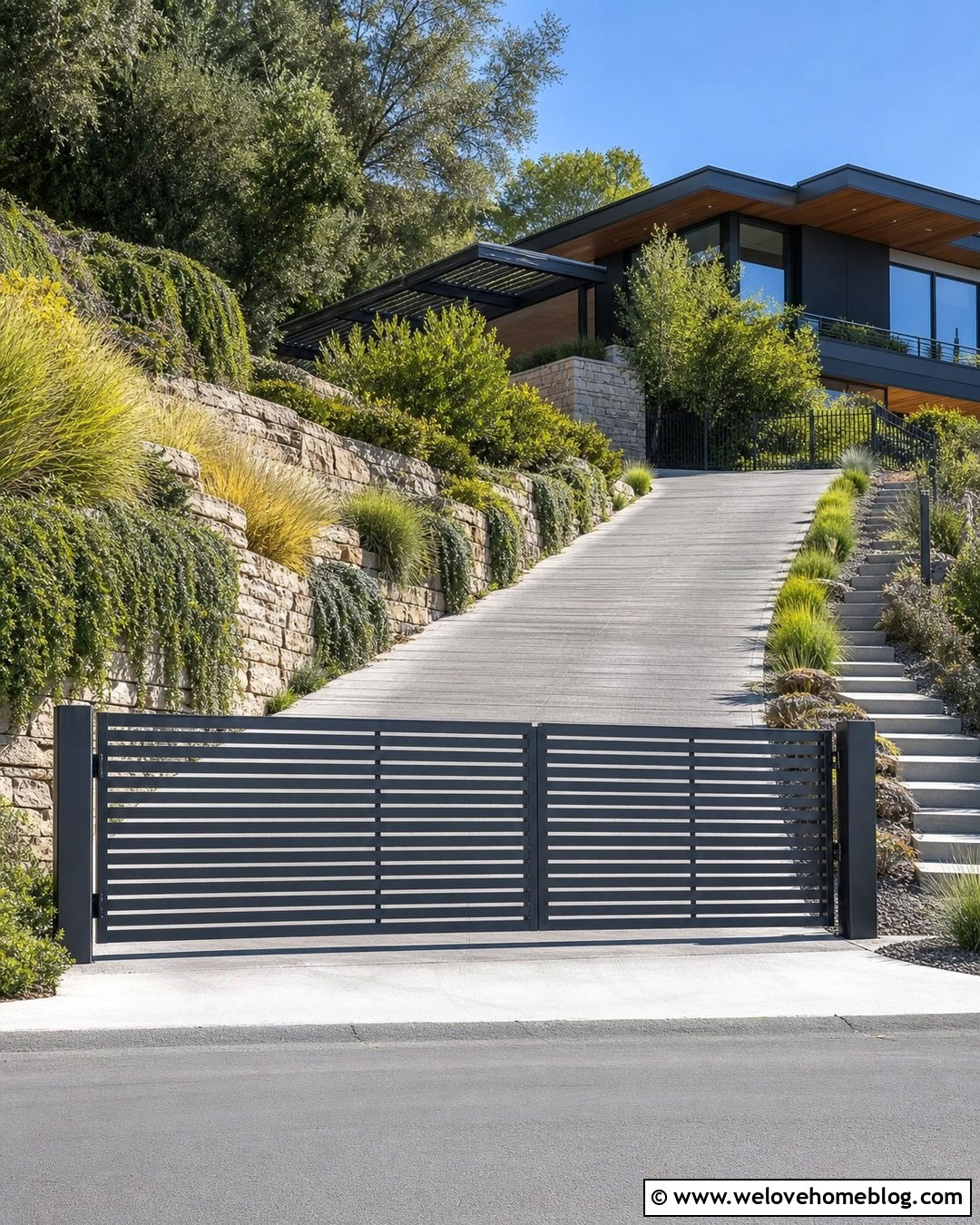
Sloped driveways require more planning because a standard swing gate may strike the rising pavement as it opens. Measure the grade through the complete swing path, not only beneath the closed gate. If clearance is limited, consider an uphill-swing hinge system, a gate with a shaped lower edge, or a sliding configuration that moves across the property. Avoid leaving an unnecessarily large gap that pets could escape through. A lightweight aluminum slat gate can reduce strain on specialized hardware. Pair it with a sloped brushed concrete driveway, tiered stone retaining walls, groundcover planting, and a hillside contemporary home. Drainage must move water away from posts, motors, and tracks. Because slopes change gate geometry and automation forces, professional design is wise for complex entrances.
17. How To Build A Narrow Driveway Gate
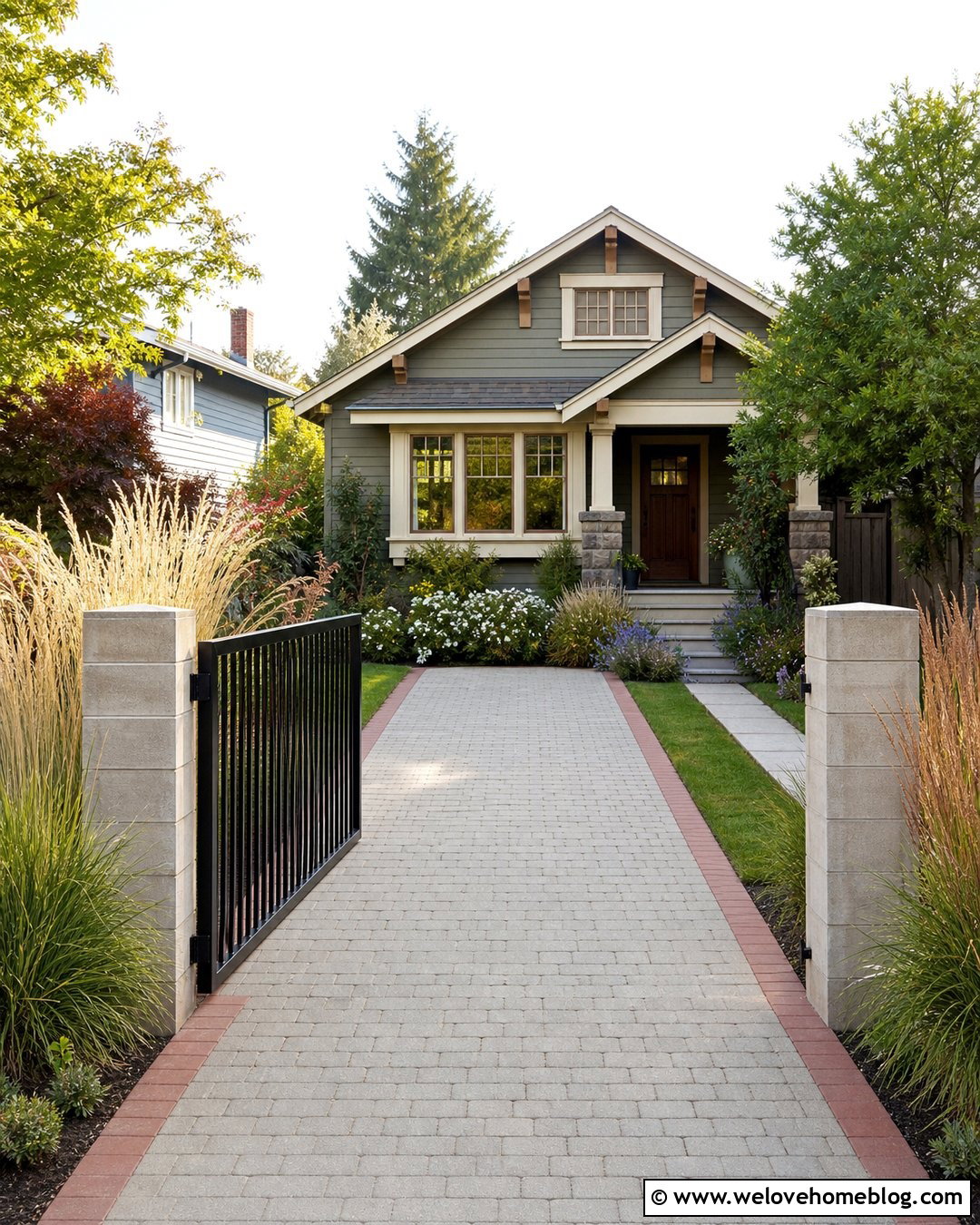
A narrow driveway benefits from a gate that looks light and does not make the entrance feel cramped. Measure vehicle clearance carefully and position posts where mirrors can pass comfortably. A single steel-framed swing gate with open vertical slats may work when there is enough room behind it. Otherwise, use two compact leaves or a sliding panel that retracts beside the fence. Keep posts slim but structurally appropriate, and avoid oversized caps or bulky planting near the opening. Pair the gate with a straight permeable paver driveway, narrow brick borders, upright grasses, and a small cottage or bungalow. A separate pedestrian gate may not fit, so plan safe walking access through another route. Light colors and partial visibility can help the entrance appear wider and more inviting.
18. How To Make A Wide Driveway Gate
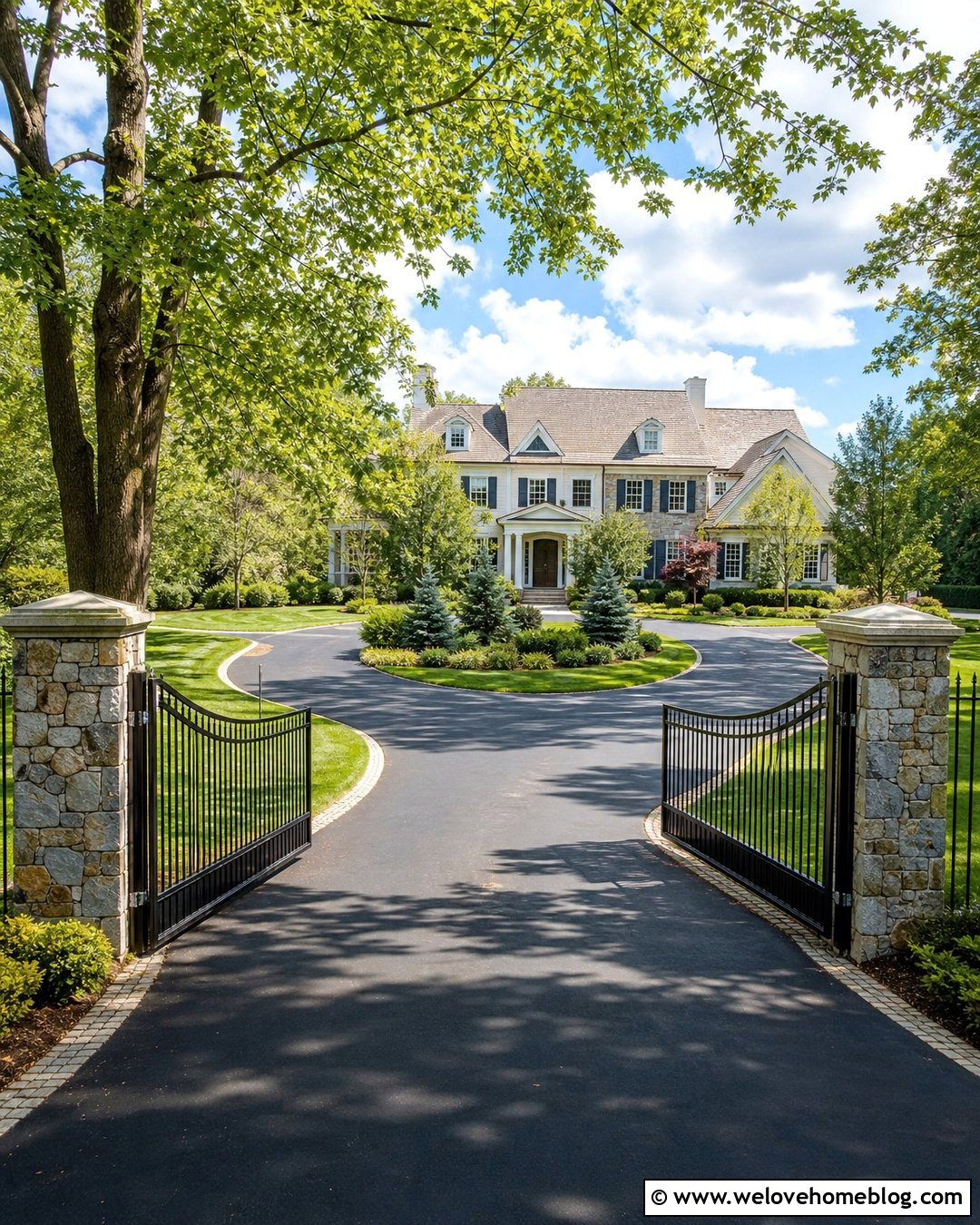
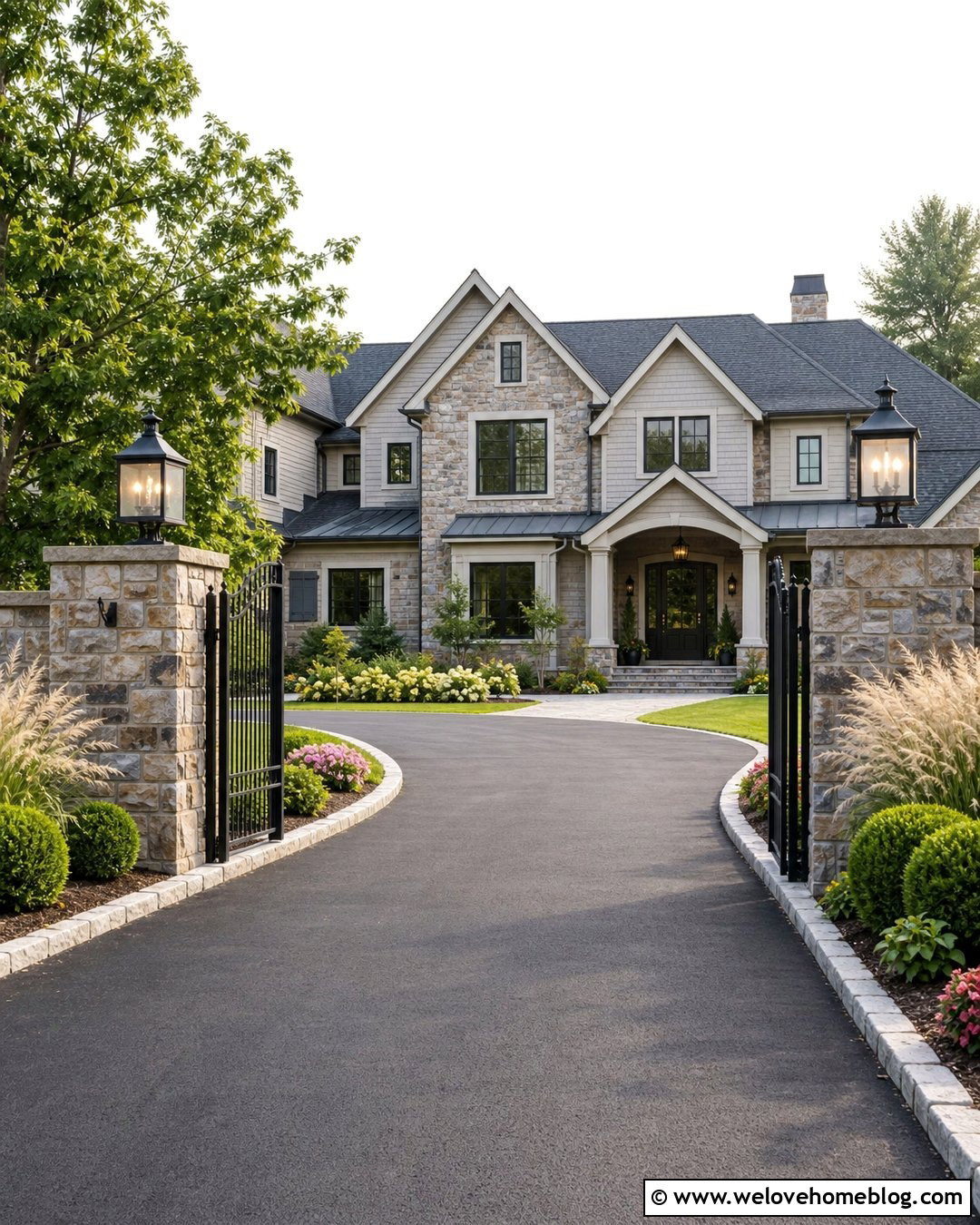
A very wide entrance should usually be divided into manageable sections rather than spanned by one heavy swing leaf. Two reinforced gate panels reduce individual length and create a symmetrical center opening. Use engineered metal frames, internal bracing, adjustable hinges, and robust posts set on correctly designed foundations. Maintain consistent clearance where the leaves meet and install reliable stops to prevent overtravel. For an especially broad opening, a properly designed sliding or cantilever system may be more practical. Complete the look with a sweeping circular asphalt driveway, stone entrance columns, mature shade trees, and broad lawn panels leading to a traditional estate-style home. Large gates experience greater loads, so structural calculations, fabrication, and automation are best handled by qualified professionals rather than improvised during installation.
19. How To Build A Driveway Gate With Brick Pillars
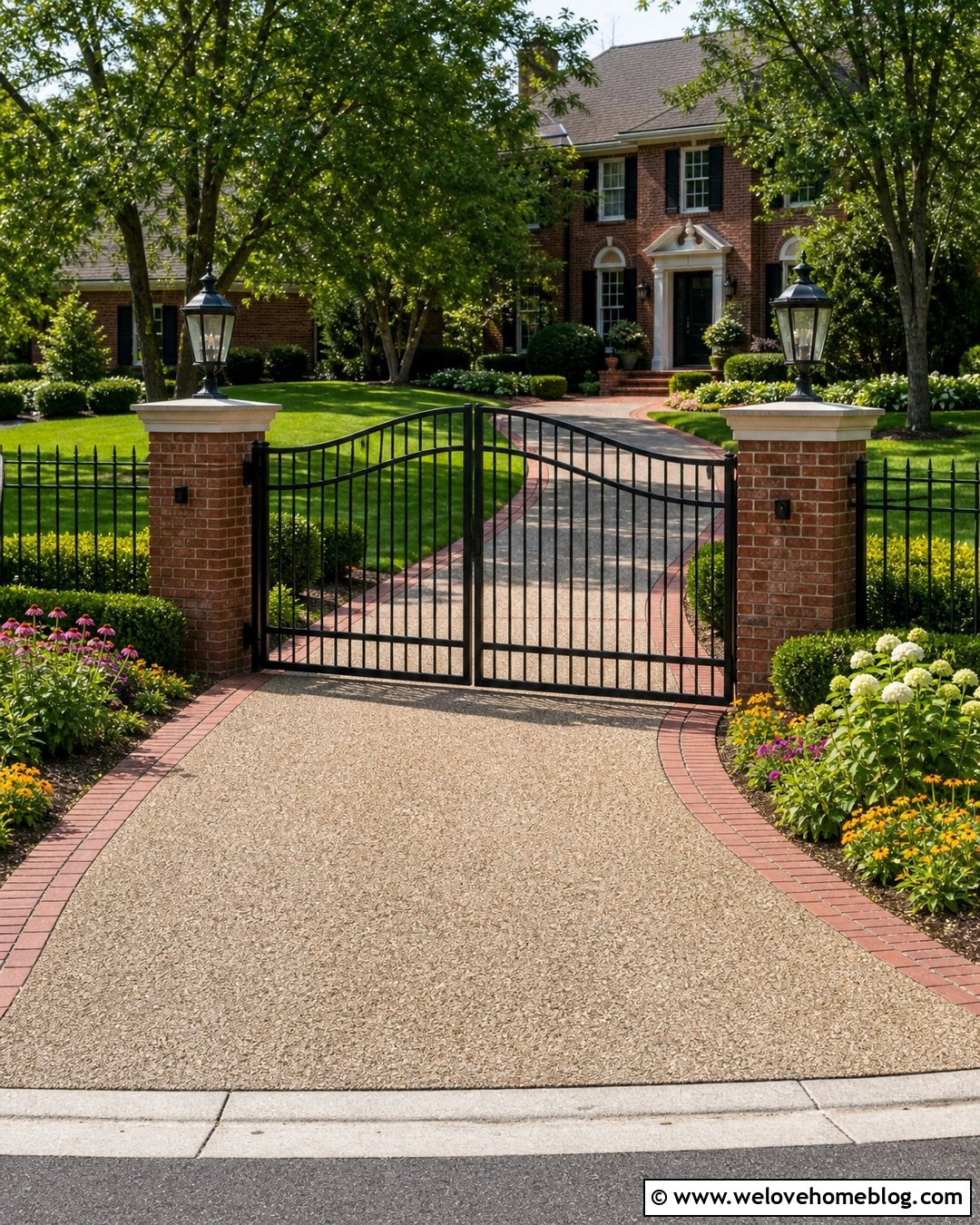
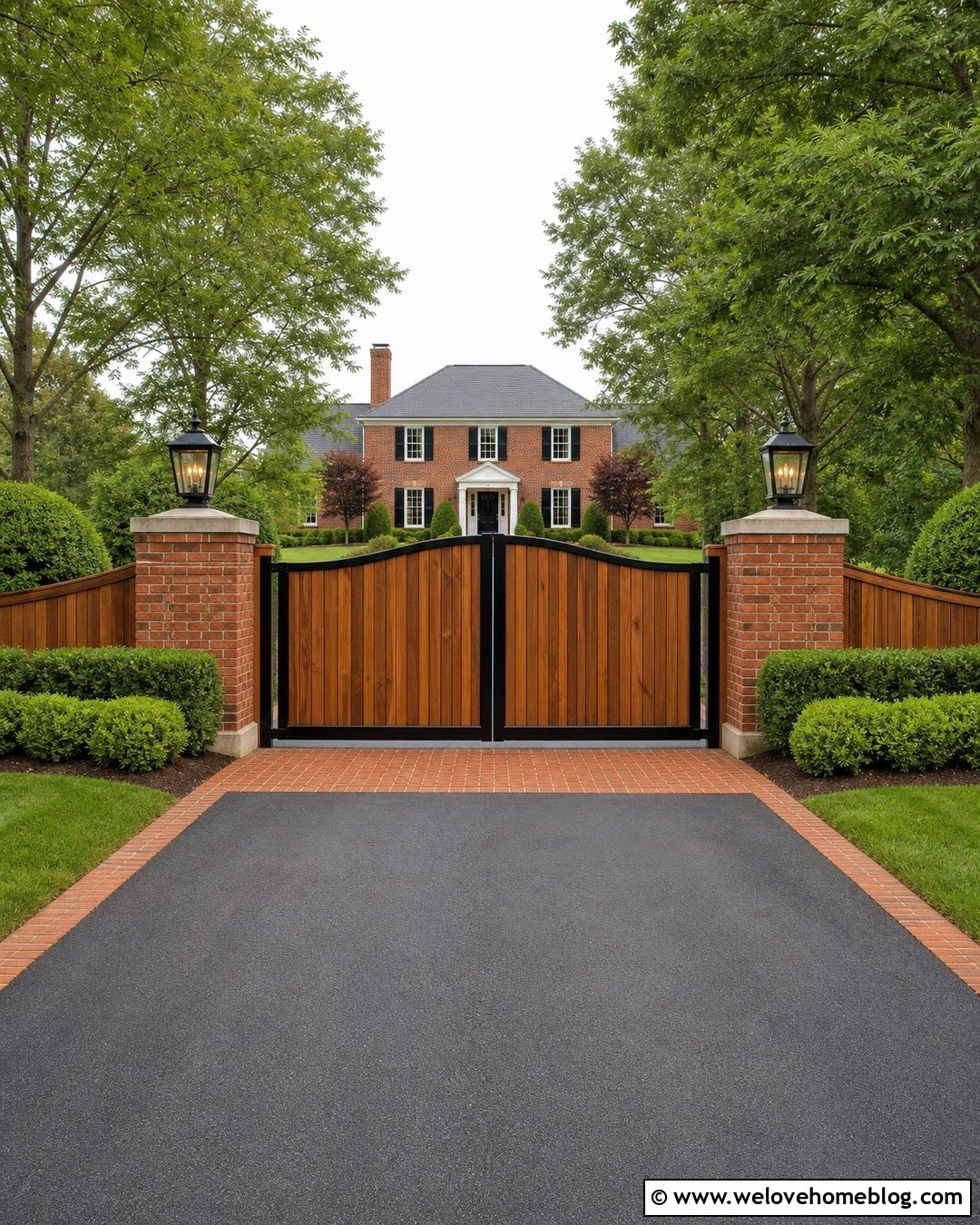
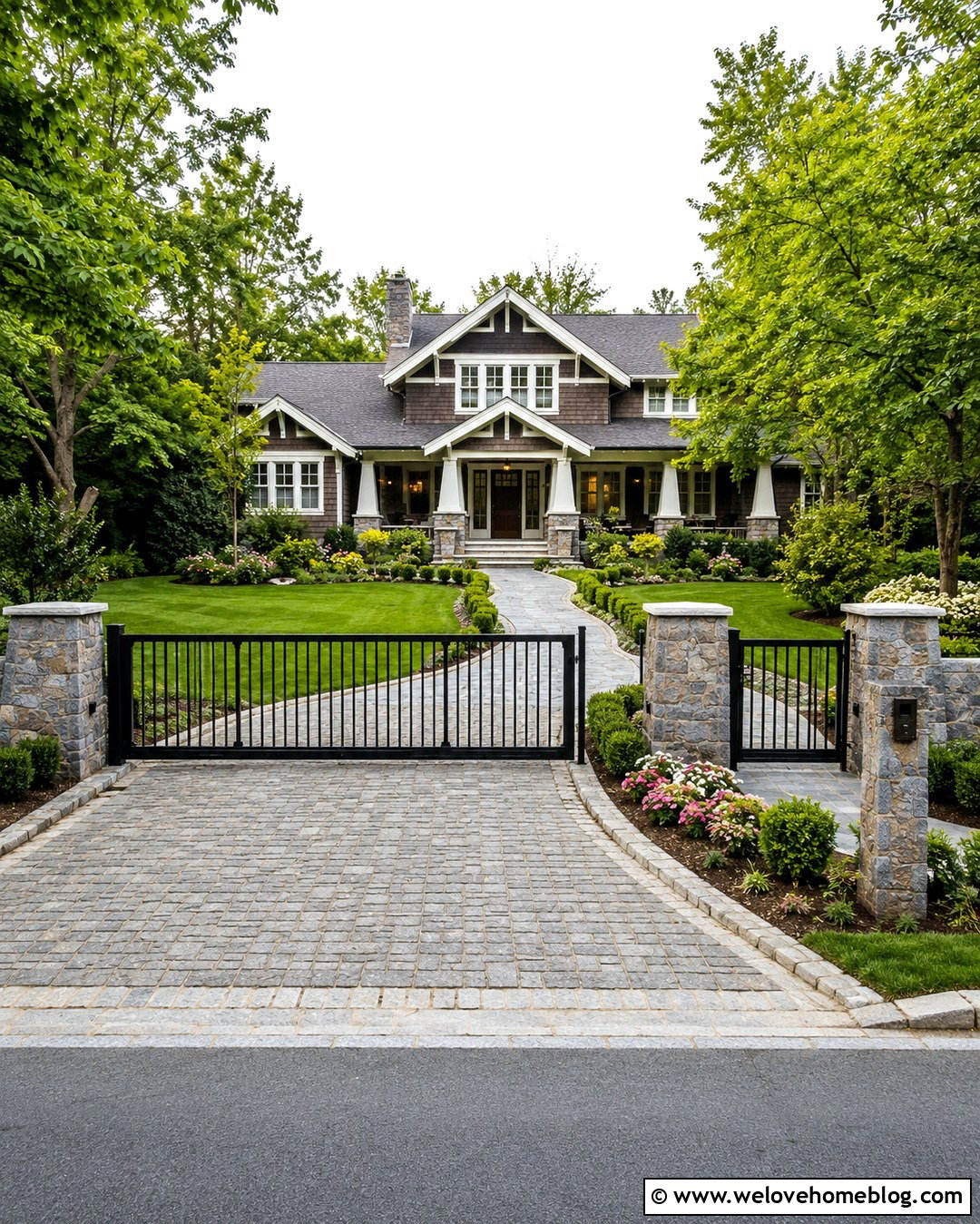
Brick pillars can visually connect a driveway gate to a traditional brick house. Begin by planning the full entrance width, gate clearances, footing locations, electrical conduits, and pedestrian access before masonry work starts. Structural gate posts should be properly integrated with or supported independently from the decorative brickwork. This prevents gate movement from damaging the masonry. Choose a black metal double gate with simple vertical bars and repeat its finish on the pedestrian gate and fence panels. A curved exposed aggregate driveway with a brick border creates a natural transition from the street. Add low boxwoods and seasonal perennials without crowding hinges or controls. Caps should direct water away from the brick, while lighting fixtures should illuminate the entrance without obstructing gate movement or driver visibility.
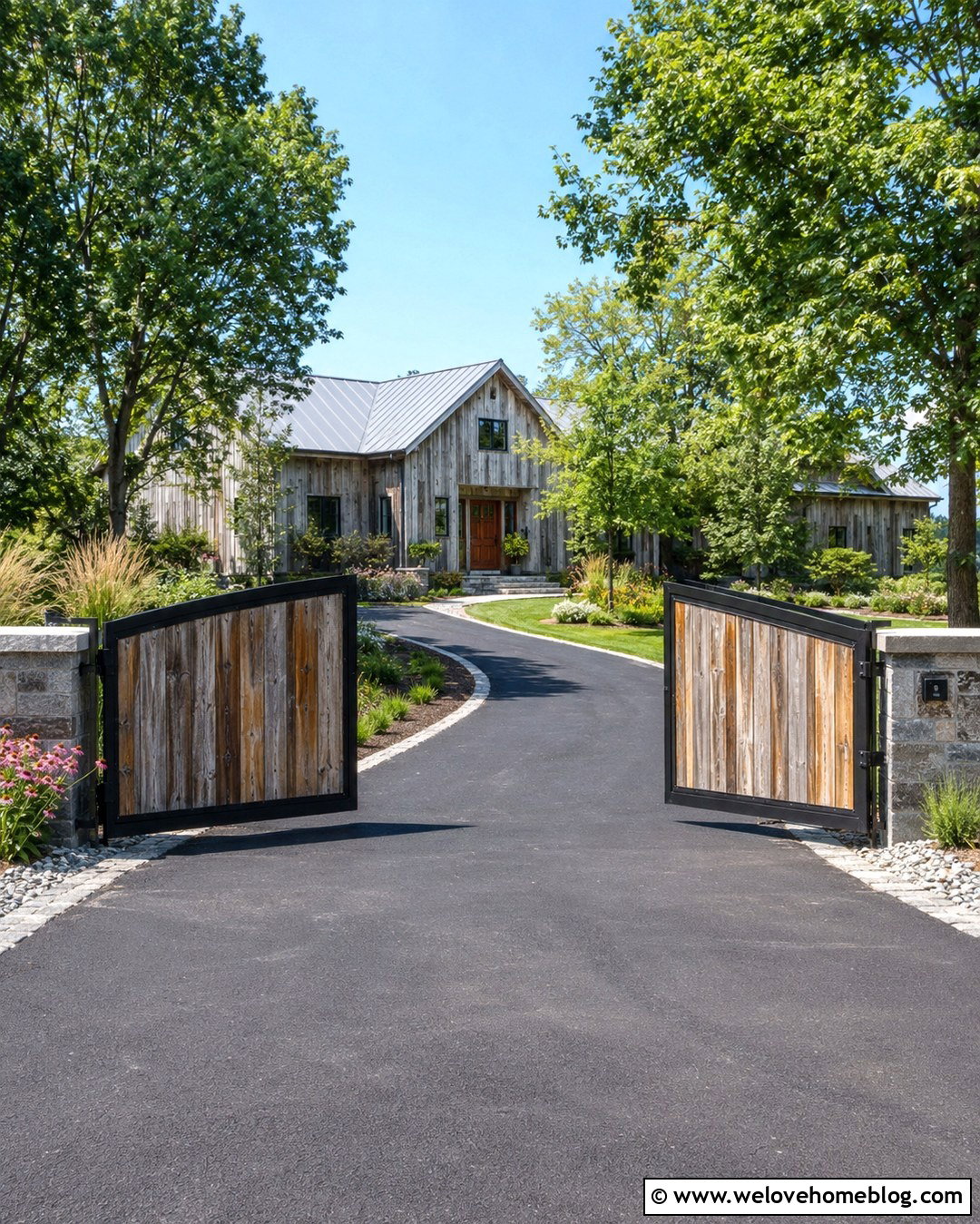
20. How To Make A Driveway Gate With Stone Posts
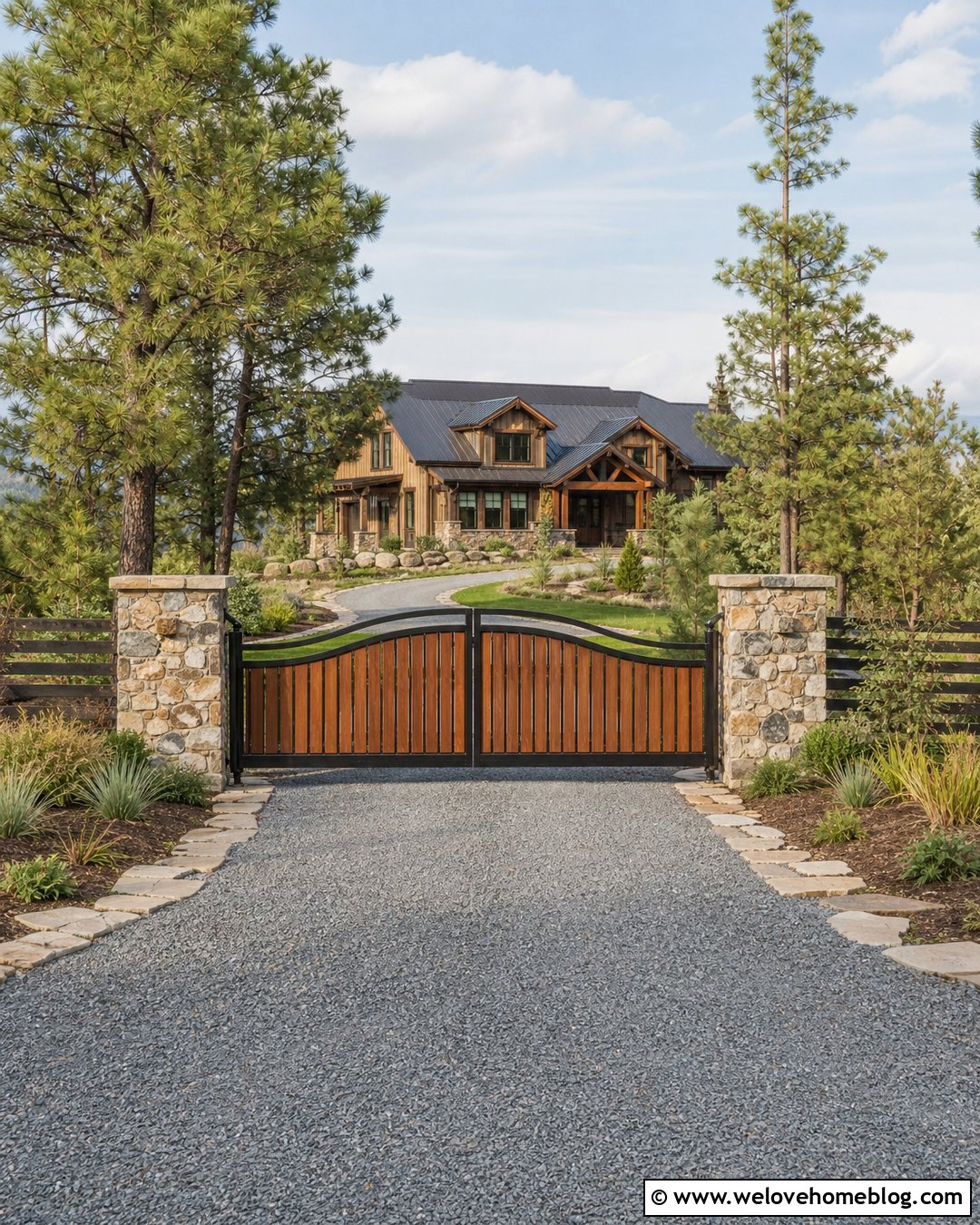
Stone entrance posts give a driveway gate substantial presence and work especially well with rustic, craftsman, and mountain-inspired homes. Build structurally sound inner columns first, then apply natural stone or manufactured stone veneer as the finish. Plan hinge plates, conduit, keypad wiring, lighting, and gate stops before covering the supports. A cedar-and-steel double gate adds warmth without competing with the texture of the masonry. Pair it with a curved gray gravel driveway, irregular flagstone edging, pine trees, and layered native shrubs. Use stone caps that shed rainwater and repeat the same material on nearby retaining walls or walkway pillars. Keep the posts proportional to the opening. Oversized columns can make a modest driveway feel narrow and reduce practical clearance for larger vehicles.
Conclusion:
Learning how to make a driveway gate begins with more than choosing an attractive panel. The gate must suit the driveway width, grade, available opening space, house architecture, and desired privacy level. Strong posts and foundations are essential, while square frames, diagonal bracing, weather-resistant materials, and adjustable hardware support dependable operation. Wood, metal, mesh, and mixed-material designs can all create excellent entrances when the details work together. Automatic, wide, sliding, cantilever, and sloped systems often deserve professional planning because weight and movement affect safety. Use these 20 How To Make A Driveway Gate Ideas to create a complete entrance that feels secure, practical, welcoming, and visually connected to your home.

Related posts:
Leave a Reply