
A driveway takes up a large part of the front yard, so the right landscaping can completely change how your home looks from the street. These **20 How To Landscape A Driveway Ideas** combine attractive surfaces, practical borders, layered plants, lighting, and clear walkways to create complete outdoor designs. Before planting, consider sunlight, drainage, snow removal, vehicle clearance, and the mature size of every tree or shrub. Low plants generally work best near the street because they preserve visibility, while taller greenery can add privacy closer to the house. You can also coordinate edging and driveway materials with your home’s exterior for a more intentional result. Use these **20 How To Landscape A Driveway Ideas** to find a complete look suited to your property.

1. Curved Concrete Driveway With Layered Shrubs
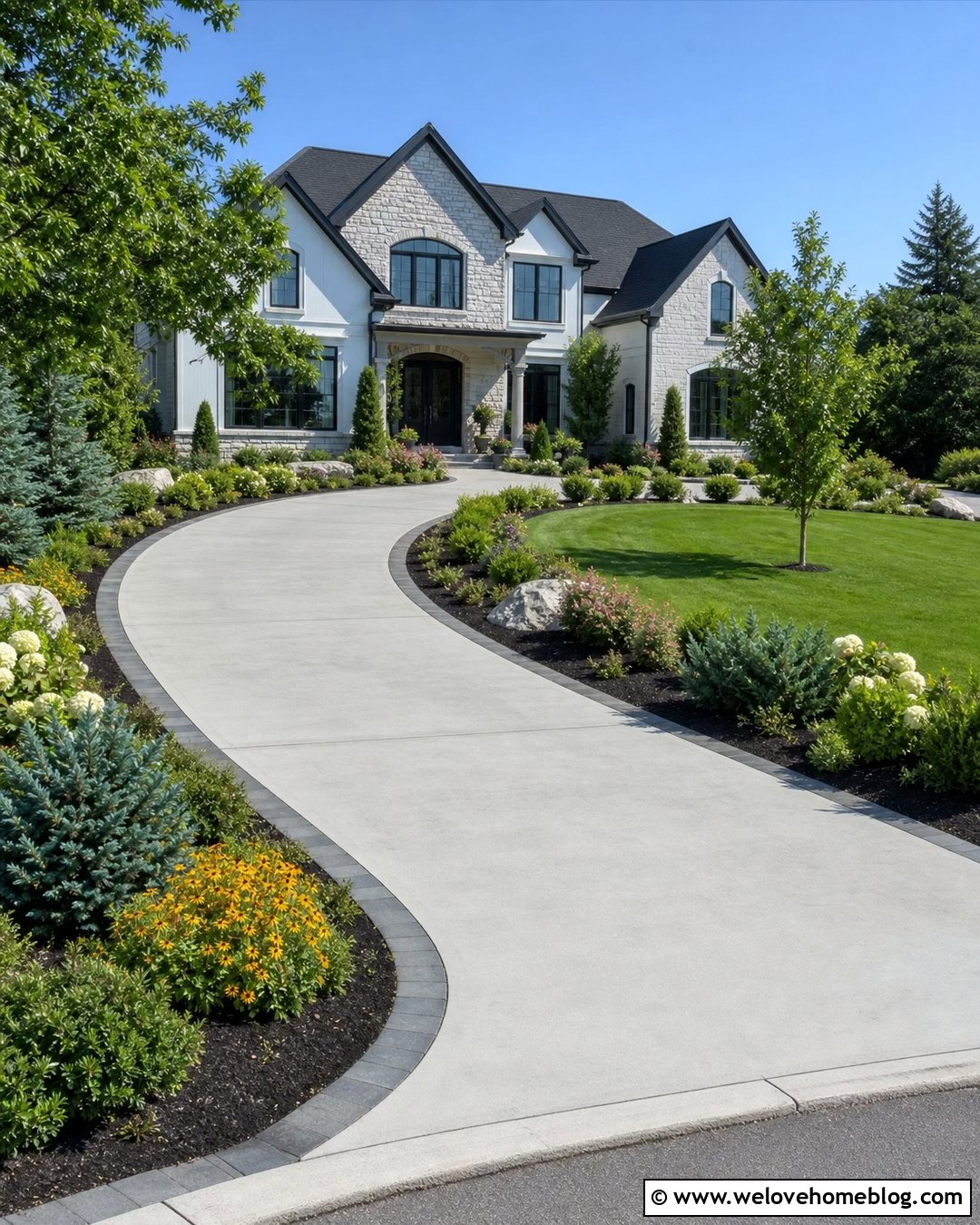
A curved driveway already has a graceful shape, and layered planting can make that curve feel even more intentional. Start with a light gray poured concrete surface bordered by charcoal pavers that clearly separate the driveway from the garden. Follow the outside curve with a wide planting bed instead of a narrow strip. Place compact evergreen shrubs in the back, flowering perennials through the middle, and spreading ground cover near the pavement. Repeating the same plants in groups creates a calmer look than scattering many unrelated varieties. Keep plants low around the street entrance to protect visibility. Near the house, use slightly taller shrubs to connect the driveway landscaping with the foundation beds. A simple lawn on the inside curve gives the complete design balance.
2. Gravel Driveway With Timber Edging And Native Grasses
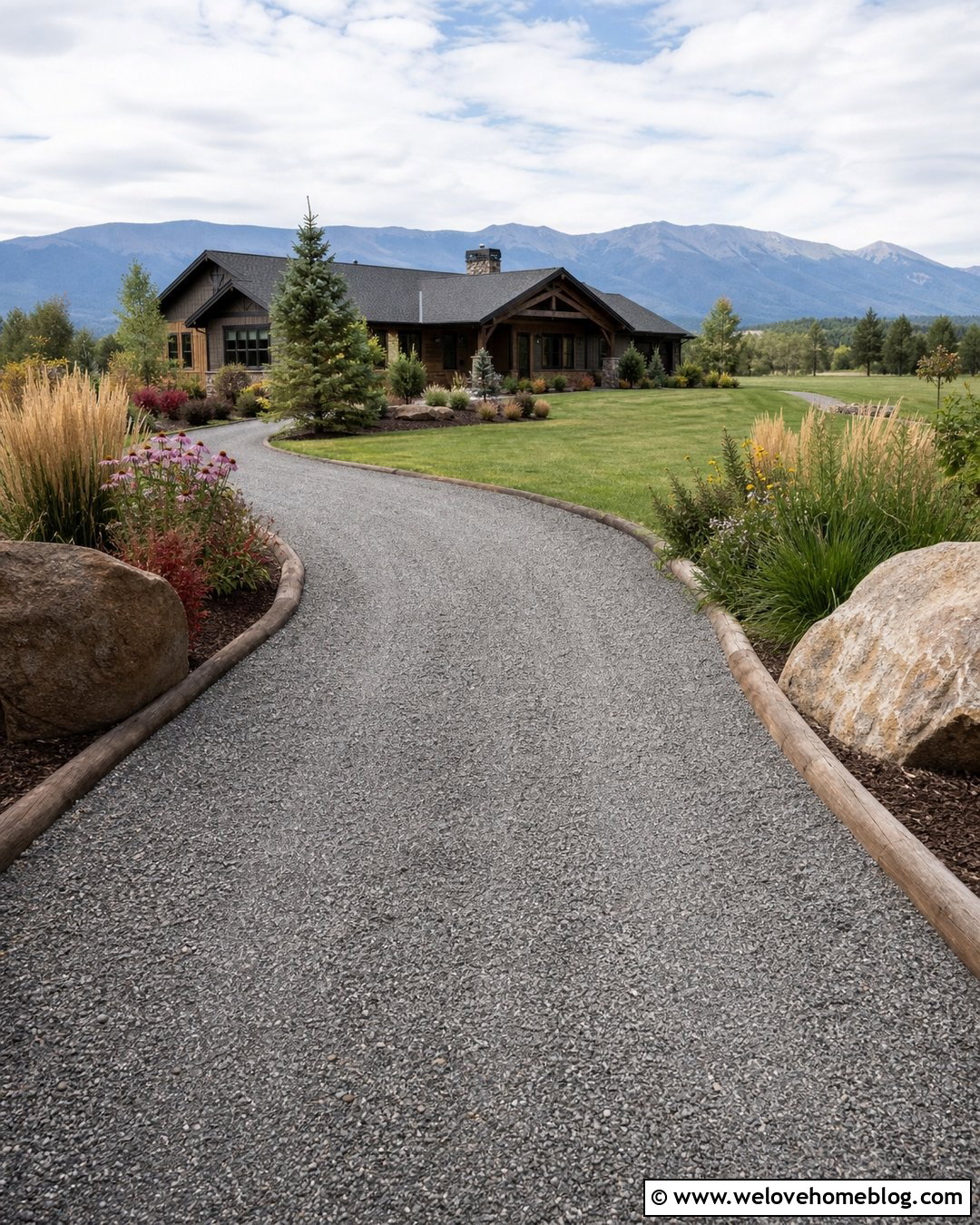
The soft crunch and natural color of gravel work especially well with relaxed, low-maintenance landscaping. Choose warm gray crushed gravel for a stable driveway and contain it with thick pressure-treated timber or durable composite edging. Along one side, create an informal border filled with native ornamental grasses, flowering perennials, and several small shrubs. Use plants adapted to your local soil and weather rather than selecting them by appearance alone. Their mature width should not extend into the driving area. A mowed lawn or simple gravel walkway can keep the opposite side open and practical. At the entrance, larger boulders can reinforce the rustic border without blocking sightlines. This complete driveway look suits ranch homes, cabins, and casual country properties particularly well.
3. Asphalt Driveway With Brick Edging And Hydrangeas
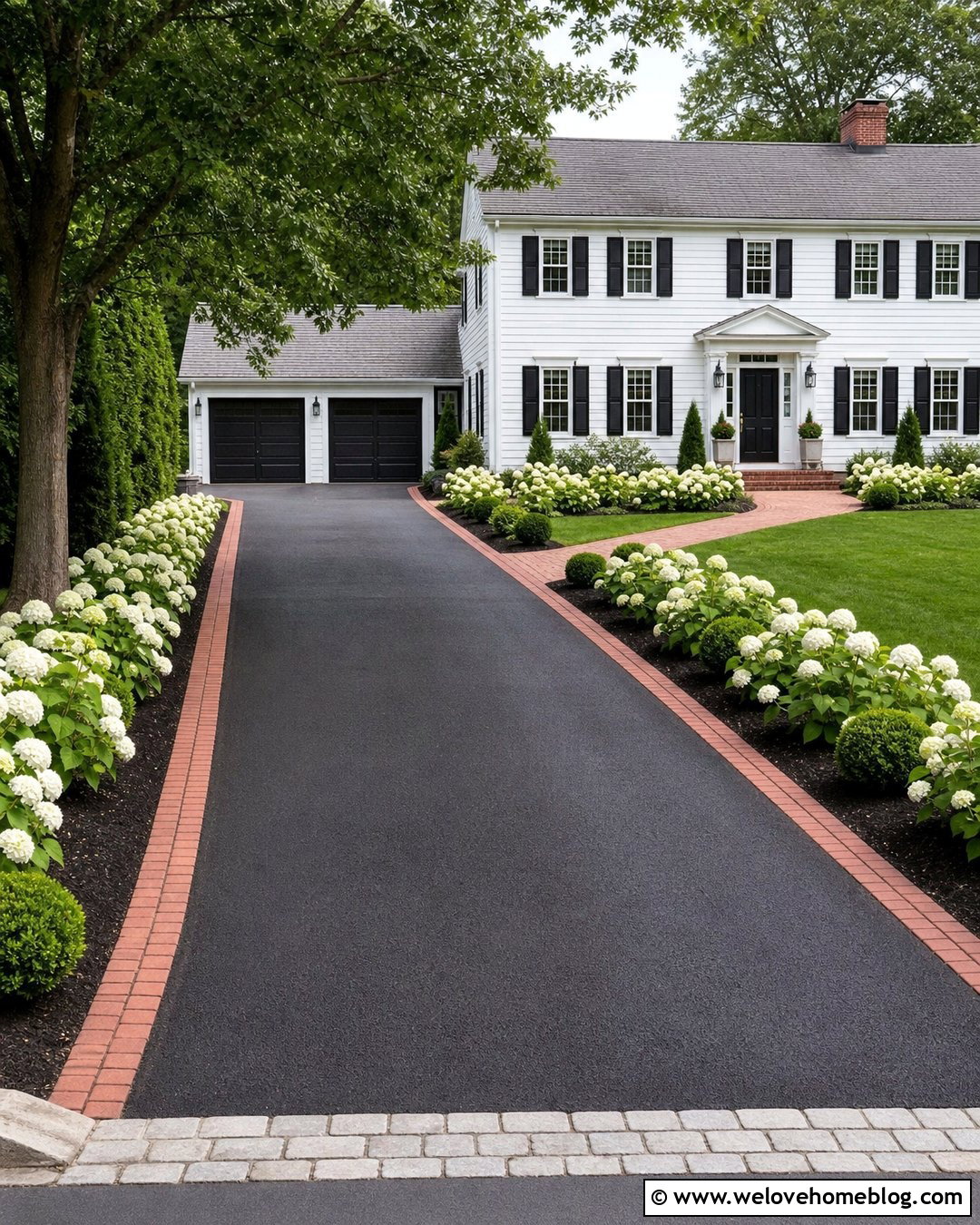
Black asphalt becomes much more polished when it is framed with a warm, contrasting border. Install a single or double ribbon of red clay brick pavers along both sides to create a crisp transition between pavement and planting beds. Behind the bricks, arrange hydrangeas in generous groups with compact evergreens and low ground cover. Leave enough distance between the shrubs and asphalt for mature growth, airflow, and easier maintenance. A dark mulch can visually connect the planting beds to the driveway, while the brick picks up warm tones from a traditional home’s facade. Continue the same edging around the nearby walkway for consistency. If the driveway is narrow, landscape one side more heavily and keep the other side simple so doors can open comfortably.
4. Paver Driveway With Evergreen Garden Beds
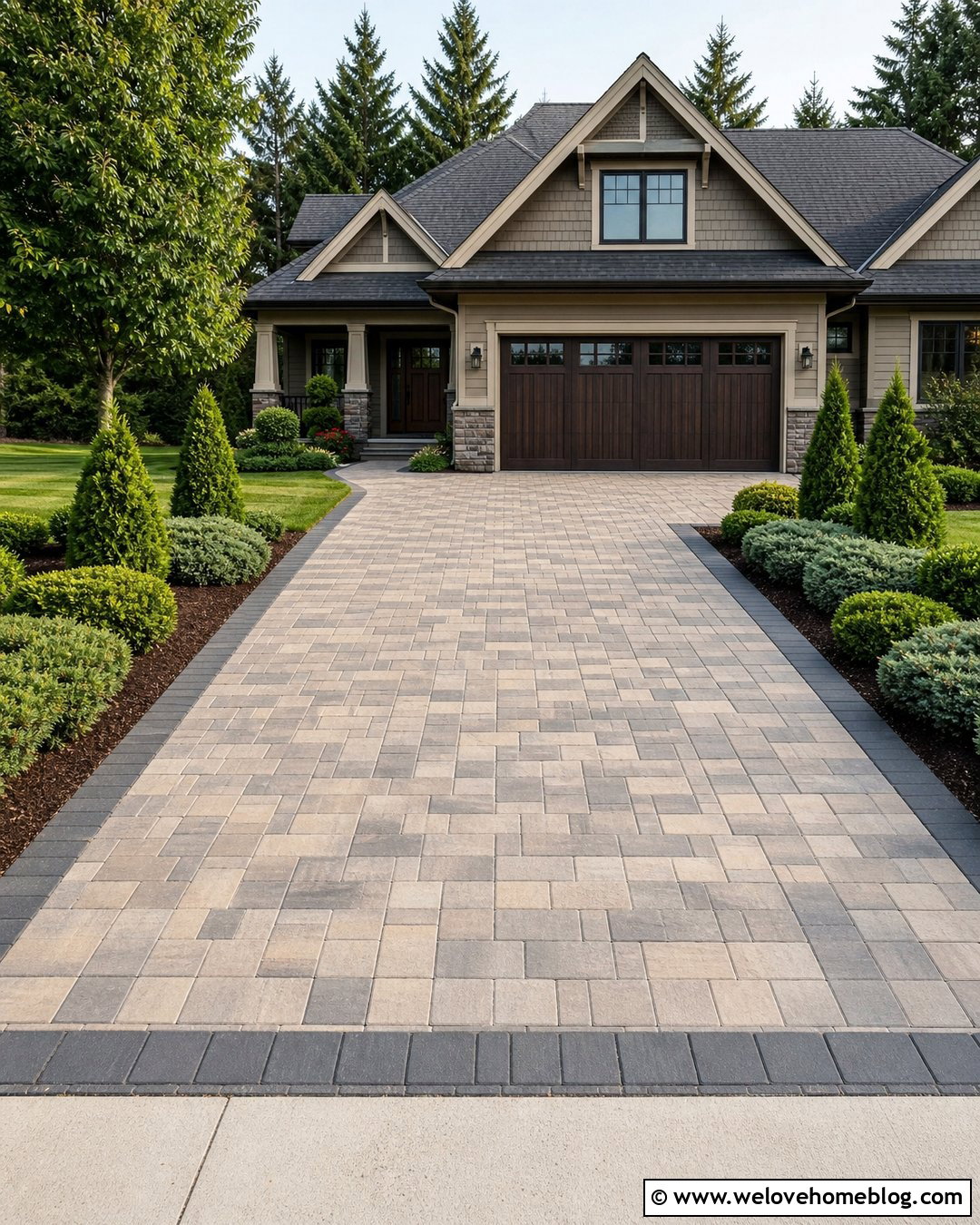
Would you prefer a front yard that looks structured in every season? A driveway made from beige and charcoal concrete pavers provides a strong foundation for neat evergreen beds. Use a running bond or modular paver pattern and add a darker soldier-course border around the perimeter. On each side, plant rounded evergreen shrubs, upright accents, and spreading ground covers in repeated groups. Varying their forms keeps the design interesting without relying entirely on flowers. Add one small ornamental tree near the garage, positioned where its roots and branches will not interfere with the driveway. A matching paver walkway can branch toward the front door. This coordinated combination of patterned paving, restrained planting, and defined borders complements Colonial, Craftsman, and transitional homes.
5. Circular Driveway With A Planted Center Island
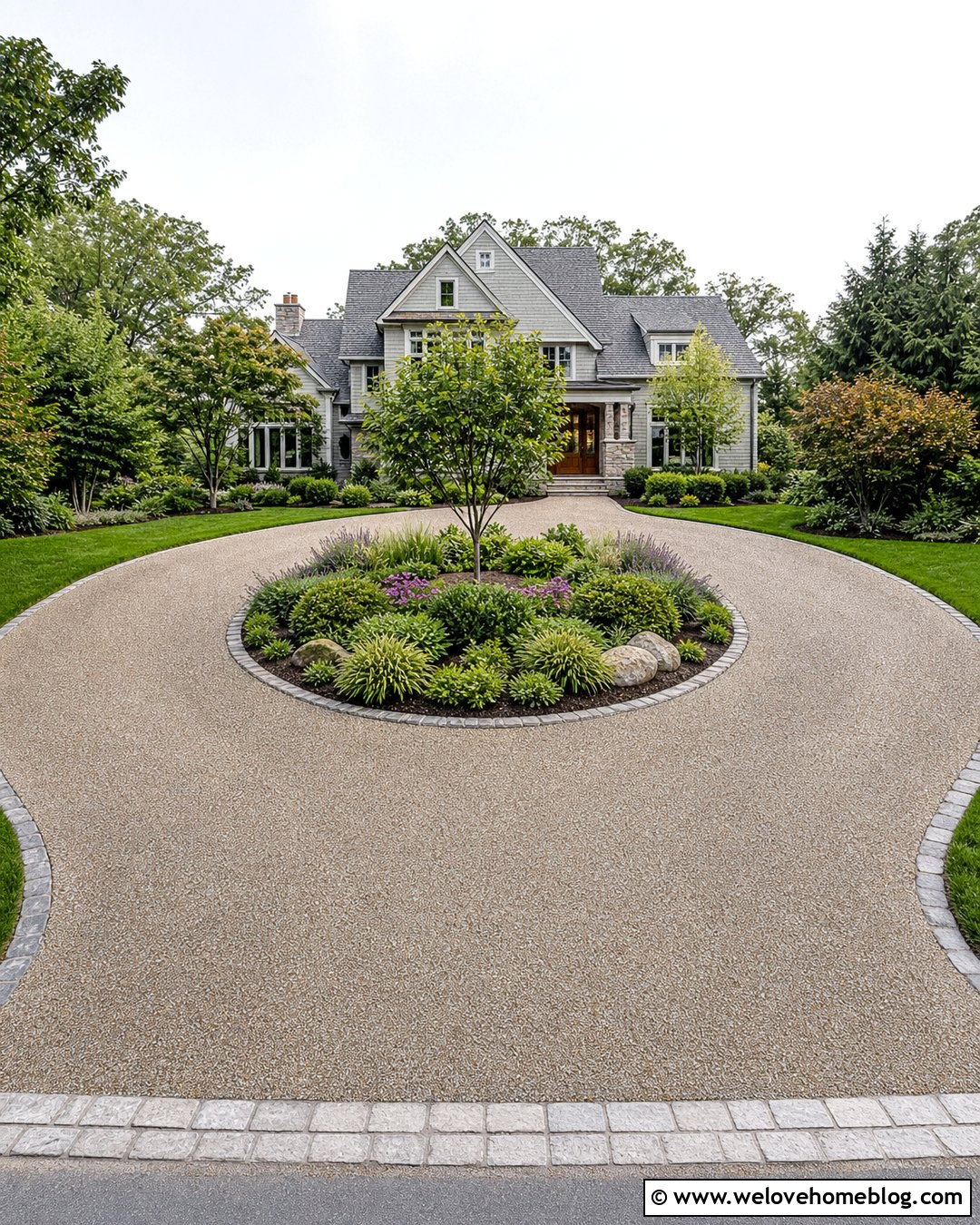
A circular driveway can feel overly paved unless the center becomes an intentional landscape feature. Surround a broad central island with warm-toned concrete pavers or exposed aggregate, then define it with a sturdy cobblestone curb. Place one small ornamental tree slightly off center so the arrangement looks natural while preserving open views of the house. Underplant it with low evergreen shrubs, ornamental grasses, and seasonal flowering perennials. Keep the outer edge of the island low enough for drivers to see across the curve. A simple mulch or decorative gravel layer reduces exposed soil and gives the planting a finished appearance. Repeat a few of the island plants near the house and entrance pillars. This repetition connects the entire circular layout instead of making the island look disconnected.
6. Narrow Driveway With Slim Planting Borders
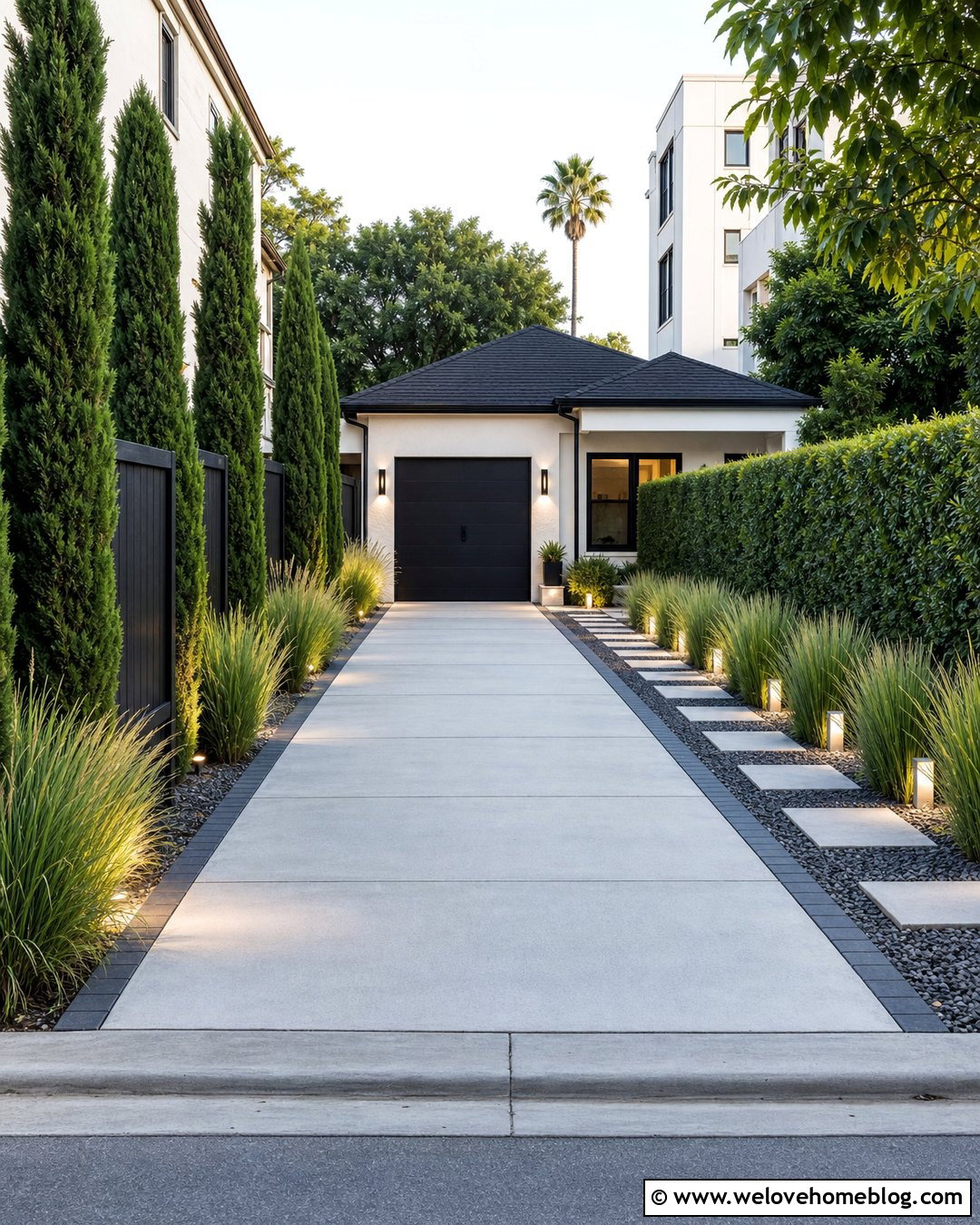
Limited width does not mean a narrow driveway must feel bare or unfinished. Use smooth gray concrete with a thin dark paver border to make the driving surface look defined without sacrificing valuable space. Along the property line, install a slim planting bed with upright ornamental grasses, columnar evergreens, or a clipped hedge. Avoid wide shrubs that could scrape vehicles or make passenger access difficult. On the house side, create a clear walkway using rectangular stepping pavers surrounded by decorative gravel. This separates foot traffic from moving cars while adding another texture. Wall-mounted garage lights and a few compact path lights can provide illumination without crowding the border. Repeating only two or three plant varieties helps the restricted area look organized, open, and easier to maintain.
7. Long Driveway With A Tree-Lined Border
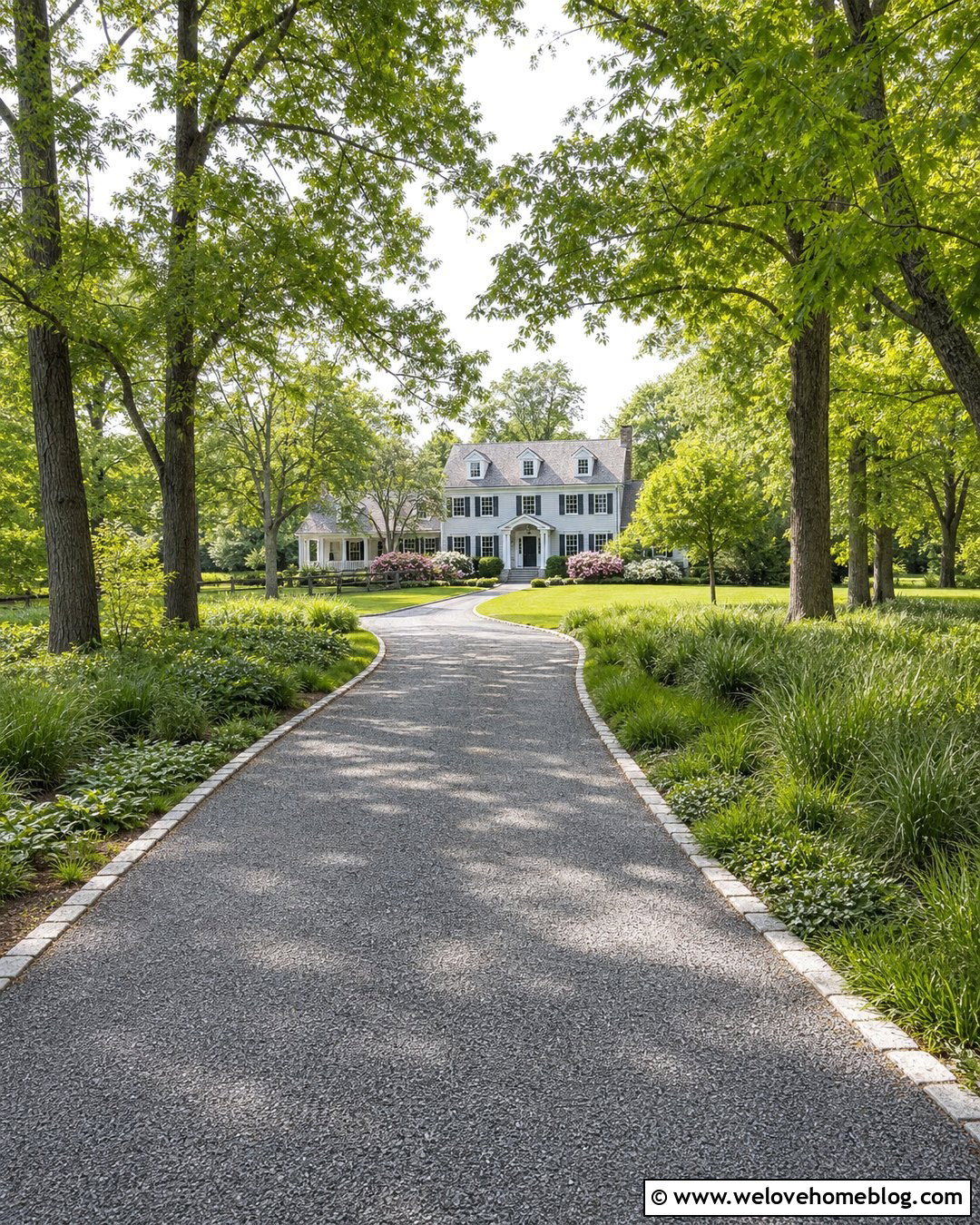
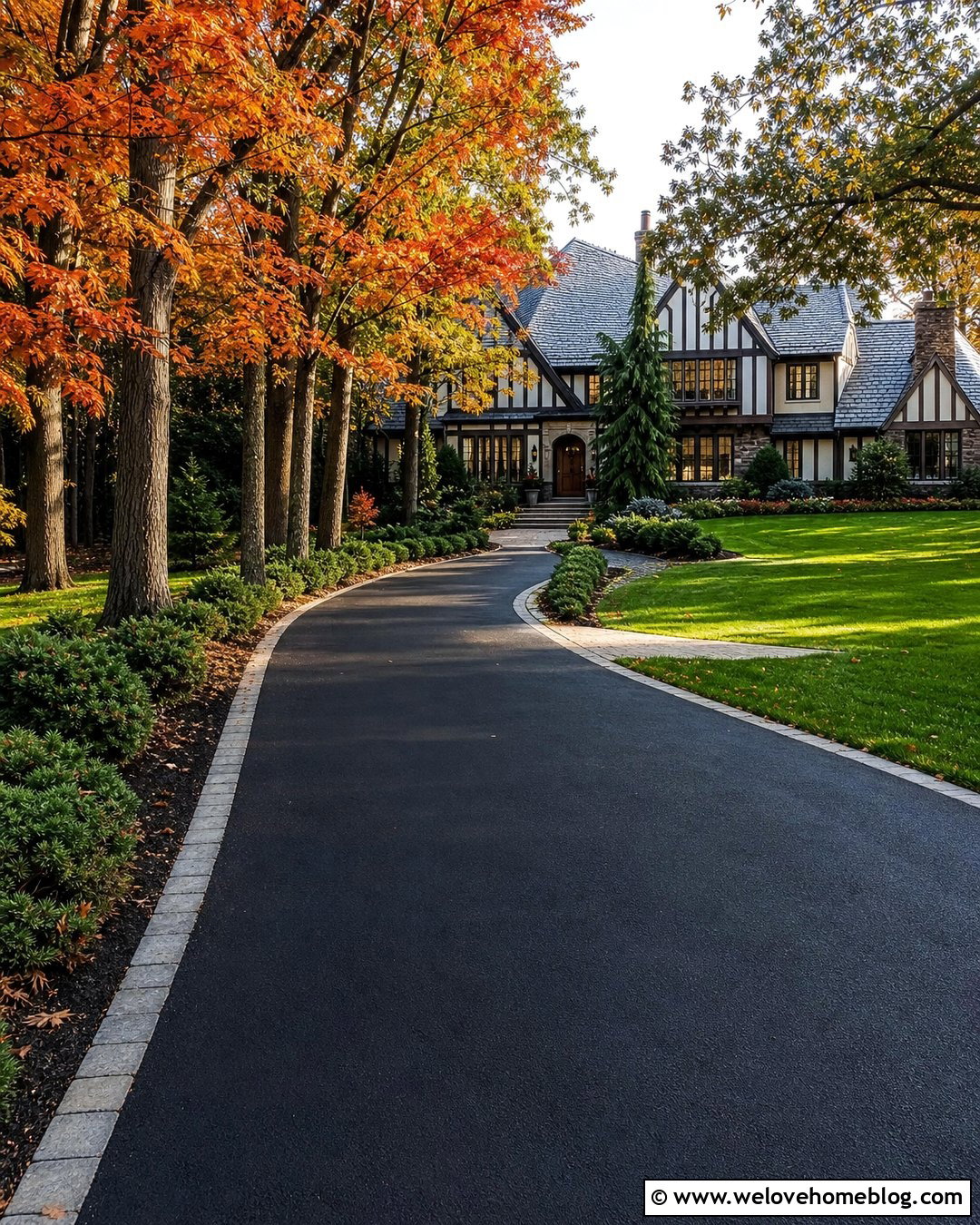
A long driveway offers room for an impressive approach, but endless rows of identical trees can feel severe. Begin with a durable asphalt or compacted gravel surface bordered by cobblestones. Plant trees at generous, consistent intervals, choosing species with mature roots and canopies appropriate for the available space. Instead of planting trees directly opposite each other, consider a slightly staggered arrangement for a more relaxed residential look. Fill the ground beneath them with lawn, native grasses, or broad sweeps of one dependable ground cover. Keep the first section near the road lower and more open for safe visibility. Near the house, widen the beds and introduce flowering shrubs that connect with the front garden. The resulting landscape guides attention naturally from the entrance to the home.
8. Sloped Driveway With Stone Retaining Walls
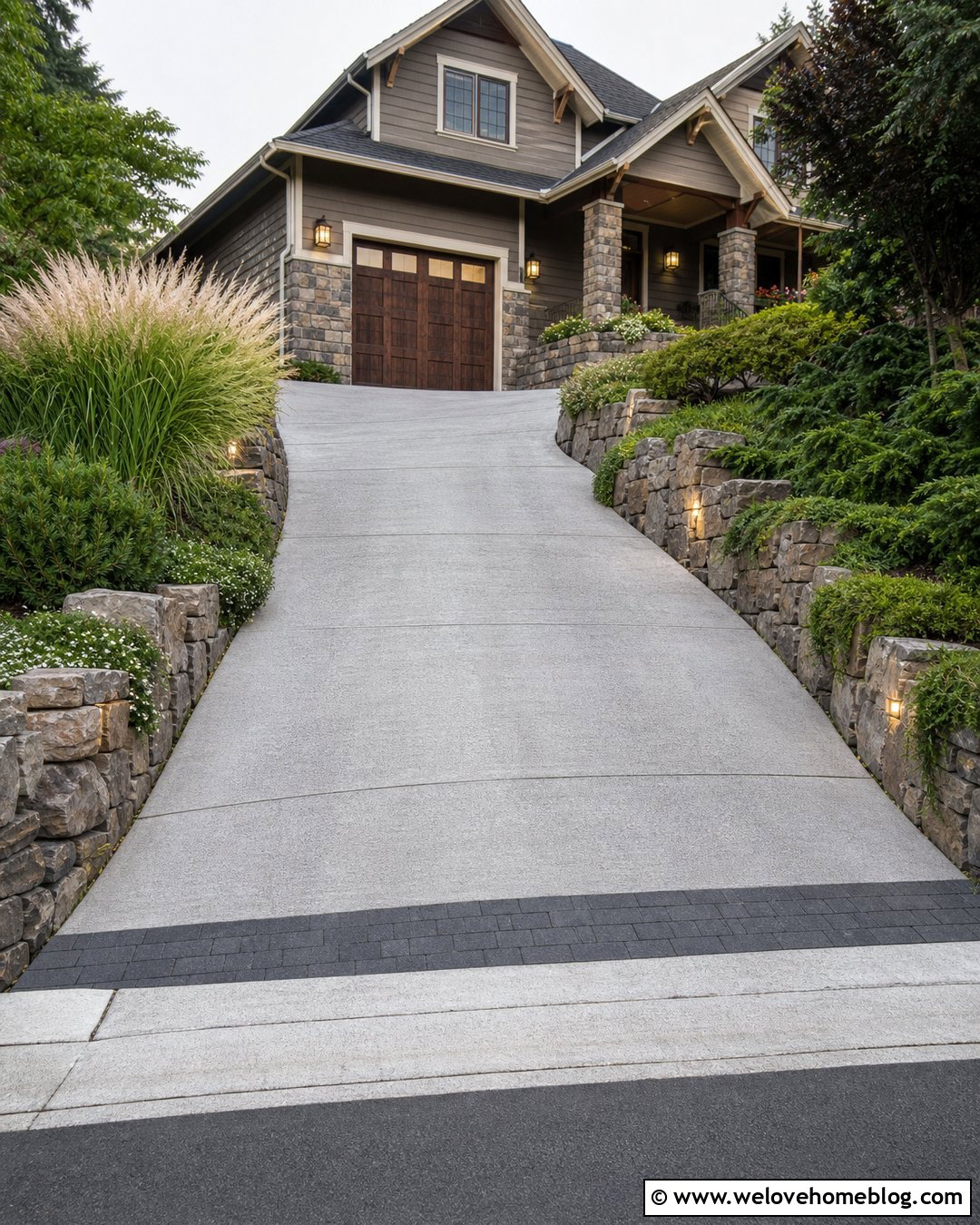
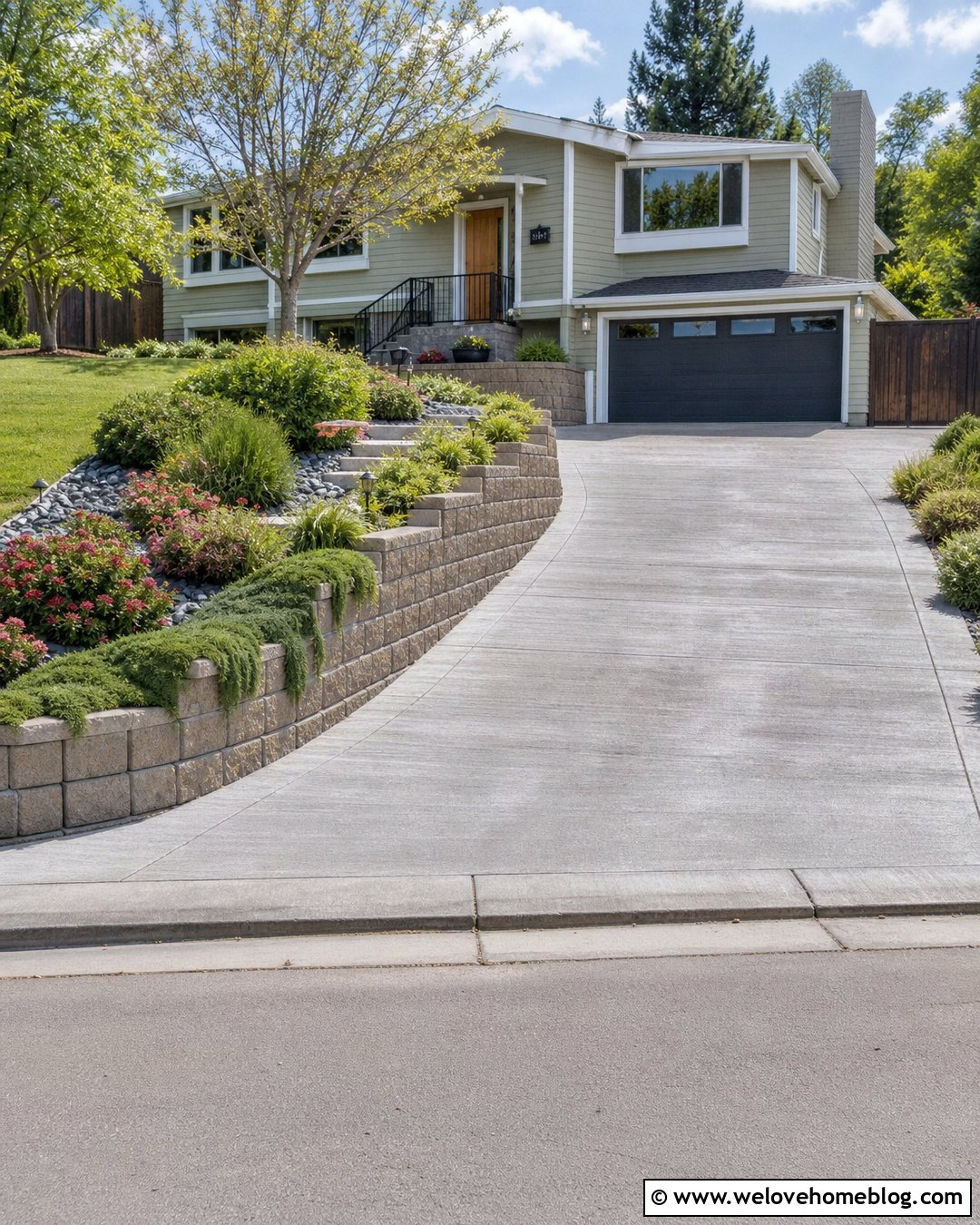
When a driveway climbs toward the house, planting beds must work with the grade rather than fight it. Choose textured poured concrete or concrete pavers for the sloped surface and install natural stone retaining walls where soil needs support. Step the walls gradually with the land instead of building one visually heavy barrier. Above them, use deep-rooted shrubs, ornamental grasses, and spreading ground covers that help cover exposed soil. Plants should remain clear of drainage outlets and should not spill over into the driving lane. Add a contrasting paver strip across the entrance or garage apron to visually break up the incline. Low-voltage lights fitted into the retaining walls can mark the driveway edges. Together, these features make a challenging slope appear planned, stable, and welcoming.
9. Modern Driveway With Ornamental Grasses
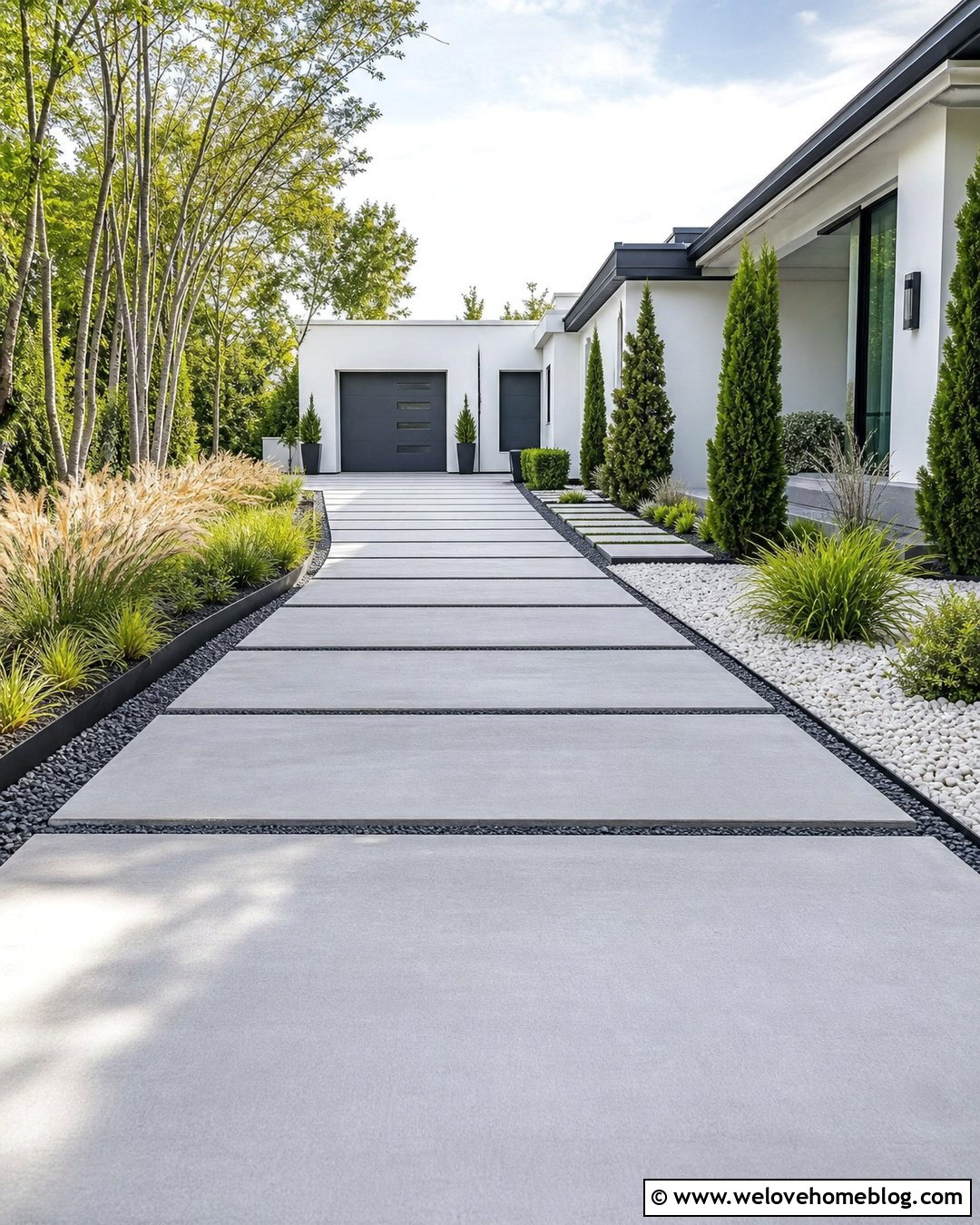
Clean geometry and a restrained planting palette give a modern driveway its distinctive character. Use large-format light gray concrete slabs separated by narrow bands of dark gravel or low green ground cover. Frame the straight layout with black metal edging and broad groups of upright ornamental grasses. Add a few sculptural evergreen shrubs or multi-stem trees, but leave open space between plant masses so every shape remains visible. White decorative stone can brighten small beds near the entrance, while charcoal gravel creates stronger contrast beside a pale house. Continue the rectangular lines into the walkway and porch for a unified composition. Avoid mixing too many flower colors or decorative materials. The combination of structured concrete, repeated grasses, crisp borders, and simple architecture creates a complete modern front-yard design.
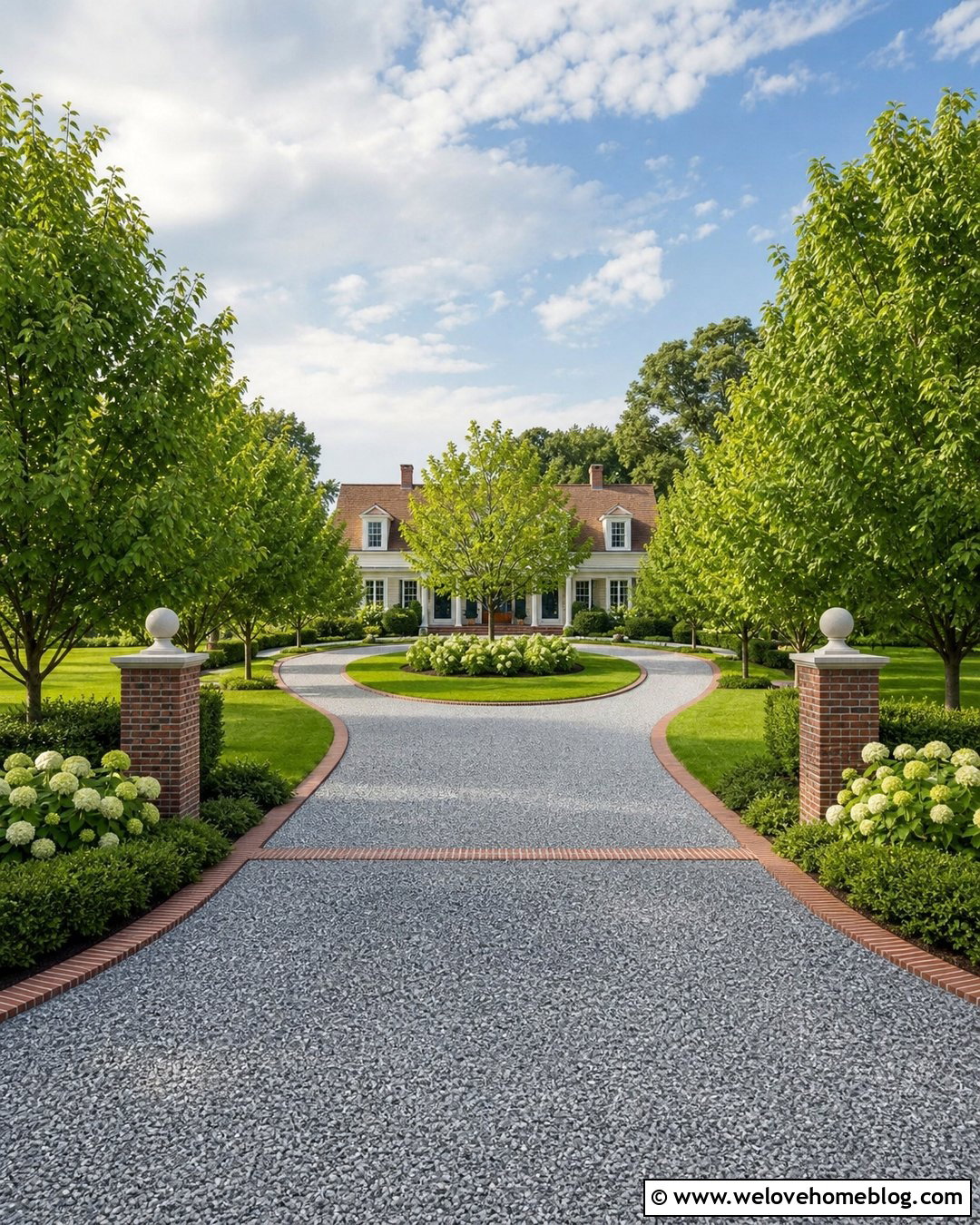
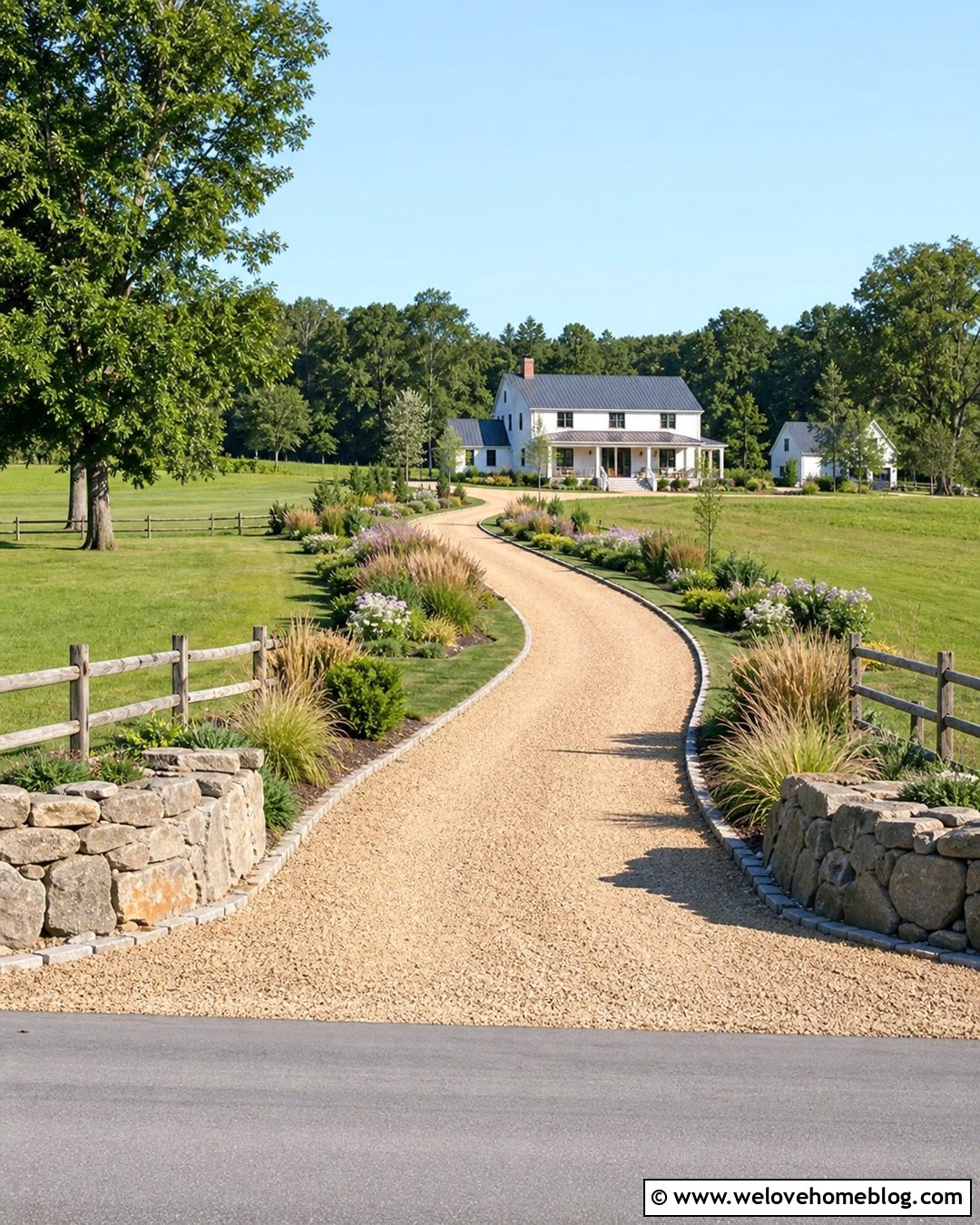
10. Farmhouse Gravel Driveway With A Split-Rail Border
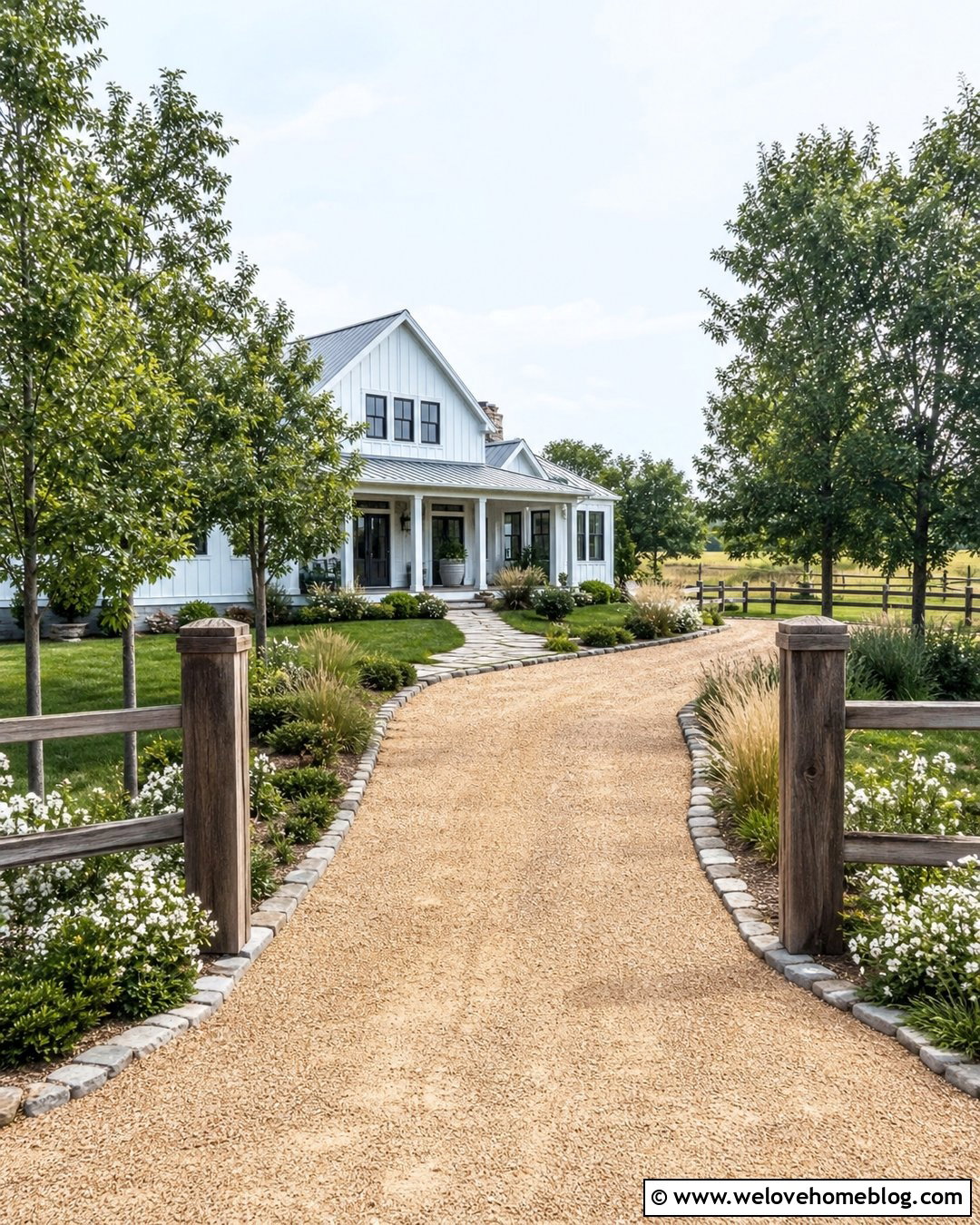
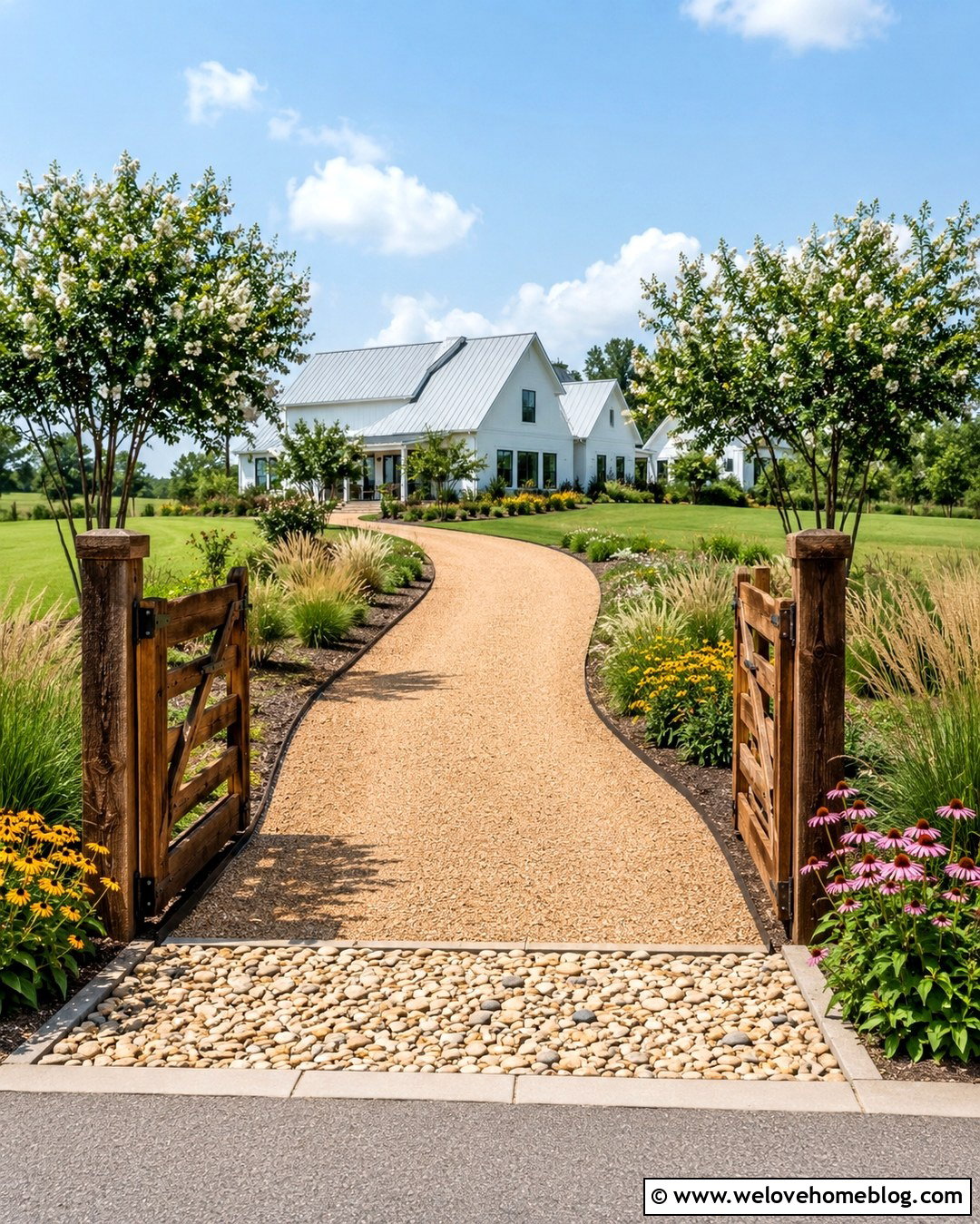
A warm gravel driveway can make a farmhouse entrance feel relaxed without looking neglected. Select compacted tan crushed stone and use larger fieldstones to contain the edges at key points. Add a split-rail fence along one side, leaving a generous strip between the fence and driveway for mowing and maintenance. Behind it, arrange native grasses, white flowering shrubs, and several informal shade trees. Near the house, transition from the rustic gravel to a brick or flagstone walkway leading to the porch. Simple wooden entrance posts can reinforce the country character without creating an elaborate gate. Keep the planting natural but repeat major varieties so the landscape still looks coordinated. This design works particularly well when the driveway follows a gentle curve through an open front yard.
11. Brick Driveway With Cottage Flower Borders
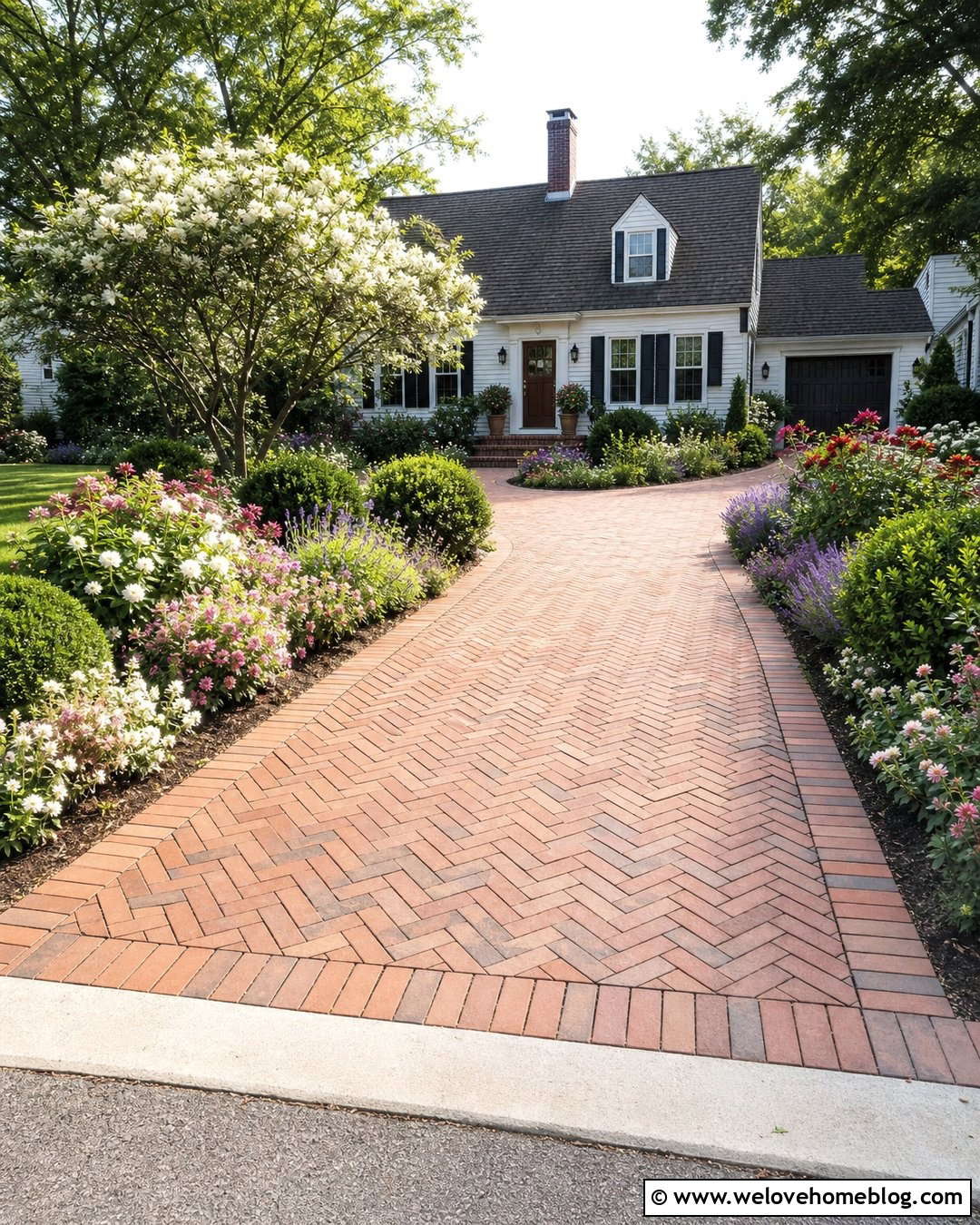
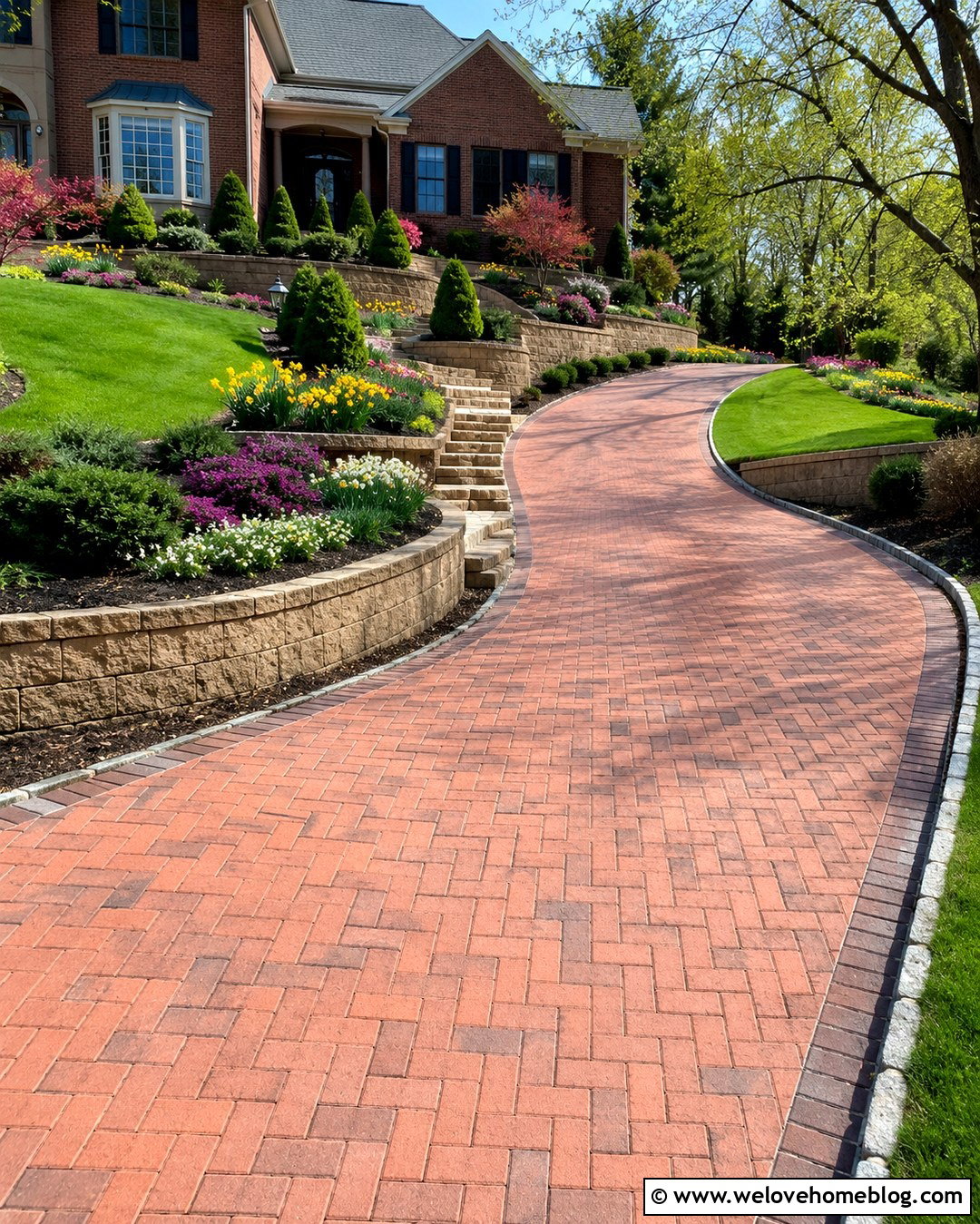
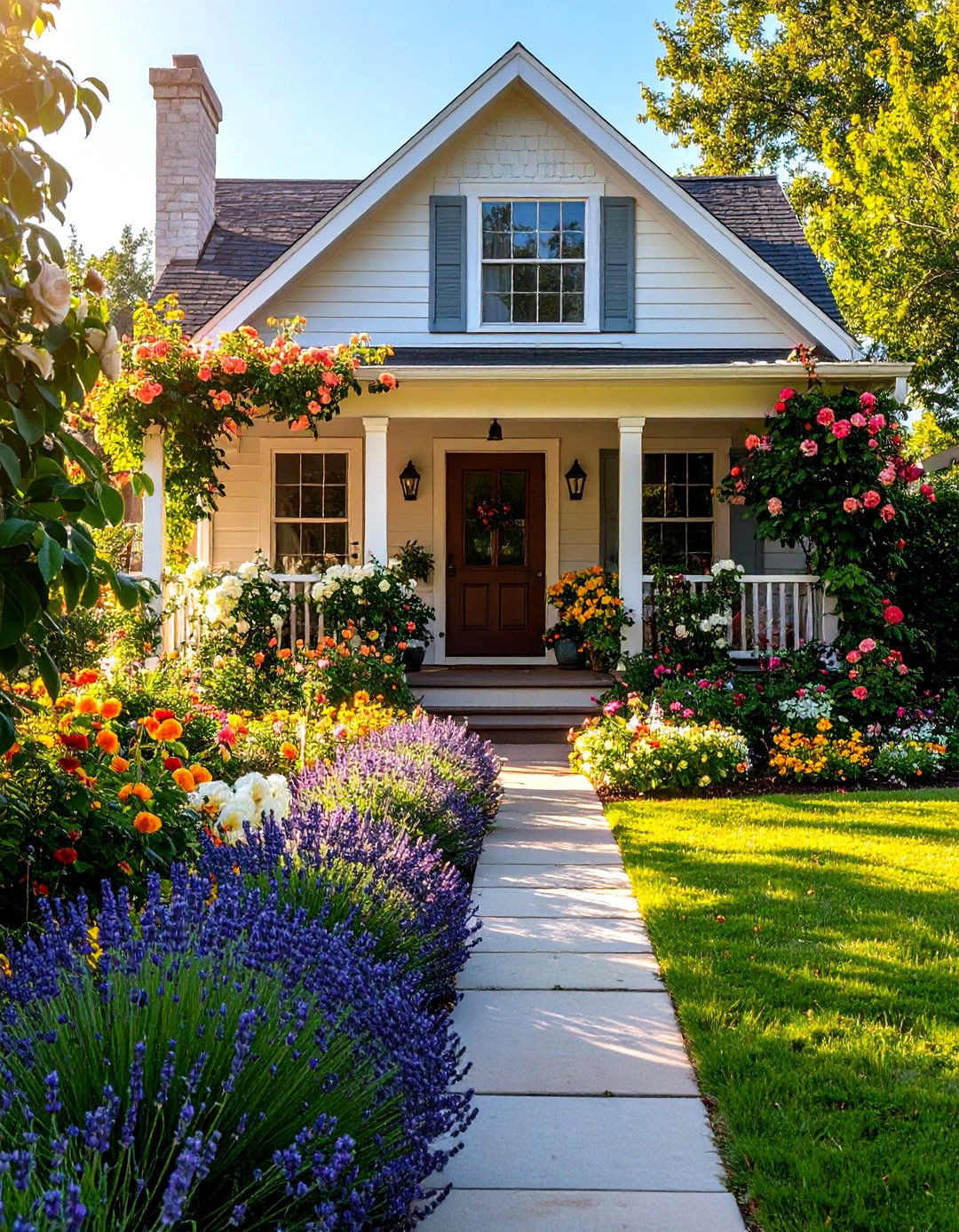
Richly colored brick creates an inviting base for a driveway surrounded by cottage-style planting. Lay red and brown clay brick pavers in a herringbone pattern, then use a straight brick soldier course to hold the edges visually. Create deep garden borders filled with roses, flowering perennials, herbs, and compact evergreen shrubs. Organize the plants in overlapping groups rather than isolated spots, placing the shortest varieties beside the bricks. A small flowering tree near the front walkway can add height without overwhelming the house. Allow enough open pavement near the garage for turning and unloading. To prevent the design from becoming visually busy, repeat several flower colors and carry the same brick into the walkway. The finished driveway feels abundant, welcoming, and connected to a Cape Cod or cottage home.
12. Exposed Aggregate Driveway With Low-Maintenance Landscaping
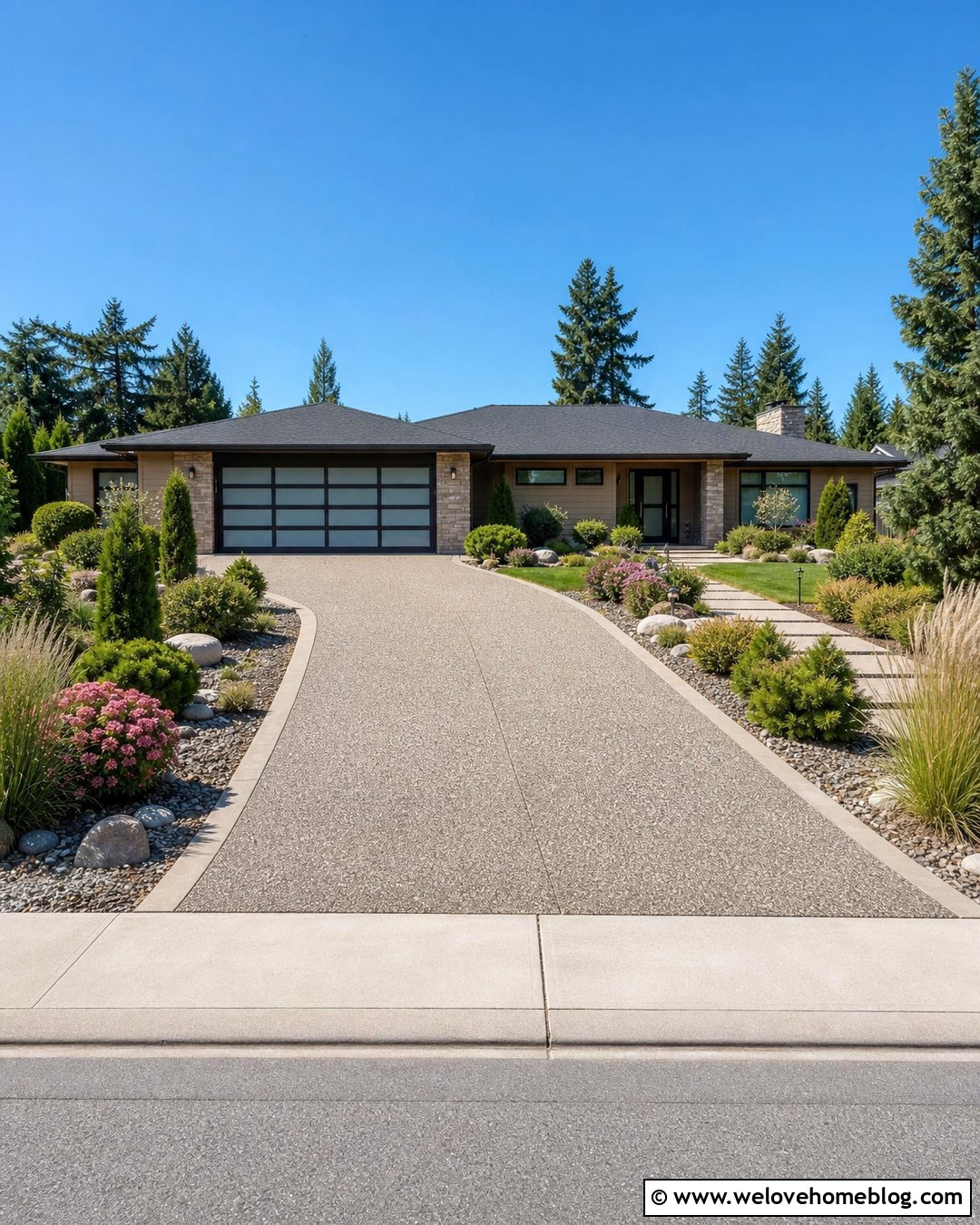
For a polished landscape without constant upkeep, combine exposed aggregate concrete with durable, slow-growing plants. Choose an aggregate mix containing warm gray and beige stones, then define the driveway with a smooth concrete border. Create wide beds containing compact evergreens, ornamental grasses, flowering shrubs, and spreading ground covers selected for local conditions. Plant in large groups so maintenance is simpler and weeds have fewer open spaces to occupy once the plants mature. Decorative gravel can replace mulch in dry climates, while organic mulch may be more suitable for moisture-loving beds. Add one clearly defined walkway from the driveway to the entrance. This complete design offers plenty of texture, but its limited materials keep it from feeling cluttered. Seasonal trimming and occasional cleanup should preserve its tidy appearance.
13. Small Front Yard Driveway With Grass Strips
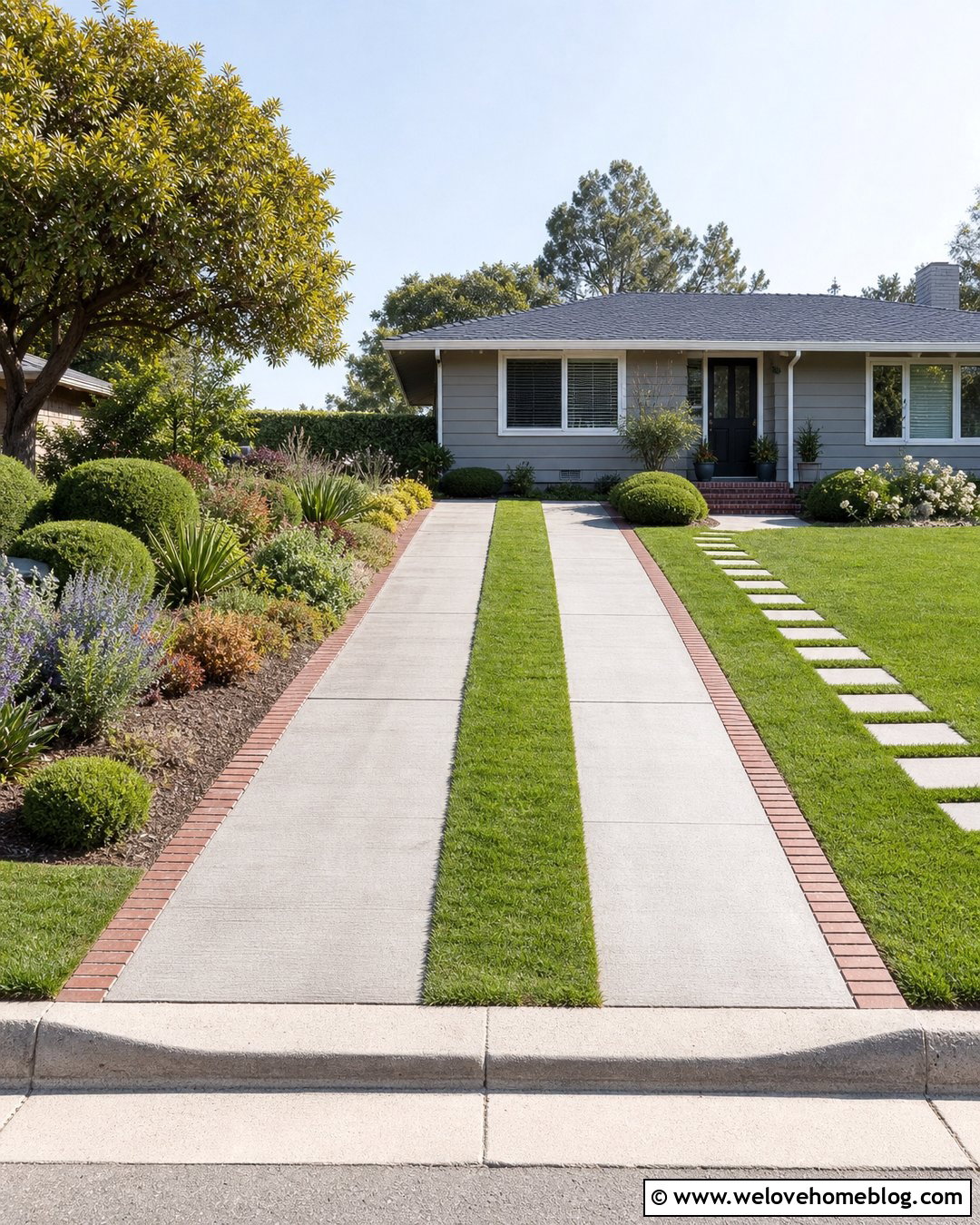
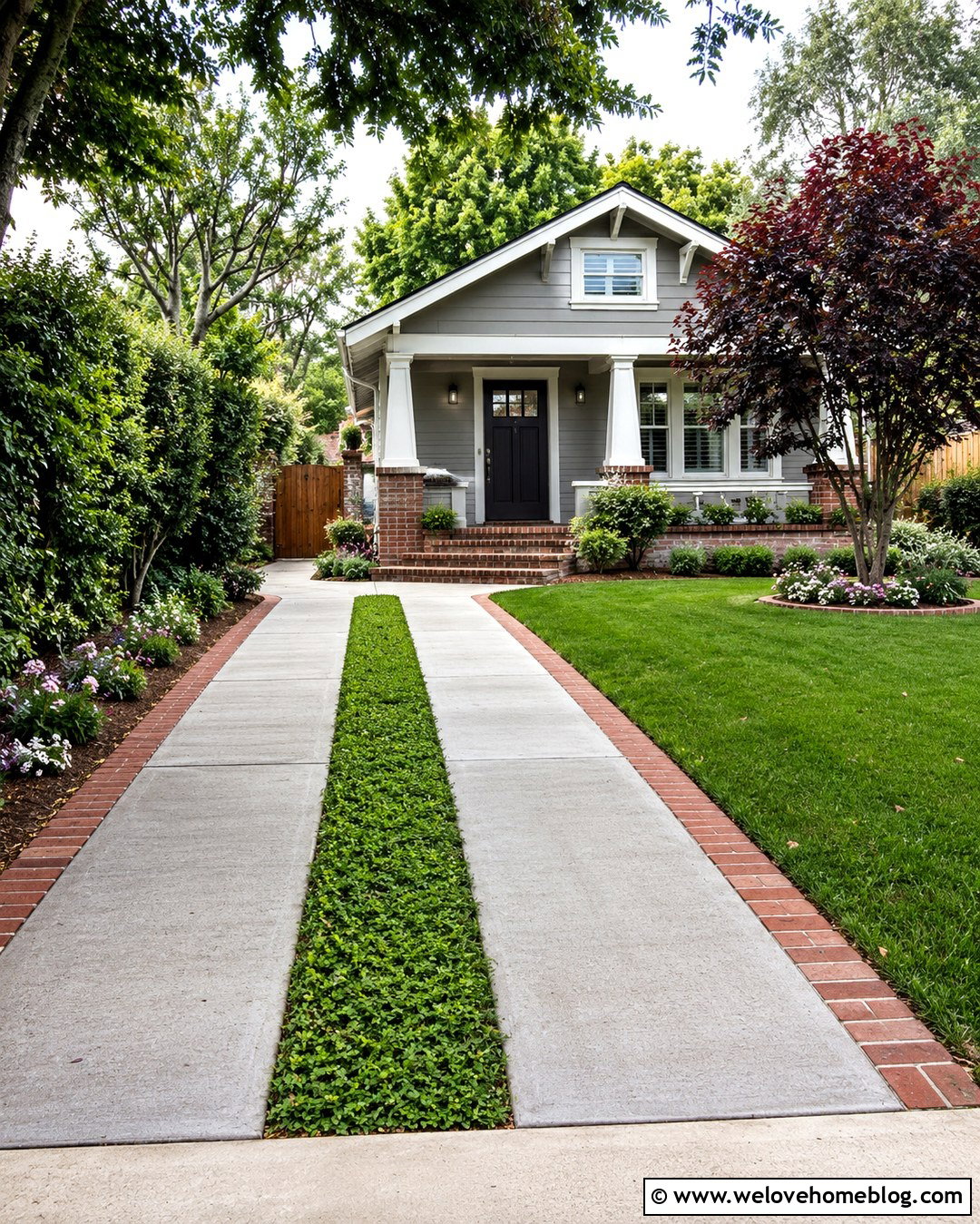
In a compact front yard, breaking up the hard surface can make the driveway feel less dominant. Use two parallel bands of broom-finished concrete with a narrow grass or durable ground-cover strip between them. Add flush brick edging along the outer sides so lawn and soil do not creep onto the concrete. Beside the driveway, create one deeper planting bed rather than two cramped borders. Fill it with a small ornamental tree, rounded shrubs, and low perennials. On the opposite side, maintain open lawn for easier passenger access. A stepping-stone walkway can connect the parking area to the porch without adding another large slab. This efficient layout balances parking, planting, and pedestrian movement while giving a modest ranch or bungalow more character from the street.
14. Shaded Driveway With Woodland Planting
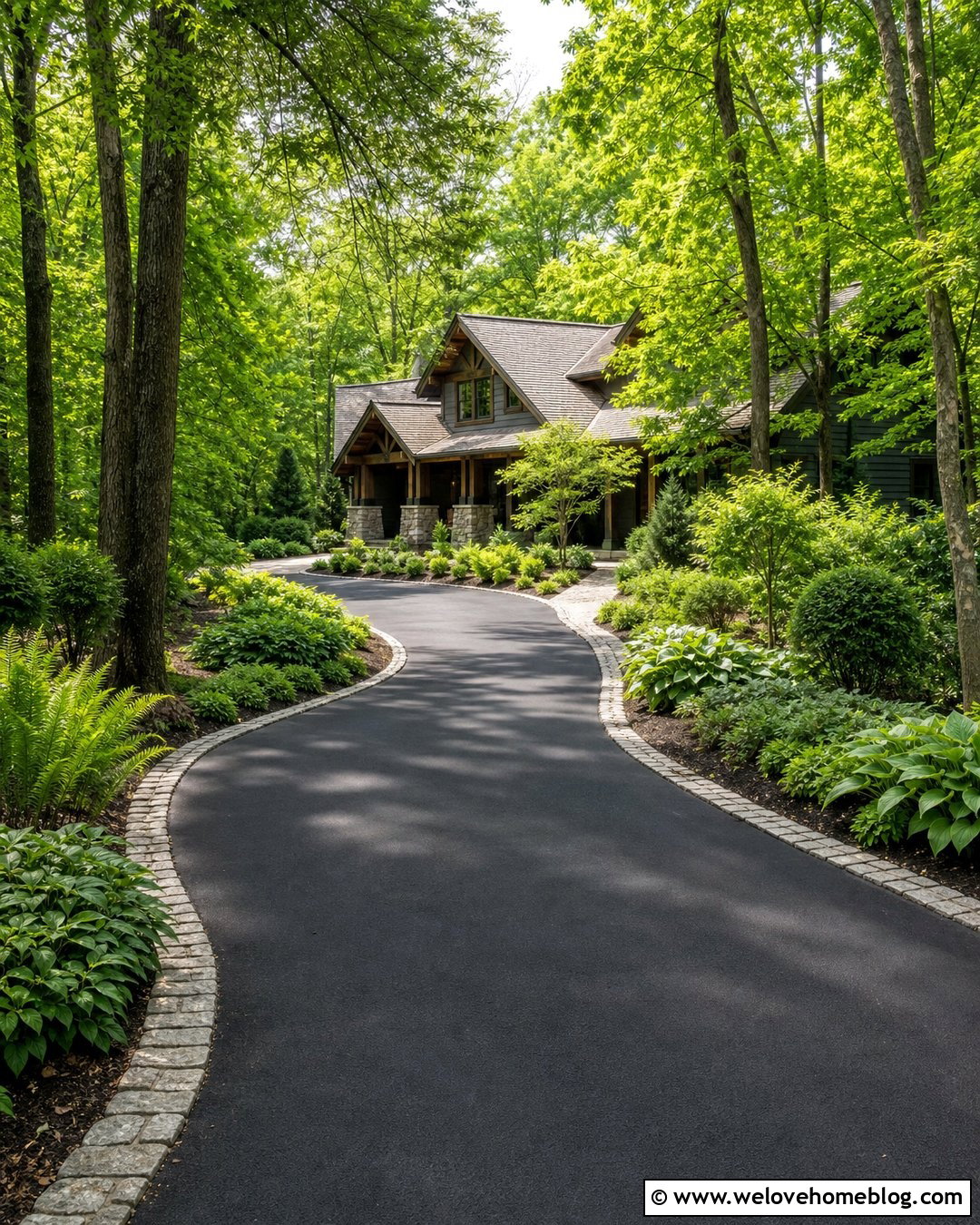
Cool shade beside a driveway can become an advantage when the planting is designed for lower light. Pair a charcoal asphalt driveway with a pale granite cobblestone border that remains visible beneath surrounding foliage. Create loose, curved beds containing shade-tolerant ferns, broad-leaved perennials, woodland ground covers, and compact shrubs. Arrange plants in layers, keeping low varieties closest to the pavement and taller shrubs farther back. Existing mature trees can provide the upper canopy, but avoid piling soil or mulch against their trunks. Use a light-colored gravel walkway to brighten the route from the driveway to the front door. Selective pruning can preserve vehicle clearance and prevent the entrance from feeling enclosed. The final look should feel leafy and natural while maintaining crisp, practical driveway edges.


15. Sunny Driveway With Drought-Tolerant Beds
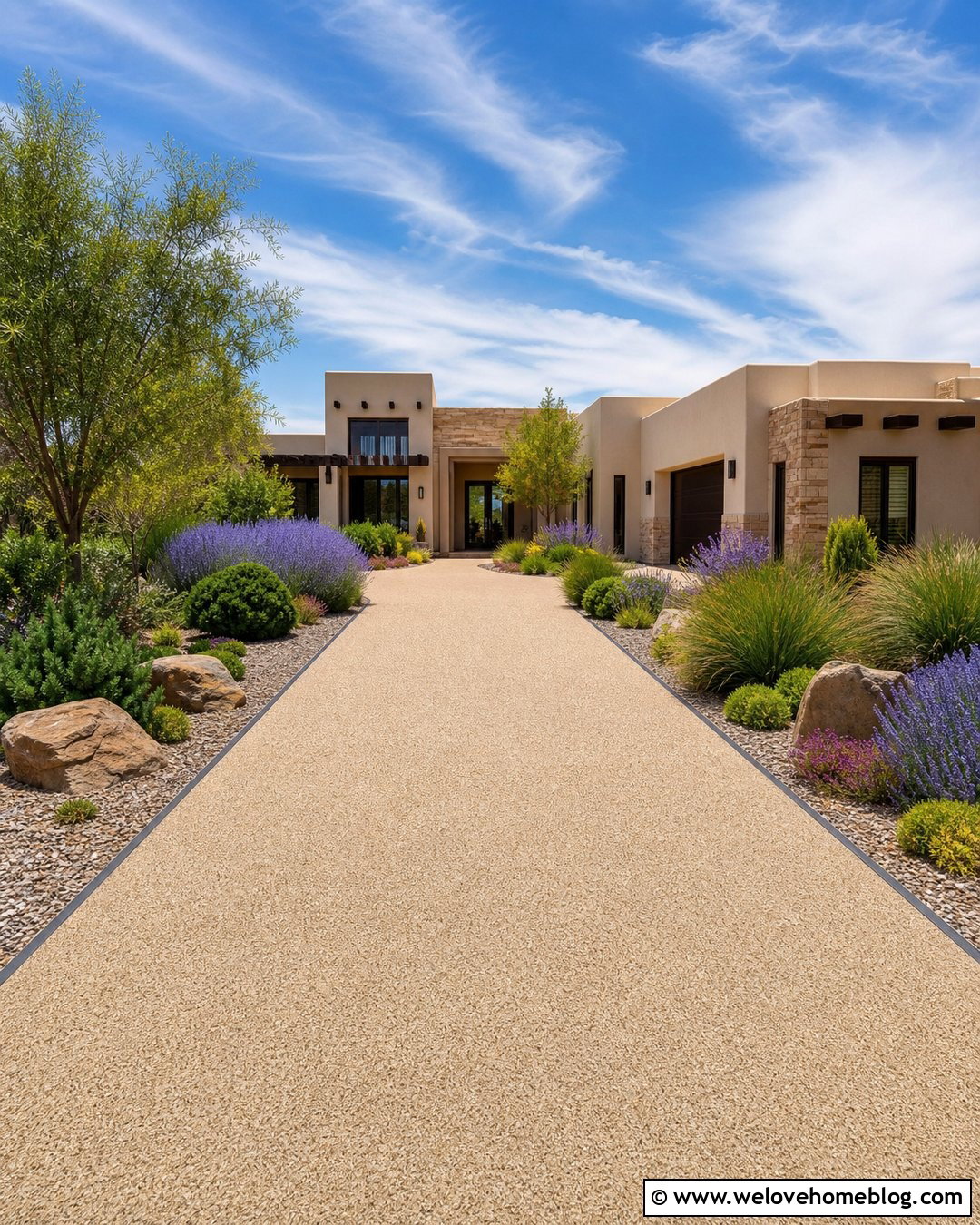
Hot, exposed driveway edges need plants that can handle reflected heat and periods of dry soil. Start with a pale resin-bound gravel or light concrete driveway, which creates a clean backdrop for drought-tolerant landscaping. Use steel edging to shape broad beds filled with lavender, salvia, sedum, ornamental grasses, and compact evergreen shrubs suited to your region. Group plants by similar watering needs and leave enough space for their mature spread. Cover exposed soil with gravel mulch to support the dry, contemporary appearance. Larger accent rocks can add height without increasing watering demands. Install drip irrigation beneath the mulch if supplemental water is necessary. With repeated plant groups, defined borders, and an uncluttered layout, the sunny driveway can look colorful and established rather than dry or sparse.
16. Driveway Entrance With Stone Pillars And Planting Beds
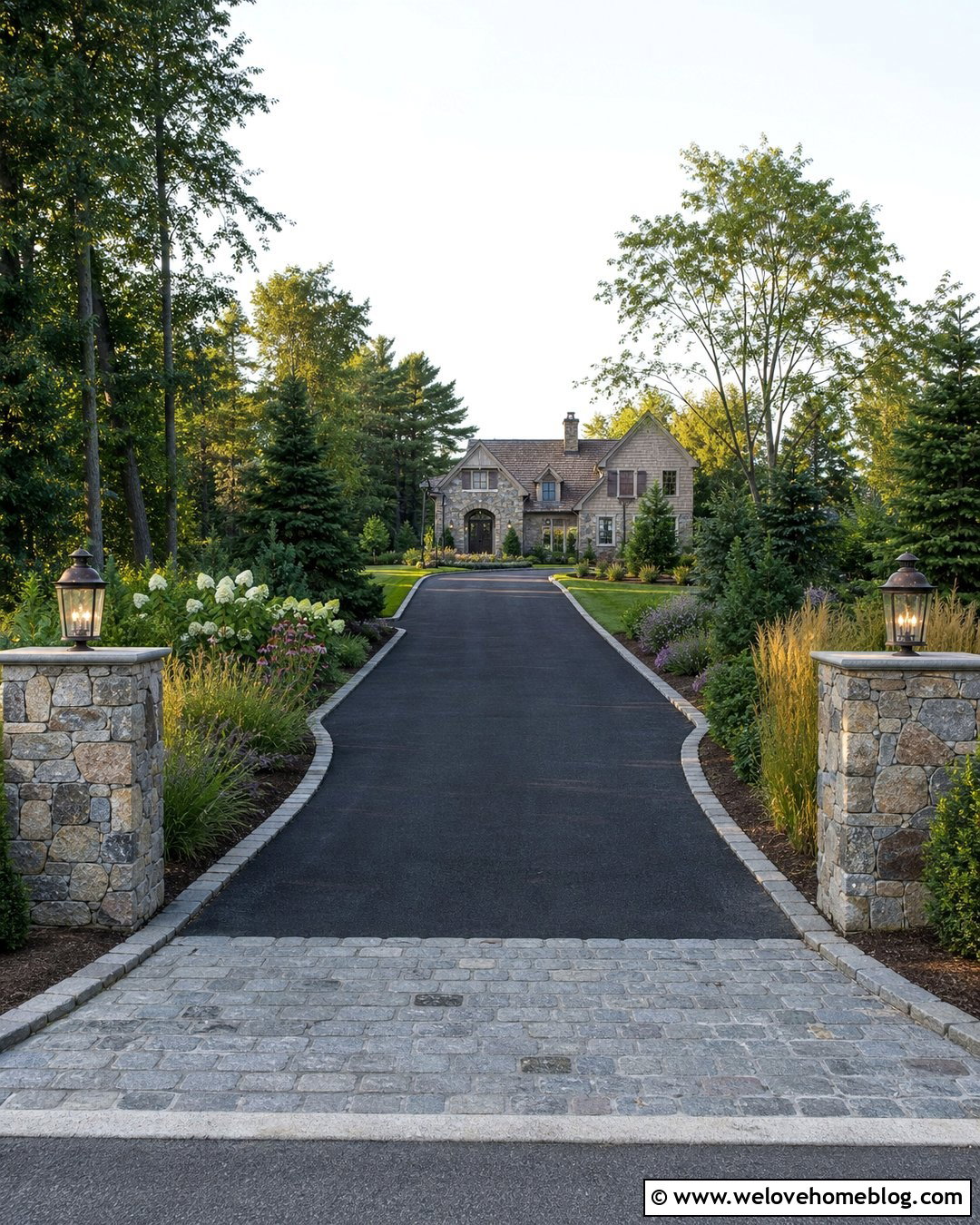
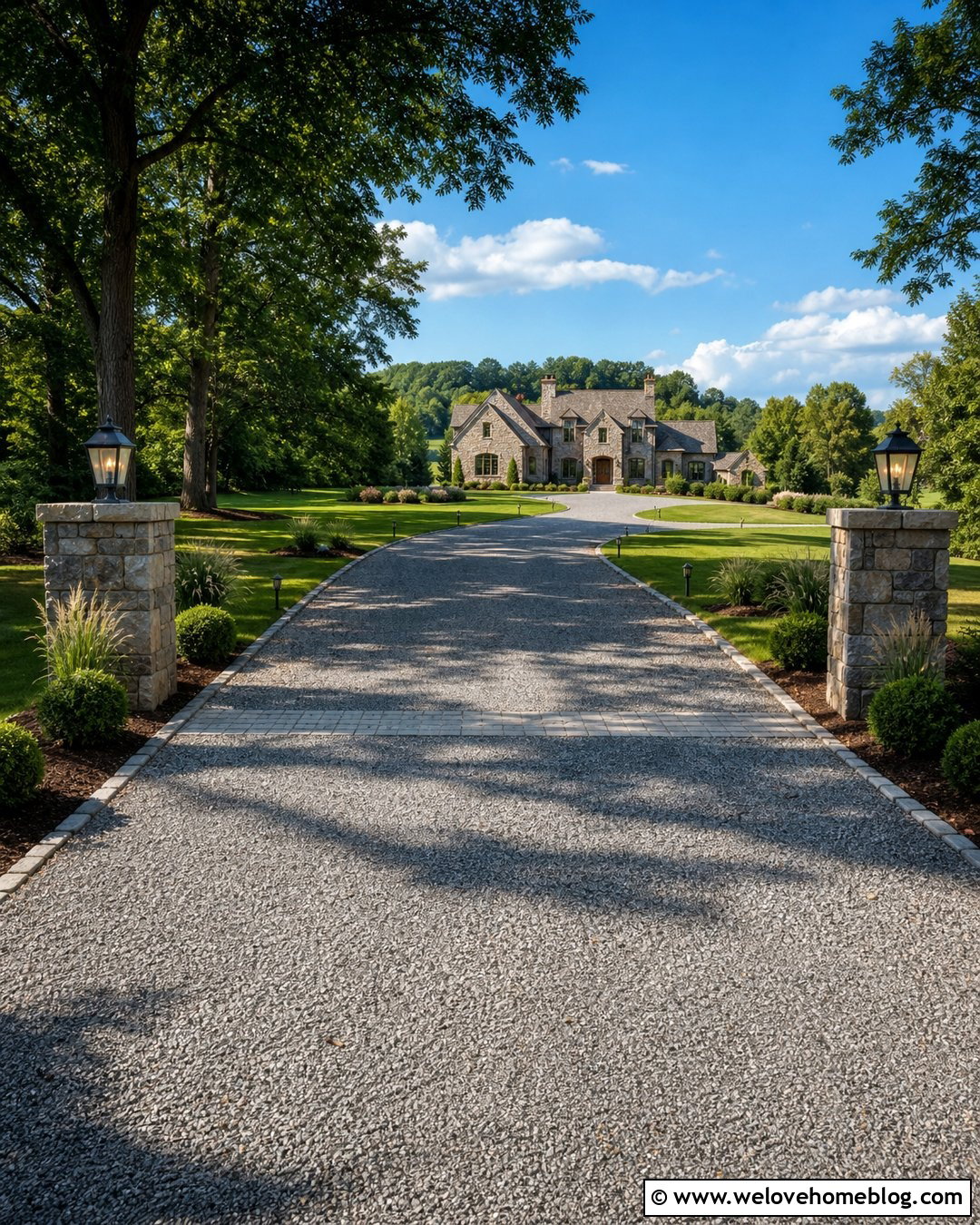
The driveway entrance sets expectations for the entire property, so it should feel substantial without blocking the street view. Frame a dark asphalt driveway with low stone pillars that coordinate with the home’s foundation or chimney. Sweep curved planting beds outward from each pillar using low evergreen shrubs, flowering perennials, and ornamental grasses. Keep taller plants farther from the road and away from any areas where drivers need an unobstructed view. A cobblestone apron across the entrance can visually connect the pillars while protecting the edge of the asphalt. Add a discreet address plaque and downward-facing lights to the masonry. Continue the same stone as edging farther along the driveway. This repetition makes the entrance, driveway, landscaping, and house feel like parts of one coordinated property.
17. Driveway Lighting With Low Plant Borders
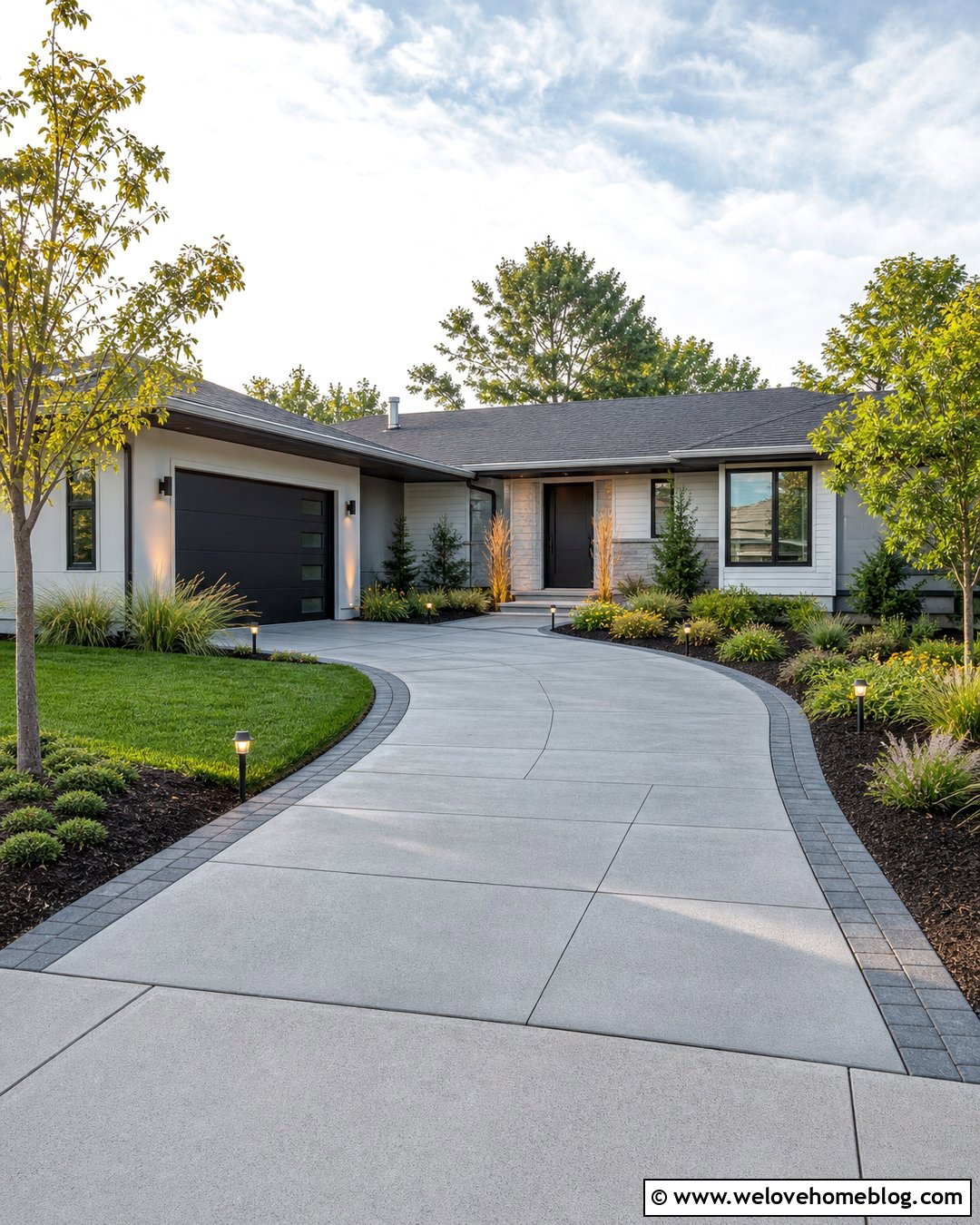
Landscape lighting works best when it supports the driveway design instead of dominating it. Pair a gray poured concrete driveway with a narrow charcoal paver border and low planting beds on both sides. Use compact evergreen shrubs, ornamental grasses, and spreading perennials that will not hide fixtures as they mature. Stagger low path lights through the beds rather than positioning them like an airport runway. Near trees or stone walls, subtle uplights can add depth and help the front yard feel balanced. Keep fixtures safely outside areas used for tires, doors, snow removal, and lawn equipment. During the day, dark metal lights should blend into the planting. After sunset, their placement can reveal the driveway’s curves, entrance, and walkway while preserving a comfortable residential atmosphere.
18. Permeable Paver Driveway With A Rain Garden

A driveway can manage water more thoughtfully while still contributing to curb appeal. Install permeable concrete pavers in a soft gray tone, using a darker paver ribbon to emphasize the driveway’s gently curved shape. Along the lower side, form a shallow rain garden that can receive water from the surrounding landscape when site conditions allow. Plant it with regionally suitable grasses, flowering perennials, and moisture-tolerant shrubs arranged in broad layers. Edge the bed with river rock to create a clear transition from pavers to planting. Keep the main driving and walking areas level, open, and easy to navigate. A raised walkway can connect the driveway to the porch. Because drainage needs vary by property, the complete layout should be planned around soil, grading, utilities, and local requirements.
19. Driveway And Walkway With A Planted Divider
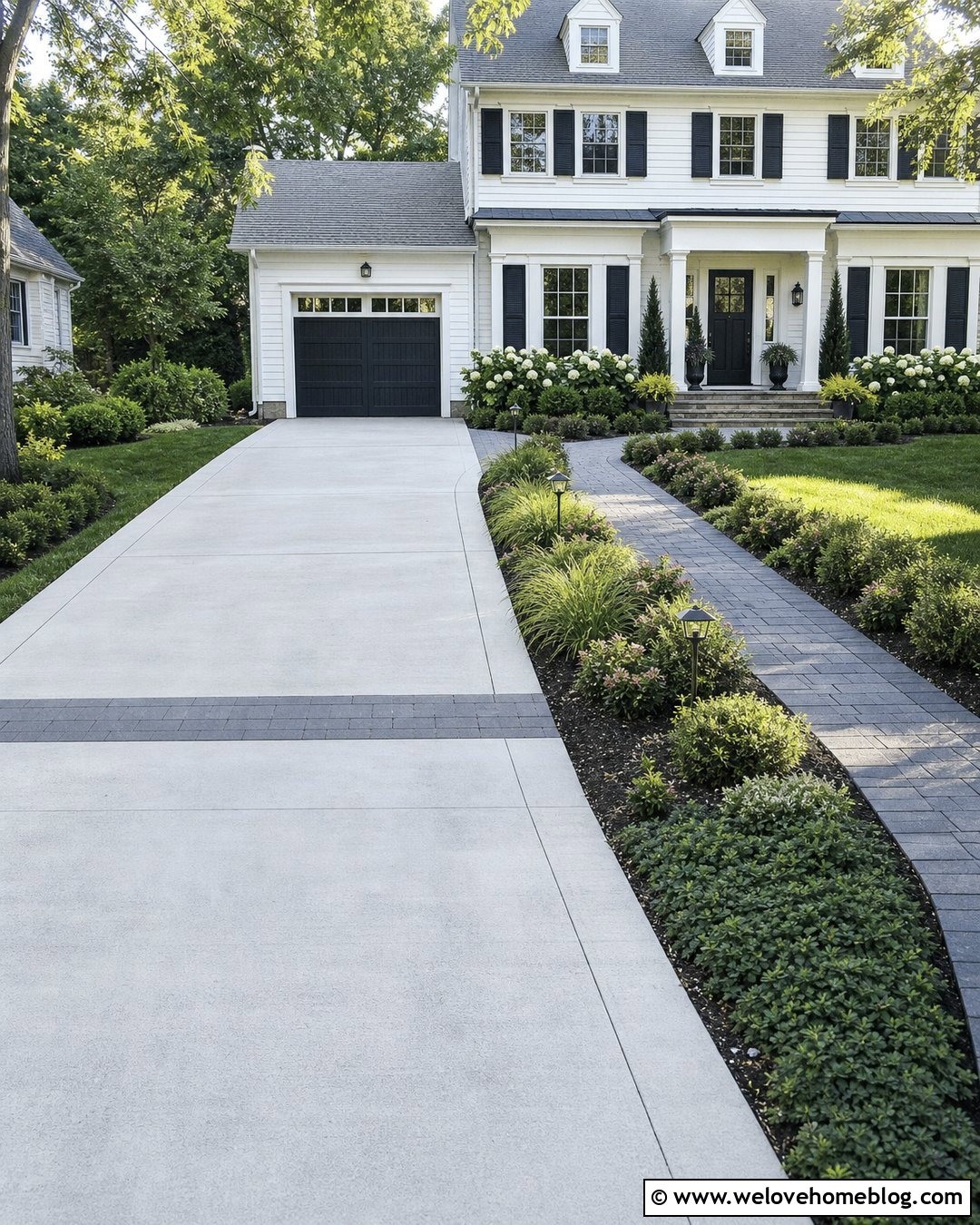
When a driveway sits directly beside the front walk, a narrow garden can make both routes easier to understand. Use smooth light gray concrete for the driveway and smaller charcoal pavers for the walkway. Between them, install a gently curved planting strip containing low grasses, compact flowering shrubs, and evergreen ground cover. The bed should be wide enough for healthy growth but narrow enough to preserve comfortable vehicle access. Add several low lights on the walkway side so visitors can identify the route to the door. Near the garage, taper the bed and create a flush paver crossing for practical access. Repeat the same plants along the outer driveway edge or foundation beds. This visual repetition connects the separate surfaces and prevents the divider from looking like an afterthought.



20. Budget Driveway With Mulch Beds And Metal Edging
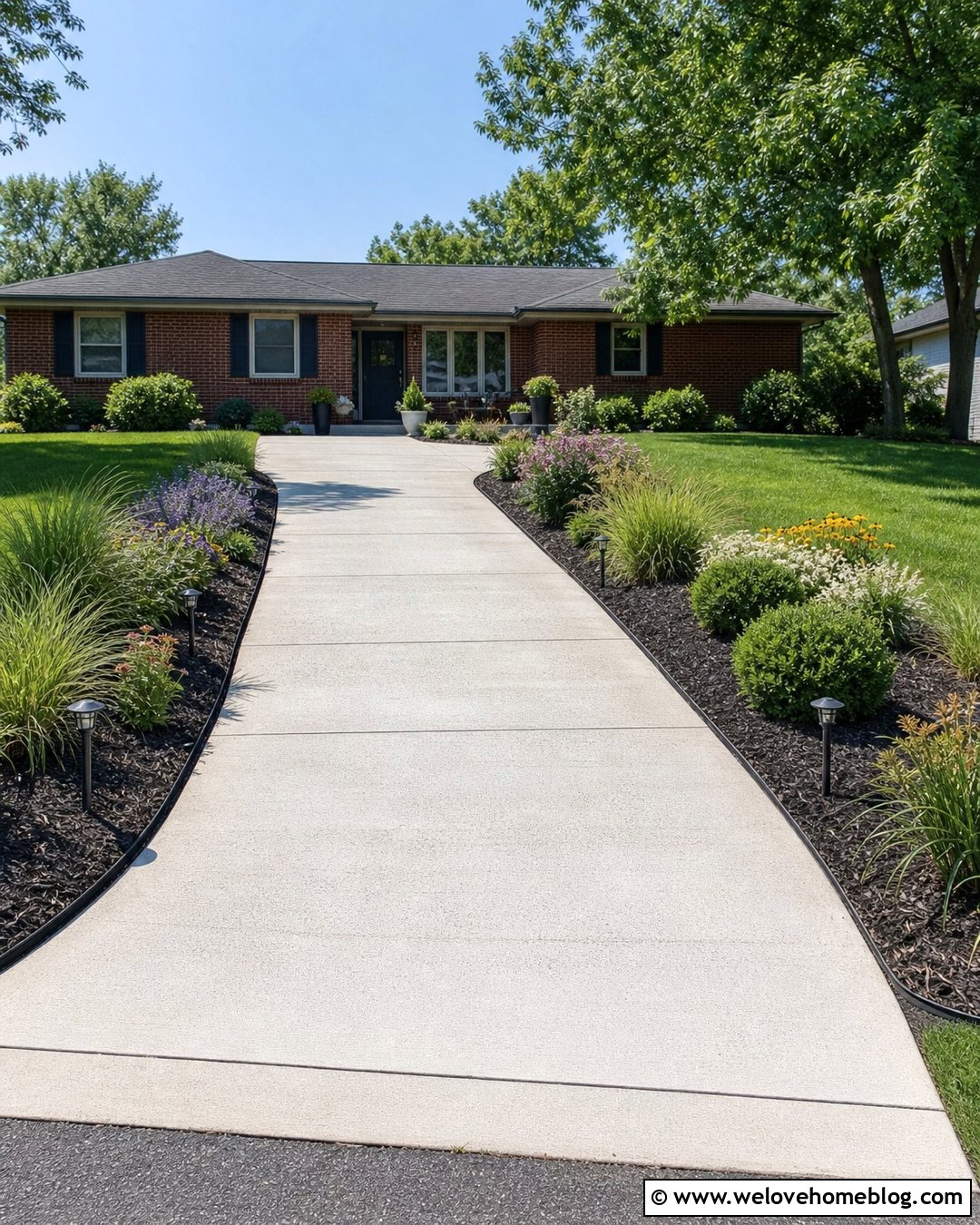
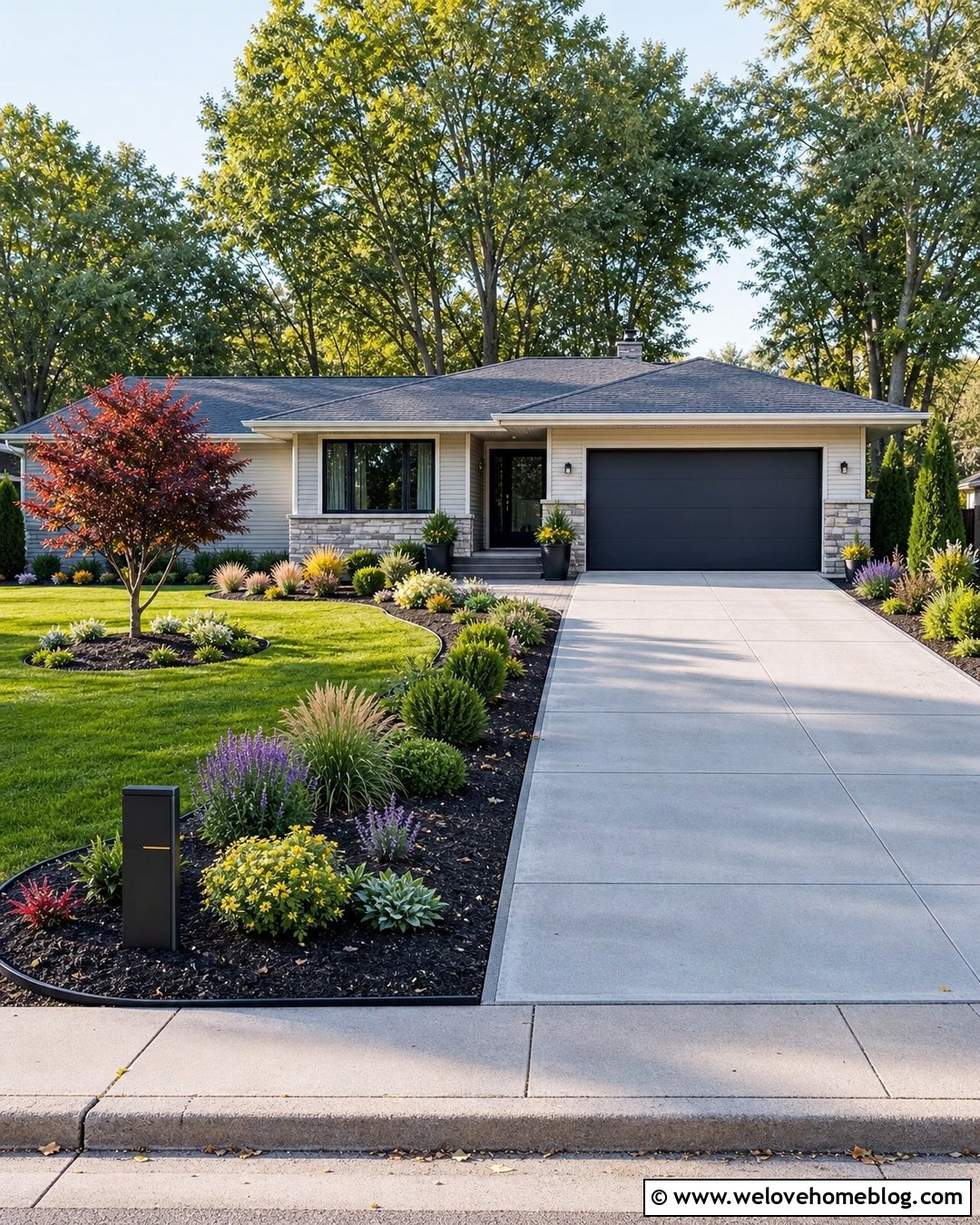
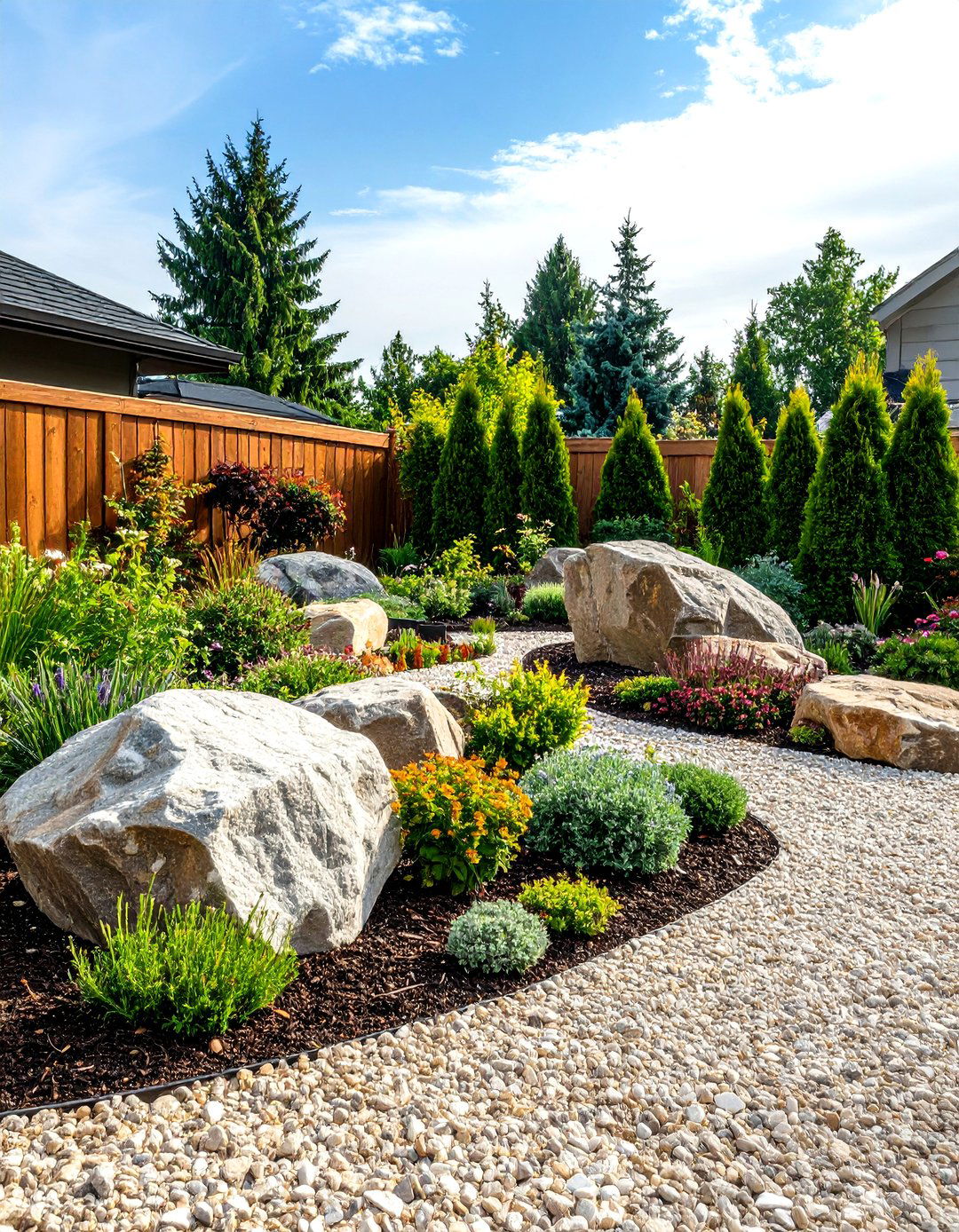
A complete driveway update does not always require replacing the existing surface. Refresh a plain concrete driveway by cleaning the edges and installing simple black metal edging along broad, curved planting beds. Fill the beds with dark mulch and use affordable groups of ornamental grasses, dependable perennials, and small evergreen shrubs. Purchasing fewer varieties in larger quantities usually creates a stronger visual result than collecting many individual plants. Place the largest bed near the house, where it can connect with the porch and foundation landscaping. Near the road, keep the border narrow, low, and easy to maintain. Solar or wired path lights can be added later as the budget allows. The clean edging and repeated planting will make the existing concrete appear more deliberate and better maintained.
Conclusion:
Successful driveway landscaping balances appearance with everyday movement, visibility, drainage, and maintenance. Begin by evaluating the existing driveway material, shape, sunlight, grade, and available planting space. Then choose a limited palette of borders, shrubs, flowers, trees, and ground covers that complements the house. Keep plants low near the street, allow room for mature growth, and preserve comfortable access around parked vehicles. Repeating materials and plant groups helps the driveway, walkway, entrance, and front yard feel connected. You can create a major transformation with a new surface or start gradually with edging and mulch. These **20 How To Landscape A Driveway Ideas** offer adaptable plans for large estates, compact yards, traditional homes, and modern properties.

Related posts:

Leave a Reply