
A clean concrete driveway can make the entire front of a home feel brighter, larger, and more organized. The best designs go beyond a plain slab. They combine a practical concrete finish with intentional joints, crisp borders, balanced landscaping, and a layout that complements the architecture. Smooth light-gray surfaces suit modern homes, while broom finishes, exposed aggregate, and brick edging add subtle character without creating visual clutter. Grass strips, gravel channels, and restrained planting can also soften the hardscape while preserving its neat appearance. Whether you have a compact suburban lot or a wide country property, these 20 Clean Concrete Driveway Ideas offer complete looks that balance durability, curb appeal, and everyday function. Explore the sections below for practical and polished 20 Clean Concrete Driveway Ideas.

1. Light Gray Concrete Driveway With Grass Borders
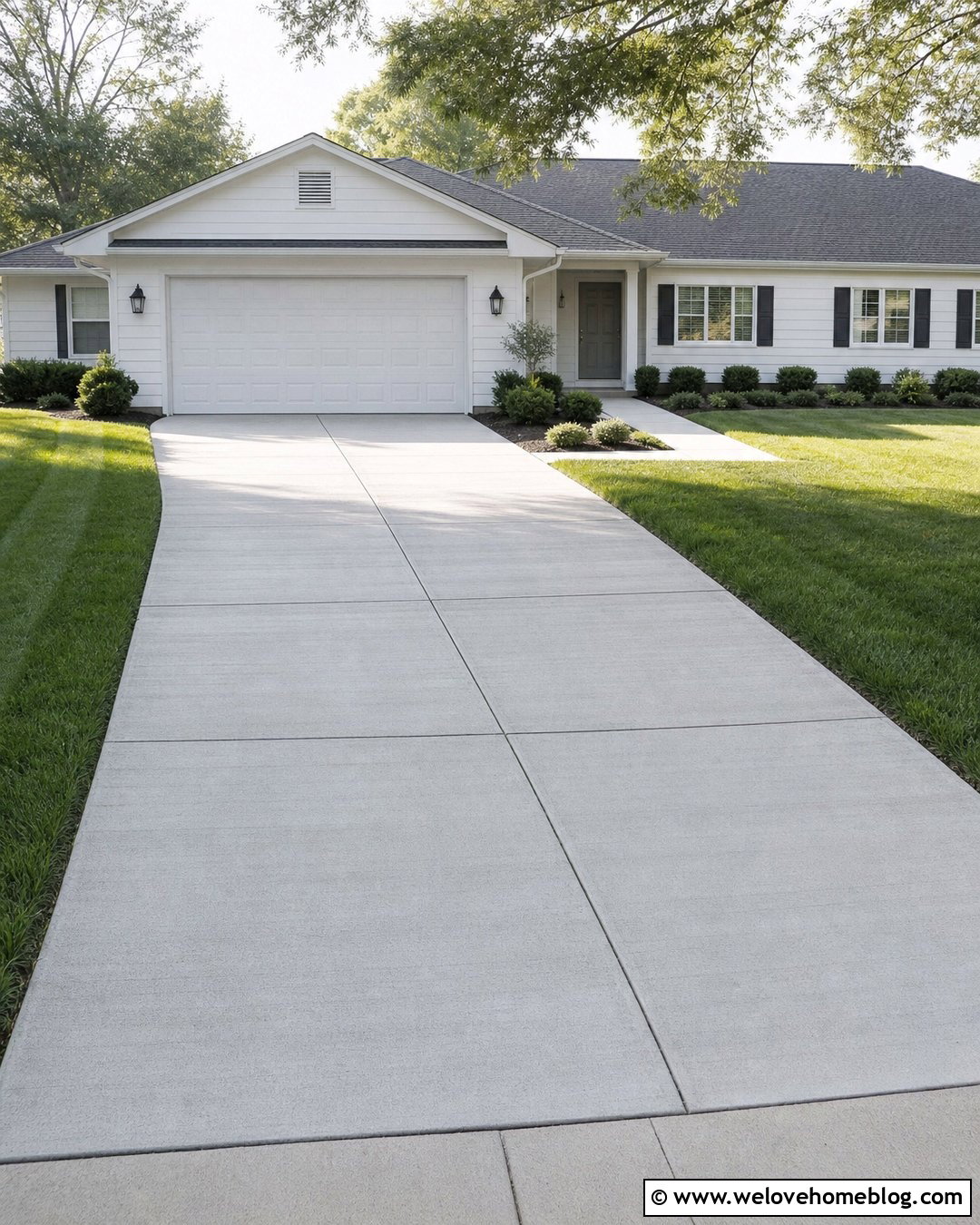
Light-gray poured concrete creates a bright, uncluttered entrance that works especially well with a white ranch or contemporary home. Use a straight driveway layout with evenly spaced control joints to keep the surface visually organized. Narrow grass borders along both sides soften the concrete without hiding its clean edges. Add low evergreen shrubs near the garage and one simple planting bed beside the front walkway. The restrained plant palette helps the driveway feel connected to the yard rather than surrounded by random greenery. Choose a lightly broomed finish for practical surface texture while maintaining a uniform appearance. A flush concrete walkway can branch toward the porch, allowing the driveway and entrance path to read as one cohesive, easy-to-maintain design.
2. Large Concrete Slab Driveway With Gravel Joints
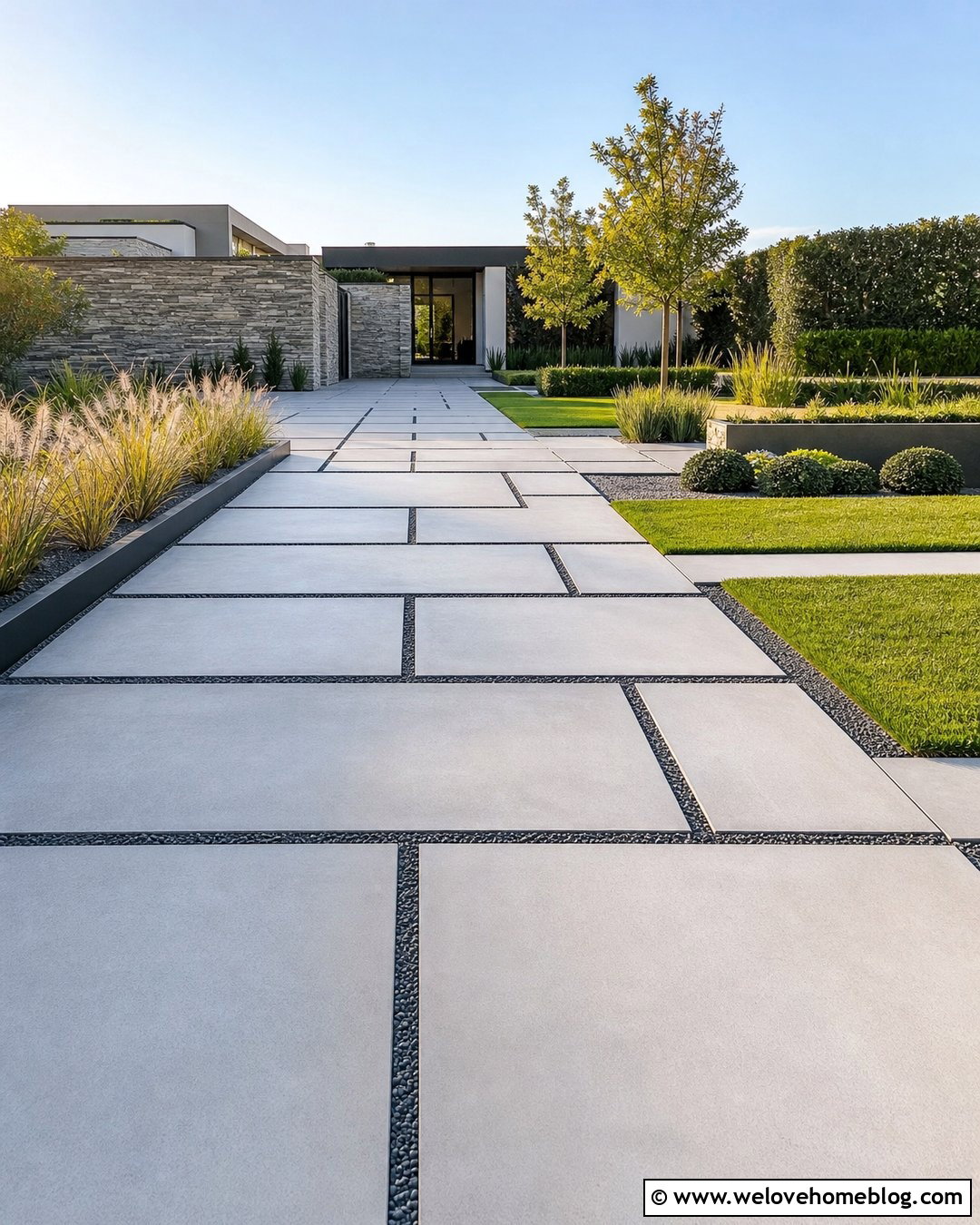
Oversized rectangular concrete slabs separated by narrow gravel channels deliver a crisp, modern look. The gravel creates visible lines that define each slab while adding subtle color and texture. Use pale-gray poured concrete with charcoal crushed stone for strong contrast, or choose cream gravel for a softer appearance. A straight or slightly offset layout works well in front of a flat-roof modern home. Frame the driveway with ornamental grasses, clipped shrubs, and simple rectangular planting beds. Keep the joints narrow enough that the driveway remains easy to walk across and maintain. The gravel channels should be properly contained so loose stones do not scatter across the concrete. This design turns practical joints into an intentional feature while keeping the complete front yard minimal and balanced.
3. White Concrete Driveway With Black Paver Edging
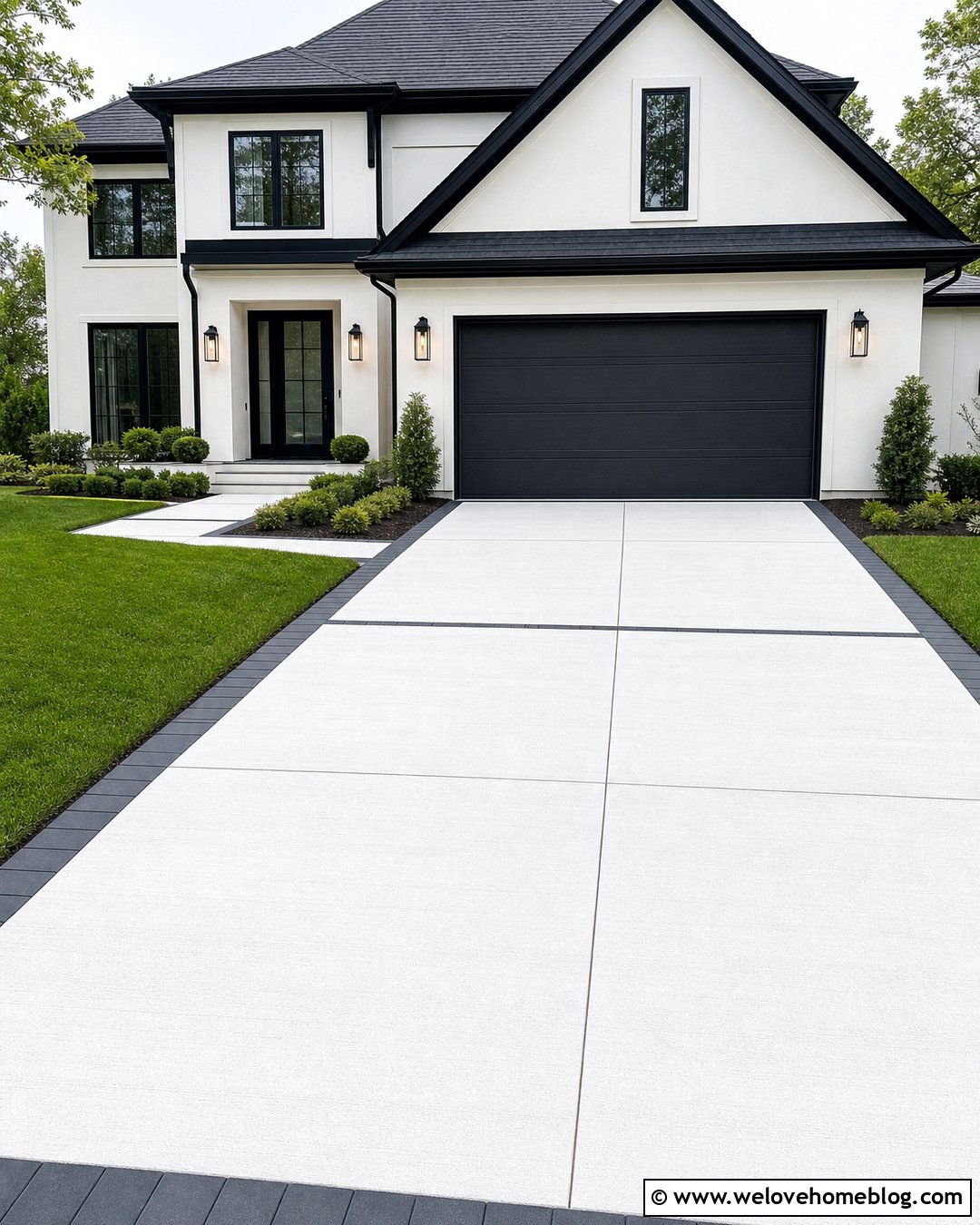
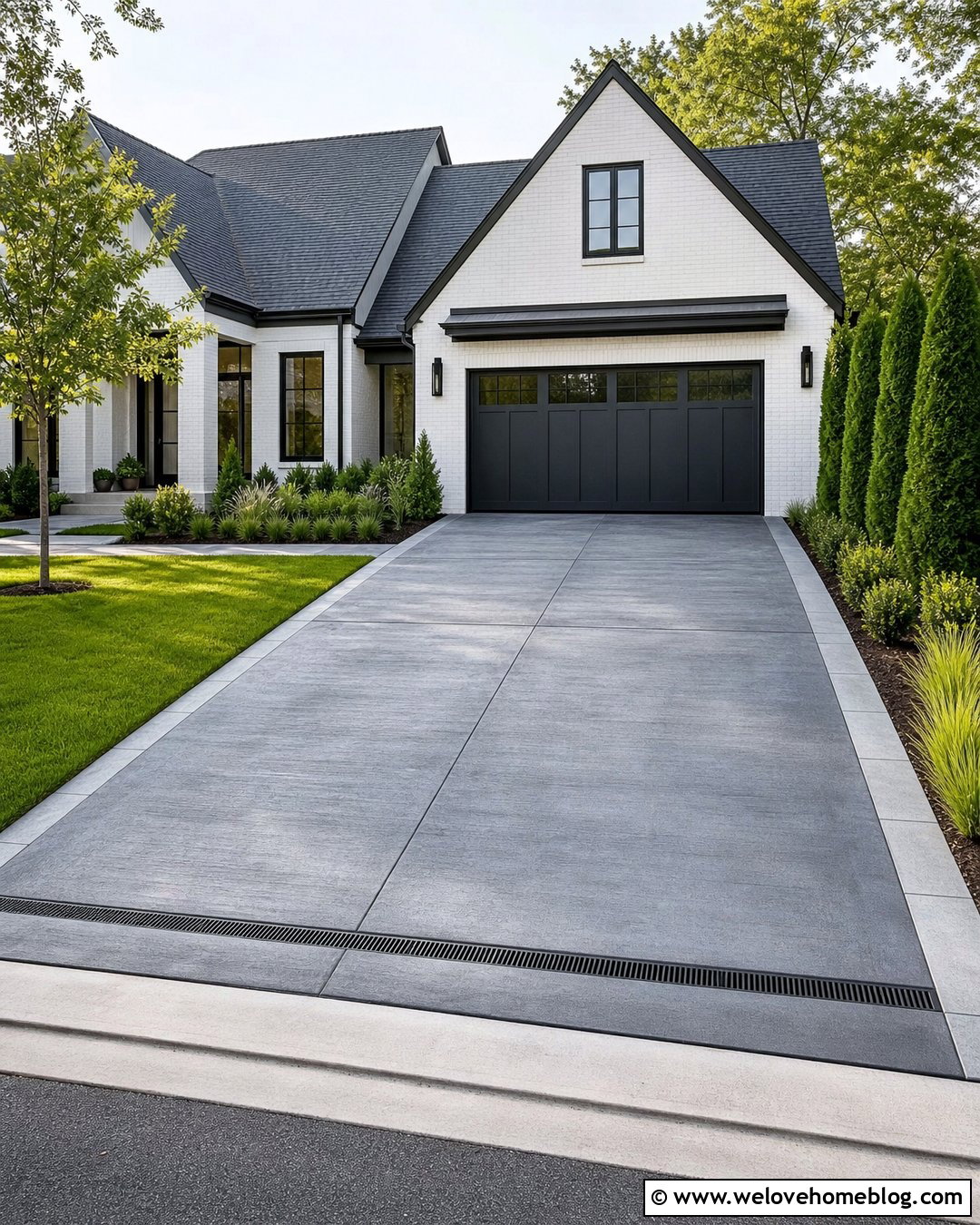
Few combinations look sharper than a pale concrete driveway outlined with dark pavers. Choose white or very light-gray concrete with a fine broom finish, then install a narrow charcoal concrete-paver border along both sides. The dark frame defines the driveway and connects naturally with black window trim, garage doors, or exterior lighting. A straight layout reinforces the clean geometry and suits contemporary, transitional, and updated ranch homes. Use green lawn and low boxwood-like shrubs to soften the strong contrast. Avoid overly colorful planting beds that could compete with the simple palette. At the sidewalk or street, continue the paver border across the driveway as a neat entrance band. This small transition makes the entire driveway look more carefully planned and professionally finished.
4. Broom Finish Concrete Driveway With Picture Frame Border
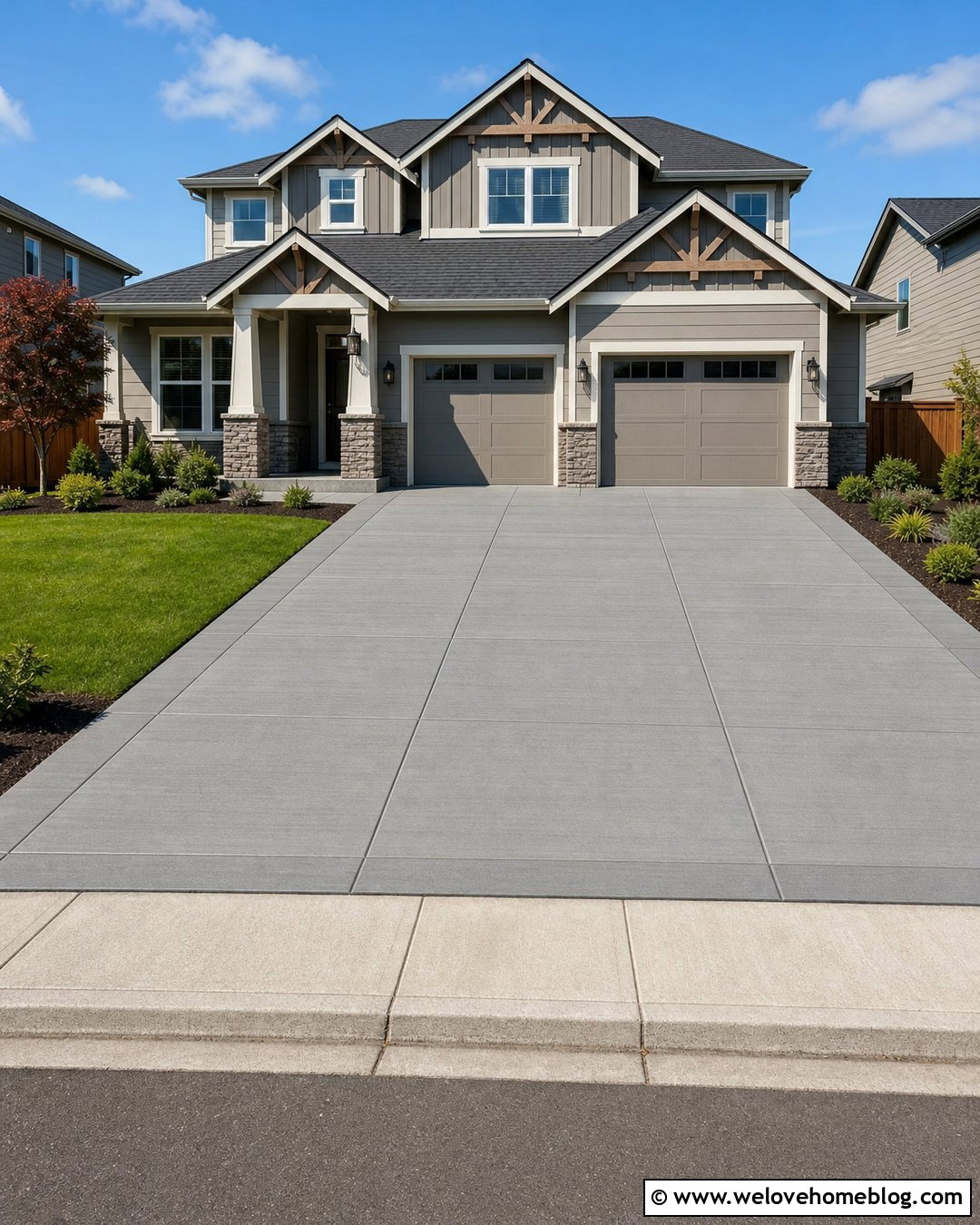
A broom-finished concrete driveway offers understated texture without introducing a busy decorative pattern. Create a picture-frame effect by surrounding the brushed center with a smooth concrete border in the same color. The subtle finish change becomes visible as sunlight moves across the surface, giving the driveway depth while preserving a monochromatic look. A wide, straight layout suits a two-car garage and provides enough space for the border to remain noticeable. Pair it with neatly trimmed lawn, compact foundation shrubs, and a matching concrete walkway. Position control joints symmetrically with the garage doors for better visual order. Broom finishing also creates fine surface lines and practical texture, making it a functional choice for a clean residential entrance. ()
5. Concrete Driveway With Narrow Grass Strips
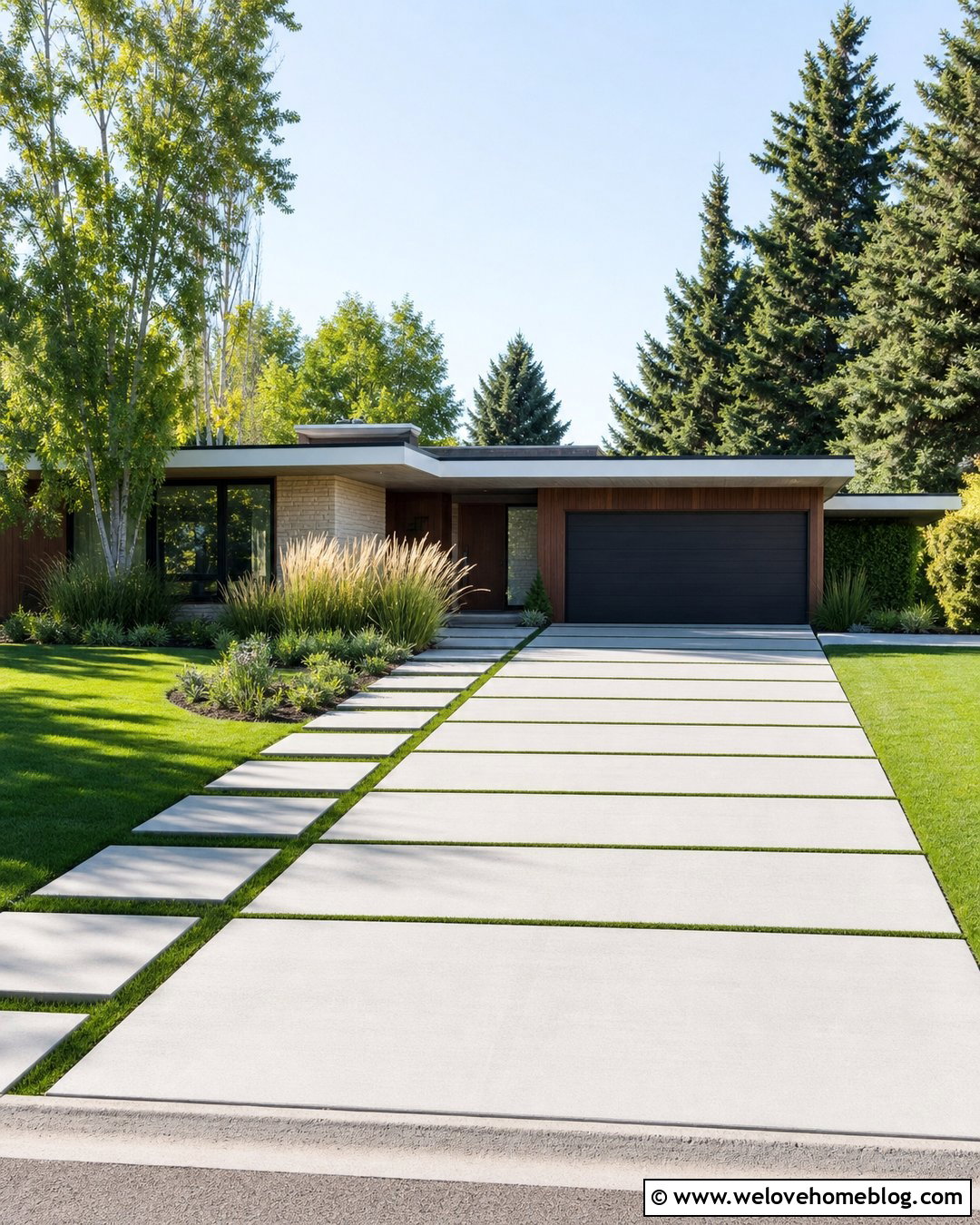
Wide concrete panels divided by narrow grass strips can reduce the visual weight of a large driveway. Use long rectangular sections aligned with the garage doors, keeping the green channels straight and evenly sized. Light-gray poured concrete provides a neutral foundation, while healthy grass creates fresh color and a softer connection to the front lawn. Continue the same geometry through a stepping-slab walkway leading to the porch. This design looks especially natural with a low-profile modern or mid-century home. Grass channels can also absorb some surface runoff when the site and installation are suitable. () Install durable edging beside each planted strip to protect the lines and simplify trimming. The finished driveway should feel structured, green, and open rather than fragmented.
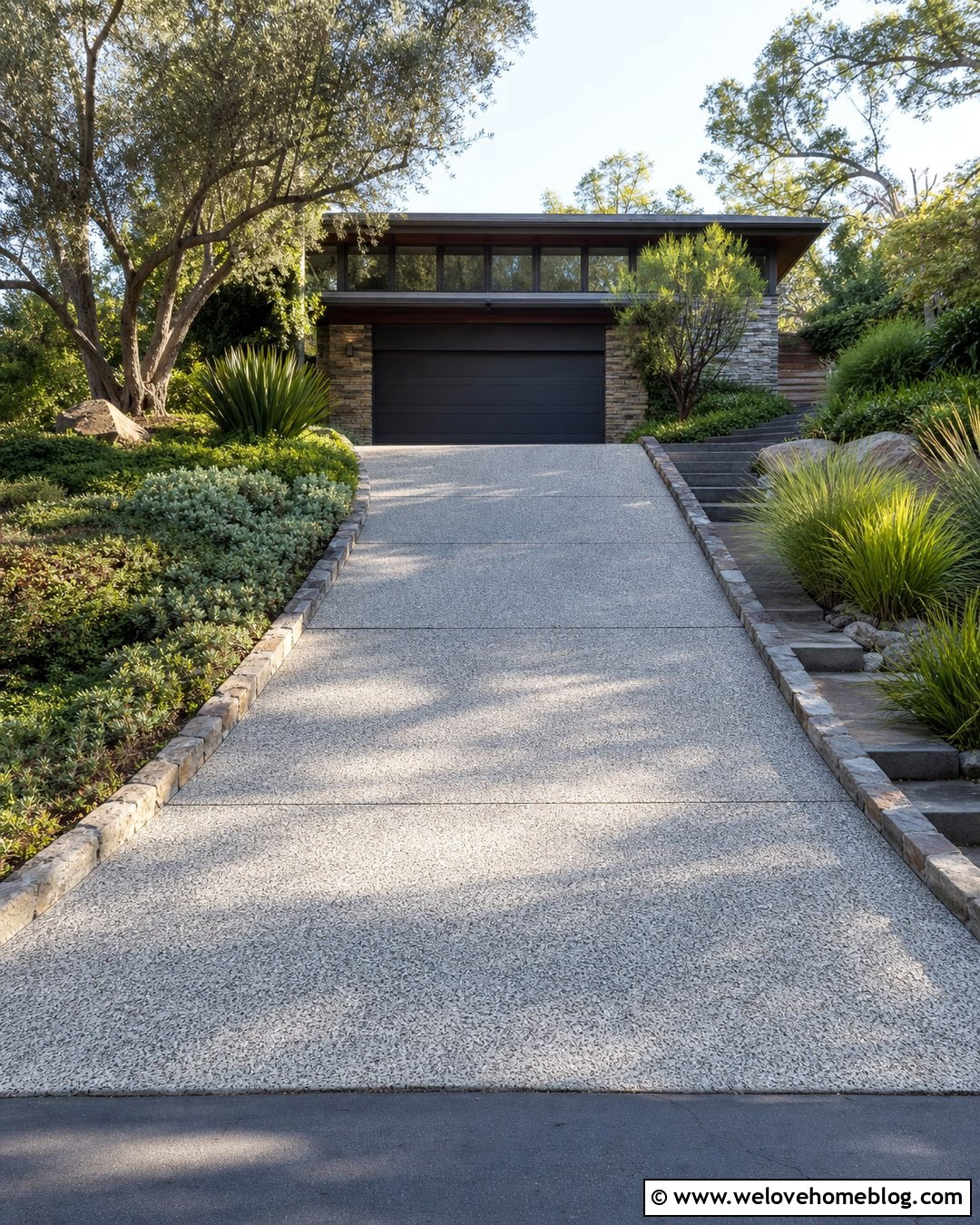
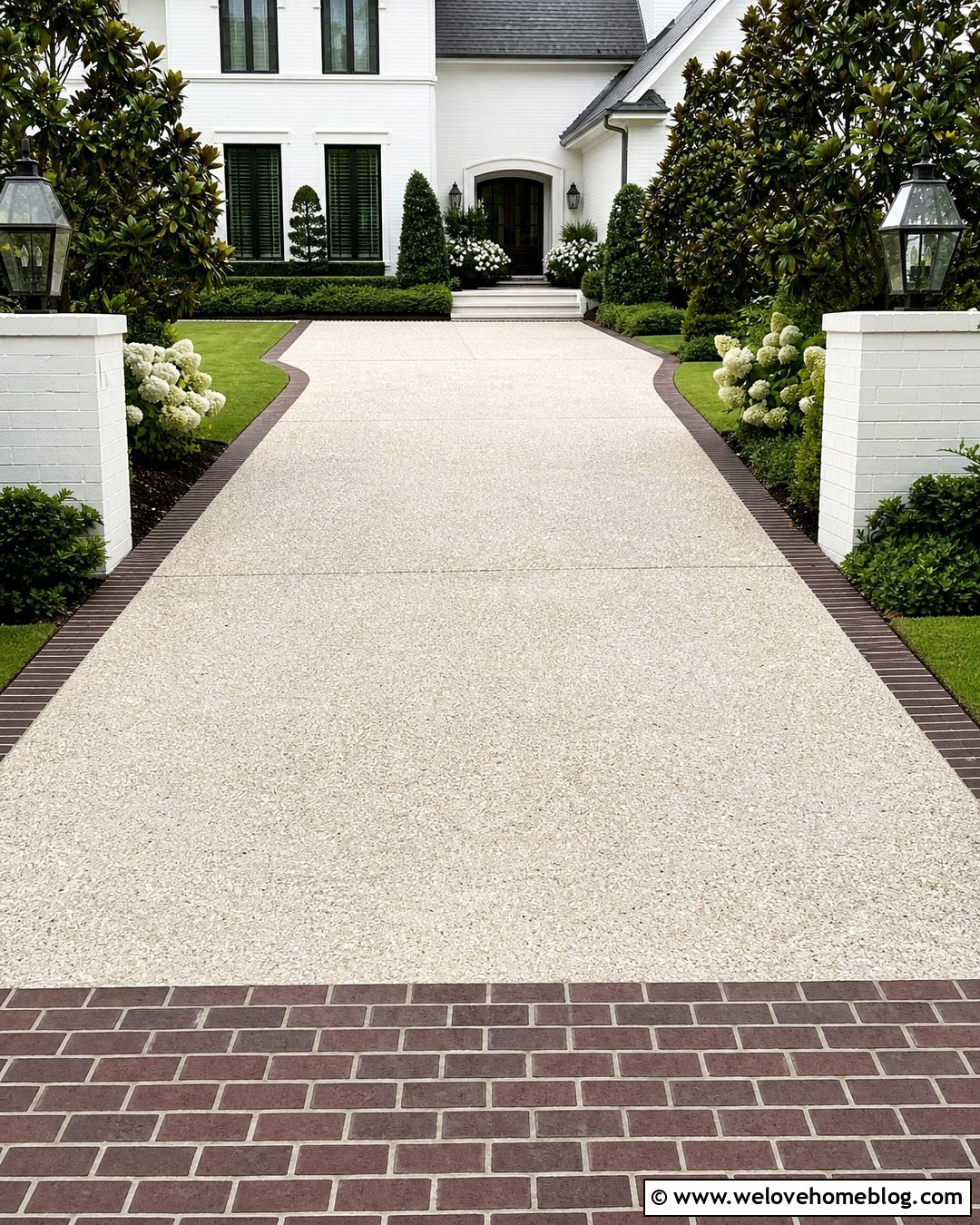
6. Exposed Aggregate Concrete Driveway With Stone Edging
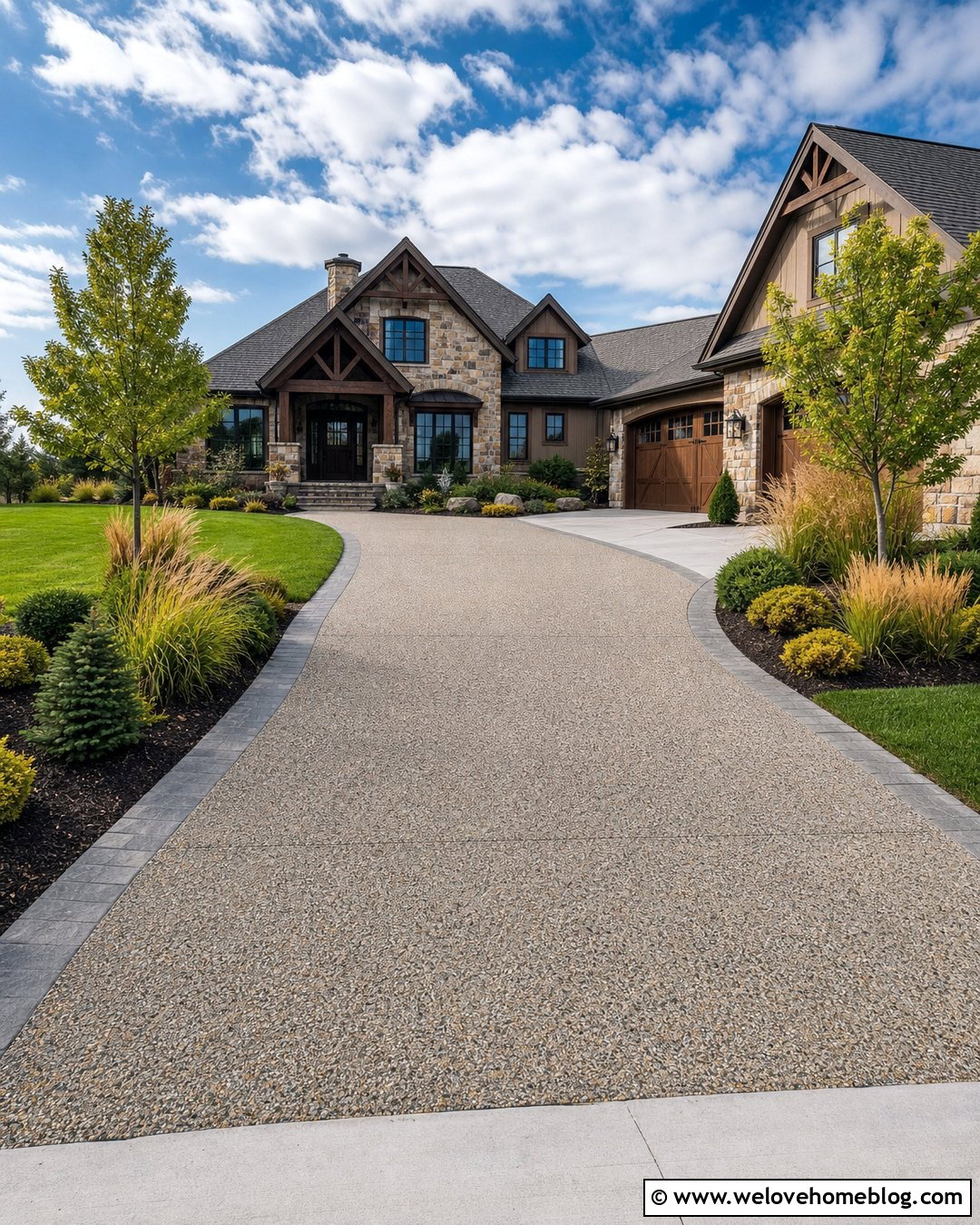
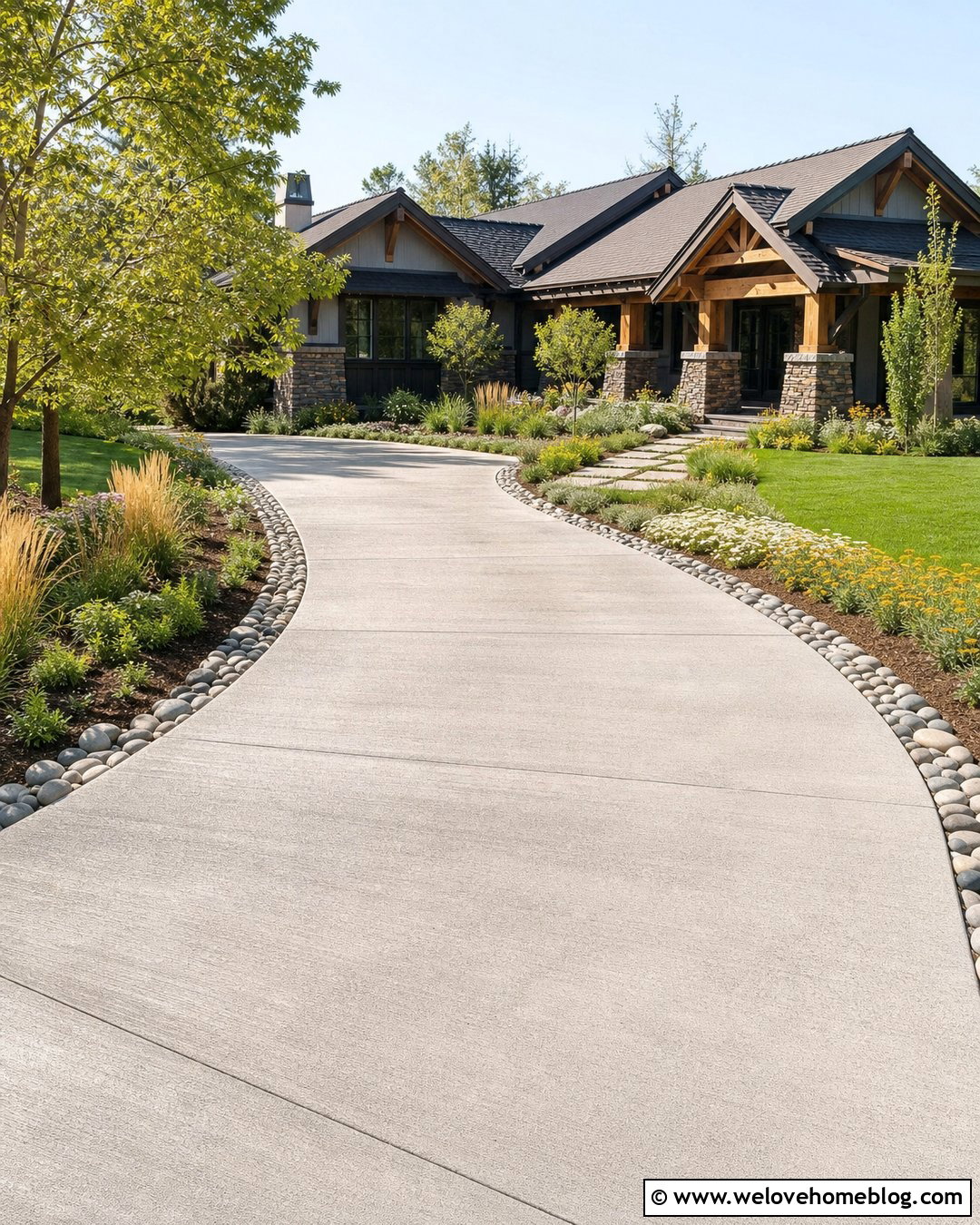
Exposed aggregate brings natural pebble texture to concrete while retaining a solid, continuous driving surface. Select an aggregate blend containing soft gray, cream, and tan stones to complement a craftsman or contemporary home. Use a gently curved driveway with smooth limestone or granite edging following both sides. The curve softens the textured surface and creates room for layered planting beds near the entrance. Choose compact evergreen shrubs, ornamental grasses, and one or two small trees rather than a dense mix of flowers. Exposed aggregate can provide a durable, slip-resistant finish when correctly specified and installed. () A plain poured-concrete apron near the garage can create a quiet transition. Together, the natural stone edging, curved shape, and simple landscaping produce a clean but less formal driveway.
7. Concrete Driveway With Brick Ribbon Border
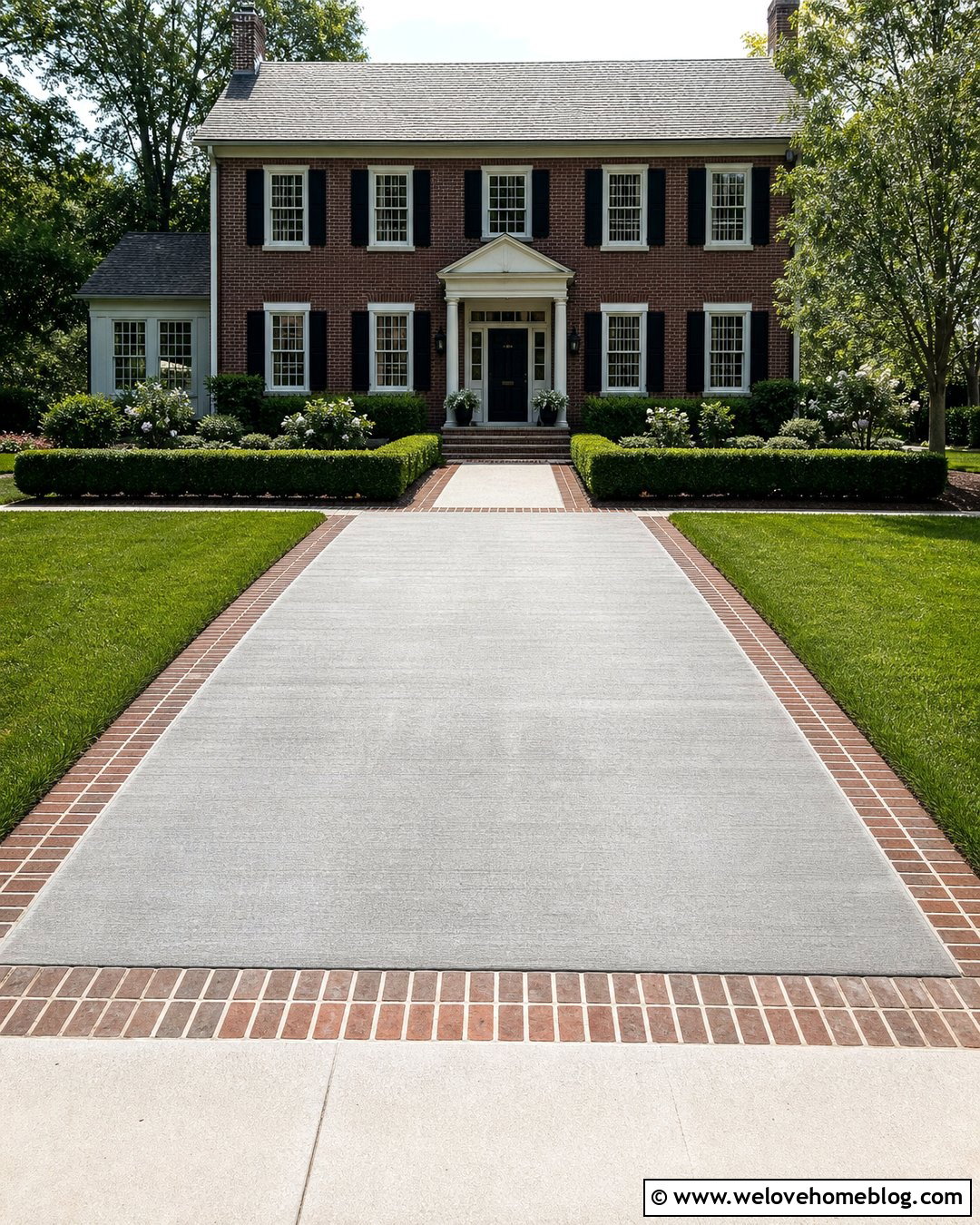
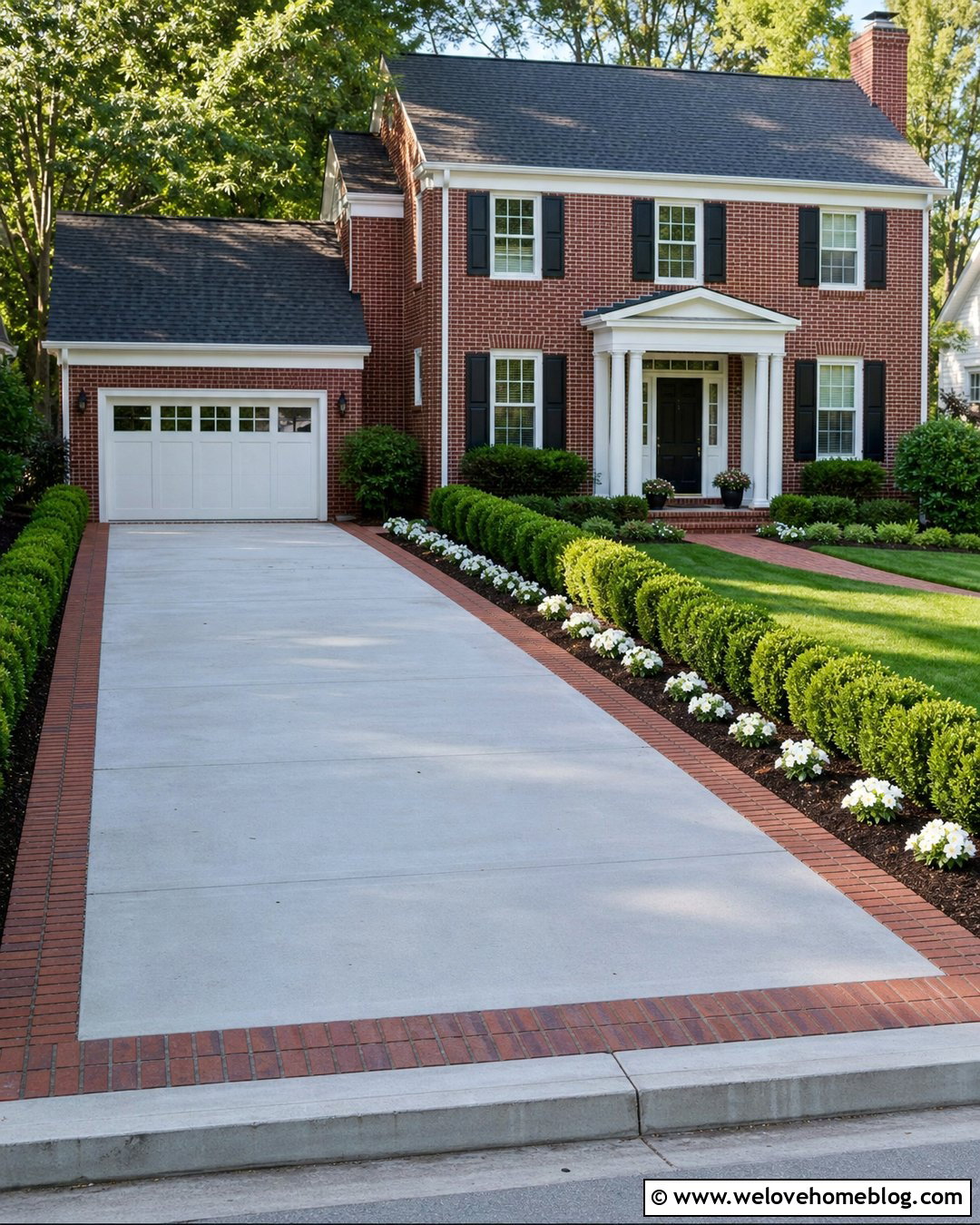
A narrow brick ribbon adds warmth to a simple concrete driveway without overwhelming the design. Start with medium-gray broom-finished concrete arranged in large rectangular panels. Place red-brown or charcoal brick pavers along the edges and repeat the material in one band near the street. This creates a clear entrance and helps connect the driveway to brick details on a colonial, traditional, or craftsman facade. Keep the driveway straight, with symmetrical lawn panels and low hedges on either side. A brick-edged concrete walkway can continue toward the porch for a coordinated appearance. Select brick colors already present on the house rather than adding an unrelated shade. The result feels established and welcoming while remaining cleaner and more affordable-looking than an entire driveway covered in decorative masonry.
8. Concrete Driveway With Minimal Desert Landscaping
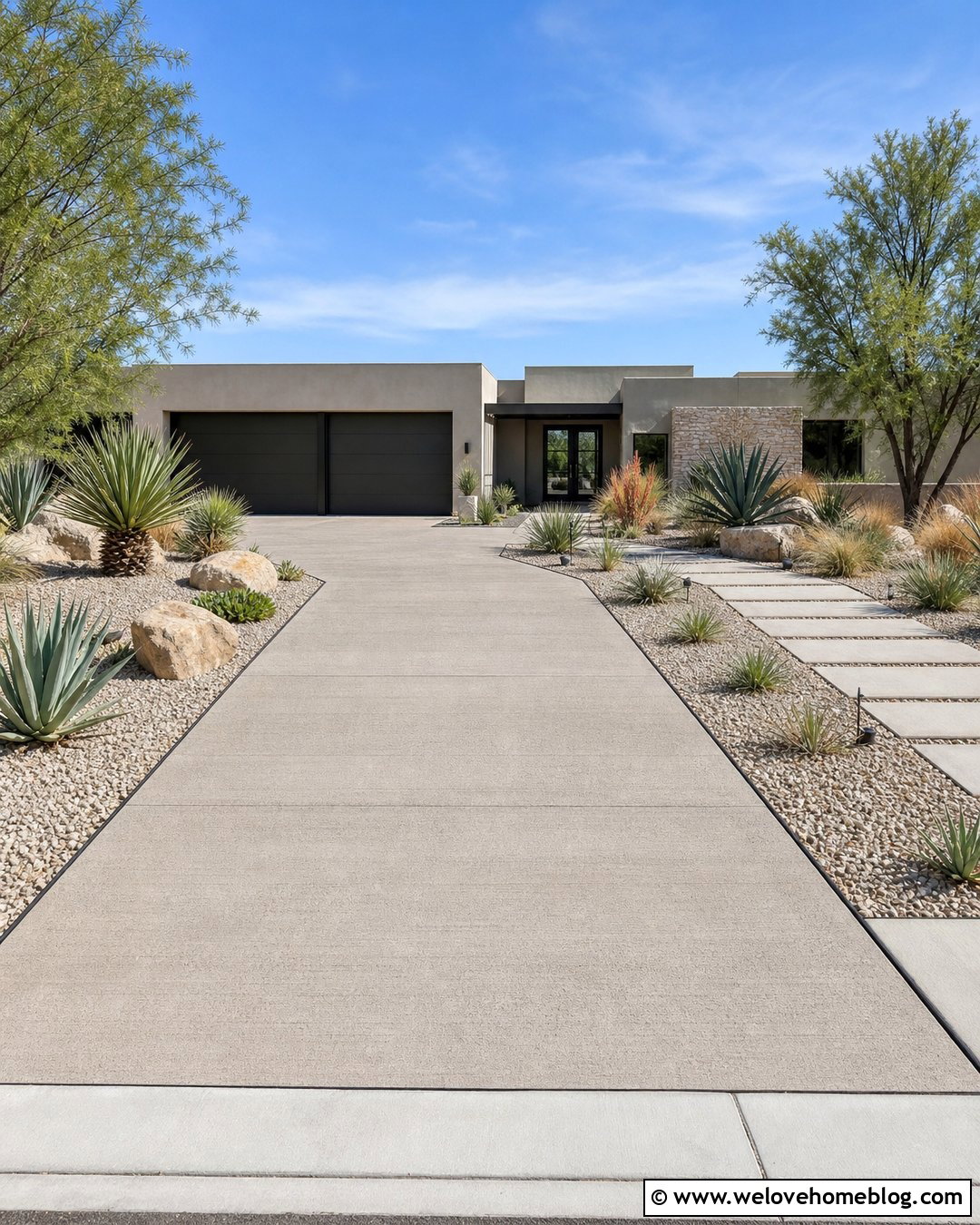
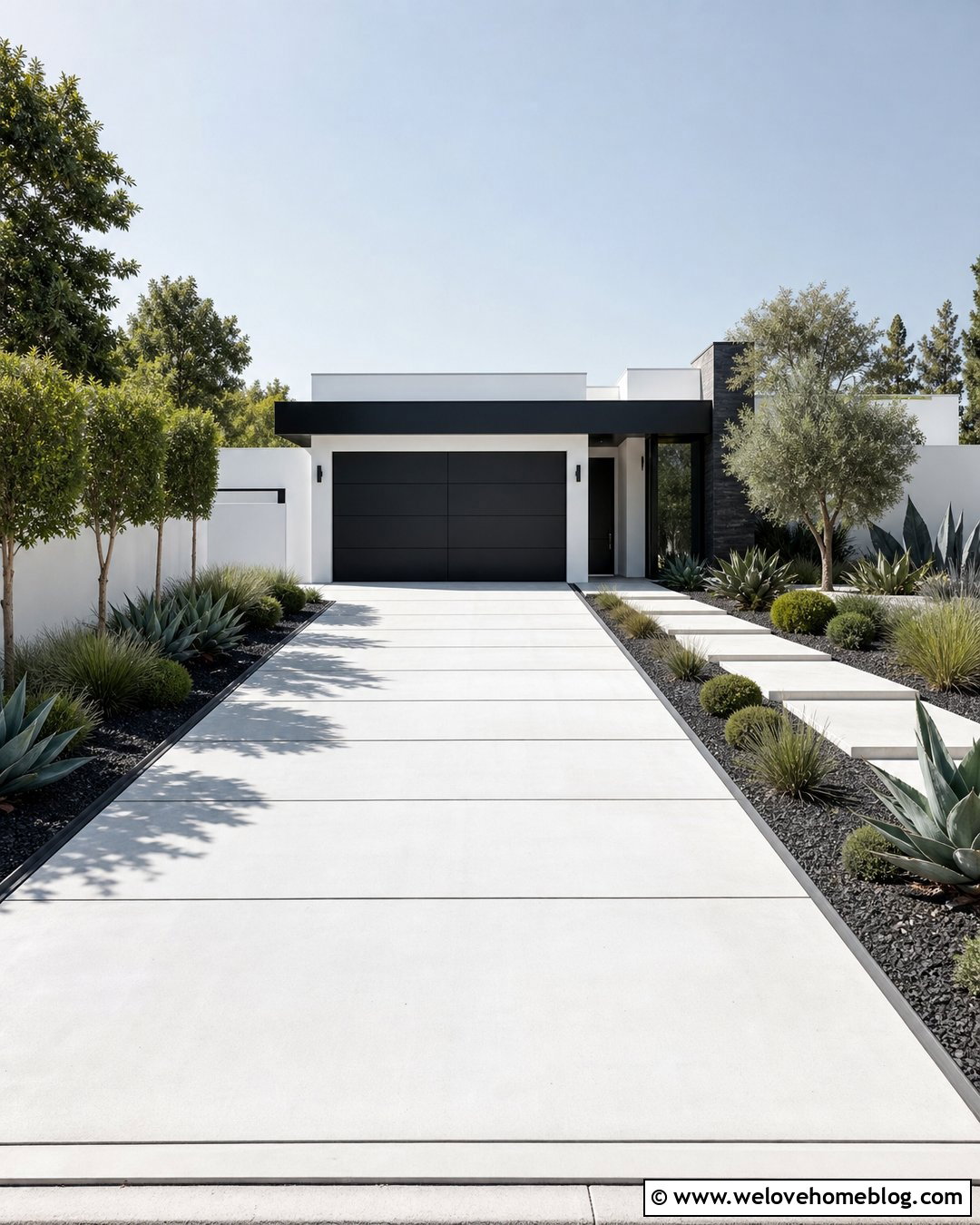
In a dry climate, a clean concrete driveway can become the organized center of a low-water front yard. Use warm light-gray poured concrete with a smooth border and a subtle broomed center. A straight or gently angled driveway looks sharp beside a flat-roof stucco home. Replace traditional lawn borders with pale gravel beds containing agave, yucca, compact desert grasses, and a few sculptural boulders. Maintain generous empty space between plants so the landscape feels intentional rather than crowded. Dark steel edging can separate the gravel from the concrete and reinforce the modern lines. Choose a matching concrete walkway made from large rectangular slabs. The cool concrete tone, warm gravel, and restrained planting palette create an attractive contrast while supporting a practical, low-maintenance front yard.
9. Curved Concrete Driveway With Low Hedge Borders
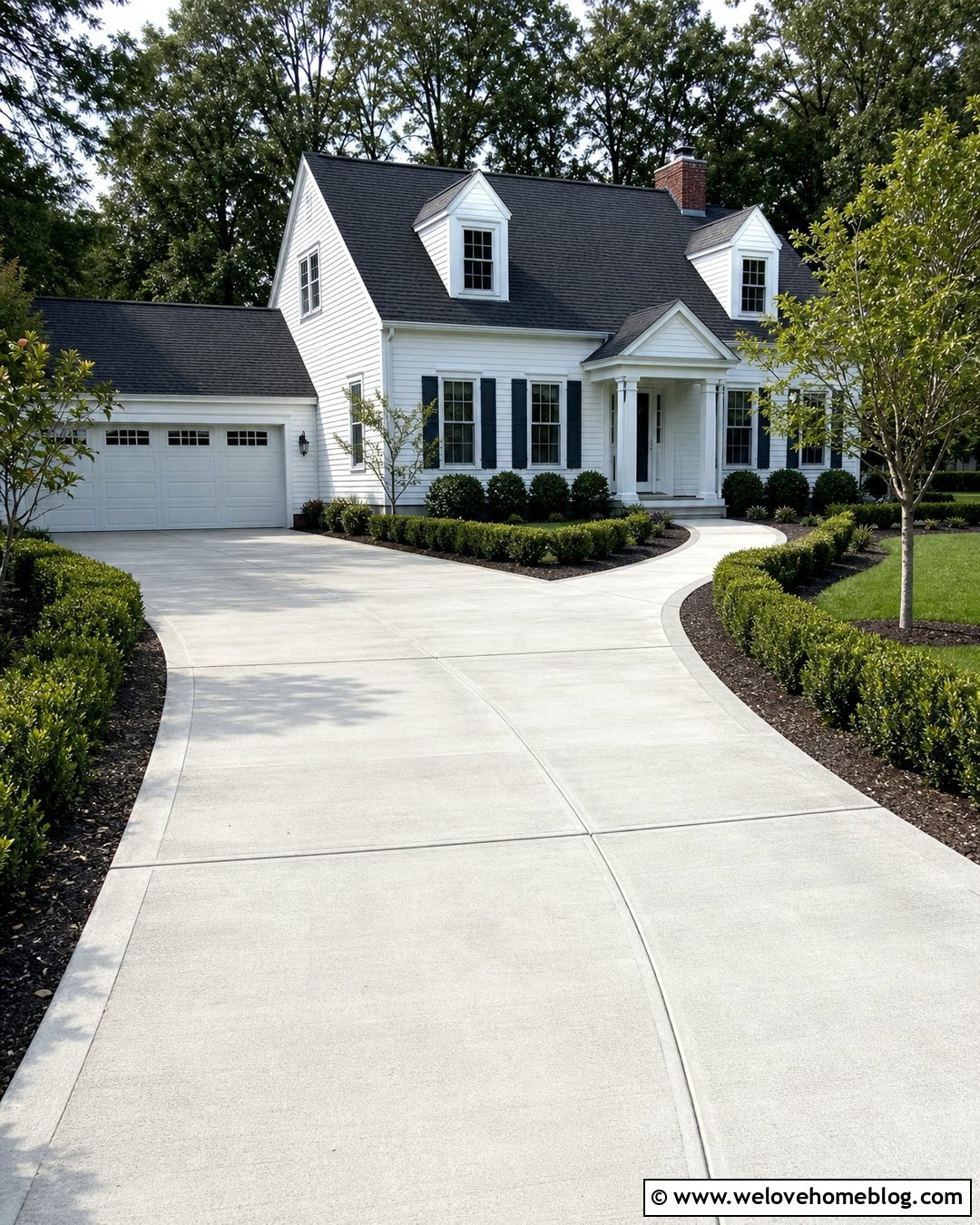
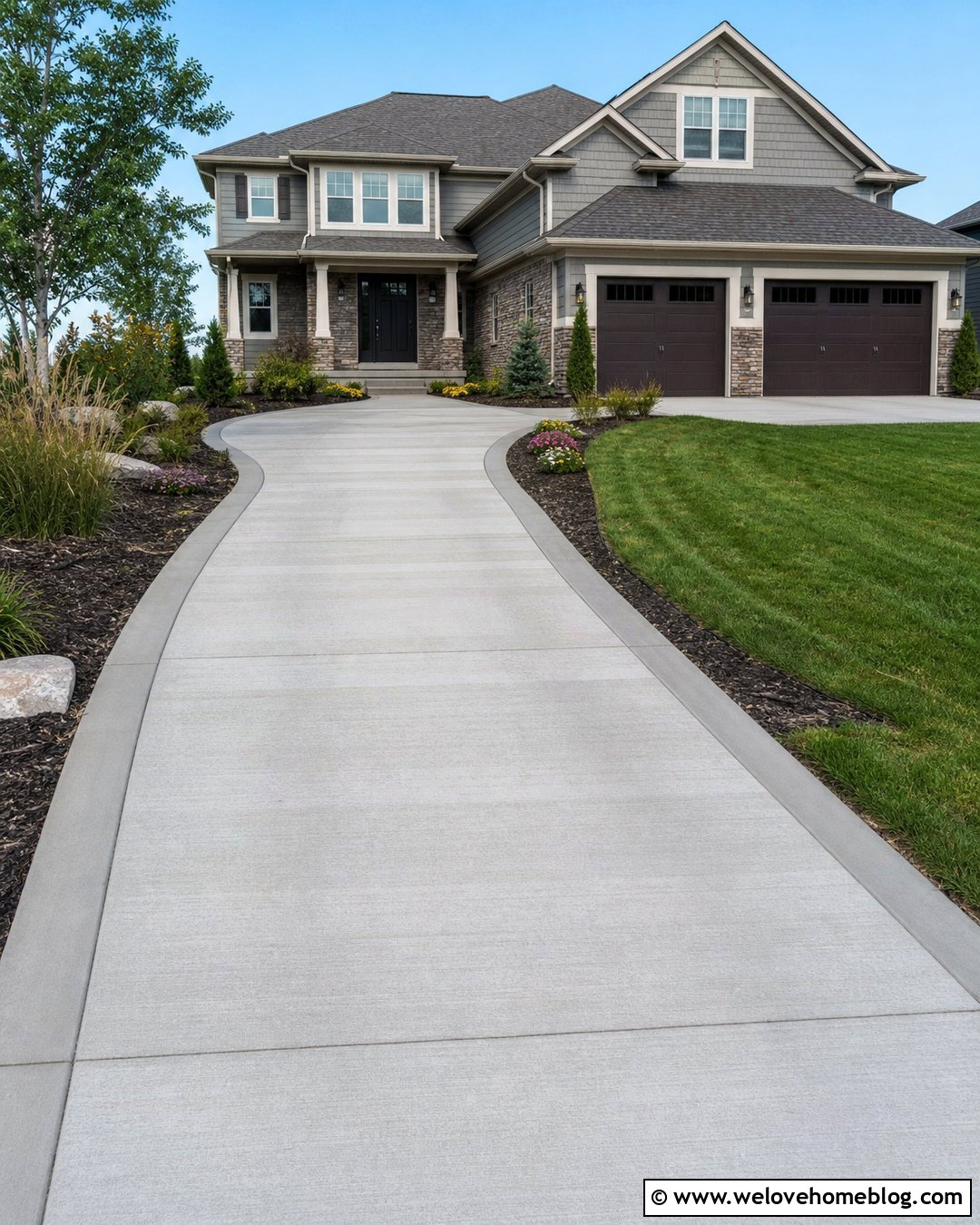
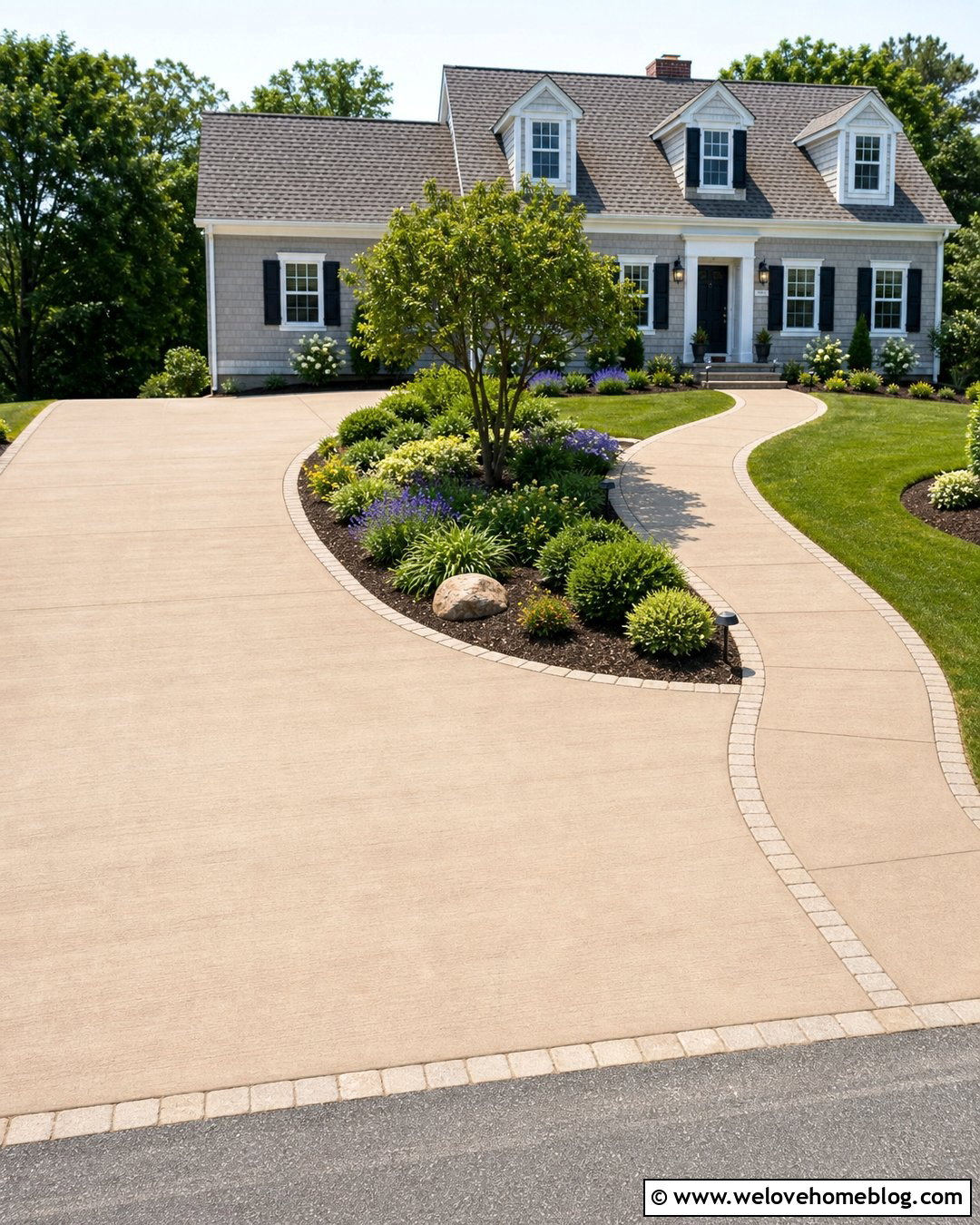
A gentle curve can make a longer concrete driveway feel graceful without becoming elaborate. Choose uniform light-gray concrete with clean radial joints that follow the direction of the curve. Border the driveway with low, clipped hedges placed behind narrow mulch beds, allowing the crisp concrete edges to remain visible. A row of small ornamental trees can guide the view toward a colonial, Cape Cod, or traditional two-story home. Keep plants consistent on both sides when the property has a formal facade. Near the garage, widen the driveway gradually instead of creating an abrupt parking pad. A curved walkway can branch toward the front door using the same concrete finish. This coordinated layout creates movement through the landscape while maintaining the order and simplicity associated with a clean driveway design.
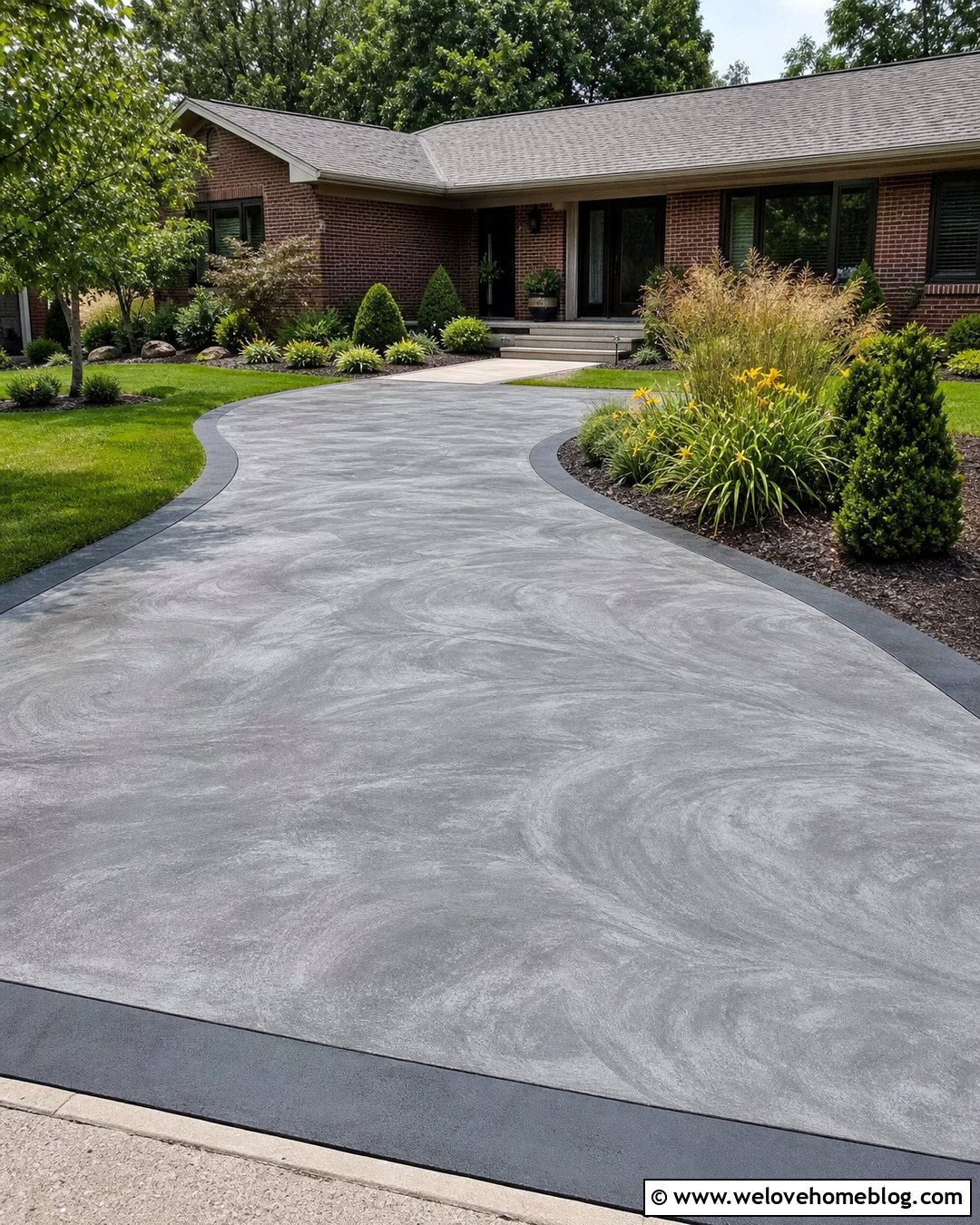
10. Concrete Driveway With Charcoal Control Joints
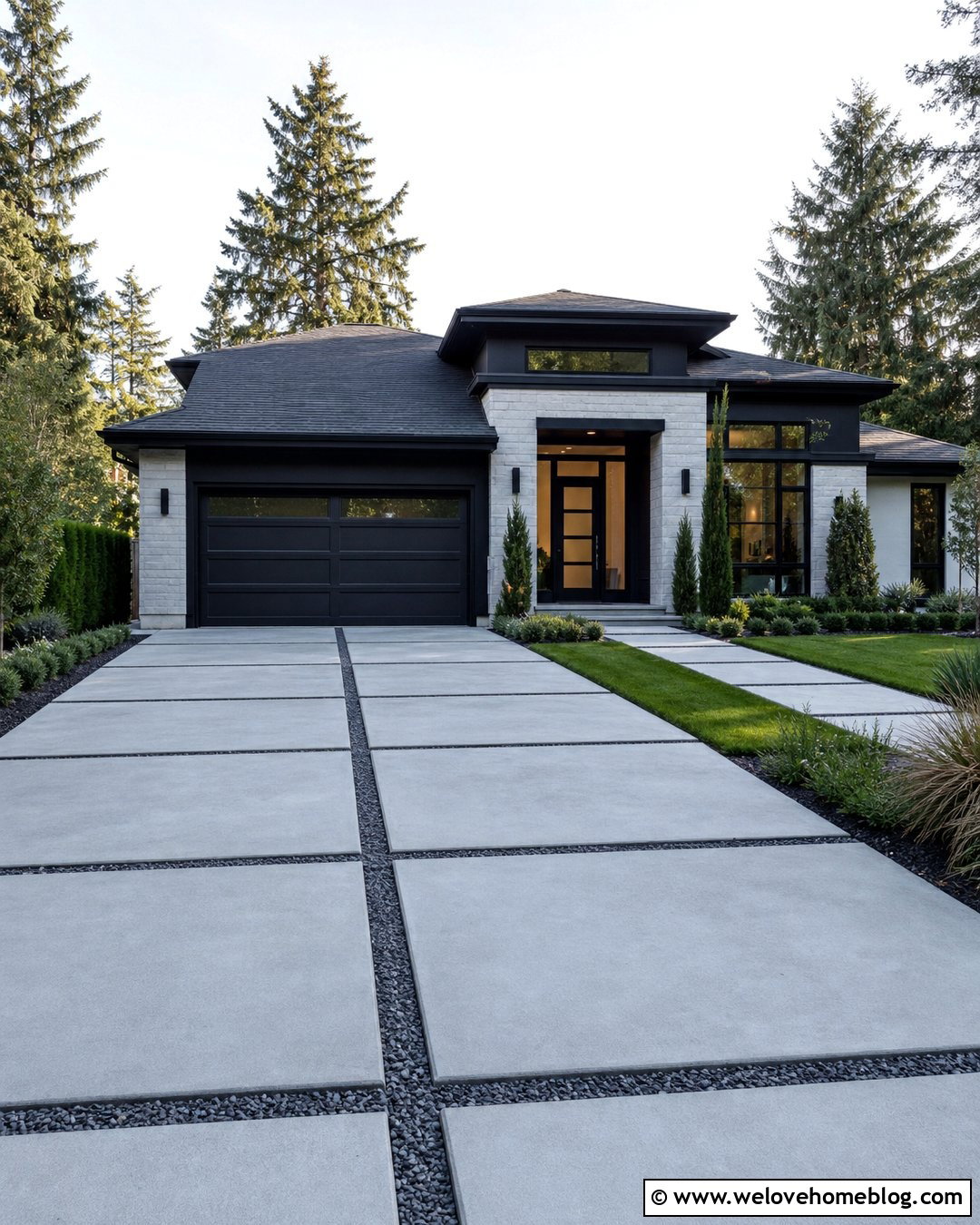
Control joints can become part of the visual design rather than lines that homeowners try to hide. Arrange medium-gray poured concrete in a consistent square or rectangular grid, then emphasize the joints with narrow charcoal inserts or dark decorative stone channels. Align the grid with the garage doors, facade panels, and walkway whenever possible. This approach works particularly well with modern homes featuring black trim and geometric architecture. Surround the driveway with flat lawn panels, low evergreen masses, and rectangular beds of ornamental grass. Keep the border flush so nothing interrupts the clean surface. A dark entrance band near the curb can repeat the joint color and visually anchor the driveway. The finished space feels detailed and architectural, yet the limited palette prevents it from looking overly decorative.
11. Concrete Driveway With Cobblestone Entrance Apron
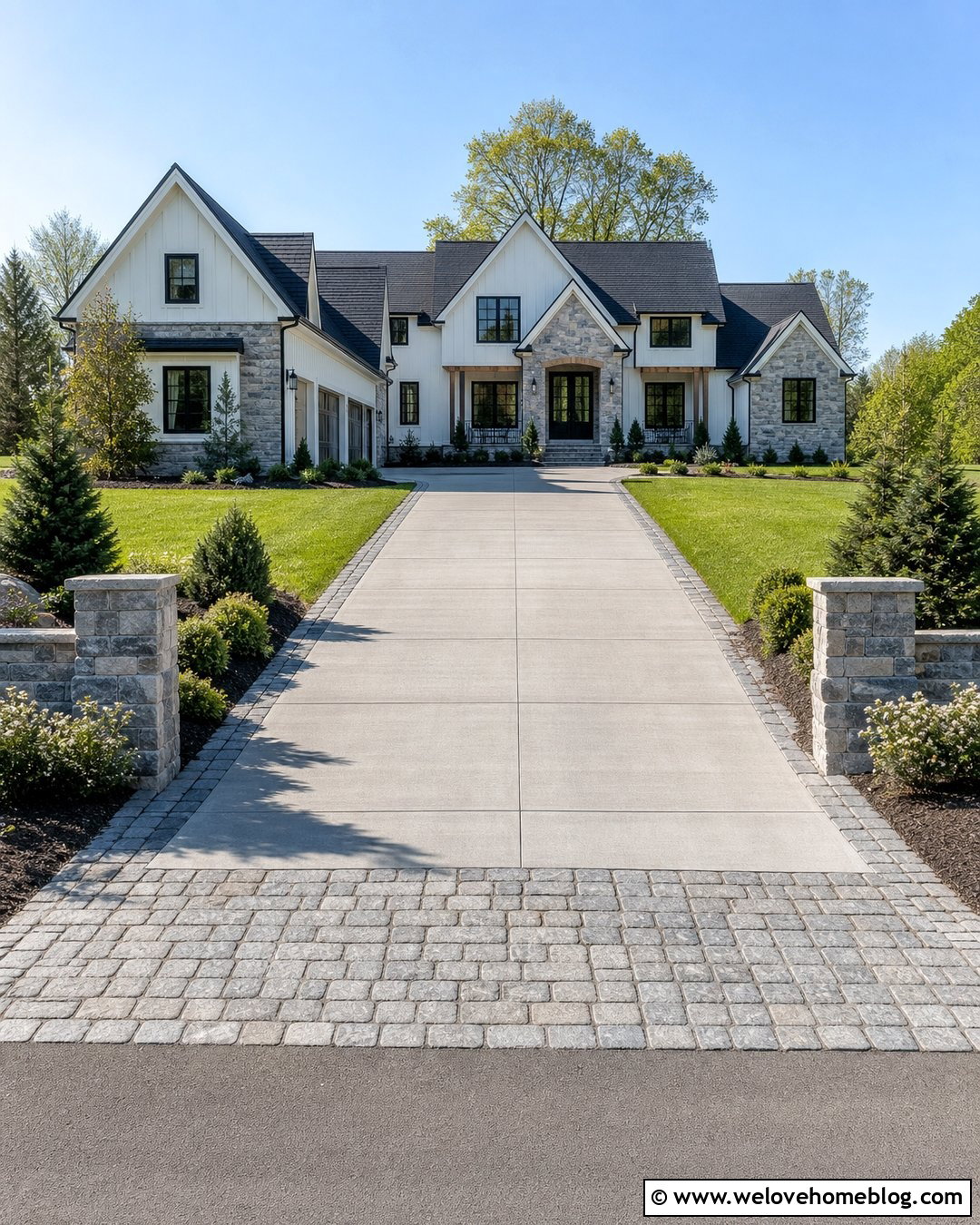
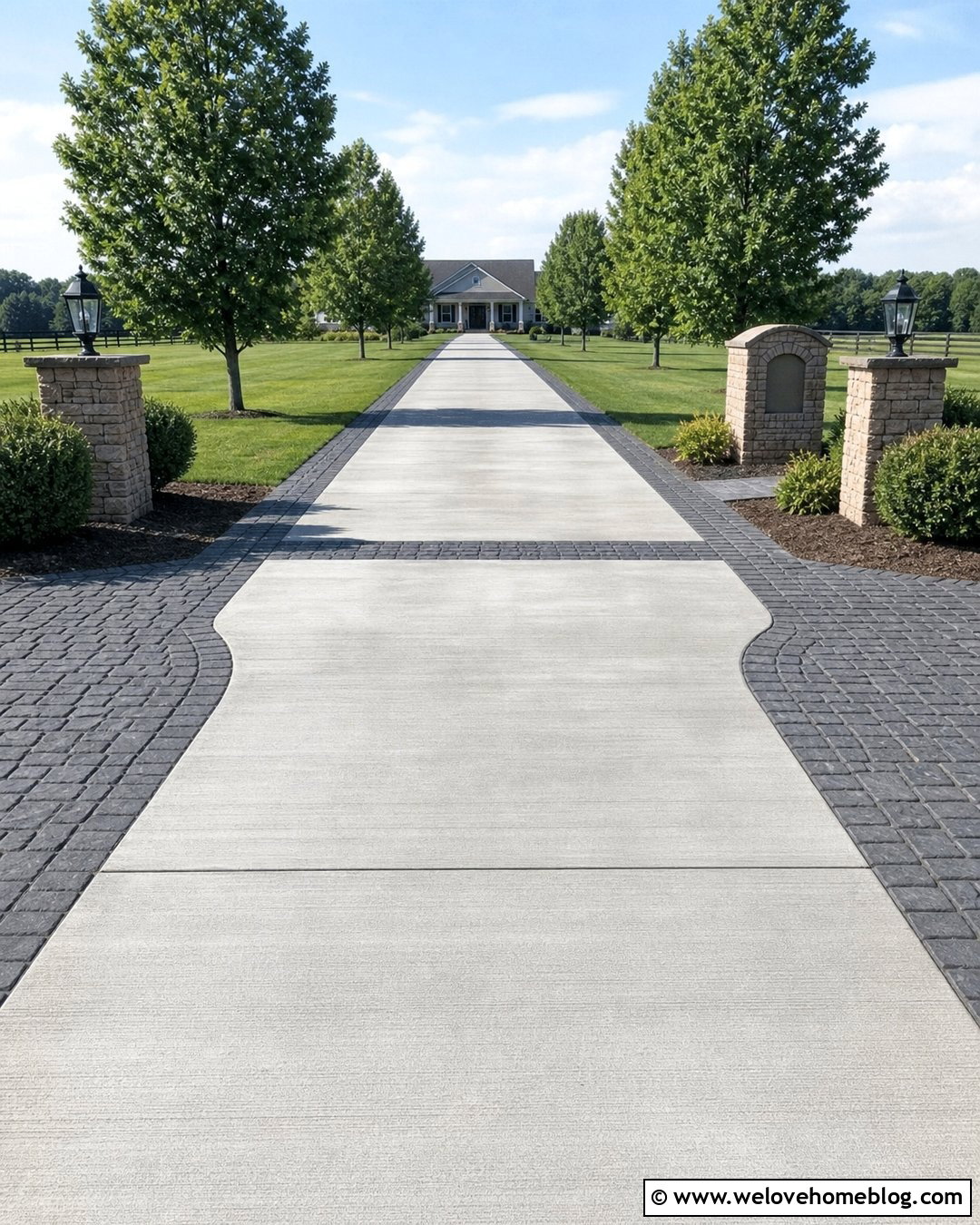
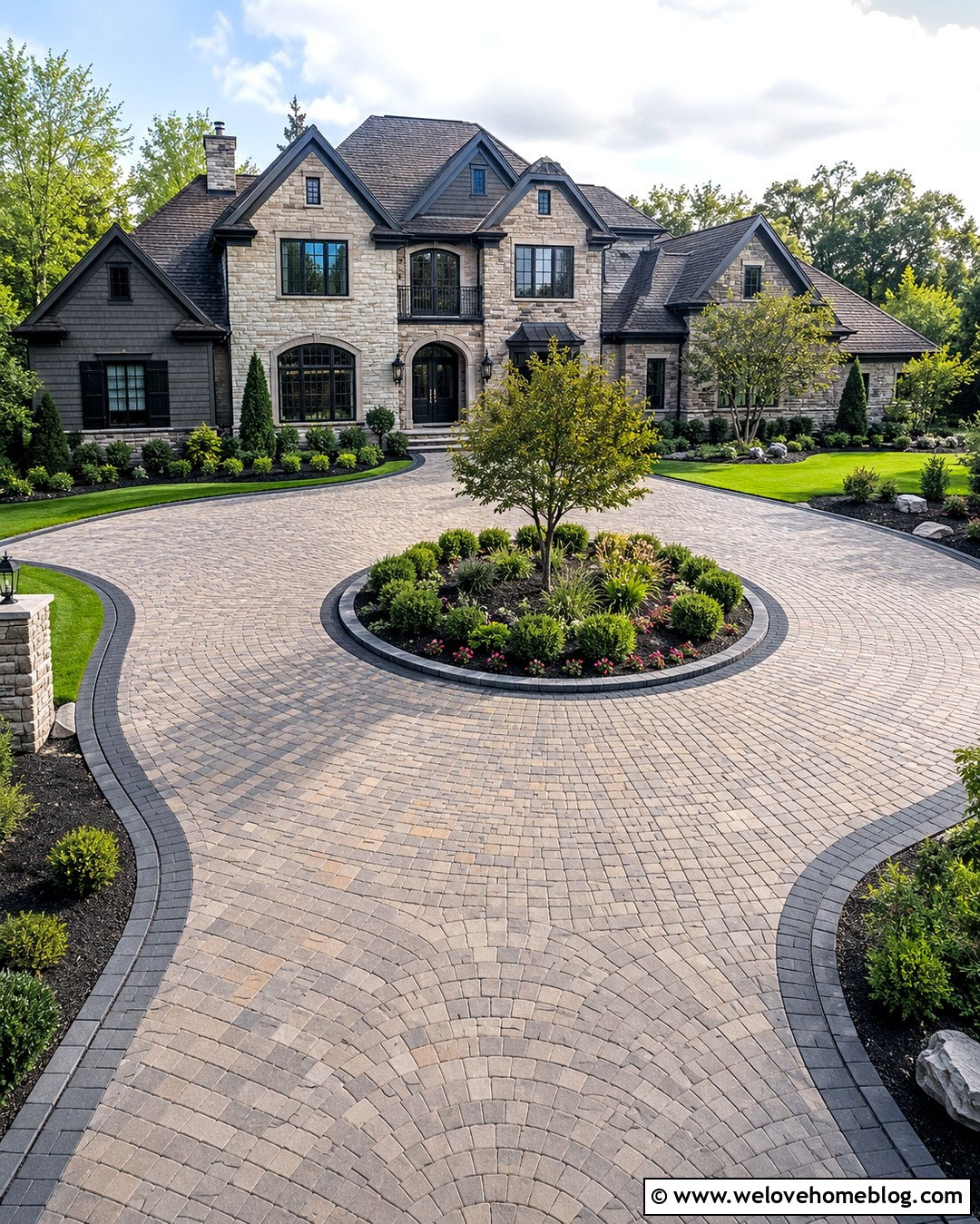
A cobblestone apron can give a concrete driveway a finished entrance while keeping most of the surface simple. Use pale-gray broom-finished concrete for the main straight driveway, then add a three- to five-foot-wide band of gray granite cobblestones near the curb. Repeat a narrower cobblestone line beside the garage to create visual continuity. This combination suits a farmhouse, European-inspired home, or traditional stone facade. Frame the entrance with low stone walls, lawn, and two balanced planting beds containing evergreen shrubs. Keep the rest of the driveway free from extra patterns so the apron remains the primary feature. Properly coordinated gray tones allow the concrete and cobblestone to blend naturally. The result offers a sense of arrival without sacrificing the clean appearance or practical simplicity of poured concrete.
12. Concrete Driveway With Flush Steel Edging
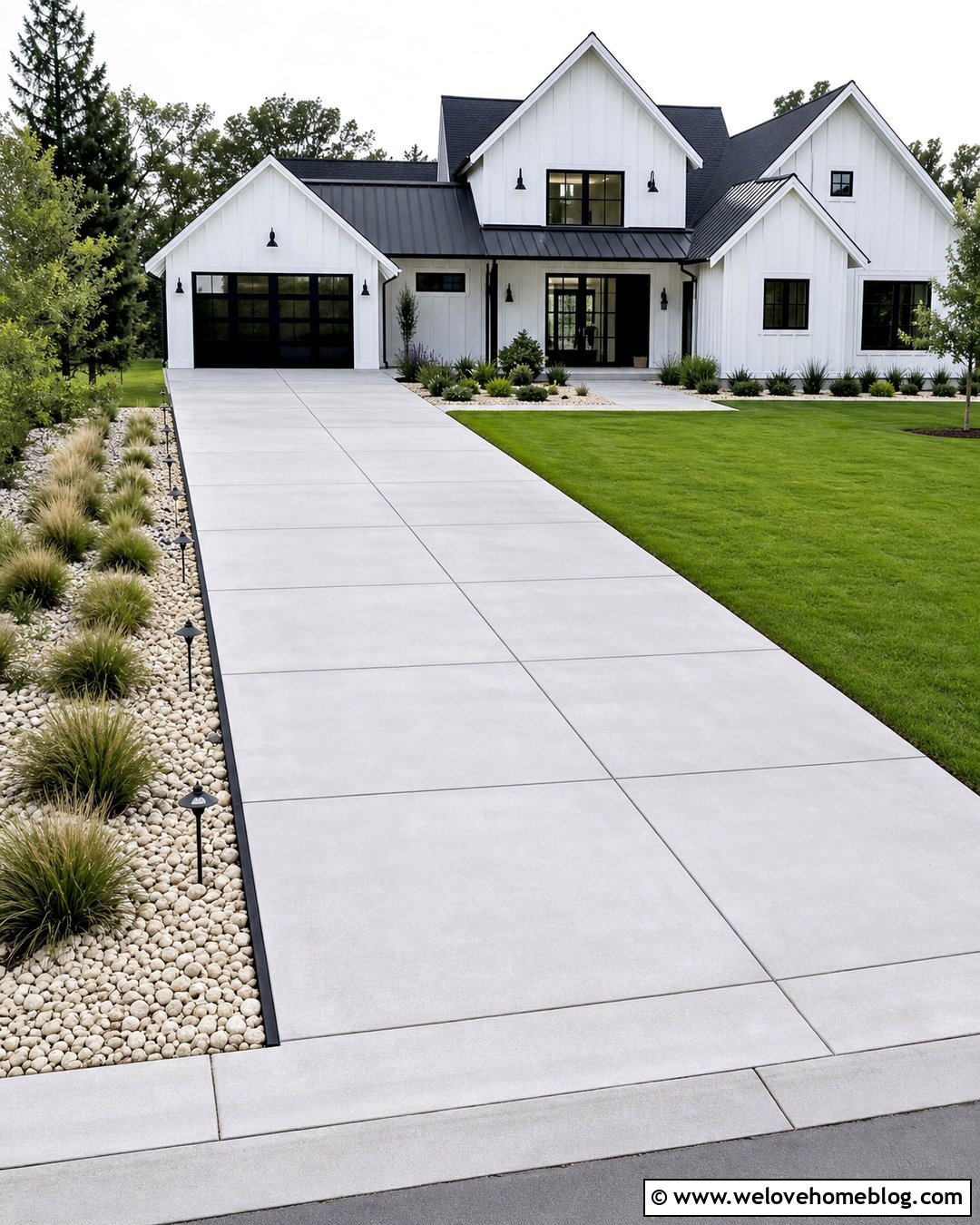
Slim steel edging gives a poured-concrete driveway an exceptionally crisp boundary. Select smooth light-gray concrete in a straight, narrow layout leading to a modern farmhouse or contemporary home. Install black or dark-gray steel edging flush with the surface, separating the driveway from gravel beds or neatly cut lawn. Repeat the metal tone in exterior lights, planters, house numbers, and window frames. Along one side, add a simple row of ornamental grasses for movement. Keep the opposite side more open with lawn or low ground cover to prevent the entrance from feeling enclosed. Large rectangular control-joint panels reinforce the clean geometry. Because the edging is visually narrow, it defines the driveway without adding another heavy material, resulting in a streamlined look with strong but understated curb appeal.
13. Stained Concrete Driveway With Tonal Borders
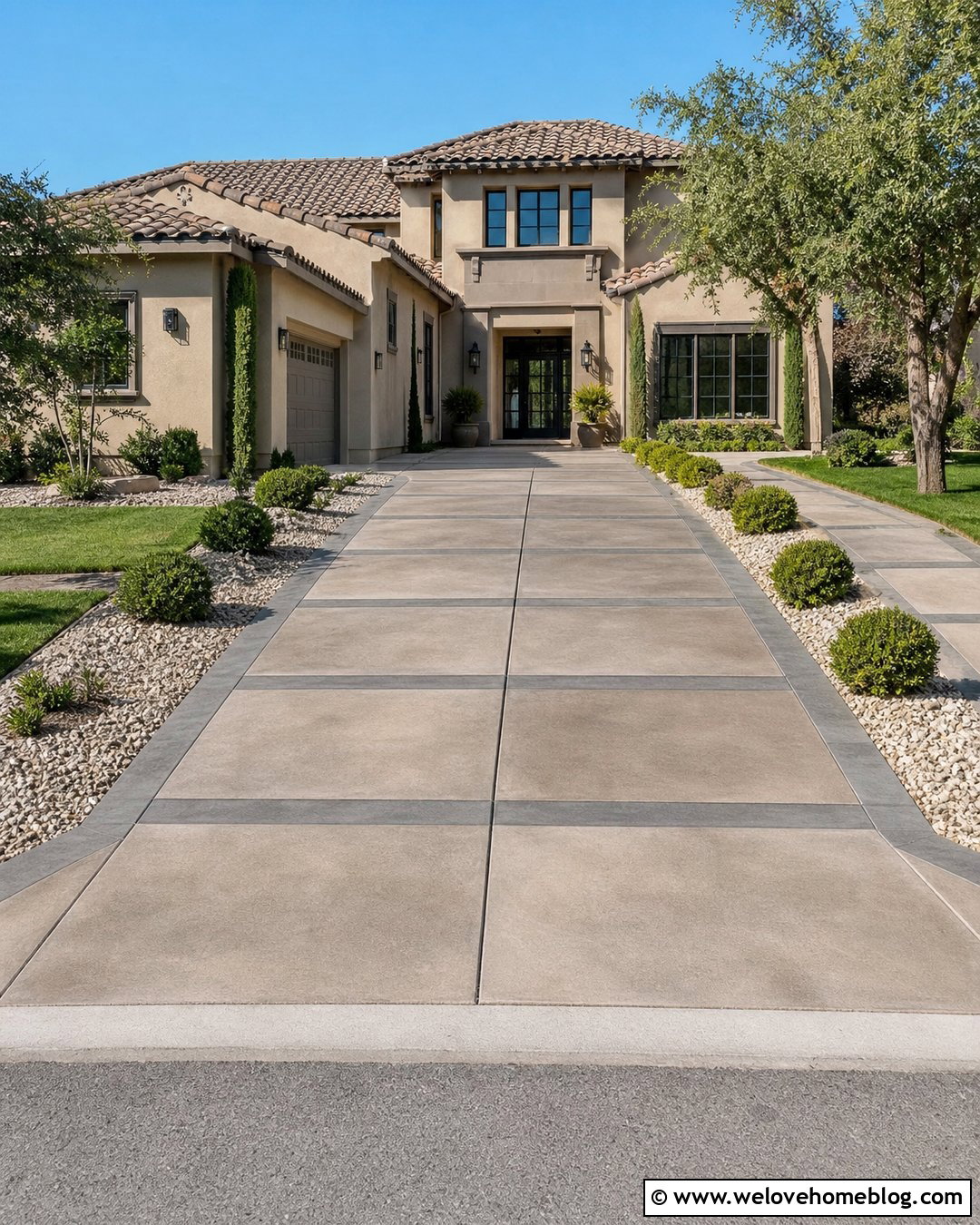
Concrete stain can introduce subtle depth while keeping the driveway calm and cohesive. Choose a soft greige or warm-gray stained center with a border that is only one or two shades darker. The tonal variation should complement the roof, siding, or masonry rather than imitate a completely different material. Use a wide straight driveway with symmetrical panels and a simple border around the perimeter. This look works well with beige stucco, warm brick, or transitional architecture. Add clipped shrubs, cream-colored gravel, and a green lawn to balance the neutral hardscape. Extend the darker border across the curb entrance and around the adjoining walkway. A quality sealer can enrich the color, but the finish should not appear excessively glossy. The complete design feels warm, polished, and visually controlled.
14. Circular Concrete Driveway With Simple Center Lawn
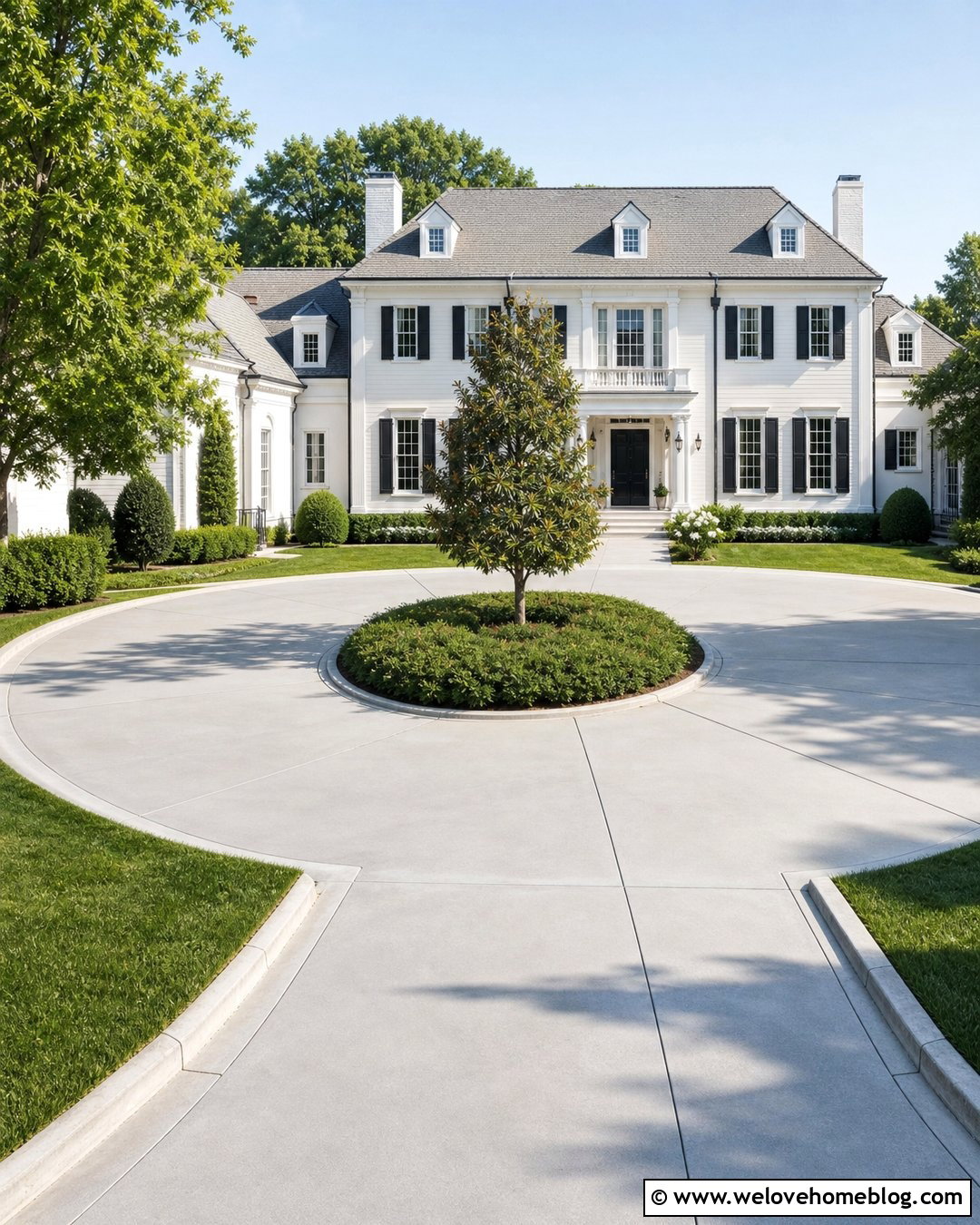
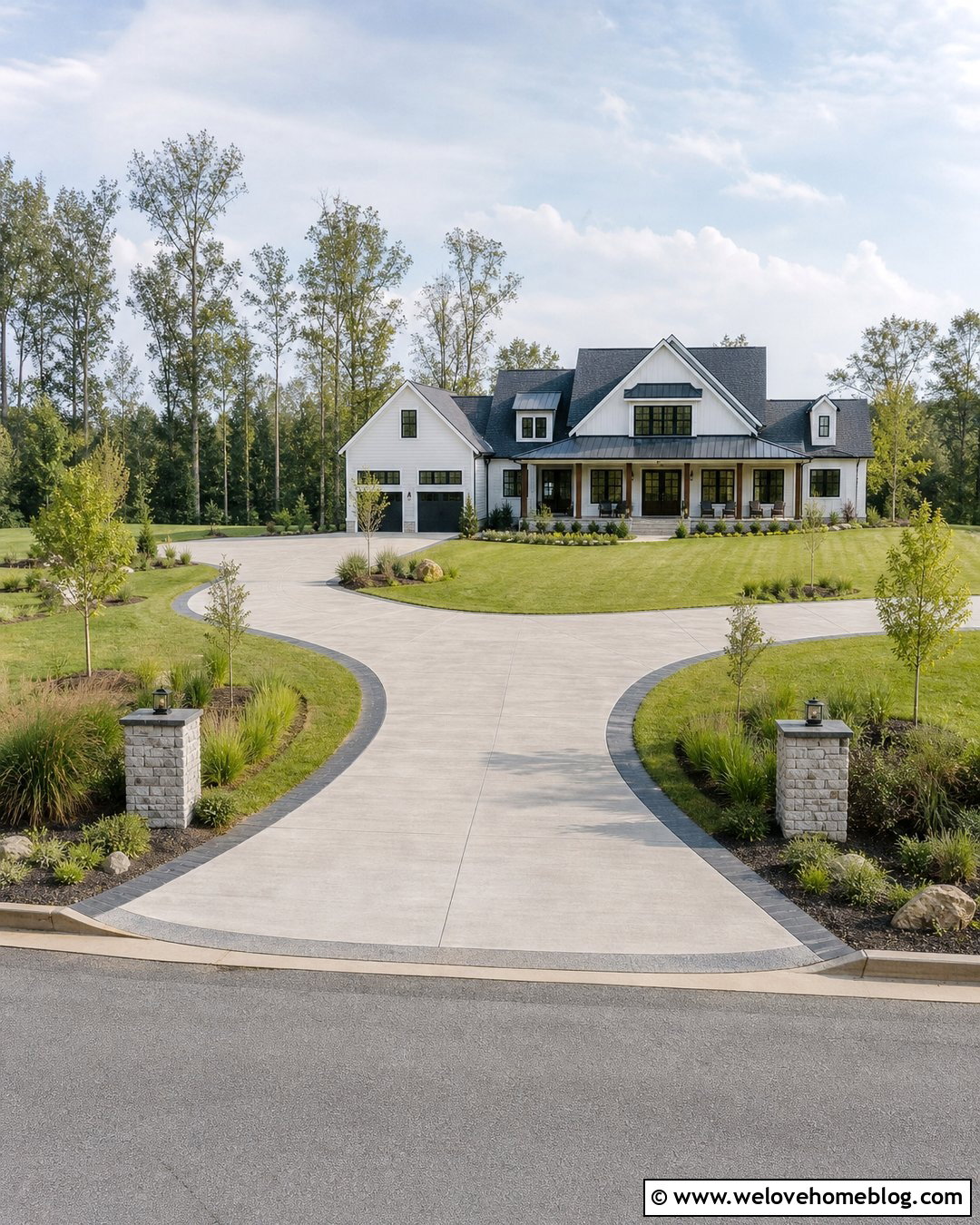
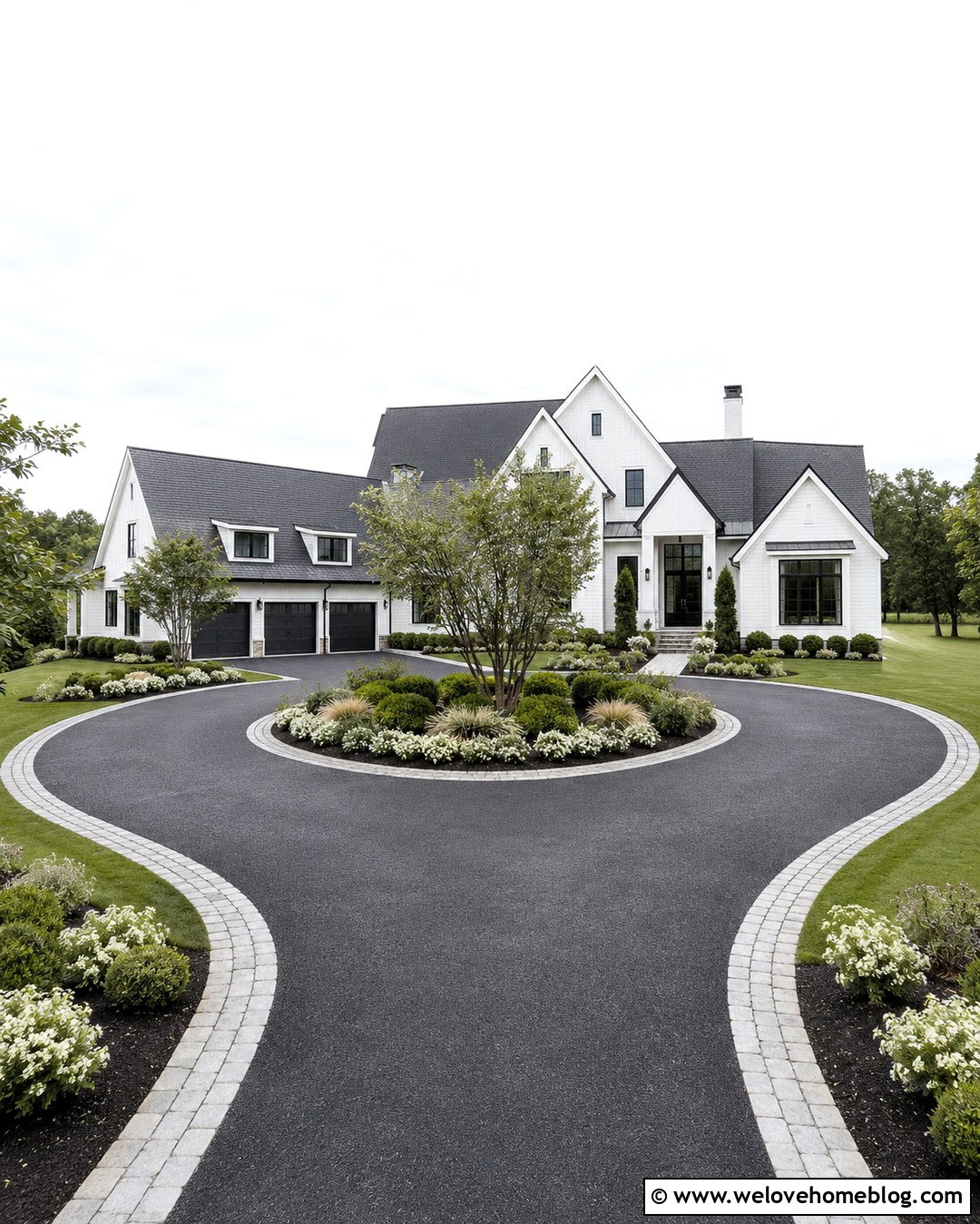
A circular driveway can still look clean when the materials and landscaping remain restrained. Use light-gray poured concrete with evenly spaced radial joints and a smooth concrete border. In the center, create a simple round or oval lawn island with one carefully positioned tree and a ring of low evergreen ground cover. Avoid filling the island with numerous plant varieties, statues, or complicated masonry. The open planting keeps sightlines clear and allows the driveway shape to stand out. This layout suits a larger colonial, modern farmhouse, or symmetrical ranch home. Connect the front walkway directly to the inner circle using the same concrete finish. At the curb, use two broad entrance openings with uncluttered lawn edges. The result feels spacious and refined rather than overly formal or ornate.
15. Concrete Driveway With Matching Stepping Slab Walkway
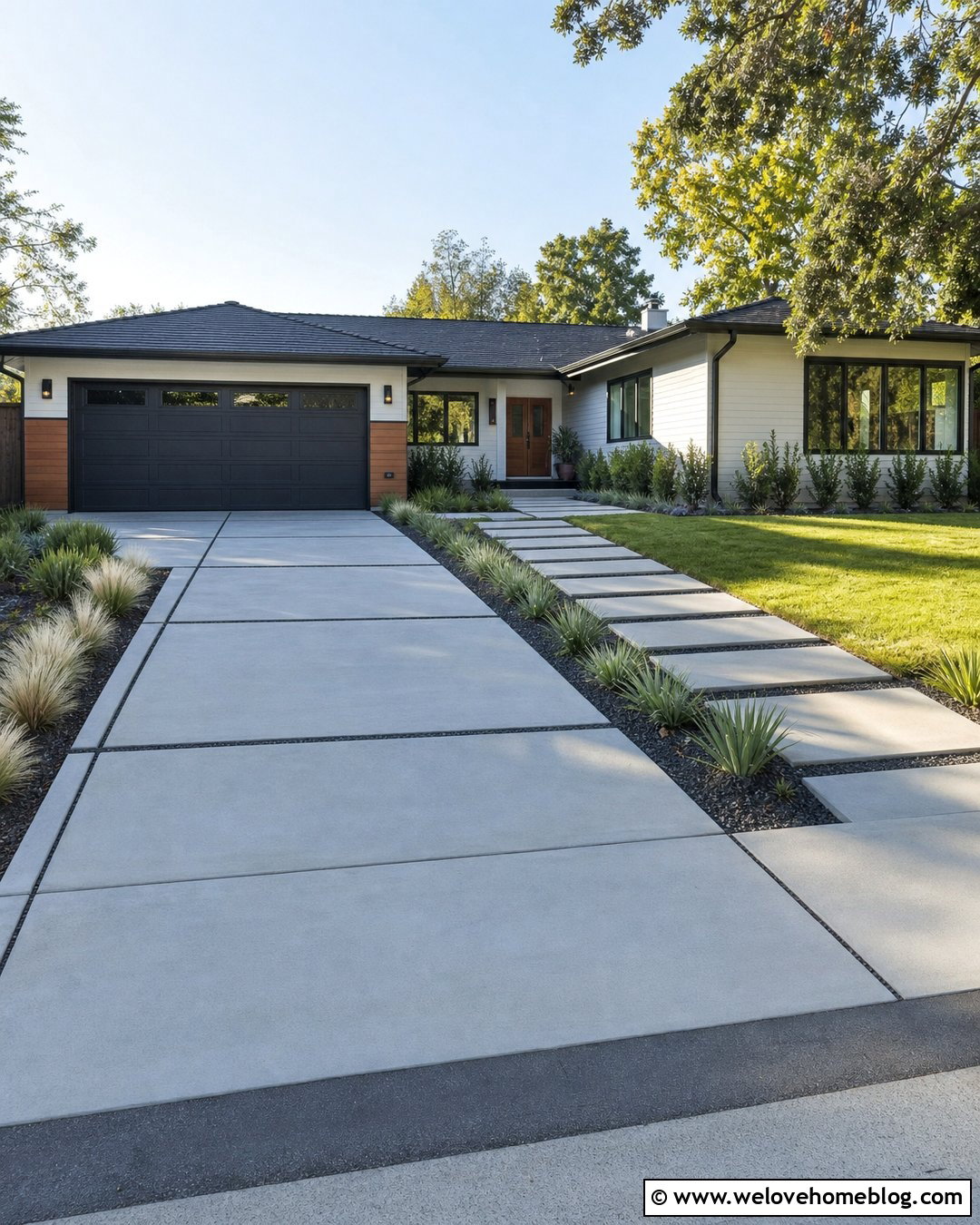
Repeating the driveway material in the front walkway creates a smooth visual connection between parking and the porch. Choose large rectangular concrete panels for a straight driveway, then continue toward the entrance with smaller matching slabs separated by narrow gravel or grass joints. Keep the concrete color consistent, preferably a pale or medium gray that complements the house exterior. This arrangement works beautifully with a modern, mid-century, or updated ranch home. Frame the walkway with low grasses and compact shrubs while leaving the driveway edges mostly open. Align the slabs with important architectural lines, such as the front door or garage windows. The repeated shapes make the front yard feel organized as one complete composition. Clean transitions also prevent the walkway from appearing like an unrelated addition installed years later.
16. Concrete Driveway With Raised Planter Walls
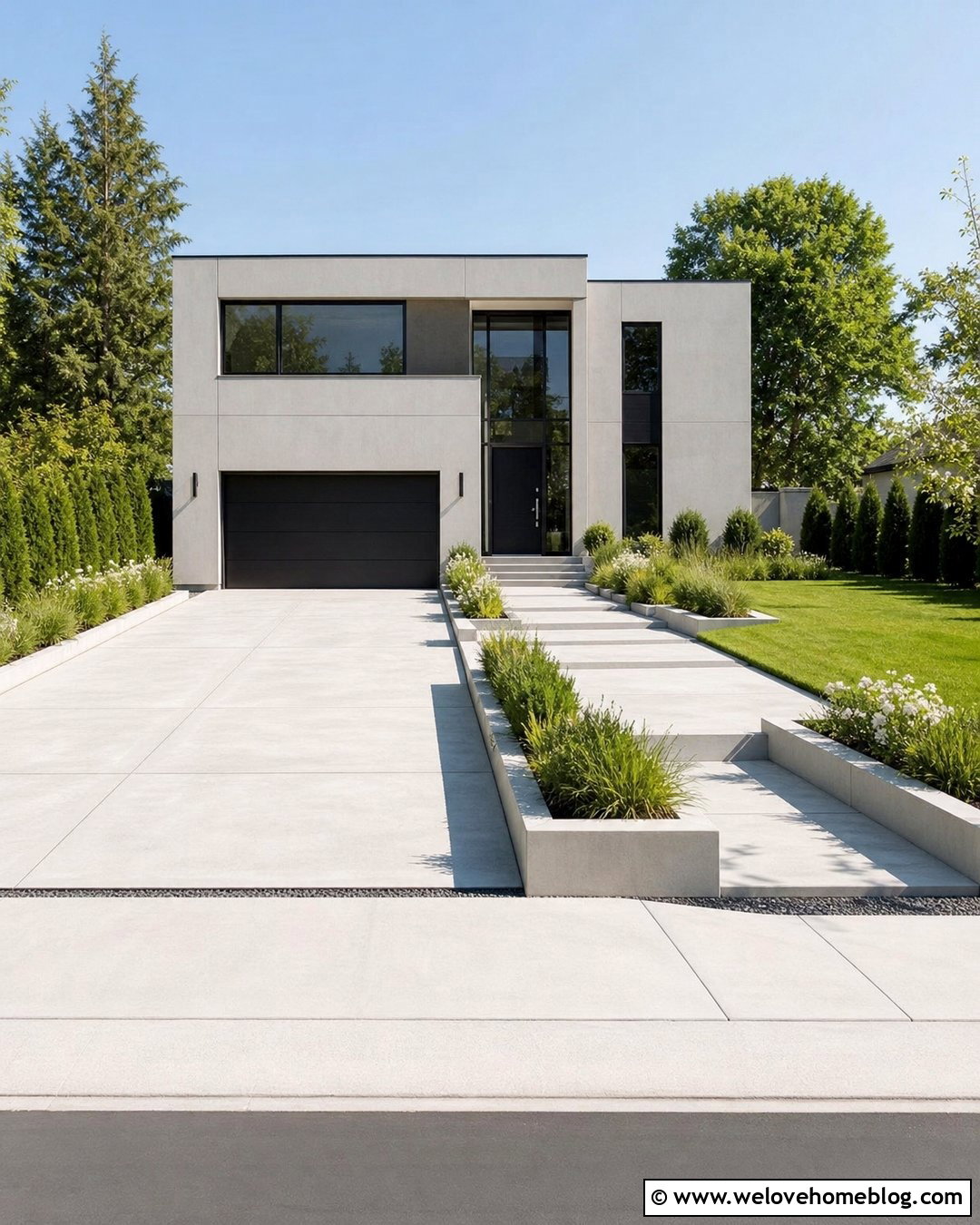
Low raised planters can frame a concrete driveway while creating structure on a sloped or narrow lot. Use smooth light-gray poured concrete for a straight driveway and build matching concrete planter walls along selected sections rather than enclosing the entire edge. Fill the planters with tidy evergreen shrubs, feathery grasses, and one repeating flowering plant. A limited palette keeps the raised beds from becoming visually heavy. This design suits a contemporary home with simple rectangular architecture. Include open drainage gaps or professionally planned outlets where needed so water does not collect against the walls. Connect the planters to the front steps or porch for a unified appearance. The matching concrete surfaces give the hardscape consistency, while the raised greenery adds height, softness, and a clear separation between the driveway and entrance garden.
17. Two Tone Concrete Driveway With Geometric Panels
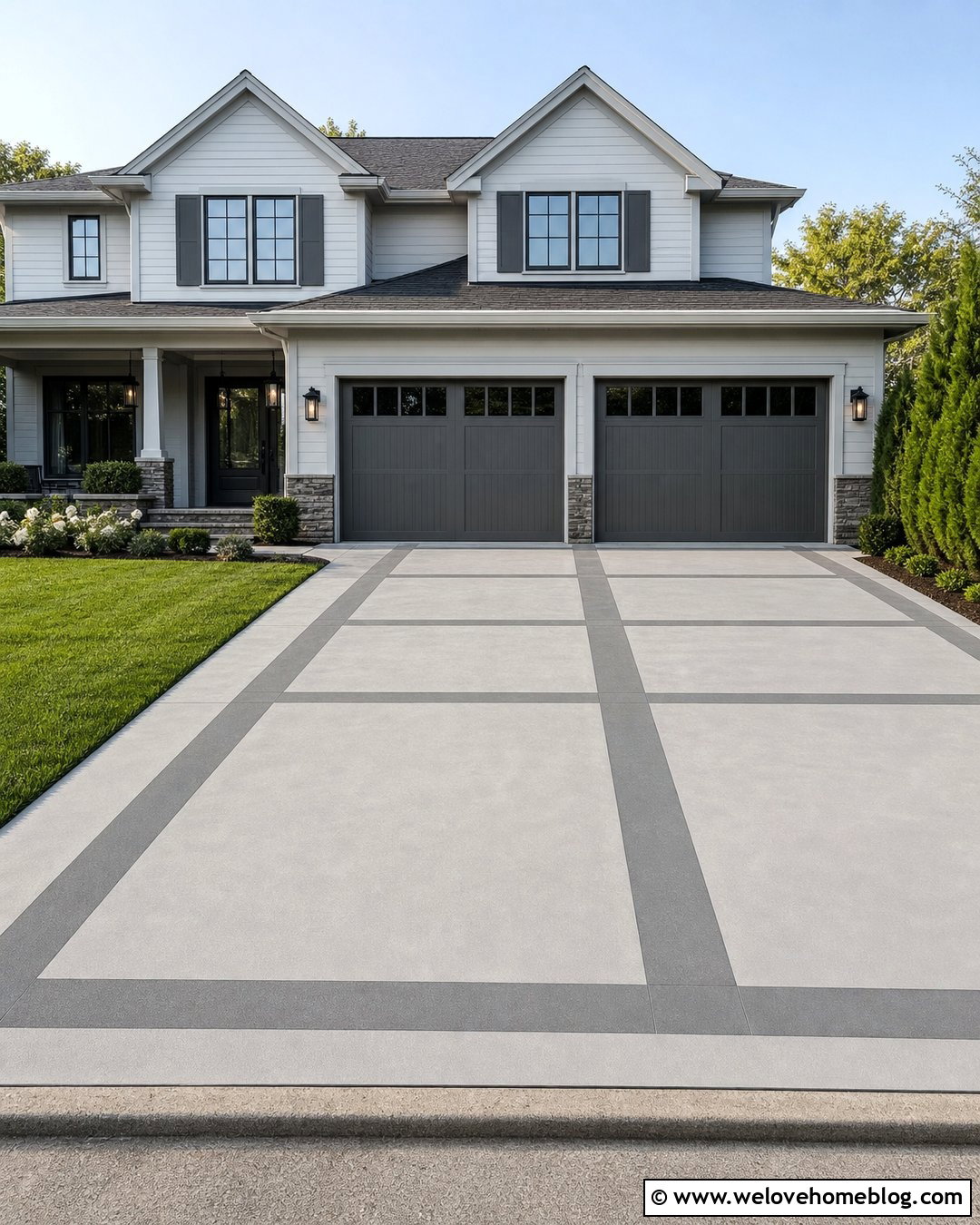
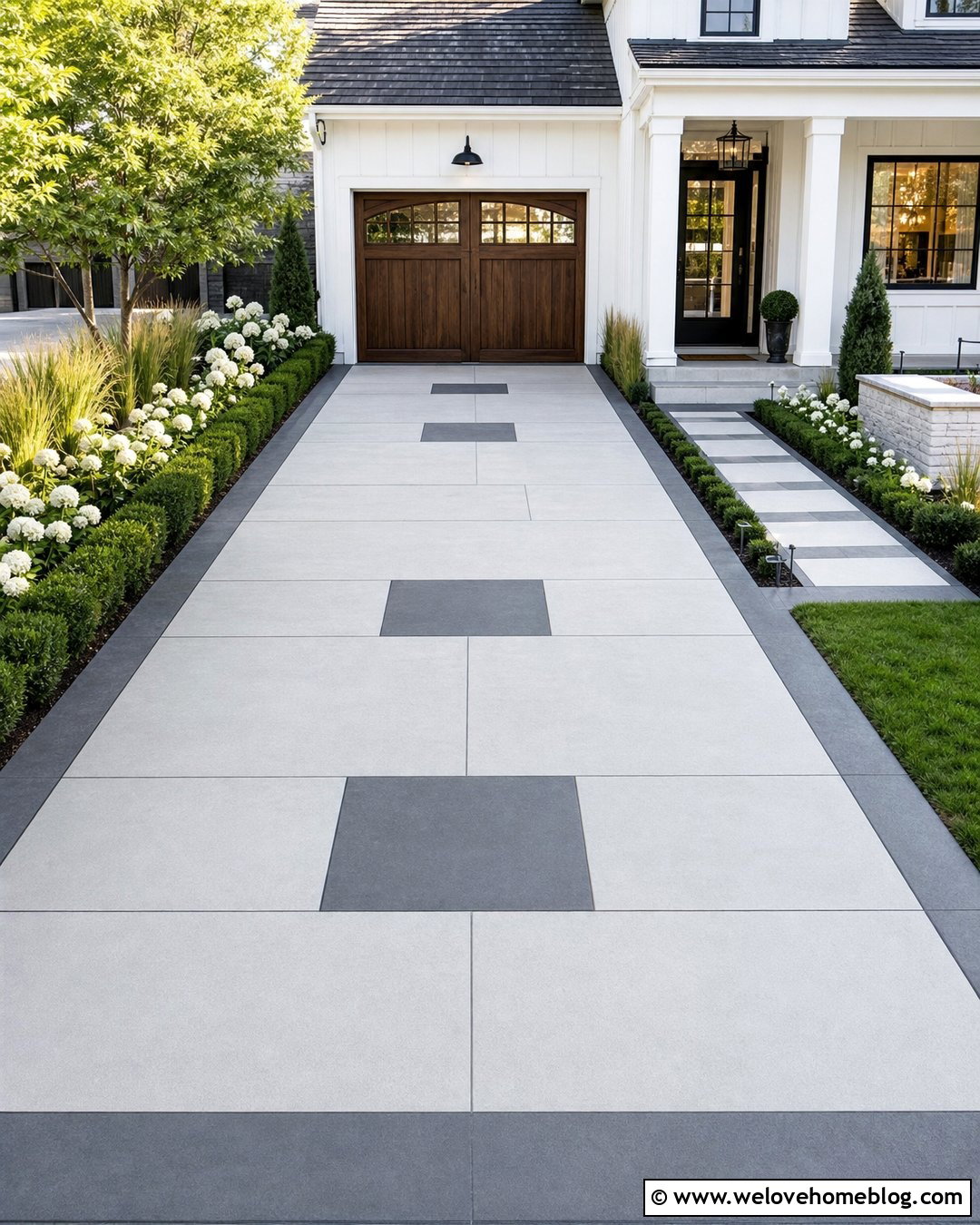
A two-tone concrete driveway can feel clean when the color difference remains subtle. Use warm light-gray concrete for the main panels and medium-gray concrete for narrow dividing bands or selected rectangles. Arrange the pattern in a straightforward grid aligned with the garage. Avoid complicated diamonds, curves, or multiple accent colors. A modern or transitional home provides the ideal backdrop, especially when its facade already contains two neutral tones. Frame the driveway with lawn on one side and a simple planting bed on the other. Repeat the darker concrete in the walkway or front step to connect the surfaces. This measured use of contrast breaks up a broad paved area and adds architectural interest. The driveway remains practical and restrained while looking more customized than a standard single-color pour.
18. Concrete Strip Driveway With Gravel Center
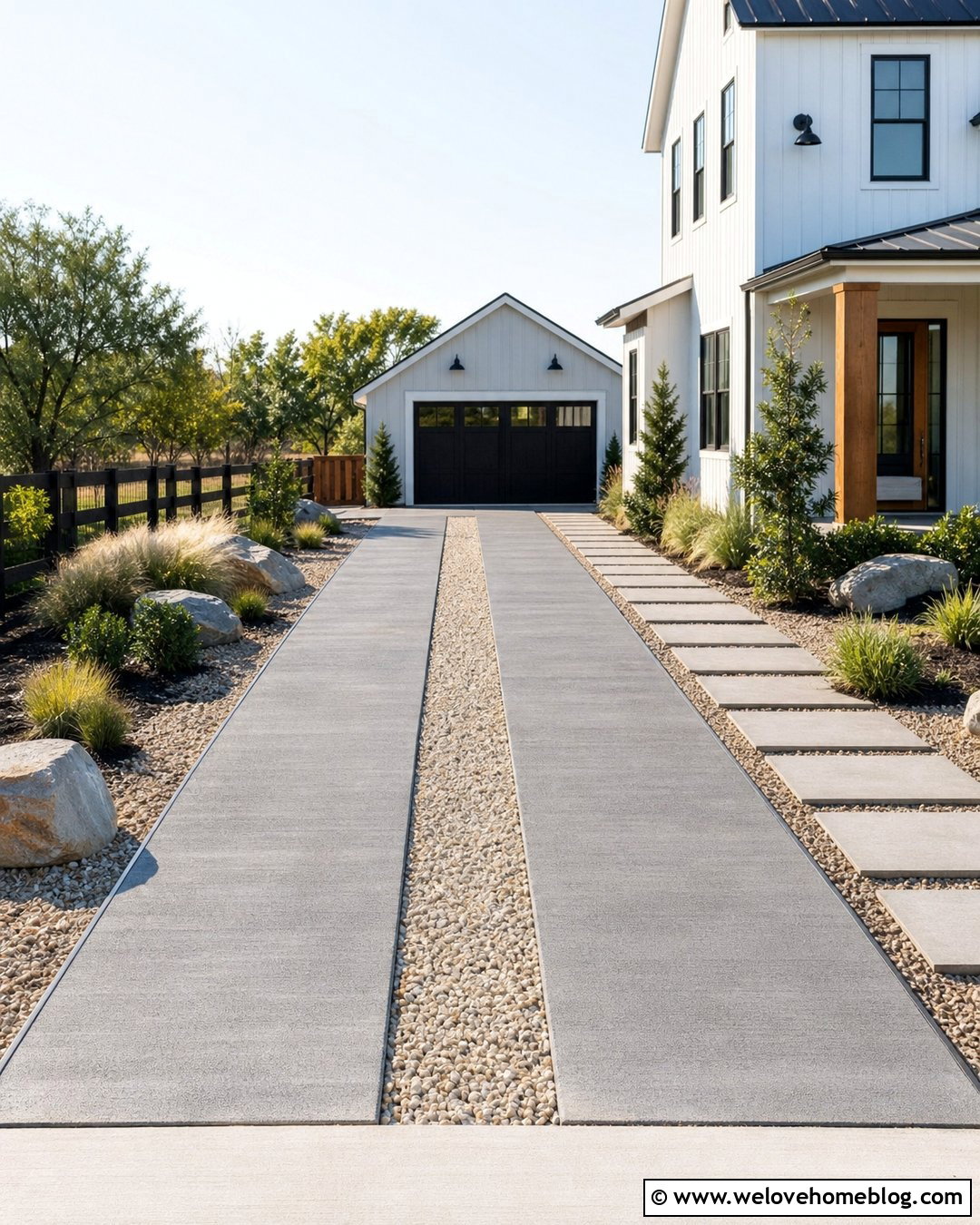
A concrete strip driveway uses two solid wheel paths with a contrasting center, reducing the appearance of one large paved surface. Choose smooth or lightly broomed gray concrete strips separated by a wide channel of compacted decorative gravel. Keep the layout straight and use steel or concrete edging to contain the stone. This design works best for a single-car approach leading to a detached garage, cottage, or modern farmhouse. Continue gravel beds along the outer edges and add drought-tolerant grasses, compact shrubs, and a few larger stones. The center channel should be designed for local drainage conditions and normal vehicle clearance. Matching concrete stepping slabs can form a side walkway. The combined concrete and gravel surfaces create a lighter, more relaxed entrance while maintaining strong visual lines.
19. Wide Concrete Driveway With Center Planting Island
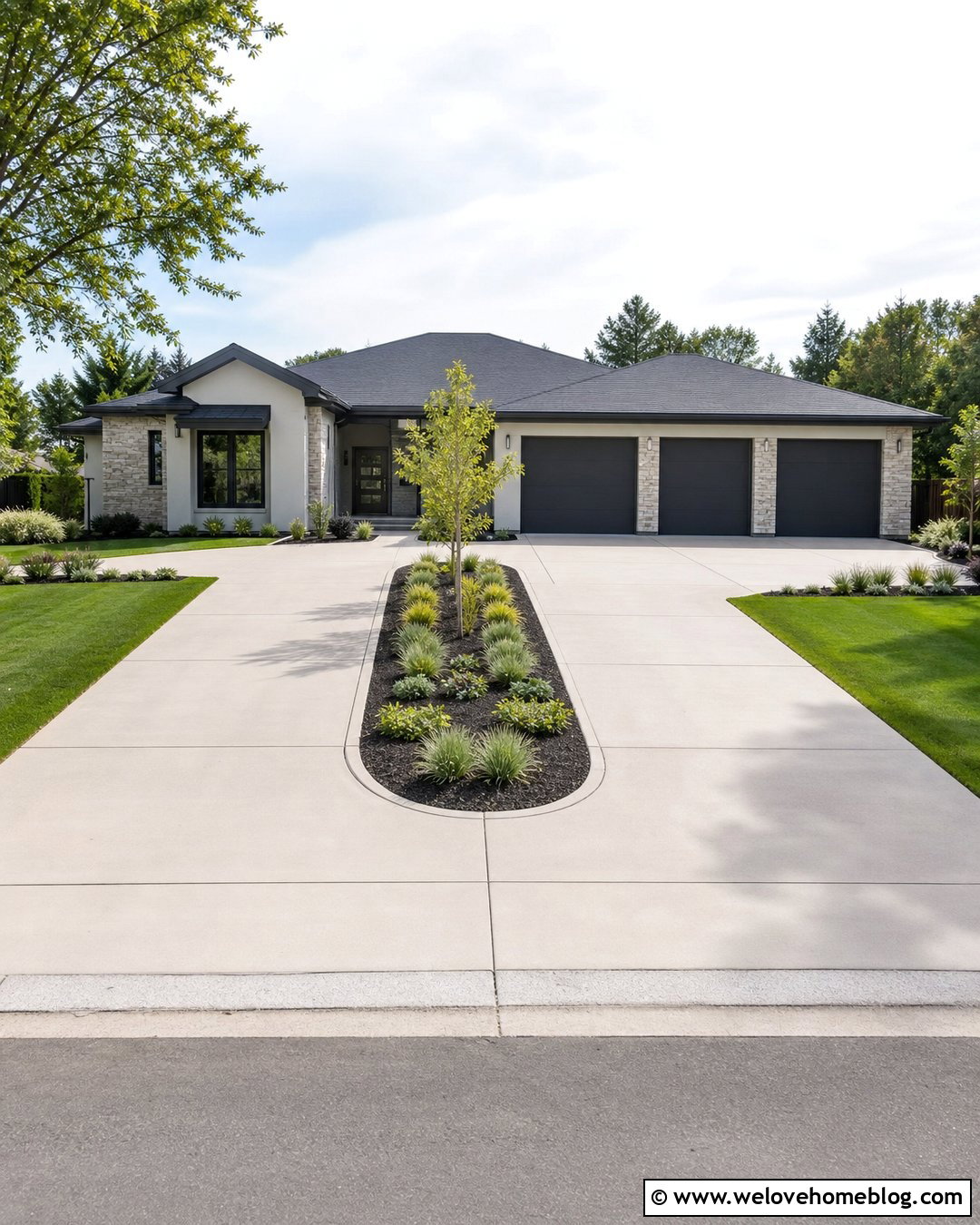
A wide driveway does not need to resemble an uninterrupted parking lot. Divide the space with a narrow center planting island that begins beyond the curb entrance and guides vehicles toward separate garage bays. Use uniform pale-gray poured concrete with straight joints and smooth borders. Shape the island as a long rectangle with gently rounded ends for easier vehicle movement. Plant one small ornamental tree, low ground cover, and a restrained row of grasses so visibility remains open. This layout pairs well with a broad ranch, contemporary home, or three-car garage. Repeat the island’s plants in slim beds beside the house. The greenery breaks up the hardscape, creates a clear traffic pattern, and brings the driveway into better proportion with the architecture and surrounding front yard.
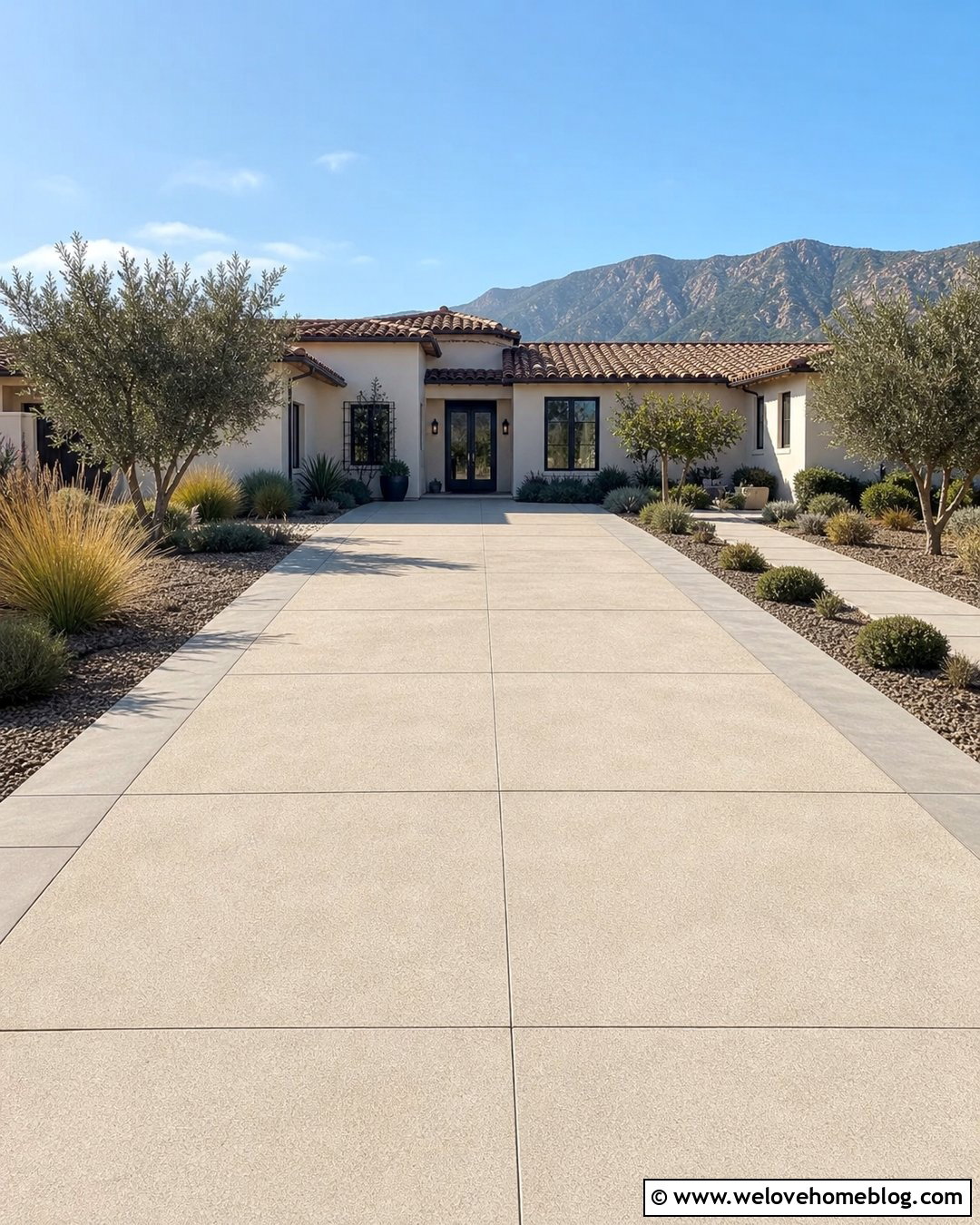
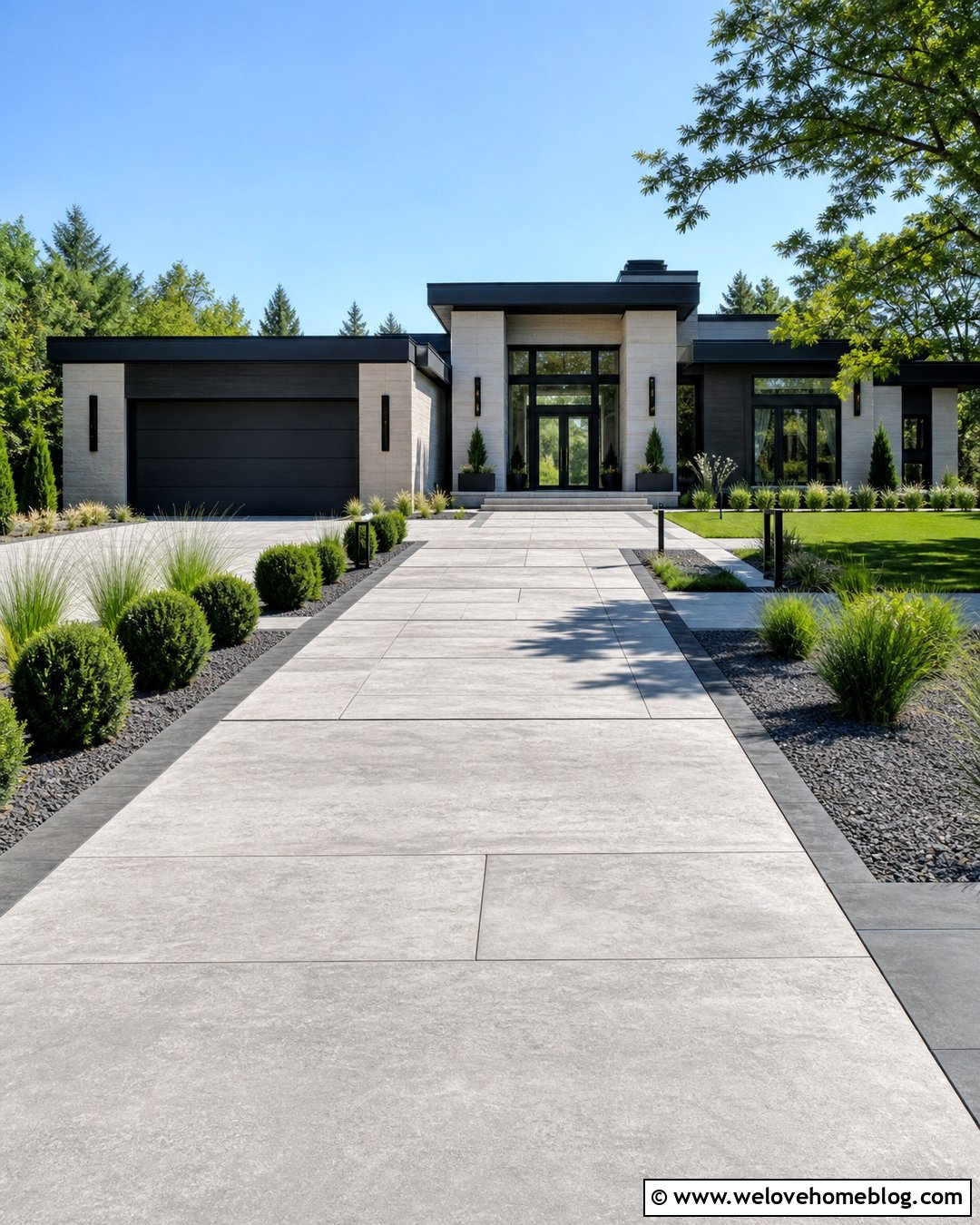
20. Concrete Driveway With Modern Gate And Pillars
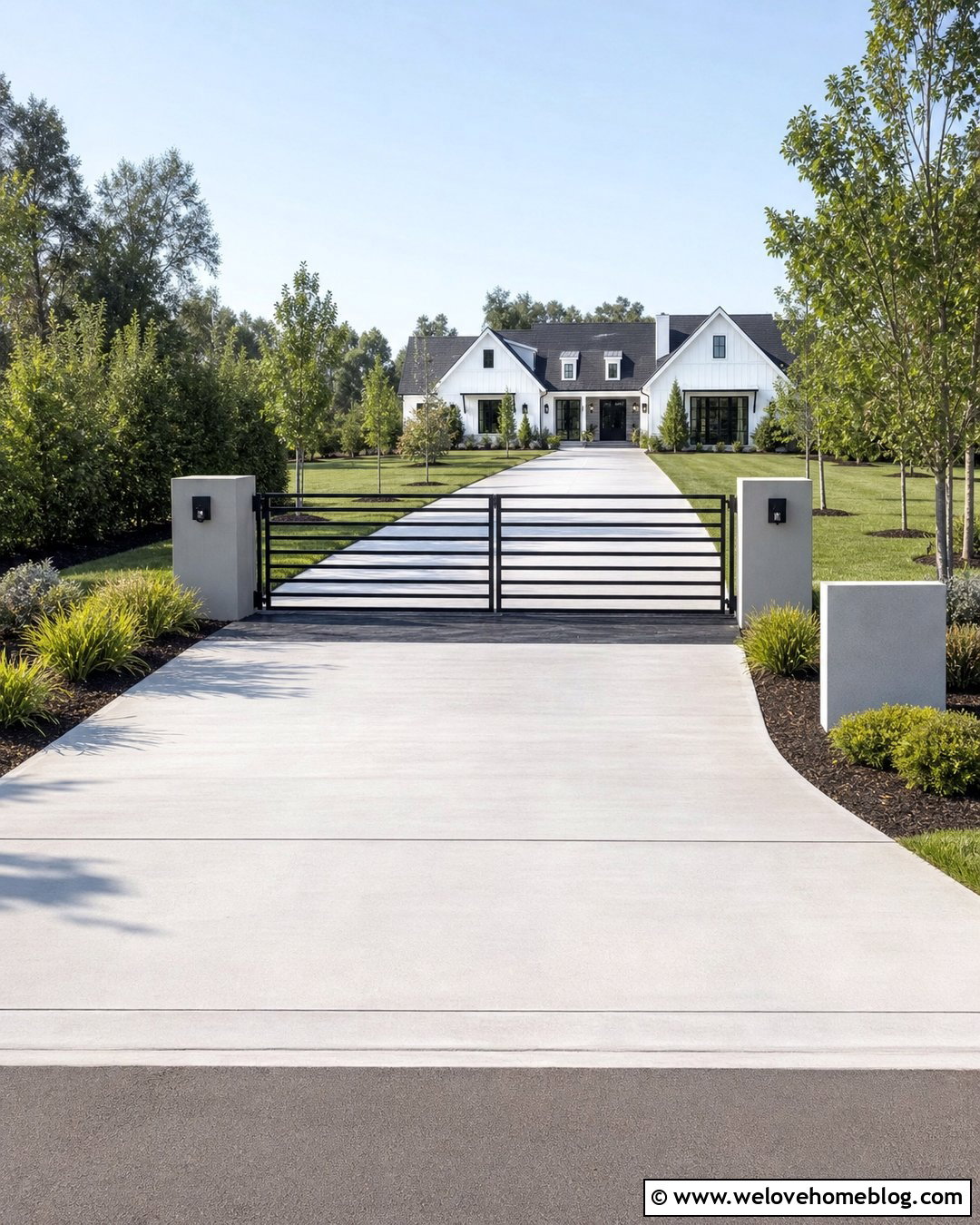
A clean driveway entrance can be strengthened with a simple gate and matching pillars. Use smooth light-gray poured concrete in a straight layout leading to a contemporary or modern farmhouse home. Install slim rendered-concrete pillars in white or soft gray, paired with a horizontal black metal gate. Keep the pillars proportional and free from oversized caps or ornamental details. Narrow planting beds filled with low grasses and clipped shrubs can soften the base without hiding the entrance. Repeat black metal in the mailbox, address sign, and exterior lights for consistency. Add a flush dark-paver band beneath the gate to mark the transition from street to private drive. The coordinated concrete, metal, and landscaping create a secure entrance that feels open, orderly, and visually connected to the house.
Conclusion:
The most successful 20 Clean Concrete Driveway Ideas treat the driveway, home, and front yard as one connected space. Begin with a concrete finish that suits your climate, maintenance preferences, and architecture. Then use intentional joints, restrained borders, and simple landscaping to create a polished complete look. Light colors can brighten compact properties, while exposed aggregate, tonal stain, or contrasting pavers add controlled texture. Grass strips and gravel channels soften modern layouts, while brick, cobblestone, gates, and low hedges can complement more traditional homes. Before installation, confirm drainage, slope, thickness, reinforcement, and local permit requirements with qualified professionals. Thoughtful planning will help your new concrete driveway remain attractive, functional, and well integrated for years.

Related posts:
Leave a Reply