

1. Broom Finish Concrete Driveway
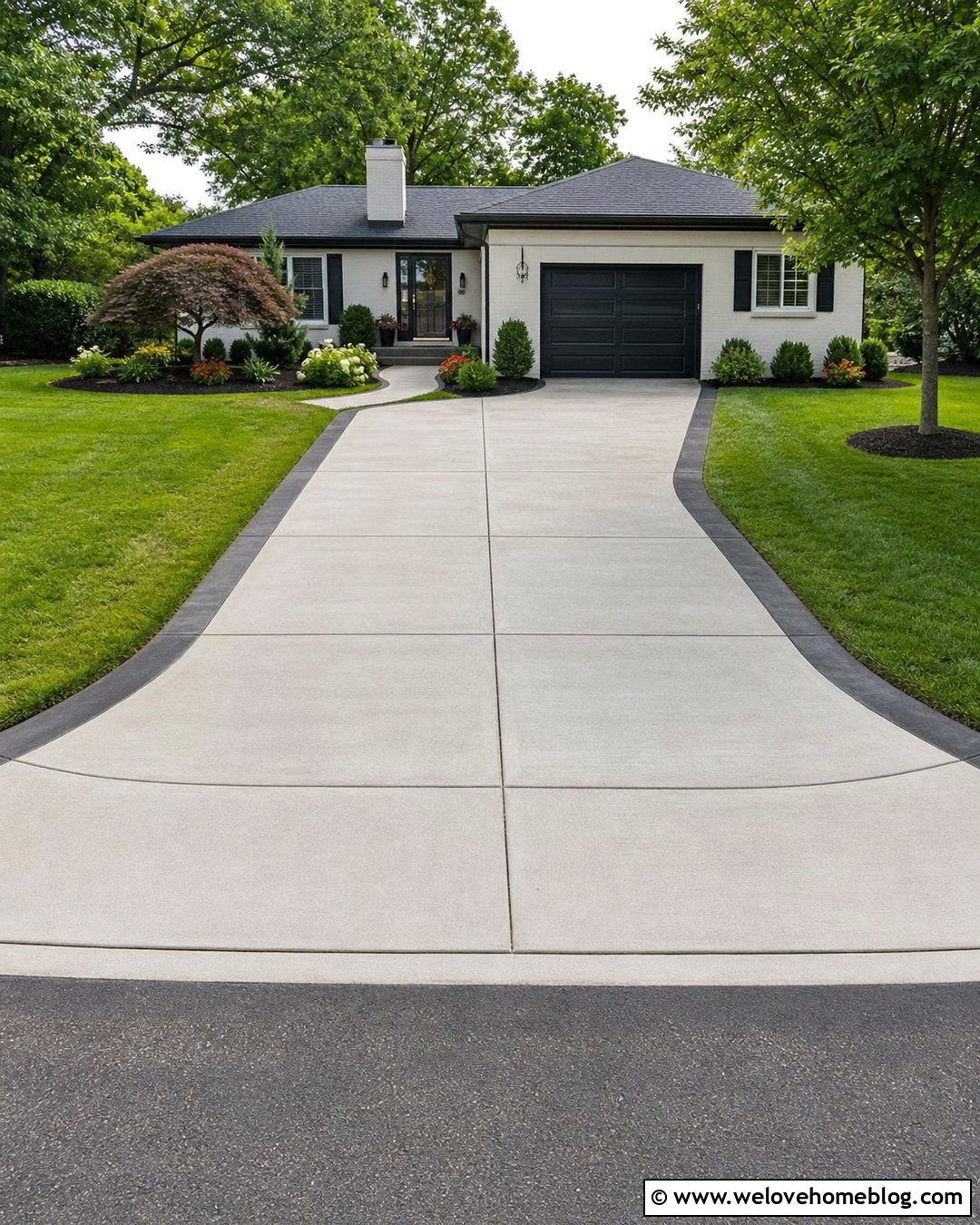
A broom finish concrete driveway offers a clean appearance without looking overly decorative. Fine lines across the surface add subtle texture and help the driveway feel finished rather than flat or unfinished. Use a straight layout for a ranch or suburban home, then frame the concrete with crisp lawn edges and low planting beds. A narrow charcoal concrete border can define the perimeter without increasing visual clutter. Control joints should follow an organized grid that relates to the garage doors and front walkway. Near the street, a slightly wider concrete apron creates a welcoming transition. This complete look is especially effective when neutral concrete, green lawn, compact shrubs, and a simple facade work together in a balanced composition.
2. Modern Concrete Slab Driveway
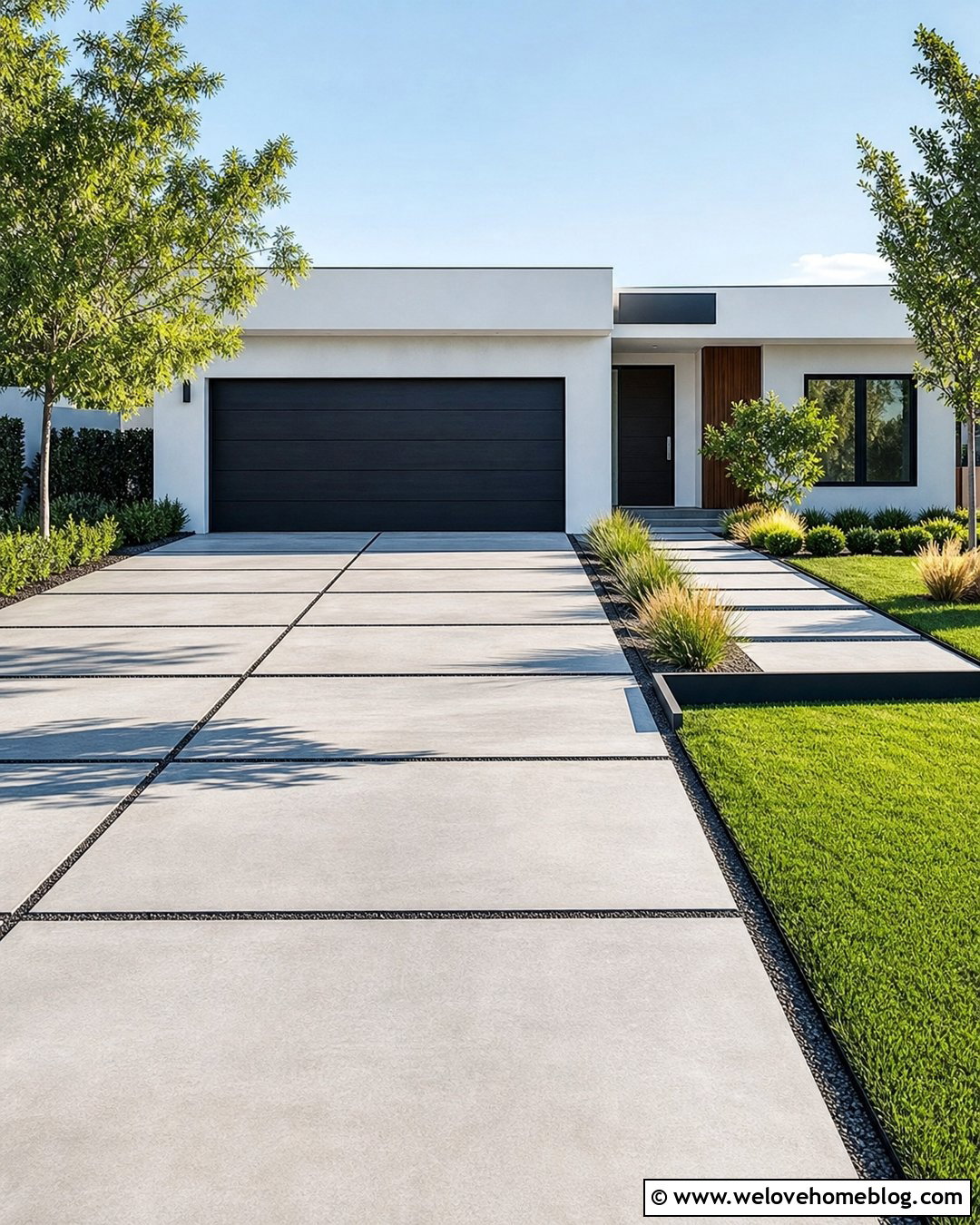
Large concrete slabs create a strong geometric approach to a contemporary house. Instead of pouring one uninterrupted surface, divide the driveway into oversized rectangles with slim joints between them. Dark gravel, river rock, or narrow grass strips can fill the spaces and make each slab more visible. Keep the driveway straight or slightly offset to echo the clean lines of the building. Smooth planting beds filled with ornamental grasses, clipped shrubs, and sculptural evergreens support the modern theme. Choose pale gray concrete for a bright exterior or medium charcoal concrete for stronger contrast. A matching slab walkway can branch toward the front door, visually connecting the driveway, entry, landscaping, and architecture as one coordinated design.
3. Exposed Aggregate Concrete Driveway
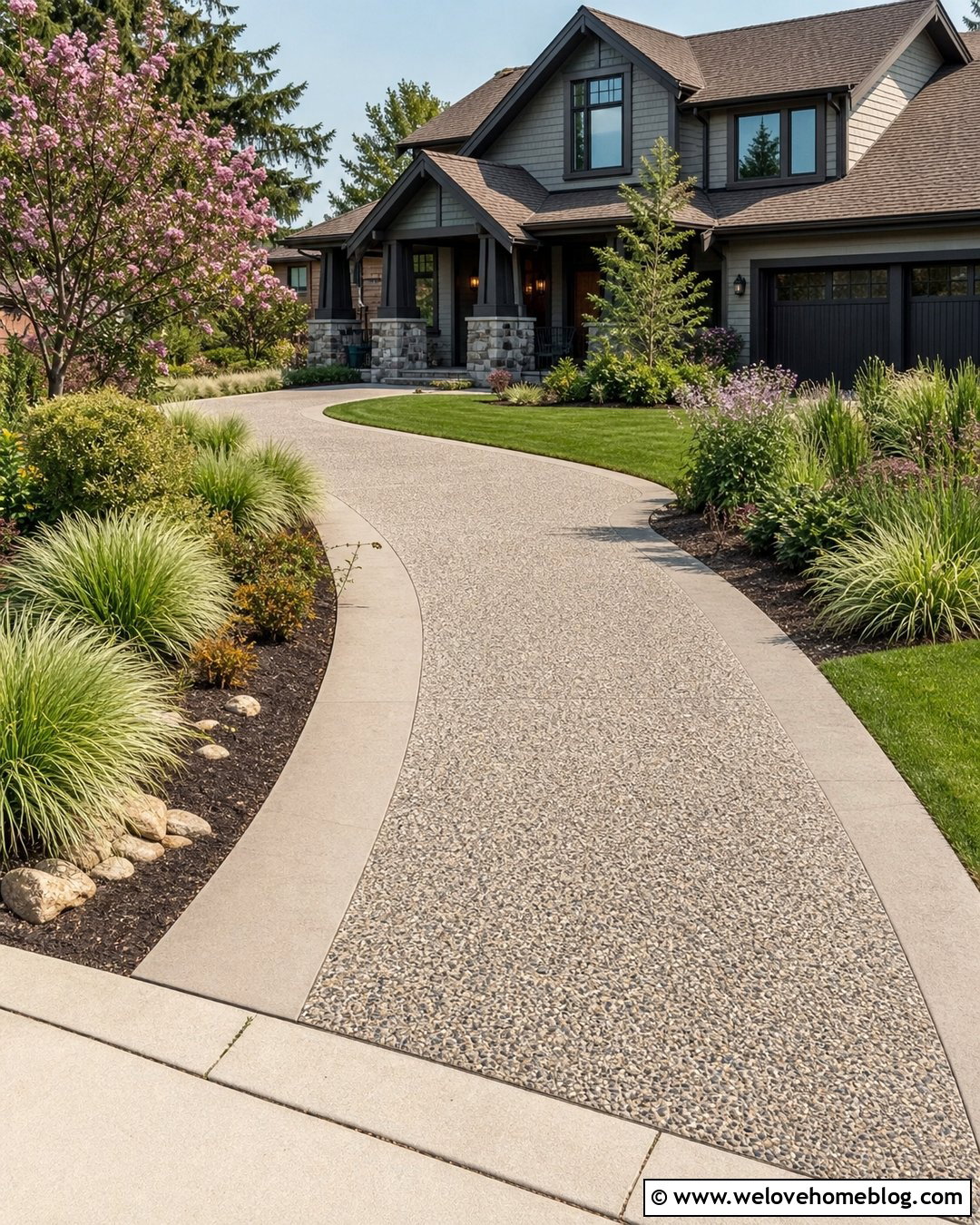
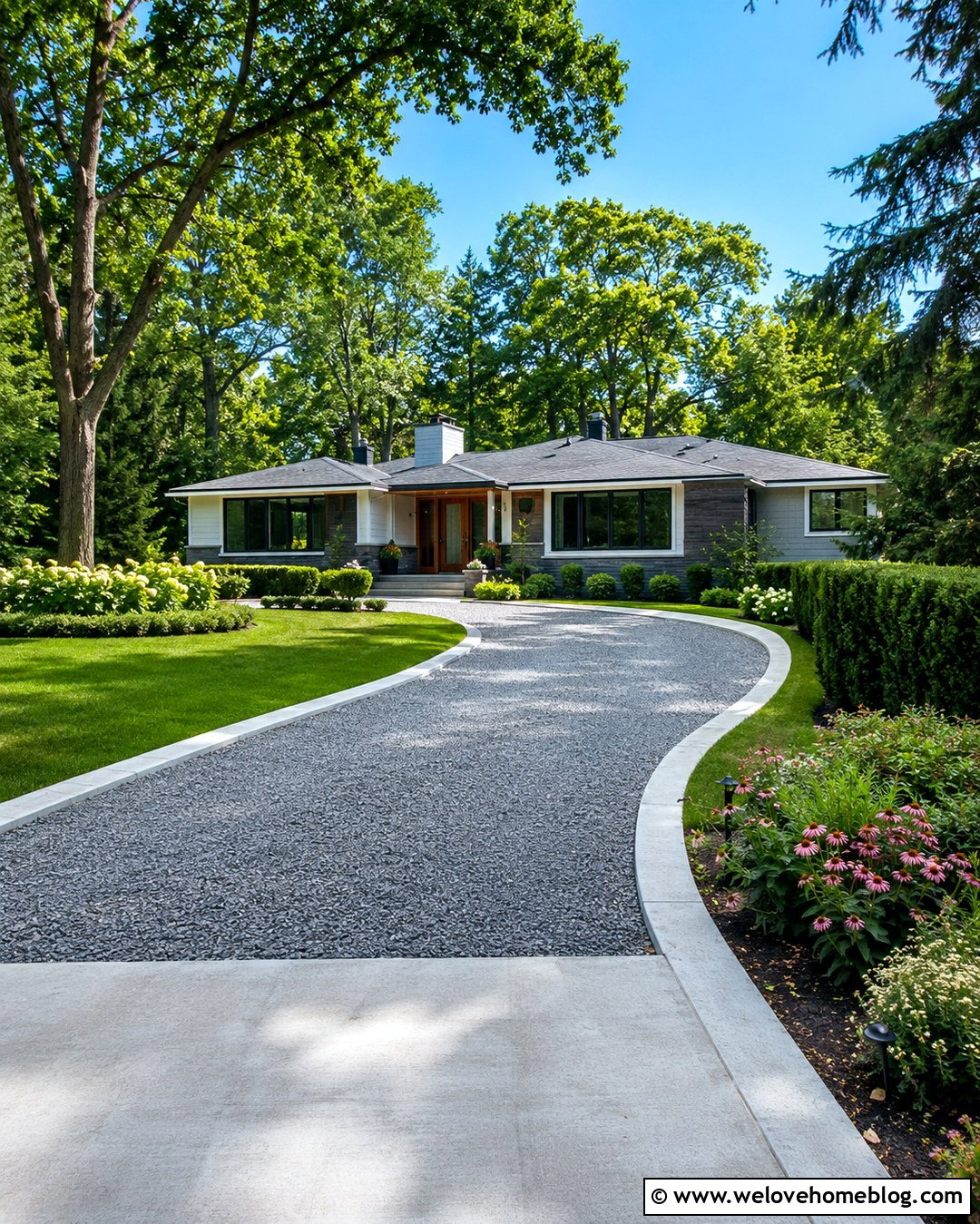
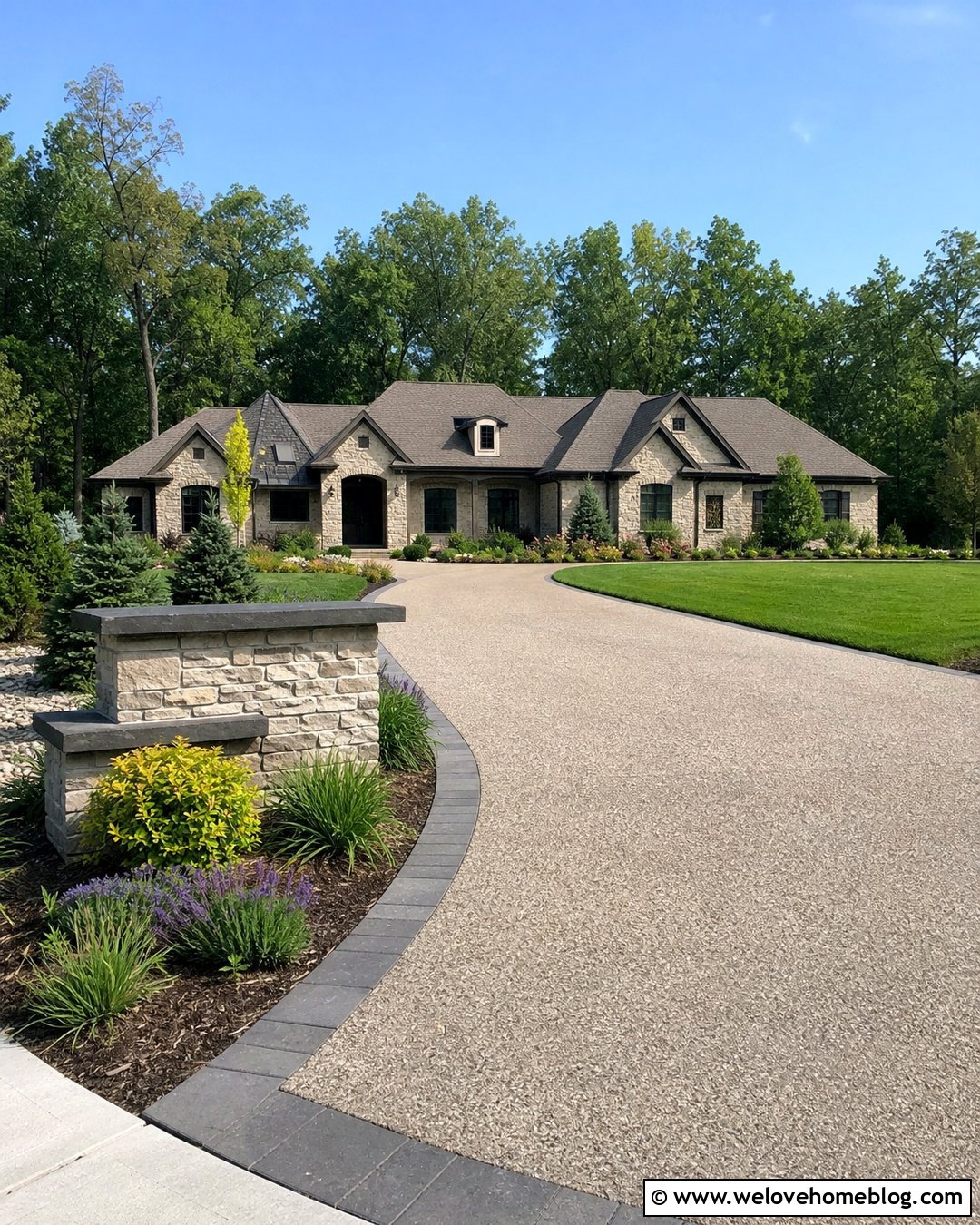
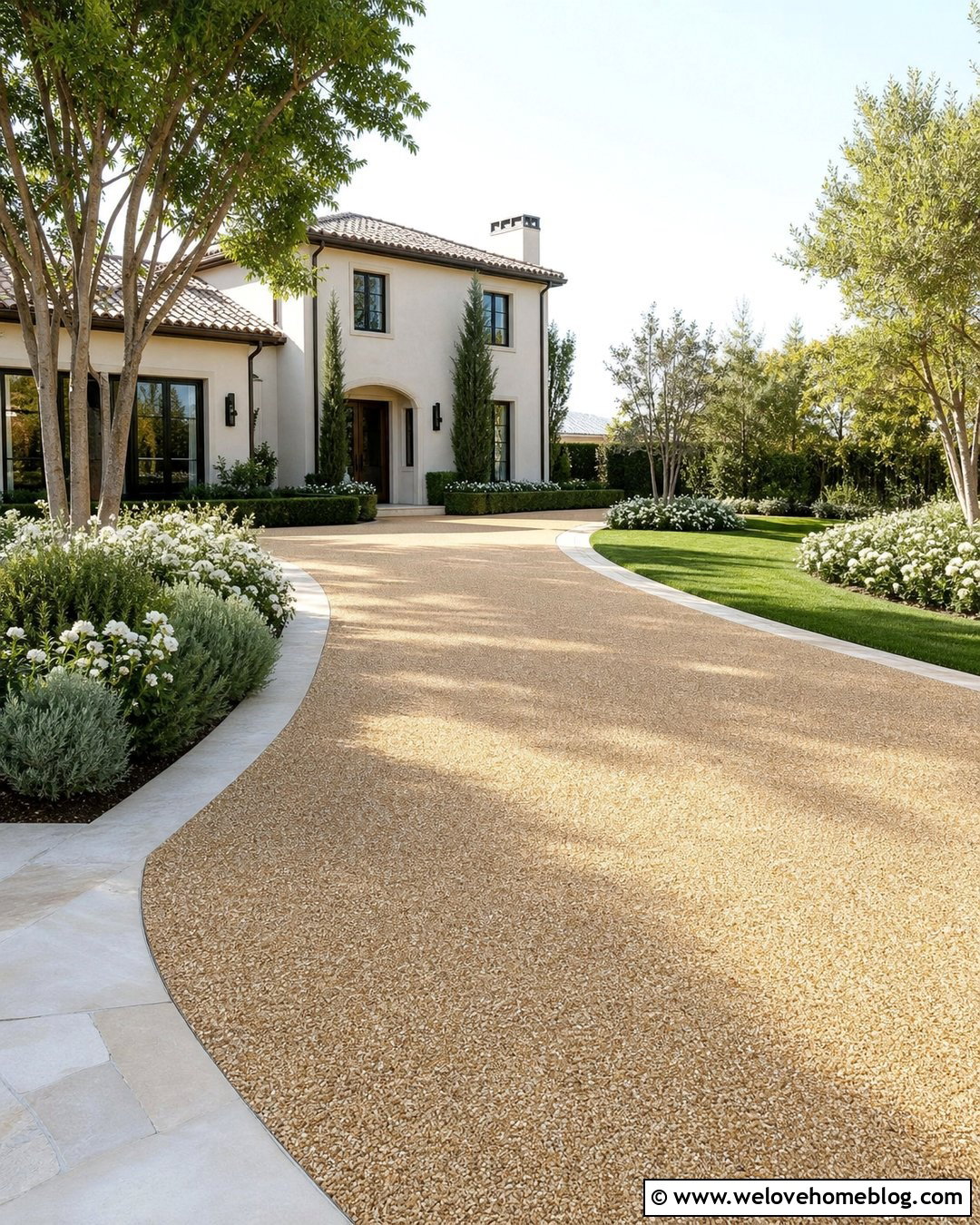
Exposed aggregate concrete brings natural color and texture to a hardworking driveway. The visible stones soften the appearance of the paved surface, making it a strong match for craftsman, rustic, and midcentury homes. Select aggregate colors that repeat tones found in the roof, siding, or stone veneer. A gently curved layout can showcase the pebbled finish while guiding attention toward the garage. Frame the driveway with smooth poured concrete bands to create a tidy edge and prevent the textured surface from appearing too busy. Layered beds of grasses, spreading shrubs, and small flowering trees add softness along the curve. A coordinating walkway and broad entrance apron complete this durable, cohesive, and welcoming front-yard design.
4. Stamped Stone Concrete Driveway
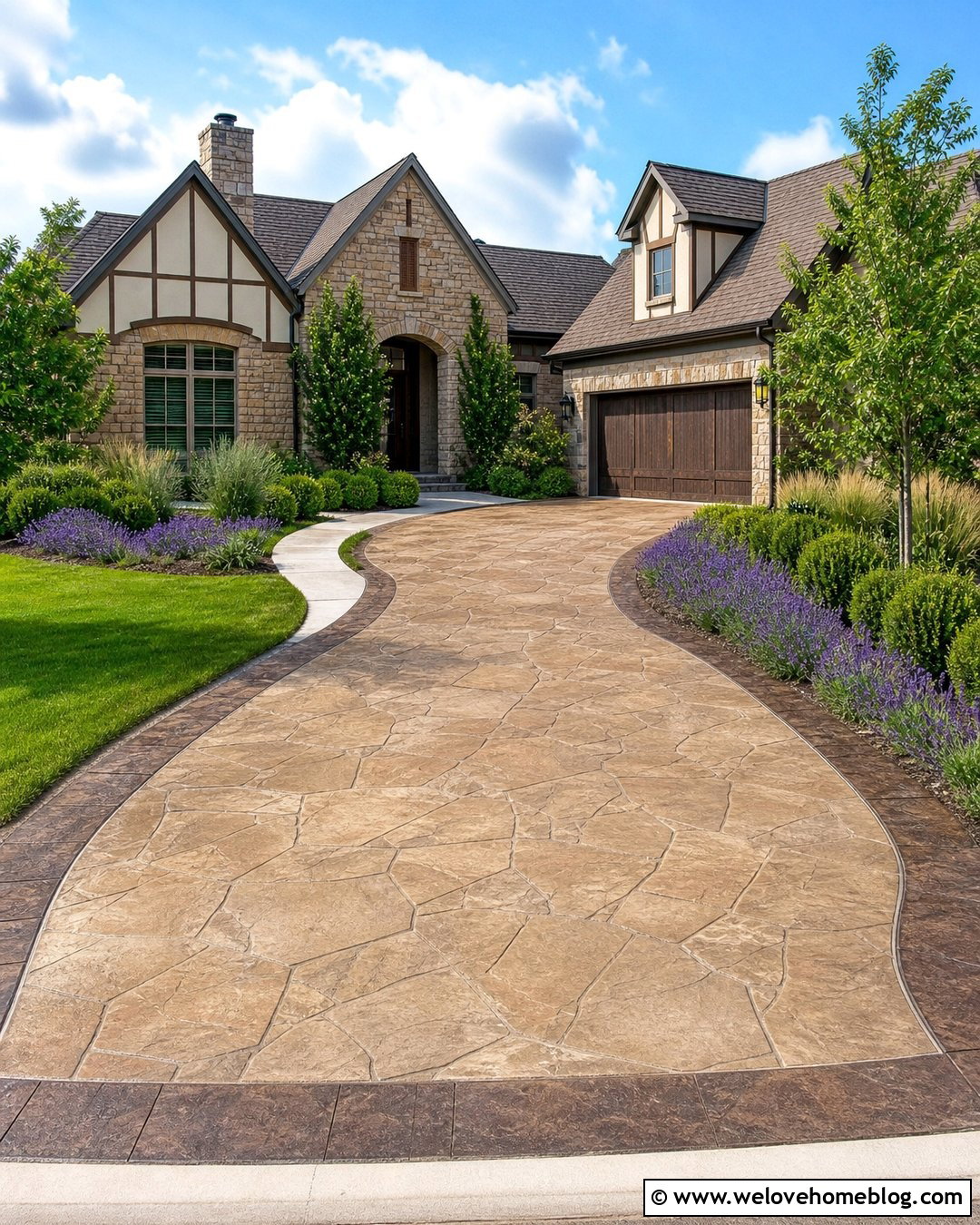
Stamped stone concrete provides the character of large natural slabs while maintaining a continuous paved surface. A random flagstone or ashlar pattern works beautifully with craftsman houses, cottages, and stone-front homes. Keep the color variation restrained so the driveway complements the building instead of competing with it. Warm gray, sandstone, and muted brown tones usually create a convincing natural effect. A darker stamped border can outline the shape and separate the driveway from surrounding mulch beds. Use a gentle curve to make the pattern feel less rigid, then plant lavender, boxwood, or ornamental grasses along the outer edge. Finish the look with a smooth concrete walkway that quietly connects the decorative driveway to the home’s main entrance.
5. Stamped Brick Concrete Driveway
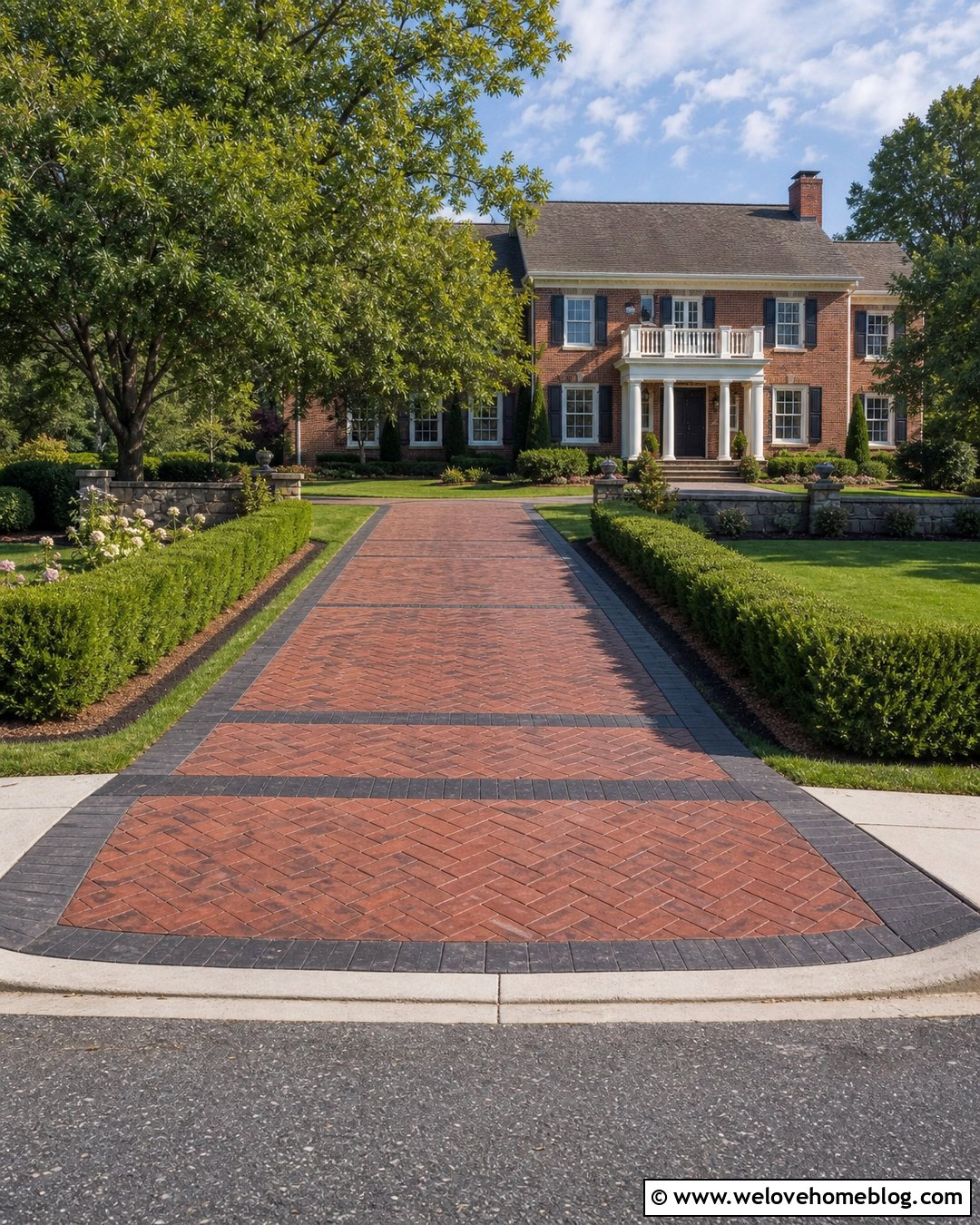
Brick-pattern stamped concrete can give a traditional home a warm, established appearance. Choose a running bond or herringbone pattern in muted red, brown, or weathered clay tones. A straight driveway leading to a colonial or Cape Cod house reinforces the orderly character of the architecture. To keep the surface from looking too uniform, add dark gray concrete borders and matching bands across selected control joints. Green lawn, clipped hedges, and symmetrical foundation beds provide a clean frame around the patterned concrete. Near the sidewalk, create a wider stamped apron that makes the entrance more noticeable. Repeating the brick tone in the front steps or walkway helps the driveway feel like an intentional extension of the house rather than a separate decorative feature.
6. Gray Concrete Driveway With Black Border
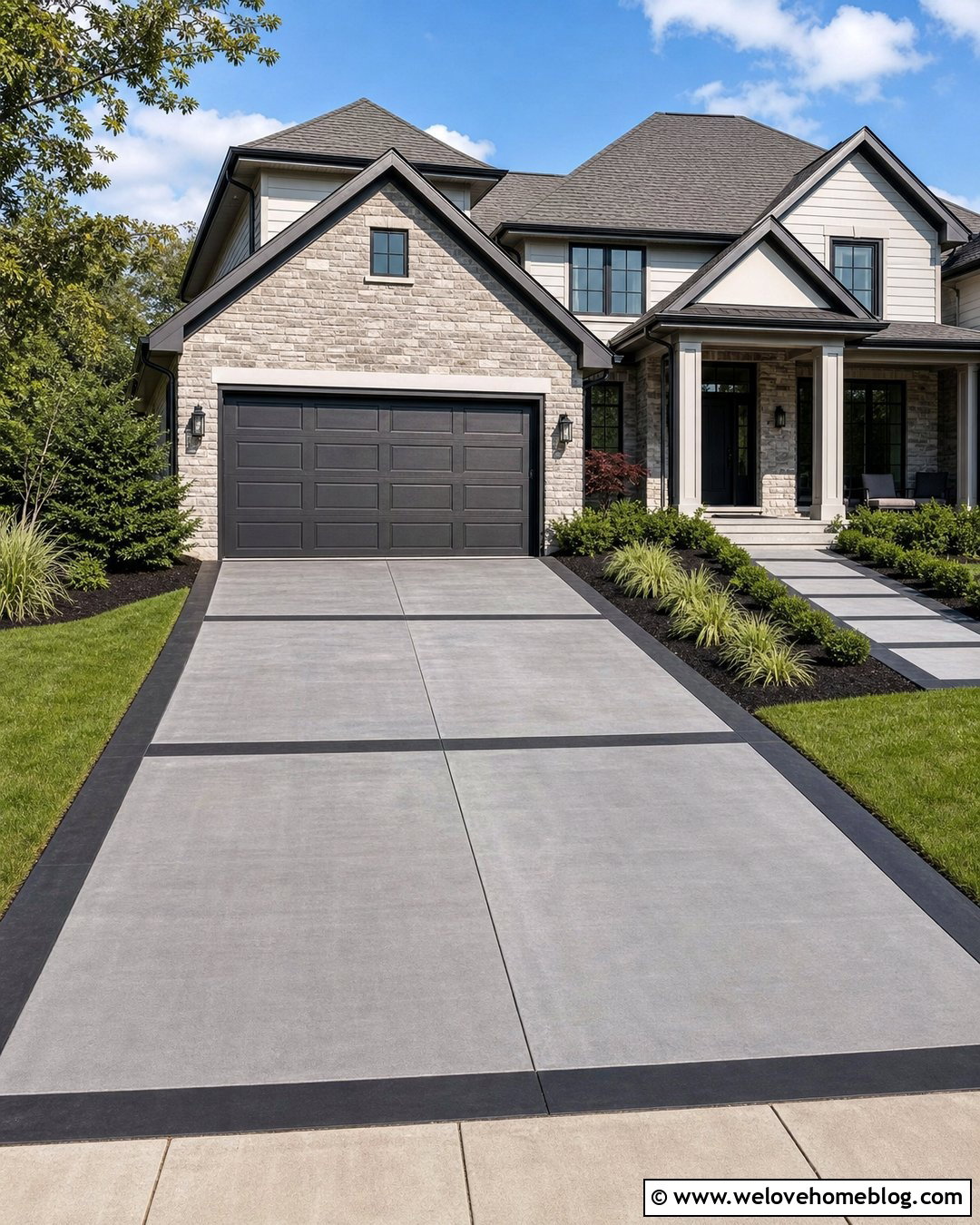
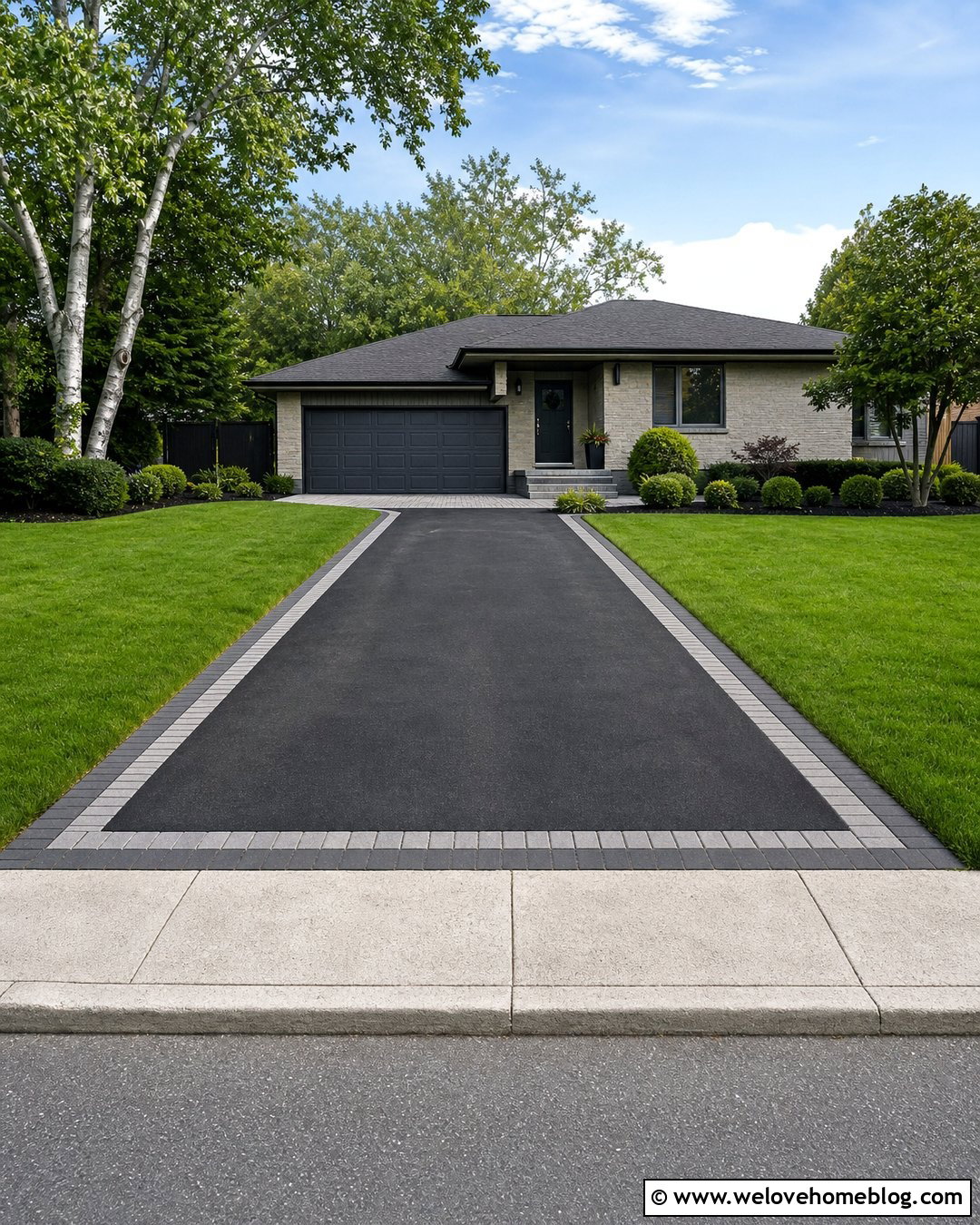
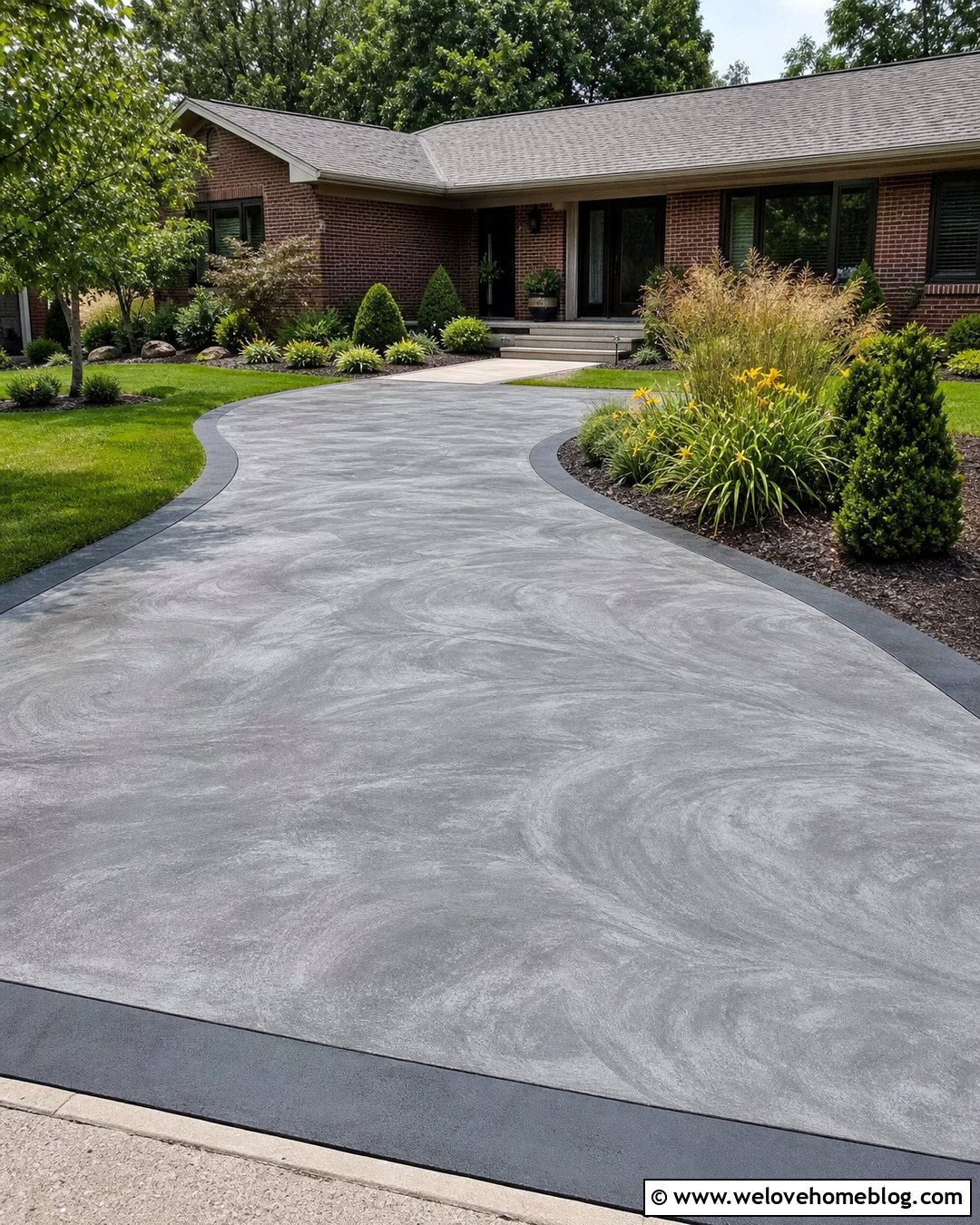
Medium gray concrete surrounded by a charcoal border creates crisp definition without relying on a complicated pattern. This combination suits modern, transitional, and updated suburban homes. Use the darker concrete along both sides, around the entrance apron, and across selected joints to form a consistent visual frame. The main field can have a light broom finish for traction and understated texture. Keep the driveway straight and align its divisions with the garage bays for an orderly appearance. Black mulch, deep green shrubs, and pale ornamental grasses can repeat the color contrast in the landscaping. A matching charcoal walkway provides another useful connection. The finished driveway feels contemporary, practical, and polished while remaining simple enough to support the home’s architecture.
7. White Concrete Driveway With Grass Strips
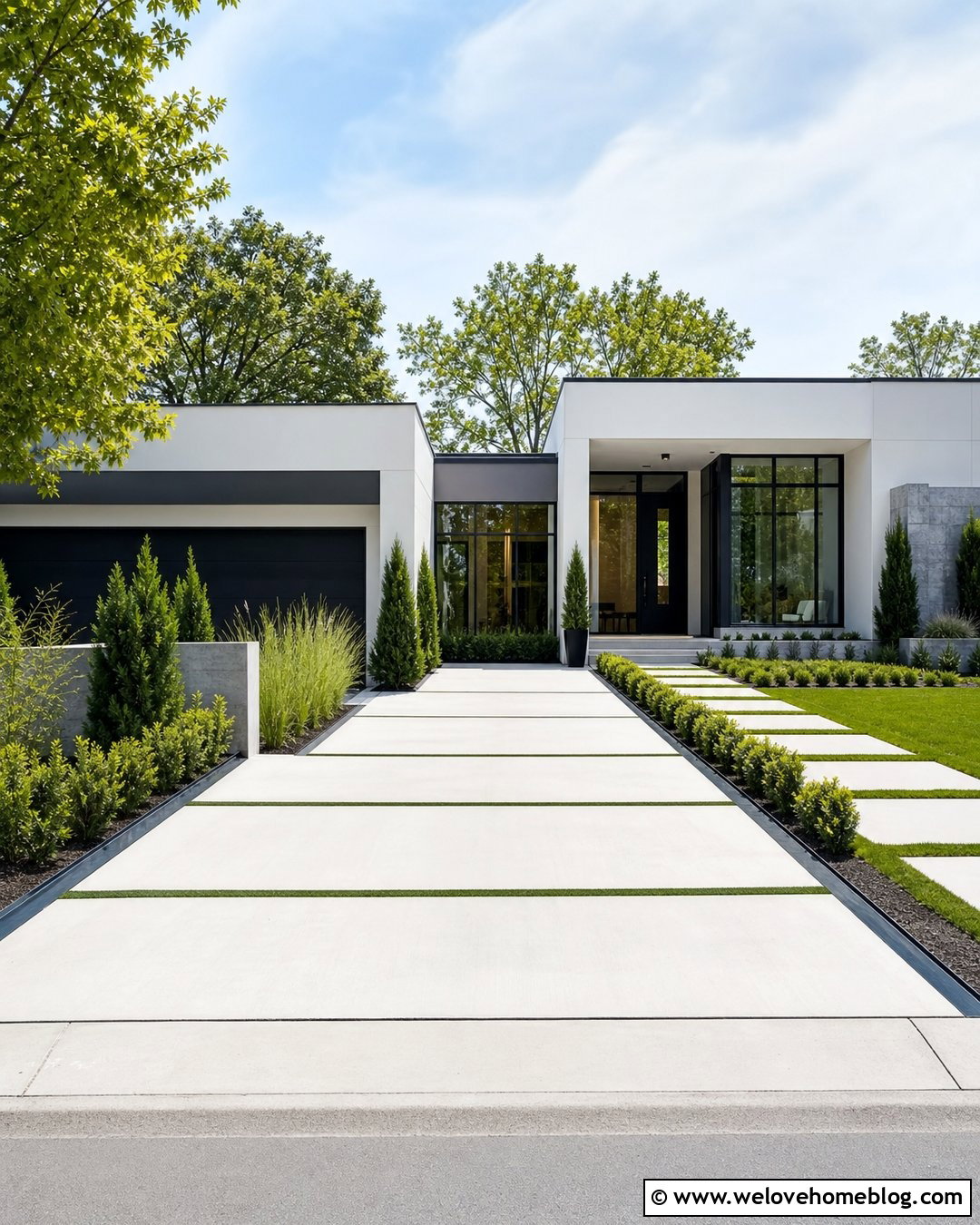
Bright concrete slabs separated by grass strips can make a front yard feel greener and more open. This look works best with large rectangular sections rather than many small blocks. Arrange the pale concrete in two broad wheel paths or a complete slab grid leading toward a modern house. Narrow bands of sturdy turf between the sections soften the pavement and reinforce the geometric layout. Continue the greenery through planting pockets filled with low grasses and compact shrubs. Dark metal edging can keep the transitions neat and prevent the lawn from spreading into the joints. Because very light concrete shows debris easily, choose this complete driveway design when its clean, airy appearance fits your maintenance routine and surrounding landscape.
8. Curved Concrete Driveway
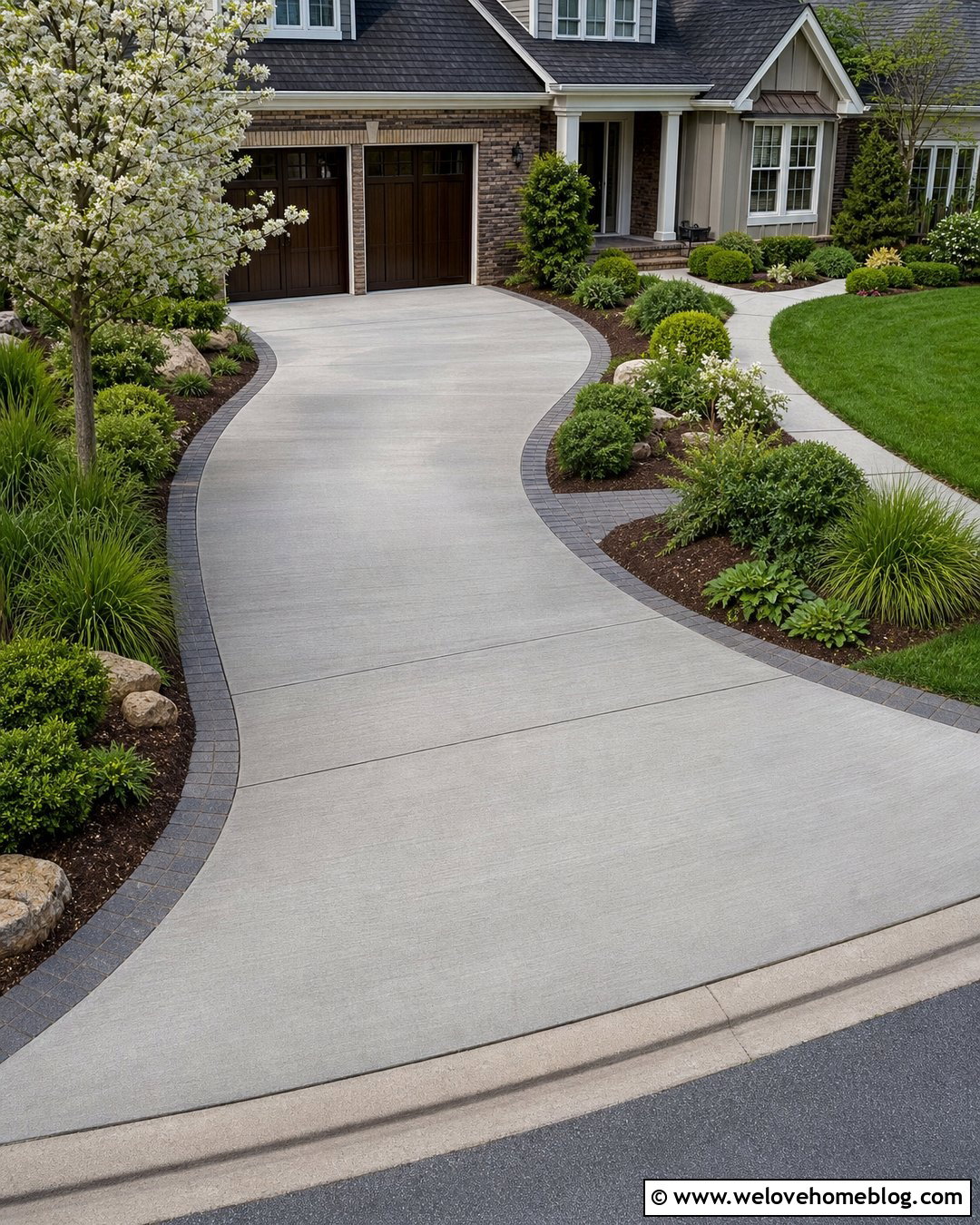
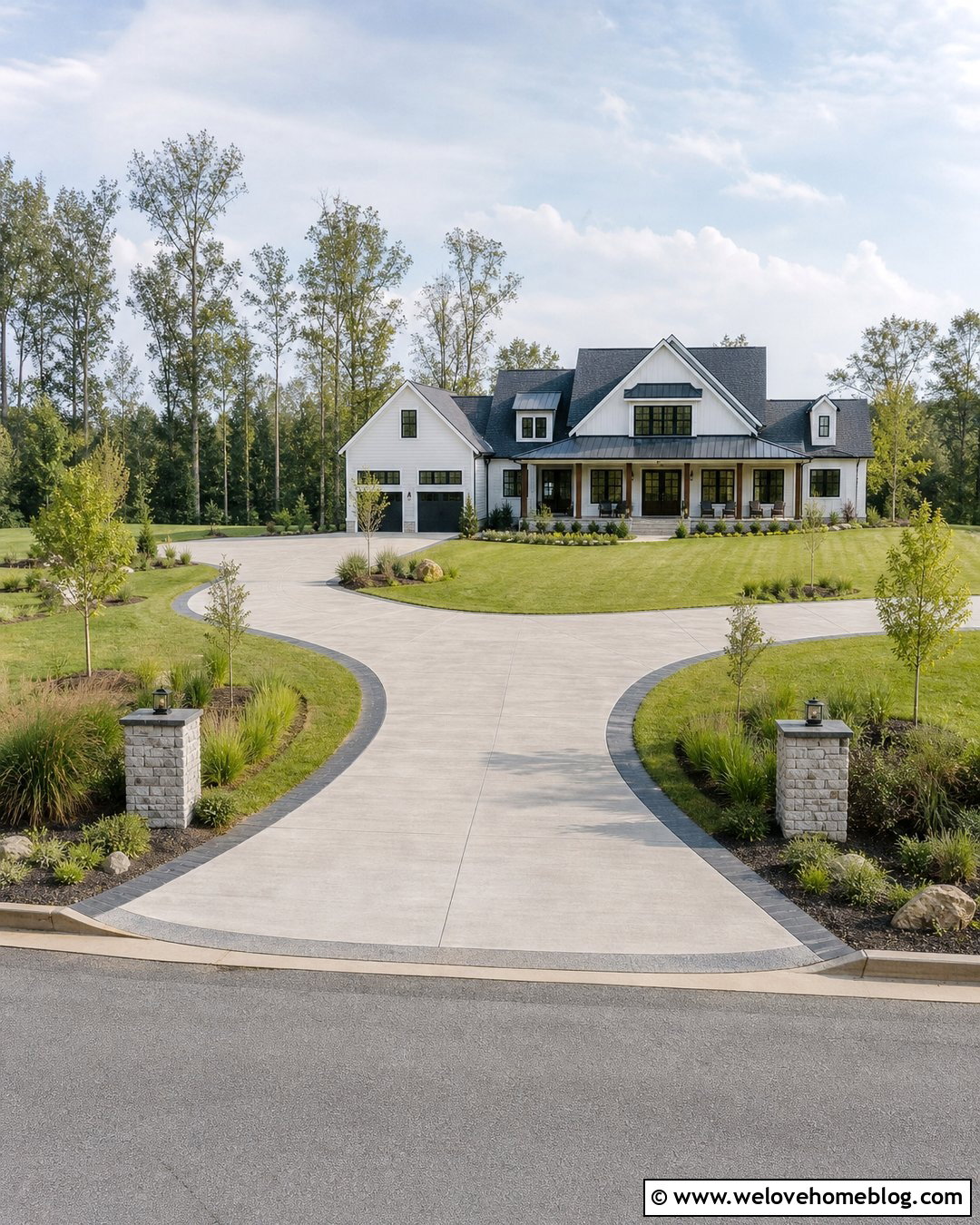
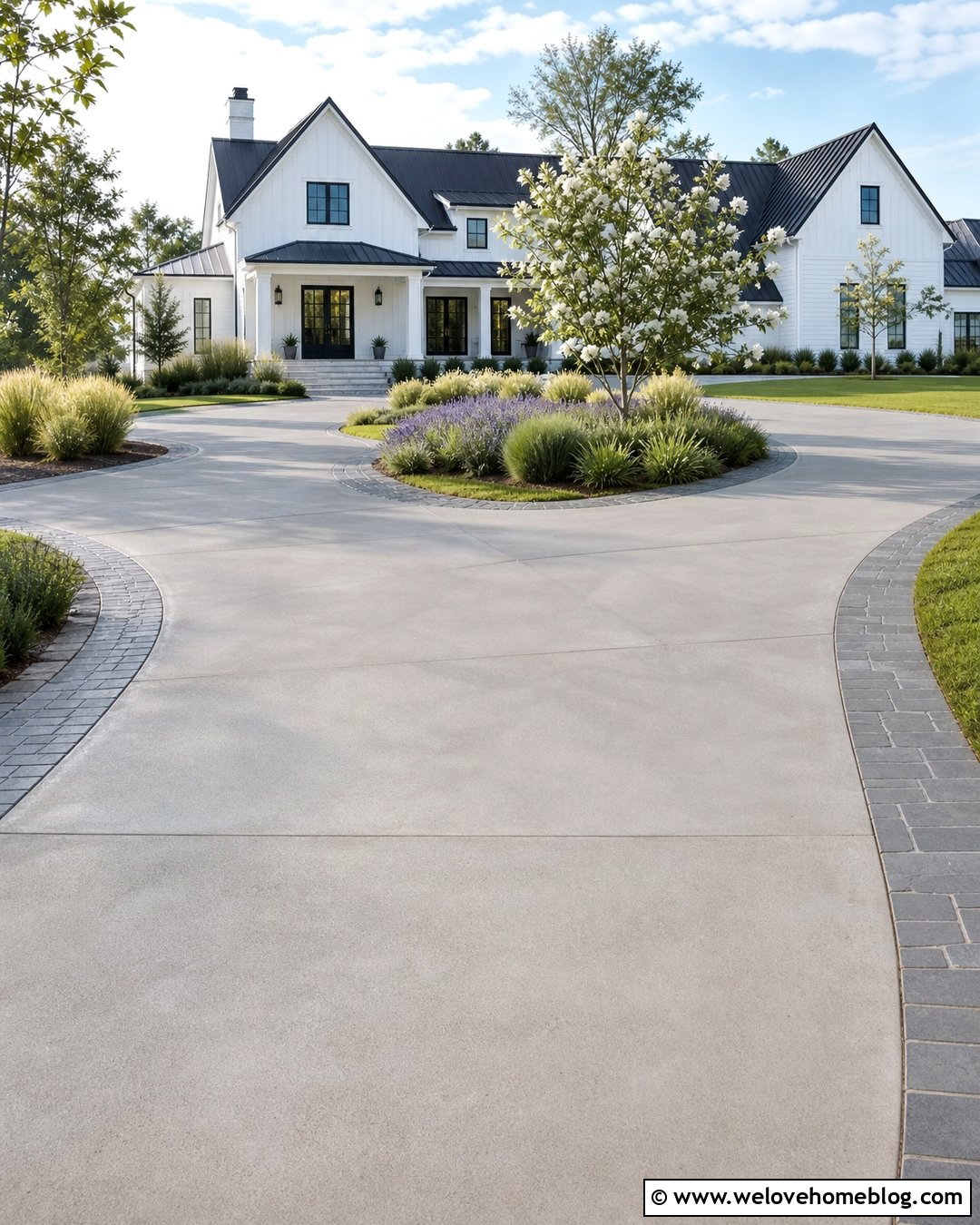
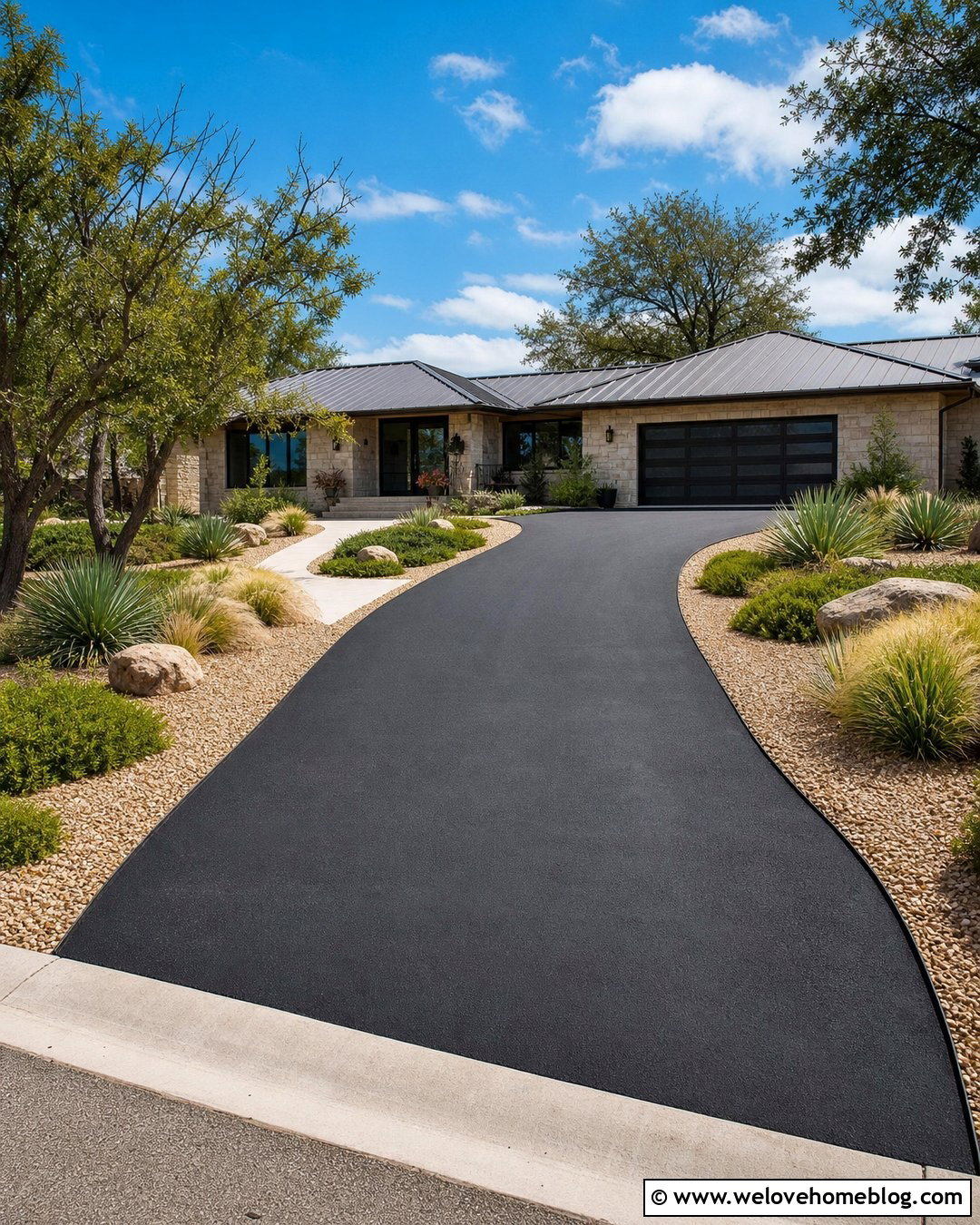
A curved concrete driveway can make the approach to a home feel graceful and less abrupt. The curve should follow the natural shape of the yard rather than creating unnecessary bends. Use lightly brushed warm gray concrete with saw-cut joints that fan gently around the turn. A contrasting paver ribbon along the inside edge can emphasize the shape and protect nearby planting beds. On the outer curve, place layered shrubs, ornamental grasses, and one small flowering tree to frame the view without blocking visibility. Keep the area near the street open and easy to navigate. When the driveway’s curve, border, front walkway, and landscaping follow related lines, the entire front yard gains a smoother and more intentional sense of movement.
9. Circular Concrete Driveway
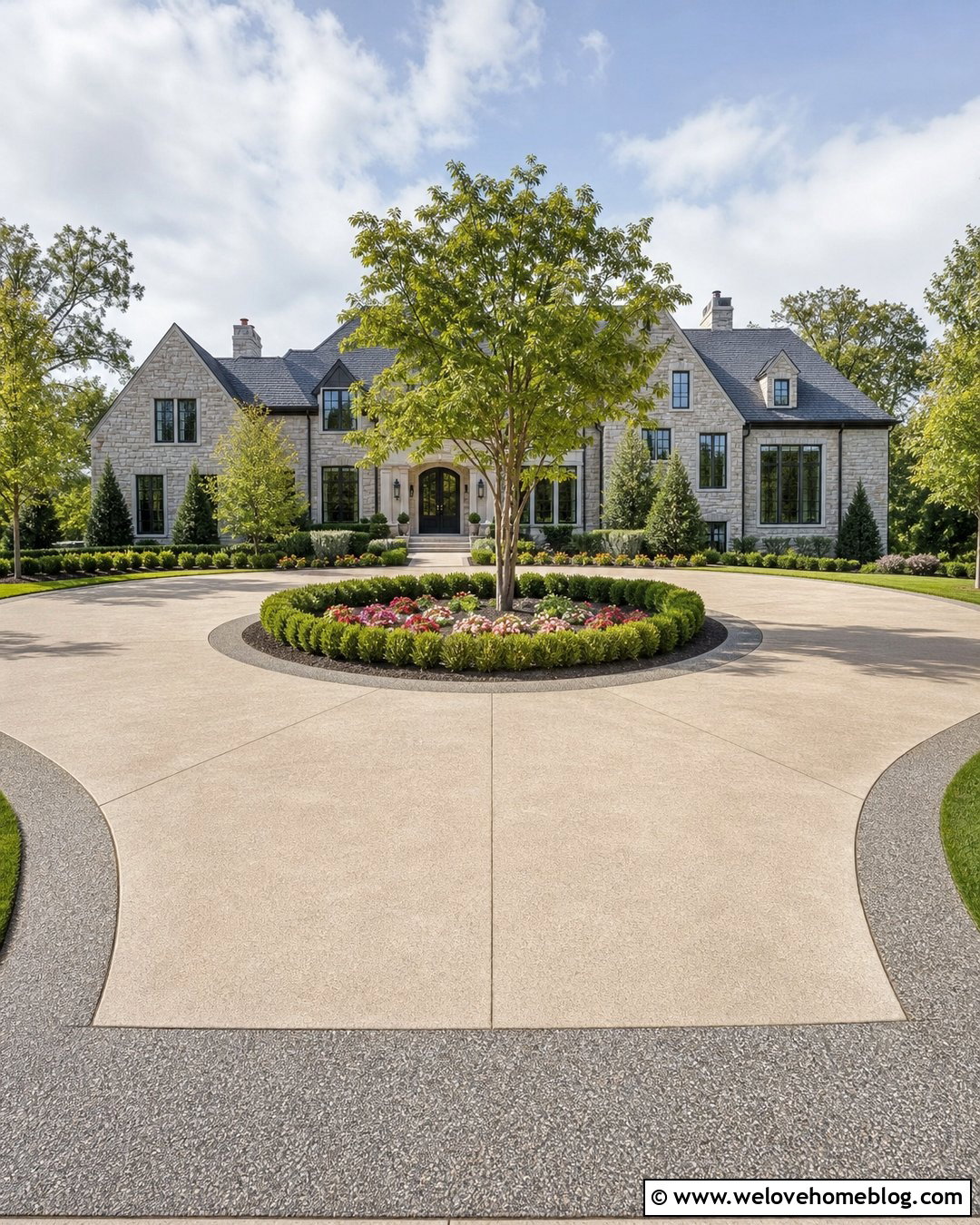
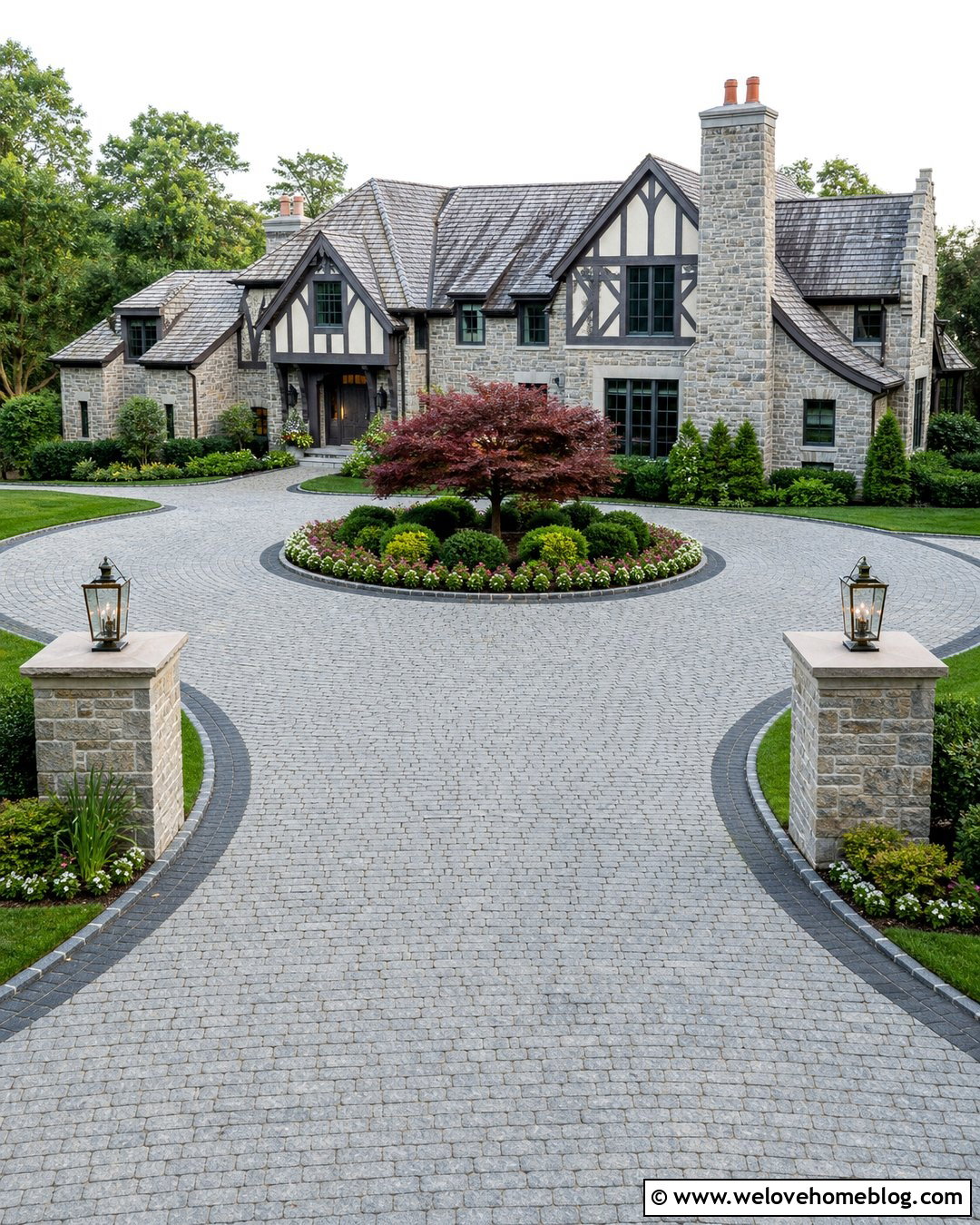
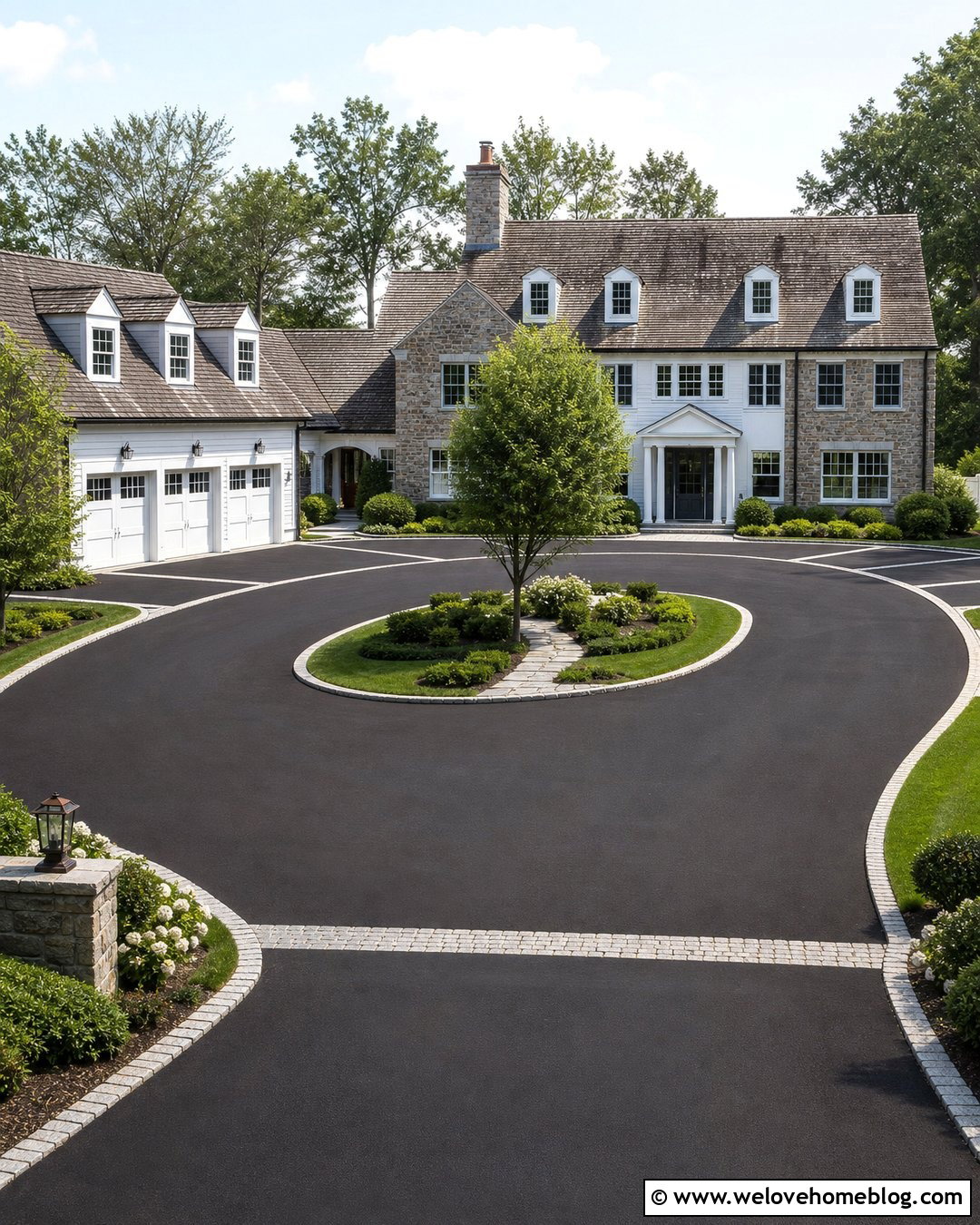
A circular concrete driveway creates a convenient arrival area while giving a larger front yard a clear focal point. Use broom-finished concrete for the main driving surface and define the circle with a stamped or exposed aggregate border. The center island can hold a specimen tree, low evergreen shrubs, and seasonal flowers without becoming tall enough to hide the house. A traditional home may suit warm beige concrete, while a contemporary facade often looks better with cool gray tones. Connect both driveway openings to the street with broad, gently curved aprons. A walkway from the circle to the front door should be easy to identify. Balanced planting on both sides helps the complete layout feel elegant rather than oversized or overly formal.
10. Concrete Driveway With Brick Border
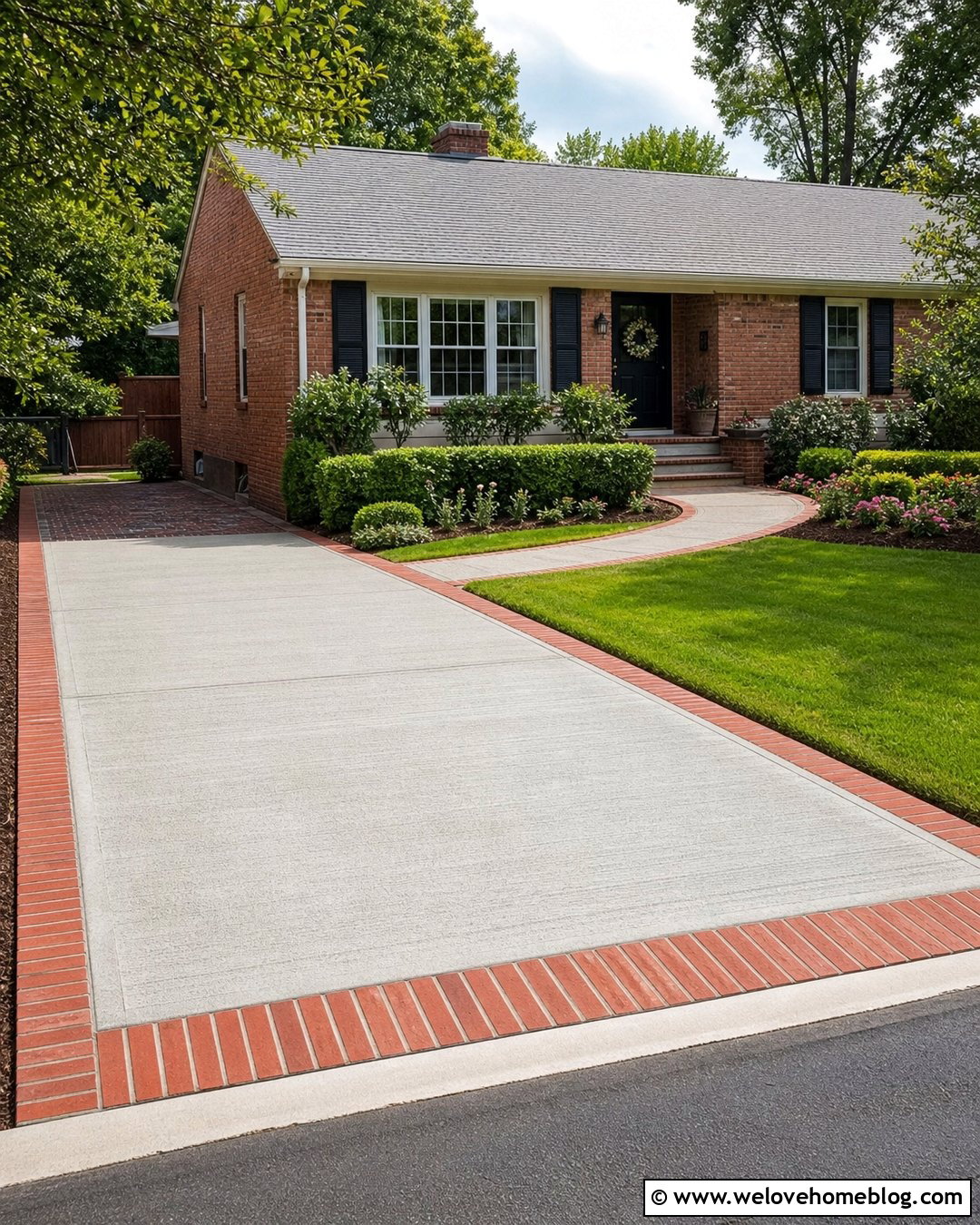
A real brick border adds warmth and handcrafted detail to a simple concrete driveway. Choose bricks that repeat the colors of the home’s facade, chimney, steps, or garden walls. A light gray broom-finished concrete center allows the clay border to remain noticeable without making the overall surface too busy. Lay the bricks in a soldier-course pattern along both sides and repeat them around the street apron. For additional continuity, use the same brick as a narrow ribbon where the driveway meets the garage. Traditional foundation shrubs, flowering perennials, and a neatly edged lawn complete the setting. This design is particularly effective for brick ranch, colonial, and craftsman homes because it connects a practical concrete surface with familiar architectural materials.
11. Concrete Driveway With Cobblestone Border
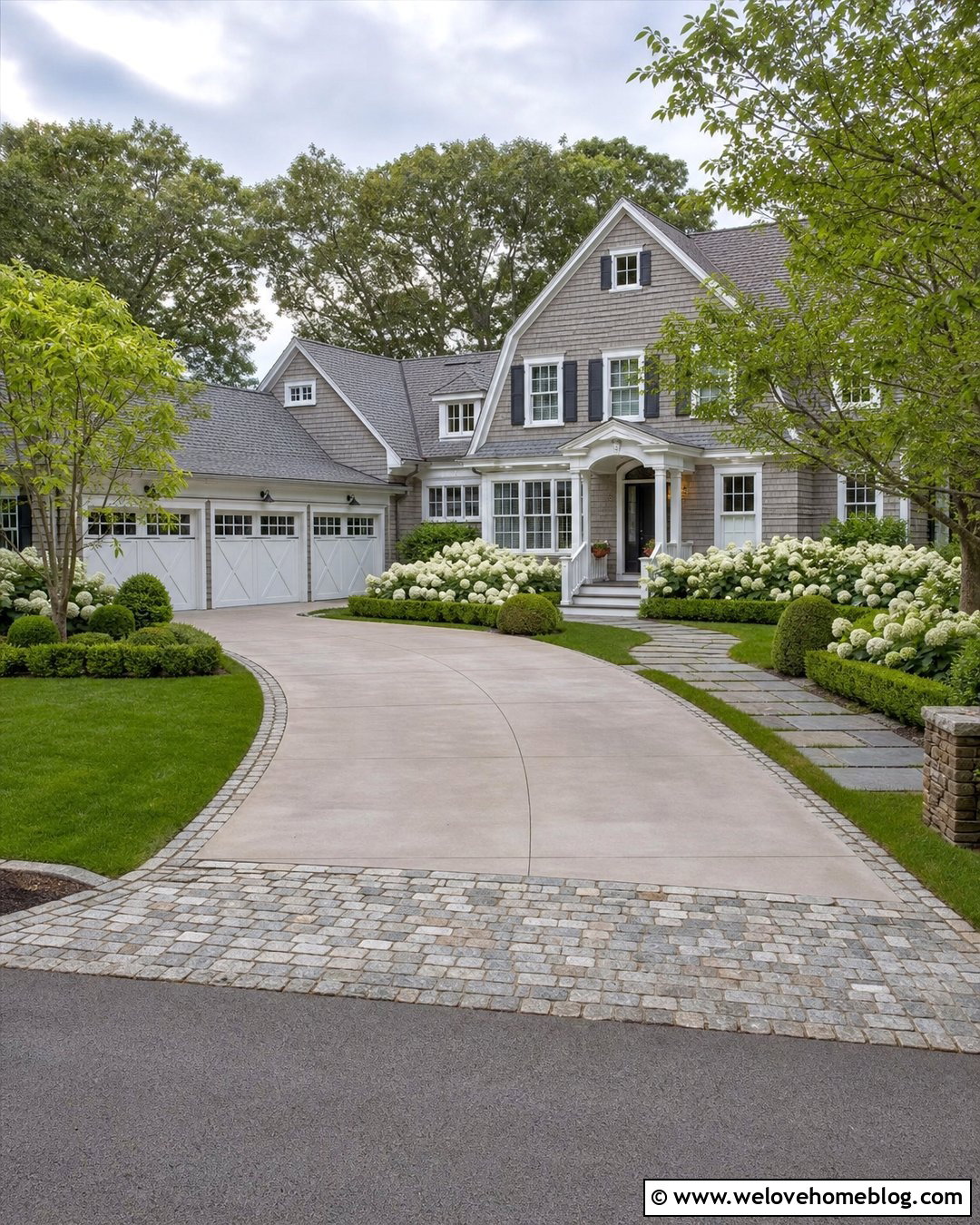
Cobblestone edging can give a poured concrete driveway a substantial, established frame. Use granite setts in mixed gray tones beside a warm or cool gray concrete field. The irregular stone texture adds character, while the smooth driveway center remains visually calm. A curved or gently flared layout allows the cobblestone line to become part of the overall composition. Continue the stone around the entrance apron and use it to separate the driveway from planting beds near the house. Boxwood, hydrangeas, and small ornamental trees suit the timeless appearance. A cobblestone-bordered walkway can connect the driveway to the front steps. Keeping the stone colors controlled ensures the complete driveway looks refined and coordinated rather than rustic or visually crowded.
12. Concrete Driveway With Paver Bands
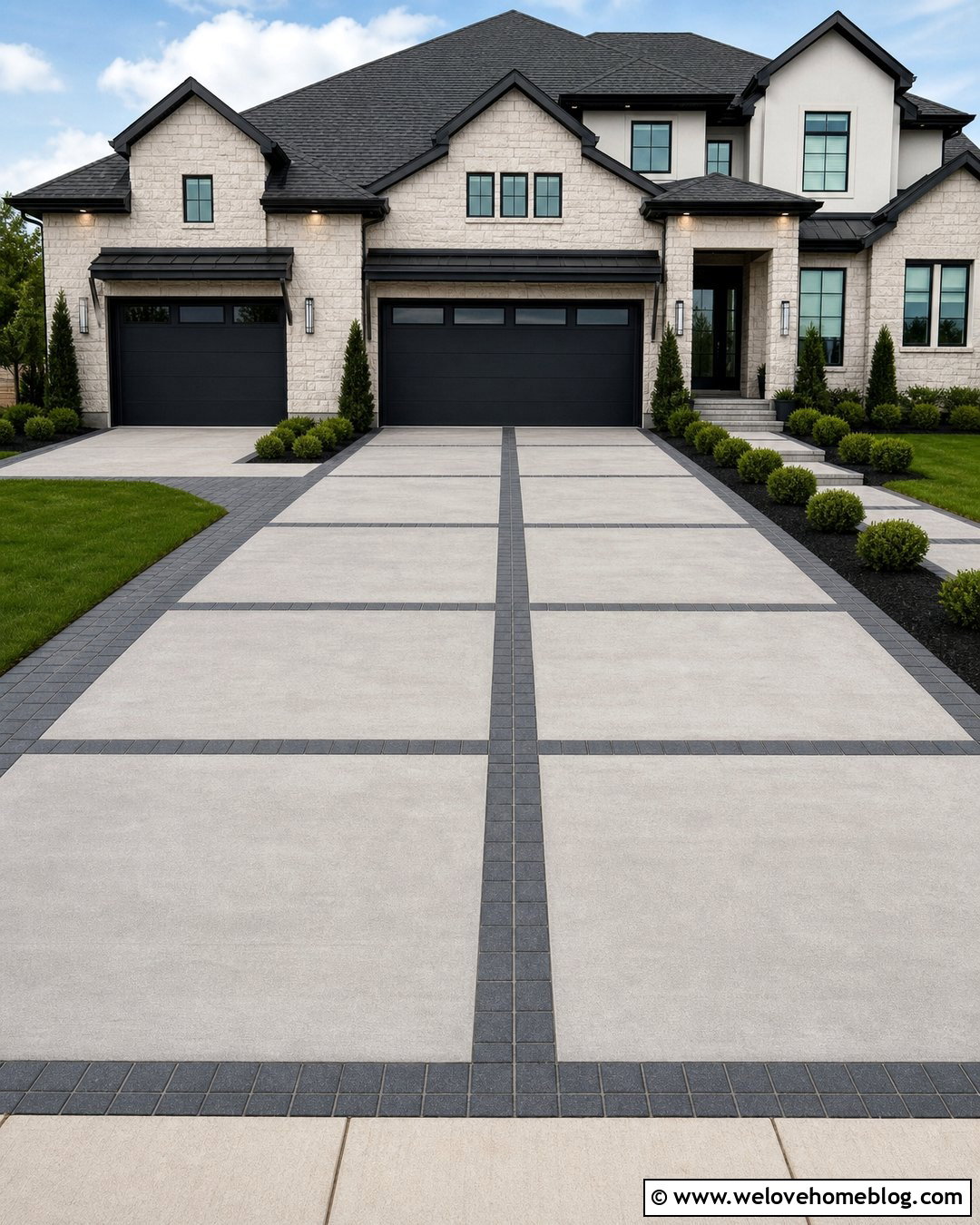
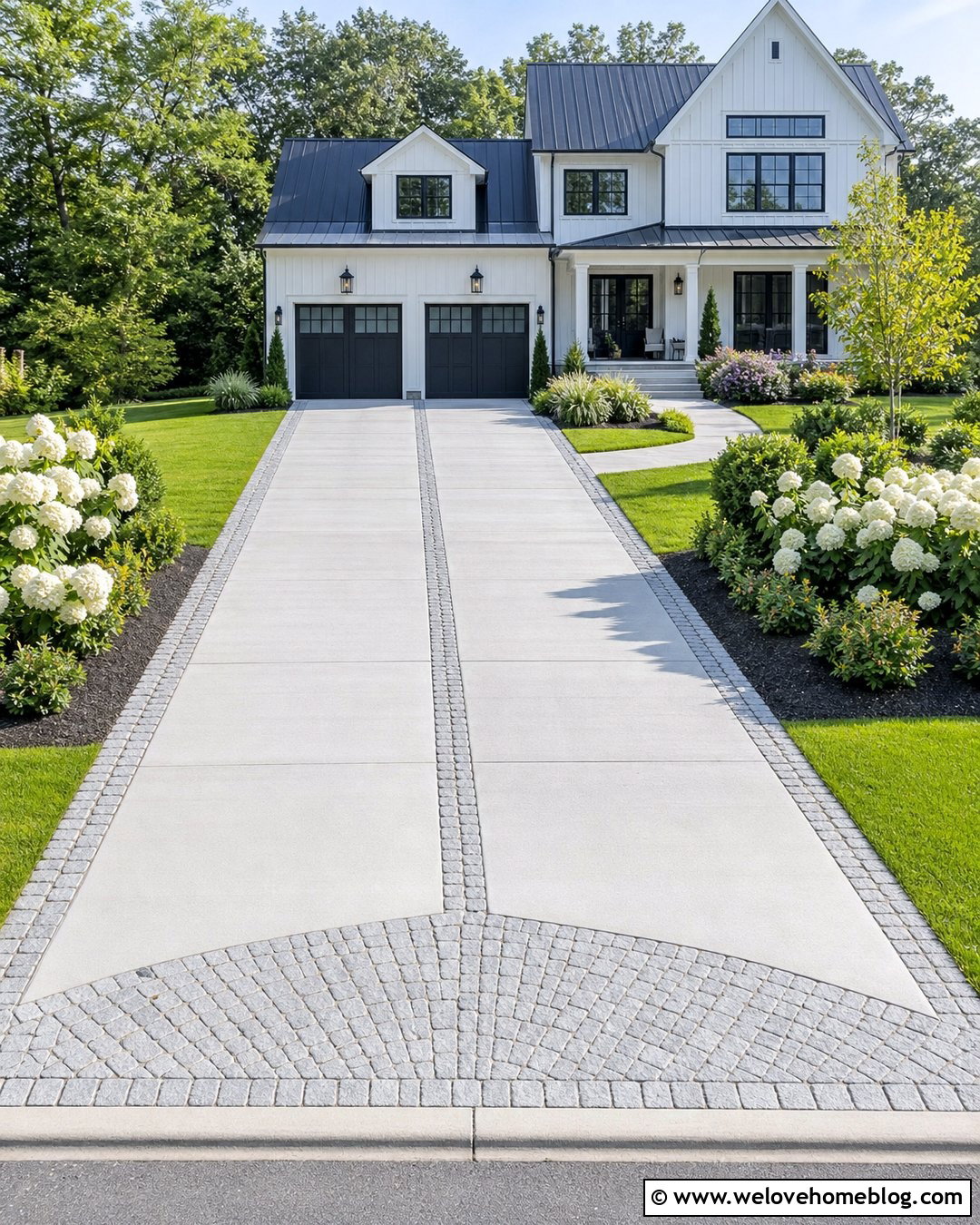
Paver bands break a large concrete driveway into smaller, more attractive sections. Start with a light broom-finished or sand-finished concrete surface, then place dark rectangular pavers across the width at planned intervals. Align the bands with control joints whenever possible so the divisions feel purposeful. Repeat the same pavers along the driveway edges and around the entrance apron. This approach looks especially organized on wide driveways serving two- or three-car garages. Simple lawn panels, clipped shrubs, and a matching paver walkway help carry the pattern through the front yard. Choose pavers that contrast with the concrete but coordinate with the roof or facade. The resulting design has rhythm, definition, and curb appeal without covering the entire driveway in decorative material.
13. Concrete Driveway With Gravel Strips
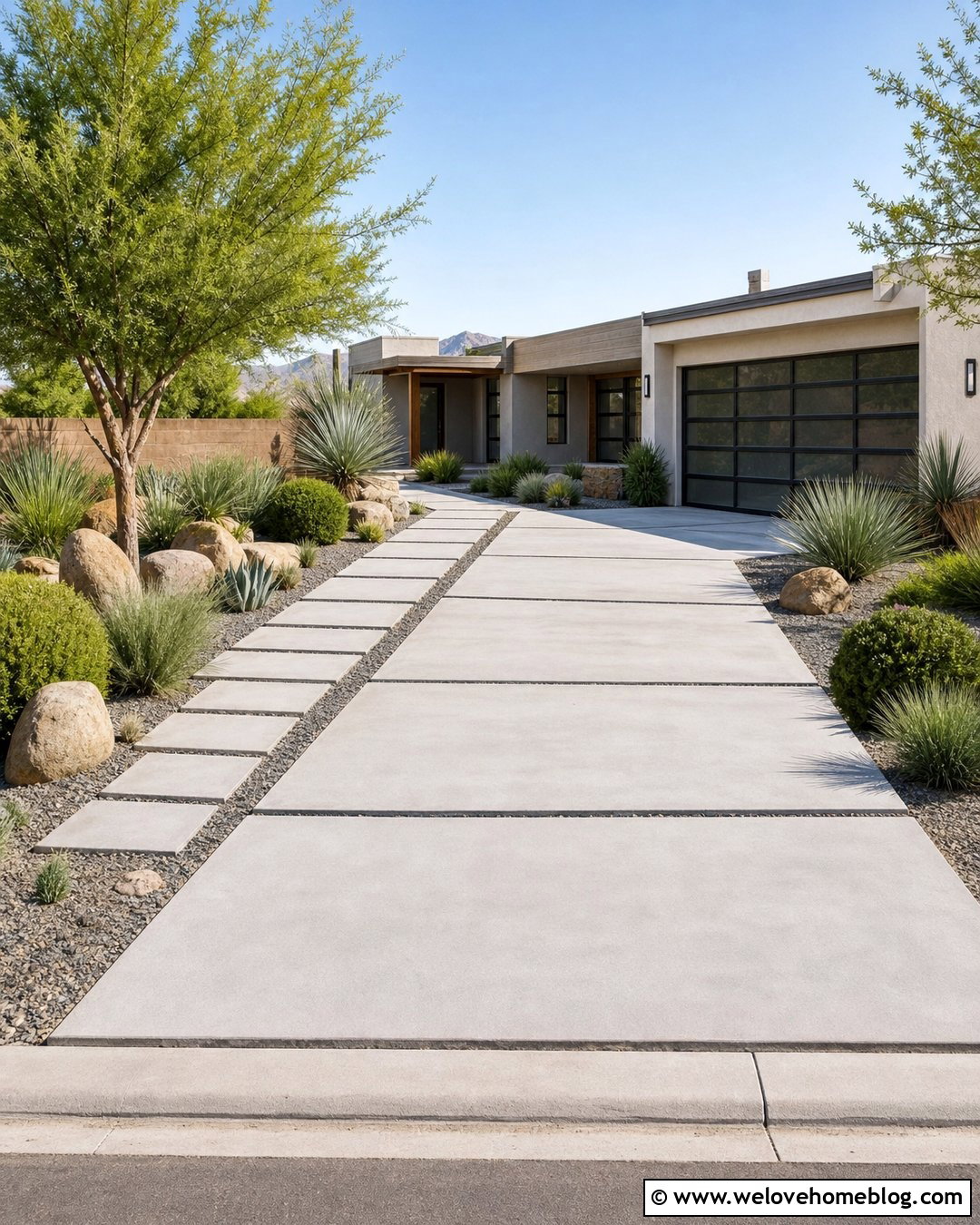
Gravel strips can soften the hard lines of a concrete driveway while introducing useful color and texture. Divide large poured concrete panels with narrow channels of washed gravel or smooth river rock. Select stone that contrasts clearly with the concrete, such as charcoal gravel beside pale slabs or tan gravel beside medium gray concrete. Metal edging inside the channels keeps the materials separated and maintains straight lines. Extend the gravel into nearby drought-tolerant planting beds filled with ornamental grasses, succulents, and sculptural shrubs. A modern or desert-inspired house provides an ideal backdrop for this design. The gravel joints, concrete panels, walkway, and landscape beds should use a consistent geometry so the complete entrance feels calm, connected, and intentionally planned.
14. Concrete Driveway With Landscape Beds
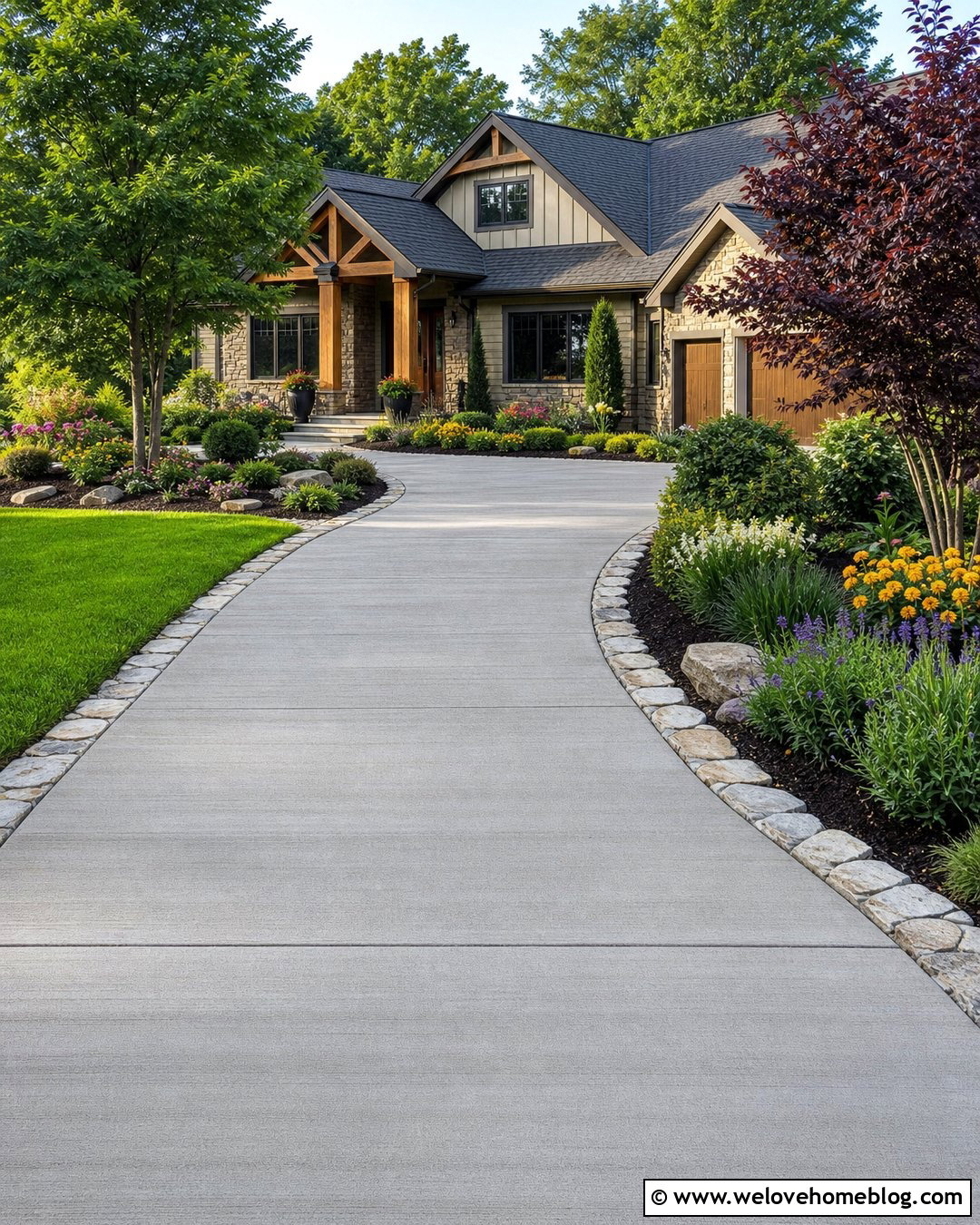
Generous planting beds can make a broad concrete driveway feel softer and better integrated into the yard. Choose a gently curved, broom-finished concrete surface with clean stone or paver edging. Along the sides, build layered beds with low ground covers near the pavement, medium shrubs behind them, and small trees farther back. This arrangement keeps sightlines clear while adding depth. Allow one bed to sweep toward the front walkway so the driveway and entrance share the same landscape. Repeating a limited group of plants creates more unity than using many unrelated varieties. Mulch or decorative stone should complement the concrete color. With thoughtful spacing, the landscaping frames the driveway through every season without crowding vehicles or spilling onto the paved surface.
15. Concrete Driveway With Retaining Wall
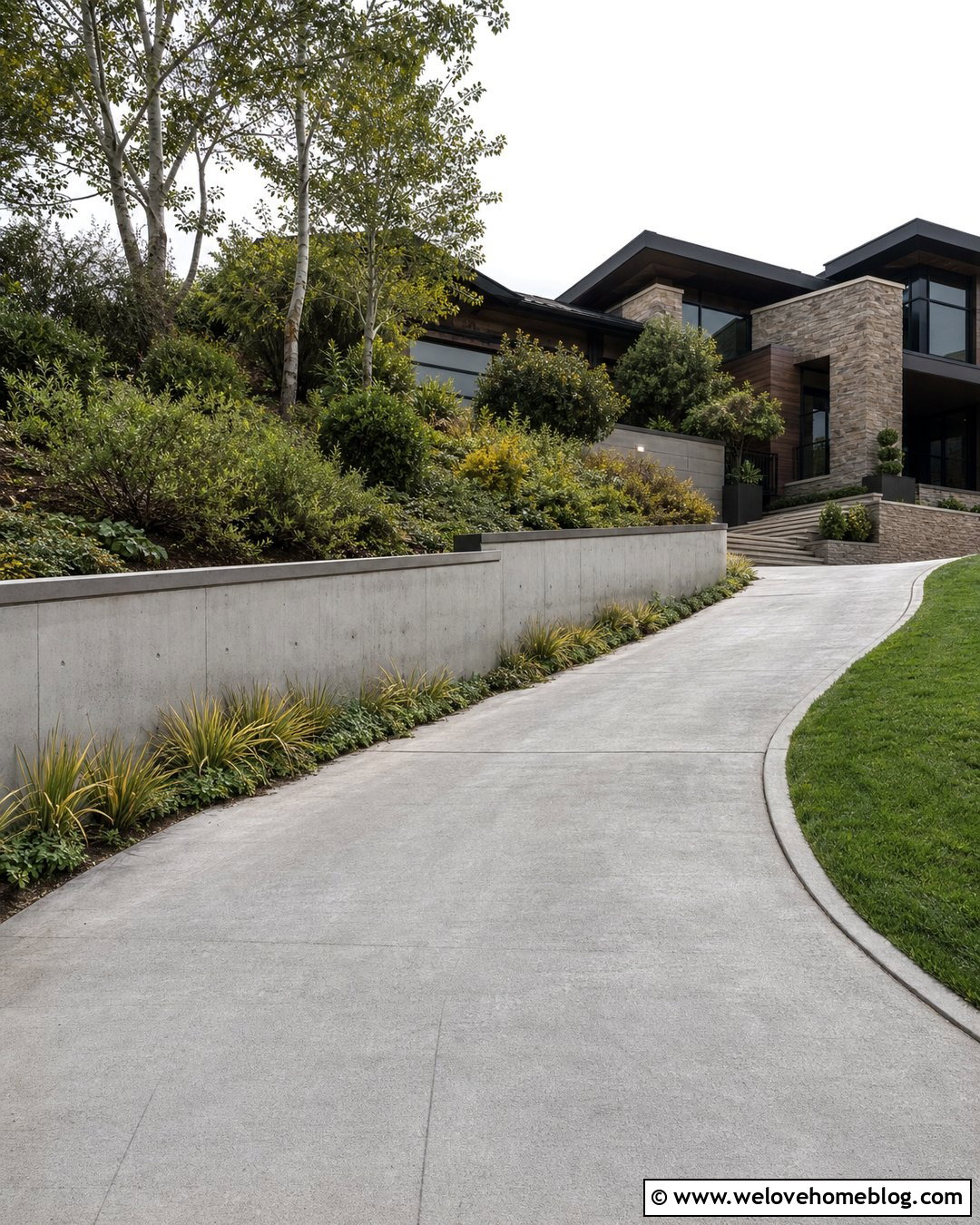
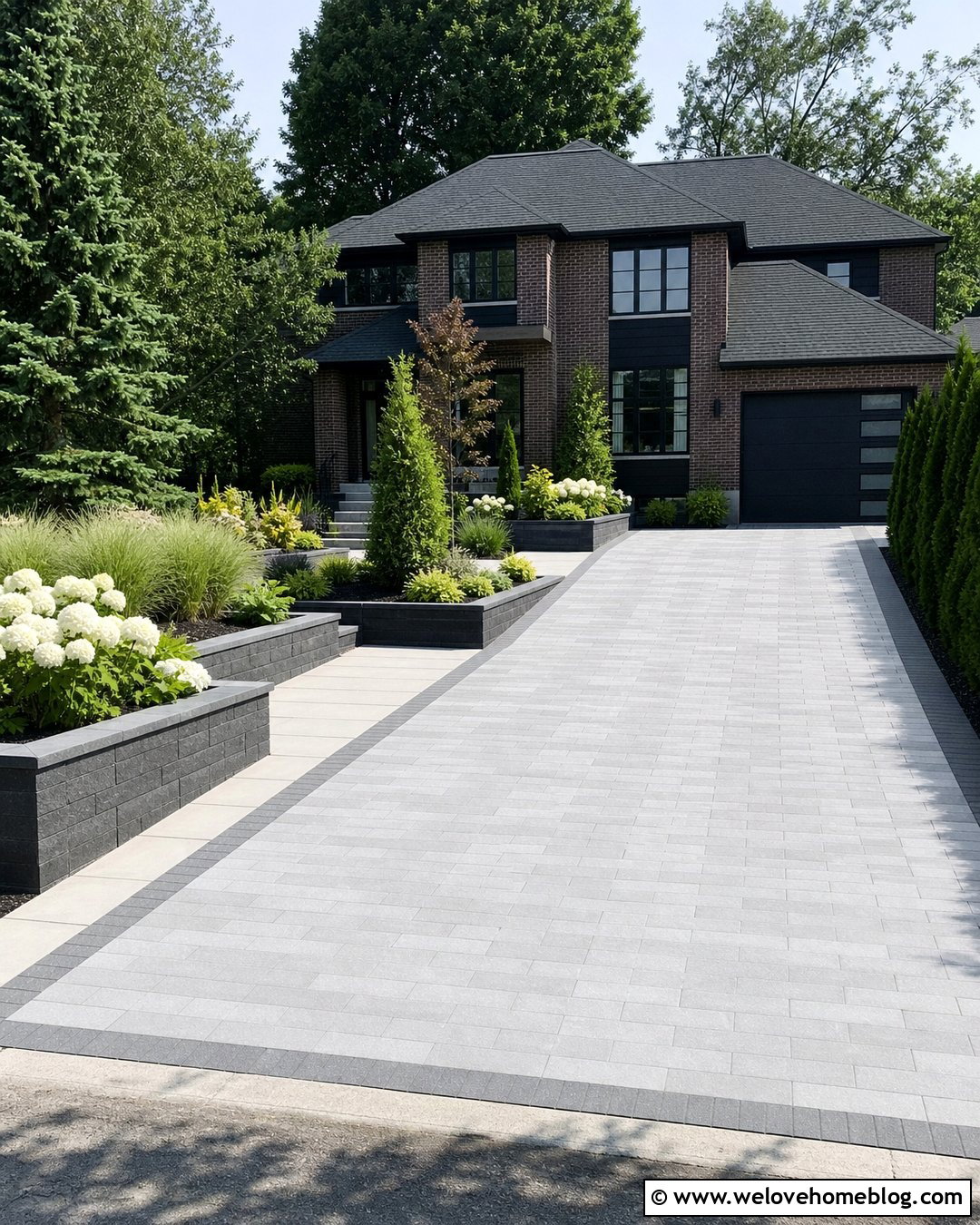
A sloped yard often needs a retaining wall to make the driveway feel secure and visually balanced. Pair a brushed concrete driveway with a low wall made from natural stone, concrete block, or smooth poured concrete. The wall should follow the driveway’s incline and transition gradually into the surrounding grade. Add a narrow planting bed above it with compact grasses, trailing ground covers, and shrubs that will not block the view. On the opposite side, a simple lawn edge can prevent the approach from feeling enclosed. Use wall caps and a driveway border in related colors for a coordinated finish. Integrated steps may connect the parking area to the front walkway, helping the entire concrete drive, wall, slope, and entrance function as one clear layout.
16. Concrete Driveway With Drainage Channel
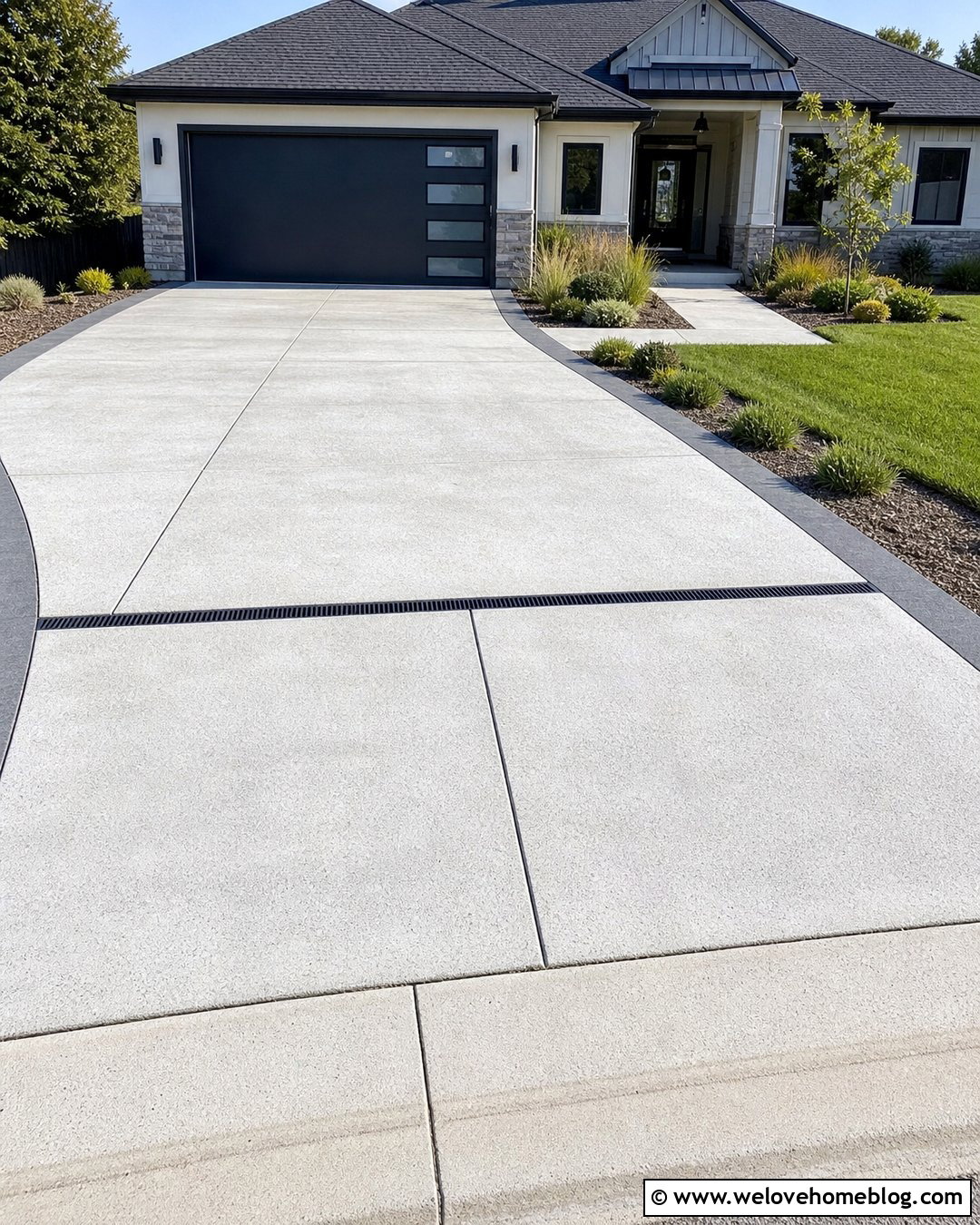
Good drainage can become a deliberate part of the driveway design instead of an obvious afterthought. Use a lightly textured concrete surface that slopes gently toward a slim channel drain or decorative stone strip. Place the drain near the garage, across a low point, or along the driveway’s side based on the site’s water flow. A dark linear grate can complement modern architecture, while a cobblestone channel may suit a traditional house. Keep control joints aligned with the drainage feature for a cleaner appearance. Plant moisture-tolerant grasses and low shrubs in nearby beds where appropriate. When the concrete grade, borders, drain, lawn, and planting areas are planned together, the finished driveway looks organized while directing water away from important structures and walking routes.
17. Narrow Concrete Driveway
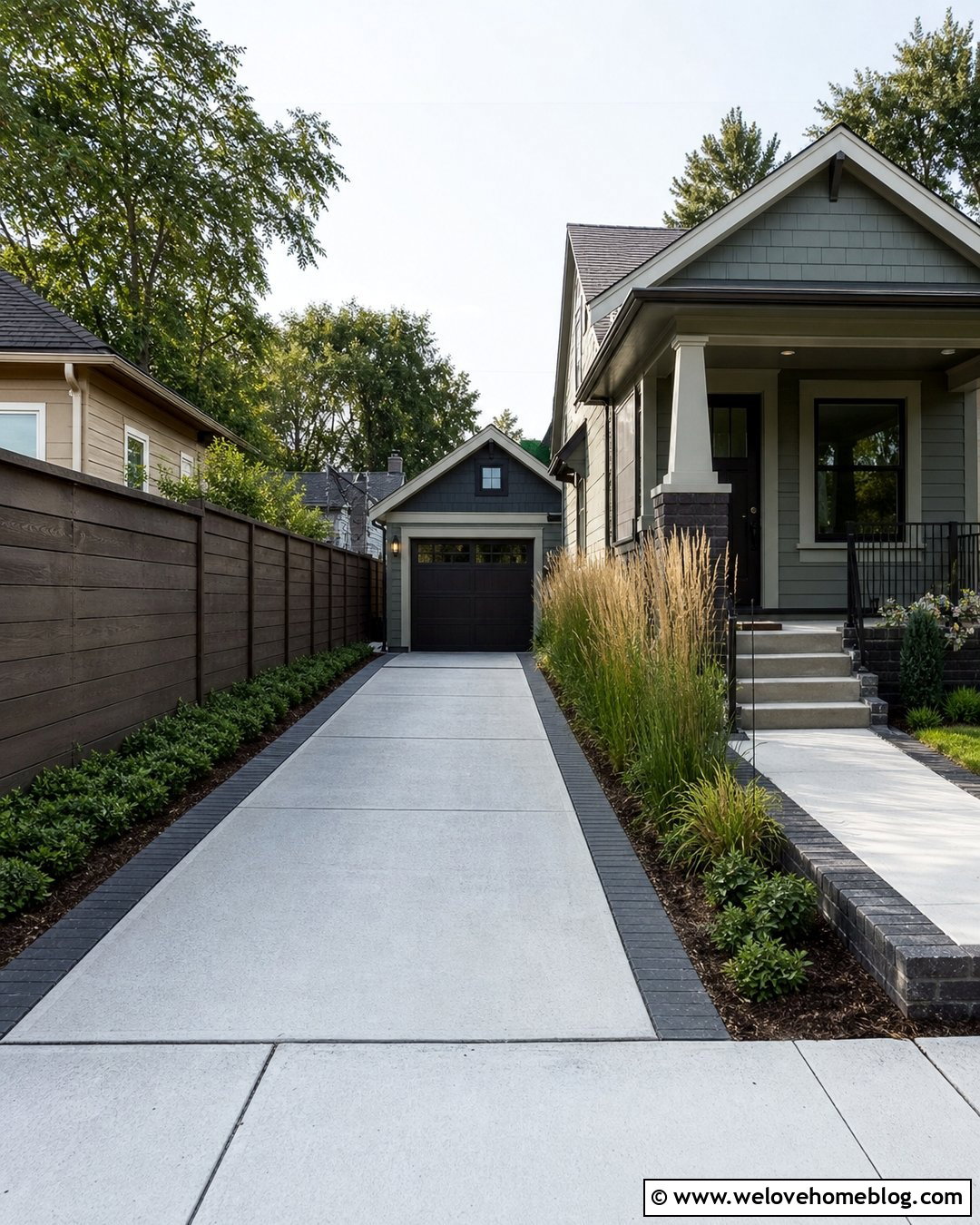
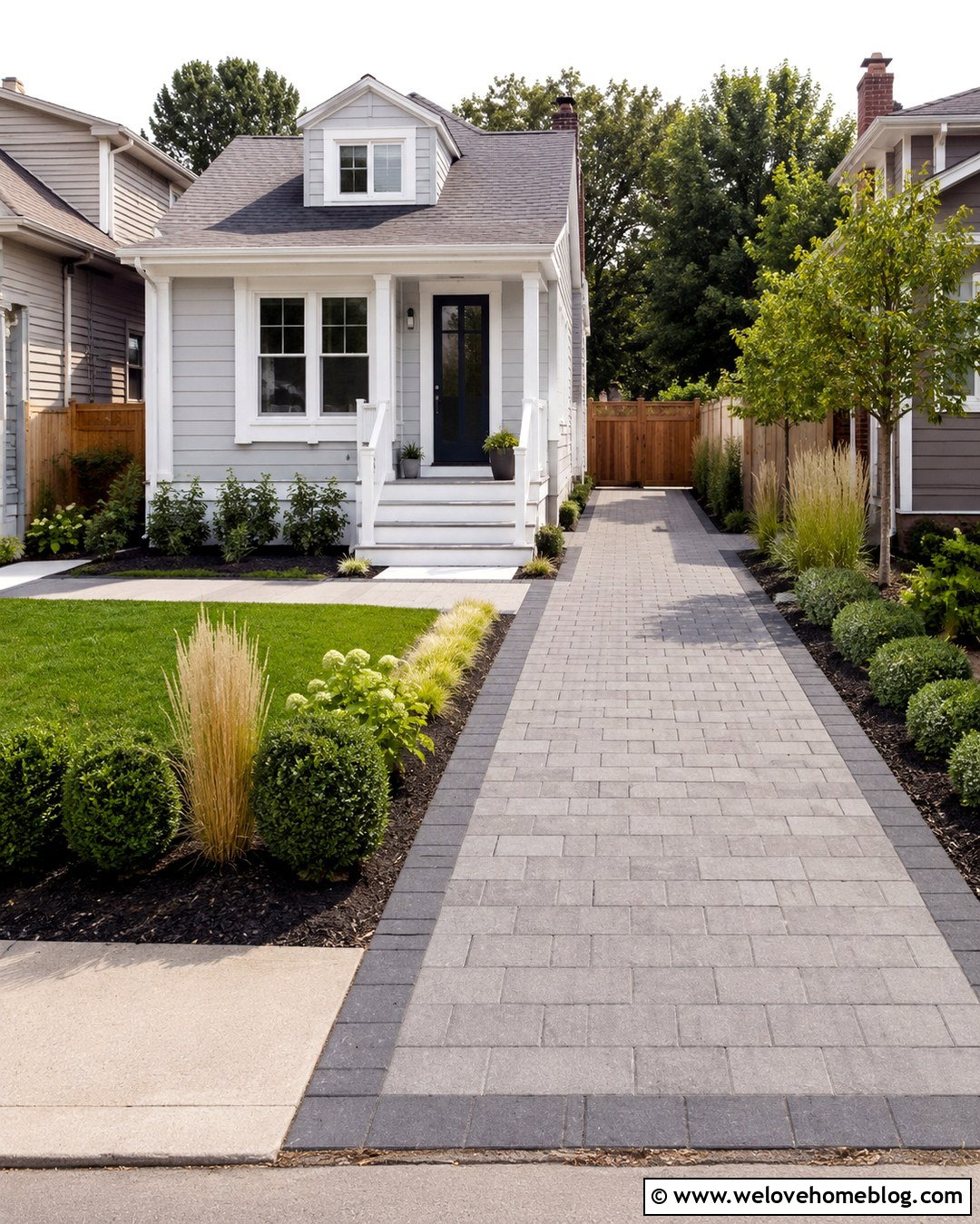
A narrow concrete driveway benefits from simple details that make it feel wider and less confined. Choose pale gray concrete with lengthwise scoring rather than busy crosswise patterns. Slim brick or dark paver borders can define the edges without using valuable driving space. If the driveway runs close to the house, add a narrow planting strip with upright grasses or compact evergreen shrubs. On the opposite side, maintain an open lawn edge or a low ground-cover bed. A small paved pull-off near the garage can provide extra maneuvering room when the property allows it. Connect the front walkway with a clear side branch instead of forcing visitors to walk along the driving area. These coordinated choices create a practical, comfortable approach for a compact urban or suburban lot.
18. Wide Concrete Driveway
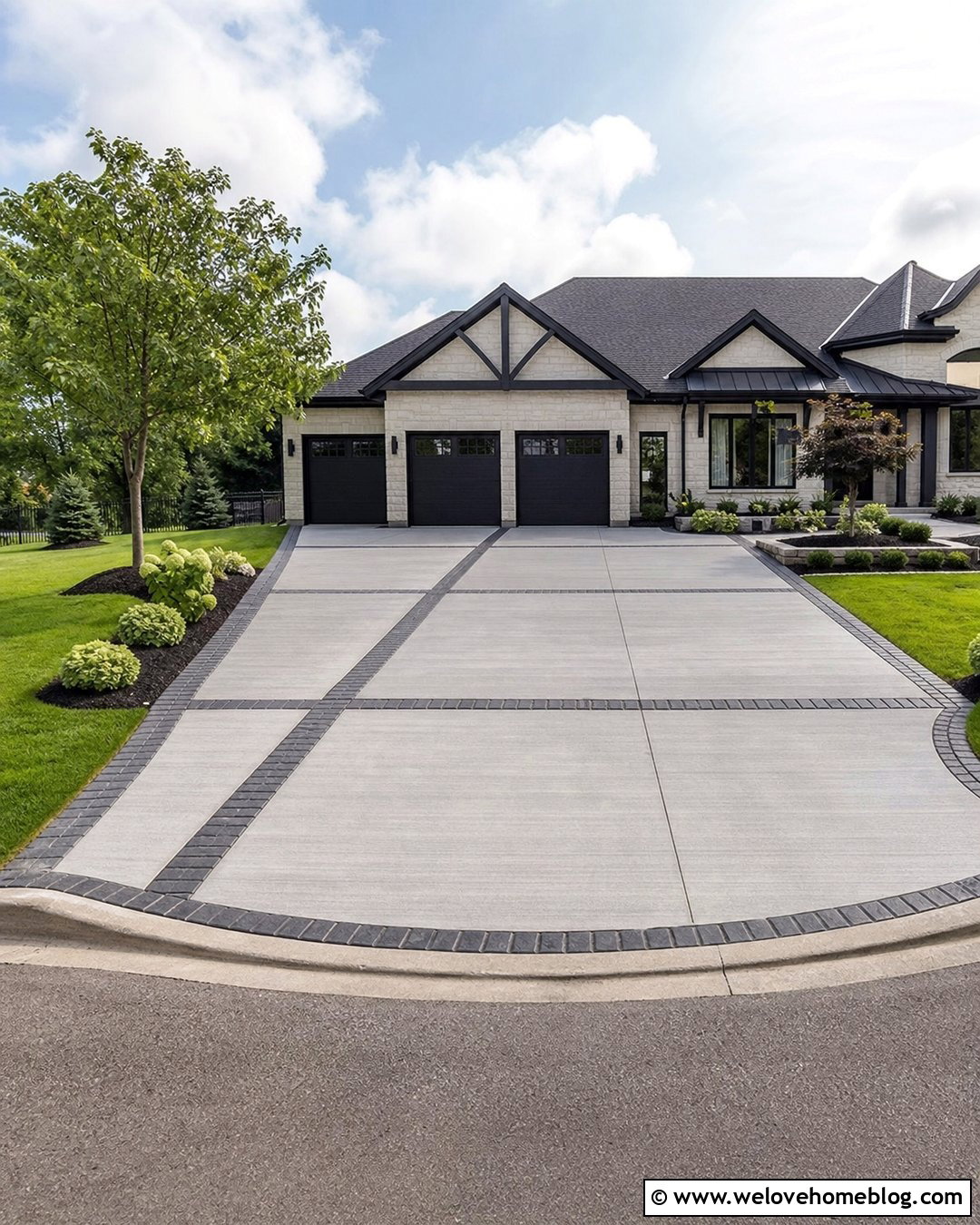
A wide concrete driveway can dominate the front yard unless its surface is divided into clear visual zones. Break the pavement into large rectangular fields with saw-cut joints, contrasting concrete bands, or paver ribbons. A medium gray broom finish keeps the main area practical, while a darker border gives the perimeter definition. Center the pattern on the garage doors so the driveway feels connected to the architecture. Add planting beds at the outer corners to soften the width and guide attention toward the front entrance. A tree or tall shrub group can balance an especially broad garage facade. Near the street, use a slightly flared apron. The combined pattern, borders, landscaping, and walkway help the large paved area appear structured rather than overwhelming.
19. Sloped Concrete Driveway
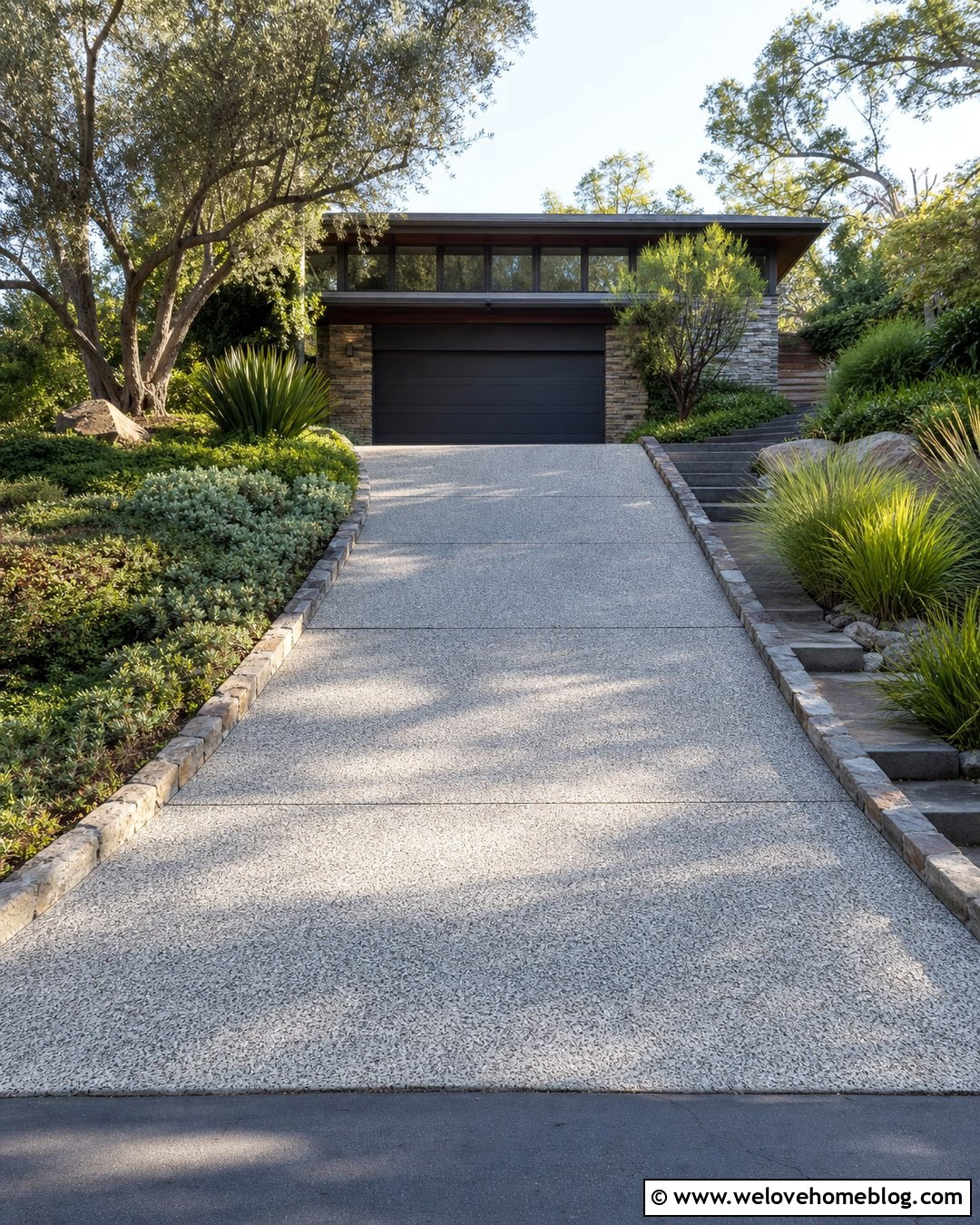
A sloped concrete driveway needs visual simplicity, dependable texture, and clear transitions. A broom finish or exposed aggregate surface can emphasize the incline without introducing an overly complex pattern. Divide the concrete with angled or horizontal control joints that suit the shape of the approach. Low stone curbs can define the sides and separate the pavement from the rising landscape. Use ground covers, ornamental grasses, and deeply rooted shrubs in the adjacent beds to create a stable-looking frame. A level landing near the garage provides a more comfortable arrival zone when site conditions permit. Lighting can be integrated along the walkway or retaining edge. Together, the textured concrete, drainage path, curbing, and slope-conscious landscaping form a driveway that looks purposeful and visually secure.
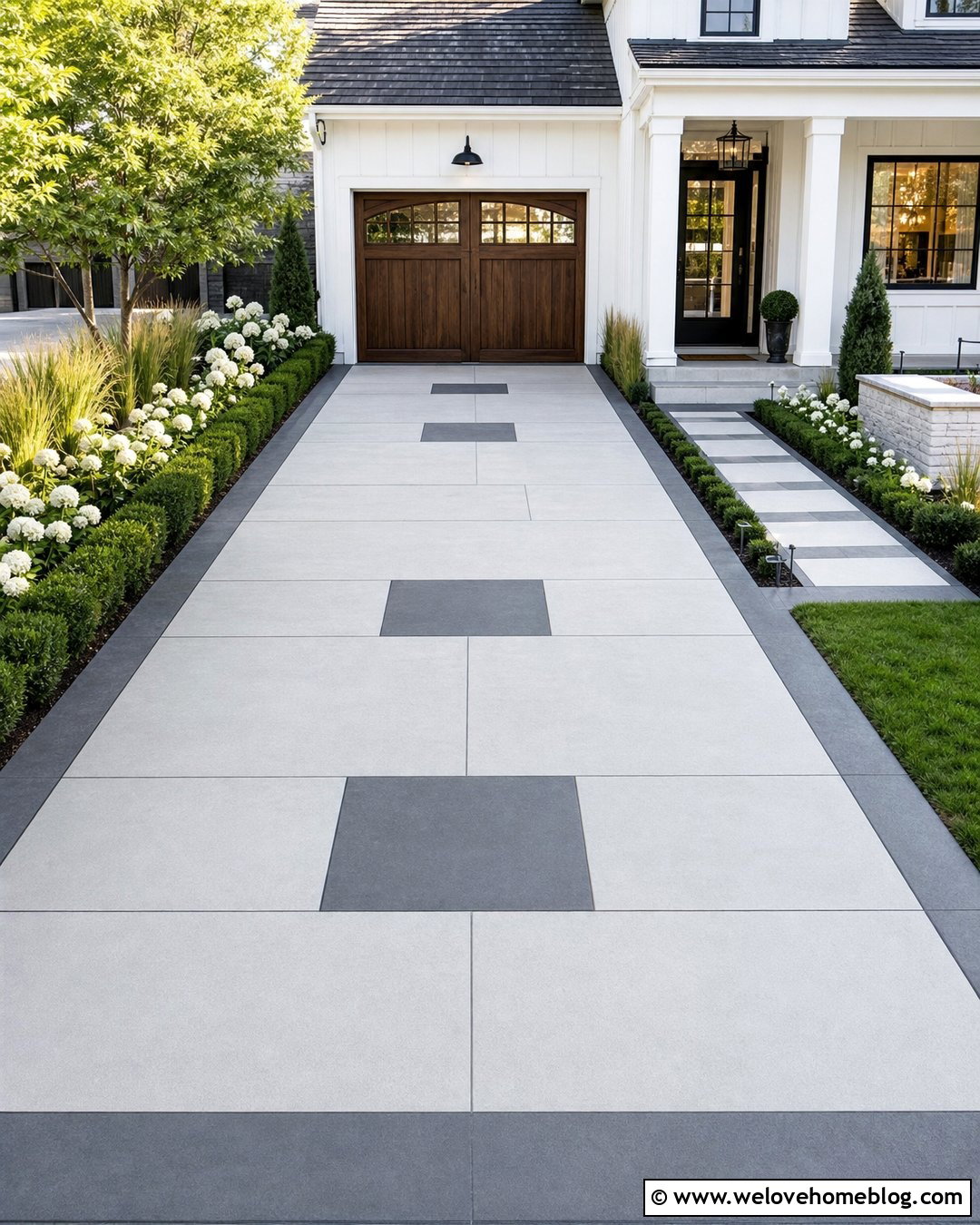
20. Concrete Driveway For Ranch House
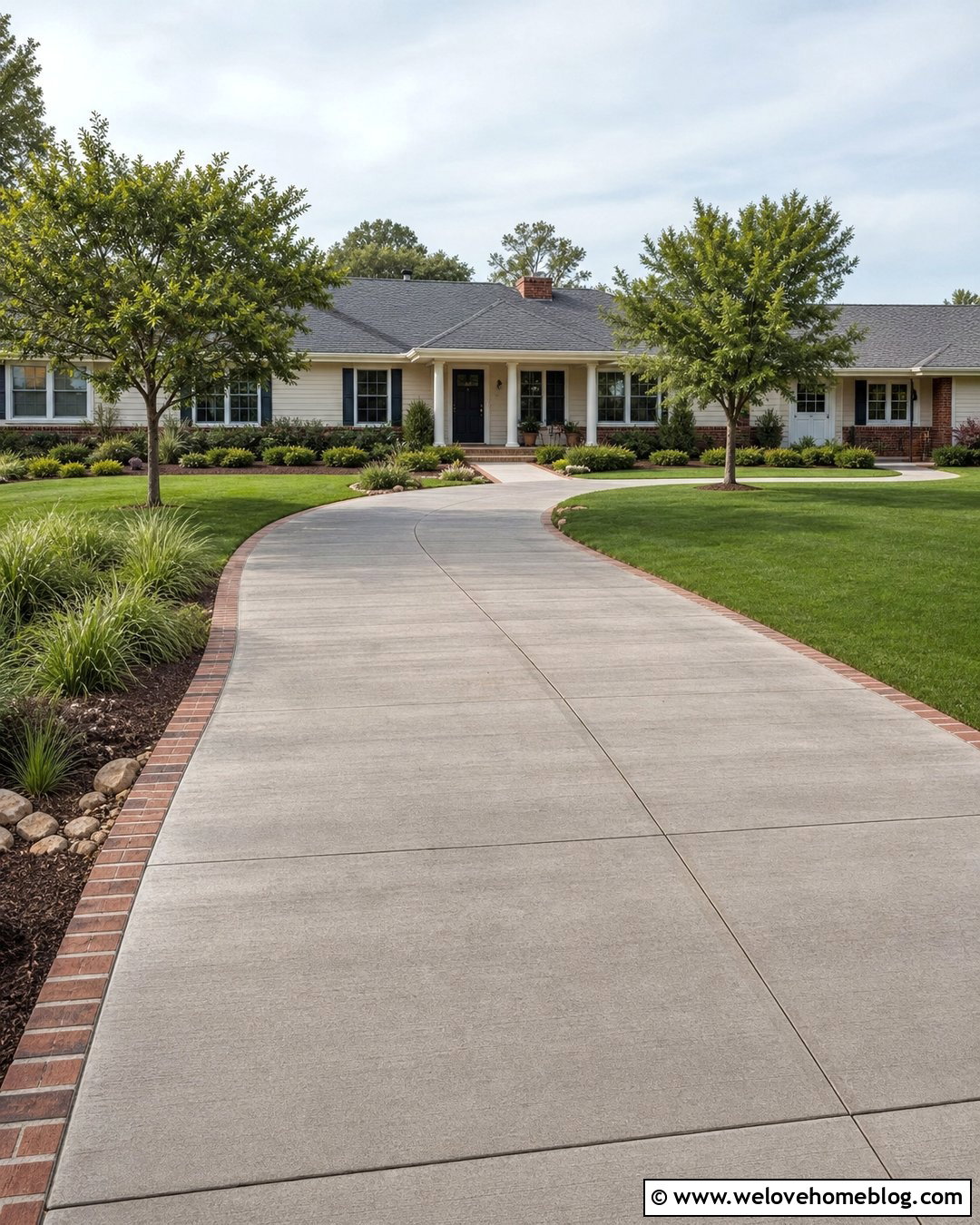
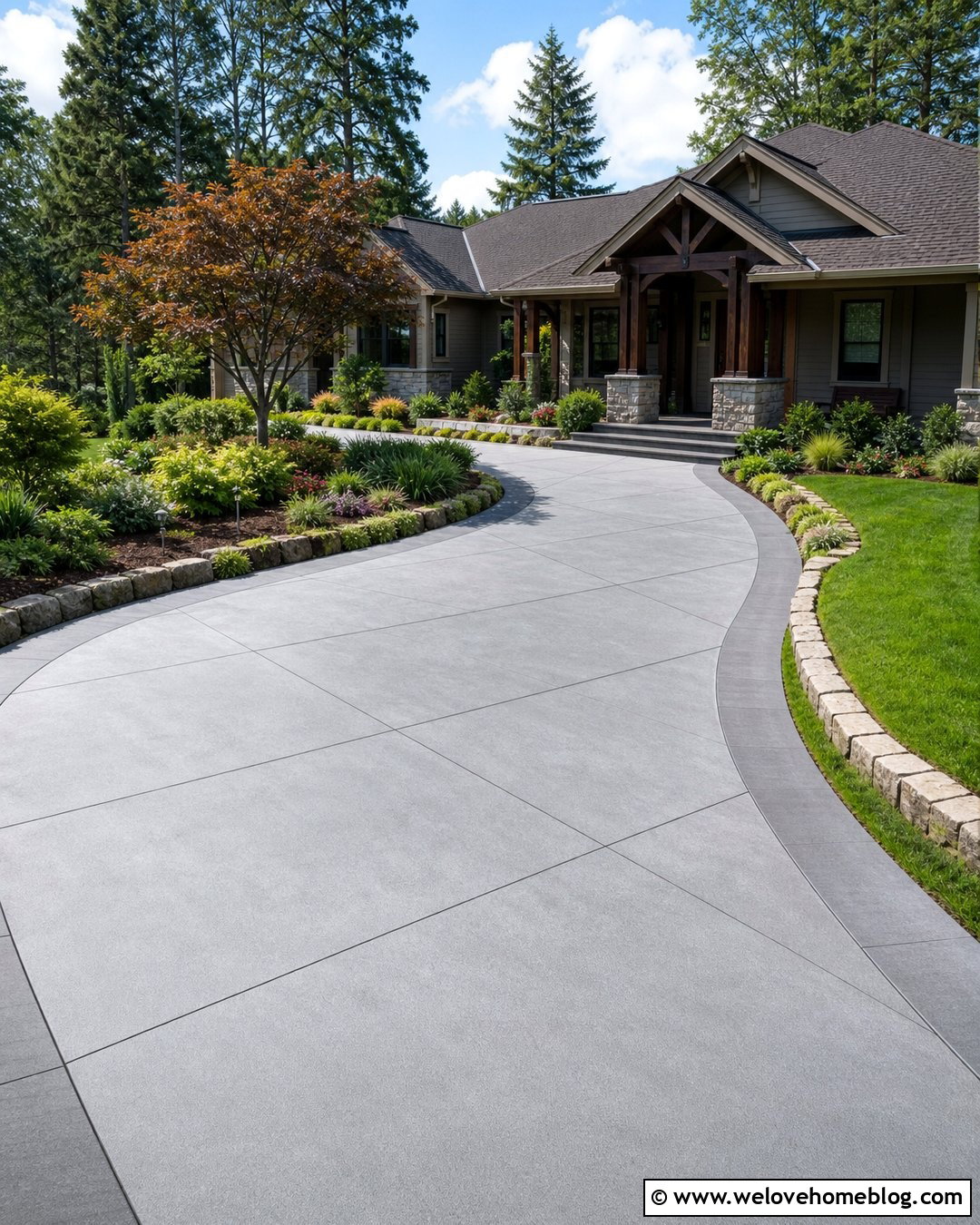
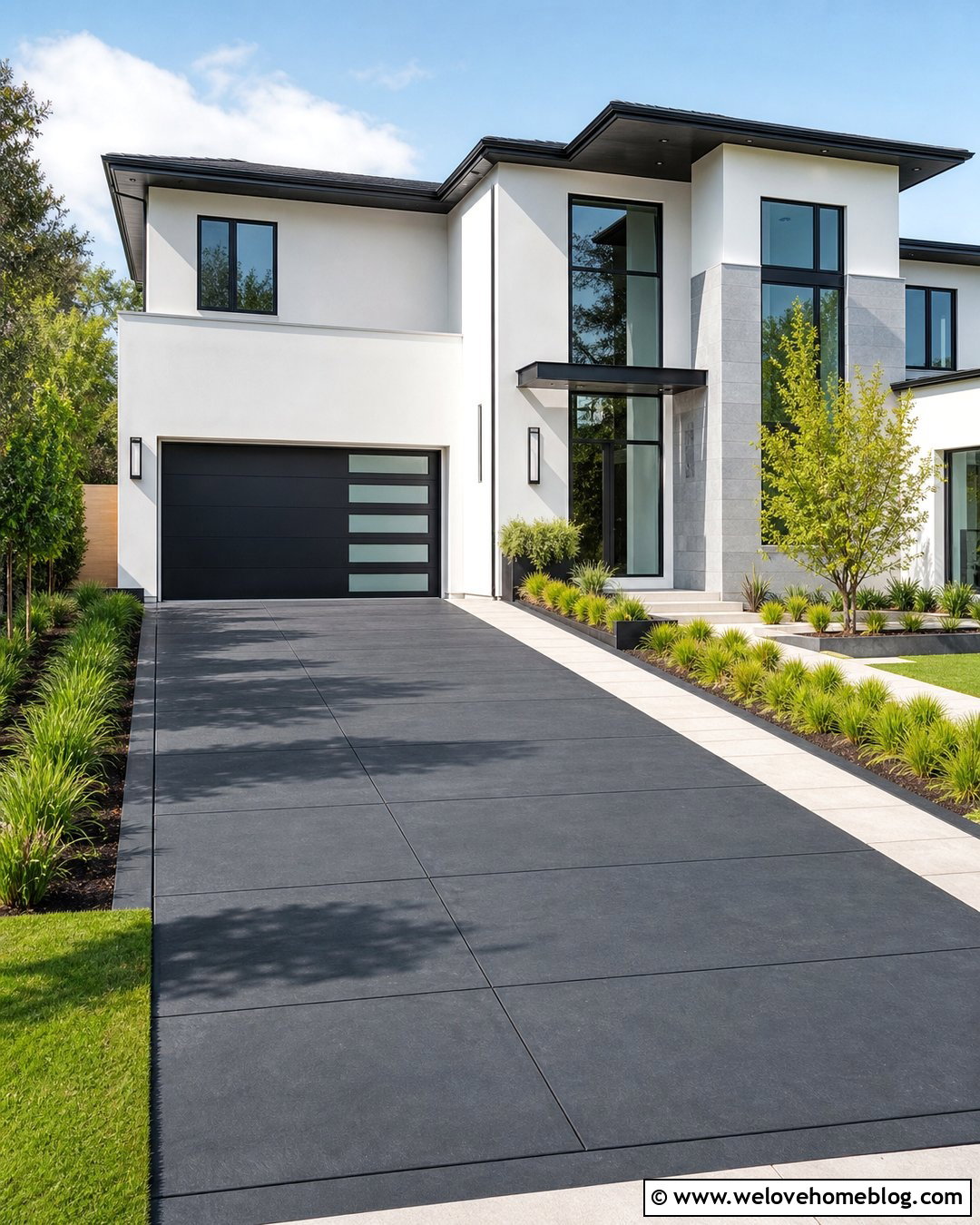
A ranch house pairs naturally with a straightforward concrete driveway and low, horizontal landscaping. Use warm gray broom-finished concrete in a straight or gently curved layout leading to the attached garage. Add a narrow brick border that repeats tones from the facade, chimney, or front steps. Broad rectangular control-joint sections reinforce the long lines of the architecture. Along the driveway, choose spreading shrubs, ornamental grasses, and one or two small trees rather than tall formal plantings. A wide walkway can branch toward the front porch and use the same concrete finish. Keep the lawn edges clean and the planting beds softly curved. The completed design feels relaxed and balanced while updating the practical, approachable character associated with a classic American ranch exterior.
21. Concrete Driveway For Modern Farmhouse
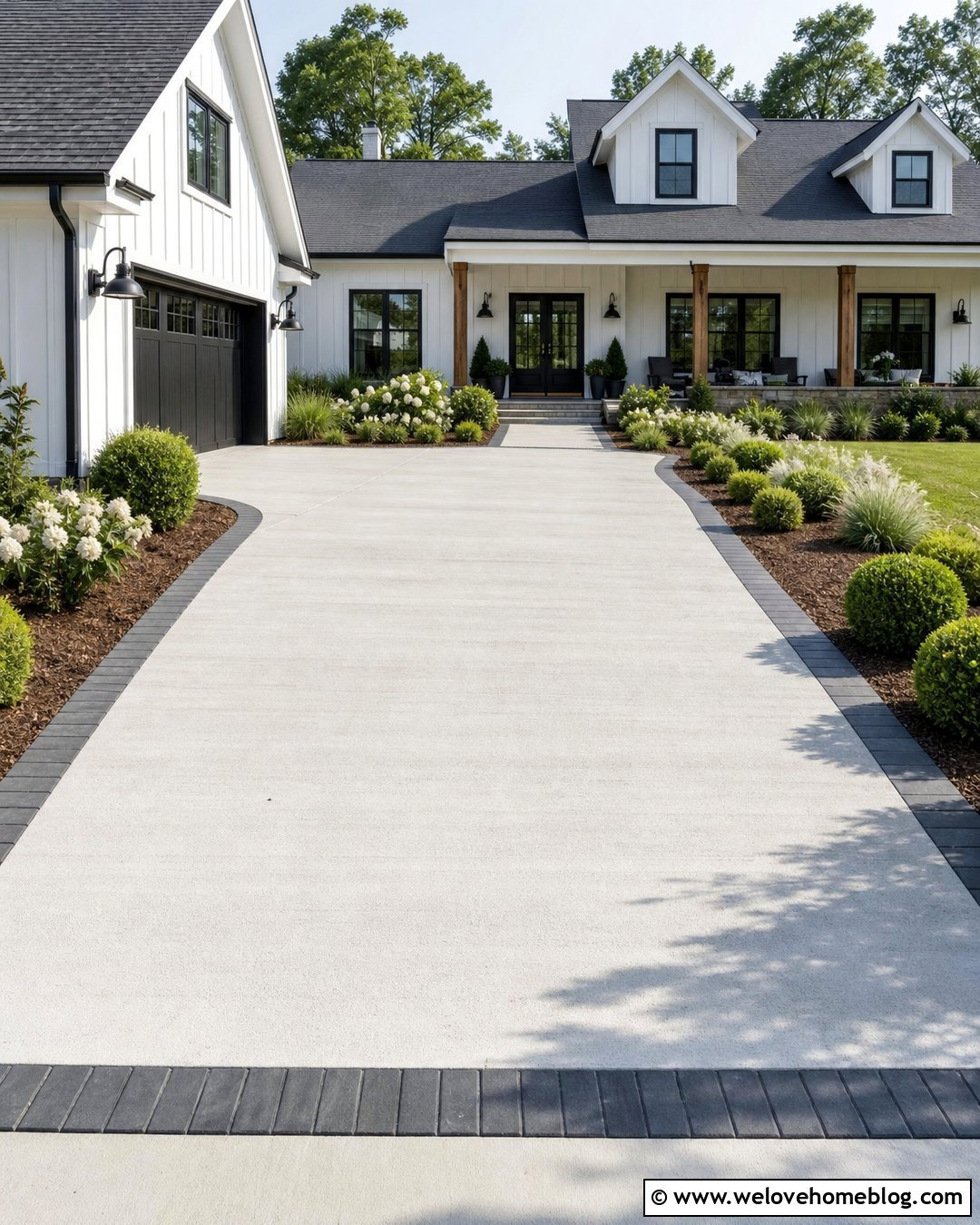
A modern farmhouse driveway looks best when clean concrete is balanced by warmer landscape details. Choose light gray poured concrete with a subtle broom finish and broad rectangular sections. A straight approach suits the simple massing of the house, while a charcoal paver border adds definition against white siding. Near the garage, repeat the pavers as a narrow transition band. Frame the driveway with natural mulch beds, rounded evergreen shrubs, white flowering plants, and a few airy ornamental grasses. A concrete walkway leading to the porch can be softened with stepping joints or small gravel gaps. Black exterior lights and simple address pillars reinforce the facade. This complete look combines practical paving, restrained contrast, and welcoming country-inspired planting without appearing overly rustic.
22. Concrete Driveway For Colonial House
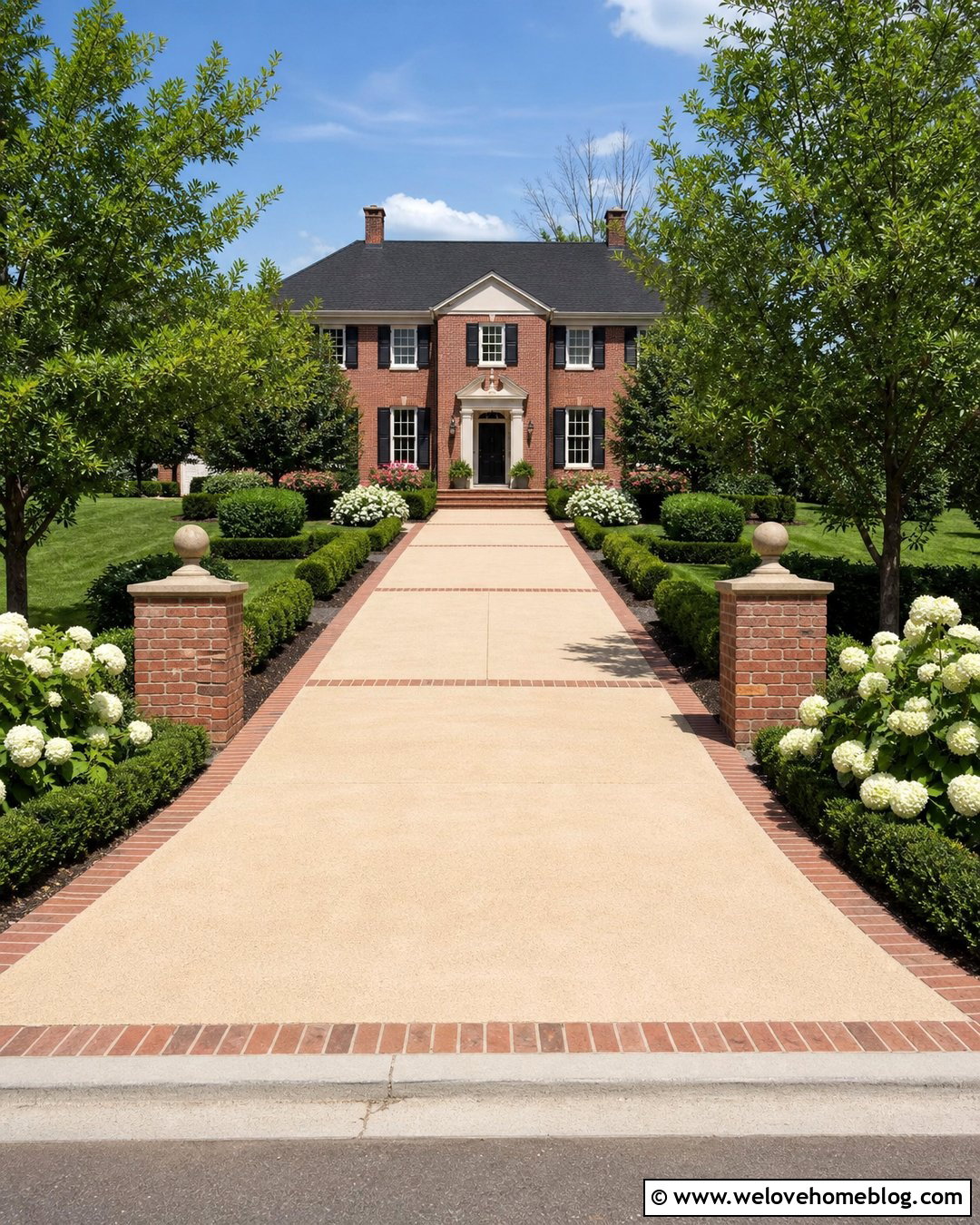
Symmetry makes a concrete driveway feel at home beside colonial architecture. Select warm beige or soft gray concrete and use a straight layout centered on the garage or side parking area. Stamped brick borders can repeat the traditional tones of the facade while leaving the central surface calm and easy to maintain. Place matching brick bands at measured intervals to create an orderly rhythm. On both sides, use balanced beds of boxwood, hydrangeas, and small ornamental trees. A formal walkway should connect the driveway to the front door with a clear, direct route. Low entrance pillars can mark the street edge without blocking the house. The coordinated proportions, repeated materials, and symmetrical landscaping give the entire driveway a polished traditional appearance.
23. Stained Concrete Driveway
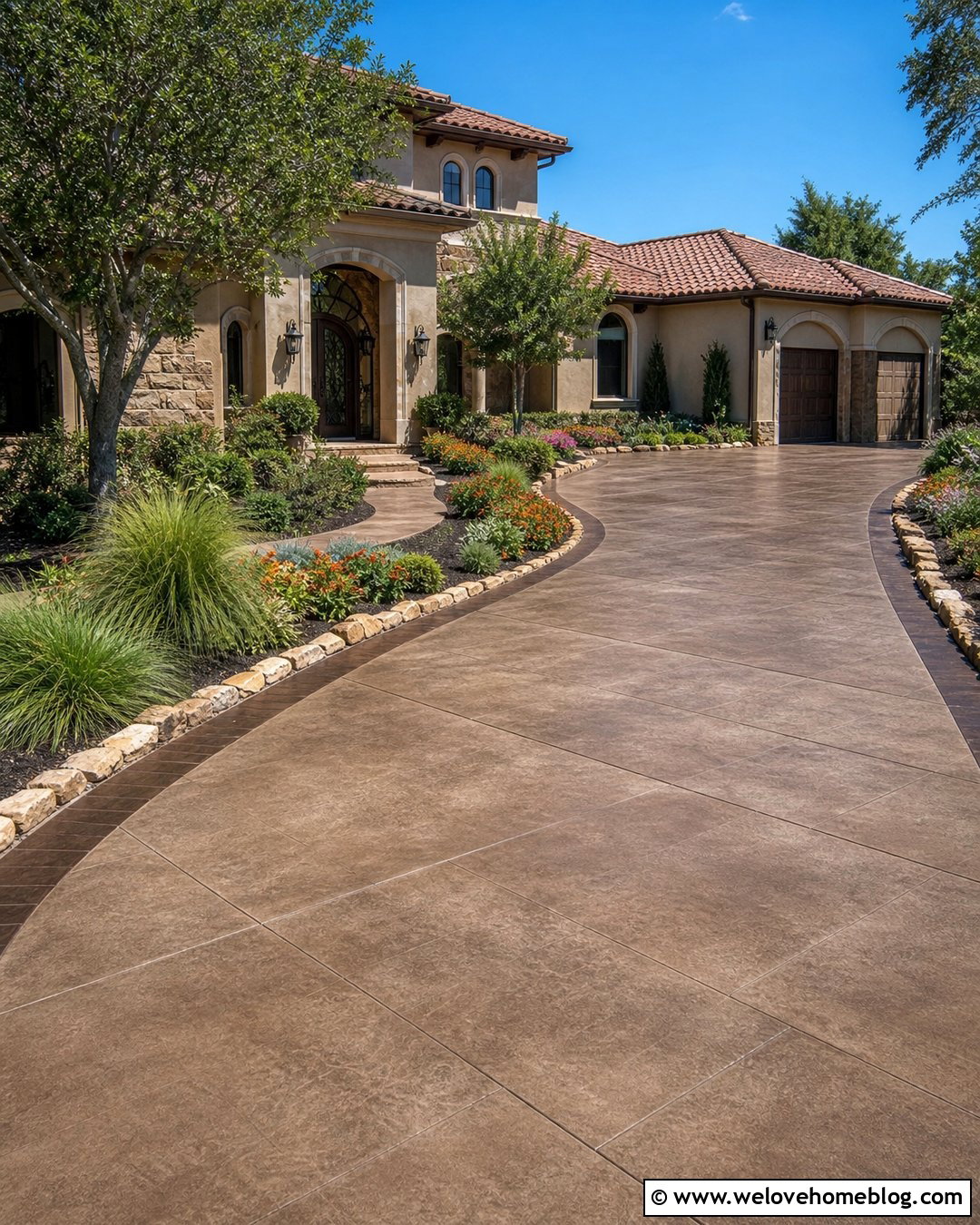
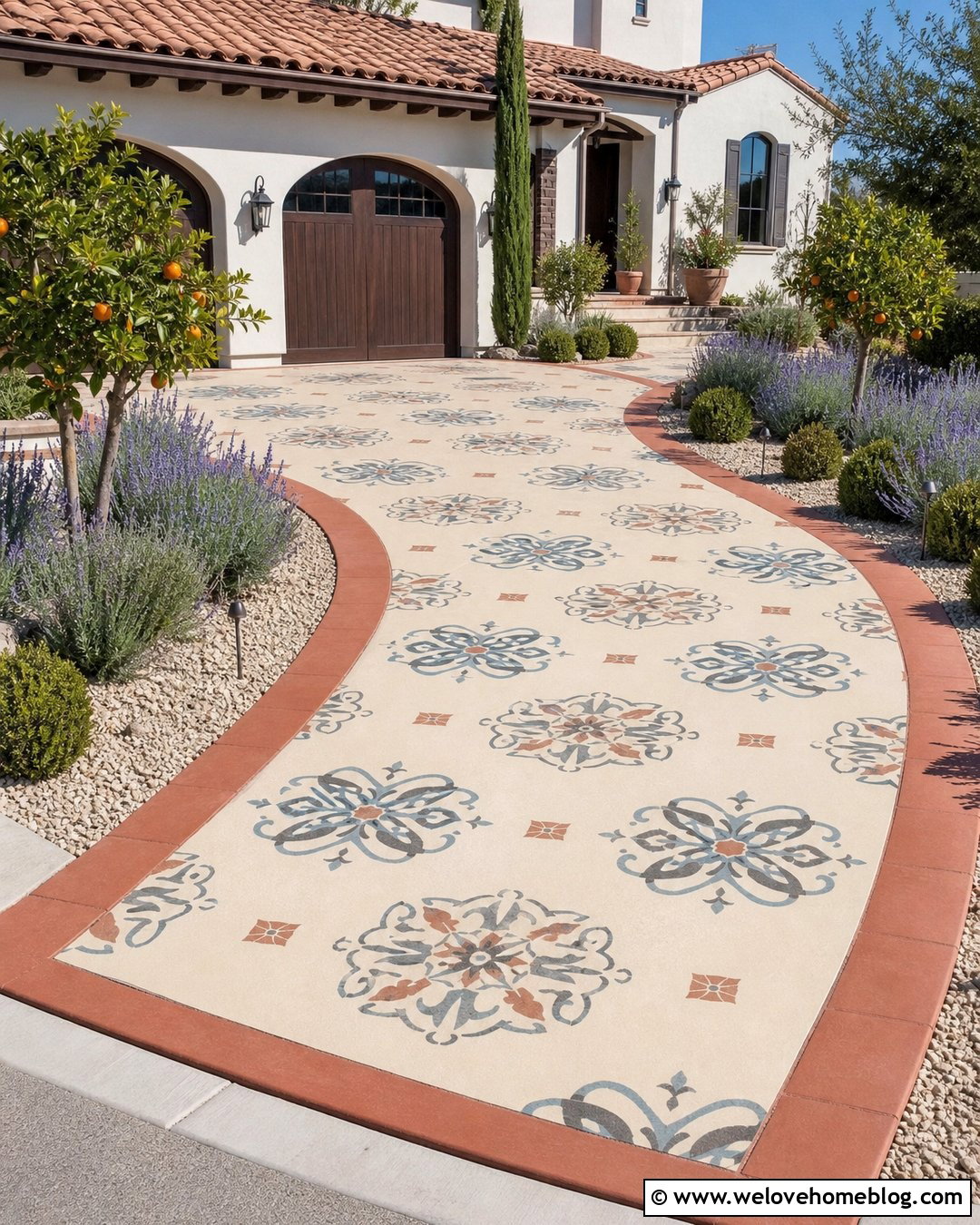
Concrete stain introduces rich color while allowing the underlying surface to retain its natural variation. Warm brown, taupe, charcoal, and muted terracotta tones can connect the driveway to masonry, roof shingles, or wood details on the house. Use a scored rectangular pattern to organize the color and prevent the large surface from looking flat. A darker stained border can outline a straight or curved driveway, while lighter central panels keep the approach visually open. Pair warm stains with tan stone edging, green shrubs, and soft ornamental grasses. Cooler charcoal stains work well with contemporary planting and dark metal accents. A coordinating stained walkway completes the composition. Keep the palette restrained so the driveway remains an attractive background for the home and landscaping.
24. Geometric Scored Concrete Driveway
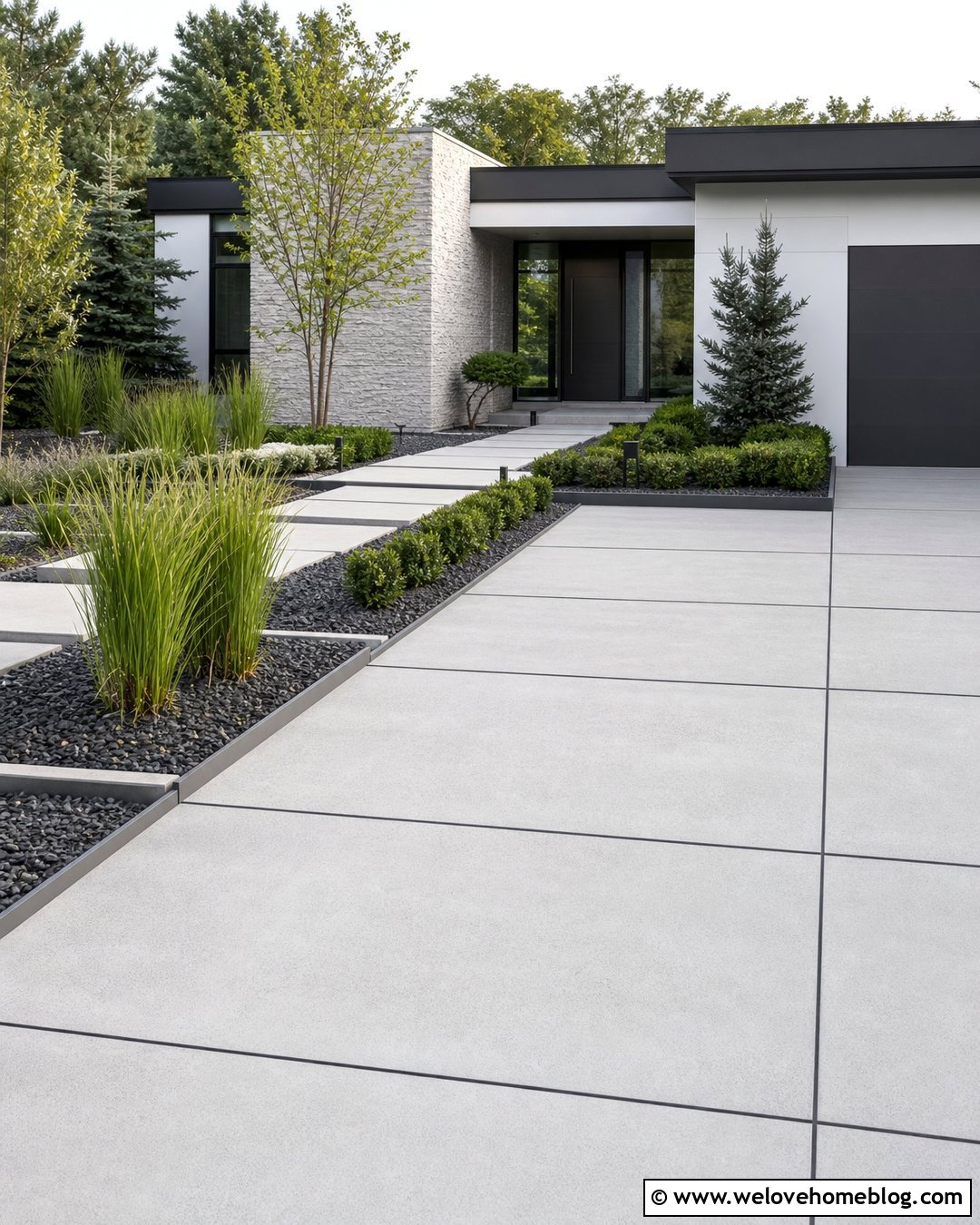
Geometric scoring turns plain concrete into a more intentional modern surface. Large squares, rectangles, or offset linear sections work better than a crowded grid. Use pale or medium gray concrete and place the cuts in relation to the garage doors, walkway, and house windows. Thin charcoal-stained lines can make the pattern more visible while preserving a simple color scheme. For a softer look, add narrow gravel pockets or grass strips beside selected panels rather than between every section. Planting beds with upright grasses, low evergreens, and sculptural accent plants reinforce the clean geometry. A flat-roofed or contemporary house makes a strong backdrop. The scored concrete, straight edging, minimal landscape, and direct entry path create one coordinated, visually precise driveway design.
25. Resurfaced Concrete Driveway
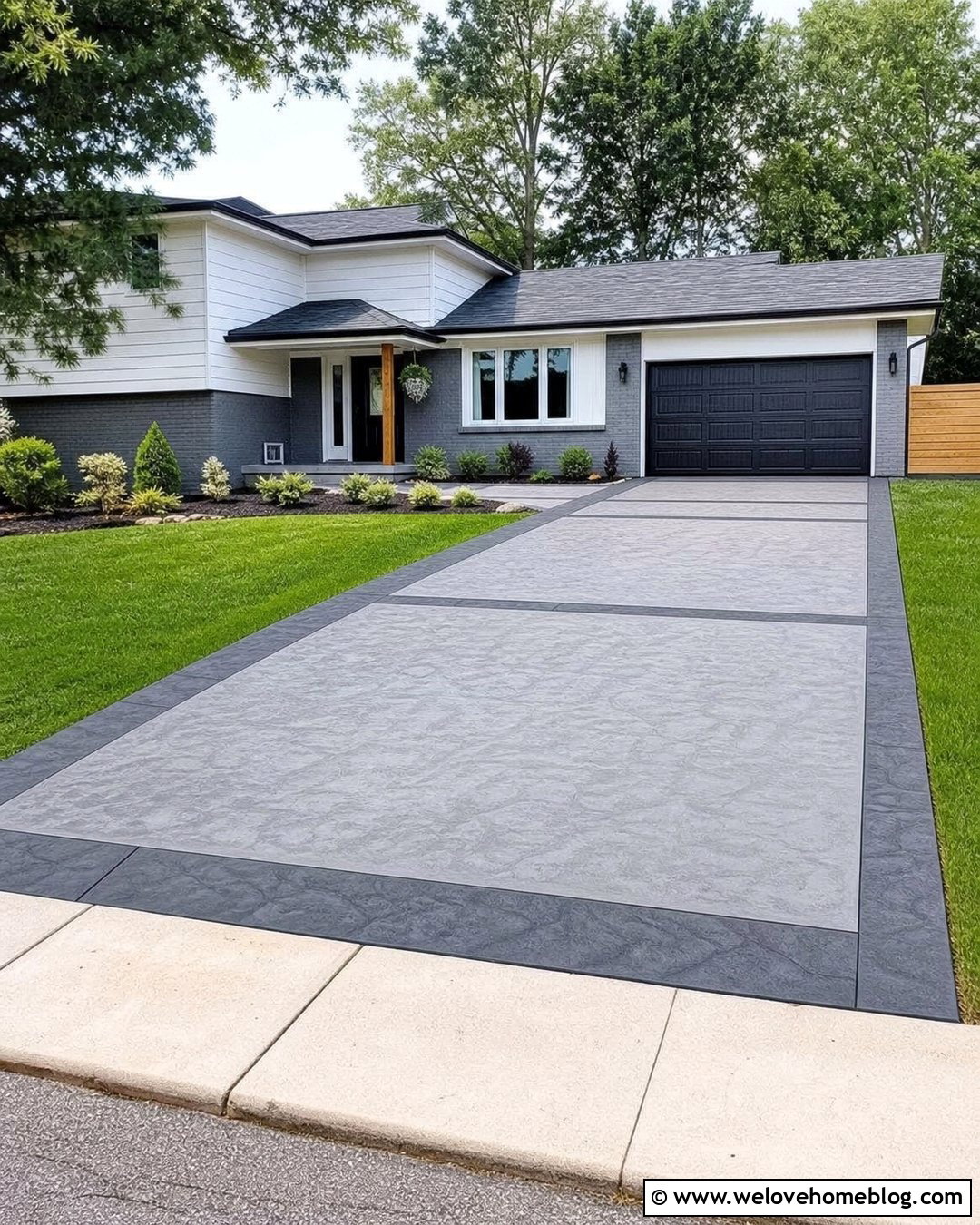
An existing concrete driveway can gain a more unified appearance through a carefully planned resurfaced finish. A decorative overlay may introduce a fresh color, subtle texture, or scored pattern without making the surface look excessively ornate. Choose a simple slate-gray or warm taupe finish that complements the house. Add a darker border around the perimeter and repeat it across key divisions to organize the driveway. If the original layout is very wide, use visual bands to create smaller fields. Update the surrounding beds at the same time with clean edging, fresh mulch, compact shrubs, and a connected walkway. The goal is a complete exterior refresh in which the renewed concrete, landscaping, garage transition, and street apron all appear intentionally coordinated.
Conclusion:
The most successful concrete driveway is more than a large paved slab. It supports daily use while improving the shape, color, and curb appeal of the entire front yard. Consider how the concrete finish relates to the house, then coordinate its joints, borders, apron, walkway, drainage, and landscaping. Broom finishes offer clean simplicity, while aggregate, stamping, staining, and scoring create stronger visual character. Curved, circular, narrow, and sloped layouts each require a different design approach. Before installation, review drainage, surface texture, access, and long-term upkeep with an experienced local contractor. Use these 25 Driveways Concrete Ideas to create an entrance that feels practical, attractive, and connected to your home.

Related posts:
Leave a Reply