
A worn driveway does not always need complete removal to gain a fresh, high-end appearance. If the existing slab is structurally sound, a cement-based concrete overlay can create a new surface that is colored, textured, stamped, or stenciled to resemble premium paving materials. Popular finishes include slate, brick, cobblestone, limestone, flagstone, and contemporary large-format panels. () The best design also considers the driveway’s shape, borders, drainage, landscaping, and relationship to the home. Proper surface preparation and professional installation remain essential because an overlay cannot correct serious structural movement. From understated modern finishes to detailed traditional patterns, the following complete driveway looks offer practical inspiration for exploring 20 concrete overlay driveway ideas.
1. Ashlar Slate Concrete Overlay Driveway
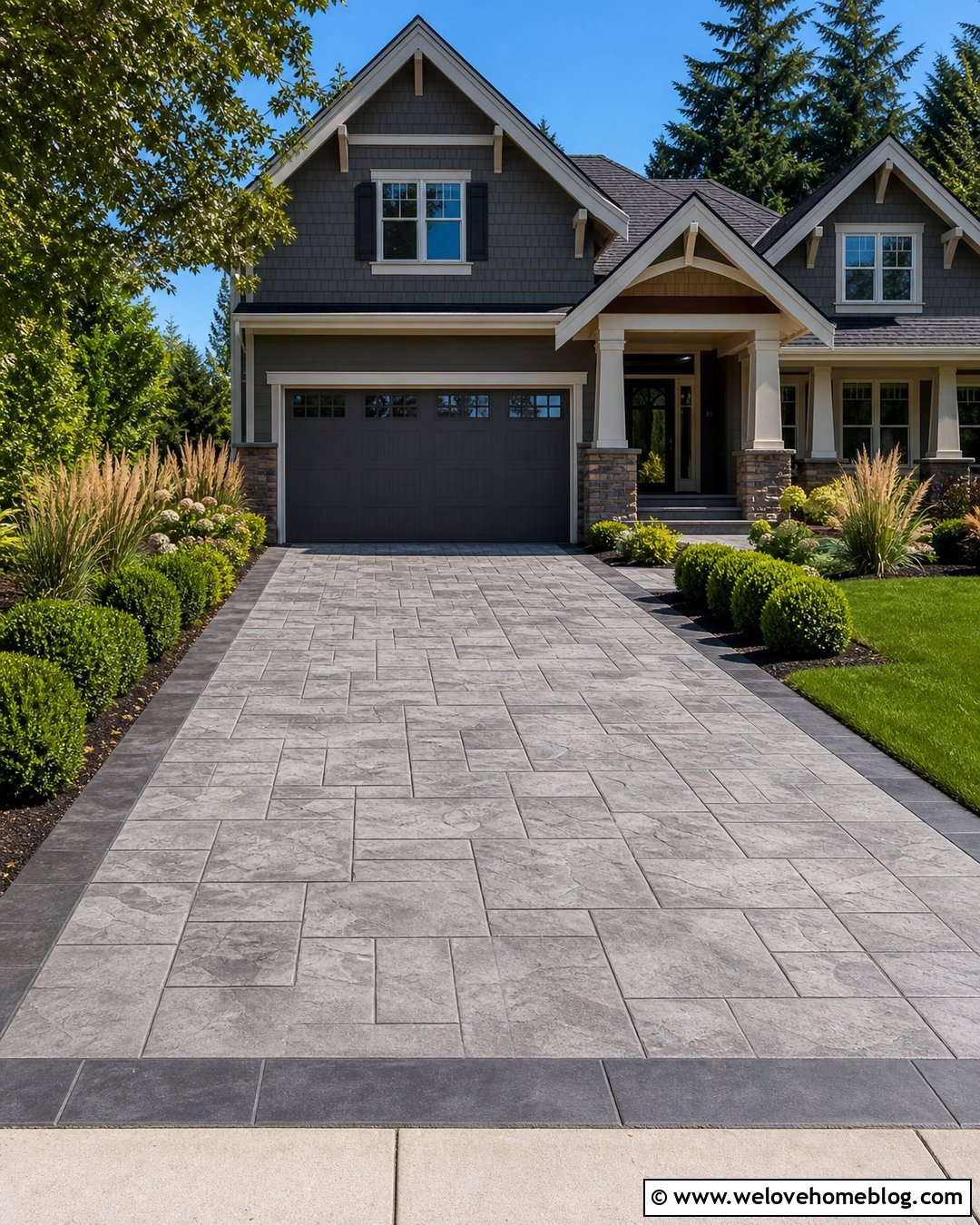
An ashlar slate overlay gives an ordinary driveway the structured appearance of rectangular natural stone. Choose a medium-gray base with charcoal antiquing to emphasize the varied block sizes without making the surface look too busy. A straight driveway works especially well because the geometric pattern draws the eye toward the garage. Frame the overlay with a narrow charcoal concrete border, then repeat that color on the front walkway. Low boxwoods, ornamental grasses, and a clean lawn soften the hard edges around a Craftsman house. Ask the installer to align existing control joints with logical pattern lines where possible. A matte or low-sheen compatible sealer will preserve the realistic stone character while avoiding the overly glossy appearance sometimes associated with decorative concrete.
2. Herringbone Brick Concrete Overlay Driveway
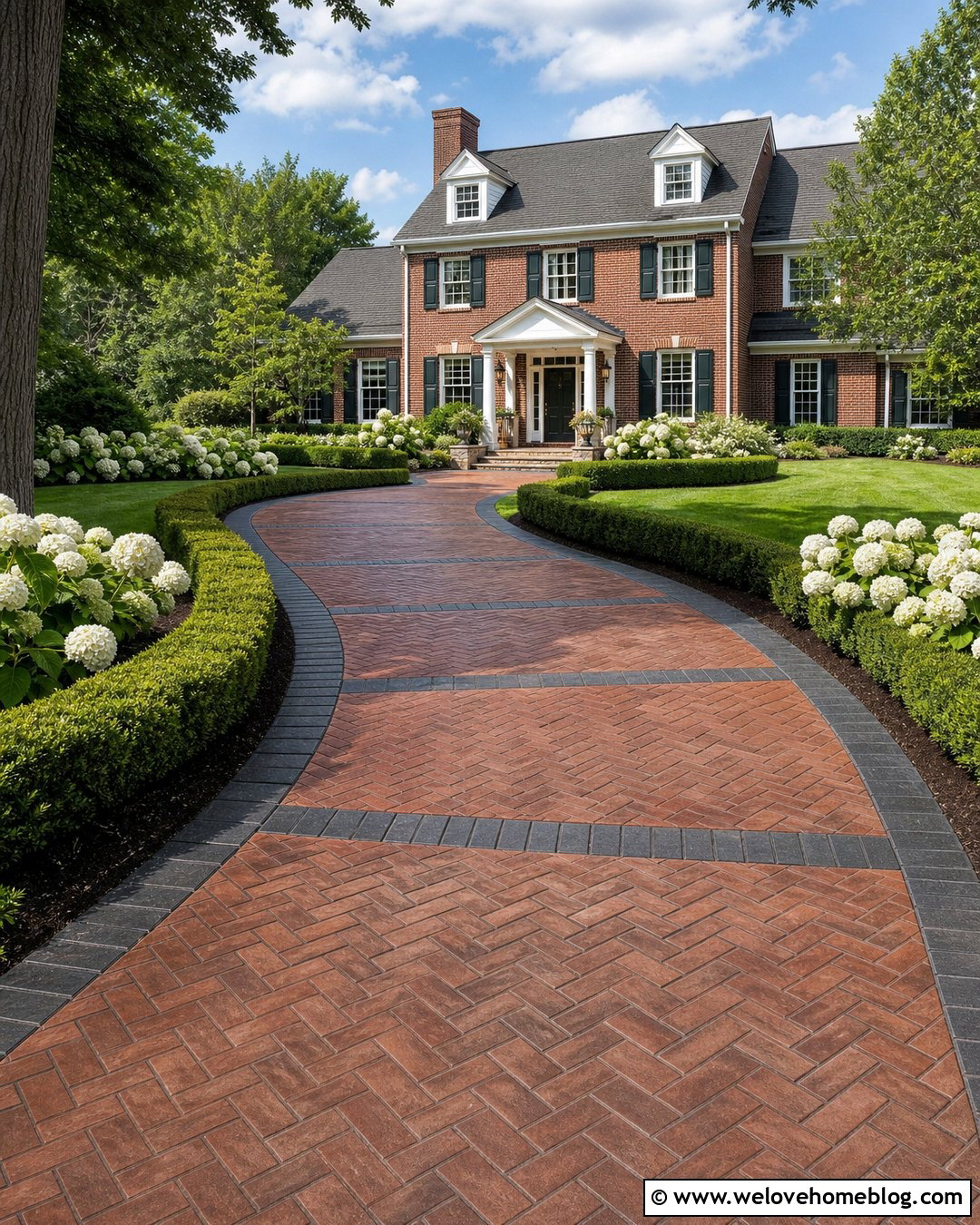
Warm brick coloring can make a concrete overlay feel established and welcoming without installing individual clay pavers. Use a herringbone stamp across the main driveway and add a darker running-bond border to contain the energetic pattern. This complete look suits a colonial or traditional brick home, especially when the overlay colors echo the facade rather than matching it exactly. A gently curved approach creates extra visual movement, while clipped hedges and white flowering shrubs maintain a formal frame. Carry the border across the driveway in occasional bands to visually shorten a long expanse. Stamped overlays can reproduce brick patterns while remaining part of a continuous resurfaced system, offering a practical way to update structurally suitable existing concrete. ()
3. Random Flagstone Concrete Overlay Driveway
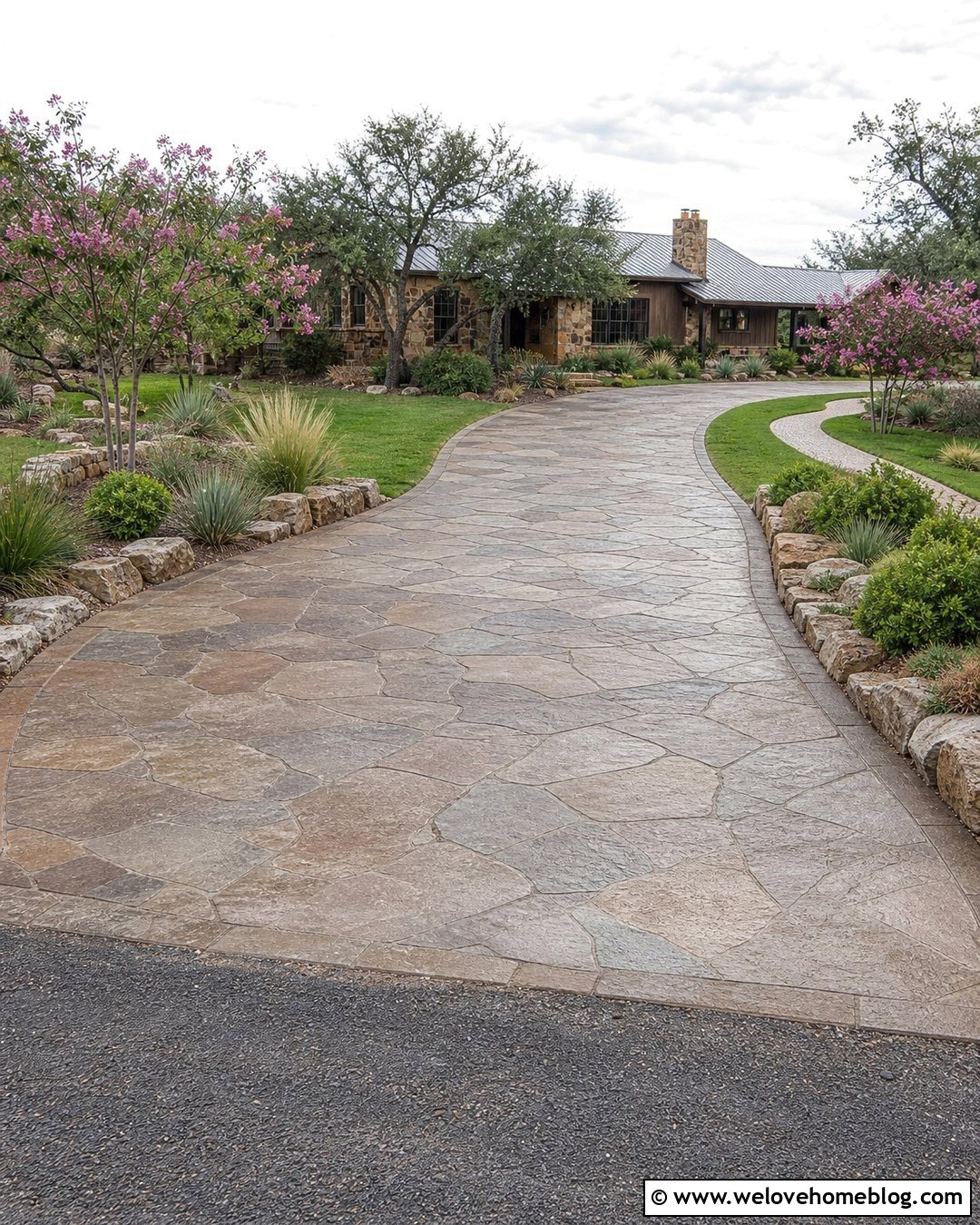
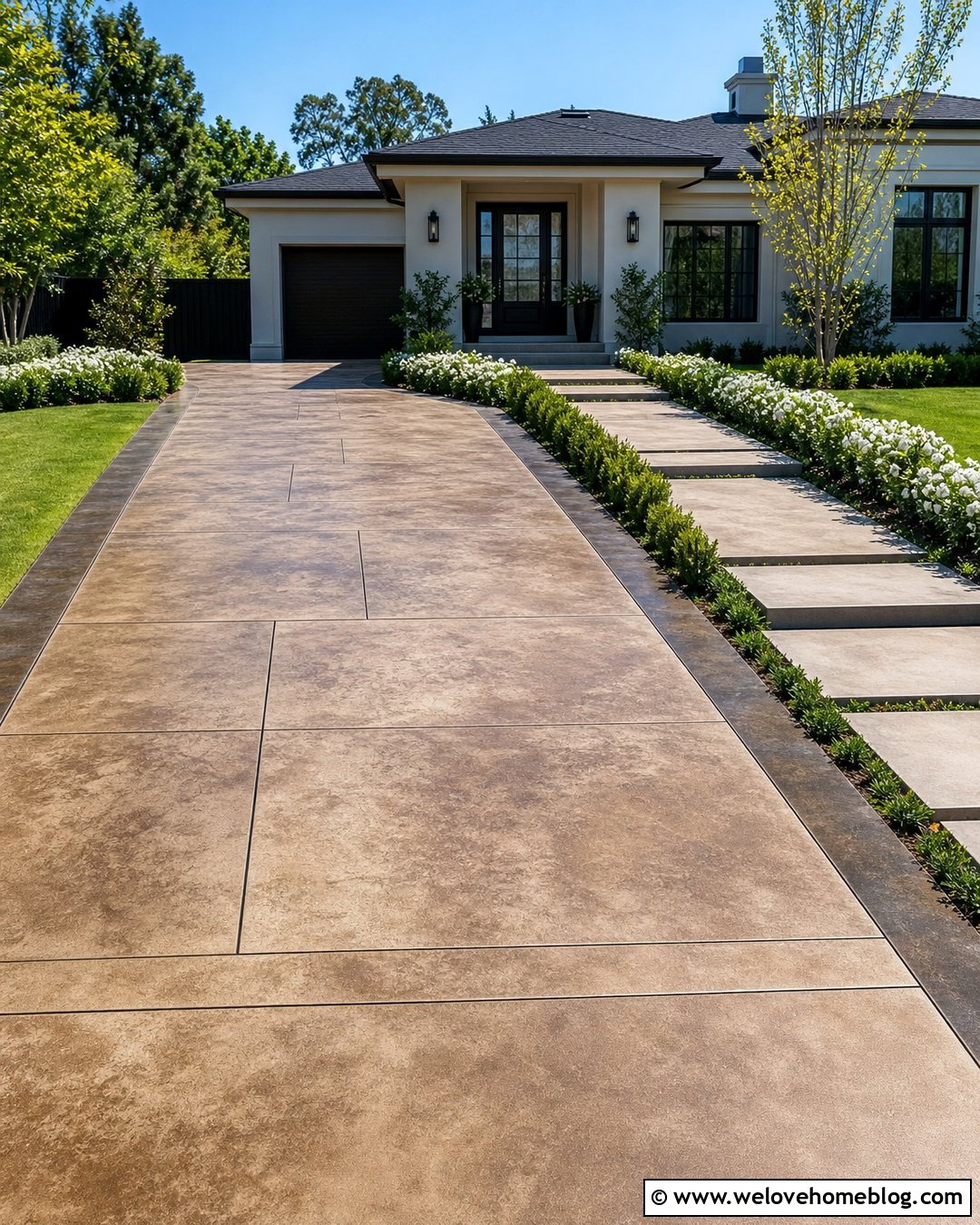
Could a driveway feel more connected to a wooded or informal landscape? A random flagstone concrete overlay uses irregular joints, layered earth colors, and subtle stone texture to create that relaxed effect. Select taupe, muted brown, and soft gray instead of high-contrast colors so the surface remains believable from the curb. A sweeping curved layout complements the organic pattern and guides visitors toward a country or ranch-style home. Natural stone edging can reinforce the theme, but it should stay low enough to avoid becoming a tire hazard. Surround the entrance with native grasses, spreading shrubs, and small flowering trees. Keep the walkway slightly lighter than the driveway so guests can identify the pedestrian route while the two surfaces still appear intentionally coordinated.
4. Cobblestone Concrete Overlay Driveway
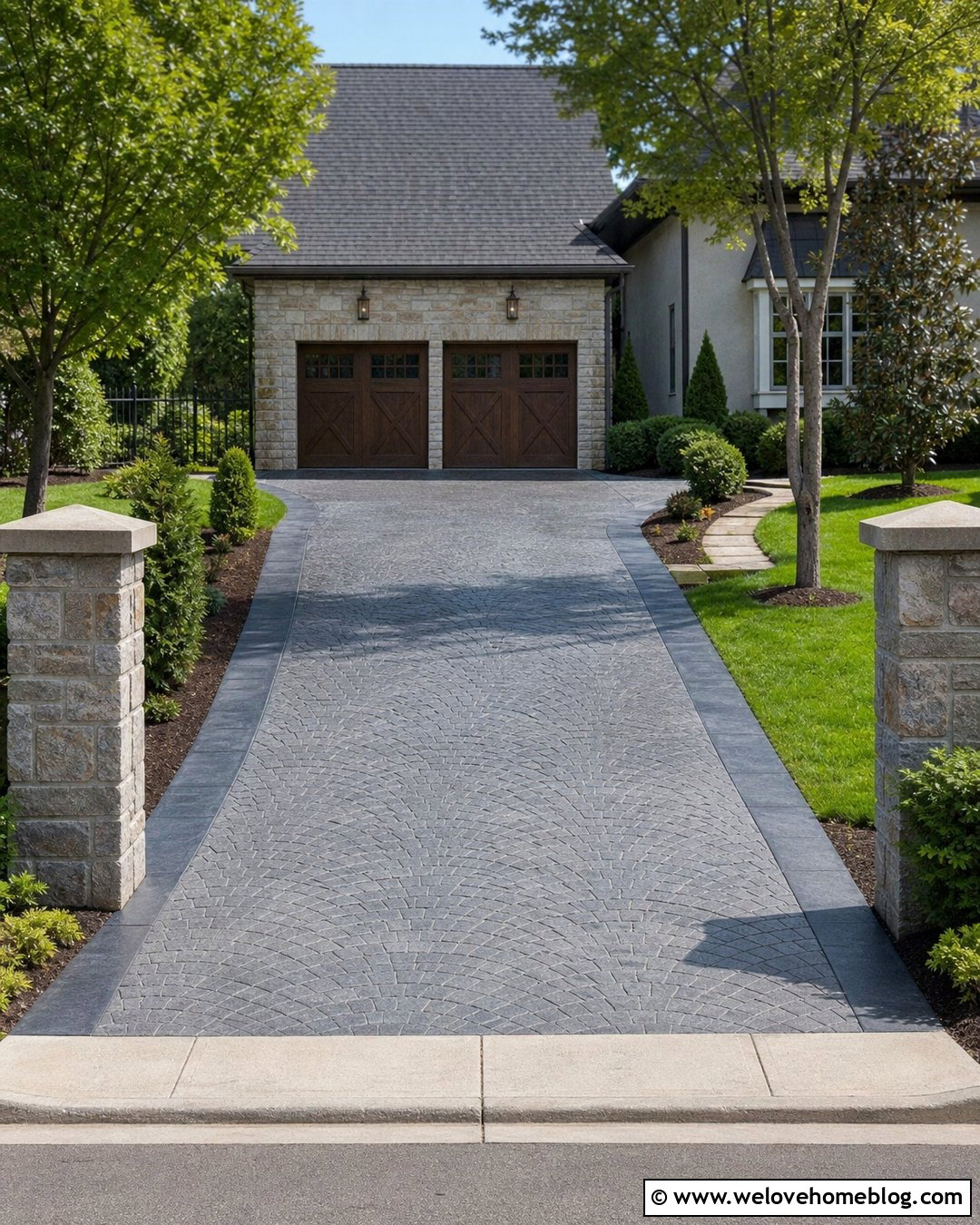
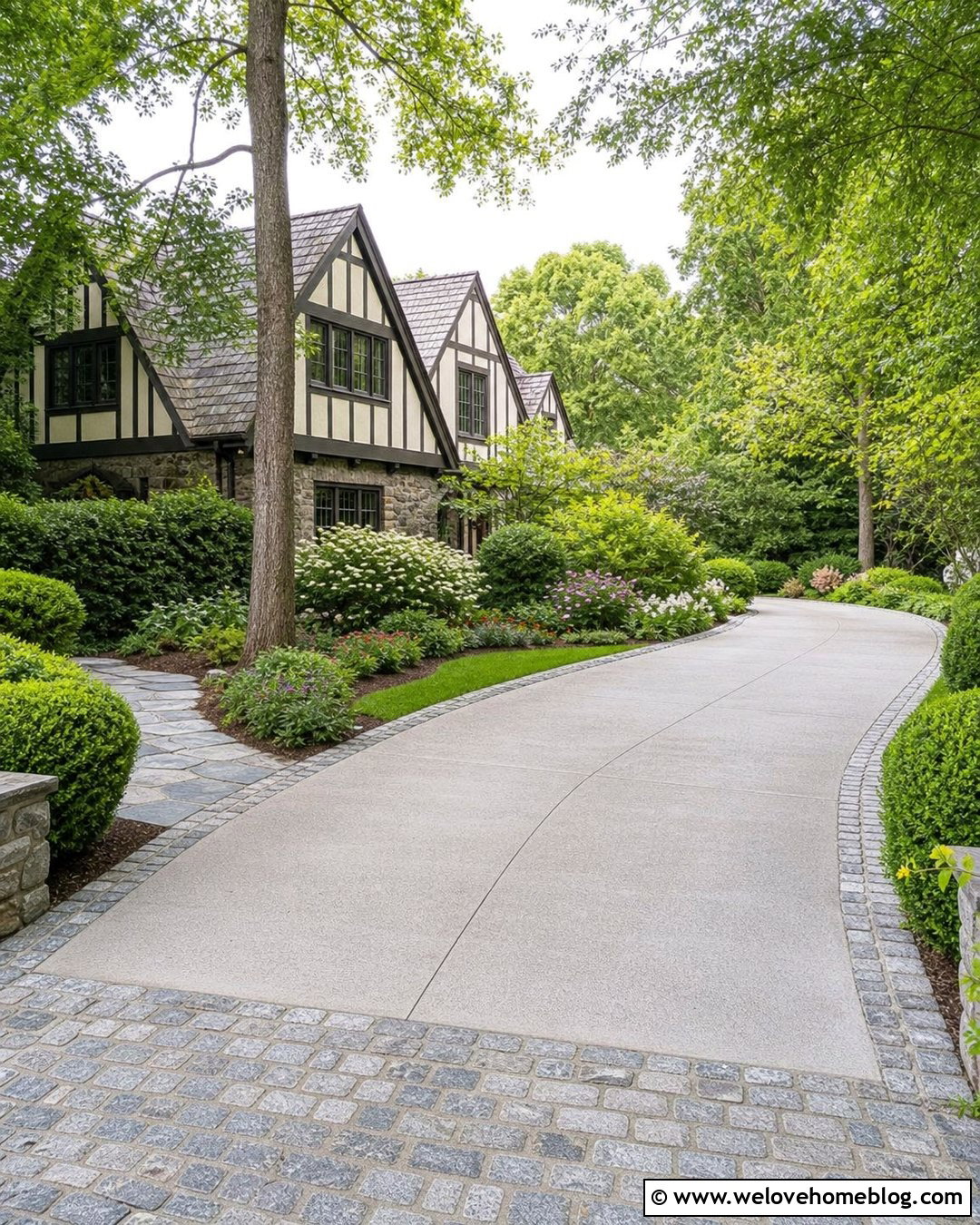
A cobblestone-patterned overlay creates strong texture and old-world character around a traditional home. Deep gray stones with lighter highlights look especially effective on a short, wide driveway leading to a carriage-style garage. Use a fan or European cobblestone stamp to avoid rows that appear overly rigid. A smooth charcoal border provides a clean transition to lawn and planting beds while helping the textured center stand out. Stone entrance pillars, compact evergreen shrubs, and a curved front walkway complete the design without overwhelming it. Because heavily textured patterns can influence surface comfort and traction, discuss stamp depth, drainage, and the intended sealer with an experienced installer. The finished driveway should suggest individual cobbles while remaining visually balanced with the home’s scale and architectural details.
5. Seamless Slate Concrete Overlay Driveway
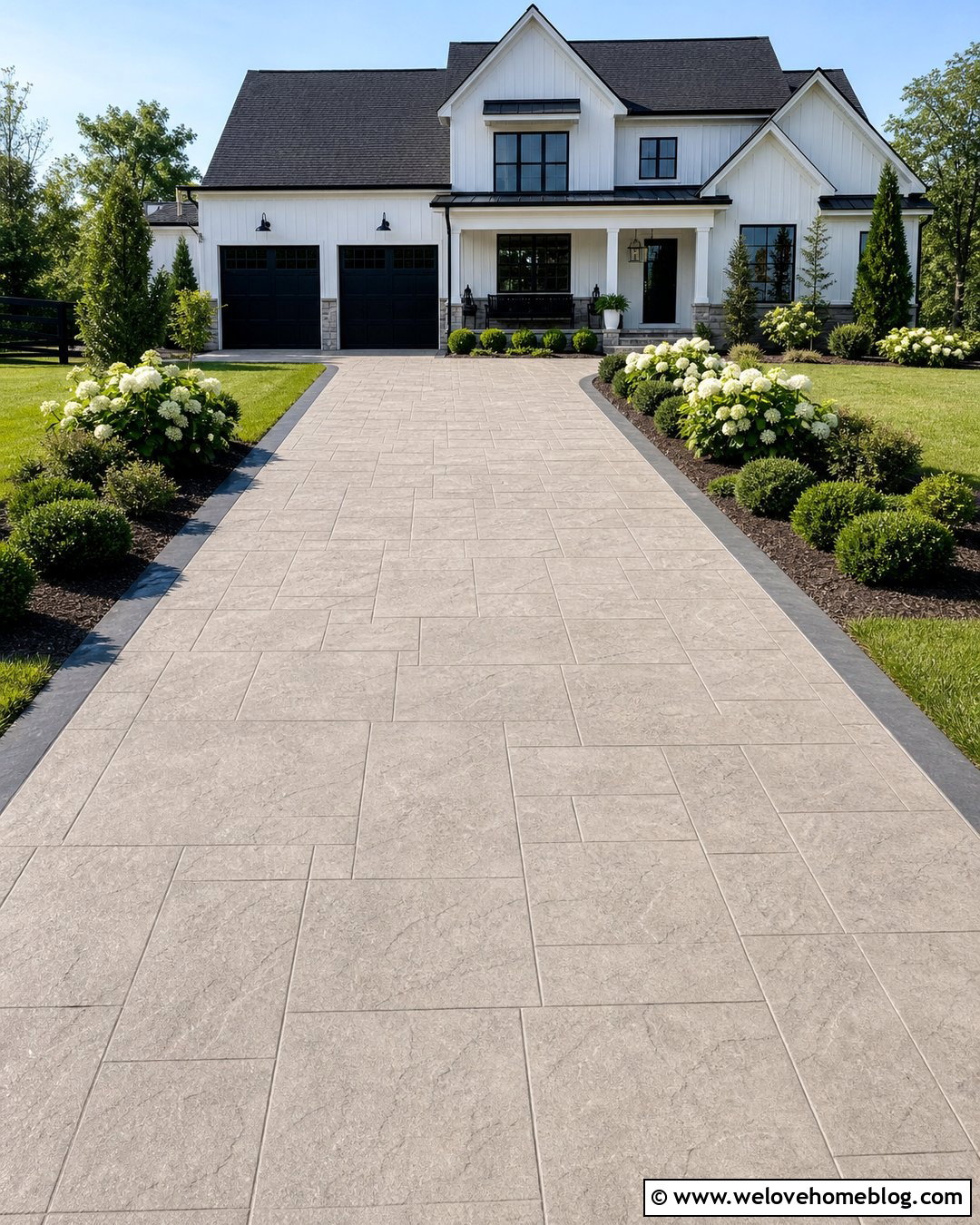
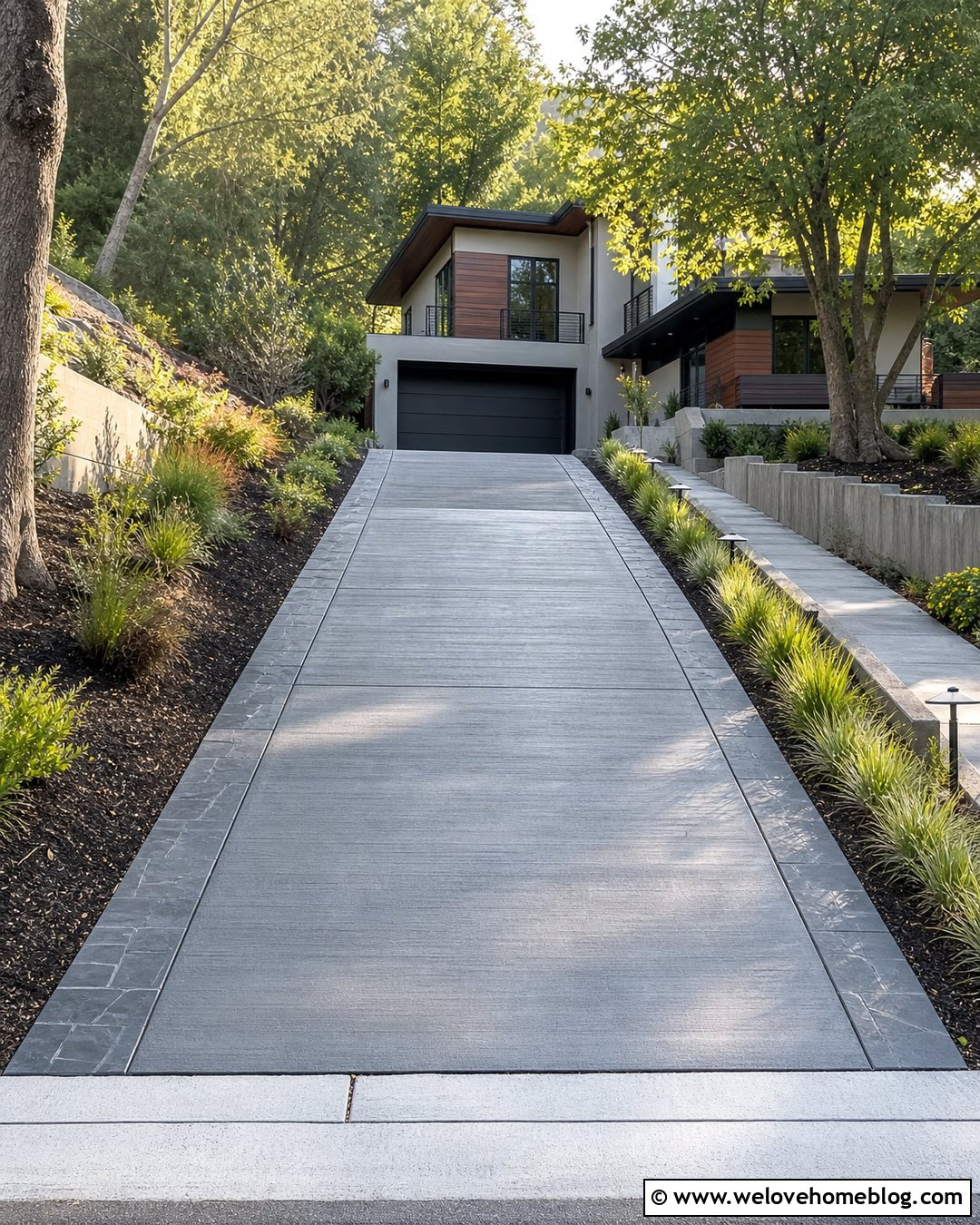
For homeowners who like natural texture but dislike strong grout lines, a seamless slate overlay offers a quieter solution. Large texture skins create subtle movement across the concrete without dividing it into obvious blocks. Use a soft greige color for a modern farmhouse, then frame the straight driveway with a thin dark-gray border. Grass strips, white hydrangeas, and rounded evergreen shrubs keep the setting relaxed and polished. A matching overlay on the walkway can connect the garage to the front porch, although a slightly darker walkway edge will improve definition. This restrained finish works well on broad driveways because it avoids visual clutter. Keep color variation gentle and request sample boards outdoors, where direct sun and shade can change how gray, beige, and brown tones appear.
6. Spray Texture Concrete Overlay Driveway
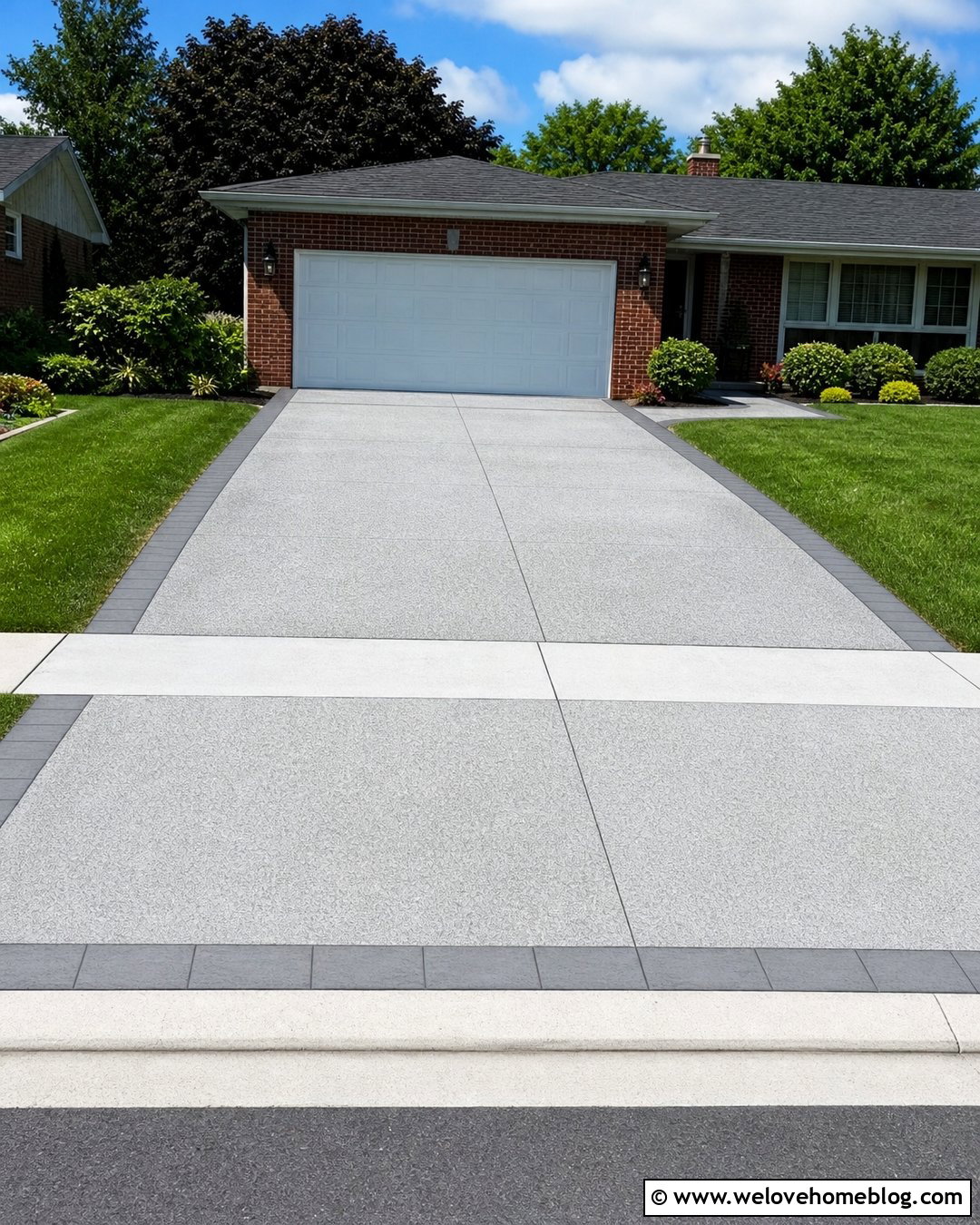
A spray texture overlay delivers a clean, lightly textured surface that works well with practical suburban landscaping. Consider a pale gray field with a darker border around a straight two-car driveway. The sprayed coating can be finished with a uniform knockdown texture, producing more visual depth than plain concrete without imitating stone or brick. Pair it with a red brick ranch house, a simple concrete walkway, low foundation shrubs, and broad lawn panels. This look is especially useful when the goal is an uncomplicated refresh rather than a strongly patterned statement. Texture coatings are among the resurfacing options used to add color and slip-resistant character to existing outdoor concrete. () Select a driveway-rated system and coordinate its final texture with local weather and maintenance needs.
7. Broom Finish Concrete Overlay Driveway
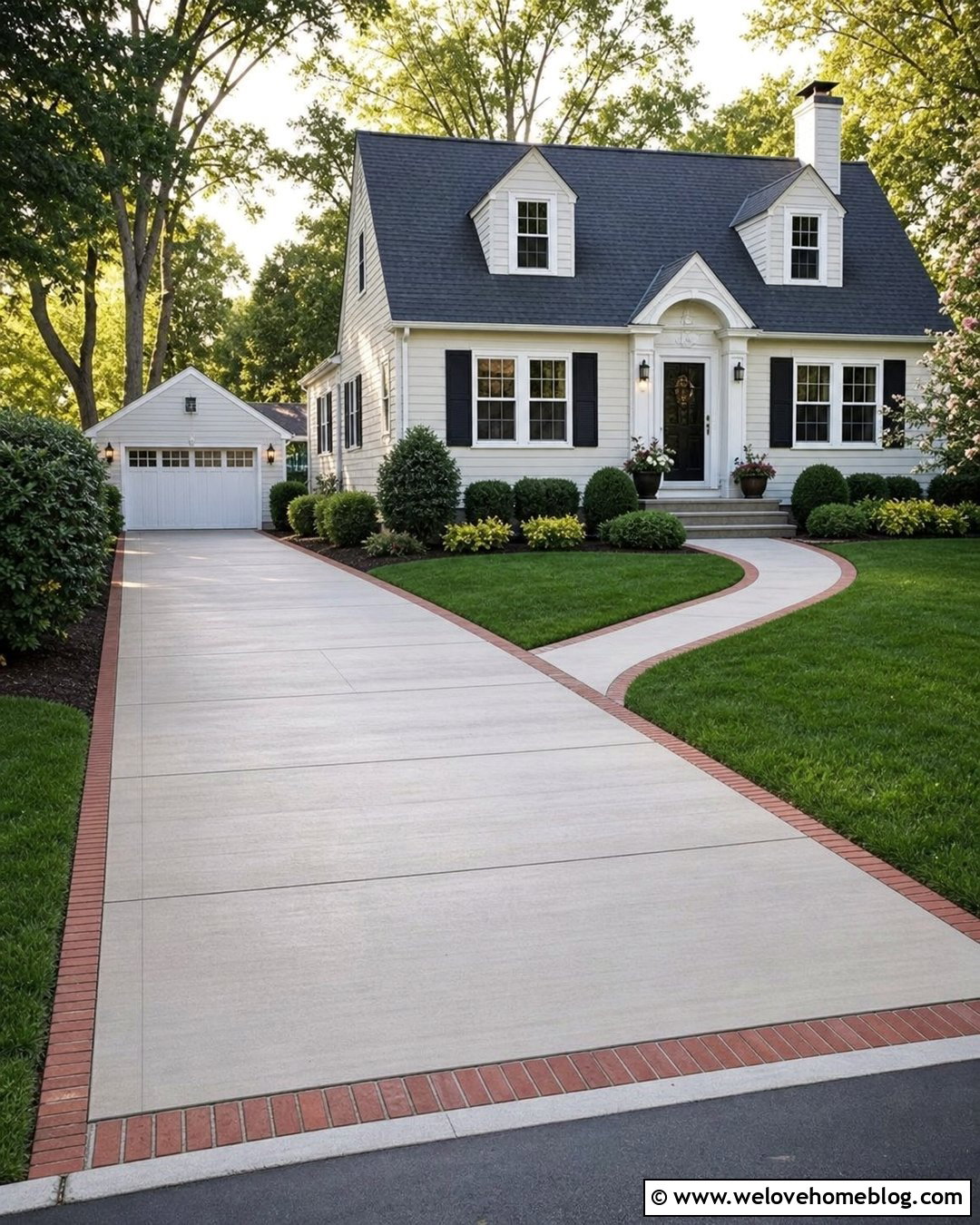
Sometimes the simplest surface creates the most convincing renovation. A broom-finished concrete overlay can make an older slab look crisp while preserving the familiar character of a traditional driveway. Choose a warm light-gray resurfacer and run the broom texture consistently across each section. On a straight driveway, saw-cut-style scoring can follow the original control-joint layout and prevent the design from appearing accidental. Add a narrow soldier-course brick border that relates to a Cape Cod home’s chimney or front steps. Neatly trimmed lawn, compact hollies, and a curved walkway keep the entire approach tidy. This option places less emphasis on decorative imitation and more on clean proportions. Before choosing it, have the slab evaluated for movement, unstable patches, drainage problems, and repairs that may remain visible through the new surface.
8. Sandstone Concrete Overlay Driveway
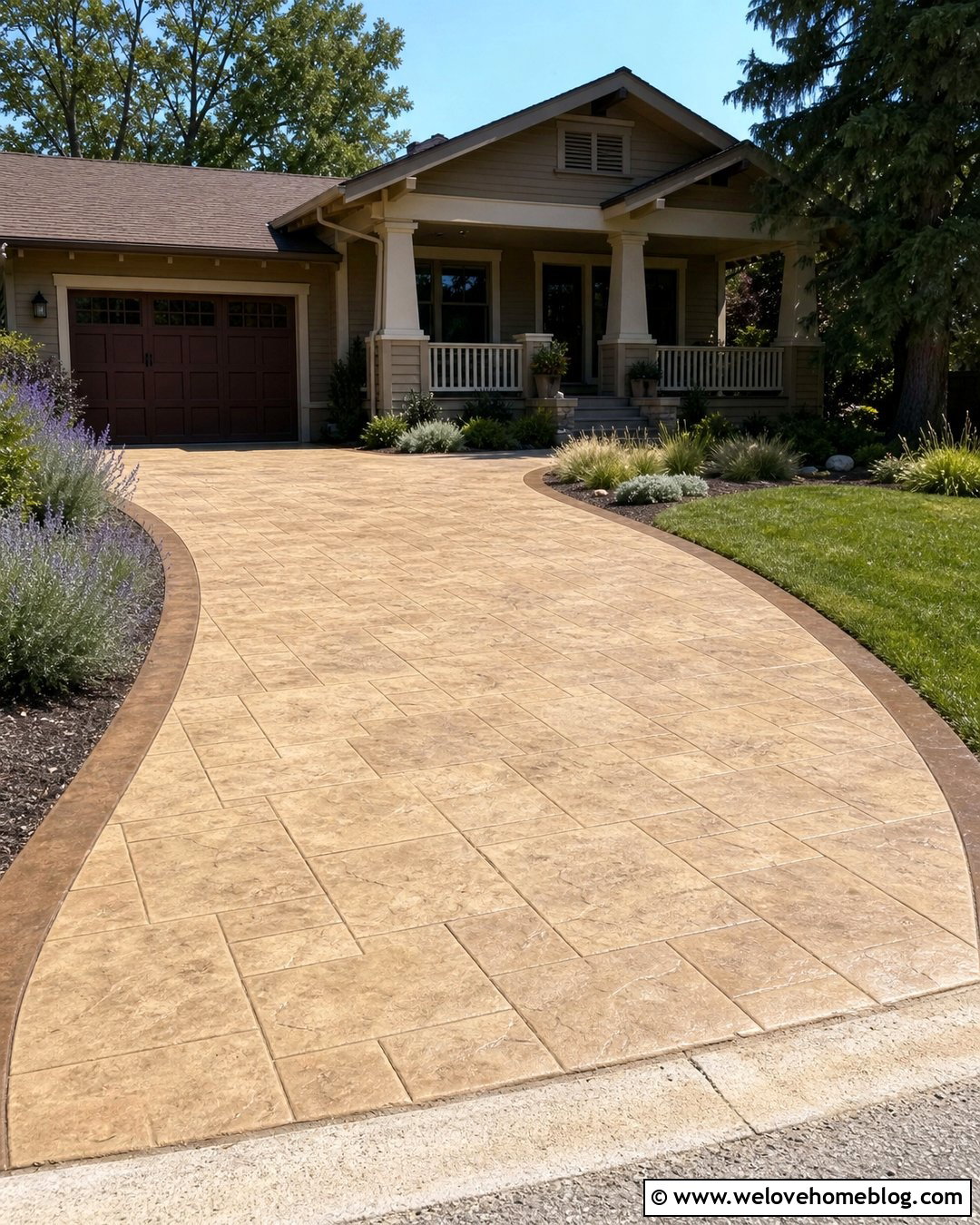
Soft beige and honey tones can brighten a driveway while complementing warm siding, stone veneer, or natural wood. A sandstone concrete overlay works beautifully on a curved approach leading to a Craftsman bungalow. Choose a large irregular stone pattern with restrained tan antiquing, then contain it with a smooth brown border. Plant lavender, dwarf fountain grass, and evergreen ground cover along the outside curve to emphasize the driveway’s flowing shape. Near the garage, transition to a simpler textured apron so the patterned field does not compete with the doors. Avoid excessively orange coloring, which can make the faux-stone effect feel artificial. An installer can prepare several color samples on site, allowing you to compare them beside the house, roof, retaining walls, and existing landscape materials.
9. Limestone Concrete Overlay Driveway
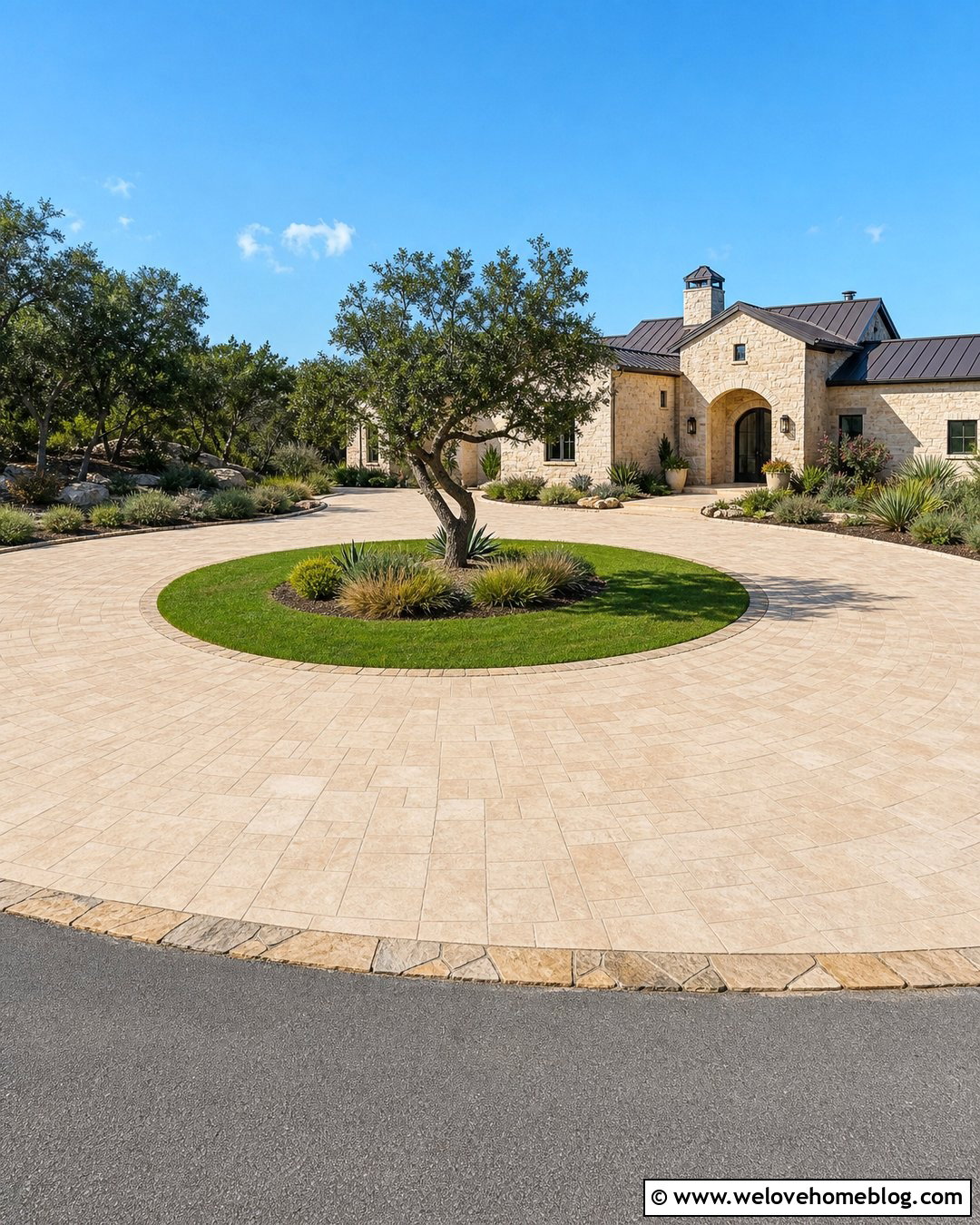
A limestone-inspired overlay brings a light, refined appearance to homes with pale brick, stucco, or Texas-style stone facades. Use rectangular tile-like sections in cream, buff, and subtle beige, with shallow texture that resembles cut limestone rather than rough flagstone. A broad circular driveway provides enough space for the pattern to read clearly from the street. Define the outer curve with tan stone edging and place a simple lawn island with one sculptural tree at the center. Drought-tolerant grasses and low shrubs can continue the warm, regional palette. Because very light surfaces may reveal stains more readily, discuss color variation, compatible sealing, and realistic maintenance before installation. The final design should feel softly layered, not uniformly cream, and the pattern scale should suit the driveway’s generous proportions.
10. Wood Plank Concrete Overlay Driveway
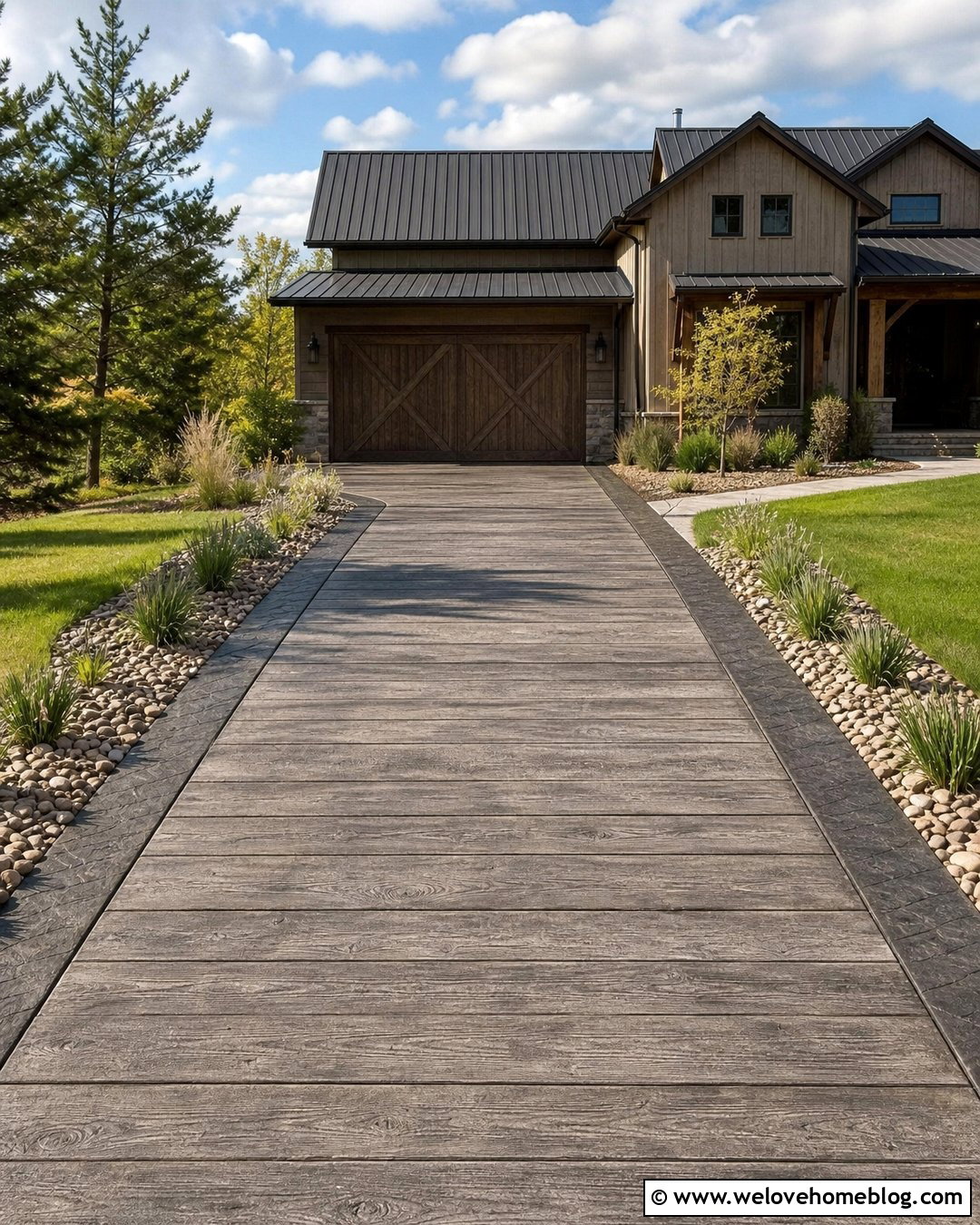
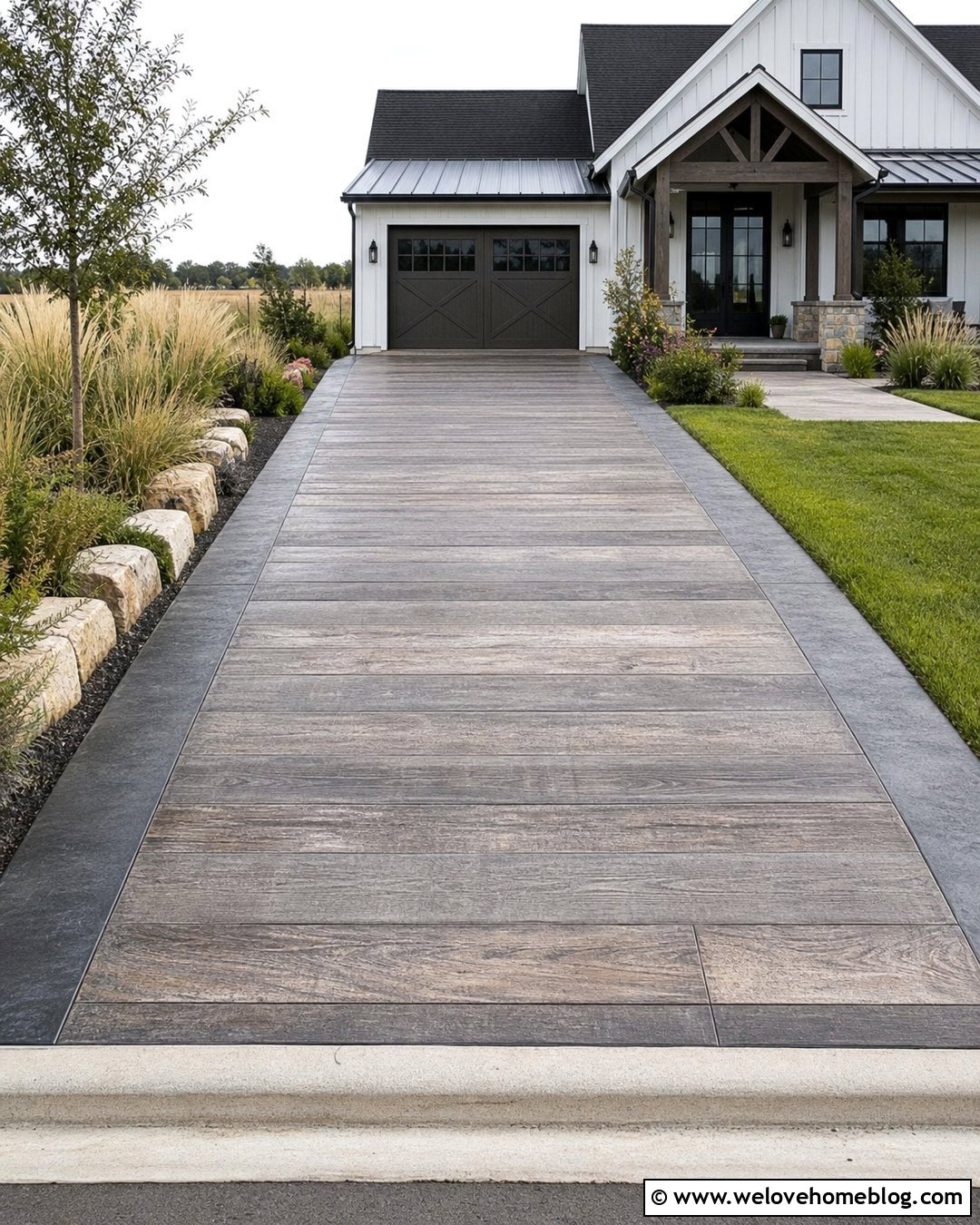
A wood-plank concrete overlay offers an unexpected look for a rustic home, cabin-style residence, or modern farmhouse. Long plank stamps can create grain and board divisions while the cementitious surface remains suitable for an appropriately specified driveway application. Choose weathered gray-brown coloring rather than bright wood tones for a more convincing exterior finish. Arrange the boards perpendicular to the direction of travel so the driveway appears wider. Dark textured borders can contain the plank pattern and create durable-looking transitions at the sidewalk and garage. Surround the approach with river rock beds, ornamental grasses, and native trees. Since the pattern includes numerous lines, keep the driveway shape simple and straight. Confirm that the chosen overlay product, thickness, texture, and sealer are approved for vehicle traffic and local conditions.
11. Large Tile Concrete Overlay Driveway
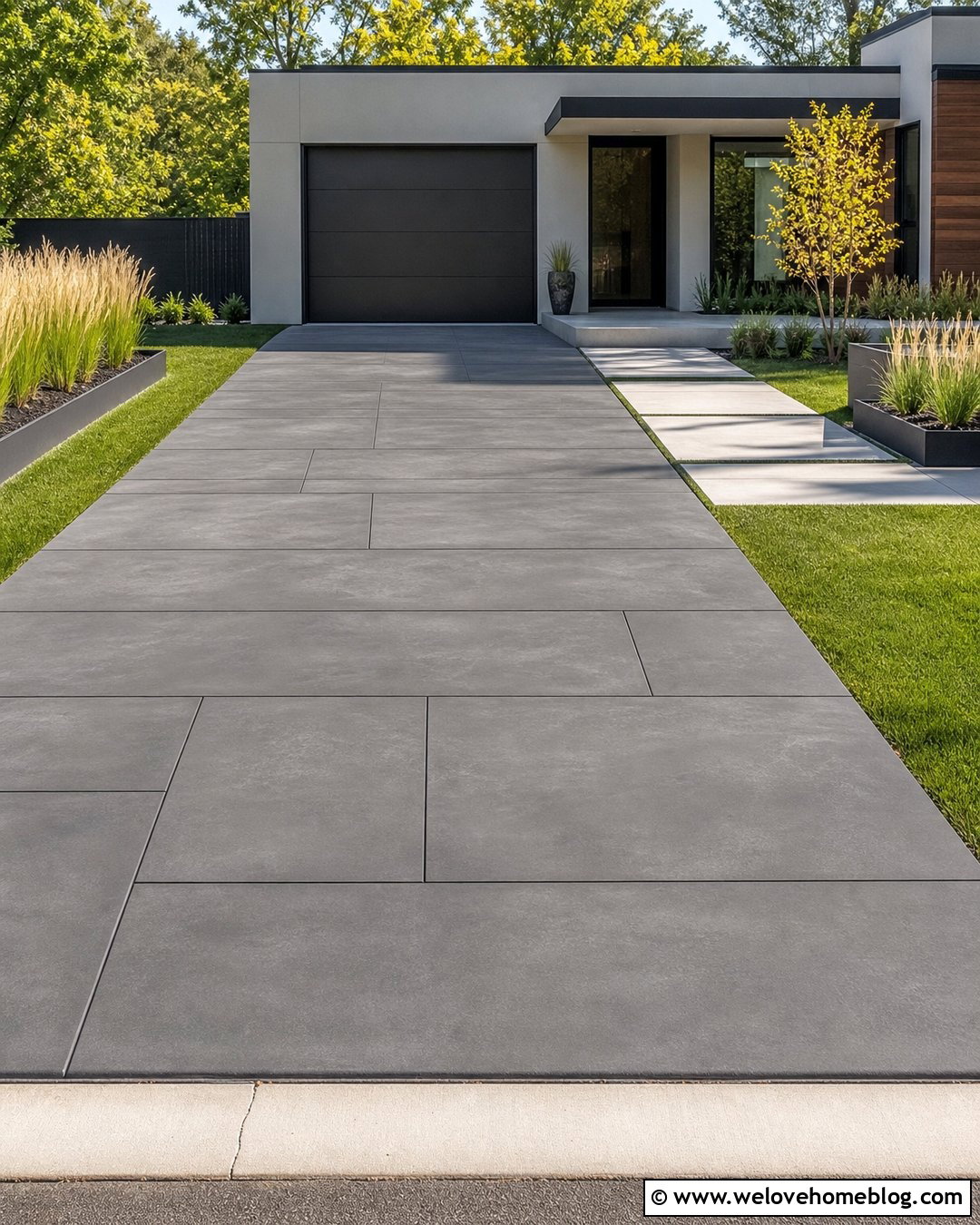
Large-format scoring can turn a plain overlay into a sharp architectural feature. Begin with a smooth charcoal-gray concrete overlay divided into broad rectangular panels. Offset the lines slightly instead of using a basic square grid, creating visual interest that complements a contemporary house. A straight driveway with grass joints along the outer edges keeps the composition uncluttered. Use black metal planters, upright grasses, and a wide concrete walkway to reinforce the modern geometry. The decorative lines should coordinate with existing joints rather than ignoring them, so the layout requires careful planning before resurfacing begins. Keep the simulated joints narrow and understated. Too many lines can make a compact driveway look smaller, while larger panels create a calmer surface that directs attention toward the facade, entry canopy, and garage.
12. Exposed Aggregate Look Concrete Overlay Driveway
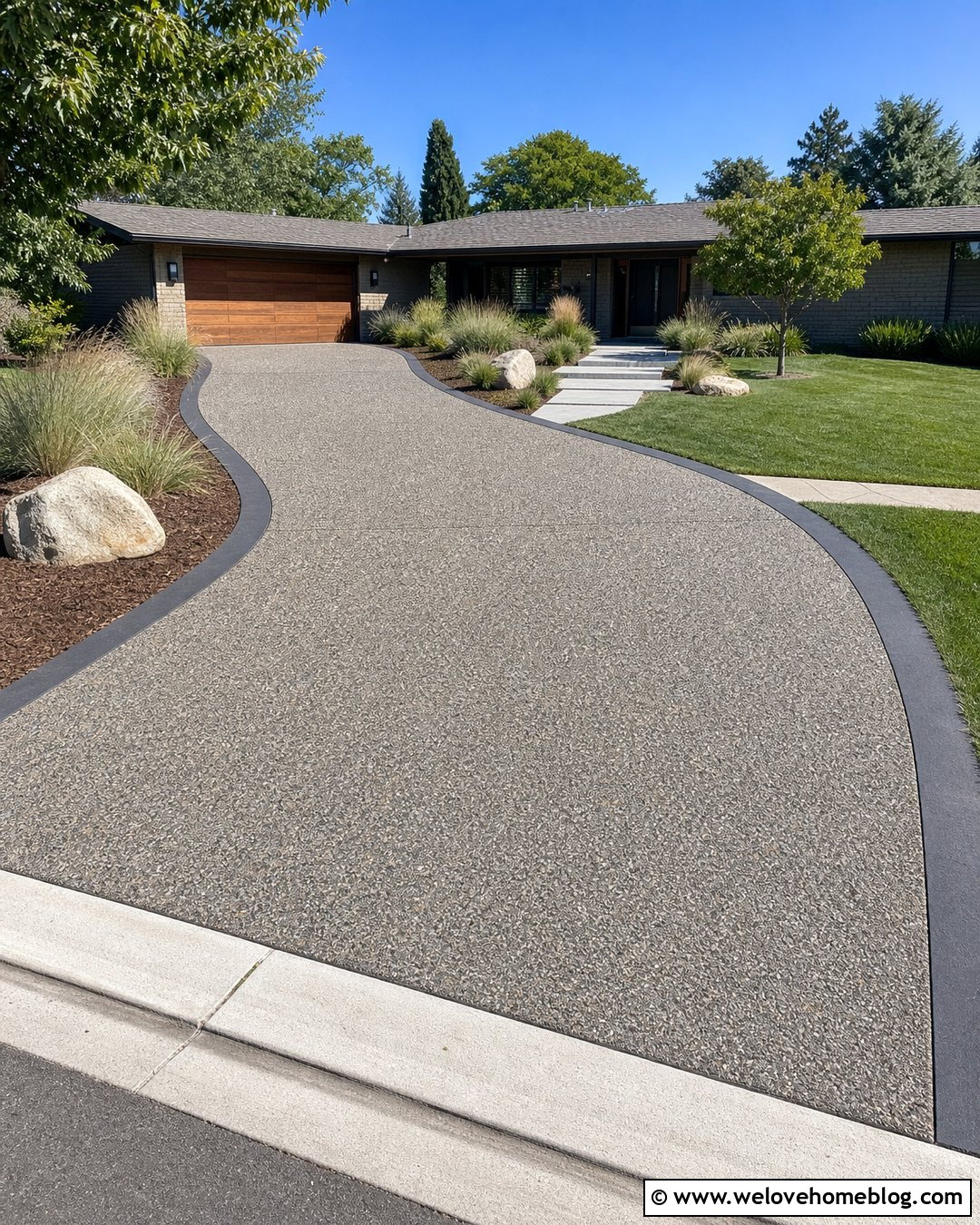
An exposed aggregate look gives a driveway natural speckling and texture without relying on a bold stamped pattern. Select a concrete overlay system that produces a fine aggregate appearance in gray, tan, and muted brown. On a gently curved driveway, pair the textured center with smooth dark concrete bands at the edges and garage apron. This contrast creates definition while making transitions easier to see. A midcentury ranch house, broad lawn, ornamental grasses, and a few sculptural boulders suit the understated material palette. Choose aggregate colors that connect with the roof, masonry, or nearby gravel beds. The surface should have enough variation to hide everyday dust but not so much texture that cleaning becomes difficult. Ask how the sample will look after sealing, since the finish can deepen the aggregate colors.
13. Two Tone Concrete Overlay Driveway
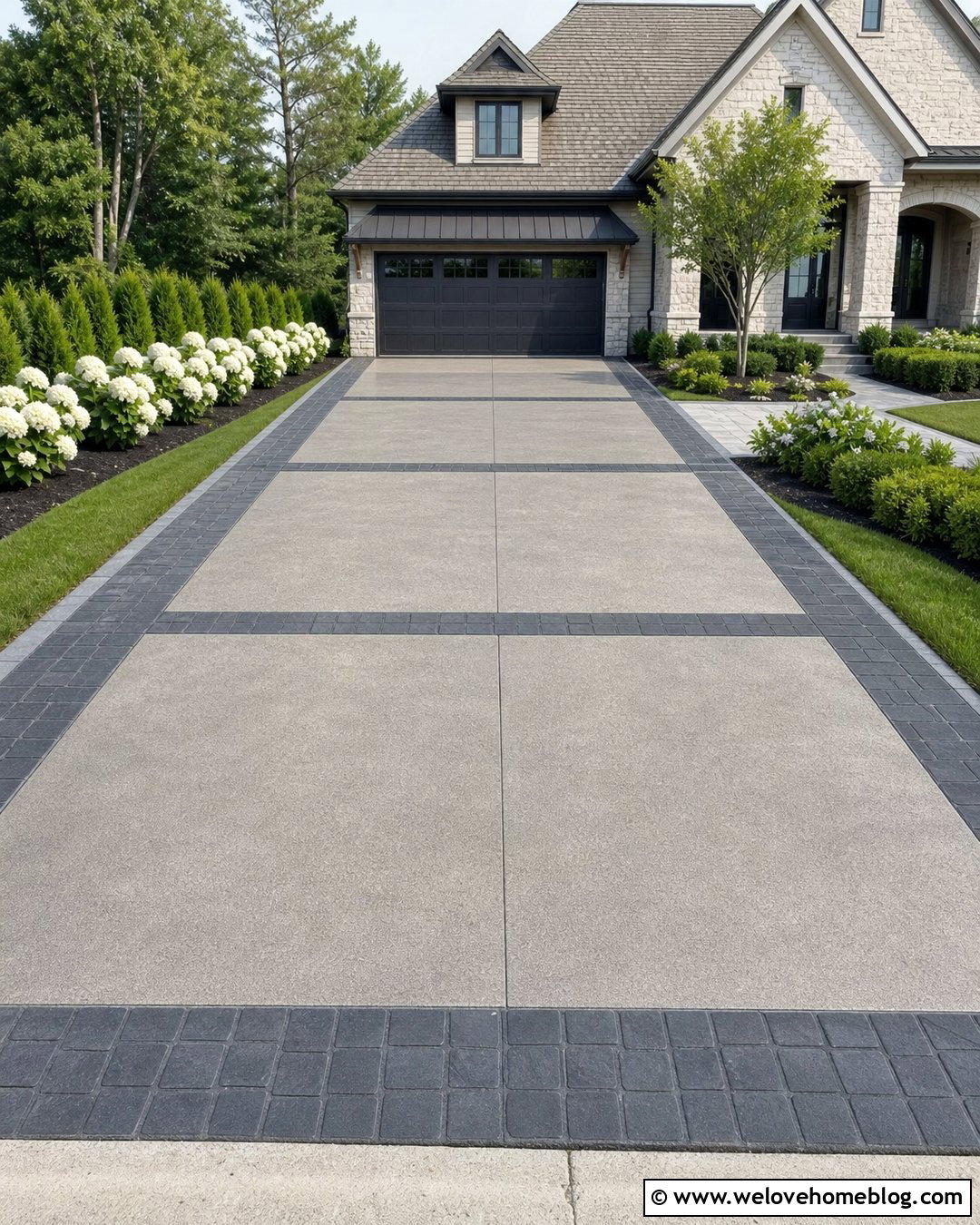
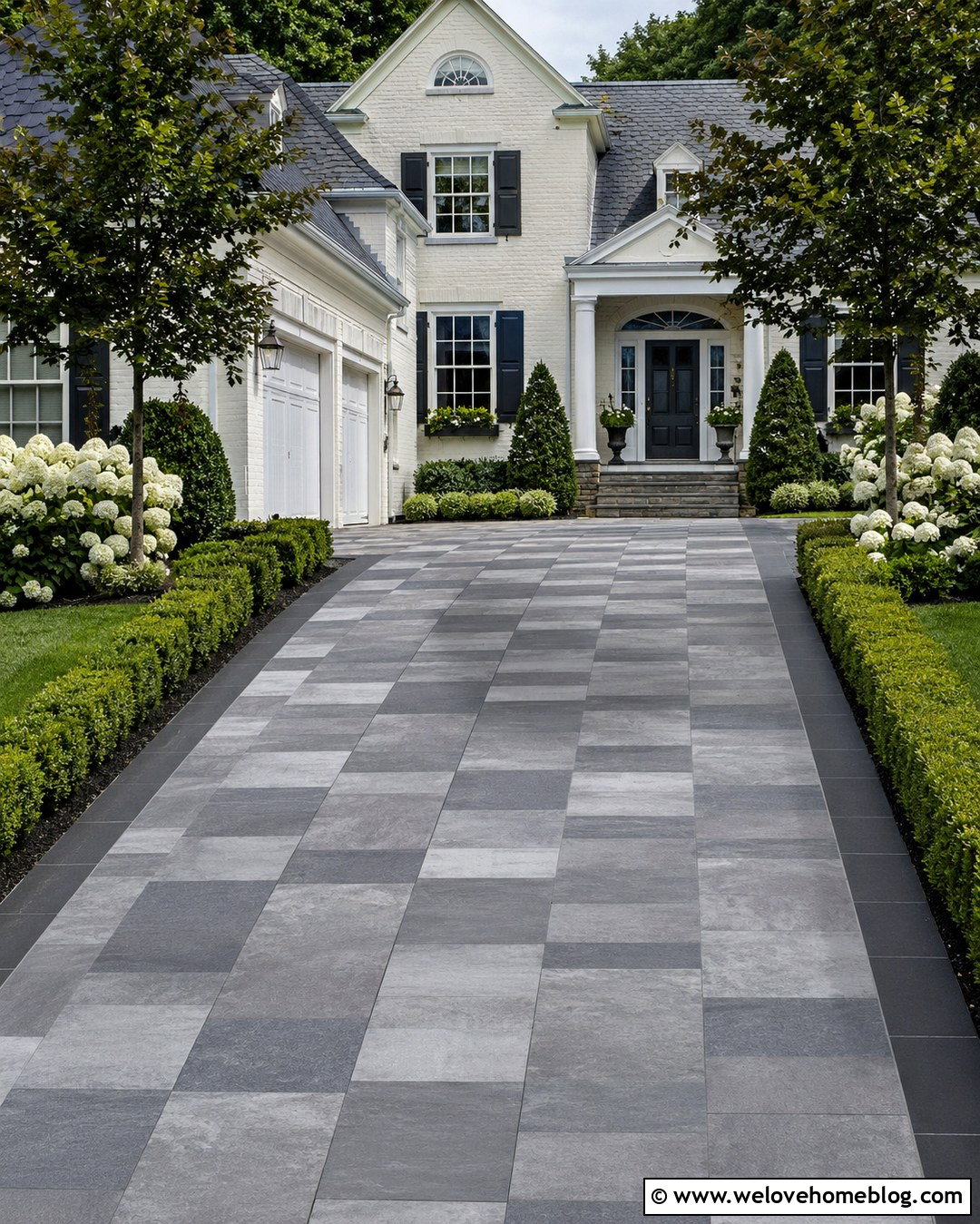
A two-tone overlay can define a driveway without covering every inch in an elaborate pattern. Use a warm-gray seamless texture across the main field and a darker slate-stamped border around the perimeter. On a wide suburban driveway, add matching crossbands to divide the surface into balanced sections. The darker accents can relate to black shutters, a charcoal roof, or contemporary garage doors. Frame the driveway with fresh lawn, white flowering shrubs, and a walkway resurfaced in the lighter field color. This combination feels decorative but remains controlled, making it suitable for transitional homes. One primary color with selected accent coloring can create substantial visual impact without unnecessary complexity. () Keep the border proportional; an oversized dark band may visually narrow the parking area and dominate the overall design.
14. Geometric Concrete Overlay Driveway
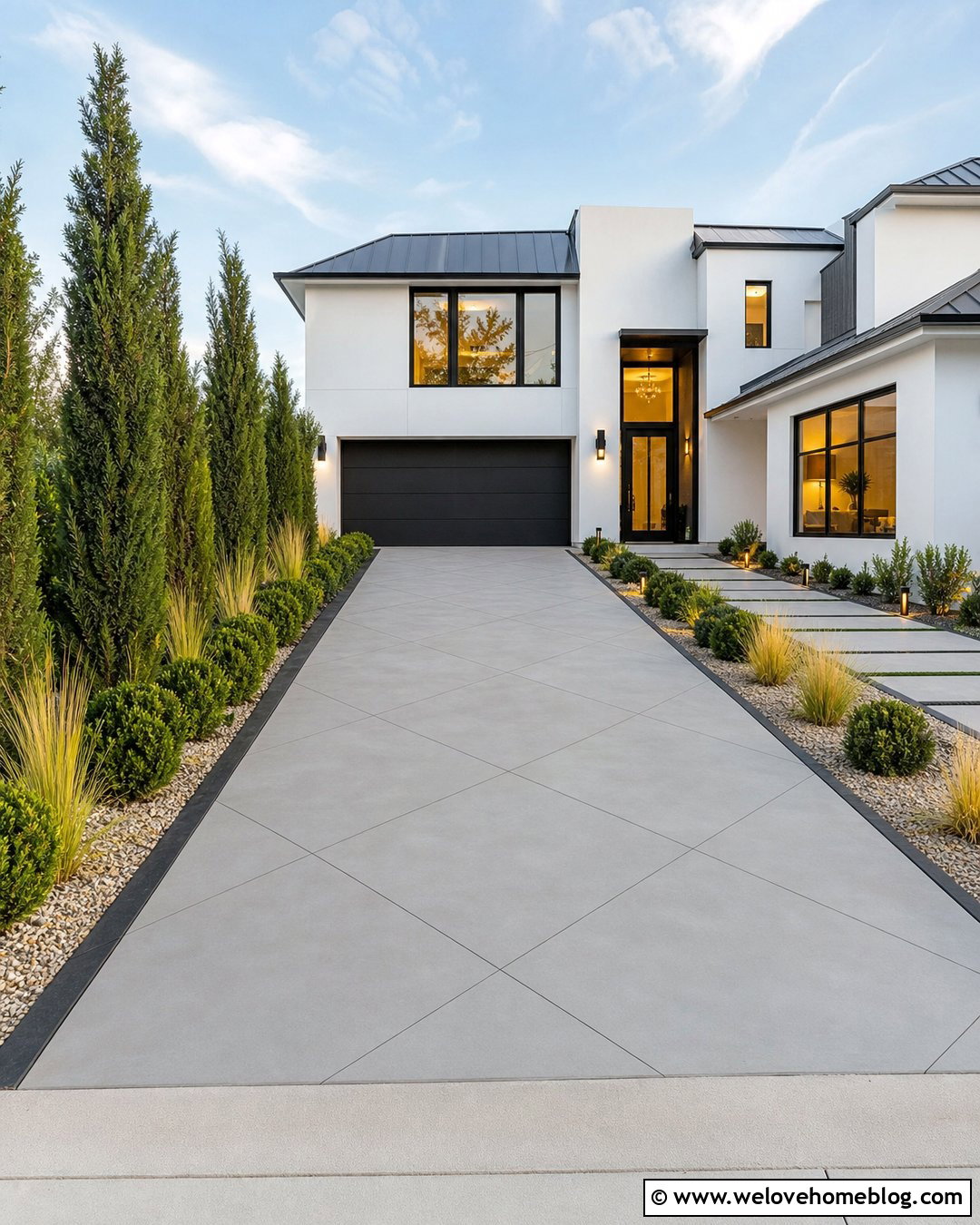
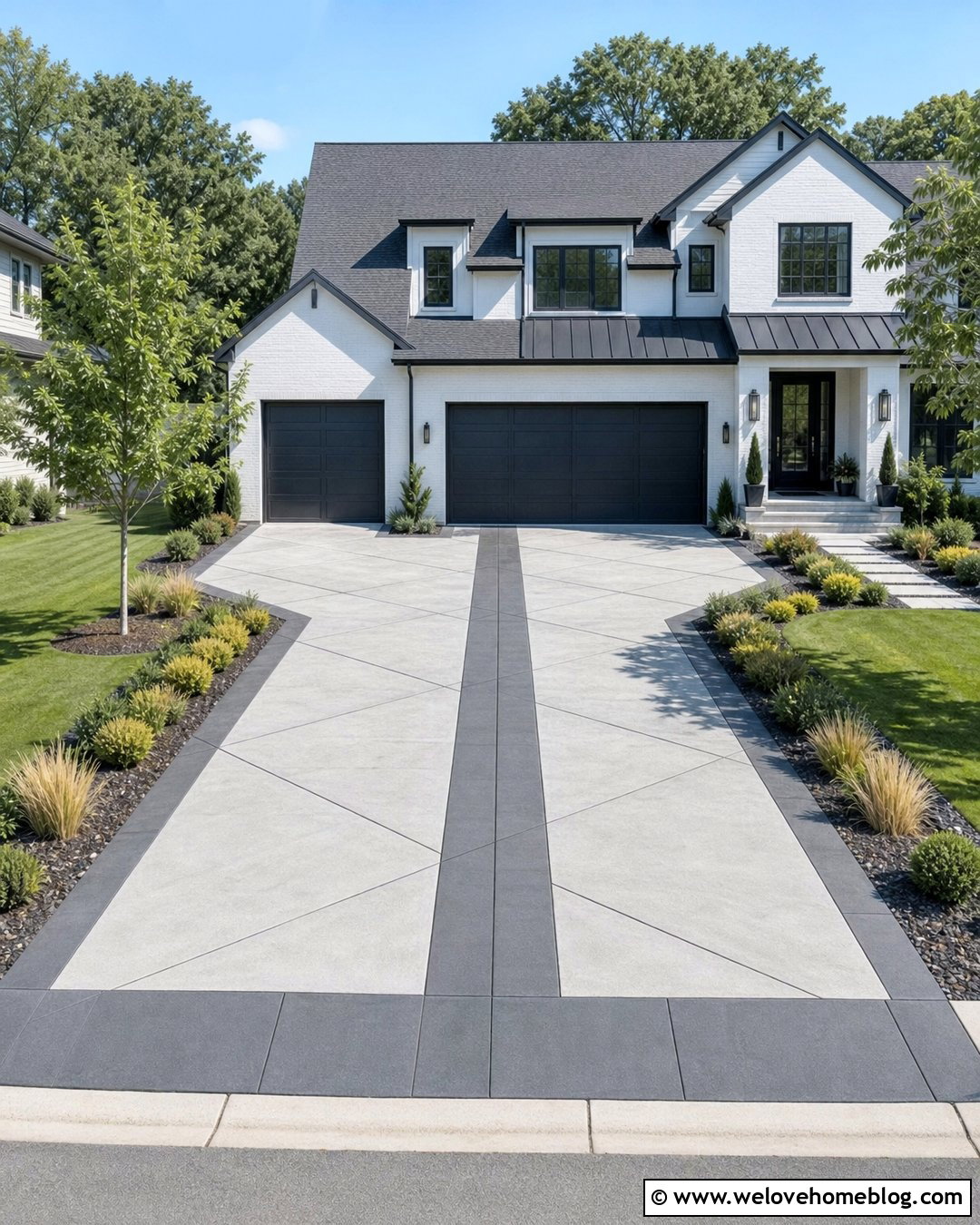
Crisp geometric scoring makes a concrete overlay feel custom without requiring a realistic stone stamp. Apply a medium-gray microtopping or resurfacing layer, then create diagonal lines that form oversized diamonds across a straight driveway. A slim black border will sharpen the edges and connect the surface to a modern home’s window frames. Add rectangular planting beds with clipped shrubs, upright grasses, and light-colored gravel mulch. A linear walkway should intersect the driveway at a deliberate score line, creating a cohesive transition to the entrance. Keep the diamond scale large enough to remain visible from the curb. Small patterns can look crowded across a broad slab. The installer should plan decorative cuts around existing joints, slopes, drains, and repaired areas so the surface design supports the driveway’s functional layout.
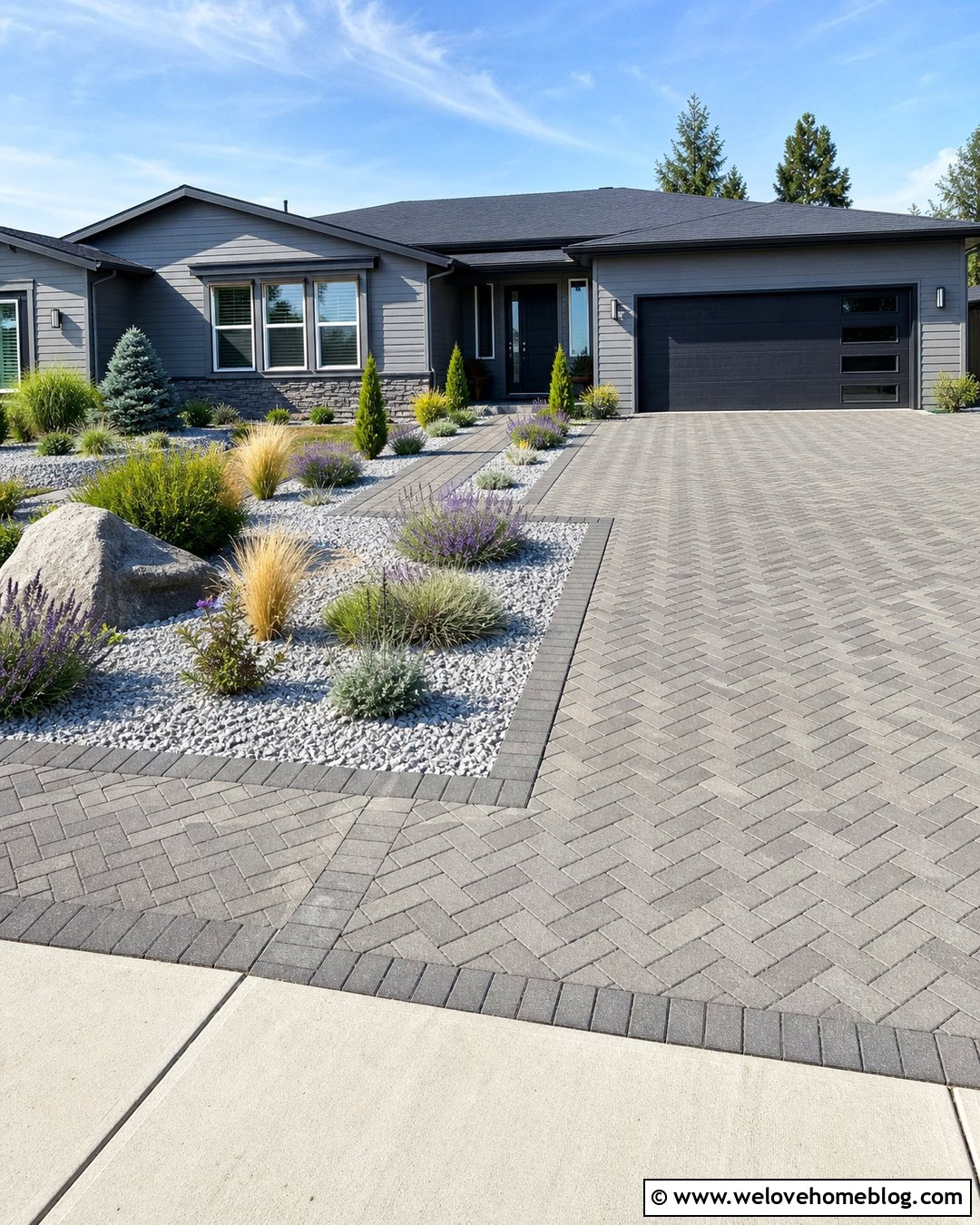
15. Stenciled Paver Concrete Overlay Driveway
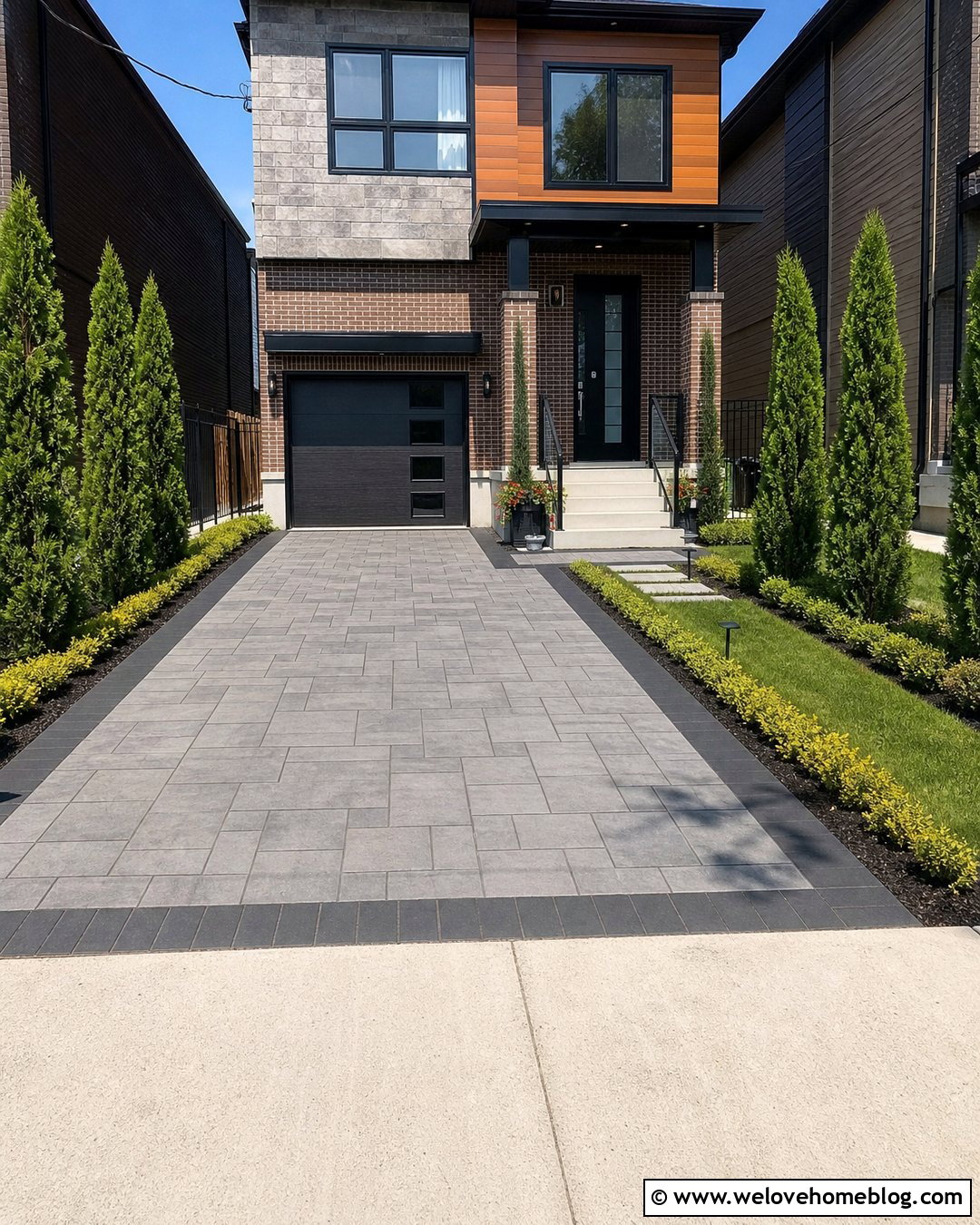
A stenciled overlay can suggest individual pavers while maintaining a visually continuous driveway surface. Use a rectangular paver stencil with muted charcoal and gray coloring on a compact, straight driveway. A contrasting border in deep graphite will define the edges and give the layout a finished appearance. This complete look works well with a townhouse, small contemporary home, or narrow urban lot where real paver installation may feel visually heavy. Add slim planting beds with columnar evergreens, low ground cover, and a direct walkway to the front door. Keep the paver scale modest but not tiny, and avoid excessive color variation. The strongest result comes from consistent pattern alignment at the sidewalk, garage threshold, and walkway junction, where poorly placed partial shapes would be most noticeable.
16. Charcoal Concrete Overlay Driveway
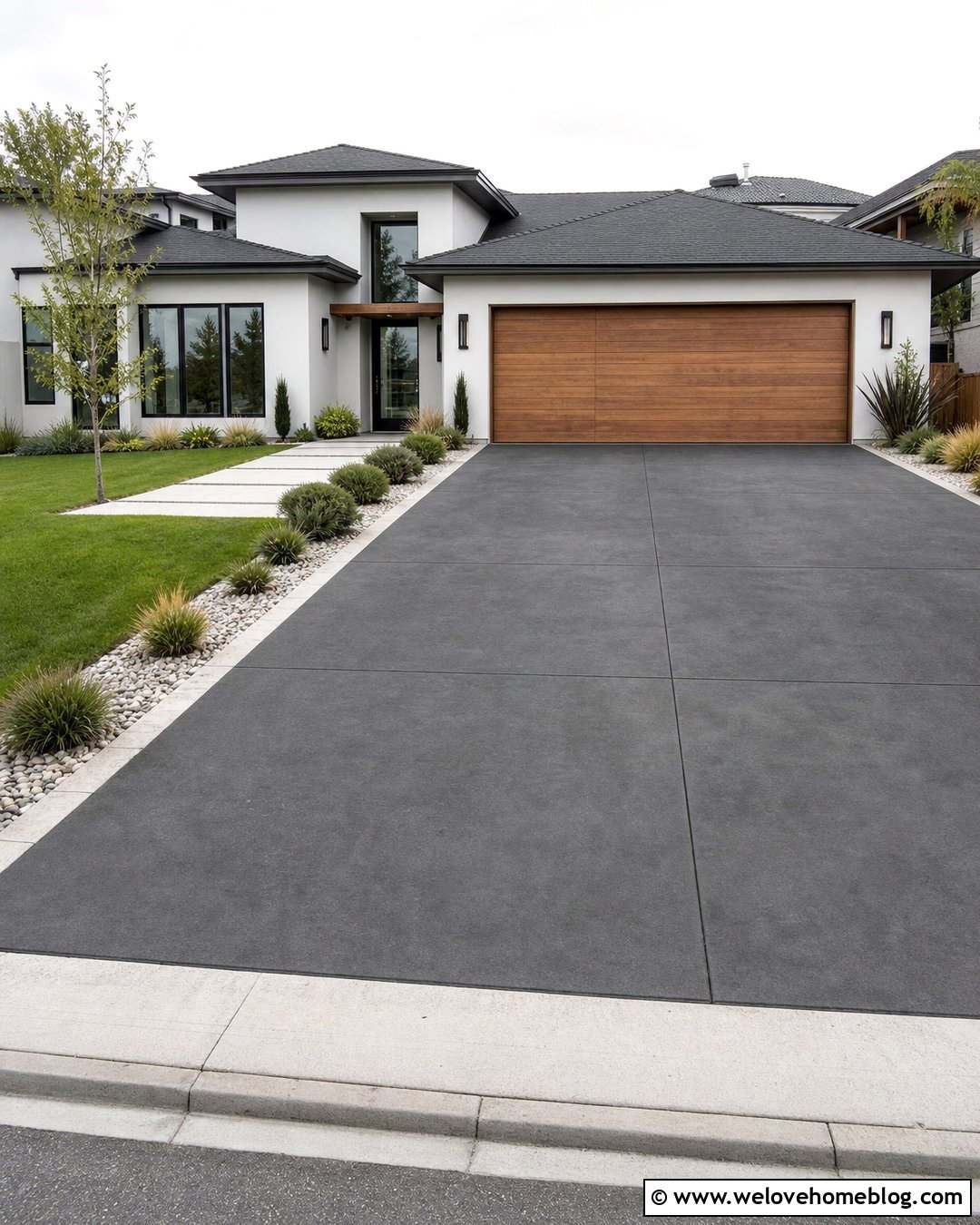
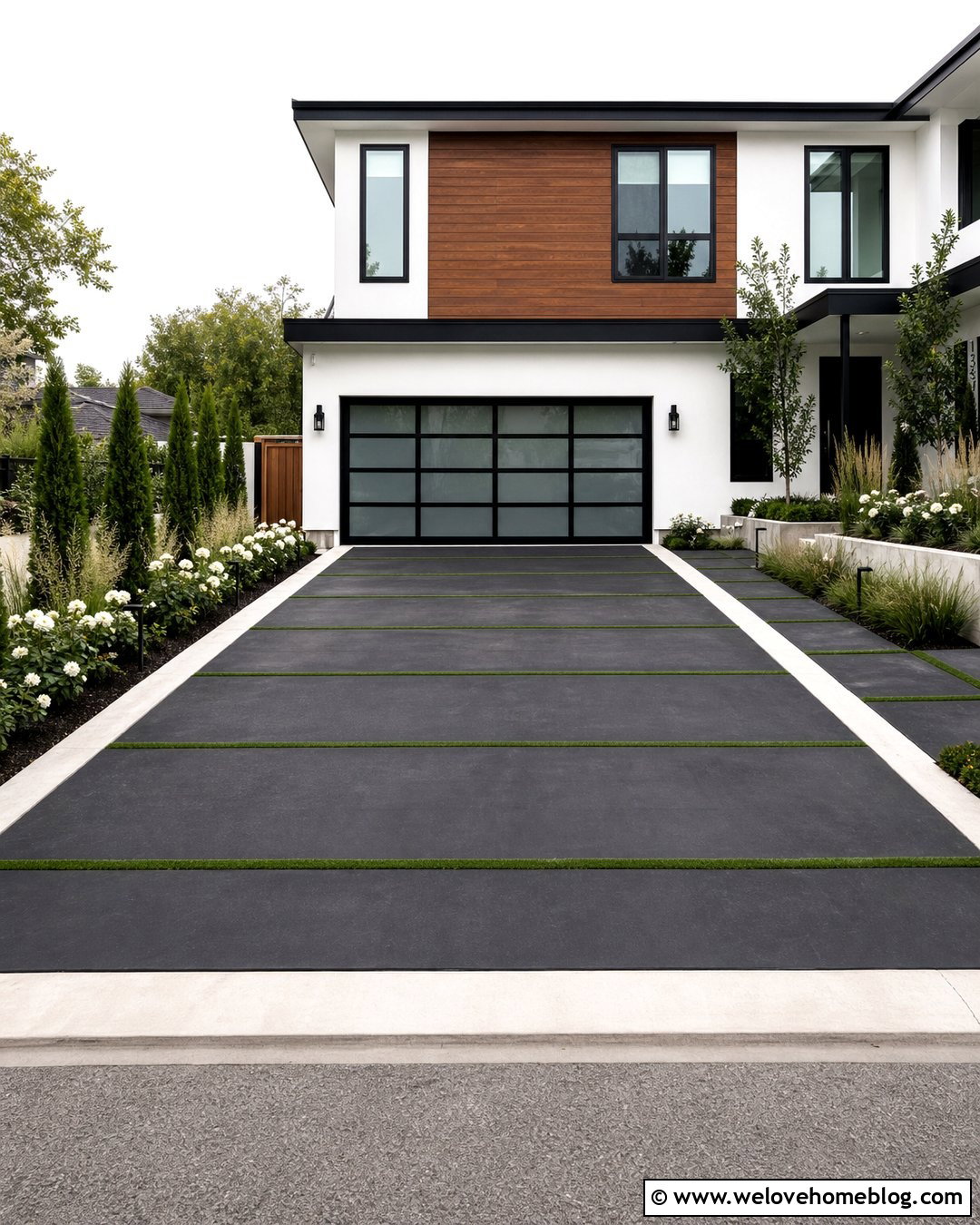
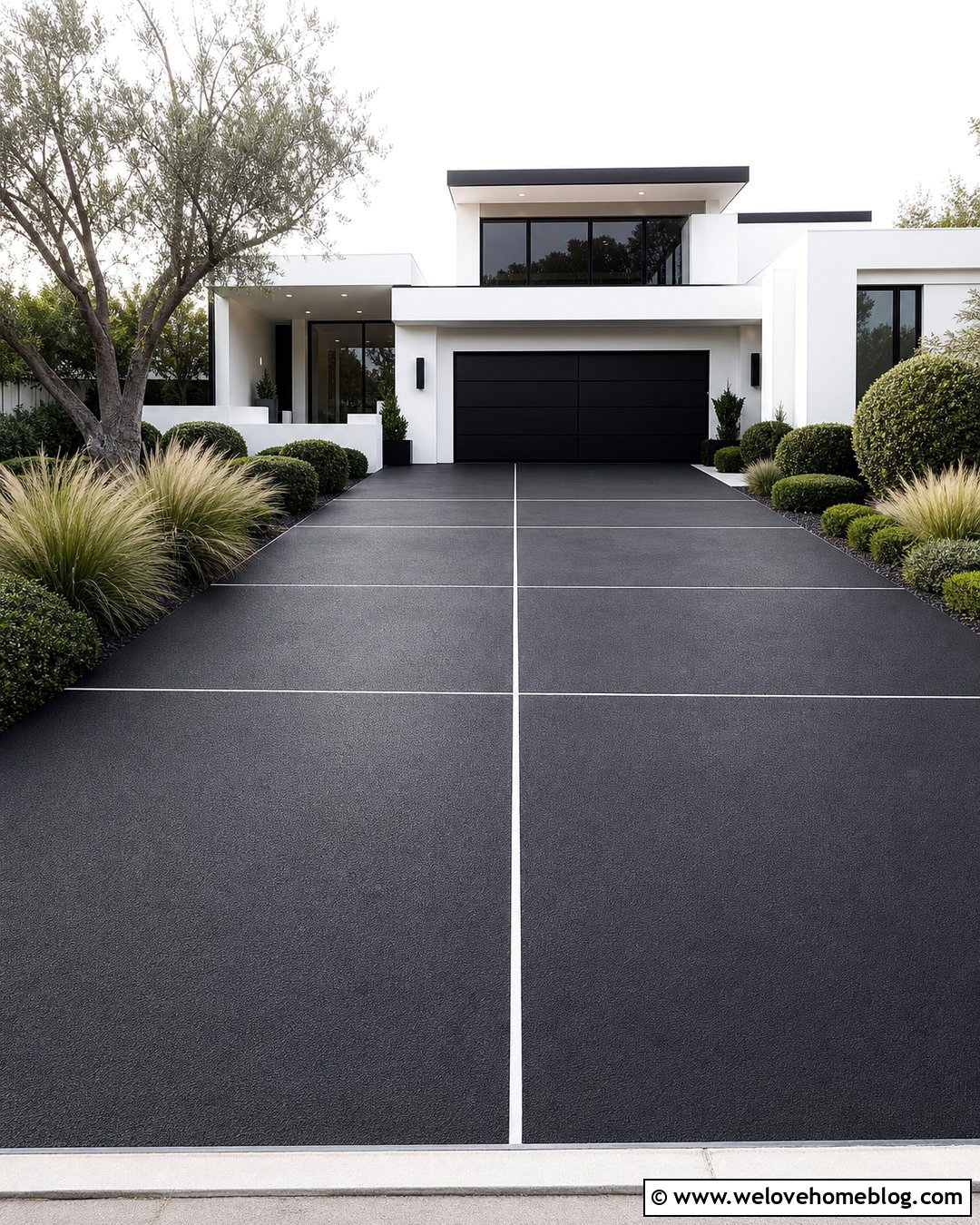
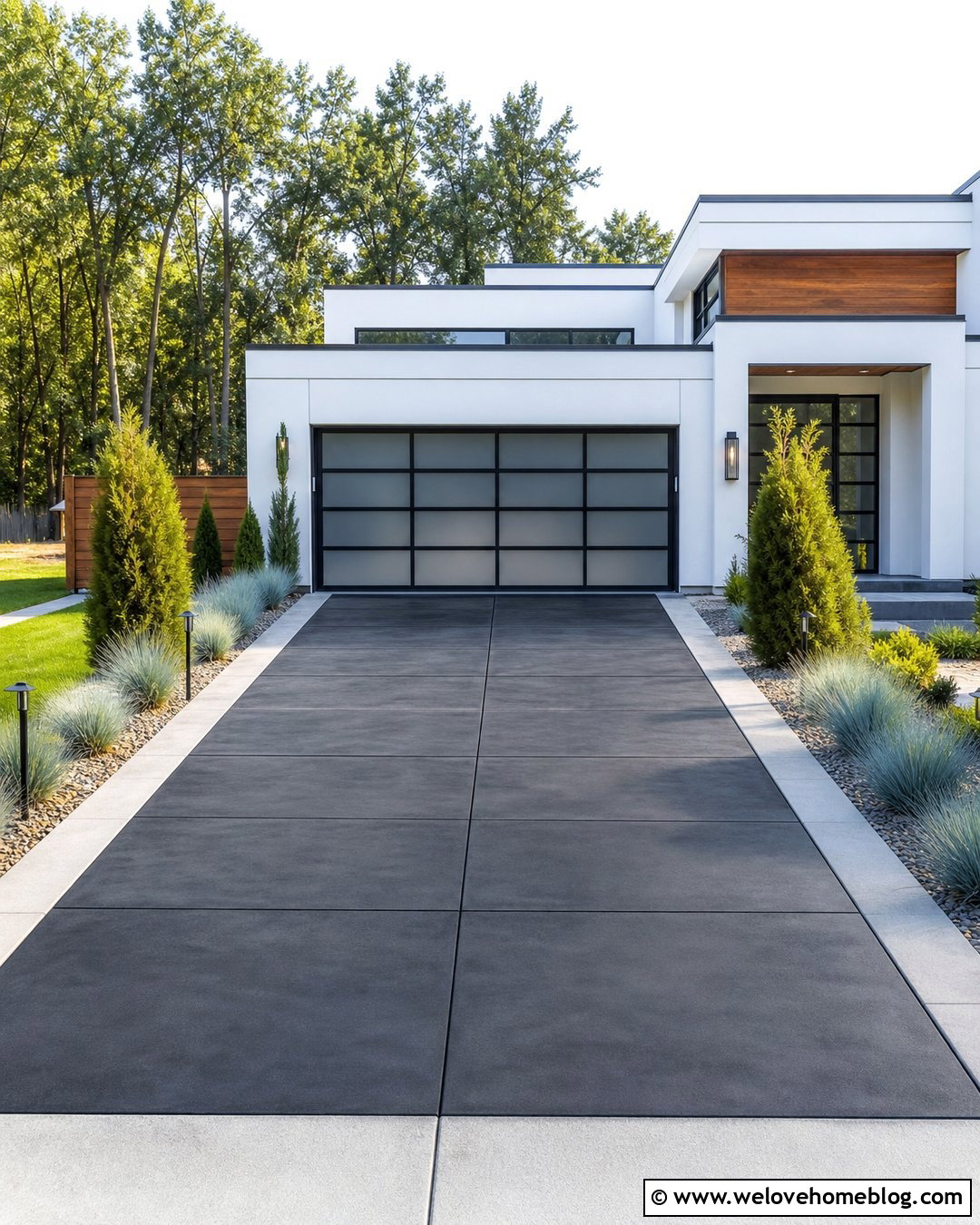
Dark charcoal creates a bold driveway, but it needs lighter surroundings to remain welcoming. Choose a fine-textured concrete overlay in a softly mottled charcoal rather than a flat black coating. Divide a broad straight driveway into large rectangular sections with subtle light-gray score lines. Pale stone edging, a bright concrete walkway, and green lawn provide enough contrast to define the surface. This palette looks particularly effective beside a white contemporary house with wood accents and black-framed windows. Use simple grasses, rounded shrubs, and one small ornamental tree instead of densely packed planting beds. Dark colors can behave differently in strong sunlight, so review physical samples and ask about heat, fading, sealing, and regional suitability. A medium charcoal often delivers the dramatic effect with a more forgiving everyday appearance.
17. Tan Circular Concrete Overlay Driveway
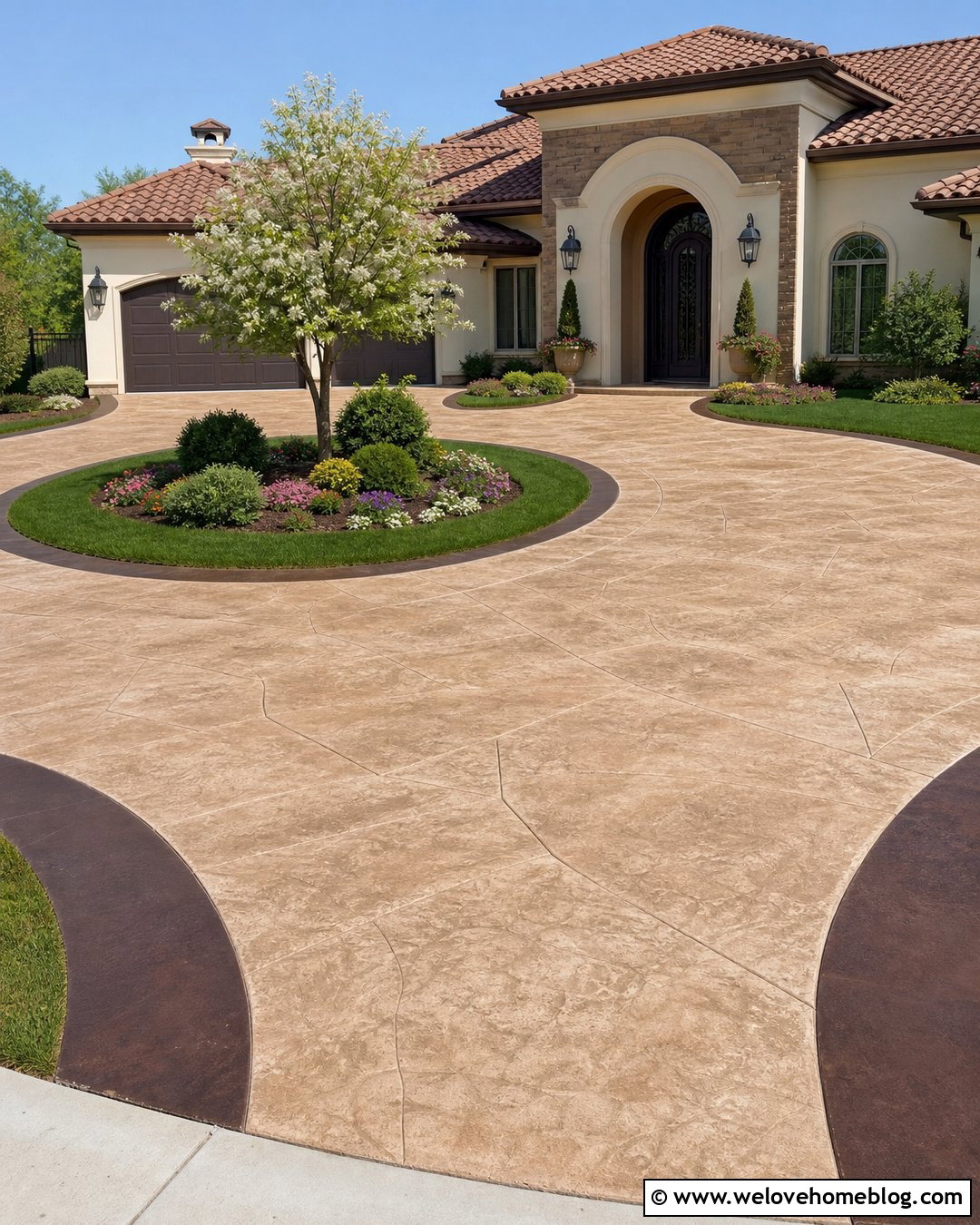
A circular driveway becomes more inviting when its surface and central landscaping are designed together. Apply a warm tan concrete overlay with seamless stone texture across the driving lane, then add a darker brown border around both curves. In the center island, use a flowering tree, low evergreen shrubs, and seasonal perennials that remain below important sightlines. A cream stucco home with an arched entry provides a natural backdrop for the warm palette. Continue the tan finish toward the garage, but use a border band to mark where the circular portion meets the parking area. Keep irrigation away from the overlay when possible to reduce repeated water staining. The curved design, restrained coloring, and layered planting create a complete entrance rather than treating the driveway as an isolated paved loop.
18. Curved Concrete Overlay Driveway With Brick Bands
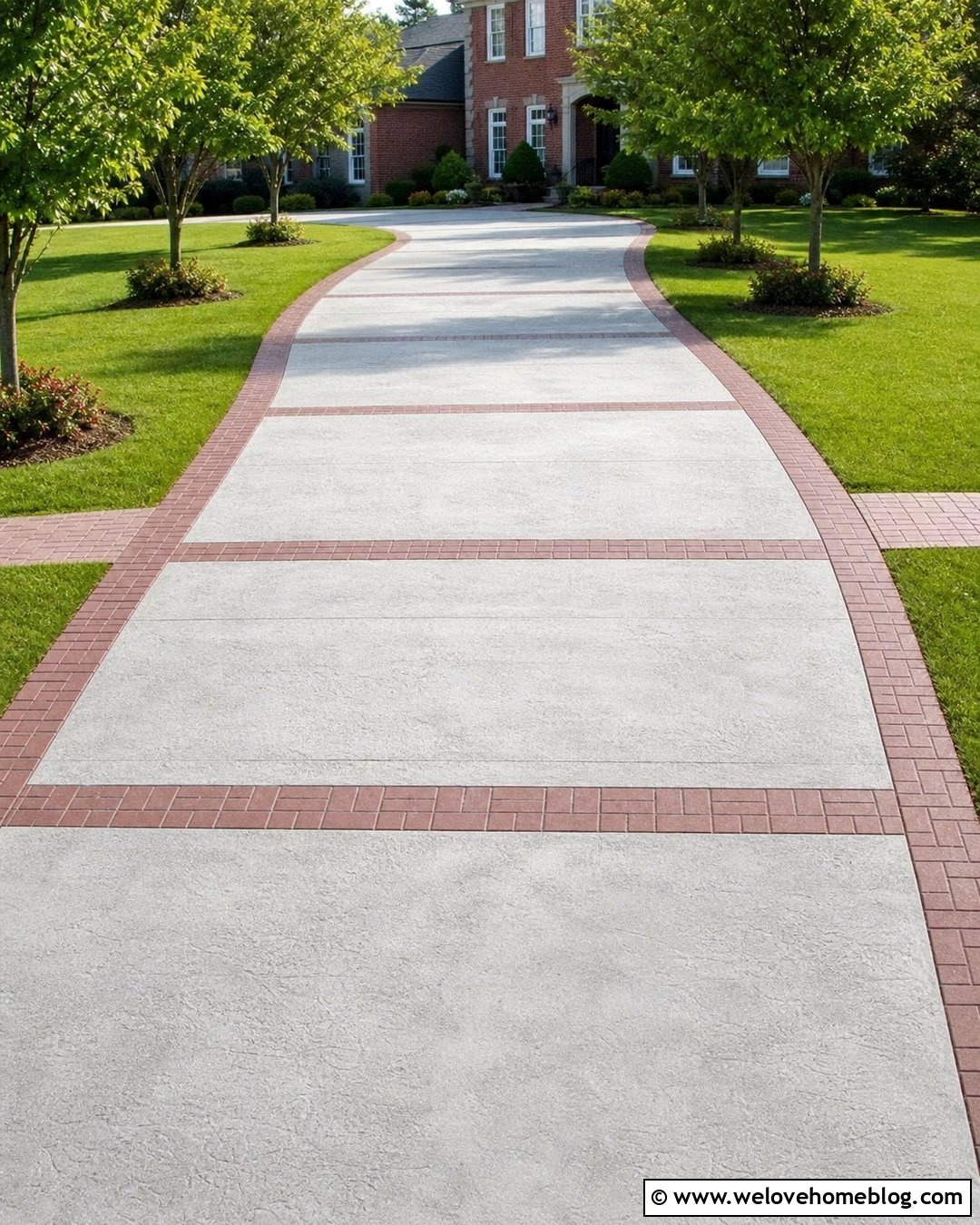
A long curved driveway can feel overly expansive unless the surface includes visual stopping points. Cover the existing concrete with a light-gray textured overlay, then add stamped brick bands in muted red every few sections. Match those bands with a narrow brick-pattern border along both sides. The repeated accents visually organize the approach and connect the driveway to a traditional red brick house. Plant small shade trees along the outer curve and use low shrubs near the inside edge so drivers retain clear visibility. A matching brick band can mark the walkway crossing near the front entrance. Decorative bands have been used to connect long driveway sections and repeat architectural colors. () Keep every band aligned with the driveway’s joints and overall curve for a polished result.
19. White Concrete Overlay Driveway
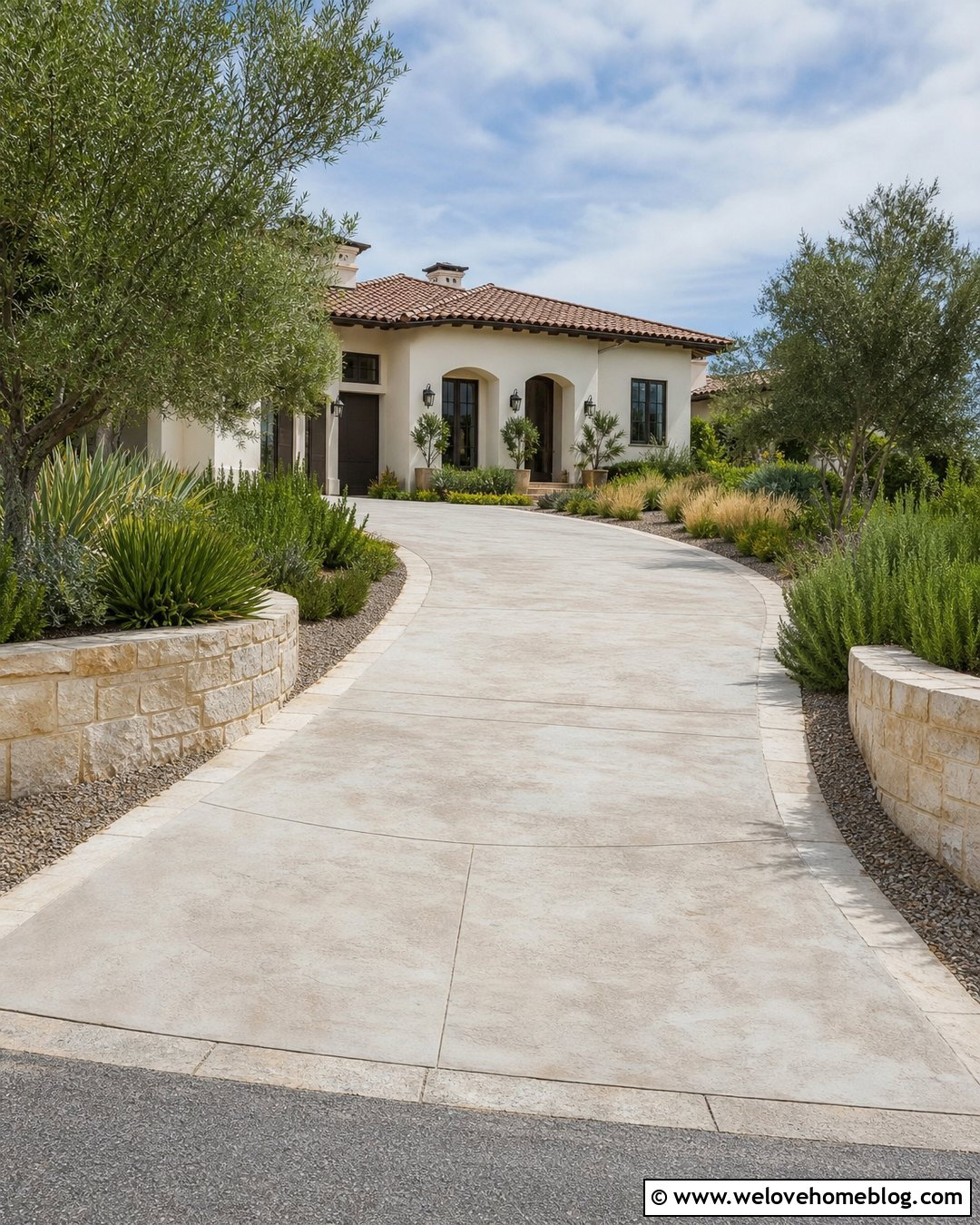
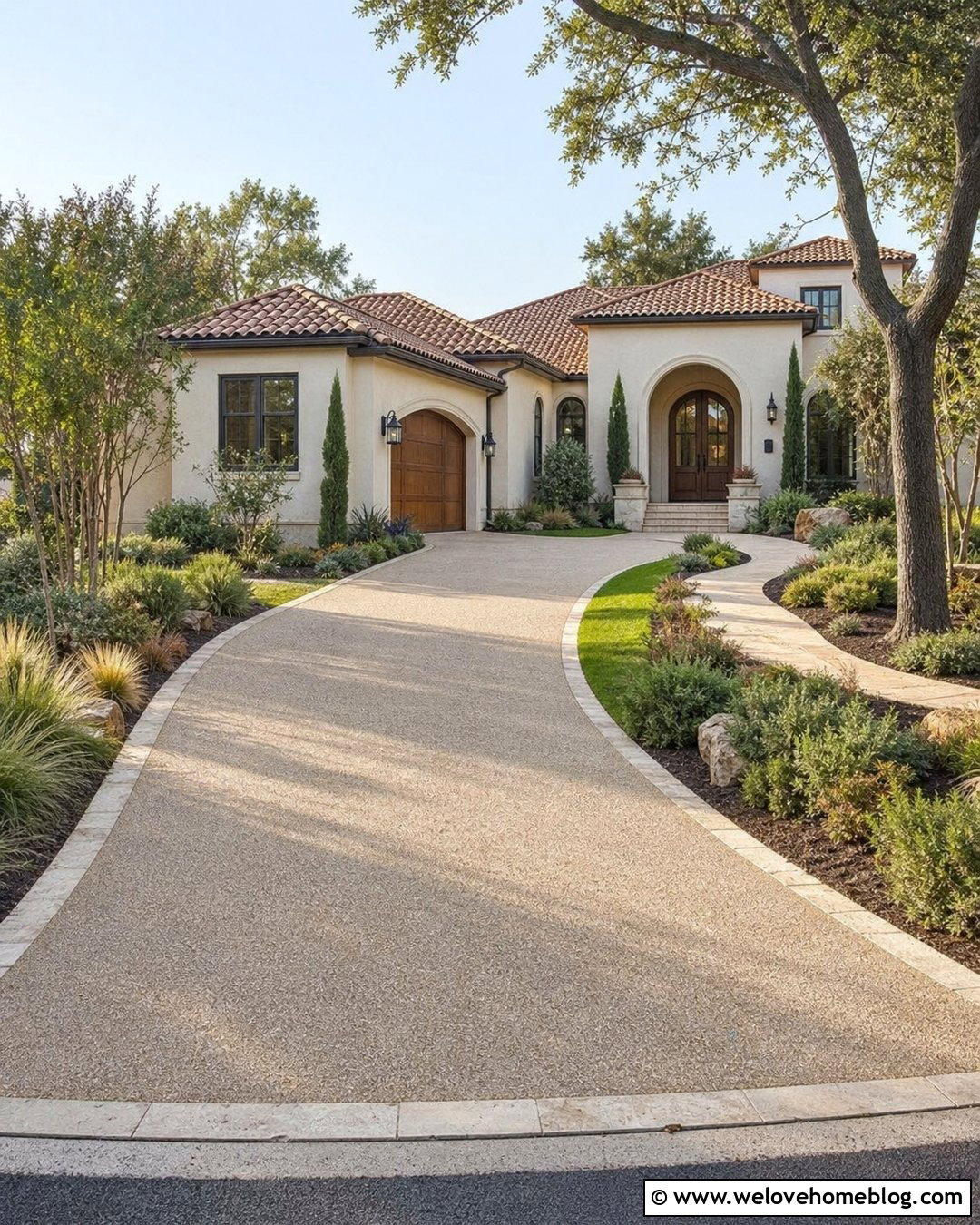
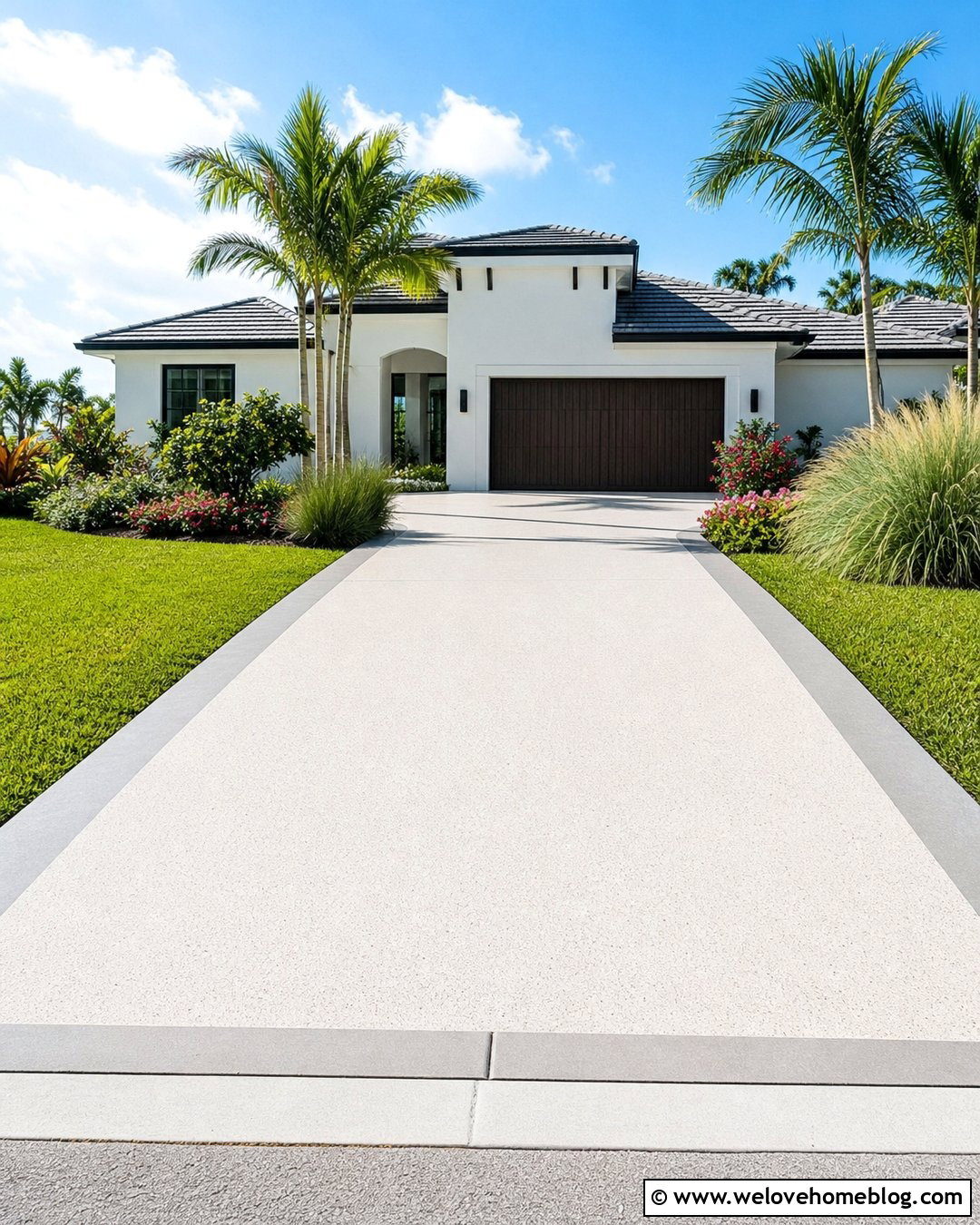
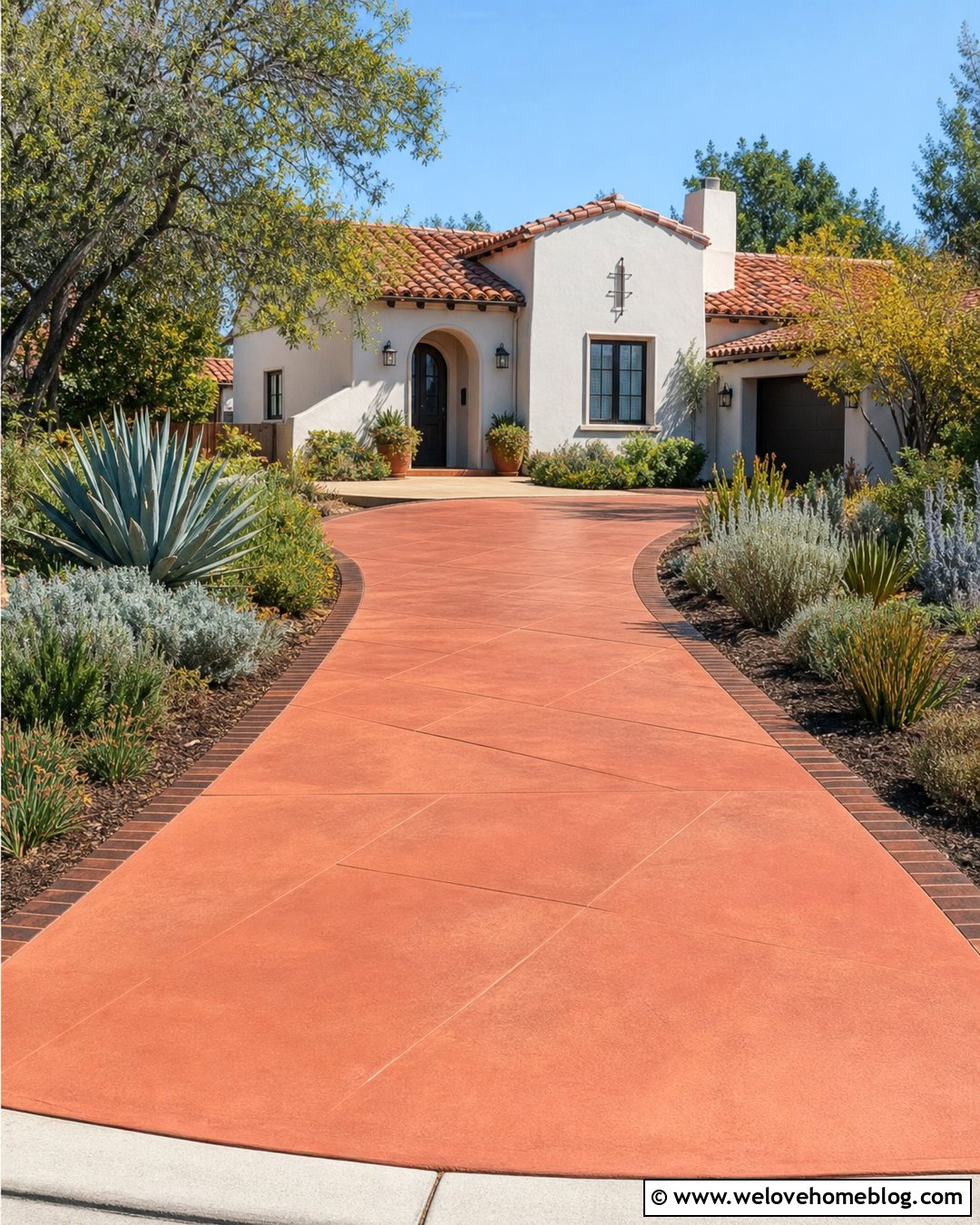
A pale concrete overlay can support the relaxed architecture of a Mediterranean or coastal-inspired home. Choose an off-white or light sand finish with subtle troweled movement instead of brilliant white, which may appear harsh outdoors. Use a gently curved driveway edged with warm limestone blocks and narrow planting beds. Olive-like ornamental trees suited to the local climate, rosemary, soft grasses, and gravel mulch can frame the approach without hiding the paving. Near the garage, incorporate shallow rectangular scoring that echoes the home’s window proportions. A matte finish will better complement stucco walls and a clay-colored roof than a high-gloss surface. Discuss stain visibility, tire marking, drainage, and cleaning expectations before selecting such a light palette. Soft tonal variation can make routine wear less visually obvious.
20. Concrete Overlay Driveway With Compass Medallion
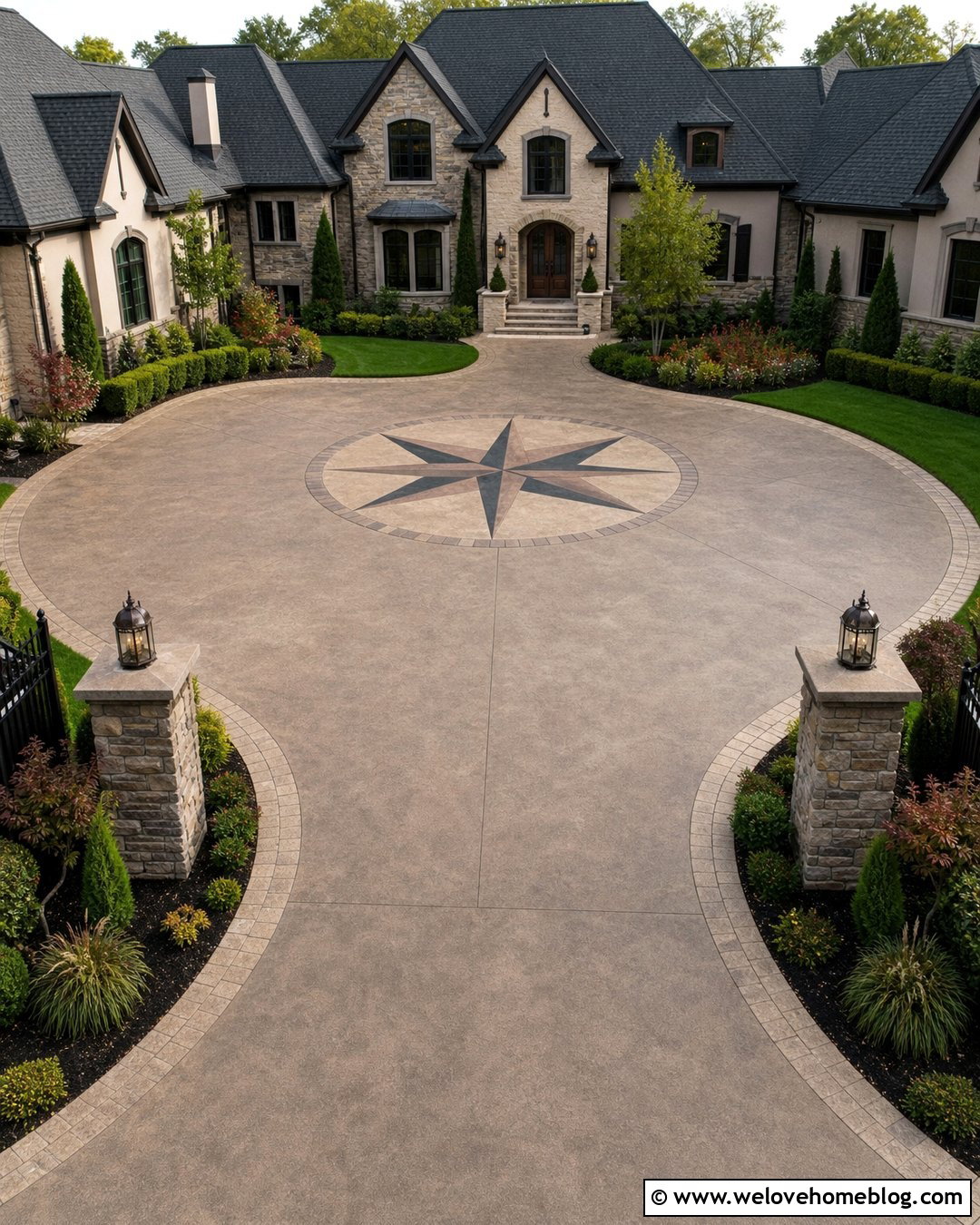
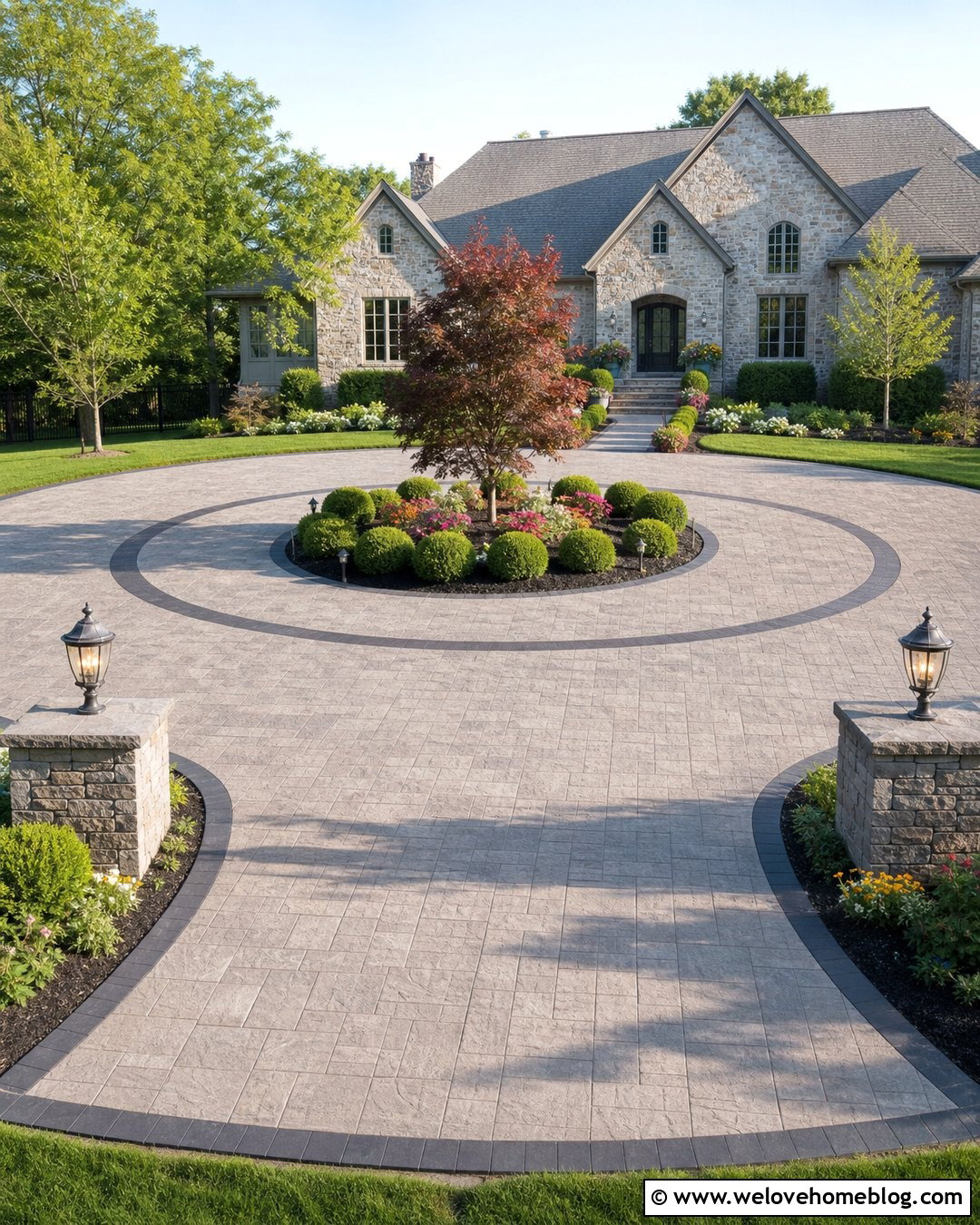
A decorative medallion creates a focal point when it is integrated into the entire driveway instead of added as a random ornament. Start with a taupe seamless-stone concrete overlay on a broad circular or courtyard-style driveway. Place a large compass design at the center using charcoal, beige, and muted brown stains. Surround it with a circular stamped border that connects visually to the driveway’s outer edge. Formal shrubs, symmetrical planting beds, and simple stone pillars can frame a traditional or European-inspired home. Keep the rest of the surface quiet so the medallion remains the main feature. Confirm its orientation and scale before installation, and view a full-size layout from the curb. The finished composition should look balanced from both the street and front entrance, not only from directly overhead.
Conclusion:
The best 20 concrete overlay driveway ideas combine decorative finishes with sensible planning. Ashlar slate, brick, cobblestone, limestone, spray texture, geometric scoring, and seamless stone can each transform an aging driveway in a different way. However, color and pattern are only part of the decision. The condition of the existing slab, joint placement, drainage, vehicle use, texture, sealing requirements, and local climate should guide the final system. Ask a qualified resurfacing contractor to inspect the concrete and provide outdoor samples before work begins. Then coordinate the overlay with the home, borders, walkway, garage, and landscaping. A thoughtfully designed surface will feel like a complete curb-appeal upgrade rather than a decorative layer added in isolation.

Related posts:
Leave a Reply