
Concrete molds can turn a practical driveway into a detailed surface that resembles stone, brick, slate, or individual pavers. The best 20 concrete mold driveway ideas combine the molded pattern with a durable base, suitable drainage, coordinated borders, and landscaping that complements the house. Color also matters. Warm sand tones suit traditional homes, while charcoal and pale gray finishes create a cleaner modern appearance. Because driveways carry heavy vehicles, molded concrete should be designed for driveway use rather than installed like a lightweight garden path. Proper reinforcement, control joints, curing, and sealing can help the finished surface perform well. From random stone patterns to geometric grass grids, the complete looks below offer practical inspiration for planning 20 concrete mold driveway ideas.
1. Random Stone Concrete Mold Driveway
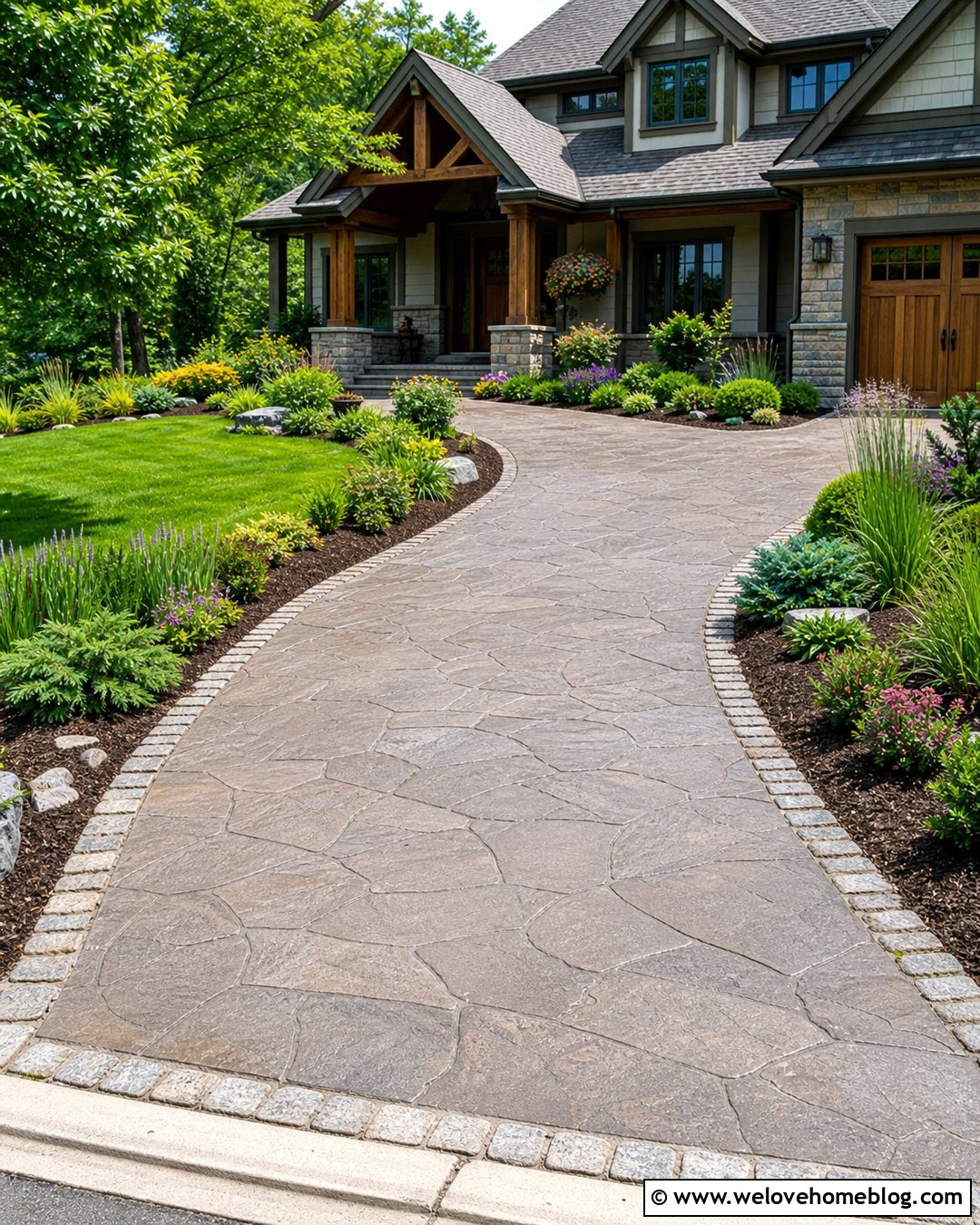
A random stone concrete mold creates the character of irregular flagstone without requiring hundreds of individually cut pieces. Choose a warm gray or soft sandstone color for the molded concrete, then apply subtle darker accents inside the joints to give each section more depth. A gently curved driveway makes the irregular pattern feel especially natural. Frame the pavement with a narrow cobblestone border that prevents nearby mulch from spilling onto the driving surface. Along the curve, use layered beds of ornamental grasses, low junipers, and flowering perennials. The loose stone pattern looks right at home beside a craftsman, ranch, or cottage-style house. Keep the entrance slightly wider than the central drive so vehicles can turn in comfortably without damaging the planted edges.
2. Cobblestone Concrete Mold Driveway
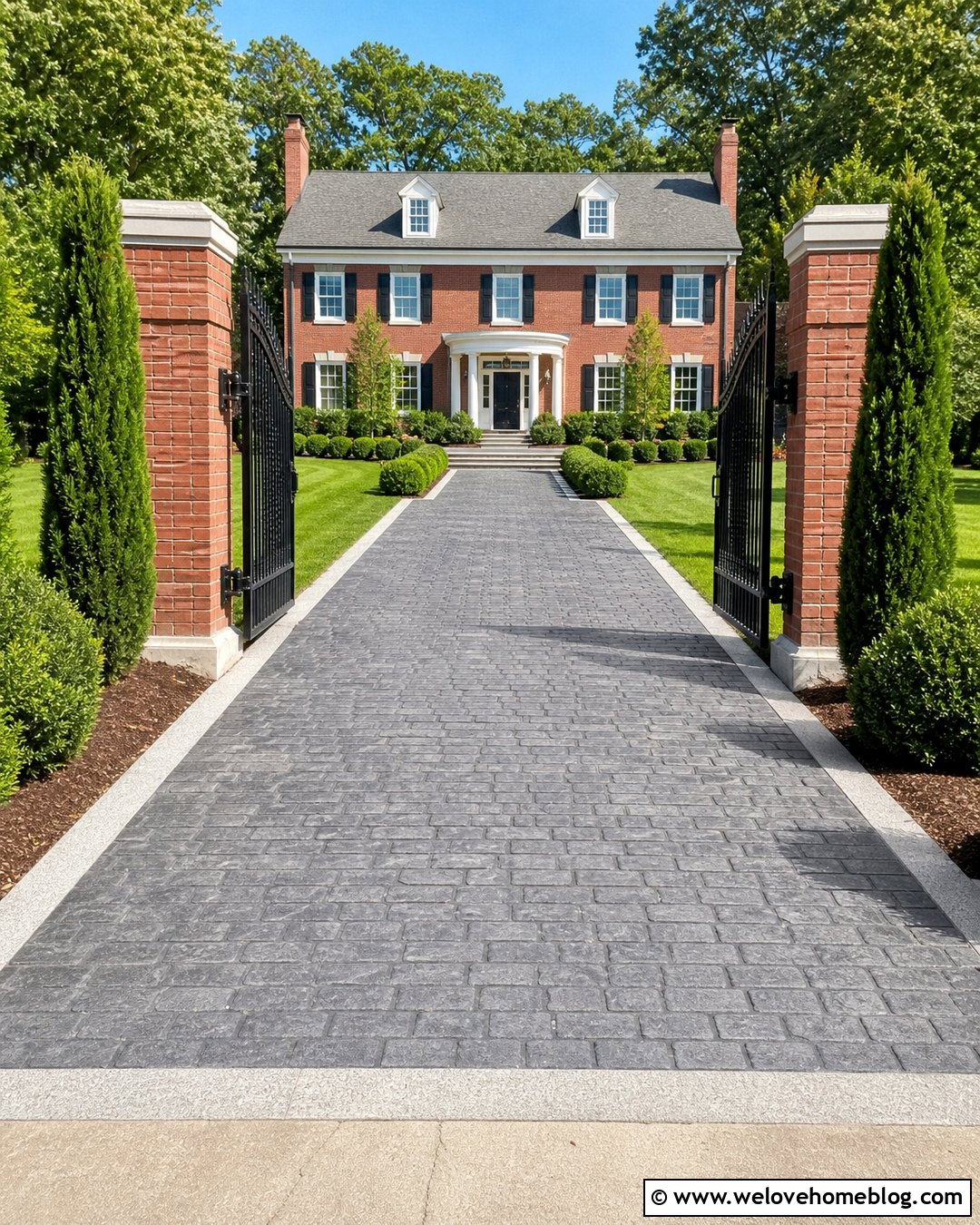
Want the appearance of an old cobblestone lane without assembling countless natural stones? A cobblestone concrete mold can create repeated rounded blocks across a continuous driveway surface. Use charcoal-gray concrete with a lighter antiquing treatment to emphasize the molded texture. A straight layout works well because the orderly direction balances the uneven cobblestone faces. Add smooth concrete bands along both sides to provide a clean visual frame and simplify transitions to the lawn. At the street, brick pillars and a black metal gate can reinforce the traditional look. Clipped boxwood, upright evergreens, and symmetrical planting beds complete the approach to a colonial home. Use restrained color variation so the surface looks convincingly aged rather than overly busy or artificially patterned.
3. Running Bond Concrete Mold Driveway
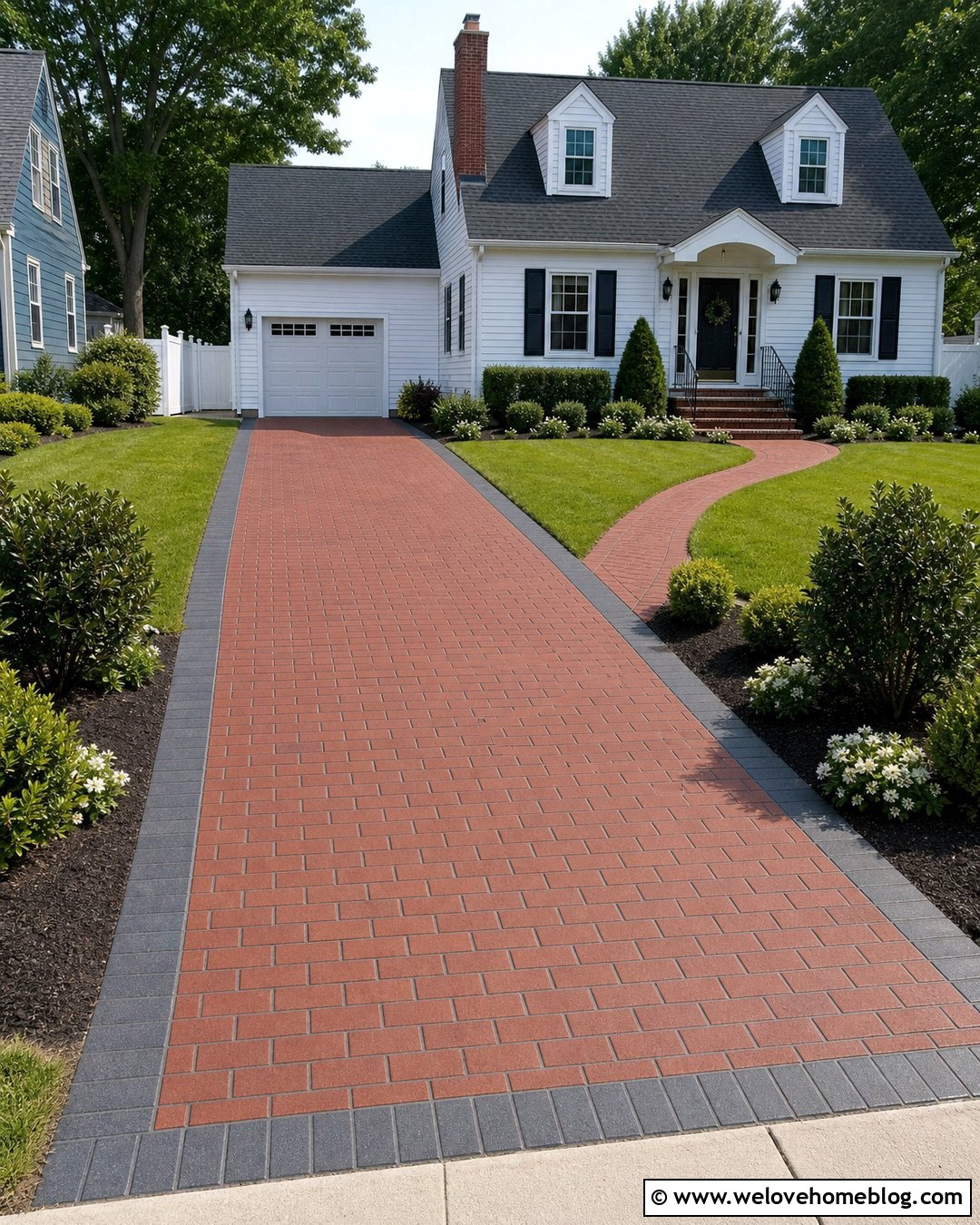
A running bond concrete mold gives a driveway the familiar appearance of offset brick courses. It is a practical choice when you want traditional curb appeal with a more unified concrete installation. Consider warm red-brown coloring for a classic brick effect, or choose taupe and charcoal for a quieter finish. Run the molded pattern lengthwise to make a short driveway appear longer. A dark charcoal border can define the perimeter and create a polished transition at the garage. Pair the surface with curved foundation beds, compact hollies, and seasonal flowers near the walkway. This complete look works particularly well with Cape Cod, colonial, and traditional brick houses. Matching the molded color to existing shutters, masonry, or roof tones will make the new driveway feel connected to the property.
4. Herringbone Concrete Mold Driveway
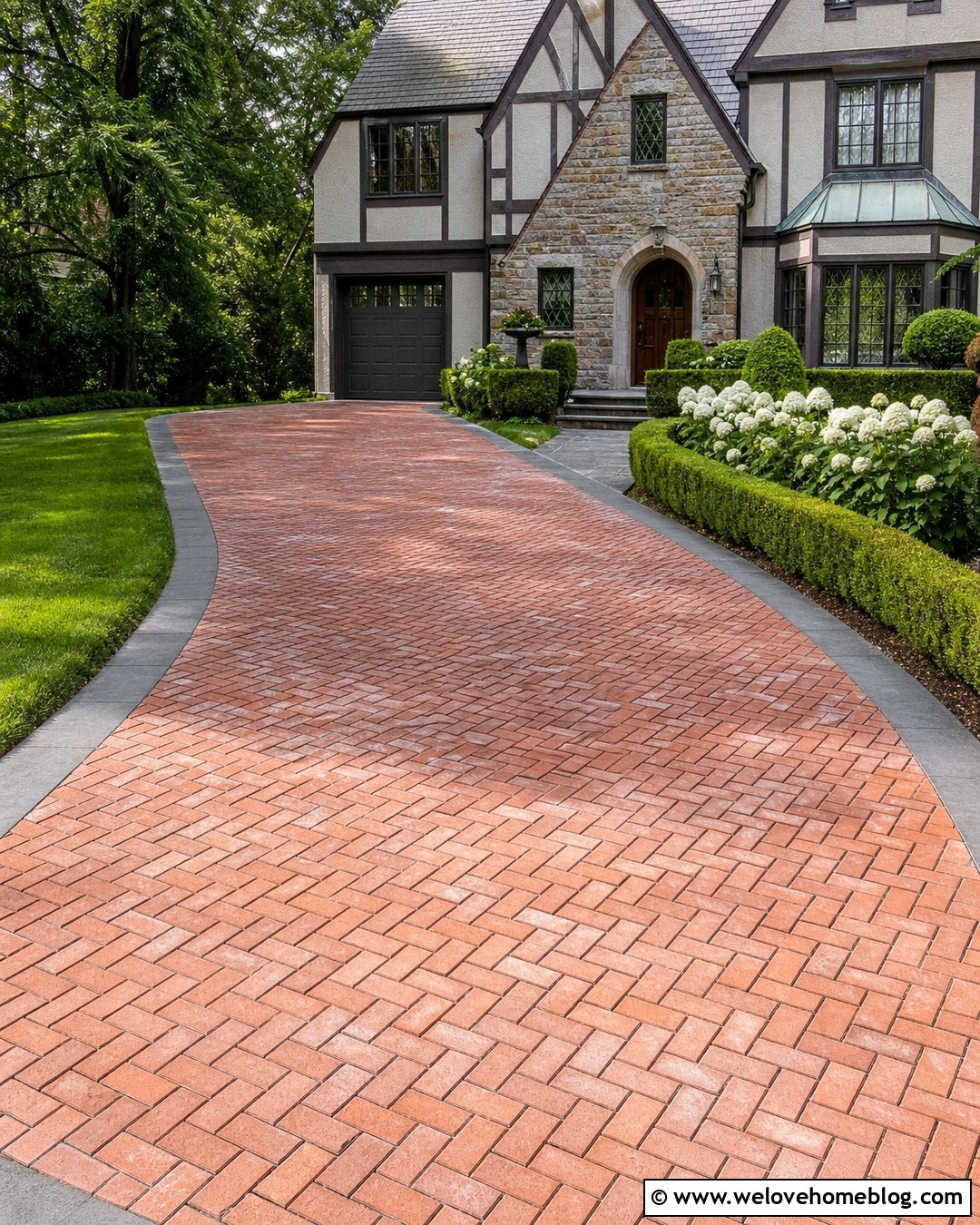
The strong zigzag movement of a herringbone concrete mold gives a wide driveway more energy and definition. This pattern looks especially convincing in muted brick red, weathered brown, or graphite gray. Position the design at a 45-degree angle to the garage so the lines guide the eye toward the house. A smooth poured-concrete border can contain the detailed pattern and provide a calmer edge beside planting beds. For a balanced exterior, repeat the border color in the front walkway or porch steps. Low boxwood hedges, white hydrangeas, and a well-kept lawn soften the geometric surface. Herringbone suits Tudor, colonial, and European-inspired homes, but a monochrome gray version can also complement modern architecture. Use a simple color palette because the pattern already supplies plenty of visual interest.
5. Ashlar Slate Concrete Mold Driveway
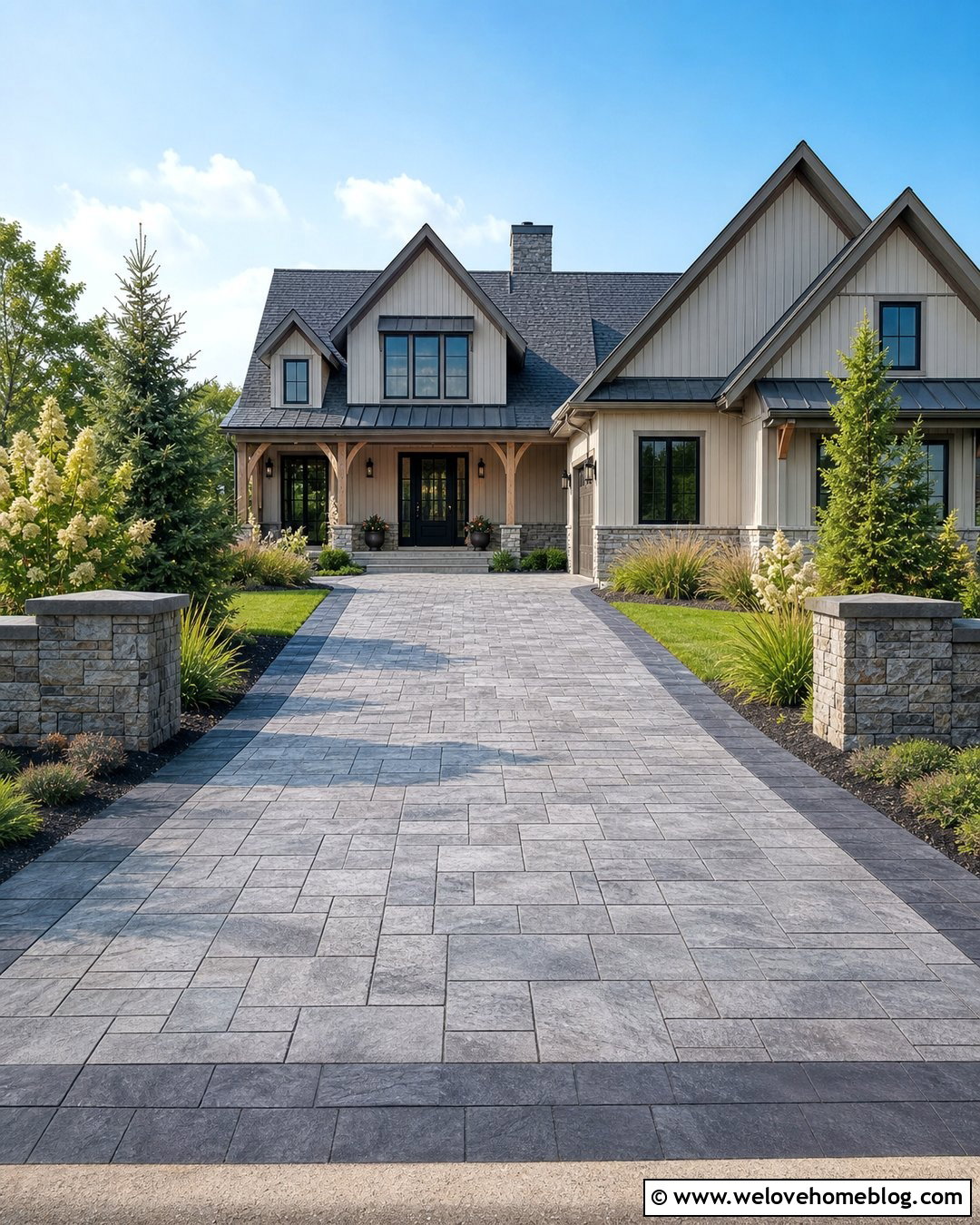
Large rectangular and square shapes make an ashlar slate concrete mold driveway feel formal without looking rigid. A medium-gray base with charcoal accents can reproduce the tonal variation found in natural slate. This design is most effective on a broad, straight driveway where the molded shapes have room to repeat clearly. Install a darker stamped band around the perimeter, then connect it to a matching walkway leading toward the front door. Structured planting beds with dwarf evergreens, ornamental grasses, and pale flowering shrubs support the refined appearance. For additional definition, place low stone walls near the entrance rather than lining the entire drive. The finished look complements modern farmhouse, transitional, and upscale suburban homes. Avoid extreme color contrasts, which can make the repeated mold boundaries appear more obvious from the curb.
6. Flagstone Concrete Mold Driveway
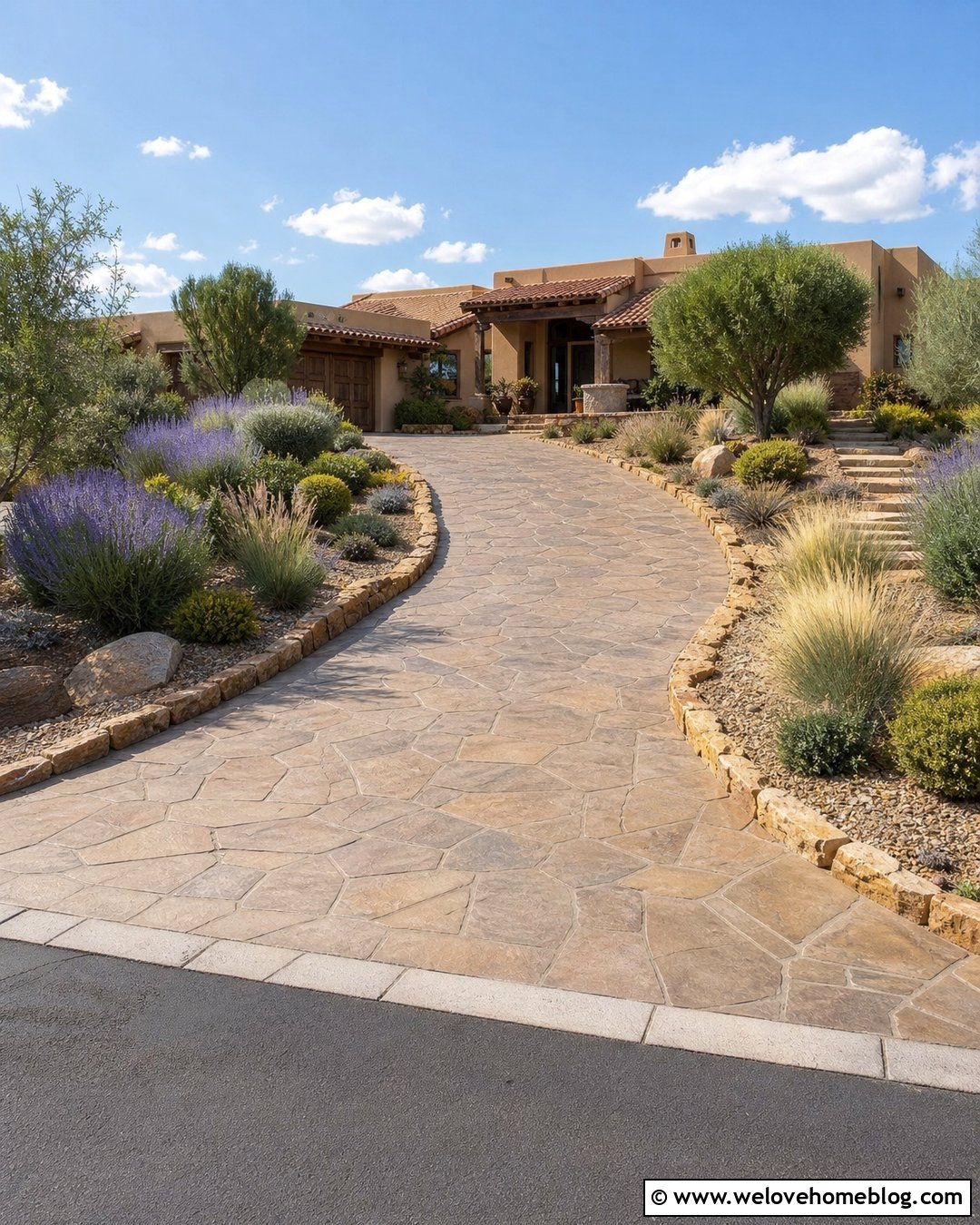
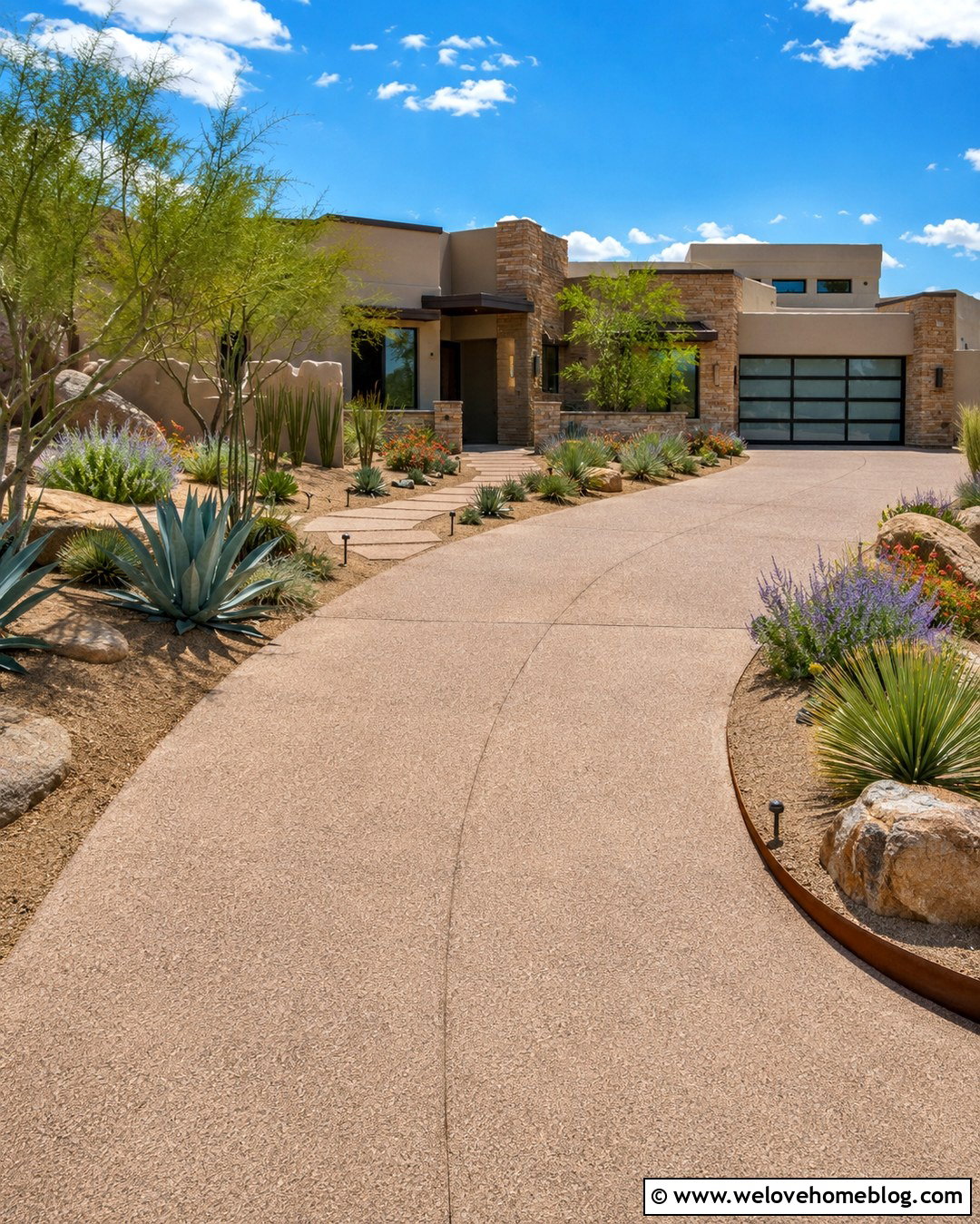
Soft curves and broad planting beds pair naturally with a flagstone concrete mold driveway. Select earth-toned concrete in tan, muted brown, and warm gray so the molded pieces resemble regional stone. The joints can be slightly darker, but they should not become the dominant feature. Shape the driveway into a gradual curve that reveals the house as visitors approach. Use natural stone edging in a color close to the concrete, creating a subtle transition rather than a sharp outline. Drought-tolerant grasses, lavender, sage, and rounded shrubs can frame the route without blocking visibility. This relaxed combination is well suited to ranch, Southwestern, cottage, and country homes. A flagstone pattern contains plenty of movement, so simple landscaping and a limited planting palette will keep the complete driveway design cohesive.
7. Large Square Concrete Mold Driveway
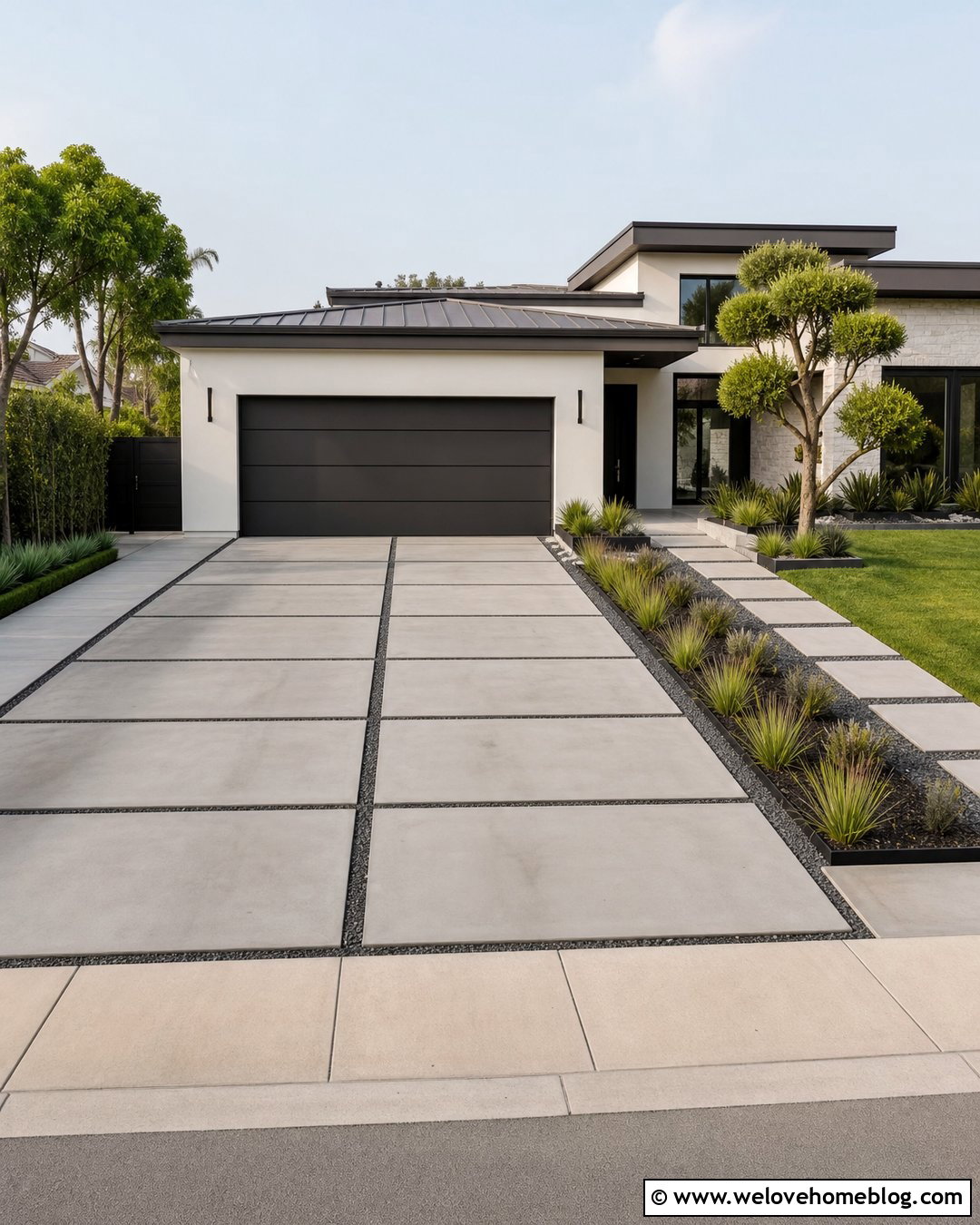
Large square molded slabs create a cleaner, more spacious appearance than small, highly detailed patterns. Use pale gray concrete with a lightly textured surface, arranging the squares in a precise grid across a straight driveway. Narrow dark gravel joints can visually separate the molded sections and improve the contemporary effect. For a greener alternative, selected joints may contain low, traffic-tolerant ground cover, provided the layout and drainage are professionally planned. Continue the grid toward a modern home with broad windows, a flat or low-slope roof, and simple exterior materials. Linear planting beds filled with ornamental grasses, compact shrubs, and one sculptural tree will reinforce the geometry. This concrete mold driveway works best when edges, walkway lines, garage openings, and landscape beds share the same careful alignment.
8. Hexagon Concrete Mold Driveway
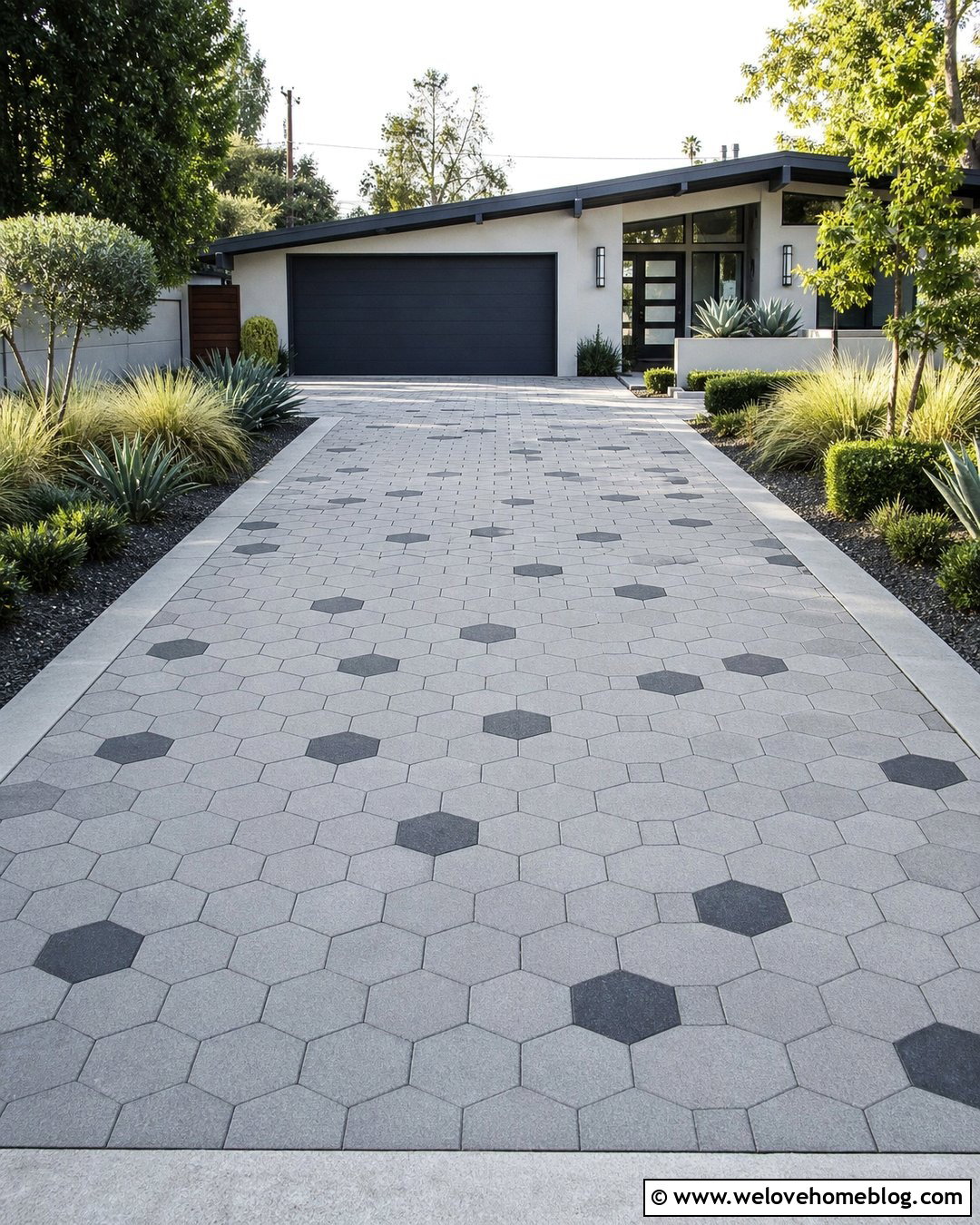
A hexagon concrete mold creates a distinctive honeycomb pattern that feels modern but remains practical and orderly. Mid-gray concrete is a versatile starting point, while a few charcoal-tinted hexagons can be distributed through the driveway for subtle variation. Use the pattern on a wide straight drive or a compact parking court where its geometry can be viewed from the street. Finish the edges with a continuous smooth-concrete band so partial shapes do not make the perimeter appear unfinished. Nearby landscaping should remain simple. Try rectangular beds, clipped shrubs, ornamental grasses, and a single row of small trees. A modern or midcentury house provides an ideal backdrop for this look. Repeat the hexagonal form sparingly in planters or porch details rather than introducing multiple competing geometric motifs.
9. Octagon Concrete Mold Driveway
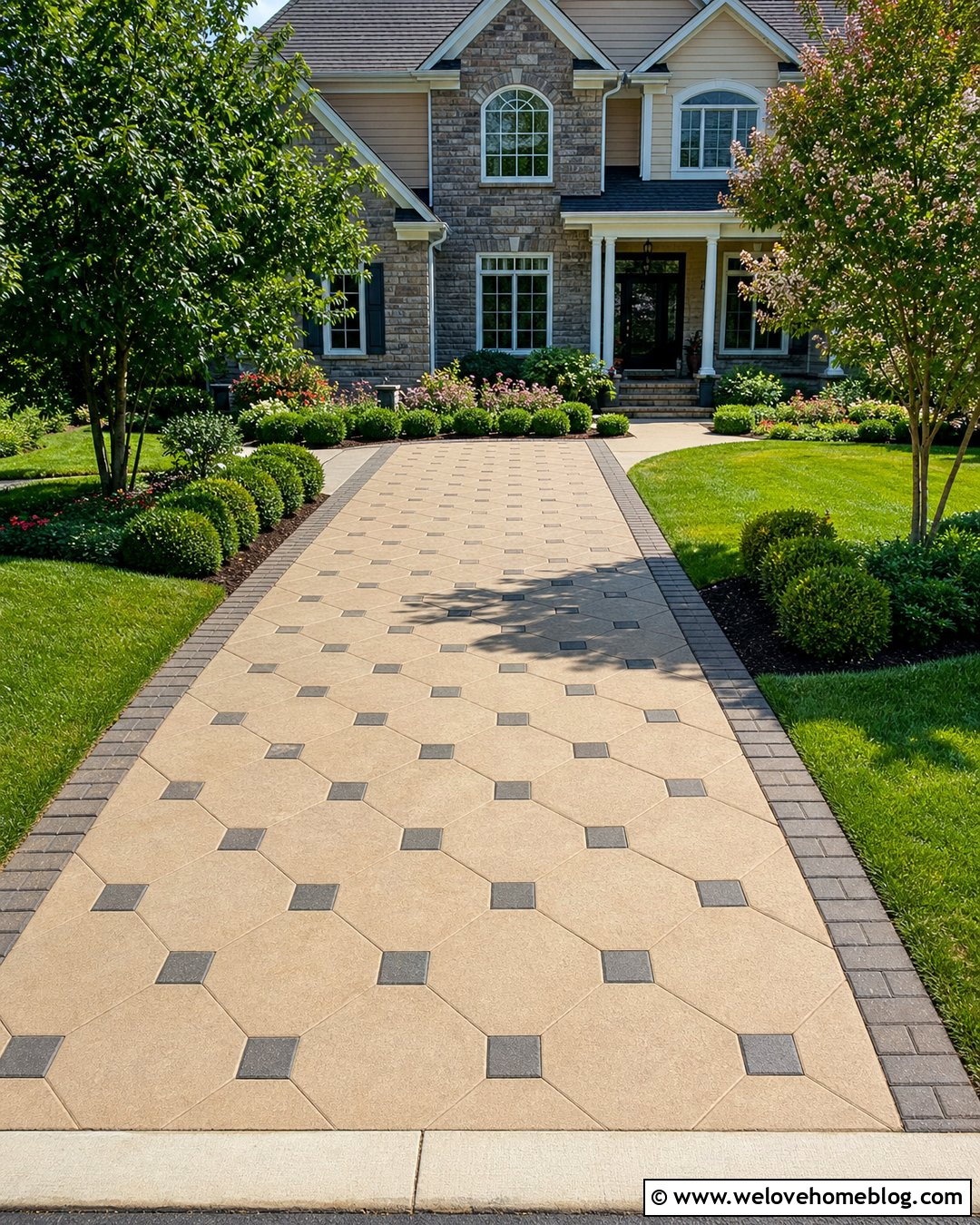
Octagonal molded concrete pavers can give a driveway a detailed, custom-built appearance. The pattern becomes even more interesting when small square inserts fill the spaces between the larger octagons. Try warm beige octagons with charcoal inserts for a traditional palette, or light gray with darker gray accents for a transitional home. A straight driveway allows the repeating arrangement to remain visually balanced from the street to the garage. Use a narrow soldier-course-style molded border to create a clear stopping point along the lawn. Rounded boxwoods, small flowering trees, and layered foundation plantings will soften the angular pavement. Because this pattern has many lines and intersections, keep nearby walkways and planting beds uncomplicated. The result should feel carefully coordinated rather than covered with unrelated decorative details.
10. European Fan Concrete Mold Driveway
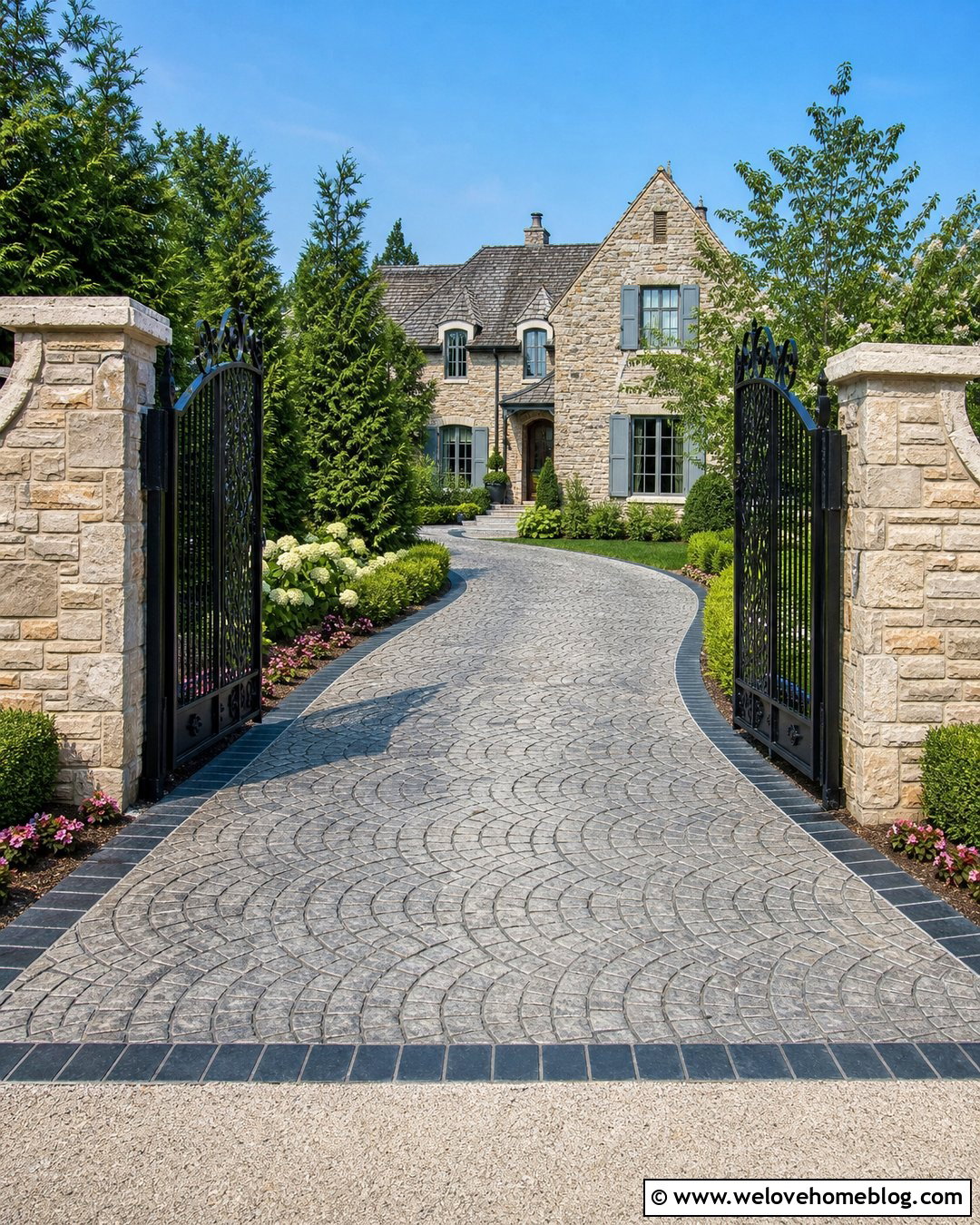
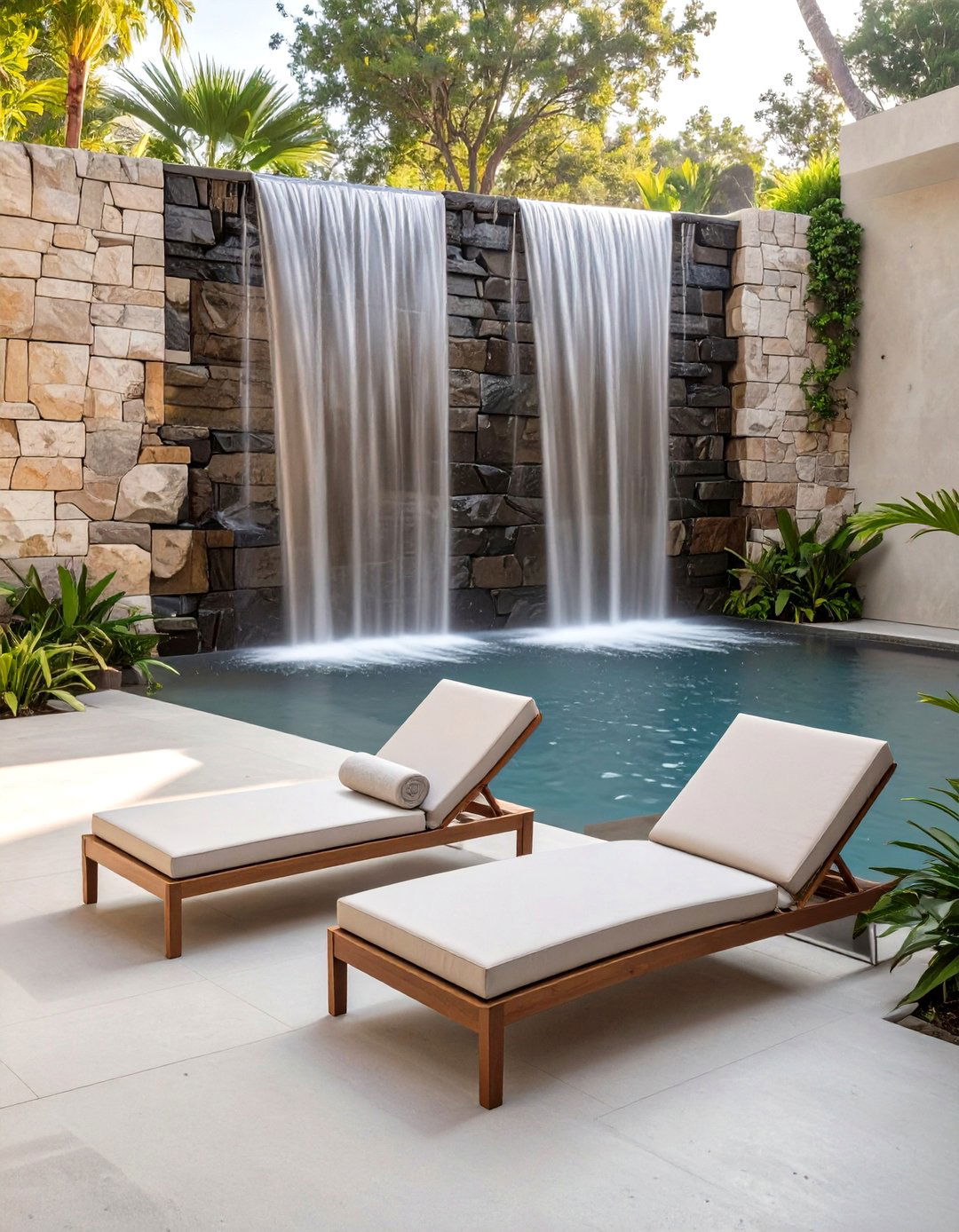
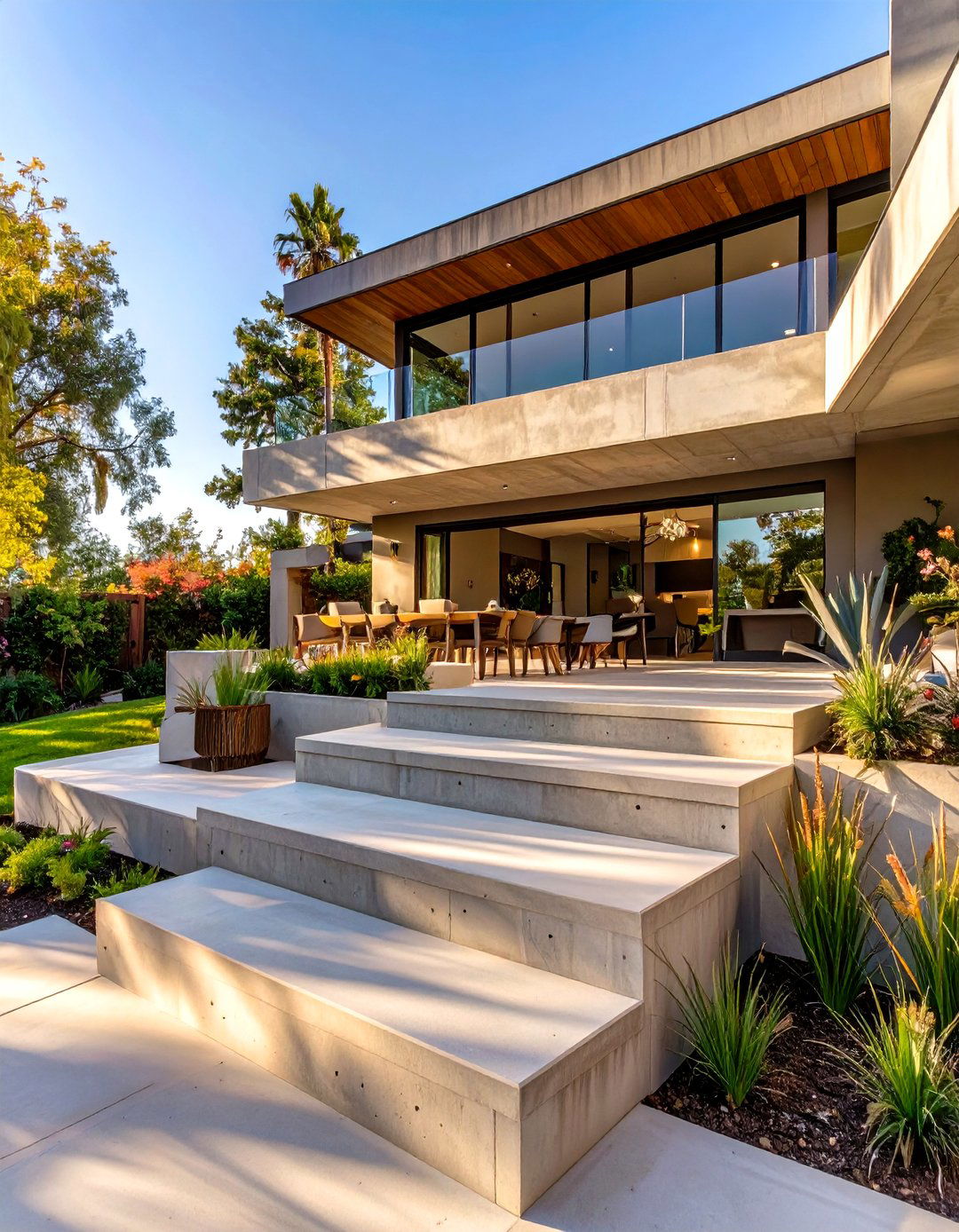
A European fan concrete mold forms sweeping rows of small cobblestone-like units. It can make a driveway entrance feel broader and more welcoming because the arcs appear to open toward the street. Choose weathered charcoal, soft brown, or blended gray coloring to support the traditional masonry effect. On a curved driveway, orient each fan carefully so the pattern follows the direction of travel instead of fighting the layout. Edge the surface with rectangular concrete cobbles in a darker shade. Stone entrance pillars, wrought-iron details, and clipped evergreen hedges can establish a formal frame. Continue with looser flowering plants closer to the house so the landscaping does not feel overly strict. This complete molded driveway look pairs beautifully with French country, Tudor, Mediterranean, and European-inspired residential architecture.
11. Basketweave Concrete Mold Driveway
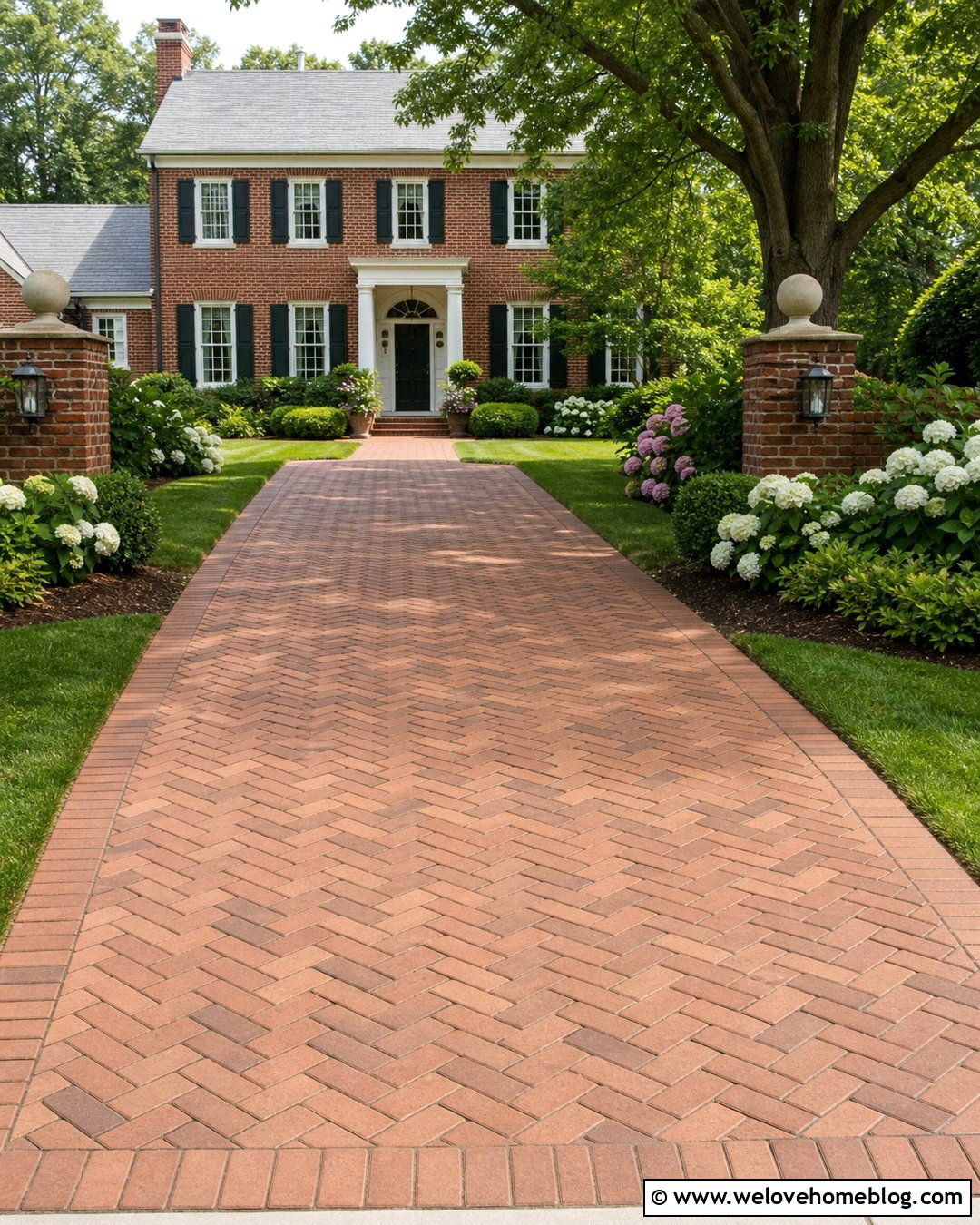
A basketweave concrete mold alternates pairs of rectangular brick shapes, creating a pattern that feels detailed yet orderly. Warm terracotta coloring is an appealing match for traditional architecture, while taupe or slate gray gives the same layout a more updated appearance. Use the basketweave surface on the central driveway and surround it with a straight molded-brick border. The contrasting direction of the border will visually contain the interlocking pattern. Near the house, connect the drive to a matching front walkway and a small paved landing. Hydrangeas, boxwoods, and a shade tree can soften the masonry without hiding it. Basketweave works particularly well with colonial, Georgian, and cottage homes. Keep the driveway shape mostly straight or gently curved, since complicated outlines may distract from the repeating woven effect.
12. Wood Plank Concrete Mold Driveway
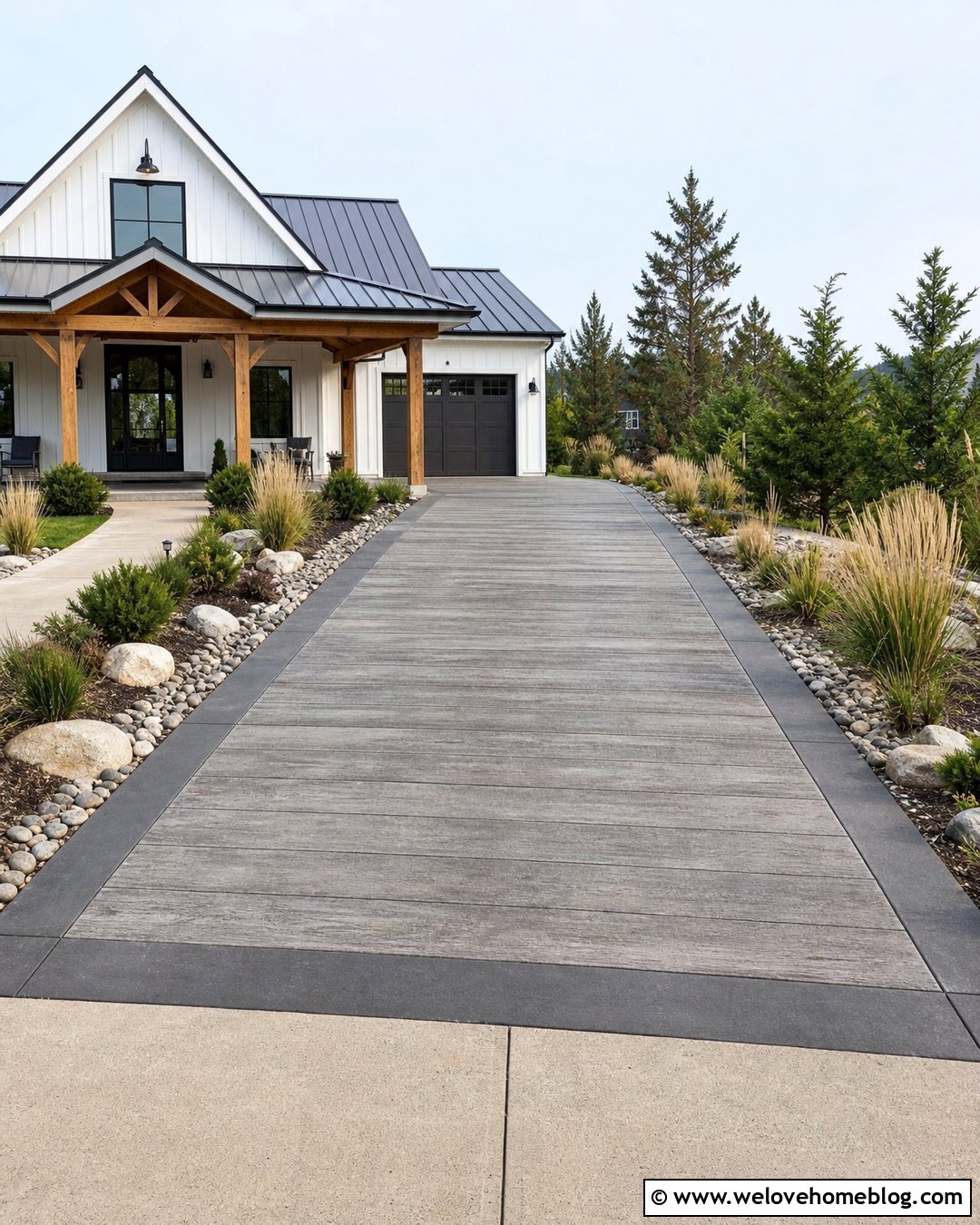
Concrete molded to resemble wood planks brings warmth to a driveway while maintaining the character of a masonry surface. Choose weathered brown, driftwood gray, or soft taupe coloring, with restrained grain accents that remain visible from the curb. Arrange the molded planks across the driveway rather than lengthwise to prevent the approach from appearing excessively narrow. A smooth charcoal concrete edge can provide a durable-looking frame and a contemporary contrast. Surround the drive with ornamental grasses, river rock, and evergreen shrubs for a relaxed landscape that does not compete with the wood texture. This design complements modern farmhouse, rustic contemporary, and woodland homes. Coordinate the concrete color with garage doors or timber porch details, but avoid an exact match that could make the exterior look flat and overly uniform.
13. Circular Concrete Mold Driveway
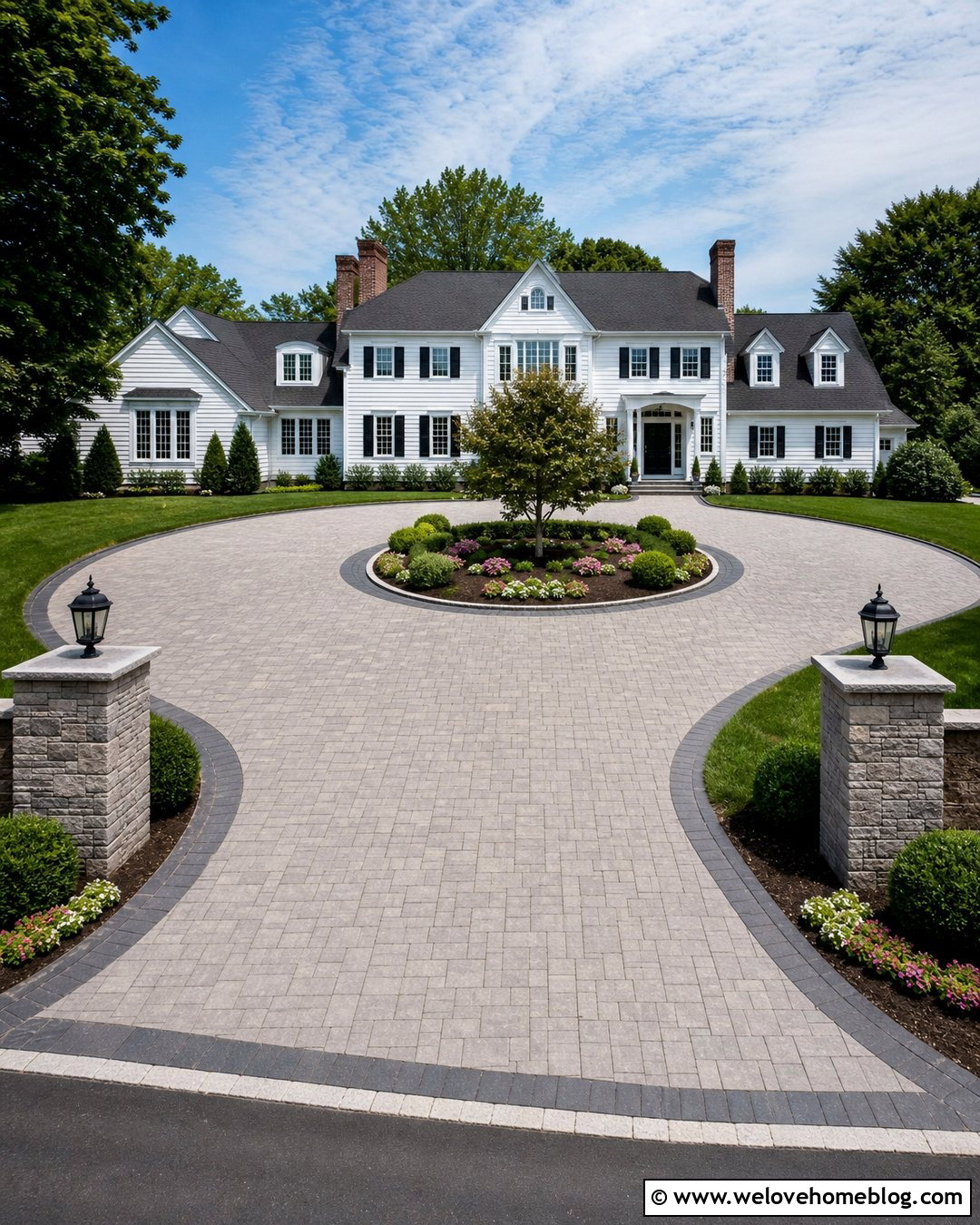
A circular concrete mold driveway creates an impressive arrival area while allowing vehicles to approach and leave without backing into the street. Use an ashlar stone or cobblestone mold across the circular route, then add a contrasting molded band around the central island. Warm gray concrete with charcoal borders provides enough definition without overpowering the front yard. Landscape the island with a small ornamental tree, low evergreen shrubs, and seasonal flowers kept below important sightlines. At both street entrances, repeat the same stone pillars or address markers to create visual balance. The house should remain the main focal point, so align the open side of the circle with the front door. This complete layout suits colonial, Mediterranean, traditional, and larger ranch homes with sufficient front-yard space.
14. Curved Concrete Mold Driveway
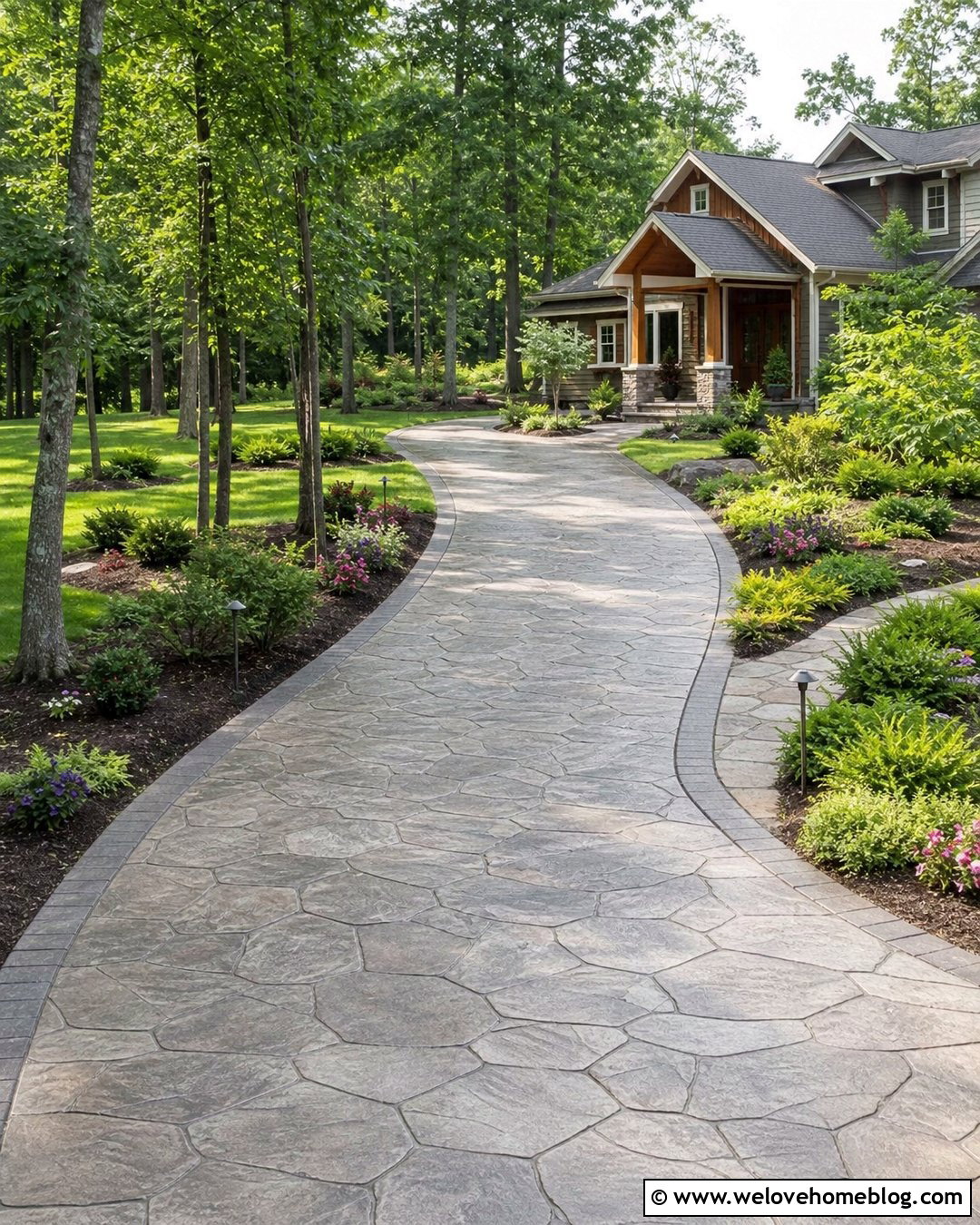
A curved concrete mold driveway can make the approach feel softer and help the pavement respond to trees, slopes, or an offset garage. Random stone, cobblestone, and ashlar molds work particularly well because their varied shapes disguise slight changes in direction. Choose a medium-gray surface with a darker edge that clearly defines the curve. Place planting beds along the outside bend, where they can be seen from the street without narrowing the usable driving area. Layer low shrubs near the pavement, flowering perennials behind them, and small trees farther back. Low landscape lighting can follow the edge while remaining unobtrusive in daylight. The gradual curve should look intentional rather than unnecessarily winding. This design is a strong match for craftsman, country, ranch, and wooded suburban homes.
15. Two-Tone Concrete Mold Driveway
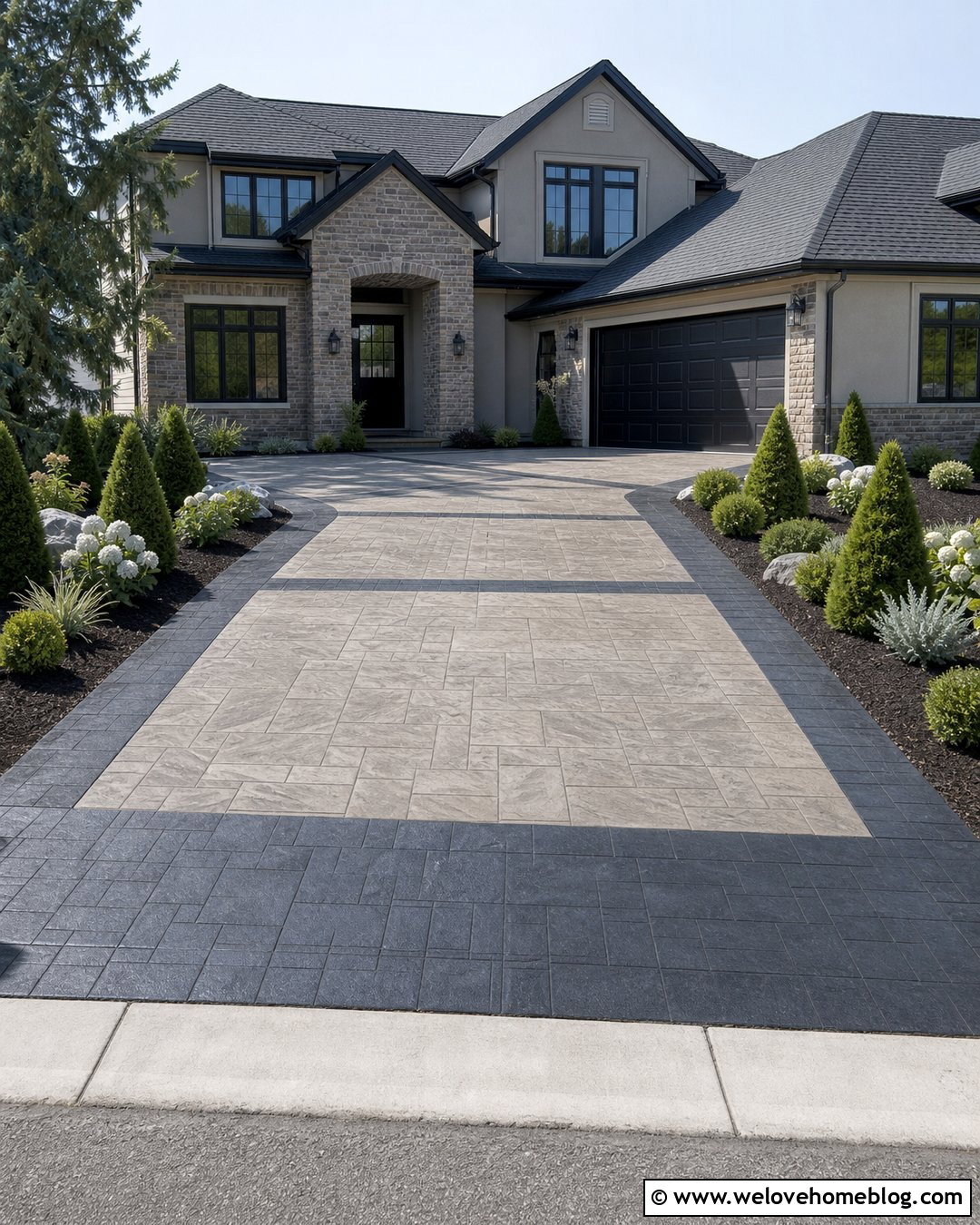
Two-tone coloring can make a molded pattern more dimensional and connect the driveway to several exterior materials. Start with light taupe molded concrete in a slate or random stone pattern, then use charcoal for the perimeter and crossbands. The darker details can visually divide a long driveway into balanced sections while guiding the eye toward the garage. Add a matching charcoal apron at the street for a clear entrance. Landscaping should repeat the restrained palette through dark mulch, silver-green foliage, and pale flowers. Beside a transitional house, coordinate the lighter concrete with stone veneer and the darker accents with roof or window trim. Use color in broad, purposeful areas rather than coloring every molded unit differently. A simple two-tone scheme usually appears more realistic and remains easier to coordinate with future exterior updates.
16. Concrete Mold Driveway With Brick Border
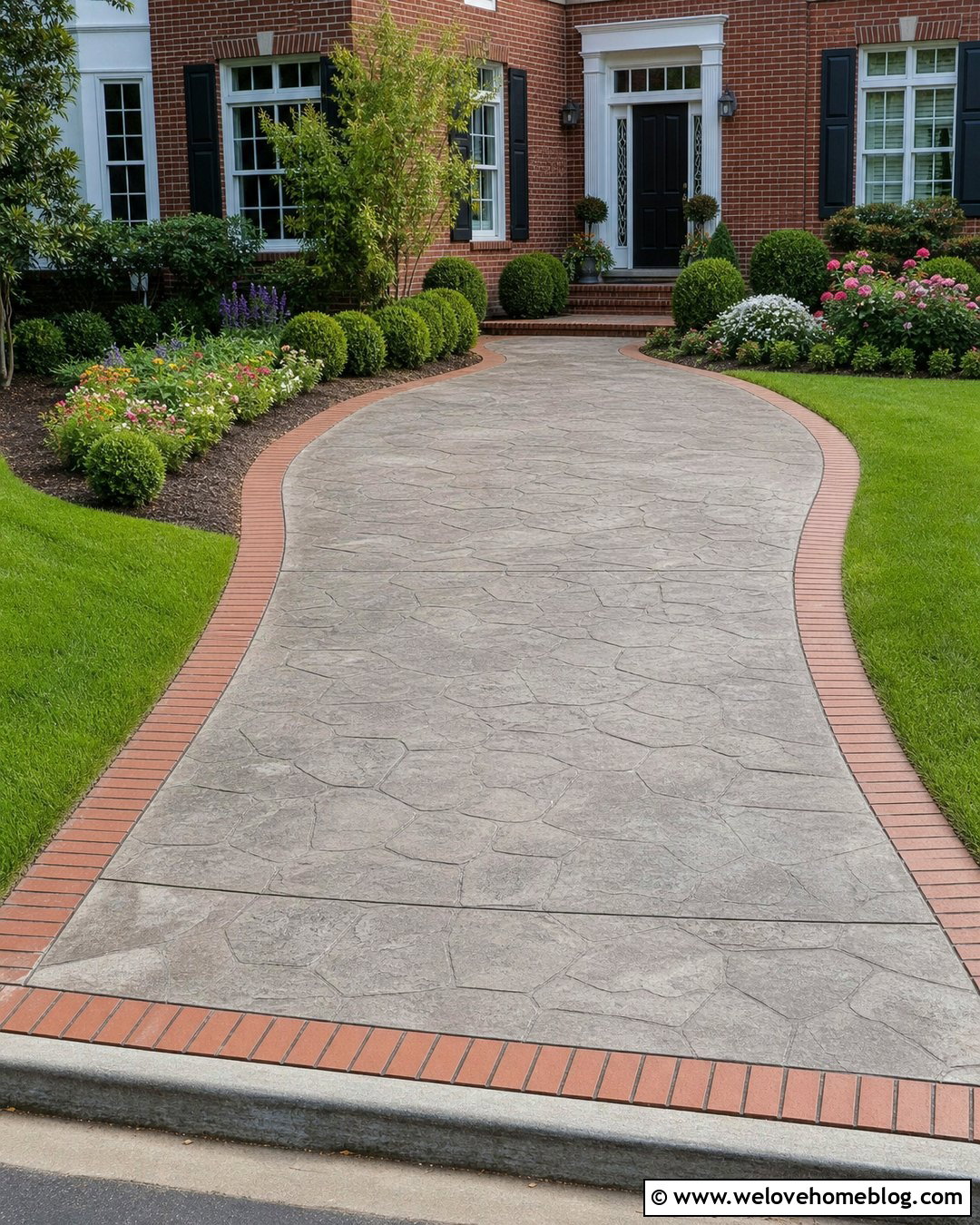
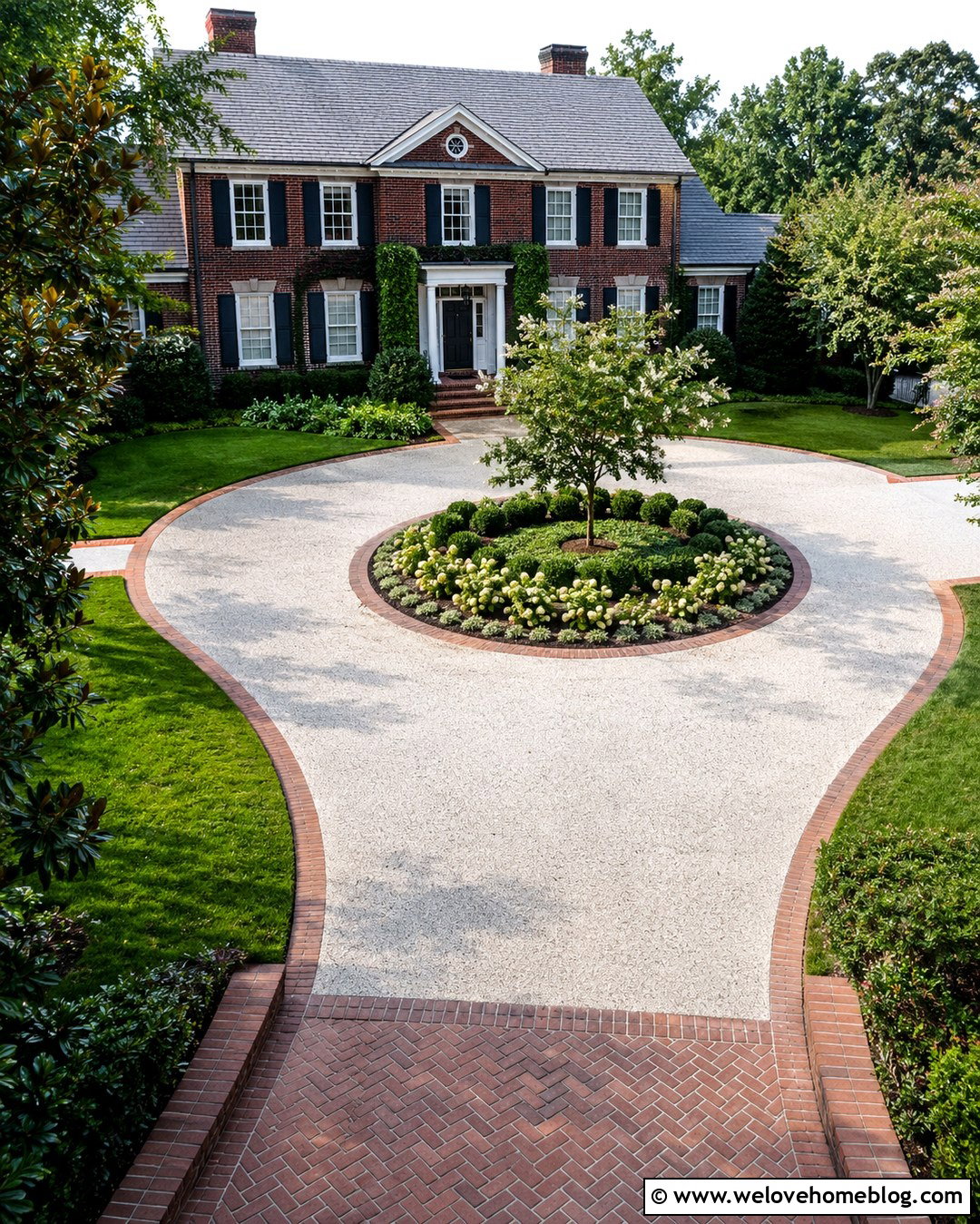
Combining a stone-pattern concrete mold with a genuine brick border creates a layered surface that works beautifully with traditional homes. Choose warm gray molded concrete for the central driveway, then frame it with red or brown clay brick installed in a soldier-course arrangement. The brick should echo masonry already present on the facade, chimney, steps, or garden walls. A straight driveway with a slightly flared entrance gives the border enough room to remain visible from the curb. Add neatly edged lawn on one side and layered beds of boxwood, roses, and flowering perennials on the other. Carry the brick into the front walkway for continuity. This combination provides decorative detail without covering the entire driveway in a strong color, making it easier to maintain a balanced exterior palette.
17. Concrete Mold Driveway With Gravel Joints
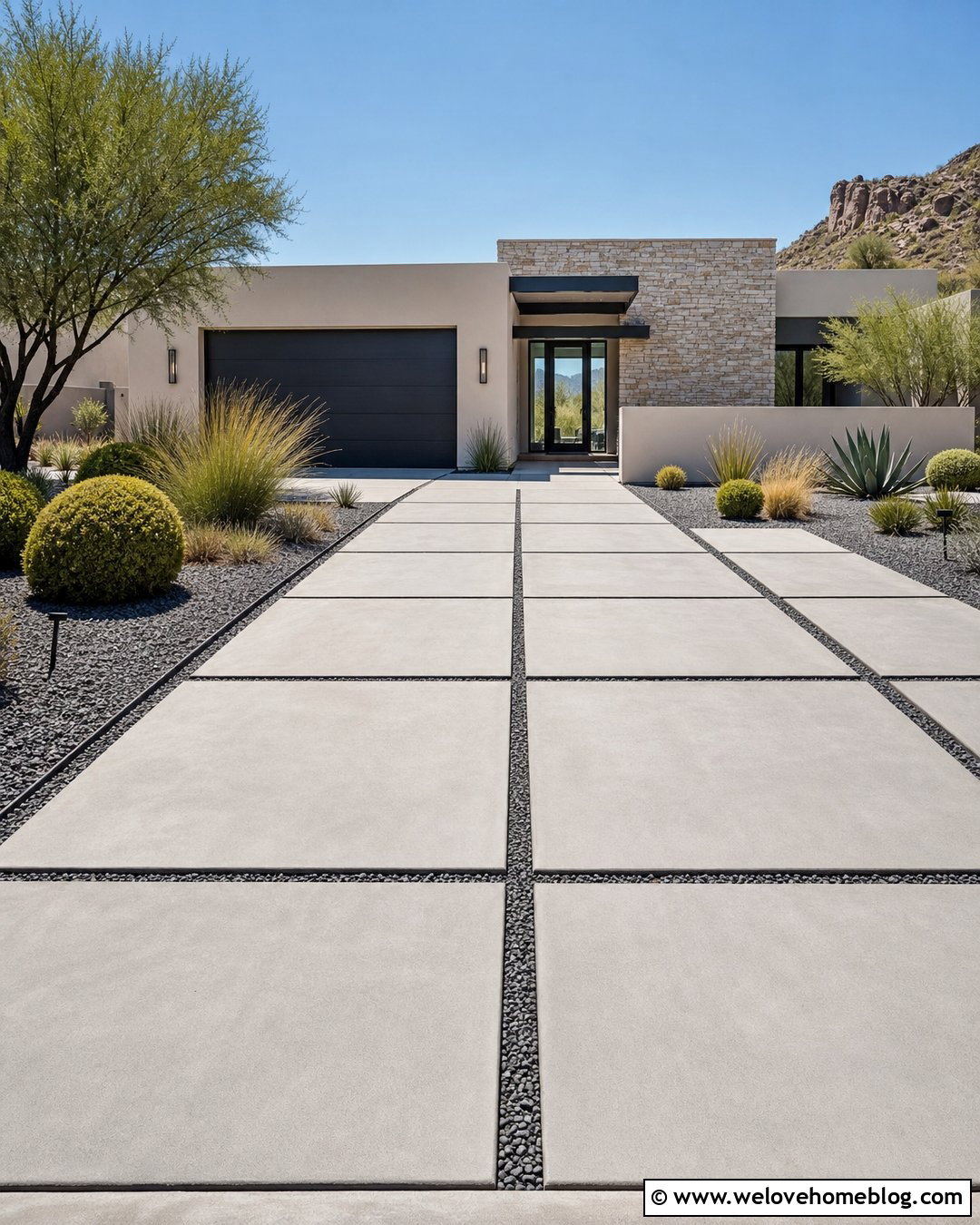
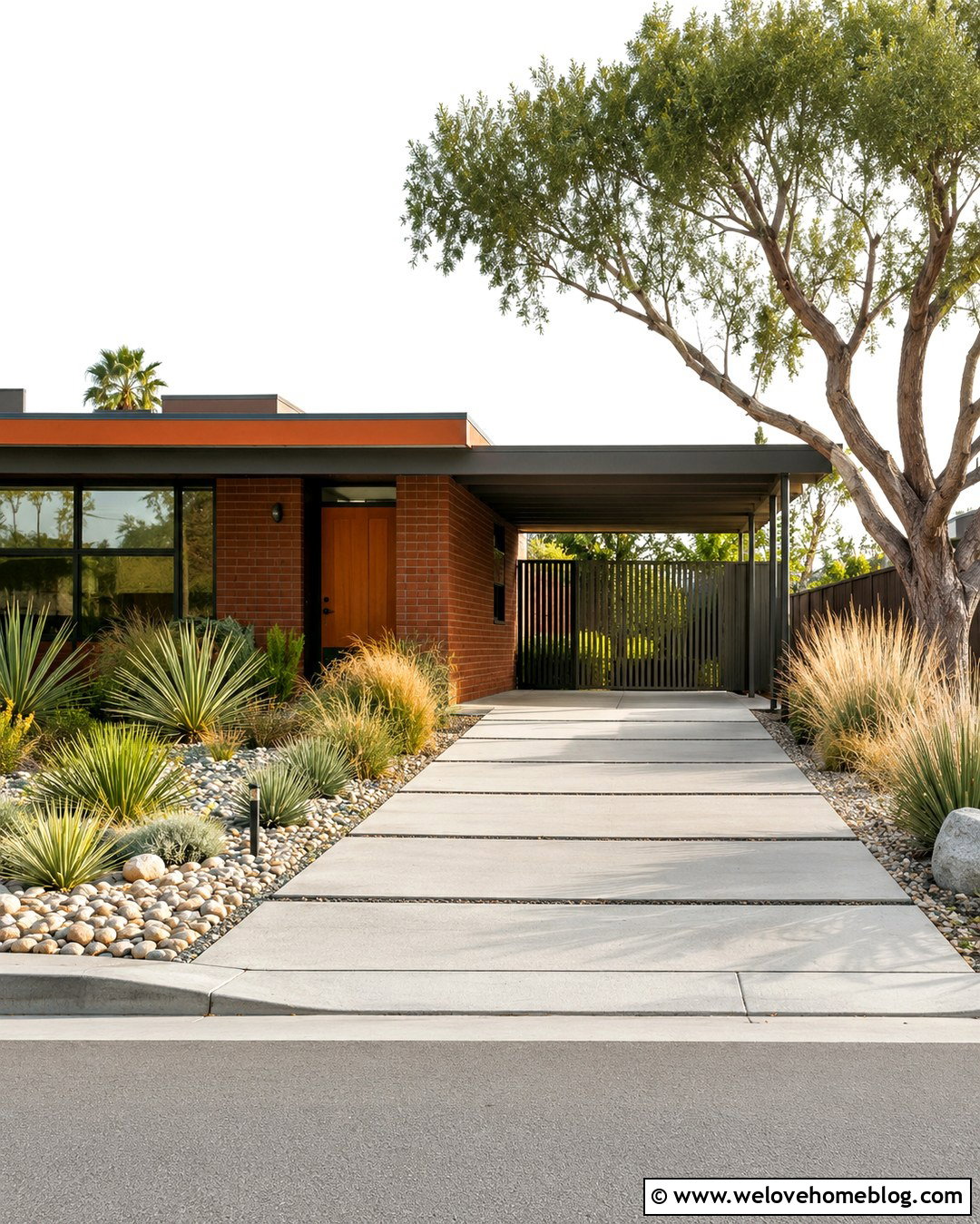
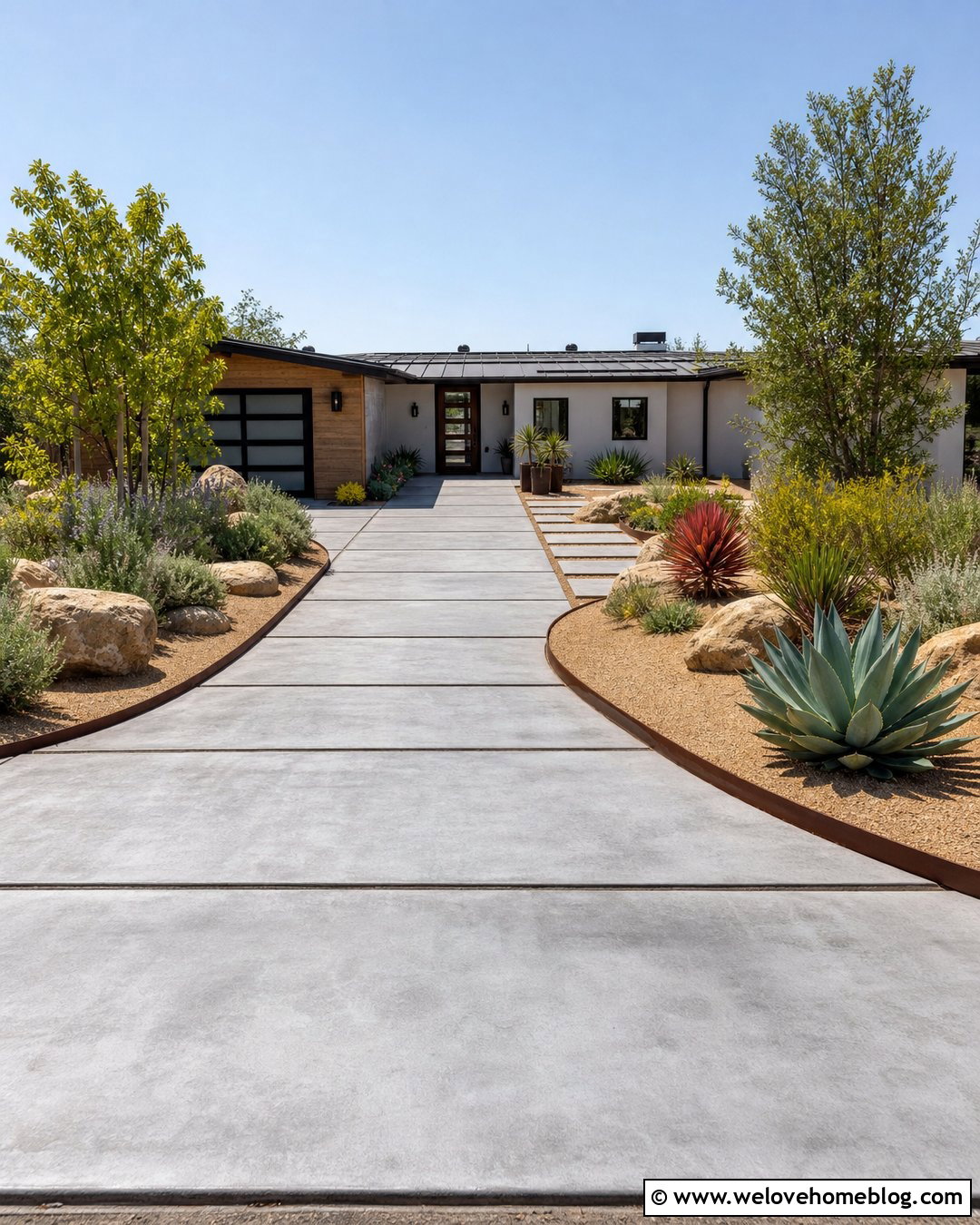
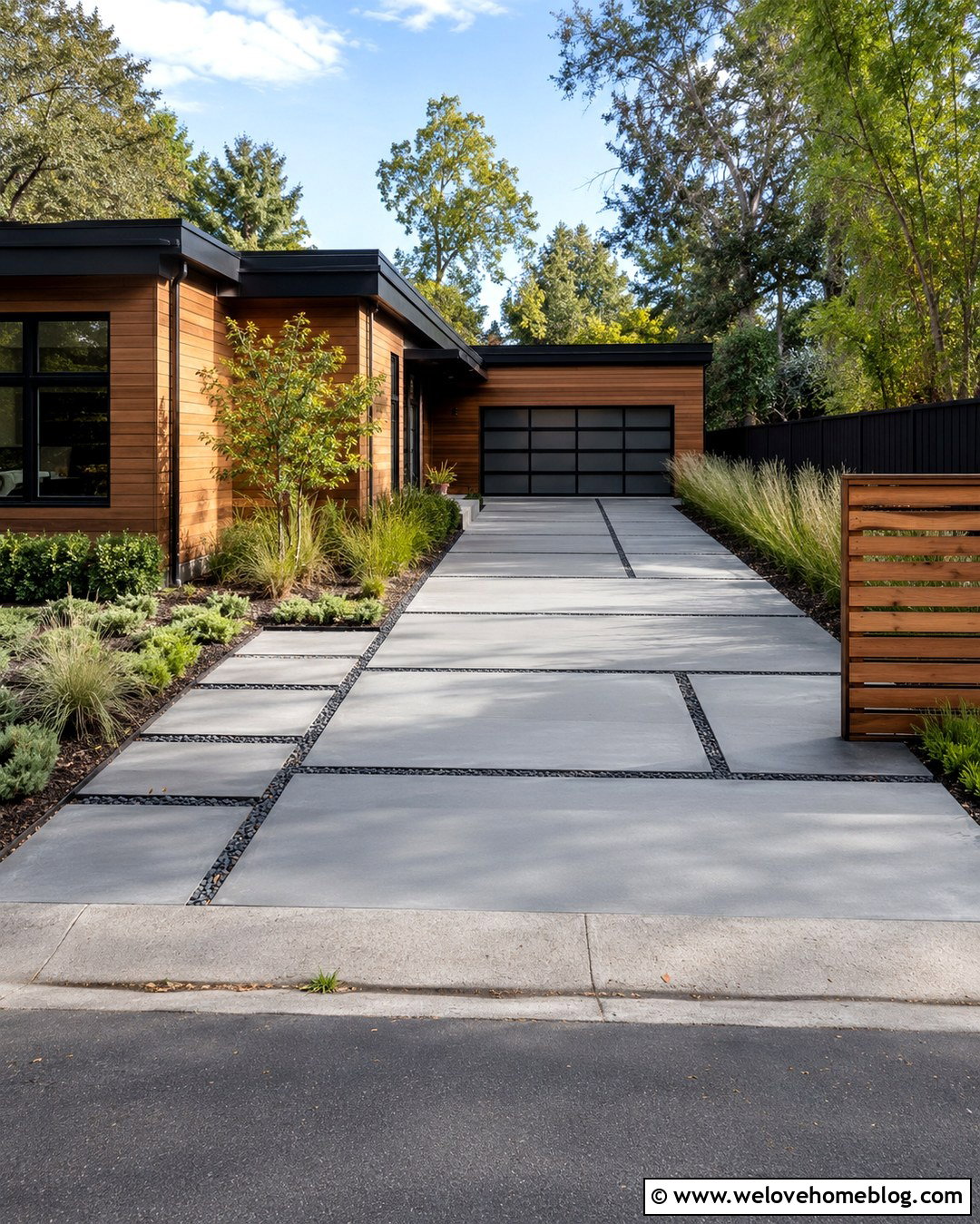
Wide molded concrete sections separated by decorative gravel joints create an airy design for a modern or drought-conscious front yard. Use large square or rectangular molds in pale gray concrete, then fill the deliberate spaces with compacted charcoal gravel. The gravel lines should form a clear grid rather than appearing like accidental gaps. Border the driveway with steel edging or a flush poured-concrete curb to contain loose material. Surround the surface with architectural grasses, agave where climate permits, rounded shrubs, and beds of matching gravel mulch. A straight or offset driveway works better than a tight curve because it preserves the crisp geometry. Before choosing this look, plan drainage and joint construction carefully. The complete design should accommodate vehicle movement without allowing loose gravel to scatter across the sidewalk or garage floor.
18. Concrete Mold Driveway With Grass Strips
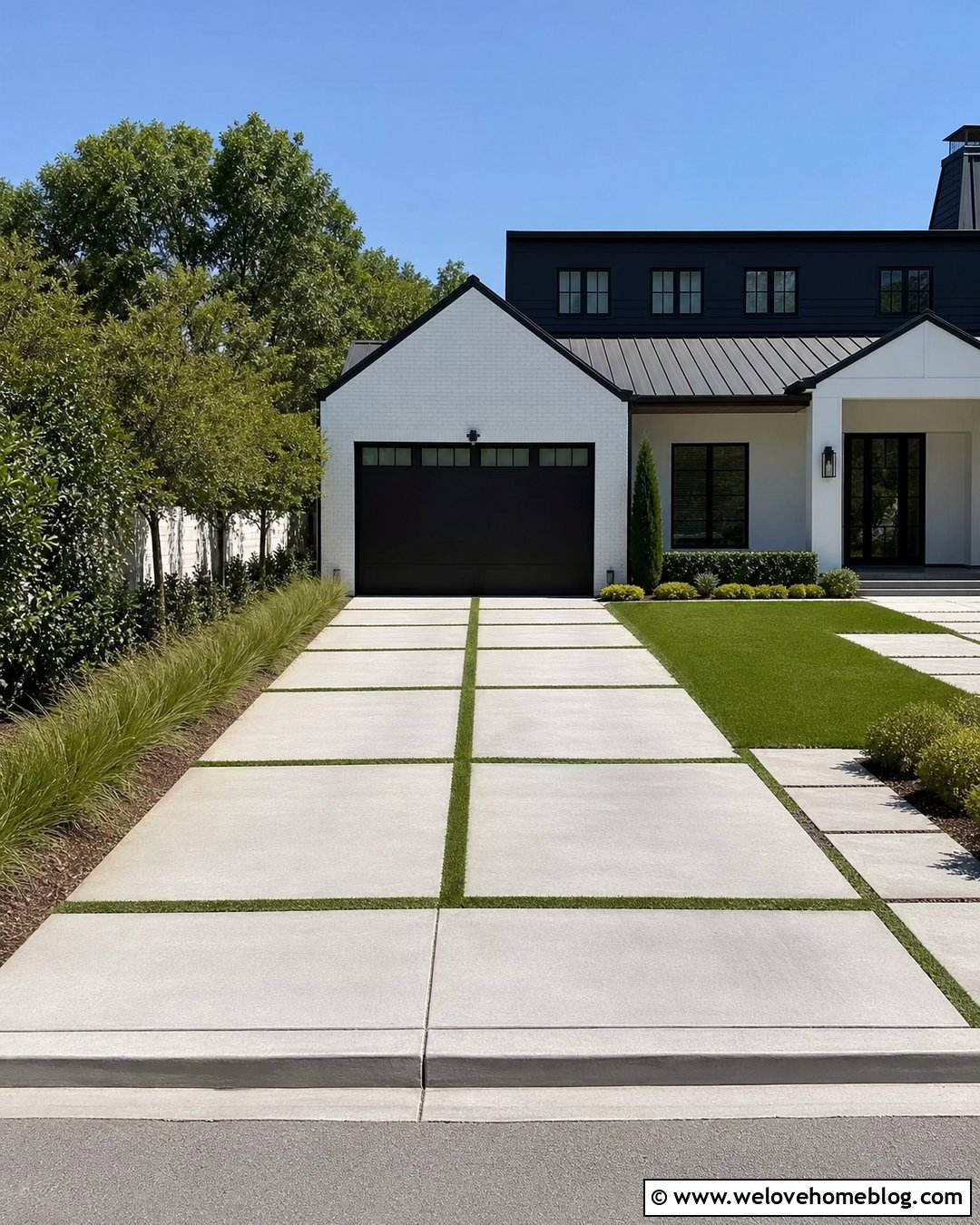
Concrete molds can create individual driving pads or geometric cells separated by green strips. The contrast softens a large paved area and helps the driveway blend into the front lawn. Choose smooth or lightly textured gray concrete in broad rectangles, leaving narrow, consistently spaced planting channels between sections. Use a grass or ground cover appropriate for the property’s climate, sunlight, and expected traffic. A modern house with simple landscaping makes the clean grid easy to appreciate. Frame the driveway with low ornamental grasses, a few evergreen shrubs, and a straight walkway that repeats the spacing of the molded slabs. This design requires thoughtful irrigation, drainage, and maintenance planning. Keep the planted joints away from the most heavily loaded tire paths if the selected greenery cannot tolerate regular vehicle pressure.
19. Concrete Mold Driveway With Stone Apron
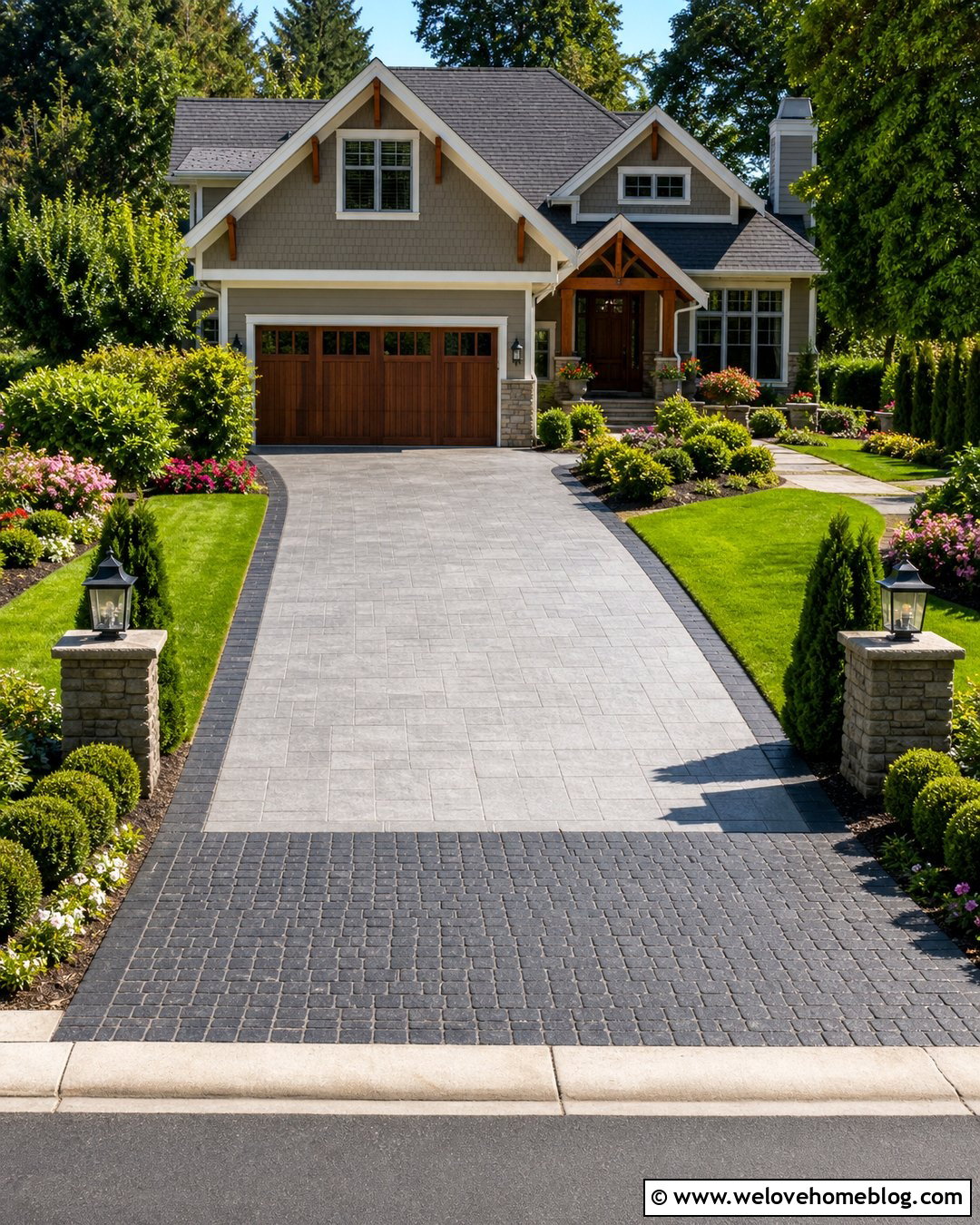
A contrasting entrance apron gives a concrete mold driveway a strong visual starting point. Use an ashlar slate mold in soft gray for the main surface and a darker cobblestone mold across the first several feet near the street. Continue the dark material as narrow edge bands so the apron feels connected to the rest of the driveway. This approach can add impact without requiring an elaborate pattern over the entire area. Low stone walls, address pillars, and symmetrical planting beds can frame the entrance while maintaining clear visibility for drivers. Closer to the house, transition to softer shrubs, lawn, and a coordinated walkway. The apron should be sized in proportion to the driveway width. This complete look suits craftsman, transitional, colonial, and modern farmhouse homes with prominent street-facing entrances.
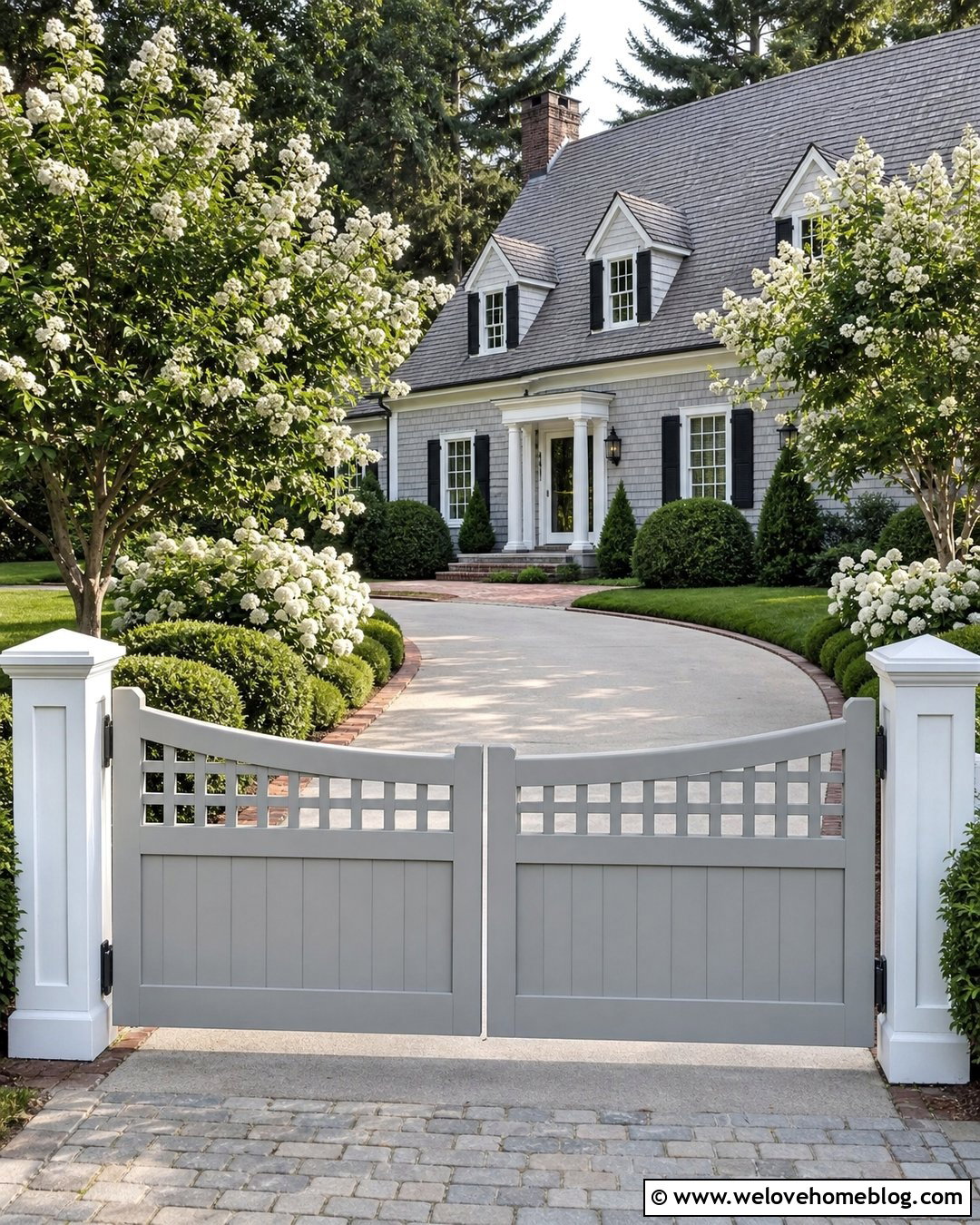
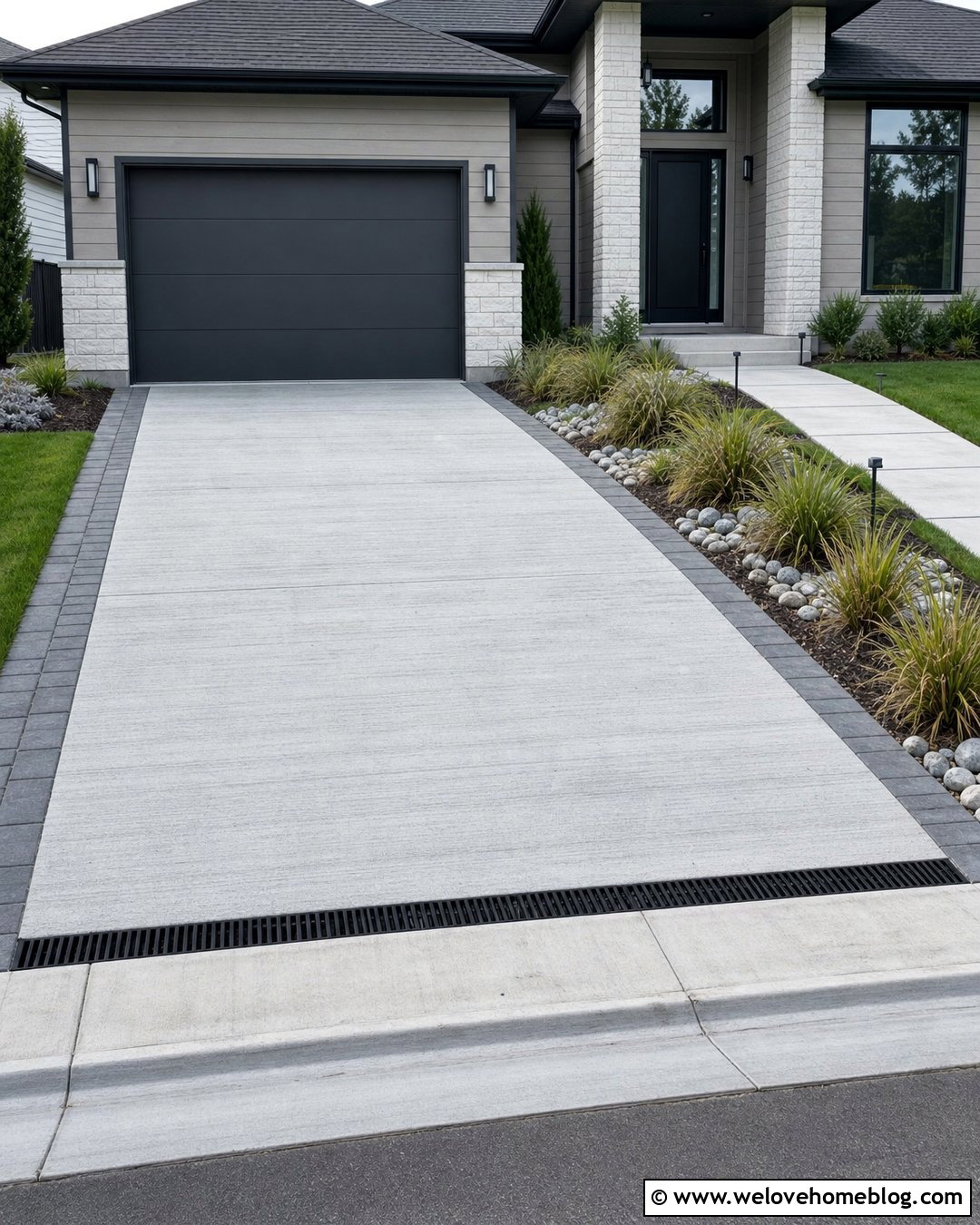
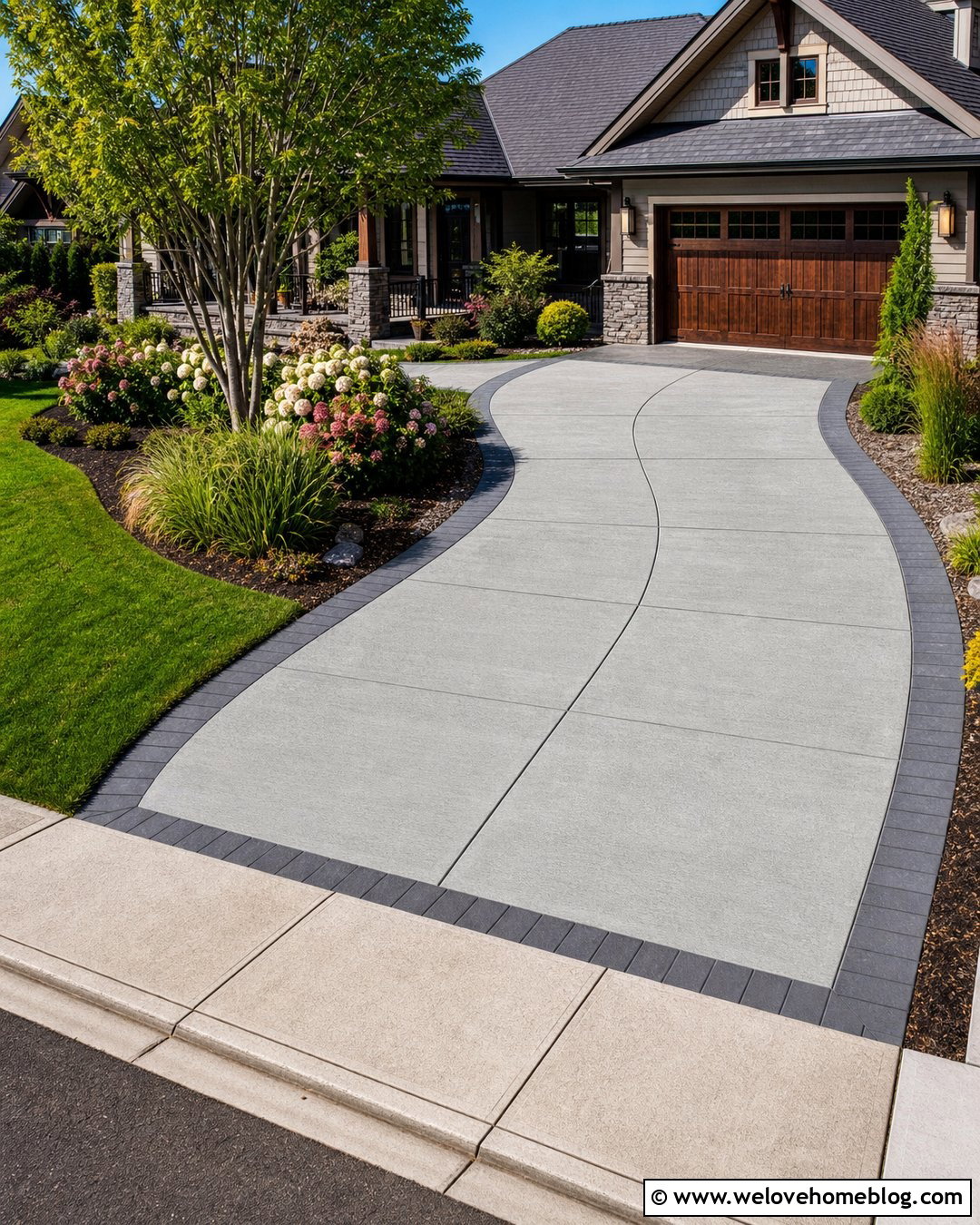
20. Light Concrete Mold Driveway With Dark Borders
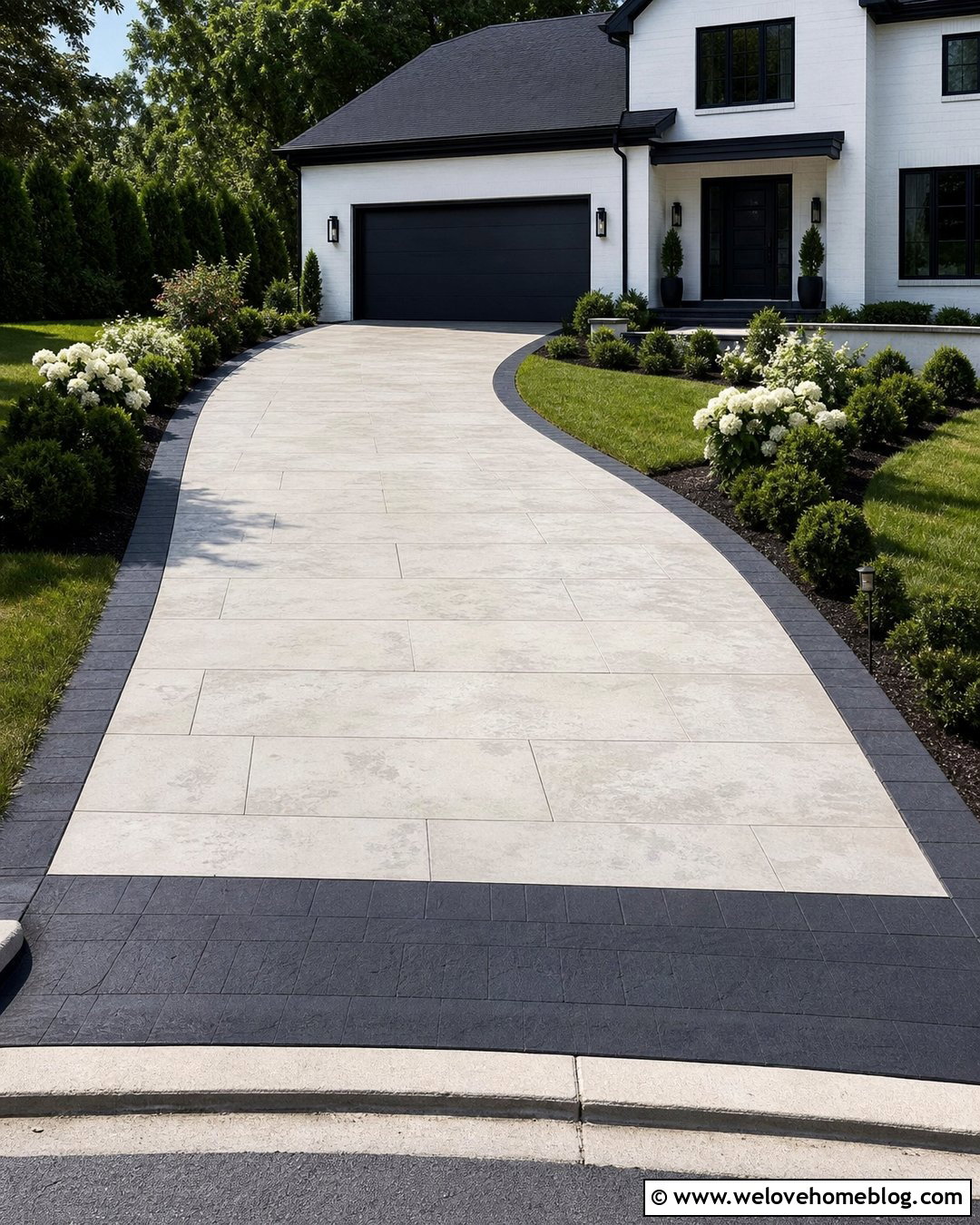
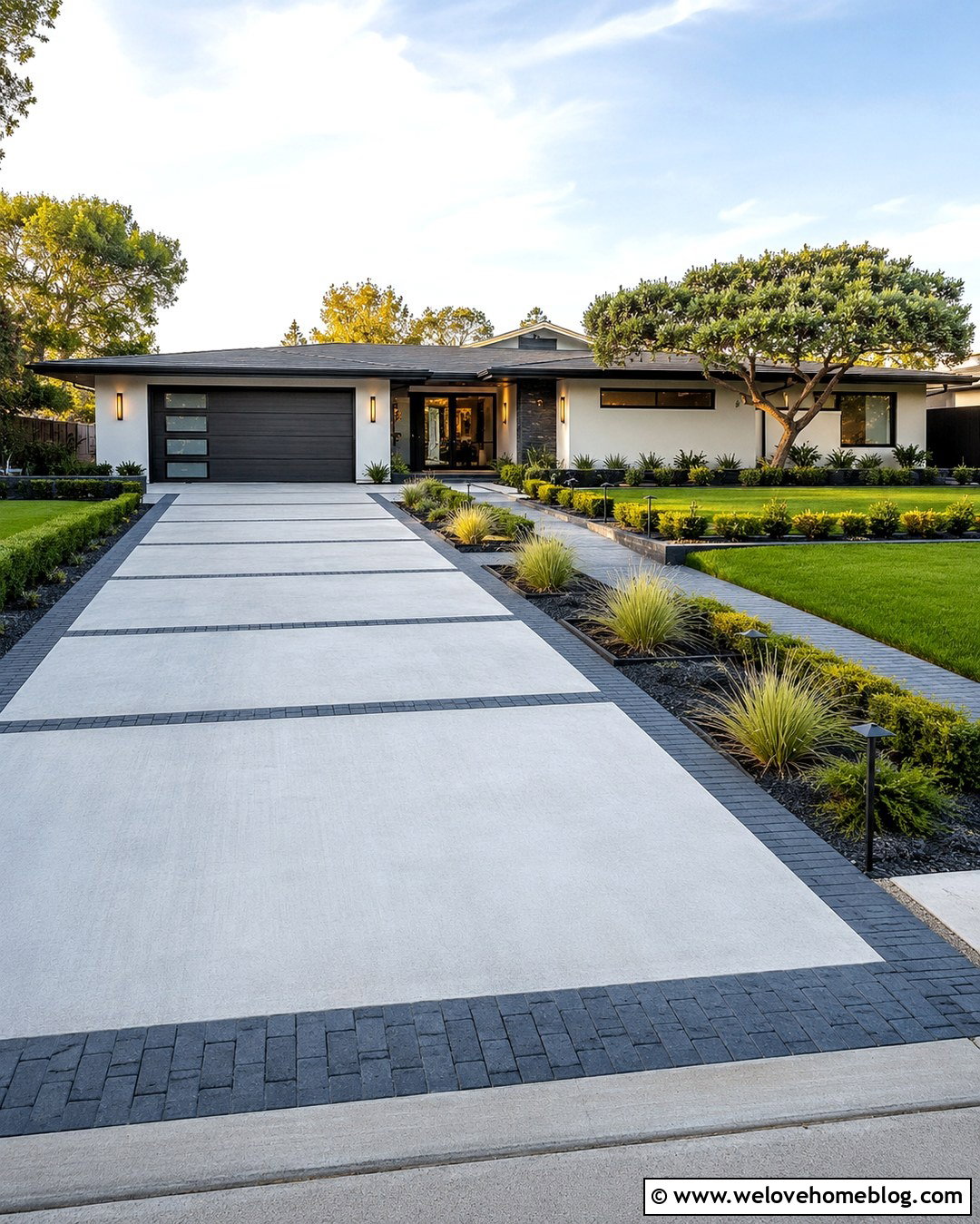
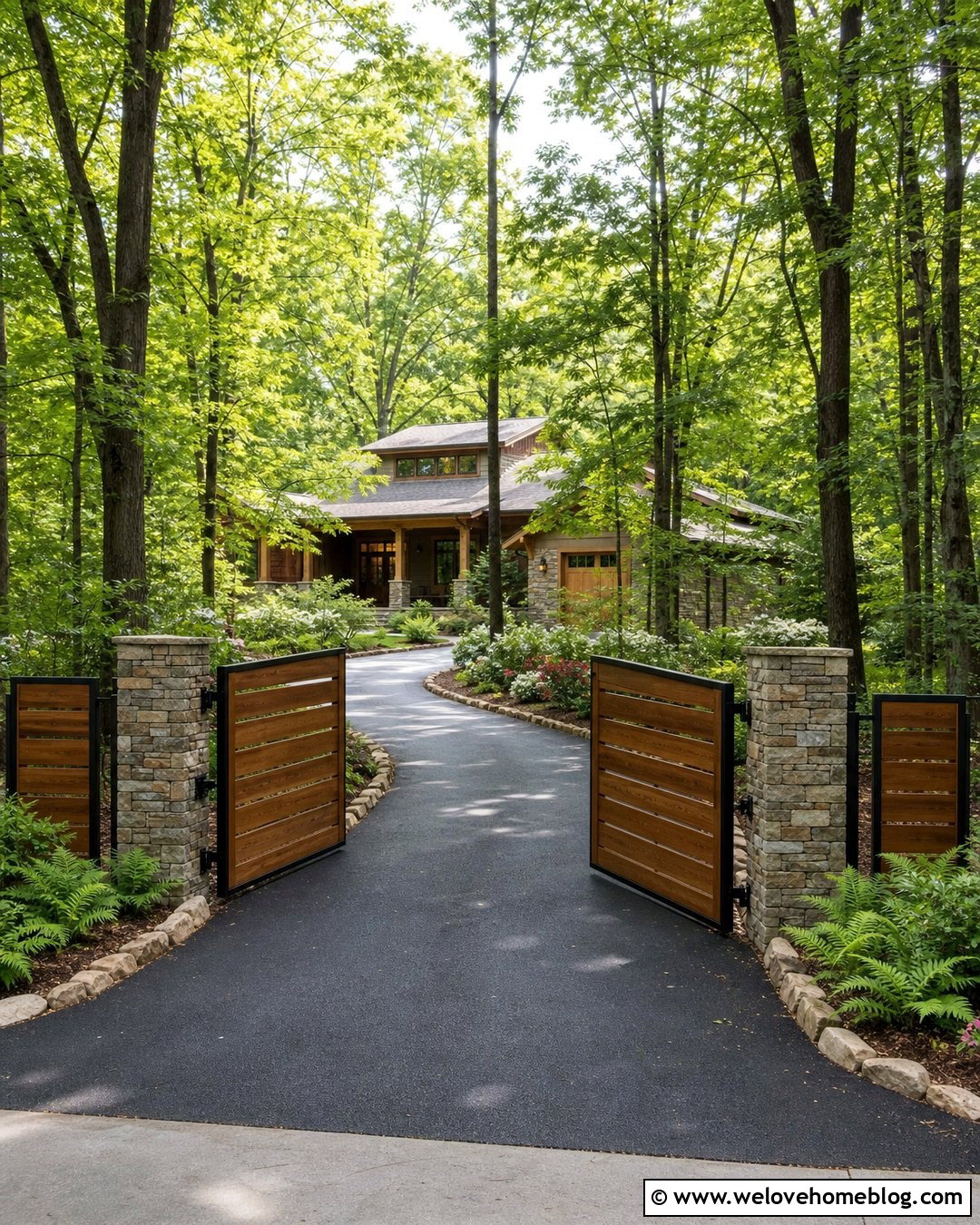
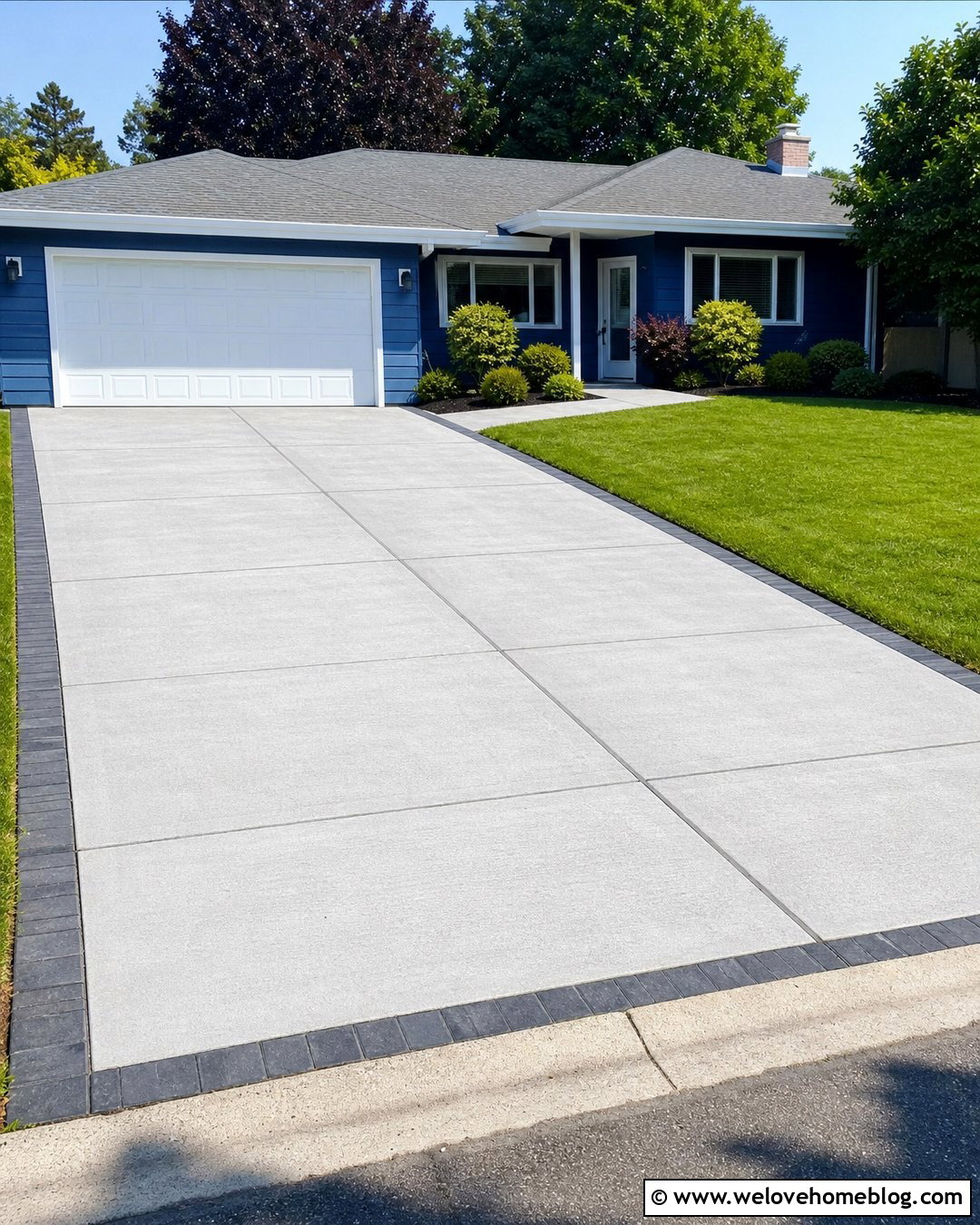
Bright ivory, cream, or pale gray molded concrete can make a front yard appear open and polished. Use a large slate or rectangular stone mold to prevent the light surface from looking like a plain slab. Add charcoal molded-concrete borders along the sides, at the street apron, and near the garage threshold. These darker lines give the driveway a clear structure and connect it to black windows, dark roofing, or contemporary exterior lighting. Surround the approach with deep green shrubs, white flowers, and clean lawn edges for crisp contrast. A gentle curve can soften the strong border, while a straight arrangement produces a more architectural result. Because light concrete can reveal marks more readily, discuss suitable finishing, curing, drainage, and sealing options with an experienced driveway contractor before selecting the final color.
Conclusion:
Successful concrete mold driveway ideas go beyond selecting an attractive pattern. The driveway’s shape, color, border, drainage, landscaping, and connection to the house should work as one complete design. Random stone and flagstone molds create relaxed, natural approaches, while hexagons, large squares, and grass-separated panels deliver cleaner modern lines. Brick borders, entrance aprons, and contrasting bands can add definition without overwhelming the surface. Before installation, confirm that the mold system, concrete mix, base, reinforcement, thickness, and joints are appropriate for vehicle traffic and local conditions. With careful planning and professional guidance where needed, these 20 concrete mold driveway ideas can provide lasting function while giving the entire front yard stronger curb appeal.

Related posts:


Leave a Reply