
A gravel driveway gains a cleaner outline and stronger curb appeal when it is framed with well-planned concrete edging. The rigid border helps contain loose aggregate while creating a clear transition to lawns, planting beds, walkways, and entrance features. () Concrete can be poured, precast, stamped, stained, exposed, raised, or installed nearly flush with the gravel. That versatility makes it suitable for modern homes, traditional properties, rural settings, and compact suburban yards. The best design combines the gravel color, driveway shape, border profile, drainage, and surrounding landscape into one coordinated look. Below, you will find practical and visually distinct ways to use shape, texture, planting, and color in these **20 Concrete Edging Gravel Driveway Ideas**.

1. Straight Gravel Driveway With Flush Concrete Edging
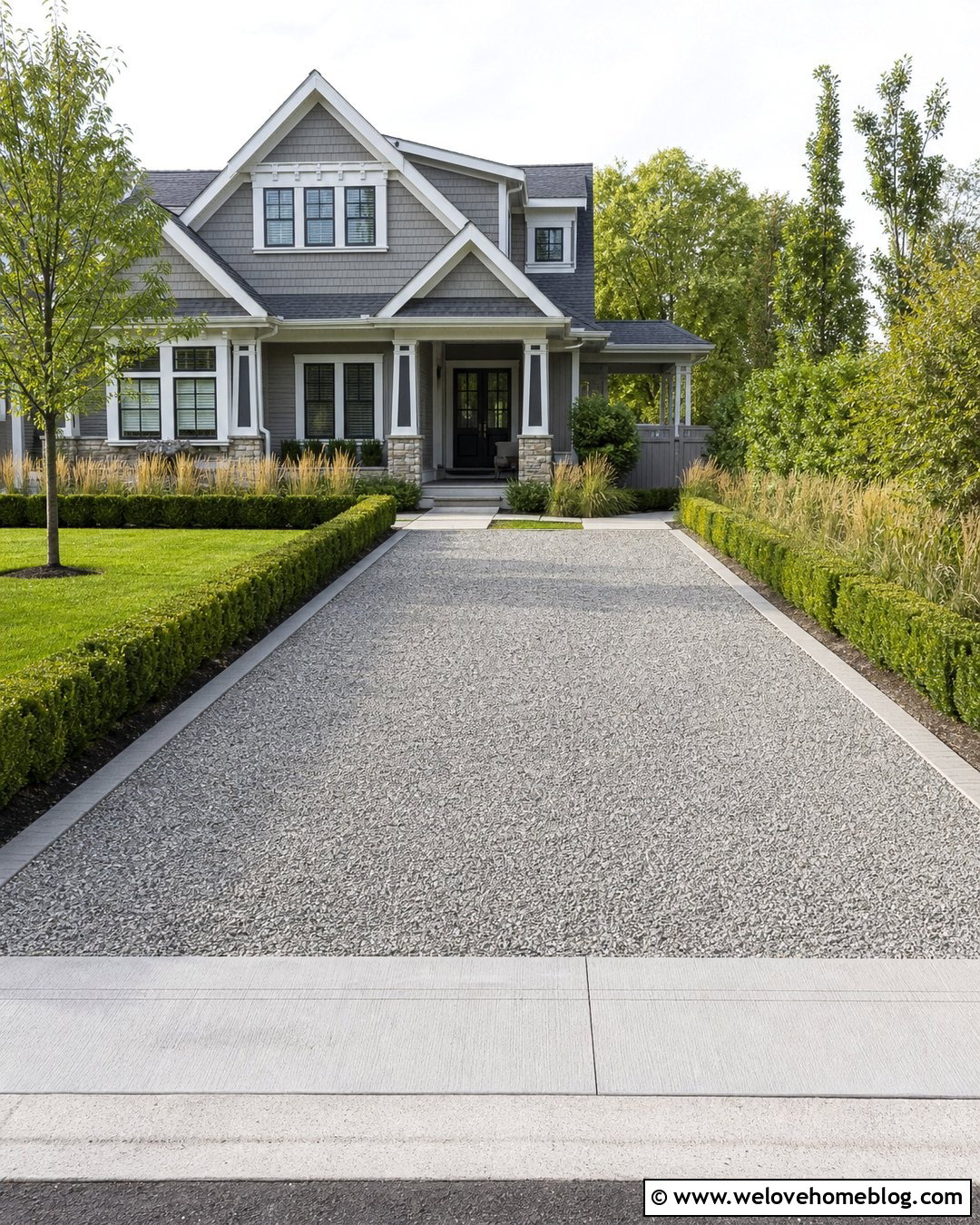
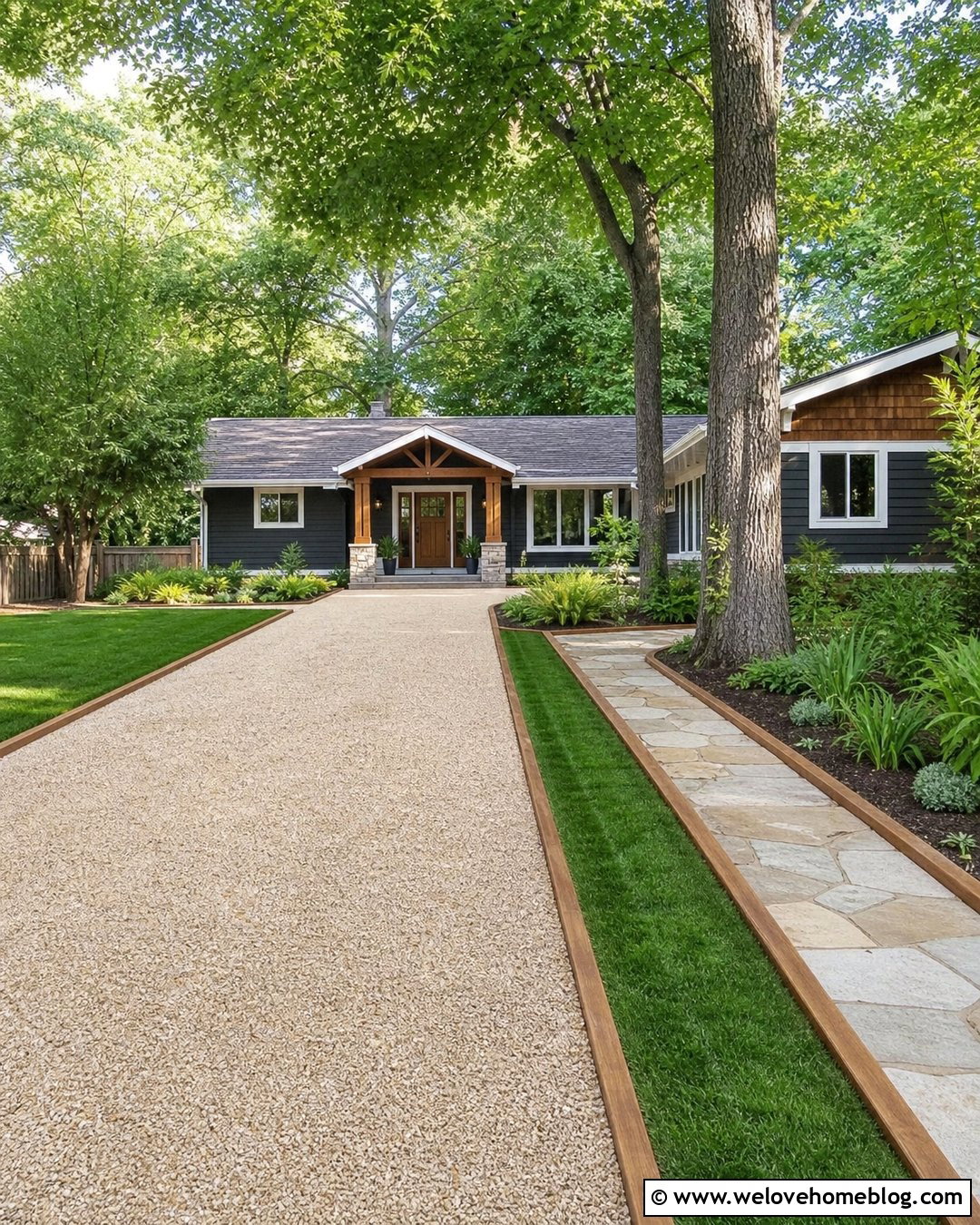
A straight driveway looks crisp and spacious when light gray crushed gravel is framed by flush, broom-finished concrete strips. Keep each border wide enough to create a visible transition without overpowering the gravel surface. Because the edging sits close to grade, it connects smoothly with an adjoining lawn and makes the entire entrance feel open. Continue the concrete across the street entrance as a simple apron for a finished appearance. Low boxwood shrubs, evenly spaced ornamental grasses, and a straight walkway can reinforce the clean geometry. This complete look works especially well with ranch and Craftsman homes. Choose gravel with mixed gray tones to soften the pale concrete, and keep the surface slightly below the edging for a neat, clearly defined boundary.
2. Curved Gravel Driveway With Raised Concrete Curb
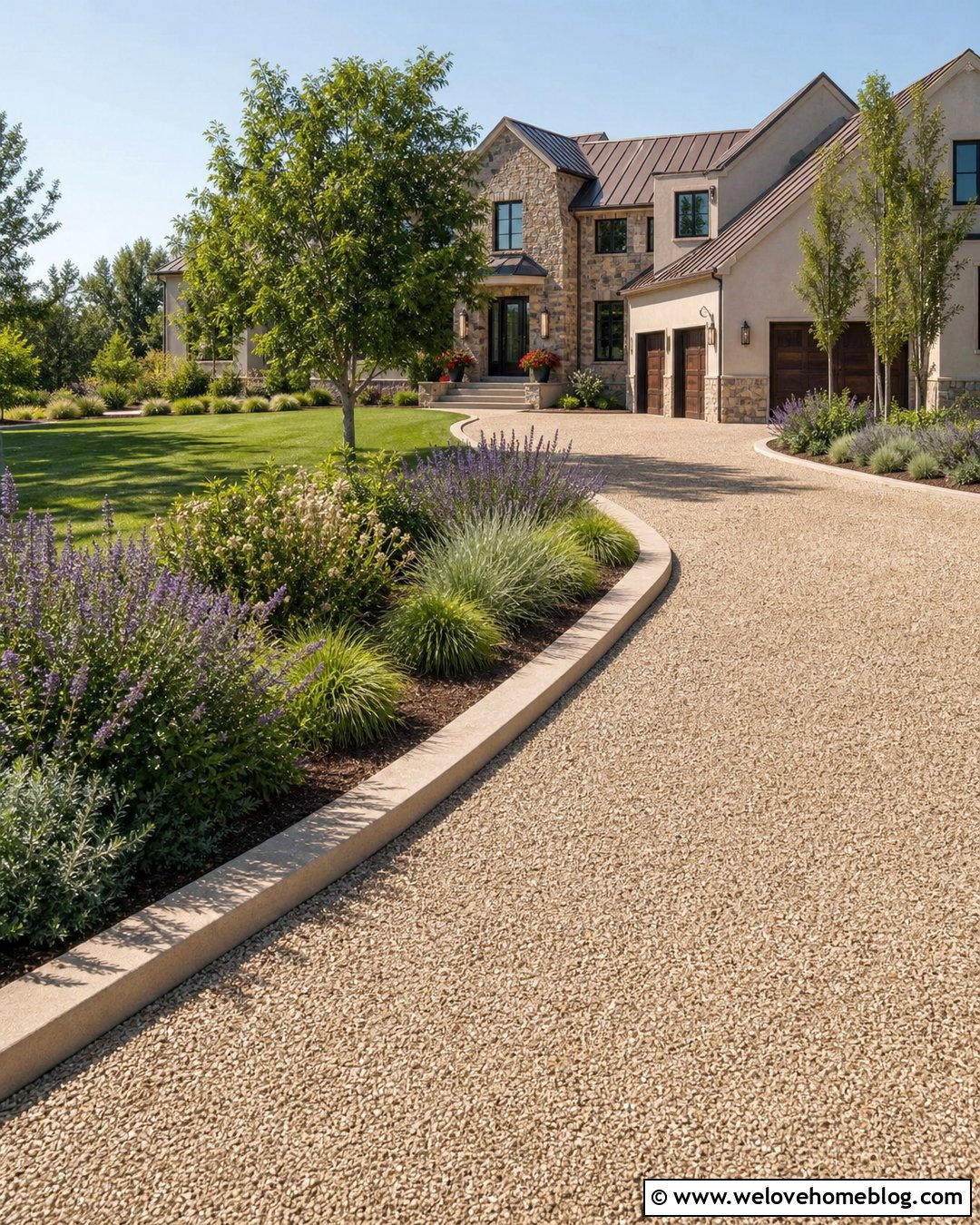
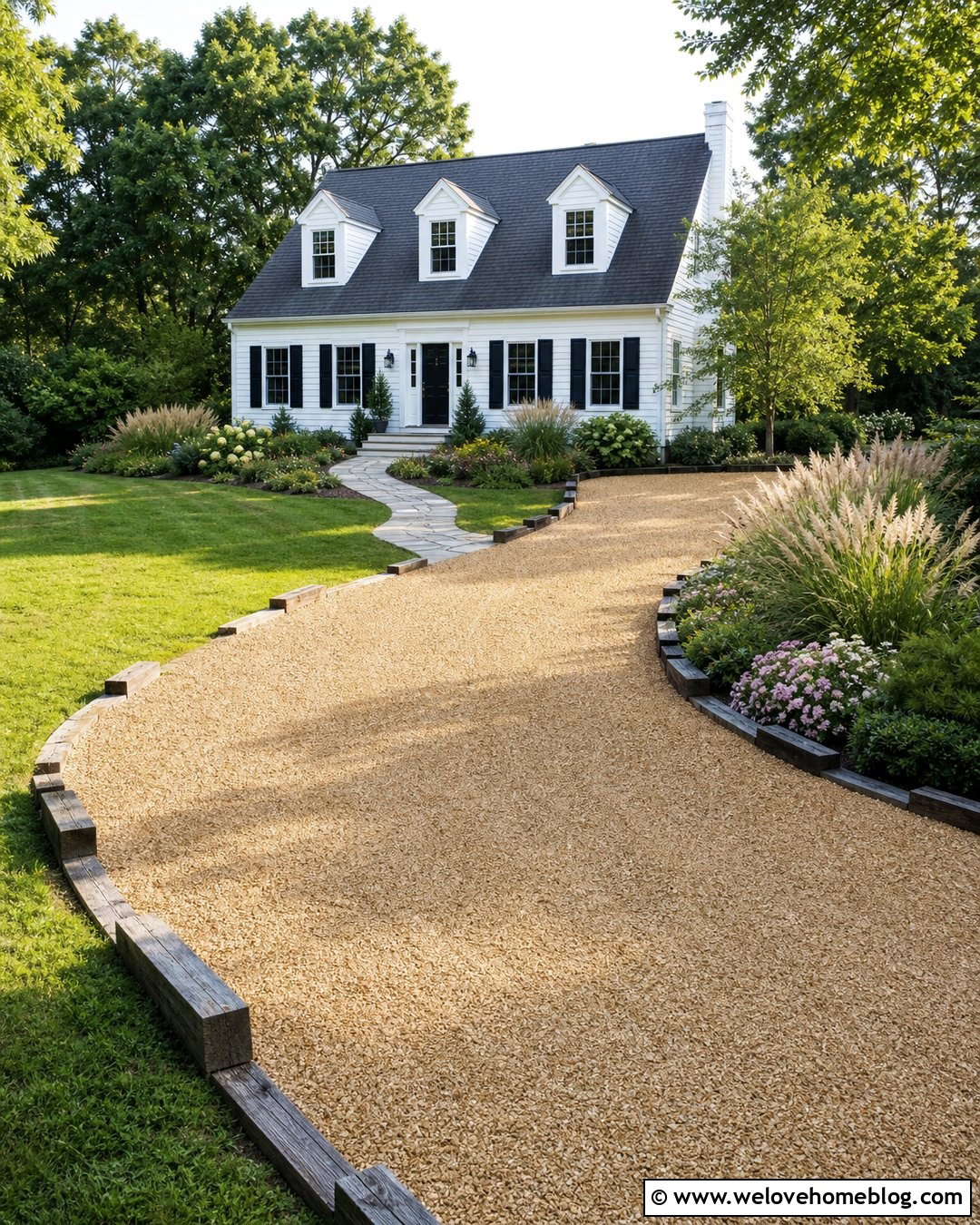
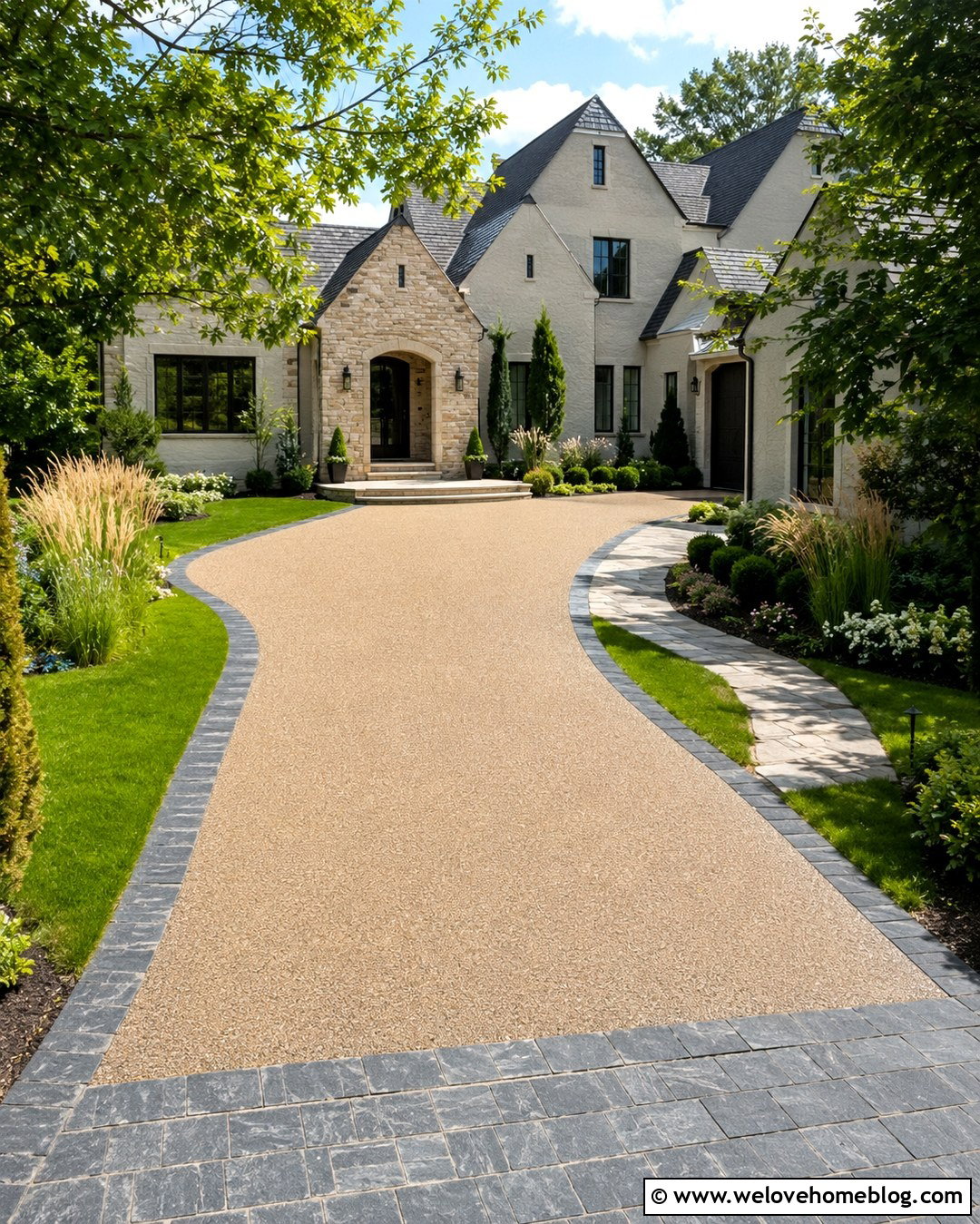
Curves become much easier to read when a continuous concrete curb follows the entire driveway. Use warm beige crushed gravel inside a smooth, lightly raised concrete edge that sweeps toward the garage. The curb should trace gradual bends rather than tight turns, giving vehicles comfortable space while creating a graceful approach. Plant lavender, catmint, dwarf grasses, or compact evergreen shrubs along the outside curve. On the inside, leave an open lawn or a broad planting island with a small ornamental tree. A warm gray or sand-colored concrete finish can connect the driveway to a stone or stucco facade. This combination creates a softer residential entrance while still giving the loose gravel a strong and visually consistent frame.
3. Black Gravel Driveway With Charcoal Concrete Edging
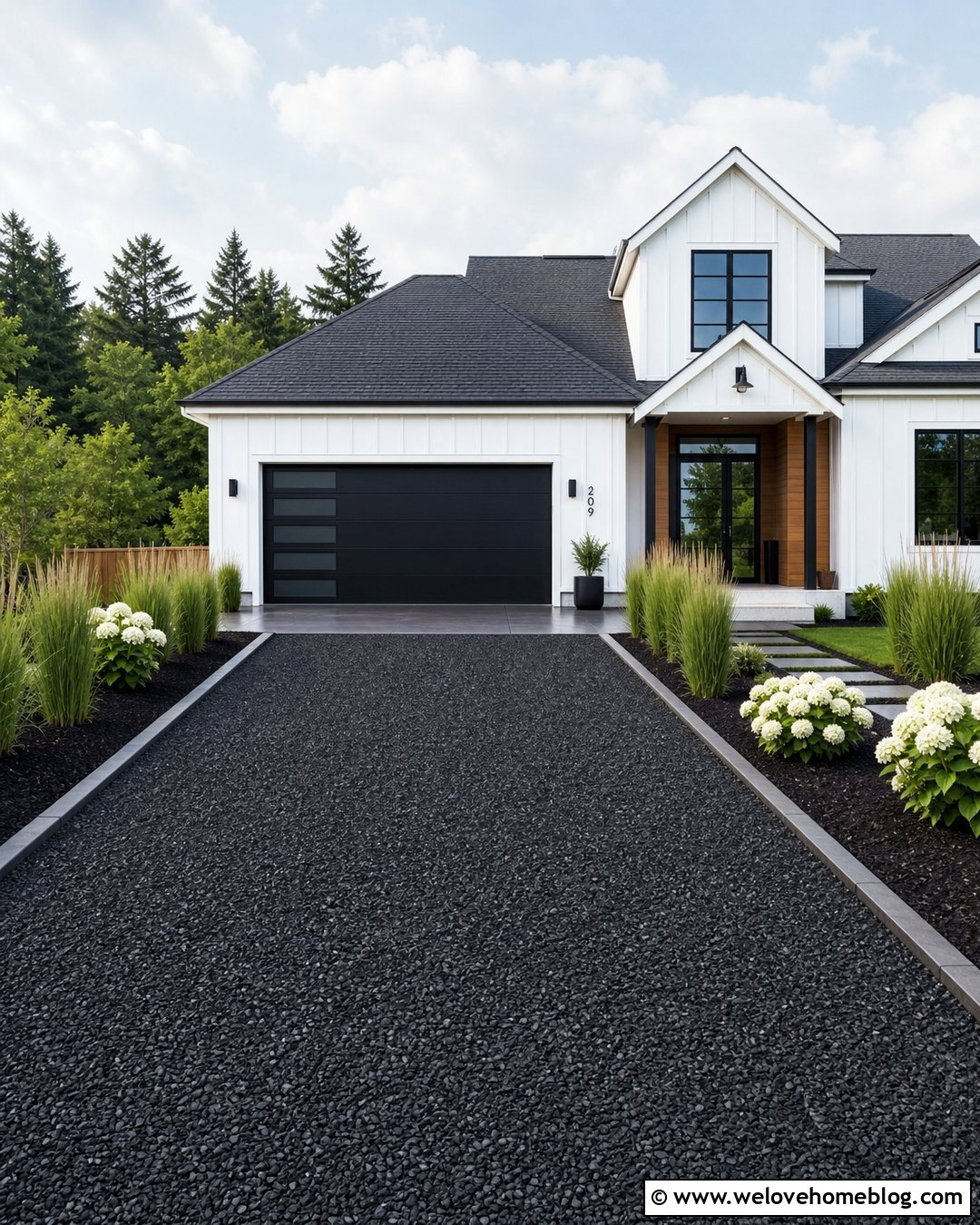
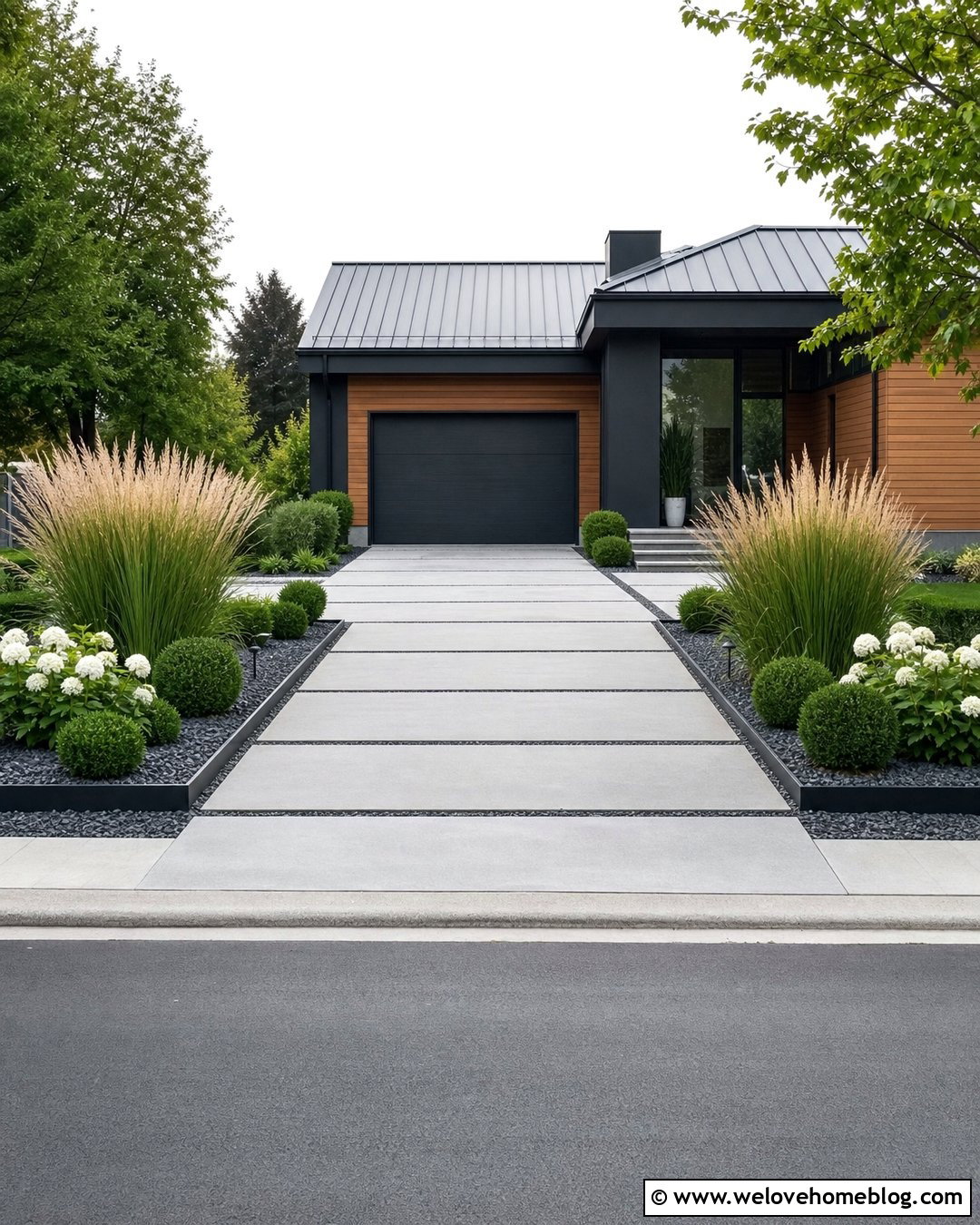
Deep black gravel paired with charcoal concrete edging creates a bold entrance for a contemporary home. Choose angular basalt or dark crushed granite instead of highly rounded stone so the surface has a compact, structured appearance. Frame the driveway with straight poured-concrete curbs in a dark integral color. Large rectangular stepping pads can connect the driveway to the front entrance without interrupting its modern character. Keep the landscaping restrained with white flowering shrubs, upright grasses, sculptural evergreens, and dark mulch. A pale stucco, white brick, or natural wood facade will provide valuable contrast. Continue the charcoal concrete into a broad apron near the garage, creating a durable-looking transition and a strong visual anchor at the end of the gravel driveway.
4. Golden Gravel Driveway With White Concrete Border
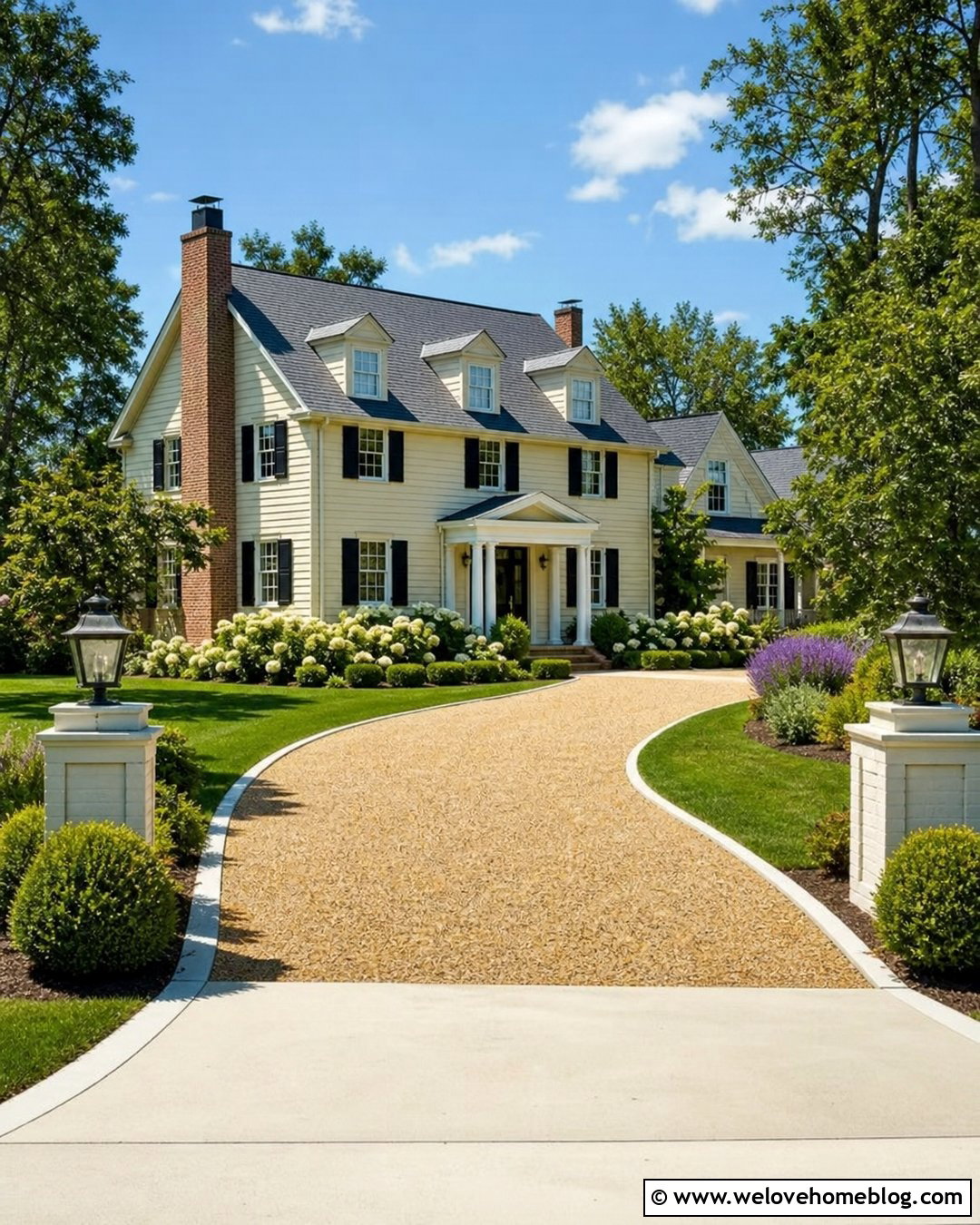
Warm golden gravel can brighten a traditional home when it is surrounded by a smooth white or cream concrete border. A gently curved layout works particularly well because it lets the sunny aggregate lead the eye toward the house. Use a low raised curb beside planting beds and a flush strip where the driveway meets the lawn. This change in profile keeps the design practical without making every edge look heavy. Fill the borders with hydrangeas, clipped shrubs, flowering perennials, and a few small trees. Match the concrete color to pale exterior trim, porch columns, or walkway paving. A wider concrete apron at the road can make the entrance feel intentional while separating the decorative gravel from the public street surface.
5. Circular Gravel Driveway With Concrete Ring Edging
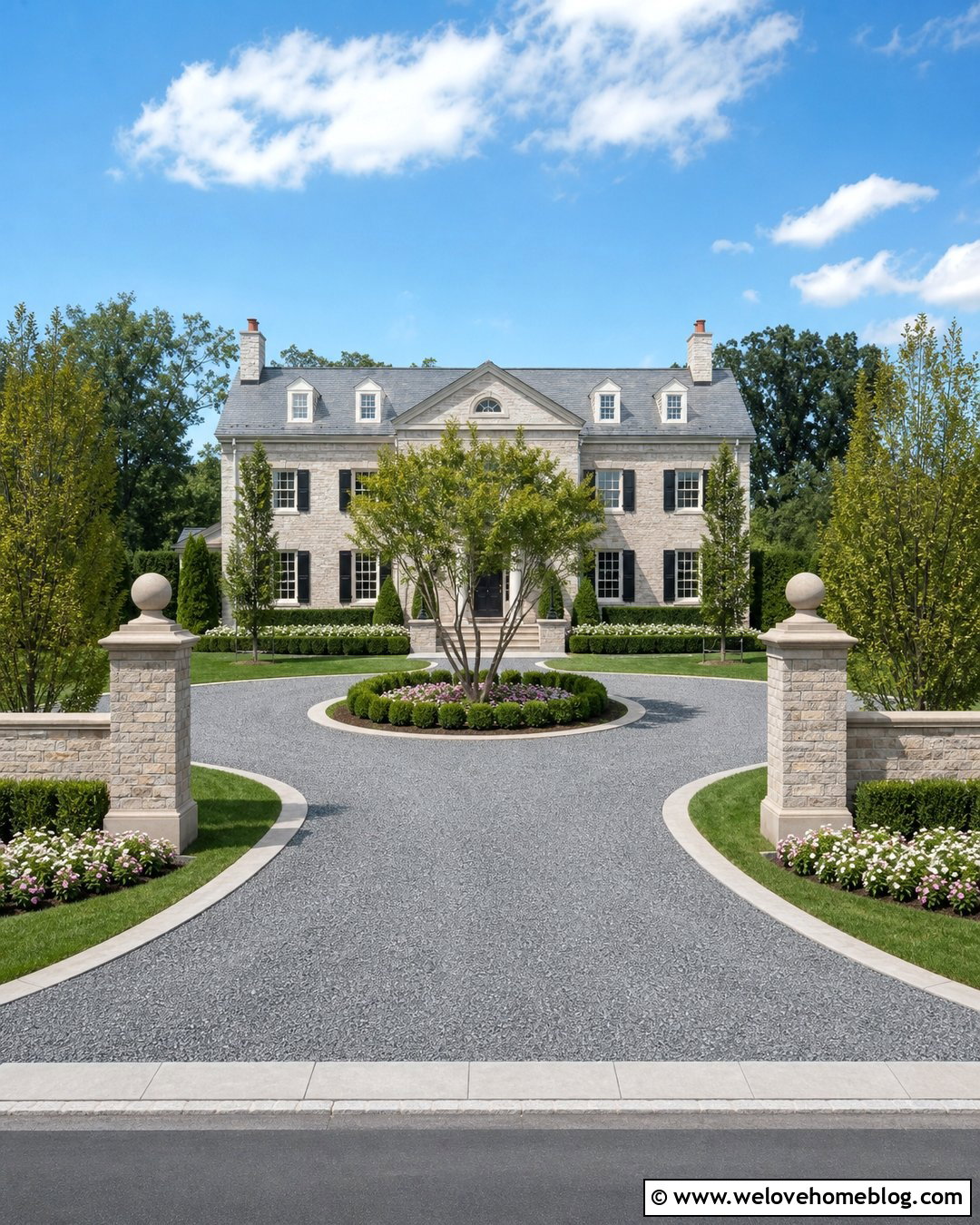
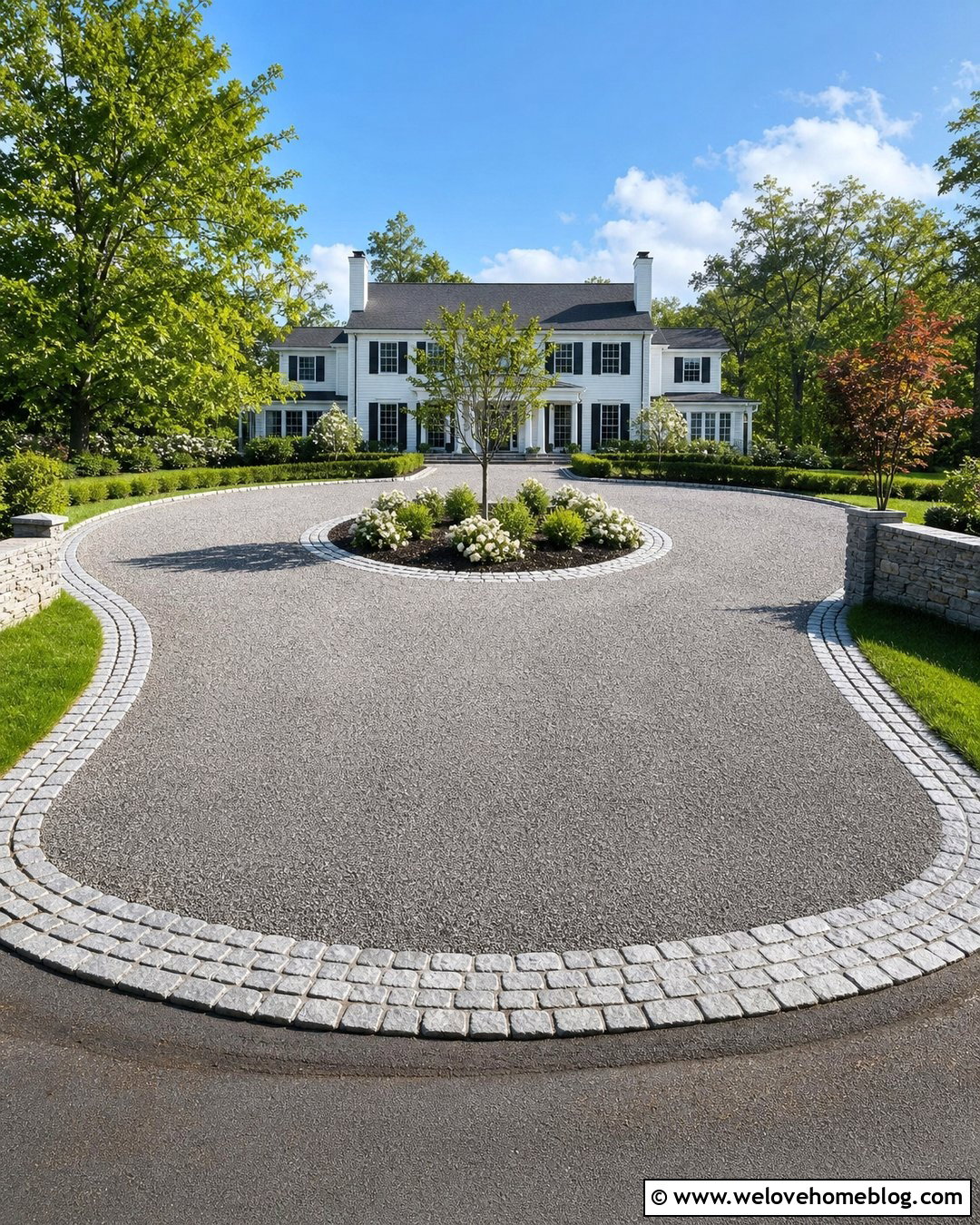
A circular layout needs a clear center, and concrete edging can define both the outer driveway and the landscaped island. Fill the driving lane with medium gray crushed gravel, then use smooth poured concrete to form two continuous rings. The inner curb can be slightly raised to protect a central bed planted with a multi-stem tree, low evergreens, and seasonal flowers. Keep the outside border closer to grade so it transitions comfortably into the lawn. Add a concrete walkway from the circle to the front steps using the same color and finish. This arrangement suits Colonial, Georgian, and larger farmhouse homes. Symmetrical entrance pillars or matching lanterns can strengthen the formal layout without making the gravel surface feel overly elaborate.
6. Pea Gravel Driveway With Wide Concrete Mow Strips
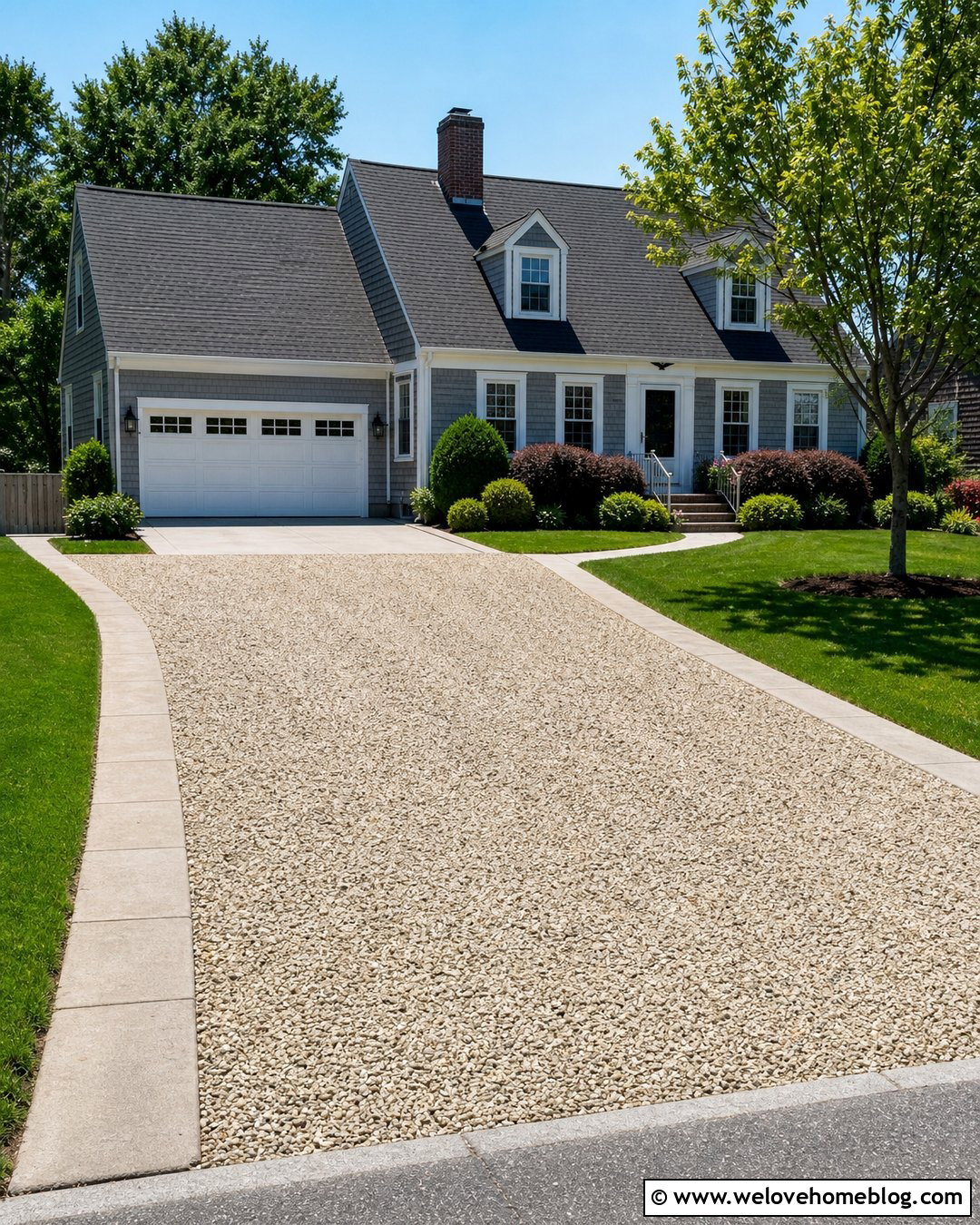
Wide concrete mow strips create a practical frame between a pea gravel driveway and surrounding turf. Use buff or gray pea gravel in a straight or slightly flared layout, then install smooth concrete bands along both sides. The bands should look substantial enough to become part of the overall design rather than disappearing beneath the grass. Match them with a concrete walkway and garage apron for continuity. Because rounded pea gravel shifts more easily, consider a suitable stabilization system beneath frequently traveled sections. Keep the landscape simple with healthy lawn, rounded foundation shrubs, and one small shade tree near the entrance. This relaxed combination feels welcoming beside Cape Cod, cottage, and modest suburban homes while maintaining a clean, organized outline.
7. White Gravel Driveway With Exposed Aggregate Edging
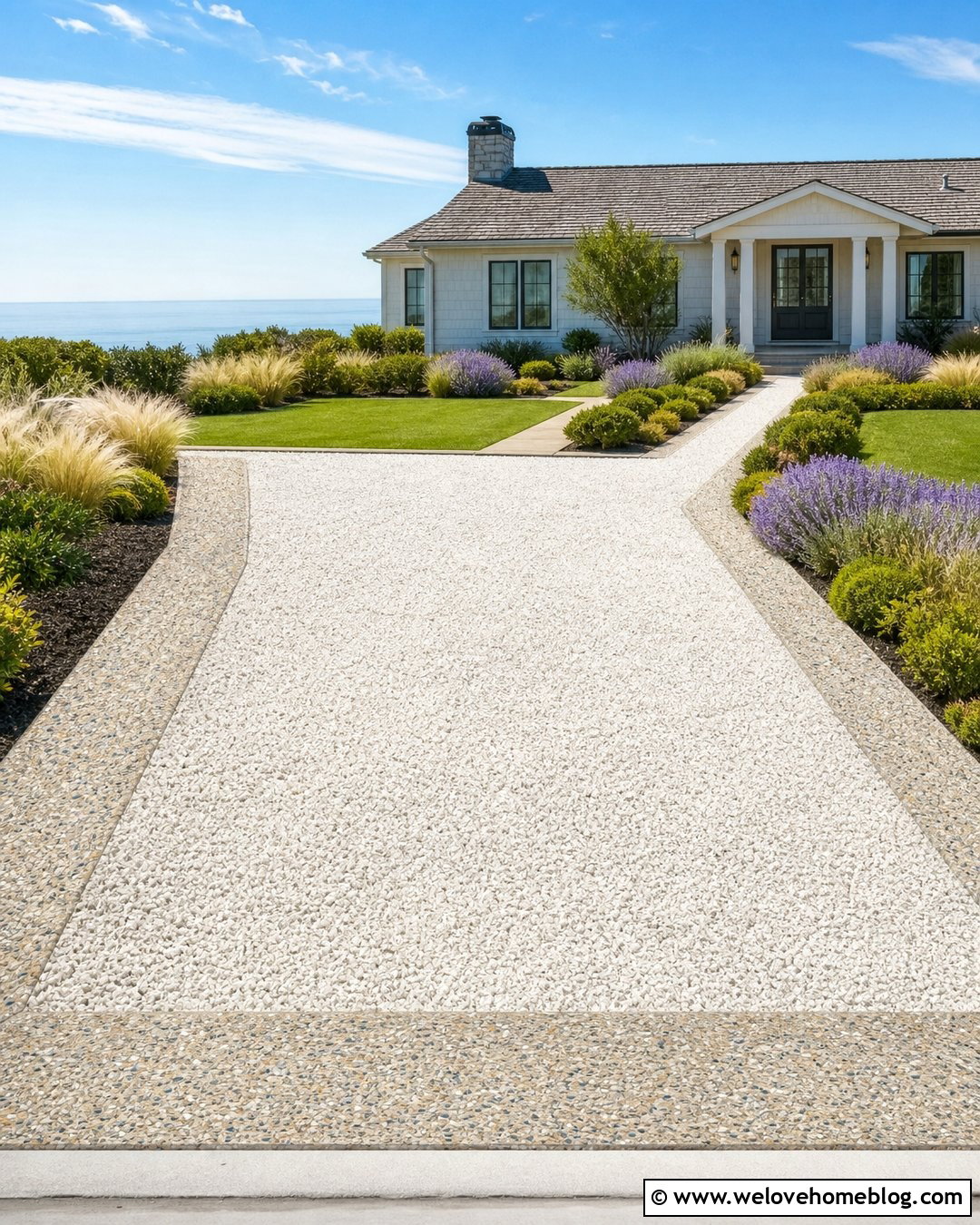
White gravel becomes more visually grounded when framed by exposed aggregate concrete. The small stones visible within the concrete add texture and create a natural bridge between the bright driveway and surrounding landscape. Use a straight driveway with a slight flare at the street, bordered by medium-width exposed aggregate strips. Repeat the same finish in the front walkway or a small parking pad. Deep green shrubs, purple flowers, and ornamental grasses provide rich contrast against the pale surface. This look can complement midcentury, coastal, or updated ranch homes. Select an exposed aggregate mix containing gray, tan, and cream stones so the edging coordinates with both the driveway and facade instead of appearing like a separate decorative feature.
8. Farmhouse Gravel Driveway With Broom-Finished Concrete Edging
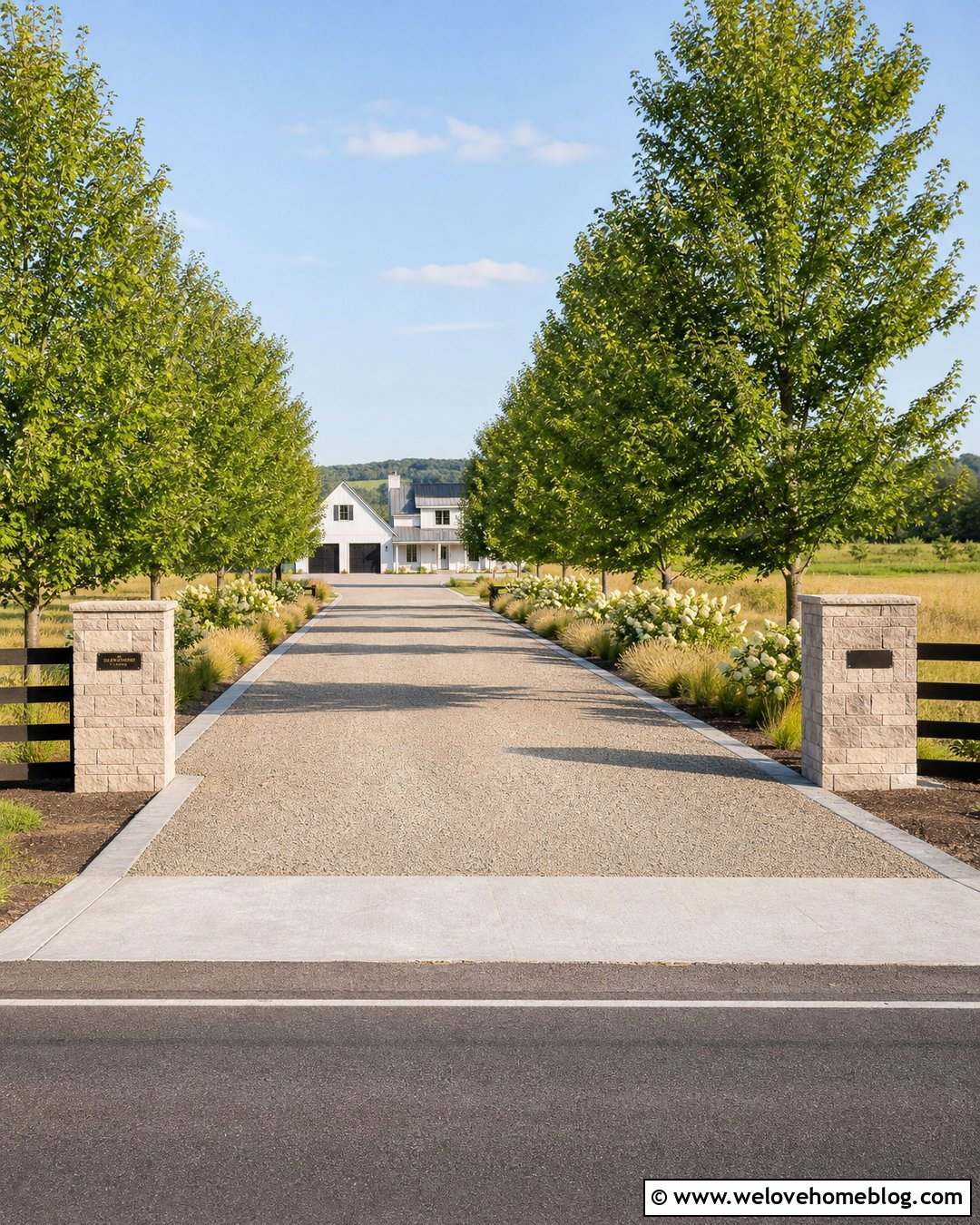
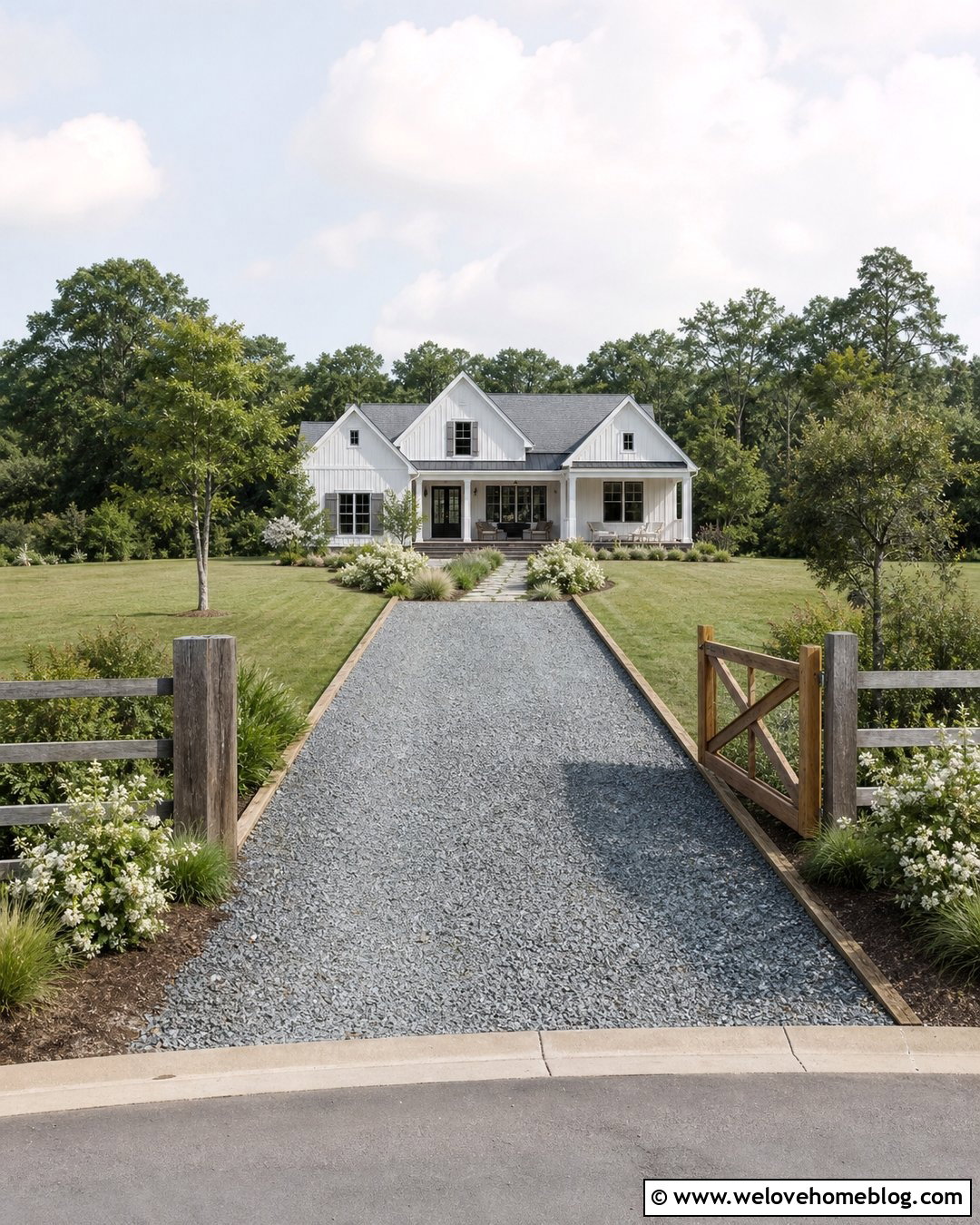
A long farmhouse driveway feels orderly without losing its rural character when simple concrete edging follows the gravel lane. Choose compacted gray or tan crushed stone and frame it with narrow broom-finished concrete curbs. Let the driveway remain mostly straight, with a gentle widening near the house for parking and turning. Plant native grasses, white flowering shrubs, and evenly spaced deciduous trees beyond the edging. Near the road, use timber fencing and simple masonry pillars to create a welcoming country entrance. The concrete should have a soft natural-gray tone rather than a polished finish. Matching concrete pads near the garage can handle transitions while allowing the gravel to remain the main visual material throughout the property.
9. Modern Gravel Driveway With Square Concrete Edging
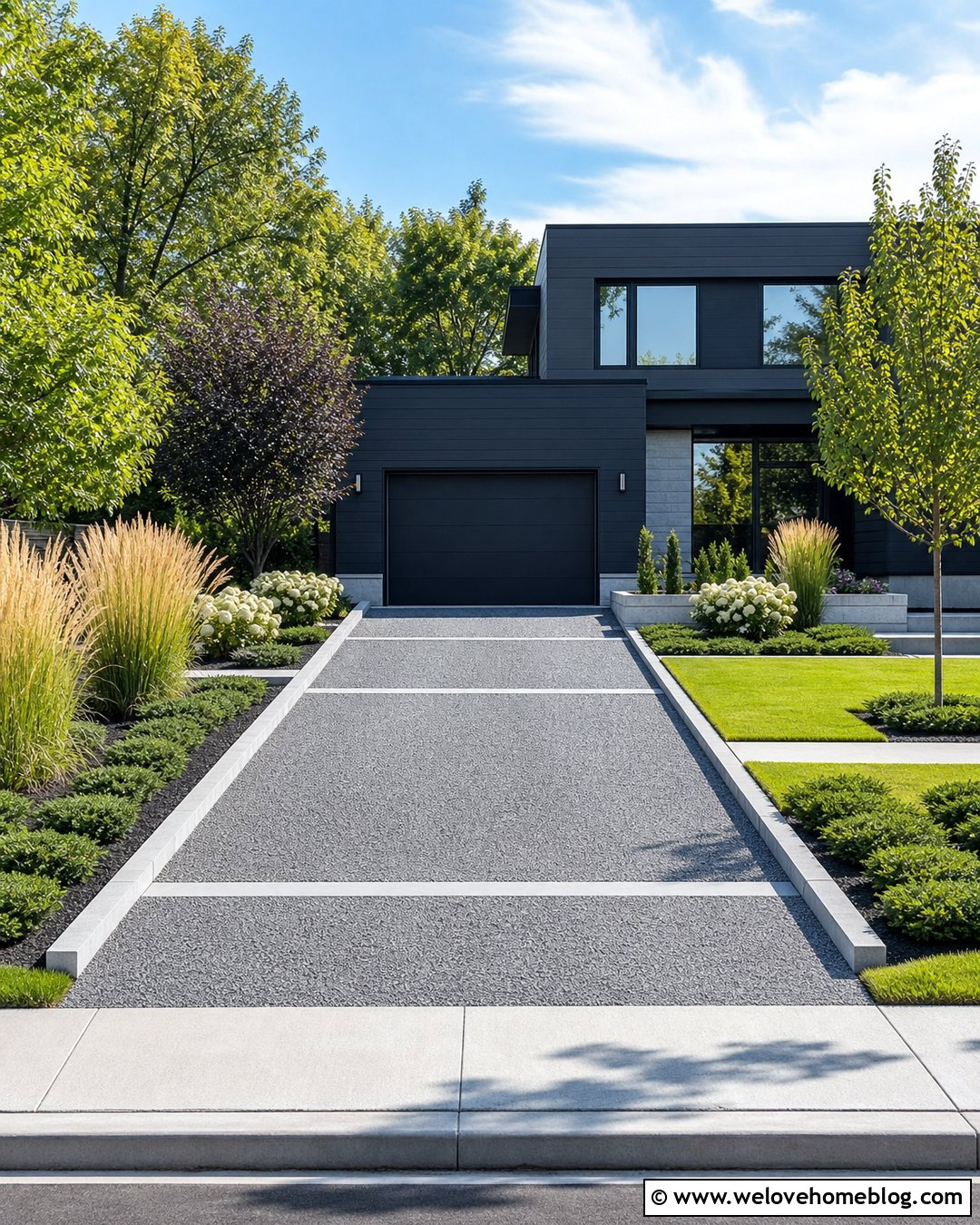
Sharp lines and squared concrete borders give a gravel driveway a distinctly modern appearance. Fill a broad straight driveway with fine gray crushed gravel, then contain it with raised rectangular concrete curbs. Extend short concrete bands across selected areas to divide the large gravel surface into neat sections. These bands can align with garage doors, walkways, or architectural lines on the house. Surround the driveway with linear planting beds containing feather reed grass, low juniper, and compact flowering shrubs. A flat lawn panel on one side can keep the entrance from feeling too hard. Use smooth pale-gray concrete beside a dark modern facade, or charcoal edging against a white exterior, depending on the contrast you want to create.
10. Cottage Gravel Driveway With Scalloped Concrete Curb
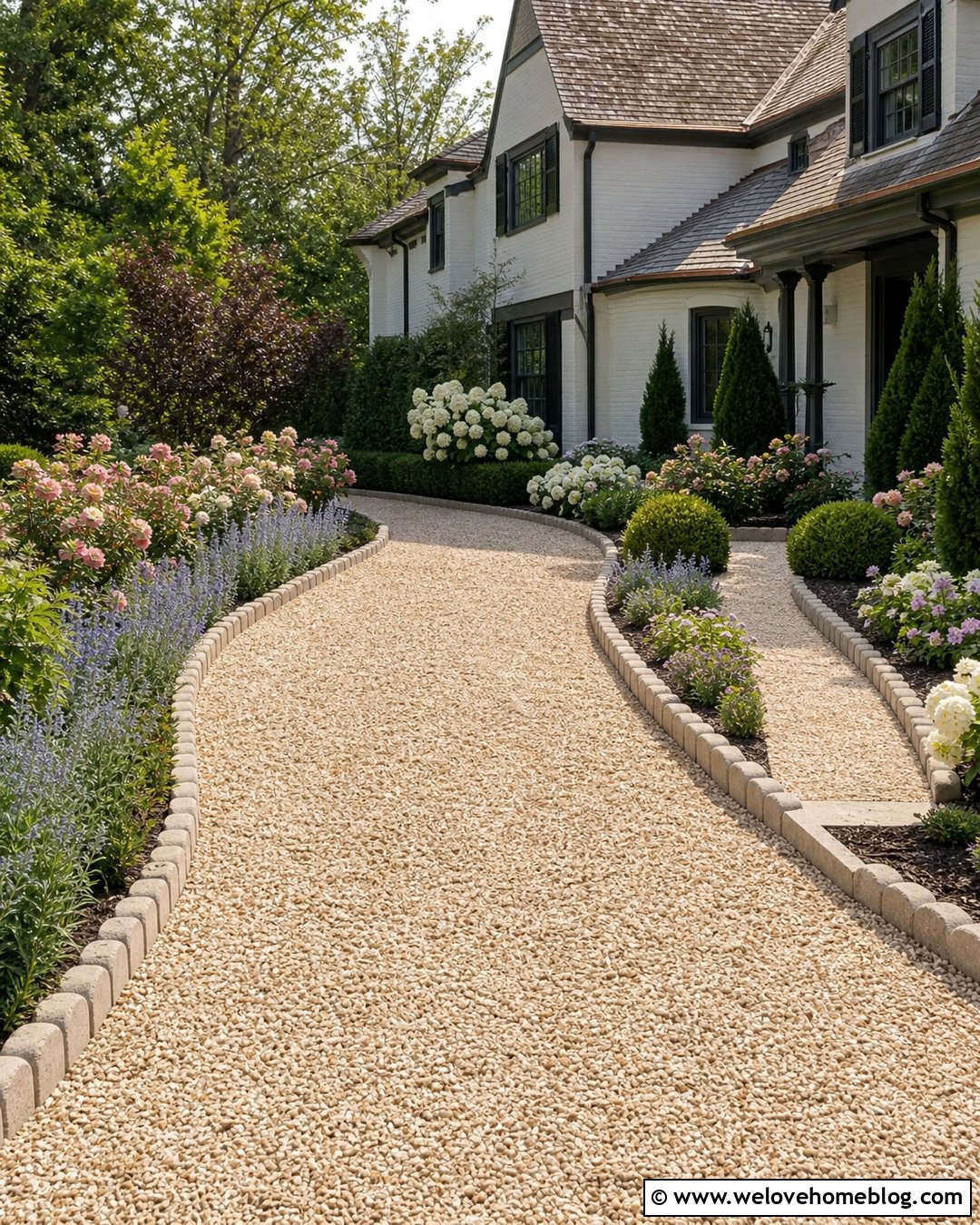
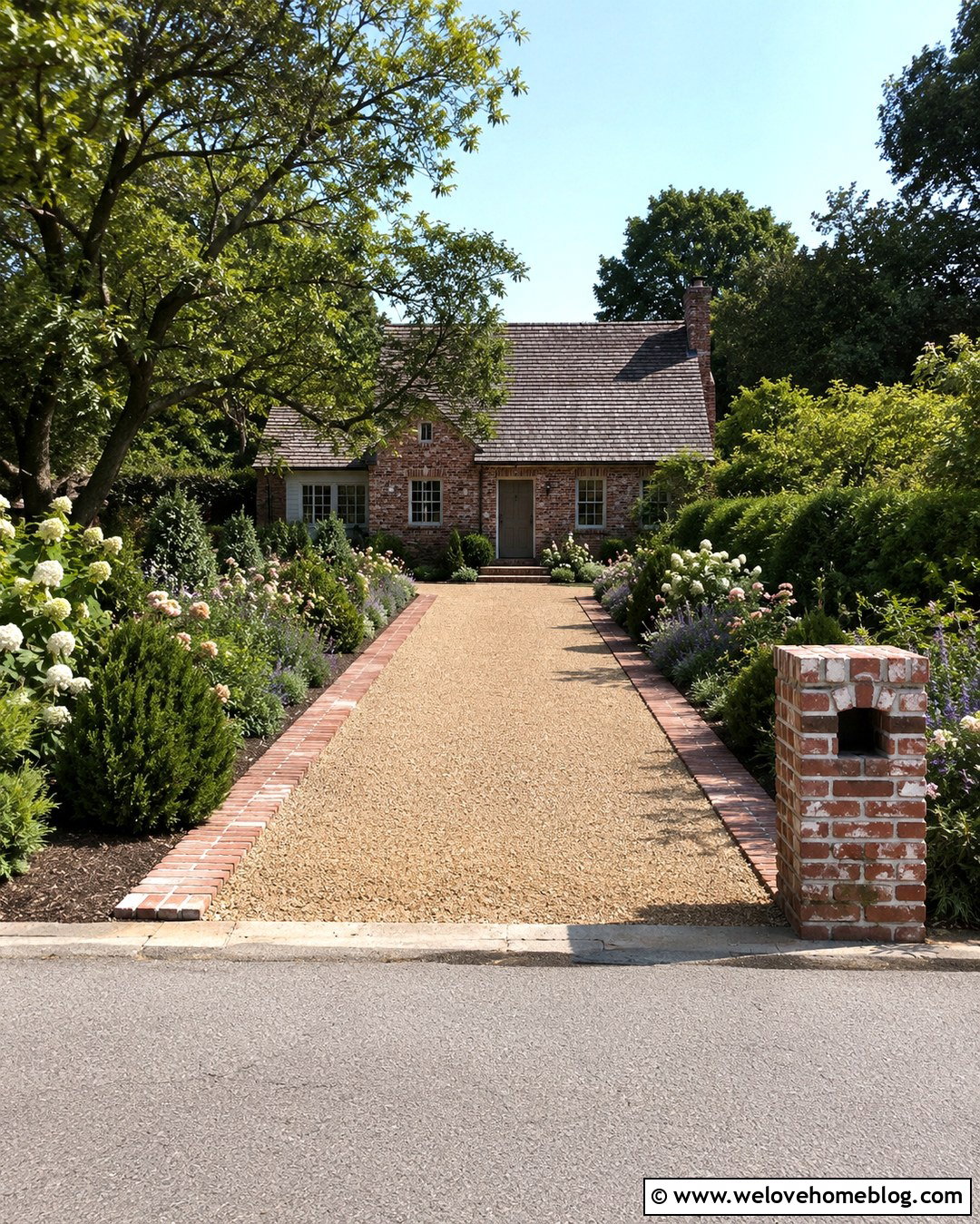
A gently scalloped concrete curb can give a cottage driveway a softer and more decorative boundary. Use warm cream gravel on a narrow curved driveway, allowing the edging to follow relaxed garden beds instead of rigid straight lines. The concrete profile should remain low and subtle, with shallow curves rather than exaggerated waves. Plant roses, salvia, catmint, dwarf hydrangeas, and small evergreen shrubs behind the curb. A matching gravel walkway can branch toward the porch and remain contained by the same concrete treatment. Choose a lightly textured concrete finish in warm gray or beige to coordinate with brick, painted siding, or natural stone. The finished driveway should look established, comfortable, and connected to the surrounding cottage garden.
11. Stamped Concrete Edging Gravel Driveway
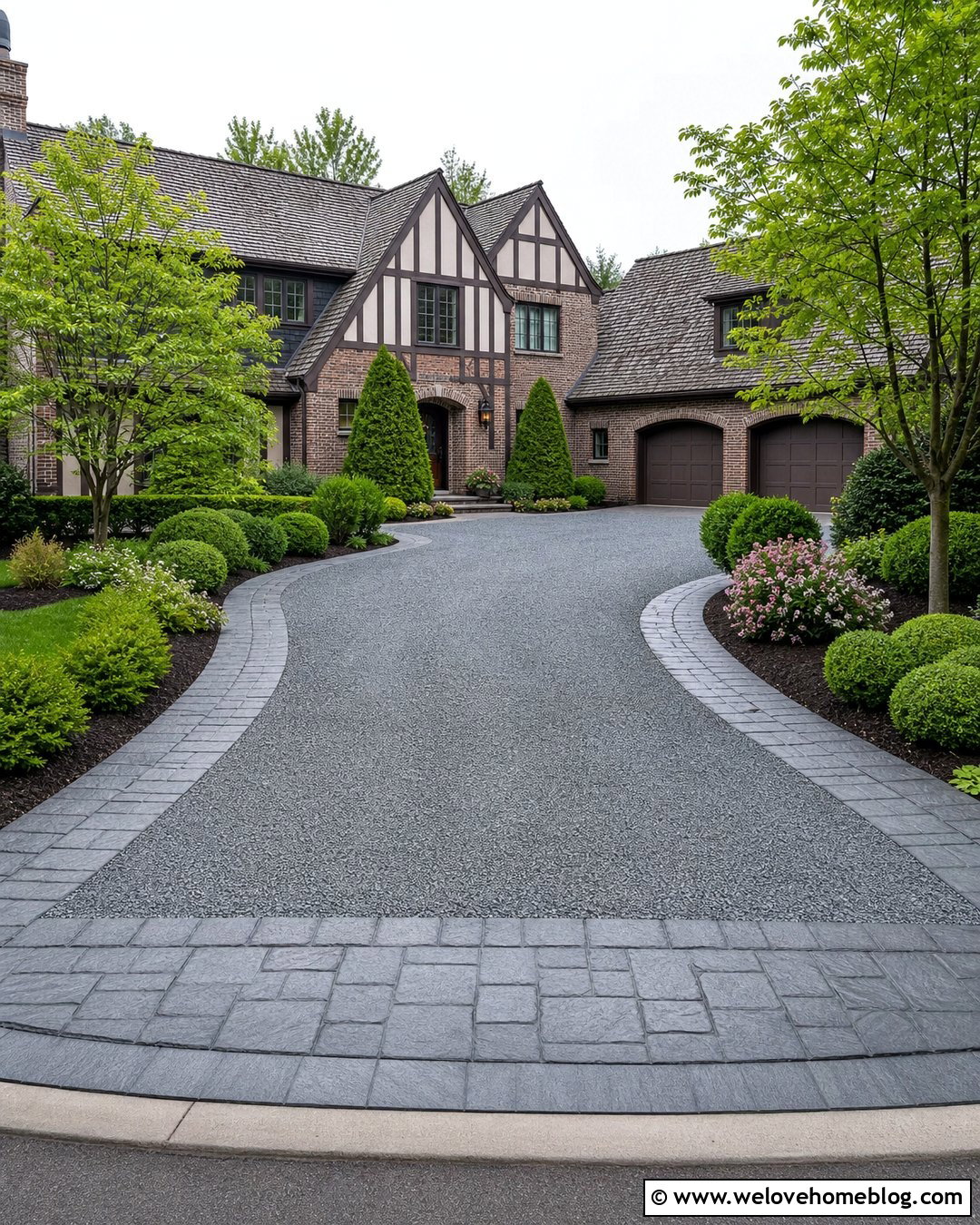
Stamped concrete edging brings extra detail to a gravel driveway without replacing its textured surface. Frame medium-gray crushed stone with a broad concrete border stamped to resemble cobblestone or rectangular pavers. Use a slightly darker stain in the recessed pattern to make the texture visible from the curb. A curved driveway or generous parking court gives the decorative border enough room to make an impact. Repeat the stamped finish around a walkway or entrance apron, but keep other hardscape materials limited. Structured shrubs, small trees, and simple flower beds can balance the detailed edging. This complete look suits traditional brick, Tudor, and European-inspired homes where plain concrete might appear too basic beside the architecture.
12. Tan Gravel Driveway With Brown Concrete Curb
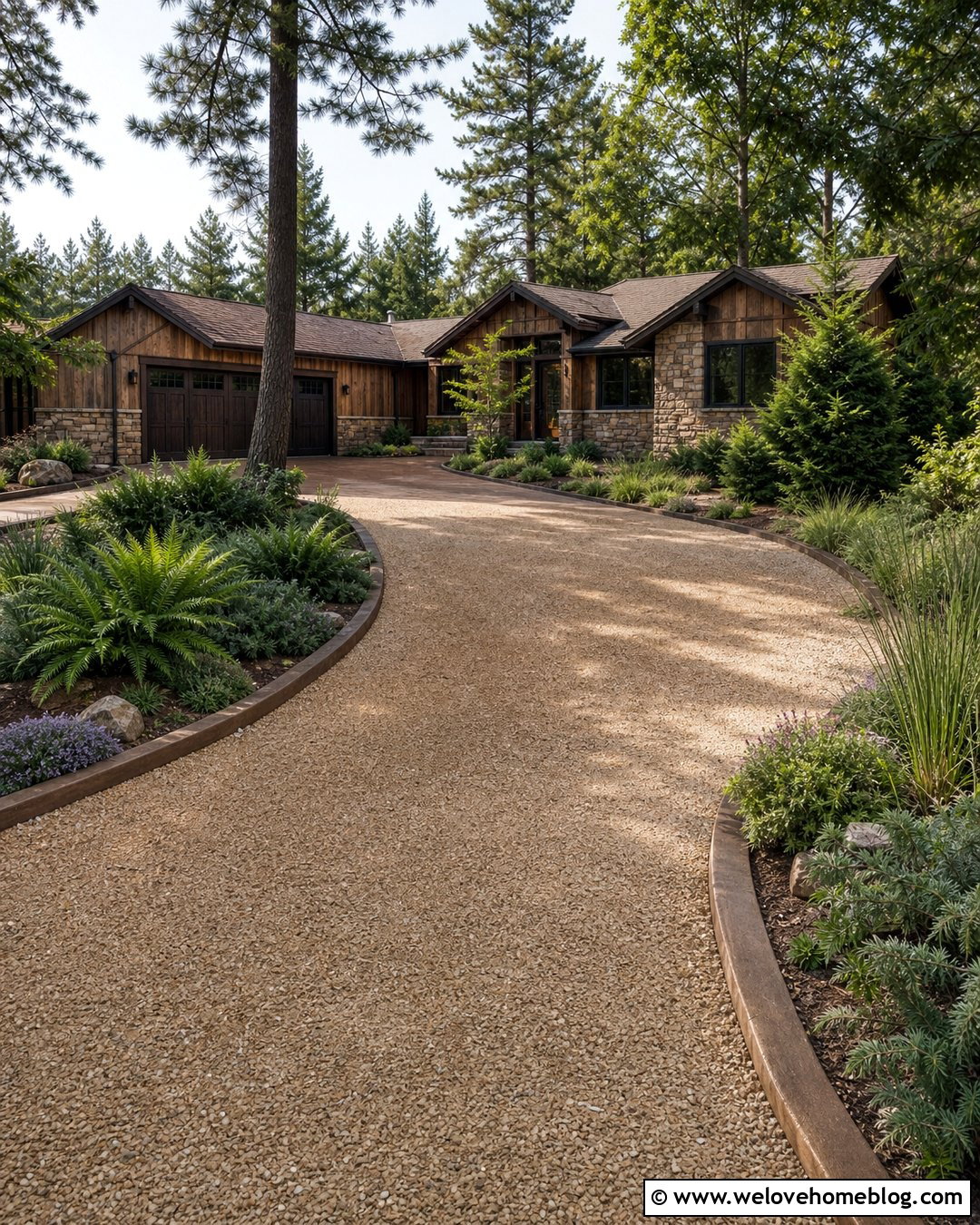
Earthy colors create a calm transition between a driveway and a wooded or naturalistic yard. Start with tan crushed gravel and surround it with a low brown-stained concrete curb. A soft curved layout works well, especially when the driveway winds past mature trees or deep planting beds. Select a stain that reflects tones already found in the home’s brick, stone, or wood siding. Along the border, combine ferns, native grasses, flowering ground covers, and evergreen shrubs. Keep plants set back from turning areas so branches do not narrow the driving space. A matching brown concrete apron near the garage can visually connect the curb lines. The result feels warm and cohesive rather than stark or overly engineered.
13. Sloped Gravel Driveway With Raised Concrete Edging
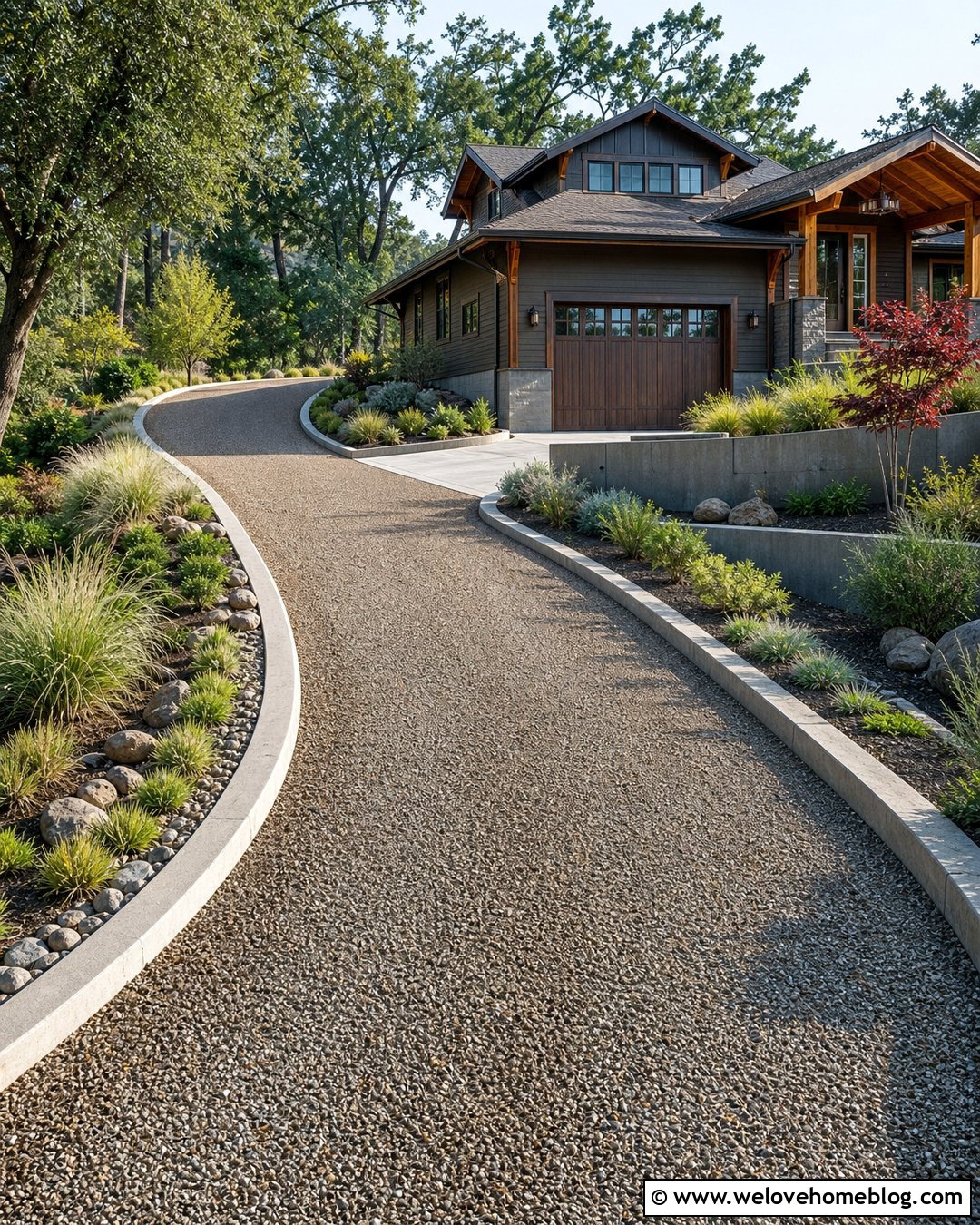
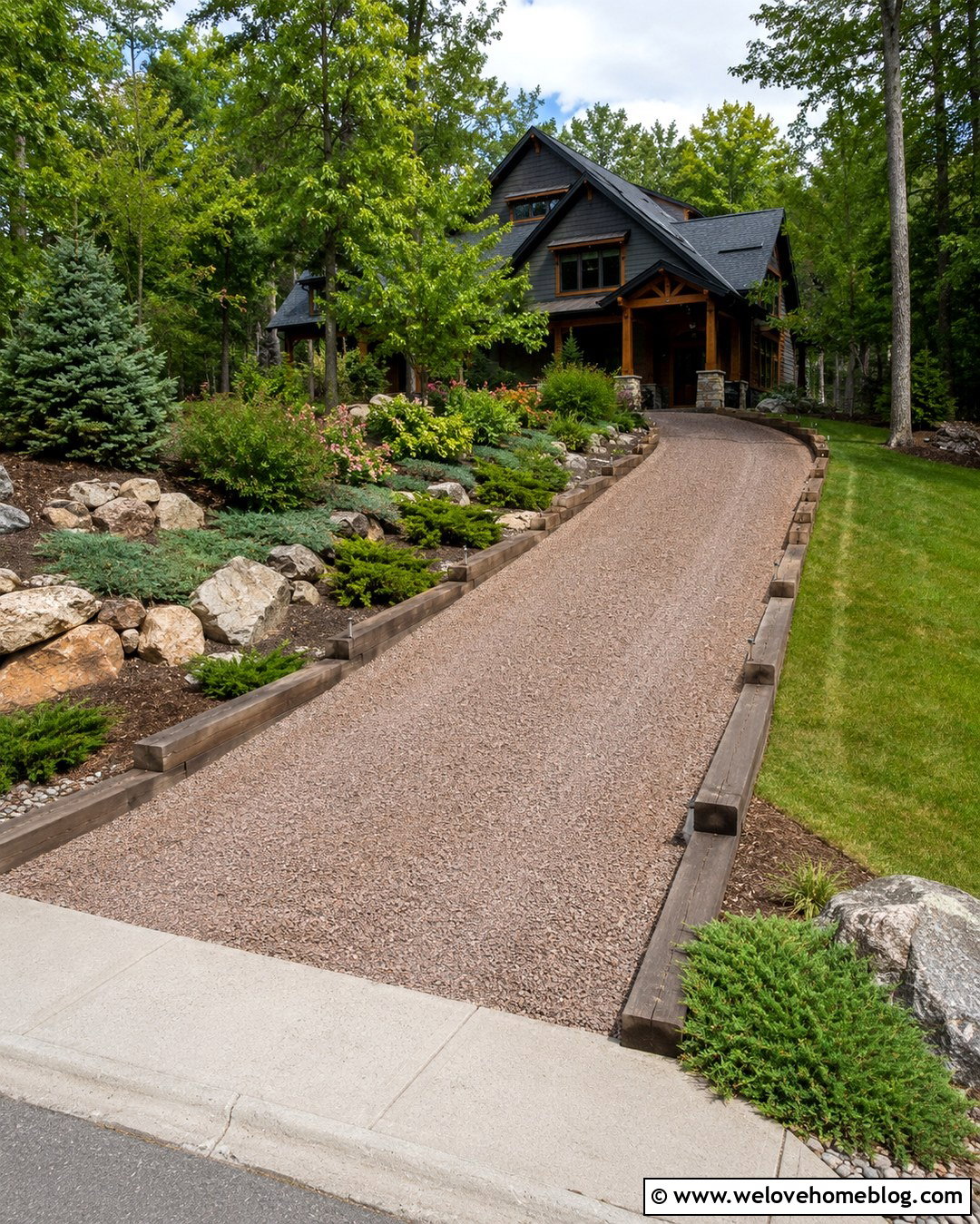
On a sloped approach, raised concrete edging can visually reinforce the sides of the driveway and separate the gravel from adjacent soil. Use compacted angular gravel in gray or brown tones, with continuous poured curbs following both sides. The uphill border can sit beside a shallow drainage swale or planted slope, while the downhill edge may require a more substantial profile. Incorporate openings or planned drainage points rather than creating a solid barrier that traps runoff. Deep-rooted shrubs, ornamental grasses, and erosion-conscious ground covers can stabilize the surrounding landscape. A gently curved route is often more attractive than a severe straight climb. Coordinate the concrete with retaining walls, front steps, or the garage apron for a unified hillside entrance.
14. Gravel Driveway With Concrete Edging And Drainage Channel
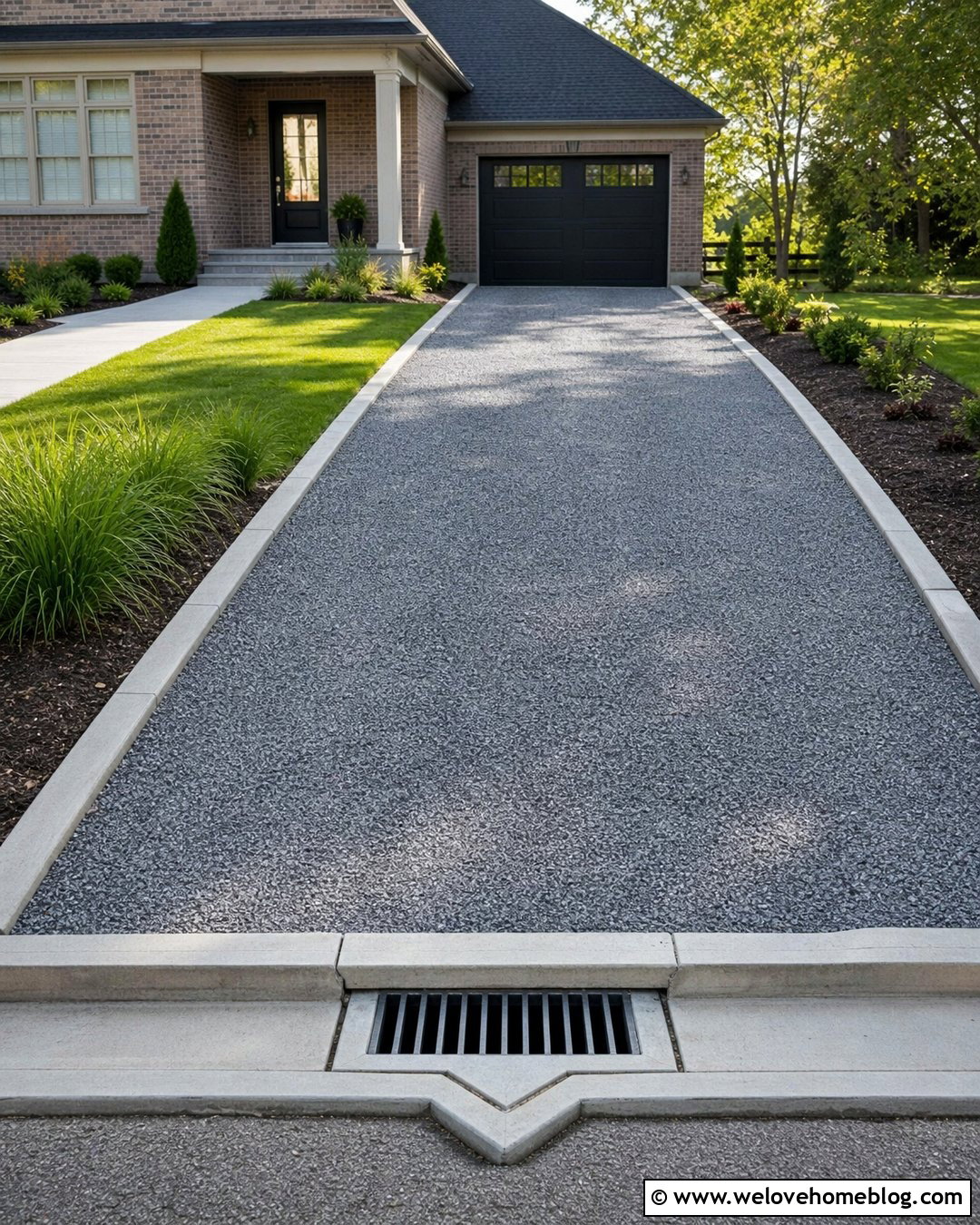
A driveway can look polished while managing water through an integrated concrete drainage design. Use medium-size gray crushed gravel on a slightly crowned surface, then install smooth concrete edging on both sides. Along the lower side, form a shallow channel that guides runoff toward an appropriate outlet or drainage area. The channel should appear as part of the border rather than an unrelated trench. Plant moisture-tolerant grasses and low shrubs beyond it, leaving enough open space for inspection and cleaning. At the garage, add a grated drain across the driveway if site conditions require one. This complete layout is especially useful for long suburban driveways where the grade and surrounding lawn naturally direct water toward the driving surface.
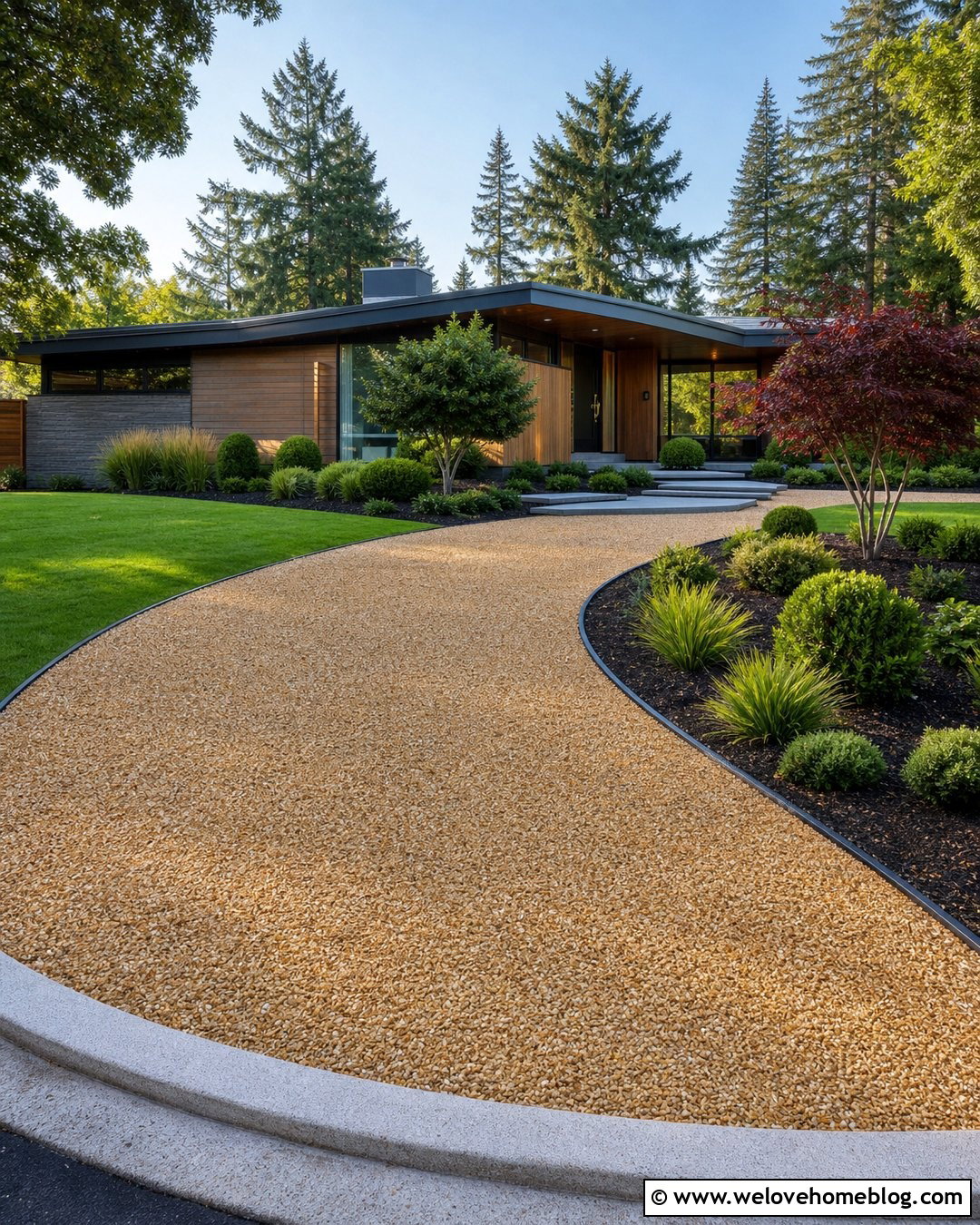
15. Gravel Driveway With Precast Concrete Block Edging
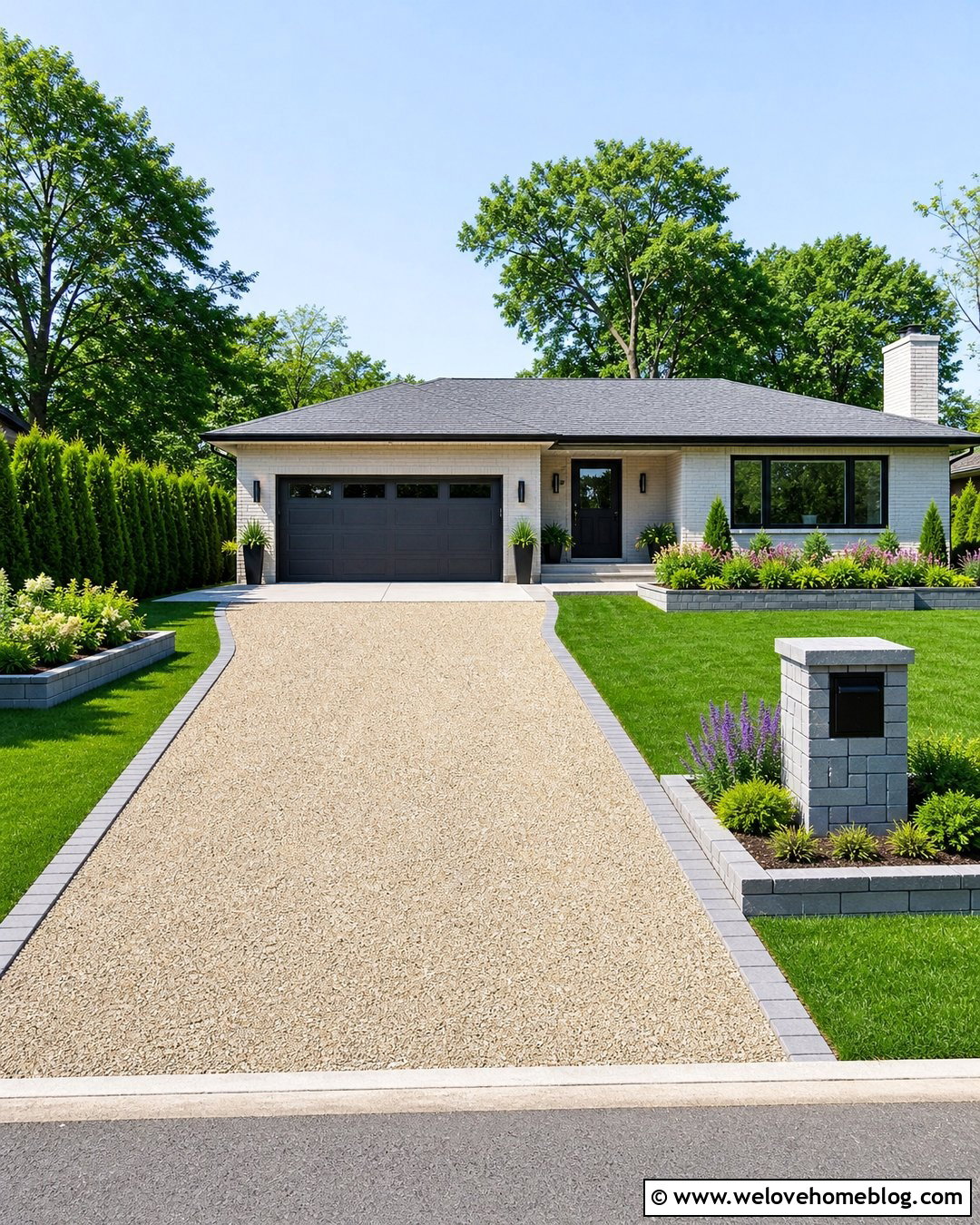
Precast concrete blocks offer a structured border with visible joints and a modular appearance. Pair rectangular gray blocks with compacted limestone gravel on a straight suburban driveway. Set the units in a continuous single row, following the grade carefully so the top remains consistent. A slightly raised profile can define planting beds, while a nearly flush installation can border lawn and walkway transitions. Repeat the block shape around the mailbox bed or front path for a coordinated landscape. Choose smooth blocks for a modern house or lightly tumbled units for a traditional facade. Low evergreen hedges, flowering perennials, and neatly maintained turf will emphasize the organized layout. Avoid mixing too many block colors, which can make the border appear unnecessarily busy.
16. Gravel Driveway With Concrete Apron And Side Edging
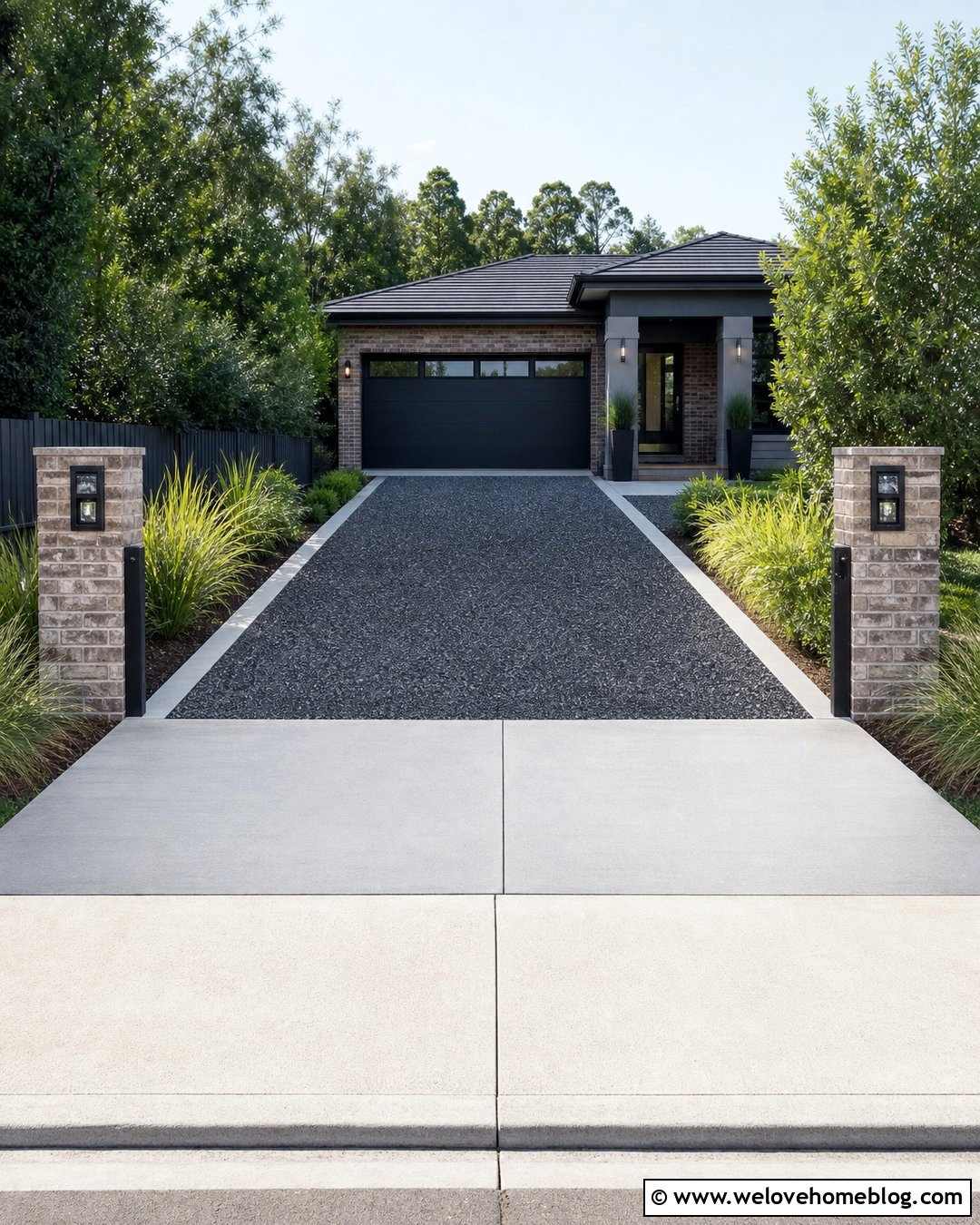
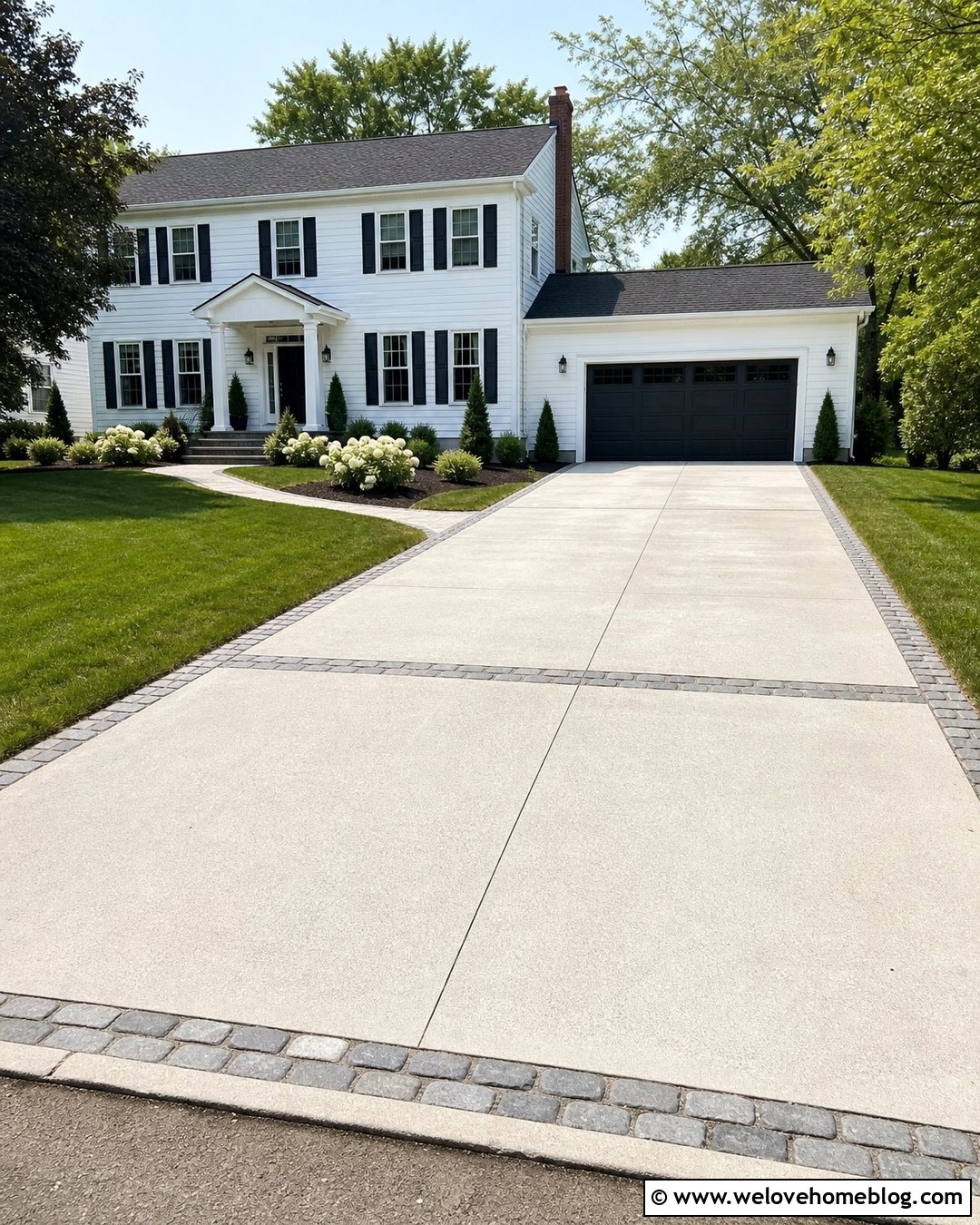
A concrete apron creates a clean entrance where a gravel driveway meets the street. Fill the main driveway with charcoal or medium-gray crushed stone, then frame both sides with narrow poured-concrete edging. Extend the same concrete across the first several feet to form a broad apron. The apron can be broom-finished for a simple appearance or lightly exposed for added texture. Align its edges with masonry pillars, a mailbox, or low entrance walls. Continue planting beds behind these features using ornamental grasses and compact shrubs that will not block sightlines. Near the house, repeat the concrete at the garage threshold. These coordinated transitions make the gravel driveway feel complete from the curb to the parking area.
17. Horseshoe Gravel Driveway With Concrete Border
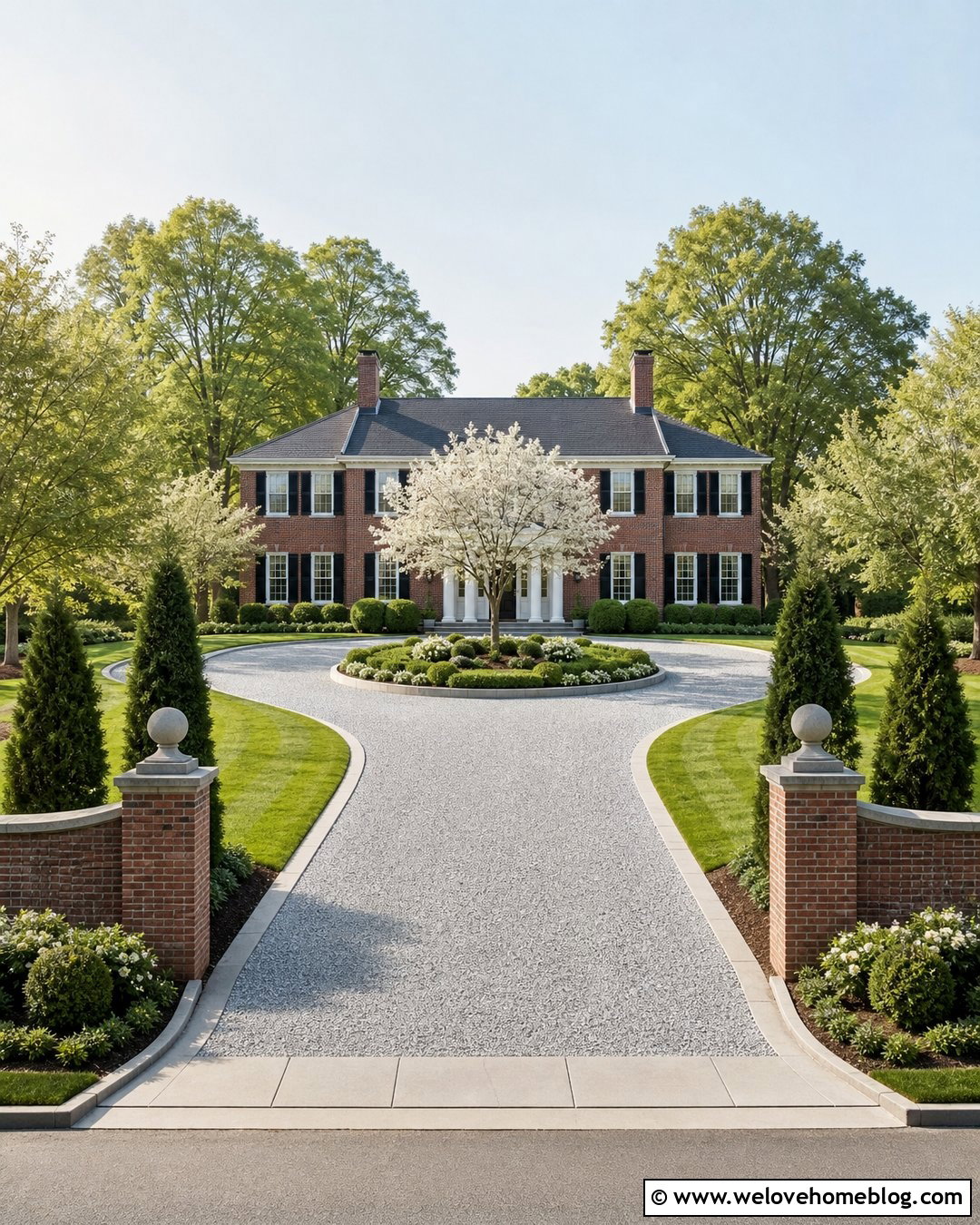
A horseshoe driveway needs consistent edging to connect its two entrances and central landscape. Use light gray crushed gravel for the driving loop, surrounded by smooth concrete curbs in a slightly warmer gray. Keep the outer edging close to the lawn, while raising the inner border around the central planting area. Fill that island with a small flowering tree, clipped evergreens, and low seasonal plants that preserve views across the property. Add matching concrete aprons at both street entrances to create symmetry. If the house has a traditional facade, simple brick or stone pillars can mark each opening. The complete layout provides a formal arrival experience while retaining the softer texture and relaxed character associated with a gravel surface.
18. Desert Gravel Driveway With Concrete Landscape Edging
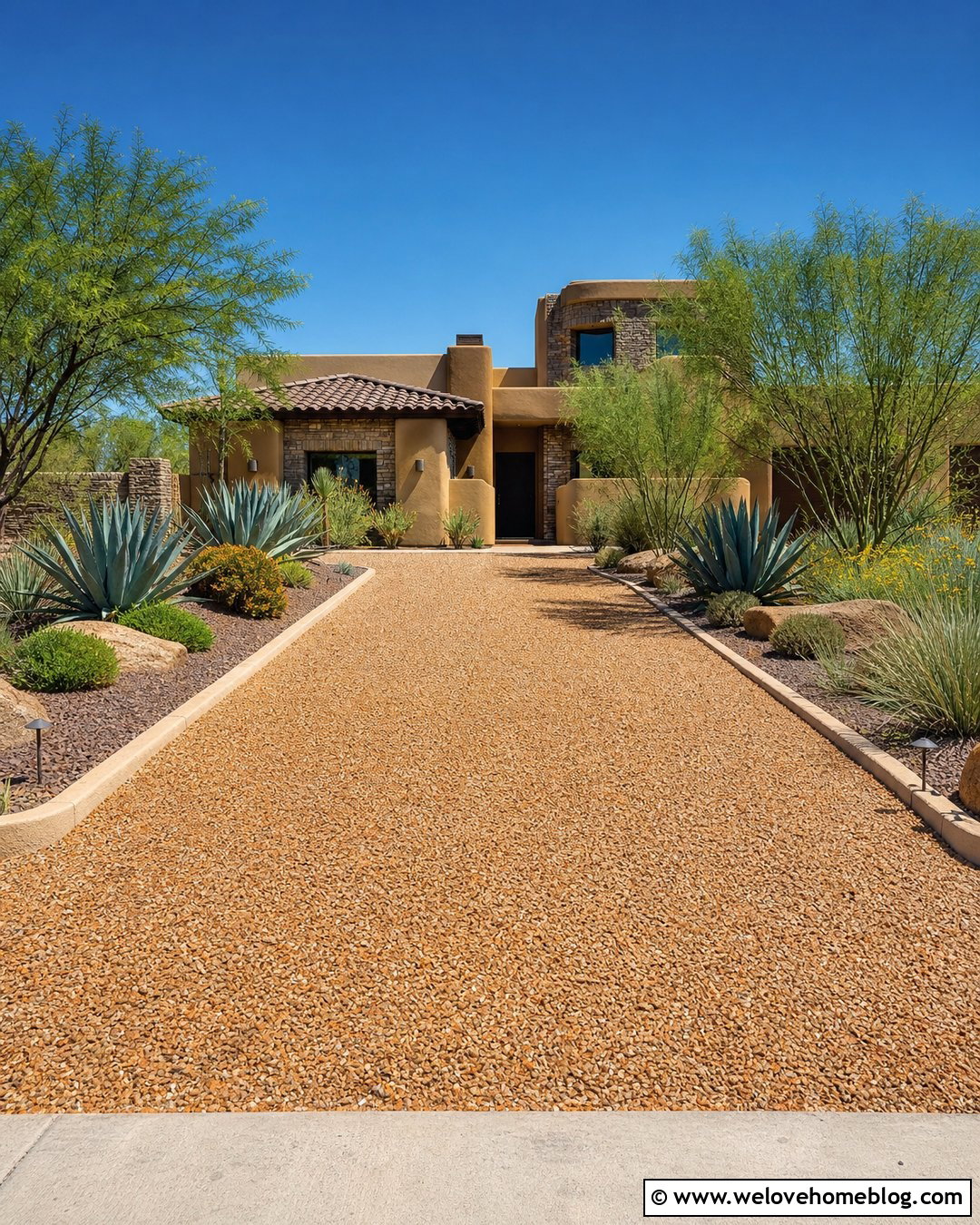
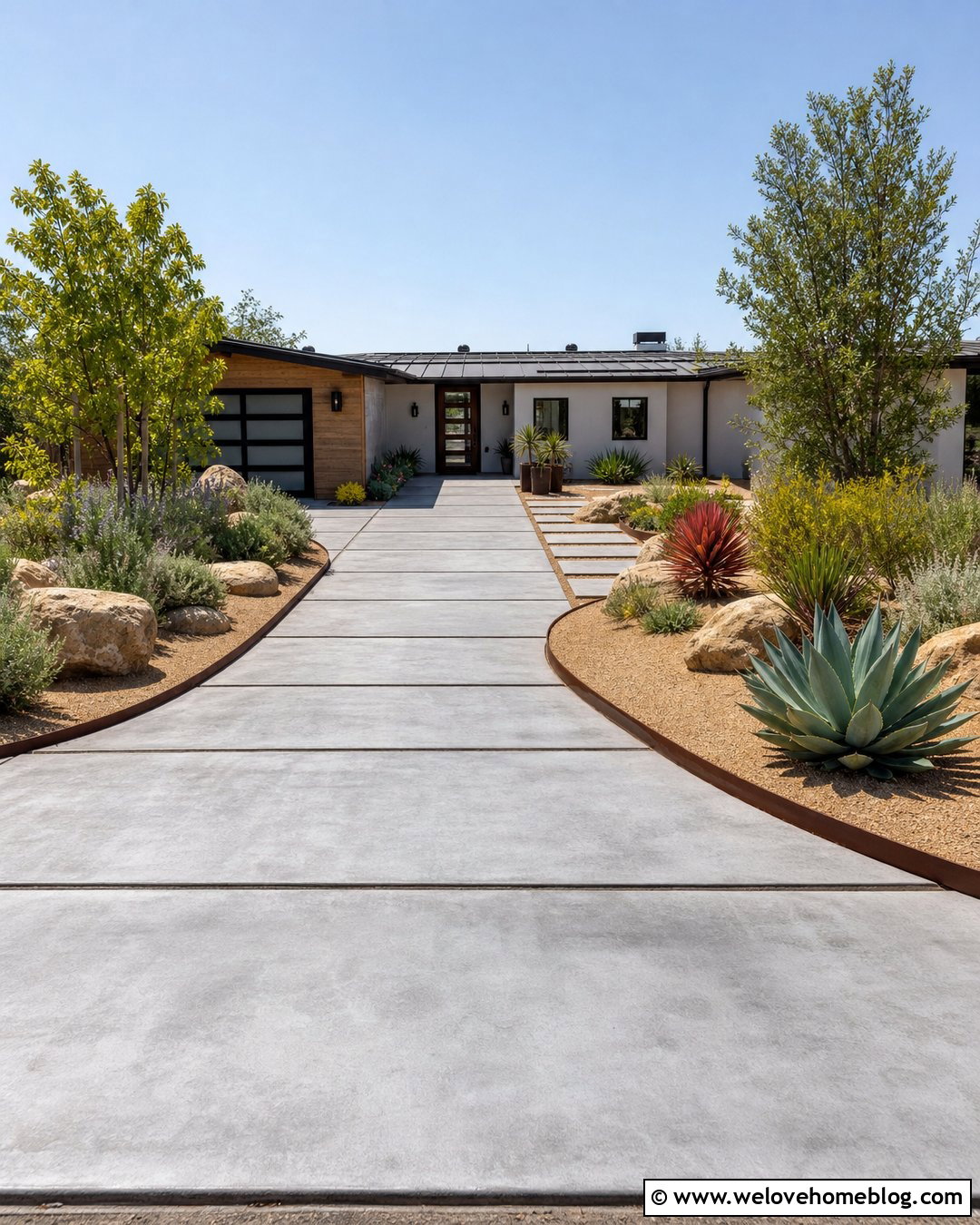
A desert-inspired entrance can combine warm gravel, smooth concrete, and water-conscious planting in one strong composition. Use rust, gold, or buff crushed gravel on a broad straight driveway. Frame it with low sand-colored concrete curbs that continue around nearby planting beds. Add sculptural agave, yucca, desert spoon, ornamental grasses, and carefully placed boulders beyond the border. Keep larger rocks outside the vehicle clearance zone and use smaller gravel mulch within the beds to distinguish them from the driveway. A flat-roofed stucco or Southwestern house makes an ideal background. The restrained plant palette and repeated earth tones allow the concrete edging to organize the landscape without creating a harsh separation between the driveway and arid surroundings.
19. Woodland Gravel Driveway With Natural Gray Concrete Edging
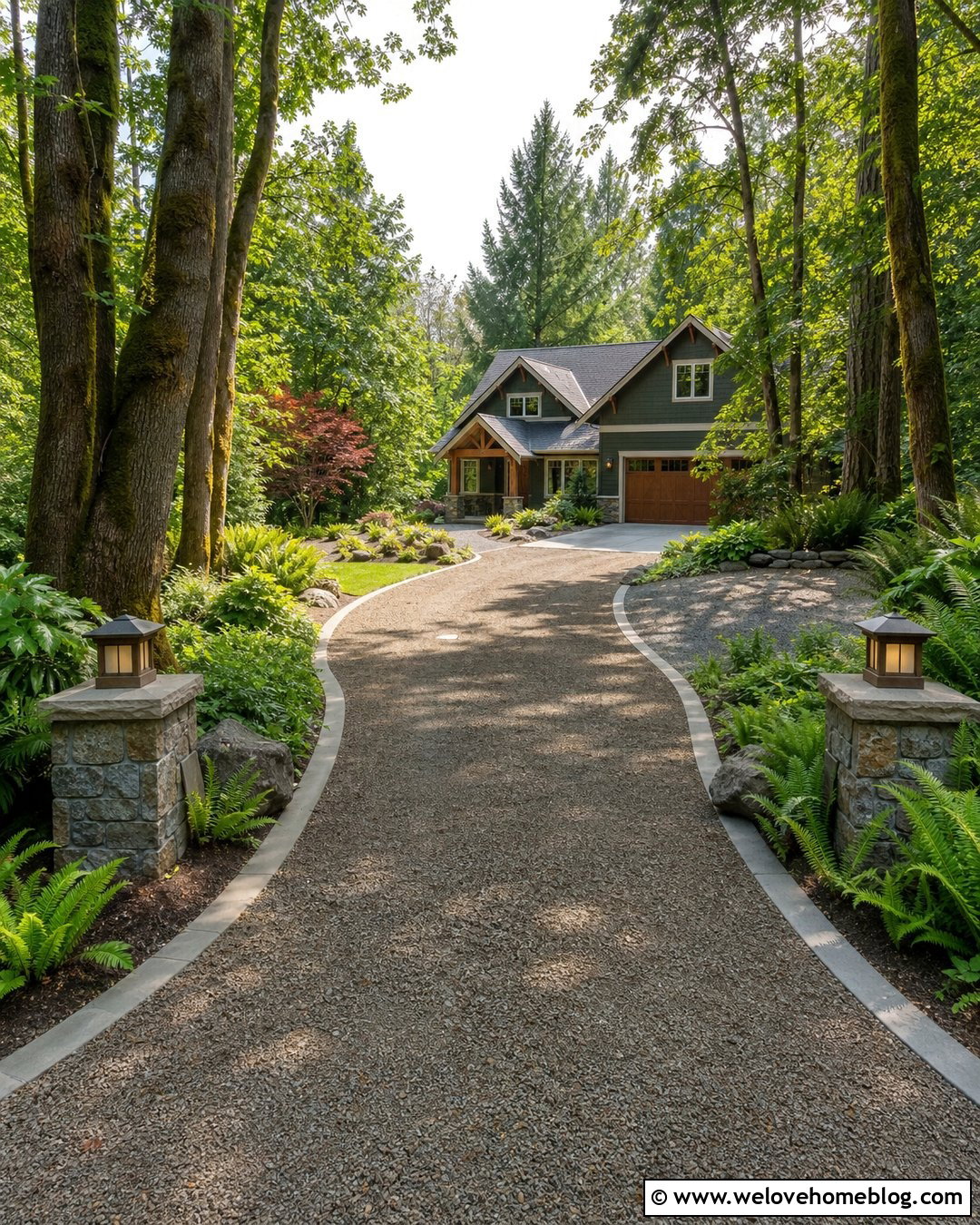
A curved woodland driveway can remain natural-looking while benefiting from a clearly defined concrete edge. Choose brown-gray crushed stone that resembles the colors of the surrounding soil and tree bark. Use narrow poured-concrete curbs in an uncolored natural-gray finish, allowing them to follow the driveway’s gradual bends. Plant ferns, shade-tolerant ground covers, native shrubs, and woodland grasses beyond the border. Avoid placing large tree roots beneath new edging wherever possible. Near the house, widen the driveway into a simple gravel parking court with a concrete garage apron. A Craftsman, cabin-inspired, or contemporary woodland home will suit this restrained palette. The result should feel carefully built yet comfortably integrated with the mature landscape.
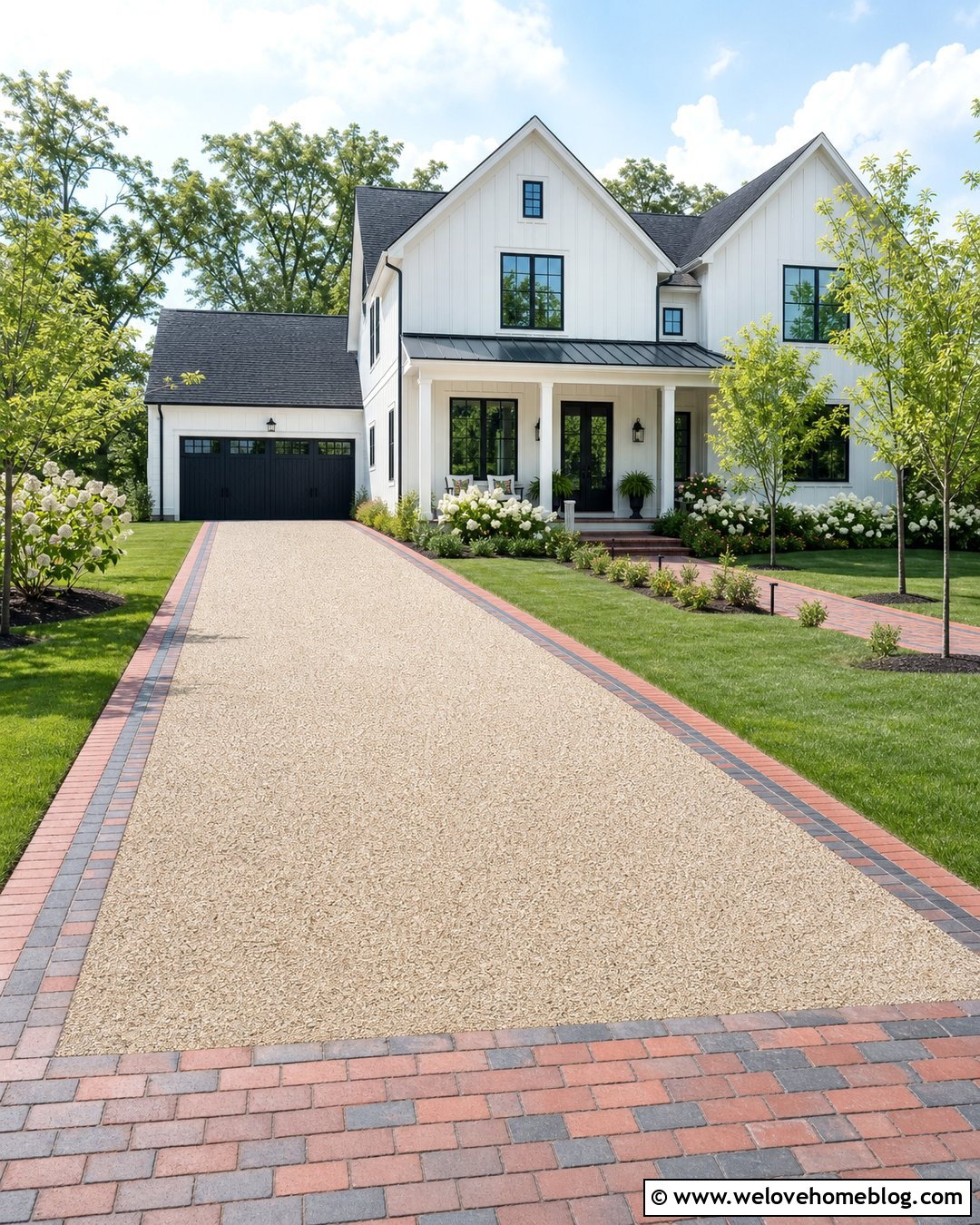
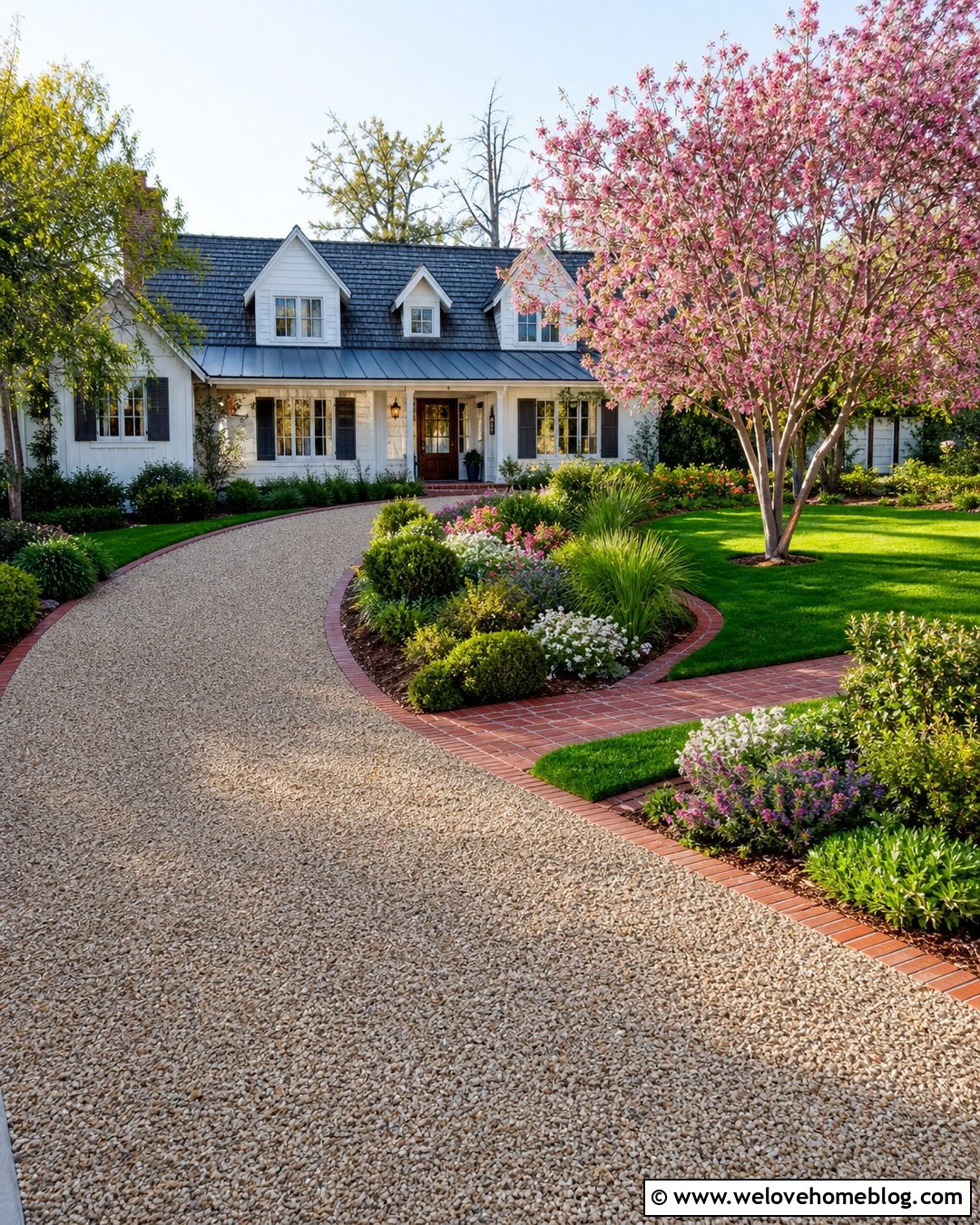
20. Budget Gravel Driveway With Simple Concrete Edging
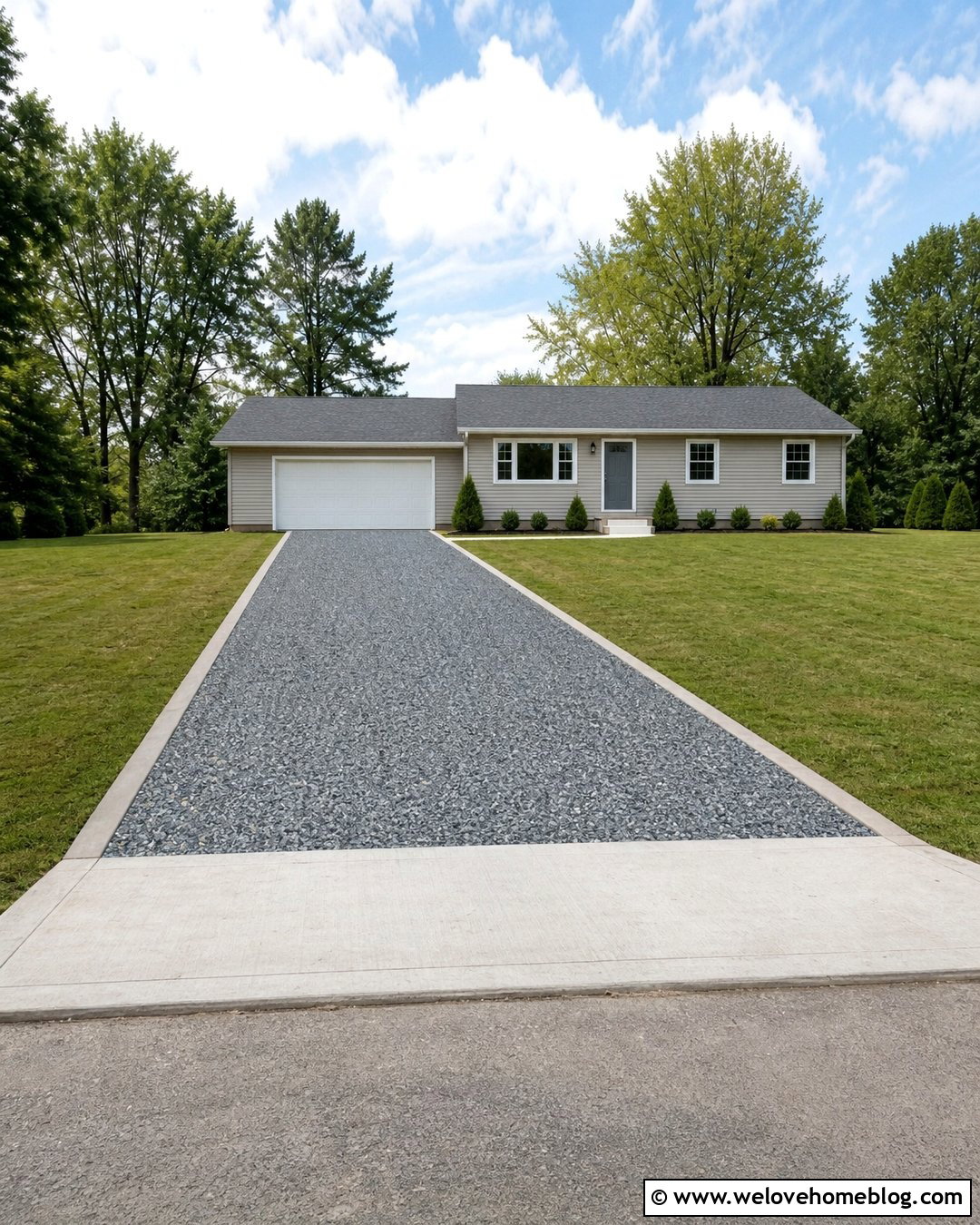
A budget-conscious design can still look finished when it uses uncomplicated materials and a clear layout. Select locally available gray crushed gravel and combine it with plain precast concrete edging or a basic poured curb. Keep the driveway straight to reduce complicated cuts and curves. Use a consistent border width along both sides, then add a small concrete apron only where the driveway meets the street or garage. Seed lawn directly beyond the edging and limit planting to a few durable shrubs near the house. Repeating one gravel color and one concrete finish will make the entrance appear more cohesive. Prioritize proper preparation, drainage, and compaction before adding decorative details that can be installed later as the landscaping budget allows.
Conclusion:
The strongest concrete edging gravel driveway designs balance appearance with everyday function. Start by choosing gravel that complements the house, then select a concrete color, texture, and profile that clearly contains and frames it. Straight borders create a clean modern look, while curved curbs work naturally with garden beds, circular layouts, and wooded settings. Concrete aprons, drainage channels, mow strips, and raised planting edges can also become attractive parts of the overall plan. Before installation, consider vehicle clearance, grading, runoff, maintenance, and local site conditions. Whether your property is compact, rural, formal, or contemporary, these **20 Concrete Edging Gravel Driveway Ideas** offer adaptable starting points for a more polished entrance.

Related posts:

Leave a Reply