
Concrete does not have to mean one flat, gray slab. Today’s best driveways use thoughtful scoring, contrasting borders, exposed stone, stamped textures, planting pockets, and carefully planned shapes to create a finished entrance. Large geometric panels, restrained gray tones, grass joints, and mixed finishes are especially useful for contemporary homes, while warmer colors and brick accents complement traditional architecture. () This guide to **20 concrete driveways pictures ideas** explores complete looks rather than isolated details. Each design combines the concrete finish with an appropriate layout, edging, landscaping, and house style. Whether you need a practical two-car driveway or a decorative circular approach, use these **20 concrete driveways pictures ideas** to plan a cohesive upgrade.

1. Broom Finish Concrete Driveway With Brick Border
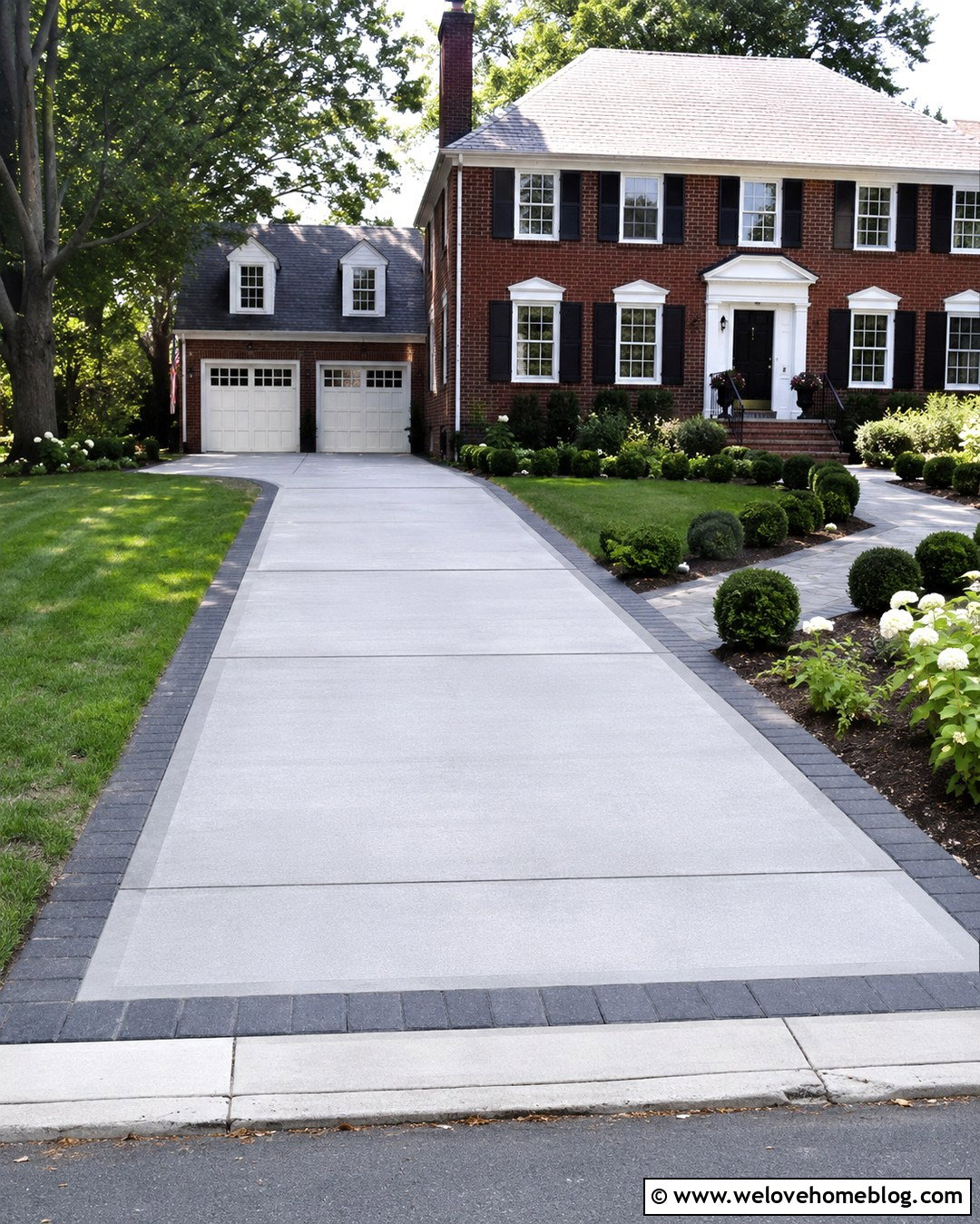
A broom finish gives a concrete driveway subtle texture without making the design feel busy. Fine lines run across the surface, helping a wide driveway look more detailed from the curb. A red or charcoal brick border creates a clean frame and connects the driveway to brick steps, porch columns, or exterior walls. Broom-finished concrete can also be divided into evenly sized rectangular panels for an orderly appearance. This finish is frequently paired with smooth perimeter bands to produce a simple picture-frame effect. () Complete the look with a narrow lawn edge, rounded evergreen shrubs, and a matching brick walkway. This practical combination works particularly well with colonial, ranch, and traditional suburban homes.
2. Modern Concrete Driveway With Grass Strips
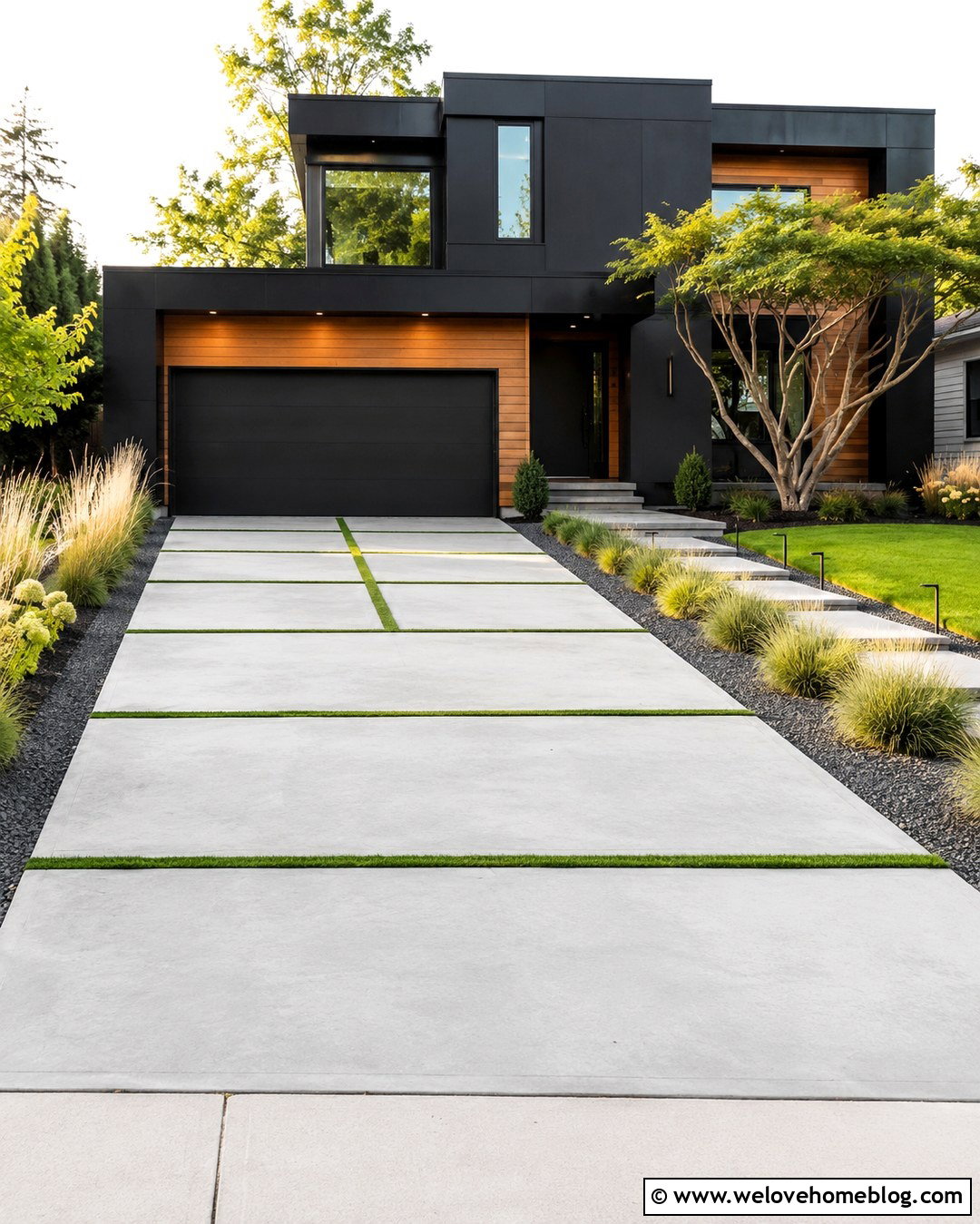
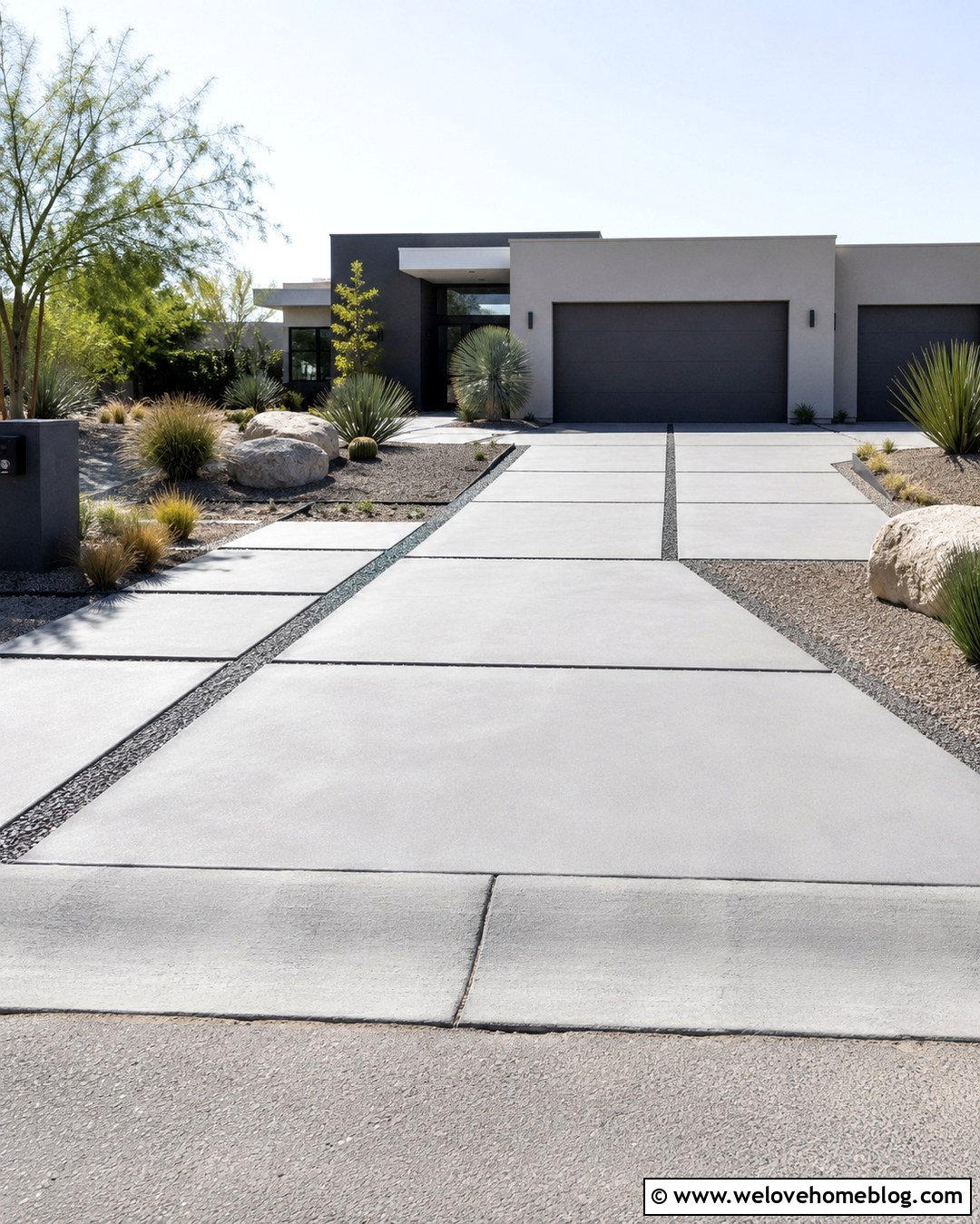
Large concrete slabs separated by narrow grass strips can transform a driveway into a strong architectural feature. The green joints visually break up the hard surface while connecting it to the surrounding lawn. Rectangular panels create the cleanest result, especially when their lines align with the garage doors, walkway, or exterior wall panels. This combination of oversized concrete sections and greenery is commonly used to give modern driveways a lighter, more integrated appearance. () Keep the planting restrained with ornamental grasses, low ground cover, and one sculptural tree near the entrance. Light gray concrete works beautifully against black siding, natural wood, or white stucco. The final driveway feels modern and structured without appearing cold or oversized.
3. Exposed Aggregate Concrete Driveway With Stone Edging
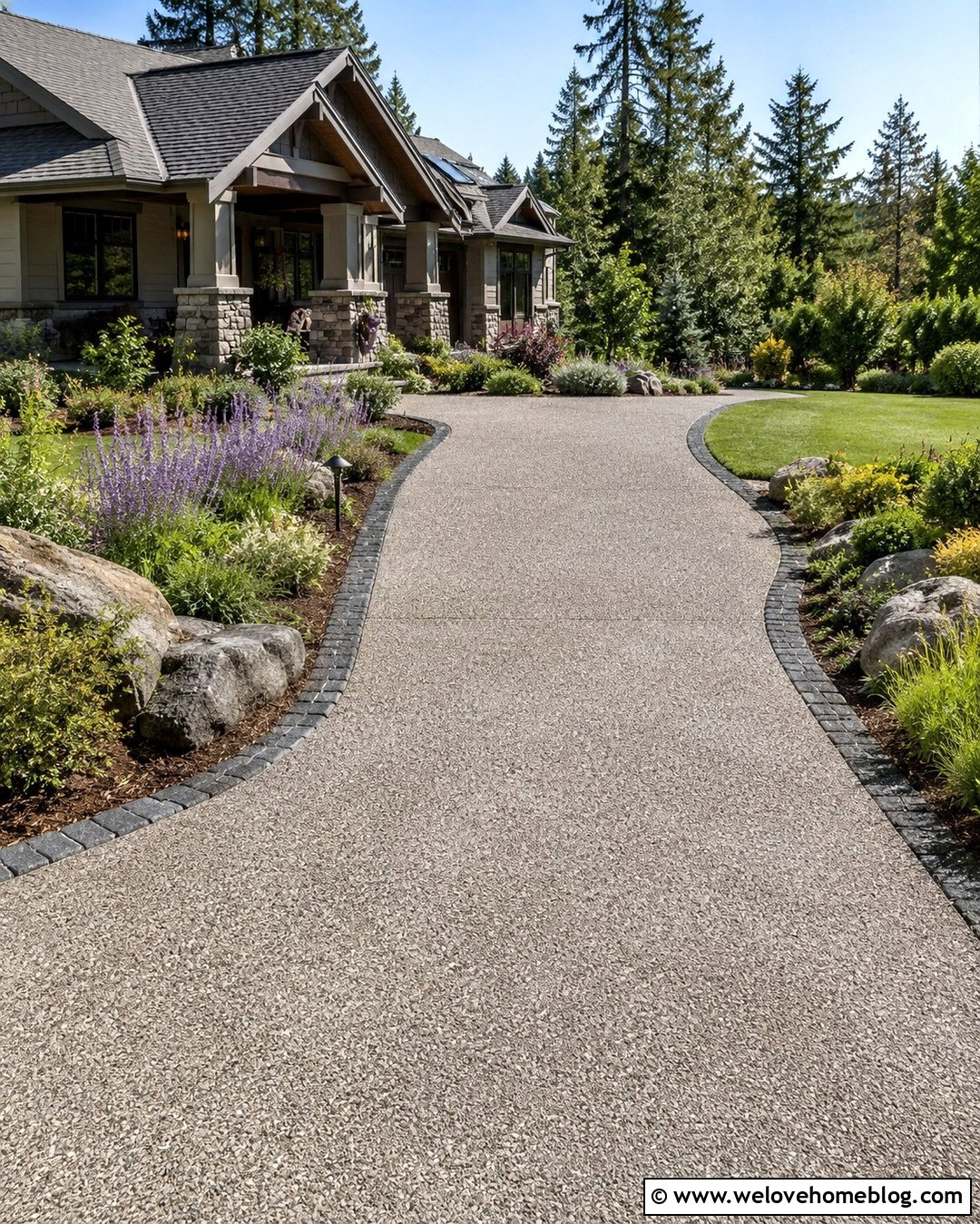
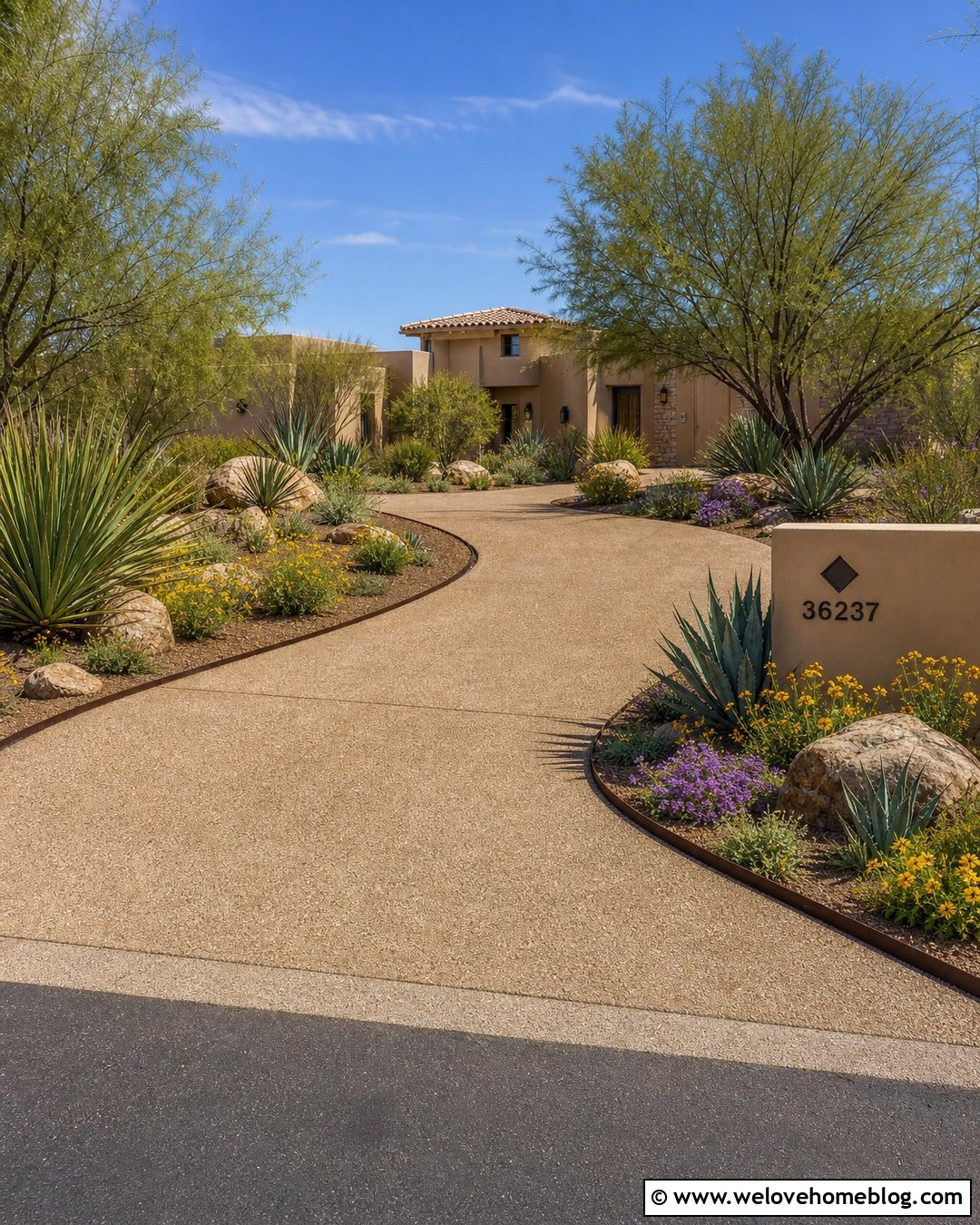
Exposed aggregate reveals small stones within the concrete, creating natural color variation and a pleasantly textured appearance. It is an attractive choice for a driveway that needs to coordinate with stone walls, wooded landscaping, or an earth-toned home. Use a gently curved layout to emphasize the organic character of the surface. Dark granite cobbles or smooth concrete bands can contain the edges and provide a more intentional finish. Exposed aggregate is one of several established decorative treatments used for exterior concrete surfaces. () Around the driveway, combine native shrubs, flowering perennials, and landscape boulders in relaxed planting beds. The finished look feels refined but not overly formal, making it suitable for craftsman, rustic, and mountain-inspired houses.
4. Stamped Concrete Driveway With Slate Pattern
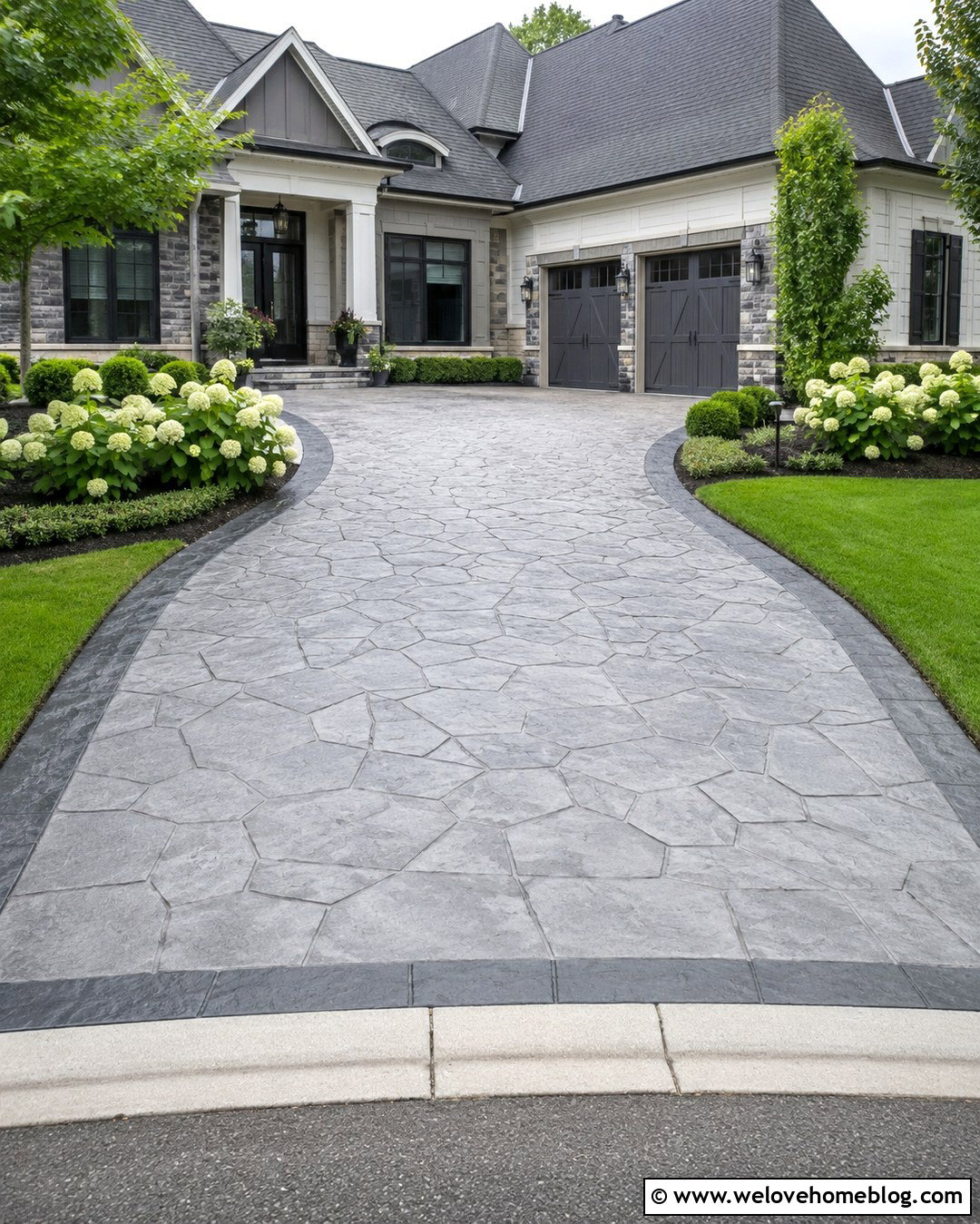
Stamped concrete can recreate the visual rhythm of slate while maintaining a continuous concrete surface. Choose a large random-slate pattern in medium gray, then add a charcoal stamped border to define the driveway. A soft curve prevents the repeated pattern from feeling rigid and helps the entrance flow naturally toward the garage. Stamping is widely used to introduce pattern and texture to new or resurfaced concrete driveways. () Pair the surface with layered beds containing hydrangeas, boxwoods, and low ground cover. Stone porch details or gray siding will help tie the colors together. Because sealed decorative surfaces may look different under changing conditions, discuss texture, color samples, drainage, and maintenance requirements with an experienced local installer before choosing the final treatment.
5. White Concrete Driveway With Black Pebble Joints
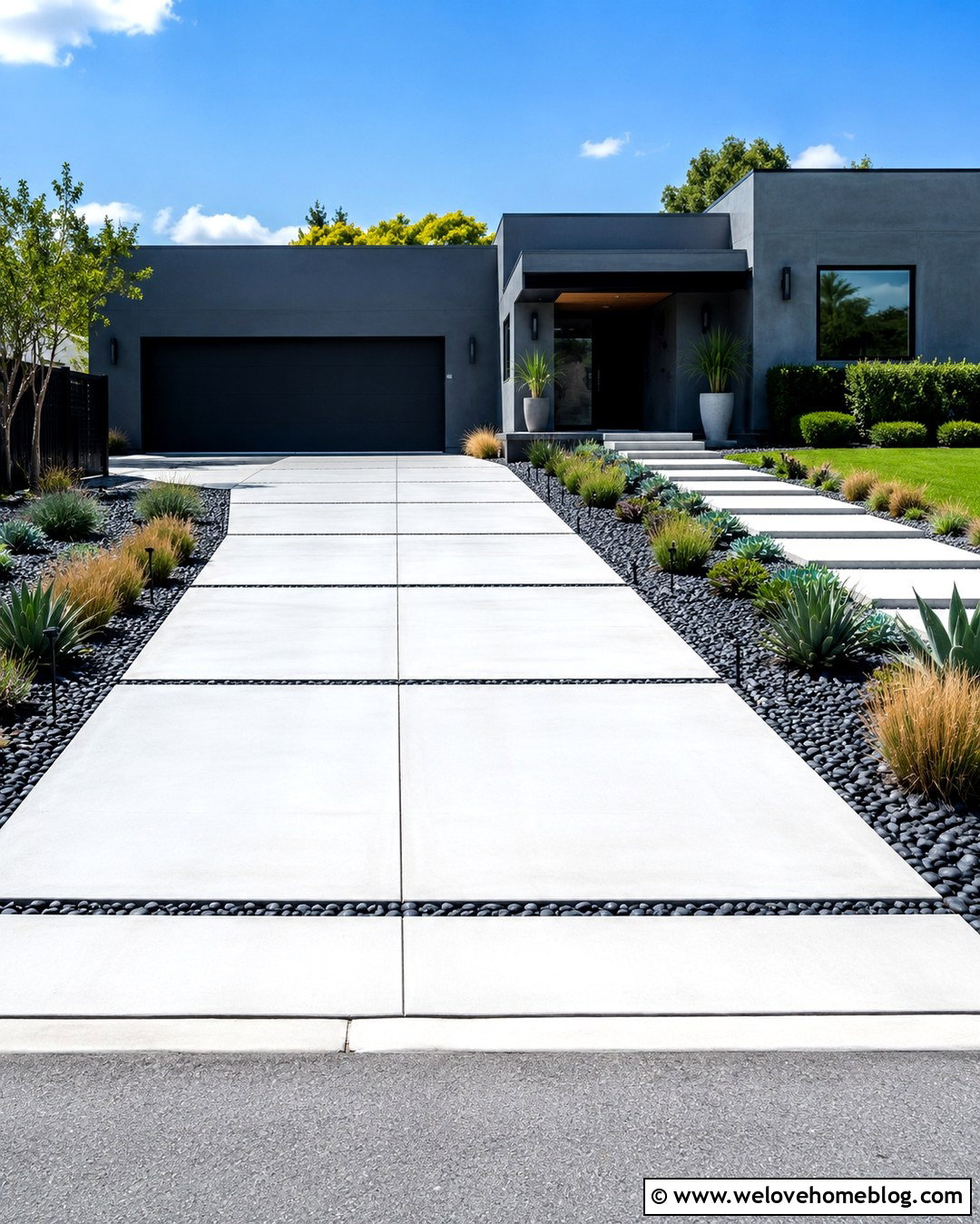
Bright concrete panels separated by black pebble joints create an eye-catching driveway for a minimalist home. The contrast makes every slab visible, so precise proportions and consistent spacing are important. Use broad rectangular panels on a straight approach, with the joints running across the driveway like clean graphic lines. A border of matching black river rock can continue around drought-tolerant planting beds. Add blue-green grasses, compact agaves, and neatly clipped shrubs without overcrowding the composition. A stepping-stone walkway in the same white concrete can branch toward the front door. Against a dark modern facade, the pale driveway becomes a crisp focal point. Against white stucco, the black joints provide enough definition to prevent the surface from disappearing into the architecture.
6. Tan Concrete Driveway For A Modern Farmhouse
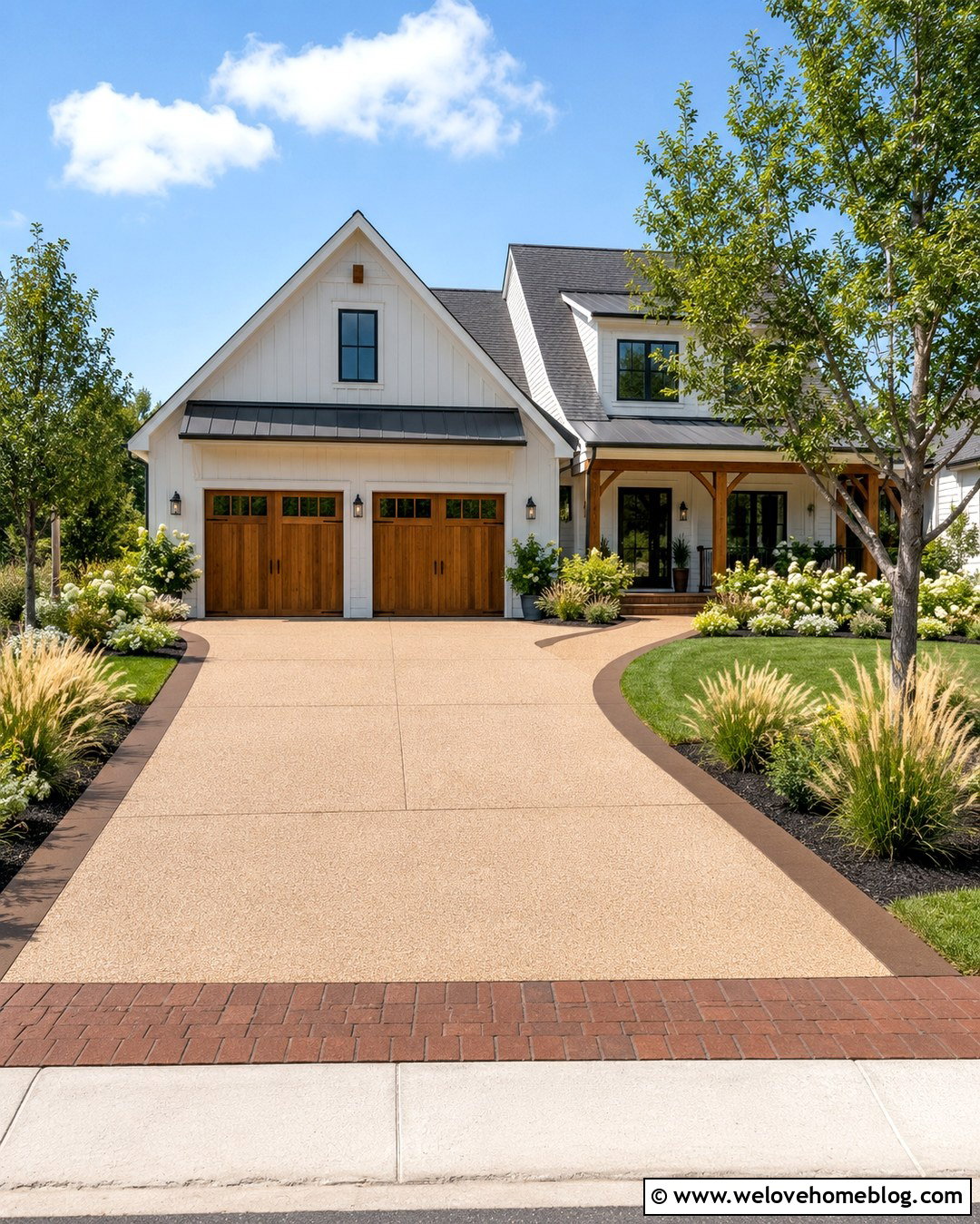
Warm tan concrete softens the entrance to a modern farmhouse and coordinates naturally with creamy siding, wood doors, and stone foundation details. A light sand finish keeps the surface understated, while long rectangular joints add structure. Border the driveway with darker brown concrete or clay brick pavers to create a visual connection with the home’s warmer materials. A gentle flare at the street makes the entrance more welcoming without requiring a fully circular layout. Use informal landscaping with hydrangeas, fountain grasses, white flowering perennials, and one or two small ornamental trees. A concrete walkway can curve away from the driveway toward a broad front porch. This complete look balances farmhouse warmth with the clean lines expected in an updated exterior.
7. Charcoal Concrete Driveway With Geometric Scoring
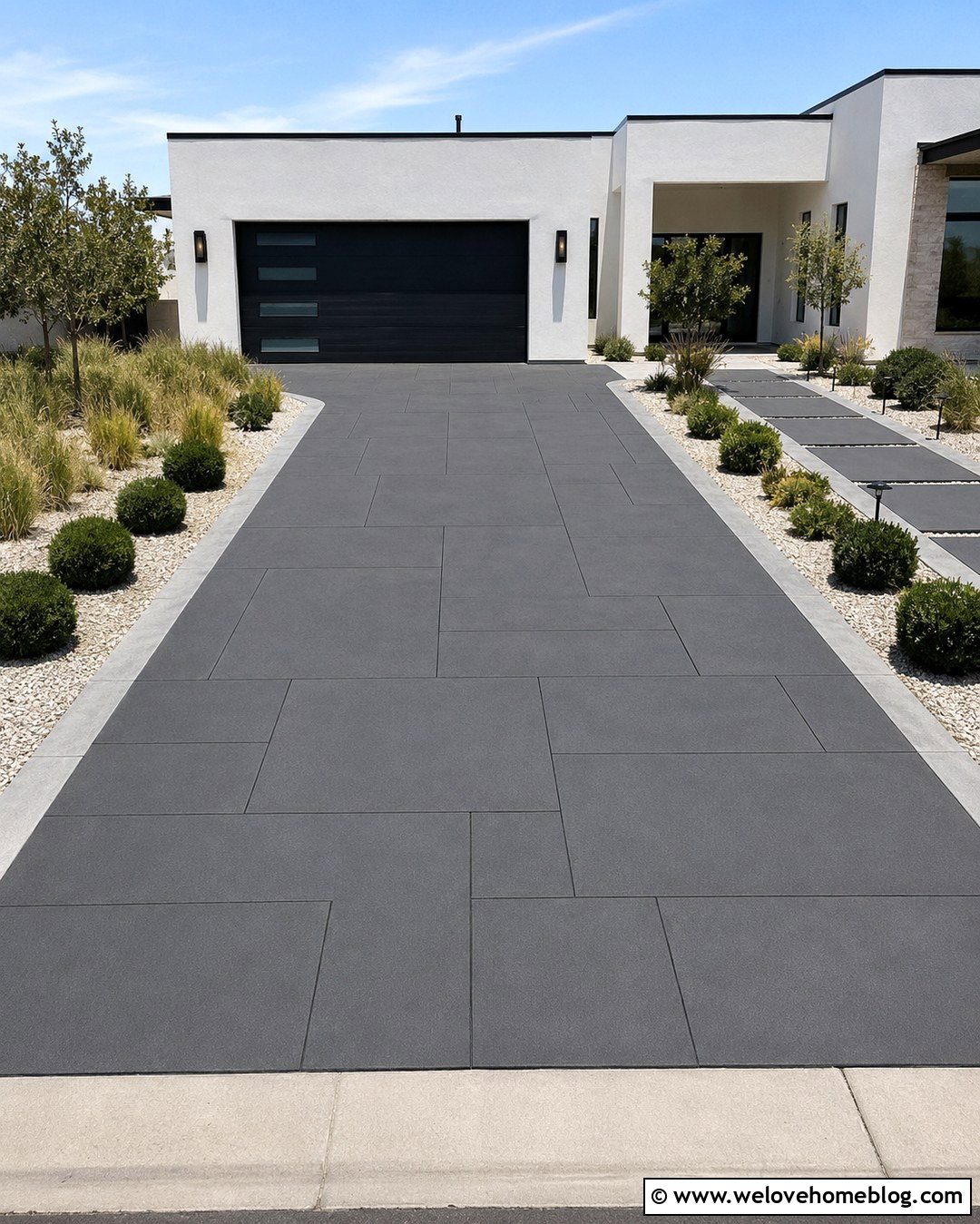
Dark charcoal concrete gives a wide driveway a bold, contemporary presence. Rather than leaving it as one uninterrupted area, use saw-cut lines to create large squares or offset rectangles. The pattern adds visual order and can help relate the driveway to modern windows, garage doors, and rooflines. Frame the surface with a narrow strip of light gray concrete for a sharp contrast. Sparse planting works best around such a strong material, so consider low grasses, clipped evergreen mounds, and pale decorative rock. A wide concrete walkway should repeat the driveway’s joint pattern. This dark finish looks particularly striking beside light stucco or natural cedar. Request full-size color samples, since surrounding materials and bright sunlight can influence how charcoal concrete appears.
8. Salt Finish Concrete Driveway For A Coastal Home
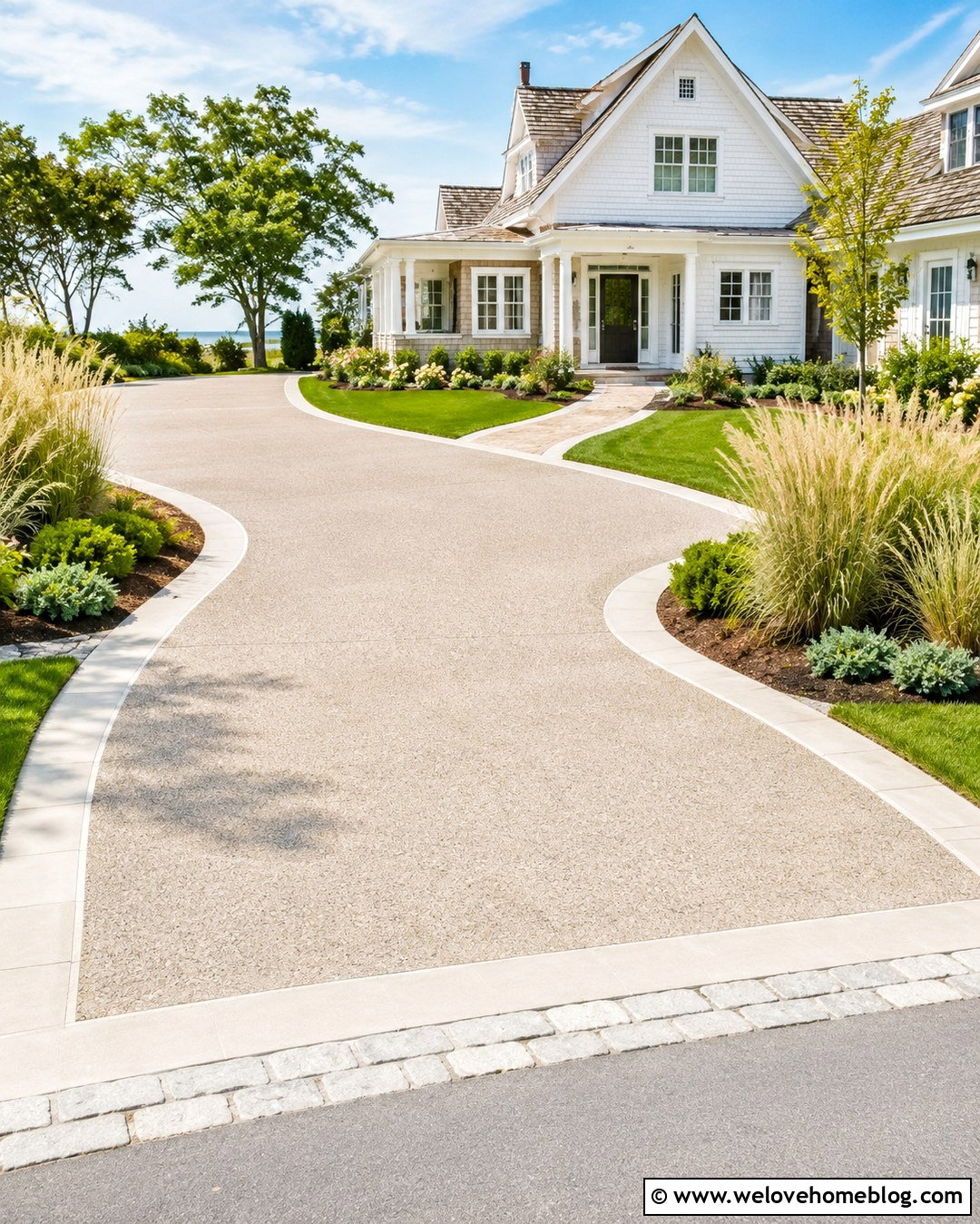
A light salt finish can give concrete a gently mottled texture that suits relaxed coastal architecture. Use a pale gray or sandy beige color rather than a stark white tone, which may create excessive visual glare in an open front yard. A wide, slightly curved driveway feels casual and allows the landscape to soften both edges. Border it with smooth cream-colored concrete bands or light stone cobbles. Plant the surrounding beds with ornamental grasses, compact evergreen shrubs, and other species appropriate for the property’s local climate. A matching path can lead toward a covered porch with weathered shingles or white siding. The overall design should feel breezy and uncluttered, with the concrete, house colors, and loose planting working together instead of competing for attention.
9. Swirl Finish Concrete Driveway With Curved Edges
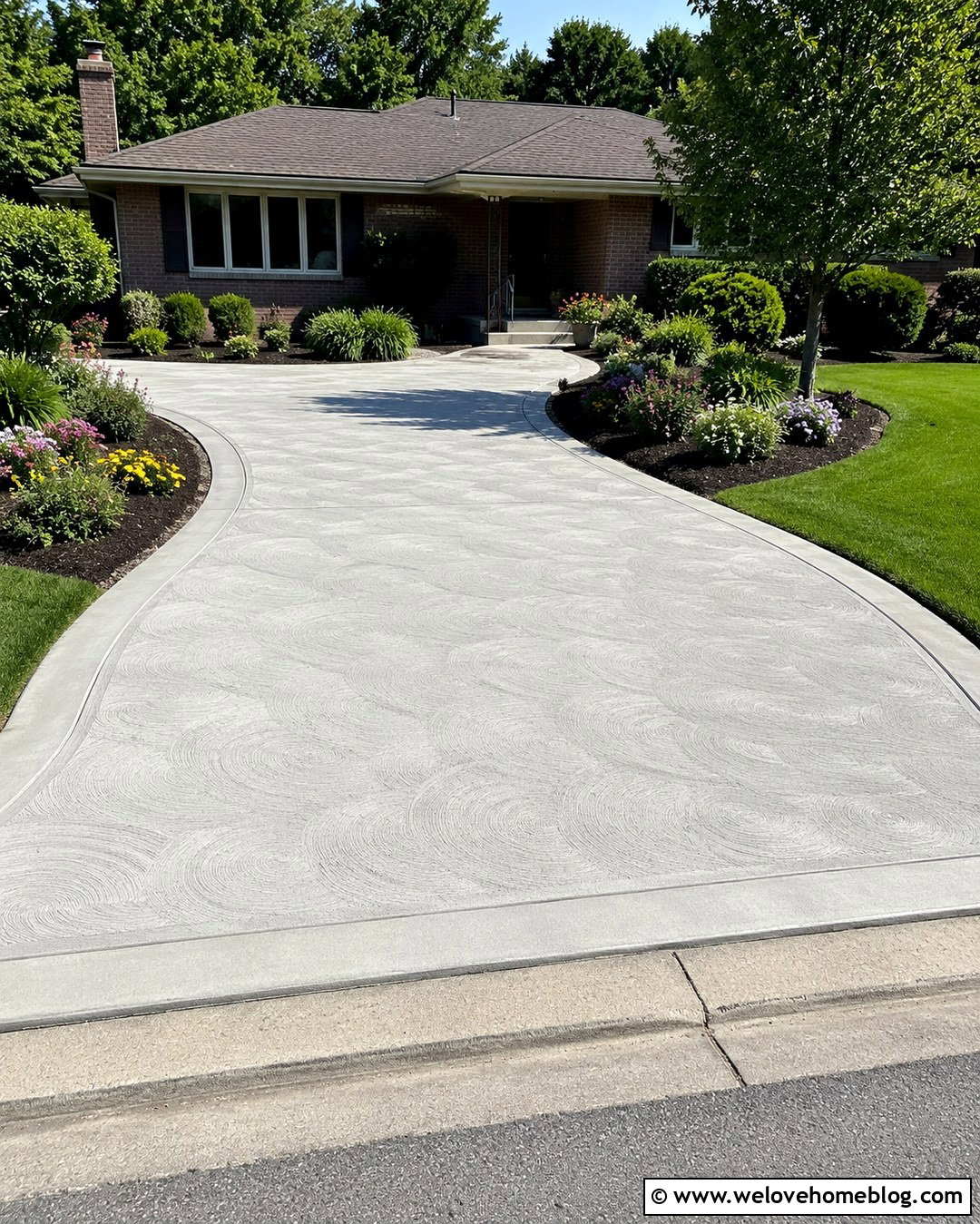
Sweeping trowel marks add movement to plain concrete without imitating another material. The effect is especially appropriate for a curved driveway because the surface texture can follow the direction of travel. Keep the concrete light or medium gray, then use a smooth border to separate the decorative field from the lawn. Swirled textures can range from coarse to relatively smooth depending on the finishing method and tools used. () Rounded planting beds will reinforce the driveway’s shape. Fill them with low shrubs, flowering perennials, and a small shade tree positioned away from critical sightlines. On a ranch home, this combination introduces visual interest while preserving a simple, approachable character. Repeat the curved forms in the walkway for a unified front yard.

10. Scored Concrete Driveway For A Midcentury Home
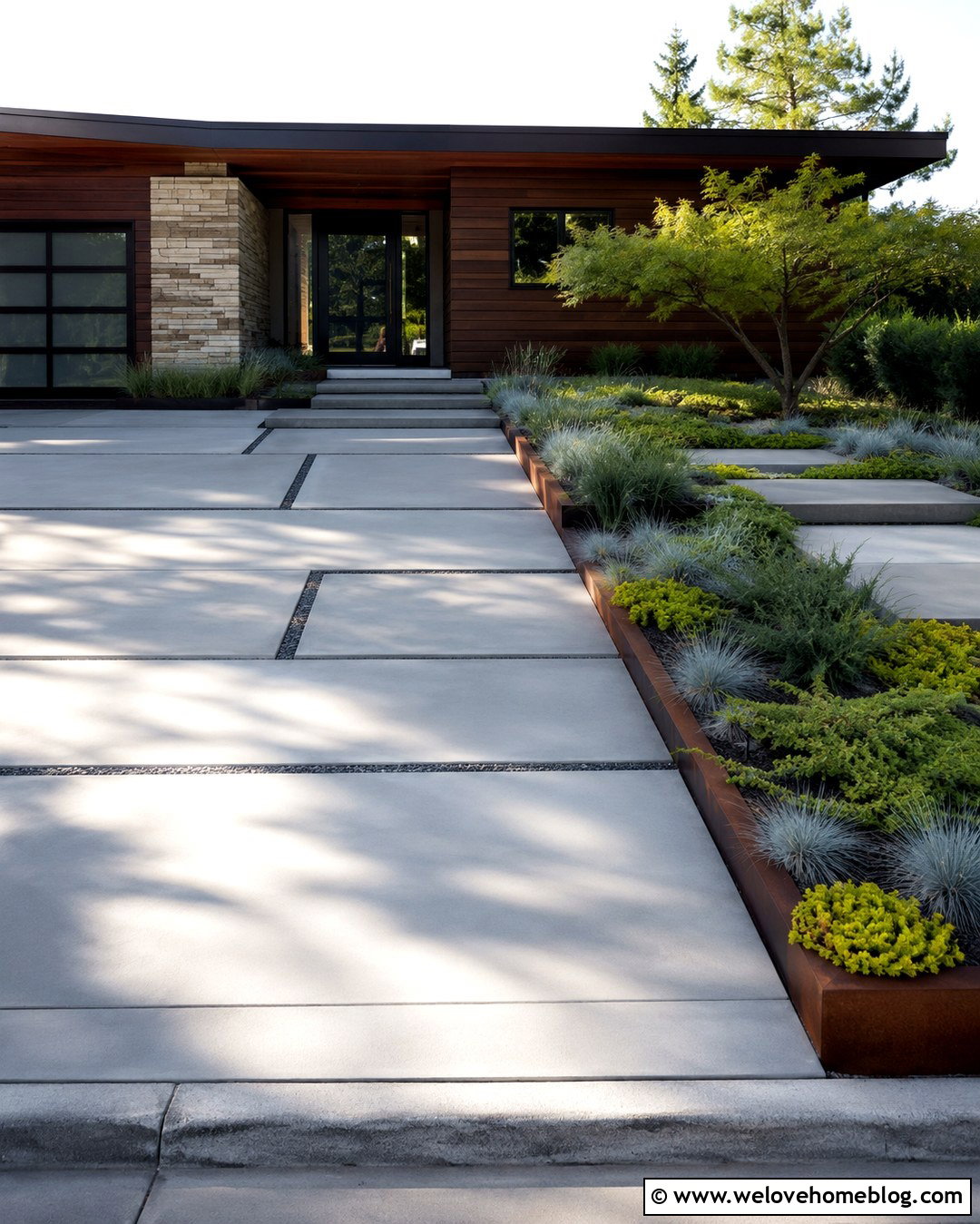
A scored concrete driveway complements the strong horizontal lines and simple geometry of a midcentury home. Divide smooth light gray concrete into broad offset rectangles rather than small squares. Narrow bands of dark gravel between selected sections can emphasize the pattern without making the driveway difficult to read. Add a weathered steel edge along the planting beds for another crisp architectural detail. The landscape might include blue fescue, sedum, low junipers, and one sculptural ornamental tree. Keep the walkway integrated with the driveway by repeating the same panel sizes toward the front entrance. Natural wood siding, stone veneer, and a brightly painted door can supply warmth. The completed design feels faithful to midcentury architecture while remaining practical for an everyday suburban property.
11. Concrete Driveway With Cobblestone Apron
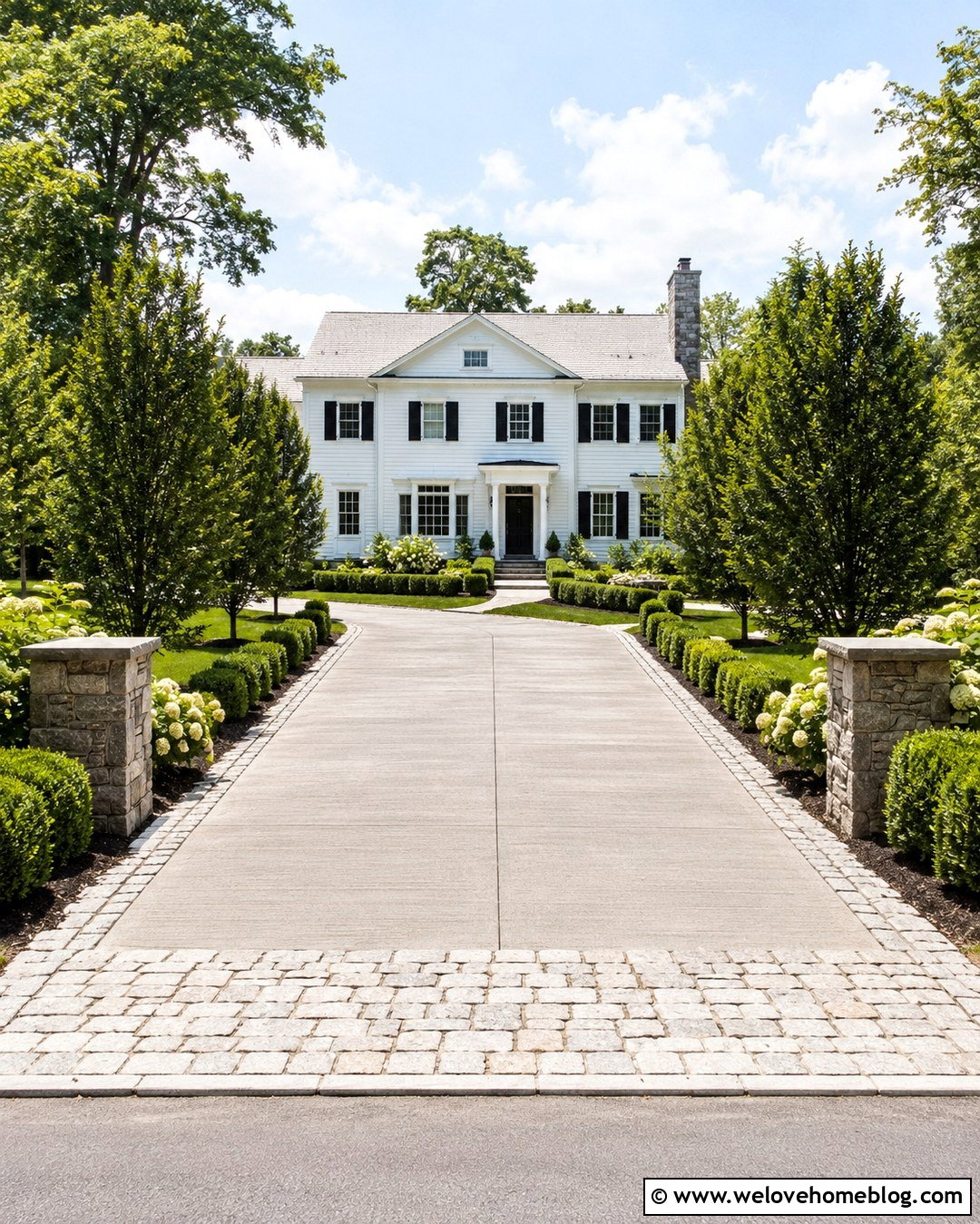
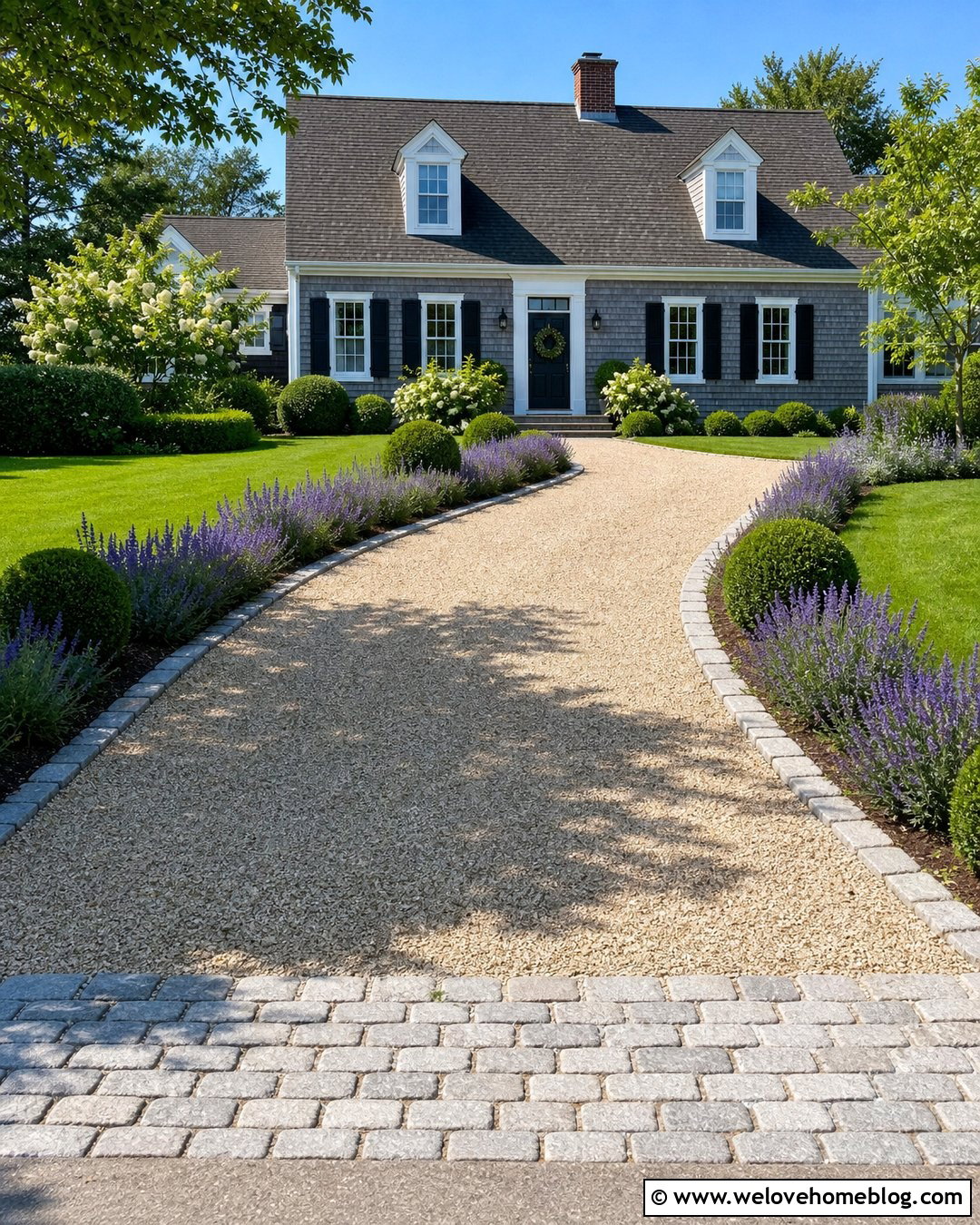
A cobblestone apron gives a concrete driveway a defined transition at the street and introduces a traditional material without covering the entire approach. Use smooth or lightly broomed gray concrete for the main surface, then install a broad band of granite cobbles across the entrance. Continue a single cobblestone row along both edges to frame the driveway. A straight, symmetrical layout suits a colonial home, particularly when aligned with matching brick or stone pillars. Formal landscaping can include clipped boxwoods, upright evergreens, and balanced planting beds near the house. Keep the middle portion relatively open so the apron remains the focal point from the curb. Repeating cobblestone beside the front walkway will make the driveway and entrance appear carefully coordinated rather than separately designed.
12. Concrete Ribbon Driveway With Gravel Center
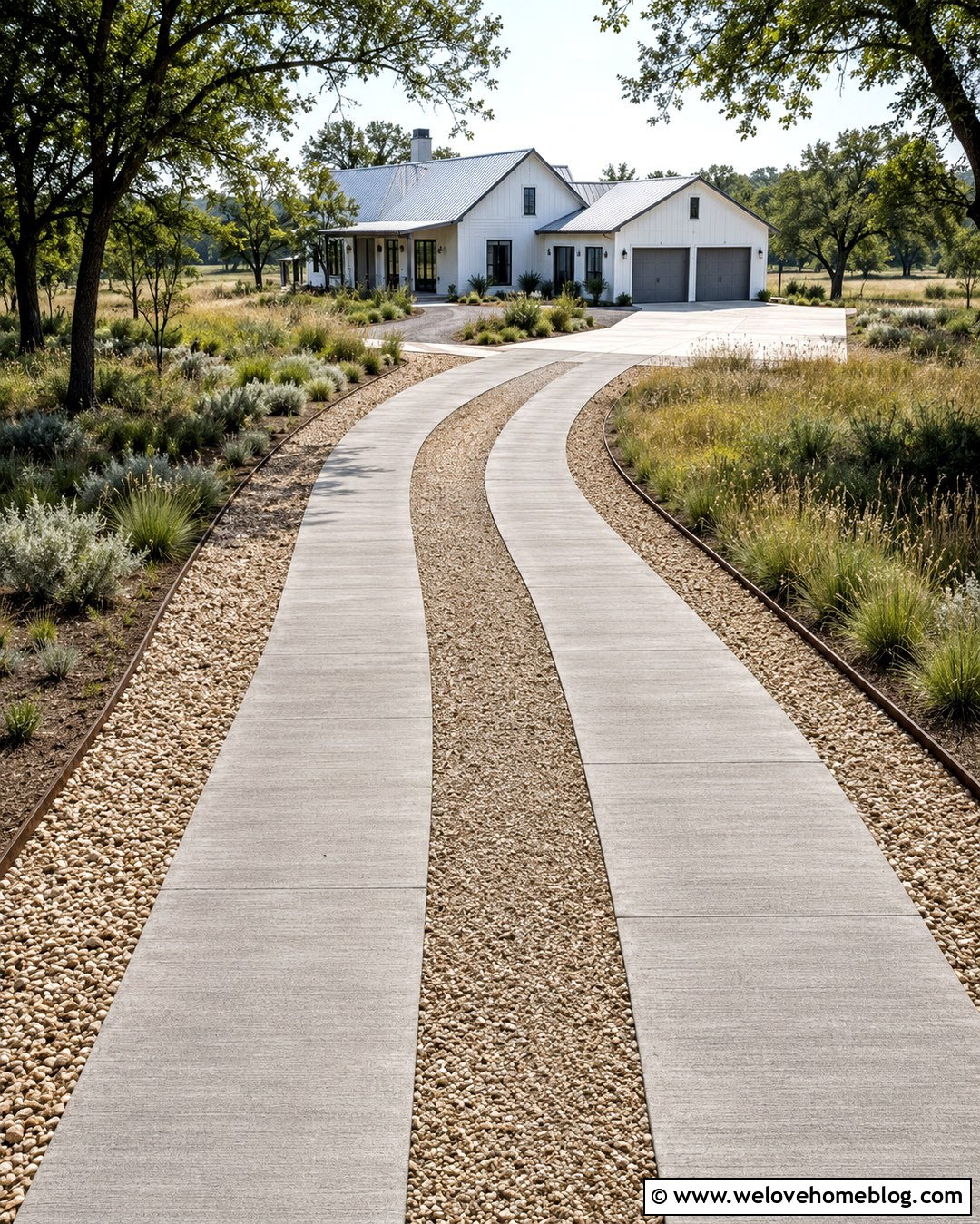
Two poured-concrete tracks with a gravel center can reduce the visual weight of a long driveway. This layout is most convincing when the tracks are generously proportioned and follow a simple straight or gently curving route. Choose medium-gray broom-finished concrete with compacted decorative gravel between the ribbons and along the outer edges. Steel edging can maintain clean boundaries between the different materials. Frame the approach with meadow-inspired grasses, low shrubs, and occasional shade trees. Near the garage, transition into a full concrete parking pad for easier maneuvering and a more finished appearance. The combination suits a rural contemporary home, updated cottage, or modern farmhouse. Careful planning is essential so the wheel paths, drainage, turning space, and gravel transitions match the property’s actual use.
13. Concrete Driveway With Raised Garden Beds
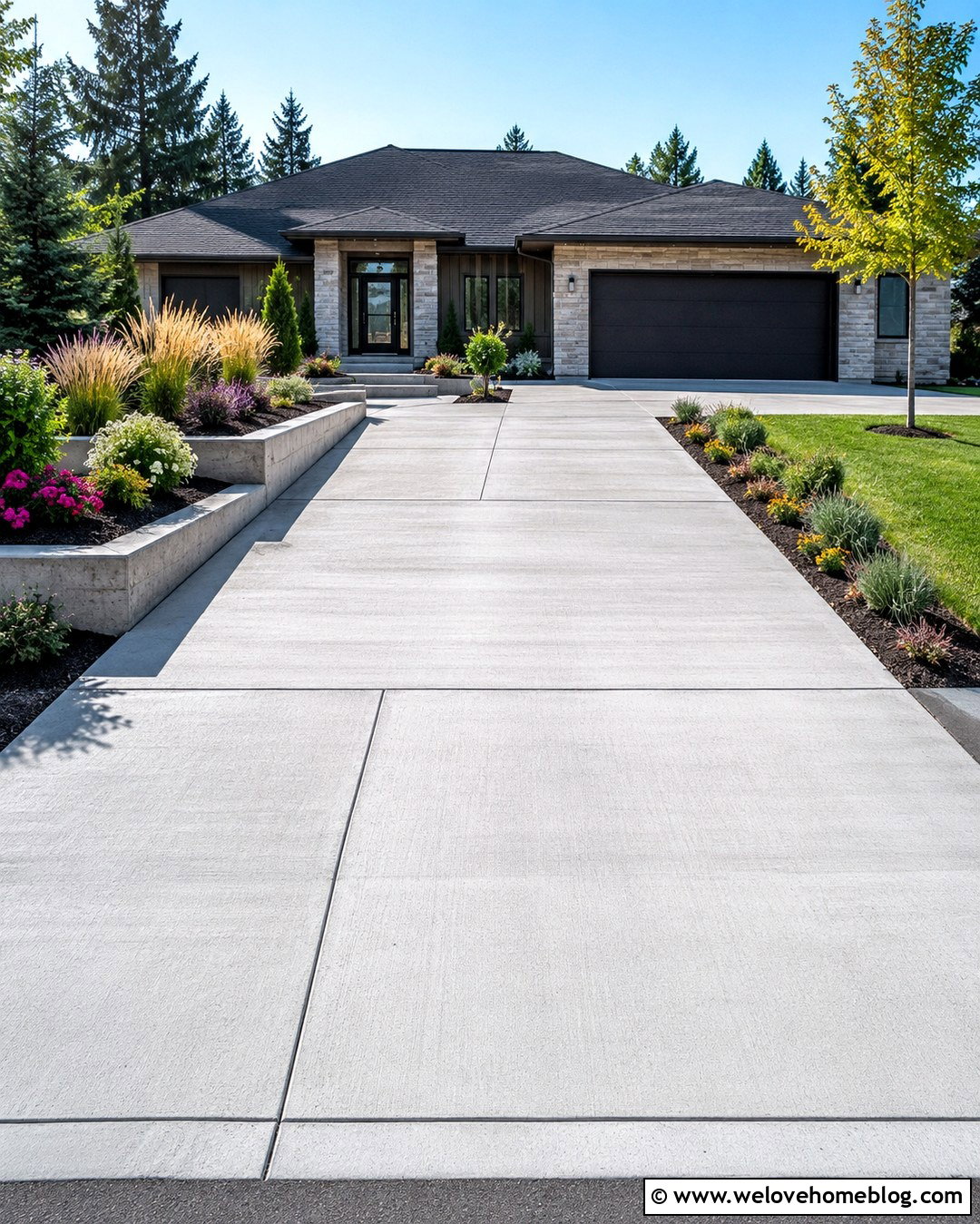
Raised planting beds can make a broad concrete driveway feel more connected to the front yard. Begin with a straight, light gray broom-finished surface divided into large, balanced panels. Along one edge, build low rectangular beds from matching concrete or natural stone. Fill them with layered evergreen shrubs, ornamental grasses, and seasonal color chosen for the local growing conditions. A smaller bed near the garage can visually balance the longer border without narrowing the usable driveway. Add a separate walkway between the planting and the house so visitors are not forced to walk behind parked vehicles. The repeated concrete material creates unity, while plants soften its straight lines. This layout works particularly well for contemporary ranch homes and suburban properties with shallow, wide front yards.
14. Curved Concrete Driveway With Retaining Wall
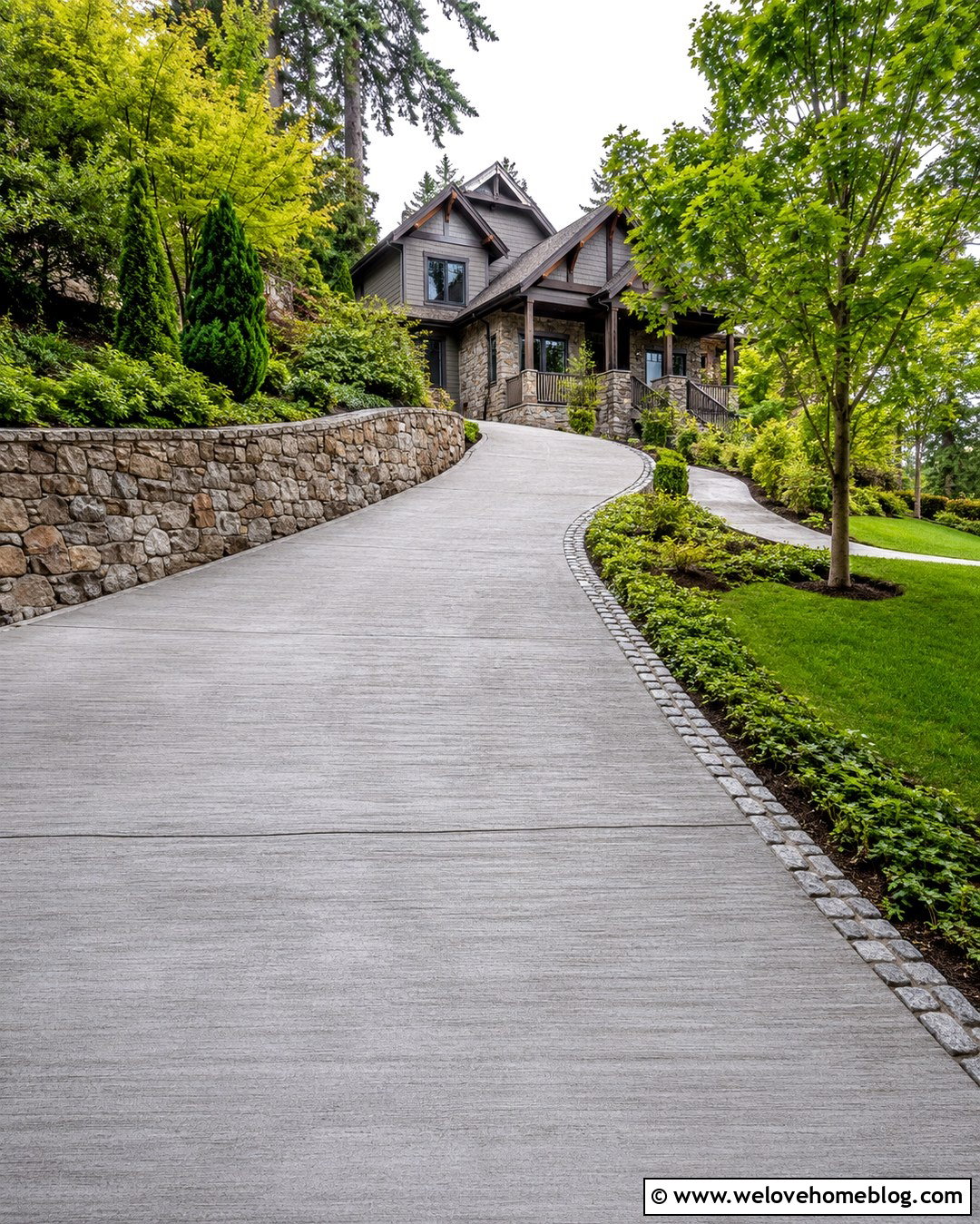
A sloped front yard often benefits from a curved concrete driveway paired with a low retaining wall. The curve can make the climb toward the house appear more gradual, while the wall creates defined planting space on the higher side. Choose lightly textured concrete in a neutral gray, then cap the wall with stone that matches the home’s facade. Use a narrow cobblestone band along the inner curve to make the driveway shape more visible. Plant trailing ground cover near the wall, with upright shrubs and small trees farther back. On the opposite edge, maintain an open lawn or low planting to preserve visibility. Drainage, slope, wall construction, and vehicle turning requirements should be evaluated professionally so the attractive layout also performs properly on the site.


15. Circular Concrete Driveway With Center Island
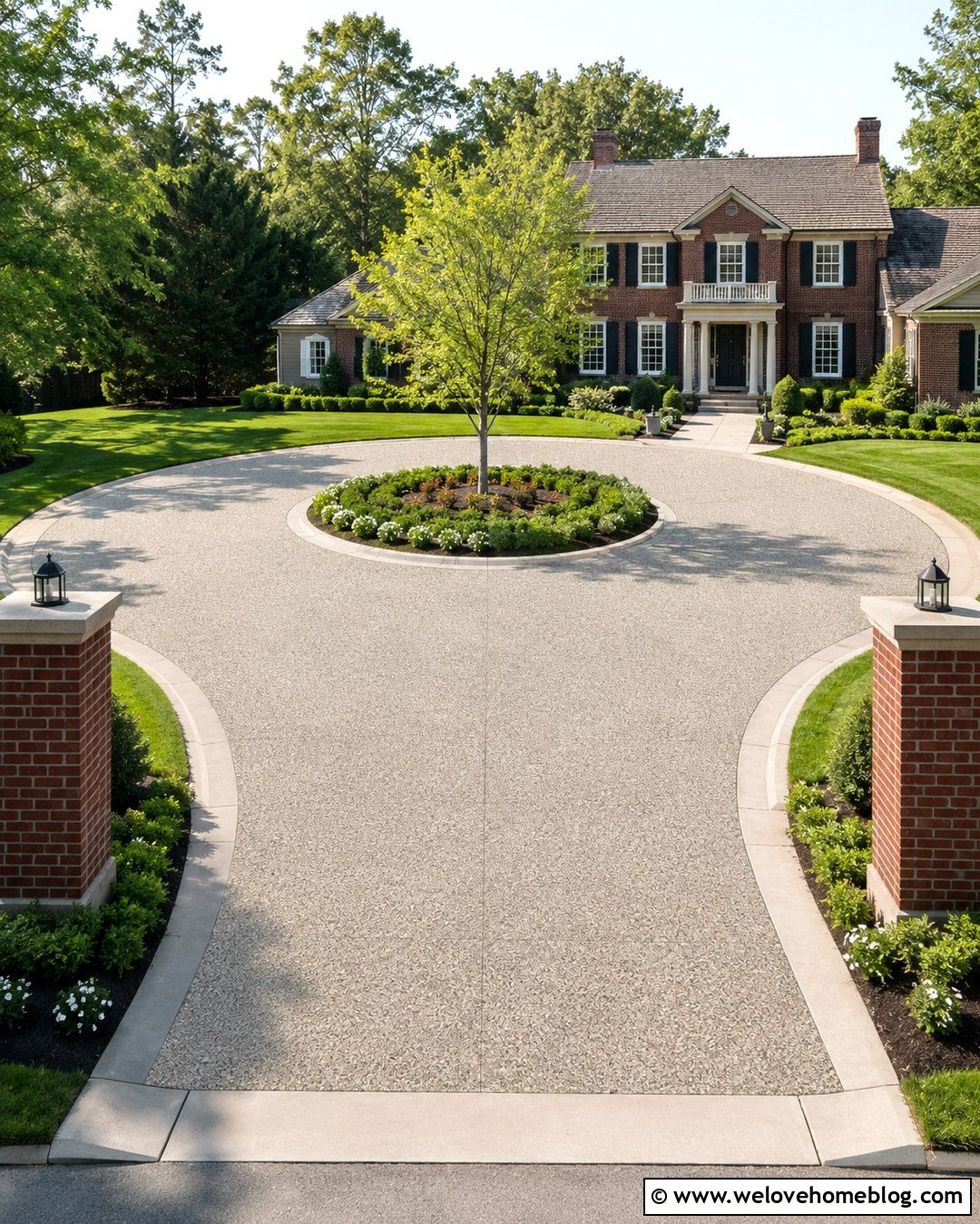
A circular driveway creates an elegant arrival area and gives vehicles a continuous route past the front door. Light gray concrete with a subtle exposed aggregate finish keeps the broad surface from looking flat. Define the outside edge with a smooth concrete band and repeat that detail around the central island. Instead of filling the island with too many small plants, use one ornamental tree surrounded by low evergreen shrubs and seasonal ground cover. This maintains a clear view of the house while creating a strong focal point. Brick entry pillars or a stone address marker can frame both driveway openings. The layout works beautifully with colonial, Mediterranean, and large ranch homes, provided the front yard has sufficient room for comfortable curves and practical turning space.
16. Side Entry Concrete Driveway With Paver Border
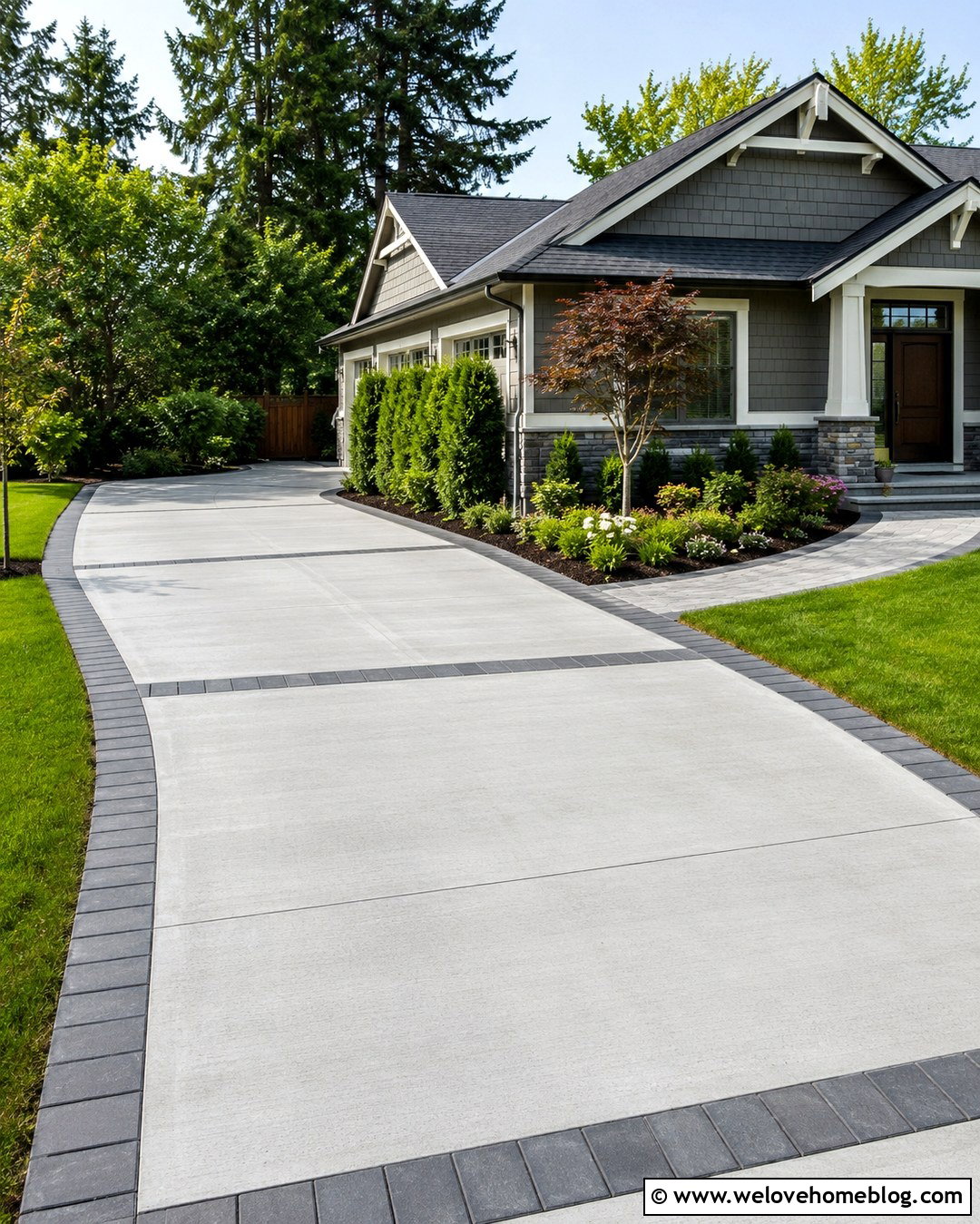
A side-entry driveway can reduce the visual impact of garage doors, but its wide turning area still needs careful detailing. Use pale broom-finished concrete for the main surface and install a charcoal concrete-paver ribbon around the perimeter. Carry the same pavers across selected control-joint lines to visually divide the parking area into smaller zones. Near the house, widen the landscaping with layered shrubs that partially screen the garage wall without interfering with vehicle movement. A separate paver-edged walkway can guide visitors toward the main entrance. Add a small tree near the outer corner to anchor the open pavement. This design pairs well with craftsman and transitional houses because the simple concrete remains practical while the darker border supplies a tailored, finished appearance.
17. Resurfaced Concrete Driveway With Decorative Overlay
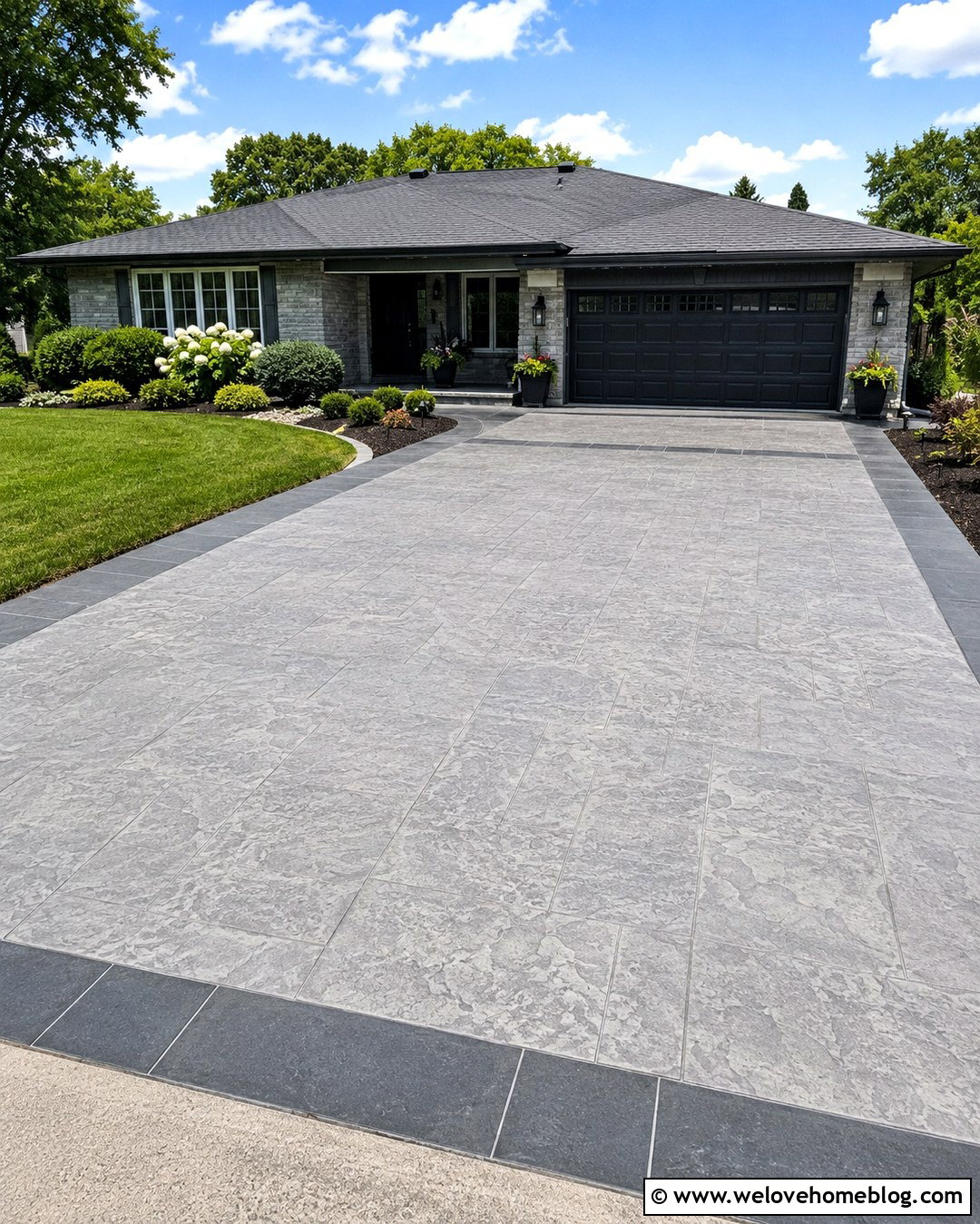
An aging driveway may gain a more cohesive appearance from a professionally installed decorative overlay when the underlying concrete is suitable for resurfacing. Decorative treatments for existing driveways can include coloring, engraving, texturing, and resurfacing systems. () A medium-gray overlay with a subtle stone texture offers an adaptable starting point. Add darker bands along the edges and across the driveway near the garage to create intentional visual breaks. Coordinate those bands with a charcoal walkway or front steps. Fresh mulch, compact shrubs, and a clearly defined lawn edge will help the upgraded surface feel like part of a complete exterior renovation. Because overlays cannot solve every underlying structural problem, have existing cracks, movement, drainage, and surface condition assessed before selecting a decorative finish.
18. Sand Finish Concrete Driveway With Dark Border
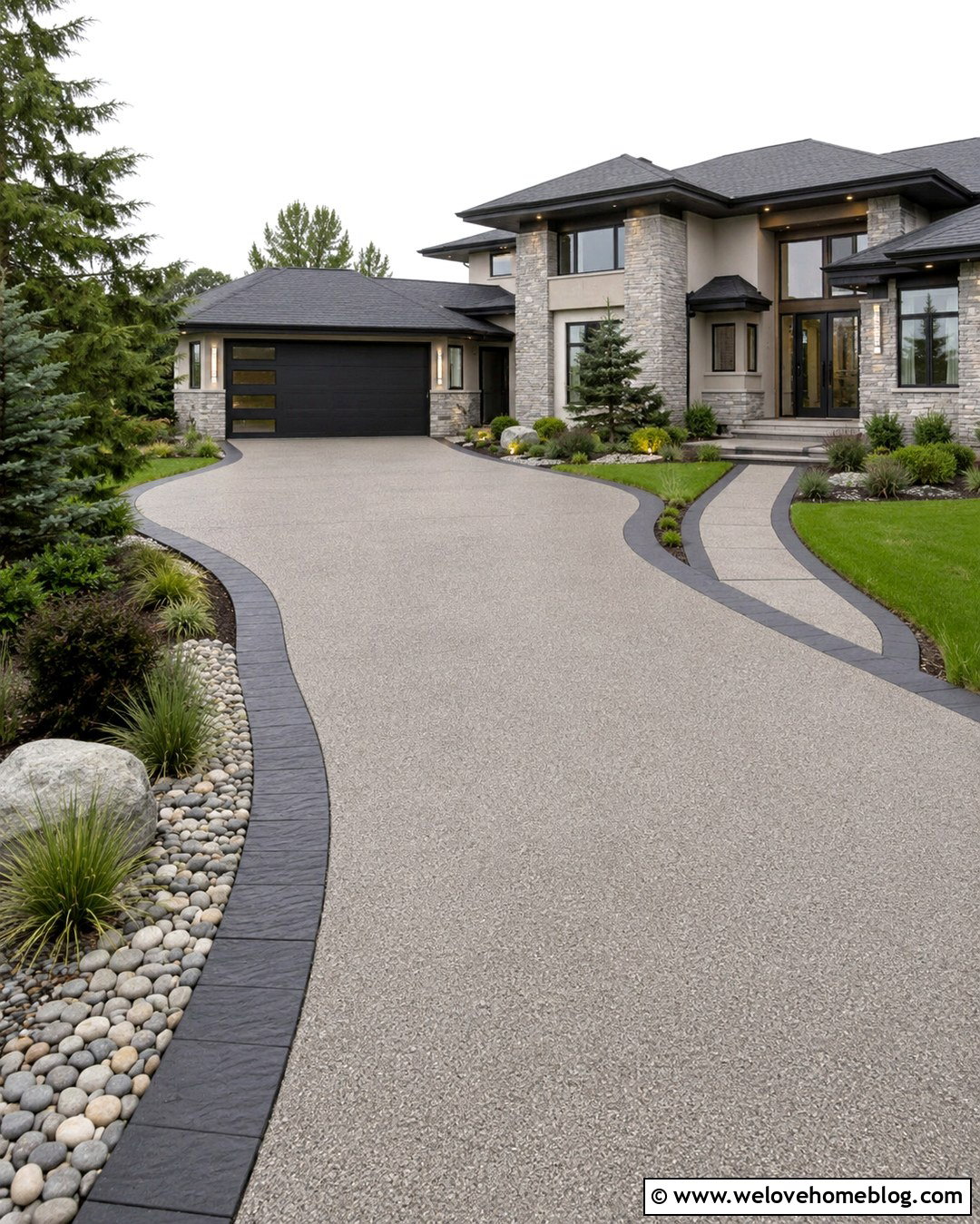
Sand-finished concrete has a refined texture that falls visually between very smooth concrete and coarse exposed aggregate. Its understated surface works well on a wide driveway where a stronger pattern might become overwhelming. Choose a warm gray field and surround it with a dark stamped-concrete border. Let the border follow a gentle curve toward the garage, then continue it around an adjoining walkway. A similar pairing of sand-finish concrete and contrasting stamped borders can produce a clearly defined, coordinated approach. () Use river rock, low grasses, and broad evergreen shrubs in the bordering landscape beds. The dark frame makes the pale driveway appear deliberate, while the restrained planting prevents the entrance from feeling crowded. This complete look suits contemporary and transitional homes.
19. Permeable Concrete Driveway With Native Landscaping
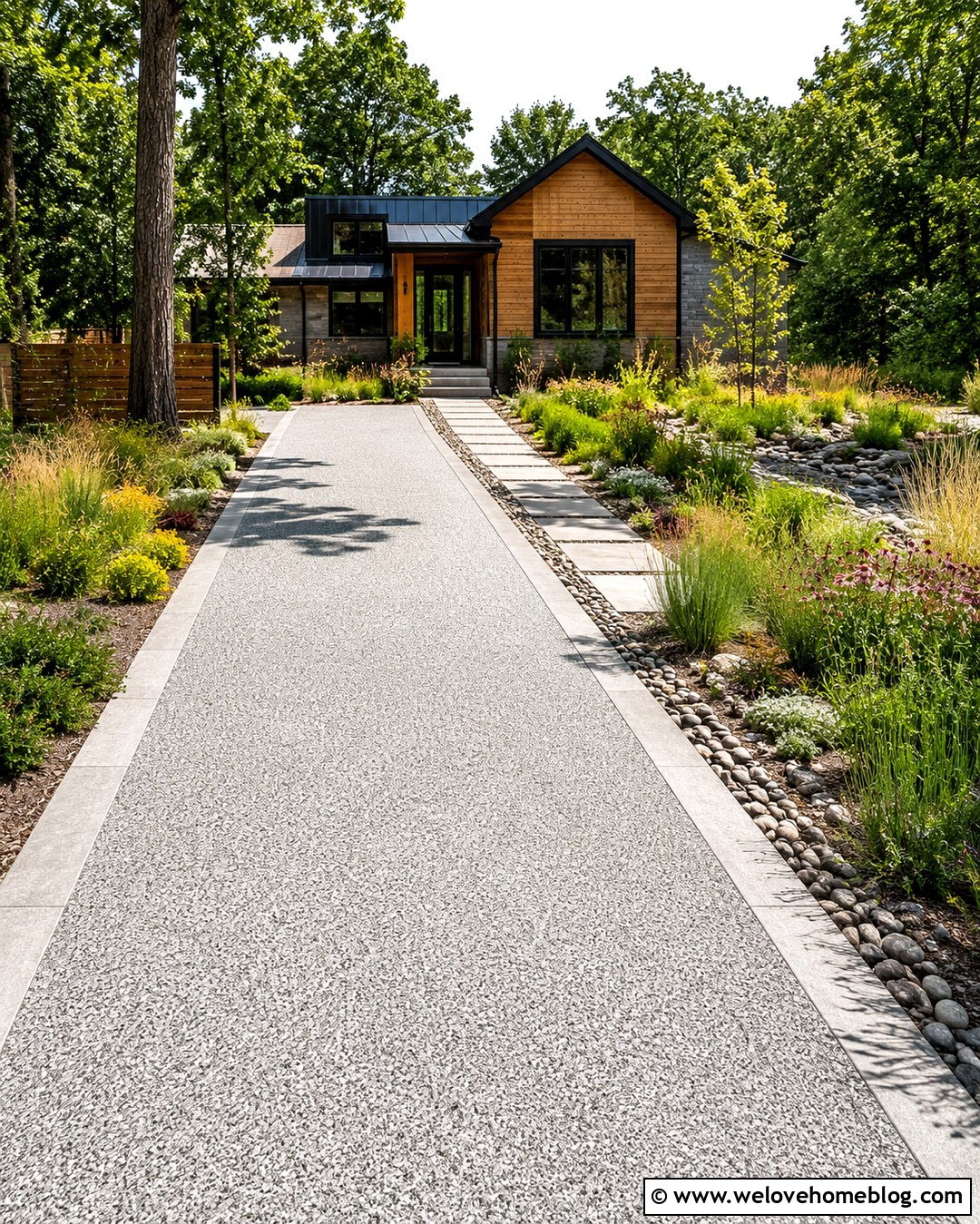
Permeable concrete can support a landscape-focused driveway design while providing a distinctive, lightly textured surface. Use it across a simple straight driveway bordered by smooth concrete bands that clearly define the driving area. A decorative stone strip between the driveway and walkway can add another visual transition. Surround the hardscape with native grasses, flowering perennials, and compact shrubs selected for the site’s climate, sunlight, and soil. A rain garden may fit naturally near the lower part of the yard when designed for local conditions. Keep plantings low near the street to preserve clear views. This approach works especially well with contemporary cottages, eco-conscious homes, and wooded properties. Local requirements, soil conditions, installation methods, and ongoing maintenance should guide the final system selection.


20. Simple Concrete Driveway With Clean Landscaping
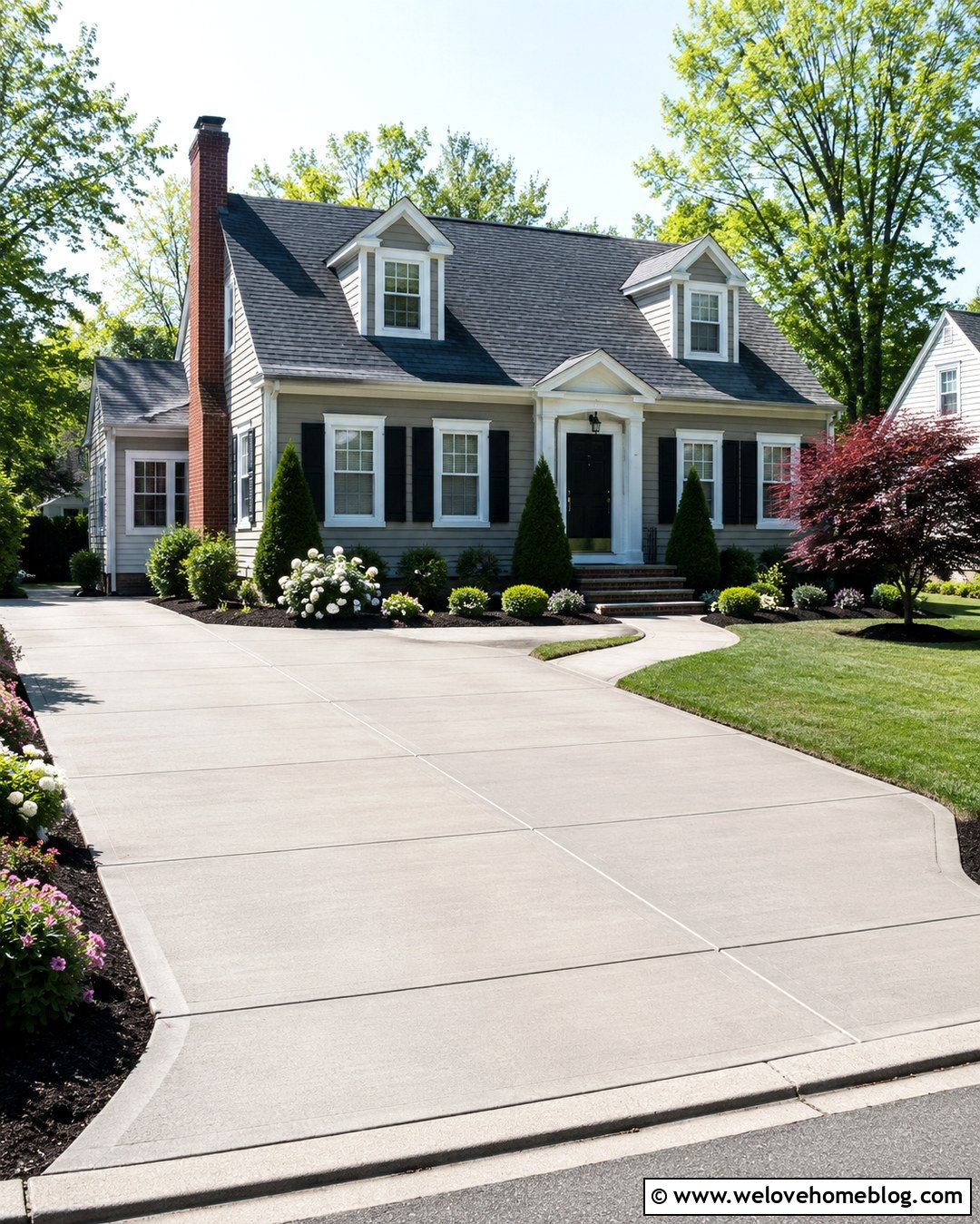
Sometimes the strongest option is a straightforward concrete driveway surrounded by neat, well-planned landscaping. Use standard light gray broom-finished concrete in a straight two-car layout. Evenly spaced joints will organize the surface, while a smooth border can add detail without significantly changing the restrained appearance. Along both sides, create crisp planting beds with dark mulch, rounded shrubs, and a few flowering perennials. A small ornamental tree near the front corner can balance the driveway and house. Connect the driveway to the front door with a matching concrete path that has slightly softened corners. This attainable look fits ranch, Cape Cod, and conventional suburban homes. Its success comes from clean proportions, healthy planting, uncluttered edges, and materials that coordinate naturally with the exterior.
Conclusion:
The most appealing concrete driveway is not defined by the surface alone. Its finish, joint pattern, shape, border, walkway, planting, and relationship to the house should feel like one complete composition. Broom finishes offer understated texture, while stamped patterns, exposed aggregate, colored concrete, and decorative overlays provide stronger visual character. Grass joints suit modern homes, brick and cobblestone complement traditional architecture, and thoughtful landscaping softens every type of pavement. Use these **20 concrete driveways pictures ideas** to identify the combinations that match your house and yard. Before construction, ask qualified local professionals to evaluate grading, drainage, soil, joints, finish options, maintenance needs, and applicable permit requirements for your specific property.

Related posts:


Leave a Reply