
Japanese bathroom design offers a serene escape, transforming a purely functional space into a personal sanctuary for relaxation and design philosophy is deeply rooted in the concepts of Zen, minimalism, and a profound connection to nature. It’s about more than just aesthetics; it's about creating an of clean lines, natural materials, and an uncluttered environment that calms the mind and soothes the the traditional ofuro soaking tub to the modern integration of smart technology, these bathrooms prioritize harmony, balance, and embracing natural light, organic textures, and a mindful layout, you can craft a space that feels both luxurious and spiritually grounding, a true retreat from the stresses of daily life.
1. The Classic Onsen-Inspired Bathroom
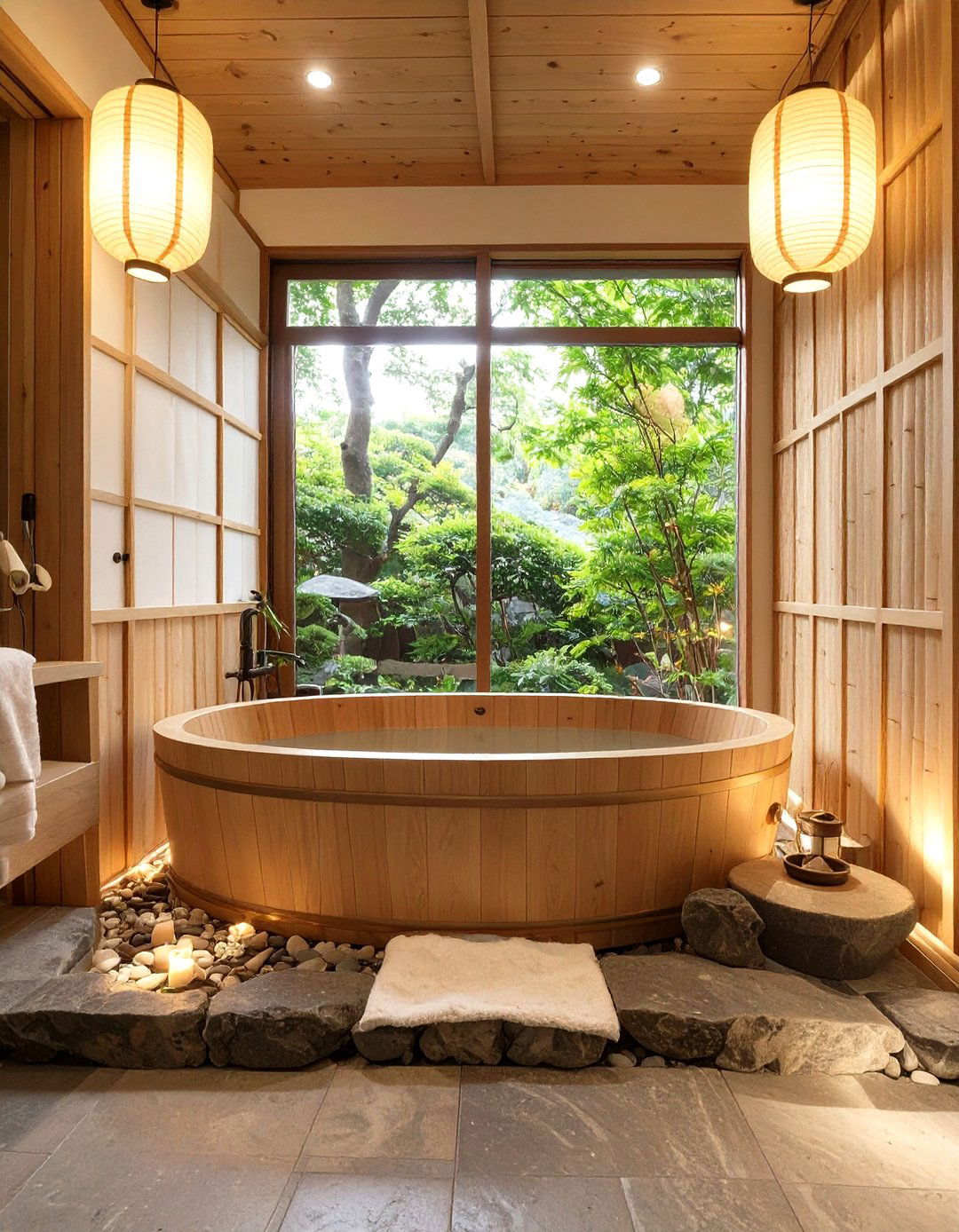
Imagine stepping into your own private hot spring every design centers around a deep soaking tub, or ofuro, often crafted from Hinoki wood, which releases a soothing aroma when filled with hot layout is open, with a separate wet area for showering to keep the rest of the space stone floors, bamboo wall panels, and large windows overlooking a garden complete the immersive lighting is soft and indirect, mimicking the gentle glow of lanterns, creating a tranquil atmosphere for ultimate relaxation and a deep connection to nature's calming elements.
2. A Minimalist Zen Bathroom
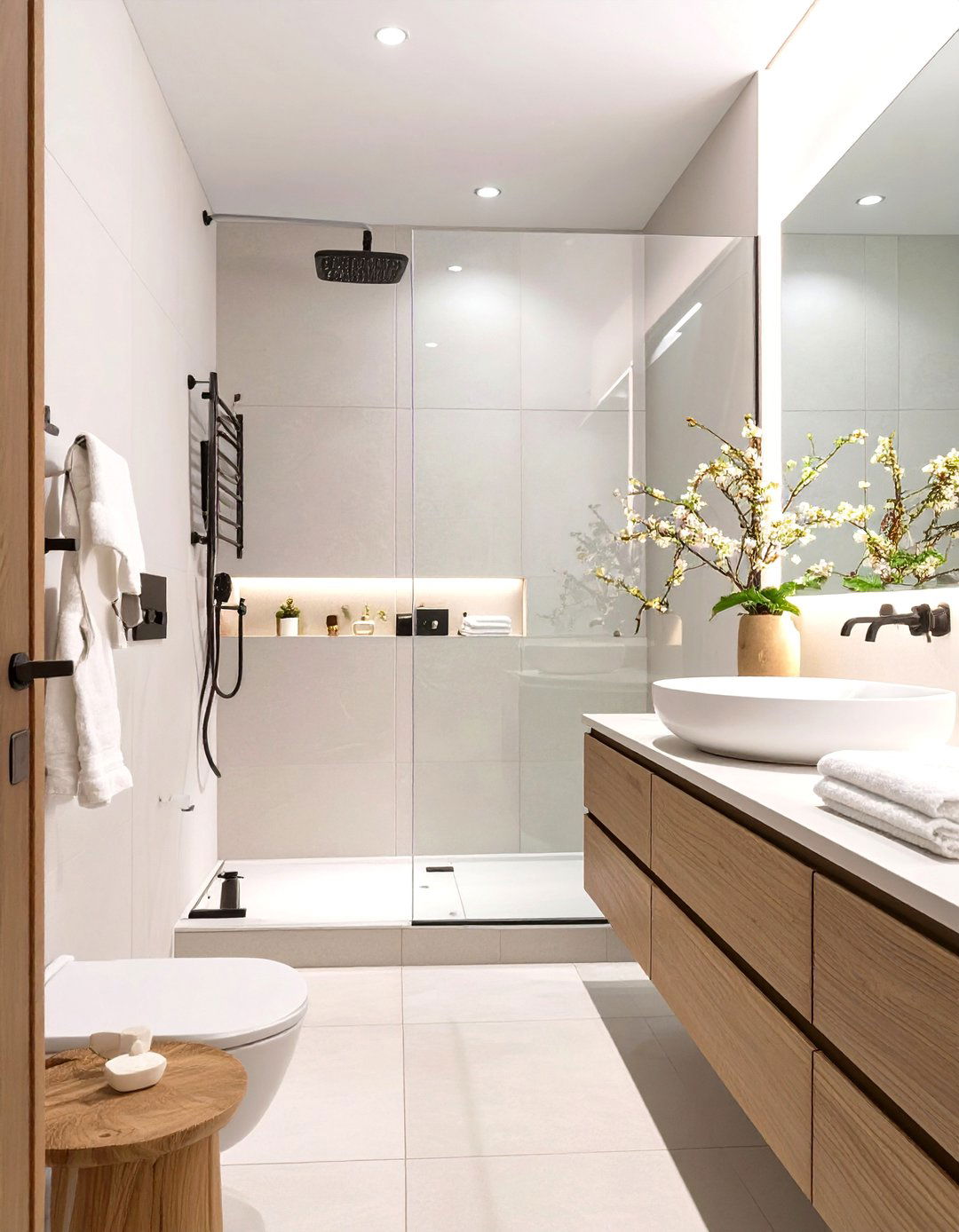
For a truly calming retreat, embrace the principles of Zen design focuses on simplicity and "Ma, " the Japanese concept of negative layout is uncluttered, with built-in storage to hide away all toiletries and distractions. A floating vanity, a simple vessel sink, and a frameless glass shower maintain clean color palette is strictly neutral, using shades of white, beige, and grey. A single, carefully chosen element, like an ikebana flower arrangement or a piece of calligraphy, serves as the sole decorative focus, promoting a sense of peace and mindfulness.
3. The Shoji Screen Bathroom Divider
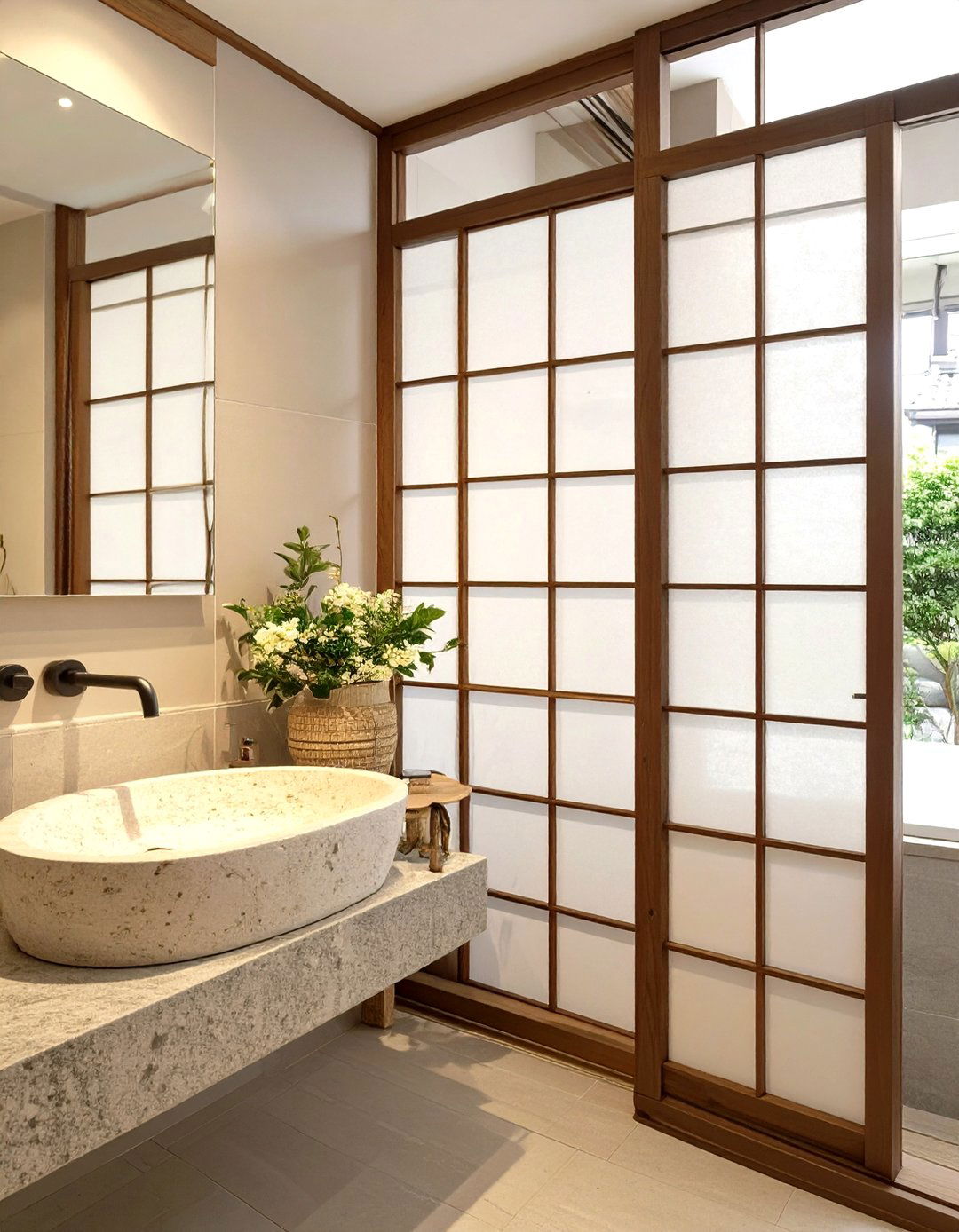
Incorporate a traditional Japanese architectural element with shoji translucent paper screens, set in a wooden lattice, can be used as room dividers, closet doors, or window diffuse light beautifully, creating a soft, ethereal glow throughout the bathroom while maintaining with dark wood accents and a simple stone basin, shoji screens add an authentic touch that is both elegant and allow for flexible use of the space, partitioning the toilet from the bathing area or concealing storage with a graceful, lightweight presence.
4. A Hinoki Wood Soaking Tub Bathroom
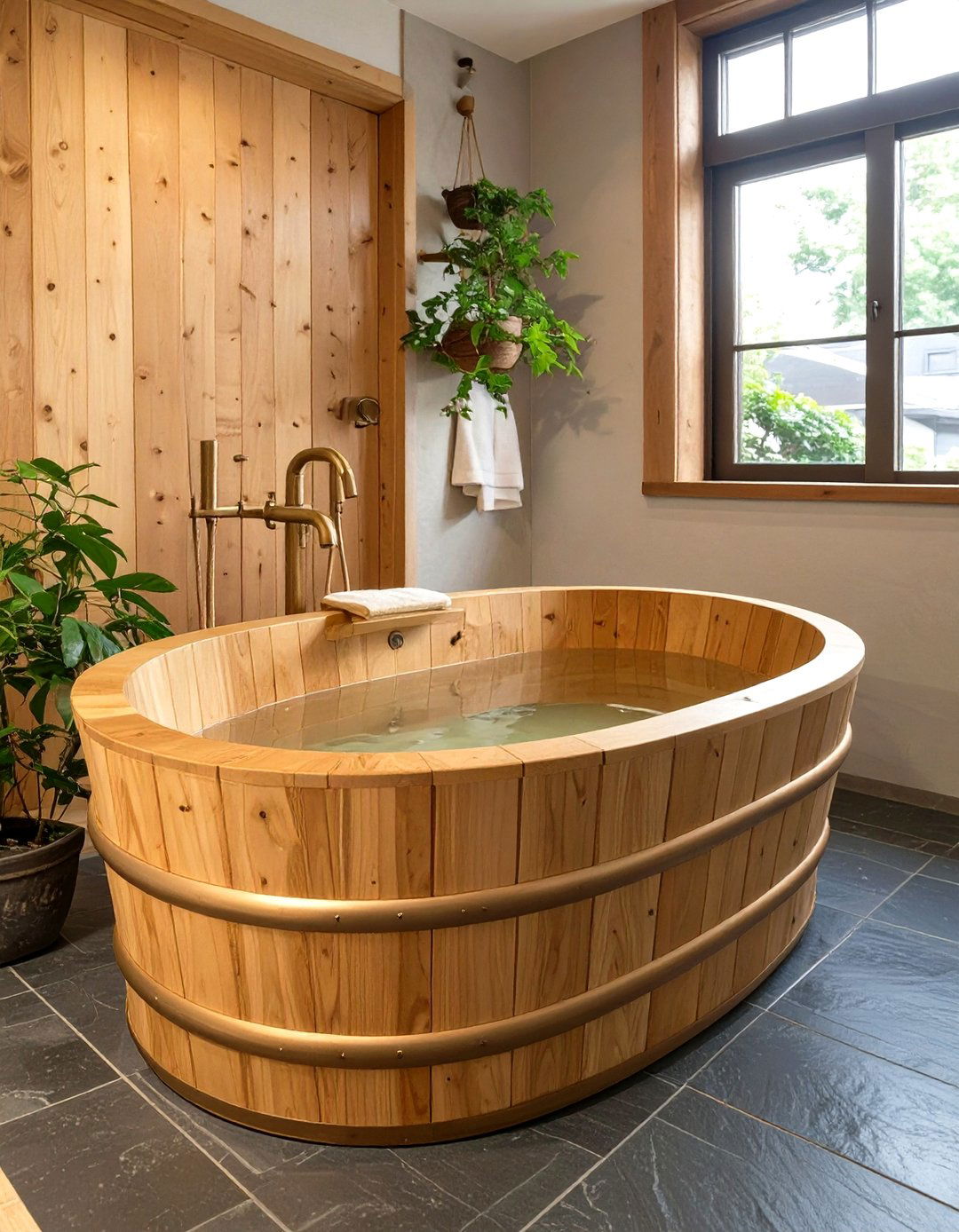
The centerpiece of this design is the aromatic Hinoki cypress wood for its fragrant scent and natural antibacterial properties, a Hinoki ofuro is the ultimate in Japanese bathing rest of the bathroom is designed to complement this stunning slate tile floors, cedar-planked walls, and simple brass or copper fixtures that develop a beautiful patina over focus is entirely on the bathing experience, creating a multi-sensory environment that is both rustic and incredibly sophisticated, promoting deep relaxation through scent and touch.
5. Bathroom with a View of Nature
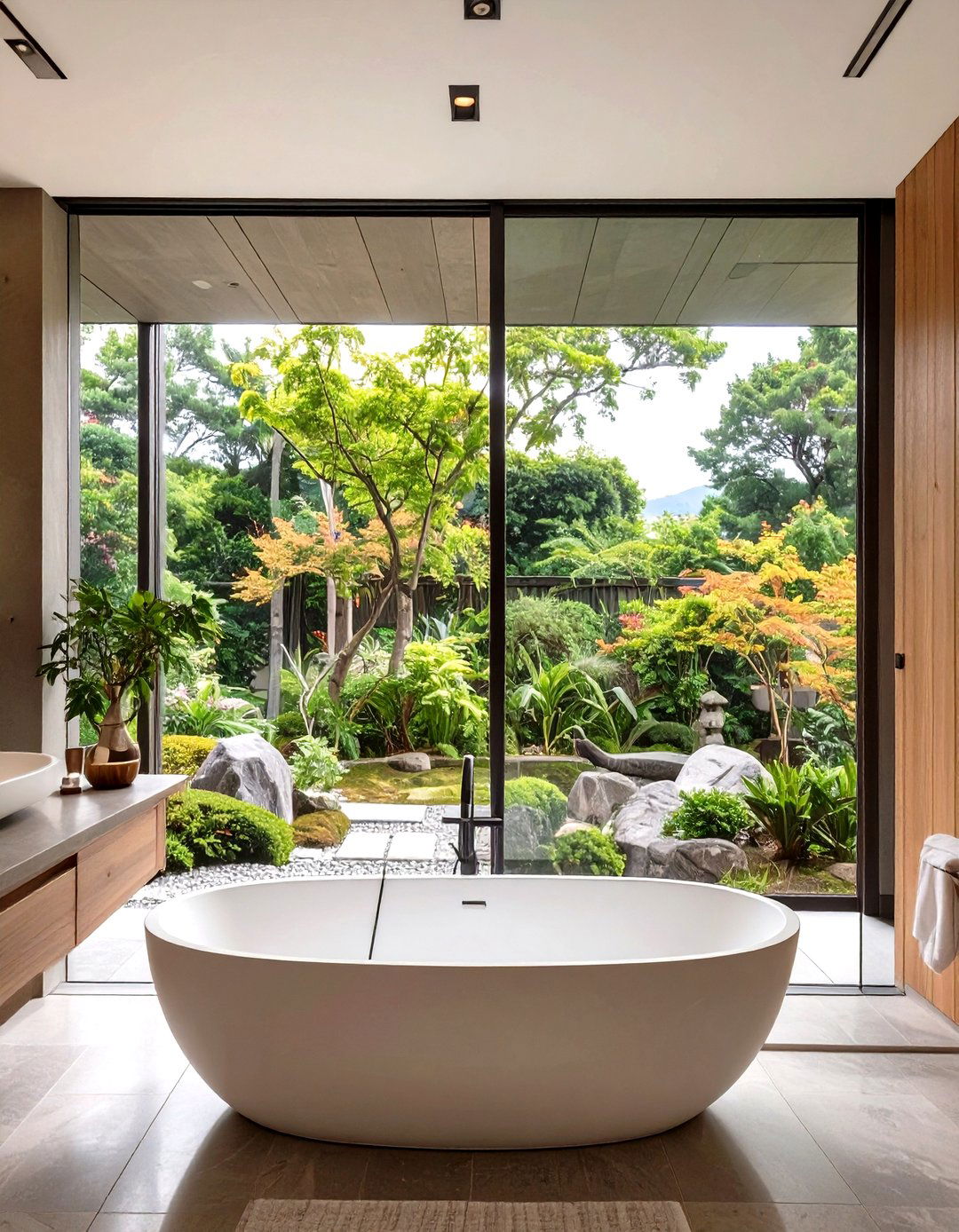
What could be more serene than bathing while looking out onto a private garden? This design requires a ground-floor location with a large, strategically placed window or glass view becomes the primary decorative element, blurring the line between indoors and interior is kept simple, with natural materials like stone and wood that don't compete with the scenery. A low-profile tub and minimalist fixtures ensure the view remains connection to the outdoors is fundamental to Japanese aesthetics, bringing a sense of life and tranquility into the space.
6. A Dark and Moody Bathroom Retreat
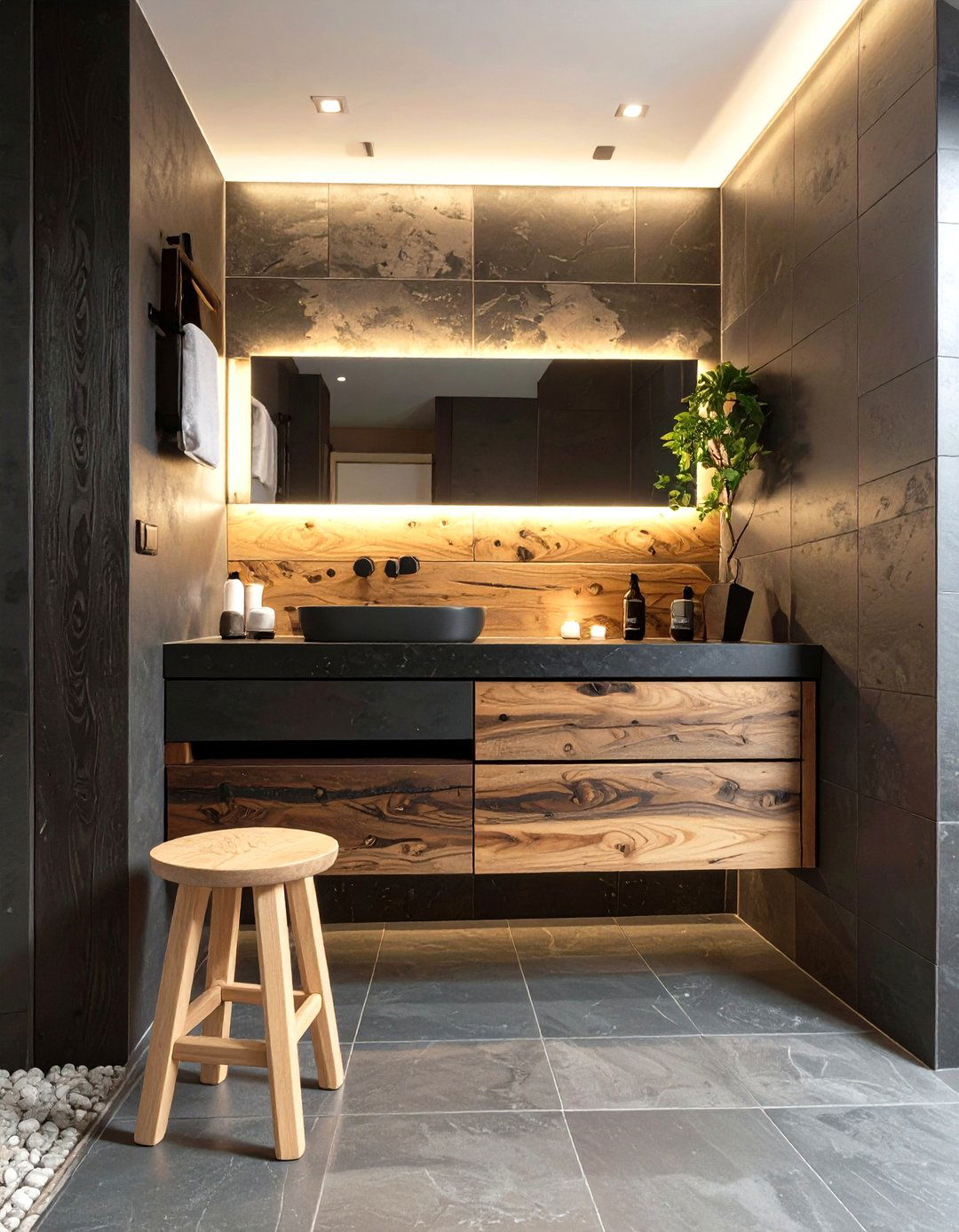
Move away from the typical light and airy aesthetic with a dark, contemplative bathroom style uses materials like charred wood (shou sugi ban) , black slate, and dark grey concrete to create a sophisticated and intimate key is to balance the darkness with warm, ambient backlighting a stone wall or placing small spotlights to highlight the texture of the materials. A simple, light-colored wooden stool or a white ceramic basin can provide a striking design feels like a protective cocoon, perfect for unwinding in solitude.
7. The Wabi-Sabi Bathroom Concept
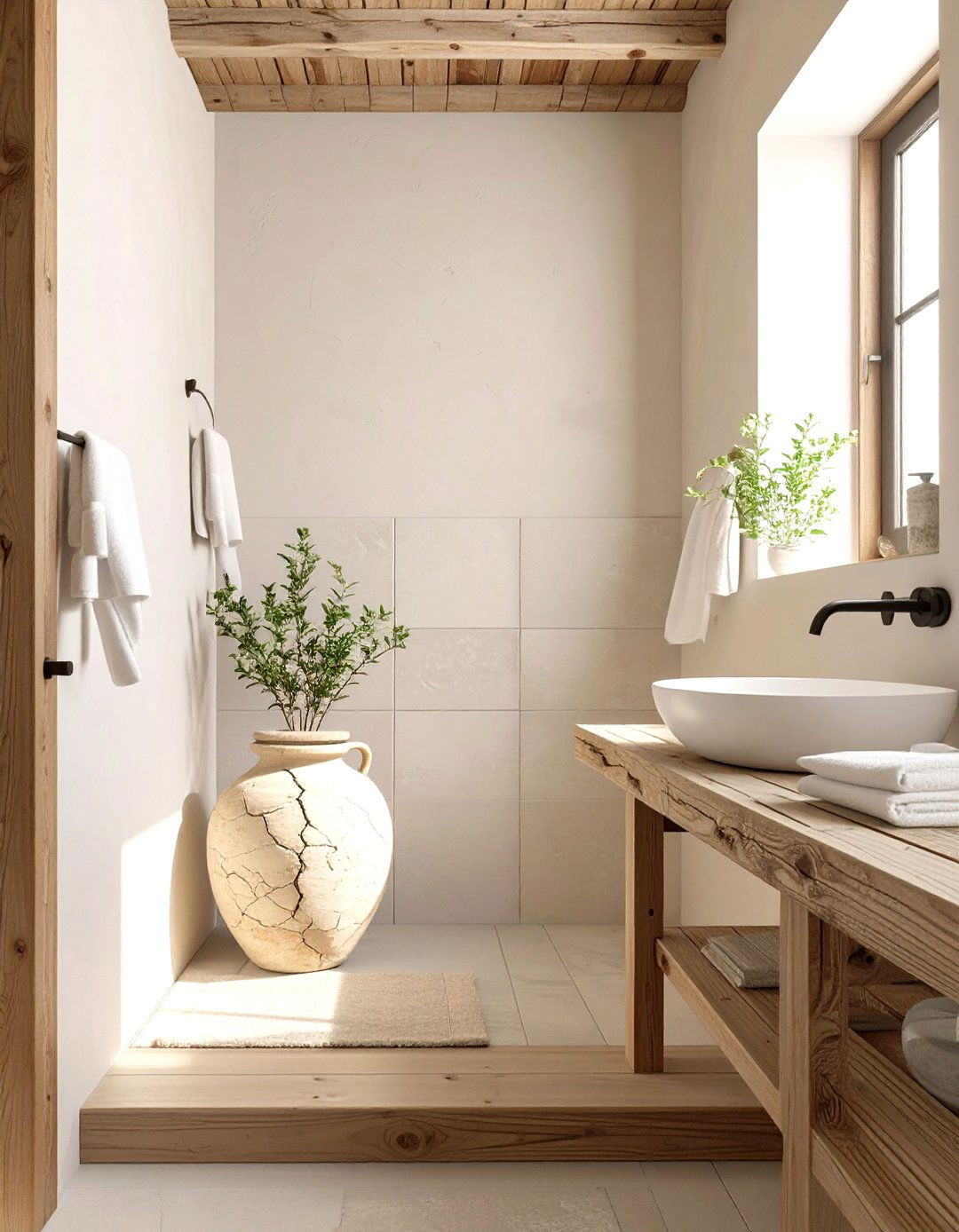
Embrace the beauty of imperfection with a wabi-sabi philosophy finds charm in the aged, the weathered, and the for materials that show their history, like reclaimed wood, uneven plaster walls, and hand-formed ceramic might be made of unlacquered brass or copper that will tarnish naturally. A cracked ceramic vessel or a gnarled wooden branch can serve as decor. It’s about creating a space that feels authentic, humble, and deeply connected to the passage of time, celebrating the beauty in flaws.
8. A Modern Ryokan Bathroom Style
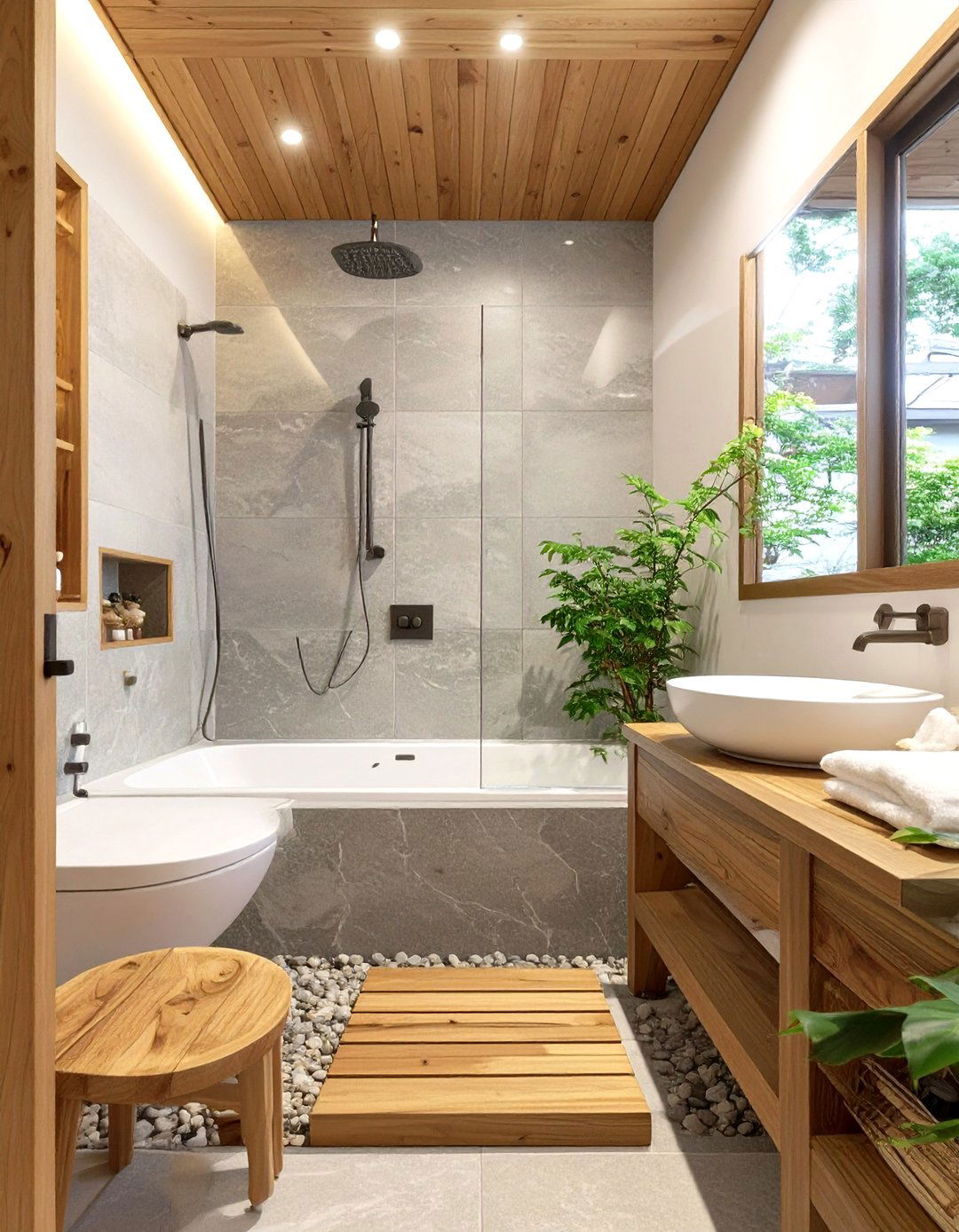
Capture the essence of a Japanese inn (ryokan) with a modern design blends traditional elements with contemporary features a separate wet room with both a shower and a deep soaking are a mix of natural wood, stone, and sleek porcelain. A low wooden stool and bucket for washing before bathing are vanity area is kept separate and organized, often featuring smart technology like a heated toilet seat or an anti-fog creates a highly functional yet serene space that honors tradition while embracing modern convenience.
9. Bathroom with Integrated Bamboo Elements
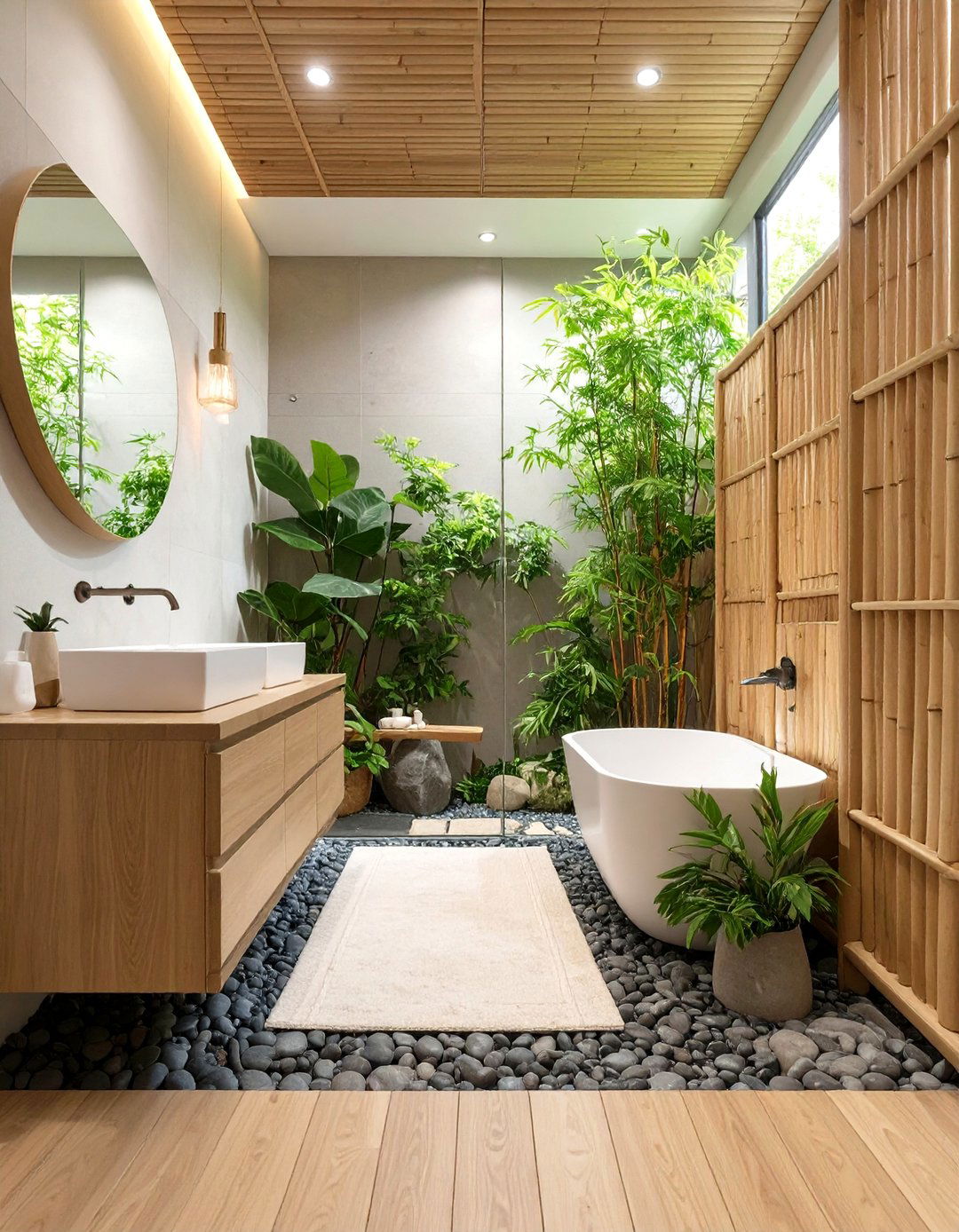
Bamboo is a quintessential material in Japanese design, known for its strength, sustainability, and natural bathroom theme incorporates bamboo in multiple ways: as flooring, wall coverings, or even for the vanity. A bamboo lattice can create a decorative screen, while bamboo accessories like soap dishes and bath mats add a cohesive with smooth river stones and plenty of green plants, the bamboo creates a space that feels organic and linear pattern adds a sense of order and calm to the overall design.
10. The Stone and Water Bathroom Sanctuary
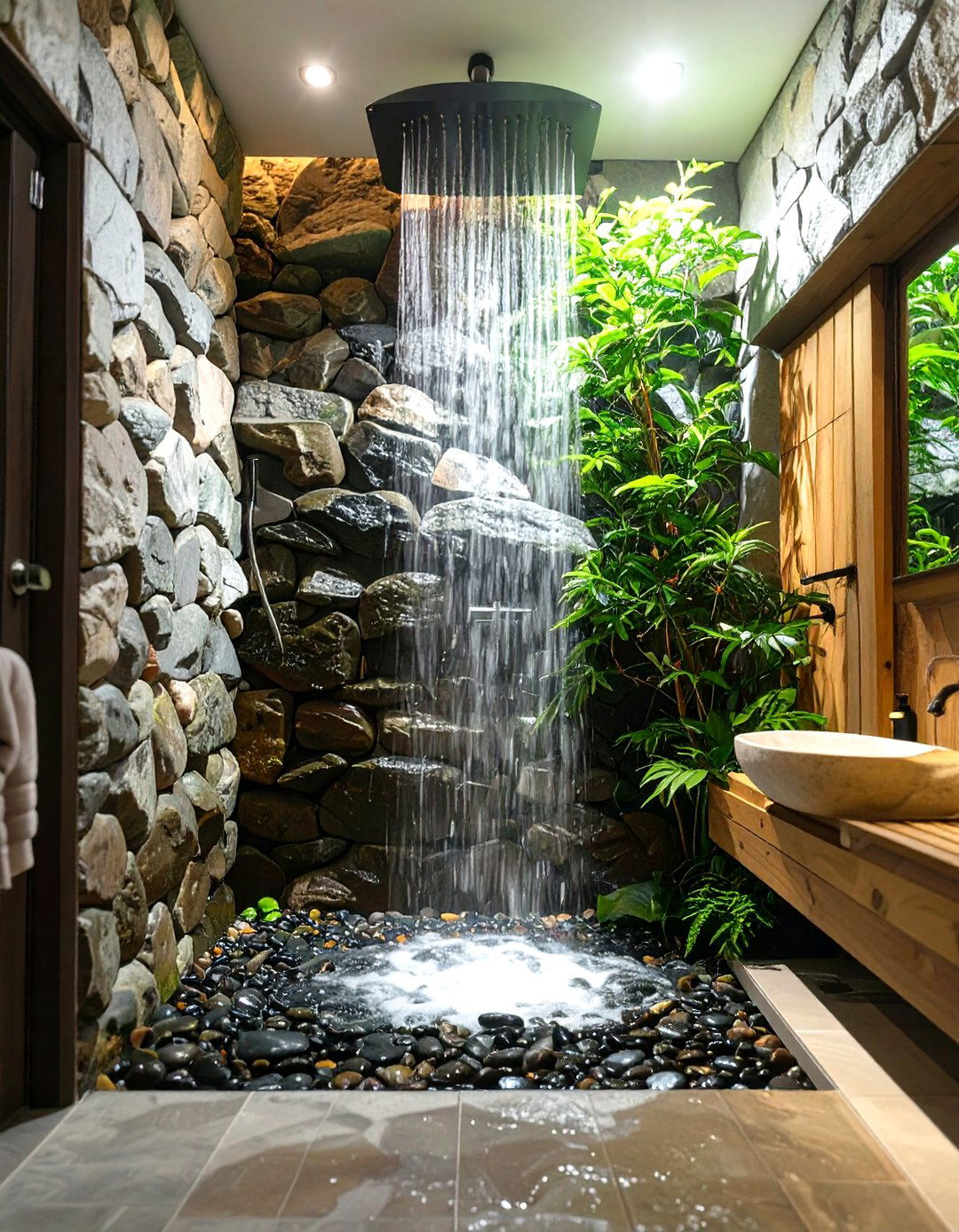
This design emulates a natural grotto or a riverside hot walls and floor are clad in natural stone, such as slate, granite, or river rock, creating a raw, earthy texture. A walk-in shower with a rainfall showerhead mimics a waterfall, and the water can flow over a bed of smooth pebbles before tub might be carved from a single piece of stone or surrounded by is kept low and dramatic to enhance the cave-like atmosphere, making the experience of bathing feel primal and deeply grounding.
11. A Bathroom with Floating Vanity and Storage
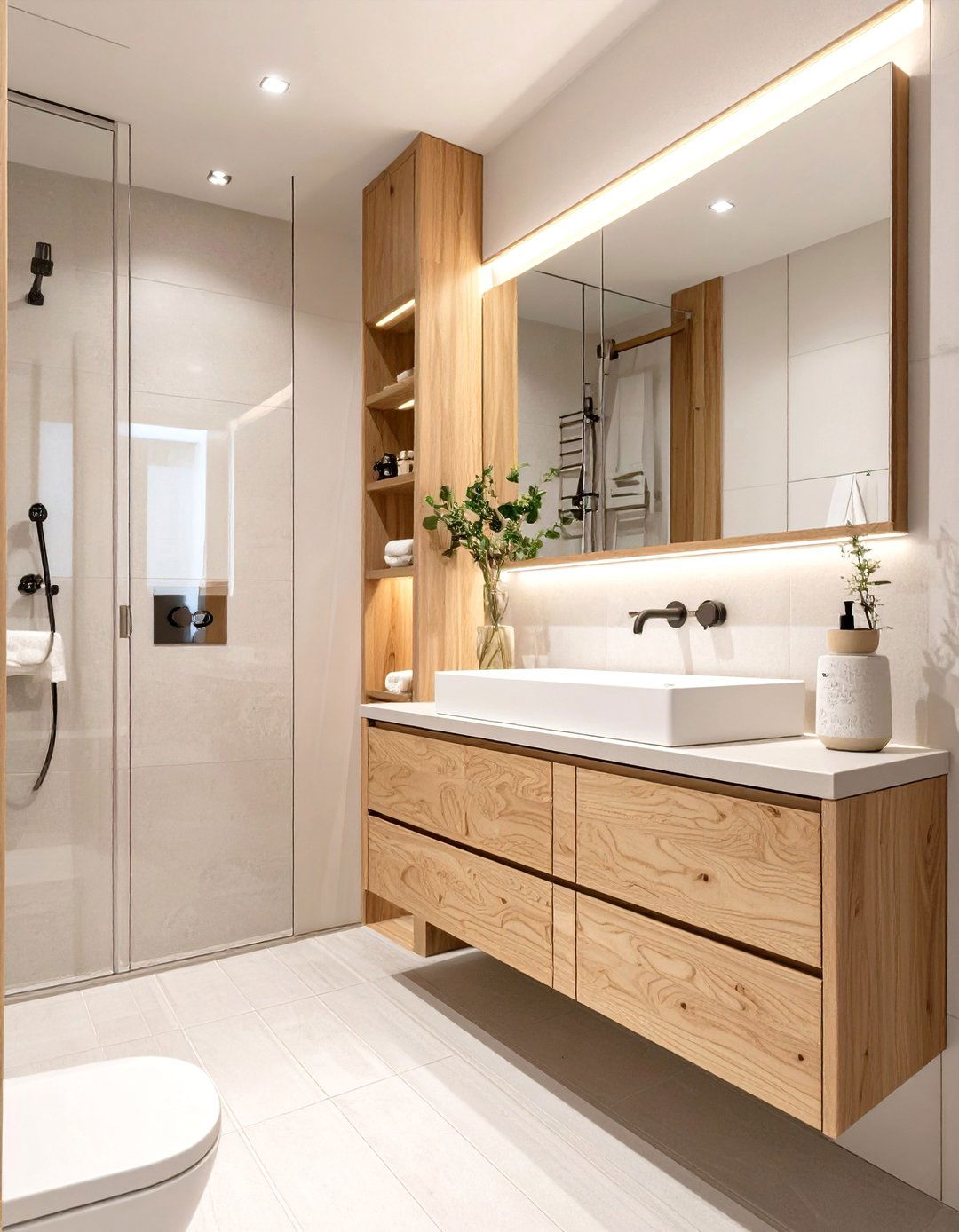
To create a sense of spaciousness and maintain an uncluttered floor, a floating vanity is an excellent minimalist approach makes the bathroom feel larger and easier to vanity itself should be simple, often made of a light-colored wood or a sleek, solid compensate for the lack of under-sink cabinets, incorporate tall, built-in storage units that blend seamlessly with the keeps all necessities hidden from view, adhering to the Japanese principle of a tidy, organized space that promotes a clear and calm mind.
12. The Kanso-Inspired Simple Bathroom
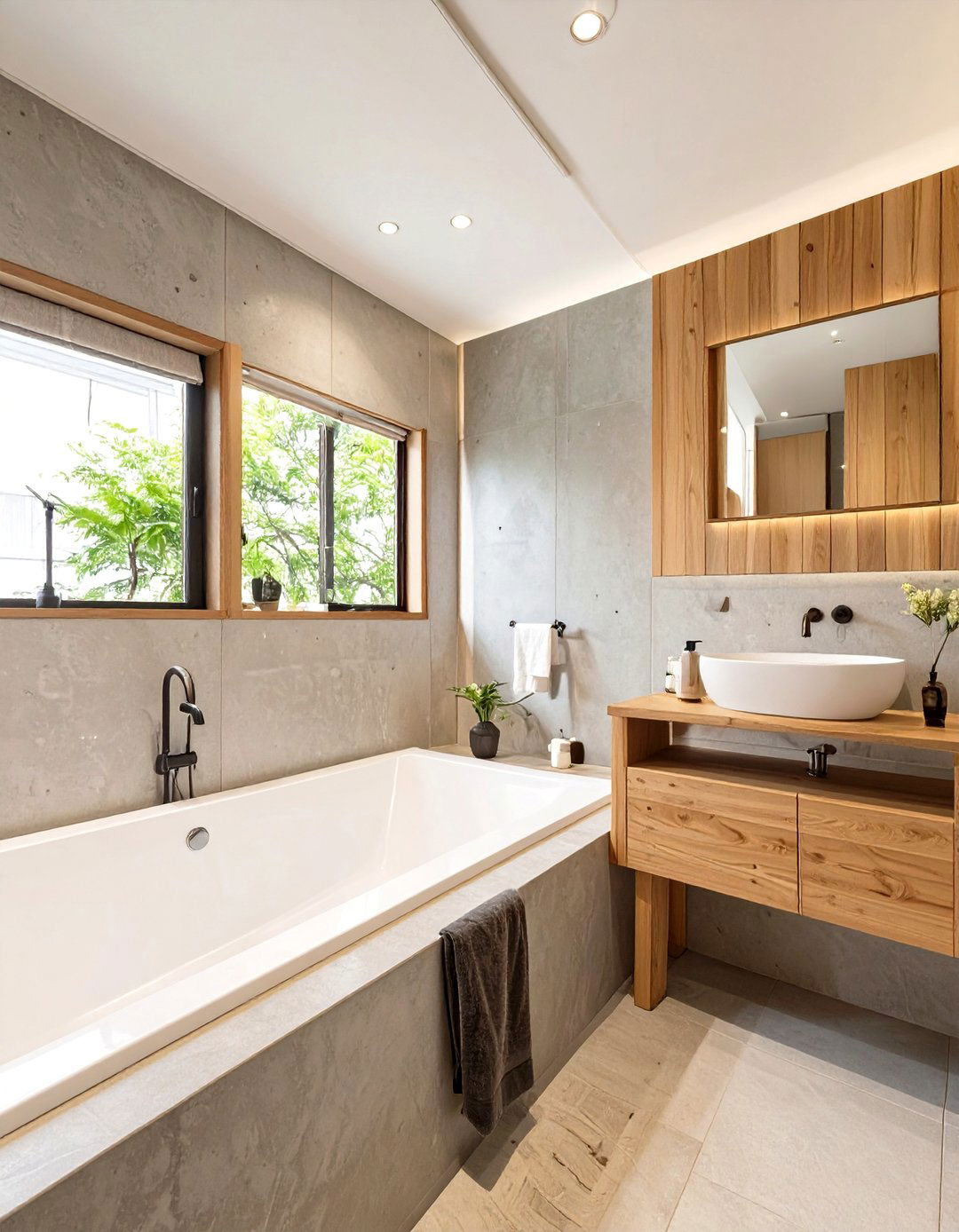
Kanso is the Zen principle of simplicity, eliminating clutter to achieve clarity. A Kanso bathroom is stripped back to its essential layout is straightforward, the color palette is muted, and there is no item has a purpose and a of a simple rectangular tub, a wall-mounted faucet, and a single, unadorned are honest and unpretentious, like concrete, wood, and isn't about starkness but about creating a tranquil, functional space where the mind can be at ease without visual distractions.
13. Bathroom with a Pebble Floor Shower
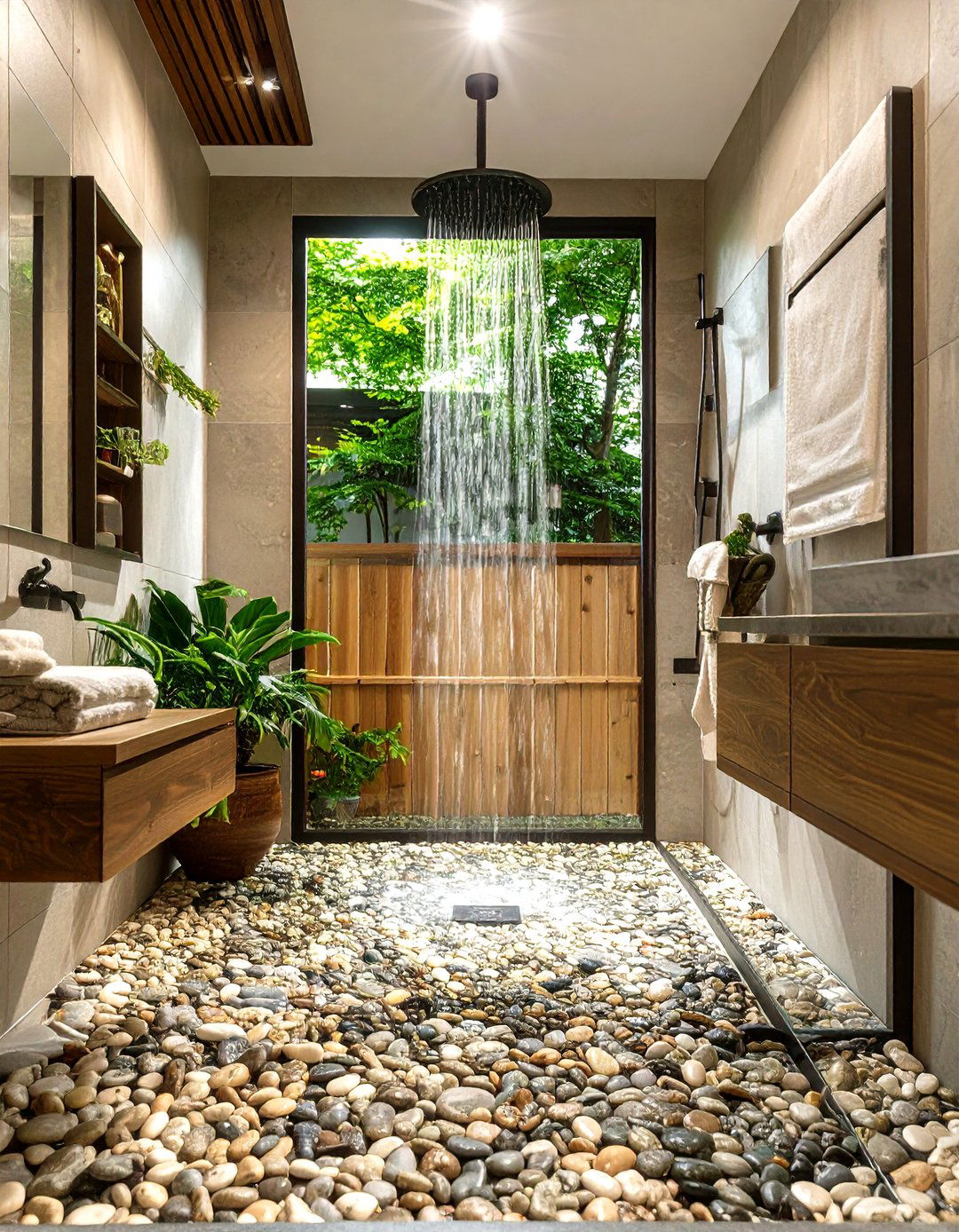
Bring a tactile, natural element into your bathroom with a pebble floor feeling of the smooth stones underfoot is grounding and reminiscent of walking along a mosaic tiles come in various colors, from black to white to mixed earth tones, allowing you to customize the pebble floor can extend beyond the shower to the entire wet room, creating a seamless with a rainfall showerhead and simple glass walls, it creates a spa-like experience that engages the senses and connects you to nature.
14. A High-Tech Japanese Bathroom
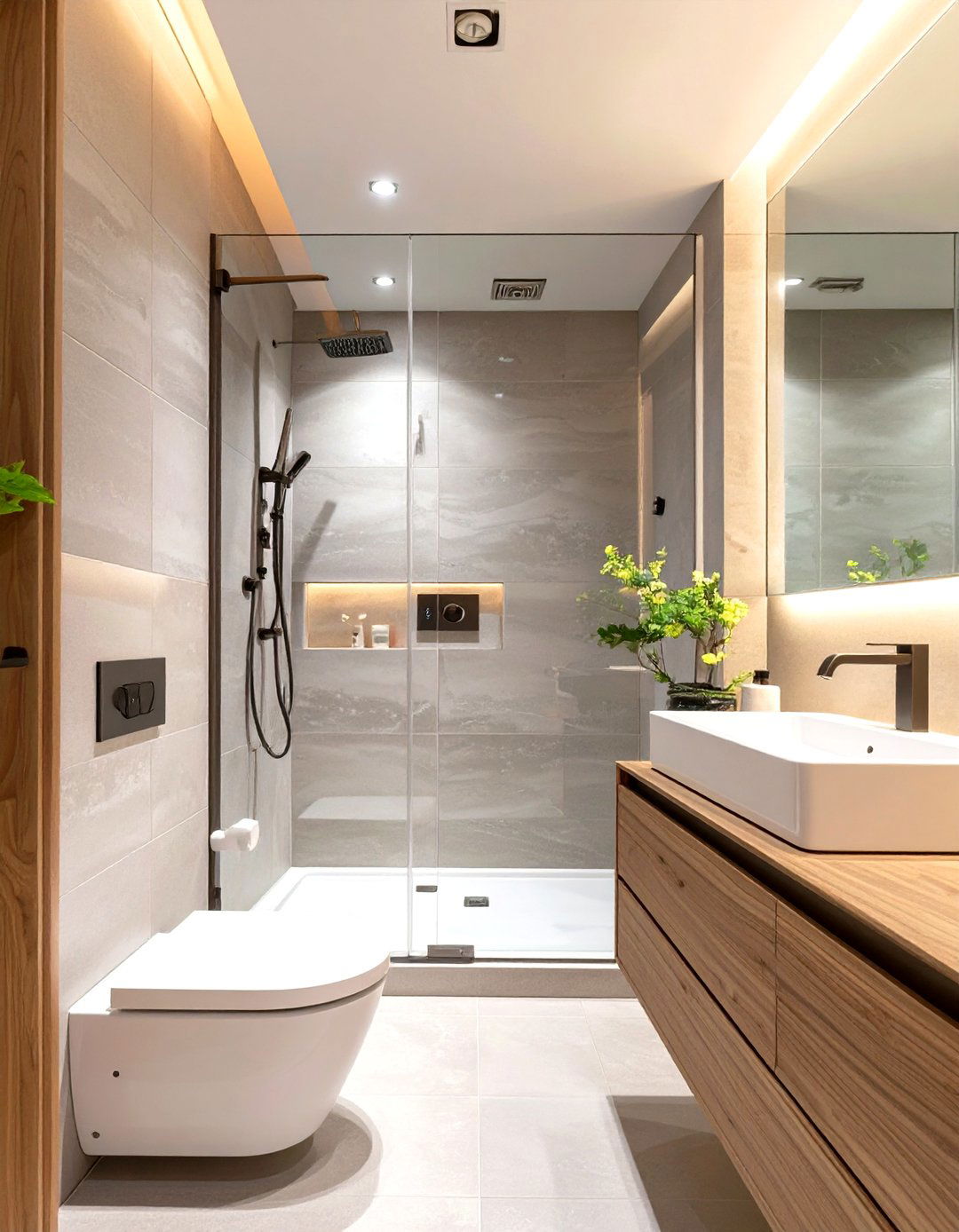
Japanese design often seamlessly integrates advanced technology to enhance comfort and modern bathroom features a smart toilet with functions like a heated seat, bidet, and air can have built-in defoggers and adjustable shower might have a digital control panel to preset temperature and the tub can have features like chromotherapy lighting or a system that keeps the water at the perfect design proves that technology and tranquility can coexist, offering ultimate convenience in a minimalist, serene setting.

15. The Small Apartment Japanese Bathroom
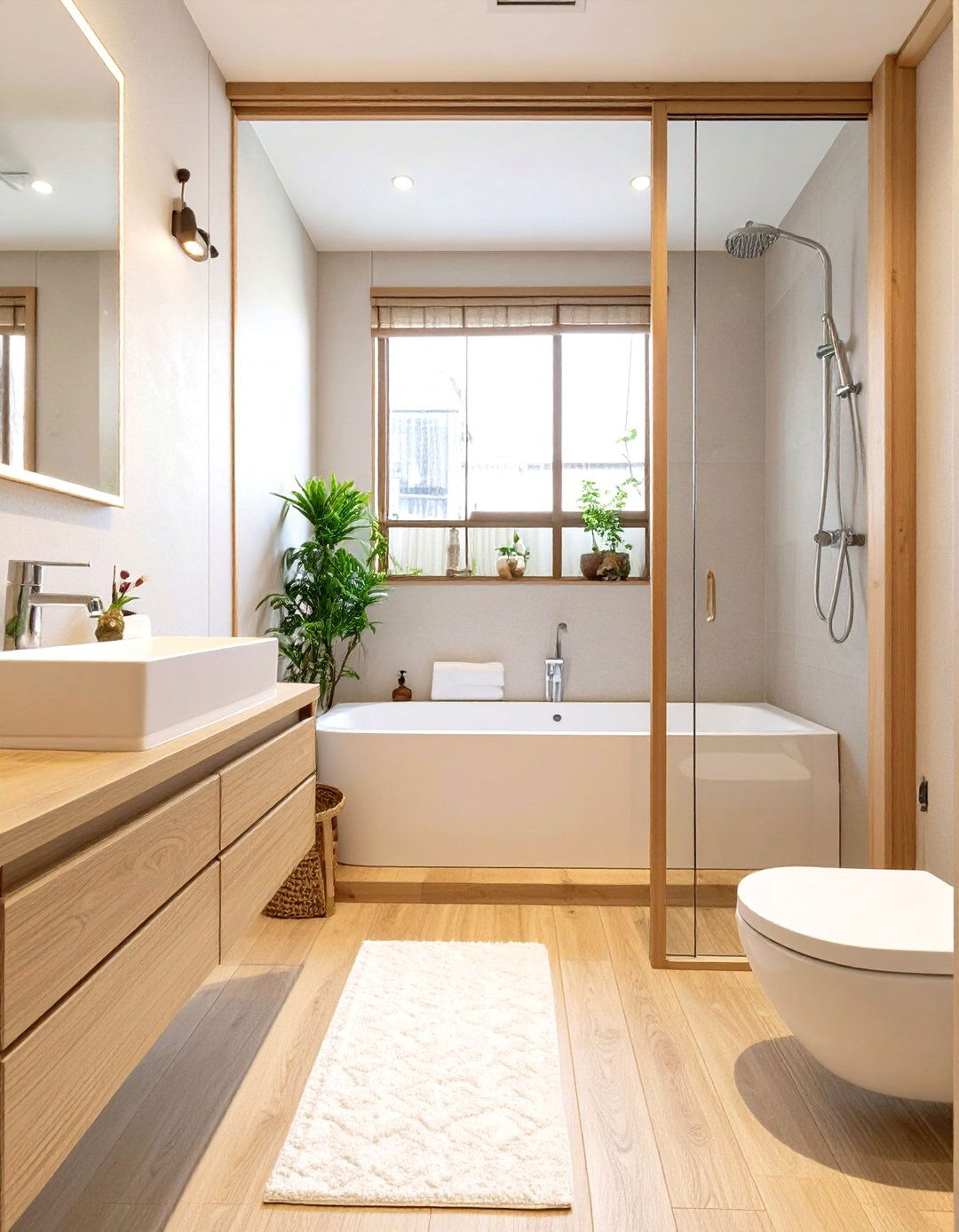
How can you create a Japanese-style oasis in a small space? The key is efficiency and smart involves a wet room concept where the entire room is waterproof, combining the shower and tub area to save space. A compact, deep soaking tub (ofuro) is perfect for small light colors and a large mirror to create the illusion of space. Wall-mounted fixtures and a floating vanity free up floor doors, like a pocket door or a shoji-style screen, are more space-efficient than traditional swinging doors, maximizing every square inch.
16. Bathroom with Shou Sugi Ban Accents
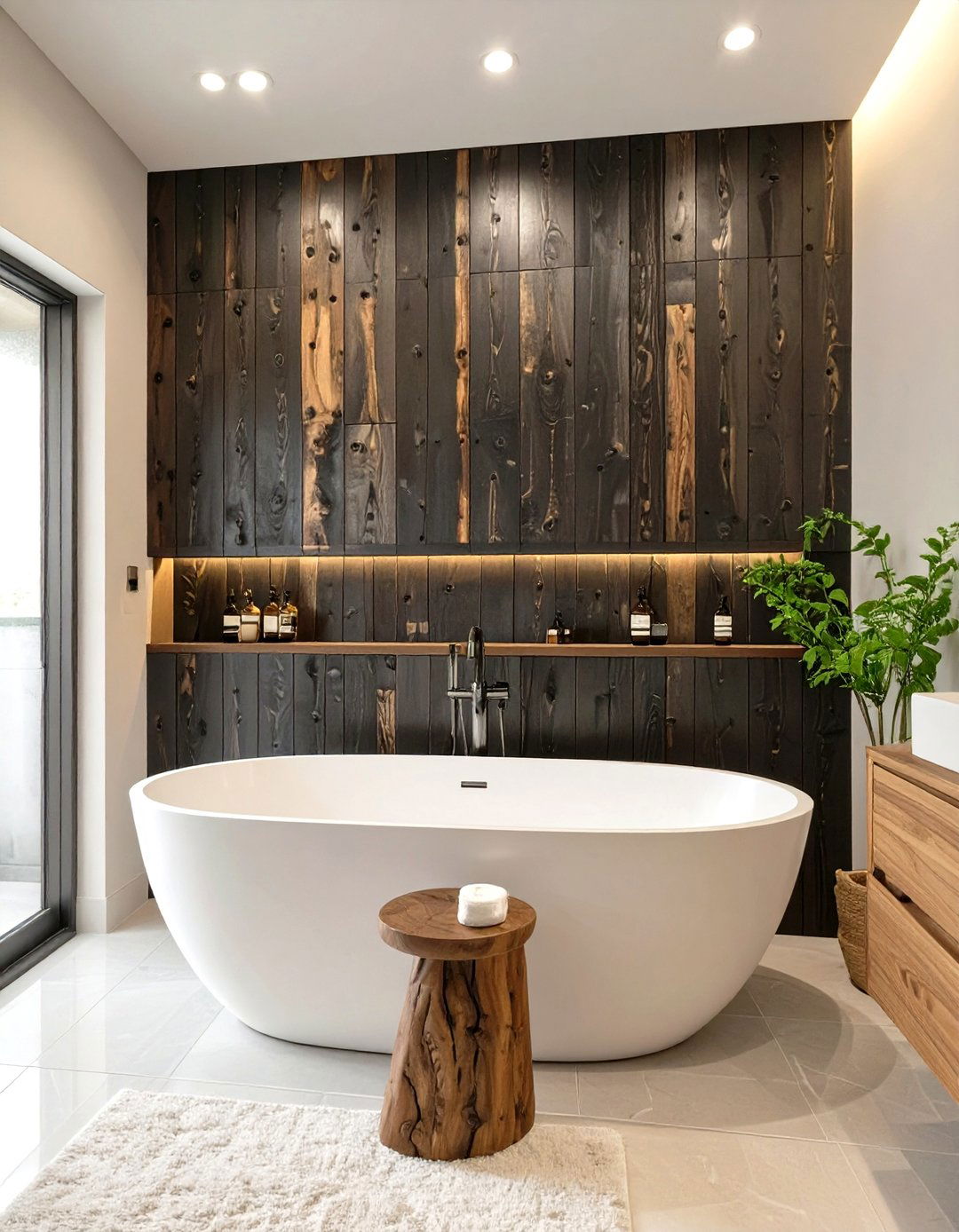
Shou Sugi Ban is the traditional Japanese technique of charring wood to preserve process creates a stunning, blackened finish that is waterproof, durable, and has a deep, alligator-skin it as an accent wall in the bathroom, especially in the shower or behind the vanity, adds dramatic texture and a powerful visual contrasts beautifully with lighter elements like a white porcelain tub or a light wood ancient technique brings a sense of history, resilience, and profound, moody beauty to a contemporary bathroom space.
17. A Bathroom with Natural Light and Skylights
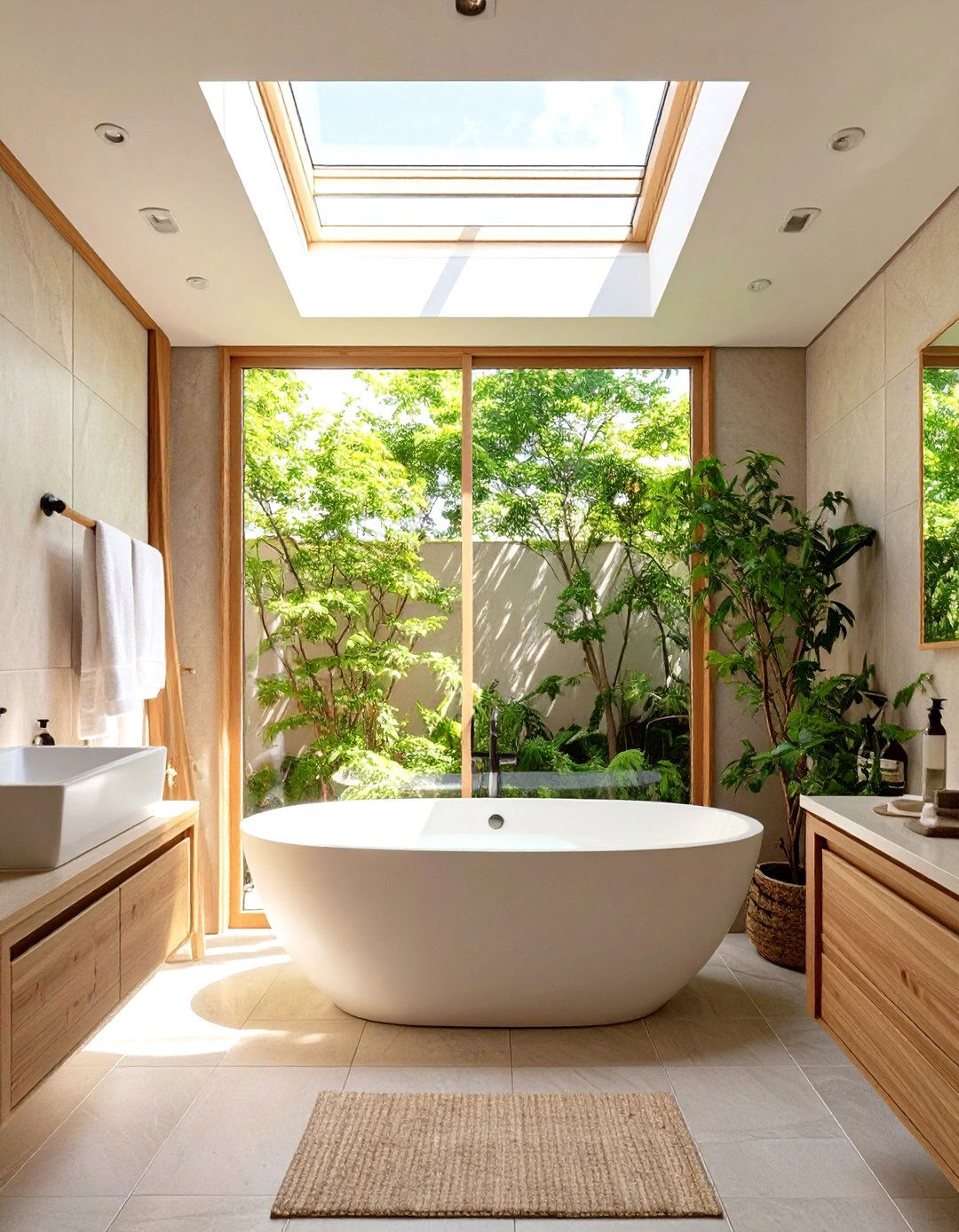
Maximizing natural light is crucial in Japanese bathroom privacy is a concern for large windows, a skylight is a perfect floods the space with daylight from above, creating a bright, airy atmosphere while remaining completely private. A skylight placed directly over the shower or tub can make you feel like you're bathing connection to the sky and the changing light throughout the day enhances the sense of tranquility and space feels more expansive and spiritually uplifting, reducing the need for artificial lighting during the day.
18. The Engawa-Inspired Bathroom Ledge
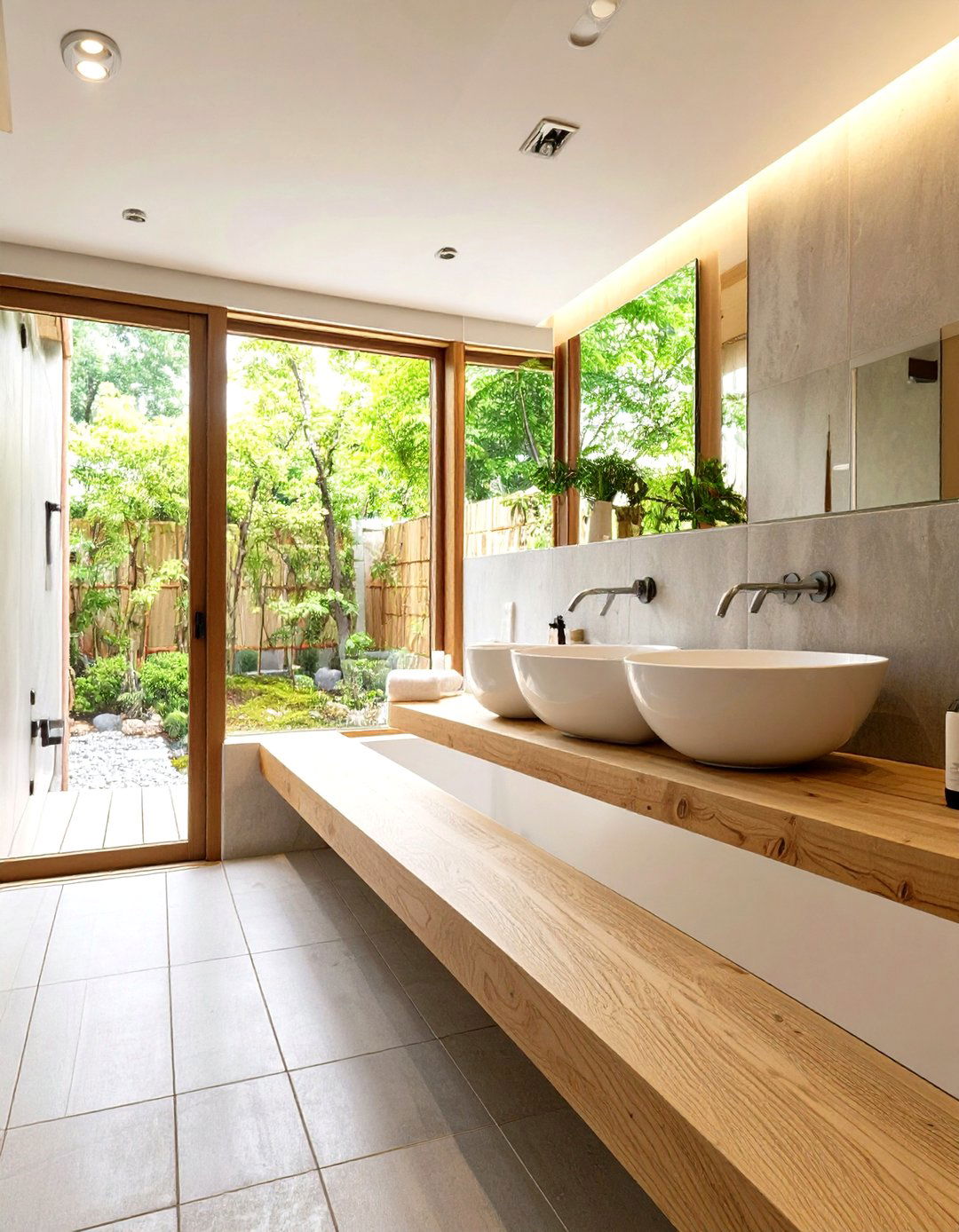
An engawa is a traditional Japanese veranda-like a similar feature into the bathroom design adds both function and low, wide ledge, often made of wood or stone, can run alongside the tub, providing a place to sit, set down a towel, or display a small plant or helps to bridge the space between the tub and the rest of the room, inviting you to linger and can also extend to the outside through a glass wall, further blurring the line between the interior and a connected garden space.
19. A Bathroom with Asanoha Pattern Tiles
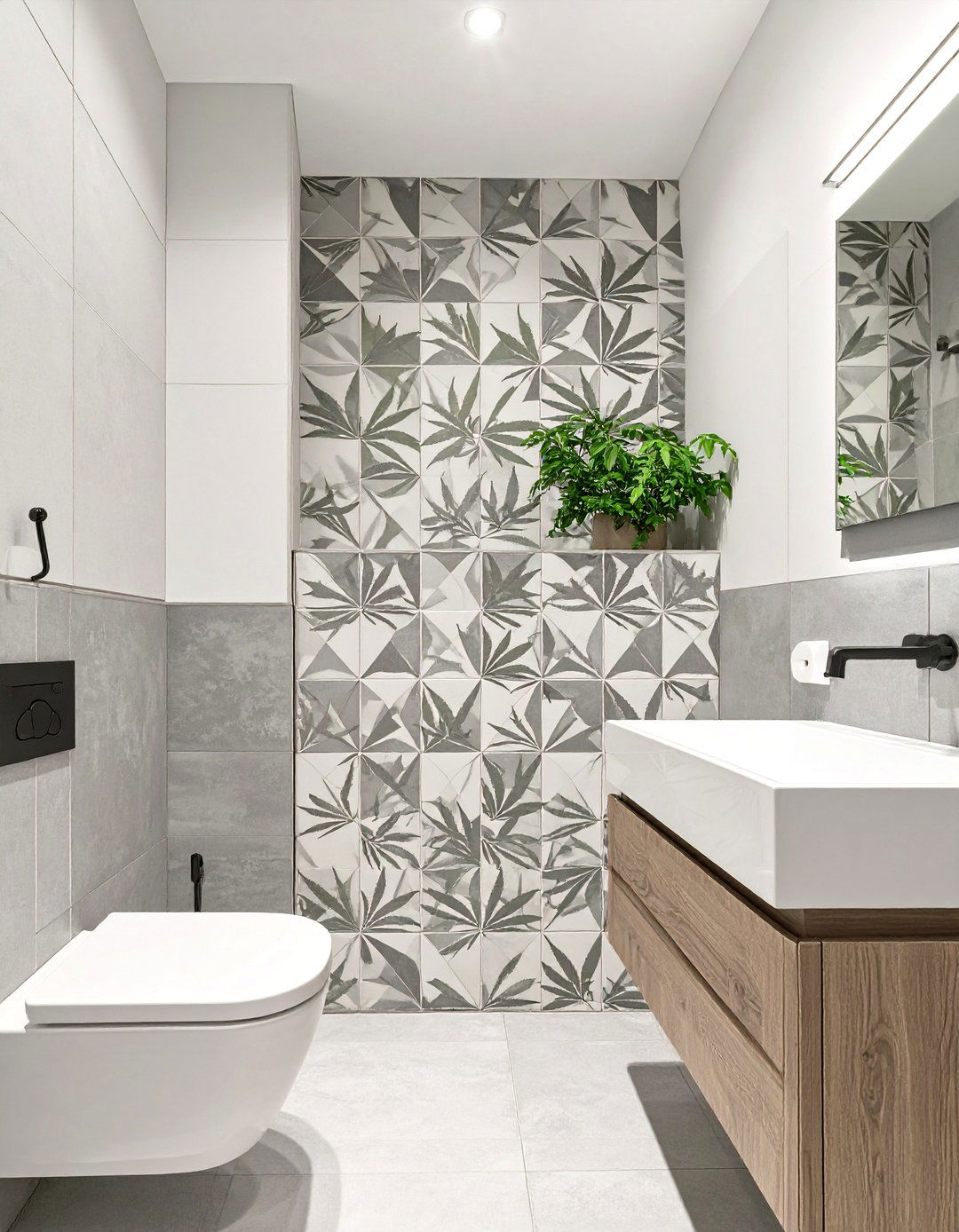
Introduce a classic Japanese geometric pattern with Asanoha pattern, representing the hemp leaf, symbolizes growth and good can be used on the floor or as a feature wall to add subtle visual interest without overwhelming the minimalist repeating geometric design creates a sense of order and tiles in a neutral, monochromatic color scheme, like grey on white or black on charcoal, to maintain a serene and sophisticated feel. It's a beautiful way to incorporate traditional symbolism into a modern bathroom design.

20. The Bathroom as a Meditative Space
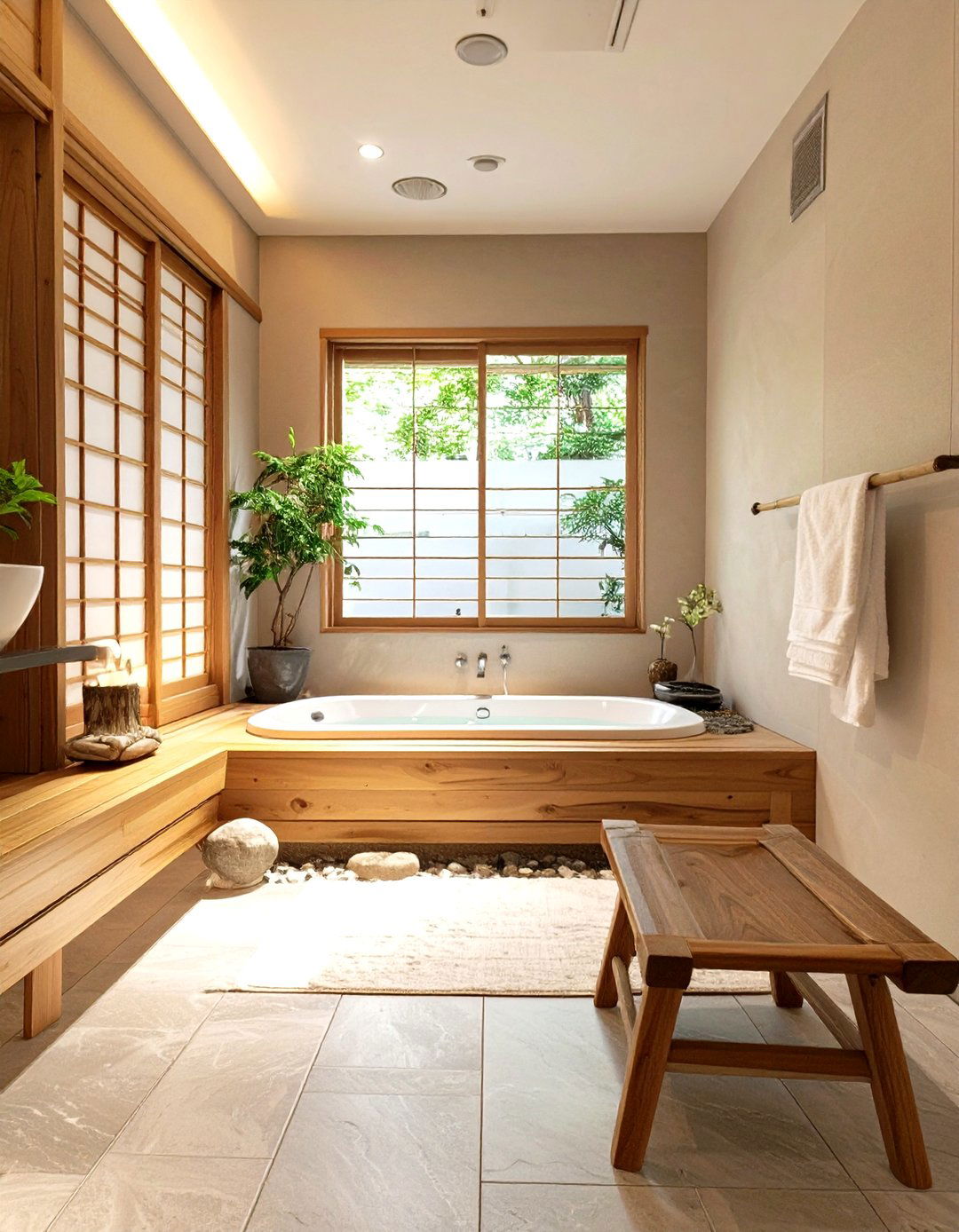
Design the bathroom with the express purpose of meditation and means eliminating all the room can help create a quiet layout should be centered around the ofuro tub for mindful a small, low stool for seated lighting should be dimmable to adjust the mood, and a small speaker for calming sounds or guided meditations can be discreetly focus is on creating an environment that encourages you to slow down, breathe deeply, and be present in the moment.
21. A Bathroom with Translucent Glass Walls
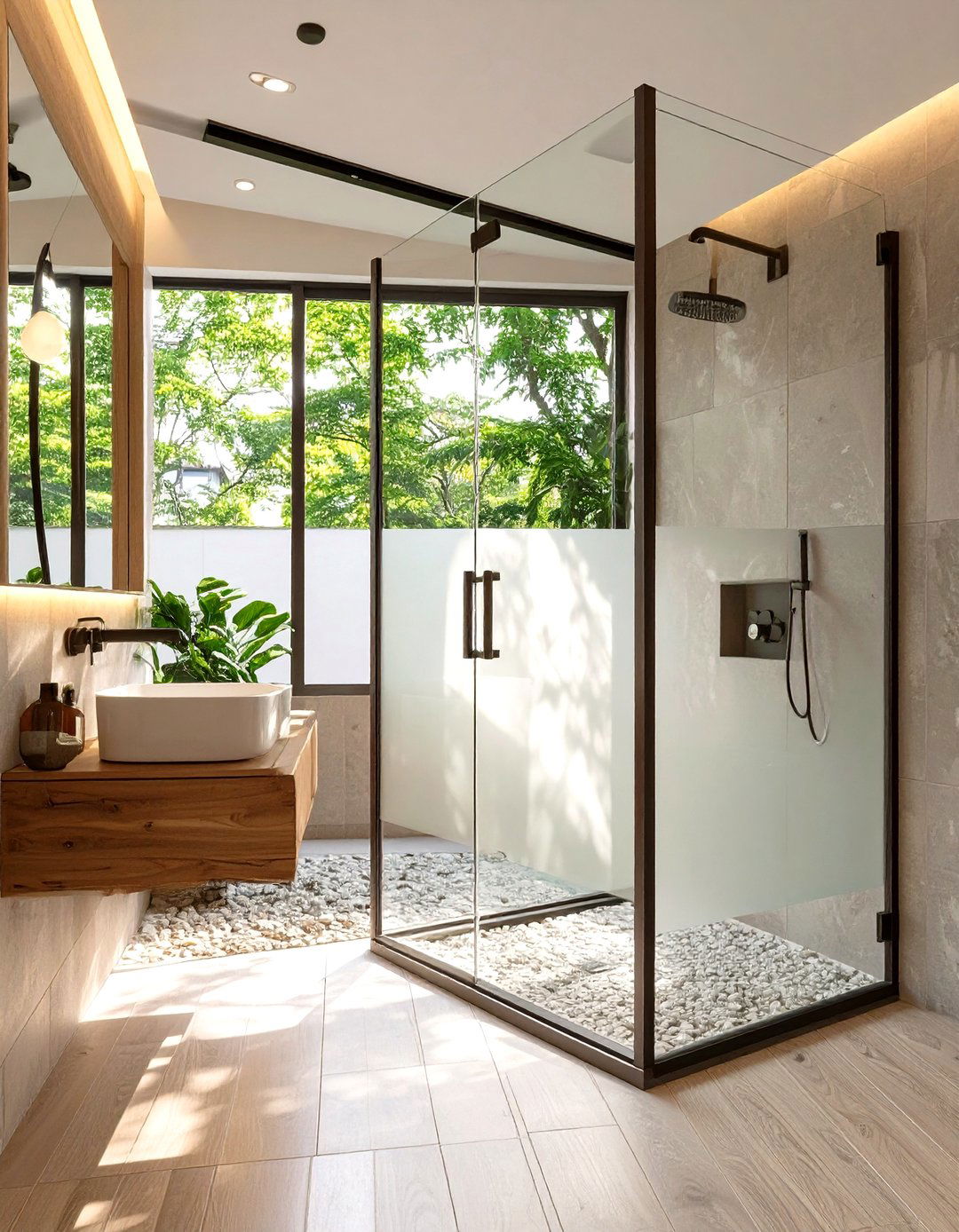
For a modern take on the shoji screen, use translucent or frosted glass allows light to pass through and creates a sense of openness while still providing can be used for the shower enclosure or to separate the toilet diffused light creates a soft, serene glow, similar to traditional paper screens, but with the durability and ease of maintenance of material choice keeps the space feeling bright and airy, which is especially beneficial in smaller bathrooms, enhancing the overall minimalist and clean aesthetic.
22. The Tsuboniwa (Small Courtyard Garden) Bathroom
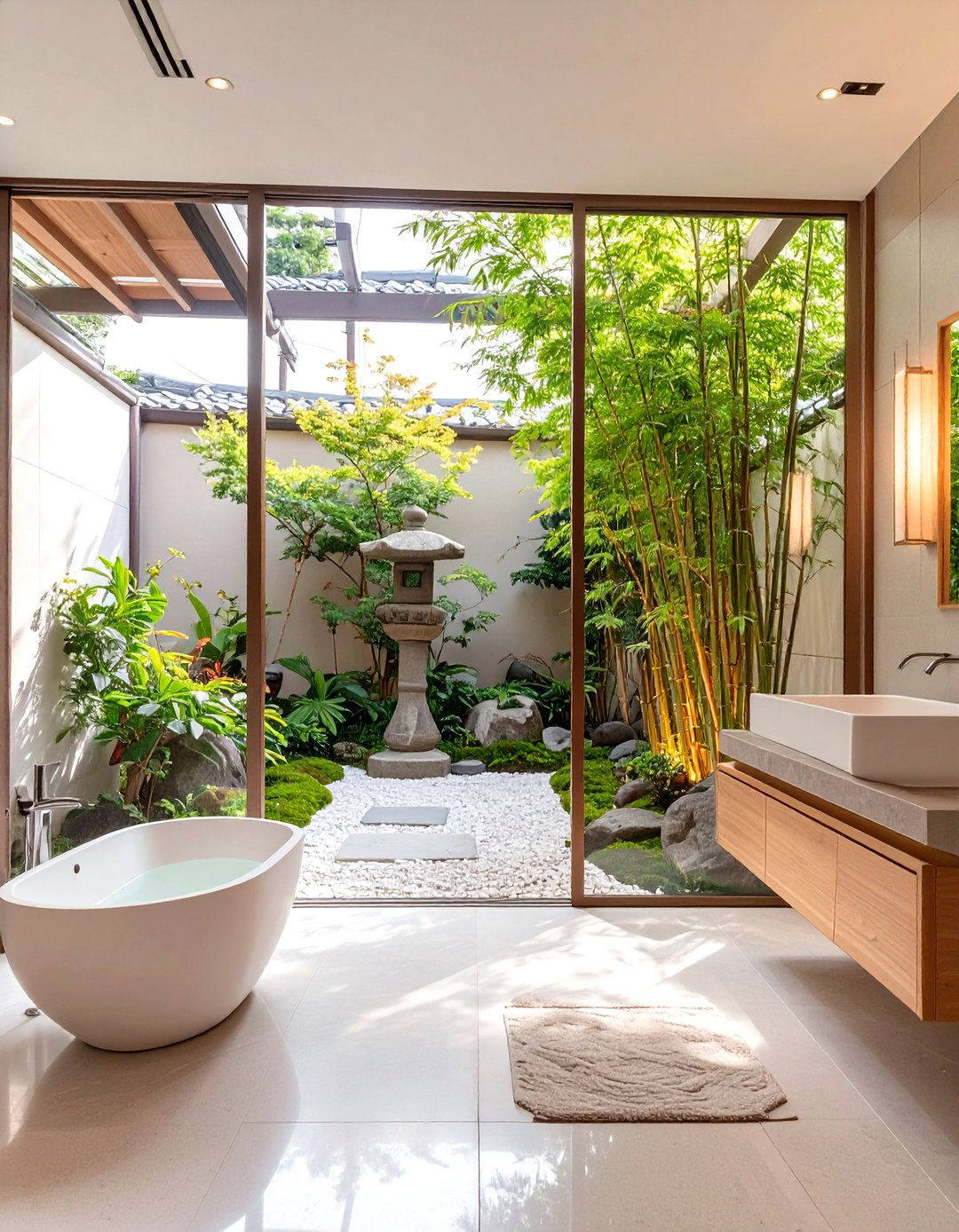
If space allows, create a small, enclosed courtyard garden, or tsuboniwa, adjacent to the bathroom. A floor-to-ceiling glass wall connects the two spaces, making the garden a living piece of tsuboniwa typically features a few carefully chosen elements: a stone lantern, a small basin (tsukubai) , a single bamboo plant, and raked private view of nature provides a focal point for relaxation and contemplation while bathing. It’s the ultimate expression of bringing the outdoors in, creating a bathroom that feels like a secluded, natural retreat.
23. A Bathroom with Earthy Plaster Walls
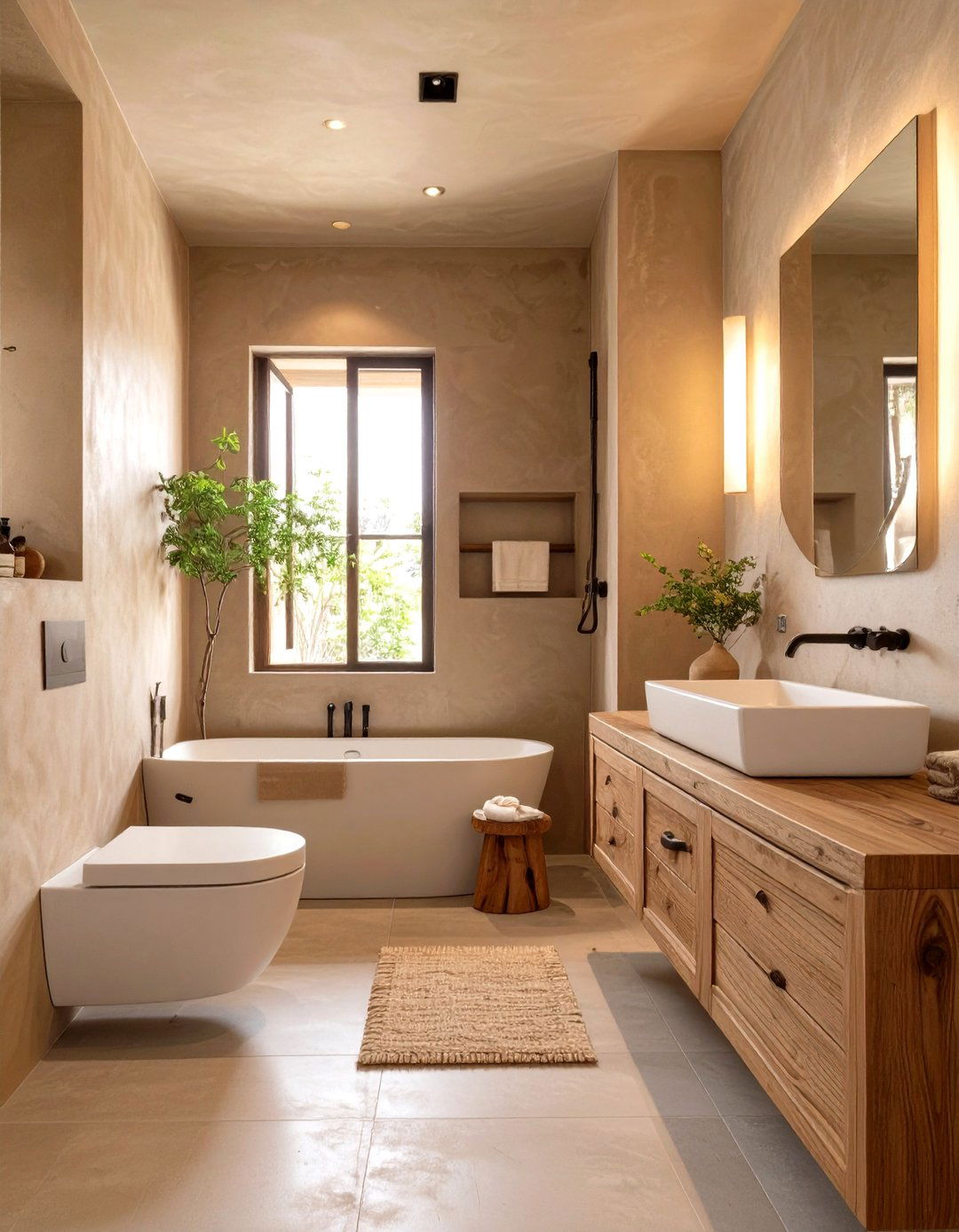
Instead of tile or wood, consider using natural clay or lime plaster for the like Shikkui plaster, a traditional Japanese lime plaster, are breathable, moisture-regulating, and have a beautiful, soft finish is not perfectly uniform, which aligns with the wabi-sabi appreciation for natural earthy tones and matte finish of plaster create a warm, calming, and organic choice of material envelops the space in a natural cocoon, providing a soothing backdrop for a minimalist design that feels both grounded and luxurious.
24. A Bathroom with Integrated Plant Life
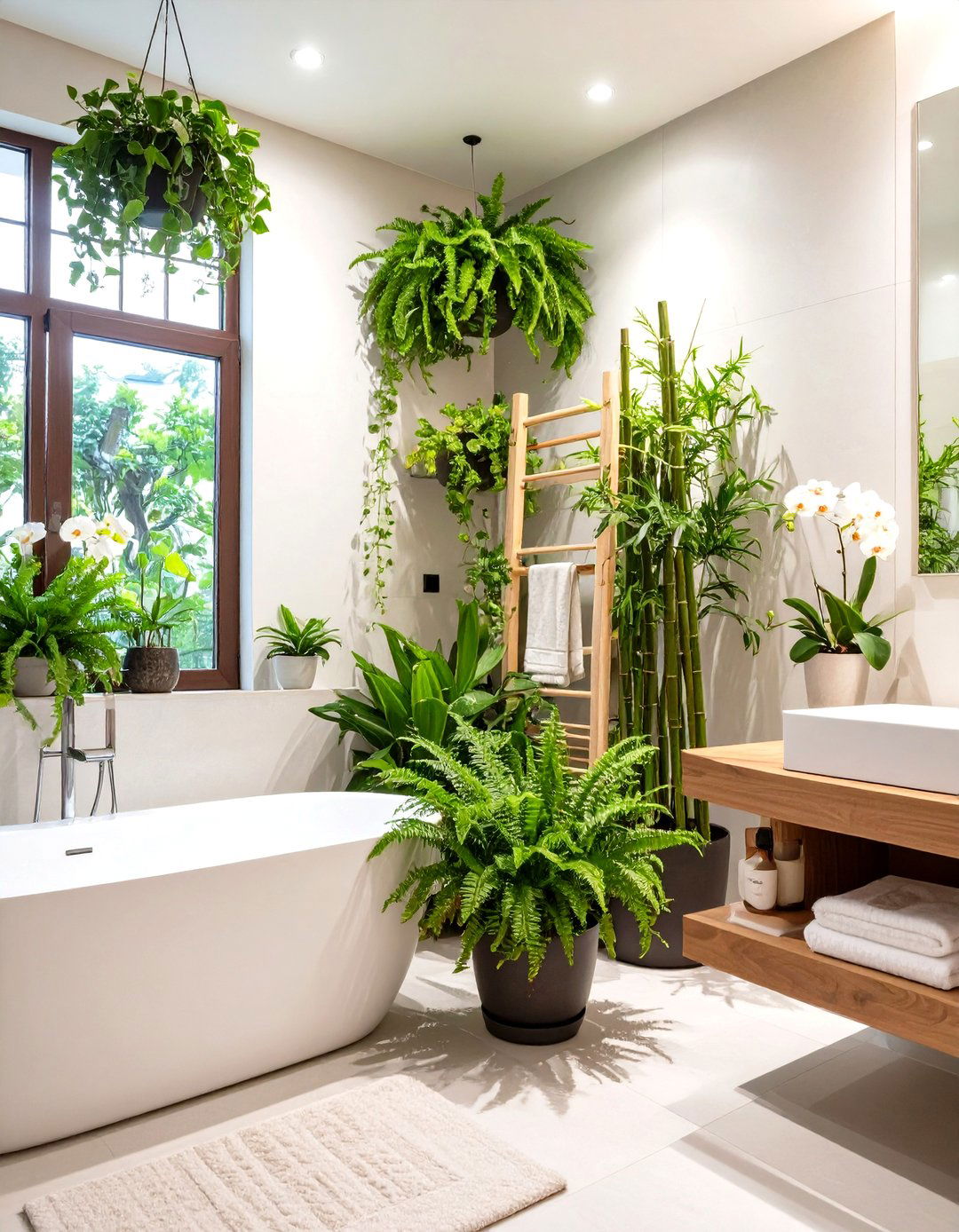
Bringing plants into the bathroom is a simple way to invoke the Japanese love of species that thrive in humidity, such as ferns, orchids, or bamboo. A large potted plant can serve as a focal point, or a collection of smaller plants can be arranged on a wooden a built-in planter or even a living wall for a more dramatic purify the air and add a vibrant, living element to the space, enhancing the feeling of a fresh, natural sanctuary and promoting a sense of well-being.
25. The Monochromatic Japanese Bathroom
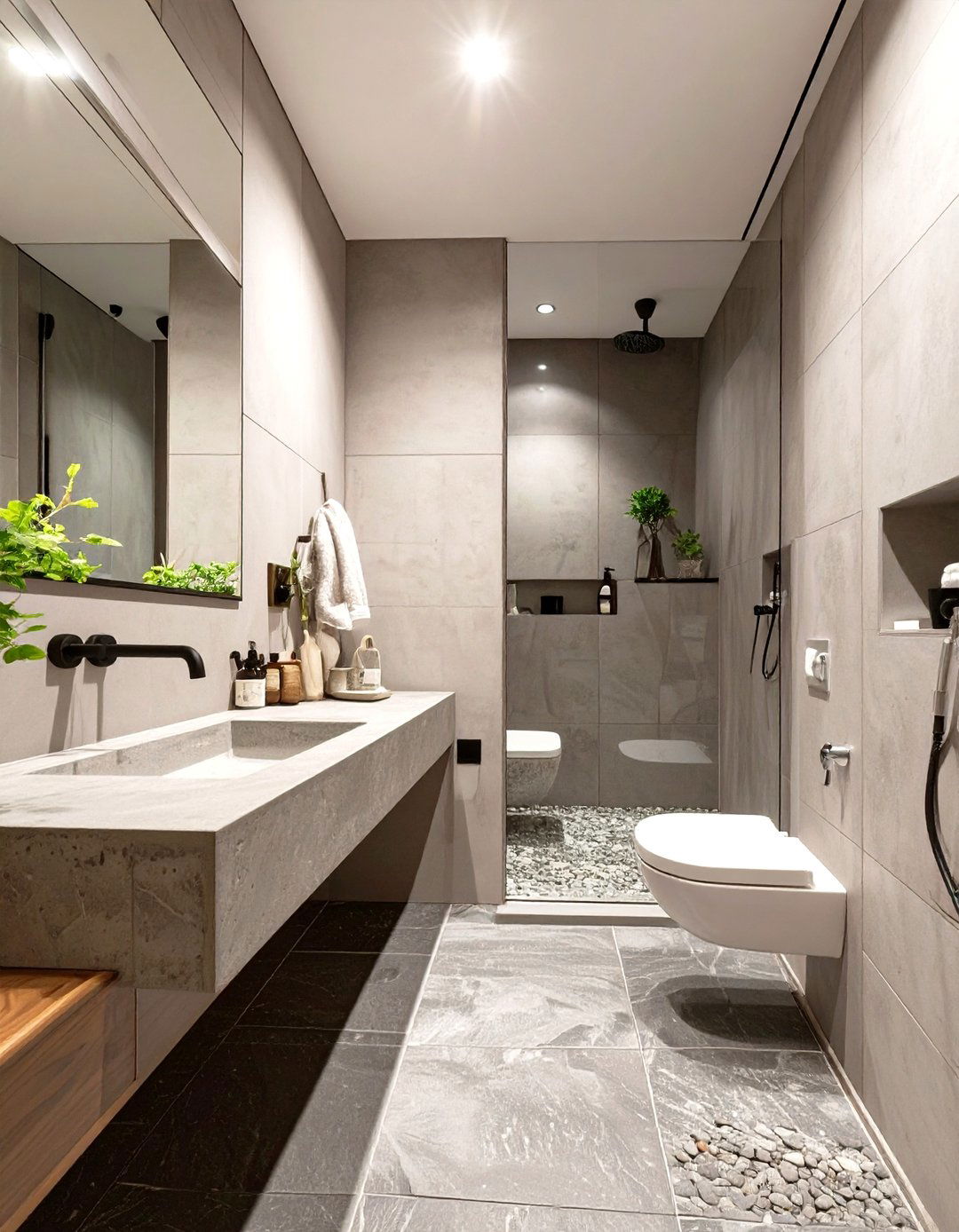
For a bold and sophisticated take on minimalism, design a bathroom using a single color family. A monochromatic scheme, whether in shades of grey, beige, or even a soft off-white, creates a powerful sense of unity and interest comes from the interplay of different textures within that example, combine a smooth concrete vanity with rough slate floors and matte ceramic tiles, all in varying shades of subtle variation prevents the space from feeling flat while maintaining a serene and cohesive atmosphere that is both modern and timeless.
26. A Bathroom with Copper or Brass Fixtures
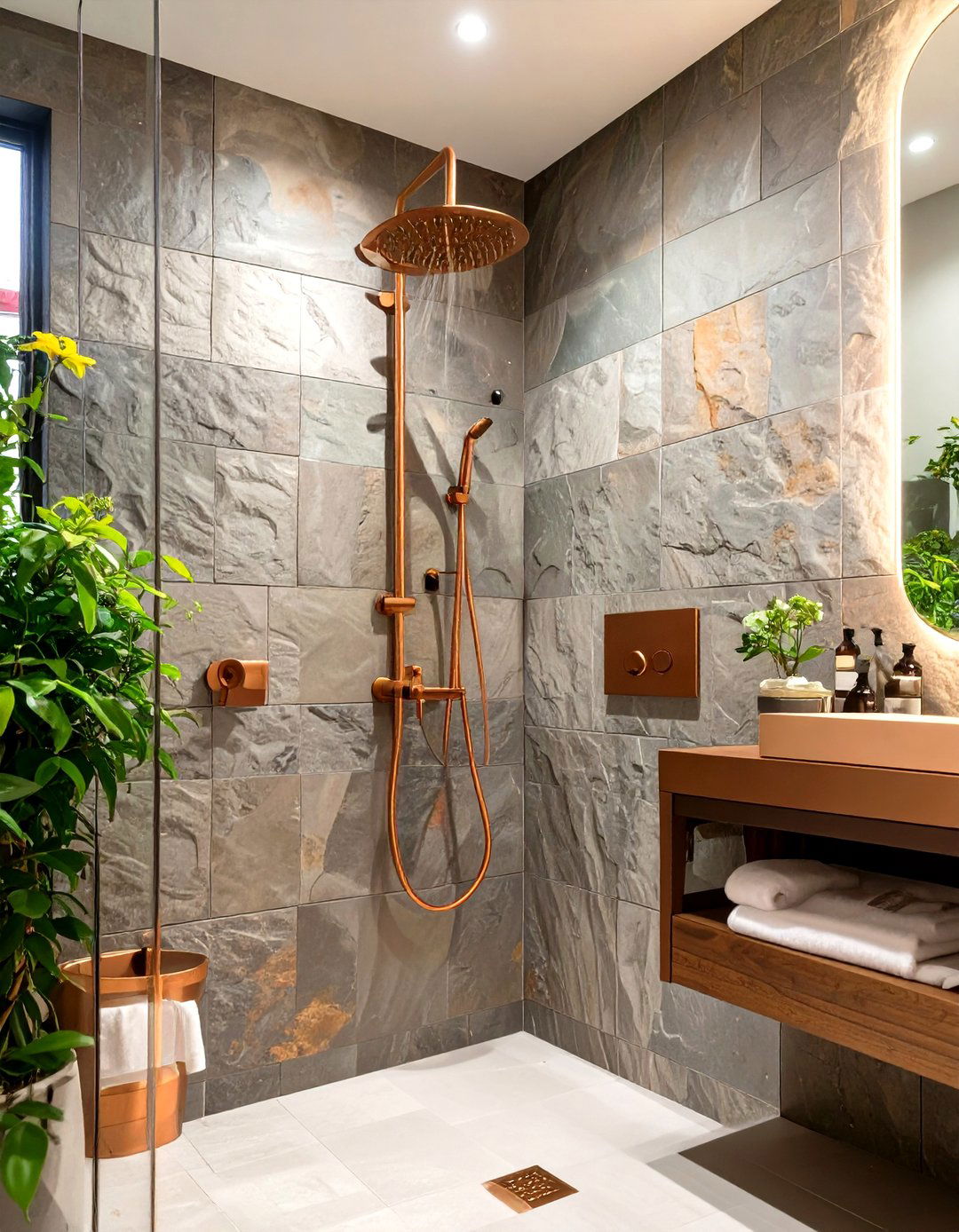
While chrome is common, warm metallic fixtures can add a touch of elegance and history to a Japanese brass or copper faucets, showerheads, and hardware develop a unique patina over time, which aligns with the wabi-sabi aesthetic of embracing natural warm tones of these metals contrast beautifully with the cool colors of stone and concrete and complement the warmth of natural choice adds a layer of quiet luxury and artisanal quality, elevating the simple forms of the fixtures into something special and personal.
27. The Raked Sand Zen Garden Bathroom Floor
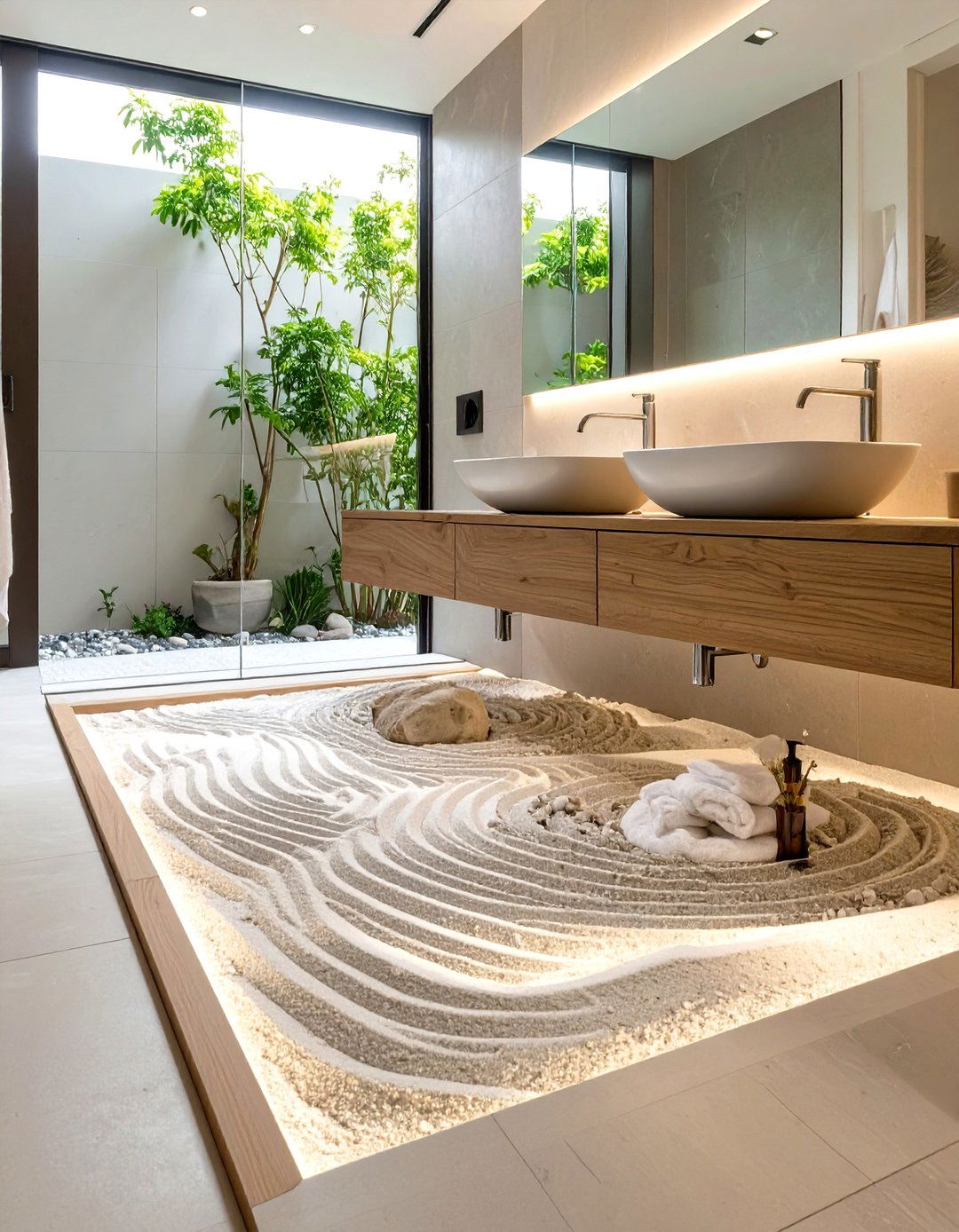
For a truly unique and conceptual design, incorporate a mini Zen garden (karesansui) within the bathroom could be a recessed area of the floor filled with white sand or fine gravel that can be raked into might be under a floating vanity or in a corner, protected by glass to keep it element serves as a powerful visual reminder of tranquility and not for the entire floor, this feature brings the contemplative art of the Zen garden directly into your personal sanctuary, creating a profound focal point.
28. A Bathroom with Low, Minimalist Seating
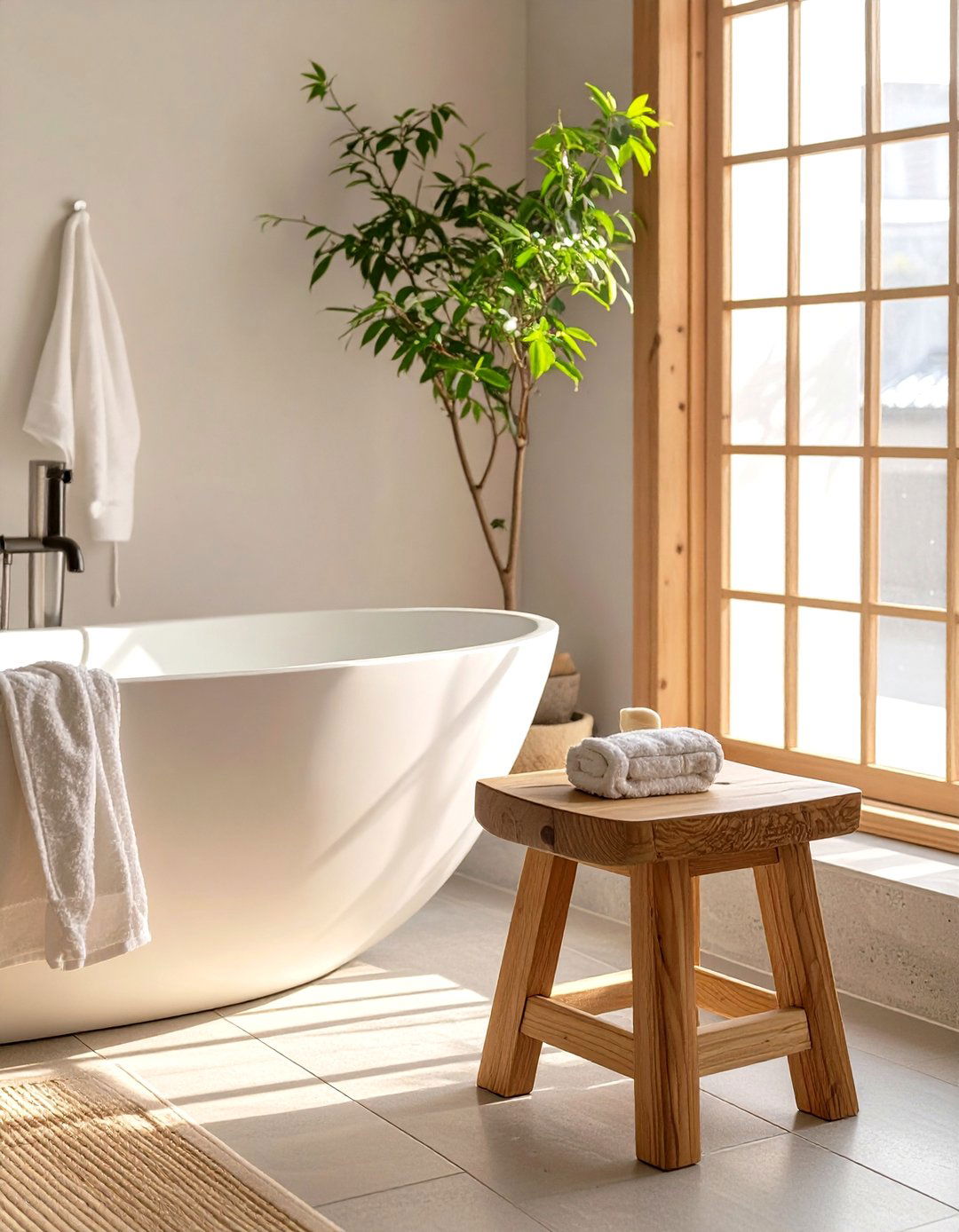
Japanese bathing culture often involves sitting on a low stool while washing before entering the a simple, beautifully crafted wooden stool is an authentic and functional small piece of furniture can be made from Hinoki, cedar, or its traditional use, it provides a convenient place to sit or to place a simple element encourages a slower, more deliberate bathing ritual, transforming a daily routine into a mindful practice and adding a touch of humble, functional elegance to the space.
29. The Light Wood and White Bathroom
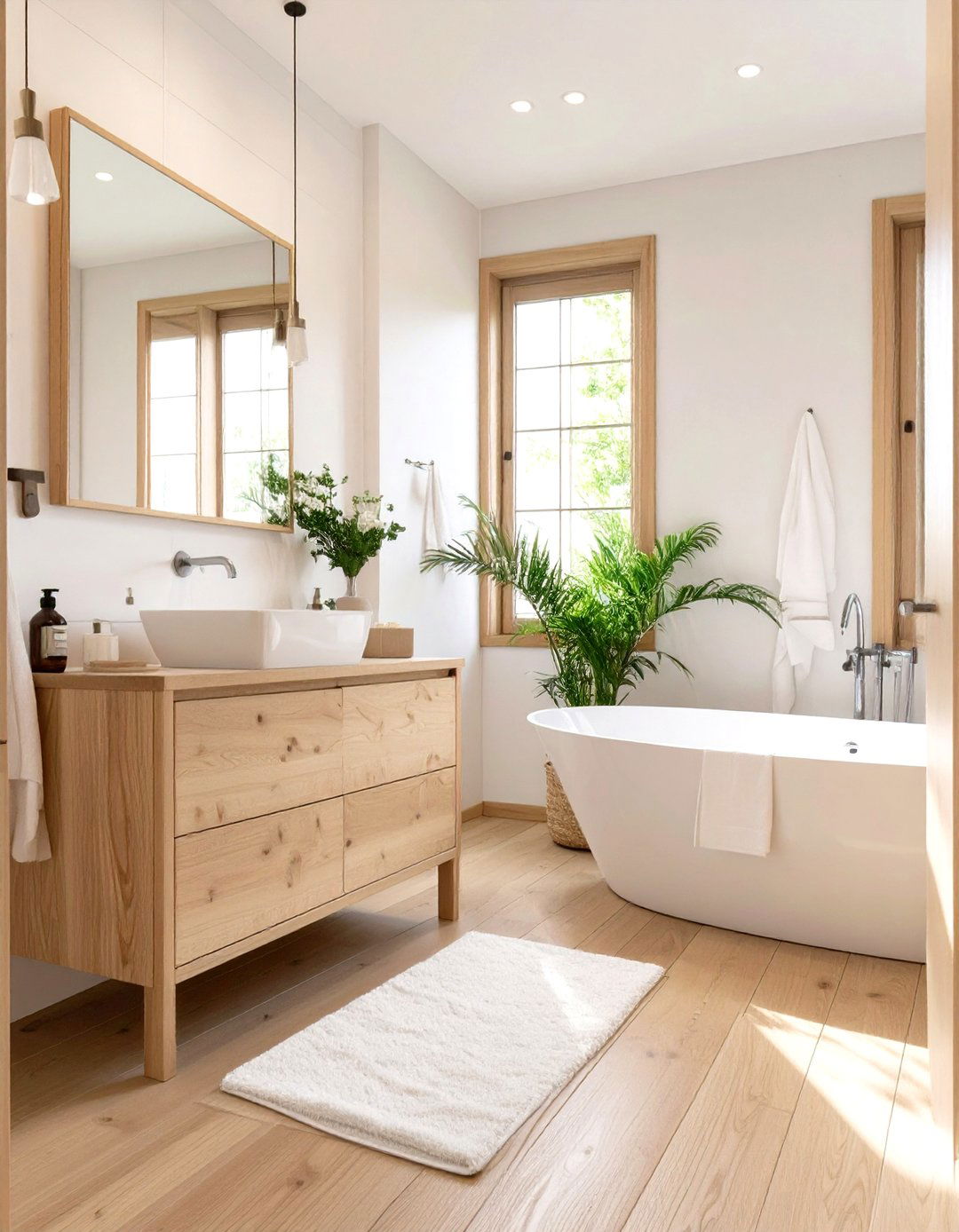
This classic combination is the epitome of clean, bright, and airy Japanese a light-colored wood, like maple, birch, or pale cypress, for the vanity, flooring, or accent this with crisp white walls, tiles, and result is a space that feels open, fresh, and warmth of the wood prevents the white from feeling sterile, while the white enhances the natural beauty of the wood timeless palette is a perfect backdrop for a minimalist aesthetic, creating a calming and uplifting environment.
30. A Bathroom with Indirect and Ambient Lighting
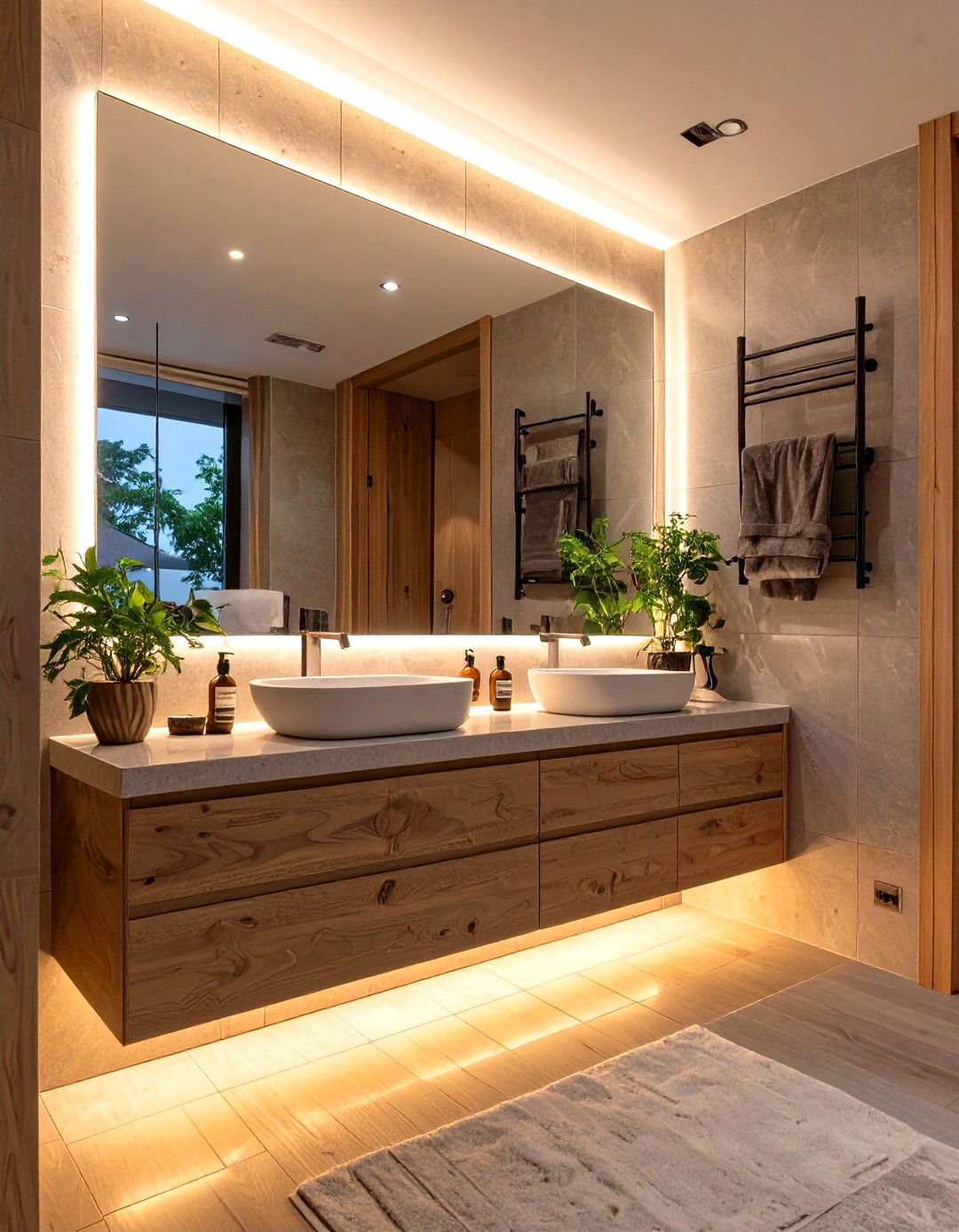
Lighting is key to creating a tranquil harsh overhead lights. Instead, use multiple layers of soft, indirect can include LED strips recessed into the ceiling coves or under a floating vanity to cast a gentle sconces with paper or fabric shades can mimic the light of traditional lanterns (andon). A dimmer switch is essential to allow you to adjust the light level to suit your mood, from bright and functional for the morning to low and relaxing for an evening thoughtful approach to lighting transforms the bathroom into a serene retreat.
Conclusion:
Ultimately, designing a Japanese-inspired bathroom is about creating a personal sanctuary that prioritizes tranquility, mindfulness, and a deep connection to core principles of simplicity, natural materials, and an uncluttered layout are consistently woven through these ideas, whether you prefer a traditional Onsen-style retreat, a sleek modern design, or a wabi-sabi space that embraces focusing on the bathing experience as a ritual rather than a routine, you can transform your bathroom into the most calming room in your key is to blend functionality with a serene aesthetic, crafting a space that soothes the mind and restores the spirit.

Related posts:




Leave a Reply