
A well-planned front yard should make the driveway feel like part of the landscape, not a separate strip of pavement. The strongest designs coordinate the driveway material, shape, edging, planting beds, lawn, and walkway to create one balanced view from the street. Layered plants can soften hard surfaces, while defined borders make routine mowing and maintenance easier. Materials that echo the home’s exterior also create a more cohesive appearance. () Whether you have a compact suburban lot, a sloped entrance, or a long country drive, there is a practical layout that can improve it. Explore these complete and approachable **20 front yard with driveway landscaping ideas**.
1. Straight Concrete Driveway With Layered Flower Beds
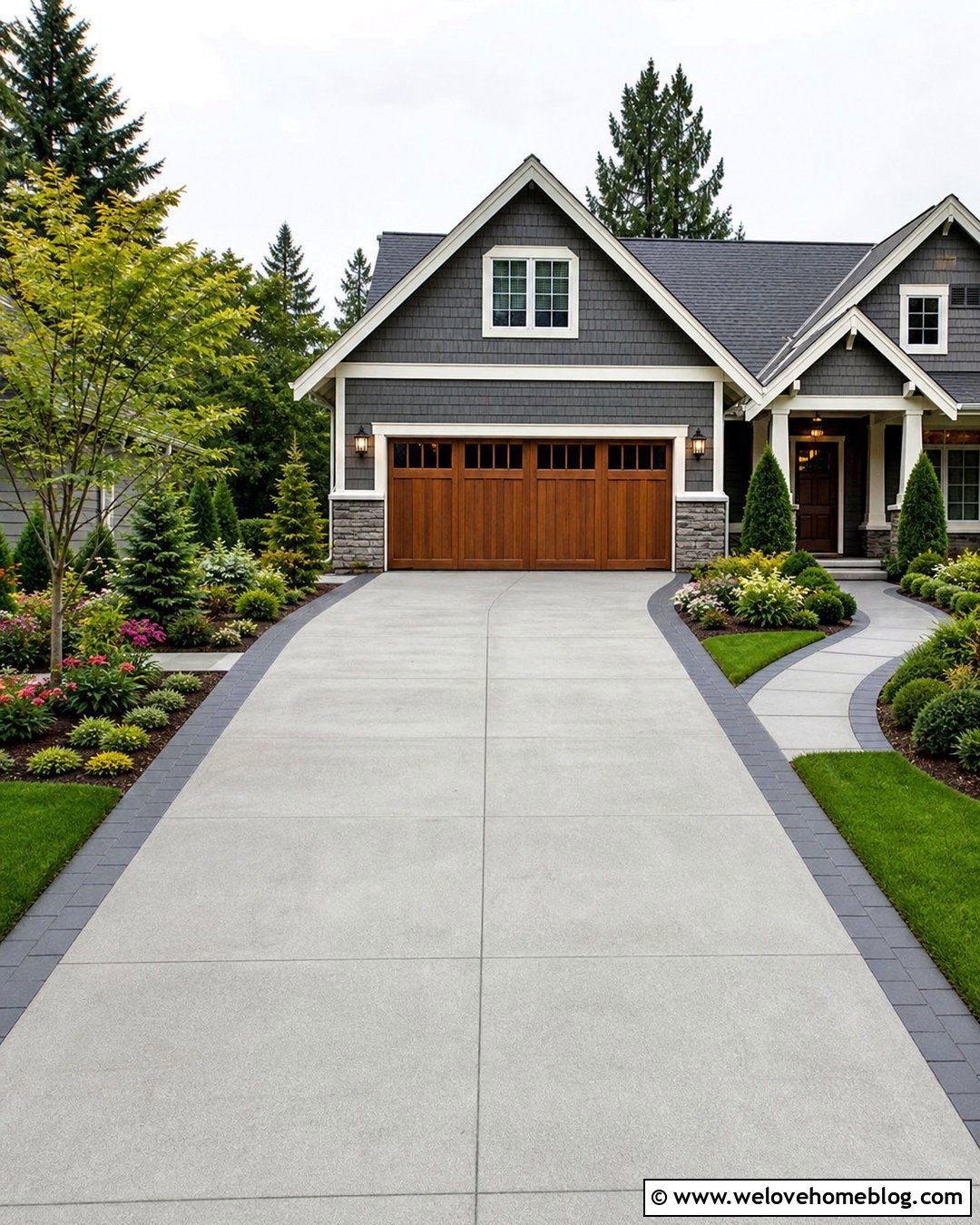
A straight concrete driveway can look polished rather than plain when planting beds frame both sides. Use smooth, light-gray poured concrete with a narrow charcoal paver border for clear definition. Beside it, arrange plants in layers, placing compact evergreens toward the back, flowering perennials in the middle, and low ground cover near the pavement. This keeps taller growth away from vehicle doors and preserves visibility near the street. A matching concrete walkway can branch toward the front porch, visually connecting the driveway and entrance. Finish the open areas with healthy lawn and one small ornamental tree near the house. The complete layout works especially well with ranch and Craftsman homes because its clean lines complement their broad, welcoming facades.
2. Curved Gravel Driveway With Cottage Landscaping
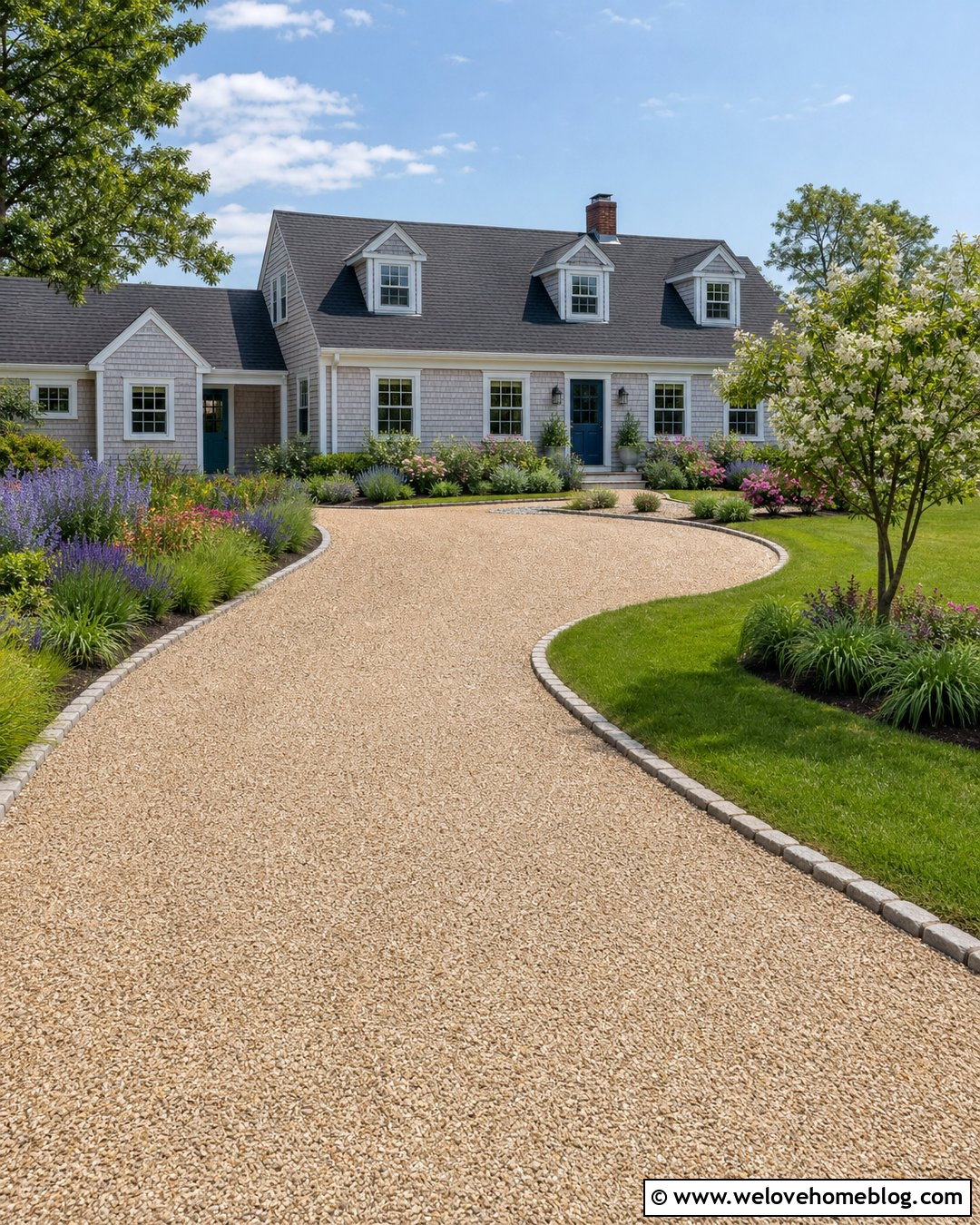
Could a driveway feel like a garden path? A gently curved pea gravel driveway creates that softer effect, especially when paired with relaxed cottage landscaping. Install warm beige pea gravel over a properly prepared base and contain it with cobblestone edging. Along the outside curve, use sweeping beds filled with lavender, salvia, coneflowers, ornamental grasses, and compact flowering shrubs. Keep plants lower near the entrance so drivers have a clear view of the road. On the inside curve, leave a simple green lawn with a small flowering tree as the focal point. A flagstone walkway can connect the parking area to the porch. Together, the curve, loose stone, natural borders, and colorful planting create an inviting approach to a cottage or Cape Cod home.
3. Black Asphalt Driveway With White Flower Borders
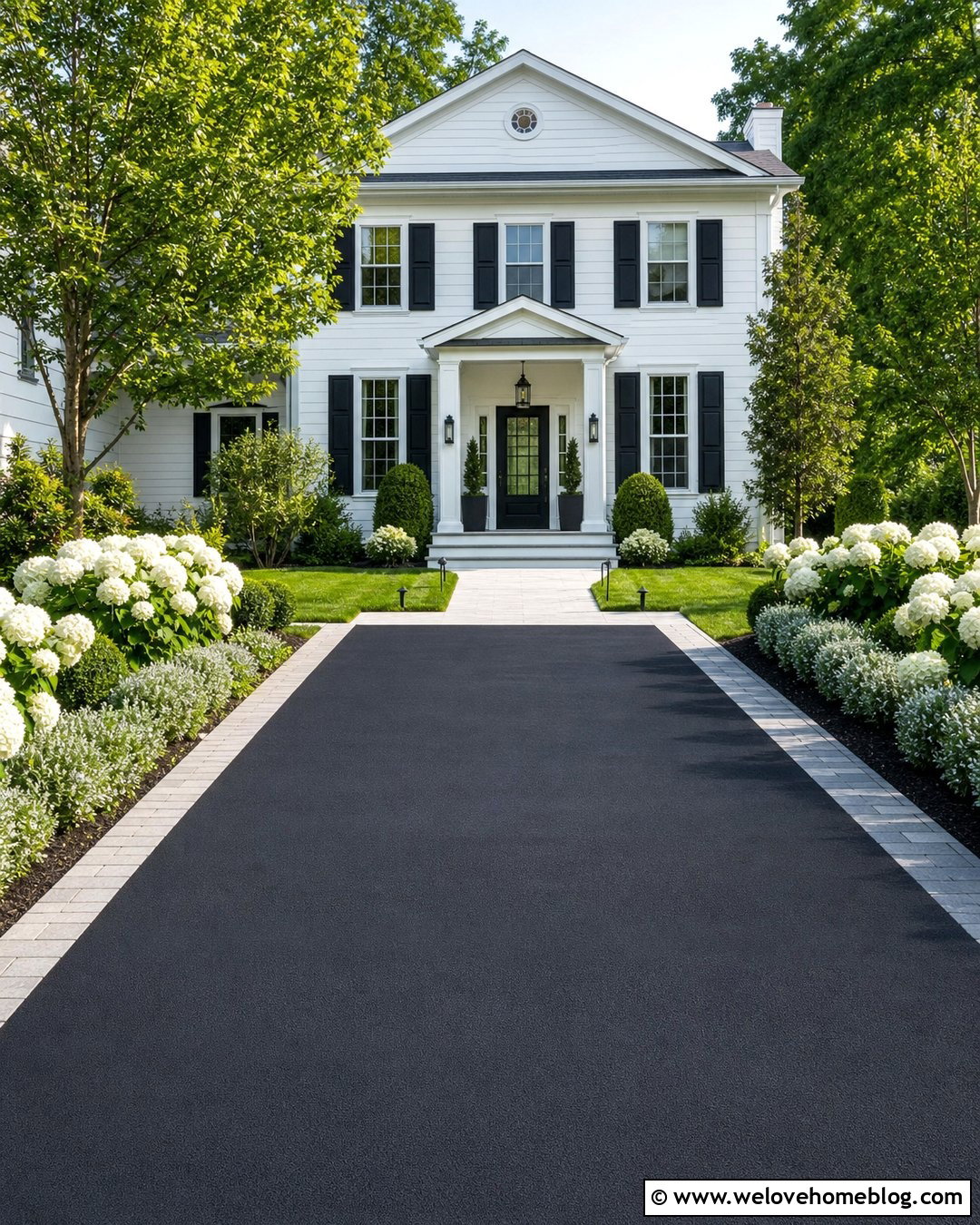
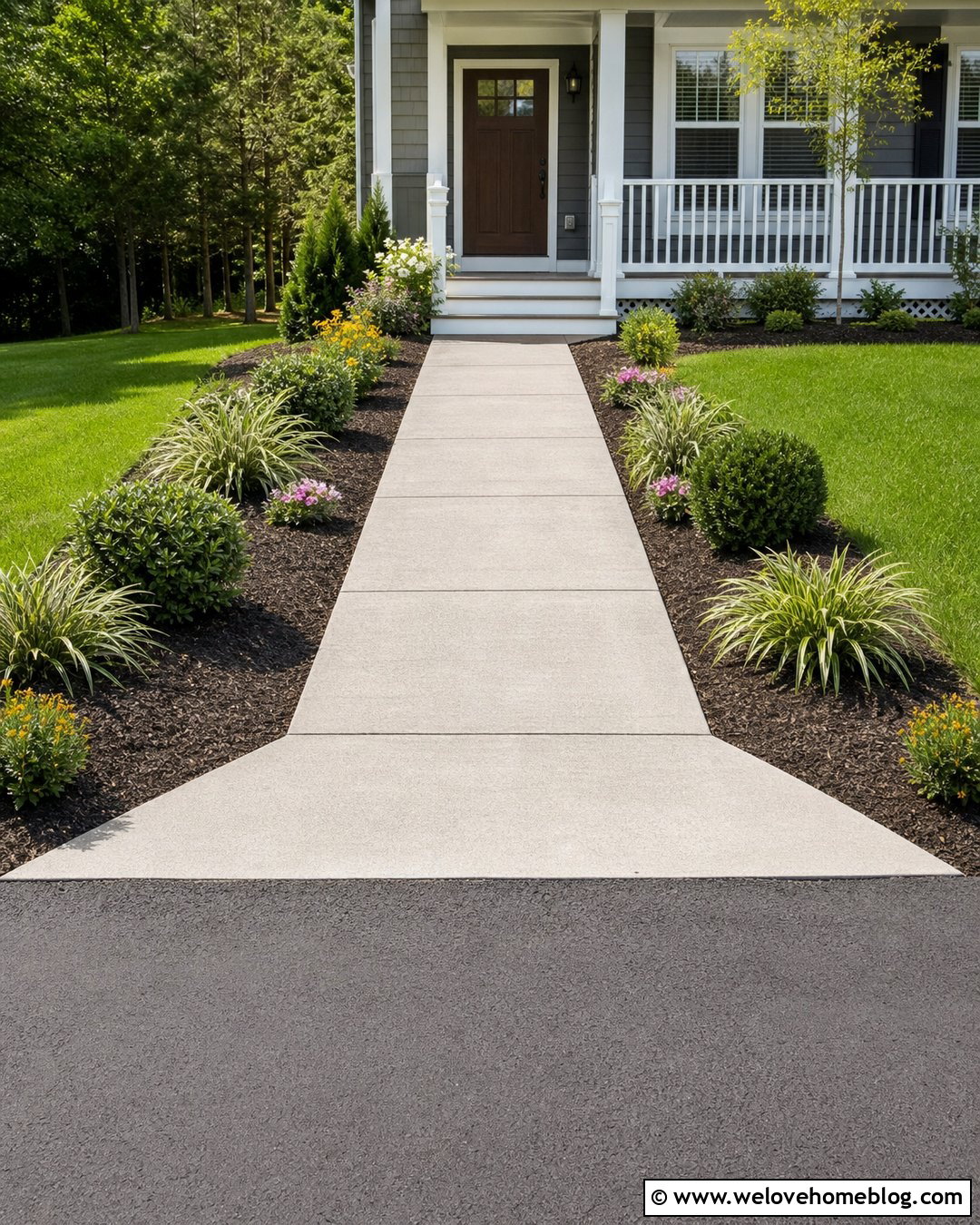
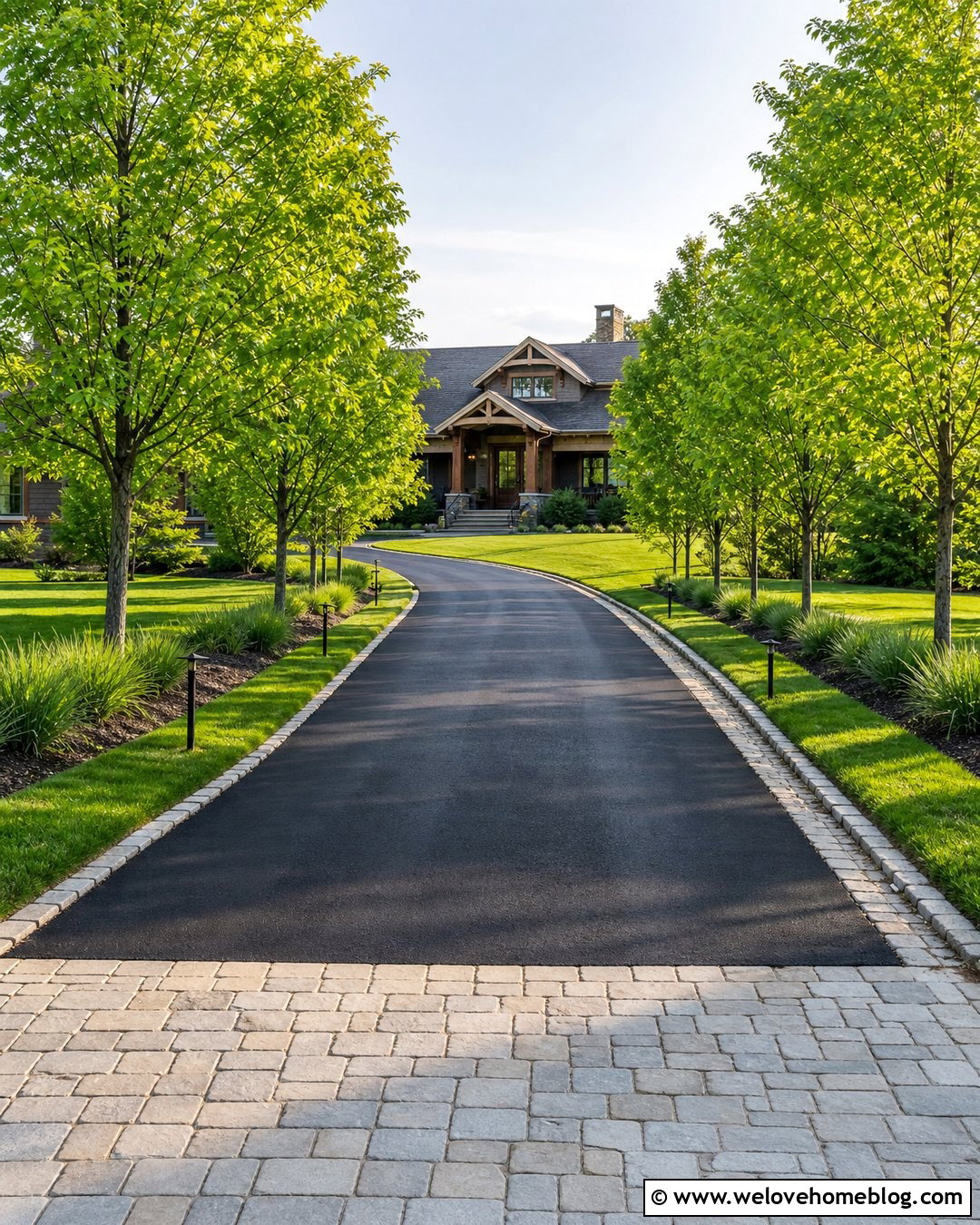
Fresh black asphalt creates a strong background for bright flowers and light-colored architecture. To prevent the driveway from appearing too wide or visually heavy, edge it with a single ribbon of pale concrete pavers. Plant generous borders of white hydrangeas, compact evergreen shrubs, and silver-green ground cover along the front-yard side. Repeating the same plants in simple groups produces a calmer result than mixing many unrelated varieties. Maintain a strip of mulch between plants and pavement to reduce trimming problems and allow room for mature growth. A light concrete walkway leading from the driveway to the porch completes the practical layout. This high-contrast combination looks especially crisp beside a white colonial, traditional brick home, or modern farmhouse with black exterior details.
4. Concrete Paver Driveway With Grass Strips

Large concrete pavers separated by narrow grass strips can make a front driveway feel lighter and more integrated with the yard. Choose rectangular medium-gray concrete pavers and arrange them in two defined driving tracks or a clean grid. Use reinforced turf or another traffic-tolerant ground cover in the joints where appropriate for the site. Continue the geometric theme with squared planting beds containing clipped shrubs, ornamental grasses, and one sculptural tree. Dark metal edging keeps the lawn and beds aligned with the paver pattern. A matching paver walkway can lead directly to the front door without competing with the driveway. This complete design suits modern and mid-century homes, where horizontal lines, restrained planting, and clearly organized spaces support the architecture’s simple character.
5. Circular Driveway With a Center Island Garden
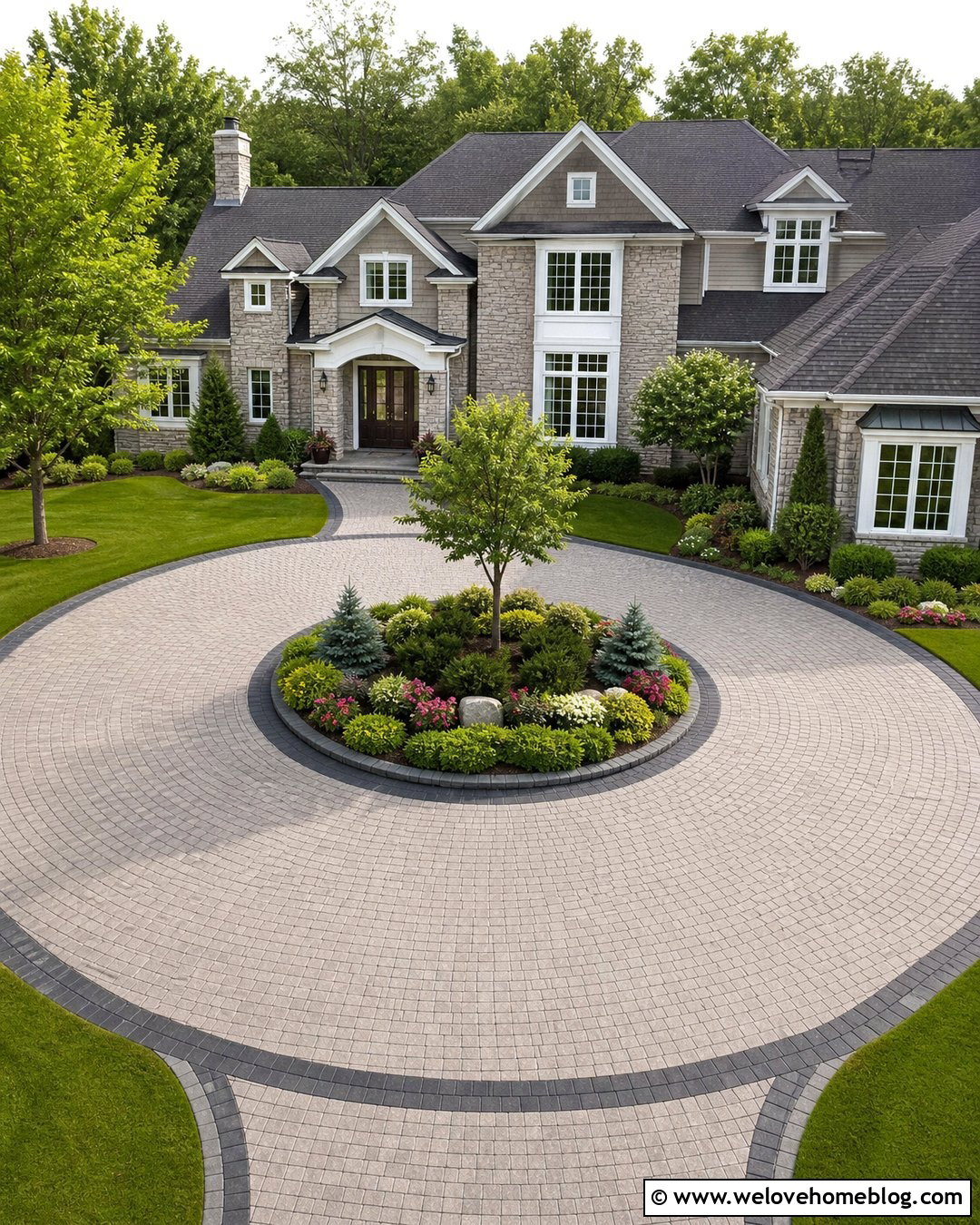
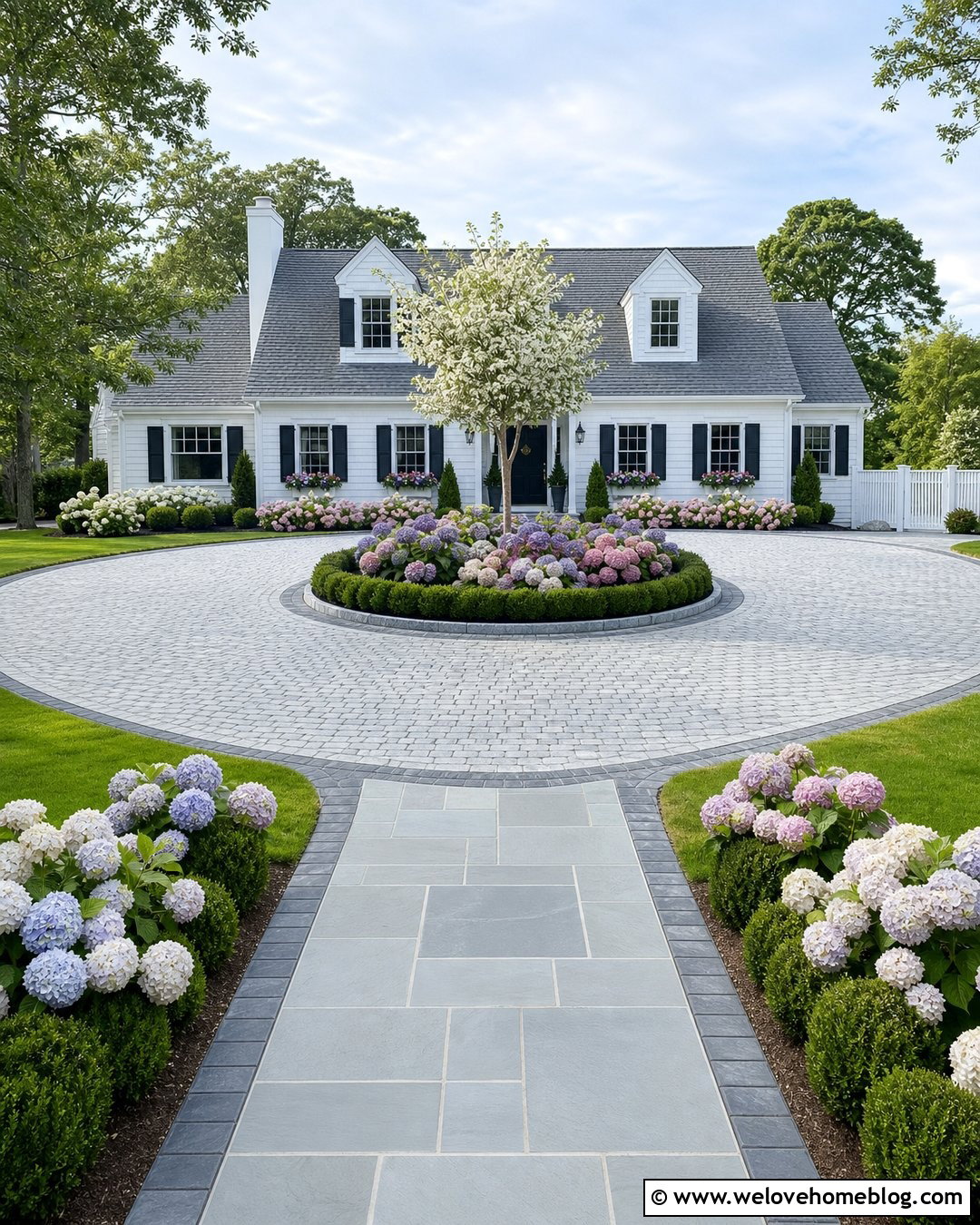
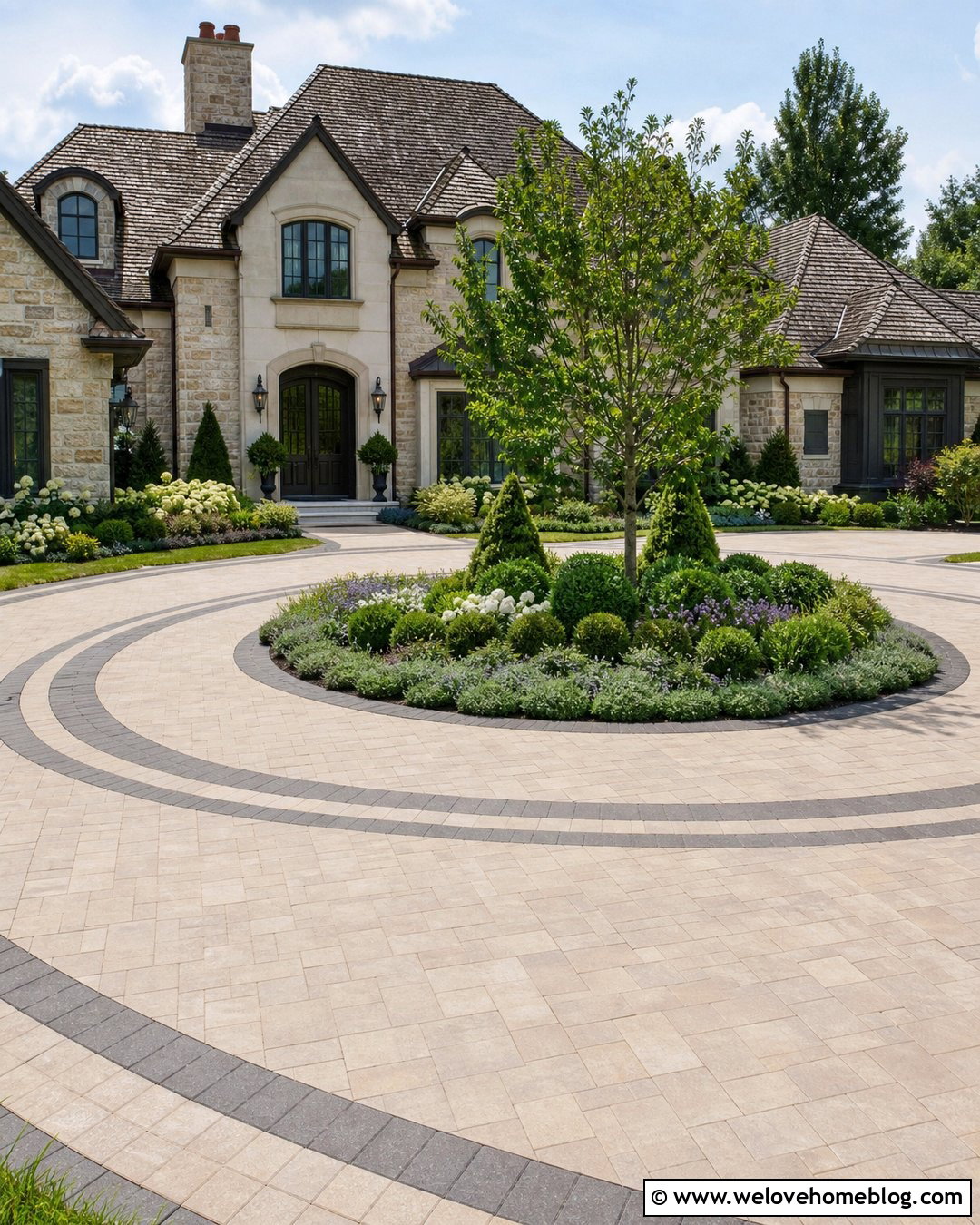
A circular driveway becomes more attractive when its center island looks intentional from every direction. Build the driving surface from warm gray interlocking concrete pavers and define the outer and inner curves with contrasting charcoal blocks. In the center, plant one appropriately sized ornamental tree surrounded by low evergreen shrubs, seasonal flowers, and tidy ground cover. Keep the island planting low enough to maintain useful sightlines around the curve. Repeat a few of the same plants near the porch and driveway entrance to unite the entire front yard. Wide lawn areas outside the circle provide breathing room and prevent the composition from feeling crowded. This layout works best on larger properties and gives colonial, Mediterranean, and traditional homes an organized, gracious approach without requiring overly formal landscaping.
6. Narrow Driveway With Vertical Front Yard Landscaping
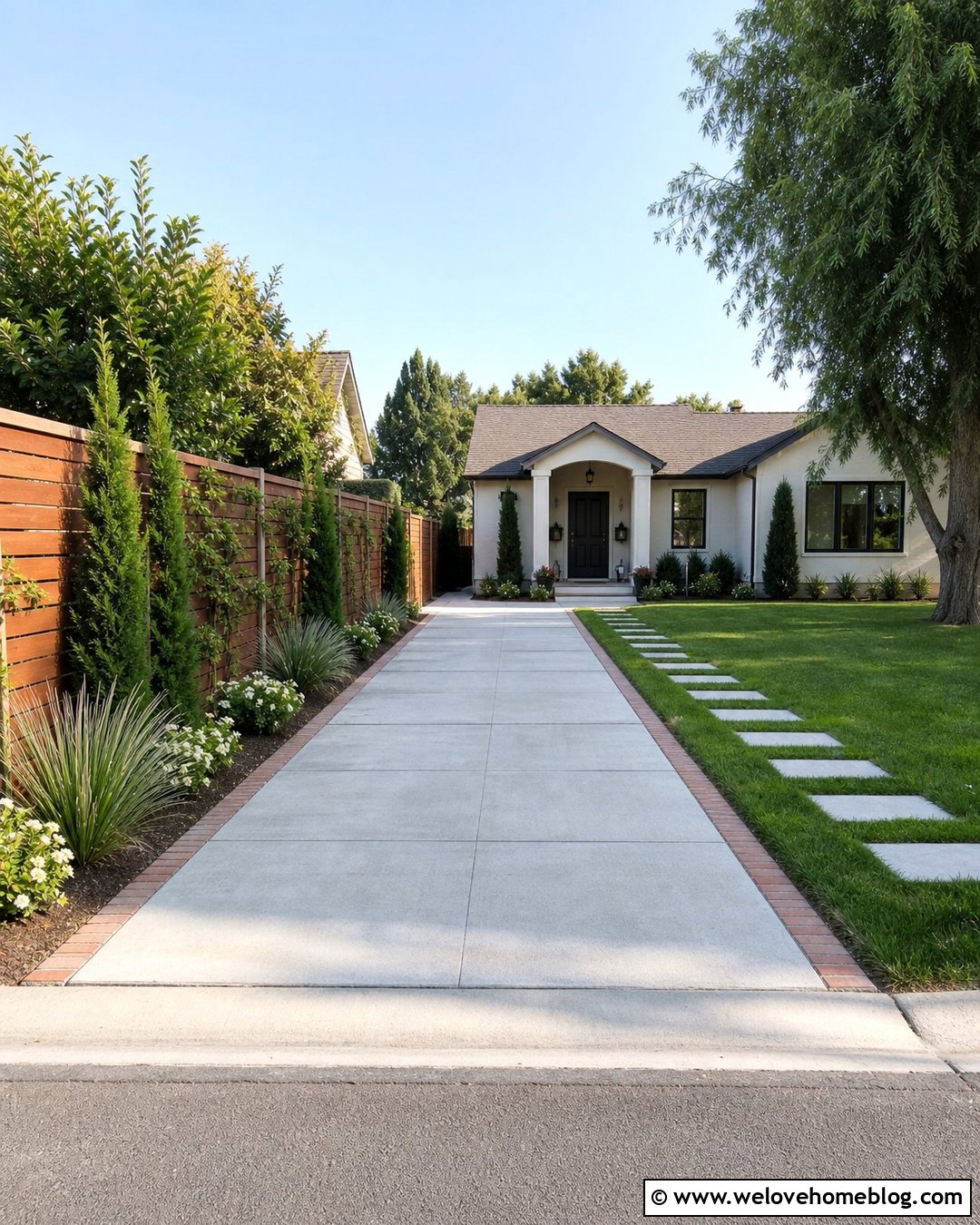
When space beside the driveway is limited, vertical structure can create interest without blocking doors or reducing parking room. Use a narrow light-gray concrete driveway with a slim brick edge that clearly separates pavement from planting. Along the property boundary, install a simple horizontal wood fence or narrow trellis and soften it with restrained climbing plants. Add columnar evergreens, upright ornamental grasses, and compact flowering perennials in a long bed beneath it. On the opposite side, maintain a clean lawn strip and a stepping-stone path toward the porch. Avoid wide, thorny, or spreading plants where passengers regularly exit vehicles. The combination of narrow beds, vertical greenery, and strong linear borders makes a small front yard feel planned, private, and welcoming rather than squeezed between the driveway and neighboring property.
7. Driveway With Drought-Tolerant Front Yard Landscaping
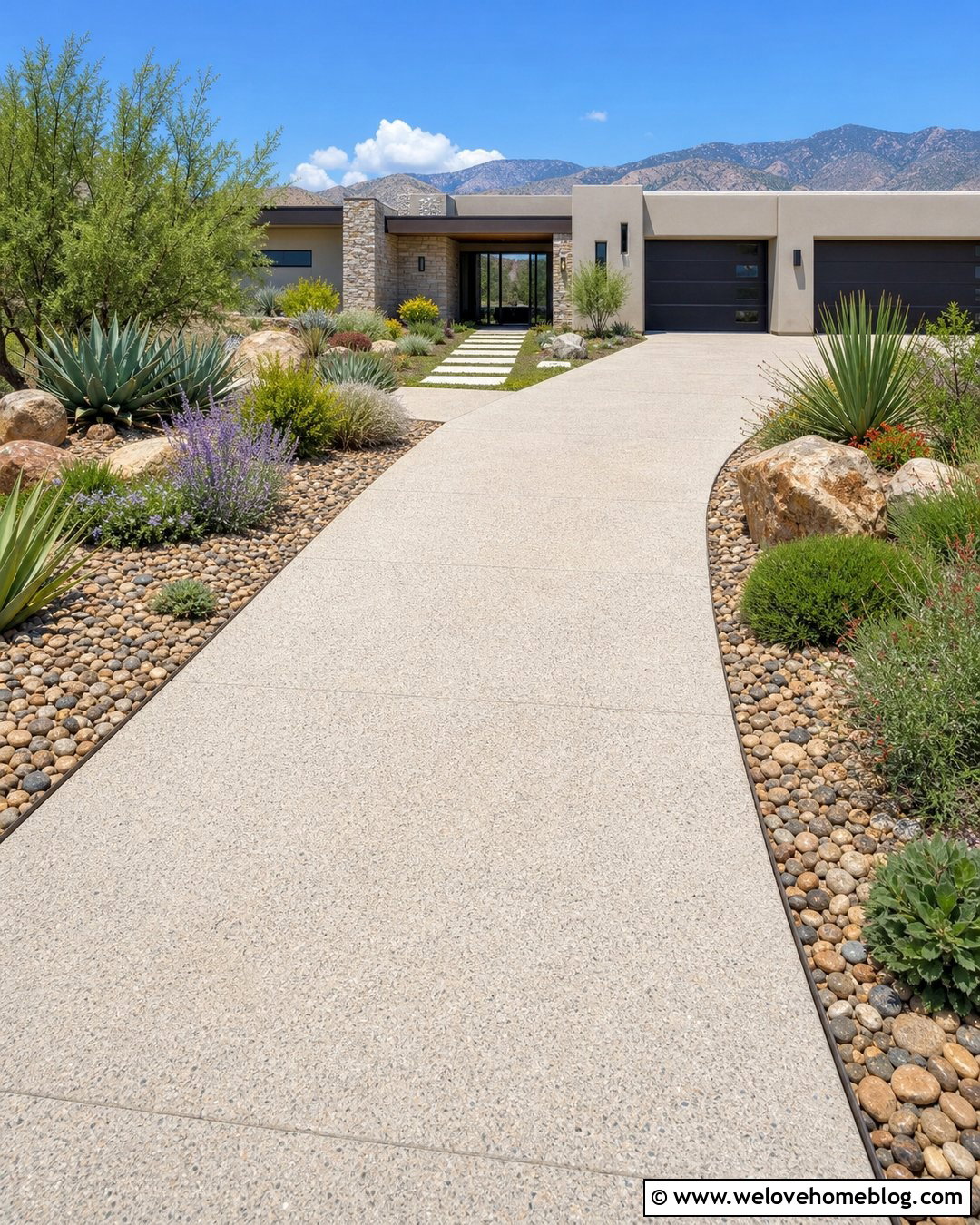
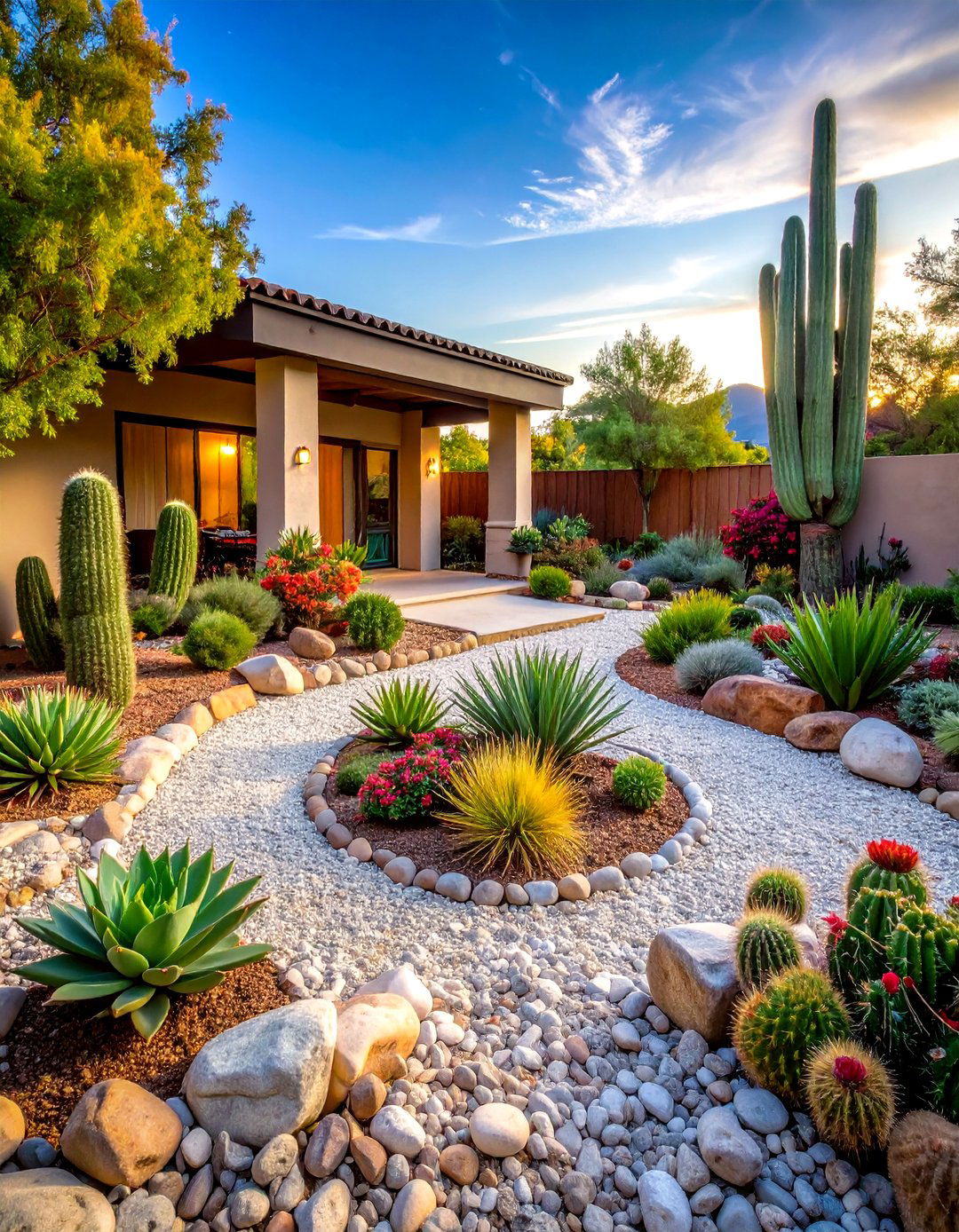
Sun-baked front yards can still look colorful and complete without relying on a large lawn. Pair a pale exposed aggregate driveway with broad gravel beds containing regional drought-tolerant plants. Use warm river rock near the pavement, then group agave, yucca, sedges, flowering sage, and rounded evergreen shrubs farther back. Select plants suited to the local climate rather than copying a desert palette in an unsuitable region. A few large boulders can anchor the beds and repeat the driveway’s natural aggregate texture. Add a straight walkway made from large concrete slabs and surround it with low ground cover. Steel edging creates clean transitions between decorative gravel and any remaining turf. This landscape looks particularly cohesive around Southwestern, contemporary, and low-profile ranch houses.
8. Long Gravel Driveway With Tree-Lined Landscaping
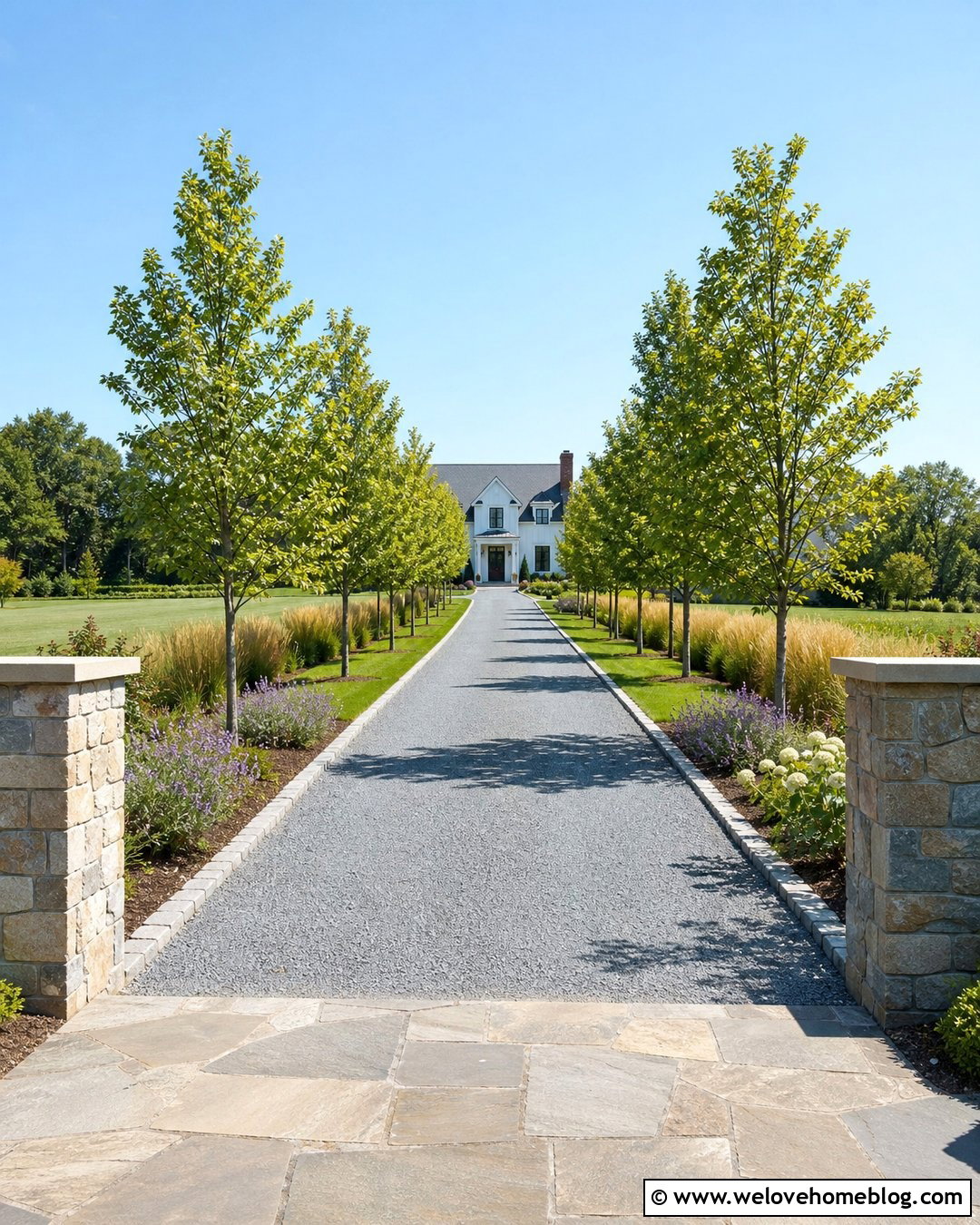
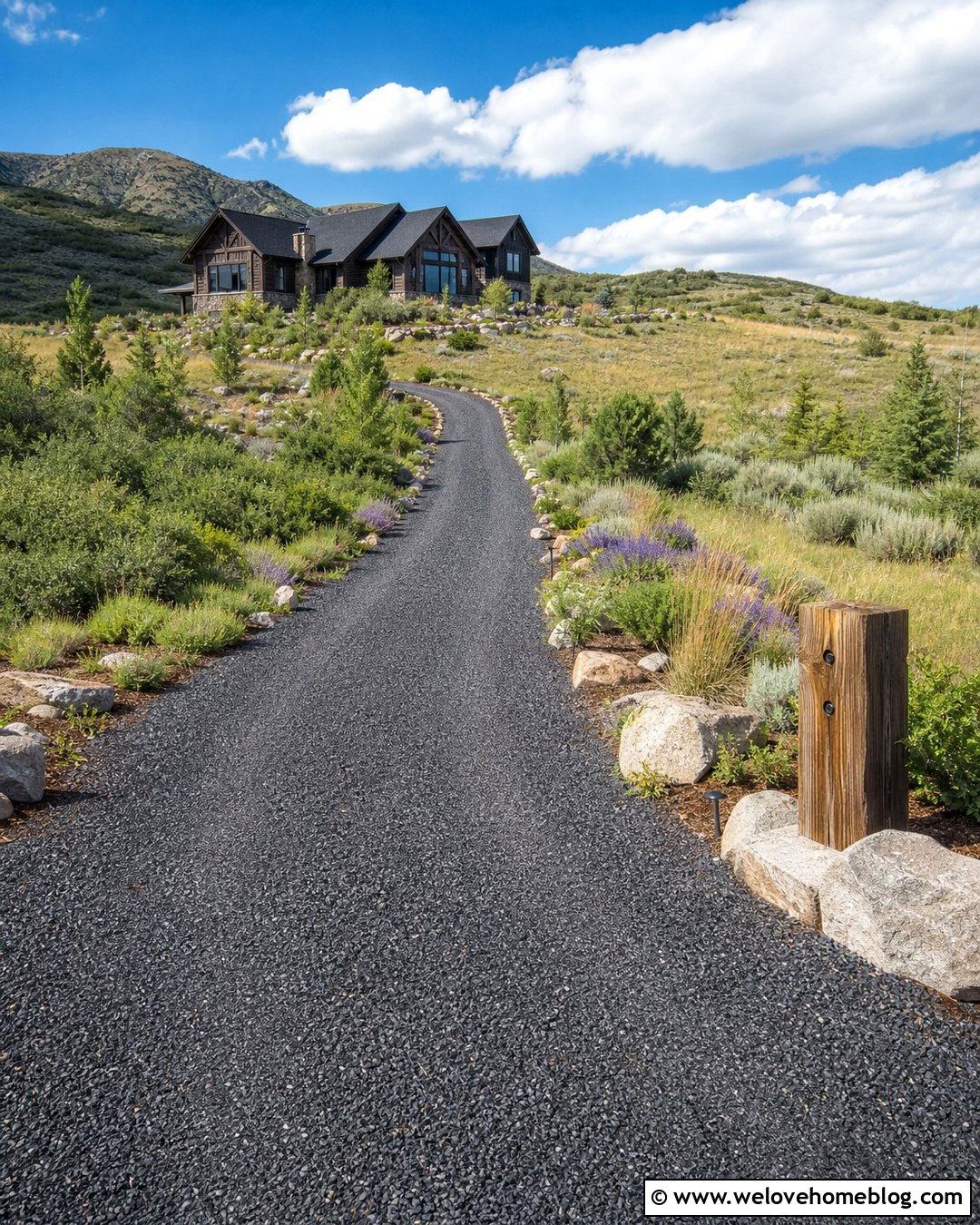
The crunch and texture of gravel can give a long driveway a relaxed country character. Choose compacted gray crushed gravel rather than loose decorative stone for the main driving surface, then add sturdy granite cobblestone edging along both sides. Plant evenly spaced deciduous trees beyond the edge, leaving enough clearance for branches, roots, drainage, and mature canopies. Beneath the trees, create broad sweeps of ornamental grass, low native perennials, or neatly maintained lawn. Mark the entrance with simple stone pillars and wide planting beds rather than oversized gates. Near the house, transition the gravel into a larger parking court with a direct flagstone walkway to the porch. This complete arrangement naturally guides the eye toward a farmhouse, country home, or rustic Craftsman residence.
9. Brick Driveway With Formal Evergreen Landscaping
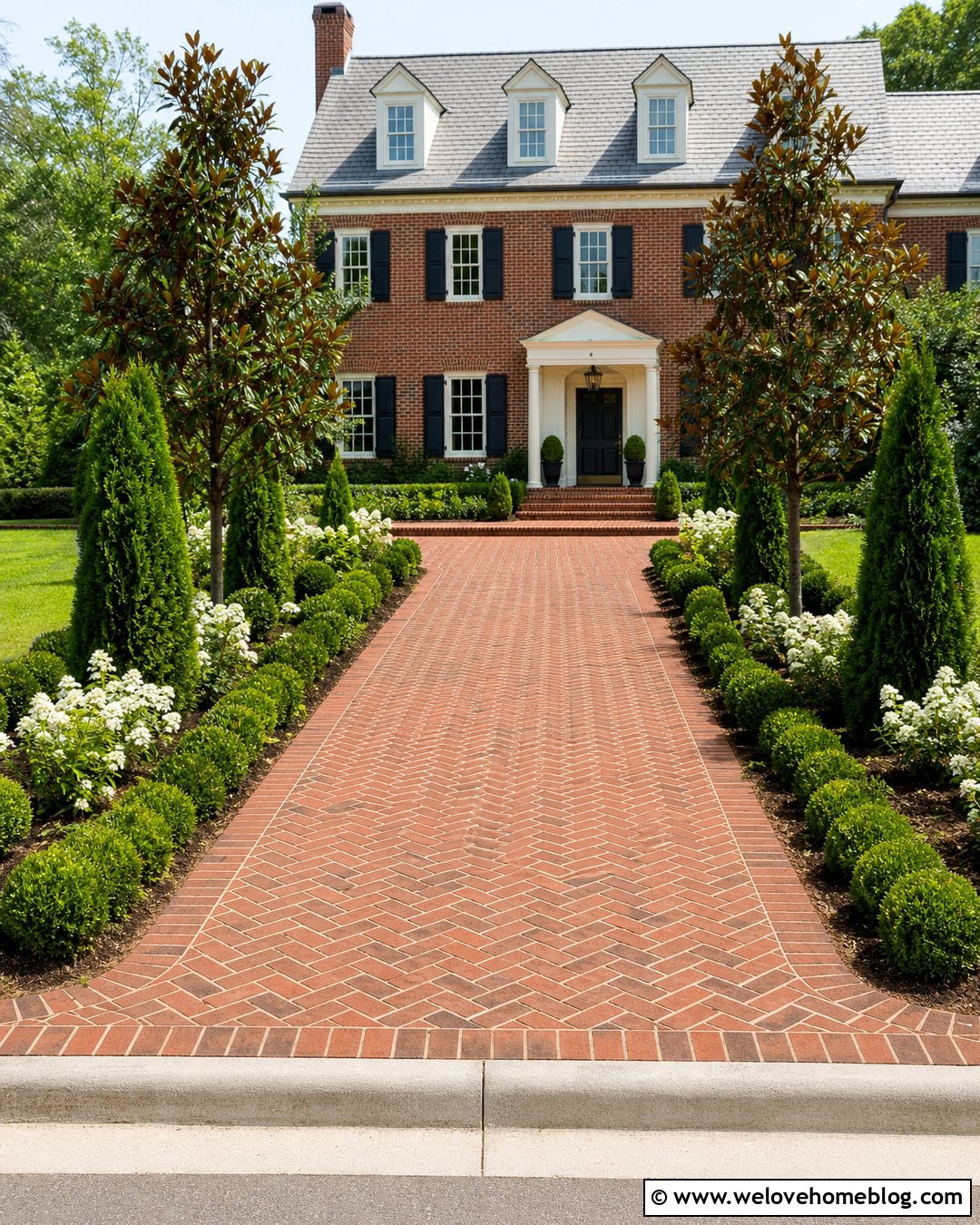
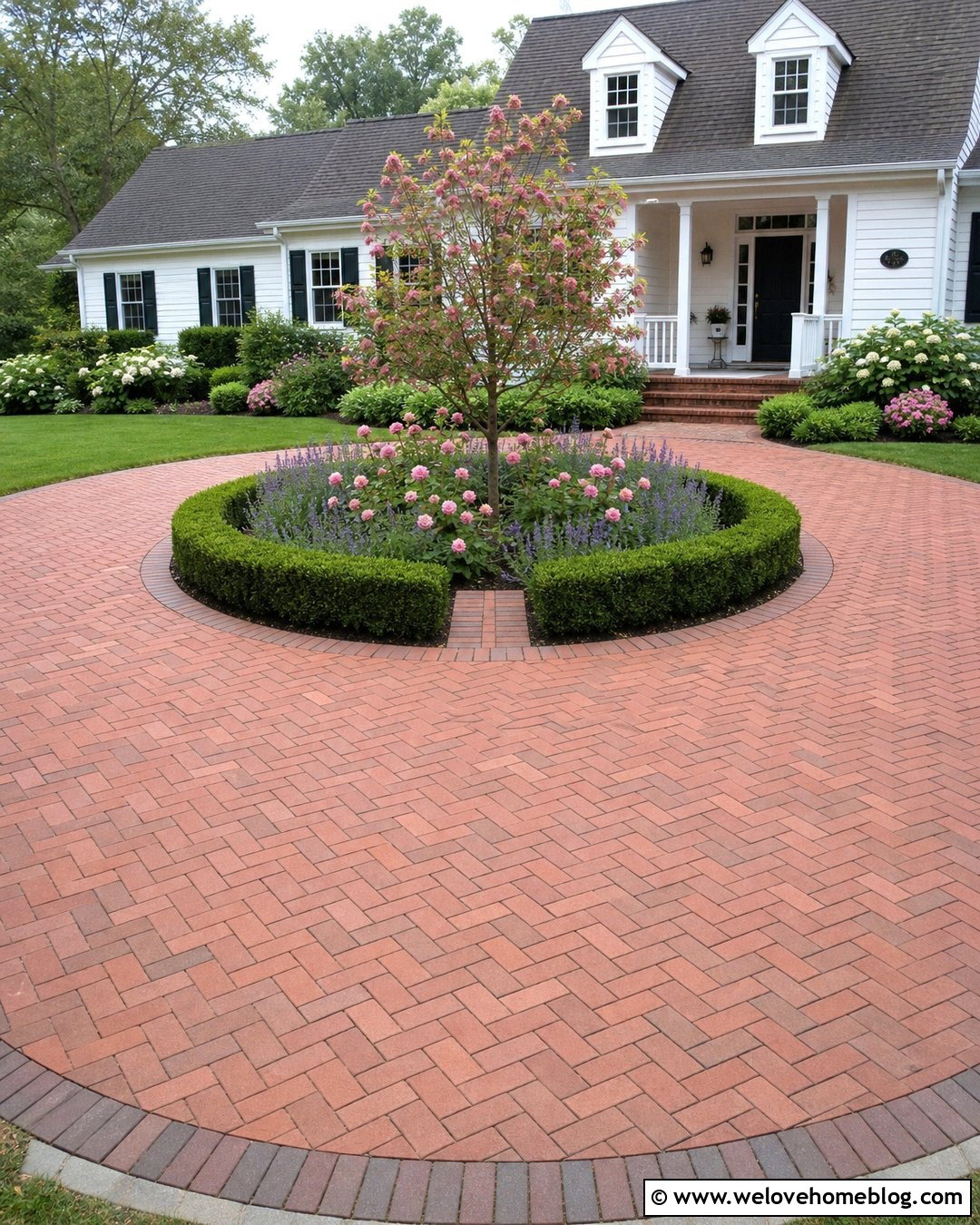
Rich clay brick pavers bring warmth to a traditional front yard, especially when their color relates to the home’s facade. Lay red and brown brick pavers in a herringbone pattern and use a straight soldier-course border around the perimeter. Frame the driveway with symmetrical beds containing compact boxwood alternatives, upright evergreens, and white flowering perennials. Curved corners can soften the transition between the driveway, lawn, and front walkway without making the formal layout feel rigid. Repeat the driveway bricks in the walkway and front steps so the arrival sequence reads as one design. A pair of matching ornamental trees can mark the approach to the house. This balanced combination complements colonial and Georgian-inspired homes while remaining approachable when shrubs are kept at natural, manageable sizes.
10. Modern Driveway With Ornamental Grass Landscaping
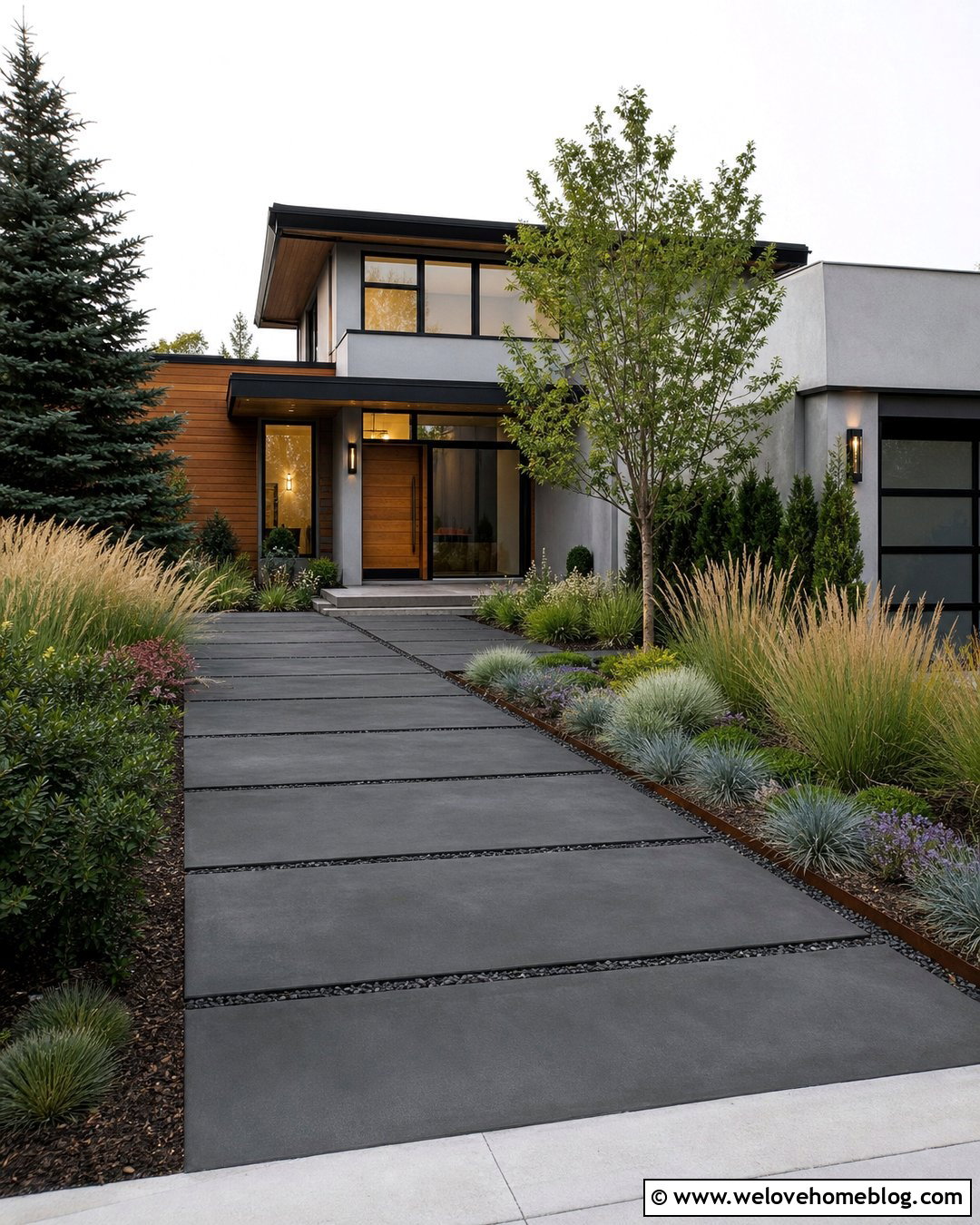
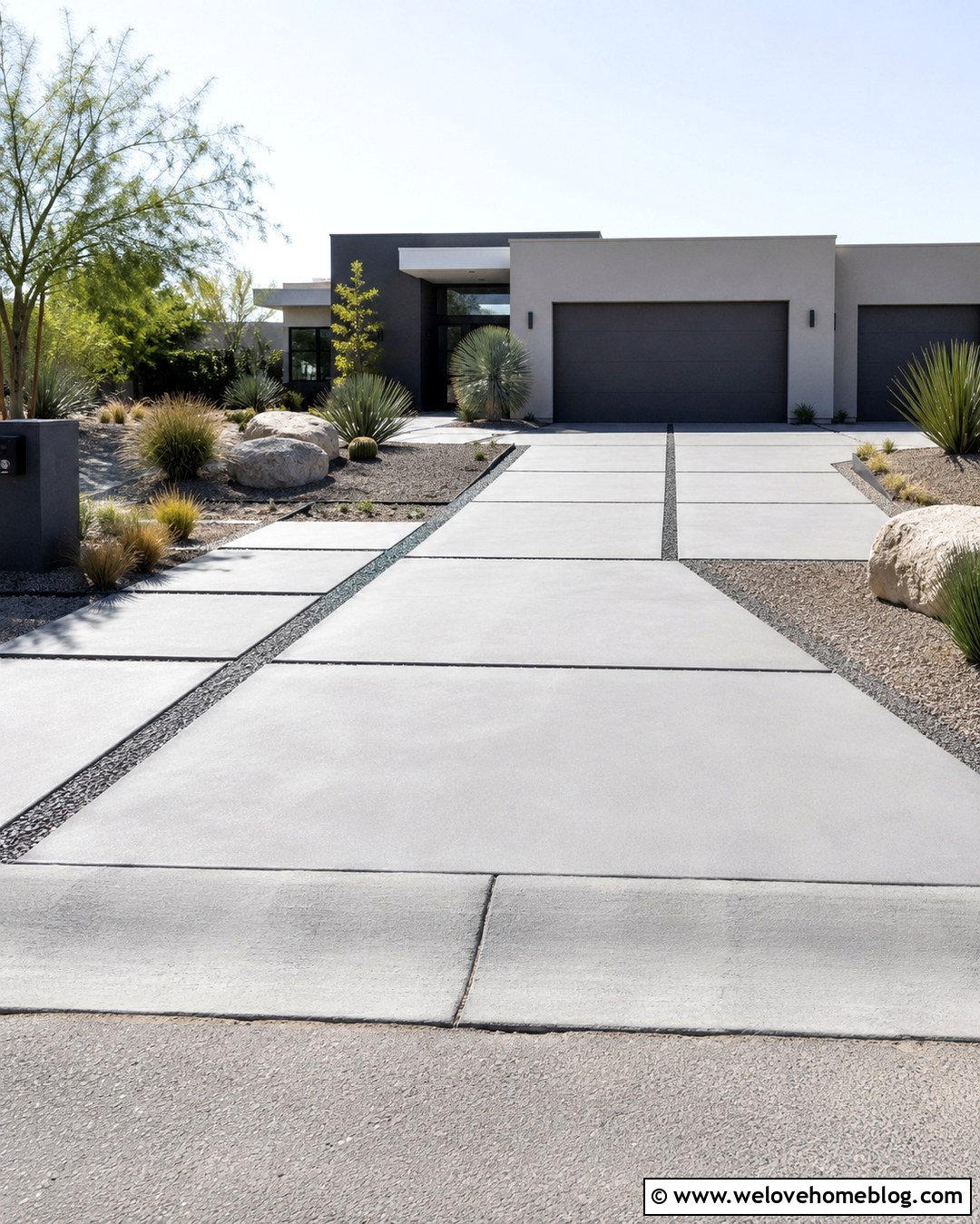
Movement from ornamental grasses can soften the broad surfaces found in modern front yards. Begin with large charcoal concrete slabs arranged in a straight driveway, using narrow bands of black river pebbles between selected sections. Create linear beds beside the pavement and fill them with repeated groups of feather reed grass, blue fescue, compact evergreens, and low flowering ground cover. Keep the plant palette limited so the driveway remains visually calm. A specimen tree placed in an offset lawn panel can balance the garage without creating strict symmetry. Continue the slab pattern into the walkway leading to the entrance. Dark steel edging, simple rectangular beds, and carefully spaced plants complete a modern composition that complements wood siding, stucco, glass, and other clean architectural finishes.
11. Sloped Driveway With Retaining Wall Landscaping
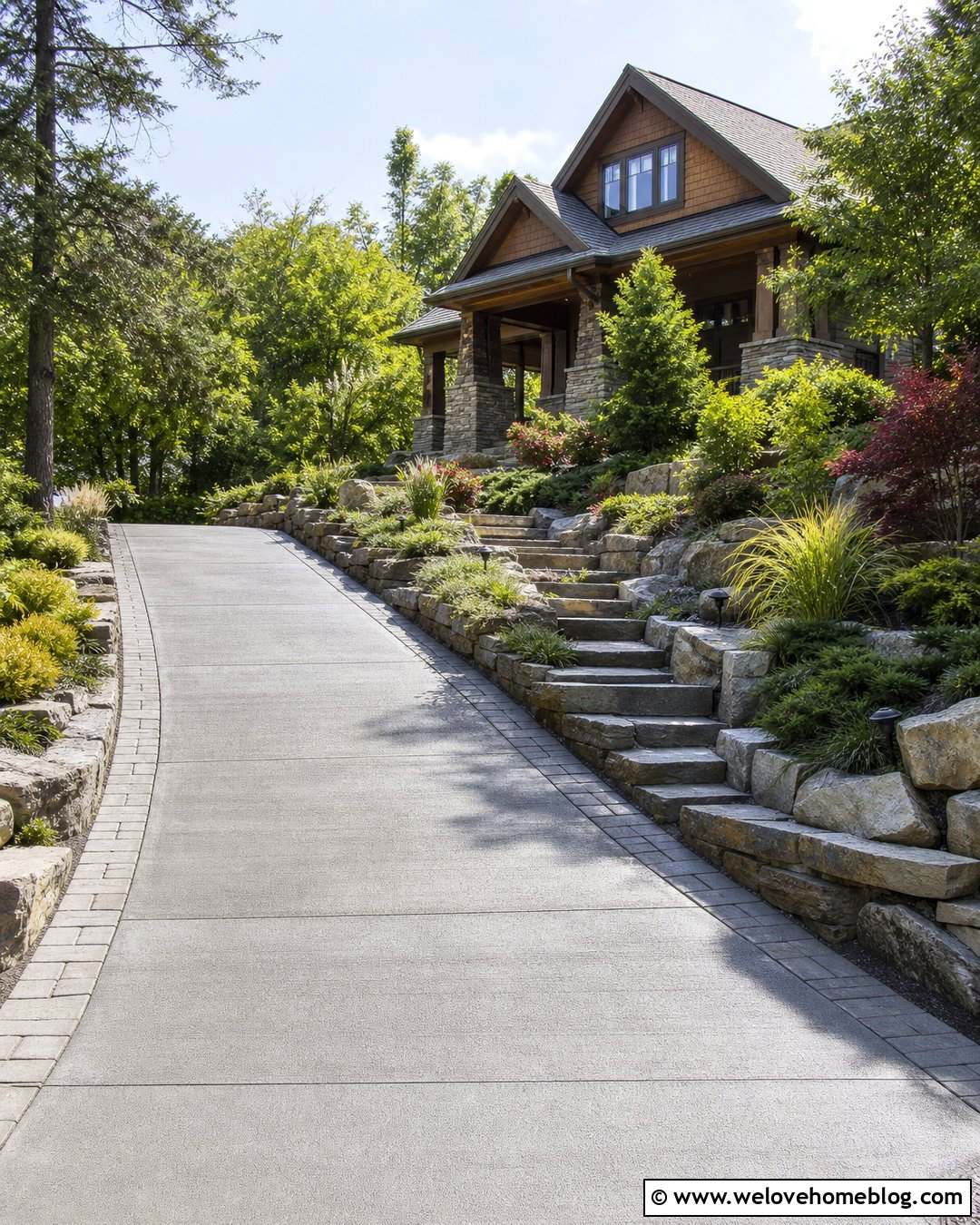
A sloped driveway needs landscaping that looks attractive while responding to changing ground levels. Use broom-finished gray concrete for dependable visual simplicity and border it with textured stone pavers. Build low, stepped retaining walls beside the upper section to create stable planting terraces rather than one difficult bank. Fill these beds with spreading evergreens, deeply rooted ornamental grasses, flowering shrubs, and erosion-conscious ground covers suitable for local conditions. Retaining walls can help organize sloped spaces and create more usable planting areas, although drainage and construction should be professionally planned. () Add broad steps and a separate walkway where pedestrian access would otherwise feel steep. Repeating the wall stone around the mailbox or porch helps connect the entire design to the house.
12. Small Front Yard With a Bordered Driveway
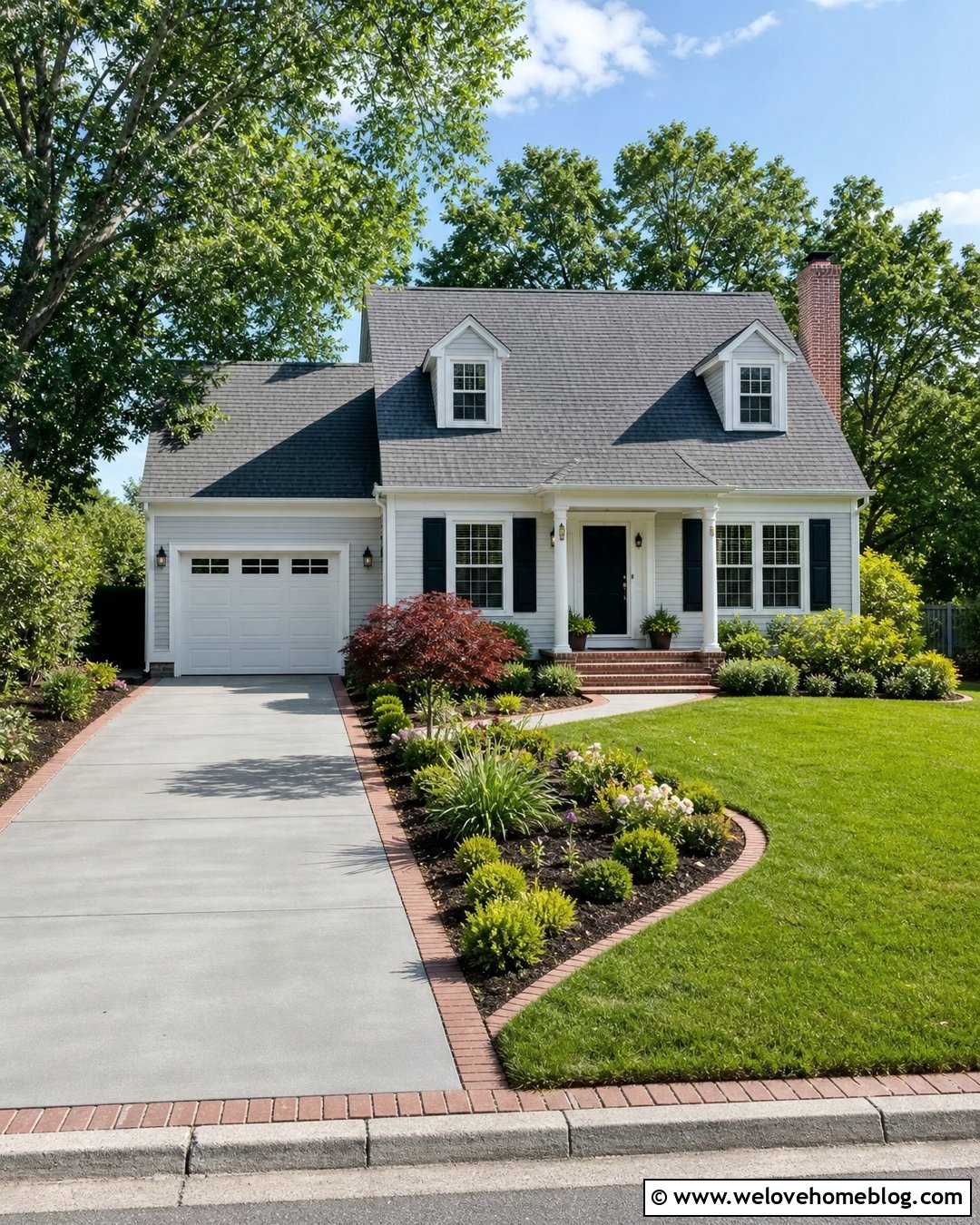
A compact yard benefits from fewer materials and clearly defined transitions. Choose a smooth medium-gray concrete driveway and outline it with a narrow band of red-brown brick that relates to the house. Instead of placing planting beds on every available edge, create one substantial curved bed between the driveway, lawn, and front porch. Fill it with a small ornamental tree, three or four repeated shrubs, compact grasses, and low seasonal color. Leave enough open pavement near the garage for comfortable parking and movement. A brick-edged concrete walkway can branch from the driveway and guide visitors toward the entrance. This simple plan makes the limited green space feel purposeful. It also reduces visual clutter, which can make a small bungalow, townhouse, or Cape Cod front yard appear wider.
13. Permeable Paver Driveway With Coastal Landscaping
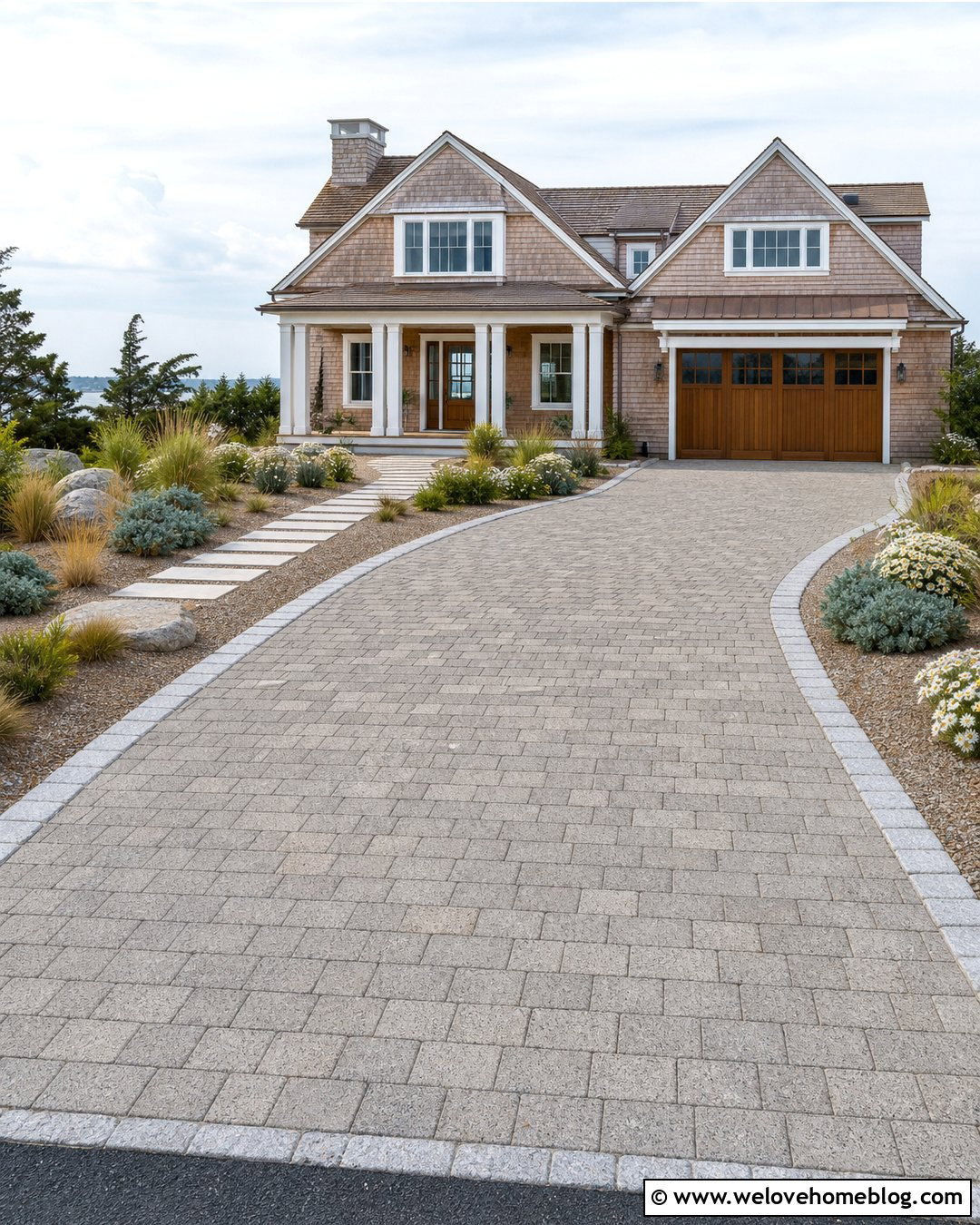
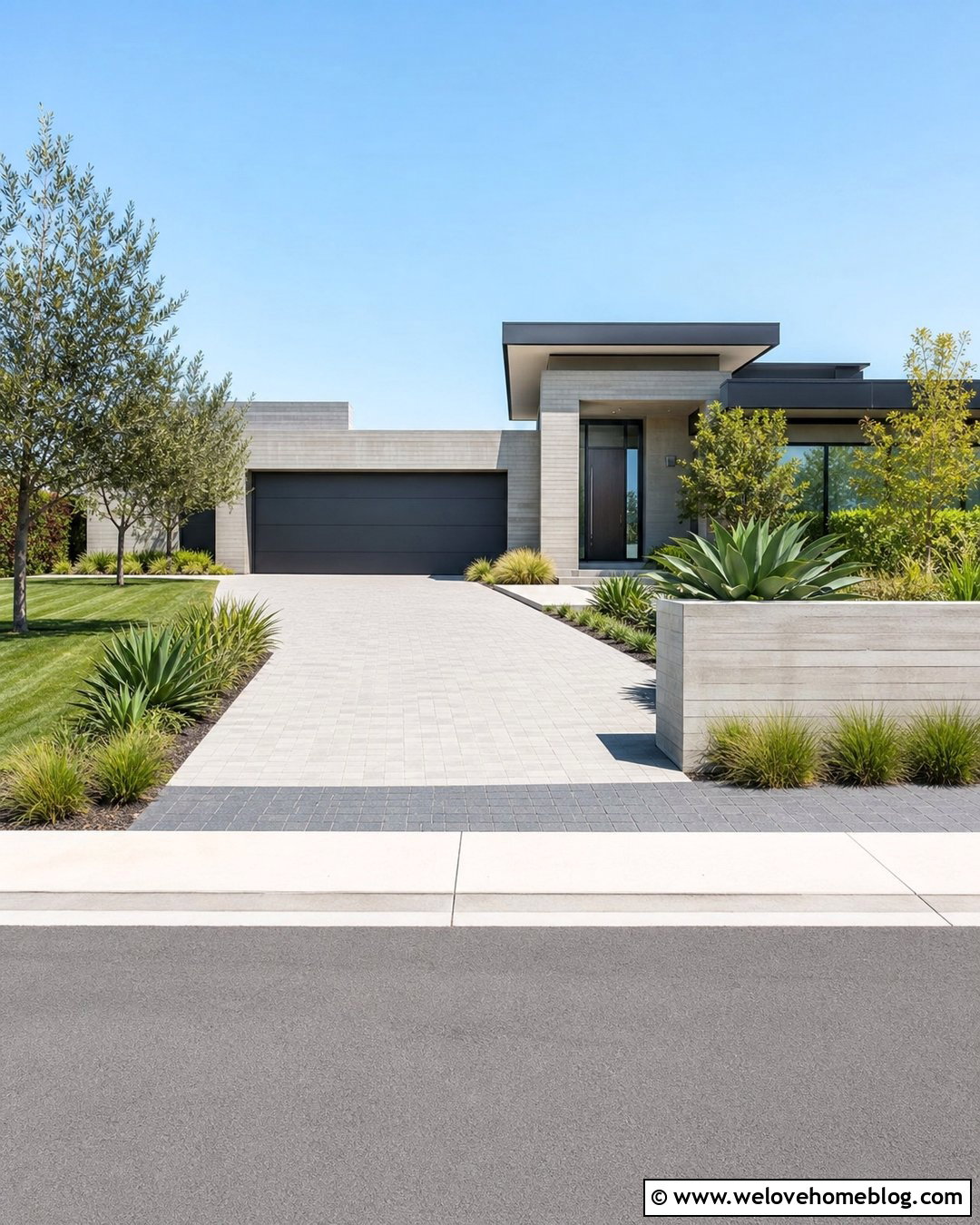
Airy colors and wind-tolerant planting can create a relaxed coastal front yard without resorting to themed decorations. Install light-gray permeable concrete pavers in a straight or gently flared driveway, then define the edges with pale granite blocks. Surround the driveway with sandy-toned gravel beds planted with salt-tolerant grasses and compact shrubs appropriate for the region. Soft blue-green foliage, white flowers, and sweeping grass forms reinforce the light palette. Add a simple boardwalk-style walkway made from concrete planks rather than untreated wood that may become slippery. Keep ocean views and street sightlines open by placing taller plants closer to the house. This coordinated surface, border, and planting scheme suits coastal cottages, shingle-style houses, and contemporary beach homes while maintaining a clean residential appearance.
14. Woodland Driveway With Shade Garden Landscaping
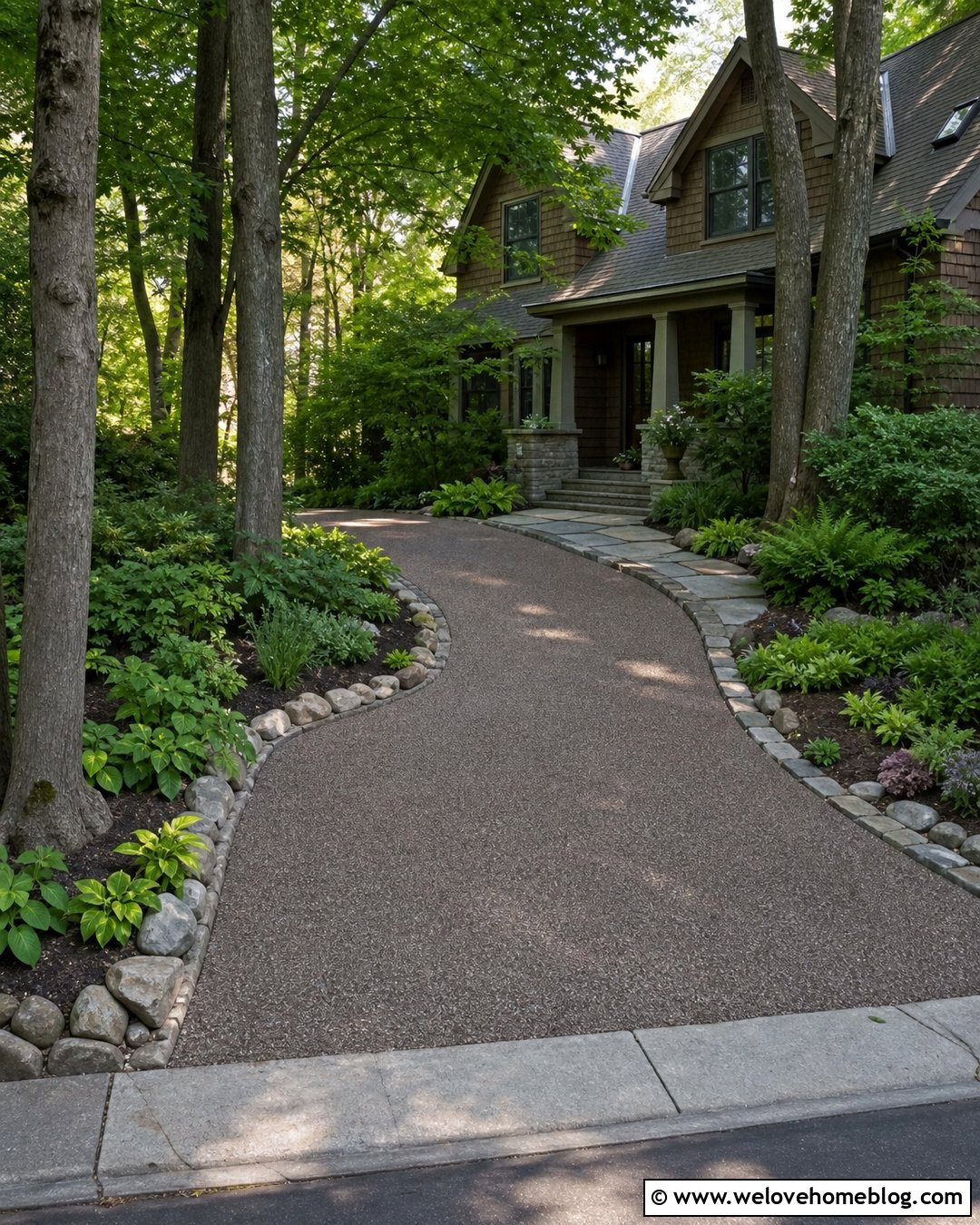
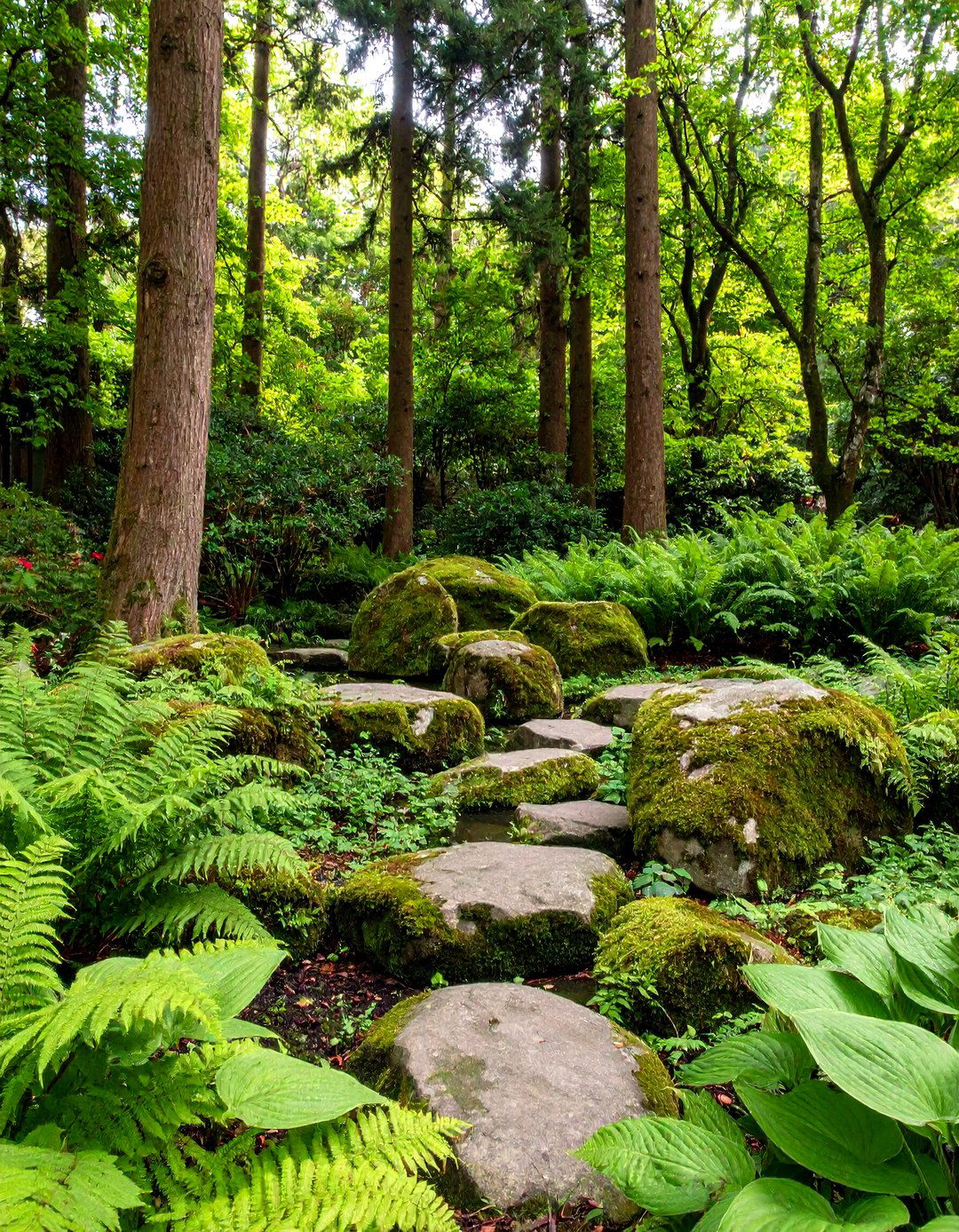
Mature trees can turn a driveway into a peaceful woodland approach when the lower landscape is planned with care. Use brown-gray resin-bound gravel for a smooth, natural-looking surface and edge it with irregular fieldstone. Beneath the tree canopy, plant broad beds of shade-adapted ferns, sedges, coral bells, and low evergreen ground cover chosen for the region. Avoid adding deep soil over established tree roots, and leave the root flare around trunks visible. A gently curving driveway will feel more natural in this setting than a rigid straight line. Connect it to the front porch with stepping stones or a flagstone walkway. Repeating the same fieldstone around porch beds creates continuity. This complete look complements wooded Craftsman homes, cabins, and traditional houses with natural siding.
15. Low-Maintenance Driveway With Rock and Mulch Beds
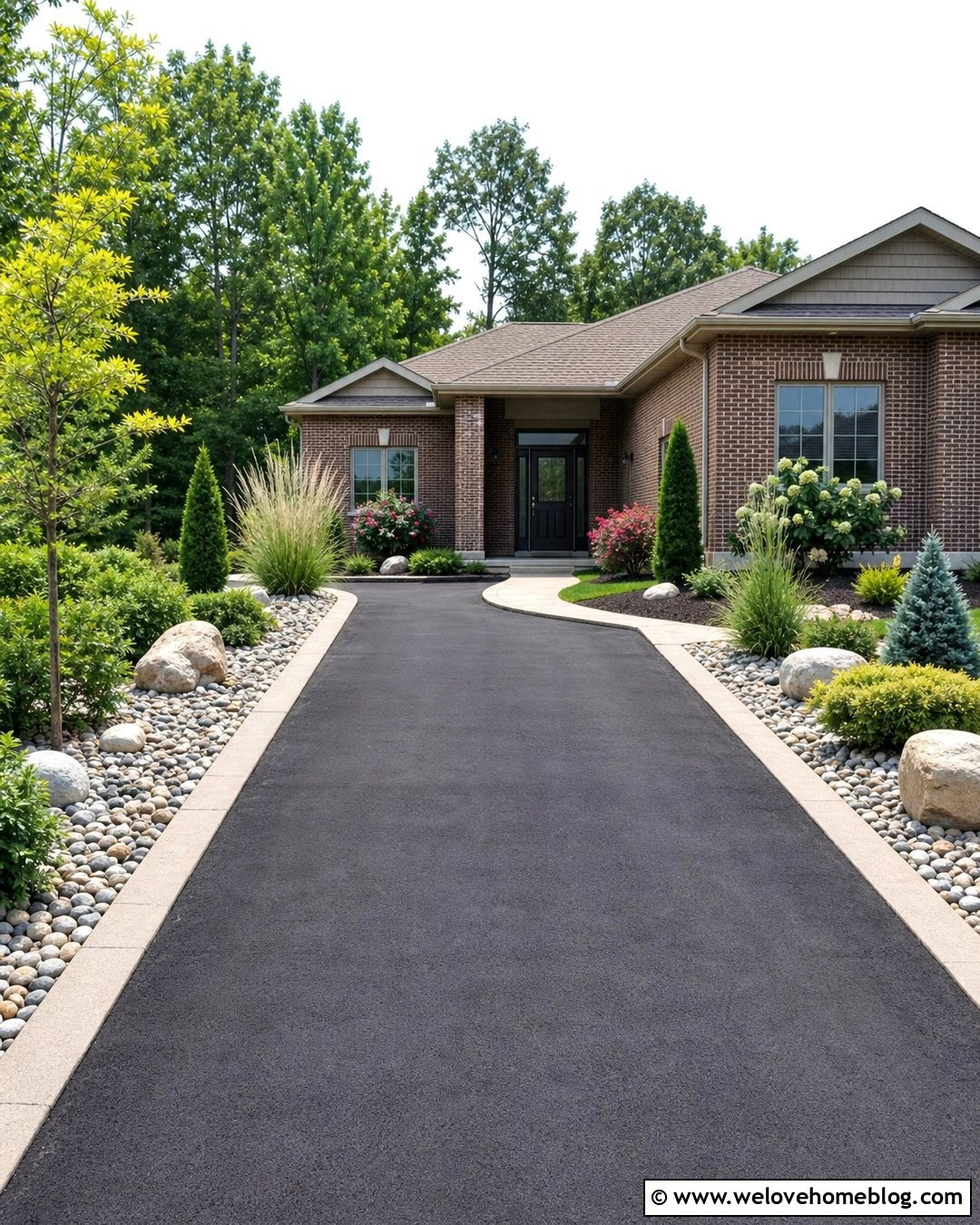
For homeowners who want less mowing, rock and mulch can frame a driveway without leaving the yard bare. Start with a clean black asphalt driveway edged by tan concrete curbing. On the sunny side, create a wide bed containing river rock, large accent stones, compact evergreens, and durable ornamental grasses. Use shredded bark mulch around flowering shrubs on the house side, where the softer texture helps the foundation planting feel warmer. Separate rock, mulch, and lawn with sturdy metal edging to prevent materials from mixing. A concrete walkway with a matching tan border can link the driveway to the porch. Rocks and mulch can reduce the amount of lawn requiring regular care while still supporting varied planting and curb appeal. ()
16. Split Driveway With a Central Walkway
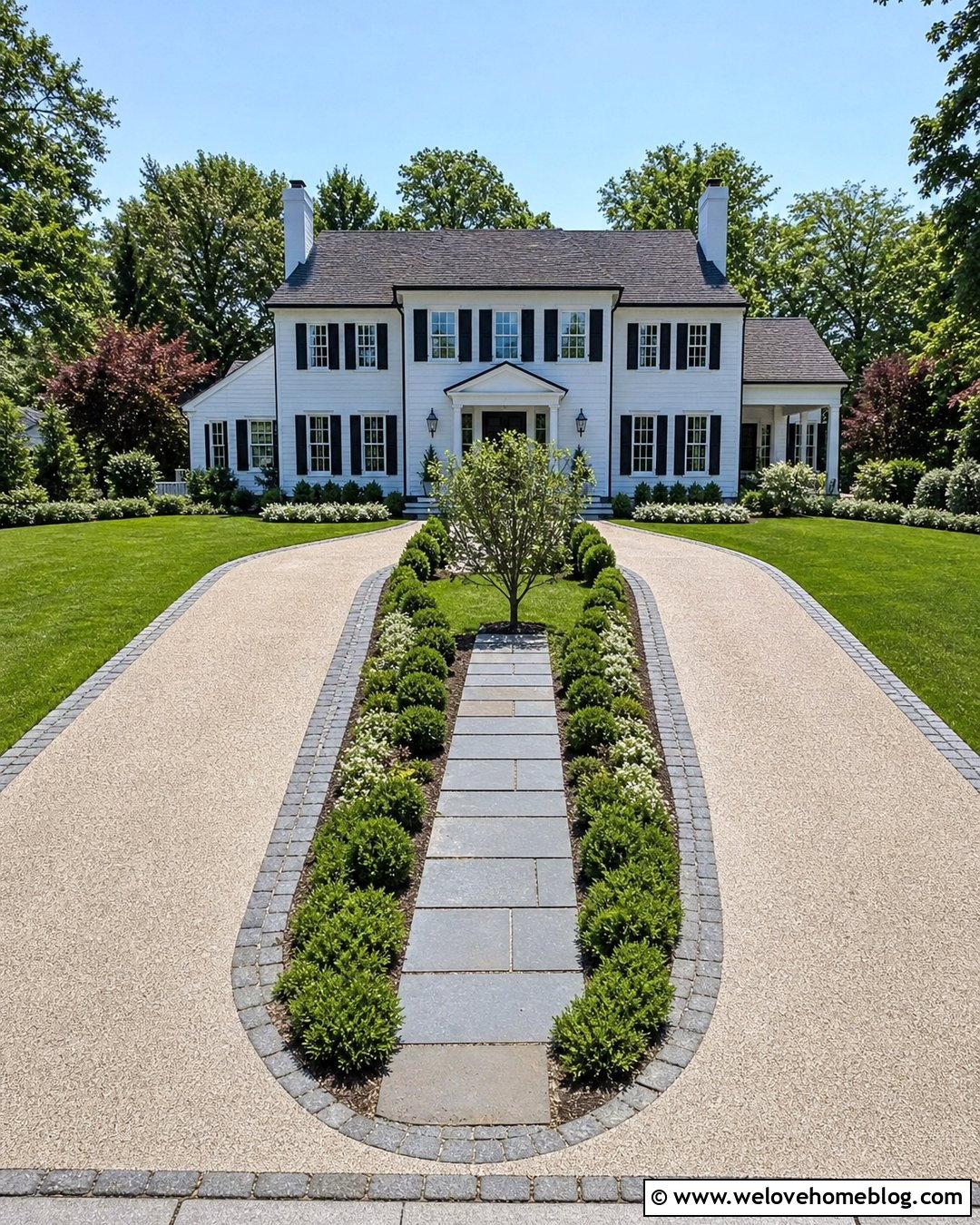
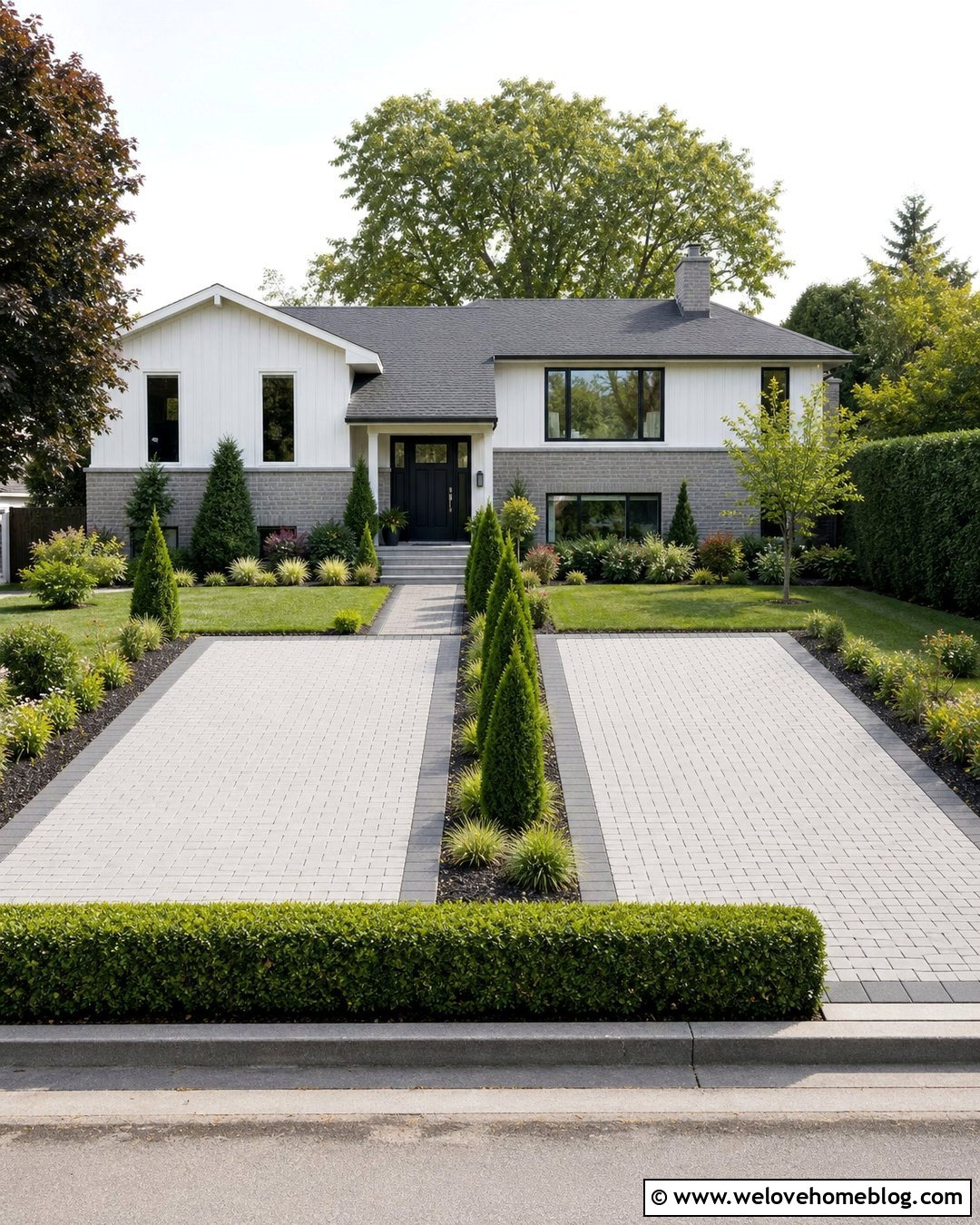
A split driveway can make the front door easier to find when the landscaping clearly organizes each route. Use two parallel strips of light exposed aggregate concrete, leaving a broad planted median between them. Run a straight bluestone walkway through the center toward the porch so visitors immediately understand where to go. Plant the median with low ground cover, clipped shrubs, and a small ornamental tree placed away from important sightlines. Border the outer driveway edges with dark cobblestones and continue those stones around the front beds. Keep the area nearest the street simple, using lawn or low planting to avoid a crowded entrance. The balanced layout works well with symmetrical colonial and traditional homes, but its clean geometry can also complement updated ranch houses.
17. Driveway Entrance With Pillars and Planting Beds
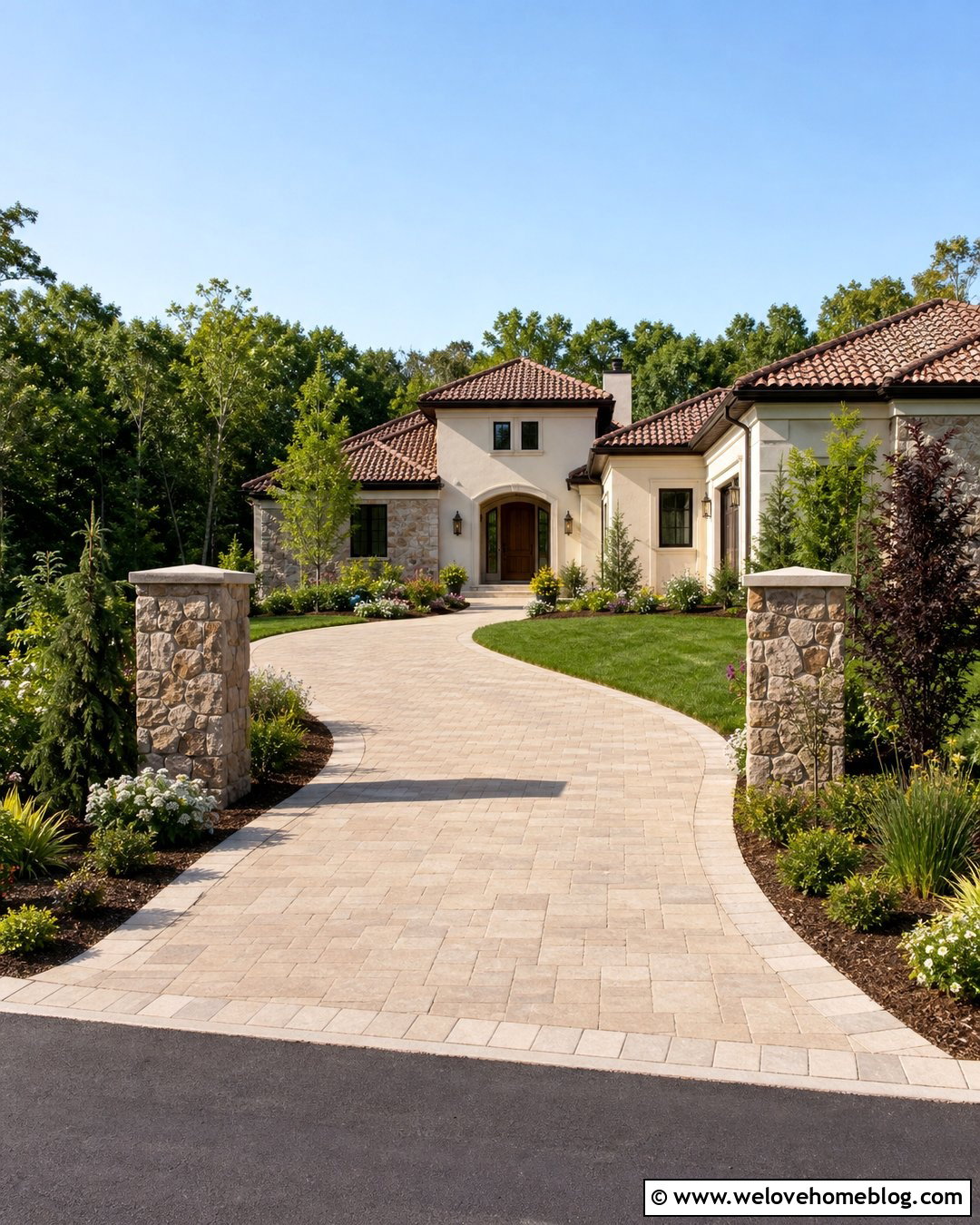
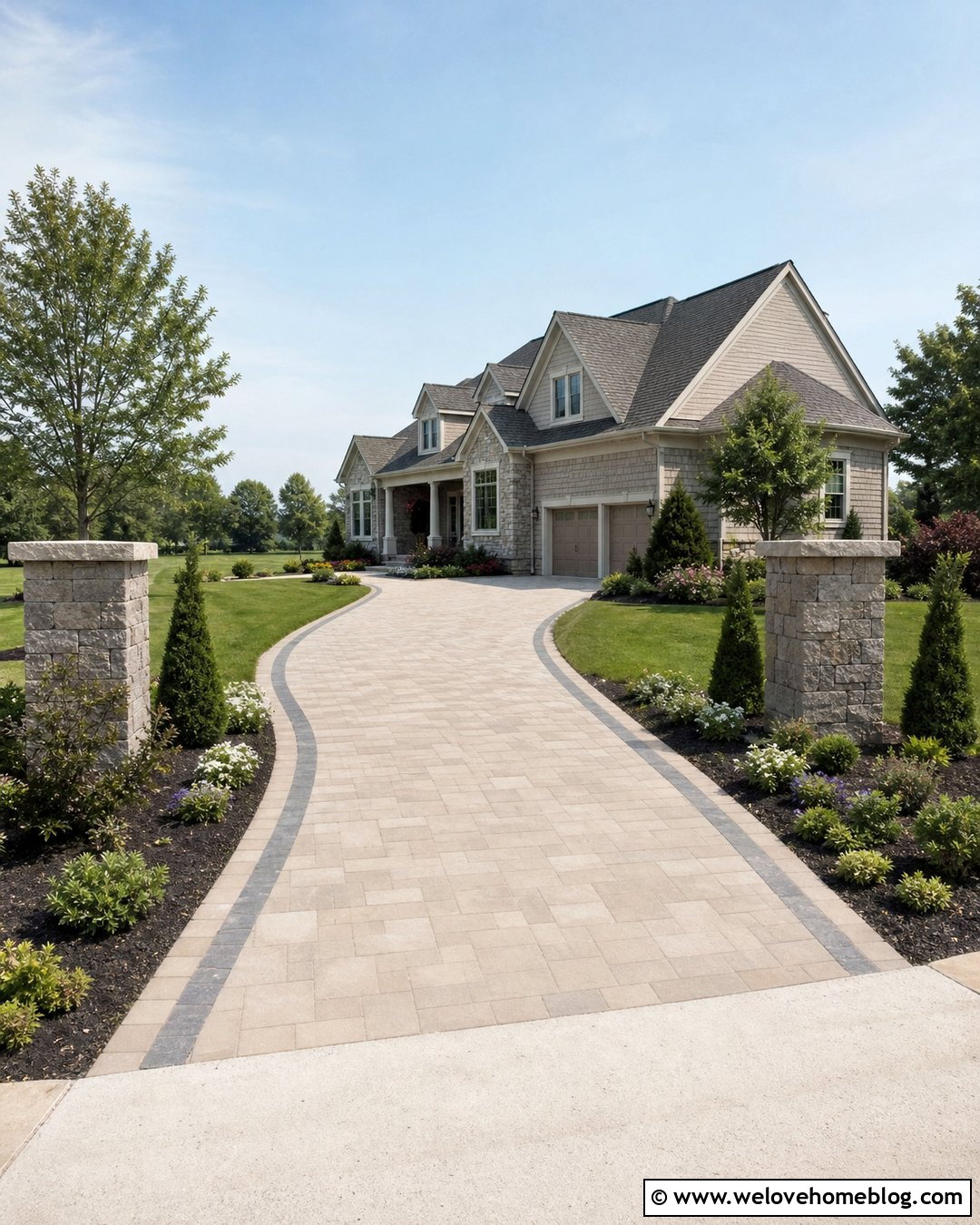
A defined driveway entrance can improve curb appeal without becoming oversized or overly formal. Use warm beige concrete pavers for a gently curved driveway and place low stone pillars on both sides of the entrance. The pillars should relate to the home’s foundation, chimney, or facade rather than introducing an unrelated material. Build sweeping planting beds around them using low evergreen shrubs, flowering perennials, and ornamental grasses that will not obstruct road visibility. Continue the same plants along selected sections of the driveway instead of forming one uninterrupted hedge. A simple address plaque can be mounted on one pillar, keeping signs and decorations to a minimum. With an open lawn beyond the entrance and a matching paver walkway near the house, the entire arrival feels welcoming and cohesive.
18. Driveway With a Front Yard Rain Garden
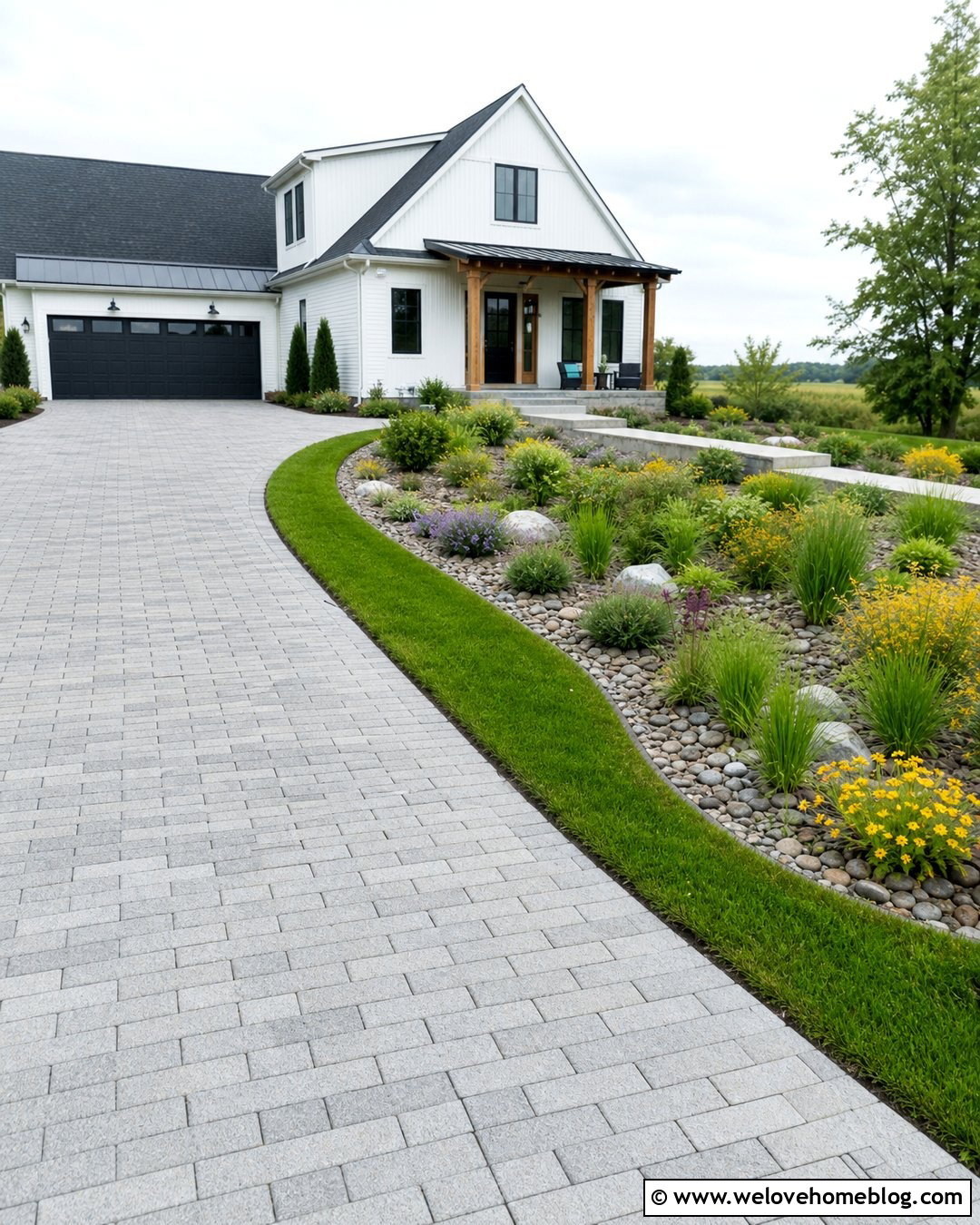
After rain, a shallow planted basin can become both a landscape feature and part of a site-specific drainage plan. Pair a medium-gray permeable paver driveway with a rain garden positioned in a naturally low section of the front yard, away from foundations and utilities. Shape the basin with gentle curves and plant it with moisture-tolerant native grasses, flowering perennials, and shrubs selected for local soil and weather. Add rounded river stones along the inlet area to visually connect the garden with the driveway. Keep a maintained lawn strip or stone edge between the basin and pavement. A raised concrete walkway can provide a clear route to the porch. Because drainage requirements vary, the final placement, depth, overflow route, and soil preparation should suit the individual property.
19. Gravel Driveway With Edible Front Yard Landscaping
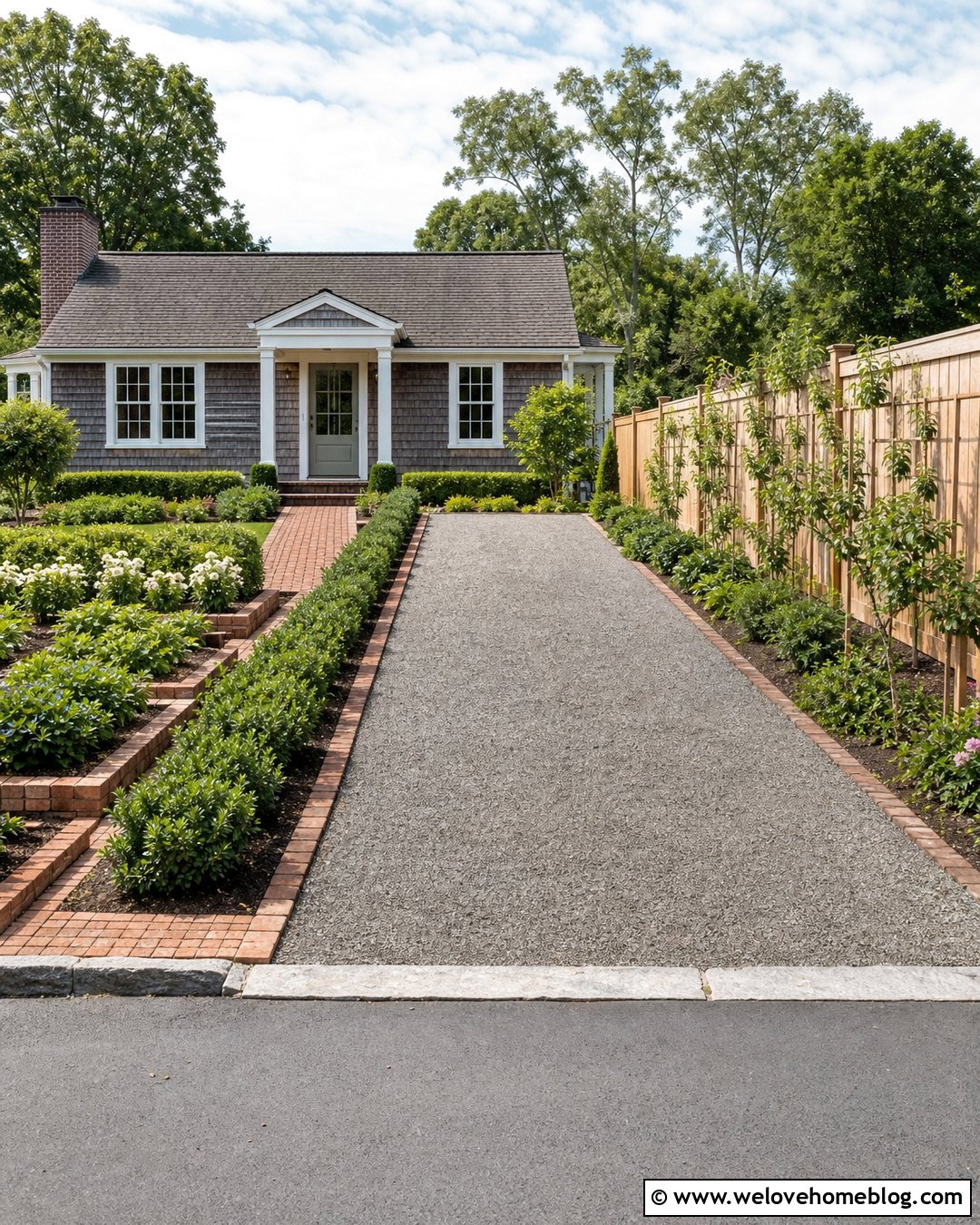
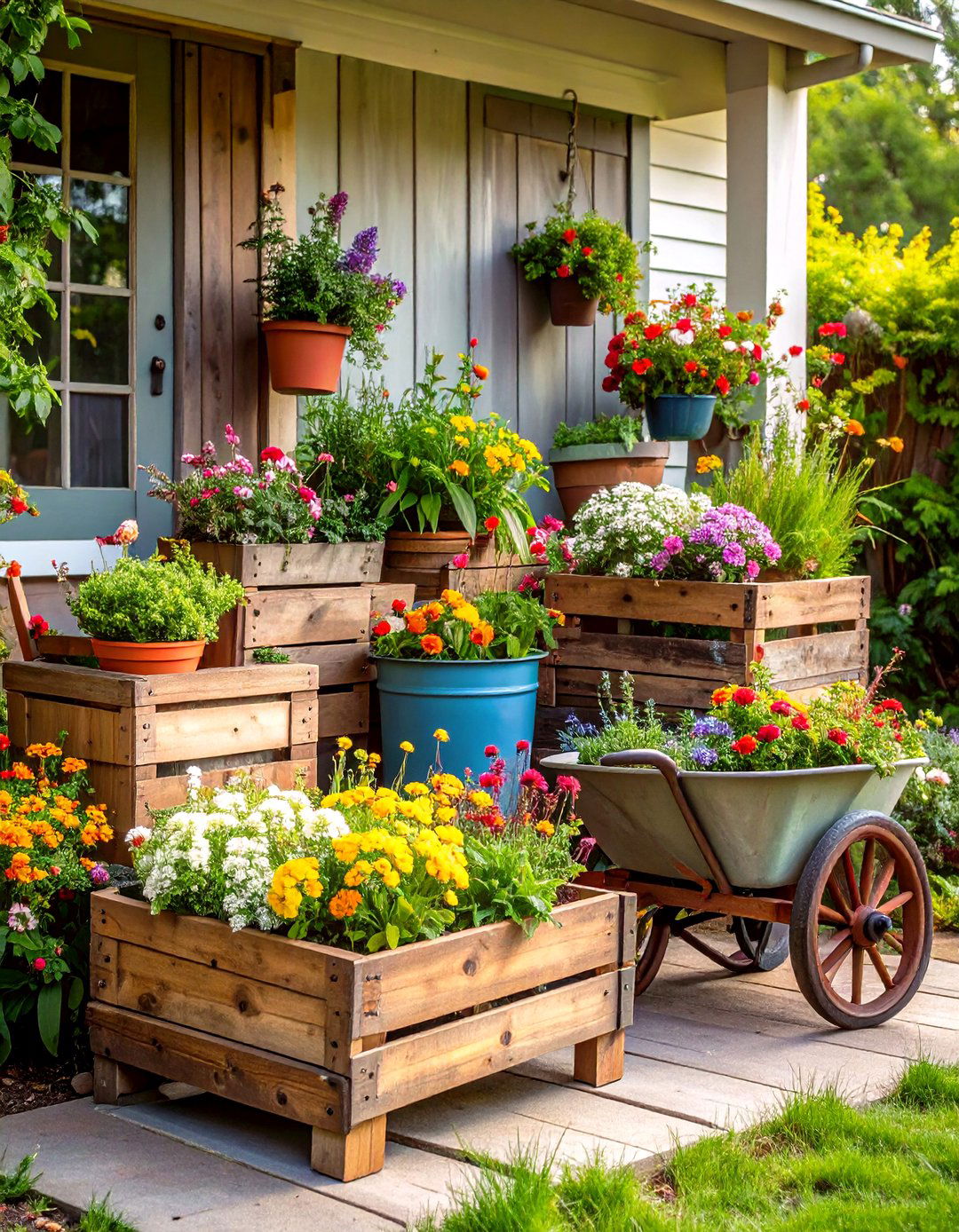
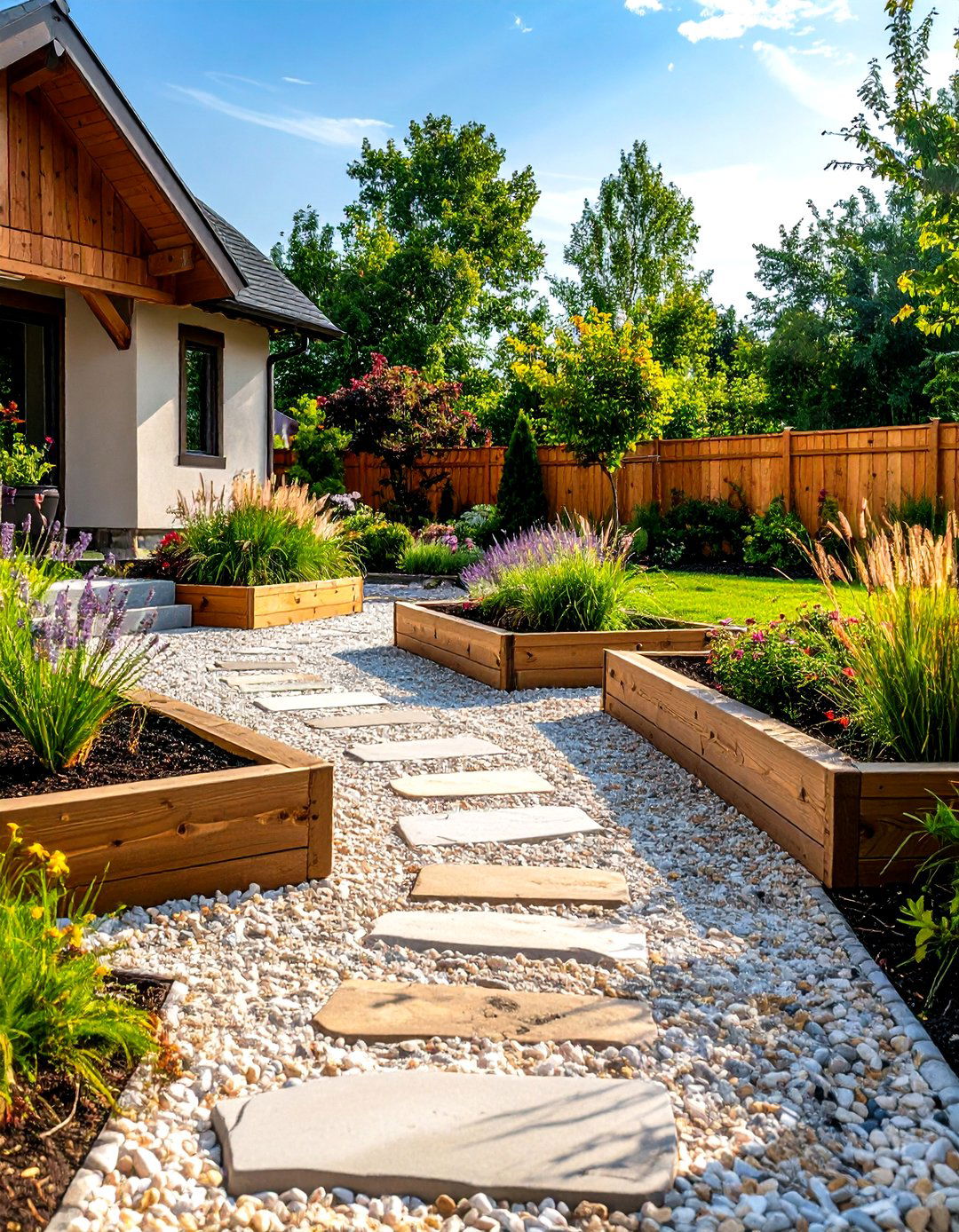
An edible front yard can feel attractive and organized when productive plants are incorporated into a complete landscape. Use warm gray compacted gravel for a straight driveway and contain it with weathered brick edging. Beside the driveway, create structured beds containing compact blueberry shrubs, culinary herbs, strawberries, and flowering plants that support a colorful, garden-like appearance. Espaliered fruit trees can grow along a sunny fence where there is enough room for pruning and maintenance. Keep edible plants away from areas exposed to road spray or frequent vehicle runoff. Add a brick walkway leading to the porch and use low evergreen borders to give the beds year-round structure. This friendly layout suits cottages, farmhouses, and bungalow homes while making useful plants part of the curb view.


20. Budget Asphalt Driveway With Simple Landscaping
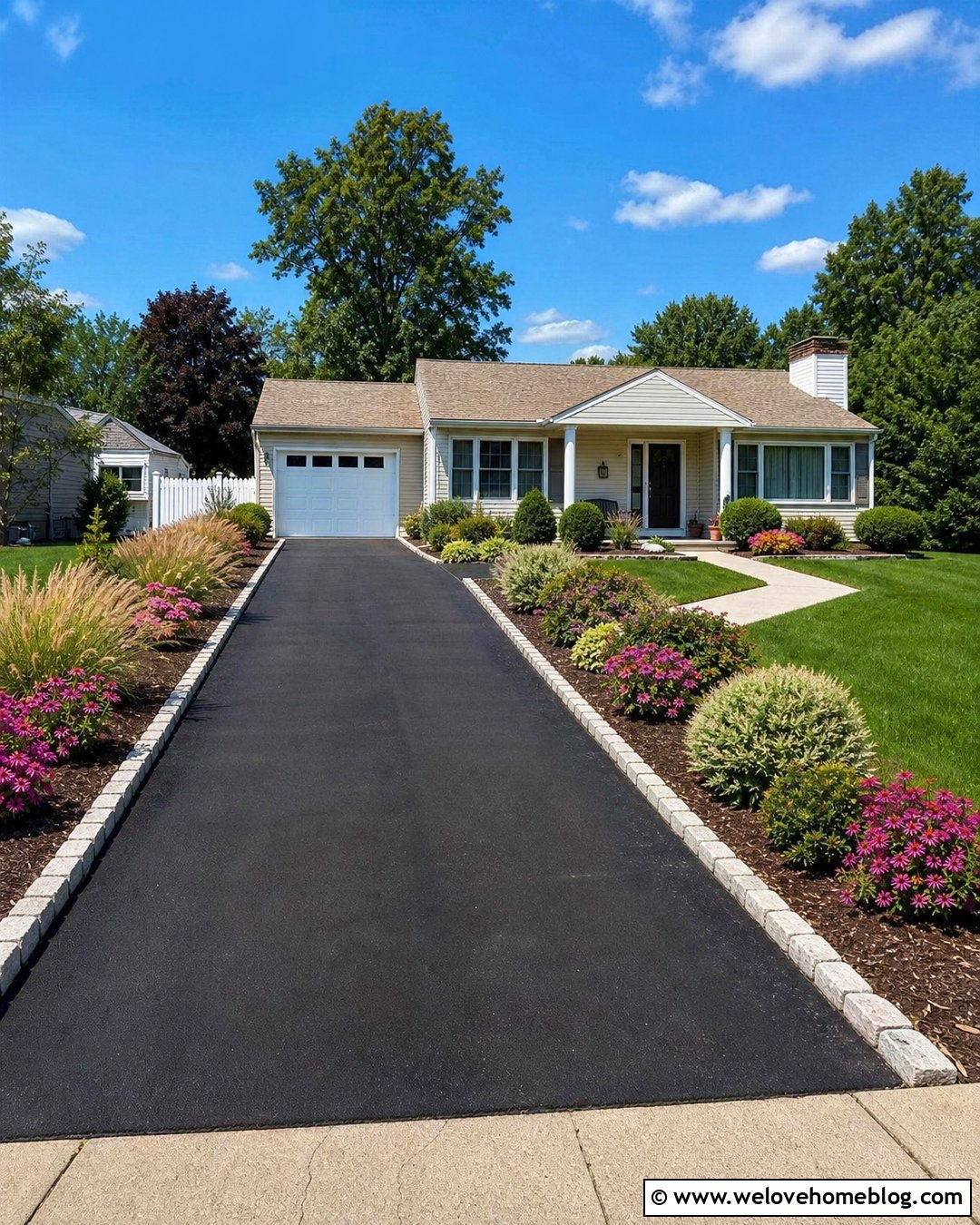
You do not need to replace an entire driveway to make the front yard look more finished. Begin by repairing and cleaning an existing black asphalt surface where appropriate, then create a crisp edge with affordable concrete landscape blocks. Build two generous planting beds: one near the street entrance and another connecting the driveway to the porch. Fill them with repeated, easy-care shrubs, ornamental grasses, and long-blooming perennials suited to local conditions. Refresh the remaining lawn and add a simple stepping-stone or poured concrete walkway. Solar fixtures may mark the path, but avoid lining every foot of the driveway with small lights. Repeating only a few plants and materials keeps costs controlled while giving a ranch, bungalow, or starter home a coordinated and welcoming appearance.
Conclusion:
The best driveway landscape connects every visible part of the front yard. Surface color should complement the house, borders should define practical edges, and plants should soften pavement without restricting parking or visibility. Start by studying the driveway’s shape, sunlight, drainage, and relationship to the front door. Then select one clear material palette and repeat it in the walkway, edging, or entrance details. Choose plants for your local conditions and allow enough room for mature growth. Whether your preferred look is modern, cottage, formal, drought-tolerant, or low-maintenance, these **20 front yard with driveway landscaping ideas** offer complete layouts that can be adapted to different budgets, homes, and property sizes.

Related posts:


Leave a Reply