
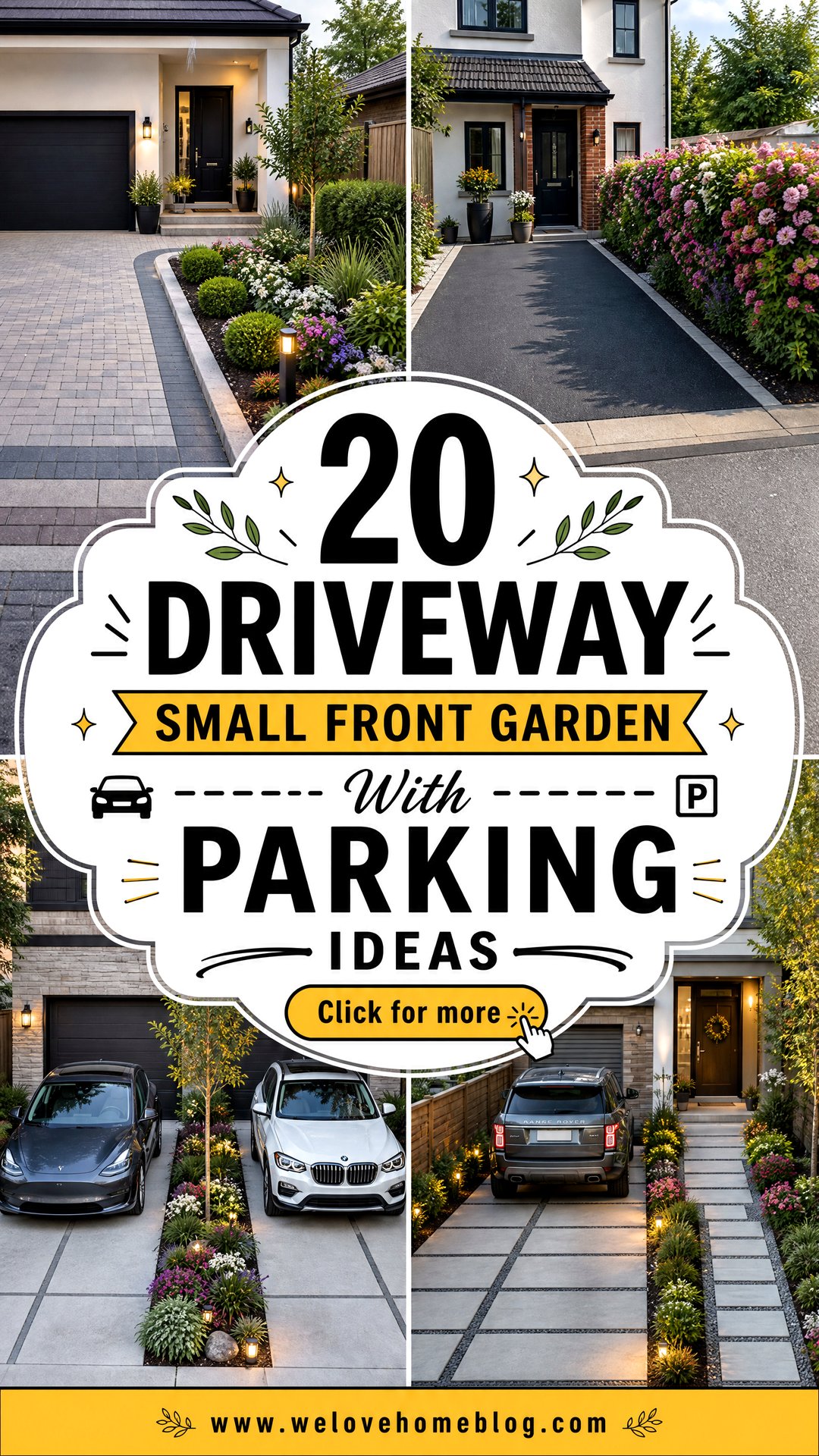
A compact front yard does not have to become a plain parking lot. The best **20 Driveway Small Front Garden With Parking Ideas** balance a usable parking space with greenery, safe access, drainage, and an inviting route to the front door. Keep hardscaping limited to the area a vehicle actually needs, then use narrow borders, planting pockets, hedges, containers, or ground-cover strips to soften the layout. Permeable surfaces can also help water soak into the ground rather than running toward the street. () Before construction, measure the vehicle, check turning clearance, and confirm local requirements for curb cuts, drainage, and permits. The complete designs below combine practical layouts, attractive materials, and space-saving landscaping in **20 Driveway Small Front Garden With Parking Ideas**.
1. Gravel Driveway With Narrow Planting Borders
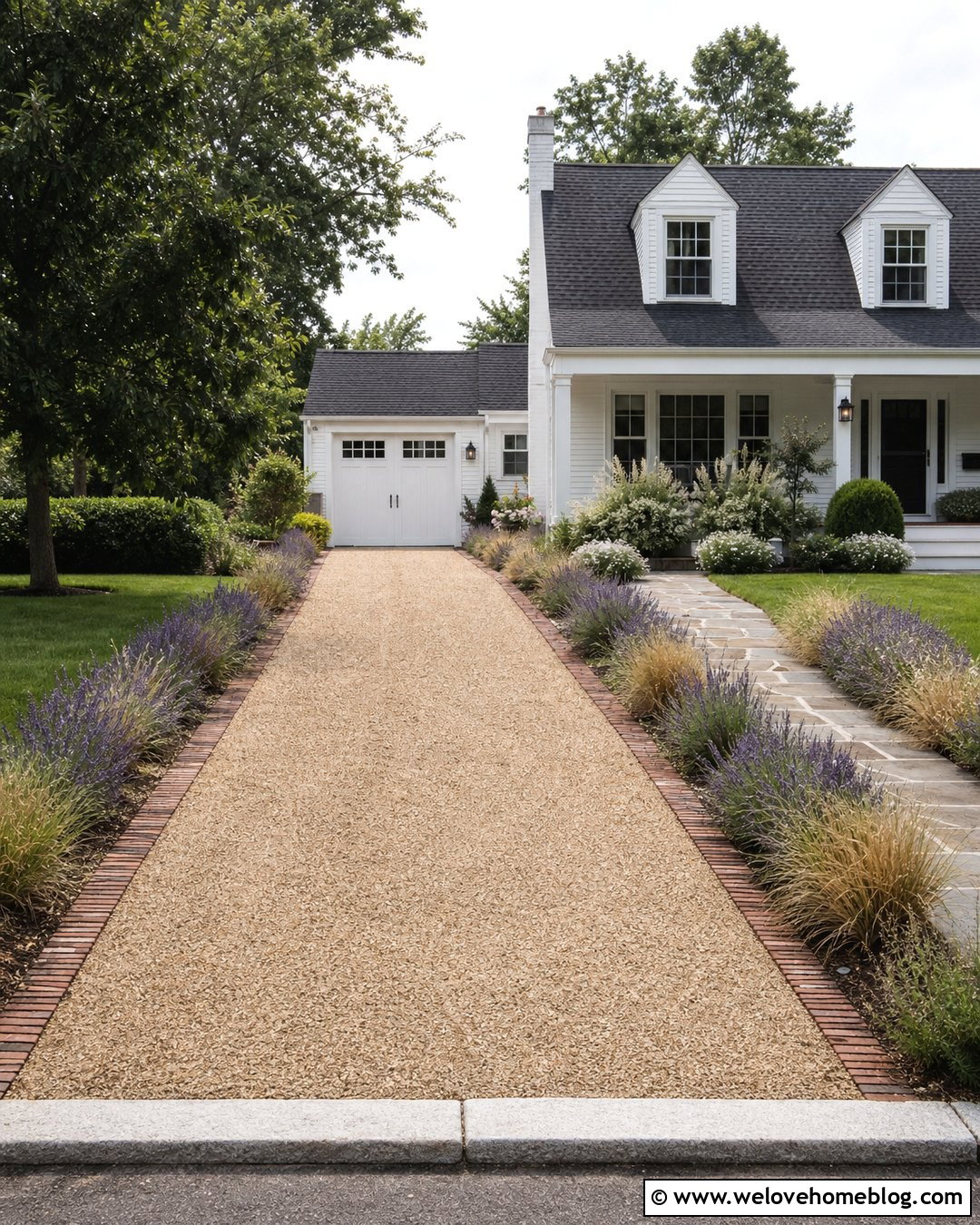
A light gravel parking space can make a small front garden feel larger because its textured surface looks softer than a solid slab. Use compacted angular gravel rather than rounded decorative stones, since it creates a more stable area for tires. Frame the straight driveway with brick, steel, or concrete edging to prevent loose material from spreading. Narrow beds along both boundaries can hold upright grasses, compact evergreens, lavender, or low flowering perennials. Keep plants away from car doors and maintain clear sightlines near the sidewalk. A paved walkway beside the gravel gives visitors a comfortable, mud-free route to the entrance. This complete design suits cottages, ranch homes, and traditional facades while providing affordable, attractive off-street parking.
2. Permeable Paver Driveway With Grass Joints
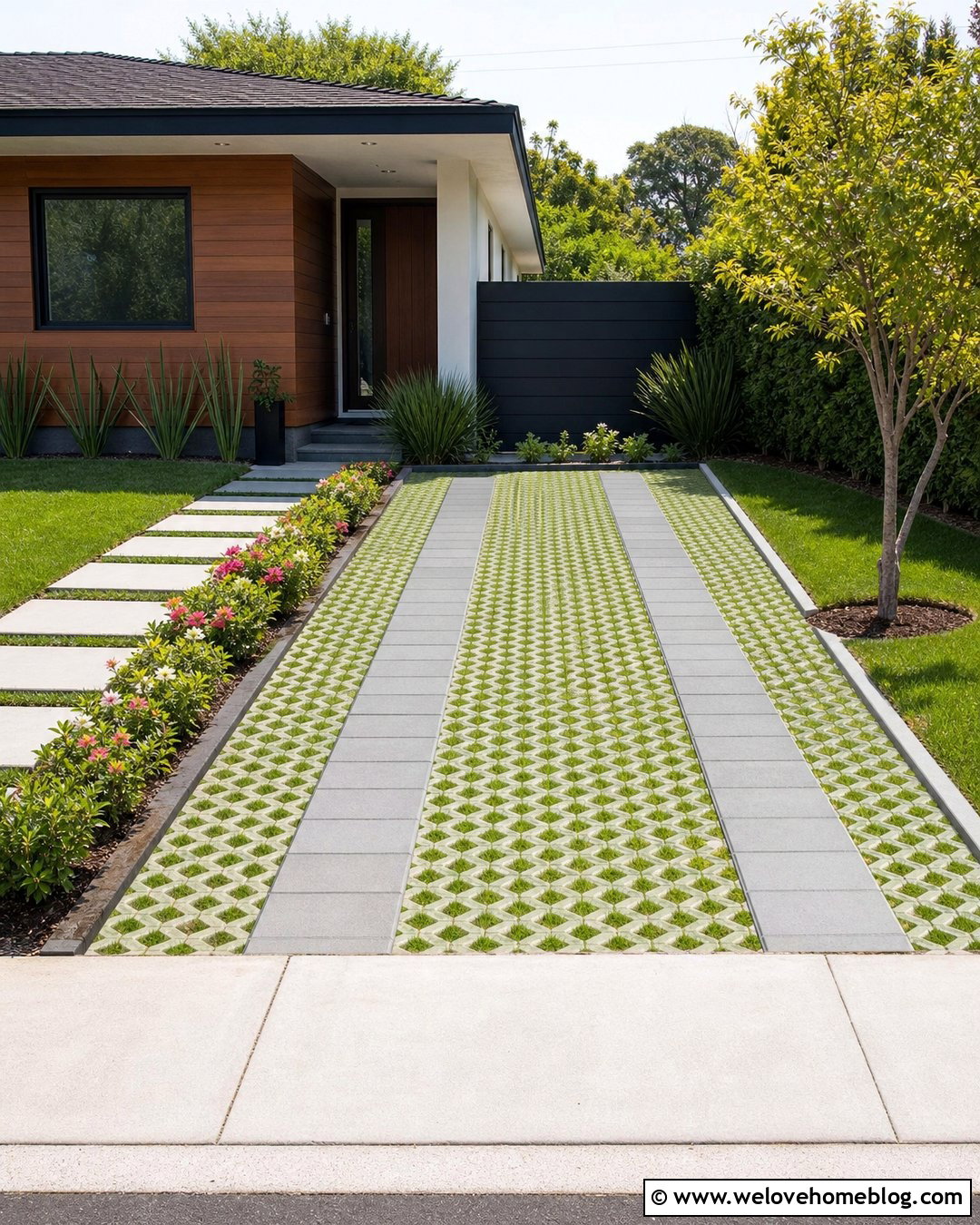
Imagine a parking area that remains visibly green even when space is limited. Permeable concrete grid pavers filled with grass create a reinforced surface capable of defining the driveway without making the entire front garden look paved. Use solid pavers beneath the most heavily traveled tire zones and reinforce the remaining spaces with gravel or turf. A narrow planting bed beside the house can include dwarf shrubs and seasonal flowers, while a low hedge screens the parking area from the sidewalk. Add a solid stepping-stone path between the curb and front door so pedestrians do not have to cross wet grass. This layout works best in sunny yards where turf can grow reliably and where occasional watering and trimming fit the homeowner’s maintenance routine.
3. Concrete Wheel Track Driveway With Center Garden
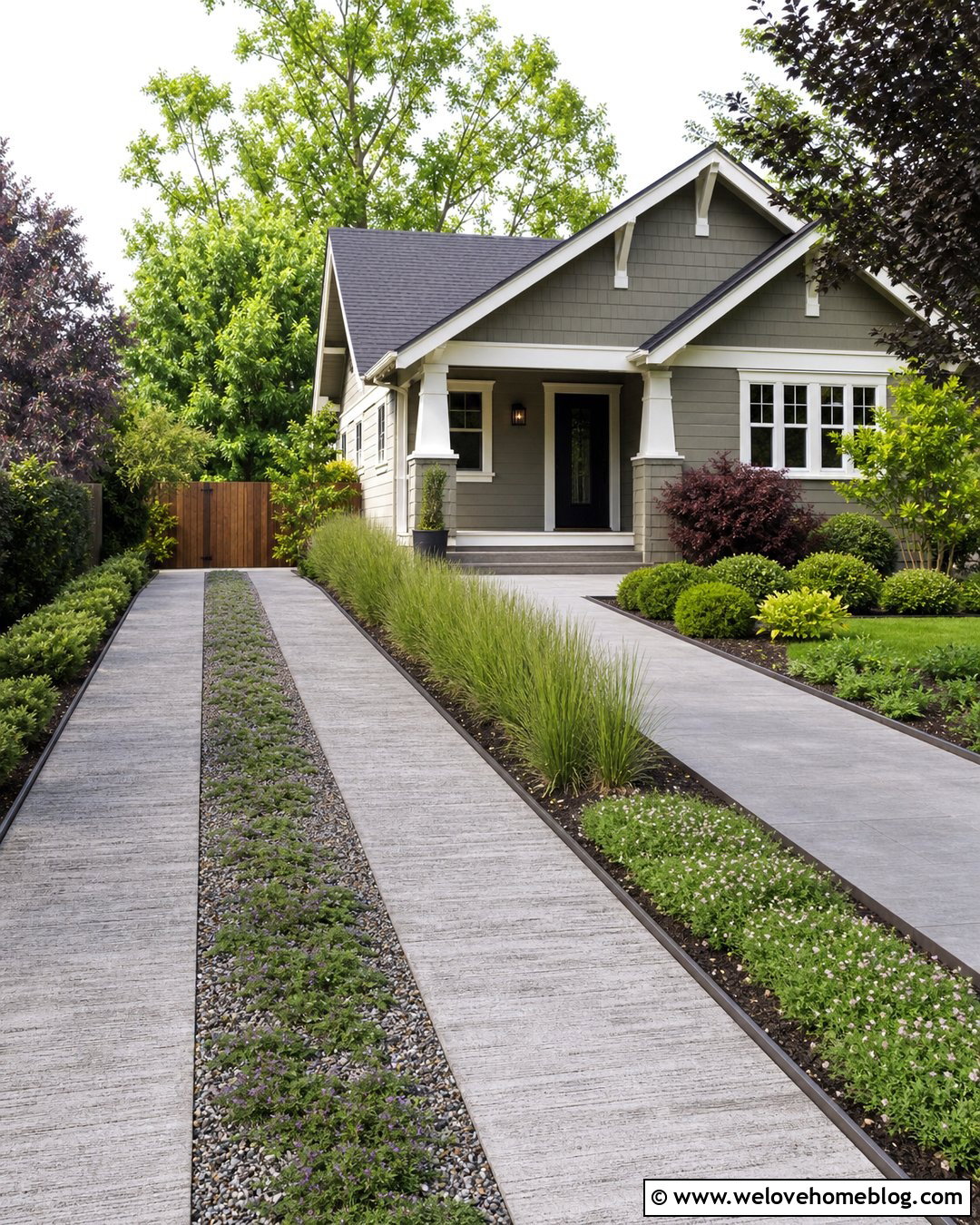
Two concrete wheel tracks provide parking while preserving valuable planted space between and around them. This efficient layout works especially well for a narrow, straight front garden with one regularly used parking spot. Pour textured gray concrete strips wide enough for the vehicle’s tires, leaving a central channel for low ground cover, decorative gravel, or durable creeping thyme. Guidance for constrained front gardens also recognizes wheel tracks as a way to reduce the visual and physical amount of paving. () Continue one track into a wider paved walkway leading to the front door. Along the outer boundary, use a slim bed of ornamental grasses or clipped shrubs. Proper measurements are essential because the tracks must match the vehicle’s wheel position without making parking stressful.
4. Brick Driveway With Raised Garden Beds
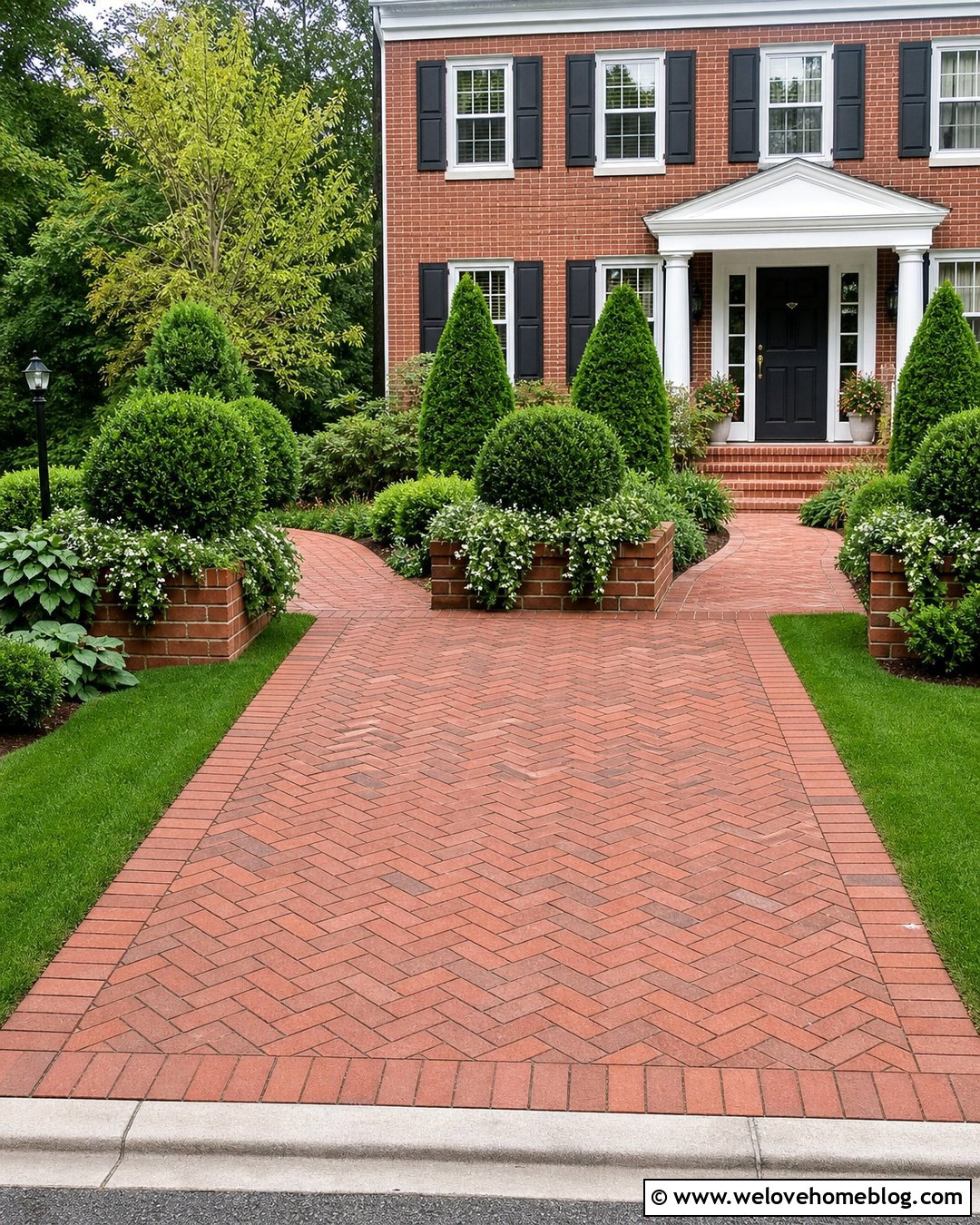
Warm clay brick pavers can turn a small parking space into an architectural extension of the house. Install the bricks in a herringbone pattern for a strong, visually detailed surface, then use a contrasting soldier-course border to define the edges. Place narrow raised beds against the property boundaries rather than directly beside the vehicle’s doors. Beds built from matching brick create continuity and provide room for compact shrubs, herbs, and cascading flowers. A straight walkway can branch from the parking space and lead toward the porch without requiring another material. This arrangement is particularly effective in front of colonial, Cape Cod, and traditional brick homes. Use permeable joints where appropriate, and keep the planting height low near the curb so drivers can see pedestrians clearly.
5. Resin-Bound Driveway With Curved Garden Border
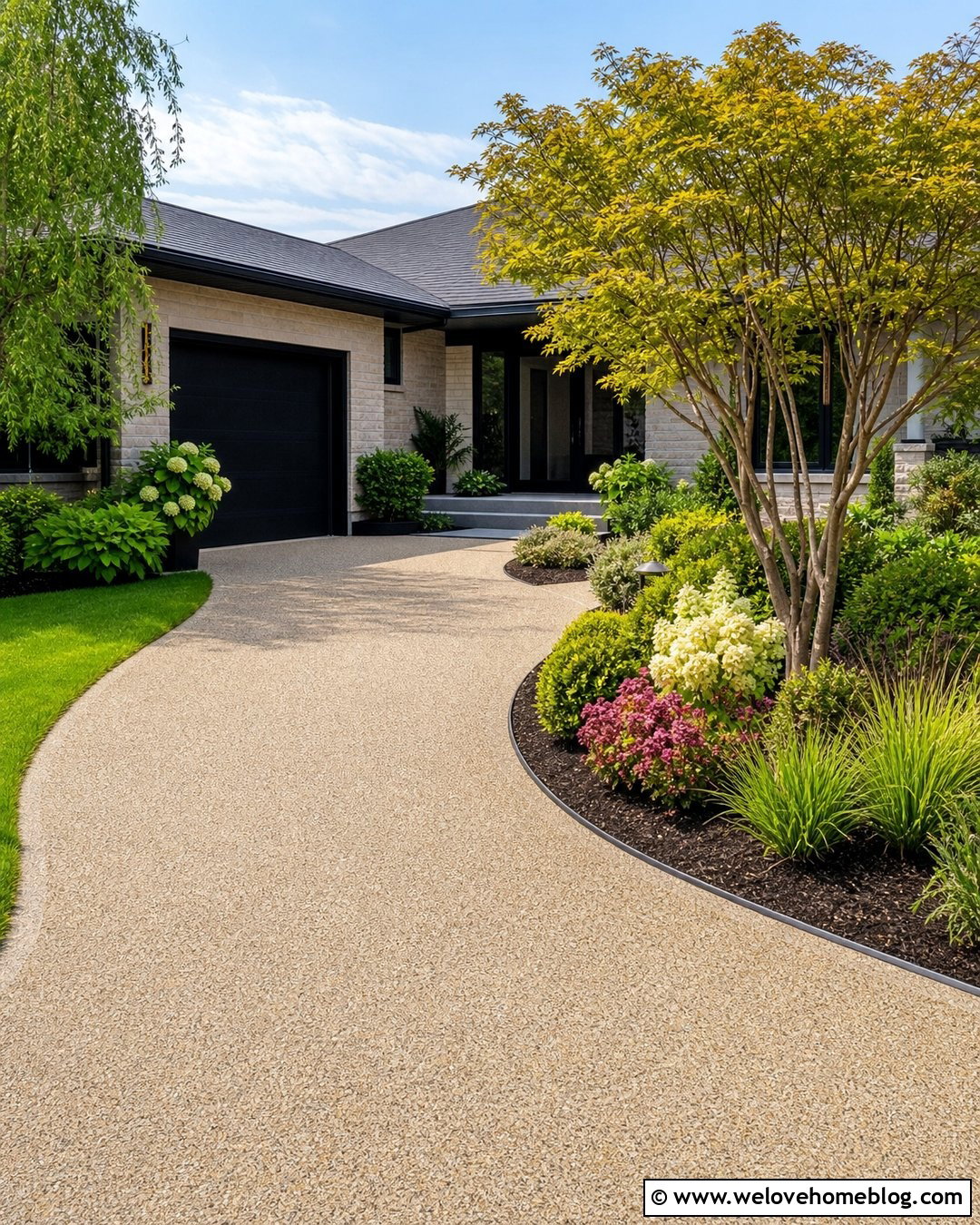
A resin-bound gravel surface offers a smooth, contemporary appearance without losing the natural character of stone. Choose a warm beige or light gray aggregate to brighten a small front garden and coordinate it with the home’s facade. Instead of surrounding the rectangular parking pad with straight planting lines, introduce one gently curved border along the open side. The curve softens the shape of the car space and creates a deeper pocket for a small ornamental tree, flowering shrubs, and layered ground cover. Use brick or aluminum edging to maintain a crisp transition between resin and soil. A matching resin walkway can sweep toward the entrance. This uncluttered design makes parking simple while giving the remaining garden a deliberate, flowing shape rather than leaving awkward scraps of unused ground.
6. Two-Tone Paver Driveway With Corner Garden
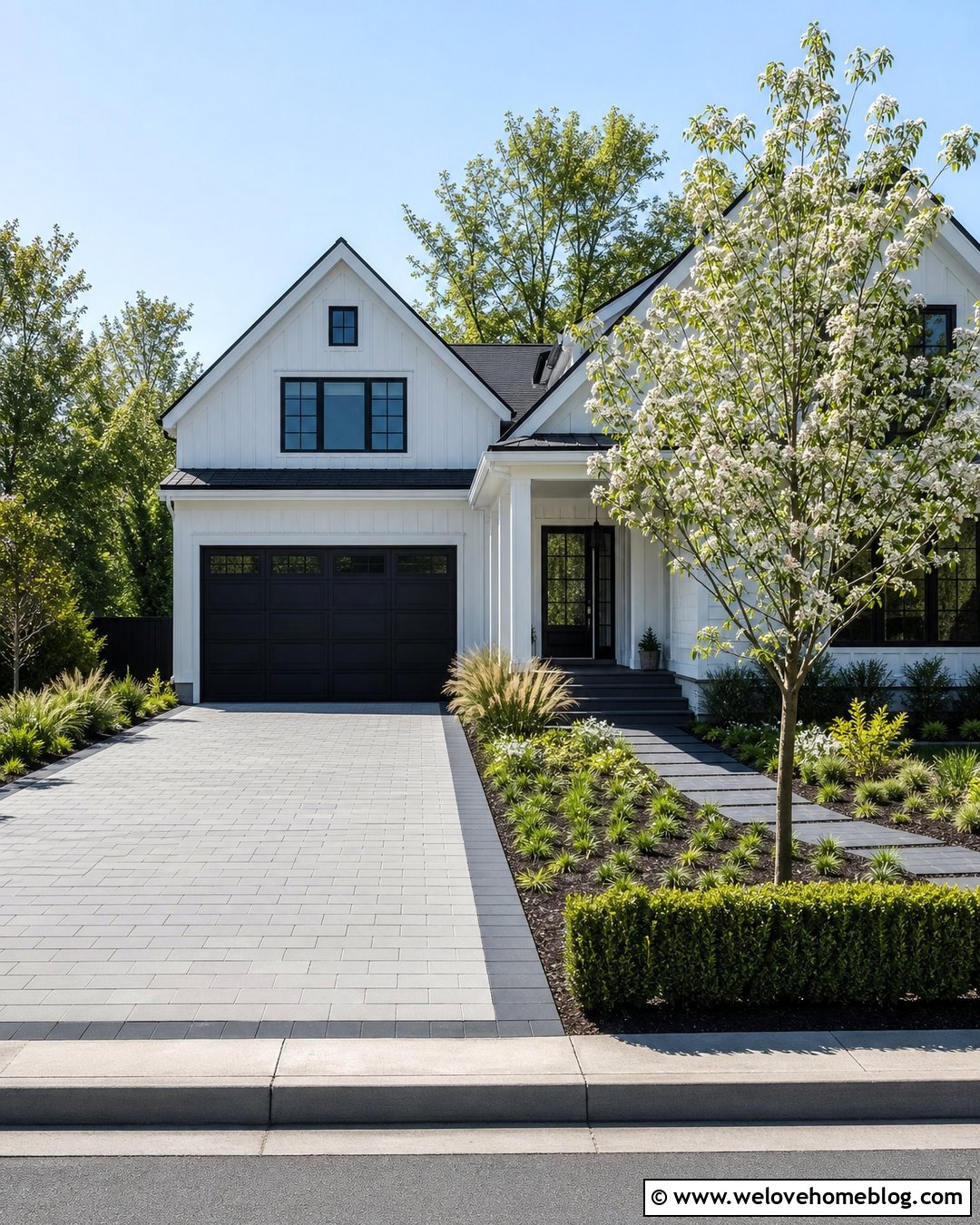
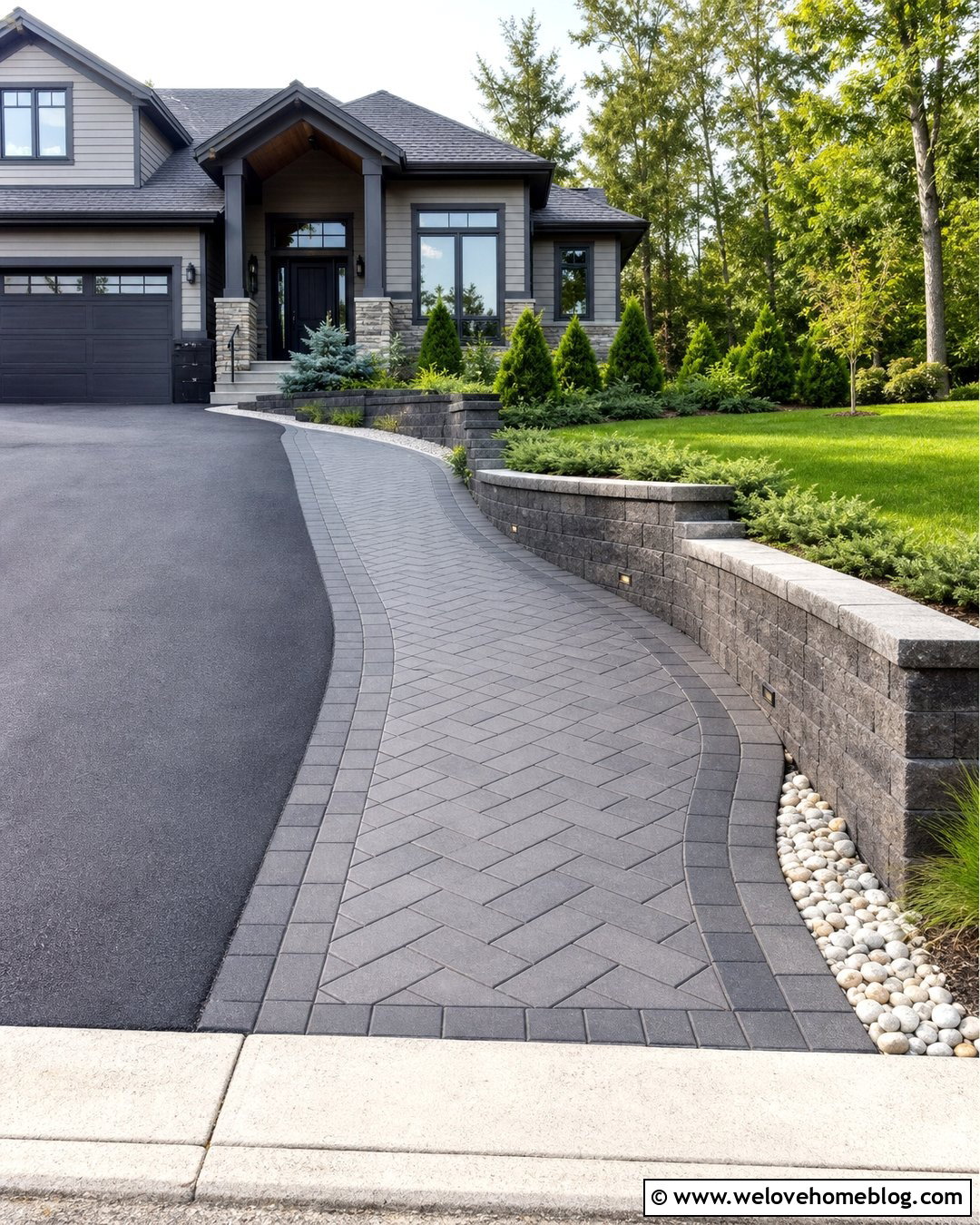
Two complementary paver colors can visually organize parking, walking, and planting within a tight front yard. Use medium-gray concrete pavers for the main parking rectangle and charcoal pavers as a narrow perimeter border. Continue the darker color along a dedicated path to the front door, helping visitors understand where to walk when a vehicle occupies the driveway. Reserve the widest front corner for a triangular garden bed rather than squeezing tiny beds around every edge. Plant one multi-stem ornamental tree there with low grasses and flowering ground cover beneath it. A short hedge along the street can frame the space without blocking the driveway entrance. Repeating the house trim color in planters or edging will make the driveway and small garden appear connected, balanced, and carefully planned.
7. Asphalt Driveway With Flowering Hedge
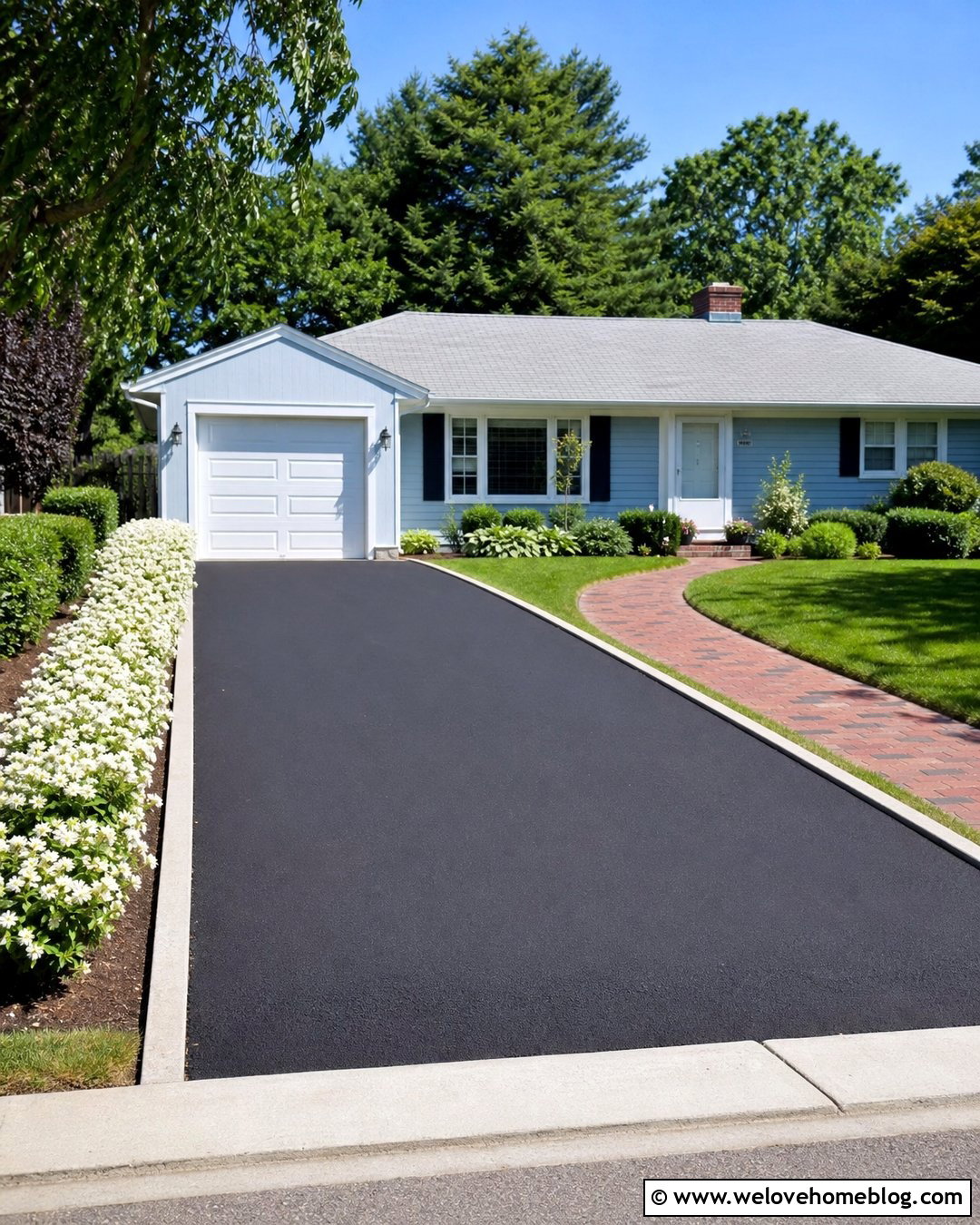
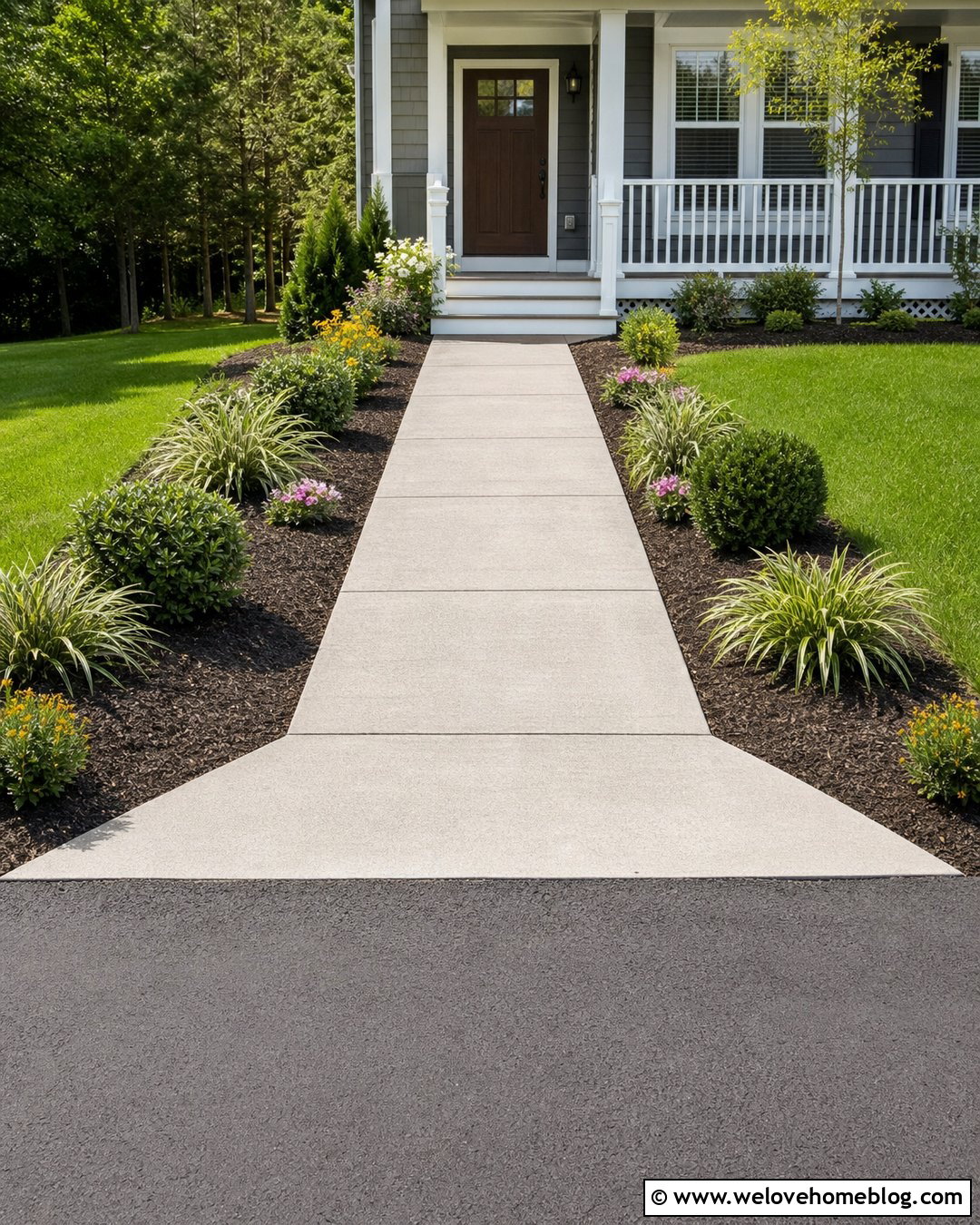
Black asphalt is practical for a frequently used parking space, but it needs thoughtful landscaping to avoid dominating a small front garden. Keep the driveway straight and no wider than necessary, then add a pale concrete or brick border that creates a clean outline against the dark surface. Along one boundary, plant a compact flowering hedge to provide color, privacy, and a visual buffer from the neighboring property. The opposite side can hold a narrow paved walkway and a slim foundation bed beneath the front windows. Select shrubs with mature dimensions that fit the available space, reducing constant pruning and preventing branches from scratching the vehicle. A light-colored house facade, white flowers, and fresh green foliage will contrast attractively with the asphalt and give the entrance a brighter appearance.
8. Flagstone Parking Pad With Ground Cover Joints
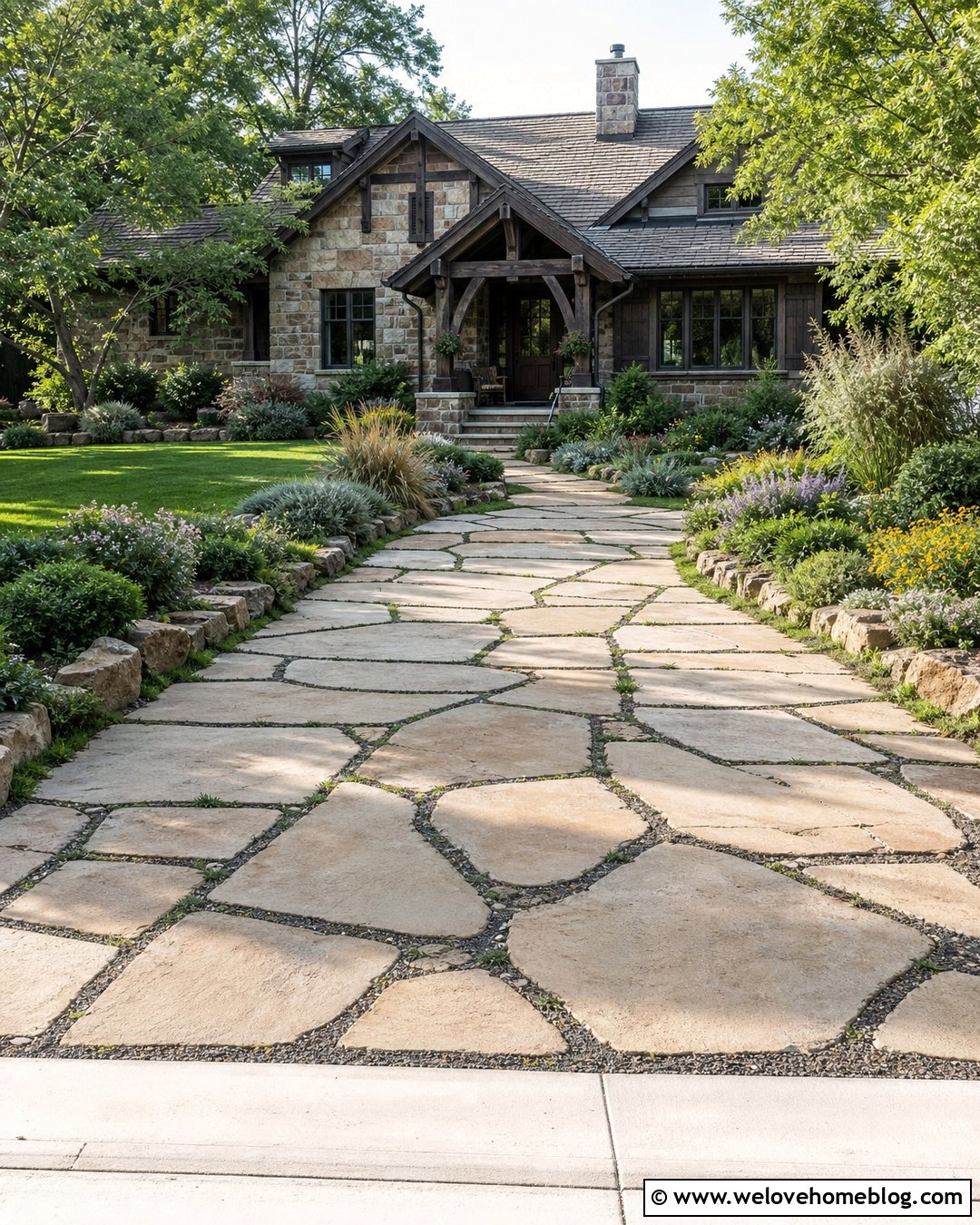
Large-format flagstones create a relaxed garden atmosphere while still defining a usable parking pad. Select thick, vehicle-rated natural stone or concrete flagstone rather than thin patio slabs. Arrange the pieces in a rectangular or slightly staggered layout, leaving narrow joints filled with compact gravel or a tough, low-growing ground cover. Some spreading plants can tolerate occasional parking when properly planted in soil pockets and when the vehicle is moved regularly. () Surround the pad with an informal border of dwarf shrubs, ornamental grasses, and long-blooming perennials. A matching flagstone path can turn toward the porch through the planting. This complete look works beautifully with craftsman cottages and rustic ranch homes, blending the parking surface into the garden instead of treating it as a separate paved feature.
9. Side-By-Side Parking With Central Planting Strip
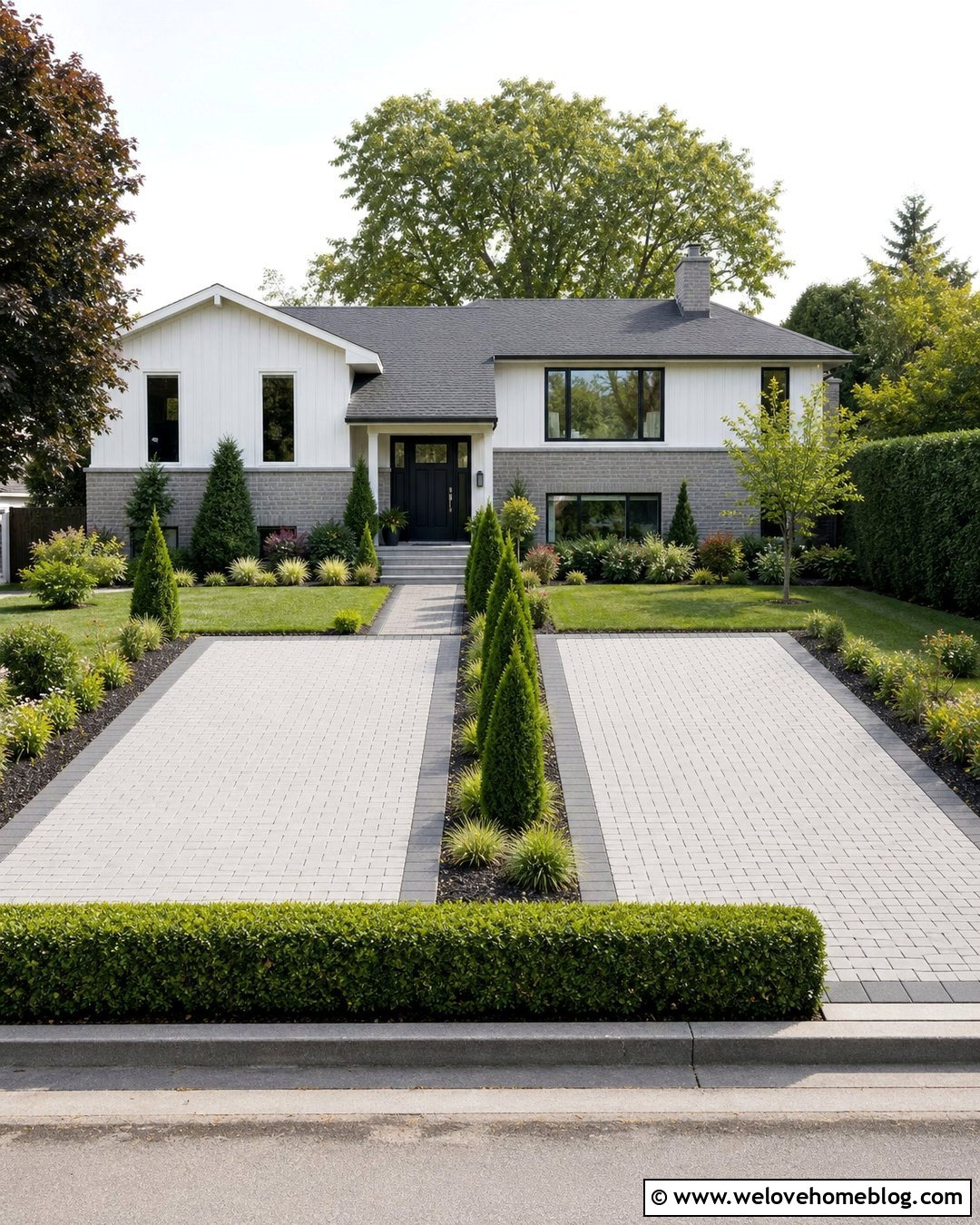
When two parking spaces are essential, a narrow central planting strip can stop the front yard from resembling one uninterrupted paved area. Create two parallel parking bays using permeable concrete pavers, then leave a raised or flush garden ribbon between them. Fill this strip with columnar evergreens, low grasses, or ground covers that will not obstruct car doors. If the center is too narrow for plants, use decorative stone and several large containers instead. Add planting beds along the outside boundaries to soften the full width of the driveway. A front walkway can run beside one bay and remain accessible even when both spaces are occupied. Keep the entrance broad enough for comfortable turning, but use contrasting paver borders to make each parking position clear and orderly.

10. Tandem Driveway With Separate Front Walkway
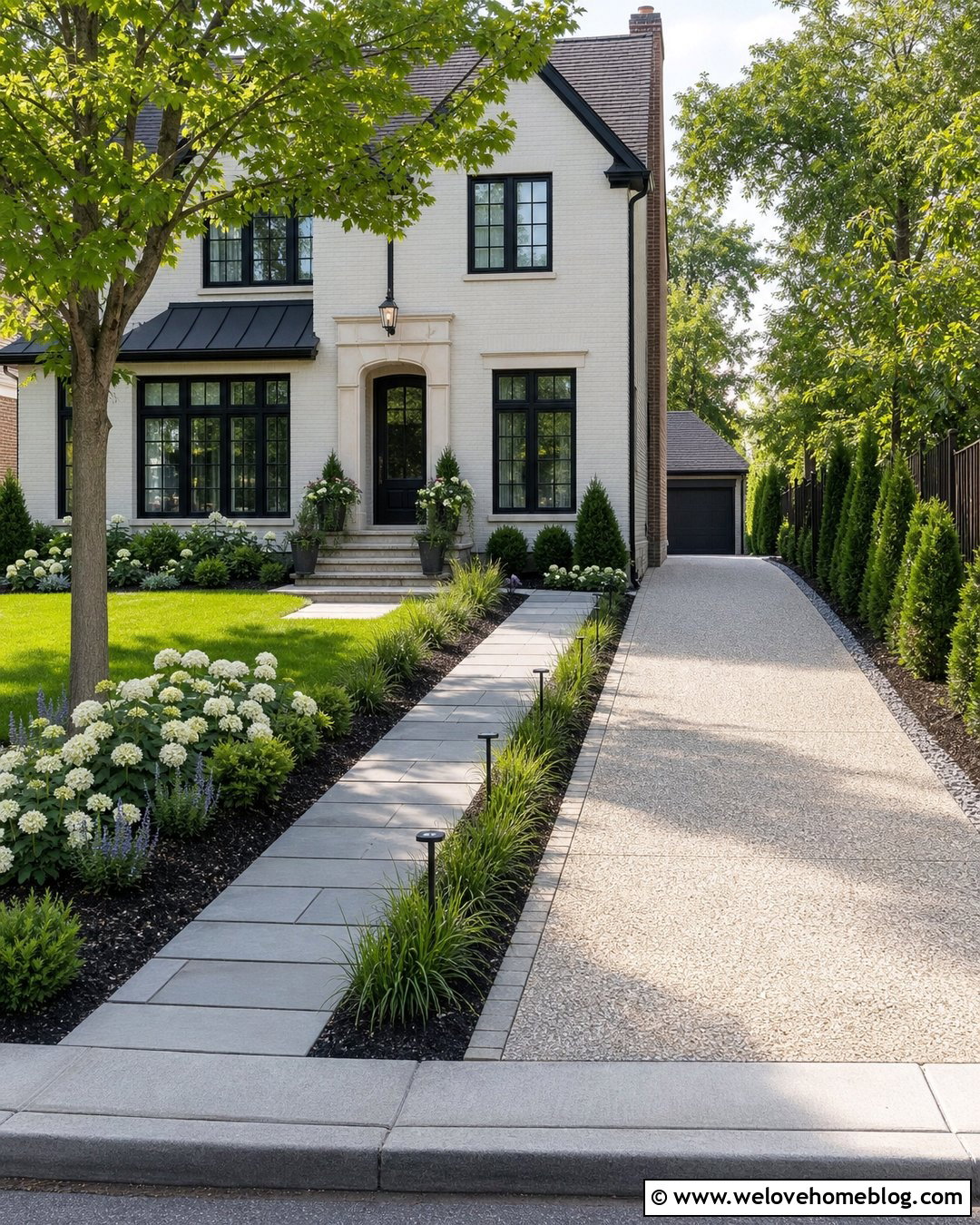
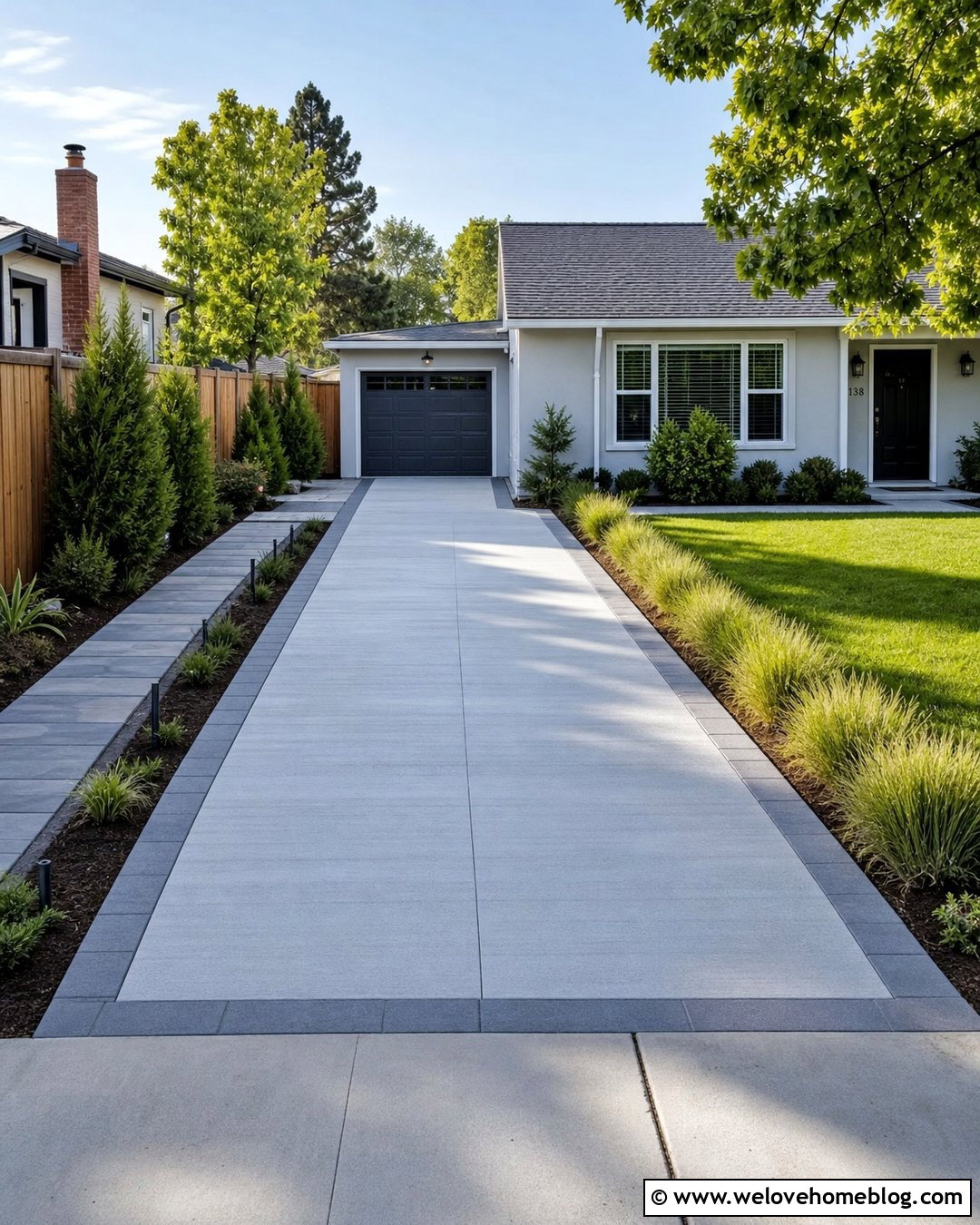
A long, narrow front garden often works better with tandem parking than with two spaces placed side by side. Install a straight driveway using exposed aggregate concrete, which provides texture and a more decorative finish than plain concrete. Keep a separate walkway along the house or boundary so visitors can reach the front door when both vehicles are parked. Between the driveway and walkway, introduce a narrow bed with upright grasses, compact shrubs, and low lighting. A wider planting pocket near the sidewalk can hold a small tree and help screen the first parked vehicle. The rear parking position should have enough door clearance and should not block steps or utilities. This linear arrangement preserves more greenery than widening the entire yard and suits closely spaced suburban homes.
11. Diagonal Parking With Triangular Garden Bed
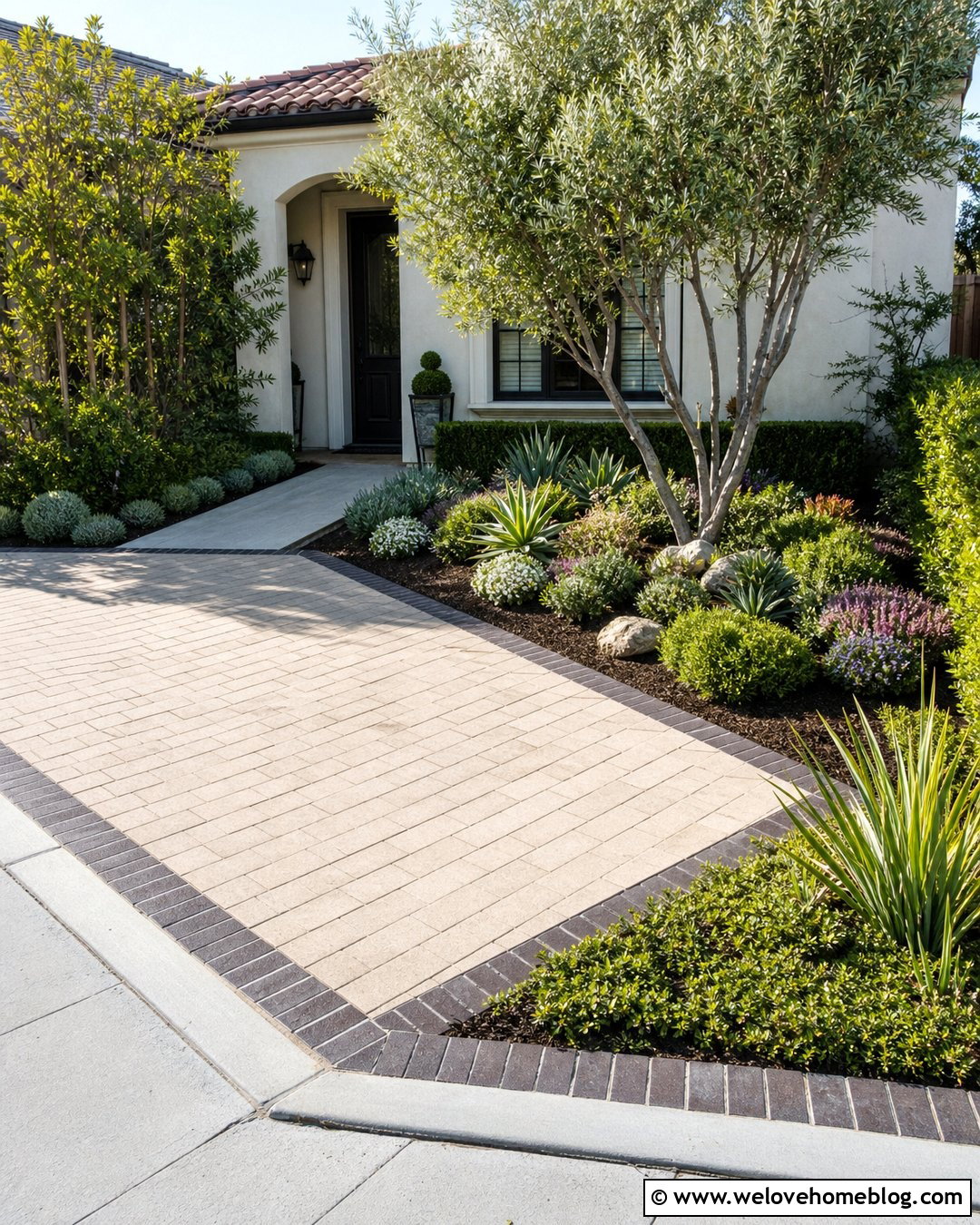
An angled parking bay may solve an awkward layout where the curb opening does not line up directly with the house. Use light concrete pavers to create a single diagonal space that guides the vehicle naturally into the yard. The angled edge will form one or two triangular leftover areas, which can become substantial garden beds rather than unusable strips. Fill the larger triangle with a small ornamental tree, layered shrubs, and flowering perennials. Use the smaller one for an address marker, low ground cover, or a large planter. A brick ribbon around the parking bay will emphasize its geometry and prevent the design from looking accidental. Before choosing this arrangement, test the turning path carefully and verify that the parked vehicle will remain entirely within the property.
12. Curved Gravel Driveway With Cottage Planting
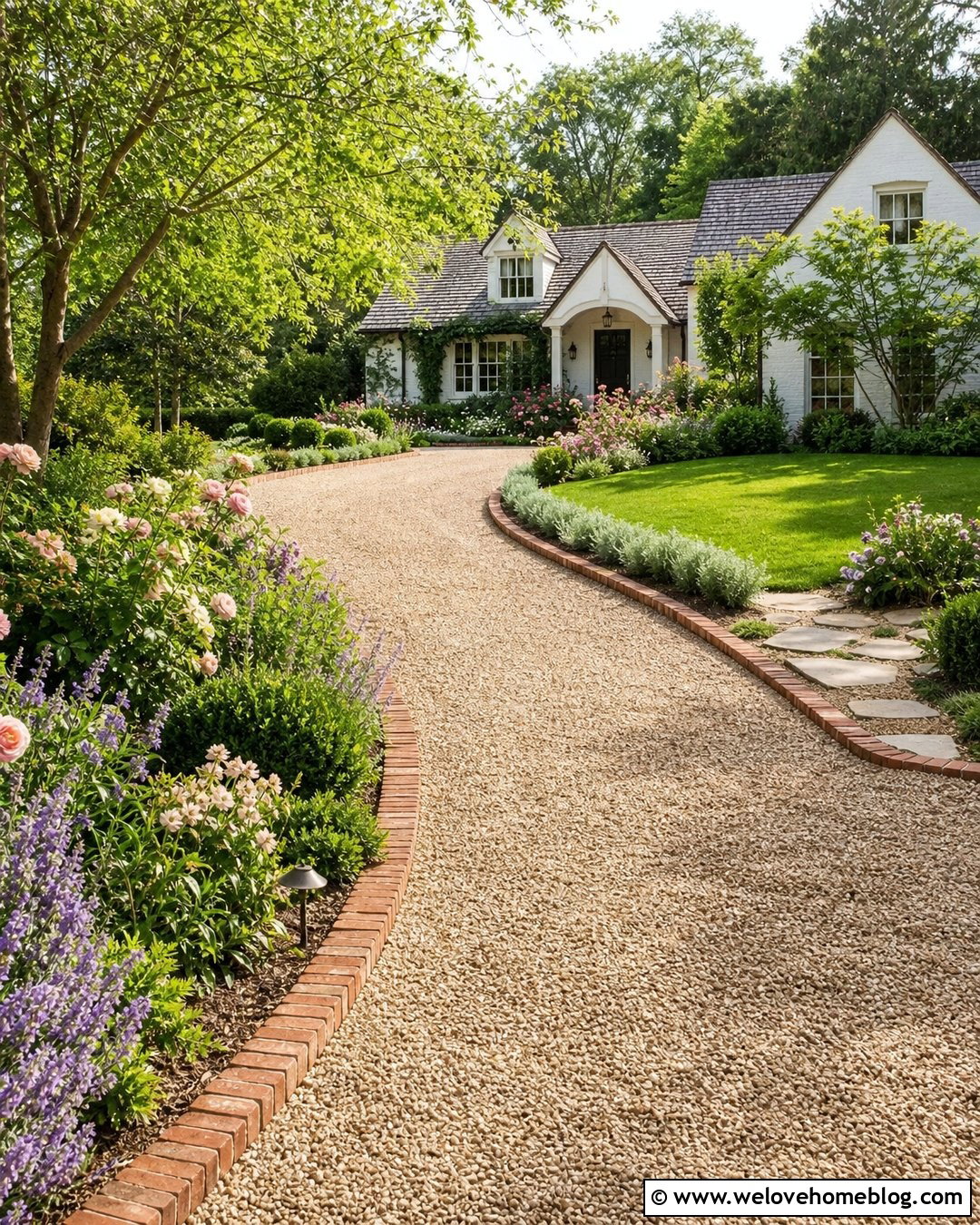
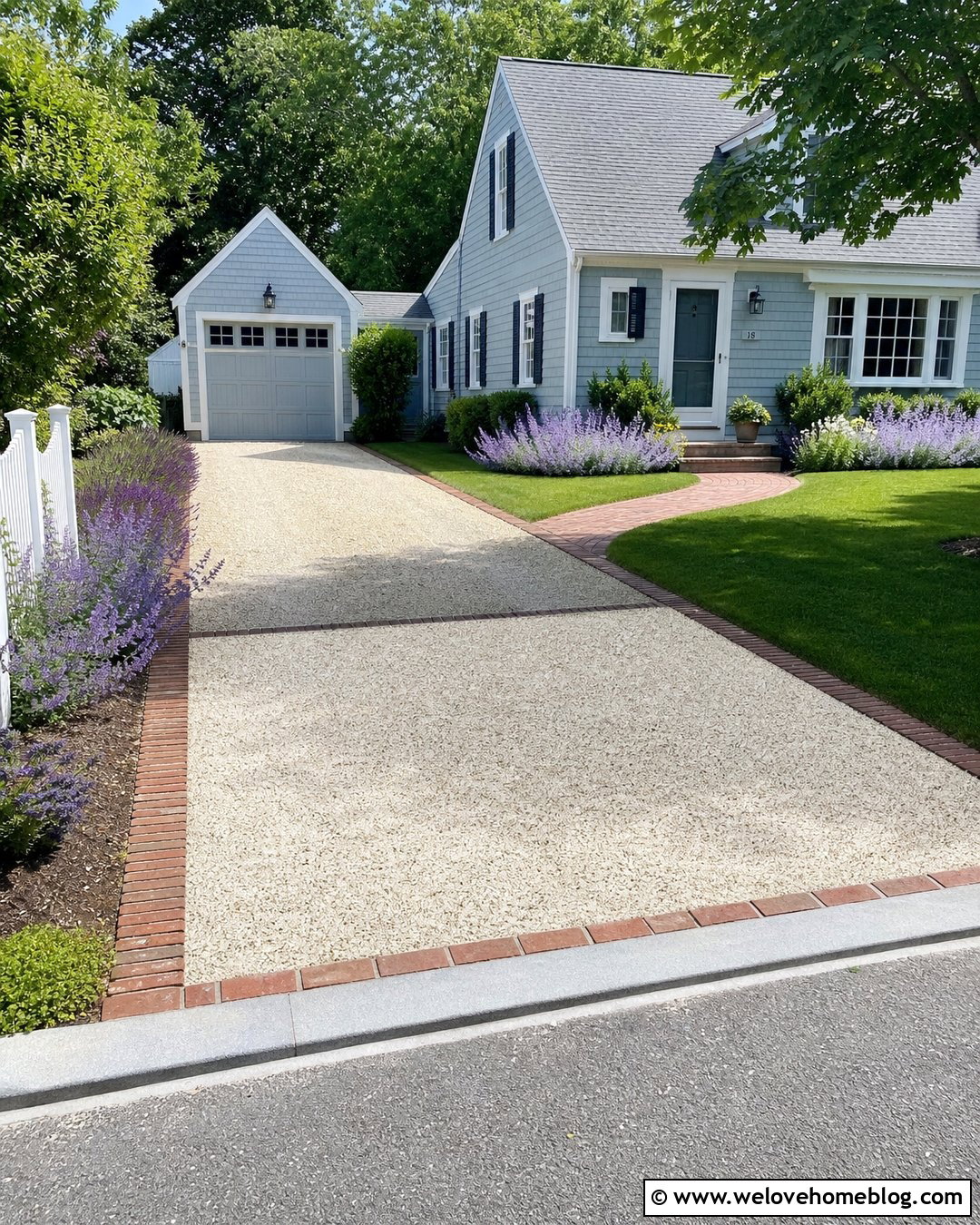
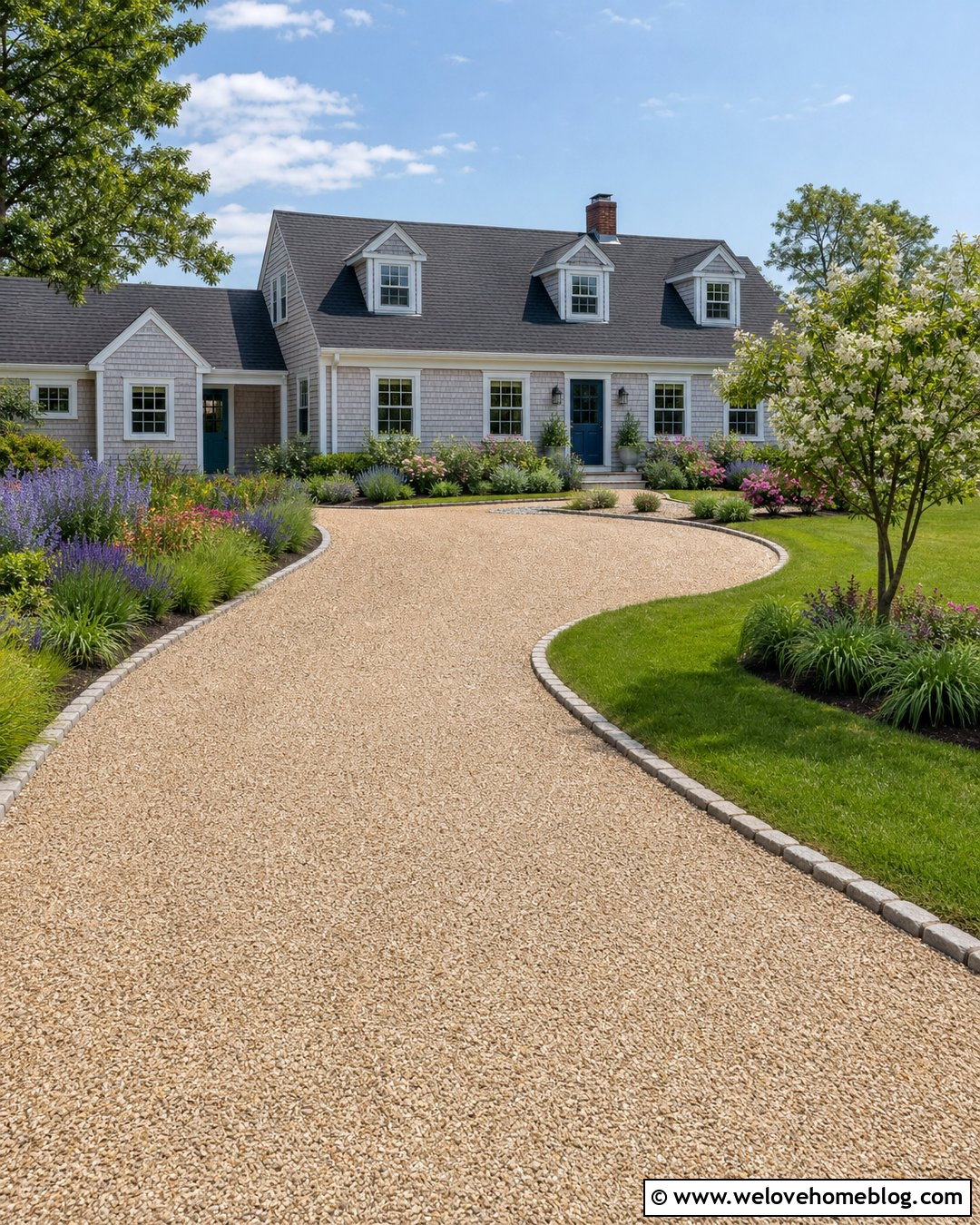
Soft curves can make a short driveway feel more integrated with an informal front garden. Lay buff-colored angular gravel in a gentle arc from the curb to a one-car parking pad near the house. Edge it with reclaimed brick or small granite blocks so the gravel remains contained and the curve stays clearly defined. Use the deeper outside edge for layered cottage planting, including compact roses, salvia, catmint, and evergreen structure. On the inside curve, keep vegetation lower to protect visibility and simplify maneuvering. A stepping-stone path can branch from the driveway and pass through the border to the front door. This design is most successful when the curve is subtle; an exaggerated bend can waste space and make everyday parking more difficult in a very small yard.
13. Modern Concrete Driveway With Linear Beds
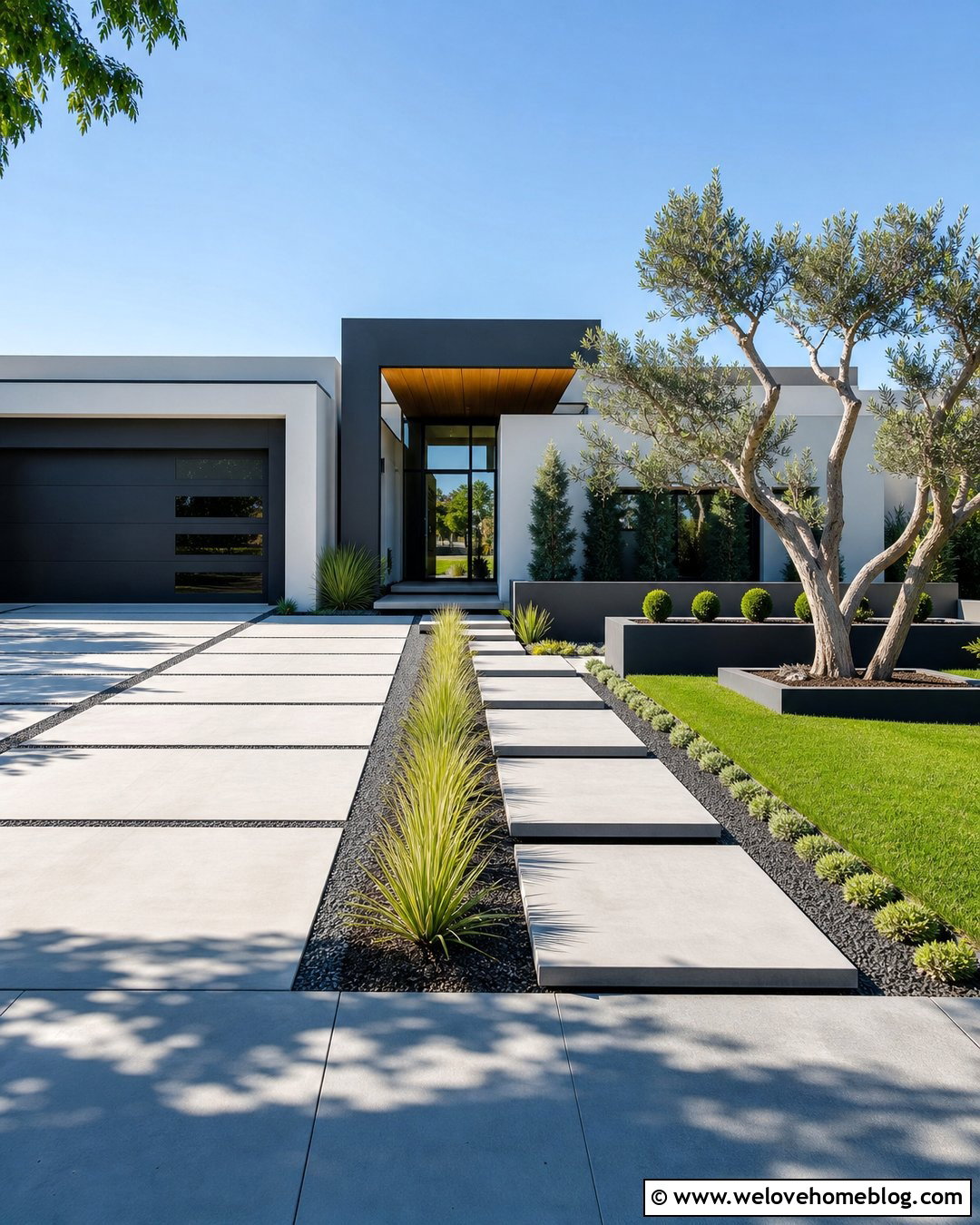
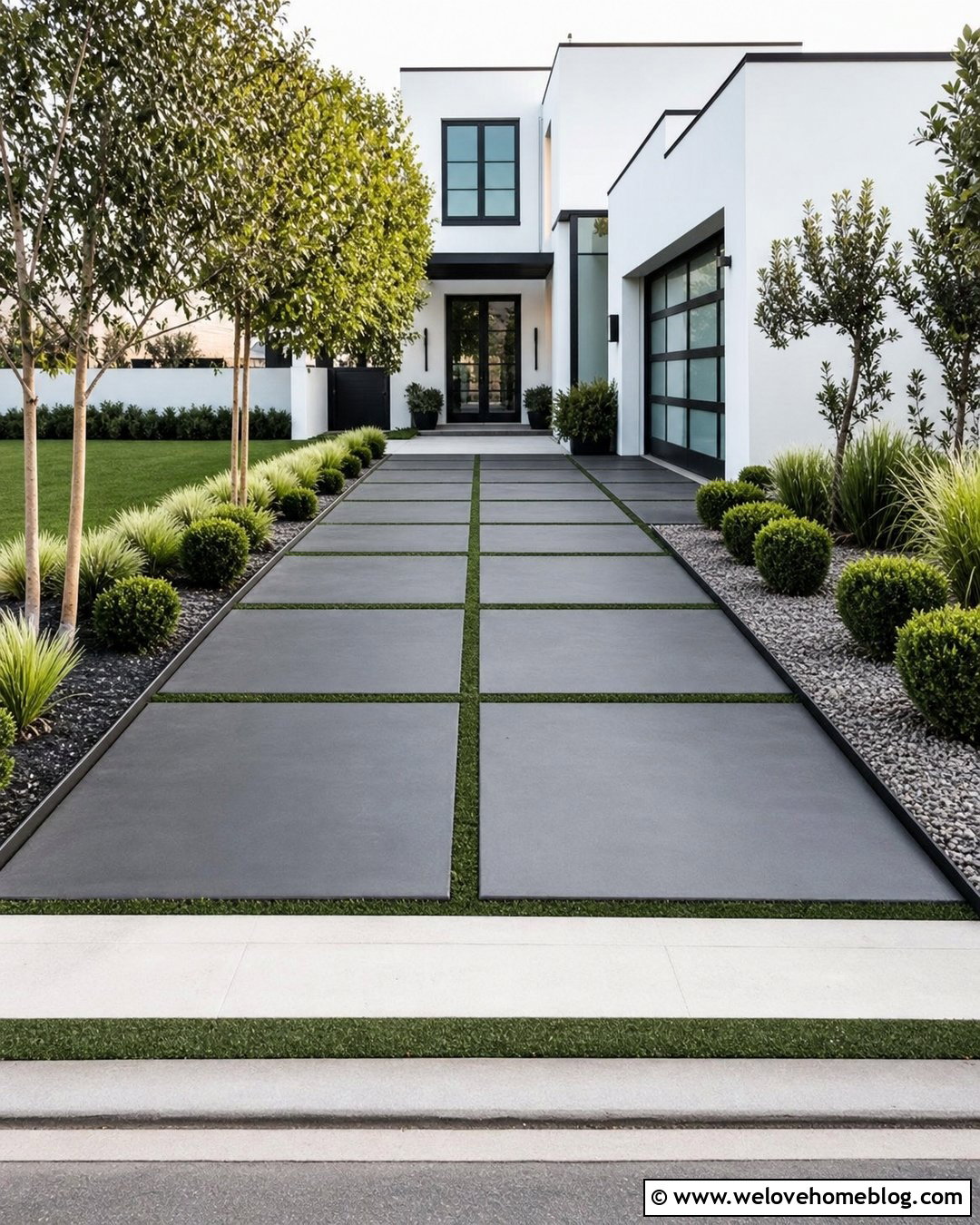
Clean lines give a compact front yard an orderly, spacious character. Build a straight driveway from large gray poured-concrete panels separated by narrow gravel joints. Align the panel lines with the home’s windows, doorway, or facade details to create visual consistency. Along one side, install a slim linear bed containing repeated groups of ornamental grasses, compact evergreen shrubs, and a single accent tree. The opposite edge can include a floating concrete walkway divided from the parking area by dark decorative gravel. Choose a restrained plant palette instead of filling the yard with many unrelated varieties. Low rectangular planters near the porch can repeat the driveway’s geometry. This complete design works particularly well with modern homes, where simple materials and controlled planting provide curb appeal without making the limited area feel crowded.
14. Gravel Parking Bay With Stepping-Stone Walkway
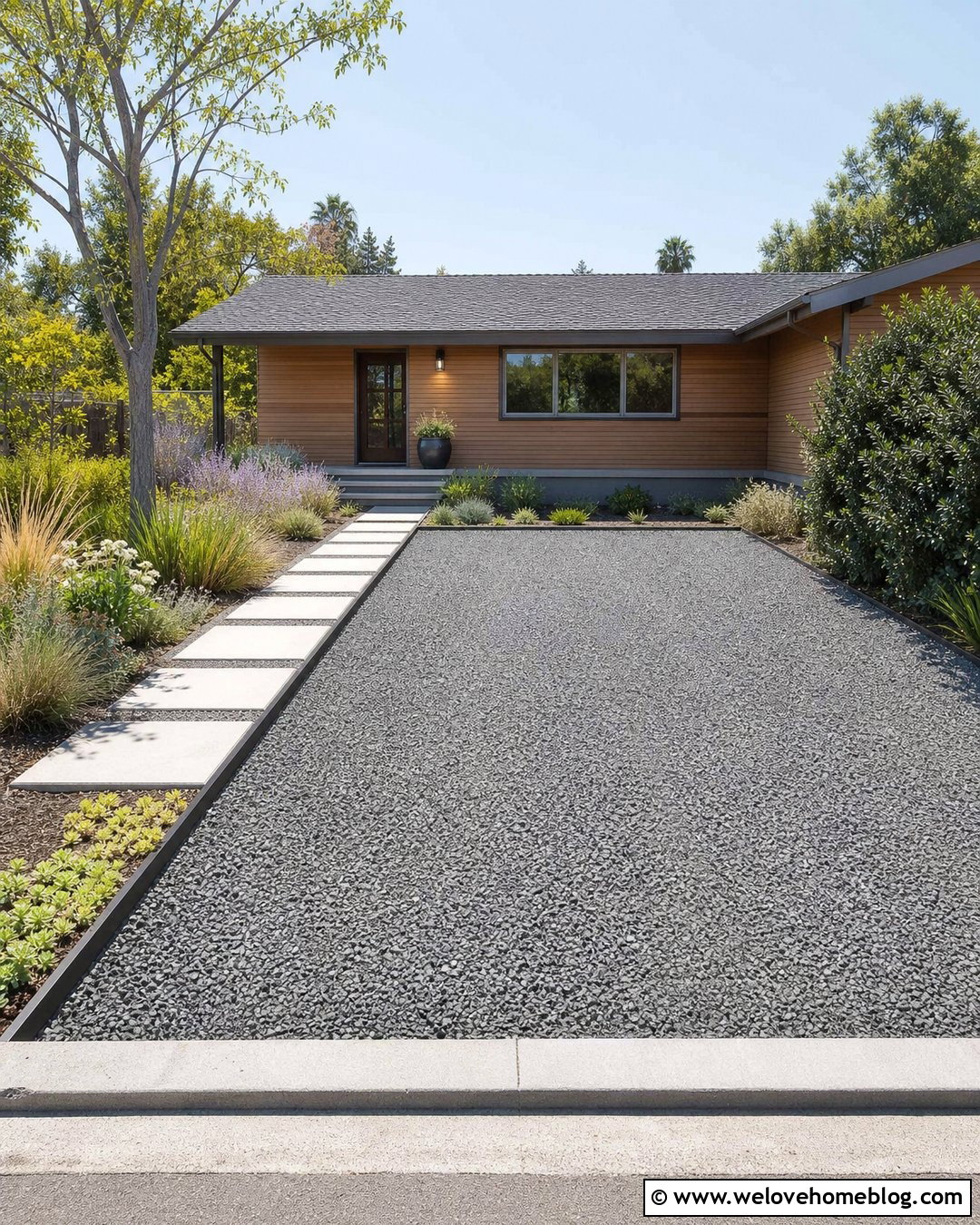
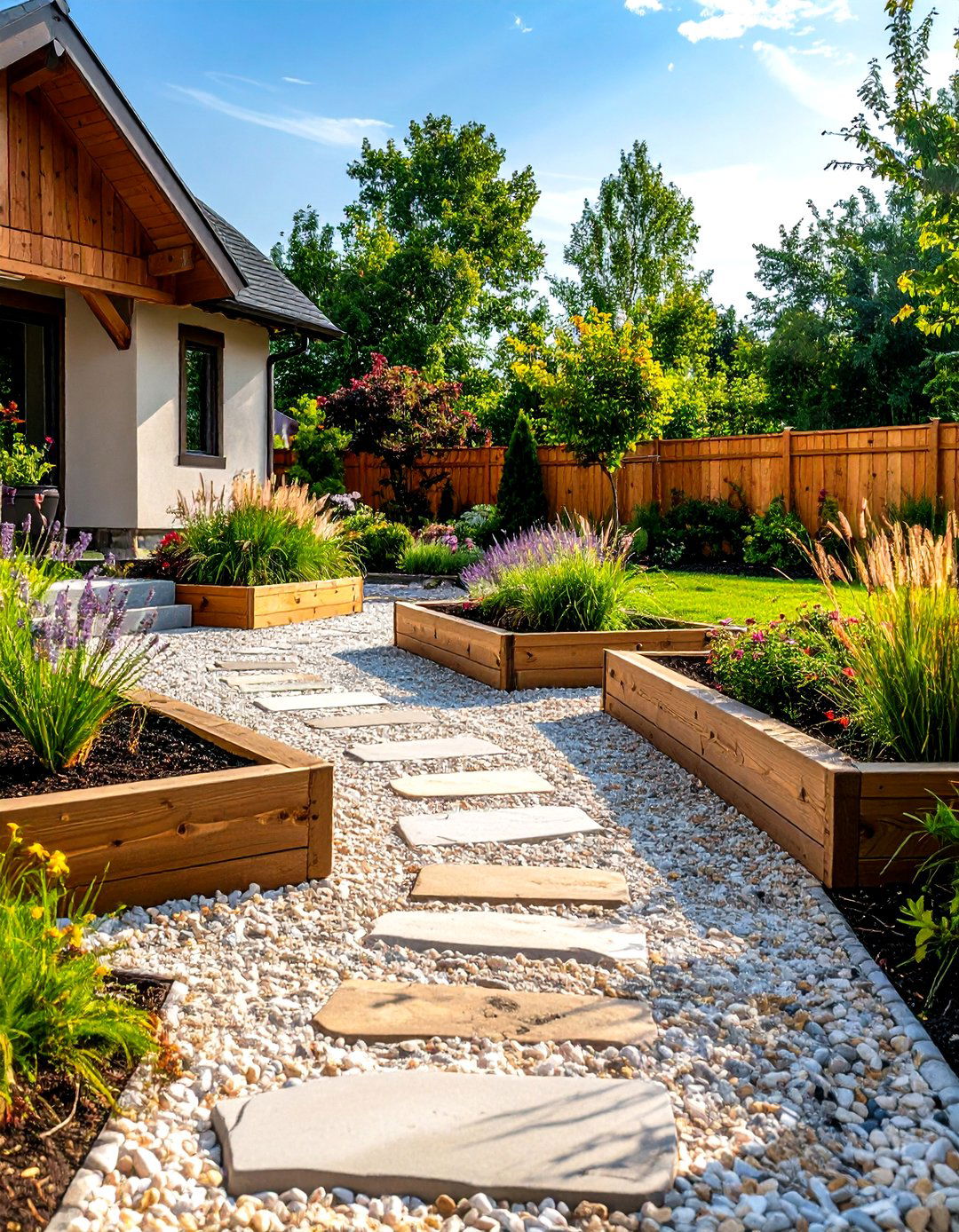
A clearly defined parking bay can leave more of the front garden available for plants than a driveway that extends across the entire yard. Create a compact rectangular bay using gray crushed gravel held inside sturdy steel or brick edging. Run large rectangular stepping stones from the sidewalk to the porch through a planted strip beside the parking space. The path should remain continuous and comfortably wide, even when a vehicle is present. Fill the surrounding beds with drought-tolerant grasses, small flowering shrubs, and spreading ground covers to reduce lawn maintenance. Near the front door, add one generous container rather than several small pots. The contrast between loose gravel, solid stepping stones, and soft planting gives the yard depth while keeping construction relatively simple and adaptable to future changes.
15. Driveway With Rain Garden Border
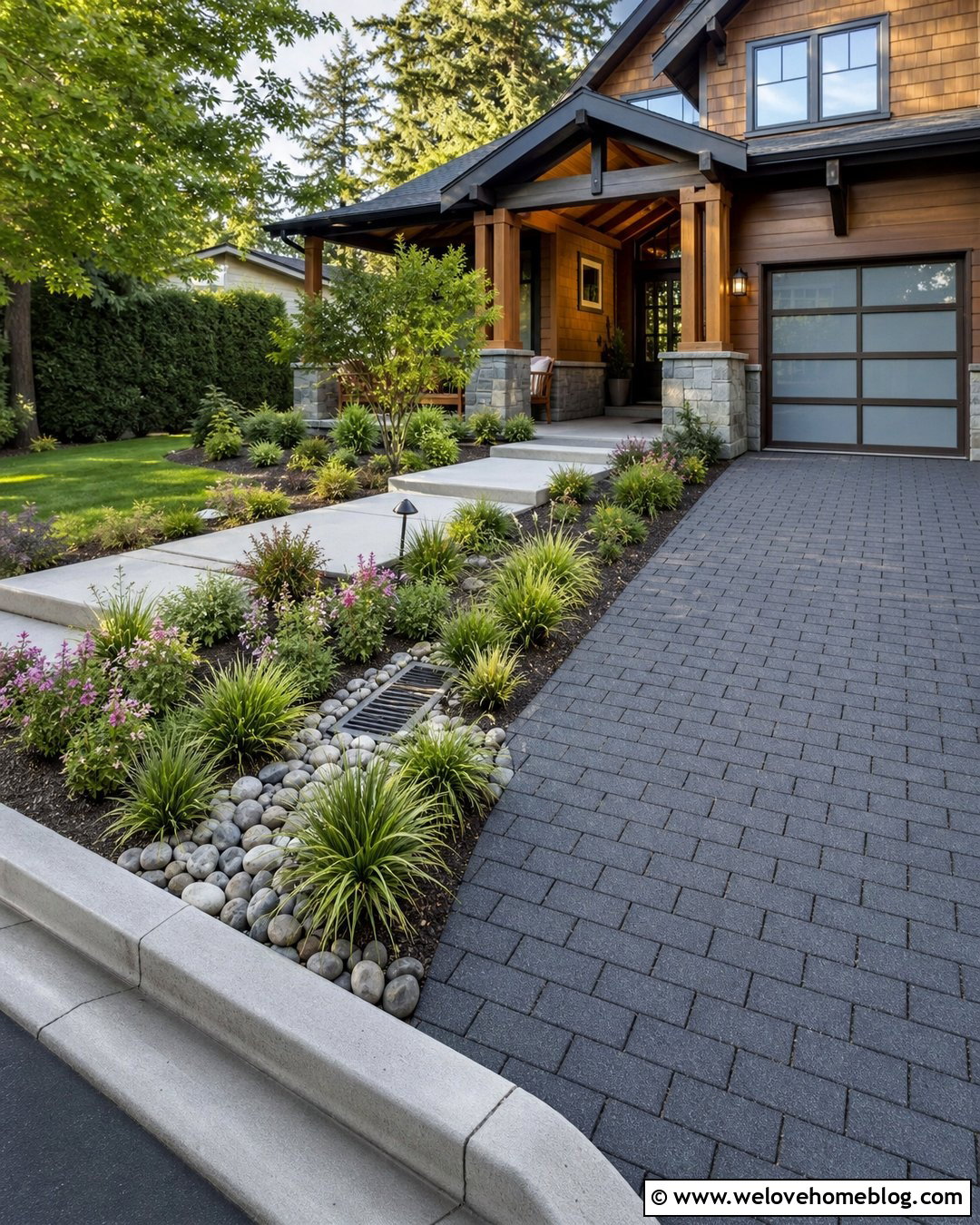
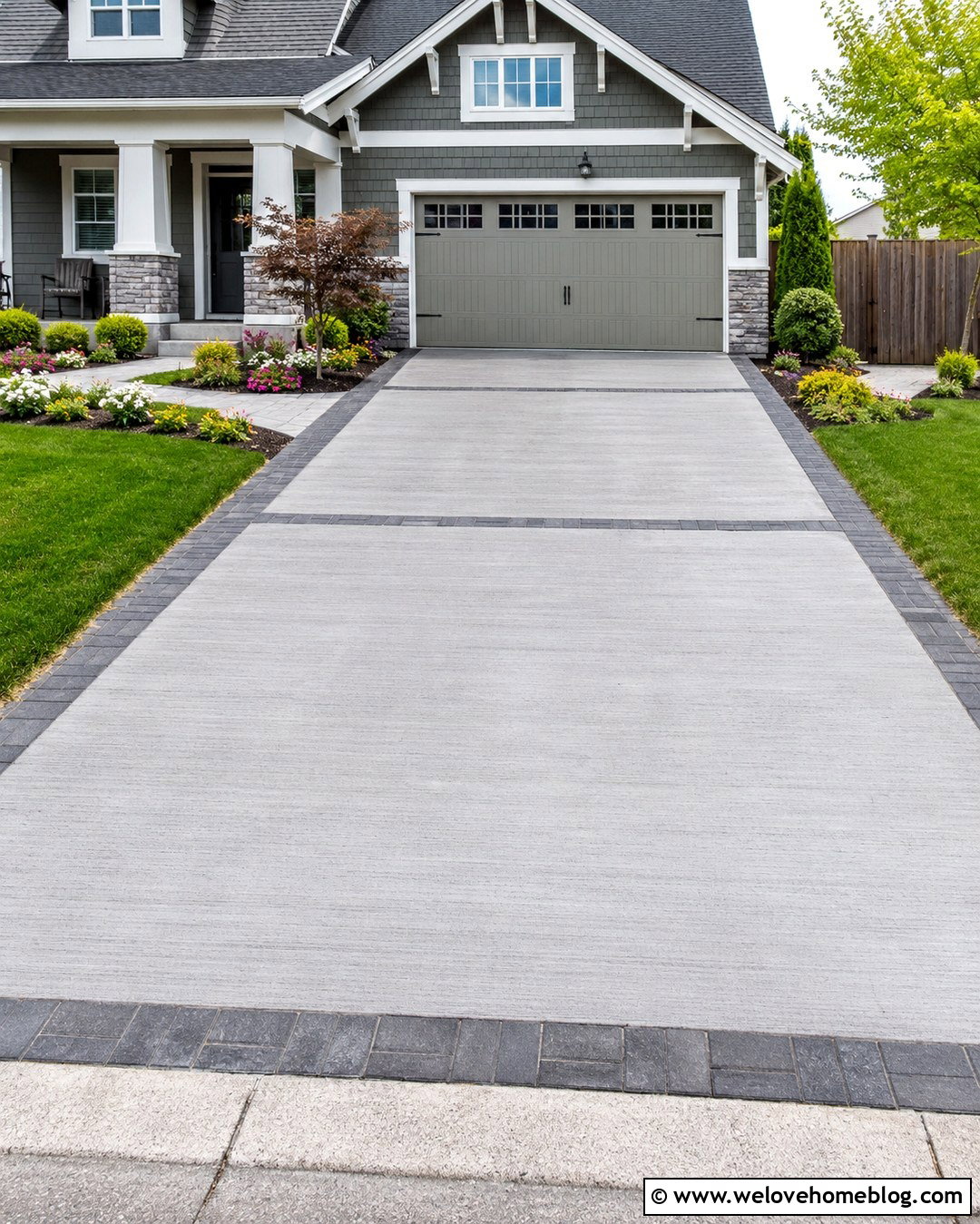
Where the site and local requirements permit, a rain garden can turn driveway runoff into an attractive landscape feature. Install permeable interlocking pavers for the parking space and slope surrounding hard surfaces carefully toward a shallow planted basin, not toward the home’s foundation. Position the basin beside the lower edge of the driveway, with an overflow route appropriate for the property. Fill it with regionally suitable plants that tolerate both temporary moisture and dry periods. Use a stone or concrete curb where needed to protect the bed from tires while allowing water to enter at planned openings. A raised walkway can connect the street and porch without crossing the basin. Because drainage conditions vary, consult a qualified landscape or drainage professional before changing grades around a small house lot.
16. Small Driveway With Privacy Hedge
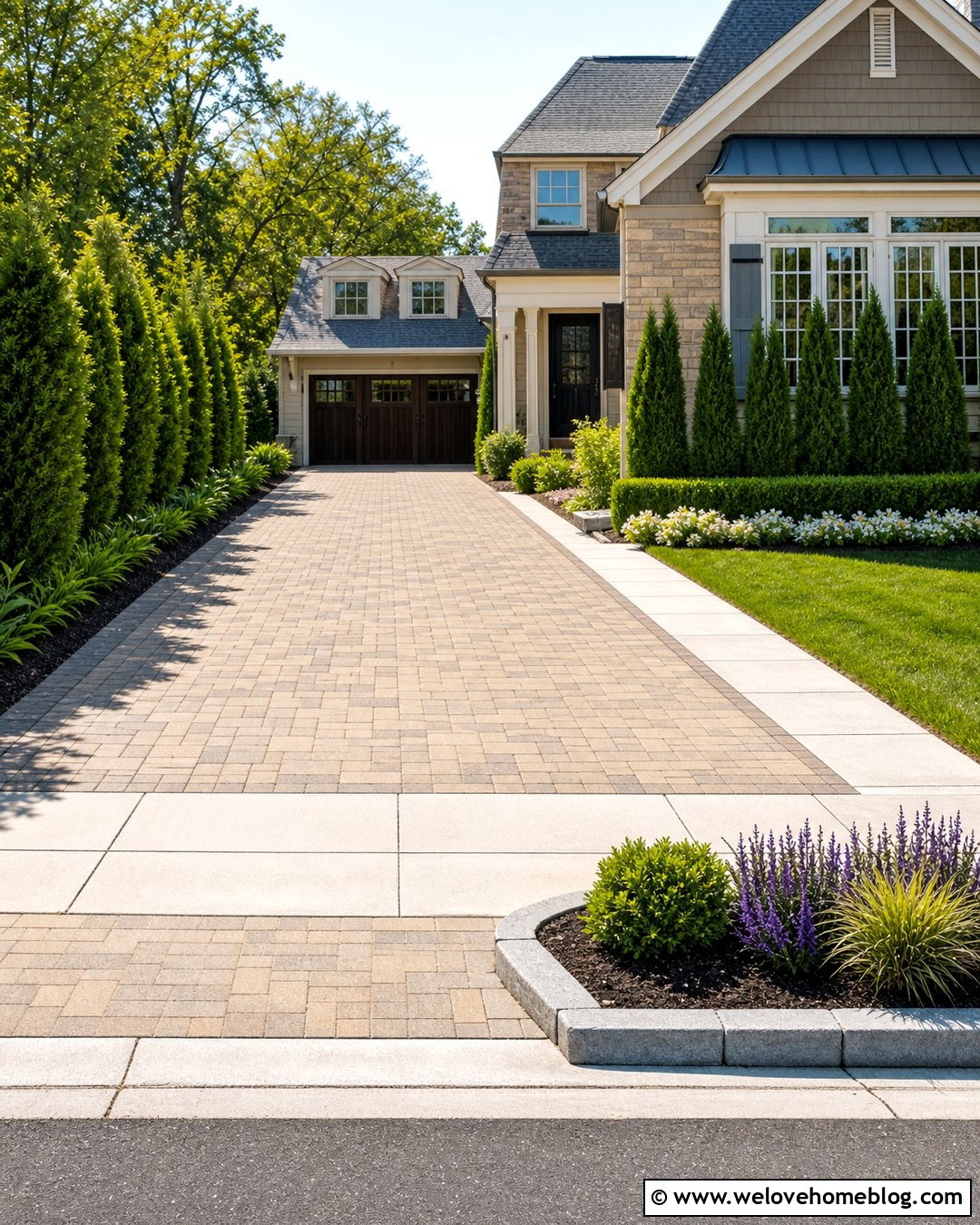
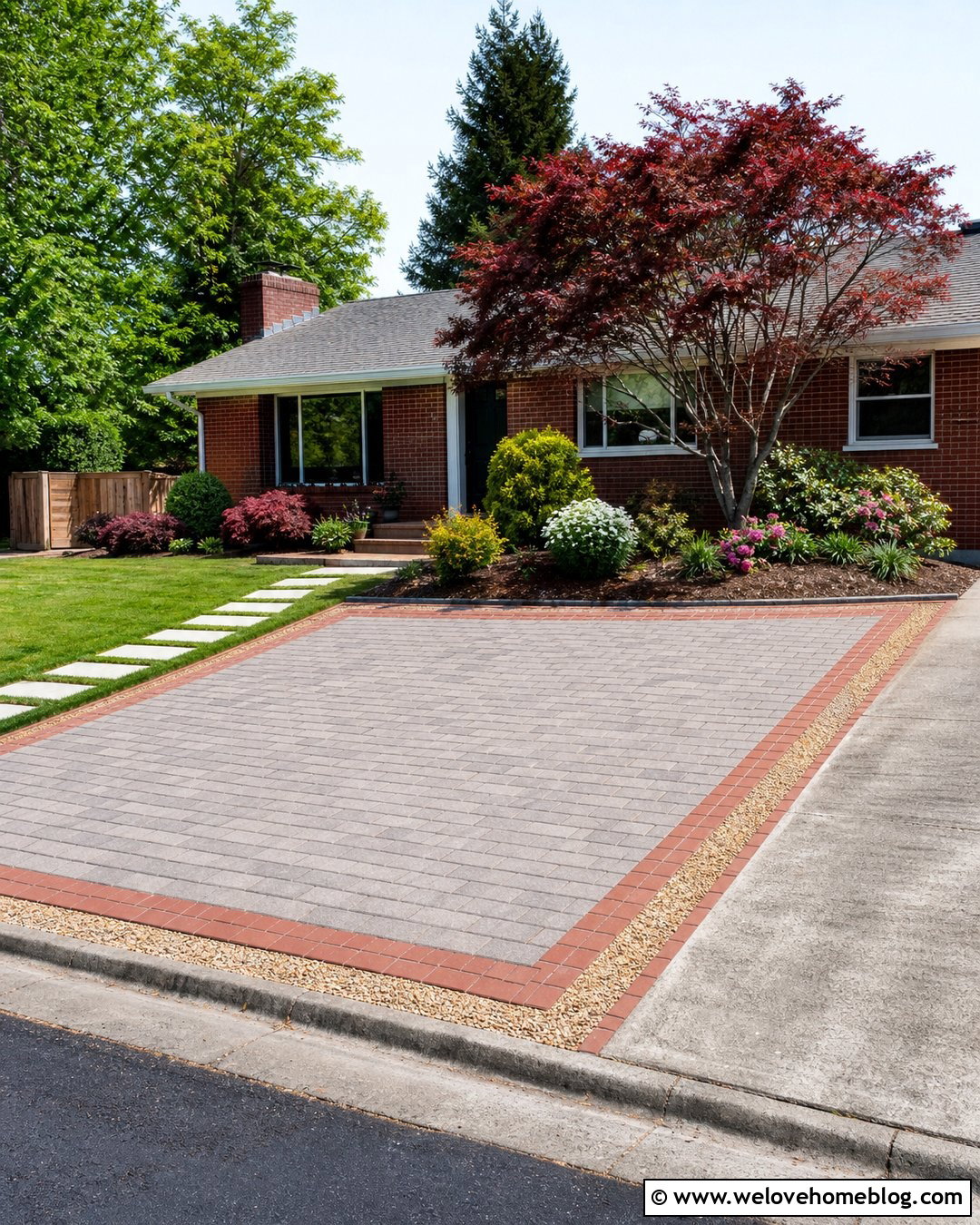
Parking close to a front window can make a compact garden feel exposed, but a carefully positioned hedge can restore privacy without taking over the yard. Use warm-toned permeable pavers for a straight, one-car driveway and reserve a narrow strip between the parking area and house for an upright evergreen hedge. Select a naturally slim variety and maintain enough space for airflow, window access, and vehicle doors. Along the street, continue the hedge at a lower height so drivers retain clear sightlines. A contrasting concrete walkway can run along the opposite side toward the entrance. Add flowering ground cover beneath the hedge or in a small curbside bed. The result is a sheltered front garden that still feels open, navigable, and welcoming rather than enclosed by oversized plants.
17. Driveway With Built-In Bin Storage
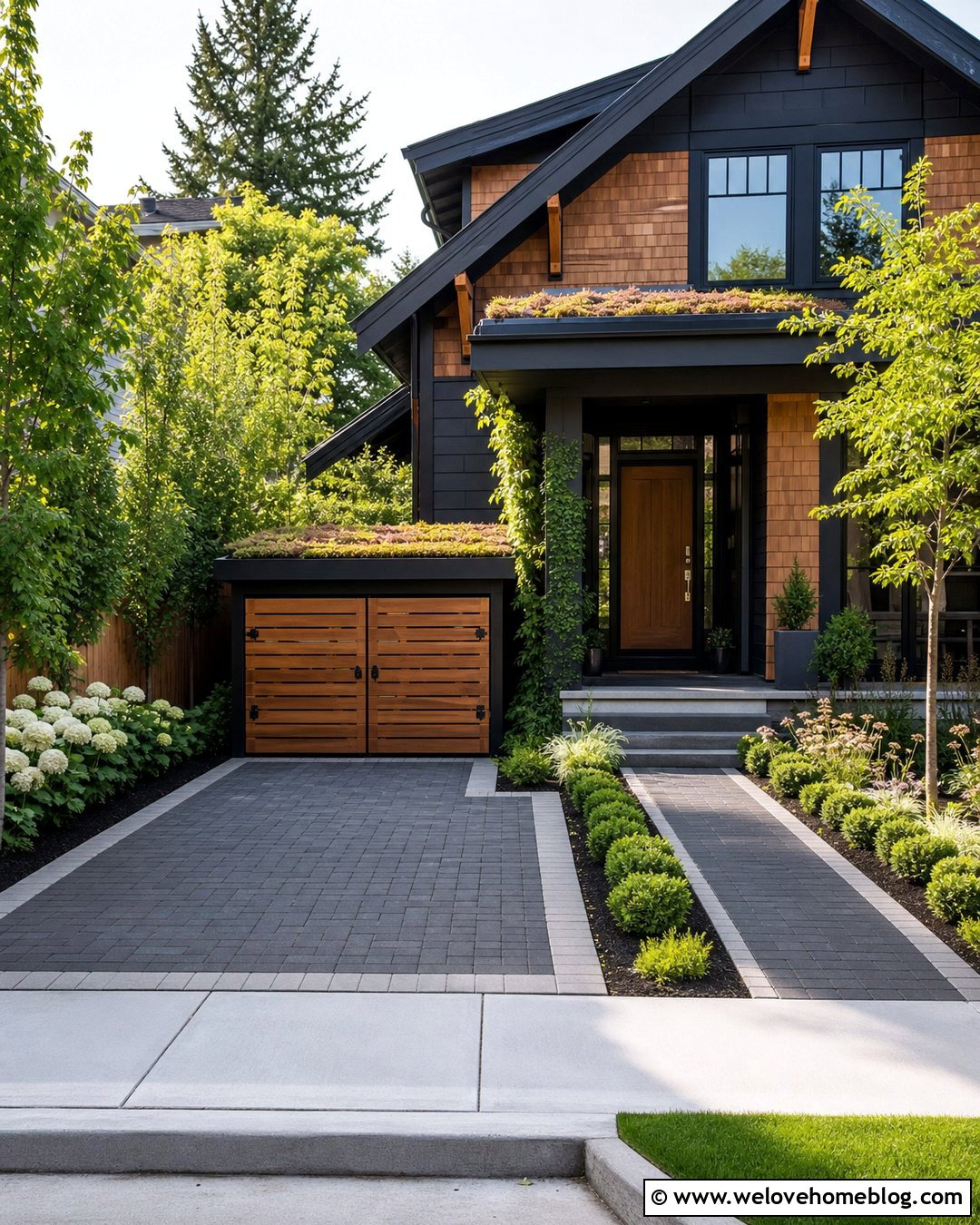
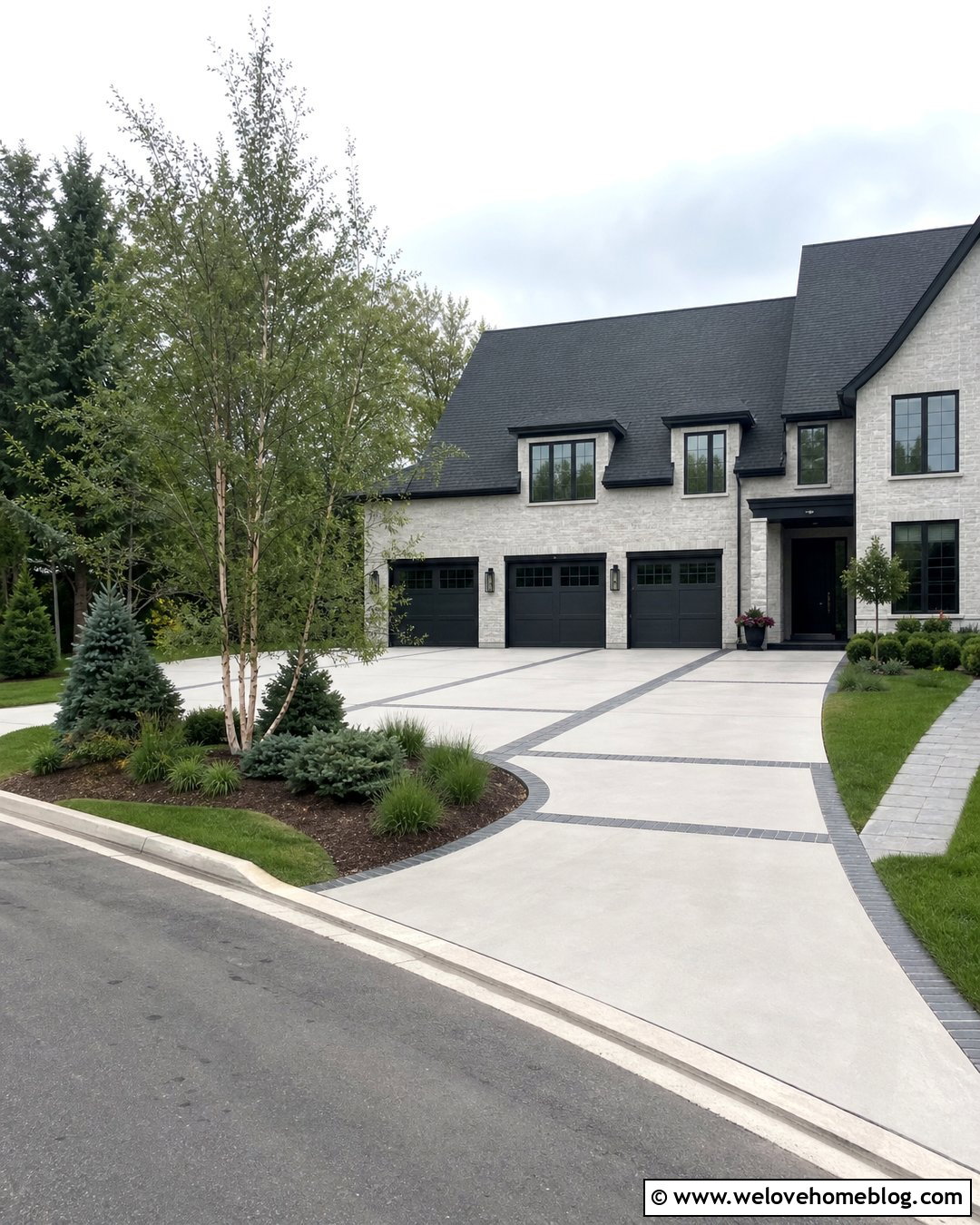
Practical storage matters in a small front garden because loose bins can quickly overwhelm the entrance. Design a compact driveway using charcoal concrete pavers with a lighter border, then place a screened storage enclosure in an unused corner beside the house. Build the screen from horizontal cedar slats or material that matches the fence and facade. Leave enough ventilation and provide a direct route to the sidewalk without dragging bins behind a parked vehicle. A narrow green roof or climbing plant can soften the enclosure, provided the structure is built to handle the added weight and moisture. Use a slim planting bed between storage and parking to reduce its visual impact. This organized layout combines a one-car space, concealed utilities, landscaping, and an accessible walkway without wasting valuable square footage.
18. Driveway With Low Wall And Entrance Pillars
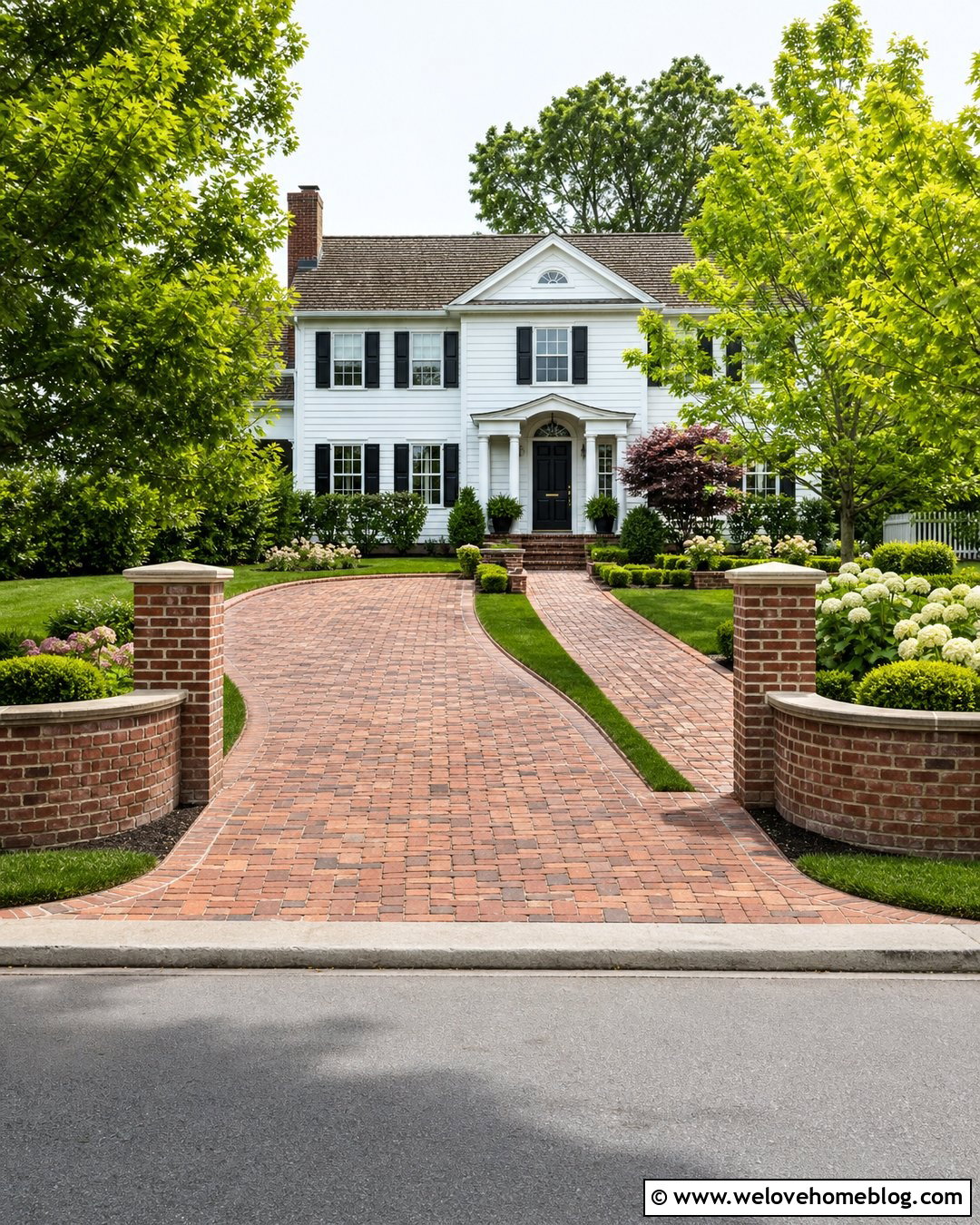
A low boundary wall can make a small driveway feel finished while preserving an open view of the house. Use tumbled concrete pavers or clay brick pavers for a straight parking bay and build a knee-high wall along the front garden boundary. Leave a comfortably sized vehicle entrance, then mark each side with modest brick or stone pillars that match the home. Avoid oversized pillars because they can reduce turning clearance and make the yard appear smaller. Continue the wall around a raised planting bed filled with compact shrubs, seasonal flowers, and one vertical accent plant. A separate pedestrian opening can align with the walkway to the porch. Add simple caps to the wall and pillars, ensuring the design frames the property without creating dangerous blind spots near the sidewalk.
19. Driveway With Bike Storage And Green Roof
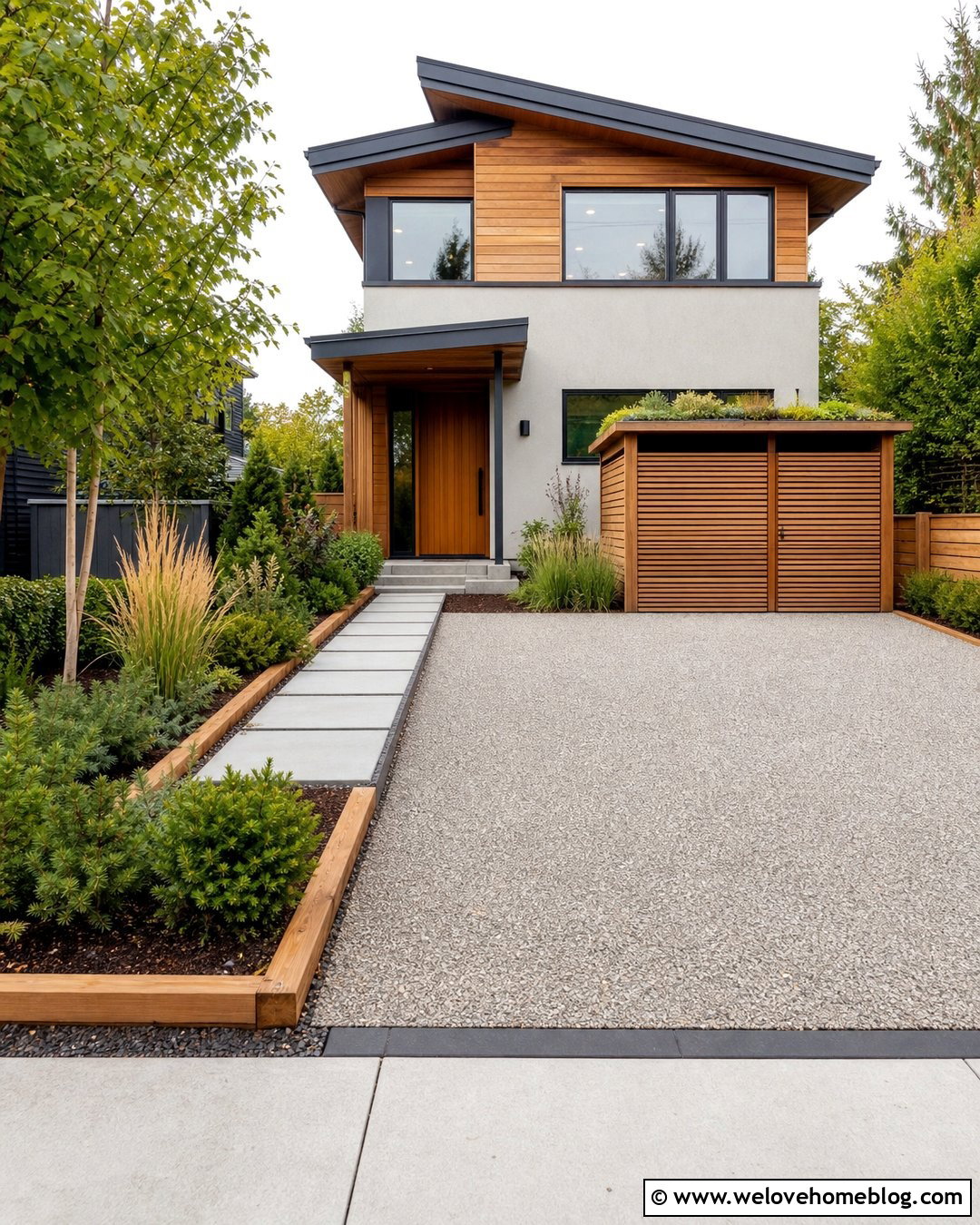
A front garden can support both car and bike parking when every feature has a clear place. Install a light gray resin-bound gravel driveway in a straight layout, leaving one boundary strip for a compact bike enclosure. Choose a low horizontal structure with cedar screening and a planted roof, positioned so its doors can open without entering the vehicle space. Confirm that the enclosure is suitable for the roof load, drainage, and local setback rules. Use matching timber edging around a nearby planting bed to visually connect storage with the garden. A paved walkway should provide direct access to both the bike area and front entrance. Compact grasses and evergreen shrubs will soften the structure without blocking it, creating an efficient and attractive transportation hub for a small household.
20. Budget Driveway With Reused Brick Edging
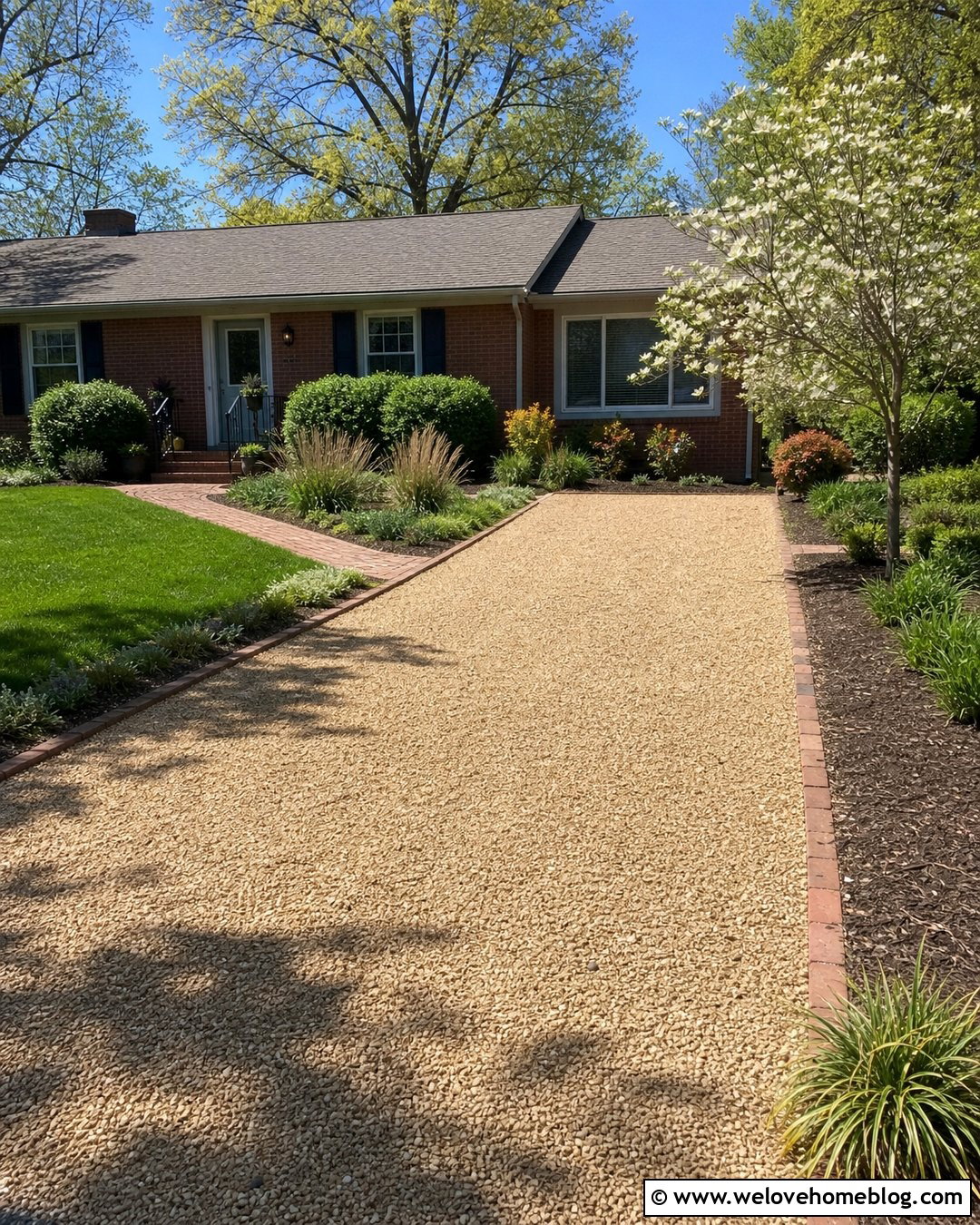
A limited budget does not require paving the entire front garden with one expensive material. Start with a properly prepared base and finish the parking area with compacted tan crushed stone. Use cleaned, reused clay bricks as edging, laying them flat or in a simple soldier course around the rectangular driveway. Continue the bricks as a narrow walkway or threshold near the porch to make the materials feel intentional. Preserve existing healthy shrubs whenever possible, then fill empty boundary beds with affordable ground covers, ornamental grasses, or divided perennials. A small mulch bed near the street can hold a young ornamental tree for future shade. Prioritize excavation, base preparation, drainage, and strong edging before decorative extras, since these hidden components determine how well the finished parking space performs.
Conclusion:
The most successful **20 Driveway Small Front Garden With Parking Ideas** treat parking and landscaping as one coordinated design. Start by measuring the vehicle, door clearance, turning space, and pedestrian route. Then choose a surface that suits the home, climate, maintenance level, and budget. Gravel, permeable pavers, resin-bound stone, brick, asphalt, and concrete can all look attractive when paired with defined borders and purposeful planting. Preserve greenery through narrow beds, corner gardens, hedges, wheel-track layouts, or rain-friendly surfaces. Most importantly, avoid paving unused space simply because it is available. Check local permits, curb-cut rules, utilities, and drainage requirements before construction. Careful planning will create practical parking without sacrificing a welcoming front garden.

Related posts:


Leave a Reply