
Transforming a steep, challenging hillside into a beautiful and functional part of your yard doesn't have to drain your finances. With a bit of creativity and strategic planning, you can tackle erosion, create usable space, and add immense visual appeal on a budget. The key is to work with the slope, not against it, by choosing affordable materials and low-maintenance plants. From simple groundcovers to DIY terraces, these ideas focus on practical, cost-effective solutions that homeowners can implement themselves, turning a difficult landscape into a stunning, multi-level retreat without breaking the bank.
1. Low-Cost Terracing with Cinder Blocks
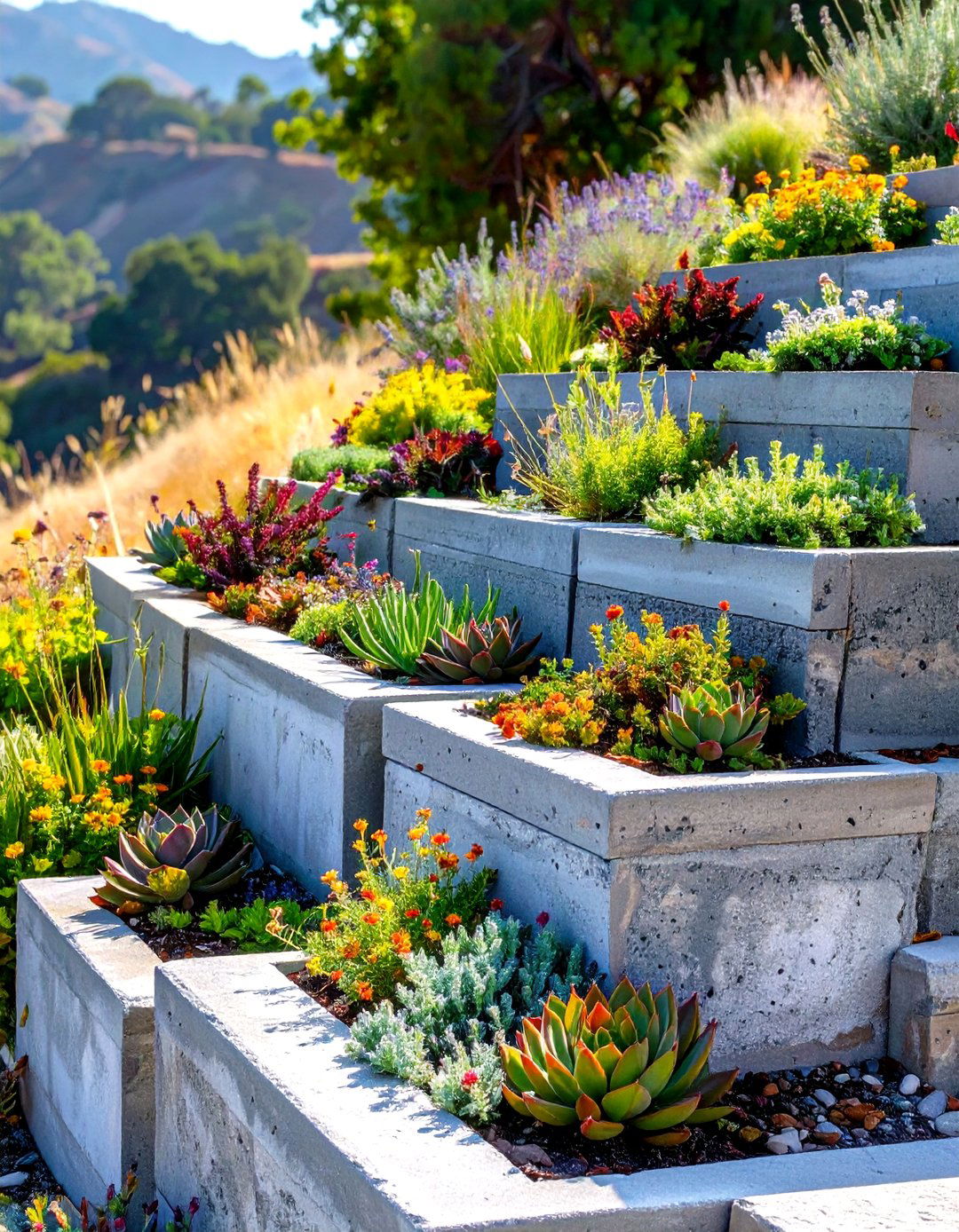
For a highly effective and budget-friendly way to create level planting areas, consider using standard cinder blocks. These blocks are inexpensive, uniform, and easy to stack, allowing you to build sturdy terraced walls without professional help. You can lay them directly into the hillside, creating a series of steps or wider garden beds. The open cores of the blocks can be filled with soil and used as individual pockets for planting smaller flowers, herbs, or succulents. This dual-purpose approach not only stabilizes the soil but also maximizes your growing space, offering a practical and modern-looking solution for any steep slope.
2. Building Retaining Walls with Reclaimed Wood
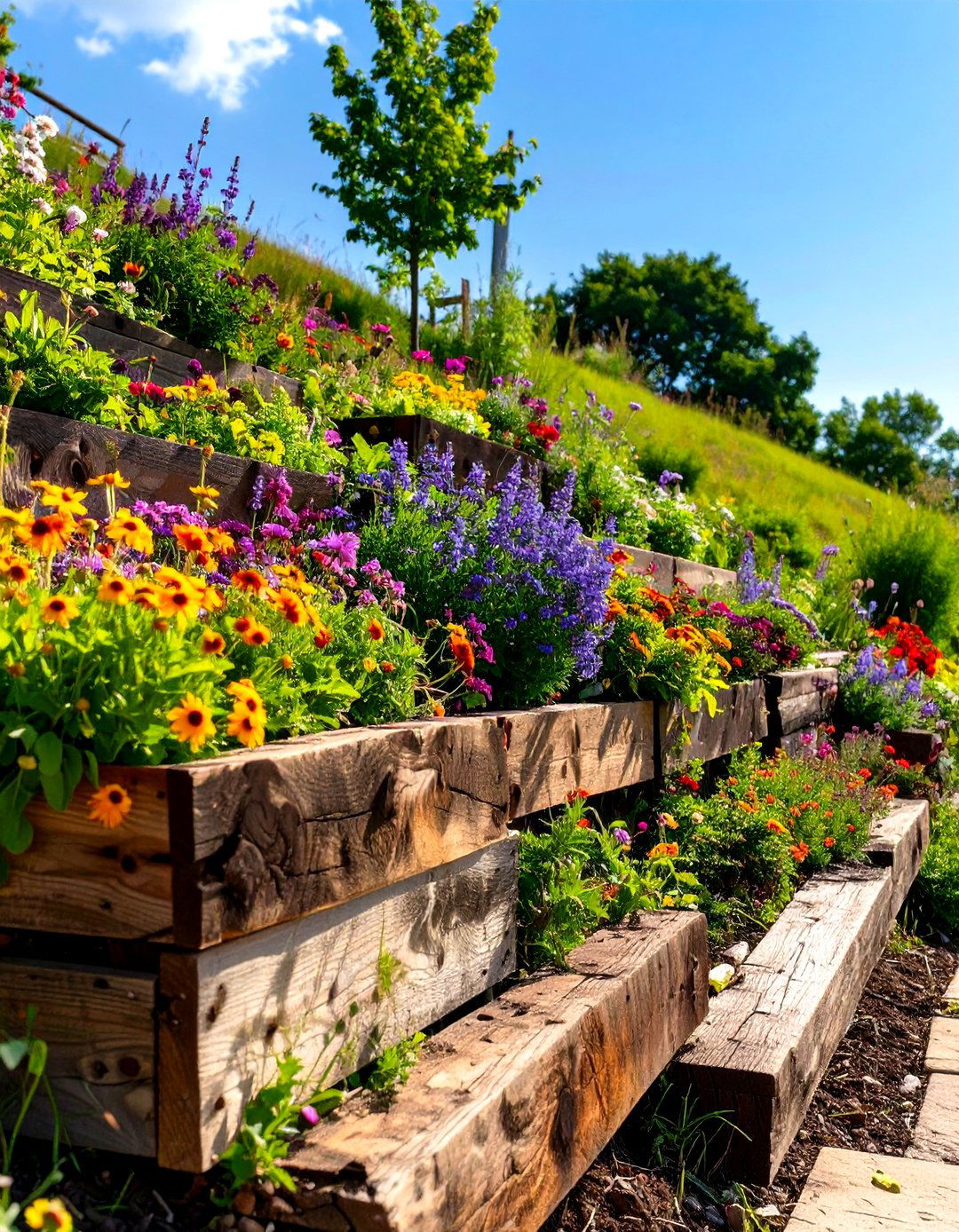
An excellent way to add rustic charm while saving money is by building retaining walls from reclaimed wood. Search for free or cheap materials like old railroad ties, discarded lumber from construction sites, or pallets that can be disassembled. These materials can be used to construct short, tiered walls that hold back soil and create flat planting areas. Securing the wood with rebar stakes driven into the ground ensures stability. This method is not only economical but also environmentally friendly, giving discarded materials a new purpose and adding a warm, natural texture to your hillside garden design.
3. Planting Hardy Groundcover for Erosion Control
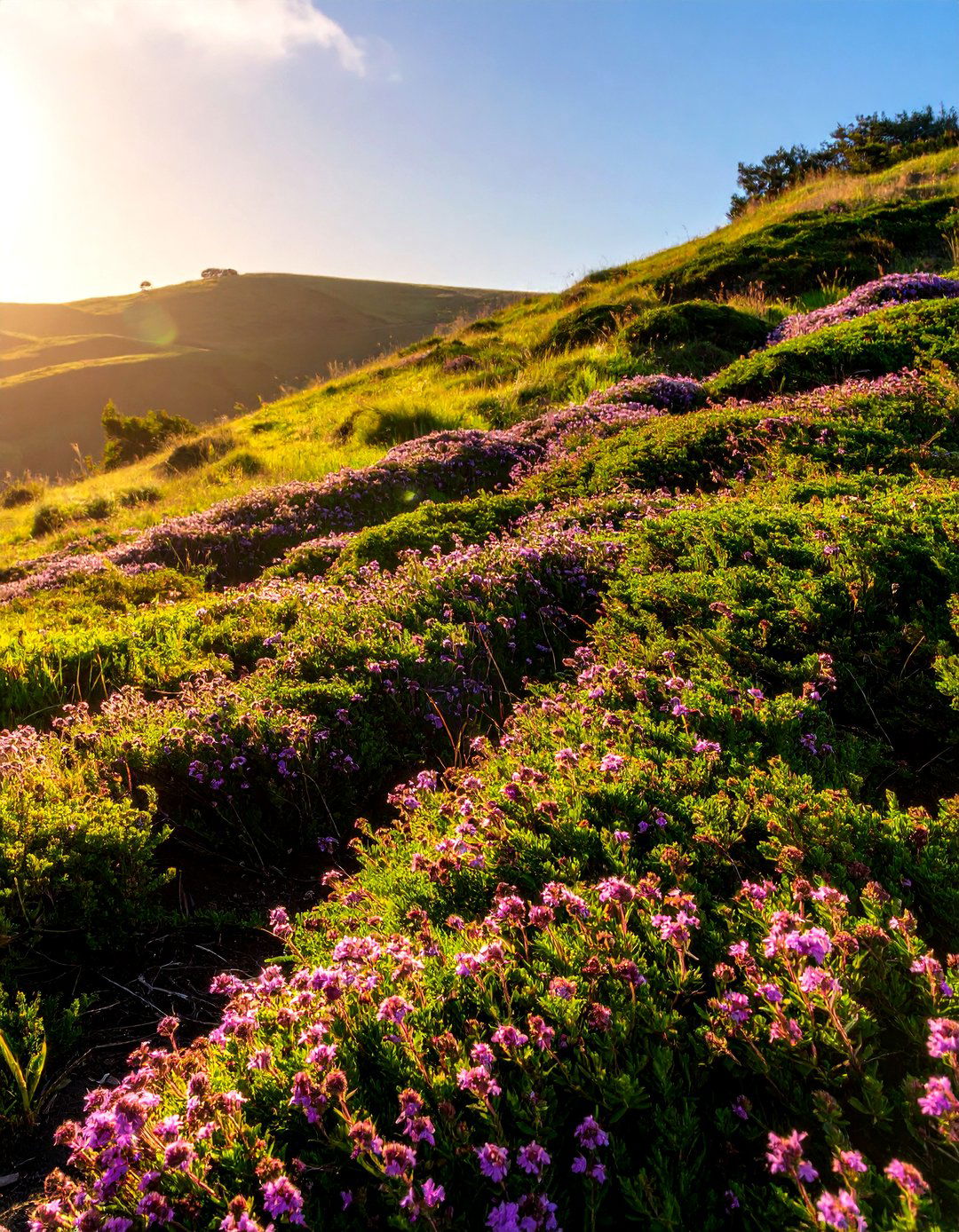
To stabilize a steep slope with minimal effort and cost, planting hardy groundcover is one of the most effective strategies. Choose fast-spreading, low-maintenance varieties with dense root systems, such as creeping thyme, vinca minor, or certain types of juniper. These plants quickly cover the soil, preventing wind and water from washing it away. They also suppress weeds, reducing your long-term maintenance chores. Starting with smaller, less expensive plants or plugs can significantly cut down on initial costs, as they will naturally fill in over a season or two, creating a lush, green carpet on your hillside.
4. Seeding with Native Wildflower Mixes
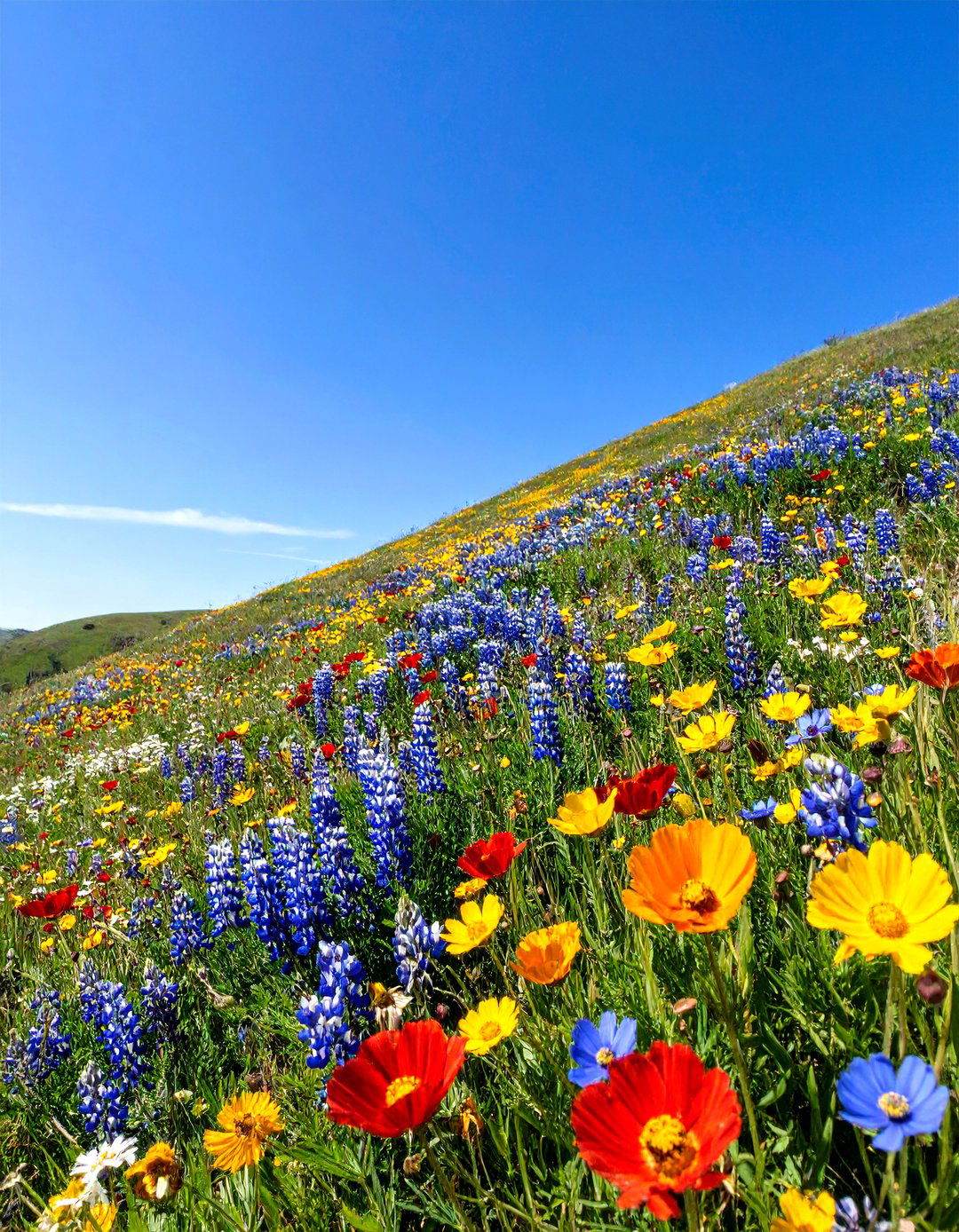
For a beautiful, low-cost, and ecologically beneficial solution, consider seeding your entire hillside with a native wildflower mix. These seed blends are specifically formulated for your region, meaning the plants will be well-adapted to the local climate and soil conditions, requiring less water and care once established. The deep roots of native wildflowers and grasses are superb at holding the soil in place. This approach creates a vibrant, meadow-like effect that changes with the seasons and supports local pollinators. It's a simple, "scatter and wait" method that provides maximum impact for a minimal investment of time and money.
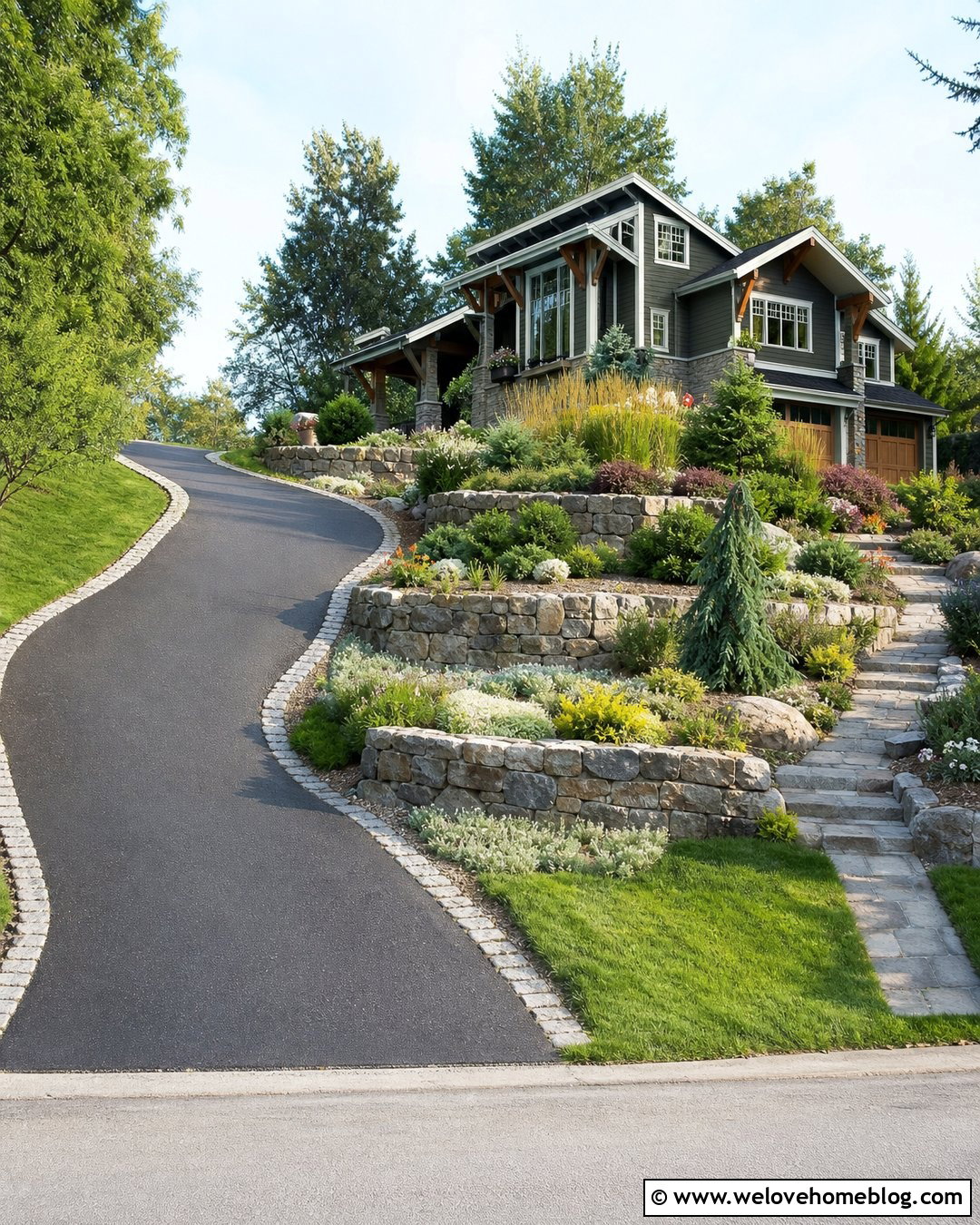
5. Installing Jute Netting for Soil Stabilization
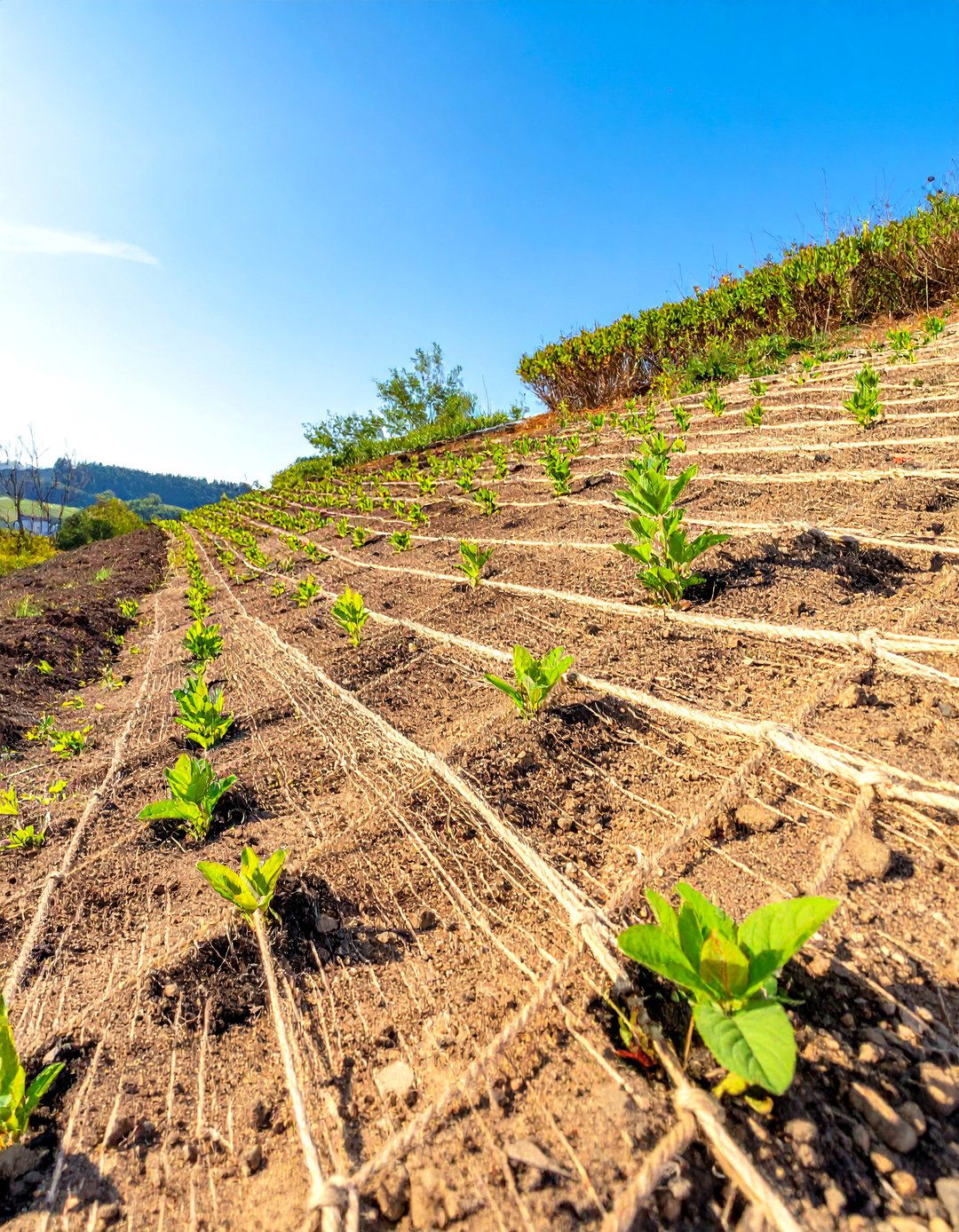
Before your plants have a chance to fully establish their roots, a steep hillside is vulnerable to erosion. An inexpensive and biodegradable solution is to install jute netting. This natural fiber mesh can be rolled out and pinned securely across the bare soil surface. It effectively holds the soil and mulch in place during heavy rain, giving seeds and young plants the stable environment they need to grow. You can plant directly through the openings in the netting. Over time, the jute will decompose naturally, adding organic matter to the soil as your plant roots take over the job of stabilization.
6. Creating Rustic Steps with Logs and Gravel
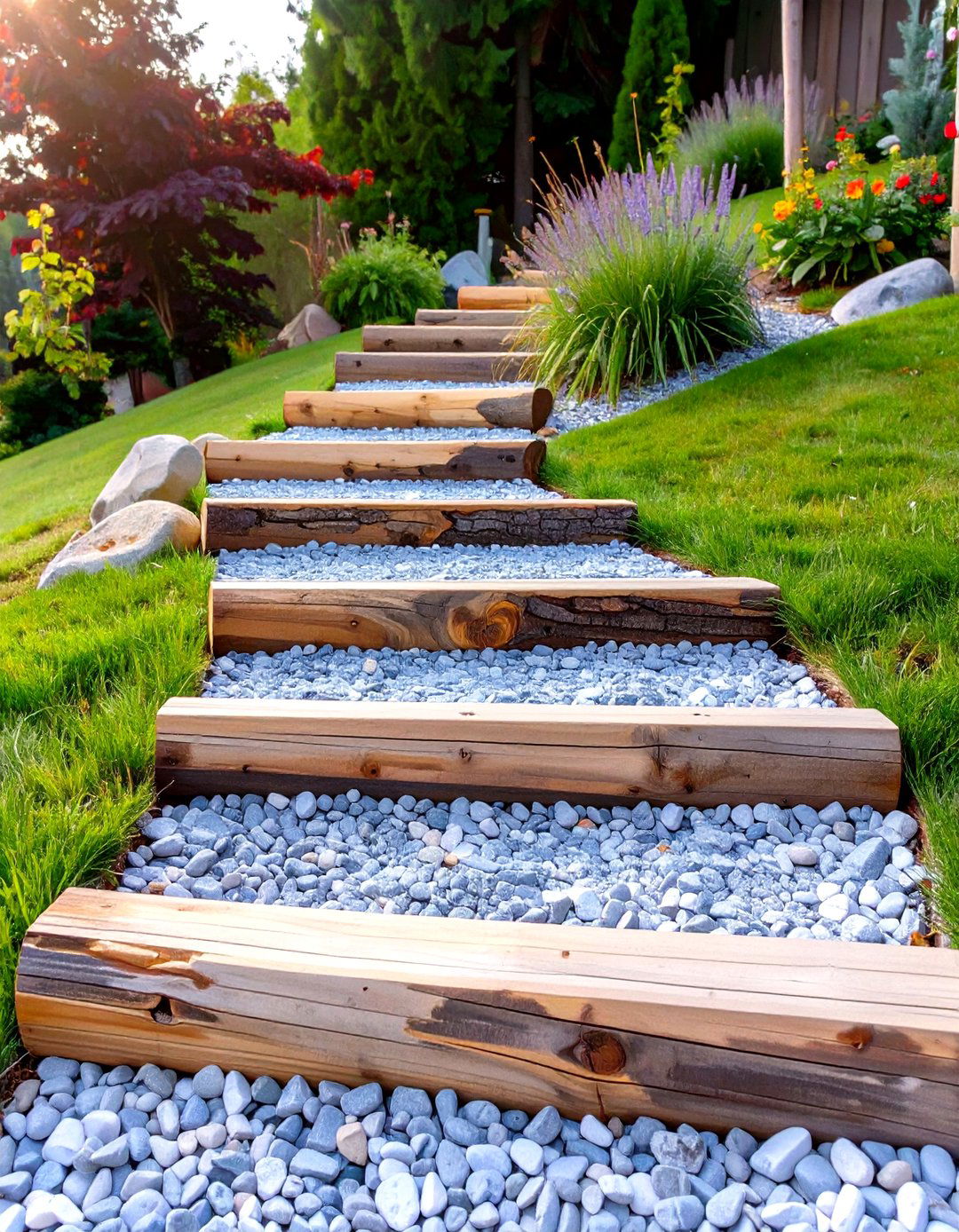
Making a steep hillside accessible is crucial, and you can create charming, rustic steps on a tight budget. Use sections of logs, about 4-6 inches in diameter, as the risers for your steps. You can often source these for free after a storm or from local tree trimming services. Secure each log into the hillside with stakes and backfill the tread area with inexpensive pea gravel or wood chips. This creates a sturdy, natural-looking pathway that blends seamlessly into the landscape. It’s a practical and aesthetically pleasing alternative to expensive pre-cast concrete steps or stone staircases.
7. Designing a Simple Switchback Path
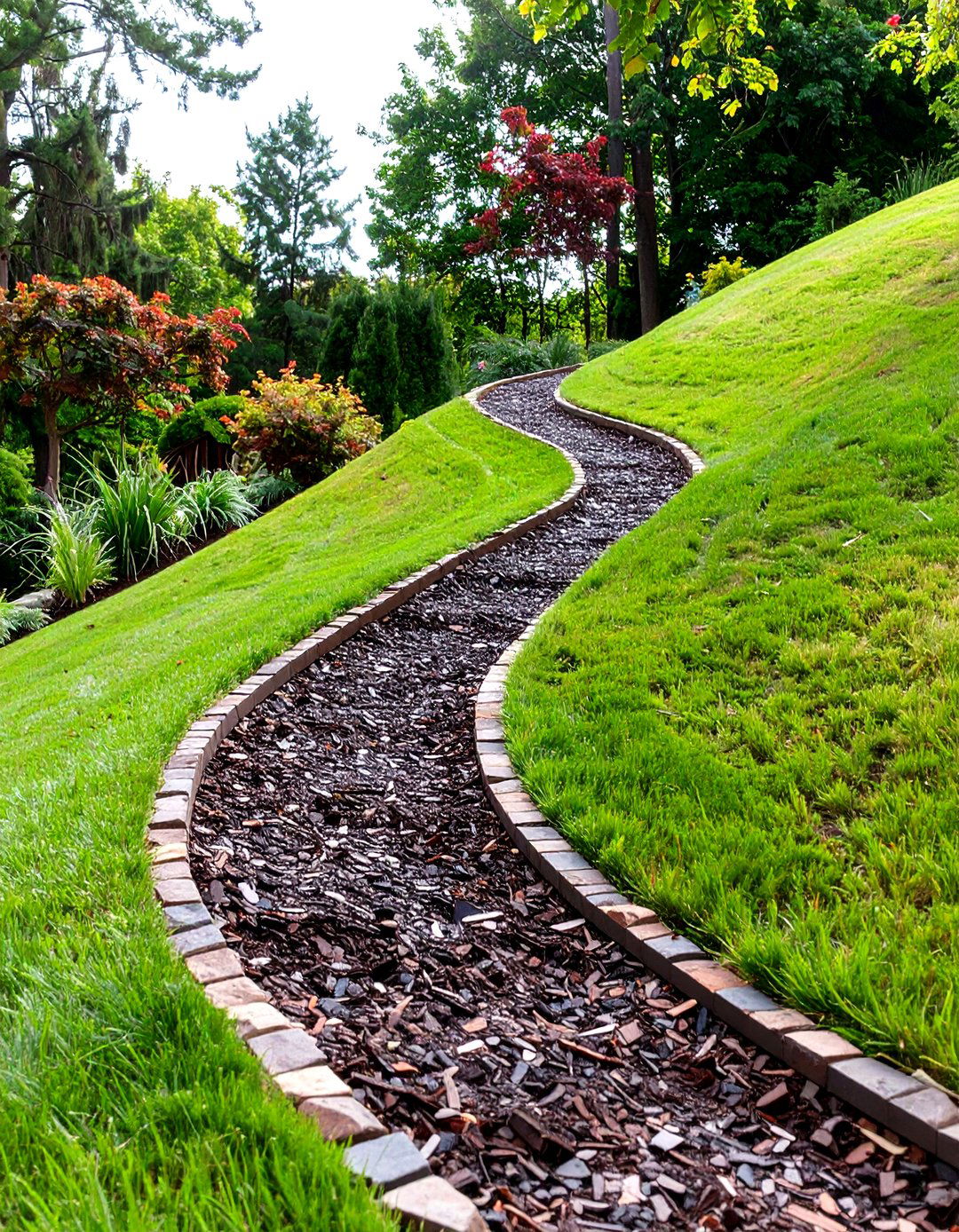
Instead of a direct, steep staircase, a switchback path offers a gentler and more manageable way to navigate your hillside. This design involves creating a meandering trail that traverses the slope at a lower gradient. You can carve a simple path about two to three feet wide directly into the hill. To keep costs down, define the edges with stones found on your property or inexpensive landscape edging, and fill the path with a layer of mulch or gravel. This approach not only makes the climb easier but also adds a graceful, flowing element to your landscape design.
8. Installing a Dry Creek Bed for Drainage
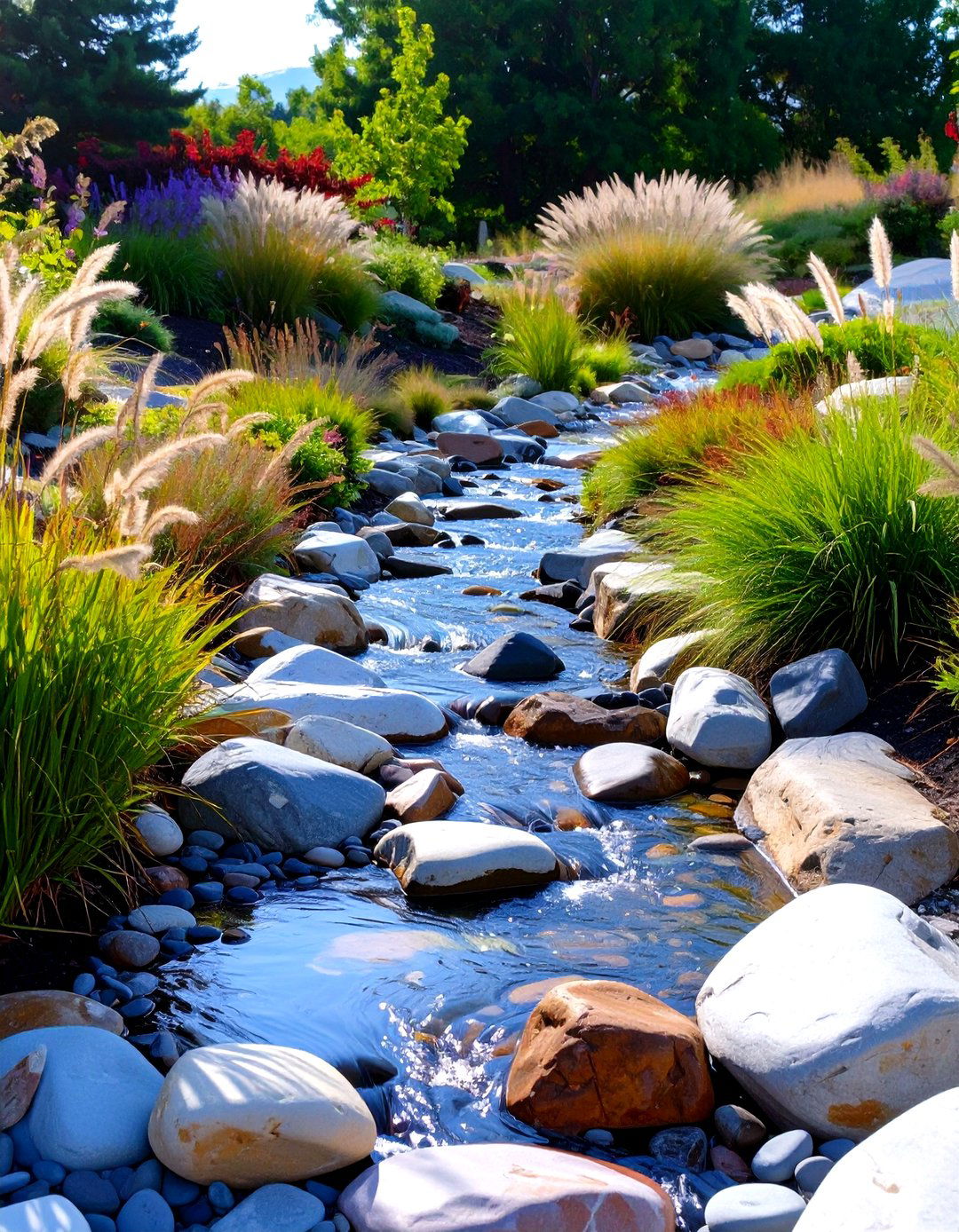
Managing water runoff on a steep slope is essential to prevent erosion. A dry creek bed is a beautiful and functional solution that mimics a natural stream. Dig a shallow, winding trench down the slope and line it with landscape fabric to prevent weeds. Then, fill it with a mix of river rocks and larger boulders sourced affordably from landscape suppliers or even for free from local online marketplaces. This channel directs rainwater safely down the hill, preventing it from washing away soil and plants, while also adding significant visual interest and texture to the landscape.
9. Using Gabion Baskets Filled with Rocks
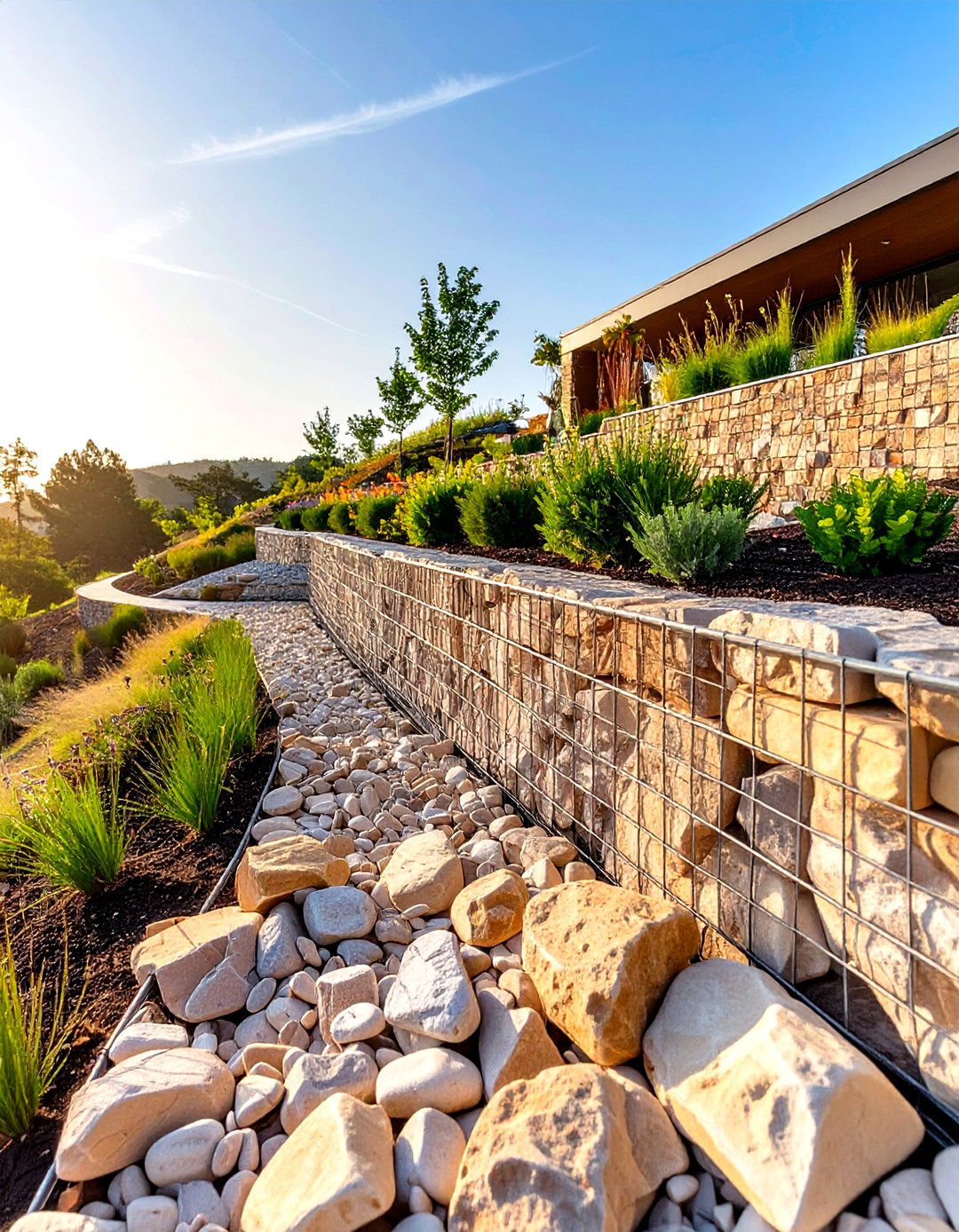
Gabion baskets offer a modern and highly durable method for building retaining walls on a budget. These wire mesh cages can be purchased flat-packed and are easy to assemble. The real savings come from the filling material—you can use rocks and stones found on your own property or other affordable bulk materials. Once filled, these baskets can be stacked to create strong, permeable walls that allow for excellent drainage. They provide an industrial-chic aesthetic and are a straightforward DIY project that can effectively terrace a steep slope without the cost of traditional masonry.
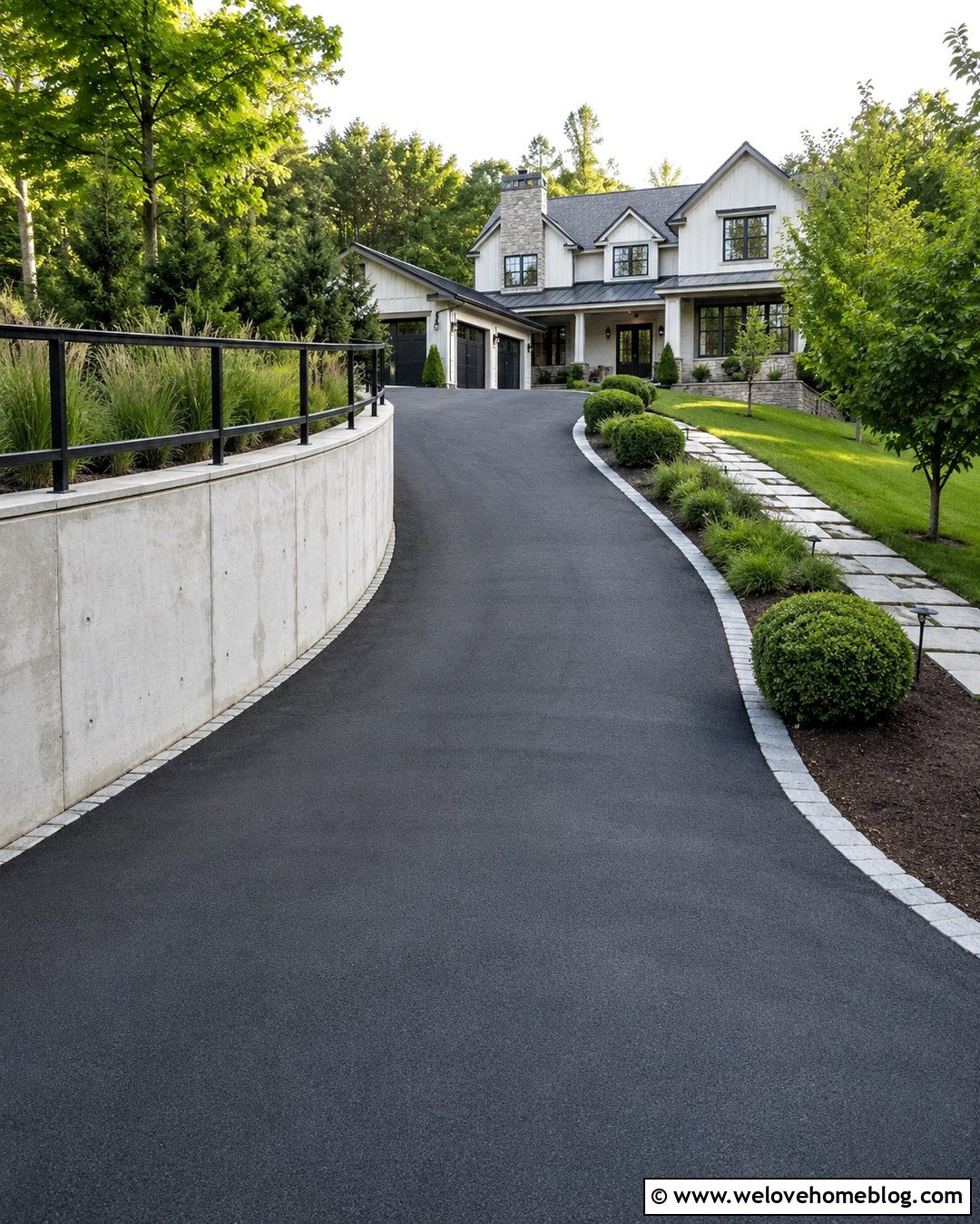
10. Planting Cascading Flowers in Tiers
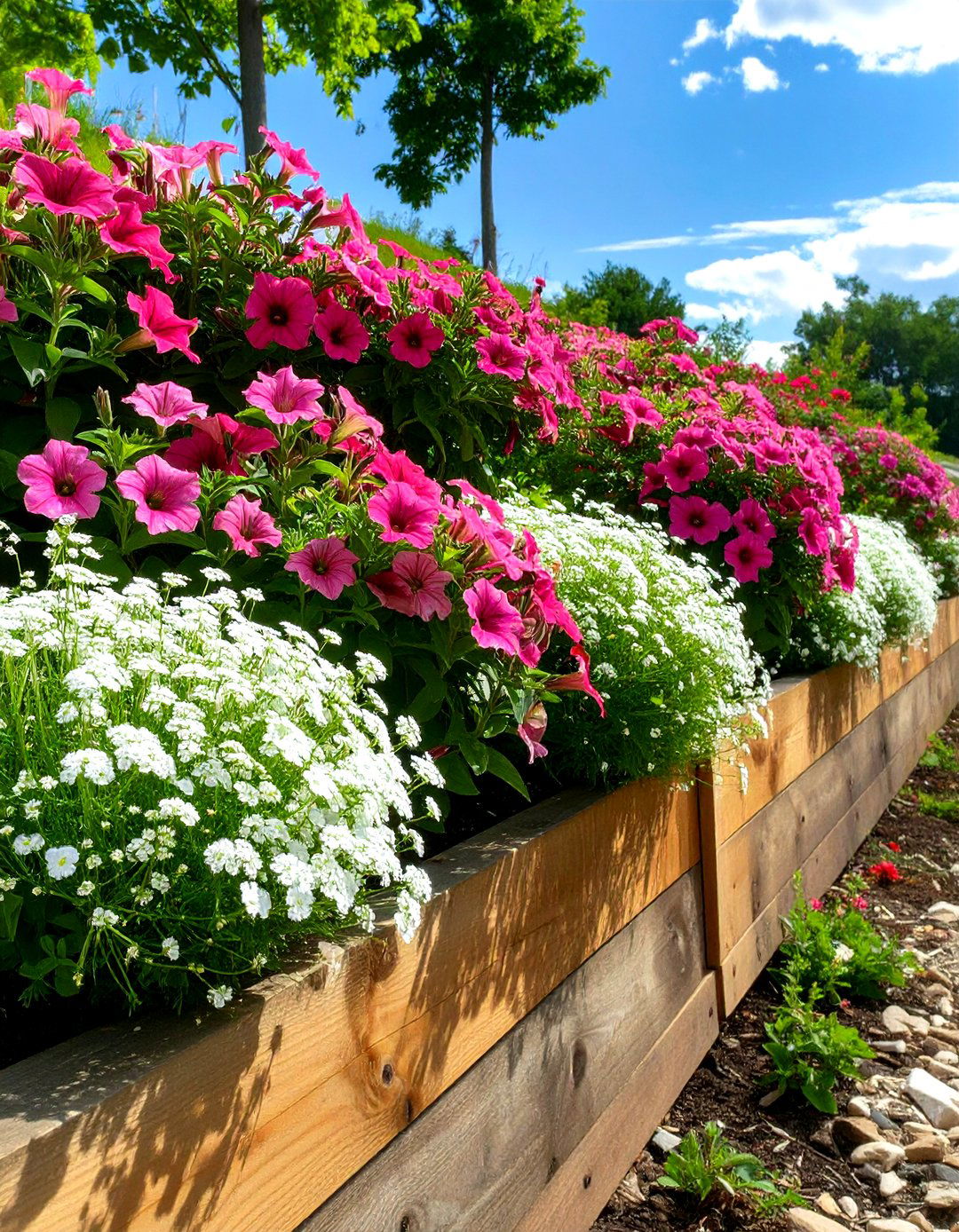
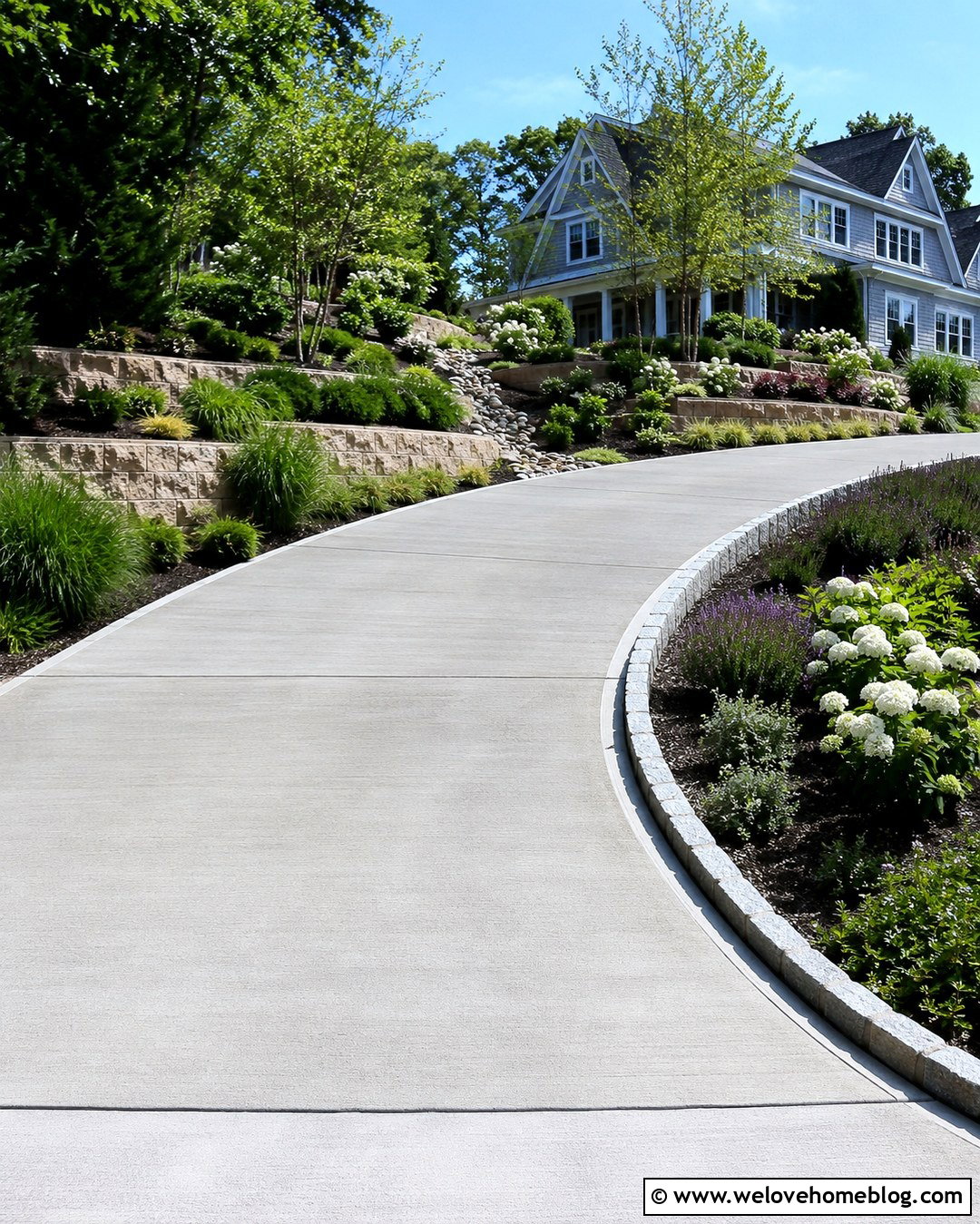
To soften the hard lines of terraces and retaining walls, plant cascading flowers that will spill over the edges. Varieties like wave petunias, sweet alyssum, or creeping phlox are excellent choices that provide a profusion of color. These trailing plants create a beautiful waterfall effect, drawing the eye downward and adding a sense of lushness to the hillside. They are particularly effective when planted in the pockets of cinder block walls or along the top edge of wooden terraces. Starting from seeds or small starter plants keeps the cost low while delivering a high-impact visual display.
11. Building a Small Hillside Deck Platform
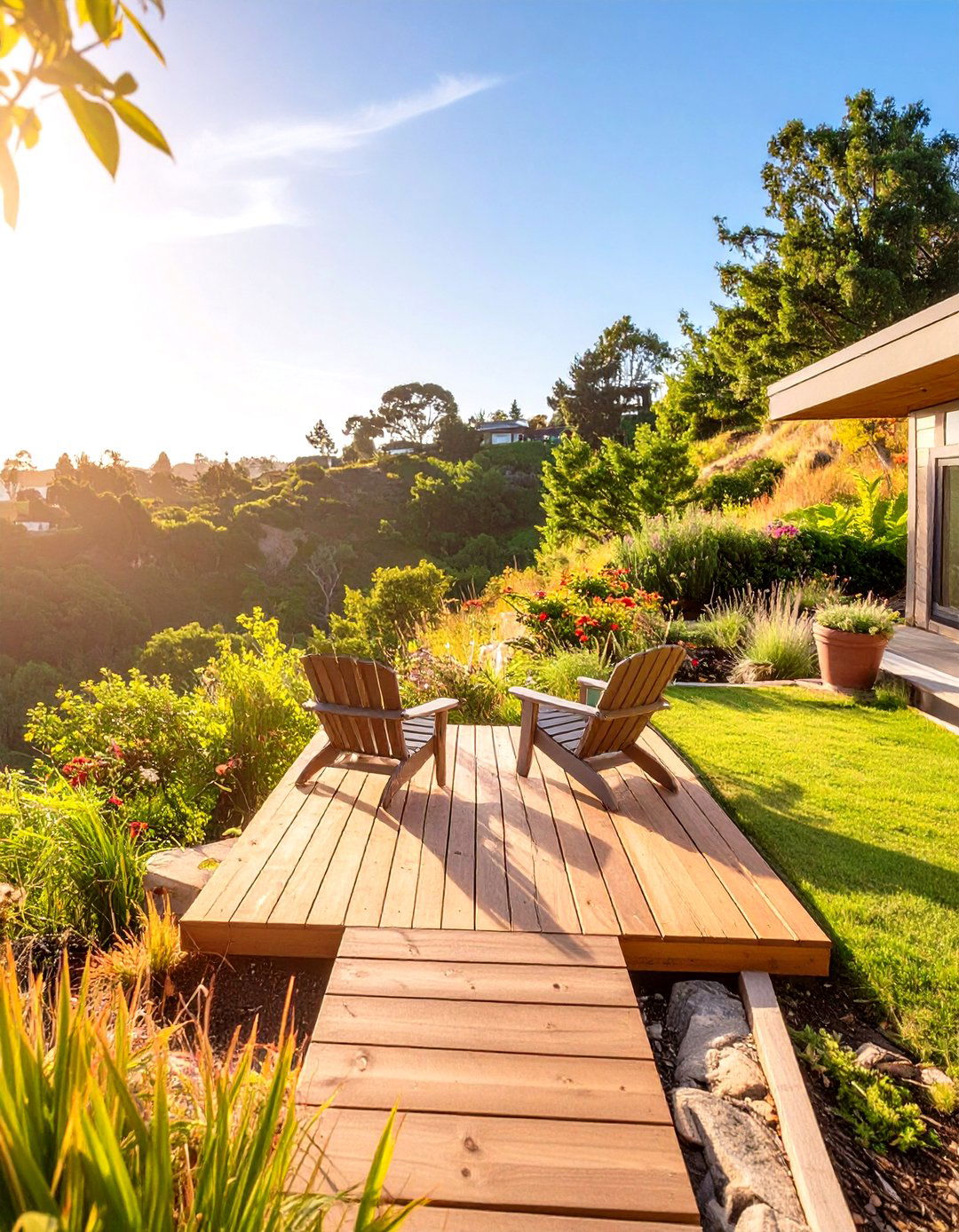
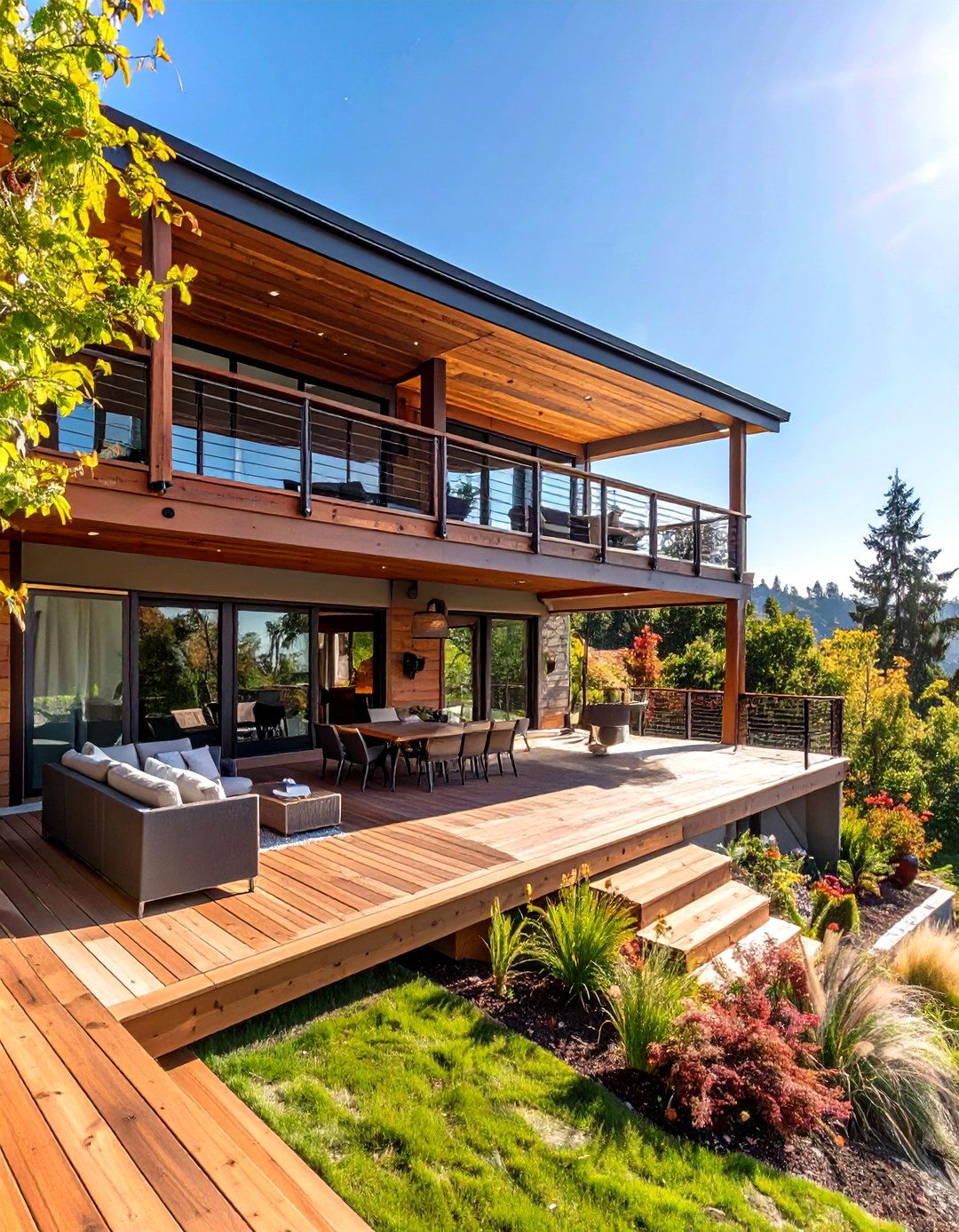
Creating a usable flat space on a steep slope can be as simple as building a small, low-level deck or platform. Even a compact 8x8 foot deck can provide enough room for a couple of chairs and a small table, instantly creating a destination spot with a view. By using standard lumber and pre-cast concrete deck piers for a foundation, you can keep the project affordable. This approach gives you a stable, level area for relaxation without the extensive excavation and cost associated with a full-scale patio, turning an unusable part of your yard into a functional retreat.
12. Repurposing Old Tires as Planting Beds
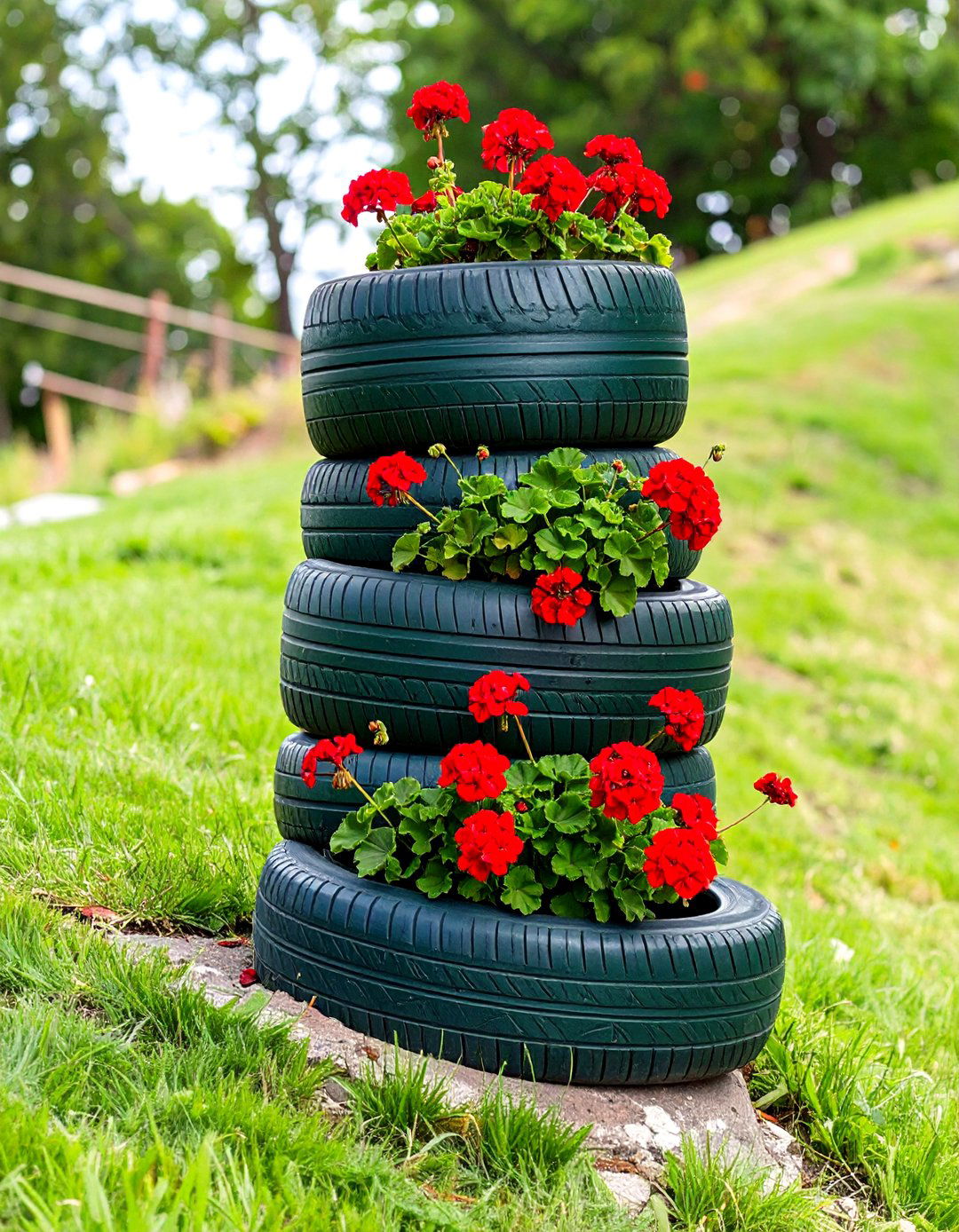
For an unconventional and virtually free way to create planting pockets, consider repurposing old tires. You can often get these for free from local auto shops. Arrange the tires on the hillside, securing them with stakes if needed, and fill them with soil. They make excellent containers for growing vegetables, herbs, or flowers. To improve their appearance, you can paint the tires a uniform color to blend in with your landscape or bright, playful colors to create a focal point. This upcycling project is a fantastic way to prevent soil erosion while adding productive garden space.
13. Heavy Mulching with Free Wood Chips
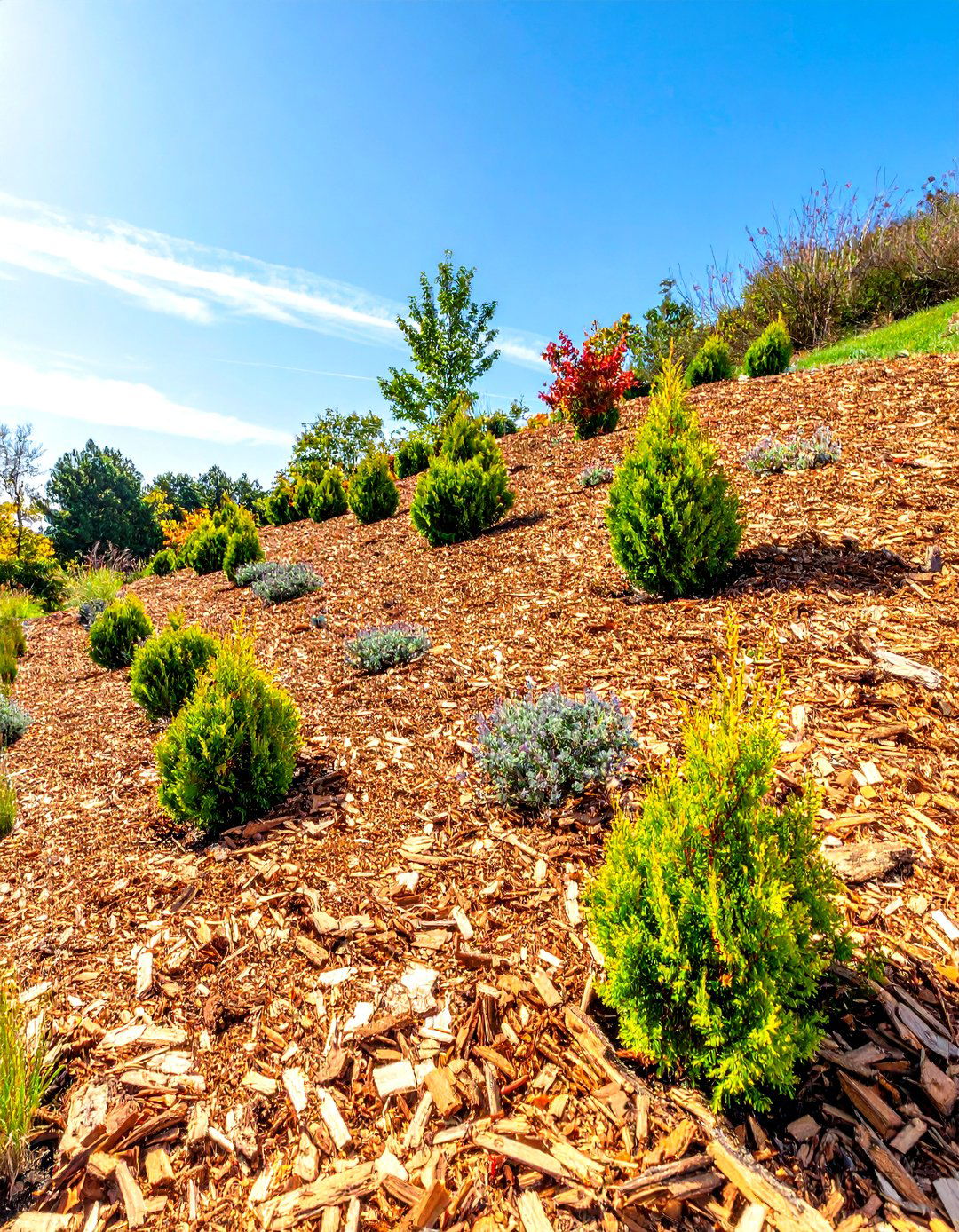
One of the simplest and cheapest ways to manage a steep slope is to apply a thick layer of mulch. Many local tree care companies or municipal yard waste programs offer free wood chips to residents. Applying a 4-6 inch layer across the entire hillside helps to suppress weeds, retain soil moisture, and prevent erosion from rain and wind. As the wood chips break down over time, they will also enrich the soil with organic matter. This is a low-effort, high-impact first step that immediately improves the appearance and stability of your hillside while you plan other plantings.
14. Creating a Slope-Side Rock Garden
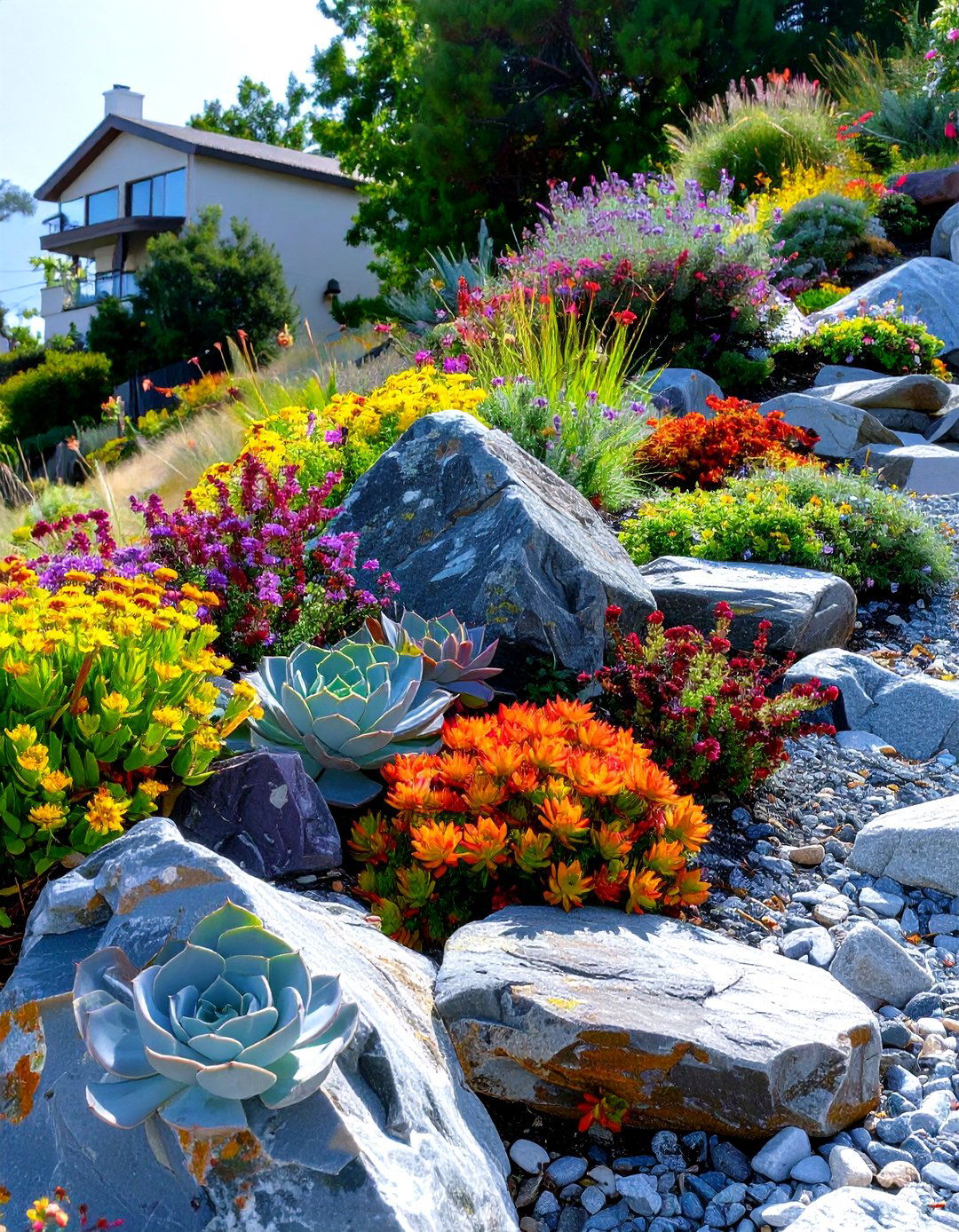
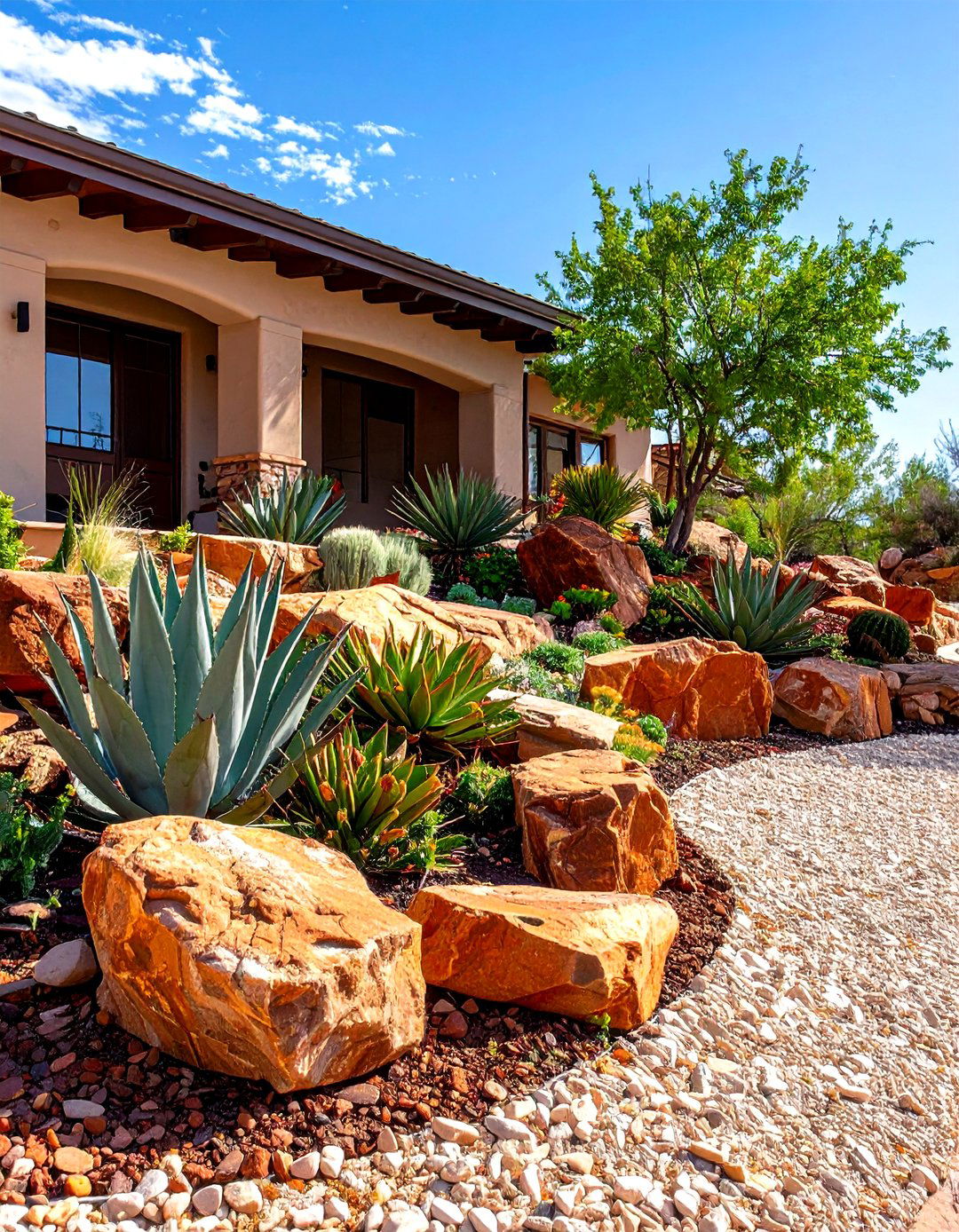
A rock garden is a perfect low-maintenance solution for a sunny, steep slope. It requires minimal water and thrives in the well-drained conditions that hillsides naturally provide. Begin by arranging larger, inexpensive boulders to anchor the design and create visual interest. Then, fill the spaces between them with a gritty soil mix and smaller rocks or gravel. Plant drought-tolerant species like succulents, sedums, and hardy ornamental grasses. These plants add color and texture while requiring very little care once established, making it a cost-effective and beautiful way to landscape a challenging area.
15. Planting Drought-Tolerant Succulents
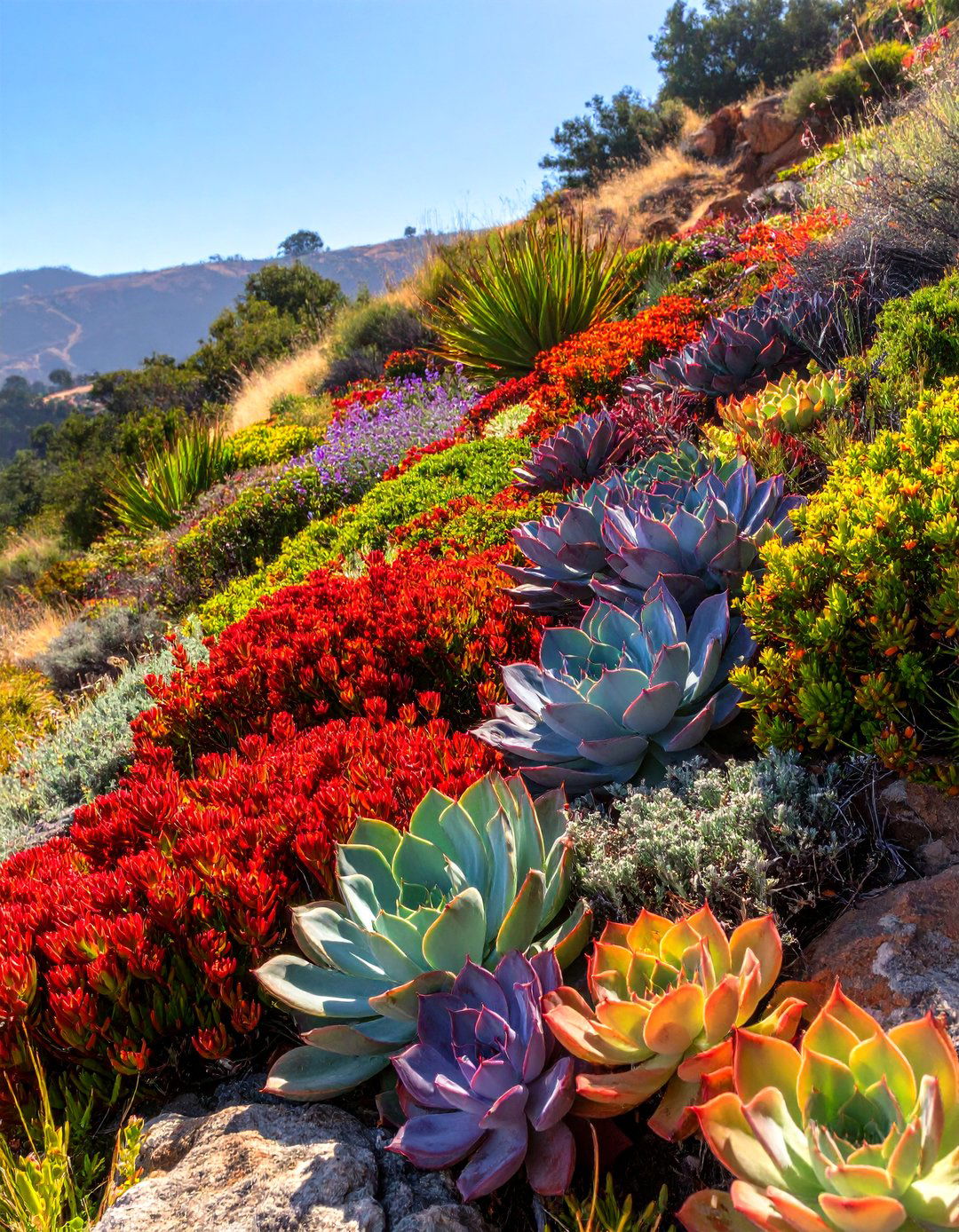
Succulents are an ideal choice for landscaping a steep, sunny hillside on a budget. Their ability to store water in their leaves means they require minimal irrigation, which is a huge advantage on a hard-to-reach slope. Varieties like sedums, sempervivums (hens and chicks), and ice plants spread readily to form a dense, water-wise groundcover. You can start with a few small plants, as they propagate easily from cuttings, allowing you to fill in a large area over time for very little cost. Their unique shapes and colors create a stunning, textured tapestry that is both beautiful and resilient.
16. Using Landscape Fabric to Suppress Weeds
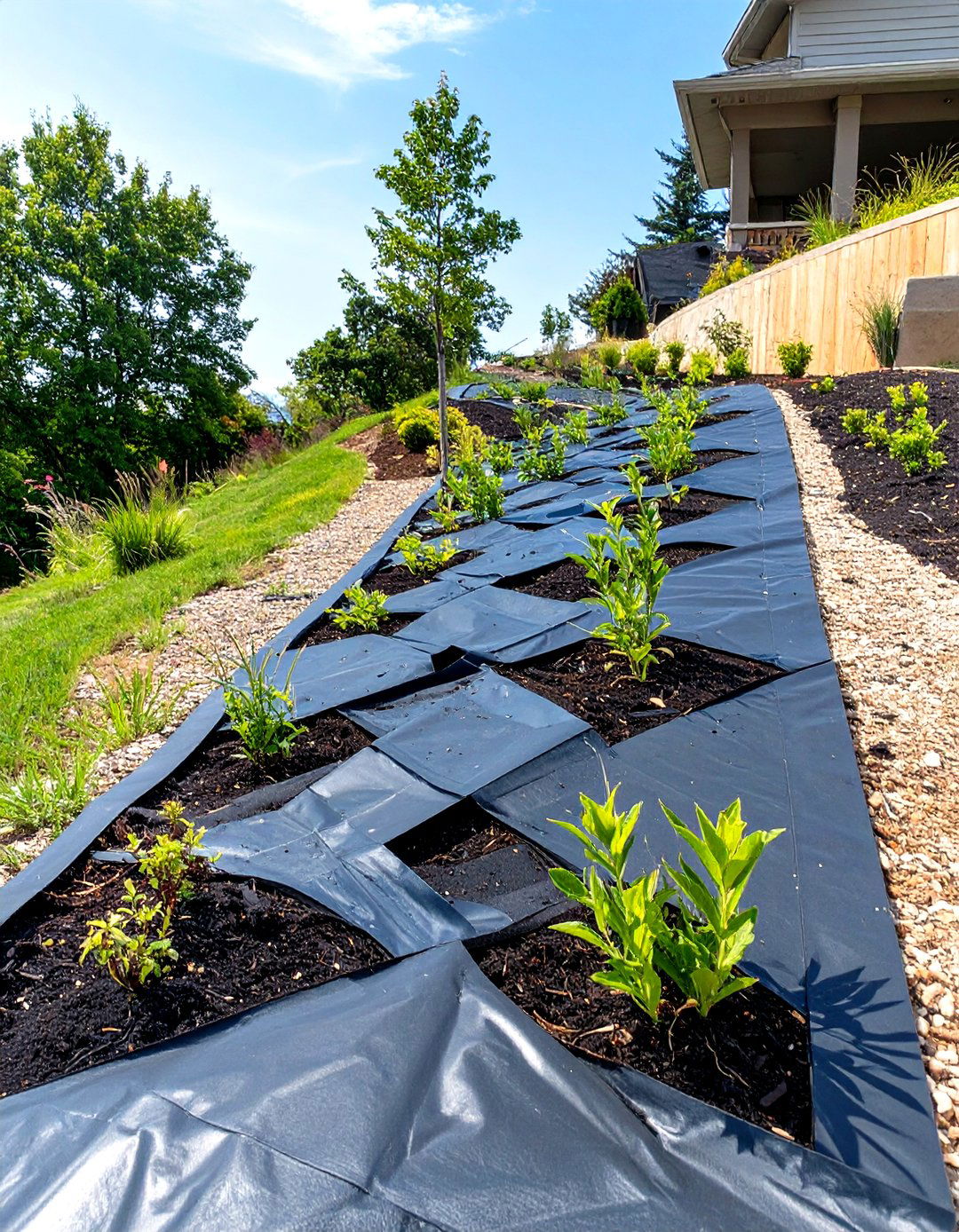
Before you begin planting, laying down landscape fabric is a smart, budget-friendly move to control weeds on your hillside. This fabric acts as a physical barrier, preventing weed seeds from germinating while still allowing water and air to reach the soil. Simply roll it out over the cleared slope and secure it with landscape staples. You can then cut X-shaped slits in the fabric to install your desired plants. Covering the fabric with a layer of mulch will protect it from UV rays and improve its appearance, saving you countless hours of weeding on a difficult incline.
17. Creating Pocket Plantings on the Slope
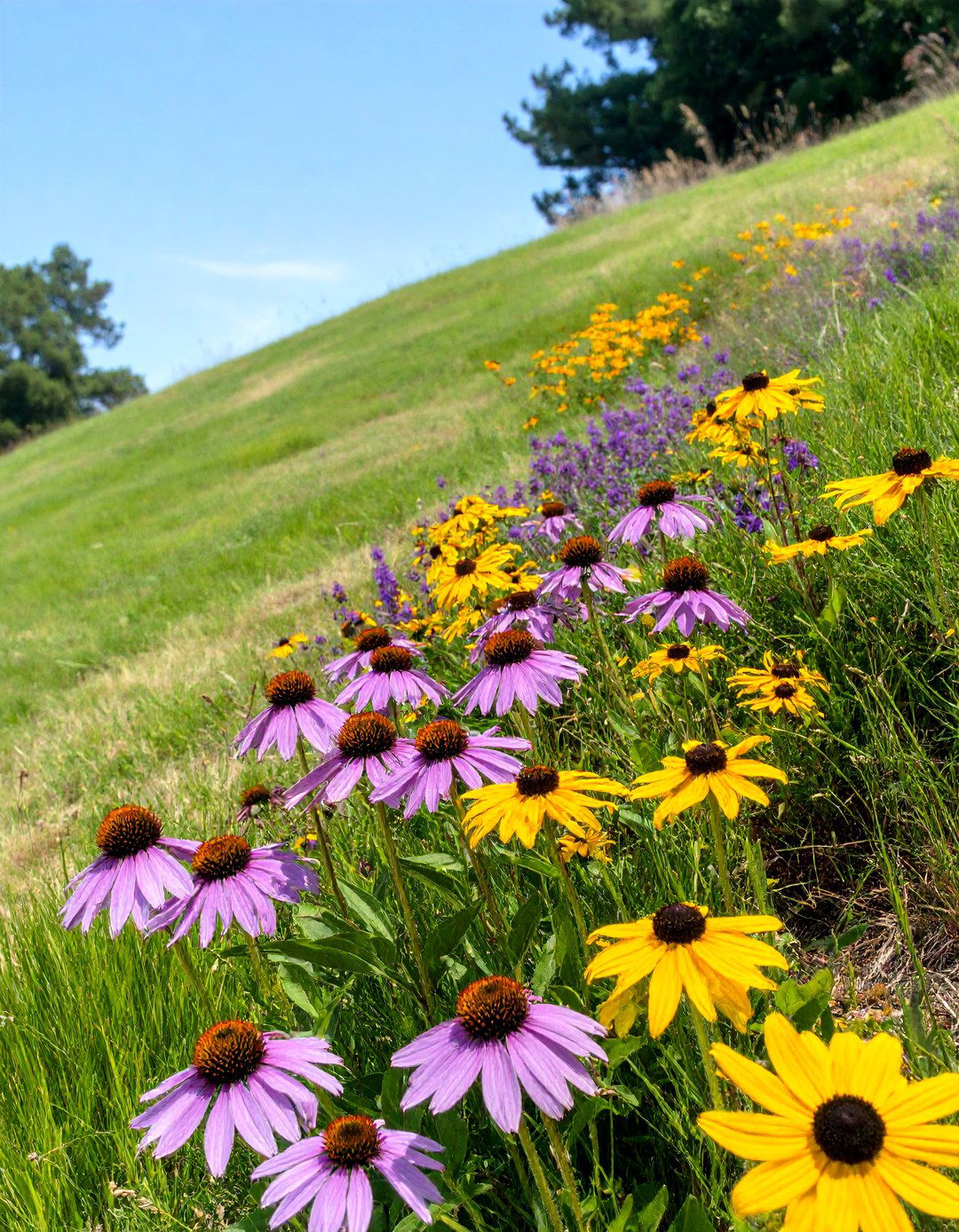
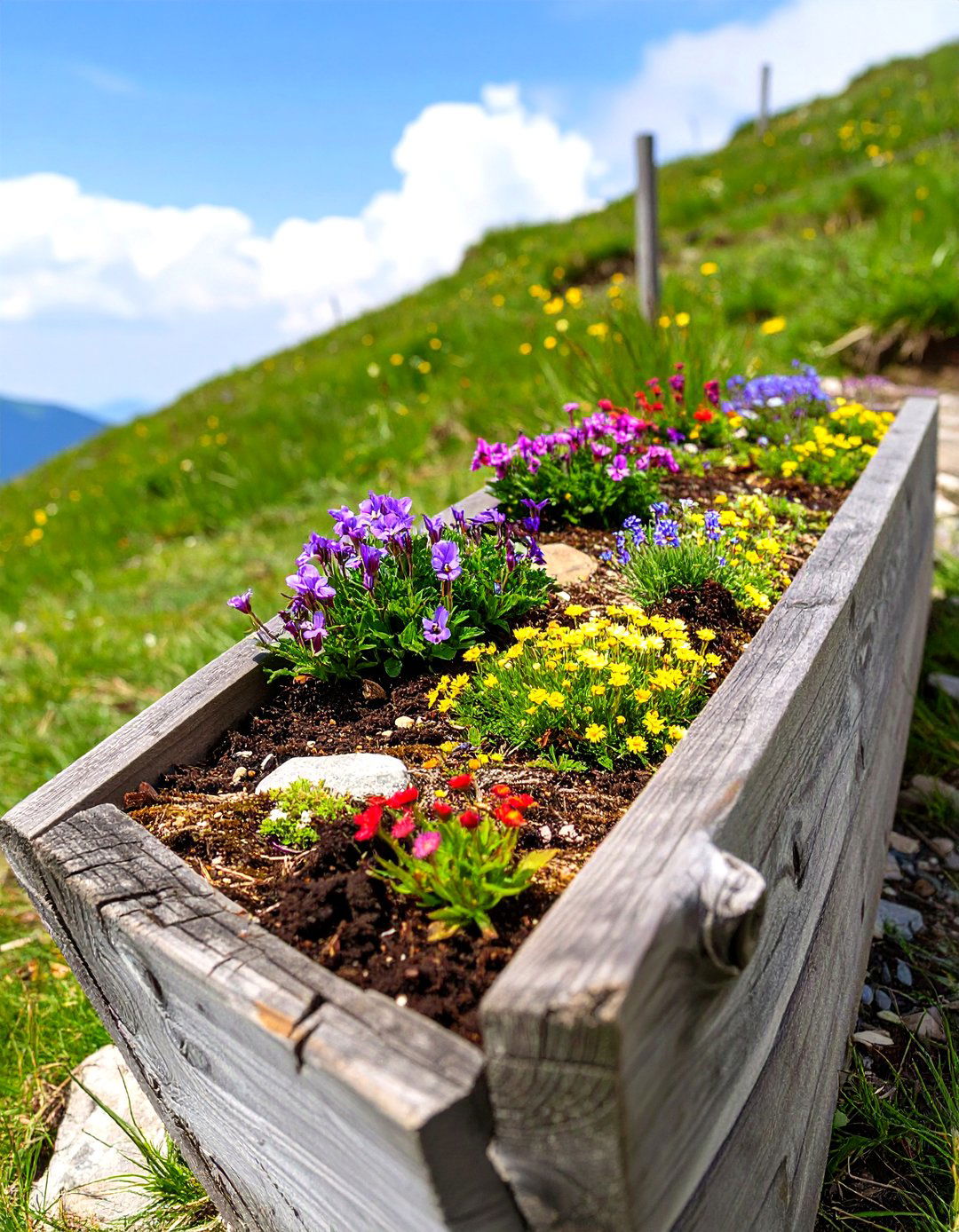
Instead of trying to landscape the entire hillside at once, focus on creating small "pocket plantings." This involves digging out individual holes or small level shelves just big enough for one or a few plants. Amend the soil in each pocket with compost to give your plants a strong start. This method allows you to gradually add plants to the slope as your budget allows, without the upfront cost and labor of building large terraces. It’s an effective way to establish anchor plants like shrubs or ornamental grasses that will eventually help stabilize the surrounding soil.
18. Building a Simple Bench into the Hillside
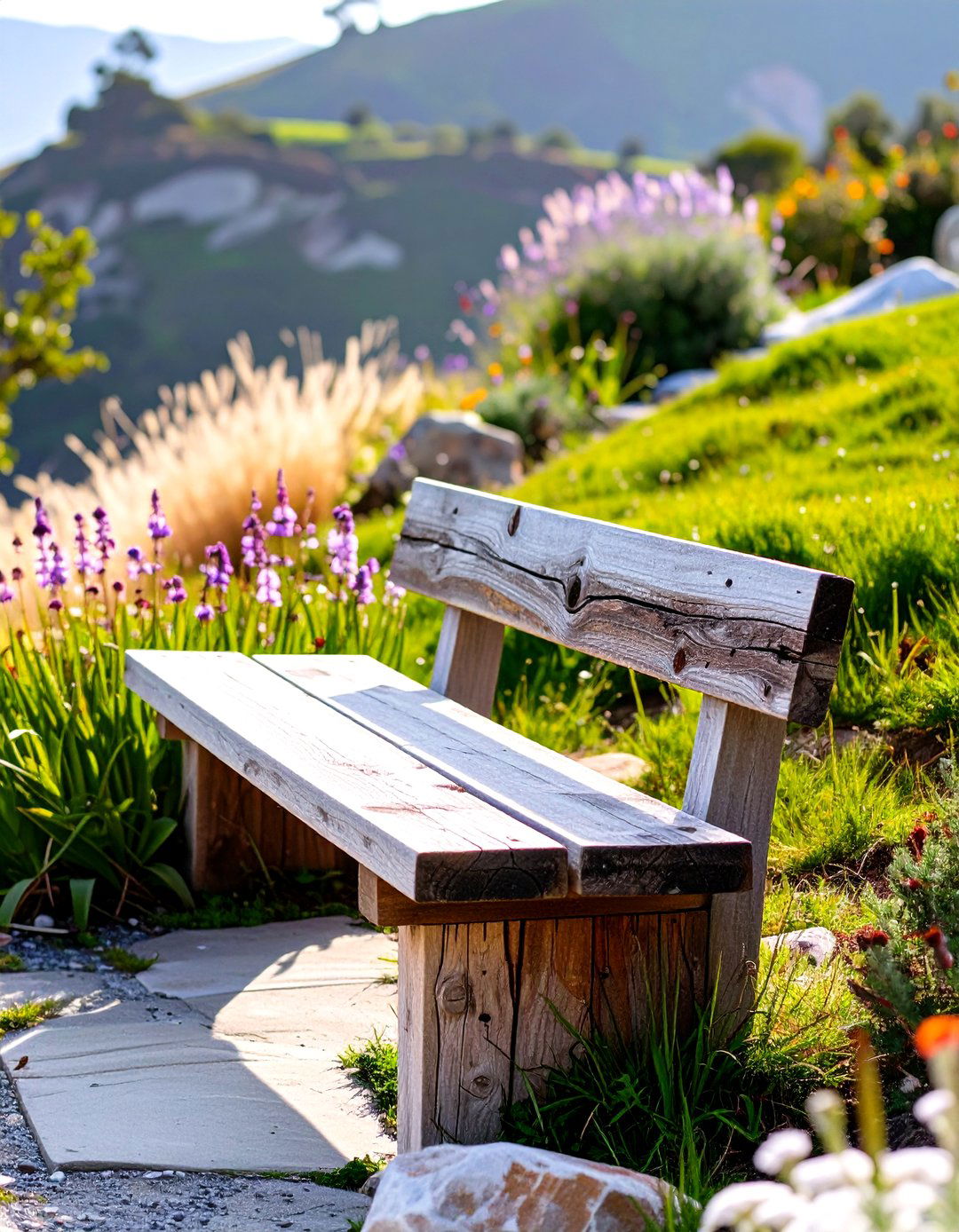
Integrate a functional seating area directly into your slope by building a simple bench. You can create a level base by digging a small terrace into the hill. For a rustic and inexpensive design, use two large logs or stacked cinder blocks as the legs and lay a sturdy, reclaimed wooden plank across the top for the seat. This provides a permanent resting spot to enjoy the view from your garden without the cost of a freestanding bench. It transforms an awkward incline into a purposeful and inviting feature, encouraging you to spend more time in your newly landscaped space.
19. Planting Creeping Vines for Vertical Coverage
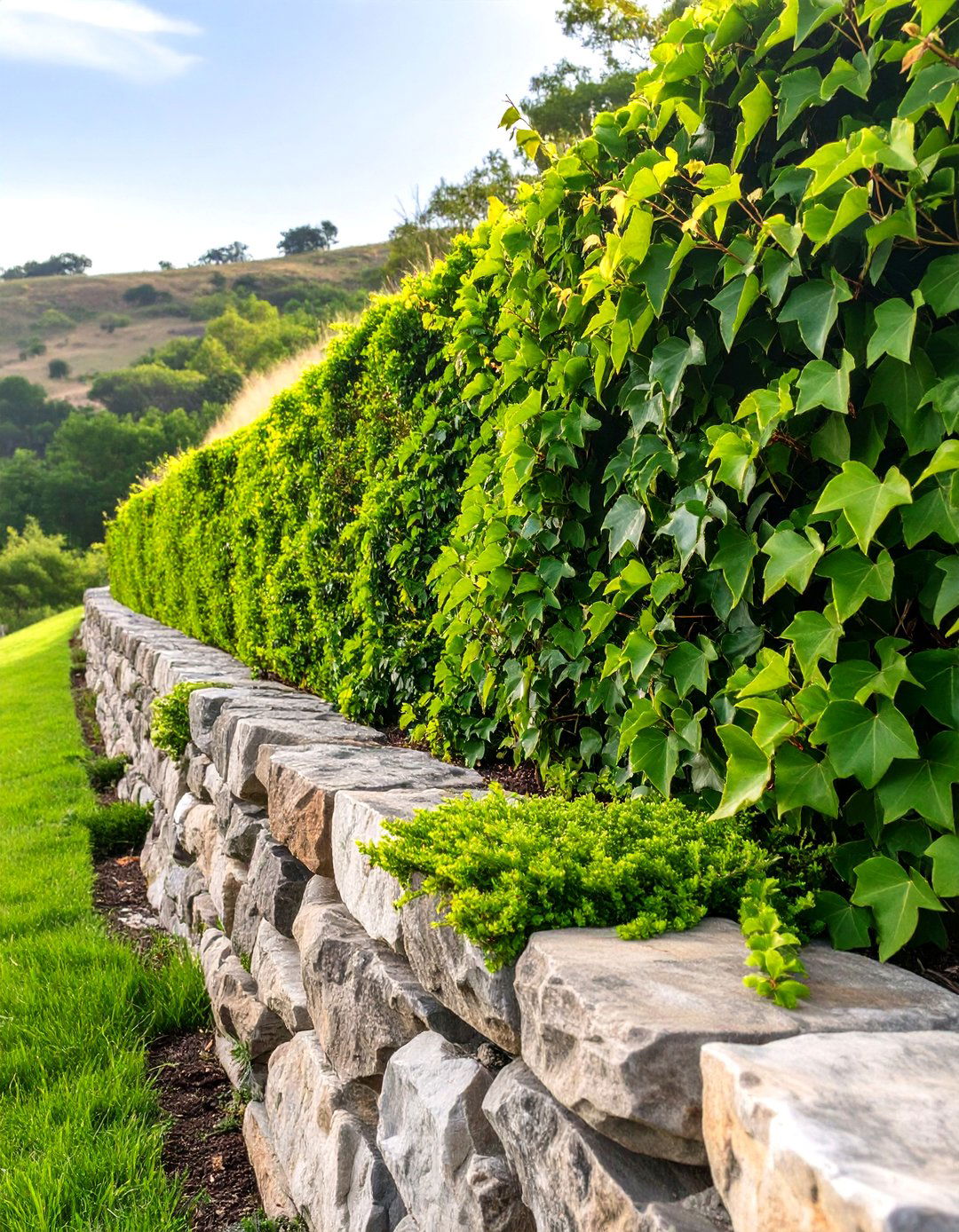
To cover a retaining wall or a particularly bare, rocky section of your hillside, use creeping vines. Fast-growing, perennial vines like English ivy or climbing hydrangea can quickly create a lush, green facade with little effort. Plant them at the base of the wall or slope and guide them upwards. These plants are excellent at finding footholds and will cover a large area in just a few seasons. Using vines is an inexpensive way to add vertical greenery, soften hardscapes, and help integrate man-made structures into the natural landscape, creating a cohesive and established look.
20. Installing Interlocking Paver Steps
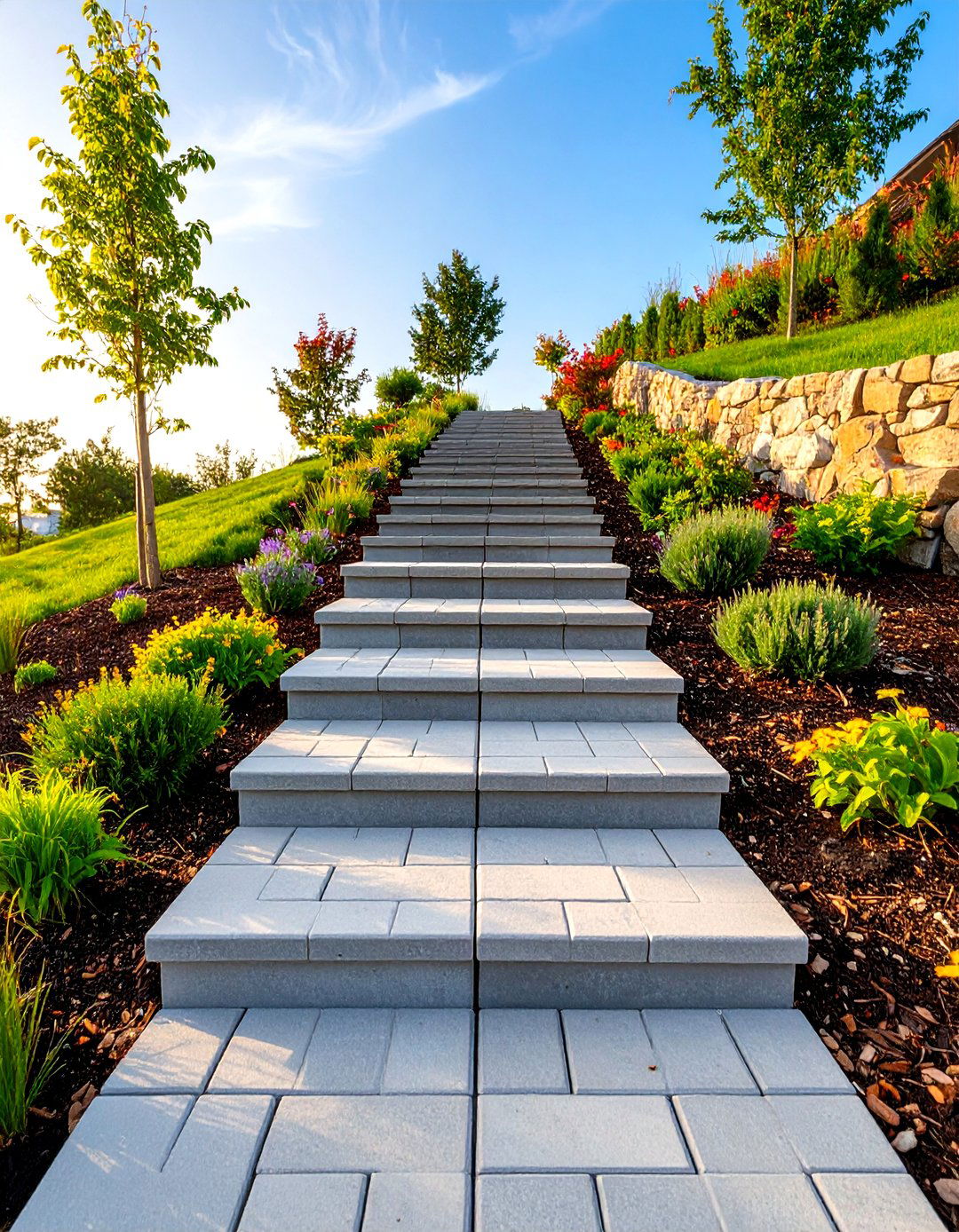
For a more polished and stable set of stairs, interlocking concrete pavers offer a great DIY-friendly option. While more expensive than gravel, they are cheaper and easier to install than poured concrete. Start by digging a trench for your path and creating level spots for each step. Lay a base of compacted gravel and sand, then set the pavers in place. The interlocking design helps them stay put without mortar. This method creates a durable, safe, and professional-looking staircase, providing secure access to the upper levels of your terraced garden on a reasonable budget.
21. Utilizing Concrete Rubble for Retaining Walls
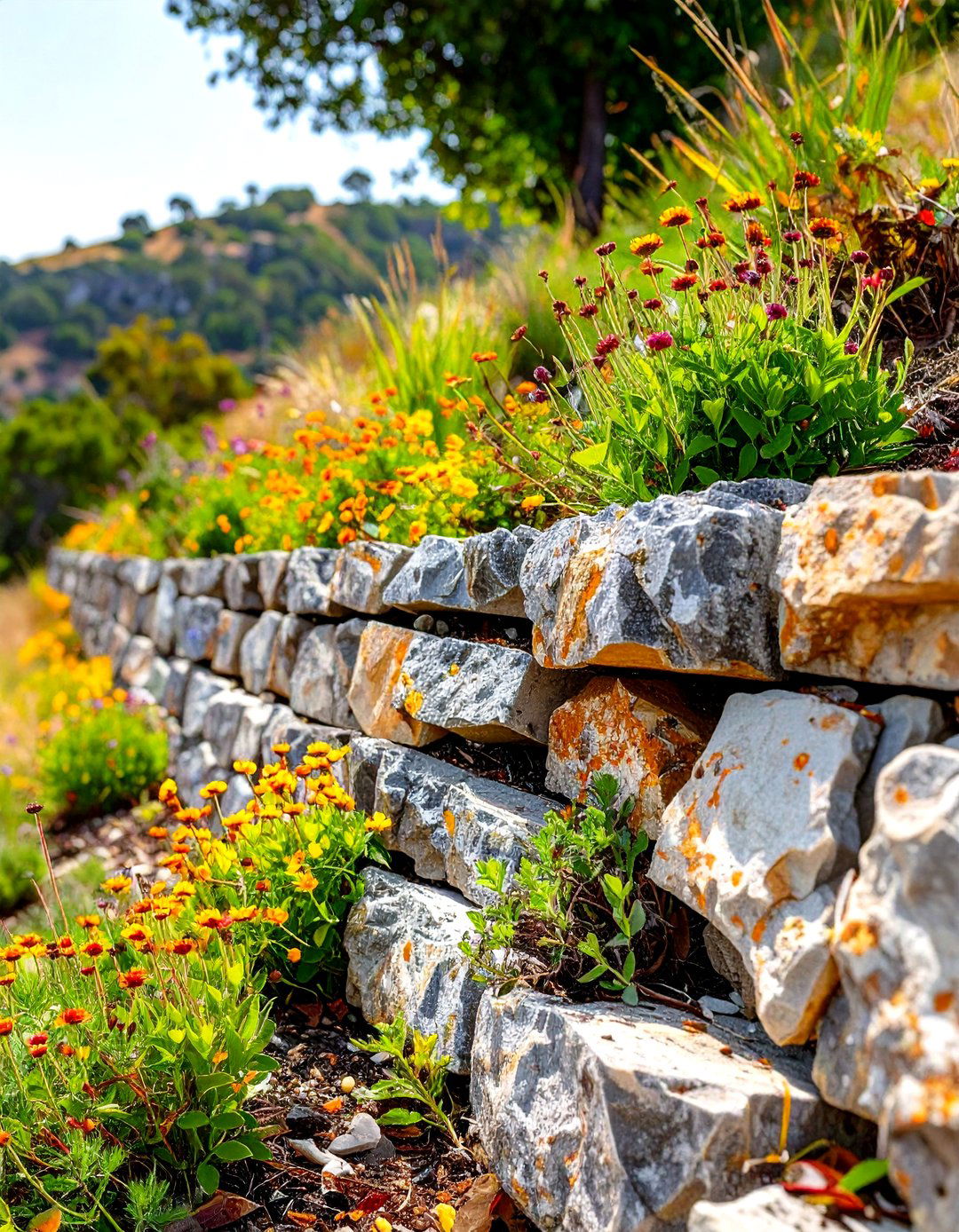
A fantastic source of free material for building retaining walls is broken concrete, also known as urbanite. You can often find this for free from demolition sites or from contractors tearing out old patios and sidewalks. The irregular, flat pieces can be stacked much like natural flagstone to create rustic, durable walls. Fill the gaps between the pieces with soil as you build, which allows you to plant creeping groundcovers directly into the wall's face. This resourceful approach saves a huge amount on materials and diverts waste from the landfill, resulting in a unique and character-rich hillside feature.
22. Growing Plants in Burlap Sacks
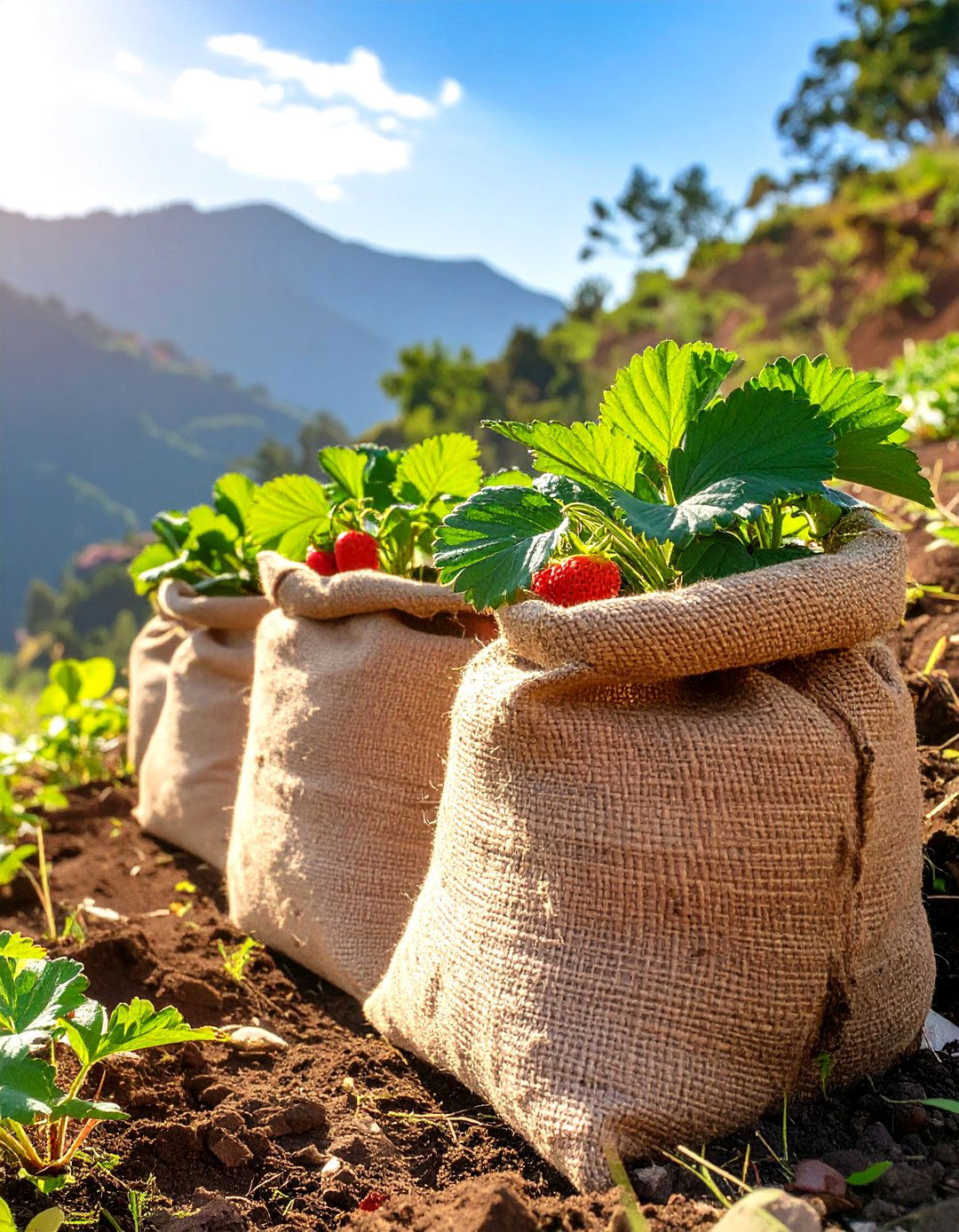
For a temporary or starter solution to hillside planting, consider using burlap sacks. These are inexpensive and biodegradable, making them an eco-friendly choice. Fill each sack with good-quality potting soil and place it on the slope. You can cut slits in the sides and top to plant flowers, herbs, or even vegetables like potatoes and strawberries. The sacks help hold soil and moisture in place while the plants get established. Over a season or two, the burlap will decompose, and the plant roots will grow into the hillside, helping to stabilize the soil naturally.
23. Anchoring the Slope with Large Boulders
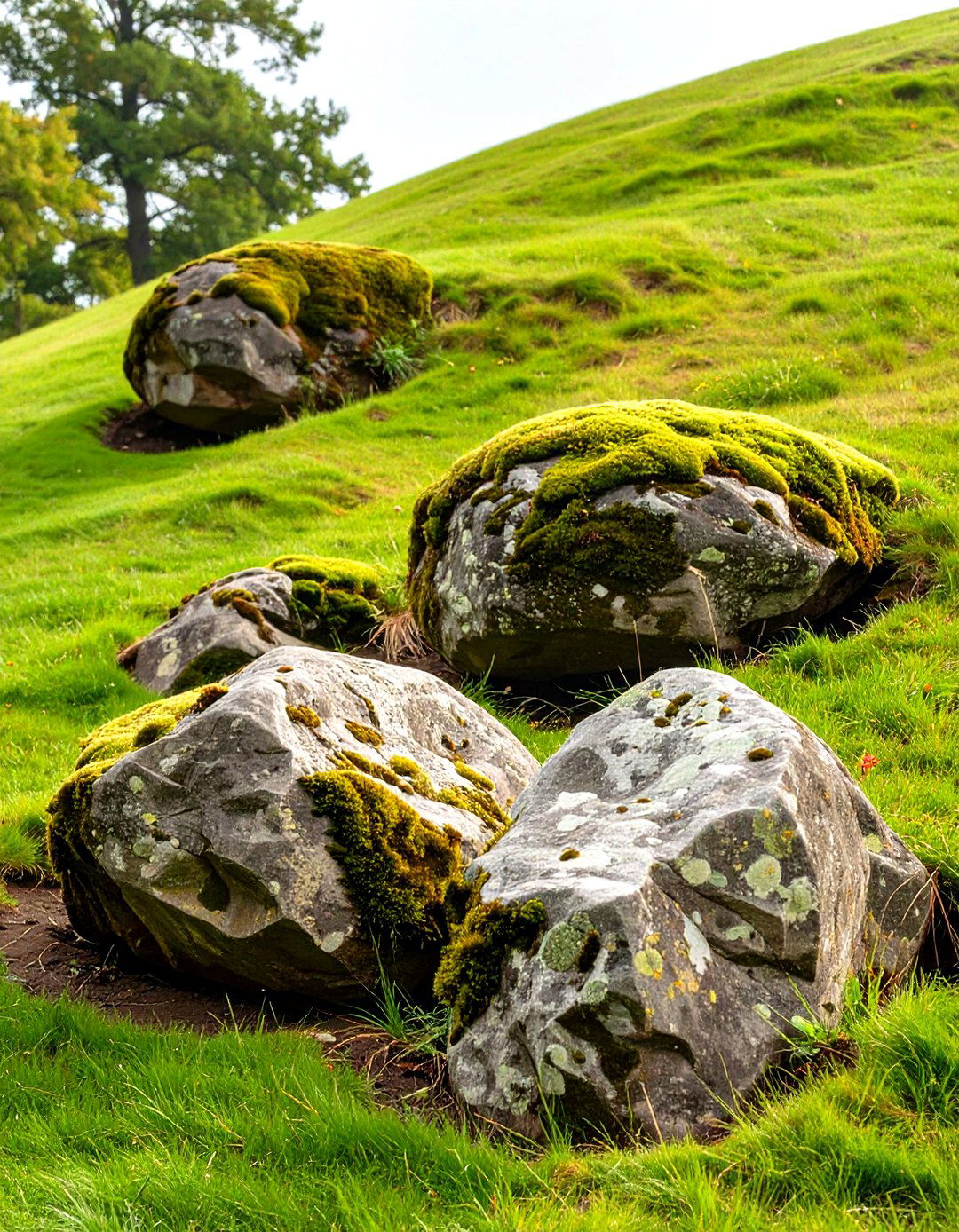
Sometimes the simplest solution is the most effective. Strategically placing a few large boulders can do wonders for a steep slope. They act as anchors, breaking up the long incline and slowing down water runoff. Sourcing boulders can be affordable if you look for local suppliers or even landowners clearing fields. Dig them partially into the hillside to ensure they are stable. Planting around the base of the boulders with groundcovers or cascading plants helps to integrate them into the landscape, creating a natural, rugged look that requires virtually no ongoing maintenance and adds powerful visual structure.
24. Planting Deep-Rooted Native Grasses
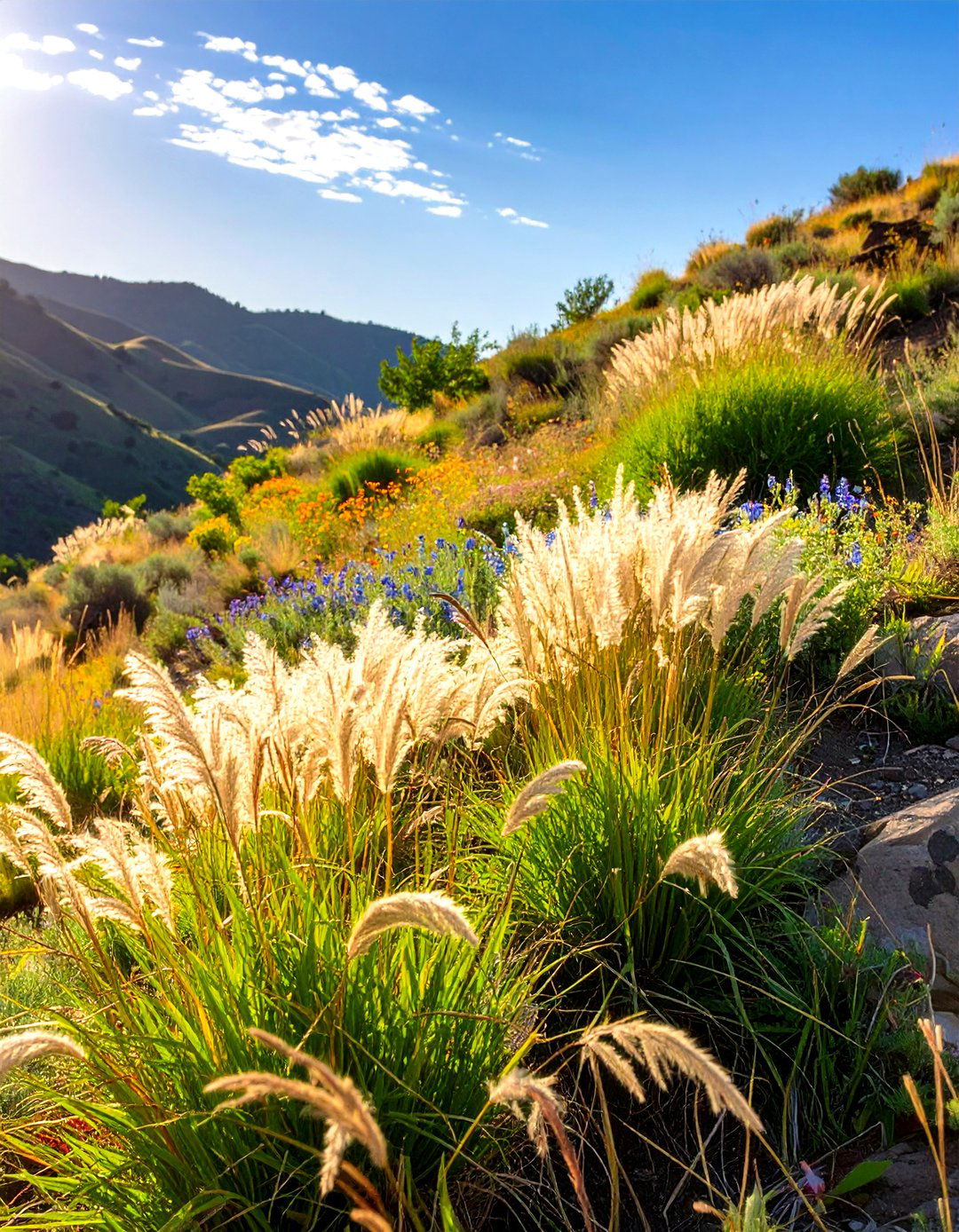
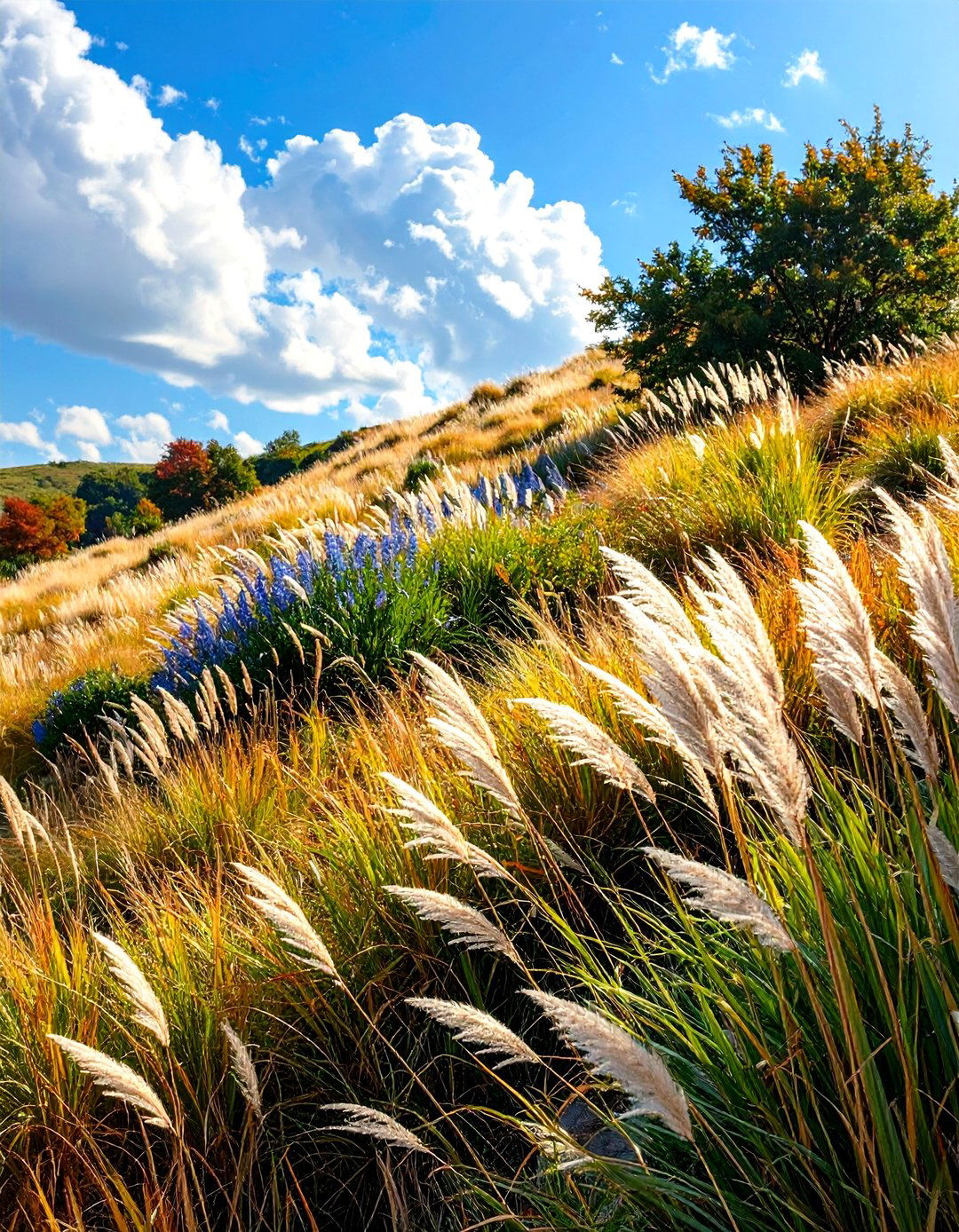
For serious, long-term erosion control, nothing beats deep-rooted native grasses. Varieties like switchgrass, little bluestem, or prairie dropseed have extensive root systems that can reach several feet into the ground, creating a dense web that holds soil tightly in place. These grasses are extremely hardy, drought-tolerant, and require very little maintenance once established. You can plant them from inexpensive plugs or even seeds. They also provide beautiful texture and movement to the landscape, creating a soft, naturalistic look that is both highly functional and cost-effective for covering a large, steep area.
25. Incorporating a Rope Handrail Along Pathways
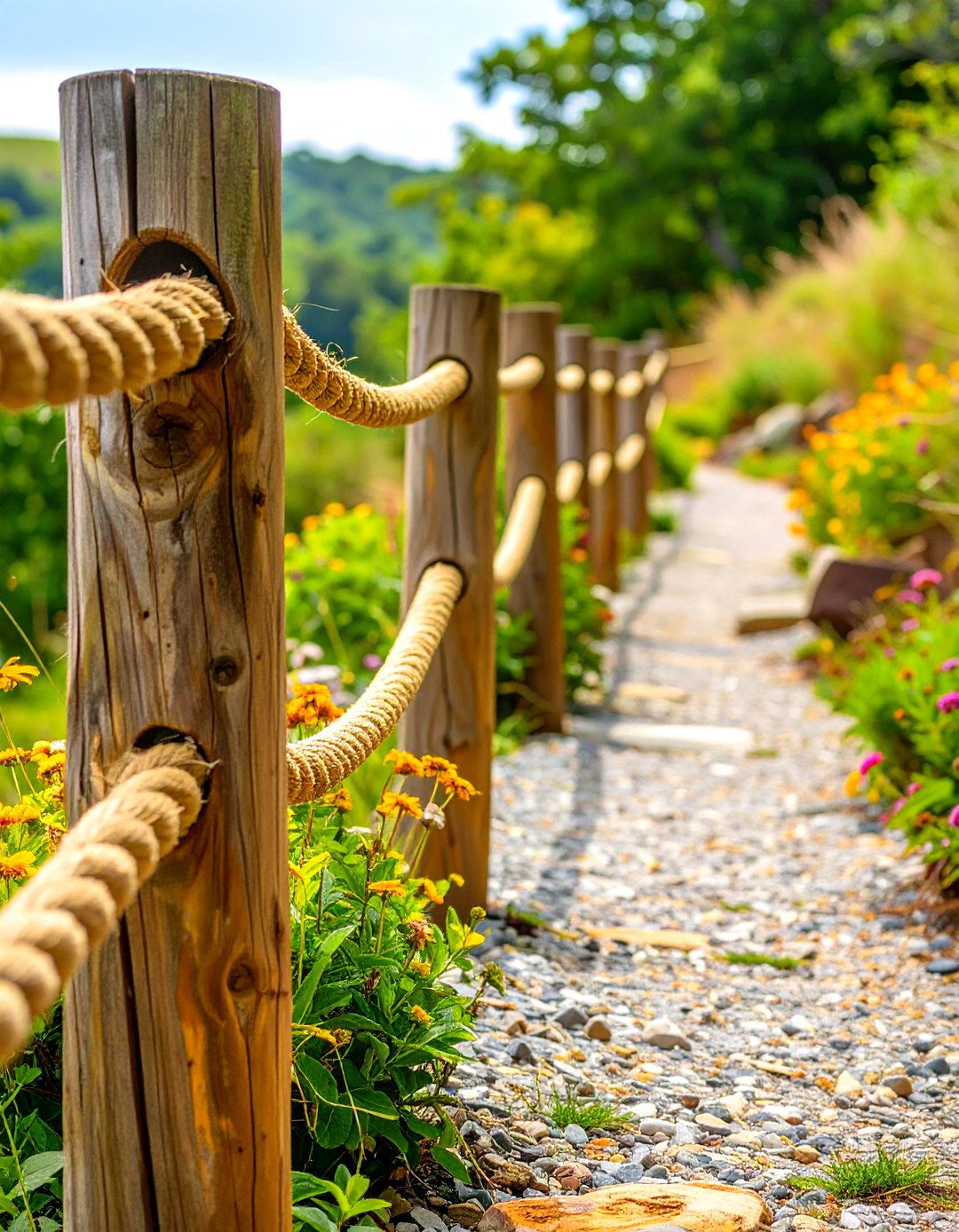
To improve safety on your hillside path without a significant expense, install a simple rope handrail. Drive sturdy wooden posts, about 4-5 feet apart, along the steepest sections of your pathway. Drill a hole through the top of each post and thread a thick, weather-resistant rope through them. A natural manila rope or a synthetic version will work well and add a rustic, nautical charm. This is a much cheaper alternative to a traditional wood or metal railing and provides crucial support and stability for anyone navigating the slope, especially in wet or slippery conditions.
26. Layering with Shrubs and Perennials
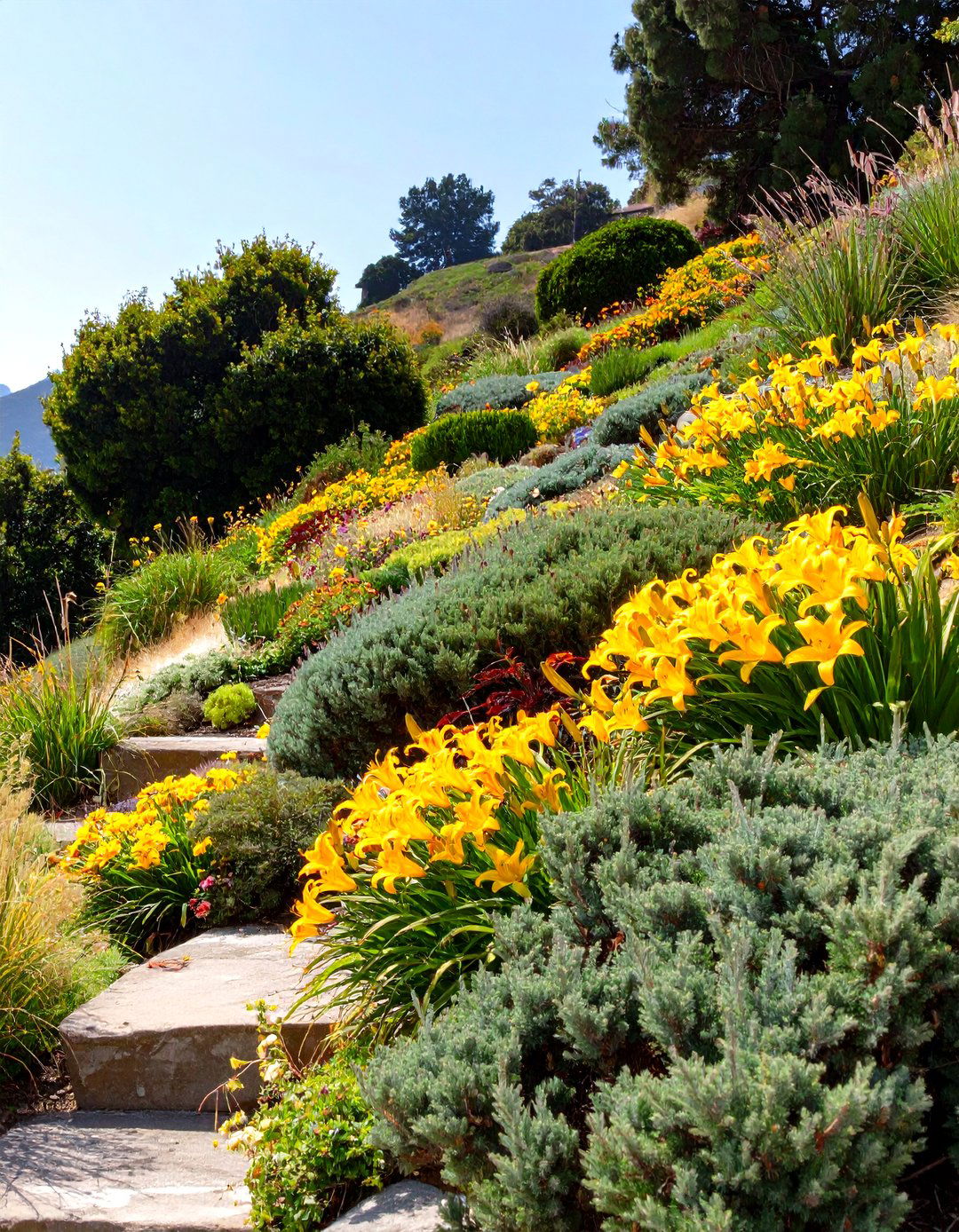
Create a visually interesting and stable hillside by layering different types of plants. Start with a backbone of affordable, hardy shrubs planted intermittently across the slope. These larger plants will act as anchors. In between the shrubs, fill the space with patches of low-cost perennials like daylilies, hostas, or black-eyed Susans. Finally, tuck in spreading groundcovers to fill any remaining gaps. This layered approach mimics a natural ecosystem, providing multiple levels of root systems for excellent erosion control. It also ensures you have varied color, texture, and height throughout the year for a dynamic garden display.
27. Building a Hillside Slide for Kids
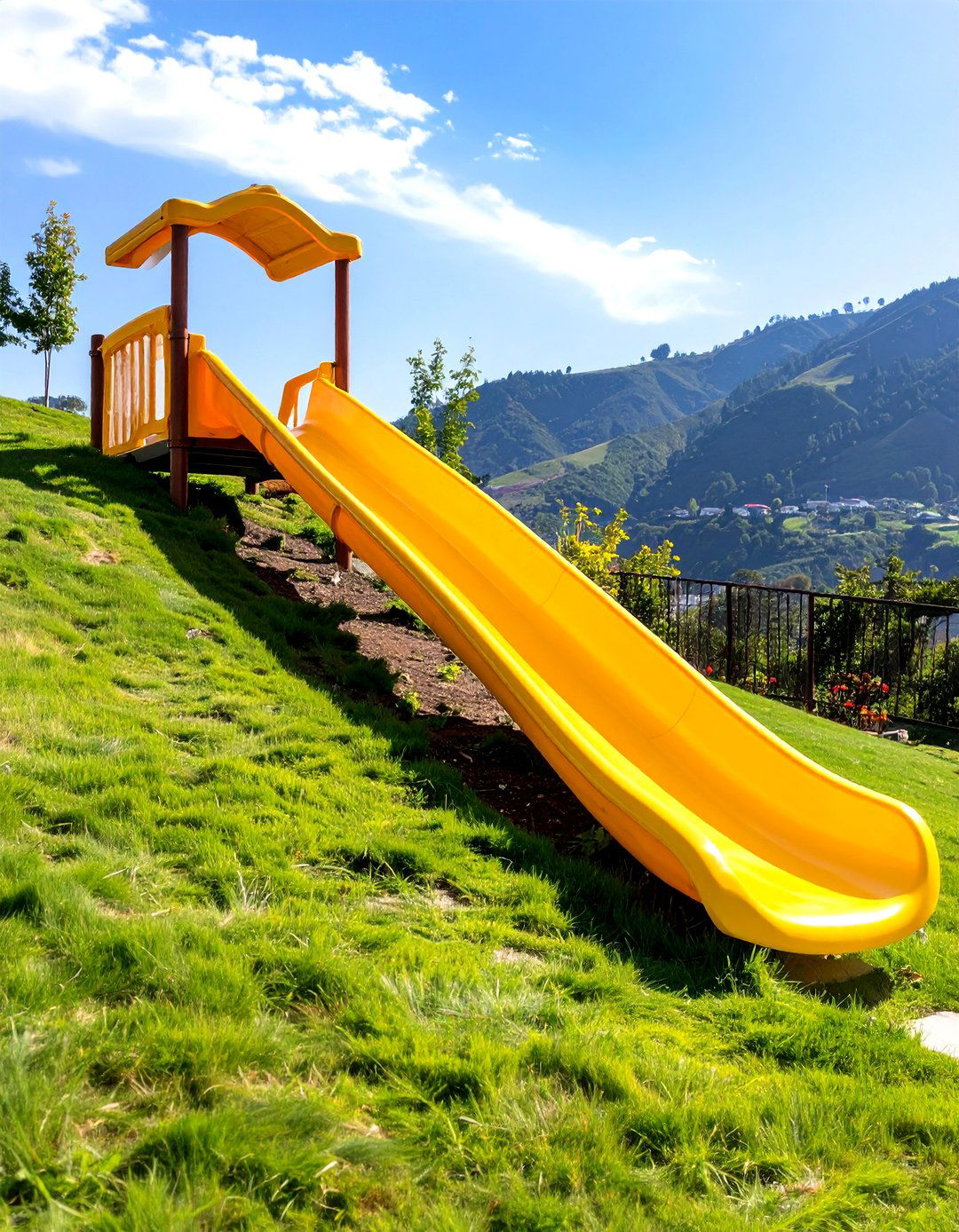
Turn a challenging slope into a source of fun by building a simple hillside slide. You can purchase a pre-made plastic slide section and install it directly onto a smoothed-out part of the incline. Alternatively, for a more natural approach, you can create a wide, smooth channel and cover it with heavy-duty plastic sheeting or even large pieces of cardboard for a temporary solution. This creative idea makes the yard more family-friendly and transforms a difficult feature into a play destination, providing endless entertainment for a relatively small investment compared to a full playground set.
28. Creating a Simple Drip Irrigation System
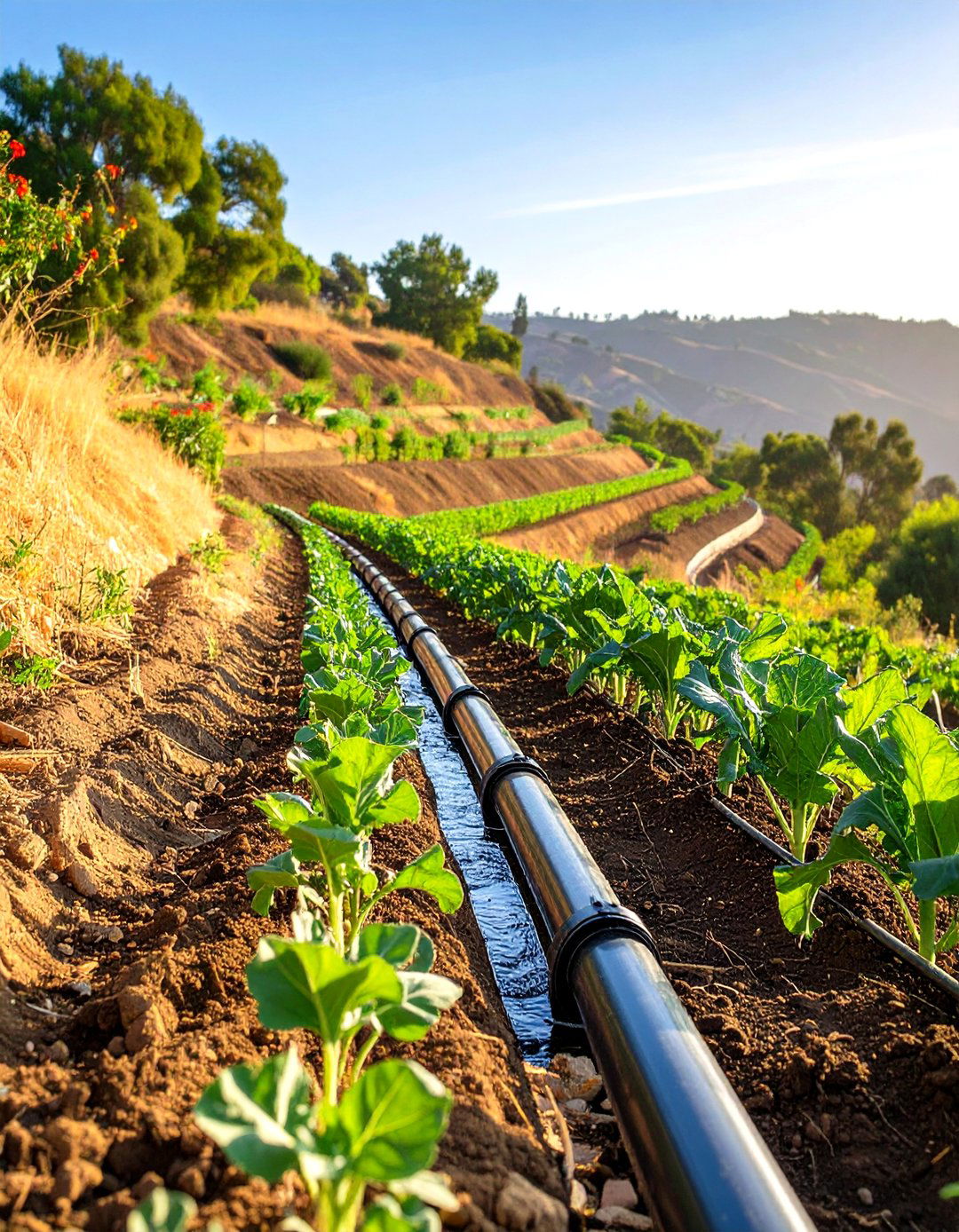
Watering a steep slope can be a challenge, as water tends to run off before it can soak in. A DIY drip irrigation system is an affordable and highly efficient solution. You can purchase starter kits or individual components like a main hose, smaller feeder tubes, and emitters quite cheaply. Weave the main line along your terraces or contour lines of the slope, then run the smaller tubes to the base of each plant. This method delivers water slowly and directly to the roots, minimizing waste and ensuring your plants get the moisture they need to thrive on the challenging terrain.
29. Planting Fruit Trees on Terraced Levels
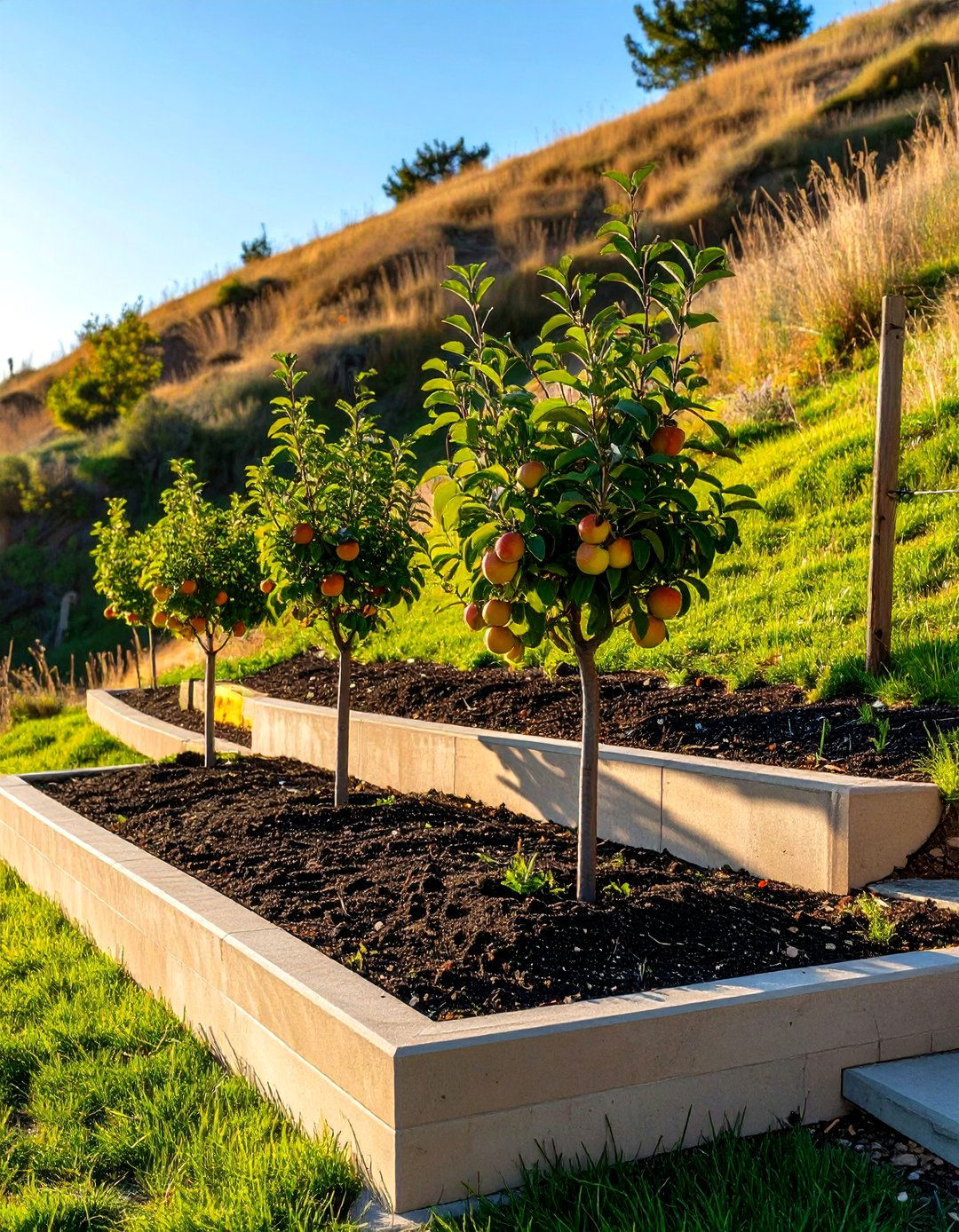
Make your hillside productive by planting fruit trees on terraced levels. Creating even a small, level terrace for each tree provides the stability it needs to grow strong. Dwarf or semi-dwarf varieties are ideal as they are easier to manage and harvest. Apple, pear, or cherry trees can thrive on a sunny slope. While the initial cost of the trees is a consideration, they will provide you with a bounty of fresh fruit for years to come, making it a valuable long-term investment. This approach combines the practicality of erosion control with the rewarding experience of growing your own food.
30. Using Edging to Create Mini-Terraces
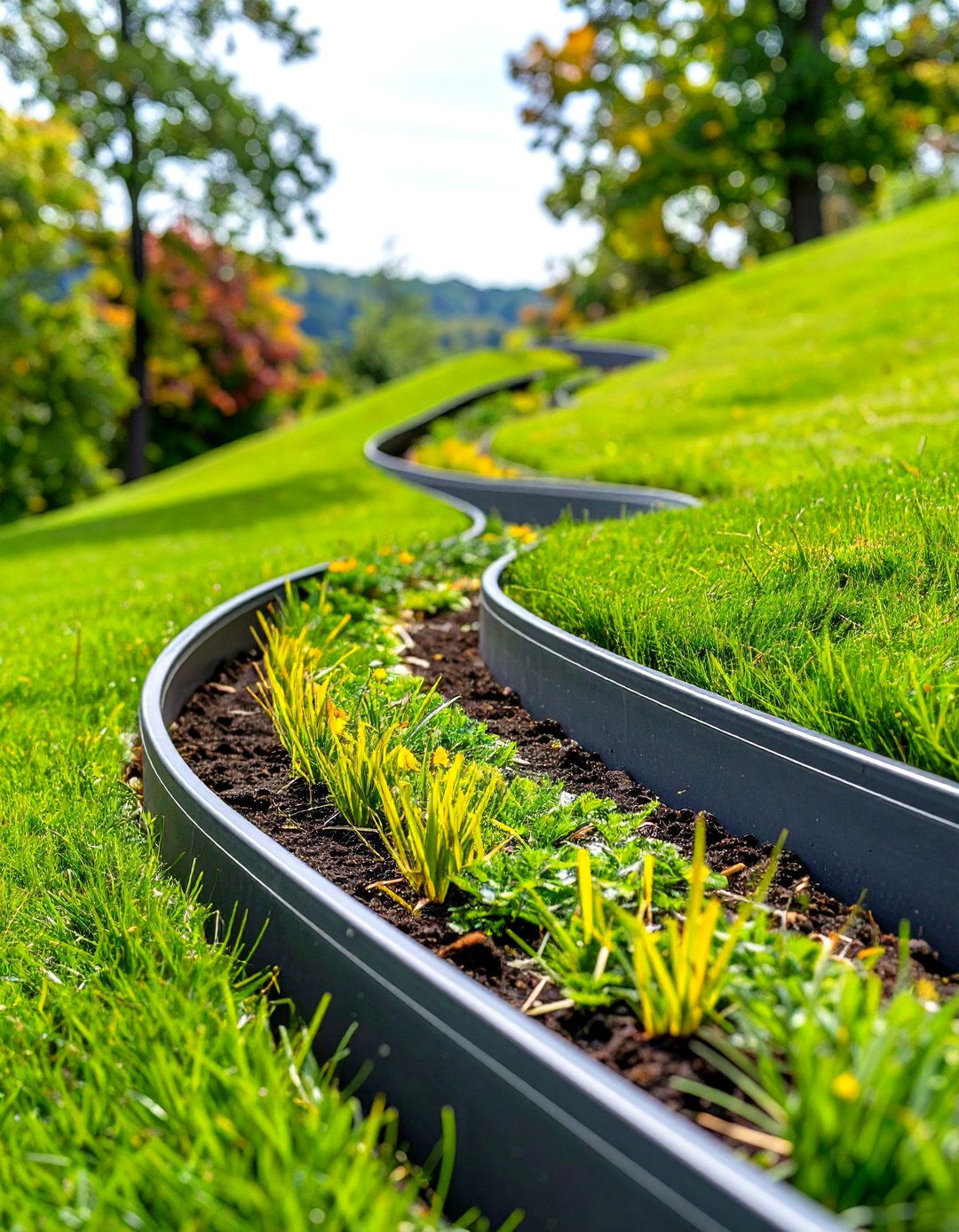
For a subtle and very low-cost way to slow down erosion, use simple landscape edging to create mini-terraces. Install inexpensive plastic or metal edging in rows running horizontally across the face of the slope. Place the rows a few feet apart, creating small lips that catch water and soil. This simple intervention breaks up the flow of water during heavy rain, giving it more time to soak into the ground. It’s an easy-to-install, almost invisible solution that can be put in place quickly to provide immediate protection while you plan more substantial plantings.
Conclusion:
Successfully landscaping a steep hillside on a budget is entirely achievable through resourceful and practical strategies. By focusing on DIY-friendly projects like building walls with reclaimed materials, planting hardy groundcovers, and managing drainage with dry creek beds, you can overcome the challenges of erosion and access. These thirty ideas demonstrate that a stunning and functional slope does not require a massive investment. With creativity and effort, you can transform an intimidating incline into a beautiful, multi-level garden that adds value and enjoyment to your home for years to come.

Related posts:


Leave a Reply