
Hillside properties can create dramatic curb appeal, but the driveway must balance appearance with safe access, stable slopes, and controlled runoff. The best **hillside driveway ideas** work with the natural terrain instead of forcing a steep, direct route. Curves can soften the grade, textured materials can improve traction, and retaining walls can create a secure driving edge. Drainage is equally important because fast-moving water may erode planting beds, undermine pavement, or increase pressure behind walls. Long driveways generally benefit from following natural contours, while terracing can reduce extensive grading on steeper sites. () Every property is different, so involve qualified local professionals when structural walls, significant excavation, or difficult grades are involved. Here are 20 practical and attractive **hillside driveway ideas**.

1. Curved Concrete Hillside Driveway
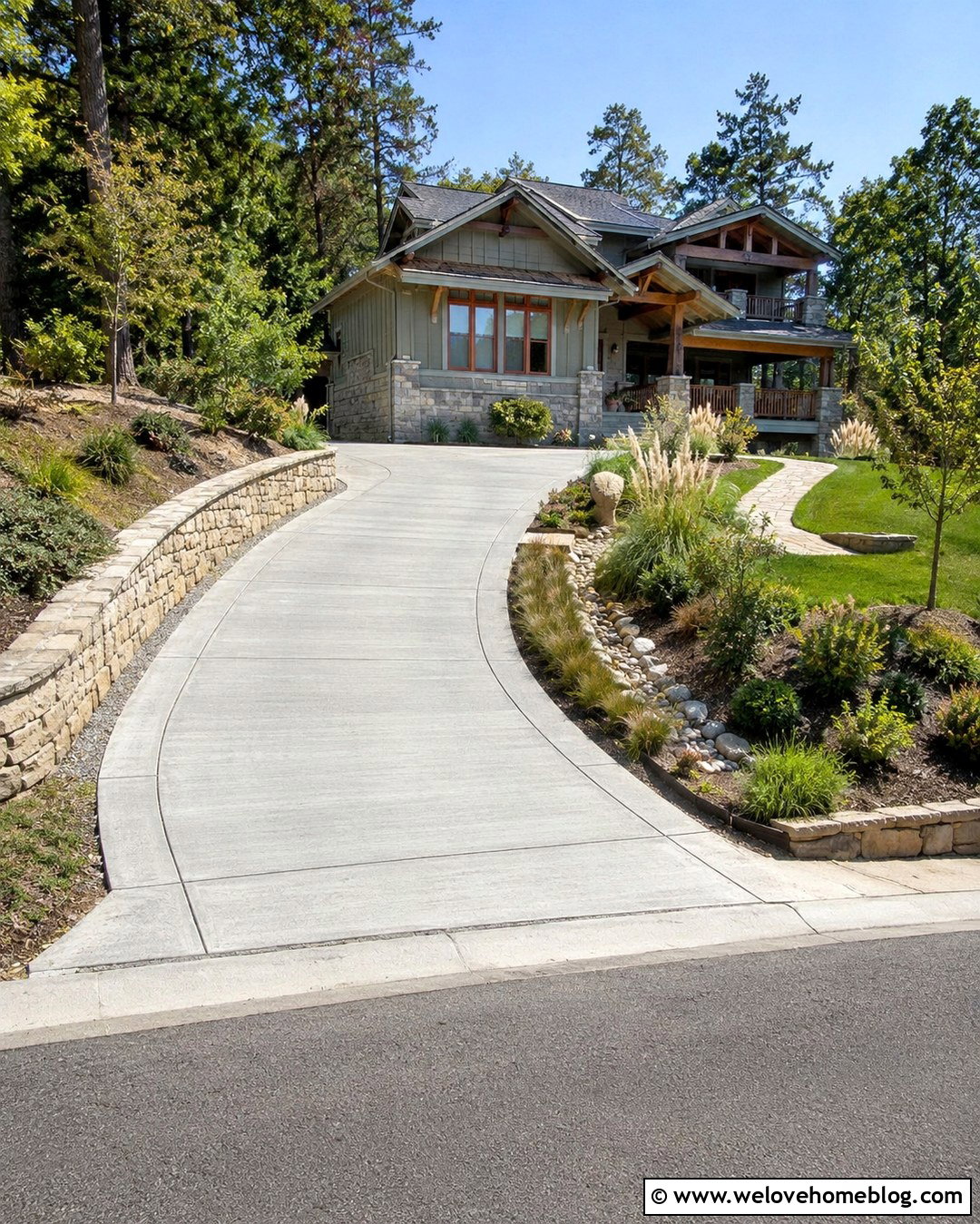
A curved concrete driveway can make an uphill approach feel more gradual and welcoming. Instead of climbing directly toward the garage, the driveway sweeps across the slope and follows the land’s natural contours. Choose broom-finished concrete for visible texture, then define the outside edge with a low natural stone retaining wall. On the uphill side, a shallow planted swale can collect runoff before it crosses the pavement. Drought-tolerant grasses, spreading ground covers, and compact shrubs will soften the cut slope without hiding sightlines. Near the house, widen the concrete into a level parking and turning area. This complete layout suits ranch, Craftsman, and contemporary homes because the clean surface balances the organic shape of the hillside.
2. Switchback Asphalt Hillside Driveway
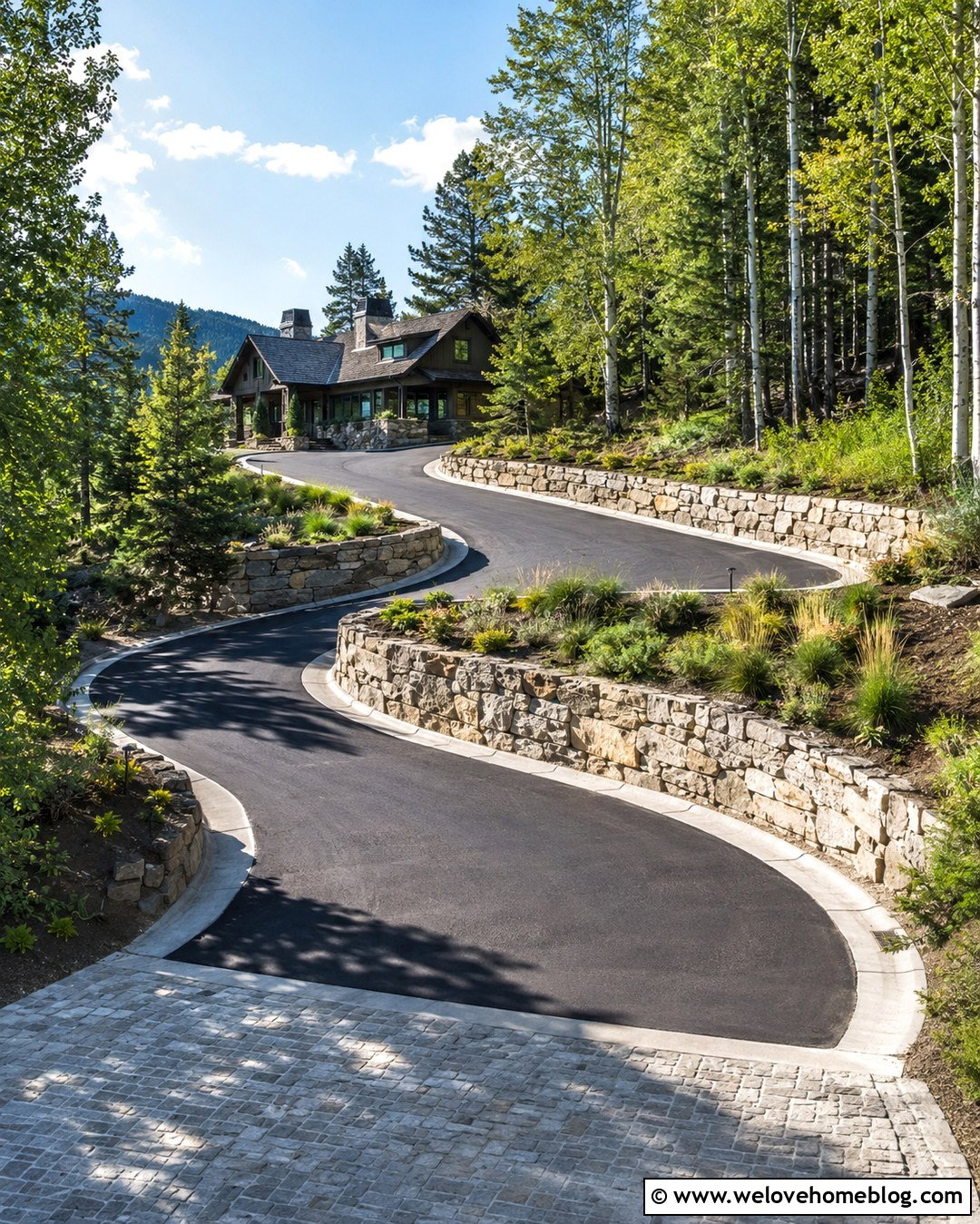
When a property rises sharply from the road, a switchback asphalt driveway can divide the climb into more manageable sections. The black asphalt follows two broad curves connected by a level or gently sloped turning area. Reinforced concrete curbs can hold the pavement edges in place, while tiered stone retaining walls support the inside corners. Keep landscaping low near each turn so drivers have clear visibility. Native shrubs, ornamental grasses, and erosion-resistant ground covers can fill the terraces between driveway levels. A contrasting cobblestone apron at the street gives the entrance a finished appearance. This design works particularly well on wooded or mountain properties where a straight driveway would require extensive excavation and create an unnecessarily severe grade.
3. Paver Hillside Driveway With Terraced Landscaping
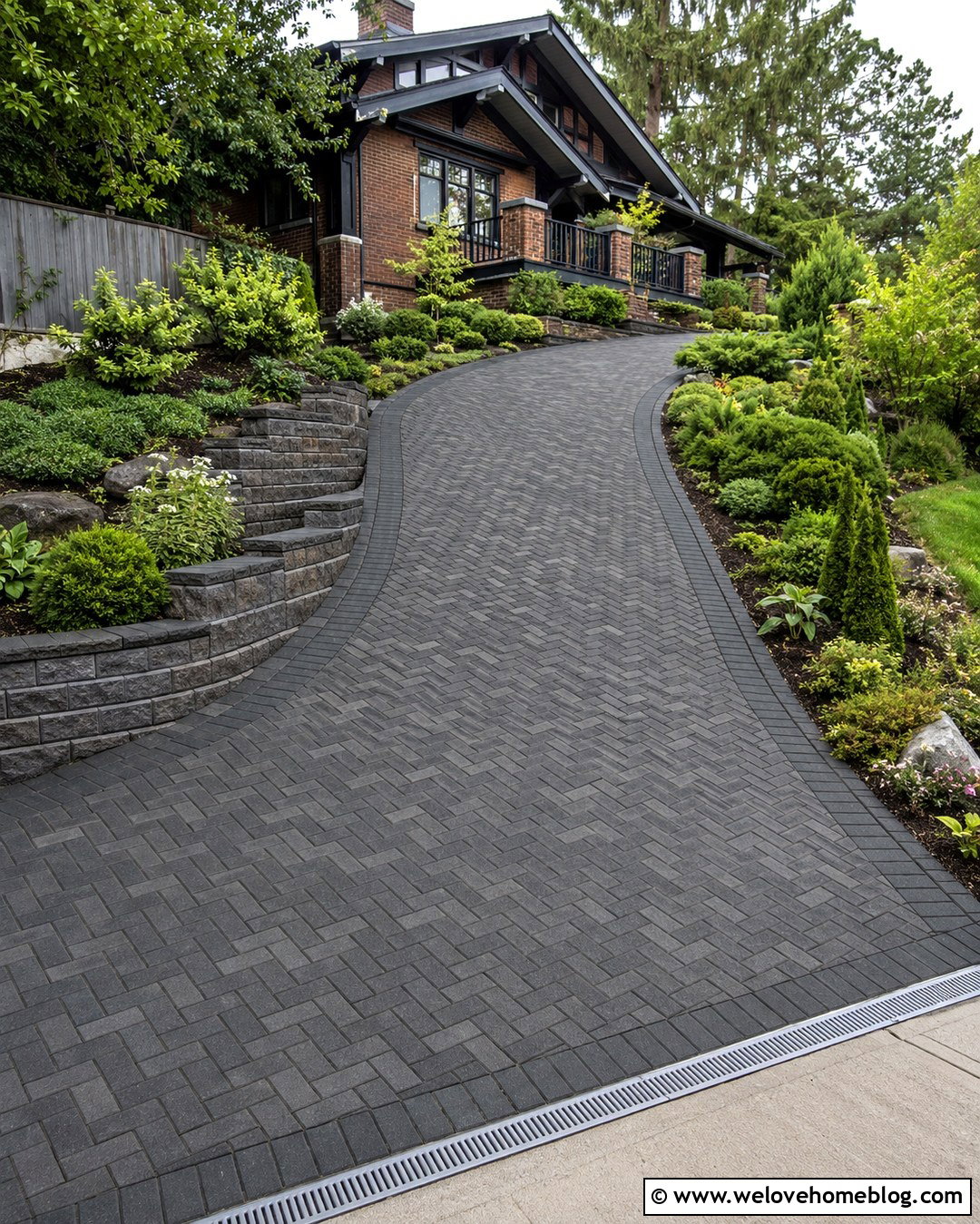
Interlocking concrete pavers bring pattern, color, and practical definition to a sloped driveway. A gently curving layout can be installed with charcoal rectangular pavers laid in a herringbone pattern for a visually stable surface. Dark soldier-course borders clearly mark both driving edges. Along the high side, tiered retaining walls create planting beds filled with compact evergreens, spreading junipers, and flowering perennials. The lower edge can transition into a reinforced embankment planted with deep-rooted ground covers. Add a linear drain near the garage so runoff does not collect at the top. The layered paving and landscaping make the driveway feel integrated with the hillside rather than cut through it, especially beside a traditional brick or Craftsman house.
4. Exposed Aggregate Hillside Driveway
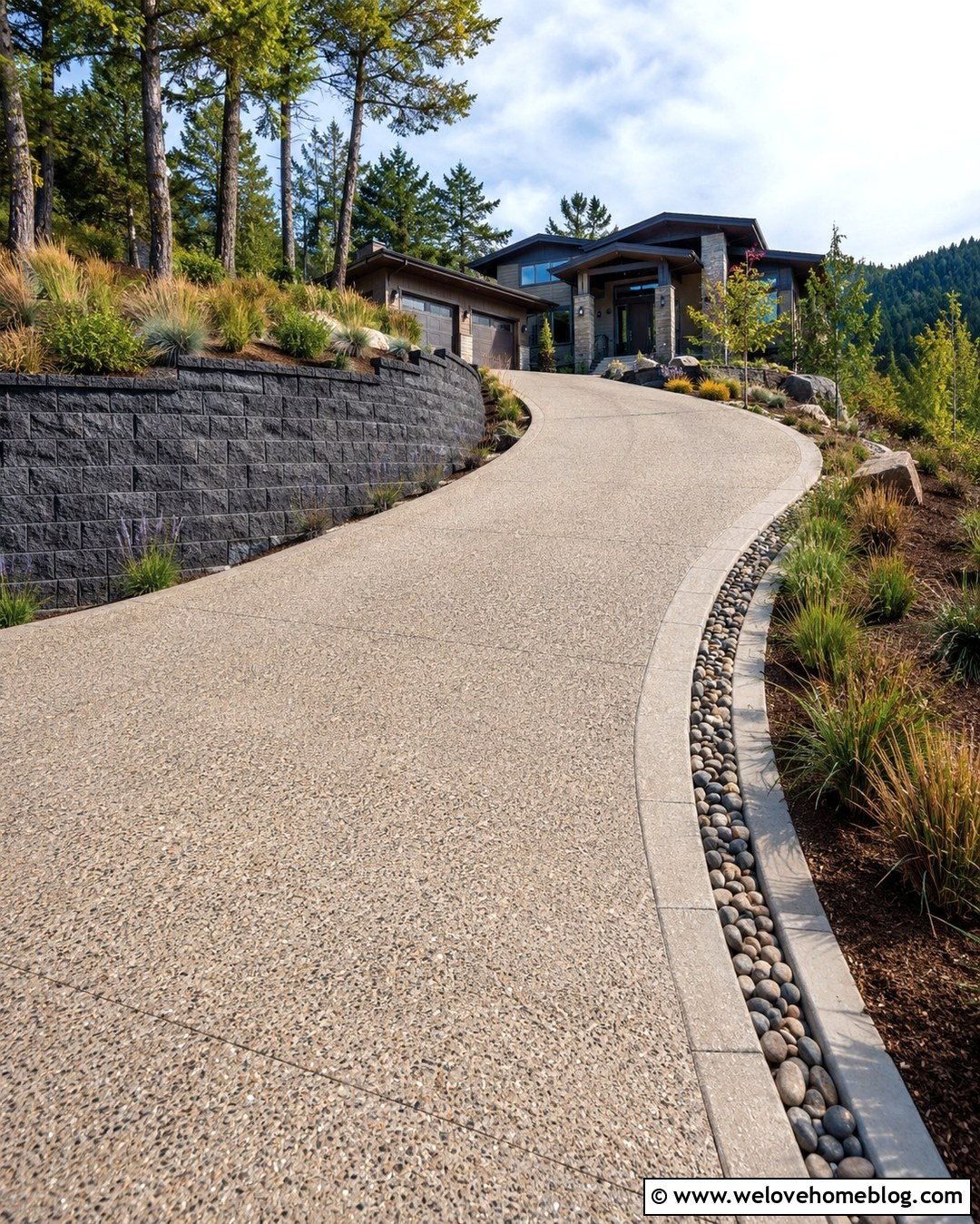
Exposed aggregate concrete offers a textured appearance that feels especially appropriate in a natural hillside setting. Use warm gray concrete containing tan and brown stone, then shape the driveway into a wide, gentle curve leading toward the house. Saw-cut control joints can follow the curve for a clean, intentional finish. A charcoal block retaining wall supports the uphill bank, while river rock drainage beds run along its base. On the open side, a concrete curb protects the pavement edge and frames low masses of native grasses. Coordinate the aggregate colors with the house facade, walkway, and retaining wall caps. This combination creates a durable-looking approach with enough visual texture to complement wooded lots, desert slopes, and modern mountain homes.
5. Gravel Hillside Driveway With Stabilization Grid
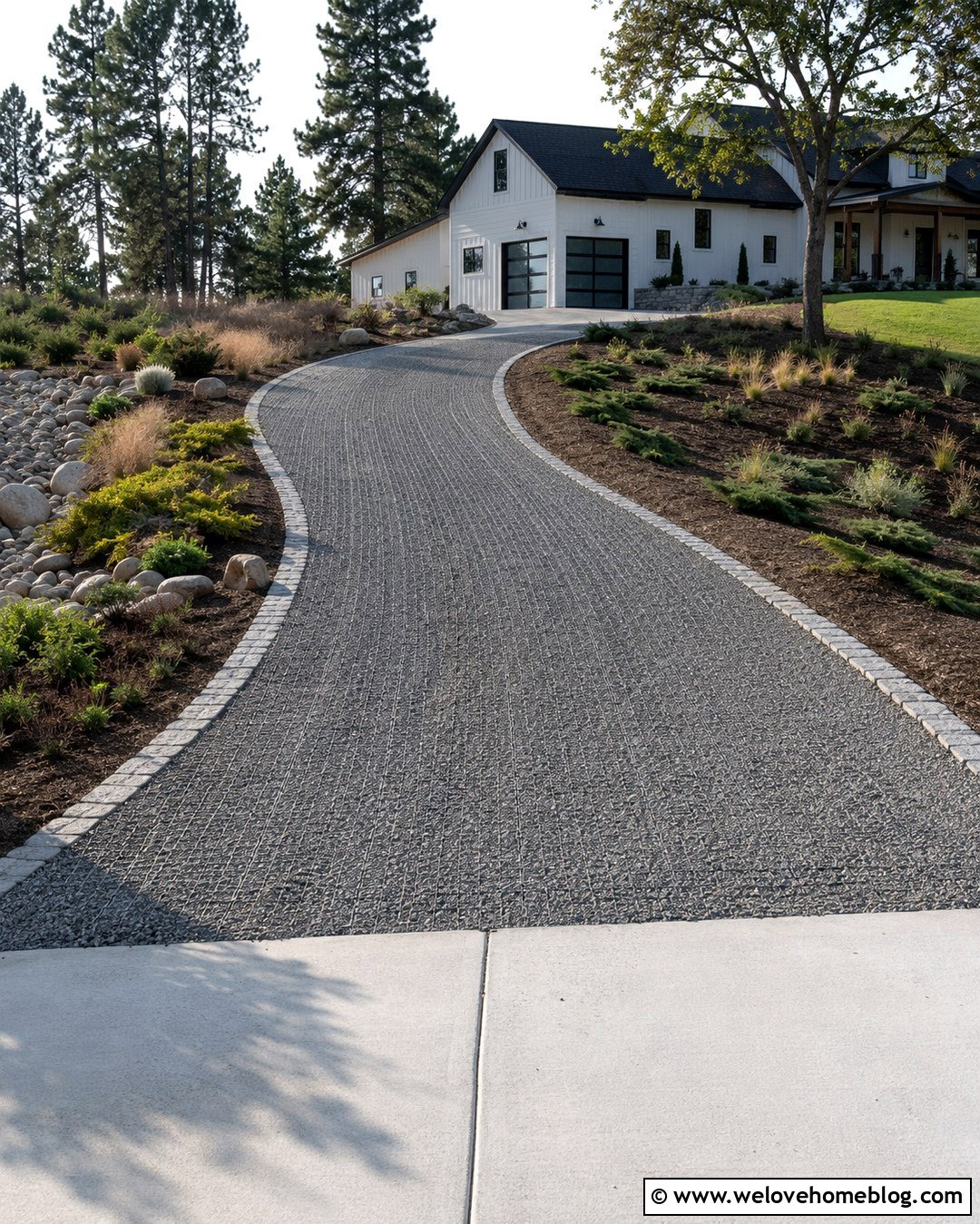
Gravel can work on a moderate hillside when it is supported by a properly designed base and cellular stabilization grid. Choose angular gray crushed stone rather than loose, rounded gravel, and create a curving route that follows the slope. Granite cobbles along both sides help contain the surface and produce a crisp boundary. An uphill drainage swale lined with larger river stone can redirect water toward a suitable outlet. Plant the surrounding bank with spreading juniper, native grasses, and low shrubs to reduce bare soil. At the road and garage, use concrete or paver aprons to limit gravel migration during turning and braking. The finished look feels relaxed and rural, making it suitable for cabins, country homes, and modern farmhouses.
6. Concrete Ribbon Hillside Driveway
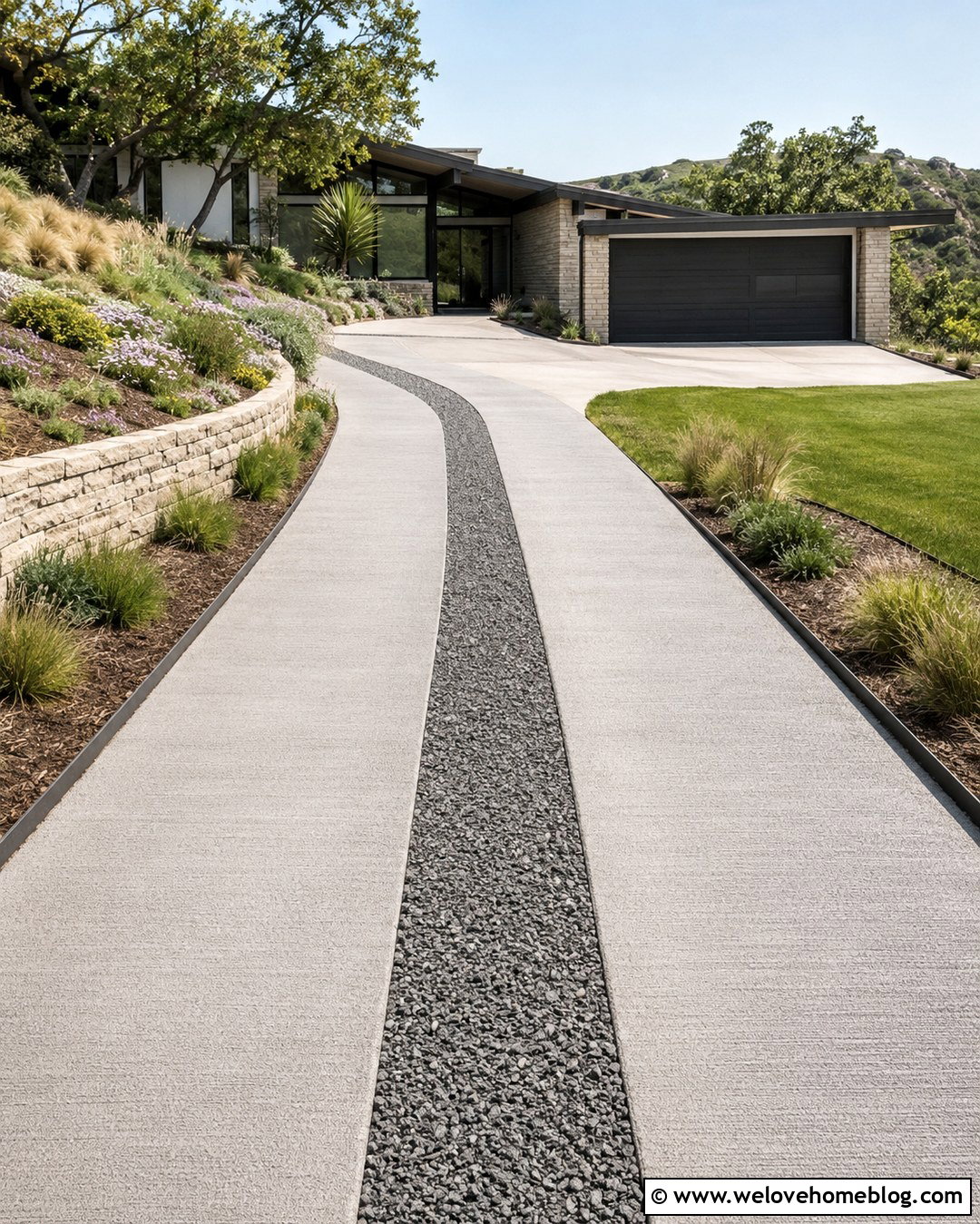
A concrete ribbon driveway uses two solid tire tracks with a planted or gravel-filled strip between them. On a gently sloped hillside, this design reduces the visual mass of the paved surface and helps the approach blend into the landscape. Use broom-finished gray concrete for the tracks and compacted decorative gravel in the center for easier maintenance than turf. Steel or dark stone edging can keep each material neatly separated. A low retaining wall on the uphill side supports a narrow bed of ornamental grasses and flowering ground covers. Continue the ribbons along a subtle curve, then join them into a full concrete pad near the garage. This streamlined design looks especially attractive beside contemporary, midcentury, and minimalist hillside houses.
7. Concrete Hillside Driveway With Cobblestone Aprons
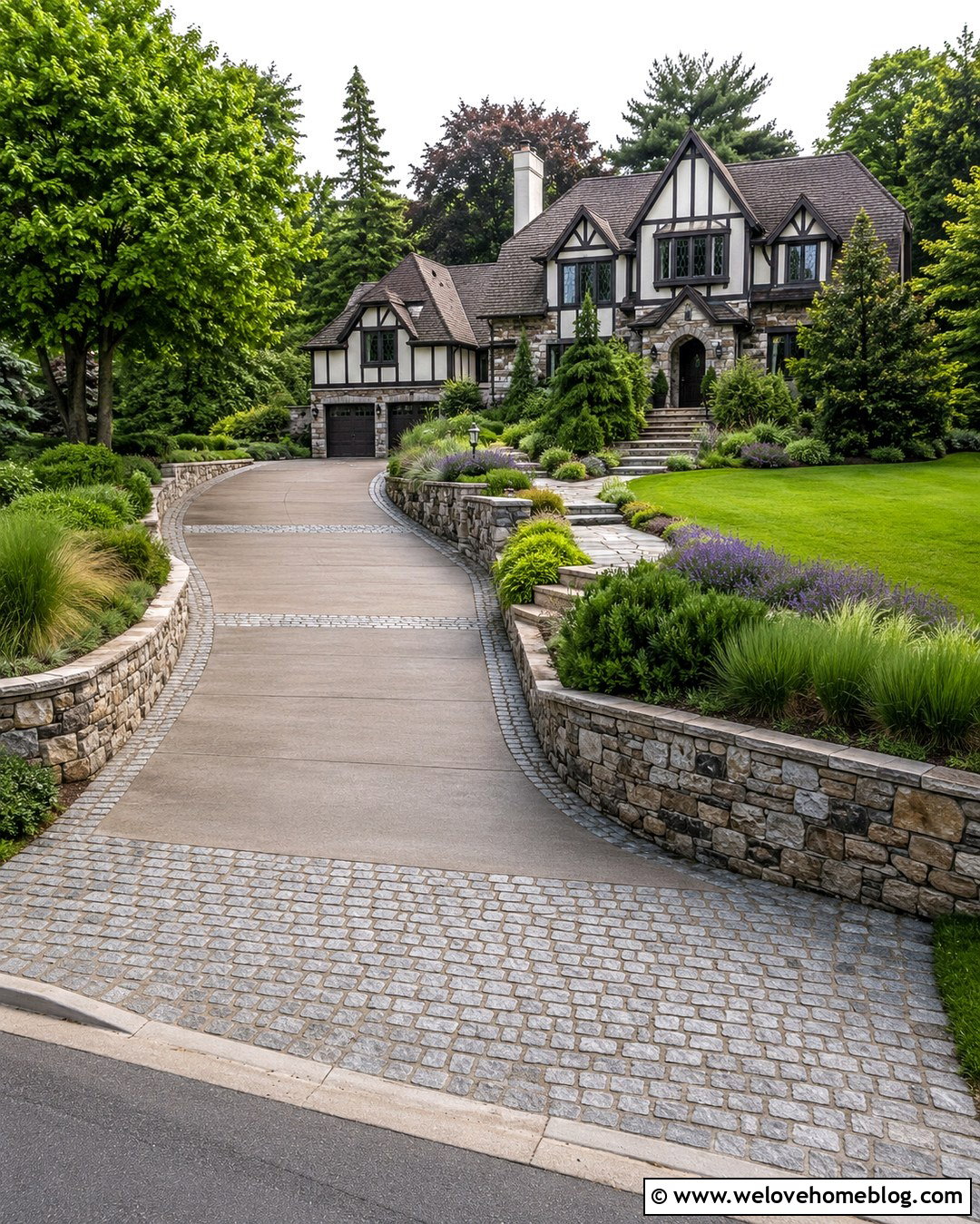
Cobblestone accents can give a poured concrete hillside driveway stronger definition without covering the entire surface in premium stone. Begin with a broad cobblestone apron at the street, use broom-finished concrete along the sloped section, and repeat the cobblestone near the garage. Narrow cobblestone ribbons can also cross the pavement at key drainage or transition points. Shape the driveway into a shallow curve and border it with low stone walls that match the aprons. Behind the walls, layer evergreen shrubs, lavender, and ornamental grasses for year-round structure. The stone breaks up the long concrete run and creates visual stopping points. This complete treatment suits European-inspired, Tudor, colonial, and refined farmhouse homes located on elevated lots.
8. Resin-Bound Hillside Driveway
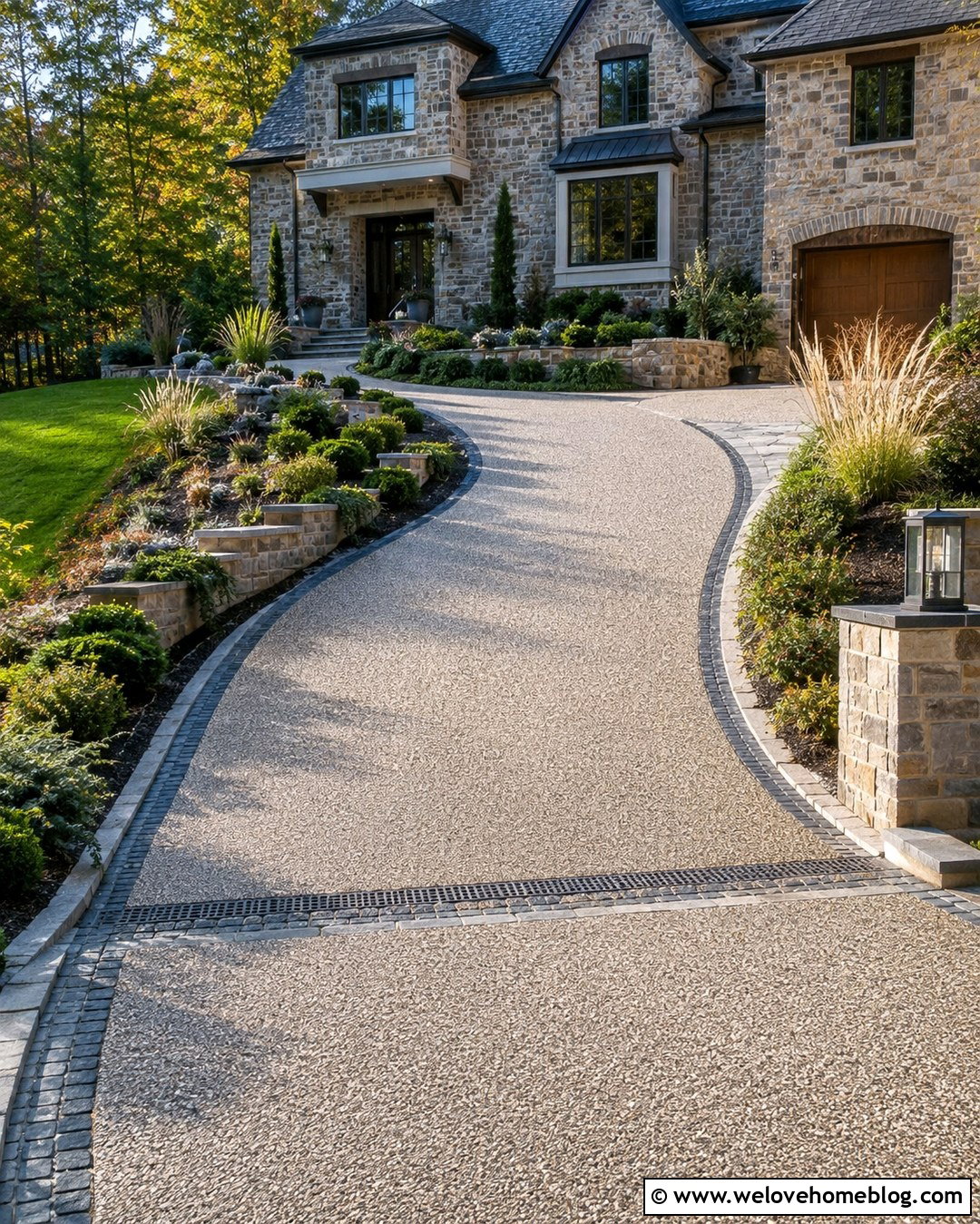
A resin-bound gravel driveway creates a smooth, decorative surface without the loose stones associated with traditional gravel. Select a warm blend of beige, cream, and gray aggregate for a bright approach that complements natural stone architecture. A sweeping curved layout can follow the hillside, with dark granite setts forming firm borders along both sides. Install coordinated drainage channels where runoff needs to cross or leave the surface. On the uphill bank, use terraced planting pockets filled with compact shrubs and erosion-controlling ground covers. The lower edge can feature a low stone curb and gently sloped lawn. Because resin systems and slope conditions vary, professional specification is important. Visually, the seamless finish works well with contemporary and transitional homes.
9. Asphalt Hillside Driveway With Granite Curbs
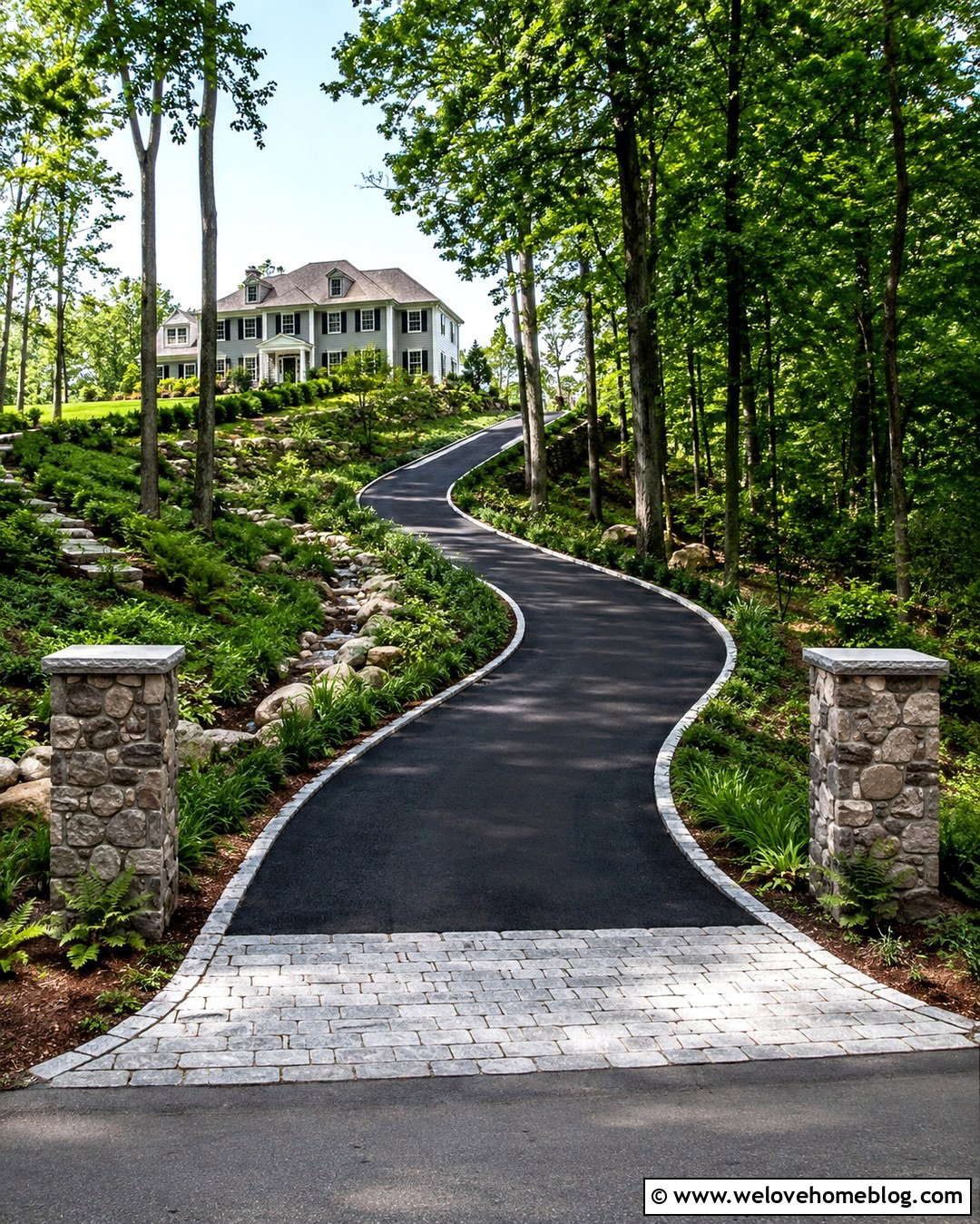
Black asphalt creates a simple, cohesive driving surface that can visually recede into a wooded hillside. Make the design feel more permanent by adding light gray granite curbs along the entire route. The contrasting curbs define the edges, contain adjacent soil, and connect the driveway with a matching stone entrance apron. A gentle S-curve can reduce the appearance of a long climb while preserving mature trees where possible. Install planted drainage swales beyond the curbs, using ferns, sedges, and shade-tolerant ground covers in forested settings. Low stone pillars at the street can mark the entrance without overwhelming the landscape. The result is practical but polished, making it suitable for long driveways serving cabins, colonial homes, and mountain retreats.
10. Grooved Concrete Hillside Driveway
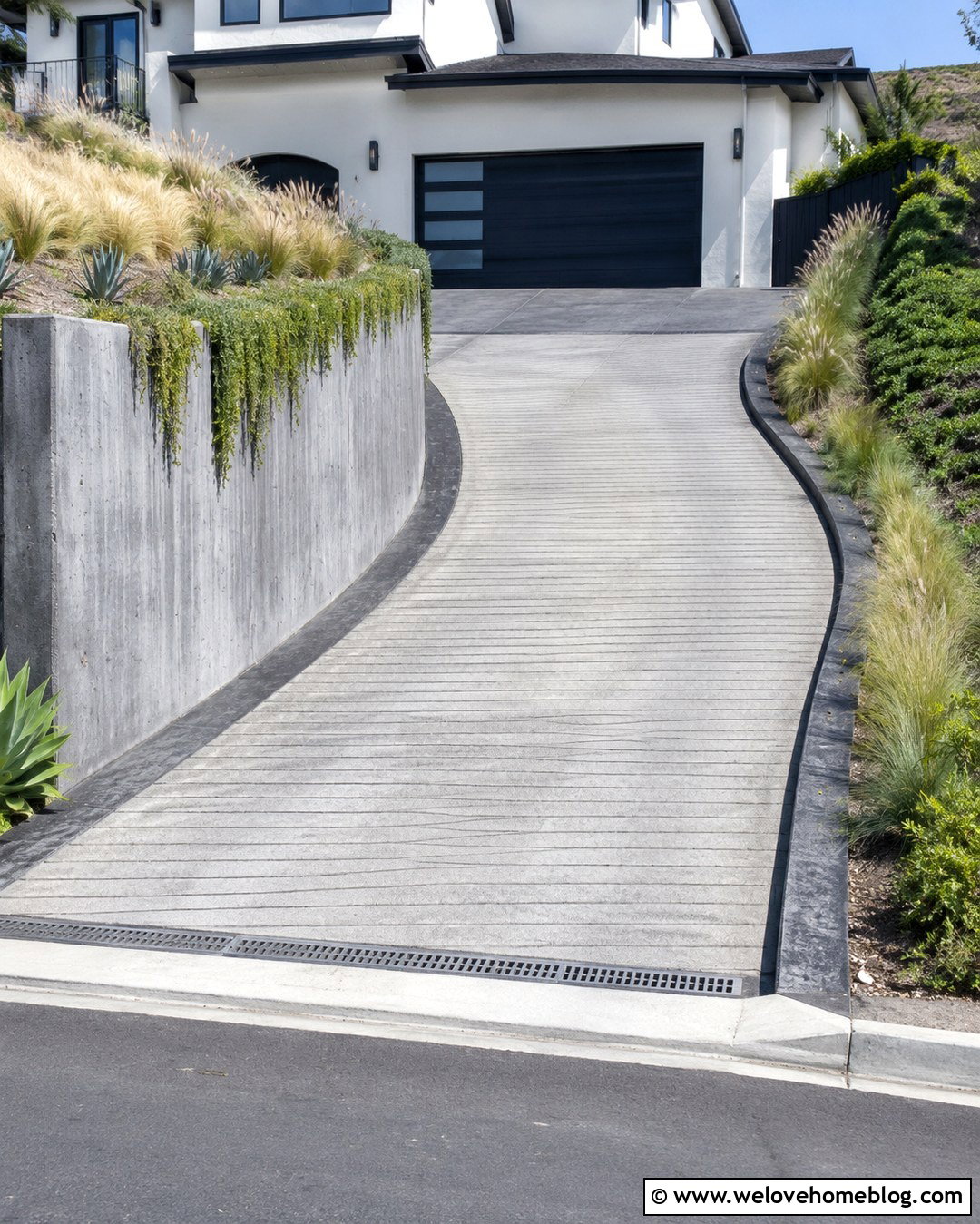
Transverse grooves can add visible texture to a steep concrete driveway while giving the surface a purposeful architectural pattern. Use medium-gray poured concrete with closely spaced grooves running across the direction of travel. Follow a straight or slightly curved route, depending on the available lot width and safe grade. Dark concrete curbs should frame the pavement, while a channel drain near the bottom intercepts runoff before it reaches the street. On the uphill side, a reinforced concrete retaining wall can be softened with cascading ground covers planted above it. Add a level paver landing in front of the garage for turning and parking. This clean, high-contrast combination fits modern homes with concrete, stucco, metal, or dark wood facades.
11. Permeable Paver Hillside Driveway
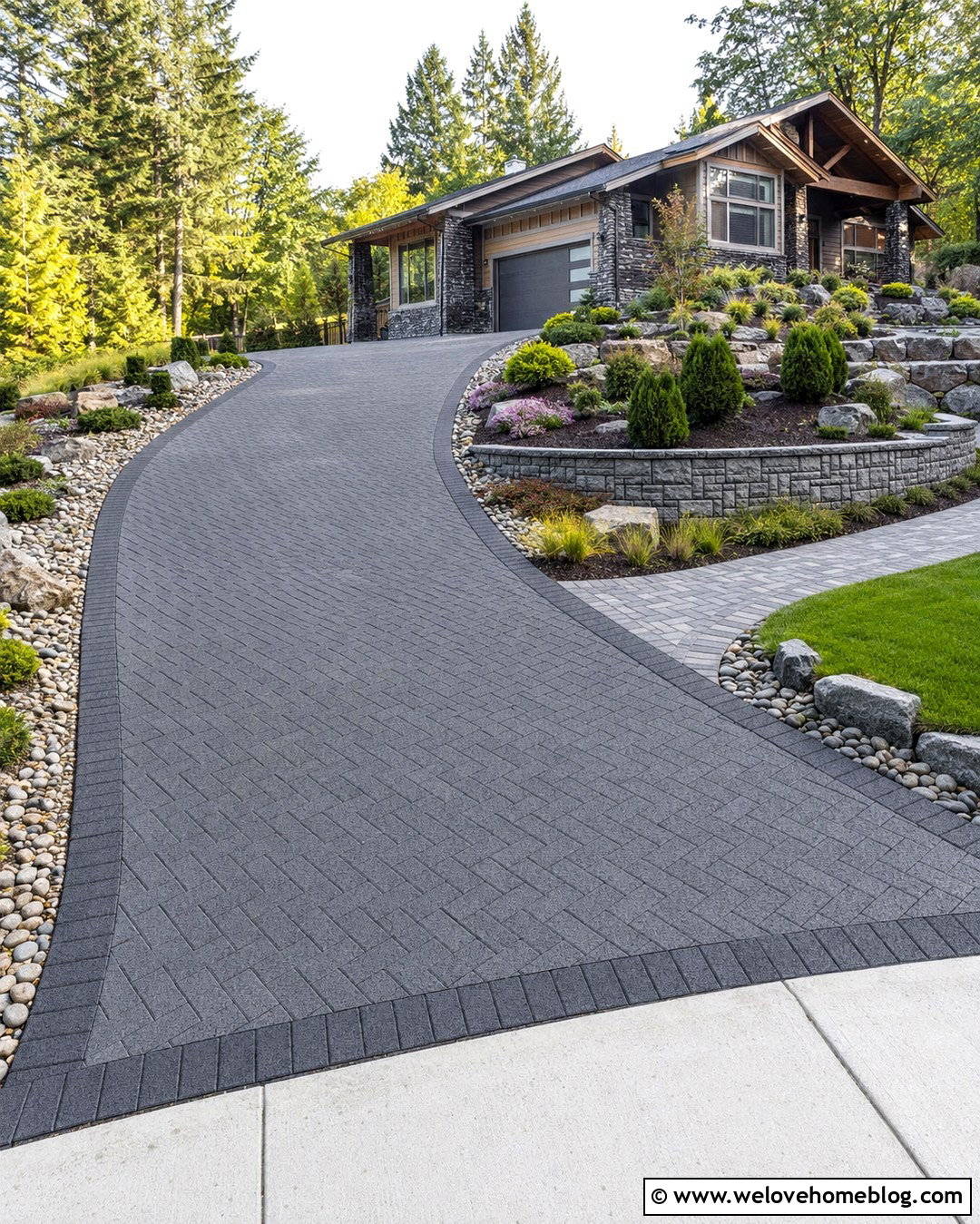
Permeable concrete pavers can create a structured hillside driveway with visible joints that contribute texture and drainage capacity. Choose charcoal or medium-gray pavers and lay them in a simple running-bond or herringbone pattern. A broad, gently curving route will feel less severe than a narrow straight climb. Edge restraints and a carefully designed aggregate base are essential parts of the complete system, especially on sloping ground. Frame the high side with a terraced block wall and low planting beds. A river rock swale can run beside the lower edge and carry excess water toward an approved outlet. The combination of patterned pavement, layered walls, and restrained planting works beautifully with contemporary Craftsman, modern farmhouse, and urban hillside homes.
12. Hillside Driveway With Gabion Walls
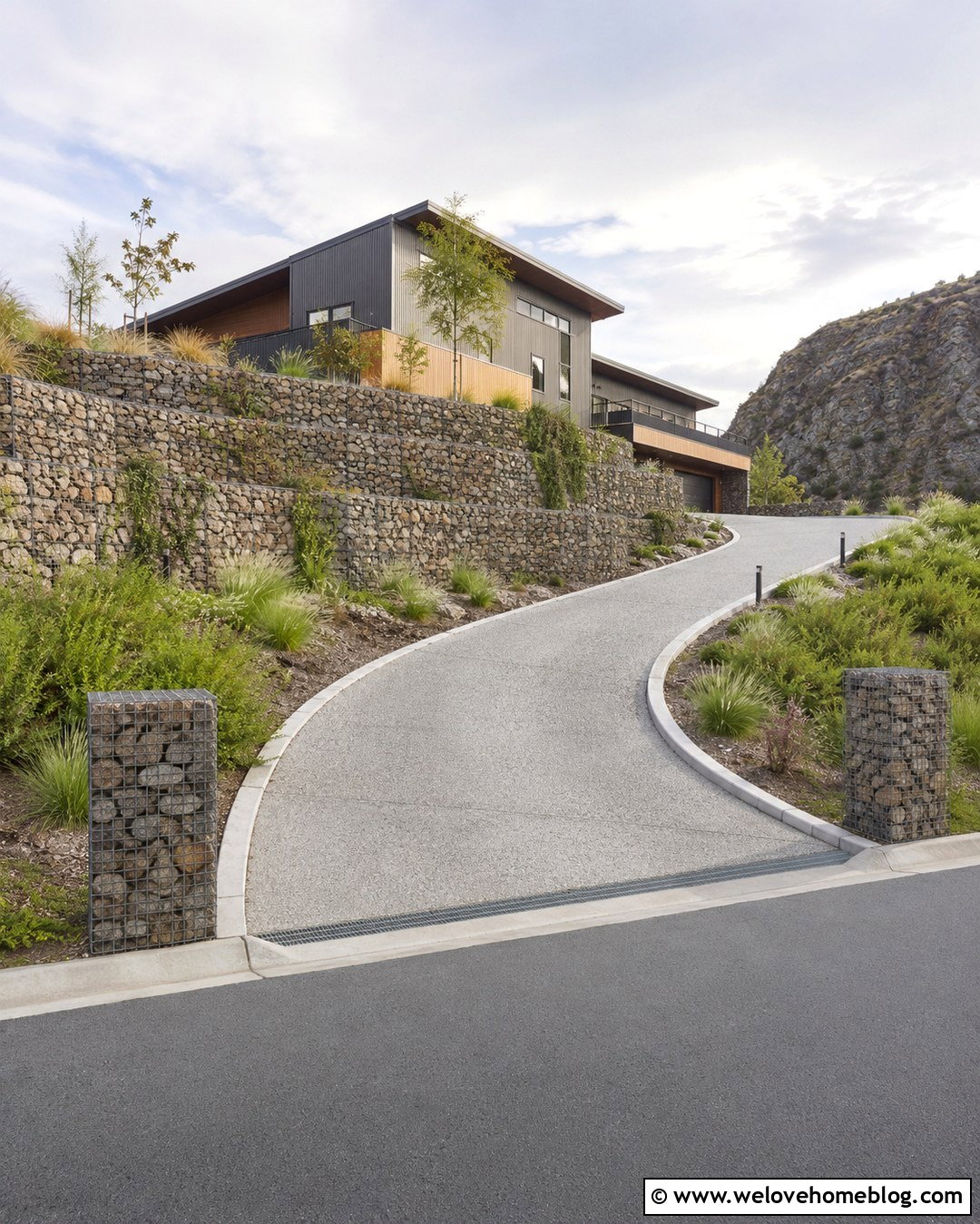
Gabion retaining walls bring rugged texture to a driveway cut into a rocky or wooded slope. Fill the wire baskets with angular local stone, then pair them with a curved, warm-gray exposed aggregate driveway. Use the gabions along the uphill edge, where their substantial appearance can visually anchor the excavated bank. A low concrete curb should protect the opposite pavement edge. Plant trailing ground covers, ornamental grasses, and small native shrubs above and between stepped wall sections to soften the stone. Discreet drainage channels can be integrated near the wall base and at driveway transitions. Repeat the gabion stone in the entrance pillars or landscape beds. This cohesive design complements industrial modern houses, mountain cabins, and contemporary homes with metal or wood siding.
13. Hillside Driveway With Tiered Retaining Walls
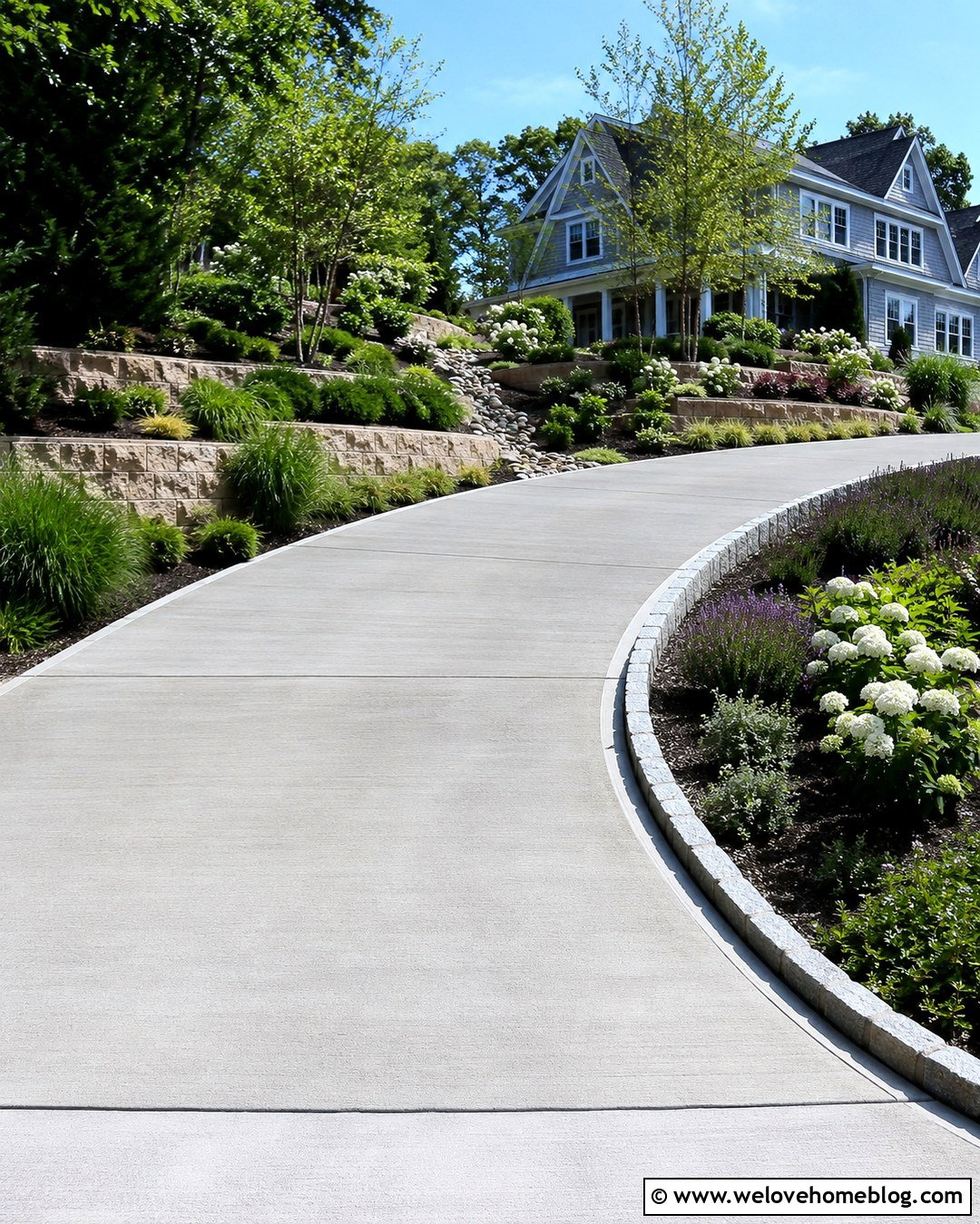
Multiple low retaining walls often look more natural than one visually dominant wall beside a hillside driveway. Use a curved broom-finished concrete surface bordered by two or three stepped walls made from textured concrete block or natural stone. Each terrace should contain a generous planting bed rather than a narrow strip of exposed soil. Combine spreading ground covers, ornamental grasses, compact shrubs, and small flowering trees to create layers of color and root coverage. A stone-lined swale above the highest terrace can intercept hillside runoff. On the lower side of the driveway, continue the wall material as a protective curb or short guard wall. The tiered arrangement reduces the apparent height of the slope and gives the approach a landscaped, garden-like character.
14. Circular Hillside Driveway
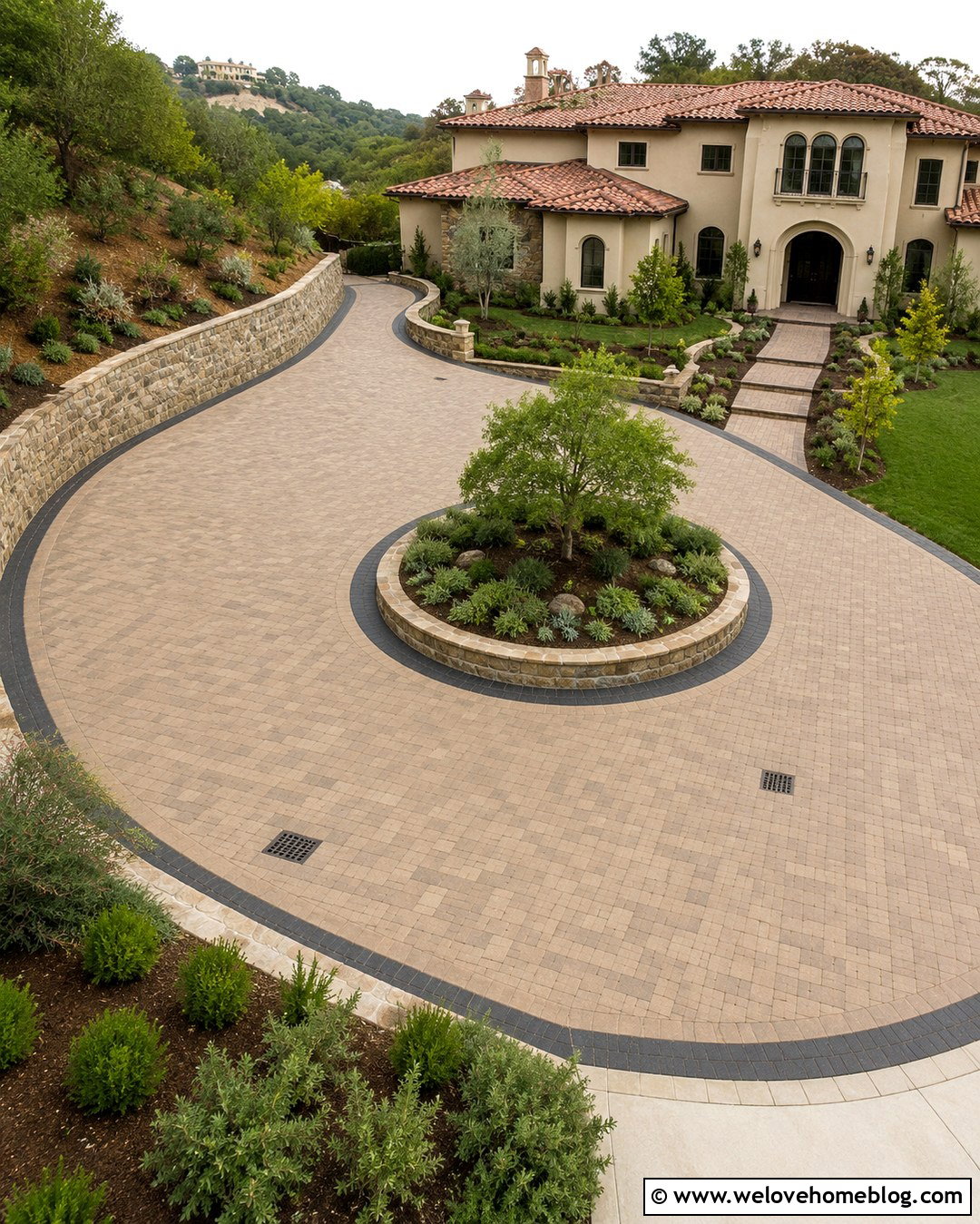
A circular driveway can provide convenient vehicle movement on a broad hillside lot when the grading and turning geometry are professionally planned. Use tan concrete pavers for the loop and shape it around a raised central landscape island. A low natural stone wall can support the uphill half of the circle, while the downhill side opens toward the view. Fill the center with a small ornamental tree, low shrubs, and spreading ground covers that will not block sightlines. Contrasting dark paver borders emphasize the circular form and connect it to the front walkway. Include discreet surface drains at low points around the loop. This impressive yet functional arrangement works especially well with large ranch, Mediterranean, colonial, and contemporary hillside houses.
15. Hillside Driveway With Parking Turnout
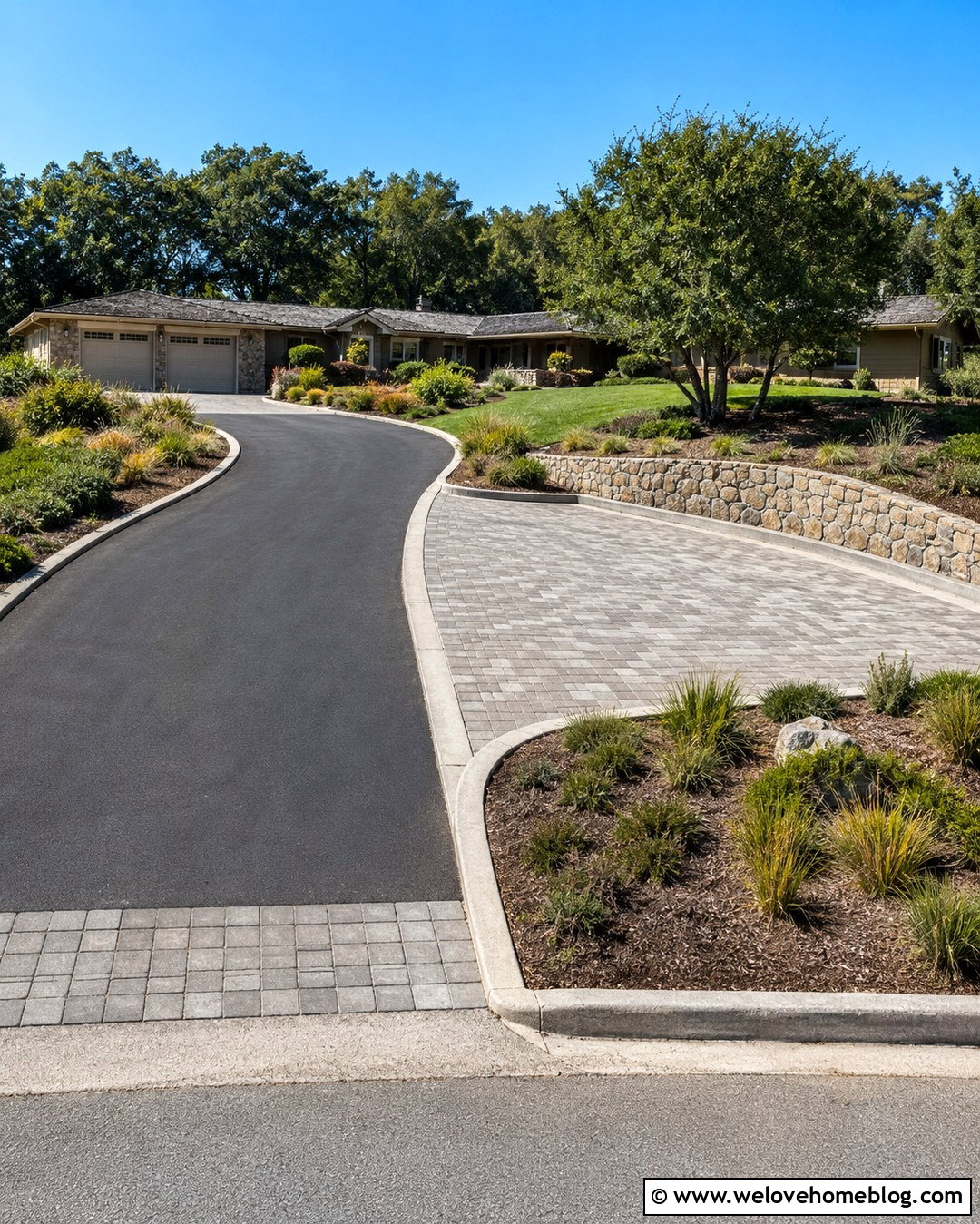
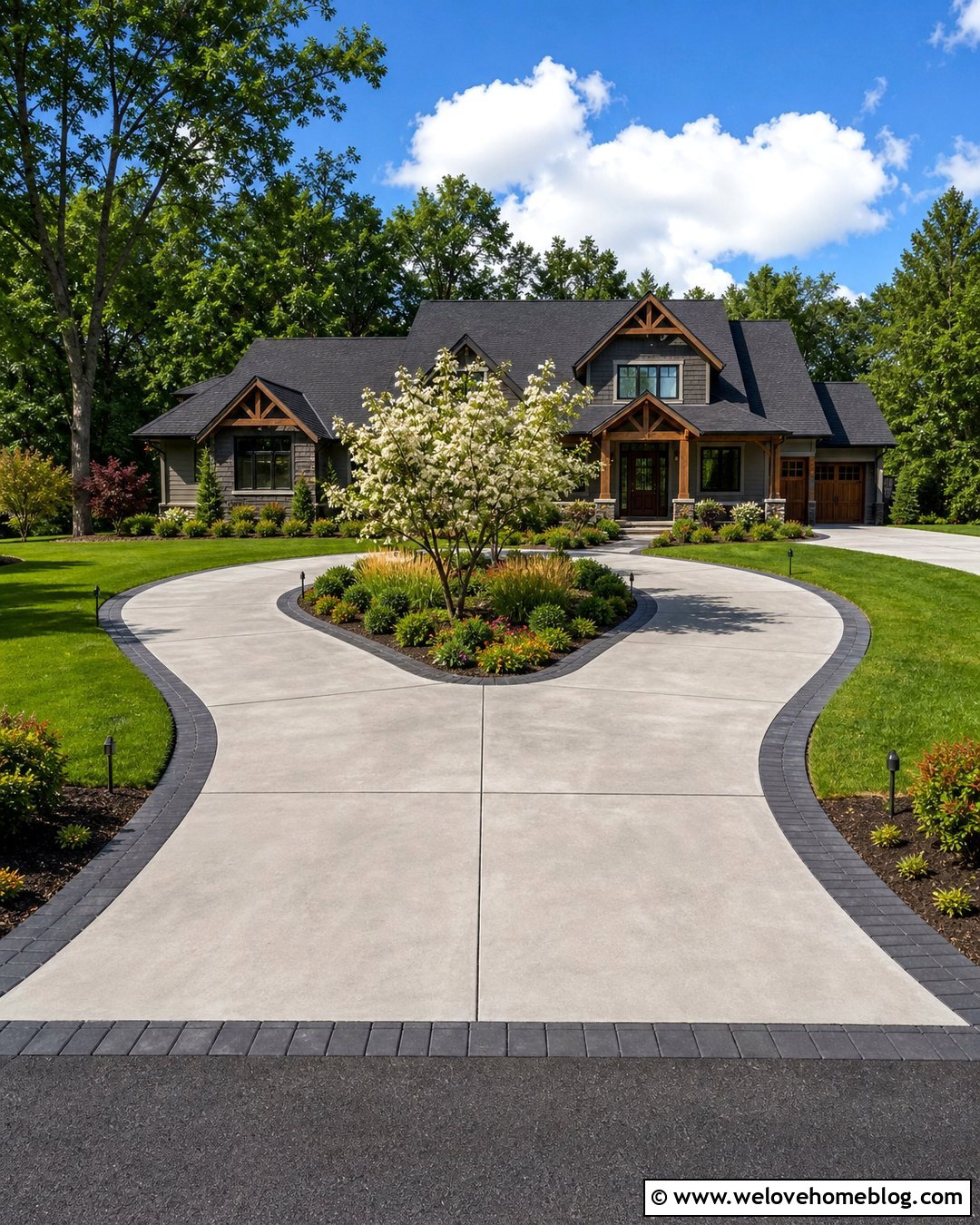
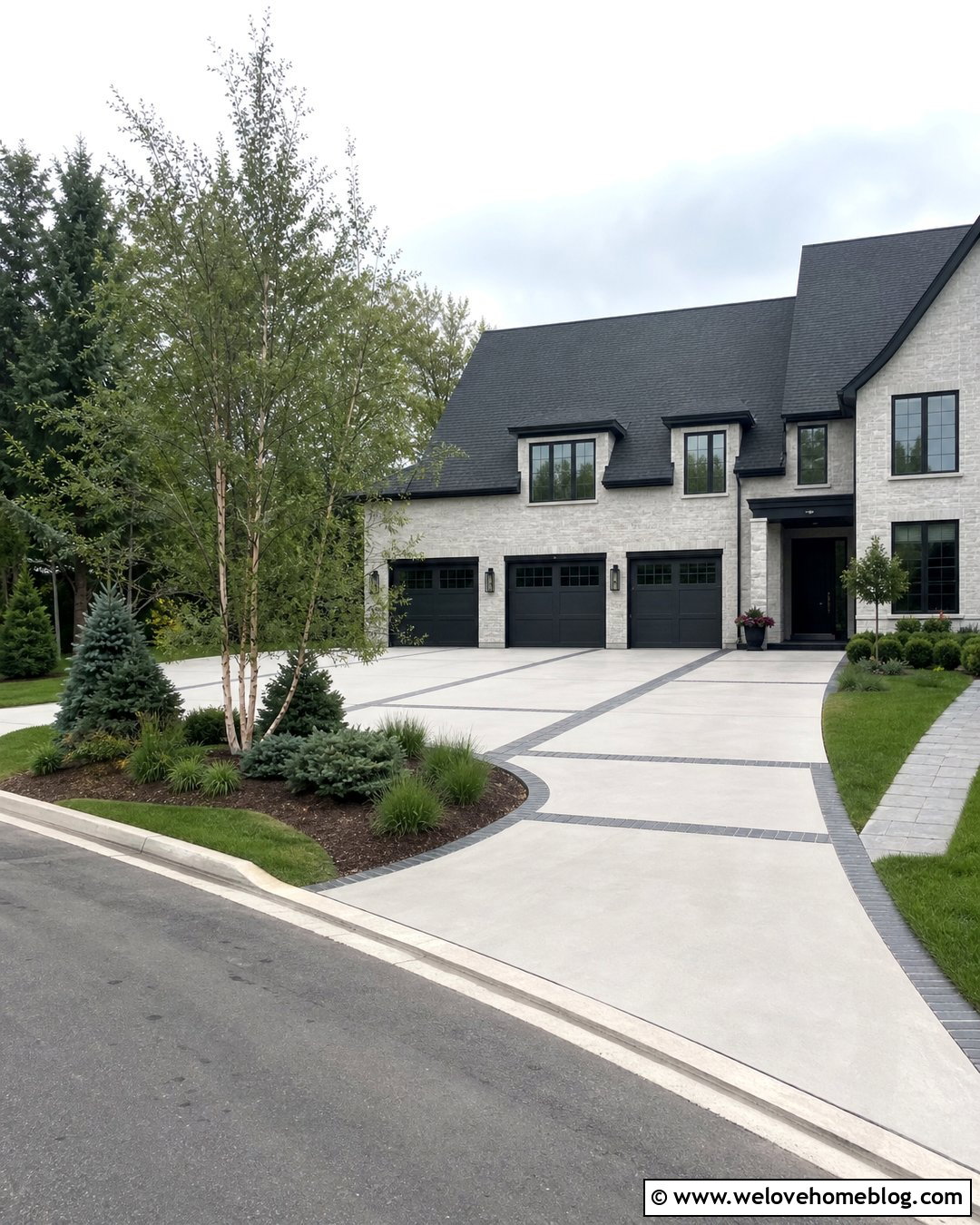
A parking turnout makes a long hillside driveway more flexible by providing space for passing, guest parking, or changing direction. Construct the main route from dark asphalt and pave the turnout with contrasting gray concrete pavers. Position it on a naturally wider section of the slope rather than forcing a large platform into the steepest area. A stone retaining wall can support the uphill boundary, while a sturdy curb protects the downhill edge. Use low grasses and ground covers around the turnout to maintain open visibility. A small shade tree may be placed beyond the driving clearance zone where conditions permit. Matching paver bands at the street and garage visually connect the side parking bay with the complete driveway design.
16. Split-Level Hillside Driveway
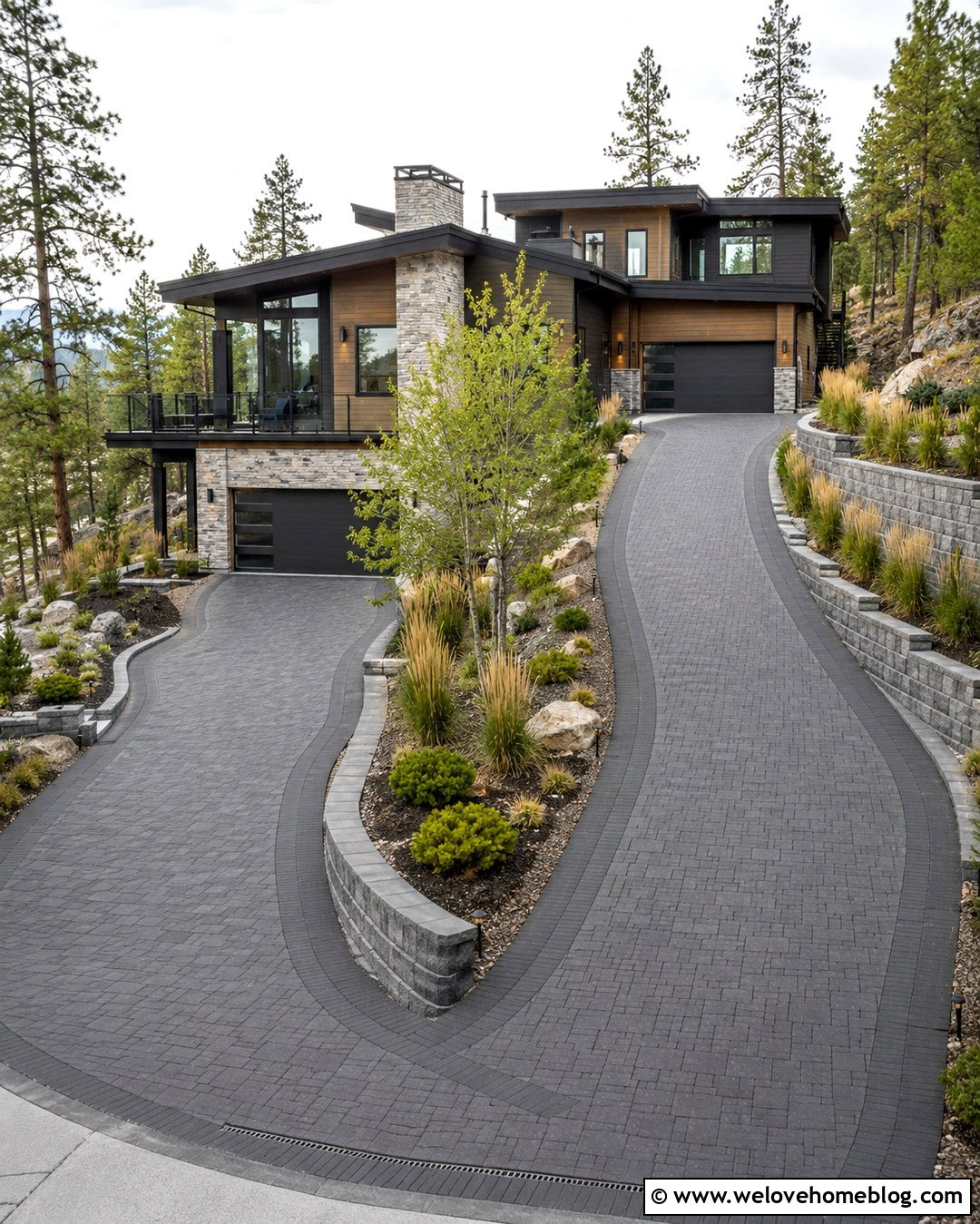
A split-level driveway can serve separate garages or parking areas while responding to a property’s changing elevation. Begin with one shared entrance made from charcoal concrete pavers, then divide the driveway into two curved branches. One branch can climb toward an upper garage, while the other follows the contour toward a lower parking pad. Use matching paver borders so the layout feels unified. A landscaped median between the branches creates space for ornamental grasses, compact evergreens, and a small specimen tree. Tiered concrete block walls stabilize the cut slopes and repeat the home’s exterior colors. Drainage channels should be placed where the routes divide and near each garage. This layout is particularly useful for multistory contemporary or mountain homes.
17. Modern Concrete Panel Hillside Driveway
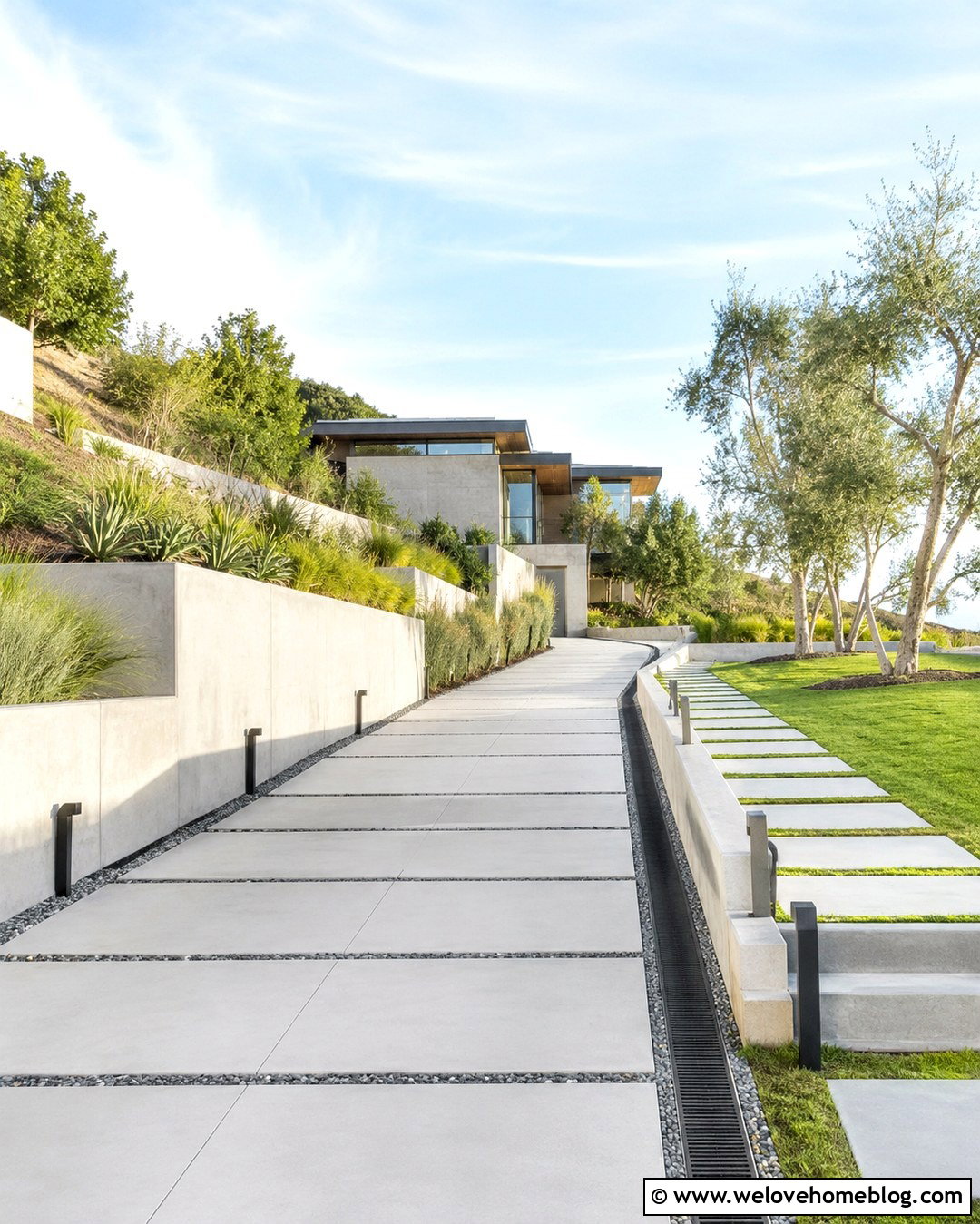
Large concrete panels create a bold geometric look that pairs naturally with a modern hillside house. Use light-gray poured concrete divided by narrow strips of dark gravel rather than wide grass joints that may be difficult to maintain on a slope. Arrange the panels along a straight driveway with a slight horizontal bend near the garage. Smooth concrete retaining walls can step with the land and double as raised planters. Fill them with sculptural grasses, compact shrubs, and drought-tolerant ground covers. A black metal channel drain at the garage creates a crisp transition and handles surface water. Low bollard lights can follow the outer curb without cluttering the design. The finished approach feels clean, spacious, and closely connected to modern architecture.
18. Rustic Stone Hillside Driveway
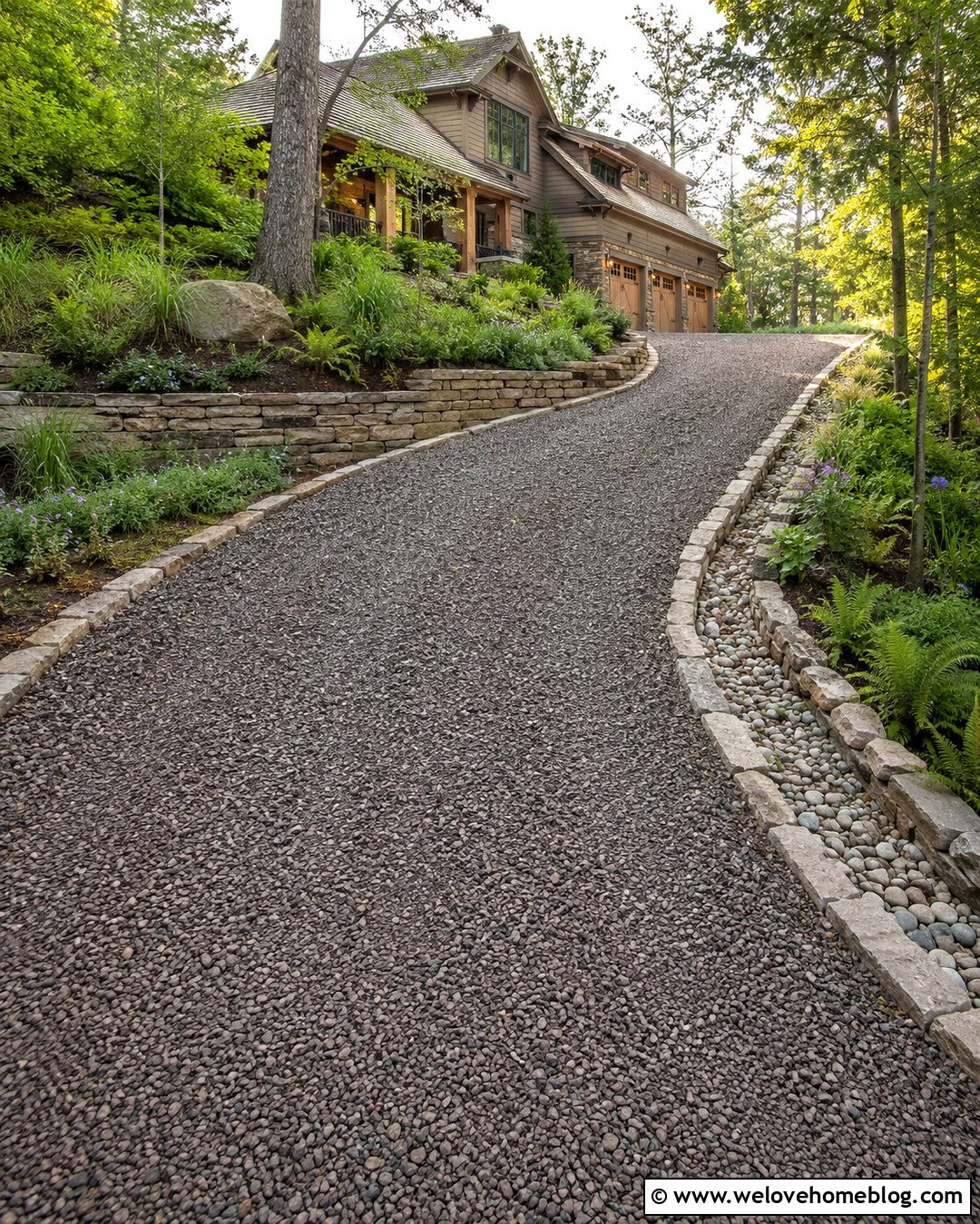
Natural materials can make a driveway feel as though it has always belonged on the hillside. Use compacted brown-gray crushed stone stabilized within a supportive grid, then create a broad curve leading to a timber or stone-clad country house. Irregular fieldstone curbs can contain the gravel and transition into low dry-stacked retaining walls. Frame the drive with native grasses, evergreen shrubs, ferns, and informal clusters of flowering perennials. A stone-lined drainage ditch on the uphill side adds function while maintaining the rustic character. At the garage, switch to a level flagstone-look concrete paver apron for a cleaner parking surface. This layered combination works particularly well on wooded acreage, mountain properties, and rural lots with natural rock outcroppings.
19. Heated Concrete Hillside Driveway
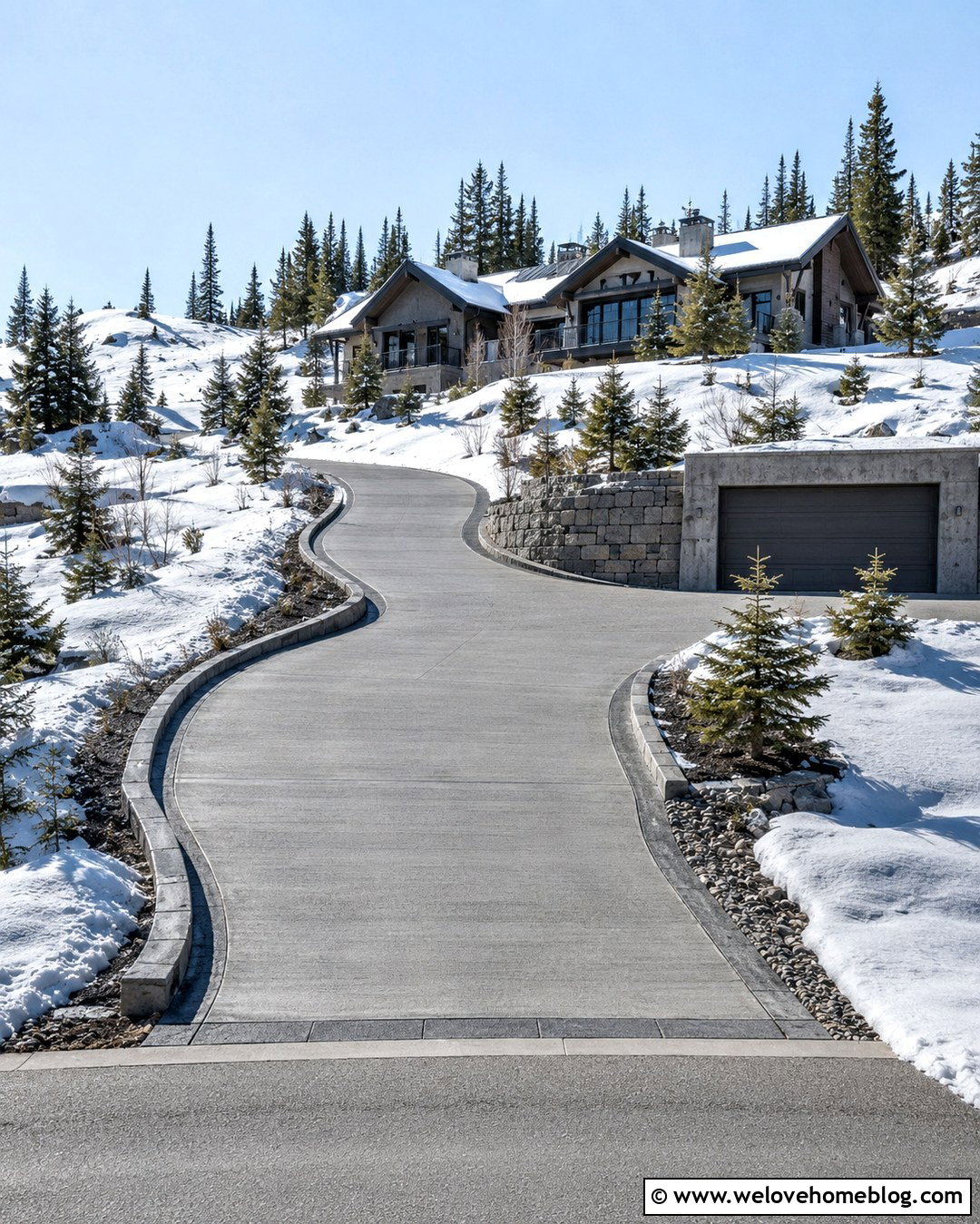
In a snowy climate, a heated concrete driveway may reduce the amount of manual snow and ice removal needed on a challenging slope. Use reinforced, broom-finished concrete in a gentle S-curve, with the heating system professionally designed beneath key travel areas. Dark stone curbs provide visible boundaries when surrounding ground is covered with snow. Along the uphill side, a masonry retaining wall supports a planted bank of compact evergreens and hardy ground covers. Drainage must have a safe discharge point so melting water does not collect and refreeze elsewhere. Add a level concrete landing near the garage and a textured paver apron at the road. The practical system can still look polished beside mountain, Scandinavian-inspired, Craftsman, or contemporary homes.
20. Narrow Hillside Driveway With Lighting
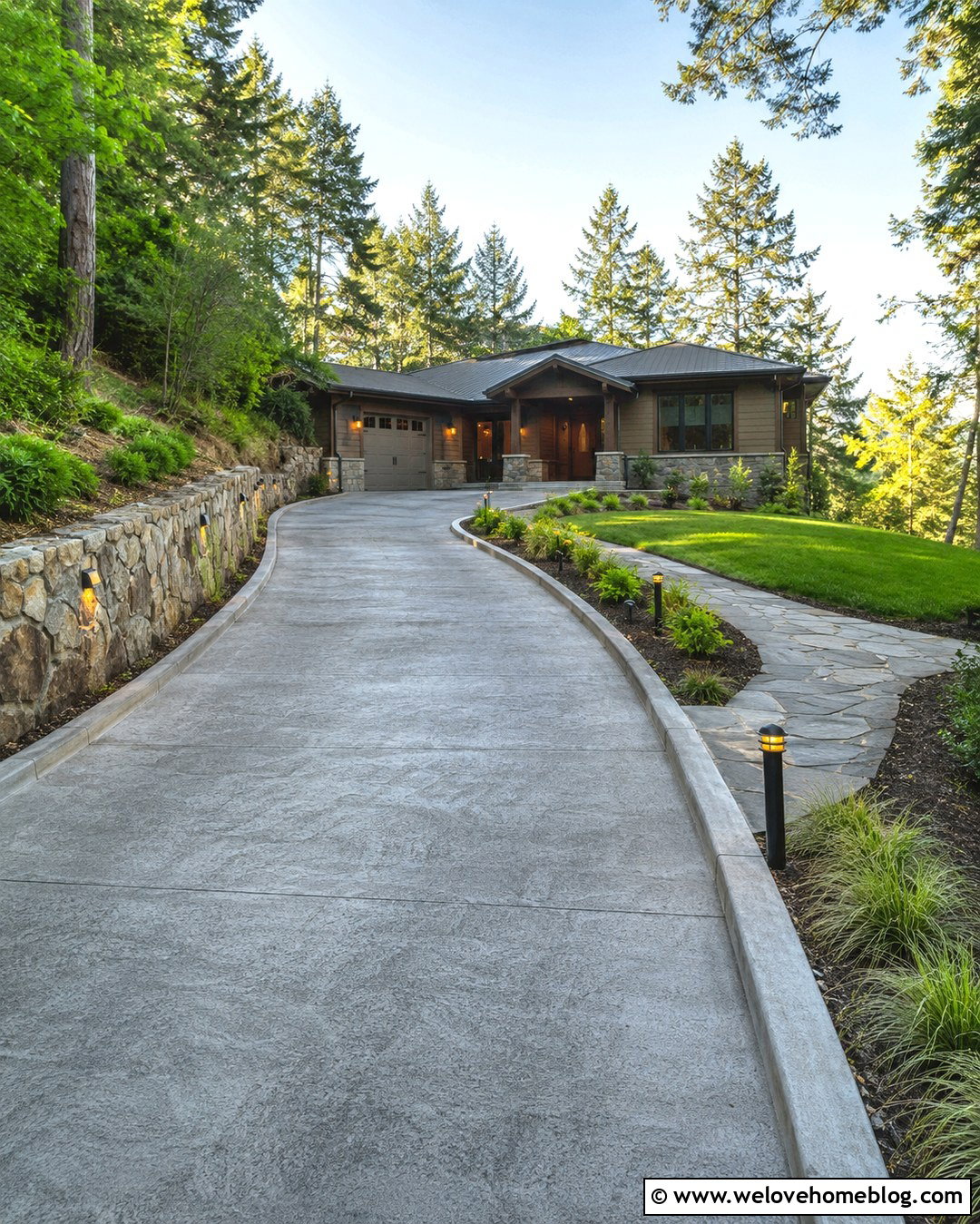
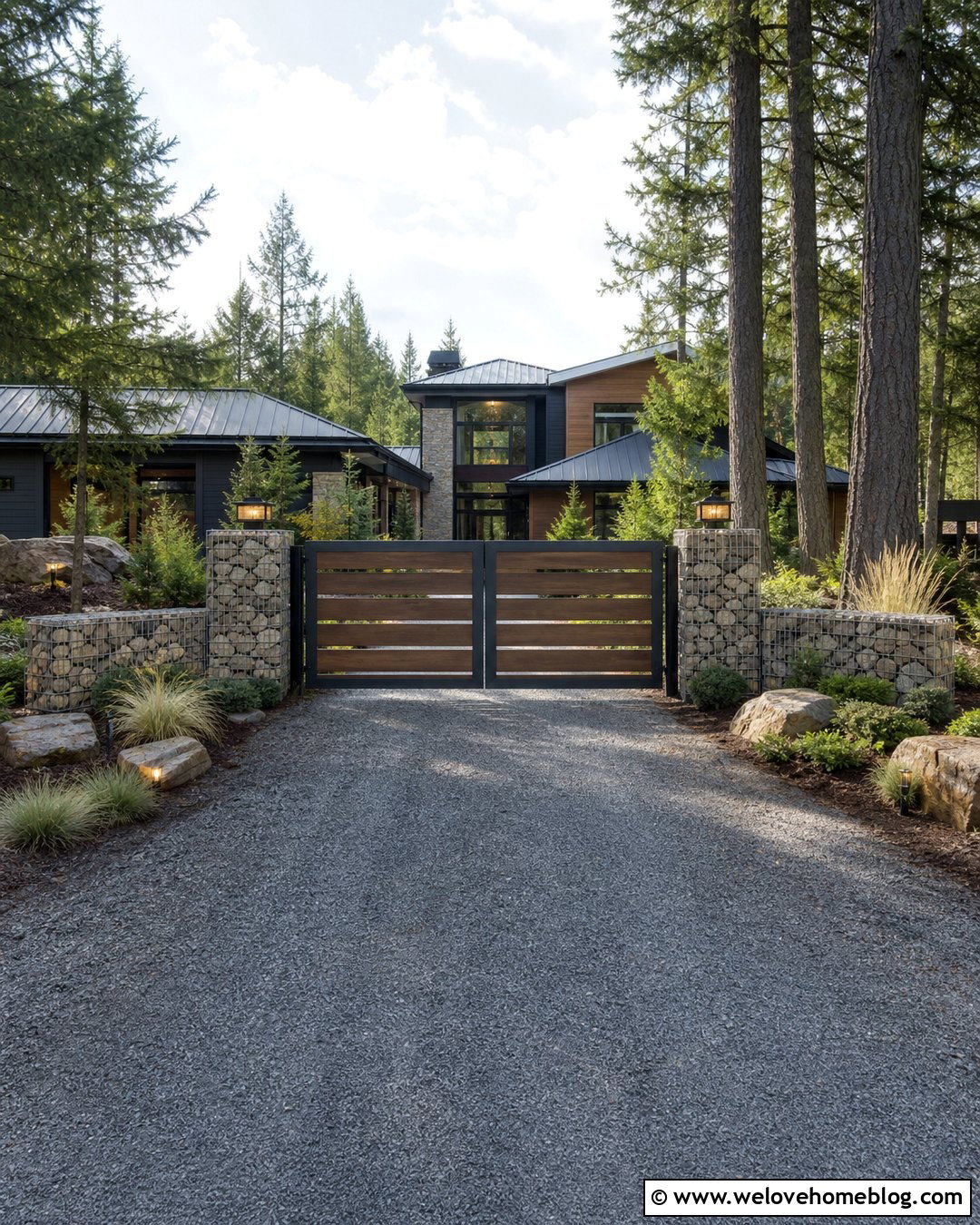
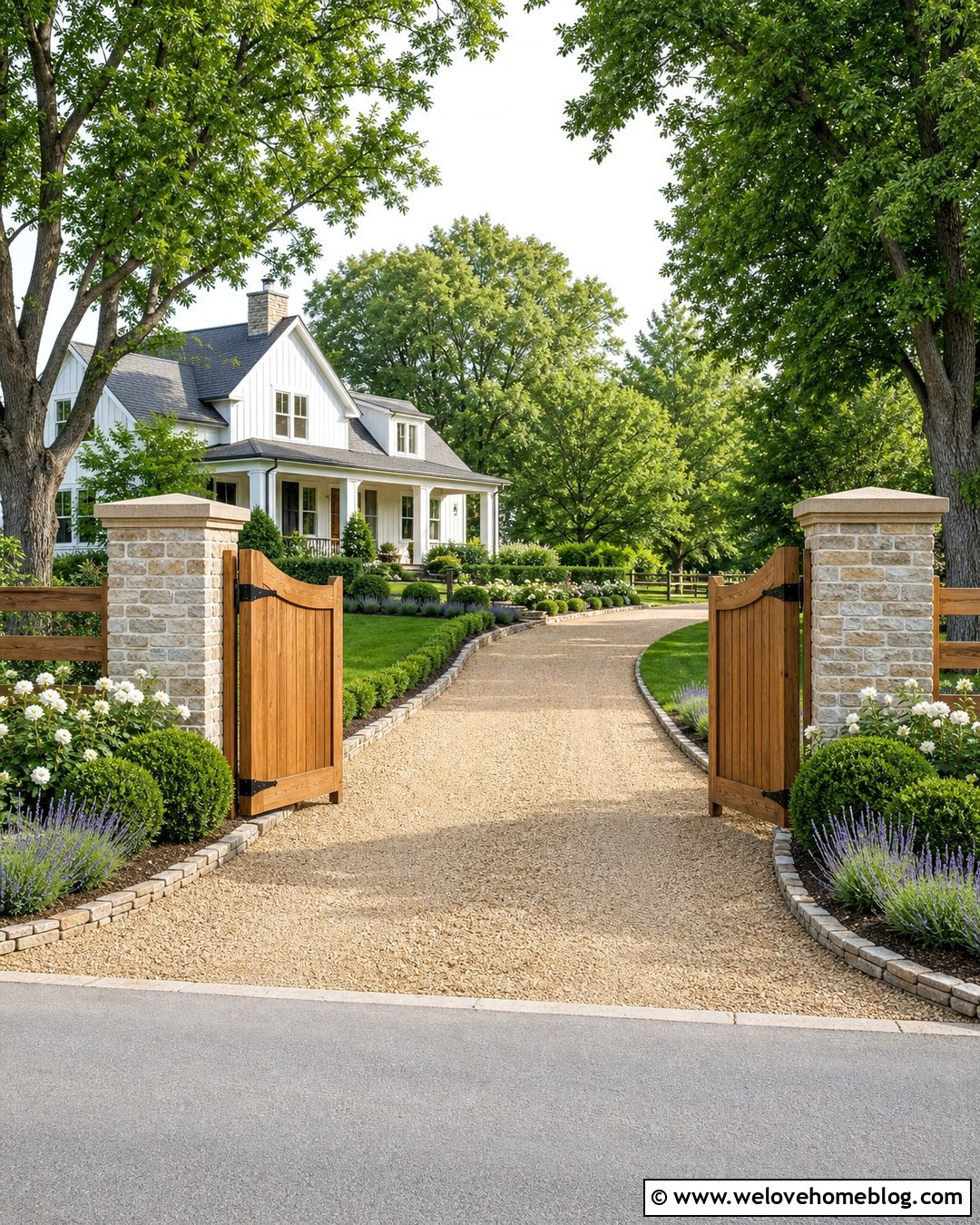
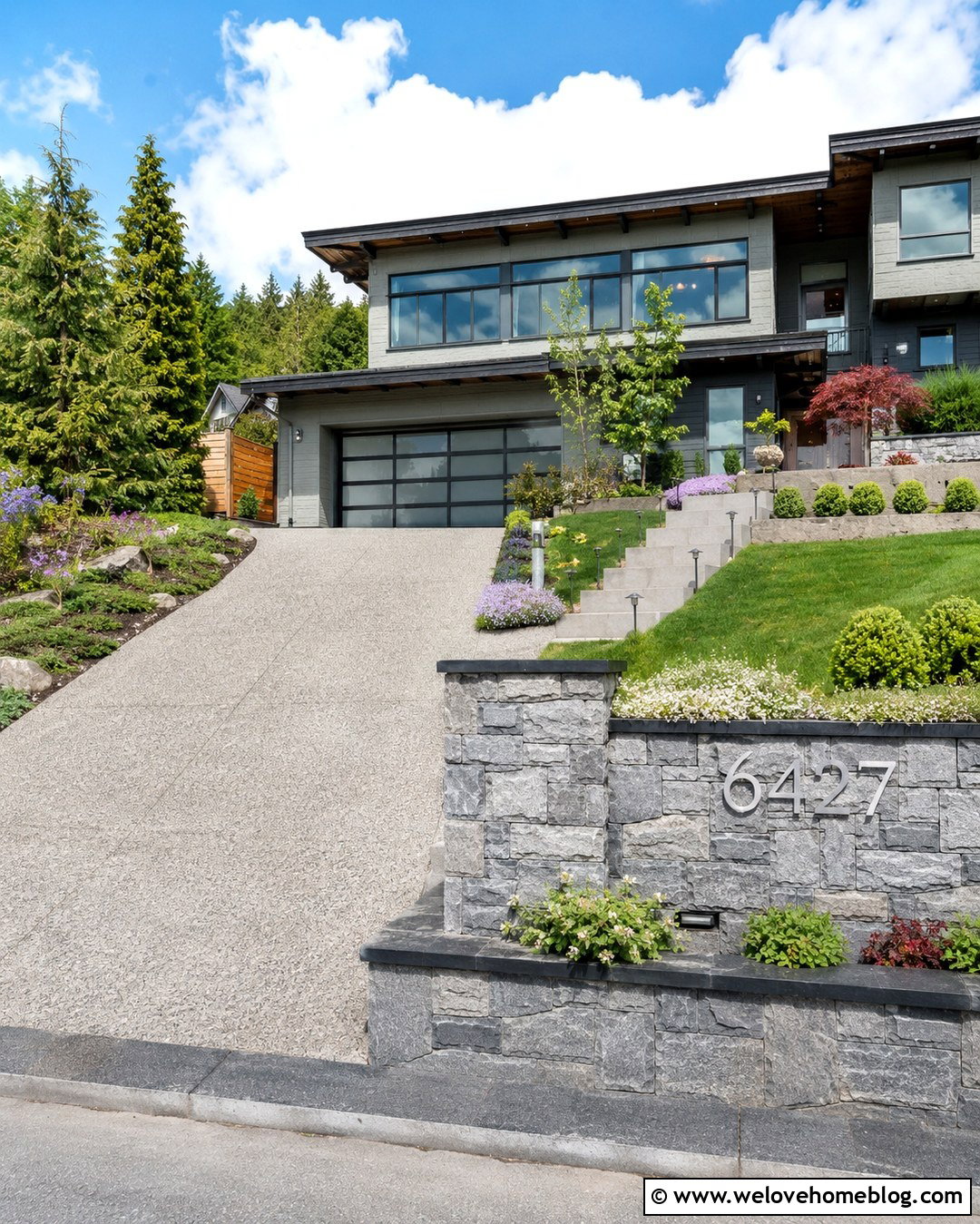
A narrow driveway can fit a constrained hillside lot when every edge, turn, and transition is clearly organized. Use textured gray concrete for the driving surface and follow a smooth contour around the slope. A low stone retaining wall should line the uphill edge, while a reinforced concrete curb defines the open side. Install compact shielded bollard lights or recessed wall lights at regular intervals so the route remains visually clear without creating daytime clutter. Above the wall, use low ground covers and narrow ornamental grasses instead of shrubs that may extend into vehicle space. Include a small passing or turning bay where the site allows. The finished driveway feels secure, uncluttered, and attractive beside compact modern, Craftsman, or hillside cottage homes.
Conclusion:
Successful hillside driveways do more than connect the street to the garage. They follow the terrain, manage water, protect pavement edges, and make the property feel intentionally designed. Curved routes can soften a climb, while textured concrete, asphalt, pavers, stabilized gravel, and resin-bound aggregate provide distinct looks for different homes. Retaining walls, drainage channels, swales, and erosion-resistant planting should be planned as parts of one coordinated design. Before construction, have the site’s grade, soil, access, drainage, and local requirements professionally evaluated. Whether your property is gently elevated or sharply sloped, these **20 hillside driveway ideas** offer practical starting points for creating safer access and stronger curb appeal.

Related posts:
Leave a Reply