
A difficult grade can become one of your home’s strongest exterior features when the layout, surface, drainage, and landscaping are planned together. These 20 Steep Sloped Driveway Ideas explore practical ways to improve traction, manage fast-moving runoff, reduce erosion, and create a safer transition between the street and garage. Options range from textured concrete and asphalt to pavers, stabilized gravel, retaining walls, switchbacks, and heated surfaces. Because every hillside property behaves differently, grading and drainage should be reviewed by qualified local professionals before construction begins. The best design will suit your climate, vehicle needs, house style, available space, and maintenance budget. Use the complete driveway looks below to find an attractive, realistic solution among these 20 Steep Sloped Driveway Ideas.

1. Curved Steep Sloped Concrete Driveway
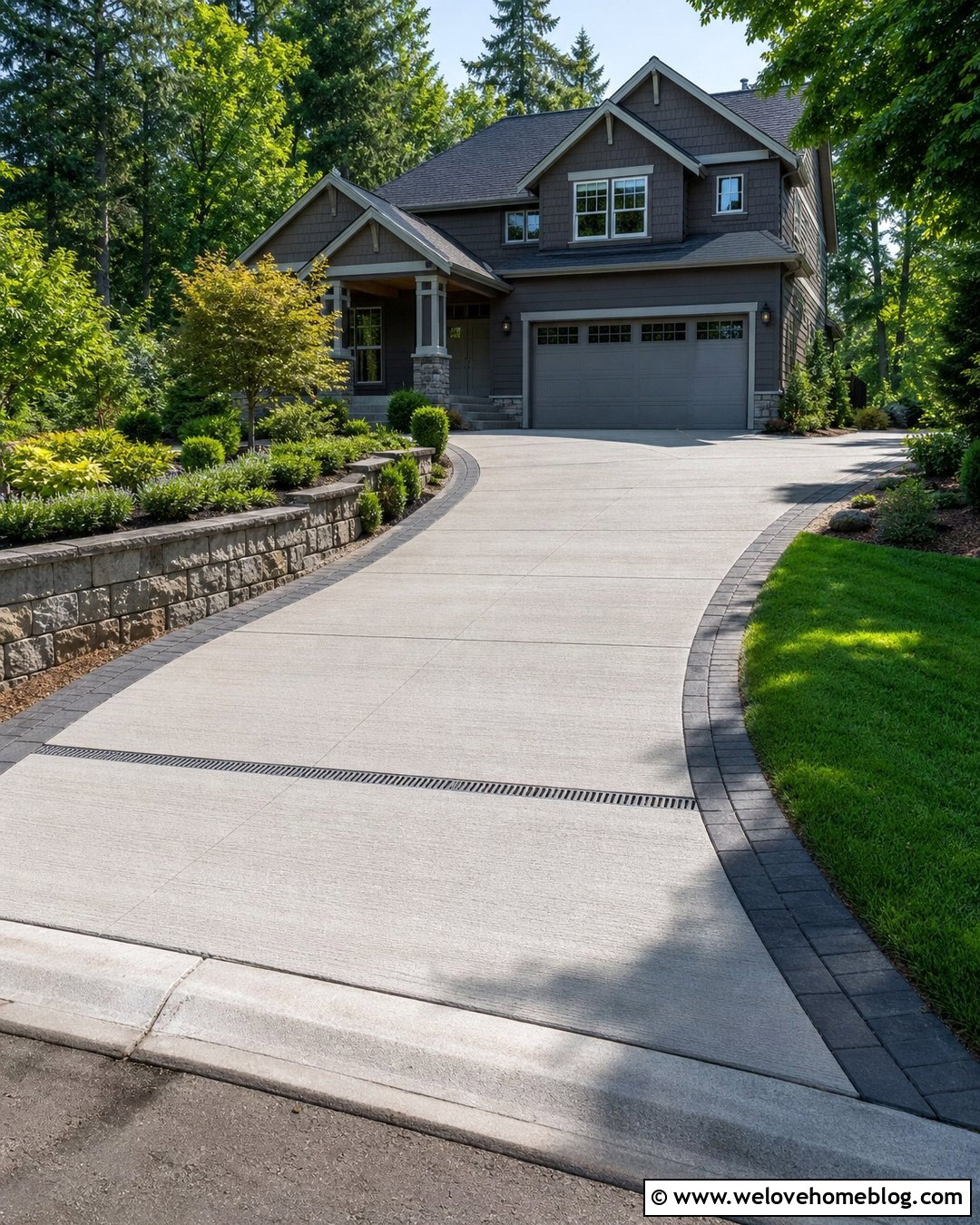
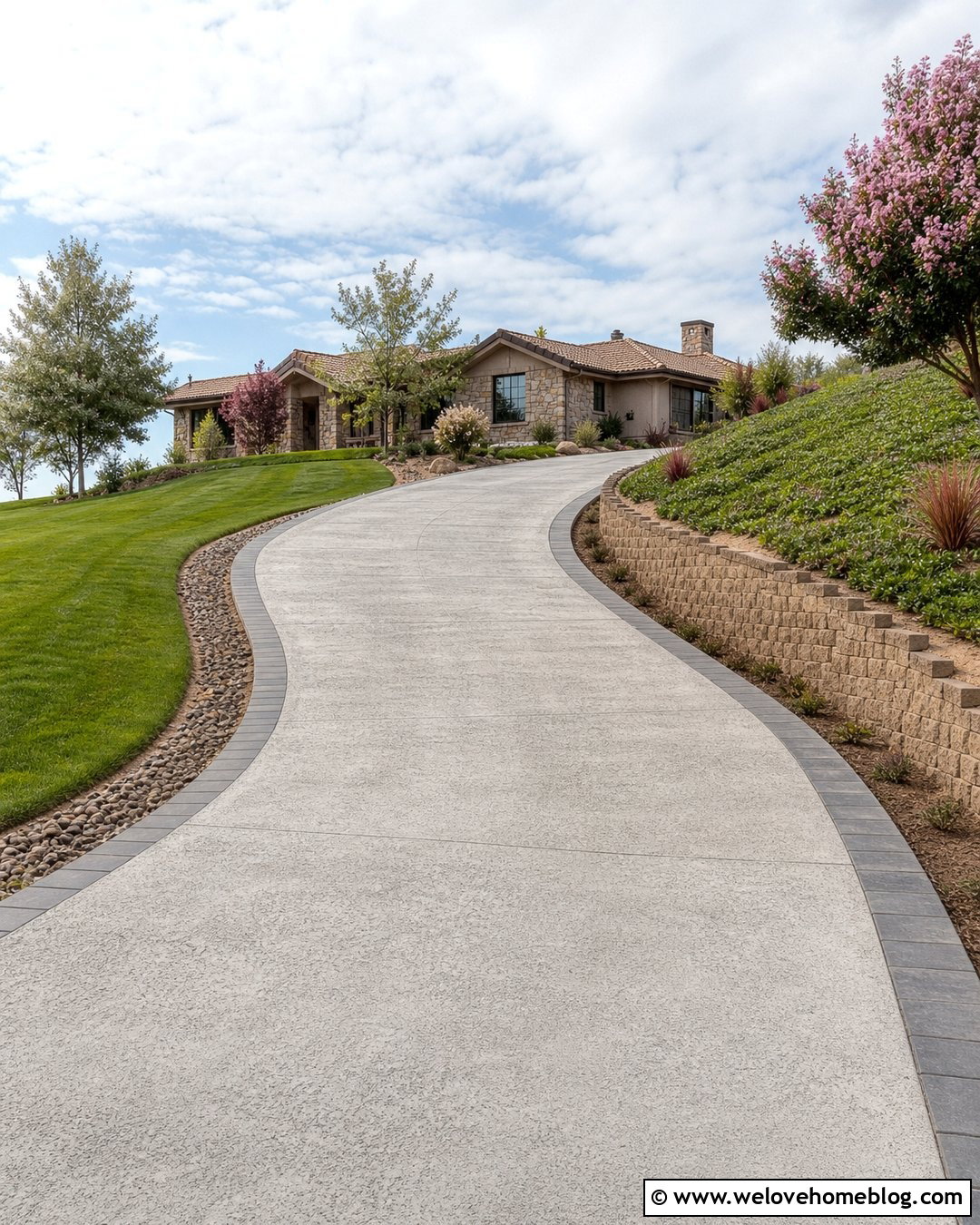
A curved layout can make a steep climb feel less abrupt by extending the route across the property. Use light gray poured concrete with a broom finish to add texture beneath vehicle tires. Gentle curves should be broad enough for comfortable steering rather than forming tight corners. Dark concrete paver borders will visually define the edges and help the driveway stand out against the lawn. On the uphill side, a low retaining wall can hold back soil and create space for layered shrubs. A grated channel drain near the garage helps intercept runoff before it reaches the building. Finish the complete look with a wide entry apron, low landscape lighting, and a flatter turning area beside the garage.
2. Steep Sloped Driveway With Retaining Walls
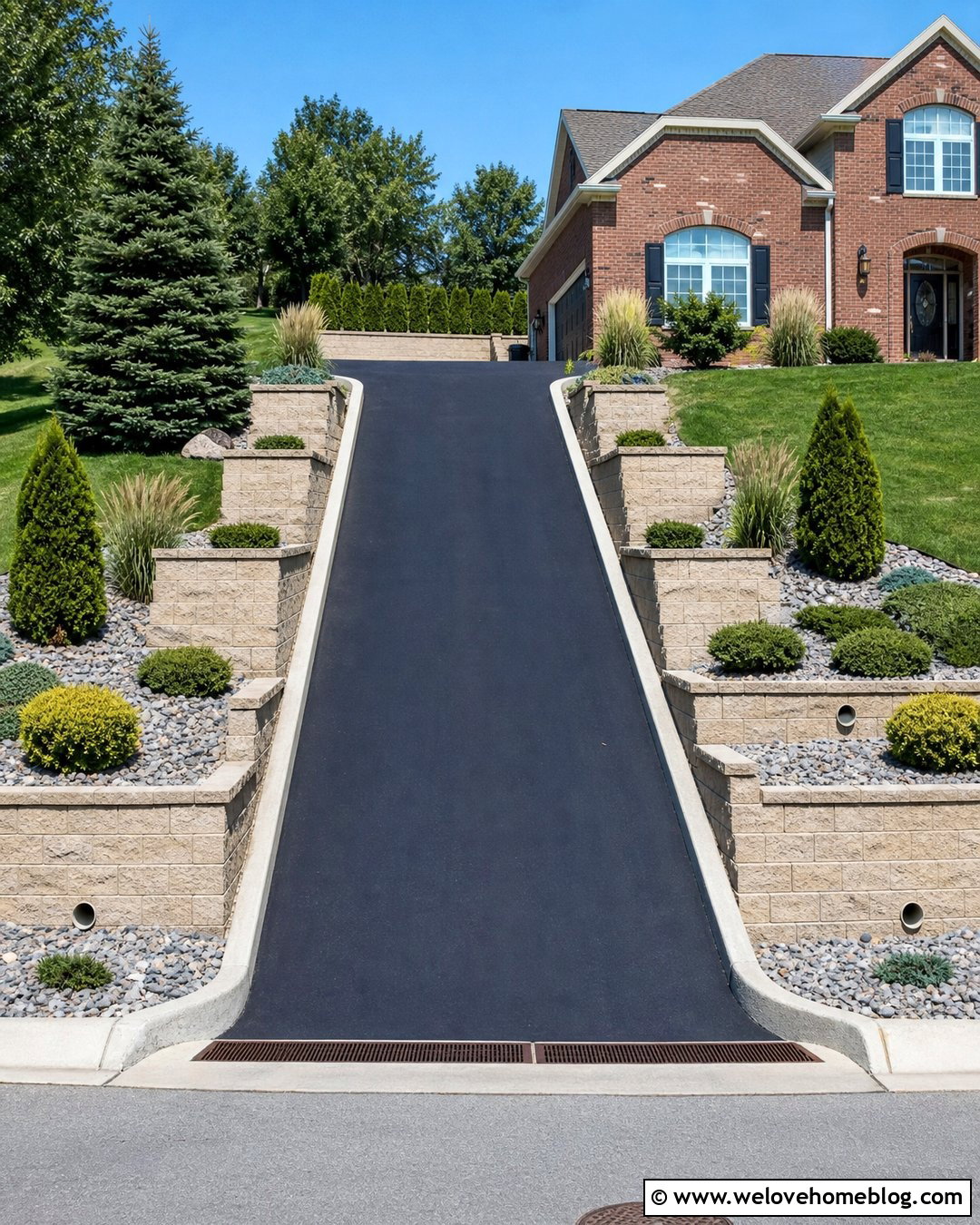
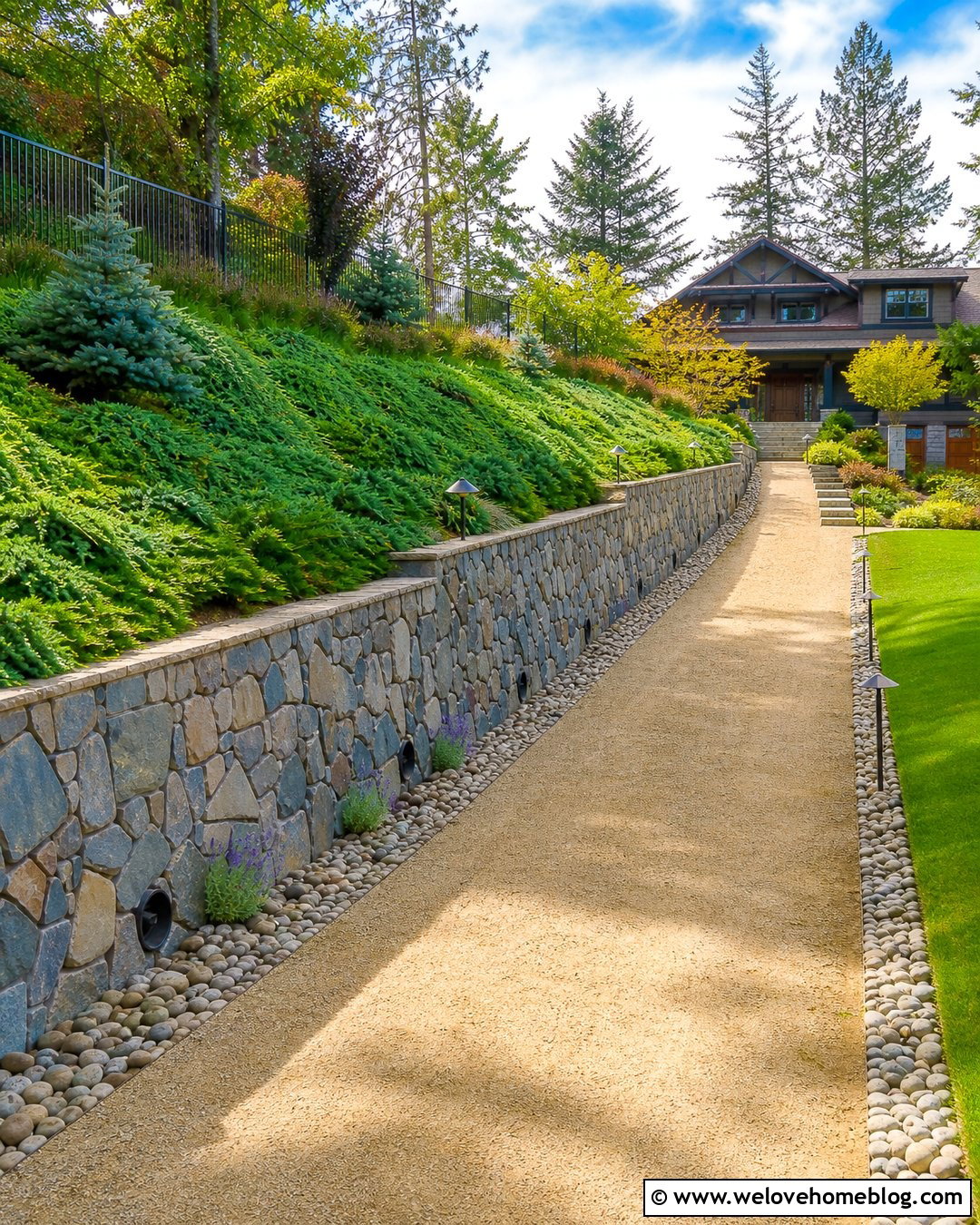
Retaining walls can transform an uneven hillside into a clean, structured driveway approach. A dark asphalt surface works well with buff-colored segmental concrete walls, creating a strong contrast that suits traditional and contemporary homes. Build the driveway between the cut slope and a protected downhill edge, leaving enough clearance for doors, mirrors, and snow removal equipment. Drainage behind the walls is essential because trapped water can increase soil pressure. Plant spreading juniper, ornamental grasses, and other slope-tolerant greenery above the walls to soften their appearance. Concrete curbs can keep water moving toward catch basins instead of over the edge. A level parking pad at the top completes this practical steep sloped driveway design.
3. Switchback Steep Sloped Driveway
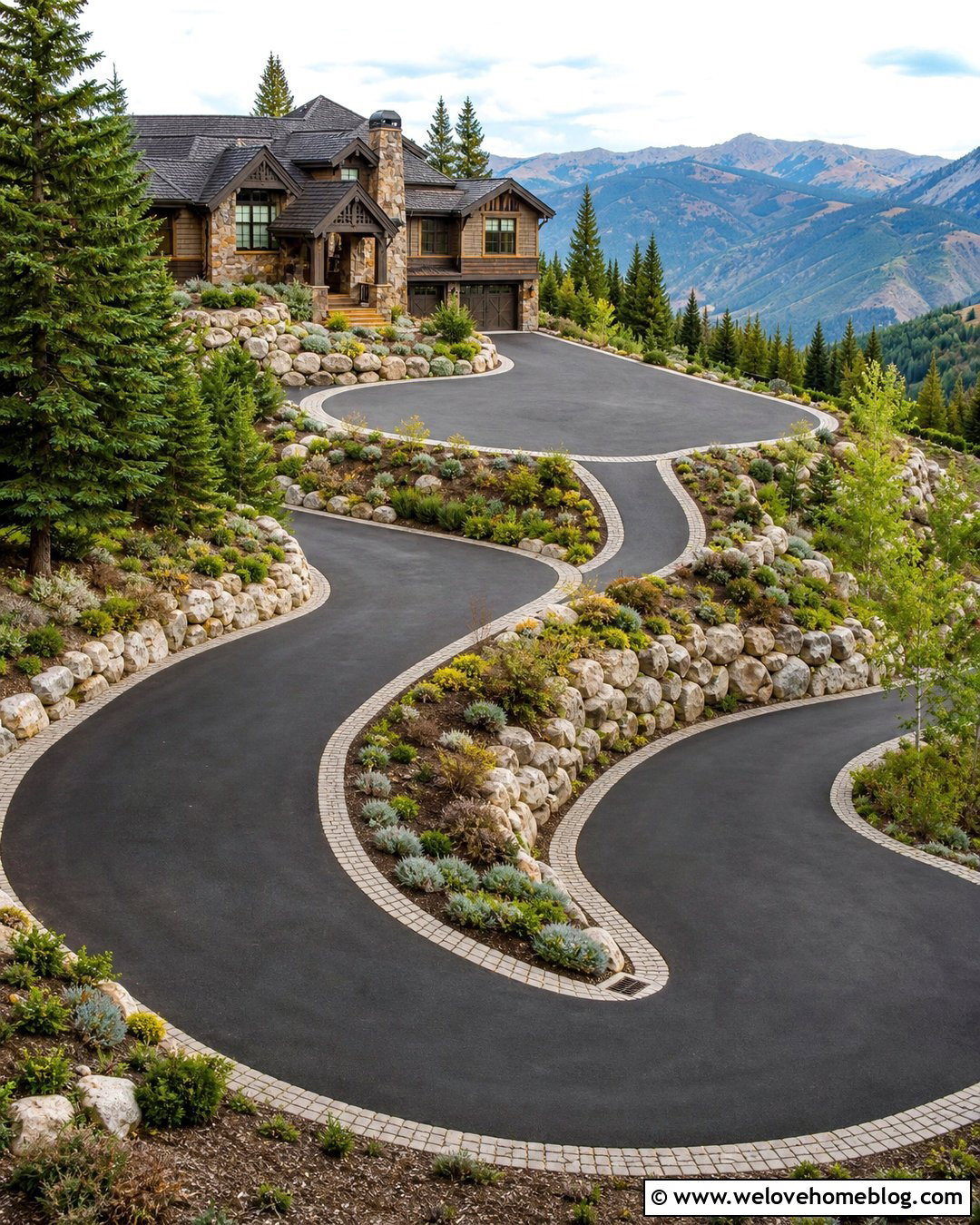
When a direct route would be excessively steep, a switchback driveway can spread the elevation change over a longer distance. Black asphalt provides a simple, durable surface, while wide hairpin turns create safer changes in direction. Each turning point should include generous space for the vehicles that regularly use the property. Natural stone retaining walls can support the inside banks and give the layout a mountain-home appearance. Add concrete drainage channels across strategic sections to slow and redirect runoff. Native shrubs, evergreen trees, and erosion-control groundcovers will help the driveway blend into the hillside. Warm-gray cobblestone edging defines the pavement without looking overly formal. This complete layout is especially useful on large wooded or rural lots.
4. Textured Concrete Steep Sloped Driveway
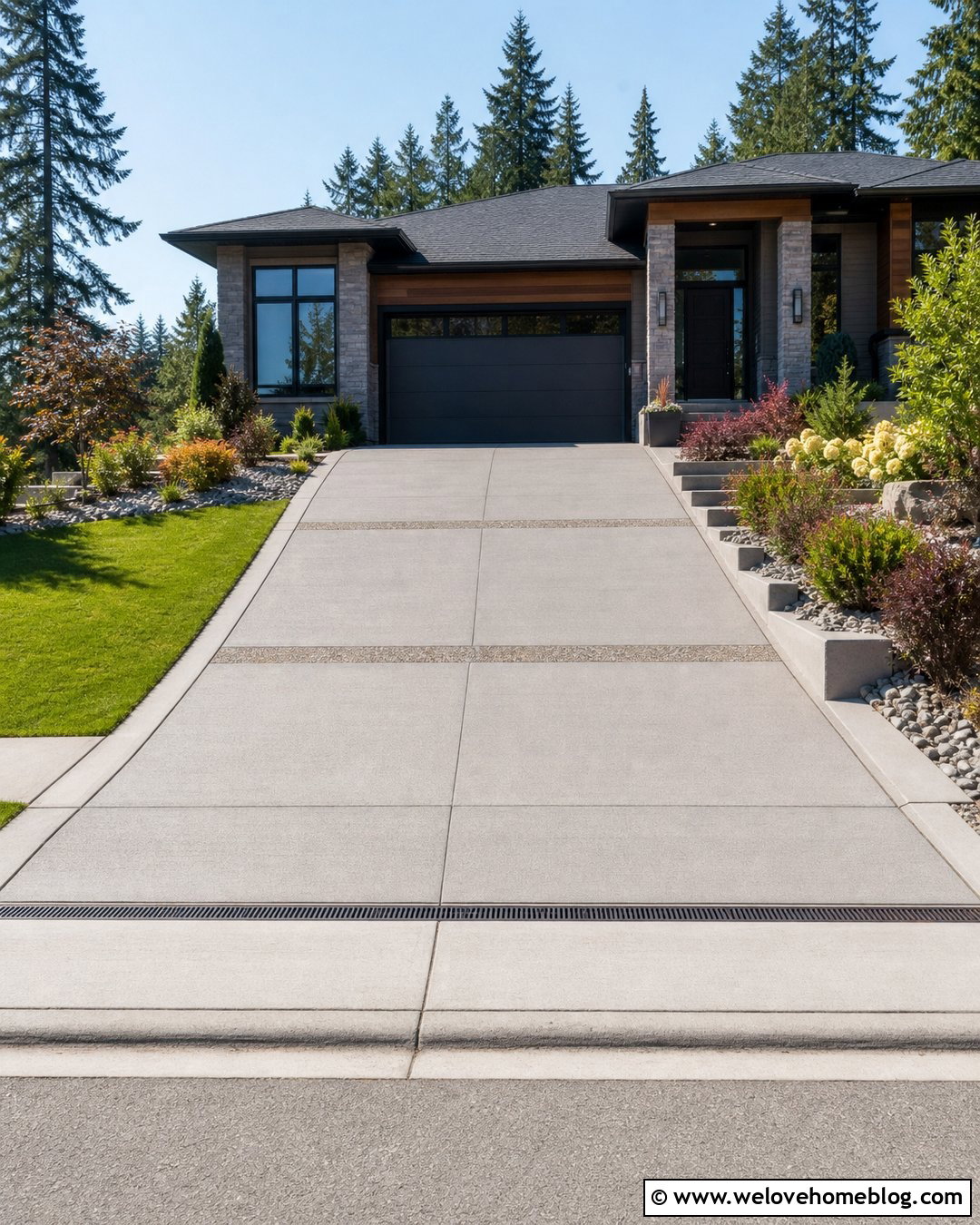
Could a plain concrete driveway provide enough visual interest on a dramatic slope? A deep broom finish adds subtle texture while improving the surface’s practical feel in wet conditions. Divide warm-gray poured concrete into medium-size panels with straight control joints for a neat, contemporary appearance. Use exposed aggregate bands at the street, midway up the hill, and near the garage to introduce contrast. Flush concrete curbs prevent soil and mulch from washing onto the driving surface. Along one side, create a stepped planting bed with dwarf evergreens, flowering shrubs, and decorative stone mulch. A trench drain across the lower entrance captures street-side water. The result is a streamlined steep driveway that feels sturdy without appearing harsh or industrial.
5. Steep Sloped Paver Driveway
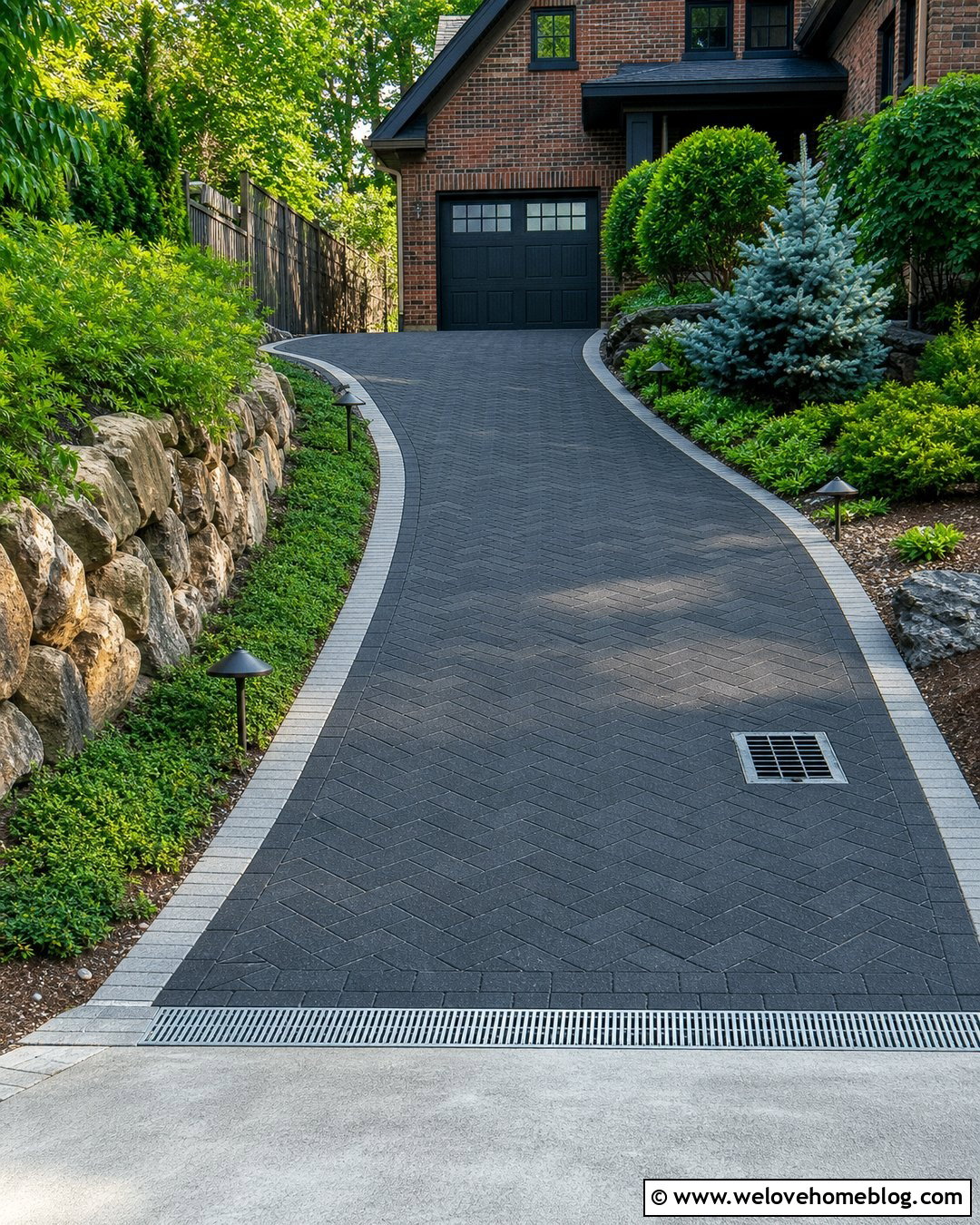
Concrete pavers can bring pattern, color, and definition to a sloped driveway when installed over a properly engineered base. Choose charcoal interlocking pavers with a textured face and arrange them in a herringbone pattern. The interlocking layout creates an active surface design that suits the strong visual movement of the hill. Secure edge restraints and contrasting light-gray paver borders are important for maintaining a crisp perimeter. Curve the driveway gently toward the garage and place a stone retaining wall along the uphill bank. Low-growing groundcovers can protect exposed soil without blocking sightlines. Add discreet catch basins at low points and a channel drain before the garage. This coordinated look works particularly well with brick, Craftsman, and modern farmhouse homes.
6. Steep Sloped Asphalt Driveway With Paver Borders
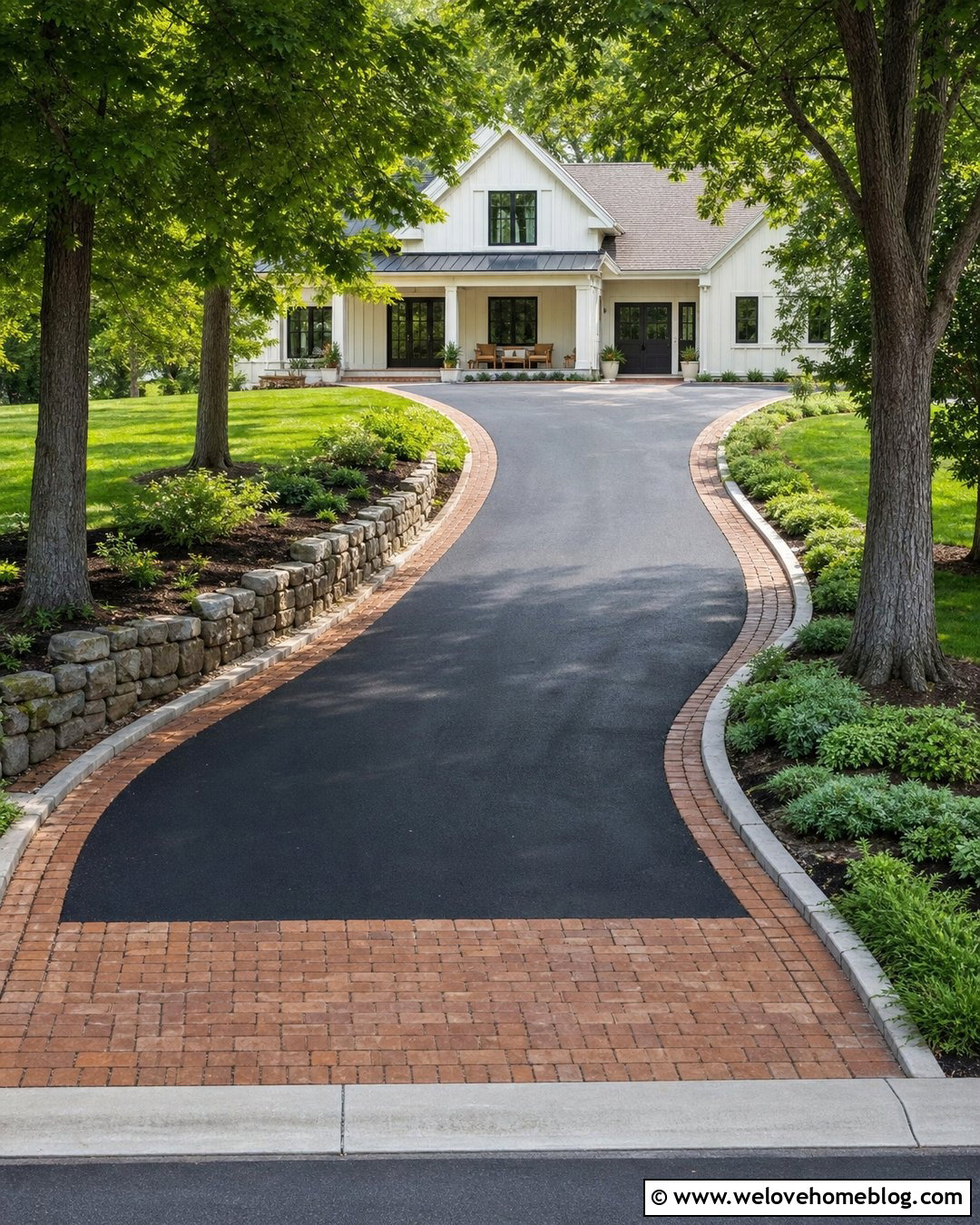
Smooth black asphalt offers a cost-conscious foundation for a long hillside driveway, but thoughtful borders can make it look more finished. Frame both sides with clay brick pavers set in a simple running bond. The reddish-brown border creates a warm transition between the dark pavement and green landscaping. Give the driveway a subtle S-curve to reduce its rigid appearance and follow the existing land more naturally. On the uphill side, use a low stone wall and spreading plants to manage the cut bank. A raised concrete curb on the downhill edge can help guide runoff toward designed drainage points. Complete the approach with a broad brick entrance apron and a flatter asphalt landing in front of the garage.
7. Steep Sloped Driveway With Drainage Channels
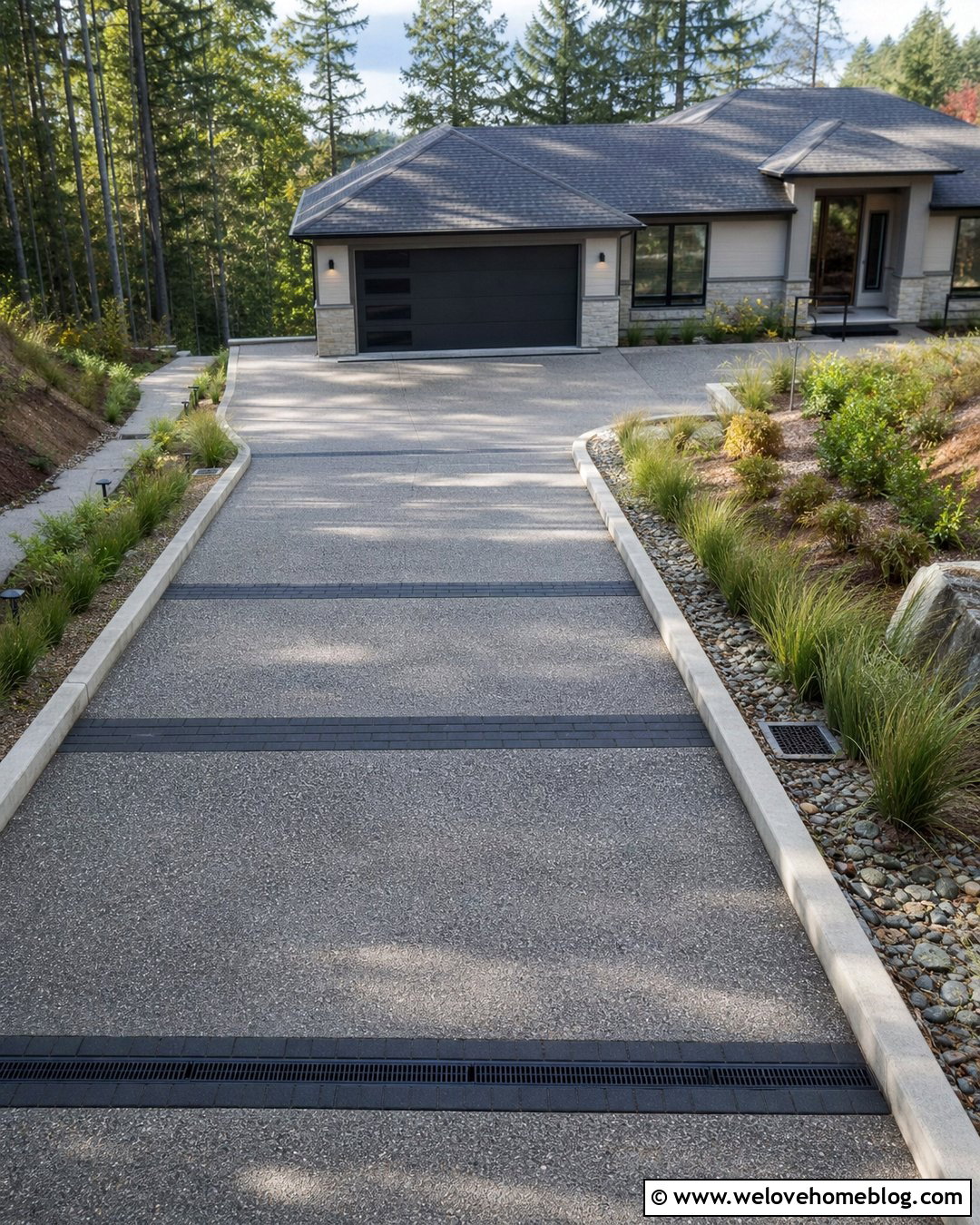
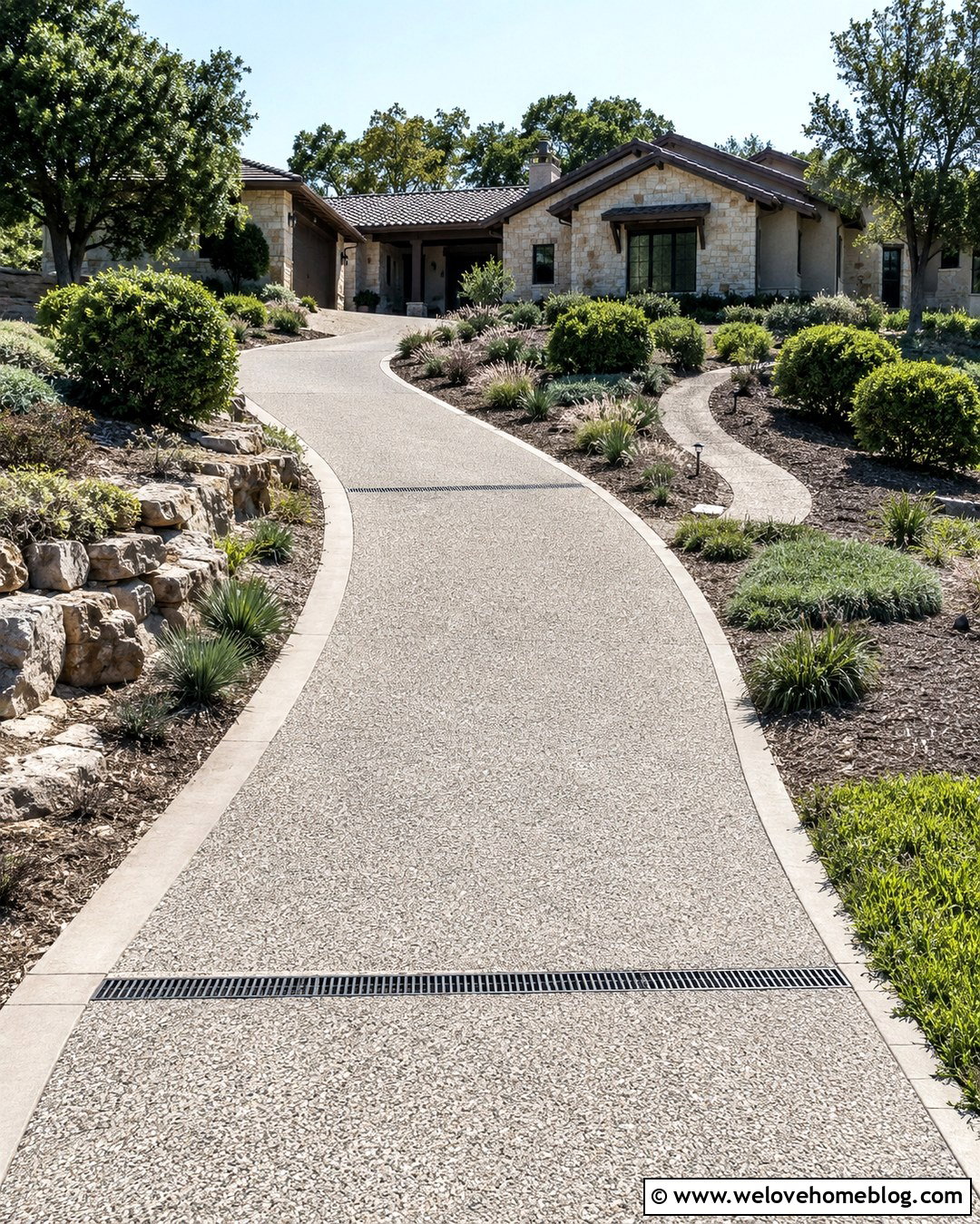
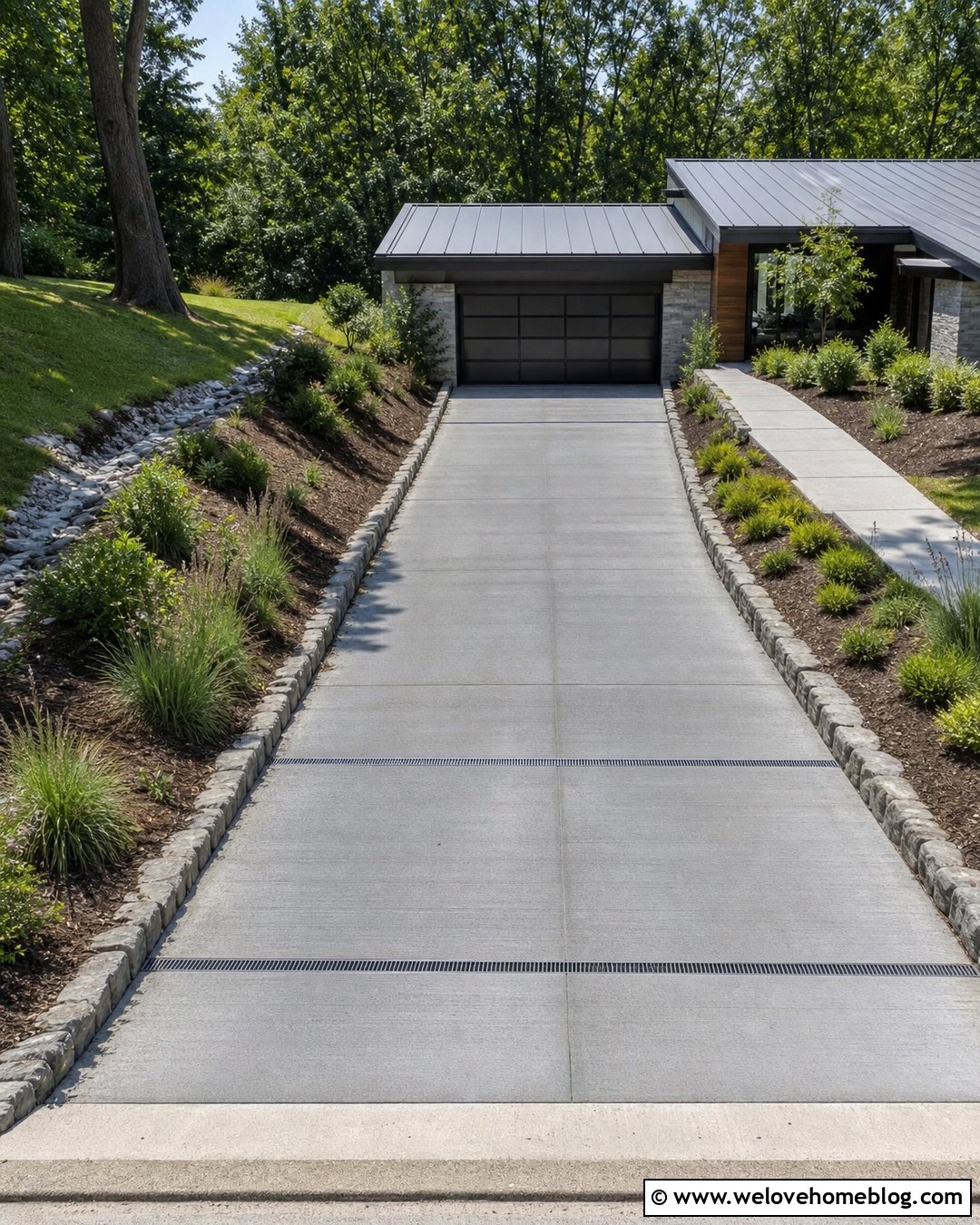
Heavy rain can rush down a steep driveway surprisingly quickly, so drainage should become part of the visible design. Use medium-gray exposed aggregate concrete for the main surface, then install dark linear channel drains across the driveway at planned intervals. Align the drains with charcoal paver bands so they look intentional rather than added later. A shallow cross-slope can guide water toward catch basins and a suitable approved outlet. Border the driveway with concrete curbing and gravel-filled swales planted with sedges and low ornamental grasses. Near the house, include a wider level landing and another channel drain before the garage door. This complete design combines drainage, texture, landscaping, and clear visual lines without allowing utility features to dominate the curb appeal.
8. Heated Steep Sloped Driveway
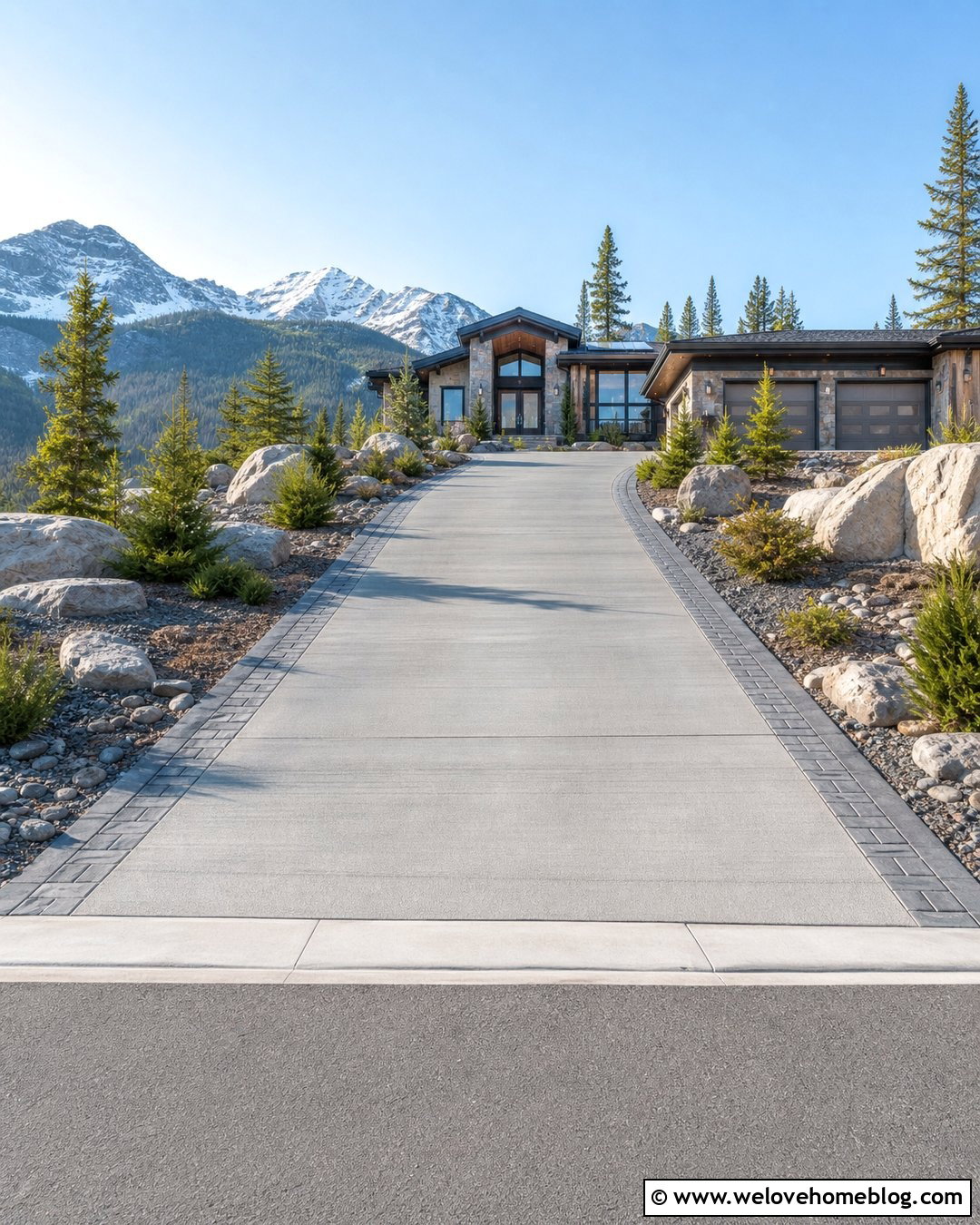
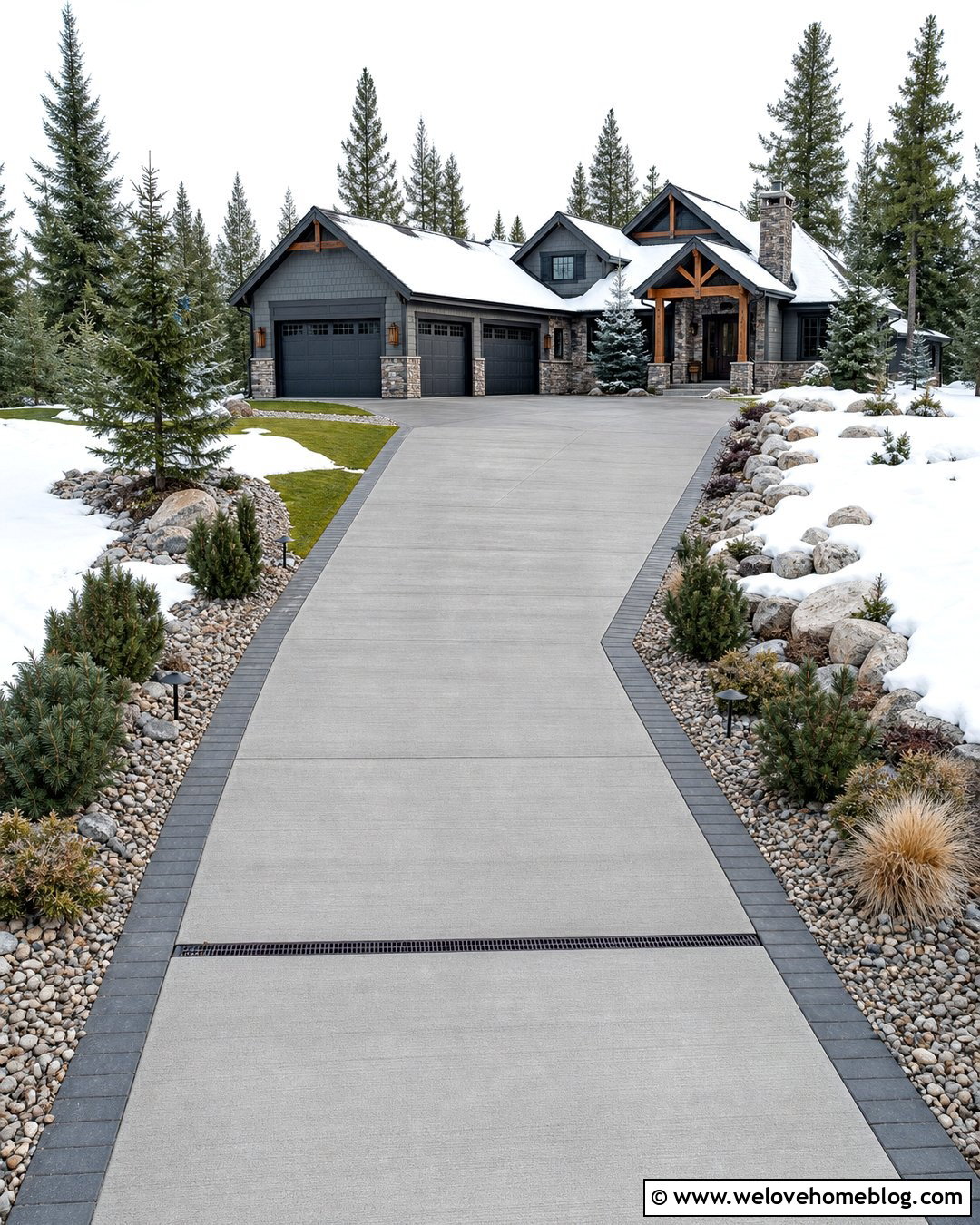
In regions with regular snow and ice, a heated driveway can make a difficult slope more manageable during winter. Install a hydronic or electric snow-melting system beneath reinforced, light-gray poured concrete. A textured broom finish keeps the surface looking understated and practical. Dark granite cobblestone borders can frame the straight driveway and mark its edges when surrounding areas are covered with snow. Include a gentle transition at the street and a flatter apron directly before the garage to reduce abrupt grade changes. Evergreen shrubs, boulders, and stone mulch create attractive landscaping that remains visible year-round. Drainage must carry meltwater away before it can refreeze at the bottom. The result is a polished driveway suited to snowy hillside properties.
9. Steep Sloped Driveway With Level Parking Pad
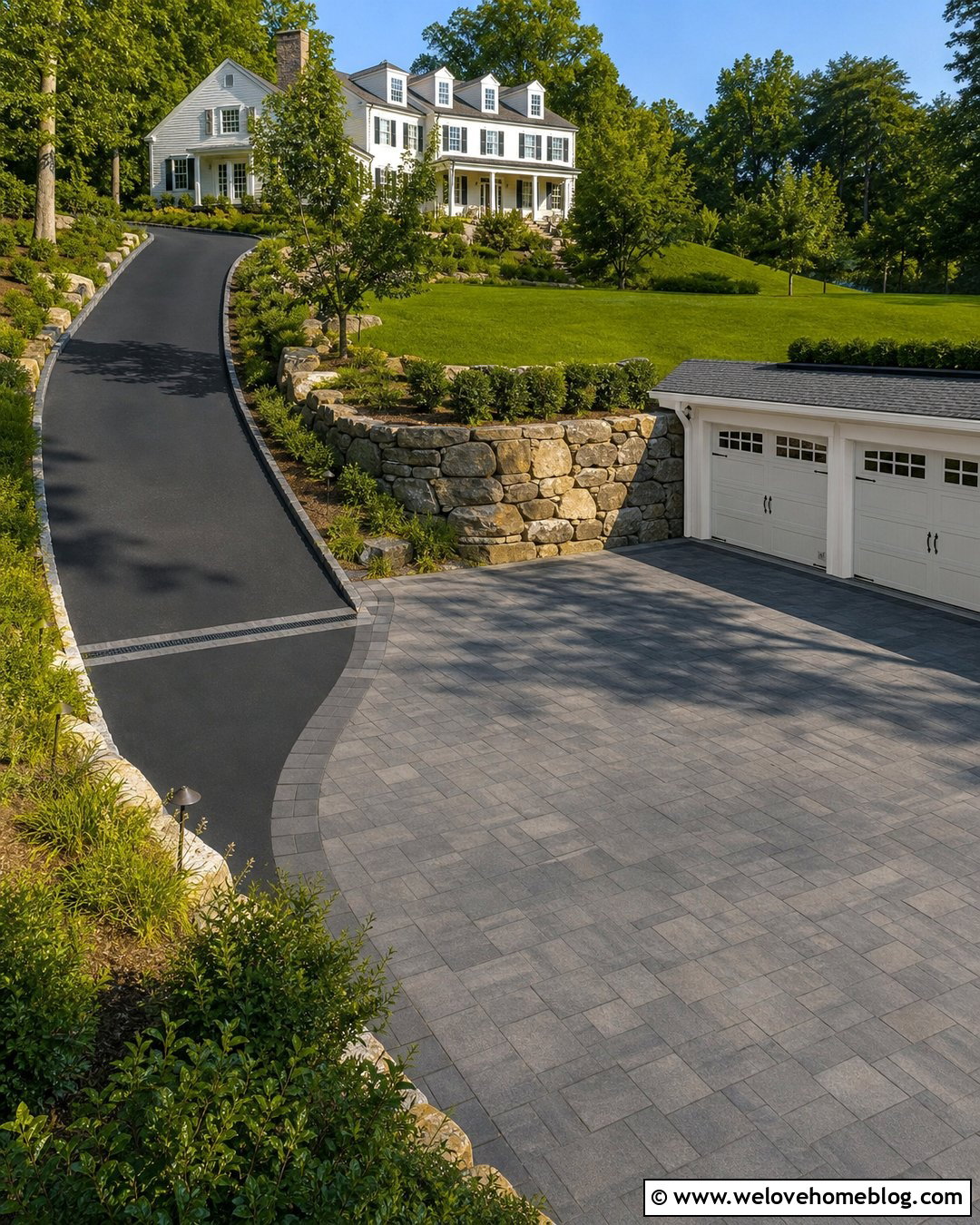
A level parking and turning area can make an uphill garage significantly easier to approach. Surface the main incline with black asphalt, then transition to charcoal concrete pavers at the top. The material change clearly identifies the flatter parking pad while adding an attractive focal point near the house. A reinforced retaining wall may be needed to support the enlarged platform on the downhill side. Face the wall with natural ledgestone so it coordinates with the home’s foundation. Add a concrete channel drain where the asphalt meets the pavers to collect runoff. Low shrubs and ornamental trees can screen the outer wall without narrowing the driving area. This layout provides room for turning around instead of backing down the entire steep slope.
10. Steep Sloped Driveway With Gentle Grade Transitions
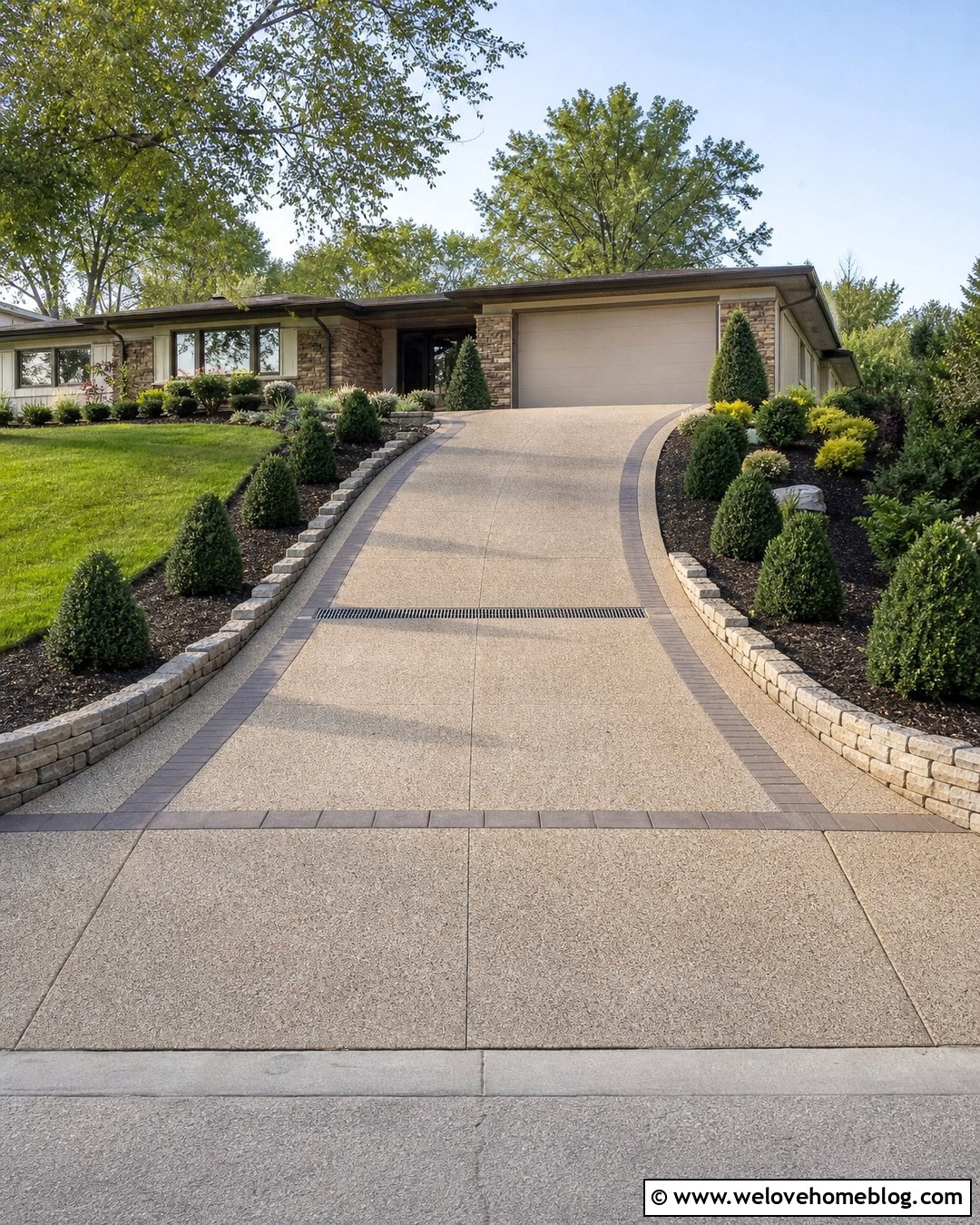
The points where a driveway meets the street and garage can be as important as the main incline. Abrupt transitions may feel uncomfortable and can create clearance problems for some vehicles. Use tan exposed aggregate concrete for a straight driveway with carefully formed vertical curves at both ends. A wider, slightly flatter entrance apron creates a smoother arrival from the road. Near the house, allow the slope to ease gradually into a level garage landing. Brown concrete paver ribbons across these transition zones emphasize the changes in grade. Add stone curbs, mulched planting beds, and compact evergreen shrubs along both sides. A trench drain before the garage keeps runoff outside. The complete design looks continuous while responding thoughtfully to the slope.
11. Steep Sloped Driveway With Stone Terraces
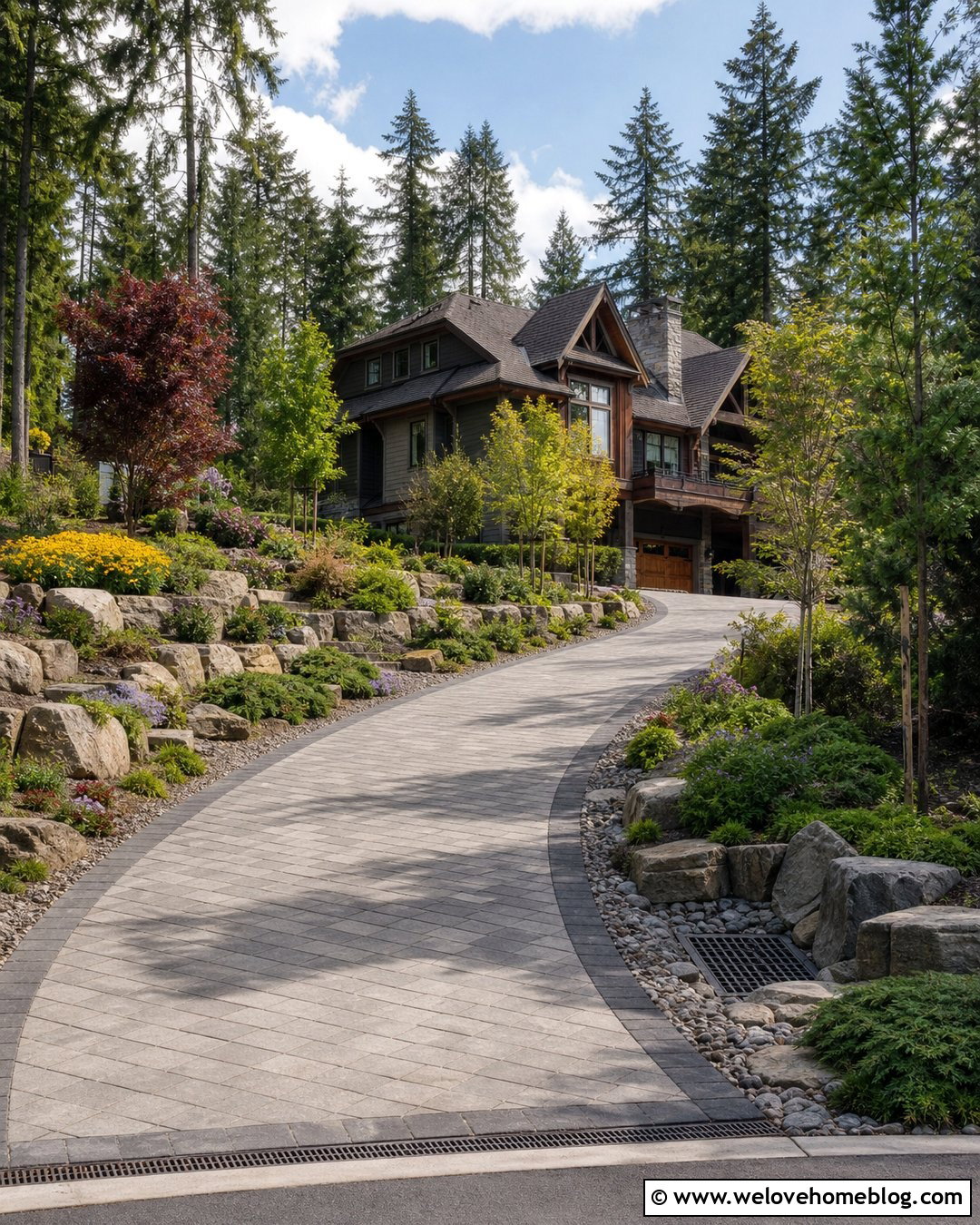
Terraced landscaping can visually break a tall slope into smaller, more comfortable sections. Pair a warm-gray concrete paver driveway with several low natural stone retaining walls running beside the incline. Each terrace can hold a different planting layer, such as spreading groundcovers near the pavement, flowering shrubs in the middle, and small trees above. Keep mature plant sizes in mind so branches do not reduce driveway clearance. A curved layout will help the driveway follow the terraces instead of cutting through them abruptly. Use darker paver borders to contain the surface and define its flowing shape. Gravel drainage zones behind the walls and strategically placed catch basins manage hillside water. Together, the paving and planted terraces create a scenic, established approach.
12. Modern Steep Sloped Concrete Driveway
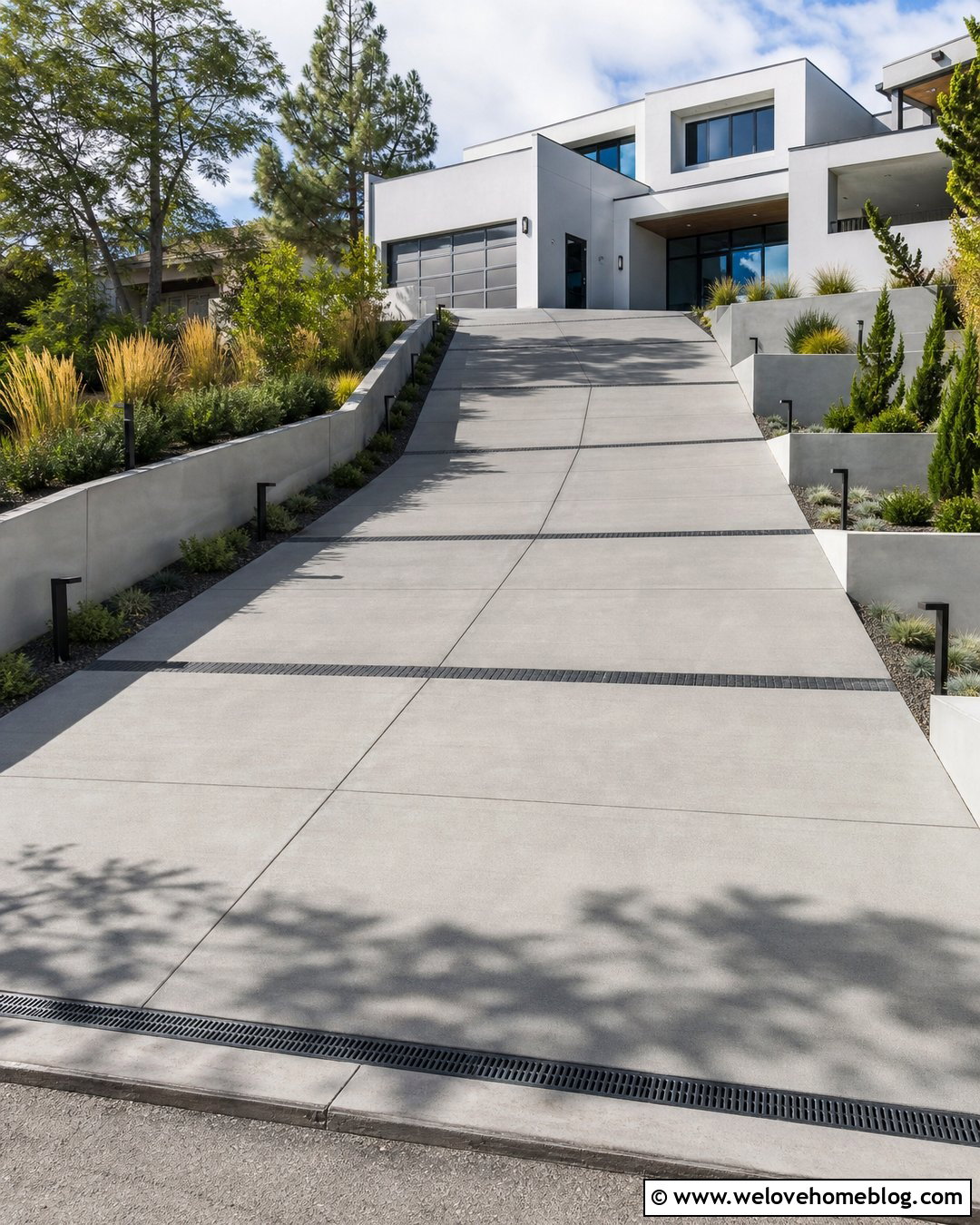
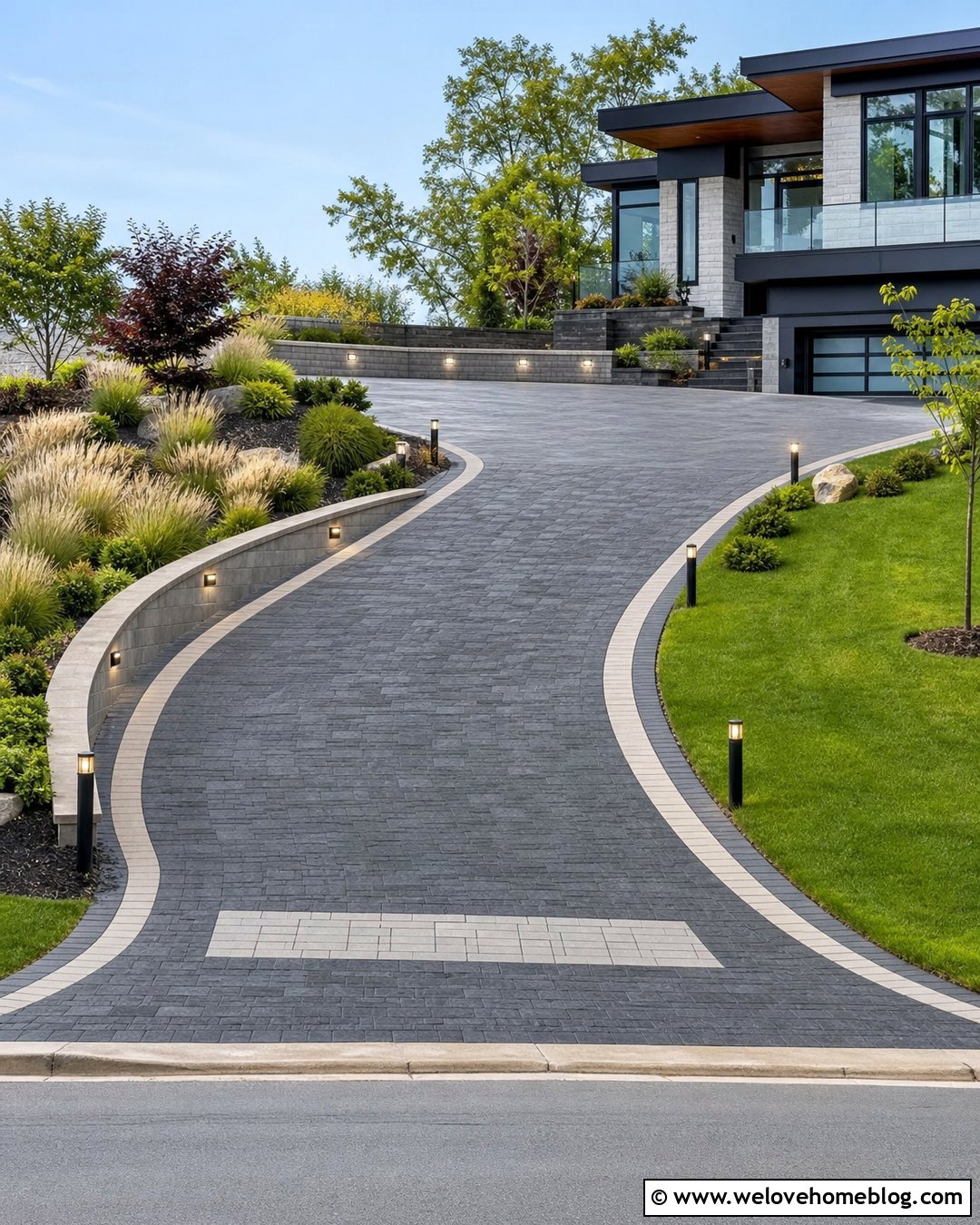
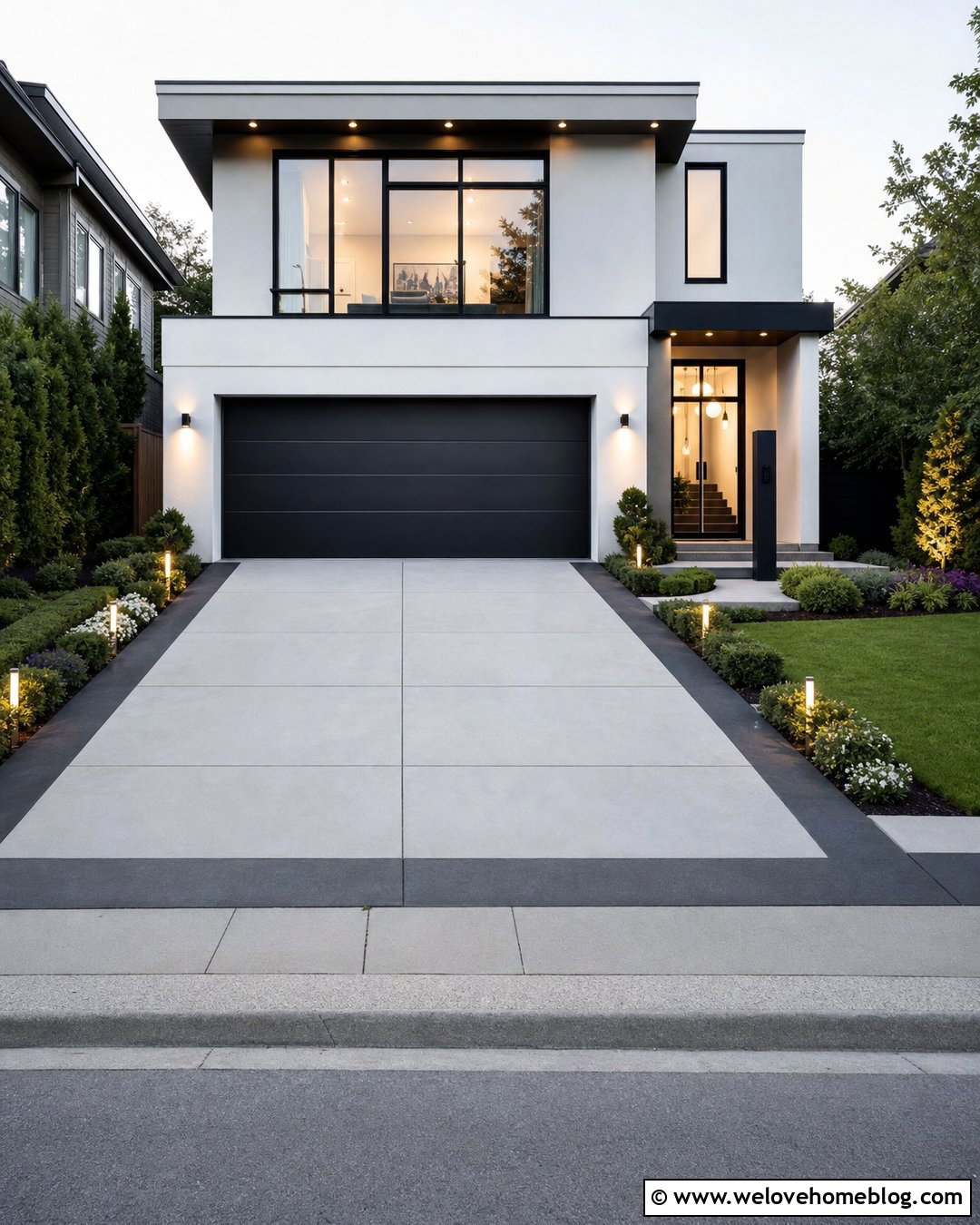
Clean geometry can make a steep driveway feel like an intentional part of modern architecture. Choose pale gray poured concrete with a fine broom finish and divide it into large rectangular panels. Narrow charcoal paver bands running across the slope add rhythm and provide clear visual reference points. Keep the driveway straight, but soften its edges with low concrete retaining walls that step upward with the grade. Plant the adjoining beds with ornamental grasses, compact evergreens, and sculptural drought-tolerant plants. Black bollard lights can follow one edge without cluttering the design. Install a slim channel drain at the garage and concealed catch basins lower on the hill. This restrained palette complements white stucco, dark siding, glass, and natural wood facades.
13. Rustic Steep Sloped Gravel Driveway
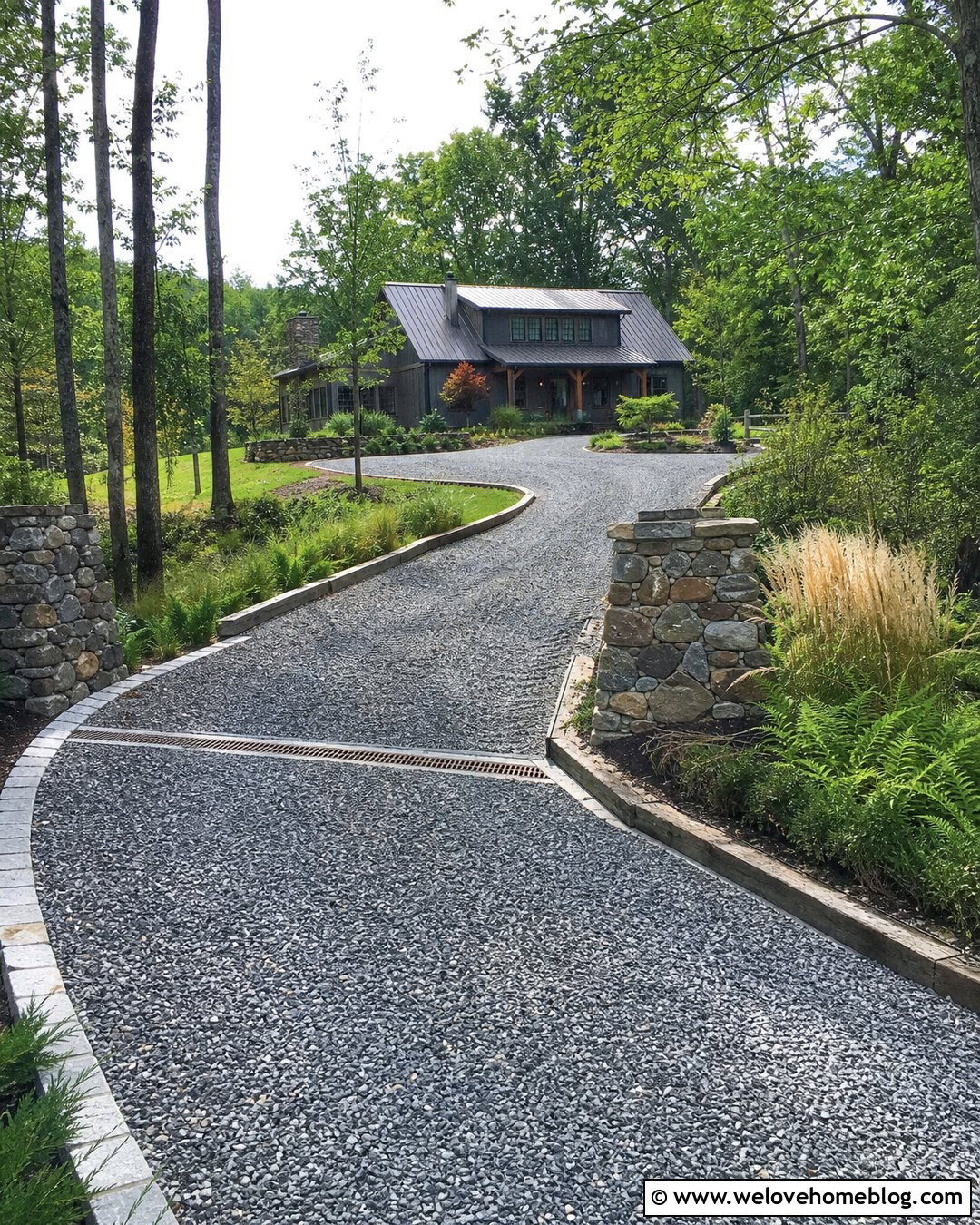
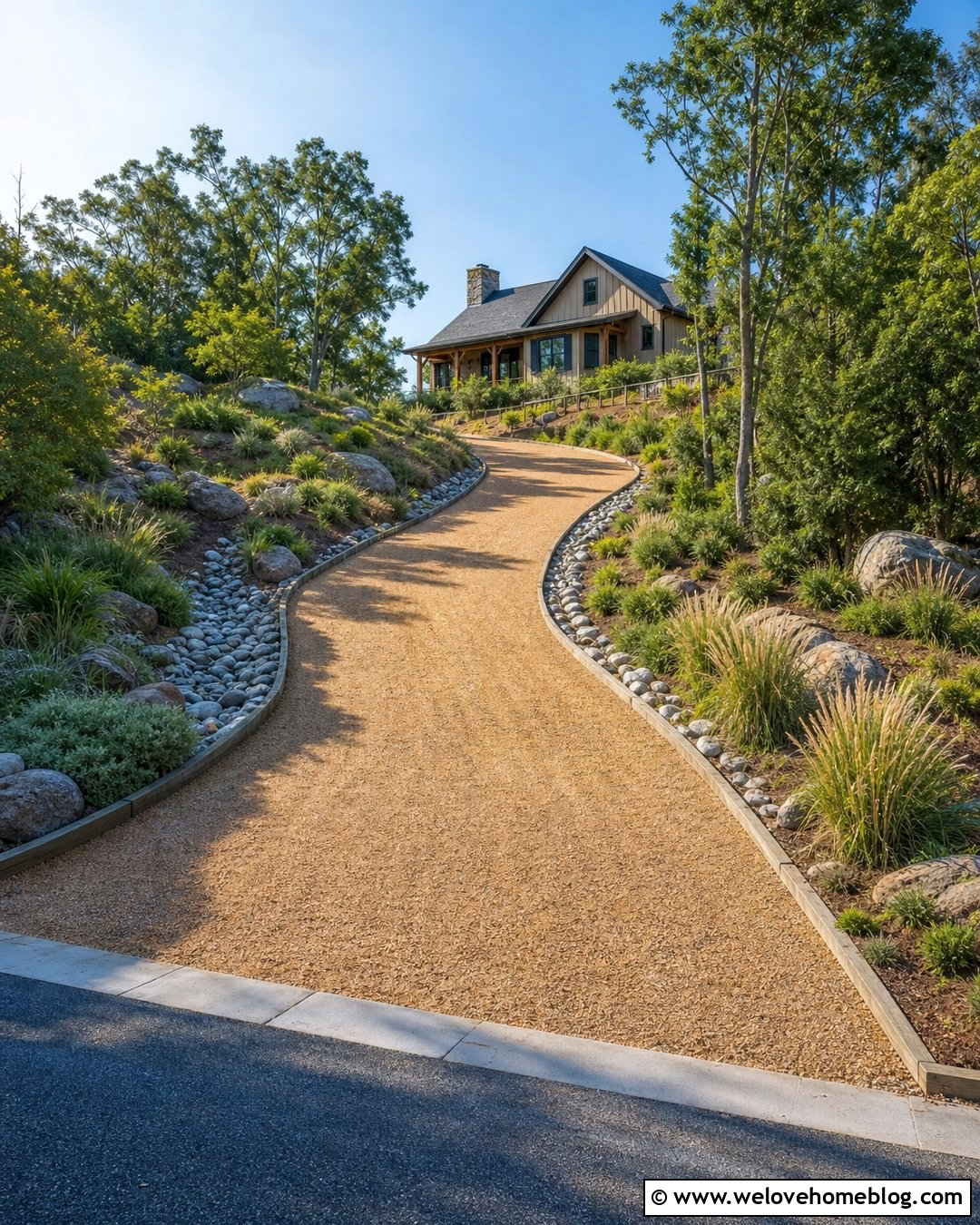
Loose gravel can migrate on a sharp slope, but a stabilized gravel system offers a more controlled rustic alternative. Use honeycomb stabilization grids filled with angular gray crushed stone rather than smooth pea gravel. The driveway can curve gently through a country property, with heavy timber edging on the uphill side and a stone curb along the downhill edge. Install drainage bars or carefully designed channels to divert water before it gathers speed. Native grasses, ferns, and informal shrub groups will help the drive settle into its surroundings. At the entrance, use large fieldstone pillars and a compacted stone apron. A flatter gravel court near the house provides turning space. Professional grading and base preparation remain critical for long-term stability.
14. Steep Sloped Driveway With Raised Curbs
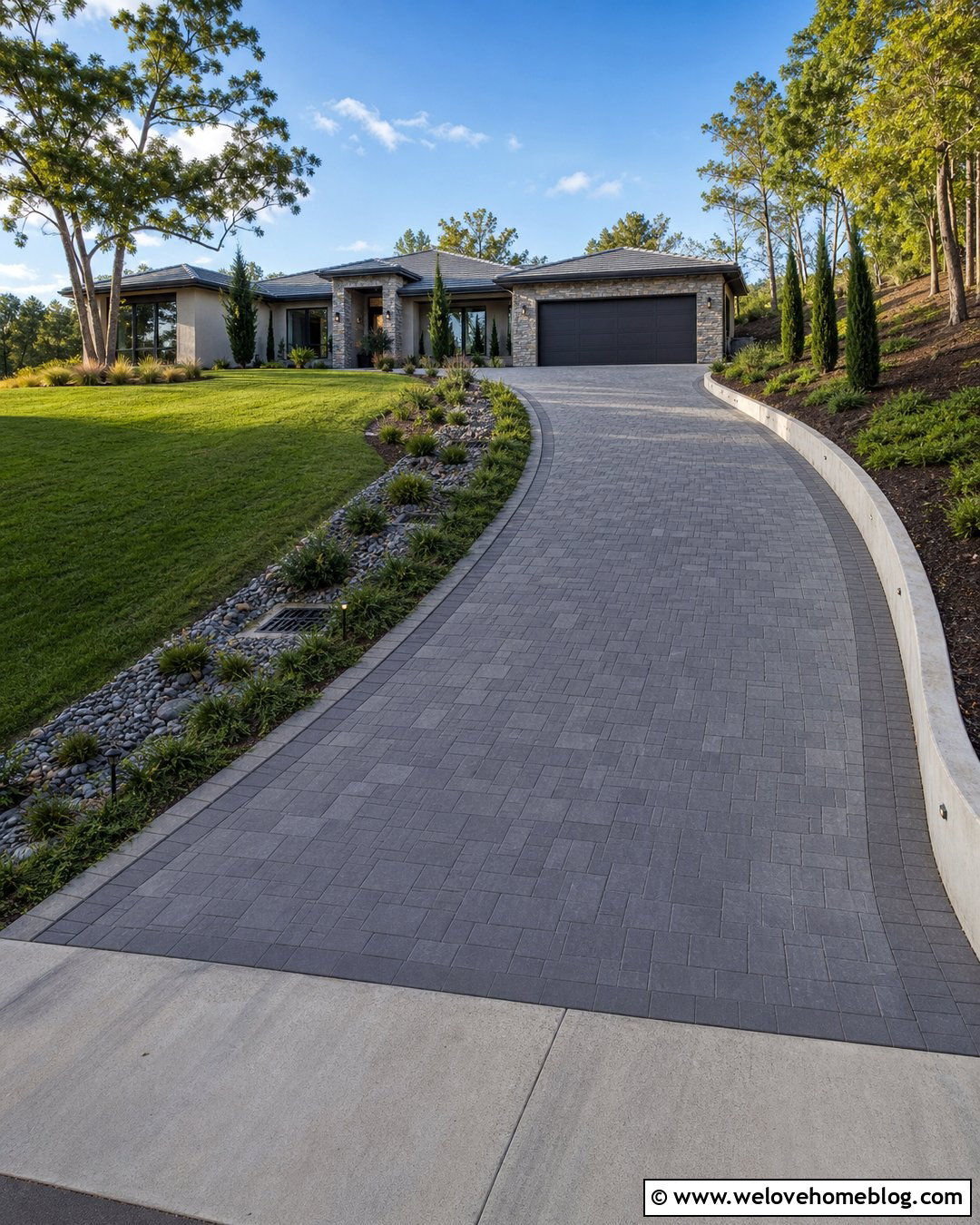
A defined downhill edge can make a steep driveway look more secure and prevent runoff from spilling unpredictably onto the surrounding slope. Use dark-gray interlocking concrete pavers for the surface and install a raised poured-concrete curb along the exposed side. The uphill edge can feature a lower flush curb beside a planted swale. Give the driveway a broad curve that follows the hillside and leads naturally toward a contemporary ranch house. Place catch basins where the curb directs water, then connect them to an appropriate drainage system. Behind the downhill curb, plant tough groundcovers and low shrubs for erosion control. Add reflective driveway markers and simple lighting for visibility. The combined surface, curbing, drainage, and planting creates a clearly organized approach.
15. Steep Sloped Driveway With Stone Walls
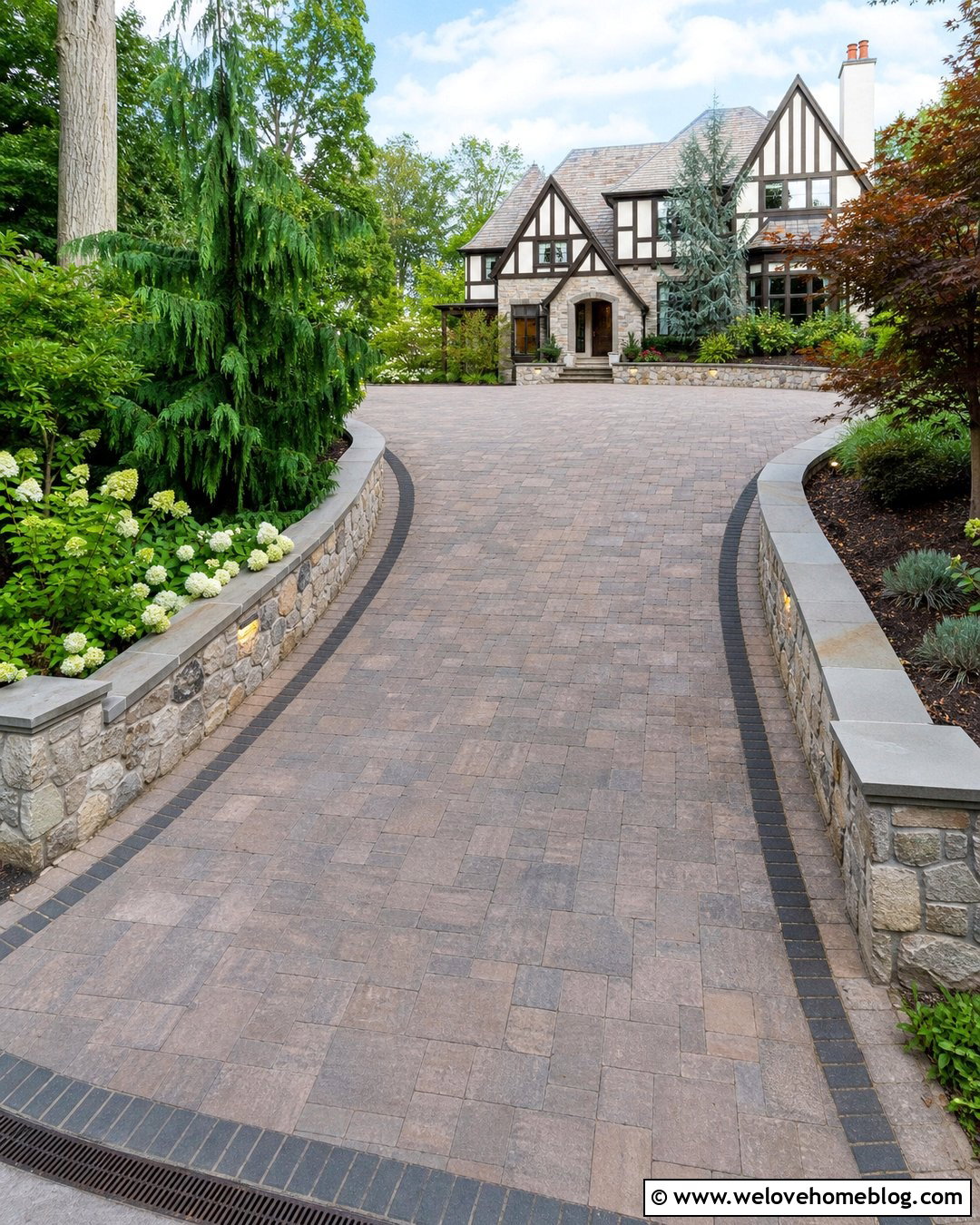
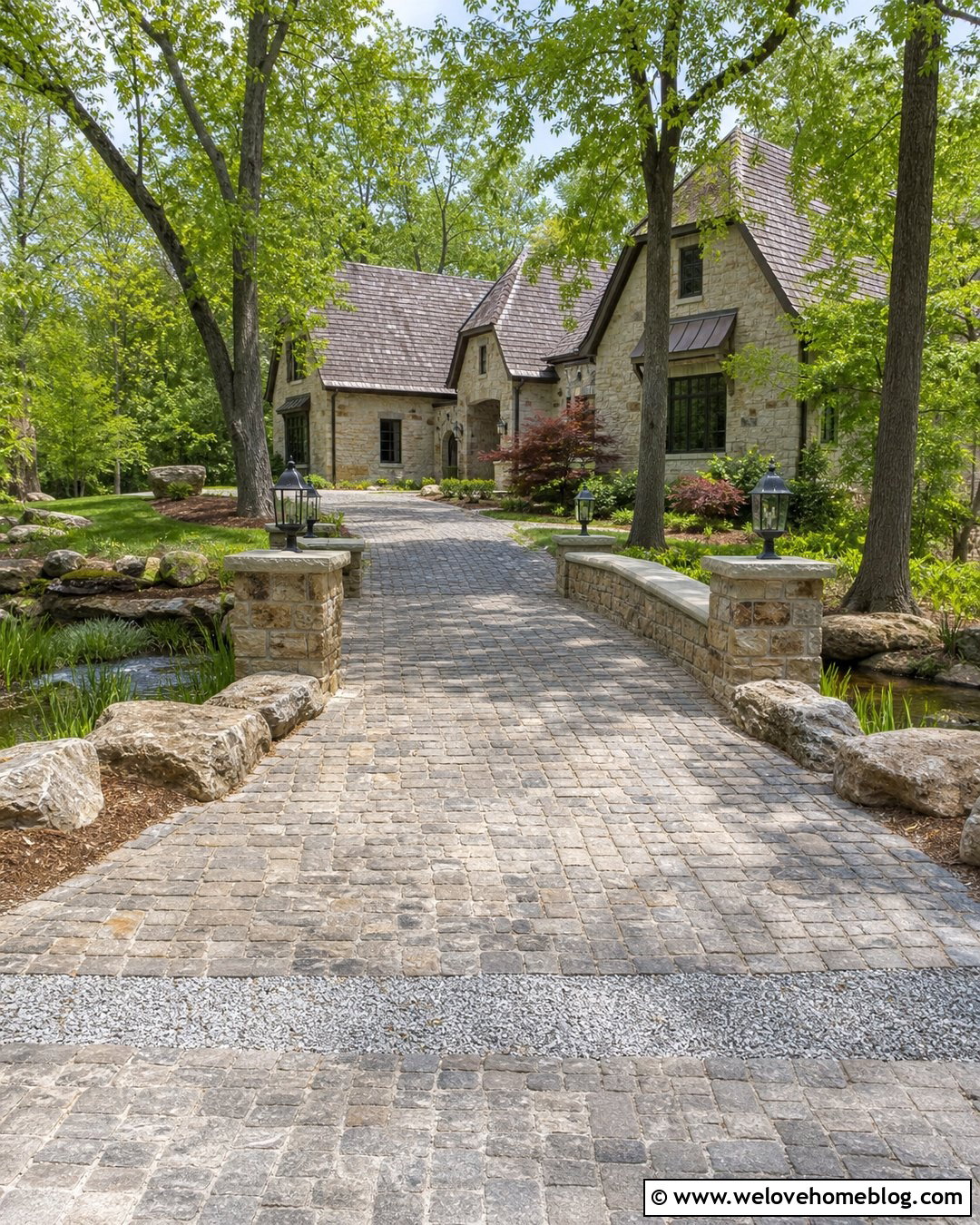
Natural stone walls can make a steep driveway look as though it has always belonged on the property. Surface the drive with brown and charcoal concrete pavers in a random ashlar pattern. Follow the contours of the land with a gradual curve, then build mortared fieldstone walls along the deepest cut sections. Keep the walls lower near the street to maintain good visibility. Cap them with flat stone for a clean finished edge. Above the uphill wall, plant spreading evergreens, hydrangeas, and small ornamental trees in layered beds. Recessed wall lights can illuminate the pavement without creating visual clutter. Drainage behind each wall and channels across the driveway are essential components. This complete look suits Craftsman, Tudor, lodge, and traditional homes.
16. Narrow Steep Sloped Driveway
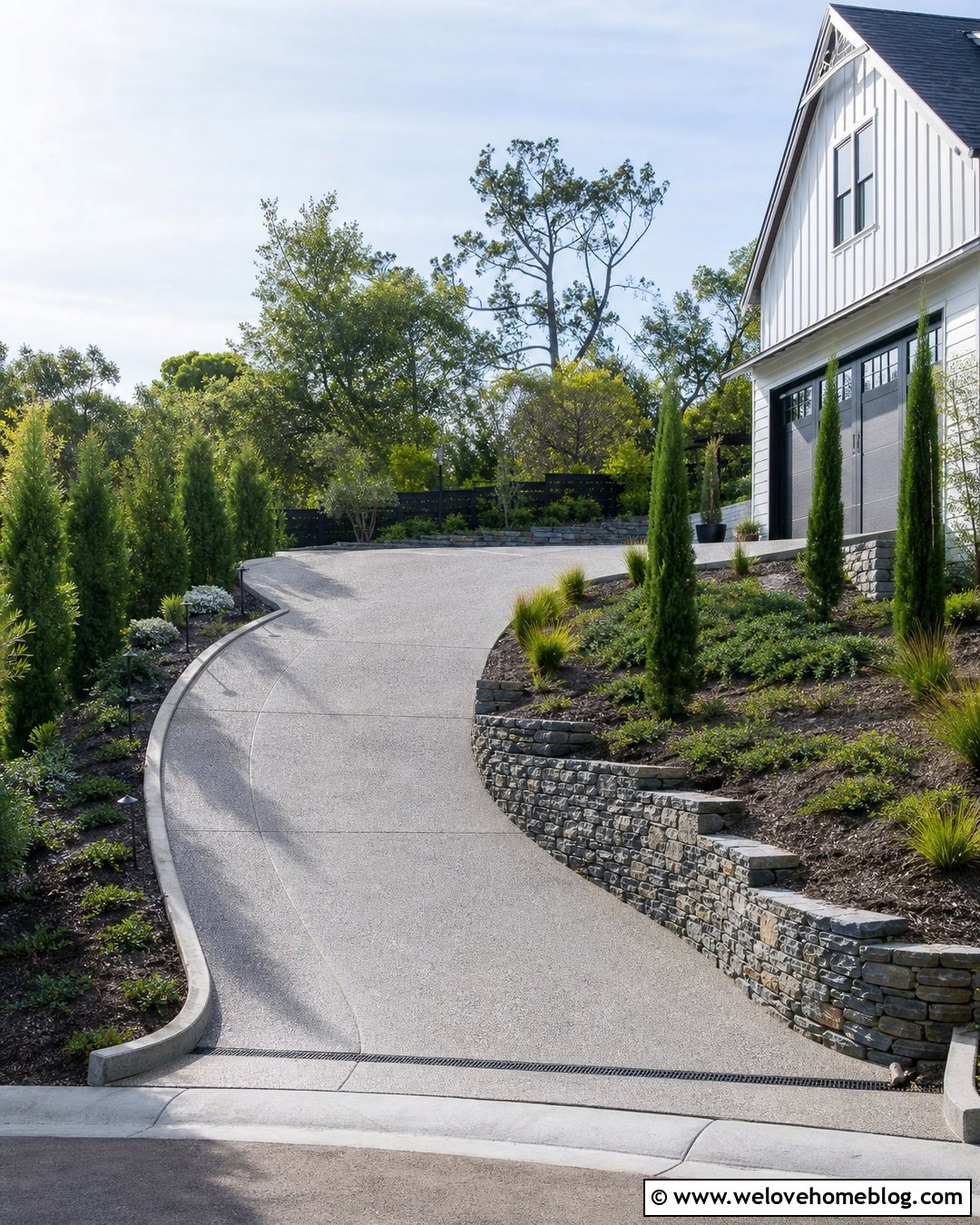
A narrow hillside lot requires careful use of every available foot. A single-lane poured concrete driveway can follow a subtle curve from the street to a side-loading garage. Choose medium-gray concrete with an exposed aggregate finish for visible texture. Use slim steel edging on the uphill side and a reinforced concrete curb on the downhill edge to avoid bulky borders. A retaining wall faced with stacked stone can support the cut bank while doubling as a strong visual feature. Keep landscaping compact with low groundcovers, upright grasses, and columnar evergreens. Add a passing or pull-off bay if space permits, plus a level turning pad near the house. Linear drainage and uncluttered lighting complete a narrow design that feels organized rather than confined.
17. Steep Sloped Driveway With Grass Strips
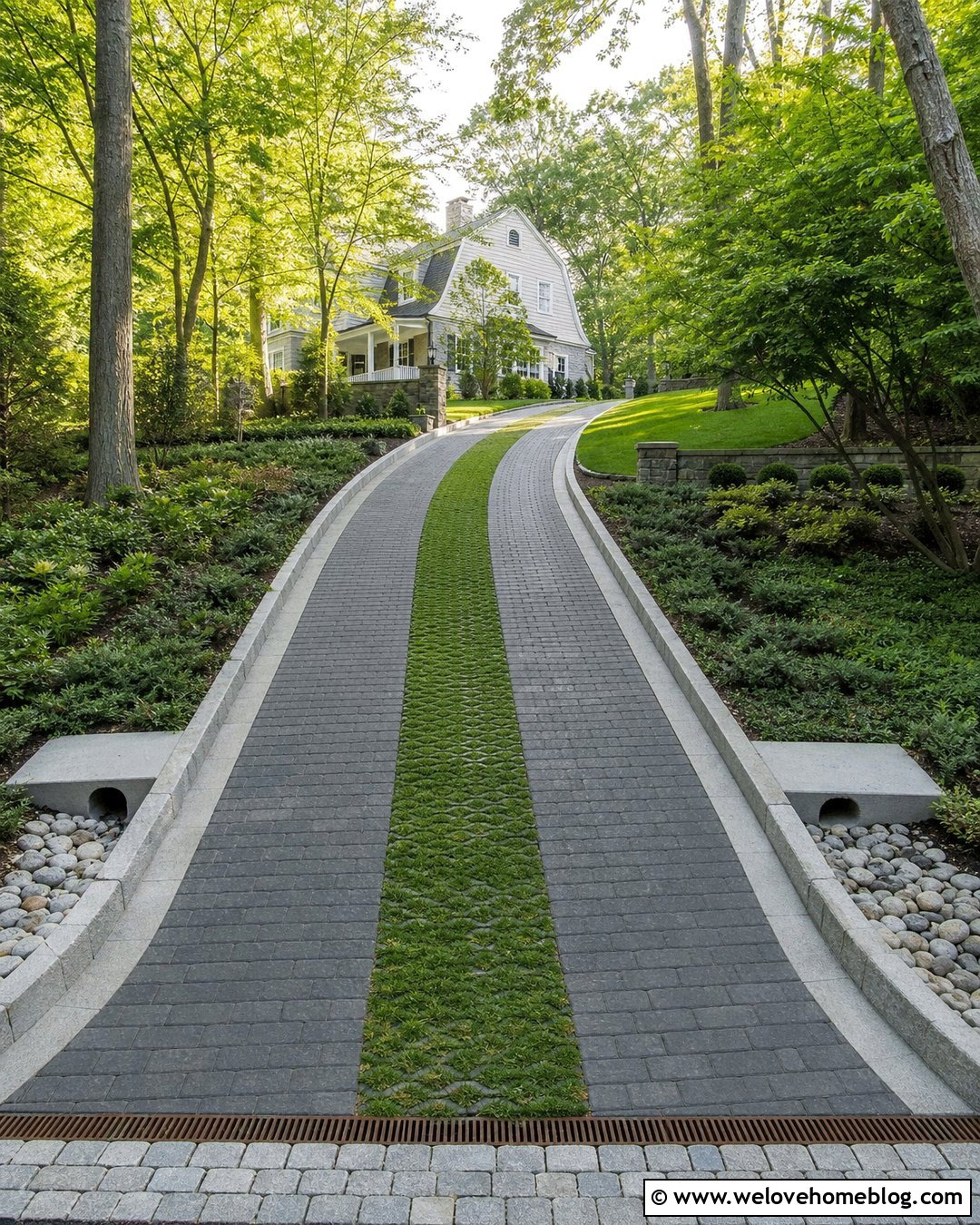
Grass strips can soften a paved driveway, but they work best when incorporated into a stable, carefully drained layout. Use textured charcoal concrete pavers for two broad wheel tracks with a reinforced green strip between them. The center should remain narrow enough for easy maintenance and should not interfere with different vehicle widths. Frame the outside edges with light-gray paver borders and low concrete curbs. A gentle curved path will make the green center feel integrated with the surrounding lawn. Plant the uphill bank with deep-rooted groundcovers and small shrubs to reduce exposed soil. Include drainage openings along the curbs and a channel drain at the base. This distinctive design is best suited to moderate use and climates where grass grows reliably.
18. Steep Sloped Driveway With Brick Pavers
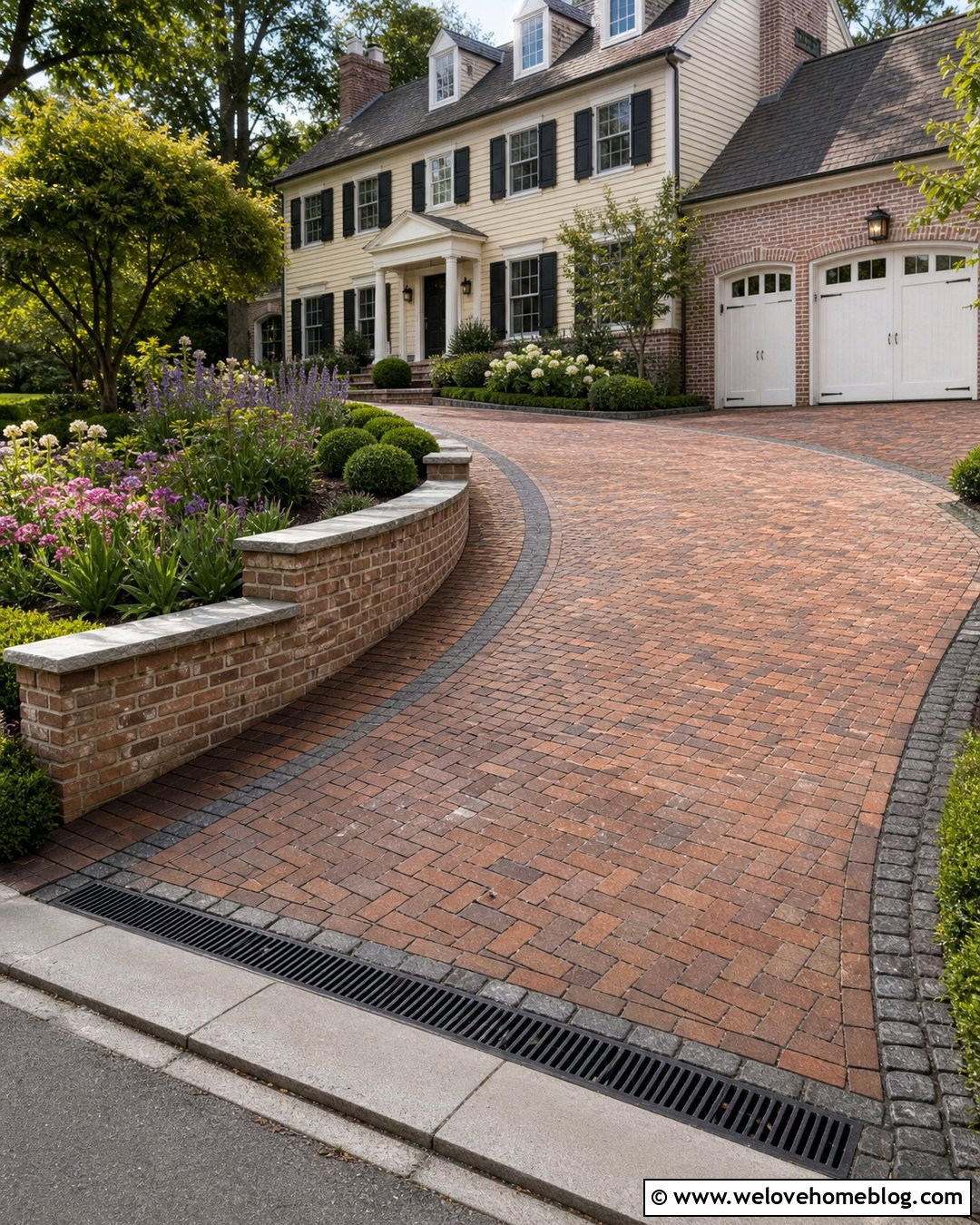
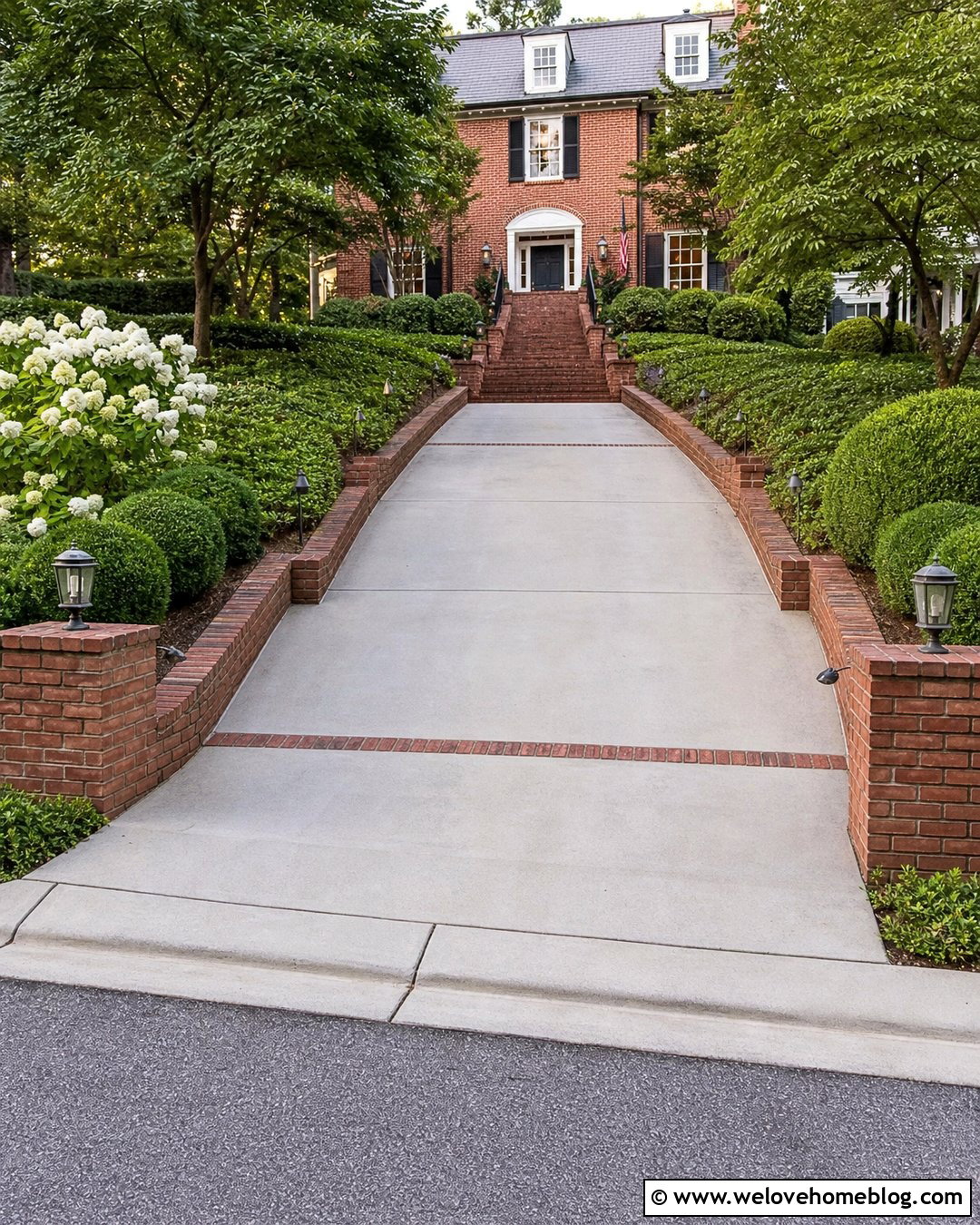
Rich clay brick can bring warmth and traditional character to a steep residential approach. Select textured red and brown clay brick pavers laid in a herringbone pattern, which visually complements the direction changes of a curved driveway. Dark granite setts along both edges provide sturdy contrast and a defined boundary. On the uphill side, build a brick retaining wall with stone coping to coordinate with the driveway. Layer boxwood, flowering perennials, and small ornamental trees above the wall for a formal but welcoming landscape. Integrate discreet slot drains between selected brick bands to control runoff. Near the garage, widen the driveway into a flatter brick parking court. This complete composition works beautifully with Colonial, Cape Cod, and traditional brick homes.
19. Steep Sloped Driveway With Permeable Pavers
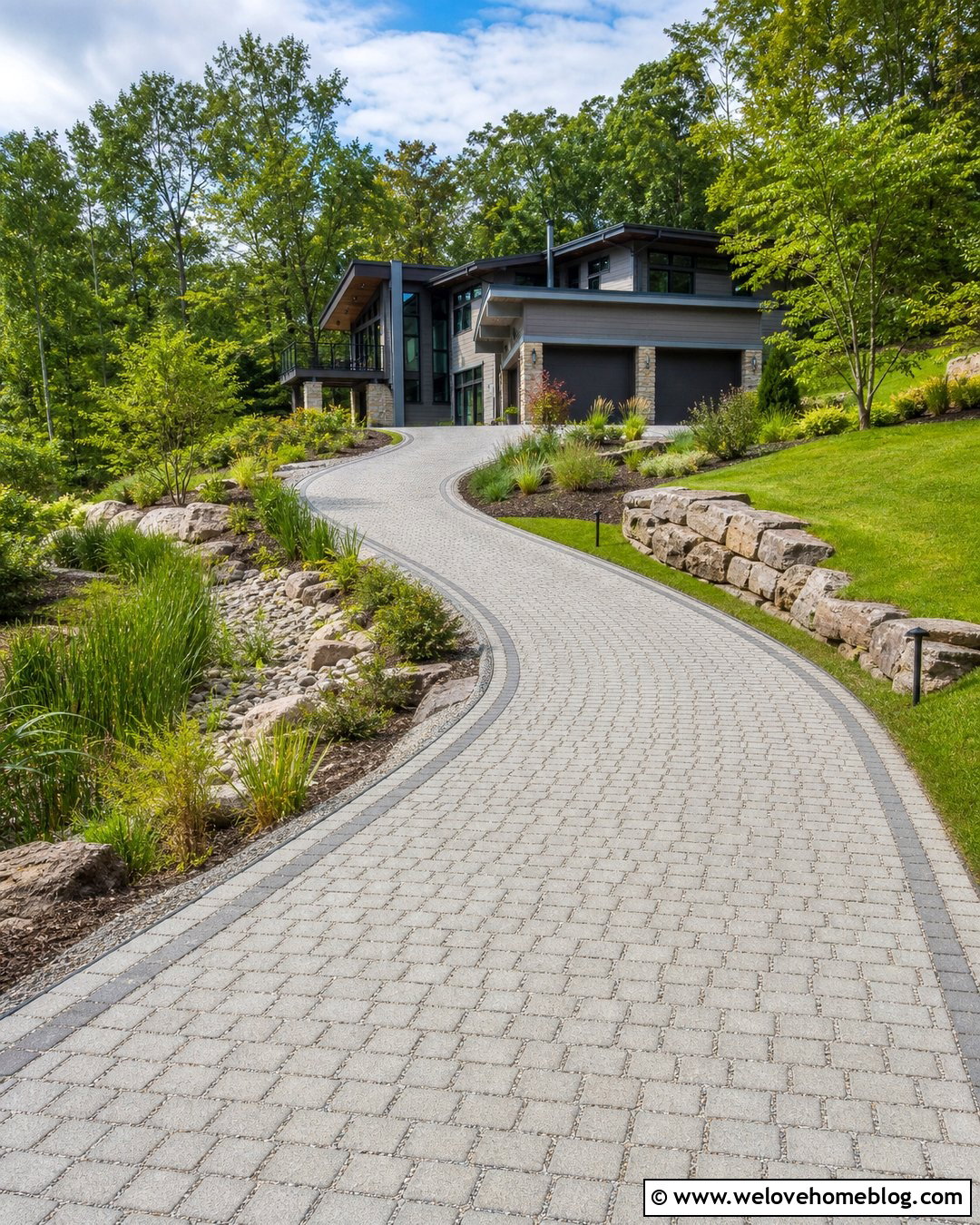
Permeable paving can support a water-conscious hillside design when site conditions and professional engineering allow it. Use light-gray permeable concrete pavers with wider aggregate-filled joints over a properly designed open-graded base. Arrange the driveway in a gentle S-curve to lengthen the route and reduce its severe visual rise. Dark paver edge courses will contain the field and create crisp definition. Add shallow planted swales beside the driveway to receive controlled surface water, using sedges, rushes, and low native shrubs. A stone retaining wall can stabilize the uphill bank without overwhelming the house. Because steep sites create fast runoff and complex subsurface conditions, the infiltration system requires careful evaluation. The finished driveway looks natural, modern, and connected to its landscape.
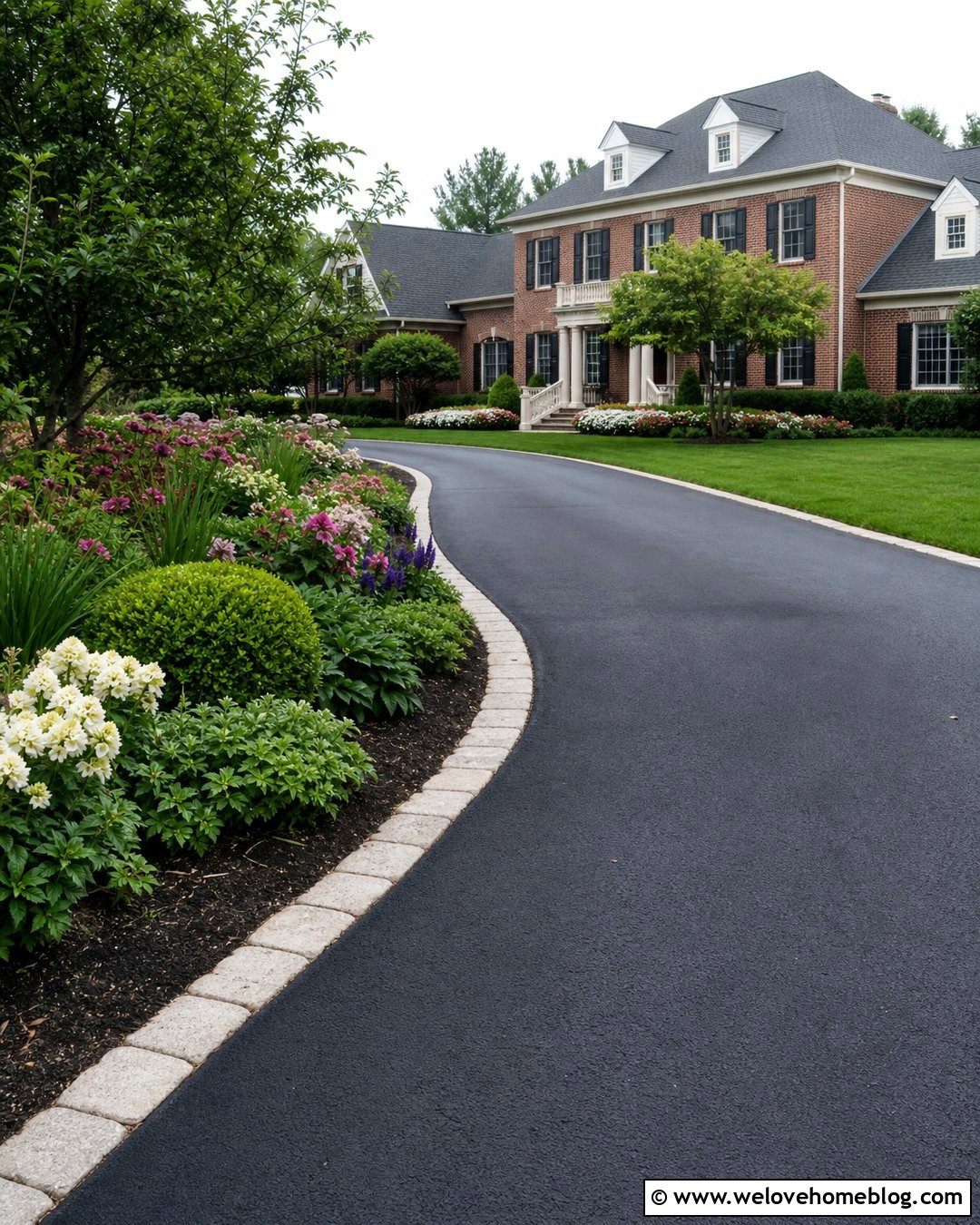
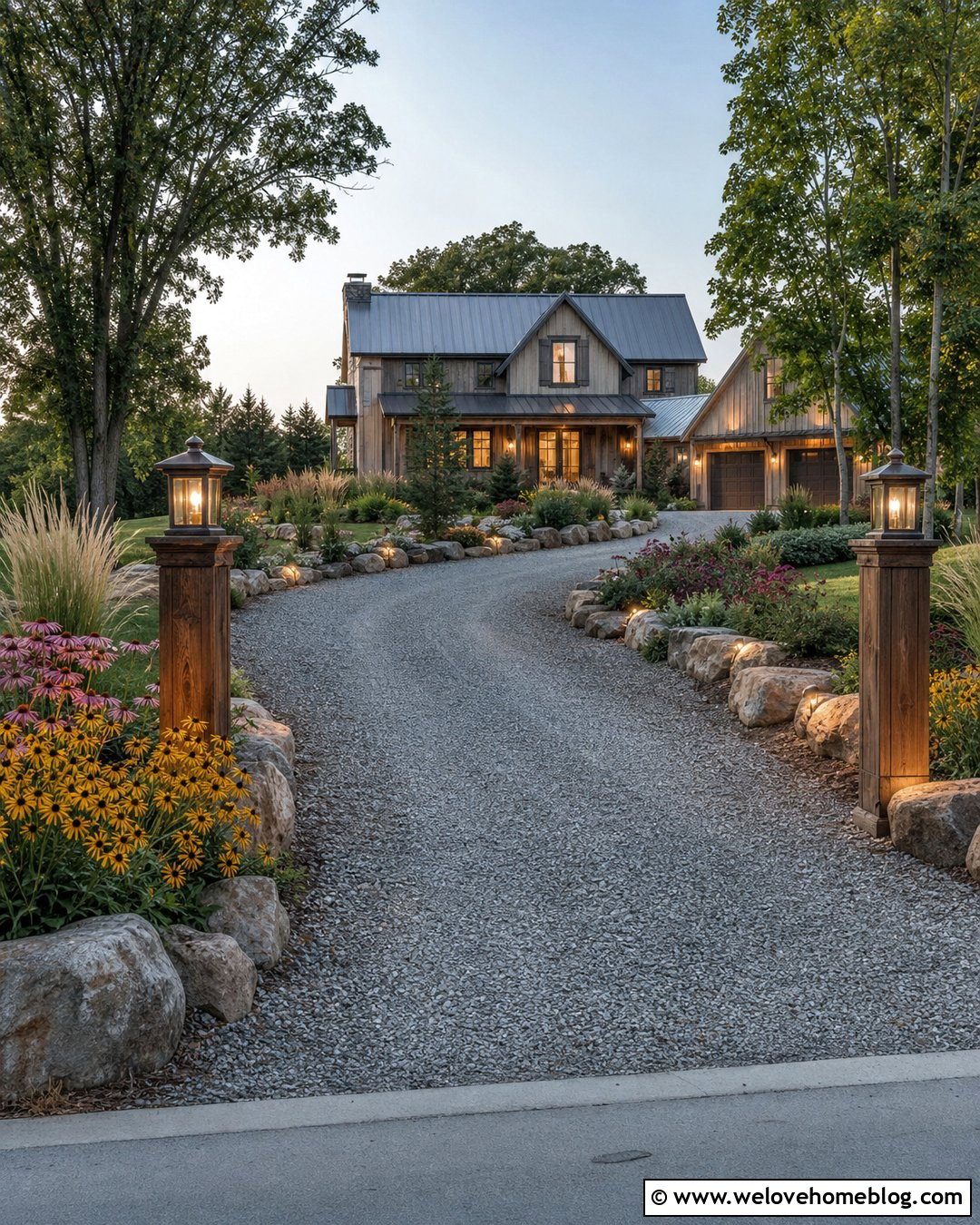

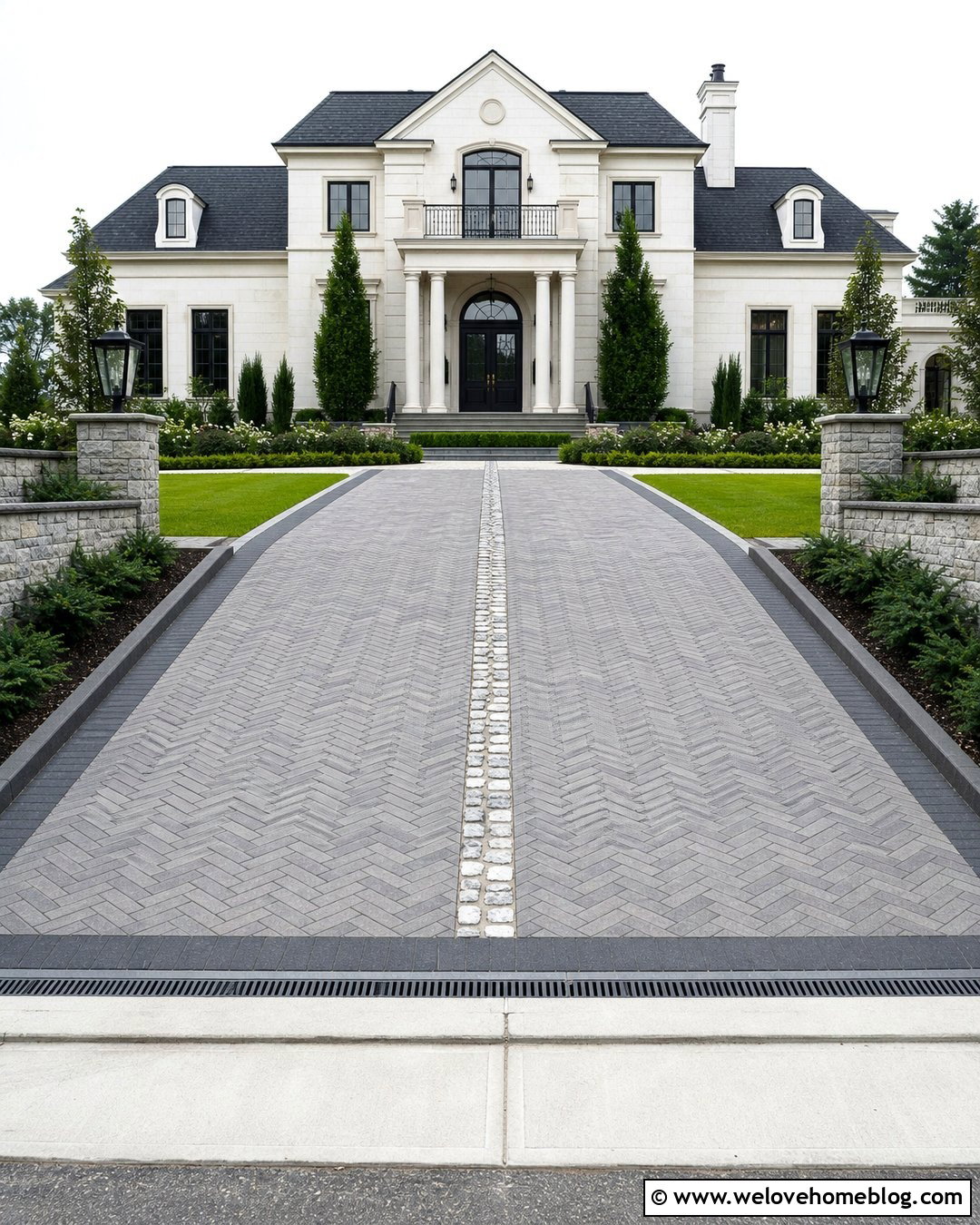
20. Steep Sloped Driveway With Landscaped Entrance
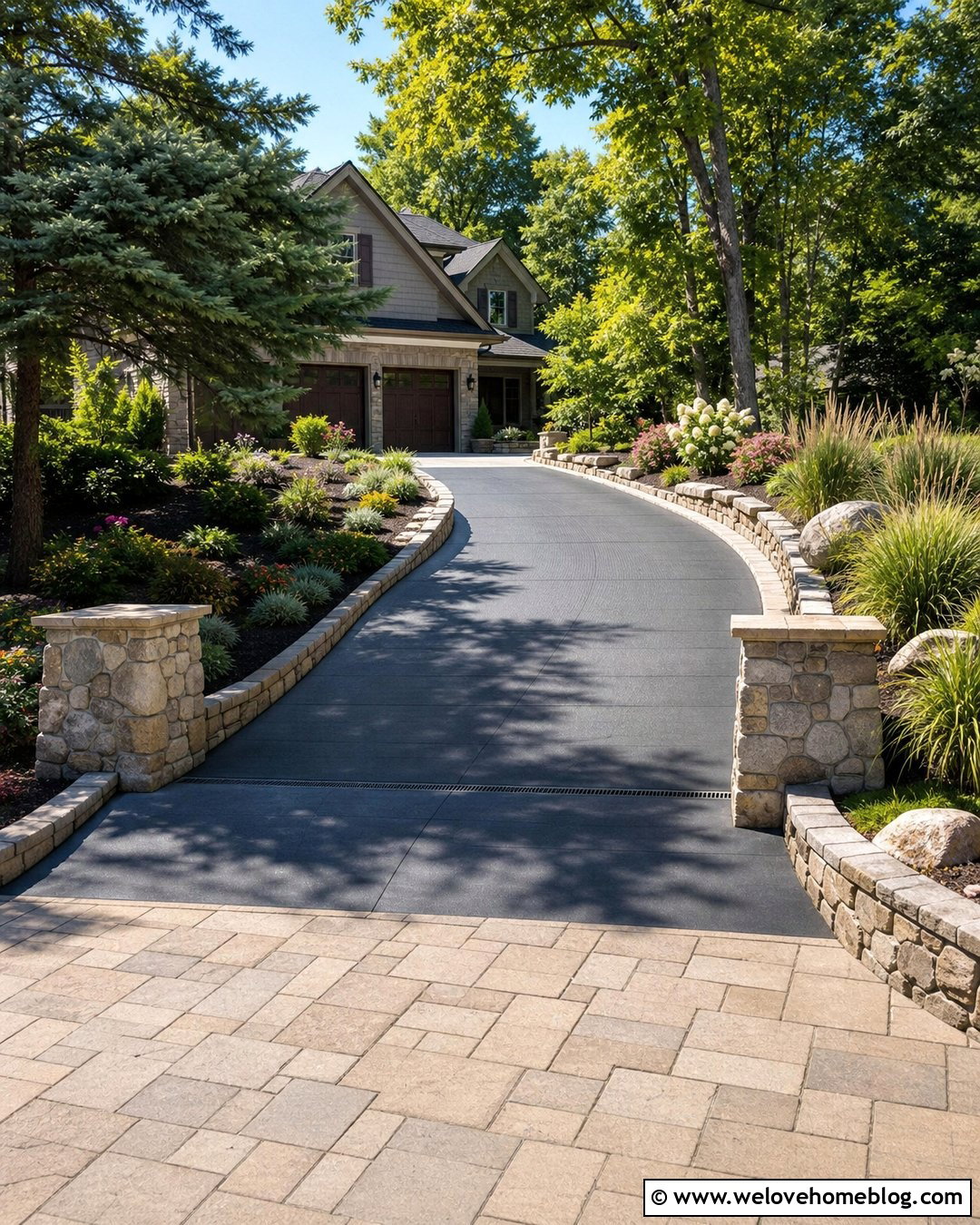
The entrance sets the tone before the steep climb begins. Create a wide apron of tan concrete pavers that transitions into a dark broom-finished concrete driveway. Flared stone borders will make turning in easier while framing the approach. Position low fieldstone pillars beyond the sight triangle, then continue matching stone curbs partway up the hill. A broad curve can reveal the house gradually instead of presenting the entire incline at once. Plant low ornamental grasses, flowering shrubs, and spreading evergreens around the entrance without blocking views of traffic. Farther uphill, use erosion-resistant groundcovers and occasional shade trees to frame the route. Add a cross-drain beyond the entrance and another near the garage. The complete design combines safety, drainage, identity, and strong curb appeal.
Conclusion:
Successful steep driveway design depends on much more than choosing an attractive surface. The route, grade transitions, base construction, traction, retaining structures, drainage, landscaping, and turning space must work as one system. Curves and switchbacks can lengthen the approach, while textured finishes and engineered pavers create a more defined driving surface. Retaining walls and slope-friendly planting can stabilize the surrounding land and improve curb appeal. In colder regions, driveway heating may also be worth considering. Before construction, have qualified local professionals evaluate the soil, elevation, runoff route, utilities, permits, and emergency access requirements. With careful planning, these 20 Steep Sloped Driveway Ideas can inspire a safer and more attractive hillside entrance.

Related posts:

Leave a Reply