
A steep driveway should do more than connect the street to your garage. It must provide dependable traction, control fast-moving runoff, reduce erosion, and create comfortable transitions for vehicles. The best 20 Steep Driveway Design Ideas combine the right surface with a practical layout, strong edging, drainage channels, retaining walls, and slope-friendly landscaping. Textured concrete, asphalt, stabilized gravel, and interlocking pavers can all work when selected for the site and installed over a properly engineered base. Local rules, climate, soil conditions, emergency access, and the driveway’s measured grade should guide every decision. A qualified civil engineer or experienced grading contractor can help assess difficult sites. Explore the complete, curb-focused solutions below with these 20 Steep Driveway Design Ideas. ()

1. Textured Concrete Steep Driveway
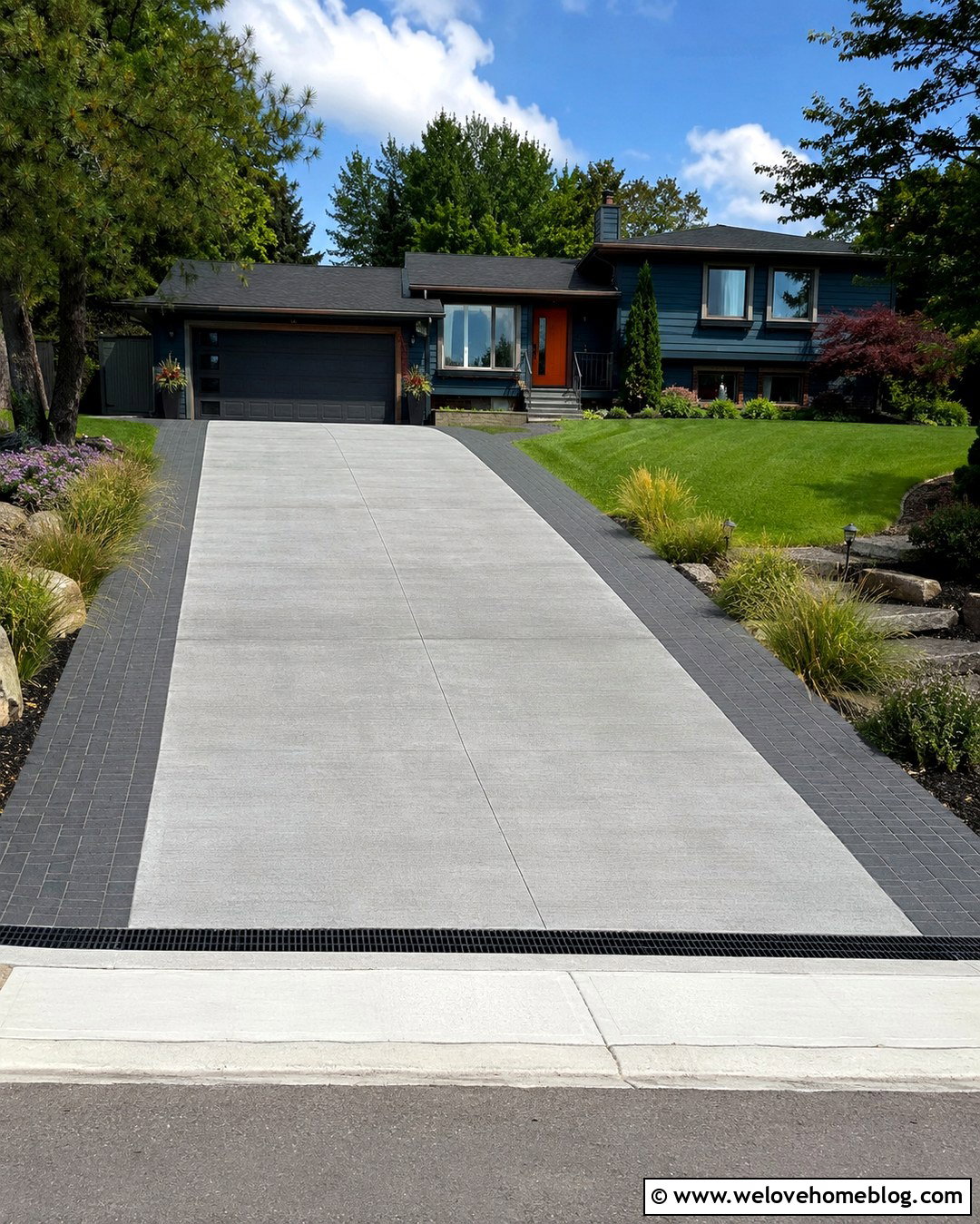
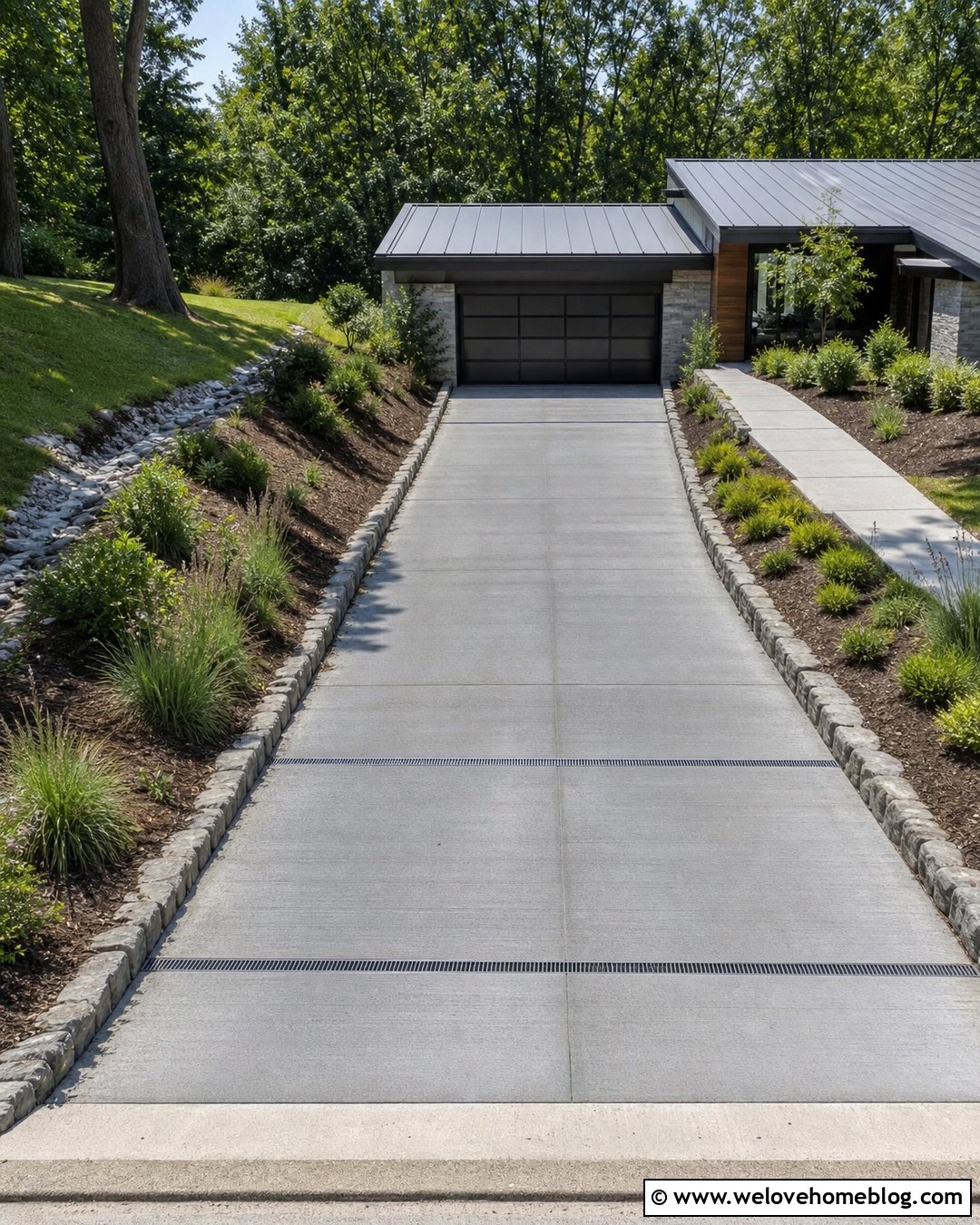
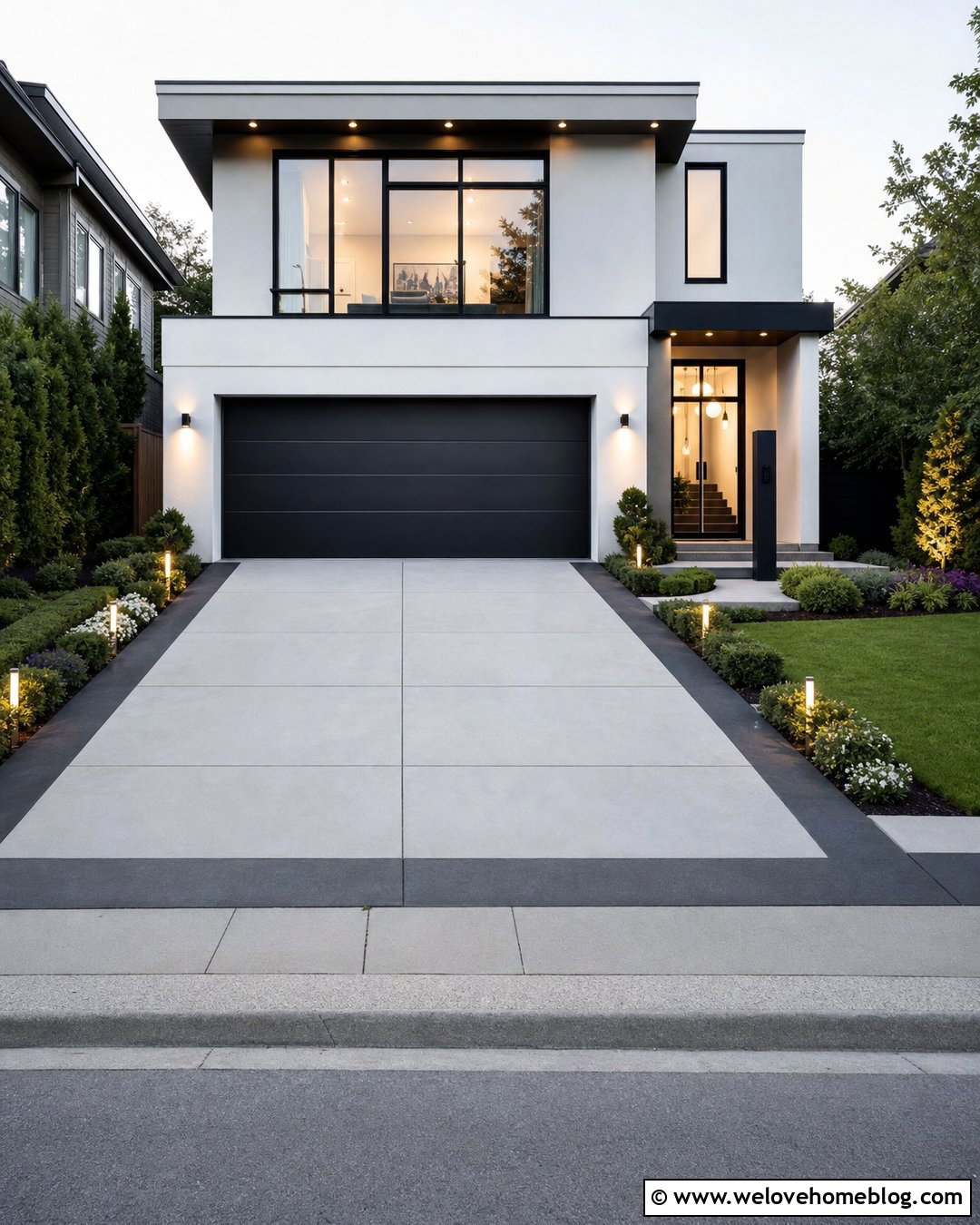
Broom-finished concrete creates a clean driveway with more surface texture than a polished slab. Use a straight layout when the property is narrow, but soften the transition at the street and garage to reduce the chance of vehicle scraping. A grated trench drain near the bottom can intercept runoff before it reaches the sidewalk or road. Add another channel before a downward-sloping garage if water could collect near the door. Dark brick ribbons along both sides define the pavement, while low ornamental grasses help stabilize the surrounding banks. This complete design suits ranch, split-level, and contemporary homes. Ask the installer about reinforcement, control joints, base preparation, and a finish specifically intended for the measured slope. ()
2. Curved Asphalt Steep Driveway
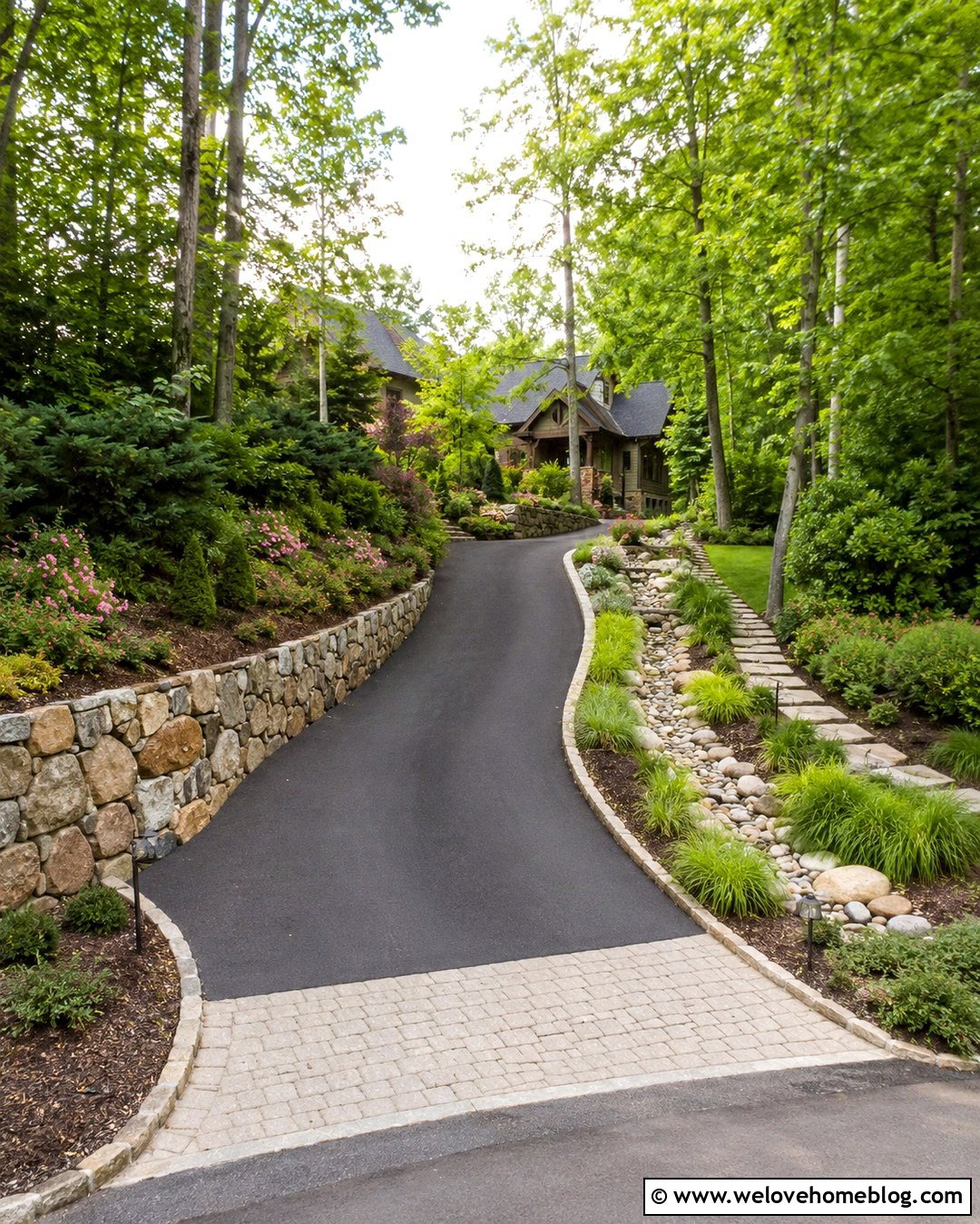
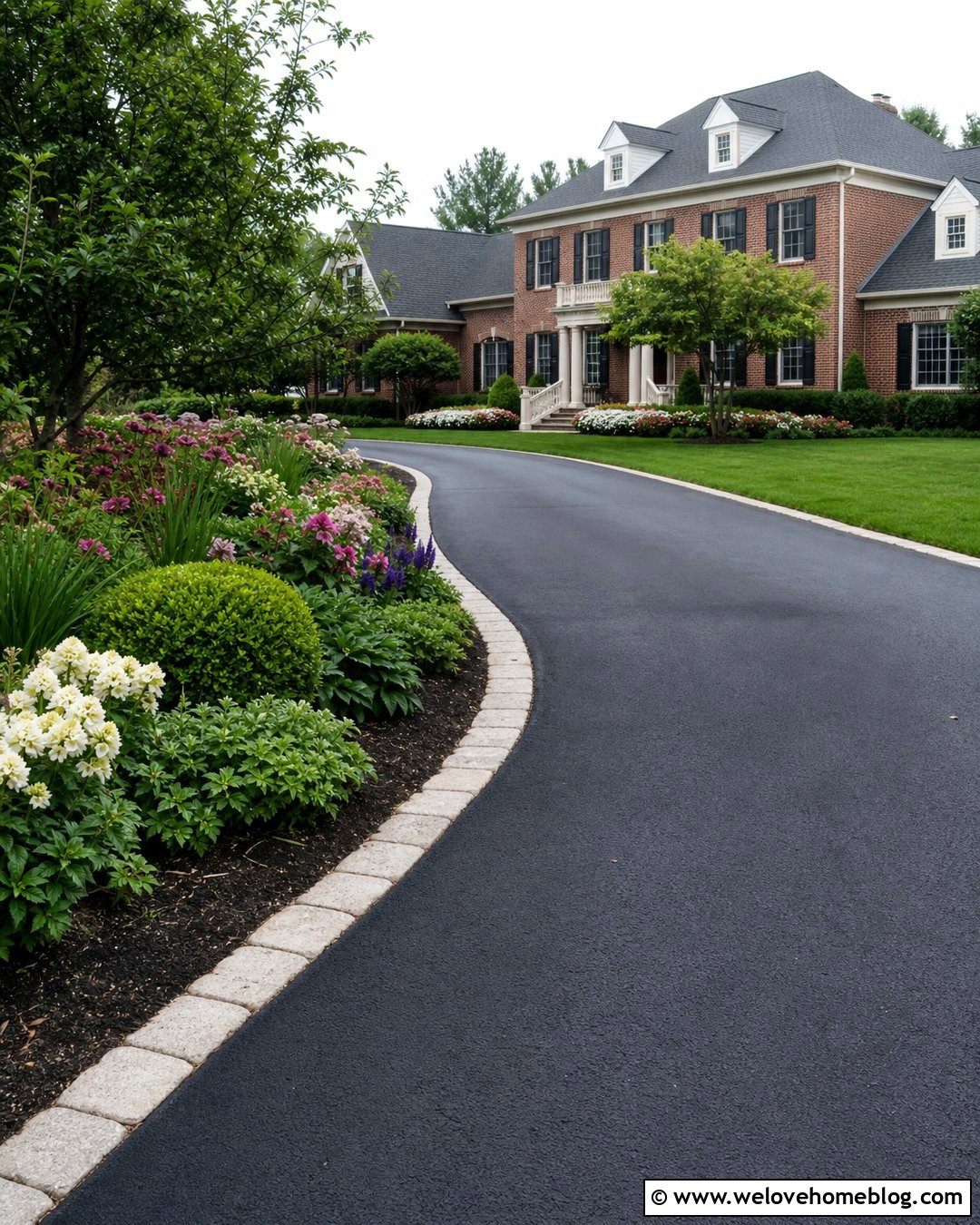
A broad curve can make a steep approach feel less abrupt by extending the route across the property. Black asphalt provides a simple, practical surface with a naturally visible texture, while granite curbing keeps the edges crisp and supports the pavement beside sloped planting areas. On the uphill side, install a drainage swale or catch basin to prevent water and sediment from washing across the drive. A low fieldstone retaining wall can hold the cut bank and create room for masses of juniper, switchgrass, and flowering shrubs. Finish the street entrance with a contrasting concrete or paver apron. The dark surface, gray stone, and layered greenery work especially well beside a craftsman or wooded cottage. ()
3. Switchback Steep Driveway
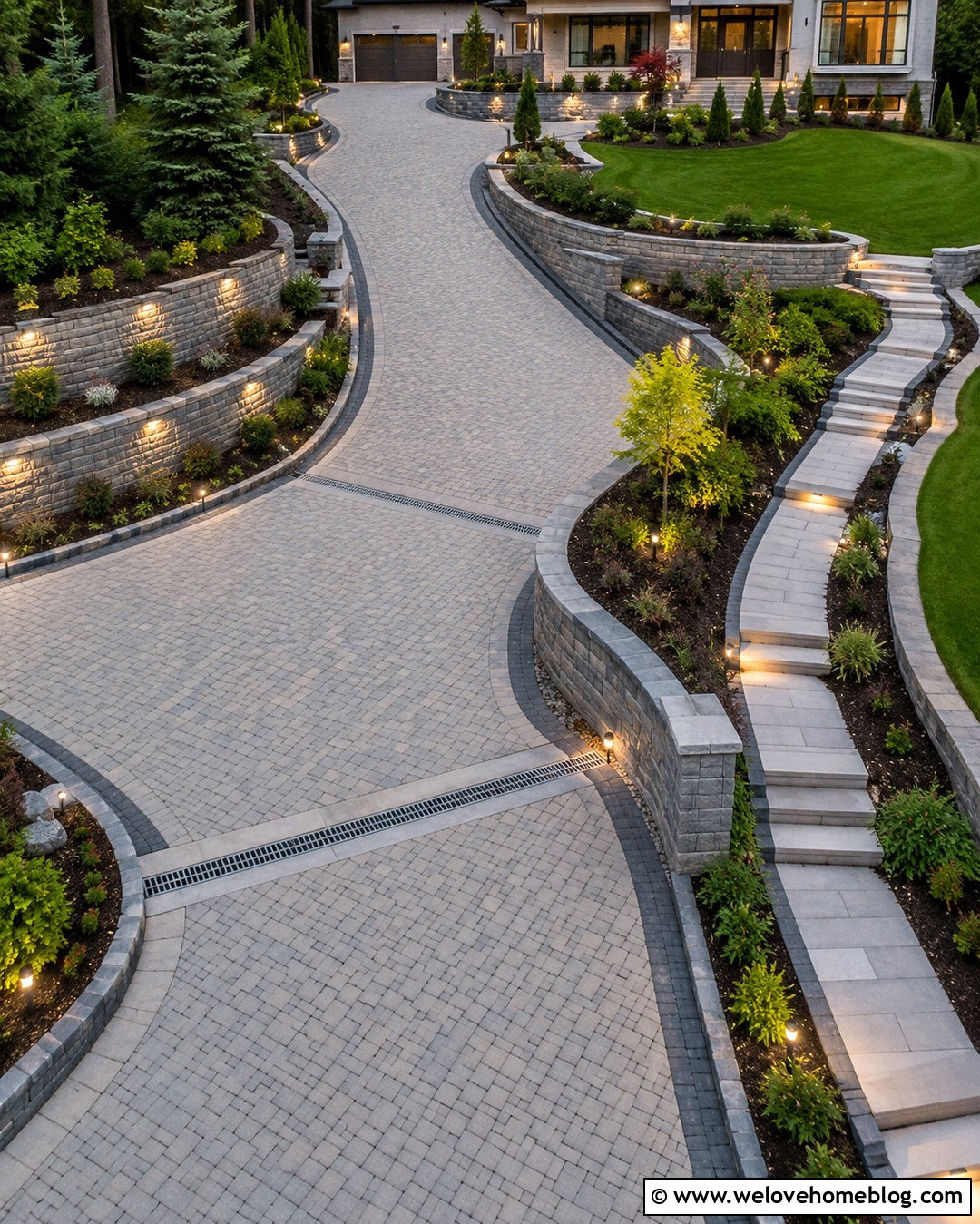
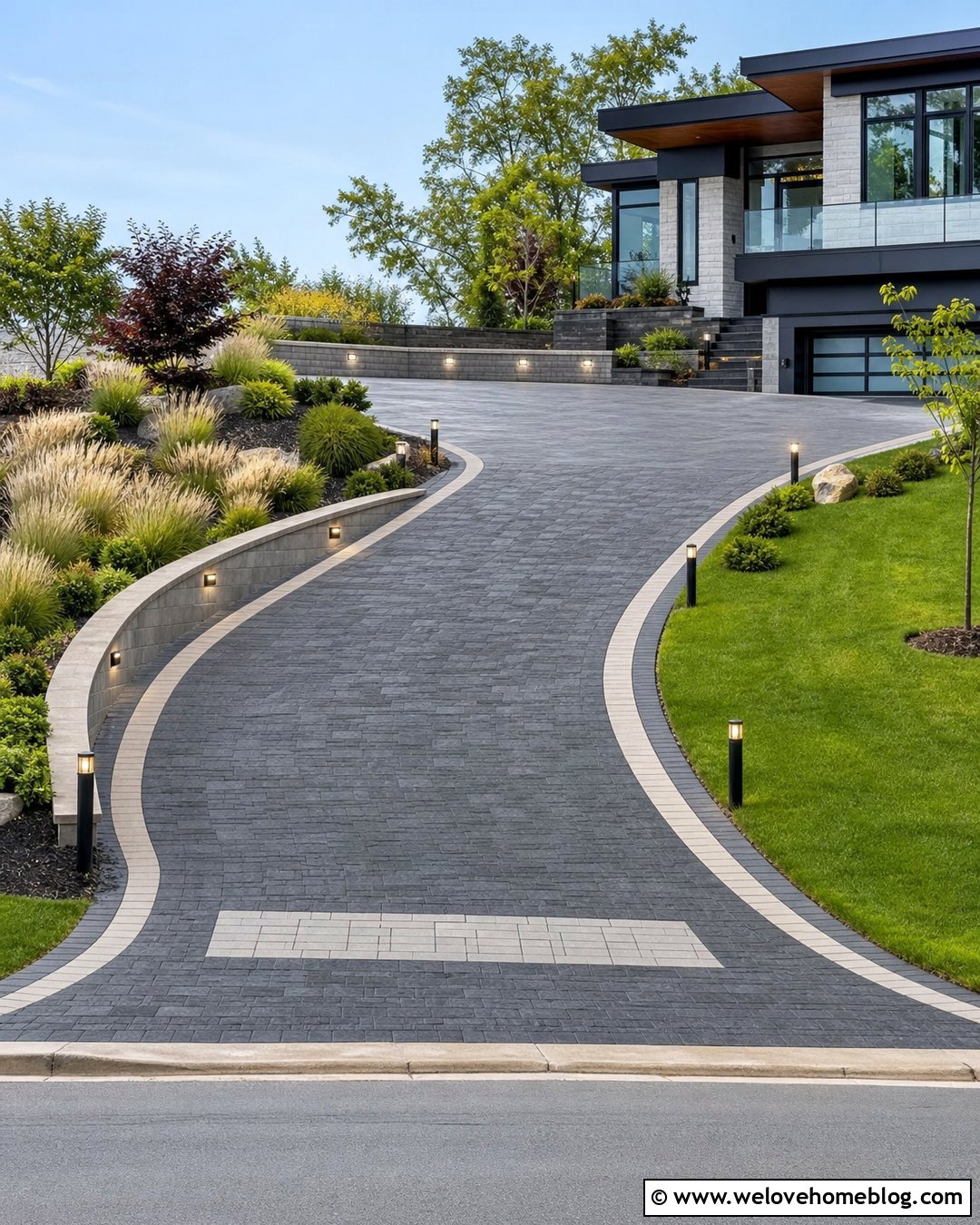
When a direct climb is too severe, a professionally engineered switchback can lengthen the route and divide the ascent into more manageable runs. Concrete interlocking pavers create an attractive surface, but their base, edge restraints, pattern, and drainage must be designed for sloped vehicle traffic. Build a generous turning platform at the bend instead of forcing vehicles around a tight corner. Segmental retaining walls can support the upper and lower banks while creating terraced planting beds. Use compact shrubs and groundcovers near the inside turn to preserve visibility. Channel drains at strategic low points help manage concentrated runoff. This layout needs careful grading, turning-radius calculations, slope stabilization, and local approval before construction begins. ()
4. Heated Concrete Steep Driveway
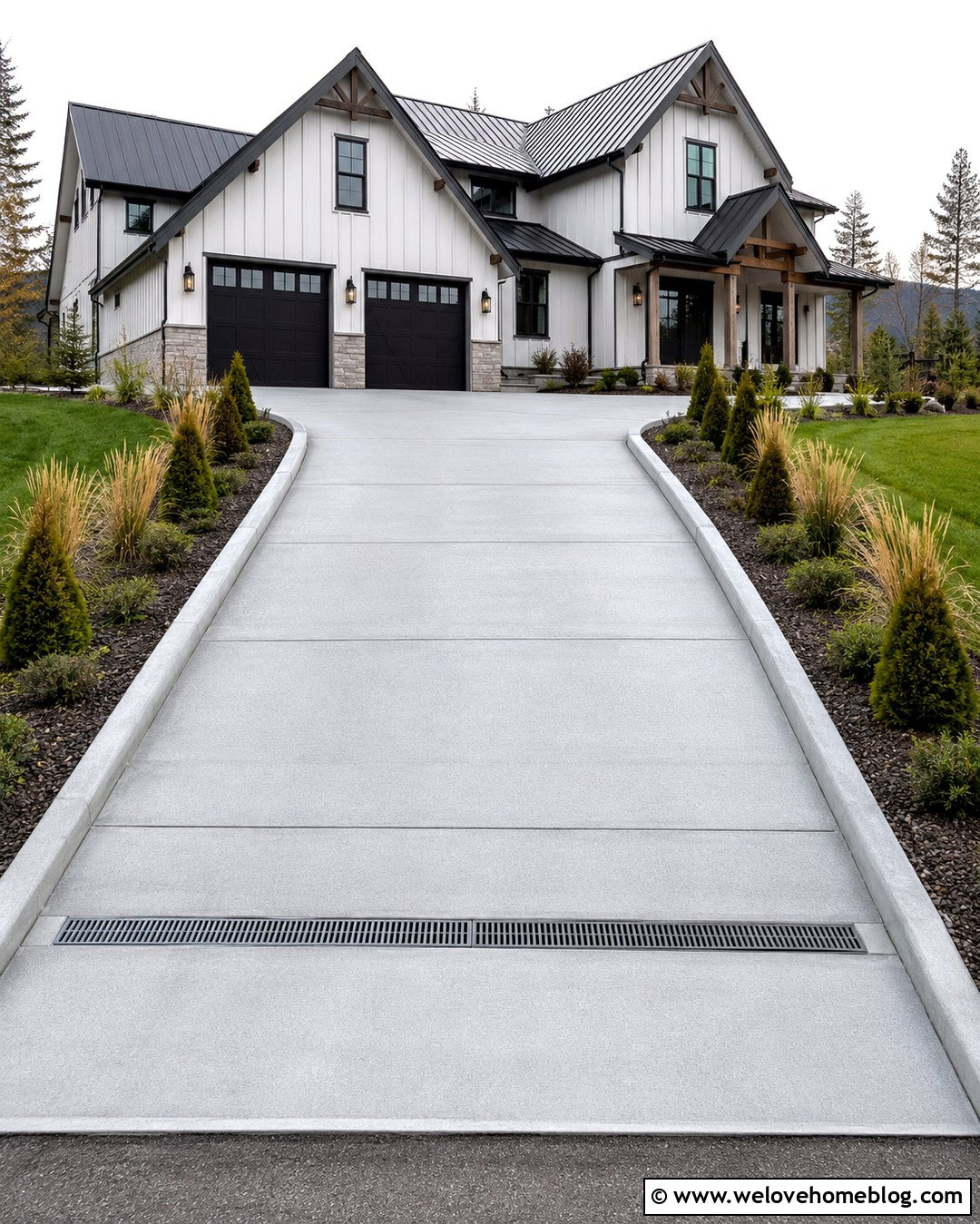
Snow and freezing rain can make a sloped driveway difficult to use, so a radiant heating system may be worth considering in cold regions. Pair electric cables or hydronic tubing with reinforced, broom-finished concrete for a durable and visually simple surface. The system should cover the primary driving path, steepest section, and critical transition near the garage rather than leaving icy gaps. Install proper sensors and controls so heating operates when moisture and freezing conditions occur. Concrete borders can contain neat beds of dwarf evergreens without creating bulky obstacles beside the driving lane. A level or gently sloped garage apron gives vehicles a more comfortable stopping area. Drain melted water safely so it does not refreeze lower on the driveway. ()
5. Exposed Aggregate Steep Driveway
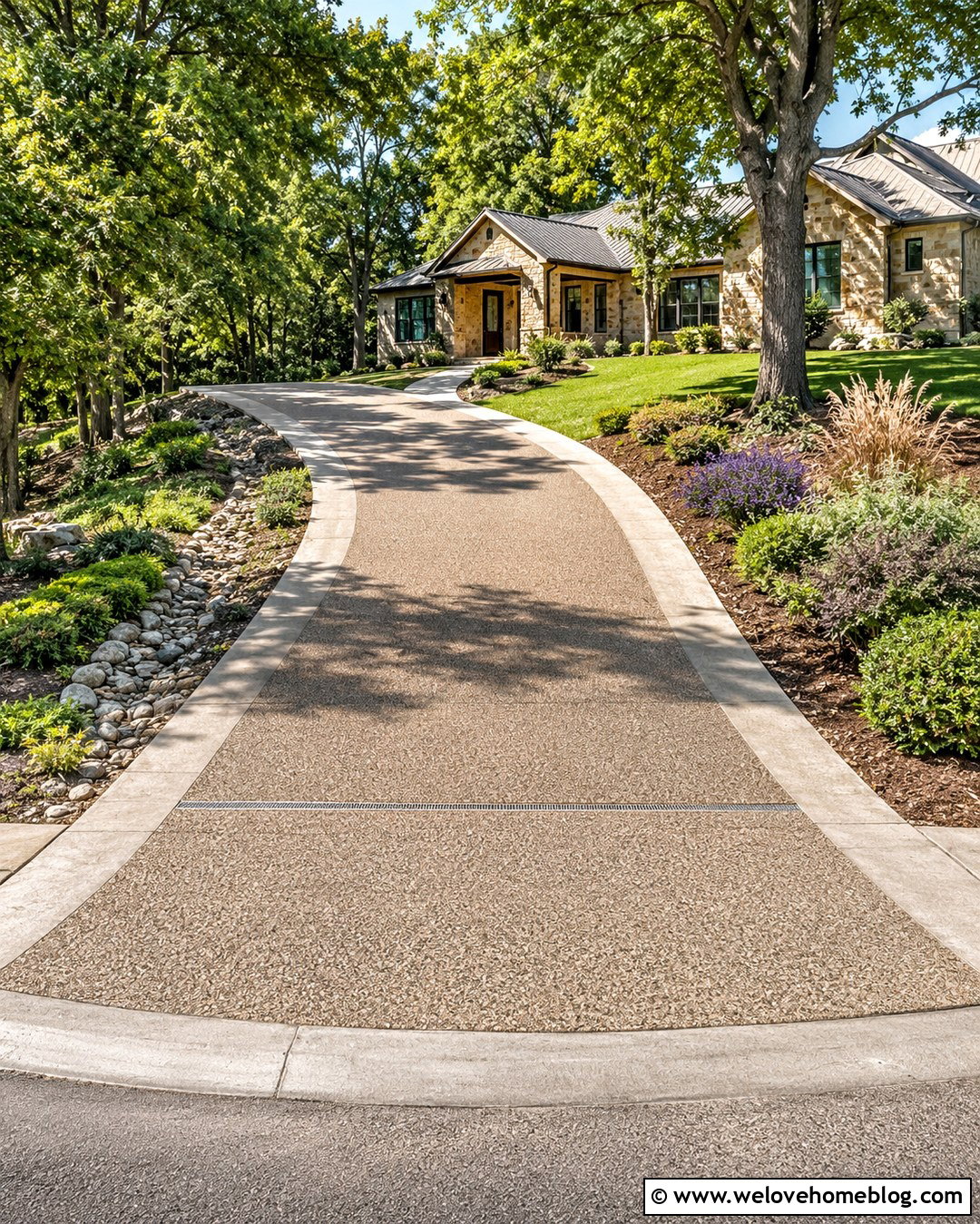
Exposed aggregate offers visible texture and a natural, speckled appearance that complements stone, brick, and wood siding. A gently curving layout can follow the land rather than cutting directly up the steepest line. Frame the driveway with smooth concrete bands to create strong edges and a polished contrast. On the uphill side, a linear drain or shallow stone-lined swale can collect water before it crosses the driving surface. Plant the banks with erosion-conscious groundcovers, spreading shrubs, and ornamental grasses selected for the local climate. Keep taller plants away from bends and the street entrance. Because aggregate exposure can vary, review a full-size sample and request a finish that balances traction, cleanability, and comfortable snow removal. ()
6. Grooved Concrete Steep Driveway
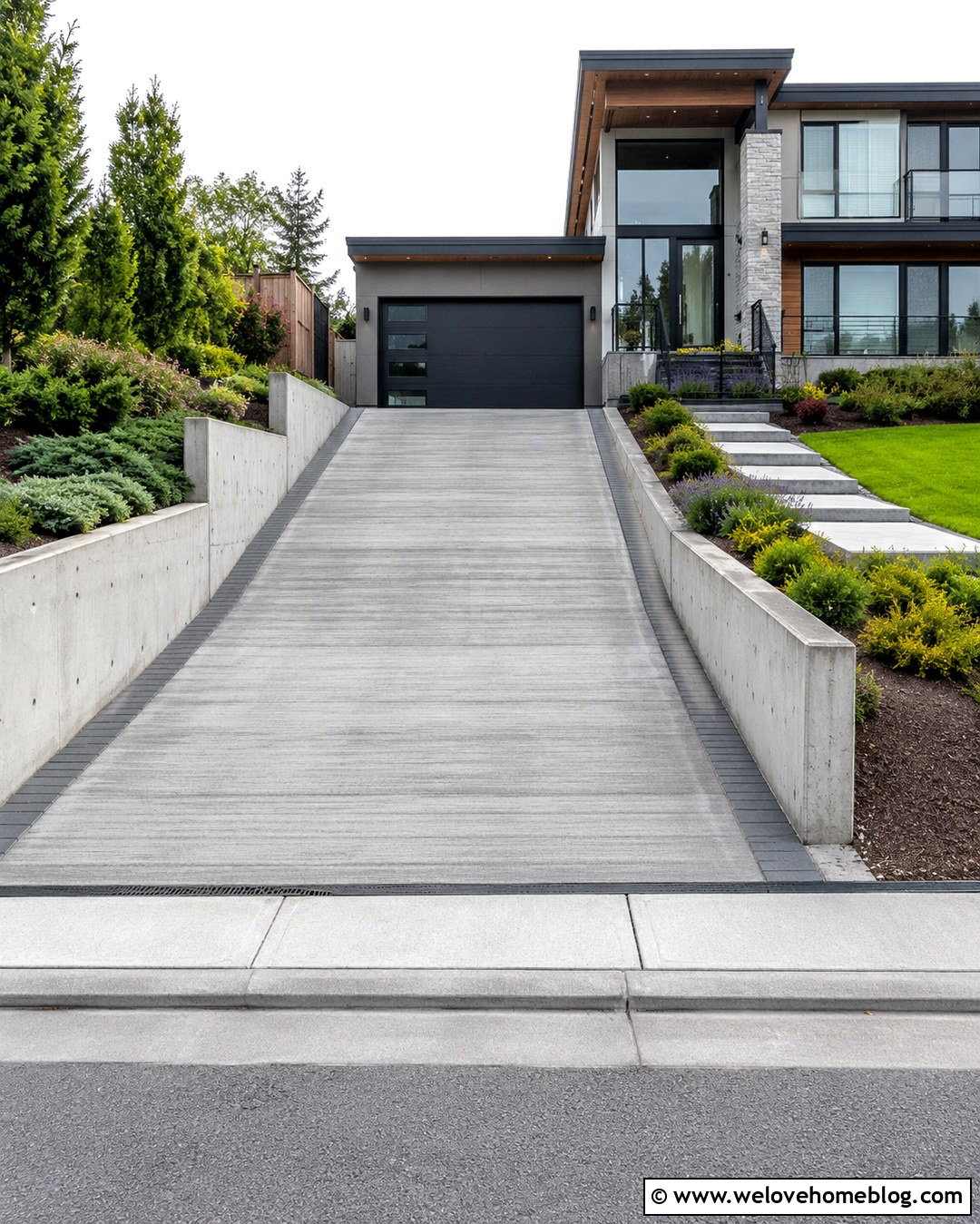
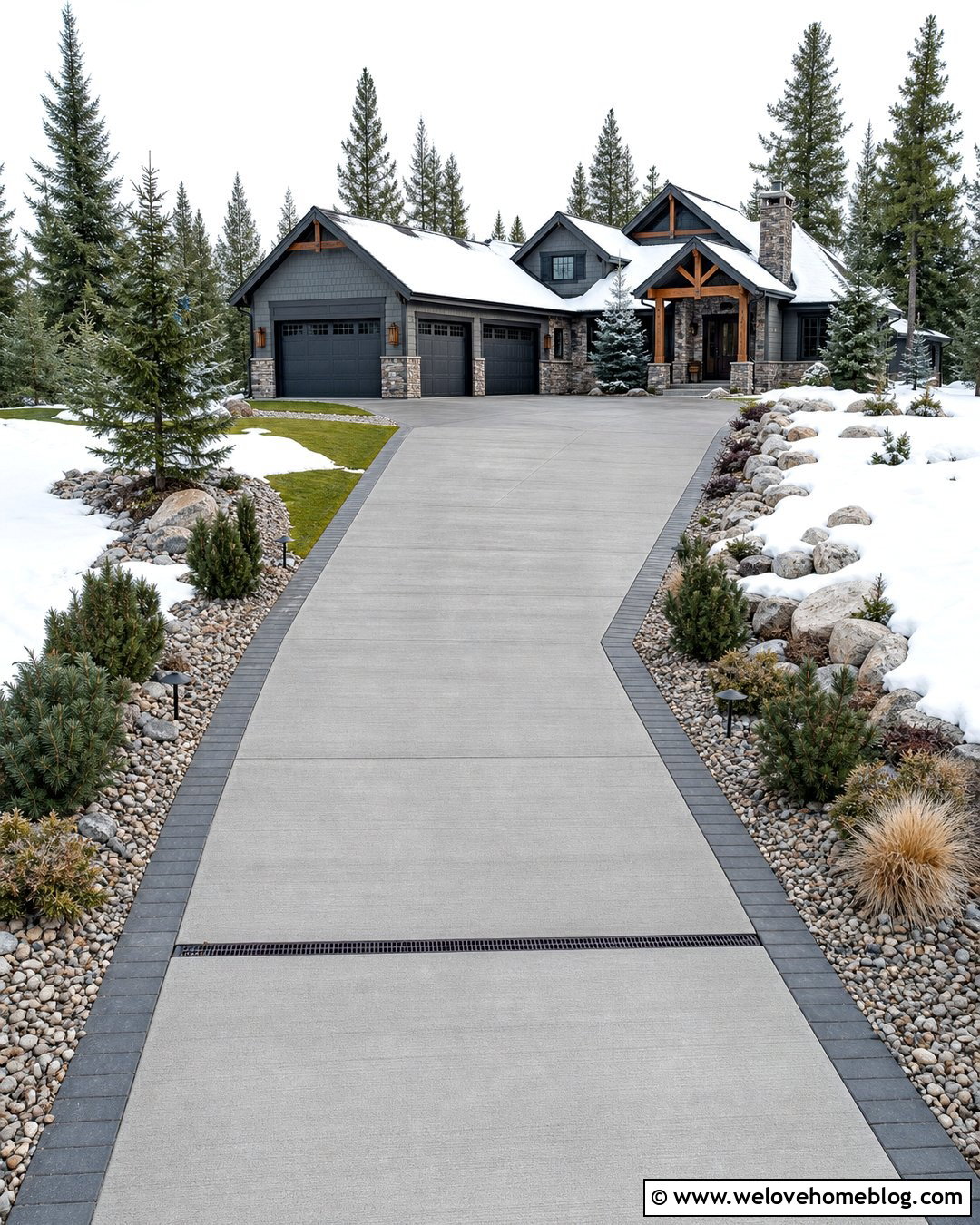
Deeply textured concrete can bring extra visual and functional definition to a demanding incline. Instead of decorative grooves running down the hill, consider transverse texturing that interrupts the direction of travel and supports tire grip. A straight driveway can be divided into broad concrete panels with contrasting charcoal paver borders. Place a heavy-duty trench drain across the lower entrance and direct the captured water to an approved outlet. Low concrete retaining walls can secure both side banks without visually narrowing the route. Repeating beds of creeping juniper, sedges, and compact flowering shrubs soften the hardscape. The result feels orderly and modern, particularly beside a minimalist home, while still prioritizing drainage, stable edges, and practical vehicle movement. ()
7. Permeable Paver Steep Driveway
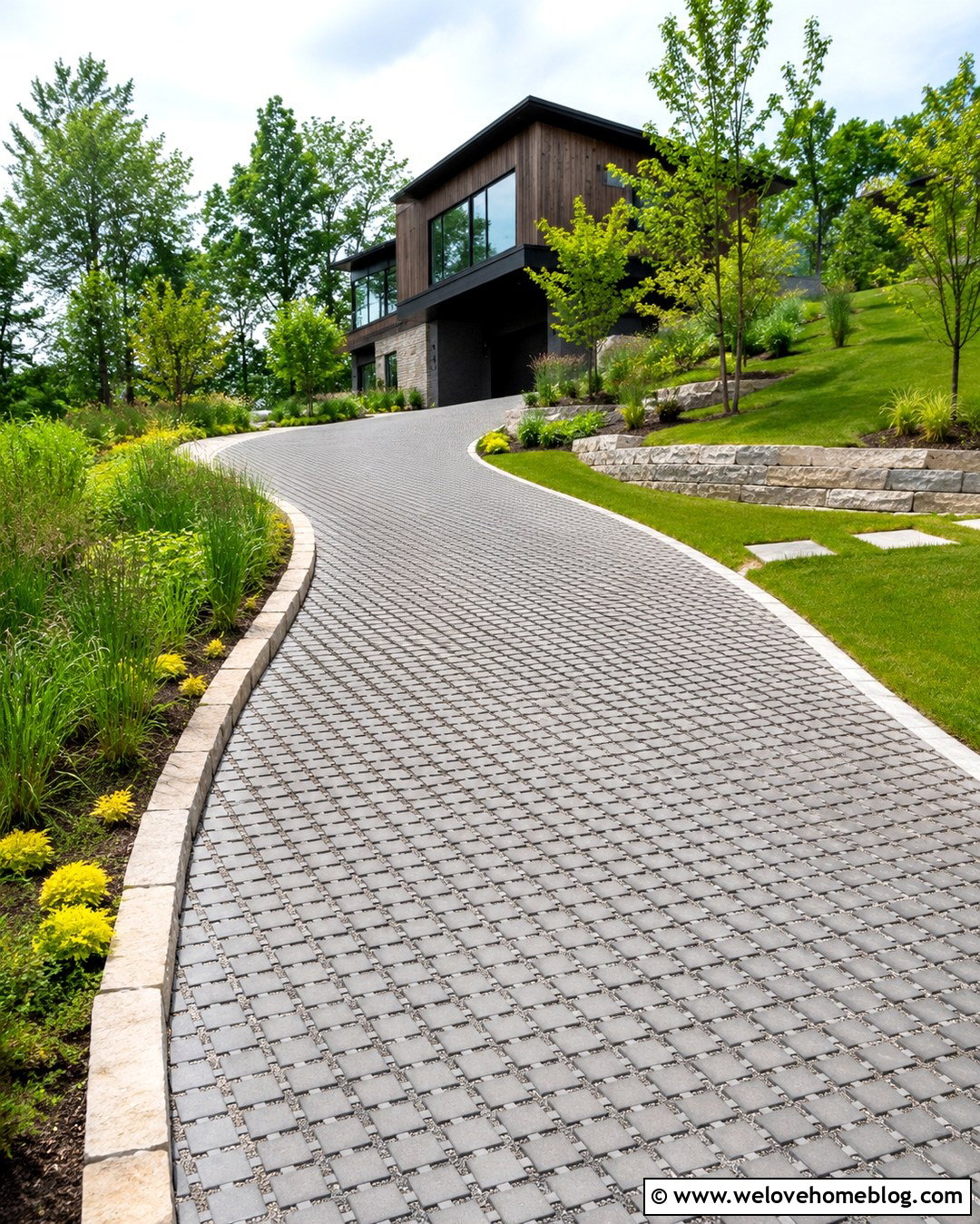
Permeable pavers can support a drainage-focused design when the slope, soil, base, and local regulations make the system appropriate. Choose textured concrete grid pavers in a warm gray tone and lay them in a gently curved driveway with robust edge restraints. A permeable installation must be engineered carefully because fast runoff, sediment, and sloped subgrades can affect performance. Pair the surface with an uphill bioswale or rain garden that receives water from surrounding landscape areas without sending uncontrolled flow across the pavement. Limestone curbs and terraced native planting beds create a finished appearance. This complete look suits an eco-conscious contemporary home, but it requires professional assessment, correct aggregate layers, overflow planning, and routine removal of clogging debris. ()
8. Resin-Bound Steep Driveway
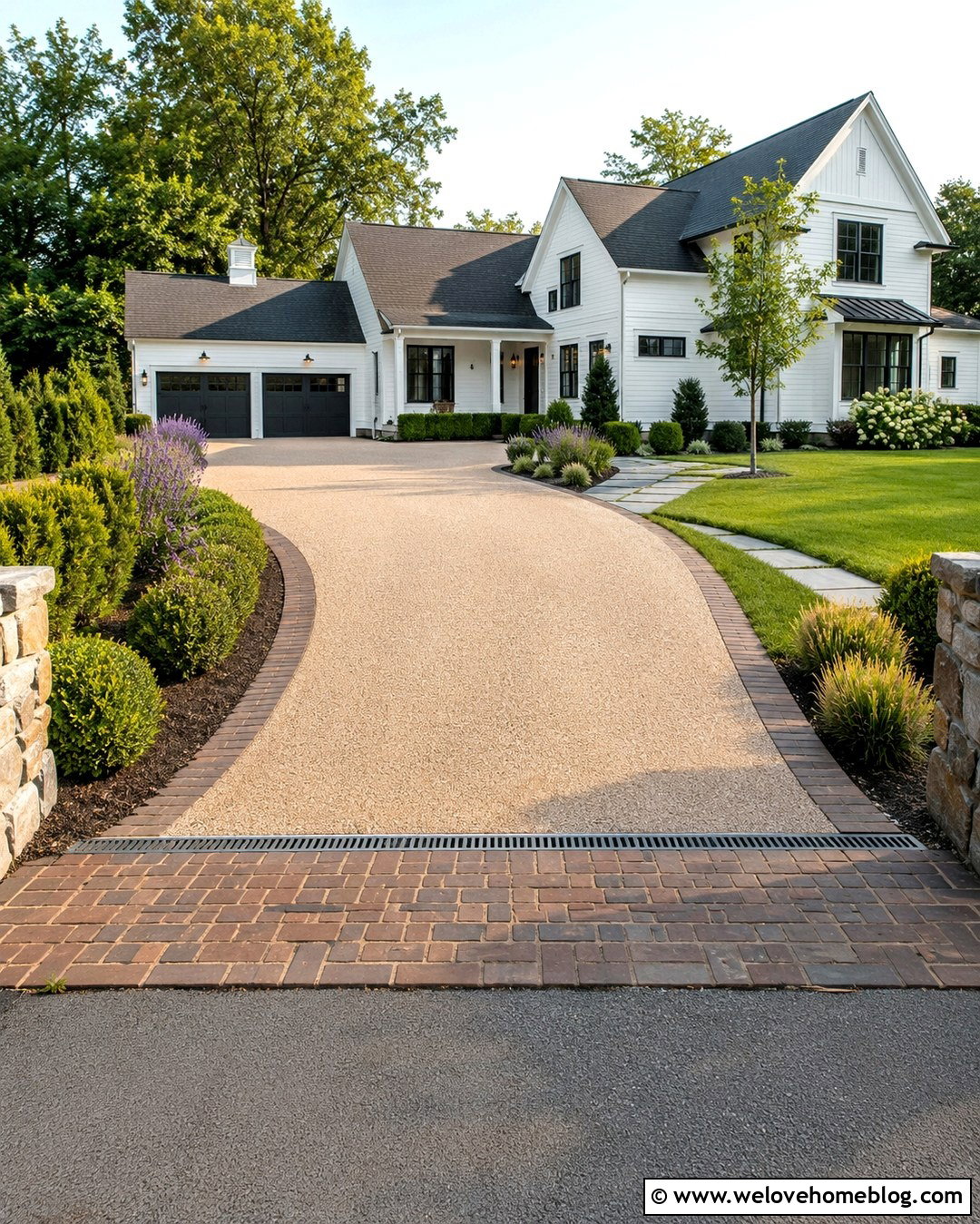
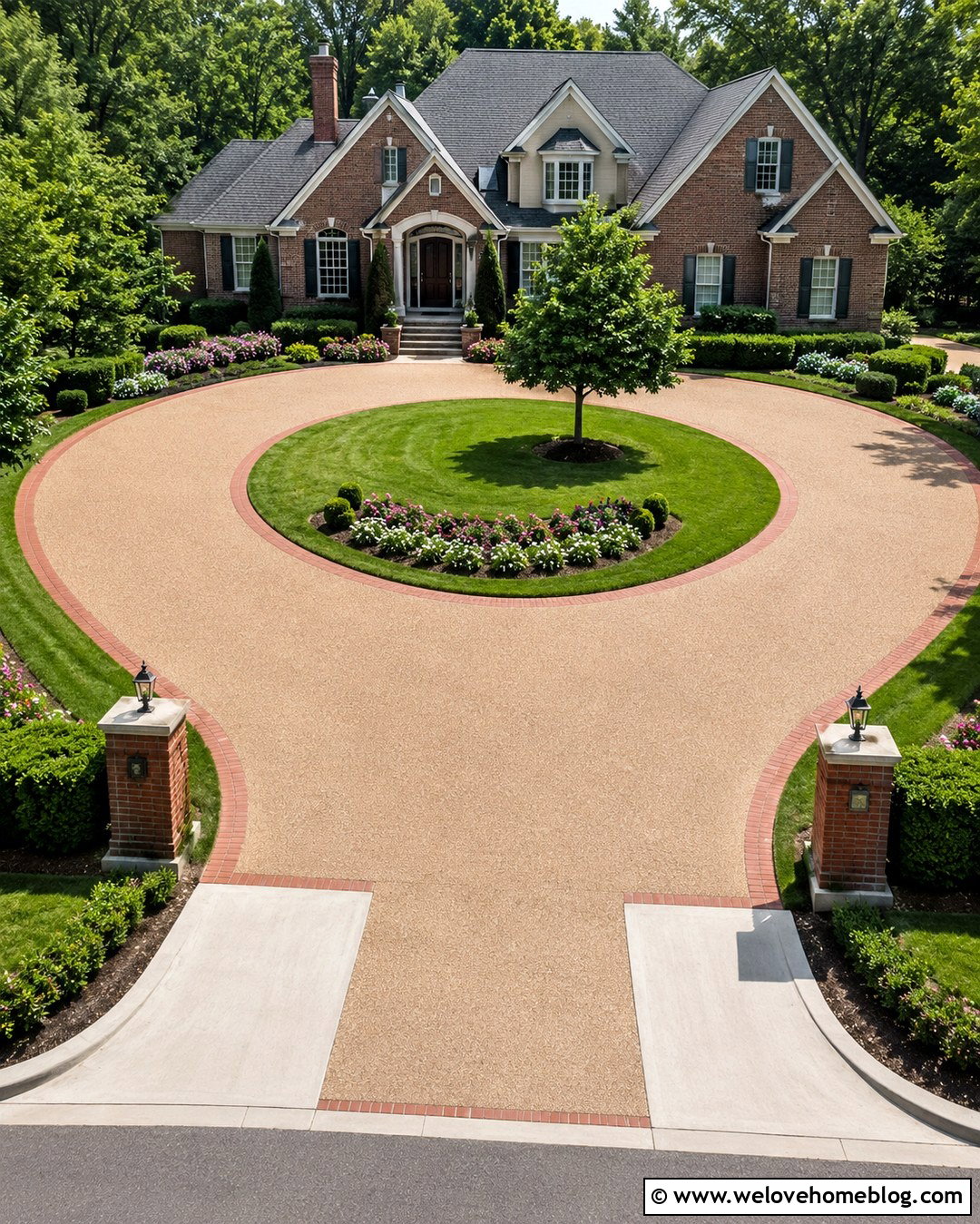
A resin-bound gravel surface creates a smooth, contemporary appearance without the loose movement associated with ordinary gravel. For a steep application, the chosen system must be specifically rated and installed for the site’s gradient, vehicle loads, climate, and drainage requirements. Use a warm beige aggregate blend on a sweeping driveway with dark clay brick edging. A brick entrance apron provides a strong visual transition from the street, while a channel drain controls water at the lowest point. Along the sides, clipped evergreen shrubs, lavender, and ornamental grasses give the approach a structured but welcoming character. The light-colored surface looks especially attractive with a modern farmhouse, although proper substrate preparation and experienced installation are essential for long-term performance. ()
9. Cobblestone Steep Driveway
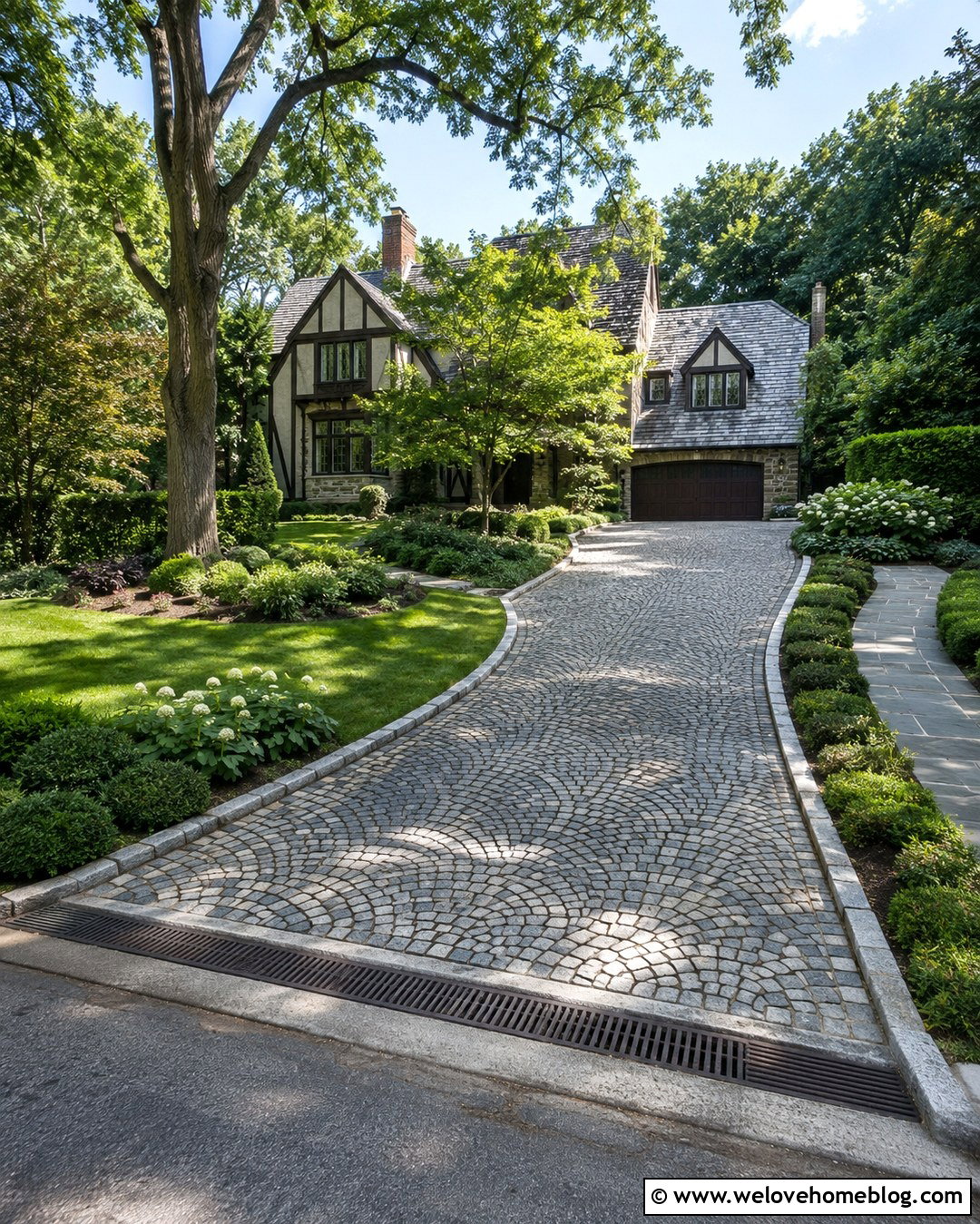
Cobblestone can turn a sloped approach into a traditional feature, especially when paired with a historic or European-inspired home. Choose split or textured stones rather than a highly polished finish, and use a pattern designed to remain stable under vehicle loads. A fan or staggered layout can visually widen the driveway while adapting gracefully to a curve. Create a flatter landing near the garage so drivers have room to pause, park, or maneuver. Granite curbs contain the stones and separate them from dense beds of boxwood, hydrangeas, and shade-tolerant groundcovers. Drainage channels should blend into the pattern without becoming difficult to clean. Due to installation complexity, this premium driveway requires experienced stone setters and careful sub-base engineering. ()
10. Asphalt Steep Driveway With Paver Apron
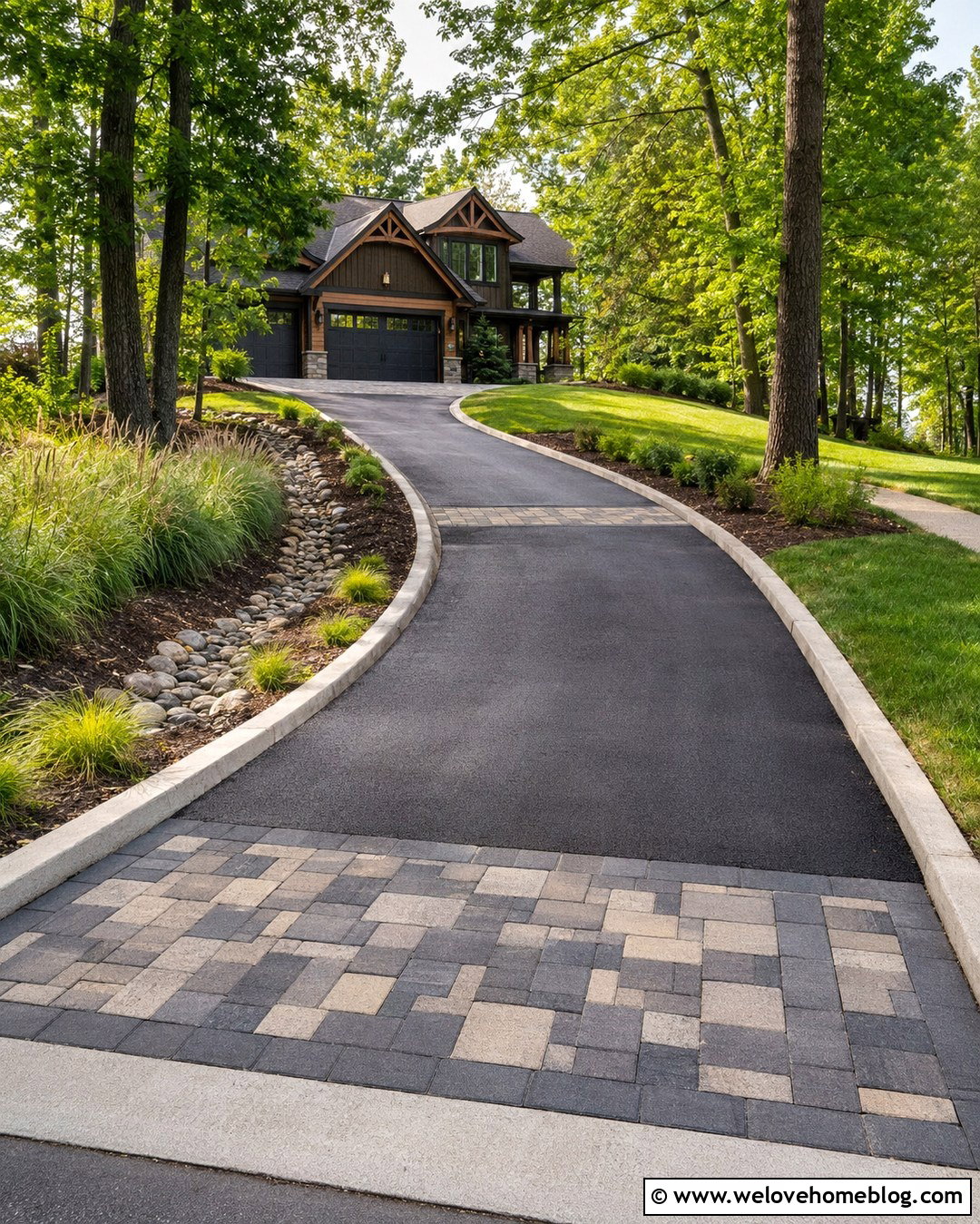
Black asphalt is a practical choice for a long, steep driveway, but a contrasting entrance can make the design feel more connected to the house. Add a wide charcoal-and-tan concrete paver apron at the street, then repeat the same pavers in a band near the garage. The asphalt section can follow a gentle S-curve that fits between existing trees and reduces the harsh look of a direct climb. Continuous concrete curbs support the edges beside raised soil. A stone-lined drainage swale on the uphill side channels runoff away from the pavement. Use native grasses, low shrubs, and canopy trees to frame the approach without blocking visibility. The finished look suits a suburban craftsman or woodland home. ()
11. Steep Driveway With Retaining Wall
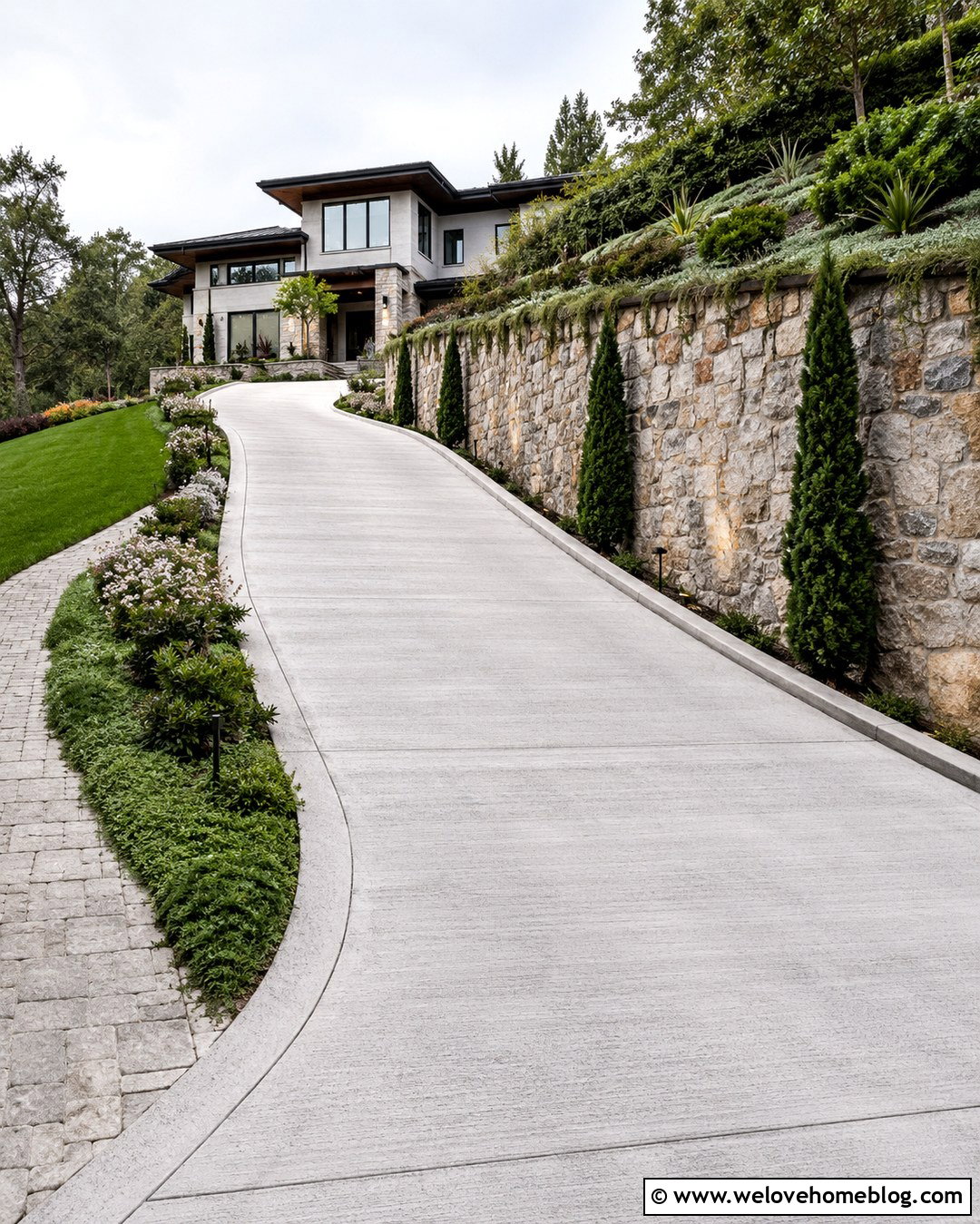
A retaining wall can transform an unstable roadside bank into a defined, usable driveway corridor. Pair broom-finished gray concrete with a curved layout and a natural stone wall on the uphill side. The wall should be engineered for soil pressure, surcharge loads, height, and site conditions rather than treated as simple decorative edging. Include drainage aggregate, appropriate outlets, and other specified components behind the wall so trapped water does not create damaging pressure. On the lower side, use a low curb and open planting bed instead of another tall wall when space allows. Cascading groundcovers soften the stone, while upright evergreens frame the garage. Wall-mounted lights can improve edge visibility without placing fixtures in the driving path. ()
12. Terraced Steep Driveway
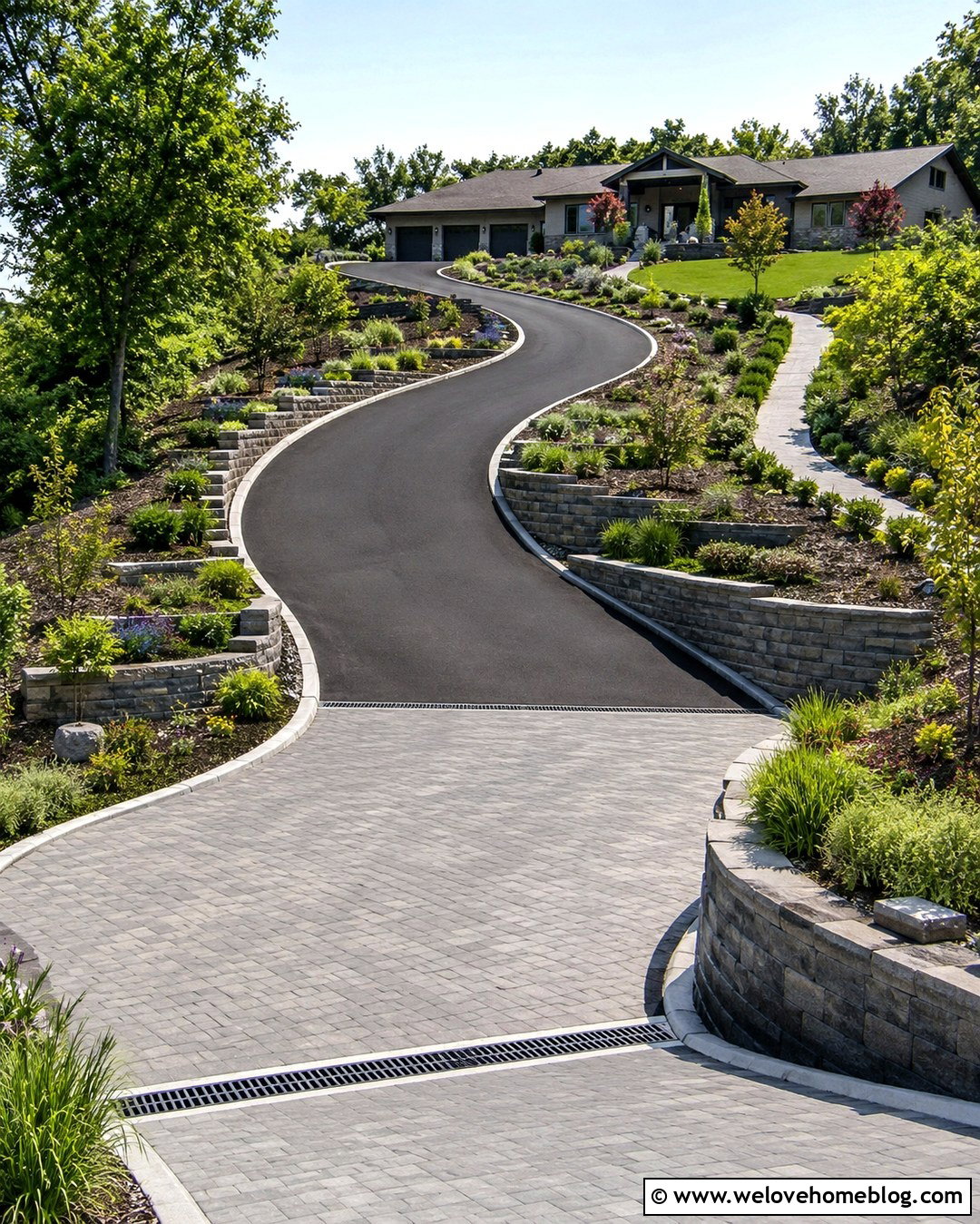
Terracing divides a dramatic hillside into smaller visual levels and can make a long driveway feel integrated with the yard. Use dark asphalt for the curved driving surface and tiered concrete-block retaining walls for the banks. Between the walls, create broad planting terraces filled with compact shrubs, ornamental grasses, and spreading groundcovers. The terraces should not drain directly onto the driveway. Instead, connect wall drainage, surface inlets, and swales to a professionally planned discharge system. Add a flatter pull-off or turning area where the site is wide enough, using concrete pavers to distinguish it from the main route. This approach works well for hillside ranch homes and contemporary houses where the driveway is visible from much of the property. ()
13. Stabilized Gravel Steep Driveway
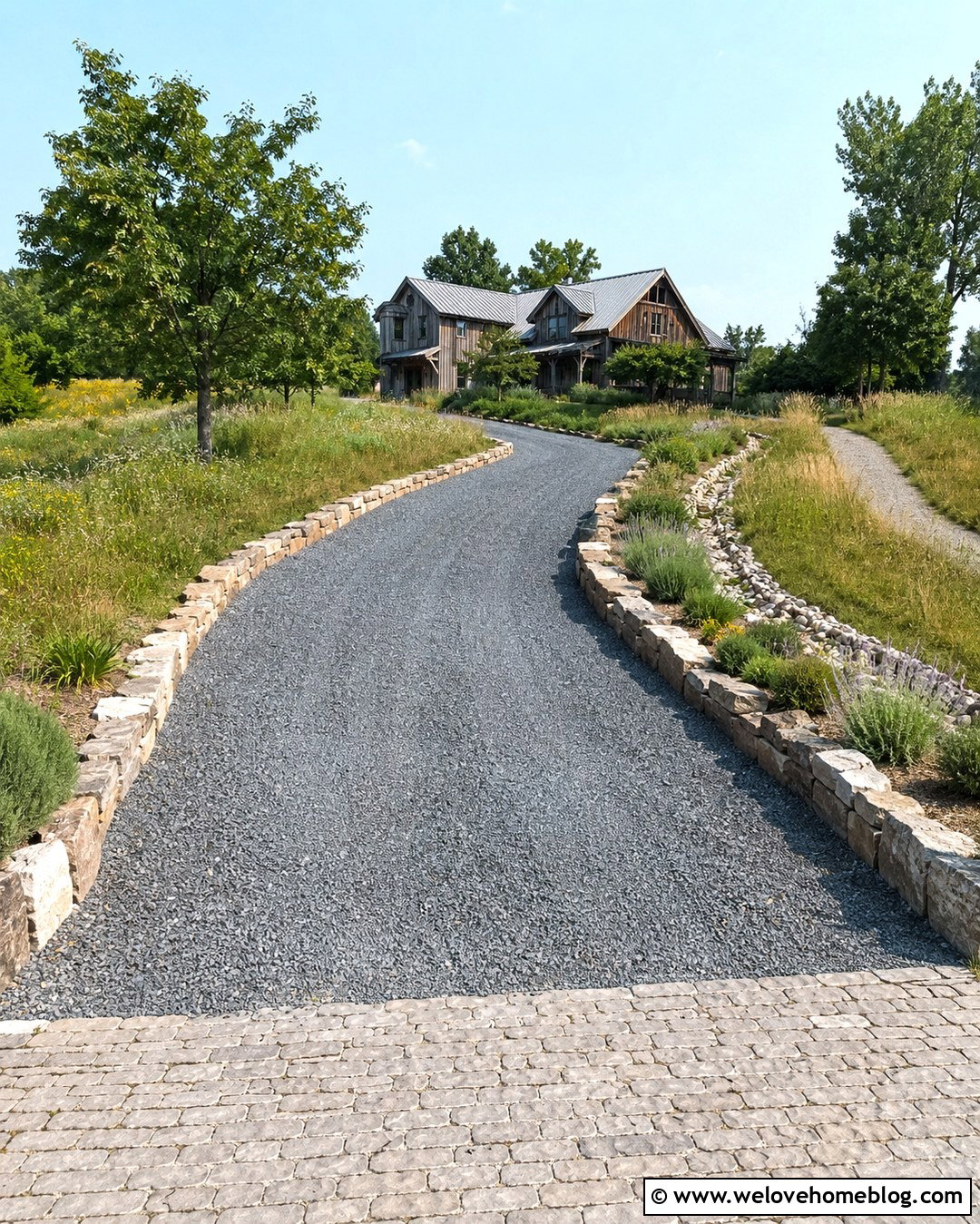
Loose gravel can migrate downhill, develop ruts, and wash during storms, so a steep gravel driveway needs more structure than a flat rural lane. Use angular crushed stone contained within a load-rated cellular stabilization grid rather than relying on rounded pea gravel. Shape the driveway into a gradual curve and secure both sides with substantial stone or concrete edging. An uphill swale can intercept hillside runoff, while carefully placed cross-drains move water without allowing it to race along the full driveway. Native grasses and low woody shrubs help cover exposed banks. A broad cobblestone apron at the street catches scattered aggregate and creates a polished entrance. This rustic design pairs naturally with a farmhouse, cabin, or country craftsman home. ()
14. Steep Driveway With Level Garage Pad
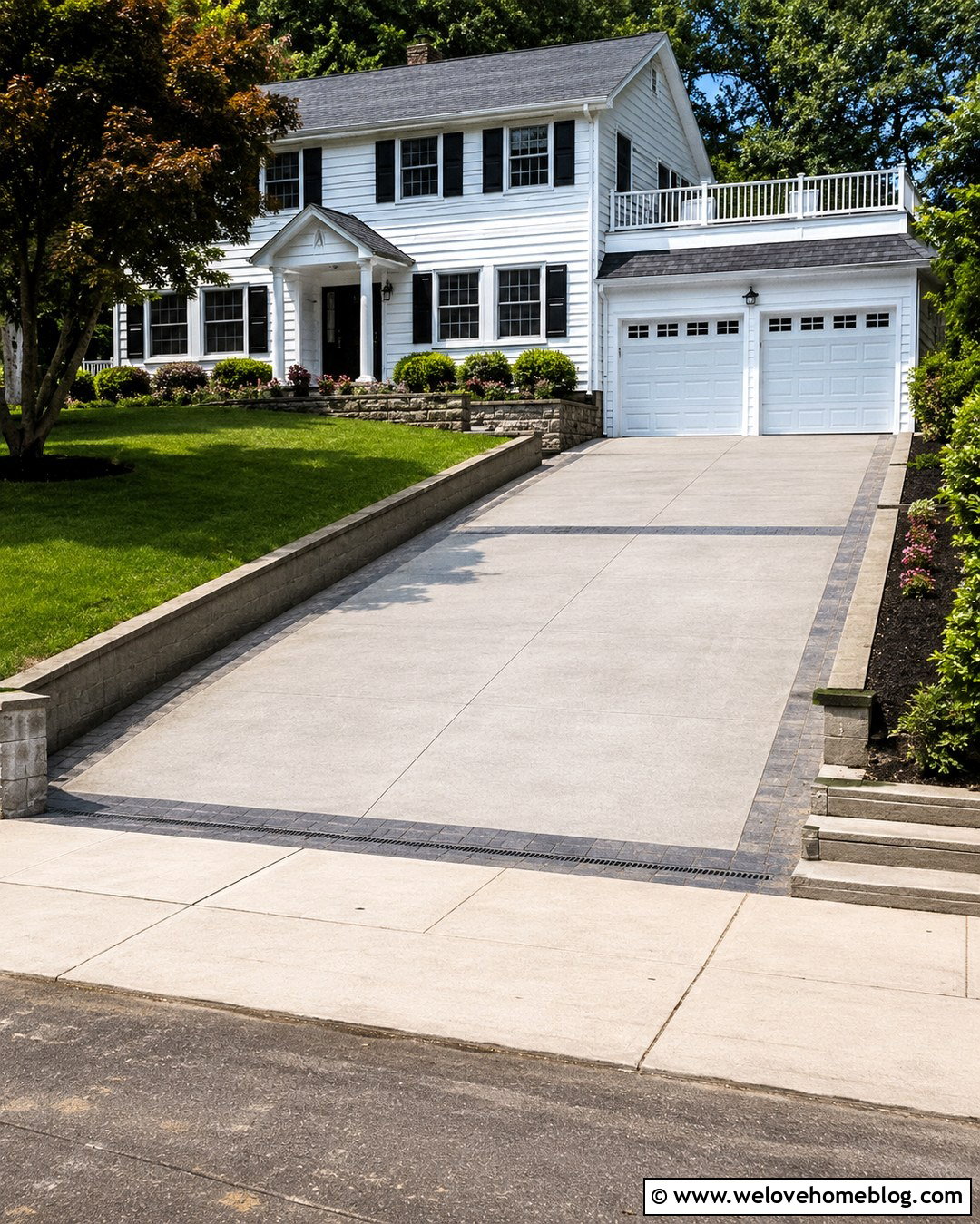
The final transition into a garage is often as important as the main incline. Create a nearly level parking and maneuvering pad in front of the garage, then connect it to the steep approach with a smooth vertical curve designed around expected vehicles. A broom-finished concrete driveway and pad provide a consistent appearance, while dark paver bands make the transition easy to see. Install a trench drain before the flatter area to stop downhill water from collecting at the garage door. Low retaining walls can hold the surrounding grade and create raised planting beds. Keep these walls far enough from the travel path for comfortable door clearance and turning. This layout is especially helpful for garages positioned above or below street level. ()
15. Narrow Steep Driveway
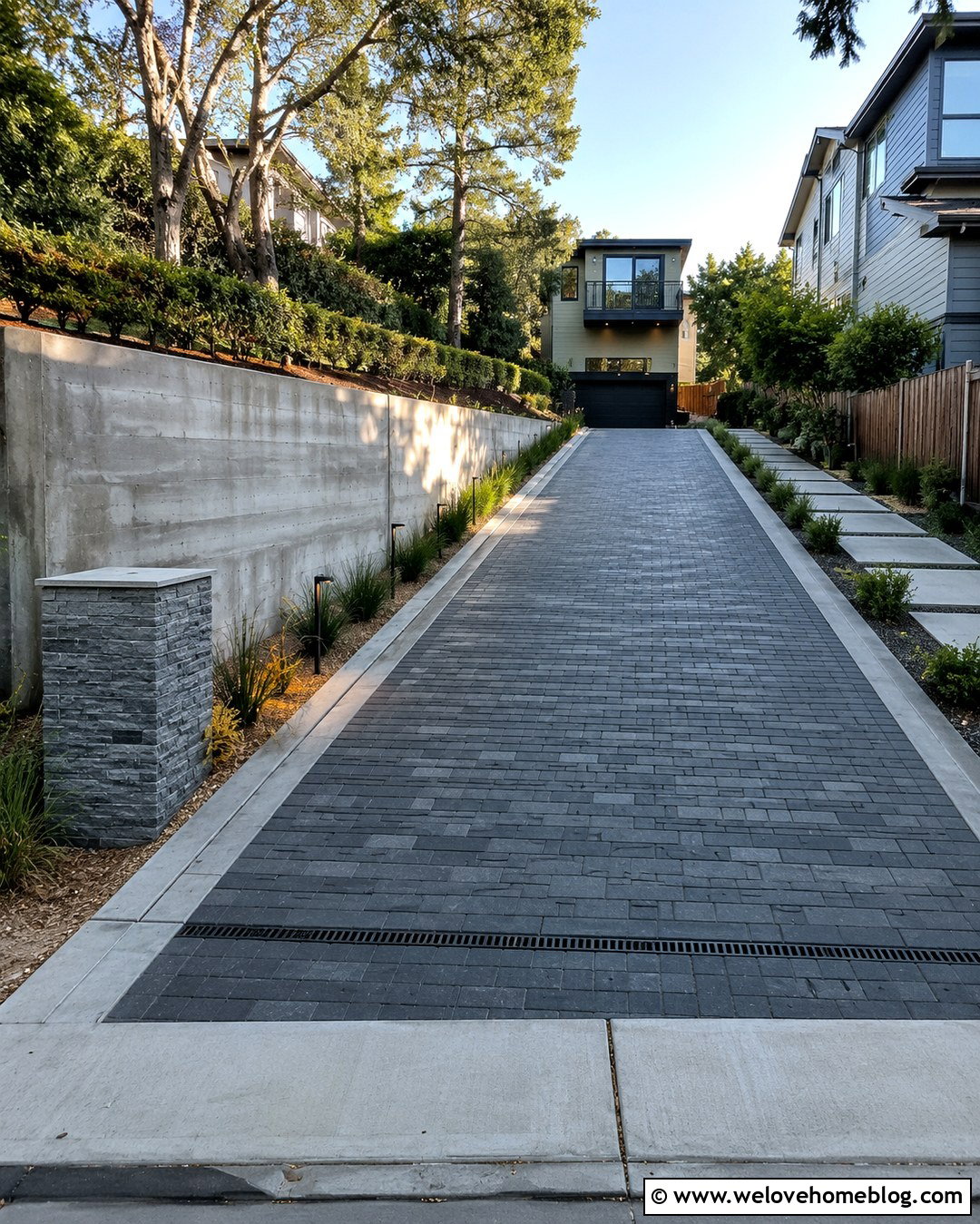
Limited width calls for a simple design with highly visible boundaries. Use textured charcoal concrete pavers in a straight layout leading to a compact urban or hillside home. Install flush contrasting borders rather than raised stones that could catch tires or make the lane feel tighter. Slim linear drains can cross the driveway at engineered collection points, while a continuous curb prevents soil from washing onto the surface. On the uphill bank, use a reinforced retaining wall with low planting above it. The downhill edge can feature recessed marker lights or short fixtures placed outside the required vehicle clearance. Finish the entrance with a small address pillar positioned away from sight lines. The restrained material palette keeps the narrow approach clean and visually organized. ()
16. Wooded Steep Driveway
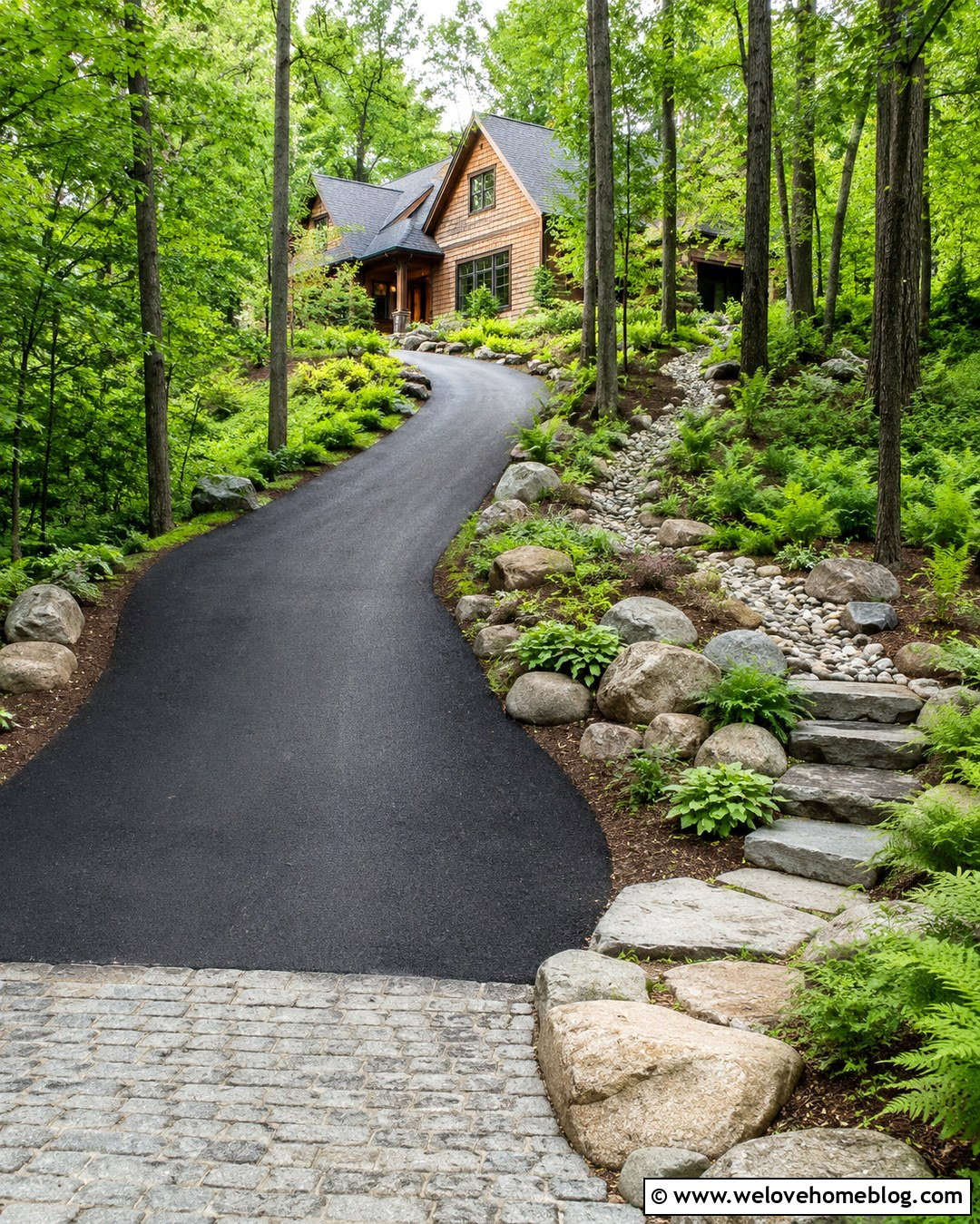
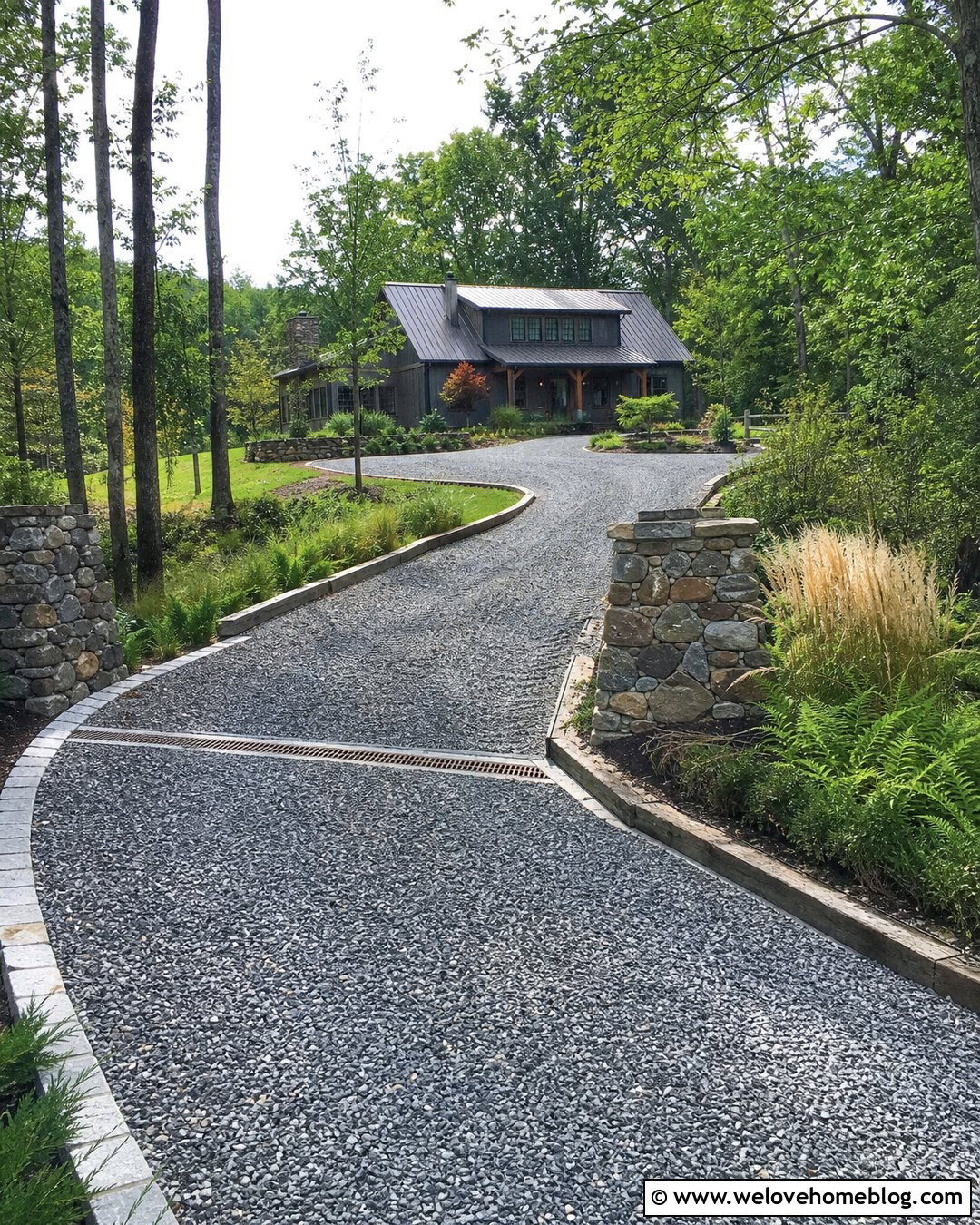
A wooded property looks most natural when the driveway follows the contours rather than cutting a rigid line through the slope. Choose dark asphalt for the driving surface and shape it into a generous curve between mature trees. Large native boulders can retain selected banks and visually connect the pavement to the surrounding landscape, but structural walls may still be required where soil conditions or heights demand them. Add a stone-lined swale along the uphill edge to capture leaf-filled runoff and make maintenance access easy. Ferns, sedges, woodland groundcovers, and shade-tolerant shrubs fill disturbed areas without creating a formal suburban look. Use a light-colored paver apron at the entrance so drivers can distinguish the driveway clearly from the road. ()
17. Modern Steep Concrete Driveway
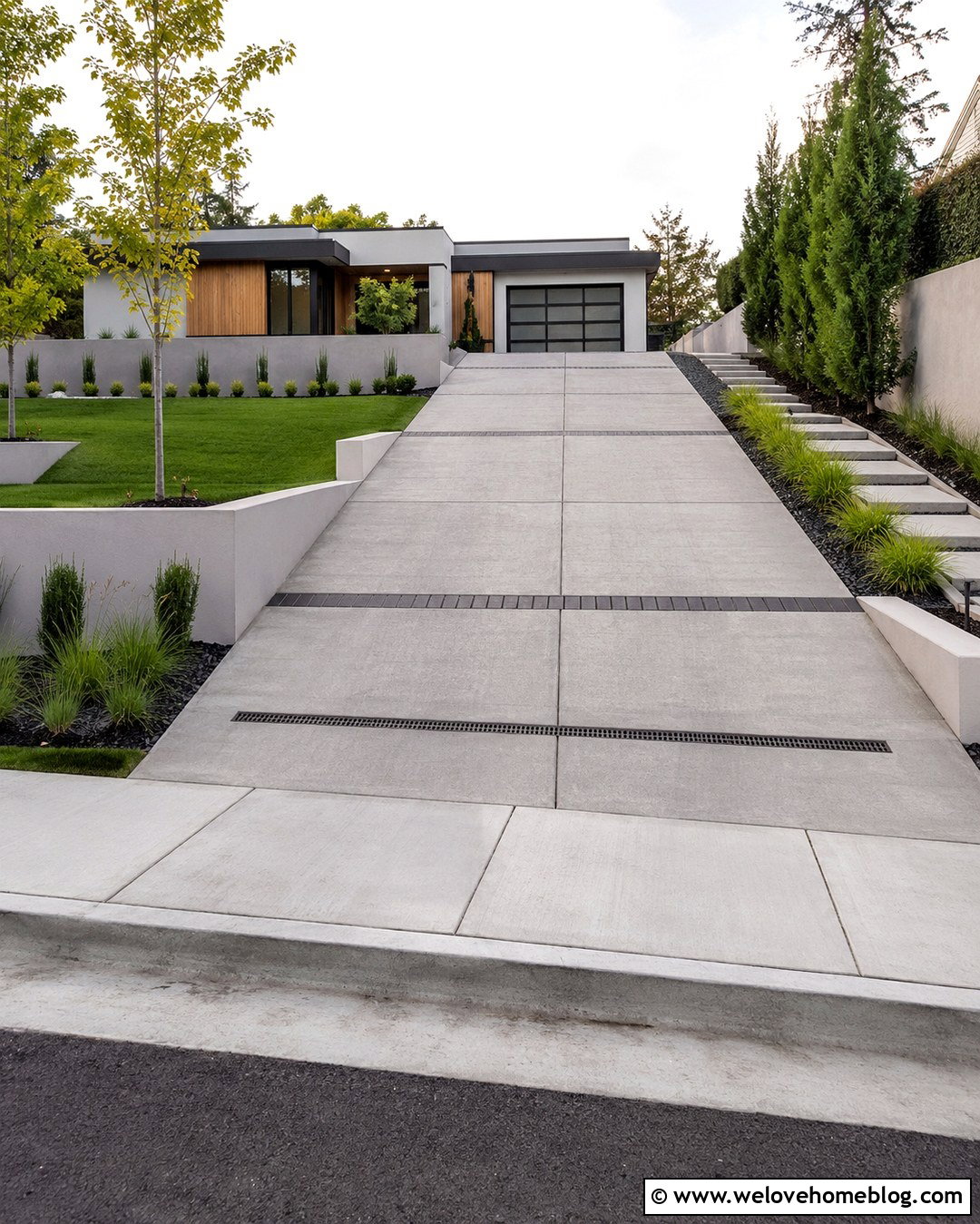
Large concrete panels give a steep driveway a crisp modern rhythm while construction joints and finish changes add useful visual definition. Select medium-gray, broom-finished poured concrete with narrow charcoal paver bands running across the driveway at regular intervals. A gently angled layout can connect the street to an elevated side-entry garage without appearing overly rigid. Smooth architectural retaining walls hold the cut slope, and linear planting beds introduce compact grasses, evergreen shrubs, and sculptural small trees. Integrate grated drainage channels into the dark bands so they look intentional. Avoid broad strips of grass between vehicle tracks on a severe slope because maintenance and runoff can become difficult. This complete design complements flat-roofed, midcentury, and contemporary homes with restrained facades. ()
18. Brick Paver Steep Driveway
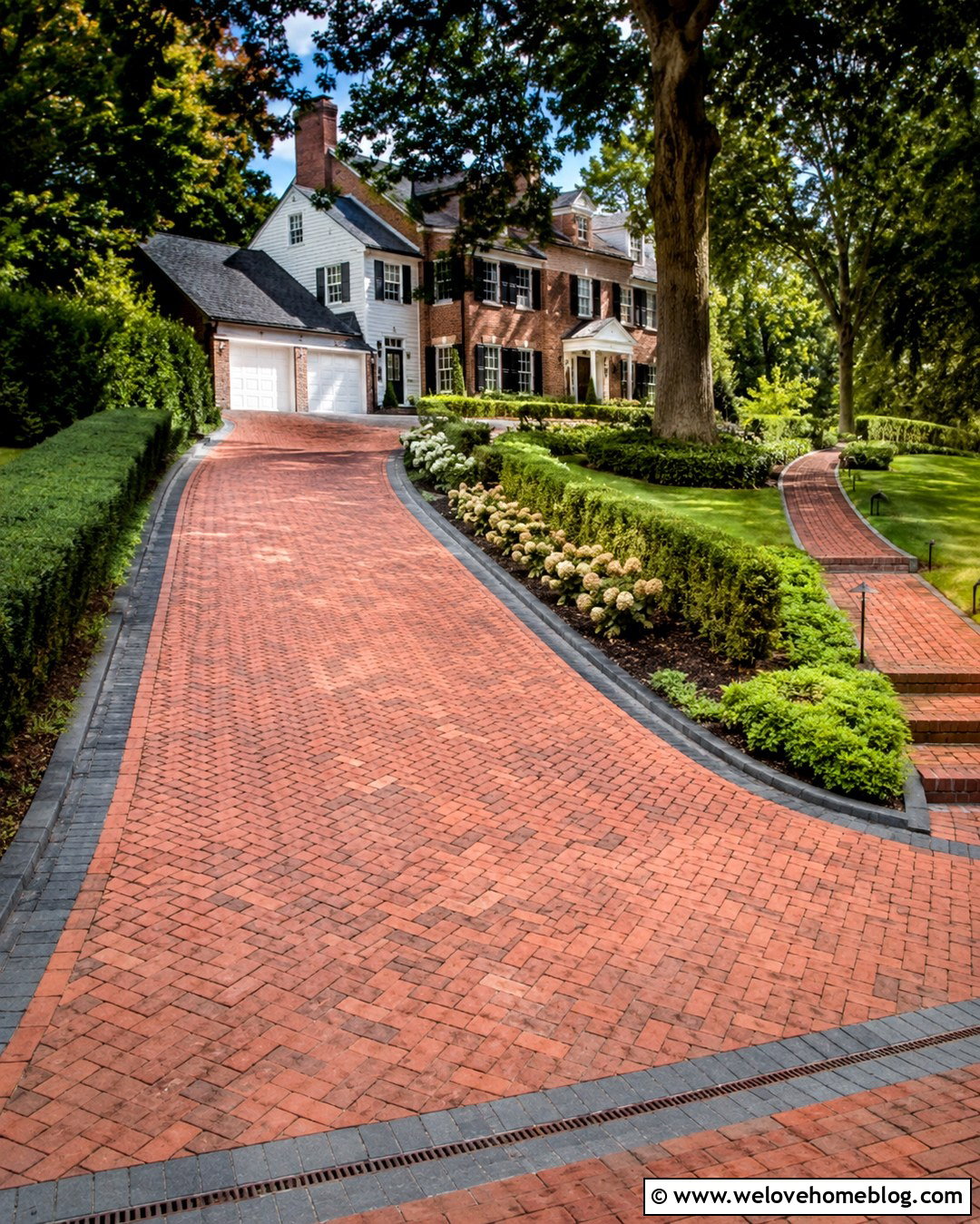
Clay brick pavers bring warmth to a steep driveway and coordinate beautifully with colonial, Tudor, and traditional homes. Lay textured bricks in a herringbone pattern because the interlocking arrangement creates strong visual structure across the driving surface. Dark granite setts can form sturdy side borders and define a wider landing near the garage. Add a discreet trench drain across the lower entrance, with additional collection points determined by the grading plan. Formal hedges can frame the upper driveway, while lower flowering shrubs maintain open views near the street. Use brick steps and a separate walkway for pedestrians rather than expecting visitors to climb the driving lane. The rich red surface, dark borders, and symmetrical landscaping create a unified, established appearance. ()
19. Mountain Steep Driveway
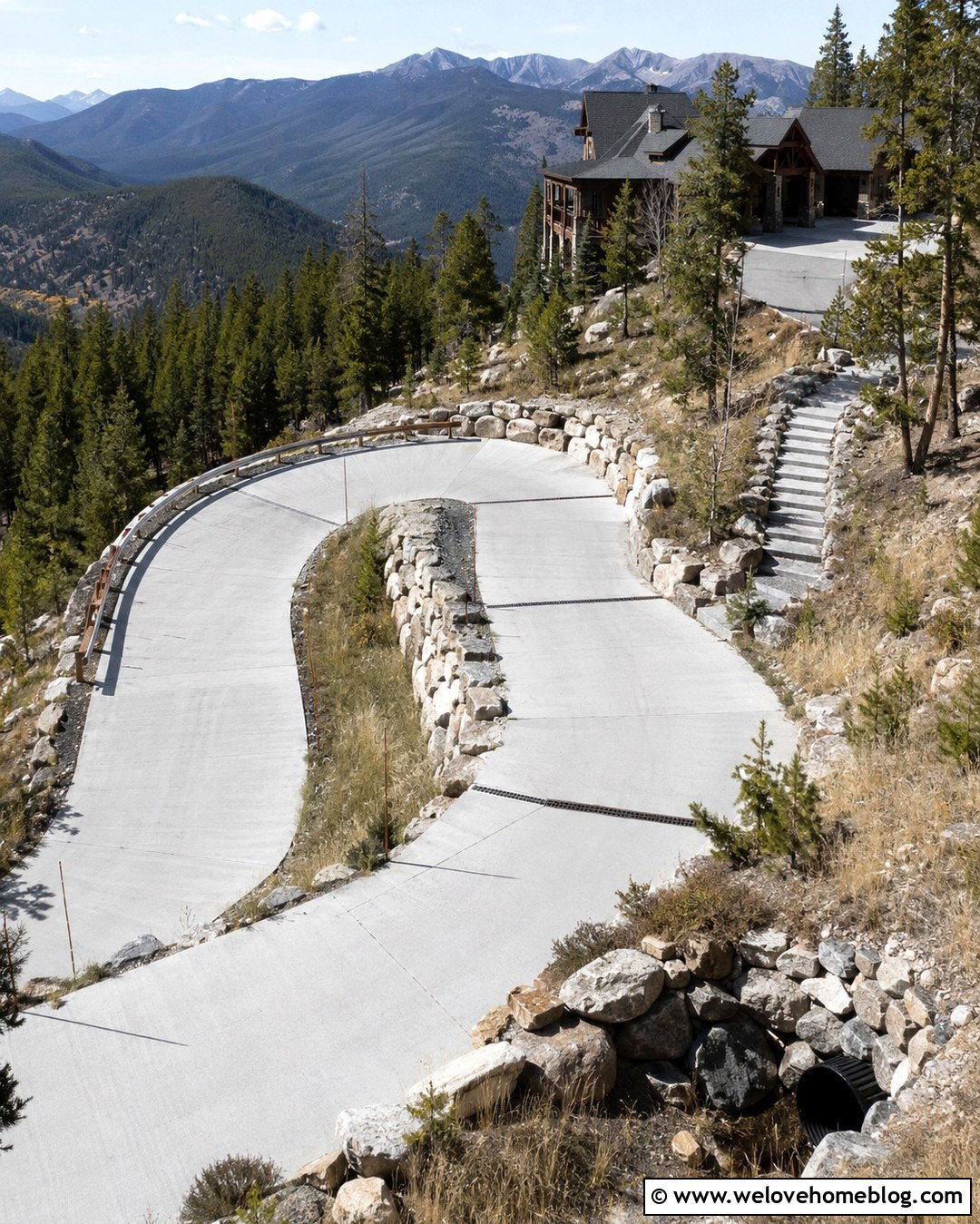
Mountain properties require a driveway that responds to snow, runoff, exposed edges, and rugged terrain. A reinforced, broom-finished concrete surface offers a bright contrast against rock and evergreen landscaping. Use a switchback or broad S-curve where sufficient land is available, with a wide turning area that accommodates regular vehicles and anticipated service access. Natural stone retaining walls support the inside banks, while an engineered barrier or protective edge addresses significant downhill drops. Snow markers identify pavement boundaries after accumulation, and a heated section near the steepest turn can target a critical traction area. Drainage channels, culverts, and armored outlets should carry water without eroding the hillside. This practical design fits a mountain lodge, cabin, or contemporary retreat. ()

20. Budget Steep Gravel Driveway
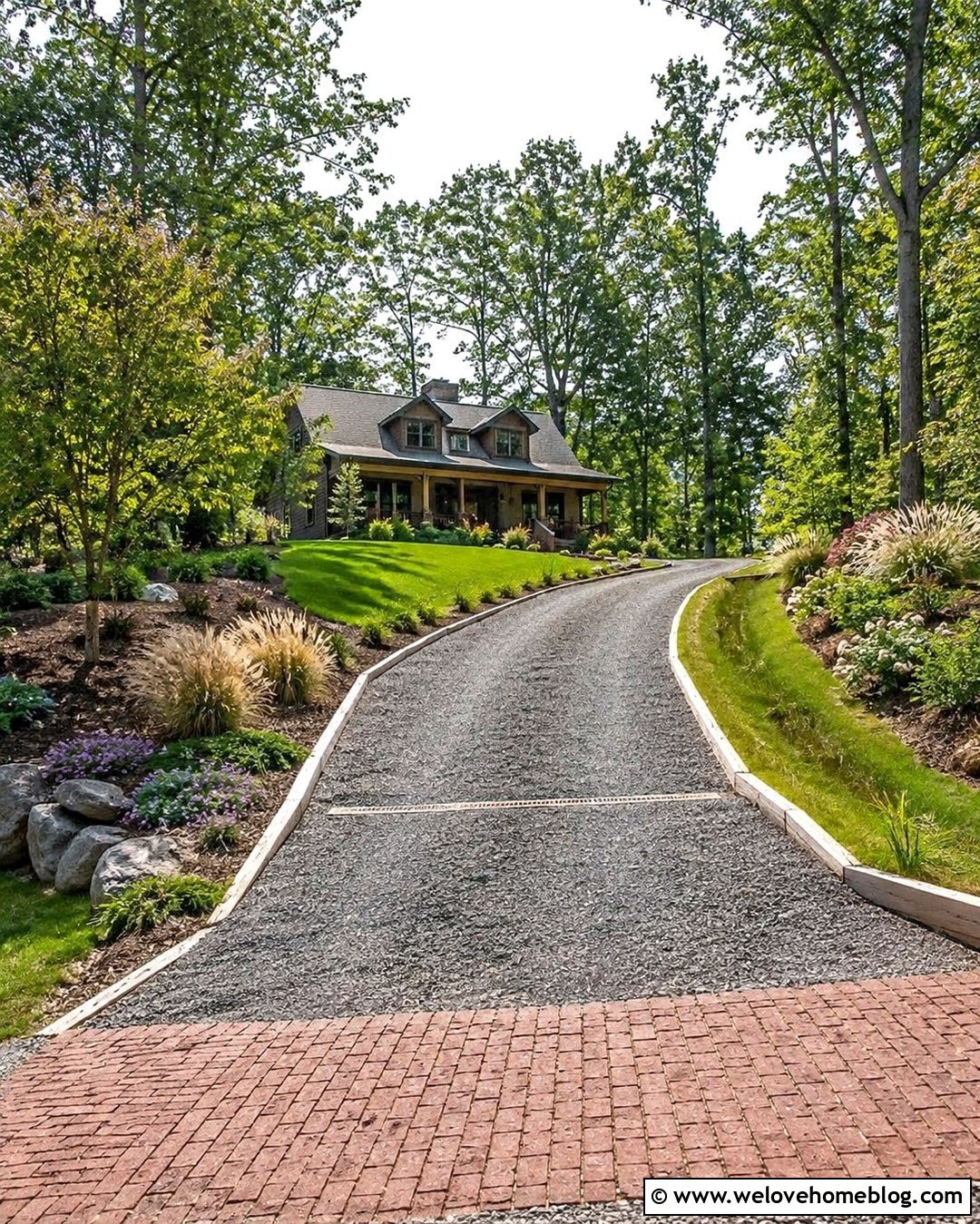
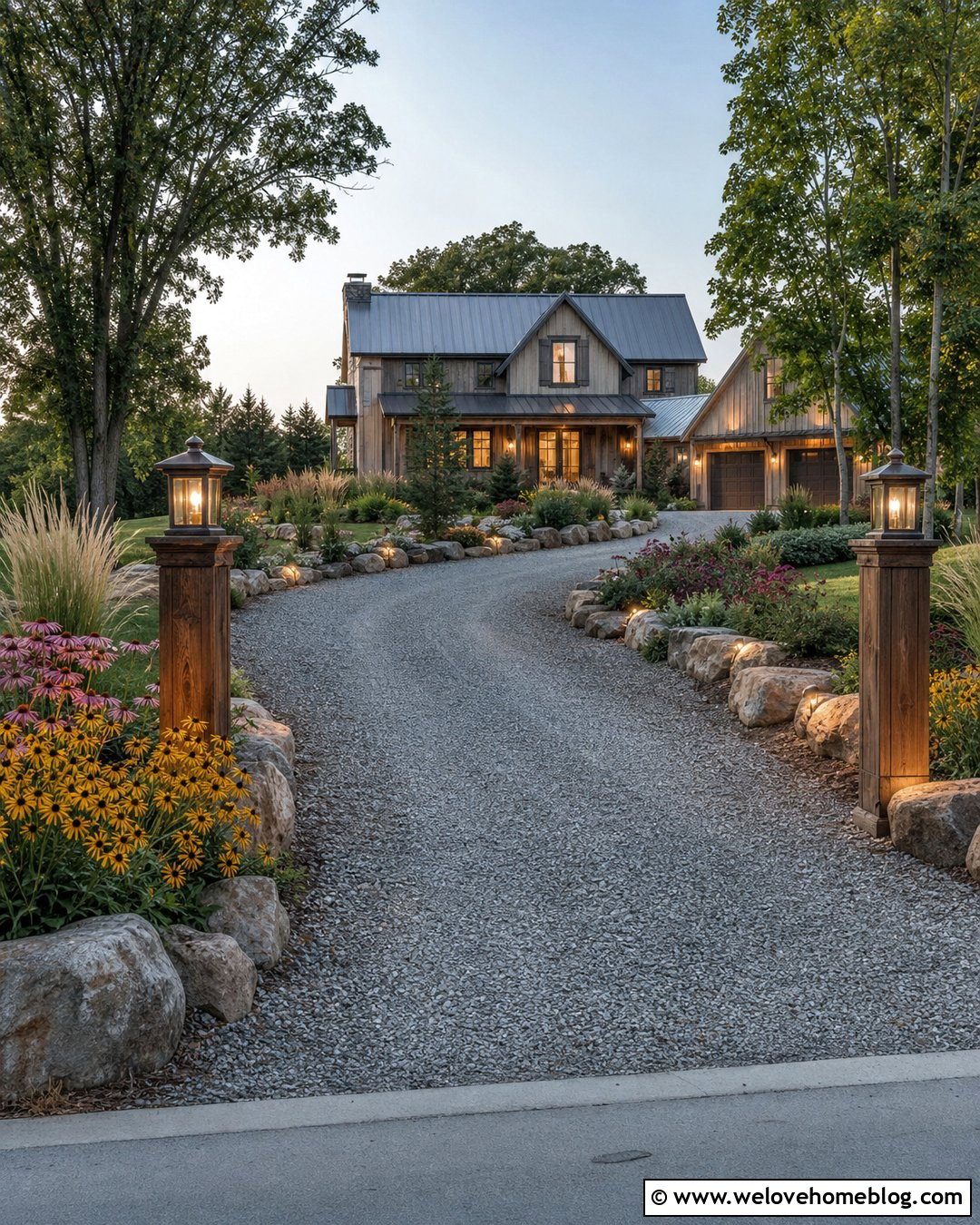
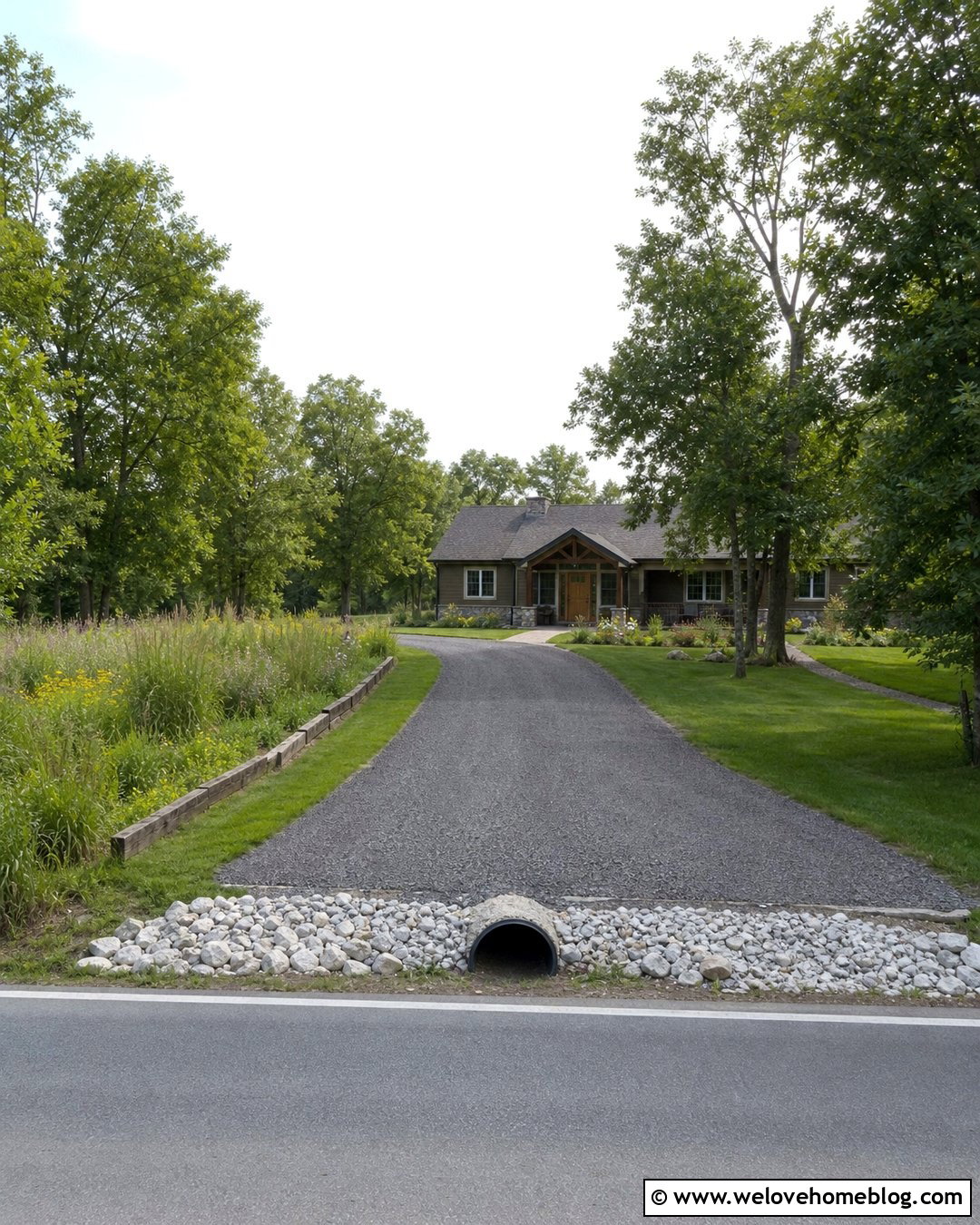
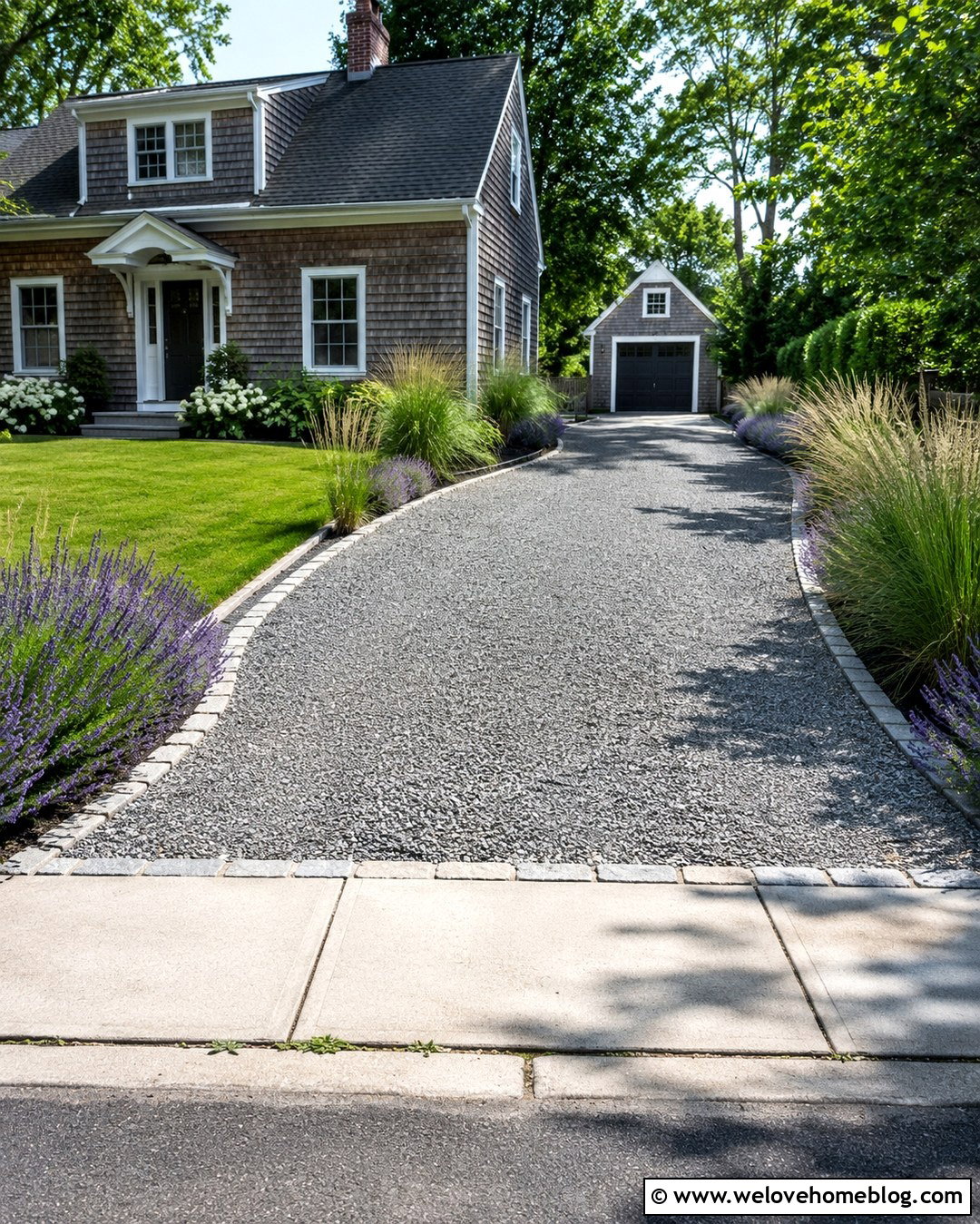
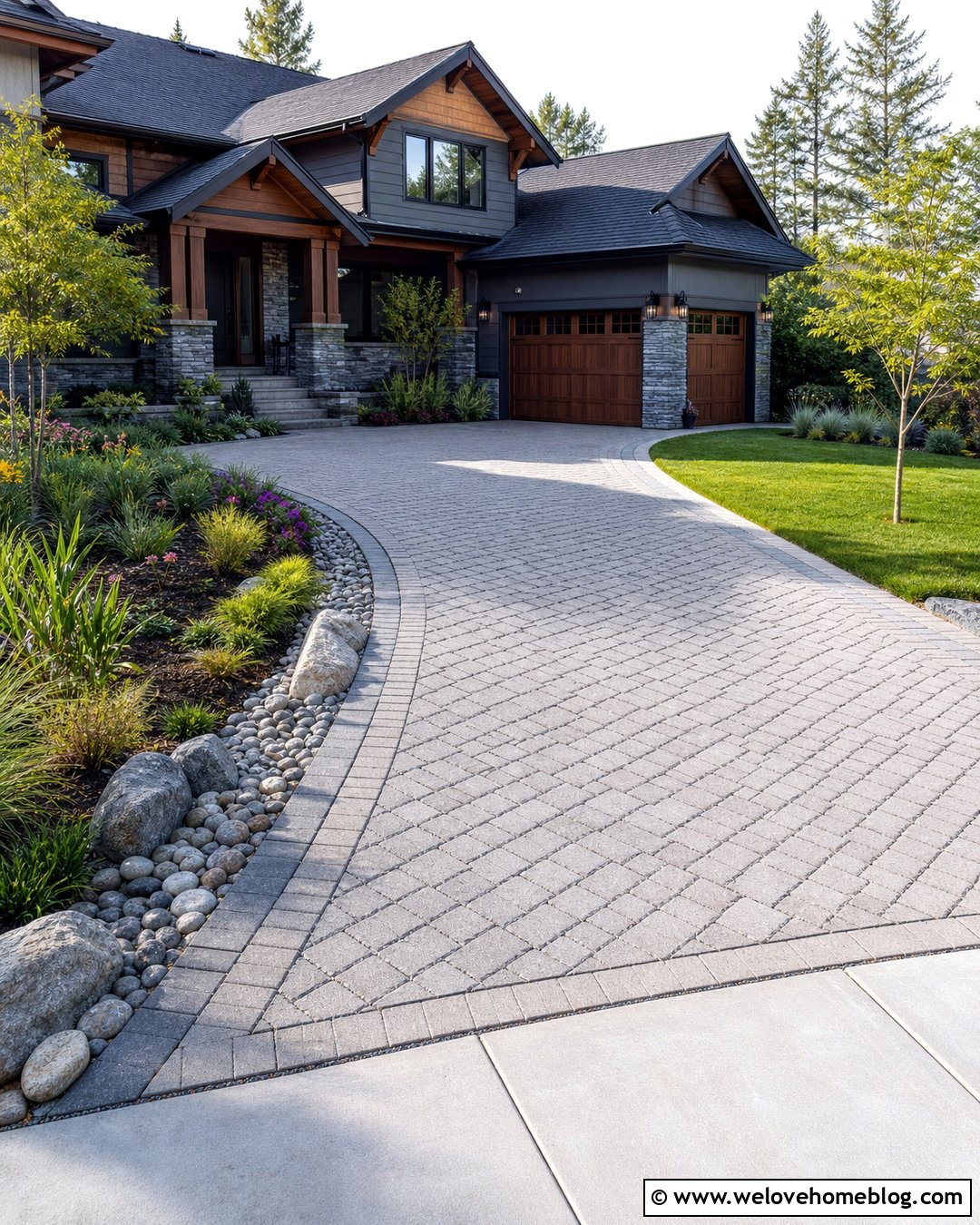
A lower-cost steep driveway can still look deliberate when money is focused on the base, drainage, and containment. Begin with compacted layers specified for the site, then finish with angular gray crushed gravel that locks together better than rounded decorative stone. Use a simple curved route where extra length can reduce the directness of the climb. Pressure-treated timber may provide economical edging on modest slopes, while larger elevation changes need properly designed structural solutions. A shallow swale on the uphill side and durable cross-drains help keep stormwater from carving ruts through the surface. Plant the banks with affordable native groundcovers and grasses. Finish with a reclaimed brick entrance apron to contain gravel and give the country driveway a welcoming focal point. ()
Conclusion:
The most successful 20 Steep Driveway Design Ideas treat the driveway as a complete system rather than a decorative surface. Layout, traction, drainage, transitions, retaining structures, edging, and landscaping must work together from the street to the garage. A curve or switchback may reduce an aggressive climb, while a textured finish and flatter landing can make daily use more comfortable. Drainage deserves particular attention because concentrated runoff can damage pavement, bases, walls, and neighboring areas. Before choosing concrete, asphalt, pavers, resin-bound gravel, or stabilized stone, have the slope and soil professionally evaluated. Confirm local permits, emergency-access requirements, runoff rules, and maintenance needs so the finished driveway remains attractive, practical, and durable. ()

Related posts:

Leave a Reply