
Steep driveways can create striking curb appeal, but they also require landscaping that handles runoff, erosion, difficult mowing, and sharp elevation changes. The best designs treat the driveway surface, drainage, retaining structures, planting, and pedestrian access as one coordinated system. Terraced beds can slow water and make planting easier, while deep-rooted ground covers help protect exposed soil. Swales, rock channels, and properly drained retaining walls can further stabilize challenging slopes. Major walls and drainage changes should always be evaluated by qualified local professionals because soil conditions, vehicle loads, and permit requirements vary. () The complete looks below combine practical slope management with welcoming curb appeal, offering 25 steep driveway landscaping ideas for different homes, climates, and budgets.

1. Steep Driveway With Tiered Stone Retaining Walls
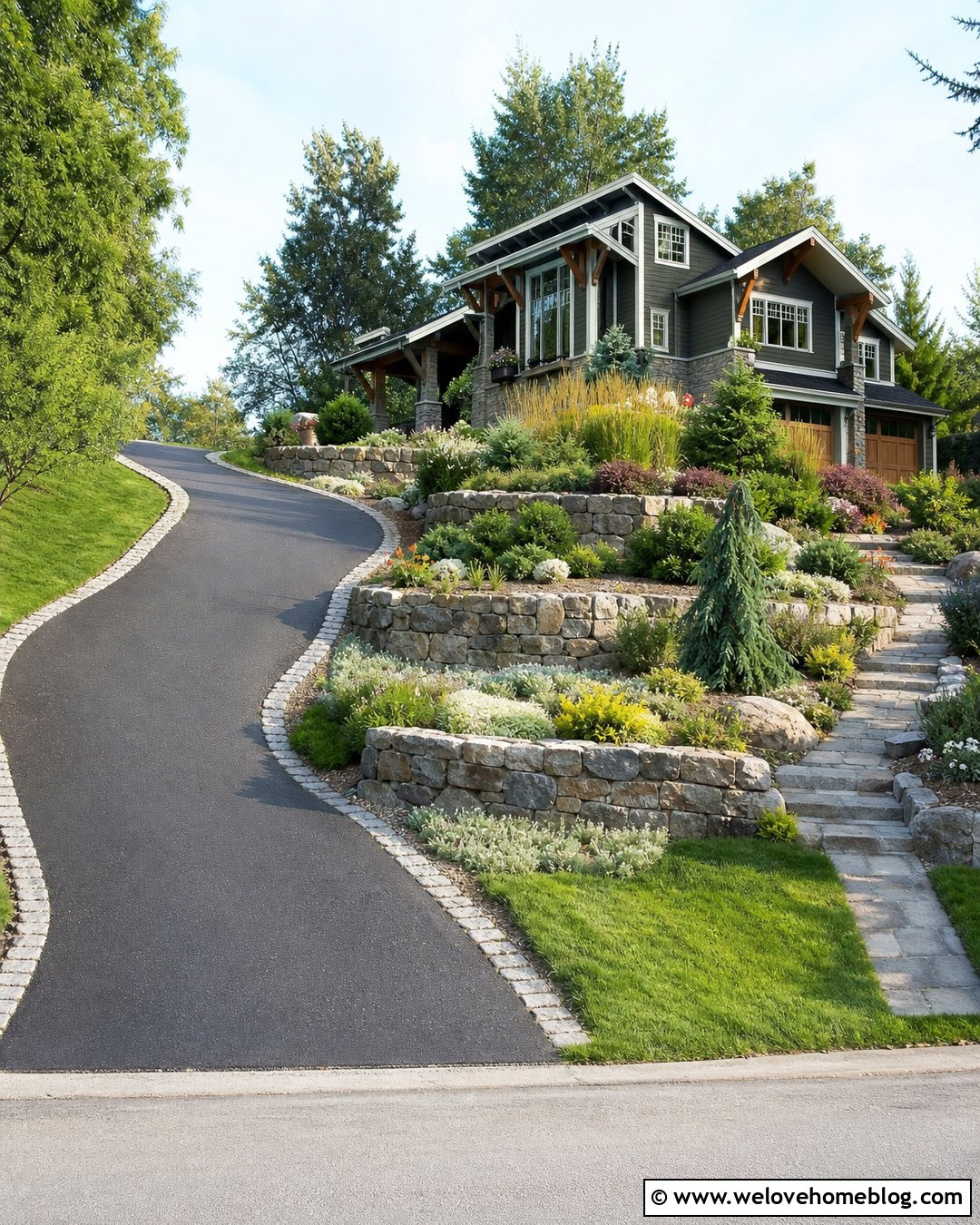
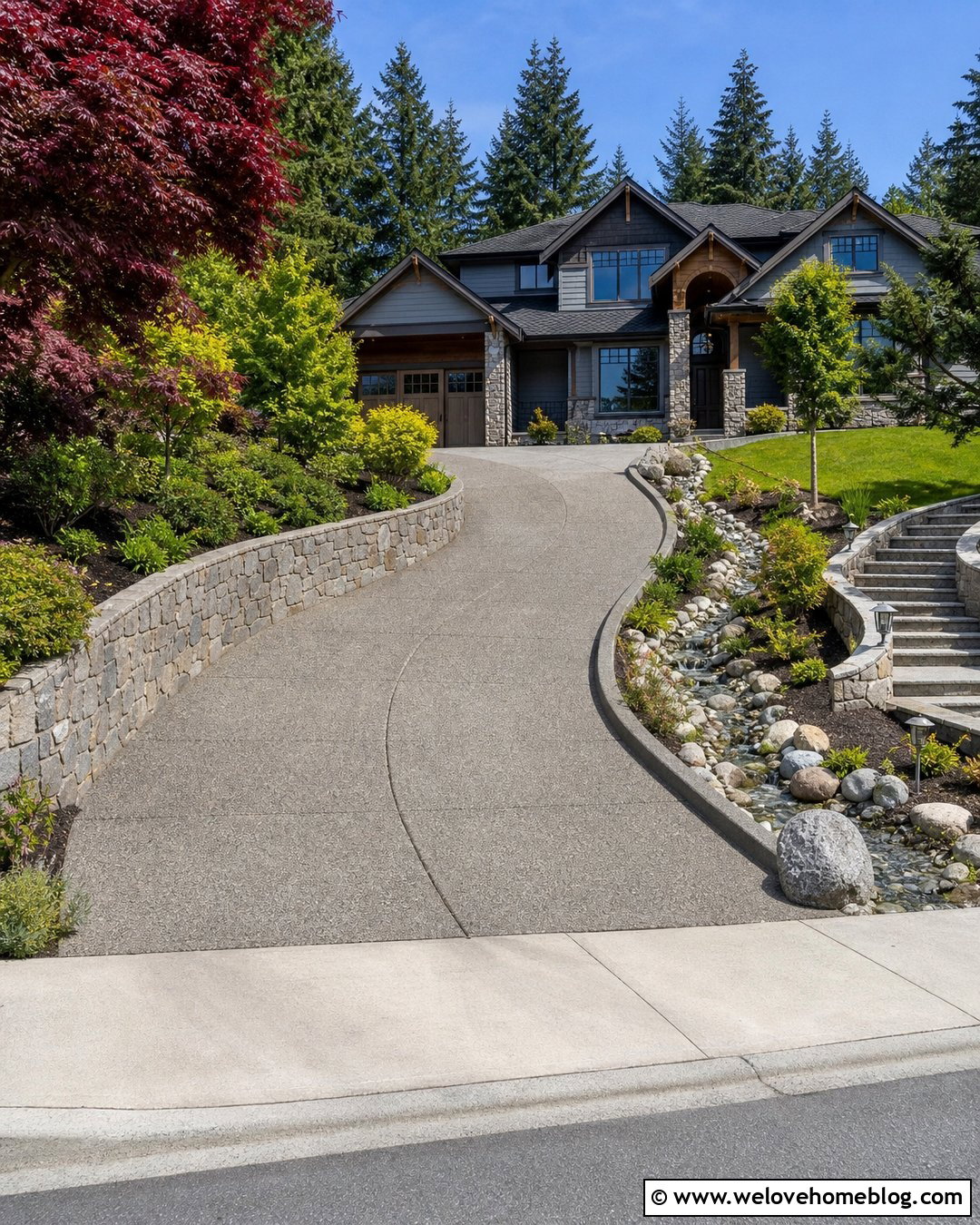
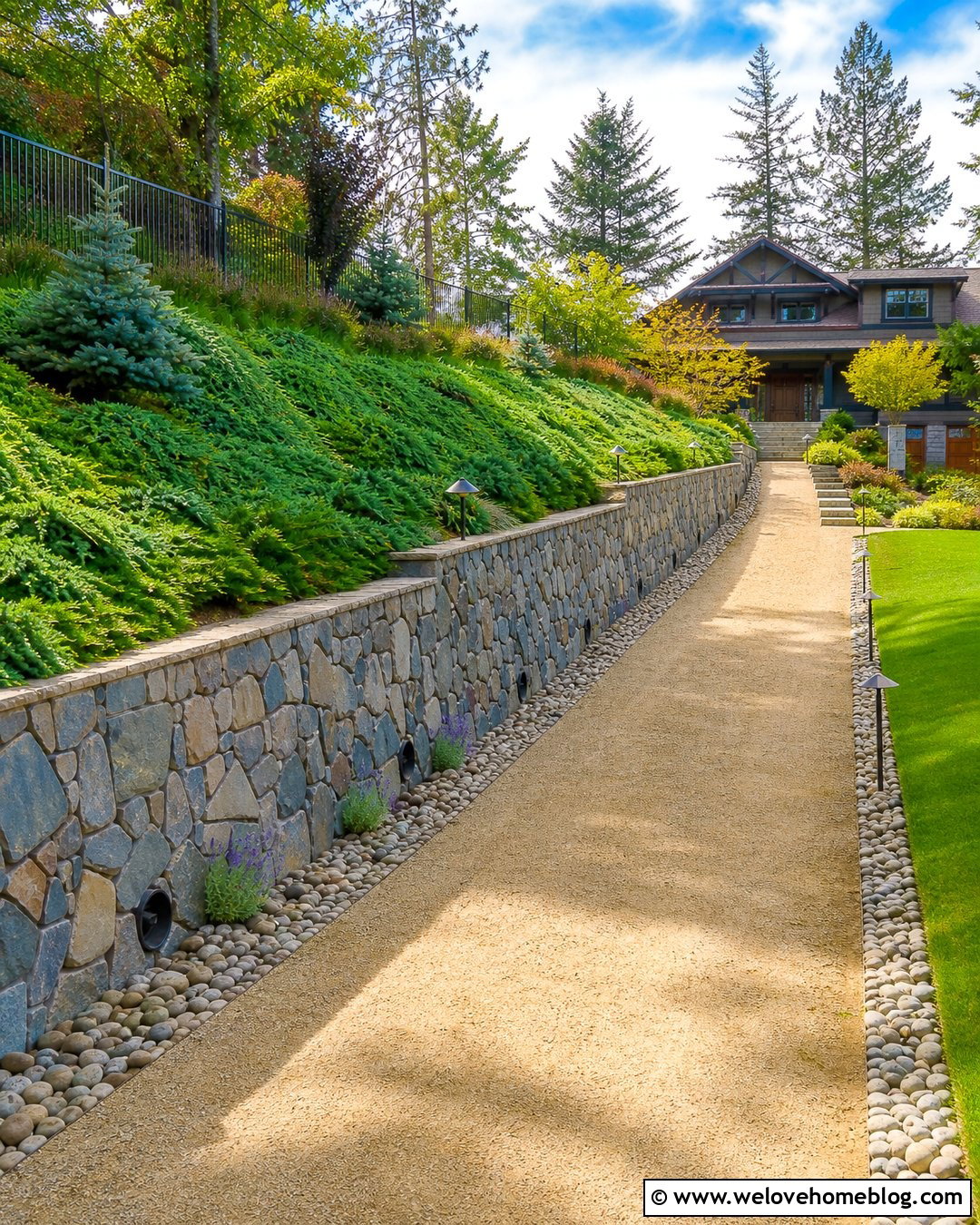
A series of low stone walls can make a tall roadside slope feel more balanced and manageable. Use two or three setback terraces rather than making one planted bed climb directly beside the driveway. Fill each level with spreading evergreens, ornamental grasses, flowering perennials, and trailing ground covers. A curved asphalt driveway with a cobblestone edge complements the natural wall texture while providing a clearly defined driving surface. Place the tallest shrubs on the upper terrace so they do not interfere with vehicle visibility. Include gravel backfill and professionally designed drainage behind every structural wall. Terracing helps interrupt long runoff paths and creates flatter planting zones, but walls supporting a driveway may require engineering and local approval. ()
2. Steep Driveway With Boulder Landscaping
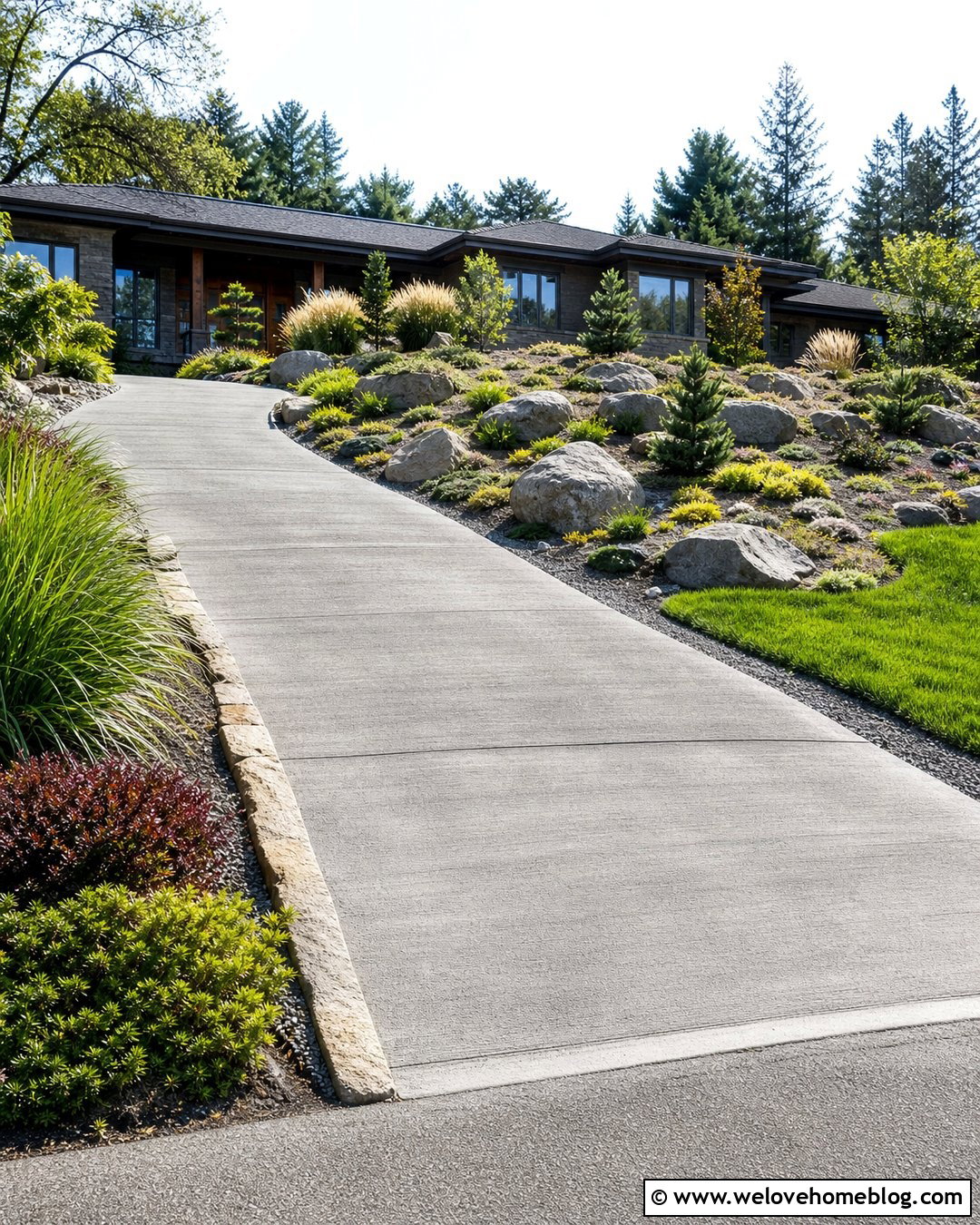
Large boulders can visually anchor a steep driveway without making the landscape appear overly formal. Pair a gray poured-concrete driveway with irregular groups of locally sourced stone arranged along the uphill bank. Plant tough ornamental grasses, creeping ground covers, compact conifers, and flowering shrubs between the rocks. The boulders should appear embedded in the slope rather than scattered across its surface. On the downhill side, a low stone curb can define the pavement while preserving an open view toward the house. Use smaller gravel around planting pockets to reduce exposed soil and visually connect the landscape with the boulders. Structural stones must be sized and installed correctly, especially where they retain soil or sit close to vehicle traffic.
3. Steep Driveway With Gabion Retaining Walls
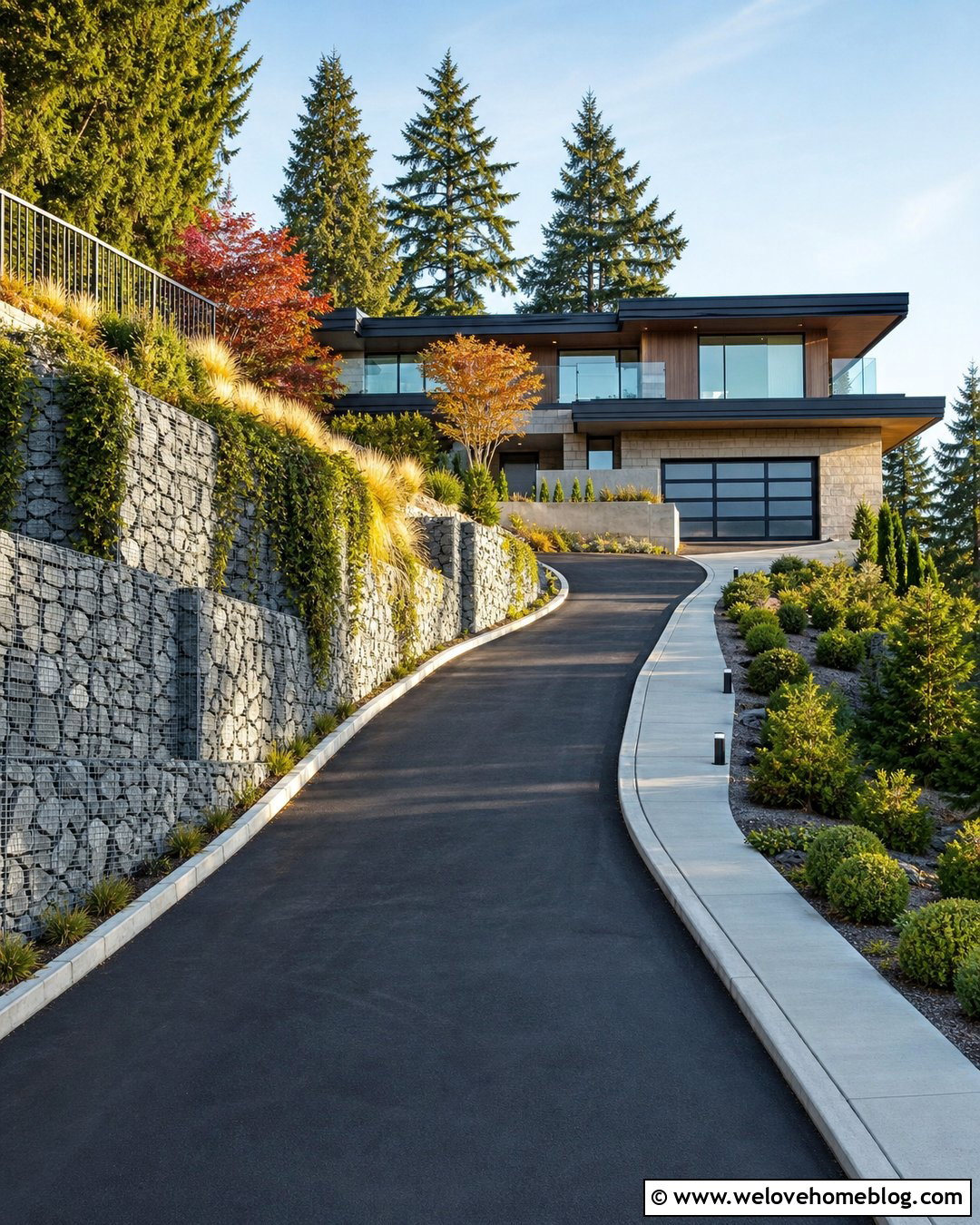
For a modern hillside home, gabion walls provide strong lines and rugged texture. These wire baskets filled with angular stone can follow the rising edge of a black asphalt driveway, creating a stable-looking transition between the paved surface and the uphill garden. Soften the industrial material with feathery grasses, low evergreen shrubs, and cascading plants placed above the wall. A simple concrete walkway can run parallel to the driveway, separated by a narrow planted strip. Choose stone that relates to the house facade, such as gray granite beside charcoal siding or warm fieldstone beside natural wood. Because water pressure can damage retaining structures, the wall design needs suitable backfill, filtration, drainage, and a stable outlet. ()
4. Steep Driveway With Ground Cover Slopes
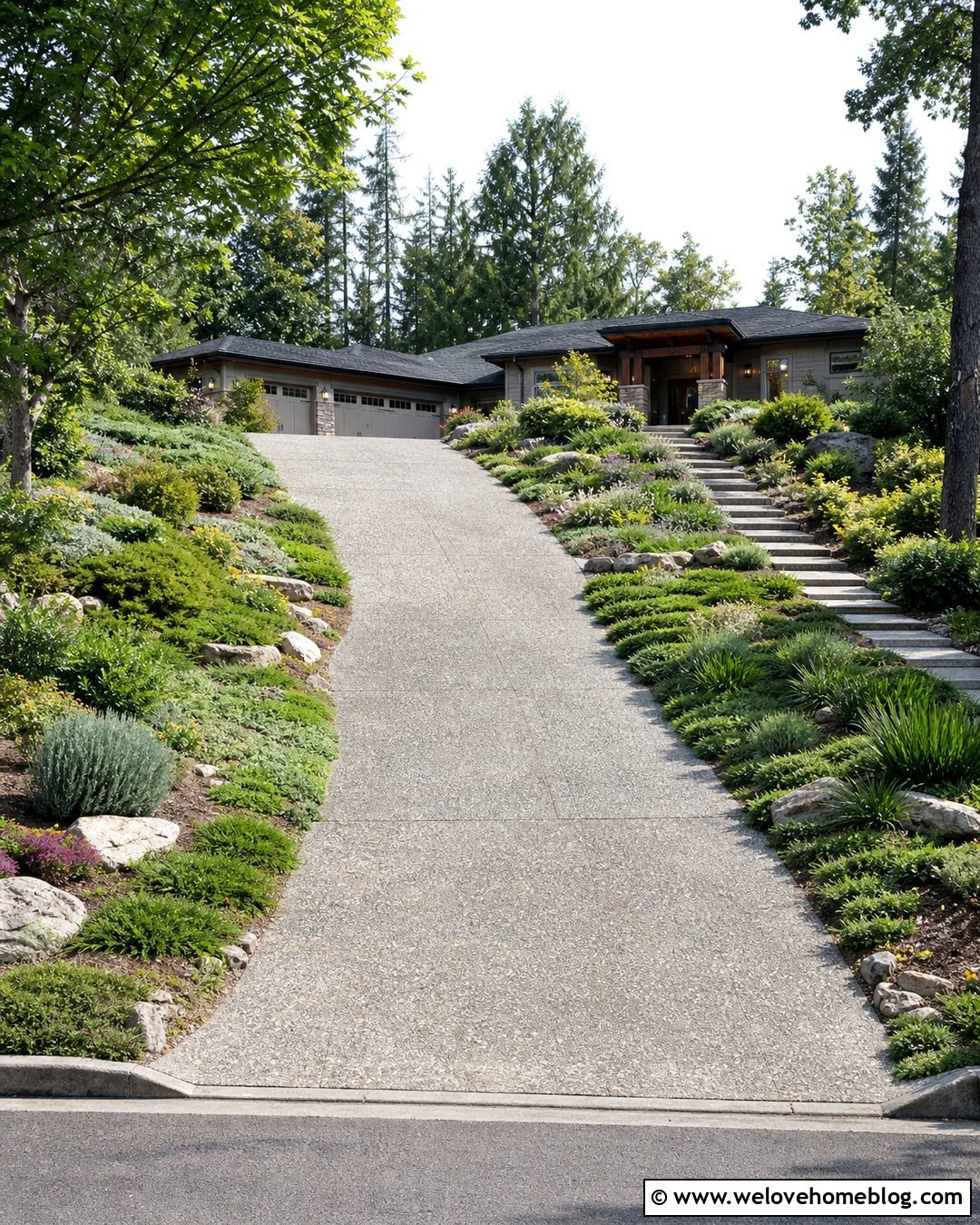
Replacing hard-to-mow grass with a dense ground-cover planting can simplify a steep front yard. Beside a straight exposed-aggregate driveway, create broad drifts of low plants suited to the site’s sunlight, soil, moisture, and climate. Creeping juniper, native sedges, low-growing shrubs, or regionally appropriate flowering ground covers can produce a layered carpet without blocking sightlines. Add a stone curb along the driveway and several flat access stones through the planted bank for maintenance. Cover bare soil between young plants with appropriate mulch and temporary erosion-control material while roots become established. Plant in staggered groups rather than narrow rows for a fuller appearance. This complete design works especially well with ranch, Craftsman, and woodland homes where relaxed landscaping feels natural.
5. Steep Driveway With Native Meadow Planting
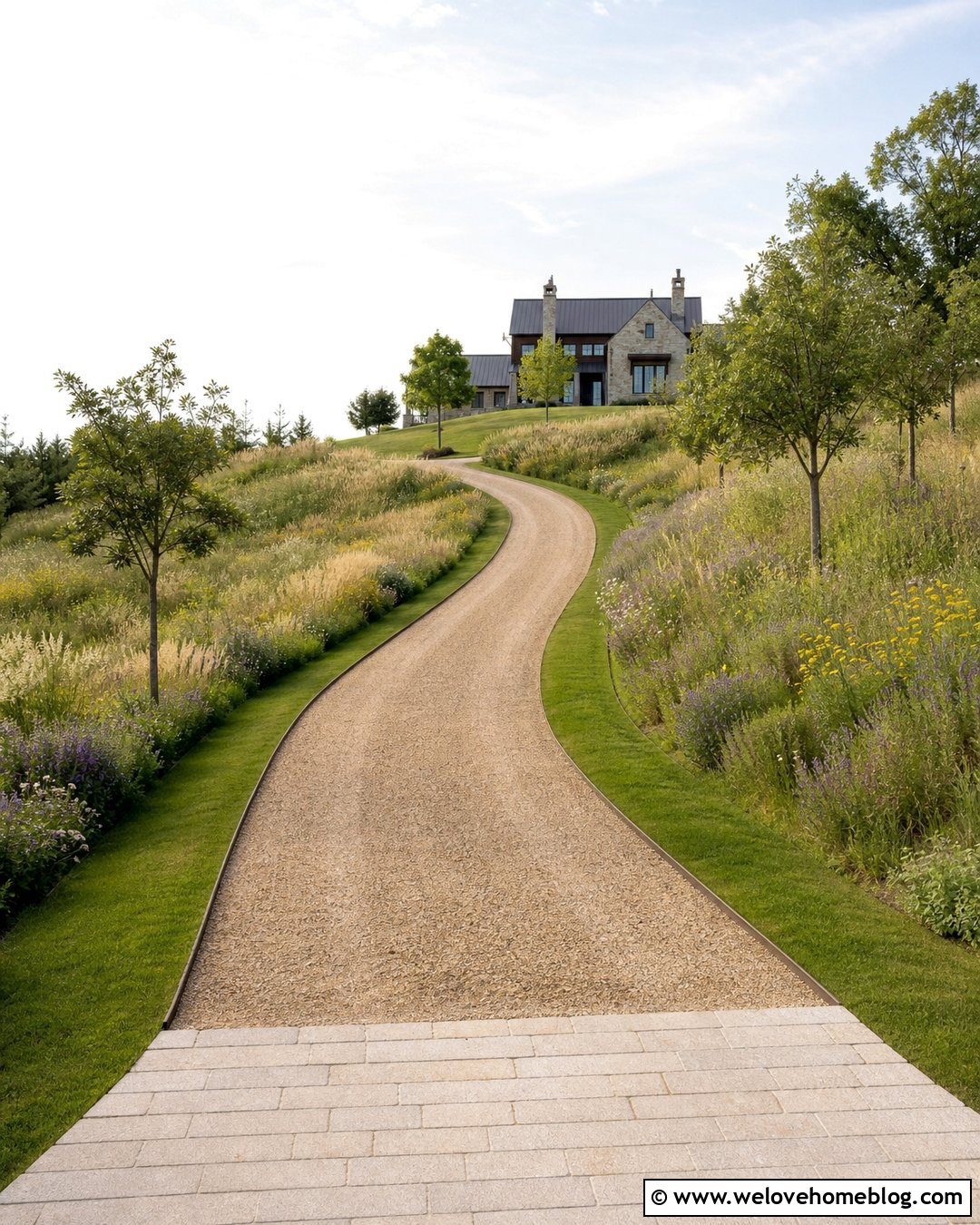
A native meadow can transform a broad driveway slope into a soft, seasonal landscape. Use a stabilized gravel driveway with a gently curving route, steel edging, and a mown or neatly trimmed strip along both sides. Beyond that clean border, plant regionally appropriate grasses and wildflowers in repeating masses. Include a few compact native shrubs near the house to connect the meadow with the foundation planting. The varied roots and foliage create more visual interest than a conventional turf bank, while the defined edges keep the design intentional. Avoid tall plants near the street, intersections, or tight curves where visibility matters. Before planting, correct concentrated runoff and stabilize actively eroding areas because vegetation performs best after the main drainage problem has been addressed. ()
6. Steep Driveway With a Dry Creek Bed
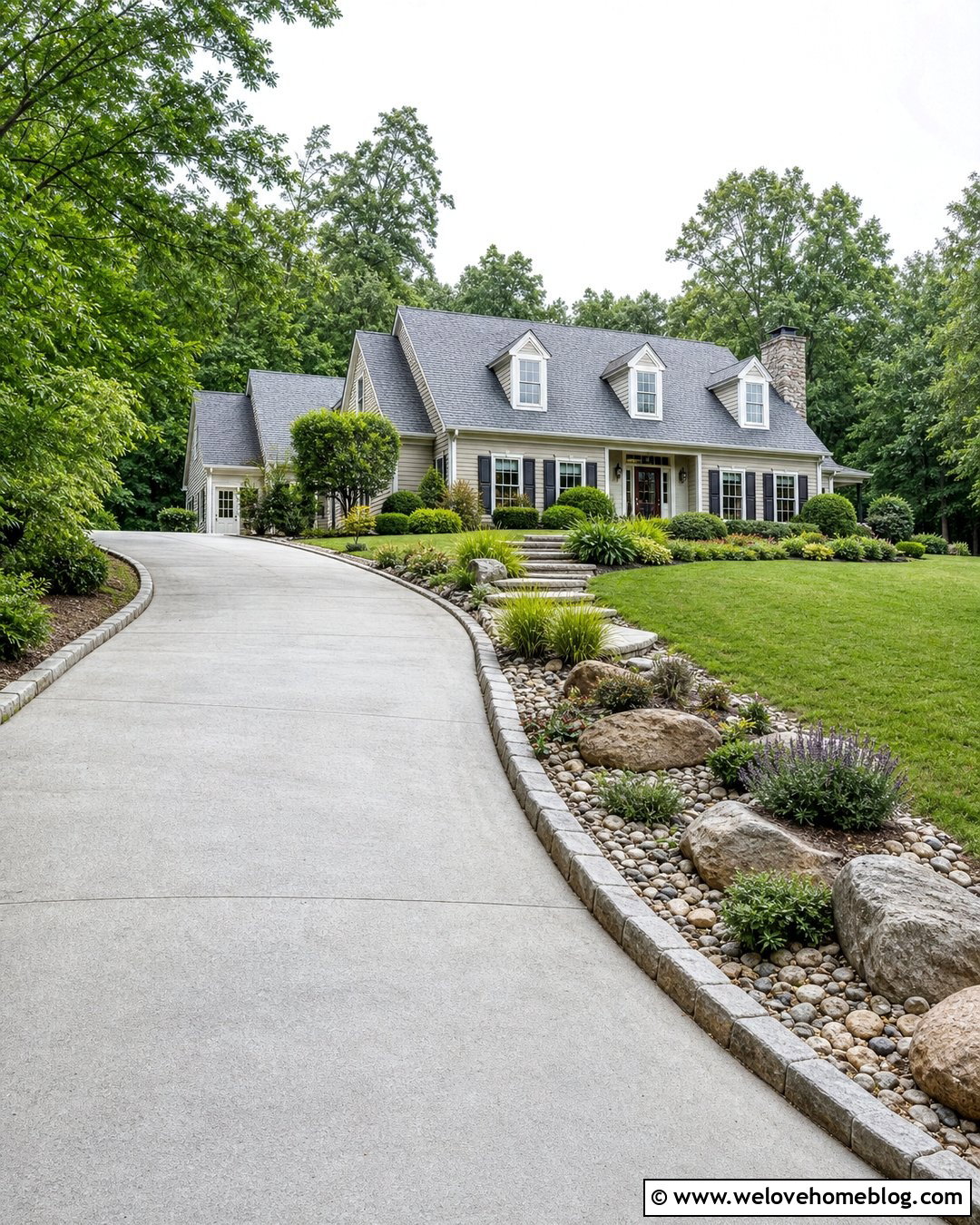
When water naturally travels beside a driveway, a landscaped dry creek can turn that path into an attractive feature. Pair a light-gray concrete driveway with a curving channel of mixed river rock on the uphill side. Use larger stones at bends and outlets, then add sedges, moisture-tolerant perennials, dwarf shrubs, and small ornamental trees along the banks. A stone bridge or wide stepping slab can carry the front walkway across the channel. The creek should lead water toward a stable, approved destination rather than a neighboring property or vulnerable slope. Keep loose stones away from vehicle tires by installing a raised curb between the pavement and channel. Properly planned rock-lined outlets can reduce erosion where collected water leaves a culvert or drainage route. ()
7. Steep Driveway With a Planted Drainage Swale
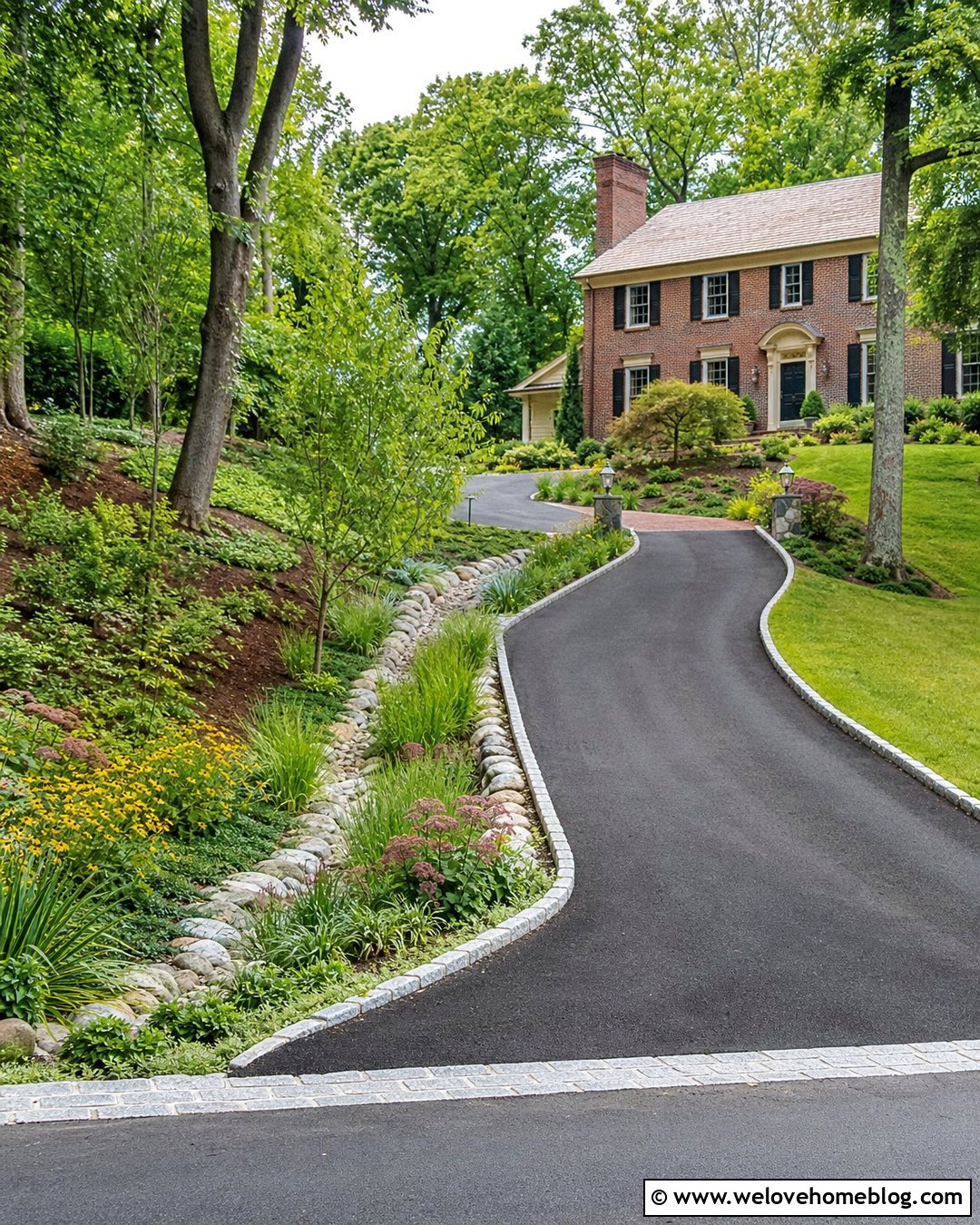
A shallow vegetated swale can blend drainage into an informal front-yard landscape. Place it beside a curved asphalt driveway, leaving a stone or concrete curb between the driving surface and planted channel. Shape the swale with gentle contours, then fill it with grasses, sedges, low shrubs, and other plants that tolerate occasional flowing water. On the higher bank, repeat several of the same plants to make the drainage feature look integrated rather than purely functional. A row of small trees can frame the upper driveway without crowding vehicles. The swale’s location, depth, soil, and outlet should be determined by actual runoff patterns. Vegetated swales can carry water while their planted surfaces help resist erosion, but they should not direct water toward foundations or unstable ground. ()
8. Steep Driveway With a Rain Garden at the Bottom
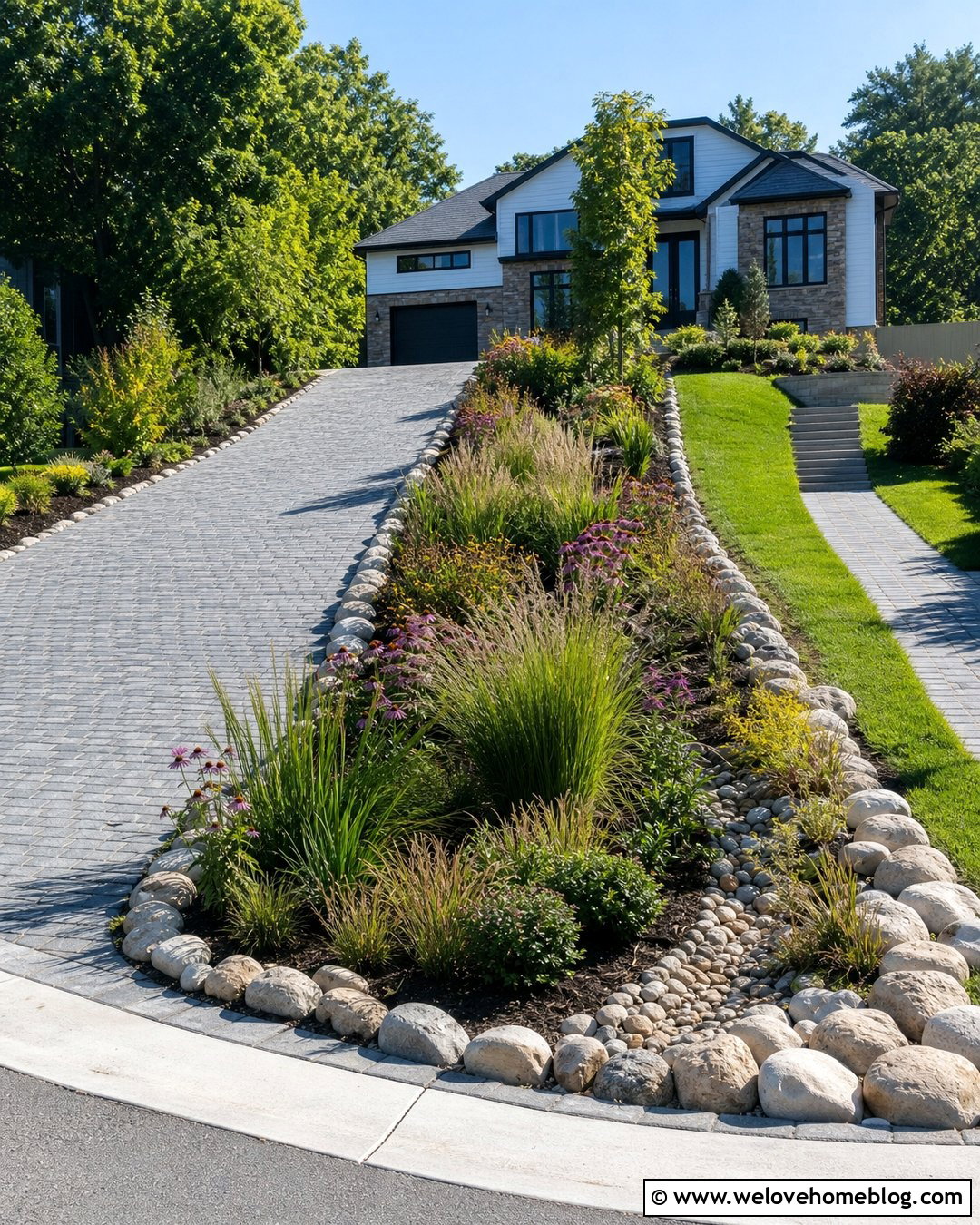
A rain garden near the lower end of a driveway can create a colorful arrival point when site conditions support safe infiltration. Use permeable concrete pavers on the driveway and direct manageable surface water toward a broad, shallow planted basin set away from the pavement and house foundation. Edge the garden with flat fieldstone and fill it with moisture-tolerant native grasses, flowering perennials, and compact shrubs. An overflow route should carry excess water safely during heavy storms. Add a separate paved walkway so visitors do not cross wet soil. This arrangement suits a suburban home with enough level space near the street. A rain garden is not appropriate everywhere, so evaluate soil drainage, buried utilities, slope stability, local regulations, and the location of foundations before installation.
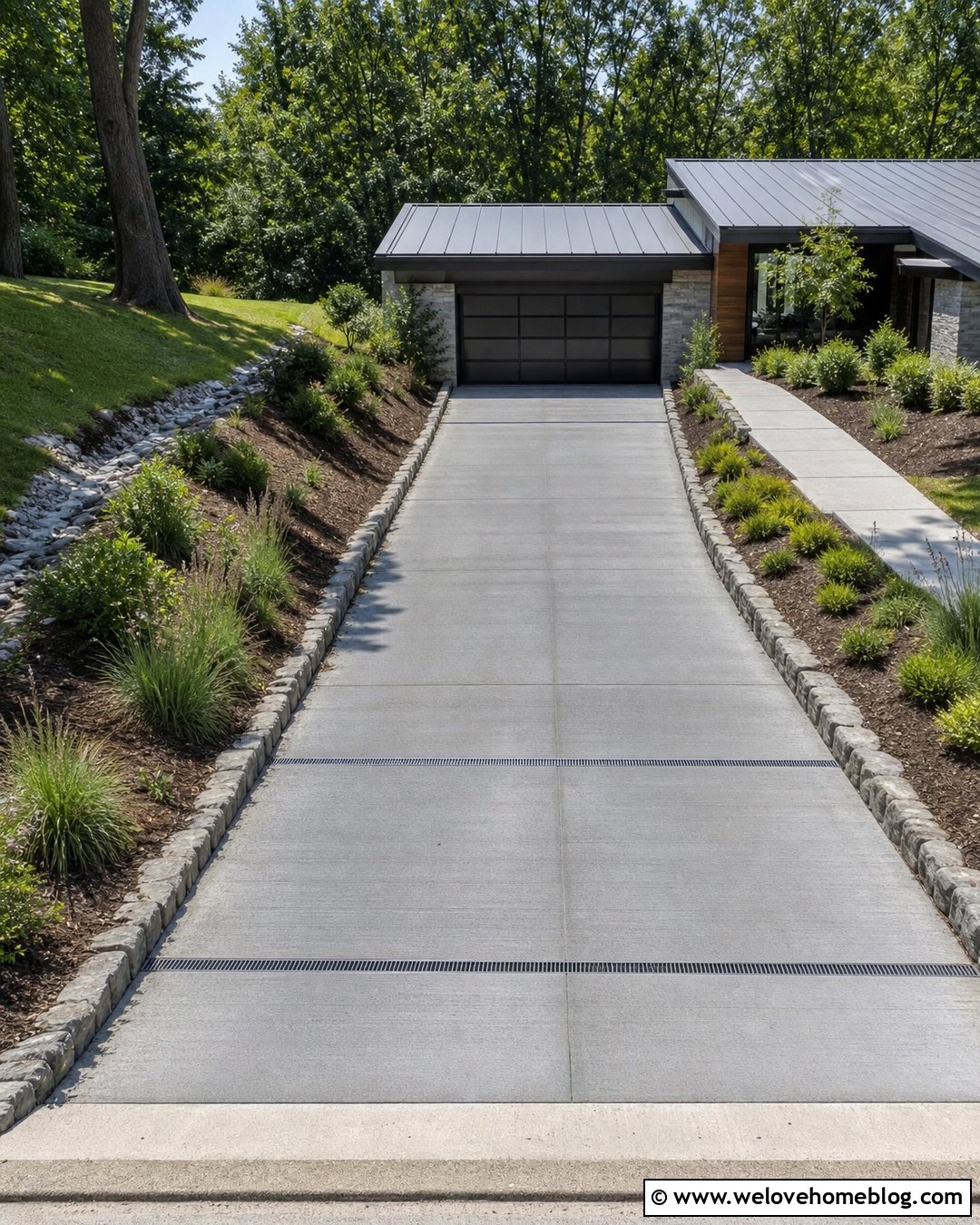
9. Steep Driveway With Concrete Channel Drains
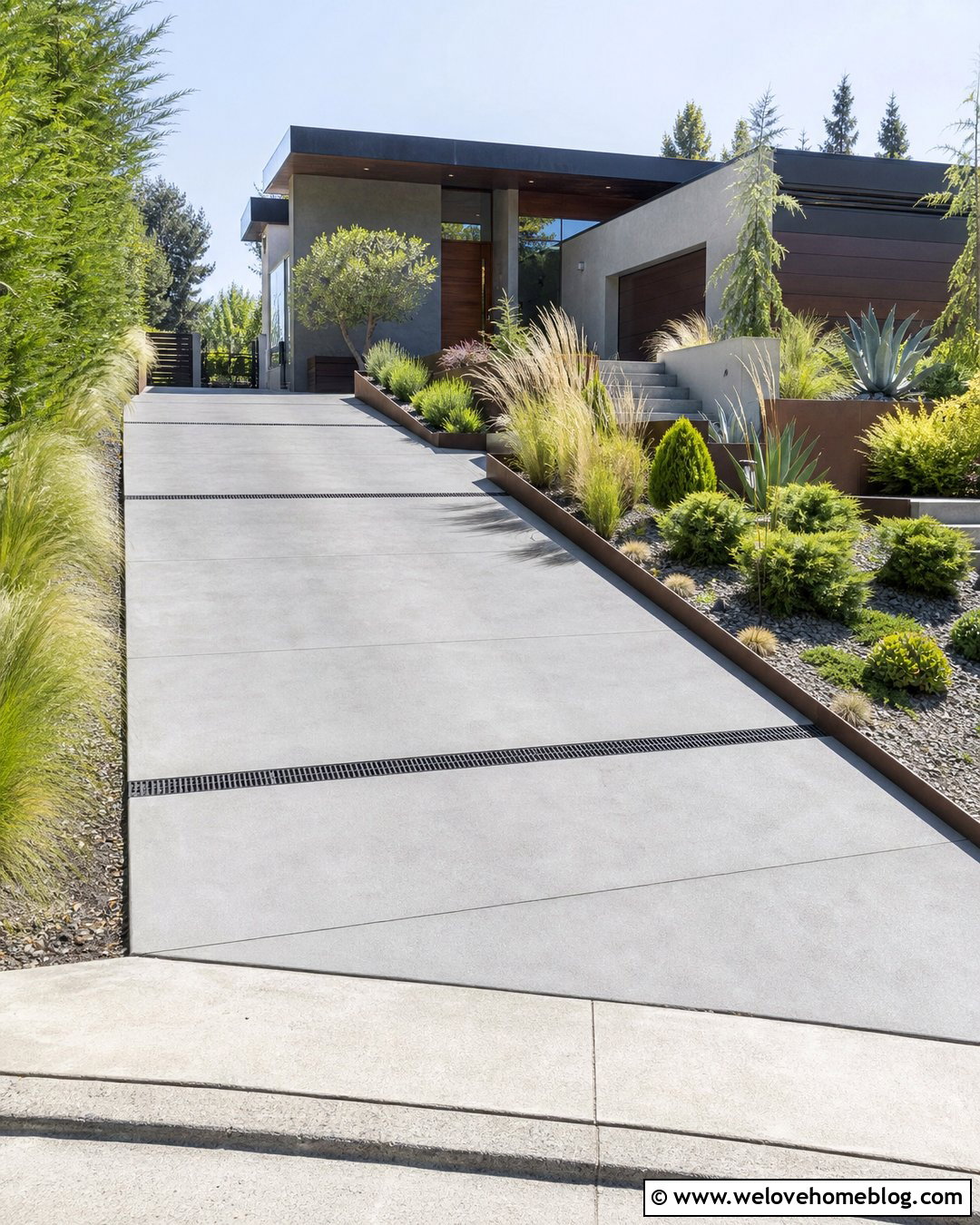
A clean-lined drainage system can become part of a modern landscape rather than an afterthought. Choose a broom-finished poured-concrete driveway with dark concrete bands running across the slope at planned collection points. Frame the pavement with raised steel-edged beds containing upright ornamental grasses, clipped evergreen shrubs, and sculptural drought-tolerant plants. Use decorative gravel as mulch to echo the gray driveway. At the house, repeat the concrete in a broad walkway and entry landing. Channel drains must be correctly sized and connected to a suitable discharge system instead of ending beside an erodible bank. Keep grates accessible for cleaning because leaves, mulch, and sediment can reduce performance. The finished look is crisp, practical, and especially suitable for contemporary architecture.
10. Steep Driveway With a Stone Rock Garden
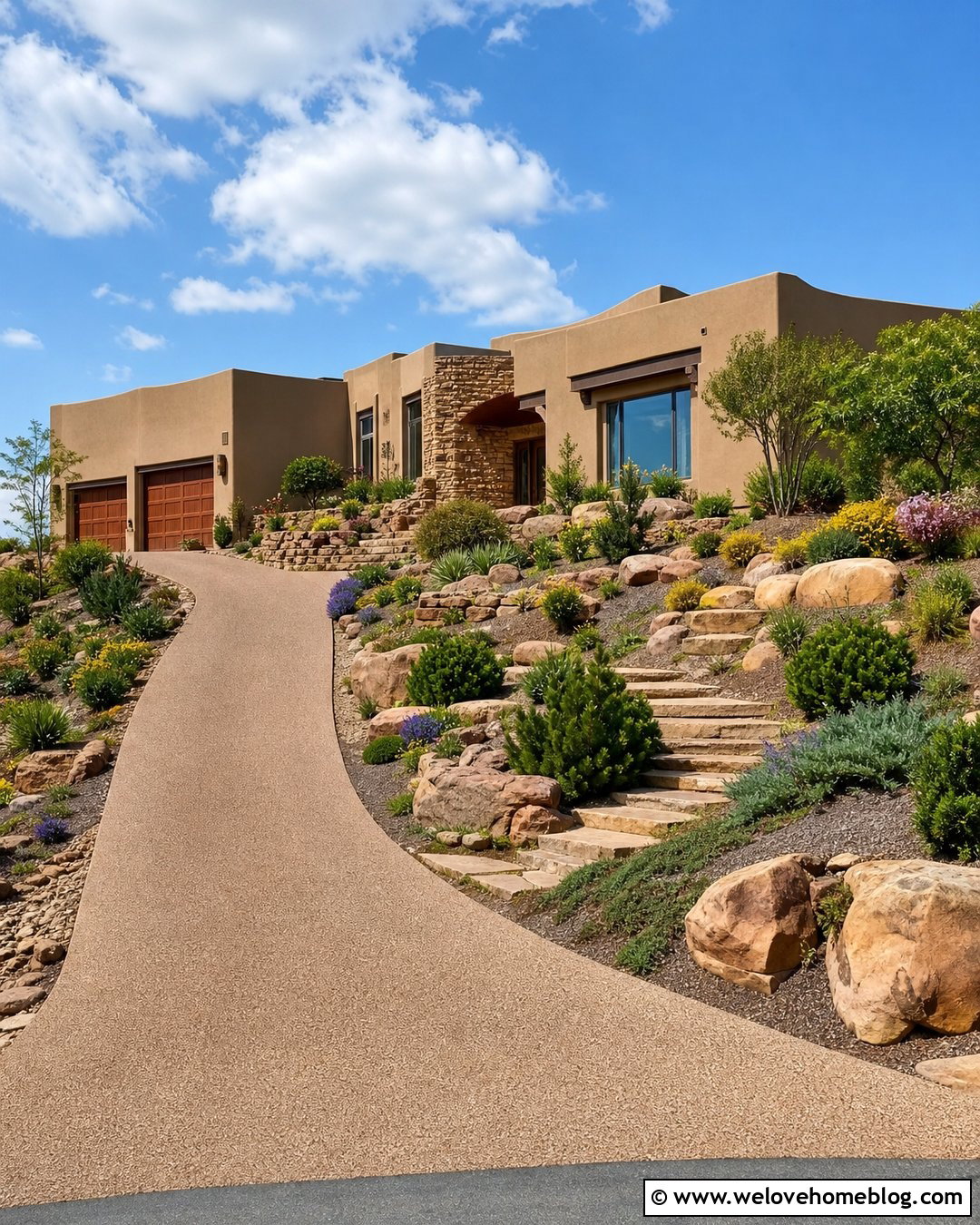
A rock garden brings year-round character to a dry, sunny slope beside a steep driveway. Start with a warm exposed-aggregate surface and a low sandstone curb that follows the driveway’s curve. Build the slope with clusters of weathered stone, coarse gravel mulch, dwarf evergreens, flowering perennials, and low plants that tolerate excellent drainage. Arrange the largest rocks first, placing them partly below grade so the composition feels natural. Create several shallow planting shelves instead of covering the bank with one continuous layer of loose rock. A narrow stairway can climb through the garden toward the front door. Include an engineered drainage route beneath or beside the planting where runoff is concentrated. This prevents the decorative gravel from washing onto the driveway during storms.
11. Steep Driveway With Evergreen Shrub Borders
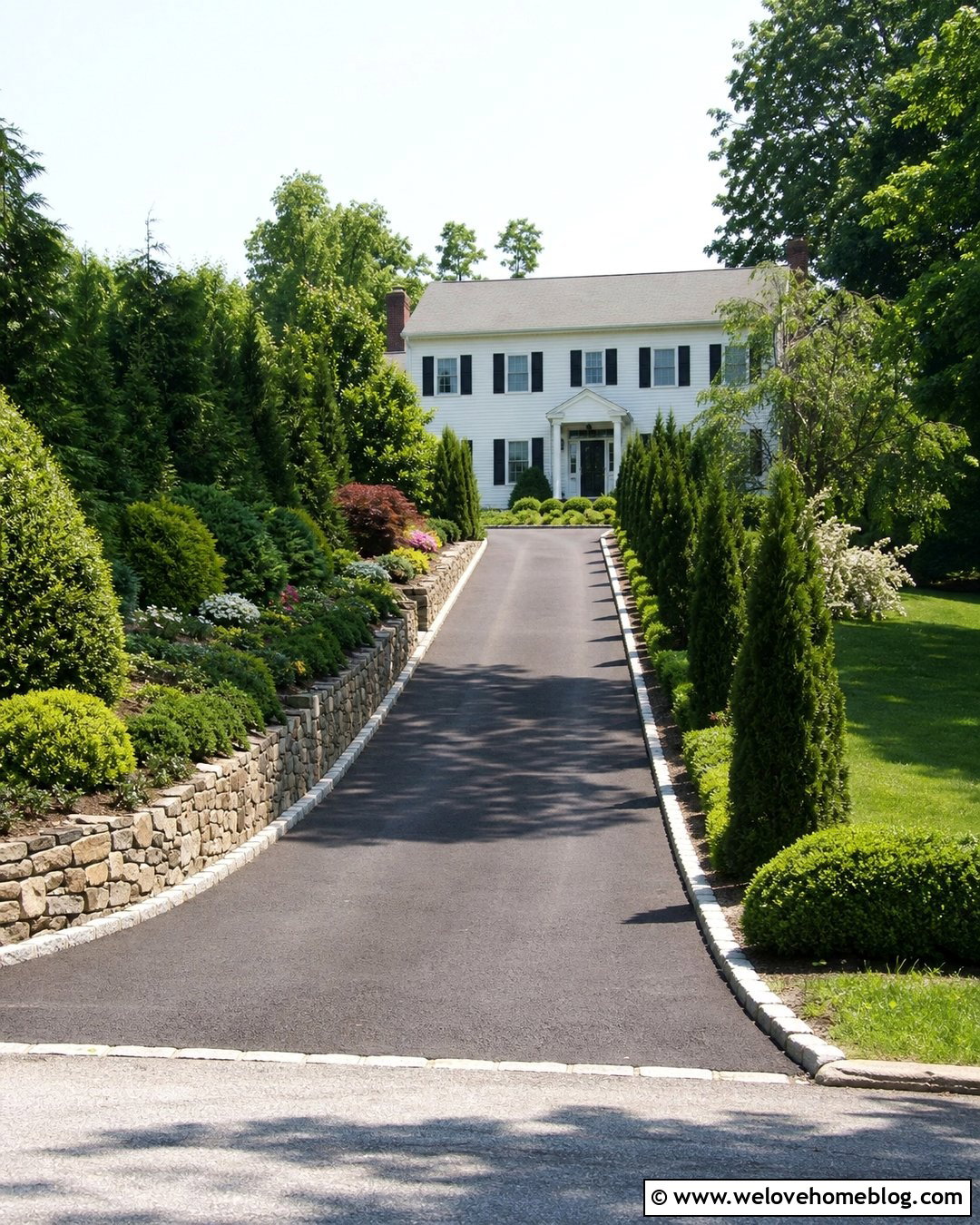
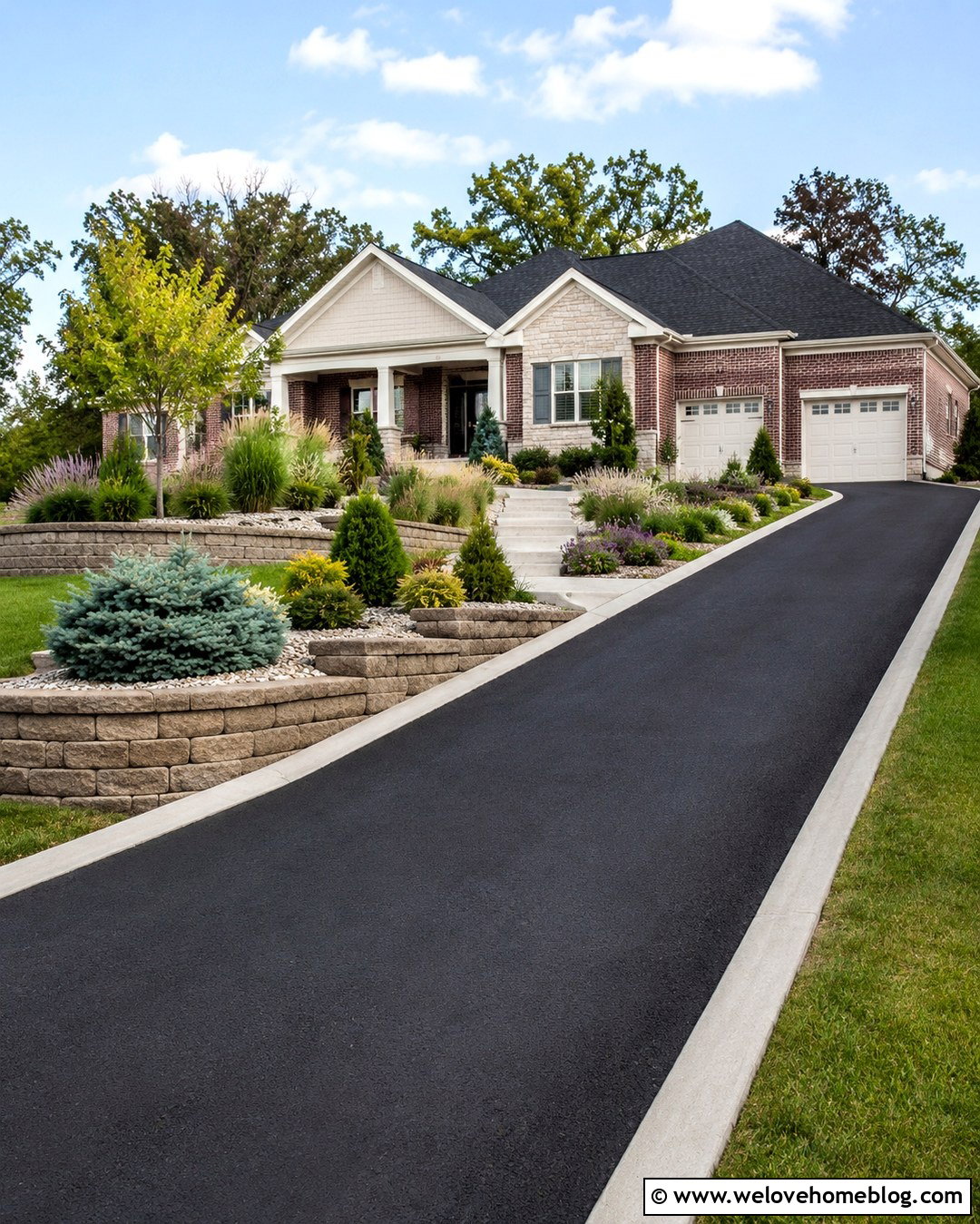
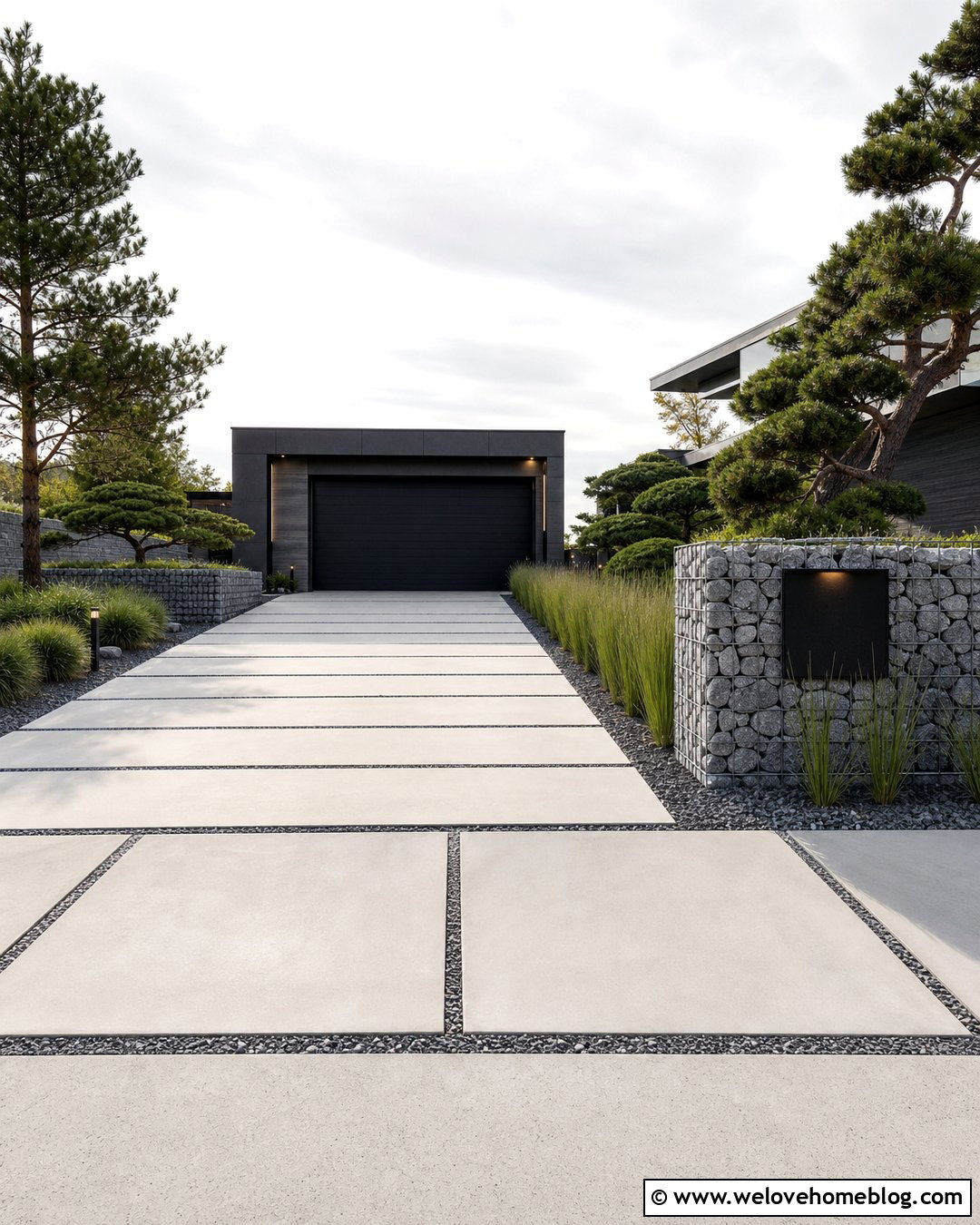
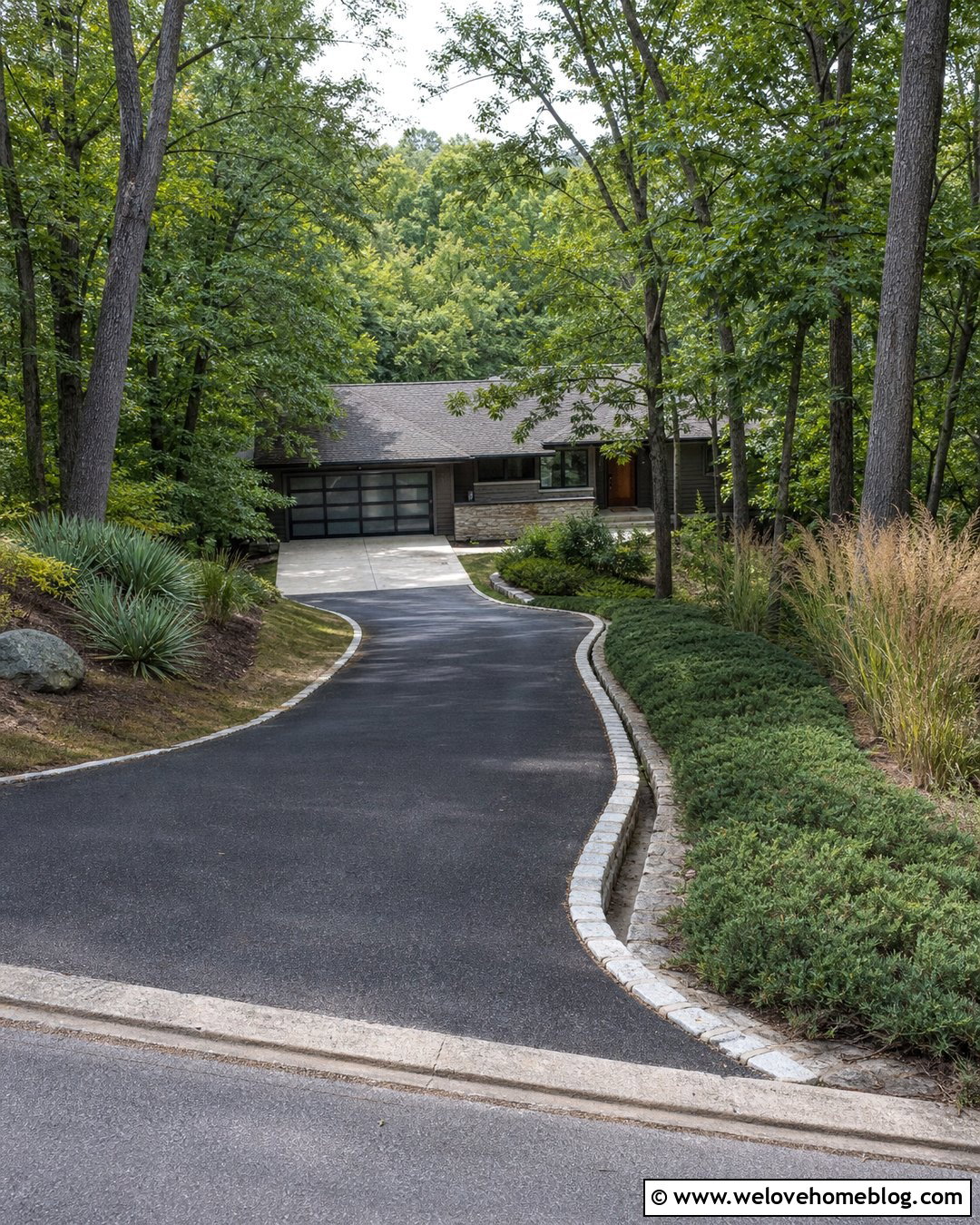
Evergreen planting gives a sloped driveway structure through every season. Pair a dark asphalt driveway with pale granite curbing and staggered groups of compact conifers, broadleaf evergreens, and low ground covers. Keep shrubs comfortably back from the pavement so snow, opening car doors, and routine trimming do not become problems. Taller plants can rise gradually toward the house, while low varieties preserve visibility near the street. Add a few deciduous flowering shrubs for spring color without weakening the simple framework. On the downhill edge, use a reinforced planted bank or professionally designed retaining curb where needed. Repeating a limited plant palette makes a long, steep approach feel organized. This complete look works beautifully with Colonial, Cape Cod, and traditional brick homes.
12. Steep Driveway With Drought-Tolerant Landscaping
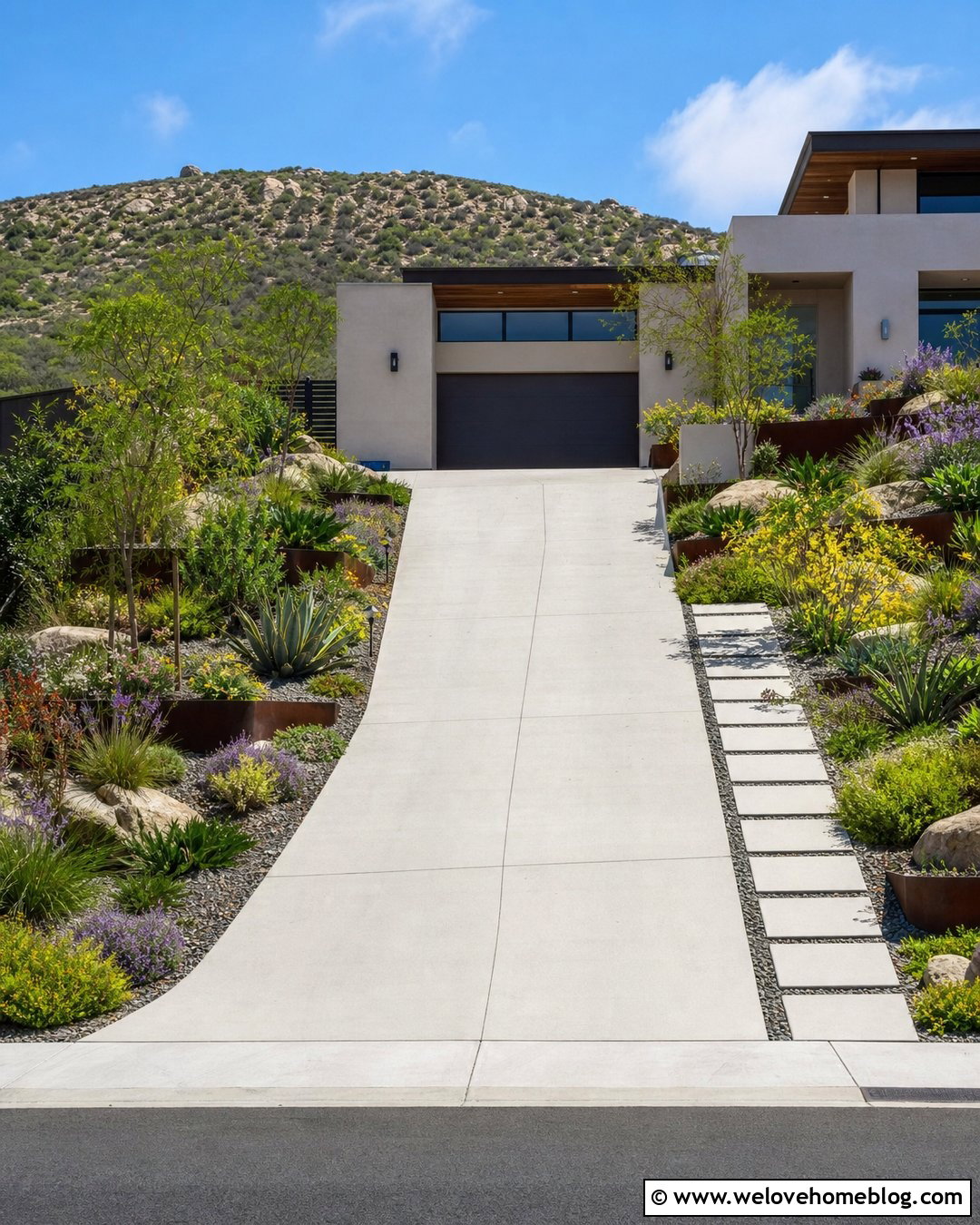
Hot, exposed slopes benefit from planting that does not depend on constant irrigation. Surround a light-colored concrete driveway with terraces of gravel mulch, architectural grasses, compact flowering shrubs, and climate-appropriate succulents or hardy perennials. Use corten steel edging to create smooth planting contours that contrast with the straight driveway. Place small trees near the upper section where their canopies can frame the home without narrowing the entrance. Drip irrigation, if needed, should be secured carefully so tubing does not slide or become exposed on the slope. Avoid placing loose, lightweight mulch where stormwater can carry it onto the pavement. A few substantial boulders can stabilize the visual composition and create protected planting pockets. The result feels modern, colorful, and water-conscious without looking bare.
13. Steep Driveway With Woodland Shade Planting
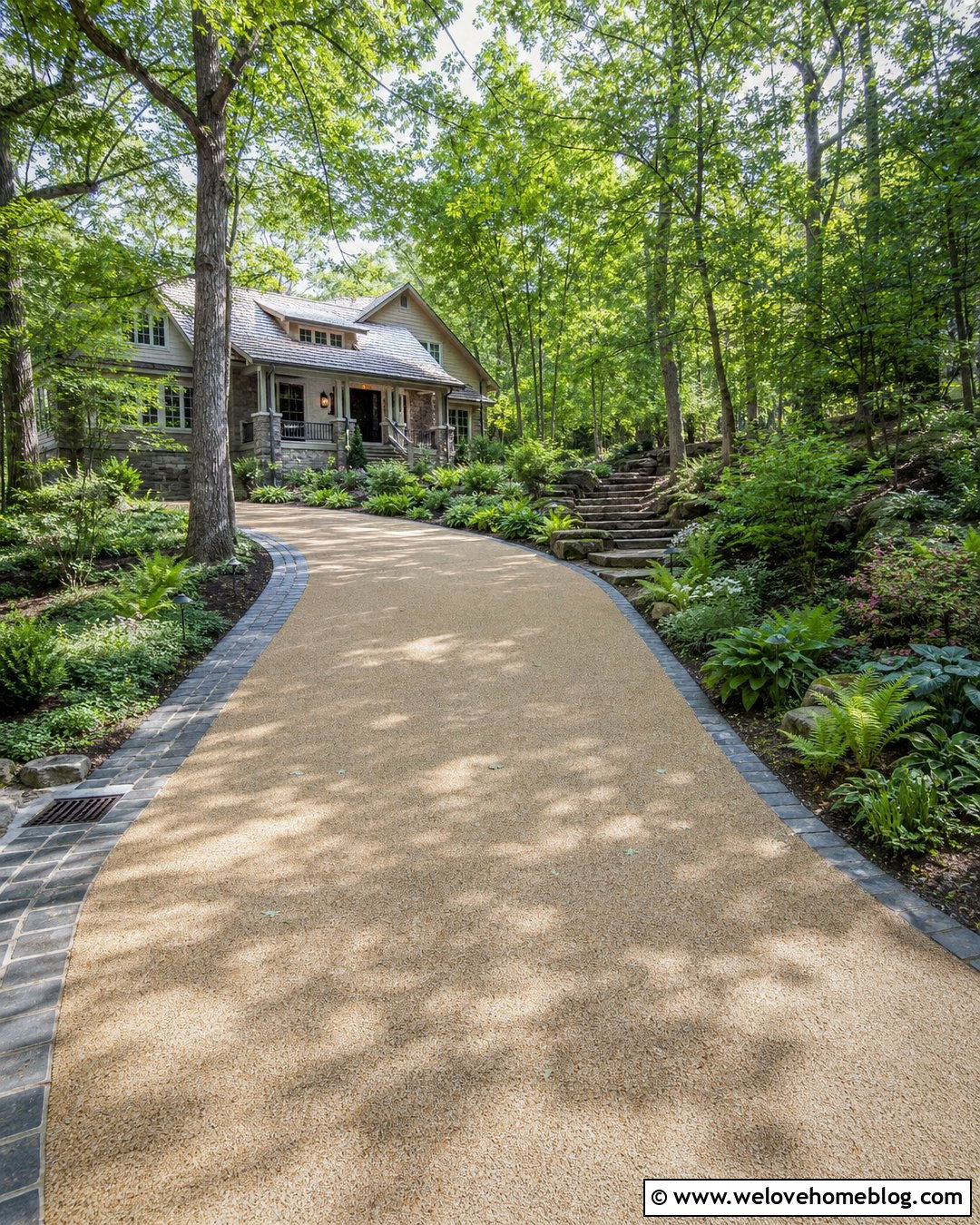
A shaded driveway can feel like a graceful woodland entrance when the planting responds to existing trees. Use a curved resin-bound gravel driveway in a natural tan tone, bordered with dark stone setts. On the banks, layer shade-tolerant native shrubs, ferns, sedges, woodland ground covers, and spring-flowering perennials. Retain healthy mature trees where possible, but have roots and slope conditions evaluated before changing grades around them. A stone stairway can wind through the upper planting and connect the driveway with the porch. Choose low foliage along inside curves so drivers maintain clear views. Fallen leaves should be removed from drainage inlets before they block water flow. This relaxed design complements Craftsman cottages, cabins, and traditional homes surrounded by mature landscapes.
14. Steep Driveway With Brick Retaining Wall Planters
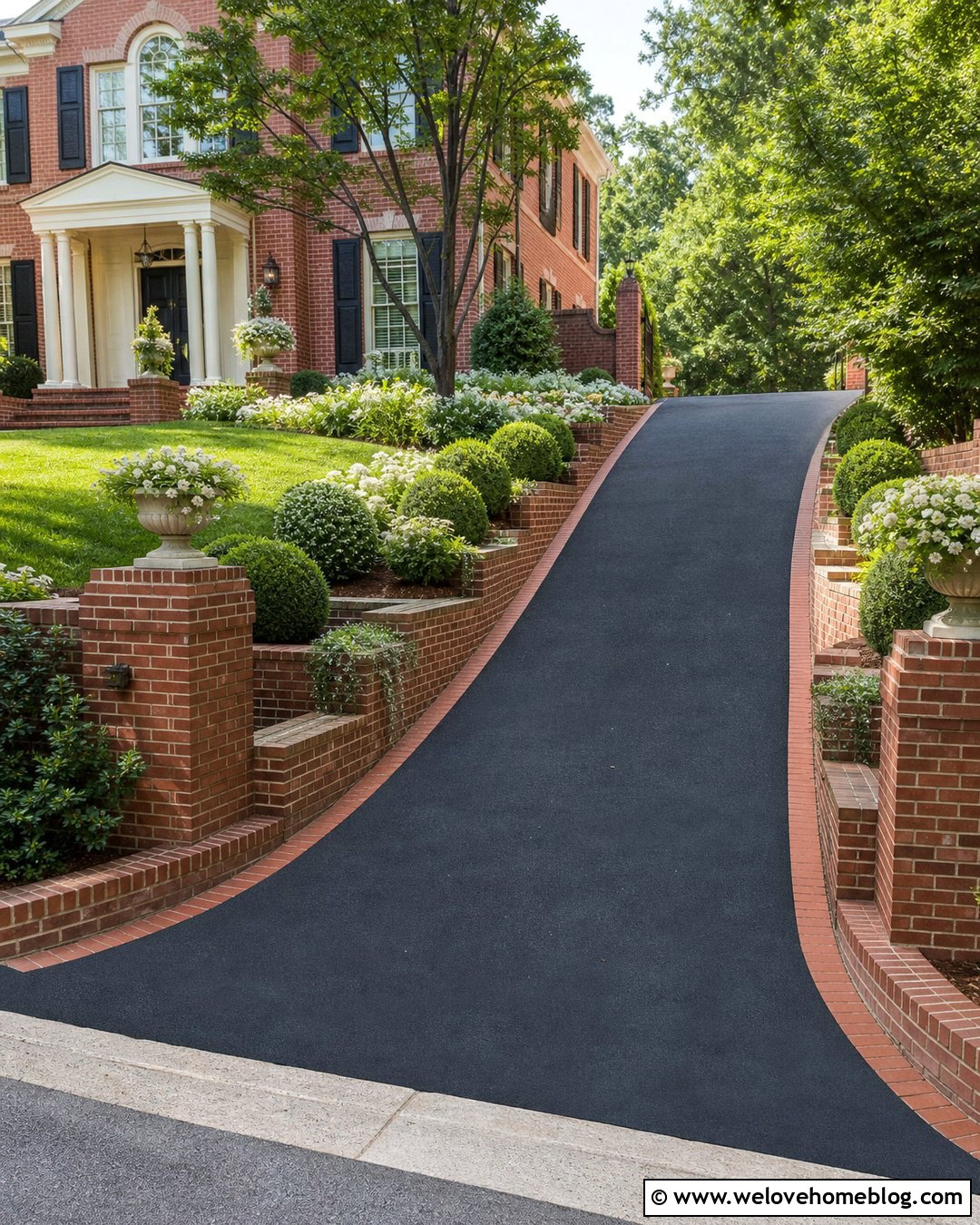
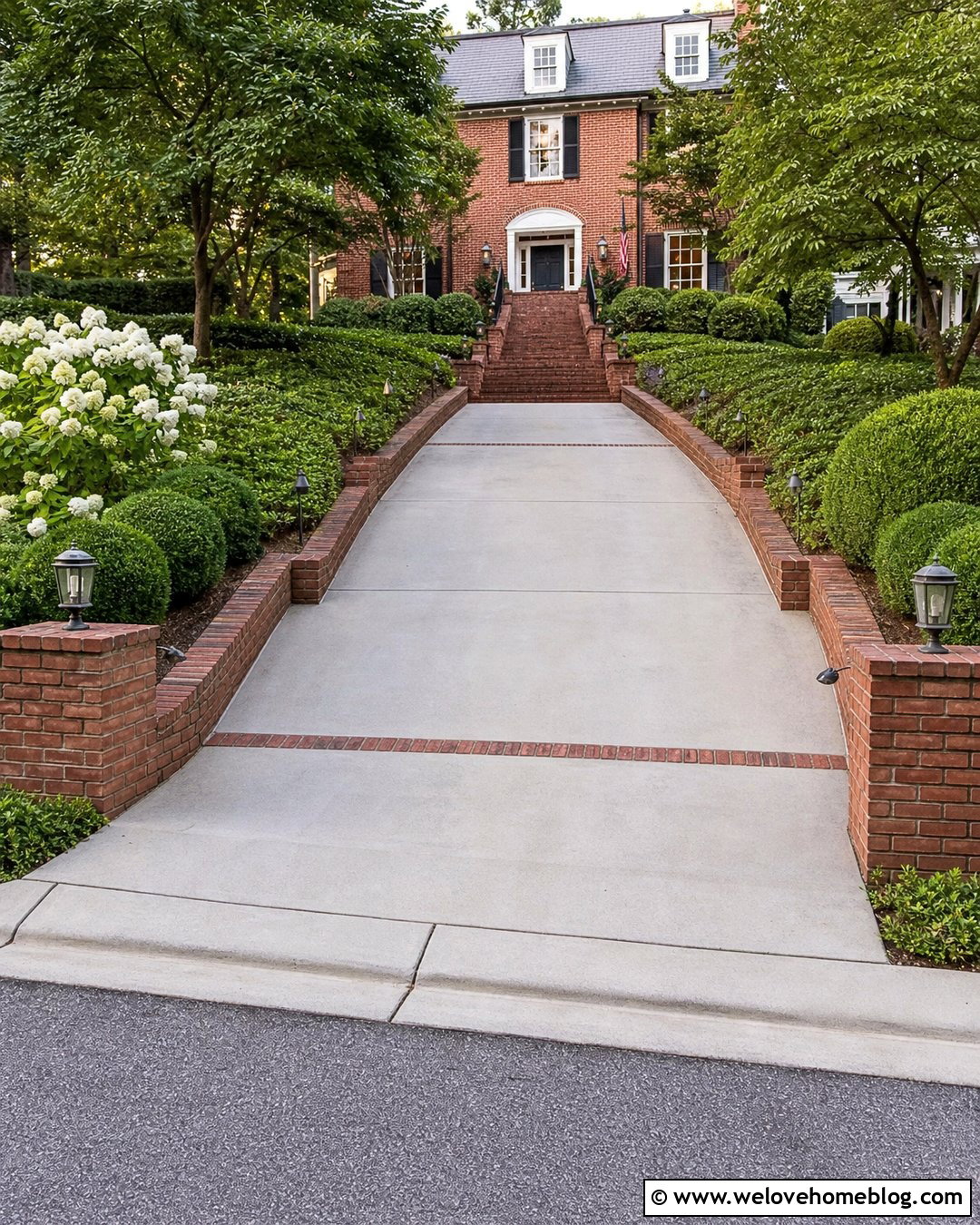
Brick retaining walls can connect a sloped driveway directly to a traditional home’s architecture. Choose a charcoal asphalt driveway with red clay brick borders, then build two or three low brick planter walls along the rising side. Fill the terraces with rounded evergreen shrubs, white flowering perennials, and trailing plants that soften the wall caps. Match the masonry color to the house without requiring every brick to be identical. Near the garage, widen the lowest bed to create a generous transition into the foundation landscaping. Incorporate drainage behind the walls and keep irrigation from continuously saturating the retained soil. Because driveway-adjacent walls may carry extra soil and vehicle-related loads, their foundations and reinforcement should be professionally assessed rather than treated like ordinary freestanding garden edging.

15. Steep Driveway With Timber Garden Terraces
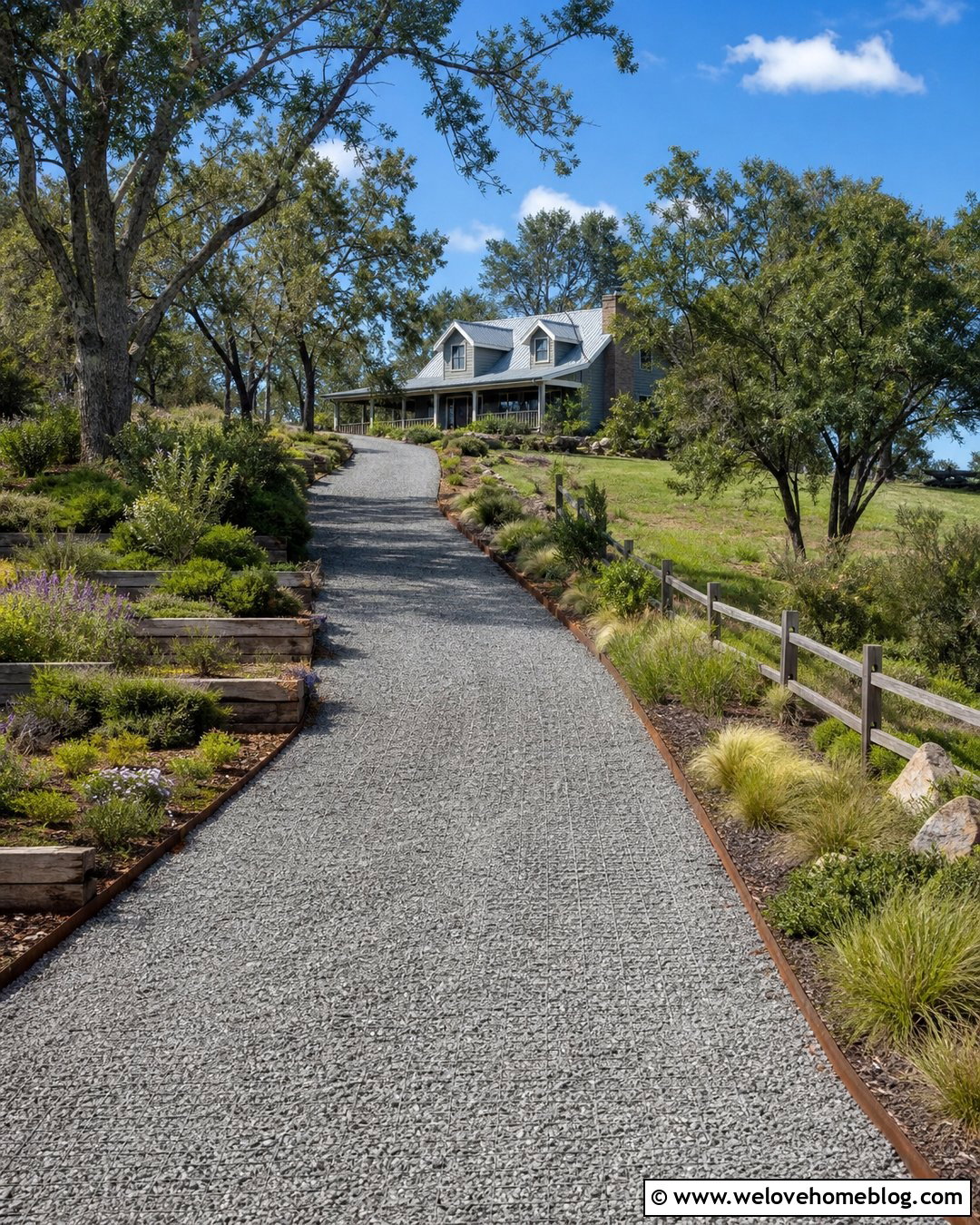
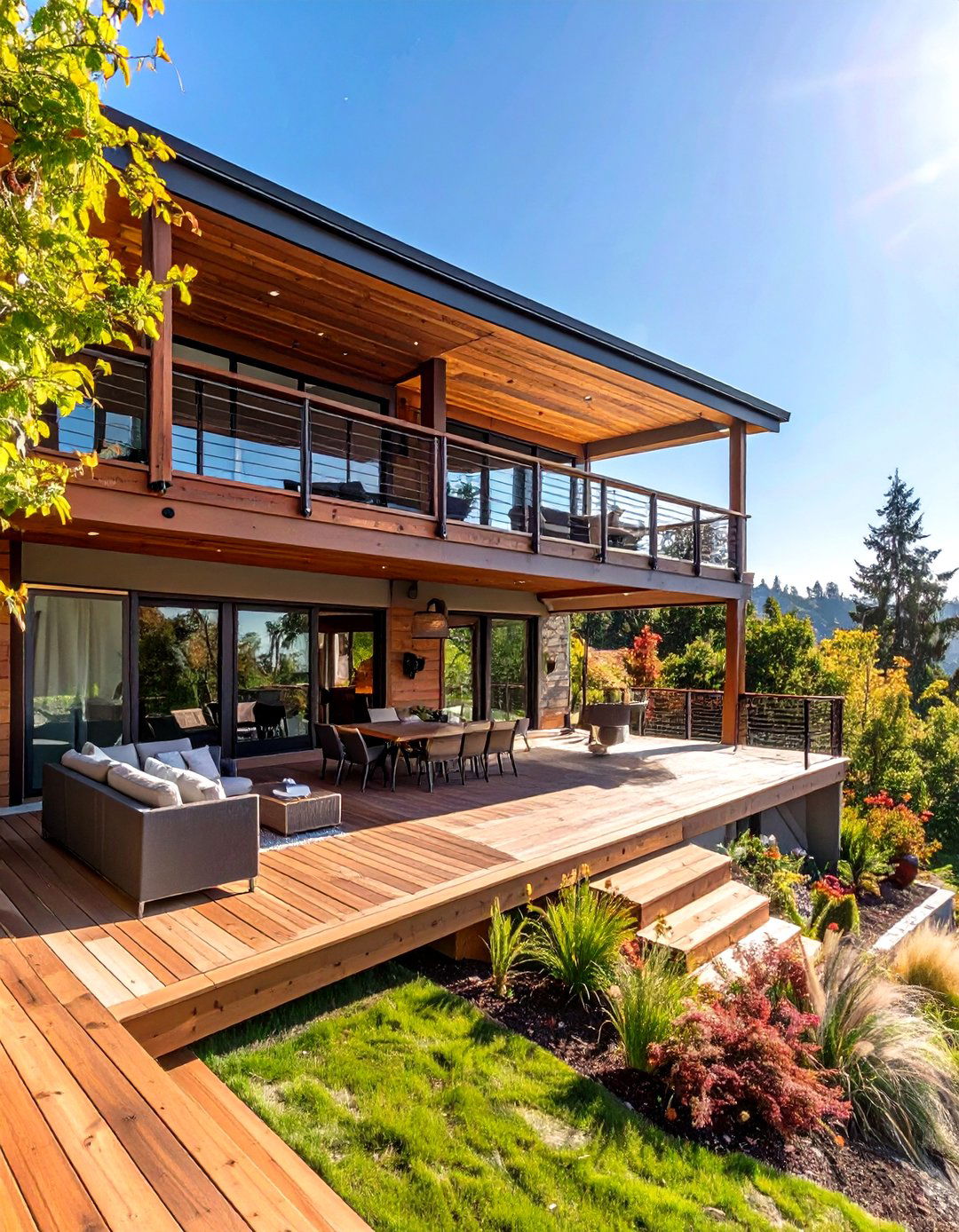
Low timber terraces offer a casual solution for a moderately sloped bank beside a country home. Pair them with a compacted gravel driveway held in place by a cellular stabilization grid and sturdy steel edging. Set the timber beds across the contour instead of pointing them downhill. Plant each level with grasses, spreading shrubs, herbs, and long-blooming perennials, leaving narrow gravel access paths for maintenance. Select durable, ground-contact-rated material appropriate for residential landscaping, and understand that timber usually requires more maintenance than masonry. These short beds should remain separate from any structure supporting the driveway itself unless professionally designed. A simple split-rail fence and several native trees can complete the rural look while preserving open views along the driving route.
16. Steep Driveway With Permeable Paver Shoulders
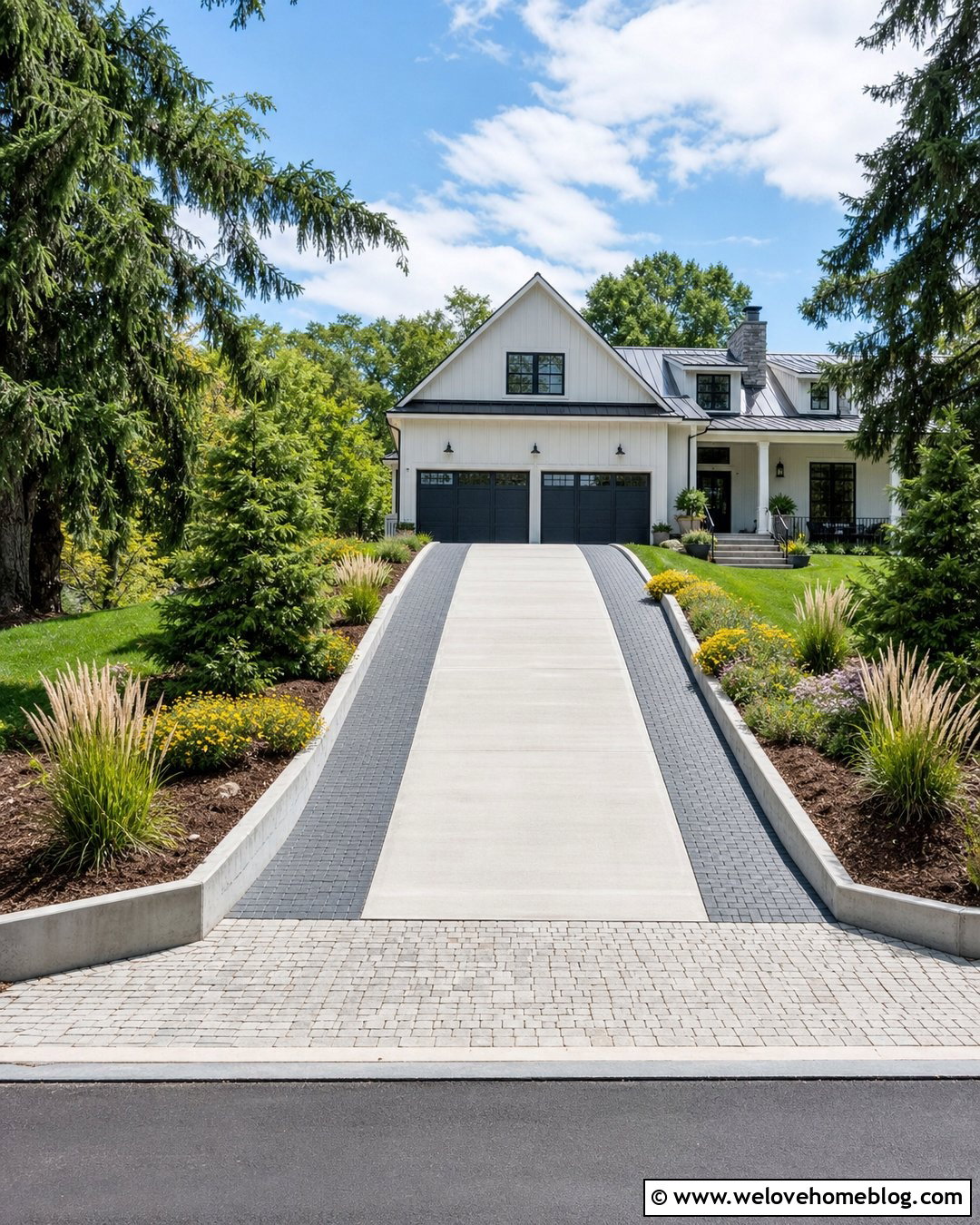
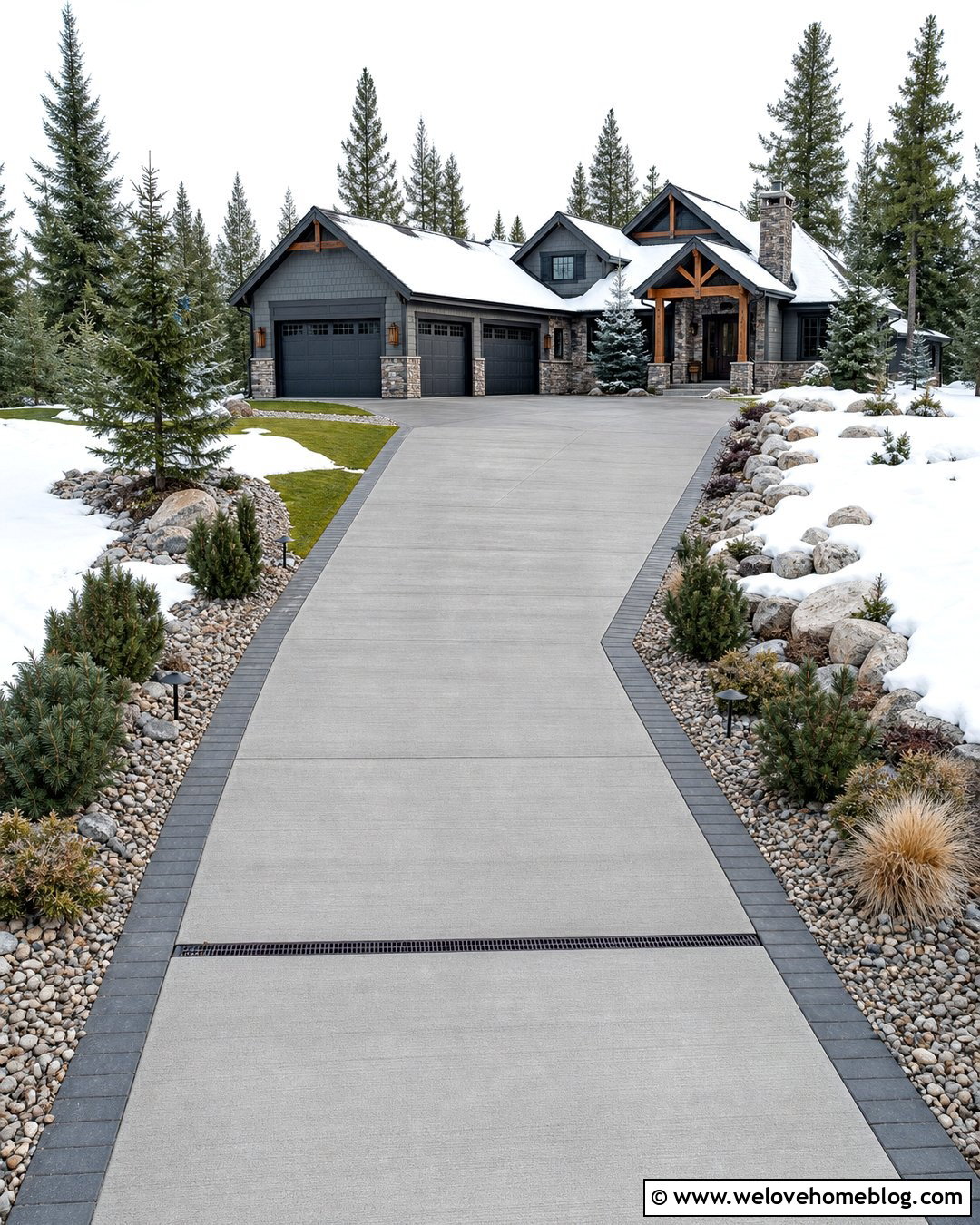
Permeable shoulders can soften the edges of a paved driveway and provide a visually clear transition into the landscape. Use a central strip of textured poured concrete bordered by permeable concrete pavers in a darker gray tone. Beyond the pavers, create gently graded beds of ornamental grasses, spreading evergreens, and flowering shrubs. The paver shoulders can widen near the garage for extra maneuvering space while maintaining a coordinated pattern. On the uphill side, include a planted swale or discreet drain that intercepts runoff before it crosses the driveway. Proper base preparation is critical because steep surfaces place extra demands on pavers and edging. The restrained material palette suits a modern farmhouse or transitional home and makes a narrow driveway appear wider without covering the entire front yard in solid pavement.
17. Steep Driveway With Gravel Stabilization Grids
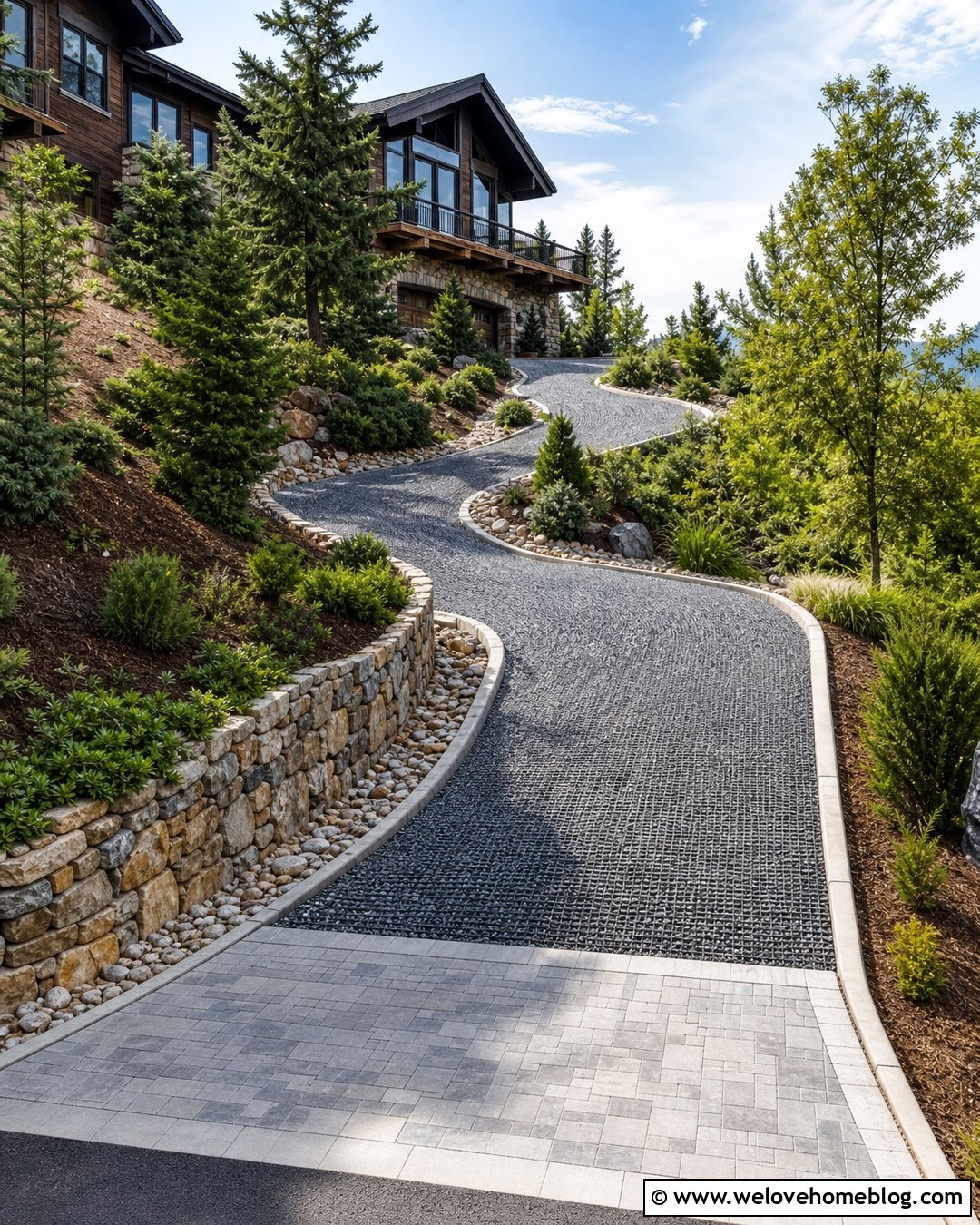
Loose gravel can migrate downhill, but a properly designed stabilization system creates a cleaner, more controlled appearance. Choose angular gray gravel held within cellular grids over an appropriately prepared base. Frame the steep driveway with concrete curbs that prevent stones from spilling into planting beds. Use a switchback or gently curved alignment where the property provides enough space, then landscape the inside banks with compact shrubs, grasses, and erosion-resistant ground covers. A dry-stacked stone wall can support the upper bed and match the natural gravel tone. Add a paved apron near the street and garage for smooth transitions. Drainage must still be managed because stabilization grids do not replace channels, swales, culverts, or other systems required to safely convey concentrated runoff.
18. Steep Driveway With Curved Planting Beds
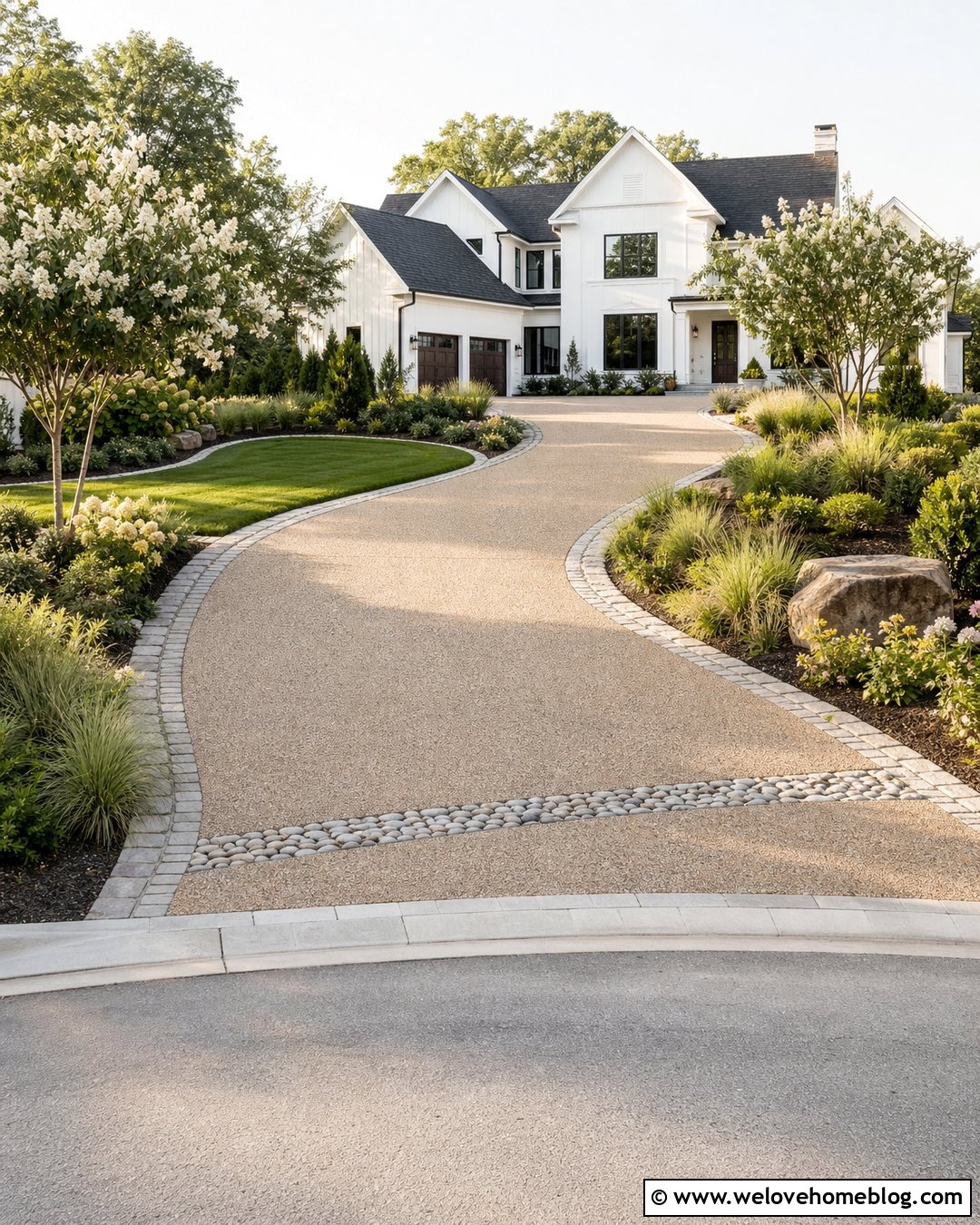
Curving beds can make a steep, straight approach feel less severe. Lay a warm beige resin-bound gravel driveway with a gentle curve leading toward a white modern farmhouse. Along both sides, shape broad crescent beds with stone edging, layered shrubs, ornamental grasses, and small flowering trees. Repeat plant groups at intervals so the landscaping feels connected from the street to the house. Keep the inside of every curve low and open for driver visibility. A narrow drainage strip of decorative stone can run behind the uphill border, carrying water toward a suitable outlet. At the garage, allow the planting lines to flare outward and create a wider arrival court. The sweeping layout makes the grade feel intentional while adding softness and movement to the front landscape.
19. Steep Driveway With Side Garden Steps
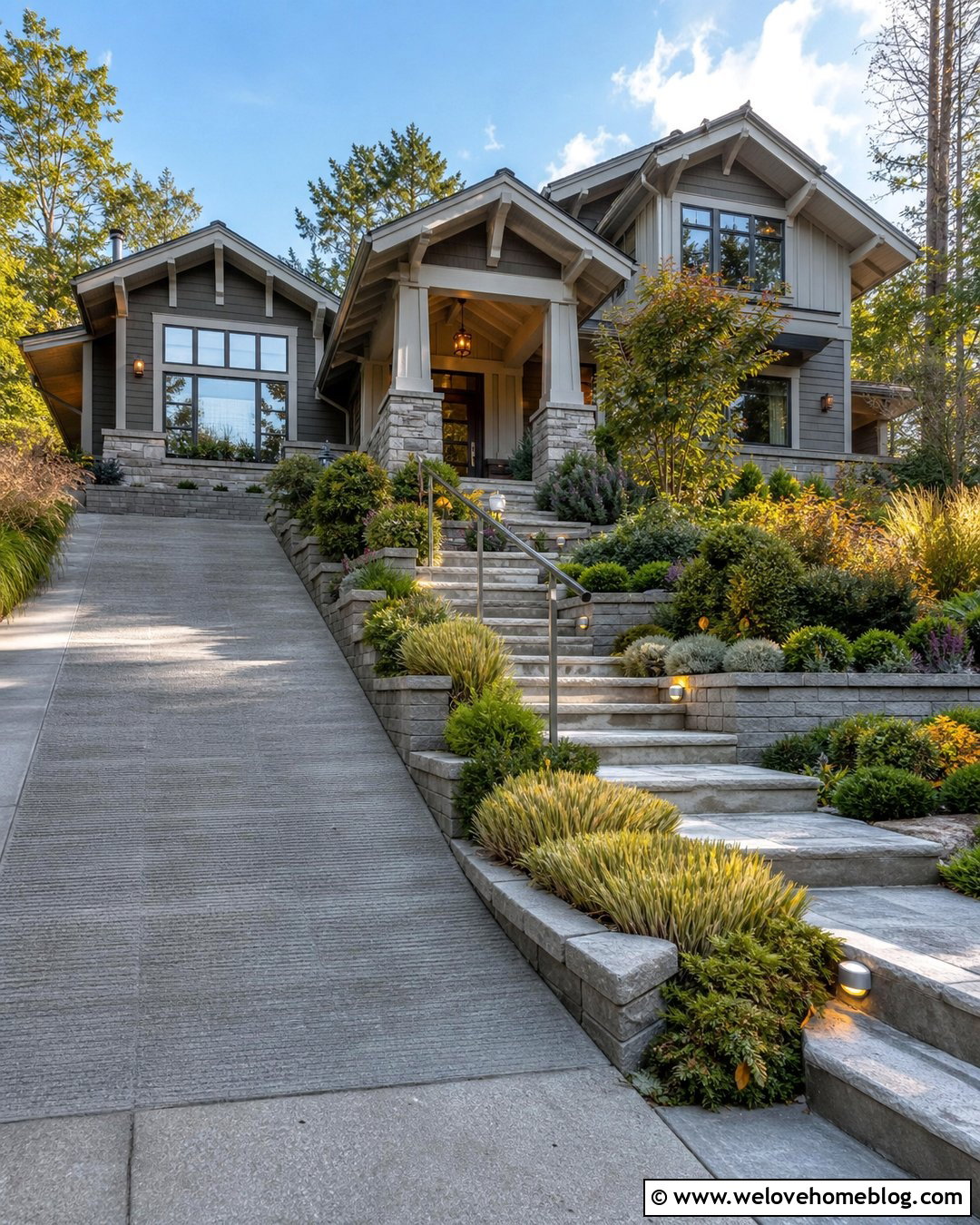
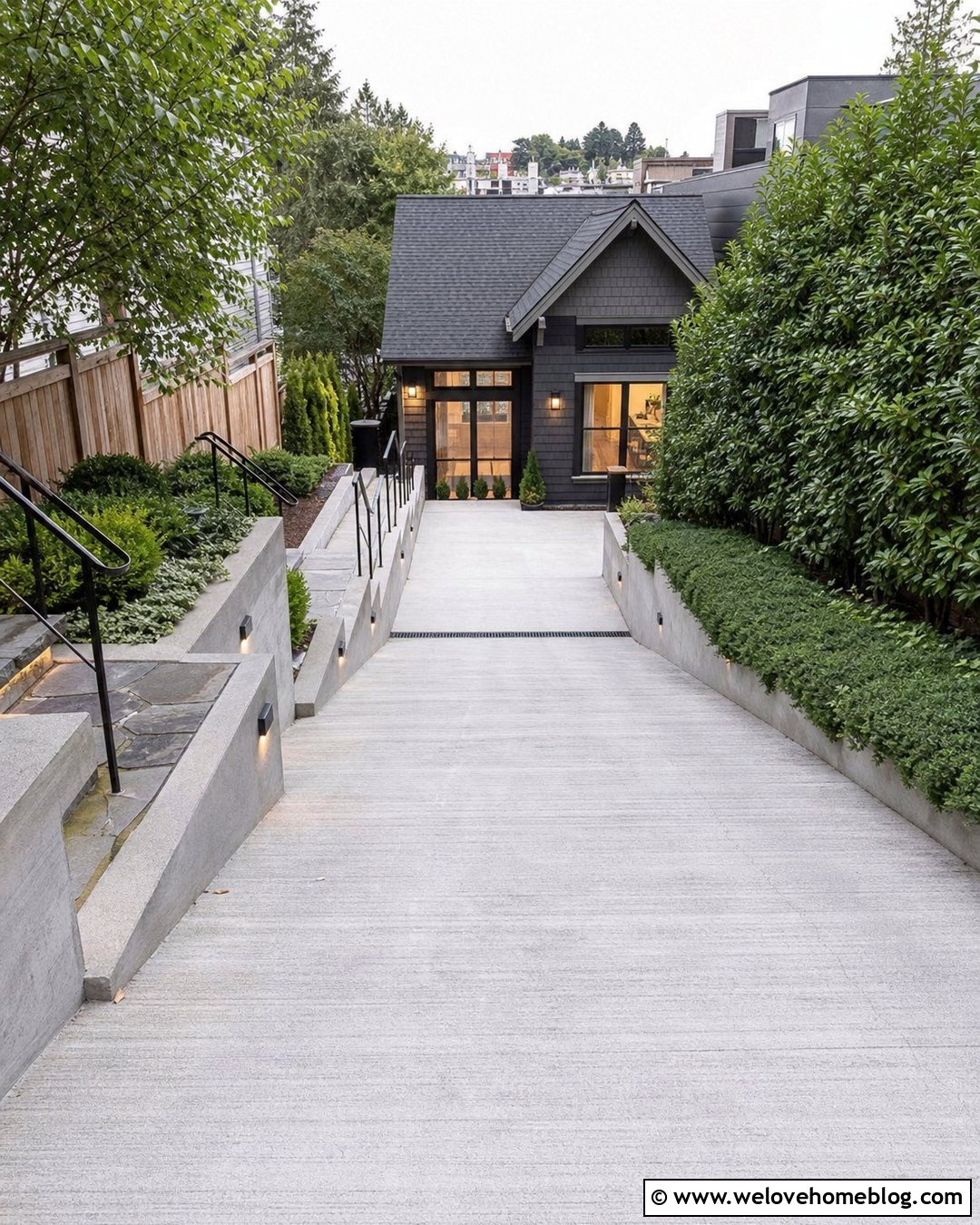
Separate pedestrian steps make a steep driveway safer and more comfortable to navigate on foot. Beside a grooved poured-concrete driveway, install broad stone steps that rise gradually through a terraced garden. Use level landings at comfortable intervals and connect the stairway directly to the sidewalk, parking area, and front entrance. Low retaining walls can define the steps, while grasses, compact shrubs, and cascading perennials soften their edges. Add a code-compliant handrail where required, selecting a simple dark metal finish that matches exterior lighting and house details. Keep plants from overhanging the walking route. The driveway surface, drainage, stair foundations, lighting, and wall construction should be coordinated from the beginning. This layout is especially useful where the house sits significantly above the street.
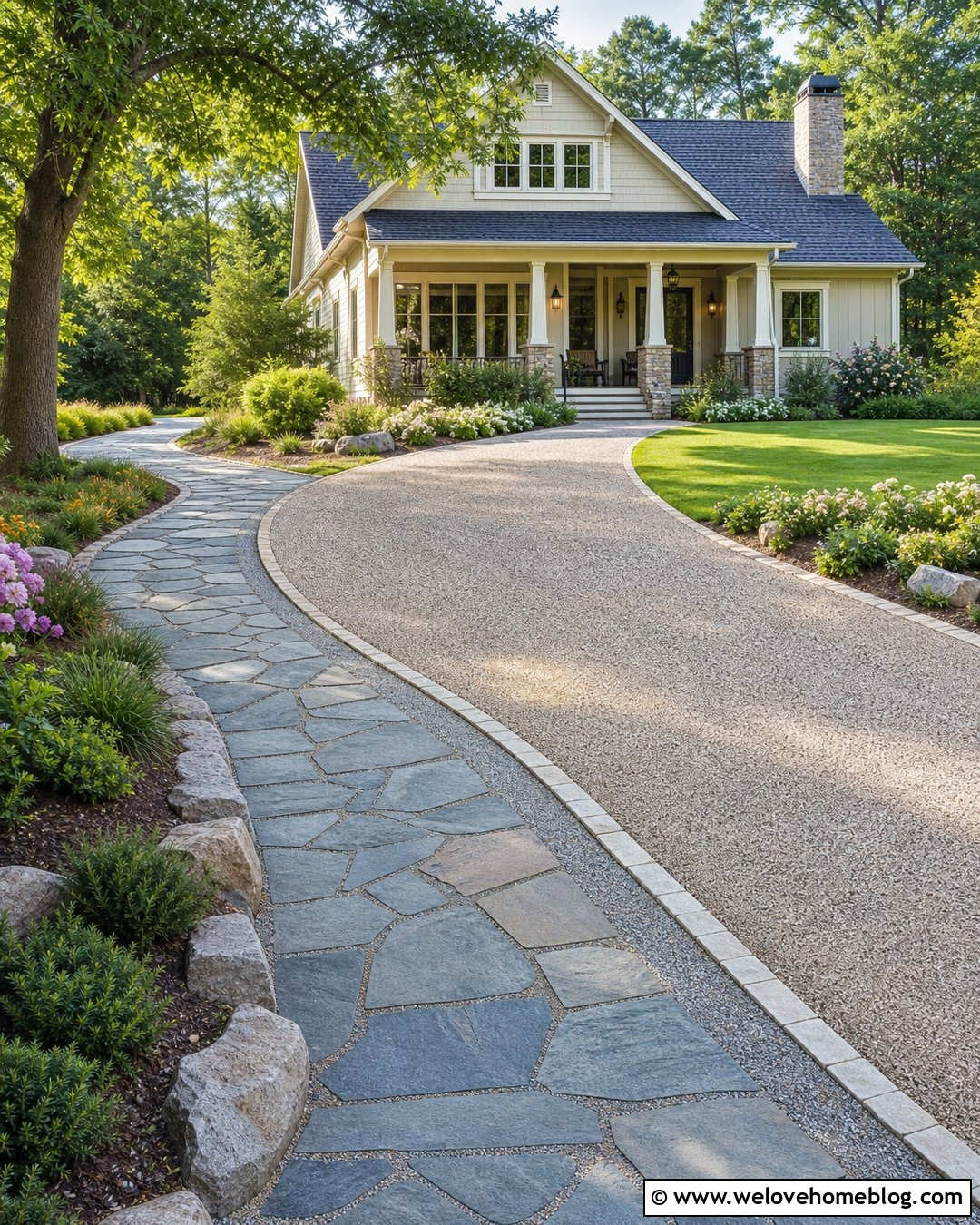
20. Steep Driveway With Low-Maintenance Grass Banks
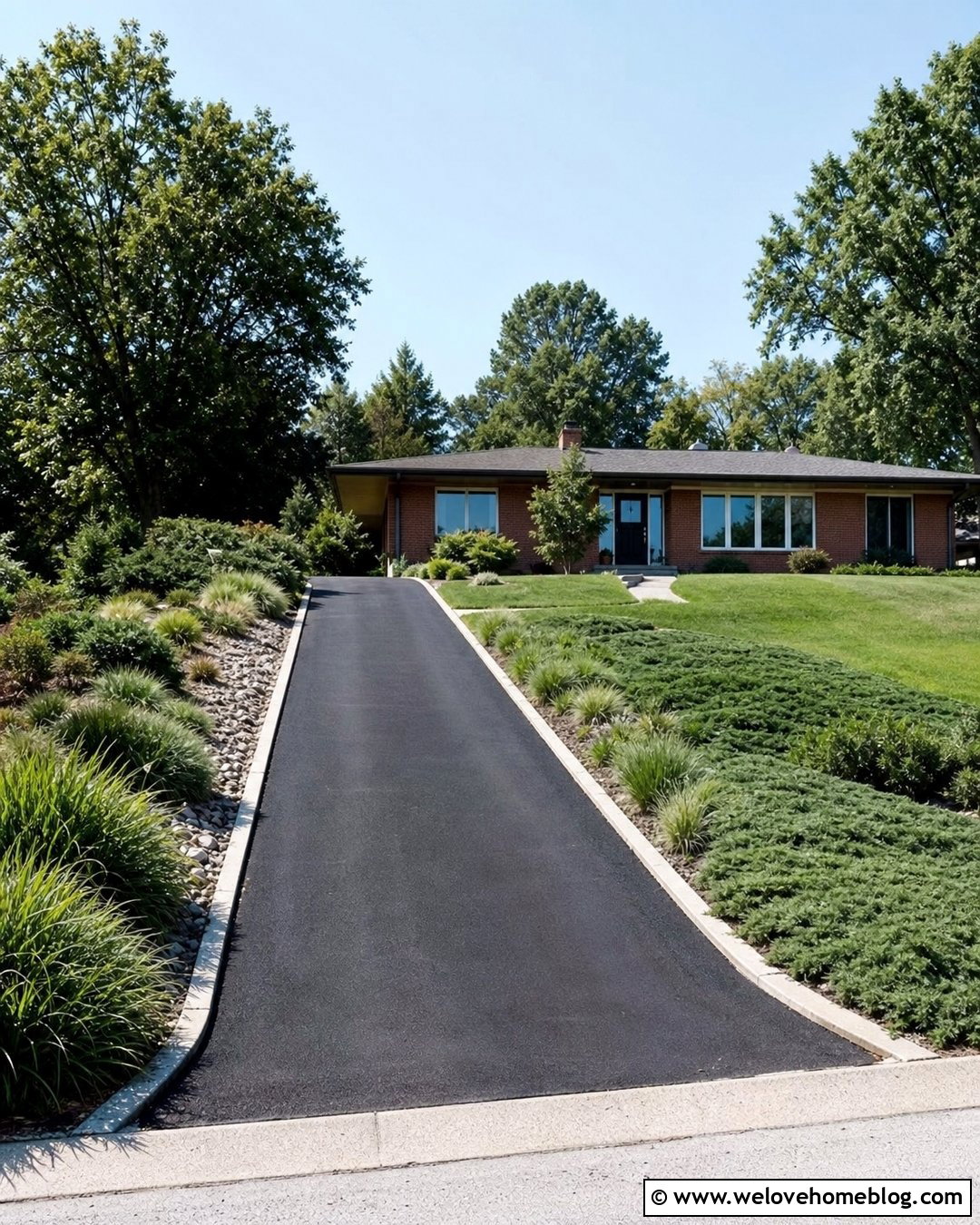
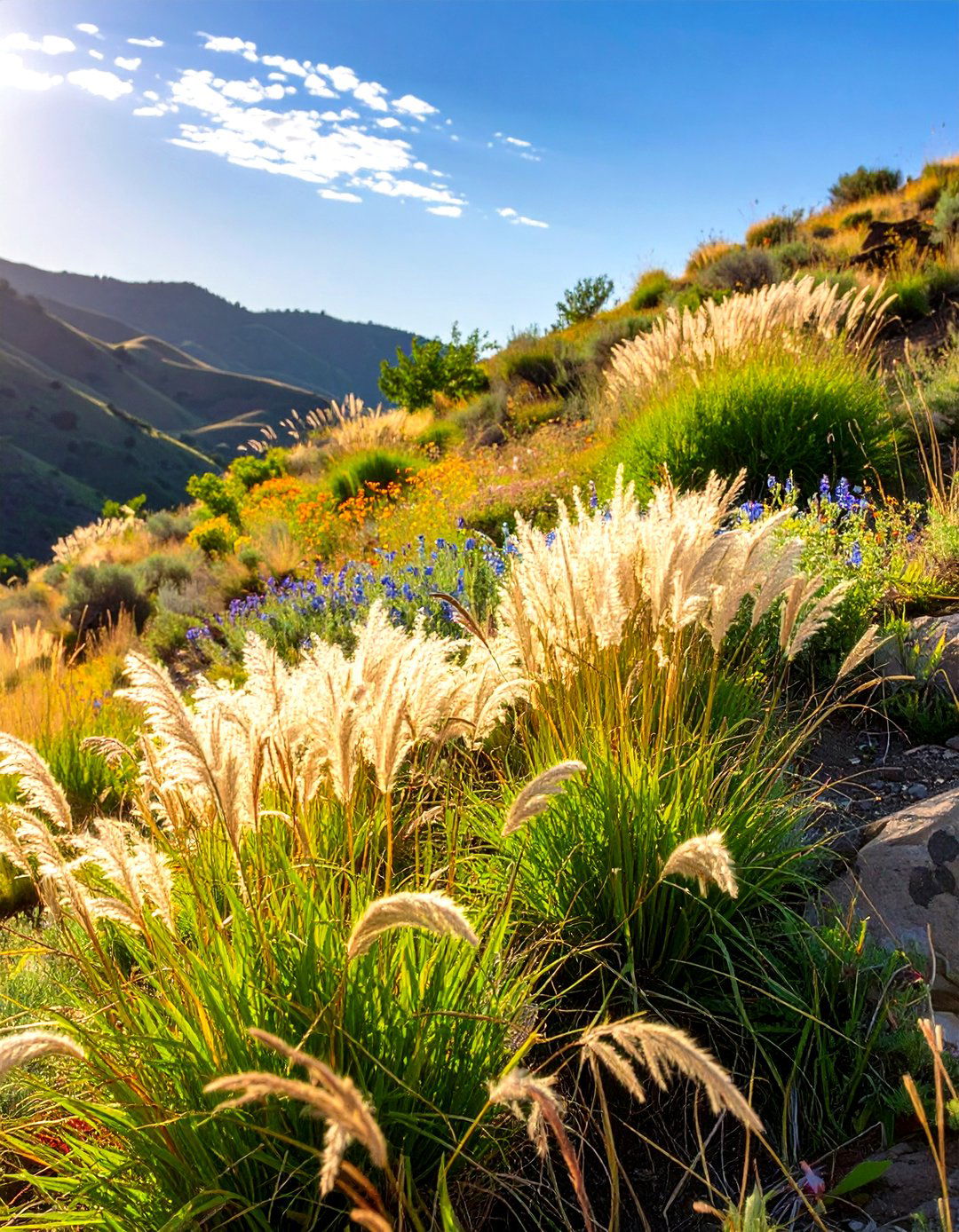
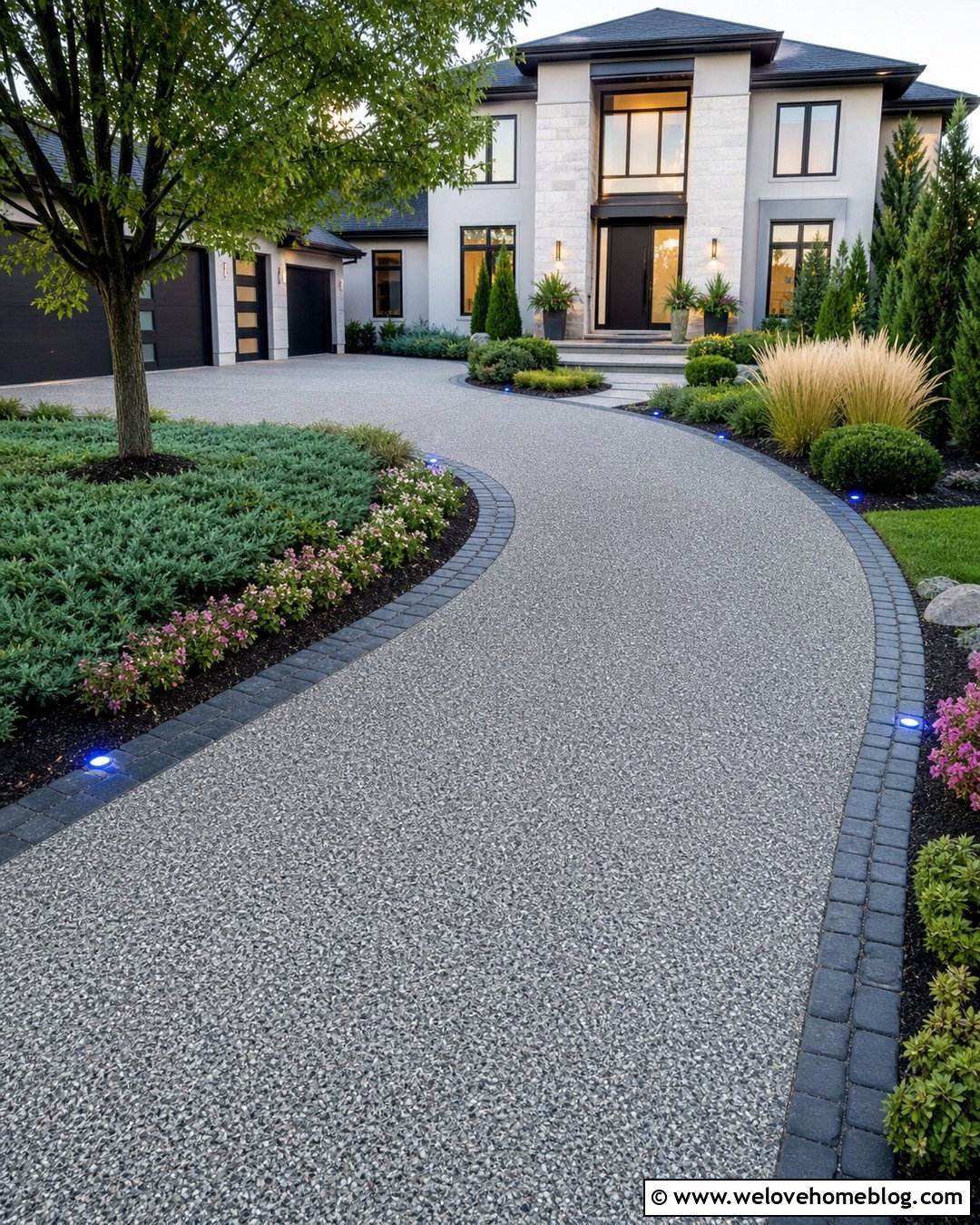
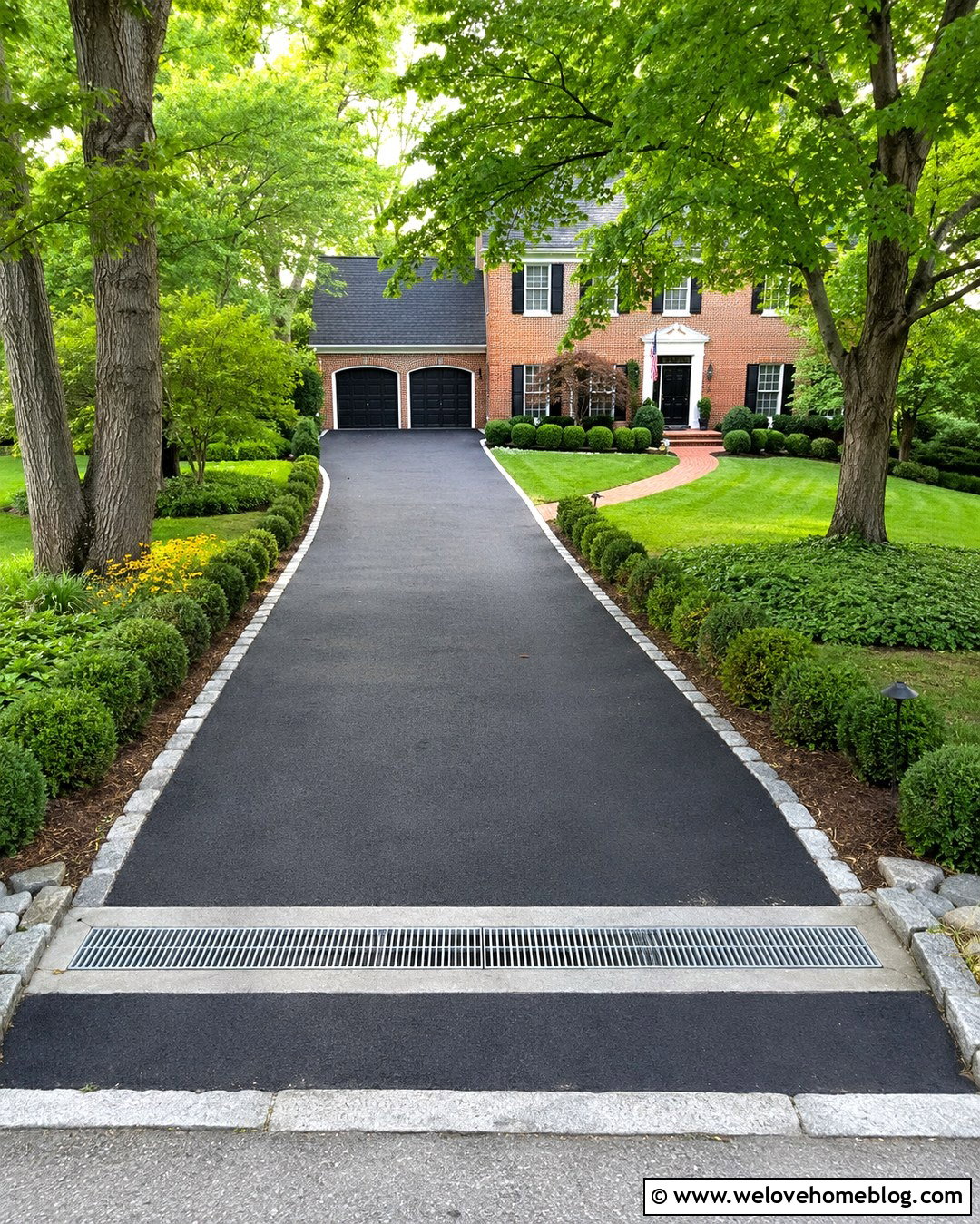
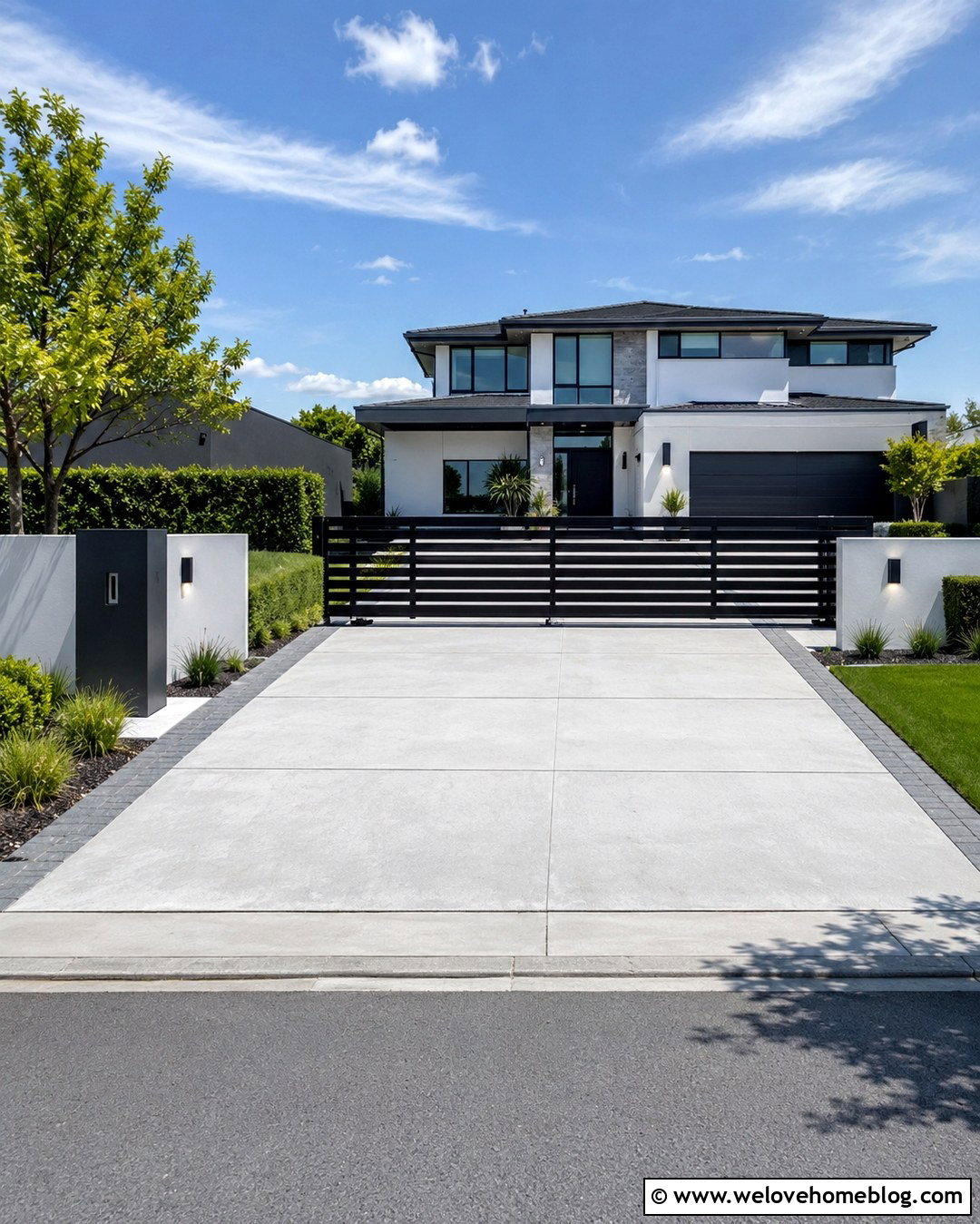
A grass-covered bank can still work when the slope is shaped for practical maintenance. Pair a straight black asphalt driveway with reinforced concrete edging and broad bands of low native grasses or fine-textured sedges rather than conventional lawn. Divide the slope with several horizontal shrub masses to interrupt its visual height. Where mowing is unavoidable, preserve gentler, accessible zones near the street and house. Convert steeper sections to ground covers that can be maintained from stable paths. Add a shallow stone-lined swale at the top of the bank to intercept runoff before it gains speed. The simple green palette complements a brick ranch or mid-century home. Clean pavement edges and repeated plant groupings keep the design neat even when the grasses have a relaxed, natural form.
21. Steep Driveway With Flowering Shrub Terraces
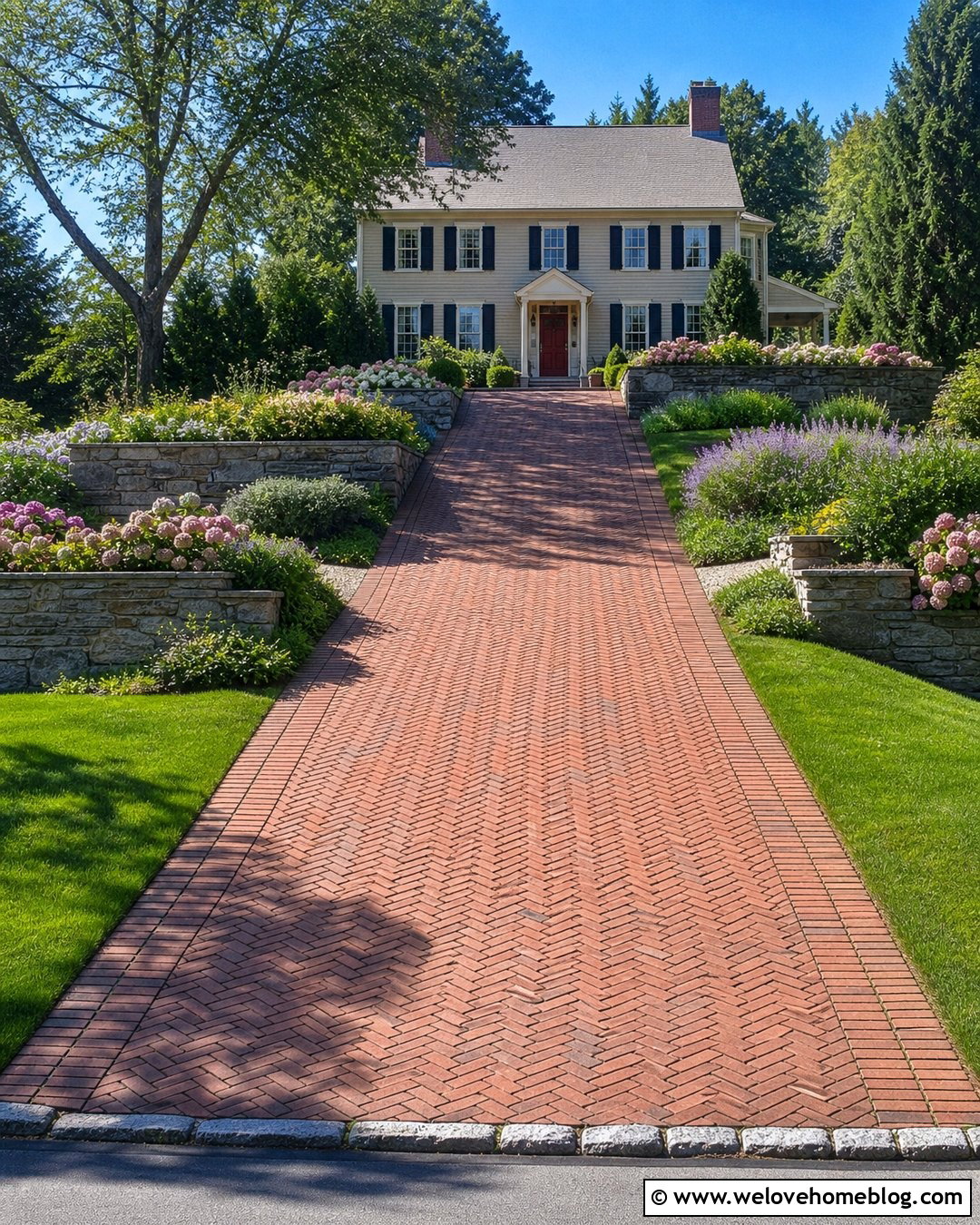
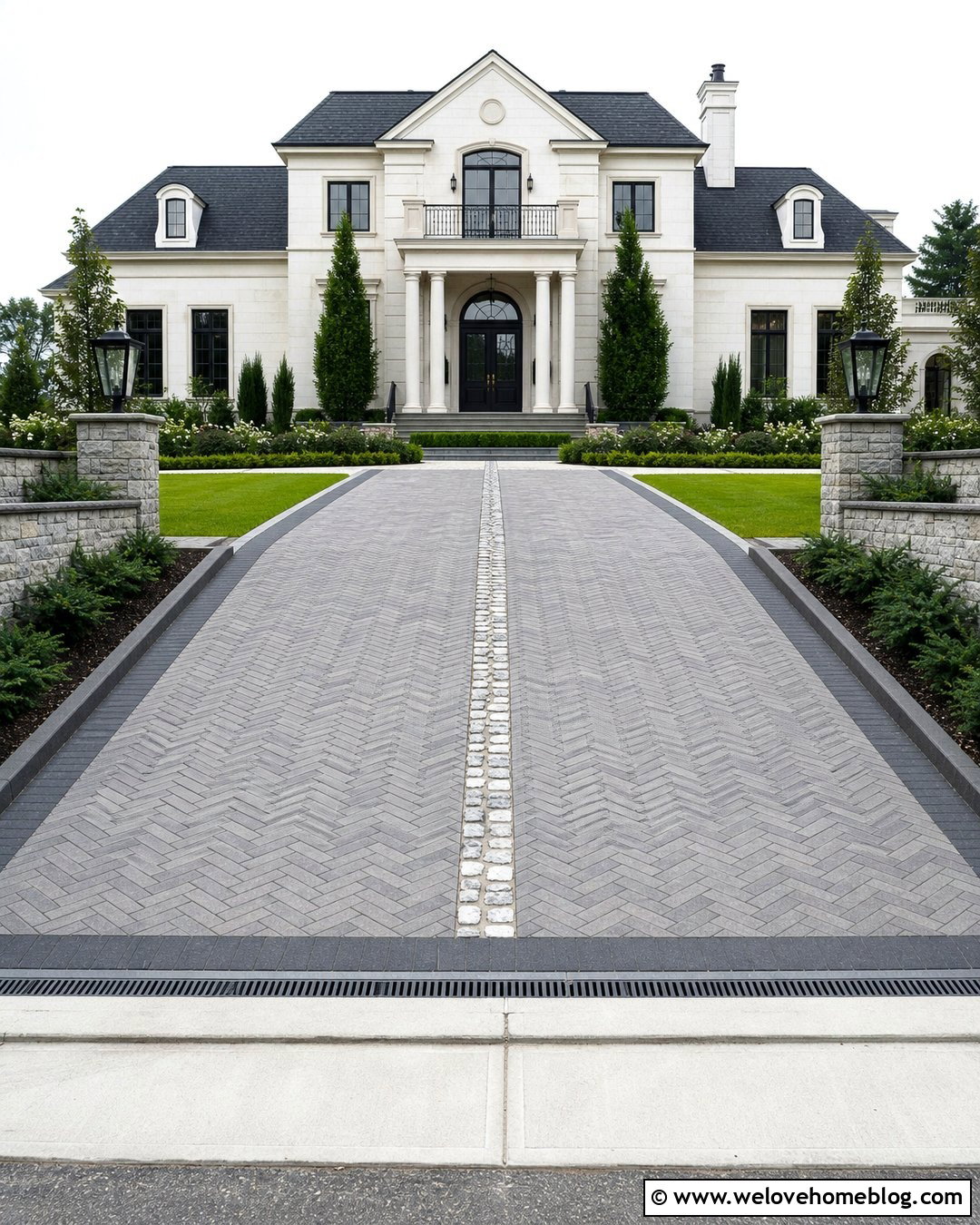
Flowering shrubs can bring color to a steep driveway without relying on small, high-maintenance flower beds. Use a herringbone clay brick paver driveway with matching soldier-course edging. Build broad planting terraces along the uphill side using low natural-stone walls. Fill them with compact hydrangeas, native flowering shrubs, evergreen structure plants, and spreading ground covers suited to the local climate. Stagger bloom times so the slope remains attractive beyond one short season. Keep flowers closest to the pavement low, with larger shrubs set farther back. A narrow gravel maintenance path behind each wall makes pruning easier. Include suitable drainage beneath the pavers and behind the terraces. The brick, stone, and layered planting create a warm, established look for Colonial and cottage-style homes.
22. Steep Driveway With Modern Concrete Planters
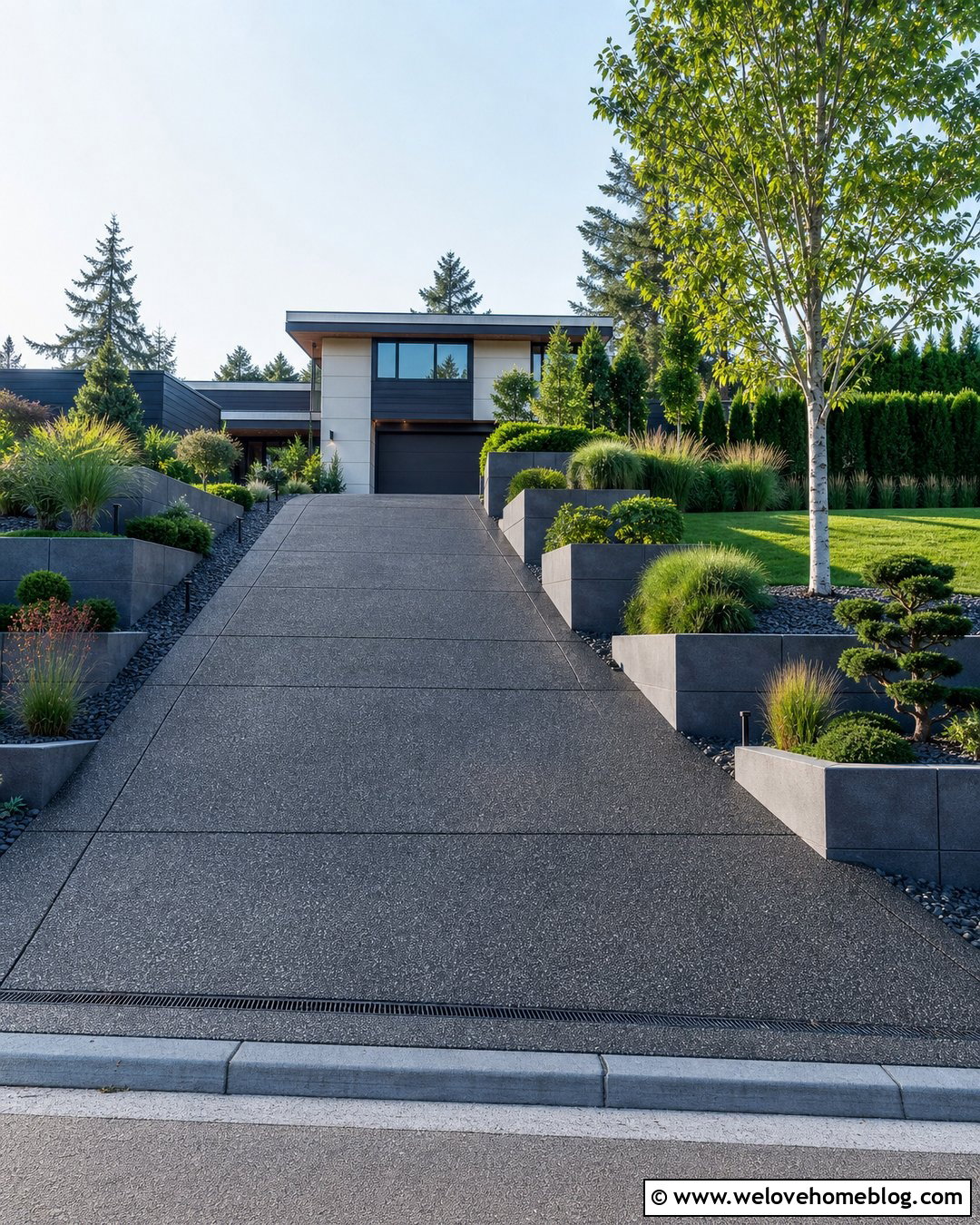
Large concrete planters can organize an awkward slope around a contemporary driveway. Start with a charcoal exposed-aggregate driveway divided by narrow saw-cut joints. Along one side, install a sequence of rectangular concrete planting beds that step upward with the grade. Fill them with sculptural grasses, dwarf pines, clipped shrubs, and bold perennial masses. Use dark decorative gravel between plants for a crisp finish. The opposite side can remain more open, with a simple lawn panel and one feature tree. Integrate slot drains or channel drains into the hardscape where runoff crosses the pavement. Planter walls that retain significant soil need suitable foundations, waterproofing, drainage, and structural design. Repeating the concrete finish on the front walkway helps the complete landscape feel calm and intentional.
23. Steep Driveway With a Split-Rail Fence
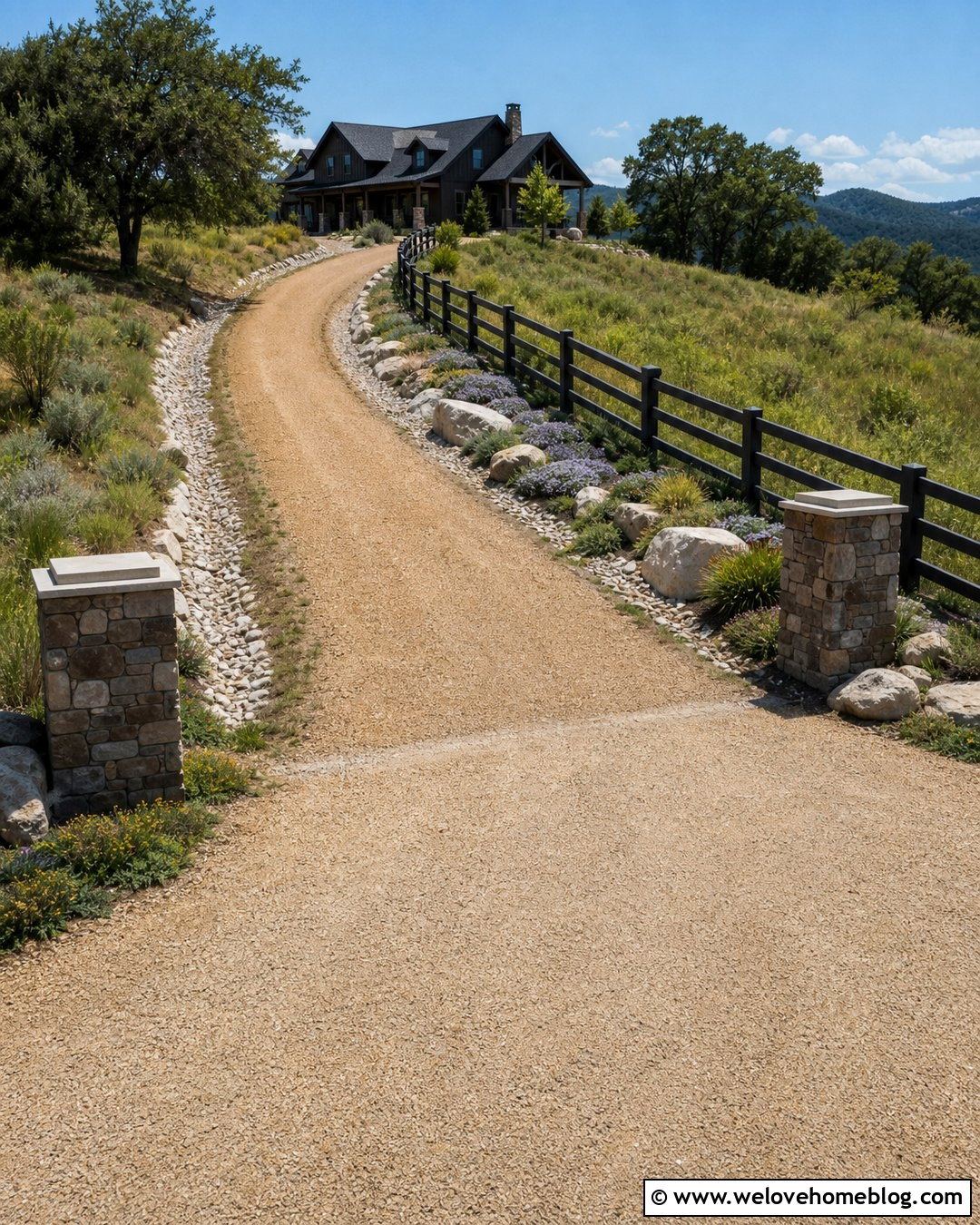
A fence can define the edge of a steep country driveway while preserving an open view. Use compacted tan gravel stabilized with a cellular grid, then add a dark timber split-rail fence along the downhill side. Set the fence outside the required driving clearance and pair it with masses of native grasses, low flowering shrubs, and meadow plants. On the uphill bank, use embedded boulders and creeping ground covers to protect exposed soil. A stone drainage channel can follow the base of that slope without competing with the rustic materials. Finish the entrance with simple stone pillars and a widened gravel apron. The combination suits farmhouses, cabins, and rural ranch homes, but any barrier serving a safety function should meet local placement and construction requirements.
24. Steep Driveway With Layered Entrance Landscaping
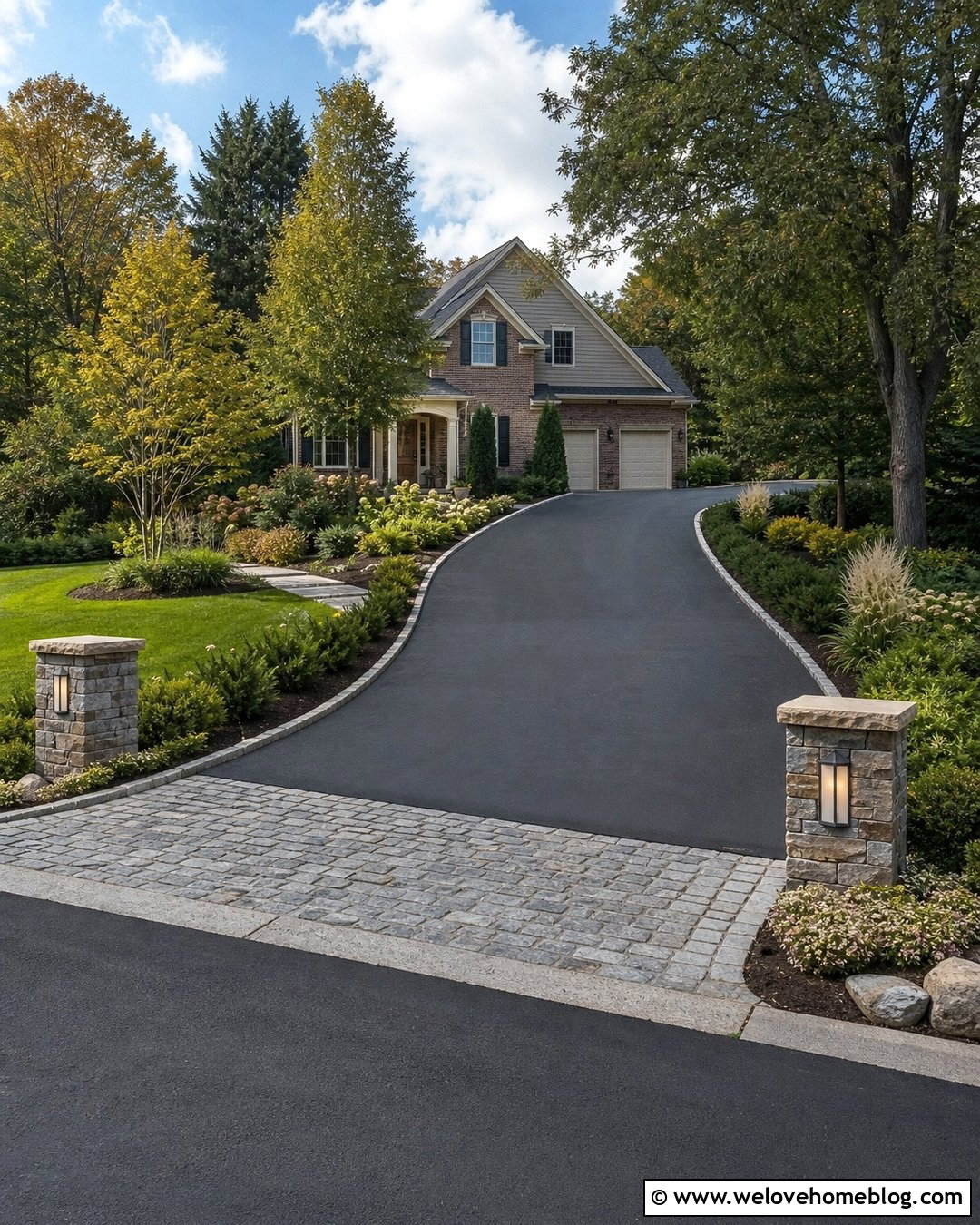
A strong entrance can draw attention away from the driveway’s steepness and establish a welcoming sense of arrival. Frame a dark asphalt driveway with low stone pillars, broad planting beds, and a clean cobblestone apron at the road. Use low evergreen shrubs around the pillars, then transition into ornamental grasses and taller flowering shrubs farther uphill. Keep plants and masonry outside visibility triangles and well away from the active driving lane. Continue the stone edging along the full driveway so the entrance feels connected to the house. On the uphill side, place a discreet planted swale behind the border to collect runoff. Subtle address lighting and a separate walkway complete the composition. This balanced layout works with many suburban house styles without making the entrance feel crowded.
25. Steep Driveway With a Landscaped Turnaround
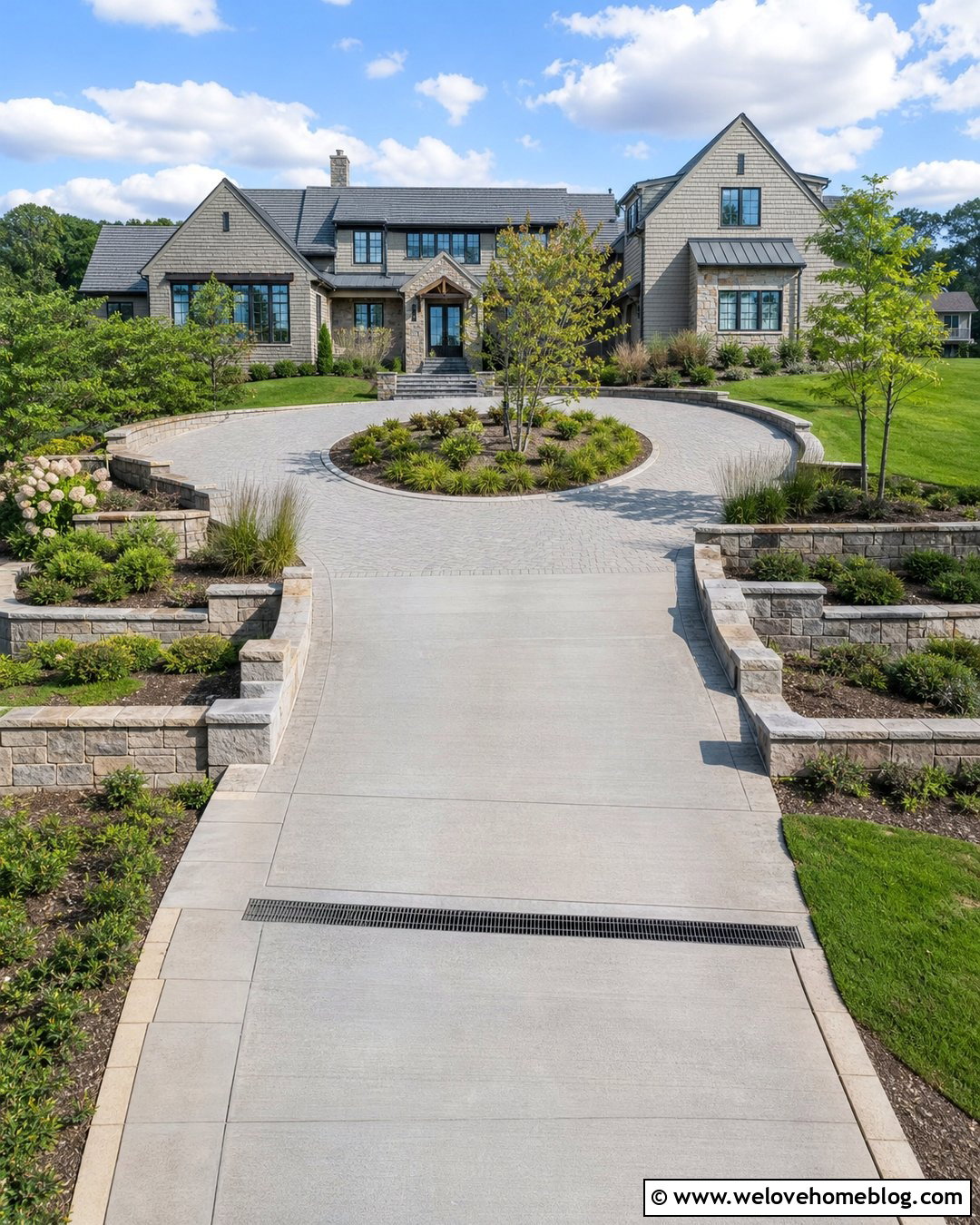
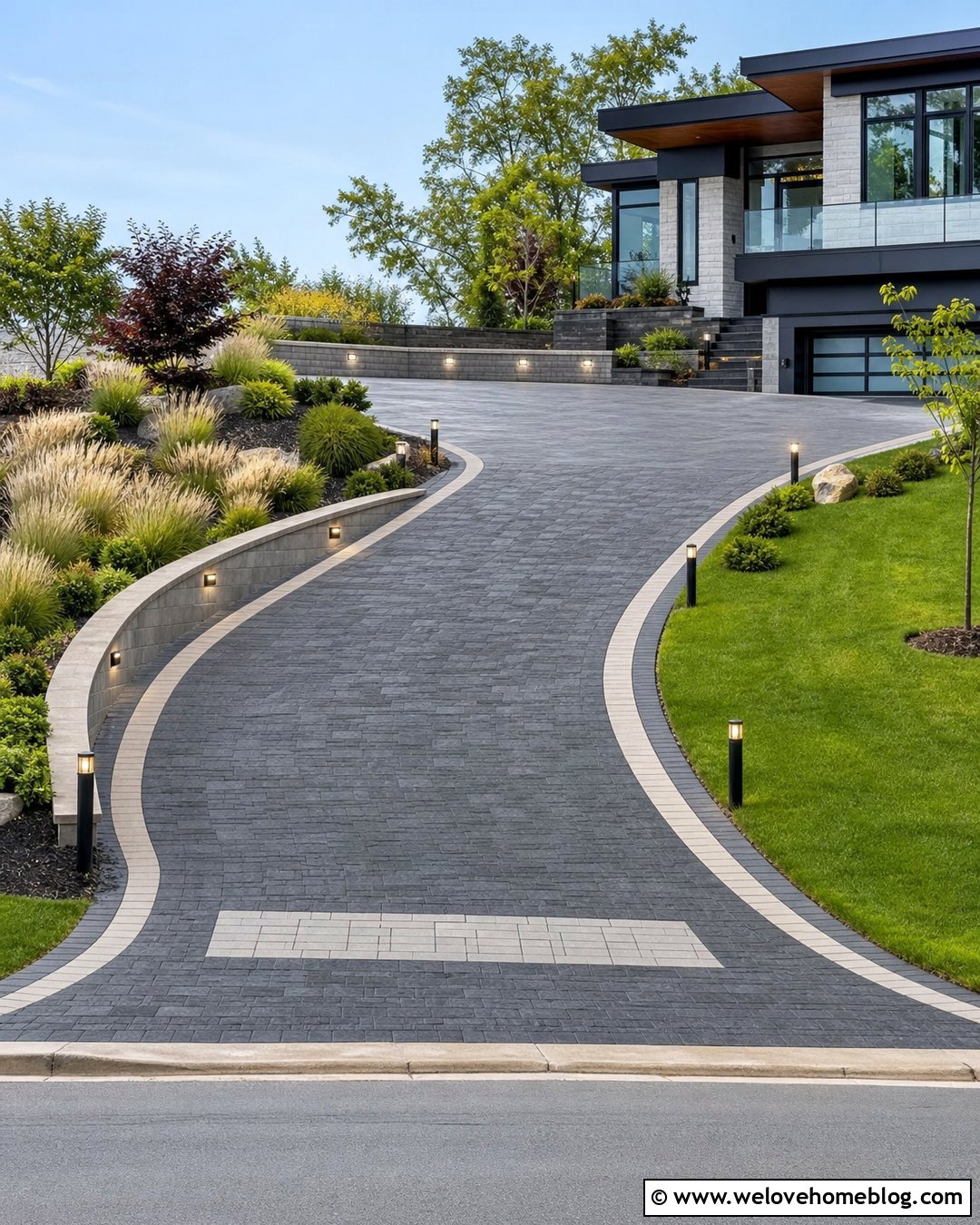
A turnaround near the house can make a steep driveway more practical while creating space for a polished landscape focal point. Use light-gray concrete pavers in a circular or teardrop-shaped turning area connected to a straight broom-finished concrete drive. Place a raised island of low shrubs, ornamental grasses, and a small multi-stem tree in the center. Surround the upper arrival court with stone retaining walls and layered planting beds that follow the hillside. Keep the island low enough to preserve visibility and leave adequate turning clearance for expected vehicles. Direct runoff around the turnaround using carefully placed drains and graded planting zones. The expanded pavement should be professionally designed so the base, slope transitions, retaining structures, and drainage perform together without creating abrupt vehicle angles.
Conclusion:
Successful steep driveway landscaping begins with understanding how vehicles, pedestrians, soil, and stormwater move across the property. Decorative planting alone cannot correct unstable slopes or uncontrolled runoff. Start with drainage, retaining needs, sightlines, and safe access, then select surfaces and plants that suit the climate and house. Tiered walls, native ground covers, dry creeks, planted swales, and defined borders can turn a difficult grade into an attractive entrance. Structural walls, major grading, and drainage outlets deserve professional evaluation, especially beside load-bearing pavement. Use these 25 steep driveway landscaping ideas as inspiration, but adapt every detail to your soil, rainfall, local codes, maintenance preferences, and available space.

Related posts:
Leave a Reply