
Stamped concrete can give a driveway the character of brick, slate, cobblestone, flagstone, or wood while retaining a continuous concrete base. Patterns, integral color, antiquing accents, borders, and decorative bands make it adaptable to homes ranging from traditional Colonials to modern farmhouses. The strongest designs consider the entire approach rather than treating the surface as an isolated feature. Driveway shape, stamp scale, house color, edging, drainage, planting, and walkways should all feel connected. Stamped borders can also be paired with simpler concrete fields when a fully patterned installation does not suit the budget. () Whether you prefer subtle texture or a statement entrance, the complete looks below offer practical inspiration through 25 stamped driveway concrete ideas.
1. Ashlar Slate Stamped Concrete Driveway
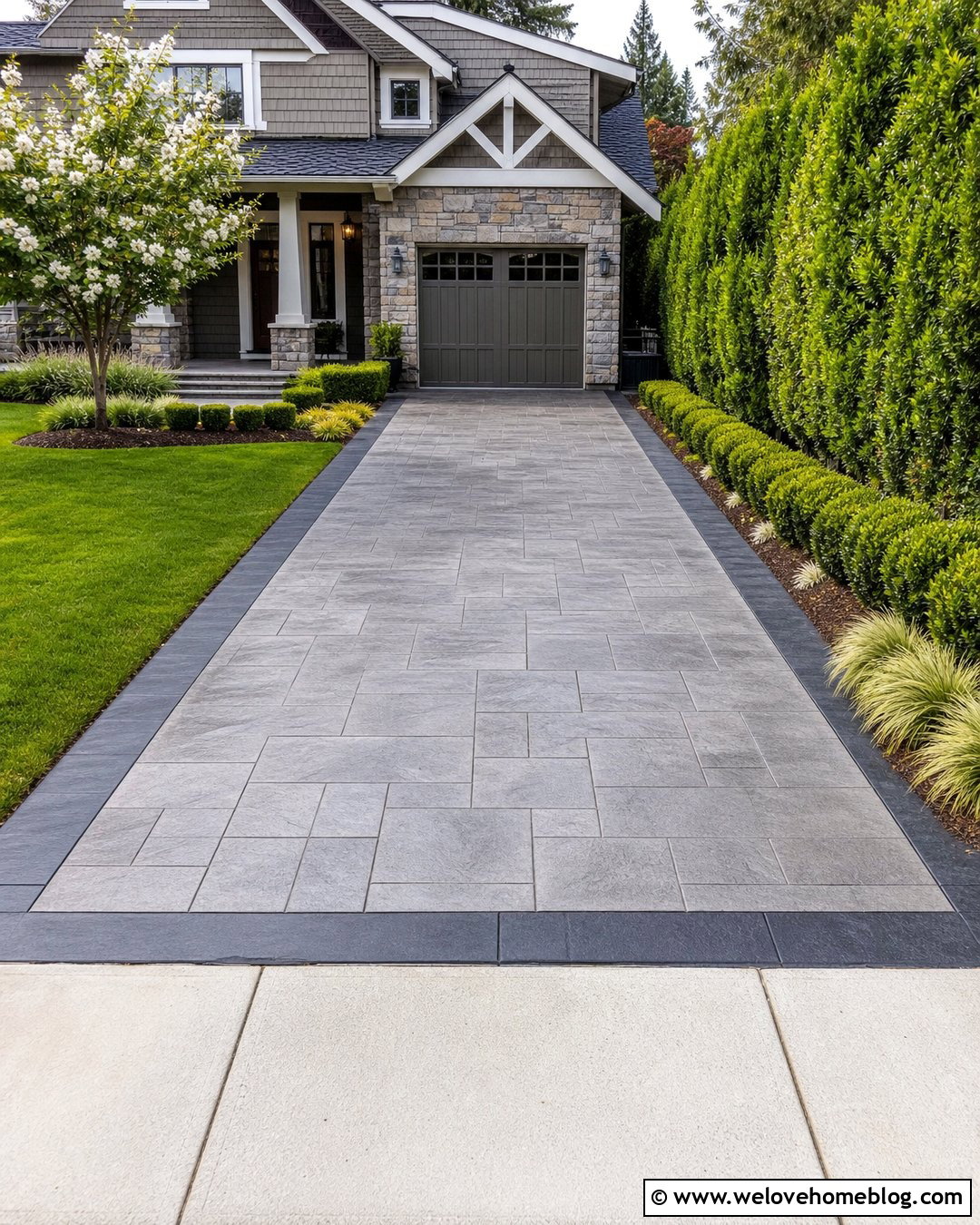
Ashlar slate is a versatile choice for a wide, straight driveway because its staggered rectangular pattern creates structure without looking overly busy. Choose warm gray concrete with charcoal antiquing to highlight the joints and imitate natural stone. A smooth, darker stamped border can frame the surface and create a clean transition into the lawn. Near the house, repeat the same border around the walkway so the approach feels coordinated. Low boxwoods, ornamental grasses, and a small flowering tree soften the formal lines without covering the pattern. This complete look works especially well with ranch, Craftsman, and stone-front homes. Ask the installer to use large-scale stamping mats on a broad driveway, since small patterns can appear crowded when viewed from the street.
2. Cobblestone Stamped Concrete Driveway
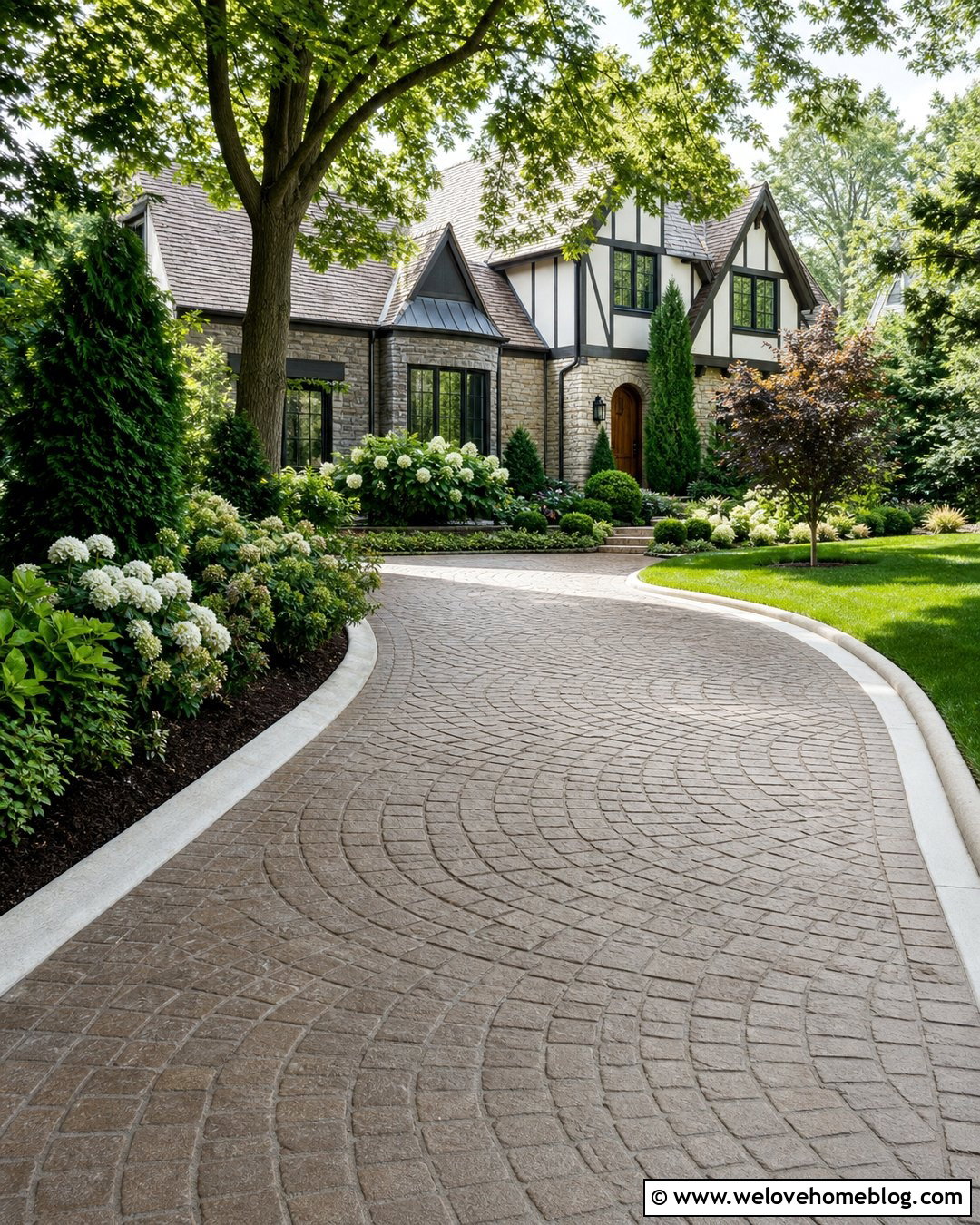
Want an old-world surface without installing thousands of individual stones? Cobblestone-stamped concrete creates the rounded shapes and textured joints associated with traditional European paving. A medium taupe base with deep brown antiquing adds believable depth, especially on a gently curved driveway. Frame it with smooth concrete curbs in a slightly lighter shade to keep the textured field visually controlled. Dense evergreen shrubs, hydrangeas, and a brick walkway can connect the driveway to a traditional home. Cobblestone patterns contain plenty of visual movement, so keep nearby landscaping organized rather than overly colorful. This design is particularly effective at a Tudor, French country, or cottage-style property. Use wider planting beds along the curve to emphasize the driveway’s graceful approach and prevent the hardscape from dominating the front yard.
3. Herringbone Brick Stamped Concrete Driveway
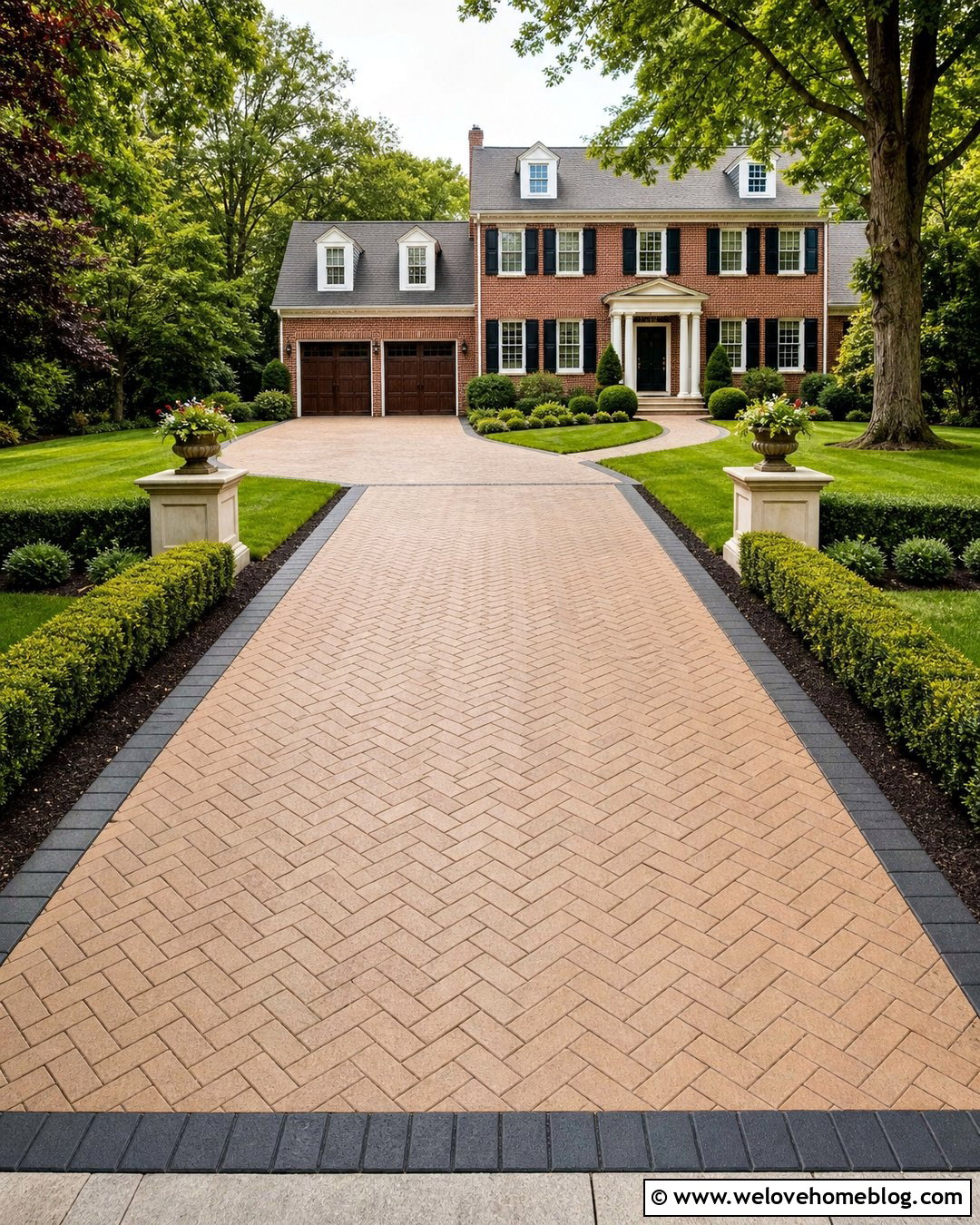
The strong diagonal movement of a herringbone brick pattern can make a short driveway feel longer and more intentional. Use muted clay-colored stamped concrete rather than bright red, then apply dark brown antiquing to define the simulated brick joints. A charcoal soldier-course border provides contrast and keeps the energetic pattern contained. Carry the same border around the garage apron and front walkway for a finished appearance. This combination complements red brick Colonials, Cape Cod homes, and traditional suburban facades. Neatly clipped hedges, a green lawn, and symmetrical planters support the formal layout. Because herringbone has a directional pattern, its alignment should guide the eye toward the garage or front entrance. Review the proposed orientation with the contractor before placement so transitions and control joints appear deliberate.
4. Random Flagstone Stamped Concrete Driveway
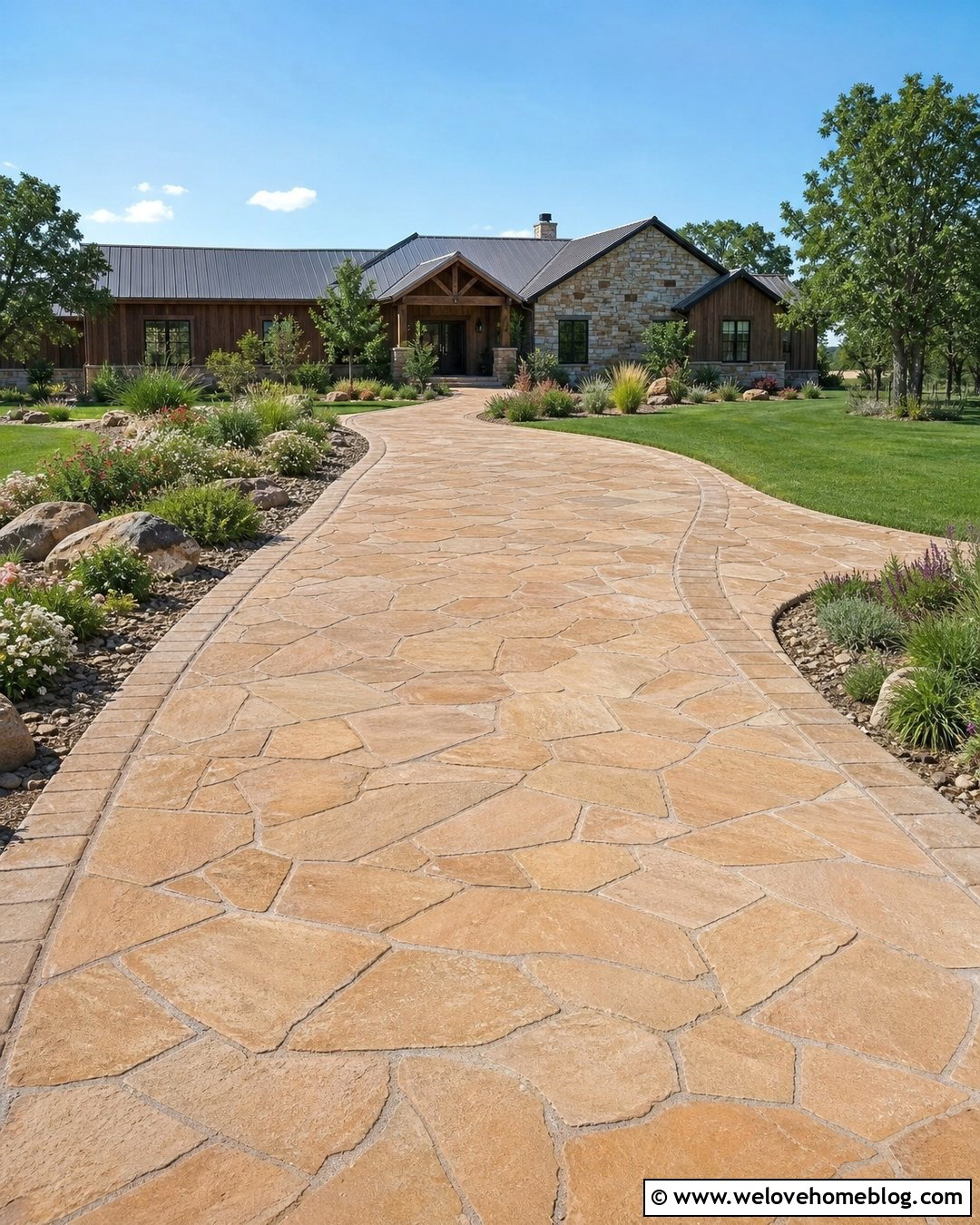
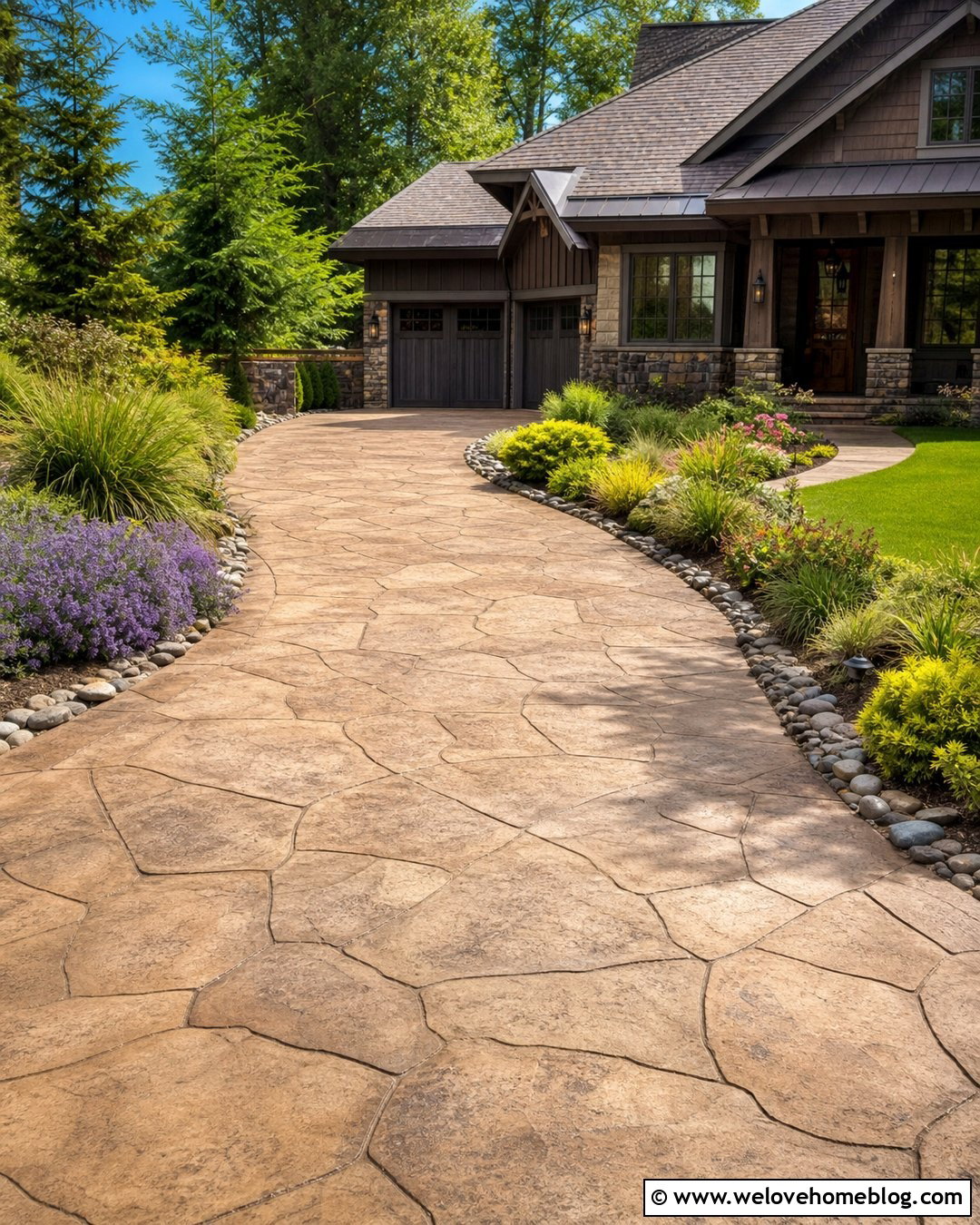
Irregular flagstone stamping gives a driveway a relaxed, natural character that feels especially appropriate in a wooded or country setting. Select a warm sandstone base with restrained brown and charcoal accents to create variation between the simulated stones. A curved driveway makes the random pattern feel even more organic. Use a natural-looking stamped stone border, followed by layered beds of native grasses, flowering shrubs, and small boulders. The walkway can branch gently from the driveway using the same flagstone texture. This complete arrangement suits rustic ranch houses, cabins, and Craftsman homes with wood or stone details. Avoid applying too many contrasting colors across individual shapes. A limited palette usually looks more convincing from the curb and allows the surrounding plants, architecture, and seasonal color to remain visible.
5. Seamless Stone Stamped Concrete Driveway
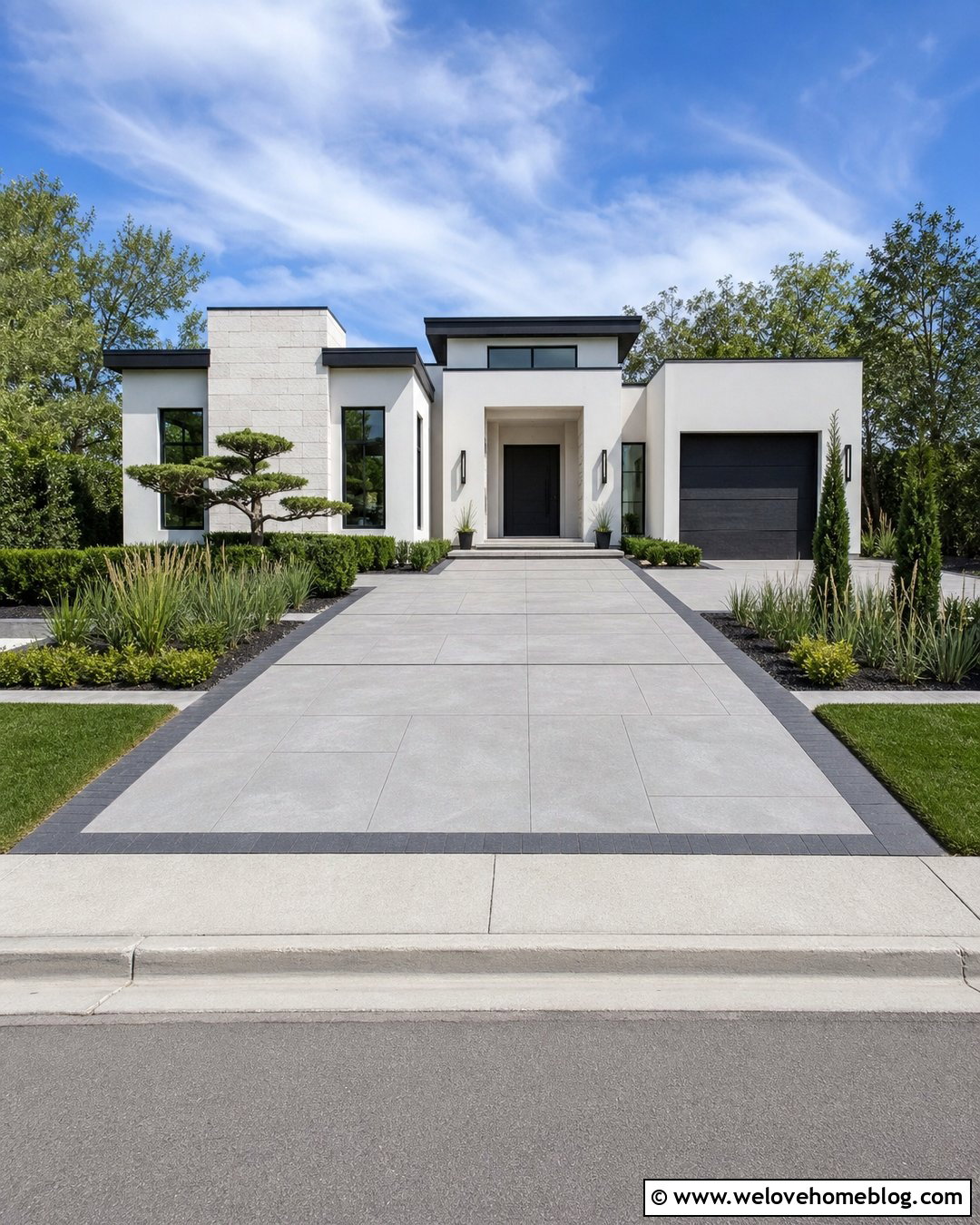
A seamless stone texture is ideal when you want the depth of natural rock without a noticeable repeating joint pattern. Soft gray stamped concrete with gentle charcoal antiquing creates a calm surface that pairs beautifully with contemporary architecture. Divide a straight driveway into large rectangular panels using carefully planned saw cuts. Thin dark borders, linear planting beds, and a matching concrete walkway reinforce the clean geometry. Choose simple landscaping such as upright grasses, clipped shrubs, and one sculptural tree rather than a crowded mixture of plants. Because the texture is subtle, the driveway supports the house instead of competing with it. Seamless texture skins are commonly used to create an understated stone appearance, making them suitable for minimalist settings where conventional brick or cobblestone patterns might feel too decorative. ()
6. Wood Plank Stamped Concrete Driveway
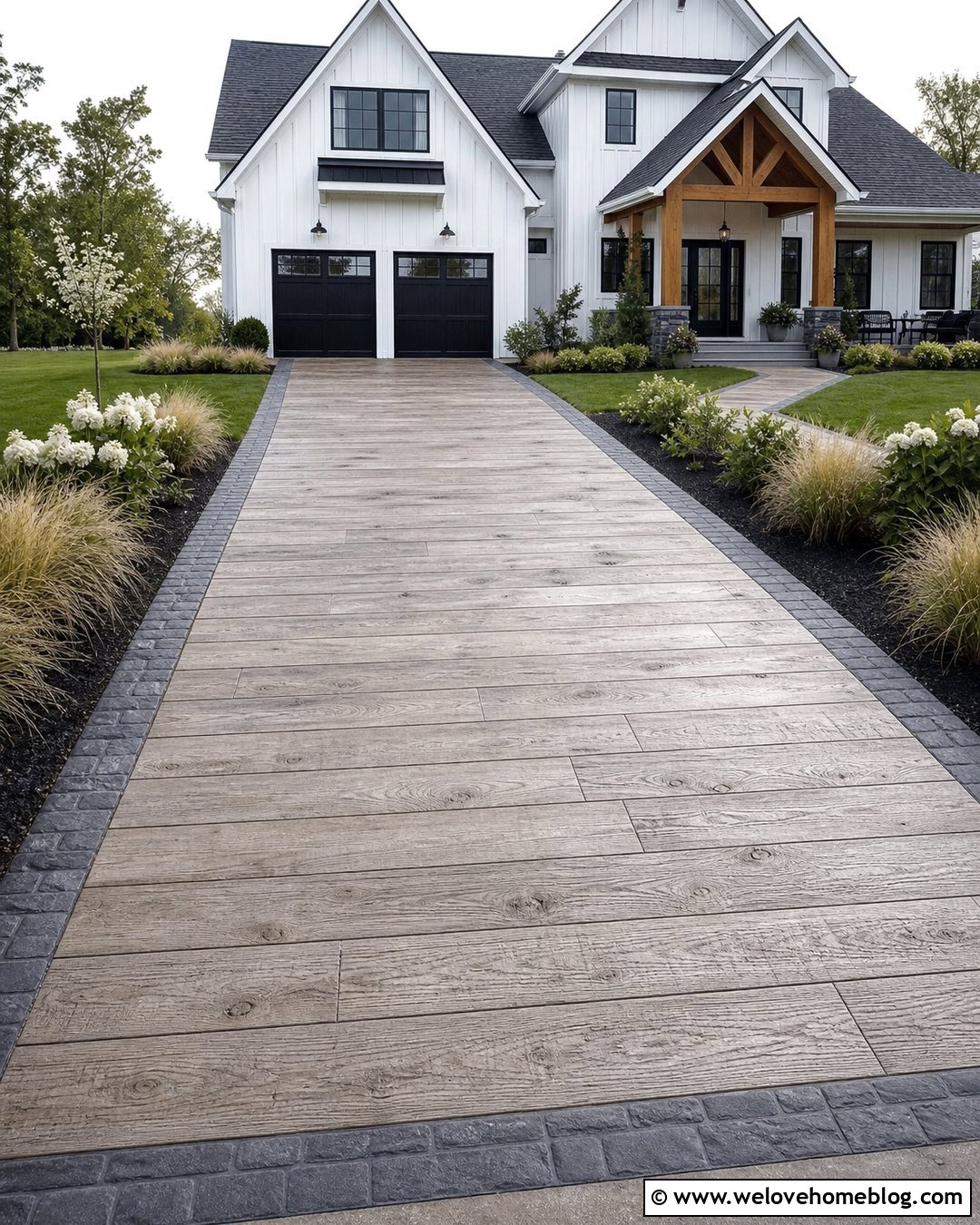
Wood plank stamping delivers the warmth of timber while creating a surface designed as a concrete driveway. For a modern farmhouse, use weathered brown or greige concrete with darker grain impressions. Run the long plank pattern toward the garage to visually lengthen the approach. A narrow cobblestone-stamped border in charcoal adds definition and prevents the wood texture from blending into surrounding mulch. Frame the driveway with white flowering shrubs, ornamental grasses, and a simple lawn. Black exterior lights and dark garage doors can repeat the border color. Since crooked plank lines become noticeable across a large area, careful stamp alignment is essential. Keep the color variation controlled as well. The goal is a believable, lightly weathered appearance rather than an exaggerated mixture of orange, brown, and black tones.
7. Large Tile Stamped Concrete Driveway
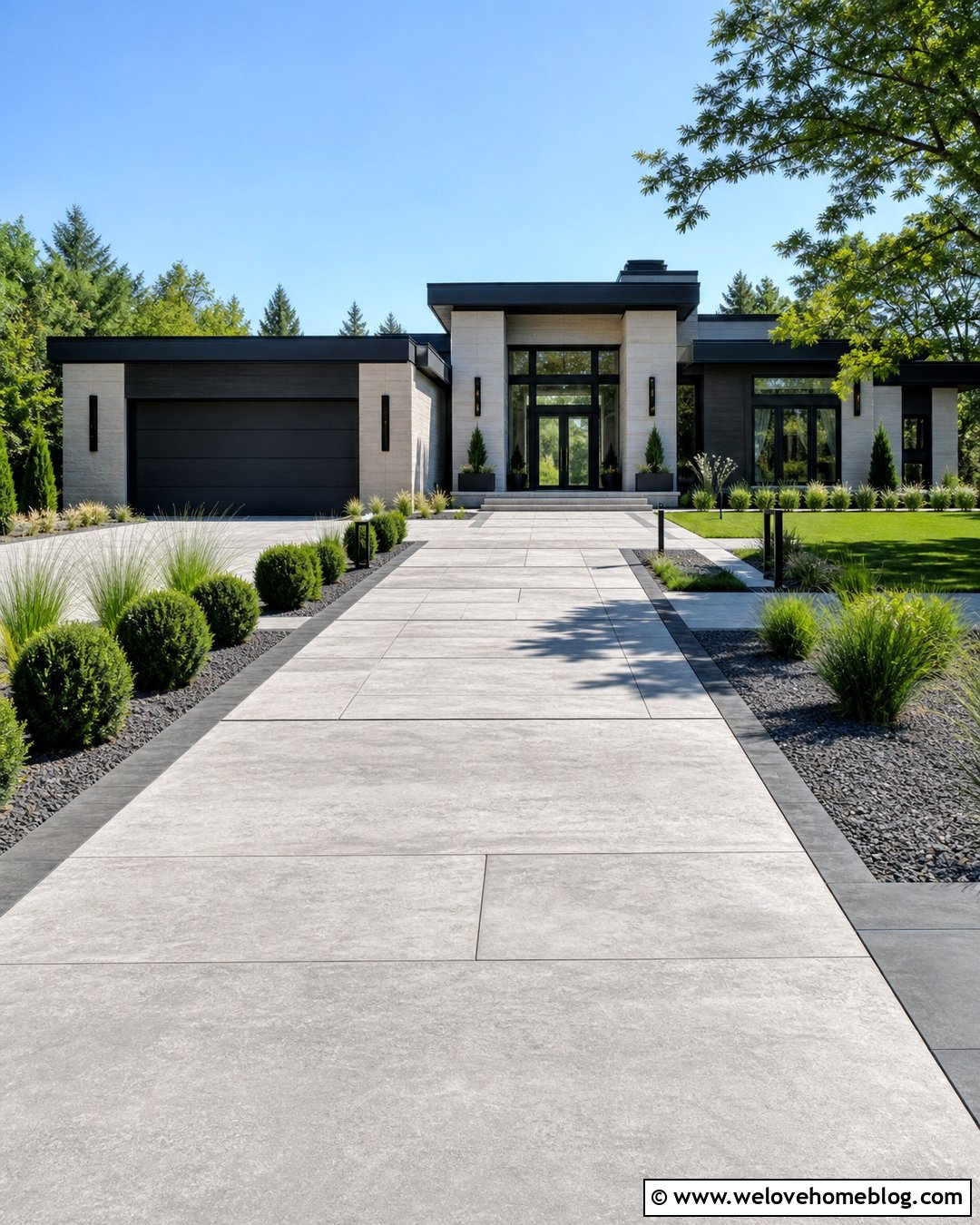
Large square or rectangular tile stamping gives stamped concrete a crisp, contemporary identity. Choose pale gray concrete with minimal antiquing, then arrange the pattern in oversized sections that complement the scale of the home. A straight driveway with a flush charcoal border creates a clean frame without interrupting the tile effect. Add narrow gravel beds, low evergreen mounds, and architectural grasses along both sides. A wide walkway made with the same stamped surface can extend toward a modern front door. This design works best when drainage, control joints, and stamped lines are coordinated from the beginning. Aligning necessary joints with the simulated tile layout makes the surface appear planned rather than patched together. Finish the setting with simple lawn panels and restrained plant colors so the driveway’s strong geometry remains easy to read.
8. Granite Texture Stamped Concrete Driveway
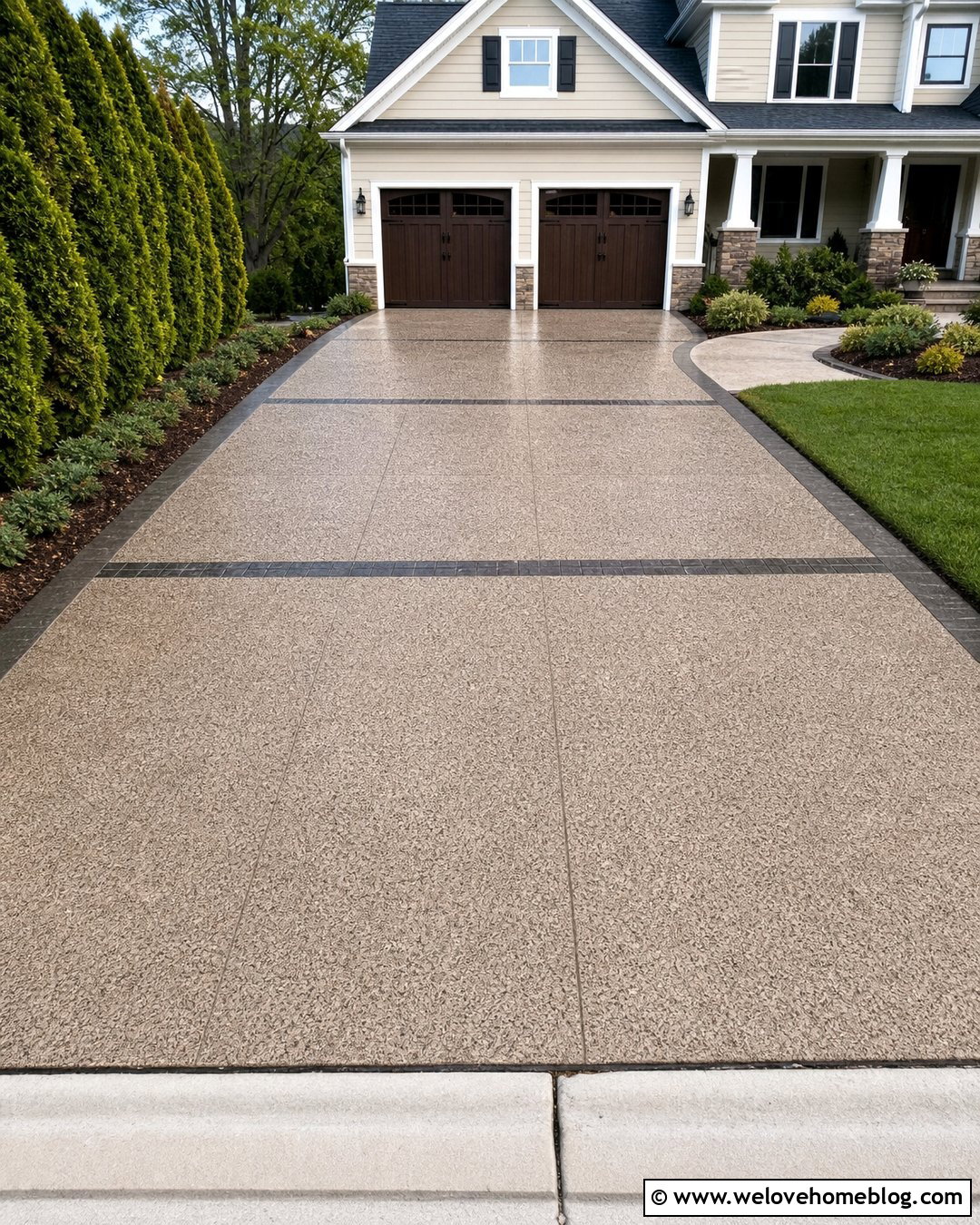
A seamless granite texture adds fine-grained movement to a driveway while maintaining an understated overall appearance. Start with sand-colored stamped concrete and add walnut antiquing that settles into the texture. This palette looks particularly attractive beside cream siding, natural stone veneer, or dark brown shutters. On a wide driveway, incorporate a pair of darker stamped bands that run from the curb to the garage. The bands break up the expanse and visually guide the approach. Soft evergreen hedges, groundcover, and a curved walkway can balance those straight lines. Finish the outer edges with a smooth concrete strip in a coordinating tone. Granite texture is a practical visual middle ground when homeowners want more character than plain concrete but do not want prominent brick, tile, or irregular stone joints across the entire front yard.
9. European Fan Stamped Concrete Driveway
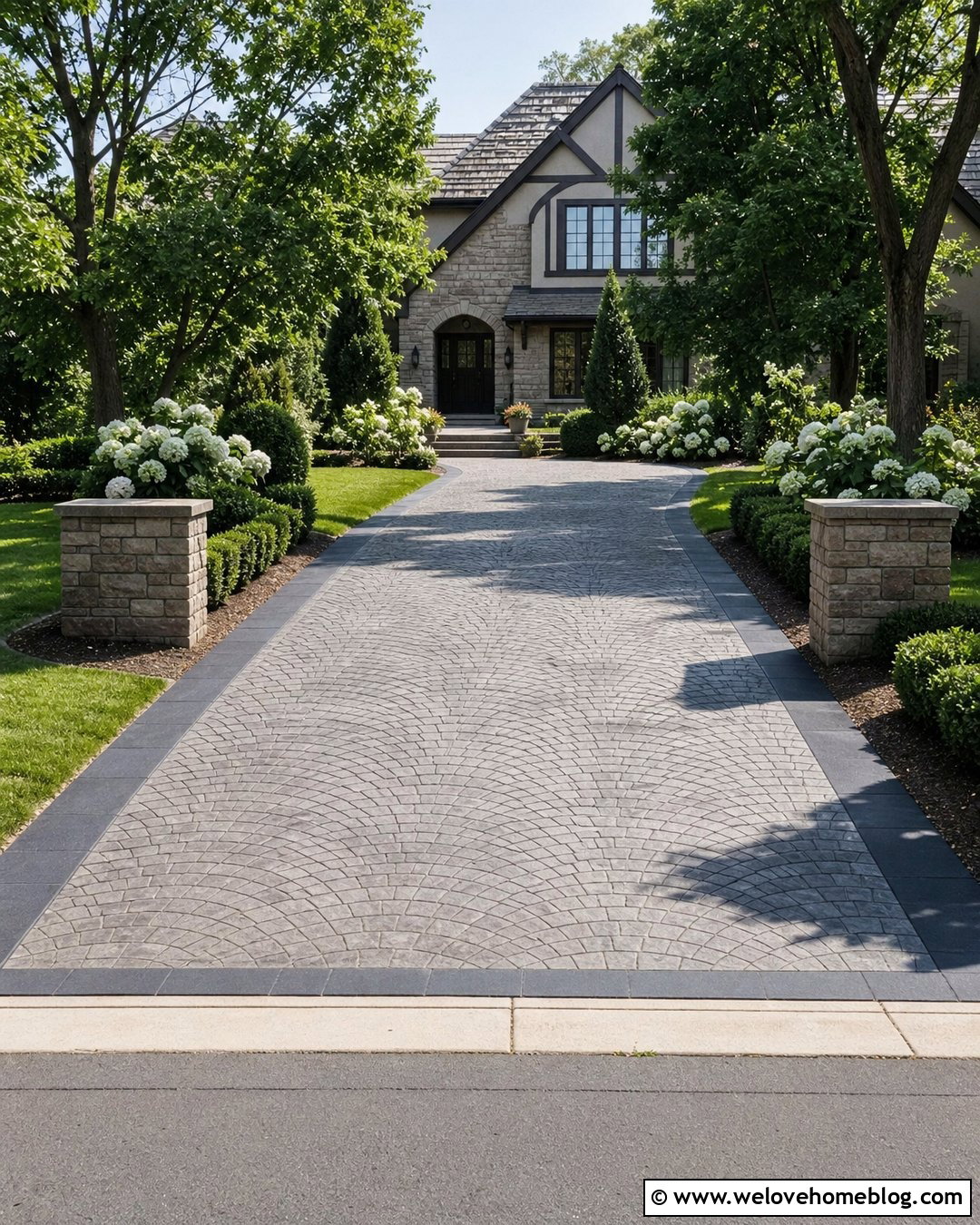
European fan stamping creates overlapping arcs that can transform a simple driveway into a formal entrance. The pattern is detailed, so it works best with a restrained color combination such as warm gray concrete and dark charcoal antiquing. Use it on a broad, straight driveway leading to a Tudor or European-inspired home. A smooth dark border will contain the fan pattern and separate it from lawn and planting beds. At the curb, slightly widen the entrance and place low stone pillars on each side for balanced emphasis. Structured yews, white hydrangeas, and mature shade trees reinforce the established character. Keep the walkway simpler, perhaps using seamless stamped stone in the same base color. This prevents competing patterns while maintaining a consistent material palette from the street to the front door.
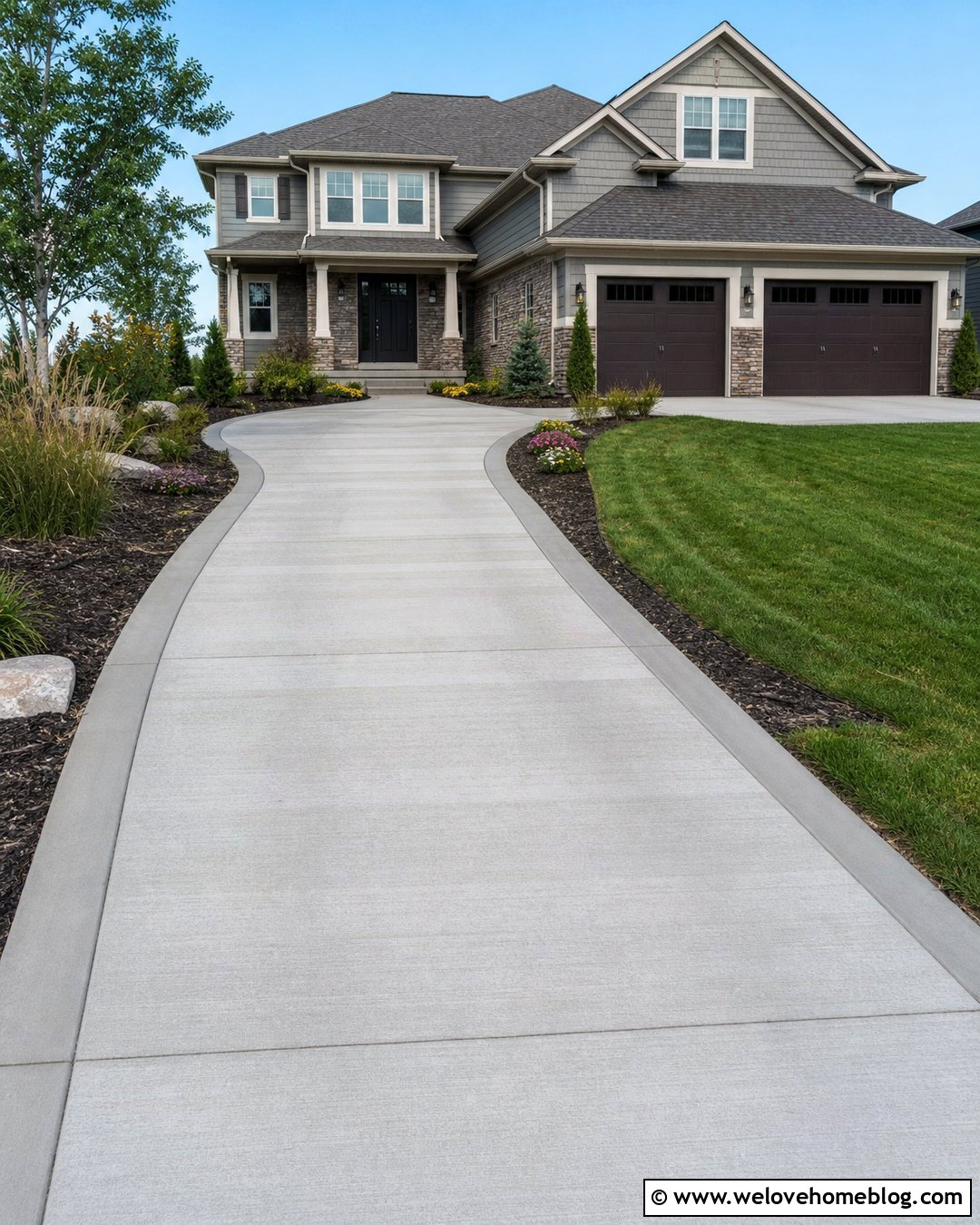
10. Basketweave Brick Stamped Concrete Driveway
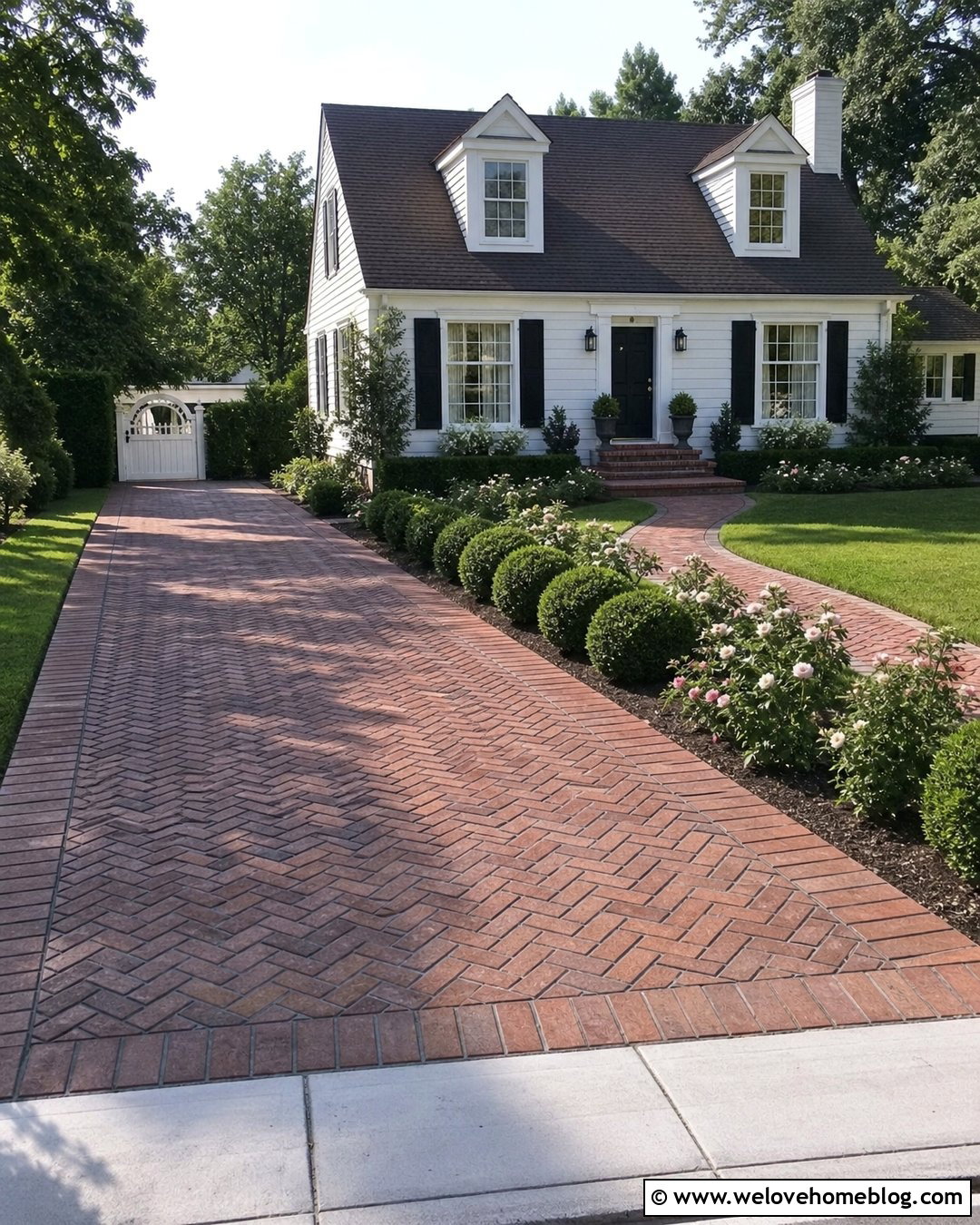
Basketweave brick stamping offers traditional charm with a calmer rhythm than herringbone. Alternating pairs of simulated bricks create small square units that look appropriate beside older homes and compact cottages. Use a muted red-brown base with a smoky charcoal release color, then frame the field with a straight soldier-course stamp. A short driveway benefits from this compact pattern because it adds detail without needing a large viewing area. Continue the soldier-course border along a curved front walkway to connect both surfaces. Boxwood spheres, roses, and neat lawn edges complete the classic setting. If the house already contains strong brick colors, choose a slightly softer driveway shade instead of trying to match the masonry exactly. Subtle contrast helps the facade and driveway complement each other without visually merging into one large red surface.
11. Stamped Concrete Driveway With Compass Medallion
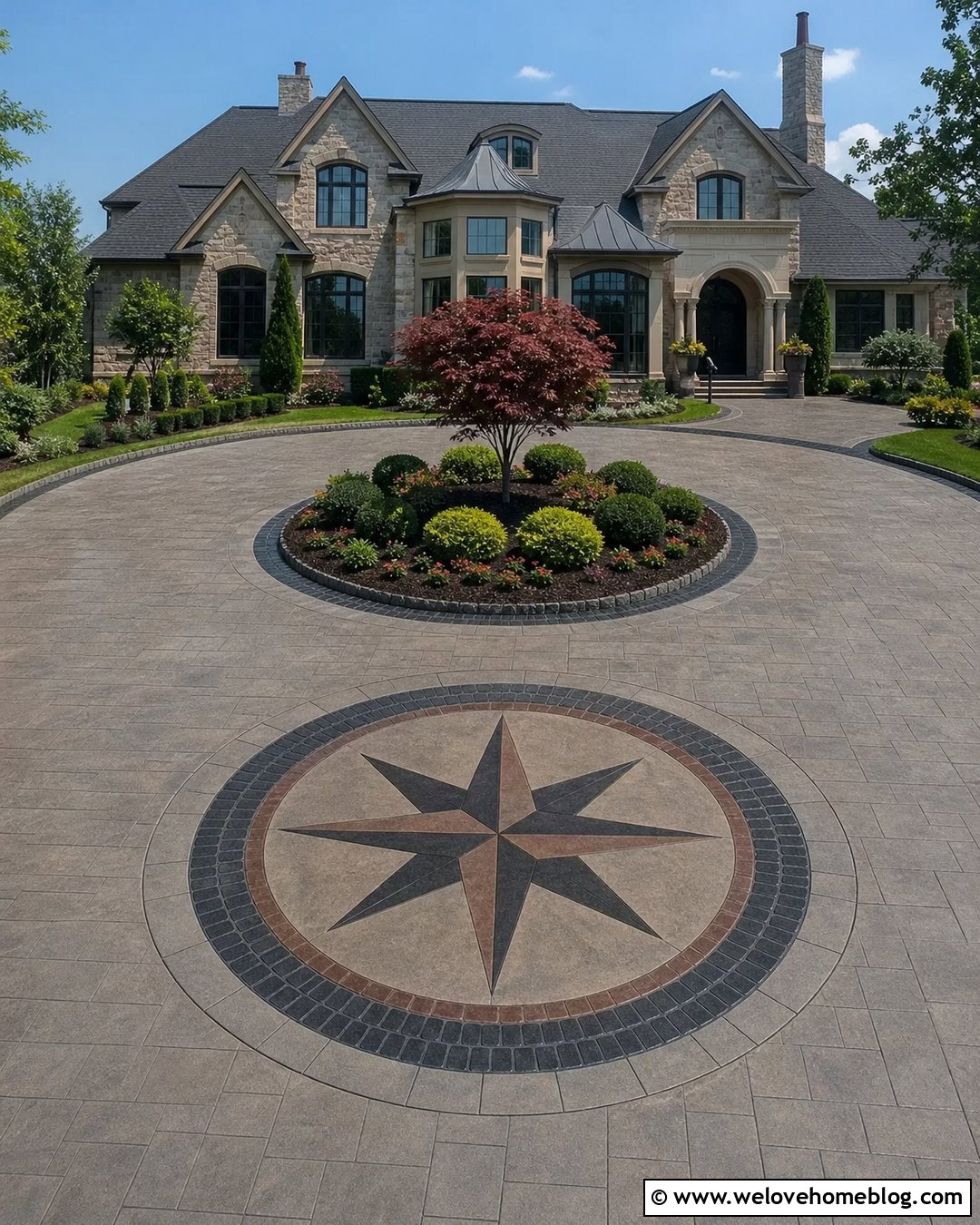
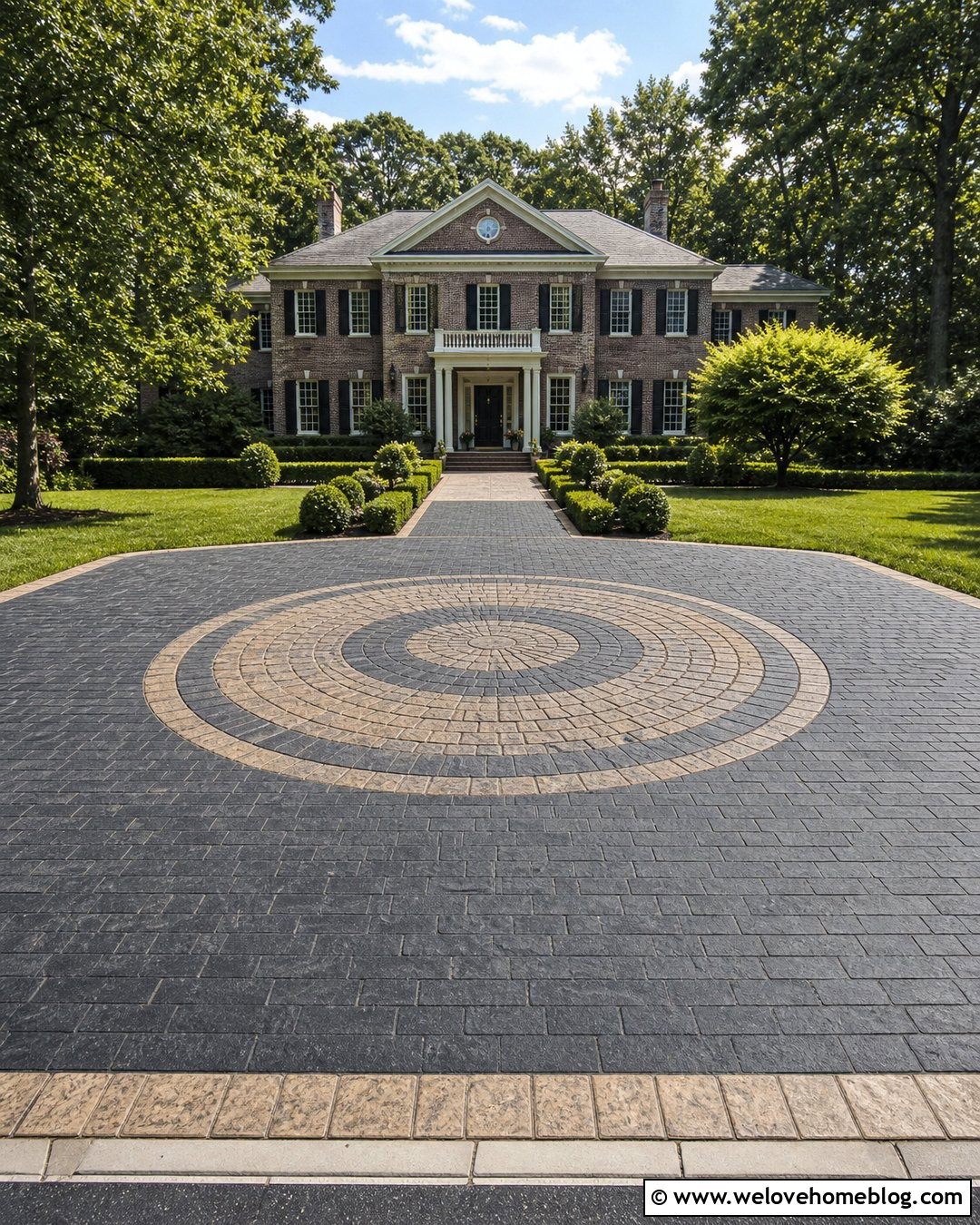
A stamped compass medallion can turn a circular driveway or broad parking court into a memorable focal point. Place the medallion at the center of the turning area, where it will remain visible from the curb and upper-story windows. Surround it with large ashlar slate-stamped concrete in a warm gray tone. Charcoal, taupe, and muted rust accents can define the compass without making it look overly colorful. Use a dark cobblestone-stamped ring to separate the medallion from the main field. A central lawn island, clipped shrubs, or a single ornamental tree can frame the feature without hiding it. Plan the medallion dimensions carefully because a small design may disappear within a large driveway. Decorative radial stamps are especially useful for establishing a defined central feature. ()
12. Two-Tone Stamped Concrete Driveway Border
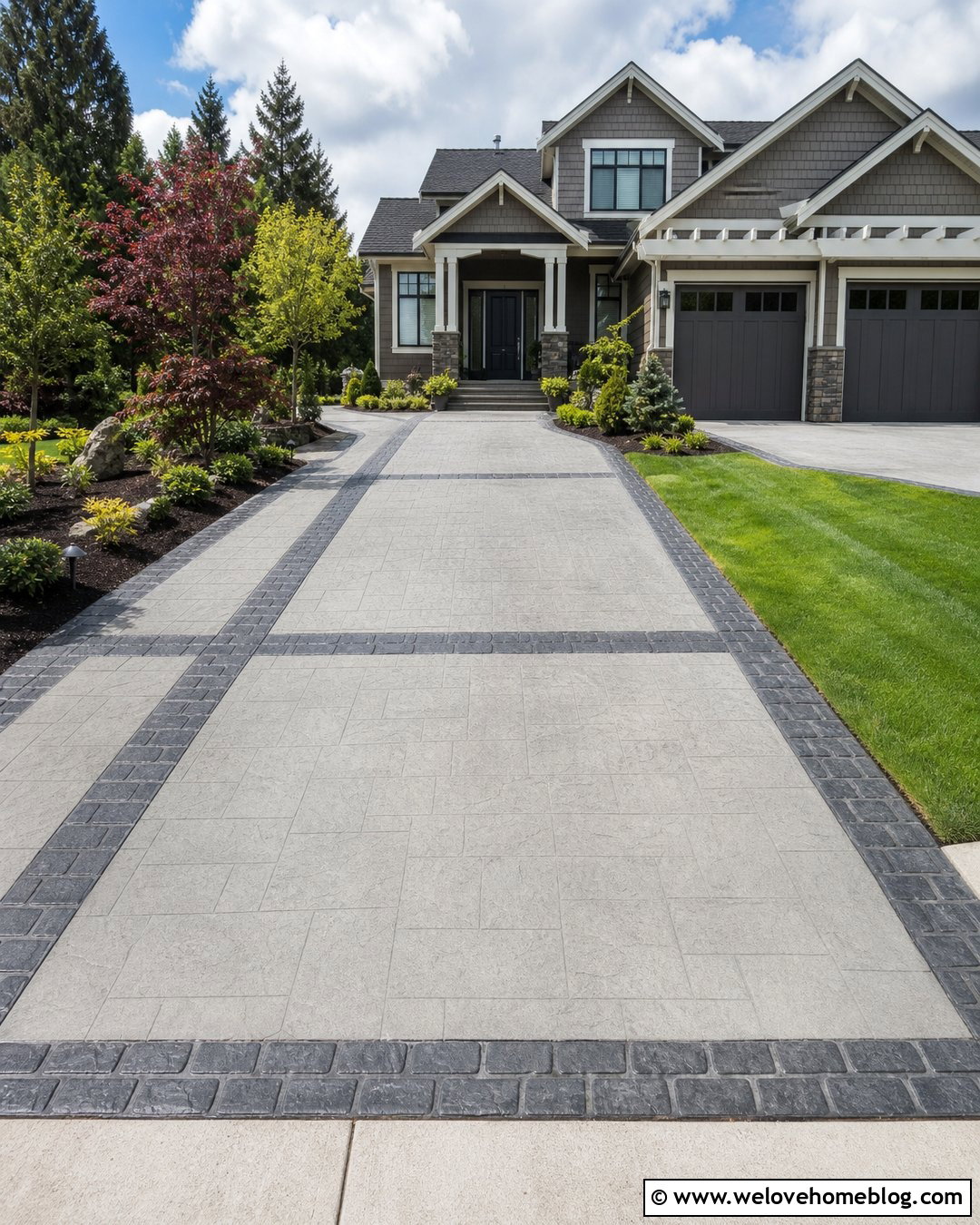
A dark border around a lighter stamped field gives almost any driveway a tailored, finished appearance. For a balanced combination, choose light greige ashlar slate for the main surface and charcoal cobblestone stamping along the perimeter. Repeat the dark border across the garage apron or at selected control joints to divide a broad driveway into visually comfortable sections. Straight lawn edges and low planting beds help preserve the crisp framing effect. Near the entrance, connect a matching walkway so the design feels continuous. This approach works with modern farmhouse, Craftsman, and transitional homes because the pattern is decorative without being overly ornate. Keep the border proportional to the driveway. A narrow drive usually needs a slimmer band, while a broad parking area can support a wider border without making the center appear cramped.
13. Exposed Aggregate Driveway With Stamped Borders
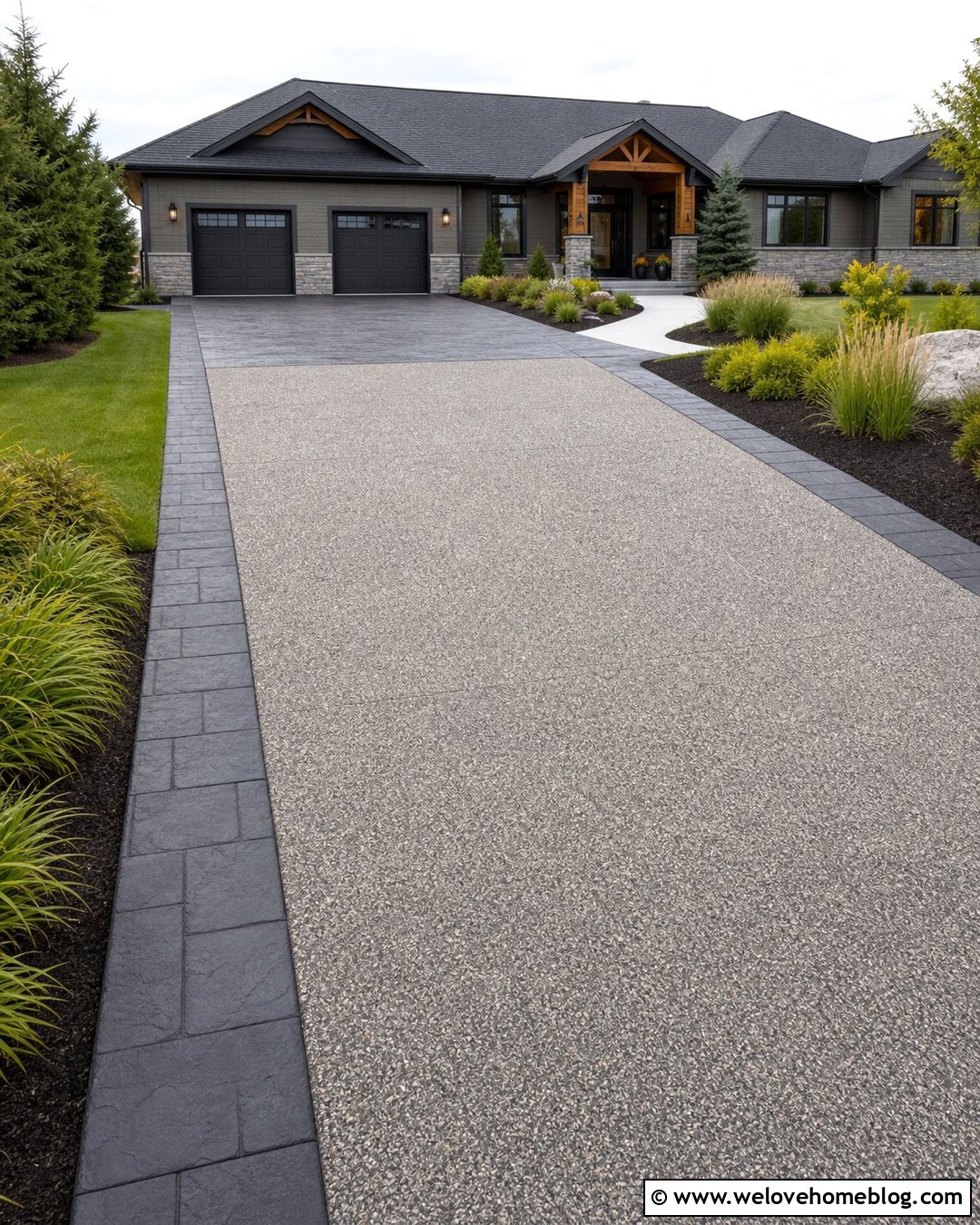
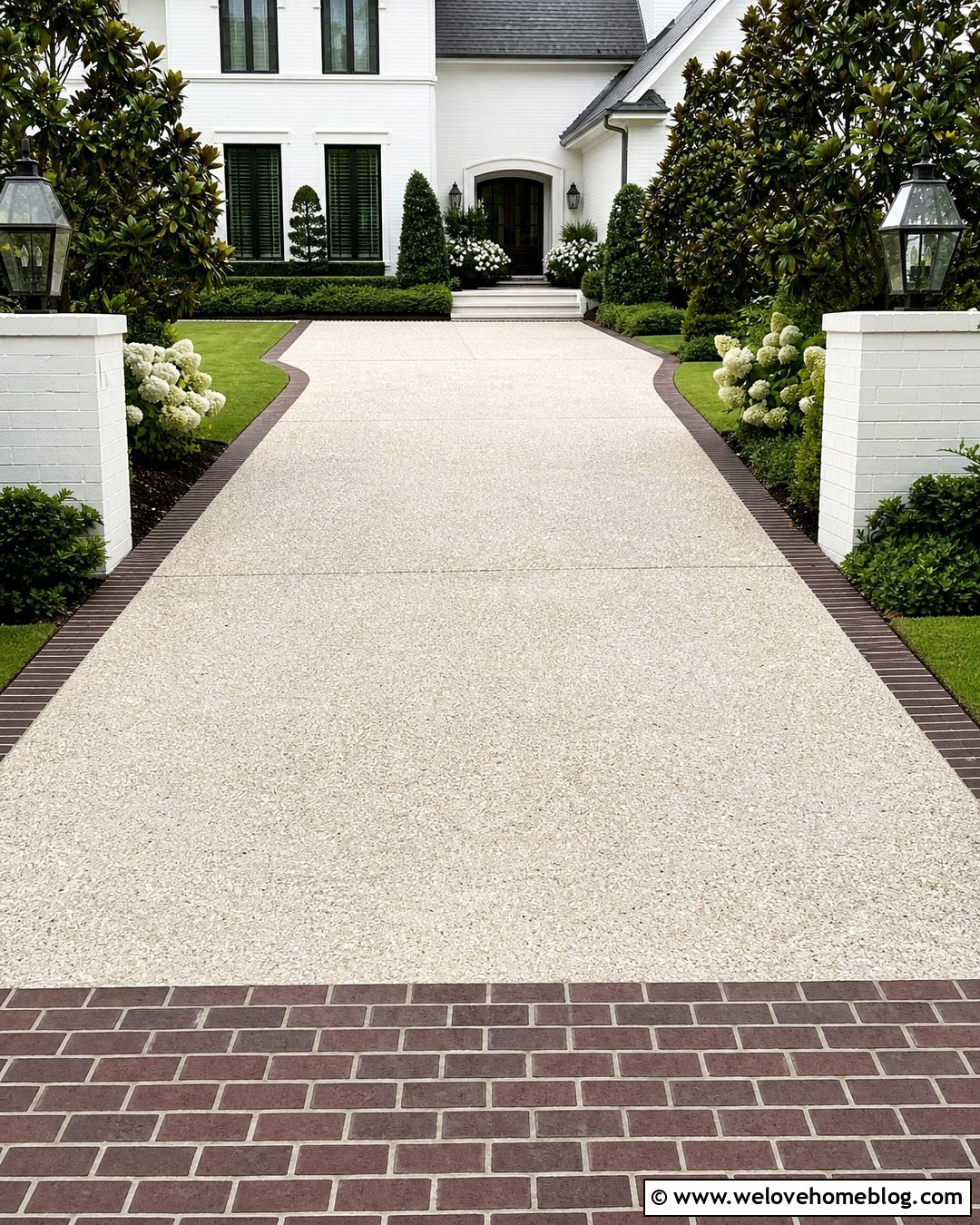
Combining exposed aggregate with stamped concrete borders creates texture and distinction without covering the entire driveway in a complex pattern. Use warm gray exposed aggregate across the main driving surface, then install a two-foot ashlar slate-stamped border in charcoal or deep taupe. The aggregate center provides subtle visual movement, while the border creates a clear outline from the curb to the garage. Add a matching stamped apron near the garage doors to strengthen the design. Evergreen shrubs, ornamental grasses, and a light-colored walkway can soften the darker frame. This combination is particularly effective on large driveways where a fully stamped surface could feel visually heavy. It can also focus decorative work around the most visible areas. Stamped borders paired with simpler concrete fields are an established method for controlling cost while preserving decorative impact. ()
14. Broom Finish Driveway With Stamped Brick Border
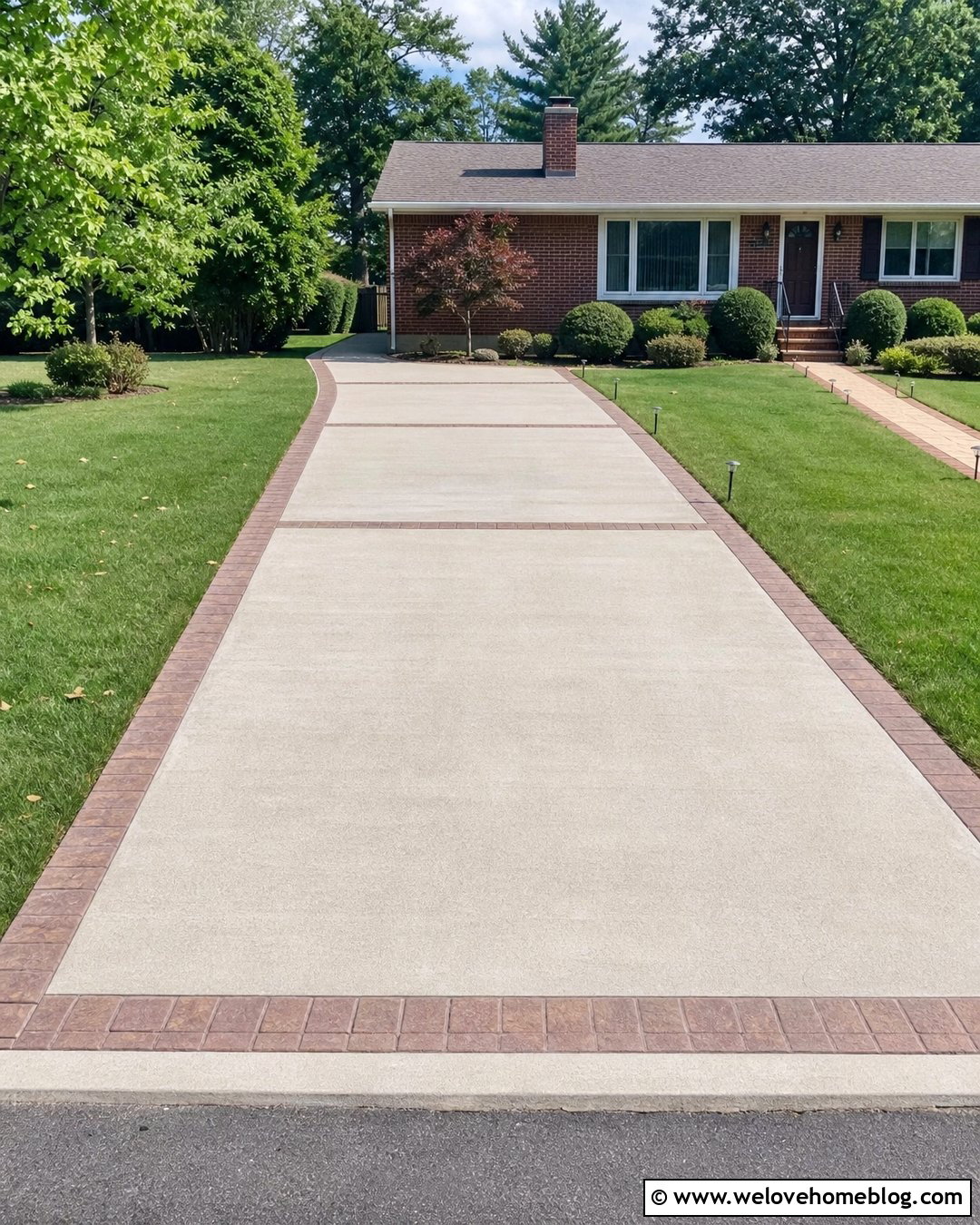
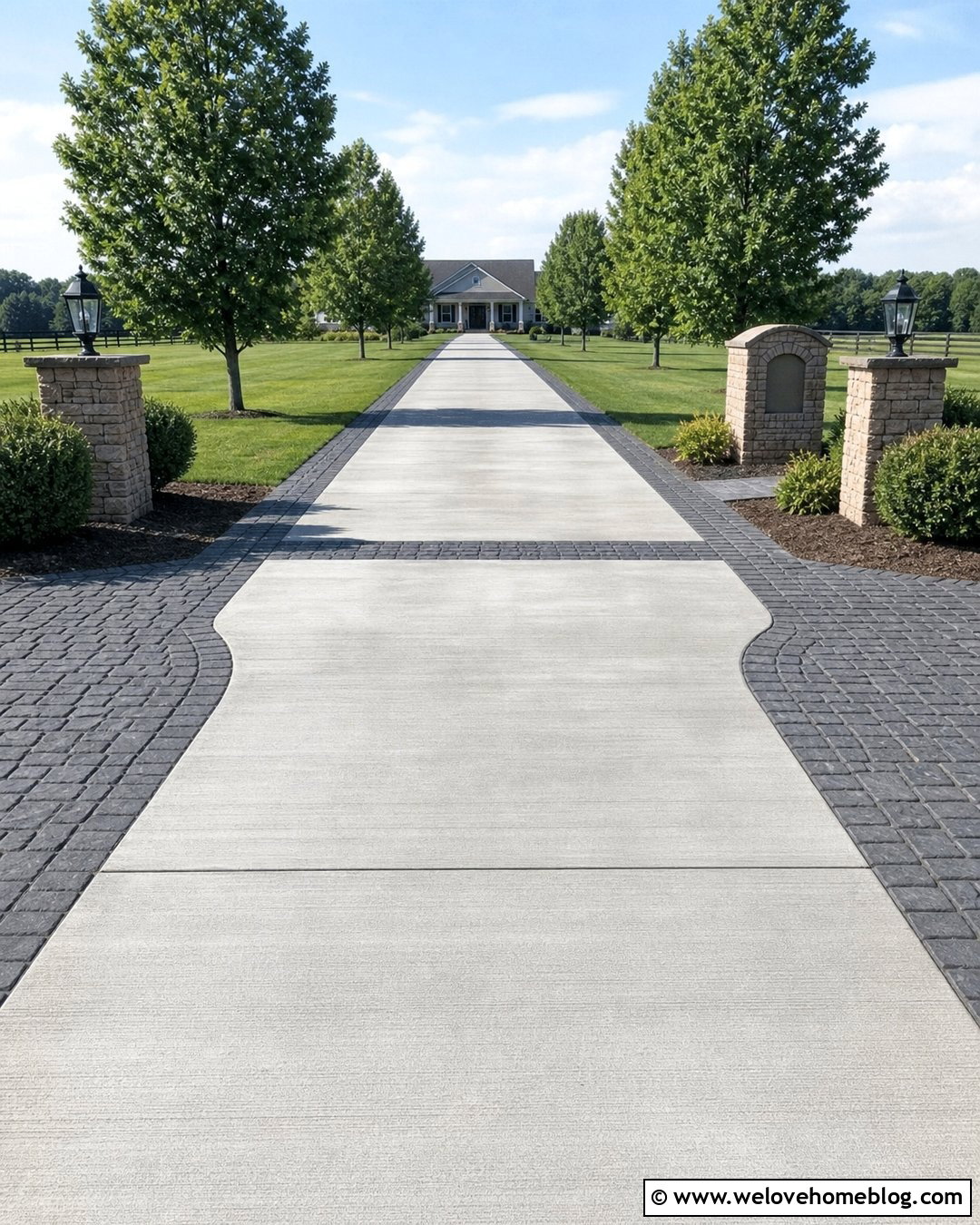
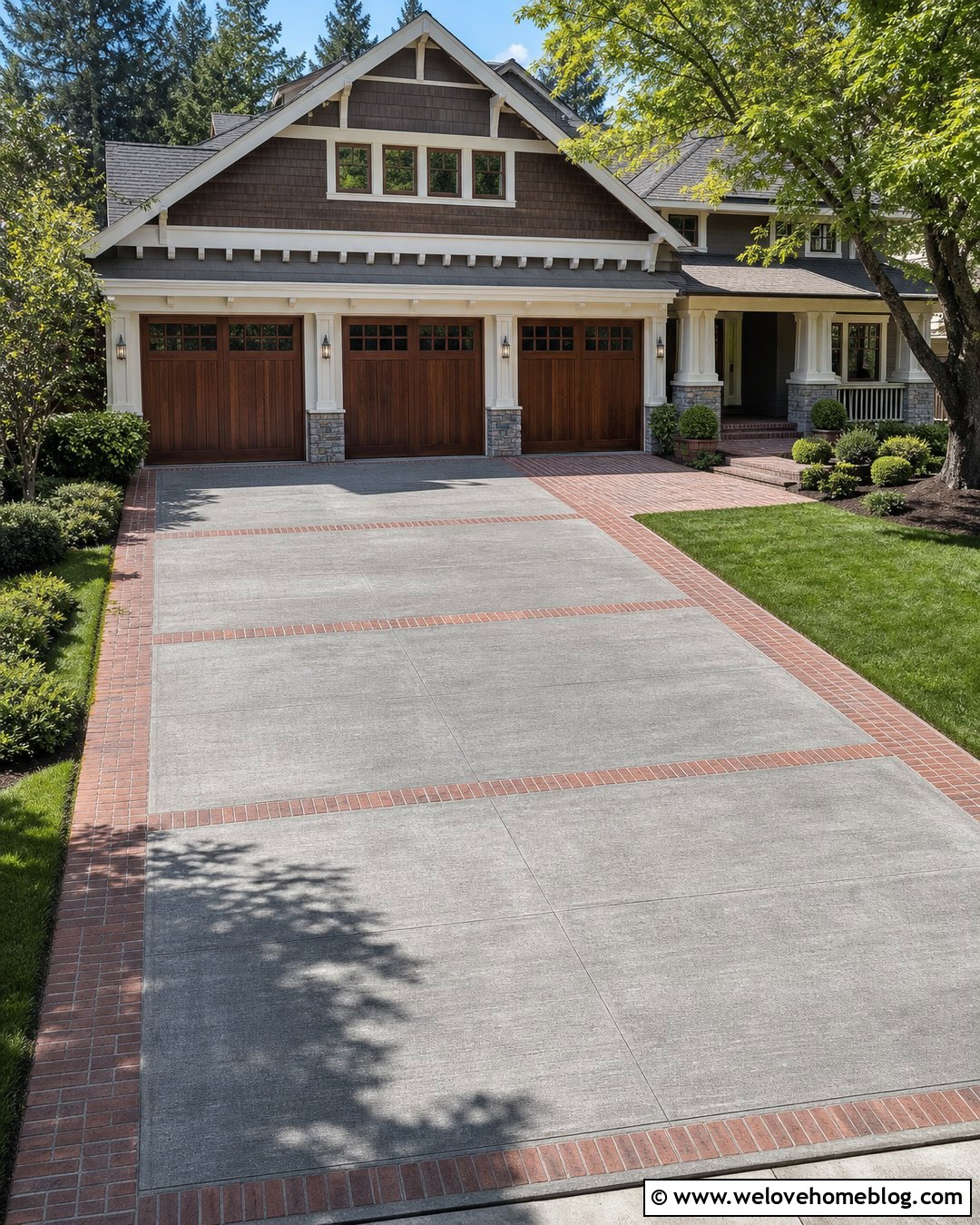
A broom-finished center surrounded by stamped brick offers a clean, budget-conscious approach to decorative concrete. Choose a light warm-gray main field with fine, straight broom lines. Add a muted red or brown brick-stamped border around the perimeter, repeating it across the driveway near the sidewalk and garage. These cross bands visually organize a long surface and can coordinate with planned joints. This complete look fits brick ranch homes, traditional suburban houses, and simple Cape Cod facades. Use low foundation shrubs, a neat lawn, and a brick-edged walkway to reinforce the color connection. The center remains quiet and practical, while the stamped sections deliver curb appeal where they will be noticed most. Keeping the decorative palette to one border color and one center color also makes future resealing and maintenance easier to manage visually.
15. Stamped Concrete Driveway Entrance Apron
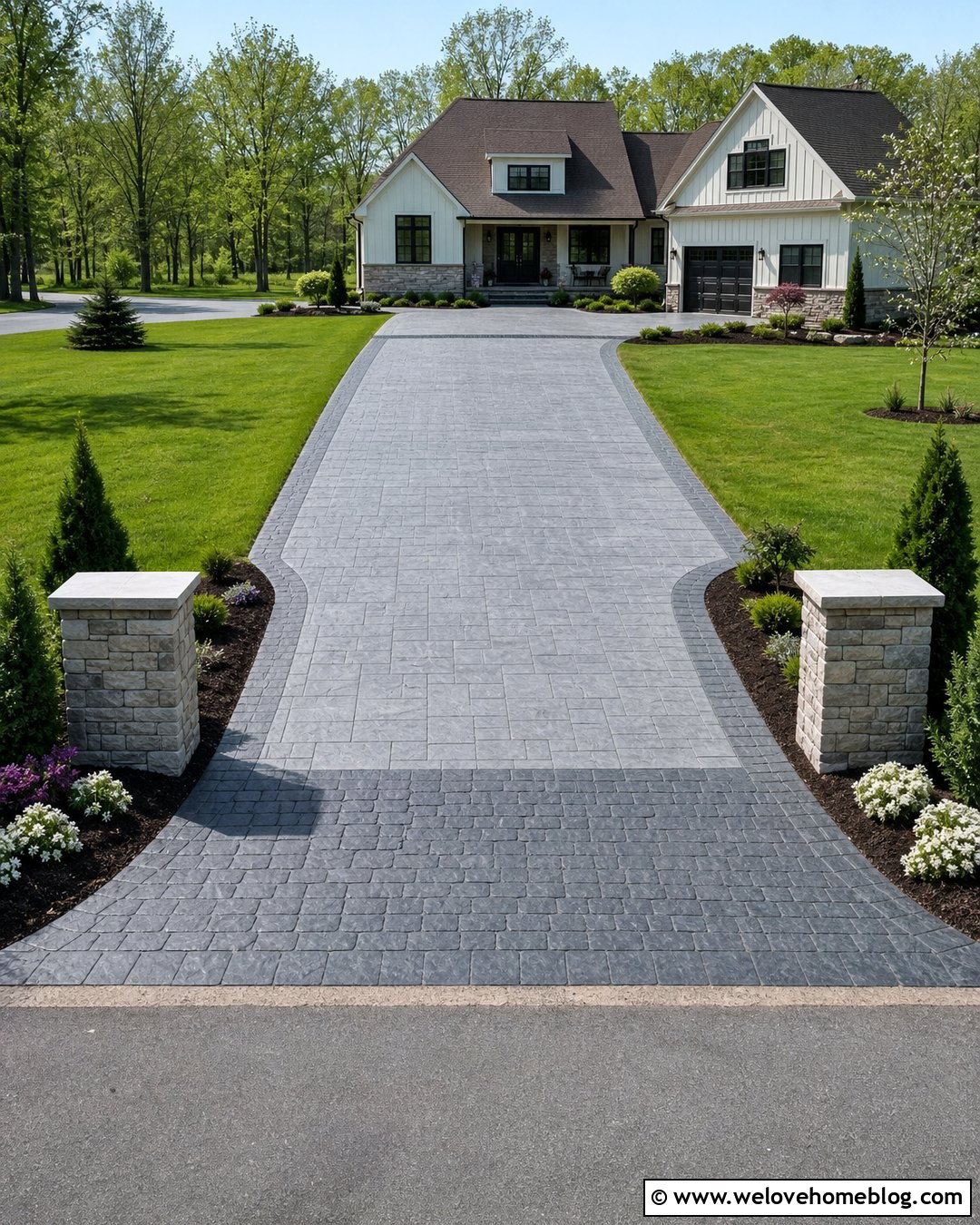
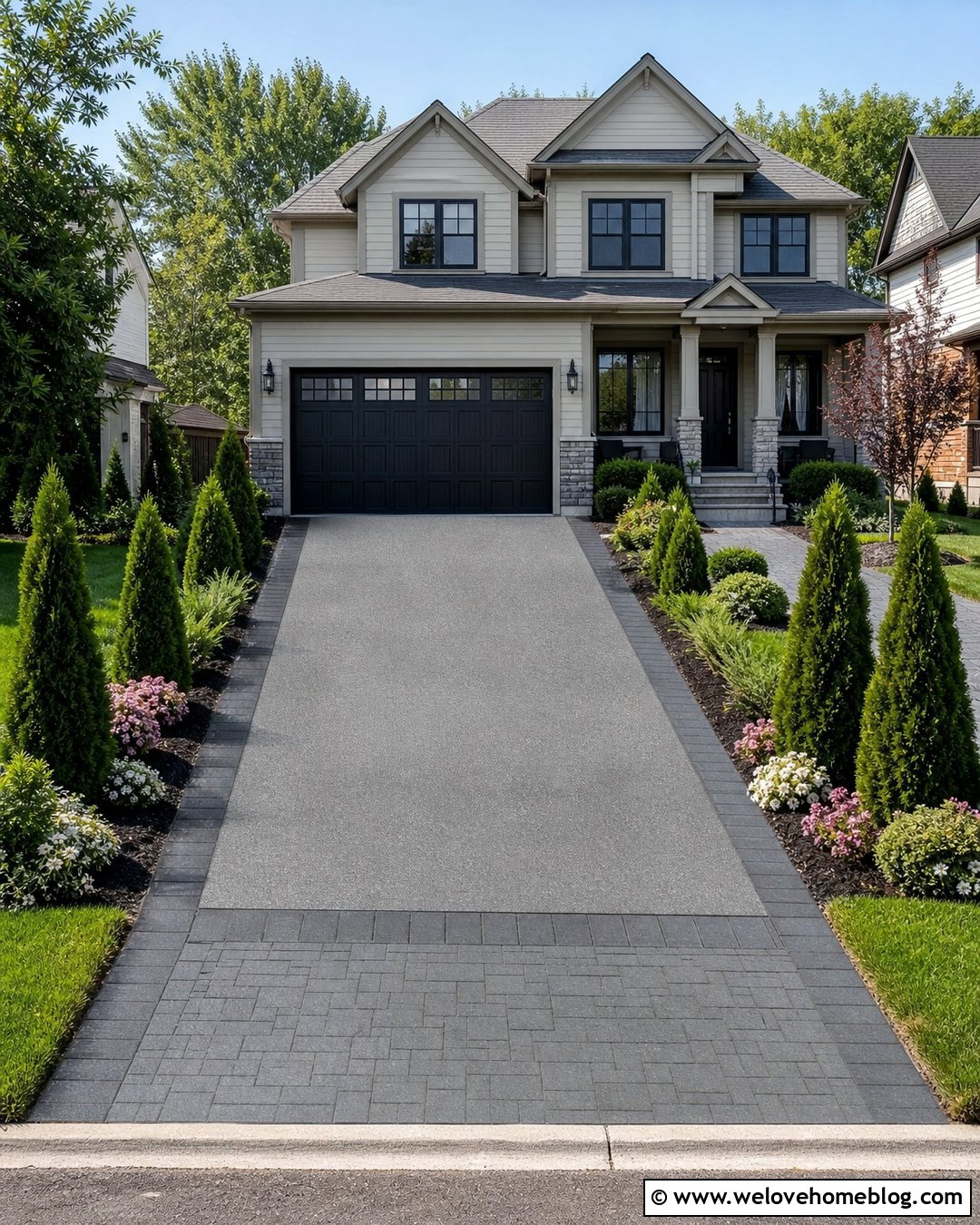
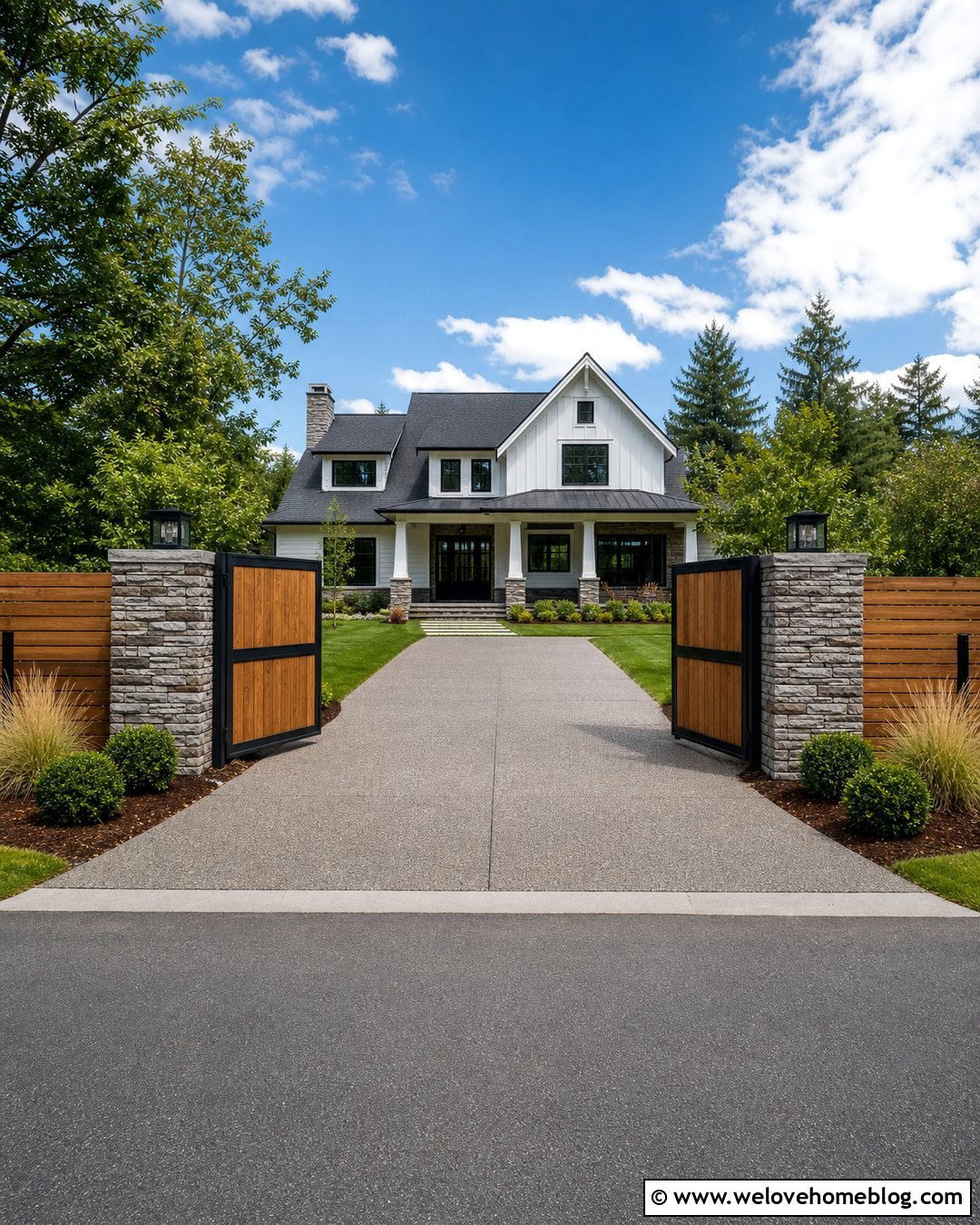
A decorative entrance apron makes the curbside portion of the driveway feel intentional, even when the remaining surface is simpler. Install cobblestone-stamped concrete across the first eight to twelve feet, using a charcoal and warm-gray palette. Continue the driveway with seamless stone-stamped concrete in a lighter tone so the entrance remains the focal point. Low masonry pillars can frame the opening, while curved planting beds guide the eye inward. Include compact evergreens and seasonal flowers that will not block visibility near the street. Repeat a narrow strip of the cobblestone pattern beside the garage to connect the two ends visually. A stamped apron is particularly useful for a long driveway because it introduces character at the point most visible to passersby without requiring an intricate pattern across the entire approach.
16. Curved Stamped Concrete Driveway
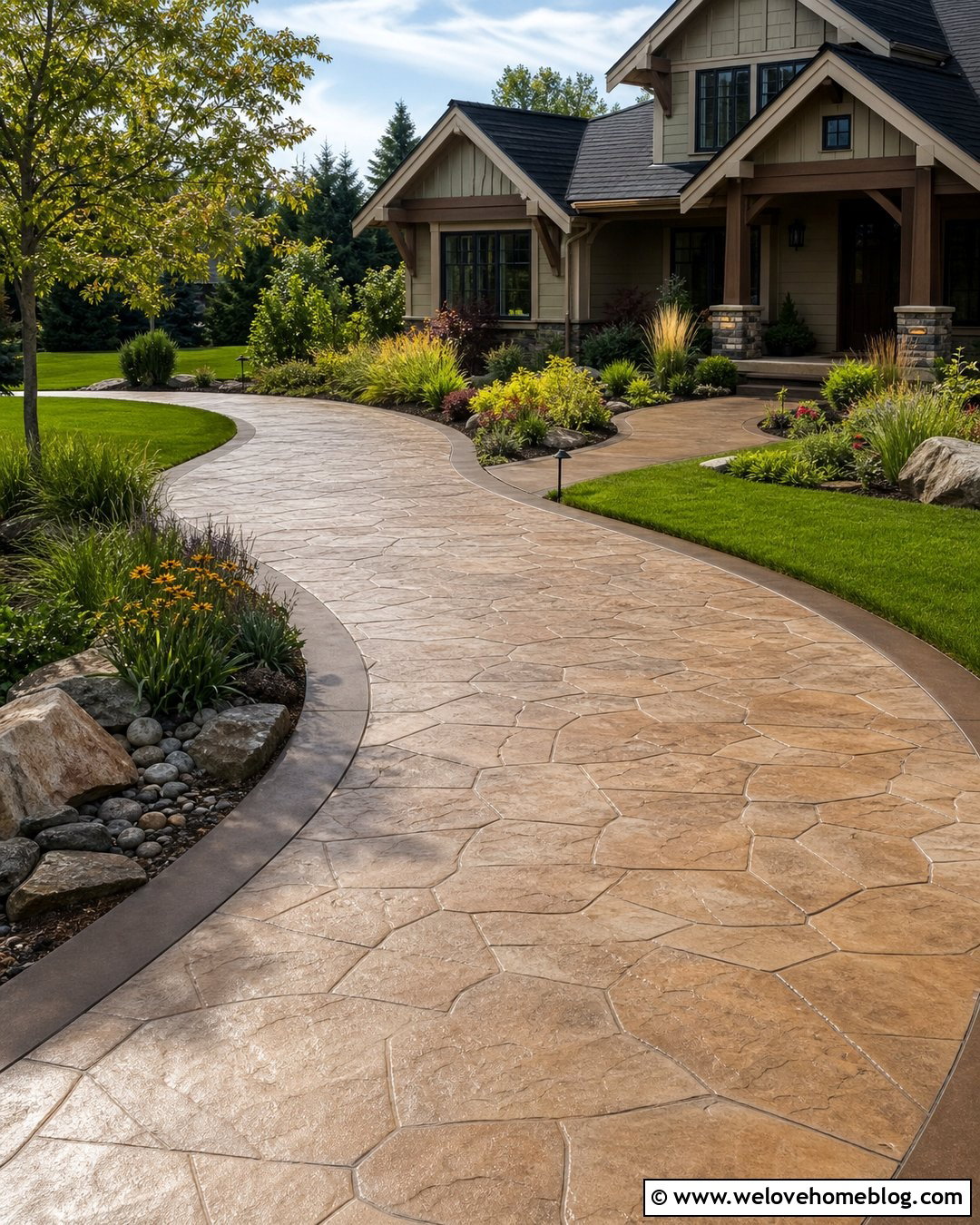
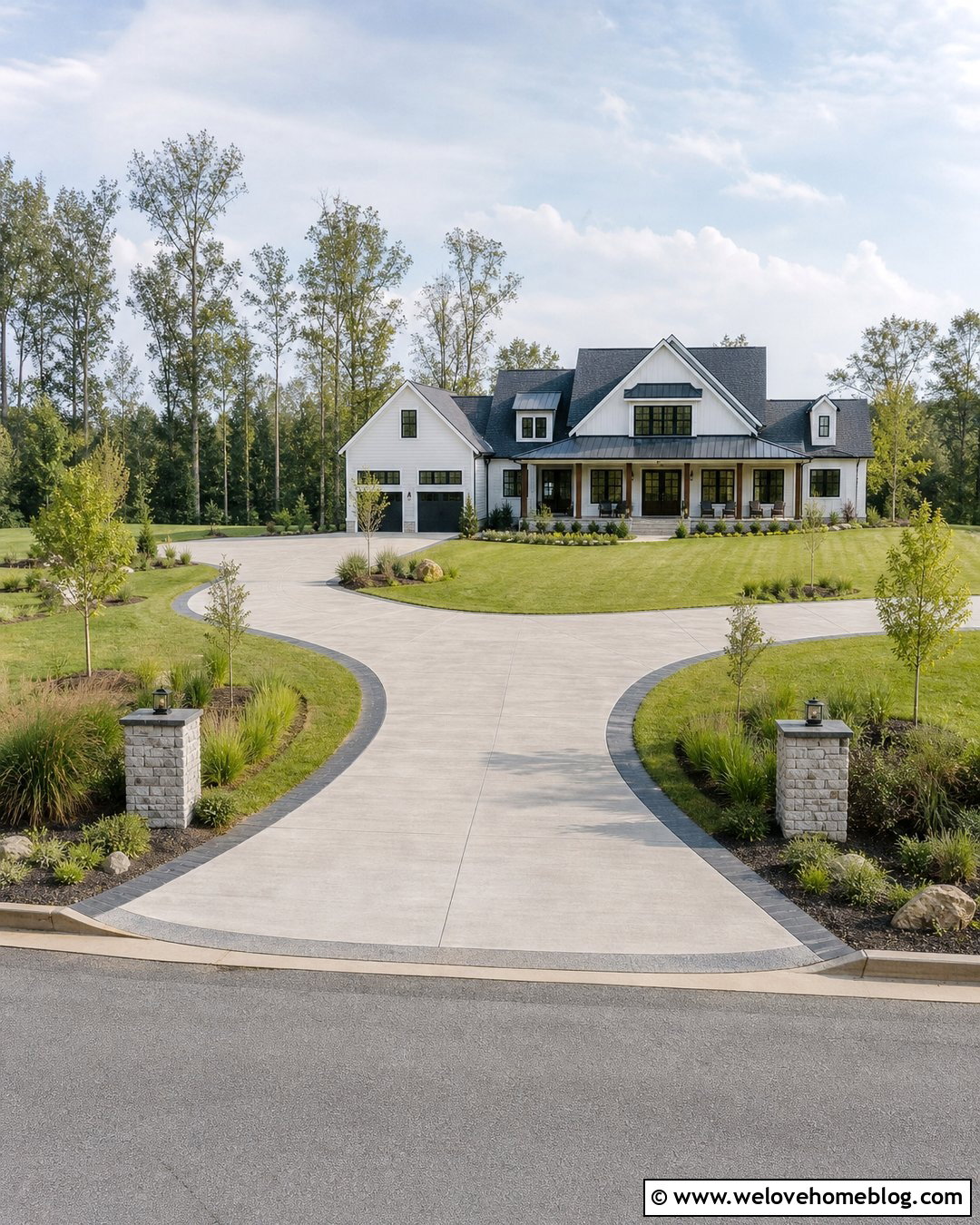
A curved driveway naturally creates anticipation by revealing the home gradually. Enhance that movement with random flagstone-stamped concrete in warm beige, taupe, and subtle brown tones. A darker, smooth concrete border should follow both curves precisely, making the layout appear crisp from the street. On the outer edge, use flowing beds of ornamental grasses, flowering shrubs, and a few natural boulders. Keep planting lower along the inside curve so drivers have a clear view of the route ahead. A branch walkway can leave the driveway near the final bend and lead toward the front porch. This complete look suits Craftsman, country, and rustic ranch homes. Before installation, review how the stamp pattern will turn through the curves, since irregular stone shapes generally adapt more naturally than rigid brick grids.
17. Circular Stamped Concrete Driveway
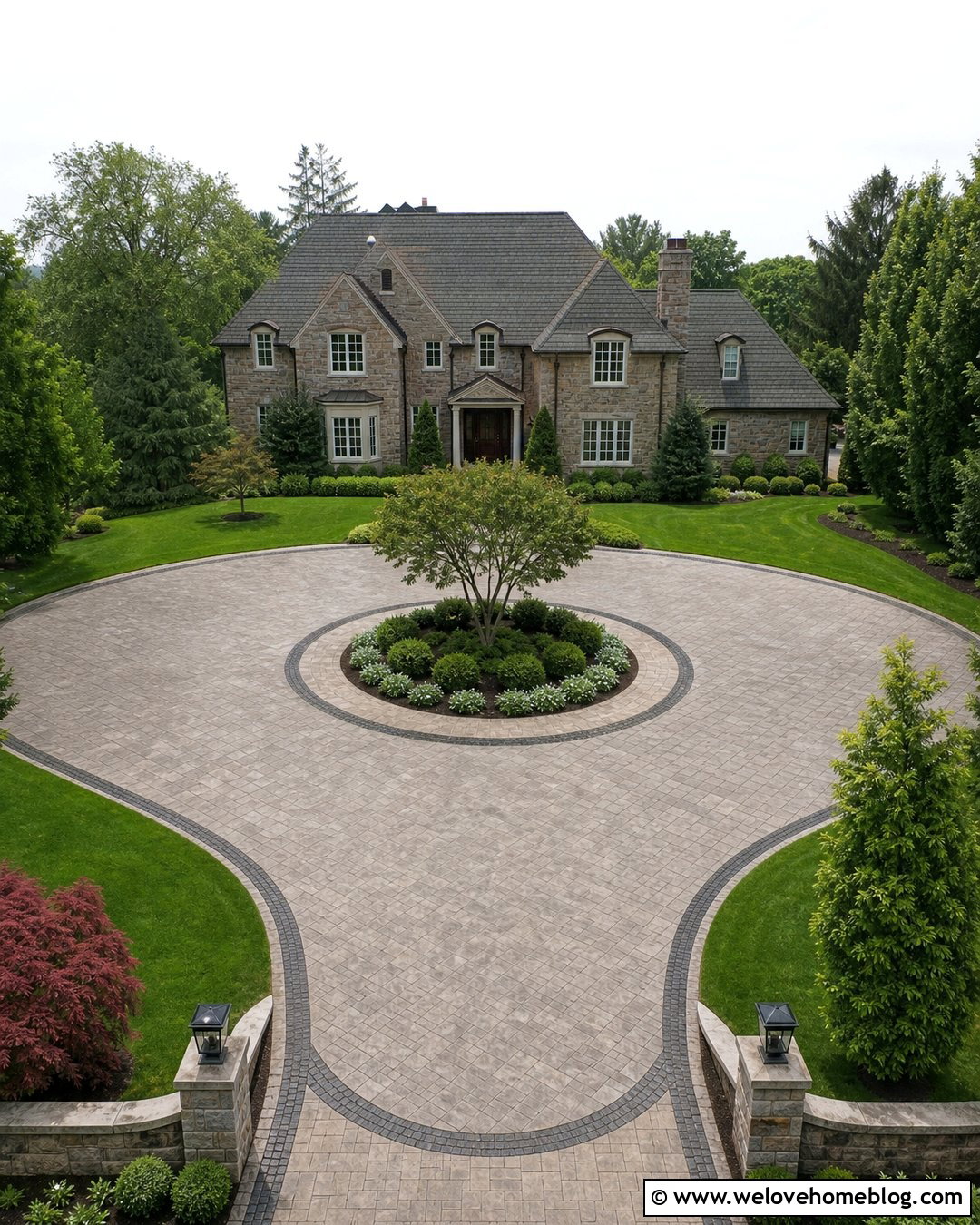
A circular stamped concrete driveway creates an elegant arrival zone while allowing vehicles to move through without backing into the street. Use large-format ashlar slate in a soft tan-gray color across the main loop. Define the inner and outer edges with darker cobblestone-stamped bands that emphasize the circular shape. In the center island, plant one small ornamental tree surrounded by clipped shrubs and low flowering groundcover. Keep the arrangement open enough to preserve a clear view of the house. Match the driveway palette to stone, brick, roofing, or trim already present on the facade. Near the front entrance, widen the loop slightly to create a comfortable drop-off area. A coordinated stamped walkway can cross the island or extend from the drive, depending on the home’s front-door placement and pedestrian route.
18. Long Stamped Concrete Driveway With Bands
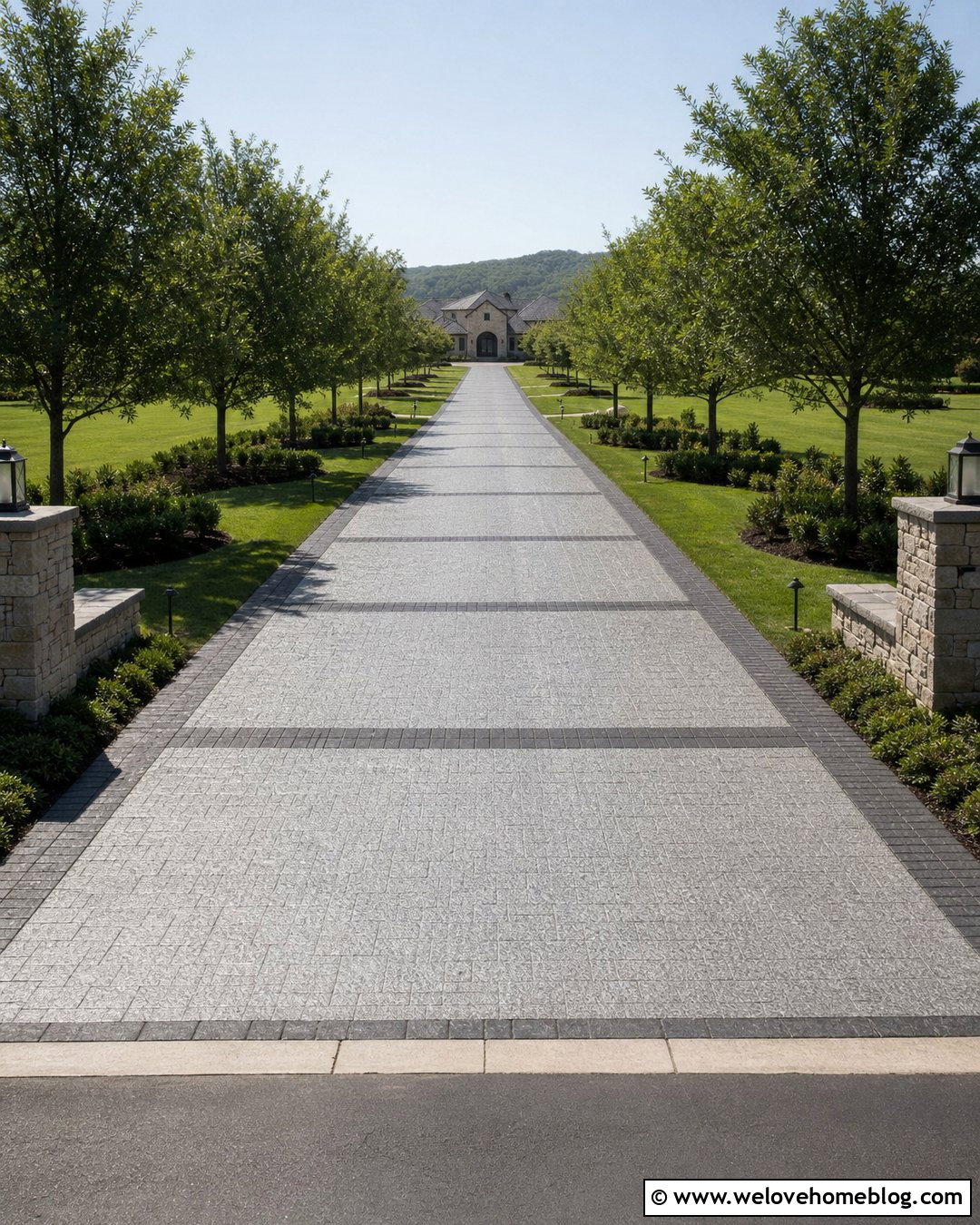
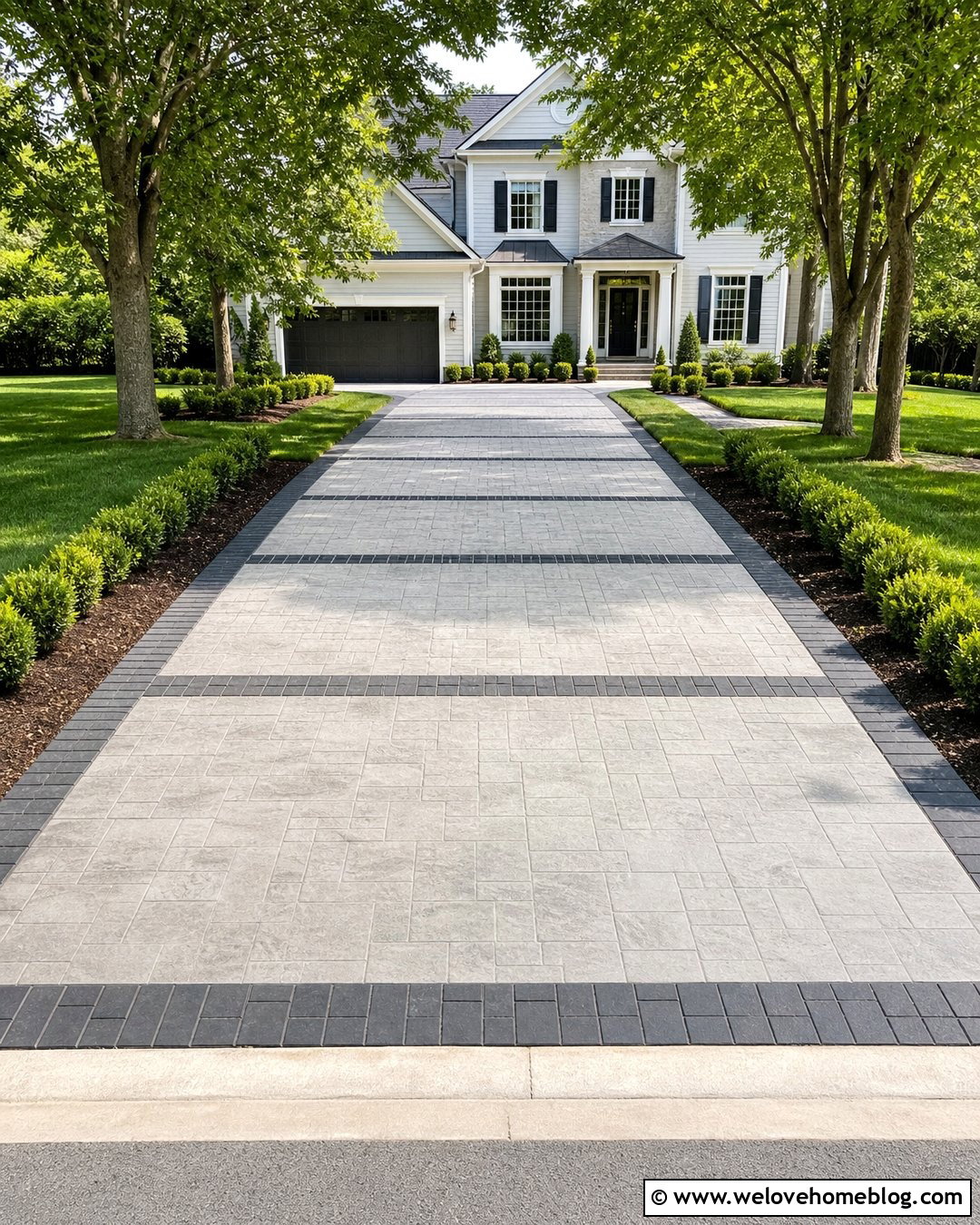
Long driveways can appear visually endless unless the surface is divided into measured sections. Use seamless granite-textured stamped concrete in a medium gray base, then add dark brick-stamped bands every fifteen to twenty feet. These horizontal accents create rhythm while visually shortening the approach. Repeat the dark pattern around the perimeter and across the garage apron for continuity. Along the driveway, alternate lawn panels with clusters of ornamental trees and low shrubs rather than planting one unbroken hedge. Simple ground-level lights can mark the edge without cluttering the view. This organized design works well with large ranch houses, estate-style homes, and properties set far from the street. Coordinate the band placement with required joints whenever possible, allowing practical construction details to become a planned part of the decorative layout.
19. Narrow Stamped Concrete Driveway
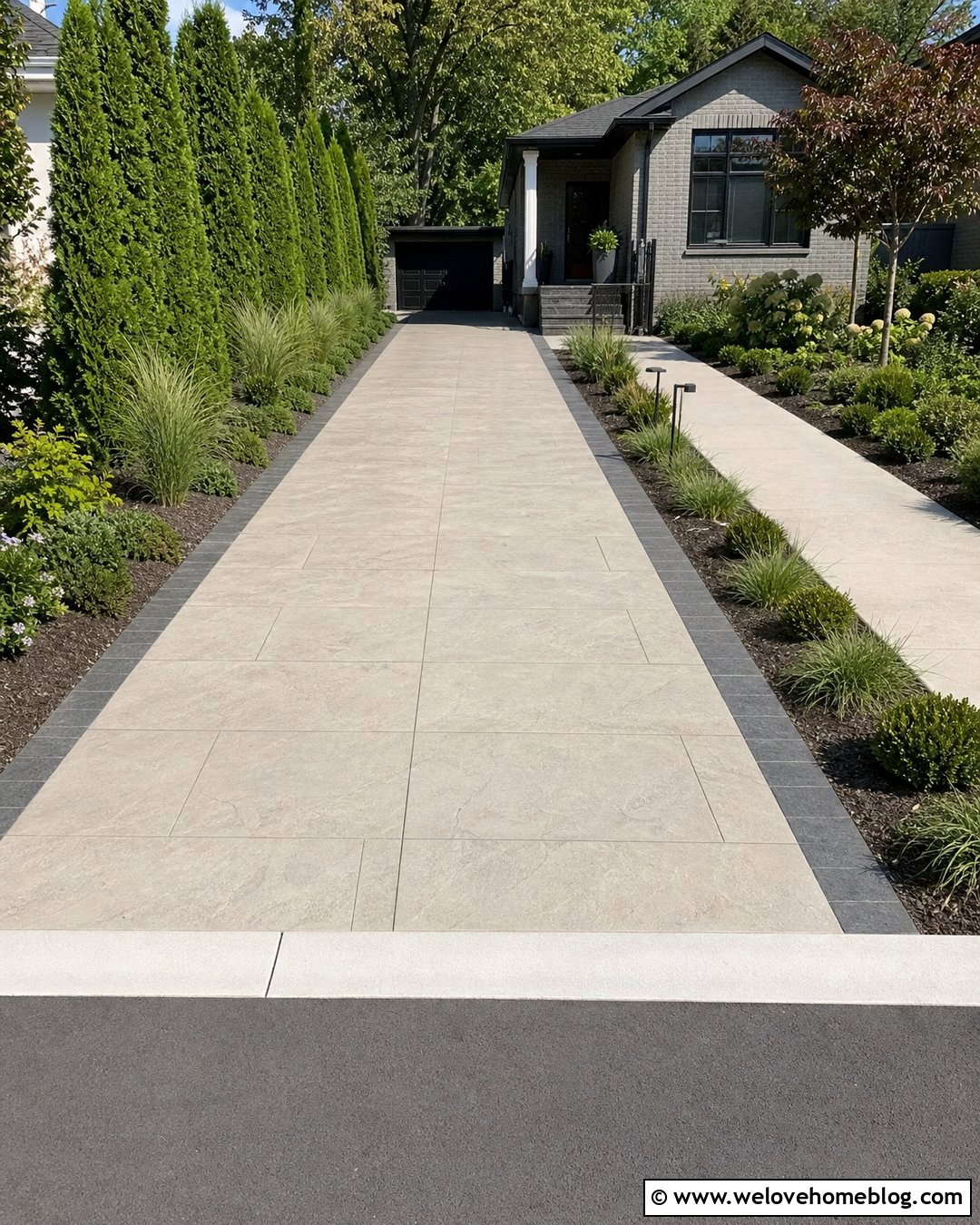
A narrow driveway needs a pattern and border that preserve visual width. Choose seamless slate-stamped concrete in a light greige shade, avoiding busy joints that could make the surface feel confined. Use slim charcoal borders along each side rather than wide contrasting bands. The dark edge provides definition while leaving most of the driveway bright and open. Keep planting beds shallow, with upright grasses, compact shrubs, and columnar trees that will not lean into the driving area. A narrow paver or concrete walkway can run parallel to one side, separated by a tidy strip of groundcover. This complete look suits urban cottages, bungalows, and homes on small suburban lots. At the garage, widen the stamped field slightly and use diagonal joint lines to make the transition feel gradual rather than abrupt.
20. Modern Gray Stamped Concrete Driveway
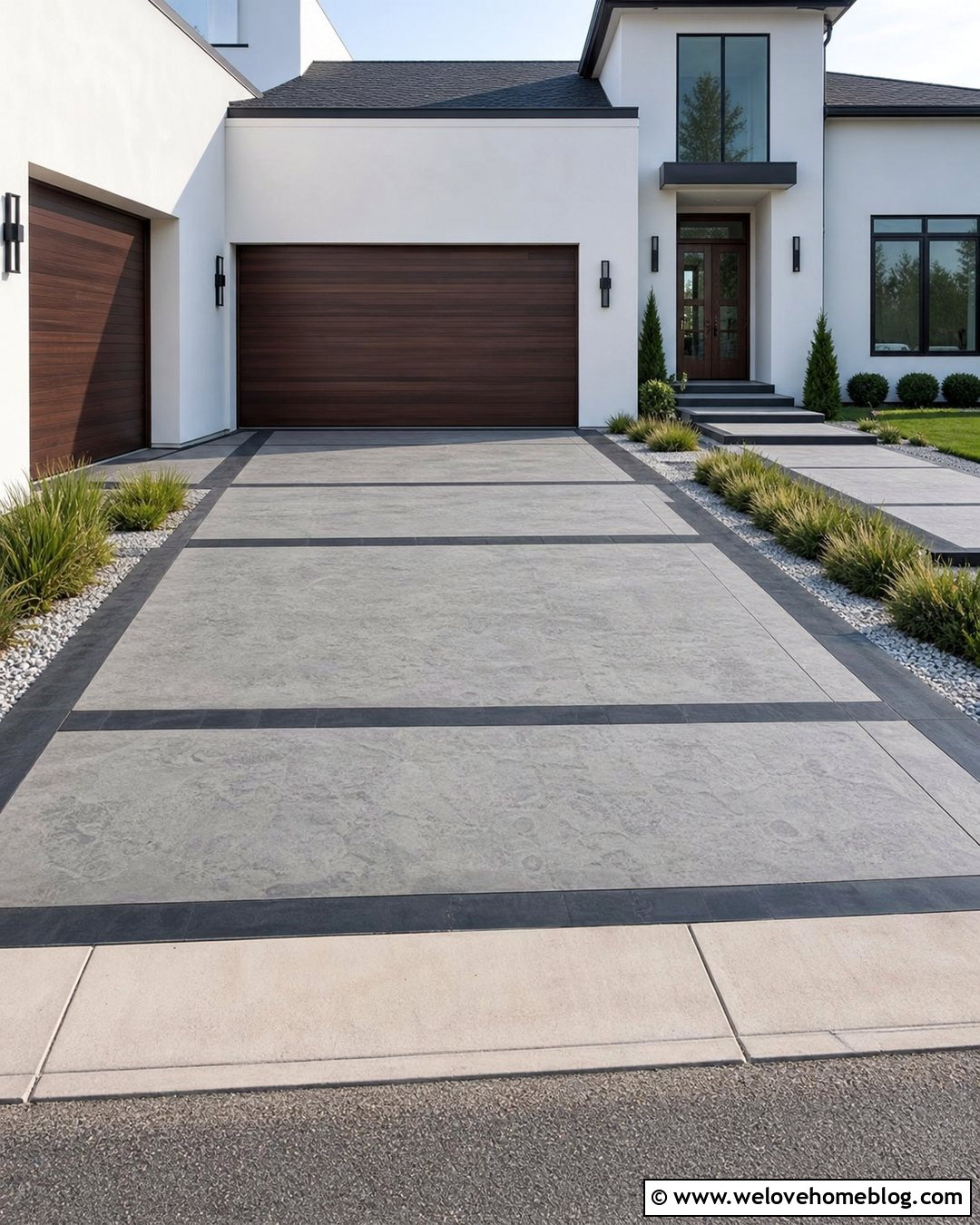
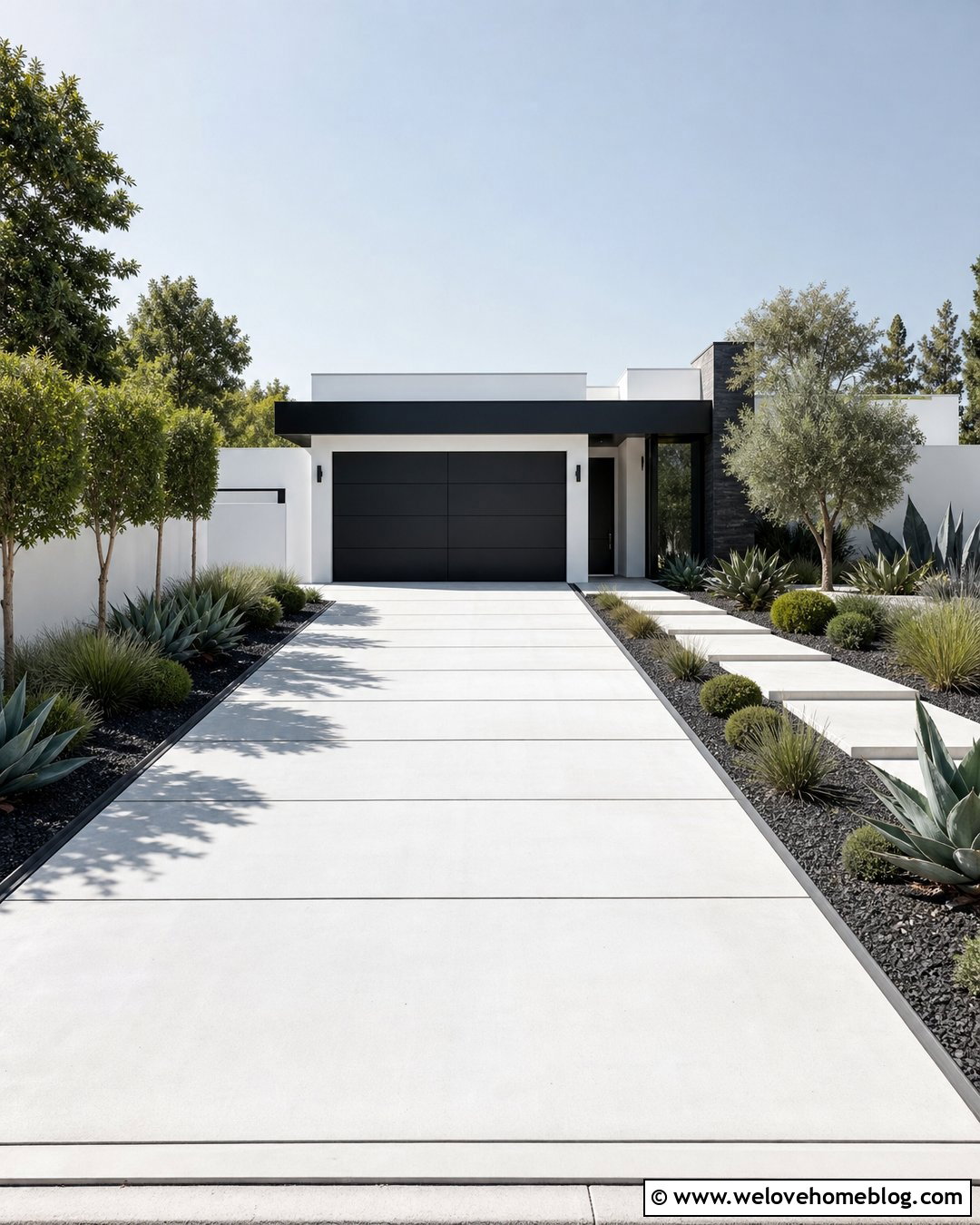
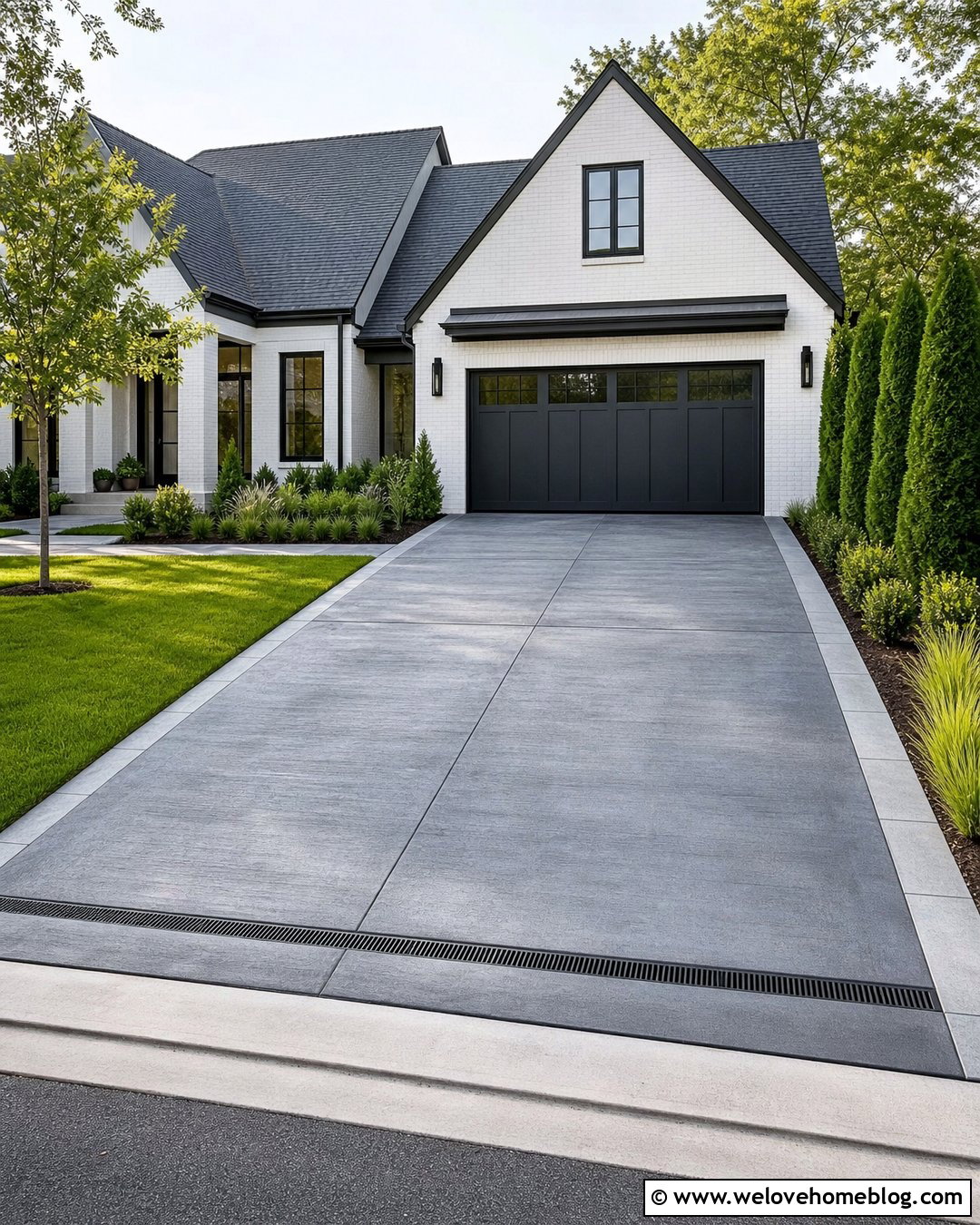
Cool gray stamped concrete creates a polished approach to a modern home when the pattern remains simple. Select a seamless limestone or large rectangular tile texture with minimal charcoal antiquing. Divide the driveway into broad, balanced panels and frame it with a smooth near-black stamped concrete band. Thin strips of pale decorative gravel can separate the driveway from linear beds filled with grasses, agave-like plants where climate permits, or low evergreen mounds. Carry the same gray material onto the walkway for a unified entrance. Black-framed windows, wood garage doors, and white stucco provide complementary contrast in the background. Avoid adding several faux-stone colors. One primary gray and one darker accent will usually support modern architecture more effectively than a heavily mottled finish, especially across a wide driveway visible from the street.
21. Farmhouse Stamped Concrete Driveway
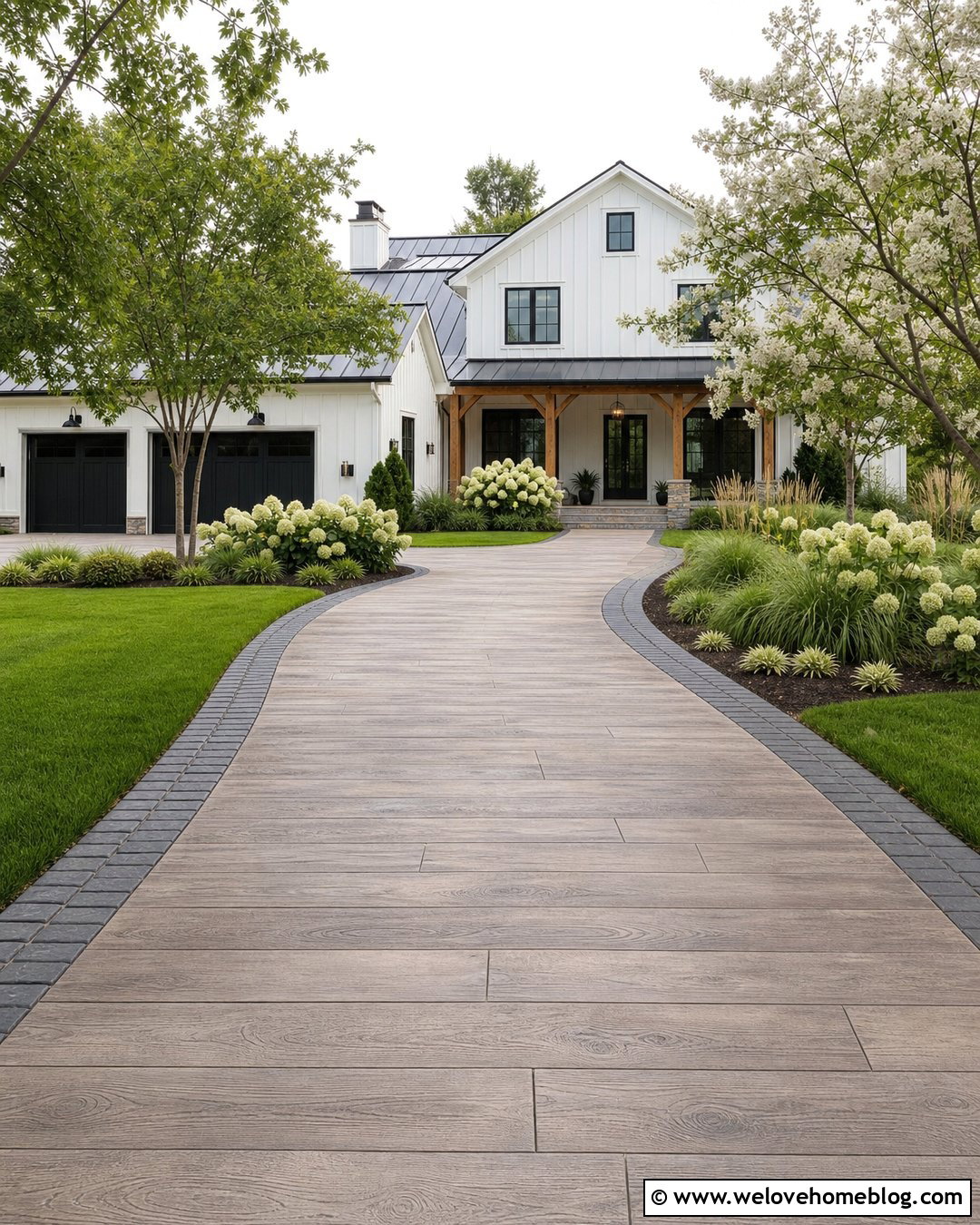
Soft taupe wood plank-stamped concrete can bring warmth to a modern farmhouse without turning the front approach into a literal copy of a wooden deck. Orient the plank lines toward the garage and contain them with a charcoal cobblestone-stamped border. A gently curved layout can soften a wide front yard and create space for white hydrangeas, ornamental grasses, and small flowering trees. Add a simple concrete walkway with the same border leading toward the porch. Black lantern-style fixtures and natural timber details on the house connect the surface to the architecture. Keep the simulated wood grain understated, with muted brown antiquing rather than dramatic black streaks. This creates a weathered appearance that supports white siding, dark roofing, and warm wood accents while remaining practical for a heavily used residential entrance.
22. Colonial Stamped Concrete Driveway
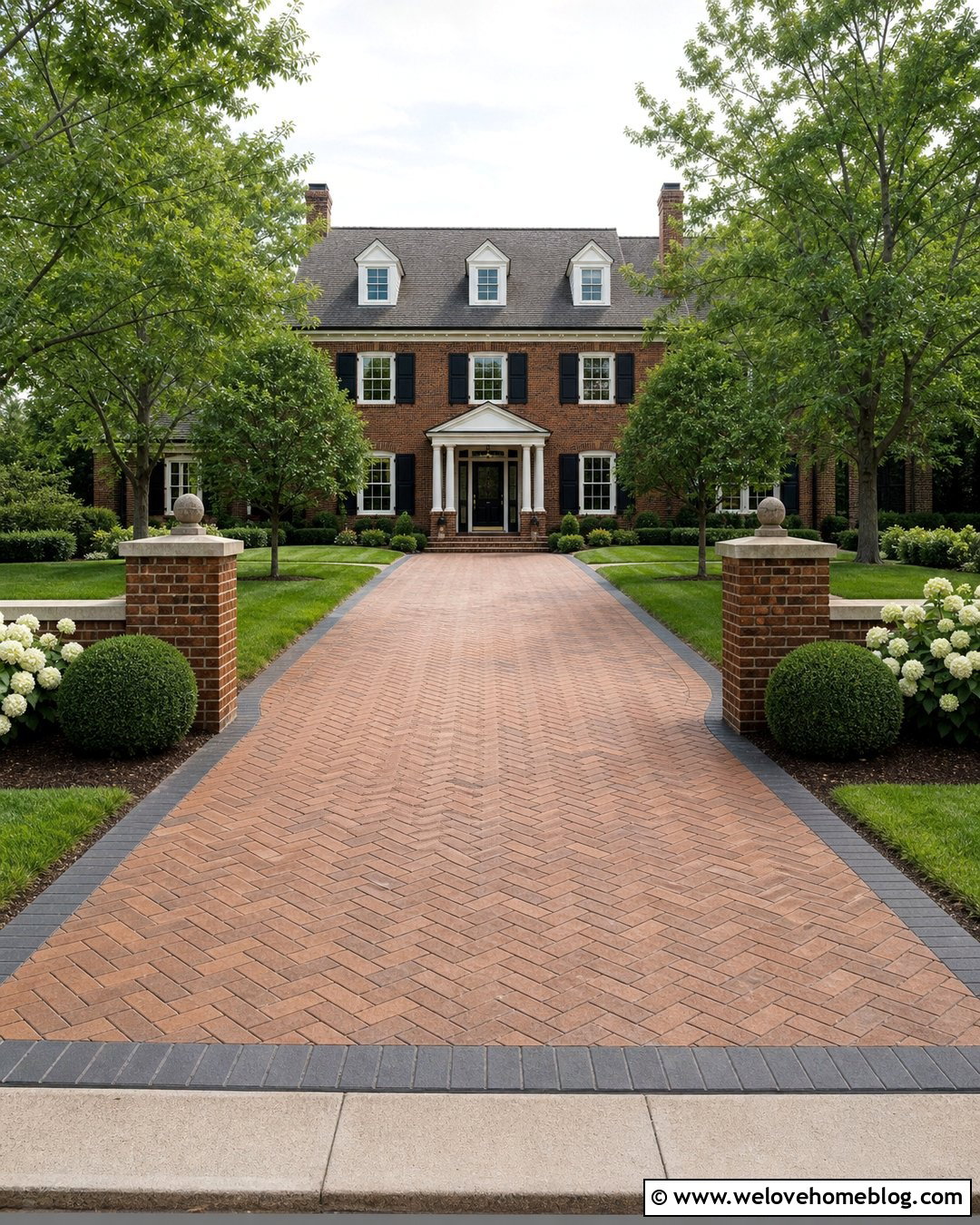
Symmetry is the key to a stamped concrete driveway in front of a Colonial home. Use herringbone brick stamping in muted red-brown tones, framed by a straight charcoal soldier-course border. Keep the driveway itself straight and center it on the garage or align it carefully with the main architectural axis. Matching brick-stamped walkways can branch toward the front steps without introducing another surface pattern. On both sides, repeat the same combinations of boxwoods, hydrangeas, and small ornamental trees. Low brick or stone entrance pillars can reinforce the formal arrangement. If the house has red brick, select a driveway color that is slightly grayer or browner than the facade. That variation prevents the hardscape from overpowering the architecture while preserving the traditional relationship between the stamped surface and home.
23. Mediterranean Stamped Concrete Driveway
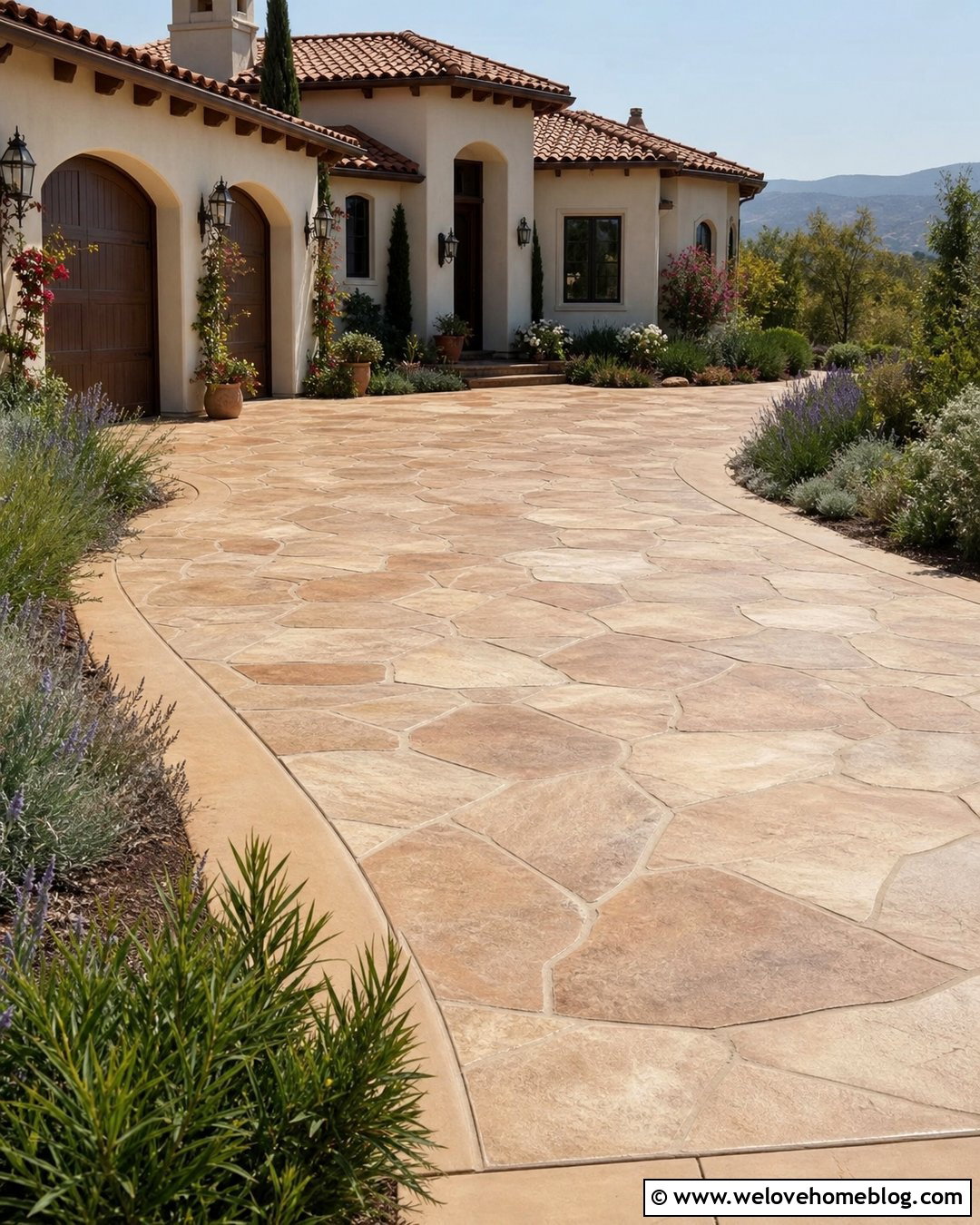
Warm earth tones and irregular stone textures create a natural match for Mediterranean architecture. Use large random flagstone-stamped concrete in sand, terra-cotta, and muted brown, with darker antiquing settled into the joints. A curved driveway bordered by smooth tan concrete will complement stucco walls, an arched entrance, and a tile roof. Surround the approach with rosemary, lavender, silvery foliage, ornamental grasses, and drought-tolerant flowering shrubs suited to the local climate. Near the house, create a broad stamped landing that connects the garage, walkway, and front steps. A few clay-toned accents can echo the roof, but avoid saturating the entire surface in orange. Balanced color variation should make the driveway resemble naturally weathered stone while allowing the architecture and planting to provide the strongest Mediterranean character.
24. Two-Tone Geometric Stamped Concrete Driveway
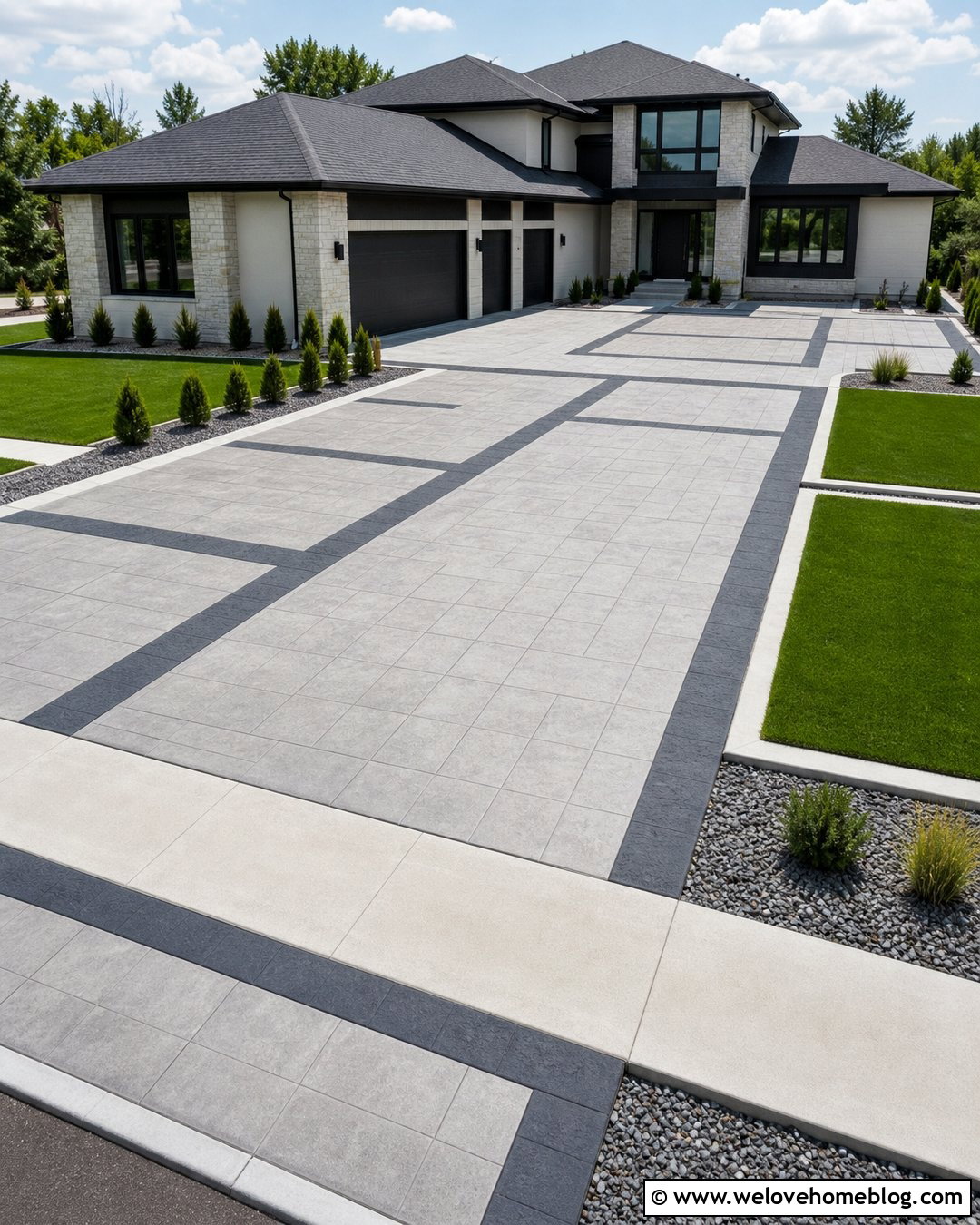
A two-tone geometric layout can give a wide driveway a customized appearance without relying on an ornate stamp. Use large square tile-stamped concrete in light gray for the primary field. Add charcoal rectangular bands around the edges and between parking bays, aligning them with garage doors and architectural lines. The contrast can visually organize a three-car driveway that might otherwise resemble one large slab. Frame the hardscape with linear lawn sections, low evergreen shrubs, and narrow gravel beds. A wide matching walkway should connect to one of the dark bands, creating a direct visual route toward the entrance. Keep both finishes within the same cool color family. The pattern, rather than an assortment of colors, should provide the interest. This restrained approach works especially well with contemporary and transitional homes.
25. Stamped Concrete Overlay Driveway
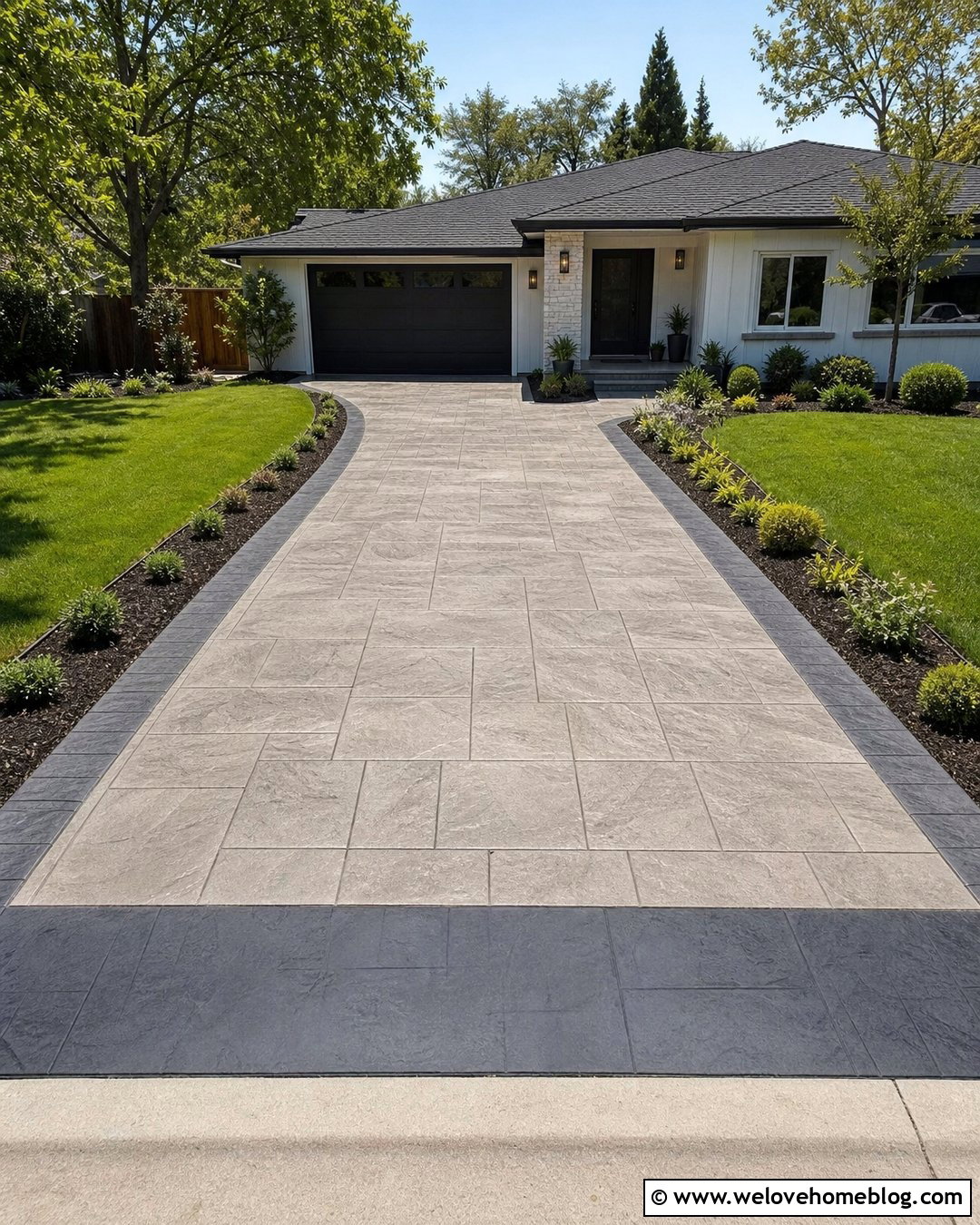
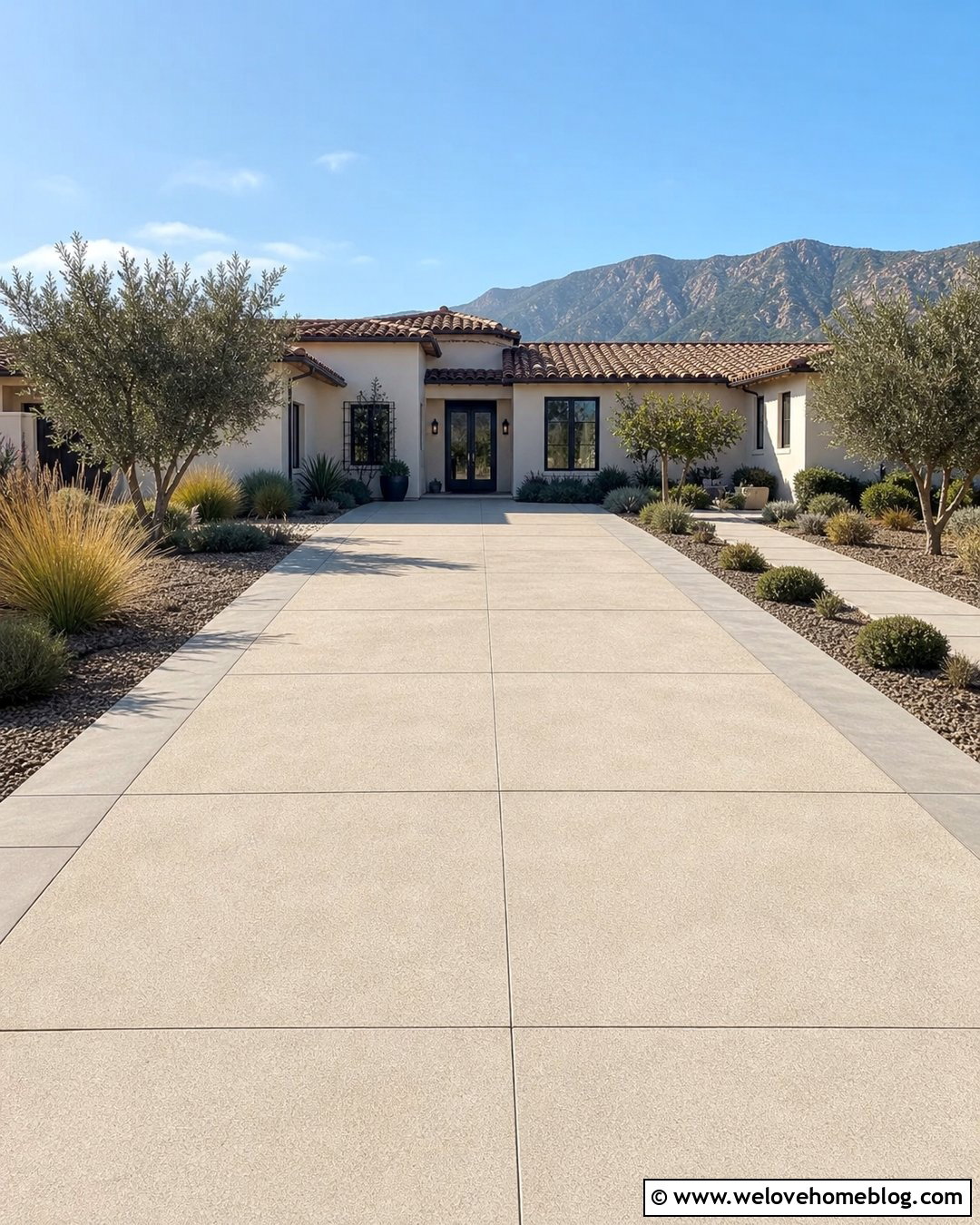
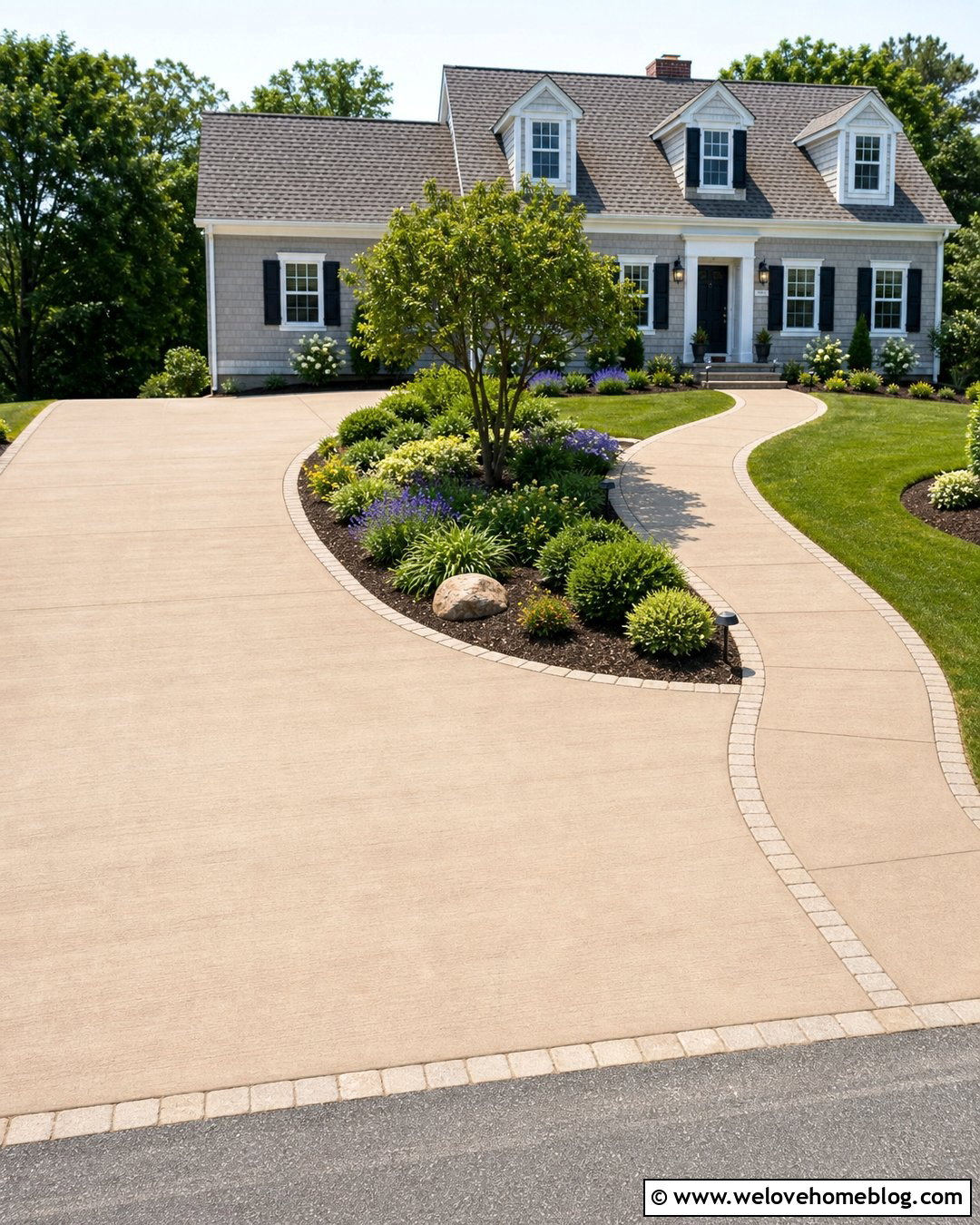
An existing concrete driveway with a stable, suitable surface may be a candidate for a decorative stamped overlay after professional evaluation and preparation. A thin overlay can introduce an ashlar slate or seamless stone appearance without changing the overall driveway layout. Choose medium greige with subtle charcoal antiquing to disguise everyday dust and coordinate with many home exteriors. Add a darker stamped border and a matching entrance apron to create a completely refreshed curb view. Update adjacent beds with clean edging, compact shrubs, and fresh groundcover so the landscaping feels as renewed as the hardscape. Existing cracks, drainage problems, or movement must be addressed rather than simply hidden. When conditions are appropriate, stamped overlays can add new pattern and color to an older concrete surface. ()
Conclusion:
The best stamped driveway begins with more than an attractive pattern. It brings the driveway’s material, color, scale, shape, borders, landscaping, and architecture into one coordinated view. Ashlar slate and seamless textures provide versatile options, while cobblestone, brick, flagstone, and wood plank stamps create stronger character. Borders, bands, aprons, and medallions can also concentrate detail where it has the greatest visual impact. Before choosing, compare large samples outdoors and discuss drainage, traction, joint placement, sealing, climate, and maintenance with an experienced concrete professional. A thoughtful plan will look balanced from the curb and remain practical for everyday use. Use these 25 stamped driveway concrete ideas to shape an entrance that genuinely suits your home.

Related posts:
Leave a Reply