
The best **20 Tabby Concrete Driveway Ideas** combine coastal character with the strength and convenience of a solid paved surface. Modern tabby concrete typically features oyster, coquina, or mixed shells embedded in concrete and exposed to create a warm, textured finish. It captures the appearance of historic Lowcountry tabby while supporting practical residential use. () Color, shell size, scoring patterns, borders, and landscaping can dramatically change the final result. A pale shell driveway can complement a beach cottage, while clean geometric joints can suit contemporary architecture. Proper drainage, reinforcement, control joints, and a carefully approved sample panel are also important. Explore these complete driveway looks through the following **20 Tabby Concrete Driveway Ideas**.

1. Tabby Concrete Driveway With Brick Border
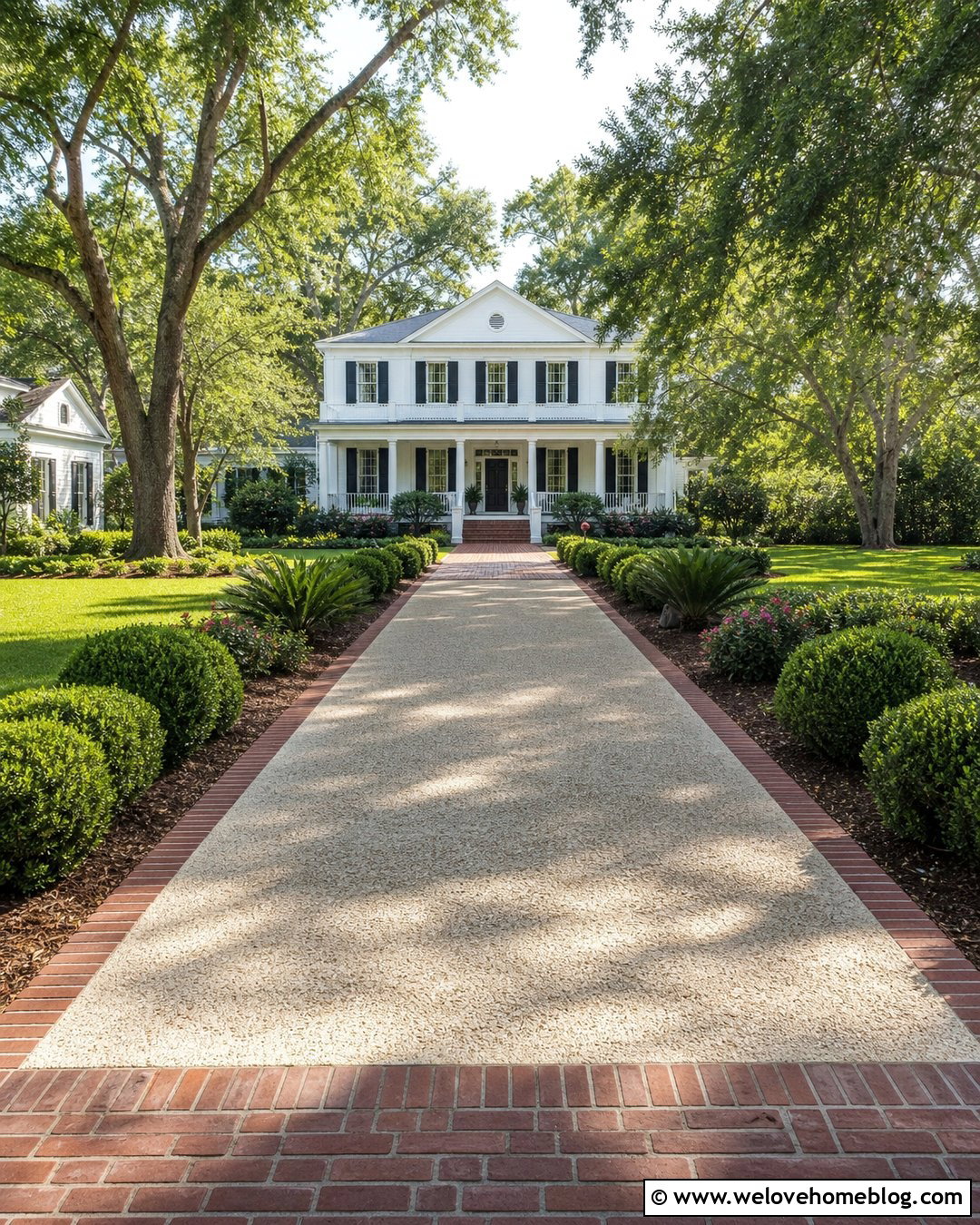
A red brick border gives a tabby concrete driveway a traditional Lowcountry appearance. Use warm ivory concrete with evenly exposed oyster shells for the main surface. Frame it with one or two rows of clay brick laid in a running bond. The contrast makes the driveway shape easier to see and prevents the pale surface from blending into the lawn. A straight layout works especially well in front of a Charleston-style or Southern colonial house. Add clipped boxwoods, dwarf palmettos, and flowering shrubs along the sides. Carry the same brick into the front walkway or porch steps for visual continuity. Choose bricks with slightly softened edges rather than highly distressed pieces, which can make the finished entrance look unnecessarily busy.
2. Curved Tabby Concrete Driveway With Palmettos
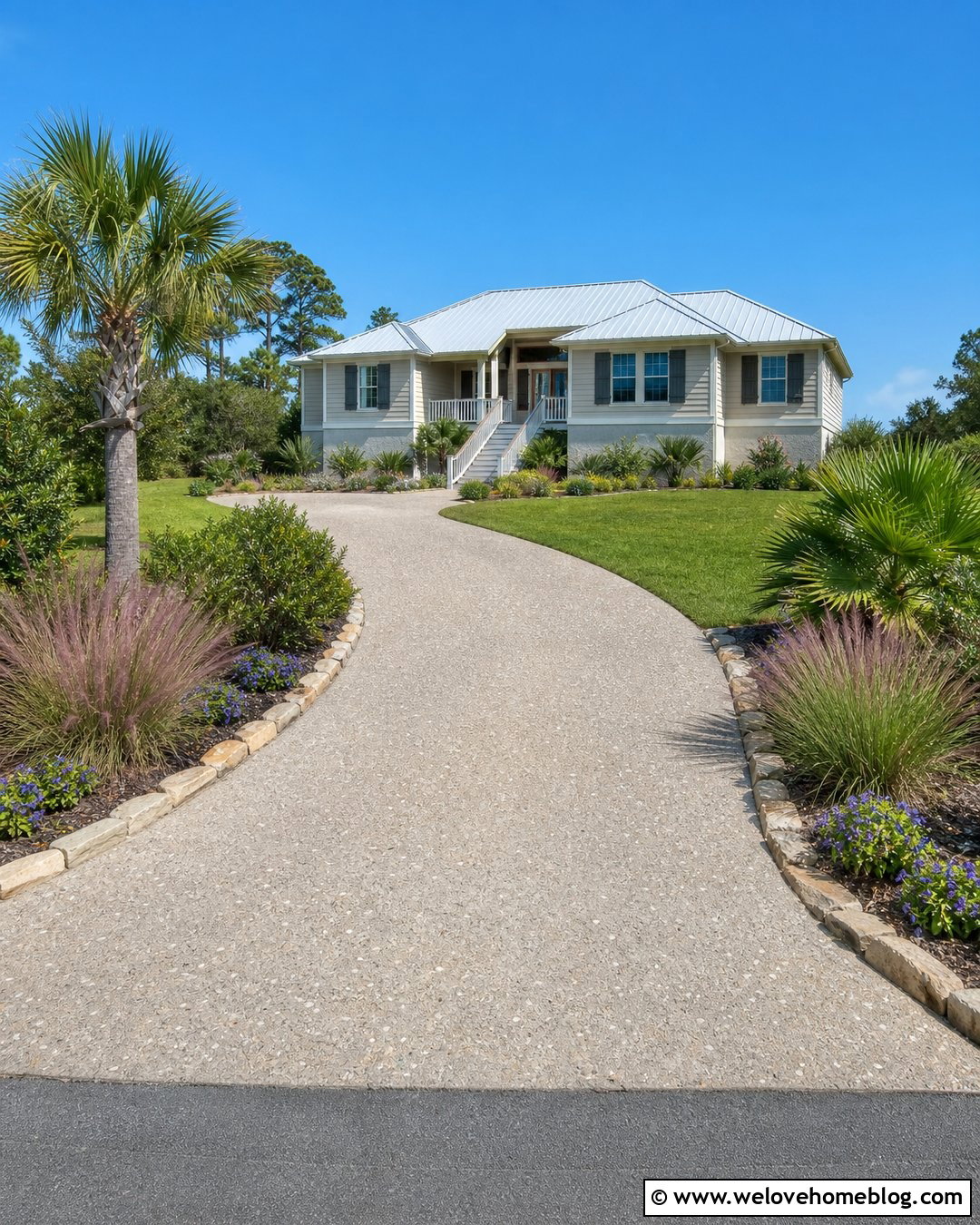
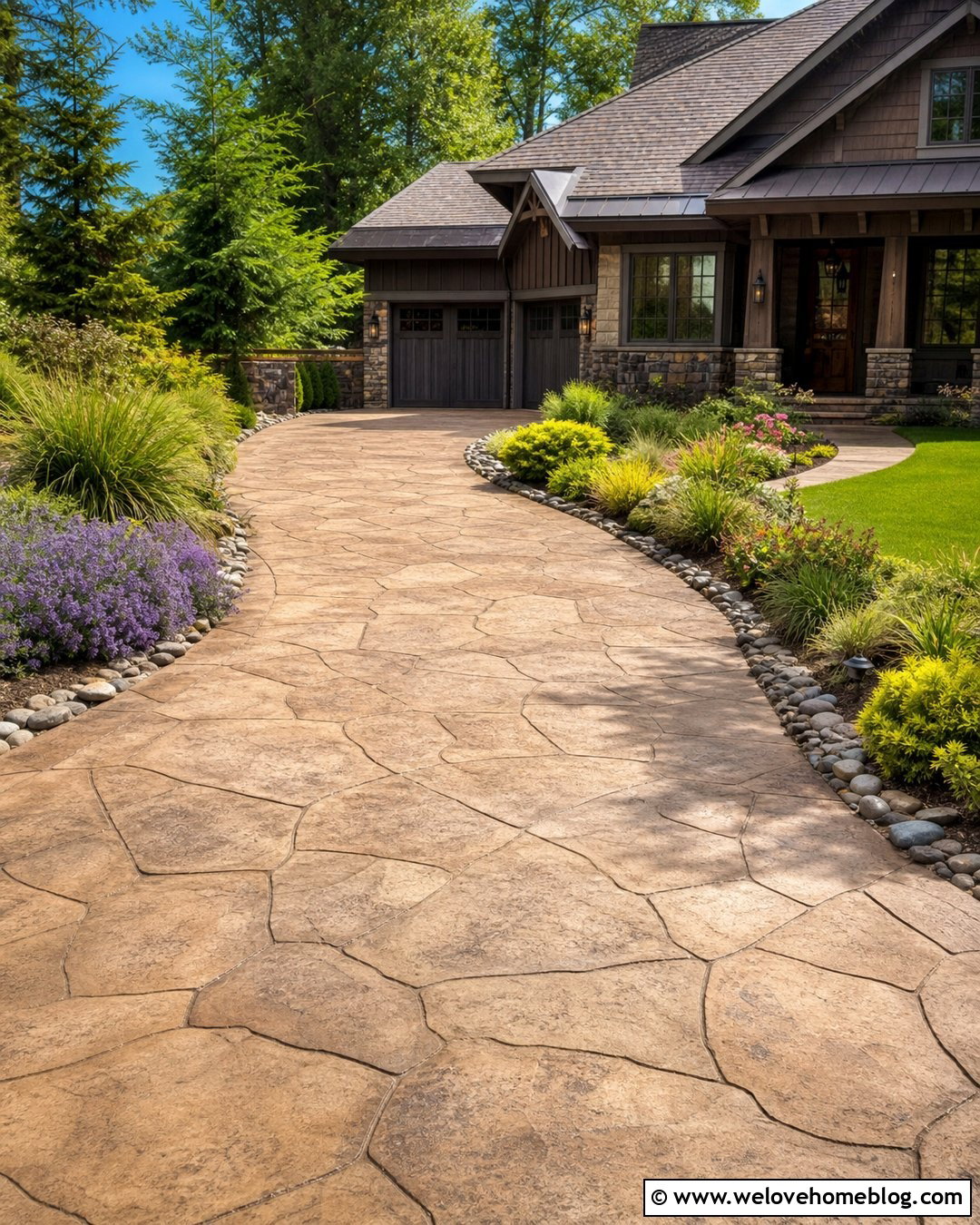
A gentle curve can make a tabby concrete driveway feel more relaxed and connected to its coastal surroundings. The bend should follow the natural shape of the front yard rather than creating an abrupt turn. Choose light beige concrete with medium oyster shell exposure and a lightly washed finish. Edge the pavement with a narrow strip of buff-colored stone that provides subtle definition. Plant small palmettos, ornamental grasses, wax myrtles, and low flowering perennials around the outside curve. Keep plants shorter near the street so drivers have a clear view when entering or leaving. On the inner curve, create a wider planting bed that visually guides the eye toward a coastal ranch or raised beach house.
3. Circular Tabby Concrete Driveway With Center Island
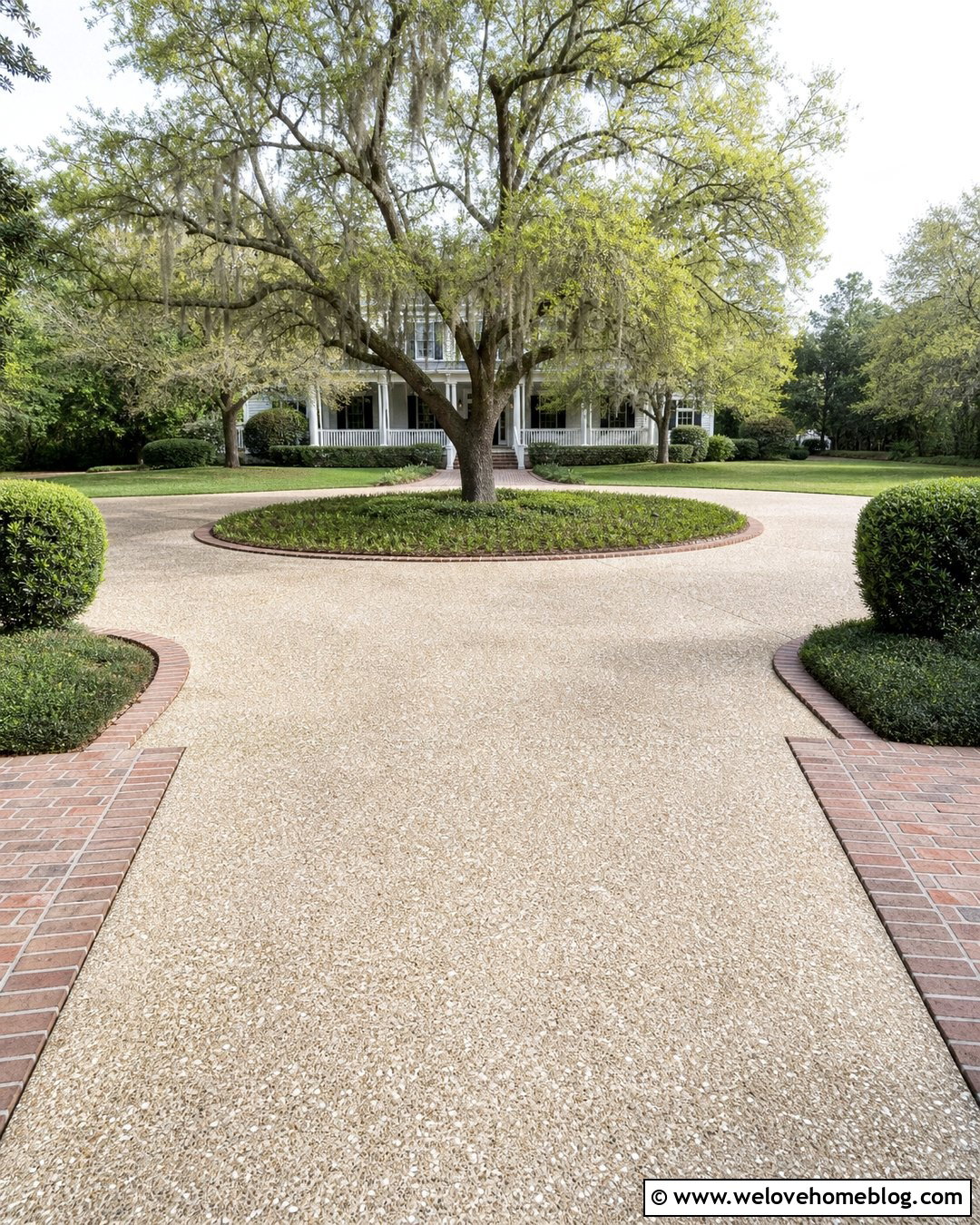
Does your front yard have enough space for a formal turnaround? A circular tabby concrete driveway creates a smooth arrival while giving the landscape a strong focal point. Use cream-colored concrete with bright oyster shell pieces and divide the surface into large, balanced sections using clean control joints. Build a round or oval center island bordered with tumbled brick or limestone. A small live oak, crape myrtle, or multi-trunk palm can anchor the island without overwhelming the house. Surround it with low shrubs and ground covers that preserve visibility. Match the driveway’s two entrances with understated brick aprons. This complete design works beautifully with Southern colonial, Georgian, and large Lowcountry homes where a straight driveway might feel too plain.
4. Modern Tabby Concrete Driveway With Linear Joints
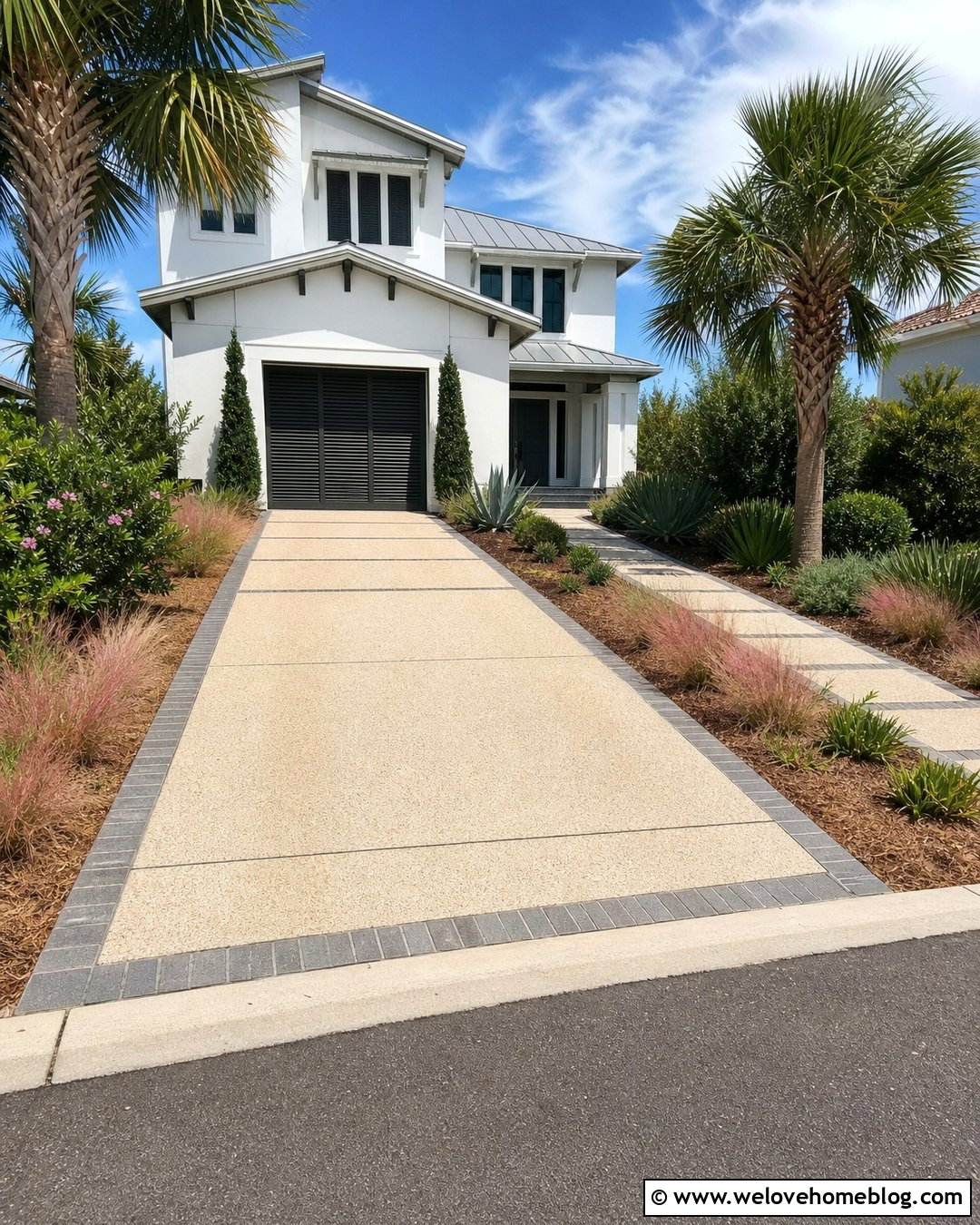
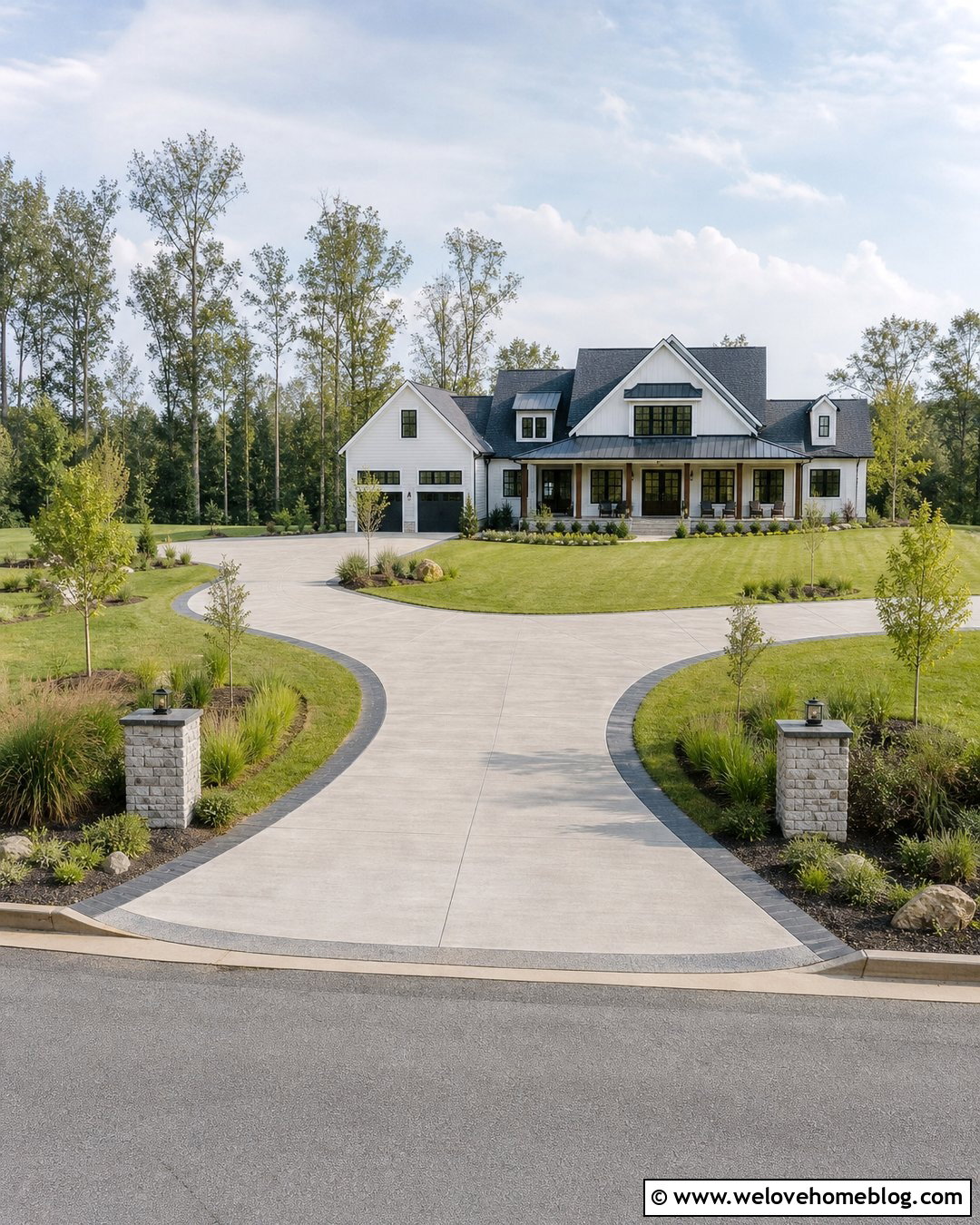
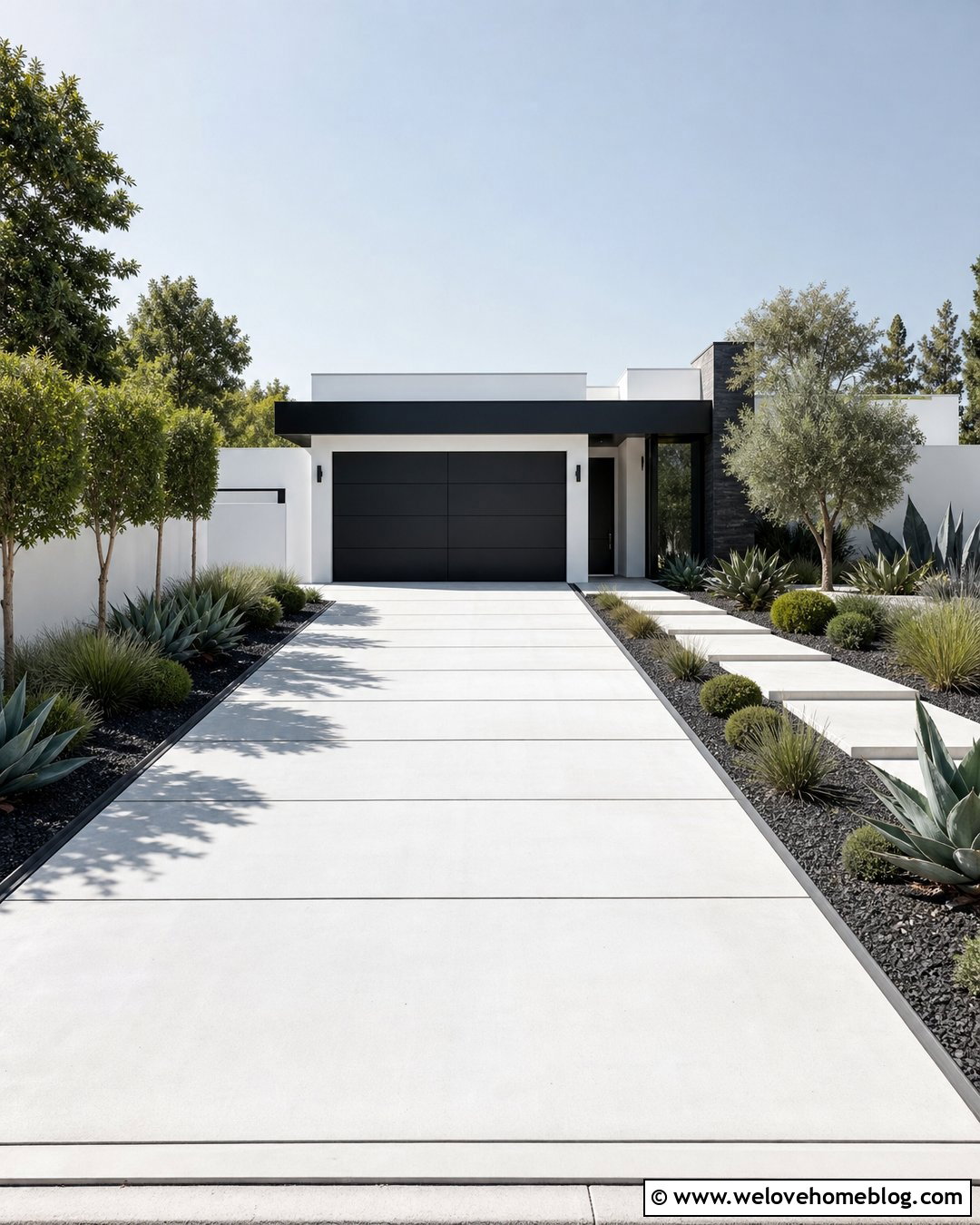
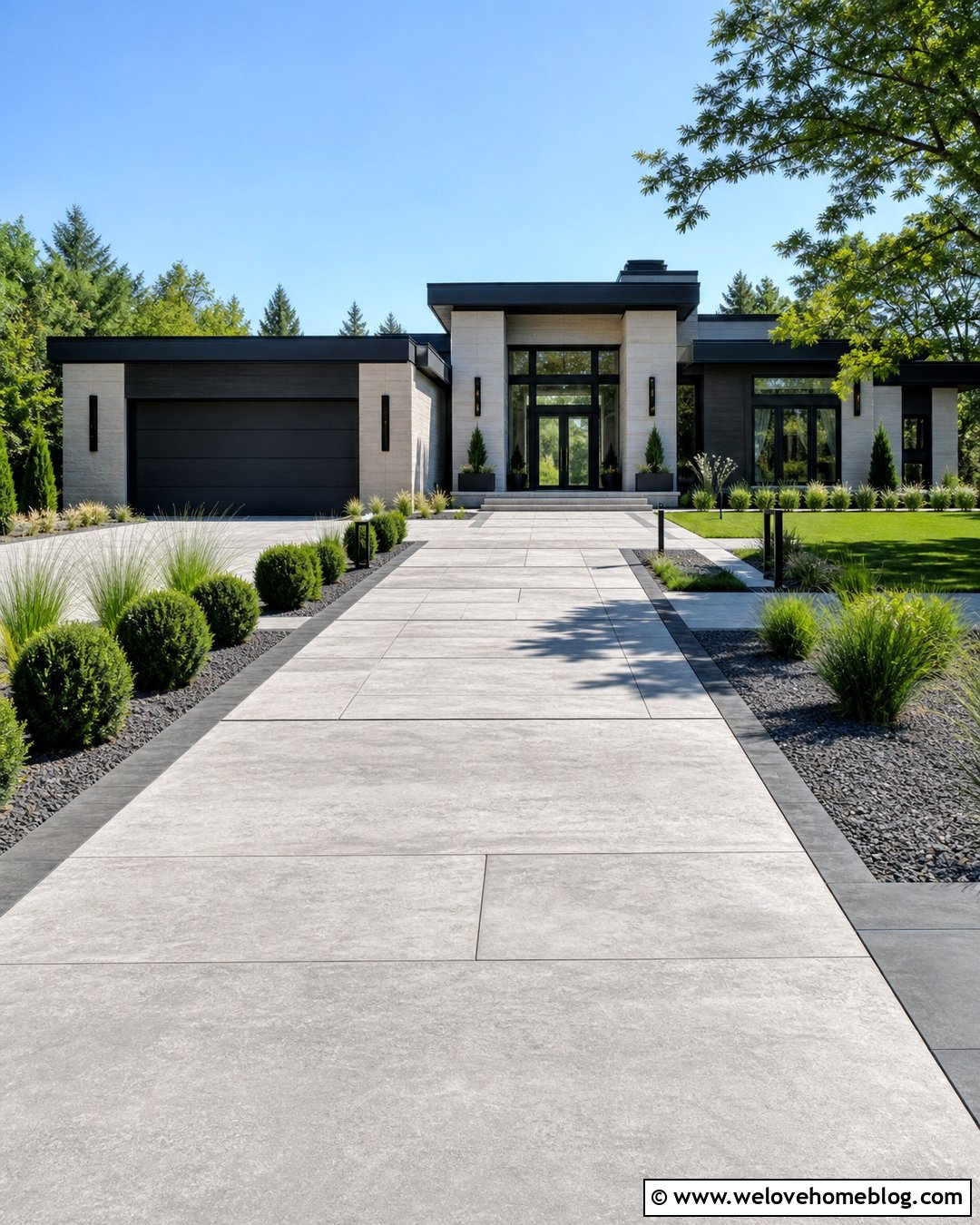
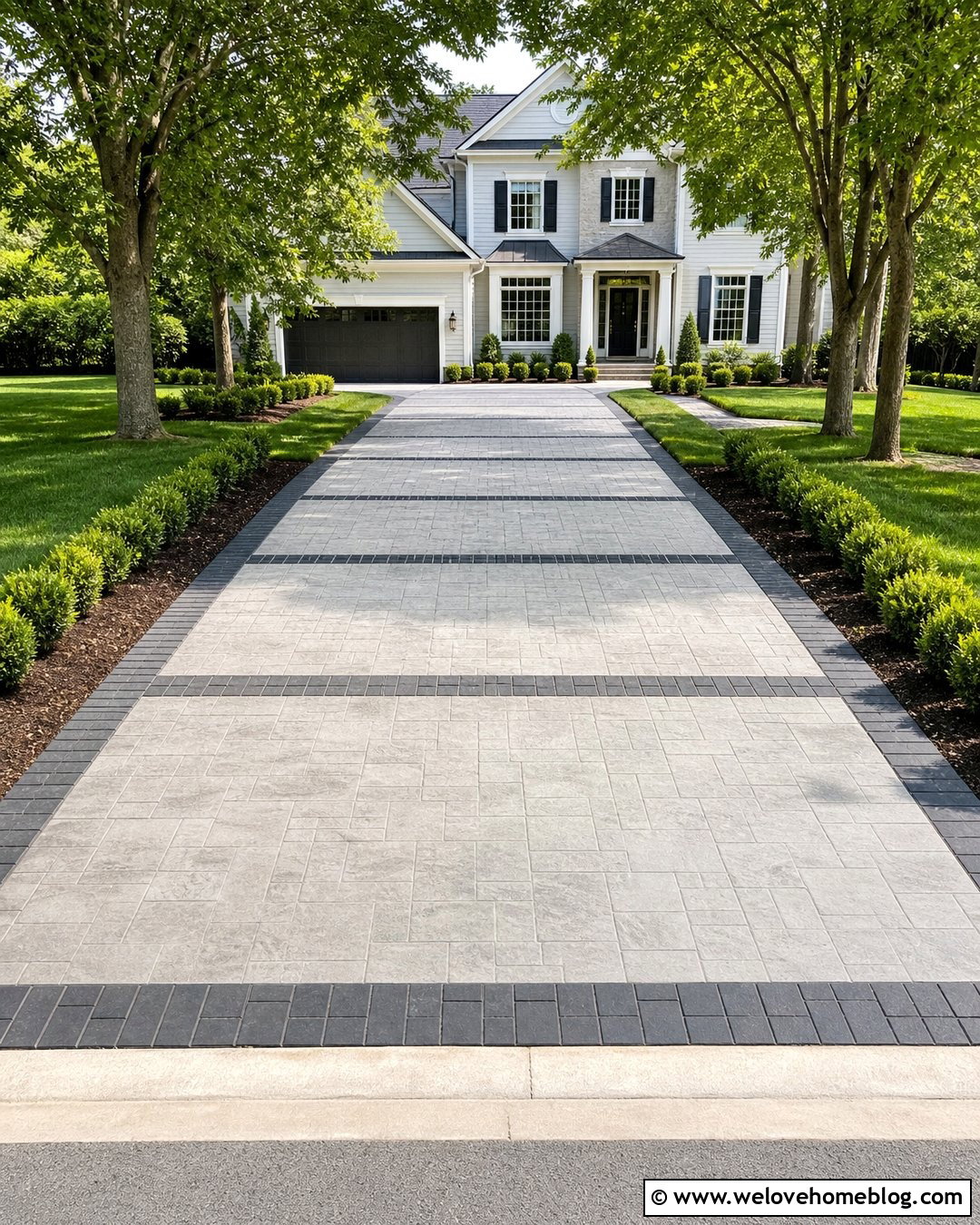
Tabby concrete does not have to look rustic. A streamlined driveway with long rectangular panels can complement a modern coastal home. Select beach-beige concrete with finely graded coquina shell and a consistent sandblasted finish. This treatment creates a controlled texture while helping the shell aggregate read clearly across the surface. () Use narrow saw-cut joints arranged parallel to the house, garage, or architectural rooflines. Border the driveway with dark charcoal pavers for crisp contrast. Simple beds of muhly grass, agave, dwarf palmettos, and neatly clipped shrubs maintain the contemporary look. Continue the same tabby finish into the entrance walk, but separate it with a slim paver band. The result feels coastal, polished, and deliberately connected to the architecture.
5. Tabby Concrete Driveway With Cobblestone Apron
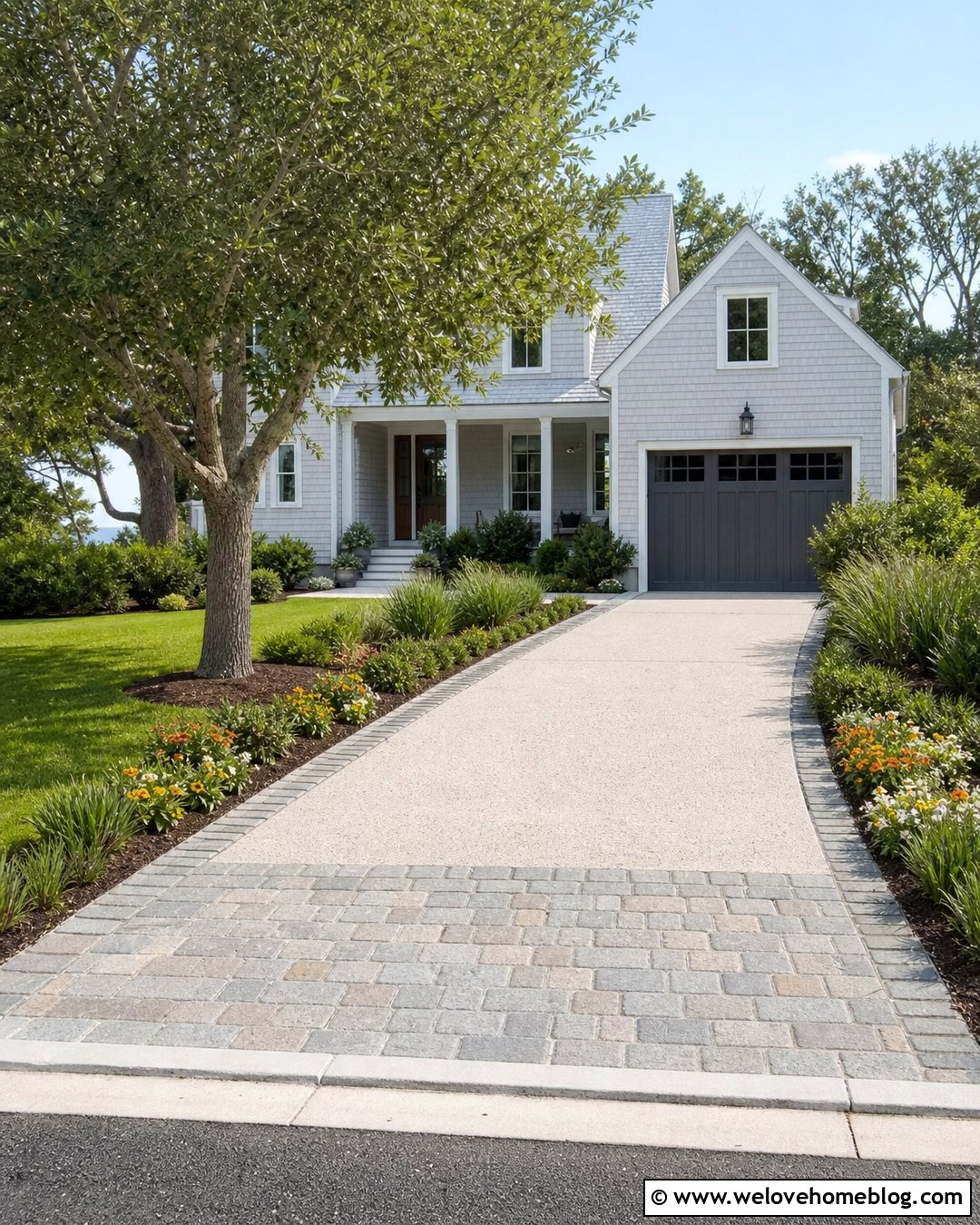
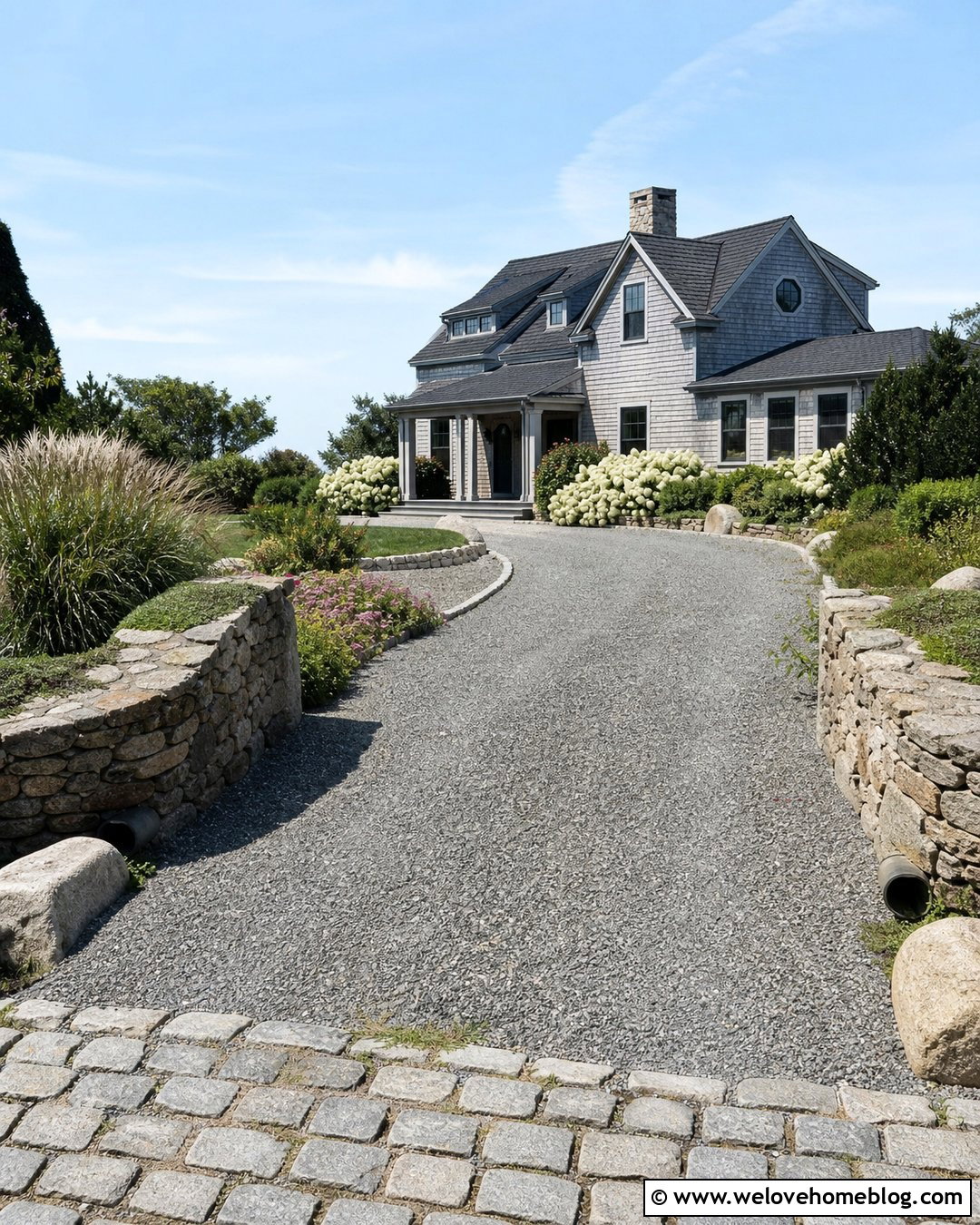
The street-facing apron is an ideal place to add strength and visual distinction. Start with a light oyster shell tabby concrete driveway arranged in broad rectangular panels. Install a cobblestone apron across the full entrance, using gray, tan, and muted brown stones that coordinate with the shell finish. Repeat a narrow cobblestone band near the garage to make the transition feel intentional. A straight driveway keeps the varied materials from becoming too complicated. Frame the entrance with low stone walls or simple planting beds filled with yaupon holly, ornamental grasses, and seasonal flowers. This pairing suits coastal cottages, shingle-style homes, and traditional residences. The cobblestone provides an attractive threshold, while the lighter tabby surface remains the dominant material throughout the approach.
6. Tabby Concrete Driveway With Bluestone Bands
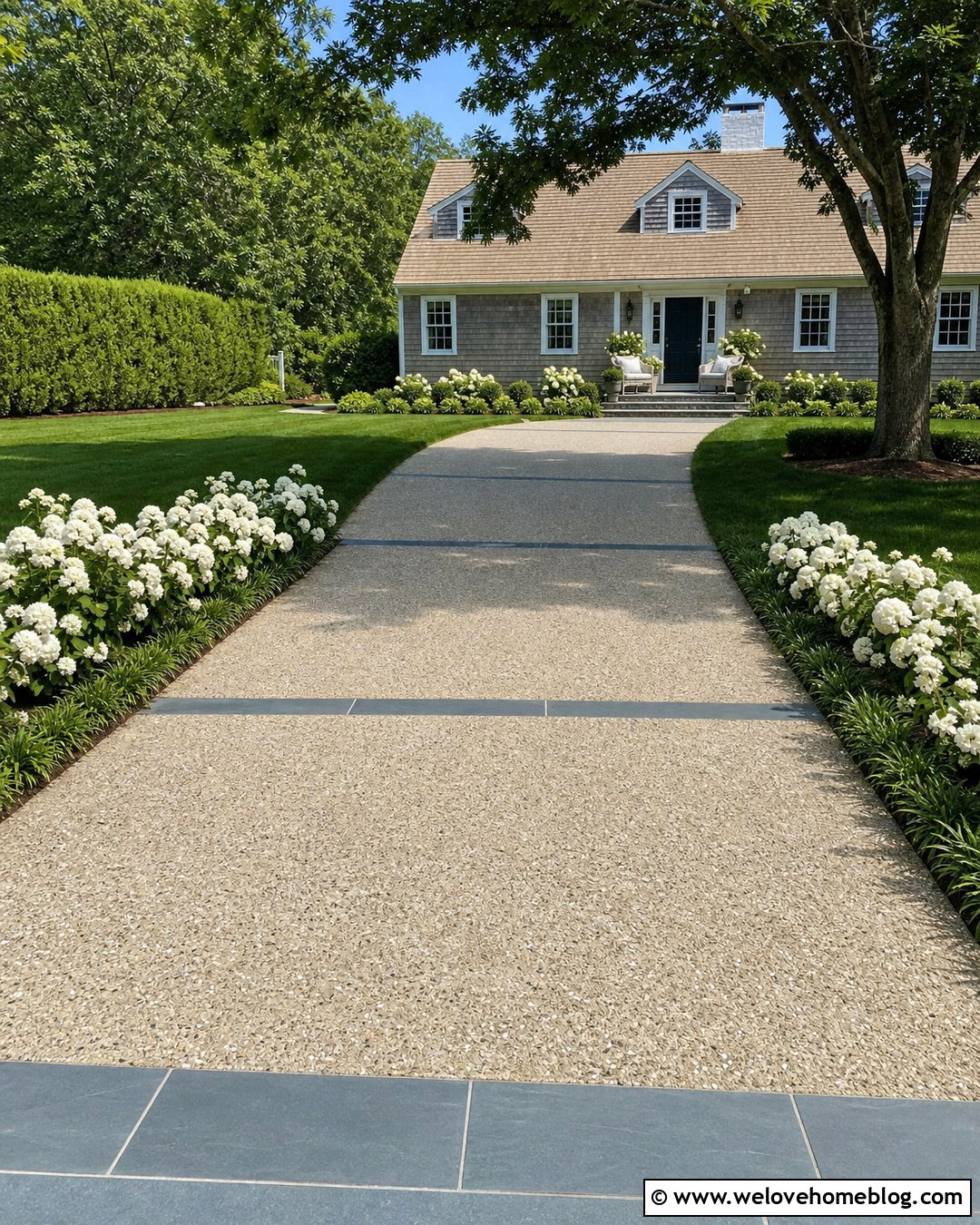
Cool blue-gray stone brings refined contrast to warm tabby concrete. Pour the driveway in a soft sand-colored mix with small white and gray shell fragments. Divide the surface with bluestone bands placed at regular intervals across the driveway. These bands can align with control joints, helping the layout look orderly rather than decorative without purpose. Use matching bluestone around the driveway apron and along the connecting front walk. For landscaping, combine green liriope, white hydrangeas, compact hollies, and one sculptural shade tree. The cooler planting palette complements both materials. A gently flared entrance allows the driveway to feel welcoming from the curb. This complete look is especially fitting for Cape Cod, coastal colonial, and gray-shingled homes with blue or charcoal accents.
7. Tabby Concrete Driveway With Coquina Stone Edging
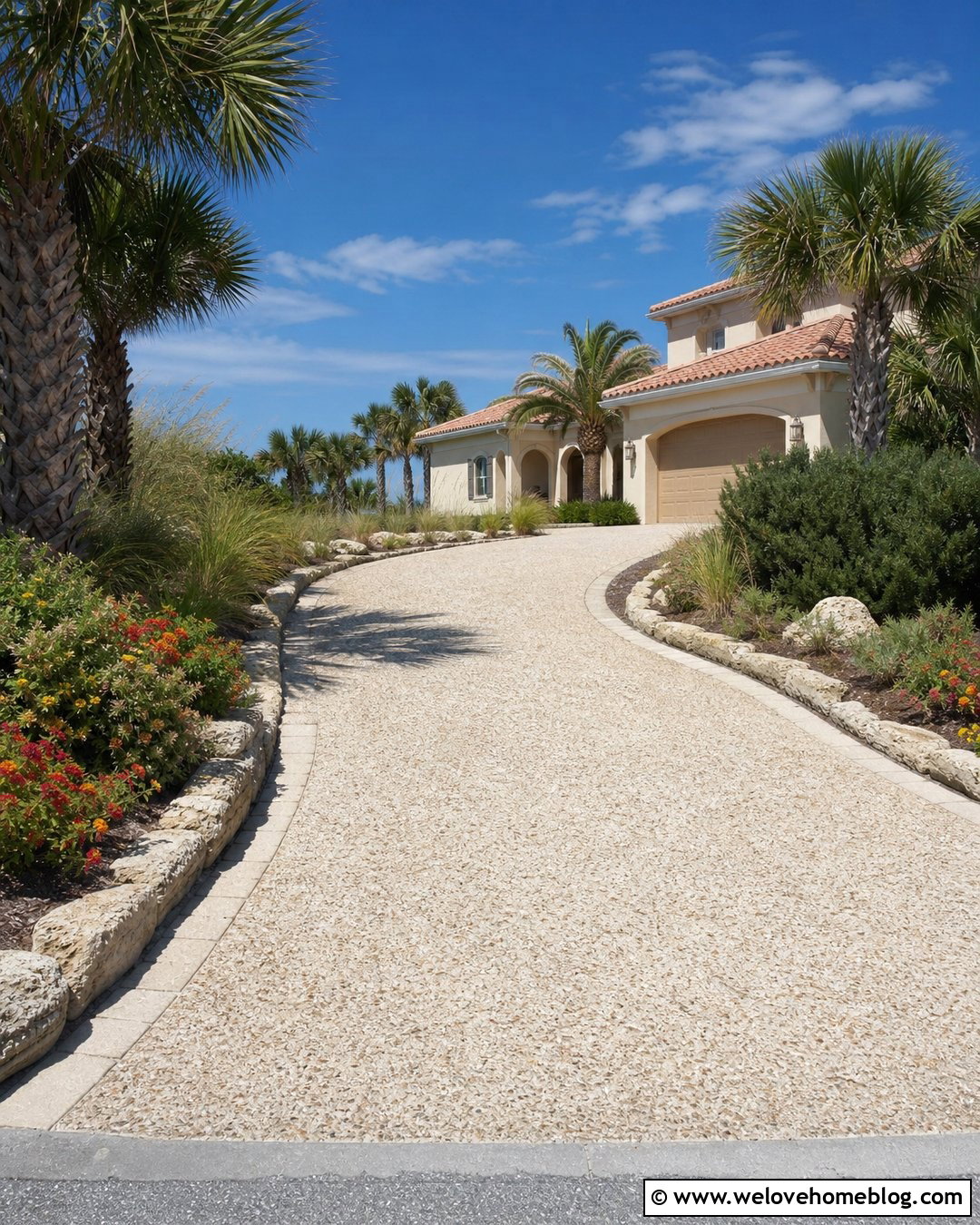
Coquina stone edging reinforces the shell-based character of a tabby concrete driveway without introducing a sharply contrasting material. Choose pale buff concrete with visible oyster and coquina shell aggregate. Form the driveway in a soft curve and border both sides with low, rough-textured coquina blocks. Keep the edging close to grade so it defines the pavement without becoming a tripping hazard. Beyond the border, use sweeping beds of sea oats, native grasses, lantana, and low-growing juniper. A sandy-toned walkway can branch naturally toward the porch. This composition works well around Florida coastal homes and stucco residences because the colors remain warm and sun-washed. Avoid too many additional materials; the shell texture and natural stone should remain the main visual features.
8. Tabby Concrete Driveway With Paver Ribbons
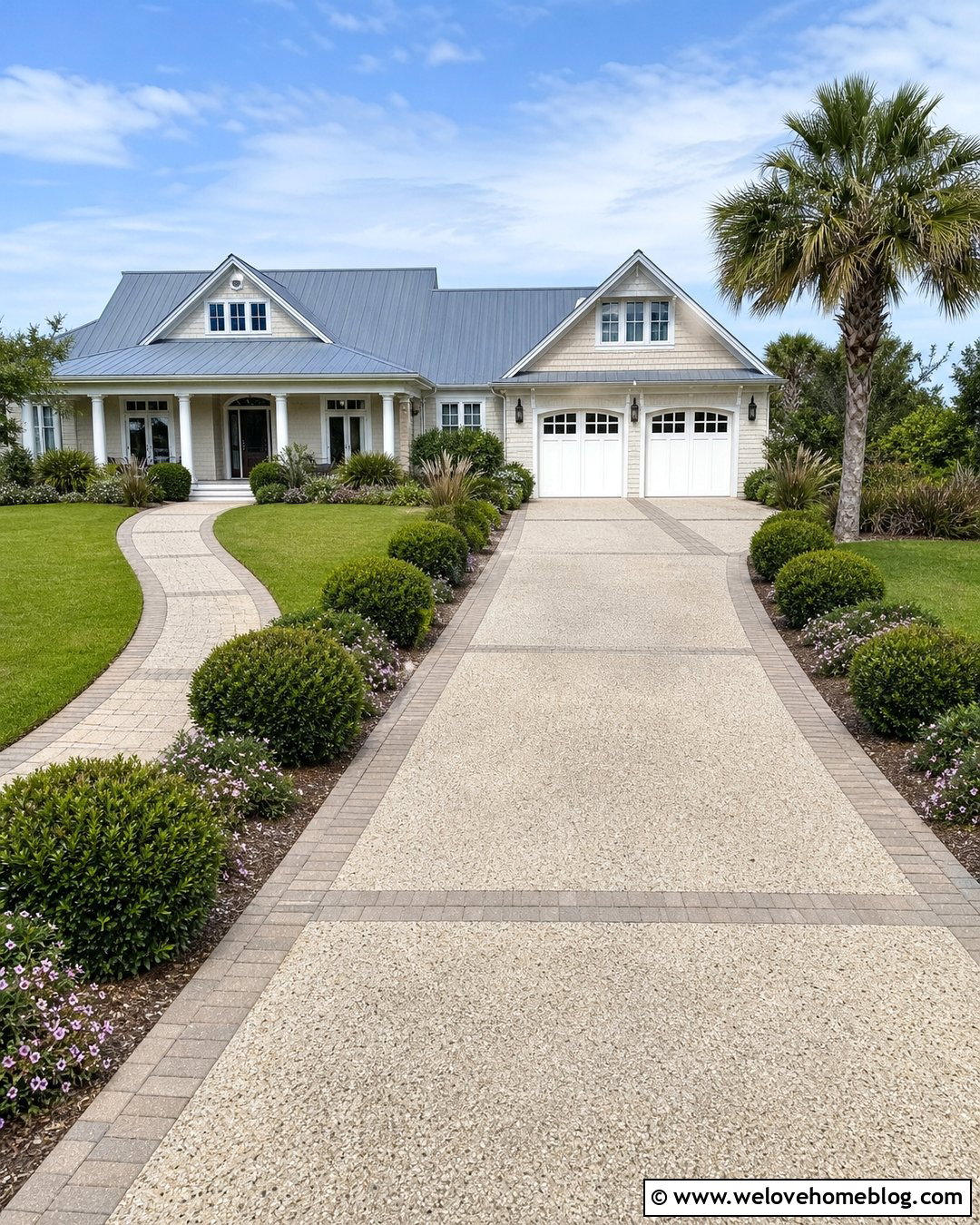
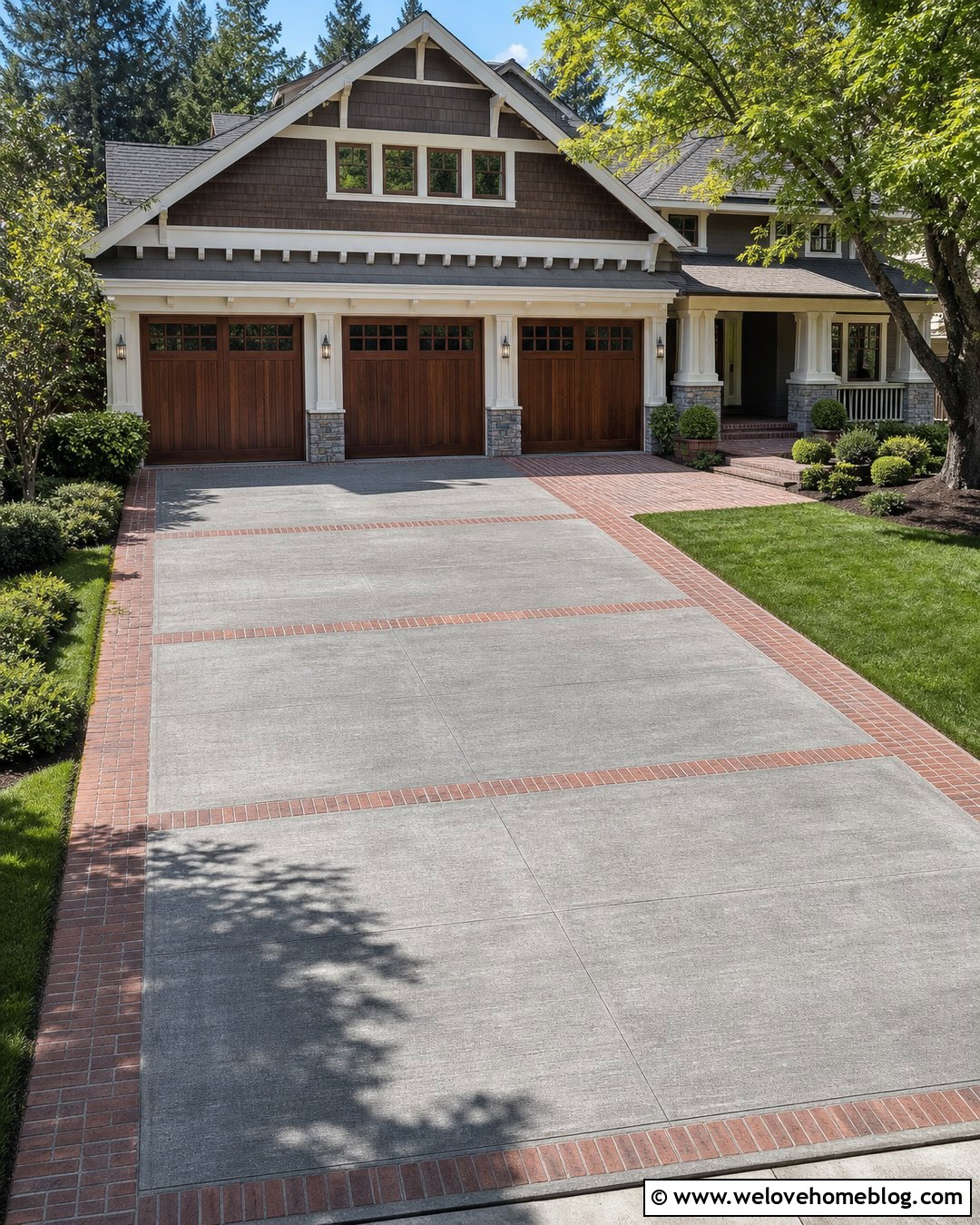
Paver ribbons can organize a wide tabby concrete driveway and reduce the appearance of one oversized slab. Use ivory concrete with a medium shell broadcast and exposed finish. Add narrow tan or taupe concrete-paver bands across the driveway, aligning them with the garage doors and major control joints. A matching border around the outer edges completes the pattern. Keep the layout symmetrical in front of a wide ranch, Mediterranean, or transitional coastal house. Plant rounded evergreen shrubs near the garage, then soften the street entrance with ornamental grasses and flowering ground covers. A separate paver walkway can connect the driveway to the front door. Limit the design to one paver color so the oyster shell texture remains noticeable and the entire front yard feels coordinated.
9. Tabby Concrete Driveway With Grass Strips
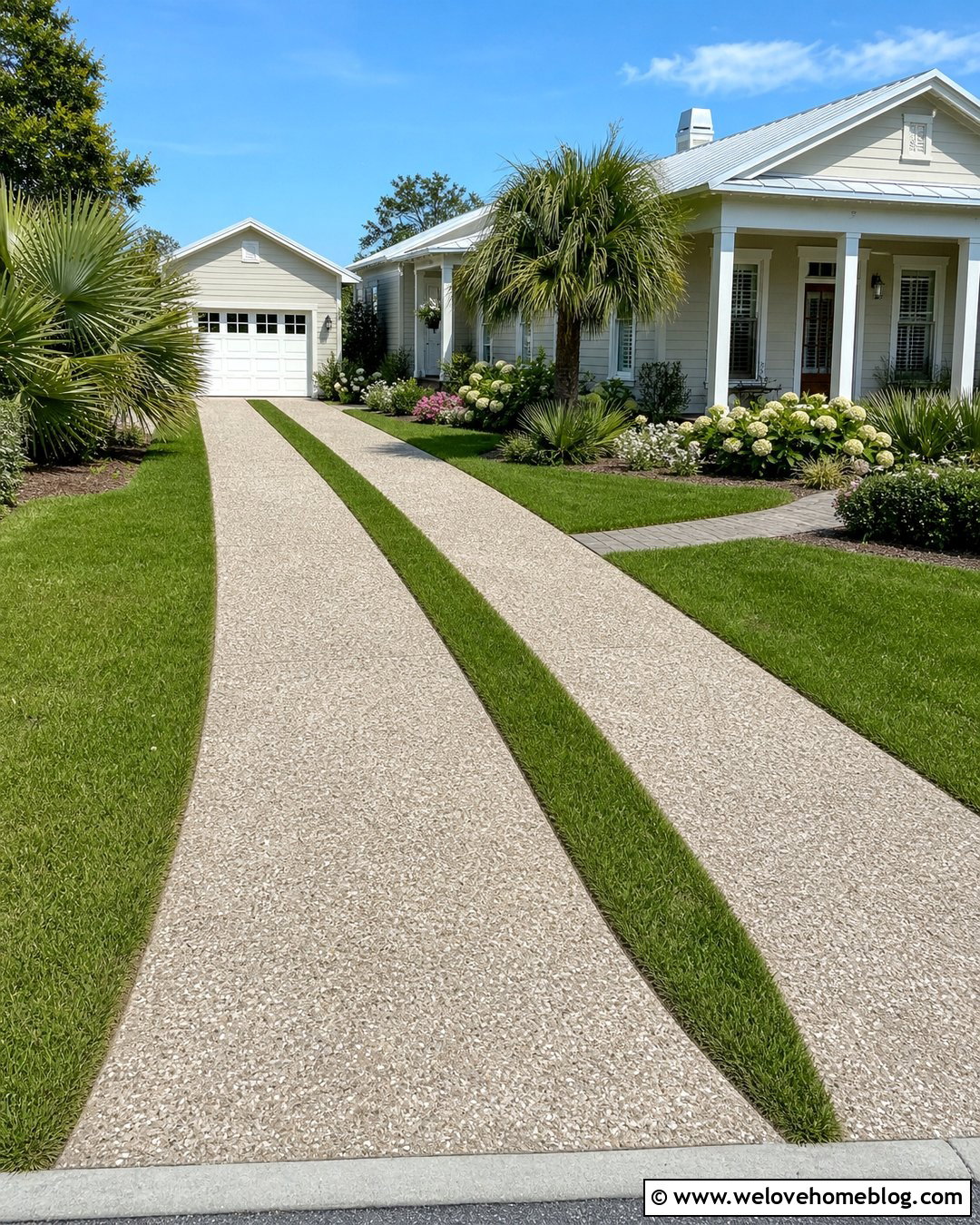
Grass strips bring softness to tabby concrete while reducing the visual weight of a paved approach. Create two broad wheel tracks or a series of large tabby concrete panels separated by narrow turf bands. The concrete should have a pale gray-beige base with small exposed oyster shells that remain comfortable under normal footwear. Use steel or concealed concrete edging to keep the grass lines crisp. This layout suits a small cottage, coastal bungalow, or detached garage where traffic is relatively predictable. Continue the green spacing into a simple front lawn framed by hydrangeas, dwarf palmettos, and flowering shrubs. Good grading is essential because the planted strips should not trap runoff. The finished driveway feels casual and garden-focused while retaining a durable driving surface.
10. Tabby Concrete Driveway With Large Oyster Shell Finish
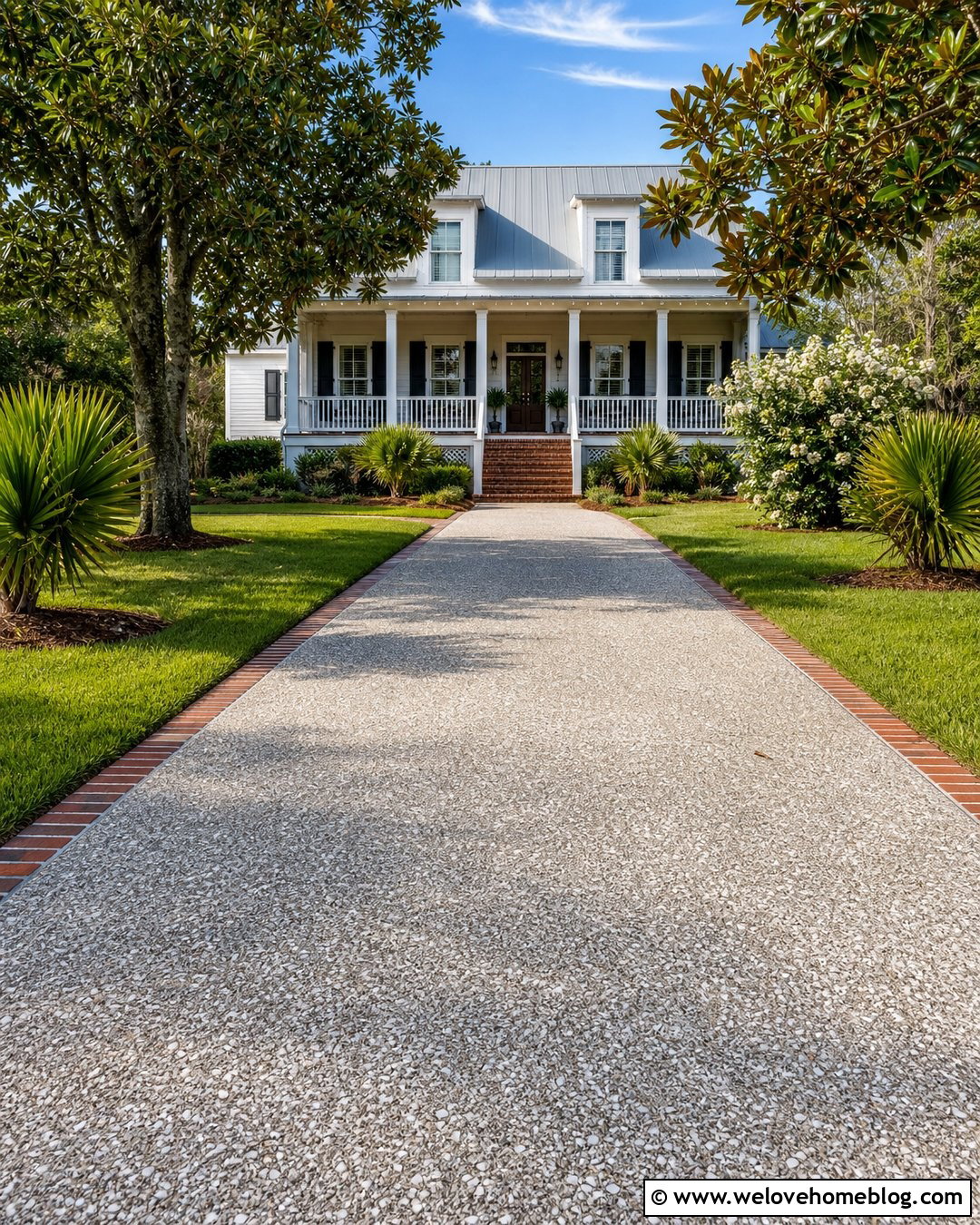
Large oyster shell pieces create a bold surface that is easy to appreciate from the curb. Start with warm buff concrete and distribute cleaned shells consistently so no section looks bare or overloaded. A hand-seeded shell finish is normally pressed into fresh concrete and carefully exposed after the surface begins setting, making installer timing and sample approval especially important. () Keep the driveway straight and relatively simple because the larger shells already supply strong visual texture. Frame it with a narrow brick border and broad lawn panels. Near the house, use magnolias, palmettos, and white-flowering shrubs that echo the shell color. This robust coastal look pairs naturally with raised Lowcountry homes, deep porches, and warm white siding.
11. Beach Beige Tabby Concrete Driveway
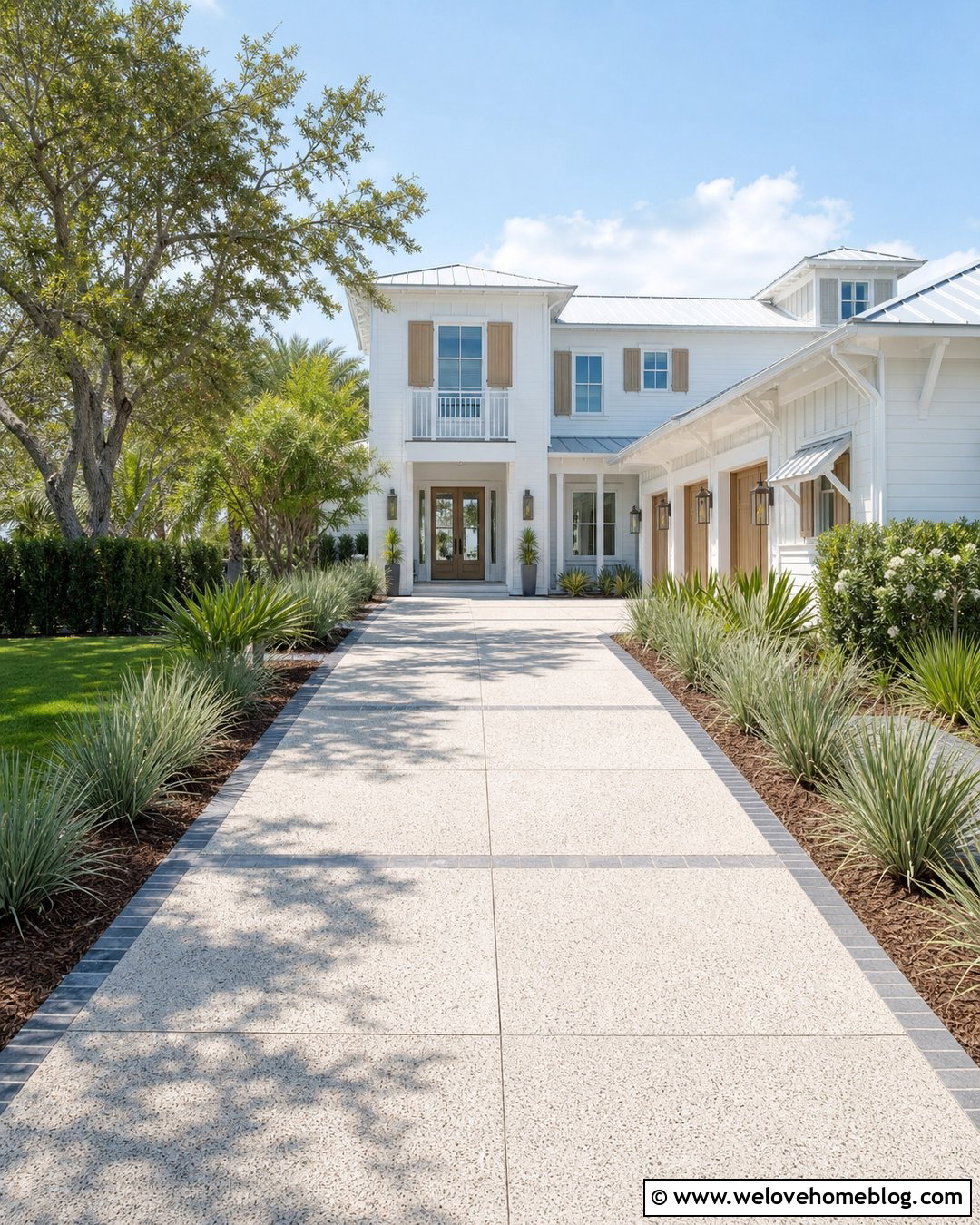
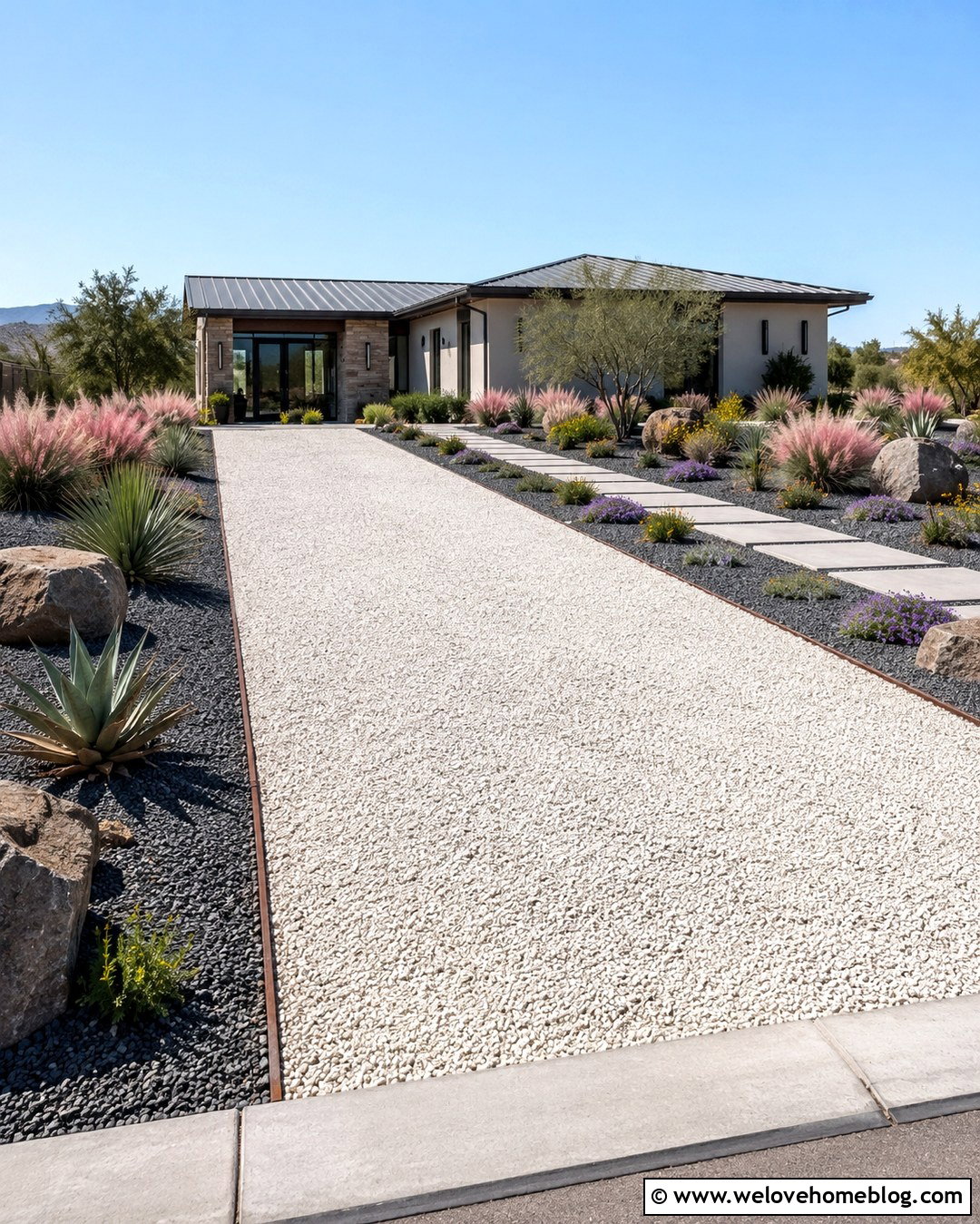
Soft beach-beige concrete can make an expansive driveway feel warmer than standard gray pavement. Select a consistent blend of small coquina and oyster shell pieces, then use a light exposed or sandblasted finish. Divide the surface into long rectangular panels to create a clean rhythm from the curb to the garage. A matching beige concrete apron preserves the simple color palette, while thin charcoal paver edging adds enough contrast to sharpen the outline. Surround the driveway with silver-green grasses, dwarf palmettos, white oleander, and a neatly maintained lawn. In the background, a white modern coastal house with natural wood accents completes the look. The limited palette allows the driveway’s shell fragments, subtle variations, and fine surface texture to provide interest without making the entrance feel overly decorative.
12. Ivory Tabby Concrete Driveway With Dark Brick
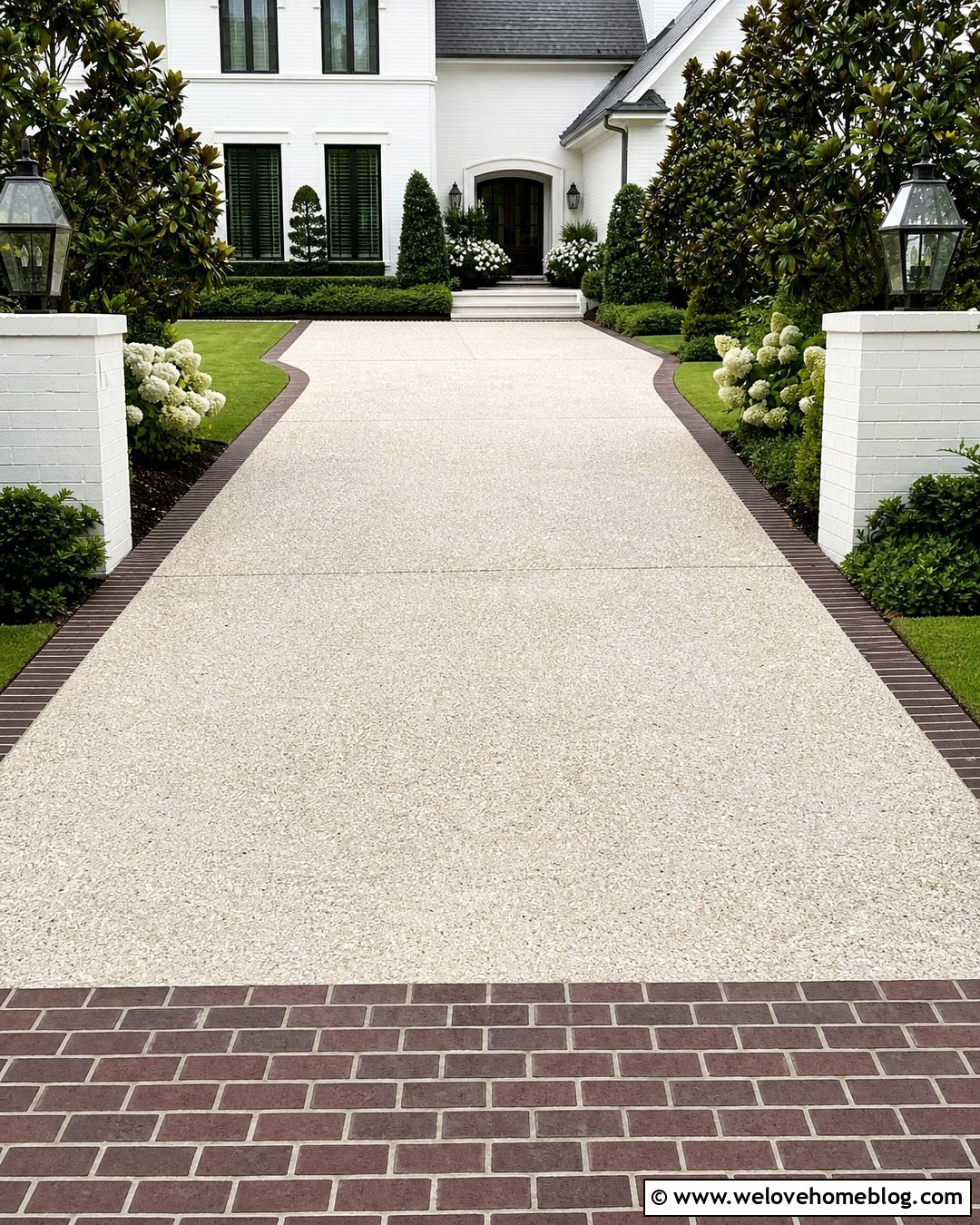
Bright ivory tabby concrete becomes more defined when paired with deep brown or charcoal brick. Use a full-width brick apron at the street, followed by a narrow brick border along both sides of the driveway. Repeat the darker material between the driveway and front walkway. The main tabby field should contain small white shells and a few darker shell fragments that visually connect with the brick. A straight driveway with a slight flare near the garage will keep the formal contrast balanced. Use dark green shrubs, magnolias, and white flowers in the surrounding beds. This combination works especially well with a white-painted brick house, dark shutters, and traditional lanterns. The result is coastal but structured, making it suitable for both historic-inspired and recently built homes.
13. Tabby Concrete Driveway With Stone Pillars
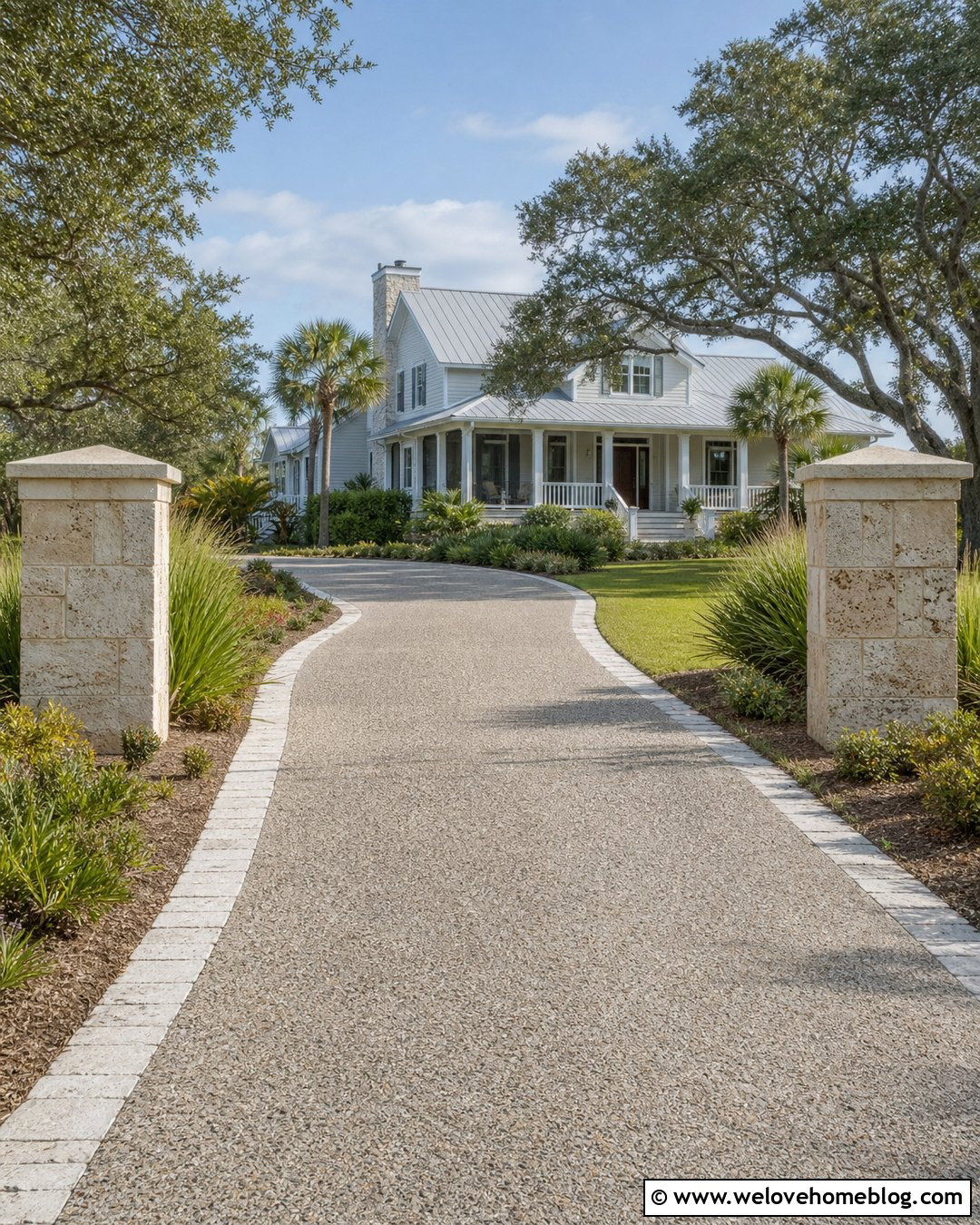
Stone pillars can turn a simple tabby concrete driveway into a clearly defined property entrance. Choose warm-gray concrete with a fine oyster shell finish and form a gently curving approach. At the street, place two low pillars made from limestone, fieldstone, or coquina stone. Keep them proportional to the driveway and leave enough clearance for vehicles. A tabby concrete apron can extend between the pillars, while matching stone borders define the first several feet. Plant low grasses and compact shrubs around the bases so foliage does not hide the entrance. Farther along the drive, use live oaks or palms to frame the house. This complete design complements country coastal homes, large ranch houses, and properties with longer front setbacks.
14. Tabby Concrete Driveway With Coastal Gate
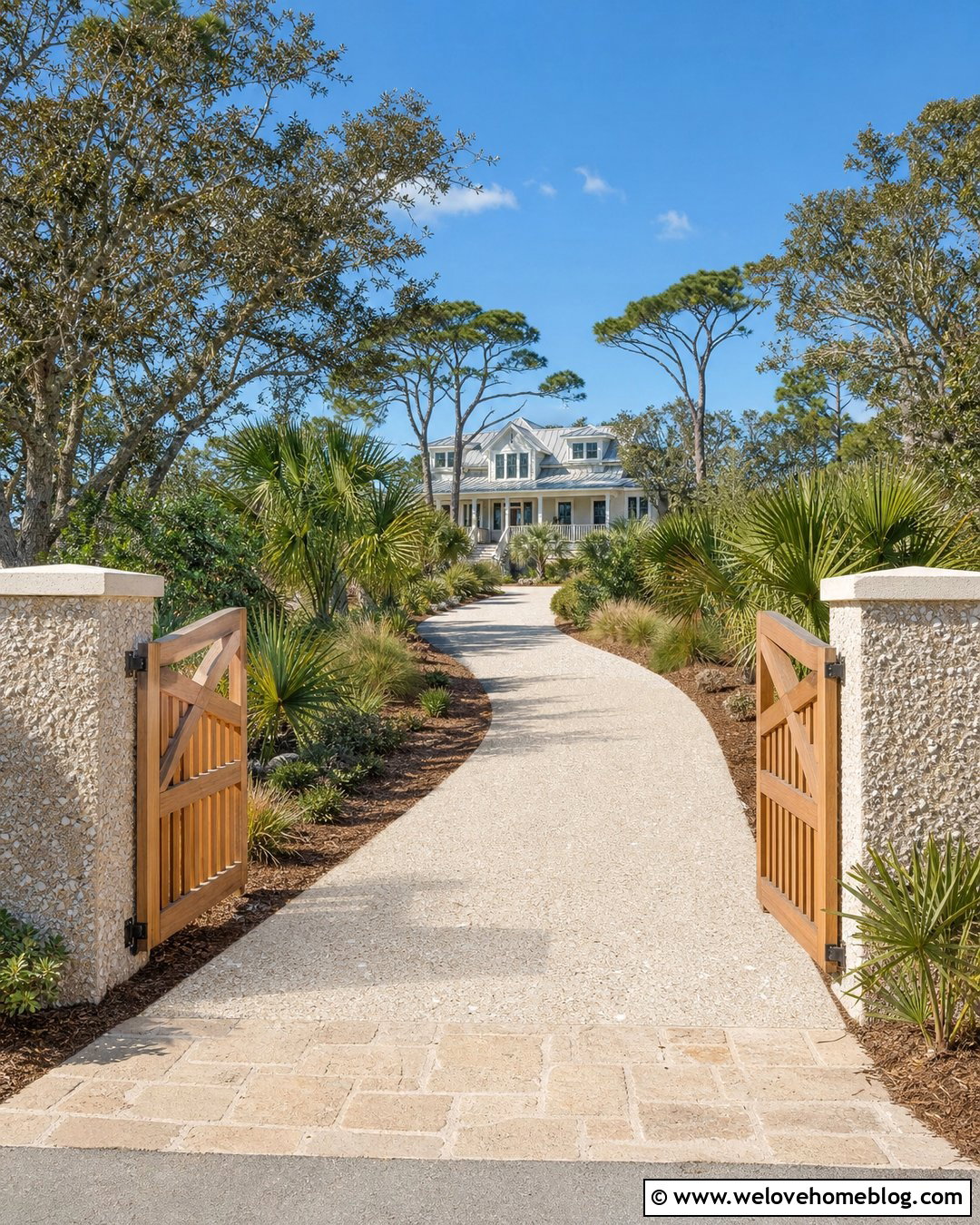
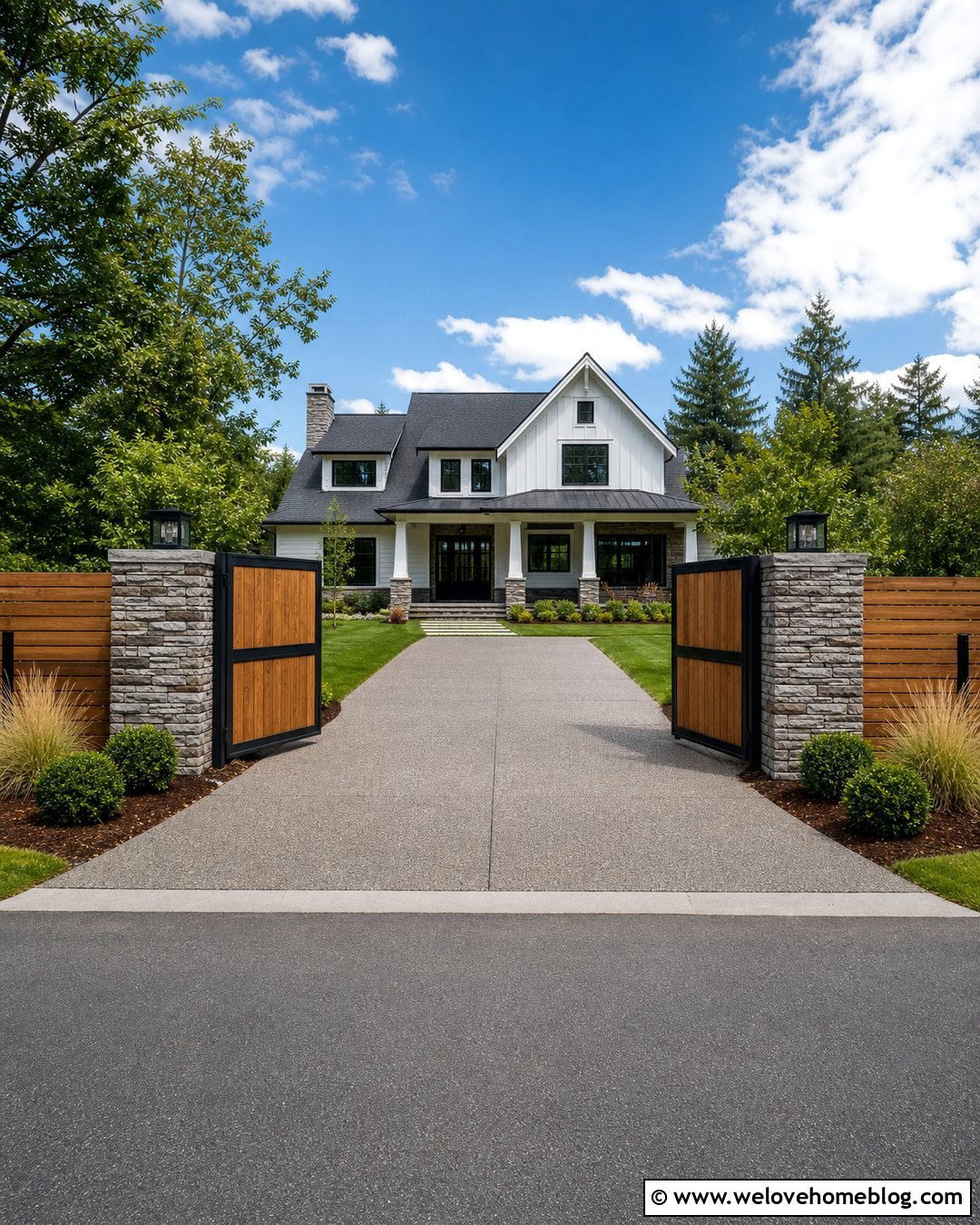
A simple gate adds privacy without hiding the texture of a tabby concrete driveway. Use pale sand-colored tabby concrete in a straight or lightly curved layout, finished with medium exposed oyster shells. Position an open-design aluminum or wood gate several feet beyond the road so a vehicle can stop safely before entering. Anchor it with stucco or tabby-finished pillars that coordinate with the driveway. A brick or stone apron beneath the gate protects the transition and adds contrast. Surround the entrance with palmettos, native grasses, wax myrtles, and low ground covers. Continue larger trees farther inside the property to create a layered arrival. The open gate pattern keeps the house visible and allows the shell surface to remain part of the overall entrance composition.
15. Tabby Concrete Driveway Under Live Oaks
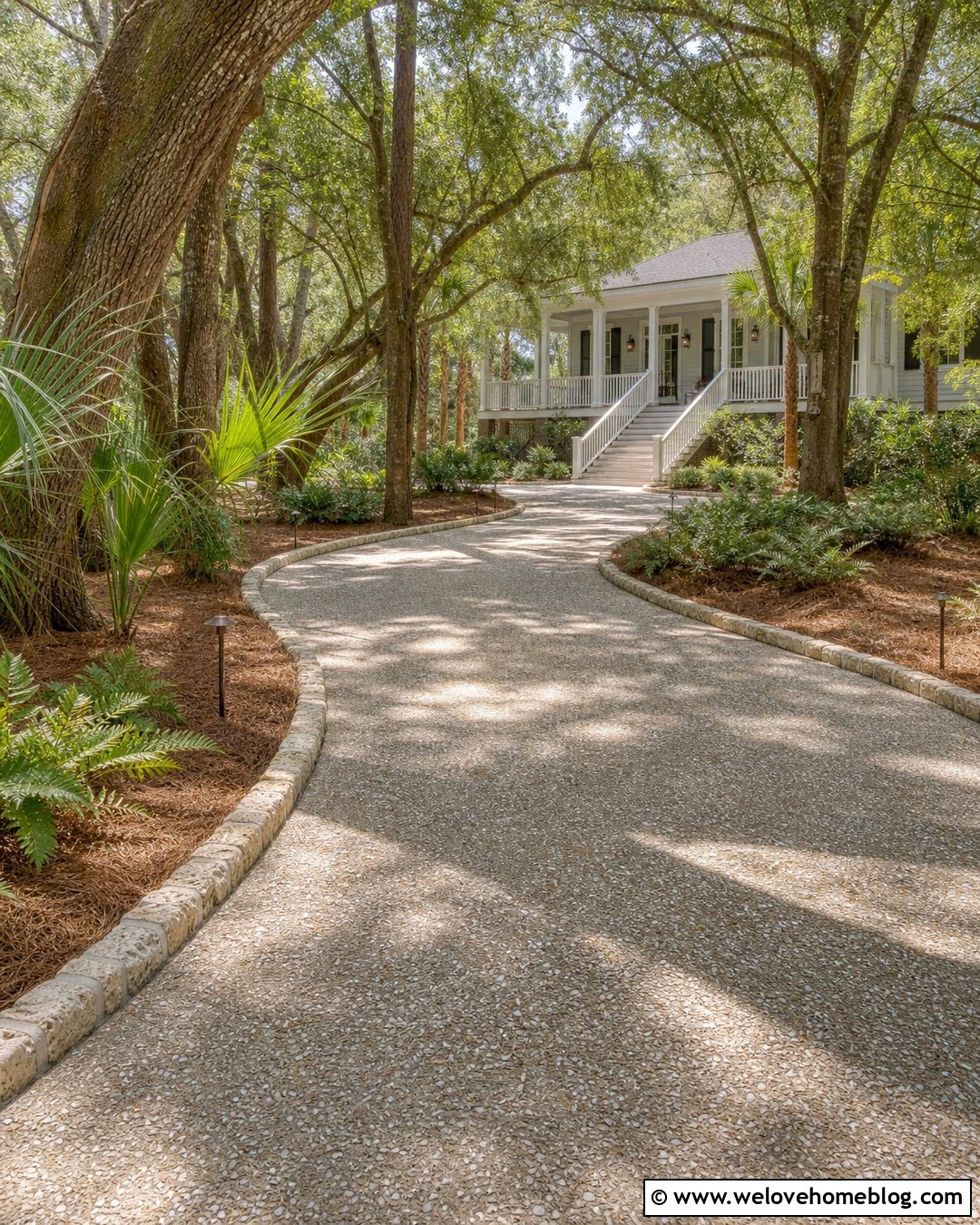
Filtered sunlight and broad live oak branches create a memorable setting for a long tabby concrete driveway. Choose a muted beige-gray mix with medium oyster shell exposure so fallen leaves do not create an overly stark contrast. Let the driveway curve gently between existing trees rather than cutting through major root zones. A qualified local professional should help determine safe pavement placement near mature specimens. Border the drive with low coquina stone, pine straw beds, native ferns, and shade-tolerant shrubs. Keep large planting masses away from the driving edge to preserve visibility. At the end, reveal a raised Lowcountry home with a deep porch and wide front steps. The pale shell surface brightens the shaded approach while fitting naturally into the established Southern landscape.
16. Tabby Concrete Driveway With Native Landscaping
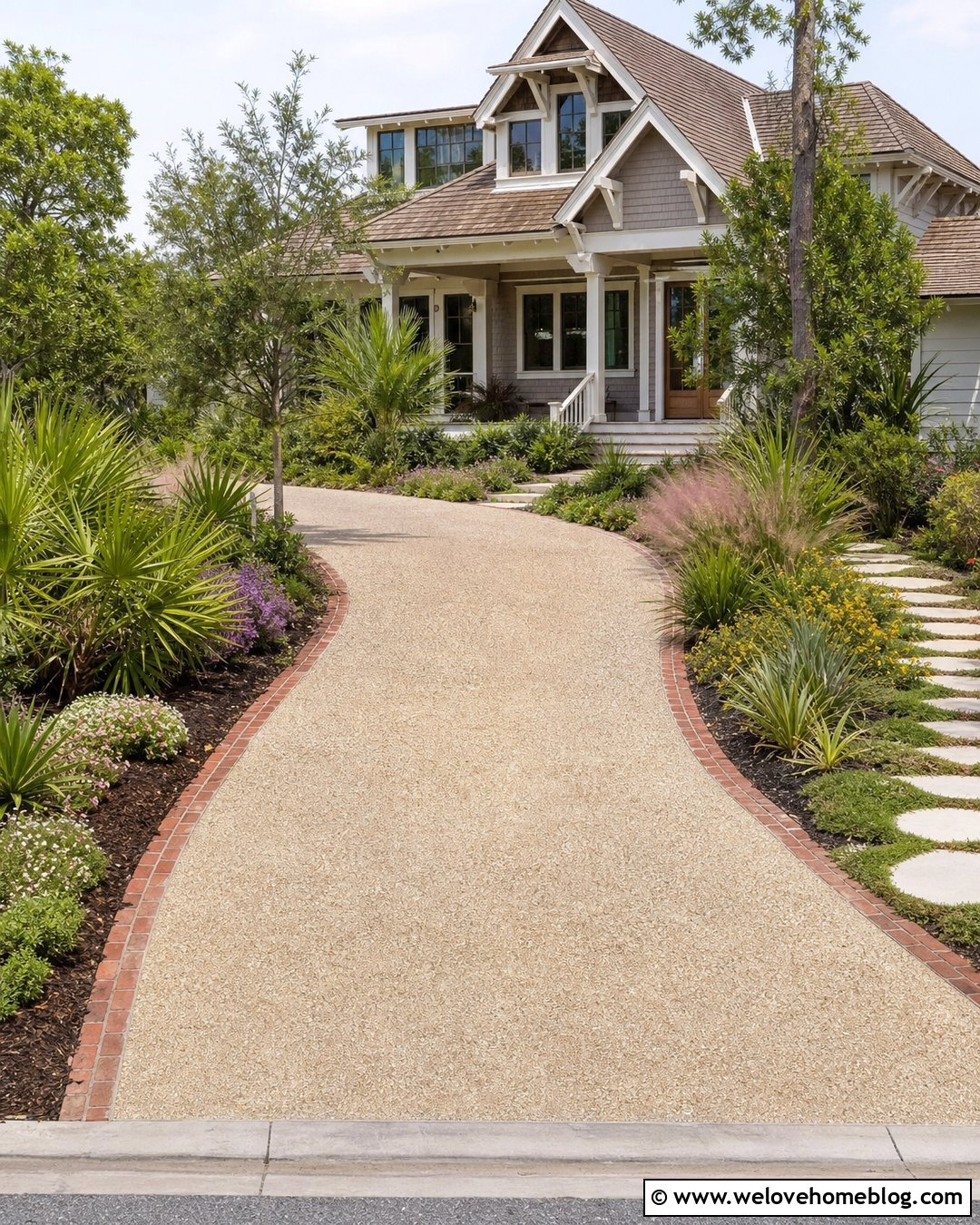
Native coastal planting can make a tabby concrete driveway attractive without requiring an overly formal garden. Use warm buff concrete with finely exposed shell aggregate in a softly curved layout. Add flush brick edging that separates the pavement from generous planting beds. Fill those beds with regionally appropriate grasses, palmettos, yaupon holly, wax myrtle, flowering perennials, and salt-tolerant ground covers selected for the site. Group plants in broad drifts rather than scattering individual specimens. This produces a calmer design and leaves clear sightlines at the street. A stepping-stone walkway can cross one bed and connect the driveway to the porch. Against a coastal craftsman or cottage facade, the shells, brick, and layered greenery create a natural transition between the built entrance and surrounding landscape.
17. Tabby Concrete Driveway With Landscape Lighting
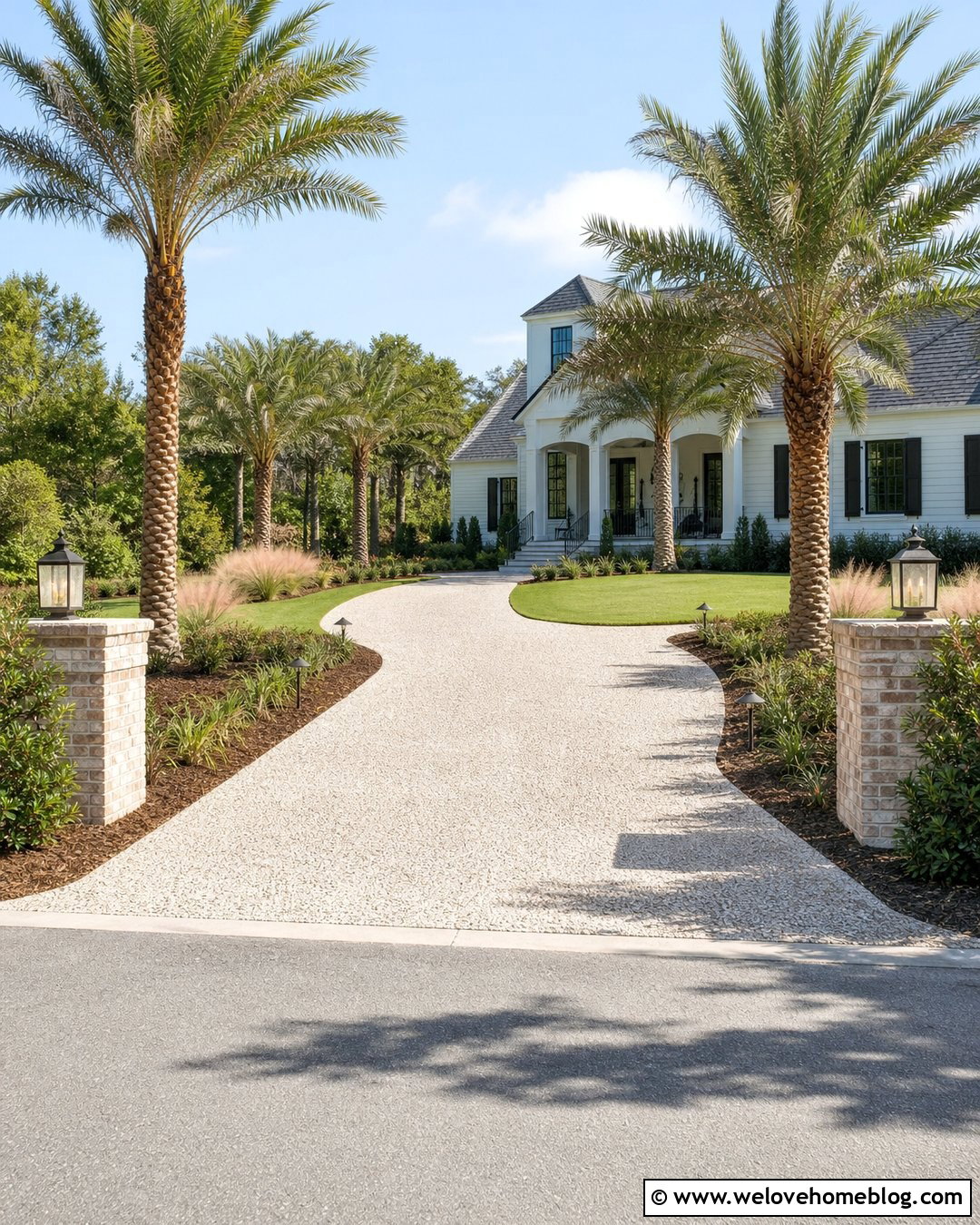
Good daytime placement allows driveway lighting to remain attractive even when the fixtures are not illuminated. Select ivory tabby concrete with a uniform oyster shell finish and use a curved layout leading toward the garage. Install short bronze path lights several feet apart within the planting beds rather than directly along every pavement edge. Place a pair of understated lantern fixtures on brick entrance pillars. Low uplights can highlight one palm, live oak, or architectural facade without crowding the scene. During the day, dark fixtures contrast cleanly with pale shell concrete and green foliage. Frame the drive with liriope, muhly grass, dwarf hollies, and broad lawn areas. This layered arrangement supports navigation while preserving a bright, uncluttered curb view and an inviting coastal character.
18. Tabby Concrete Parking Court
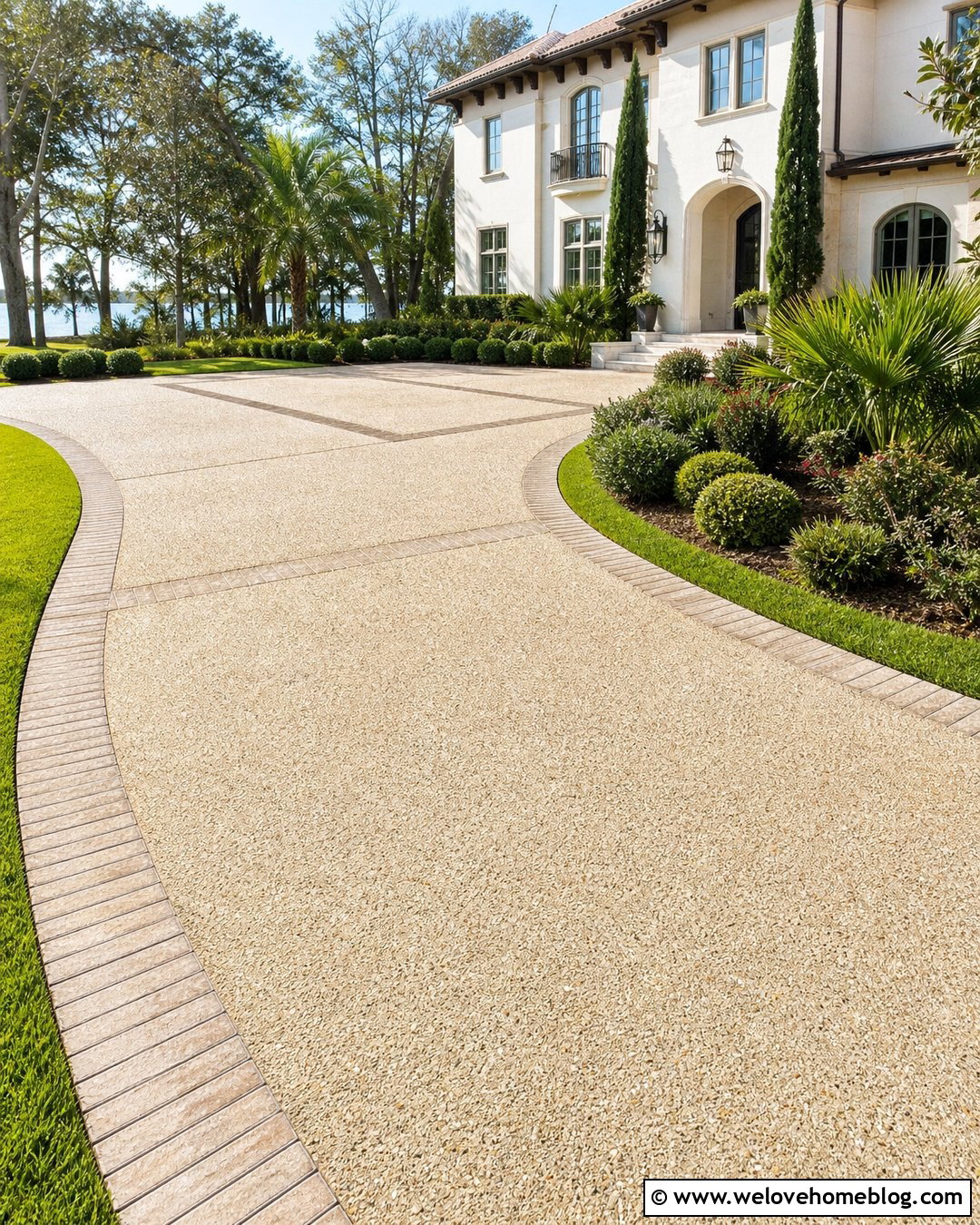
A front parking court can look residential when the paving pattern and landscaping break up its scale. Use light beige tabby concrete for the main driving area, arranged in large rectangular panels. Define the center parking zone with brick or limestone bands rather than changing the entire surface material. Create a gently curved approach from the street so the full court is not immediately exposed. Along the outer edge, add a low hedge, small ornamental trees, and layered planting beds. Use a separate tabby walkway to guide visitors toward the front door. This design suits a wide coastal estate or multi-garage house where several turning movements are required. Consistent shell exposure helps the individual sections read as one coordinated driveway instead of disconnected paved areas.
19. Small Tabby Concrete Driveway
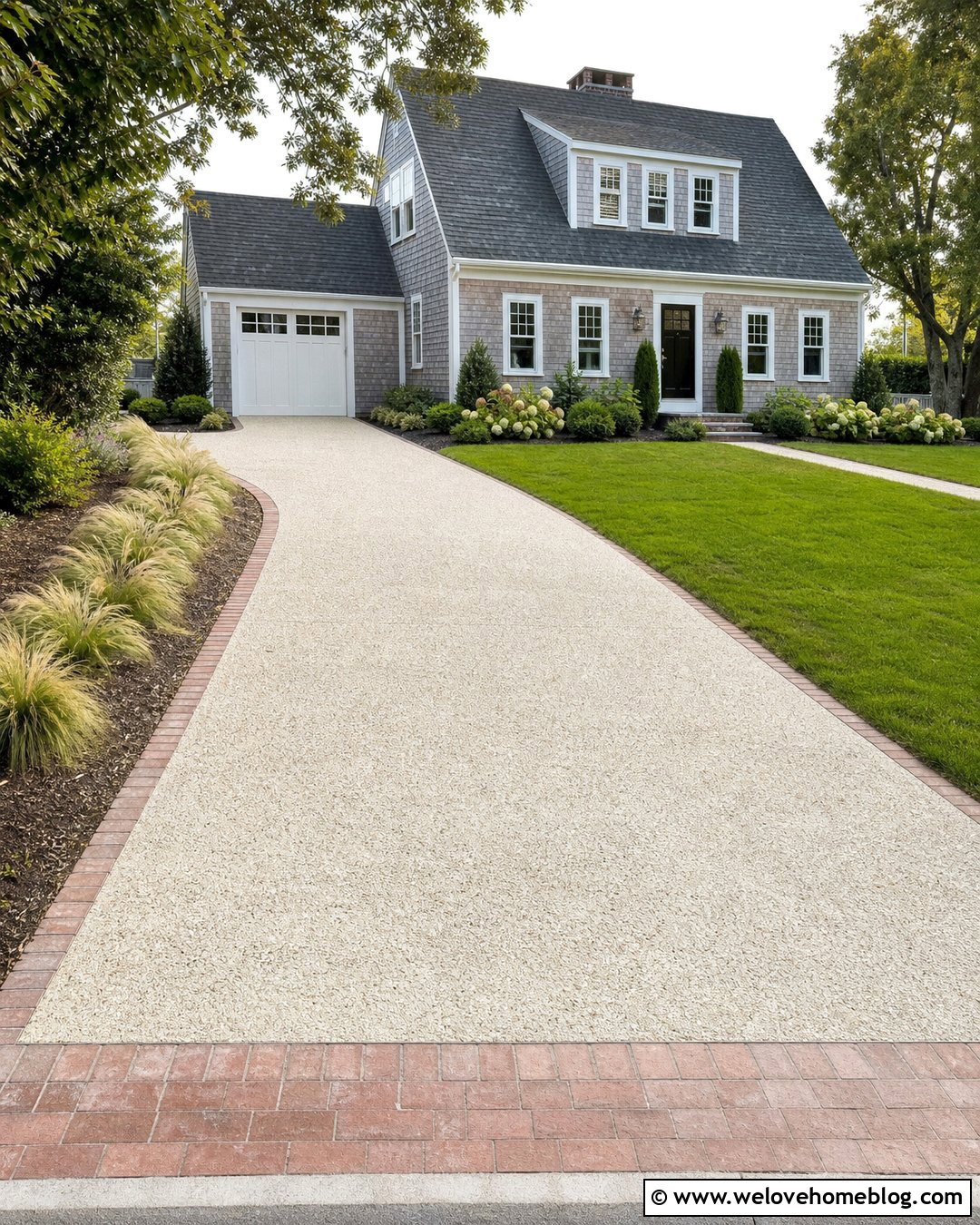
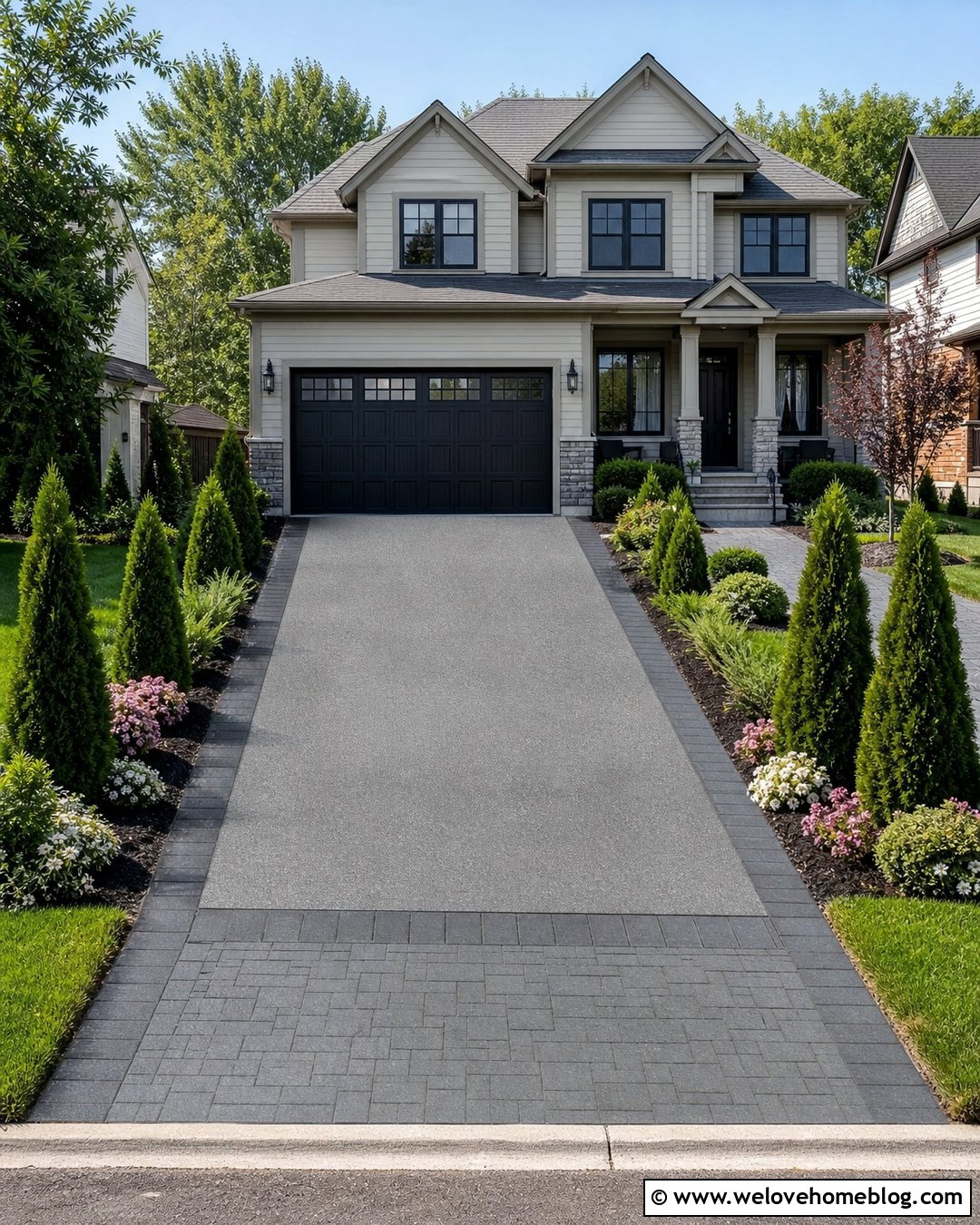
A compact driveway can still feature tabby concrete without looking crowded. Use a simple straight layout sized for one or two vehicles, with a slight widening near the garage. Choose cream or light gray concrete containing small shell pieces rather than oversized aggregate. Fine shells provide coastal texture while keeping the limited surface visually calm. Add one slim brick border and a matching brick apron instead of multiple decorative bands. On one side, create a narrow planting bed with dwarf grasses, compact hydrangeas, and low evergreen shrubs. Keep the other side open with lawn or a direct walkway to the front door. This balanced arrangement works well with Cape Cod homes, coastal cottages, and suburban bungalows where every foot of the front yard needs a clear purpose.
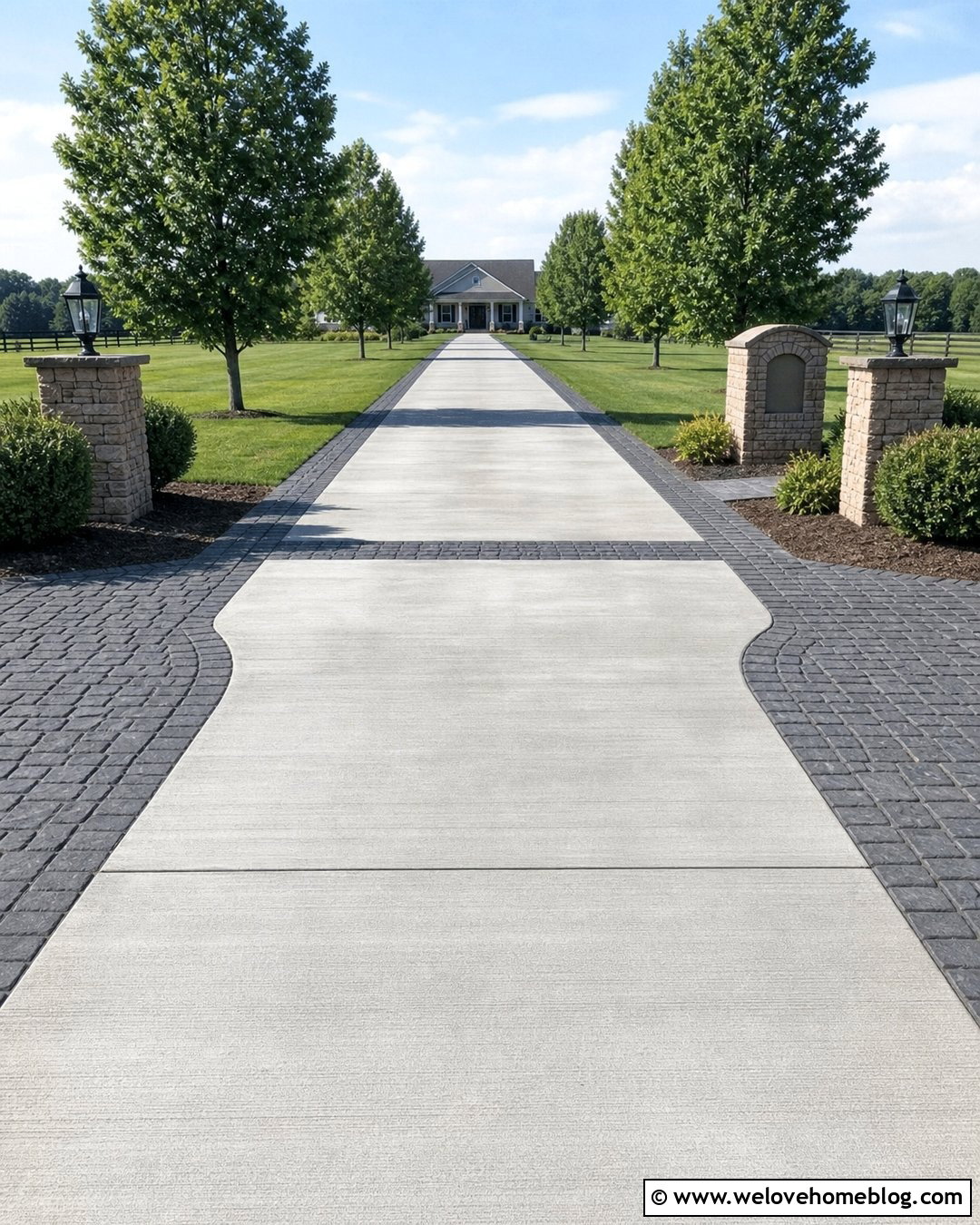
20. Tabby Concrete Driveway With Matching Walkway
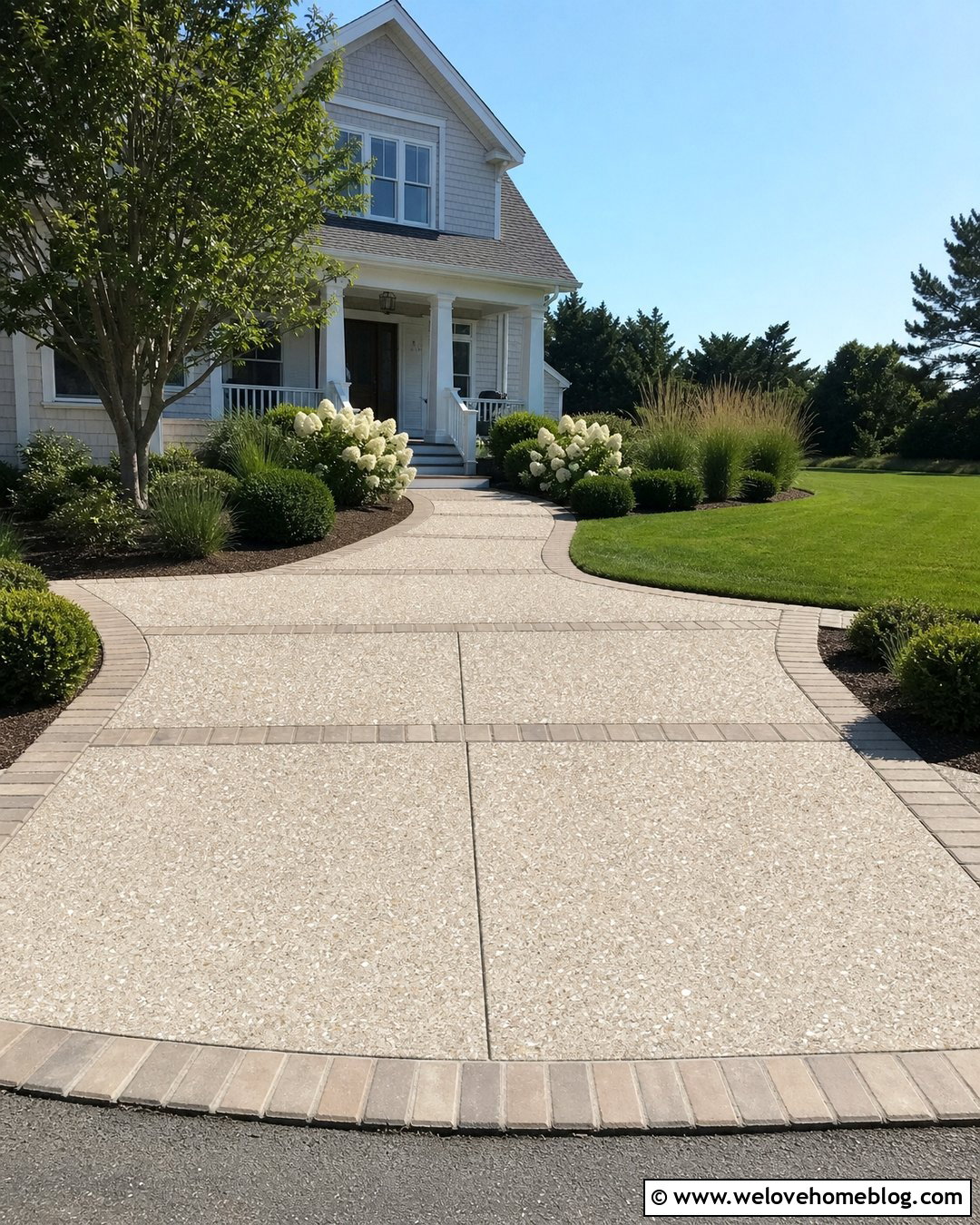
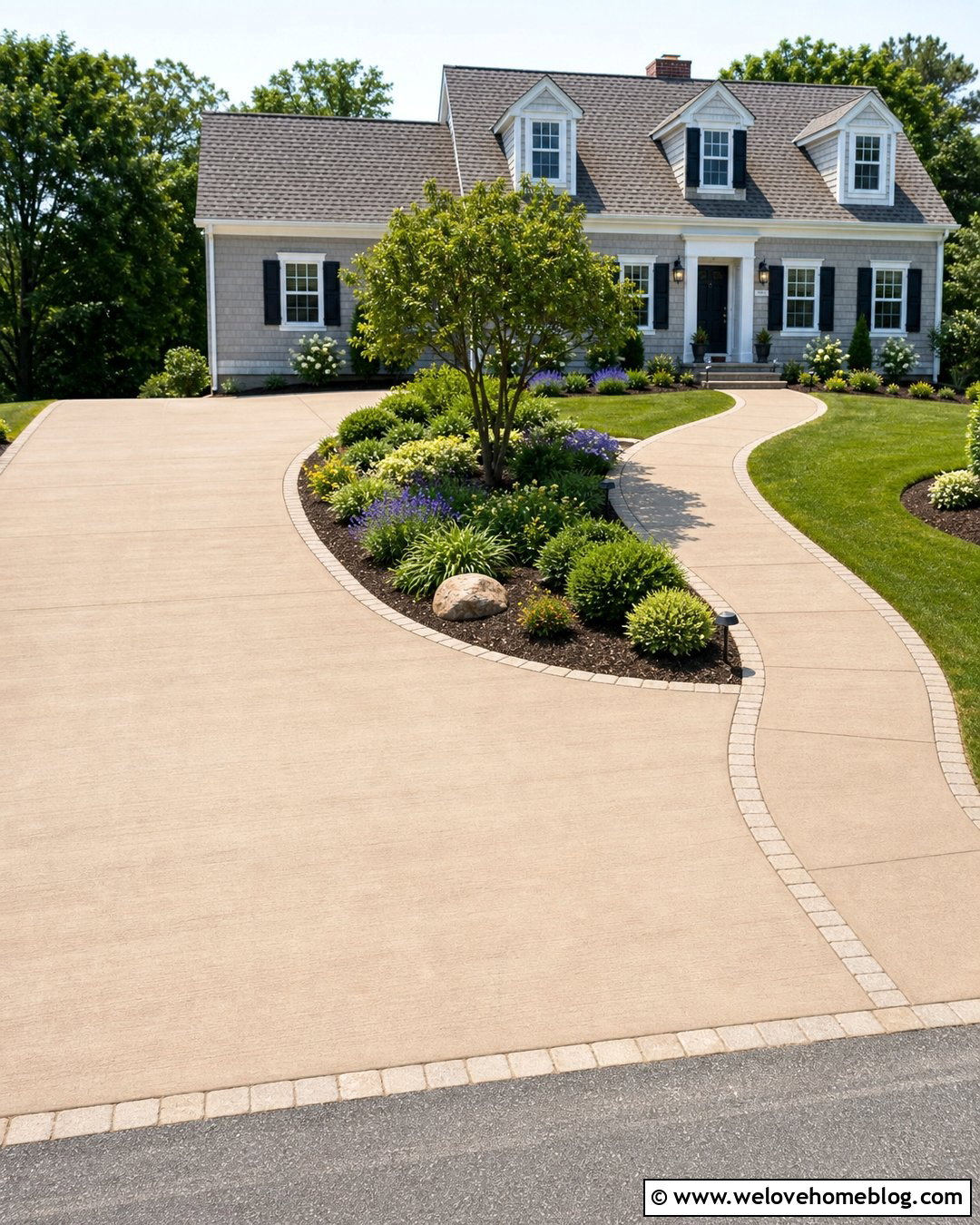
Connecting the driveway and front walk with the same shell finish produces a polished, unified entrance. Pour the main driveway in pale buff tabby concrete with medium-size oyster shells and broad rectangular control-joint panels. Branch a narrower matching walkway from one side, using a smooth curve that leads naturally to the porch. Define both surfaces with a single brick soldier-course border. At the junction, add a wider landing so the transition does not feel pinched. Frame the walkway with white hydrangeas, ornamental grasses, and neatly clipped shrubs. Keep the driveway landscaping simpler, using lawn and one shade tree. This coordinated approach is especially effective for craftsman, colonial, and modern farmhouse homes that have a clearly visible front door beside the garage.
Conclusion:
These **20 Tabby Concrete Driveway Ideas** show how shell size, concrete color, layout, borders, and planting can create remarkably different entrances. Brick produces traditional Lowcountry warmth, while geometric joints and dark pavers offer a cleaner modern look. Curves, circular layouts, parking courts, and matching walkways can adapt the material to many property sizes. Before construction, ask an experienced concrete contractor for sample panels showing the proposed shell blend, exposure, color, and finishing method. Confirm base preparation, reinforcement, drainage, joint placement, sealing, and local requirements as well. A thoughtfully planned tabby concrete driveway should feel connected to the house, practical for daily use, and naturally suited to the surrounding coastal landscape.

Related posts:
Leave a Reply