
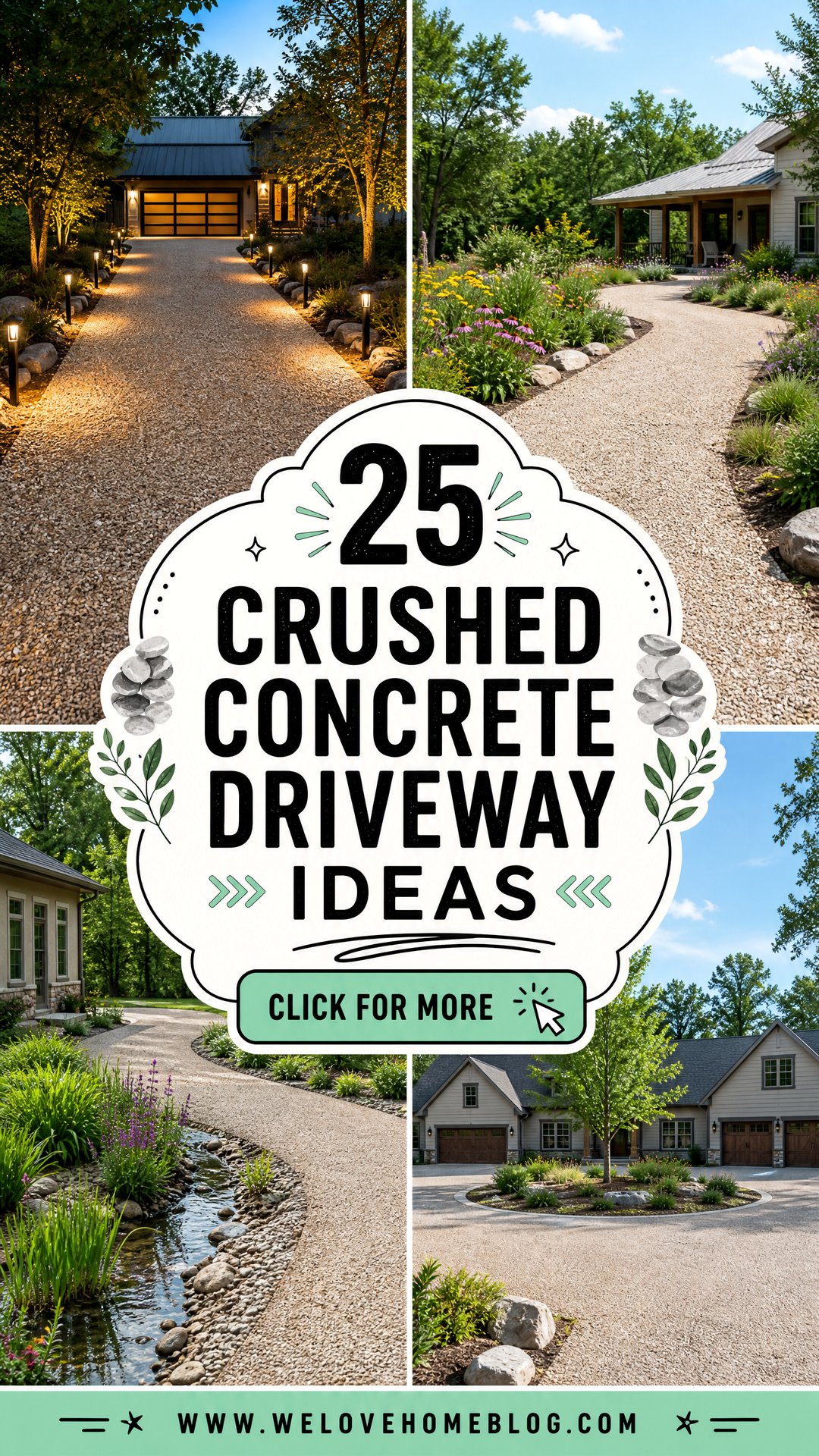
Crushed concrete can turn a practical parking area into a driveway that feels intentional, durable, and connected to the home. Its soft gray color works with modern, farmhouse, ranch, cottage, and traditional exteriors. The angular recycled aggregate also compacts into a firmer surface than rounded decorative gravel, especially when installed over a well-prepared base. Defined edging helps control material movement and gives the driveway a cleaner finish. () You can change the overall appearance with brick aprons, stone borders, planting beds, gates, lighting, curves, or contrasting aggregate. The following complete designs combine the surface, layout, borders, entrance, and landscaping to create 25 Crushed Concrete Driveway Ideas.
1. Crushed Concrete Driveway With Brick Edging
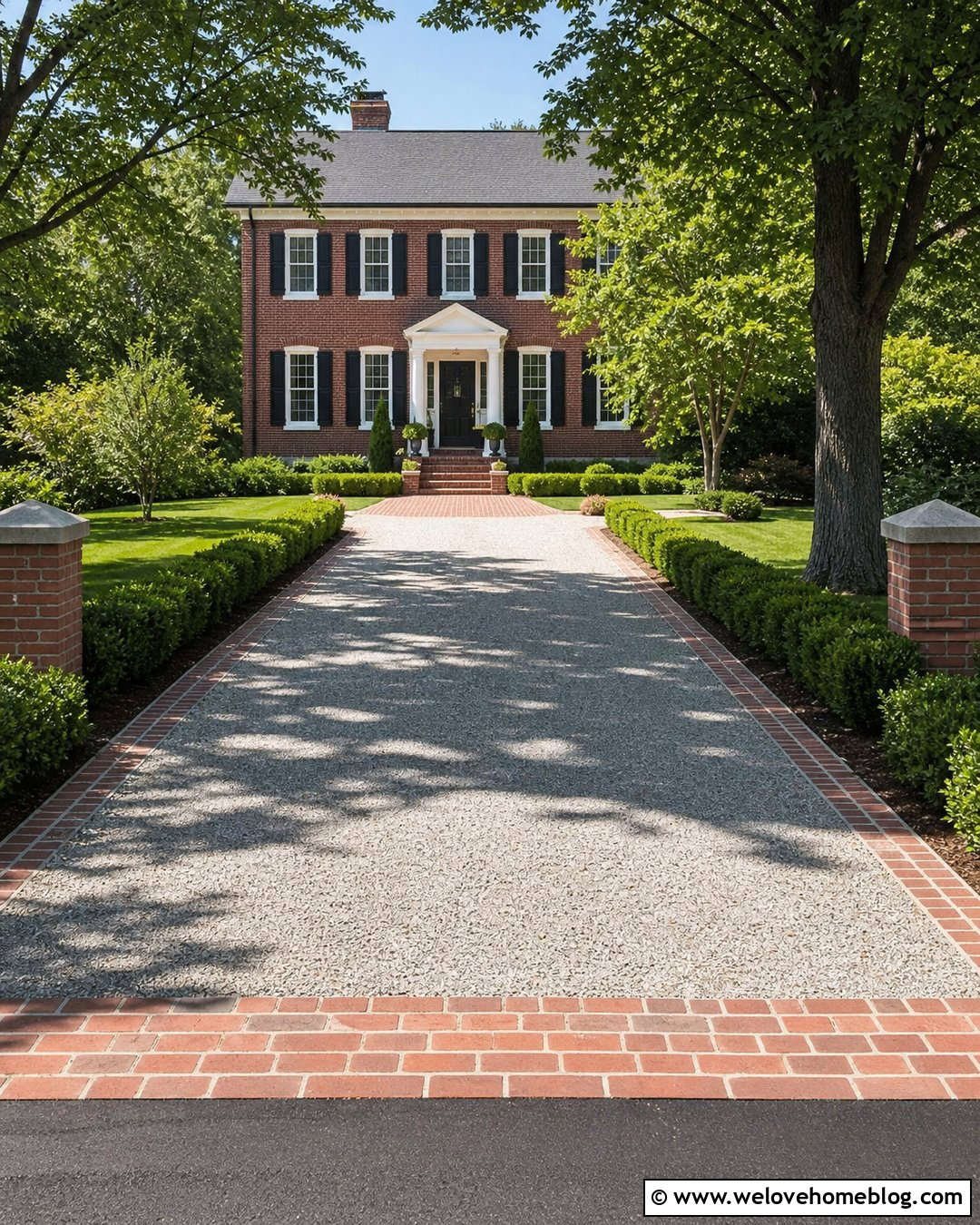
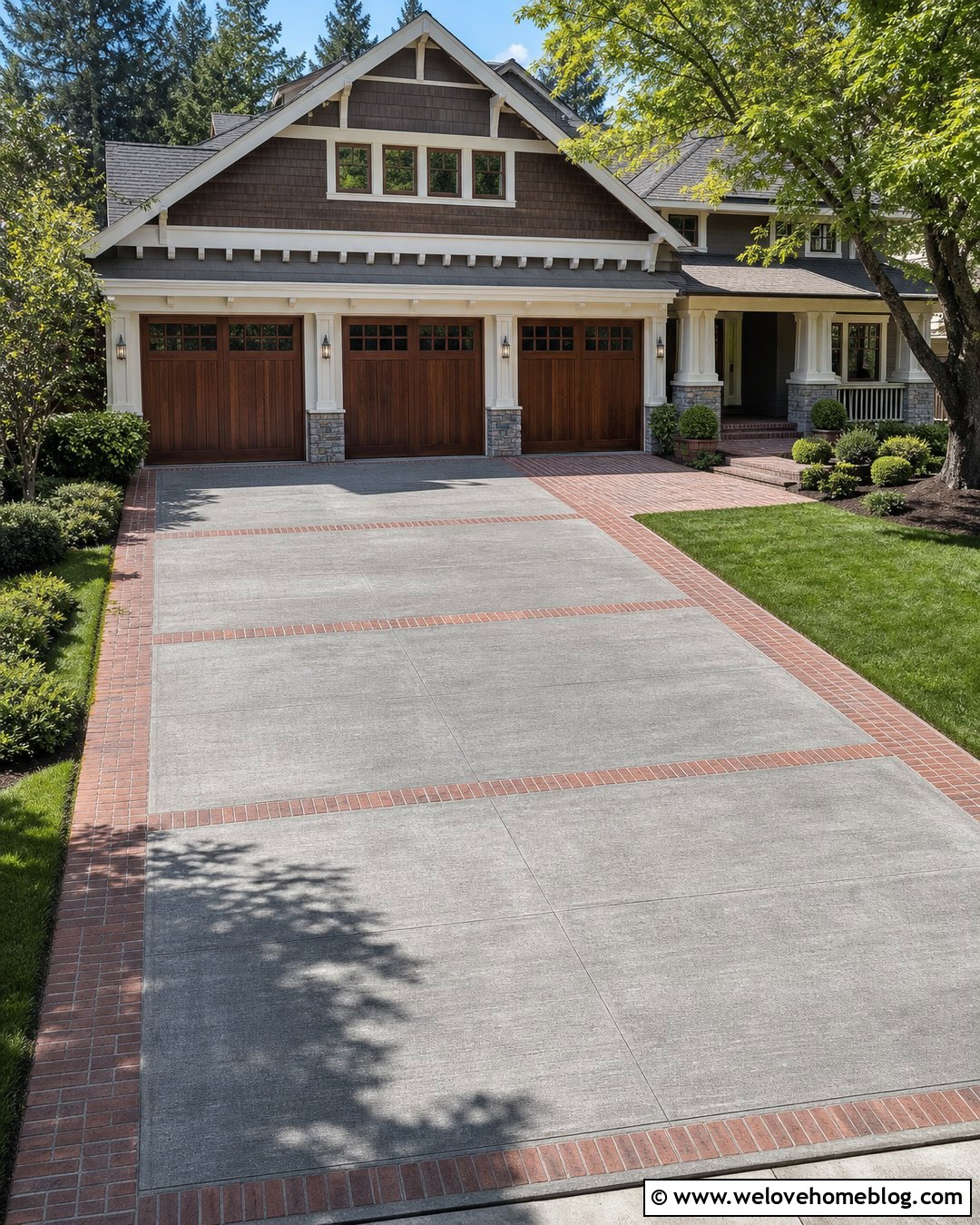
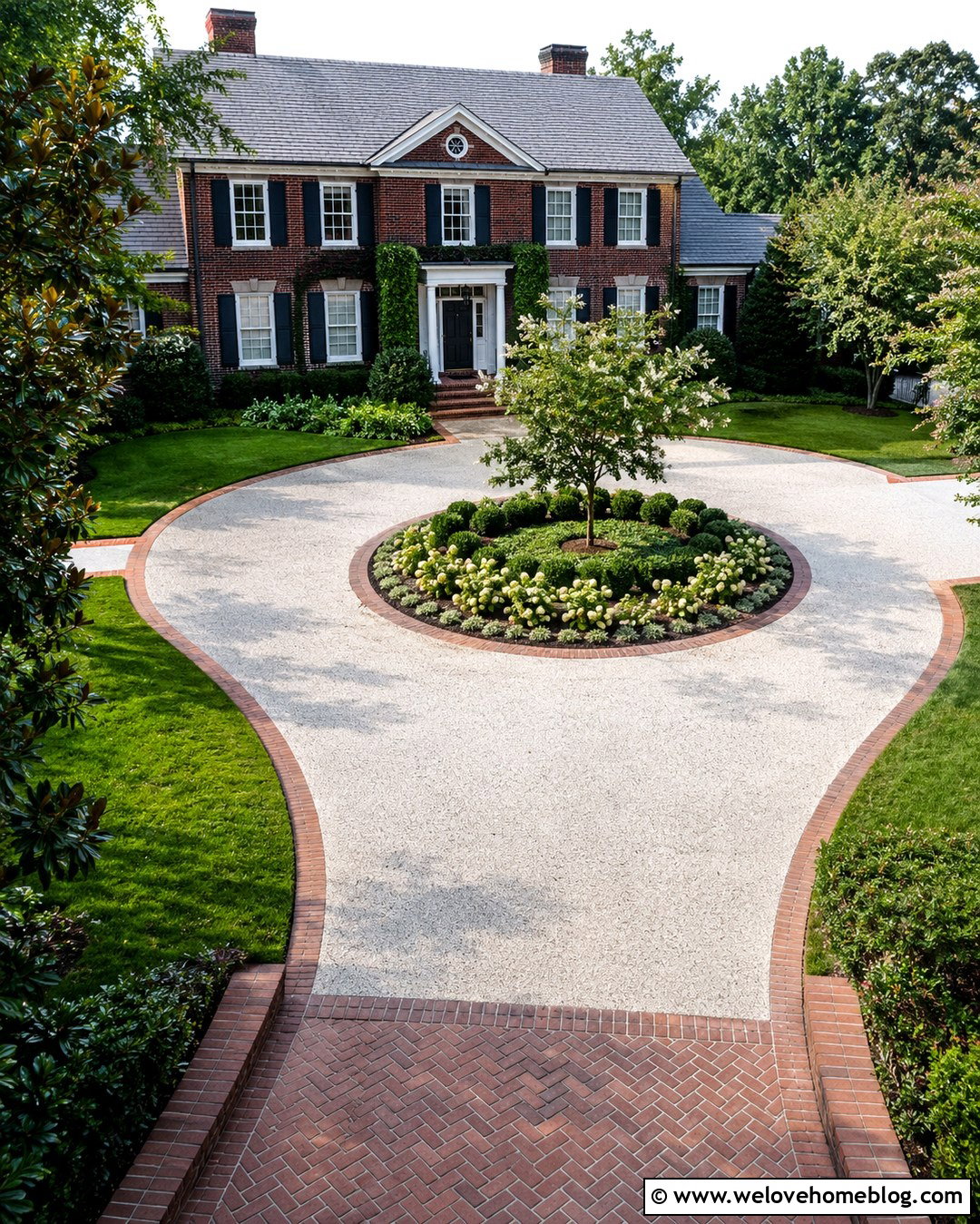
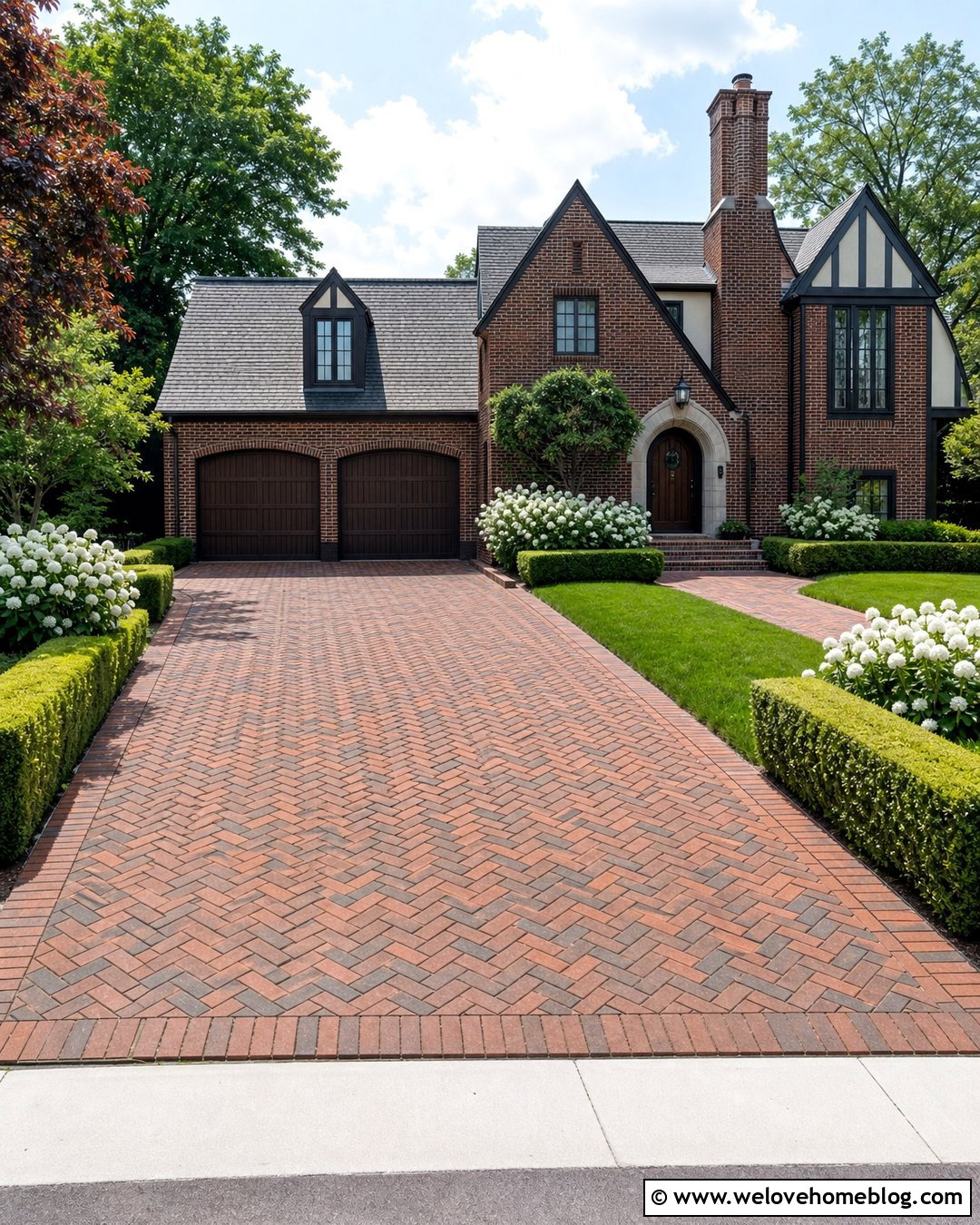
A red brick border brings warmth to the cool gray color of crushed concrete. Use a straight driveway layout for a clean, traditional appearance, then install one or two rows of brick along both sides. The bricks can match a colonial facade, chimney, porch steps, or garden walkway. Finish the entrance with a wider brick apron so the transition from the street looks deliberate. Low boxwood hedges and simple lawn panels will keep the design neat without hiding the border. Compact the crushed concrete slightly below the top of the bricks to help contain loose pieces. This complete look works especially well for suburban homes that need an affordable driveway with a more finished, established character.
2. Crushed Concrete Driveway With Cobblestone Border
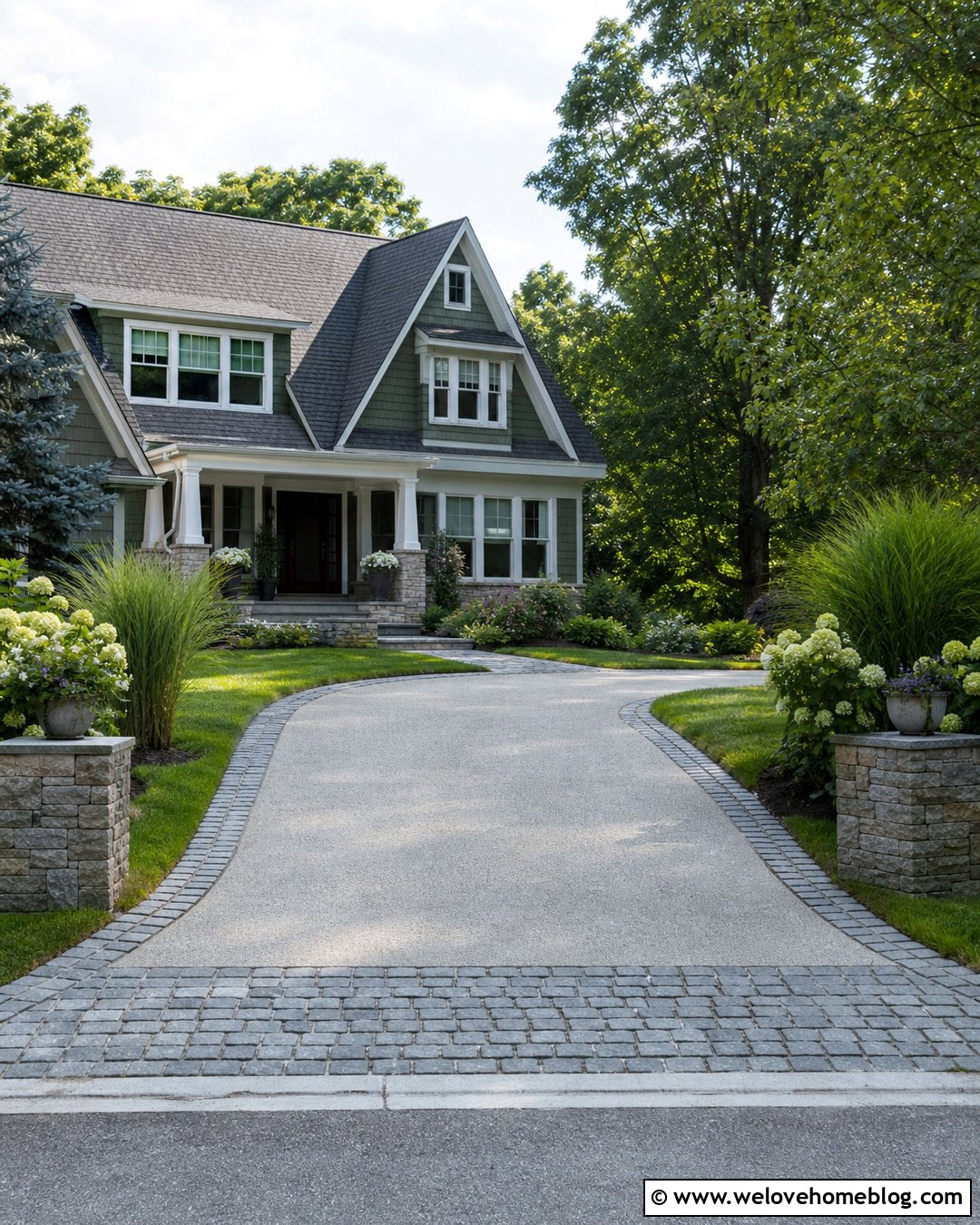
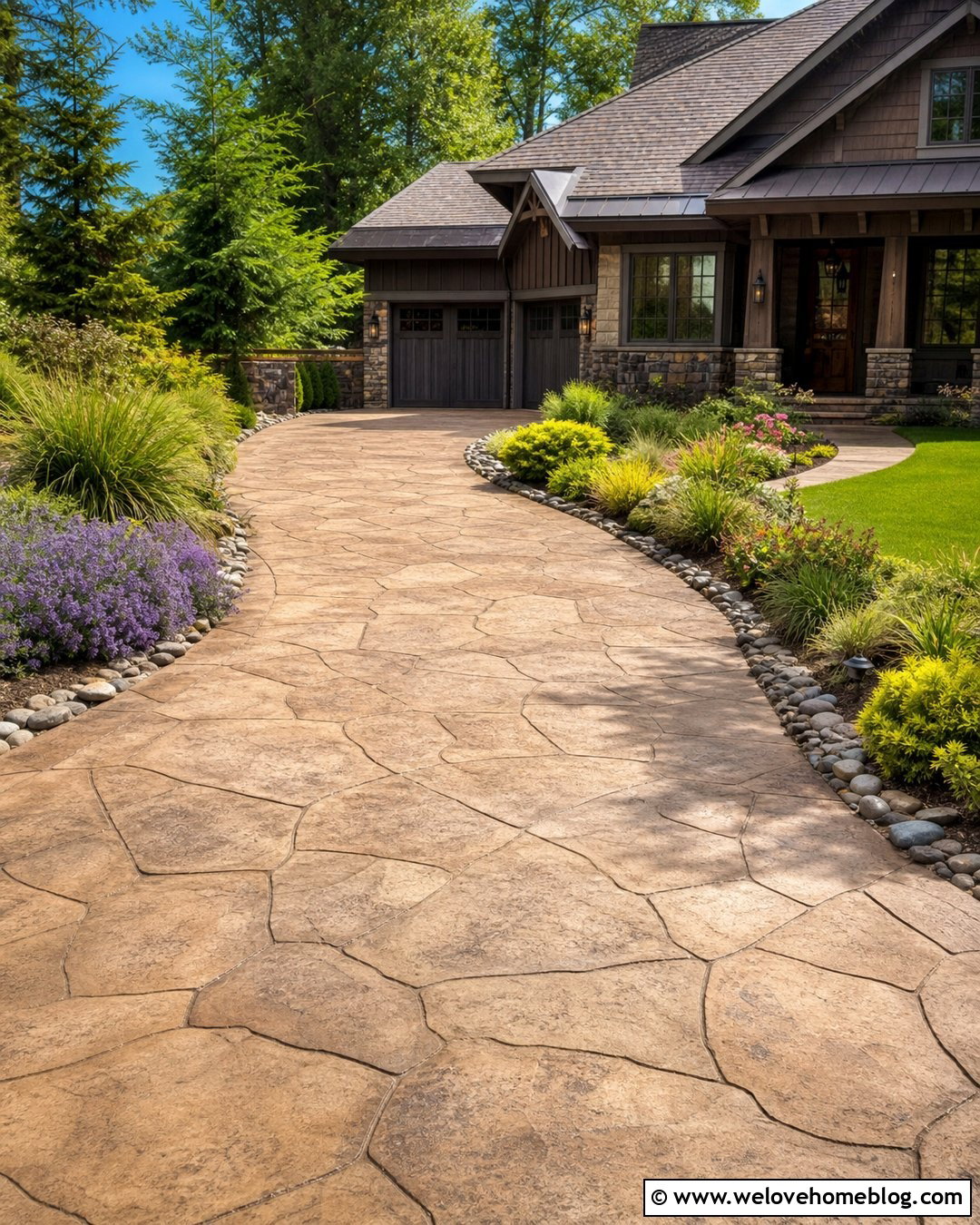
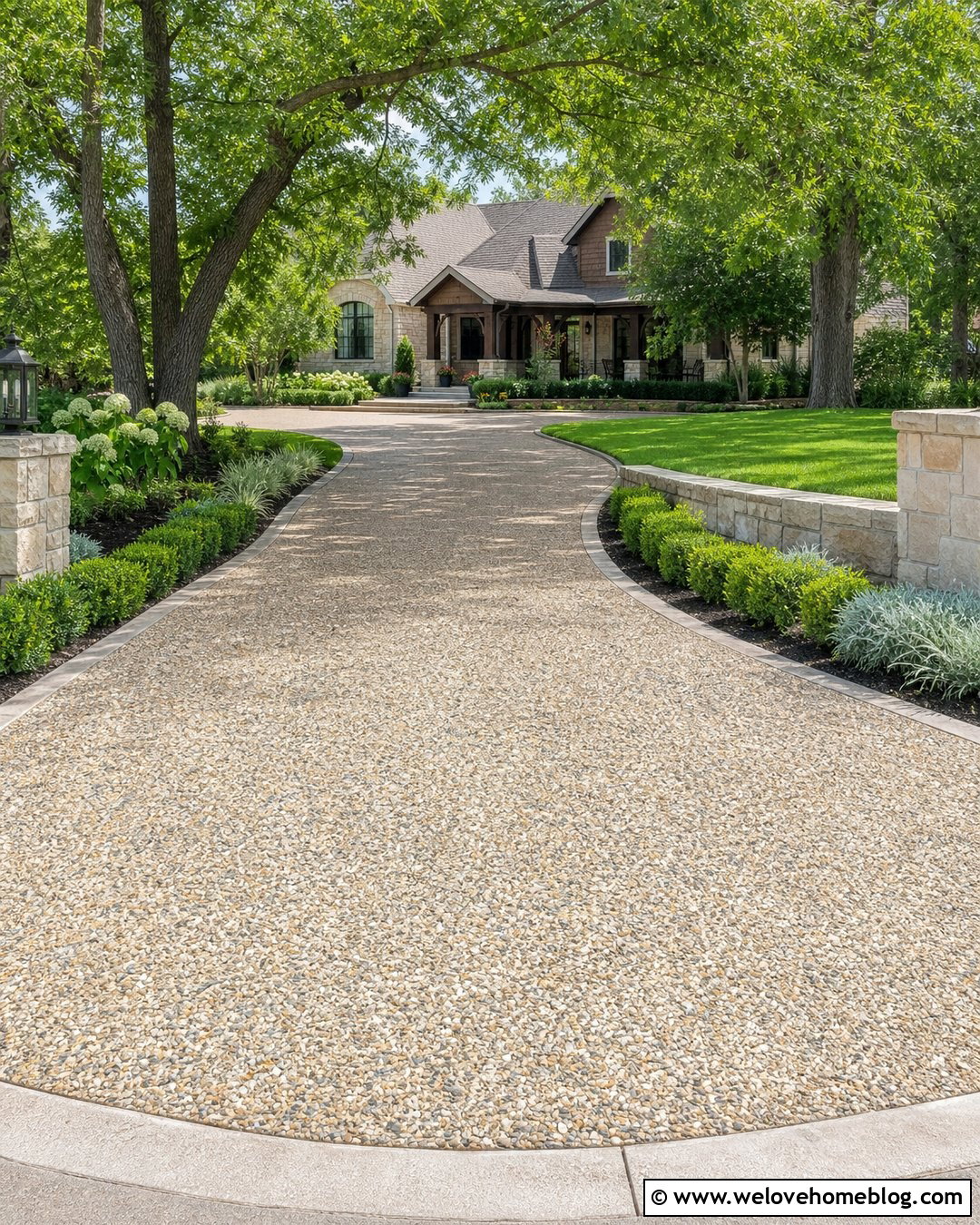
Cobblestone edging gives a crushed concrete driveway a strong and timeless frame. The uneven stone texture complements the recycled aggregate while creating enough contrast to make the driveway shape easy to see. Choose charcoal, granite gray, or mixed earth-tone cobbles for a natural transition. A gently curved layout leading to a craftsman house will feel relaxed but polished. Continue the cobblestones across the entrance as an apron and around nearby planting beds for visual consistency. Ornamental grasses, hydrangeas, and small flowering trees can soften the heavier materials. For a stable result, set the cobbles over a prepared gravel and concrete foundation rather than placing them loosely in soil. ()
3. Crushed Concrete Driveway With Timber Edging
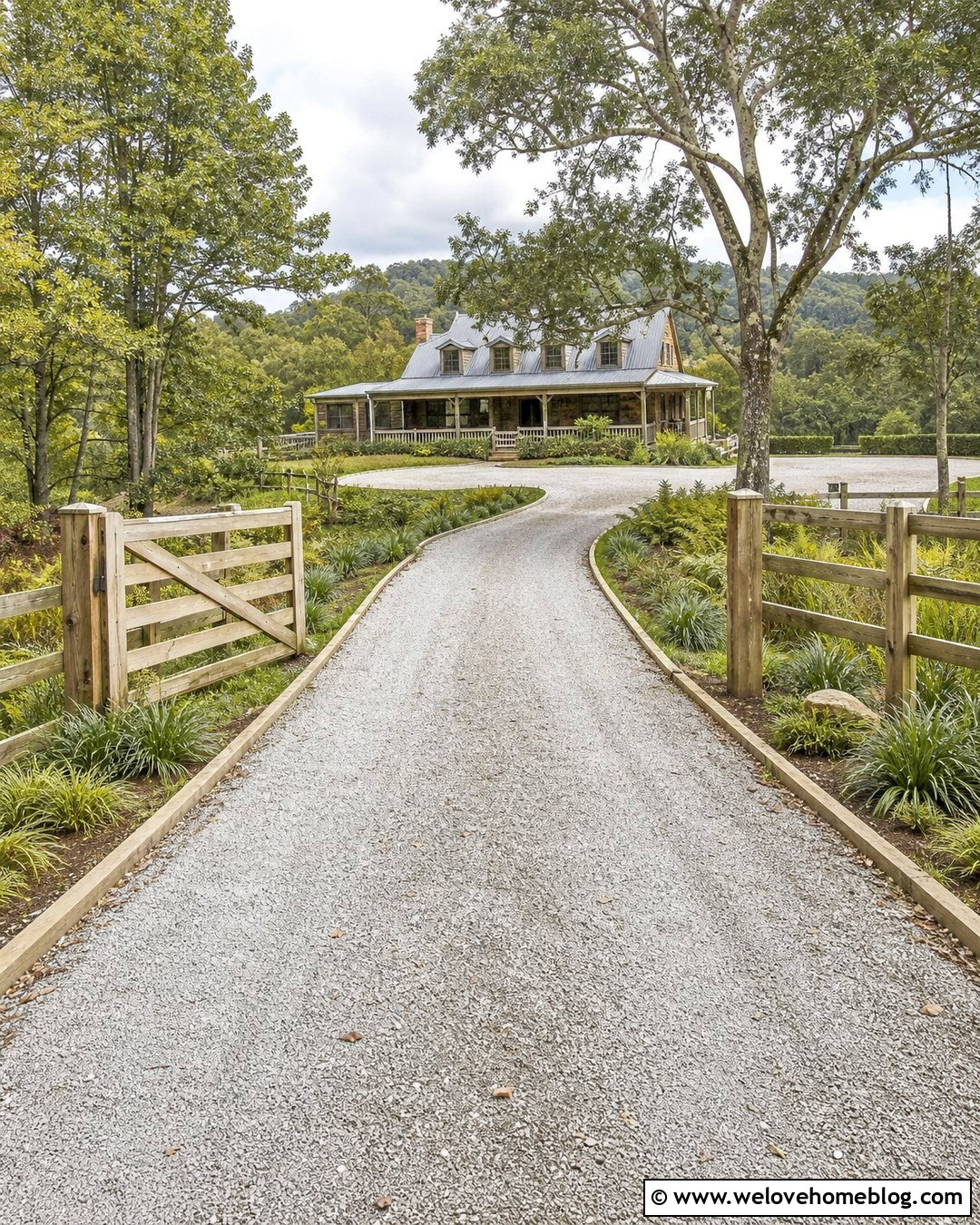
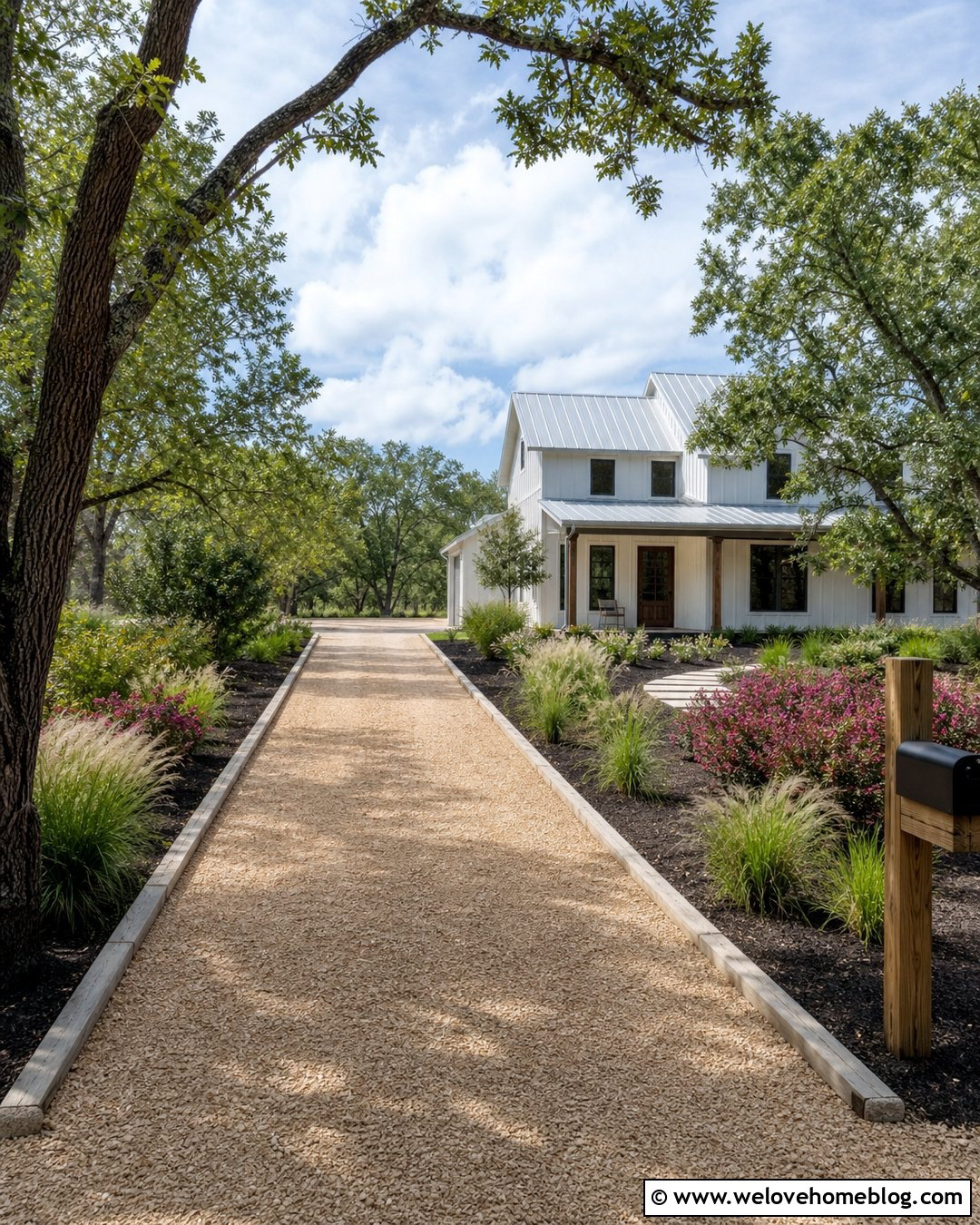
Timber edging is a practical match for a long crushed concrete driveway in a country or wooded setting. Pressure-treated landscape timbers create clear boundaries while blending naturally with fences, tree trunks, and rustic architecture. Build a straight or softly curving drive and position the timbers nearly flush with the compacted surface. This reduces the visual weight of the border and makes mowing easier. Add native grasses, ferns, and informal shrub groups outside the edging rather than creating formal flower beds. A wooden farm gate and simple gravel turnaround can complete the design near the house. Because wood eventually weathers, proper anchoring and ground-rated material are important. The result is casual, affordable, and particularly suitable for rural properties.
4. Crushed Concrete Driveway With Steel Edging
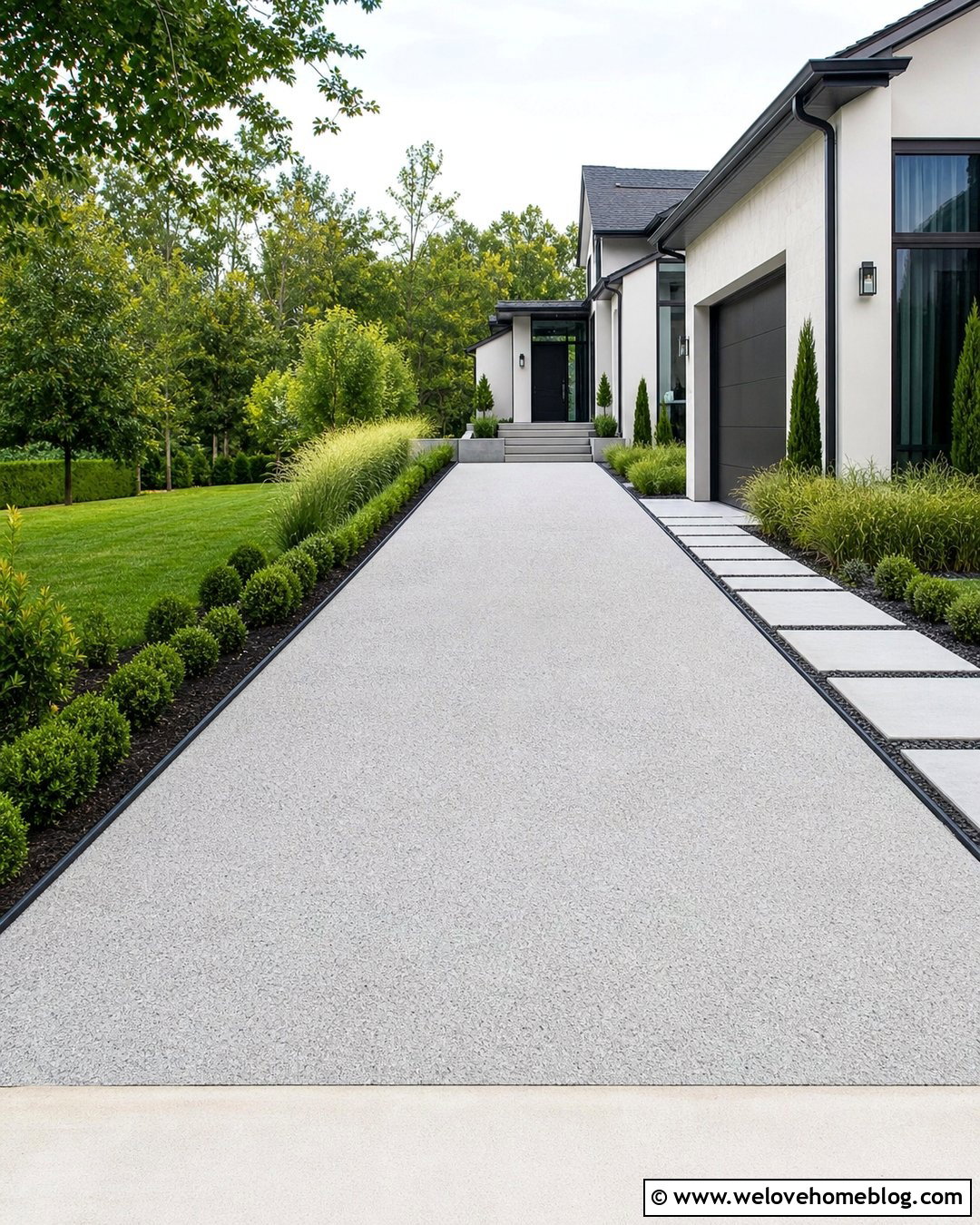
Slim steel edging creates one of the cleanest finishes for a modern crushed concrete driveway. The narrow profile almost disappears, allowing the aggregate texture and driveway geometry to remain the main features. Use it around a straight rectangular drive or a wide parking court beside a contemporary house. Dark steel creates a crisp line against pale gray crushed concrete, green lawn, and black architectural details. Add linear planting beds containing ornamental grasses, compact evergreens, and light-colored river rock. Large concrete stepping pads can form the walkway without competing with the driveway. Steel edging is especially useful where a sharp boundary is needed between loose aggregate and planted areas. A restrained material palette will make the entire frontage look organized and spacious.
5. Crushed Concrete Driveway With Concrete Curb
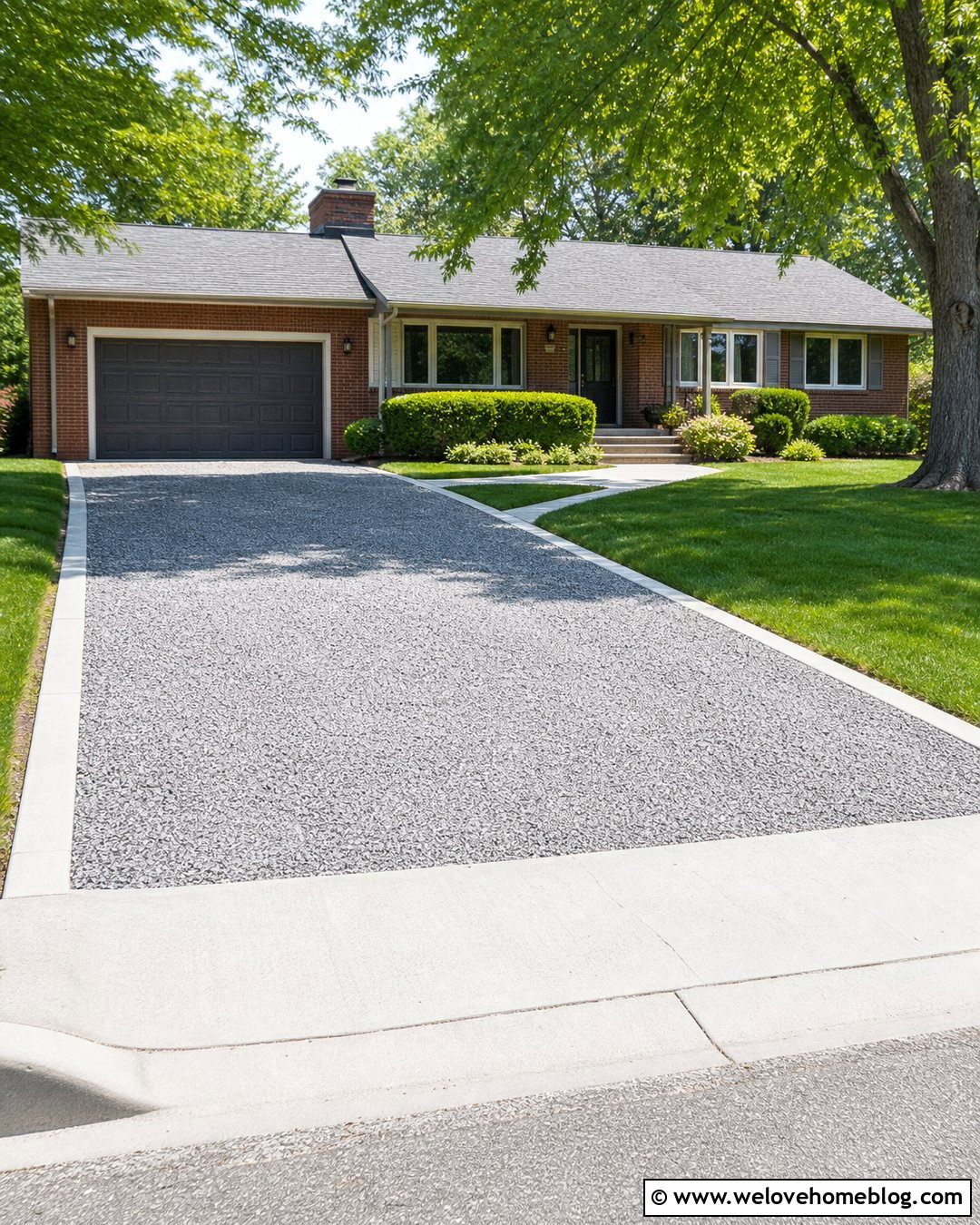
A poured concrete curb can give loose crushed concrete the defined appearance of a professionally planned driveway. Choose a low, smooth curb that follows the full perimeter without creating an awkward obstacle beside parking areas. A wide straight layout suits a brick ranch house, especially when the curb connects with an existing concrete sidewalk. Match the curb color to porch steps or foundation details to create continuity. Broad lawn areas and clipped shrubs will reinforce the simple lines. Near the street, form a slightly wider concrete apron to reduce scattered aggregate at the entrance. The combination feels sturdy and easy to maintain. Concrete curbing can also separate the driveway from drainage beds, mulch, or decorative stone without introducing another contrasting material.
6. Crushed Concrete Driveway With Natural Stone Edging
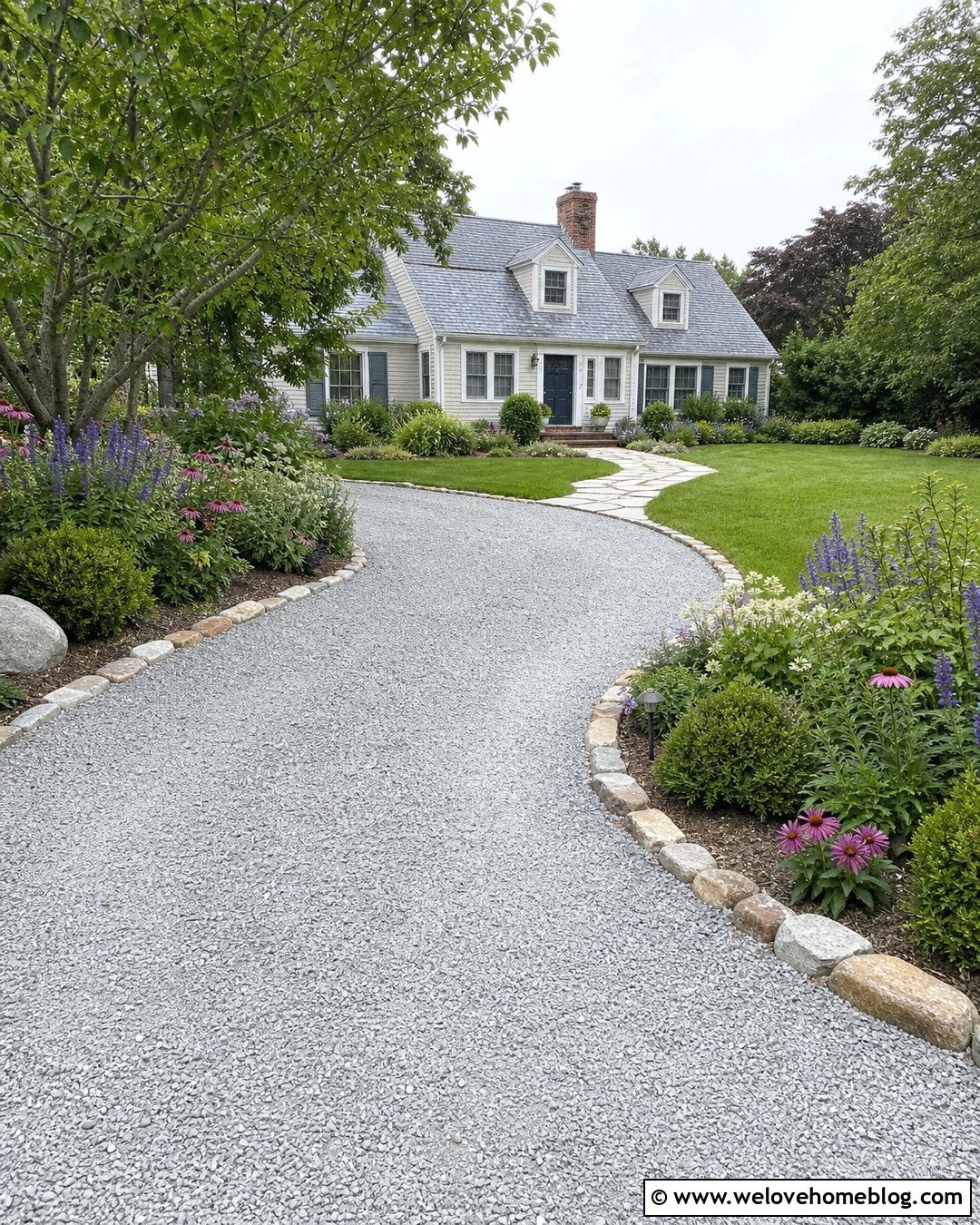
Fieldstone edging helps crushed concrete blend into a garden-rich landscape. Select medium-size stones with gray, tan, and brown variations, then arrange them in a low continuous border instead of using widely spaced boulders. A curving driveway is ideal because the irregular stones can follow gentle changes in direction. Surround the edge with layered cottage planting, including salvia, coneflowers, catmint, and compact shrubs. Keep taller plants away from the entrance so drivers retain a clear view of the road. Near the house, connect the stone border to a flagstone walkway or porch foundation. The complete look feels informal but thoughtfully composed. It is especially attractive beside cottages, Cape Cod homes, and houses with natural stone exterior accents.
7. Crushed Concrete Driveway With Paver Apron
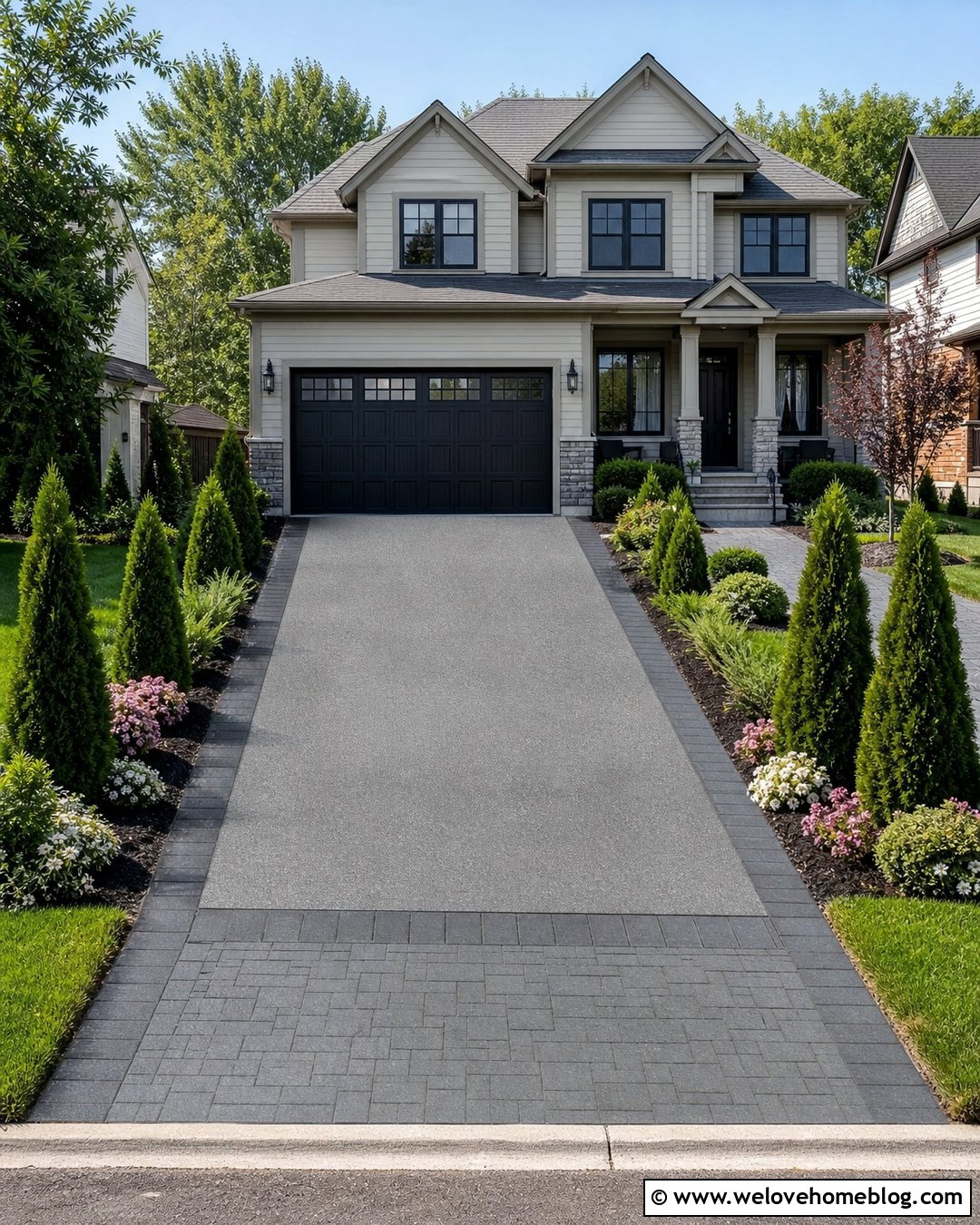
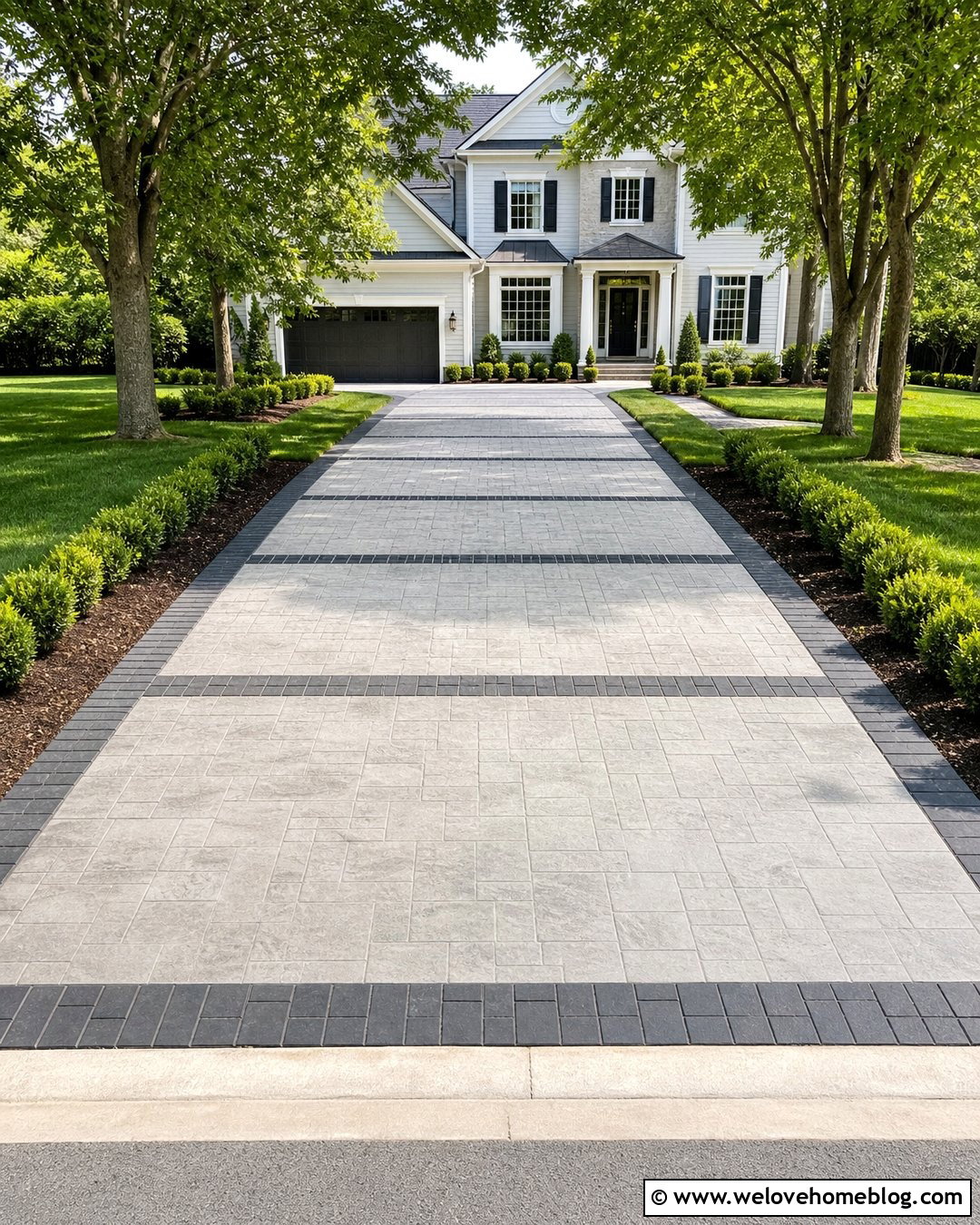
A paver apron creates an attractive transition where a crushed concrete driveway meets the street. Use charcoal or warm gray concrete pavers in a running-bond or herringbone pattern, then extend the apron several feet into the drive. Continue a narrow row of matching pavers along the sides to frame the aggregate. This combination makes the entrance more noticeable while allowing crushed concrete to cover the larger area economically. A straight driveway leading to a two-story suburban house is a natural fit. Add symmetrical planting beds with evergreen shrubs and seasonal flowers on both sides of the apron. The paver color should relate to the roof, shutters, or walkway. A properly restrained border helps prevent the loose driveway material from spreading onto adjoining surfaces.
8. Curved Crushed Concrete Driveway
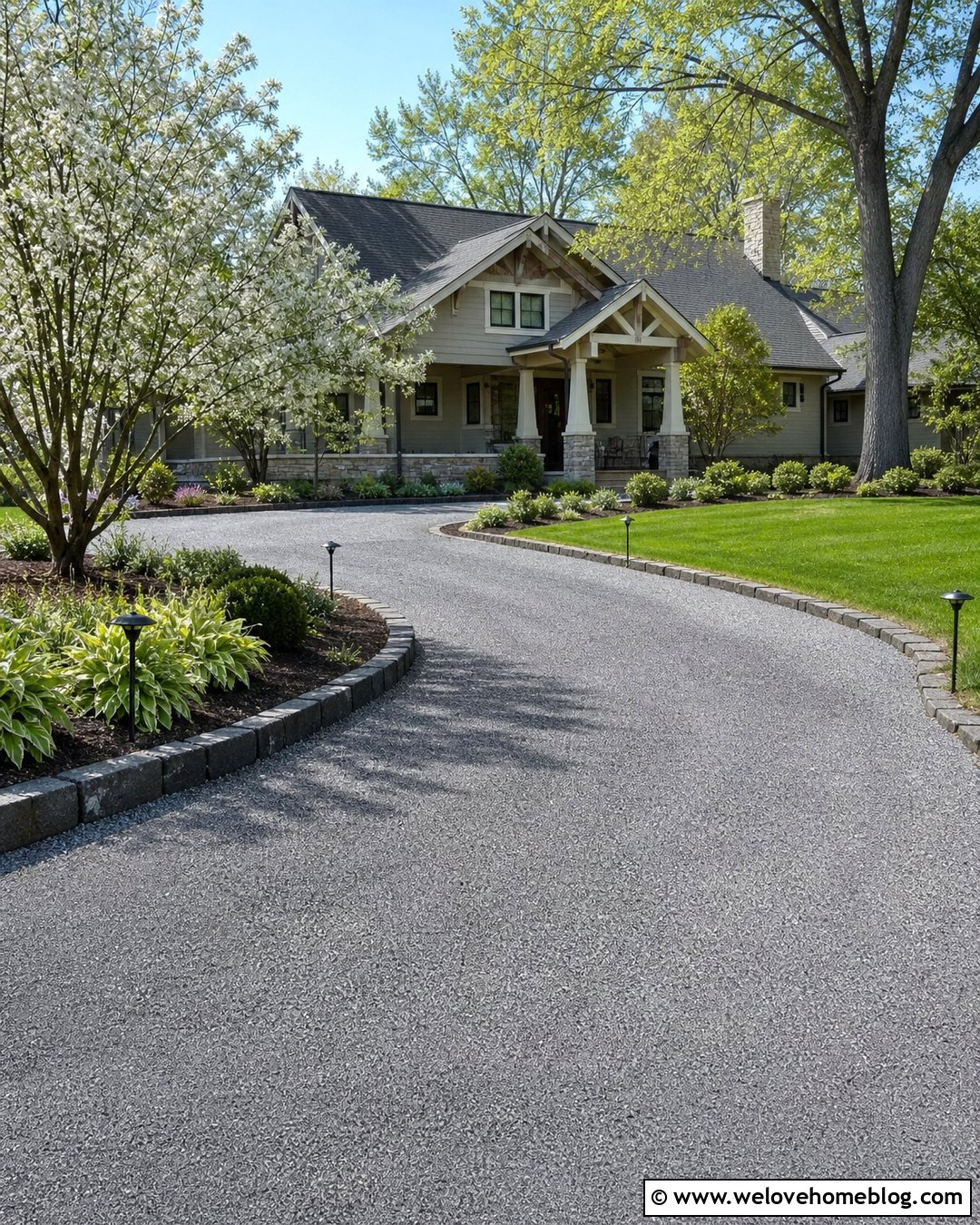
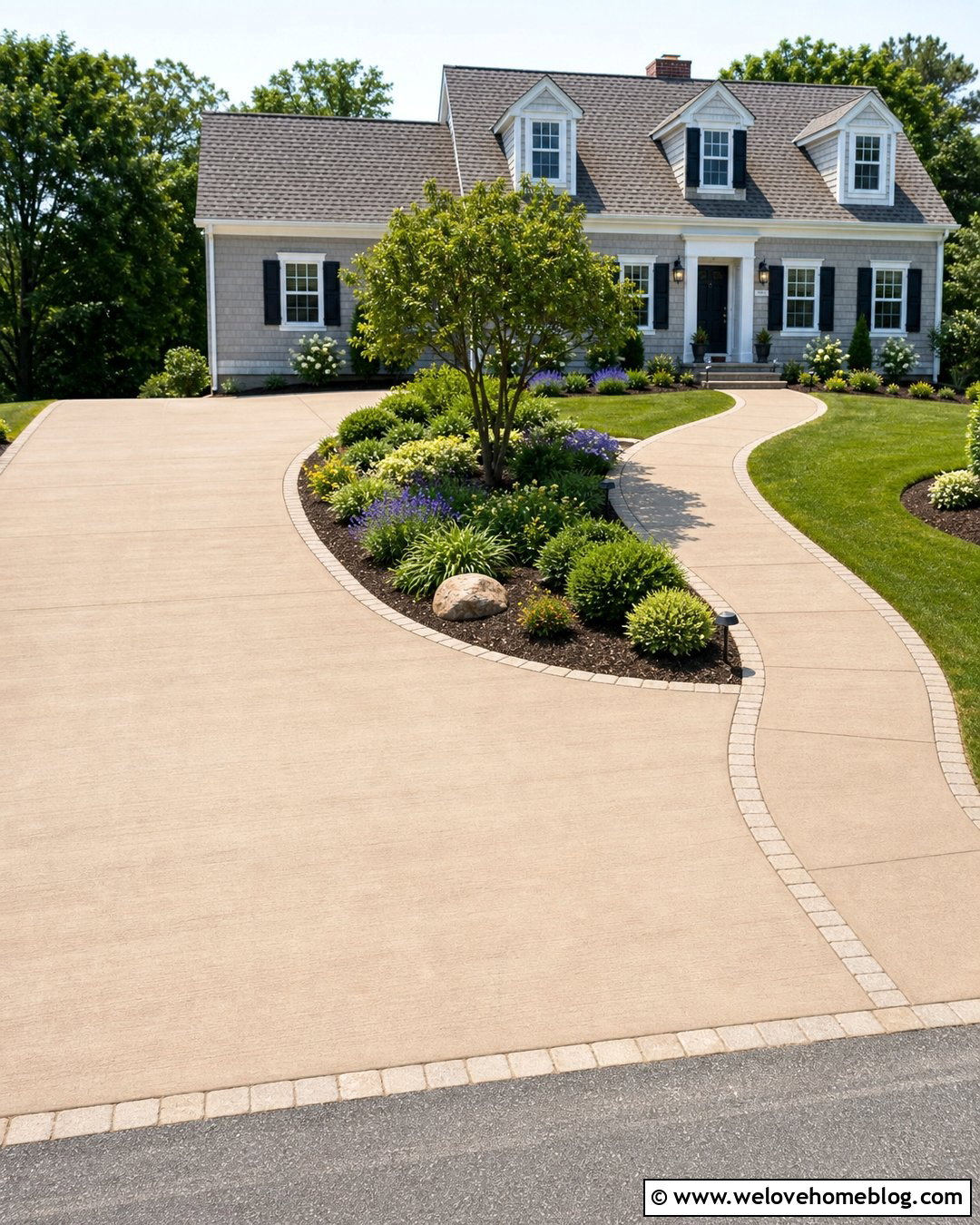
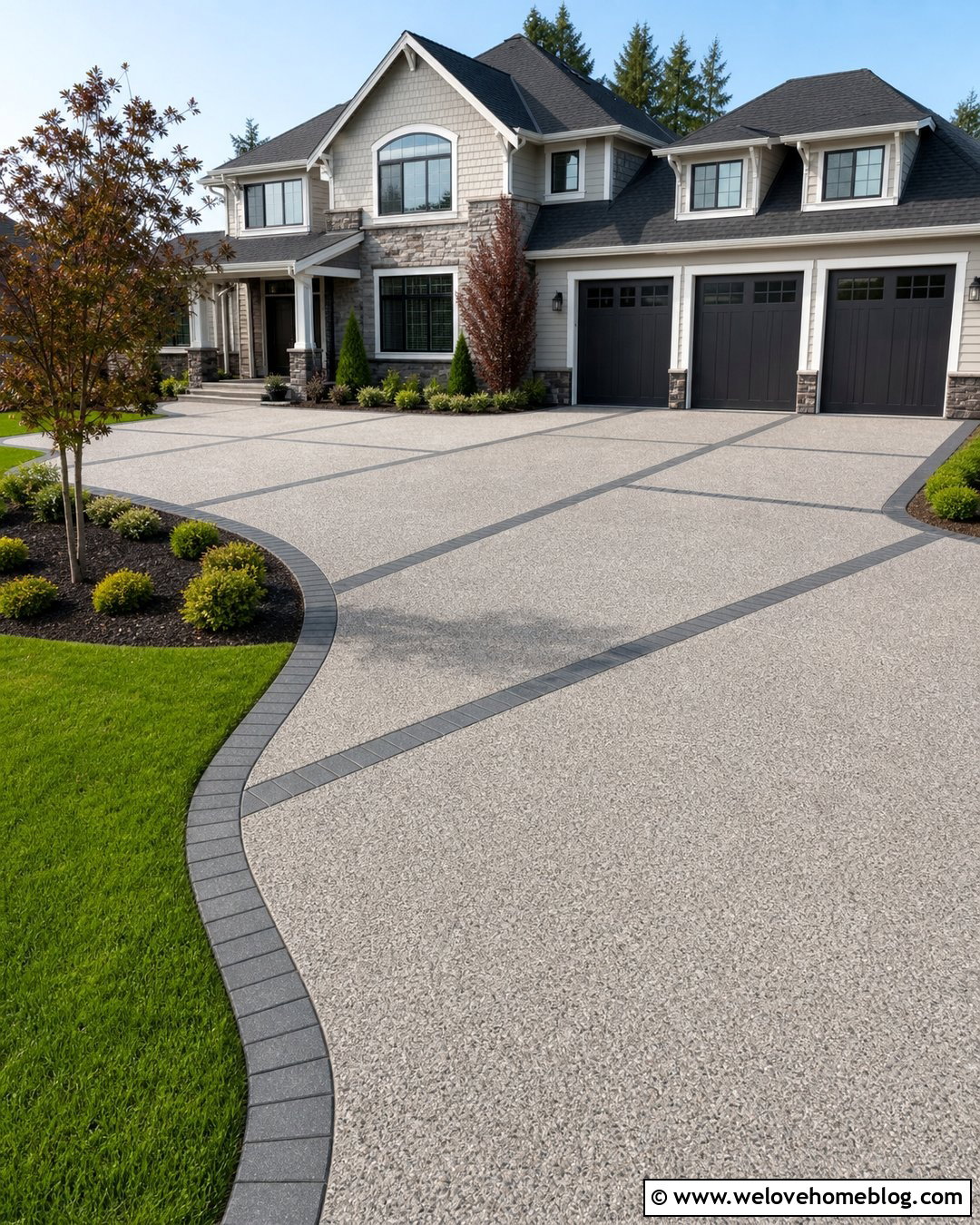
A broad curve makes a crushed concrete driveway feel more integrated with the yard. Instead of bending sharply, create a gradual sweep that directs attention toward the front facade or garage. A compacted gray surface with dark stone edging will clearly define the curve and prevent it from disappearing into the lawn. Place one ornamental tree inside the bend, surrounded by a generous planting bed of low shrubs and ground cover. Avoid tall vegetation near the street entrance or inside tight turns. Path lights can trace the outside edge without overcrowding the design. This layout works well for craftsman and traditional homes positioned at an angle from the road. The graceful shape makes an inexpensive aggregate surface feel customized to the property.
9. Circular Crushed Concrete Driveway
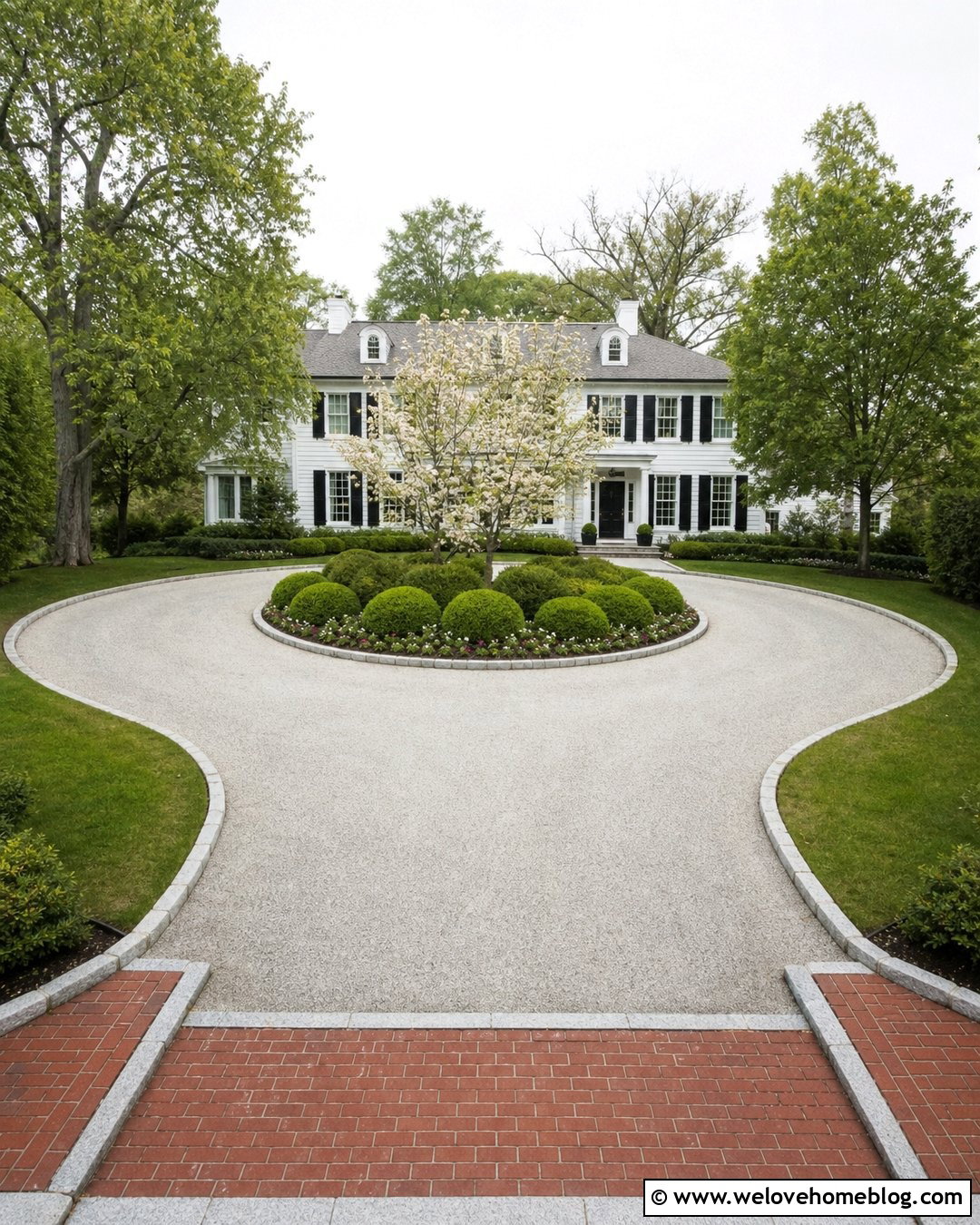
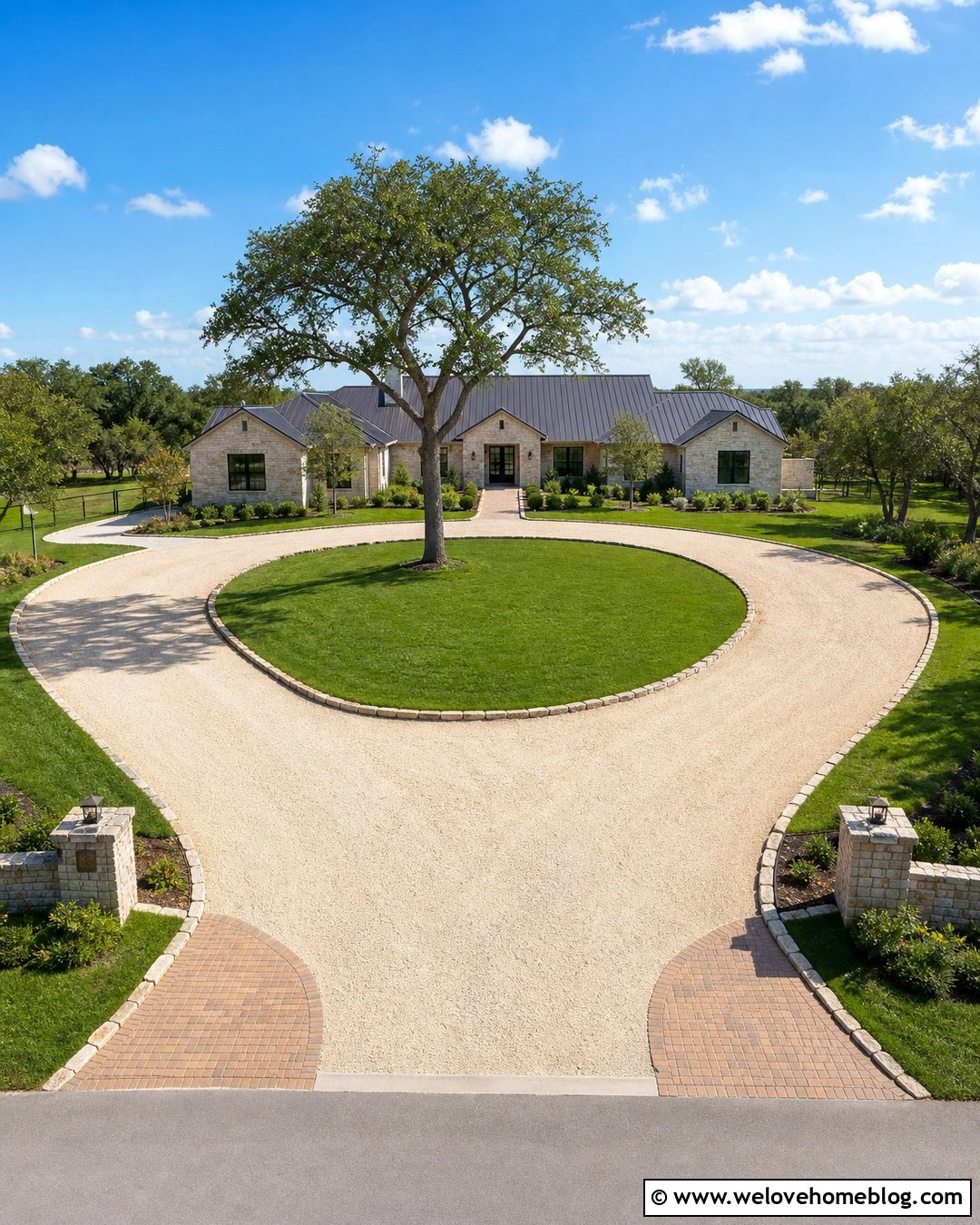
A circular crushed concrete driveway adds convenient movement and a strong landscape focal point to a larger front yard. Design the center island as part of the driveway rather than leaving it as an empty patch of grass. A small flowering tree, low evergreen shrubs, and a stone border can create a balanced centerpiece that remains visible from the house. Use compacted light gray crushed concrete for the full loop and install matching stone edging around both its outer boundary and central island. Two brick or paver entrance aprons can mark the entry and exit. This layout pairs beautifully with colonial, Georgian, and large farmhouse exteriors. Keep the circle broad enough for comfortable turning, and maintain clear sightlines near both street connections.
10. Horseshoe Crushed Concrete Driveway
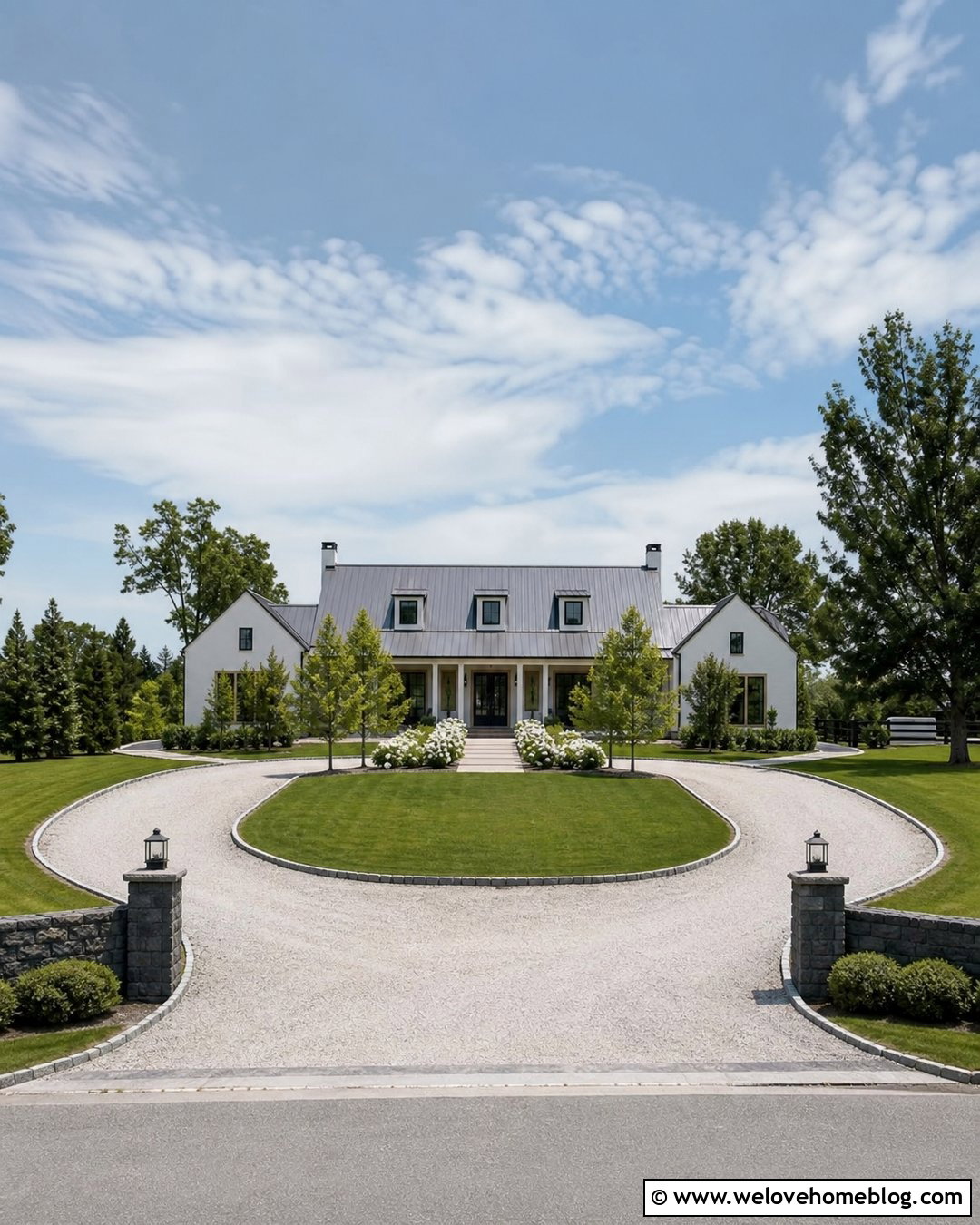
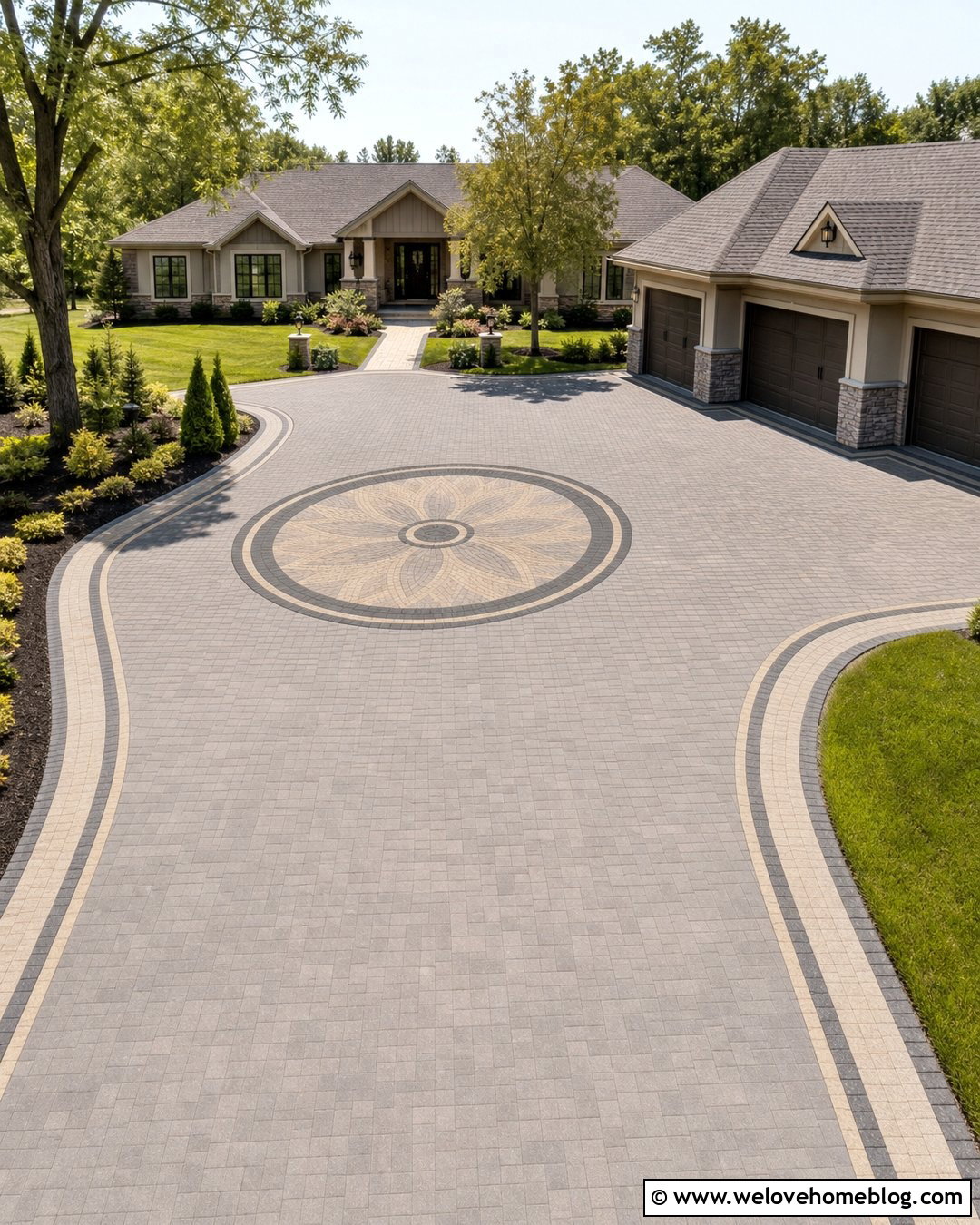
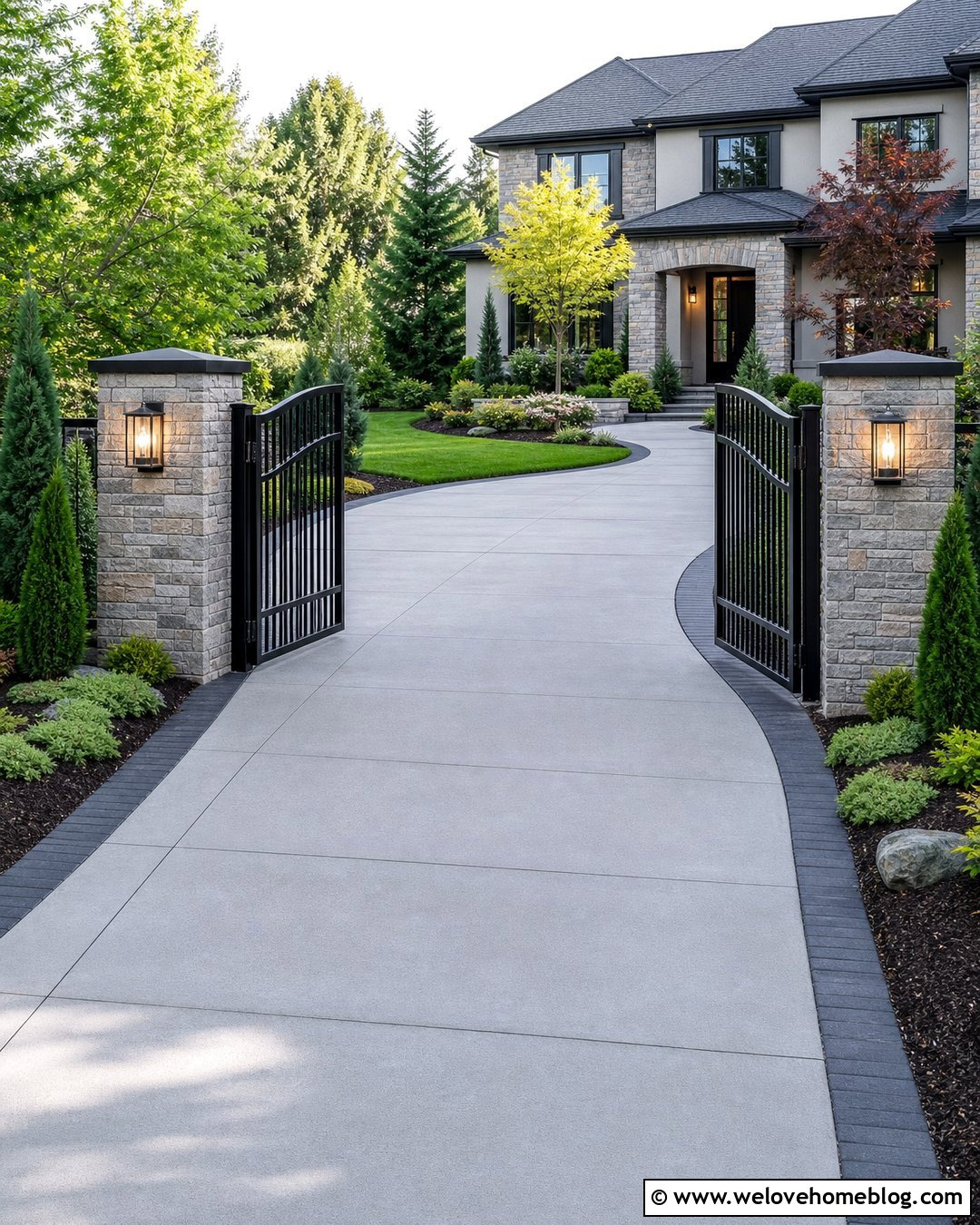
A horseshoe layout offers the practical benefits of a circular drive while working well on a wide, shallow lot. Two entrances connect through a sweeping crushed concrete lane positioned in front of the house. Frame the entire shape with a low brick or concrete border so the aggregate remains contained. Between the driveway and facade, create a large lawn panel with symmetrical planting beds near the front walkway. Matching masonry pillars can emphasize both entrances without requiring gates. This arrangement looks particularly natural with a long ranch or modern farmhouse. Use consistent gray crushed concrete throughout rather than mixing several loose stones. Repeating the same border, lighting, and planting palette at both entrances will make the horseshoe shape appear balanced instead of visually divided.
11. Crushed Concrete Driveway With Grass Strip
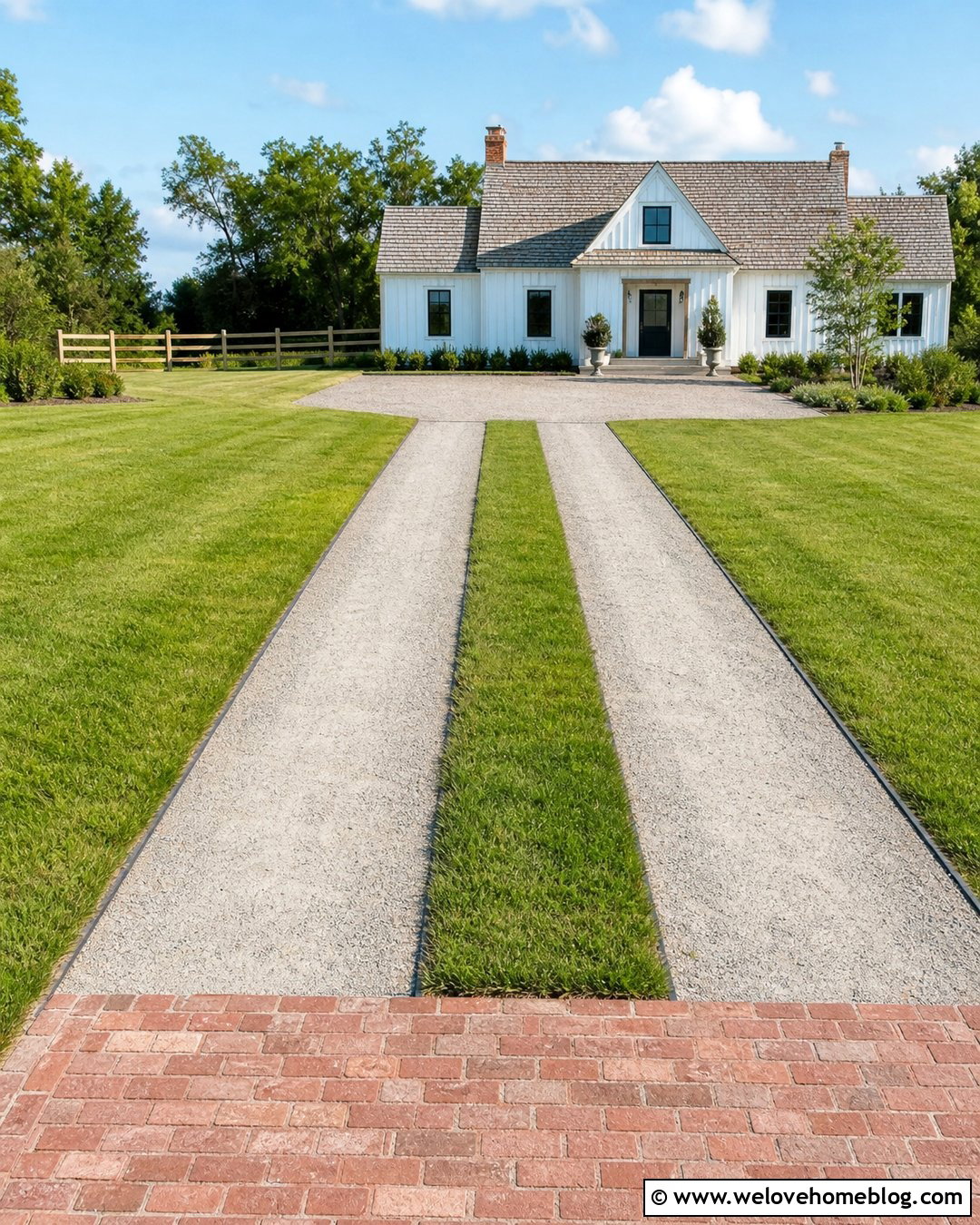
A center grass strip reduces the amount of visible aggregate and gives a crushed concrete driveway a softer rural character. Form two compacted wheel tracks with a wide, level strip of durable turf between them. Low steel or concrete edging can keep the crushed material out of the grass while preserving a simple appearance. This design works best on a straight driveway with predictable vehicle movement. Pair it with a small farmhouse, cottage, or detached garage surrounded by open lawn. Near the parking area, transition to a full-width crushed concrete surface so vehicles have room to turn. A brick apron at the street can make the entrance more substantial. Regular trimming will keep the green center looking intentional rather than overgrown.
12. Crushed Concrete Driveway With Gravel Top Layer
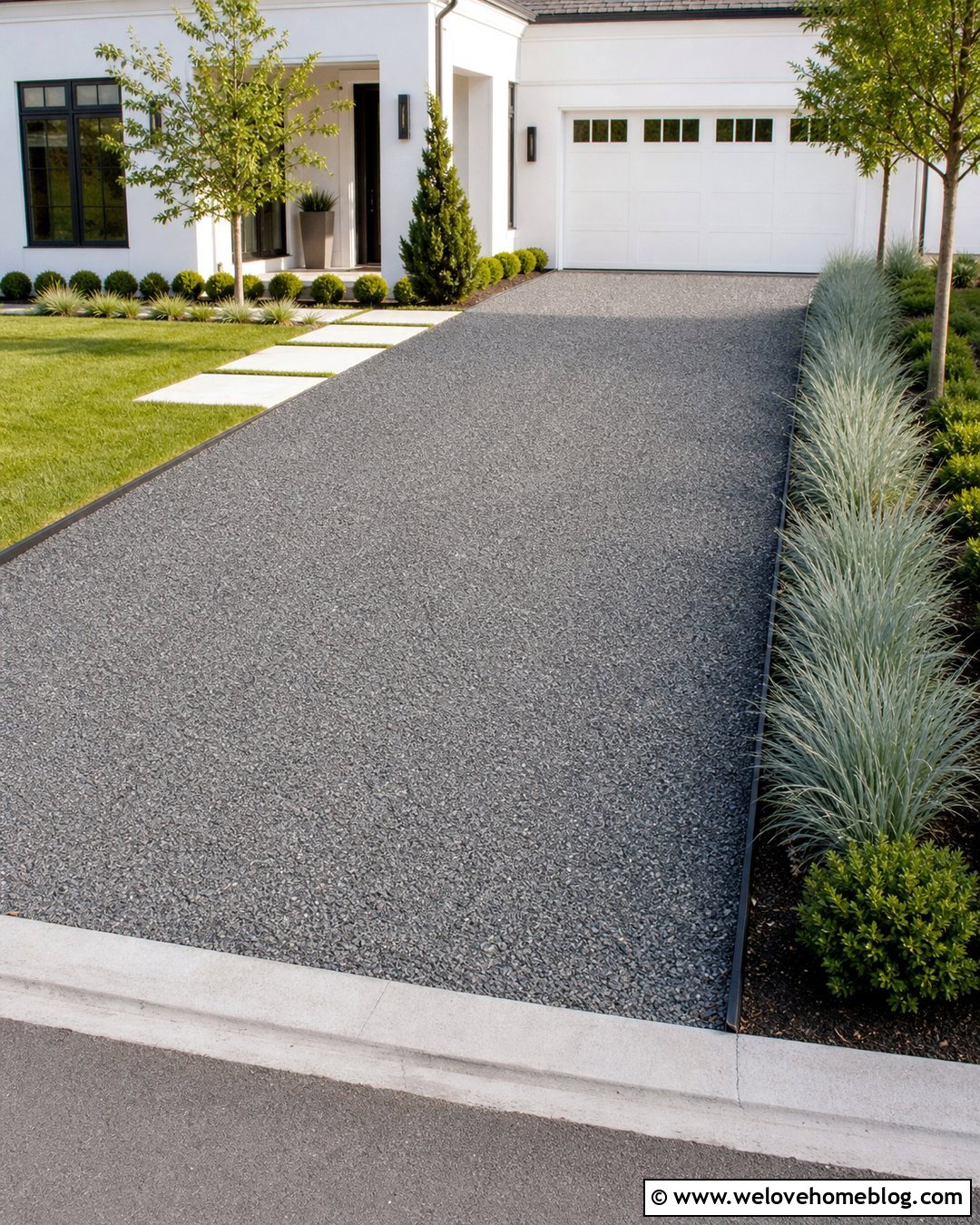
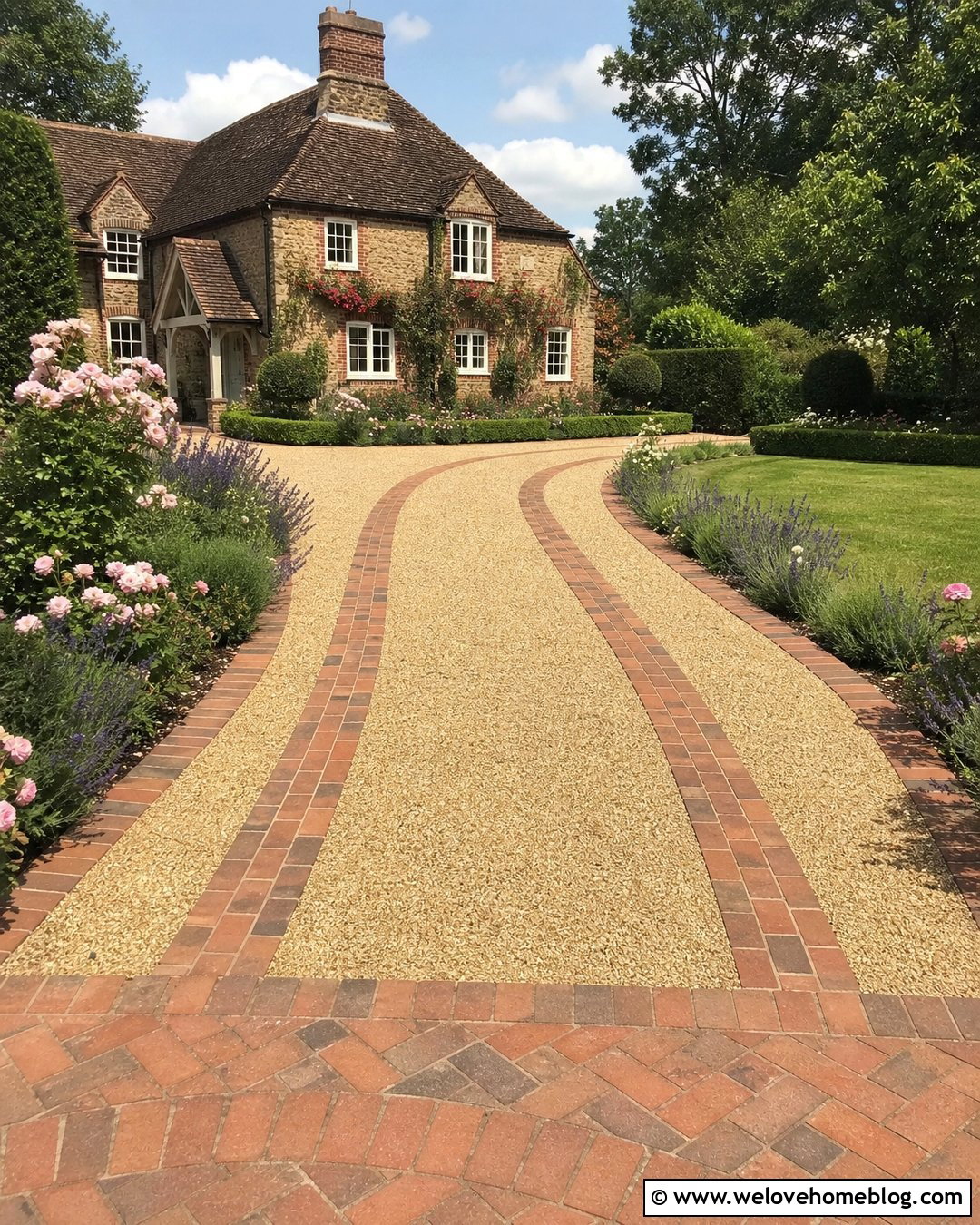
A decorative gravel top layer can refine the appearance of a crushed concrete driveway while preserving a stable recycled base. Choose angular gray granite, limestone chips, or another locally available crushed stone rather than rounded pea gravel. Angular material is more likely to interlock when compacted, while round stones tend to shift more easily. () Keep the top layer thin enough that it does not feel loose under tires. Dark metal edging and a straight layout can create a contemporary look beside a white modern house. Add structured beds with blue-green grasses and compact shrubs. At the garage, install a concrete or paver transition strip. The contrasting upper layer hides mixed concrete fragments and produces a more uniform color across the driveway.
13. White Crushed Concrete Driveway
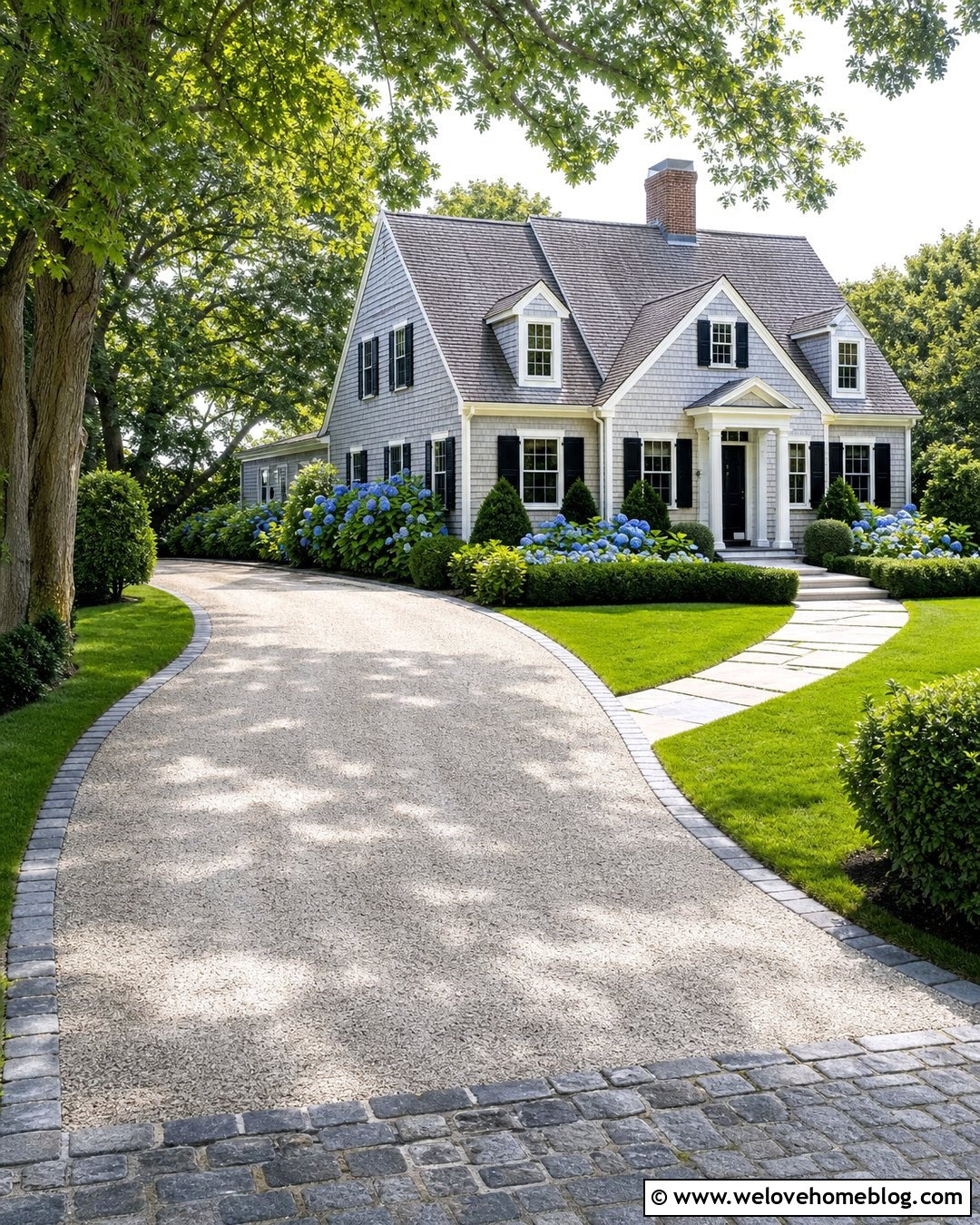
Light-colored crushed concrete can brighten a shaded frontage and complement pale siding, white brick, or coastal architecture. Ask the supplier about the aggregate’s actual color and composition because recycled batches may vary. A soft off-white or pale gray surface looks especially attractive on a gently curved driveway leading to a Cape Cod house. Define the sides with charcoal cobblestones for contrast, then add blue hydrangeas, clipped evergreens, and a green lawn. A matching cobblestone apron can help protect the visual cleanliness of the entrance. Avoid placing bright white decorative stone beside the driveway, which may make the recycled concrete appear darker or uneven. Instead, repeat its subtle gray tone in the walkway, porch planters, or foundation stone for a coordinated palette.
14. Dark Gray Crushed Concrete Driveway
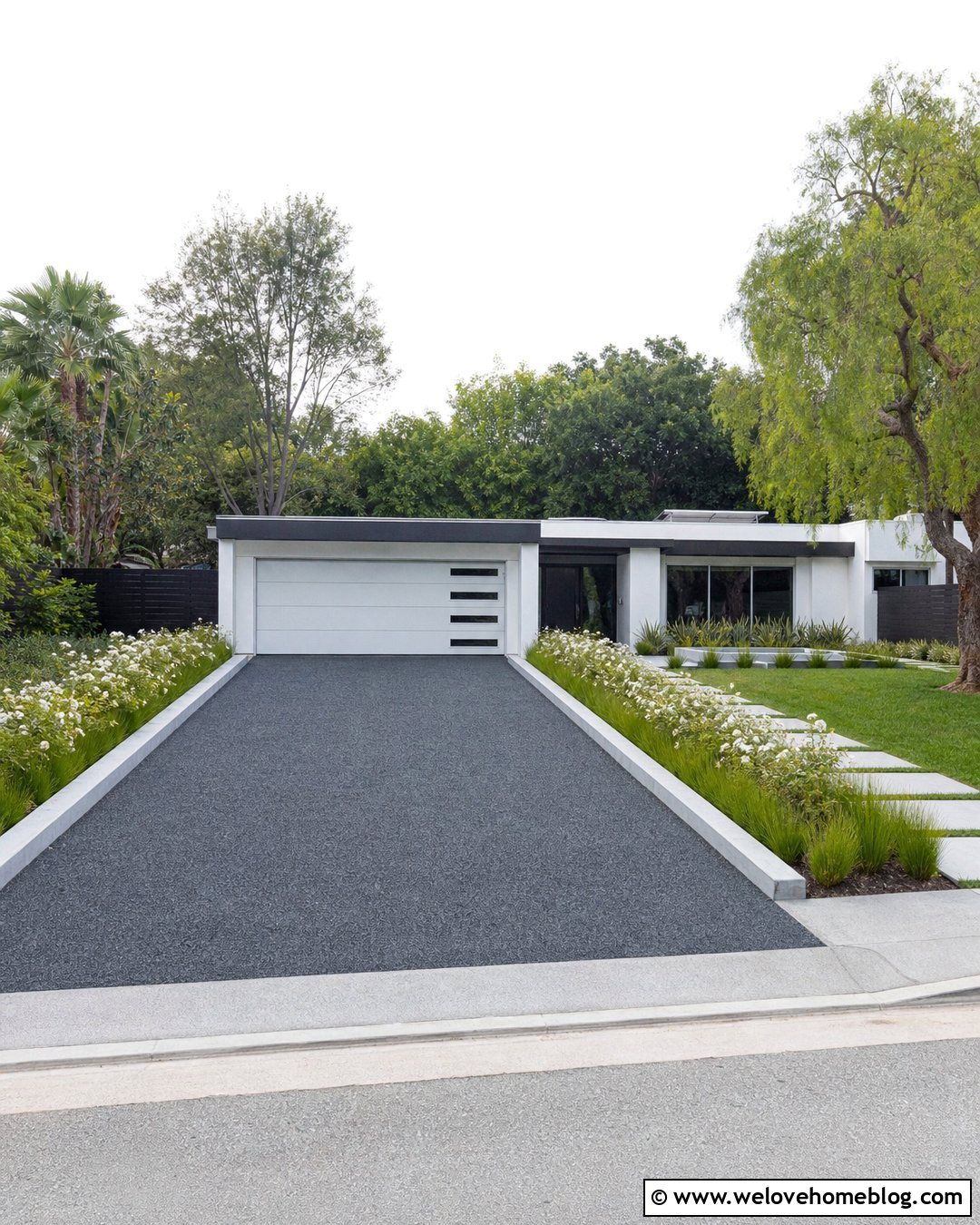
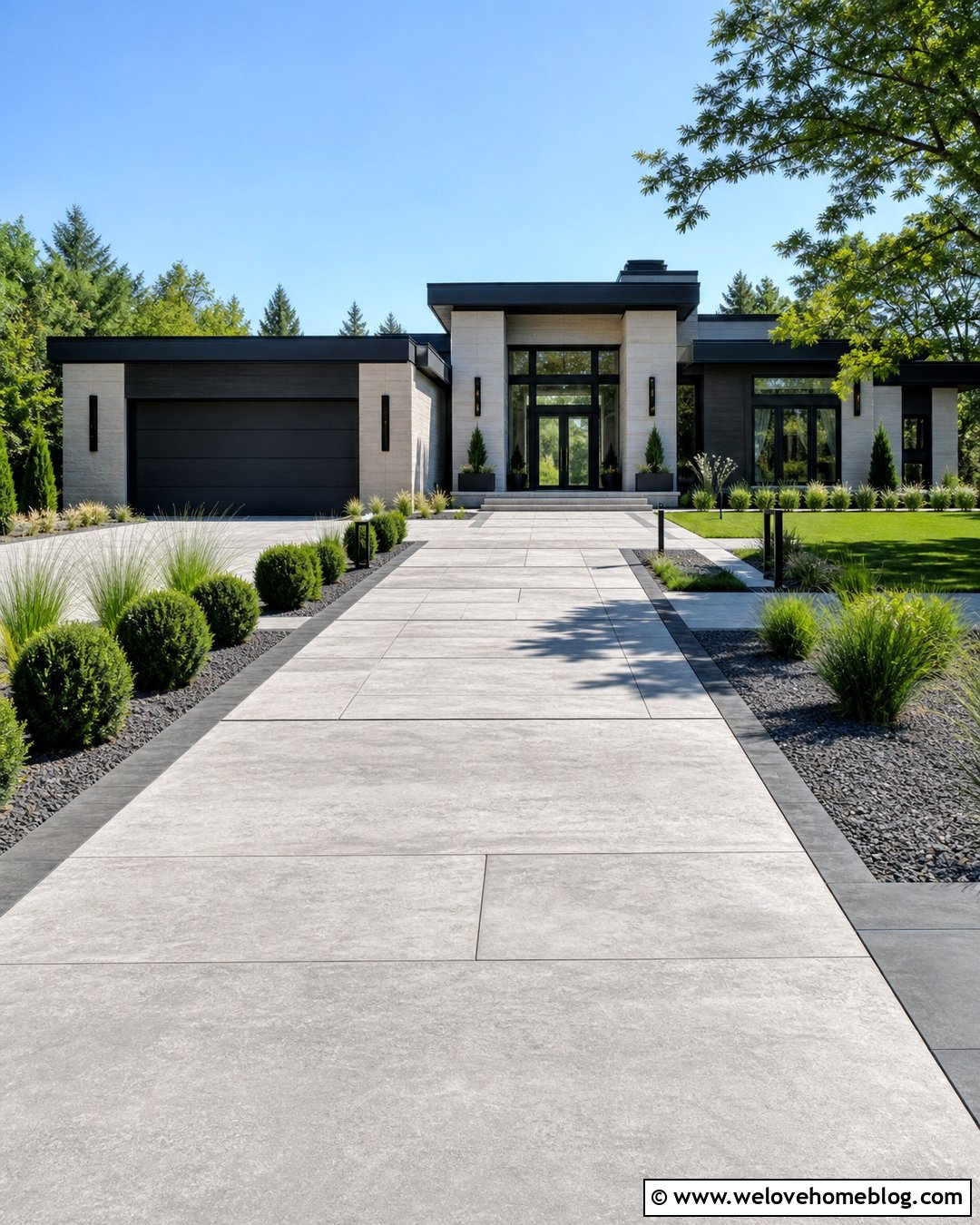
Dark gray crushed concrete creates a grounded look that works with black windows, charcoal roofs, and modern exterior finishes. Use a wide straight driveway with a carefully compacted surface and narrow poured concrete borders. The concrete edging provides subtle contrast without distracting from the deeper aggregate color. Plant light green ornamental grasses and white flowering shrubs along one side to keep the design from appearing heavy. On the opposite side, maintain a clean lawn panel and a broad concrete walkway. This asymmetrical landscape arrangement suits modern and midcentury homes. Choose simple black path lights and a matching address marker near the entrance. The darker driveway can visually anchor a pale facade while disguising some everyday discoloration better than a very light surface.
15. Crushed Concrete Driveway With Farm Gate
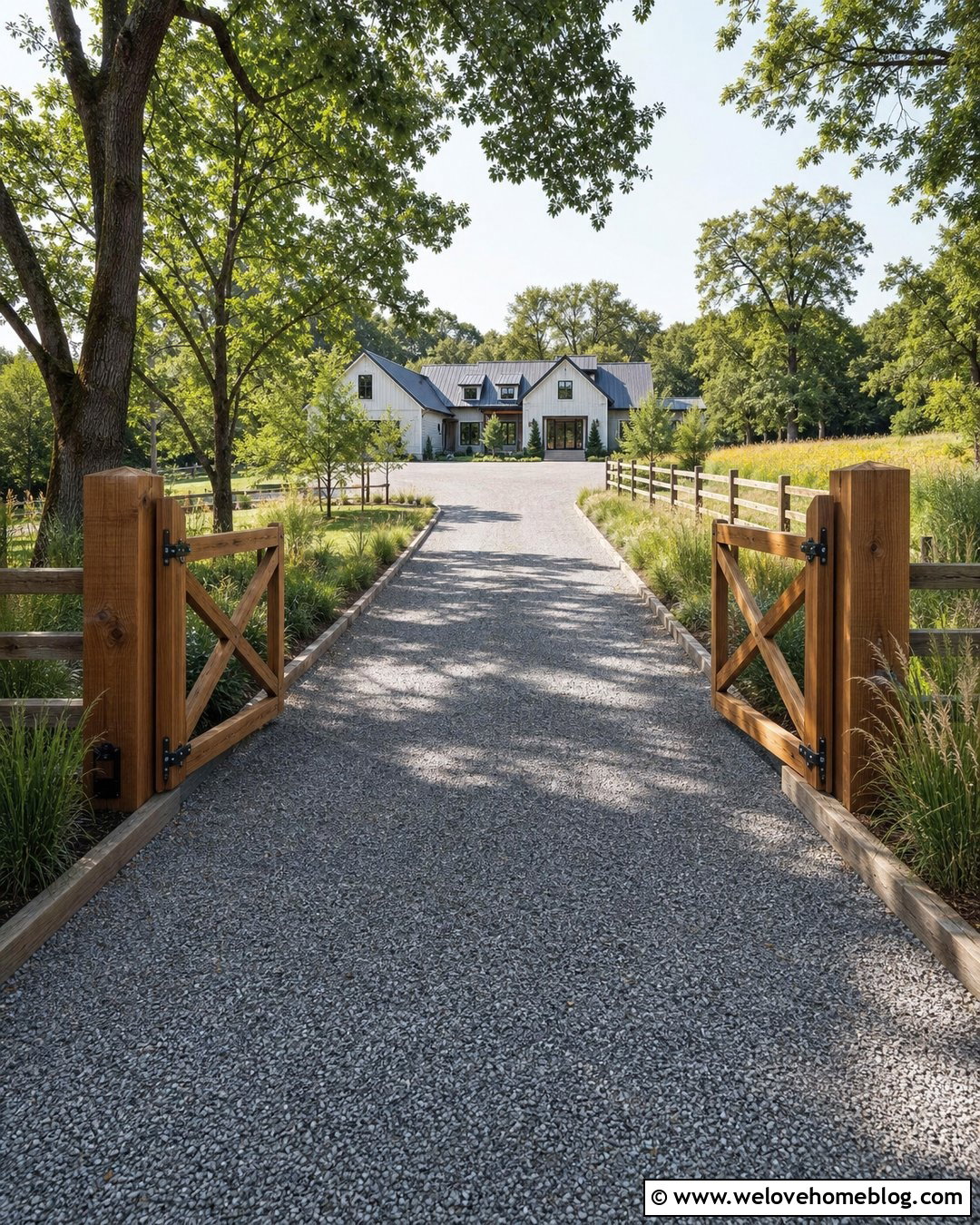
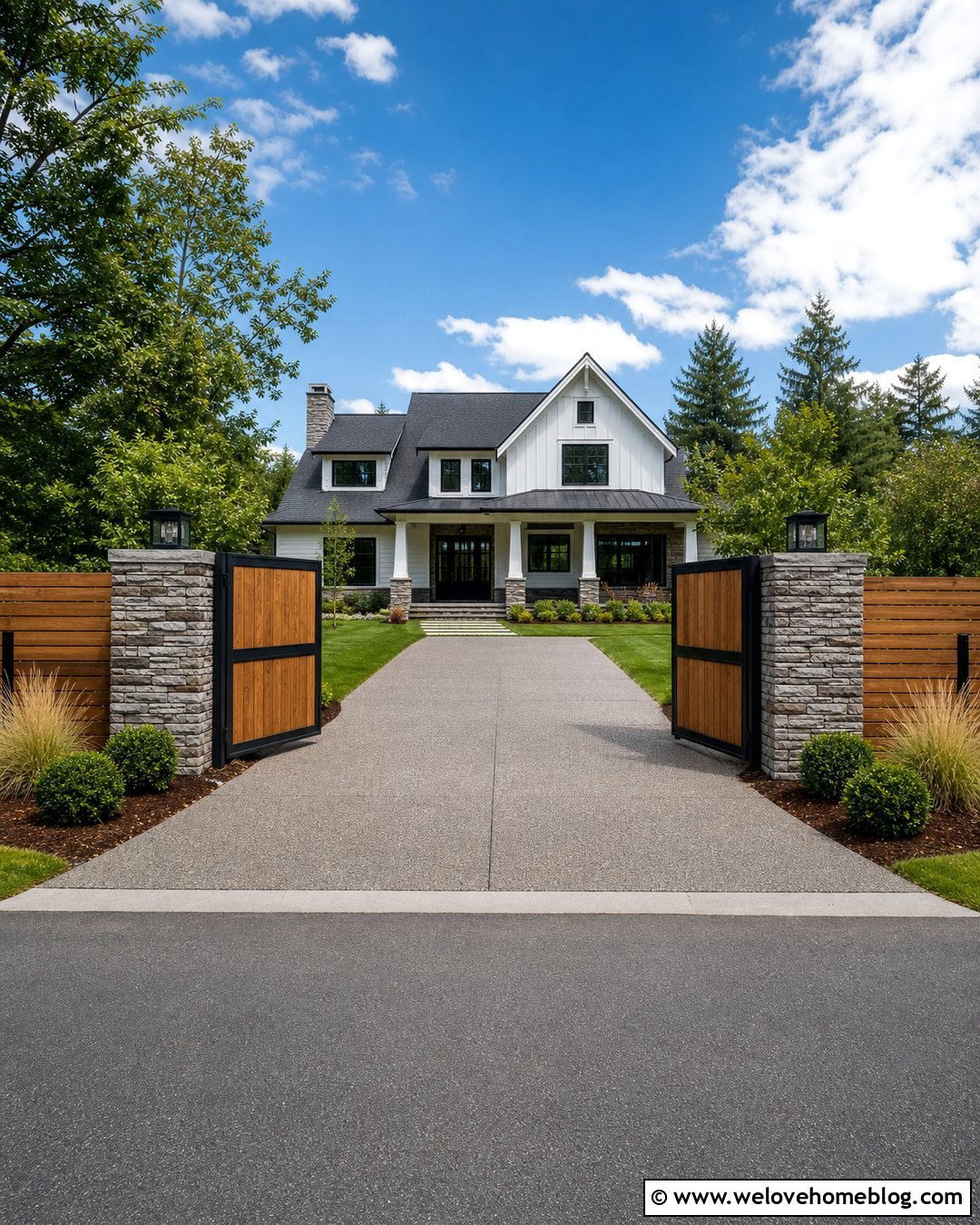
A farm gate can transform a long crushed concrete driveway into a clear and welcoming country entrance. Choose a simple wood or black metal gate mounted between stone or timber posts. Set it far enough from the road to create a safe pull-in area, subject to local requirements. Continue the compacted crushed concrete from the street to the house in one consistent color. Timber edging, split-rail fencing, and informal native planting will support the rural setting. Place matching trees beyond the gate to frame the approach without making the entrance feel narrow. Near the farmhouse, widen the driveway into a generous parking court. The gate, border, fencing, and aggregate should share restrained colors so the complete design feels authentic rather than overly decorative.
16. Crushed Concrete Driveway With Brick Pillars
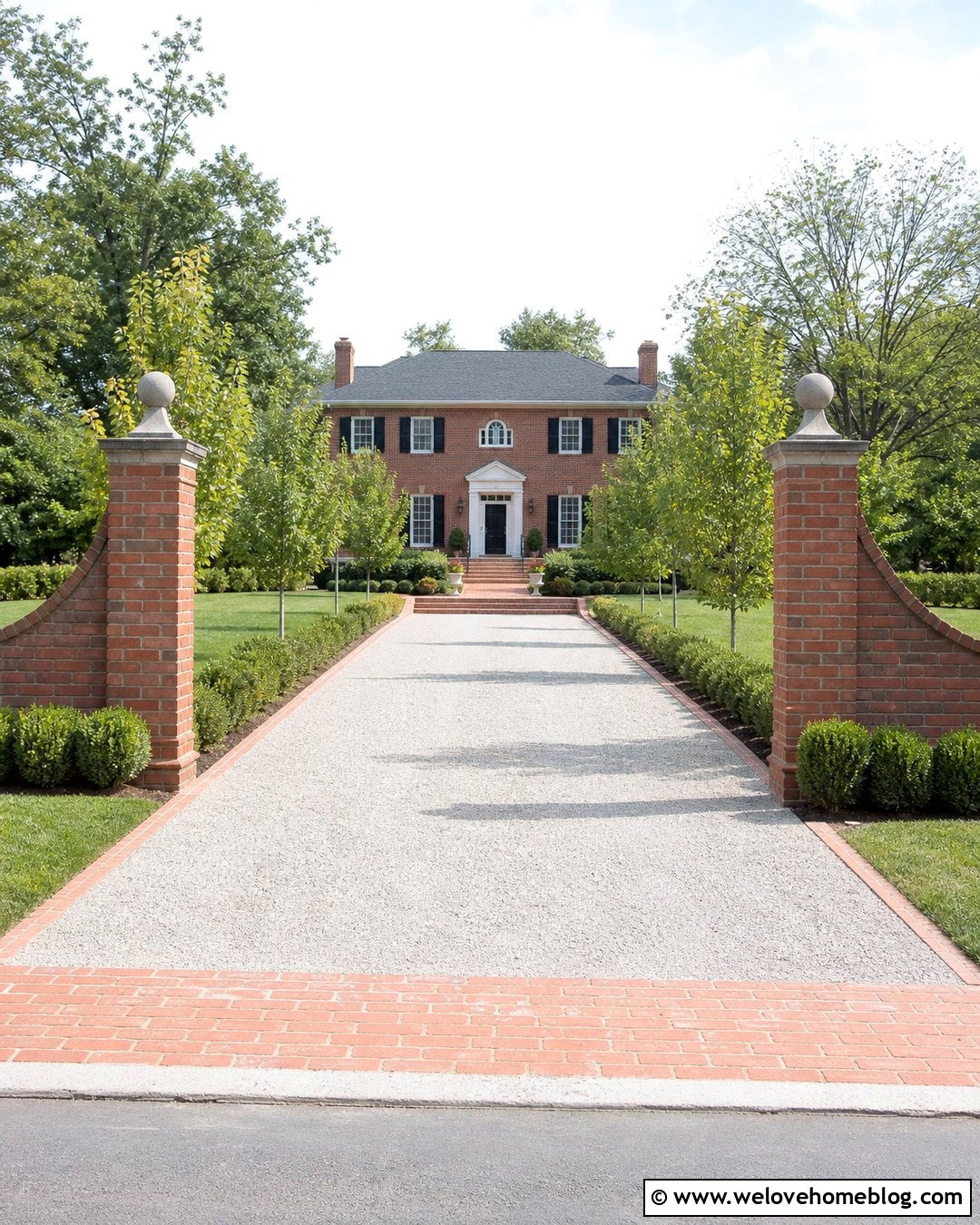
Brick pillars provide a formal entrance for a budget-friendly crushed concrete driveway. Match the brick to the home whenever possible, then cap each pillar with limestone or smooth concrete. A straight driveway creates a strong view from the street to the front facade. Use matching brick edging for the first several feet before transitioning to a simpler metal restraint farther up the drive. Low hedges and symmetrical ornamental trees can reinforce the organized layout. Add a horizontal address plaque to one pillar, keeping its scale proportional to the masonry. The warm brick and pale gray aggregate create an appealing contrast. This design works well for traditional, colonial, and ranch homes where a fully paved driveway may be unnecessary but a polished street presence is still important.
17. Crushed Concrete Driveway With Stone Pillars
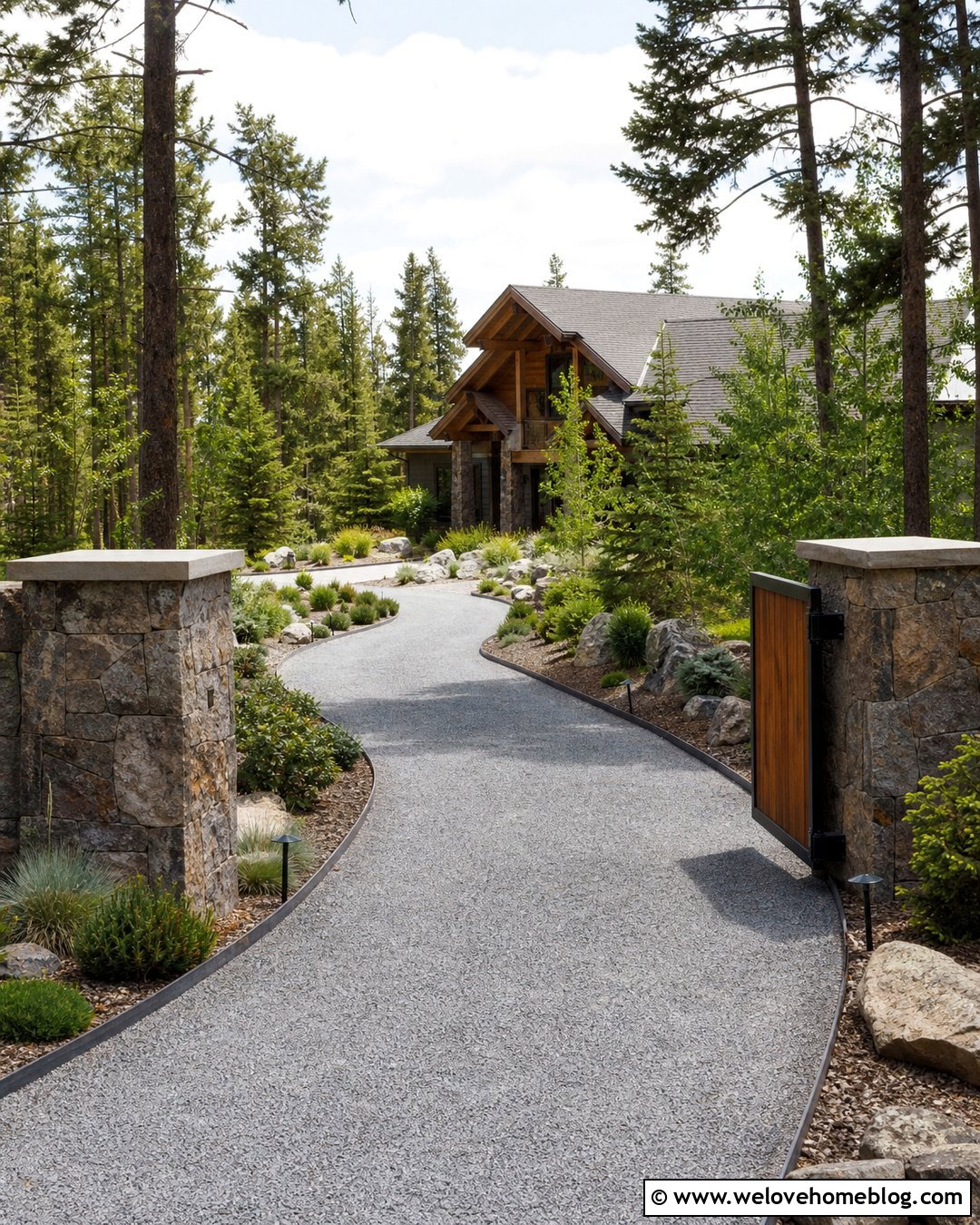
Stone pillars make crushed concrete feel naturally connected to wooded and mountain-inspired homes. Build substantial entrance columns using the same stone found on the house foundation, chimney, or retaining wall. A gently winding driveway can pass between the pillars and continue through groups of native trees. Edge the aggregate with dark steel so the boundary remains crisp without introducing another visible masonry material. Around the entrance, use low grasses, juniper, and boulders that repeat the colors of the stonework. A simple wooden gate can be added, but the pillars are strong enough to stand alone. Keep the crushed concrete evenly graded and compacted so its subtle texture supports the rugged landscape. The result feels established, private, and appropriate for a larger natural property.
18. Crushed Concrete Driveway With Landscape Lighting
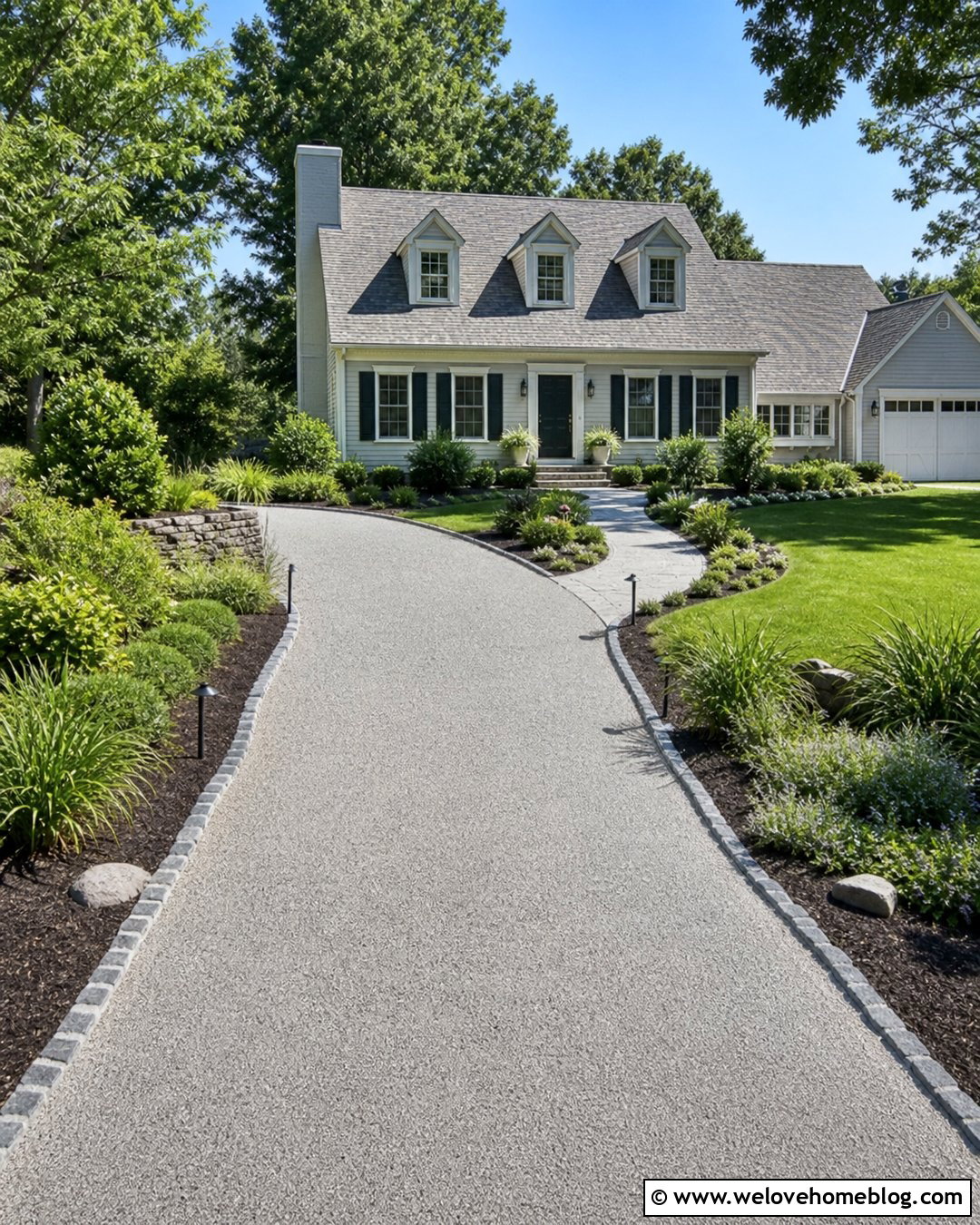
Lighting can make a crushed concrete driveway easier to follow while improving its daytime appearance. Install simple fixtures at regular intervals along a curved or extended drive, positioning them outside the vehicle clearance area. During daylight, black or bronze path lights create a neat rhythm beside the pale aggregate. Pair them with stone edging and broad planting beds filled with ornamental grasses, low shrubs, and ground cover. Near the house, use matching fixtures along the walkway and garage wall. Keep the number of materials limited so the lighting feels integrated rather than added later. Although the visual concept includes illumination, the driveway should still look attractive in bright daylight. A clear layout, restrained planting, and repeated fixture style produce the most cohesive result.
19. Crushed Concrete Driveway With Native Landscaping
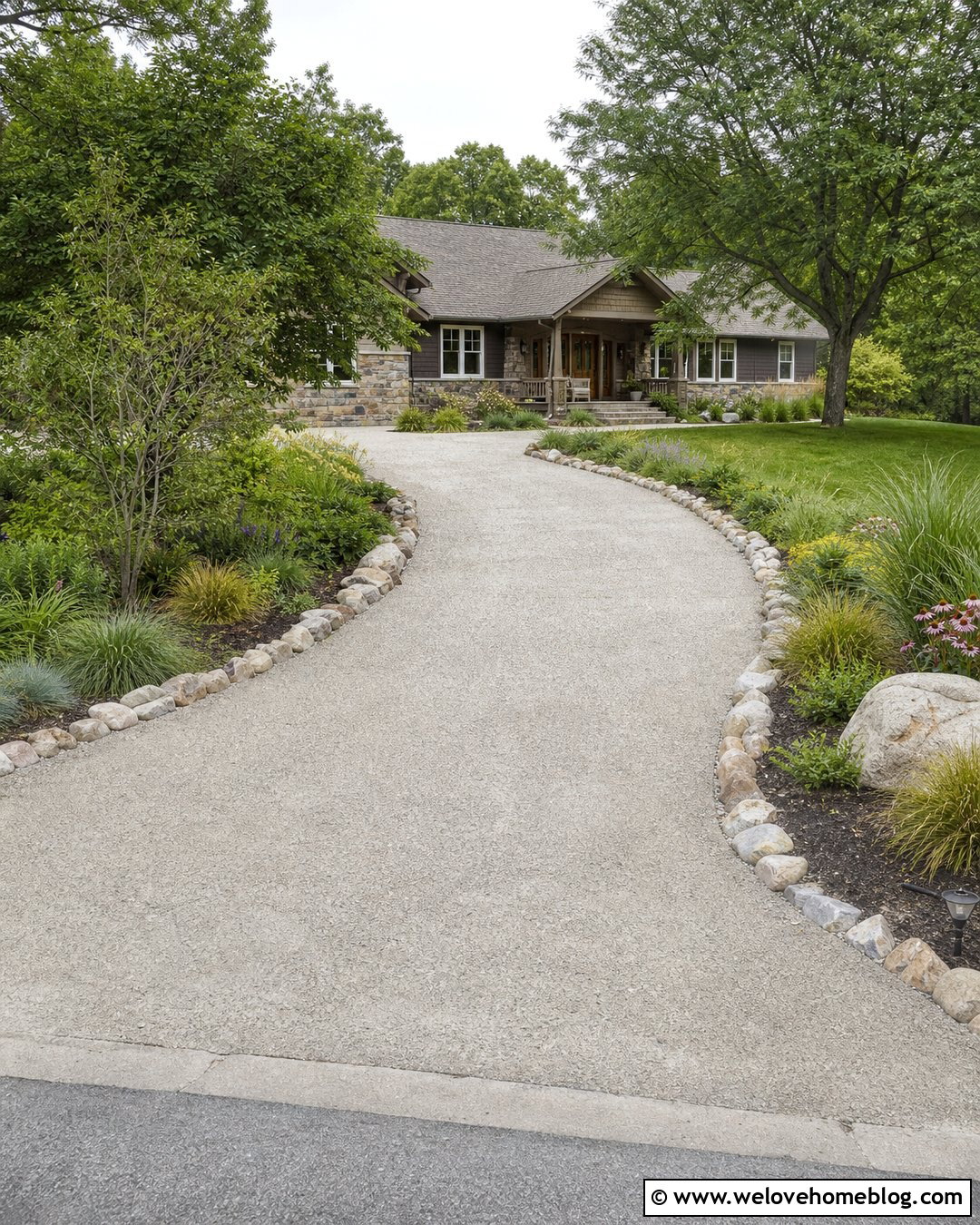
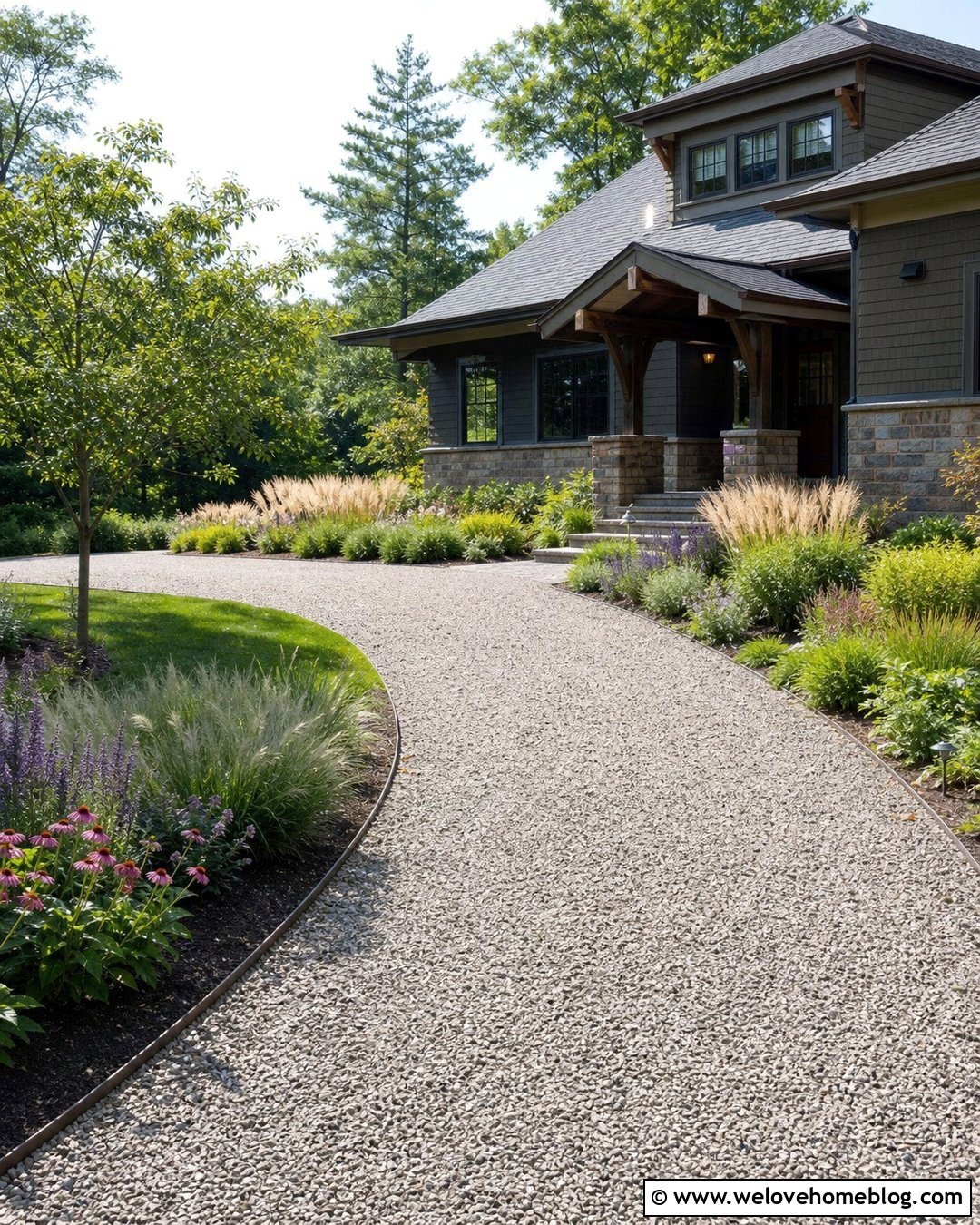
Native landscaping can help a crushed concrete driveway settle naturally into its surroundings. Start with a softly curved layout and a compacted light gray surface bordered by local fieldstone. Create wide planting beds instead of narrow strips that may feel crowded beside vehicles. Select regionally appropriate grasses, flowering perennials, and shrubs with different heights and seasonal interest. Keep low plants near the street and driveway curves, then place taller shrubs closer to the house. A mulched pedestrian path can branch from the drive toward a ranch or craftsman porch. The recycled appearance of crushed concrete pairs well with an informal, low-fuss landscape. Repeating two or three plant varieties in groups will create order while maintaining the relaxed character of a native garden.
20. Crushed Concrete Driveway With Desert Landscaping
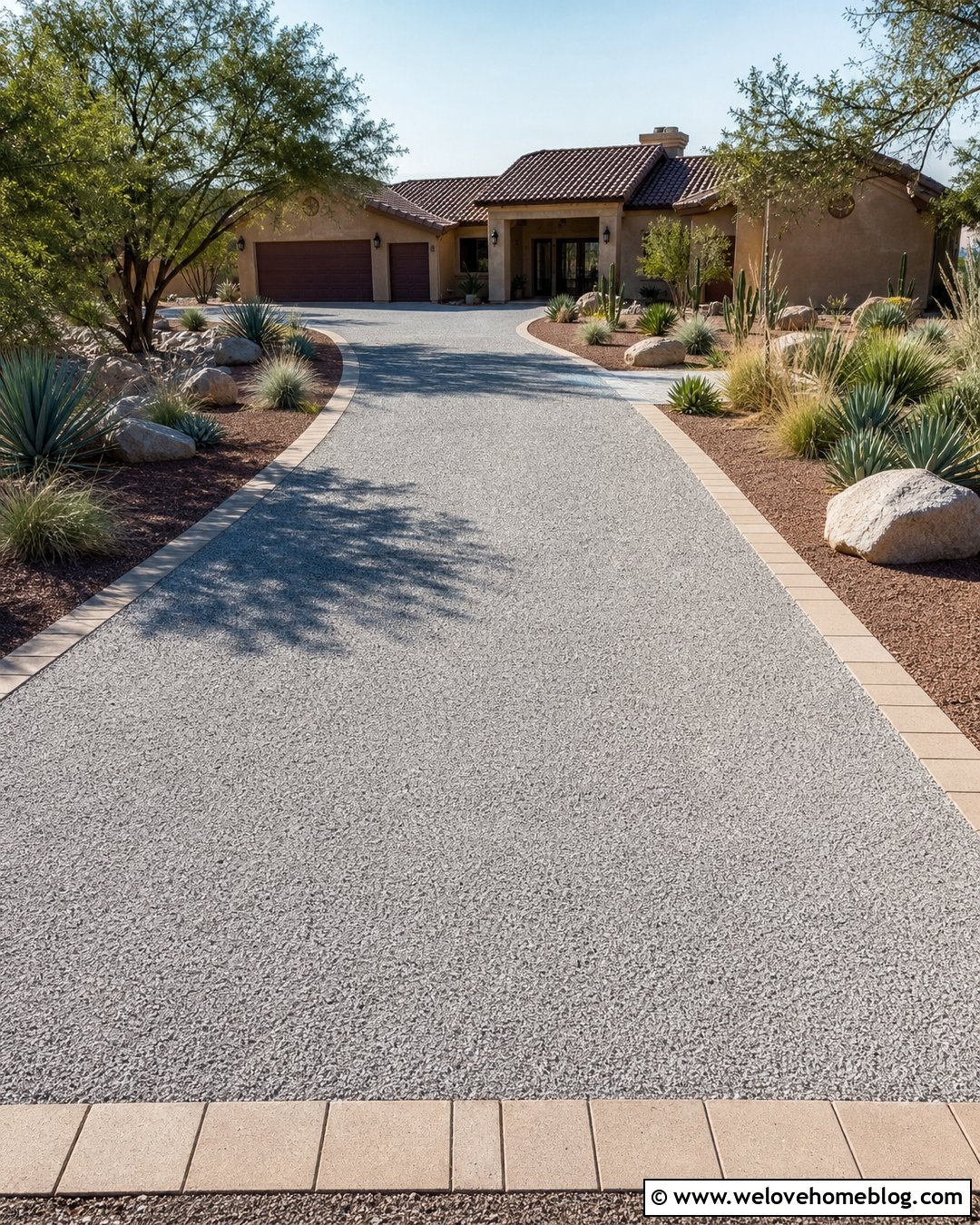
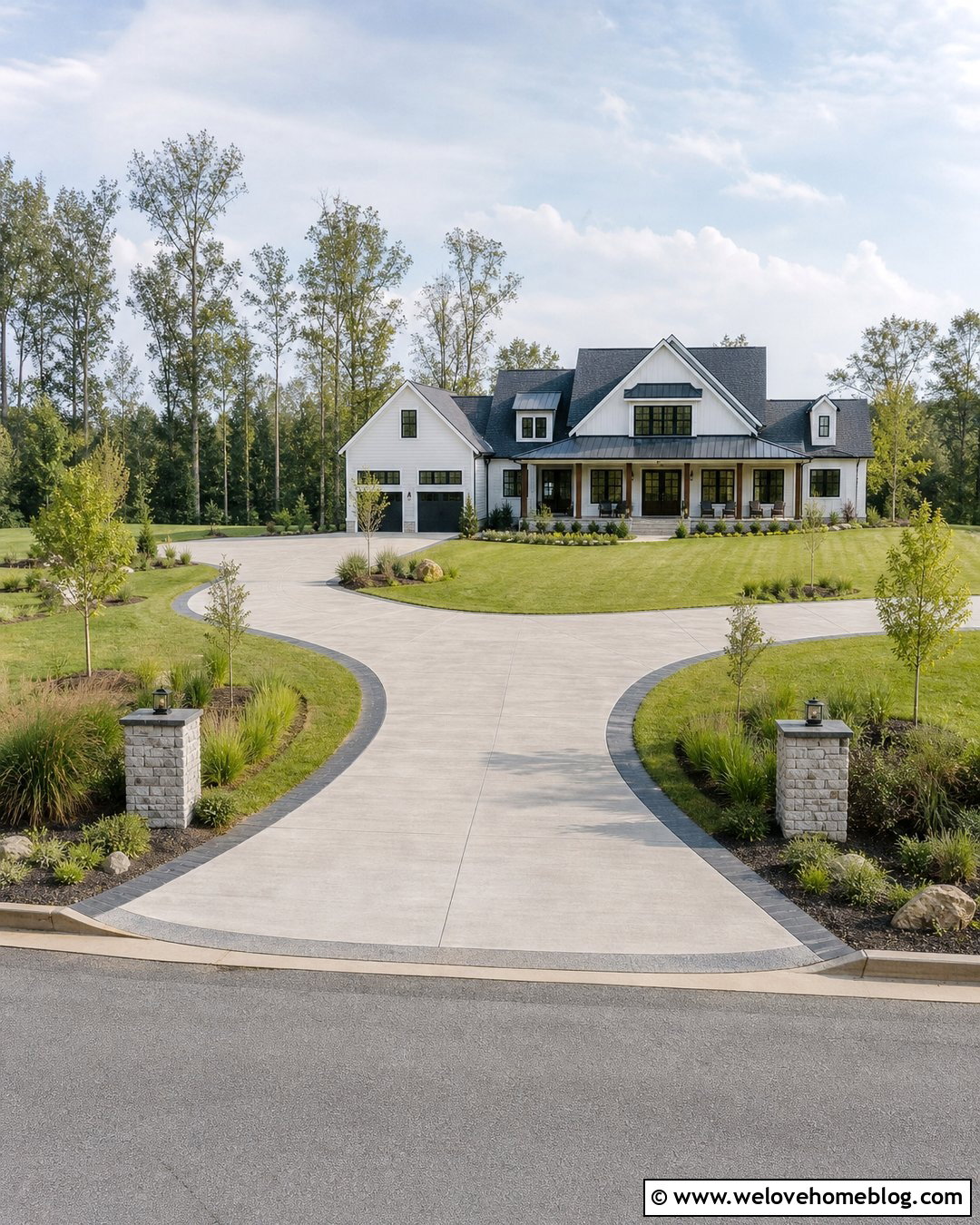
In a dry-climate yard, crushed concrete can coordinate with stone mulch and drought-tolerant planting without blending into one undefined area. Use darker steel edging or a wide row of tan pavers to separate the pale gray driveway from surrounding decomposed granite. A straight or angular layout suits a stucco ranch, Southwestern house, or contemporary desert home. Arrange agave, yucca, ornamental grasses, and sculptural boulders in spacious planting zones. Keep spiky plants well away from doors and vehicle paths. A warm-toned paver apron can connect the driveway color to the home’s roof or entry tiles. The contrast between gray recycled aggregate, tan landscape stone, and blue-green foliage creates a clear, water-conscious frontage with strong visual structure.
21. Crushed Concrete Driveway With Rain Garden
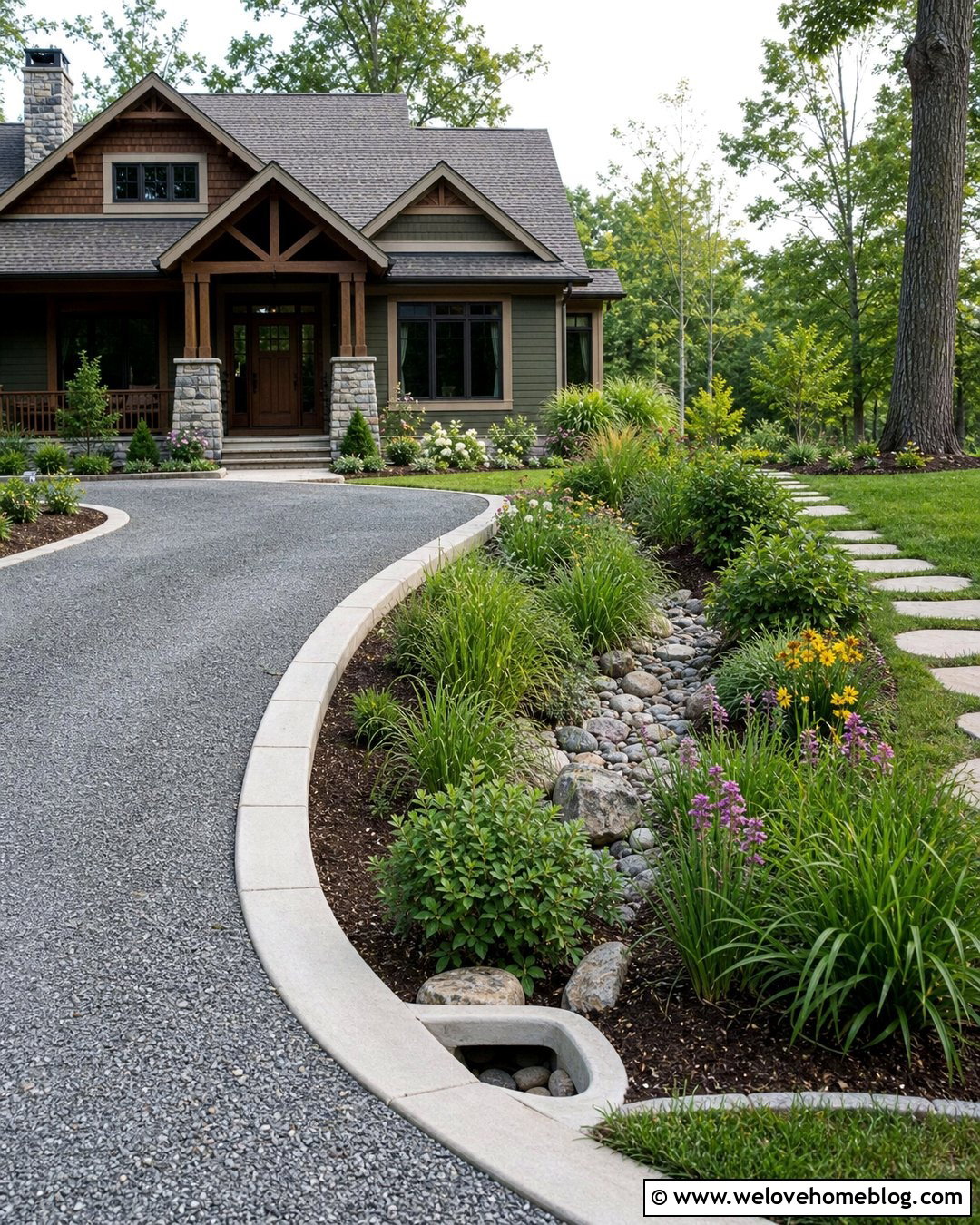
A rain garden can turn a driveway drainage area into an attractive landscape feature. Grade the crushed concrete surface so runoff moves away from the house and toward a planted depression, following an appropriate site-specific drainage plan. Edge the driveway with a flush concrete curb that opens at selected collection points. The rain garden can include moisture-tolerant native grasses, flowering perennials, and smooth stones arranged in a natural pattern. A gently curved driveway provides room for the planted basin without reducing the main lawn to narrow fragments. Use a small bridge-style walkway or stepping stones between the drive and front porch. Because soil, rainfall, slopes, and local rules differ, drainage details should be designed for the actual property rather than copied from appearance alone.
22. Crushed Concrete Driveway With Retaining Wall
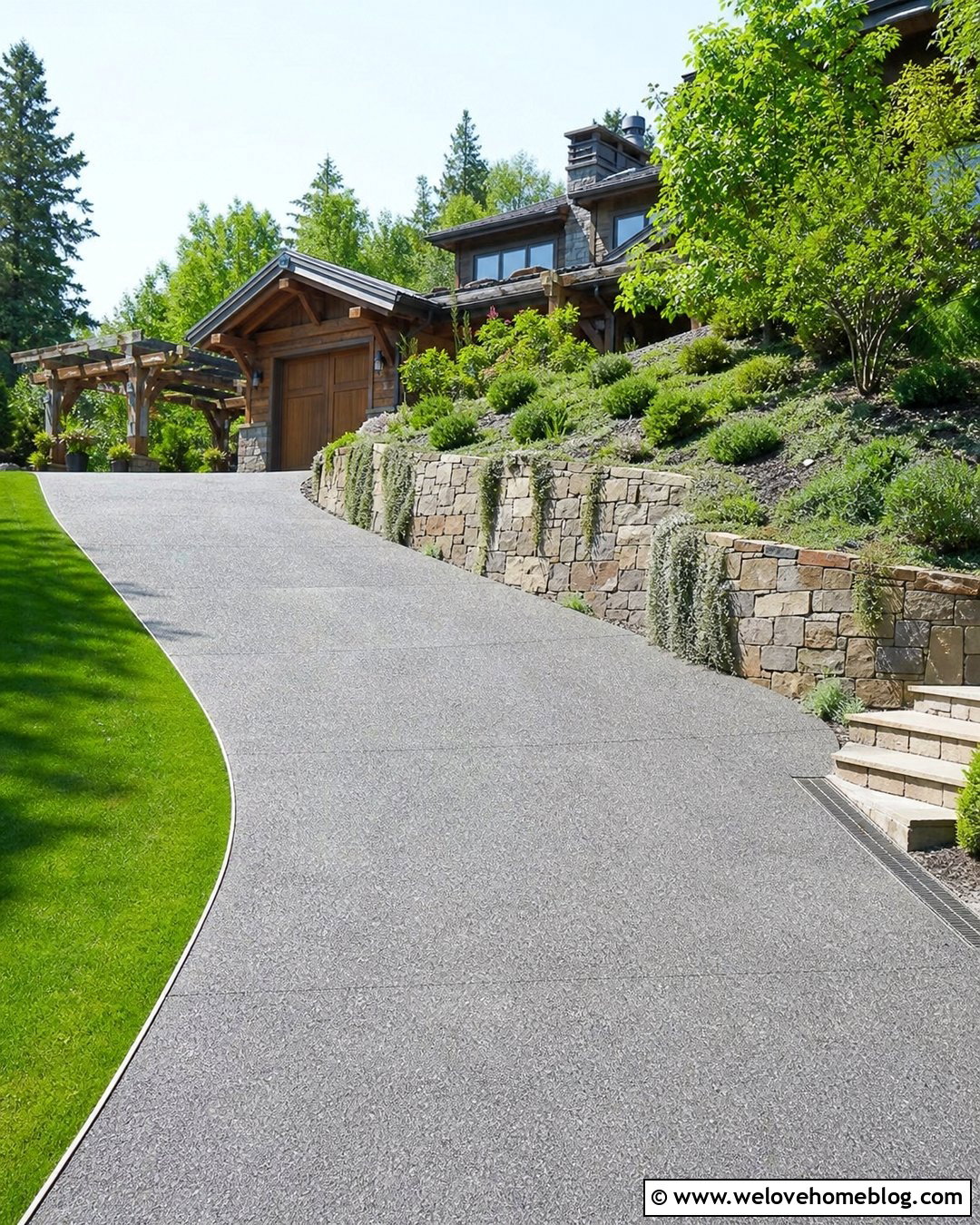
A retaining wall can give a sloped crushed concrete driveway both structure and visual definition. Run a low wall along the uphill side using concrete block, natural stone, or brick that relates to the house exterior. On the downhill edge, use a subtle curb or steel restraint to preserve the full driving width. Plant trailing ground covers and compact shrubs above the wall, keeping roots and foliage from interfering with vehicles. A straight driveway may work on mild grades, while a sweeping curve can create a more gradual approach on larger properties. Add a defined drainage channel where needed so water does not wash loose material downhill. Professional grading and wall design are worthwhile when significant elevation changes or soil pressure are involved.
23. Crushed Concrete Driveway With Turnaround
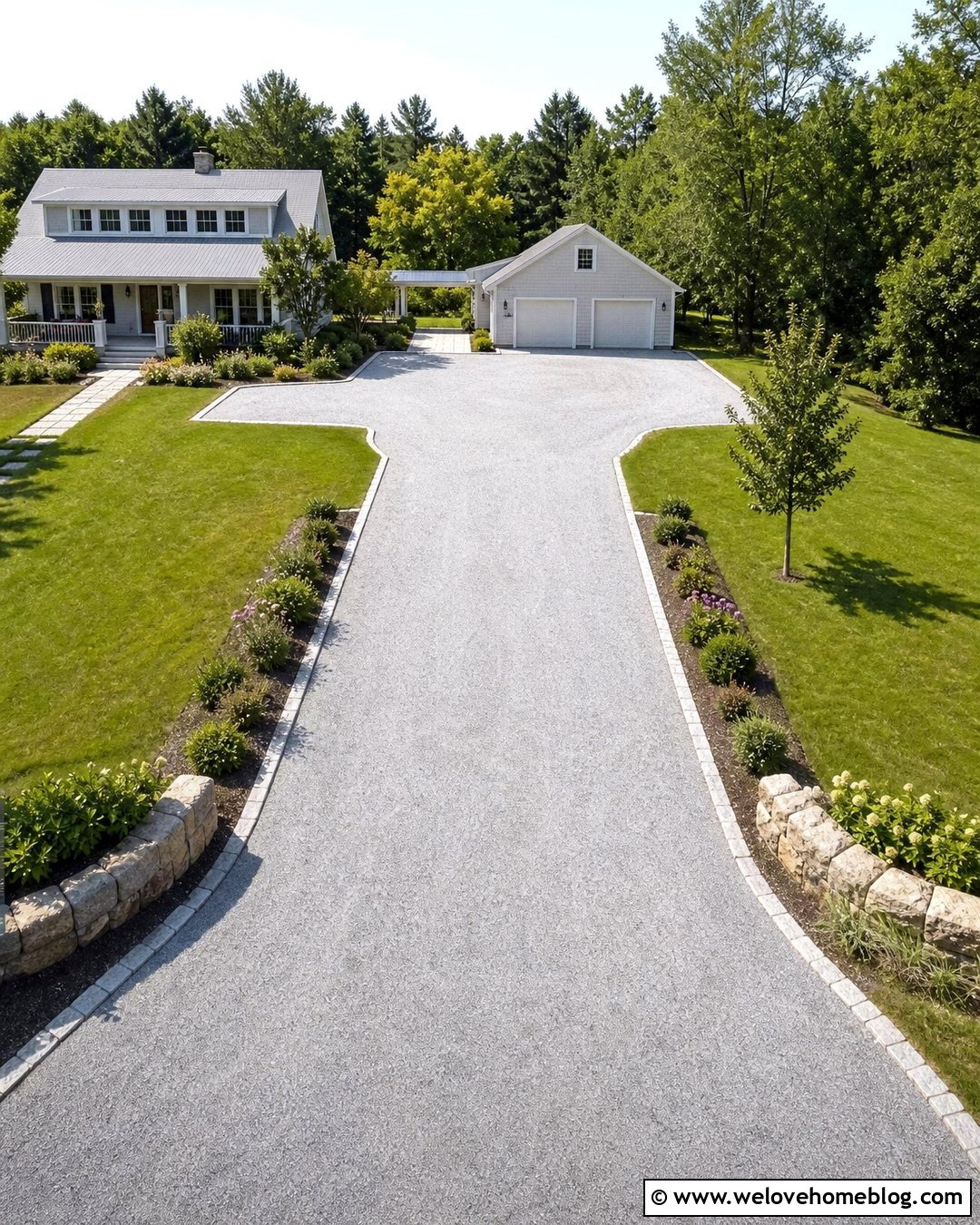
A dedicated turnaround makes a long crushed concrete driveway more functional without requiring a complete circular layout. Add a T-shaped, hammerhead, or widened rectangular area near the garage, depending on available space. Keep the same compacted crushed concrete across the main drive and turnaround so both areas read as one design. Frame the perimeter with stone edging and low planting beds, but leave corners visually open for easier maneuvering. A detached garage, country home, or rear-loaded property can benefit from this arrangement. Connect a paved walkway to the house so pedestrians do not have to cross planting areas. Carefully placed lawn panels and one shade tree can soften the larger aggregate surface while maintaining clear views across the entire parking and turning zone.
24. Crushed Concrete Driveway With Side Parking Pad
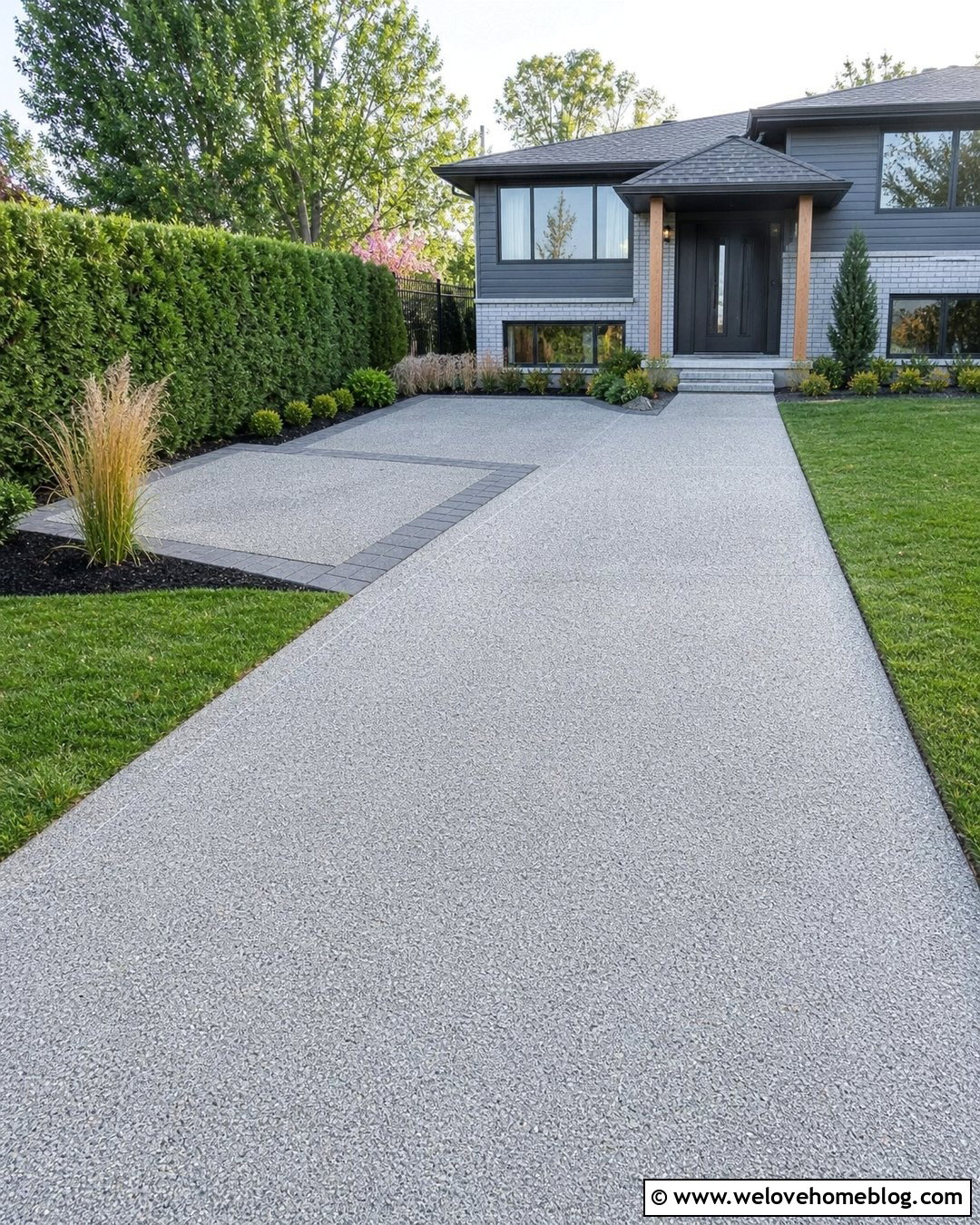
A side parking pad provides extra space while keeping the main crushed concrete driveway visually narrow. Branch the pad near the garage and use a paver ribbon to distinguish its boundary from the primary route. The entire surface can remain compacted crushed concrete, which creates consistency and avoids the patchwork look of unrelated materials. Screen the parking area with a low hedge or ornamental grasses rather than tall shrubs that may restrict door access. A straight main driveway works well with ranch, split-level, and suburban homes. On the opposite side, create a broad walkway and foundation planting bed to balance the frontage. Shape the pad deliberately as a rectangle or gentle flare instead of allowing it to appear like an accidental widened section.
25. Crushed Concrete Driveway With Modern Landscaping
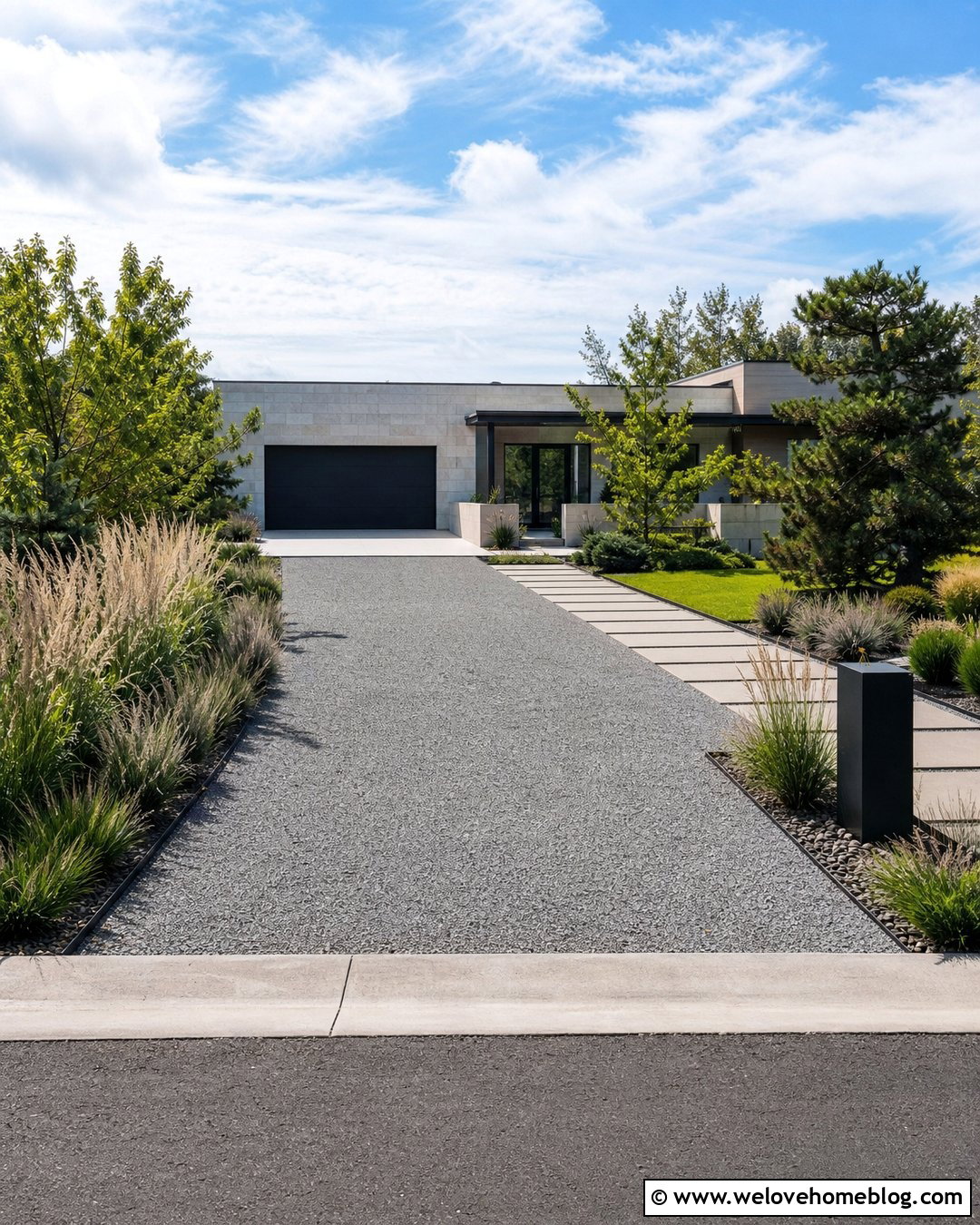
A modern crushed concrete driveway depends on crisp geometry and a limited selection of materials. Create a wide straight drive or a subtle offset layout leading to a flat-roofed or clean-lined contemporary house. Use uniformly sized gray recycled concrete with black steel edging. Large rectangular concrete pads can form the walkway, while narrow planting beds introduce feather reed grass, compact evergreens, and sculptural shrubs. Repeat black accents through the address sign, mailbox, lighting, and window frames. Leave generous open space between plants to preserve the uncluttered effect. A smooth concrete apron at the garage will provide a precise final transition. The textured aggregate keeps the frontage from feeling sterile, while disciplined borders and landscaping make the economical material appear purposeful and architecturally connected.
Conclusion:
The best crushed concrete driveway is more than a layer of recycled aggregate. Its shape, borders, entrance, landscaping, drainage, and connection to the house should function as one complete design. Brick and cobblestone can create a traditional finish, while steel edging and linear planting suit modern homes. Curved, circular, and horseshoe layouts can shape larger yards, and straight drives remain practical for compact properties. Whatever look you prefer, proper preparation, grading, compaction, and edge restraint will influence how well the surface performs. Consider local aggregate color, site drainage, vehicle movement, and ongoing maintenance before installation. These 25 Crushed Concrete Driveway Ideas offer practical starting points for creating affordable and distinctive curb appeal.

Related posts:
Leave a Reply