
Crushed limestone offers a practical way to create a driveway that feels polished, natural, and connected to the surrounding landscape. Its angular pieces compact into a firm surface, while its soft gray, cream, or off-white coloring complements many American home styles. The best Crushed Limestone Driveway Ideas go beyond choosing stone alone. Shape, drainage, edging, planting, and the transition to the street all affect how the finished driveway looks and performs. You can pair limestone with brick for traditional charm, steel edging for modern simplicity, or boulders for a relaxed country setting. Thoughtful grading and a properly compacted base also help preserve the clean appearance. Explore the complete driveway designs below to find practical and attractive Crushed Limestone Driveway Ideas.
1. Crushed Limestone Driveway With Brick Edging
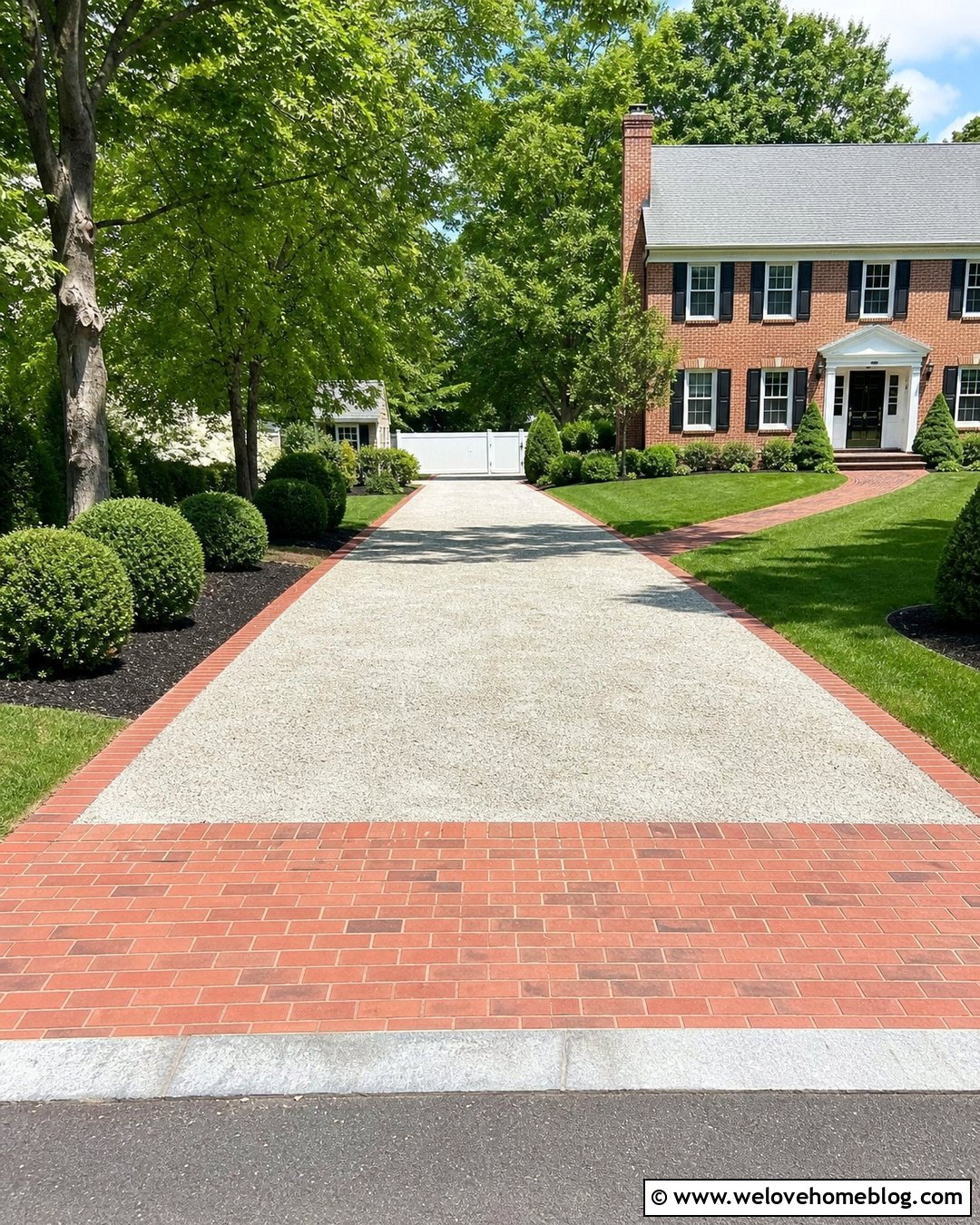
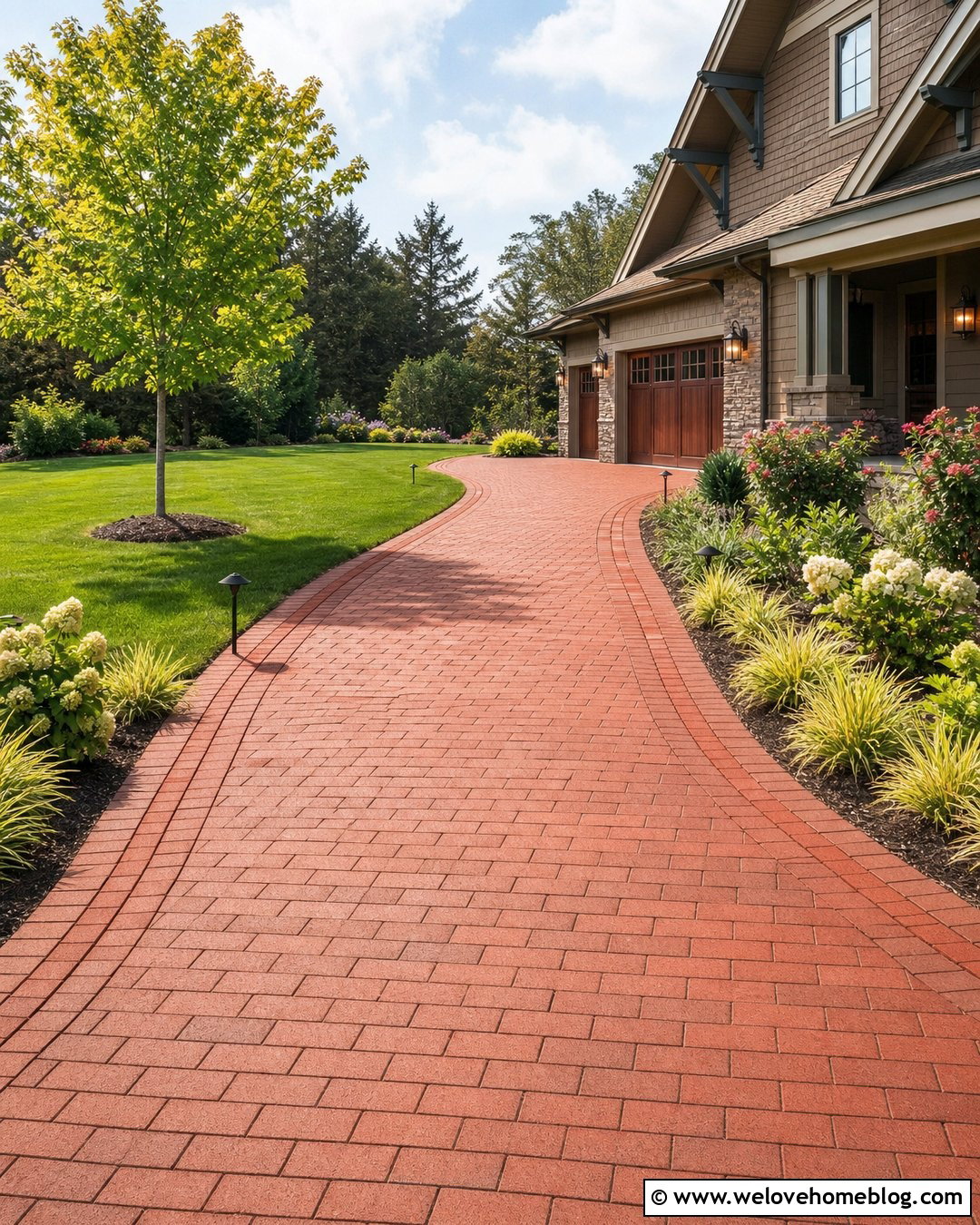
A straight crushed limestone driveway gains a warmer, more finished appearance when framed with traditional red brick. Install the bricks lengthwise for a narrow border or side by side for a wider ribbon that makes the entrance more noticeable. The earthy red color creates an attractive contrast against pale gray or cream limestone. Keep the brick tops close to the finished driveway height so tires can cross them without catching. Neatly trimmed lawn, rounded evergreen shrubs, and a brick walkway can connect the driveway to a colonial or ranch house. At the street, widen the brick edging into a simple apron. This protects the most frequently traveled entrance while giving the entire driveway a clear shape and well-planned curb appeal.
2. Curved Crushed Limestone Driveway With Cobblestone Border
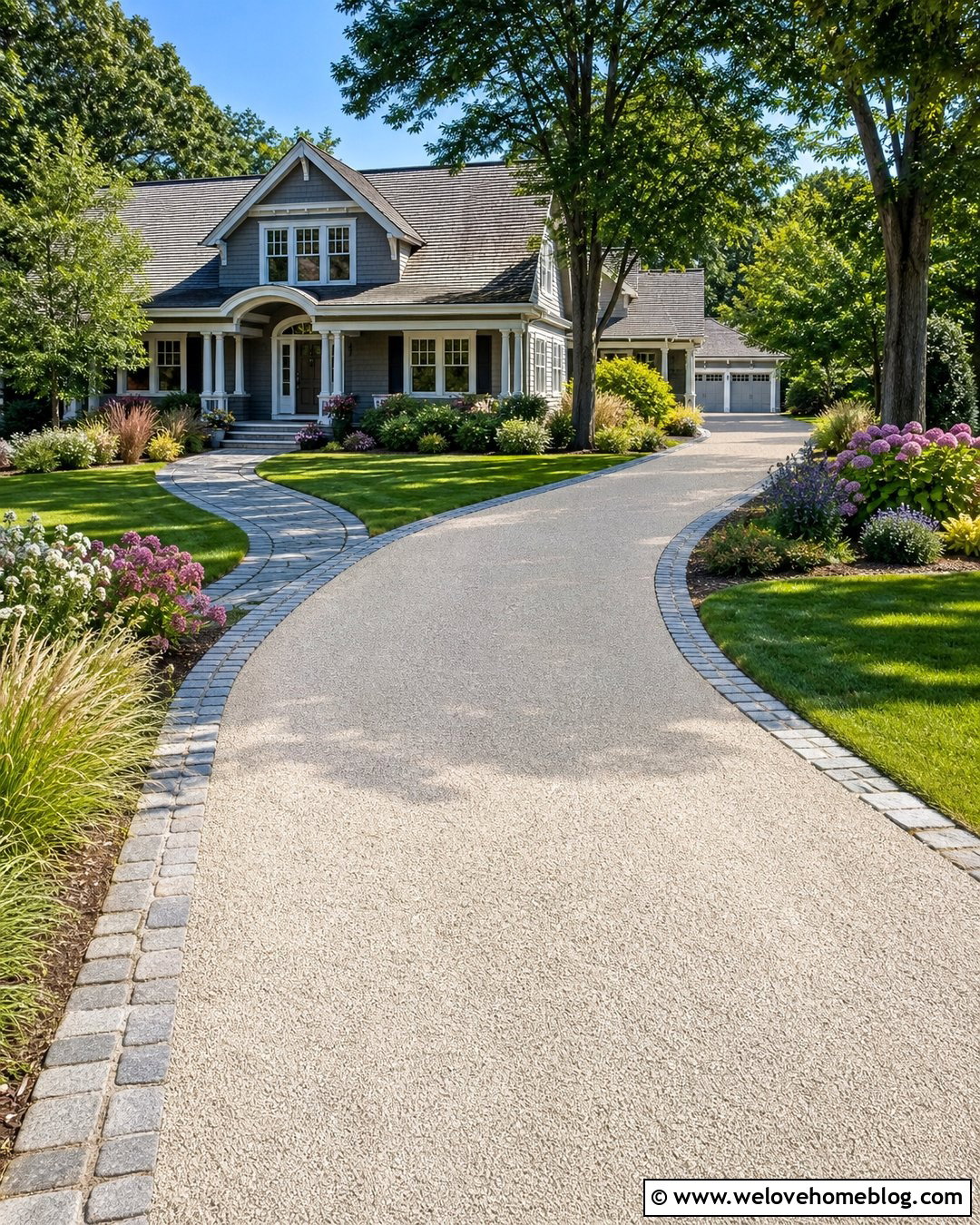
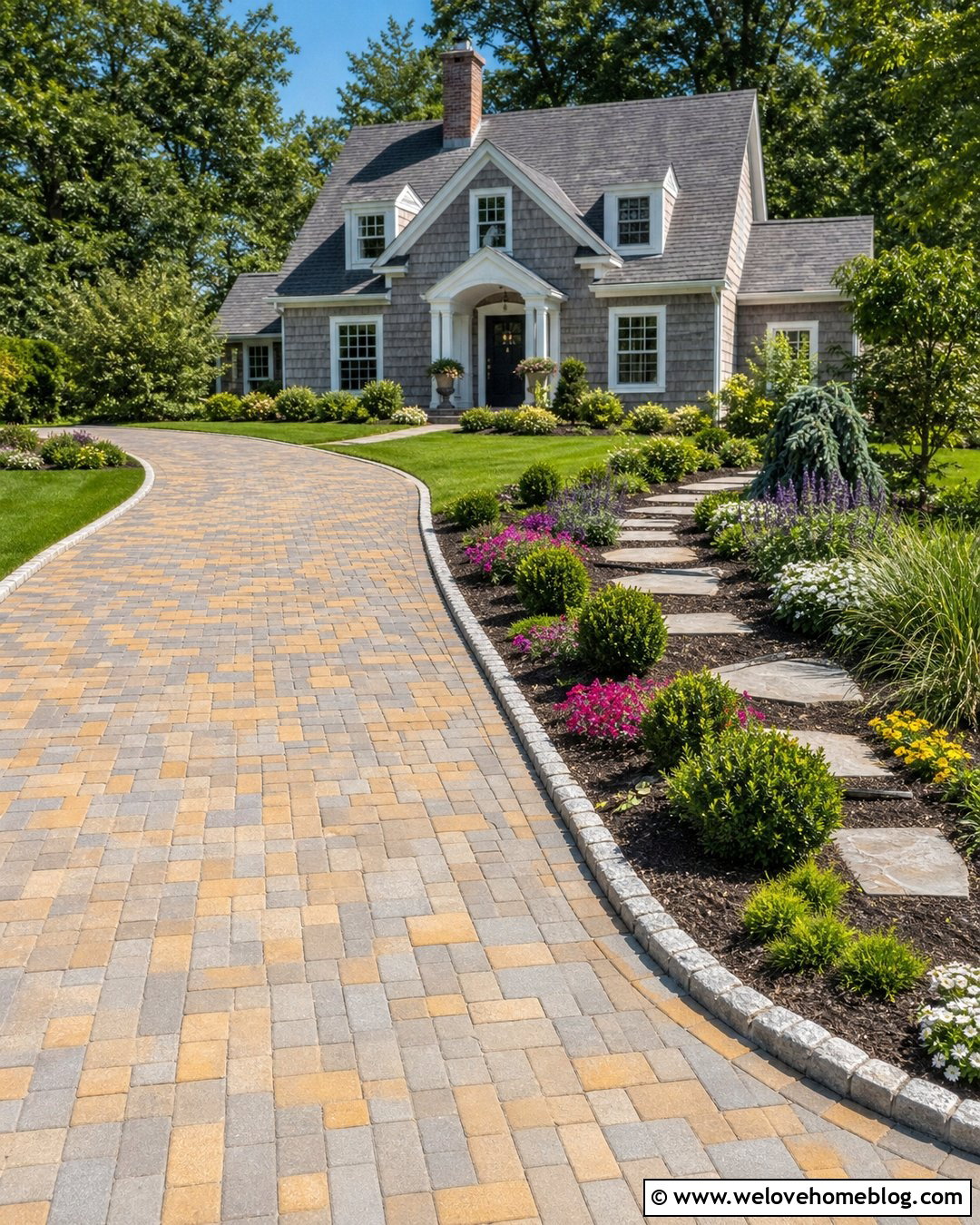
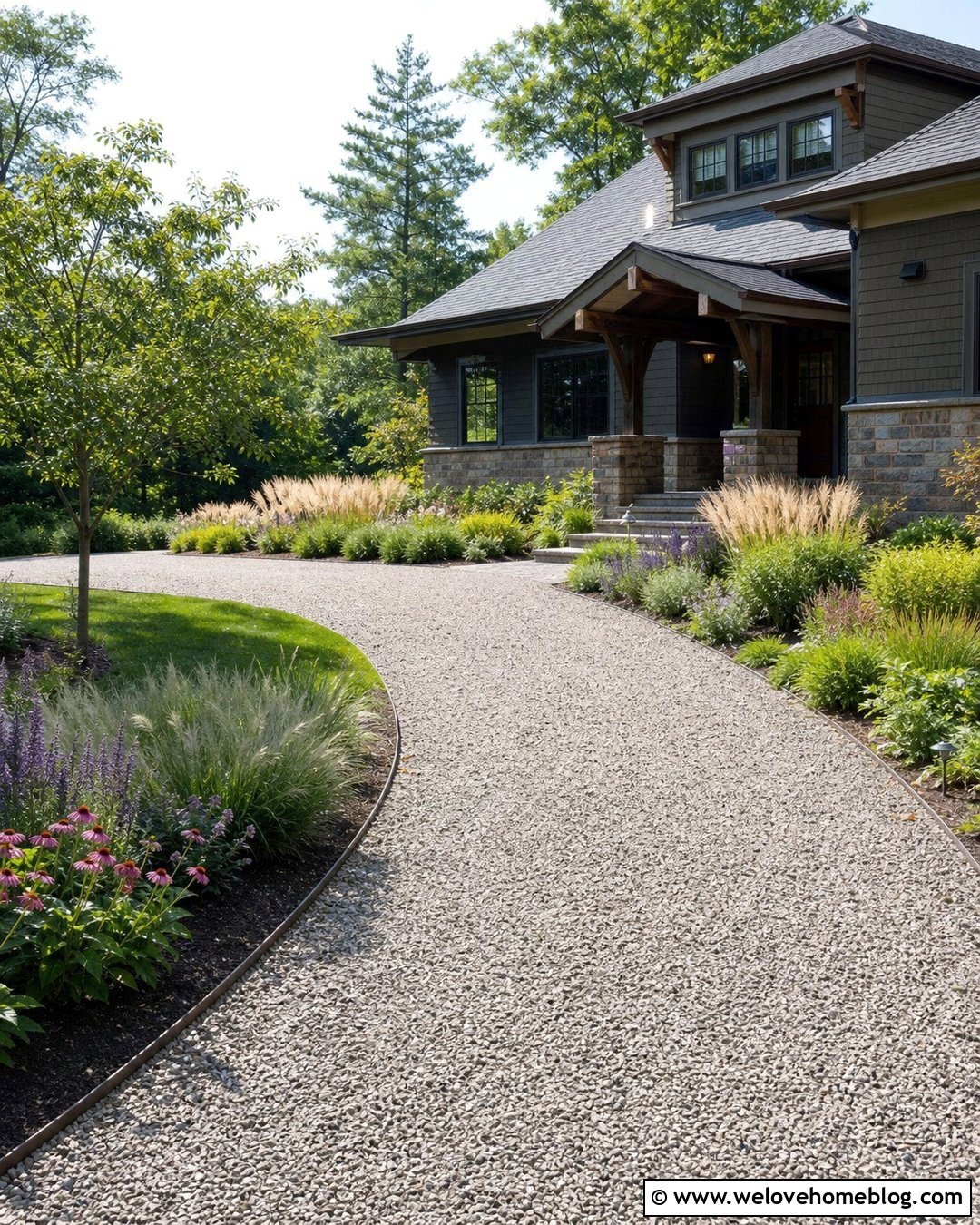
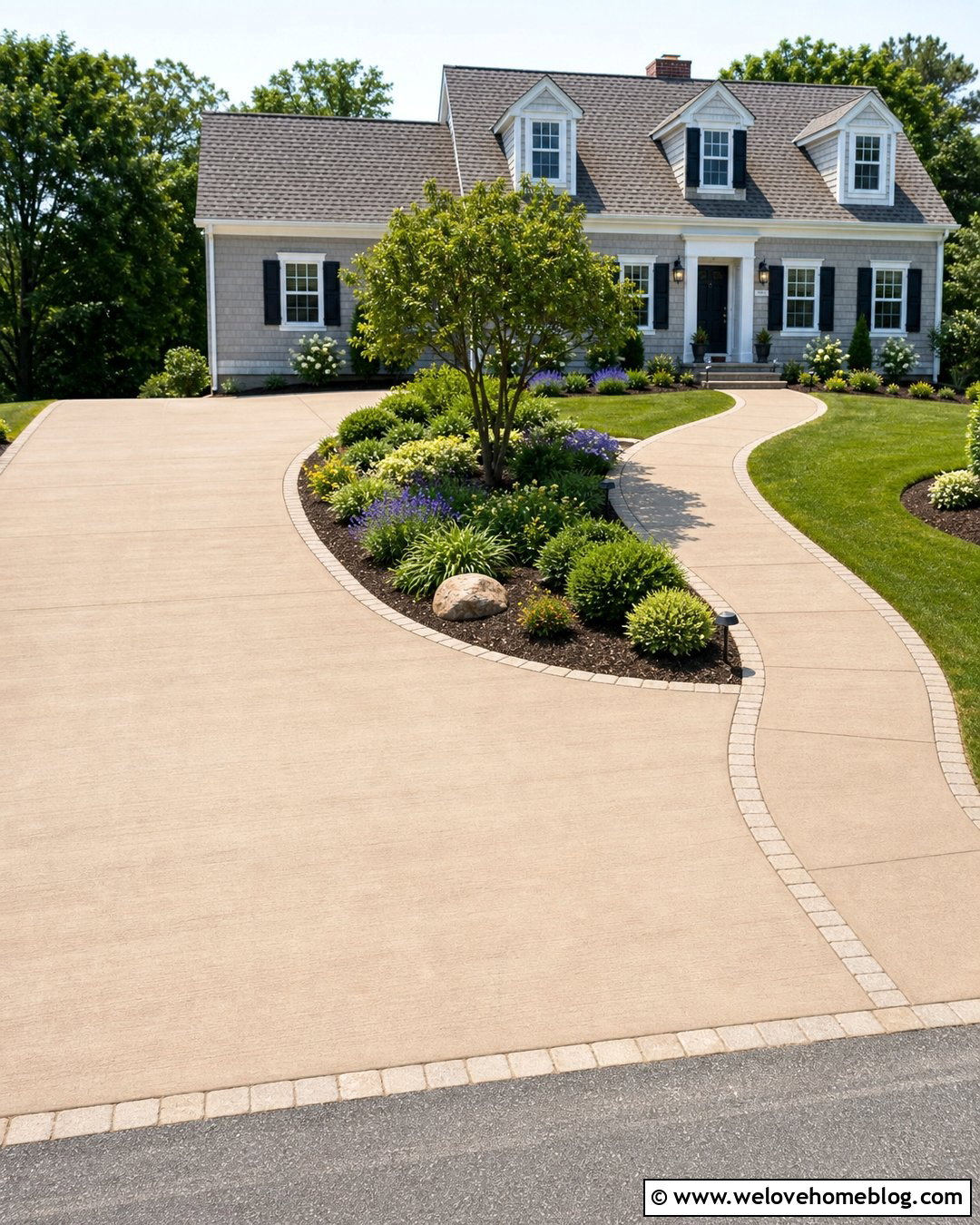
Soft curves can make a front yard appear deeper while creating a more graceful approach to the house. A compacted crushed limestone driveway following a broad curve works especially well around mature trees or an existing garden bed. Line both edges with gray cobblestones to keep loose material contained and reinforce the driveway’s flowing shape. The cobblestones can sit flush for easy maintenance or slightly raised where they border planting beds. Use low ornamental grasses, flowering shrubs, and patches of lawn along the outside curve without crowding the driving area. A coordinating cobblestone walkway can branch toward the front porch. This complete design suits Craftsman, cottage, and traditional homes where a rigid straight driveway might feel too formal or disconnected from the landscape.
3. Circular Crushed Limestone Driveway With Center Island
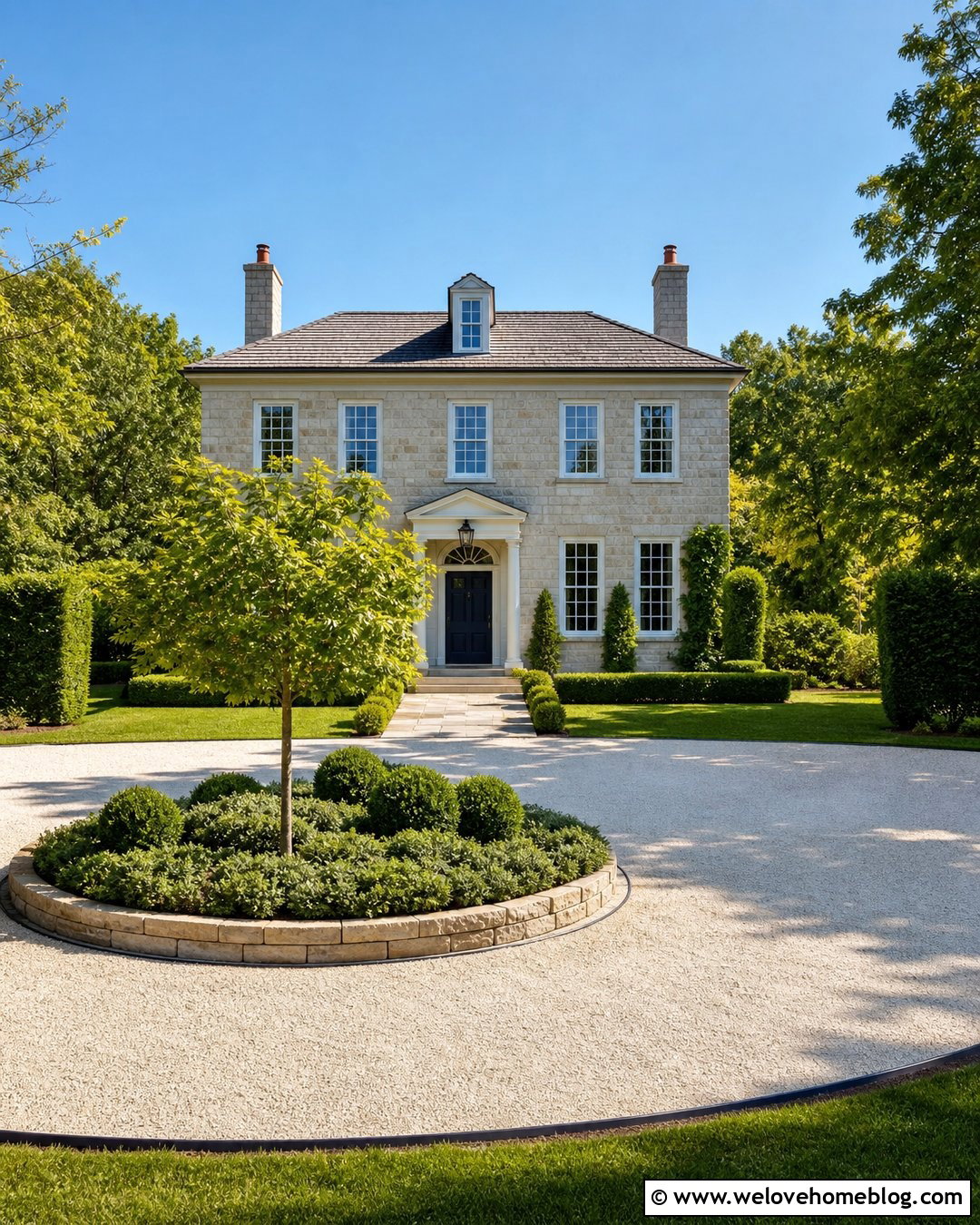
A circular layout creates an impressive entrance while allowing vehicles to arrive and leave without backing toward the street. Cover the driving loop with finely graded crushed limestone and compact it carefully for an even, stable finish. A low limestone-block border around the center island repeats the driveway material while clearly separating the planting area. Choose one small ornamental tree as the focal point, then surround it with low shrubs and ground cover that will not block sightlines. Define the outer driveway edge with discreet steel edging or matching limestone blocks. Keep the circle broad enough for comfortable turning and provide a direct walkway from the inner loop to the front door. This balanced layout works beautifully with symmetrical colonial, Georgian, and estate-style houses.
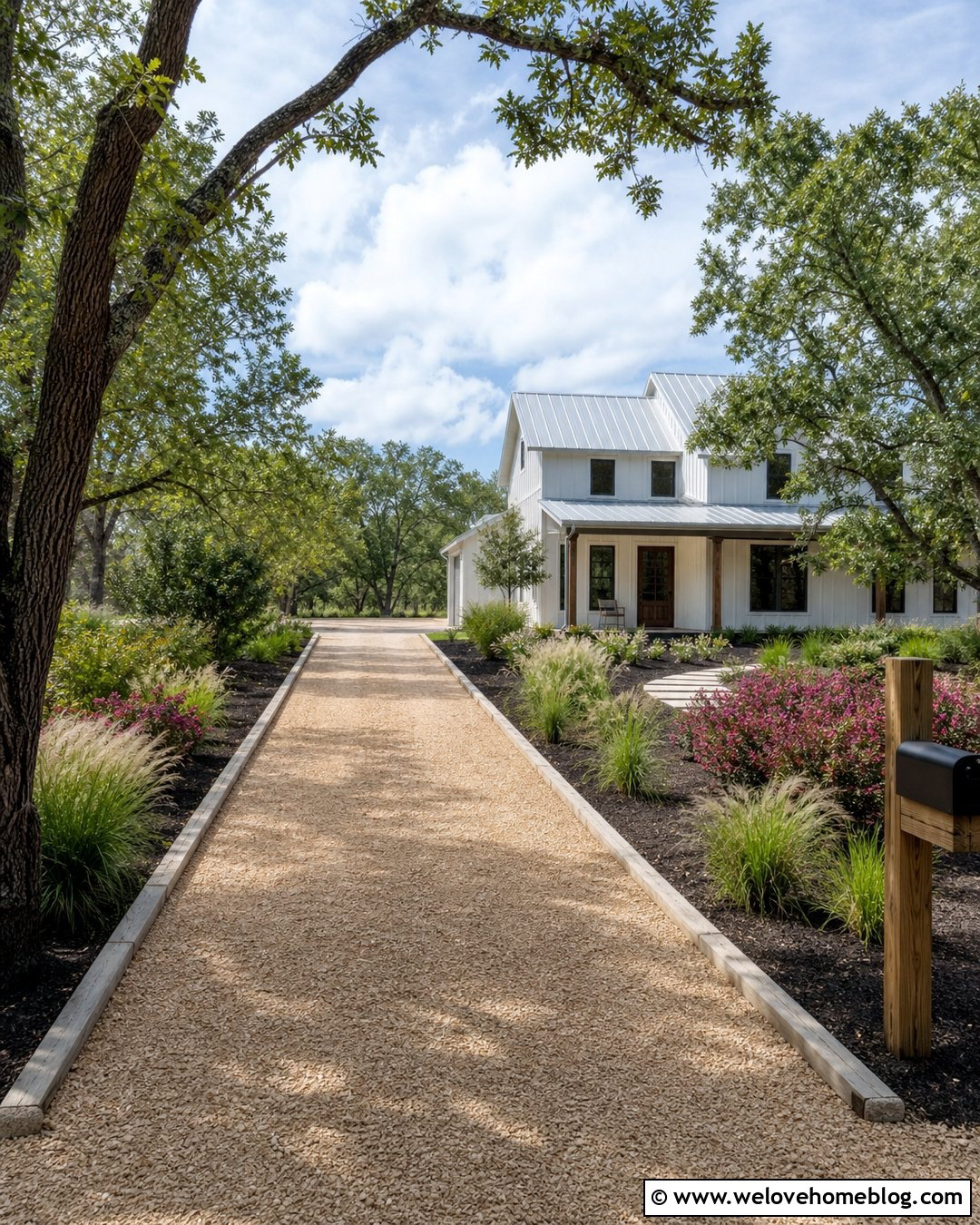
4. Crushed Limestone Driveway With Timber Edging
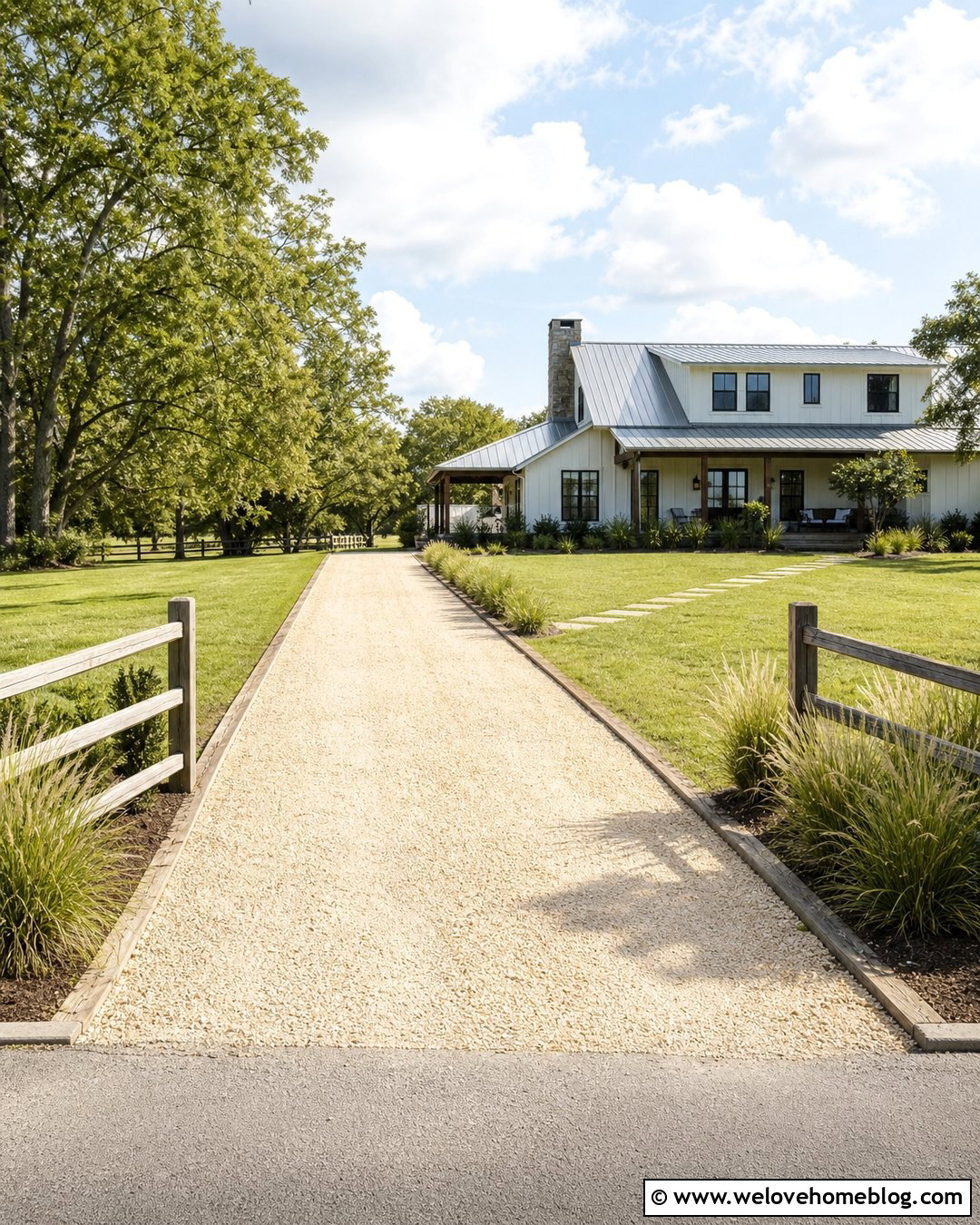
Timber edging gives a crushed limestone driveway a relaxed, practical character that feels appropriate beside a farmhouse, cabin, or country ranch. Pressure-treated landscape timbers can form strong, straight boundaries along a long driveway and prevent the surface material from spreading into the lawn. Set the timbers securely and keep their upper edges nearly level with the compacted limestone. At the house, widen the driveway into a rectangular parking and turnaround area. Native grasses, simple split-rail fencing, and informal shade trees reinforce the rural setting without creating demanding maintenance. A stepping-stone path can connect the parking area to a side porch. The combination feels natural and affordable, yet the defined edges keep the driveway from looking like an unfinished gravel lane.
5. Modern Crushed Limestone Driveway With Steel Edging
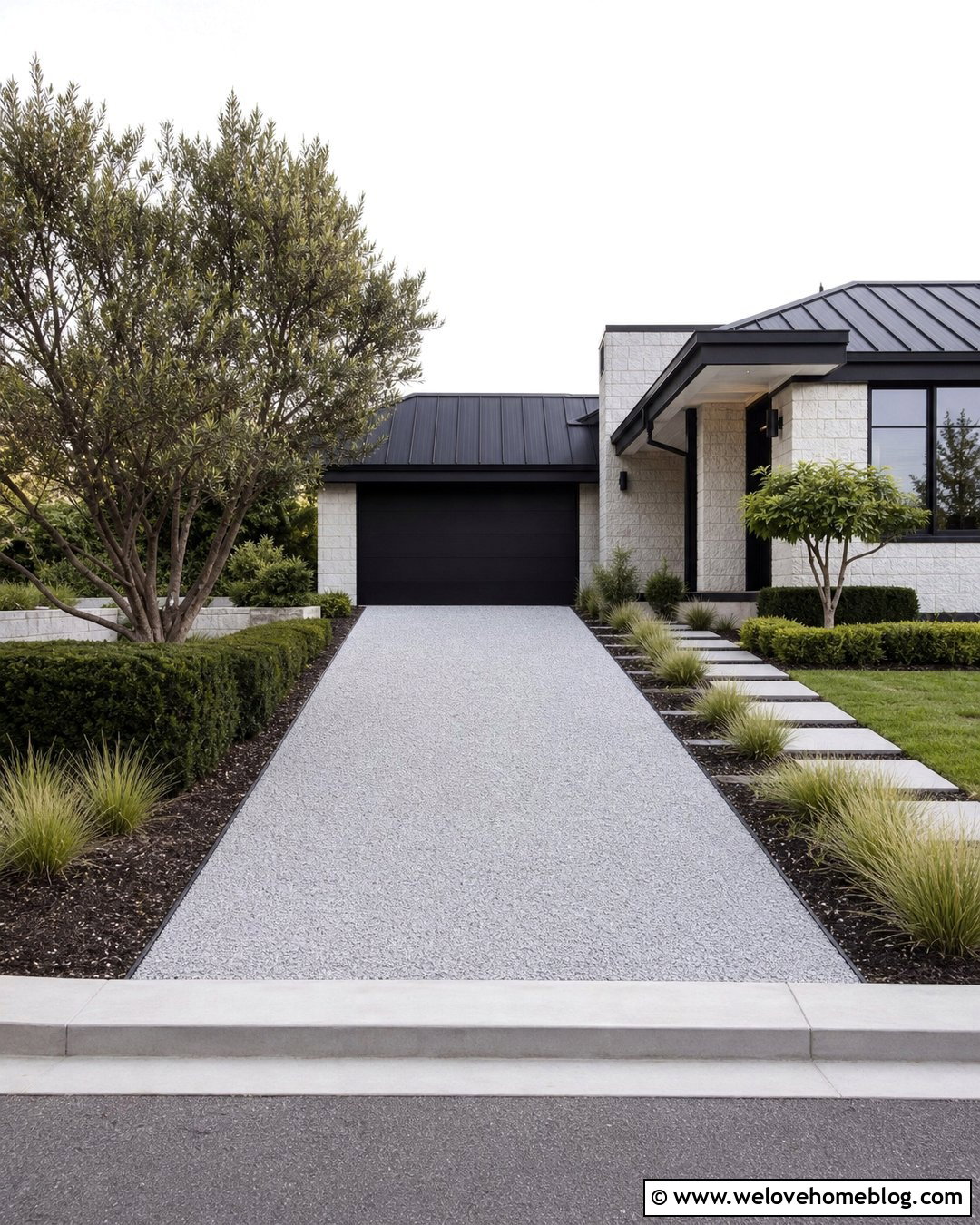
Can crushed limestone work with modern architecture? A light limestone surface framed by slim black steel edging creates a crisp answer. Use a straight or gently angled driveway that aligns with the garage, walkway, and major lines of the house. The dark edge provides sharp contrast while remaining visually quieter than brick or stone blocks. Large rectangular concrete stepping pads can form the route to the front door without covering the limestone driveway itself. Keep landscaping minimal with architectural grasses, clipped shrubs, and one sculptural tree. Black address numbers, garage doors, and exterior lights help repeat the edging color. This combination delivers a clean modern look while preserving the softer texture and natural variation that distinguish crushed limestone from a continuous concrete slab.
6. Crushed Limestone Driveway With Limestone Block Edging
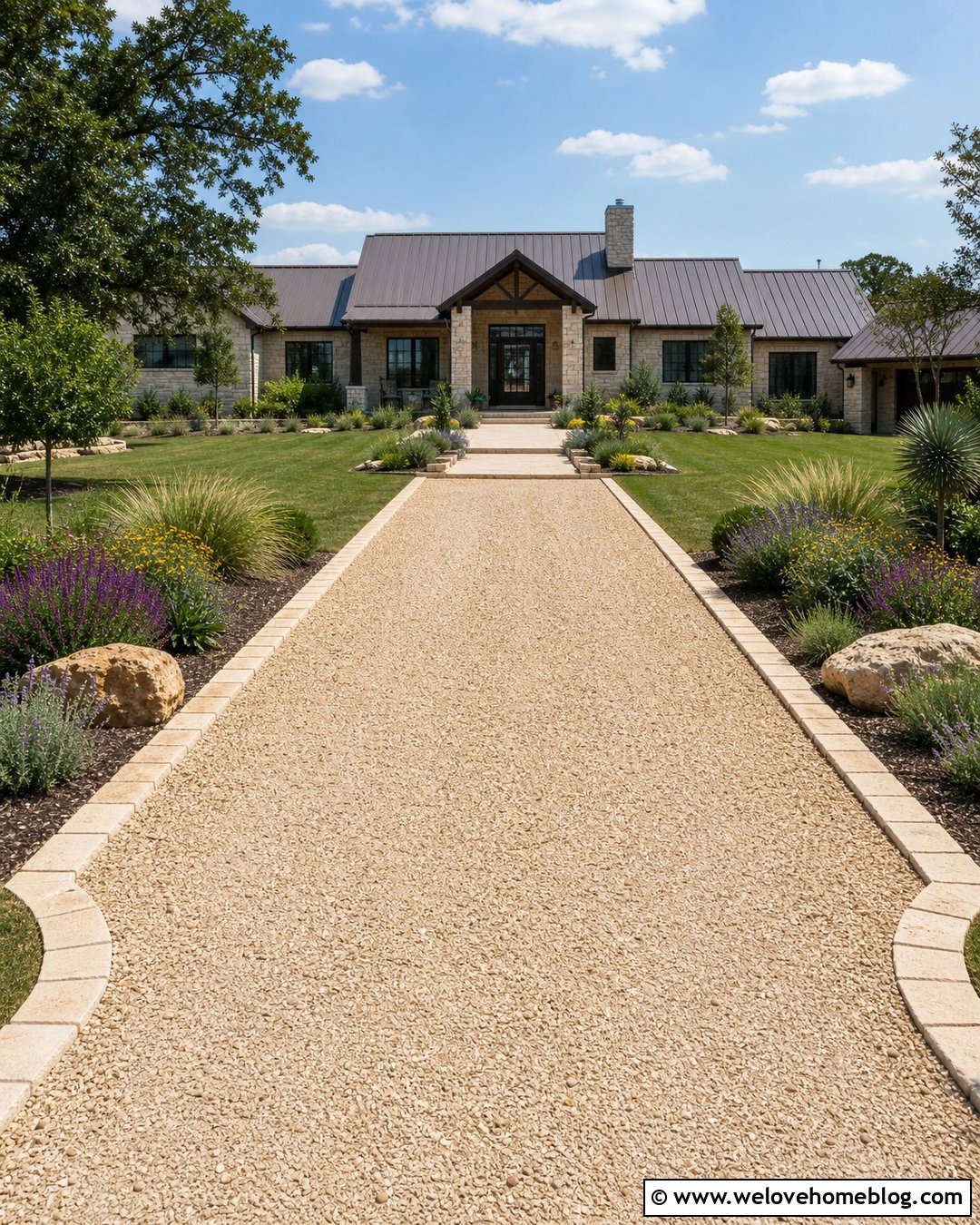
Using larger limestone blocks beside a crushed limestone surface creates a coordinated design with subtle changes in scale and texture. Select rectangular blocks in a slightly warmer or darker tone so the edge remains visible. A broad, straight layout looks substantial beside a stone house, Texas ranch, or Mediterranean-inspired residence. Near the street, continue the blocks around gently flared entrance corners to guide vehicles onto the driveway. Plant drought-tolerant shrubs, ornamental grasses, and small flowering perennials behind the edging. The raised blocks can also help protect planting beds from scattered aggregate, but they should remain low near turning areas. Repeat the same stone in the front walkway or porch steps. The result feels permanent, cohesive, and naturally suited to sunny landscapes.
7. Crushed Limestone Driveway With Grass Center Strip
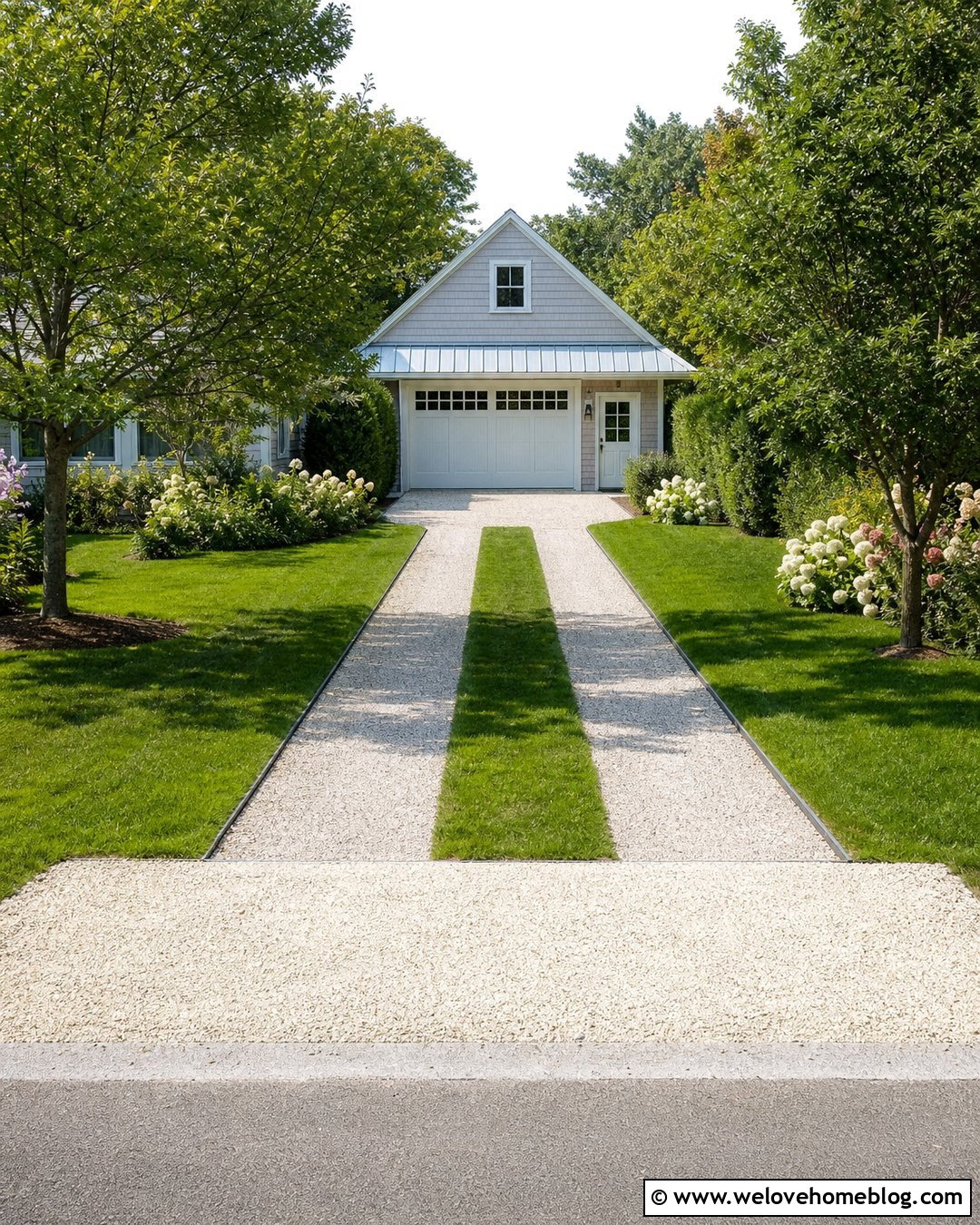
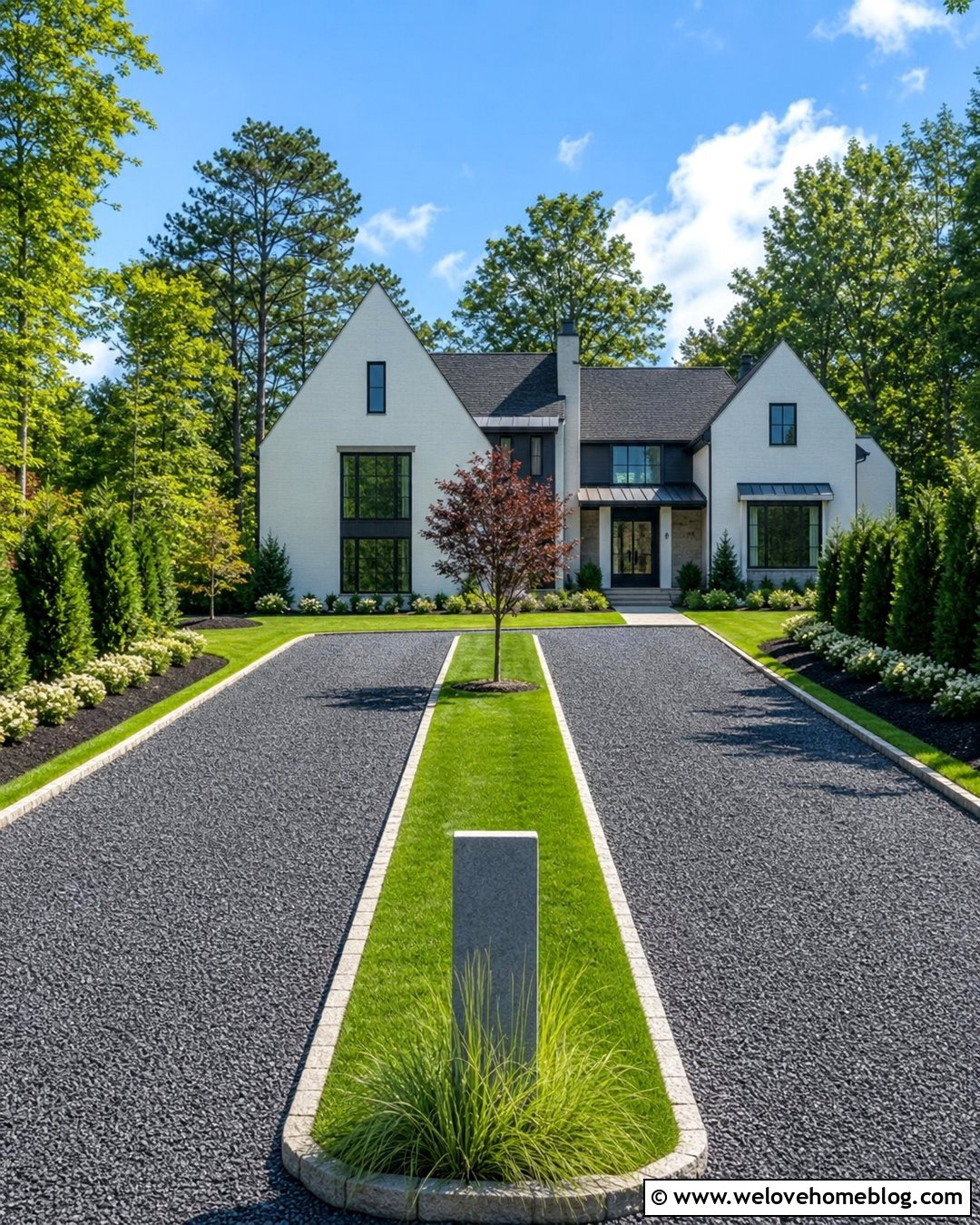
Two compacted crushed limestone tracks separated by a green center strip can reduce the amount of visible stone and give a small property a charming country appearance. This layout works best on a straight driveway where vehicle paths are predictable. Make each limestone track wide enough for tires, and keep the center strip low and easy to mow. Flush steel edging between the grass and stone preserves clean lines without creating a raised obstacle. Continue the limestone across the full width near the street and garage, where turning and parking require more room. Frame the approach with simple lawn, small trees, and restrained planting beds. The finished driveway feels lighter in the landscape and can complement cottages, modest farmhouses, and detached backyard garages.
8. Crushed Limestone Driveway With Paver Apron
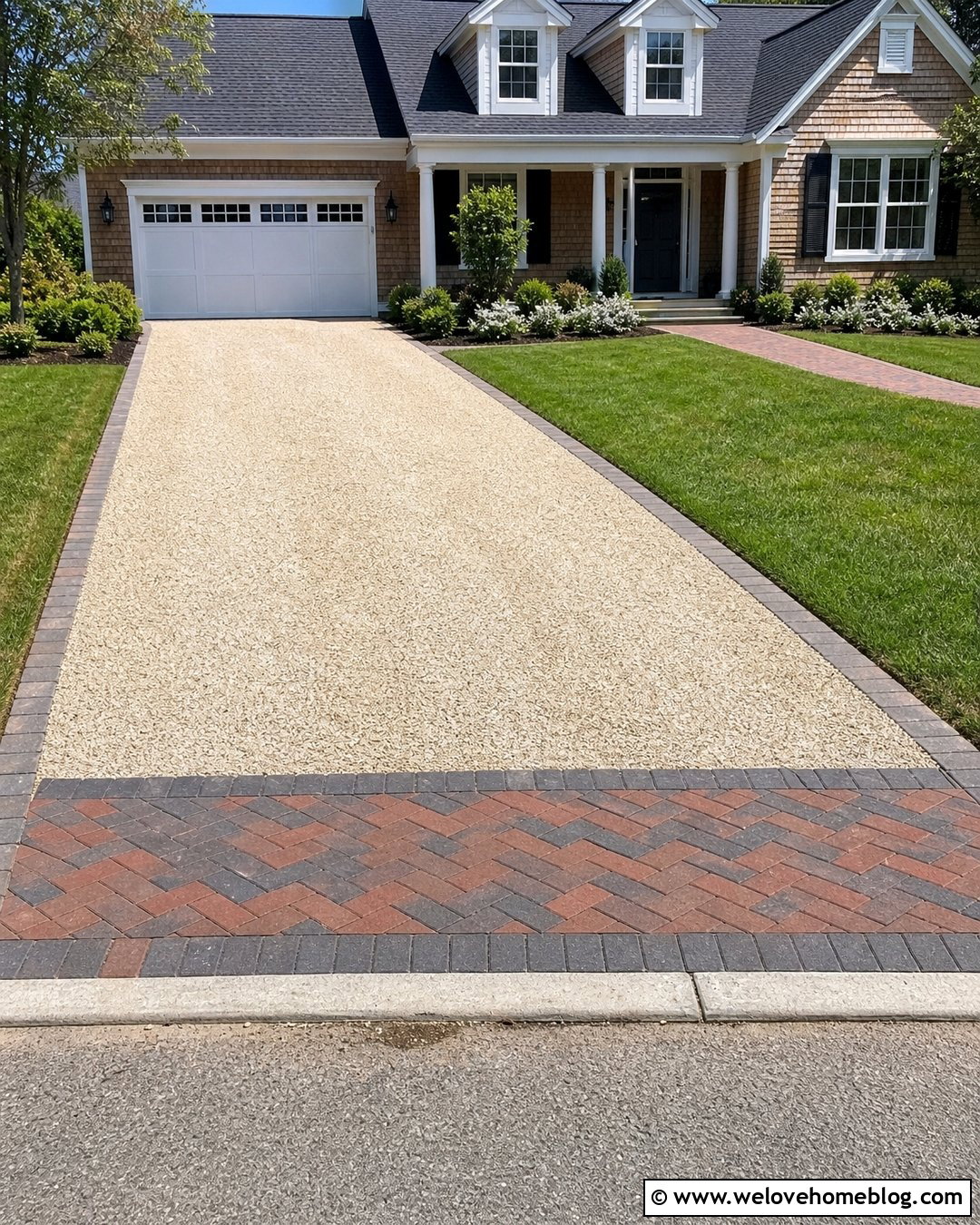
The street entrance receives frequent turning pressure, making it a useful place for a durable decorative apron. Begin a crushed limestone driveway with a band of concrete or clay pavers installed across the full width. A herringbone pattern creates visual interest and clearly marks the transition from the road. Continue a narrow paver border along the sides, or allow the apron to stand alone as the main accent. Choose charcoal pavers for a contemporary contrast or warm tan pavers for a softer traditional look. Near the house, repeat the same material in the walkway and garage threshold. Low shrubs and tidy lawn keep attention on the entrance. This combination makes an everyday limestone driveway feel intentionally designed while creating a neat, easy-to-recognize arrival point.
9. Crushed Limestone Driveway With Concrete Ribbon Border
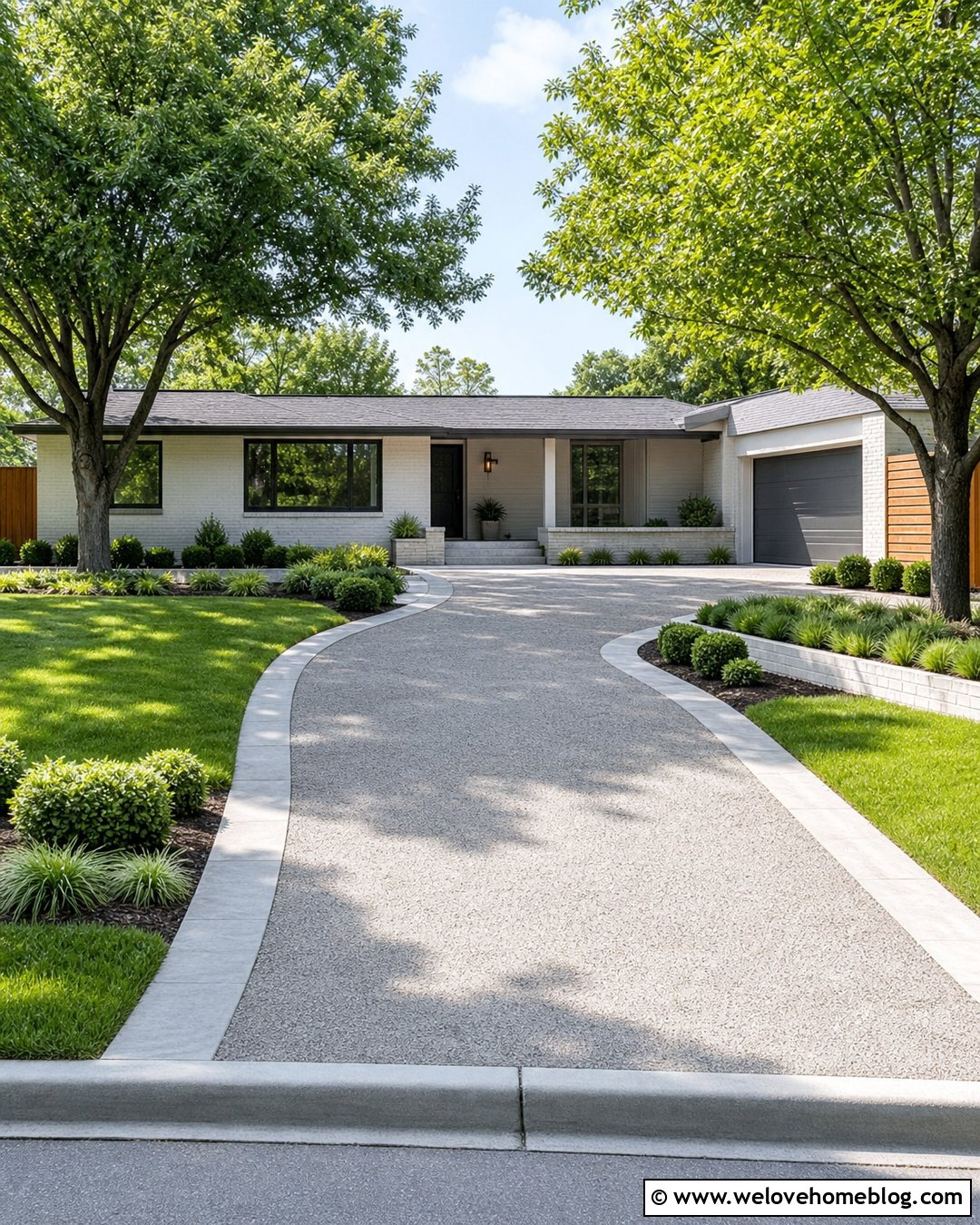
Poured concrete ribbons can give crushed limestone a clean outline without turning the entire driveway into a hard gray surface. Install narrow concrete strips along both edges of a straight or curved layout, keeping their finish smooth and their color compatible with the home. The ribbons clearly separate limestone from lawn and provide a dependable guide for mowing. They can widen at the garage into a concrete threshold that limits loose stone near the door. Pair this border with a simple concrete walkway and rectangular planting beds for a unified design. Boxwood, dwarf grasses, and one or two canopy trees add structure without hiding the crisp layout. This restrained combination works particularly well with midcentury ranch homes, renovated split-level houses, and updated suburban exteriors.
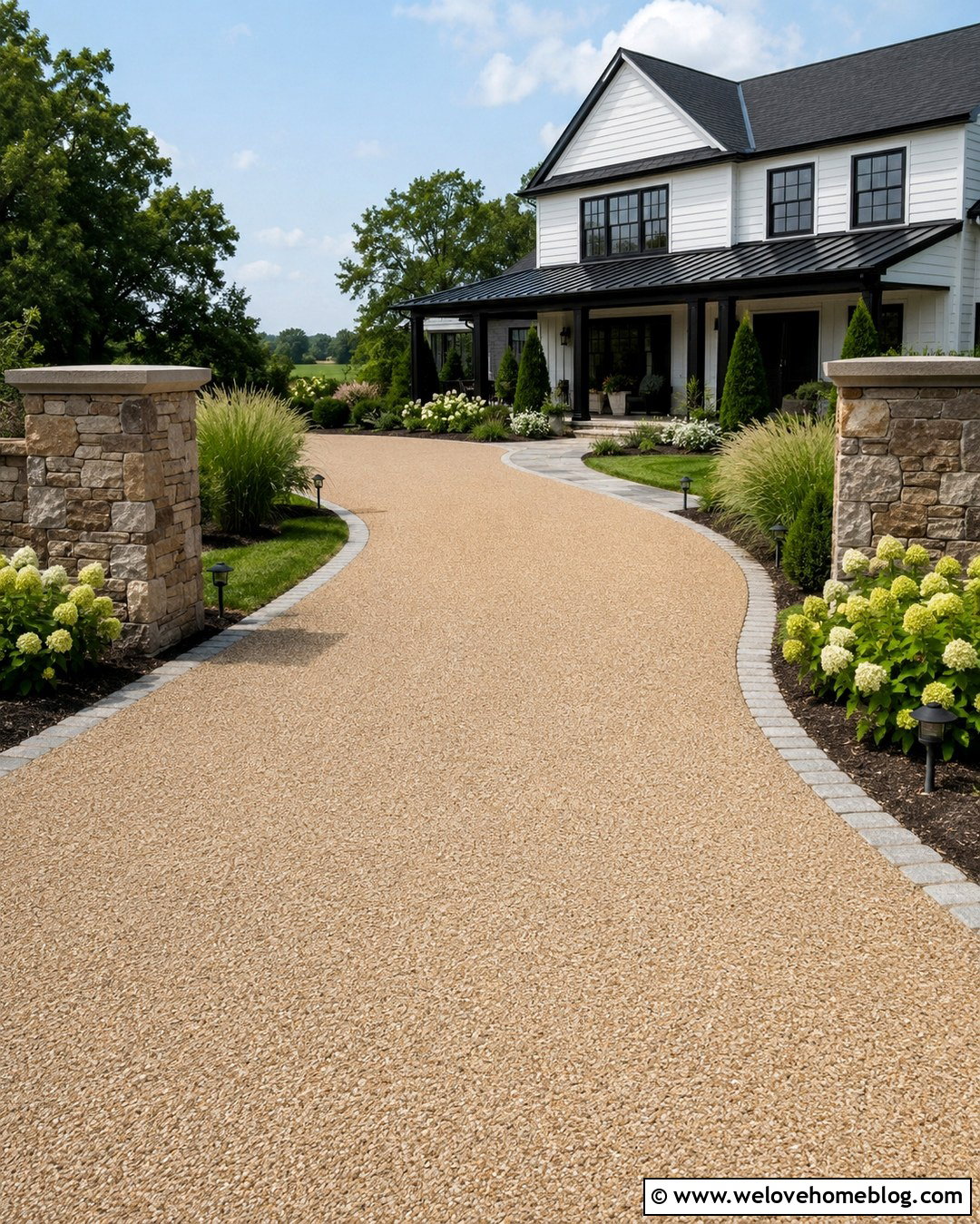
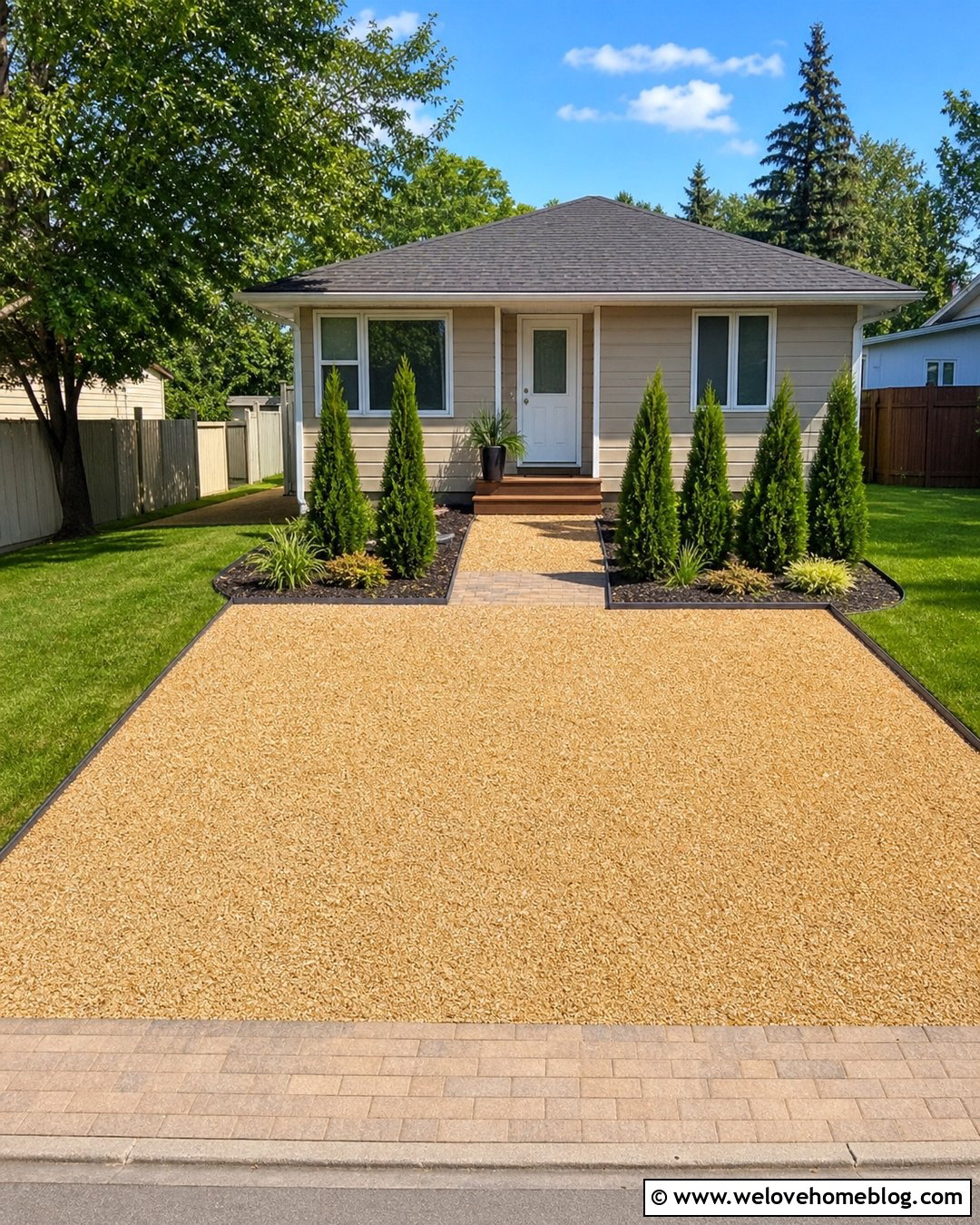
10. Crushed Limestone Driveway With Native Landscaping
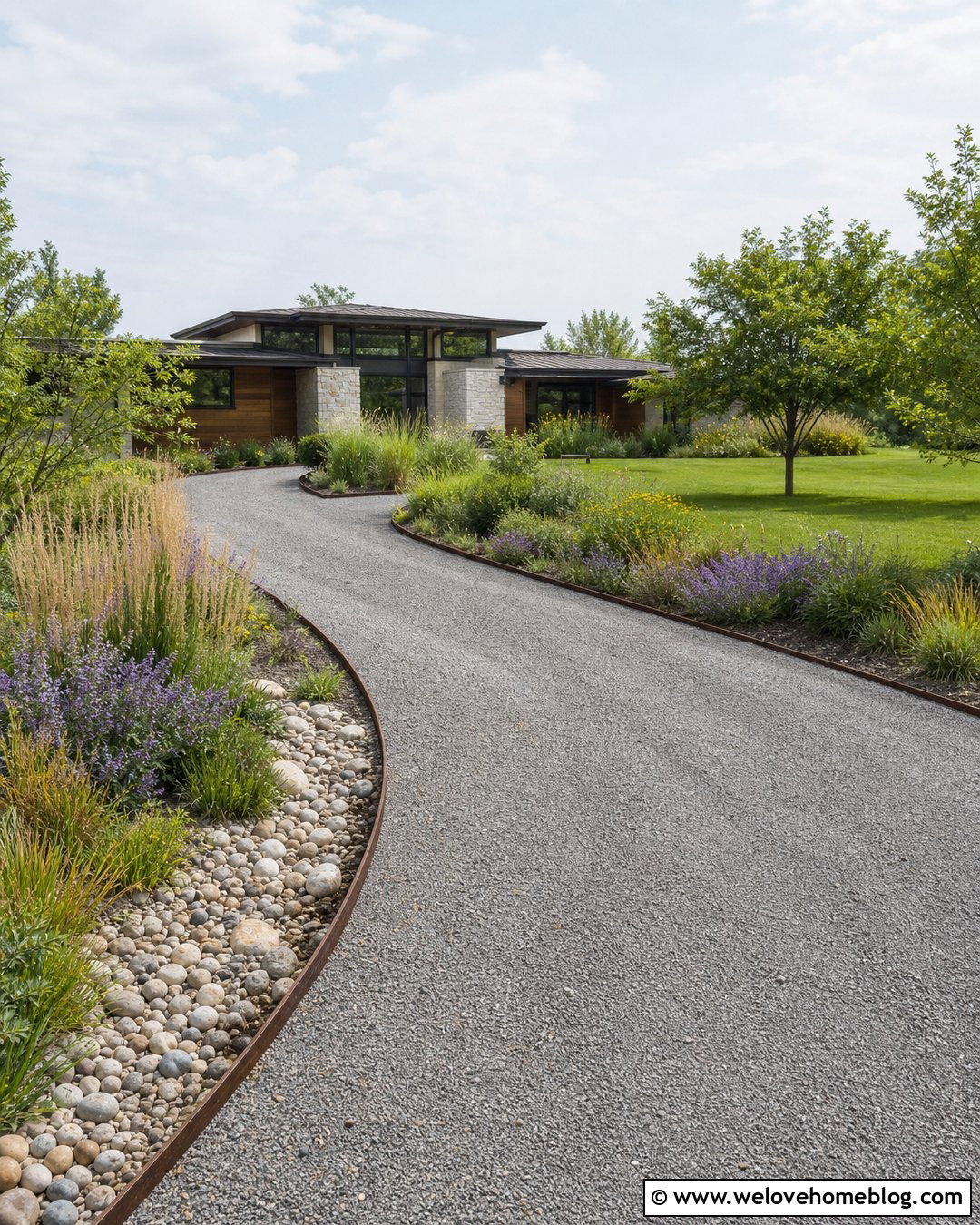
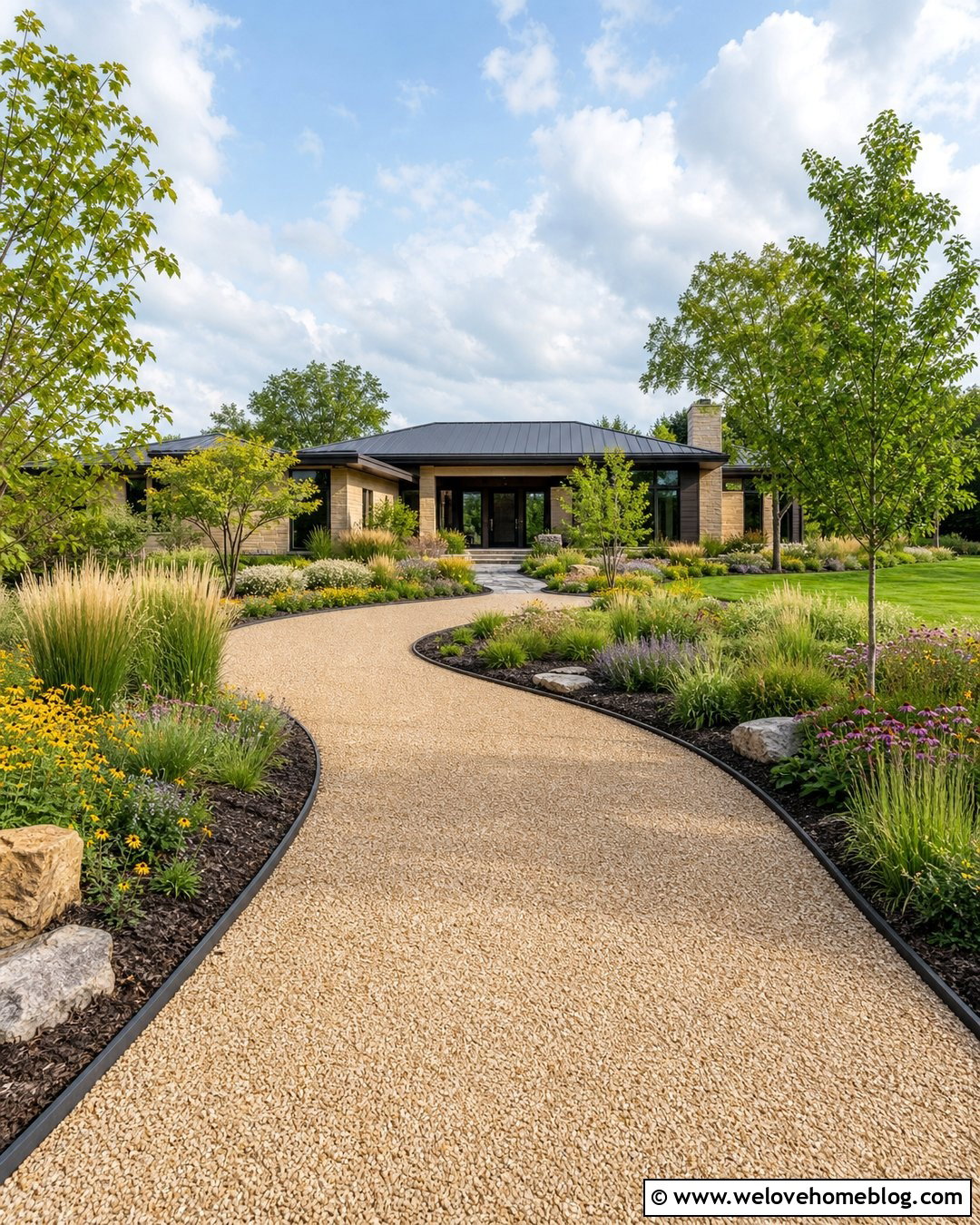
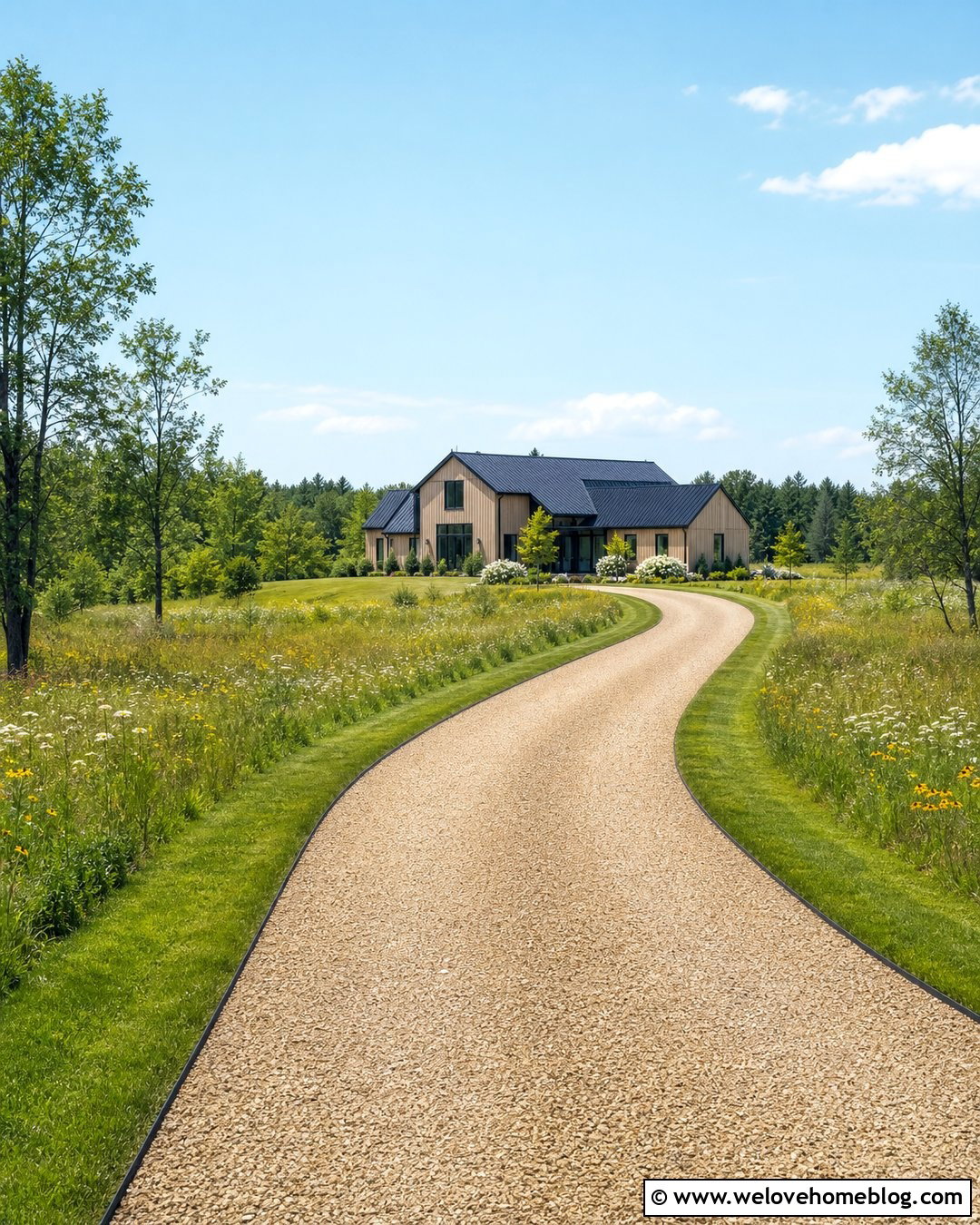
A naturalistic driveway can still look organized when its shape and plant boundaries are carefully planned. Use compacted crushed limestone in a warm gray tone for a gently curved approach through native planting beds. Contain the driveway with weathered steel edging that visually disappears beneath grasses and ground cover. Choose regionally appropriate plants with different heights, bloom periods, and textures, placing the lowest varieties closest to the driving surface. A shallow stone-lined swale can follow the downhill edge and direct runoff toward a rain garden. Keep an open lawn or low meadow near the street to protect visibility. The limestone’s muted color allows the plants to provide seasonal interest, making this design especially fitting for prairie, woodland-edge, and environmentally conscious suburban landscapes.
11. Crushed Limestone Driveway With Lavender Borders
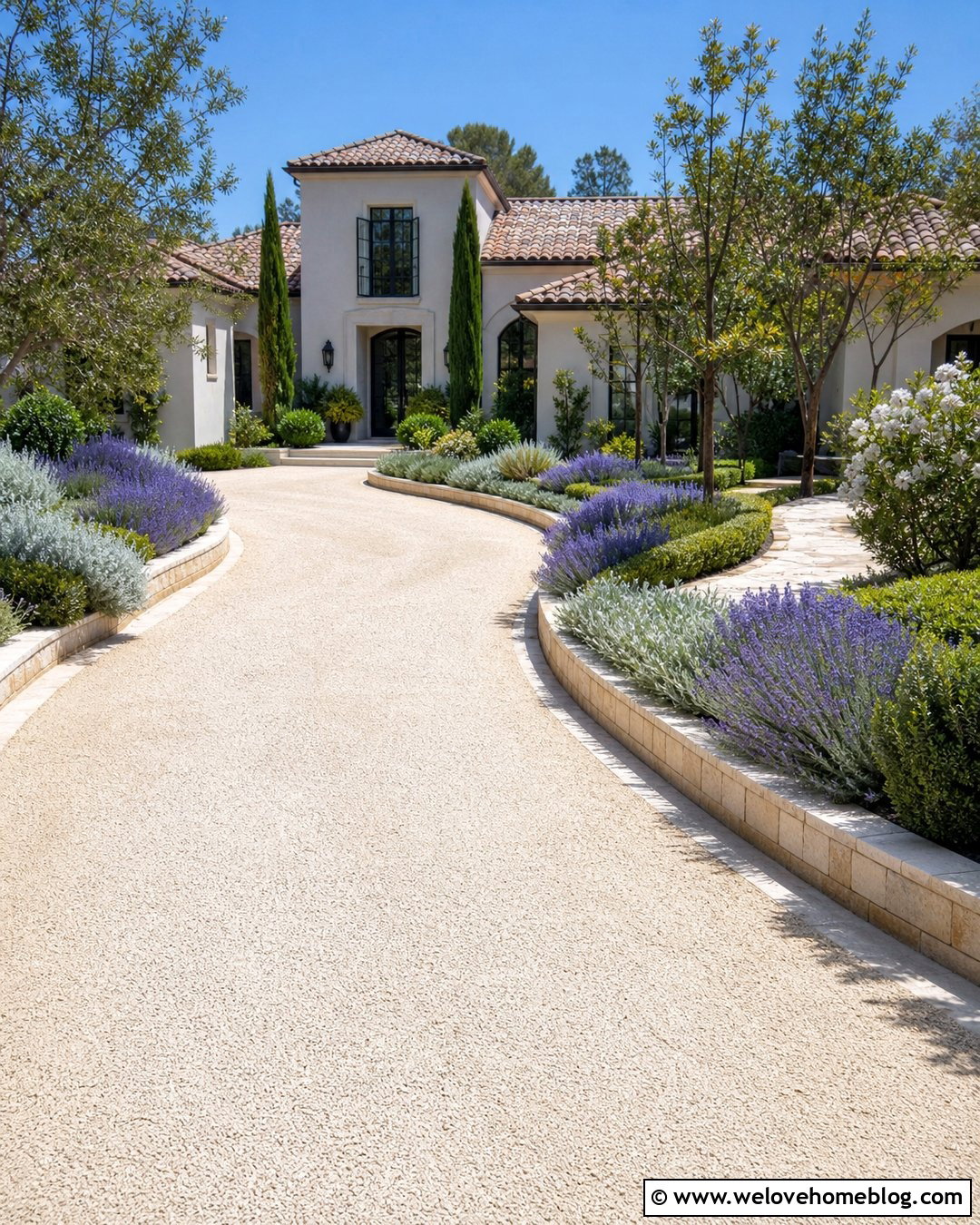
Silvery foliage and purple flowers form a beautiful frame around pale crushed limestone. Create a straight or lightly curved driveway with low limestone curbing, then plant repeating groups of lavender behind the border. Leave enough distance between the plants and driving surface for mature growth, airflow, and comfortable vehicle clearance. This combination performs best in sunny locations with suitable drainage. Add upright evergreens or small ornamental trees near the house to provide year-round structure. A matching limestone walkway can cross one planting bed and lead to the front porch. Warm stucco, painted brick, and light stone facades all coordinate well with this palette. The complete driveway feels orderly but not rigid, offering a welcoming approach inspired by relaxed cottage and Mediterranean landscapes.
12. Long Crushed Limestone Driveway With Trees
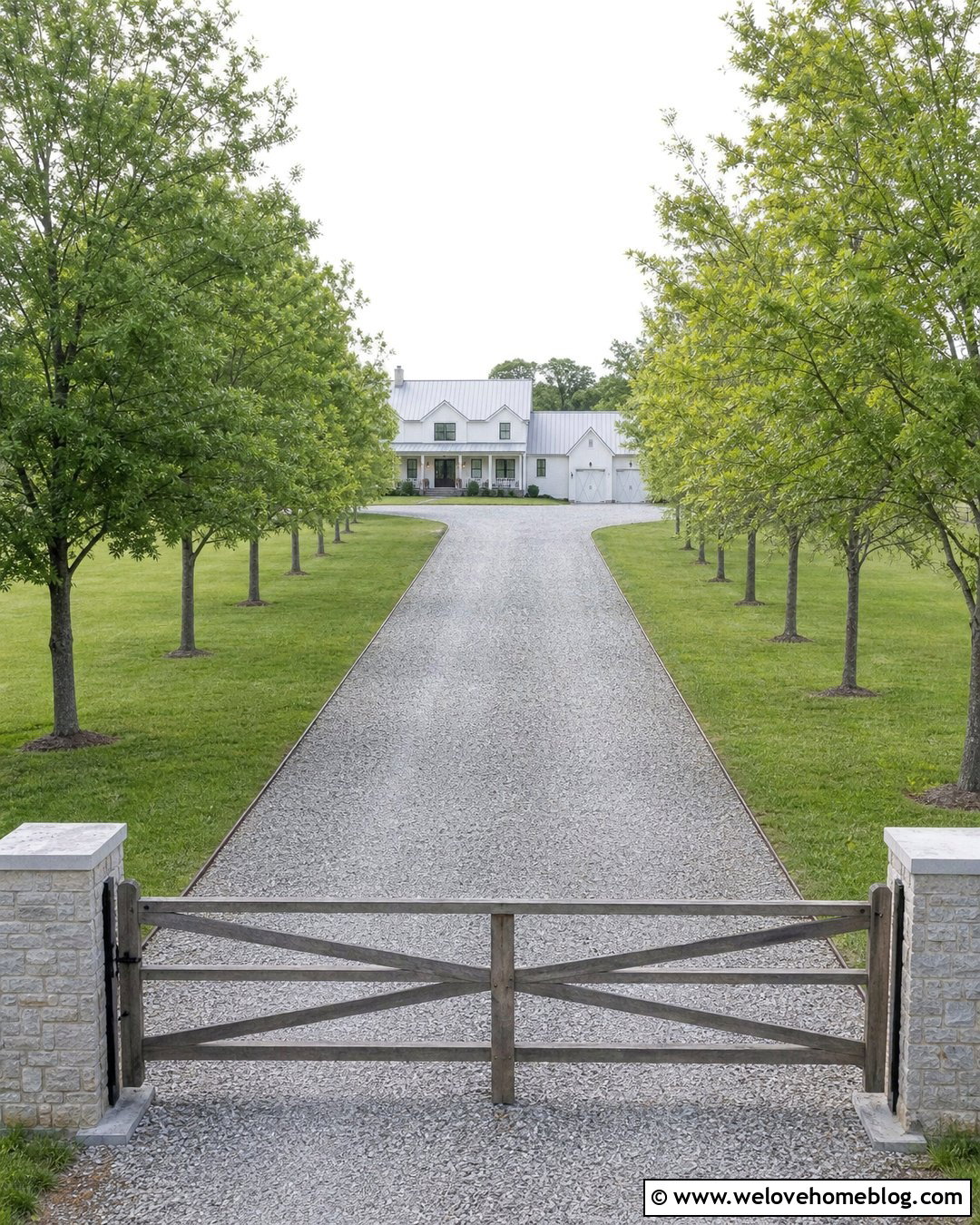
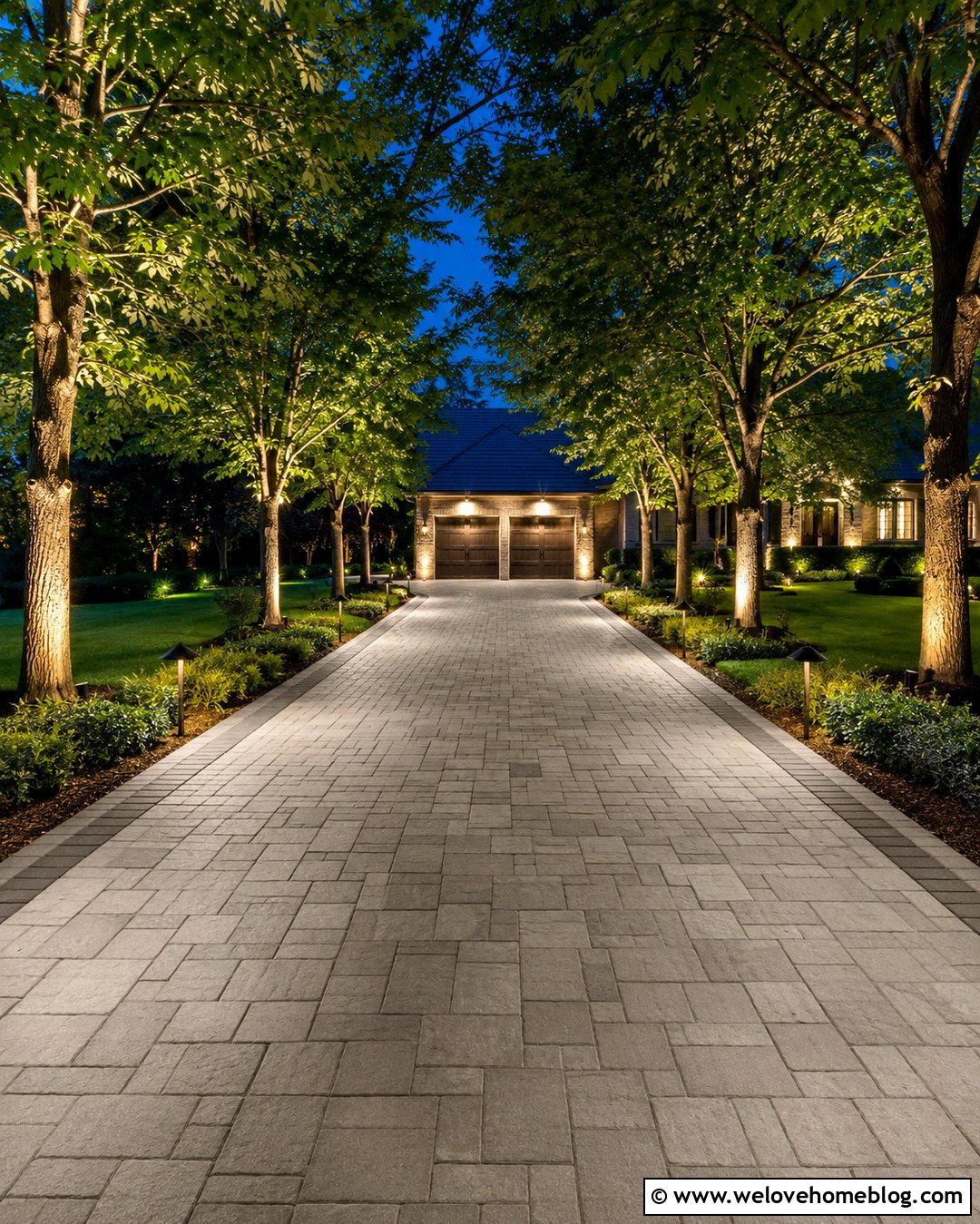
A long driveway becomes a memorable landscape feature when evenly spaced trees frame the route toward the house. Use compacted gray crushed limestone in a straight layout, with broad grass shoulders and low-profile metal edging. Position trees far enough from the surface to protect visibility and allow their trunks and roots room to develop. The repeated planting creates rhythm, while the pale driveway naturally draws the eye toward the home. Add simple entrance pillars or a timber gate near the road, but avoid filling the entire route with extra decoration. A wider limestone turnaround near the garage can provide practical maneuvering space. This design works especially well for farmhouses, country homes, and larger suburban lots where the driveway forms a major part of the arrival experience.
13. Sloped Crushed Limestone Driveway With Drainage Swale
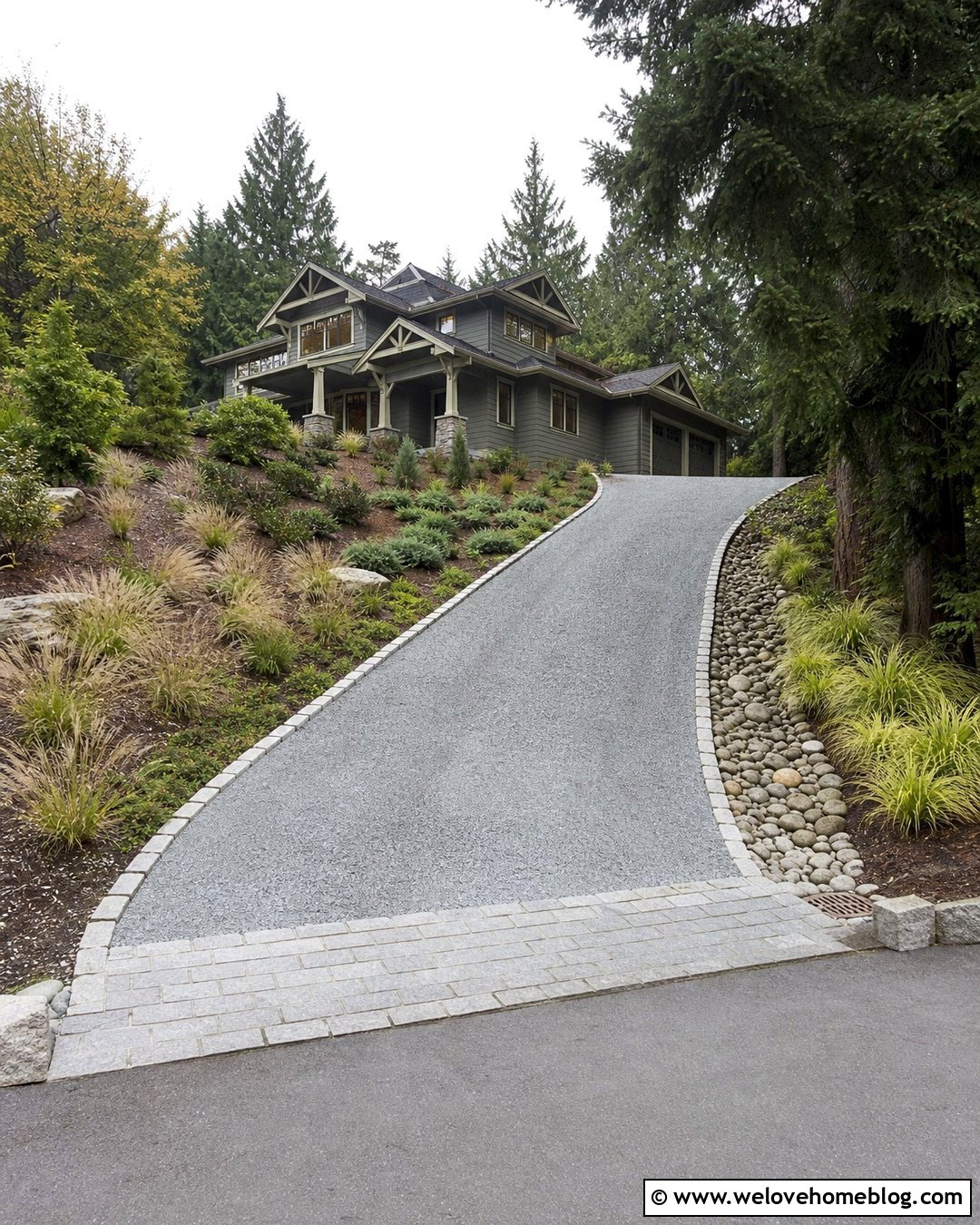
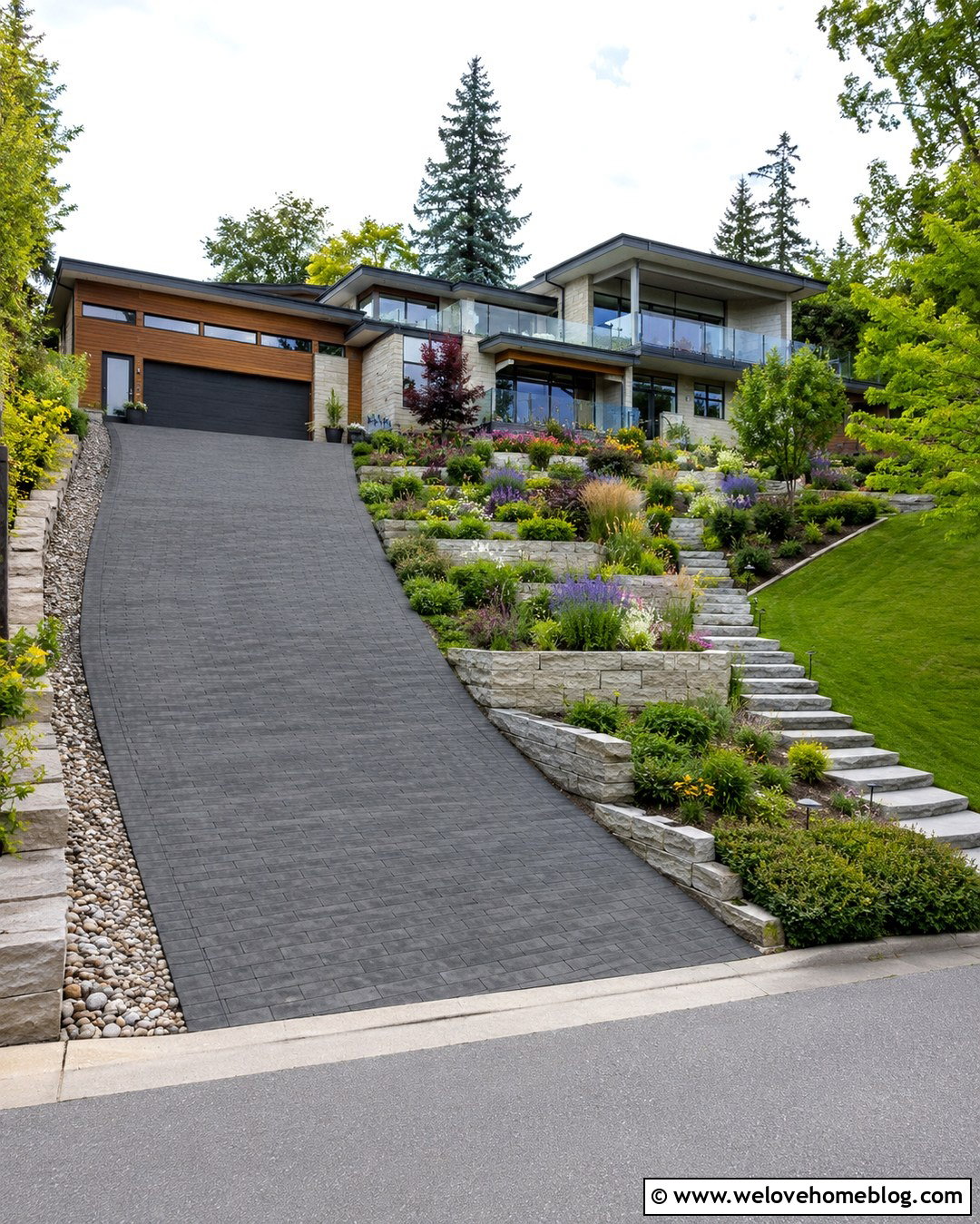
Sloped sites need a driveway design that treats water management as part of the overall appearance. Shape the compacted crushed limestone surface with a gentle crown or appropriate cross-slope rather than leaving it completely flat. Along the lower edge, create a landscaped swale lined with river rock, moisture-tolerant grasses, and low shrubs. A sturdy cobblestone or concrete border can separate the driving surface from the drainage area. Break up long, steep runs with subtle curves where the property allows, and avoid directing runoff toward the garage or foundation. At the bottom, use a paved entrance apron to create a cleaner transition to the street. When drainage, edging, and planting are coordinated, the functional features look intentional and the sloped driveway feels integrated into the yard.
14. Crushed Limestone Driveway With Gate And Pillars

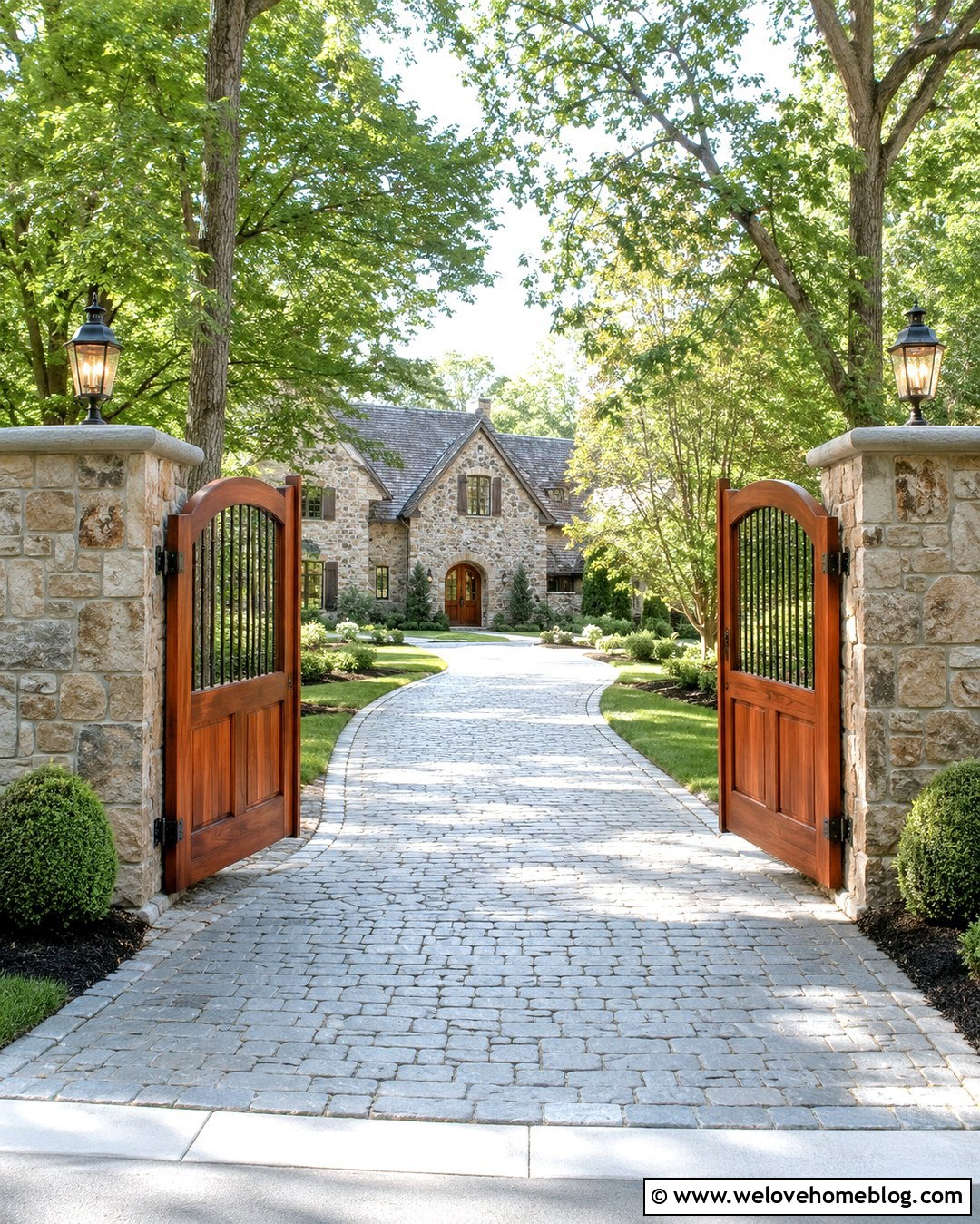
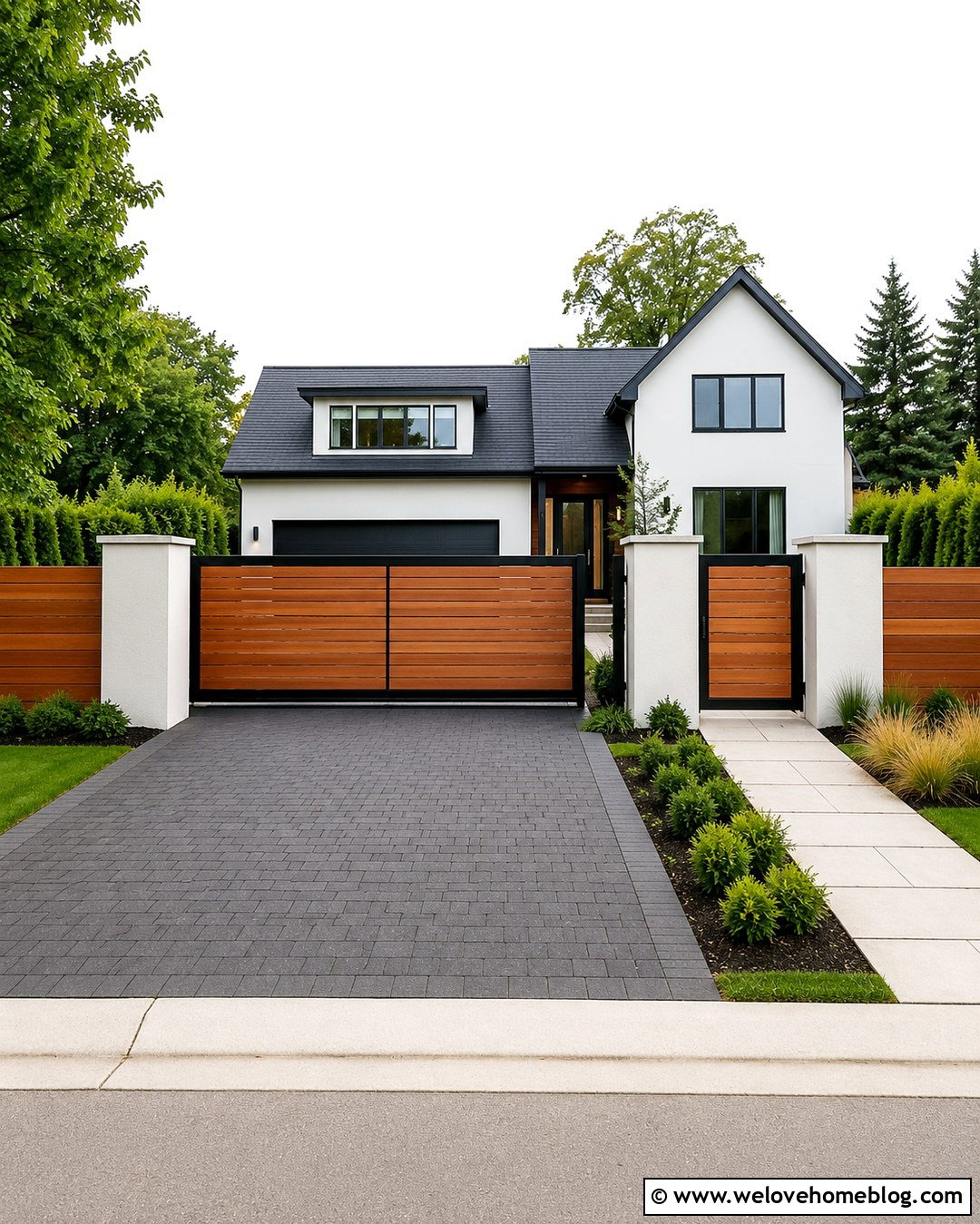
A driveway gate looks more balanced when the entrance materials relate to the surface beyond it. Pair a pale crushed limestone driveway with substantial limestone or brick pillars and a simple black metal gate. Flare the driveway slightly before the gate to create comfortable entry space and a stronger visual welcome. Continue low stone edging from the pillars along the first section of the driveway, then transition to discreet metal edging farther inside the property. Plant symmetrical evergreens or ornamental grasses beside the pillars without reducing visibility. An address plaque and downward-facing lights can be incorporated into the masonry. Behind the gate, a straight or gently curving limestone approach should reveal the house gradually, giving a country estate, ranch, or traditional home a composed entrance.
15. Wide Crushed Limestone Driveway With Parking Pad
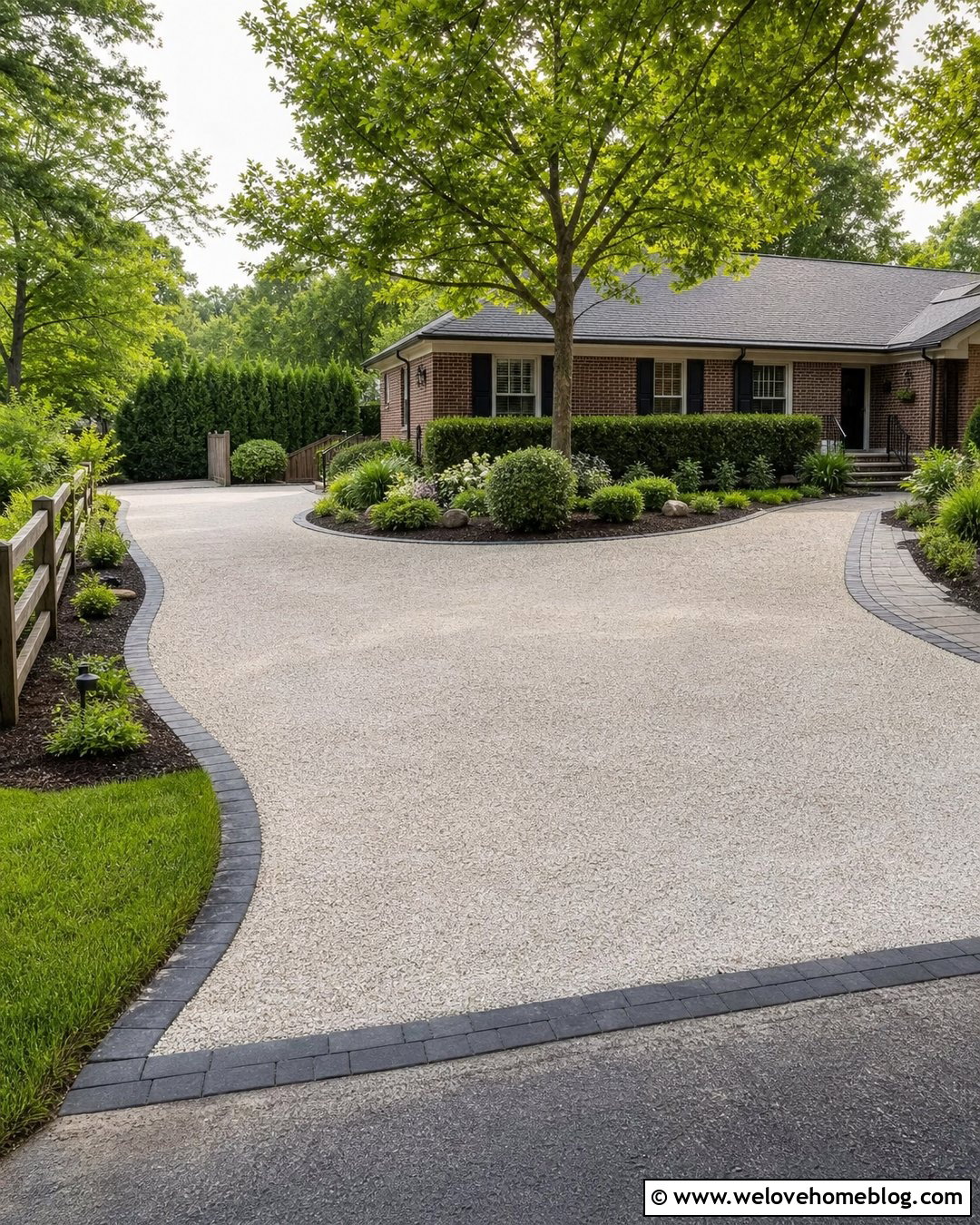
A generous parking pad can be attractive when its edges and connections are clearly defined. Extend a compacted crushed limestone driveway into a wide rectangular or softly curved area beside the garage. Use matching limestone throughout so the addition feels continuous rather than patched on later. Outline the perimeter with heavy-duty paver edging, especially where tires turn near lawn and planting beds. A central landscaped island can divide a very large area, but keep its shape simple and leave enough clearance for vehicles. Add a paved walkway between the parking pad and side entrance to prevent stone from being tracked indoors. Layered shrubs, a shade tree, and a low fence can screen parked vehicles. This arrangement suits ranch homes, multigenerational households, and properties needing flexible guest parking.
16. Crushed Limestone Driveway With Cottage Flower Beds
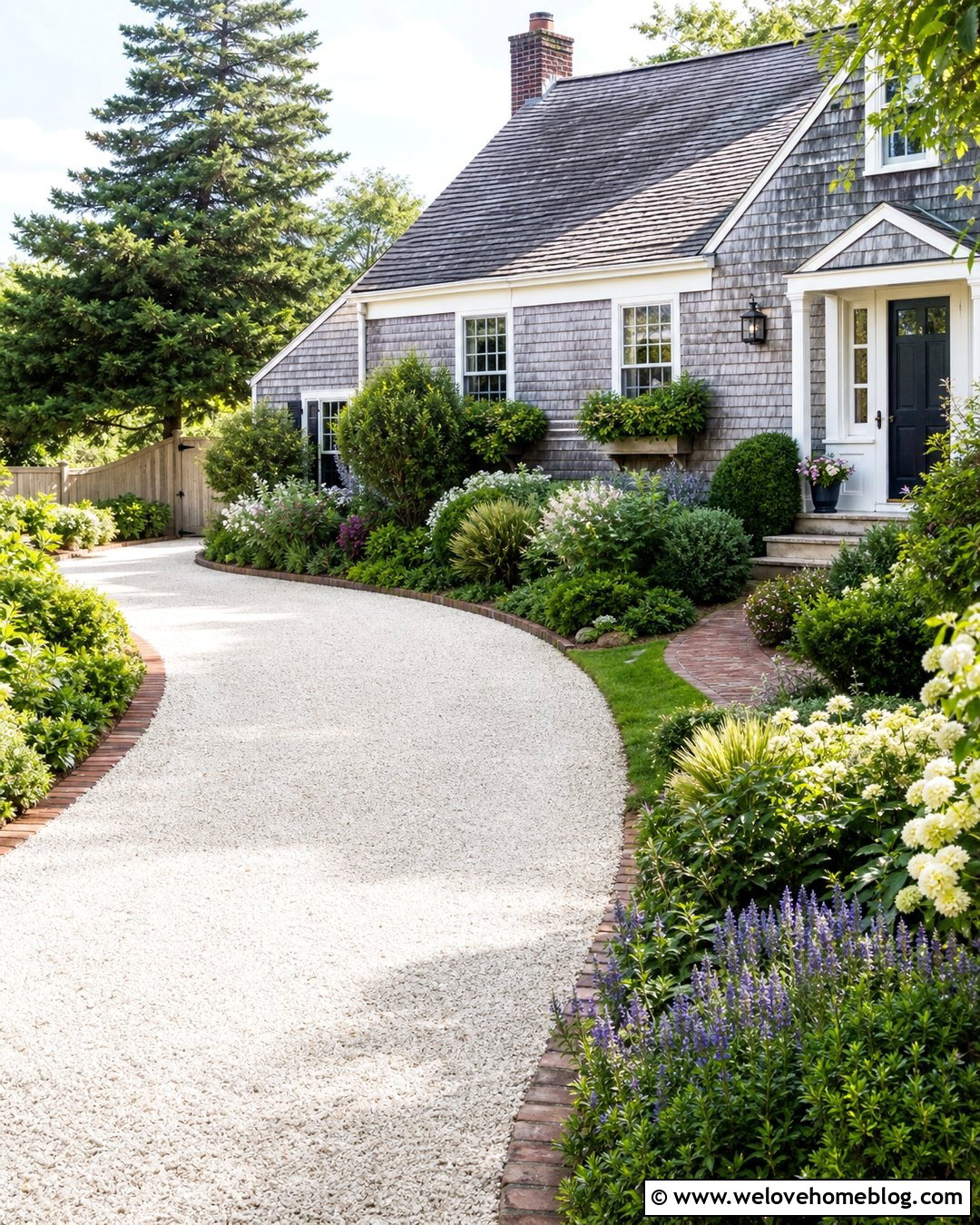
Loose-looking cottage gardens pair naturally with the soft color and texture of crushed limestone. Start with a narrow curved driveway that follows the front yard rather than cutting across it abruptly. Use reclaimed brick or irregular stone edging to give the surface a clear boundary. Behind it, layer compact flowering shrubs, ornamental grasses, and long-blooming perennials while preserving open sightlines near the street. Repeat plants in several locations so the beds feel connected instead of random. A curved brick walkway can branch from the driveway and continue through the garden to the porch. Near the garage, create a broader limestone landing for turning and parking. This complete look complements Cape Cod, Craftsman, and storybook cottage homes without requiring perfect symmetry or formal hedges.
17. Crushed Limestone Driveway With Formal Hedges
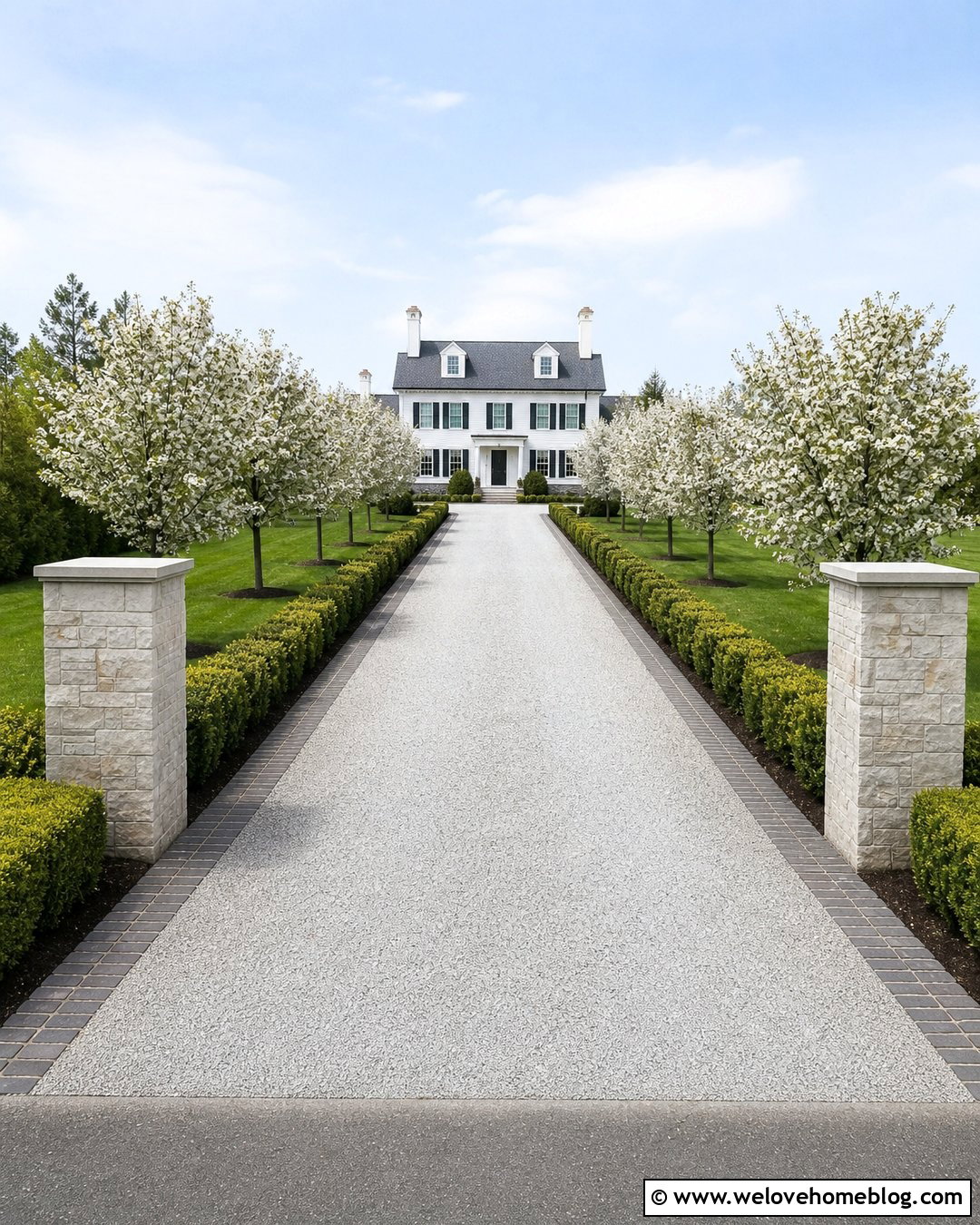
For a more traditional approach, combine a straight crushed limestone driveway with low, carefully maintained hedges. Dark green foliage makes pale limestone appear brighter and creates a strong visual route toward the front entrance or garage. Place brick or stone edging between the driveway and hedges so plant growth does not spill into the driving area. At the street, use matching masonry pillars or low walls to establish symmetry. Small flowering trees can stand behind the hedges at regular intervals, adding height without weakening the formal layout. Connect the driveway to the front steps with a wide, centered walkway. This balanced design is particularly effective with colonial, Georgian, and Federal-style houses where aligned windows, centered doors, and symmetrical landscaping are already important architectural features.
18. Crushed Limestone Driveway With Black Farmhouse Accents
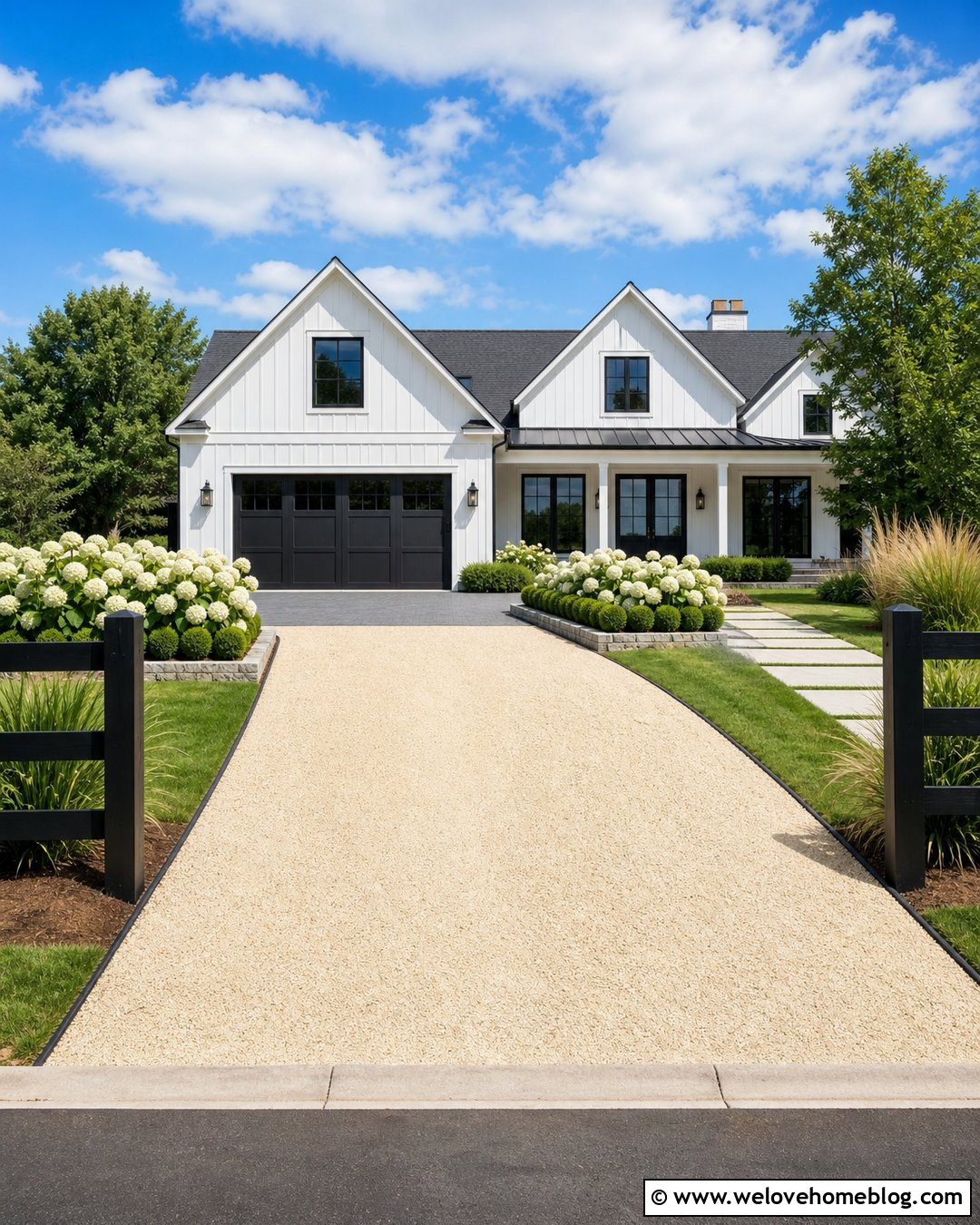
A modern farmhouse exterior often combines white siding, black trim, and natural materials. A light cream crushed limestone driveway supports that palette without competing with it. Keep the layout broad and mostly straight, then contain the stone with slim black steel edging. Near the garage, add a charcoal paver band that echoes black doors, lights, and window frames. Simple rectangular beds filled with hydrangeas, boxwood, and ornamental grasses soften the strong lines. A black post-and-rail fence can run along one side, while a concrete or limestone-slab walkway connects the parking area to the porch. This design feels current but still practical for a country setting. The limited colors also help the texture of the limestone, siding, and landscaping remain clearly visible.
19. Crushed Limestone Driveway With Coastal Landscaping
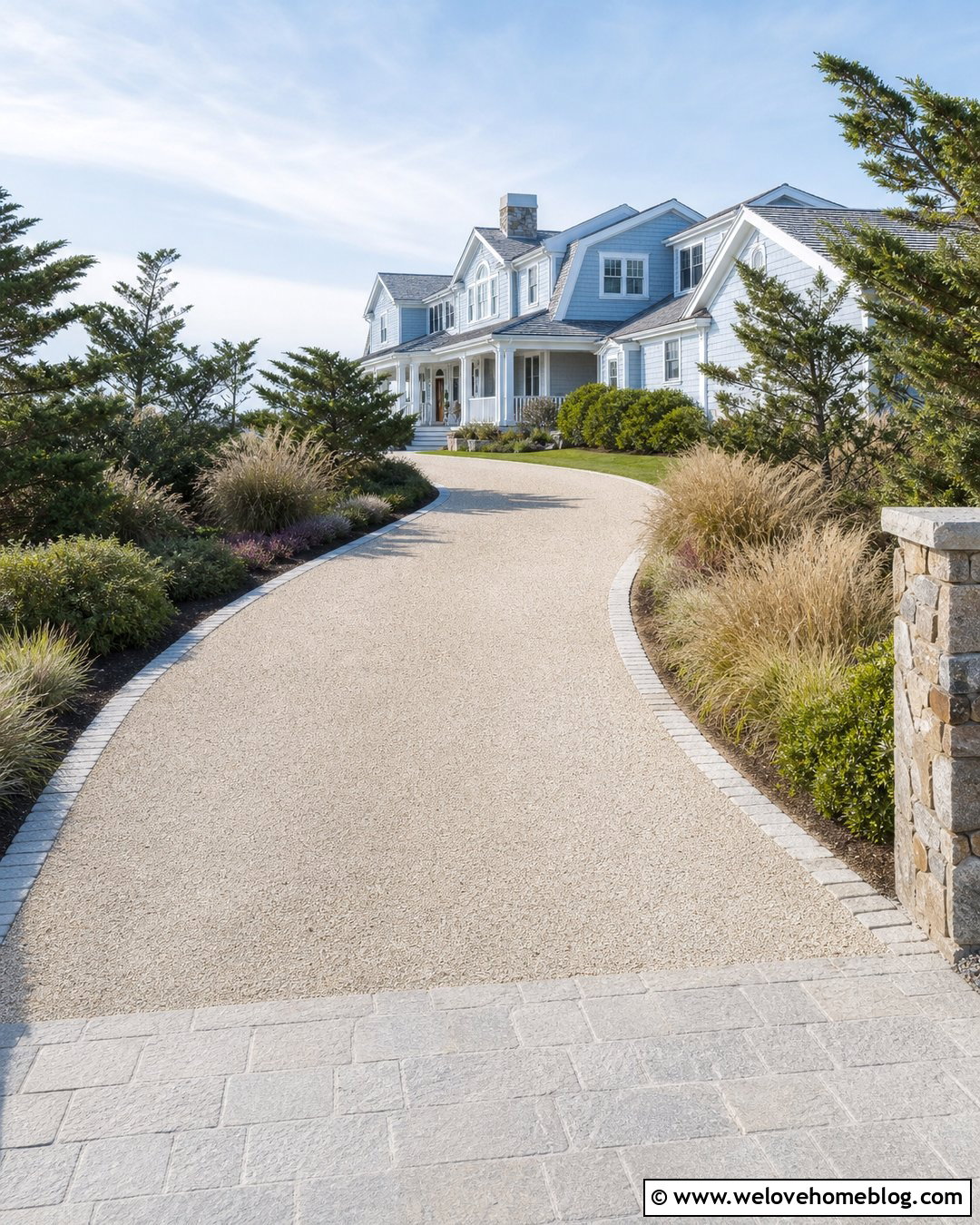
Pale crushed limestone can create a bright, casual approach to a coastal-style home. Choose a light cream or soft gray surface and form a gently curved driveway leading to a white, light blue, or weathered-shingle facade. Use flush shell-colored pavers or light granite setts as edging, ensuring the border is strong enough to contain the compacted stone. Surround the driveway with salt-tolerant ornamental grasses, compact evergreens, and windswept native shrubs appropriate for the local climate. A wide paver apron near the street gives the entrance a finished transition. Keep the planting loose but the driveway outline crisp. This balance captures an easy coastal mood without turning the surface into a beach-like layer of unstable, rounded material that shifts under vehicle traffic.
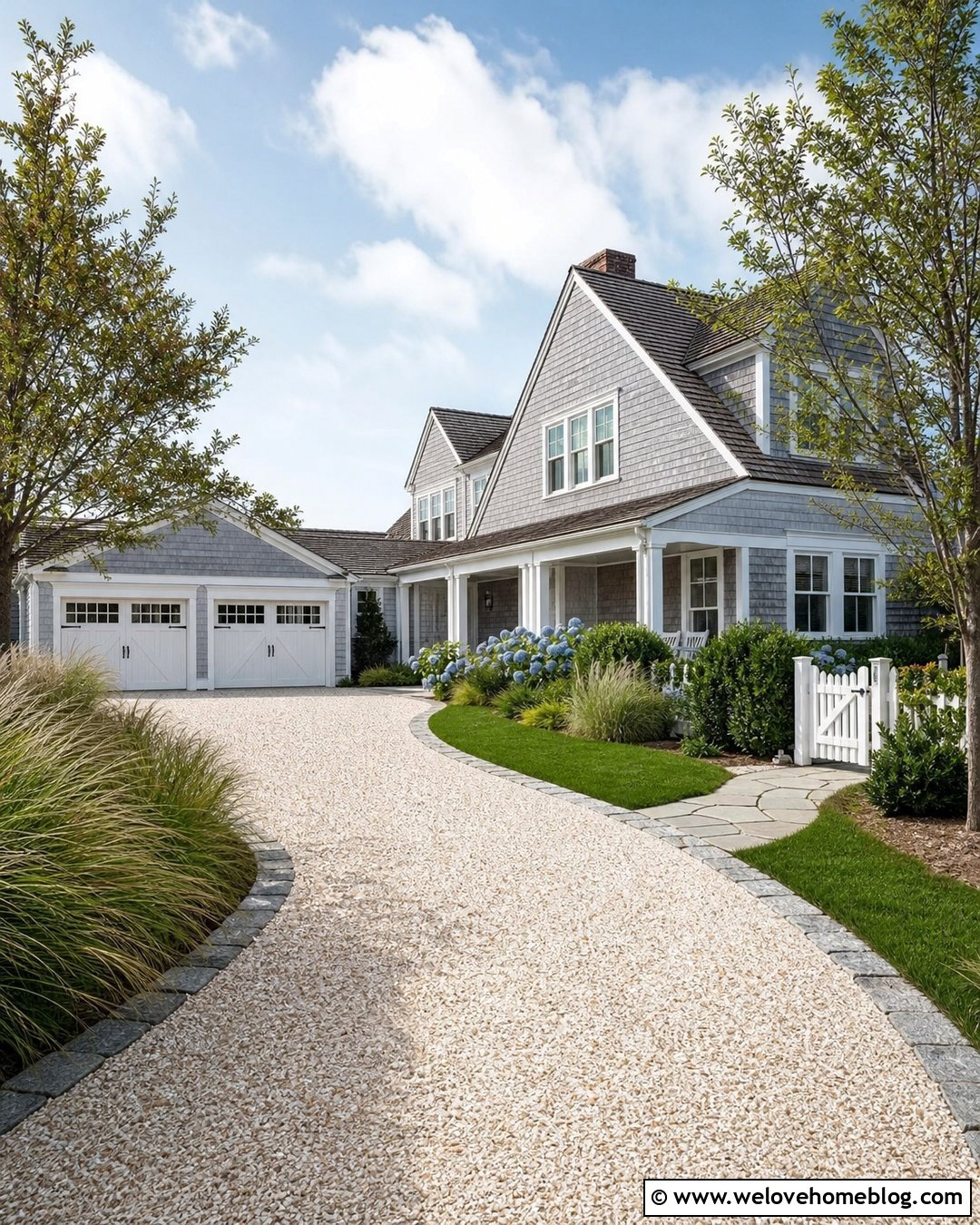
20. Crushed Limestone Driveway With Boulder Edging
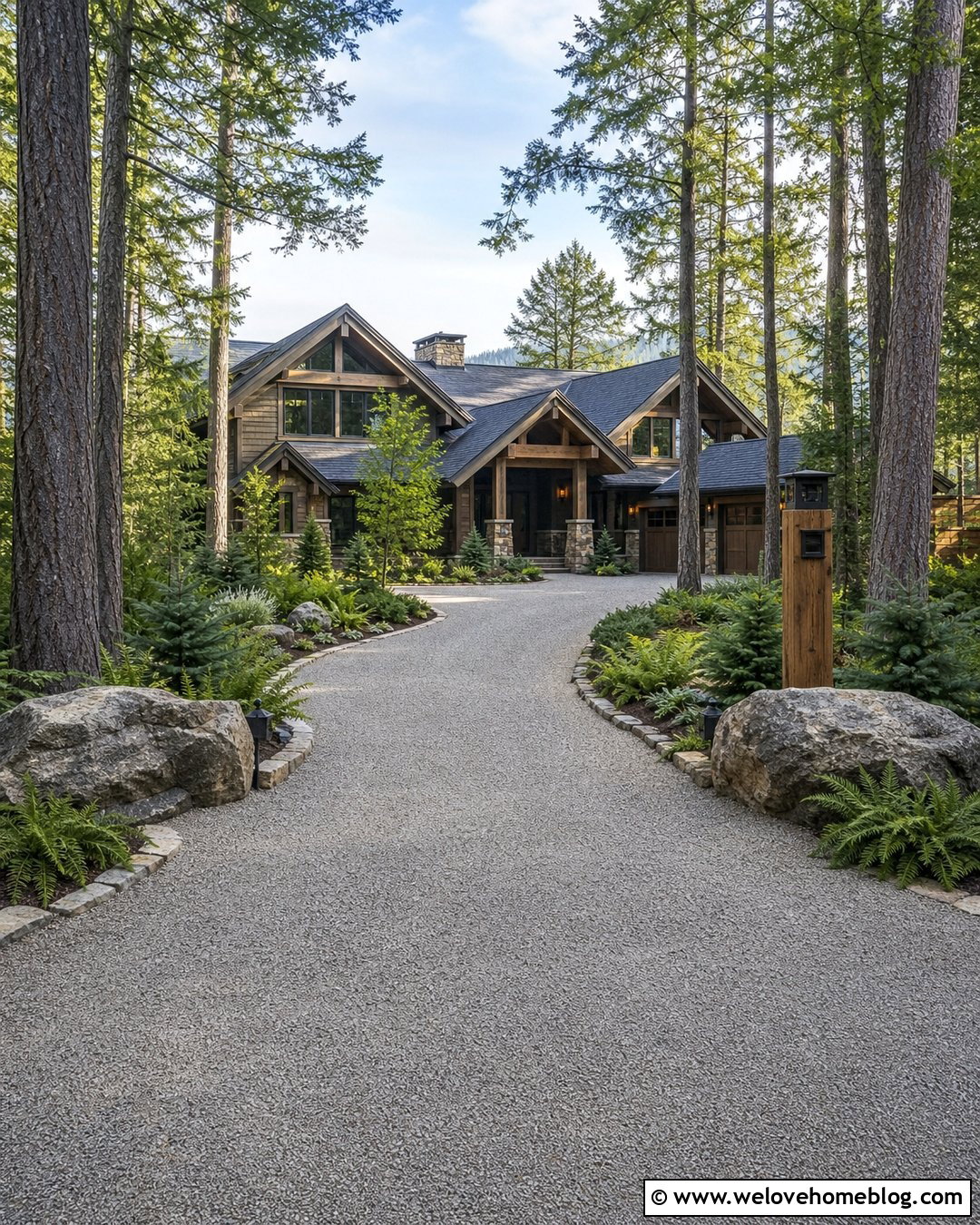
Large natural boulders can make a crushed limestone driveway feel rooted in a wooded or rural property. Rather than forming an unbroken wall, place boulders at key points along a broad curved drive, especially around planting beds and entrance corners. Use concealed steel edging between the larger stones to keep the limestone contained. Select boulders with colors that relate to the driveway, house foundation, or surrounding rock. Fill the nearby beds with ferns, native grasses, low evergreens, and woodland ground covers. Mature trees should frame the route while leaving ample overhead and side clearance. A simple timber address post can complete the entrance. This rugged design complements cabins, mountain homes, rustic Craftsman houses, and wooded ranch properties without making the driveway appear overly formal.
21. Narrow Crushed Limestone Driveway With Flush Edging
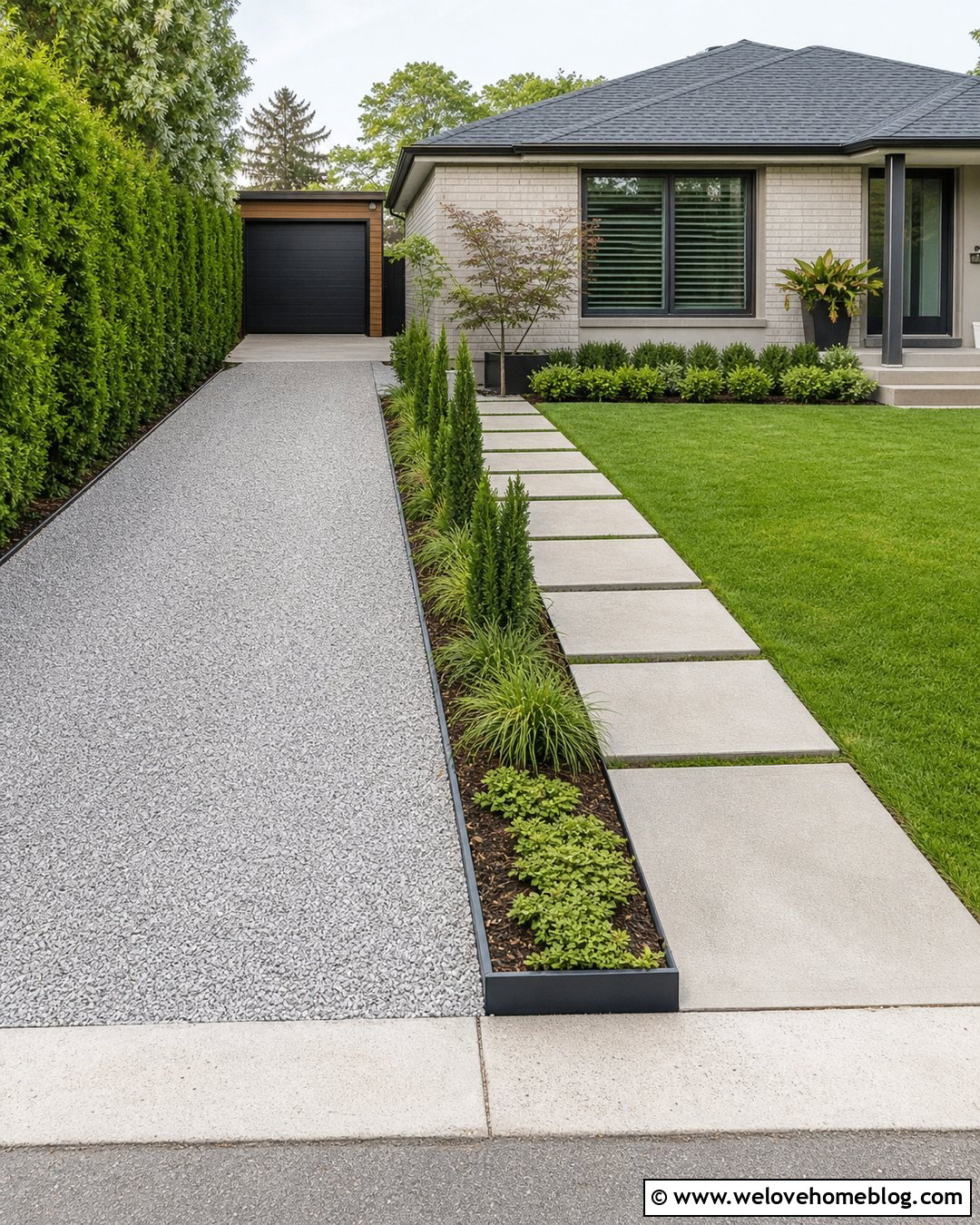
Small front yards benefit from materials and details that preserve as much visual width as possible. A narrow crushed limestone driveway can run beside the house with flush steel or concrete edging that does not consume valuable space. Choose fine, compactable limestone for a smooth-looking surface and keep the layout straight to simplify parking. On the lawn side, use a slim planting strip with columnar shrubs, ground cover, or espaliered plants rather than wide, spreading beds. A stepping-pad walkway can share part of the driveway approach before turning toward the front door. Near the garage, widen the surface only where doors or turning movements require it. The restrained border and planting plan help a compact driveway look intentional, open, and properly connected to the house.
22. Horseshoe Crushed Limestone Driveway With Two Entrances
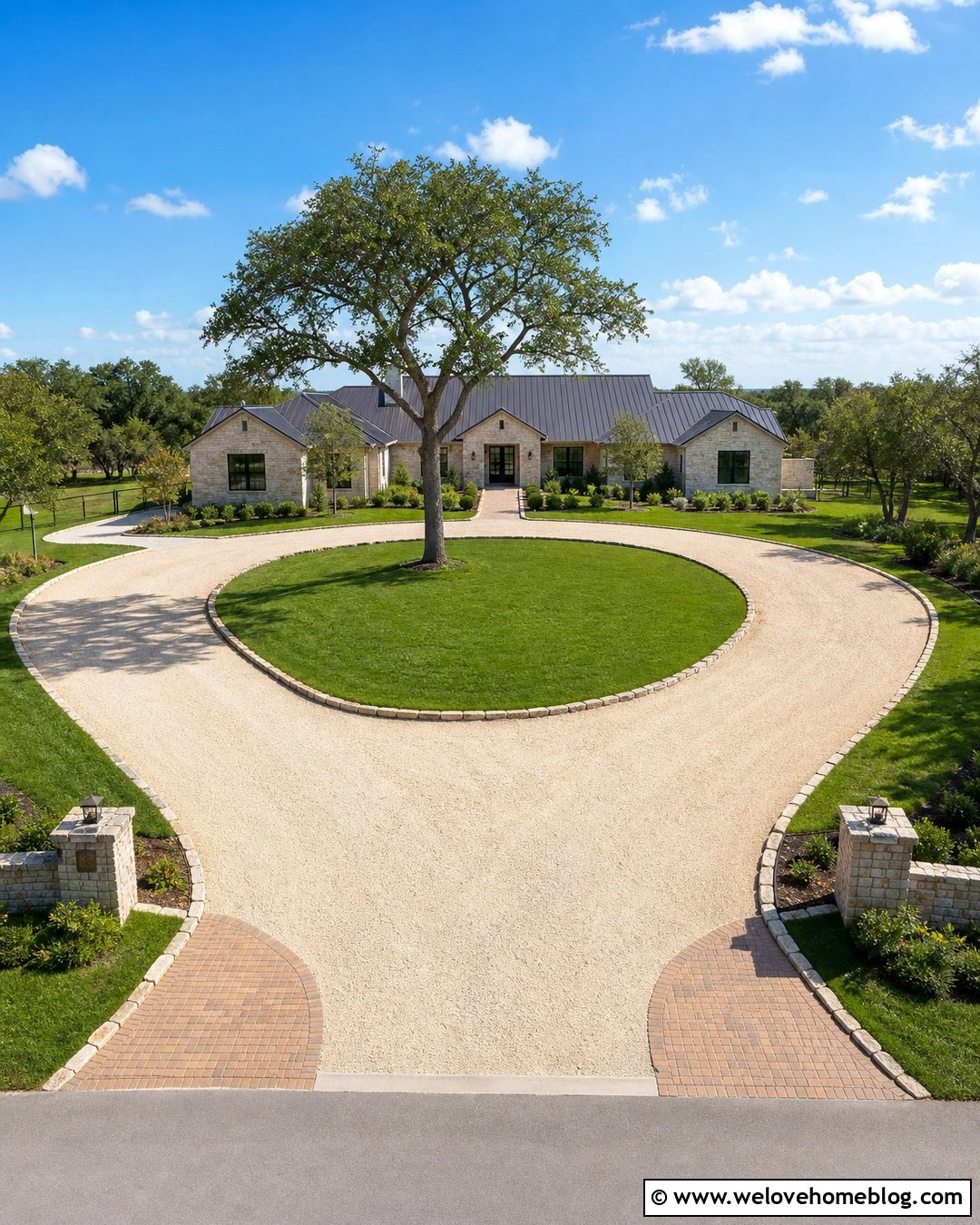
A horseshoe driveway provides two street connections and creates a convenient forward-moving route around the front yard. Cover the full arc with compacted crushed limestone, keeping the curve broad and consistent. Matching brick or stone entrance aprons can strengthen both access points and make the layout easy to read from the street. Use low edging around the inner lawn, then create a centered walkway from the driveway to the front porch. One specimen tree or a balanced group of shrubs can anchor the open middle area without blocking the house. Place address markers at the preferred entrance so guests know which side to use. This design works best on wider properties and complements ranch, colonial, and large Craftsman homes with substantial front setbacks.
23. Stabilized Crushed Limestone Driveway With Gravel Grid
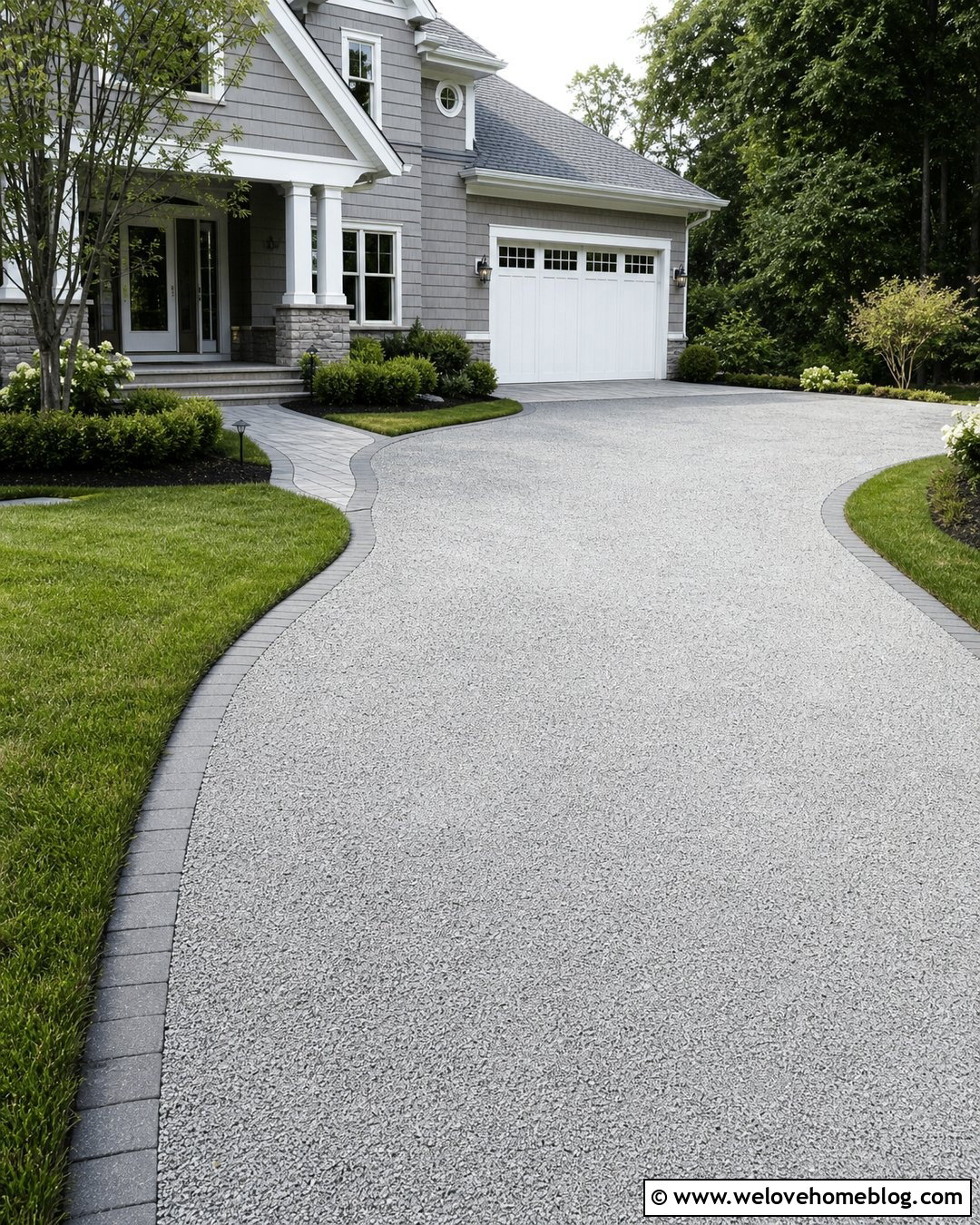
If frequent turning could disturb a loose surface, a hidden stabilization grid can help the crushed limestone retain a more consistent shape. Prepare a properly graded base, install a driveway-rated cellular grid, and fill it with compactable crushed limestone that matches the desired color. The grid should disappear beneath the finished surface rather than becoming a visible pattern. Frame the driveway with concrete pavers or steel edging to keep the outer lines crisp. This system is useful for curved parking areas, sloped approaches, and spaces where tires repeatedly follow the same path. Complete the look with restrained lawn, low shrubs, and a connected paver walkway. The resulting driveway keeps the natural appearance of limestone while looking more controlled beside modern, transitional, or high-use family homes.
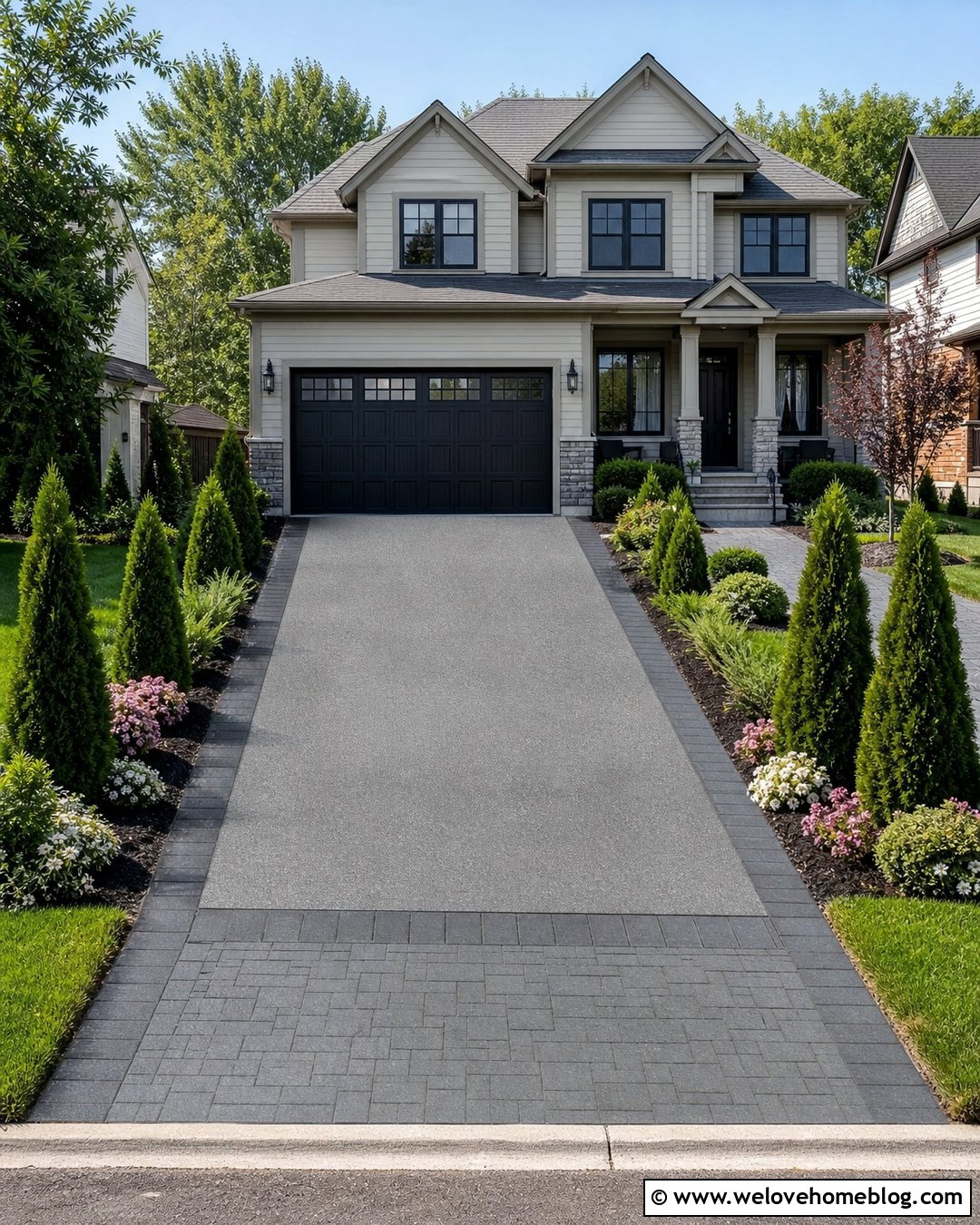
24. Crushed Limestone Driveway With Gray Paver Bands
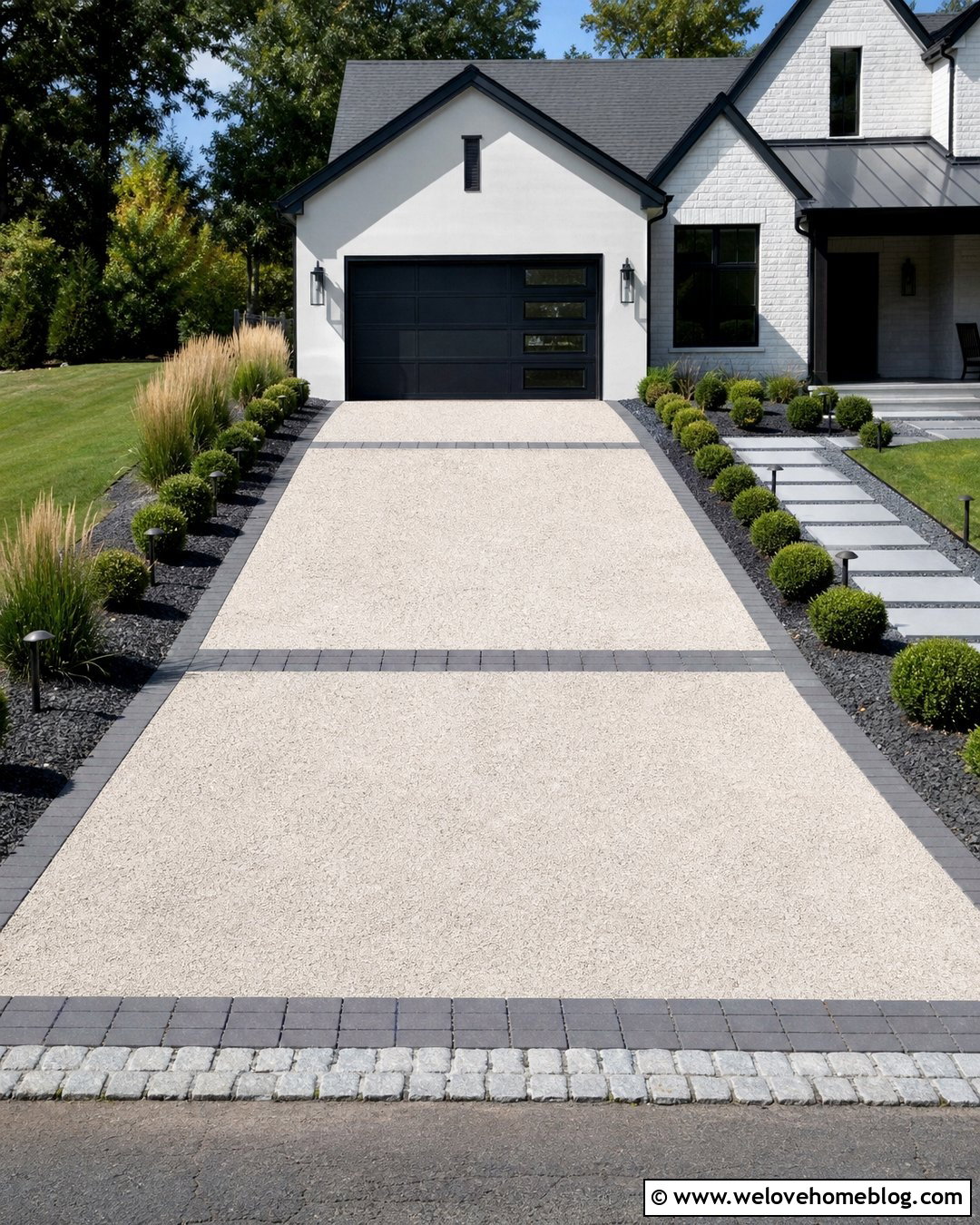
Contrasting paver bands can break up a large limestone surface and visually organize parking or turning areas. Start with a pale crushed limestone driveway, then install charcoal-gray pavers in narrow strips across the width. Place bands near the street, garage threshold, walkway intersection, or transition into a parking pad. Matching paver edging along the sides connects these accents into one complete design. Keep the driveway shape simple so the pattern remains easy to understand. Contemporary planting beds with clipped shrubs, ornamental grasses, and dark mulch can repeat the gray tones. A modern or transitional house with charcoal roofing and neutral siding provides an ideal backdrop. The combination adds structure and detail without losing the softer, informal quality that makes crushed limestone appealing.
25. Simple Crushed Limestone Driveway With Lawn Edging
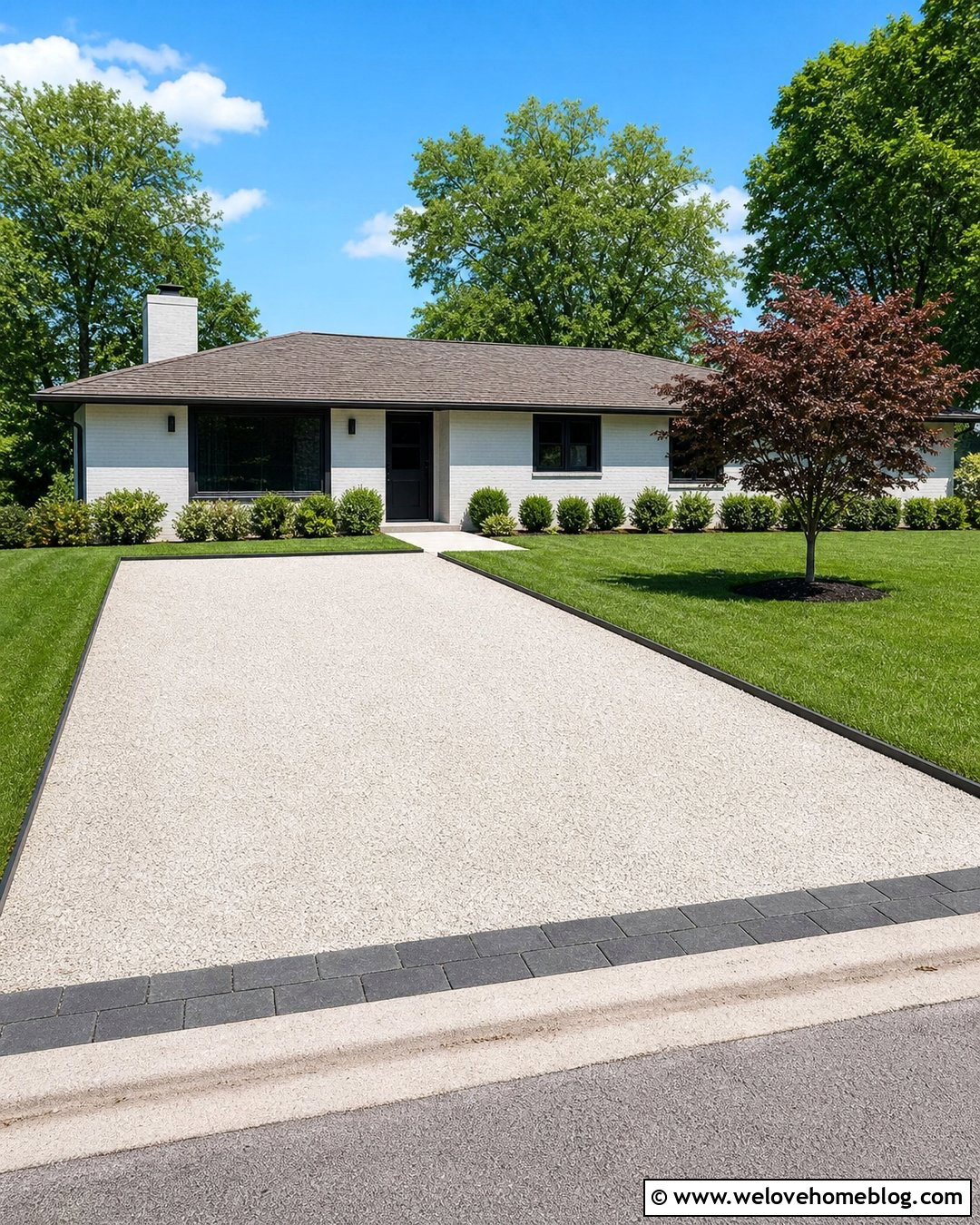
A budget-friendly driveway can still deliver strong curb appeal through accurate grading, clean edges, and simple landscaping. Use compacted crushed limestone for a straight driveway leading directly to the garage or carport. Install low-profile metal edging along both sides to prevent the material from spreading, then maintain a neatly cut lawn flush with the surface. At the street, flare the entrance slightly and add a short band of durable pavers if the budget allows. Keep landscaping focused near the house with one small tree, foundation shrubs, and a clear walkway to the front door. Avoid scattering many inexpensive decorations along the drive. A limited selection of well-placed materials creates a cleaner result and reduces maintenance, making this design suitable for modest ranches, bungalows, and starter homes.
Conclusion:
The most successful crushed limestone driveway balances practical construction with a clear connection to the house and yard. Brick, cobblestone, timber, steel, or limestone edging can contain the surface while establishing a distinct character. Curves, circles, parking pads, and grass center strips can adapt the material to different property sizes and traffic needs. Landscaping should frame the route without narrowing visibility or interfering with vehicle movement. Before installation, consider the soil, slope, drainage, local aggregate options, and any neighborhood requirements. A strong base and careful compaction are just as important as attractive borders. With thoughtful planning, these Crushed Limestone Driveway Ideas can create an affordable-looking yet polished entrance with lasting curb appeal.

Related posts:
Leave a Reply