
Gravel and grass create a driveway that feels relaxed, green, and naturally connected to the surrounding yard. The combination works with country homes, modern houses, cottages, and traditional suburban properties. It can also soften a large parking area without hiding its practical purpose. The best layouts consider the entire approach, including gravel color, driveway shape, lawn borders, edging, drainage, and nearby planting. A stable base and durable edge restraints are especially important because they help limit rutting, spreading stones, and blurred lawn edges. () Whether you want crisp geometric strips or a casual country entrance, these **20 Gravel And Grass Driveway Ideas** offer complete looks for different homes, budgets, and yard sizes.

1. Straight Gravel Driveway With Grass Edging
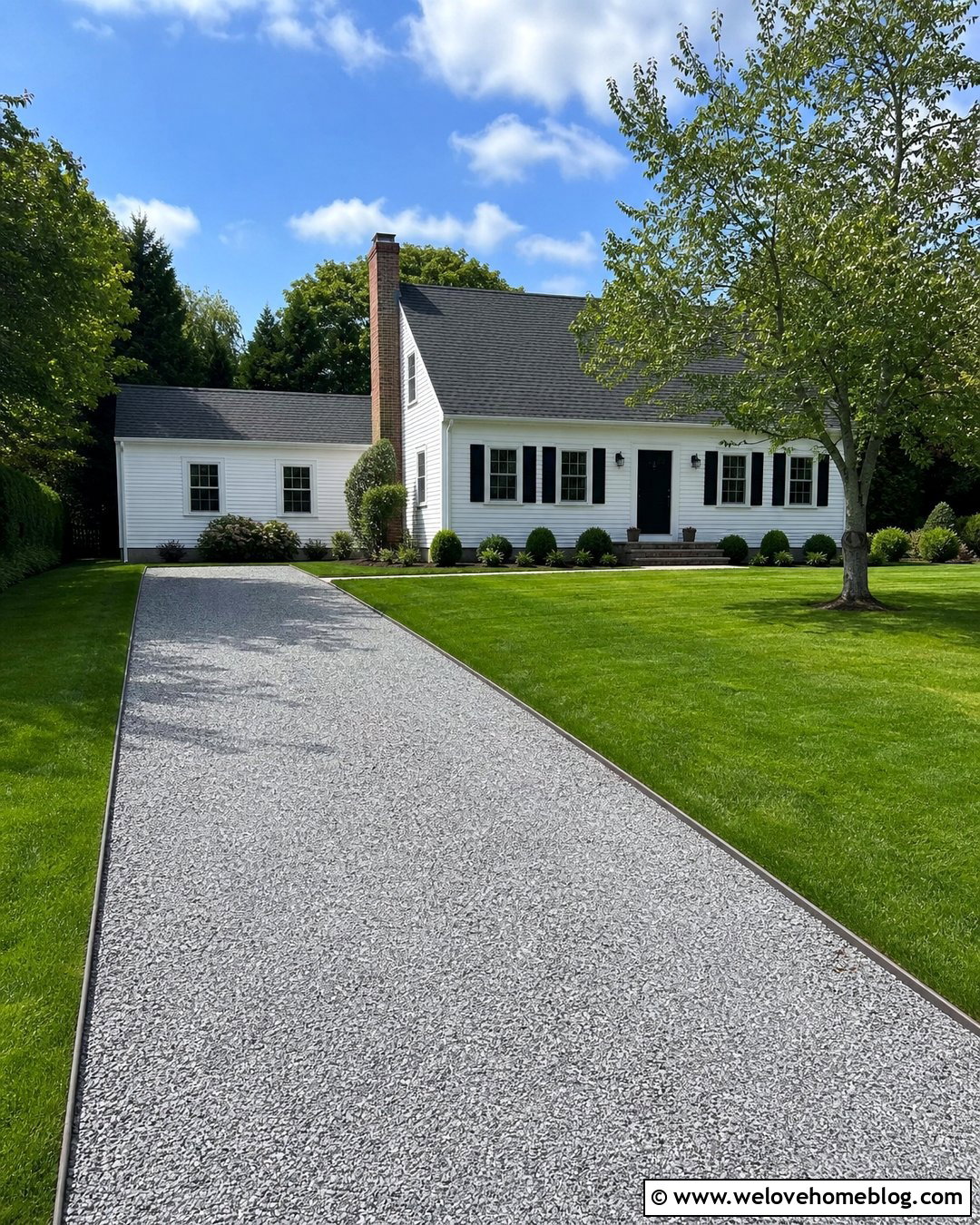
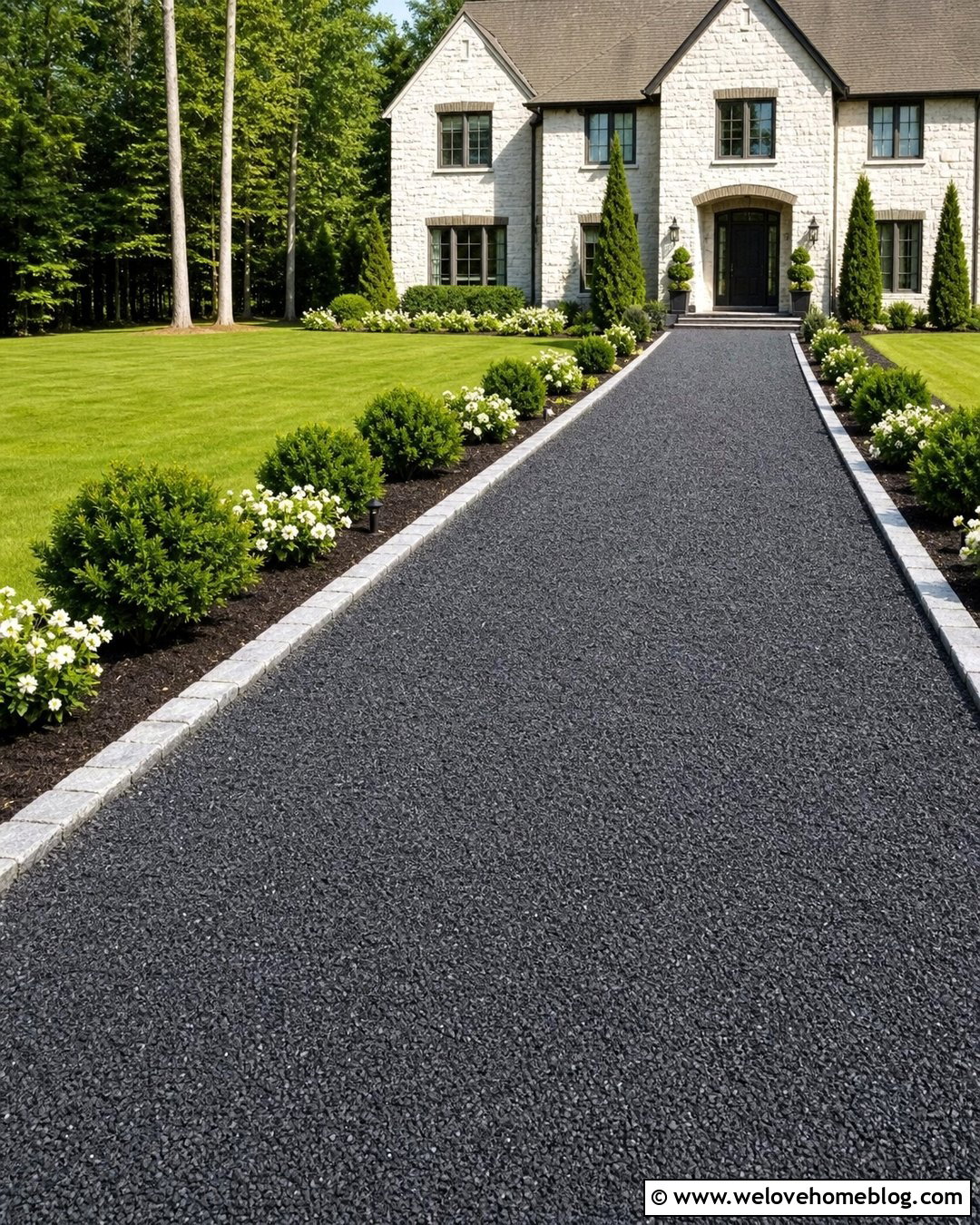
A straight gravel driveway framed by neatly cut grass offers a simple look that works especially well in a suburban front yard. Choose medium-gray crushed gravel to create a practical driving surface with enough texture to complement the lawn. Slim metal edging can sit almost level with the ground, keeping stones contained without creating a heavy visual border. Continue the grass along both sides, then add modest foundation beds near the house instead of lining the entire driveway with plants. This keeps mowing and seasonal upkeep manageable. A matching gravel walkway can branch toward the front door for a connected layout. The strong straight lines suit ranch, Cape Cod, and colonial homes while making a narrow property appear longer and more organized.
2. Curved Gravel Driveway With Wide Grass Borders
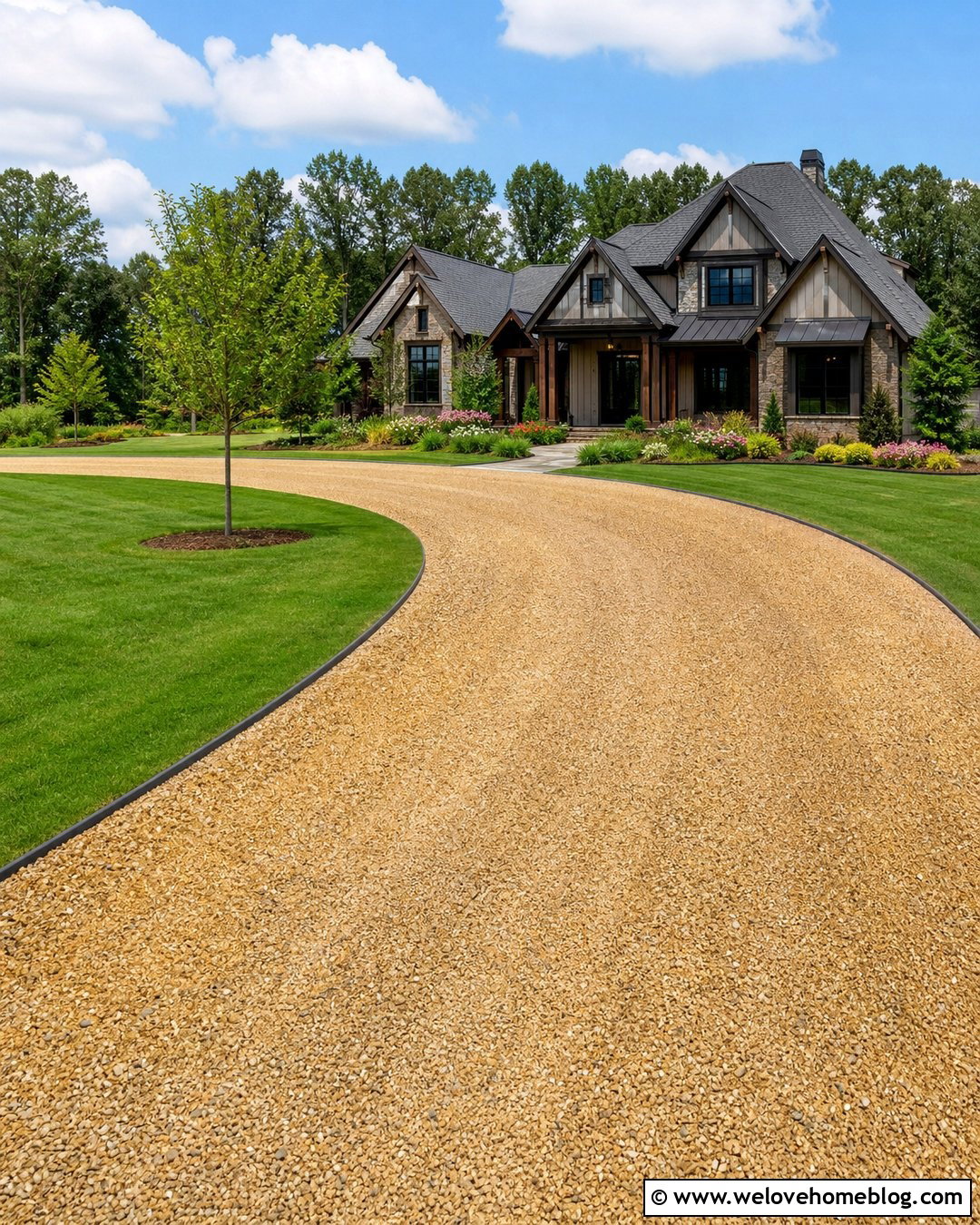
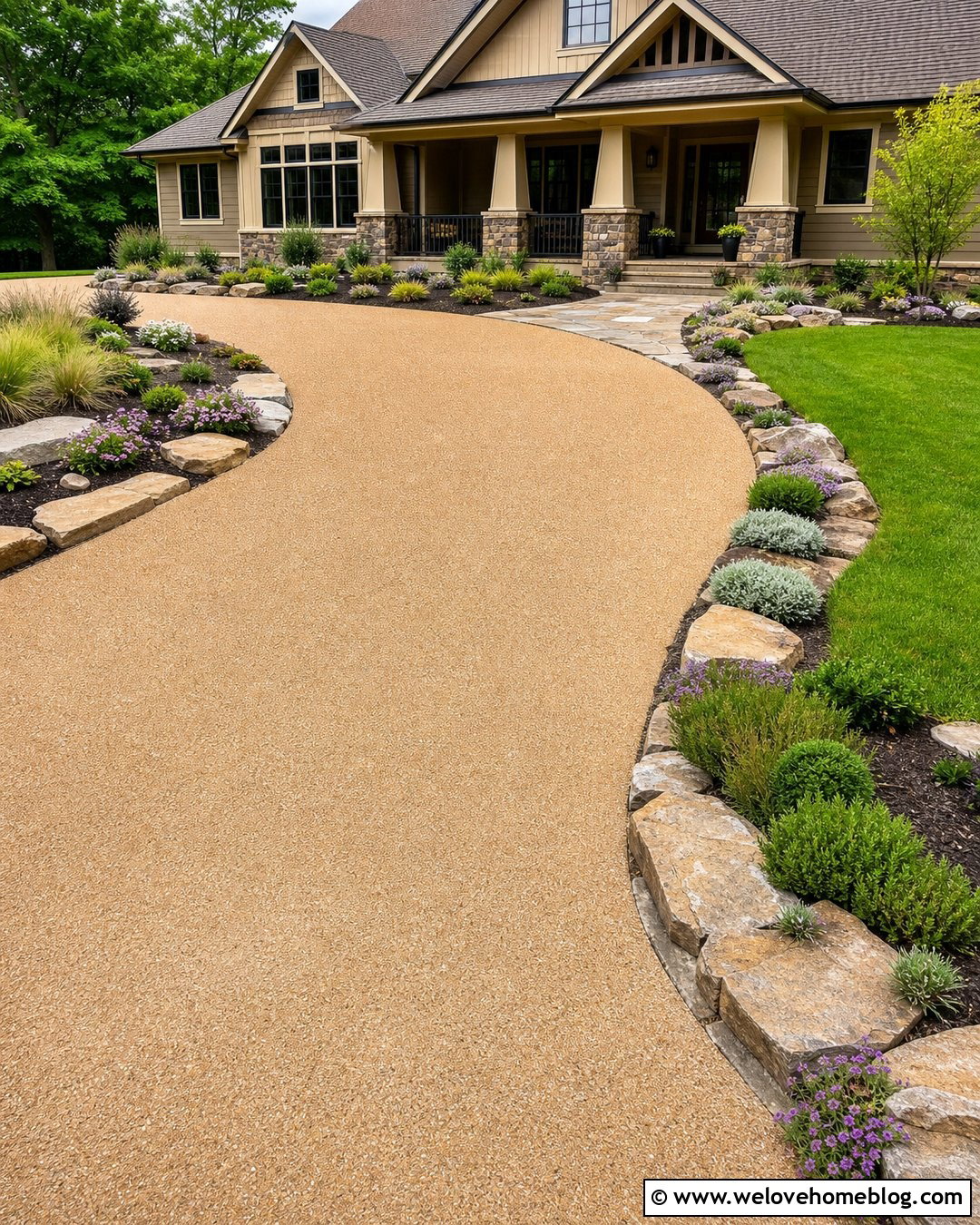
Soft curves can make an ordinary front yard feel more spacious and inviting. Use warm tan gravel for the driveway, following a gentle bend that reveals the house gradually rather than creating a direct path to the garage. Wide grass borders on both sides emphasize the shape and provide enough room for smooth mowing. Flexible steel edging can maintain the curves while staying visually discreet. Place small ornamental trees around the outer bend, where they frame the view without narrowing the driving area. Low planting beds near the entrance can provide seasonal color and help mark the driveway from the street. This complete design works beautifully with craftsman houses, cottages, and wooded properties that benefit from softer, more natural lines.
3. Gravel Ribbon Driveway With Grass Center
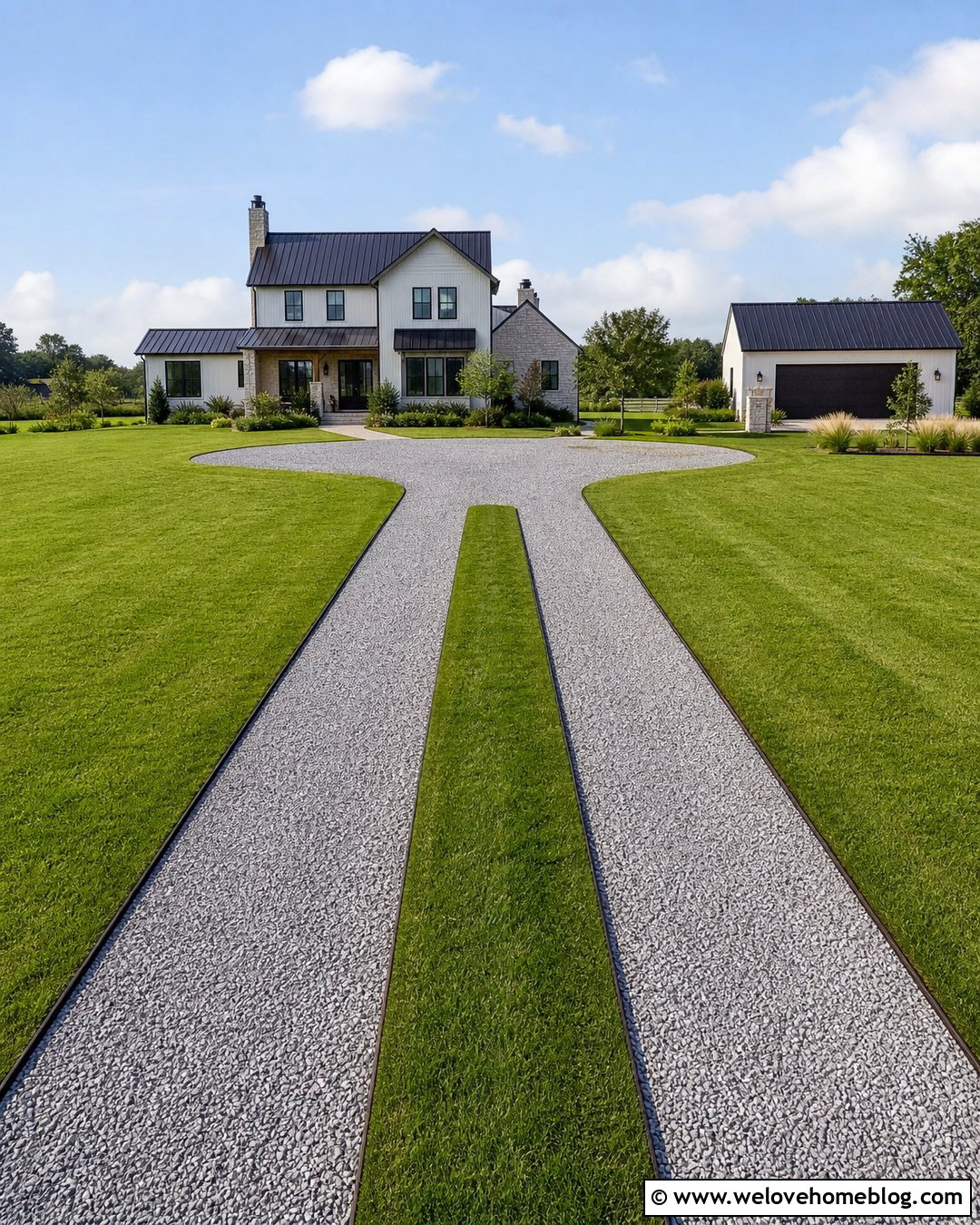
Could a driveway use less gravel without becoming difficult to drive on? A ribbon layout has two compacted gravel tracks positioned beneath vehicle tires, with a continuous grass strip running through the center. Use angular gray gravel for better stability, and install strong restraints along every gravel edge. The middle strip should be wide enough to look intentional but narrow enough to avoid contact with low vehicles. Matching lawn on both sides creates one continuous green setting around the ribbons. This layout is particularly attractive on long, lightly used residential approaches leading to a detached garage or country home. Regular mowing, careful drainage planning, and clearly defined edges will keep the center grass from spreading into the driving tracks or becoming muddy.
4. Grass Grid Driveway With Gravel Infill
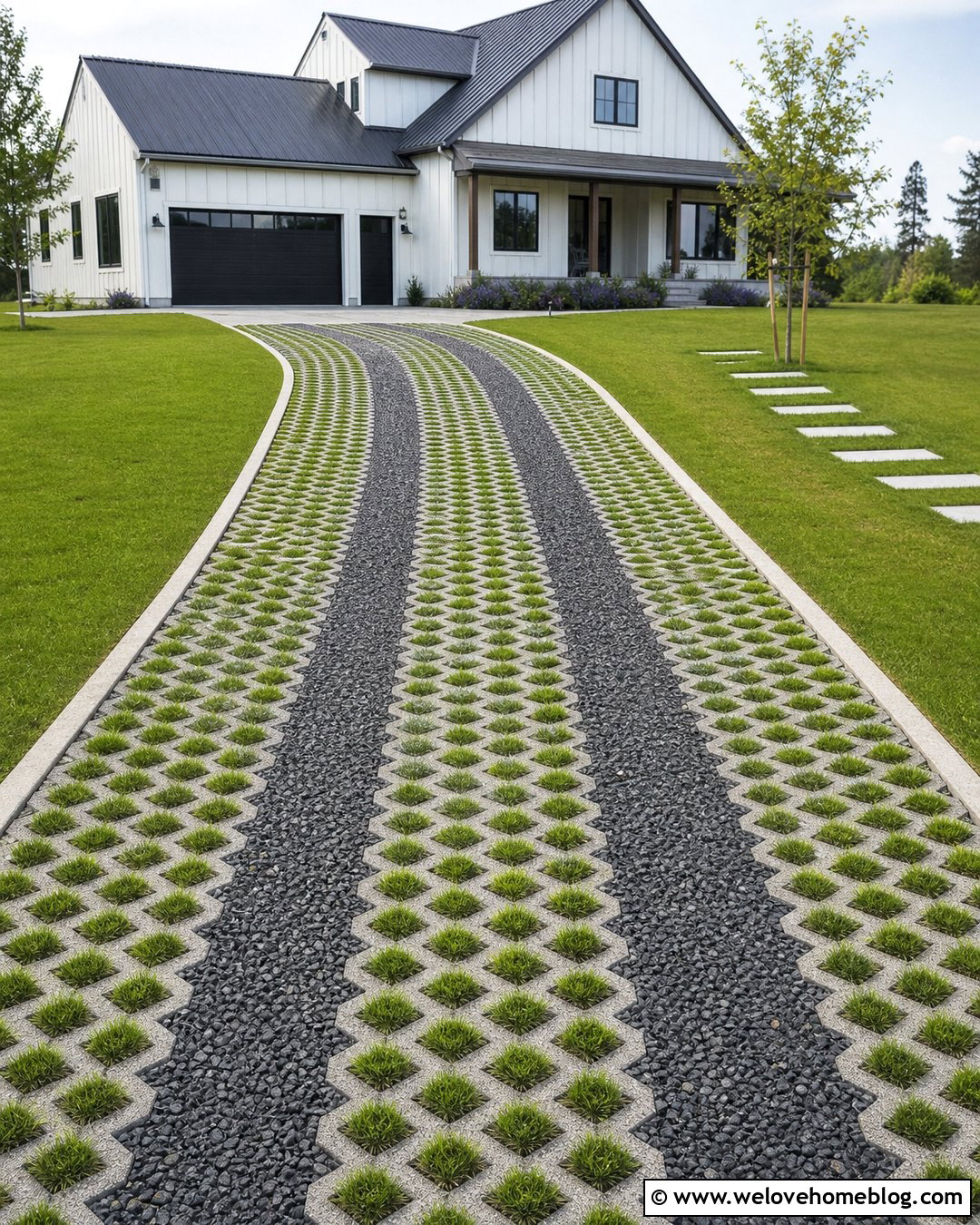
Grass grid systems bring structure and greenery together in one durable-looking surface. Cellular driveway grids can be divided into zones, with hardy grass filling selected cells and angular gravel filling the primary tire paths. Grid products intended for vehicular use help support the surface and limit sideways movement, but the system, base, soil, and vegetation must suit the expected traffic and local conditions. () Extend a conventional lawn around the driveway so the planted grid appears connected to the landscape. A straight or gently curved layout works best because the repeating cells already add visual detail. This design complements modern farmhouse and contemporary homes, especially when paired with simple planting beds, concrete stepping pads, and restrained foundation landscaping.
5. Pea Gravel Driveway With Mown Grass Edges
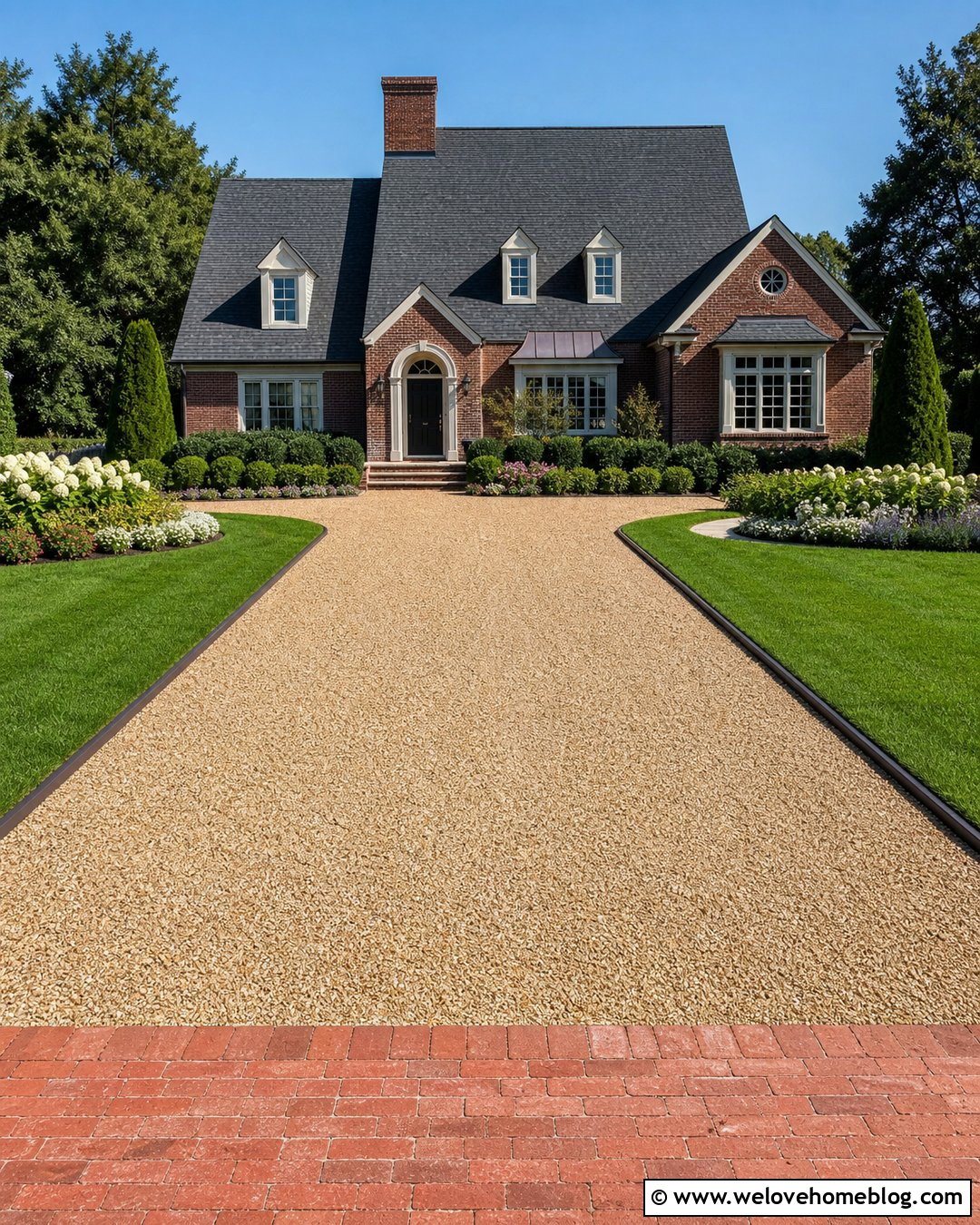
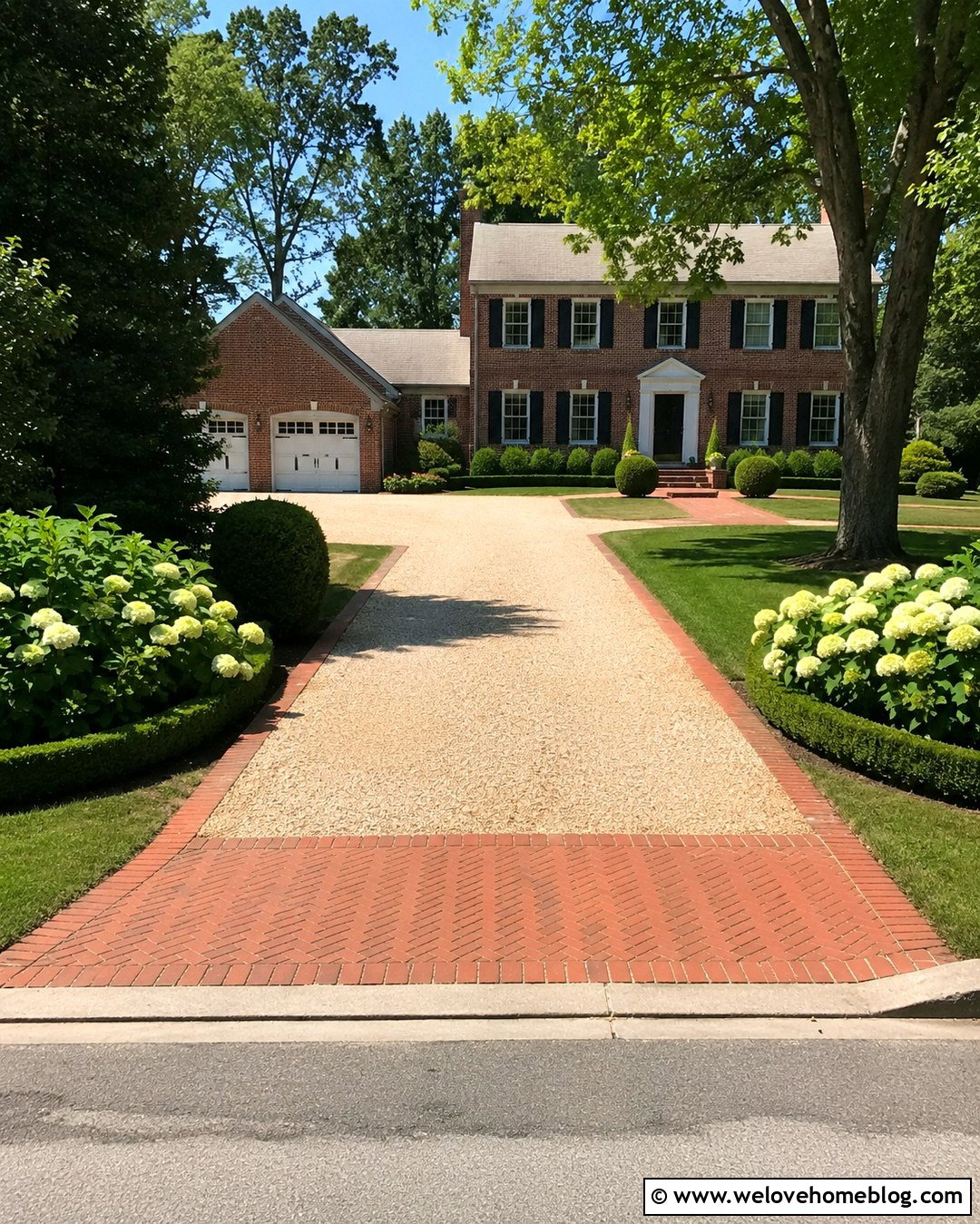
The rounded texture of pea gravel creates a soft, welcoming surface beside a lush lawn. Select buff, beige, or mixed-earth pea gravel to warm up the approach to a brick cottage or traditional home. Because rounded stones can shift, use substantial steel, masonry, or stone restraints rather than relying on the grass alone. A properly prepared and compacted base is also important for reducing common maintenance problems. () Keep the lawn edge crisp and relatively straight, allowing the gravel’s color and texture to provide the relaxed character. Curved planting beds near the house can include evergreen shrubs and flowering perennials. A brick apron at the street or garage creates a firmer transition and visually connects the light gravel with the architecture.
6. Crushed Limestone Driveway With Grass Strips
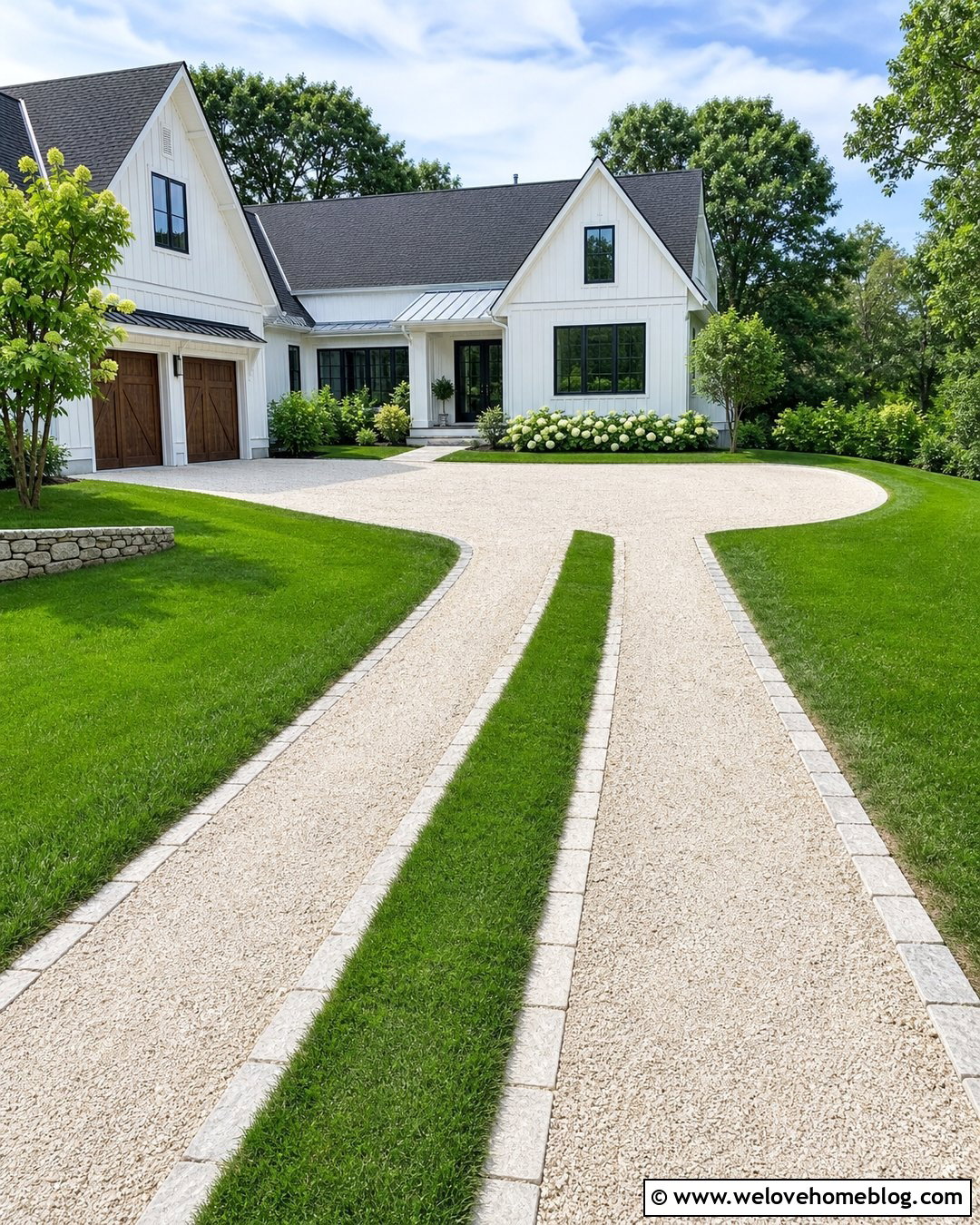
Bright crushed limestone can make a shaded or compact front yard feel noticeably lighter. Design a straight driveway with two broad limestone tracks and narrow grass strips positioned along the outer edges. A third strip can run through the center if the driveway is wide enough and vehicle clearance allows it. Use pale concrete curbing or flush-cut limestone blocks to separate the materials and keep the pattern sharp. Deep green grass creates strong contrast against the cream-colored aggregate. Near the home, widen the gravel into a practical turning or parking area while continuing small grass panels around its perimeter. This complete layout feels clean but not overly formal, making it a natural match for white farmhouses, limestone facades, and light-colored contemporary homes.
7. Gray Gravel Driveway With Brick Border And Grass
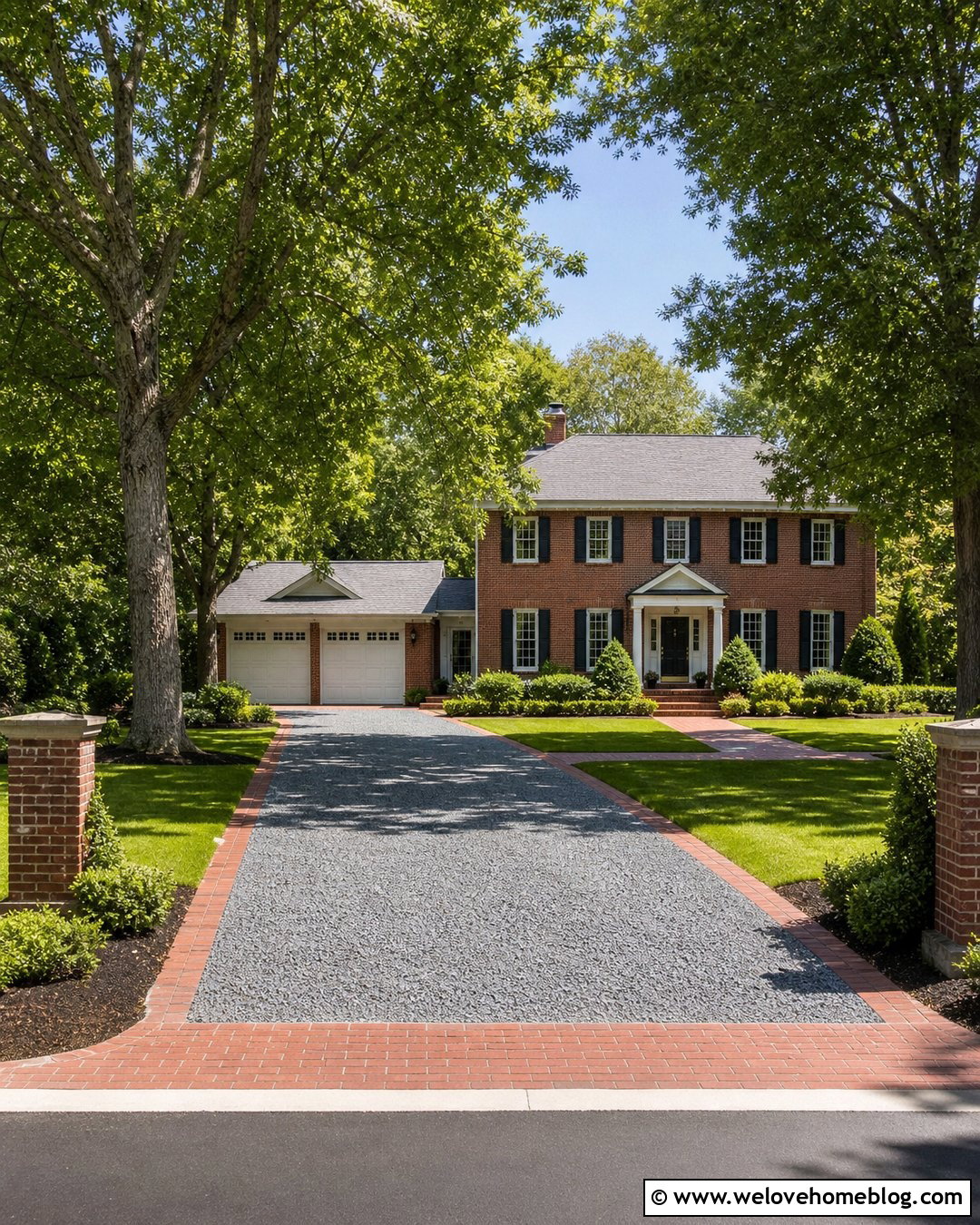
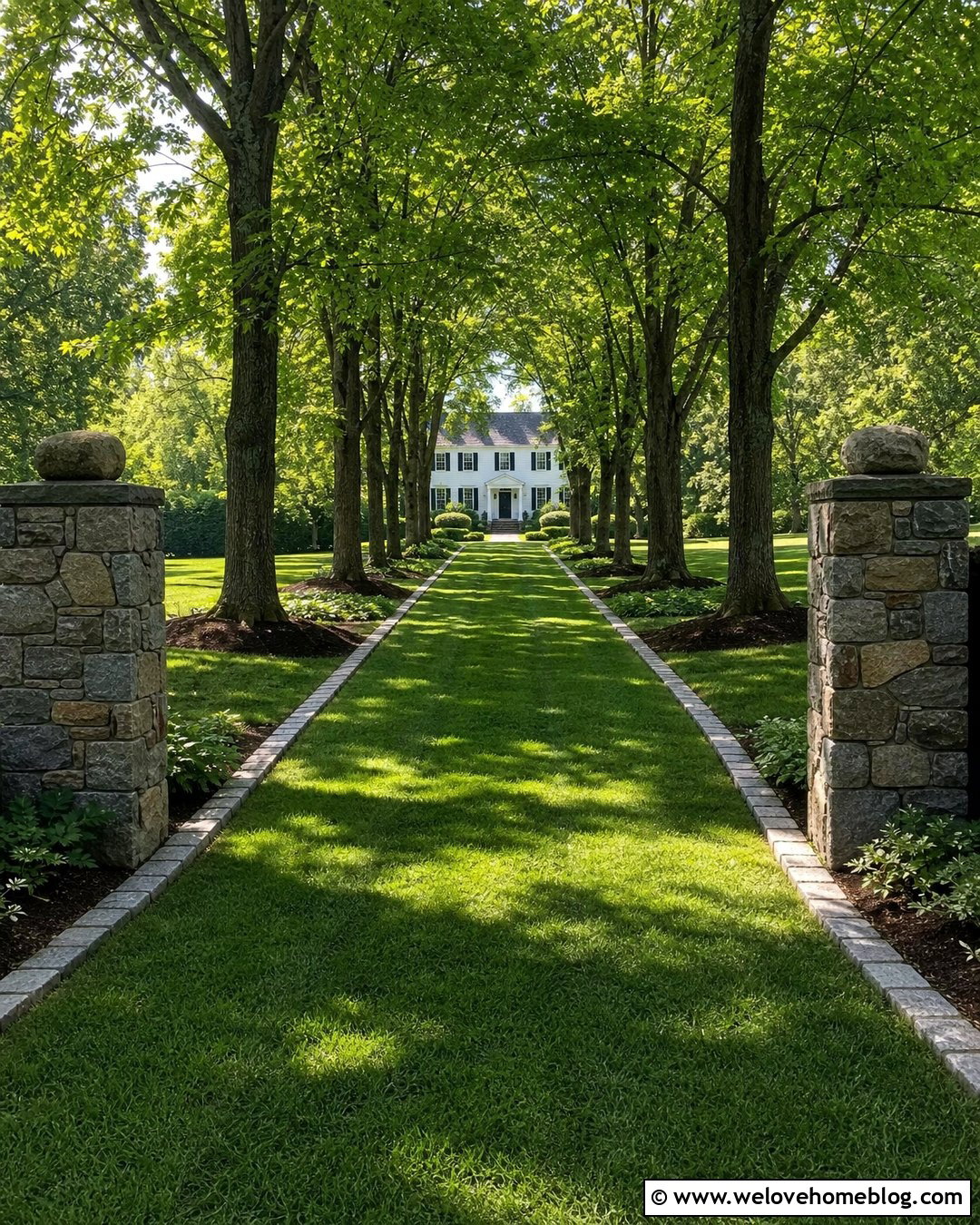
Red clay brick can add warmth and definition to a cool gray gravel driveway. Build a wide brick ribbon around the complete perimeter, using a running bond or soldier-course pattern that relates to the home’s facade. Beyond the brick, maintain an evenly cut lawn with a few carefully placed shade trees. The brick becomes a clear transition zone, preventing the grass and gravel from visually blending into one untidy edge. It can also create a convenient surface for mower wheels when installed nearly flush with the lawn. Continue the brick across the driveway at the street and garage to form coordinated entrance aprons. This combination looks established and traditional, making it particularly effective for colonial, Georgian, Tudor, and red-brick suburban homes.
8. Gravel Driveway With Cobblestone Edging And Lawn
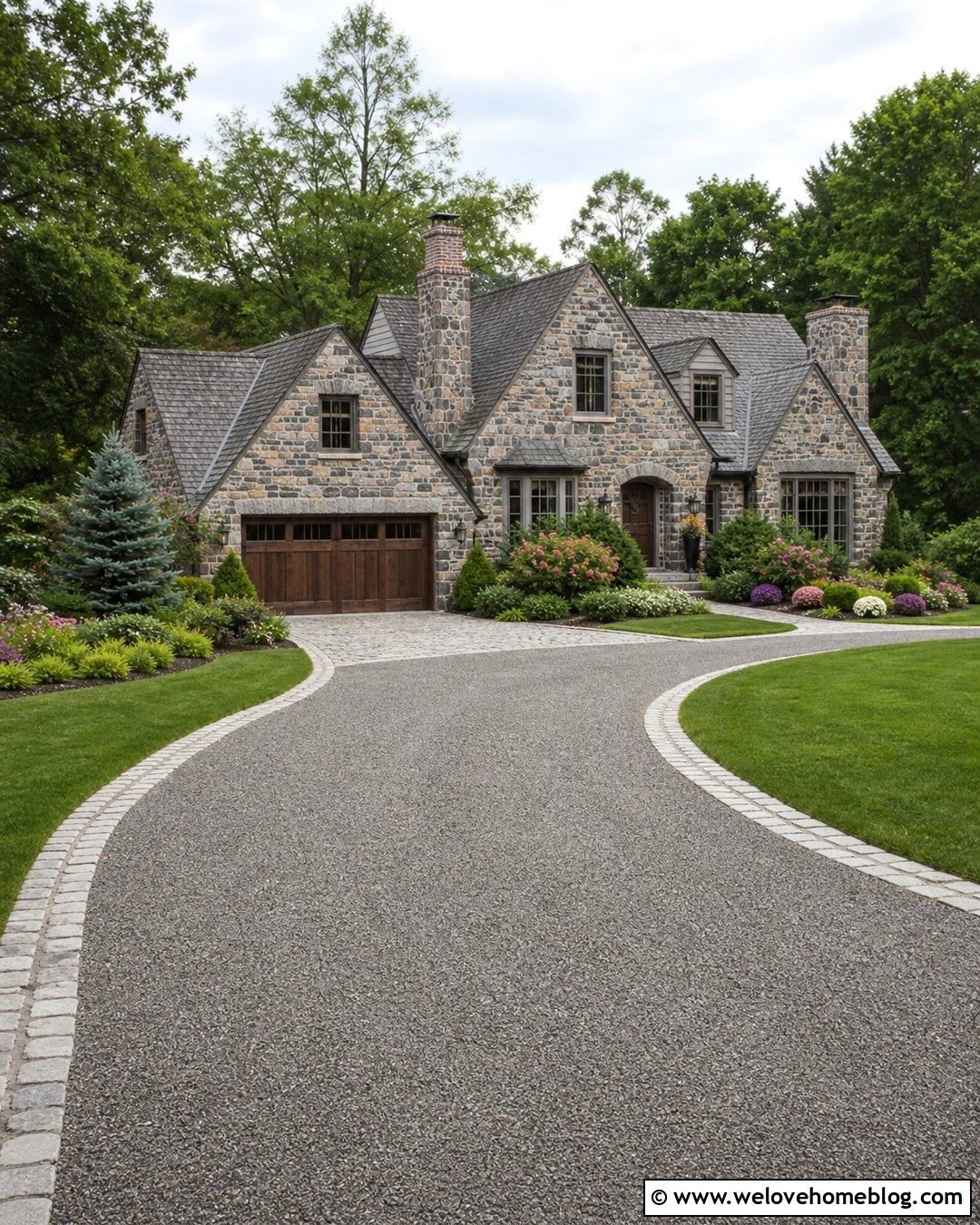
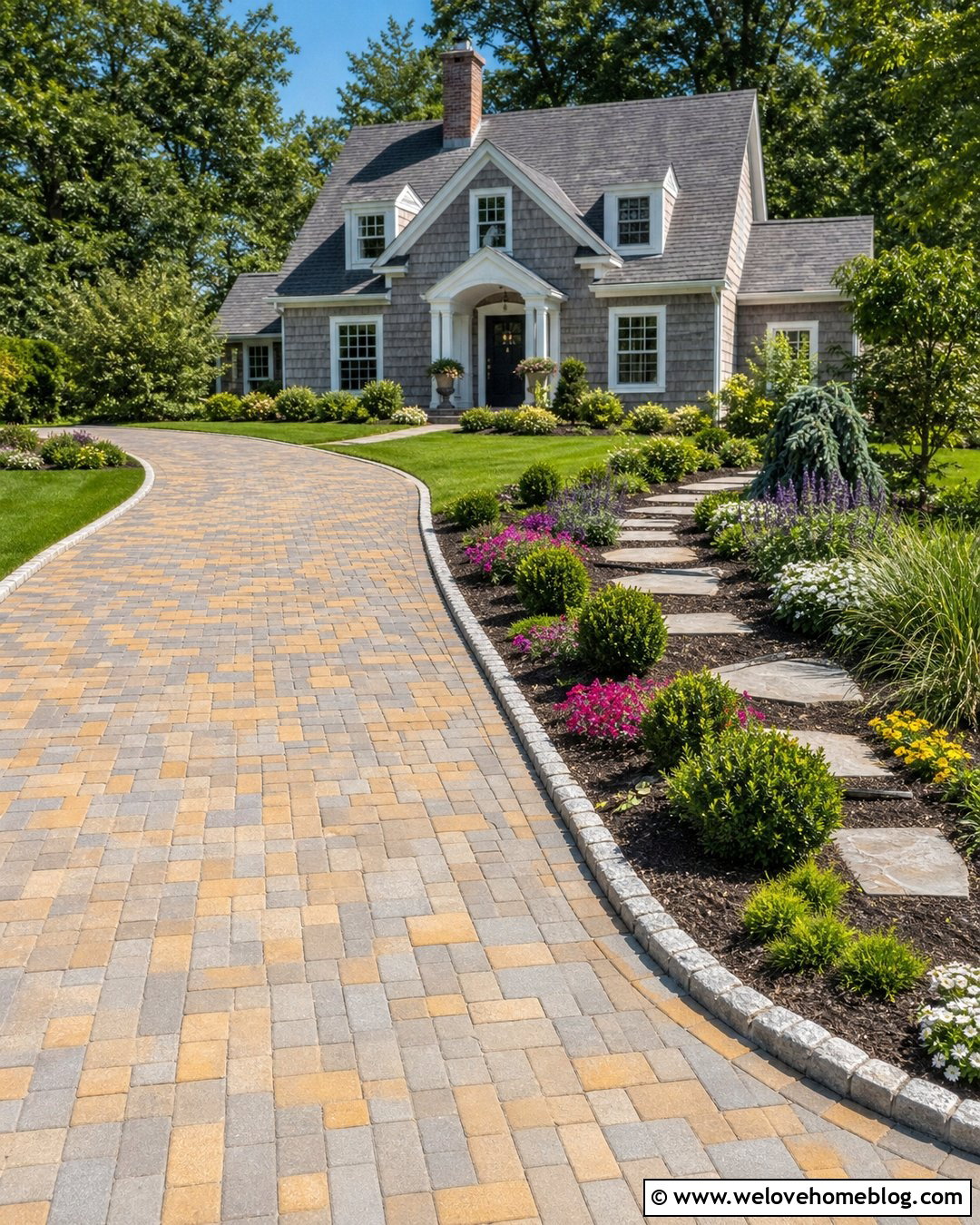
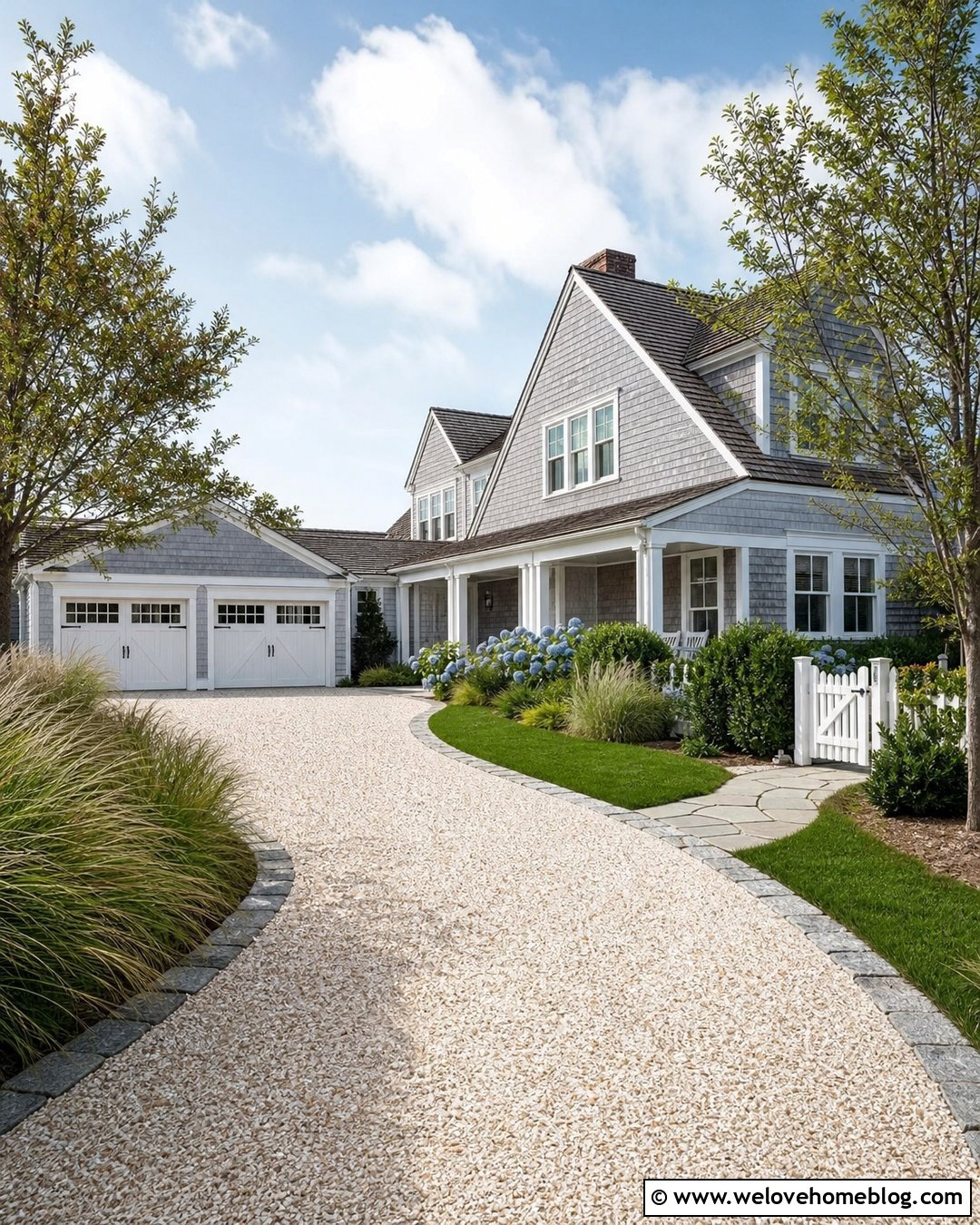
Cobblestone edging gives a loose gravel surface a stronger architectural frame. Choose warm gray crushed gravel and border it with chunky granite or Belgian-style blocks that rise slightly above the finished surface. Substantial masonry edging can help contain loose aggregate, while the raised profile makes the driveway shape easy to read from the curb. () Surround the border with a broad, healthy lawn and use matching cobblestones around nearby planting beds. A gently curved layout prevents the heavier edging from looking too rigid. Add a cobblestone apron at the garage and a simple stone walkway toward the front door. This complete design suits historic houses, European-inspired cottages, and upscale traditional homes where authentic texture strengthens the overall curb appeal.
9. Circular Gravel Driveway With Grass Island
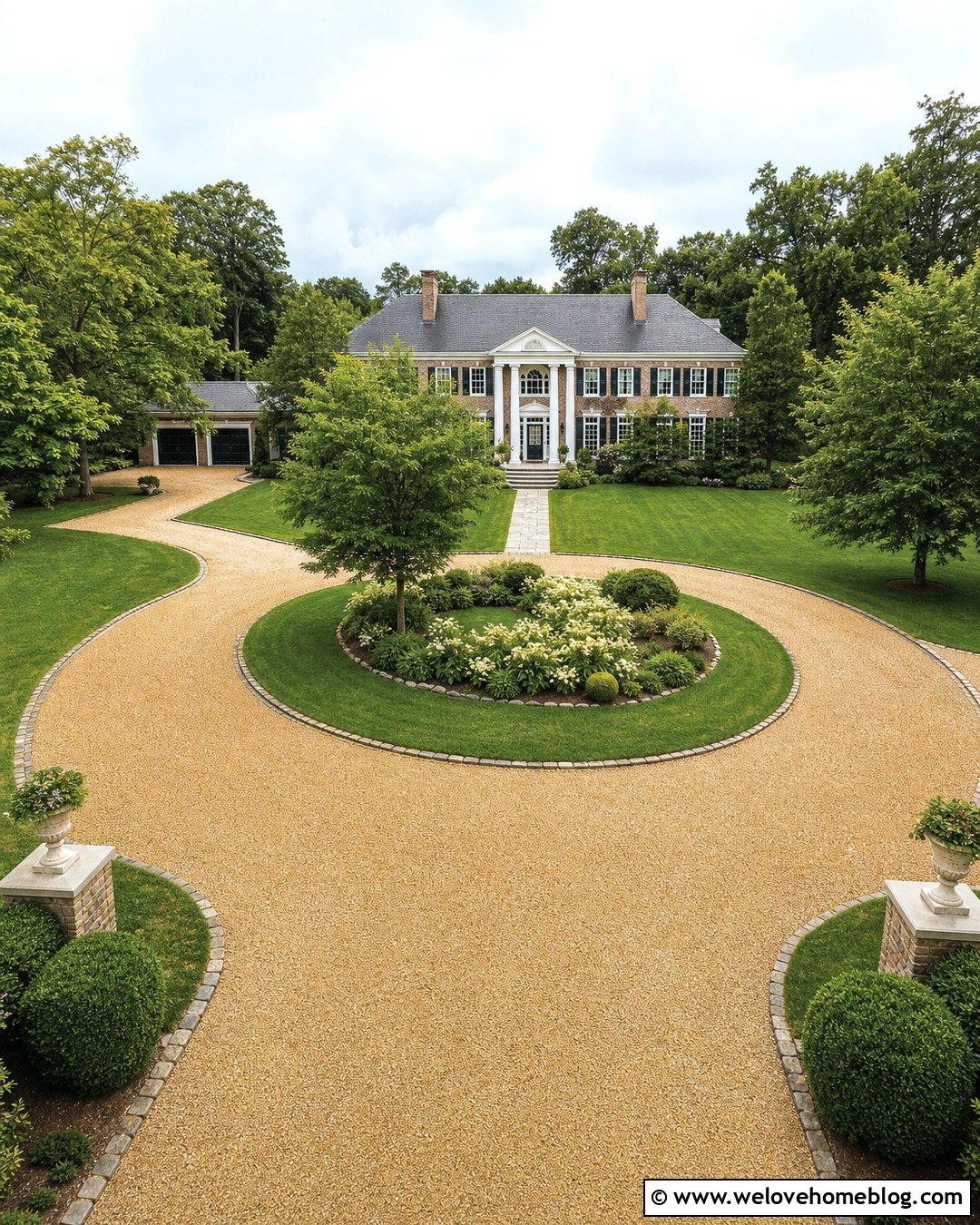
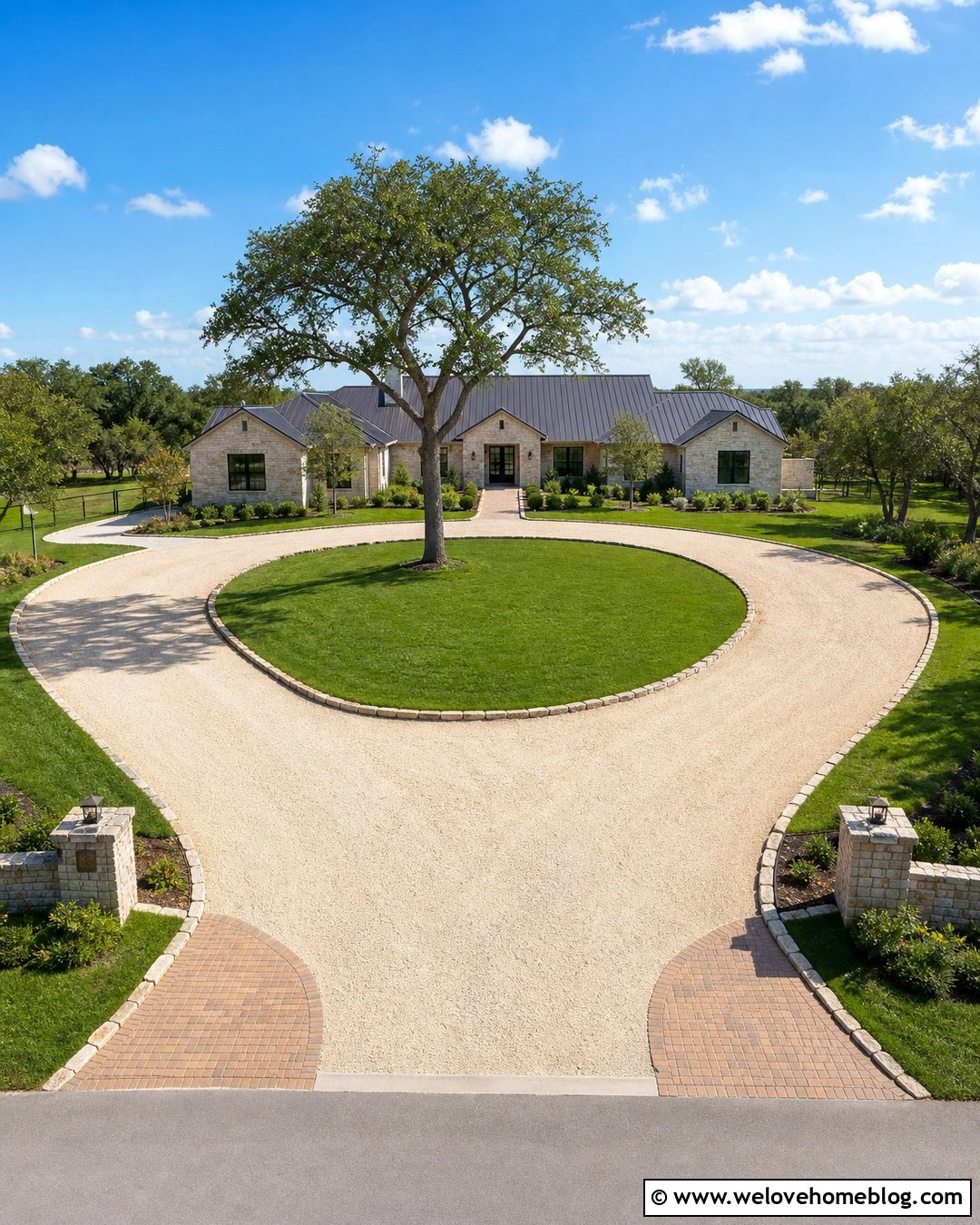
A circular gravel driveway can turn a broad front yard into an organized and memorable entrance. Use compacted golden gravel for the driving loop and create a large grass island in the center. Keep the island simple with a well-shaped lawn, one specimen tree, and a low planting ring that preserves open sightlines. Stone setts or brick pavers can border both sides of the gravel, clearly defining the circle and limiting loose stones near the lawn. Connect one side of the loop to the garage with a short straight spur. The front walkway can cross the grass island or extend from the inner curve toward the entry steps. This balanced arrangement works best with colonial, Mediterranean, Georgian, and large farmhouse properties.

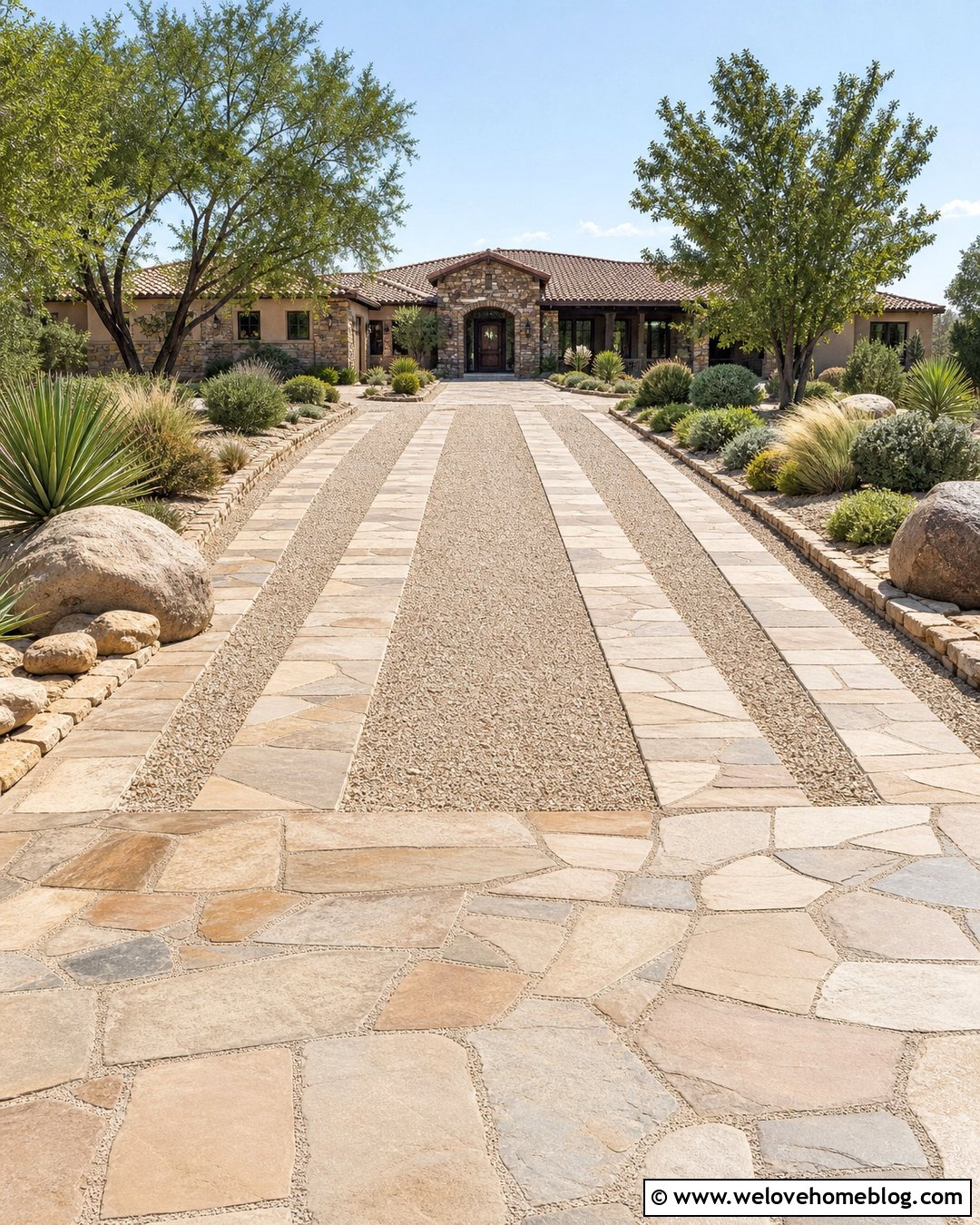
10. Horseshoe Gravel Driveway With Open Lawn
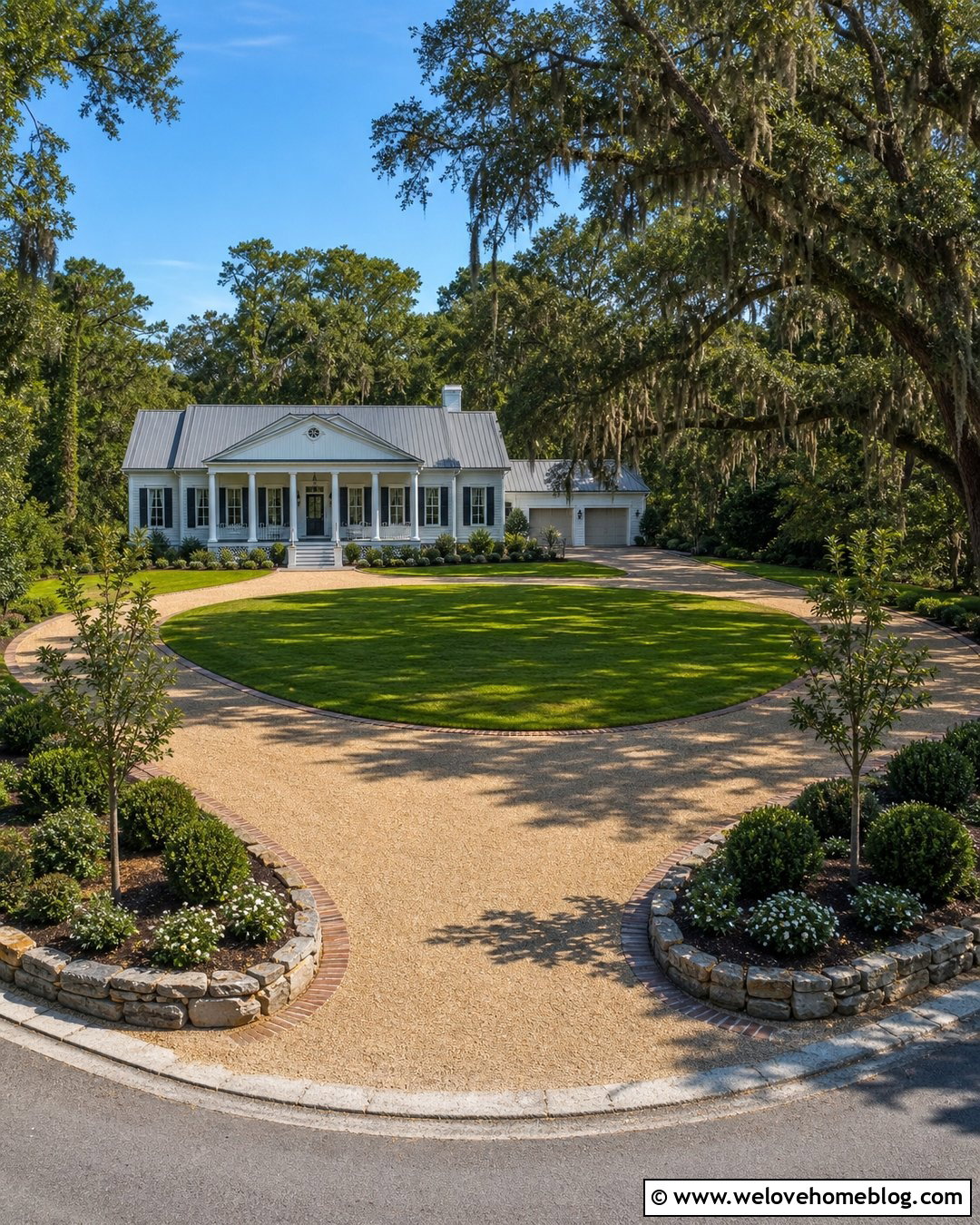
Two street entrances make a horseshoe driveway convenient while giving the landscape a graceful sense of movement. Spread tan crushed gravel across the curved driving lane and leave a broad open lawn between the driveway and house. The simple grass interior keeps the design from feeling crowded and provides a clear view of the facade. Low stone edging can contain the gravel along the outer curve, while flush brick pavers can define the inner edge and simplify mowing. Mark both entrances with restrained planting beds rather than oversized pillars, especially on a medium-sized property. A short gravel connection to the garage completes the circulation. This layout feels appropriate for country homes, southern-style houses, ranch properties, and traditional residences with wide street frontage.
11. Gravel Driveway With Grass Median
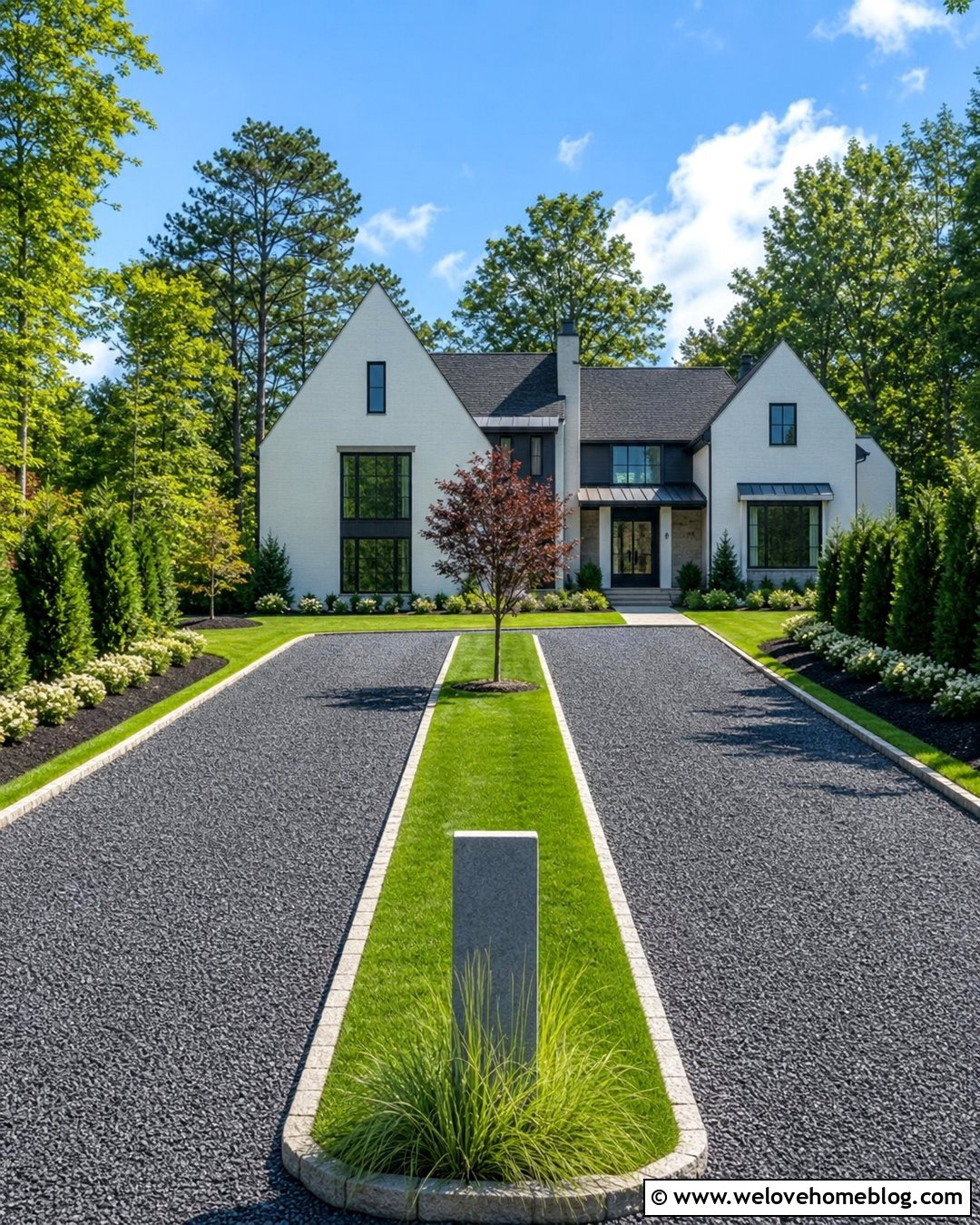
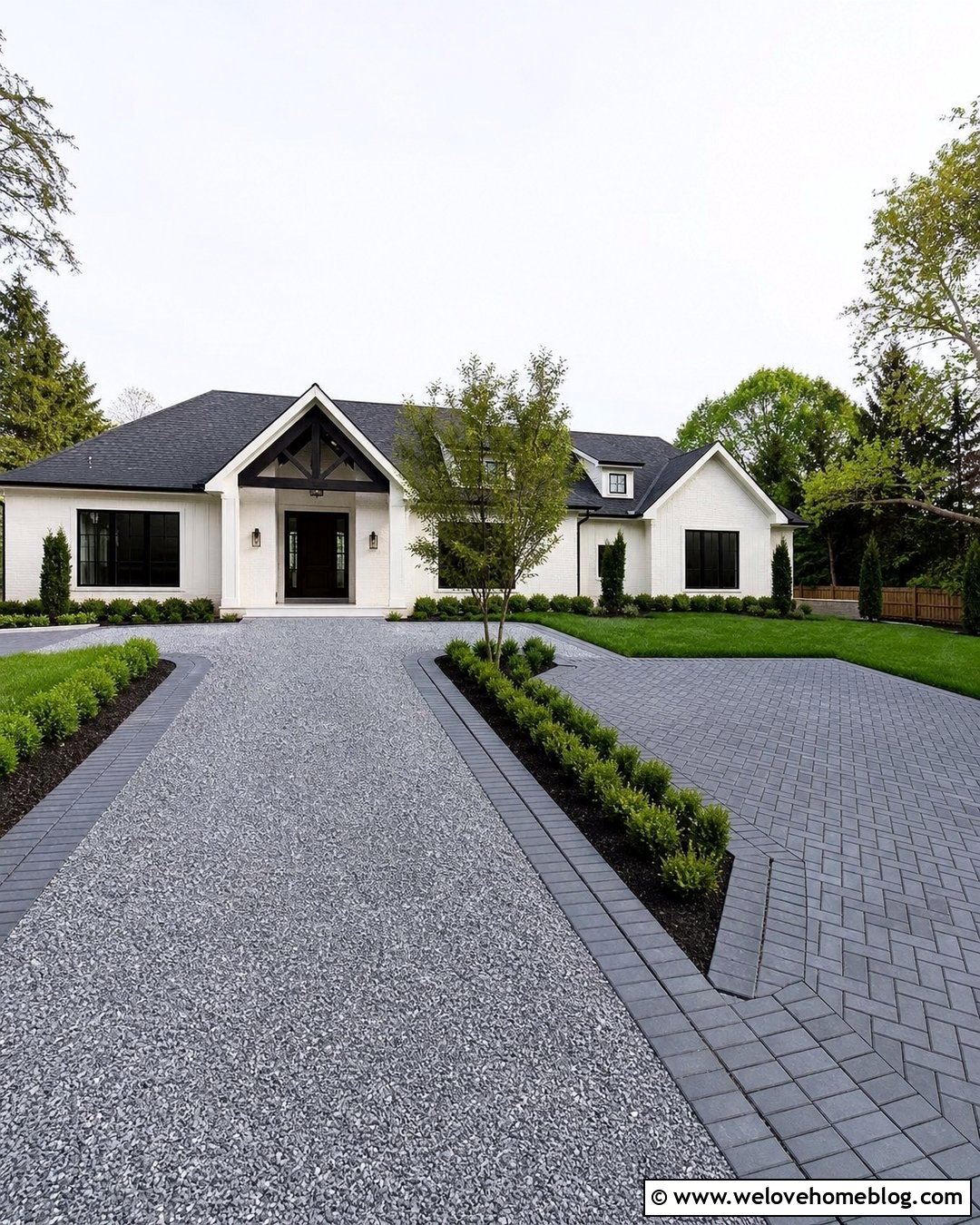
A wide driveway can be divided into two clear lanes with a planted grass median. Use charcoal crushed stone on both sides to create a bold contrast with the green center. Shape the median as a long tapered panel, making it wider near the house and narrower toward the road for comfortable entry. Low granite curbs should outline the complete median and exterior edges, helping protect the grass from turning tires. A small ornamental tree or simple address marker can anchor the wider end without blocking visibility. Continue the same lawn beyond the driveway, then use restrained evergreen beds around the house. This symmetrical design complements modern, transitional, and updated ranch homes while breaking up an otherwise expansive area of loose gravel.
12. Gravel Driveway With Grass And Stone Walkway
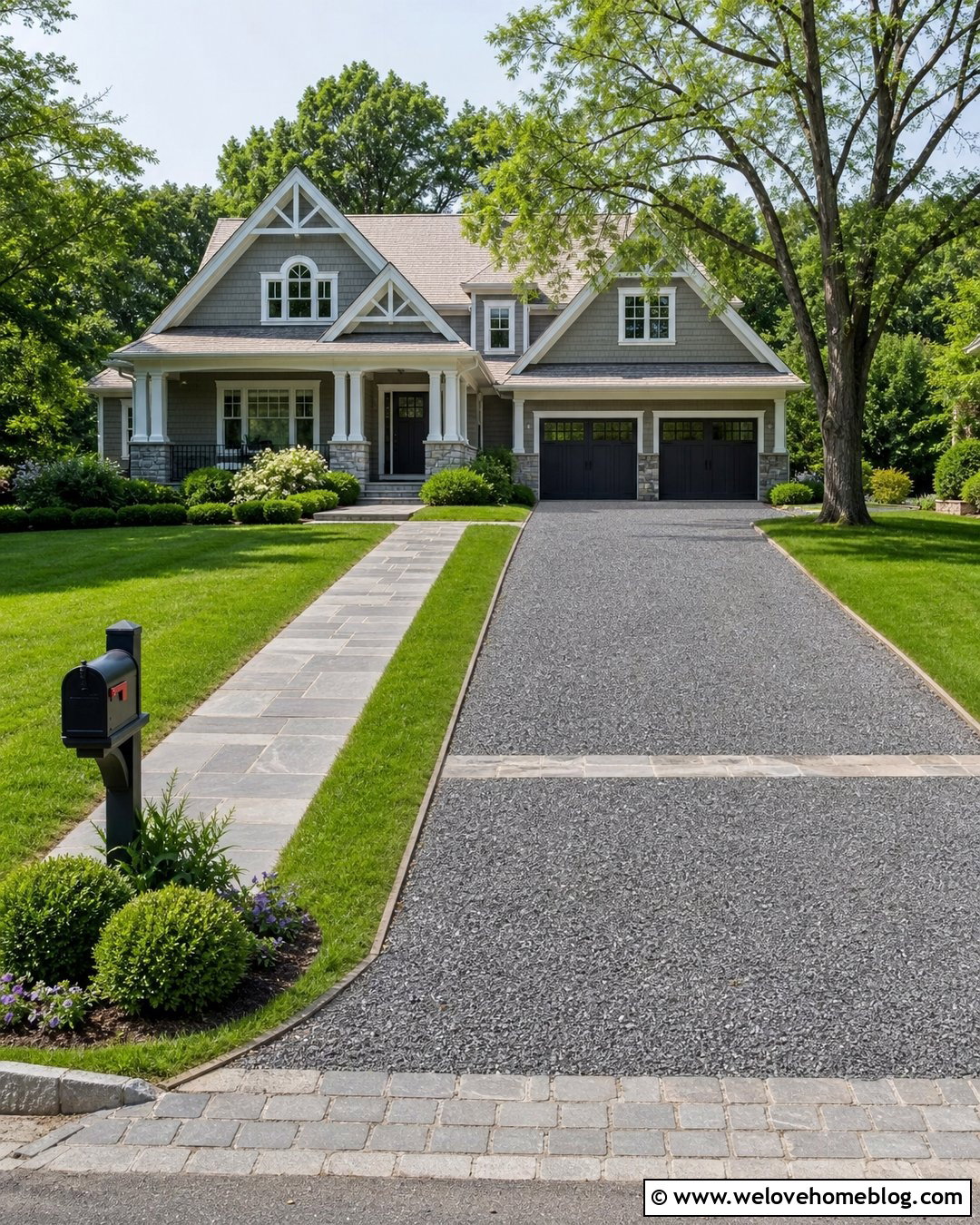
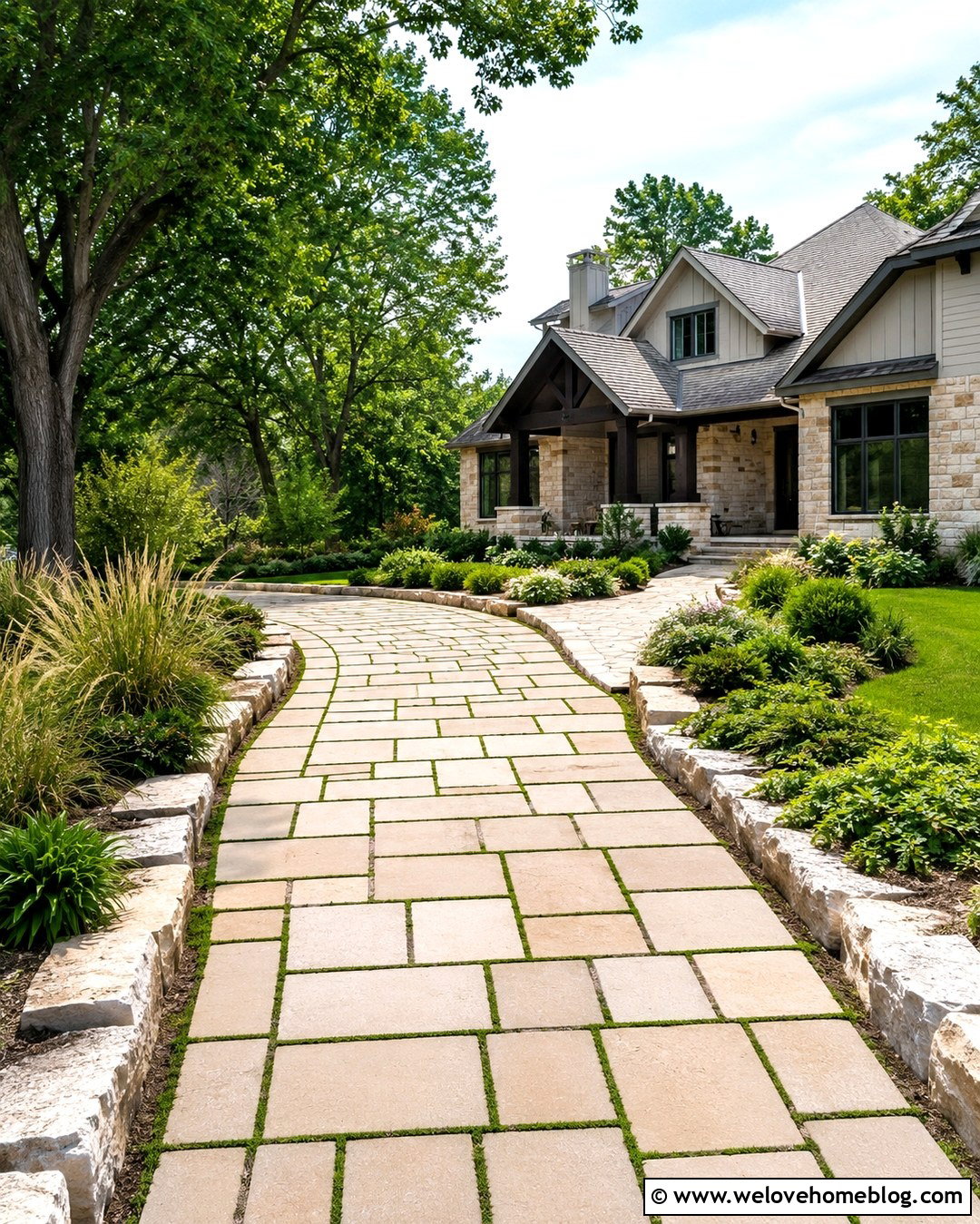
When family members regularly walk beside parked vehicles, a separate path can make the entrance more comfortable and organized. Create a medium-gray gravel driveway with a wide grass strip separating it from a large rectangular-stone walkway. The lawn provides a soft buffer, while stepping pads or a continuous flagstone path keep foot traffic away from loose gravel. Connect the walkway to the driveway near the street and garage using short stone crossways. Use flush metal edging around the gravel and stone to maintain clean boundaries without introducing bulky borders. Foundation shrubs, one shade tree, and a compact mailbox garden can frame the approach. This practical arrangement suits craftsman, split-level, Cape Cod, and suburban homes with garages positioned close to the front entry.
13. Gravel Driveway With Meadow Grass Borders
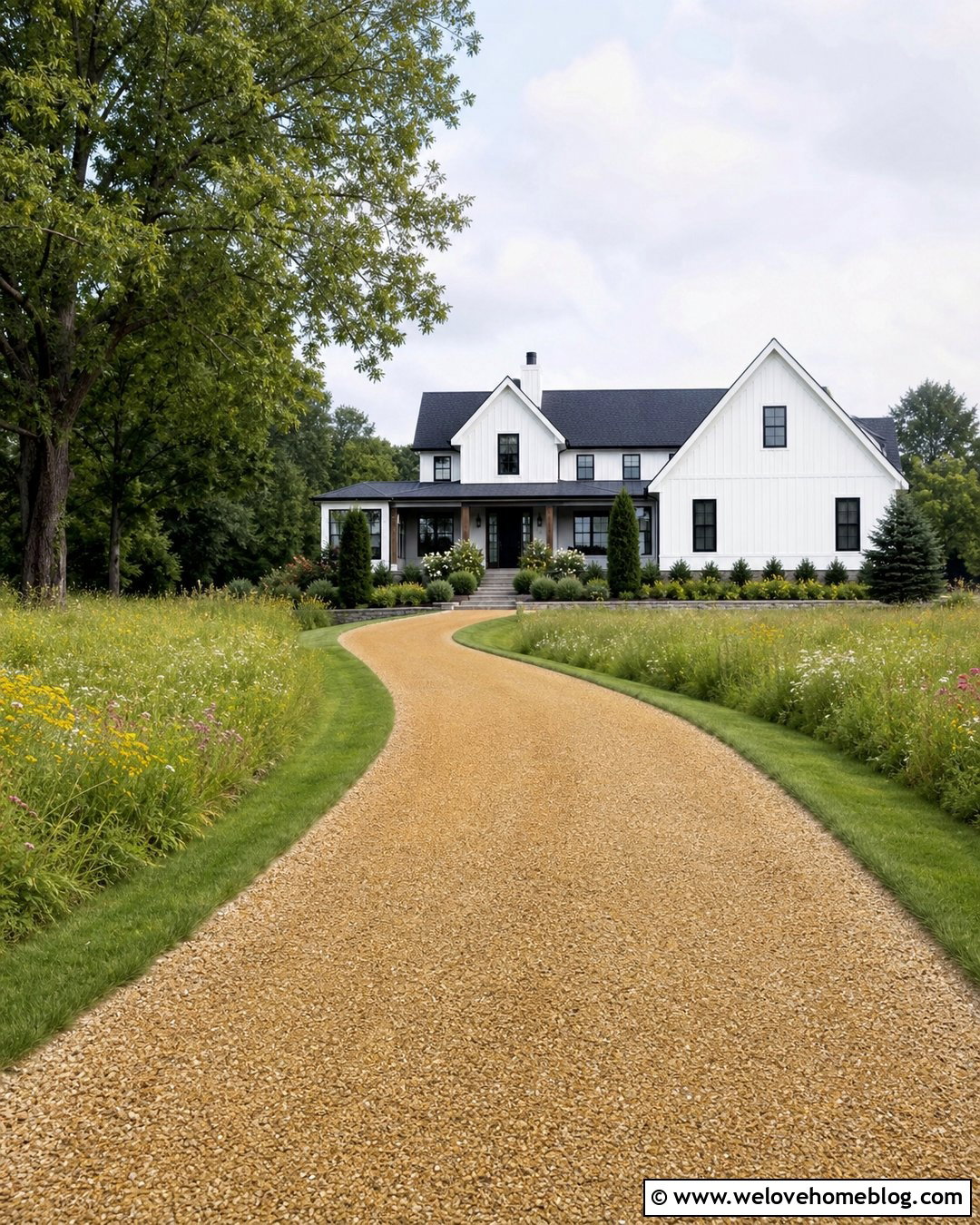
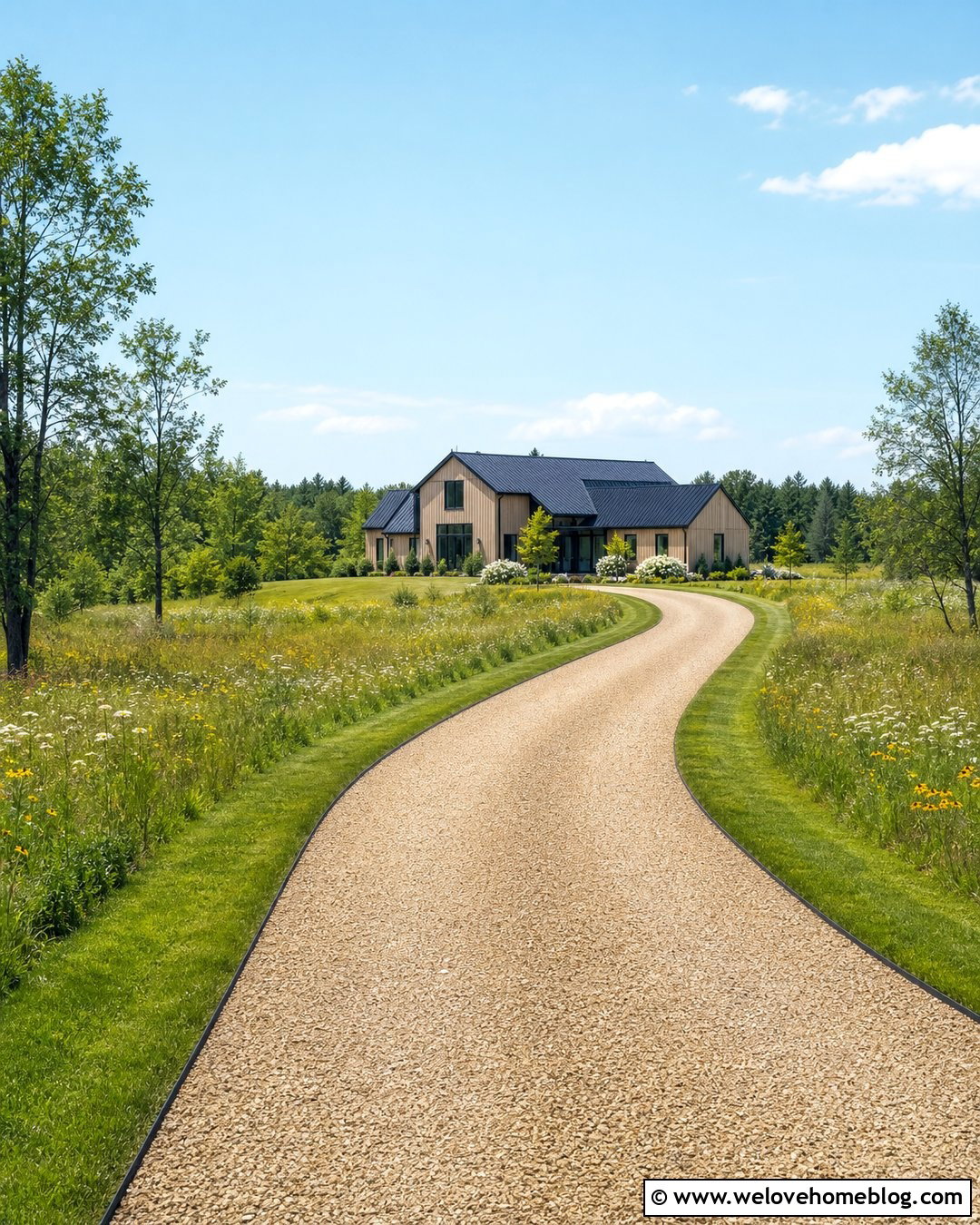
A gravel driveway can feel natural without looking neglected when meadow-style borders are thoughtfully controlled. Start with compacted brown or honey-colored gravel in a gently curved layout. Beside it, establish broad bands of fine native grasses and regionally suitable flowering plants, but maintain a short mown strip directly along the driving edge. The trimmed grass creates a deliberate boundary and keeps taller growth away from vehicles. Use hidden steel edging to contain the gravel without interrupting the informal appearance. Near the house, transition the meadow into more structured beds with repeating grasses and evergreen shrubs. This design is ideal for rural homes, cabins, modern farmhouses, and larger lots where conventional lawn would require excessive mowing and feel disconnected from the wider landscape.
14. Gravel Driveway With Ornamental Grass Beds
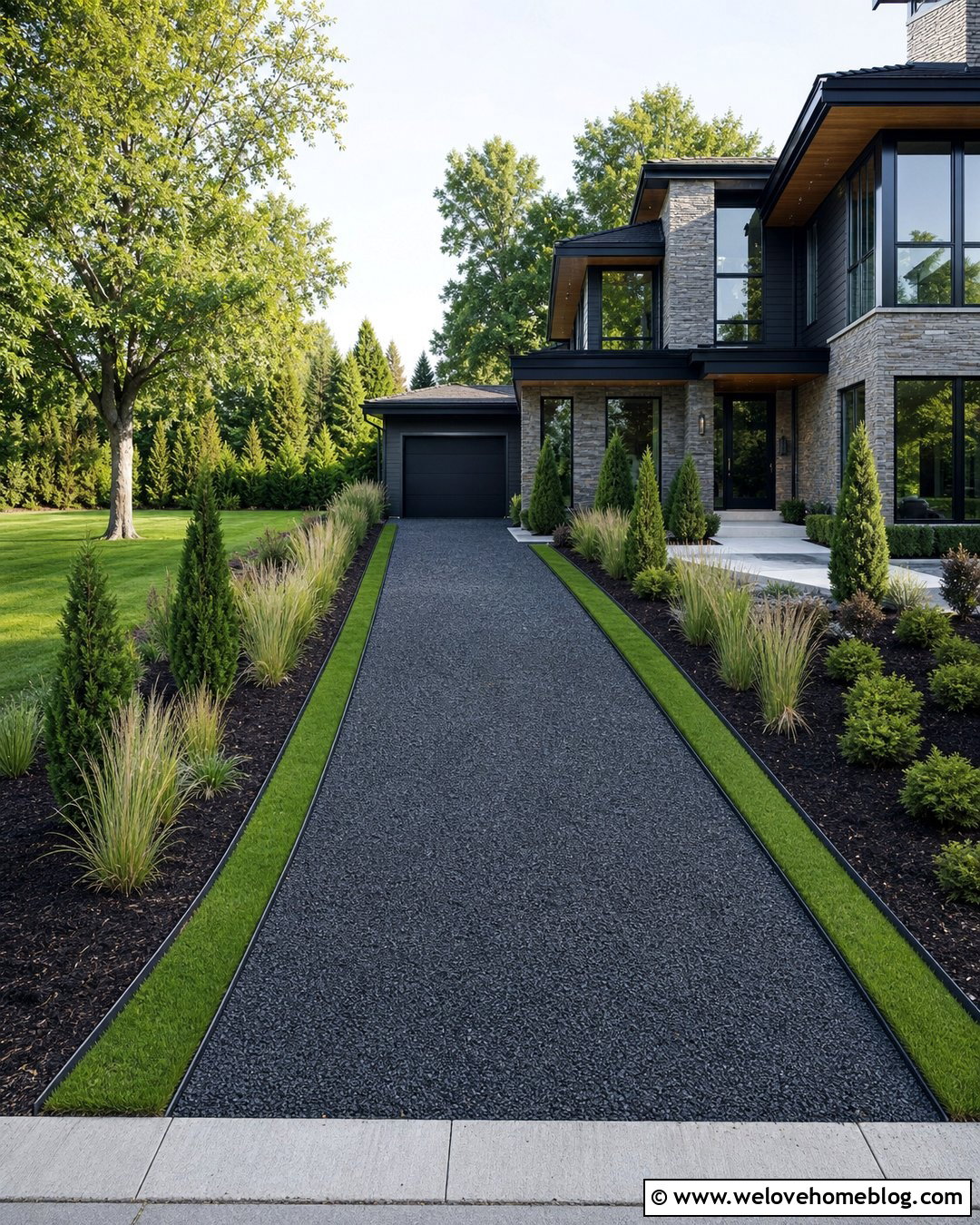
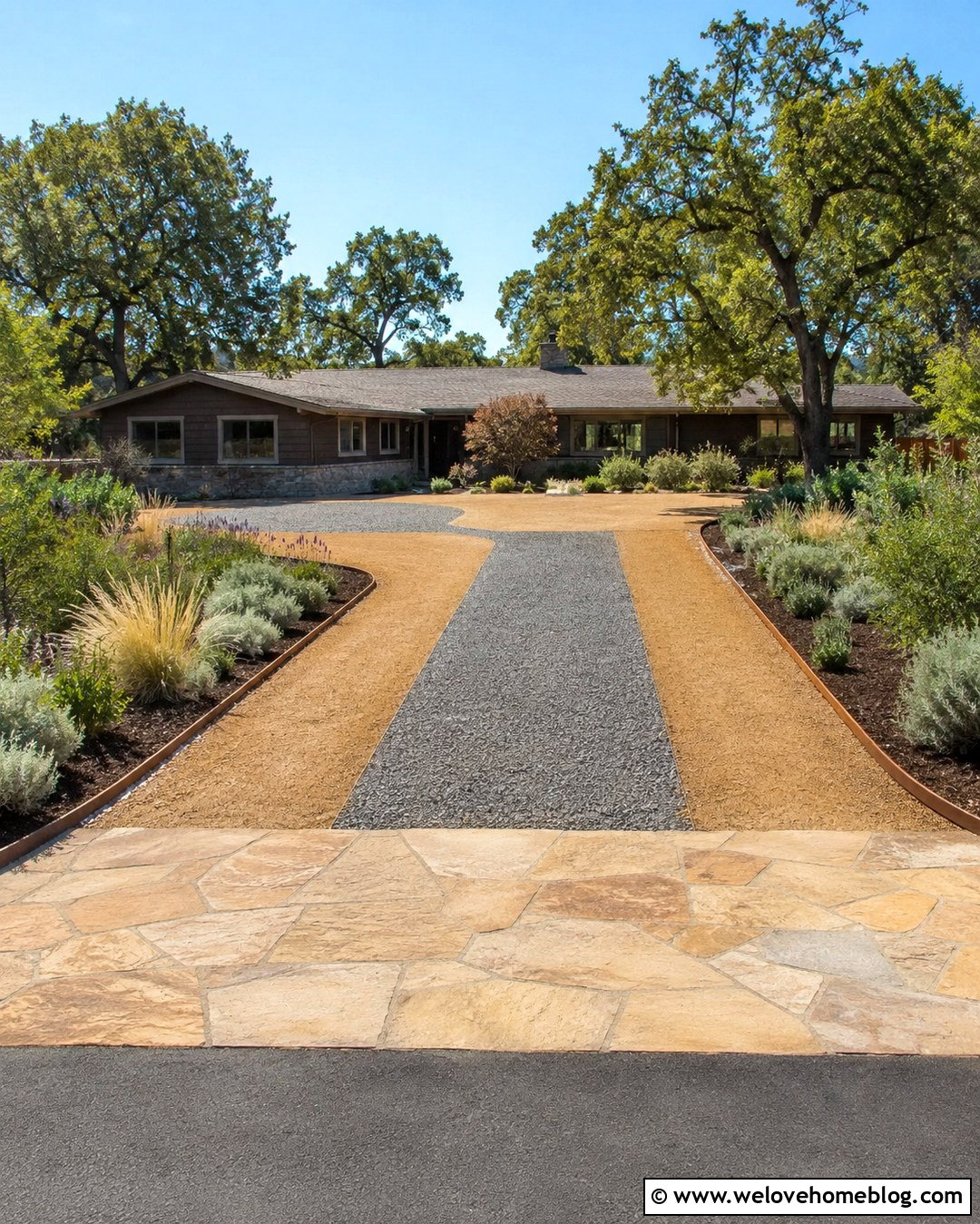
Feathery ornamental grasses can soften gravel while adding height and movement around the driveway. Choose dark gray angular gravel for a straight or slightly offset approach to a contemporary home. Instead of planting directly against the driving surface, place groups of upright ornamental grasses in wide mulch beds behind a slim steel border and a narrow lawn strip. The grass strip creates breathing room, provides a practical mowing line, and stops the planting from leaning over vehicles. Repeat the grasses near the front walkway and garage to unify the composition. Low evergreen shrubs can provide winter structure between the taller clumps. Select noninvasive plants suited to local growing conditions, and position them so mature foliage will not hide street views, lighting, or address numbers.
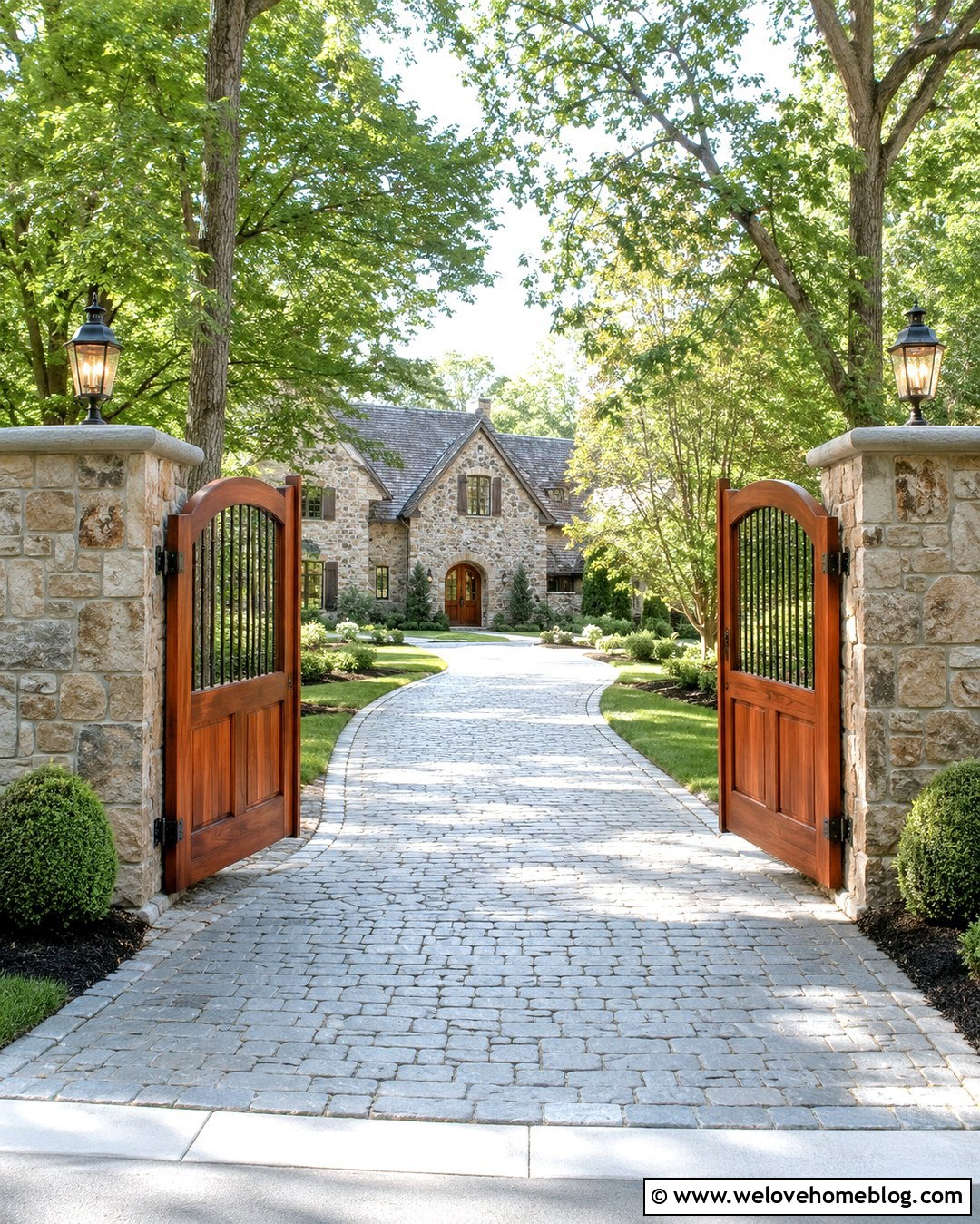
15. Gravel Driveway With Clover Lawn Edging
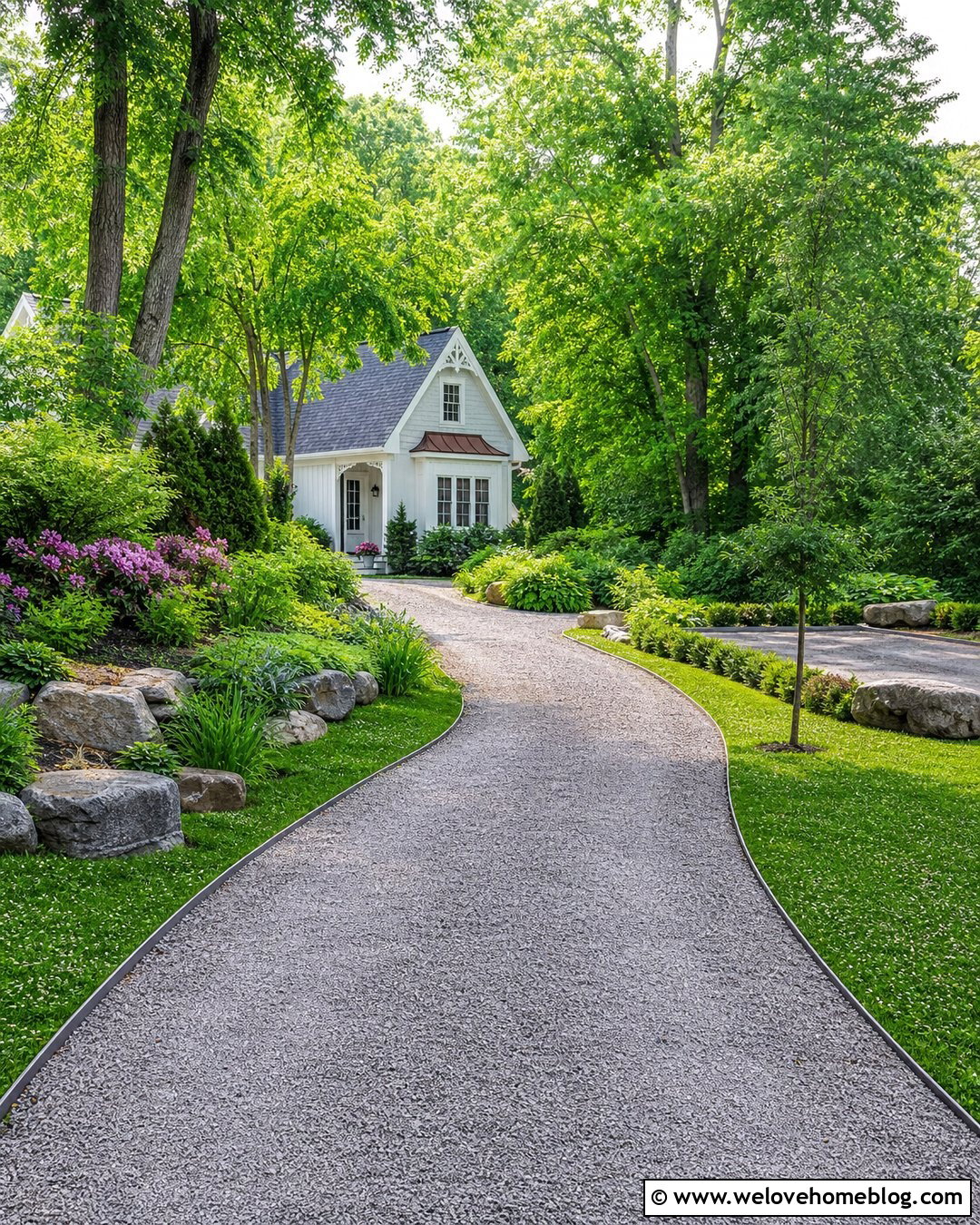
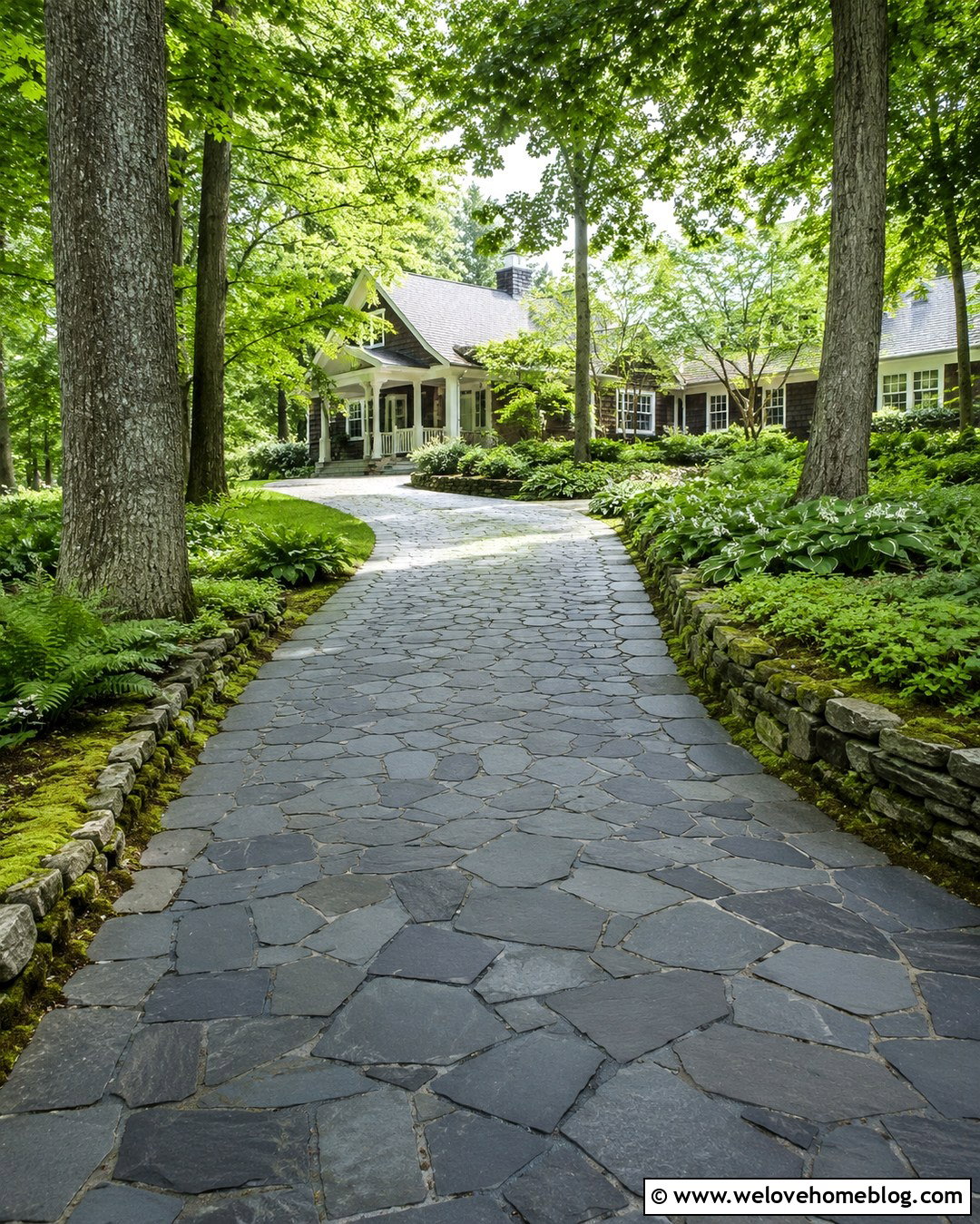
A clover-rich lawn can give a gravel driveway a soft, informal frame, particularly on a cottage or low-maintenance country property. Use warm gray crushed gravel and shape the driveway with gentle, uncomplicated curves. Establish the surrounding green area with a lawn mixture appropriate for the climate and expected foot traffic rather than allowing plants to spread directly into the gravel. A slim metal restraint should separate the surfaces and preserve a clean edge. Add natural stone planting beds near the home, using compact flowering shrubs and perennial ground covers that repeat the relaxed character. A small gravel parking bay can branch from the main drive and remain surrounded by the same green carpet. The finished look feels casual, cohesive, and comfortably integrated with the yard.
16. Gravel Driveway With Timber Edging And Grass
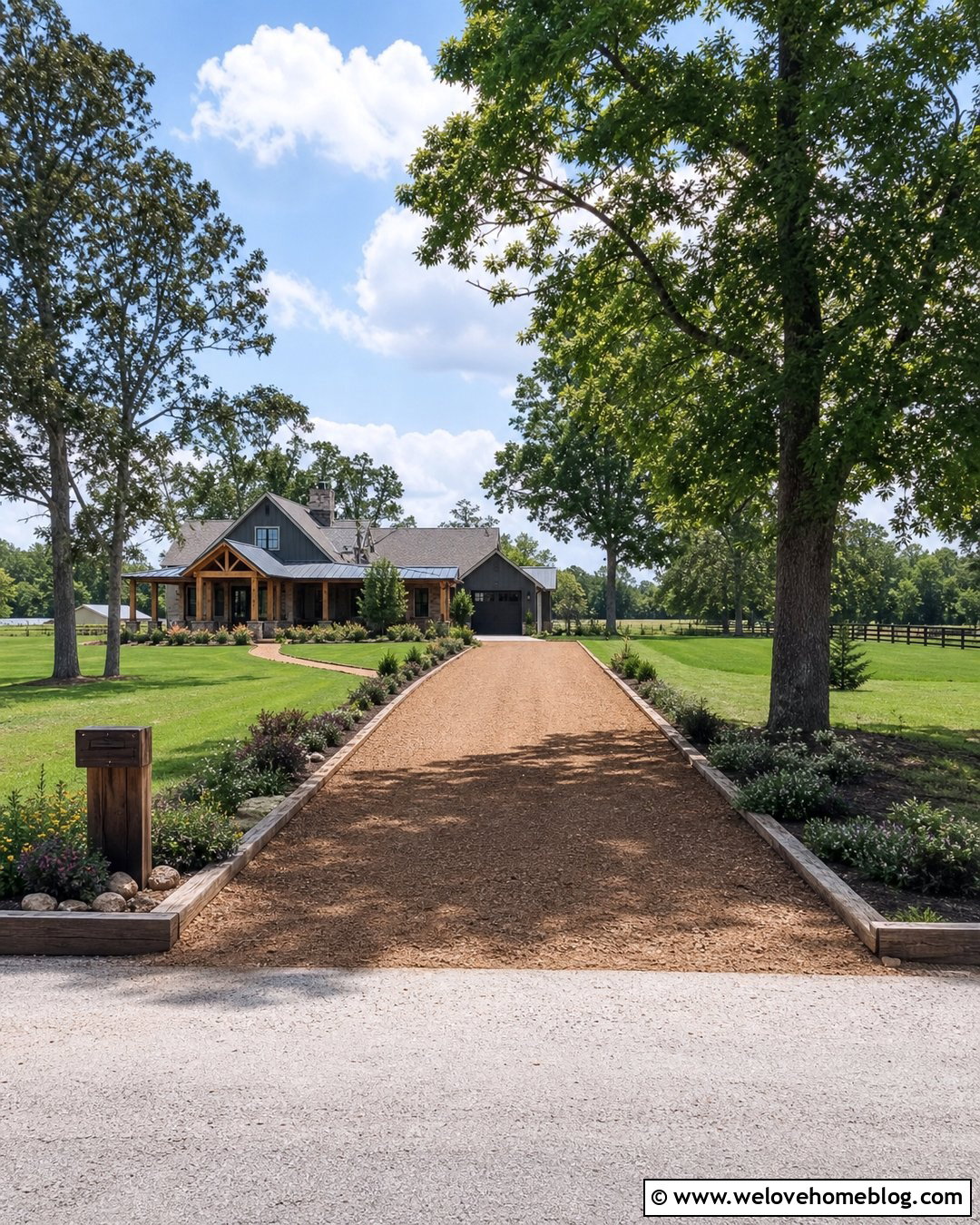
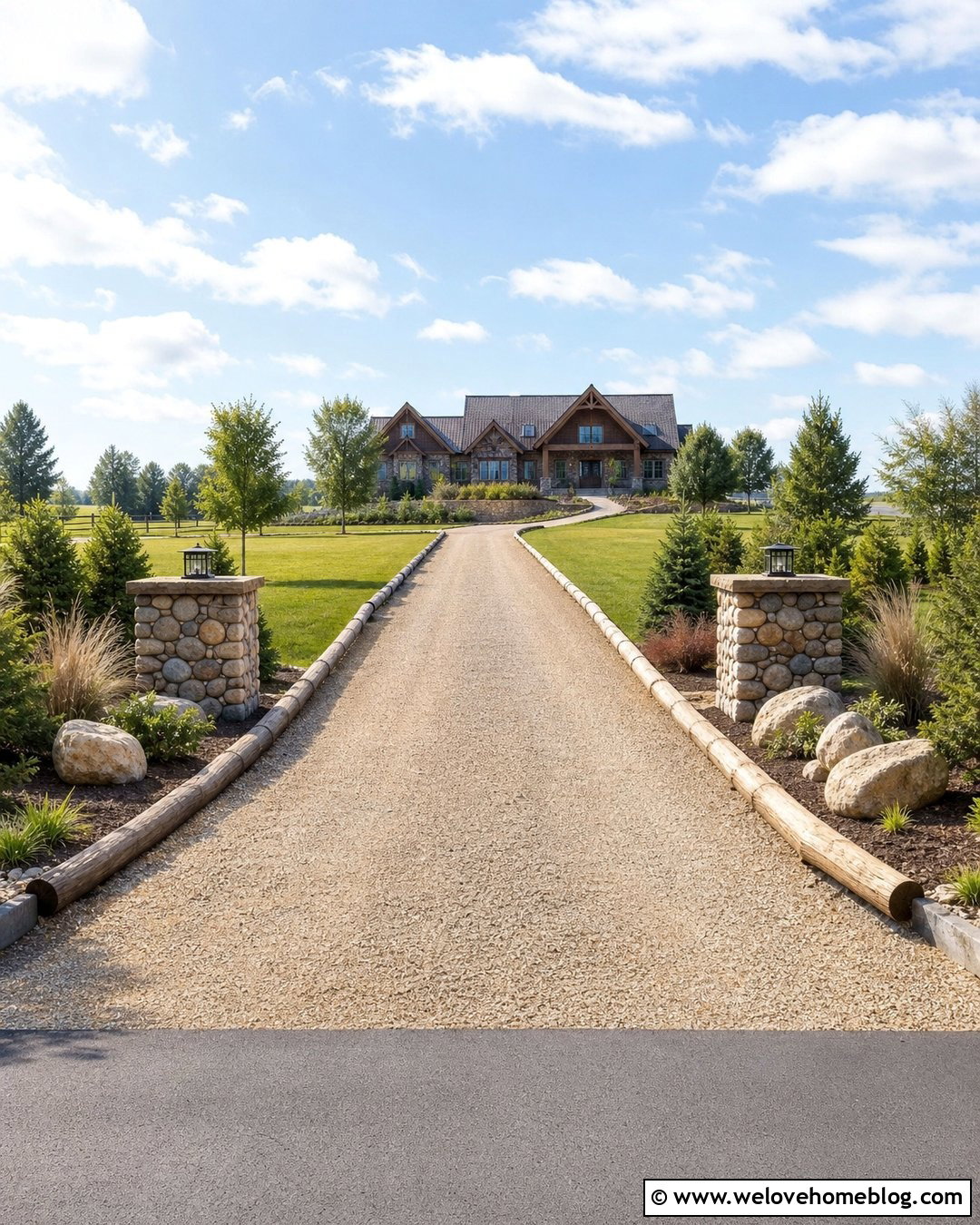
Timber edging brings a rustic finish to a gravel and grass driveway without requiring formal masonry. Use compacted brown crushed stone for a long straight approach, then install pressure-treated or naturally durable landscape timbers along both sides. Set the timbers securely and maintain a broad lawn beyond them so the driveway feels connected to the property. The warm wood and earthy gravel work especially well with cabins, ranch houses, barns, and modern farmhouses. Near the street, create a wider gravel entrance with low planting beds set behind the timber border. Repeat the wood around a mailbox bed or simple walkway for consistency. Because vehicle contact can displace lighter edging, keep the usable driving lane generous and choose substantial timbers suitable for the intended installation.
17. Gravel Driveway With Steel Edging And Lawn
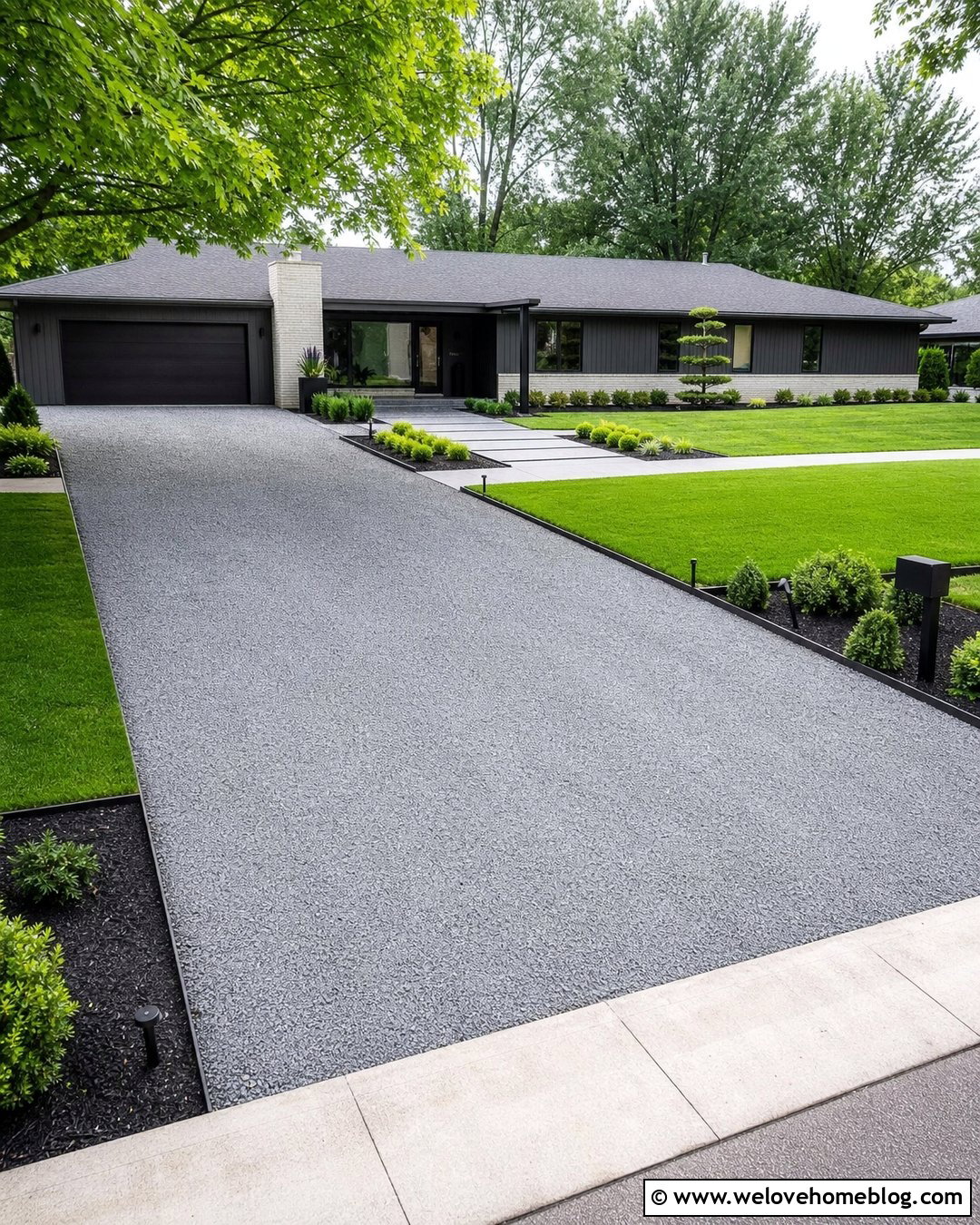
Clean black steel edging can transform a basic gravel driveway into a more polished modern feature. Fill the driveway with pale gray angular gravel and use the dark metal to outline a strong rectangular or gently offset layout. The contrast creates a clear boundary against closely cut grass without adding a wide decorative border. At the house, divide the lawn into geometric panels using a concrete walkway and minimal planting beds. Repeating black details in the mailbox, lighting, or house trim helps the edging feel connected to the architecture. Steel can follow subtle curves, but straighter lines highlight its slim profile most effectively. This complete design is well suited to contemporary, midcentury, Scandinavian-inspired, and renovated ranch homes with simple facades and uncluttered landscaping.
18. Sloped Gravel Driveway With Grass Swales
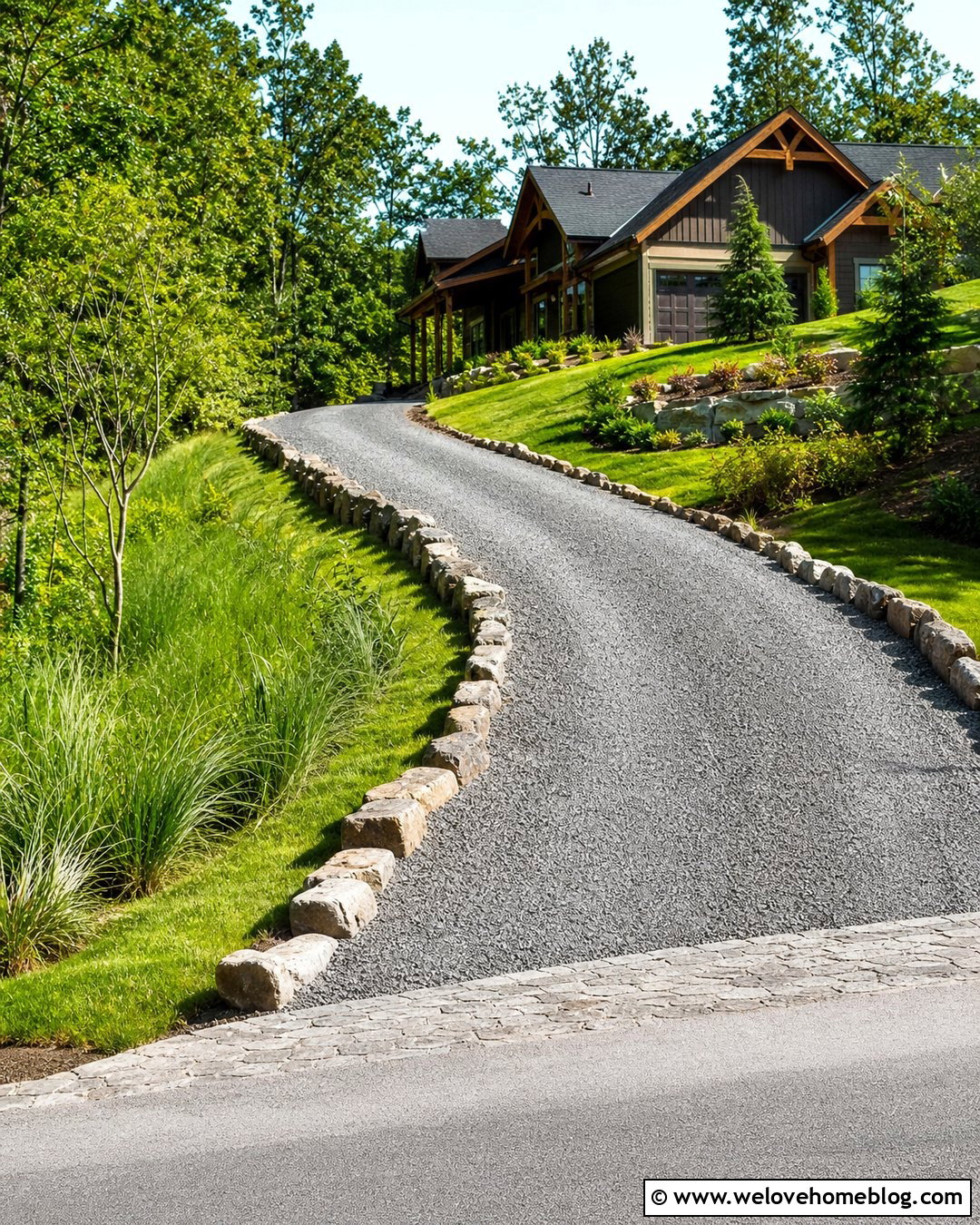
Sloping driveways require a design that treats drainage as part of the overall appearance. Use compacted angular gravel rather than highly rounded stone, and crown or grade the surface according to site conditions so water does not remain in the driving path. Gravel road guidance emphasizes the importance of surface drainage and routine maintenance. () Along the lower side, create a broad grass swale that follows the driveway and directs runoff toward an approved outlet or planted drainage area. Use heavy stone edging where erosion or turning tires could scatter aggregate. Deep-rooted grasses and low shrubs can stabilize surrounding beds without blocking visibility. Because slopes, soils, rainfall, and regulations vary, have the drainage layout evaluated locally before construction begins.
19. Gravel Parking Pad With Grass Border
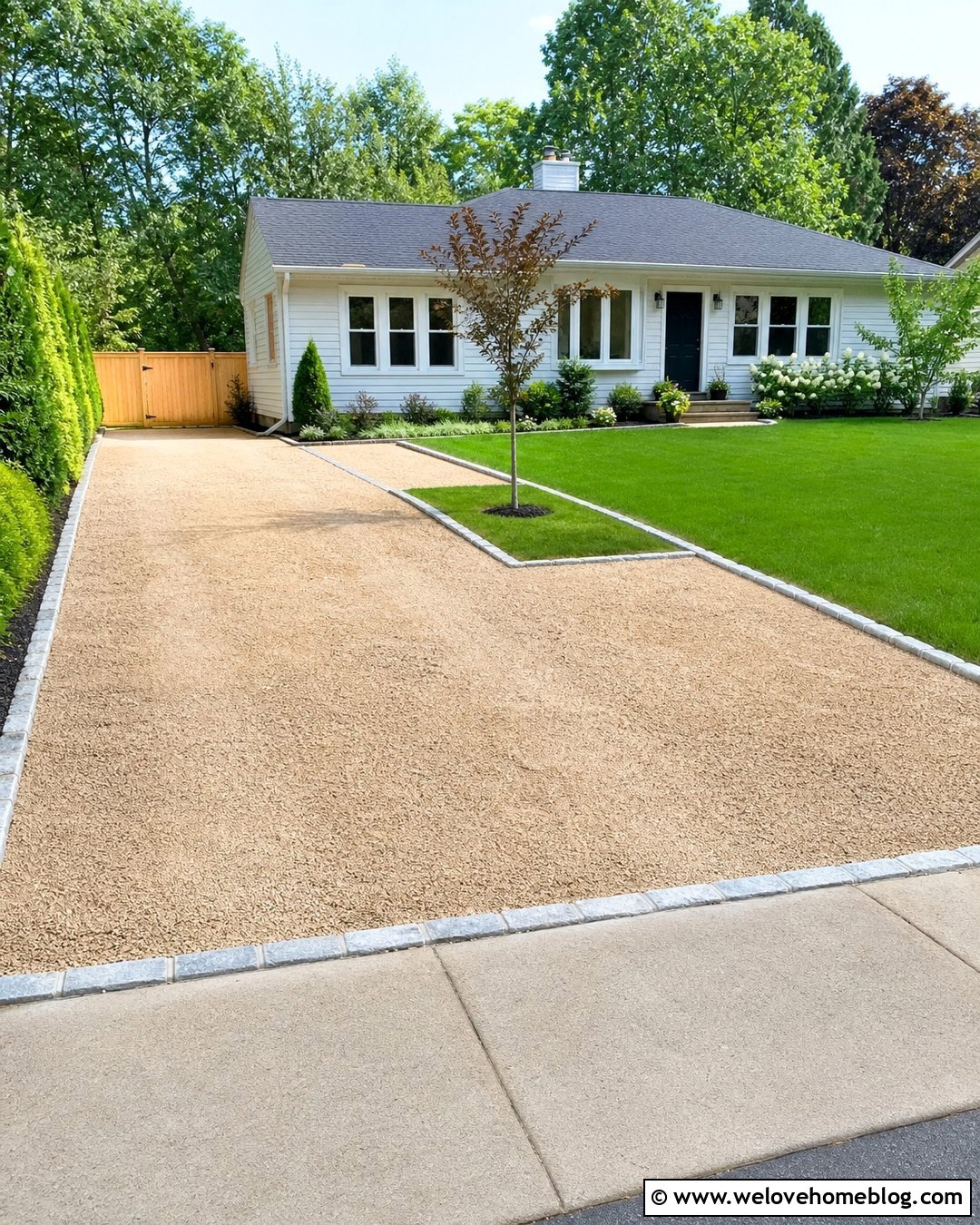
A compact gravel parking pad can provide extra space without covering the whole front yard in hardscape. Extend a rectangular pad from the main driveway using the same tan or gray crushed gravel, then surround its exposed sides with a clearly defined grass border. Install brick or granite edging around the pad to prevent tires from pushing stones into the lawn. A narrow grass island between the primary driveway and parking space can reduce the visual width, provided there is enough turning room. Place a small tree or planting bed at the far corner to soften the rectangular layout without reducing usable space. This approach is helpful for ranch homes, duplexes, cottages, and smaller suburban properties that need occasional guest parking but still prioritize an open green yard.
20. Modern Gravel Driveway With Geometric Grass Strips
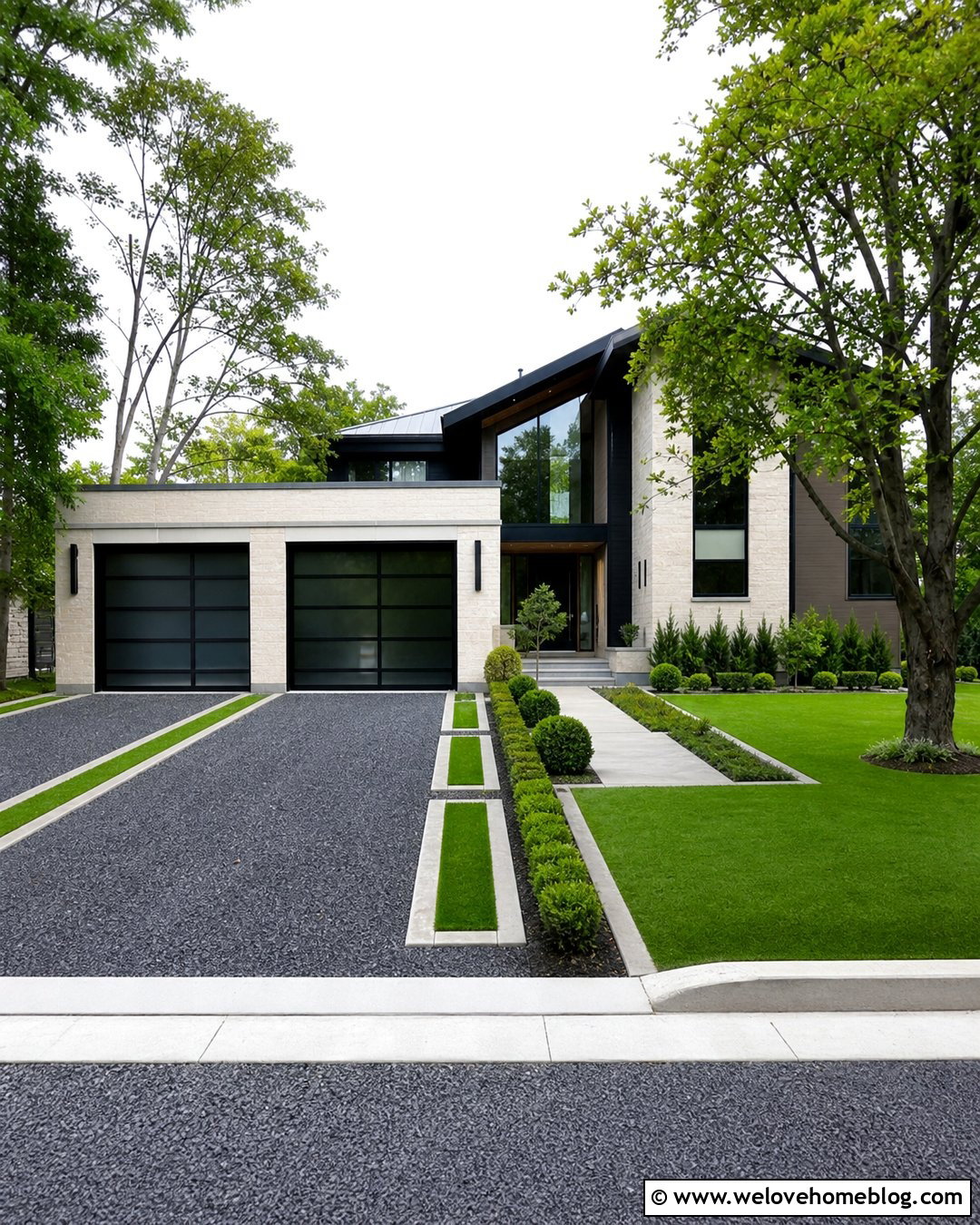
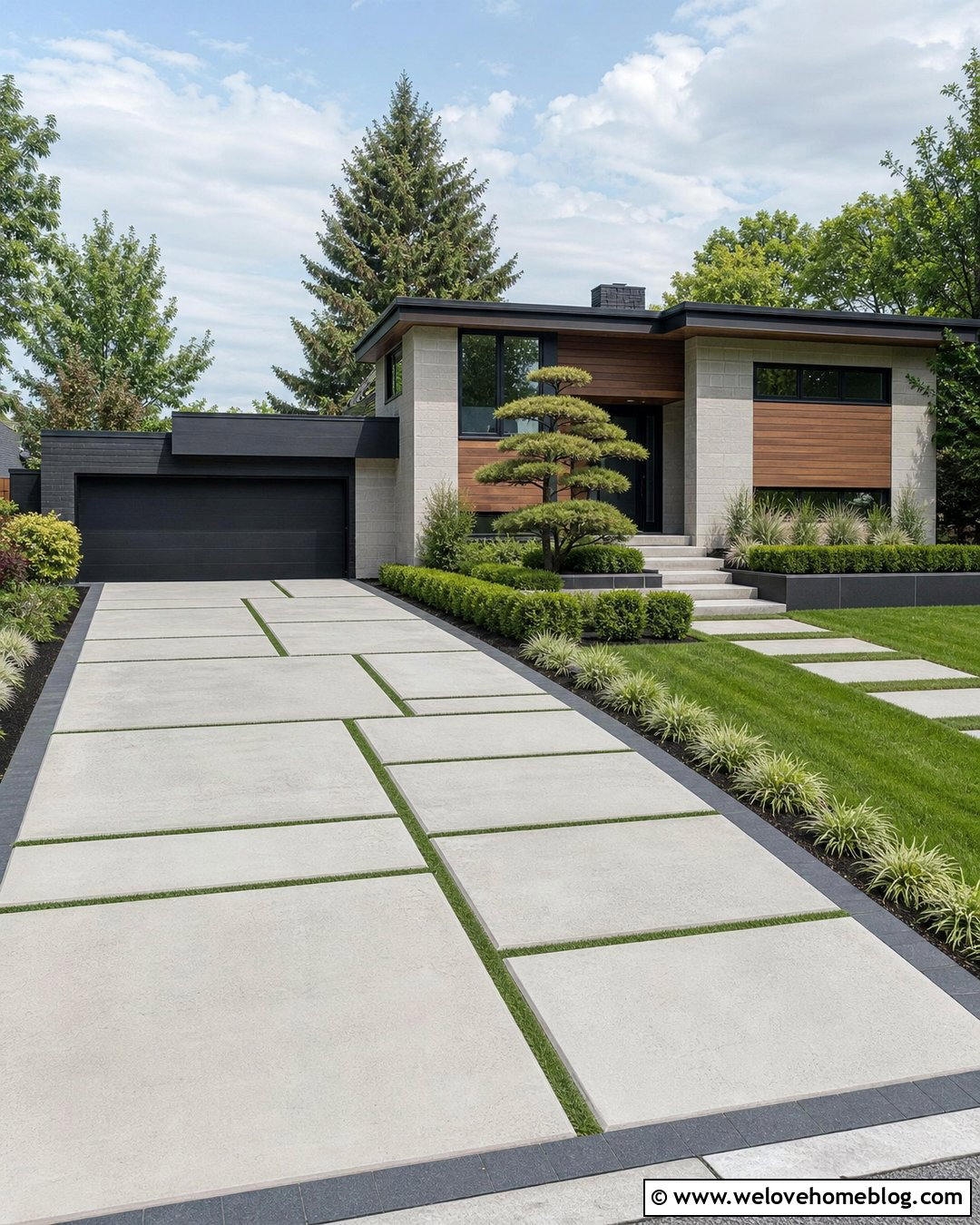
Sharp grass panels can make gravel feel intentionally designed rather than simply installed. Use fine charcoal gravel in a wide straight driveway, then introduce narrow rectangular grass strips that cross selected sections or divide parking bays. Frame every green panel with flush concrete pavers so vehicle tires do not damage the lawn edges. The remaining perimeter can include a larger lawn, sculpted evergreen shrubs, and a direct concrete path to the entrance. Repeat the rectangular forms in the planting beds and garage doors for a unified modern composition. Keep the number of strips limited, leaving comfortable uninterrupted gravel areas where vehicles turn. This complete layout creates strong curb appeal for contemporary homes while balancing dark mineral texture, fresh greenery, and clean architectural lines.
Conclusion:
The most appealing gravel and grass driveways treat the surface, greenery, borders, drainage, and home as one connected design. Straight lawn edges create a polished suburban look, while curved borders, meadow planting, and timber restraints feel more relaxed. Grass ribbons, cellular grids, medians, and geometric panels can introduce greenery directly into wider driveway layouts. Whatever design you choose, prioritize a stable base, suitable aggregate, durable edging, comfortable vehicle clearance, and drainage planned for your site. Regular raking, mowing, edging, and occasional gravel replenishment will help preserve the finished appearance. Use these **20 Gravel And Grass Driveway Ideas** to create an entrance that remains practical while feeling softer, greener, and more closely tied to your landscape.

Related posts:
Leave a Reply