
A green driveway can feel as polished as traditional paving while blending naturally into the yard. These 20 Geogrid Grass Driveway Ideas explore complete designs built around load-rated cellular grids filled with healthy turf. When installed over a suitable permeable base, the grid supports vehicle traffic, helps stabilize the surface, and allows rainwater to filter through instead of flowing across solid pavement. () The right layout can suit everything from a compact suburban home to a wide country property. Borders, aprons, planting beds, lighting, and walkways also help the driveway look intentional rather than unfinished. Use these practical 20 Geogrid Grass Driveway Ideas to find a layout that fits your home, climate, maintenance goals, and available space.
1. Straight Geogrid Grass Driveway With Concrete Edging
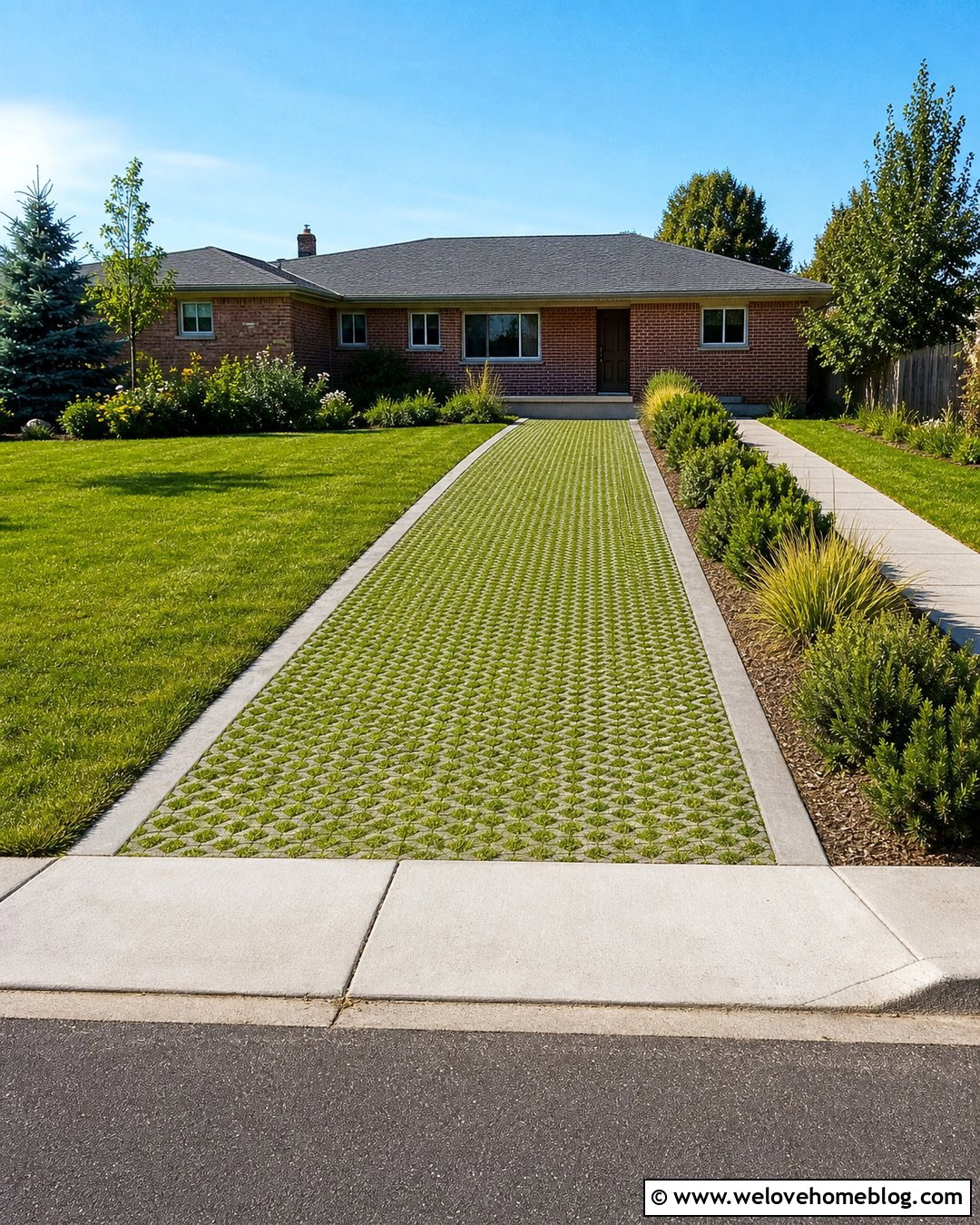
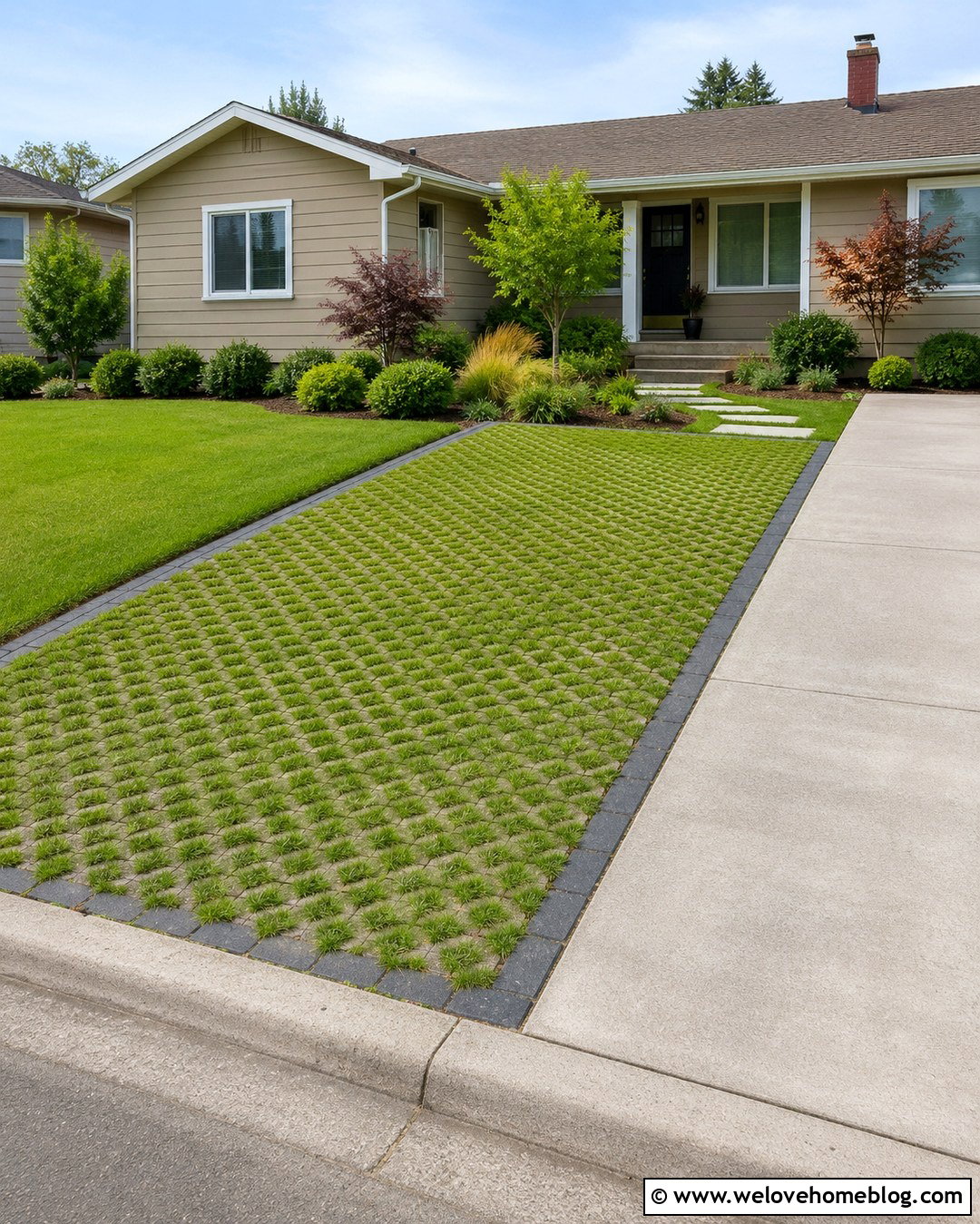
A straight geogrid grass driveway creates a neat sightline from the street to the garage. It works especially well with ranch homes, split-level houses, and simple suburban facades. Frame the reinforced turf with narrow poured-concrete curbs to define the driving area and prevent neighboring soil from spreading onto the grid. A concrete apron at the street can provide a cleaner transition where vehicles turn onto the property. Keep the landscaping balanced with low evergreen shrubs, ornamental grasses, and open lawn on both sides. A parallel concrete walkway can repeat the edging material and make the entrance feel connected. Choose durable turf suited to local sunlight, rainfall, and traffic rather than selecting grass for color alone.
2. Curved Geogrid Grass Driveway With Stone Borders
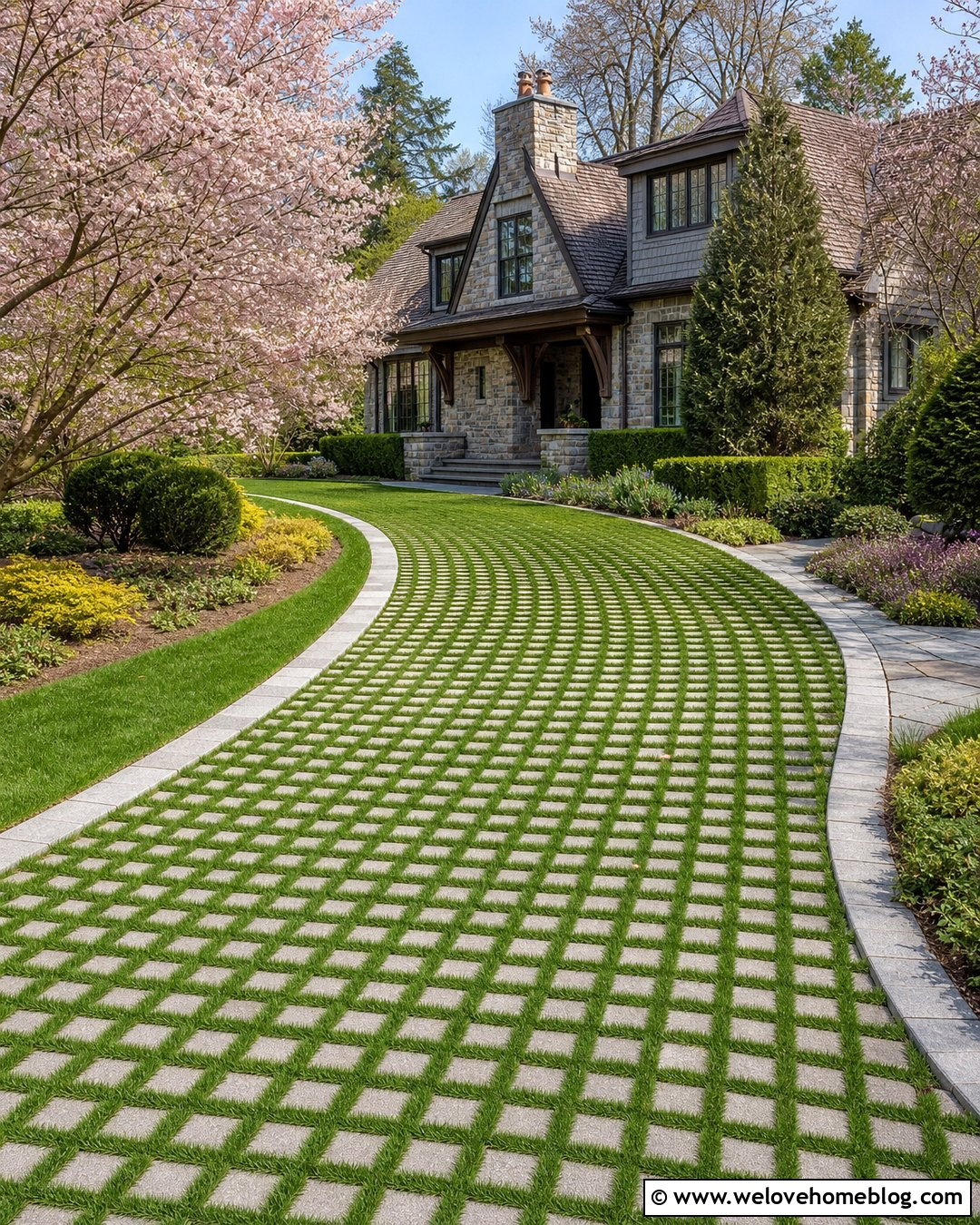
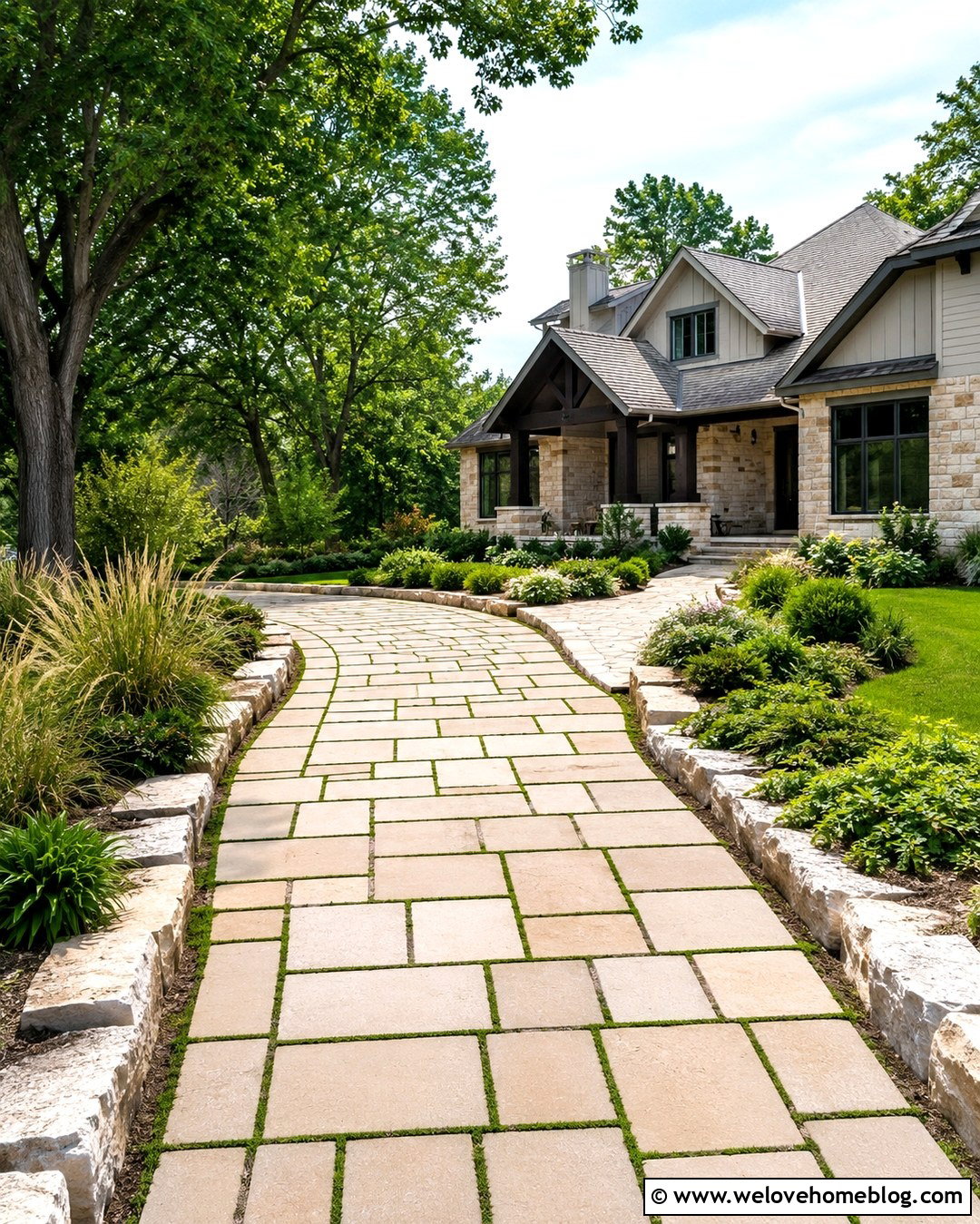
Soft curves make a green driveway feel like a natural part of the landscape. Use a load-rated geogrid grass surface that gently bends around a front lawn, mature tree, or deep planting bed before reaching the house. A border of rectangular natural stone can keep the curve visually crisp while protecting the edge from turning tires. On the wider side of the bend, layer small flowering trees, rounded shrubs, and ground cover to emphasize the driveway’s flowing shape. Keep plants lower near the street so drivers have clear visibility when entering and leaving. This complete design works beautifully with Craftsman, cottage, and traditional homes because the lawn-like surface softens heavier architectural materials such as stone, brick, and dark wood.
3. Circular Geogrid Grass Driveway With a Planted Center
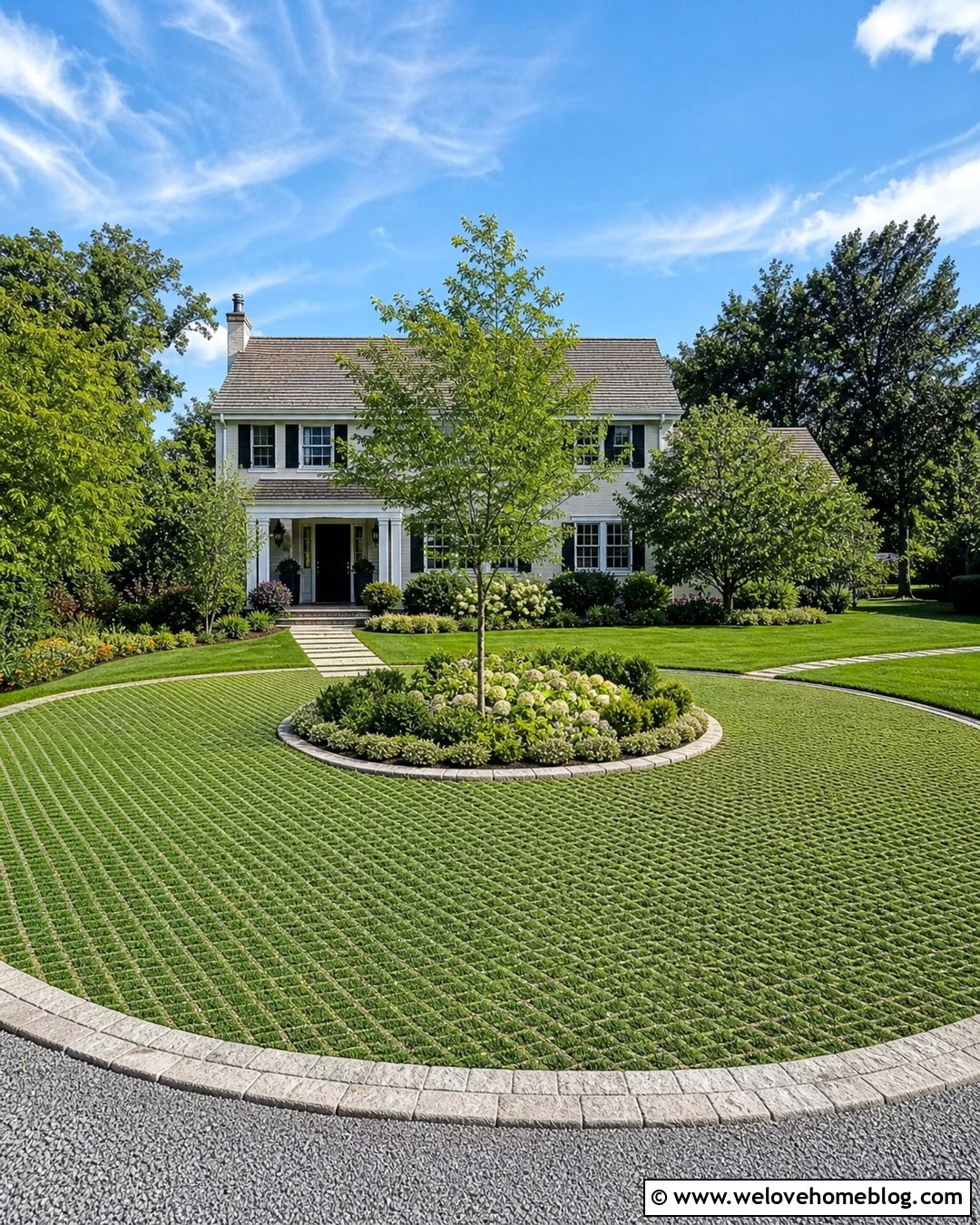
A circular geogrid grass driveway provides a convenient turning route without covering the entire front yard in solid paving. The reinforced turf can form a broad loop around a central planting island, connecting the street to the main entrance and garage. Edge both sides with flush cobblestone or granite setts so the circle remains easy to follow without creating a high obstacle. In the center, use one small ornamental tree surrounded by low shrubs and perennial ground cover. Avoid dense plants that could block views across the loop. Add a stepping-stone walkway from the inner circle to the front door. This layout feels generous and established while preserving the green appearance of the property and maintaining a clear arrival sequence.
4. Modern Geogrid Grass Driveway With Black Metal Edging
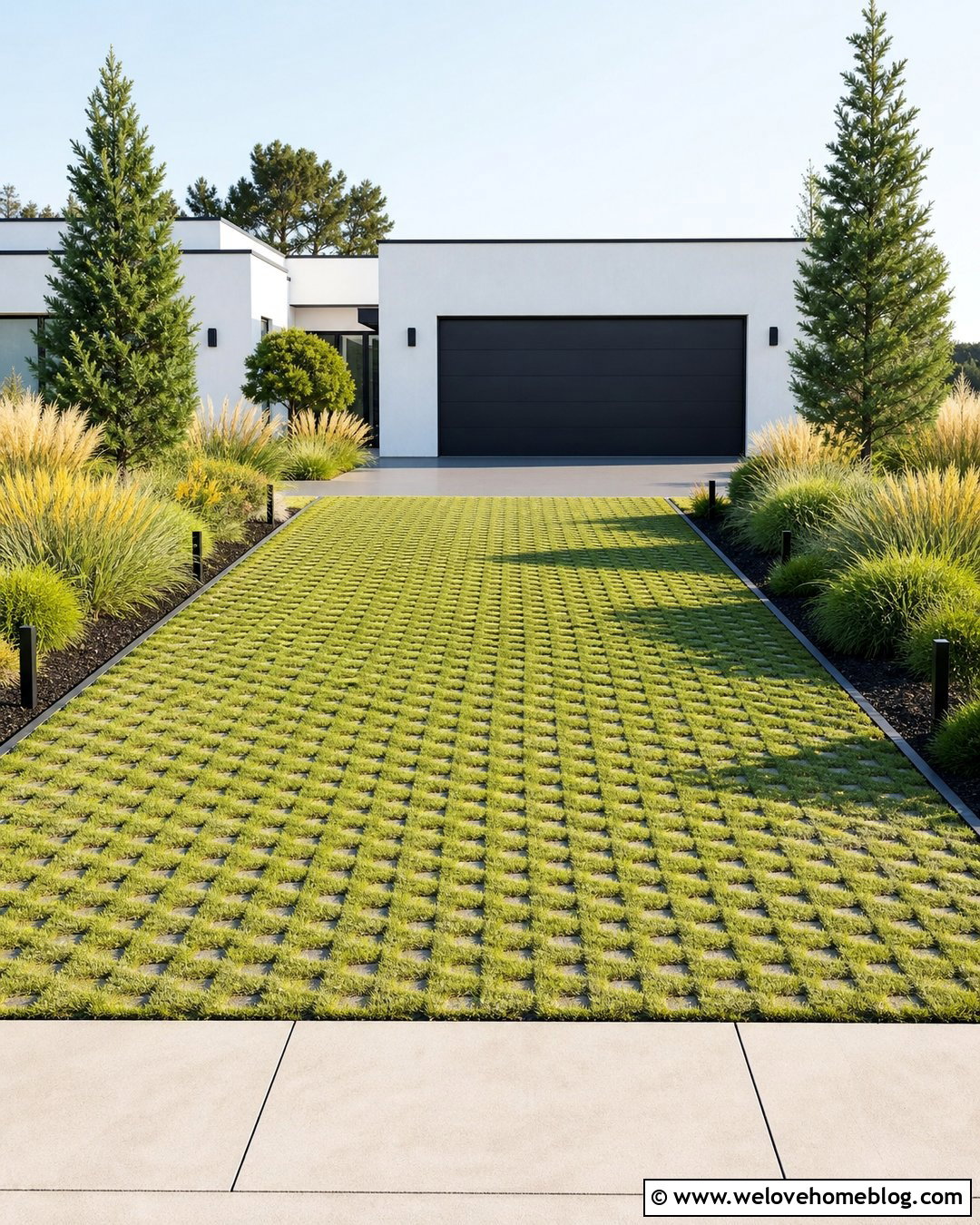
Clean geometry can give reinforced grass a distinctly modern appearance. Design a wide, straight geogrid grass driveway with sharp corners, a level profile, and thin black steel edging set nearly flush with the turf. Pair it with a contemporary house featuring white stucco, charcoal siding, warm wood, or large windows. Rectangular planting beds filled with sculptural grasses and compact evergreen shrubs will reinforce the orderly layout. Instead of decorative curves, keep the walkway and driveway aligned with the architecture. A dark concrete apron at the garage can handle frequent turning while providing a strong visual transition. Minimal black bollard lights can define the approach without crowding it. The result feels structured, green, and appropriately restrained.
5. Geogrid Grass Driveway With a Brick Entrance Apron
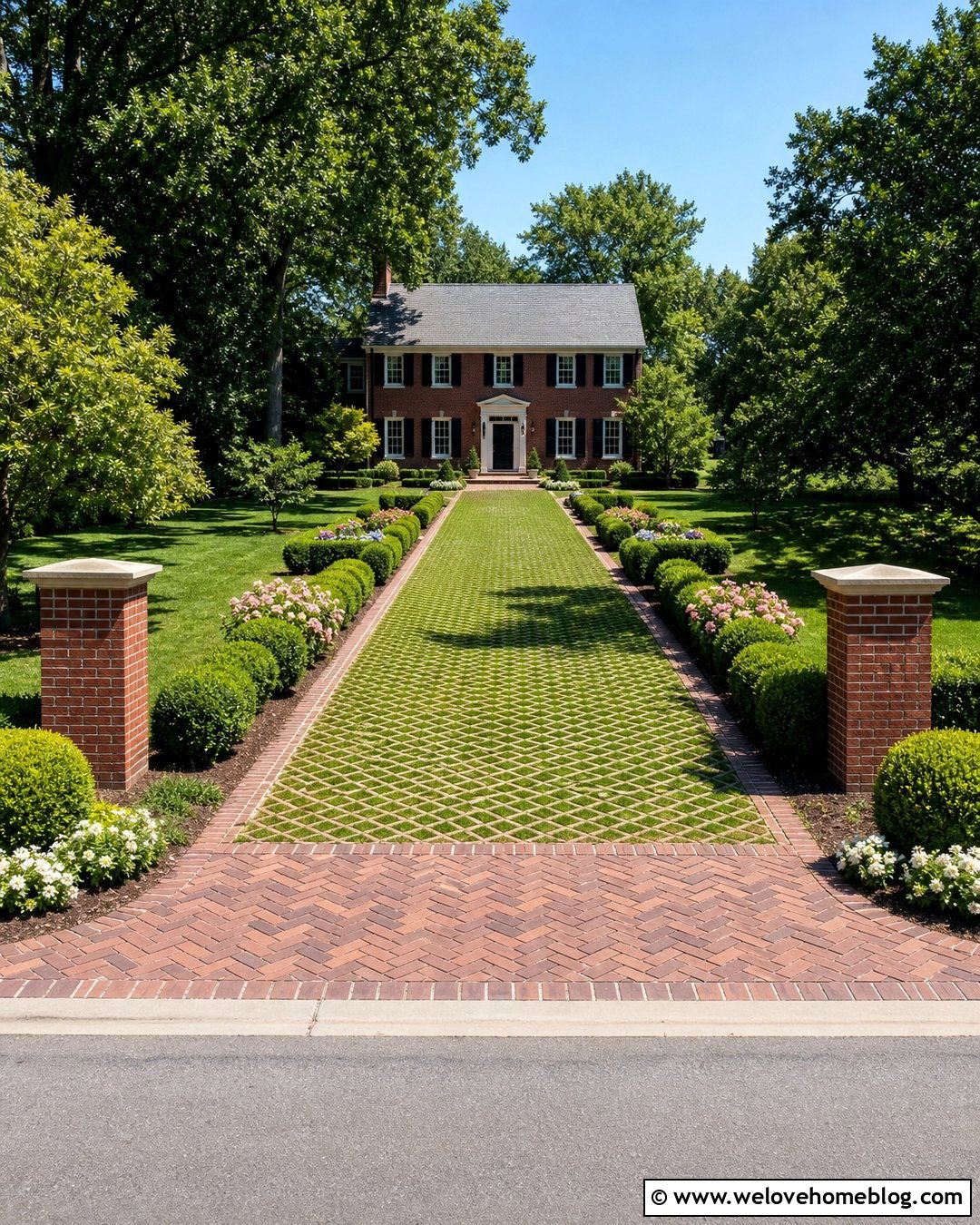
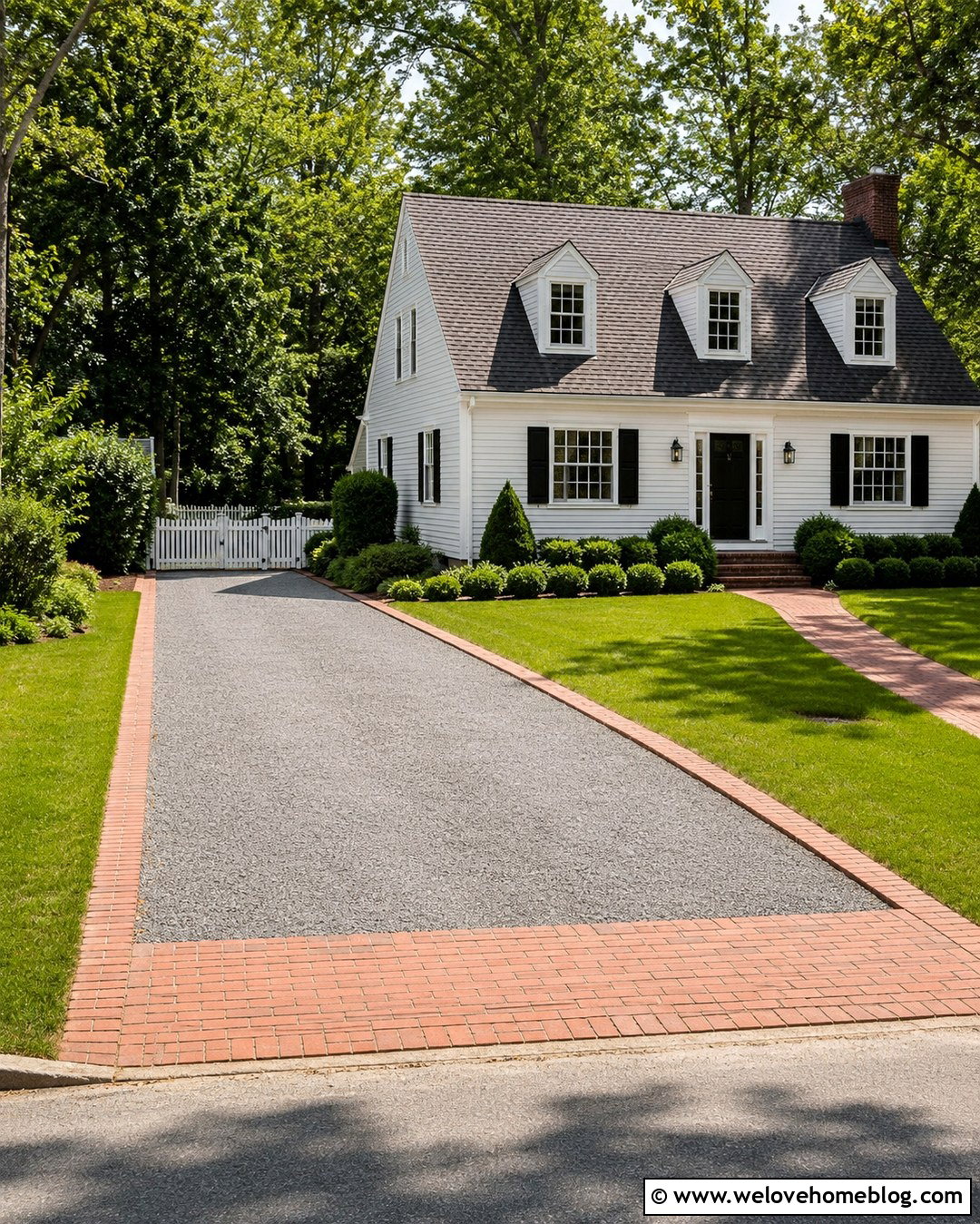
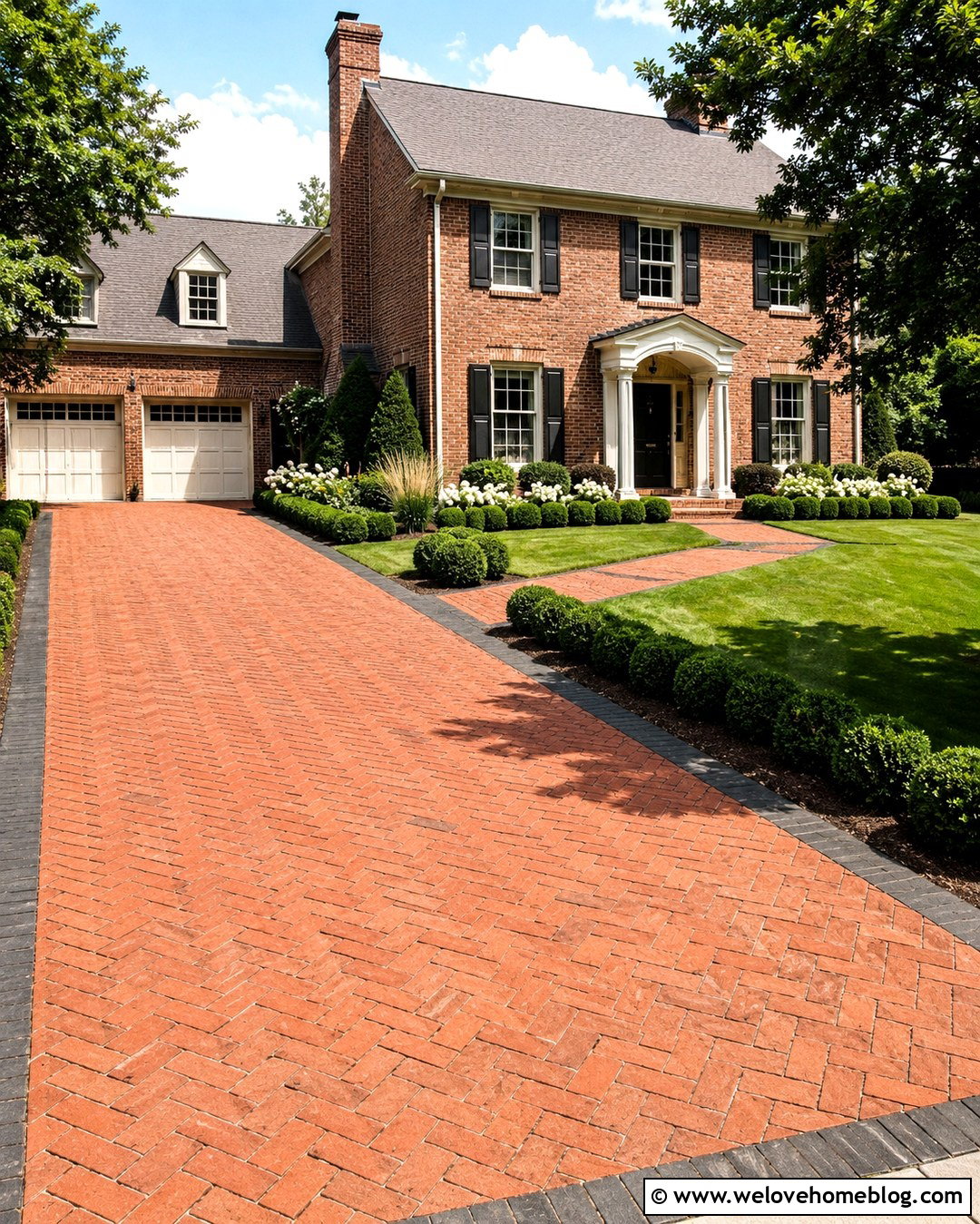
A brick apron brings warmth and definition to the entrance of a geogrid grass driveway. Lay clay brick pavers in a herringbone pattern across the first several feet near the street, then transition into the reinforced turf surface. Repeat the brick as a narrow border or ribbon along the driveway to create continuity. This combination is especially fitting for Colonial, Cape Cod, and traditional brick homes. Frame the entrance with symmetrical planting beds containing clipped shrubs, flowering perennials, and seasonal greenery. Brick pillars can mark the property without requiring a gate, while low lighting improves visibility around the transition. The apron also makes the beginning of the driveway easier to recognize when the surrounding lawn and grass-filled grid share a similar color.
6. Geogrid Grass Driveway With Cobblestone Edging
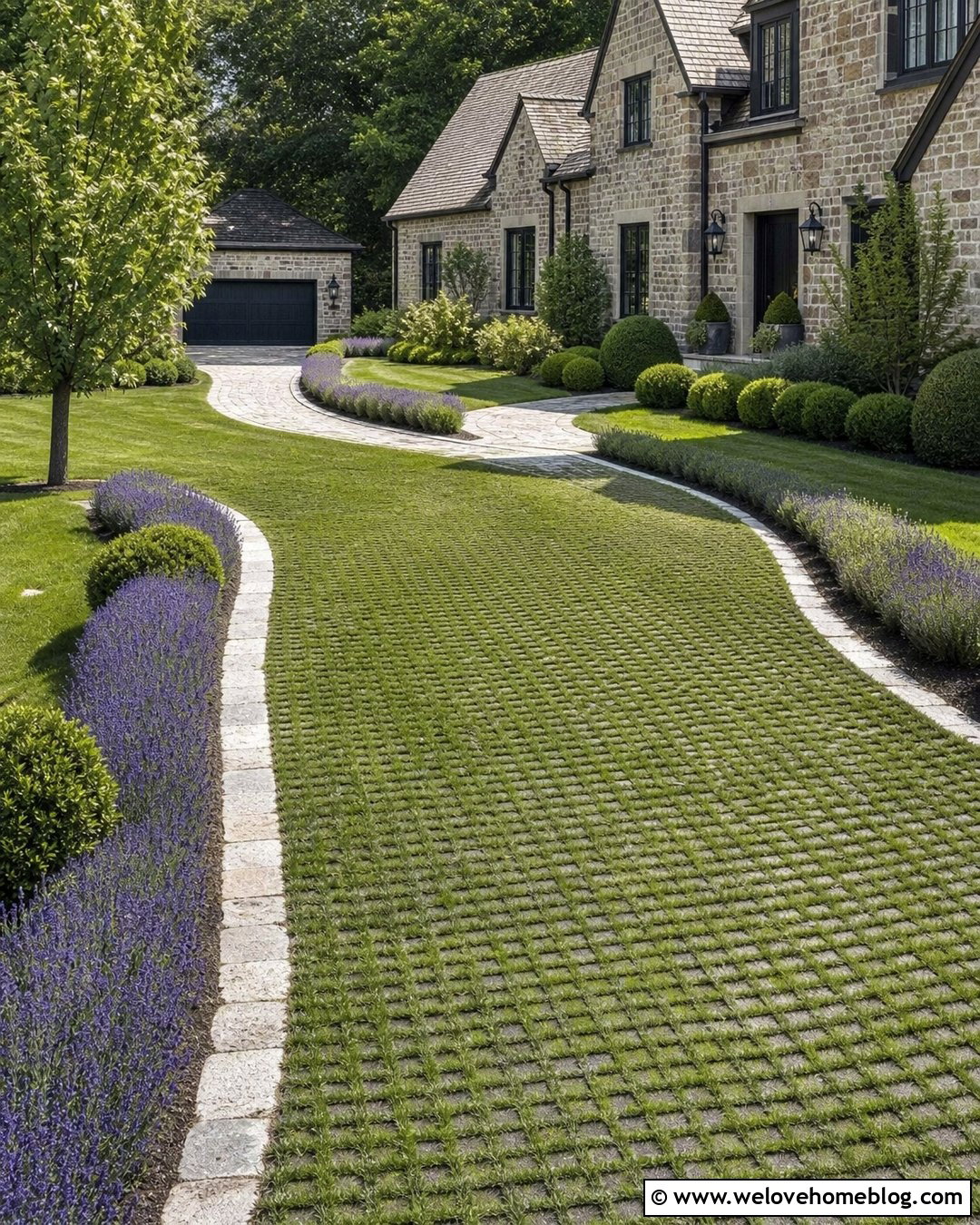
Weathered cobblestone provides a sturdy-looking frame for a soft green driveway. Run the stones along both sides of a straight or gently curved geogrid grass surface, setting them low enough to avoid becoming a hazard for tires or lawn equipment. A wider cobblestone band near the garage can create an attractive parking transition and repeat materials used on the front walkway. This complete look pairs naturally with Tudor, European-inspired, cottage, and stone-front homes. Plant lavender, catmint, compact boxwood, or other climate-appropriate plants beyond the border. Their varied textures will contrast with the uniform turf. Because cobblestones have irregular edges, careful installation is important for maintaining a consistent driving width and preventing weak spots along the reinforced surface.
7. Geogrid Grass Driveway With a Gravel Entrance
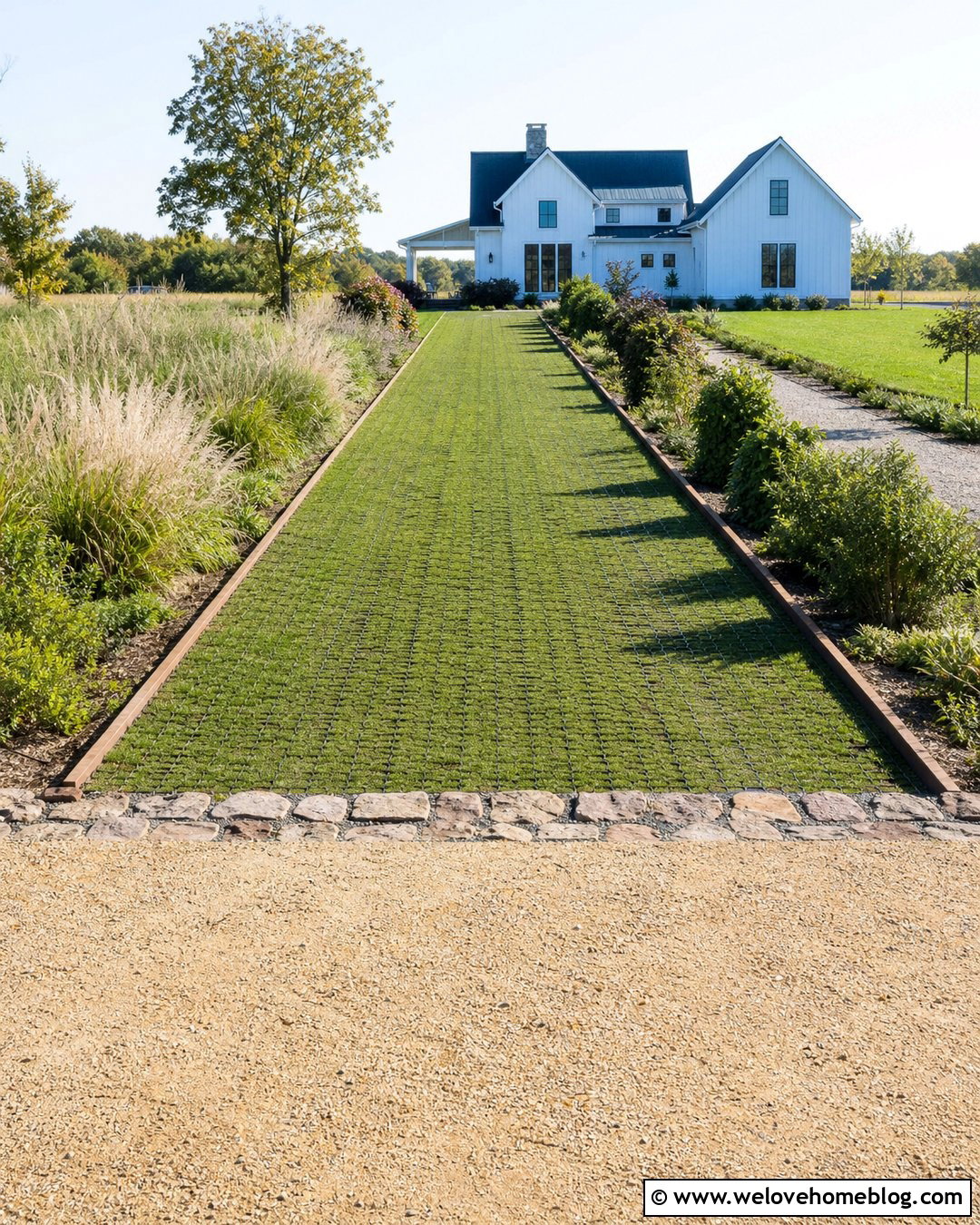
Combining grass grid and gravel can make a rural driveway more practical and visually layered. Use stabilized, compacted gravel at the road entrance, where frequent turning and road debris may create extra wear. After the entrance apron, transition into a geogrid surface filled with dense turf for the main approach to the house. A stone threshold between the two materials will clarify the change and help contain loose aggregate. Timber, steel, or natural stone edging can define the driveway without making it look overly formal. Complete the setting with meadow grasses, native shrubs, and a simple gravel walkway. This design complements country homes, cabins, and modern farmhouses while retaining a relaxed appearance that suits larger yards and natural landscapes.
8. Geogrid Grass Driveway With Native Plant Borders
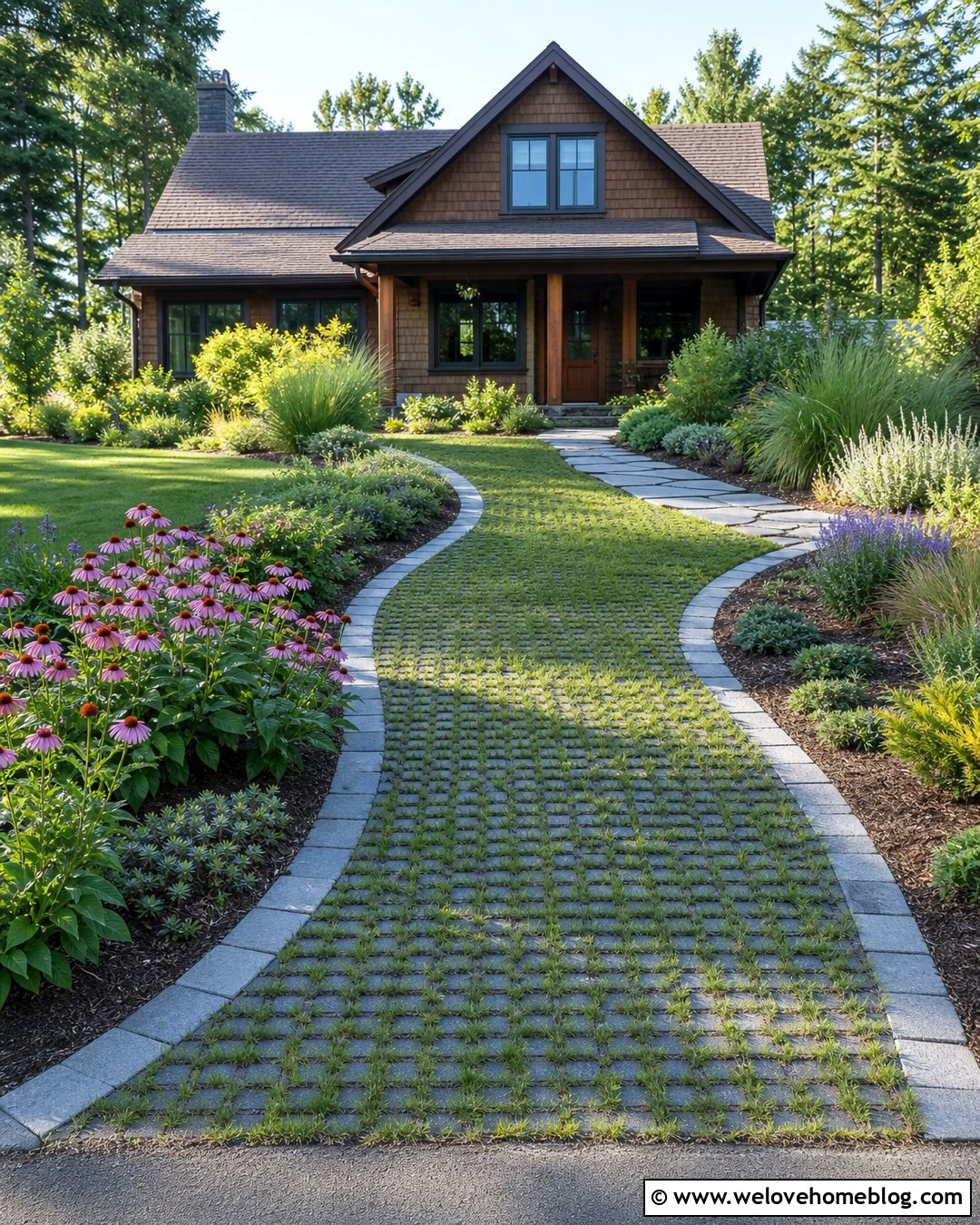
Native landscaping can turn a reinforced grass driveway into a more cohesive part of the yard. Keep the geogrid driveway straight or gently curved, then create generous planting beds along both sides using regionally suitable grasses, flowering perennials, and compact shrubs. Vary plant heights, but maintain low growth around the street entrance and inside curves for better visibility. A natural stone border can separate the drivable turf from the beds and make routine mowing easier. Include a mulched gap between spreading plants and the driveway edge so vegetation does not quickly cover the driving area. This design works with many house types, including Craftsman, contemporary, and rustic homes. Repeating a few plant varieties throughout the border keeps the full composition organized.
9. Geogrid Grass Driveway With Ornamental Grass Landscaping
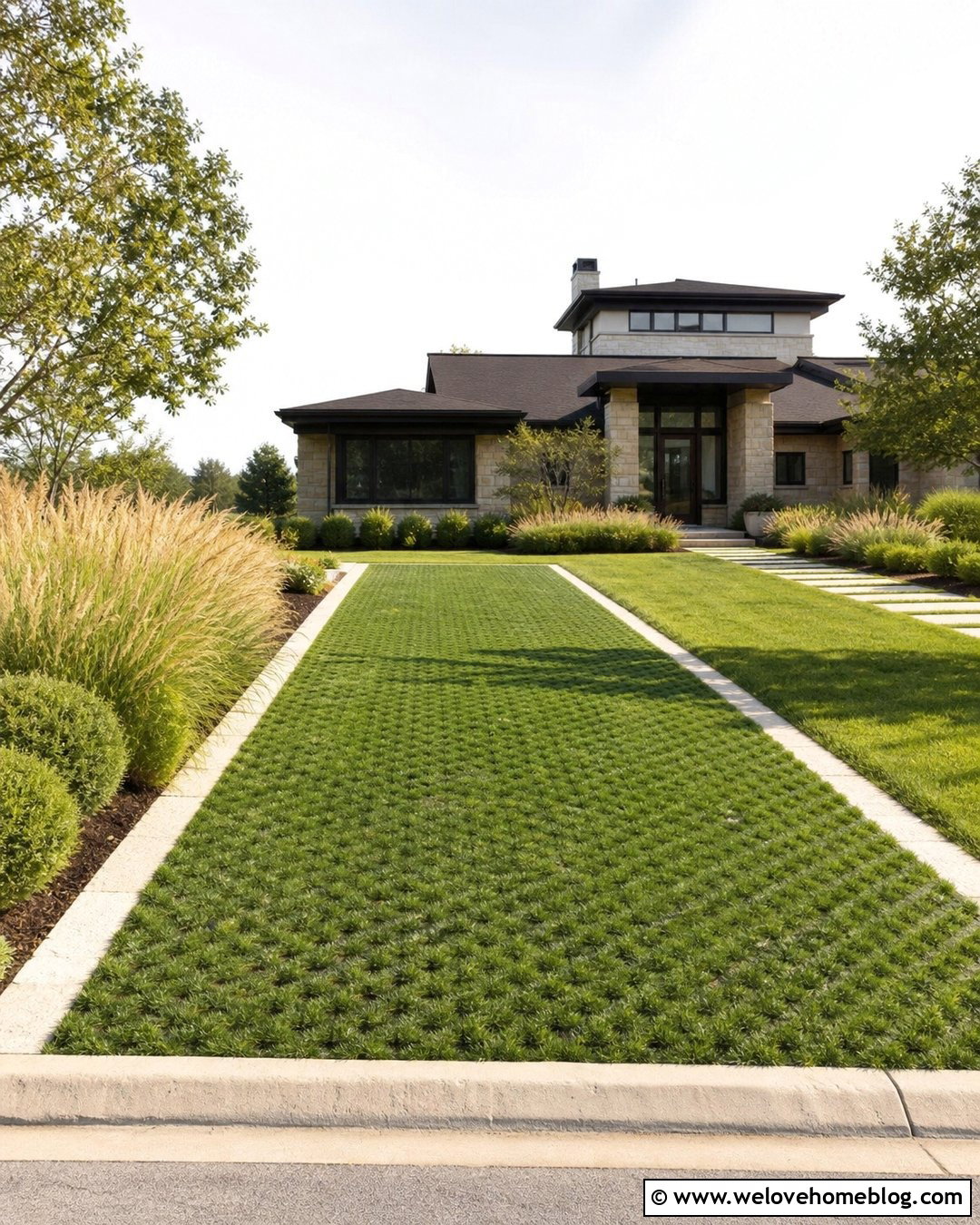
Tall ornamental grasses create movement and texture around a geogrid grass driveway, but they should be positioned carefully. Place larger grasses in broad beds farther from the driving edge, then use shorter varieties near the entrance, walkway, and garage. A straight reinforced turf driveway with pale limestone edging provides a simple foundation for the layered planting. Add compact evergreens between the grasses to maintain structure when seasonal plants are cut back. This look is particularly effective beside modern farmhouse, prairie, and contemporary homes. Leave enough open lawn around the design so the driveway does not feel enclosed. Selecting noninvasive, climate-suitable varieties will help keep maintenance manageable. The contrasting grass heights create depth while allowing the durable driveway turf to remain clearly defined.
10. Tree-Lined Geogrid Grass Driveway With Stone Pillars
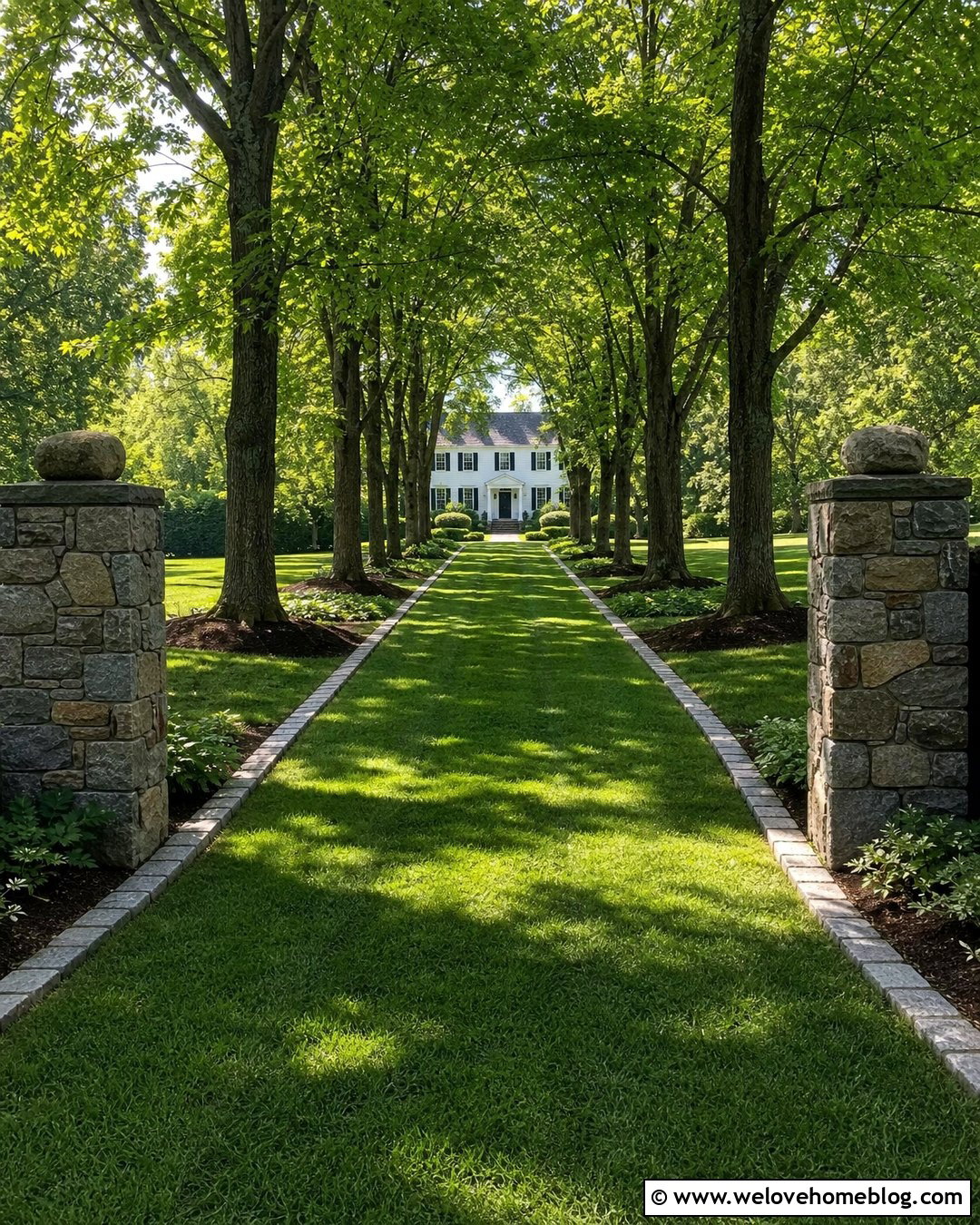
A long tree-lined driveway can create a memorable approach while keeping the property green. Install the geogrid grass surface in a straight layout leading toward a country, Colonial, or farmhouse-style home. Frame the street entrance with substantial stone pillars and continue the route with evenly spaced deciduous trees. Set the trees far enough from the driveway to protect roots, provide vehicle clearance, and leave room for mature canopies. Low ground cover or mulched beds beneath the trees can simplify upkeep. Use stone edging that matches the entrance pillars, but keep it flush and understated. Before installing near established trees, evaluate drainage, excavation depth, and root locations. Flexible grass-grid systems may fit wooded settings, but careful site planning remains essential. ()
11. Cottage Geogrid Grass Driveway With Flower Borders
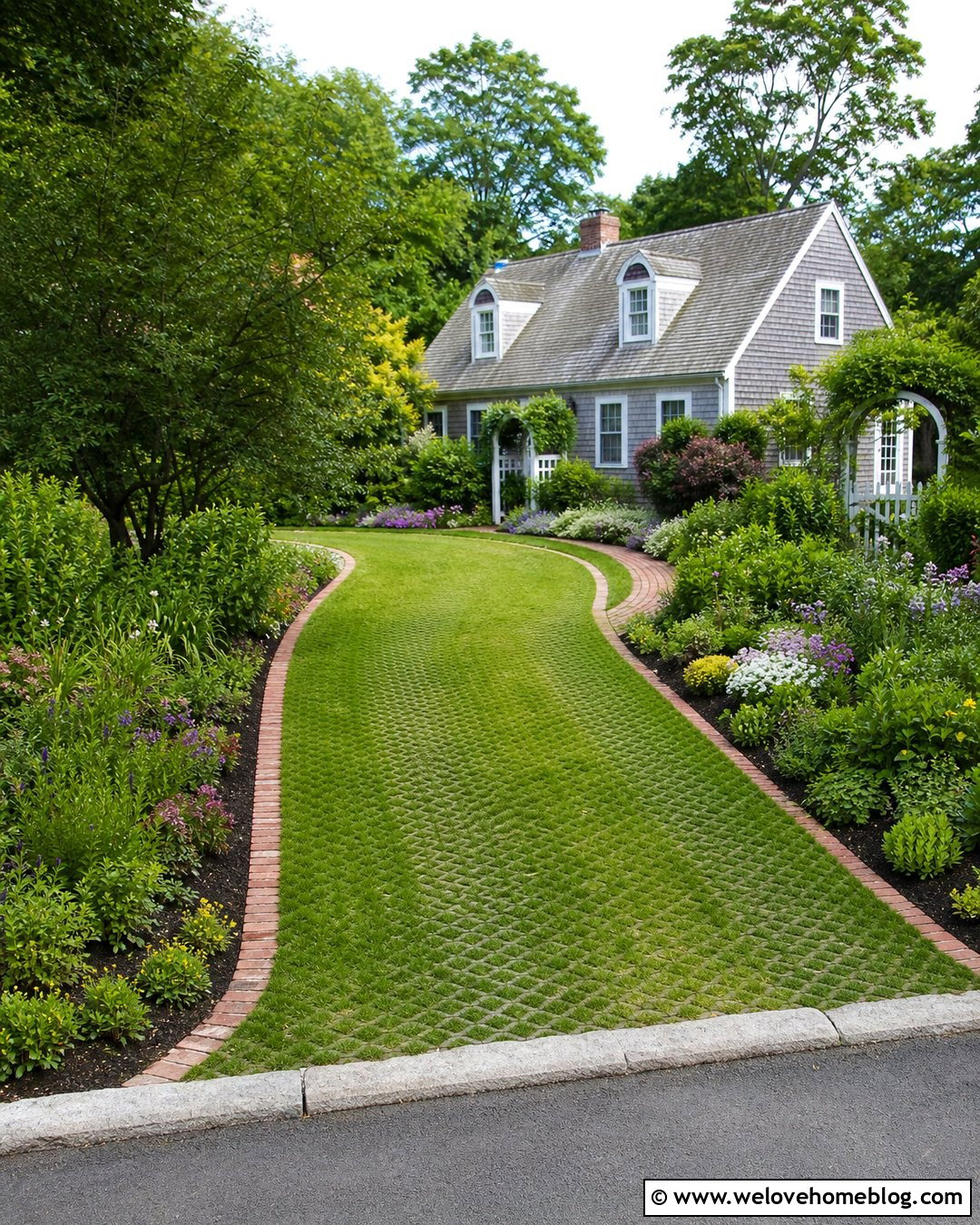
A cottage setting calls for a softer, less formal driveway design. Create a narrow geogrid grass driveway with a gentle curve leading to a small garage or side parking area. Define the surface with reclaimed brick or rounded fieldstone edging, then surround it with layered flower borders. Use compact shrubs for year-round form and fill the gaps with hardy perennials suited to the site. Allow a few plants to soften the outer border without growing into the tire path. A brick walkway can branch from the driveway and lead through the garden to the front door. Keep the center turf closely trimmed so the route remains clearly drivable. The finished look should feel abundant and welcoming while retaining enough structure for comfortable everyday vehicle access.
12. Farmhouse Geogrid Grass Driveway With Timber Edging
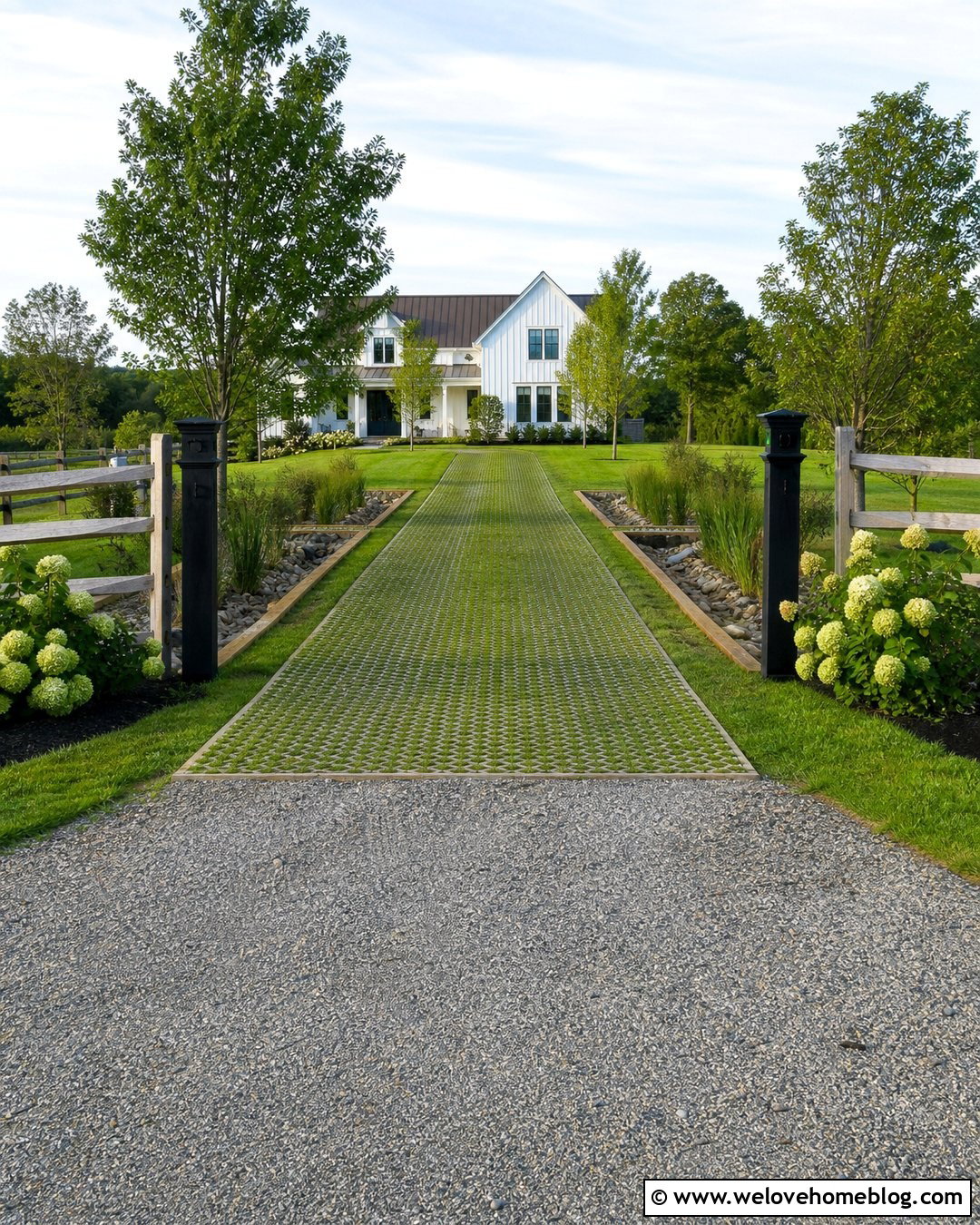
Simple materials suit a farmhouse driveway especially well. Run a wide geogrid grass surface from the road to a white or natural-wood farmhouse, using pressure-treated timber or durable landscape beams as low outer edging. A compacted gravel apron near the road and garage can handle the most heavily used transition areas while preserving turf through the main stretch. Add split-rail fencing beyond the driveway border and plant native grasses, hydrangeas, or informal hedges nearby. Black barn-style lights on modest entrance posts can help visually mark the approach. Keep drainage ditches or shallow swales open rather than hiding them beneath dense planting. The combination of structured turf, gravel, timber, and relaxed landscaping produces a practical rural entrance without creating an overly manicured appearance.
13. Craftsman Geogrid Grass Driveway With Brick Ribbons
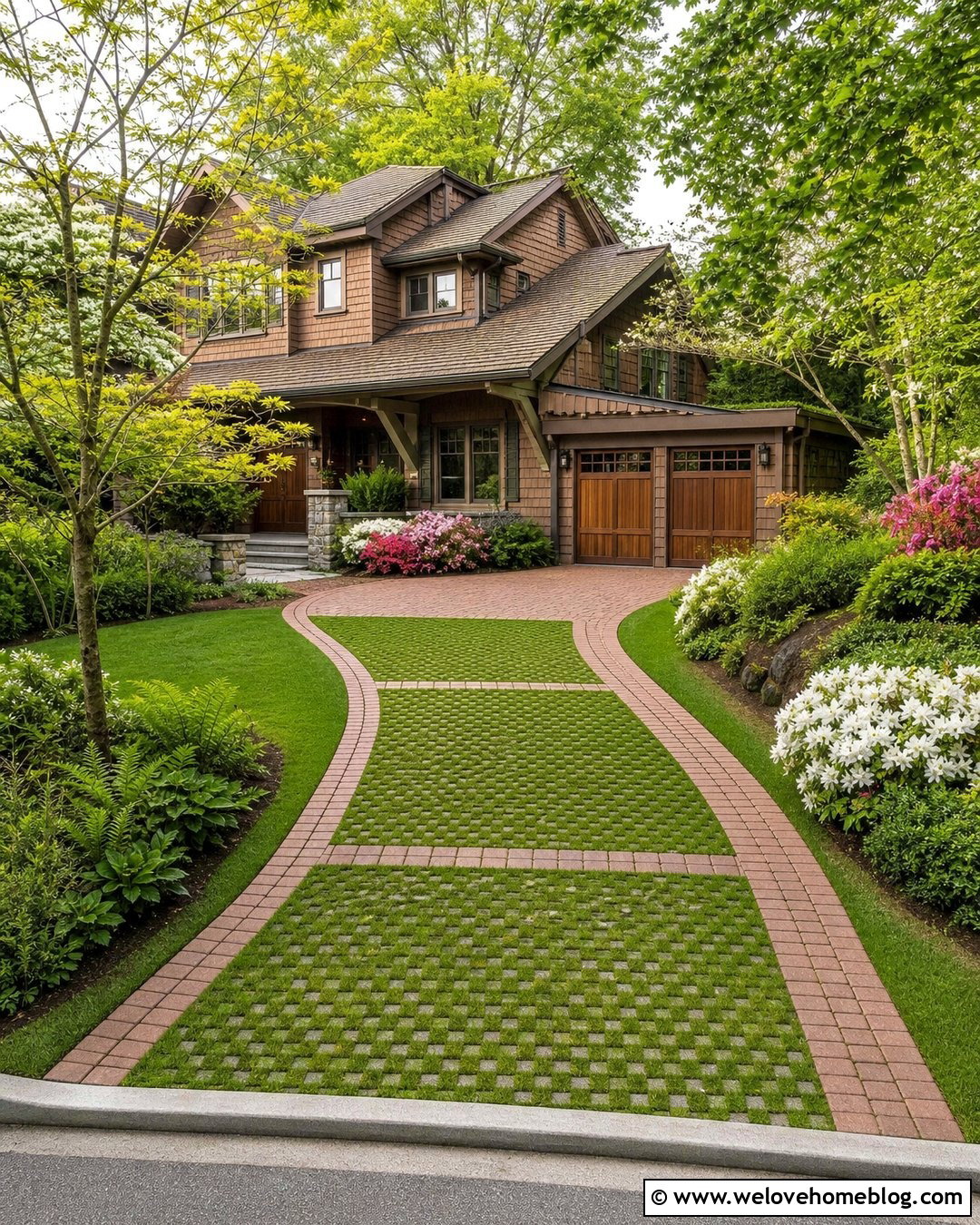
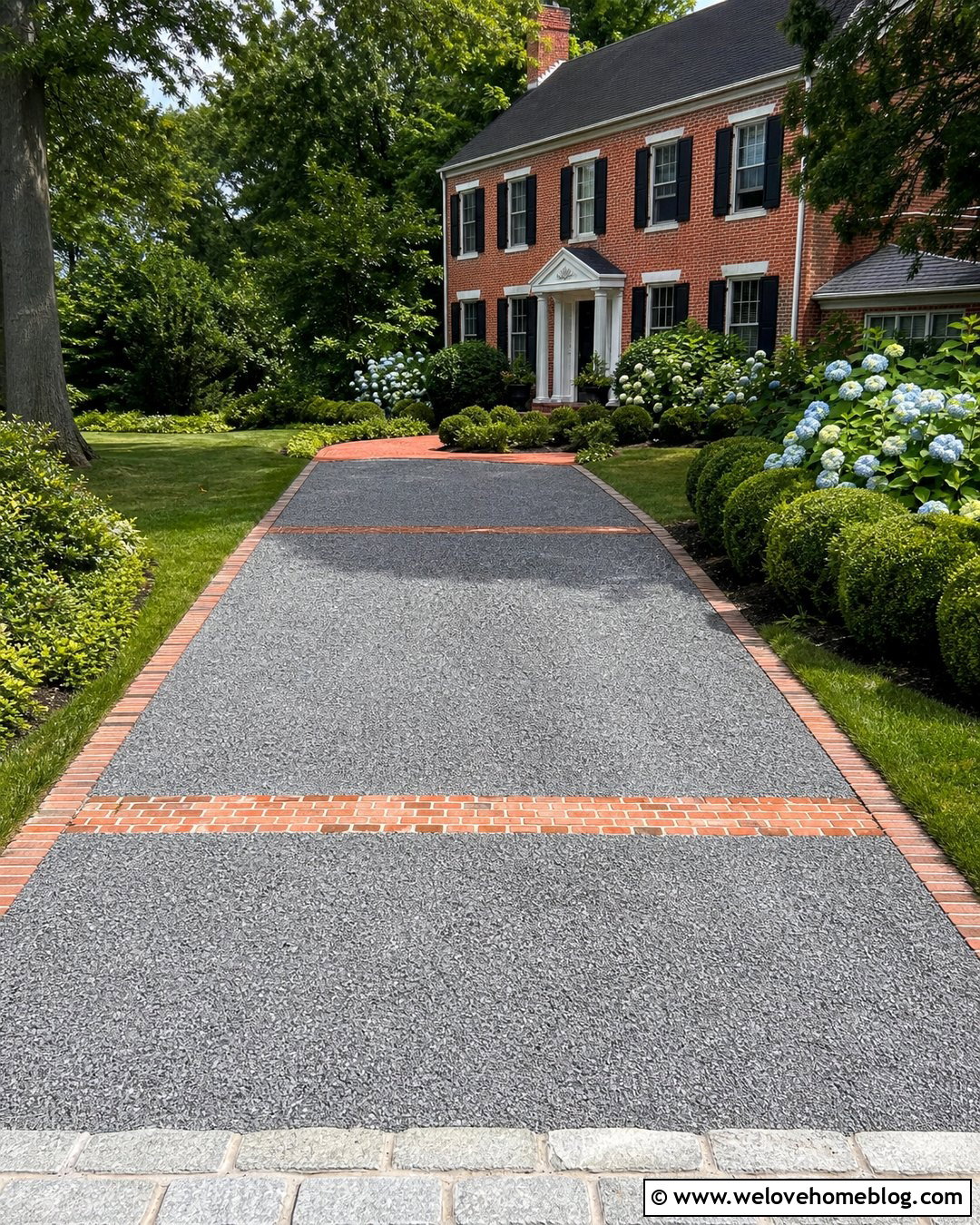
Craftsman architecture benefits from driveway materials that feel substantial and handcrafted. Use a geogrid grass driveway with narrow clay brick ribbons running along both edges and across the surface at measured intervals. The brick lines visually divide a long driveway and connect it to porch columns, foundation masonry, or a matching walkway. Choose a straight layout for a compact lot or a subtle curve for a deeper front yard. Beds of azaleas, ferns, compact evergreens, and shade-tolerant ground cover can frame the route, depending on the local climate. Install a broader brick pad near the garage to manage repeated turning. Warm brick, fresh turf, and layered planting create an inviting composition that complements the low rooflines and natural materials associated with Craftsman homes.
14. Colonial Geogrid Grass Driveway With Symmetrical Landscaping
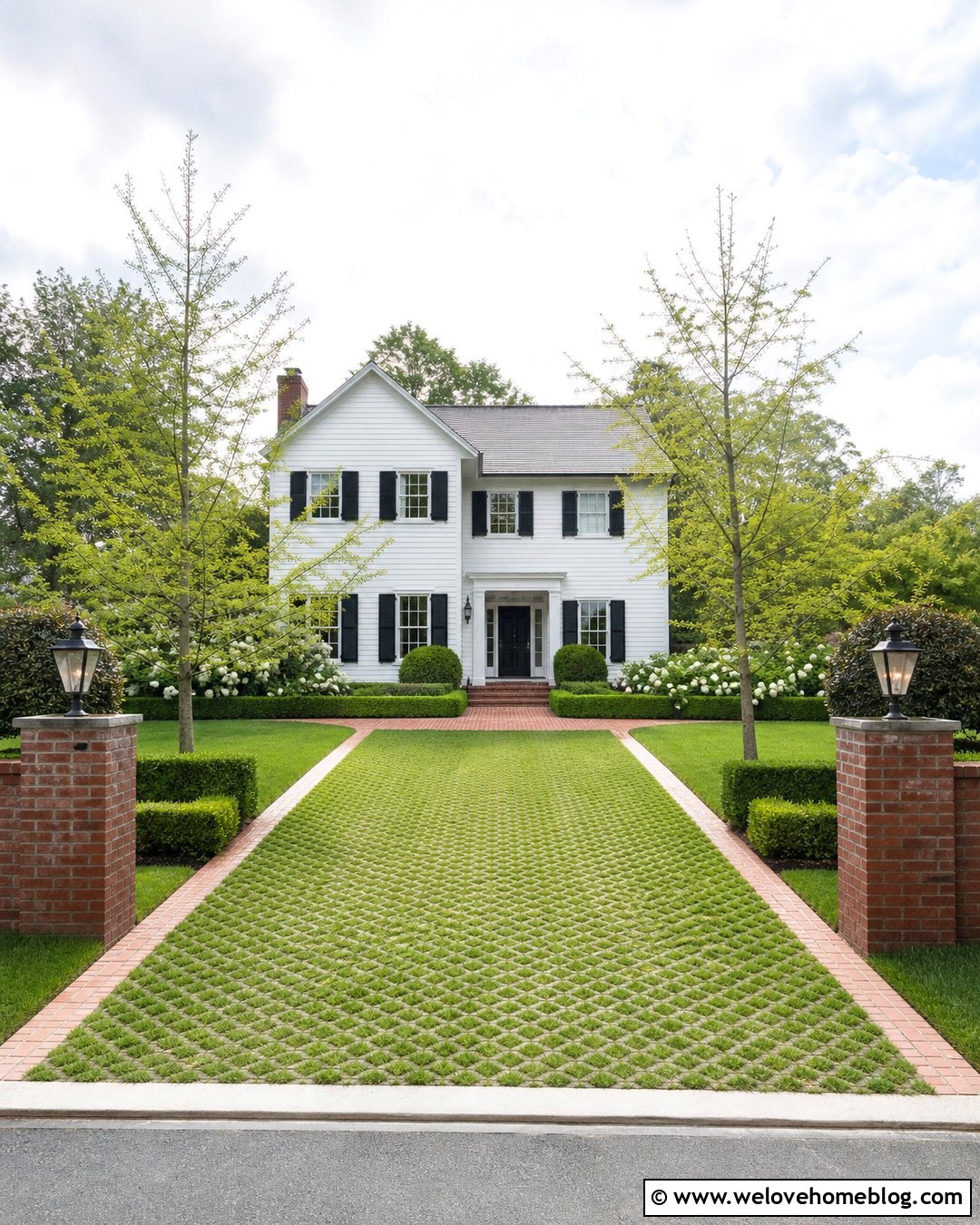
Balance is the key to pairing a green driveway with a Colonial house. Center a straight geogrid grass driveway on the garage or main architectural axis, then frame it with matching brick borders. At the street, use identical masonry pillars and evenly shaped planting beds to establish a formal entrance. Rows of clipped shrubs or small ornamental trees can continue the symmetry toward the house. Include a brick walkway that branches cleanly from the driveway and aligns with the front door. Keep the turf evenly trimmed and repair thin areas promptly because irregular growth will stand out within such an orderly design. Traditional lantern-style fixtures can finish the entrance, but they should provide clear white illumination rather than overwhelming the restrained architecture with decorative detail.

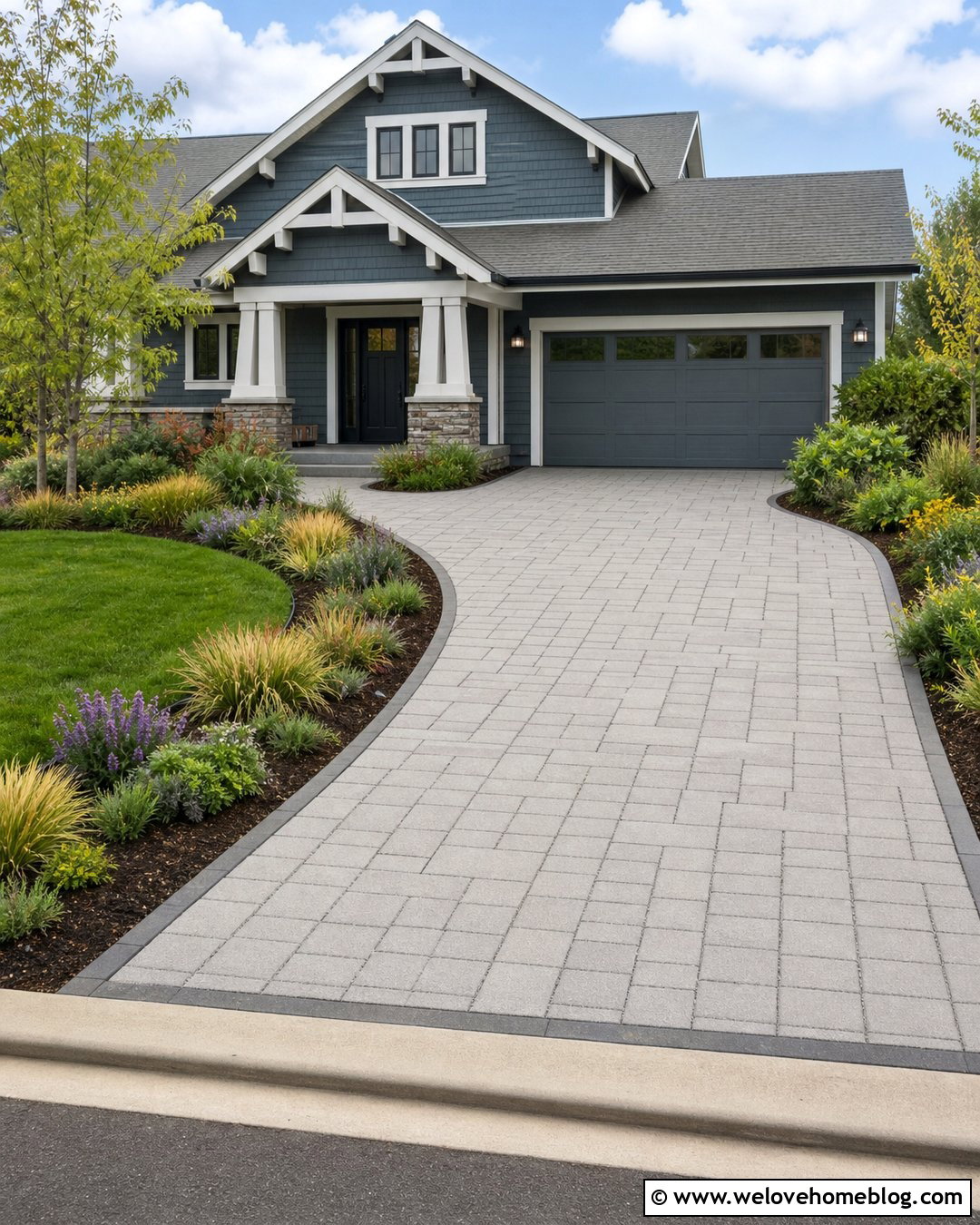
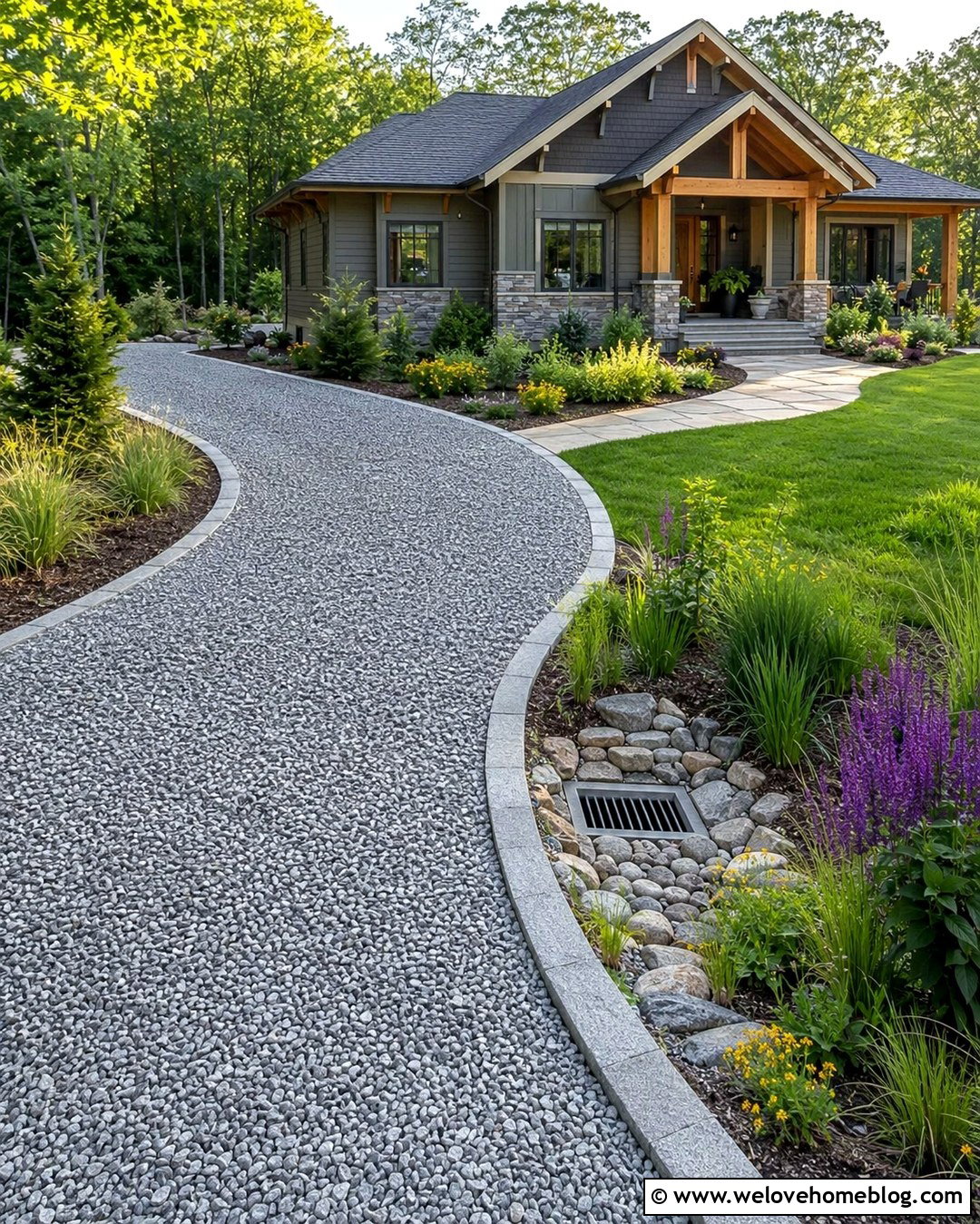
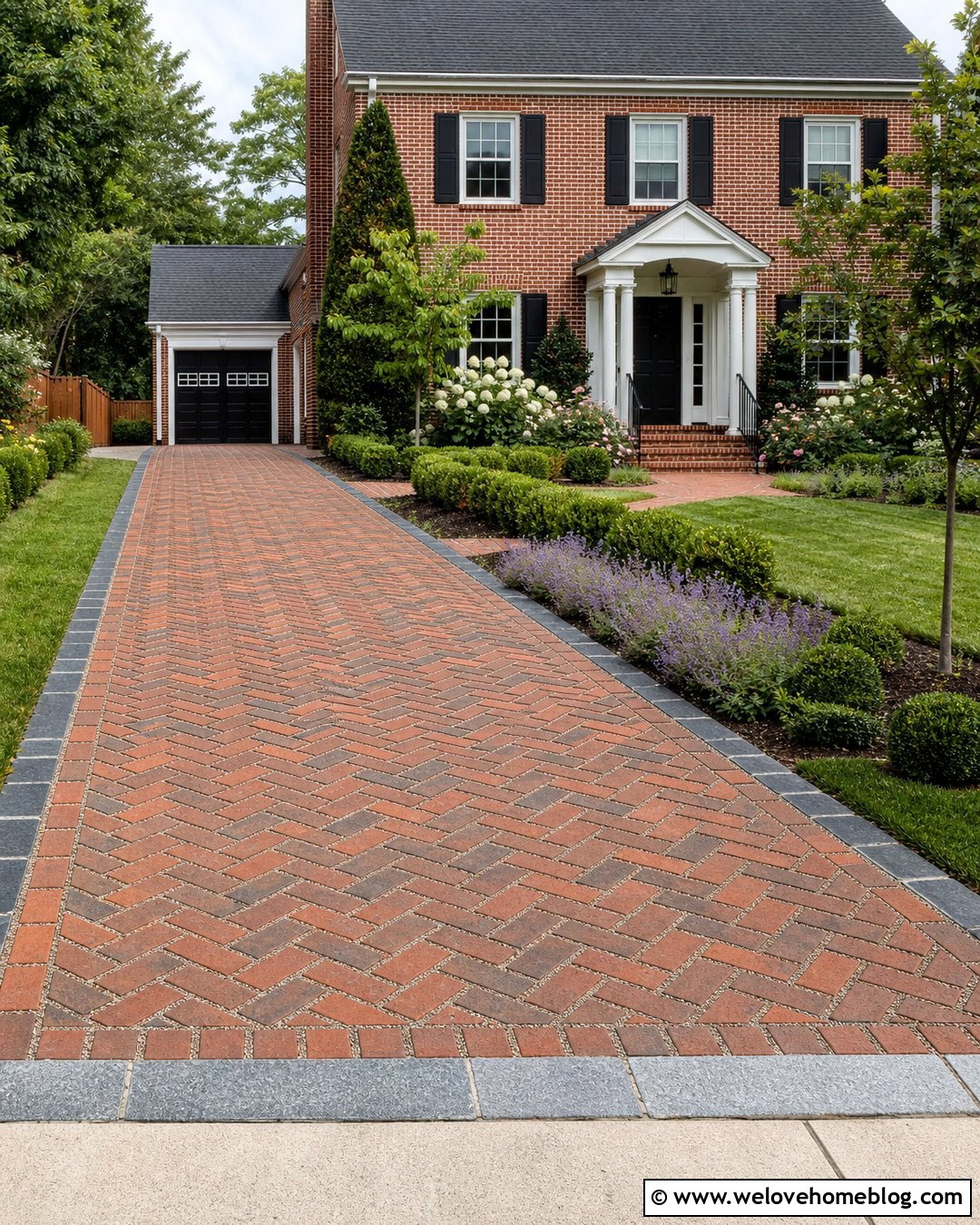
15. Contemporary Geogrid Grass Driveway With Concrete Bands
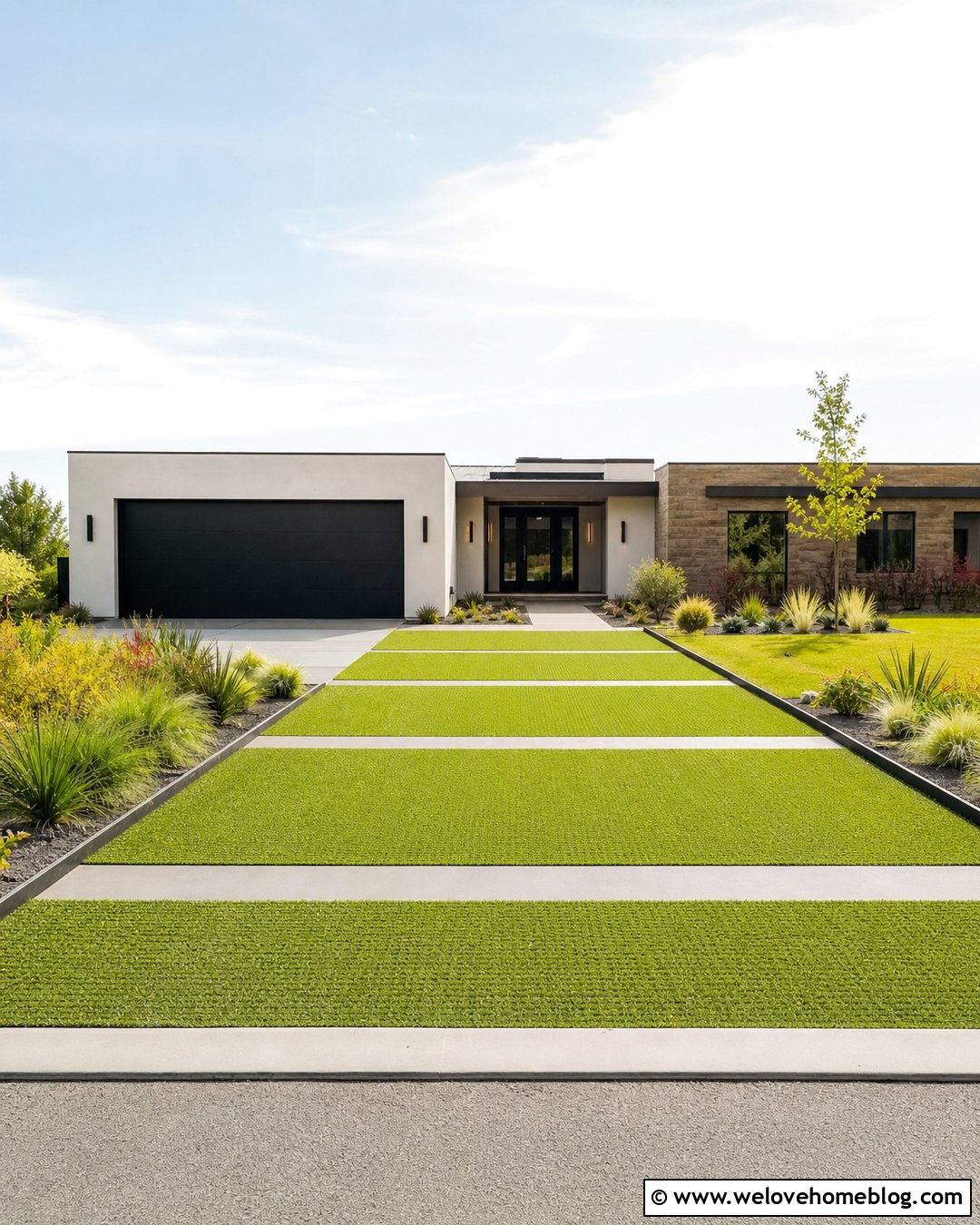
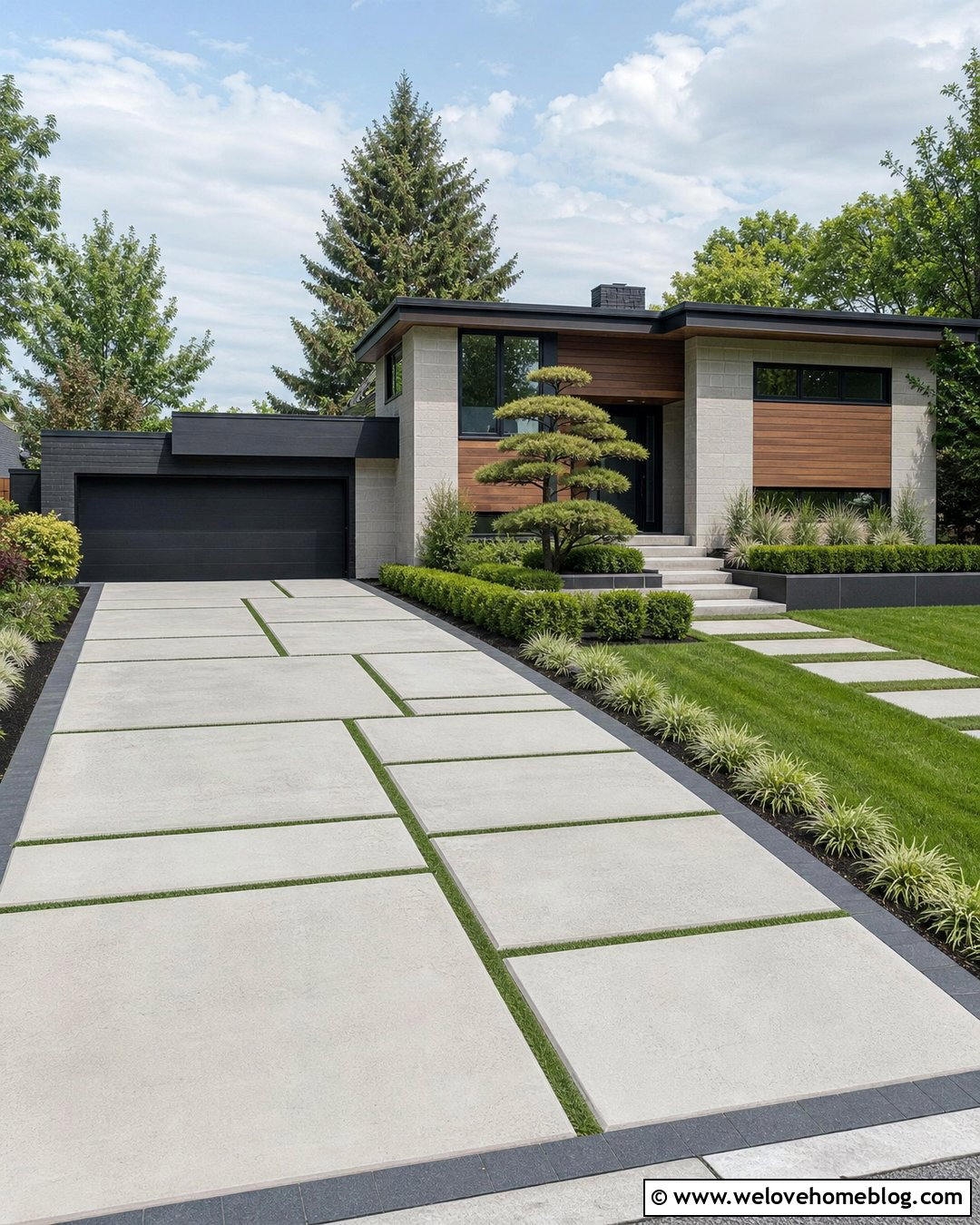
Concrete bands can make a grass-filled grid feel architectural without covering the full driveway in an impermeable slab. Arrange wide gray poured-concrete strips across a straight geogrid grass driveway at regular intervals, creating a clean horizontal rhythm. The reinforced turf remains the dominant surface, while the concrete echoes a flat-roofed or geometric contemporary house. Continue the same material into a broad front walkway and a compact garage apron. Use smooth black steel edging and rectangular planting beds filled with low shrubs, ornamental grasses, and ground cover. Keep every line aligned with the building for a unified appearance. Because mixed surfaces may settle differently, the base, transitions, and edge restraints should be designed carefully so the driveway remains level and comfortable to cross.
16. Narrow Geogrid Grass Driveway With Paver Edging
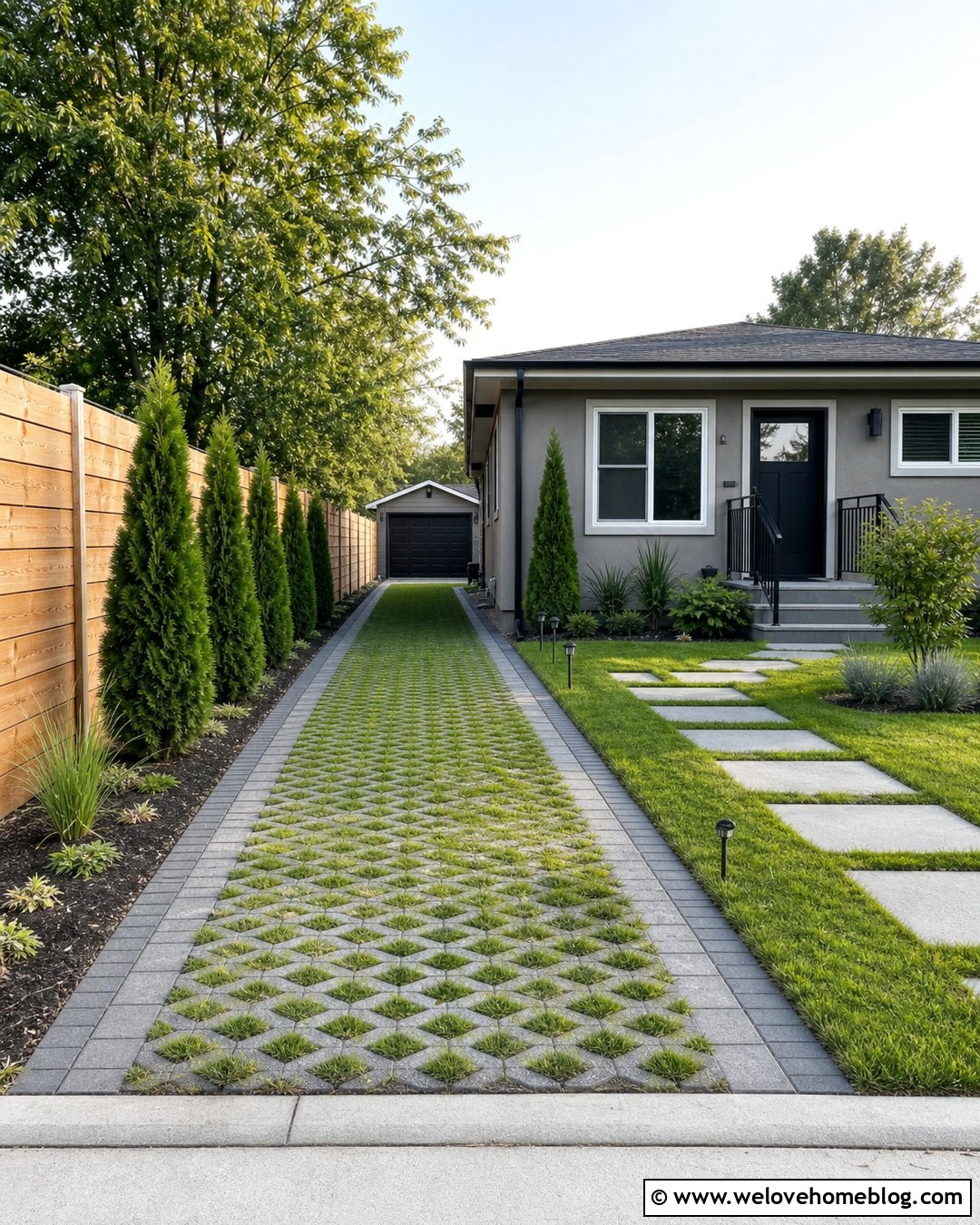
A narrow side-yard driveway can provide vehicle access without making a small property feel dominated by pavement. Install a single-lane geogrid grass surface between the house and boundary landscaping, then define it with slim concrete or brick paver edging. Keep the border flush to maximize usable width and reduce tripping or tire hazards. On the house side, add a narrow stepping-stone walkway where space allows. Along the opposite edge, use columnar shrubs, a clipped hedge, or a simple fence with restrained planting. Avoid large shrubs that could scrape vehicles or restrict visibility. A small reinforced parking pad can widen near the rear garage. This arrangement preserves a lawn-like appearance while giving compact urban and suburban lots a practical, organized access route.
17. Double-Wide Geogrid Grass Driveway With a Paver Apron
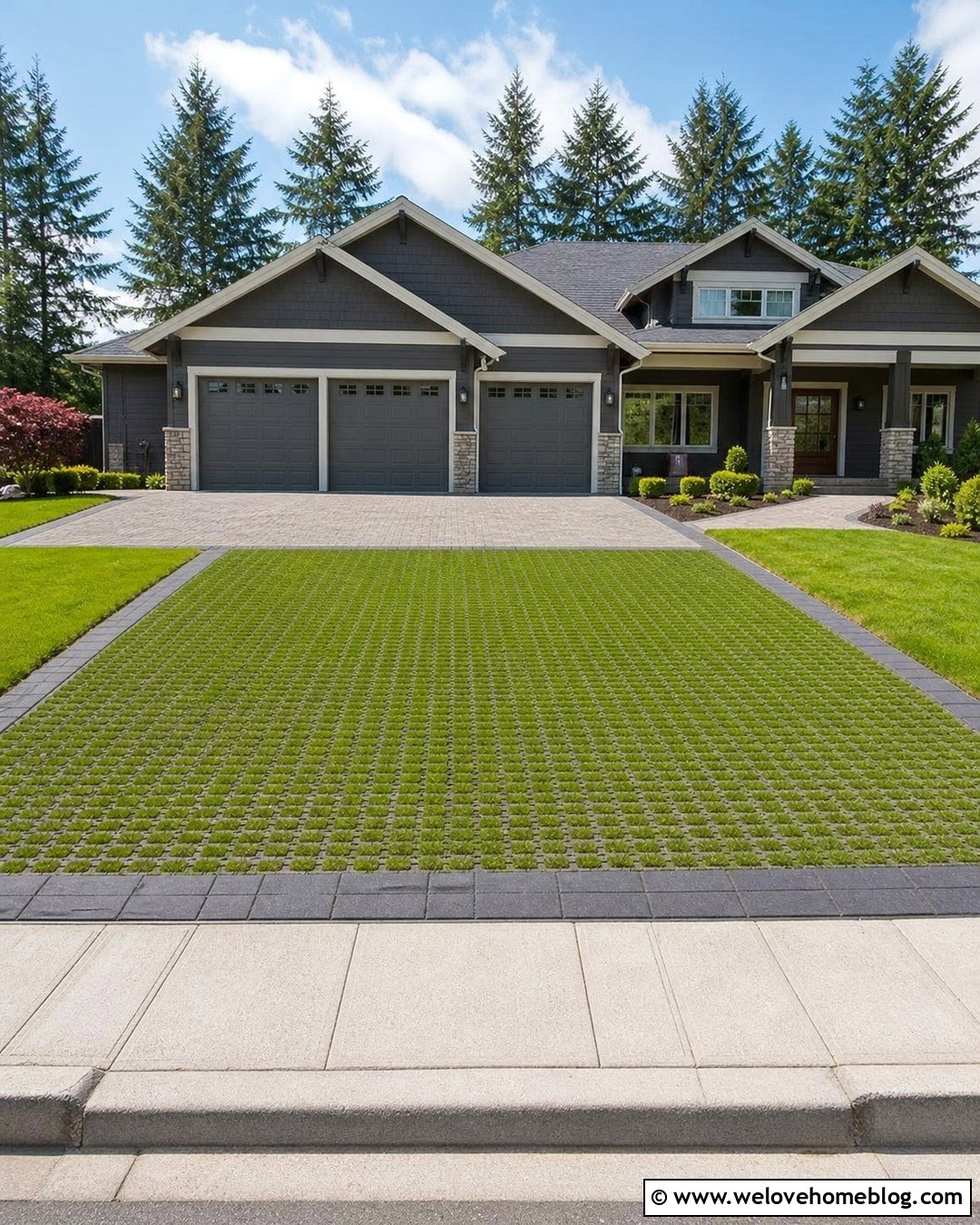
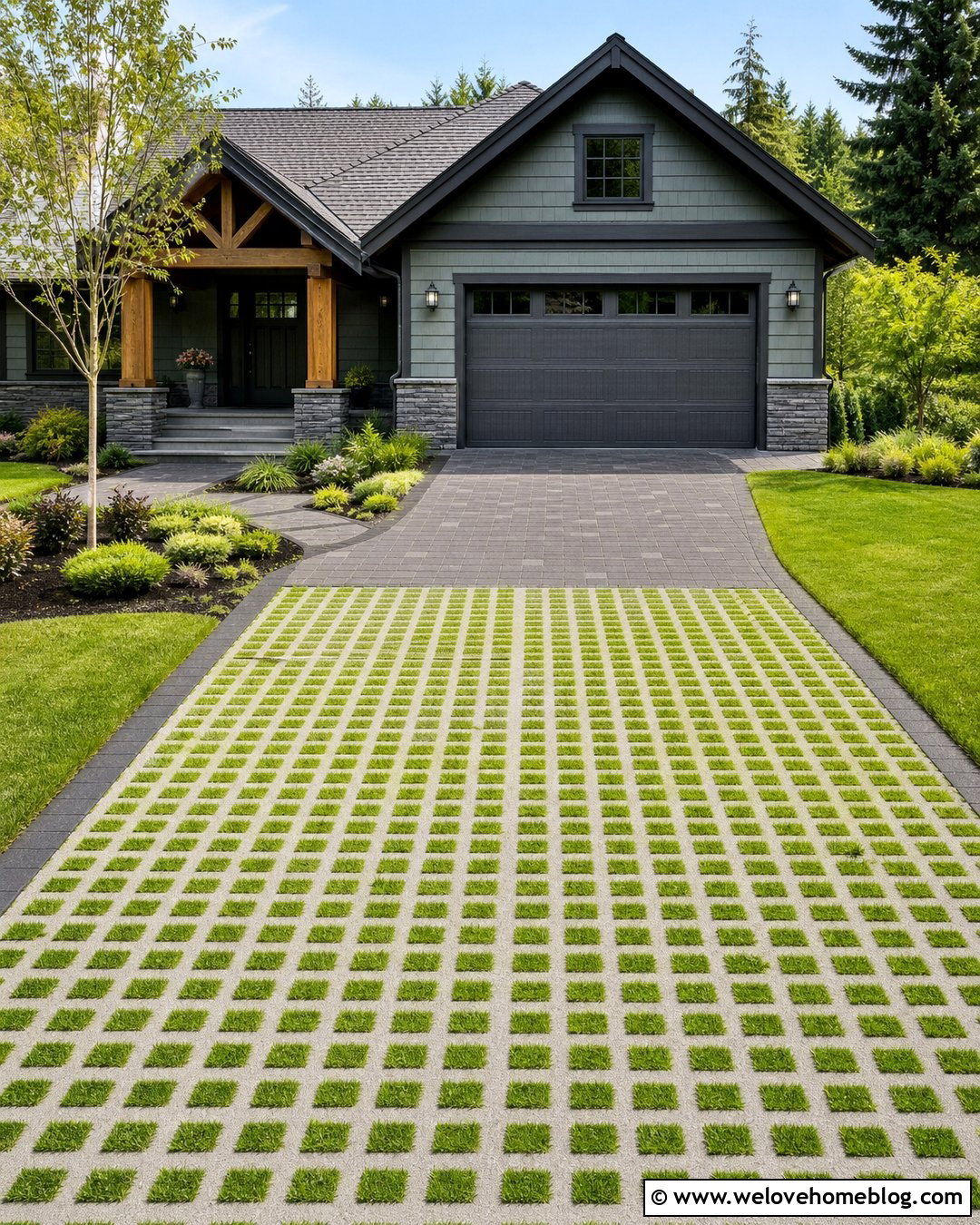
A double-wide driveway needs clear proportions so the green surface does not resemble an unplanned section of lawn. Build the entire driving area with a vehicle-rated geogrid system, then frame it with contrasting charcoal concrete pavers. Use the same pavers for a full-width street apron and a wider pad directly in front of the garage. These harder visual anchors define the entrance and parking area while the central turf softens the broad expanse. Plant balanced beds near both garage corners, using low shrubs that will not crowd car doors. A central walkway can lead from the driveway to the front entrance without crossing planting beds. Proper subbase preparation is particularly important across a broad surface because drainage and soil conditions may vary from one side to the other.
18. Geogrid Grass Parking Pad Beside the Driveway
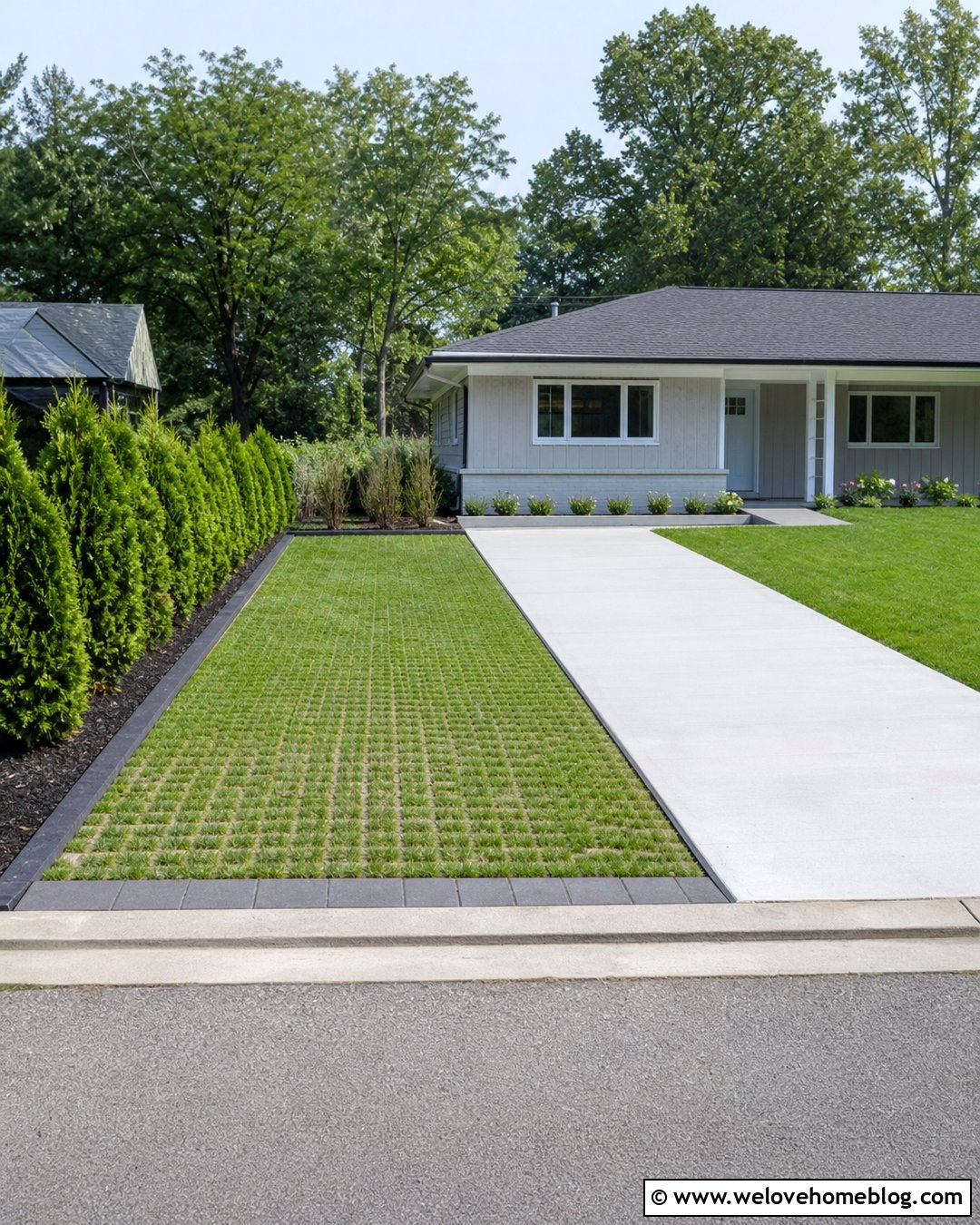
Not every property needs a fully green driveway. A geogrid grass parking pad beside an existing concrete, asphalt, or paver driveway can add occasional parking without introducing another large hard surface. Shape the pad as a simple rectangle that aligns with the garage or side yard. Connect it to the main driveway with a flush paver transition, and outline the remaining edges with stone or steel. Plant a low hedge behind the pad to screen parked vehicles without limiting access. When the space is empty, the reinforced turf visually blends into the lawn. This solution can work well for guest parking, recreational equipment, or an extra household vehicle, provided the grid and base are specified for the expected loads and frequency of use.
19. Drought-Tolerant Geogrid Grass Driveway With Stone Landscaping
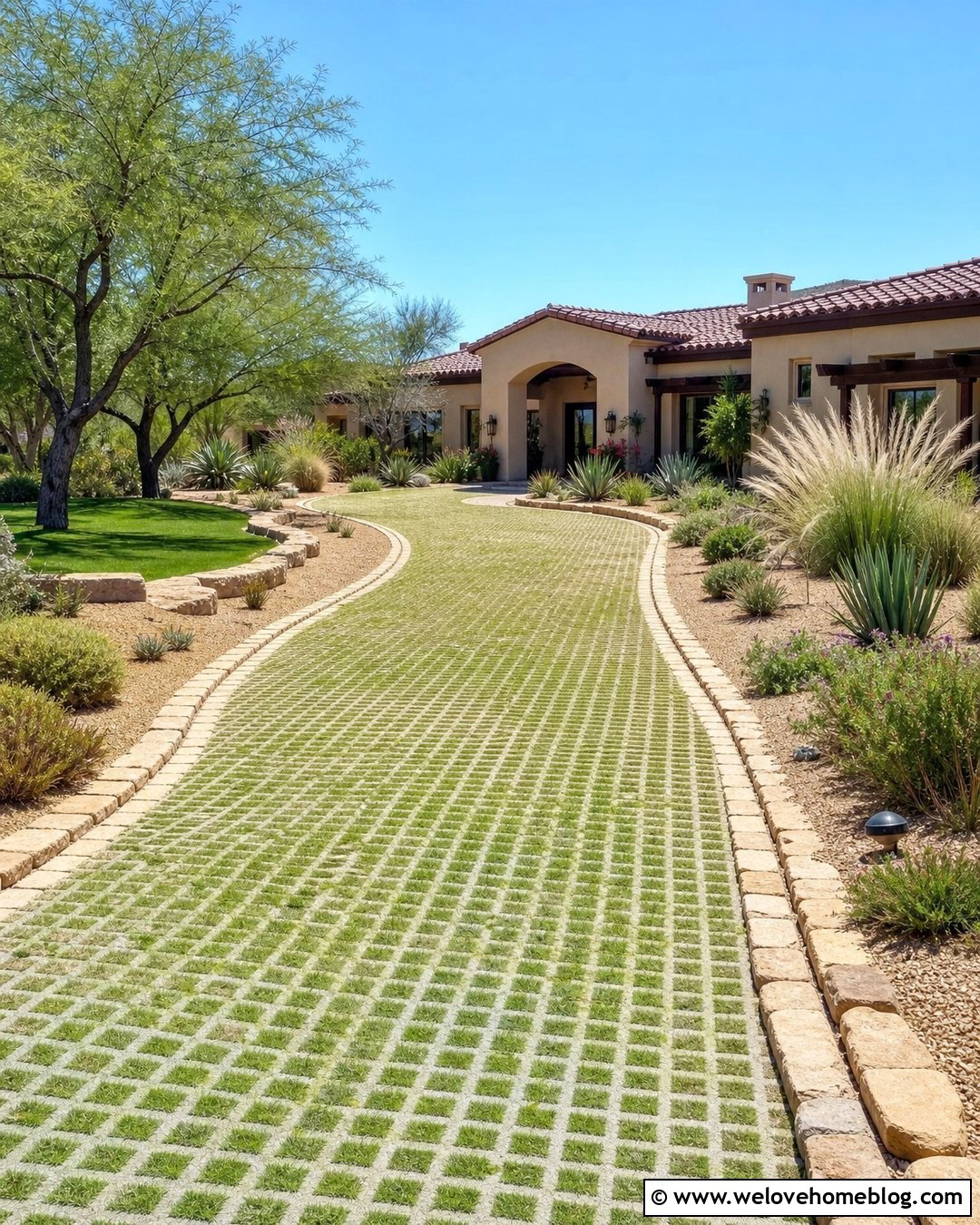
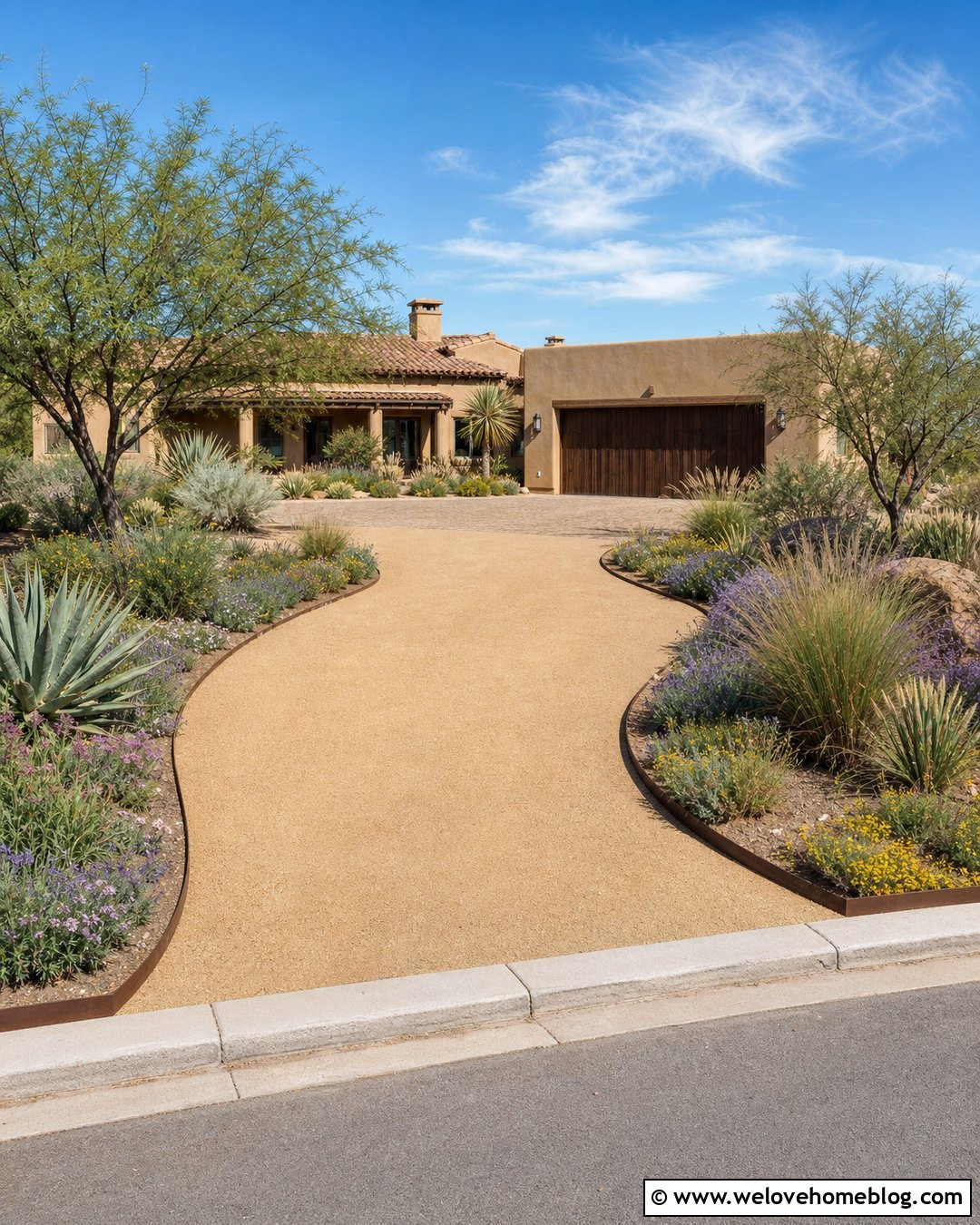
A geogrid driveway in a dry climate needs a planting plan that matches local water conditions. Use turf or another grid-compatible ground cover approved for the regional climate, soil, traffic level, and irrigation limits. Border the driveway with warm-toned stone and broad beds of drought-tolerant shrubs, ornamental grasses, and gravel mulch. A gently curved layout can soften the spare planting without requiring a large lawn. Install drip irrigation in the landscape beds and plan the driveway’s watering separately so neither area receives more moisture than necessary. Avoid placing sharp decorative gravel inside a grid intended for grass. Paired with a stucco ranch, Southwestern home, or desert-modern facade, the green driving surface becomes a controlled accent rather than an unrealistic expanse of thirsty turf.


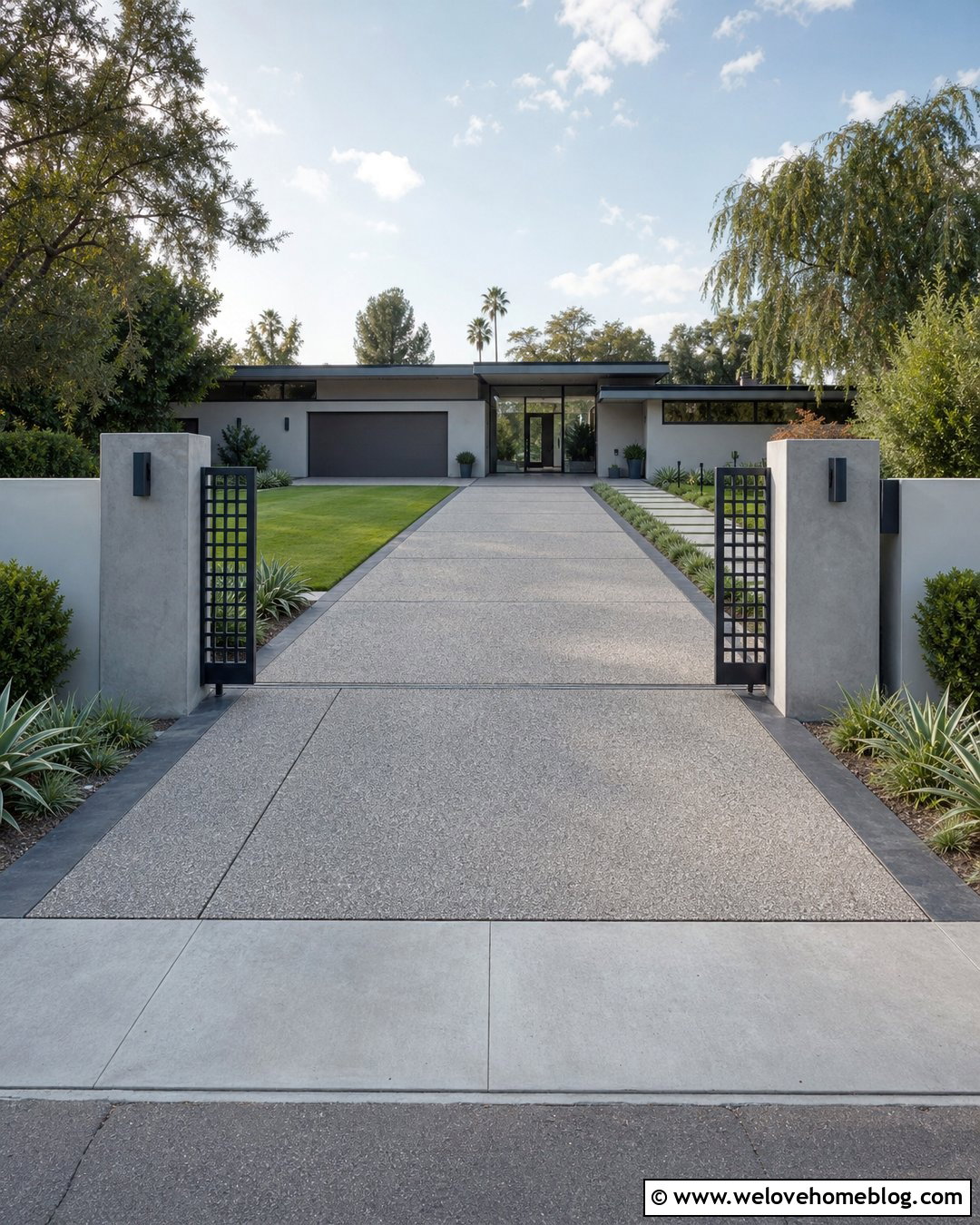
20. Geogrid Grass Driveway With a Rain Garden
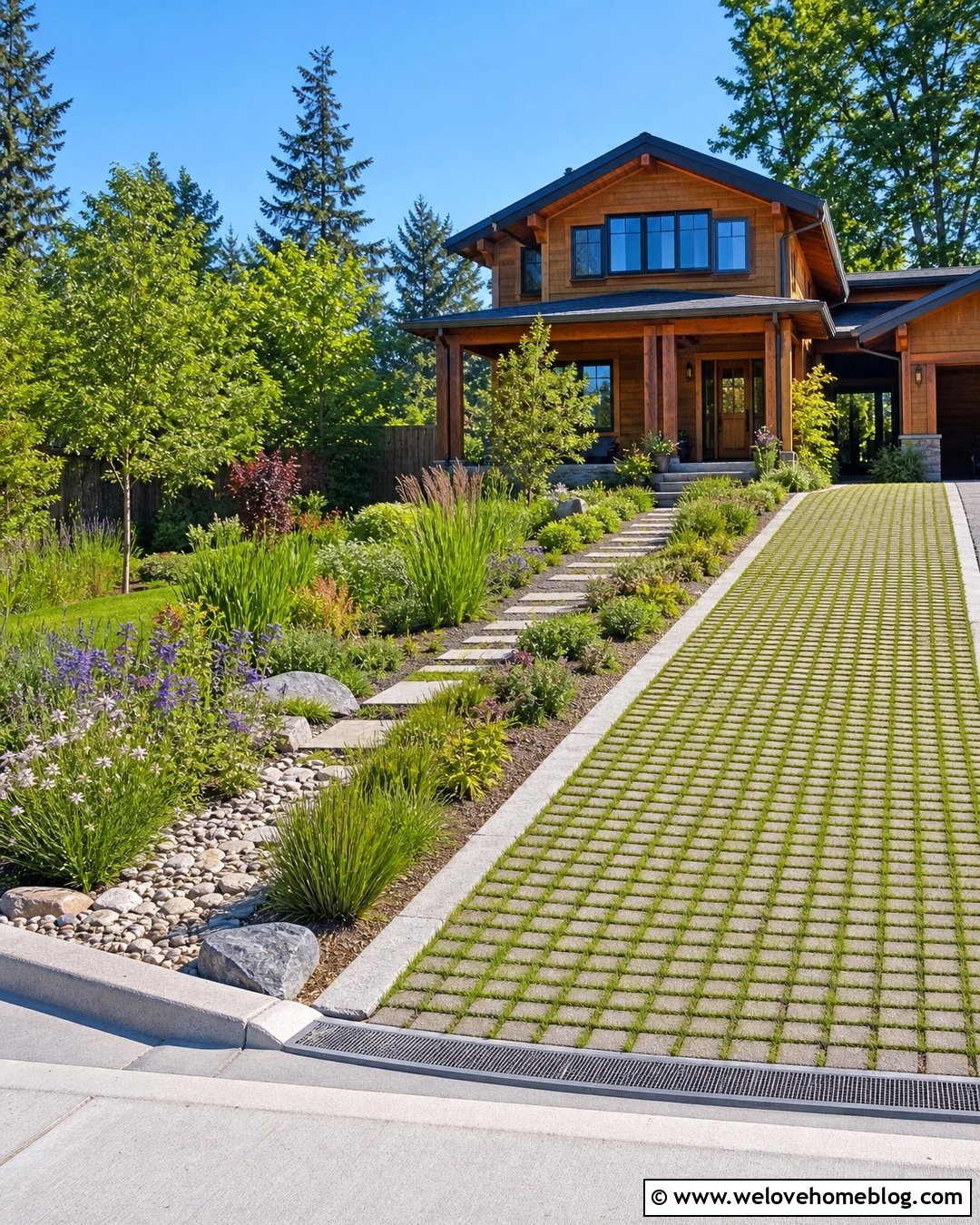
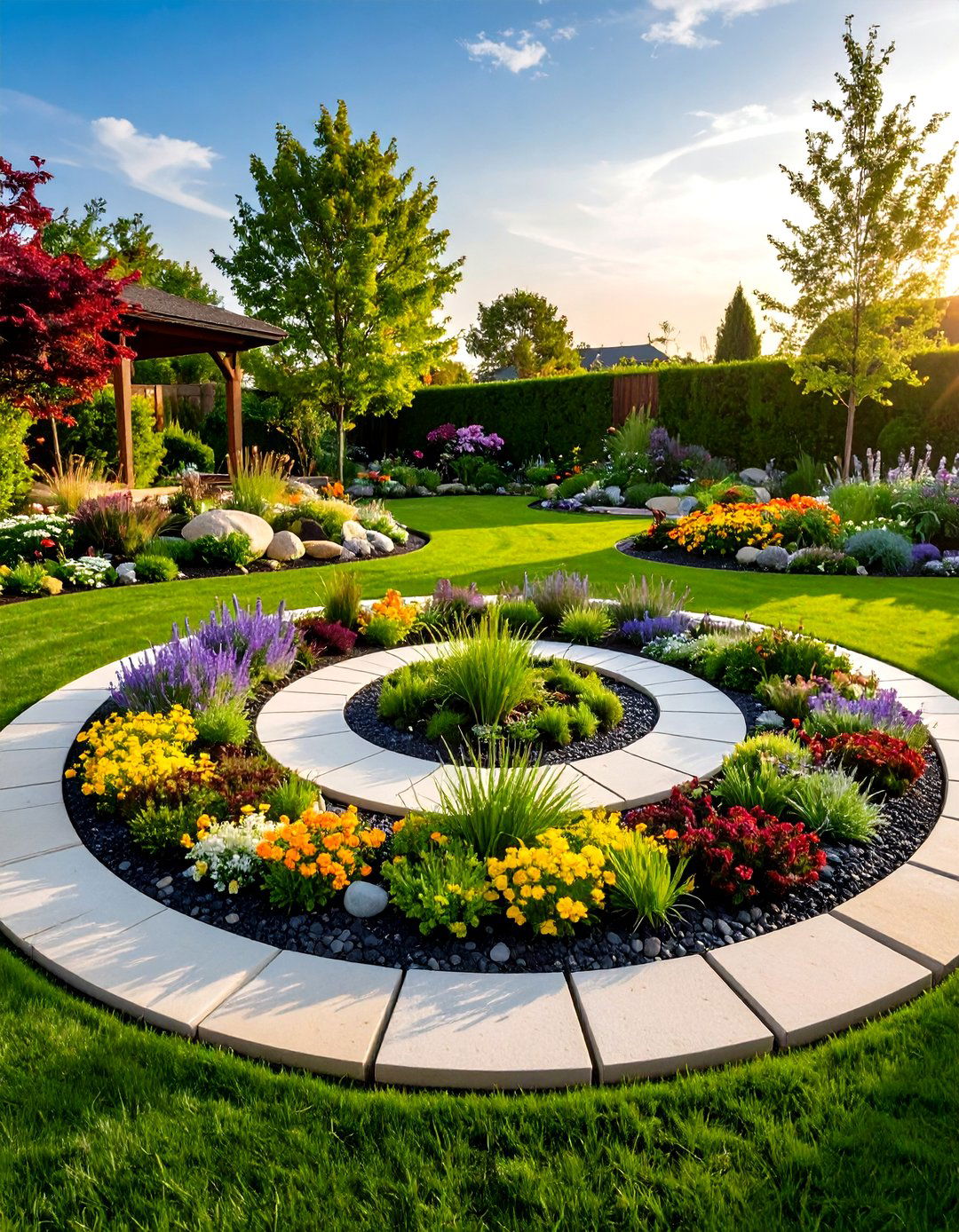
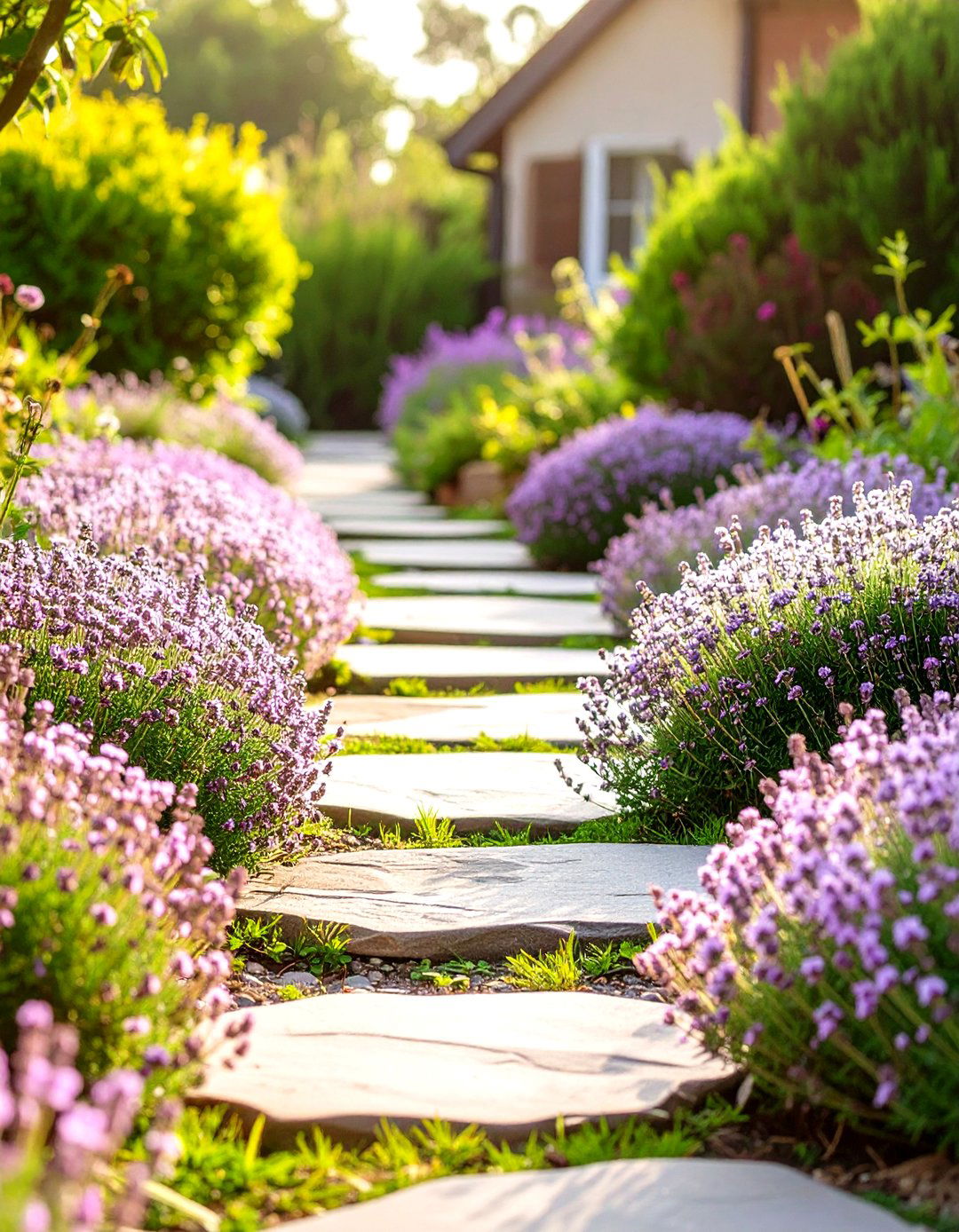
A rain garden can make the drainage strategy visible and attractive. Slope a geogrid grass driveway gently toward a planted basin positioned beside the driveway rather than toward the house or street. The basin can contain moisture-tolerant native grasses, flowering perennials, and shrubs selected for local conditions. Separate it from the driving surface with a flush stone curb containing planned openings for water flow. A small bridge-style walkway or stepping-stone path can cross the planted area on the way to the front door. This design works particularly well with contemporary, Craftsman, and naturalistic homes. Site grading, soil infiltration, overflow routes, and the structural base should be evaluated professionally, especially where heavy rain, poor soil, steep grades, or foundation drainage could create complications.
Conclusion:
The best geogrid driveway combines a properly prepared foundation with a layout that suits the house and everyday vehicle use. Borders, entrance aprons, walkways, planting beds, and garage transitions give reinforced turf a finished appearance. Grass selection matters too, since sunlight, climate, soil, watering, and parking frequency affect long-term growth. Before construction, confirm local driveway rules, utility locations, drainage needs, grid load ratings, and manufacturer specifications. Steep or poorly drained sites may require a different permeable solution or professional engineering. () Whether you prefer a modern approach or a relaxed country entrance, these 20 Geogrid Grass Driveway Ideas offer practical ways to create greener, more integrated curb appeal.

Related posts:
Leave a Reply