
A good driveway does not need premium stone or an elaborate installation to improve curb appeal. These 20 Budget Friendly Driveway Ideas combine affordable surfaces with practical layouts, simple borders, and low-maintenance landscaping. Gravel remains one of the least expensive driveway materials, while basic asphalt and concrete can provide strong value when decorative upgrades are limited. () The key is spending money where it matters most: proper grading, a compacted base, drainage, and secure edging. Then you can add character through reclaimed materials, grass strips, native plants, or a contrasting entrance apron. Whether you have a small suburban lot or a long country approach, the complete looks below offer realistic inspiration. Explore these 20 Budget Friendly Driveway Ideas to find a design that suits your home and budget.
1. Crushed Stone Driveway With Metal Edging
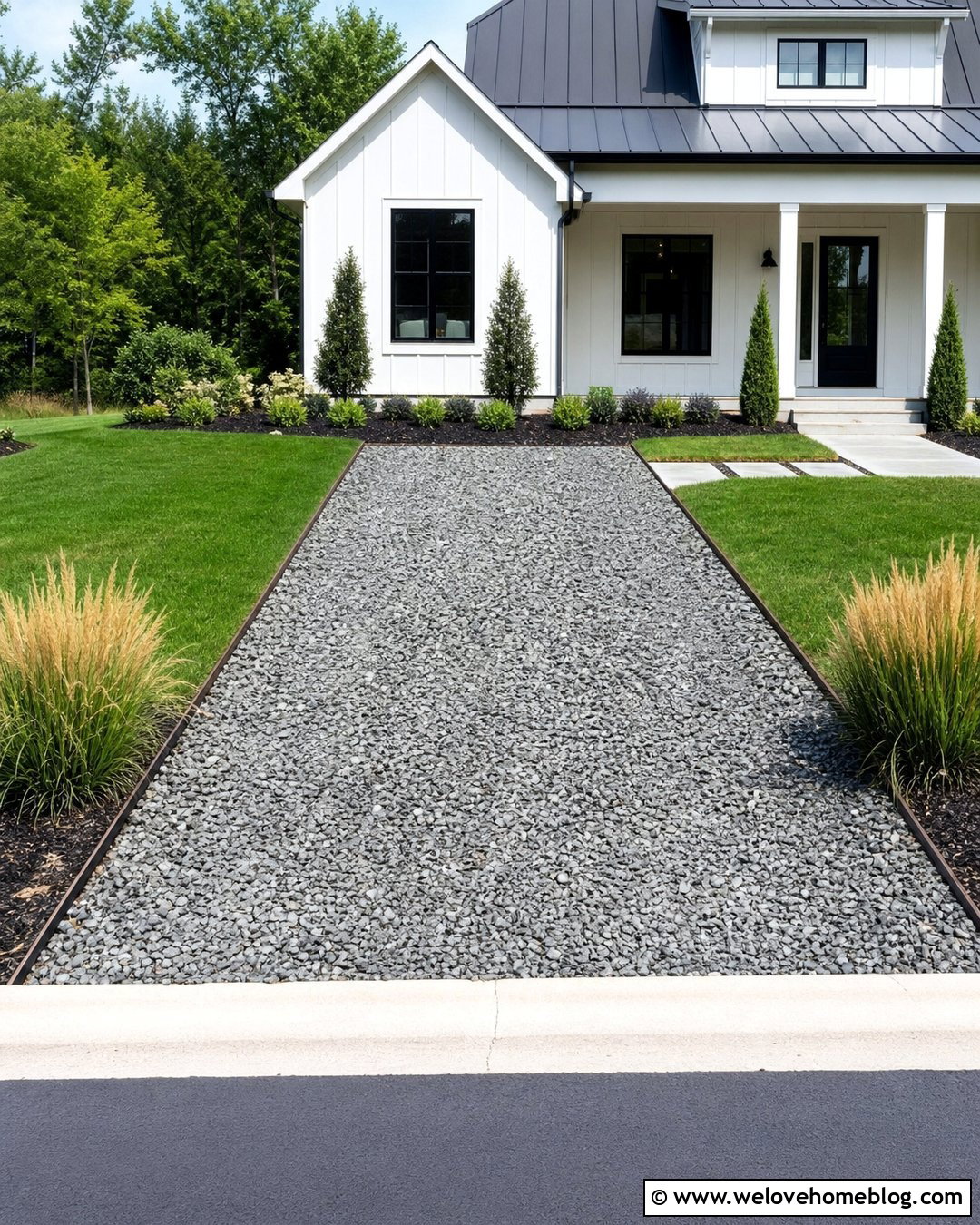
Crushed stone creates a clean, practical driveway without the cost of a fully paved surface. Choose angular gray stone rather than rounded gravel because the pieces lock together more firmly when compacted. A straight layout keeps excavation and installation simple, while narrow black metal edging gives the driveway a crisp outline. Add inexpensive ornamental grasses near the entrance and maintain open lawn along the remaining length. The restrained landscaping makes the gray aggregate look intentional instead of unfinished. A properly prepared base is still important, especially where the soil becomes muddy or vehicles frequently turn. Plan for occasional raking and stone replenishment. This complete driveway look works especially well with ranch homes, modern farmhouses, and simple suburban exteriors.
2. Pea Gravel Driveway With Brick Edging
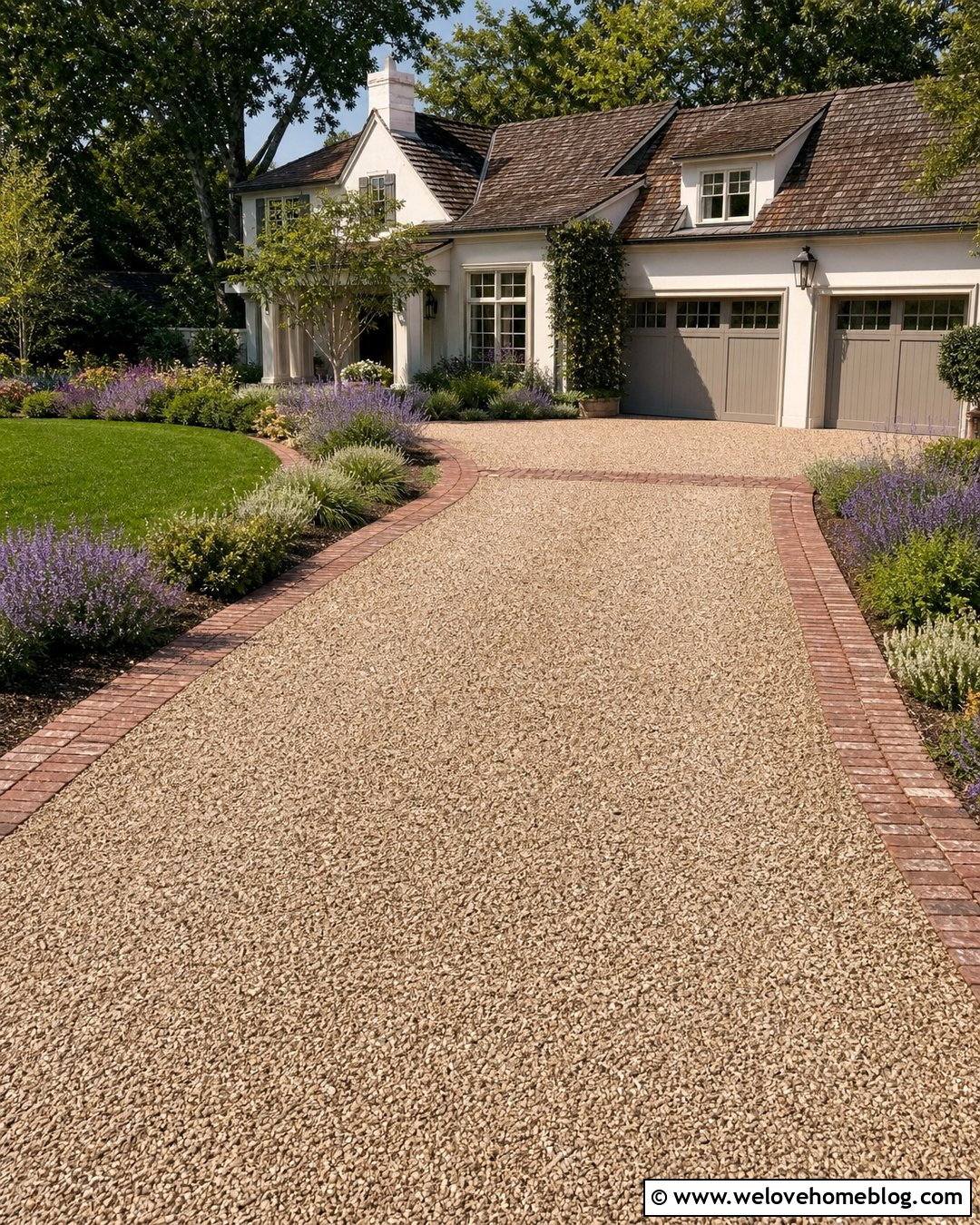
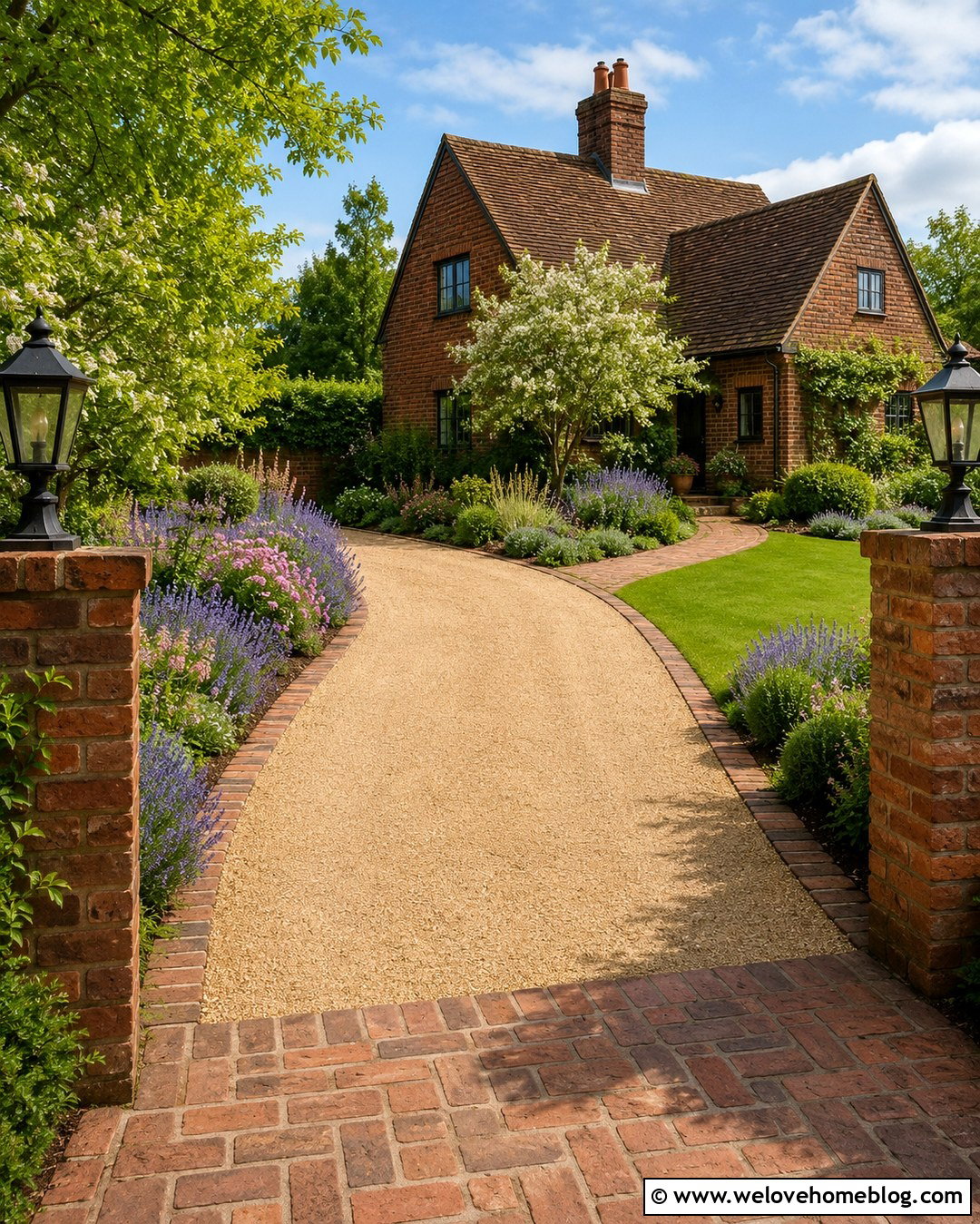
Warm pea gravel and salvaged brick can create an inviting driveway for a cottage or traditional home. Use tan, cream, and light brown gravel to soften the approach, then install reclaimed red bricks along both sides as a durable border. The edging helps define the shape and reduces loose gravel spreading into nearby planting beds. () A gently curved layout feels welcoming but should remain broad enough for comfortable vehicle movement. Fill the outer beds with low-cost lavender, catmint, or compact ornamental grasses. Repeating only a few plant varieties keeps purchasing and maintenance under control. Near the garage, add a flat brick transition strip that catches rolling gravel and visually connects the driveway border to the house.
3. Recycled Asphalt Driveway With Timber Borders
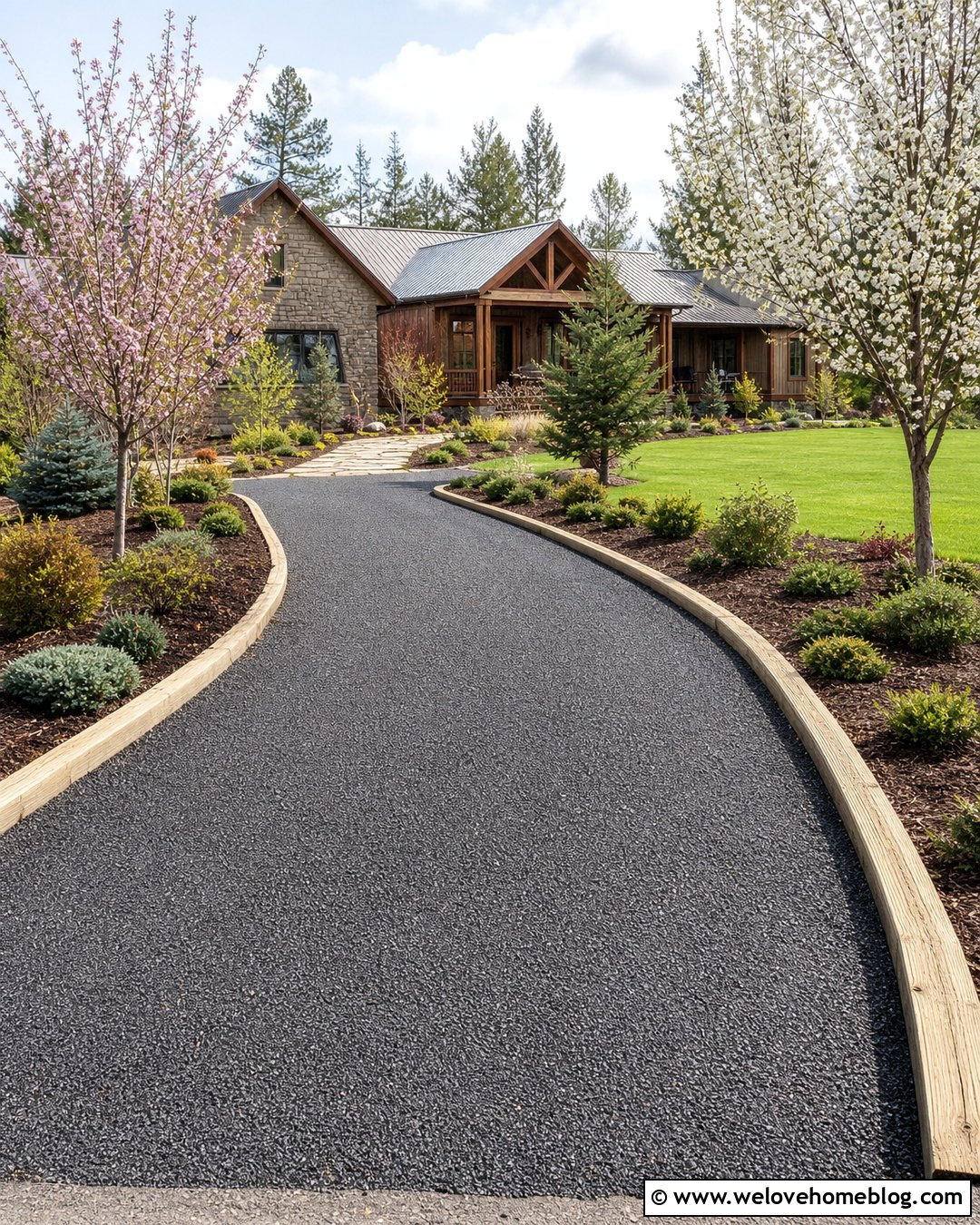
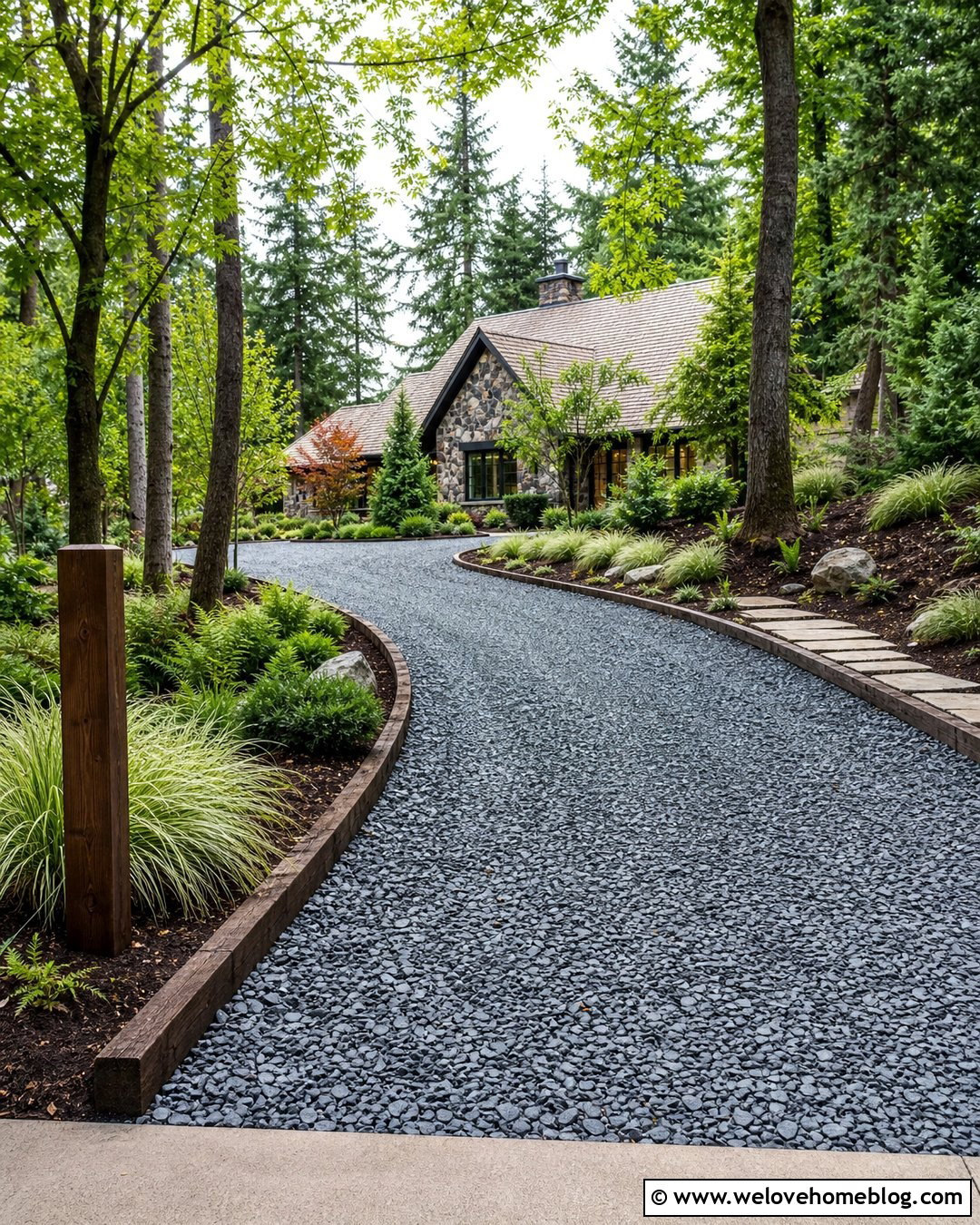
Recycled asphalt can deliver the dark appearance of a paved driveway at a more approachable price in some locations. It consists of reclaimed asphalt material that is spread, graded, and compacted into a firm driving surface. Frame a straight or gently curved layout with pressure-treated landscape timbers secured by heavy stakes. The brown edging produces a relaxed country look and prevents the surface from blending into the lawn. Complete the entrance with two broad planting beds filled with hardy shrubs, mulch, and a pair of small flowering trees. Because local material quality can vary, inspect the recycled asphalt before ordering and hire an experienced operator for grading. This driveway pairs naturally with rustic ranch houses, cabins, workshops, and farmhouse exteriors.
4. Black Asphalt Driveway With Gravel Shoulders
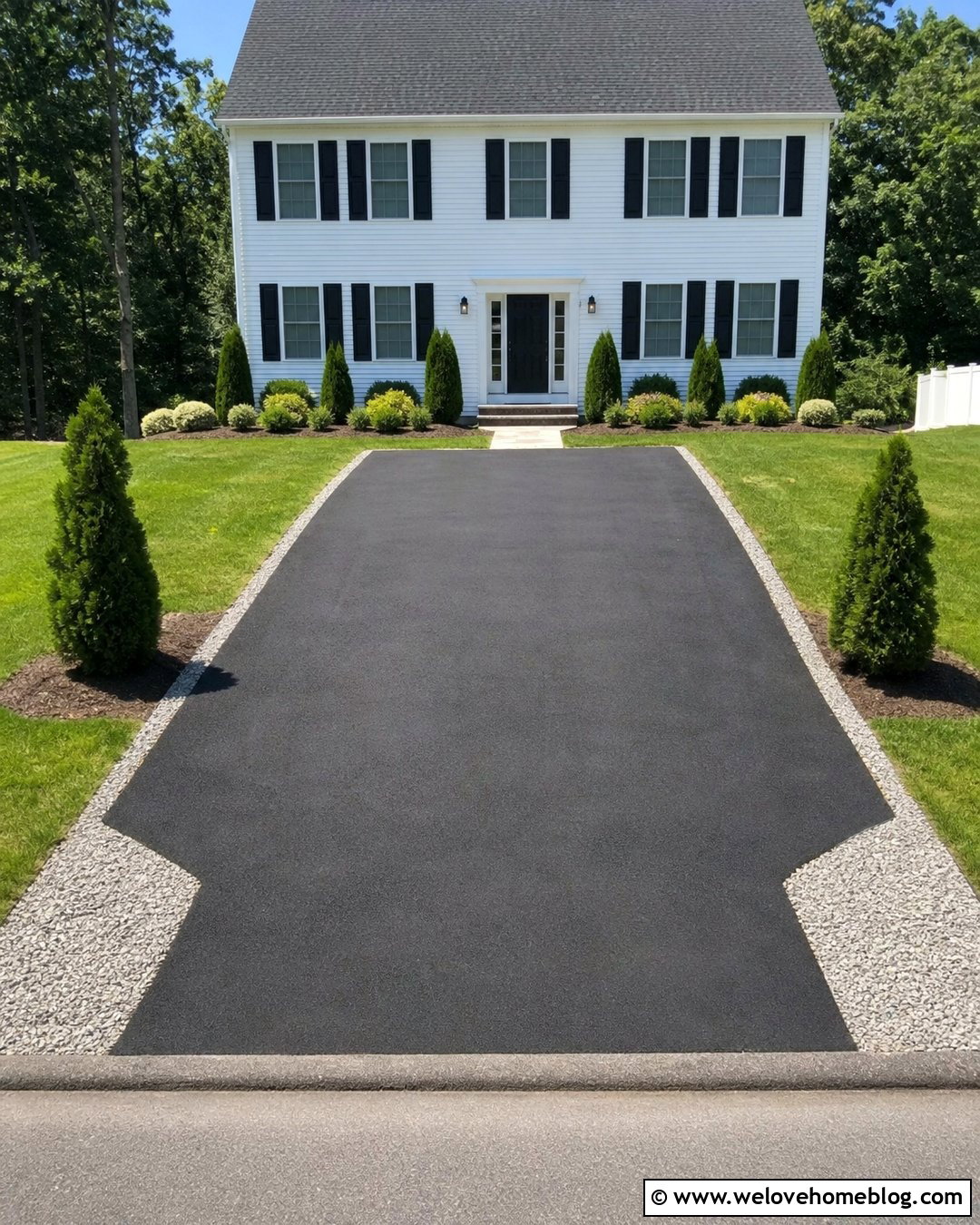
A standard black asphalt driveway looks more finished when pale gravel shoulders frame the entire approach. Keep the asphalt smooth and undecorated to control installation costs. Then place narrow bands of inexpensive gray or cream crushed stone along each side. These shoulders create visual width, provide a transition to the lawn, and reduce muddy edges where passengers step out. At the street, widen the gravel slightly and add two small mulched beds with evergreen shrubs. Asphalt may cost less than many decorative paving options, although periodic sealing and repair should be included in the long-term budget. () The strong contrast works beautifully with white siding, red brick, gray Craftsman homes, and other familiar residential exteriors.
5. Broom Finished Concrete Driveway With Mulch Beds
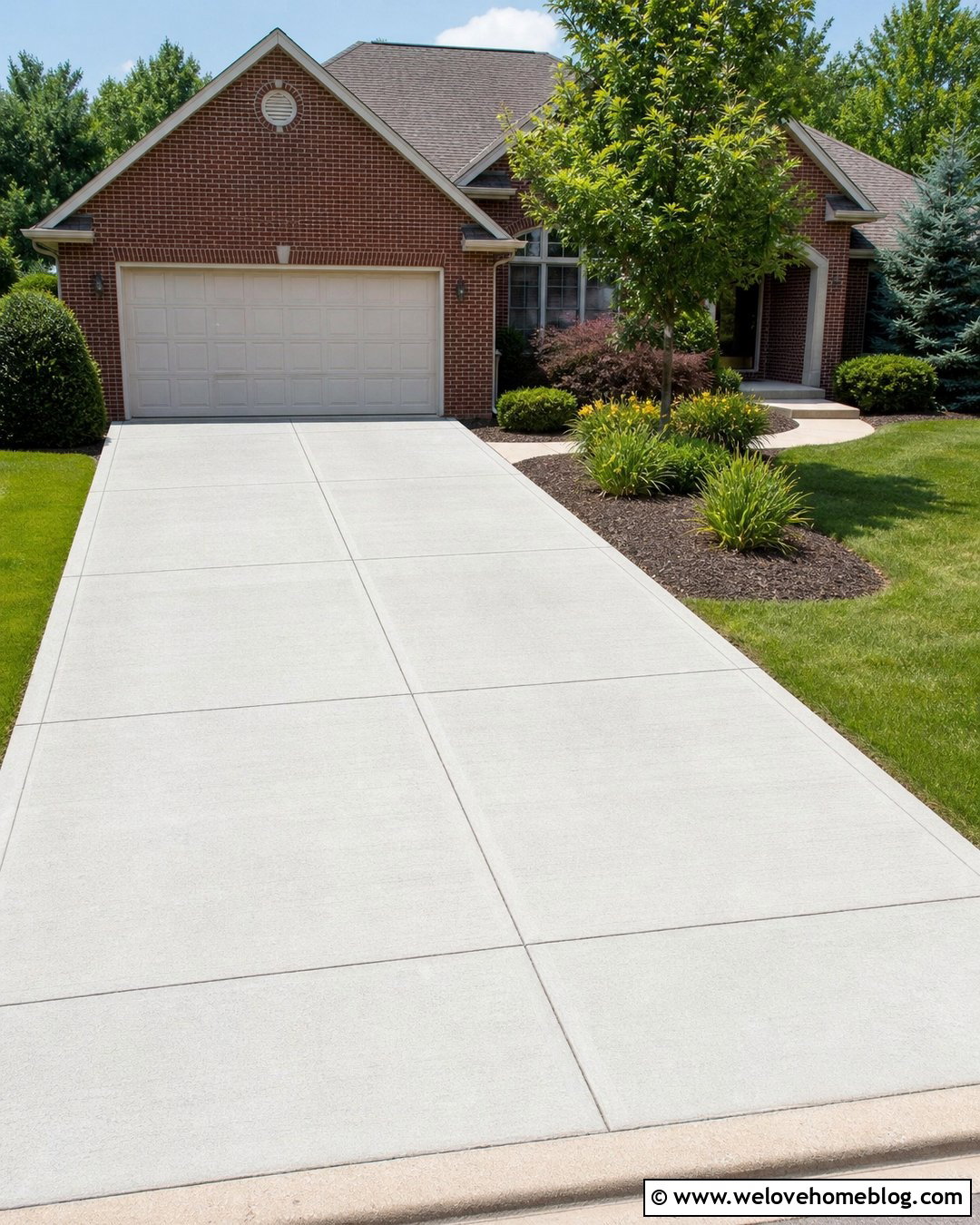
Plain gray concrete becomes far more attractive when its simple finish is balanced with thoughtful landscaping. Select a standard broom finish rather than decorative stamping, complex coloring, or exposed aggregate. A straight rectangular layout also reduces forming complications. Along one side, create a wide mulch bed with inexpensive evergreen shrubs, daylilies, and one ornamental tree. Keep the opposite side open with a clean lawn edge and a direct concrete walkway to the front door. Saw-cut control joints can form a neat grid without adding a separate decorative material. Concrete generally offers a practical combination of durability and relatively low maintenance, though climate, site preparation, and professional labor affect the final price. () This understated driveway complements nearly any suburban house.
6. Concrete Ribbon Driveway With Grass Center
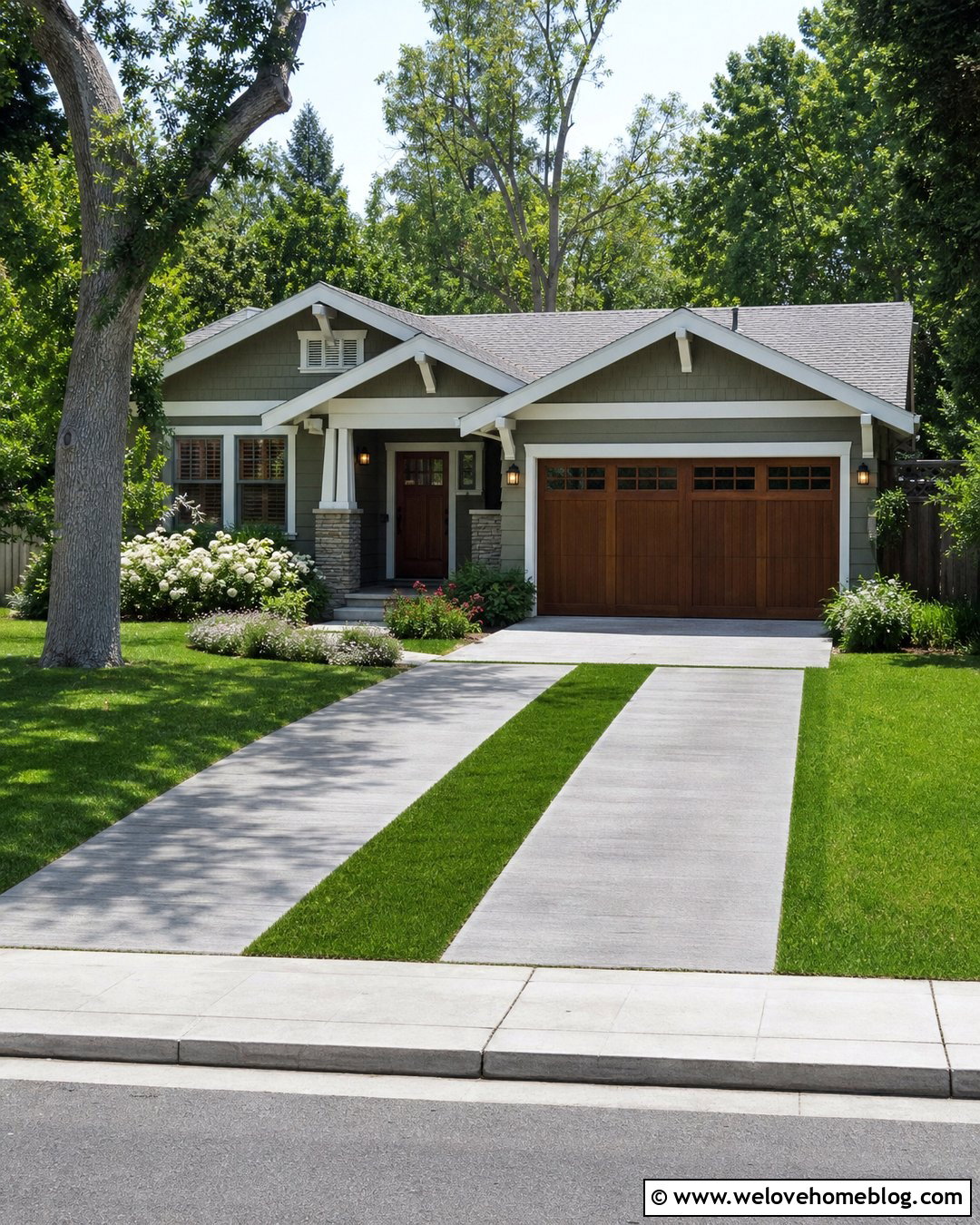
Why pave the entire driveway when vehicles mainly travel along two predictable paths? A concrete ribbon driveway uses two parallel strips of broom-finished gray concrete with grass growing between them. This layout reduces the amount of concrete required while creating a greener, less imposing approach. Keep the route straight and use simple flush lawn edges so mowing remains easy. Near the garage, connect the ribbons to a small full-width concrete parking pad for easier turning and unloading. Drought-tolerant turf or low-growing ground cover can fill the center, depending on sunlight and local conditions. Concrete ribbon layouts are best suited to stable sites with lighter residential traffic. They create a charming, economical look for cottages, bungalows, detached garages, and compact country homes.
7. Concrete Track Driveway With Gravel Center
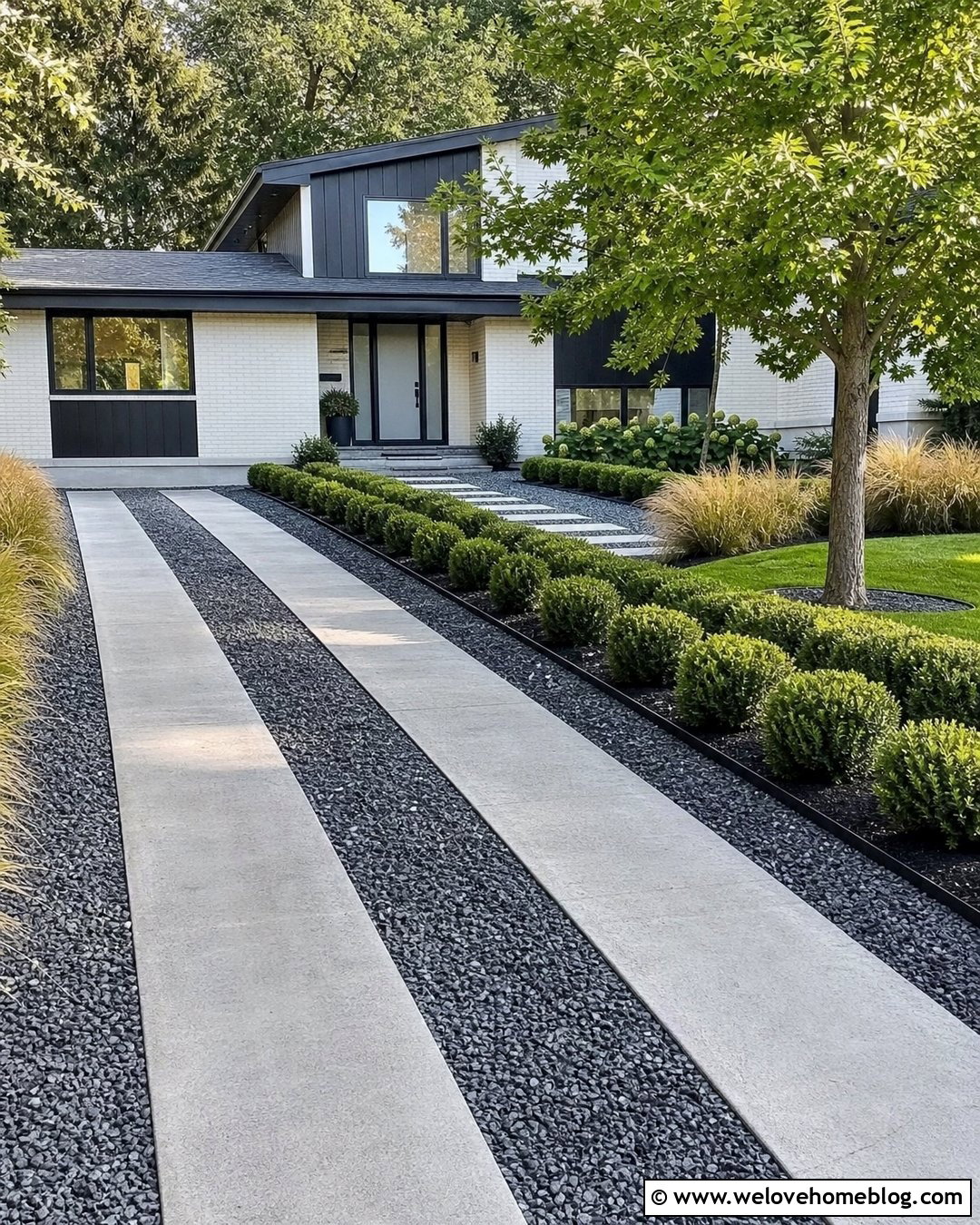
For a low-maintenance variation on the ribbon layout, replace the grass center with compacted crushed gravel. Two gray poured-concrete tracks support vehicle tires, while charcoal or tan stone fills the middle and outer shoulders. The result feels modern but uses less concrete than a continuous slab. Install metal or concrete edging where the gravel meets planting beds to prevent migration. A narrow straight approach is the easiest shape to build, especially on a small urban or suburban lot. Repeat the gravel beside the front walkway to make the material combination look deliberate. Complete the scene with compact boxwoods, ornamental grasses, and one small shade tree. The limited plant palette and reduced paved area help keep both installation and upkeep manageable.
8. Grass Grid Driveway With Concrete Apron
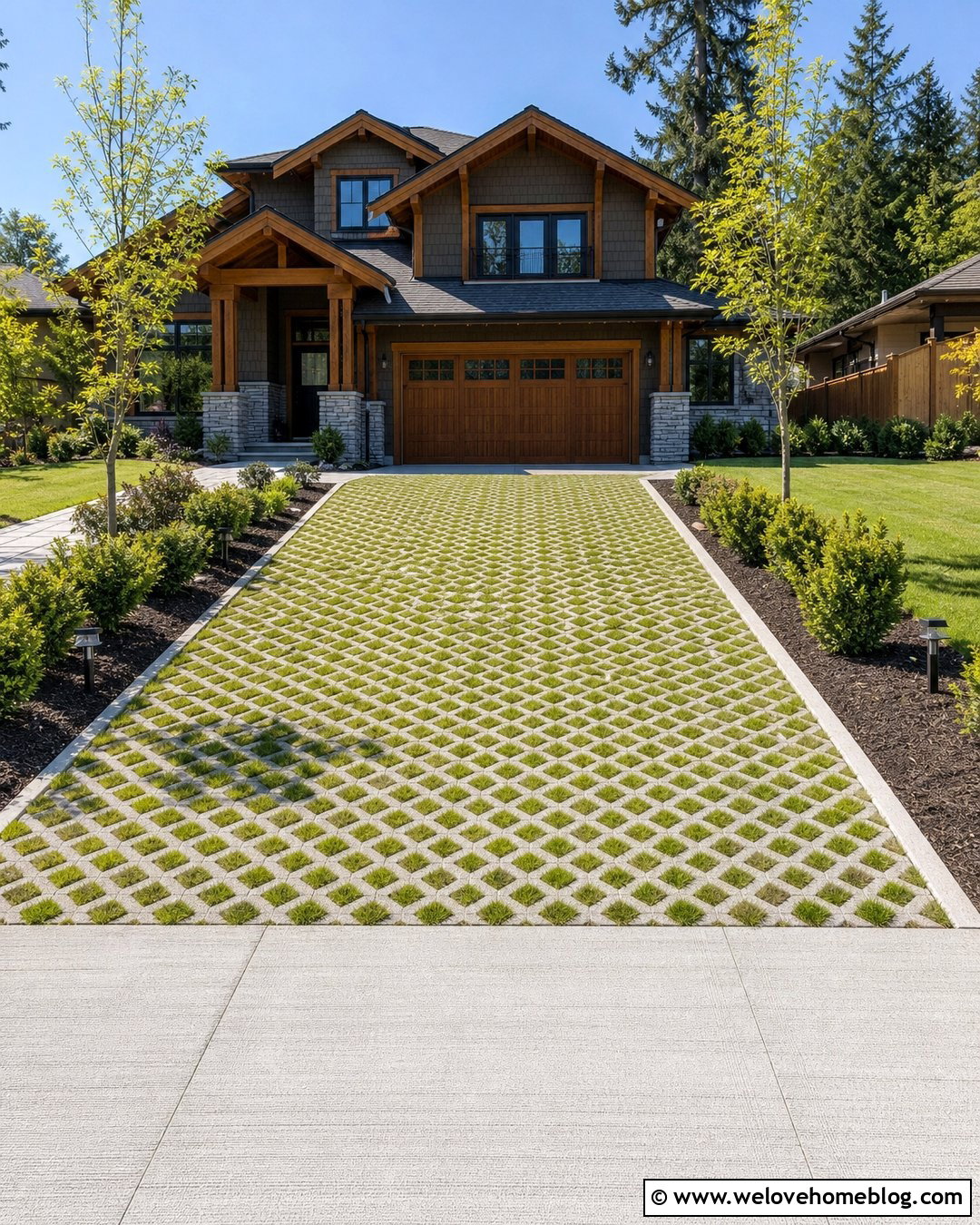
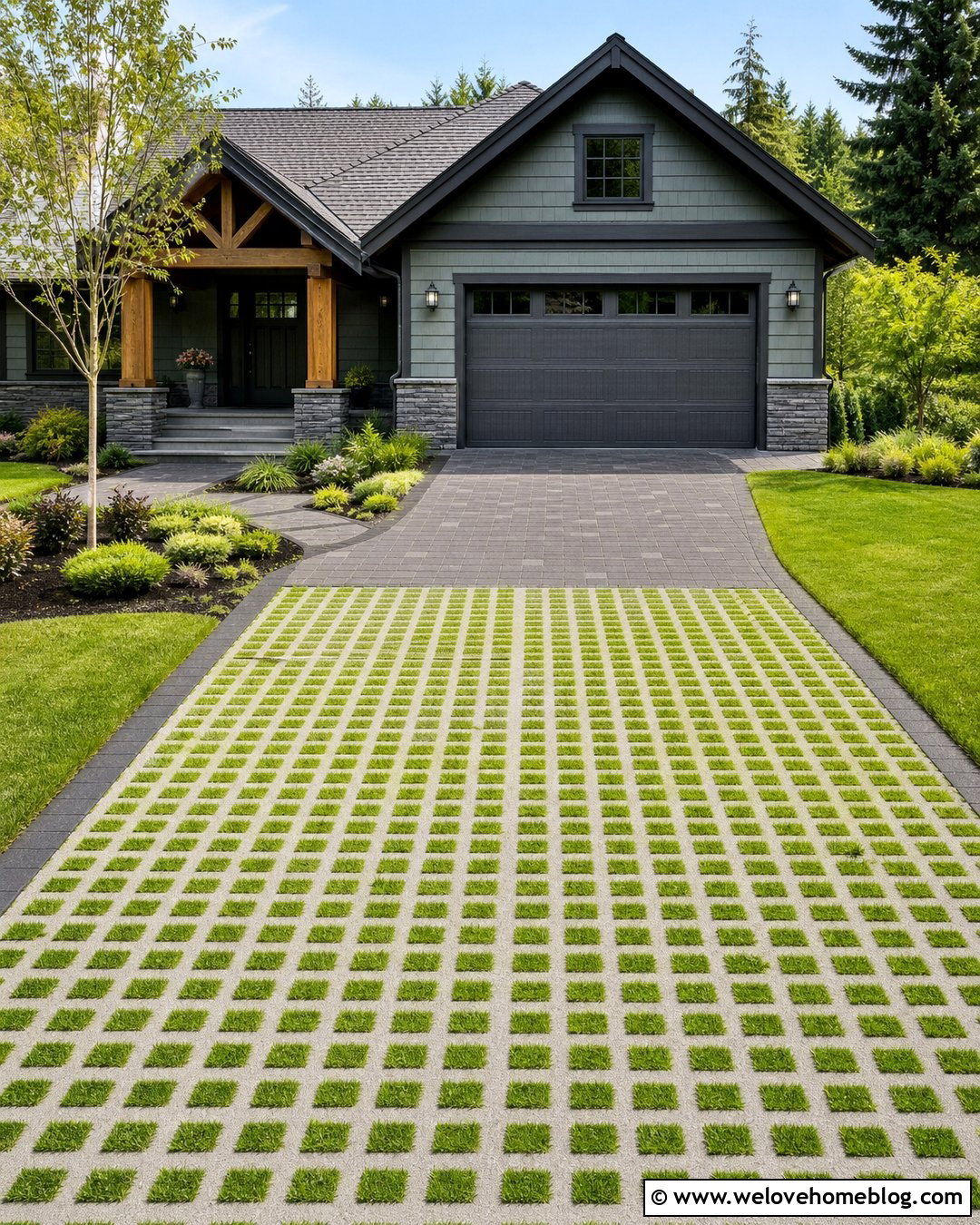
Open-cell driveway grids can support vehicles while allowing grass to create a softer front-yard appearance. Use concrete or heavy-duty plastic grid units designed specifically for vehicular loads, and install them over the base specified by the manufacturer. A short broom-finished concrete apron at the street gives the entrance a clean edge and helps create a smoother transition. Continue the grass-grid surface in a straight layout toward a modest Craftsman or contemporary house. Frame it with narrow mulch beds containing low shrubs that will not spill into the driving area. Although grid products are not always the cheapest material initially, limiting them to the main tire and parking zones may reduce coverage. Proper soil, drainage, and grass selection are essential for reliable results.
9. Gravel Grid Driveway With Paver Edging
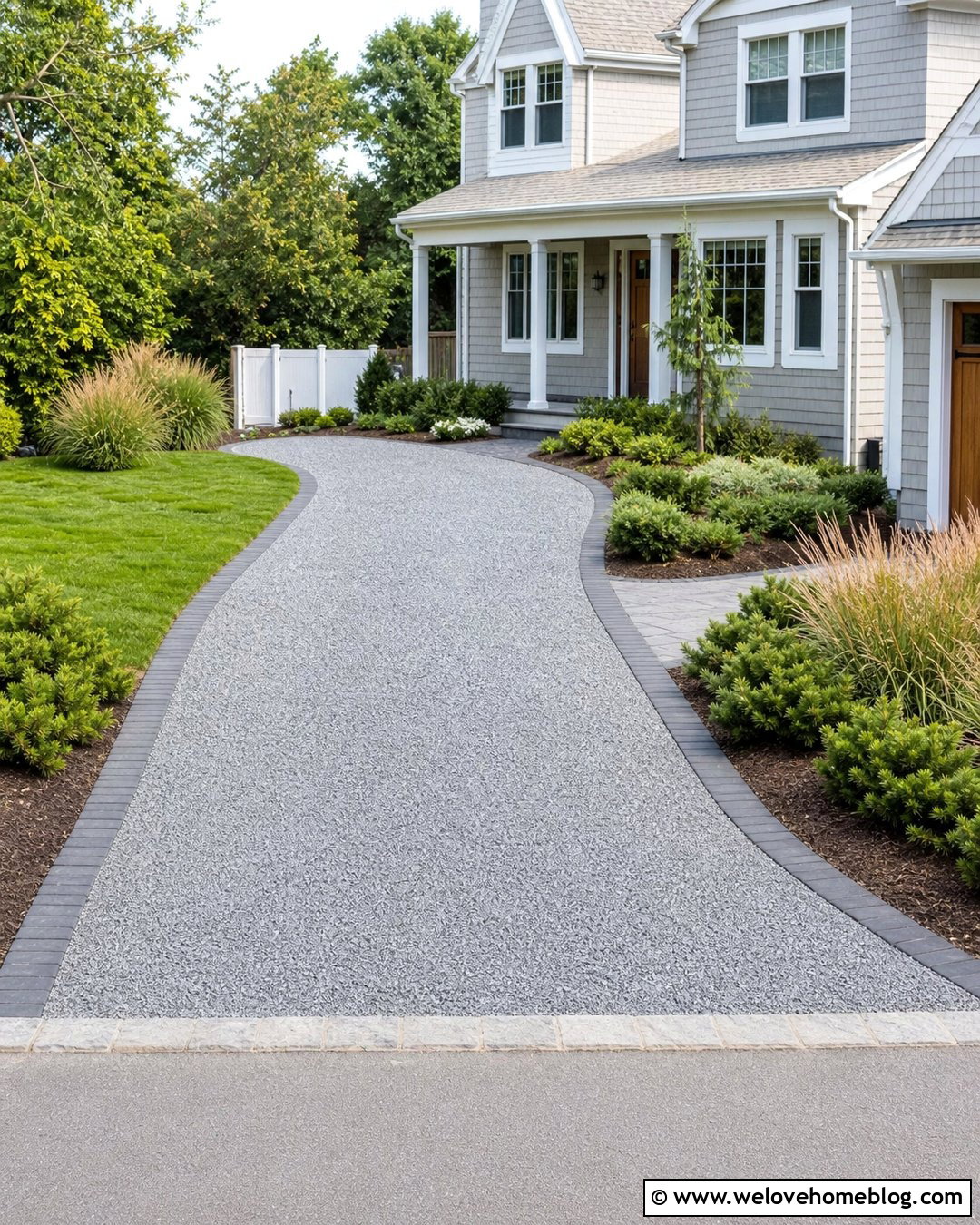
A gravel stabilization grid can make an economical aggregate driveway feel firmer and more organized. Fill the grid with small angular gray gravel so the cells help limit movement under tires. Use affordable charcoal concrete pavers as a single-row edge on both sides. A subtle curve adds character, while a wide turning radius prevents vehicles from repeatedly disturbing the border. Near the house, continue the same pavers into a simple walkway for a coordinated finish. Surround the driveway with lawn, low junipers, and clusters of ornamental grass rather than expensive layered gardens. Permeable grid systems can allow water to move into the prepared surface below, but their performance depends on correct base construction and site conditions. ()

10. Decomposed Granite Driveway With Stone Borders
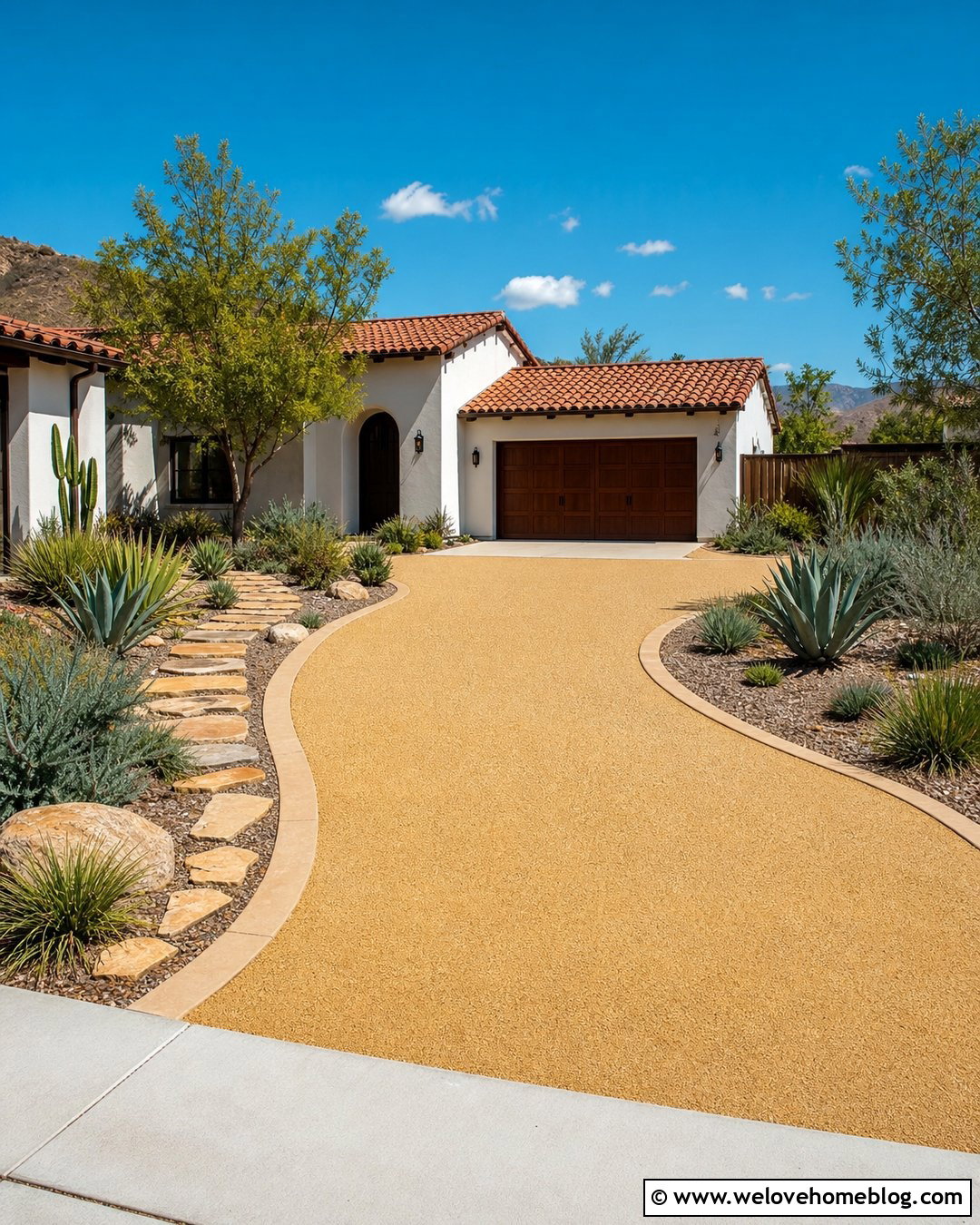
Golden decomposed granite brings warm color to Southwestern, Spanish, and California-inspired homes. When moistened and mechanically compacted, the small particles form a more unified surface than loose decorative gravel. Keep the driveway gently curved and define it with locally sourced fieldstone or inexpensive concrete edging in an earth-tone finish. Drought-tolerant landscaping completes the look without requiring a thirsty lawn. Consider agave, yucca, native grasses, sage, or gravel-mulched planting beds suited to your region. A broad concrete or paver apron near the garage can reduce tracking into the building. Decomposed granite availability and performance vary by location, so compare local quarry products and ask whether a stabilizer is appropriate. Regular touch-ups will help preserve the crown and smooth driving surface.
11. Crushed Shell Driveway With Coastal Landscaping
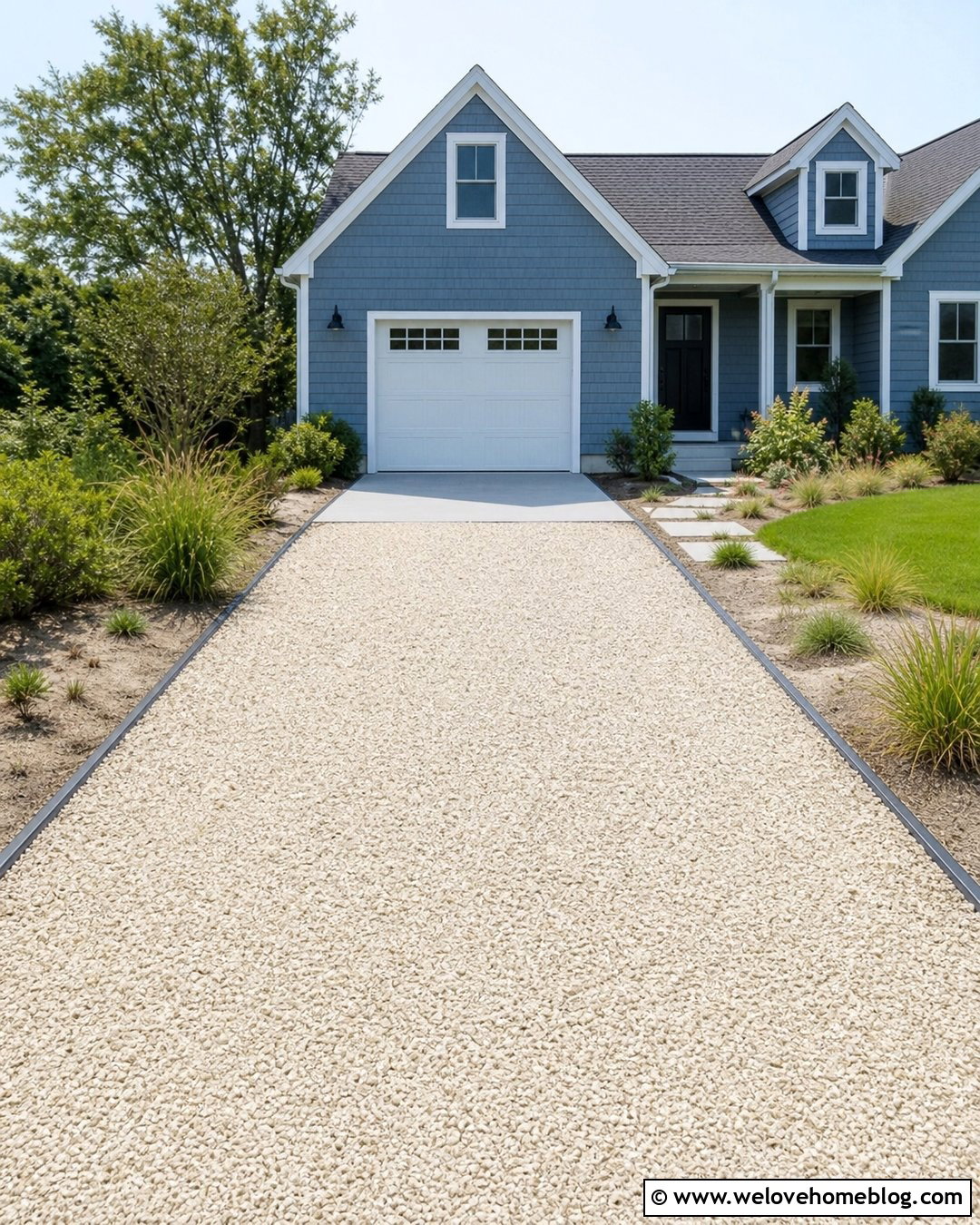
In coastal areas where crushed shell is readily available, it can produce a bright driveway with relaxed regional character. Use compacted white or pale cream shell in a straight layout leading to a Cape Cod or coastal cottage. Define both sides with simple pressure-treated timber, recycled plastic edging, or a narrow line of larger shell aggregate. Add sandy planting beds containing native grasses, low evergreen shrubs, and salt-tolerant plants recommended for the area. A small gray concrete apron at the garage creates a durable stopping point and prevents loose material from entering. Crushed shell may not be economical or suitable everywhere, so local availability matters. Check neighborhood rules and environmental guidance before ordering, and build a well-drained base that can handle regular vehicle traffic.
12. Chip Seal Driveway With Fieldstone Edging
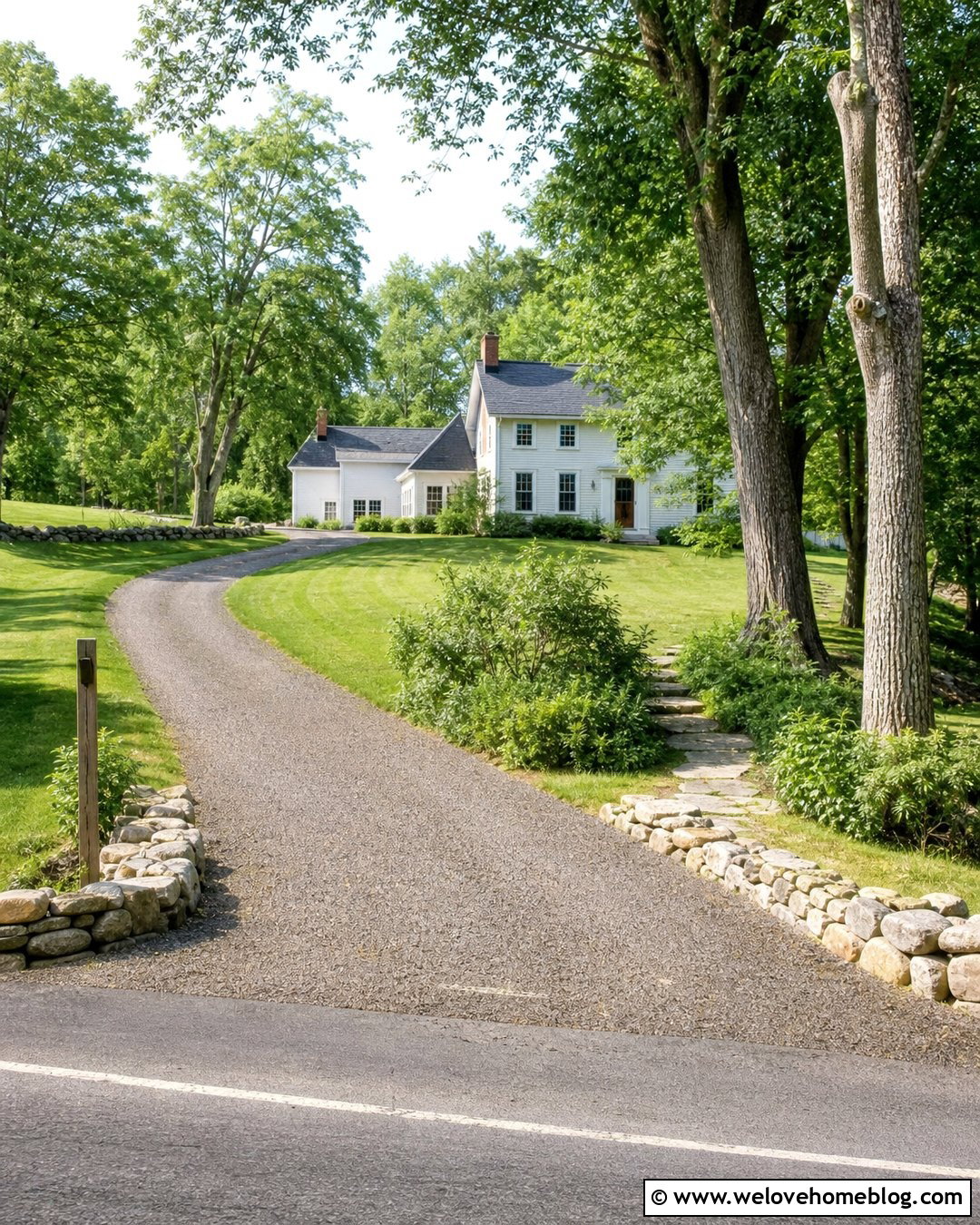
A chip seal driveway combines a bituminous binder with a layer of small stone that is rolled into the surface. The finish has more texture than conventional black asphalt and can suit long rural approaches. Choose locally available brown or gray aggregate to avoid paying extra for specialty stone. Follow a gentle curve toward the house and use fieldstone only at visible areas near the entrance, rather than bordering the entire length. Mowed grass shoulders can define the remaining edges at little cost. Add a simple wooden address post and two clusters of native shrubs for a complete arrival point. Chip seal requires suitable equipment and experienced installation, so compare local contractor availability with standard asphalt and gravel before deciding which option offers better value.
13. Gravel Driveway With Reclaimed Brick Ribbons
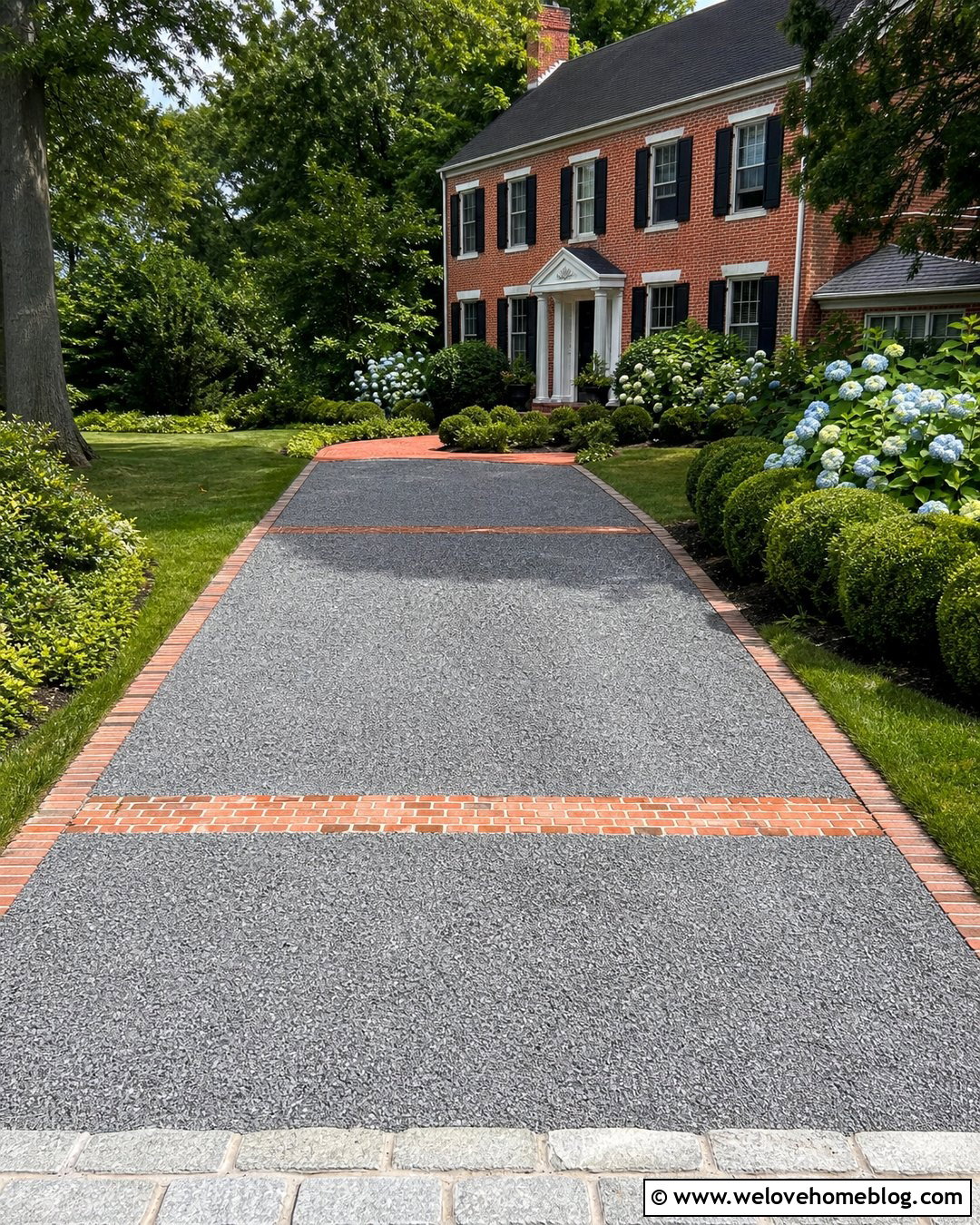
You do not need to cover an entire driveway with brick to enjoy its color and traditional character. Start with compacted gray crushed gravel, then install reclaimed clay brick ribbons across the surface at the entrance and near the garage. A matching single-brick border can outline the sides if enough material is available. The brick accents visually divide a long straight driveway while using far fewer units than full paving. Search architectural salvage yards, local resale listings, and leftover construction lots for matching batches. Use bricks rated for exterior paving, and install them on a stable base so they do not shift under tires. Rounded shrubs, hydrangeas, and a simple lawn give this economical design a polished appearance beside a colonial or traditional brick home.
14. Concrete Paver Driveway With Gravel Joints
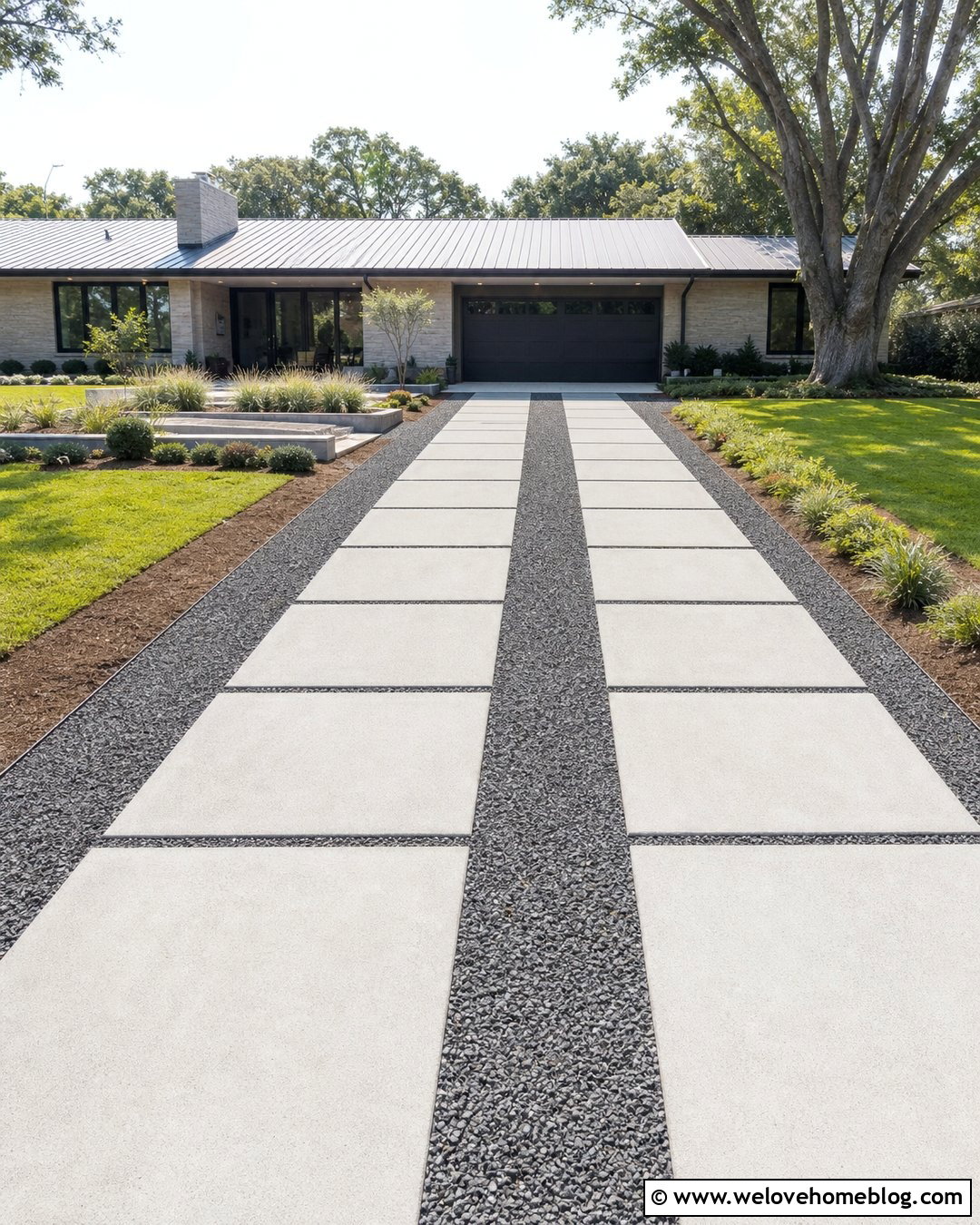
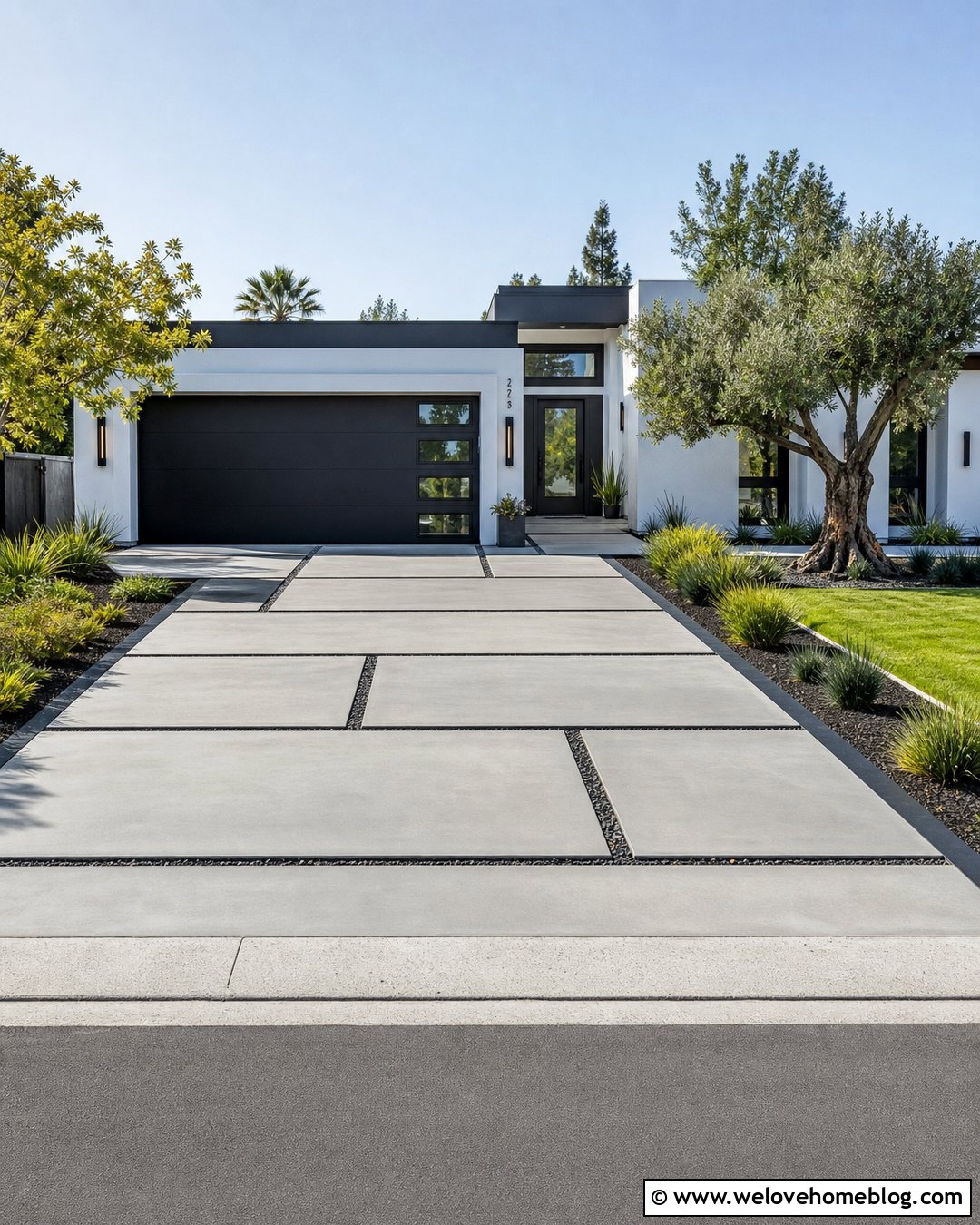
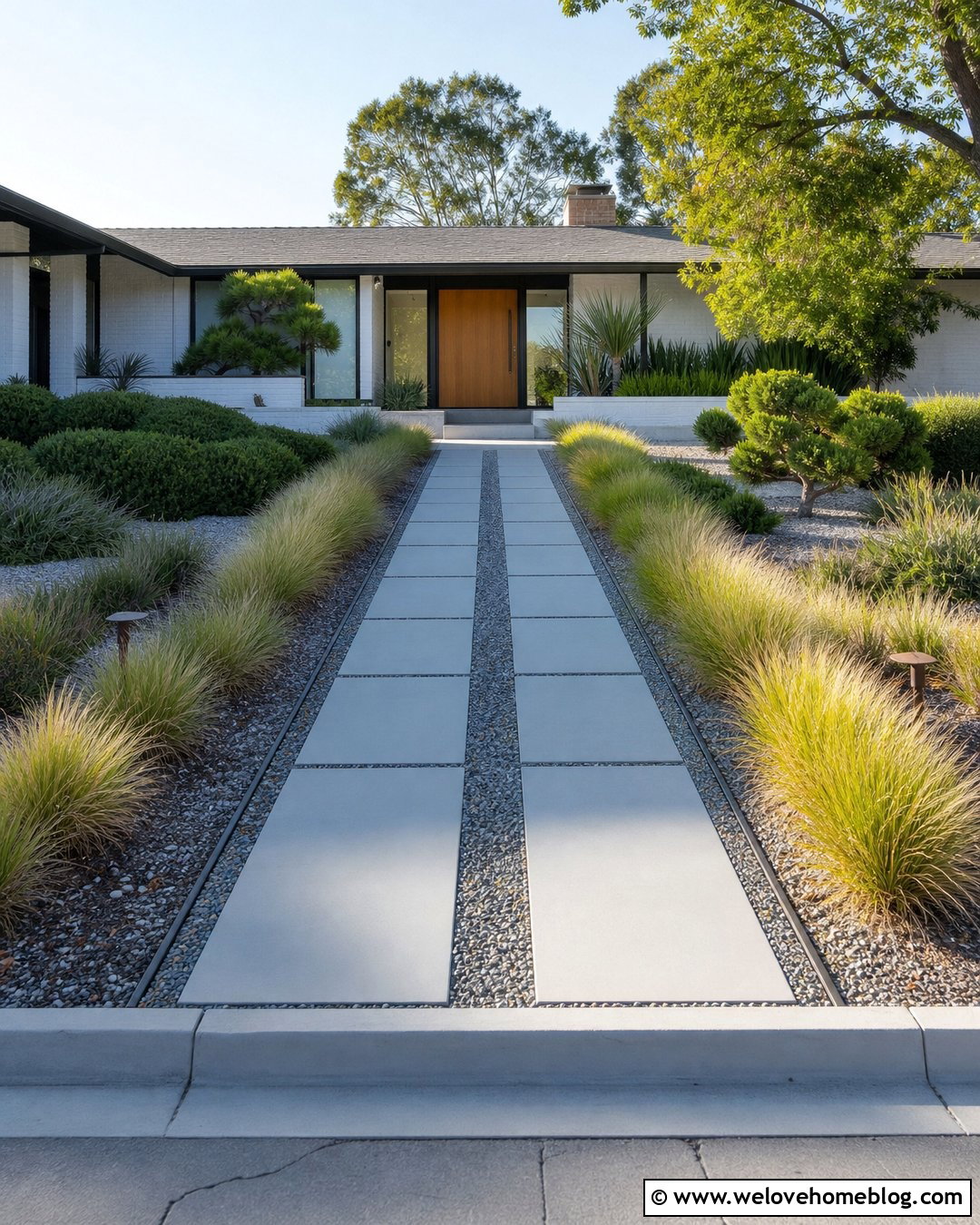
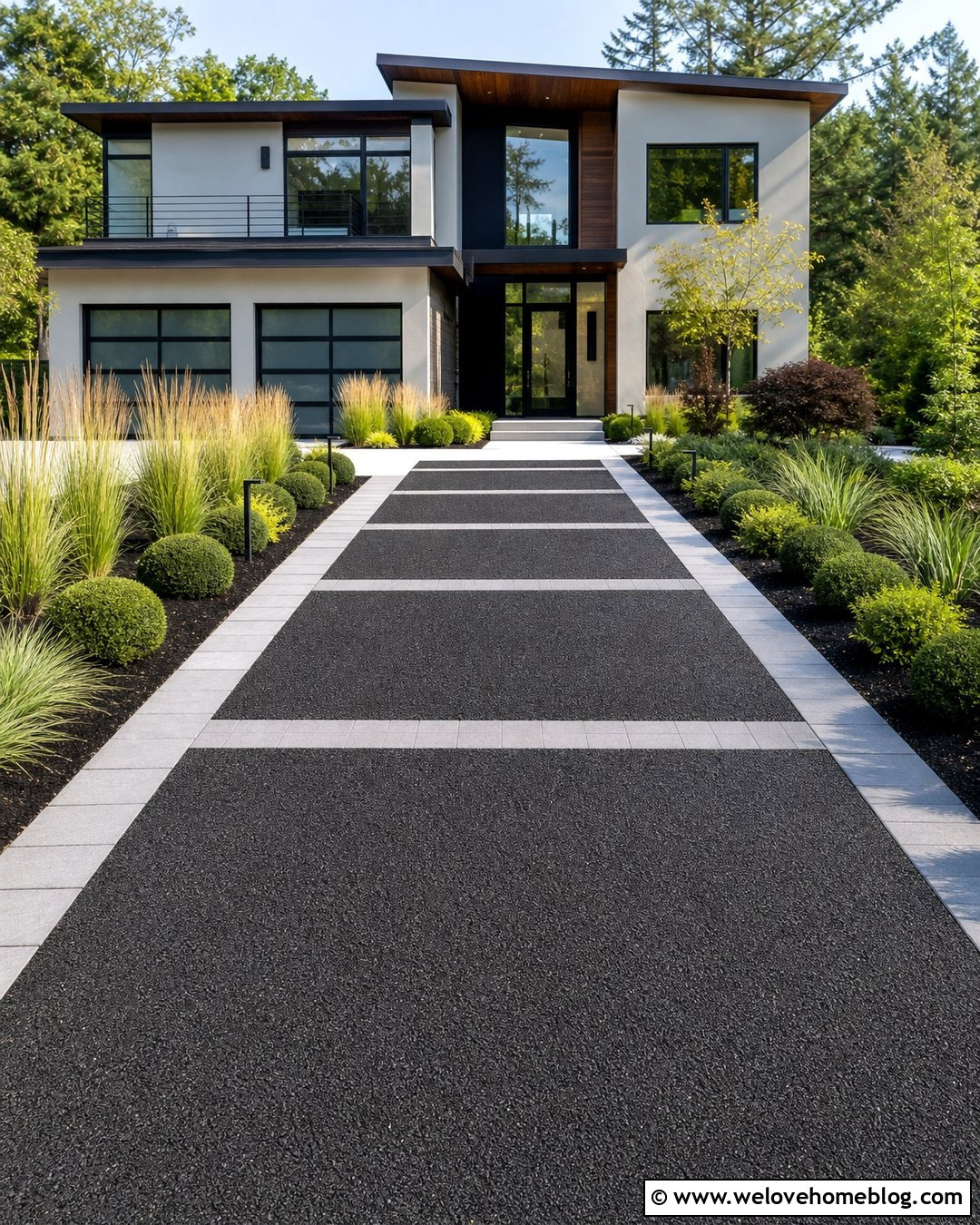
Concrete pavers can fit a tighter budget when they are used selectively rather than across every square foot. Lay large rectangular pavers in two driving tracks, leaving measured joints filled with compacted gravel. Continue gravel through the center and along the shoulders to reduce the total number of pavers. A straight layout simplifies cutting and creates a clean modern appearance. Choose one affordable stock color, such as light gray, and avoid complicated patterns. Low ornamental grasses and rectangular mulch beds can echo the geometry without costly hardscaping. Individual pavers can also be replaced if a unit becomes damaged. () This mixed-material driveway works especially well with contemporary homes, midcentury ranches, and updated split-level houses.
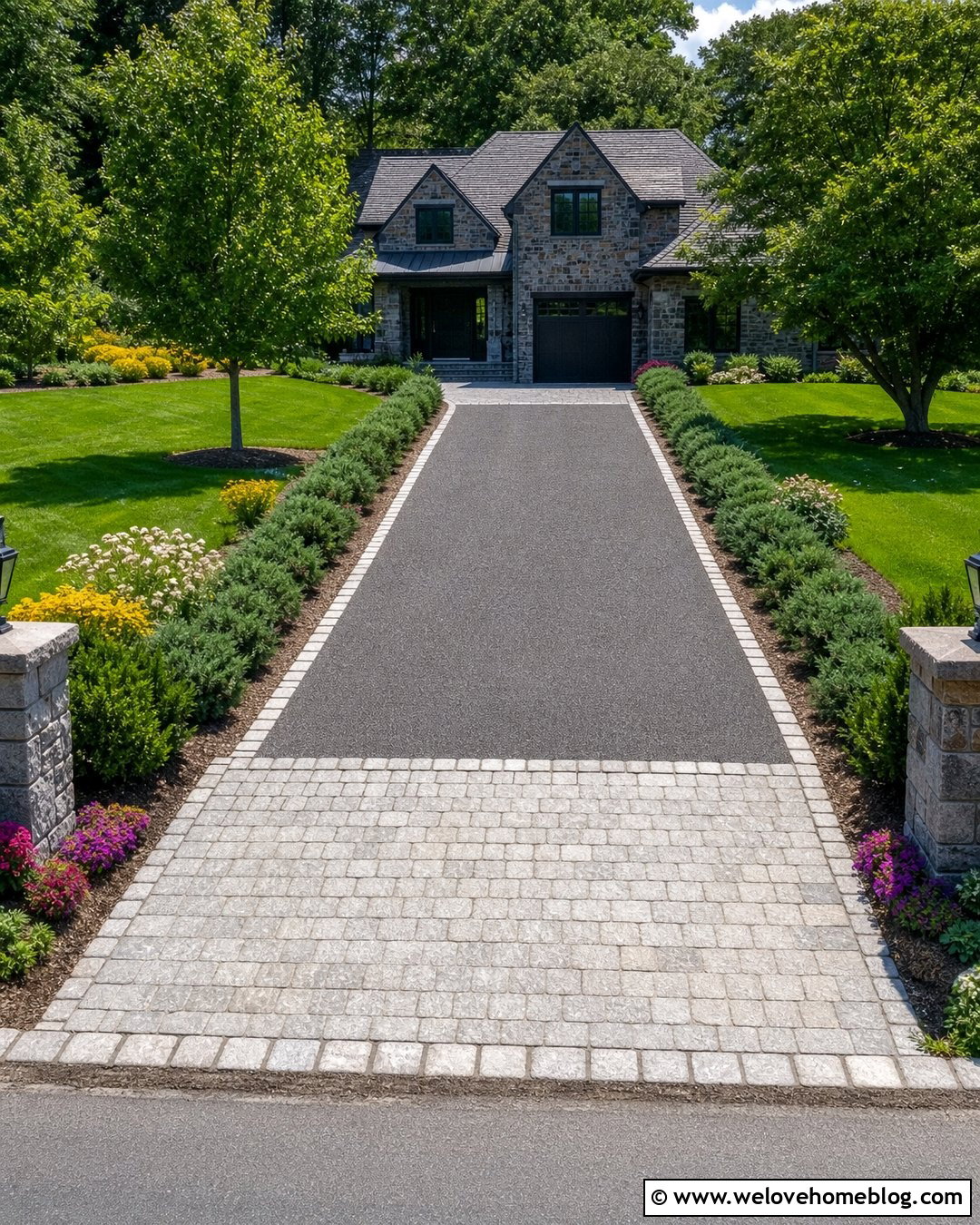
15. Gravel Driveway With Concrete Entrance Apron
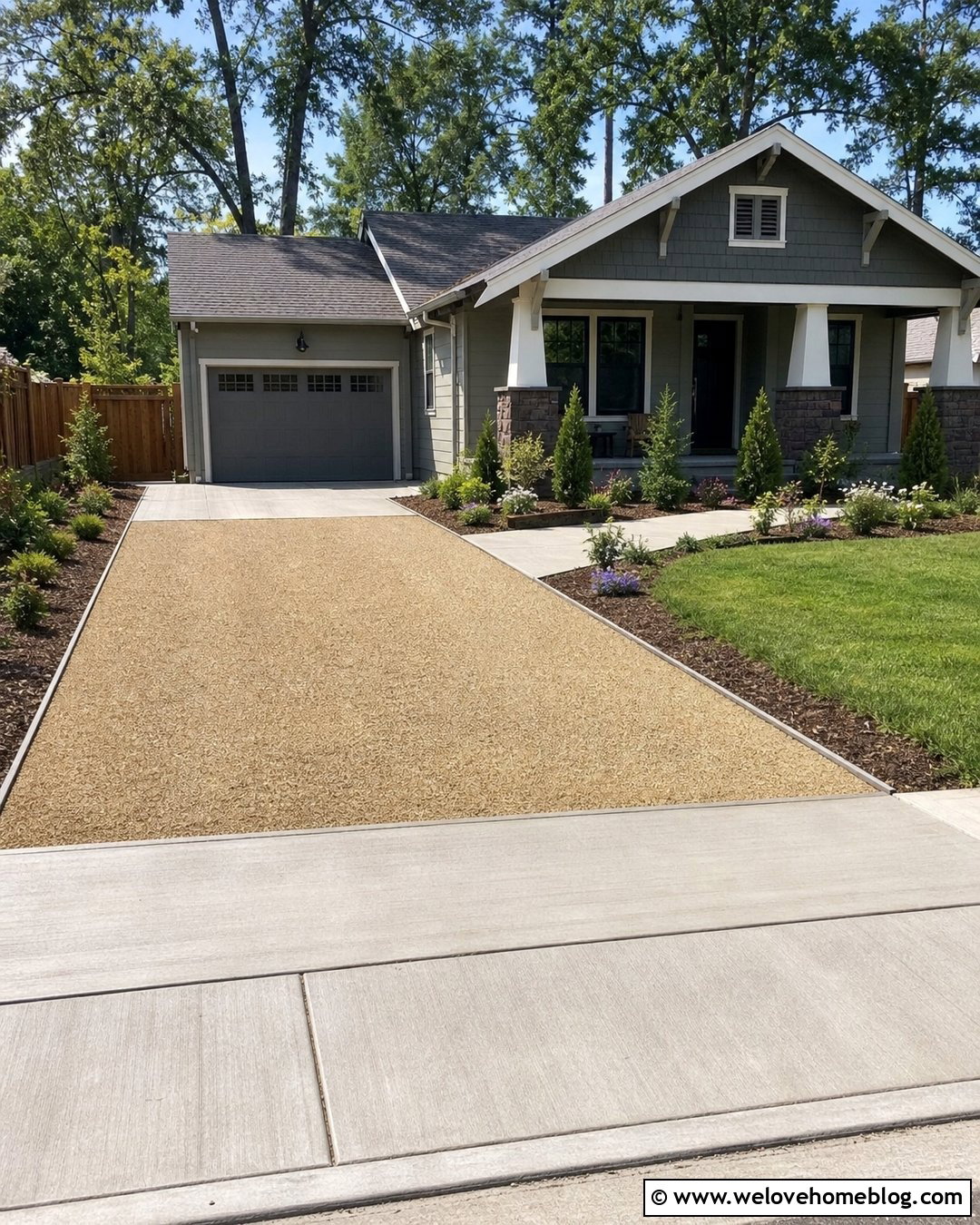
A concrete apron can give a basic gravel driveway a stronger, cleaner connection to the street. Pour a short band of broom-finished gray concrete across the full entrance width, then continue with compacted tan or gray crushed stone toward the house. The apron establishes a defined threshold and keeps the most visible portion looking polished. Edge the gravel with economical steel strips, treated lumber, or flush concrete curbs. At each side of the entrance, place a simple mulched bed with one evergreen shrub and low seasonal plants. Repeat the concrete near the garage if the budget permits. This combination concentrates the more expensive material where turning, braking, and gravel displacement often occur, while the larger central area remains an affordable loose-aggregate surface.
16. Resurfaced Asphalt Driveway With Clean Lawn Edges
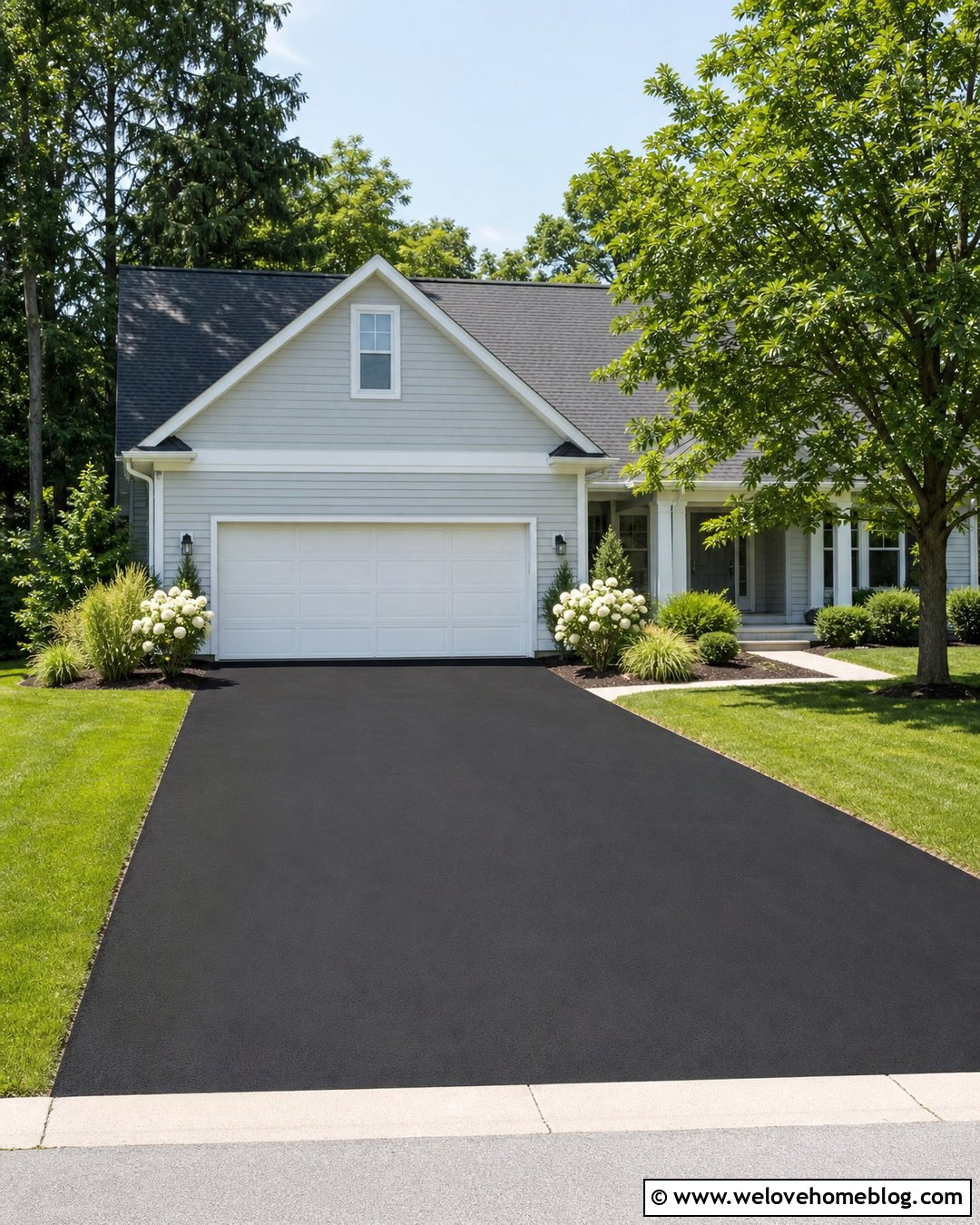
An older asphalt driveway may not require complete replacement if the base remains stable and the damage is limited. Professional resurfacing can provide a fresh black wearing layer, while crack repair and sealcoating may be enough for surfaces with only minor deterioration. Ask a qualified contractor to determine whether structural failure, drainage problems, or deep depressions make replacement necessary. Once the surface is renewed, sharpen the lawn edges and add narrow beds at the garage corners. White flowering shrubs or ornamental grasses create contrast against the dark pavement without requiring elaborate masonry. Keep the rectangular driveway shape unchanged to avoid extra excavation. This approach focuses the budget on improving an existing asset rather than rebuilding the entire entrance simply for a different decorative appearance.
17. Stained Concrete Driveway With Gravel Border
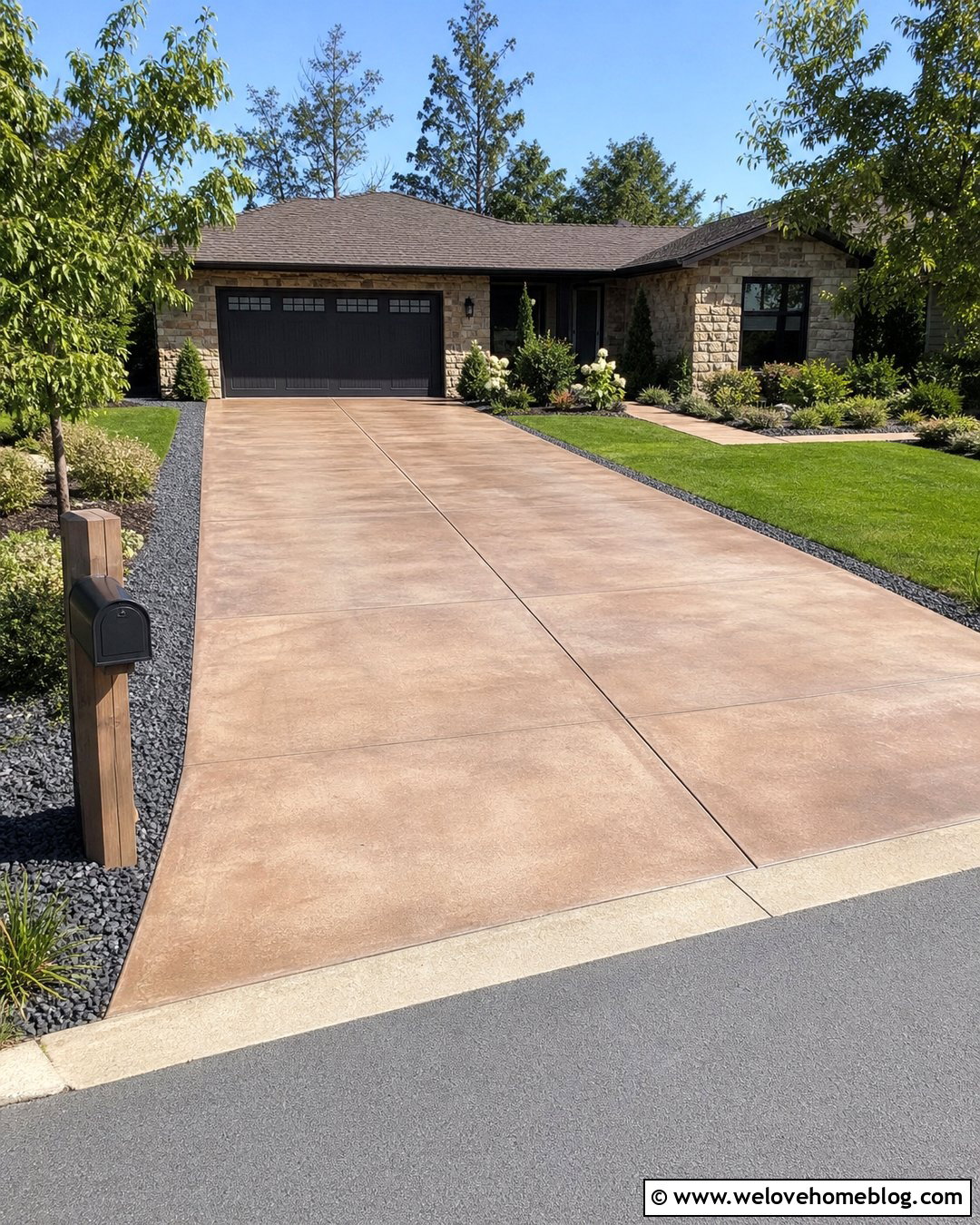
Structurally sound concrete can gain a warmer appearance through a compatible exterior stain instead of decorative demolition and replacement. Choose a light tan, muted brown, or soft charcoal color that works with the roof and facade. Preserve the original rectangular layout and control joints, then add a narrow crushed-gravel border along each side. The contrasting aggregate hides uneven lawn edges and gives the driveway a more designed finish. Use matching gravel around a mailbox or in small planting beds near the garage. Before staining, clean the surface carefully and repair appropriate minor defects. Test the product in an inconspicuous location because existing concrete may absorb color unevenly. Confirm that the selected coating is intended for driveways and will not create a dangerously slippery finish.
18. Compacted Road Base Driveway With Grass Shoulders
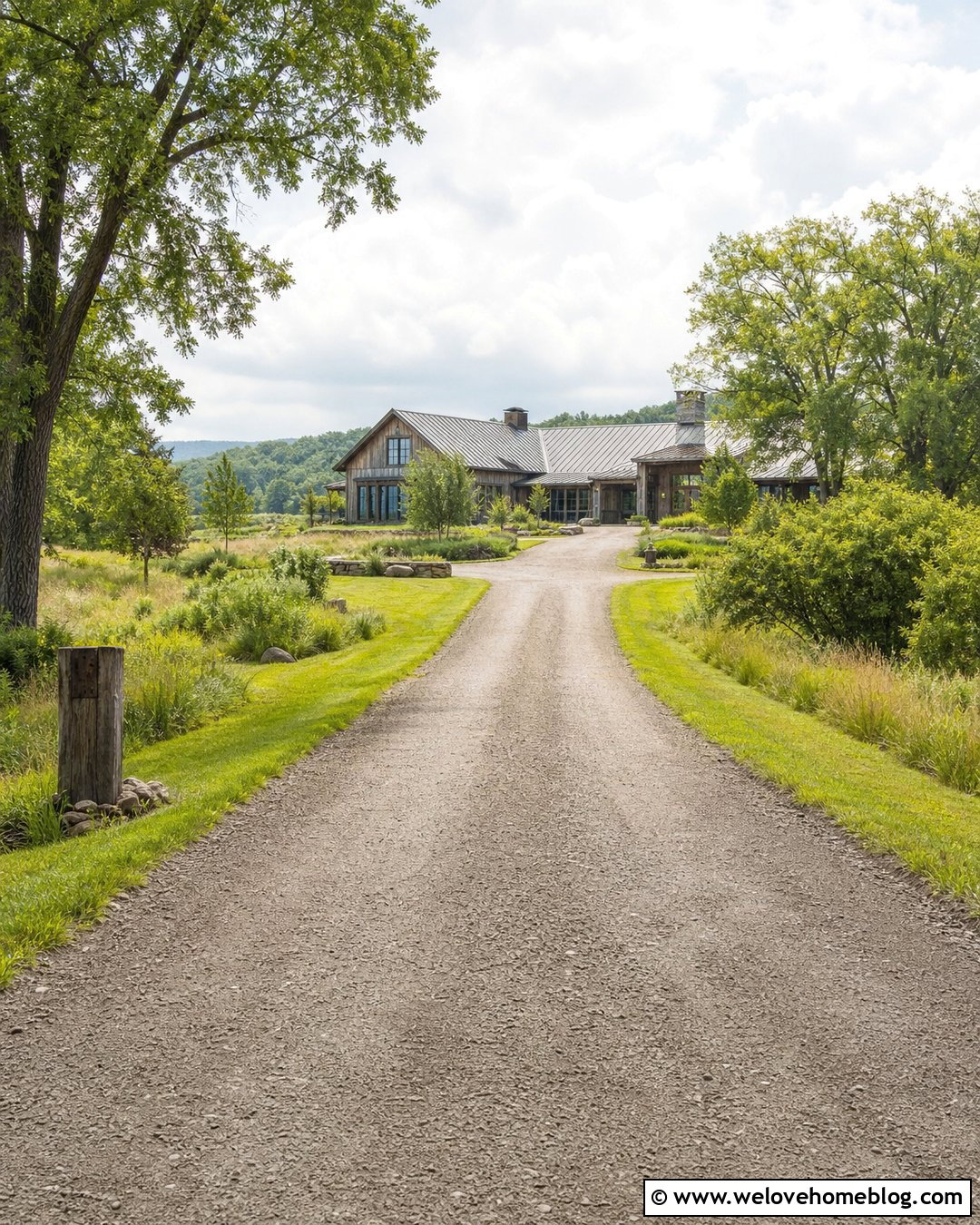
A compacted road base driveway offers a straightforward solution for rural properties, workshops, and secondary parking areas. The material usually contains mixed sizes of crushed aggregate that bind together more effectively than uniformly rounded stones. Shape the surface with a slight crown so water moves toward the sides instead of collecting in the driving path. Mowed grass shoulders provide the least expensive border, while shallow drainage swales can guide runoff away from buildings. At the entrance, use a simple timber address marker and two groups of hardy native shrubs. The muted gray-brown surface looks appropriate beside a barn-style home, cabin, or modest ranch house. Local aggregate terminology varies, so ask suppliers for a compactable driveway base rather than assuming every crushed-stone product performs the same way.
19. Gravel Parking Pad With Stepping Stone Walkway
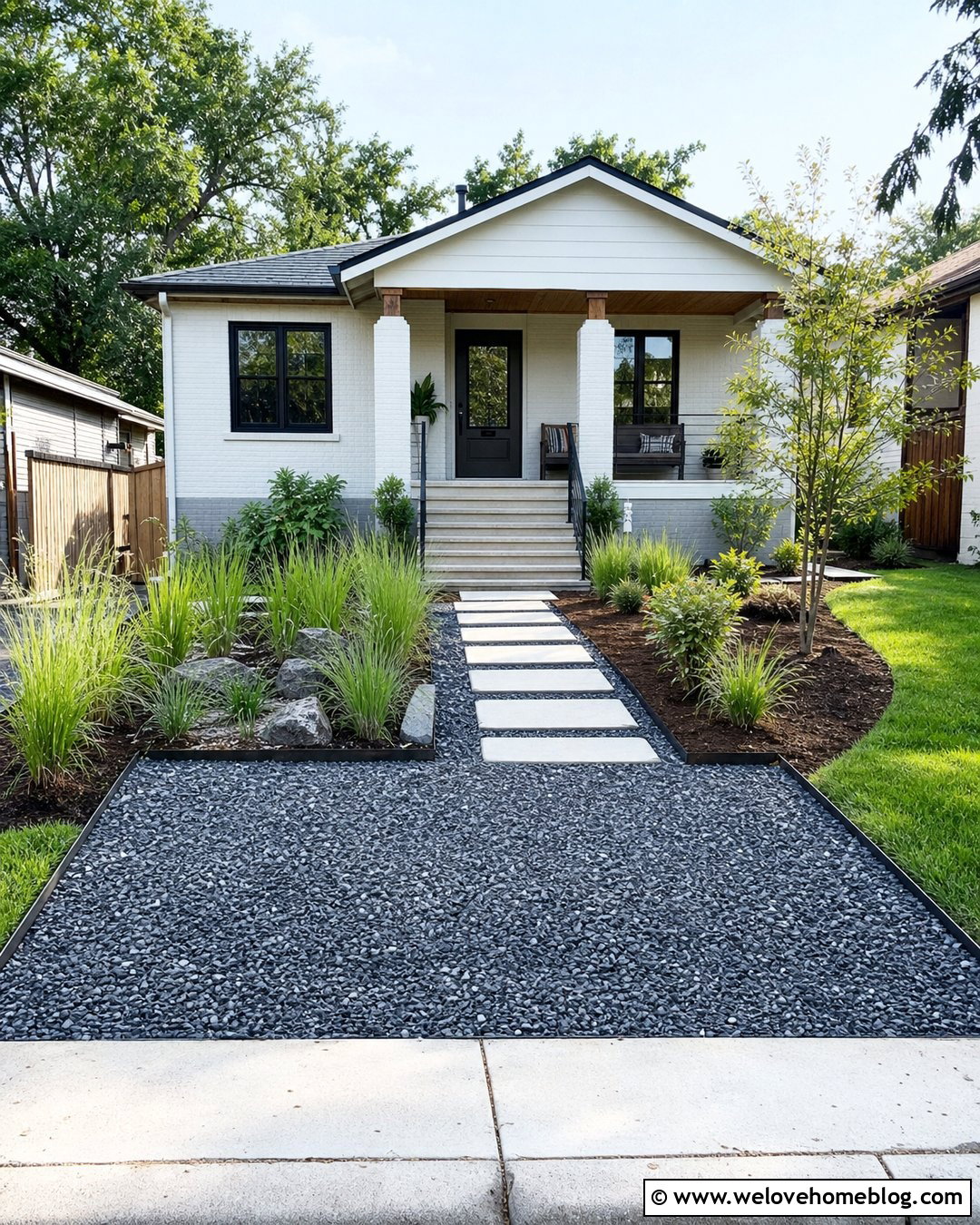
A short gravel parking pad can be more affordable than paving the entire front yard when the house sits close to the street. Use compacted charcoal crushed stone in a rectangular layout sized only for the vehicles and necessary door clearance. Install a straight line of large concrete stepping stones from the parking area to the porch so people have a stable walking route. Black metal edging keeps the gravel separated from lawn and mulch. Complete the design with a small rain garden or native planting bed positioned where it can receive runoff without blocking visibility. A limited footprint reduces material use and preserves more green space. Before construction, confirm local setback, curb-cut, parking, and drainage requirements, which can affect the allowed size and placement.
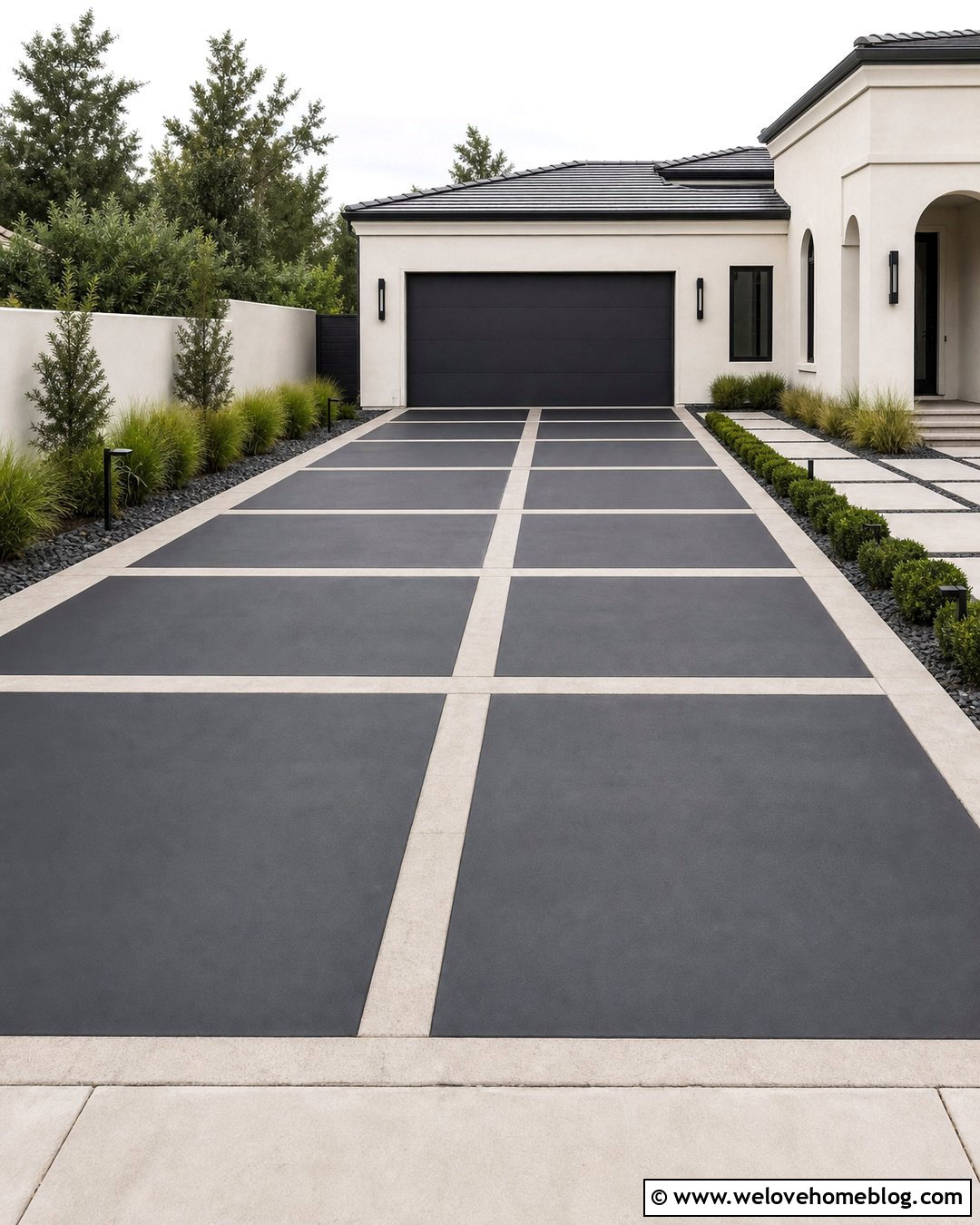
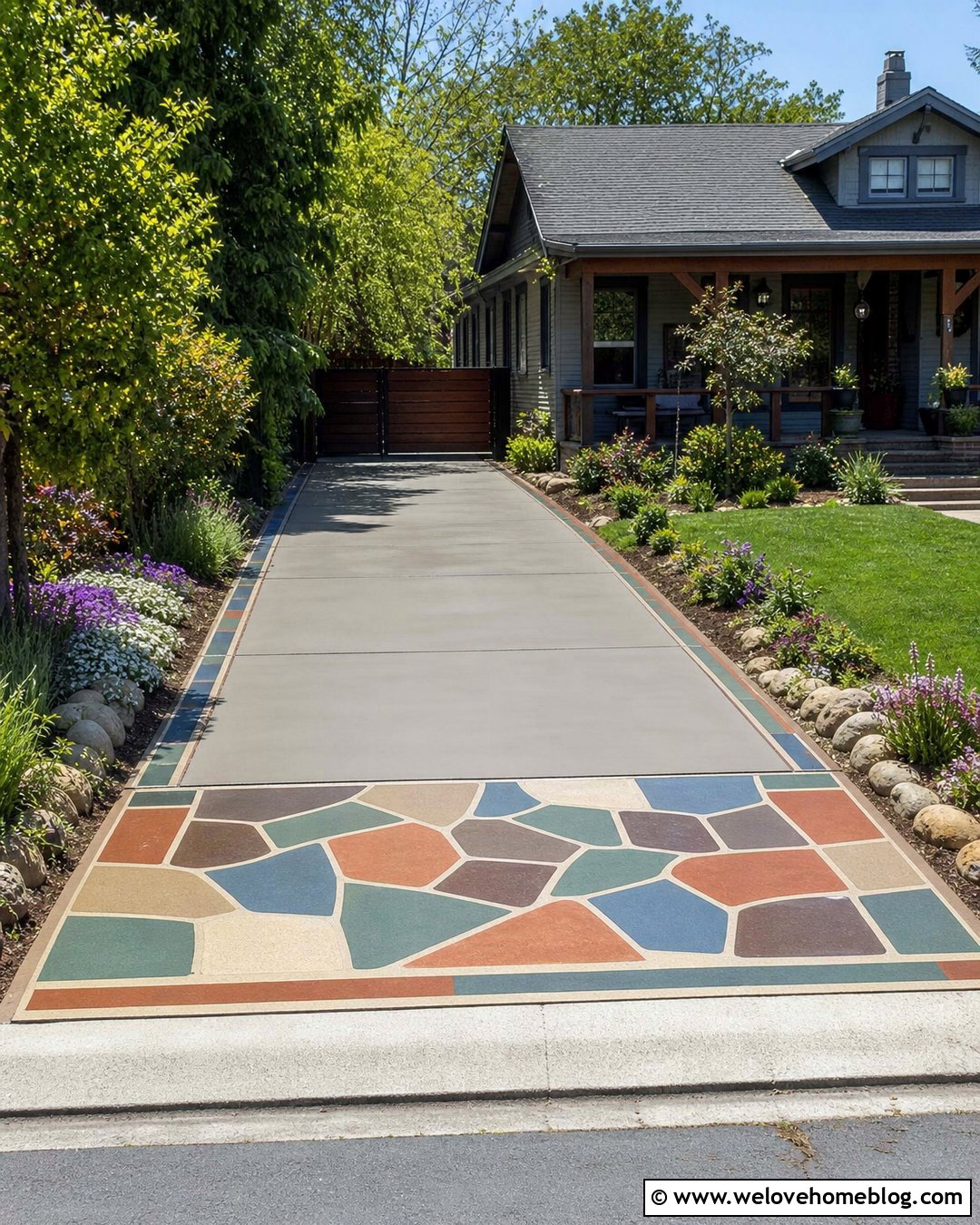
20. Curved Gravel Driveway With Native Planting
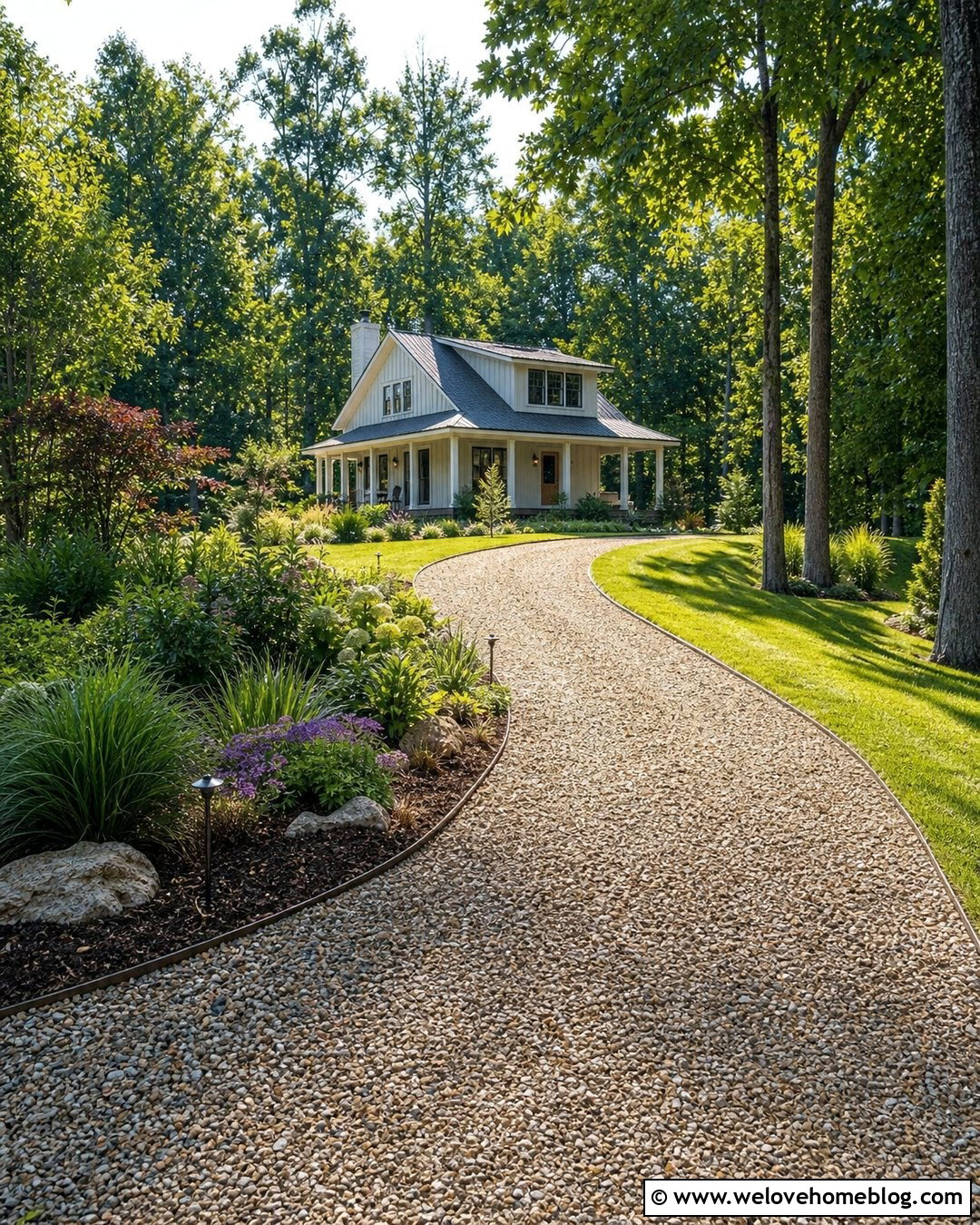
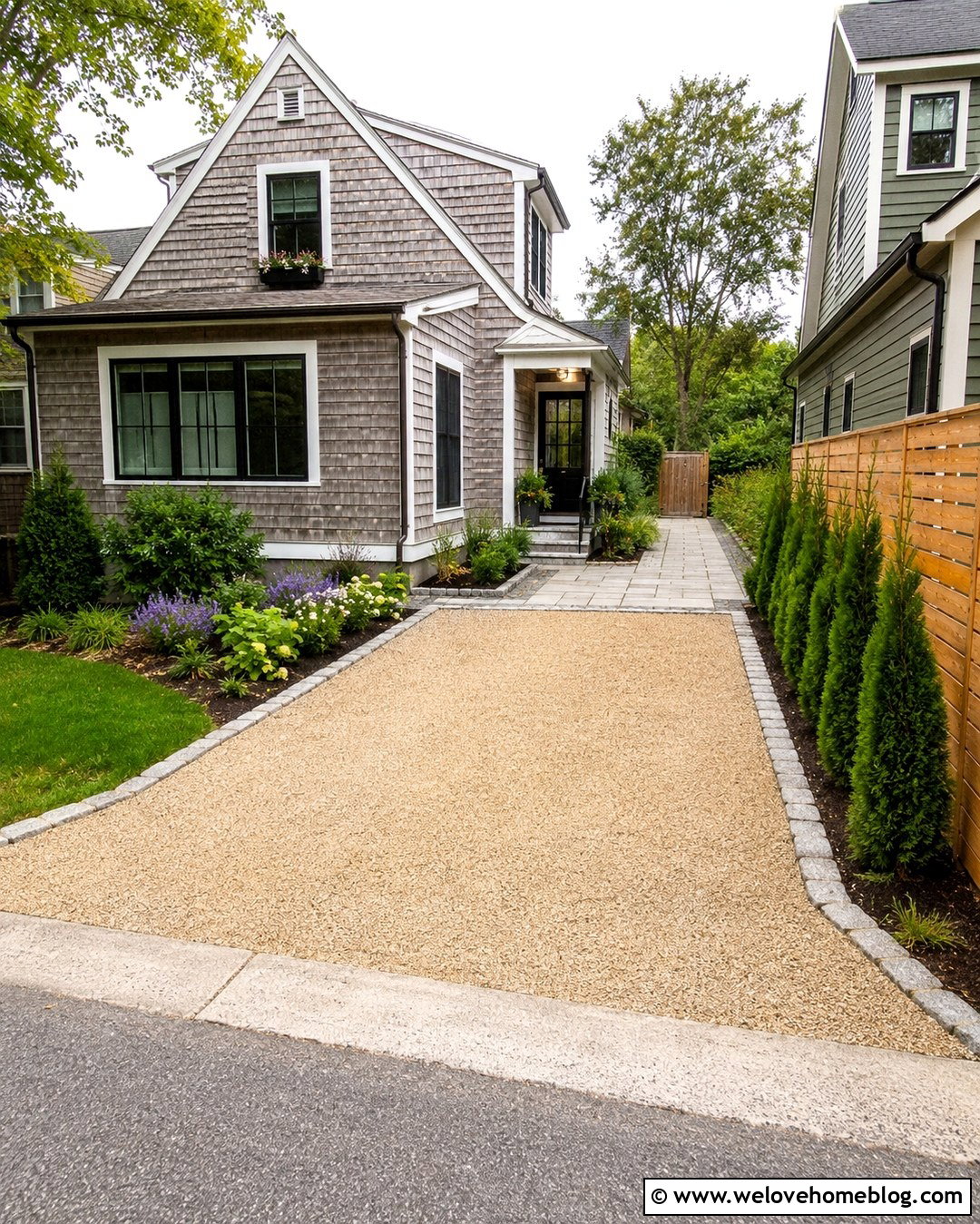
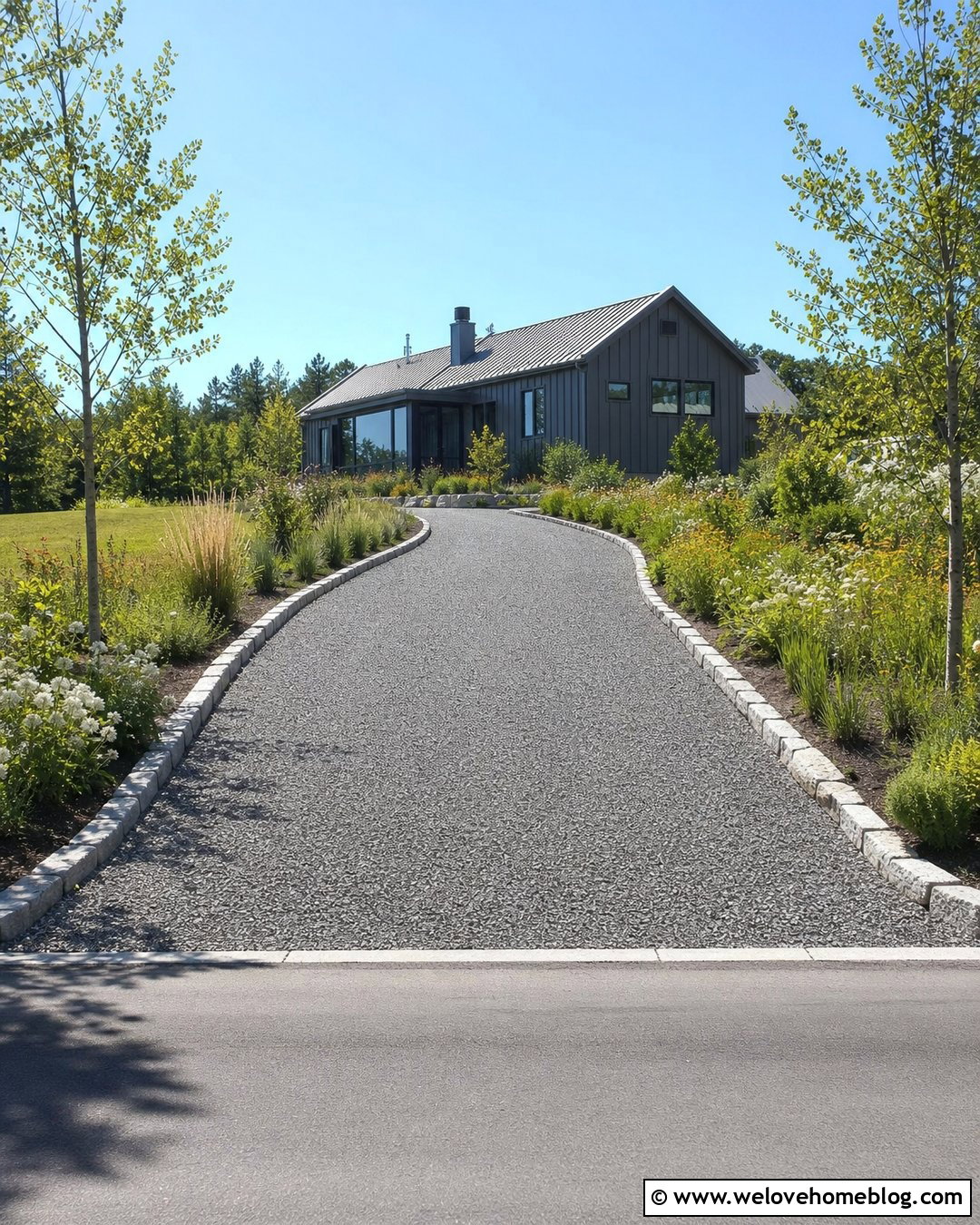
A narrow curved driveway can feel established and welcoming without expensive paving or formal masonry. Choose locally sourced gray or tan crushed gravel and follow the natural contours of the yard to reduce unnecessary grading. Use simple metal edging on the inside curve and a mowed grass shoulder on the outside. Concentrate native shrubs, flowering perennials, and ornamental grasses near the street and house rather than planting the full length. This creates two attractive focal points while controlling nursery costs. Add solar reflectors or low markers only where drivers need guidance. Keep mature plant sizes in mind so branches do not reduce visibility or scrape vehicles. The finished look suits cottages, wooded homes, and casual farmhouses while allowing the driveway to blend naturally into its surroundings.
Conclusion:
The best 20 Budget Friendly Driveway Ideas balance upfront savings with drainage, maintenance, and long-term performance. Gravel, crushed stone, recycled asphalt, and compacted road base can cover larger areas economically. Concrete tracks, grass grids, reclaimed brick ribbons, and small entrance aprons reduce the amount of premium material needed. Whatever look you choose, do not cut corners on excavation, grading, compaction, or water management. Those hidden details often determine how well the surface performs. Use simple shapes, locally available materials, restrained borders, and a few well-placed plants to stretch your budget. Always compare local quotes and confirm permit requirements before installation. A modest driveway can still look polished when every component supports one clear, practical design.

Related posts:
Leave a Reply