
Road base can create a durable, practical driveway without the higher cost of decorative paving. Made from graded crushed aggregate and fines, it compacts into a firm surface that suits rural homes, suburban properties, workshops, and long country entrances. However, the best results come from treating the driveway as a complete landscape feature. Shape, drainage, borders, planting, and the connection to the garage all matter. Because aggregate names and blends vary by region, ask local suppliers for a compactable road base rather than relying only on a product number. Proper grading is equally important because dense road base does not drain as freely as clean stone. () These 20 Road Base Driveway Ideas offer attractive, realistic ways to plan the entire approach.

1. Straight Road Base Driveway With Steel Edging
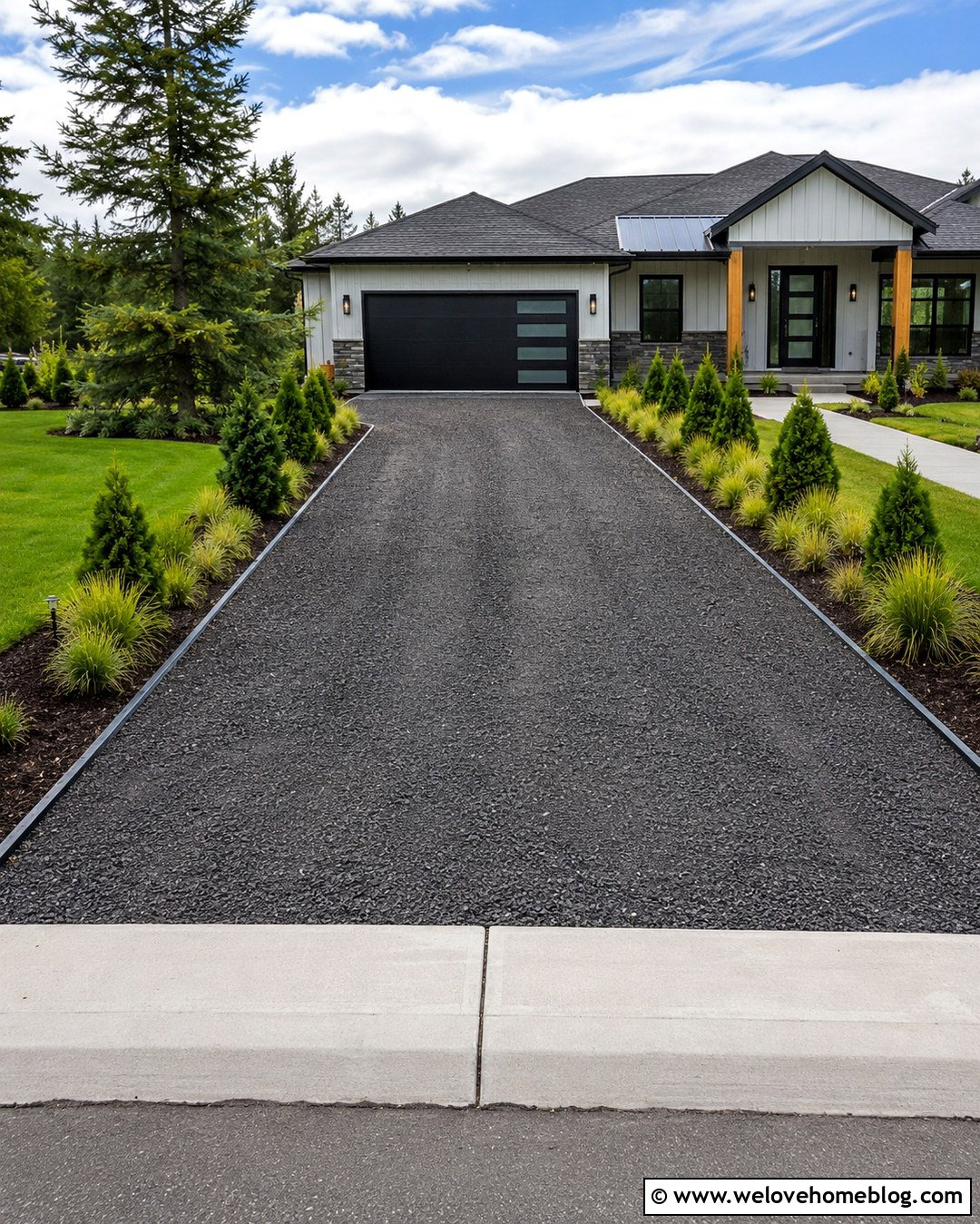
A straight road base driveway creates a clean, efficient route from the street to the garage. It works especially well beside a modern ranch or simple contemporary home. Use compacted gray road base for a smooth, consistent surface, then install dark steel edging along both sides. The edging gives the loose material a precise boundary and prevents the lawn from slowly creeping into the driving area. Add narrow planting beds with ornamental grasses, dwarf evergreens, and low ground cover to soften the long lines. A matching concrete walkway can branch toward the front door near the garage. Keep the driveway slightly crowned or cross-sloped so rain moves toward the planted edges instead of collecting in tire paths.
2. Curved Road Base Driveway With Stone Borders
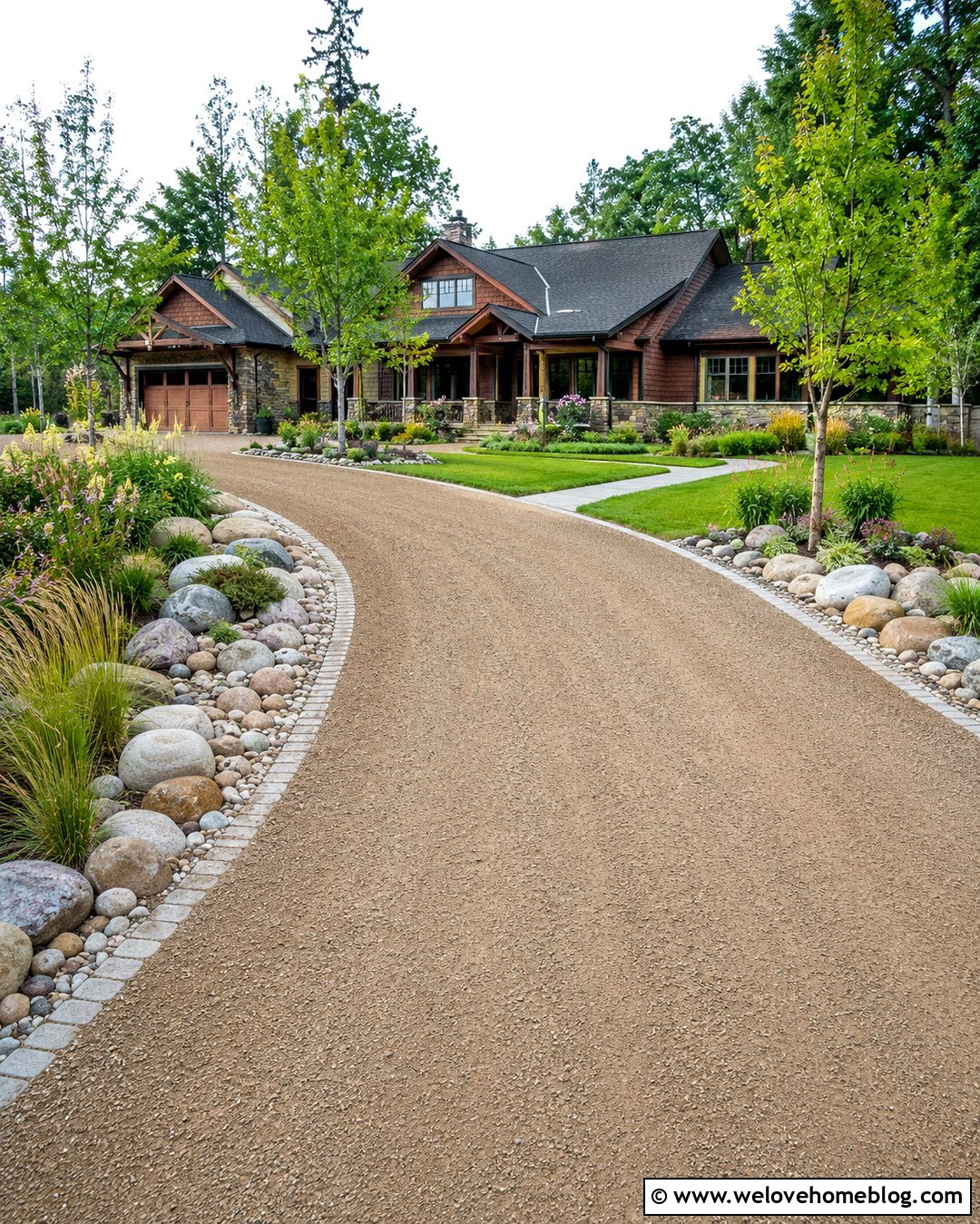
A gently curved driveway makes the approach feel more natural while revealing the house gradually. Choose compacted tan road base to complement a Craftsman home with stone siding or warm wood details. Large fieldstone borders can follow the outside curve, while a lower flush-set cobblestone edge defines the inside. This combination controls aggregate without making the driveway look overly formal. Plant sweeping groups of native grasses, flowering shrubs, and compact trees beyond the border. Keep plants low near the street so drivers can see approaching traffic. The curve should remain wide enough for comfortable turns and delivery access. A broad road base surface with stable shoulders will look relaxed while still feeling carefully planned and finished.
3. Circular Road Base Driveway With Center Landscaping
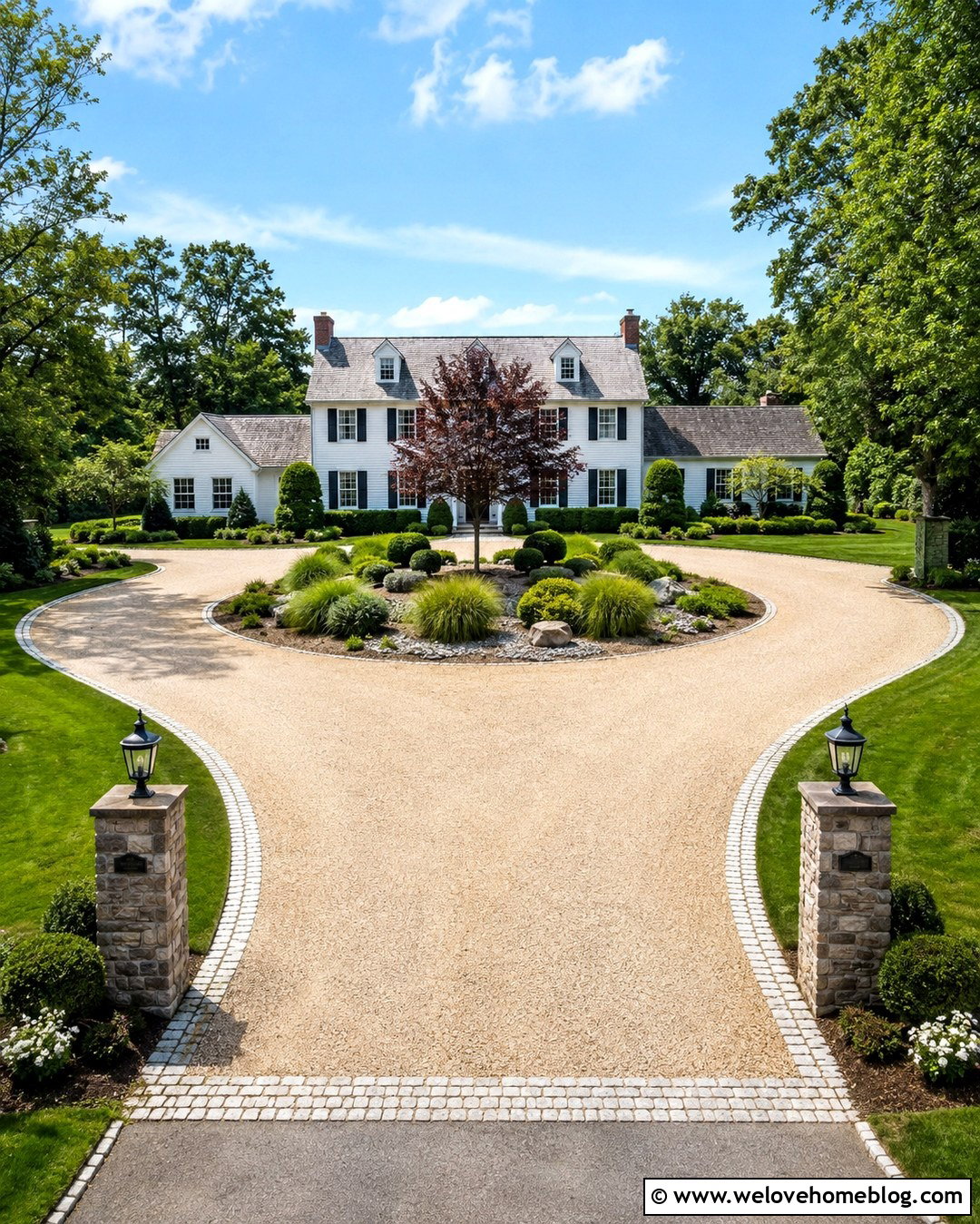
Do you have enough front-yard space for a driveway that eliminates difficult backing? A circular road base driveway can provide a smooth arrival and departure route while creating an impressive landscaped centerpiece. Use compacted buff-colored limestone road base around a large oval or circular island. Edge the inner and outer curves with flush cobblestones that help preserve the shape without creating harsh raised obstacles. In the center, combine one small ornamental tree with drought-tolerant shrubs, grasses, and stone mulch. Keep the tallest planting away from important sightlines. Two defined entrances can be marked with matching boulders or low masonry columns. The completed design feels appropriate for a Colonial, country, or traditional brick home without requiring a fully paved surface.
4. Road Base Driveway With Timber Edging
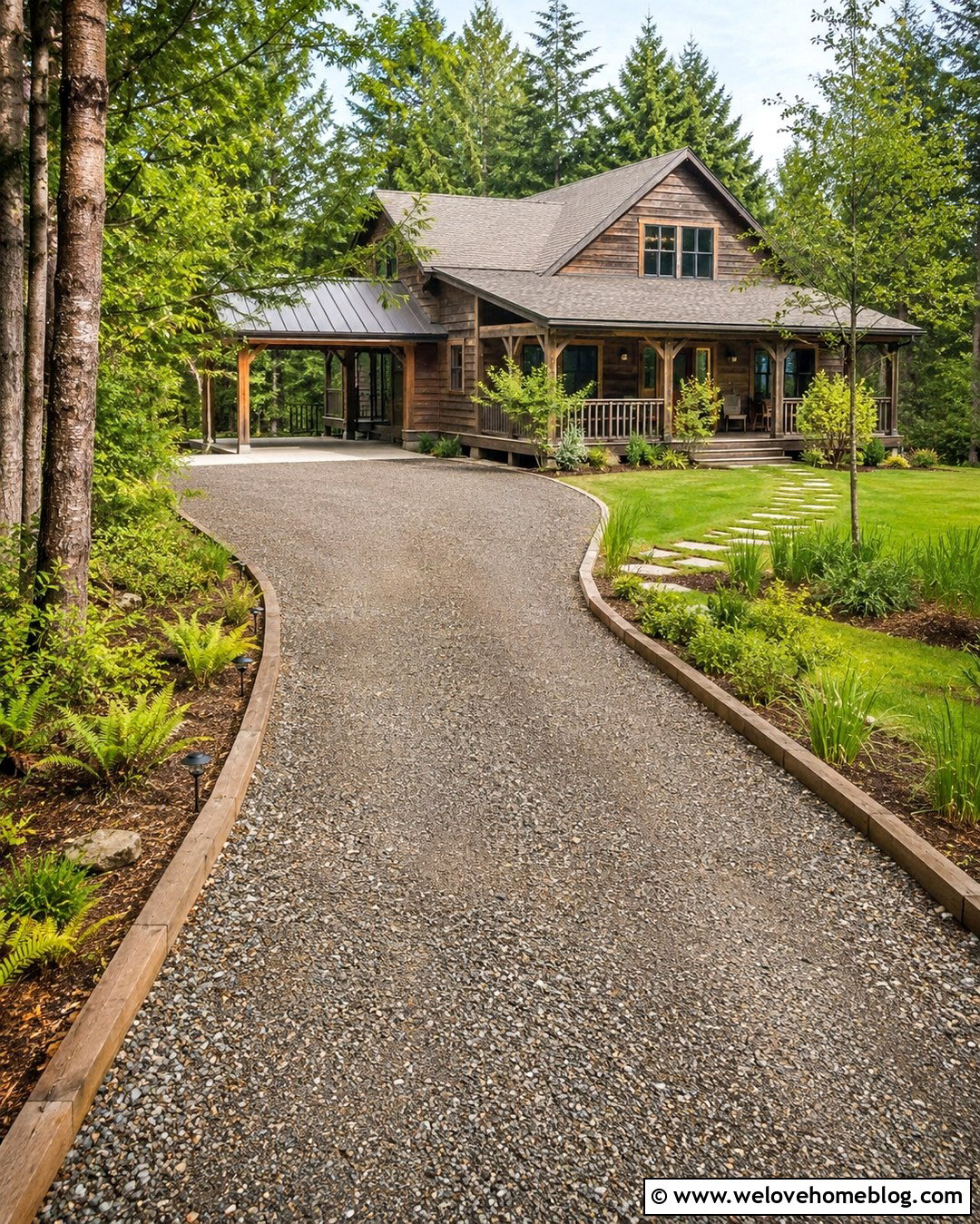
Warm timber edging can make an affordable road base driveway feel organized and intentionally rustic. This look suits cabins, farmhouses, wooded properties, and casual ranch homes. Begin with compacted brown-gray road base arranged in a straight or softly curving layout. Use pressure-treated landscape timbers or naturally durable wood along each side, securing them firmly so they resist movement from tires and maintenance equipment. Beyond the timber, plant ferns, native shrubs, woodland grasses, or informal perennial beds. A simple stepping-stone walkway can connect the parking area with the porch. Avoid placing wood where runoff regularly sits, since persistent moisture can shorten its useful life. The finished driveway should feel natural, but its edges, width, and drainage still need clear structure.
5. Tree-Lined Road Base Driveway
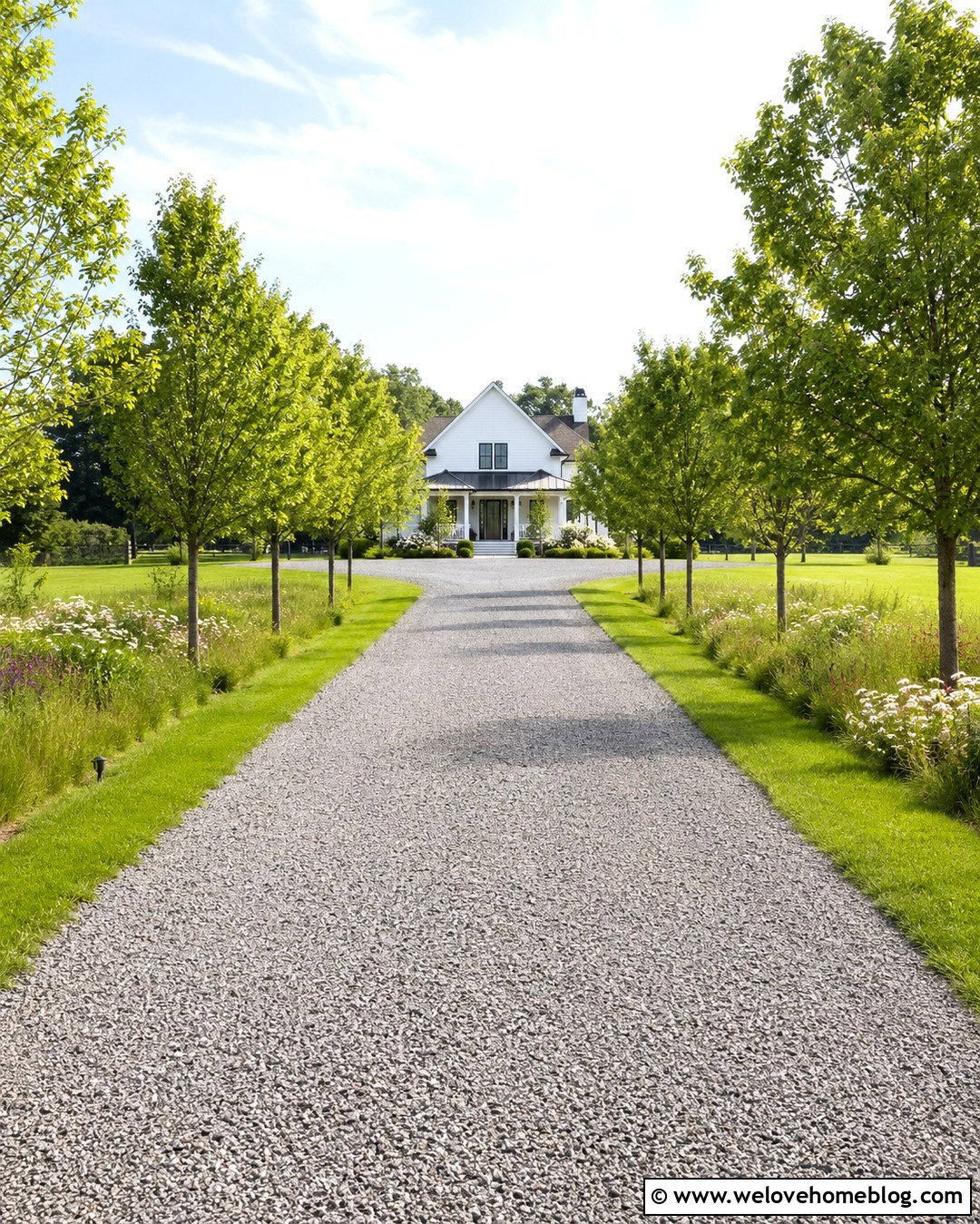
Few layouts create a stronger sense of arrival than a long driveway framed by evenly spaced trees. Use compacted gray or tan road base for a broad, gently crowned driving lane leading toward a modern farmhouse. Keep a generous grass shoulder between the road base and each tree so roots have room and vehicle doors can open comfortably. Smaller flowering trees provide seasonal color, while upright deciduous trees create a more formal avenue. Add low native grasses between trunks rather than dense shrubs that could make the entrance feel narrow. A gravel turnaround or parking court near the house can repeat the same material. Plan mature canopy size carefully and avoid species with aggressive surface roots near the driveway. This produces a balanced, welcoming country approach.
6. Modern Road Base Driveway With Concrete Bands
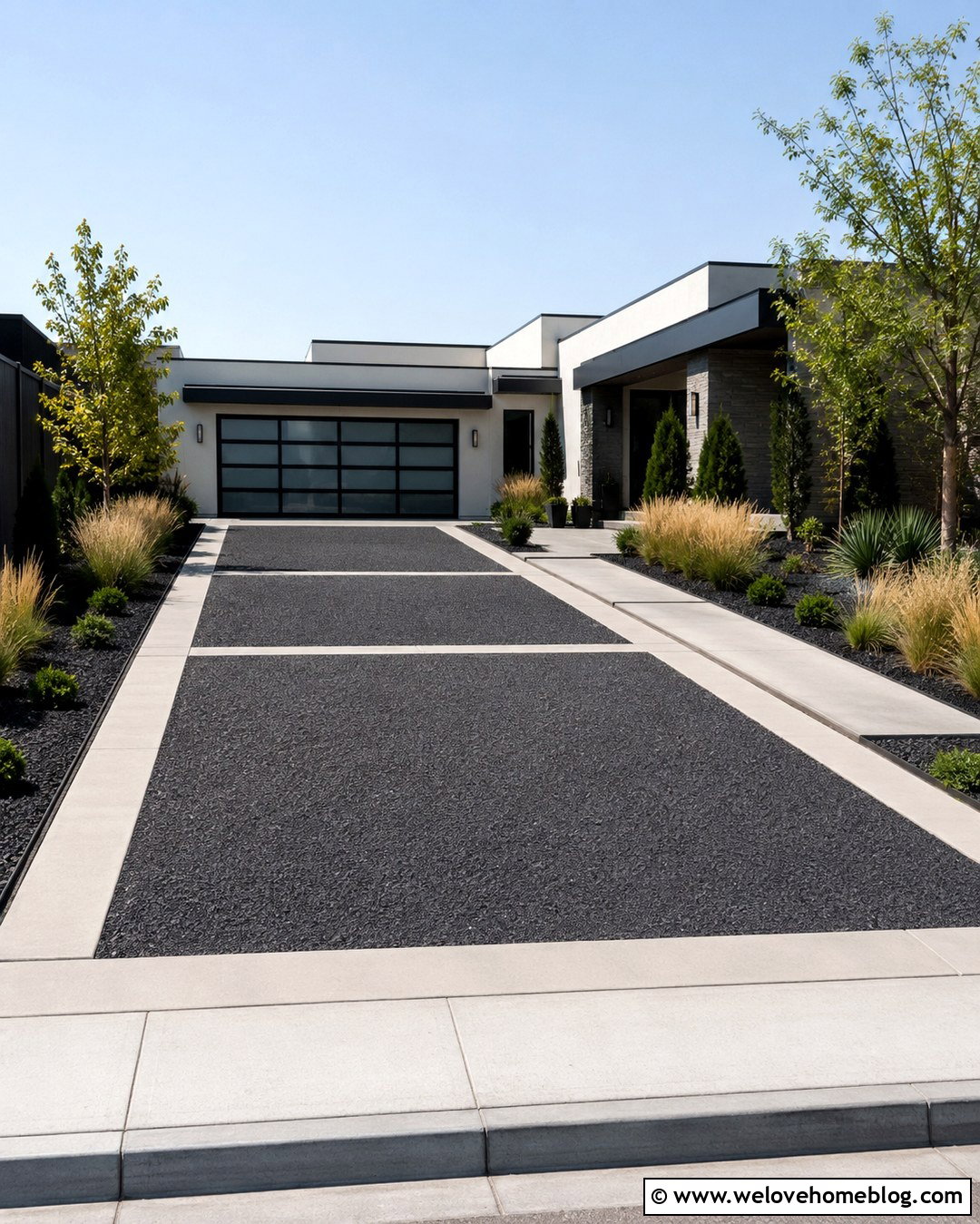
Road base can work with modern architecture when its informal texture is balanced by crisp geometric details. Choose finely graded charcoal road base and divide a wide straight driveway with flush poured-concrete bands. The bands can mark the entrance, parking bays, or transition into the garage apron. Use simple steel edging to hold clean boundaries along rectangular planting beds. Fill those beds with sculptural grasses, compact evergreen shrubs, and dark landscape rock. A smooth concrete walkway beside the driveway can echo the bands and guide visitors toward the entrance. Keep the material palette limited so the aggregate remains visually calm. This complete look combines the affordability of road base with the strong lines commonly associated with contemporary homes, without turning the driveway into one large concrete slab.
7. Road Base Driveway With Brick Entrance Apron
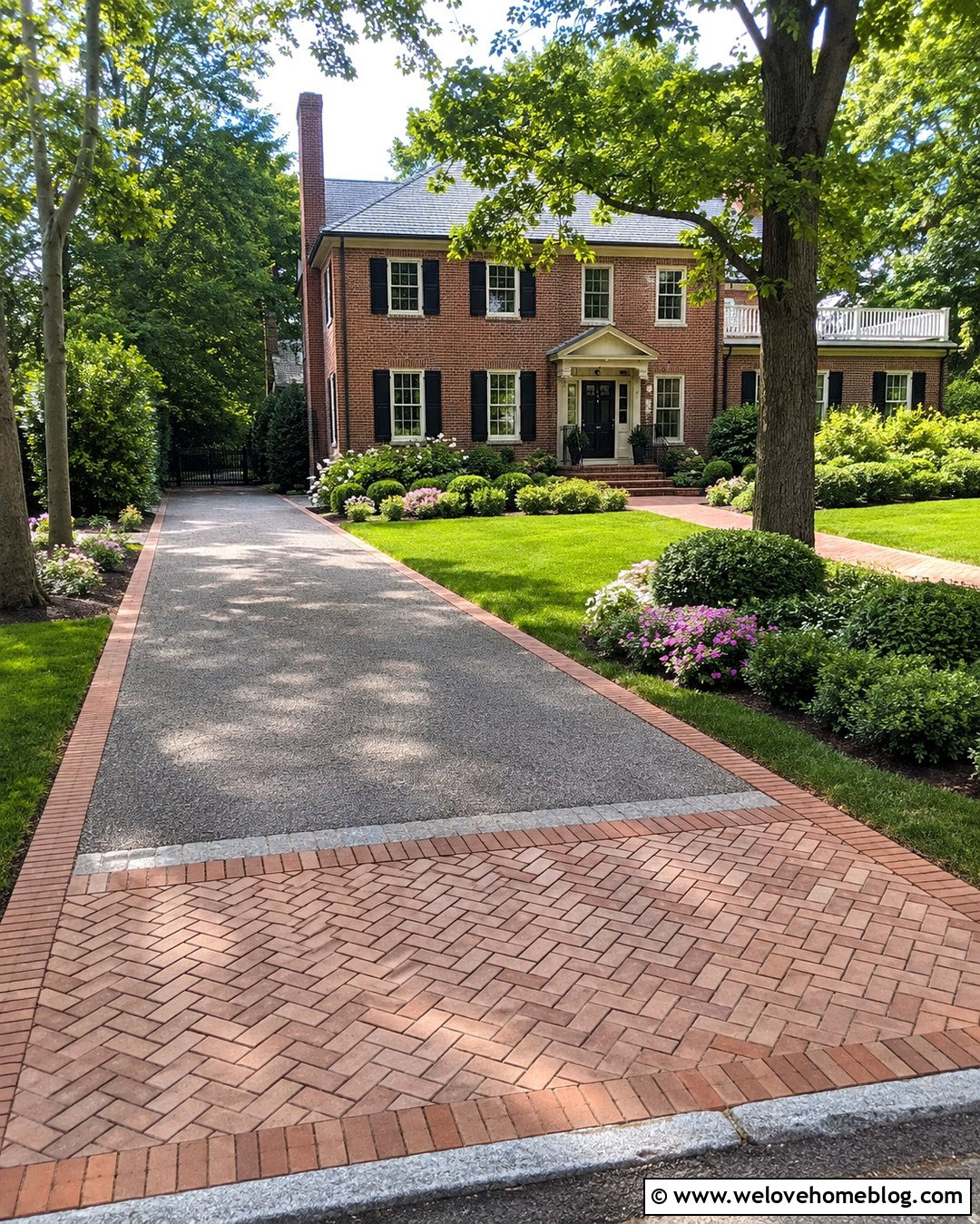
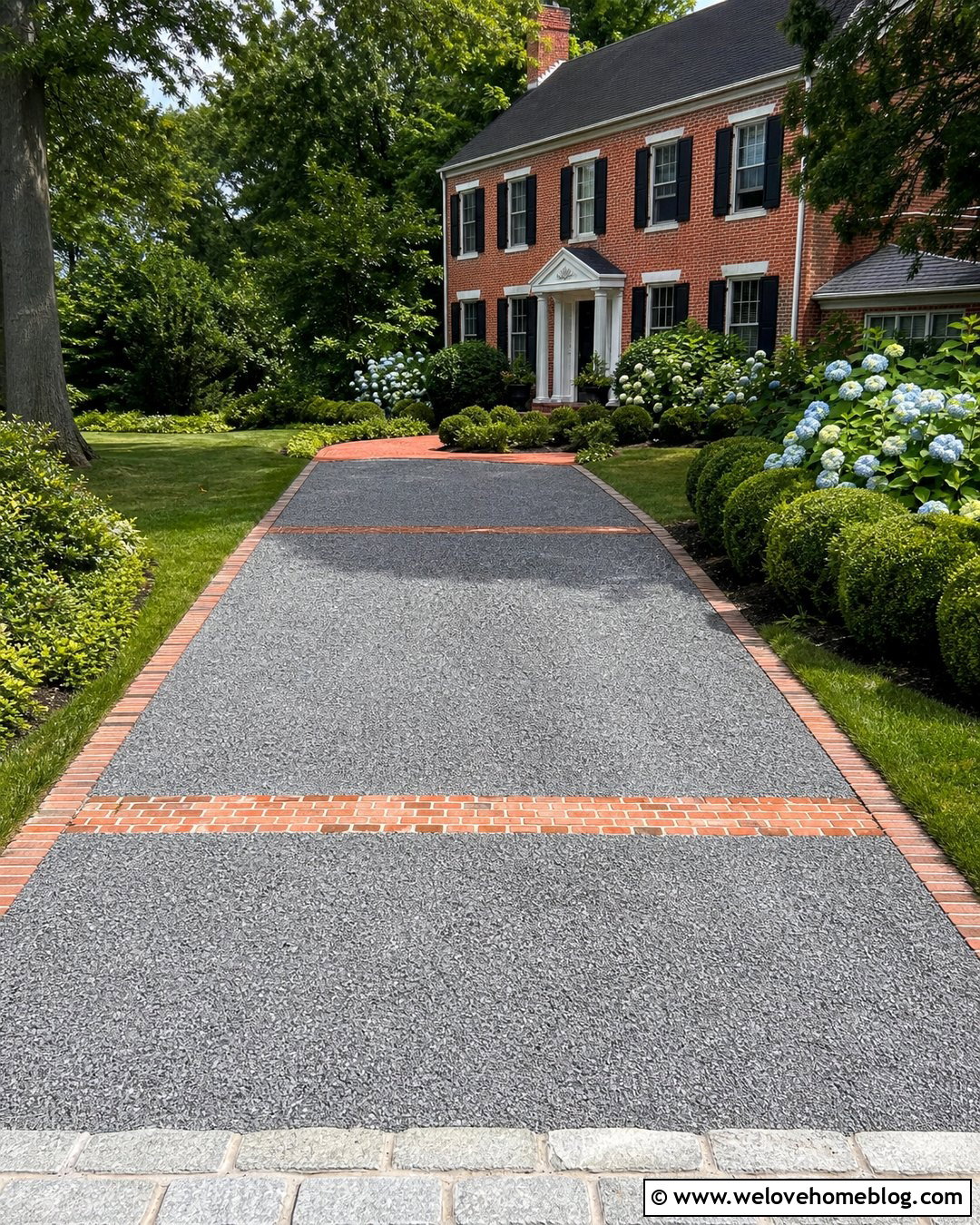
An entrance apron gives a basic road base driveway a more polished connection to the street. Install clay brick pavers in a herringbone pattern across the first several feet, then transition into compacted warm-gray road base. Continue a single flush brick ribbon along both driveway edges to visually connect the apron with the house. This treatment works beautifully with Colonial, Cape Cod, and traditional brick homes. Low boxwood-like shrubs, flowering perennials, and a neat lawn can frame the opening without blocking visibility. The apron also creates a clear place for vehicles to cross the edge of the public road. Check local requirements before modifying the entrance, drainage ditch, or right-of-way. Make the transition level and well supported so loose aggregate does not scatter across the bricks.
8. Sloped Road Base Driveway With Drainage Swales
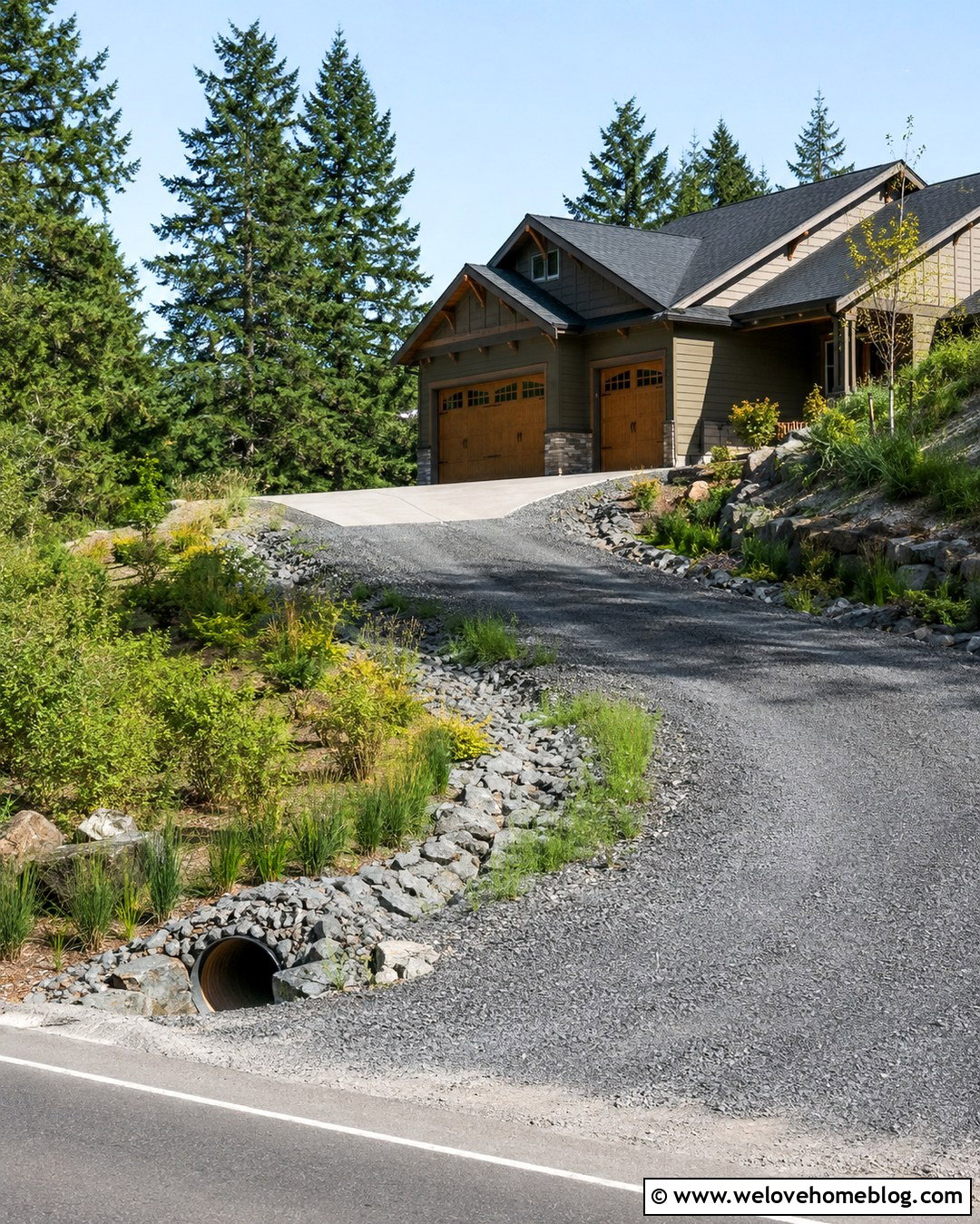
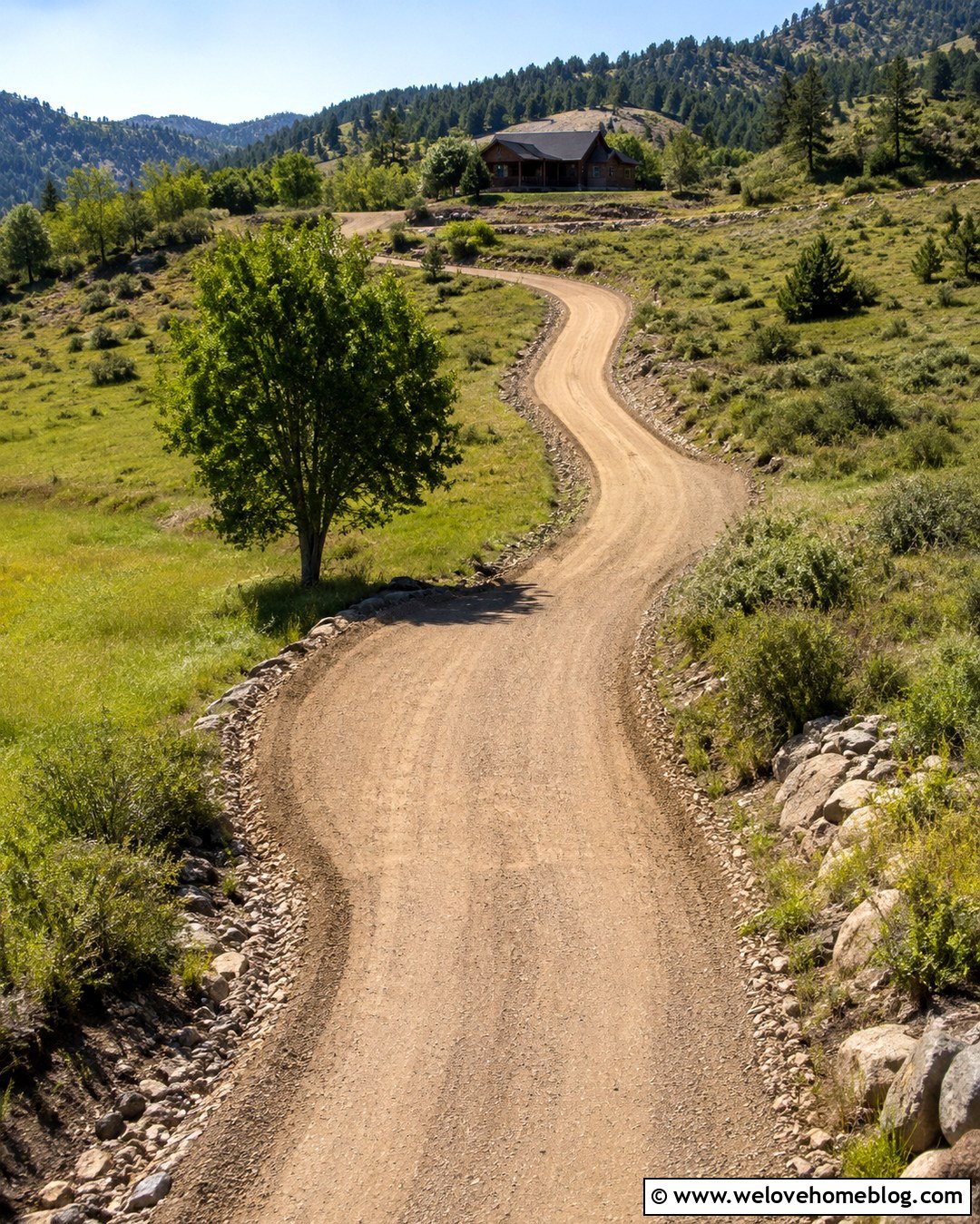
A sloped driveway needs more than an attractive surface. Water must leave the road base without racing down the tire tracks or washing out the shoulders. Design a gently curving, compacted crushed-stone road base driveway with a controlled crown and shallow vegetated swales along the downhill edges. Dense road base contains fines that improve compaction, but those fines can become moisture-sensitive when water remains trapped. () Line vulnerable sections with larger angular stone and use a properly sized culvert where runoff must cross the entrance. Deep-rooted grasses and erosion-resistant ground covers can stabilize the banks. Add a concrete or paver garage apron at the top, creating a clean transition while keeping loose aggregate away from the garage floor.
9. Narrow Road Base Driveway With Flush Edging
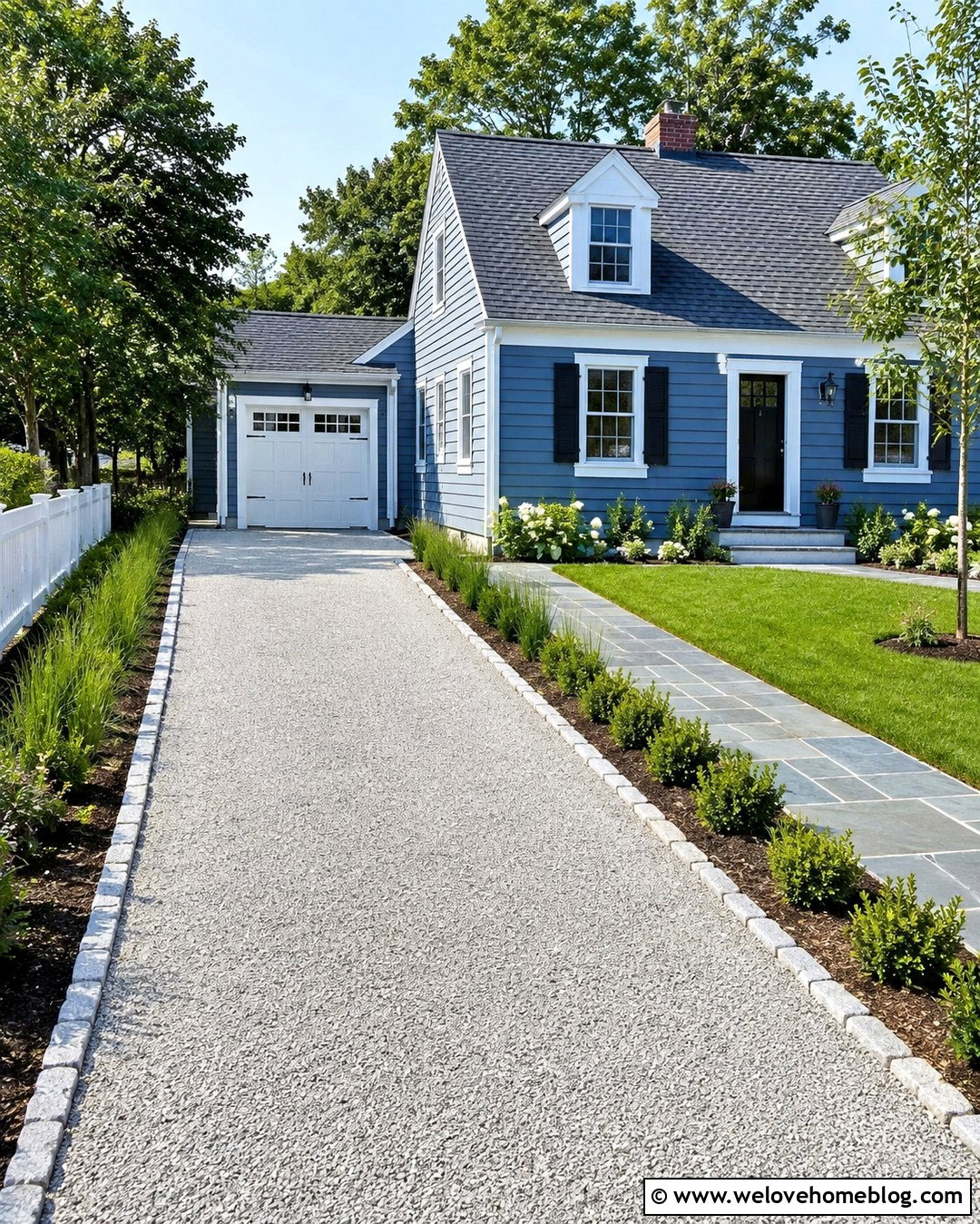
When the front yard is small, a narrow road base driveway can preserve more planting space without looking cramped. Run a compacted light-gray road base lane beside a Cape Cod or small bungalow, widening it only near the garage or parking pad. Flush concrete curbs or granite setts will define the edges while allowing car doors and tires to pass safely over them when necessary. Plant low ground covers, dwarf shrubs, and upright grasses in slim beds along the property line. A parallel flagstone walkway can share the same visual corridor without blending into the driving surface. Keep tall hedges away from tight turns and the street entrance. The goal is a streamlined layout that provides practical access while leaving enough greenery to maintain welcoming residential curb appeal.
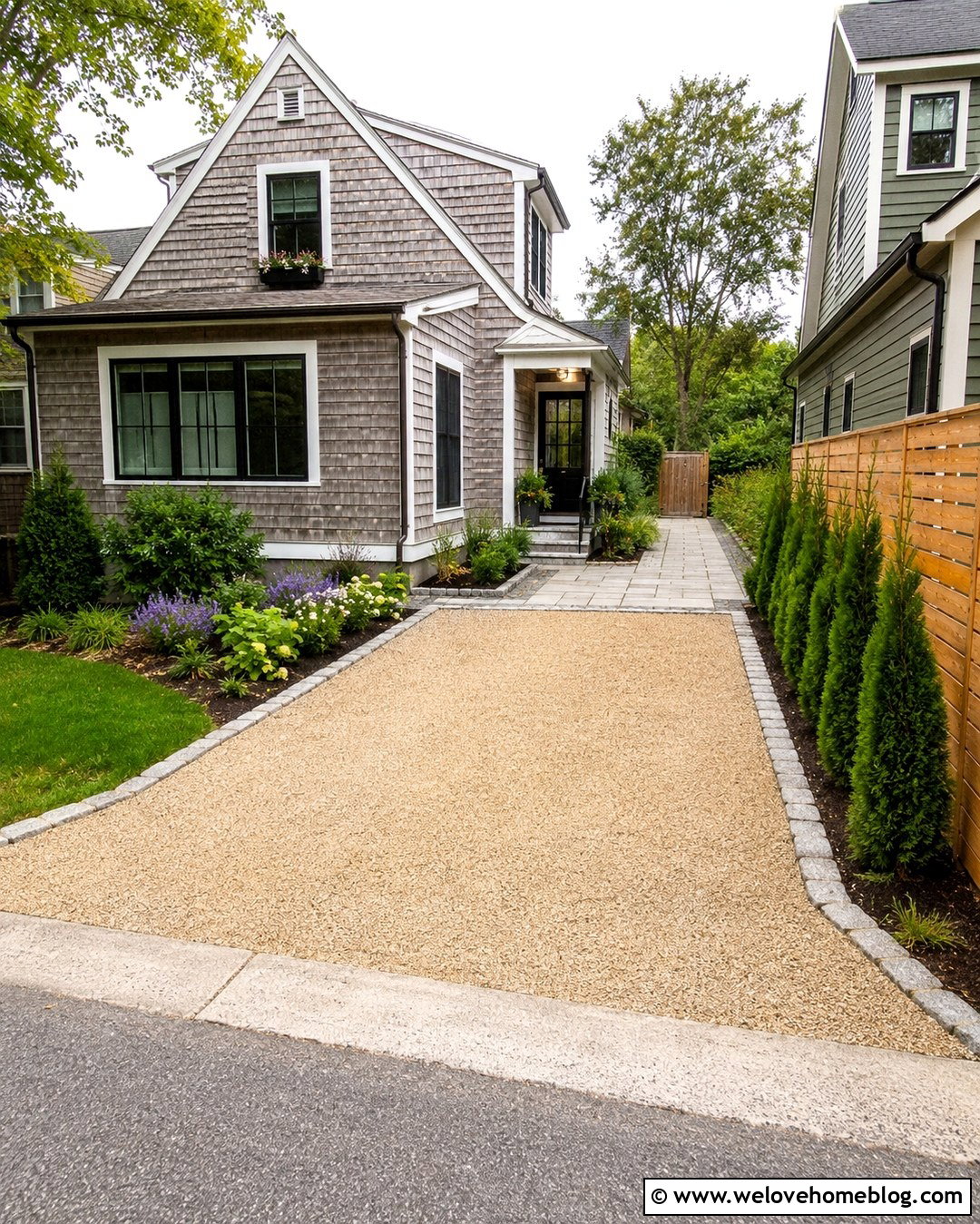
10. Wide Road Base Driveway With Parking Court
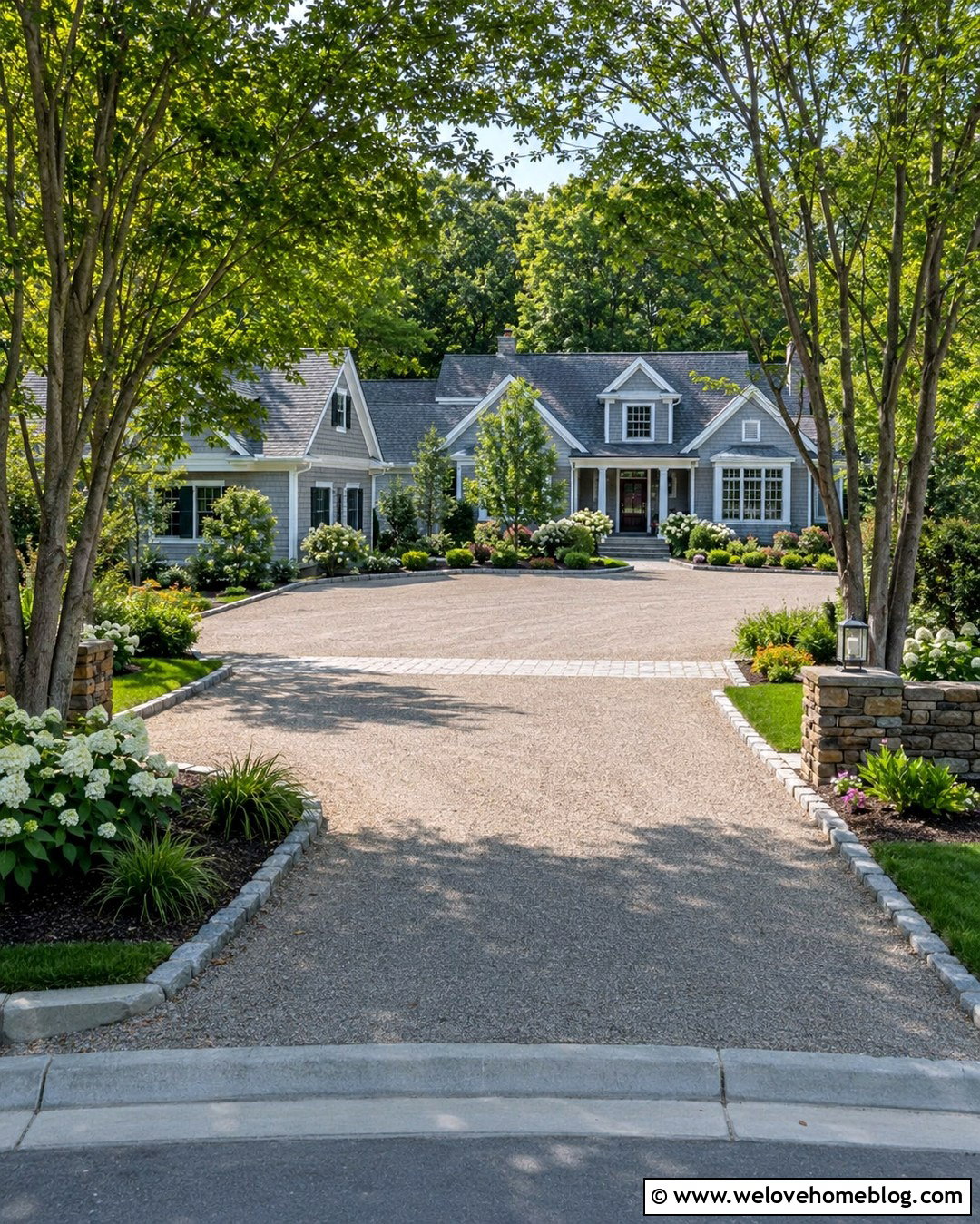
Busy households often need more room than a single narrow drive provides. A wide road base driveway can lead into a rectangular parking court near the garage, giving vehicles space to turn and park without damaging the lawn. Use compacted tan-gray crusher-run road base throughout so the approach and parking area read as one unified surface. Define the court with heavy cobblestone edging and broad planting beds at its outer corners. Multi-stem trees, sturdy shrubs, and ornamental grasses will soften the large aggregate area. A contrasting paver walkway can cross the court and lead directly to the front porch. Clearly shape the parking zone rather than covering the entire front yard. This keeps the layout functional while preserving landscaped areas and a recognizable pedestrian entrance.
11. Road Base Driveway With Grass Center Strip
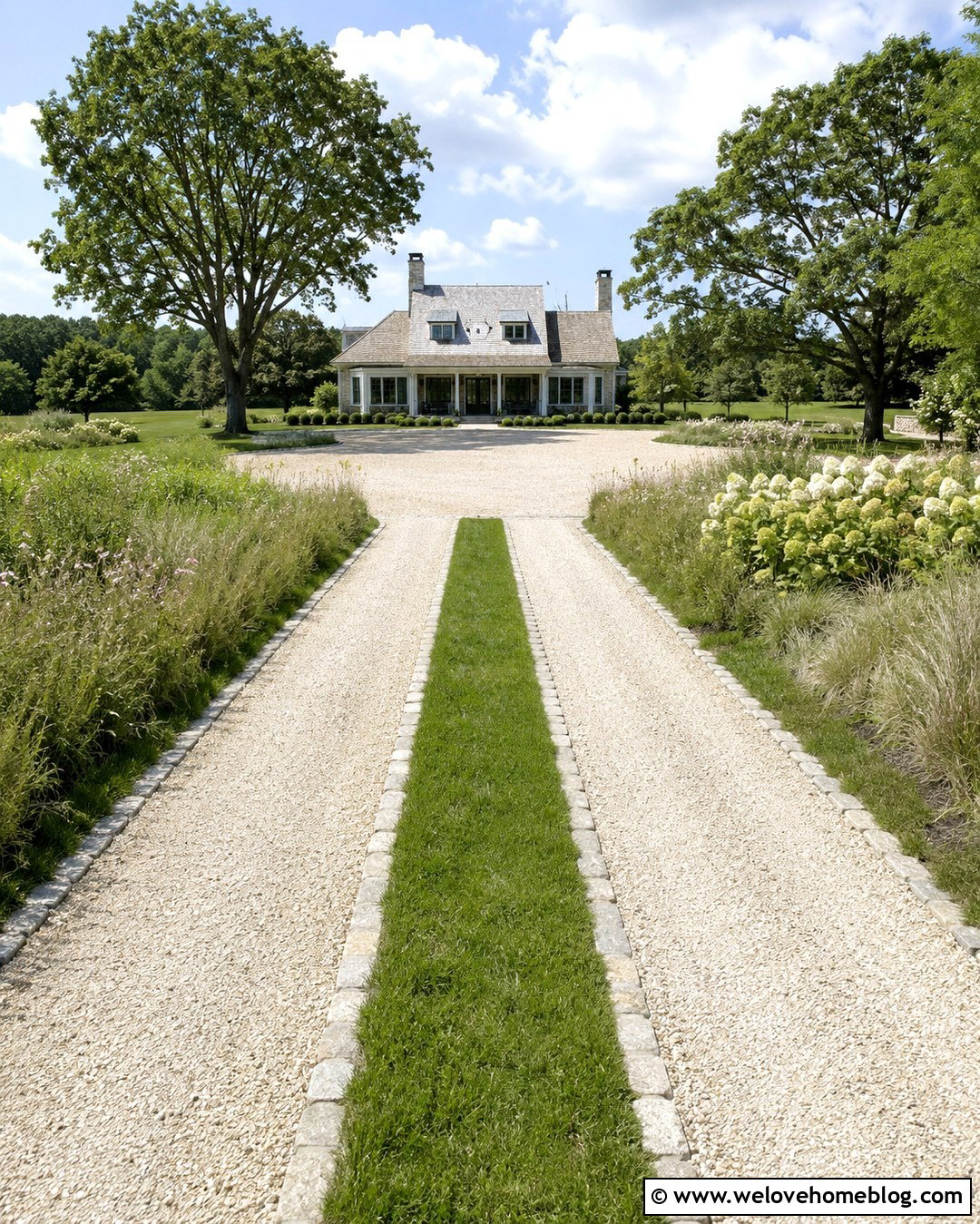
A grass center strip breaks up a broad driveway and creates a softer country-house appearance. Form two compacted limestone road base wheel lanes with a wide reinforced grass median between them. This arrangement works best on a straight, lightly sloped driveway where vehicles follow a predictable path. Use flush stone edging around the median to prevent aggregate from spreading into the soil. At the garage, merge the lanes into one full-width road base parking area or a concrete apron. Continue the design with meadow-style grasses, flowering shrubs, and open lawn along both sides. The central strip must be wide enough to look deliberate but low enough to clear typical vehicles. Regular mowing and careful drainage will help the complete layout remain tidy, accessible, and visually balanced.
12. Recycled Concrete Road Base Driveway
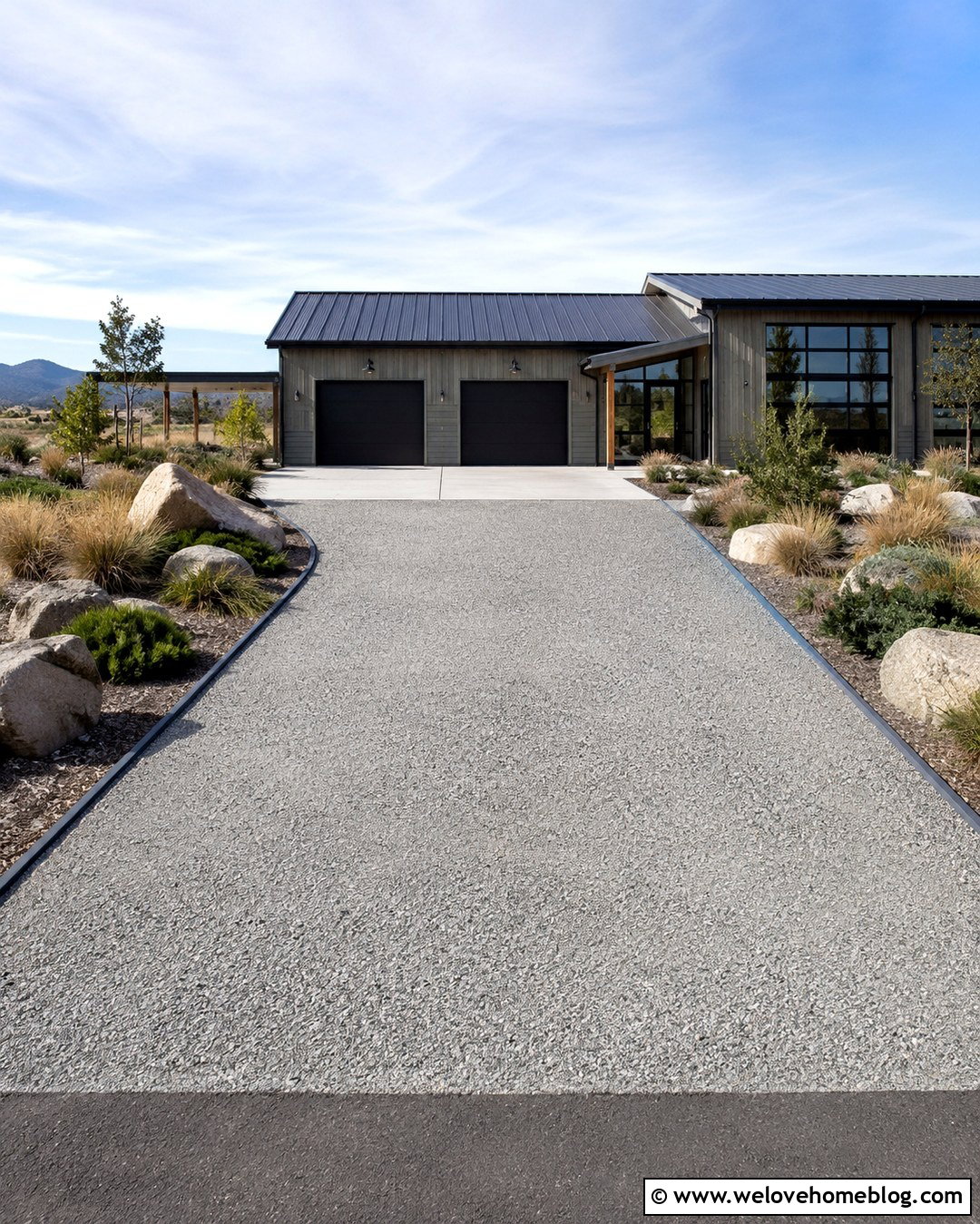
Recycled concrete aggregate offers a practical look for workshops, rural properties, and casual contemporary homes. Once crushed and properly processed as road base, the material often has a pale gray tone with subtle color variation. Install it in a broad straight driveway with compacted shoulders and dark steel edging. At the house, add a smooth poured-concrete apron that creates a neat finish in front of the garage. Use hardy shrubs, native grasses, and several large landscape boulders to complement the rugged aggregate texture. Ask the supplier what the recycled blend contains and whether it is graded for compactable driveway use. The surface should be placed over a stable, properly prepared subgrade rather than spread thinly over soft soil. This creates a budget-conscious driveway that still feels planned.
13. Limestone Road Base Driveway With Cobblestone Edging
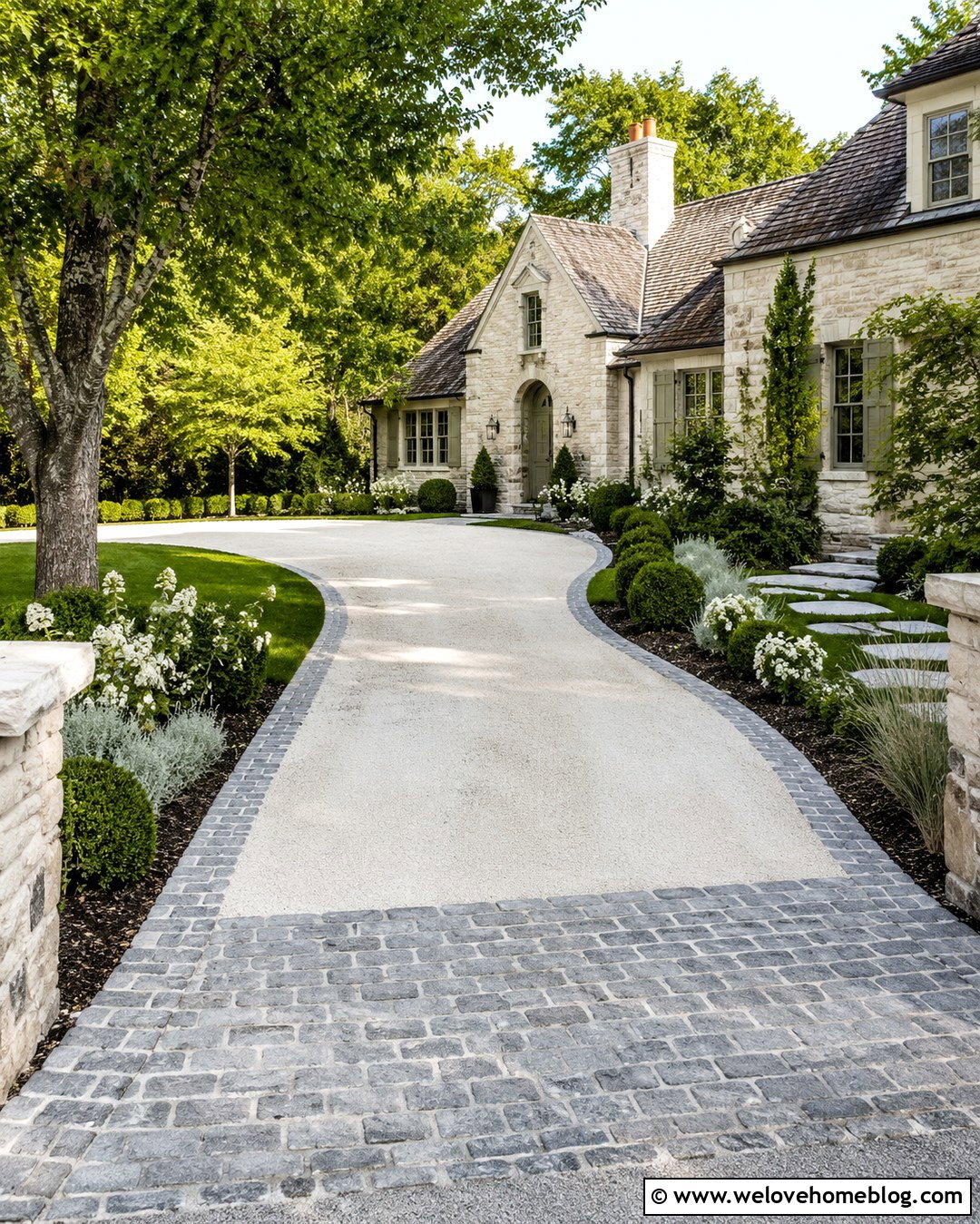
Pale limestone road base can brighten a shaded front yard and complement cream siding, light brick, or natural stone. Shape the driveway with a broad curve leading toward a traditional or French country home. Dark gray cobblestone edging will create contrast and help the lighter aggregate maintain its outline. Near the street, widen the cobblestone border into a short entrance apron for a more finished appearance. Plant clipped evergreen shrubs, white-flowering perennials, and silvery grasses in generous beds along the curve. A limestone stepping-stone walkway can connect the driveway to the porch without introducing an unrelated material. Because crushed limestone blends vary, inspect a sample before ordering. Select a compactable road base product with an appearance that suits both the facade and surrounding landscape.
14. Granite Road Base Driveway With Native Plants
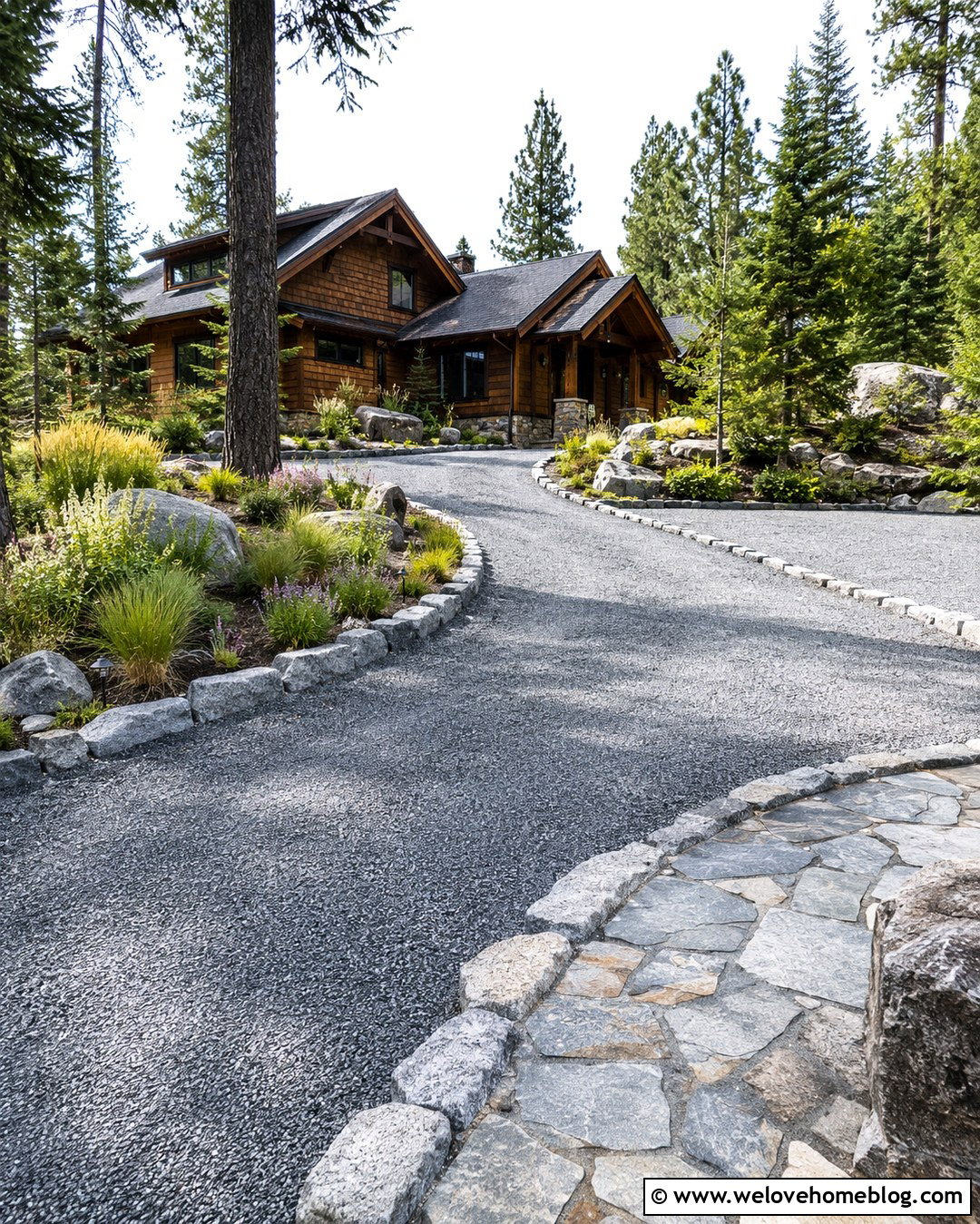
Granite road base provides a textured gray surface that pairs naturally with native planting and rugged architecture. Use it on a gently curved driveway leading to a cedar-sided Craftsman or mountain-style home. Border the aggregate with irregular granite blocks set low enough to avoid creating a tire hazard. Beyond the stones, arrange native bunchgrasses, flowering perennials, evergreen shrubs, and scattered boulders in loose groups. Preserve existing mature trees where root protection and driveway construction allow. A natural stone walkway can branch from a small parking bay toward the front steps. The gray granite surface should be evenly compacted and graded toward stable planted shoulders. By repeating the same stone color in the border, boulders, and house details, the entire driveway becomes visually connected to its setting.


15. Woodland Road Base Driveway With Fern Borders
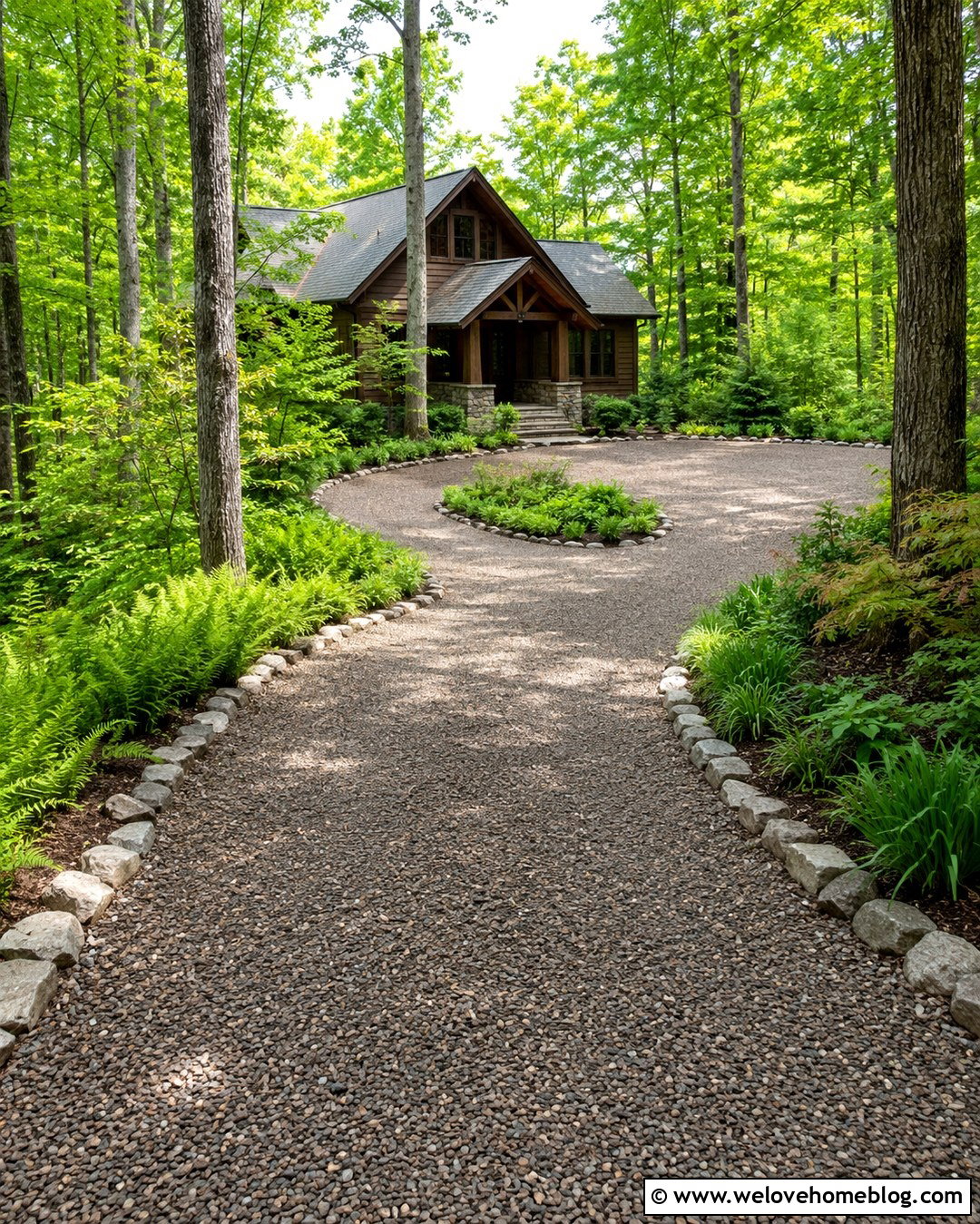
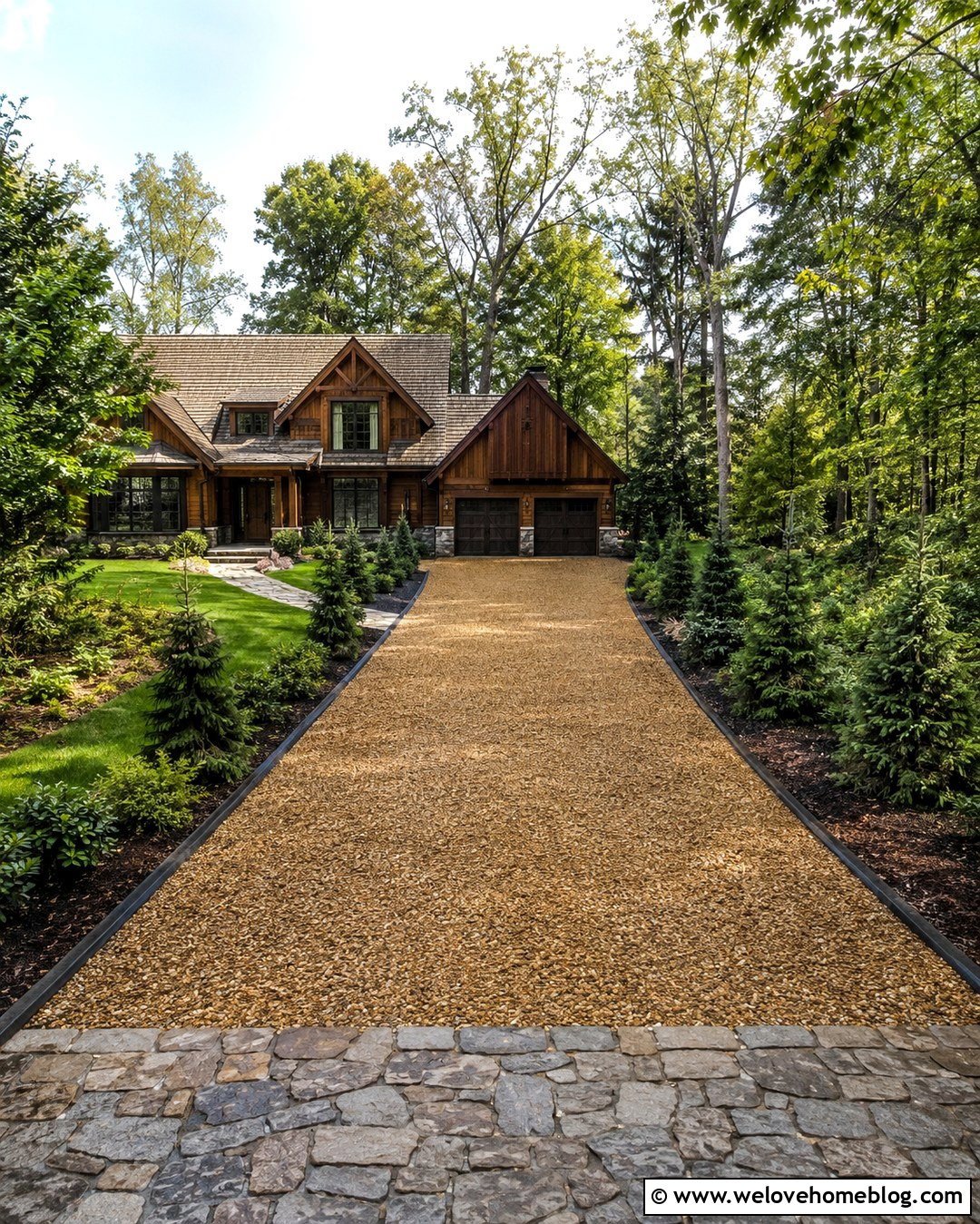
Filtered sunlight and mature trees can turn a simple road base driveway into a quiet woodland approach. Choose compacted brown-gray crushed aggregate that blends with tree trunks, stone, and shaded soil. A gentle S-curve will feel natural and can help preserve established trees when the route is planned carefully. Edge the driveway with low fieldstones and broad beds of ferns, sedges, woodland ground covers, and shade-tolerant shrubs. Keep plants set back at bends so visibility remains open. Direct runoff toward stable planted swales rather than allowing it to collect in low sections of the road base. At the house, transition into a wider parking pad bordered by the same fieldstone. This design works especially well with cabins, rustic Craftsman homes, and wooded rural properties.
16. Desert Road Base Driveway With Xeriscaping
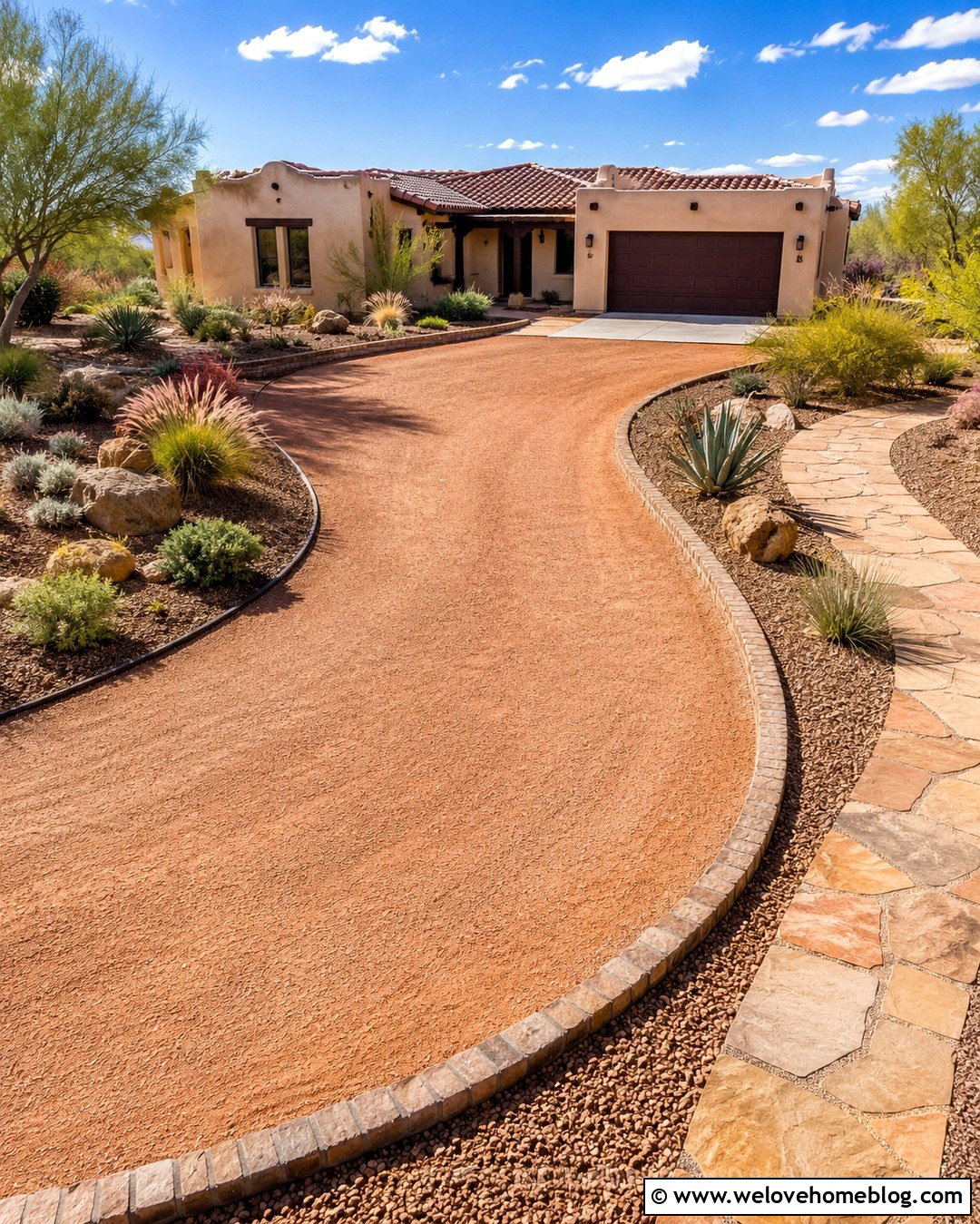
In a dry landscape, locally colored road base can blend beautifully with the surrounding terrain. Select compacted tan or reddish crushed aggregate for a wide, softly curved driveway approaching a Southwestern ranch or stucco home. Use steel edging or low masonry curbs to create firm boundaries, then frame the surface with gravel mulch, sculptural desert plants, ornamental grasses, and weathered boulders. Position plants in irregular groups so the design feels natural rather than crowded. A flagstone walkway and small concrete garage apron can provide comfortable pedestrian and parking transitions. Even in dry climates, plan for intense storm runoff by directing water away from buildings and vulnerable driveway edges. The finished look should conserve planting space while creating bold texture, open sightlines, and low-maintenance curb appeal.
17. Cottage Road Base Driveway With Brick Borders
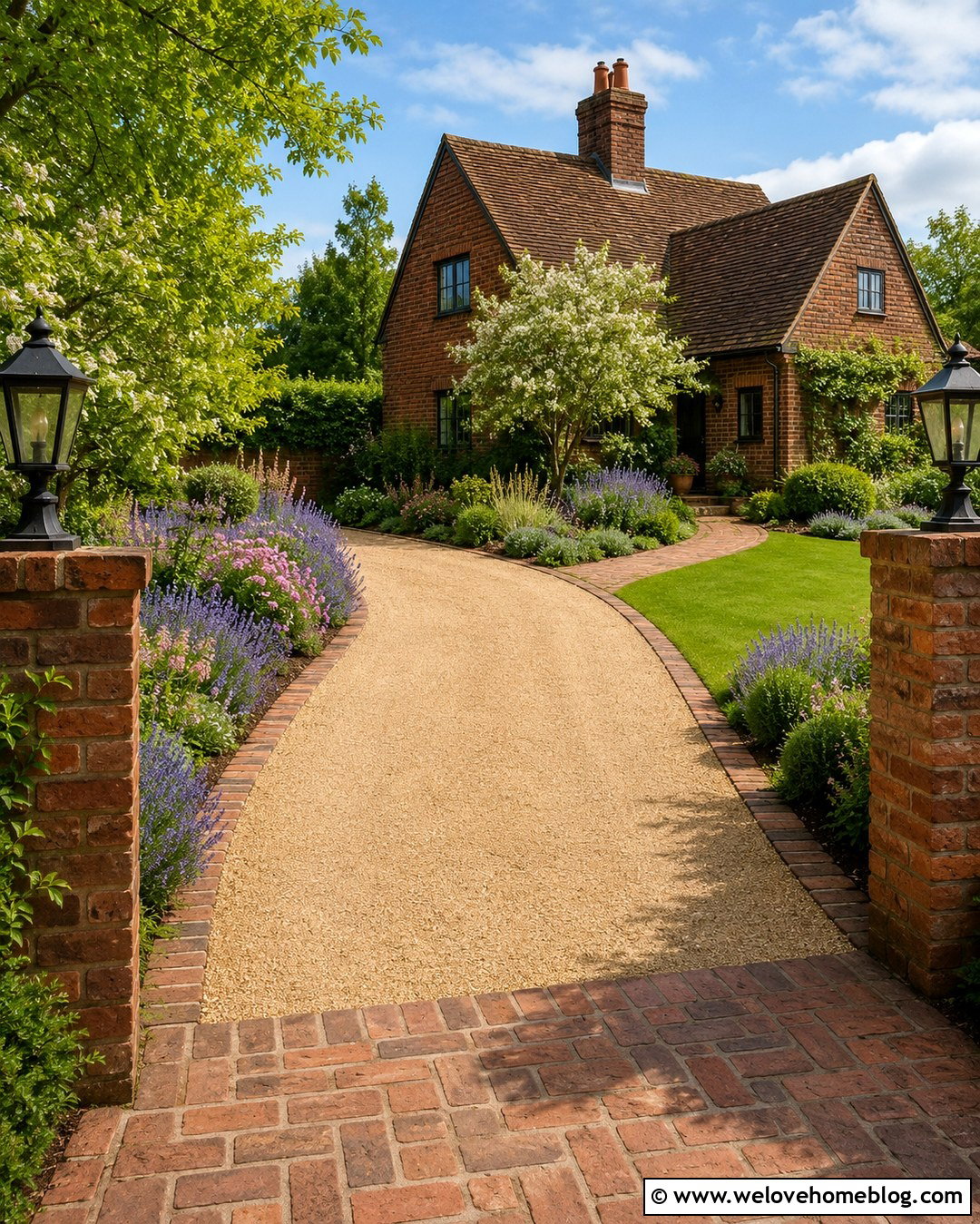
A compact road base driveway can support cottage charm without looking overly rough. Use warm buff road base in a slightly curved layout leading to a small brick cottage, bungalow, or storybook-style home. Install reclaimed-look clay bricks as a flush soldier-course border along both sides. Repeat those bricks in the walkway and a small apron near the porch to create continuity. Plant lavender, catmint, compact roses, and ornamental grasses in layered beds beyond the edging. Allow the planting to feel abundant, but keep stems and soil from spilling onto the driving surface. A small flowering tree can mark the point where the driveway widens into a parking bay. The contrast between compacted aggregate, red brick, and colorful planting produces a welcoming, detailed entrance on a modest property.
18. Gated Road Base Driveway With Stone Pillars
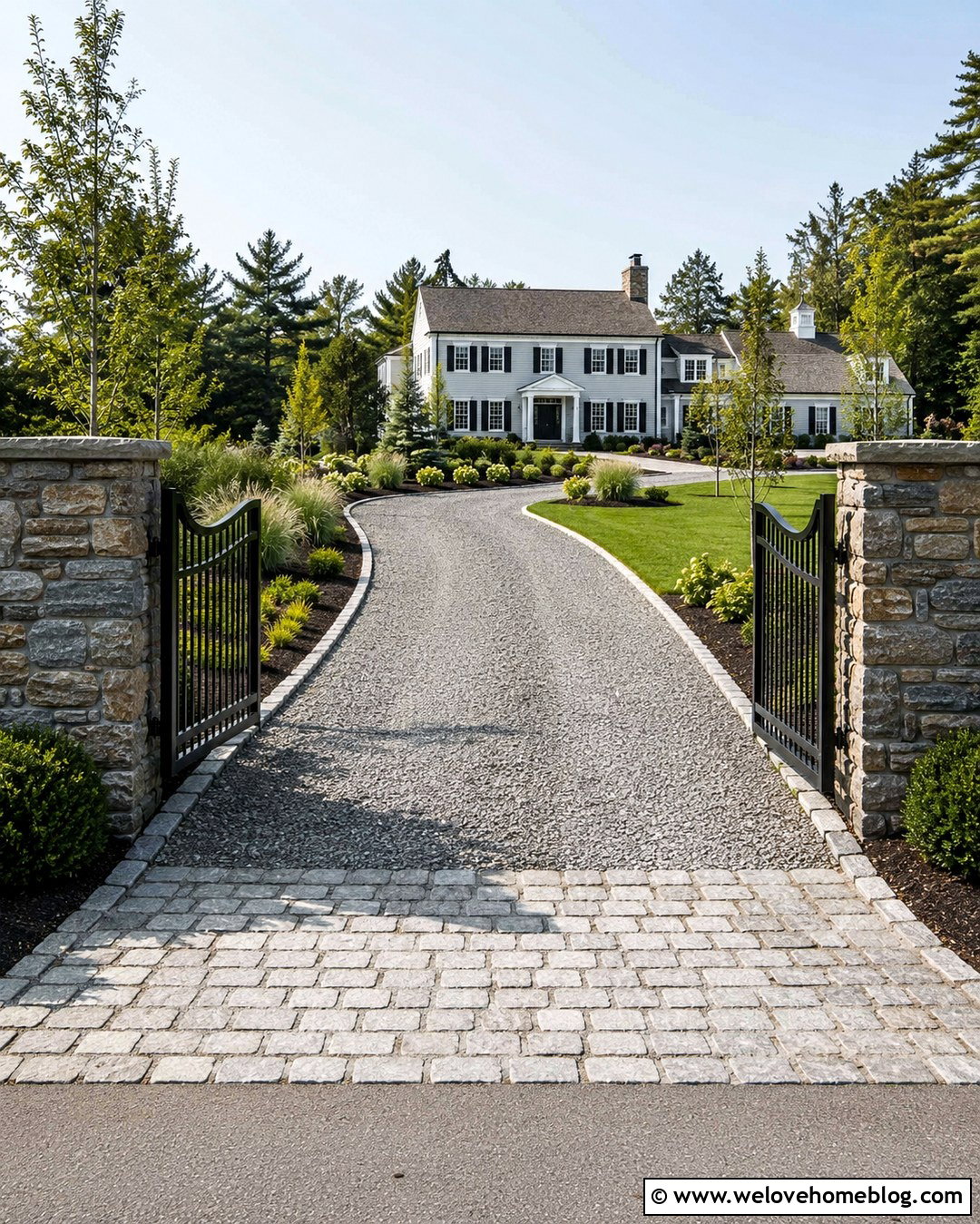
A gate can give a long road base driveway security and definition, but the full entrance must remain practical. Place substantial stone pillars on both sides of a wide compacted gray road base drive. Add a simple black metal swing or sliding gate, ensuring there is enough level space for vehicles to wait safely off the road. Continue low cobblestone edging from the pillars along the driveway, then soften it with evergreen shrubs and ornamental grasses. Matching lantern-style fixtures can be mounted on the pillars for visibility, though the image and daytime appearance should remain bright and uncluttered. Farther inside the property, let the driveway curve toward a Colonial or country home. Confirm local setback, permit, visibility, and emergency-access rules before deciding the final gate location.
19. Road Base Driveway With Low Landscape Lighting
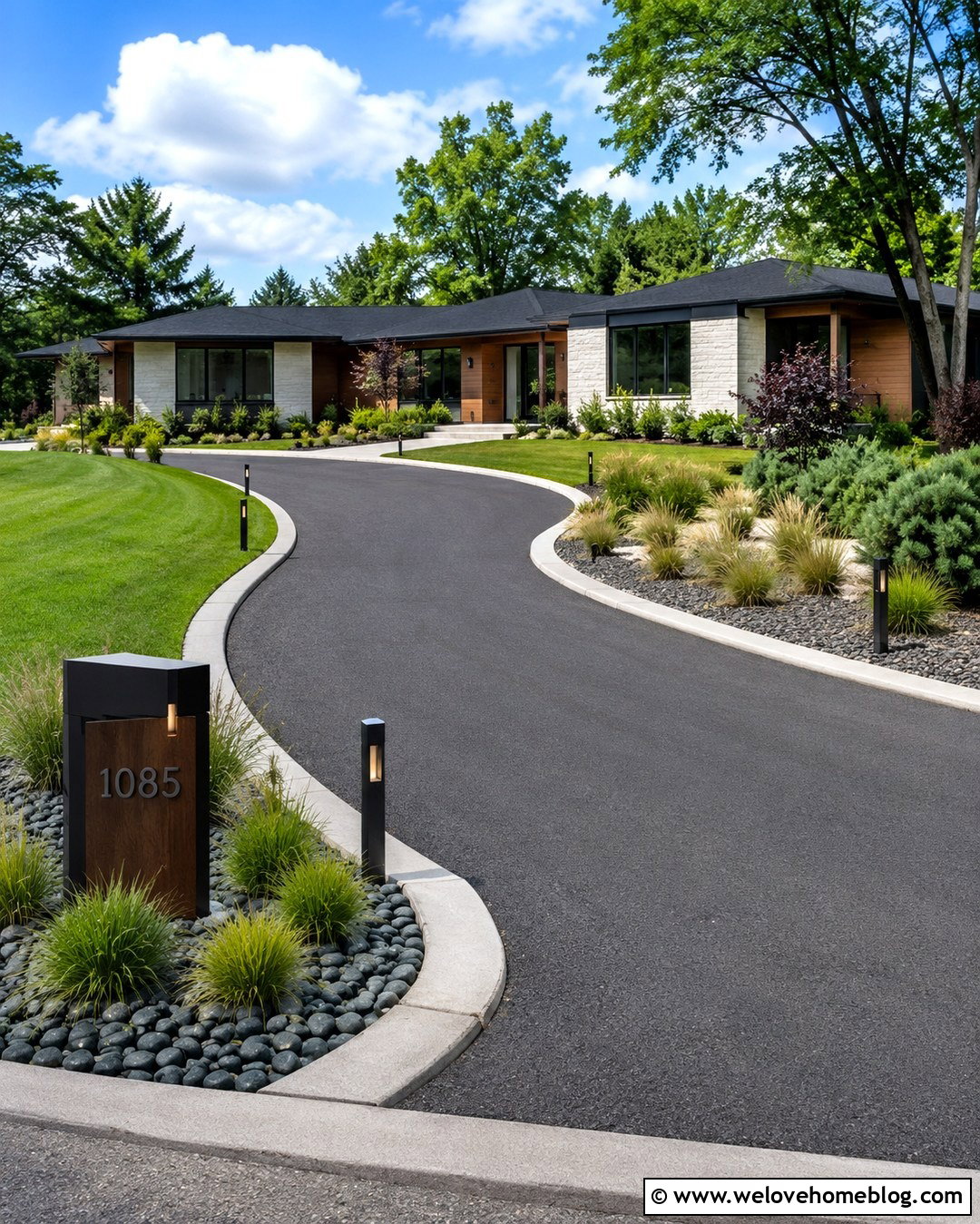
Well-placed lighting can define a road base driveway without filling the yard with tall fixtures. Use compacted charcoal-gray road base in a sweeping layout leading to a low modern ranch. Install small dark bollards or shielded path lights at wide, consistent intervals beyond the driveway edging. During the day, the fixtures should blend into beds of ornamental grasses, compact shrubs, and stone mulch. A flush concrete curb can create a crisp separation between the road base and landscaping. Add a brighter address marker at the entrance and focused lighting near the walkway junction. Keep fixtures away from tire paths, snow-storage areas, and drainage channels. The complete design should remain attractive in daylight, while the lighting improves orientation and makes the driveway’s curves, entrance, and pedestrian route easier to recognize.


20. Budget Road Base Driveway With Natural Shoulders
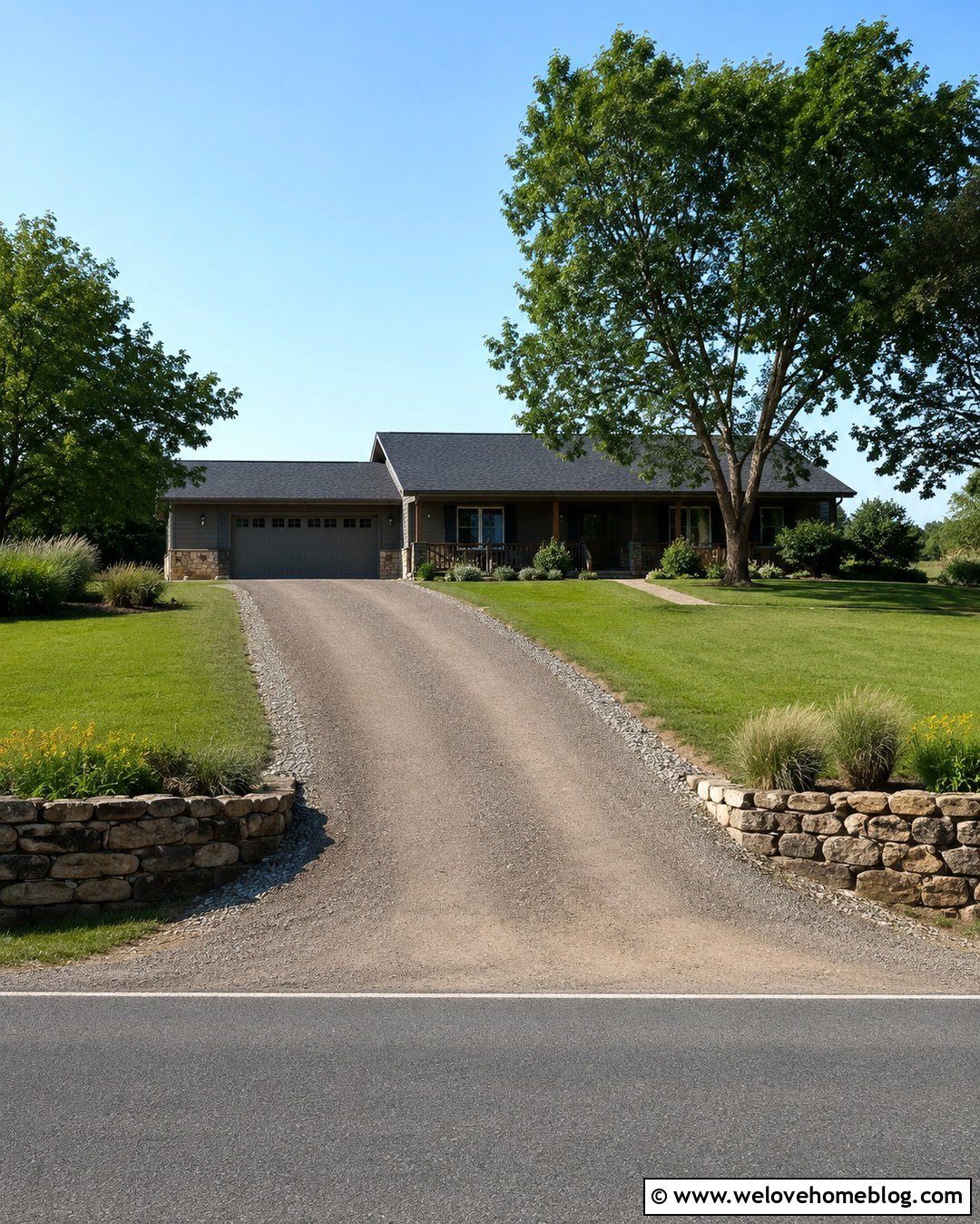
A straightforward road base driveway can still look complete when the grade and surrounding landscape are handled carefully. Use locally available compactable road base in a simple straight layout, avoiding expensive borders along the full length. Instead, create firm, gently sloped aggregate shoulders that transition into mowed grass. Place short sections of fieldstone edging only near the street entrance and garage, where visual definition matters most. Add two modest planting beds with durable shrubs and native grasses to frame the approach. A basic concrete walkway can connect the parking area with the front door. Schedule occasional raking or grading before small depressions become potholes, especially after heavy runoff. Road pack surfaces may need periodic reshaping to maintain a smooth crown and effective drainage. ()
Conclusion:
The most successful road base driveways combine a well-compacted surface with thoughtful shape, drainage, borders, and landscaping. A straight design can feel modern with steel edging, while curved, circular, and tree-lined layouts create a softer approach. Brick aprons, cobblestone ribbons, timber borders, planting beds, gates, and lighting can all make an economical aggregate surface look intentional. Always choose a locally available road base blend suited to the site, and address soft soil or drainage problems before adding decorative details. Consult local contractors or permitting authorities when entrances, culverts, steep slopes, gates, or public rights-of-way are involved. With careful planning, these 20 Road Base Driveway Ideas can provide lasting function and welcoming curb appeal.

Related posts:
Leave a Reply