
A durable gravel driveway depends on much more than the decorative stone visible at the surface. The best 20 Driveway Gravel Base Ideas combine stable subgrade preparation, angular aggregate, careful compaction, dependable drainage, and strong edge restraints. These details help prevent sinking, spreading, puddles, and frustrating wheel ruts. They also give you room to create a driveway that fits your home, whether you prefer pale limestone beside a farmhouse or dark granite leading to a modern exterior. Base depth and material should always reflect your soil, climate, slope, and expected vehicle weight. Local aggregate names can vary, so confirm the gradation with your supplier before ordering. The complete driveway looks below bring function and curb appeal together through 20 Driveway Gravel Base Ideas. ()

1. Crushed Stone Gravel Driveway Base
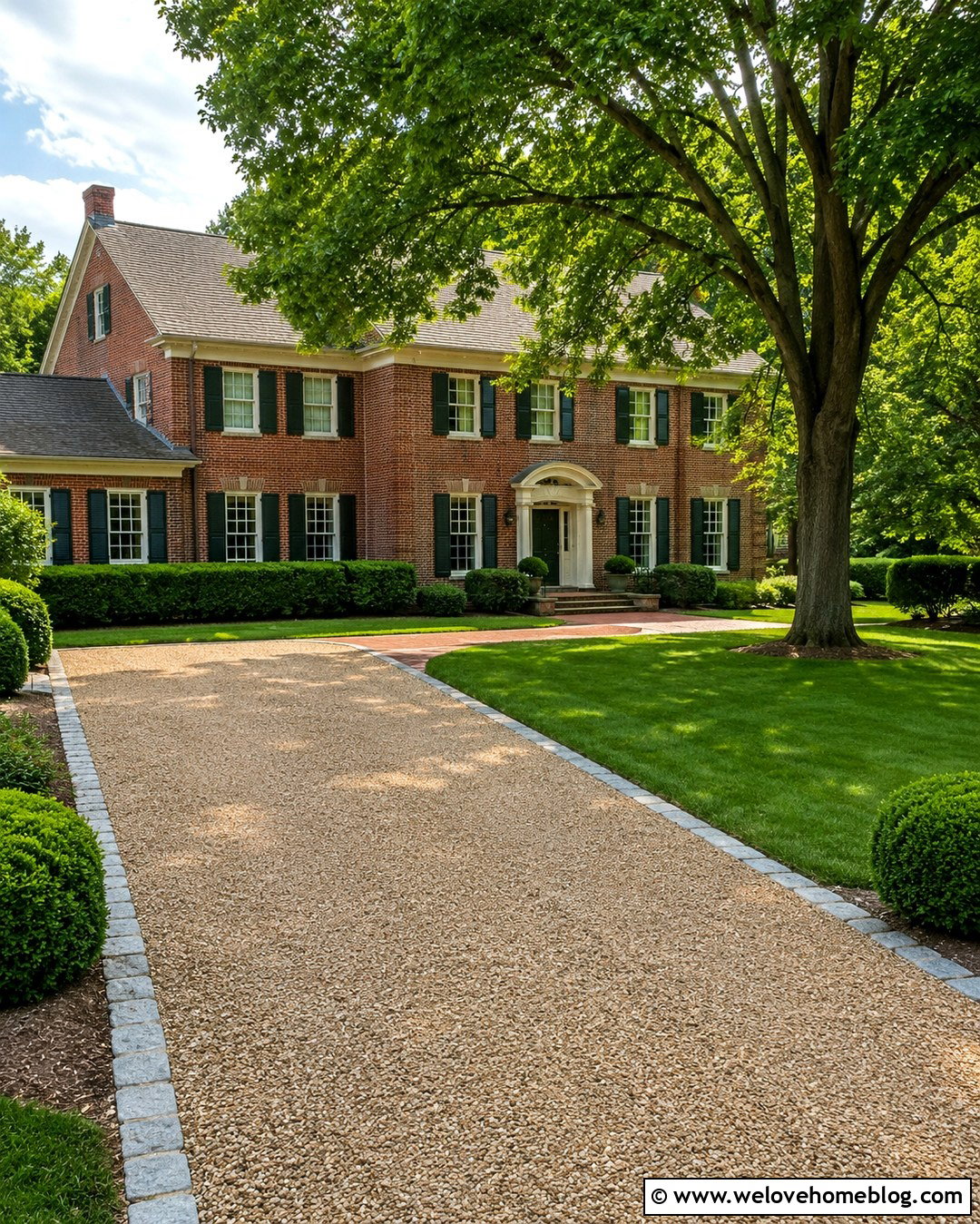
A classic crushed stone base creates a dependable foundation for a straight residential driveway. Start with prepared soil and separation fabric when site conditions call for it. Add large, angular crushed stone in compacted lifts, followed by a smaller crushed aggregate that fills gaps and locks the surface together. Finish the driveway with warm tan gravel for a softer appearance. Granite cobblestone edging keeps the material from spreading into neighboring lawn and planting beds. A narrow brick walkway, clipped shrubs, and one shade tree can frame the approach without hiding the driveway. This complete look works especially well with a traditional colonial house because the structured border balances the relaxed texture of the gravel. ()
2. Crusher Run Gravel Driveway Base
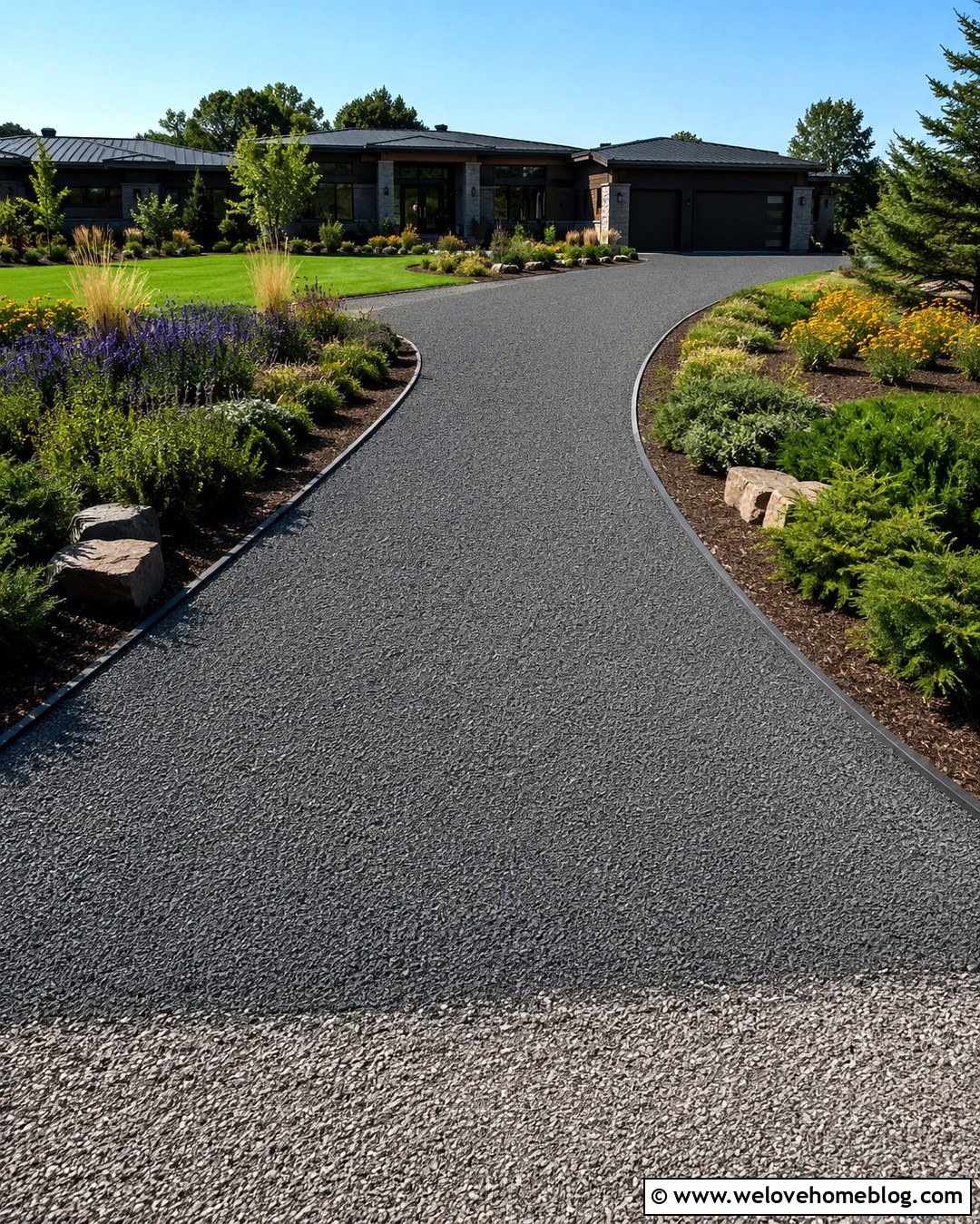
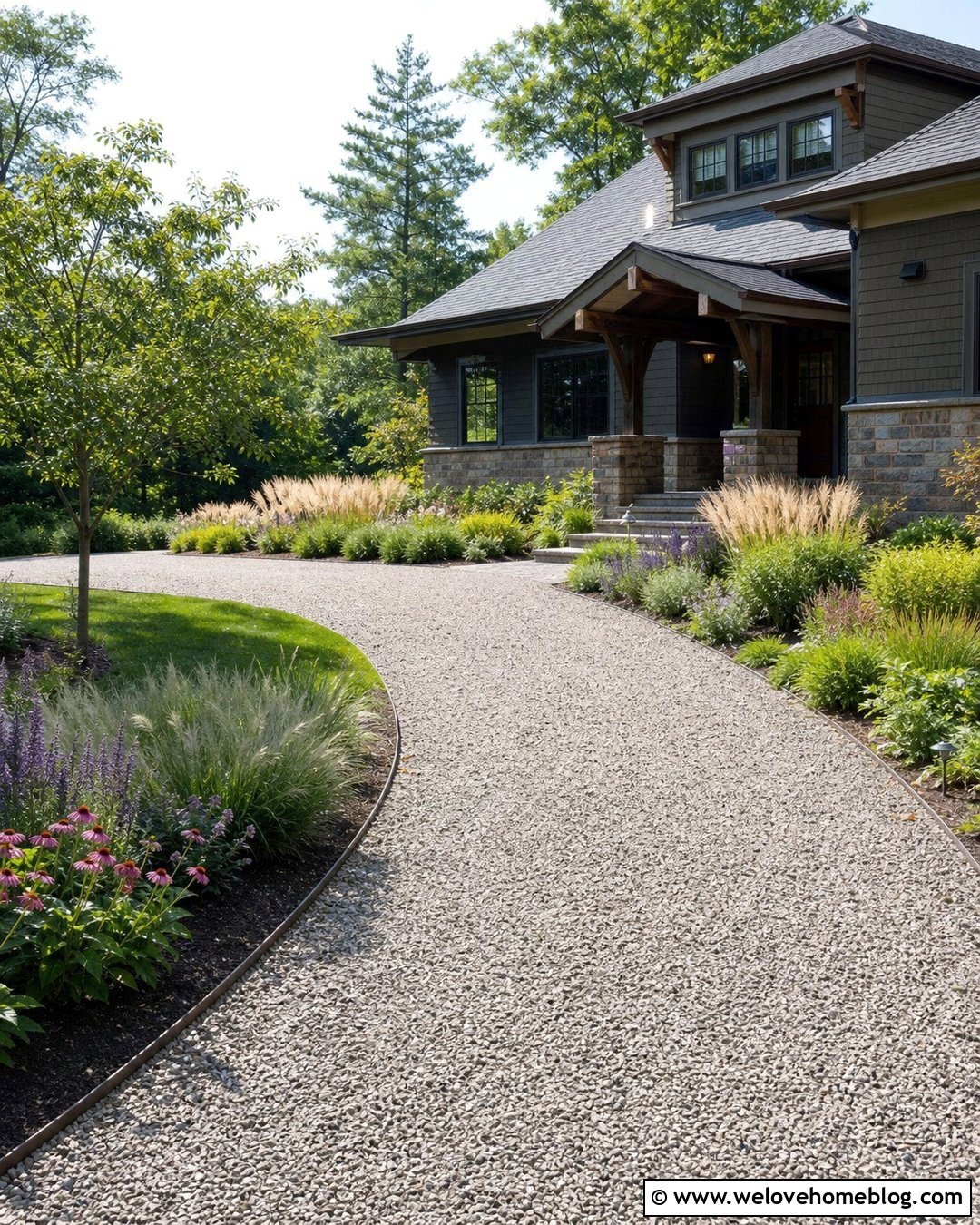
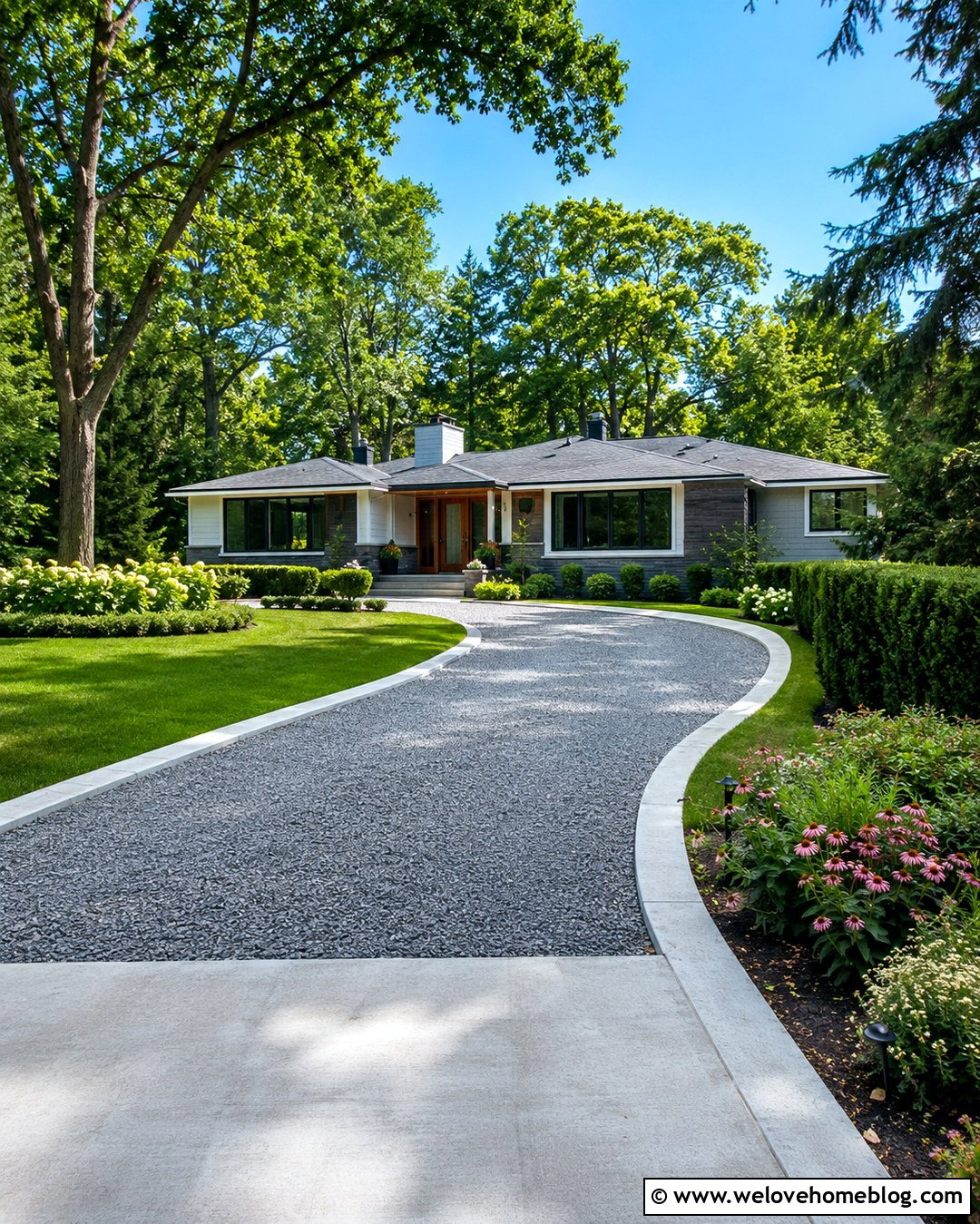
Crusher run contains crushed stone in mixed sizes, including fine particles that settle into the spaces between larger pieces. Once properly compacted, it creates a dense gravel driveway base with a firm, relatively smooth finish. Use it beneath a curved driveway topped with gray crushed granite for a coordinated appearance. Dark steel edging can follow the curves cleanly while remaining visually subtle. Along the outer edge, plant ornamental grasses, low junipers, and drought-tolerant perennials that will not spill into the driving area. A wide apron at the street makes turning easier and reduces pressure on the shoulders. This practical driveway look suits a contemporary ranch house and offers a strong balance between simple maintenance and polished curb appeal. ()
3. Road Base Gravel Driveway
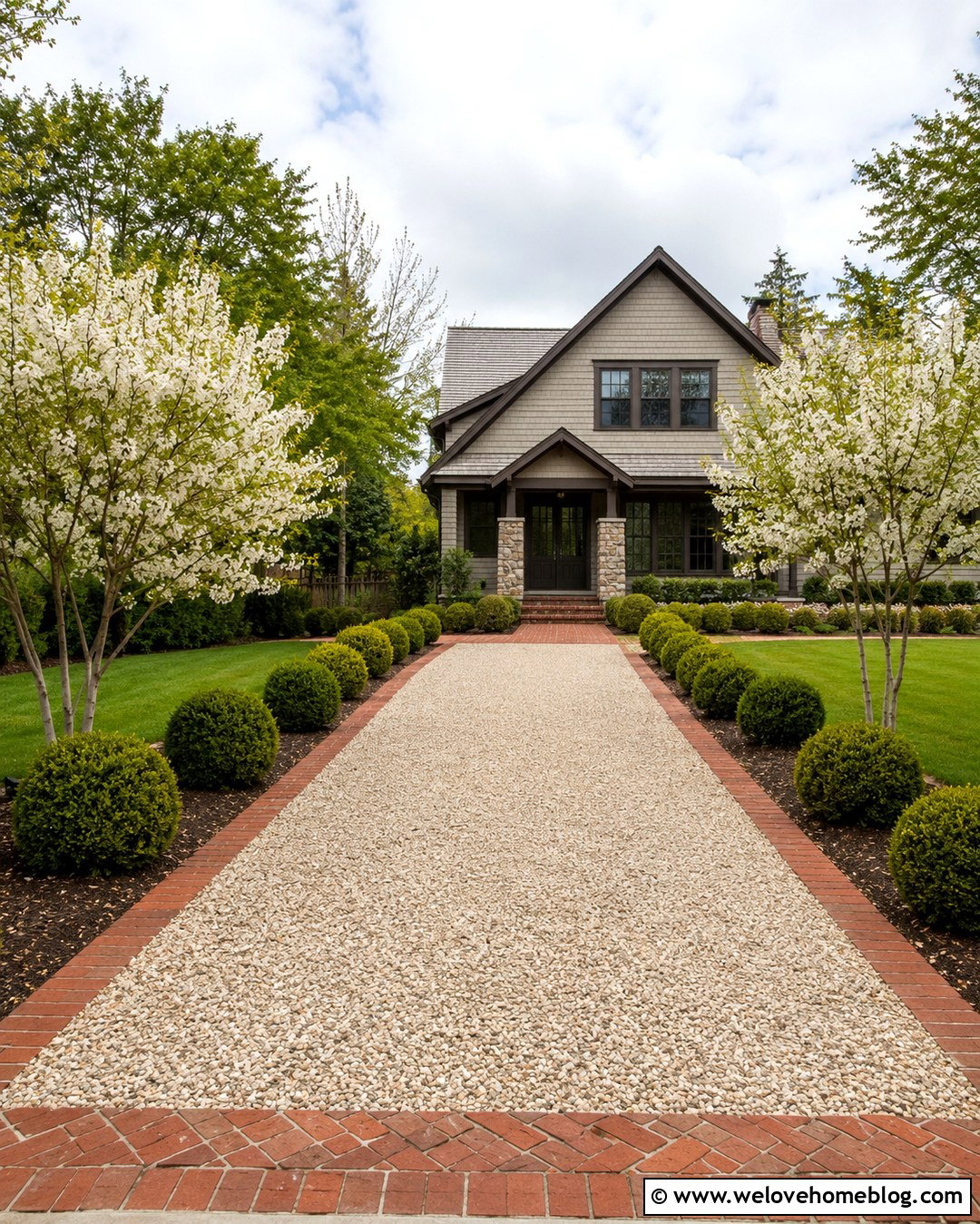
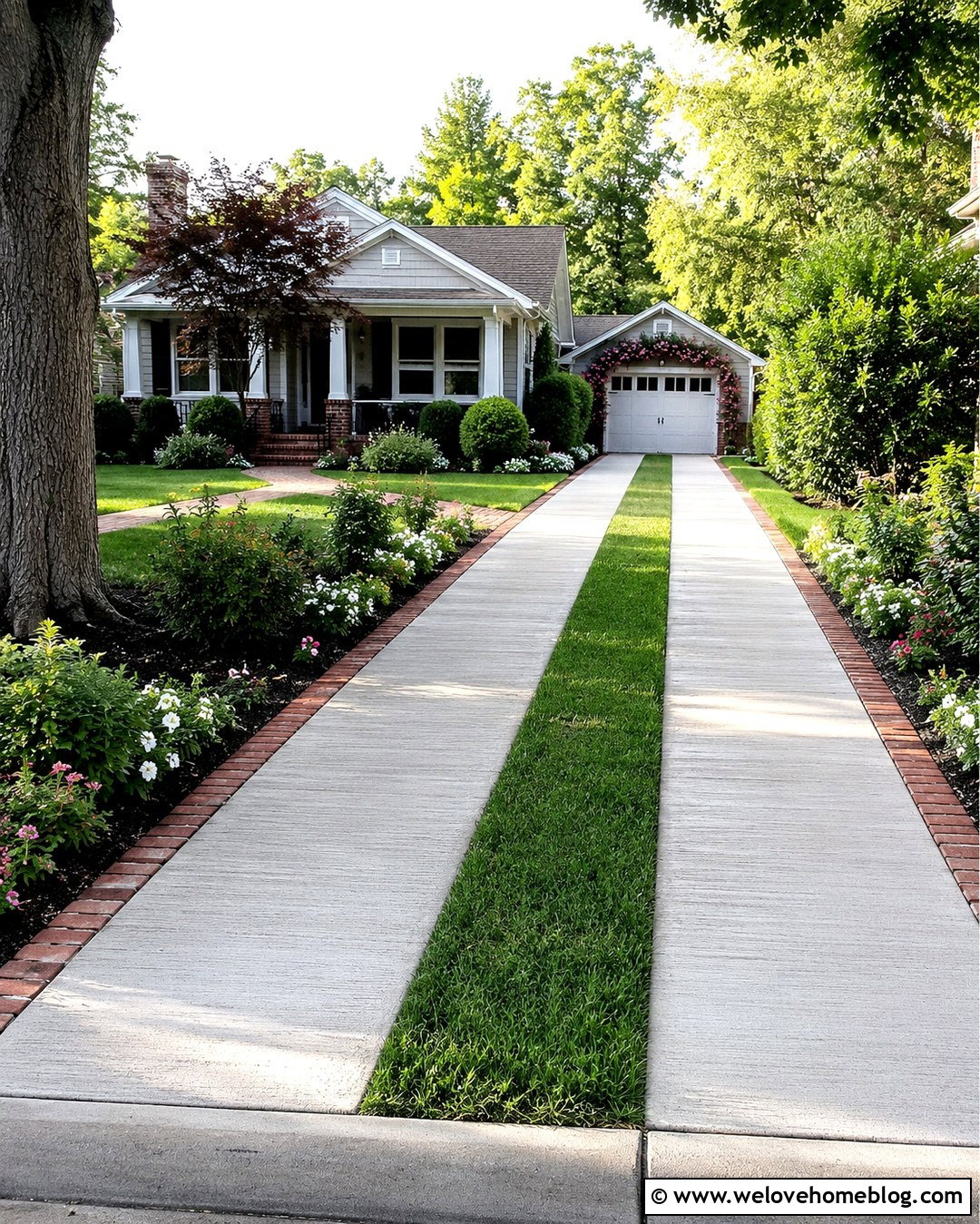
A road base driveway is a smart choice when you want a compact foundation that can support regular household traffic. Graded road base typically combines angular aggregate and fines, allowing the material to bind when moisture and mechanical compaction are applied correctly. Place it beneath a straight, medium-width driveway finished with cream limestone chips. Set brick ribbons along both sides and across the entrance to contain loose surface stone. The warm brick tones can connect visually with a craftsman home, porch columns, and front walkway. Keep the surrounding landscaping simple with lawn, rounded boxwoods, and small flowering trees. A slight center crown helps move rainfall toward planted side areas rather than allowing water to collect in tire paths. ()
4. Geotextile Gravel Driveway Base
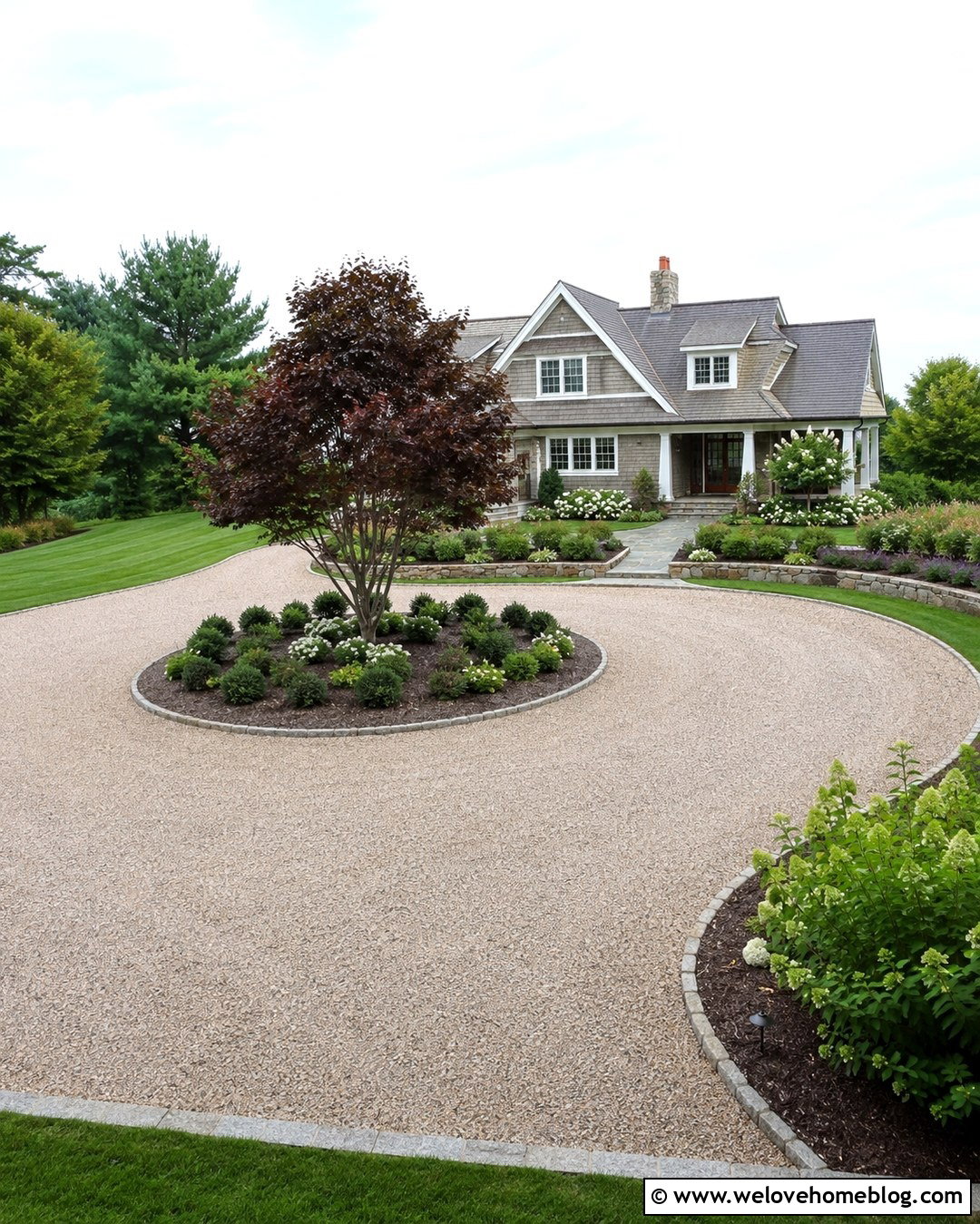
Soft or easily disturbed soil can benefit from geotextile placed between the prepared subgrade and the gravel base. The fabric separates the soil from the aggregate, helping prevent valuable base stone from gradually mixing into mud below. Build a wide horseshoe driveway with compacted crushed stone over the fabric, then finish it with buff-colored gravel. A low natural-stone border can define the shape while matching a country-style home. At the center of the horseshoe, create a landscaped island with a small ornamental tree, compact evergreen shrubs, and a clear sightline toward the front door. The resulting driveway feels welcoming and established, yet its attractive appearance is supported by a carefully separated, layered foundation beneath the visible surface. ()
5. Geogrid Gravel Driveway Base
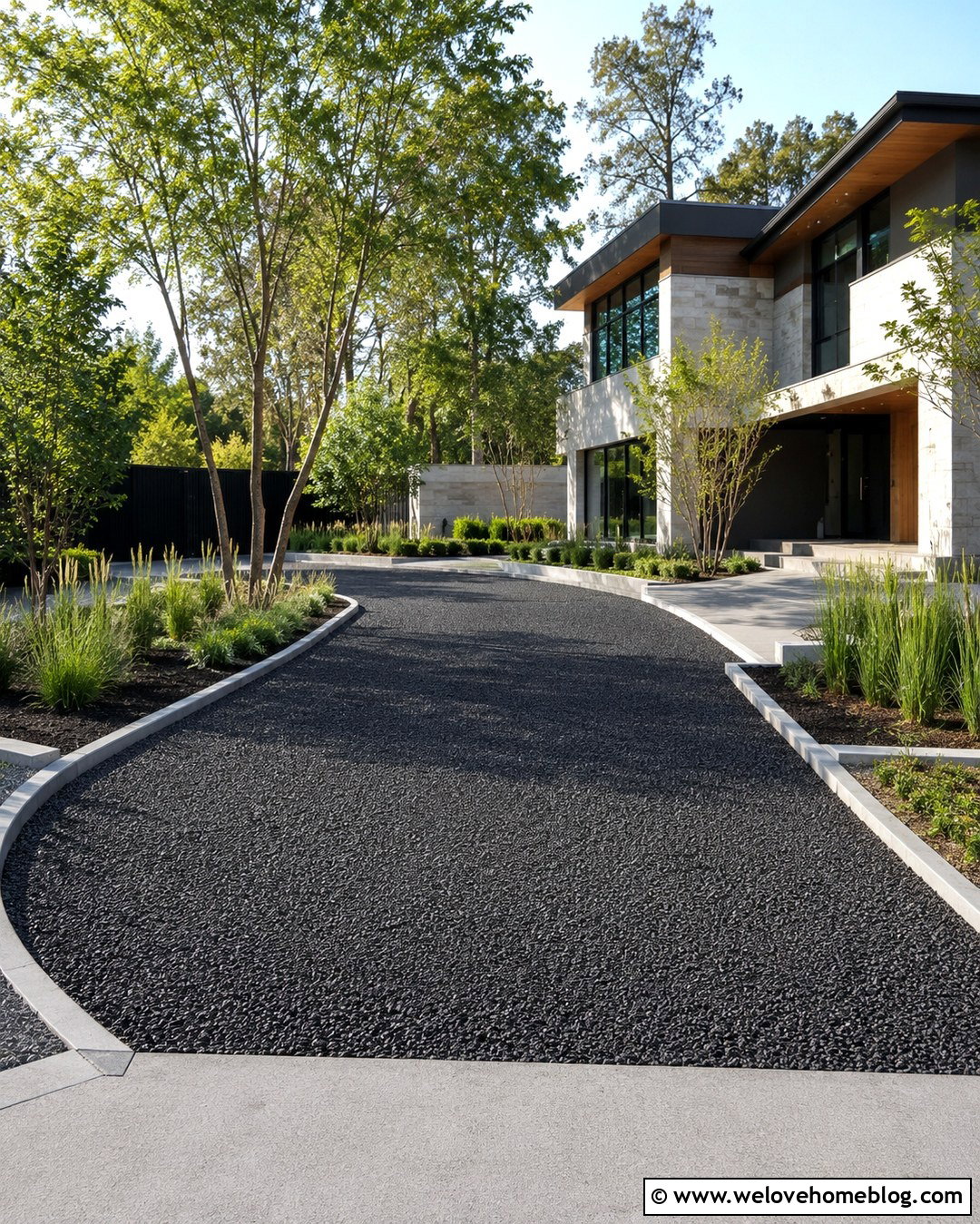
Does loose gravel shift every time a vehicle turns? A gravel stabilization grid can reduce surface movement, particularly near parking spaces, curves, and sloped entrances. Install the grid over a prepared, compacted crushed-stone base and fill the cells with angular gravel that fits the manufacturer’s requirements. For a modern look, choose charcoal-gray stone and a broad driveway with a gentle curve toward the garage. Flush concrete curbs create clean boundaries, while rectangular planting beds repeat the home’s geometric lines. Use upright grasses, compact shrubs, and a few multi-stem trees to soften the architecture. Because the cellular system holds gravel across the surface, the driveway retains a crisp shape without losing the textured, permeable character that makes gravel appealing. ()
6. Gravel Driveway Base for Clay Soil
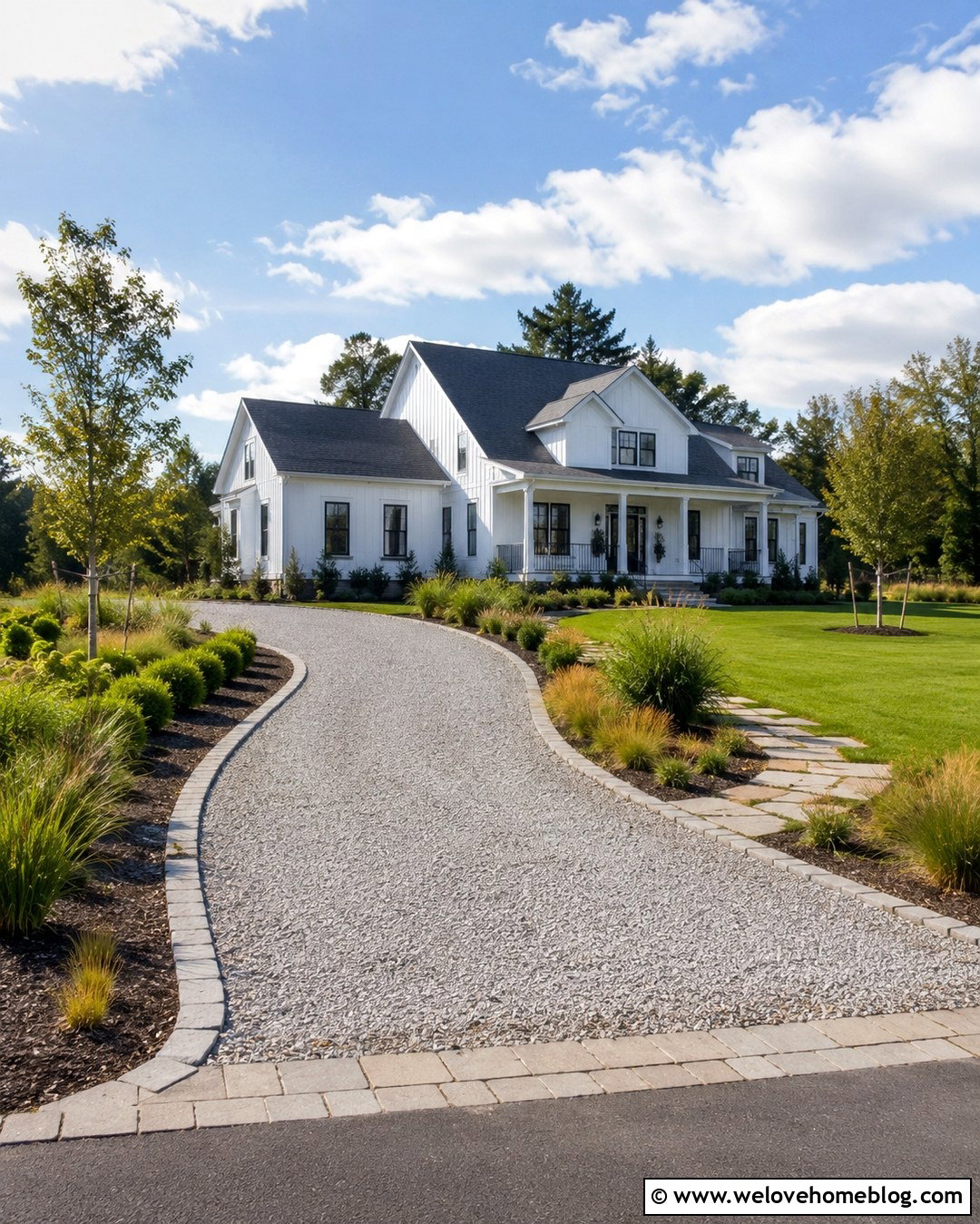
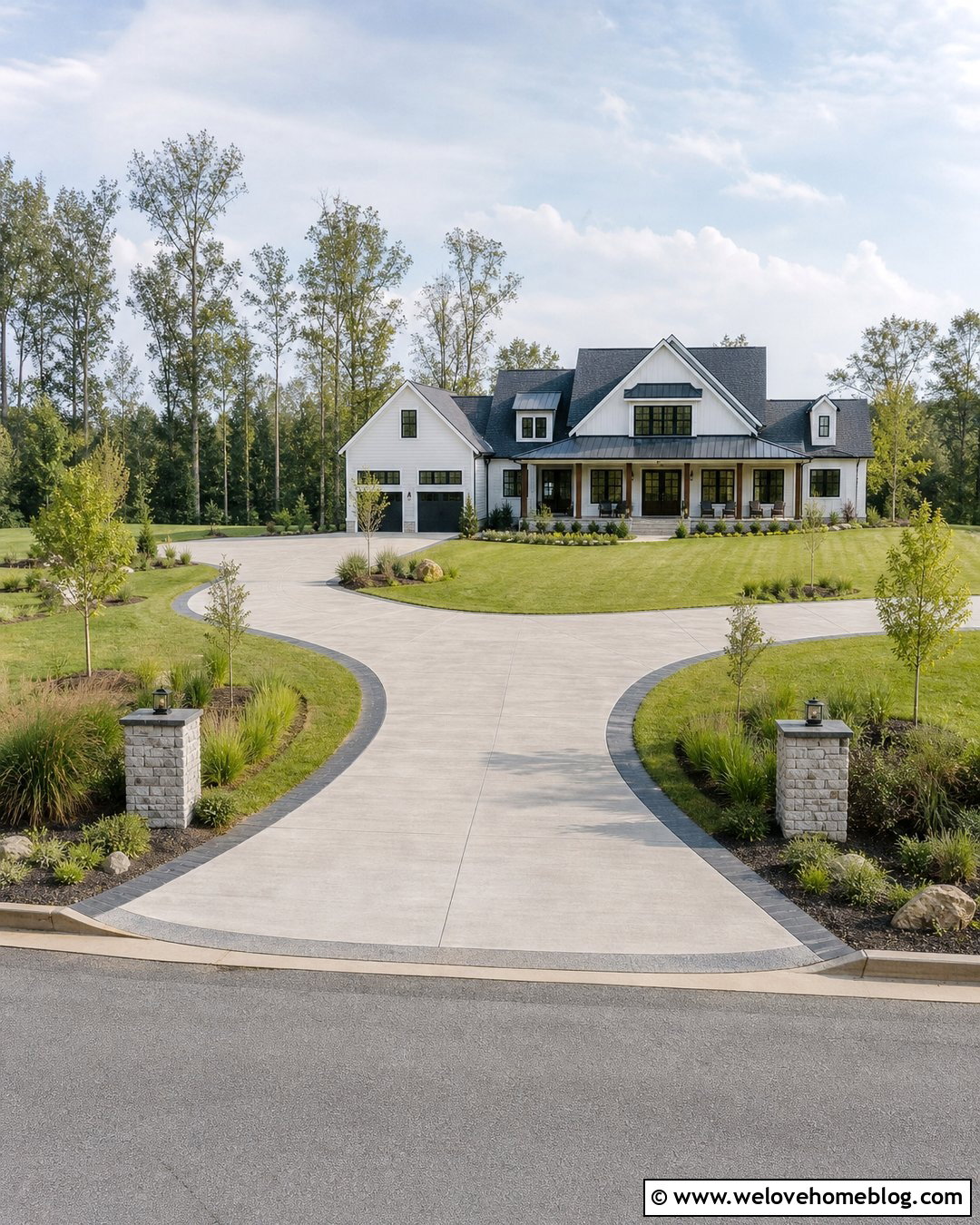
Heavy clay can remain wet, pump upward under vehicle pressure, and mix with aggregate when the driveway foundation is inadequate. Begin by grading the site for reliable runoff and removing unstable material where necessary. A suitable geotextile or engineered stabilization system can separate the clay from a deep, angular crushed-stone base. Finish a gently curved driveway with medium-gray gravel and strong concrete edging. Shallow planted swales along the lower side can receive runoff while adding visual interest with sedges, switchgrass, and moisture-tolerant shrubs. Near the house, connect the driveway to a flagstone walkway and broad porch. This complete layout pairs especially well with a modern farmhouse, where gray stone, white siding, and natural landscaping create a practical but welcoming entrance. ()
7. Gravel Driveway Base for Sandy Soil
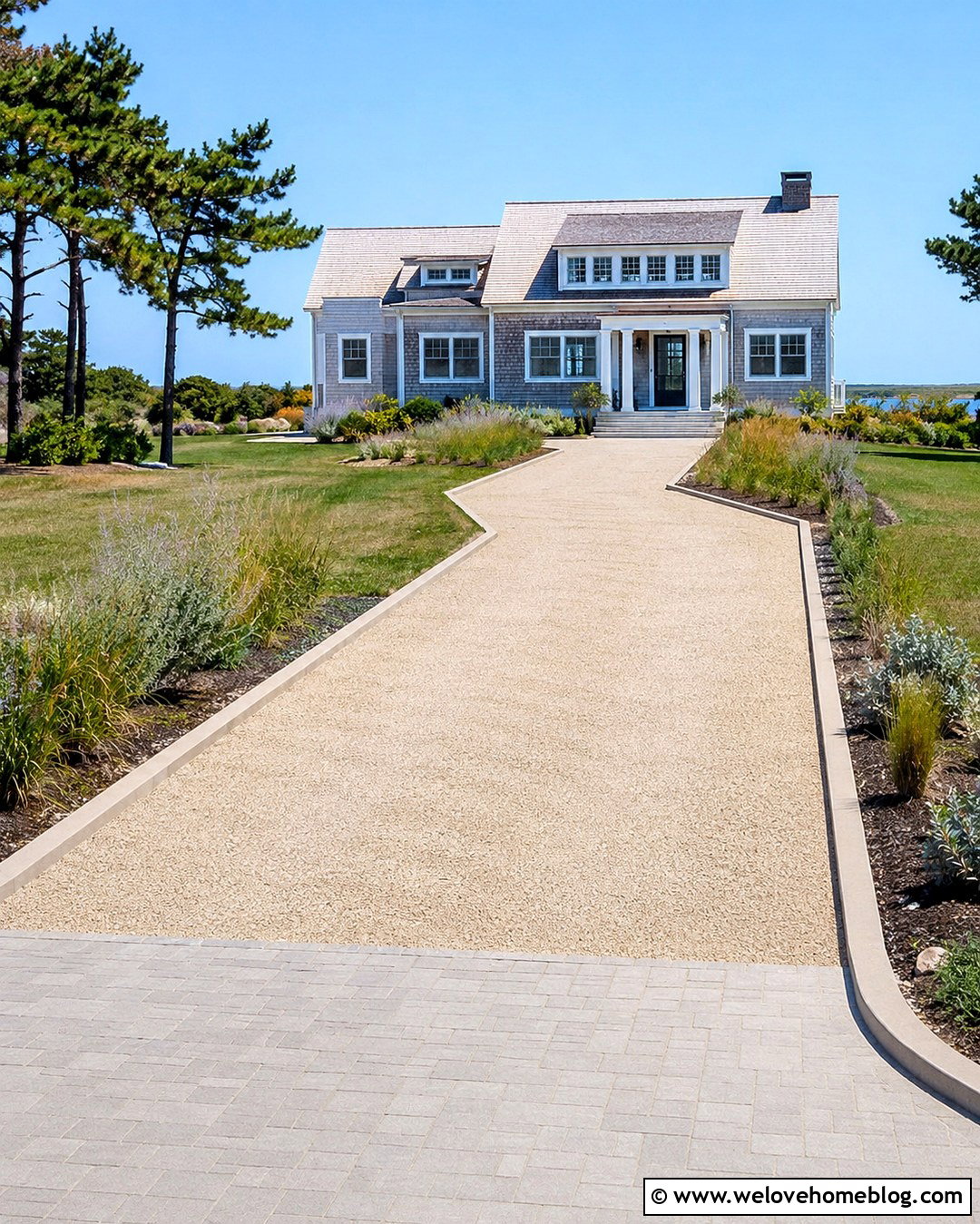
Sandy soil drains quickly, but an uncontained driveway base may spread sideways or sink unevenly under repeated traffic. Create clear boundaries before placing the aggregate. A separation fabric, compacted crushed-stone base, and cellular gravel grid can work together where site conditions require extra stability. Top the driveway with light beige angular gravel and use sturdy tan concrete curbs to hold the edges. A straight layout leading to a coastal-style house keeps the design simple and easy to navigate. Frame the approach with native grasses, low shrubs, and widely spaced trees suited to dry soil. At the street, add a paver apron that catches loose gravel and gives the entrance a finished appearance without competing with the relaxed coastal planting. ()
8. Gravel Driveway Base for Wet Ground
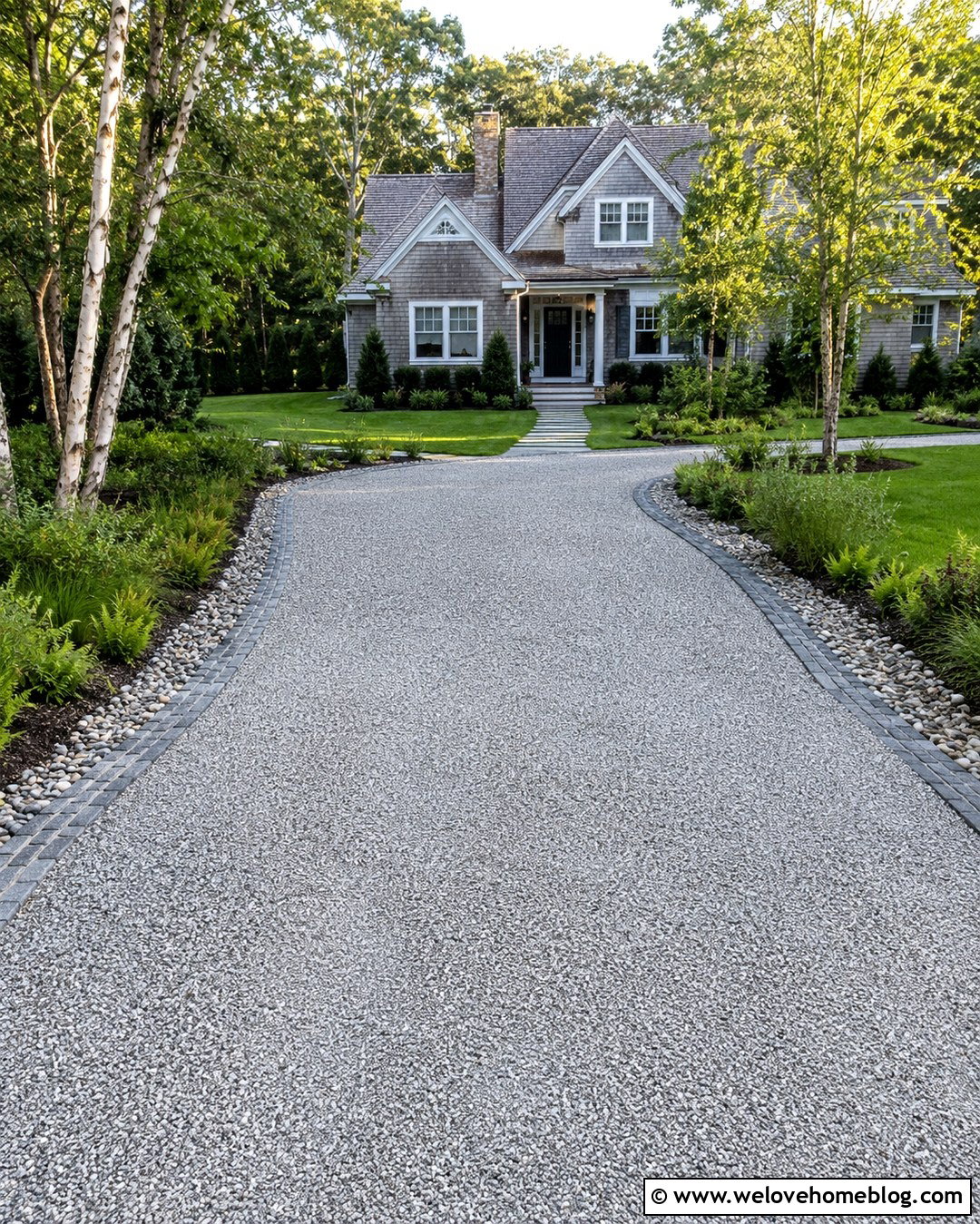
A persistently wet site requires a drainage plan before attractive surface gravel is added. Remove weak, saturated material as recommended for the property, establish a suitable slope, and use separation fabric beneath a thick layer of clean angular stone. A compacted binding layer may then support the decorative gravel above. Design the finished driveway with a gentle crown and shallow swales along both sides. Pale gray crushed granite, dark cobblestone edging, and moisture-loving planting beds can turn the drainage features into part of the landscape. Ferns, sedges, inkberry, and river birch work well in an informal setting when locally appropriate. Leading toward a Cape Cod home, this bright gravel driveway looks intentional while directing rainfall away from the center and nearby foundation. ()
9. Deep Gravel Driveway Base for Heavy Vehicles
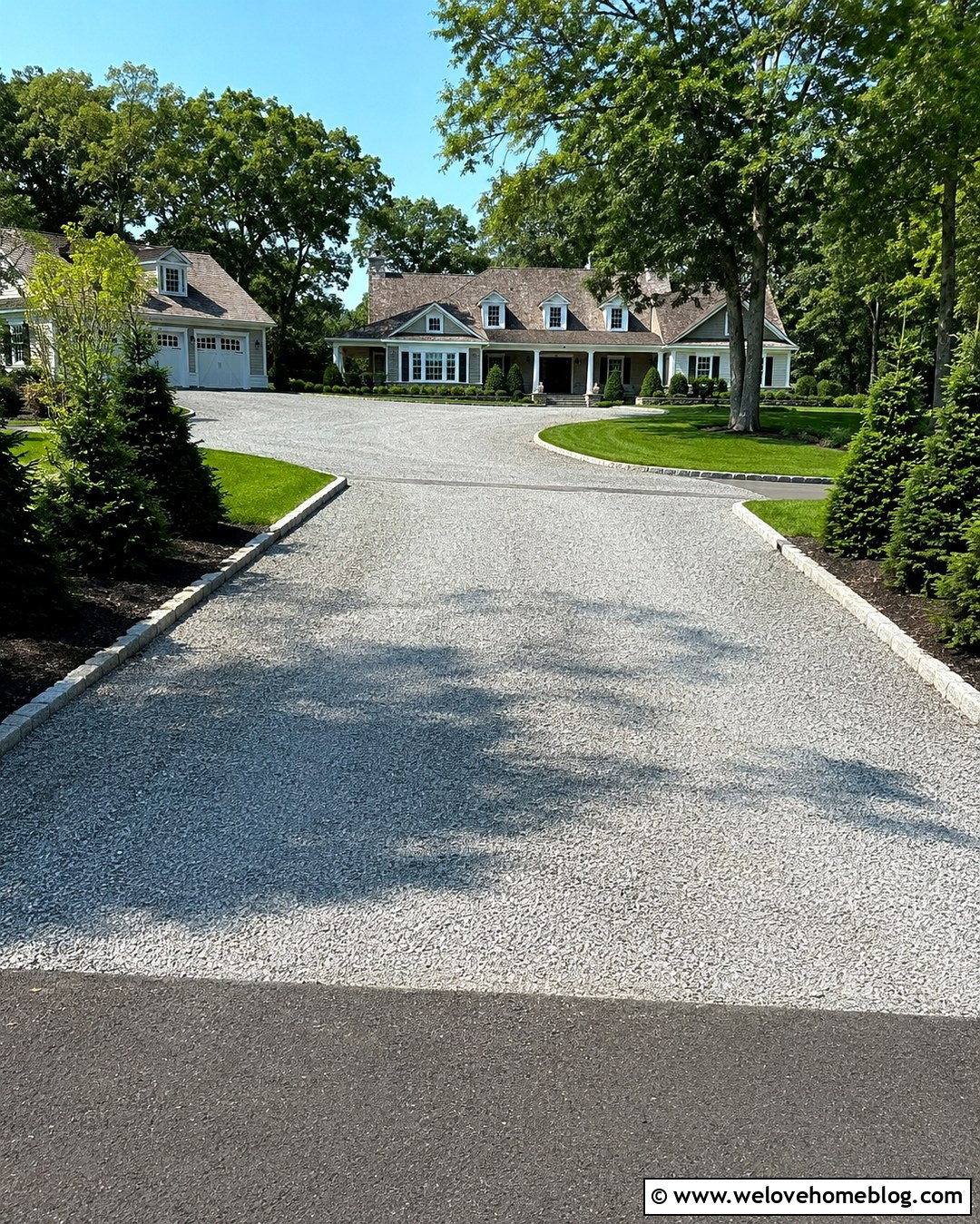
Frequent deliveries, large trucks, trailers, or recreational vehicles place greater demands on a driveway than ordinary passenger cars. A deeper engineered base with large angular stone at the bottom and progressively smaller aggregate above can distribute loads more effectively. Compact each lift rather than placing the entire depth at once. For the finished look, use a broad straight driveway surfaced with hard gray crushed stone. Heavy granite curbing supports the shoulders, while an expanded parking pad near a detached garage provides room for turning. Keep plants back from high-traffic edges and use lawn, sturdy evergreens, and high-canopy shade trees instead. This durable arrangement complements a large ranch or country home without making the driveway feel like a commercial access road. ()


10. Recycled Concrete Gravel Driveway Base
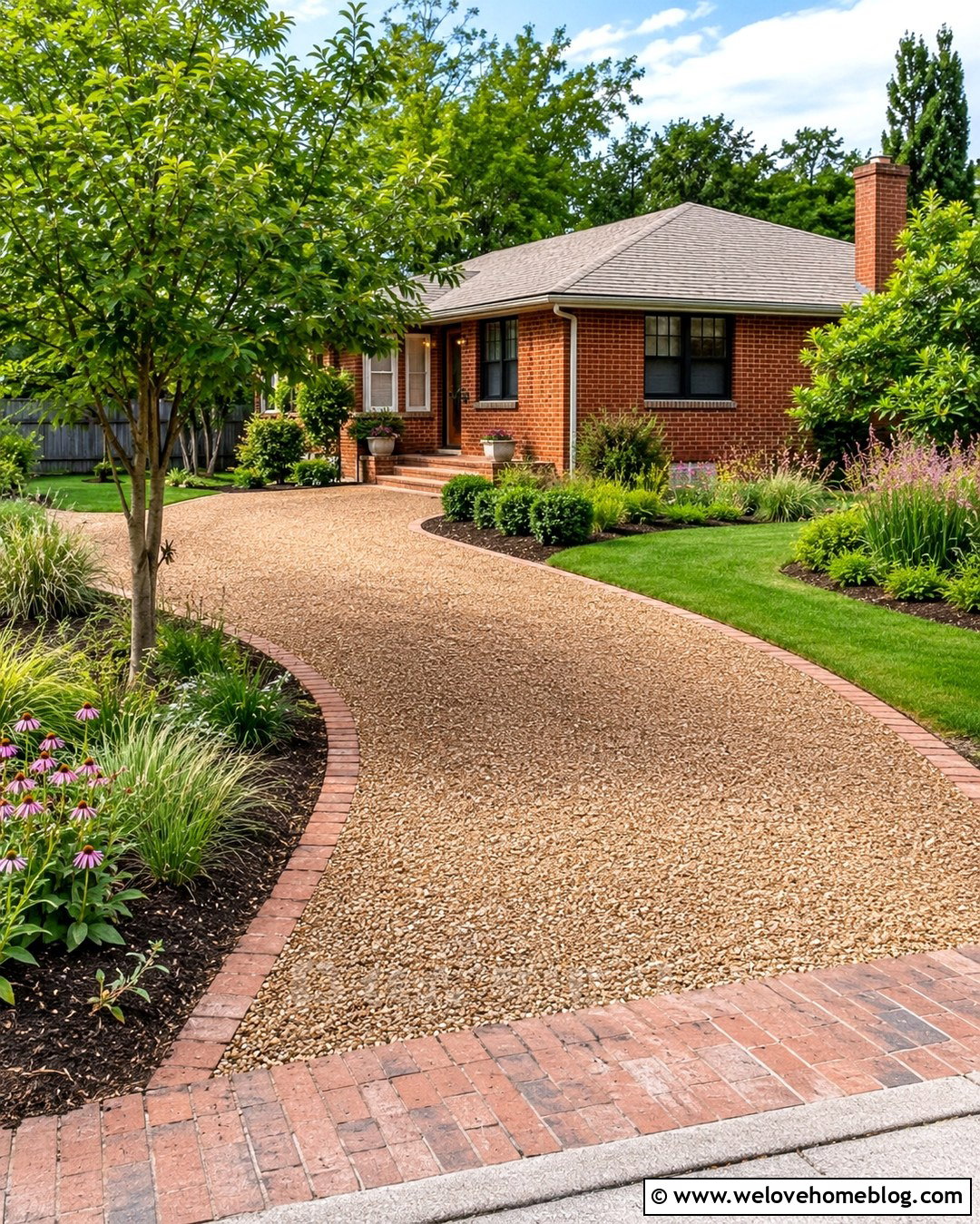
Crushed recycled concrete can provide a practical base where clean, properly processed material is locally available and approved for residential use. Its angular particles compact into a firm foundation, making it useful beneath decorative gravel rather than leaving the rough recycled material exposed. Pair the base with a warm brown crushed-stone surface on a gently curving driveway. Reclaimed brick edging can reinforce the sustainable theme and connect the drive to a red-brick bungalow. Add informal planting beds filled with native grasses, coneflowers, compact shrubs, and a small shade tree. A brick apron at the public road creates a tidy transition and helps retain gravel. Confirm particle gradation, contamination standards, and local requirements with the supplier before choosing recycled aggregate for the foundation.
11. Recycled Asphalt Gravel Driveway Base
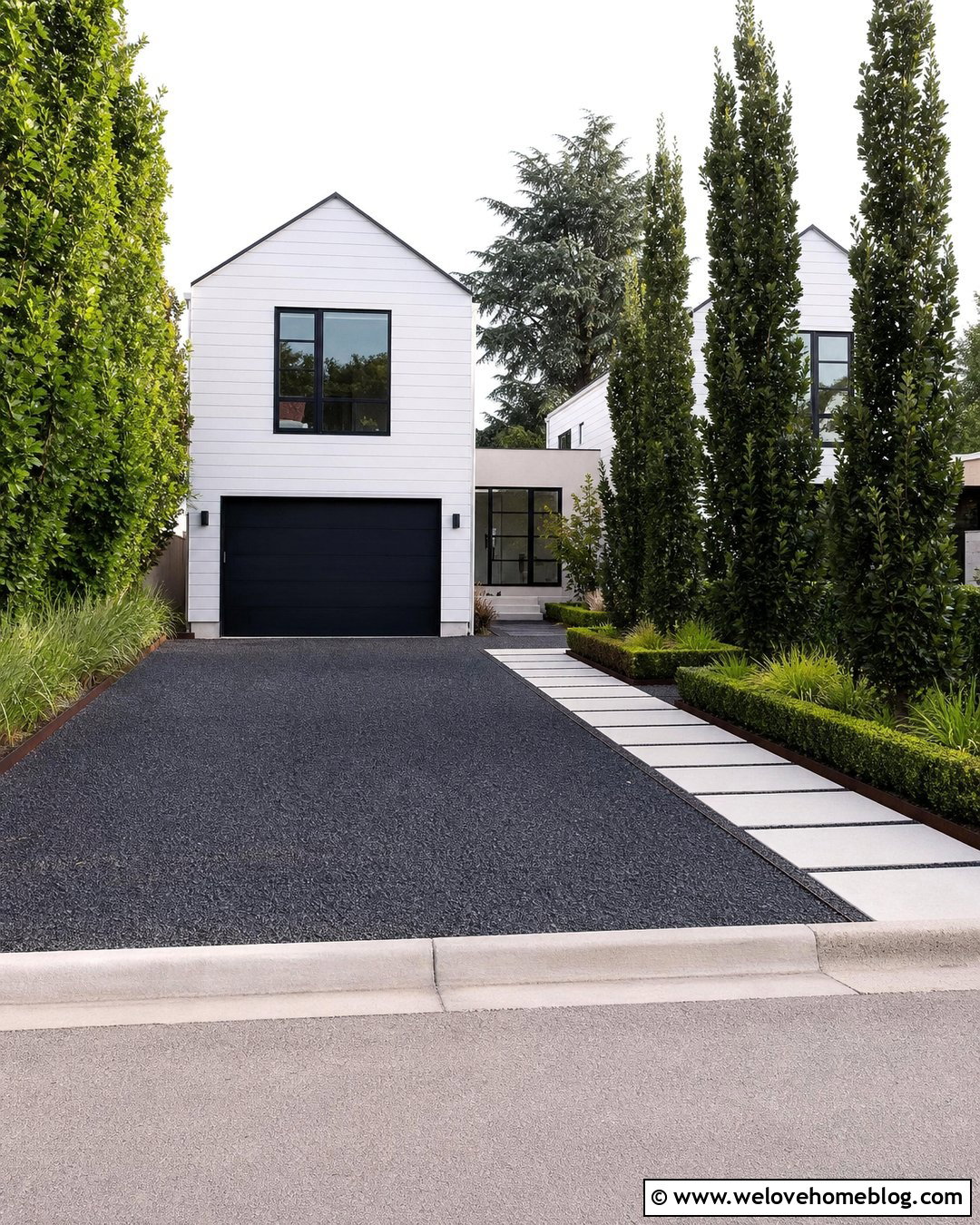
Recycled asphalt millings can create a dark, compactable base or intermediate layer, depending on local material quality and site requirements. Covering it with charcoal crushed granite produces a consistent appearance while preserving the texture of a gravel driveway. A straight approach with a wide parking court works well for a modern home with black window frames and light siding. Use weathering-steel edging to hold the aggregate and echo the dark surface tones. Plant simple rows of columnar trees, evergreen shrubs, and ornamental grasses beside the drive, leaving open sightlines at the street. Because recycled asphalt products vary considerably, ask about composition, drainage behavior, installation methods, and any local restrictions. Properly designed shoulders and runoff routes remain essential even when the base compacts tightly. ()
12. Limestone Gravel Driveway Base
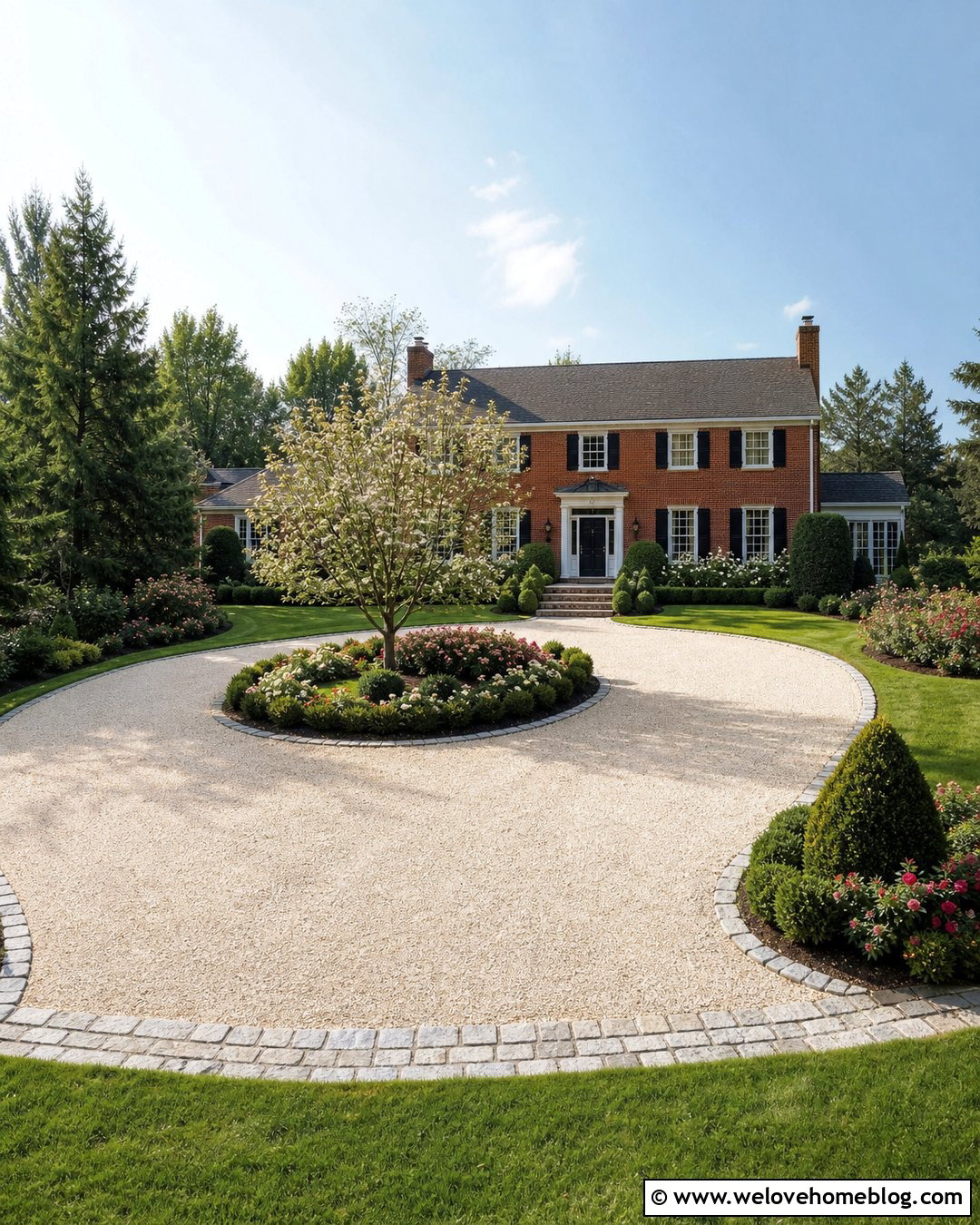
Limestone crusher run creates a compact base with a naturally light color that coordinates beautifully with pale decorative stone. Use it beneath a circular driveway surfaced with angular cream limestone chips. A cobblestone ribbon can trace both edges and define a central garden island without making the entrance look overly formal. Fill the island with a flowering tree, clipped evergreen shrubs, and seasonal perennials arranged below driver sightlines. Around the outside, connect the driveway to a matching limestone walkway and broad front steps. This complete scheme suits a brick colonial or French country house because the cream aggregate brightens the facade and softens the masonry. Limestone properties vary by region, so choose a locally available graded base designed to compact under vehicle traffic rather than loose decorative chips alone.
13. Granite Gravel Driveway Base
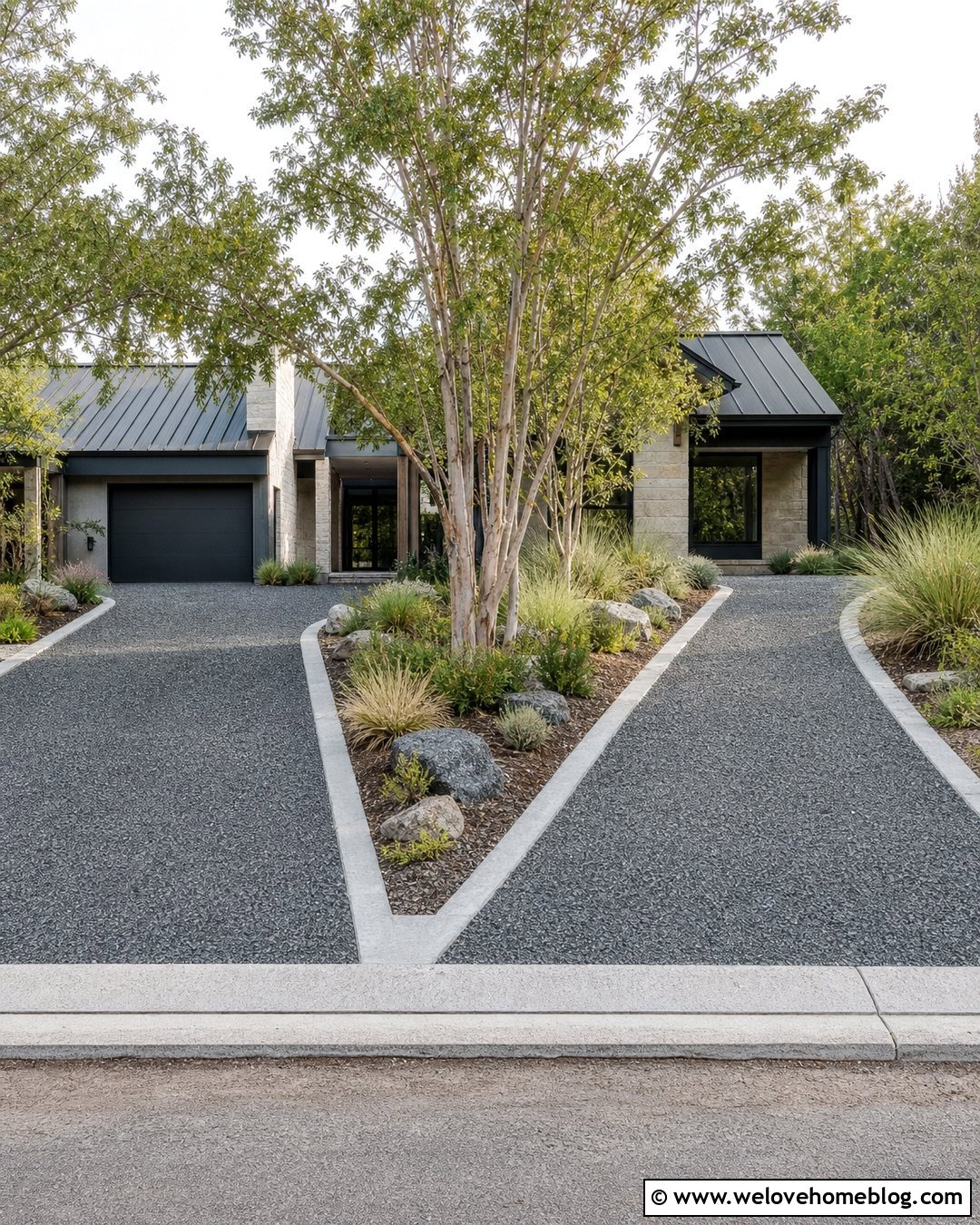
Granite is a strong, attractive option for a driveway where locally produced crushed aggregate is available. Build the lower foundation with larger angular granite, then add a compactable layer containing smaller particles before installing the finished surface. A dark gray granite driveway looks especially sharp in a split layout that branches toward a garage and separate parking bay. Use light concrete edging to create contrast and clearly define each route. Between the two branches, plant a sculptural multi-stem tree surrounded by low grasses and neatly spaced boulders. The design pairs well with a low modern home featuring wood, stucco, and large windows. Keeping the gravel color consistent through the visible surface creates a calm look, while the layered stone foundation handles the practical work underneath. ()
14. Permeable Gravel Driveway Base
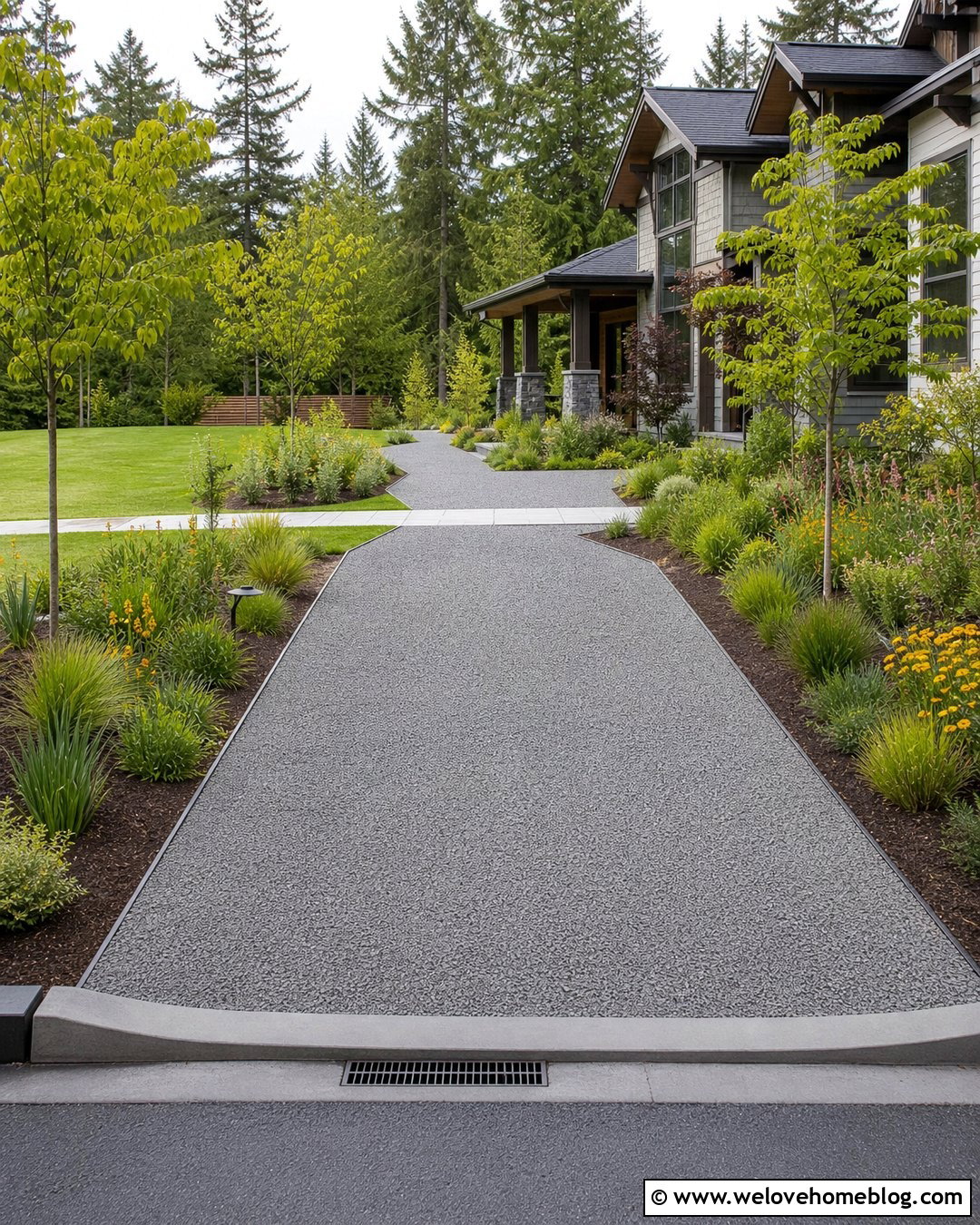
A permeable gravel driveway allows rainfall to pass through the surface, but it still needs a foundation designed for both storage and structural support. Clean, open-graded crushed stone can form a drainage layer beneath a stable gravel grid or carefully selected surface aggregate. Avoid assuming that every gravel installation is automatically permeable, since fines, compacted soil, and poor outlets can restrict water movement. For the complete look, use light gray angular gravel in a straight driveway with flush steel edging. Add rain gardens along the sides and a stone walkway crossing near the porch. Native grasses and flowering perennials can frame a contemporary craftsman home while receiving runoff from nearby roof drains. The result combines a clean residential entrance with a more deliberate approach to stormwater. ()
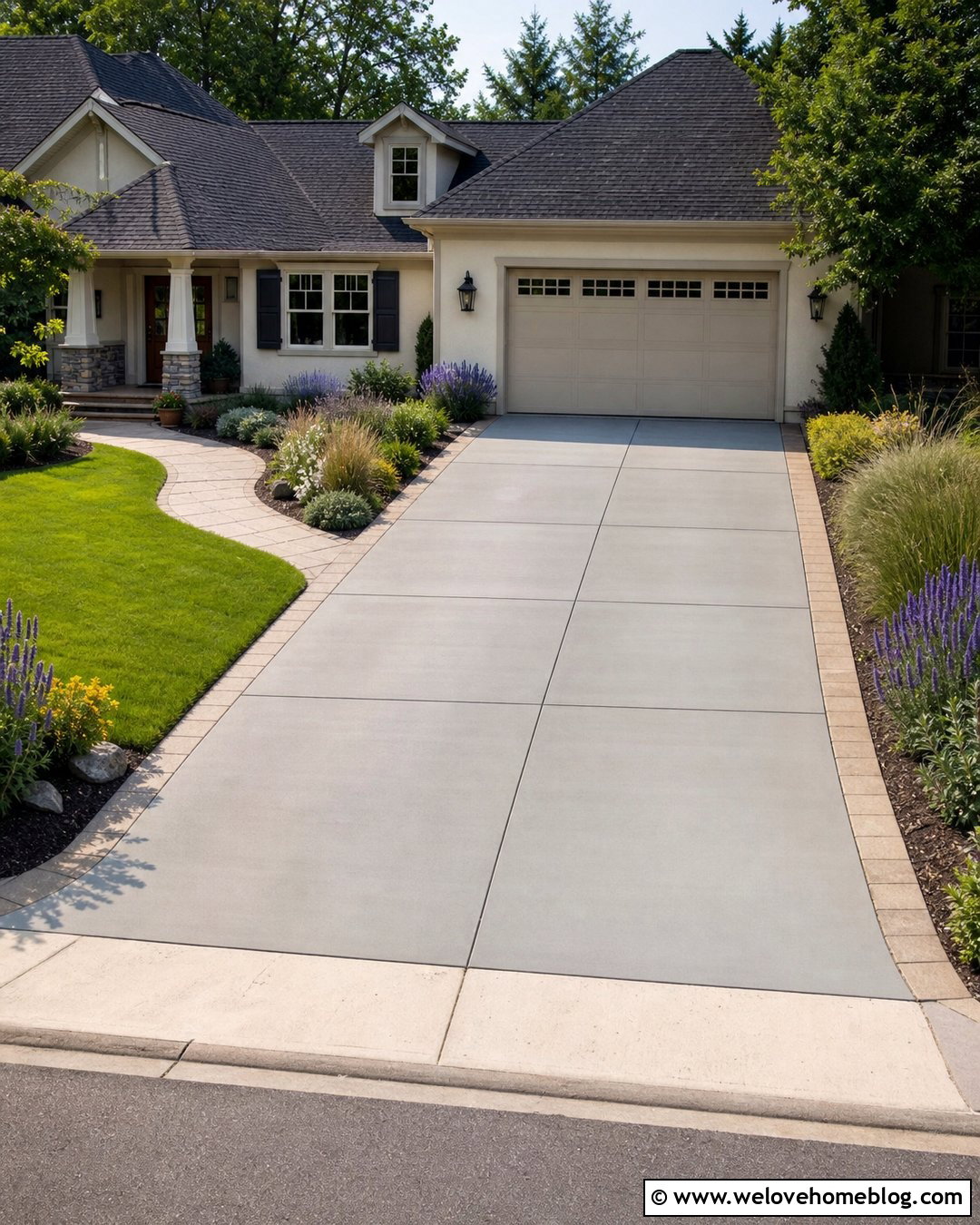
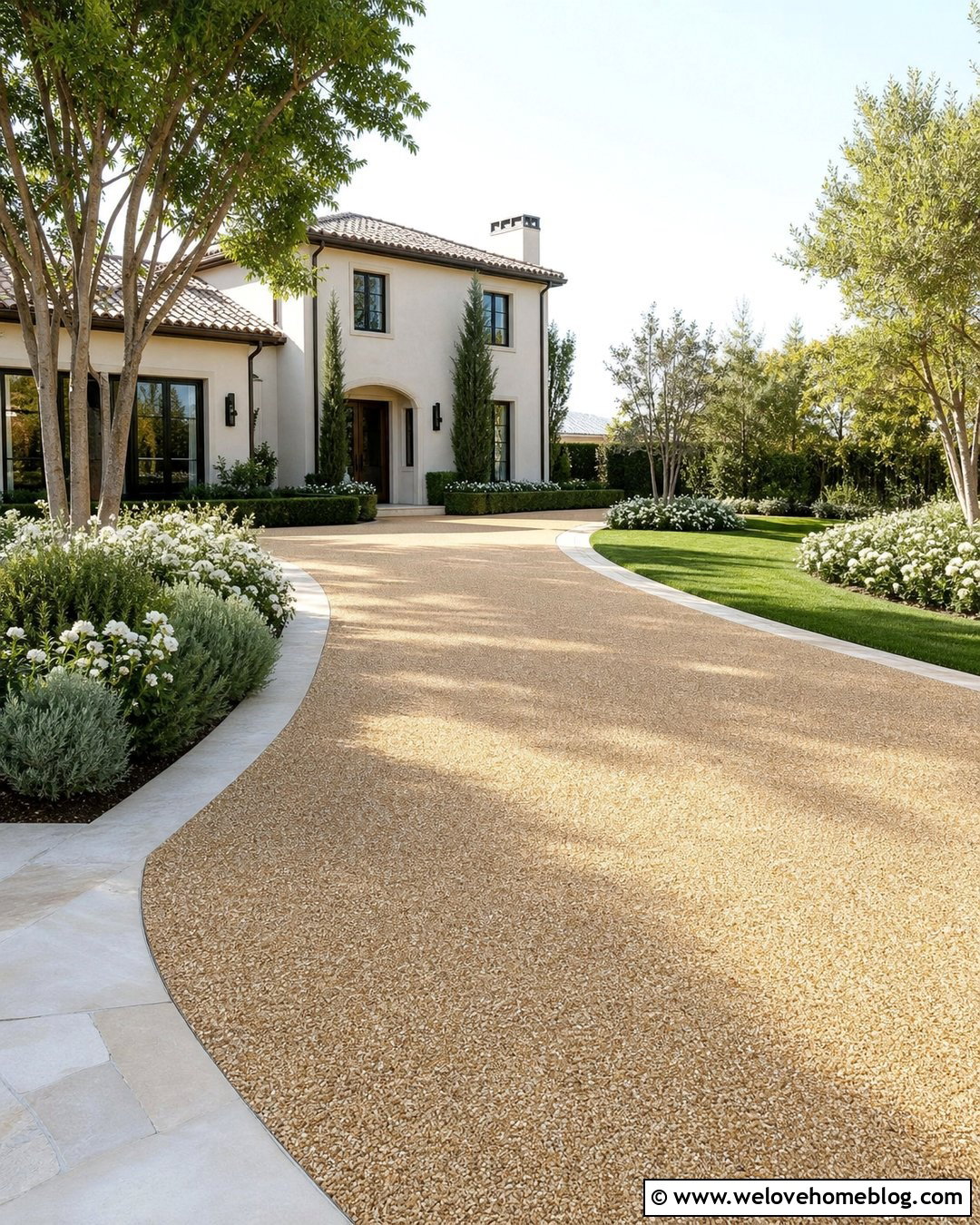
15. Crowned Gravel Driveway Base
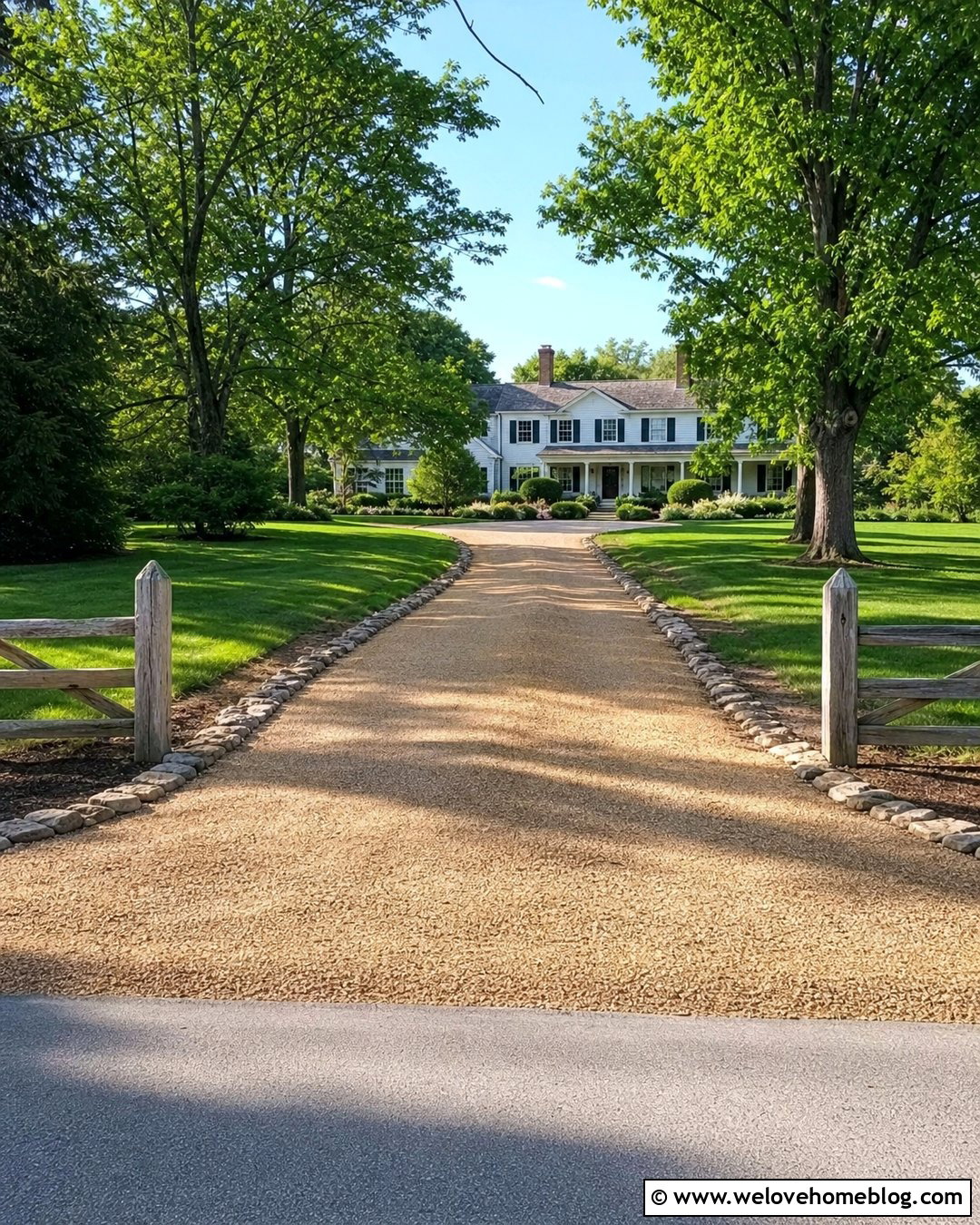
A subtle crown raises the center of a gravel driveway so water moves toward the sides instead of settling into wheel tracks. Shape the compacted base to establish the crown rather than trying to create drainage with a thin surface layer alone. Finish the driveway with tan angular gravel and maintain the same profile during future grading. A long, straight layout lined with low stone shoulders gives the water a clear route toward shallow grass swales. Place shade trees beyond the swales so their roots and falling debris do not interfere with the driving surface. Near a traditional farmhouse, add simple wooden gateposts and a matching gravel turnaround. The combination feels rural and relaxed, but every visible feature supports drainage, containment, and straightforward long-term maintenance. ()
16. Sloped Gravel Driveway Base With Drainage
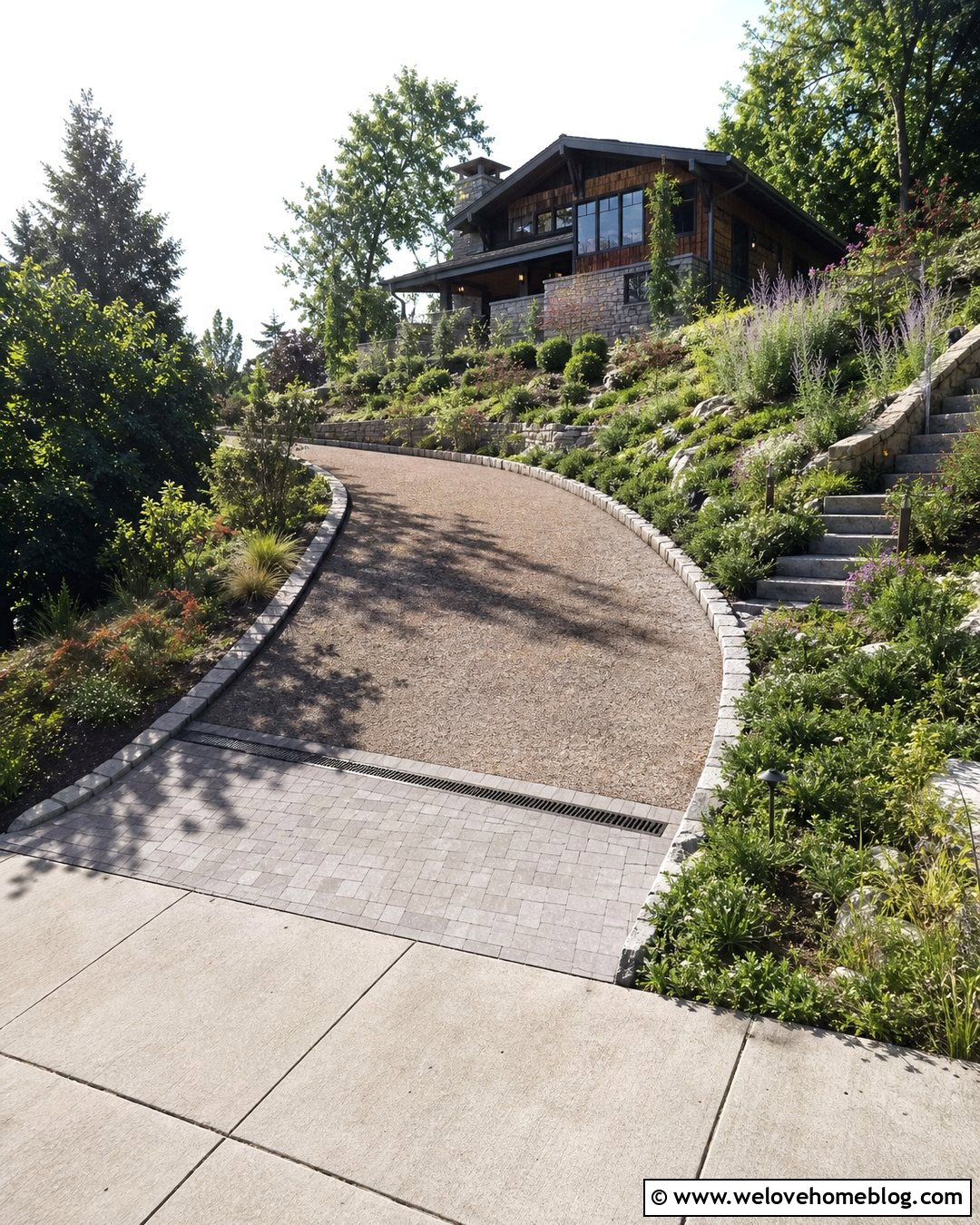
A sloped driveway needs more than deep gravel because fast-moving runoff can cut channels and carry loose stone downhill. Install the base in well-compacted lifts and incorporate drainage that intercepts water before it gains speed. A diagonal channel drain near the lower entrance may be useful when connected to an approved outlet. Finish the curved driveway with small angular brown gravel that locks together better than rounded pebbles. Use stone curbs along vulnerable edges and reinforce the street apron with textured concrete pavers. Terraced planting beds can stabilize the surrounding slope with ground covers, compact shrubs, and deeply rooted grasses. Leading to a hillside craftsman home, this layout turns the practical drainage system into a coordinated part of the driveway rather than an obvious afterthought. ()
17. Gravel Driveway Base With French Drain
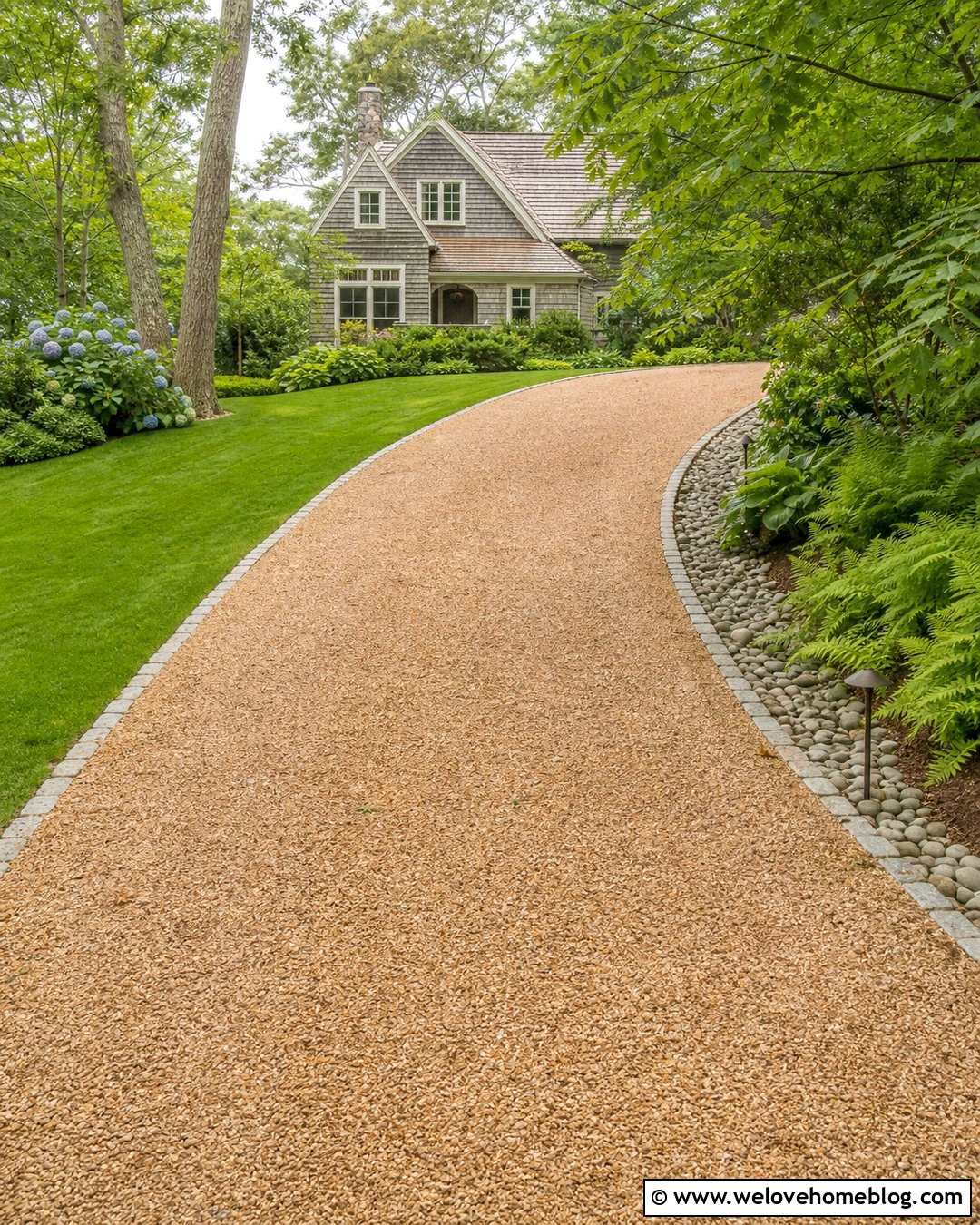
When water consistently enters a driveway from higher ground, a French drain beside the base may help redirect subsurface flow. The trench typically contains clean drainage stone, a perforated pipe, and suitable filter fabric, but its outlet and dimensions must match the site. Pair this drainage feature with a compacted crushed-stone driveway base and a surface of warm golden gravel. A curved layout bordered by granite setts can lead gracefully toward a cottage-style house. Place the drain beneath a narrow river-rock strip on the uphill edge, then landscape beyond it with ferns, hydrangeas, and small woodland shrubs. On the opposite side, use lawn and scattered trees. This balanced design keeps the drainage zone accessible while giving the entire driveway a natural, garden-focused appearance.
18. Gravel Driveway Base With Paver Edging
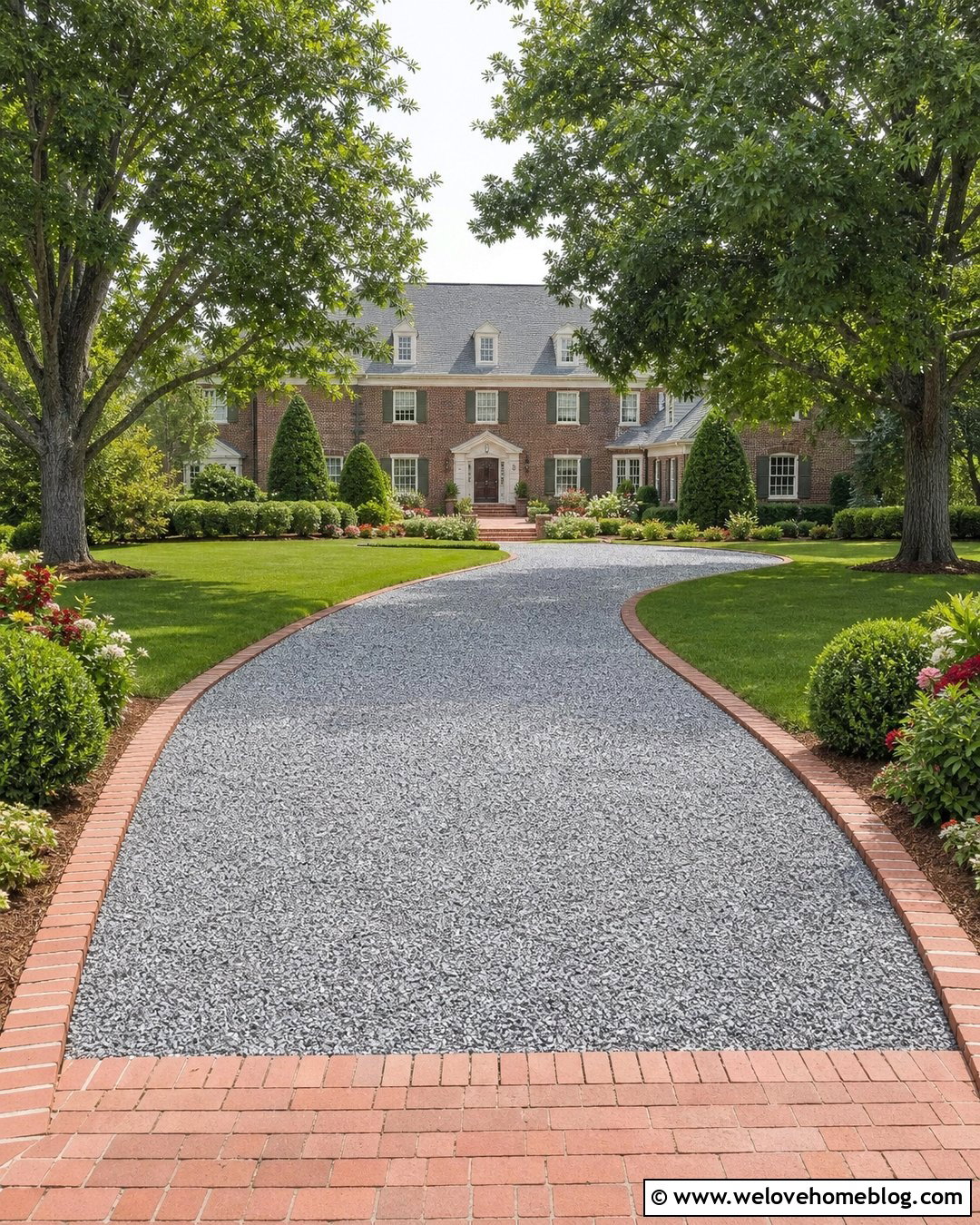
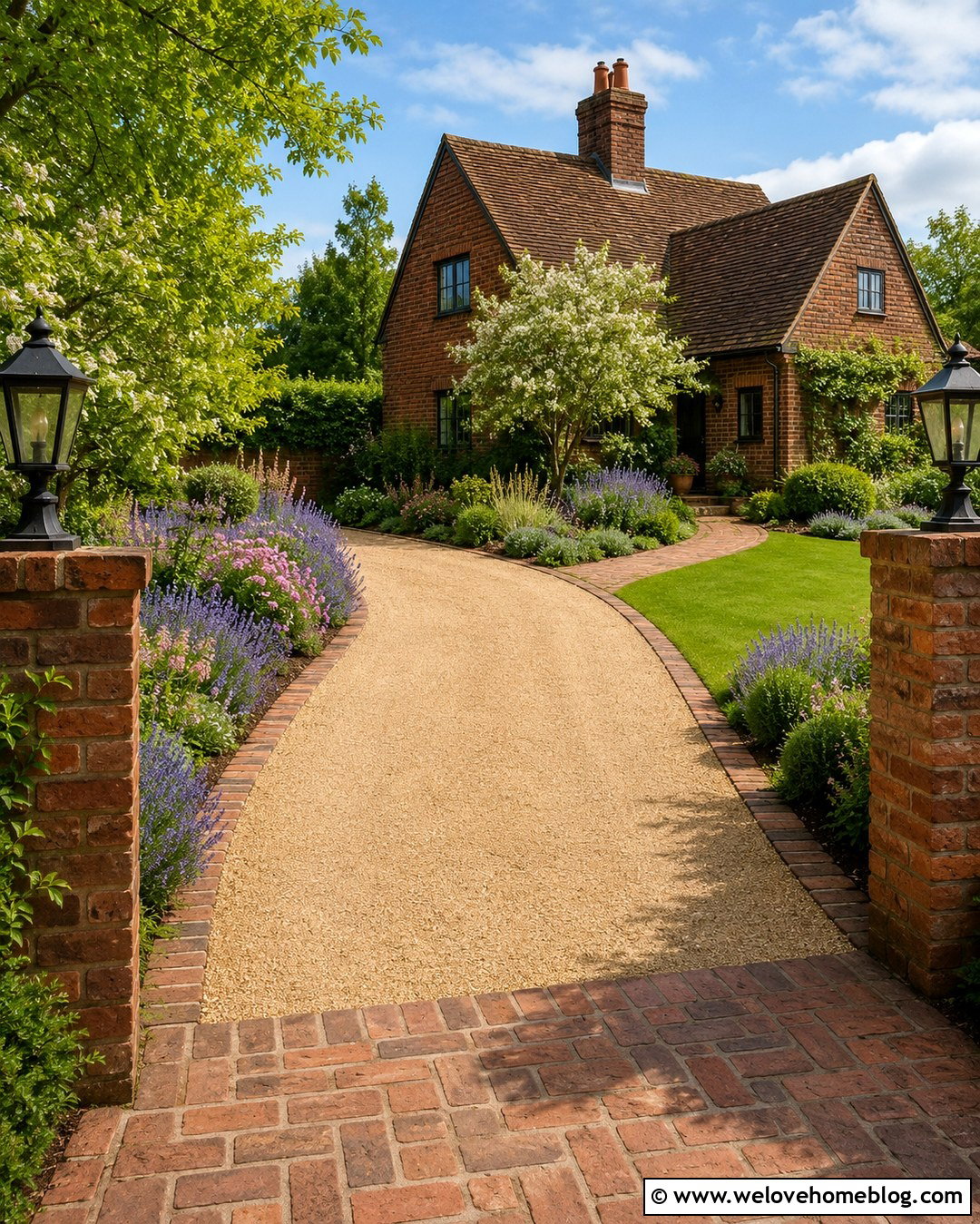
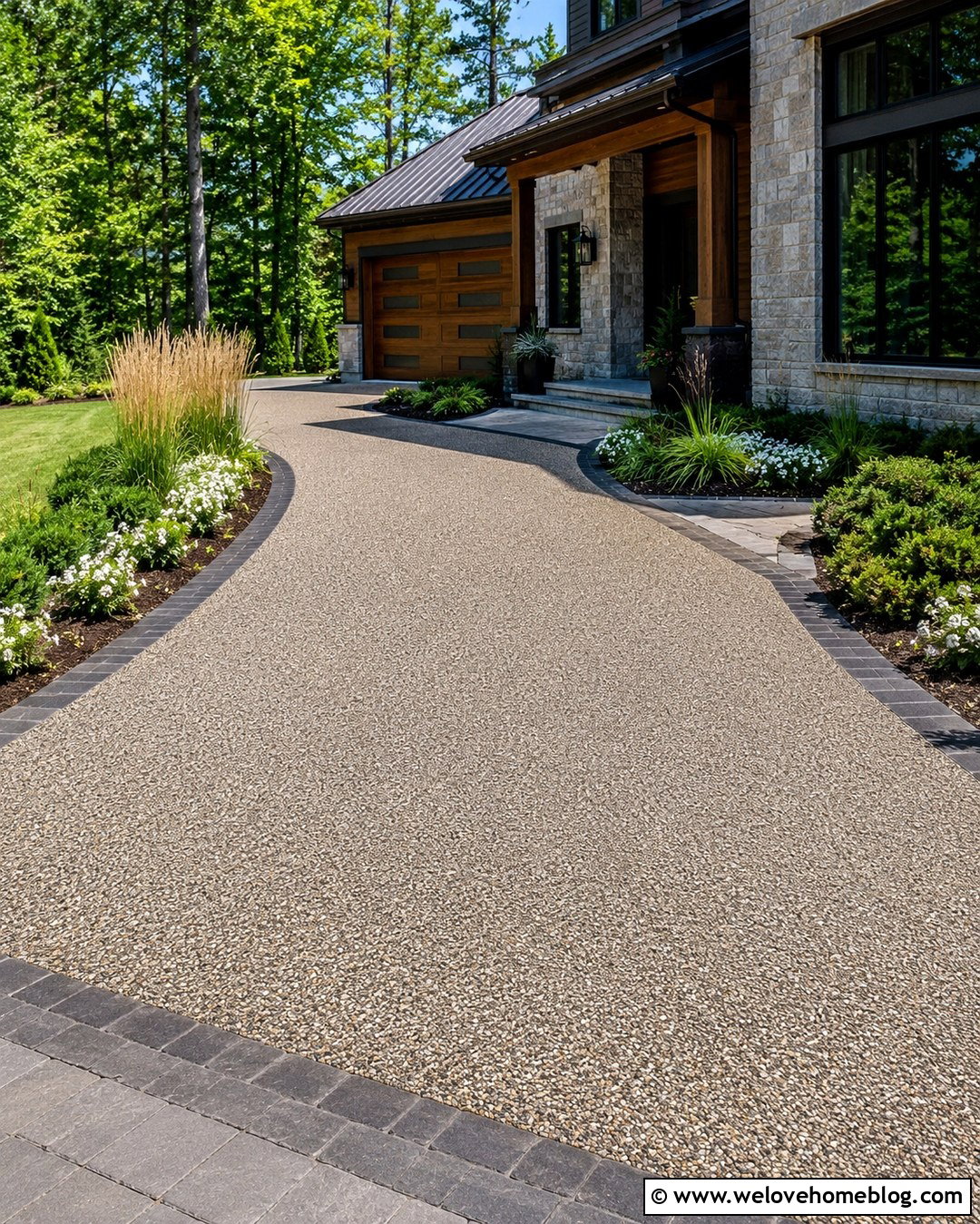
Paver edging provides a strong visual frame and helps support the shoulders of a gravel driveway. Install the pavers on a suitable compacted foundation so they do not tilt or spread under vehicle pressure. Inside the border, use a layered crushed-stone base and a surface of soft gray gravel. A wide, gently curved layout can include a double row of red clay brick pavers along each edge and a matching apron at the street. Repeat the brick in the front walkway to connect the driveway with a traditional brick house. Rounded shrubs, flowering perennials, lawn, and two evenly placed shade trees complete the setting. The structured red border keeps the loose stone controlled while adding enough color to make the entire approach feel established and welcoming. ()
19. Gravel Driveway Base With Timber Edging
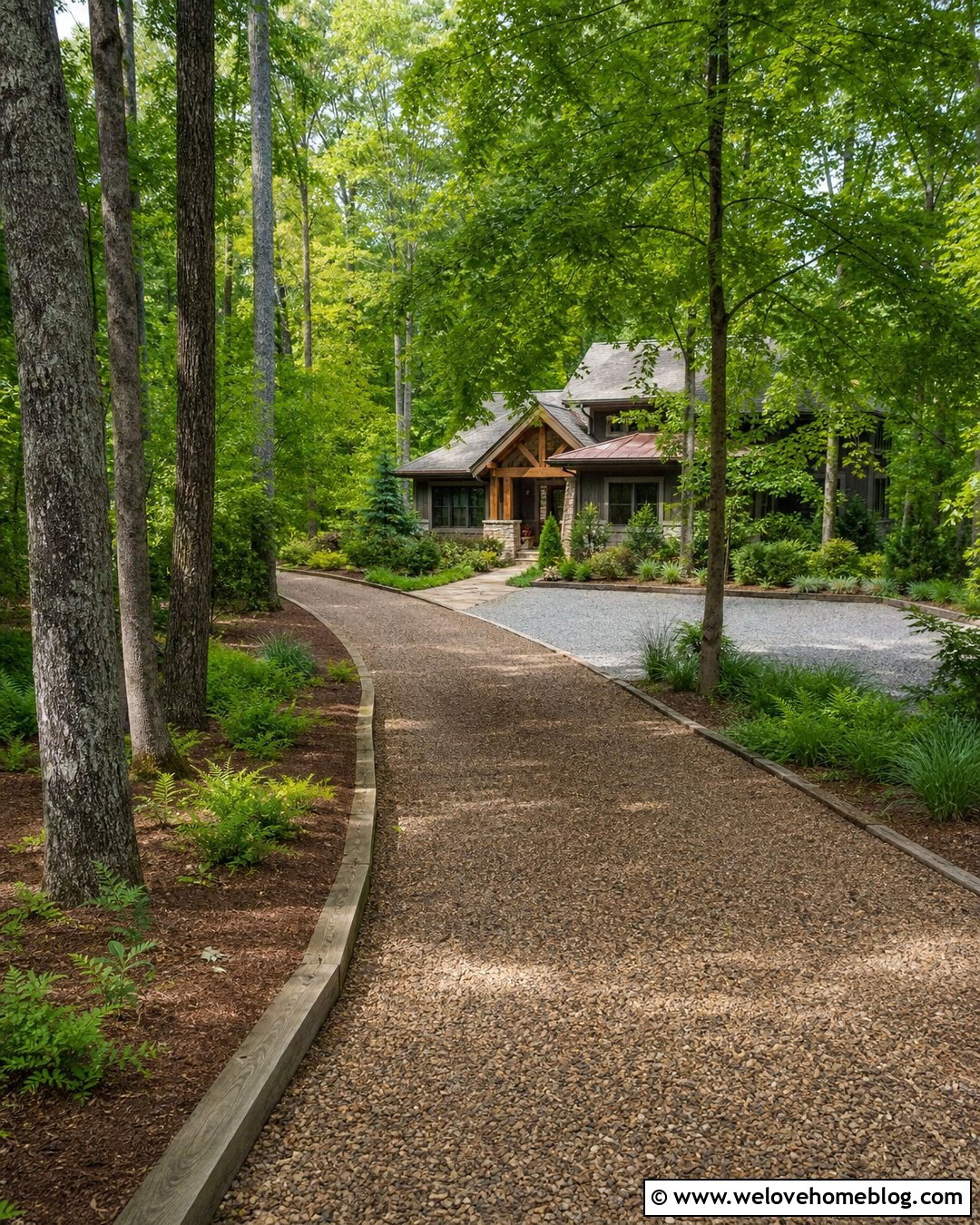
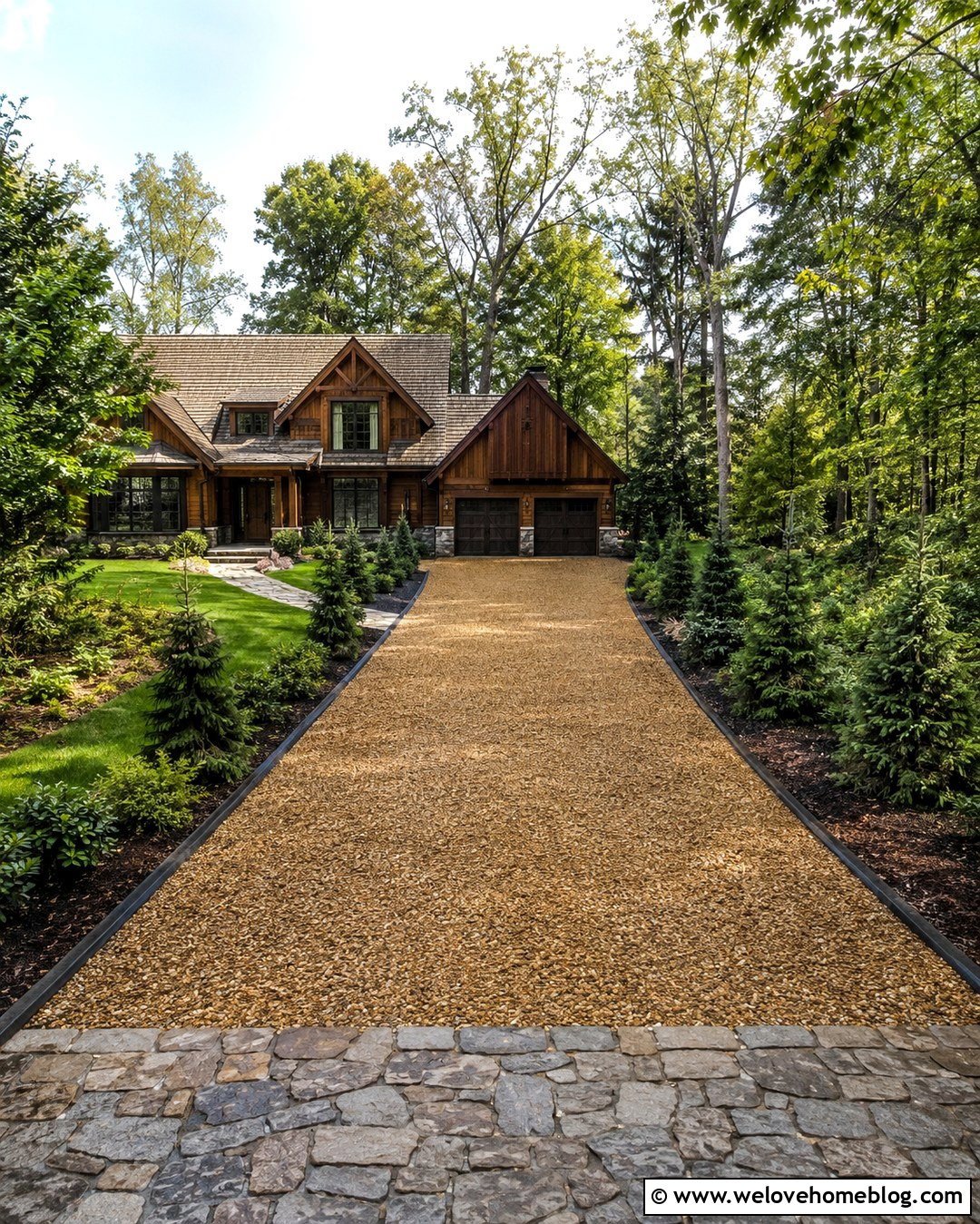
Timber edging gives a gravel driveway a relaxed appearance that works well in wooded or rustic settings. Use ground-contact-rated material suited to local conditions, anchor it securely, and keep the finished gravel slightly below the top edge. Build the driveway with a compacted angular-stone base and cover it with warm brown gravel that blends naturally with the landscape. A narrow, winding layout can lead through mature trees toward a cabin-inspired or country craftsman house. Plant ferns, native grasses, woodland ground covers, and low evergreen shrubs beyond the timber. Add a gravel parking area near the house and connect it to a simple flagstone path. The result feels informal, but the continuous edging and properly compacted foundation keep the driveway shape clear and usable.
20. Gravel Driveway Base With Concrete Apron
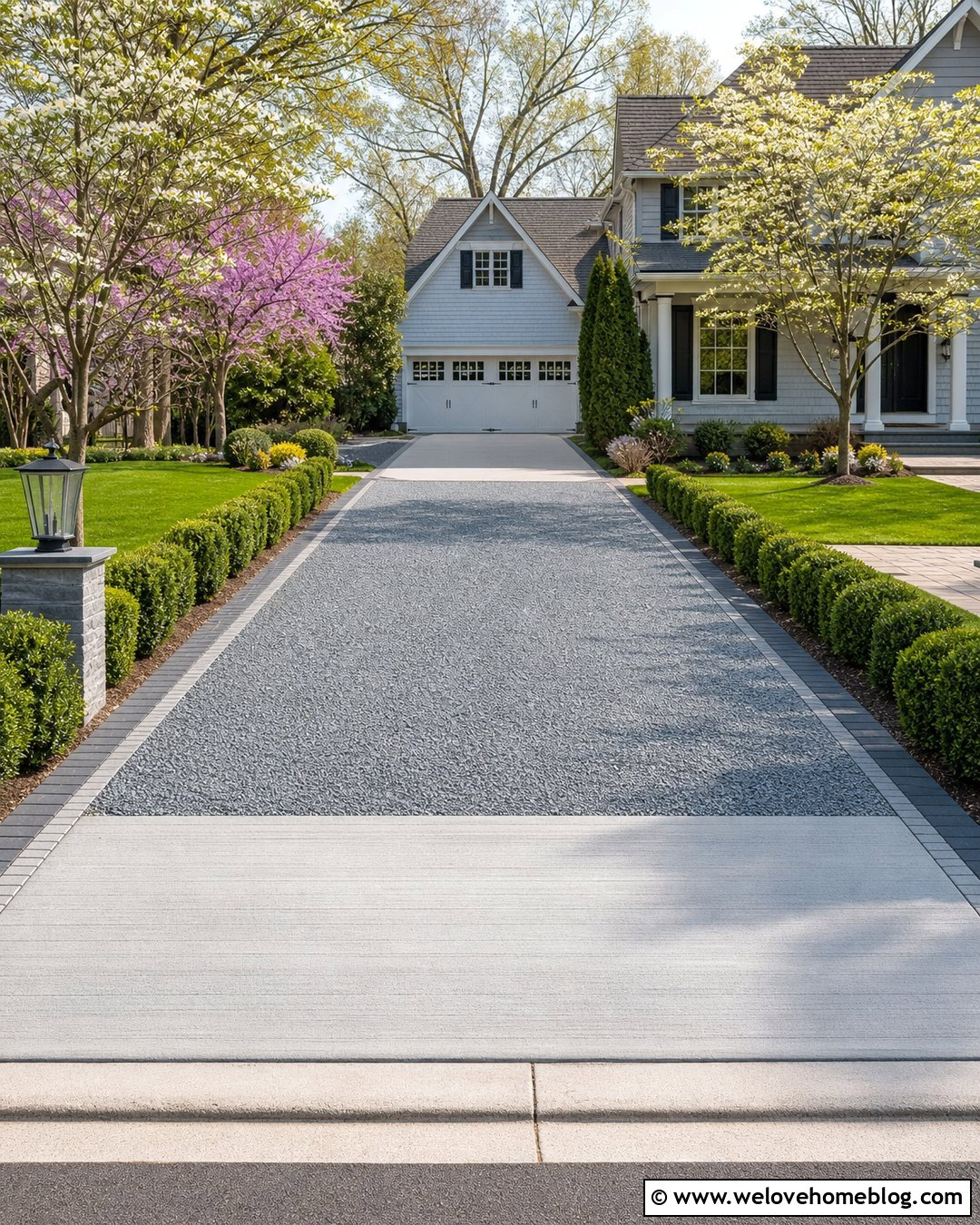
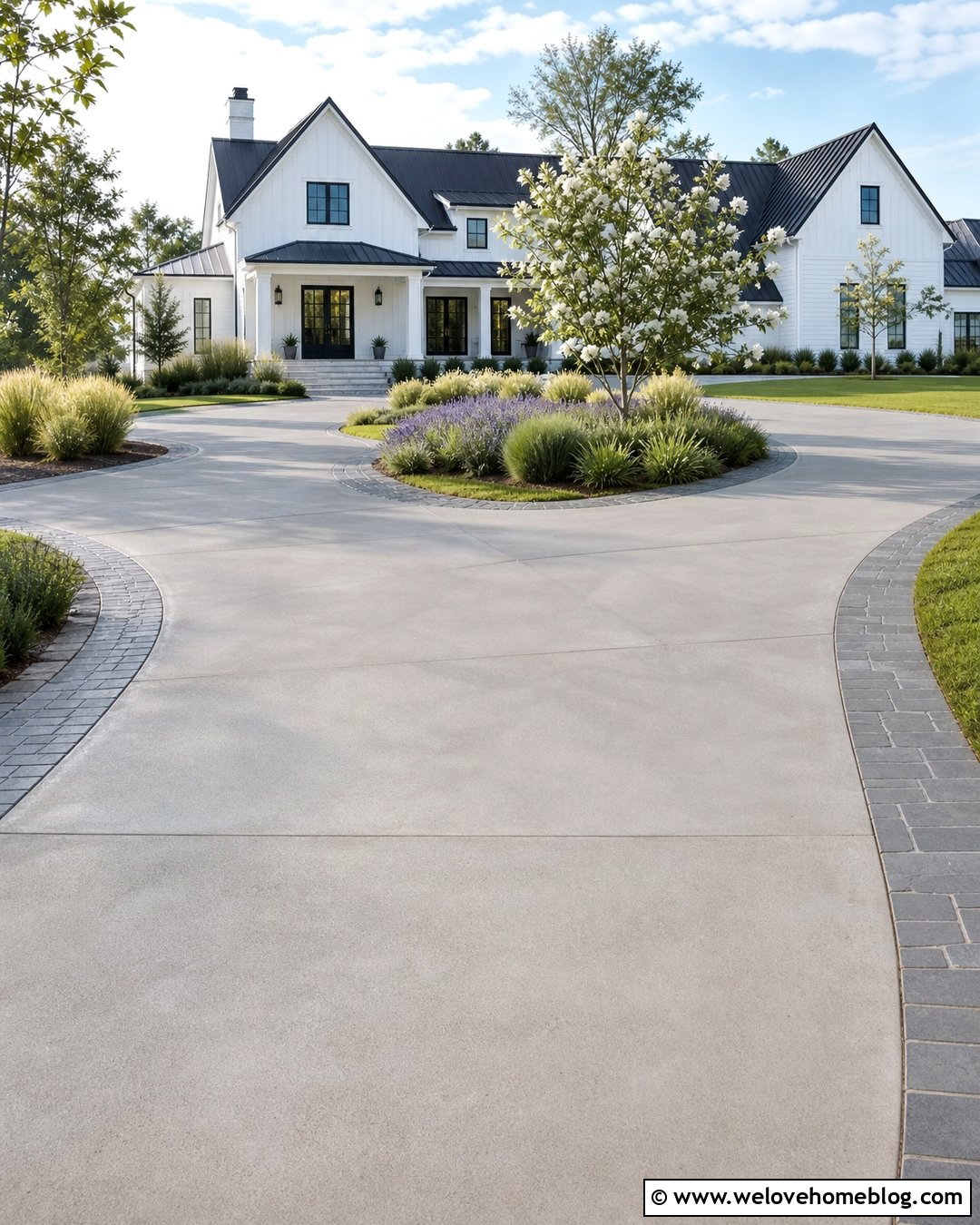
Loose stone often migrates where a gravel driveway meets the street or garage floor. A concrete apron creates a firm transition, catches some displaced aggregate, and protects the most heavily used turning area. Use a compacted road base beneath the main driveway, then finish it with medium-gray crushed stone. At the entrance, install a wide broom-finished concrete apron with dark paver bands that connect visually to the gravel. Repeat the treatment near the garage for a polished transition. A straight driveway framed by low hedges, lawn, and flowering trees suits a clean suburban home. Keep the gravel slightly below the concrete edges to reduce spillover. Together, the solid aprons, stable gravel base, restrained planting, and clear boundaries create an orderly, low-fuss approach. ()
Conclusion:
The strongest 20 Driveway Gravel Base Ideas combine sound construction with a finished design that belongs beside the house. Angular base stone, compacted lifts, suitable separation fabric, stable shoulders, and planned drainage can make the visible gravel surface easier to maintain. The best solution will depend on native soil, rainfall, freeze-thaw conditions, driveway slope, vehicle weight, and locally available aggregate. Always confirm material names and gradations because terms such as crusher run, road base, and crushed stone differ between regions. Before excavation, check local permits, utility locations, runoff rules, and professional recommendations. With the right foundation, edging, layout, and landscaping, a gravel driveway can deliver dependable access and attractive curb appeal for years.

Related posts:
Leave a Reply