
A well-graded driveway does more than create a smooth surface. It directs rainwater, reduces potholes, limits erosion, and makes the entire entrance look more polished. The best grading approach depends on the driveway’s length, slope, material, drainage conditions, and the equipment available. A compact tow-behind grader may suit a short residential drive, while a box blade, land plane, or skid steer attachment can handle heavier reshaping. The finished layout matters just as much. Crowns, side slopes, swales, culverts, borders, and compacted shoulders must work together as one system. Whether you are restoring an old gravel lane or planning a new entrance, these practical **Driveway Grader Ideas** offer solutions for different properties, budgets, and maintenance needs.

1. Crowned Gravel Driveway Grading
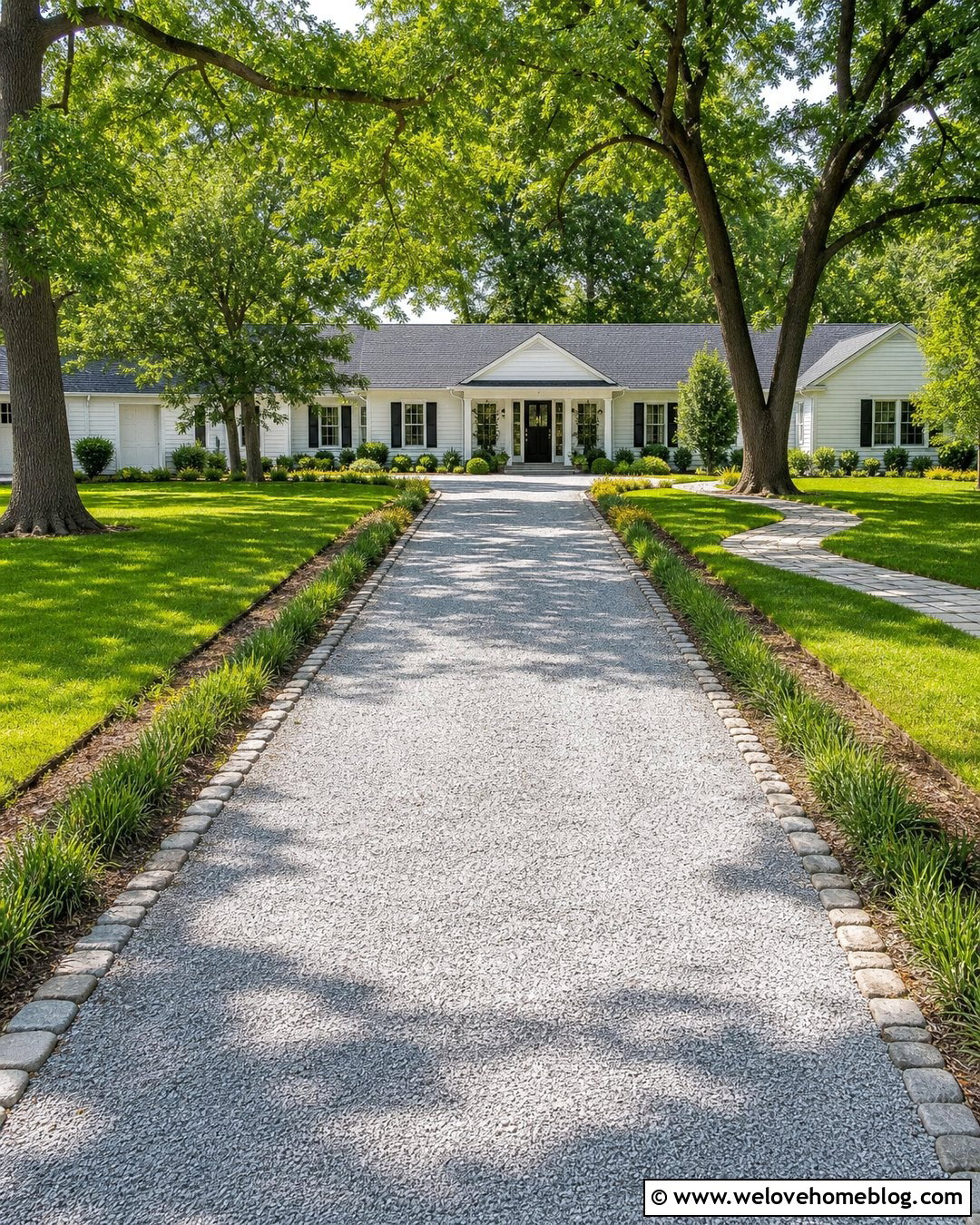
A crowned surface is one of the most practical choices for a straight gravel driveway. The center sits slightly higher than both edges, encouraging rainwater to move outward instead of collecting in tire tracks. A land plane, box blade, or adjustable tow-behind grader can pull loose aggregate toward the middle before smoothing the driving lanes. Use compactable crushed stone rather than rounded decorative gravel for the structural surface. Define the edges with cobblestone, steel, or heavy landscape curbing so displaced material stays within the driveway. Shallow planted swales on both sides can receive runoff and soften the appearance. This complete layout works especially well with ranch, farmhouse, and country homes surrounded by open lawn. Regular light grading helps preserve the crown before deep ruts develop. ()
2. Land Plane Gravel Driveway
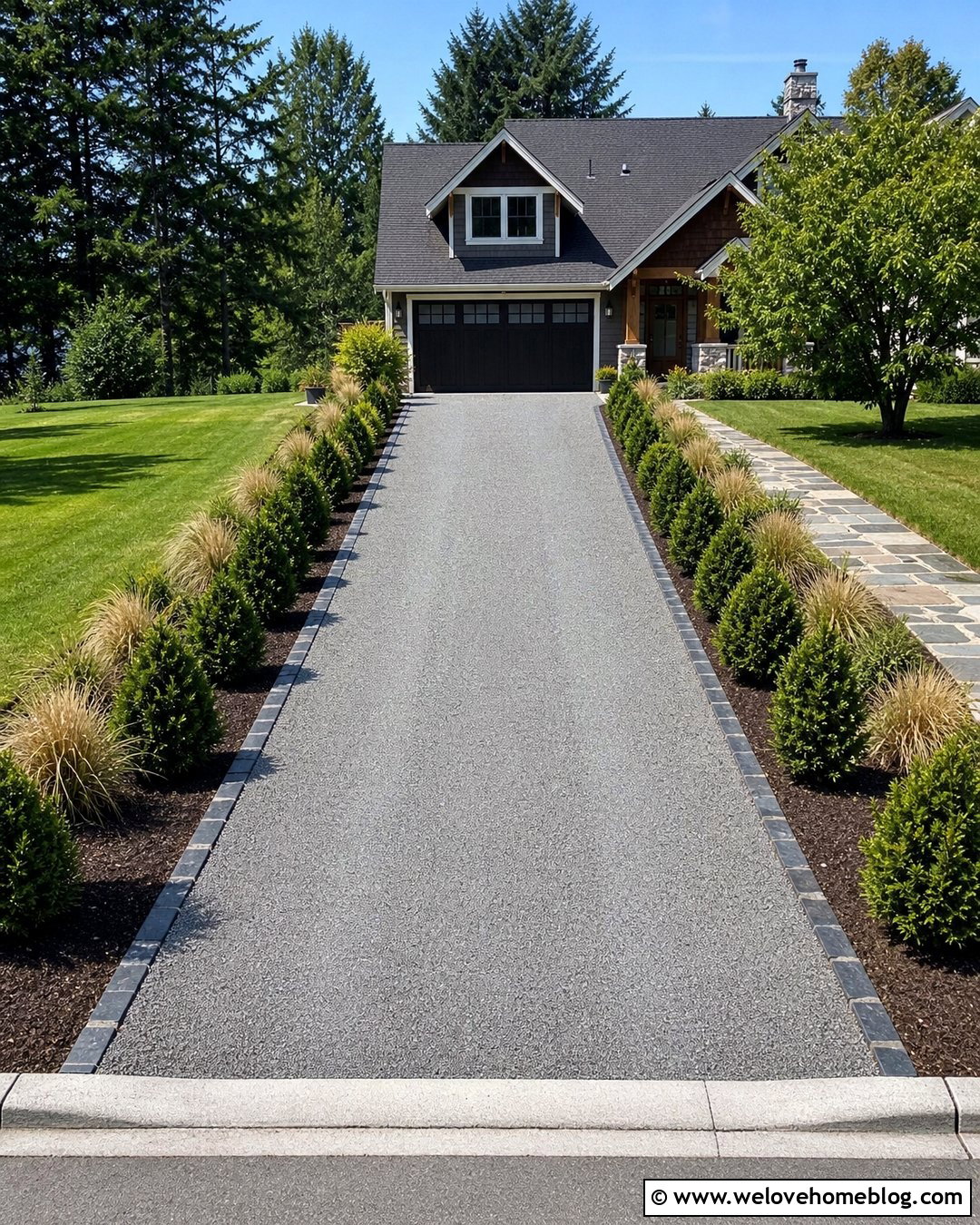
A land plane creates a clean, consistent finish on an established gravel driveway that is already close to the correct shape. Its parallel blades loosen high spots, collect displaced stone, and release that material into shallow depressions. The finished driveway can have a gentle crown or a controlled slope toward one side. Pair compacted gray crusher run with dark granite edging for a tidy transition into the lawn. Low ornamental grasses and evergreen shrubs can frame the entrance without restricting grading access. This setup looks especially balanced in front of a craftsman home with a broad garage approach. A land plane is better suited to routine surface restoration than major excavation. Deep washouts, failed bases, and substantial elevation changes normally require heavier equipment or added aggregate before final smoothing. ()
3. Box Blade Driveway Grading
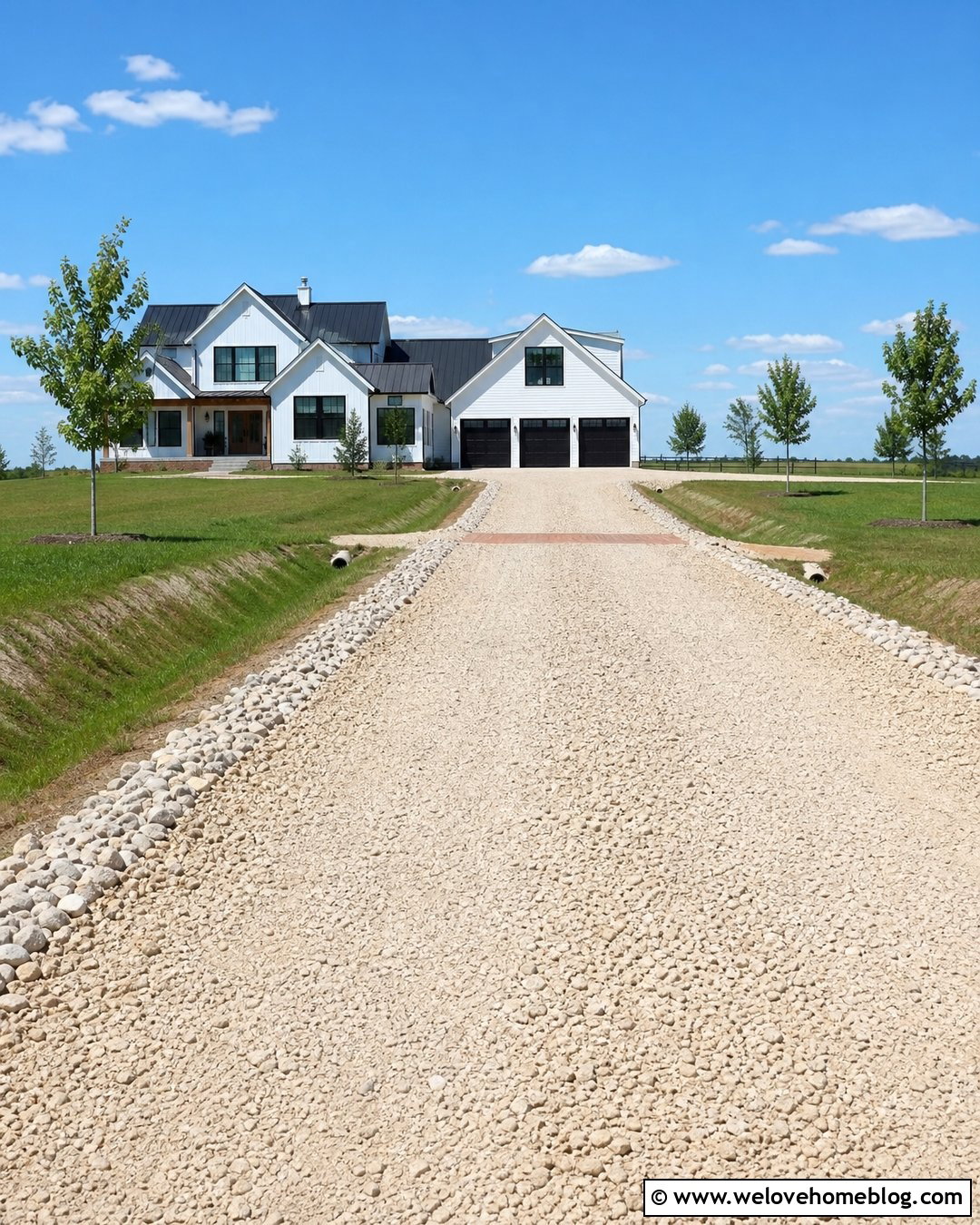
Deep potholes and uneven elevations often require more aggressive reshaping than a light drag can provide. A tractor-mounted box blade can cut high areas, carry gravel, and release it into low sections. Scarifier teeth help break compacted material before the blade redistributes it. For a complete driveway design, use compacted limestone with a defined center crown, broad stone shoulders, and grass-lined drainage ditches. A brick ribbon at the garage apron creates a finished transition without interfering with the main grading zone. This rugged arrangement complements a modern farmhouse or rural colonial home. The operator should make gradual passes rather than trying to correct the entire surface at once. After rough grading, lighter finishing passes and mechanical compaction help lock the reshaped aggregate into a smoother, more durable driving surface.
4. ATV Tow Behind Driveway Grader
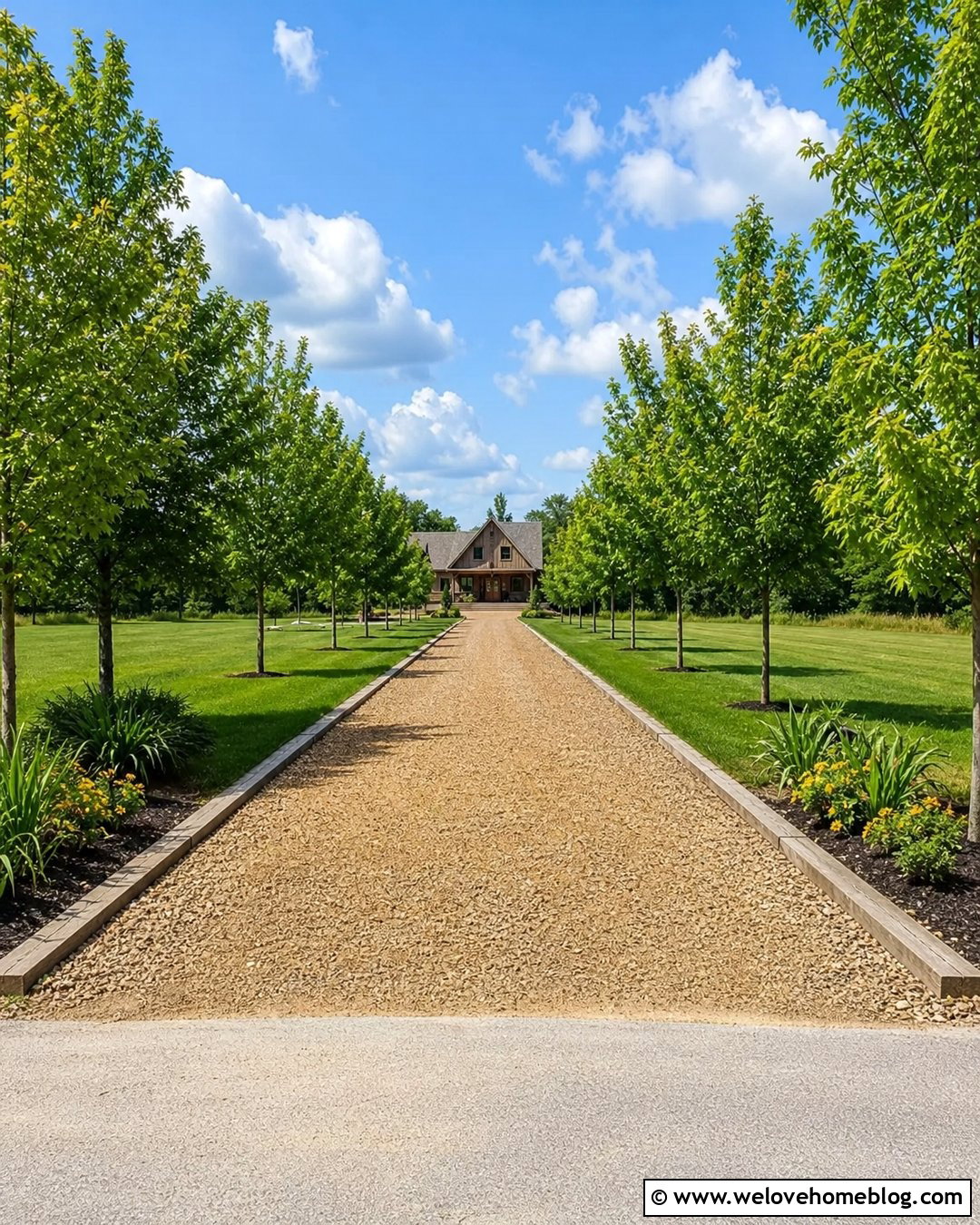
For a medium-length residential driveway, an ATV tow-behind grader offers a manageable maintenance solution without requiring a full-size tractor. Adjustable teeth loosen compacted gravel, while the rear blade spreads the material over shallow ruts and depressions. A straight tan crushed-stone driveway with timber edging creates a warm country look and clearly defines the grader’s working path. Add mown grass shoulders, simple perennial beds, and evenly spaced shade trees near the entrance. Keep branches and planting beds far enough from the surface to allow comfortable turning. This arrangement suits a cabin, ranch, or rustic farmhouse. It works best when used frequently, before small imperfections become major washouts. Several shallow passes generally produce a more even result than one deeply aggressive pass with a lightweight towing vehicle. ()
5. Lawn Tractor Driveway Grader
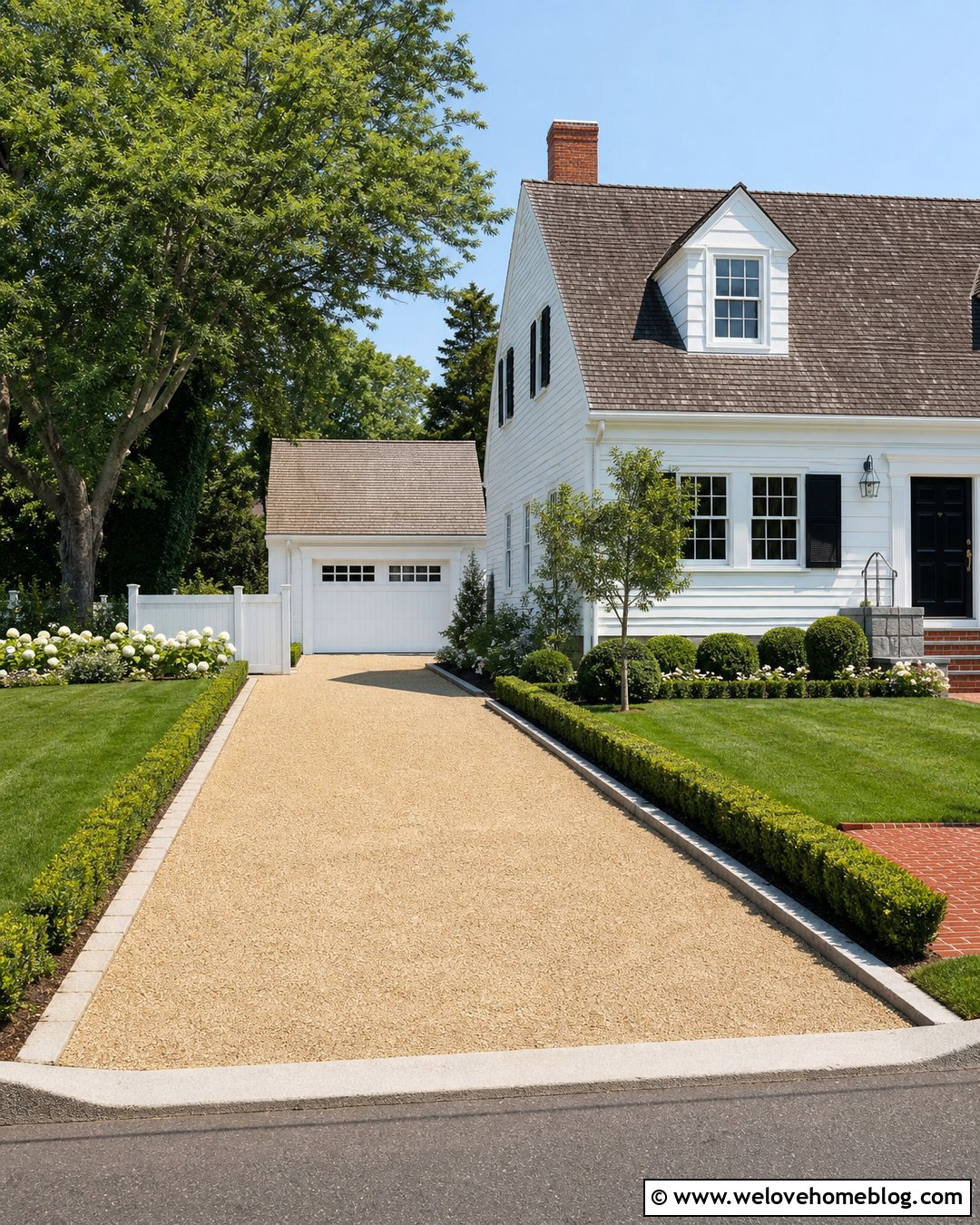
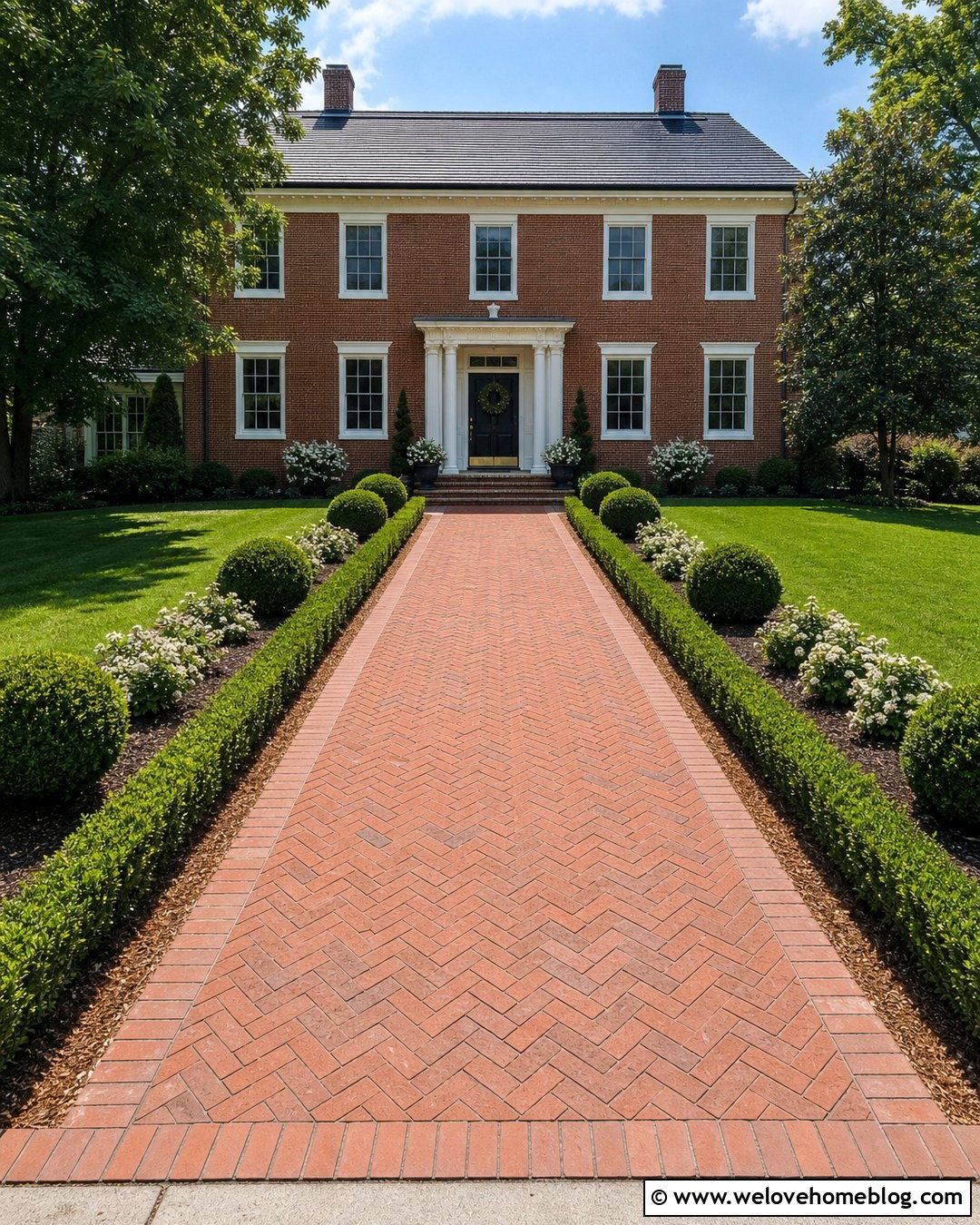
A small lawn tractor can maintain a short, relatively level gravel driveway when paired with a compatible lightweight grader. This solution is useful for grooming loose stone, reducing shallow washboarding, and refreshing the surface after winter. Design the driveway with compacted buff limestone, a modest central crown, and flush concrete curbing that will not catch the grader. Neatly clipped boxwood, lawn panels, and a brick walkway can frame the approach to a Cape Cod house. Avoid oversized gravel that the light grader cannot move effectively. The towing machine must also have enough weight, traction, and rated capacity for the attachment. This setup is not intended for rebuilding a failed base or repairing severe erosion. Instead, it provides convenient preventive maintenance that keeps a properly constructed driveway looking smooth and orderly.
6. Skid Steer Driveway Grading
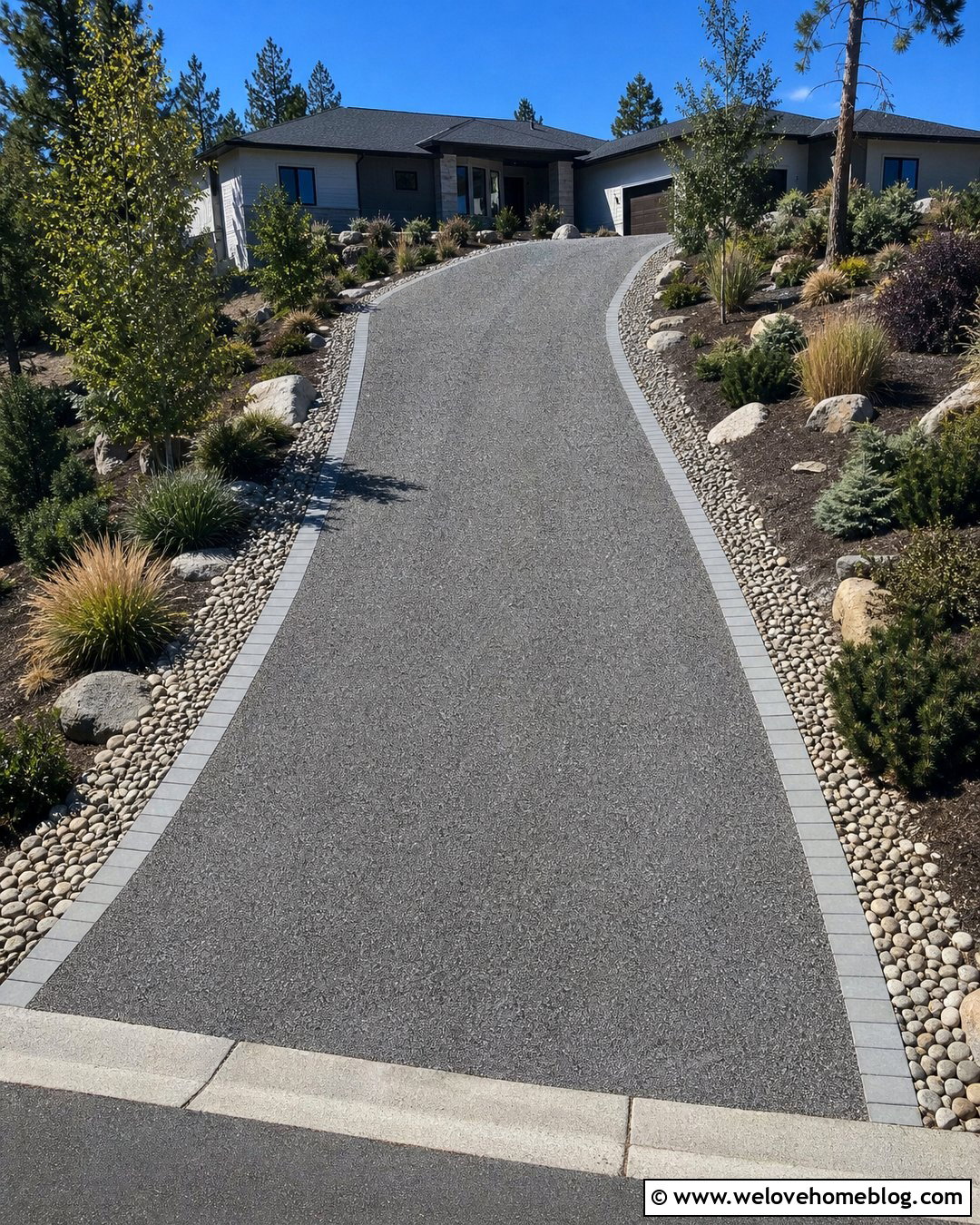
A skid steer is a strong option for a driveway with deep ruts, displaced shoulders, or several loads of new aggregate to distribute. A grading attachment can cut compacted ridges and shape a precise surface, while a bucket handles major material movement. Consider a wide gray crushed-granite driveway with a cross slope toward a river-rock swale. Concrete paver borders can protect landscaped beds near the house, while rough stone shoulders reinforce the rural entrance. This complete design works well with a contemporary ranch or mountain-style home. Before grading, mark culverts, drain grates, utility boxes, and low landscape lighting. Complete the heavy reshaping first, then make controlled finishing passes. Compacting the corrected surface afterward helps prevent freshly moved stone from shifting under traffic or during the next heavy rainfall. ()
7. Hand Graded Gravel Driveway
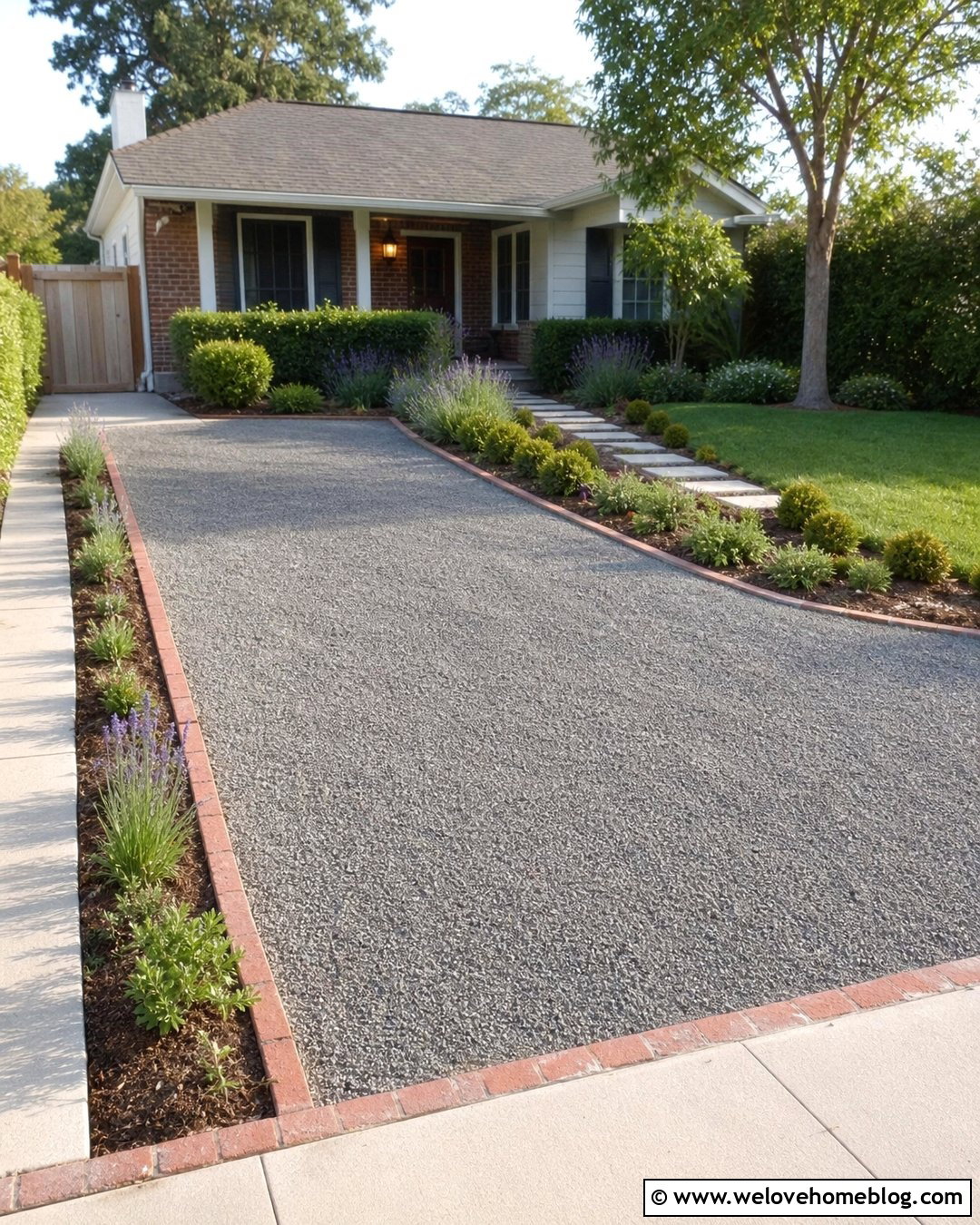
Not every driveway requires motorized equipment. A small parking pad or short urban driveway can be corrected with a shovel, landscape rake, bow rake, and hand tamper. Start by loosening compacted ridges and removing debris. Fill depressions with compatible crushed aggregate rather than loose, rounded pebbles. A compact gray gravel driveway with brick edging, a slight side slope, and a narrow planted drainage strip creates a practical cottage entrance. Lavender, low grasses, and dwarf shrubs can add color while leaving the working surface accessible. Hand grading is labor-intensive, but it allows careful control around walkways, gates, and garage thresholds. Finish by raking the surface evenly and compacting repaired areas in thin layers. This method is best for minor maintenance, not deep structural failures or extensive drainage corrections. ()
8. Sloped Gravel Driveway Grading
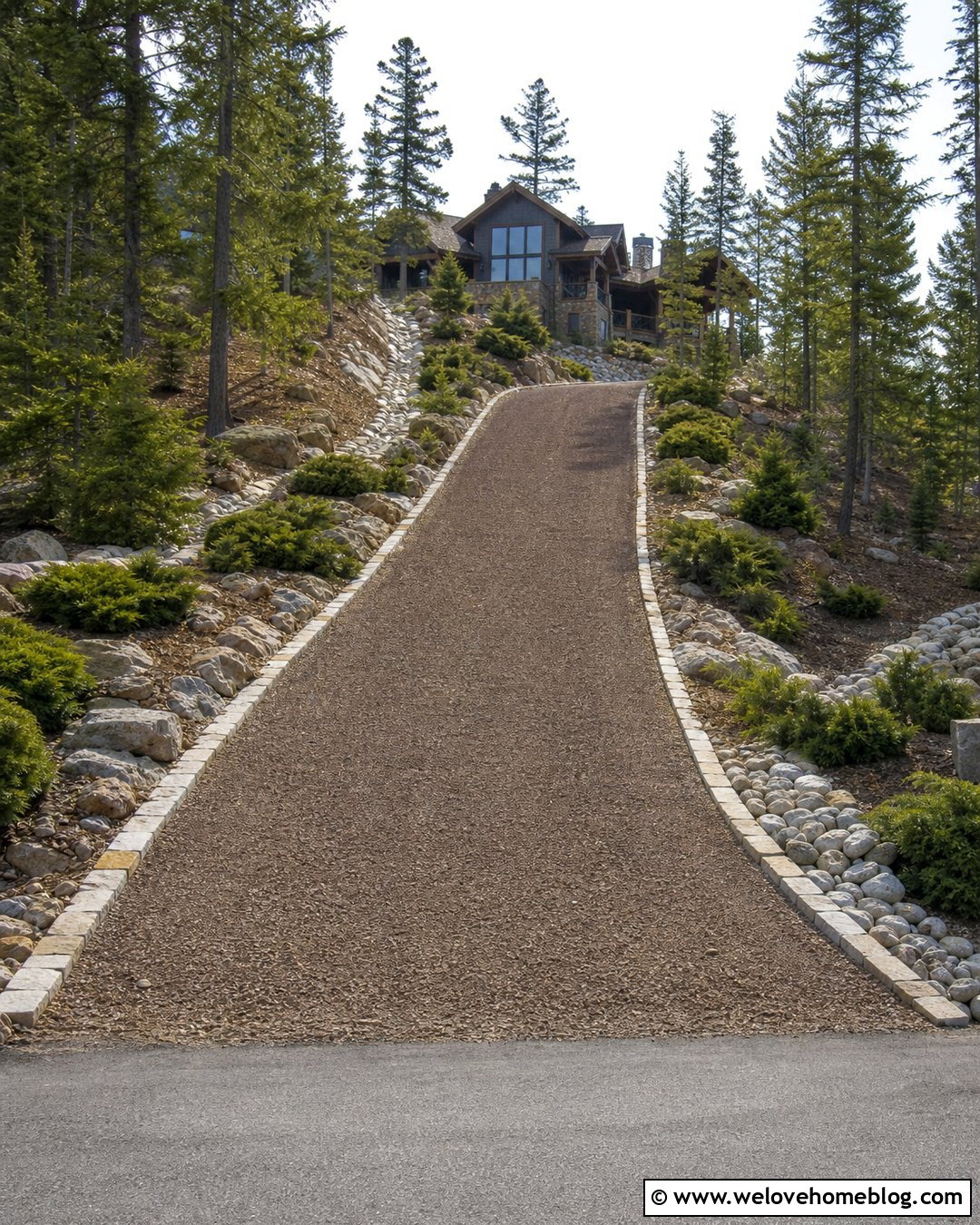
A sloped driveway needs more than a smooth finish because fast-moving runoff can carry loose material downhill. Grade the surface with a controlled cross slope so water leaves the driving lane at planned locations. Use angular crushed stone over a well-compacted base, and reinforce the edges with granite curbing or large natural stones. A shallow uphill ditch can intercept runoff before it crosses the driveway. On longer slopes, carefully positioned drainage channels may reduce the distance water travels over the gravel. Frame the entrance with erosion-resistant grasses, juniper, and deep-rooted shrubs. This rugged design suits a hillside craftsman or mountain home. Avoid creating flat areas where water can pause and soften the base. Severe slopes, unstable soils, or repeated washouts should be evaluated by an experienced grading or drainage contractor.
9. Side Sloped Driveway Grading
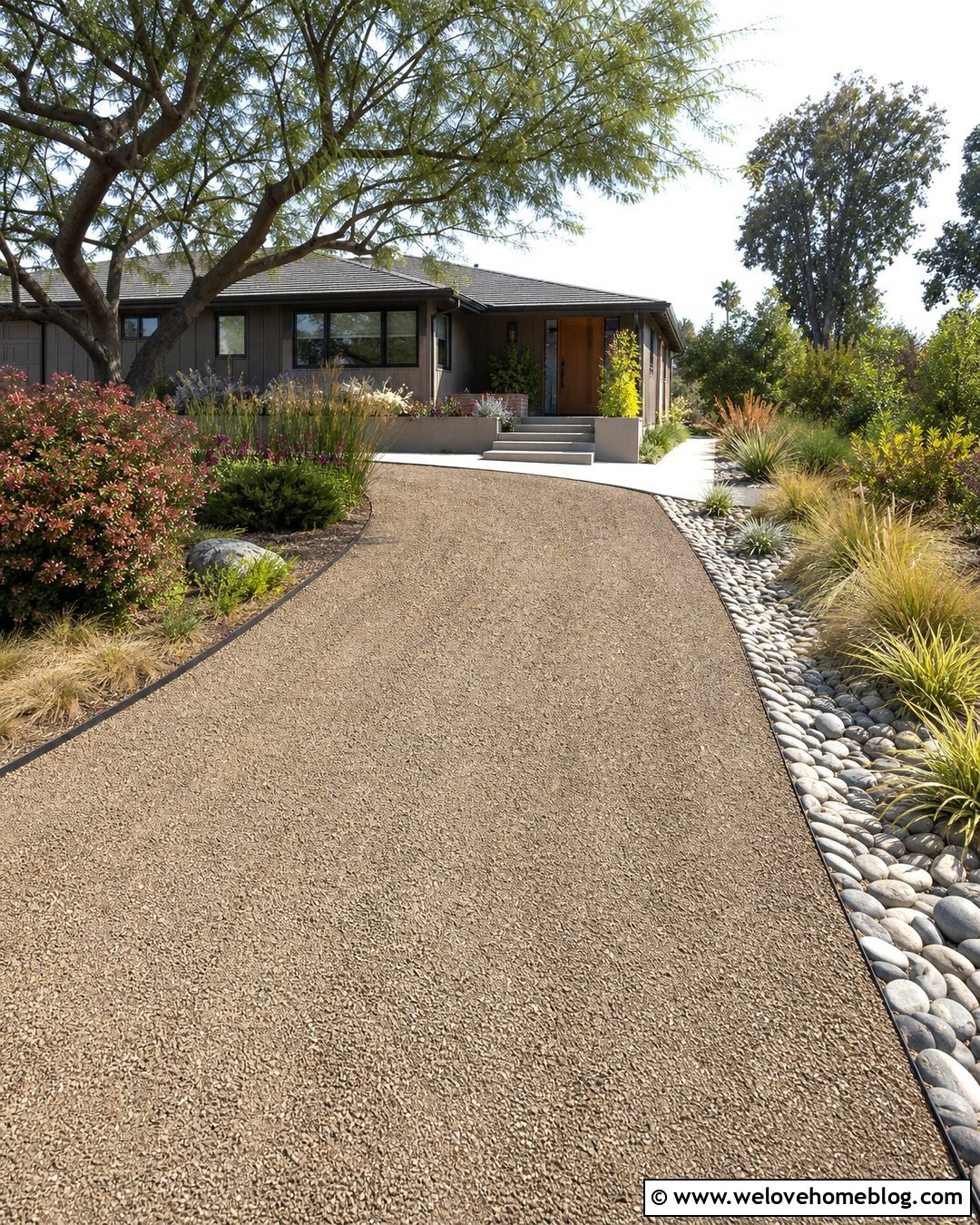
A single-direction cross slope can be simpler than a crown when one side of the property has a clear, safe drainage outlet. The entire driveway surface tilts gently toward a vegetated swale, stone channel, or approved drainage system. A grading scraper can maintain the plane, while defined edging on the high side prevents soil and mulch from spilling onto the drive. Use compacted brown crushed stone with a steel border and a river-rock swale along the low edge. Flowering shrubs, sedges, and ornamental grasses can help the drainage feature blend into the yard. This layout pairs naturally with a mid-century ranch or low contemporary house. The receiving side must be stable enough to handle runoff without creating erosion, flooding a neighbor’s property, or directing water toward the foundation.
10. Curved Gravel Driveway Grading
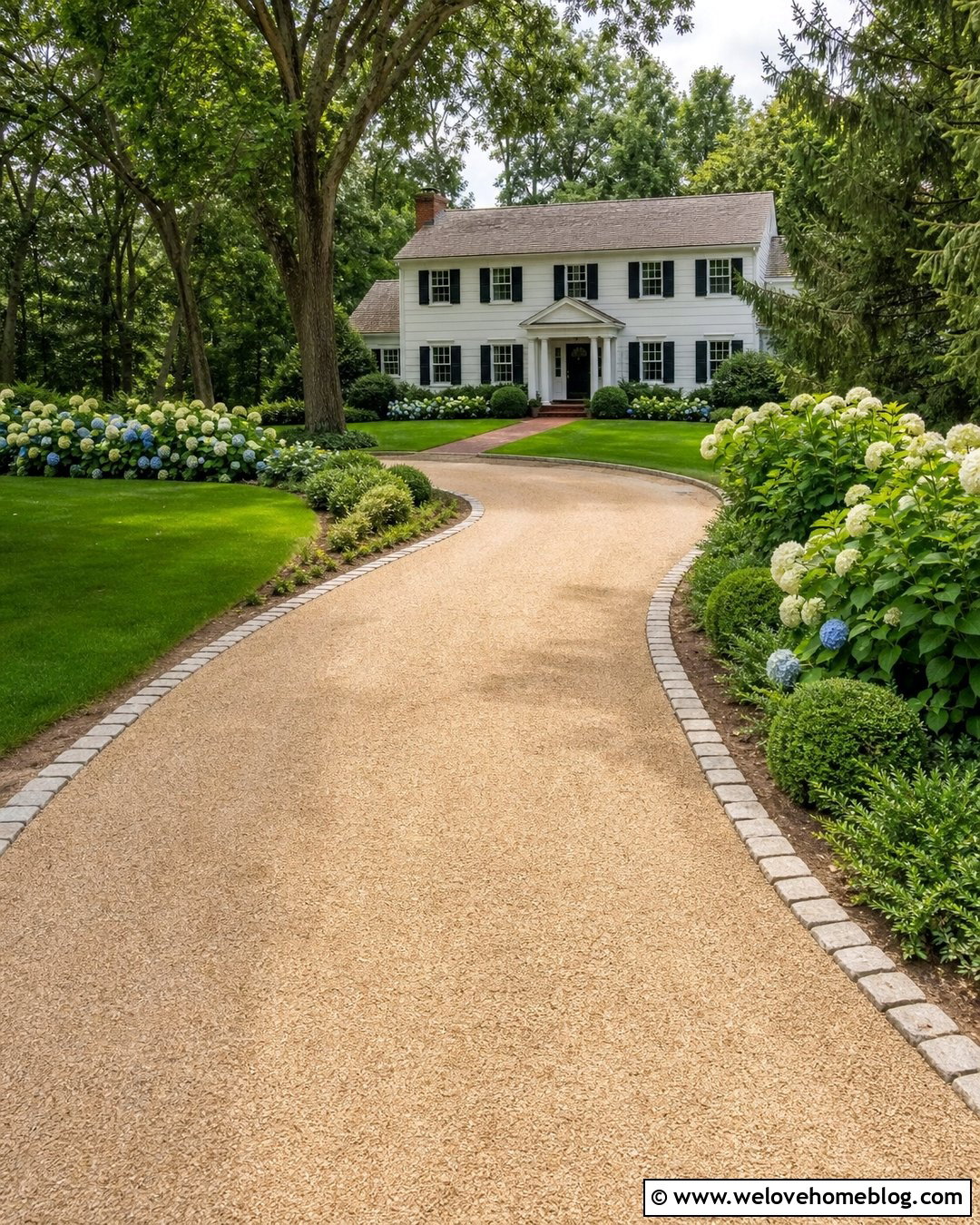
Curved driveways require careful grading because the blade must follow changing edges without flattening the intended drainage profile. A compact tractor with a land plane or adjustable scraper can make overlapping passes along the curve. Shape a gentle crown where practical, then direct water into planted swales on the outside edge. Warm beige crushed limestone, cobblestone borders, and layered evergreen beds create a graceful approach to a traditional colonial house. Keep the inner curve broad and uncluttered so equipment can turn without striking edging or plants. Avoid abrupt changes in elevation, especially near the entrance and garage apron. The complete design should guide vehicles naturally while allowing water to leave the surface. Frequent light maintenance is usually easier than repairing deep ruts that follow the curved tire paths.
11. Circular Gravel Driveway Grading
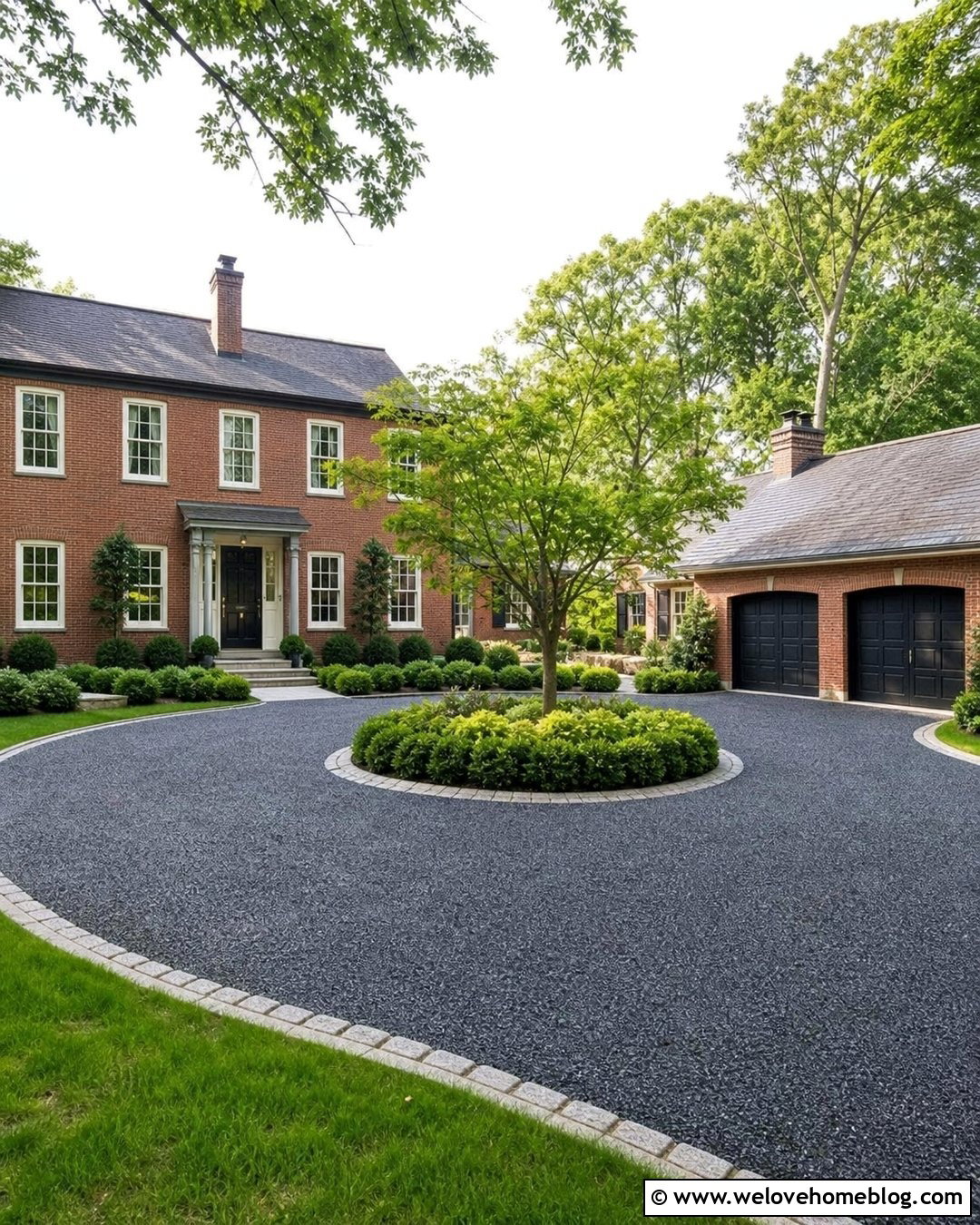
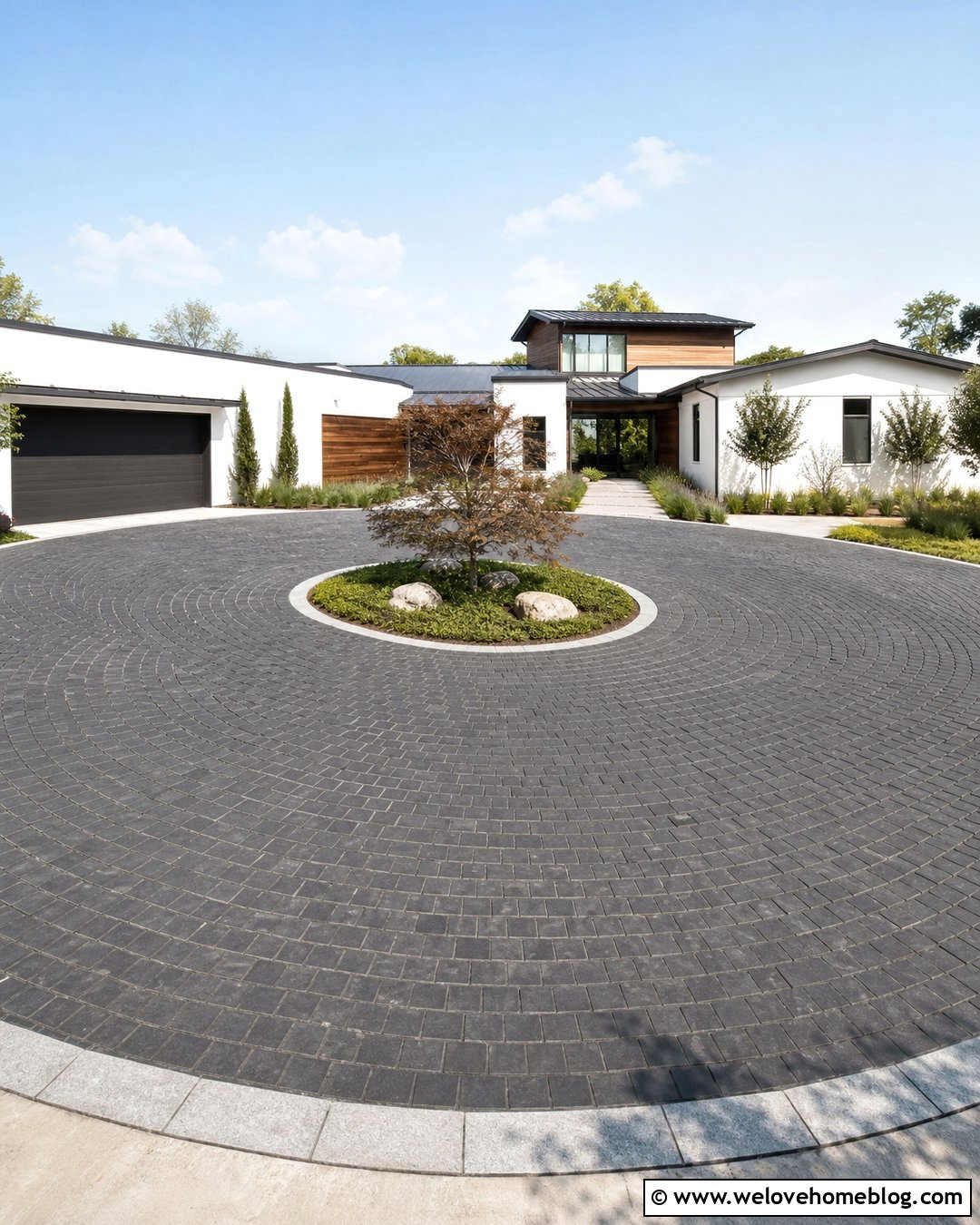
A circular driveway needs a consistent surface that drains without sending runoff toward the central island or house. The grading pattern may use a subtle outward cross slope around the loop, supported by perimeter drainage and a stable compacted base. Choose charcoal crushed granite with a pale cobblestone border for strong definition. In the center, use a raised planting island with a specimen tree, low shrubs, and ground cover that will not block views. A secondary trench drain near the garage can catch water before it reaches the doors. This complete entrance looks polished in front of a brick colonial or Georgian-inspired home. Smaller grading equipment is often easier to maneuver around the circle. Finish with slow overlapping passes so the aggregate remains even through every curve and transition.
12. Horseshoe Driveway Grading
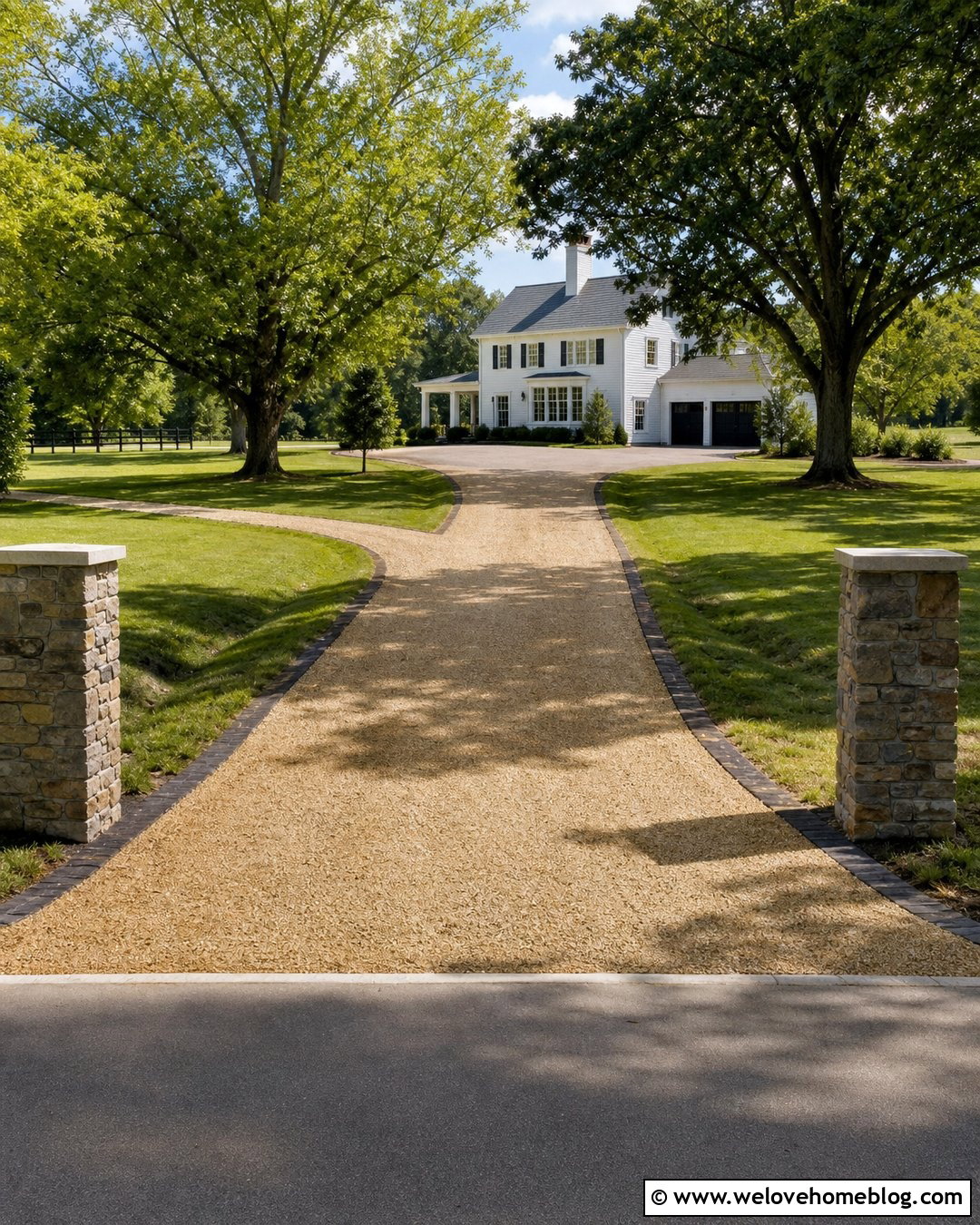
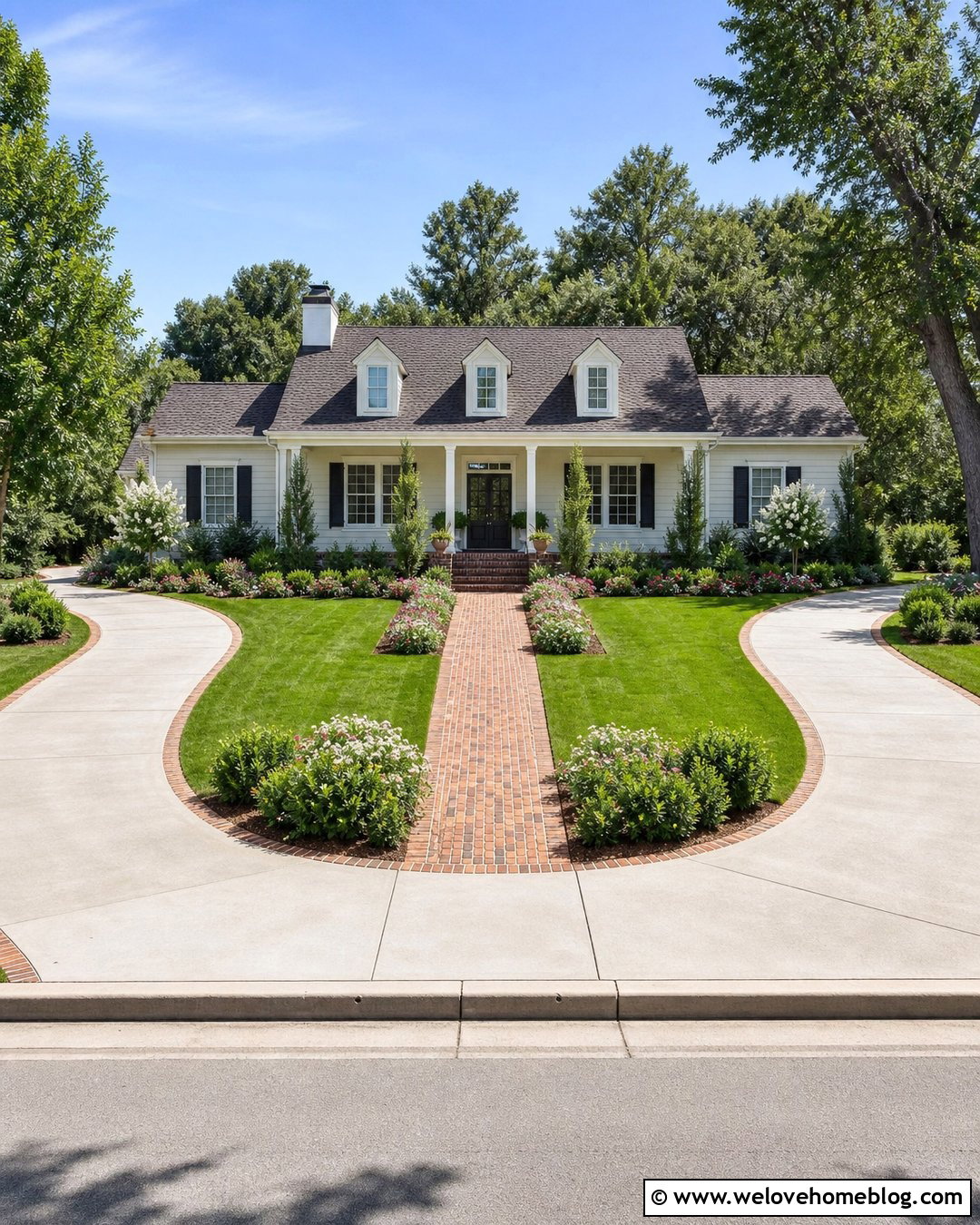
A horseshoe driveway creates separate entry and exit points, but both arms must be graded as part of one drainage system. A gentle crown can run through the curved travel lane, while shallow side swales carry water toward stable outlets near the street. Use compacted golden gravel with dark brick edging to emphasize the flowing shape. Stone entrance pillars, open lawn, and symmetrical tree planting can make the layout feel organized without crowding the grader’s path. This design suits a large farmhouse, colonial, or country estate. Pay close attention to the low point of the curve, where runoff may naturally collect. The driveway grader should follow the full arc in gradual passes. A broad, level garage apron can then connect the loop to the house without creating an abrupt drainage barrier.
13. Driveway Grading With A Drainage Swale
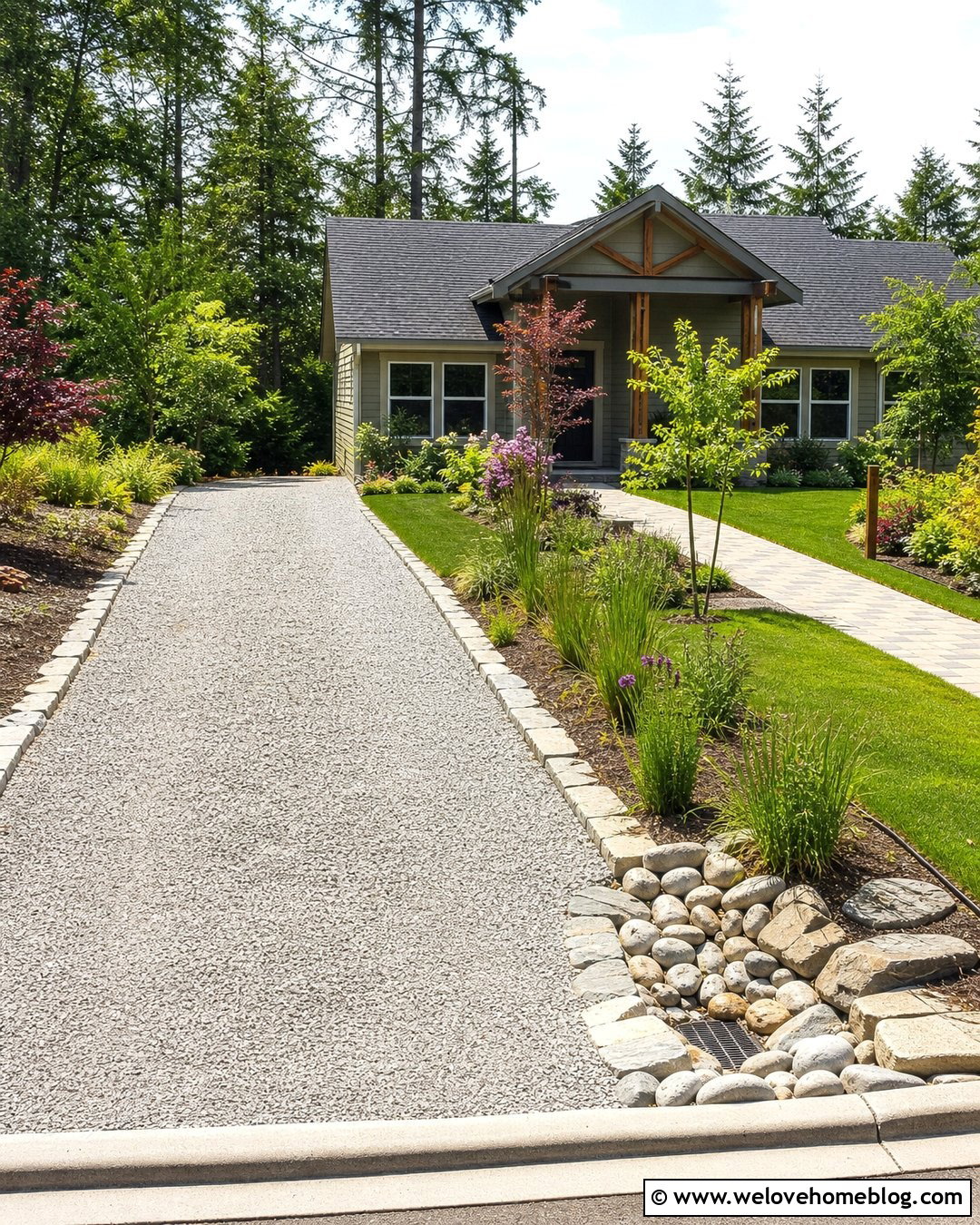
A vegetated swale can turn necessary stormwater management into an attractive landscape feature. Grade the gravel driveway toward a wide, shallow depression planted with moisture-tolerant grasses, sedges, and native flowering perennials. A compacted light-gray aggregate surface with a subtle cross slope makes the drainage direction easy to maintain. Add a flush stone border between the gravel and planting area so the edge stays crisp without blocking runoff. This complete design works beautifully beside a craftsman bungalow or naturalistic suburban home. The swale should carry or absorb water without remaining permanently saturated near the driveway base. Decorative river rock can reinforce the inlet where runoff enters. During maintenance, keep the grader away from the planted edge and make light passes that preserve the planned surface elevation.
14. Driveway Grading With A Culvert
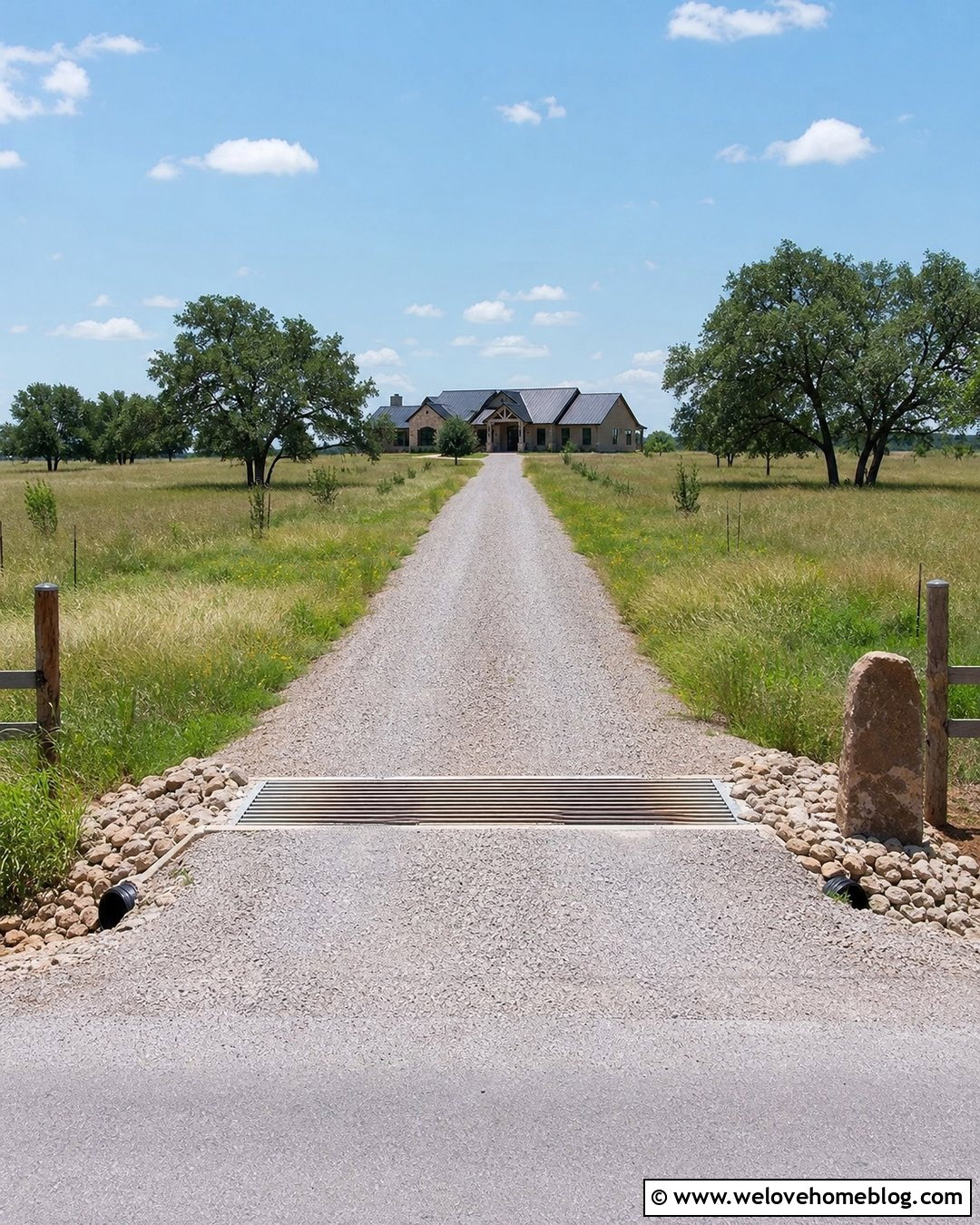
When a roadside ditch crosses the driveway entrance, a properly sized culvert can carry water beneath the driving surface. The driveway should be graded smoothly over the pipe, with enough compacted base and cover to support expected traffic. Use dense-grade limestone for the main surface and larger riprap stones around the culvert inlet and outlet. Timber posts, native grasses, and a simple address marker can frame the entrance to a rustic ranch house. Keep the ends of the culvert visible and accessible for inspection and debris removal. The grading should guide roadside water toward the inlet rather than around the pipe and across the driveway. Because culvert requirements vary by location and drainage area, confirm local rules before installation. Avoid striking or exposing the pipe during future grader passes.
15. Driveway Grading With A Trench Drain
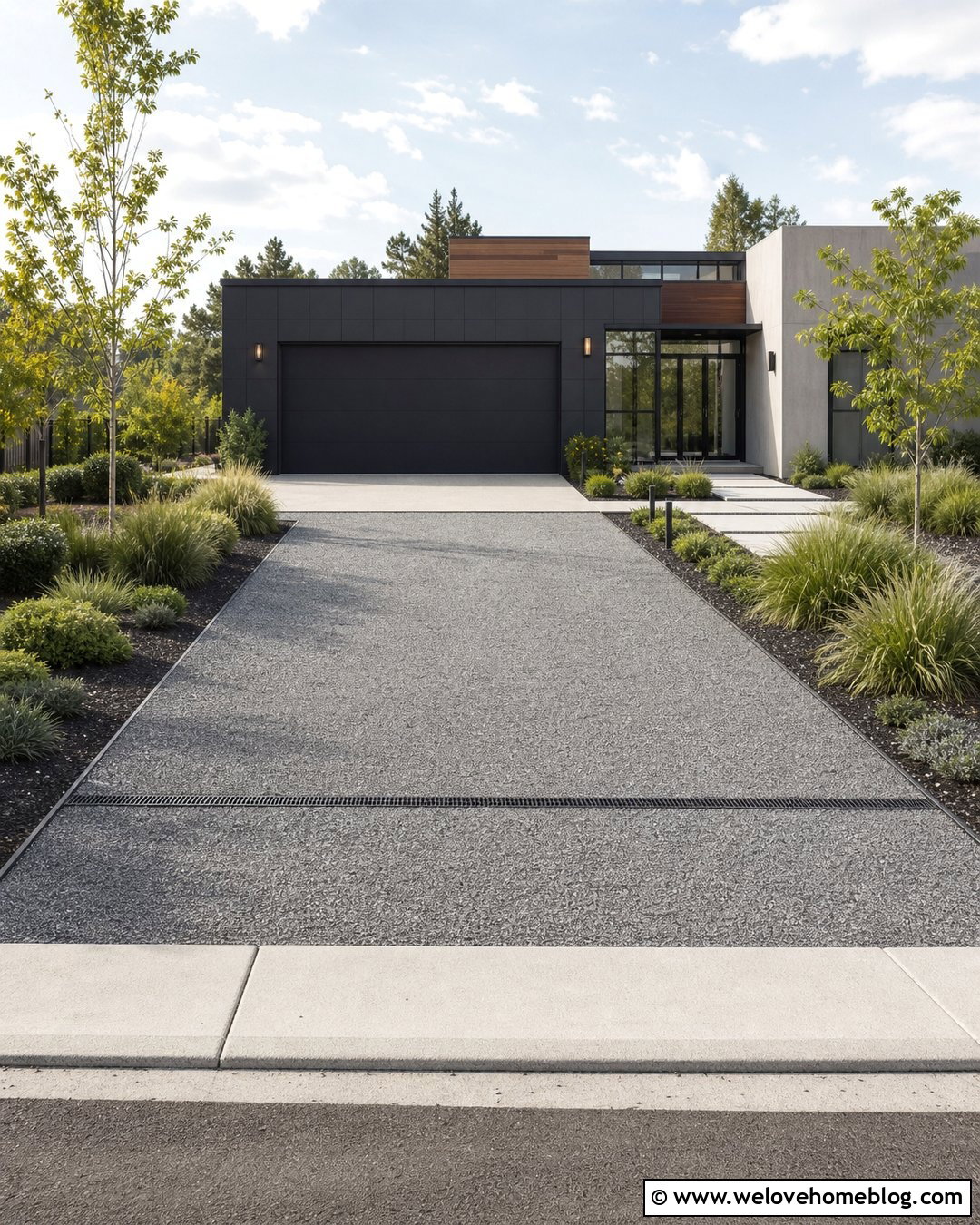
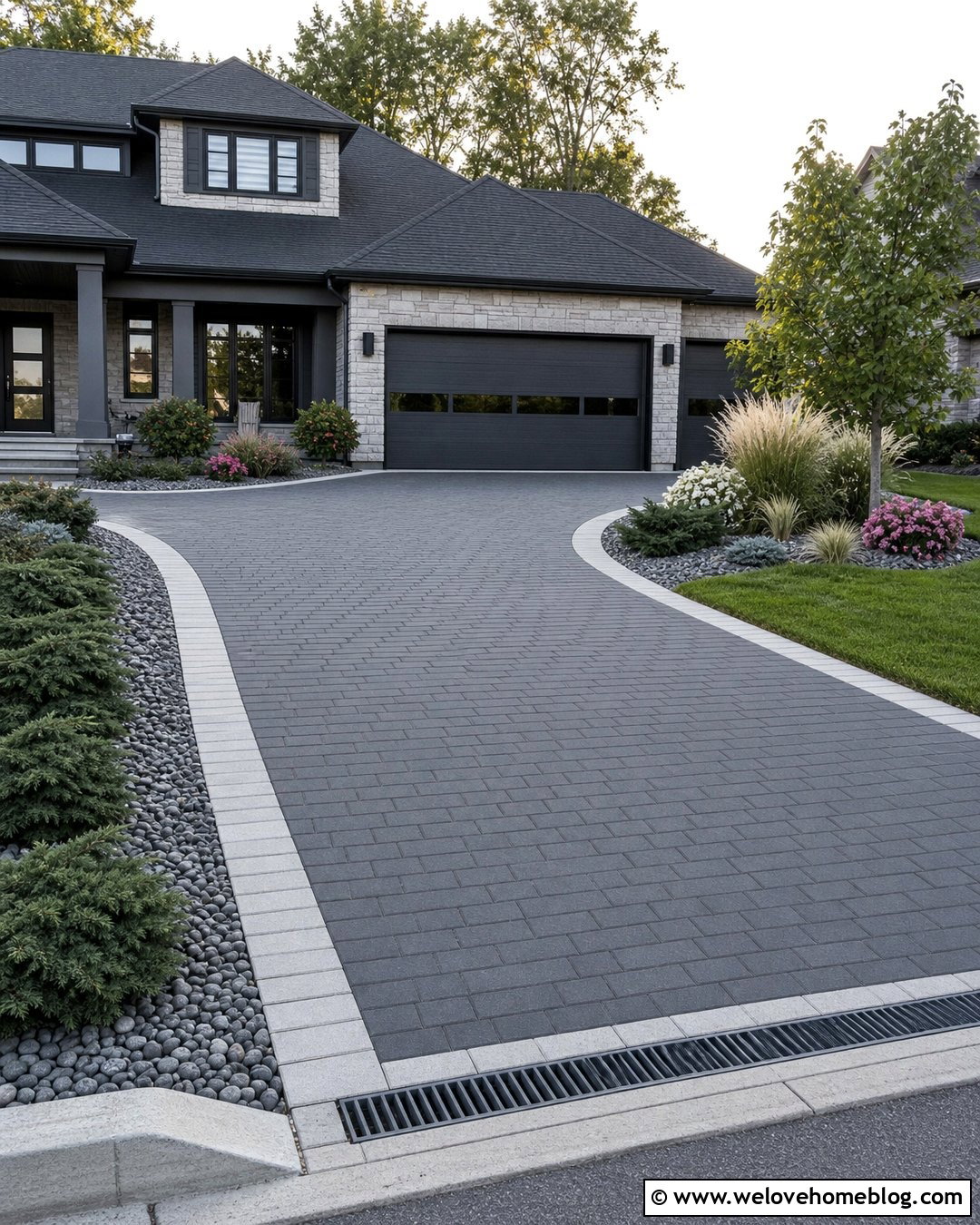
A trench drain is useful where runoff moves toward a garage, sidewalk, or other area that must remain dry. Grade the driveway so water reaches the channel without settling in a shallow puddle just before it. A modern exposed-aggregate concrete apron can contain the drain, while the longer approach uses finely crushed gray gravel. Dark metal edging, structured grasses, and rectangular planting beds create a clean transition to a modern house. Position the drain across the driveway near the garage or at another controlled low point. The grate should sit flush with the surrounding surface and be rated for the expected vehicle loads. Keep loose gravel from filling the channel by using a stable paved transition. Regular cleaning preserves flow and prevents leaves, sediment, and small stones from blocking the outlet.
16. Driveway Grading With Water Bars
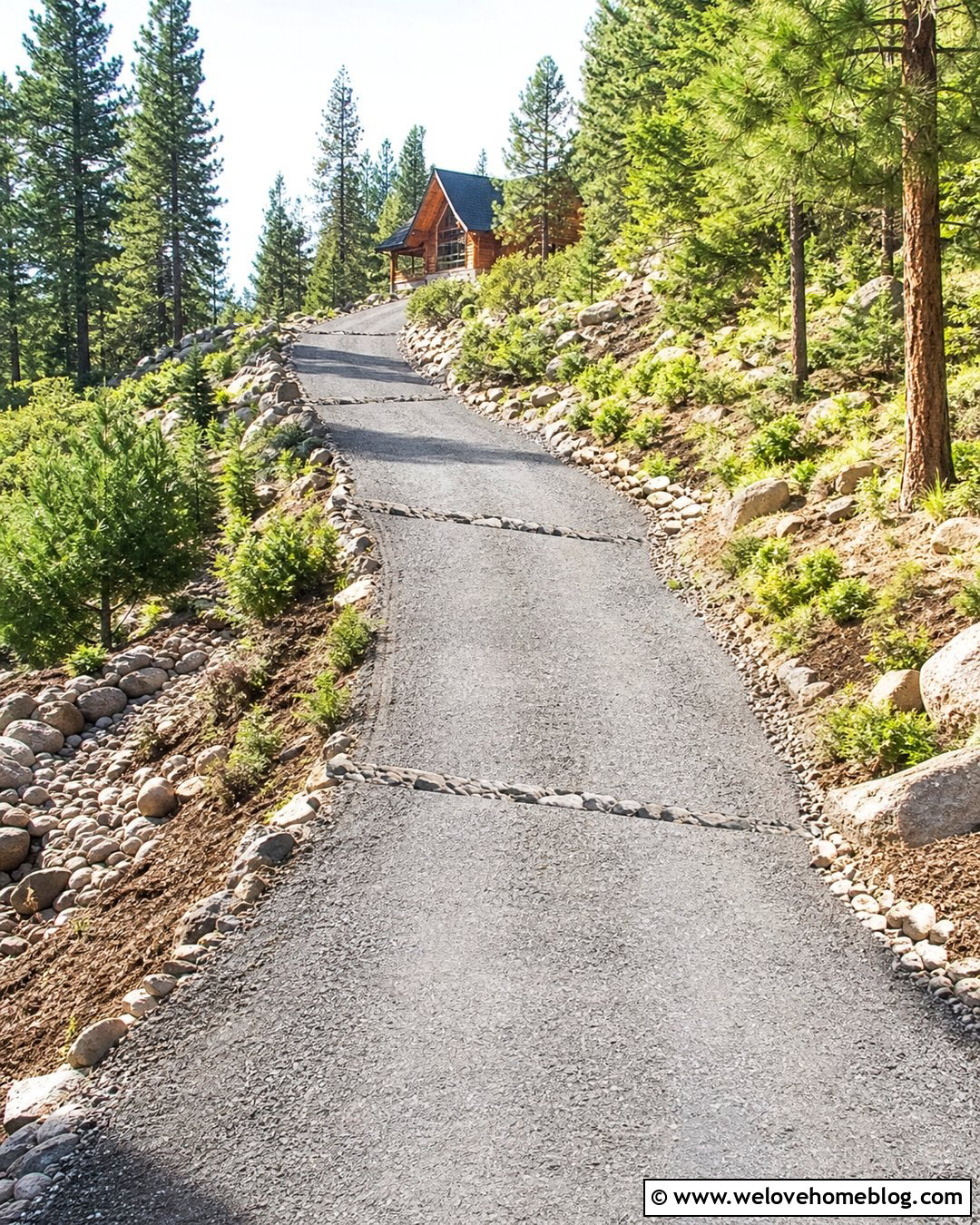
A long, steep rural driveway may benefit from water bars that redirect runoff before it gains damaging speed. These angled channels or raised diversions send water toward stable side ditches instead of allowing it to race down the tire tracks. Build the driveway with compacted crusher run, stone-lined shoulders, and clearly defined outlets protected by larger rock. A winding layout through pine trees can lead naturally to a cabin or country home. Low native ground covers help stabilize disturbed soil beside the drainage points. Water bars must remain visible enough to maintain but smooth enough for comfortable vehicle access. The grader can restore the surface between them, although the operator must lift or carefully control the blade at each crossing. Professional planning is wise when slopes are severe or runoff volumes are high.
17. Gravel Driveway With Stabilization Grid
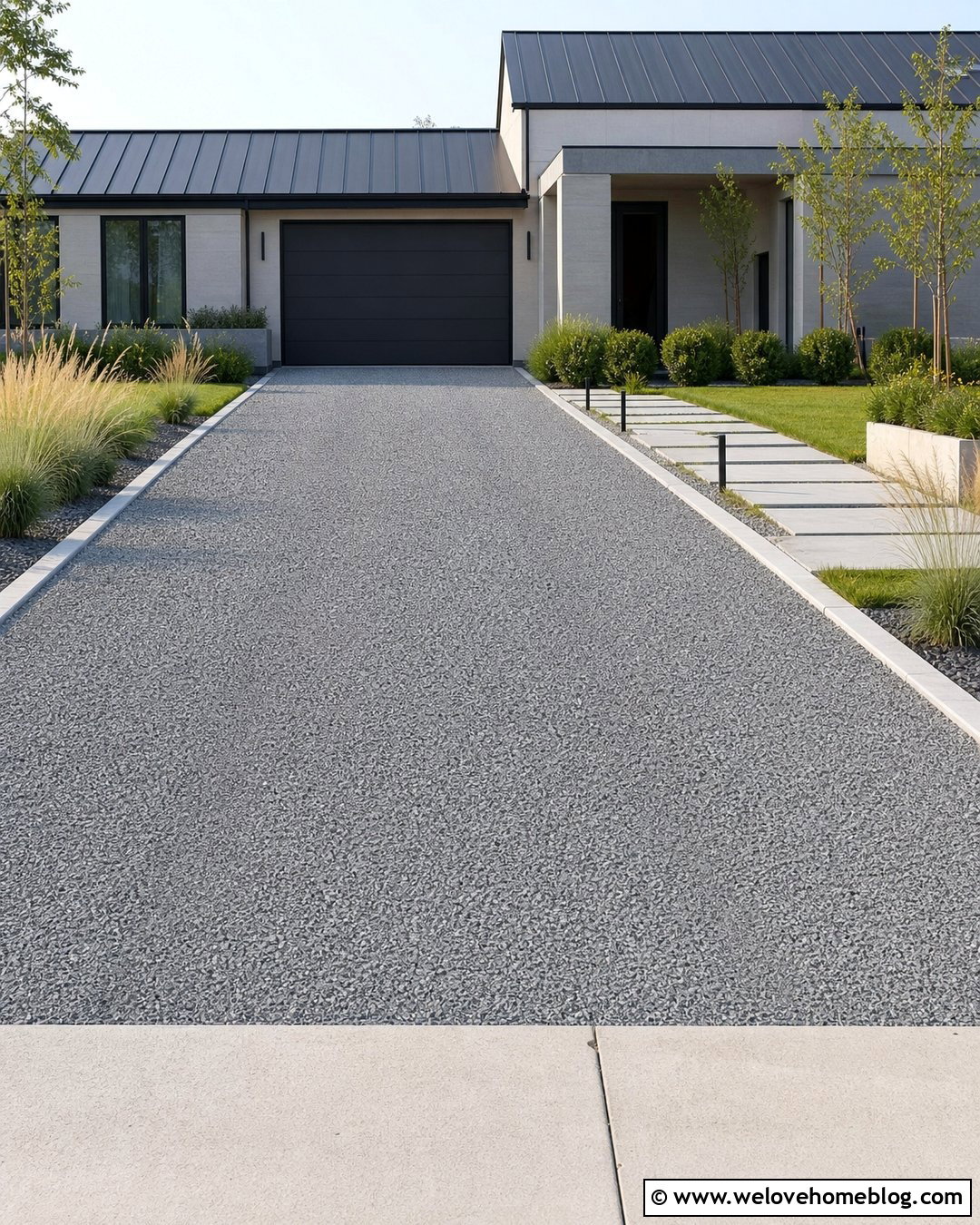
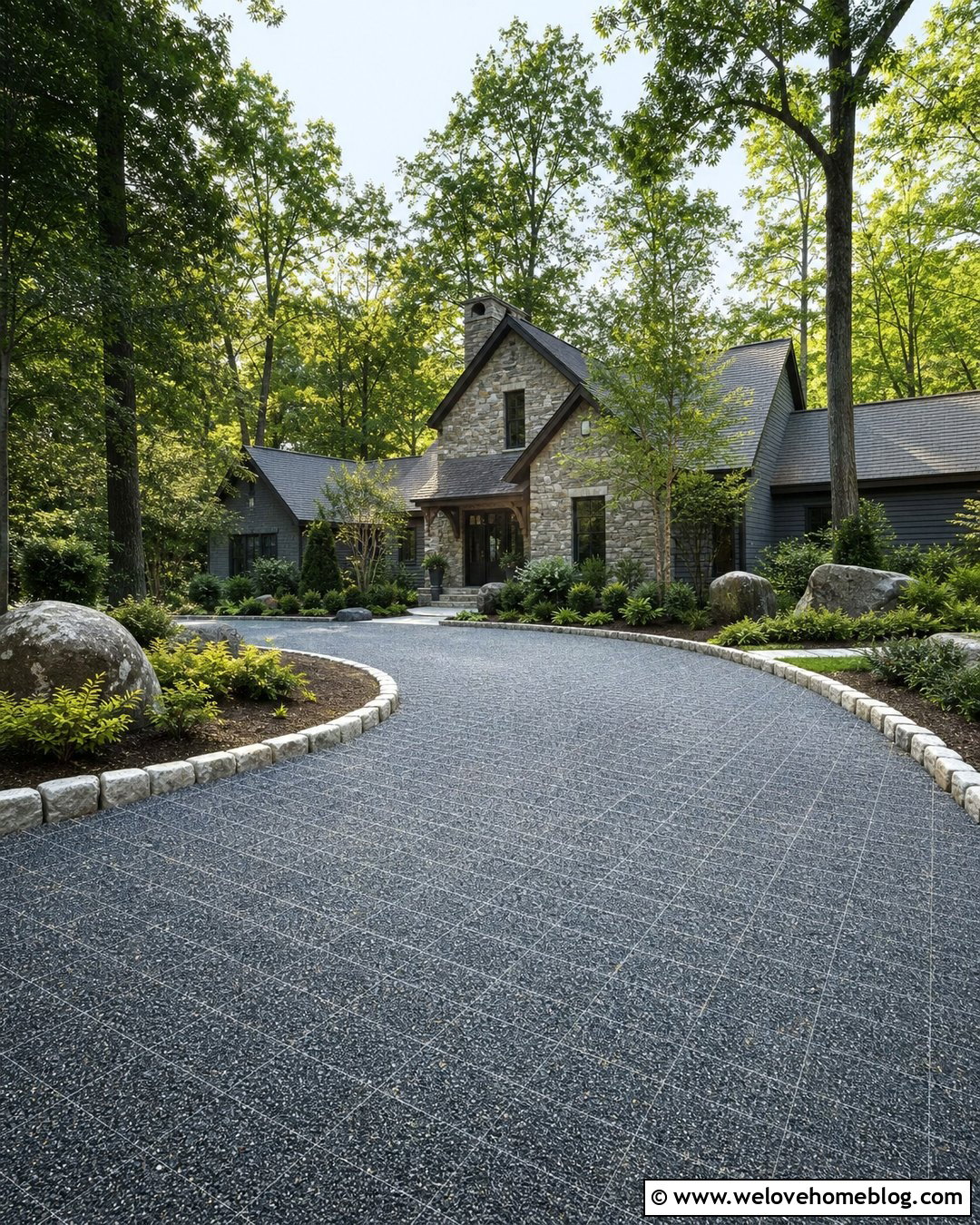
A gravel stabilization grid can create a firmer surface while preserving the texture and permeability of loose aggregate. Grade and compact the base first, then install the grid according to its load and drainage requirements. Fill it with angular gray gravel that locks into the cells rather than rolling under tires. Concrete curbing, neat lawn panels, and minimalist ornamental grasses can frame a straight driveway leading to a modern suburban home. The finished surface should maintain a gentle crown or cross slope instead of relying on the grid alone for drainage. This system can reduce gravel migration at parking areas, turning zones, and sloped entrances. Future grading should be light and controlled because deep scarifier teeth could damage the buried grid. Regular raking and occasional top-up gravel may be more appropriate.
18. Crusher Run Driveway Grading
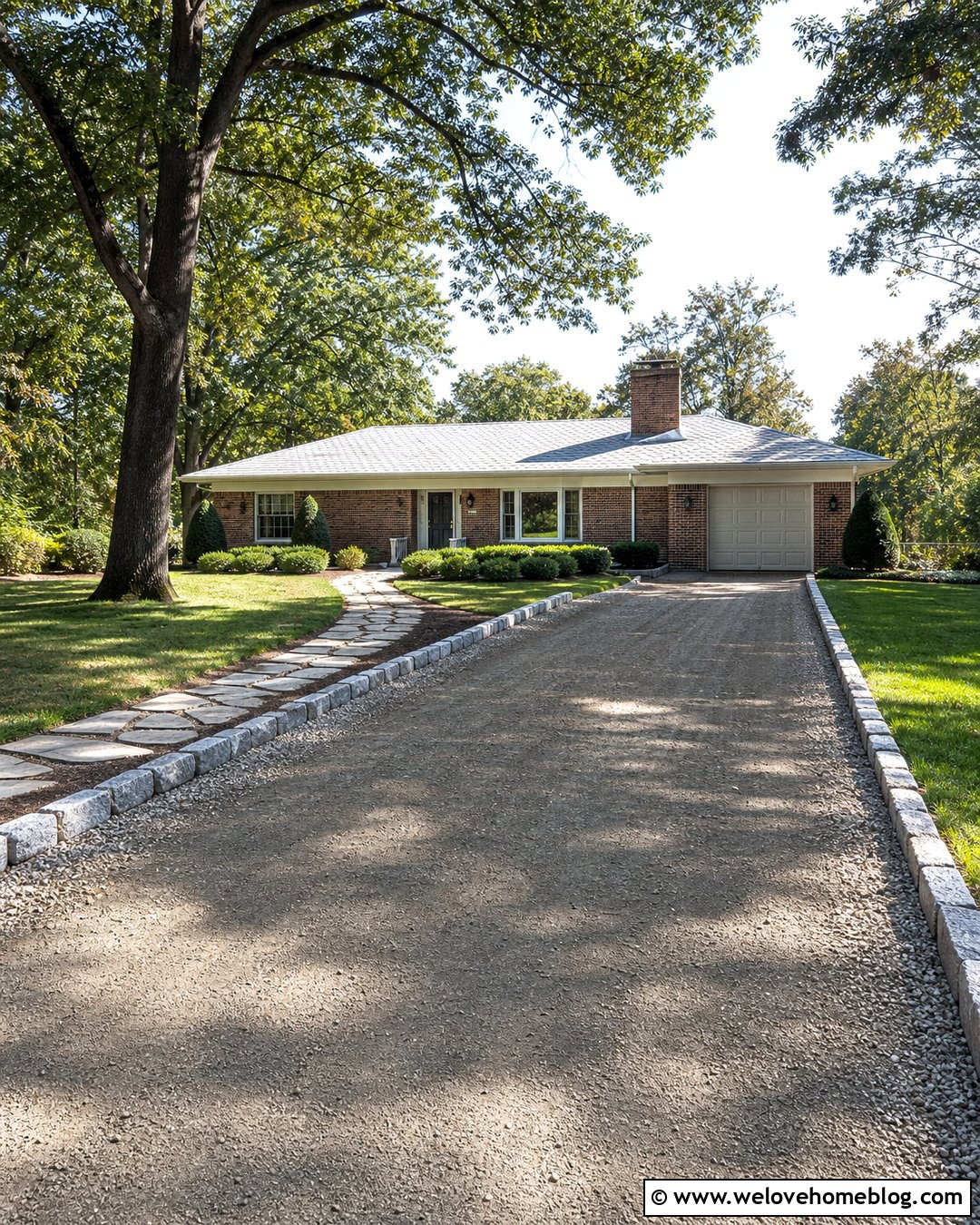
Crusher run contains a blend of stone sizes and fine particles that can compact into a stable driving surface. Spread it in controlled layers over a prepared base, shape the crown or cross slope, and compact each lift before adding more material. A broad, straight driveway edged with heavy granite blocks creates a durable entrance to a brick ranch home. Add open lawn, oak trees, and a separate flagstone walkway to keep the landscape simple. Because the fines help bind the surface, crusher run is useful where loose decorative gravel shifts too easily. However, drainage remains essential. Standing water can weaken the base and lead to potholes regardless of the material. A box blade can perform the initial shaping, followed by a land plane or grader for a smoother final profile.
19. Reclaimed Asphalt Driveway Grading
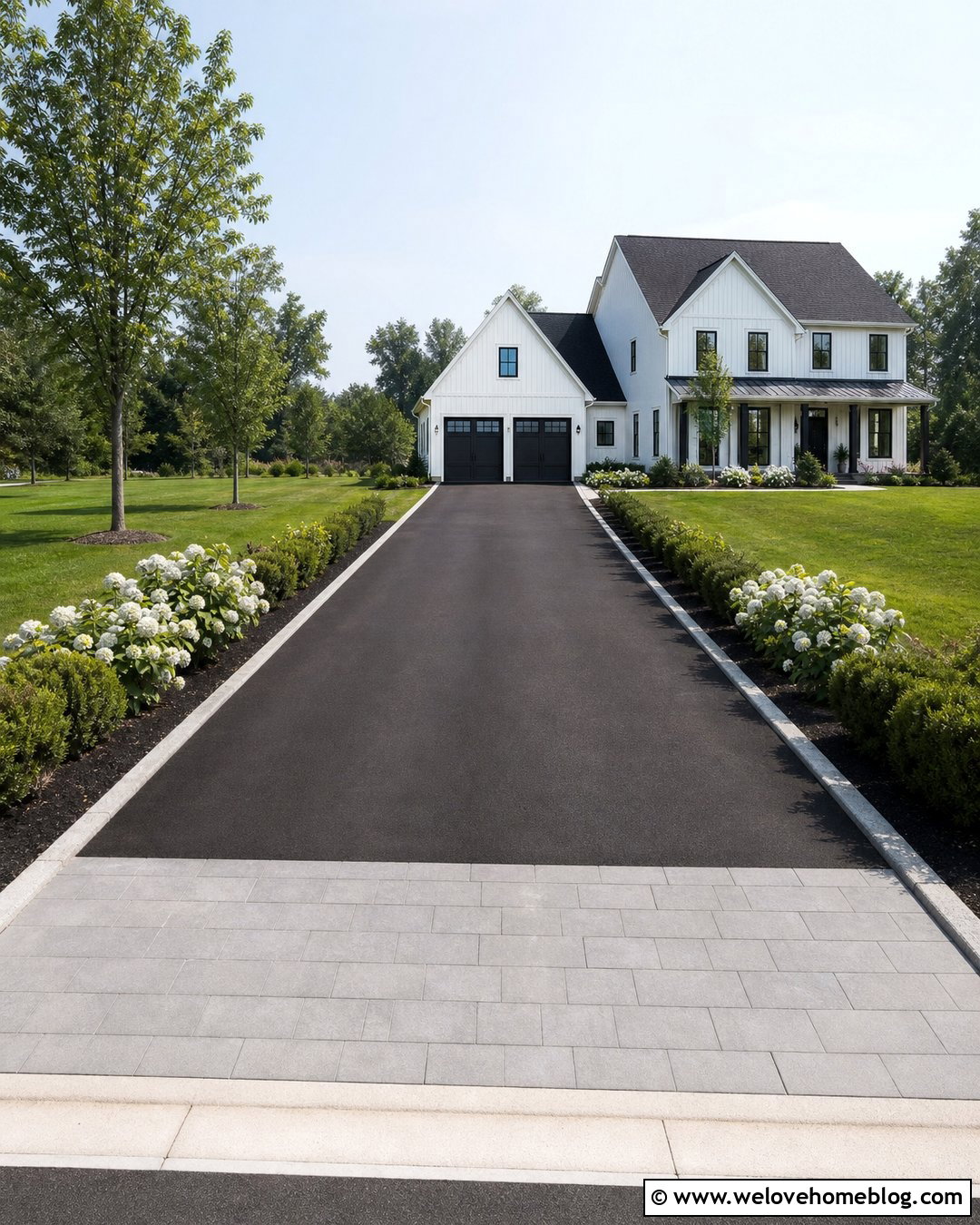
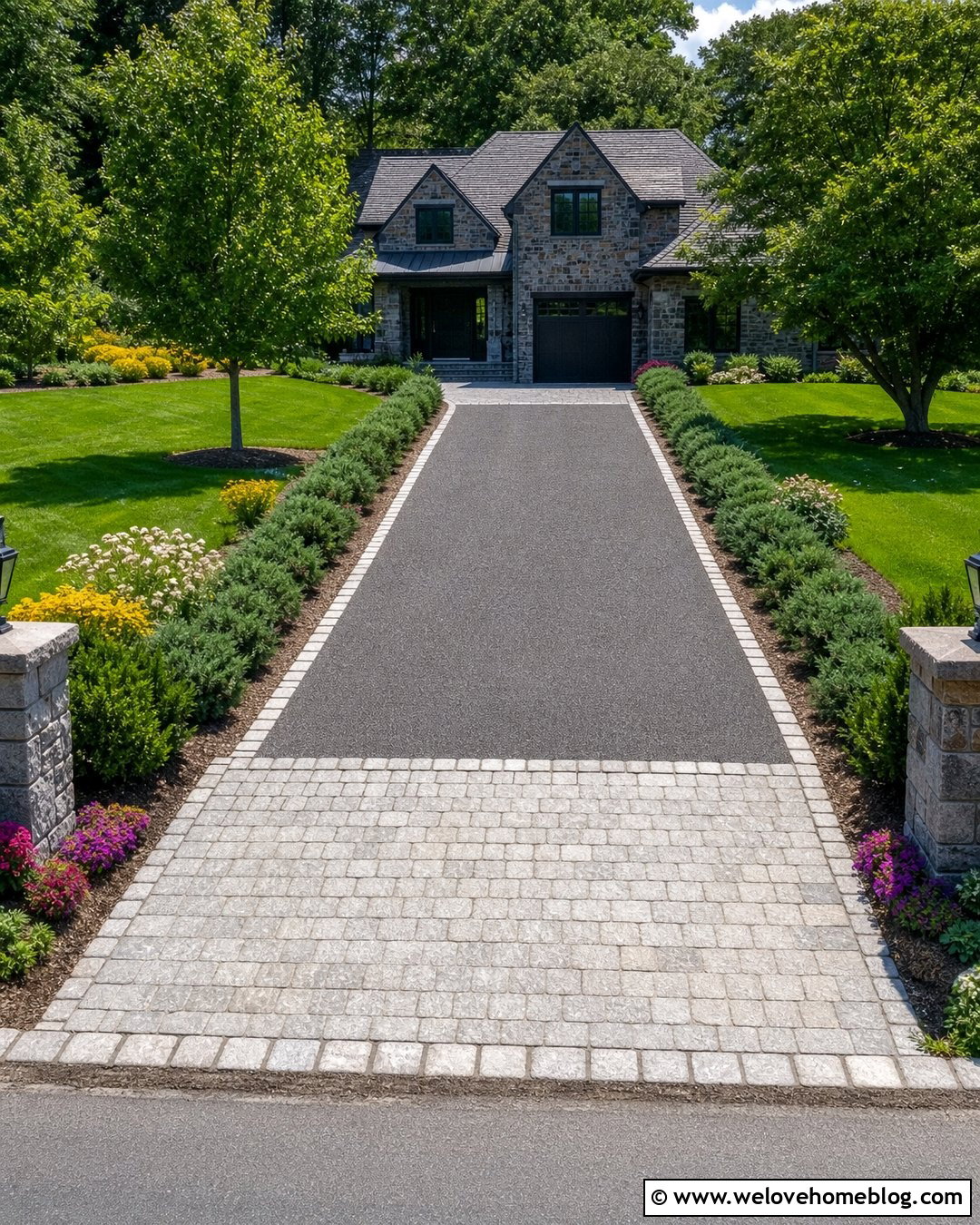
Reclaimed asphalt millings can produce a dark, compact surface with a more finished appearance than traditional loose gravel. Grade the base carefully before spreading the material because the finished layer may become difficult to reshape after compaction. A straight black reclaimed-asphalt driveway with concrete curbing and a pale paver apron creates a crisp approach to a contemporary farmhouse. White flowering shrubs, clipped evergreens, and broad lawn areas provide visual contrast. Shape a modest crown or side slope, then compact the millings evenly to reduce loose patches and tire depressions. Drainage channels should be established before final rolling. Material quality can vary, so check for contaminants, oversized chunks, and local restrictions. This driveway grader design works best when installation and compaction are handled as a coordinated process.
20. Gravel Driveway Grading With Stone Shoulders
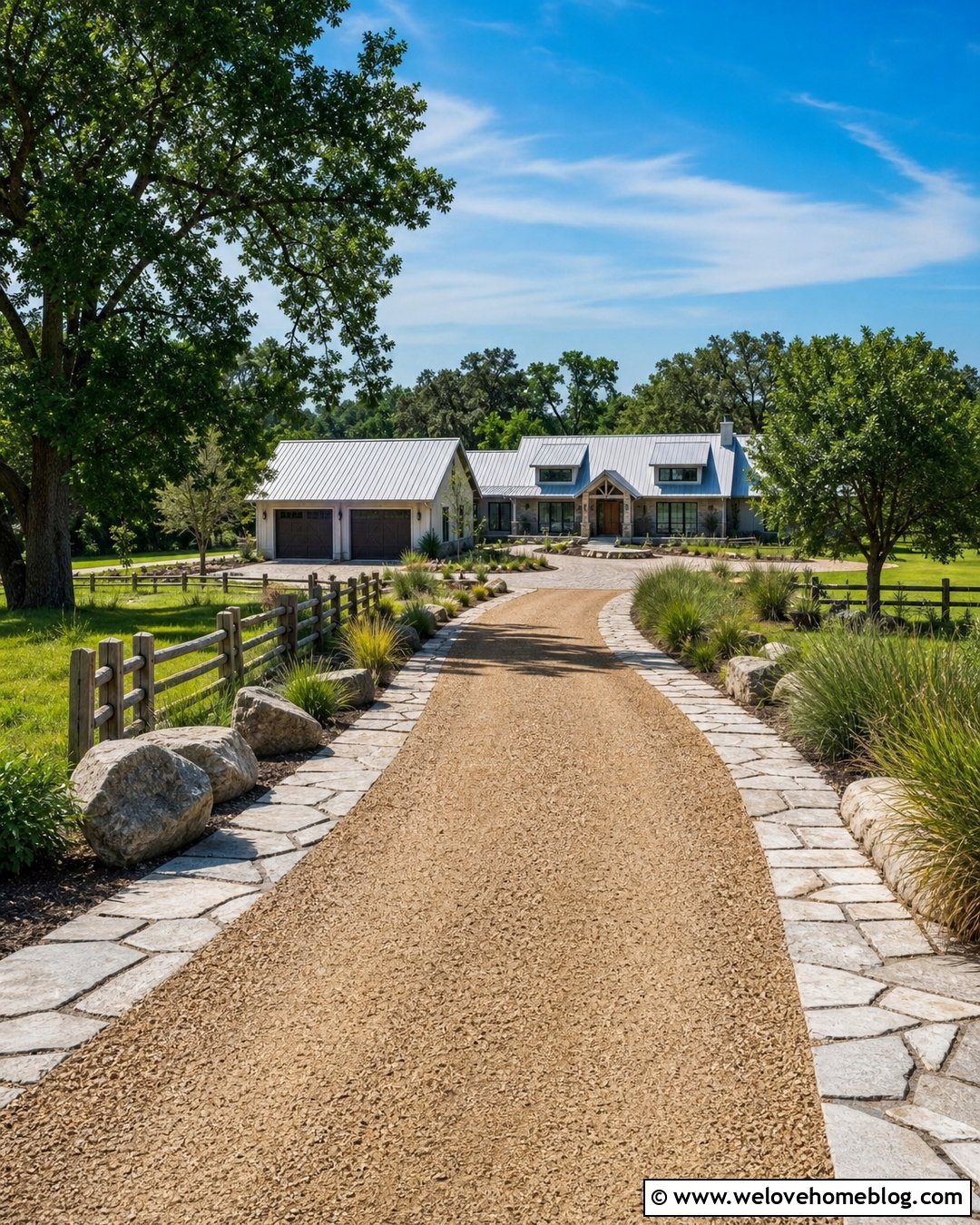
Stable shoulders support the driveway edges and create a clear boundary for routine grading. Start with a crowned surface of compacted tan crushed stone, then build slightly lower shoulders using larger angular rock. The transition should allow runoff to leave the driveway without creating a raised berm. Natural boulder accents, prairie grasses, and a split-rail fence can frame the approach to a modern country house. Near the garage, switch to a flat cobblestone apron that catches stray gravel and provides a clean stopping point for the grader. Wide shoulders are especially helpful along long rural drives where tires occasionally leave the main surface. During maintenance, pull displaced aggregate inward before finishing the crown. Avoid scraping away the structural shoulder or pushing loose gravel into adjacent planting beds and drainage ditches.
Conclusion:
The most effective **Driveway Grader Ideas** combine the right equipment with thoughtful surface shaping, dependable drainage, and well-defined edges. A land plane may be perfect for routine smoothing, while a box blade or skid steer can handle deeper repairs. Yet equipment alone cannot correct a weak base or poorly directed runoff. Crowns, cross slopes, swales, culverts, channels, and compacted shoulders should function as one coordinated design. Select materials that suit your climate, traffic, slope, and maintenance routine. Make small corrections before potholes and washouts become expensive problems. For steep grades, major drainage changes, or unstable soil, consult an experienced local contractor who can evaluate the entire property and create a safe, lasting driveway.

Related posts:

Leave a Reply