
A great driveway does more than provide a place to park. It creates a polished first impression, guides visitors toward the entrance, and connects the house with the surrounding yard. These 20 Driveway Goals Ideas cover complete looks for different home styles, lot sizes, climates, and budgets. You will find practical combinations using concrete, gravel, asphalt, brick, cobblestone, permeable pavers, and resin-bound stone. Each design also considers the driveway shape, border, landscaping, lighting, and walkway connection. Whether you want a clean modern approach or a relaxed country entrance, thoughtful details can make the entire property feel more intentional. Explore the following complete designs and use these 20 Driveway Goals Ideas to plan an entrance that looks impressive and functions beautifully.

1. Modern Concrete Driveway With Grass Strips
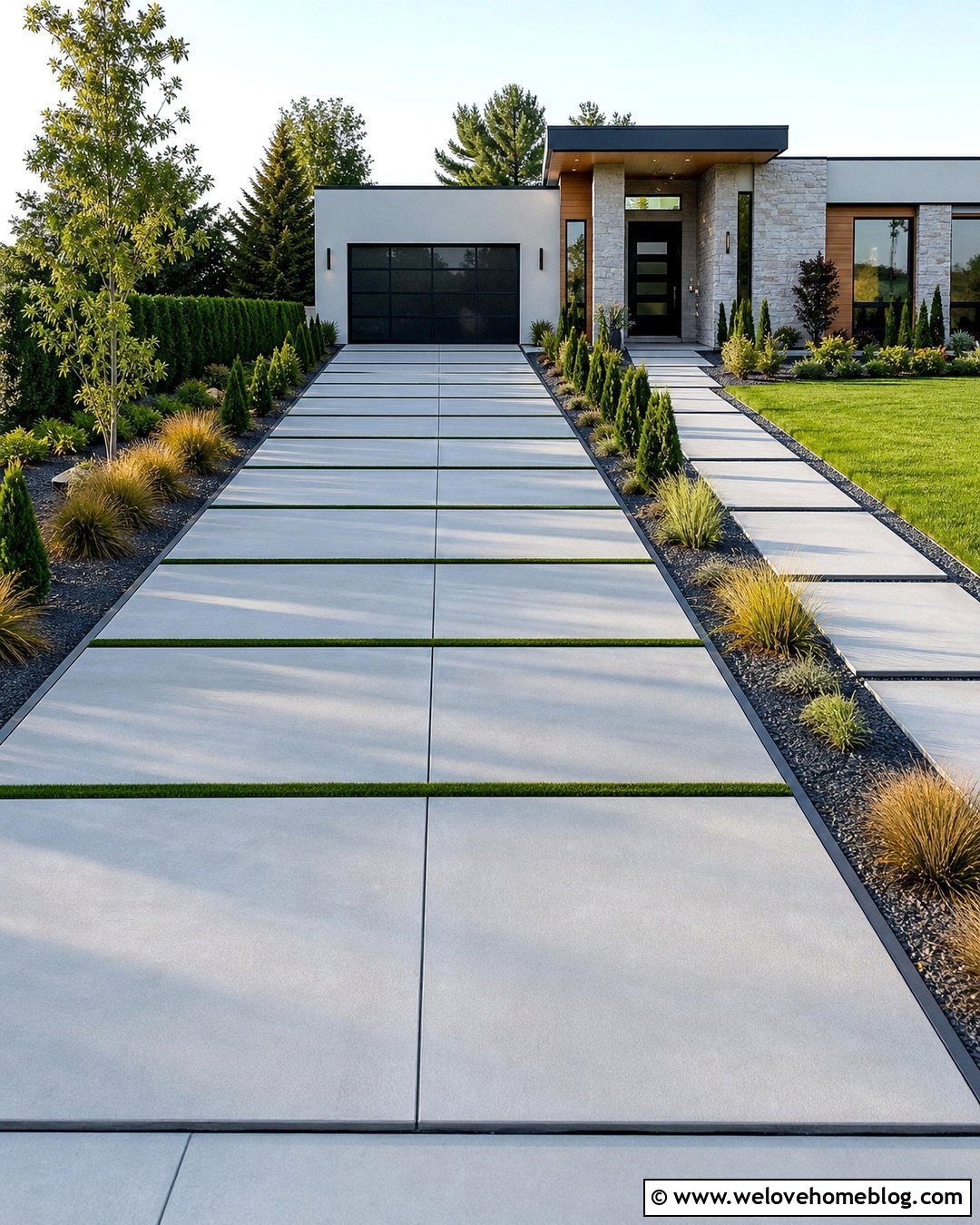
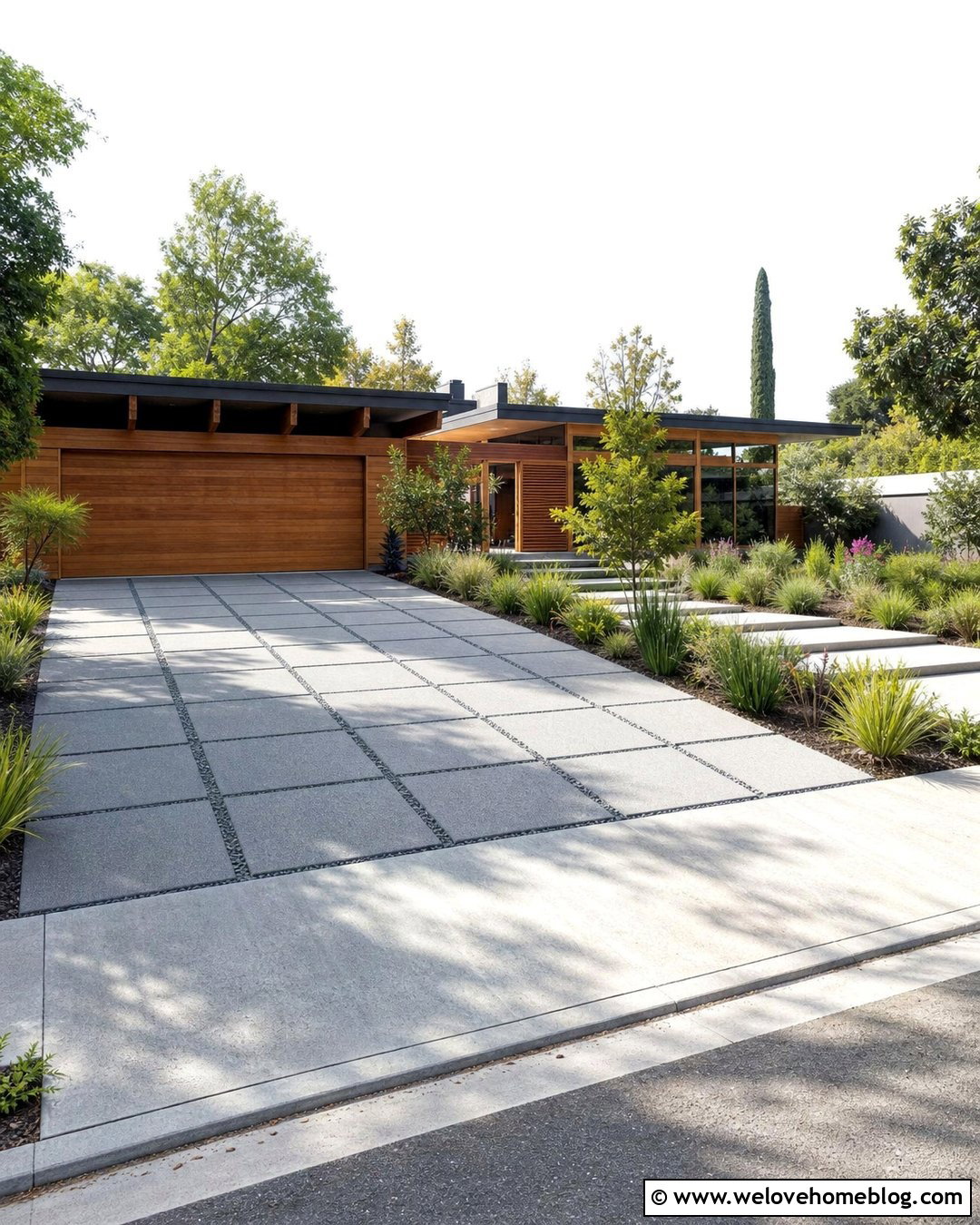
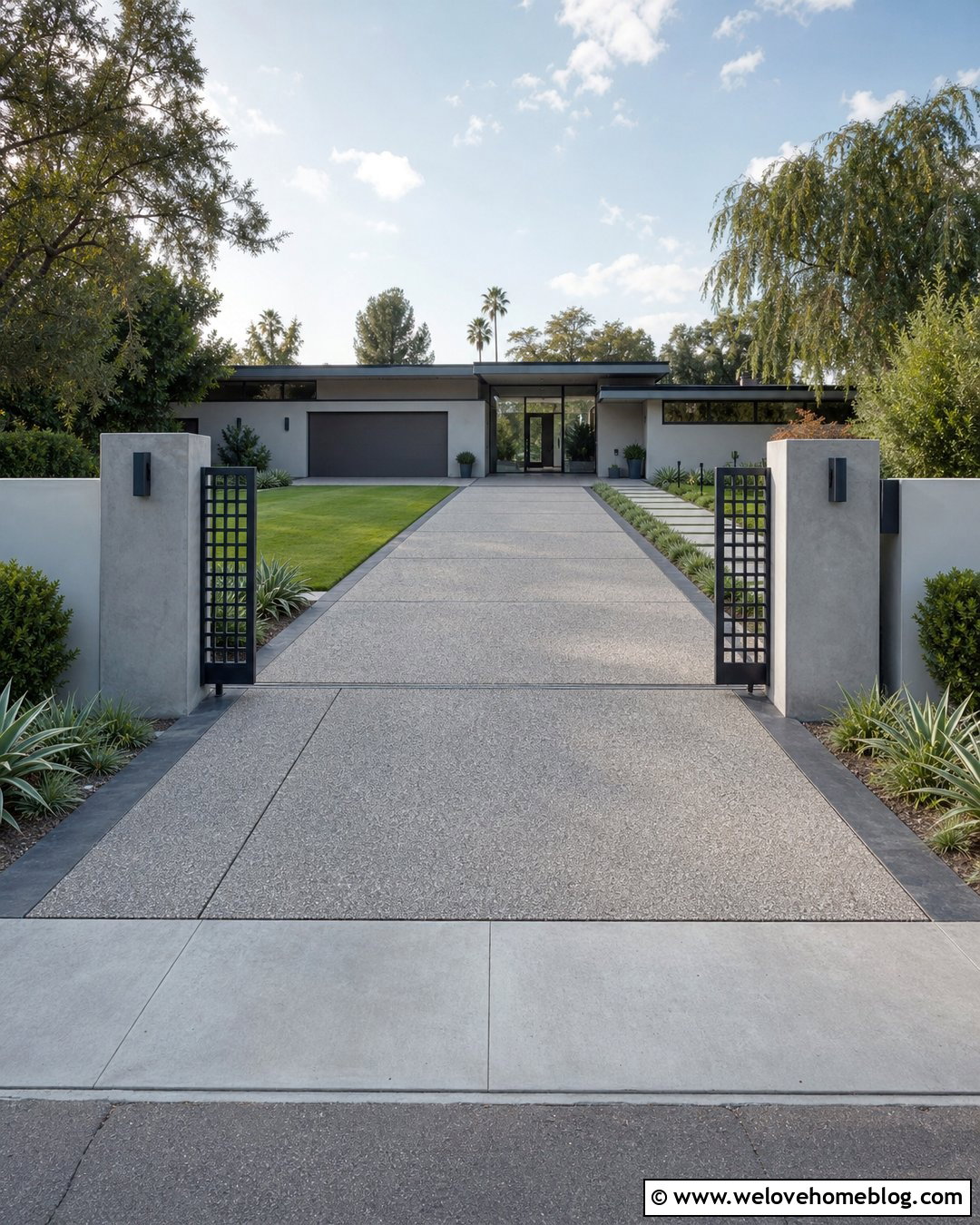
Large rectangular concrete slabs separated by narrow grass strips create a modern driveway that feels lighter than one continuous paved surface. The crisp geometry works especially well with a flat-roof house, simple garage doors, and structured front-yard landscaping. Use smooth, light gray concrete for a clean appearance, or choose a subtle broom finish for better traction. Dark metal edging can keep the grass lines neat and clearly defined. Frame the driveway with low ornamental grasses, compact evergreen shrubs, and a matching concrete walkway to the front door. This design needs regular trimming to stop grass from spreading over the slabs. In dry areas, artificial turf or low-growing ground cover can provide a similar green contrast with less watering.
2. Curved Gravel Driveway With Stone Edging
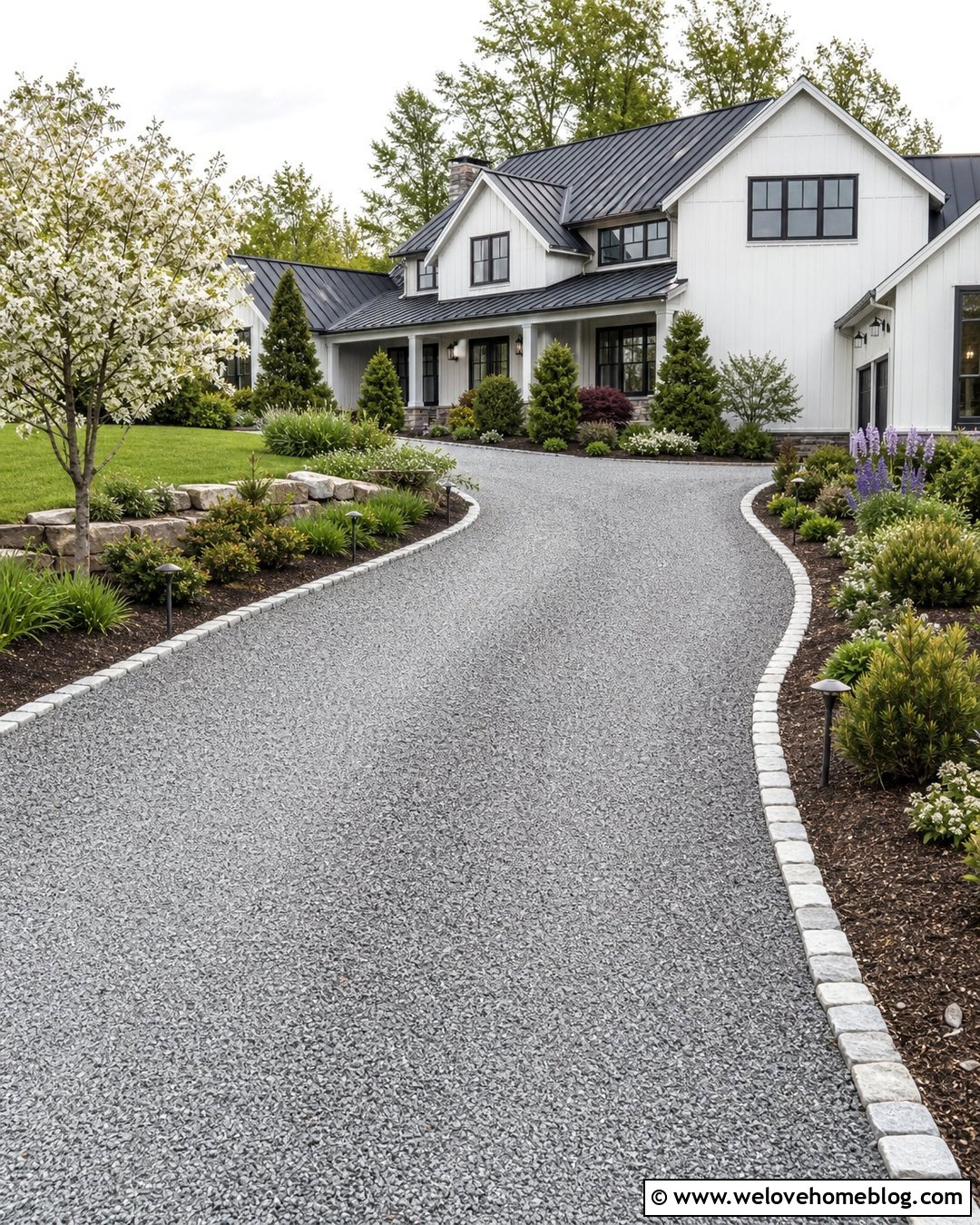
The soft crunch of gravel instantly gives a curved driveway a relaxed, welcoming character. Choose compacted gray crushed stone for the main surface, then contain it with a sturdy border of granite cobblestones or locally sourced fieldstone. The edging helps preserve the curve and keeps loose gravel away from the lawn. Plant layered beds along the outside edge using small flowering trees, evergreen shrubs, and hardy perennials suited to your region. Solar or low-voltage lights can follow the bend and make the route easier to see. A curved layout is especially effective for a country home or modern farmhouse set back from the street. Proper grading and a compacted base are essential for limiting ruts, puddles, and migrating stones.
3. Brick Driveway With Herringbone Pattern
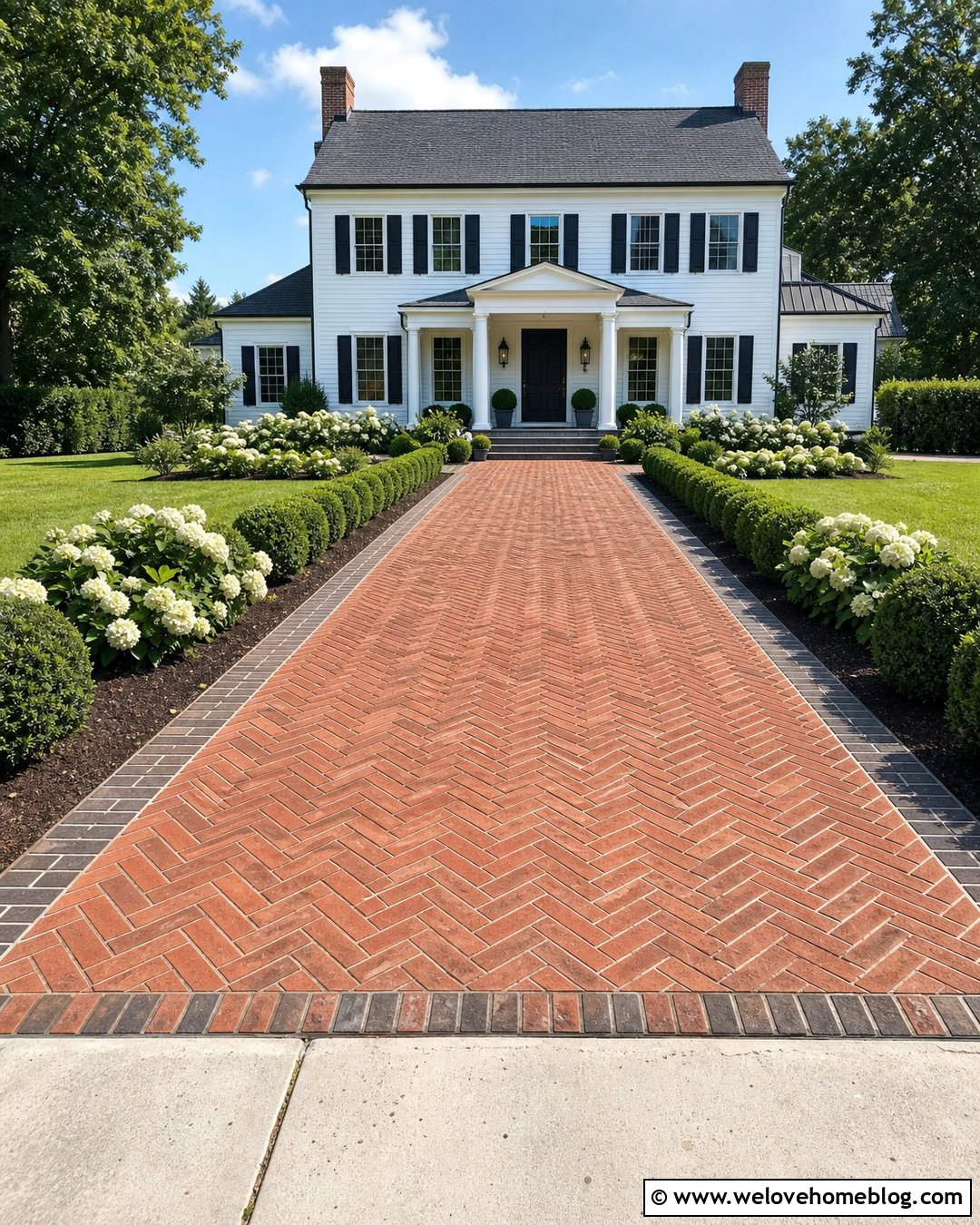
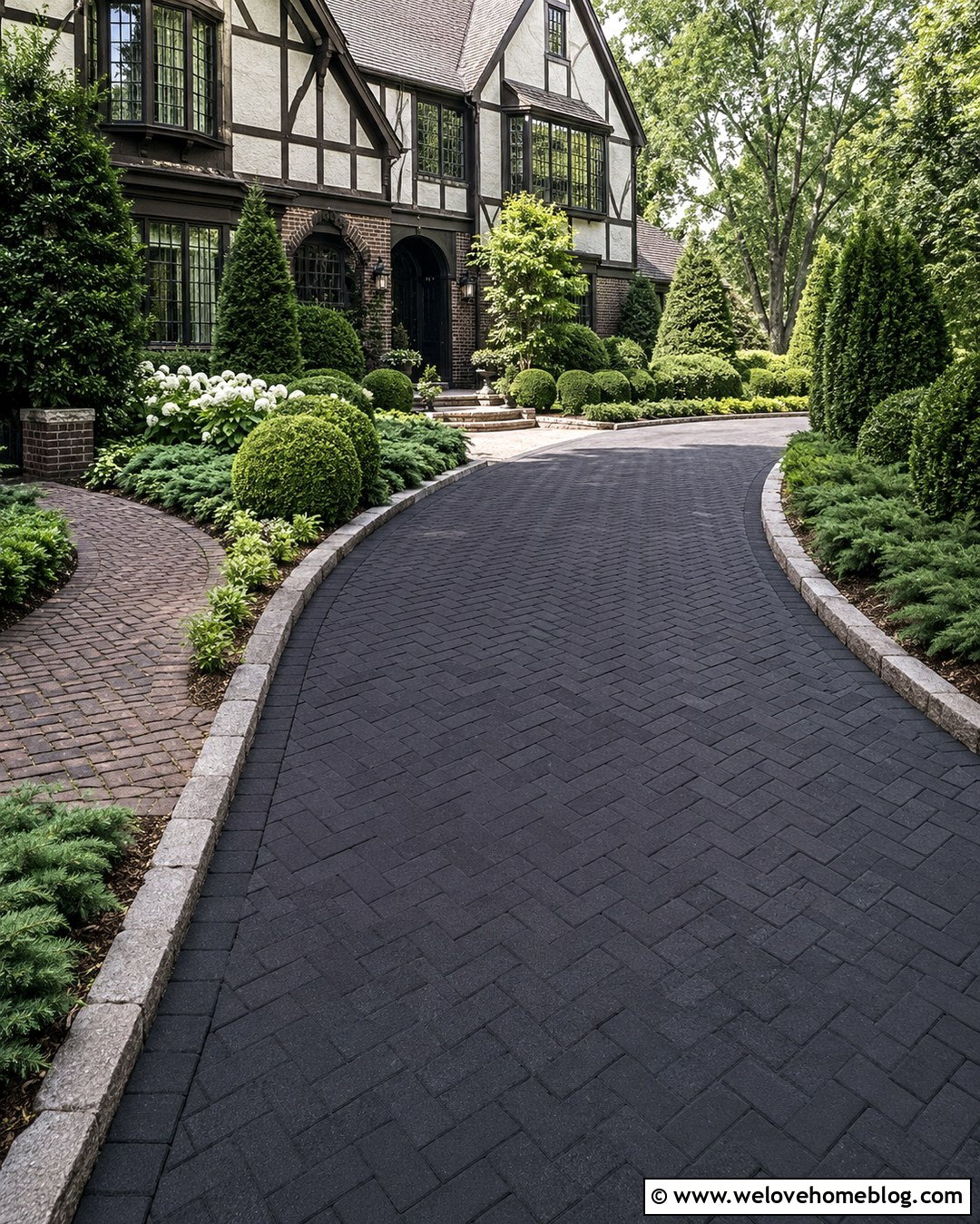
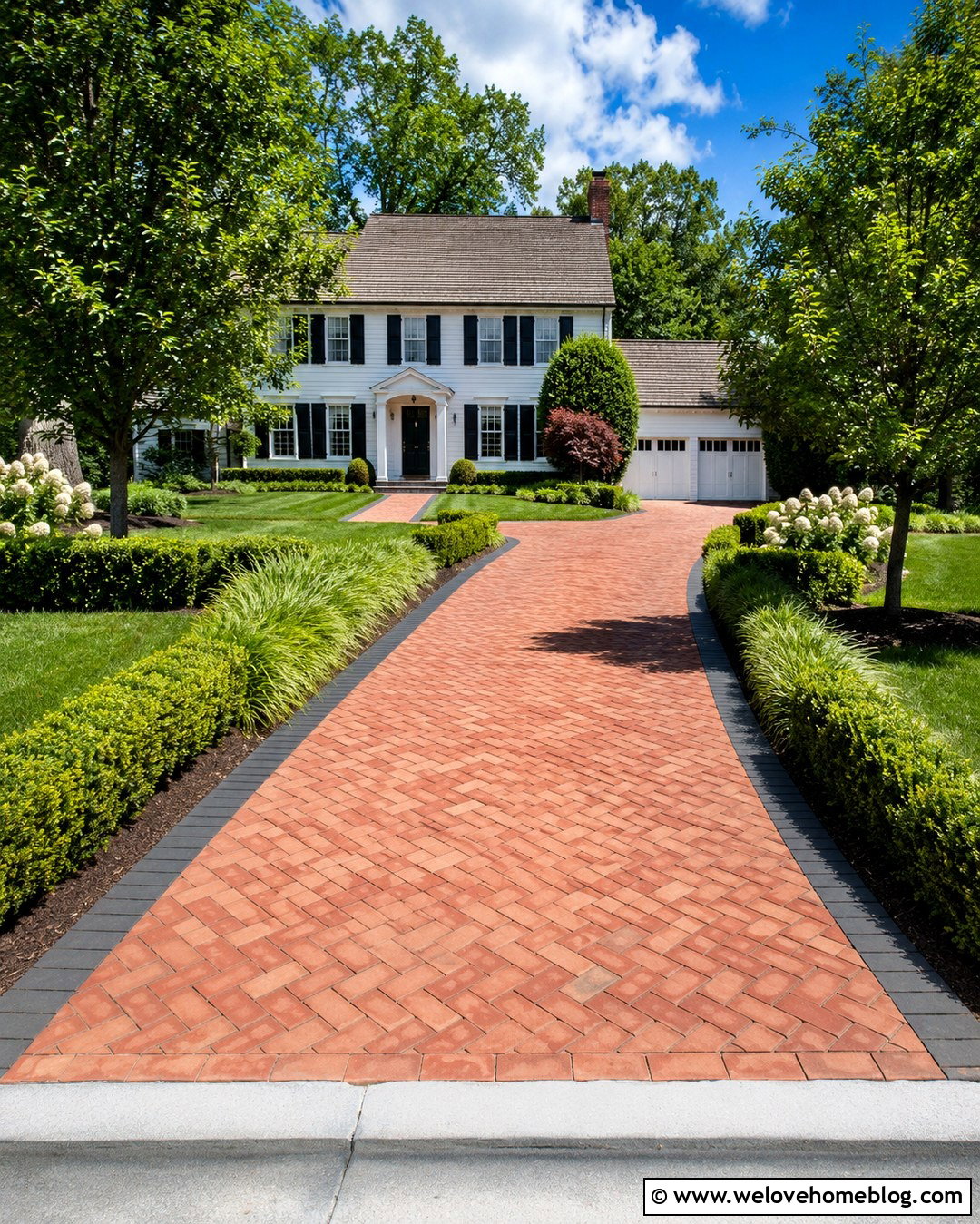
Warm clay brick pavers laid in a herringbone pattern can turn an ordinary straight driveway into a rich architectural feature. The interlocking pattern provides a visually strong surface that complements Colonial, Cape Cod, and traditional brick homes. Use darker brick soldiers along the perimeter to frame the pattern and create a clean transition to the lawn. Symmetrical planting beds filled with boxwood, hydrangeas, and seasonal flowers reinforce the formal character. A brick walkway made from the same material can branch toward the front entrance for a cohesive finish. Select pavers rated for driveway use rather than standard wall bricks. A well-prepared base, tight joints, and suitable edge restraints will help the driveway remain stable under regular vehicle traffic.
4. Black Asphalt Driveway With Brick Border
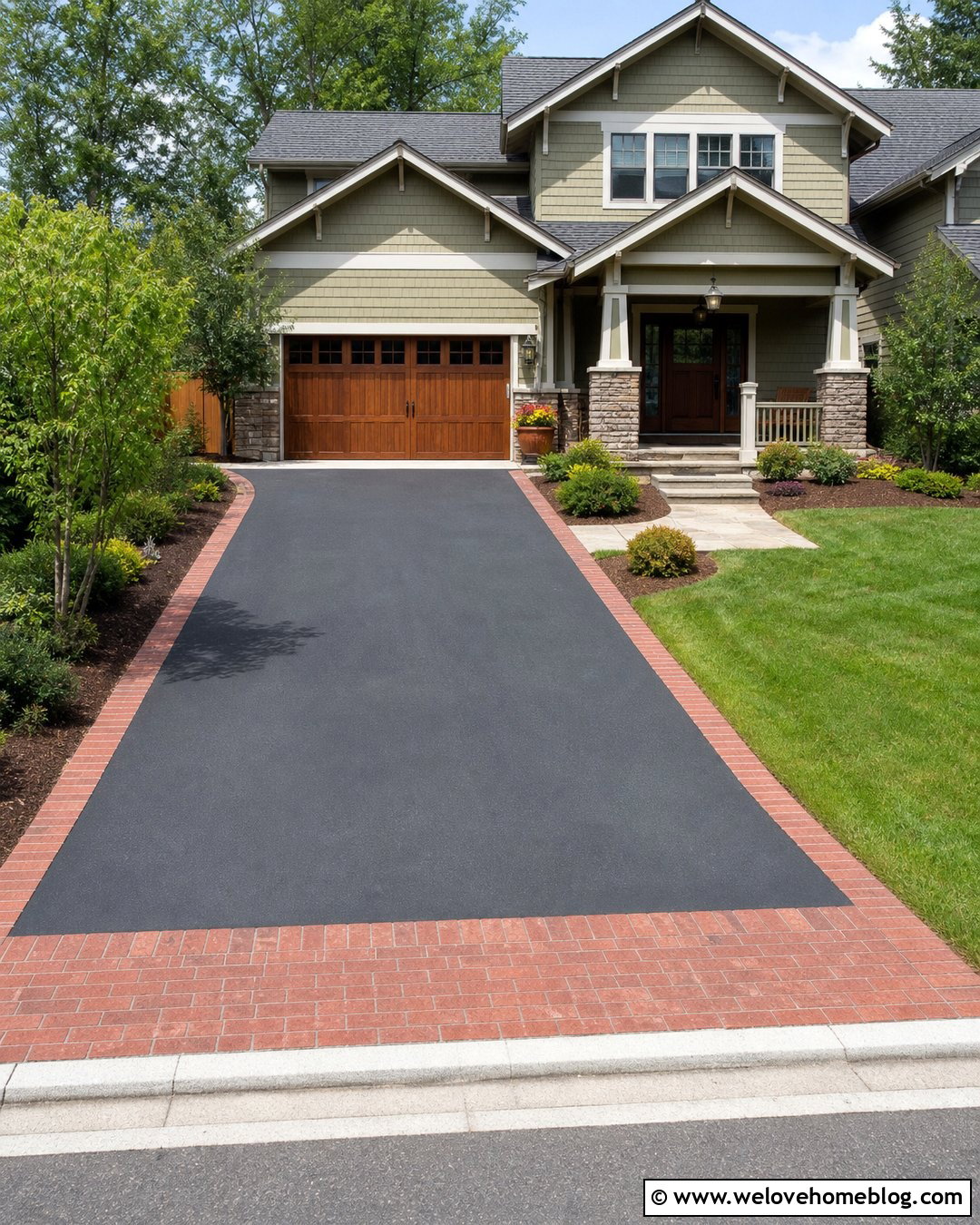
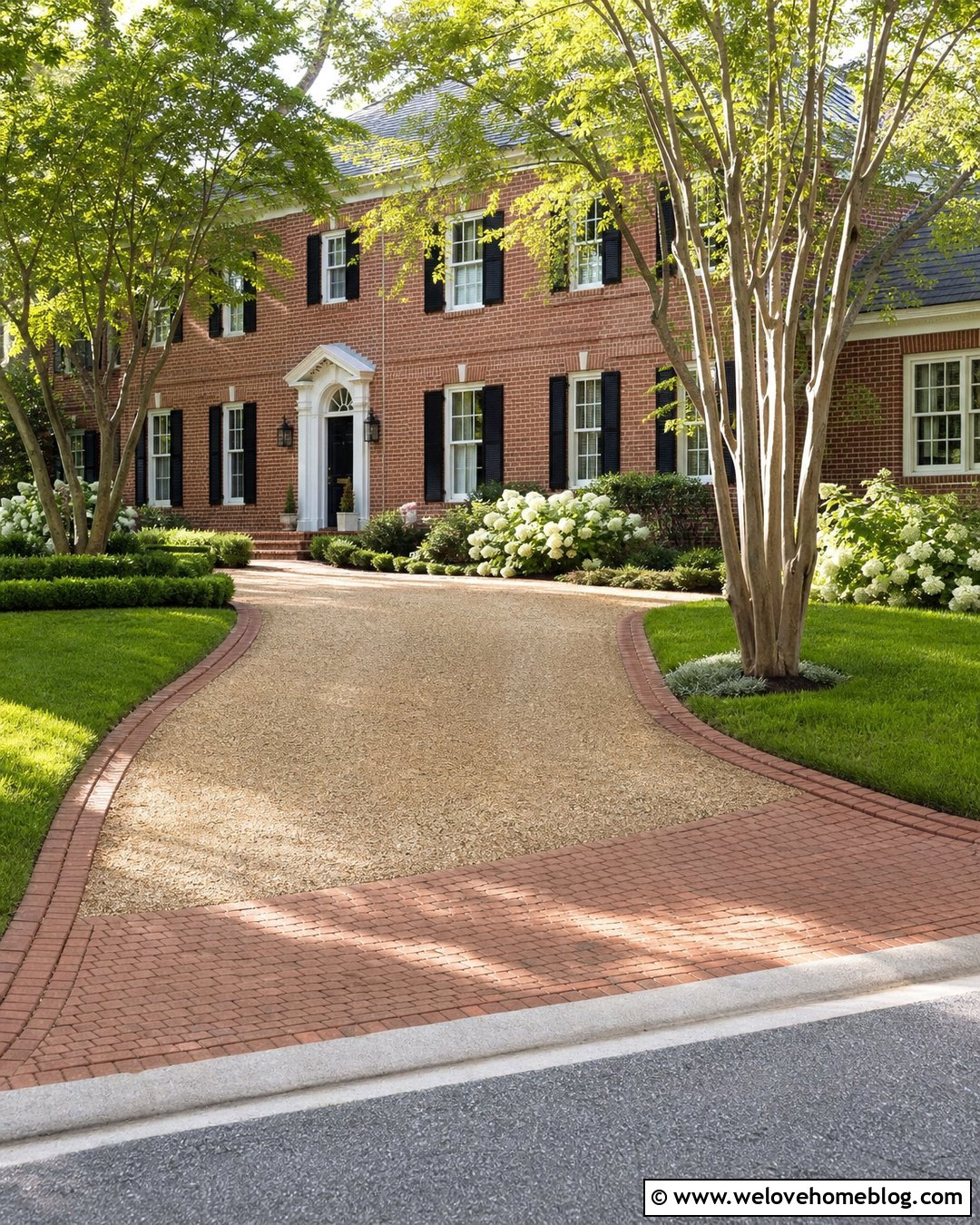
Fresh black asphalt looks much more intentional when it is framed by a contrasting brick border. This combination delivers a smooth, practical parking surface while adding the warmth and detail associated with traditional hardscaping. A straight or gently flared layout works well for suburban ranch, craftsman, and two-story homes. Choose red clay bricks for classic contrast or charcoal pavers for a quieter, more contemporary appearance. Continue the border across the driveway entrance as a decorative apron. Along the sides, use simple lawn panels and mulched beds with compact shrubs that will not crowd vehicles. Keeping the asphalt clean and maintaining the edge prevents the surface from looking neglected. The finished design feels polished without requiring the cost of a fully paved brick driveway.
5. Circular Paver Driveway With Center Garden
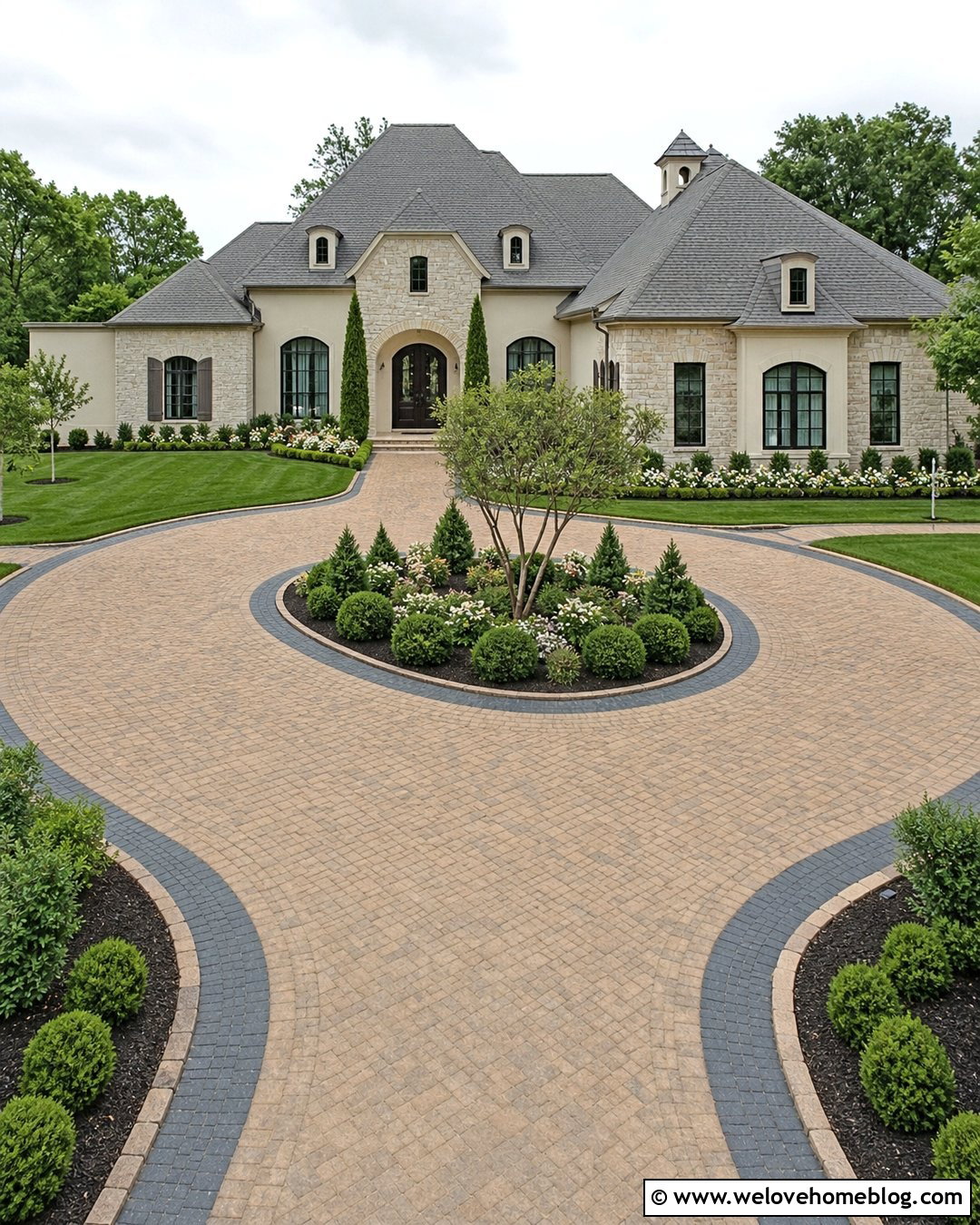
If the front yard has enough space, a circular paver driveway can create an impressive entrance while allowing vehicles to move without backing toward the street. Install warm beige or gray concrete pavers in a fan or running-bond pattern, then emphasize the curve with a darker paver border. The center island becomes the main focal point. Keep it proportional and fill it with a small ornamental tree, layered evergreens, flowering perennials, and neat ground cover. Avoid plants that spread into the driving lane or block visibility. Connect the circle to the front door with a clearly defined walkway using the same pavers. This complete arrangement works beautifully with larger Colonial, Mediterranean, French country, and modern farmhouse homes.
6. White Gravel Driveway With Lavender Borders
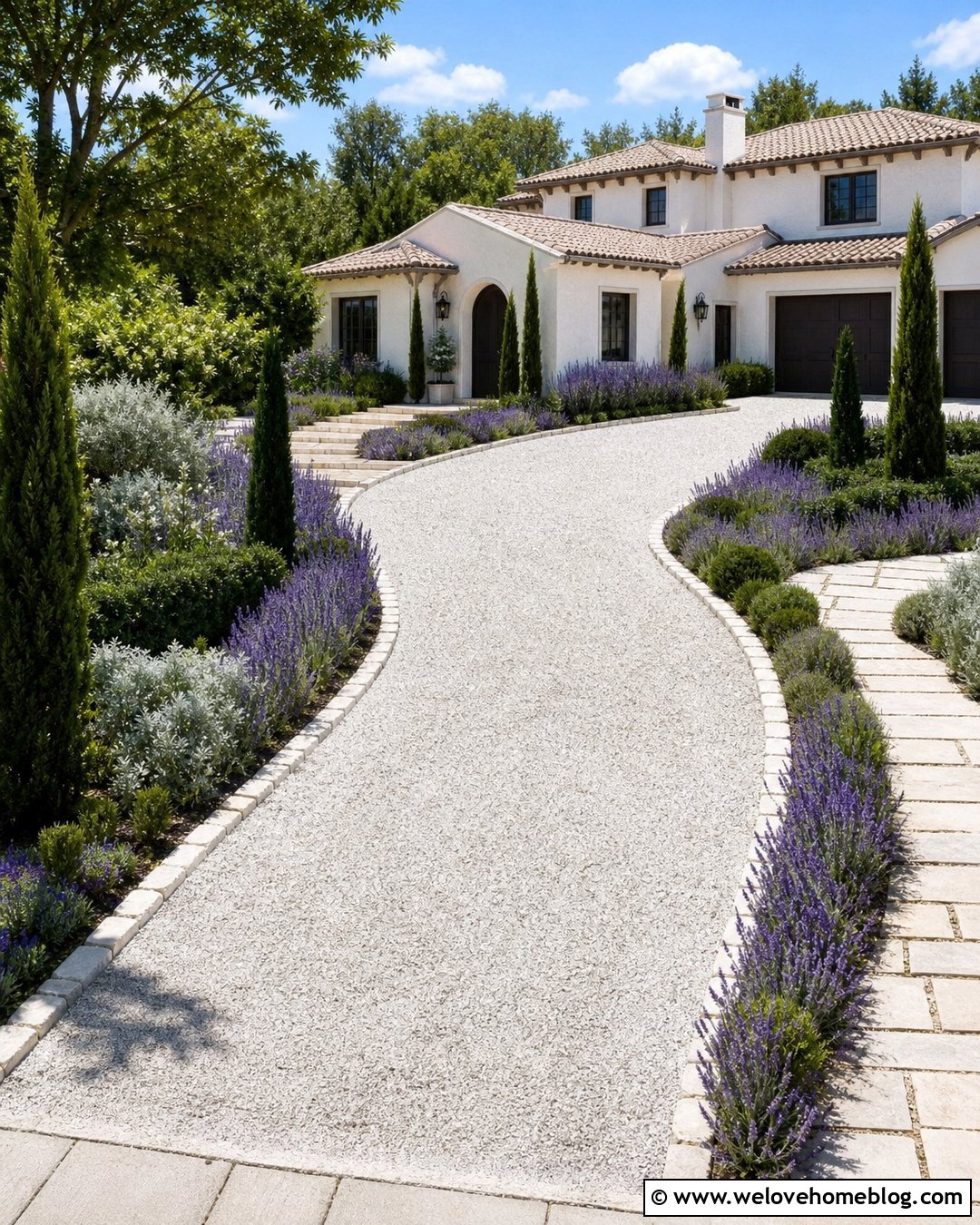
Bright white gravel paired with lavender borders creates a sunny, relaxed driveway inspired by Mediterranean landscapes. A straight or gently curving layout can lead toward a stucco, stone, or cottage-style home. Use angular white gravel over a stable, compacted base rather than loose decorative pebbles alone. Steel, stone, or concrete edging will hold the material in place and keep the planting beds crisp. Arrange lavender in generous repeating groups, adding silvery foliage plants and upright evergreens for year-round structure. This planting combination performs best in sunny locations with well-draining soil. Near the garage, transition to a larger stone apron or matching pavers to reduce gravel movement. The result feels bright and distinctive without becoming overly formal or complicated.
7. Exposed Aggregate Driveway With Timber Landscaping
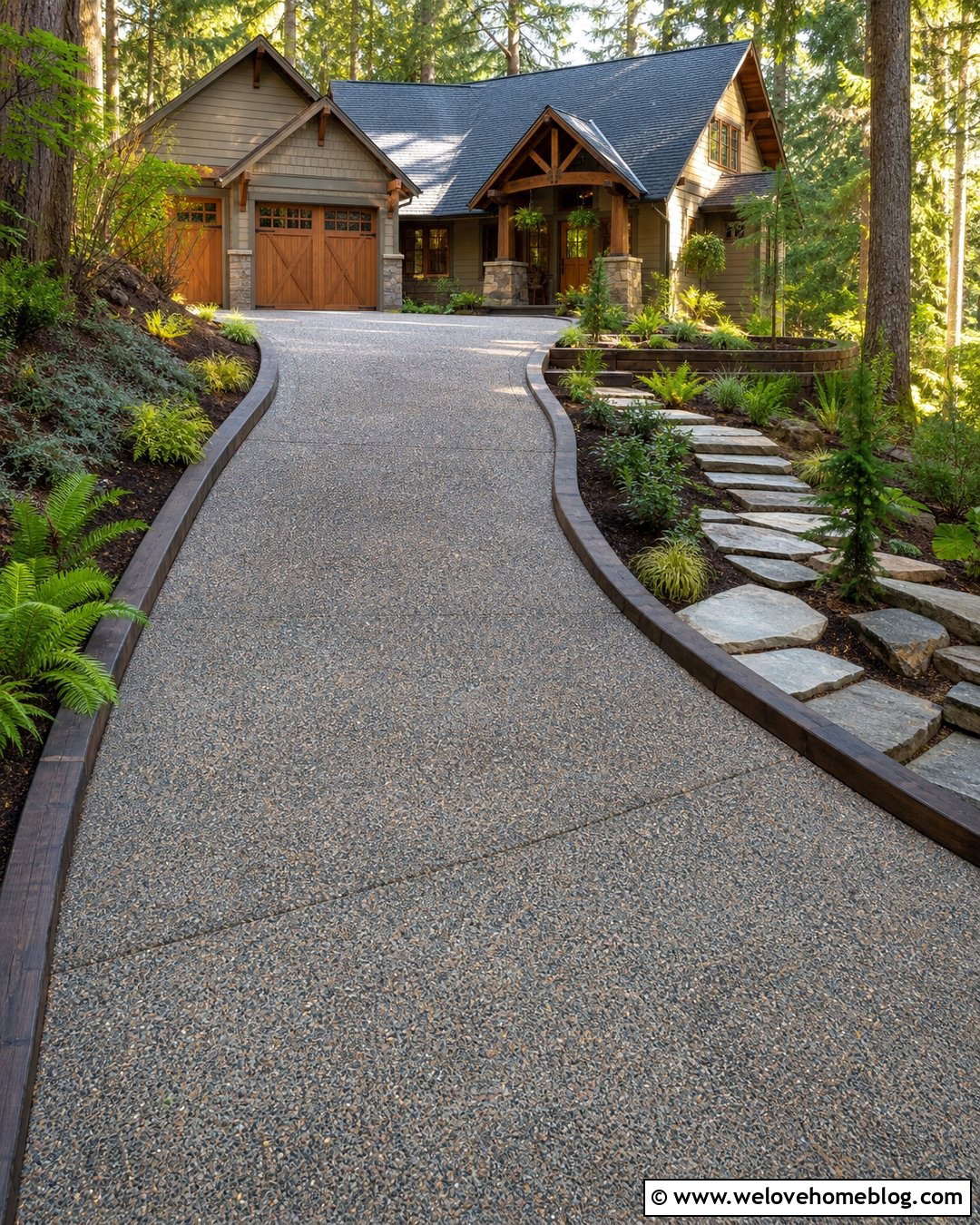
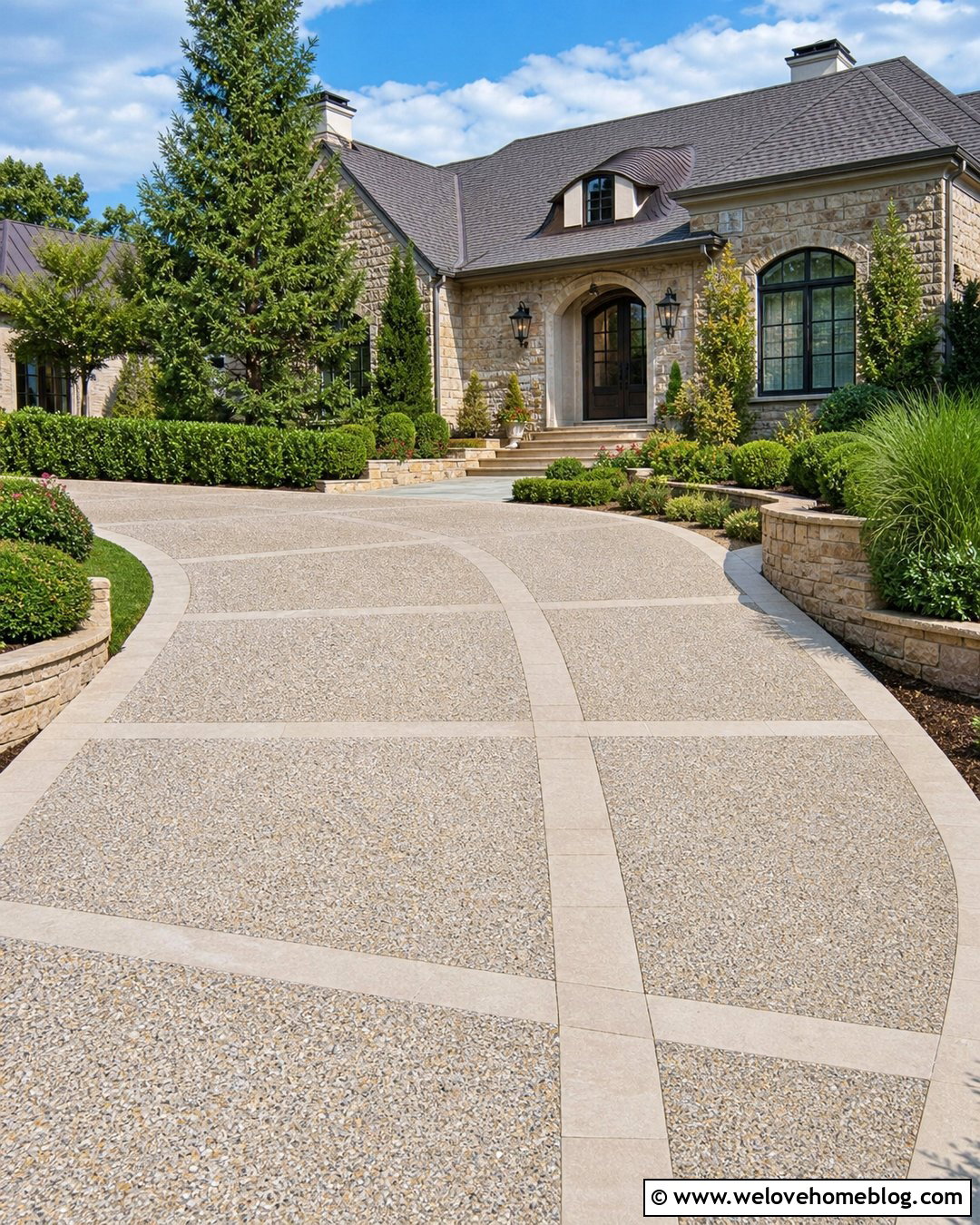
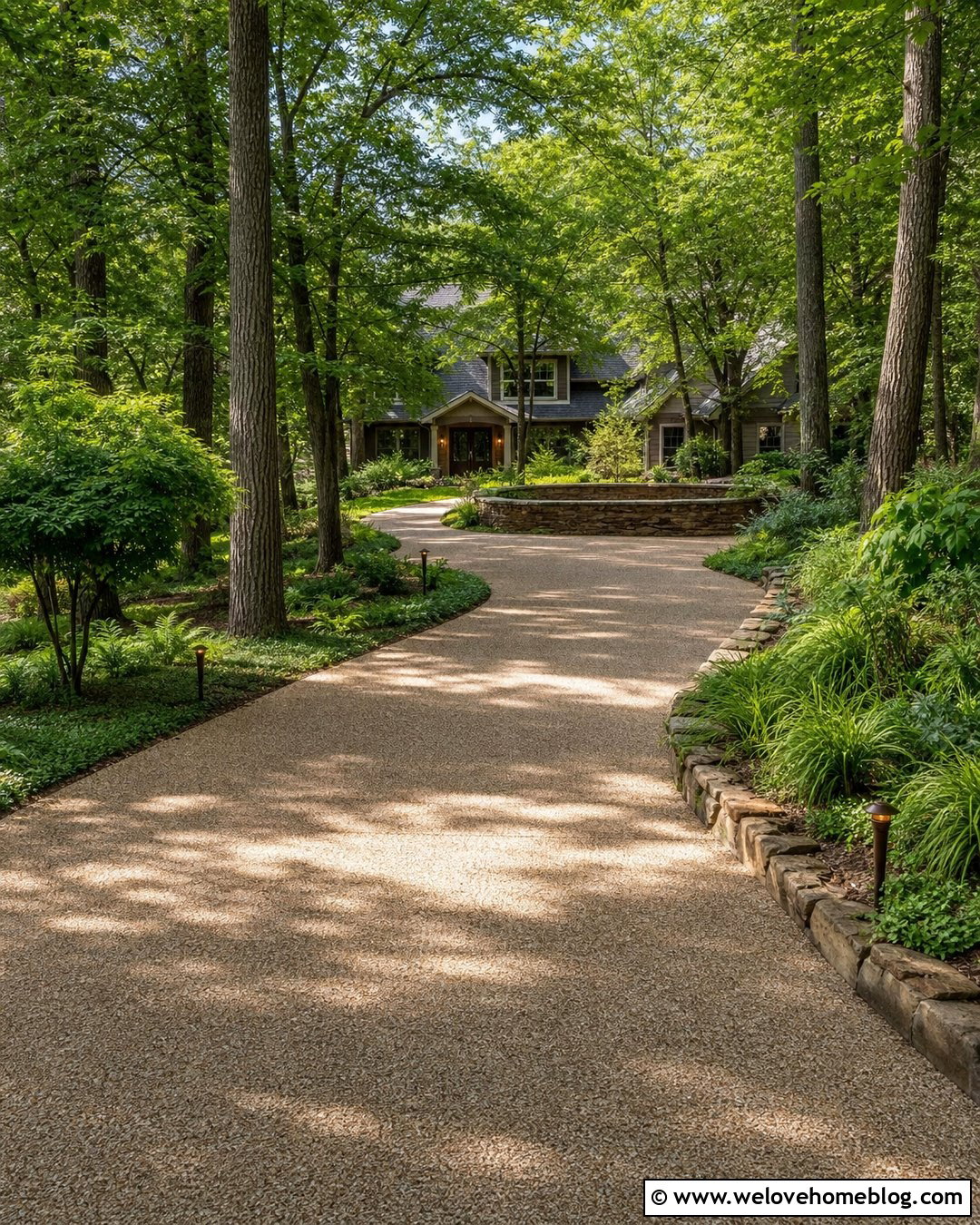
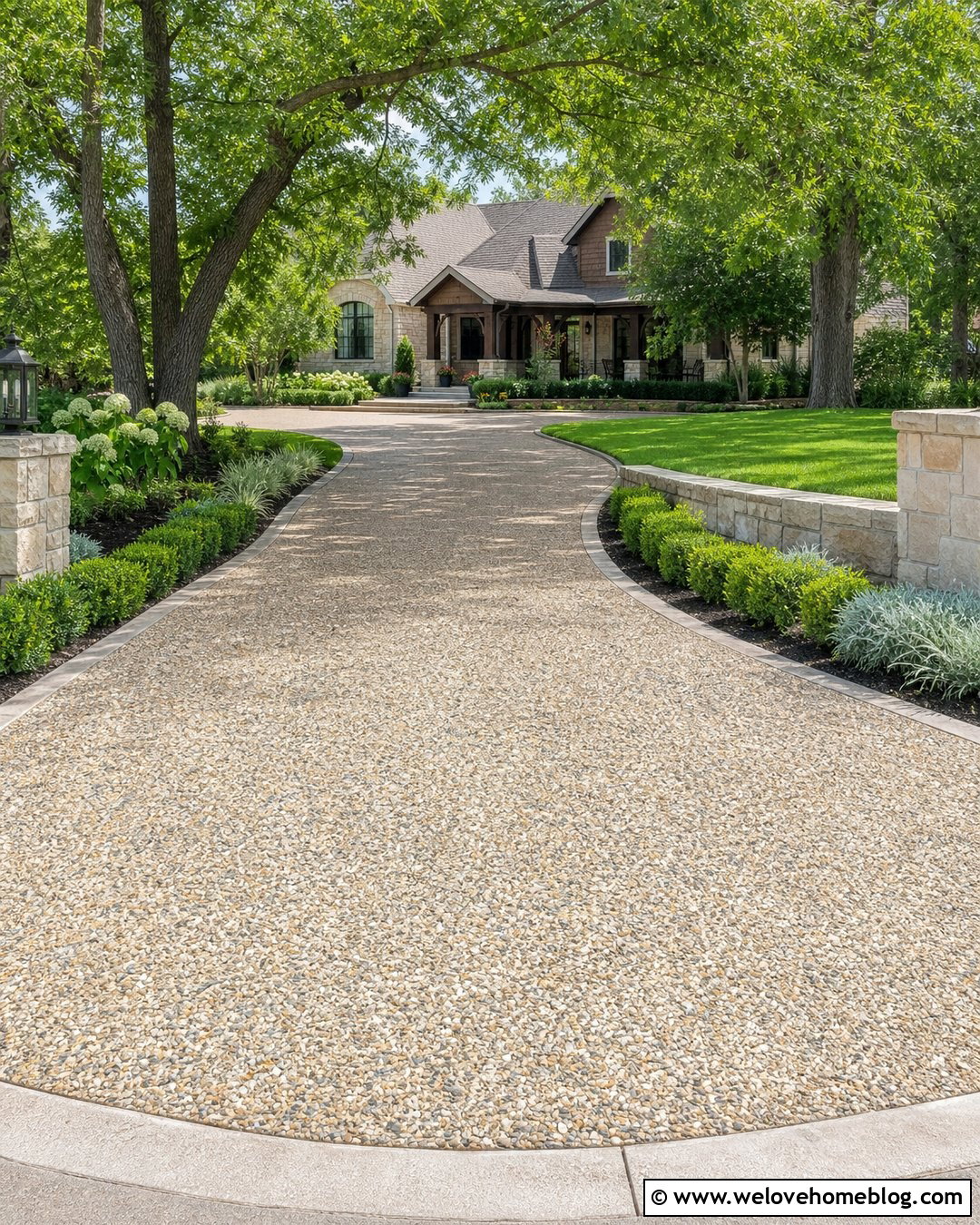
Exposed aggregate concrete brings natural texture to a driveway while retaining the solid performance of a poured surface. Select a warm mix containing tan, brown, and charcoal stones to complement a craftsman, mountain, or wooded contemporary home. A gently curved driveway will highlight the varied aggregate and soften the approach to the garage. Use thick timber edging or low timber retaining walls where planting beds sit above the driveway. Layer those beds with ferns, native grasses, evergreen shrubs, and small trees that suit the site’s light conditions. A flagstone or aggregate walkway can connect the parking area with the porch. Because the surface already has plenty of visual movement, keep the surrounding layout simple. The final look should feel natural, durable, and integrated with the landscape.
8. Cobblestone Driveway With Stone Pillars
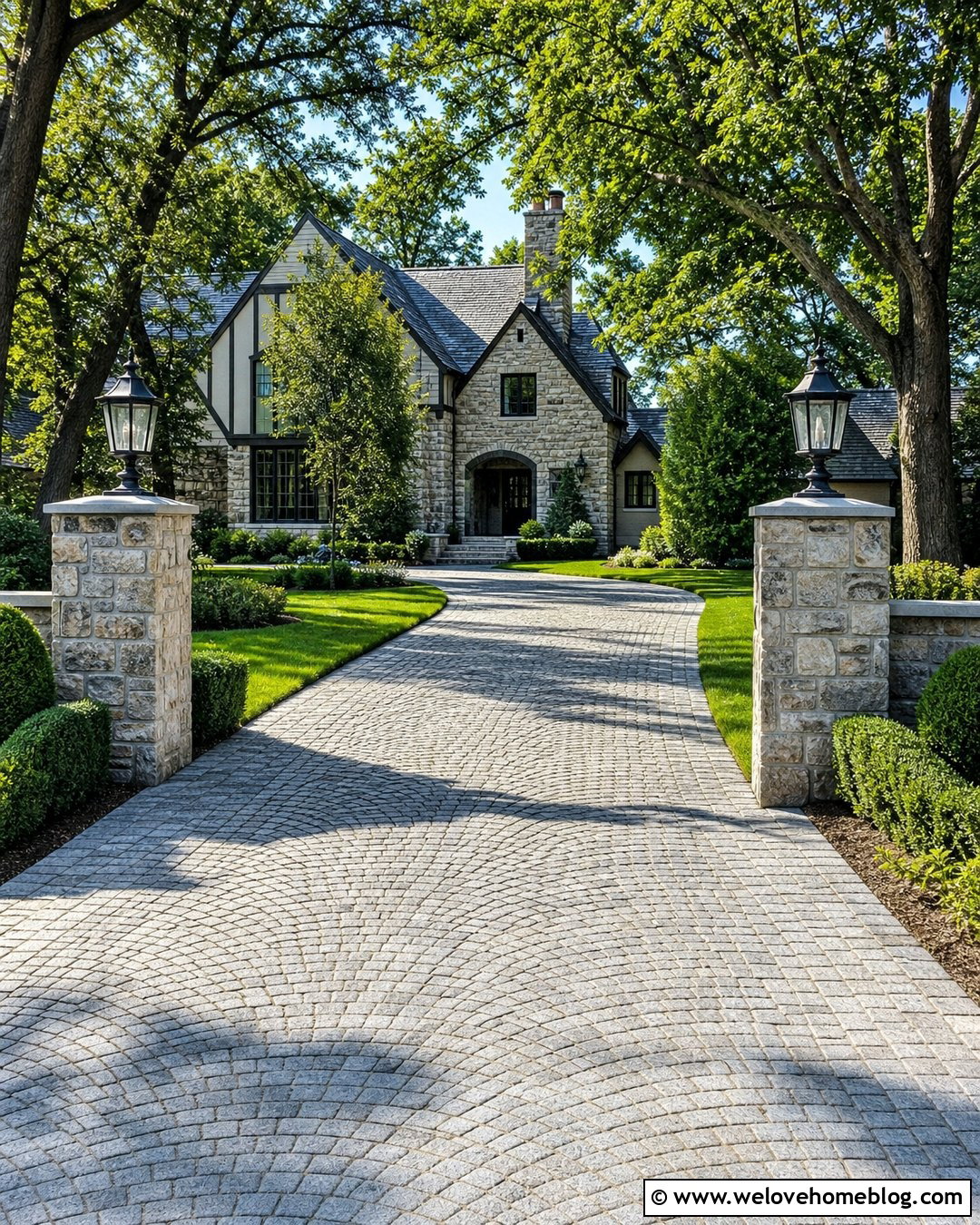
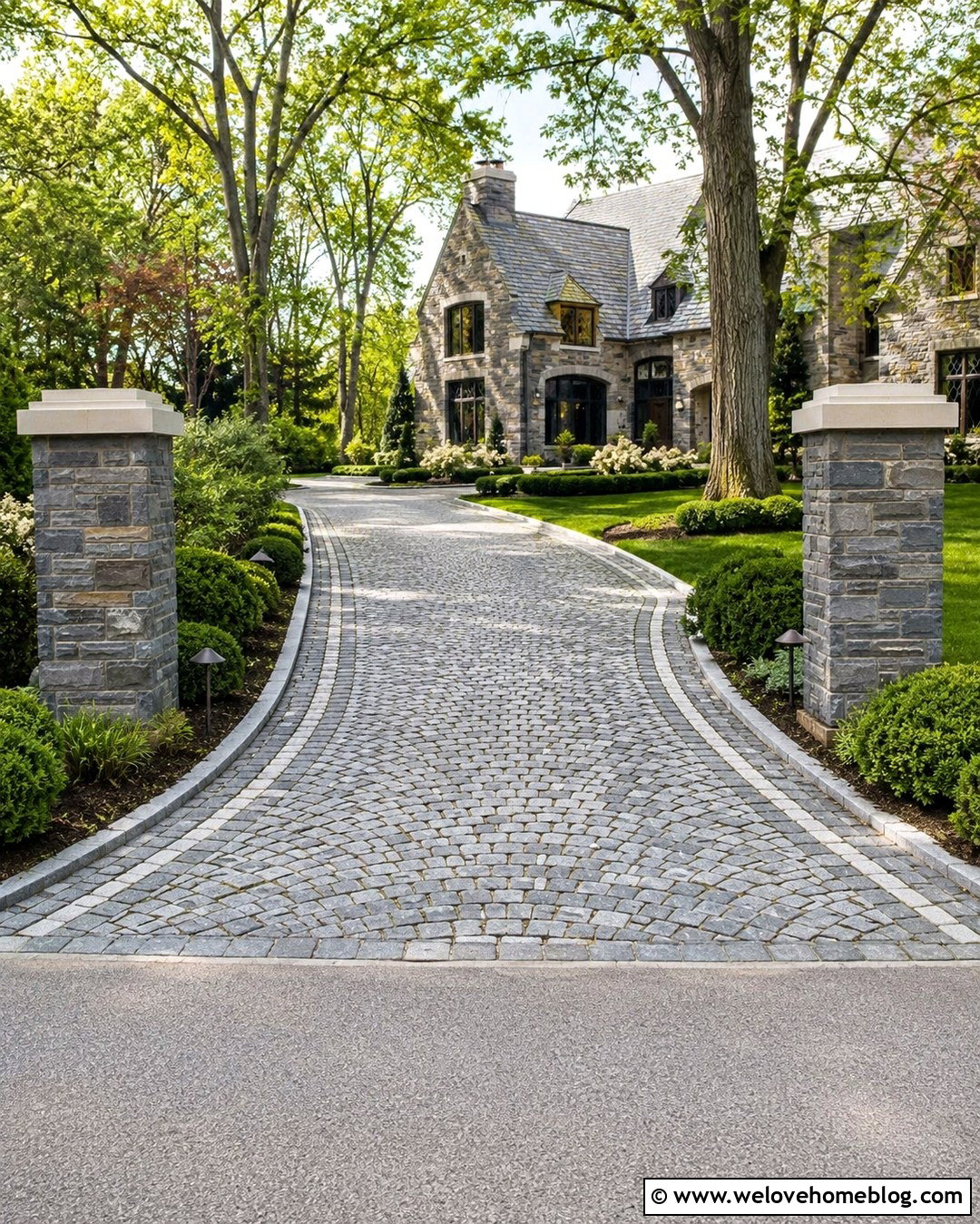
Few entrances feel as established as a cobblestone driveway framed by substantial stone pillars. Use gray granite cobblestones in a fan pattern or gently irregular layout to create an Old World surface suitable for a Tudor, European, or traditional stone home. A straight driveway can make the pillars feel formal, while a curved approach creates a more gradual reveal. Match the pillar stone to the house facade or nearby garden walls. Simple lantern-style fixtures can be mounted on top without overwhelming the entrance. Inside the pillars, line the driveway with clipped evergreen shrubs, shade trees, and restrained perennial beds. Cobblestone is a premium choice, so it can also be used for the entrance apron and borders while a more affordable material covers the remaining drive.
9. Permeable Paver Driveway With Rain Garden
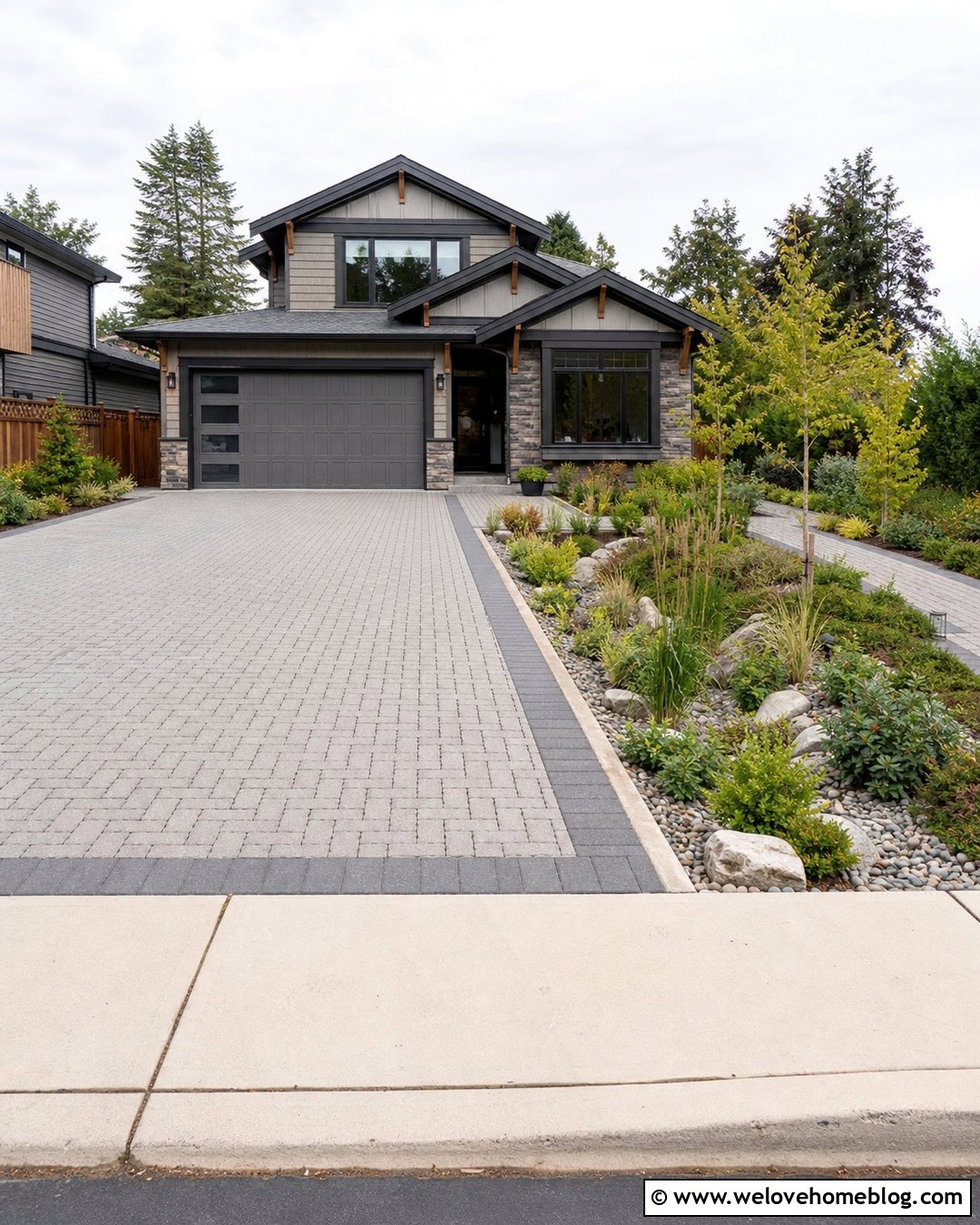
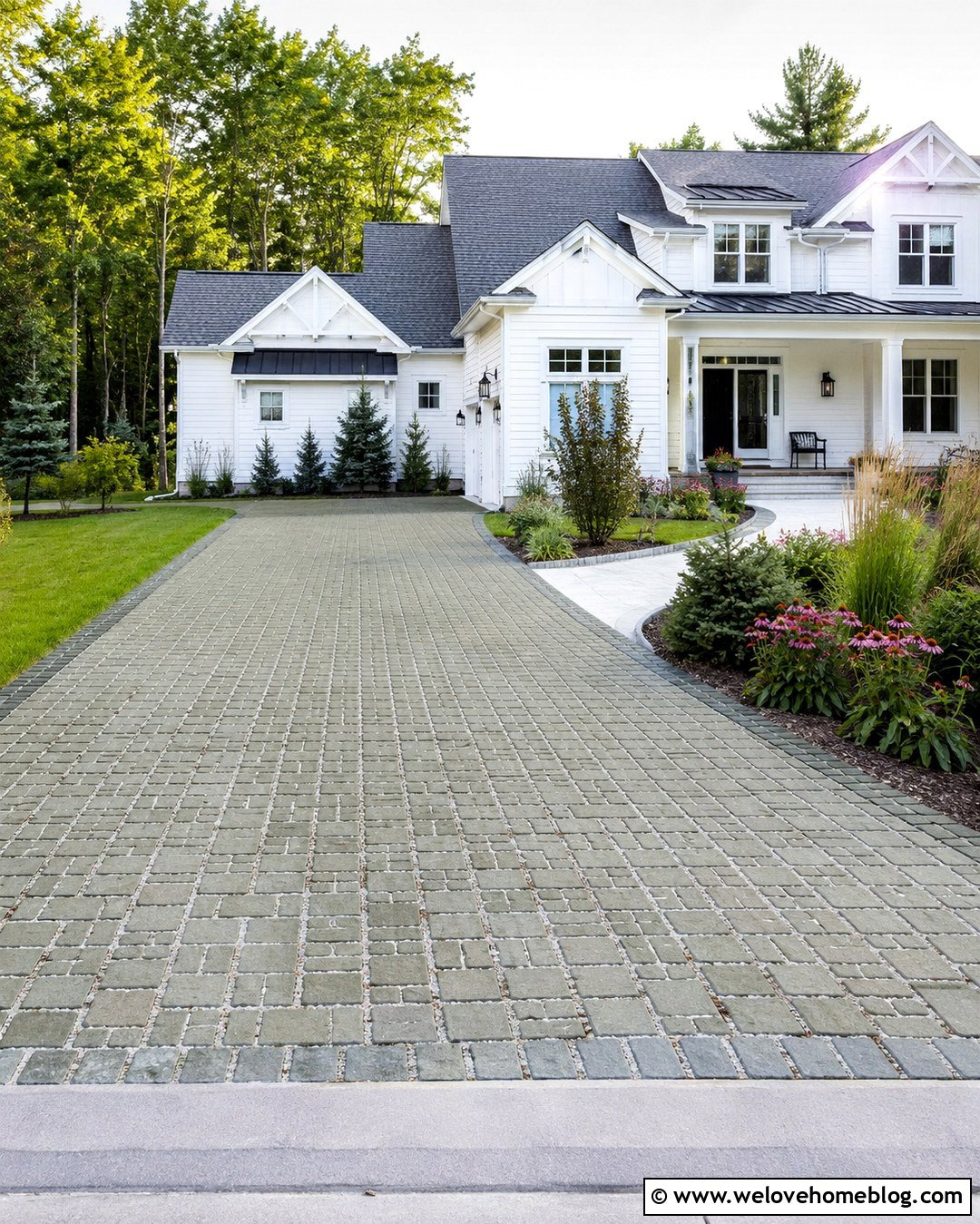
A permeable paver driveway can look refined while helping water move through the surface rather than collecting in obvious puddles. Choose charcoal or medium-gray permeable concrete pavers for a straight driveway leading to a modern ranch or contemporary craftsman house. Border the surface with darker pavers and direct the surrounding grade toward a planted rain garden beside the driveway. Fill that area with regionally appropriate grasses, sedges, flowering perennials, and moisture-tolerant shrubs. Decorative river rock can define the inlet while adding texture. Keep the planting low near the street so drivers have a clear view. A matching permeable walkway can link the driveway and front door. This design combines practical drainage planning with layered landscaping and a clean residential appearance.
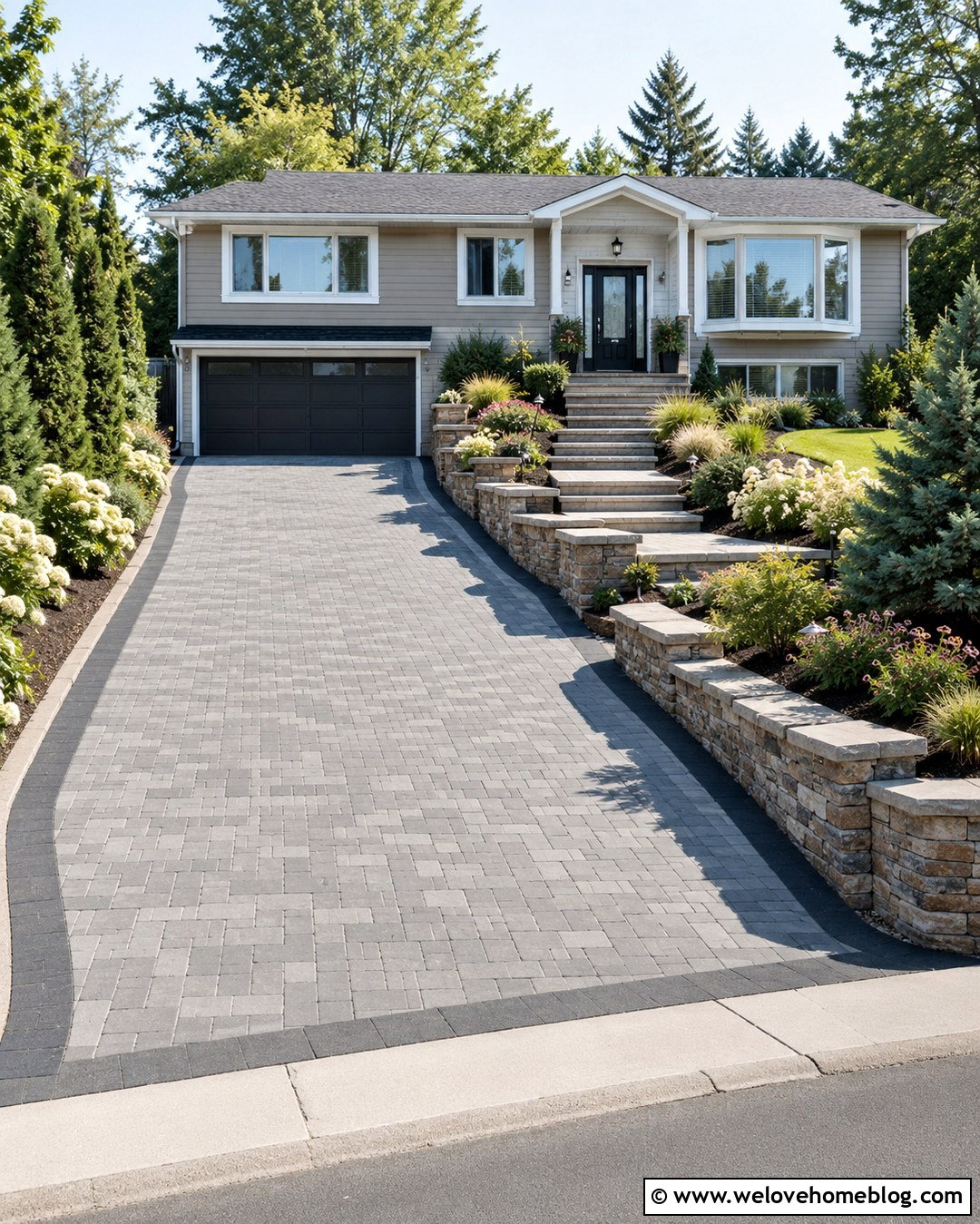
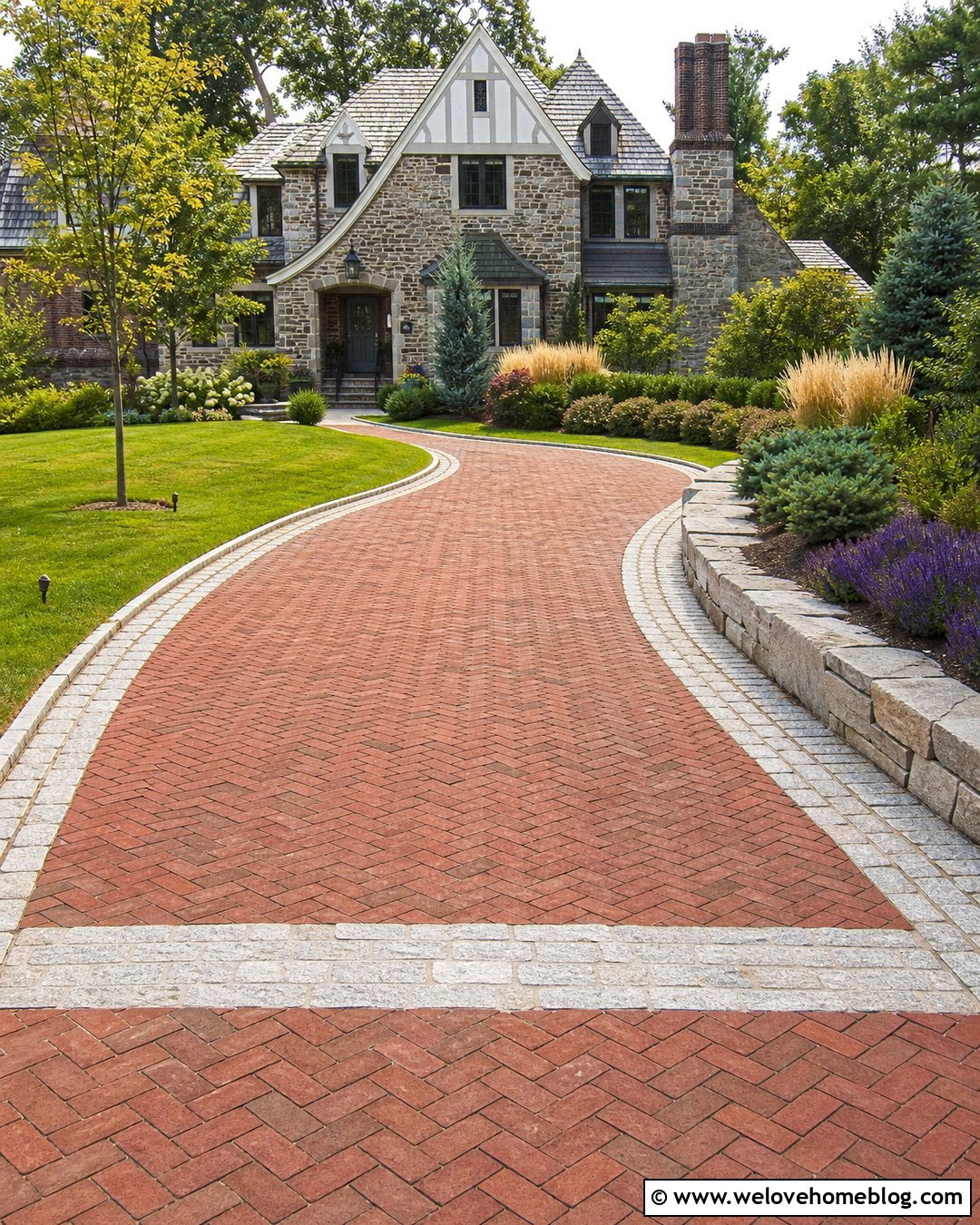
10. Stamped Concrete Driveway With Paver Apron
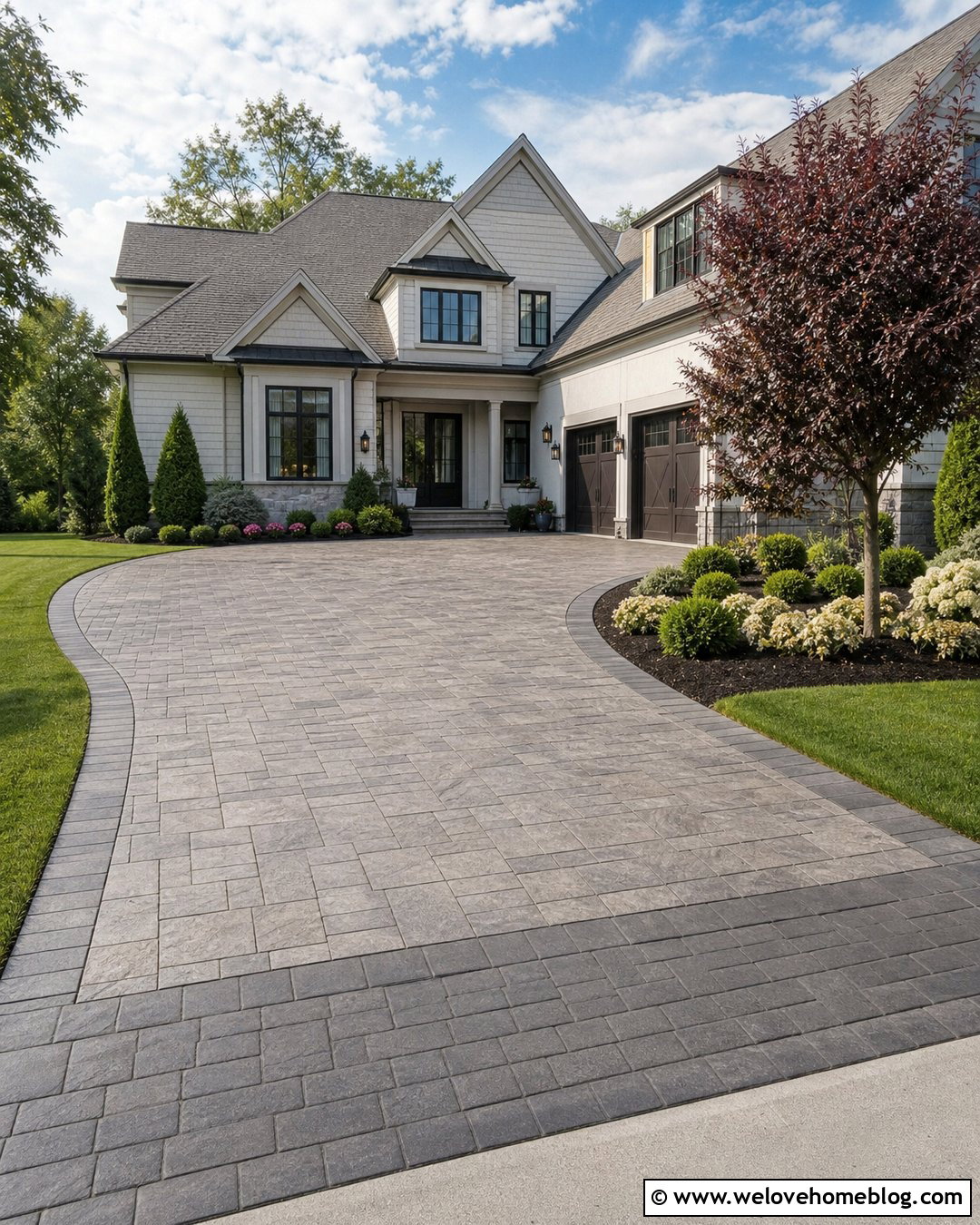
Stamped concrete provides the visual rhythm of individual stones without covering the entire driveway in separate pavers. Choose a subtle slate or ashlar pattern in warm gray, then use a real concrete paver apron at the street to give the entrance extra definition. A lightly curved driveway will make the stamped pattern feel more natural and less rigid. Add a coordinating paver border along both sides to create a finished edge. Frame the approach with broad lawn areas, mulched planting beds, and groups of flowering shrubs near the house. The colors should coordinate with the roof, siding, or masonry rather than compete with them. Careful color selection is important because a restrained finish usually appears more convincing and remains easier to integrate with future exterior updates.
11. Resin-Bound Driveway With Metal Edging
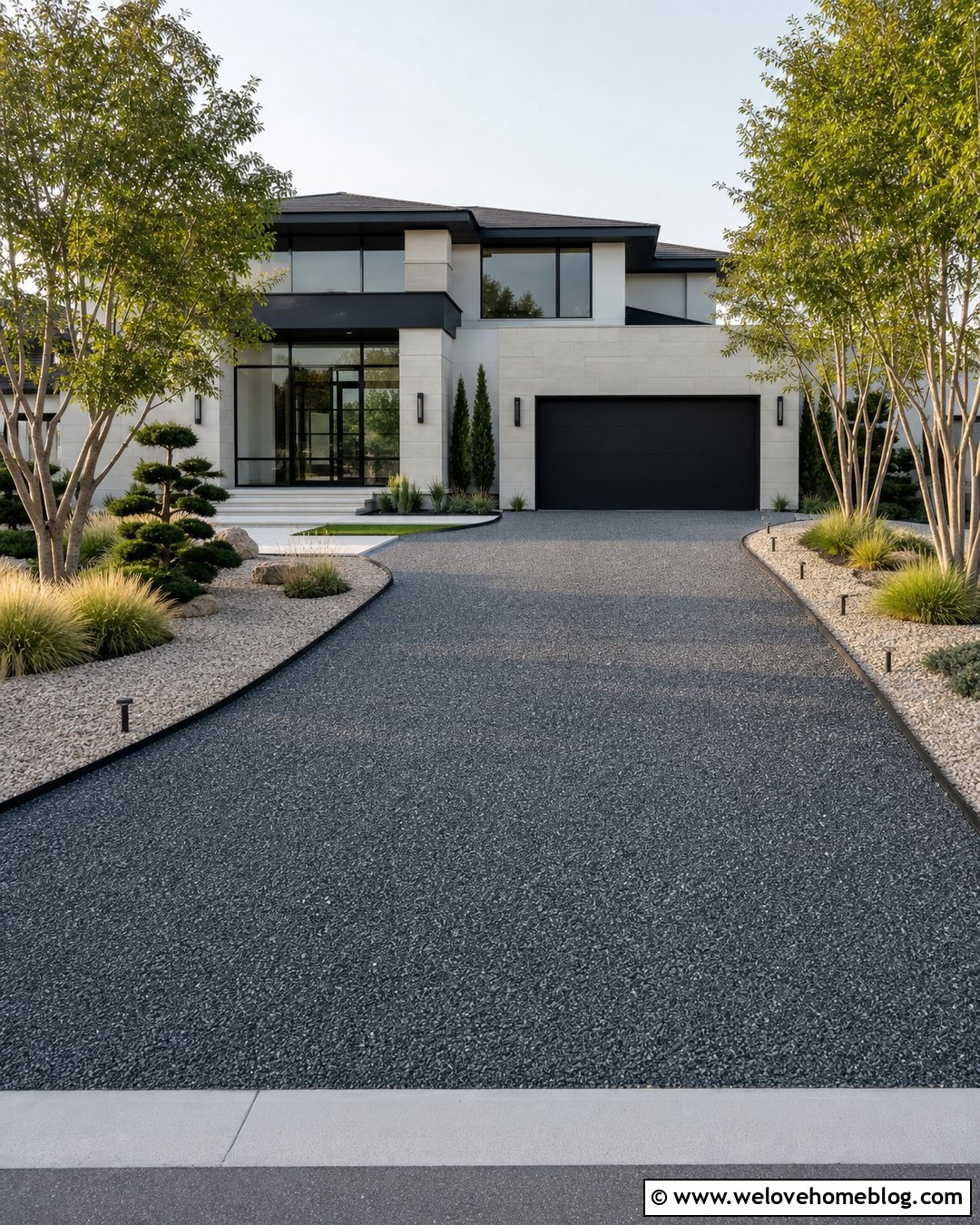
A resin-bound gravel driveway offers a smooth, contemporary appearance while preserving the natural visual texture of small stones. Select a warm beige blend for a light house or a charcoal blend for a bold modern facade. A straight driveway with a subtle flare near the garage creates a clean, practical layout. Use dark steel or aluminum edging to sharpen the perimeter and separate the surface from gravel planting beds. Repeating ornamental grasses, sculptural evergreens, and a few multi-stem trees can continue the streamlined look. Add rectangular concrete stepping pads for the path to the front door. The limited color palette keeps the property calm and coordinated. This complete design works particularly well where homeowners want a neat stone appearance without constantly raking loose gravel back into place.
12. Concrete Driveway With Brick Ribbon
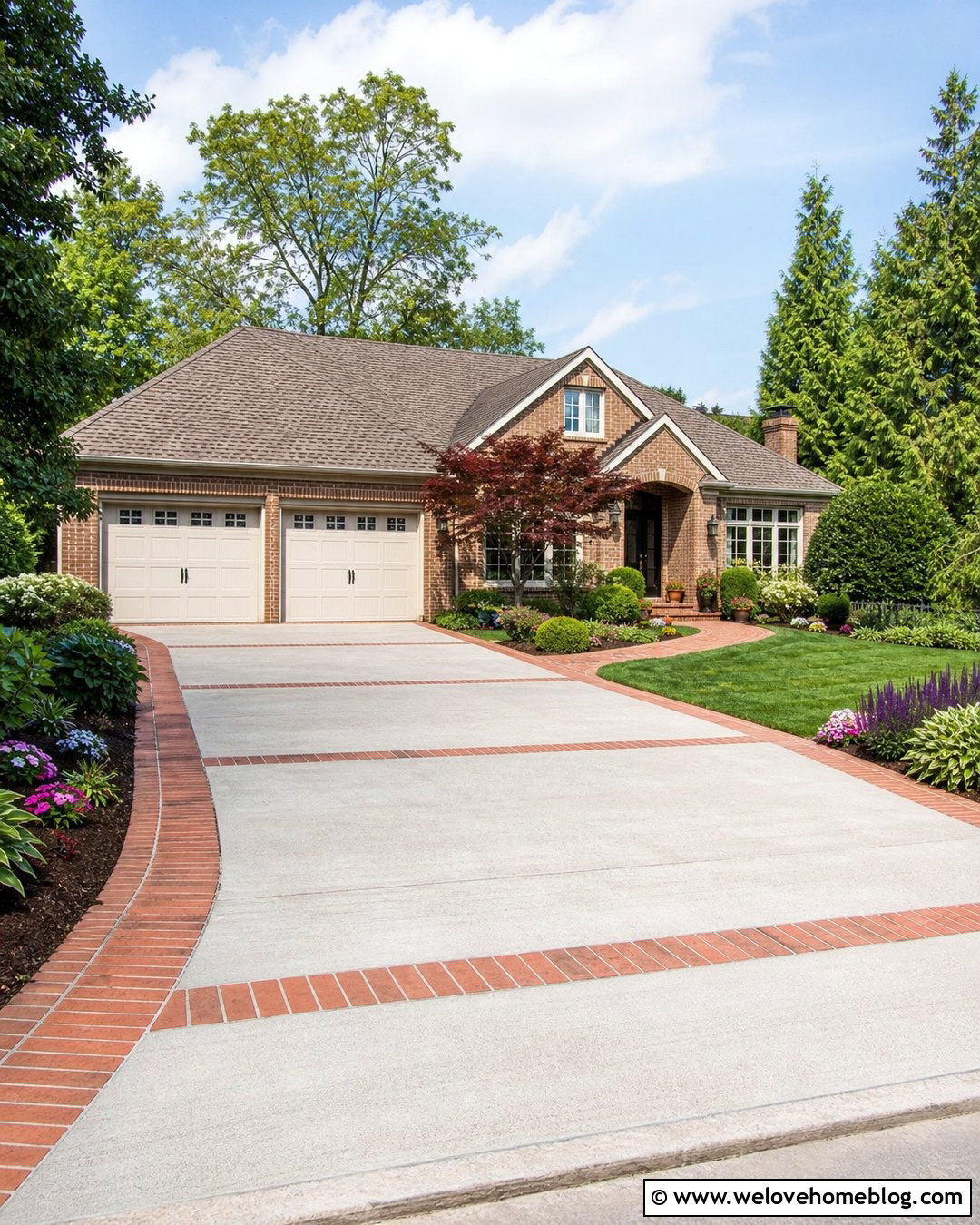
A brick ribbon can break up a wide poured concrete driveway and make the surface feel more connected to a traditional house. Begin with broom-finished light gray concrete, then install red or brown clay brick bands across the driveway at measured intervals. Continue the brick around the edges and into the front walkway for a unified appearance. This approach is useful for a broad two-car driveway that might otherwise look plain. Balance the hardscape with curved planting beds containing compact shrubs, flowering perennials, and one small ornamental tree near the garage. Keep plants far enough from the pavement to avoid scratches and blocked doors. The repeated brick details provide visual structure without creating a surface that feels too busy, expensive, or difficult to maintain.
13. Pea Gravel Driveway With Brick Edging
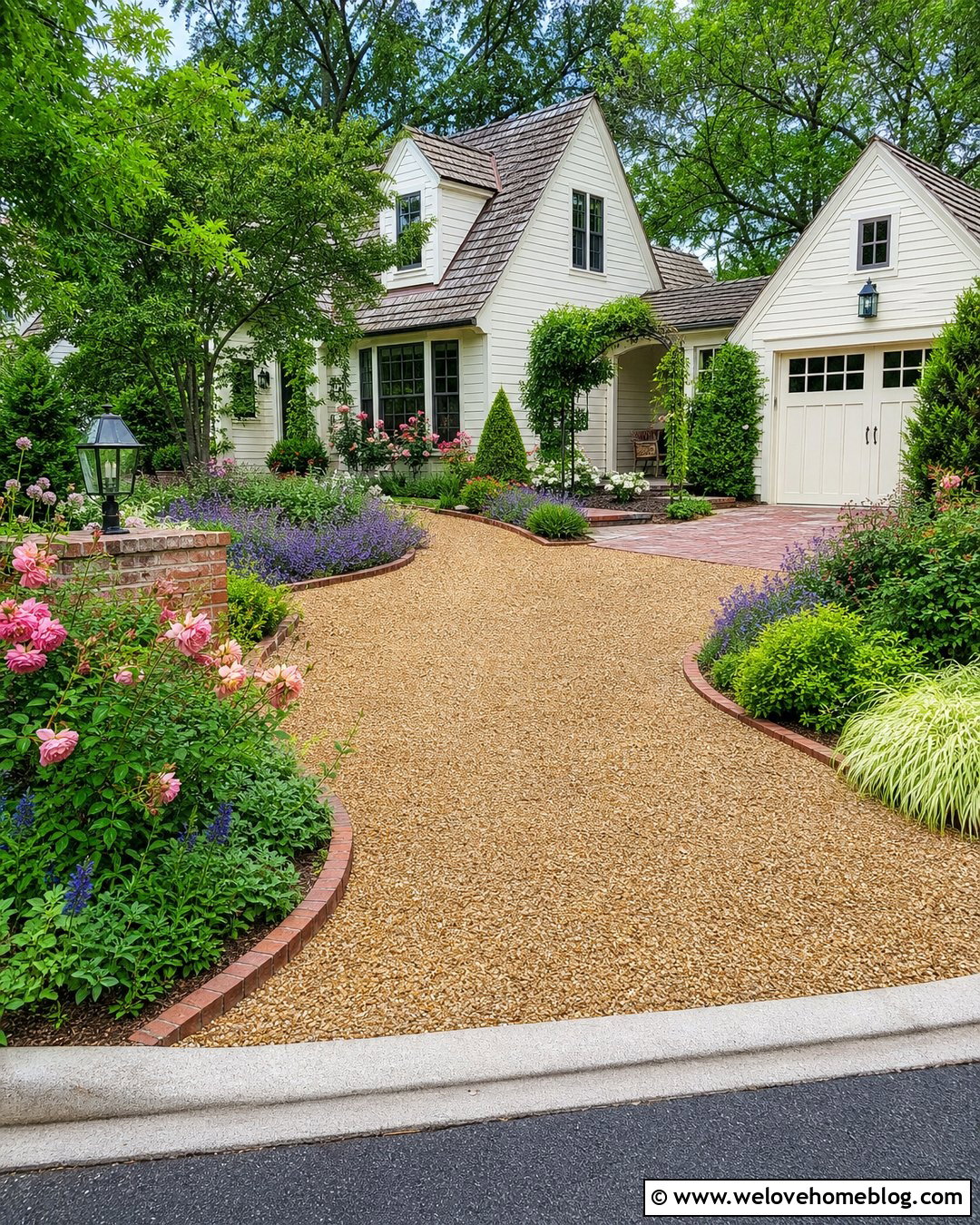
Small, rounded pea gravel creates a softer driveway texture that works naturally with cottages, bungalows, and casual garden homes. Choose a warm tan or mixed brown gravel and contain it with a raised clay brick edge installed along a straight or gently winding layout. Because pea gravel moves more easily than angular stone, use it over a properly prepared base and consider stabilized gravel grids in parking areas. Create narrow garden beds beside the brick border using roses, catmint, ornamental grasses, and compact evergreen shrubs. A brick walkway can continue from the driveway toward the porch. Near the garage, add a brick or concrete parking apron to reduce loose stones indoors. This design feels informal and garden-focused while still presenting a clearly organized entrance from the curb.
14. Driveway With Tree-Lined Entrance
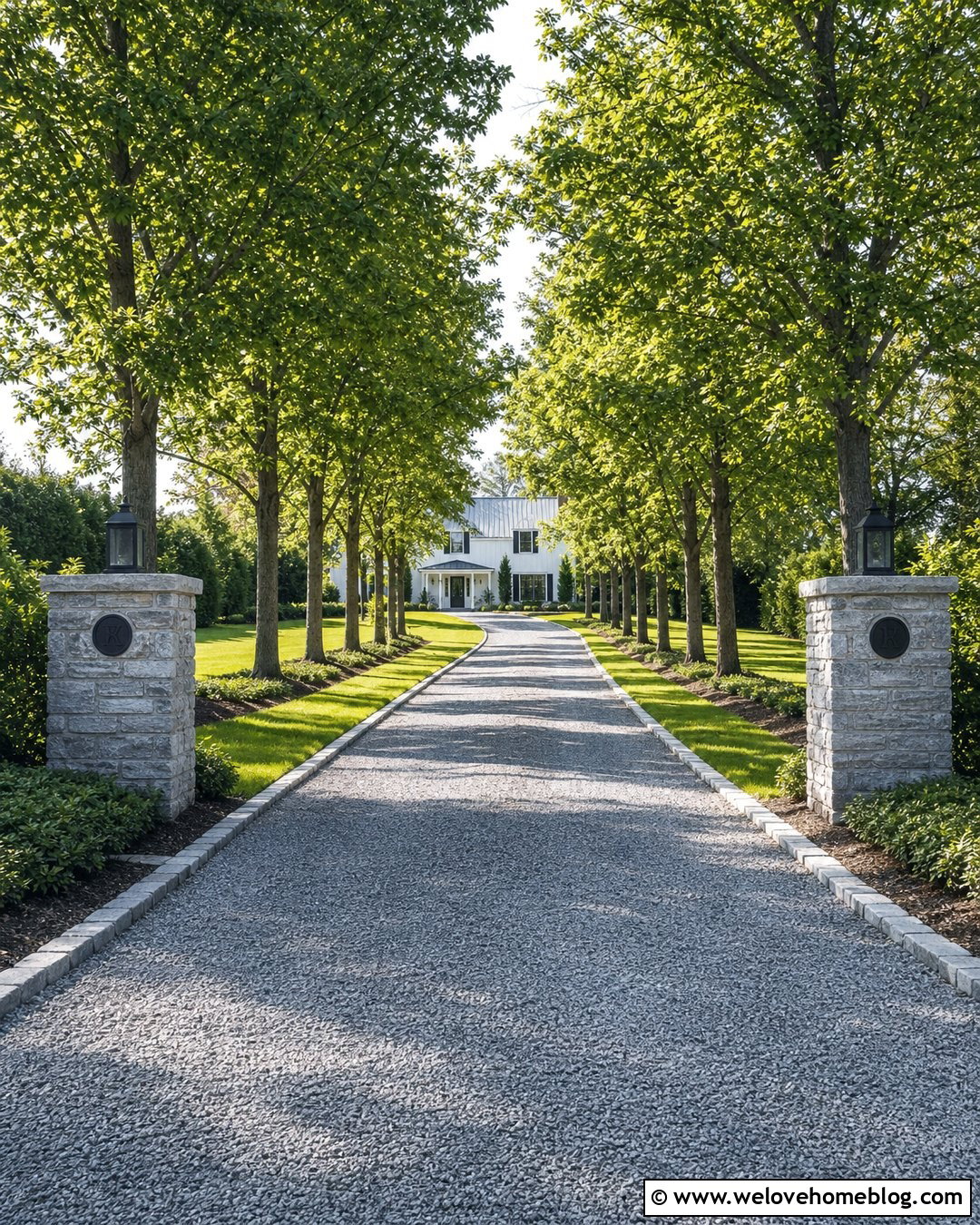
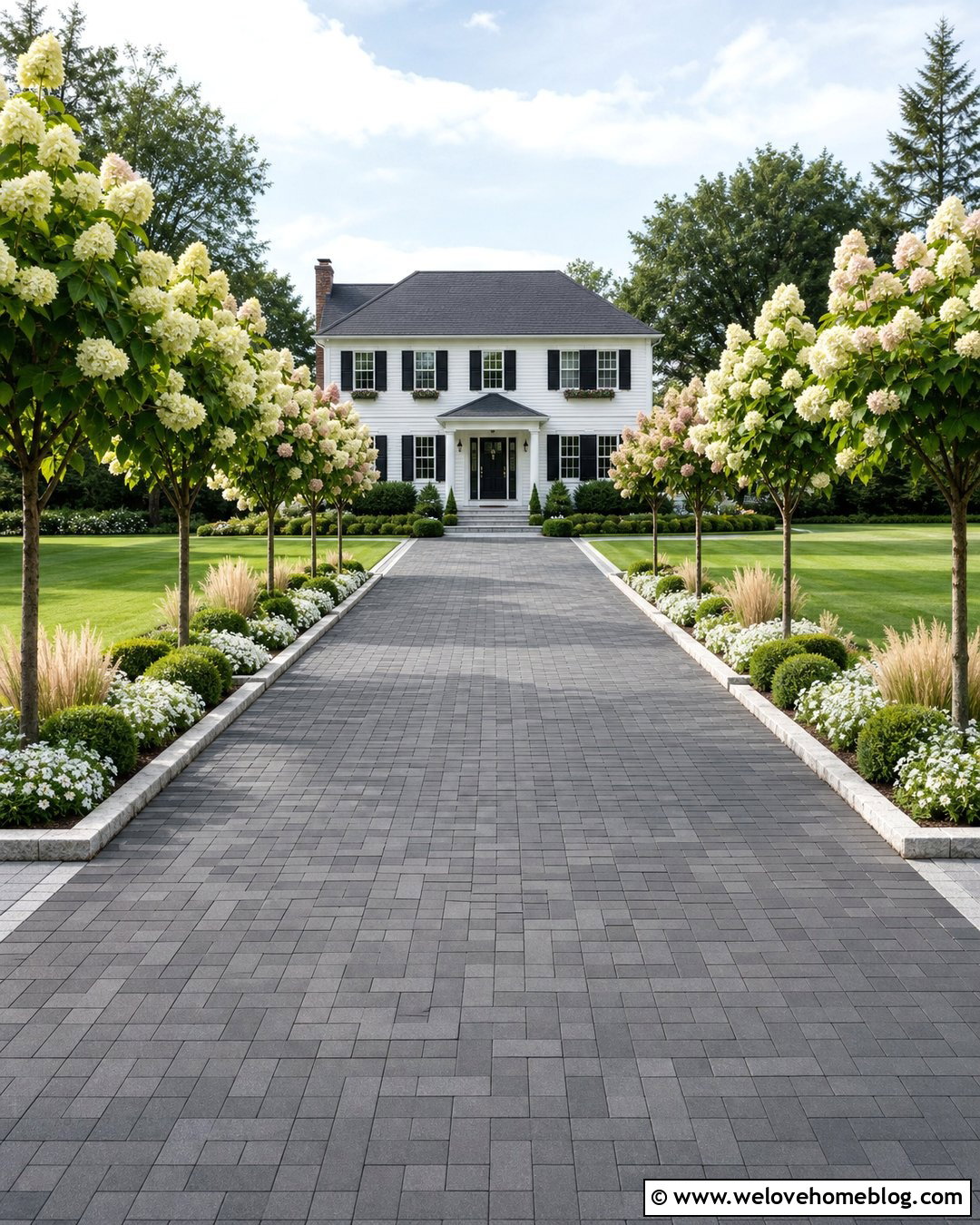
A tree-lined driveway creates a memorable sense of arrival, but the surface and planting plan must work together. Use compacted gray gravel for a long, gently curved driveway leading to a modern farmhouse or country home. Frame both sides with evenly spaced deciduous trees positioned far enough away for their mature roots and canopies. Beneath them, maintain simple lawn strips or broad beds of low ground cover to avoid a crowded look. Granite cobblestone edging will contain the gravel and establish a crisp boundary. At the street, use a widened gravel entrance with matching stone pillars and a visible address marker. Select tree species based on local climate, mature size, and maintenance needs. The finished approach should feel balanced, open, and easy to navigate.
15. Modern Paver Driveway With Landscape Lighting
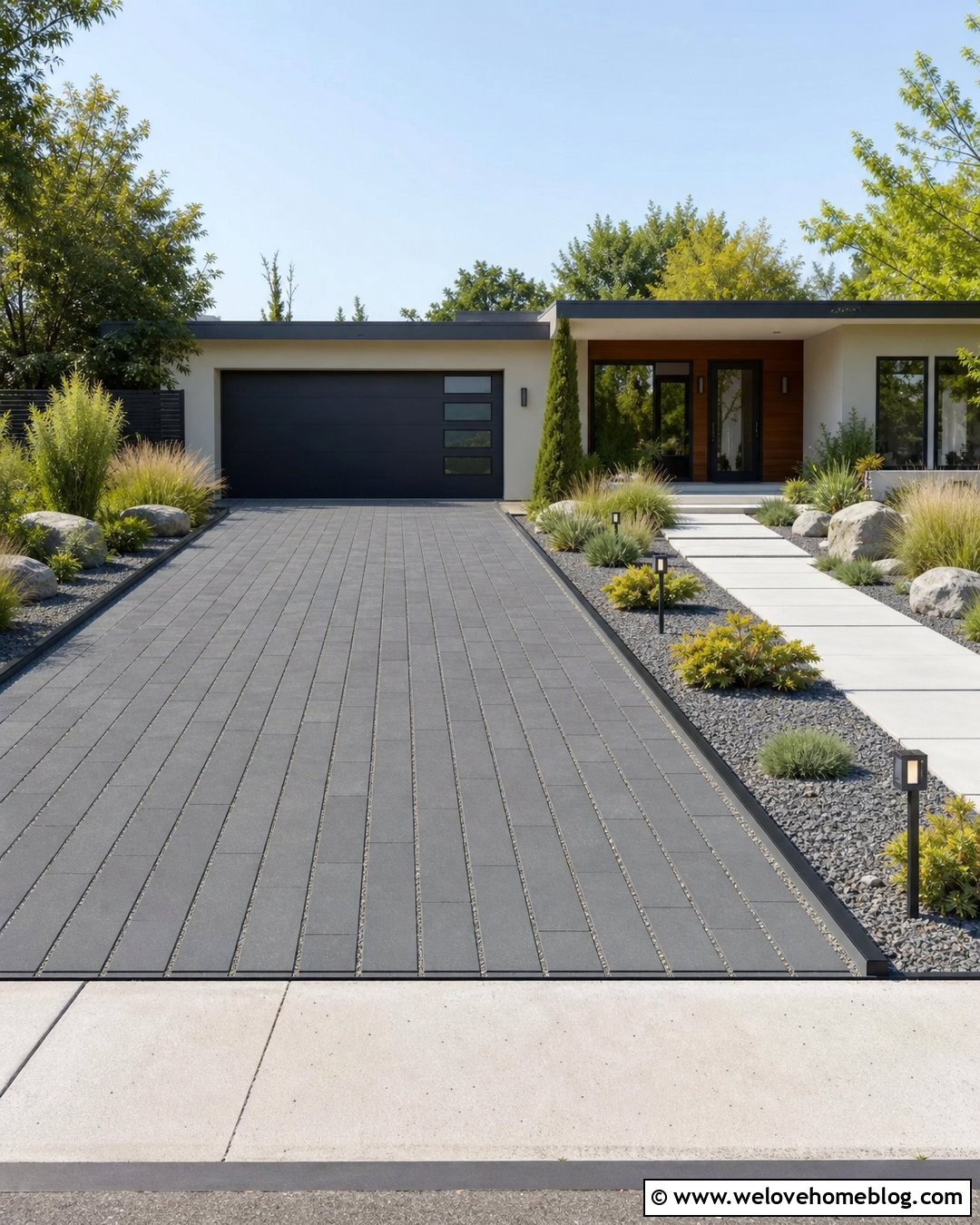
Long rectangular concrete pavers in mixed charcoal tones make a strong foundation for a modern driveway. Lay them in a linear pattern that visually pulls the eye toward a flat-roof or midcentury modern home. Use a straight layout with narrow gravel joints and black metal edging for a precise finish. Low-profile landscape lights can follow one side of the driveway, while a separate concrete walkway runs along the other. Surround the hardscape with drought-tolerant grasses, compact shrubs, boulders, and a few architectural plants suited to the region. Keep fixtures spaced consistently and positioned away from tires, lawn equipment, and snow removal routes. During the day, the planting softens the dark pavers. After sunset, the lighting defines the route and highlights the complete front-yard structure.
16. Farmhouse Gravel Driveway With Wood Gate
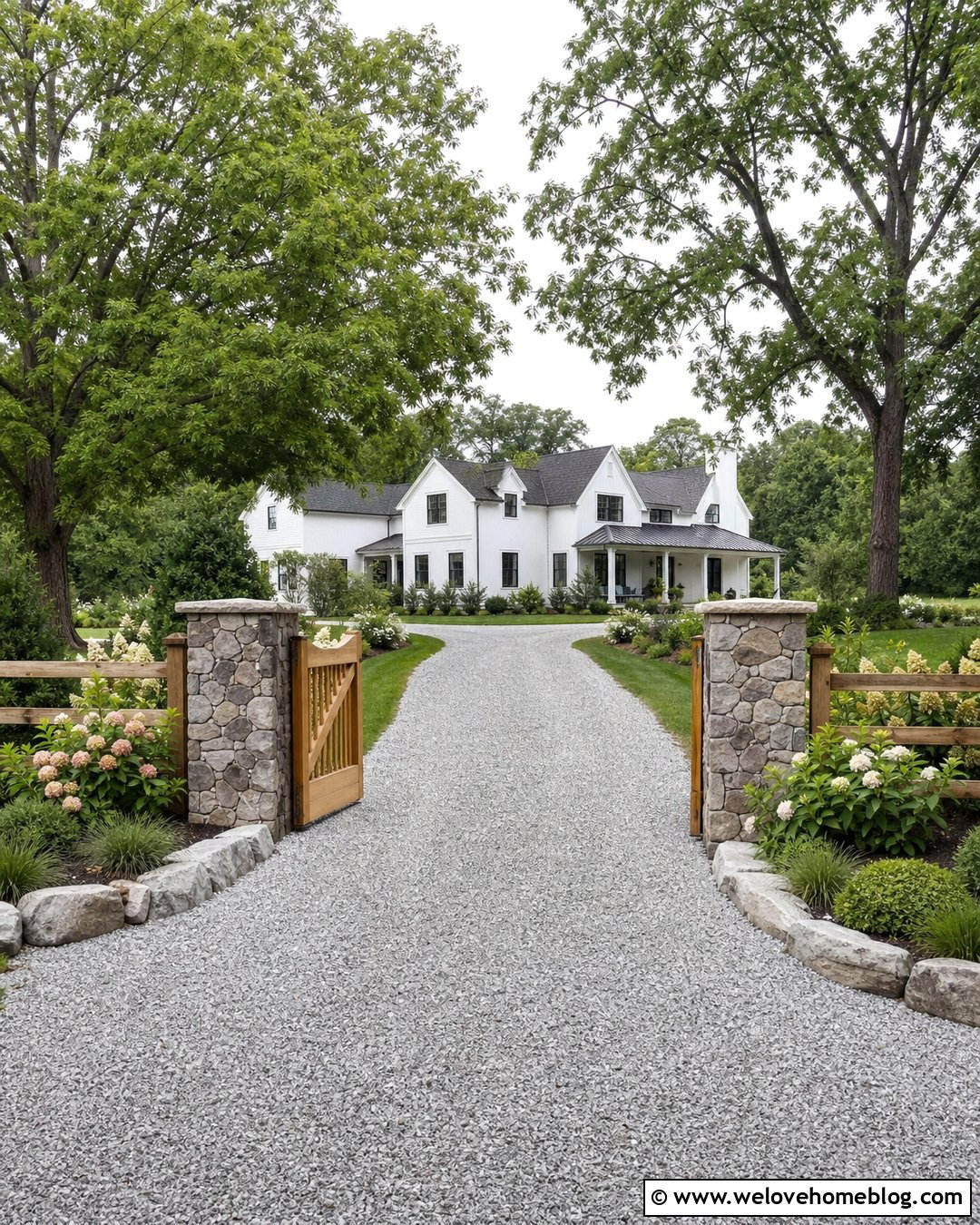
A farmhouse entrance feels more complete when the driveway, gate, fencing, and planting share the same relaxed character. Use pale gray crushed gravel for a wide, gently curved driveway leading to a white modern farmhouse. A simple natural wood gate can sit between stone or white-painted timber posts at the entrance. Continue post-and-rail fencing along short sections of the property line without enclosing the entire front yard. Large fieldstones make durable driveway edges and reinforce the rural setting. Plant hydrangeas, native grasses, flowering shrubs, and shade trees in loose groups rather than formal rows. Leave generous clearance around the gate so it can open fully without striking plants or vehicles. The result should look welcoming and practical rather than overly decorative or staged.
17. Concrete Driveway With Raised Garden Beds
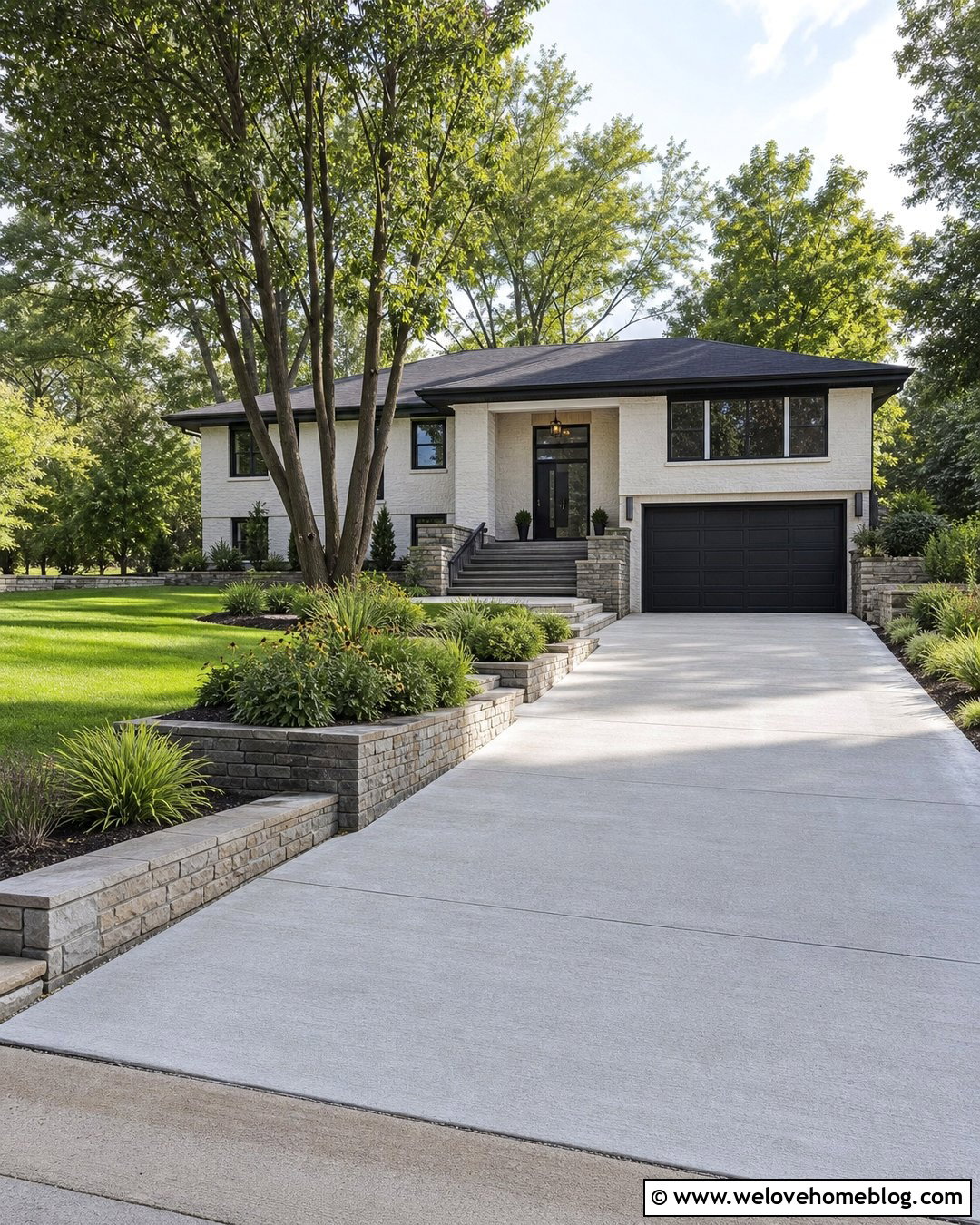
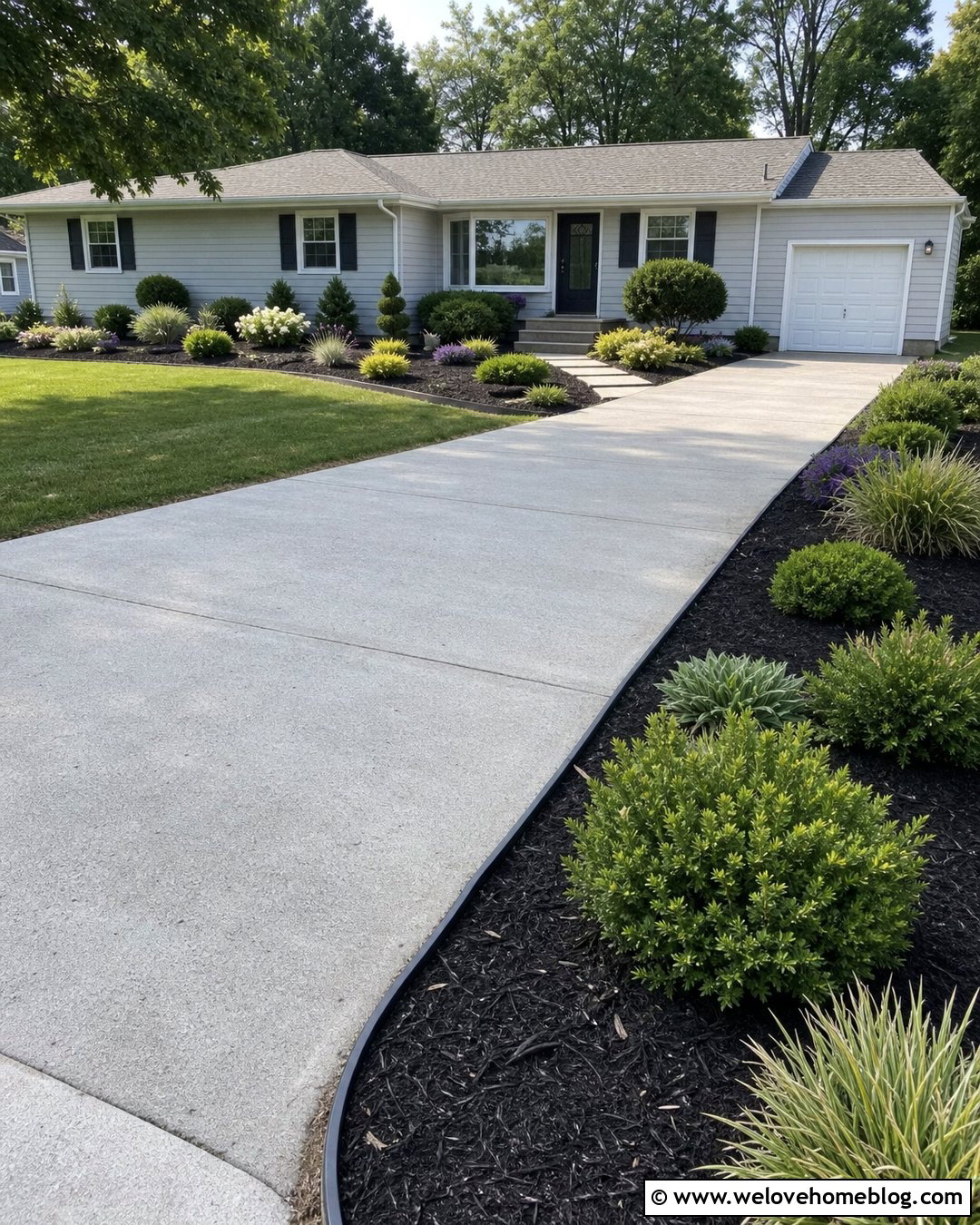
Raised garden beds can transform a basic concrete driveway into a structured part of the front landscape. Use medium-gray broom-finished concrete in a straight layout, then build low beds from matching concrete block, brick, or natural stone along selected sections. Avoid lining every edge, since drivers and passengers still need comfortable space to enter and exit vehicles. Fill the beds with evergreen shrubs, long-blooming perennials, and ornamental grasses arranged in simple layers. A small multi-stem tree near the house can provide height without covering the facade. Integrate a wide walkway into one bed so visitors have a clear route to the front door. This complete design works well for split-level, ranch, and suburban homes with sloped yards or poorly defined planting areas.
18. Coastal Shell Driveway With Blue Stone Border
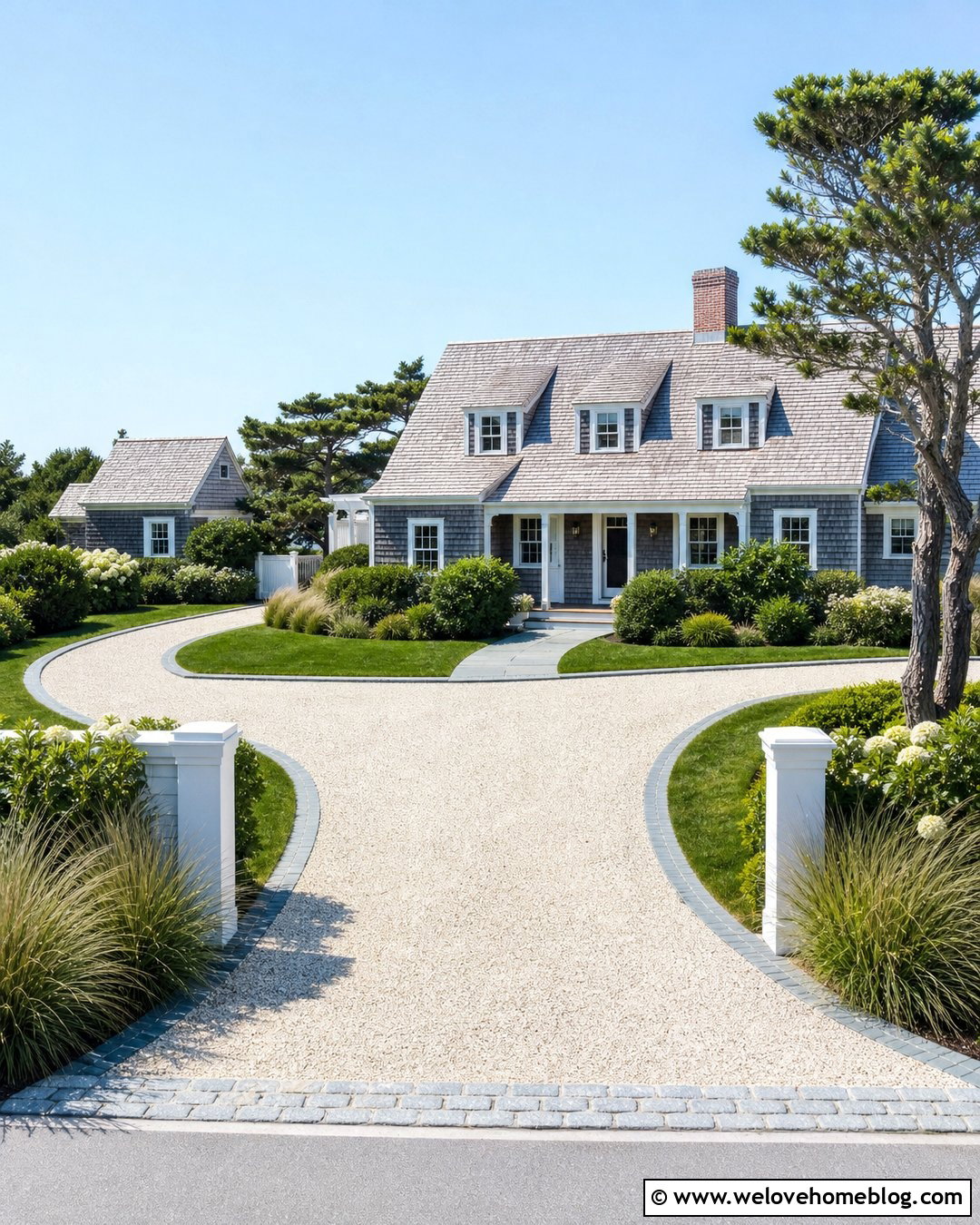
A crushed shell driveway can bring light color and coastal texture to a beach cottage or weathered-shingle home. Design it as a broad straight approach or a relaxed horseshoe layout, depending on the available yard. Contain the pale shell surface with dark bluestone setts or charcoal concrete pavers for clear contrast. Surround the driveway with salt-tolerant grasses, compact hydrangeas, low evergreen shrubs, and wind-shaped ornamental trees appropriate for the location. A bluestone walkway can connect the parking area with the porch and repeat the border material. Use simple white entrance posts and a small address plaque near the street. Shell materials and local installation requirements vary, so the design should reflect regional availability, drainage conditions, and neighborhood character.
19. Asphalt Driveway With Cobblestone Apron
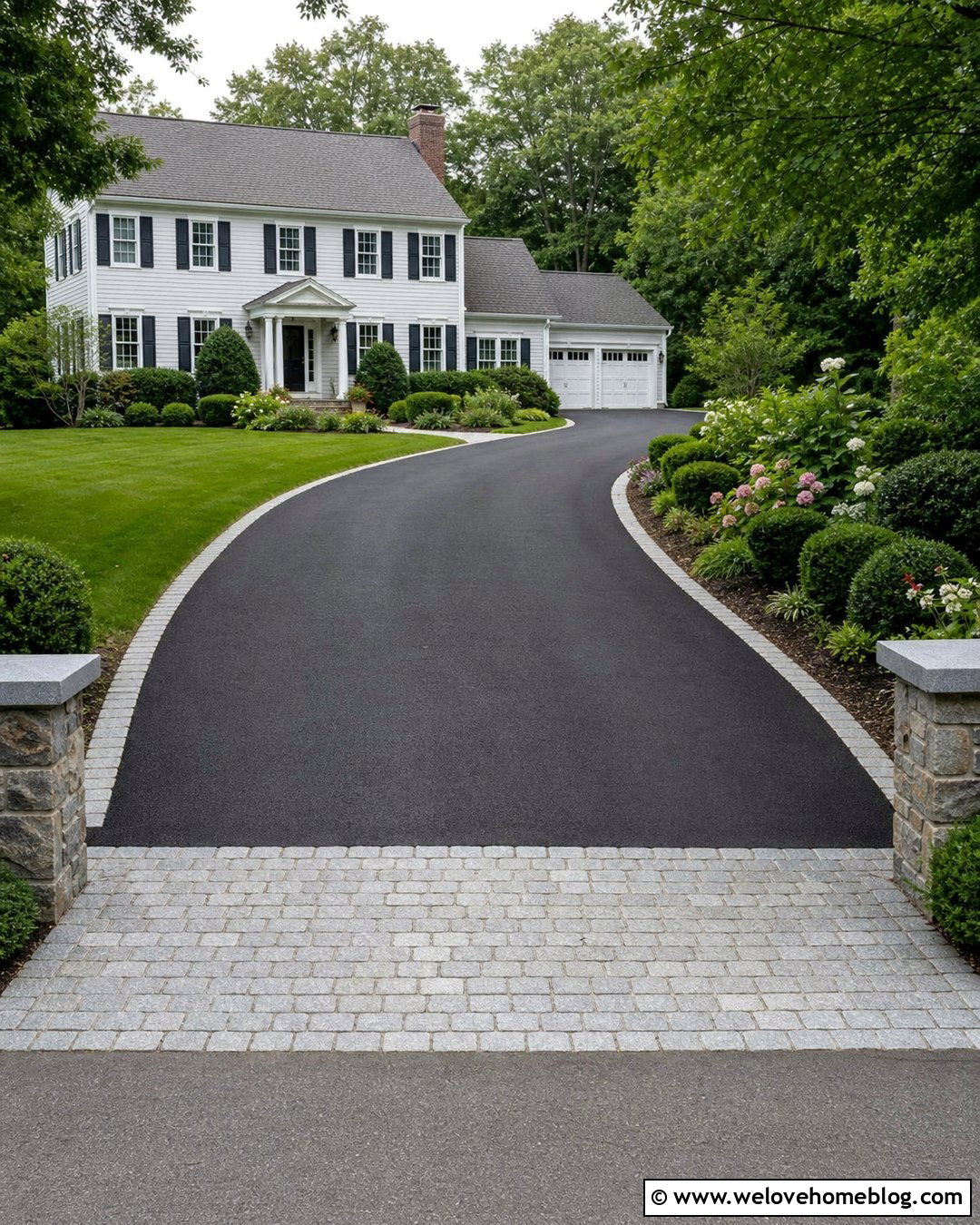
An asphalt driveway can achieve a high-end appearance without replacing its entire surface. Start with smooth black asphalt in a straight or gently curving layout, then add a wide granite cobblestone apron where the driveway meets the street. Repeat the cobblestone in narrow borders along the sides and at the garage transition. These details give the large dark surface a deliberate frame. Use deep green lawn, mulched beds, and rounded evergreen shrubs to soften the contrast. A few flowering perennials near the walkway can add seasonal color without creating extra obstacles. This combination works with Colonial, craftsman, ranch, and traditional suburban homes. It is especially effective when the existing driveway is functional but needs stronger definition and a more finished relationship with the front yard.
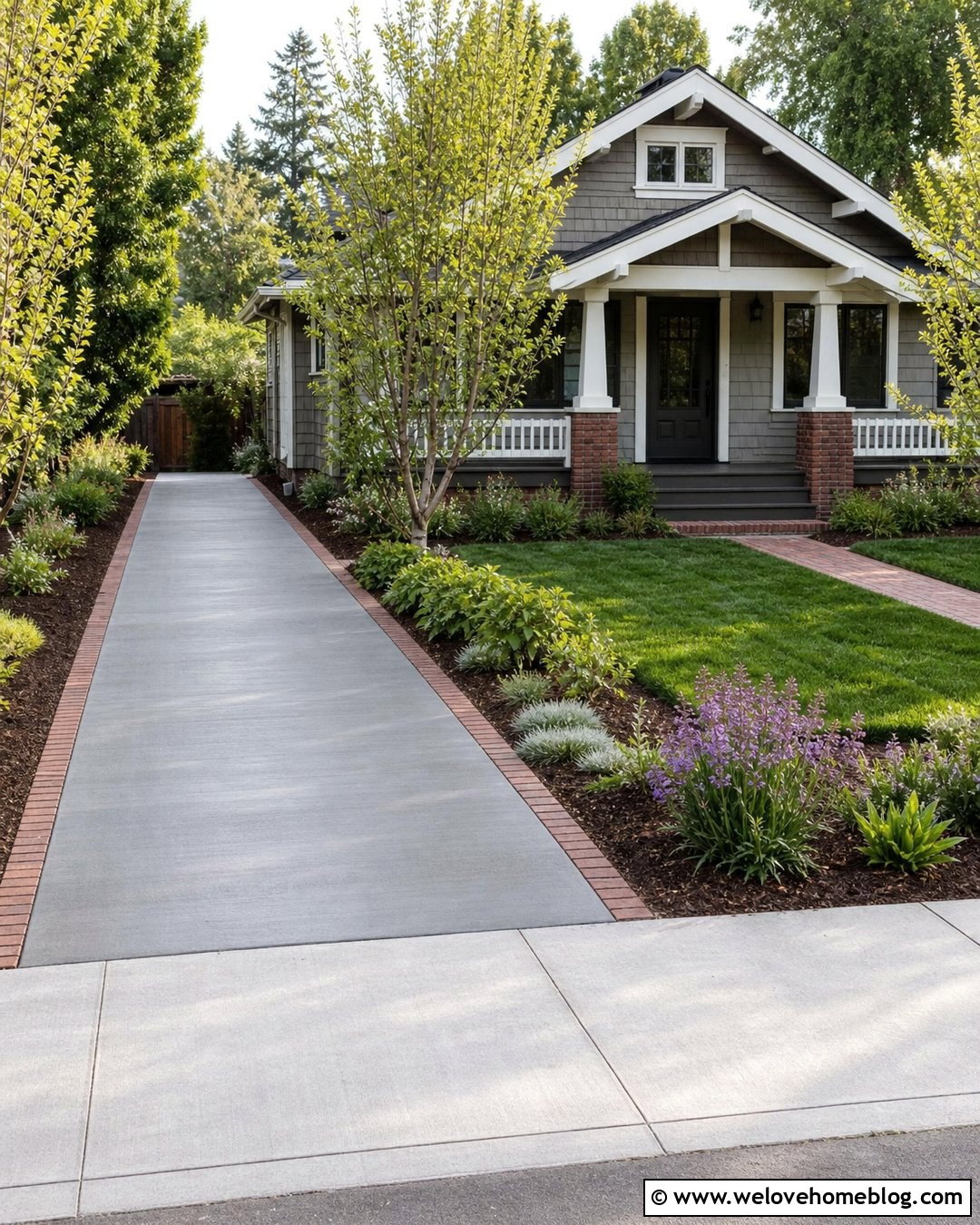
20. Split Driveway With Central Landscape Bed
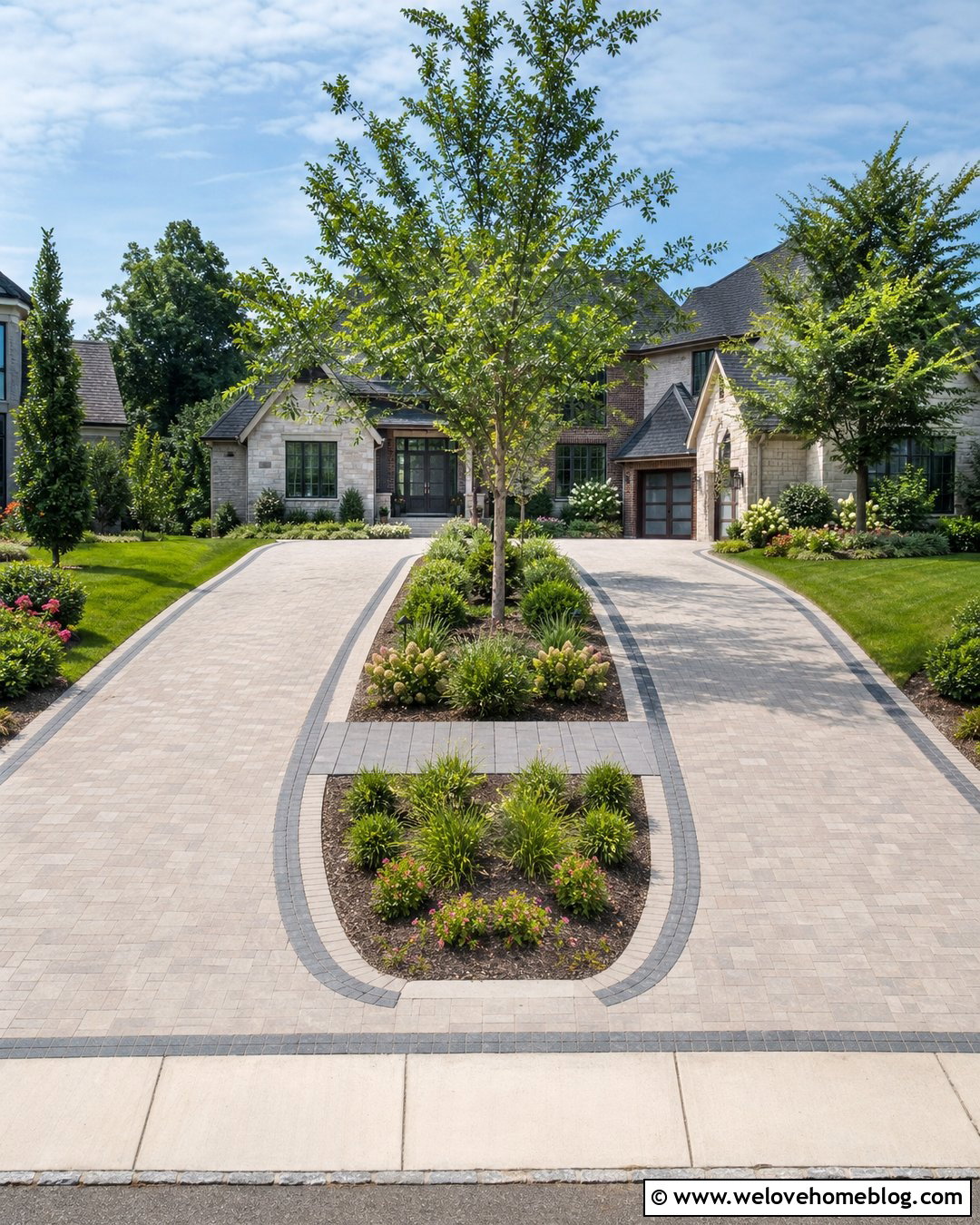
A split driveway creates separate parking and arrival zones while giving the front yard a strong landscape focal point. Use warm gray concrete pavers for two gently curved lanes that divide around a long central planting bed before reaching the garage. Edge the lanes with charcoal pavers to emphasize the shape and protect the perimeter. In the island, combine one small ornamental tree with layered shrubs, grasses, and seasonal flowers. Keep the plants low near intersections so sightlines remain open. A stone walkway can cross from the driveway to the main entrance without forcing visitors through the planting bed. This layout suits wide suburban lots and larger contemporary or transitional homes. Careful measurements are essential so both lanes remain comfortable for everyday vehicle movement.
Conclusion:
The most successful driveway feels like a natural extension of the house rather than a separate parking pad. Material, shape, edging, landscaping, lighting, and pedestrian access should support one another. These 20 Driveway Goals Ideas offer options ranging from affordable asphalt and gravel upgrades to statement-making brick, cobblestone, and permeable paver installations. Before choosing a look, consider your climate, property slope, drainage, vehicle needs, maintenance preferences, and home architecture. You can also improve an existing driveway gradually by adding a border, entrance apron, planting bed, or clearer walkway. With thoughtful planning and durable materials, even a simple layout can become an attractive, practical approach that strengthens the curb appeal of the entire property.

Related posts:
Leave a Reply