
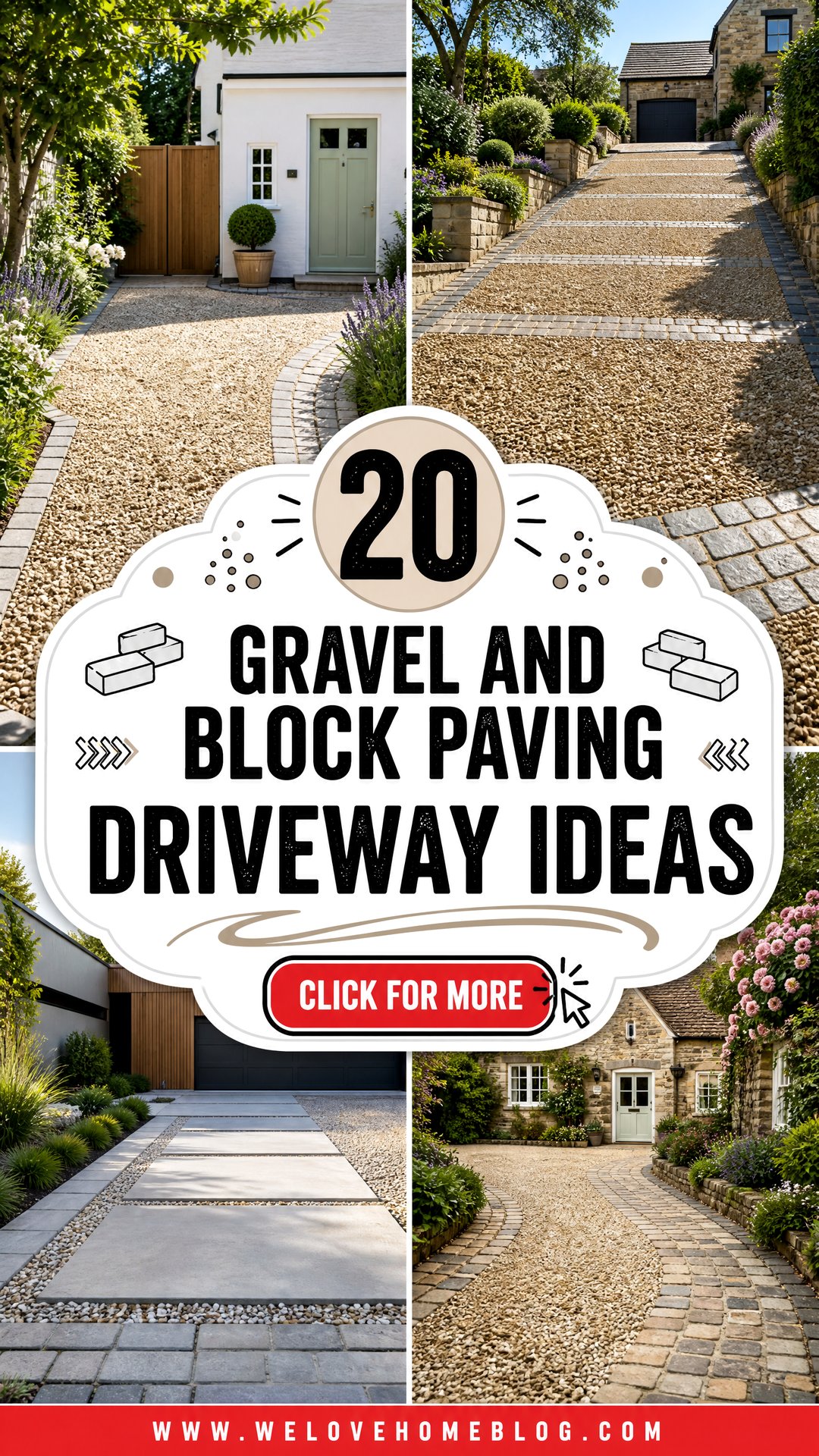
Gravel brings texture, drainage, and relaxed character to an entrance, while block paving adds structure where vehicles turn, stop, and cross the sidewalk. Combining these materials creates a driveway that feels polished without losing the natural appeal of loose stone. It also opens up practical ways to define parking bays, strengthen edges, highlight curves, and connect the driveway to the front walkway. Angular driveway gravel is especially useful because it settles more securely than smooth, rounded stone, while a well-planned paver border helps contain the surface. () The following **20 Gravel And Block Paving Driveway Ideas** cover small and large entrances, traditional and modern homes, and several realistic budgets. Explore these **20 Gravel And Block Paving Driveway Ideas** to find a complete layout that suits your property.
1. Gray Gravel Driveway With Charcoal Block Paving Border
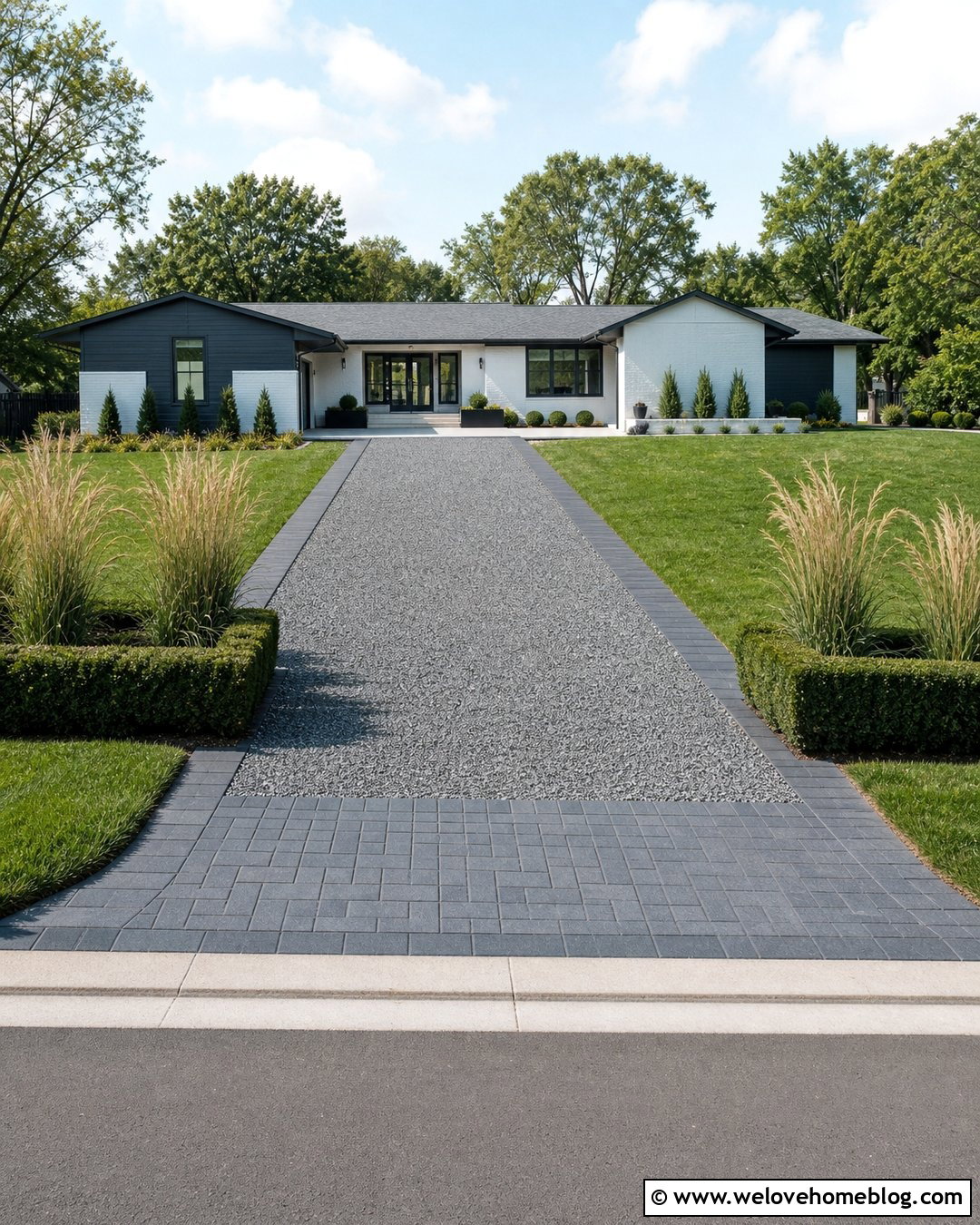
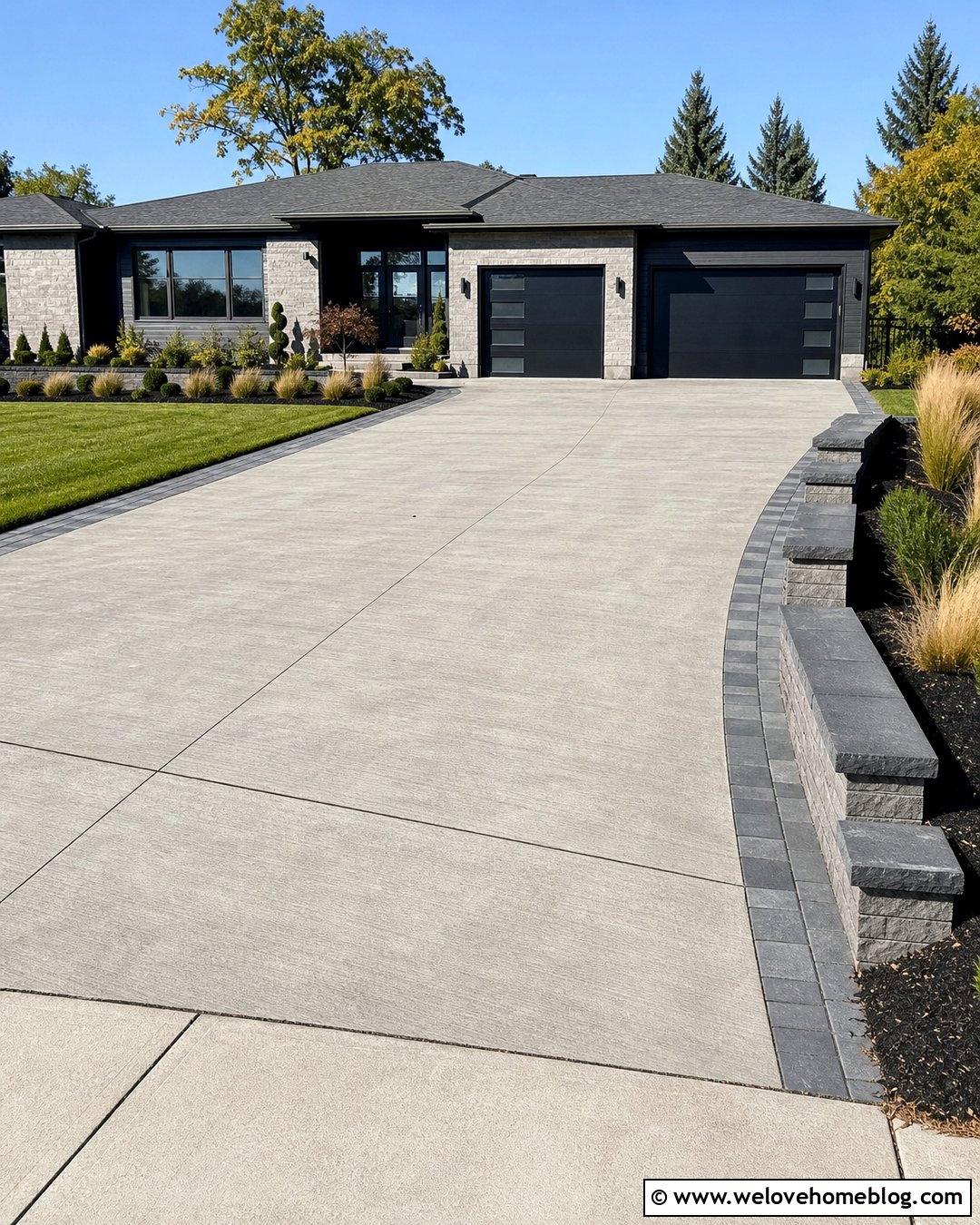
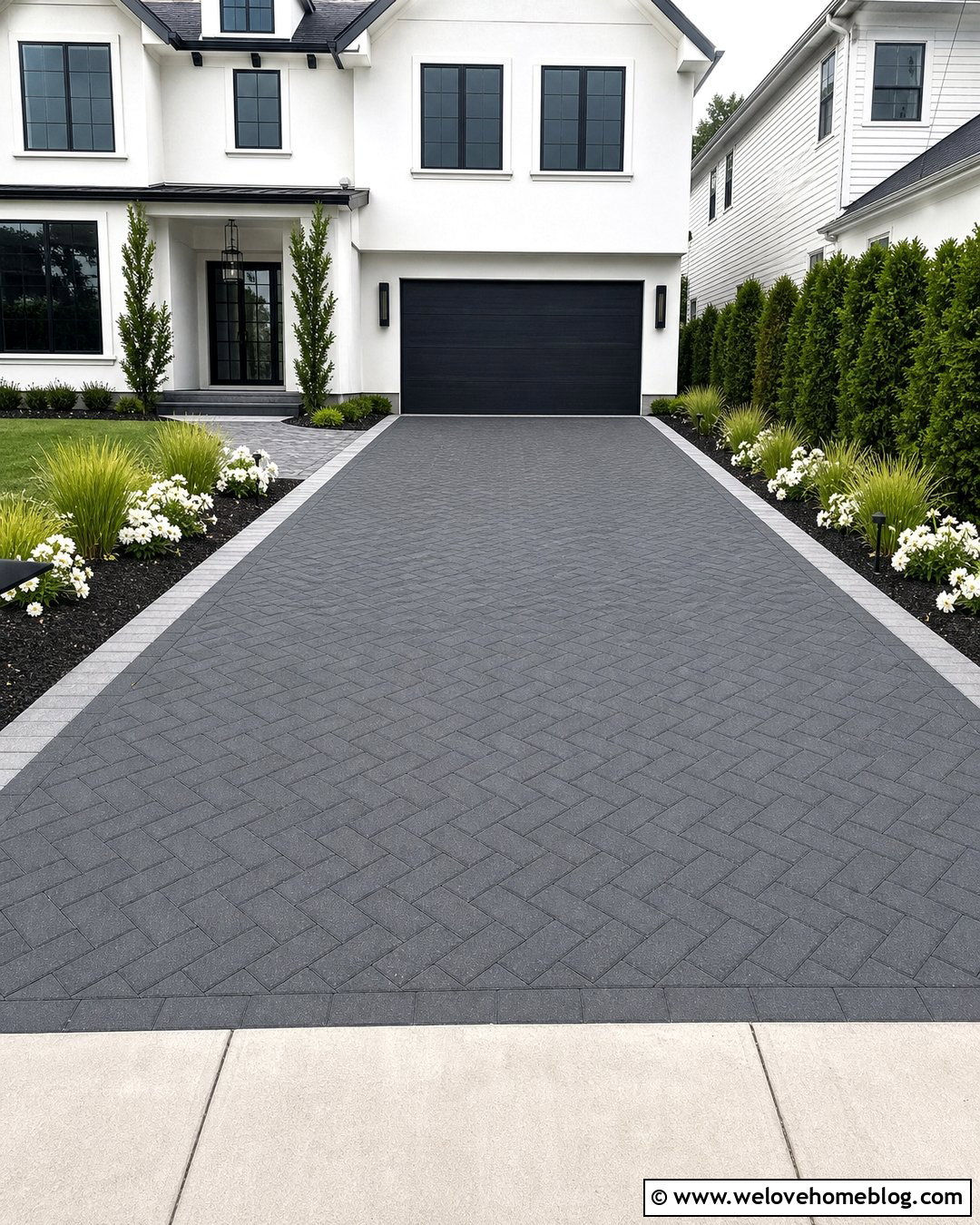
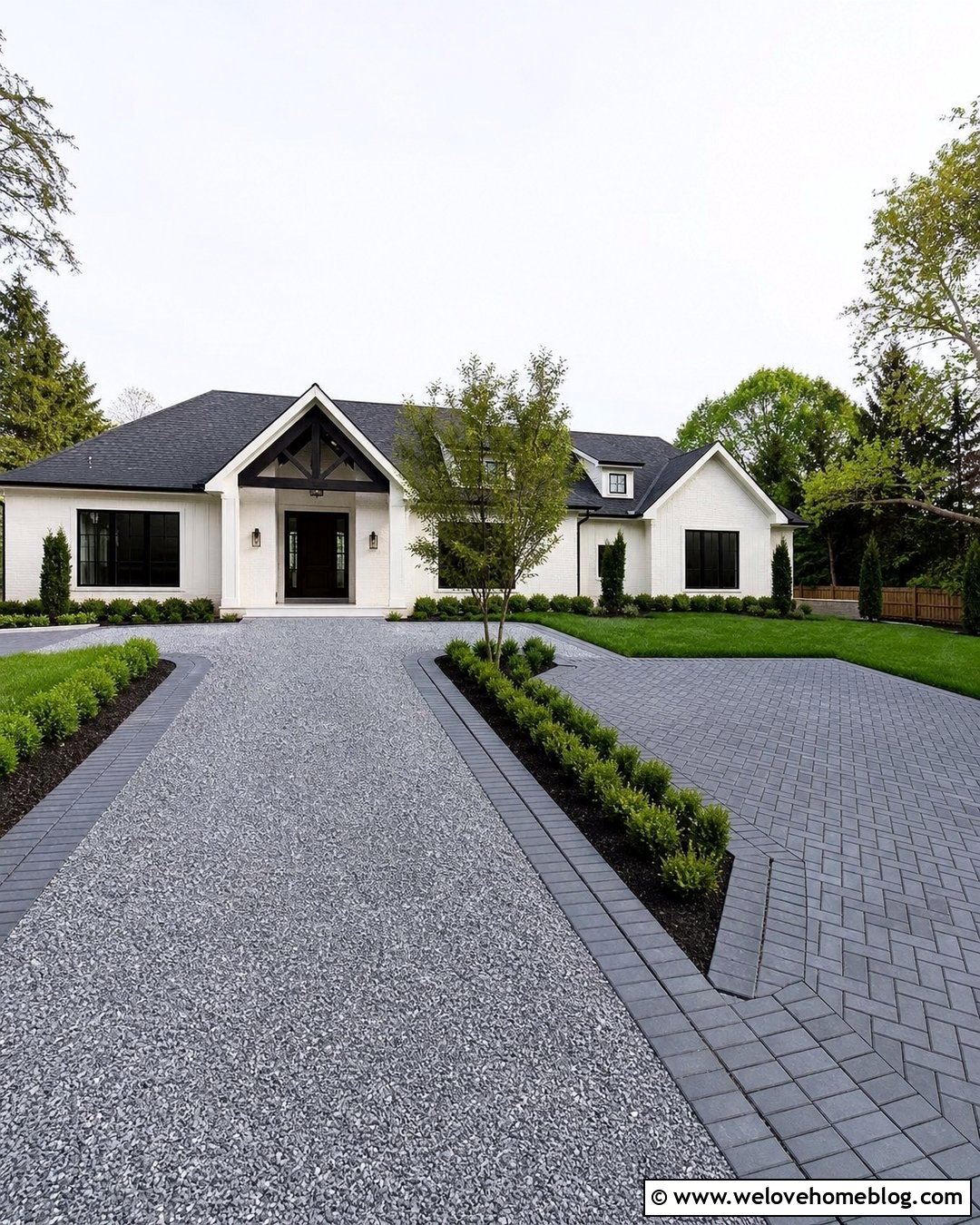
Cool gray gravel and charcoal block paving create a clean driveway that suits modern, transitional, and renovated ranch homes. Use angular crushed gravel across the main parking surface, then frame it with two or three rows of dark rectangular pavers. The strong border keeps loose stones away from the lawn and clearly defines the driveway shape. A straight layout feels neat, but slightly flared paving at the street makes the entrance easier to see and navigate. Add low ornamental grasses, clipped boxwood, and a simple concrete walkway beside the drive. Choose gravel and blocks with similar cool undertones so the combination looks intentional. This restrained palette also allows colorful planting beds or a bold front door to become the main curb-appeal feature.
2. Golden Gravel Driveway With Red Block Paving
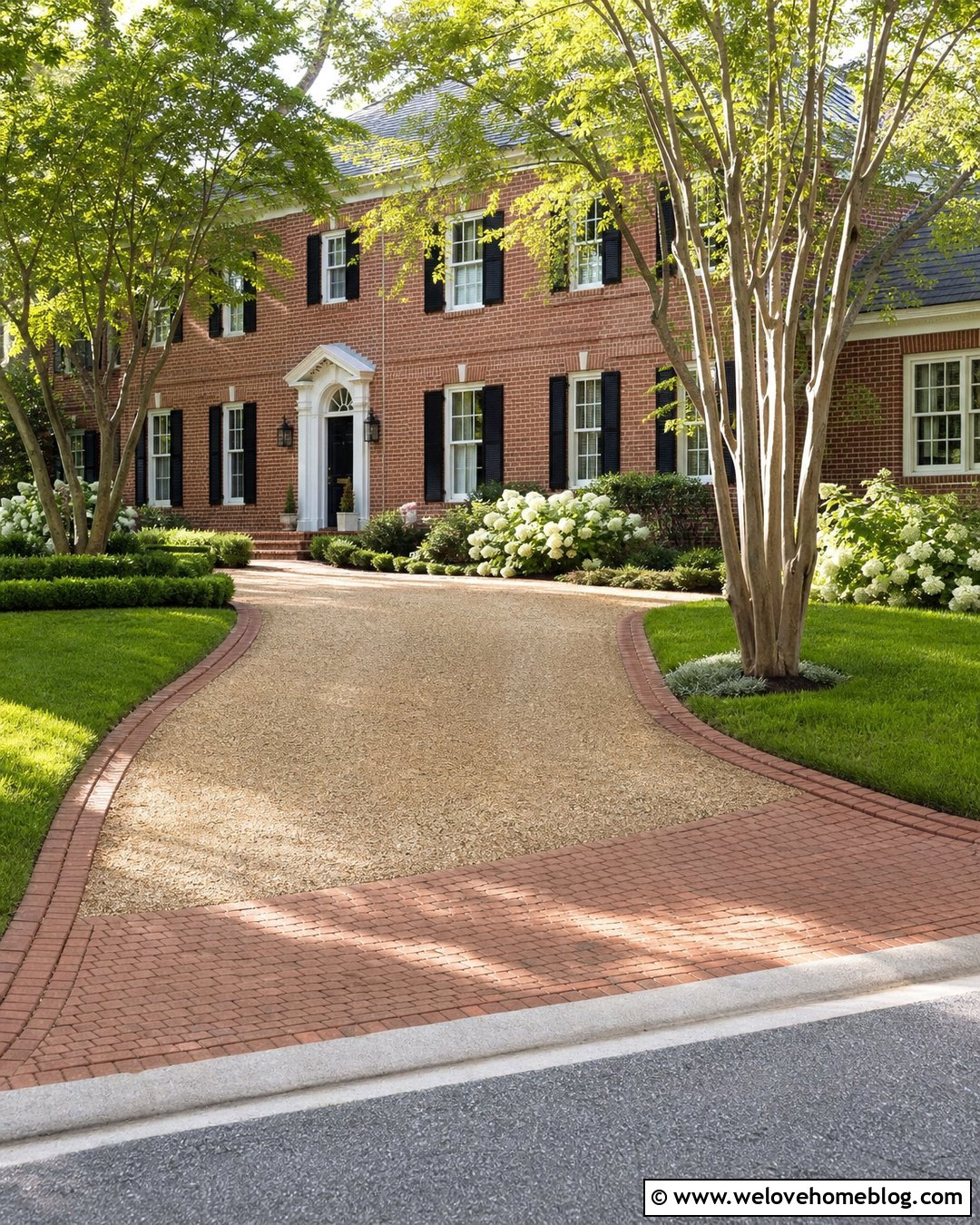
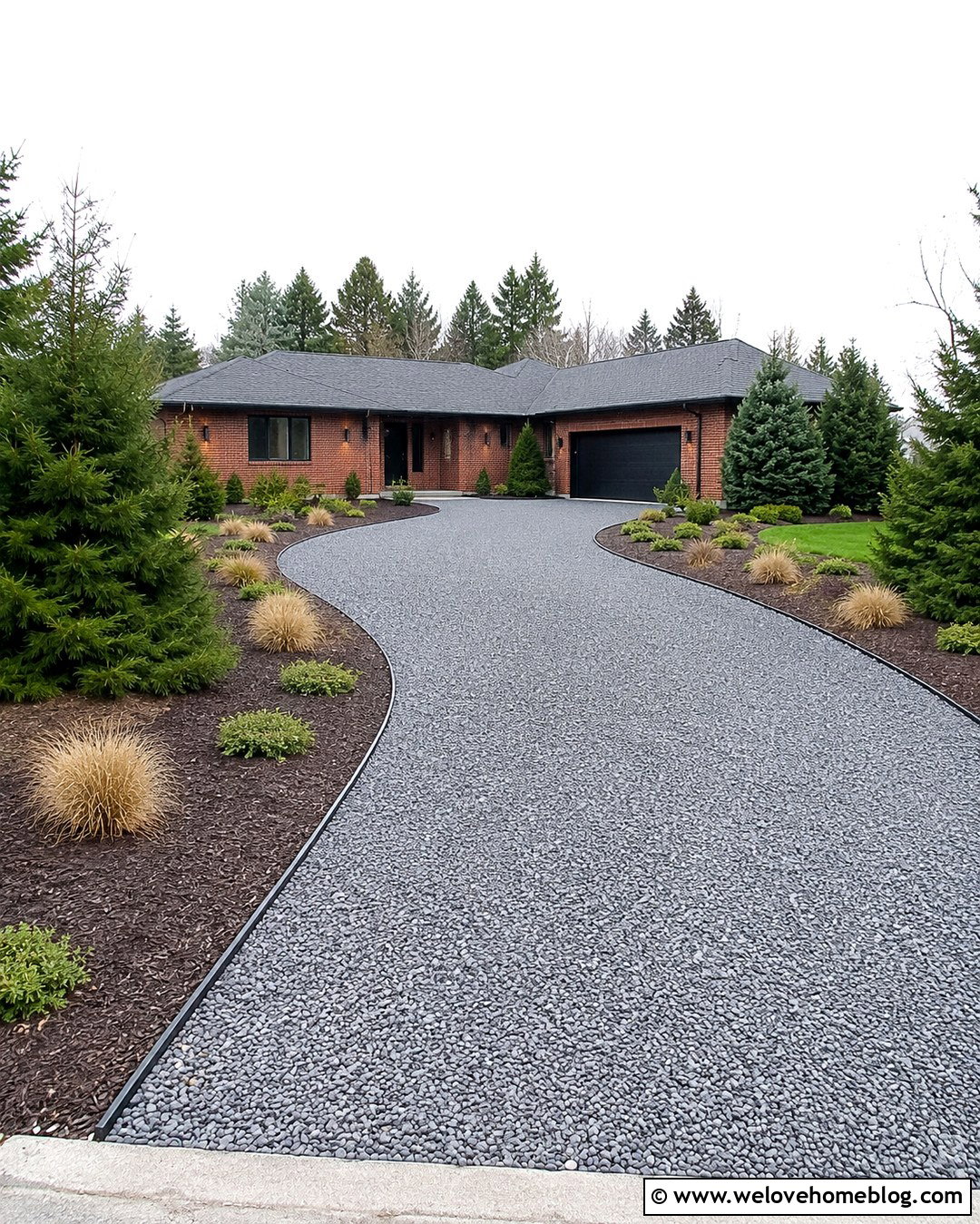
Warm golden gravel looks welcoming beside a brick house, especially when it is contained by red or burnt-orange block paving. A gently curved layout can soften a wide front yard and create a more graceful approach to the garage. Lay the red blocks in a double soldier-course border, with their long sides following the driveway edge. At the entrance, widen the paving into a shallow apron that prevents gravel from scattering onto the sidewalk. Cream flowers, evergreen shrubs, and small multi-stem trees will complement the warm surface without making the yard feel overly colorful. If the home has red brick walls, select slightly darker pavers instead of trying to match the facade exactly. The subtle contrast gives the entire gravel and block paving driveway more depth.
3. White Gravel Driveway With Black Block Paving
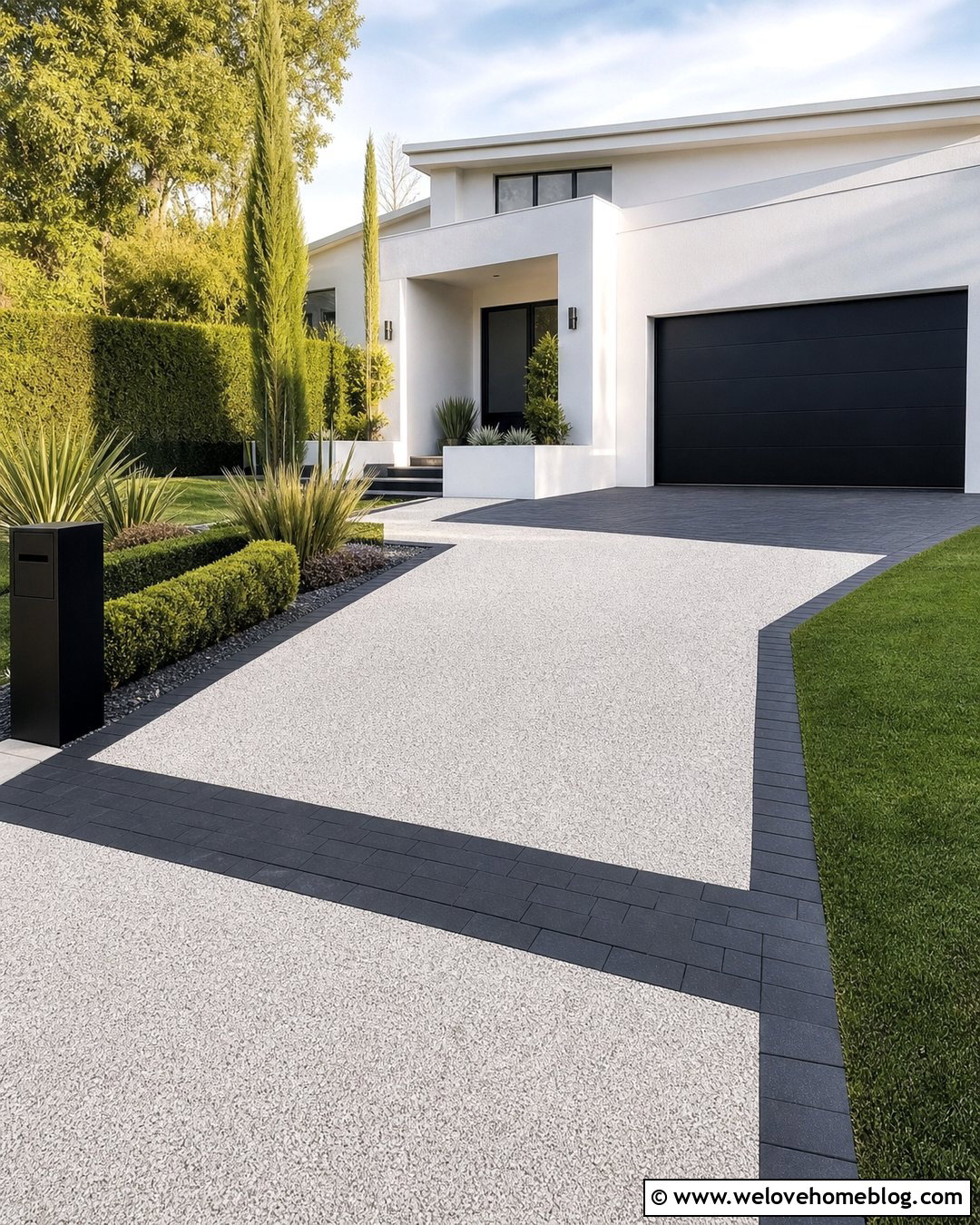
Crisp white gravel paired with black block paving produces a striking entrance for a contemporary home. The contrast works best on a straight or geometric driveway with clearly defined corners. Use black concrete pavers as a broad border and repeat them in a paved parking pad beside the garage. This gives frequently used areas a stable surface while leaving the larger driveway visually light. Avoid brilliant white stone if your yard has heavy leaf fall, since debris will be more noticeable. Pale gray or off-white angular gravel offers a softer, more forgiving alternative. Frame the driveway with architectural grasses, dark green hedges, and rectangular planting beds. Black metal house numbers or a matching mailbox can connect the driveway border to the rest of the exterior.
4. Pea Gravel Driveway With Brick Paver Apron
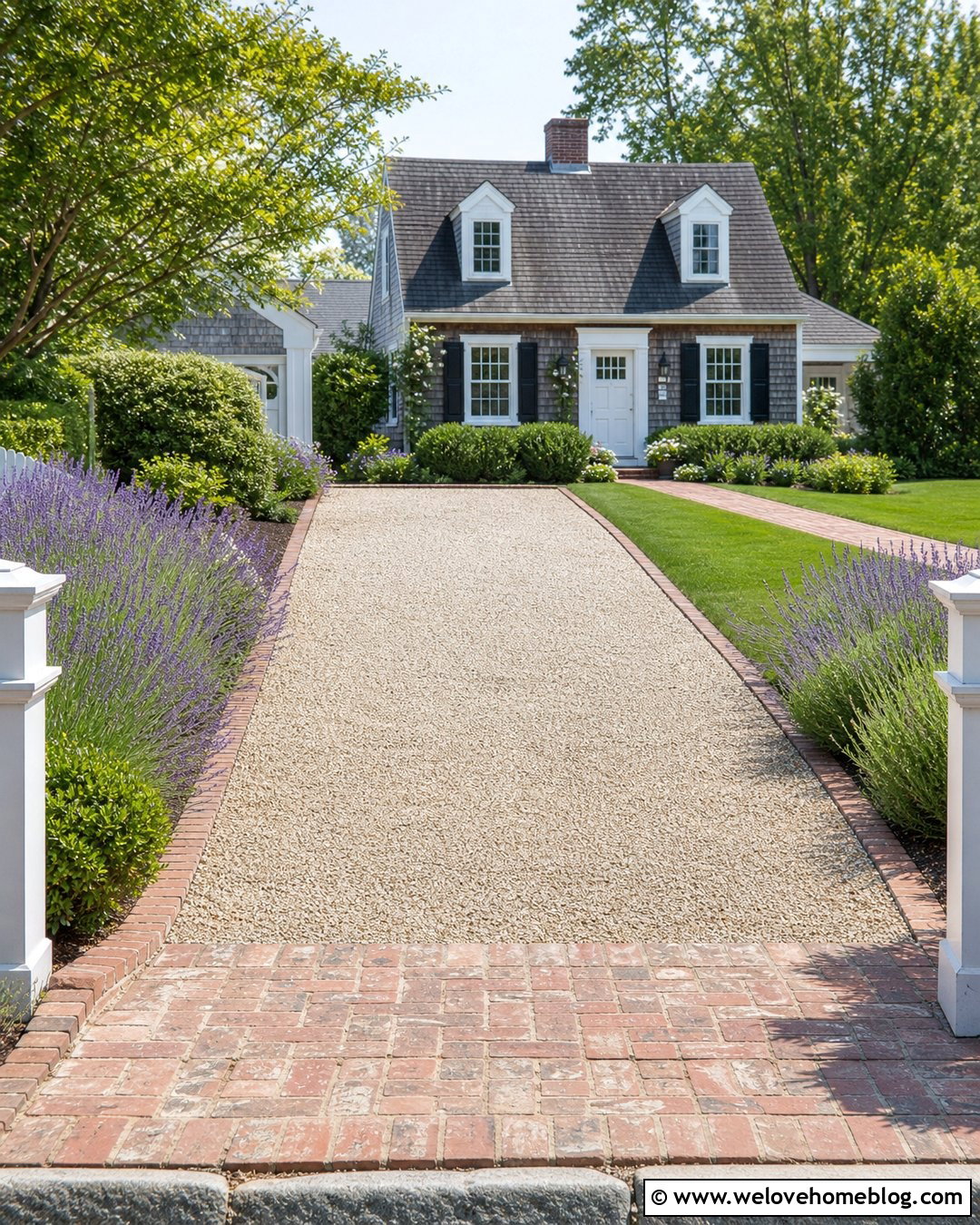
A brick paver apron gives a pea gravel driveway a finished transition at the street. It also creates a visible threshold that makes a simple entrance feel more established. Use weathered red or brown brick pavers across the full driveway width, then continue a single row along both sides as edging. Because rounded pea gravel can shift under tires, place it within a suitable stabilization grid and reserve the paved apron for the area receiving frequent turning movement. A short, straight layout is ideal for a cottage, Cape Cod, or compact colonial home. Plant lavender, catmint, and low evergreen shrubs along the sides. Their softer shapes balance the orderly brickwork, while a matching brick walkway creates a clear route from the parking area to the front door.
5. Crushed Stone Driveway With Herringbone Block Paving
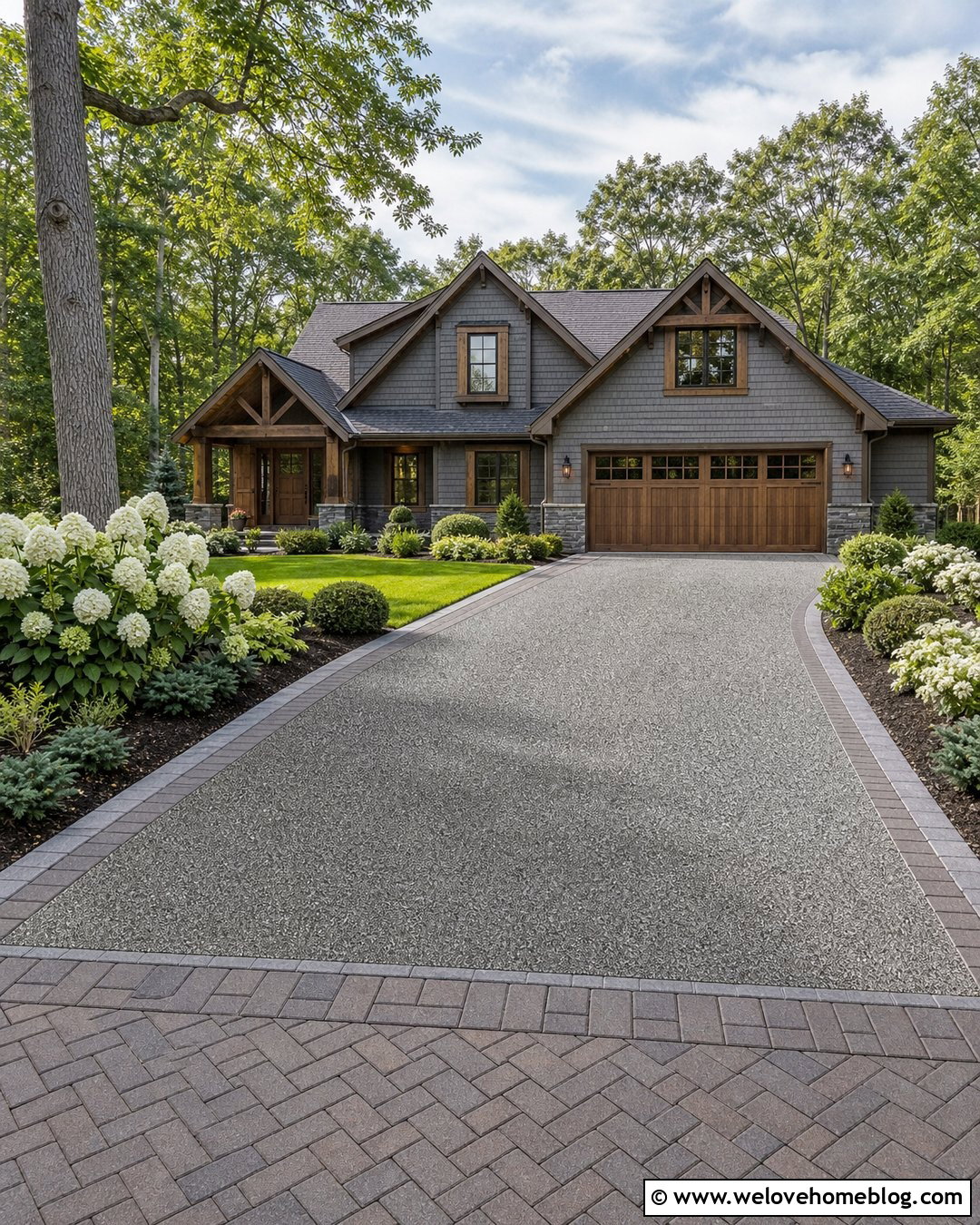
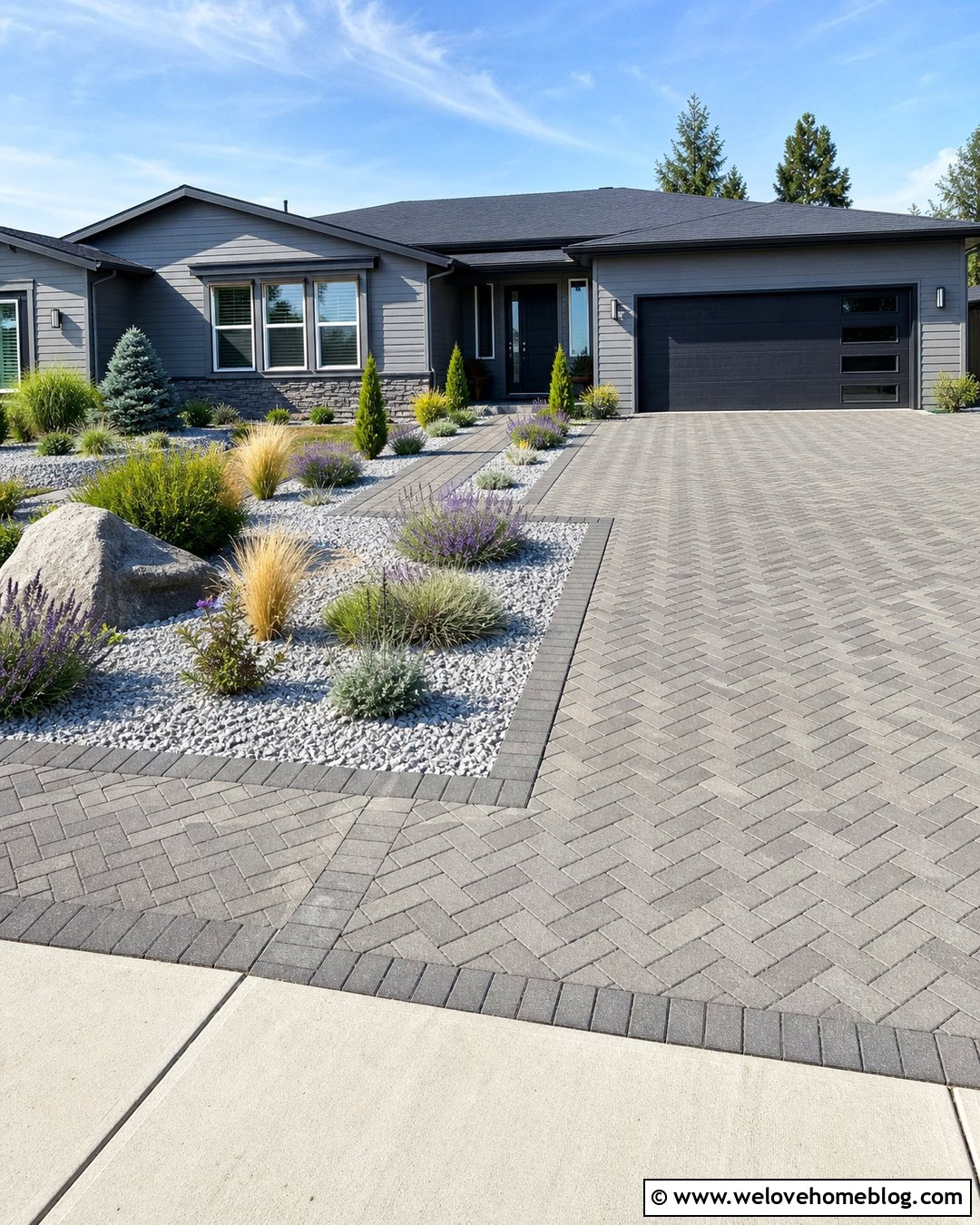
Herringbone block paving can turn an ordinary crushed stone driveway into a more decorative and durable entrance. Use the pattern for a full-width apron near the garage, where tires repeatedly turn and vehicles remain parked. Continue the crushed granite or limestone through the center section to control the overall project cost. A narrow herringbone ribbon along each edge visually connects the apron to the street. This design looks particularly appropriate with a craftsman home or traditional two-story house. Select pavers that pick up colors from the roof, masonry, or porch columns. Layered planting beds with hydrangeas, dwarf evergreens, and ground cover can soften the paved sections. Keep the driveway geometry simple so the energetic herringbone pattern does not make the front yard feel too busy.
6. Curved Gravel Driveway With Block Paving Edges
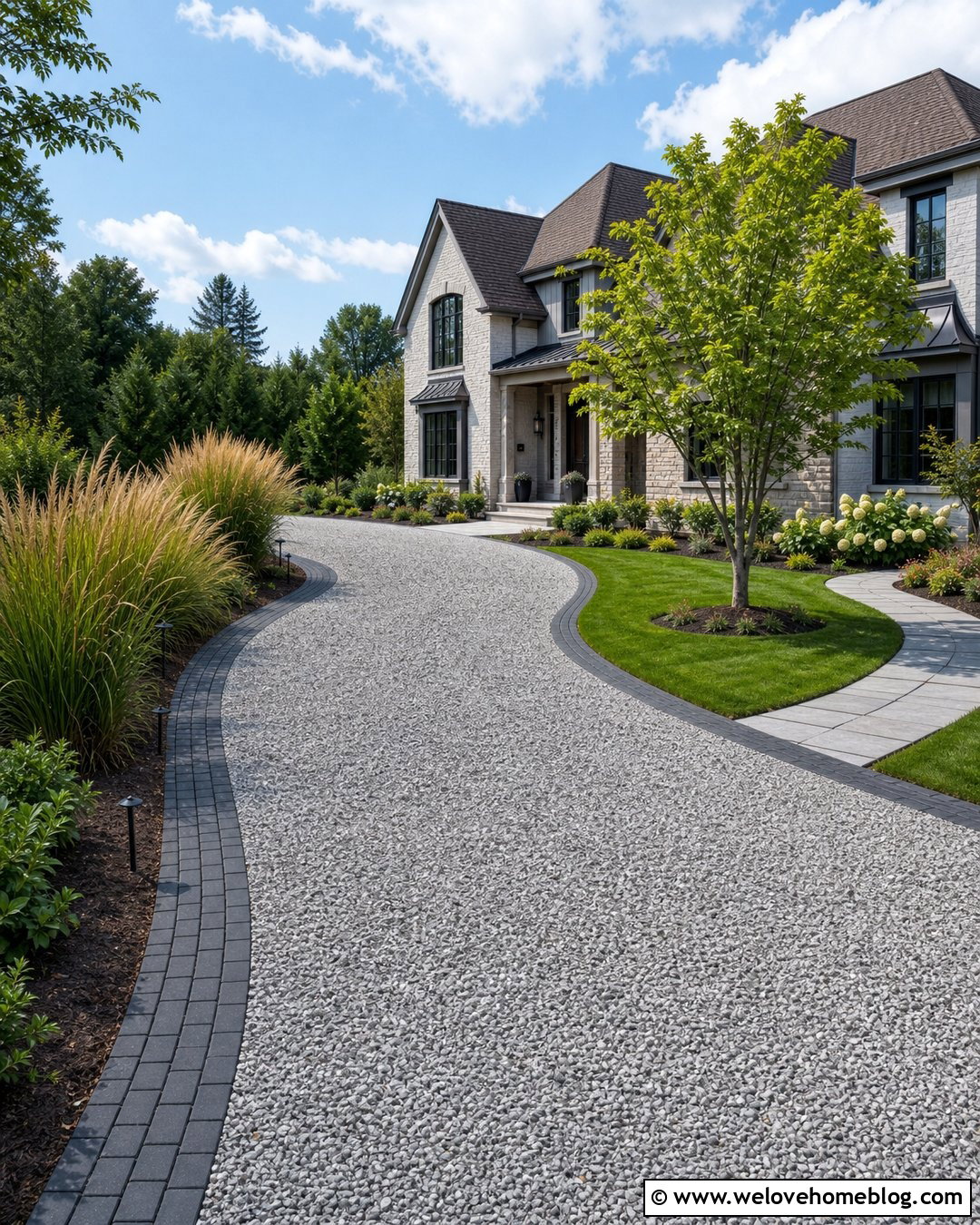
A sweeping driveway becomes easier to read when block paving traces its curves from the street to the house. Choose medium-toned gravel for the main surface and use contrasting blocks along both edges. Two or three rows of pavers will create a stronger visual line than a narrow single course. The border should follow smooth, gradual arcs rather than several small bends, which can make the driveway appear cramped. On the outside curve, plant low shrubs and ornamental grasses that will not block views of approaching vehicles. A wider bed on the inside curve can hold a specimen tree, flowering perennials, or a simple lawn panel. This complete layout works beautifully on a deep suburban lot, where the curved gravel route creates a slower and more attractive approach.
7. Circular Gravel Driveway With Block Paving Center
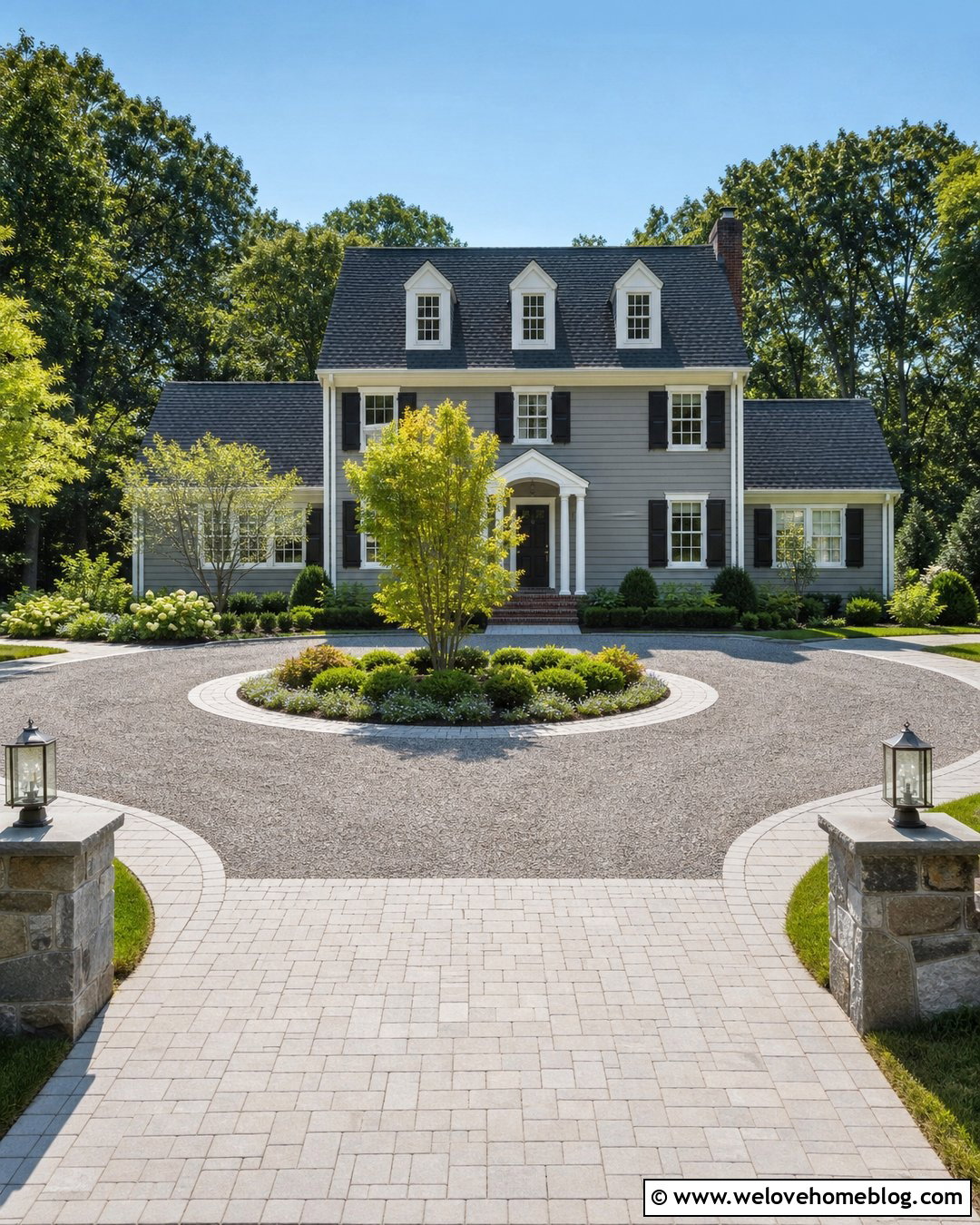
For a large front yard, a circular gravel driveway can provide a practical turning route and an impressive focal point. Define the outer and inner edges with coordinating block paving, then use the same blocks around a central island. The island could contain a small ornamental tree, layered shrubs, and low ground cover rather than a tall feature that hides the house. Choose compacting angular gravel in a color that complements the facade. Gray stone feels refined beside painted siding, while golden gravel suits brick and natural stone. A block-paved entrance apron can reinforce the busiest section and reduce loose material near the road. Keep the circle generously proportioned, and allow clear pedestrian access from the driveway to the front steps through a connected paved walkway.
8. Gravel Driveway With Block Paving Tire Tracks
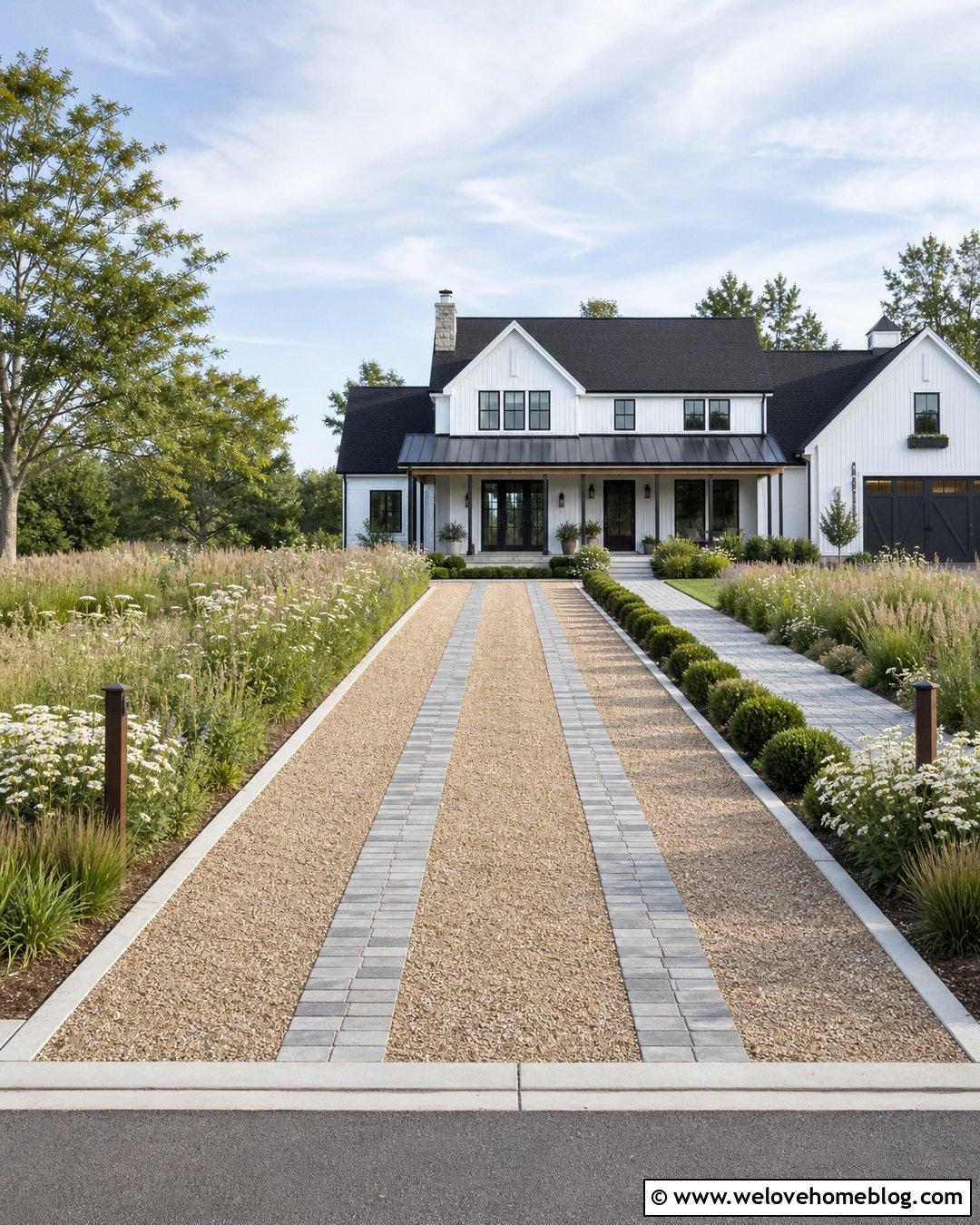
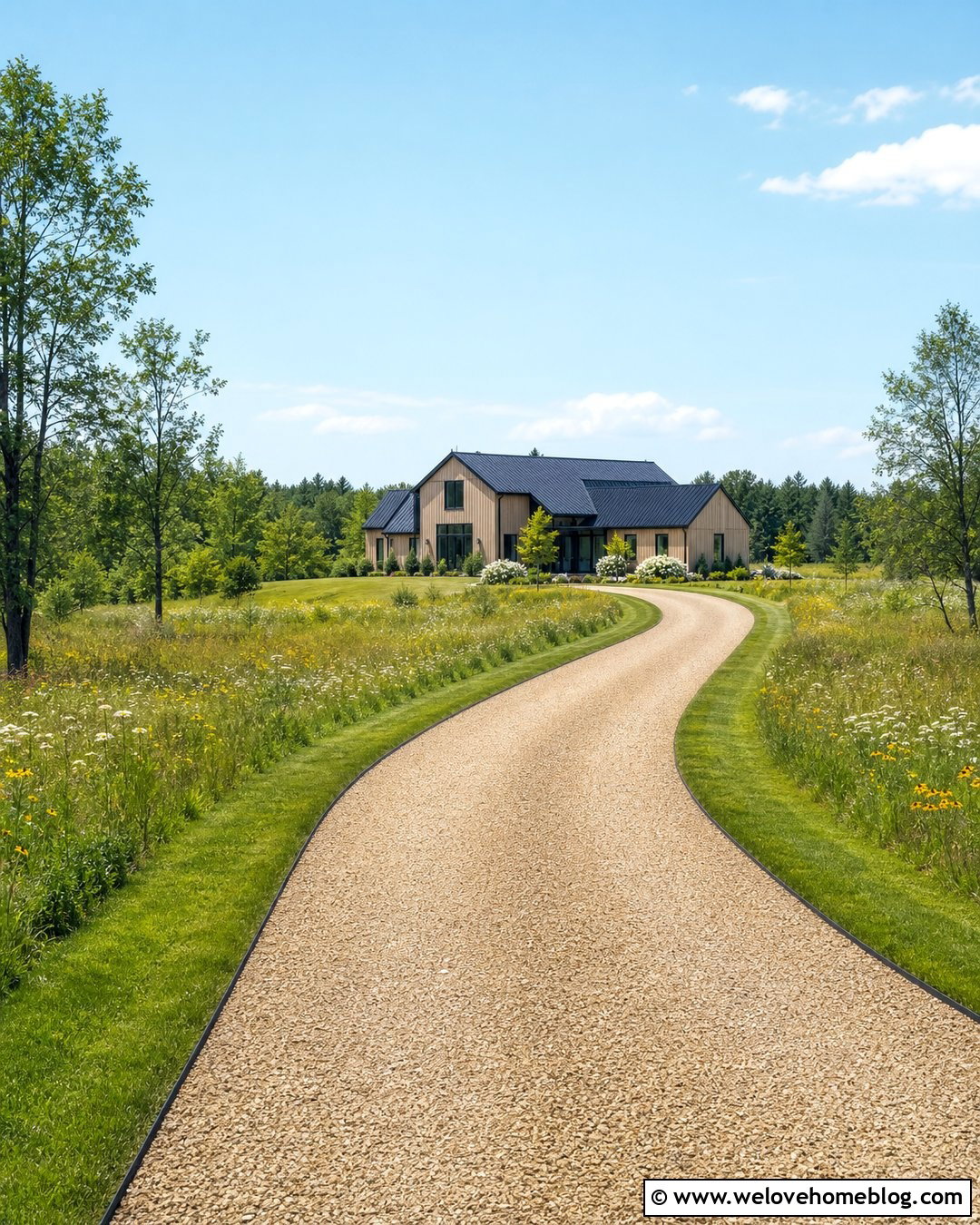
Block-paved tire tracks offer a distinctive way to combine a firm driving surface with the softer look of gravel. Install two parallel bands of concrete pavers along the route used by vehicle wheels, leaving gravel between and around them. Careful measurement is essential because the tracks must accommodate the vehicles regularly using the driveway. A straight layout is simplest, although gentle curves can work when professionally planned. Choose muted gray pavers and matching gravel for a subtle effect, or dark blocks and light stone for stronger contrast. This treatment is particularly attractive outside a modern farmhouse or converted barn. Border the driveway with meadow-inspired grasses, white flowering perennials, and clipped shrubs near the house. The result feels rural but still organized and convenient.
9. Gravel Driveway With Block Paving Parking Bays
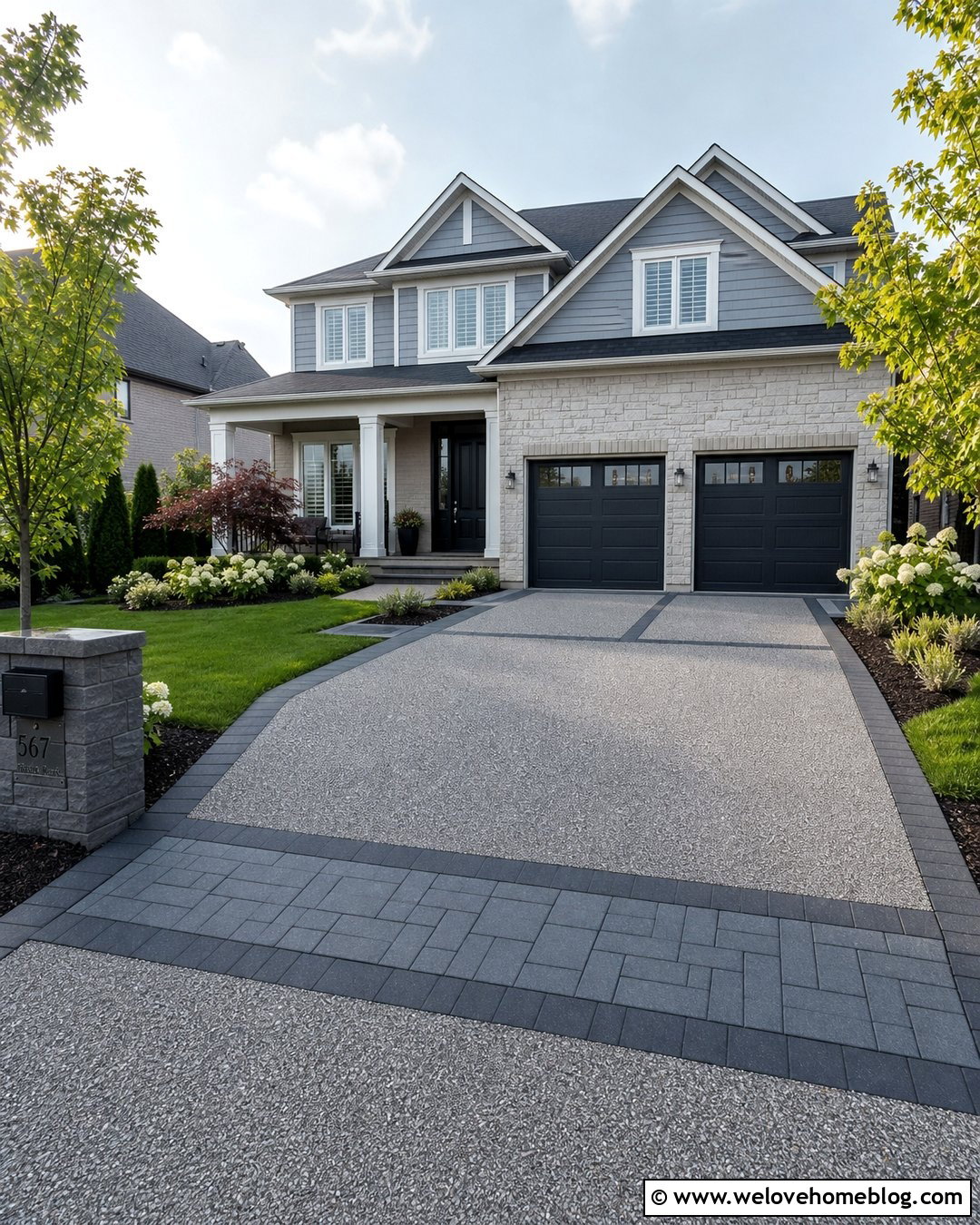
Clearly marked parking bays make a broad gravel driveway feel organized rather than unfinished. Outline each bay with narrow bands of block paving, using a darker color than the surrounding gravel. The paved lines can form simple rectangles or L-shaped corner markers, depending on how much visual structure you want. Add a larger paved pad near the front door for easier passenger access and a clean connection to the walkway. This design works well for a two-car suburban home or a property with frequent guests. Keep planting beds along the outer edges rather than between bays, where plants may be damaged by opening doors. Repeating the same paving around a mailbox, address sign, or entrance pillar will help every part of the front yard look coordinated.
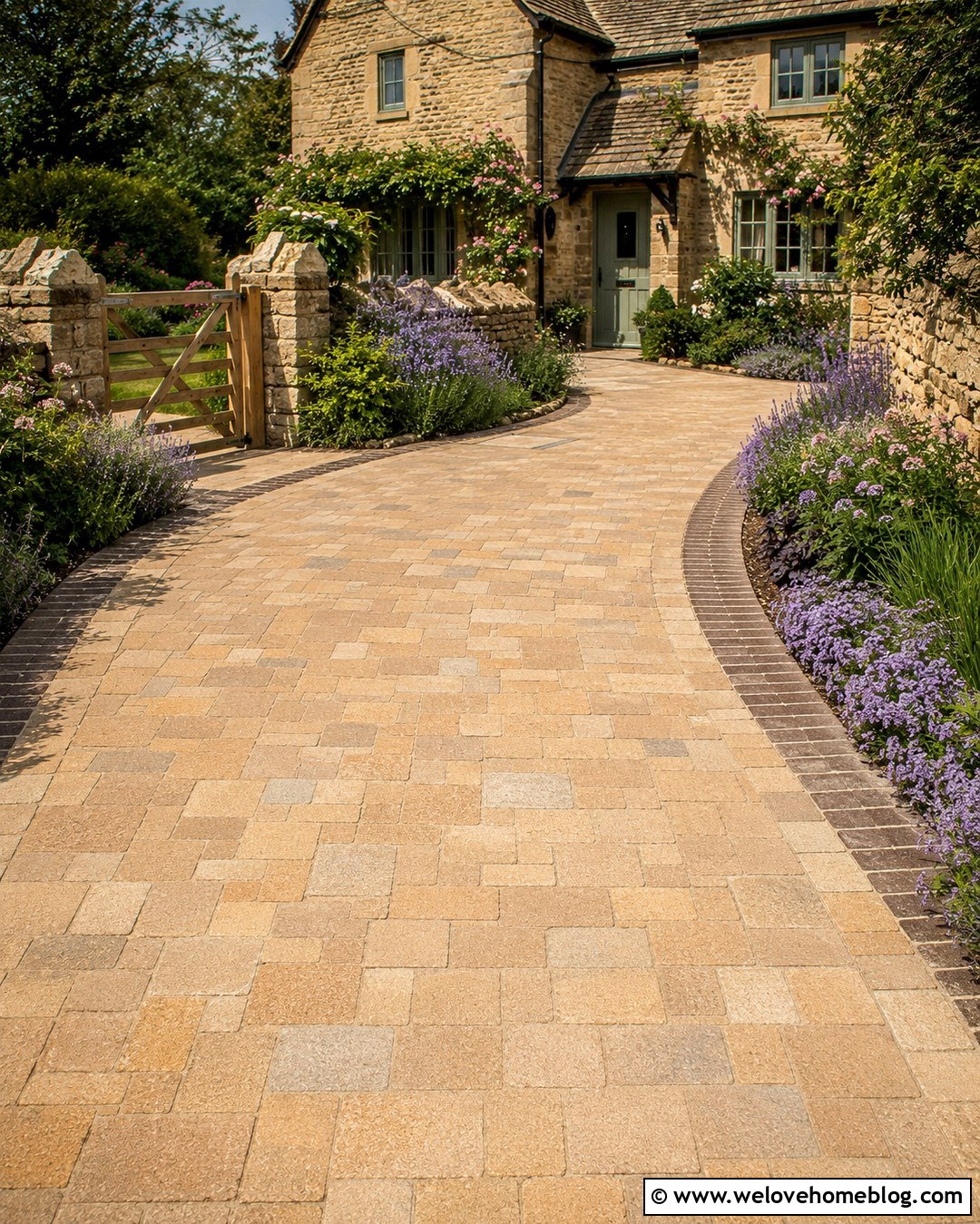
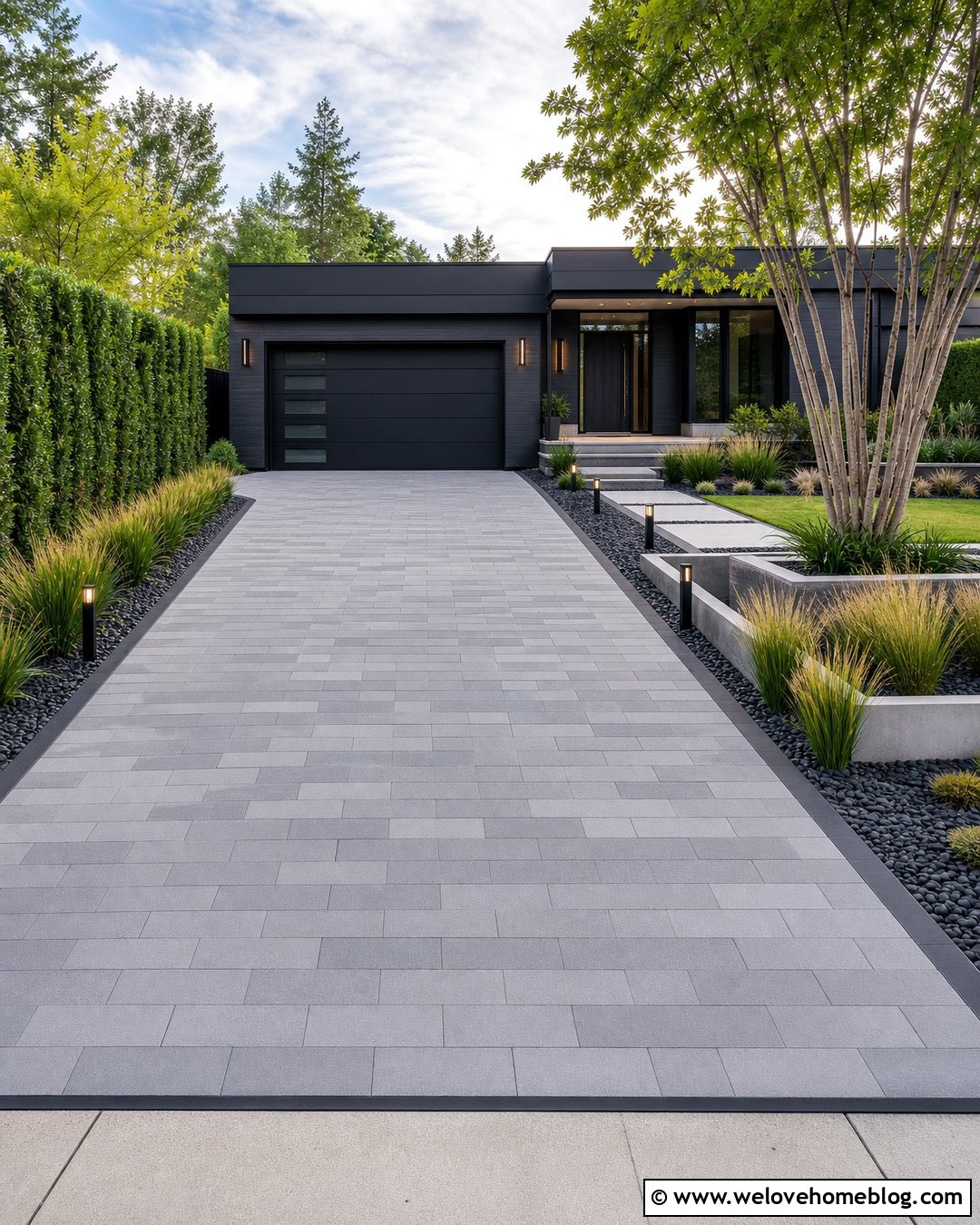
10. Gravel Driveway With Block Paving Entrance Apron
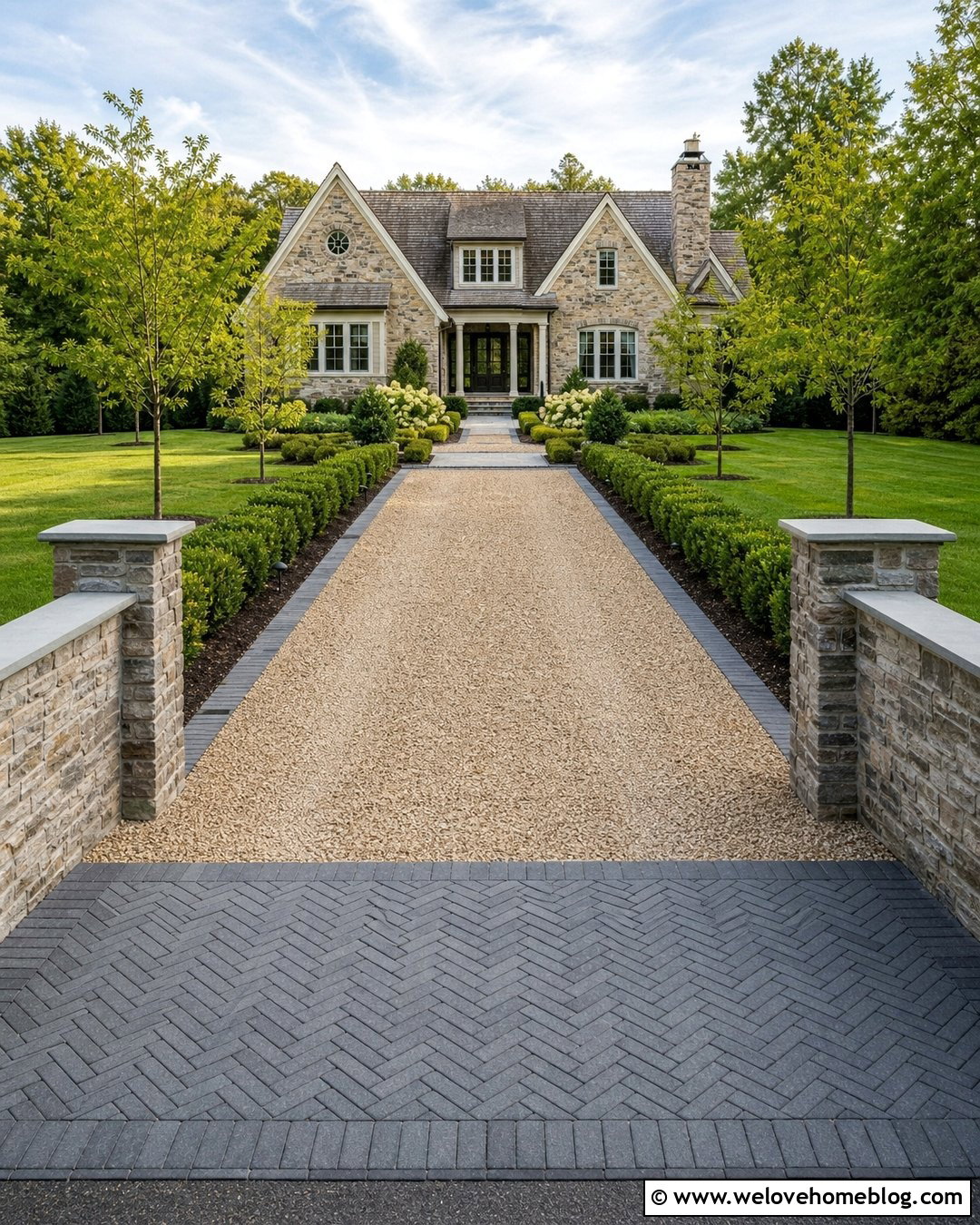
Sometimes one concentrated area of paving is enough to transform a gravel driveway. A full-width block paving apron at the entrance creates a crisp boundary between private property and the street. It catches attention without requiring blocks across the entire driveway. Choose a durable pattern such as herringbone and extend the apron far enough for a vehicle to straighten before reaching the gravel. Medium-gray blocks pair easily with buff, brown, or gray aggregate. Continue a single matching paver course along the driveway edges for a connected appearance. Low stone walls, simple pillars, or neatly trimmed hedges can frame the entrance without reducing visibility. This arrangement suits both narrow and wide properties, and it is especially useful when the homeowner wants a formal entrance with a more affordable gravel surface beyond.
11. Gravel Driveway With Block Paving Garage Pad
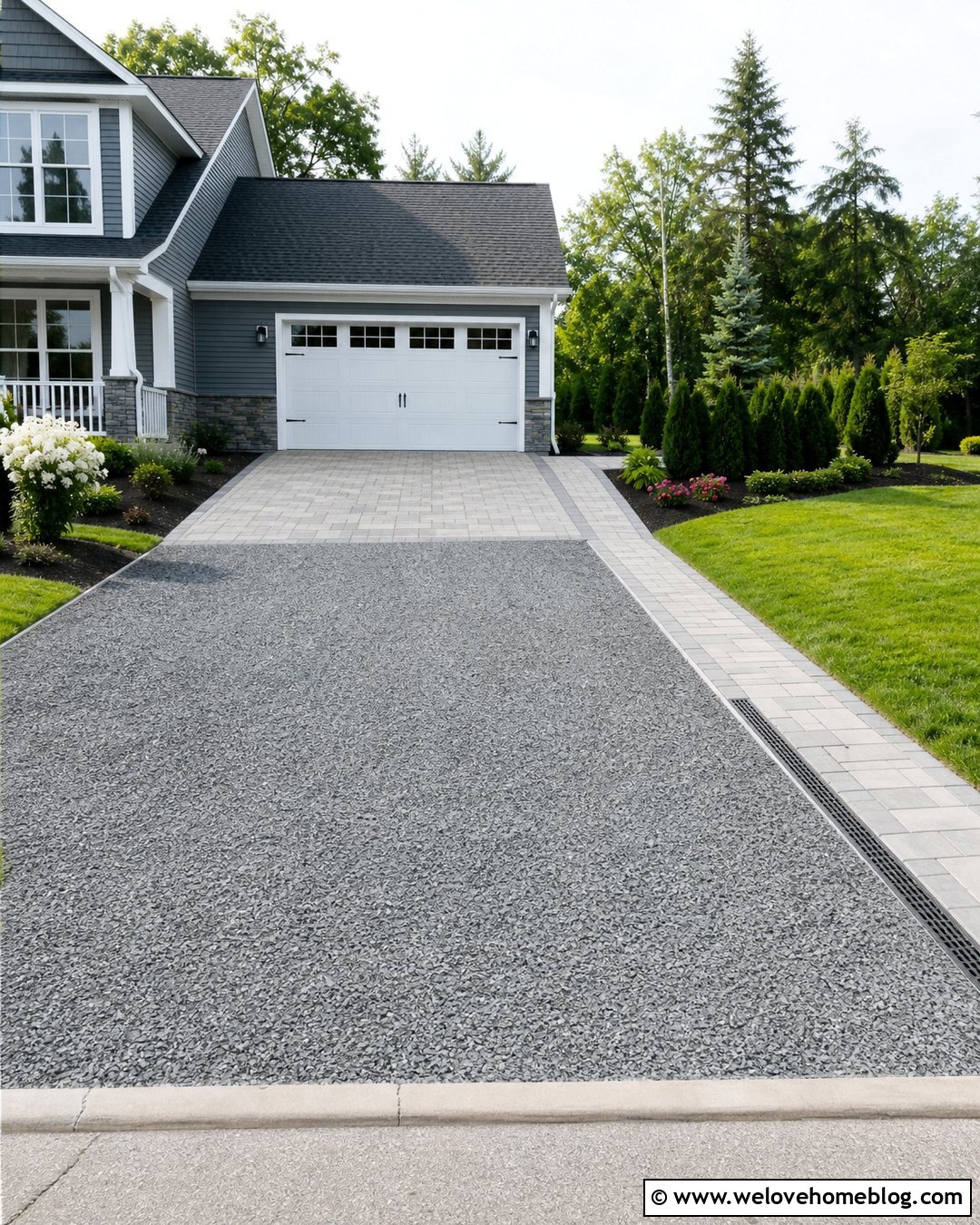
The space directly outside a garage experiences concentrated parking, braking, and turning, making it a sensible location for a block-paved pad. Cover this zone with rectangular concrete pavers and use gravel for the longer approach. A straight paver edge creates a sharp transition, while a shallow curved edge feels softer beside a traditional home. Coordinate the paving color with the garage door, roof, or existing walkway. The gravel should be close enough in tone to prevent the two surfaces from looking disconnected. Add a narrow drainage channel where required and maintain a gentle surface slope away from the building. Planting beds beside the garage can include compact evergreens and seasonal flowers. This practical combination places the more stable material exactly where daily vehicle movement is greatest.
12. Small Gravel Driveway With Light Block Paving
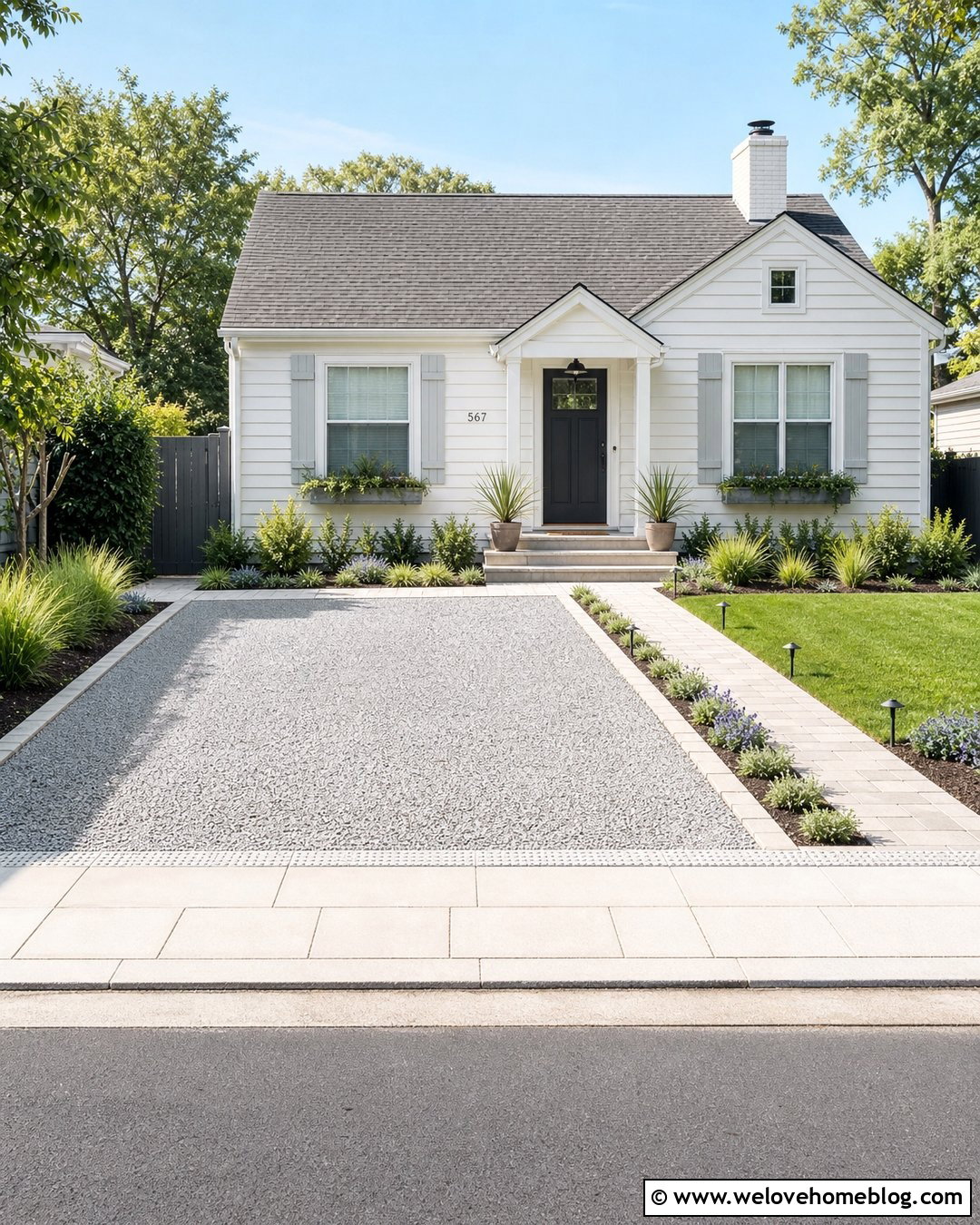
A compact front yard needs a simple driveway arrangement that avoids excessive pattern and color. Cover the main parking space with pale gray gravel, then install cream or light gray block paving along the edges and front walkway. A single broad paving band between the driveway and sidewalk can provide a polished entrance without visually shortening the space. Keep the driveway rectangular so every square foot remains usable. Narrow planting beds with upright grasses, dwarf shrubs, and ground cover can soften the boundaries without crowding car doors. If space allows, create a small block-paved path from the parking area to the entrance. Matching the pavers to the house trim will make the yard feel unified. This bright palette can also help the confined entrance appear more open and orderly.
13. Wide Gravel Driveway With Contrasting Block Paving
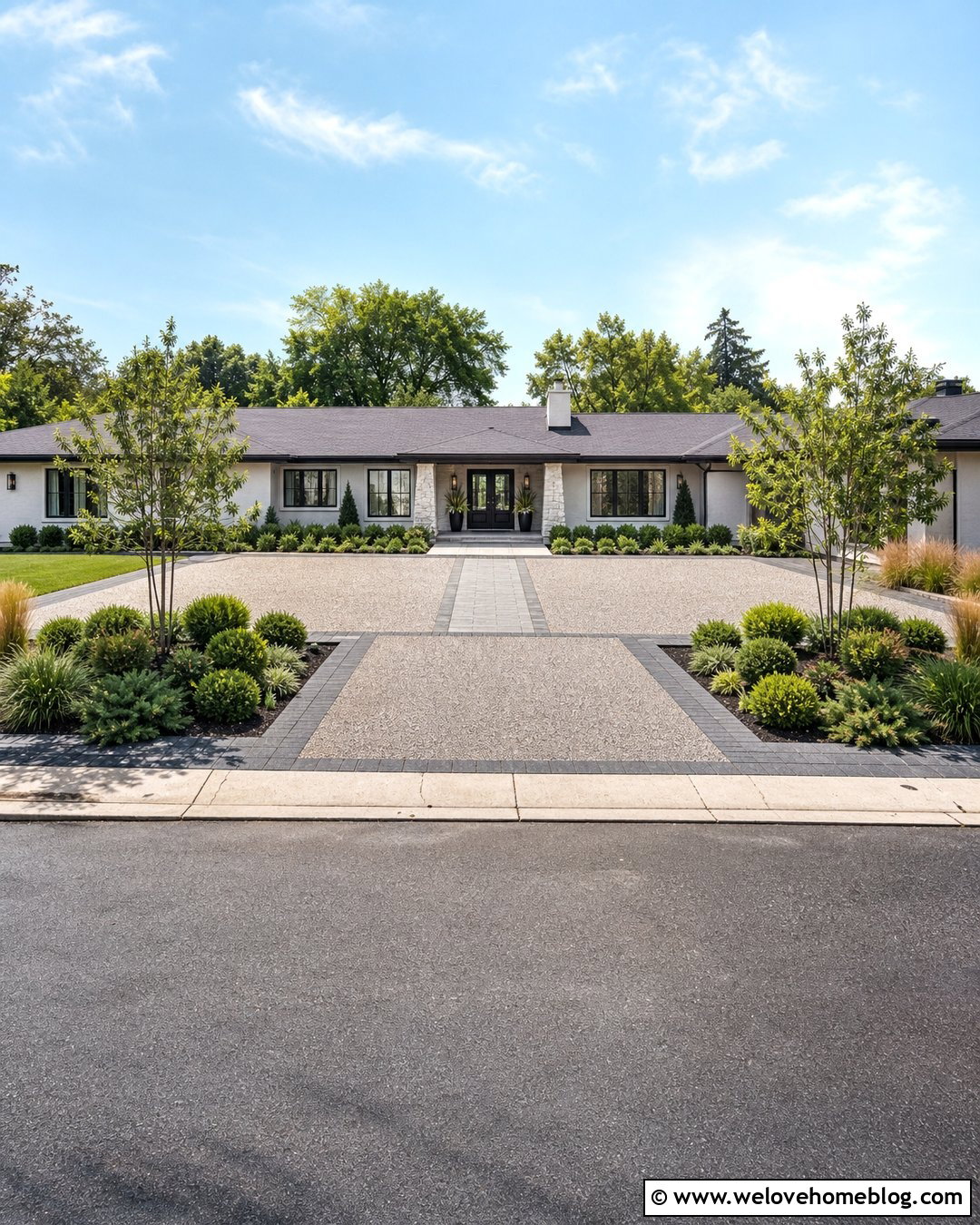
An extra-wide driveway can look like an undefined field of stone unless strong paving lines divide the surface. Use dark block paving to frame the perimeter, mark two parking spaces, and form a centered walkway to the house. The remaining area can be filled with warm gray or buff gravel for a balanced mix of texture and structure. Consider adding a horizontal paver ribbon at regular transition points rather than creating complicated decorative patterns. Large planting beds at the corners can reduce the apparent width while preserving convenient vehicle movement. Small trees, rounded shrubs, and evergreen ground cover will provide year-round definition. This design is particularly effective in front of a broad ranch or split-level home, where horizontal paving lines echo the building’s low, wide proportions.
14. Sloped Gravel Driveway With Block Paving Bands
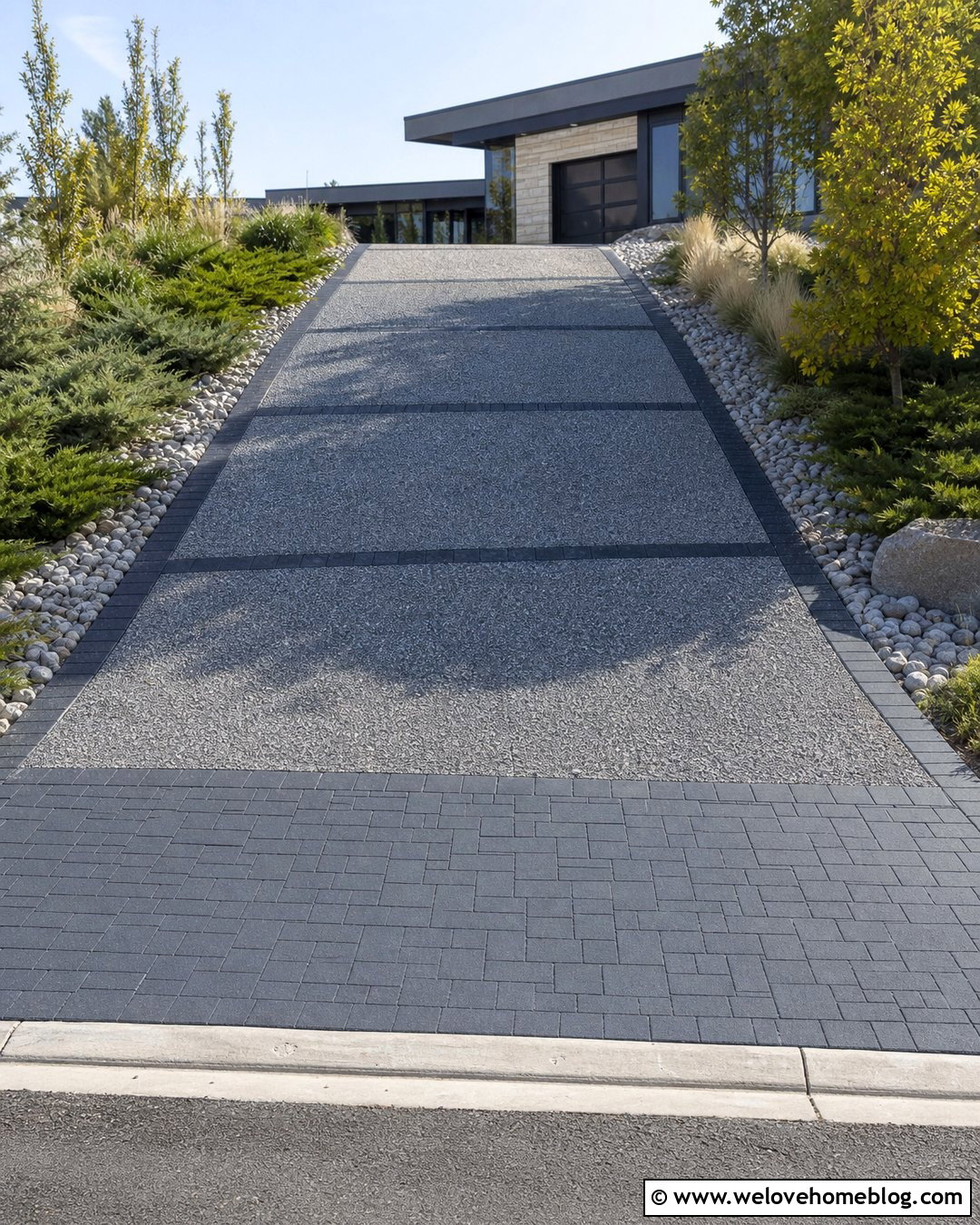
A sloped driveway requires more planning because loose stone can gradually migrate toward the bottom. Gravel stabilization grids, suitable angular aggregate, and correctly installed block paving bands can help maintain a more orderly surface. Run the block bands across the width of the driveway at selected intervals, creating subtle visual breaks while helping divide the long incline. Add strong paved edging along both sides and a wider block apron at the lowest point. Proper grading and drainage should be designed for the specific site before materials are installed. Use low-maintenance planting on the banks, such as spreading juniper, ornamental grasses, and erosion-resistant ground cover. A restrained gray palette will keep the multiple bands from appearing too decorative while giving the slope a structured, contemporary finish.
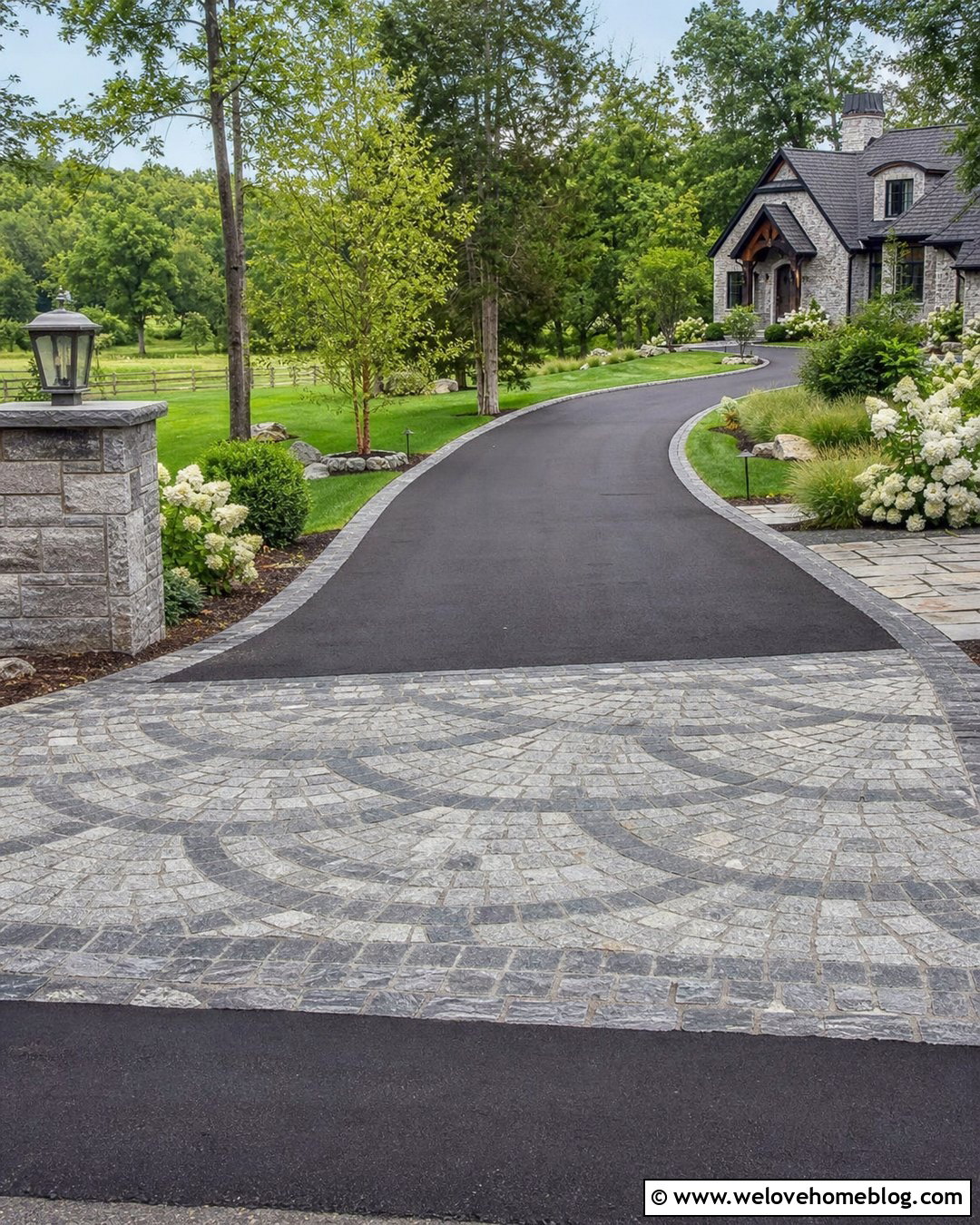
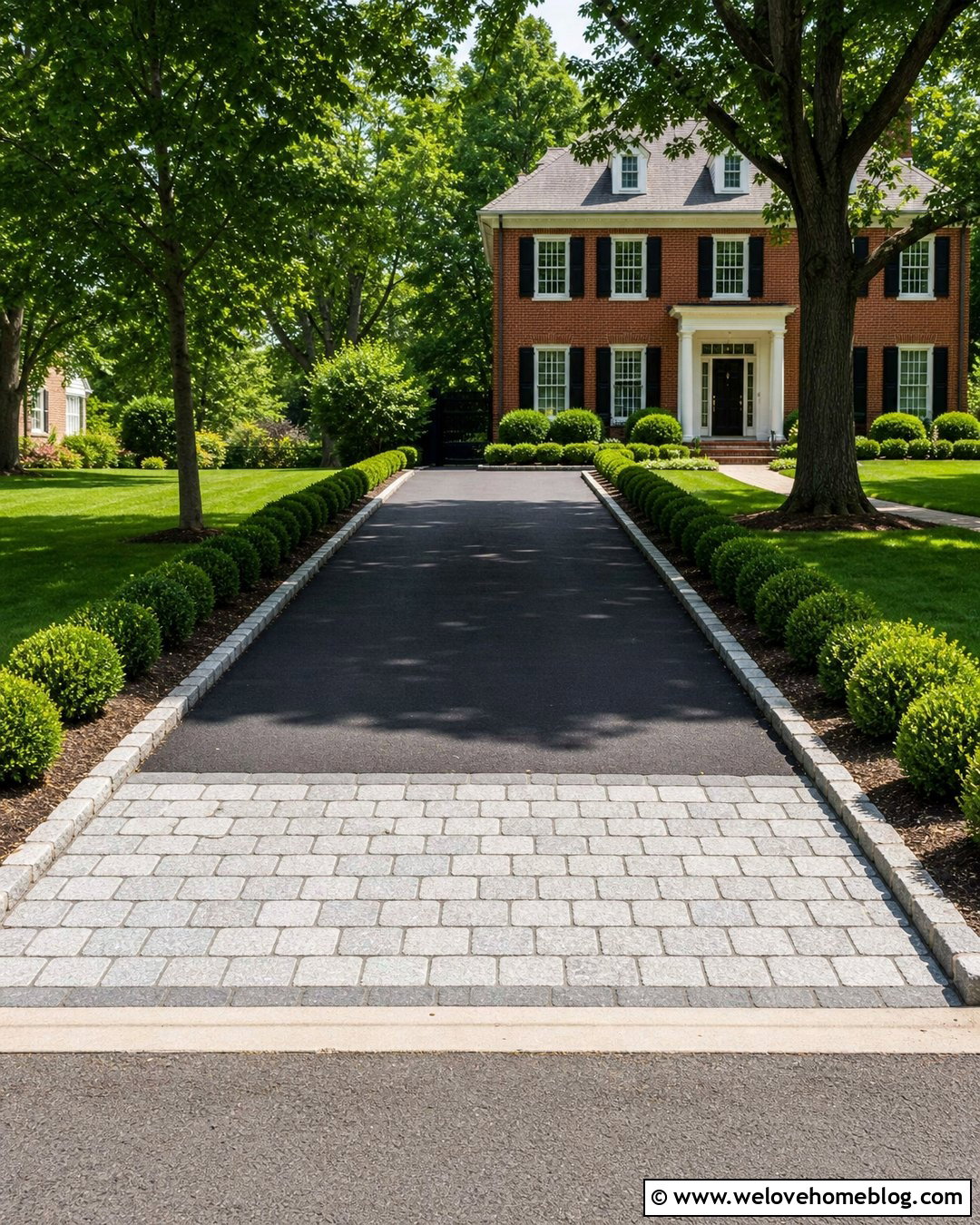
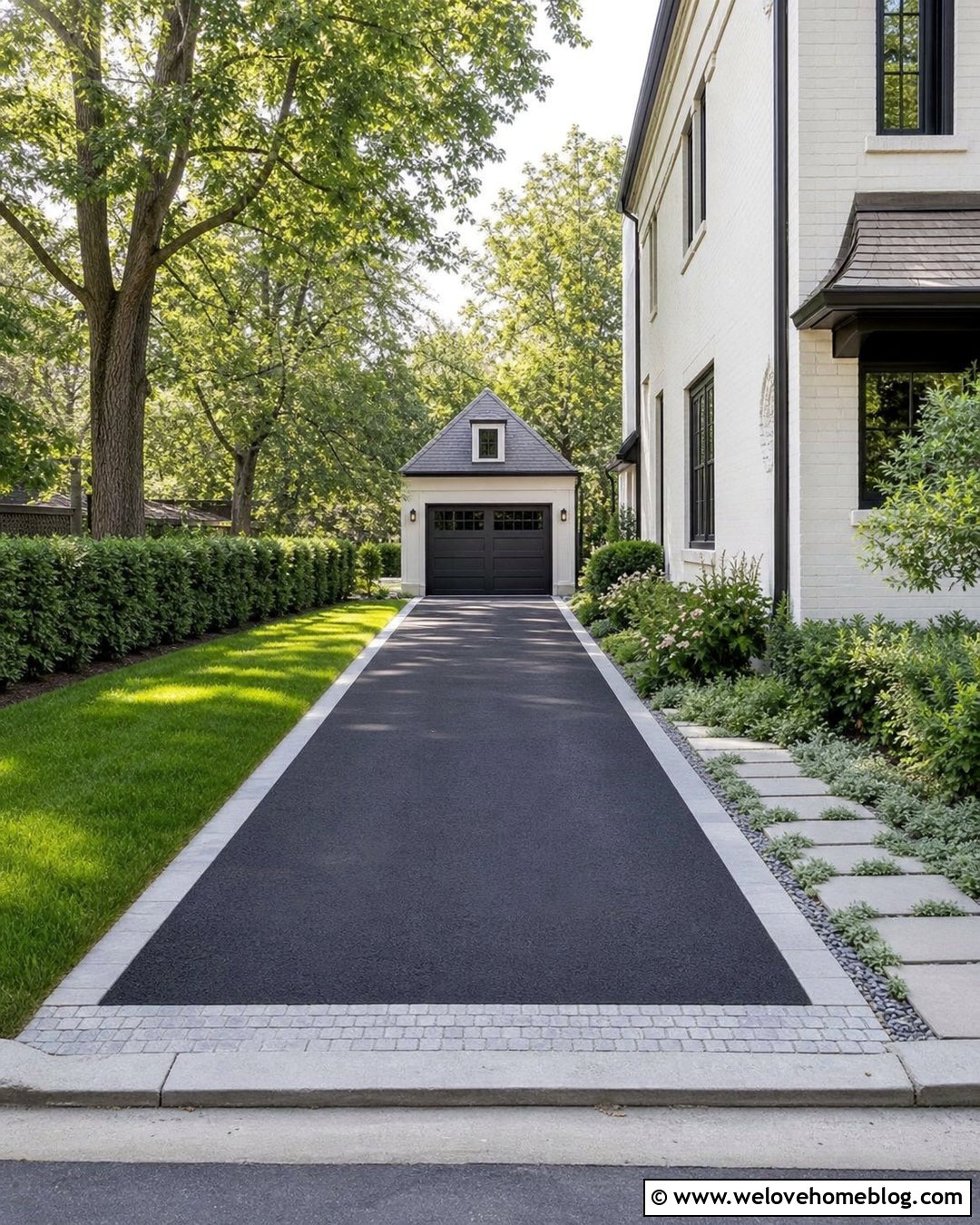
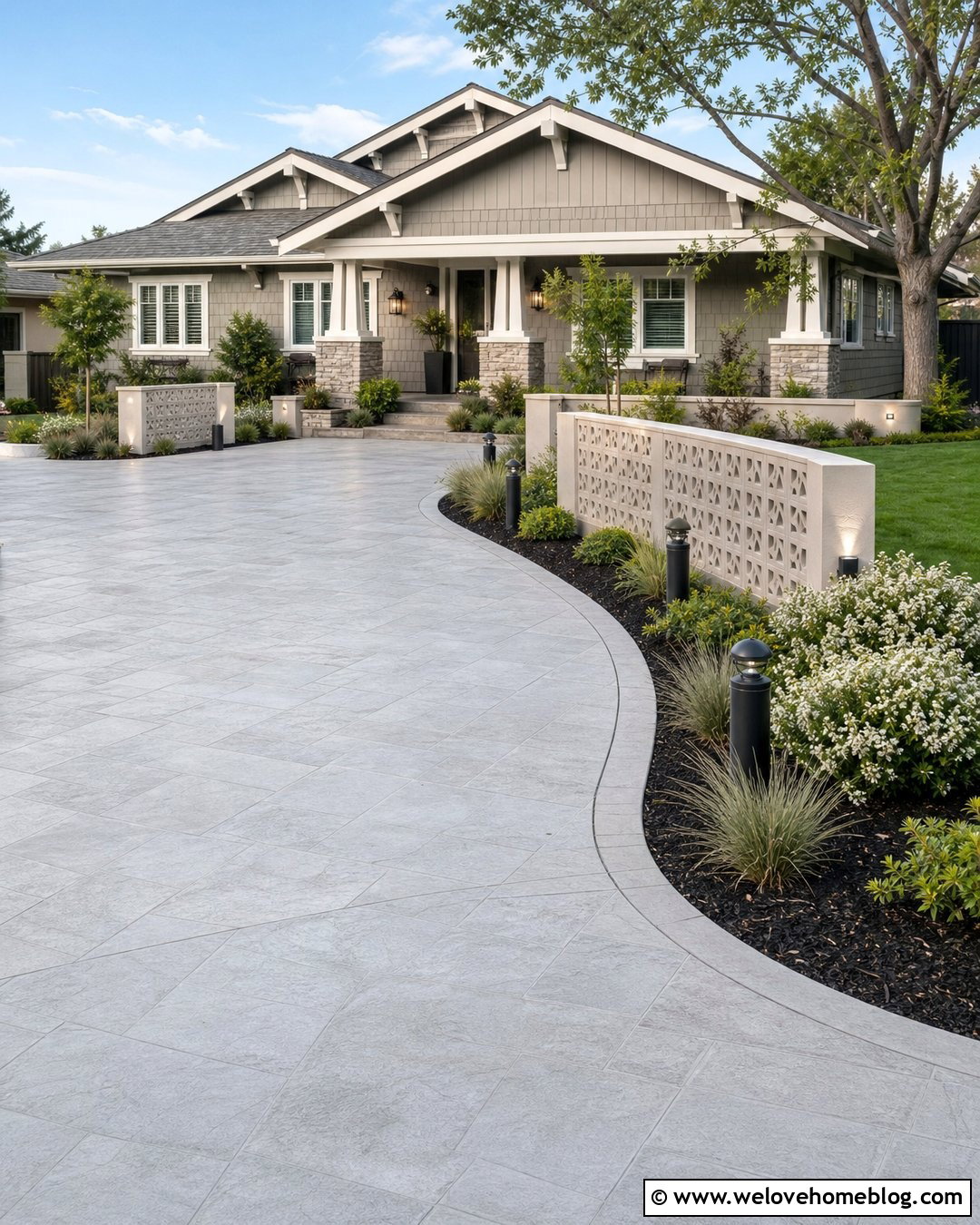
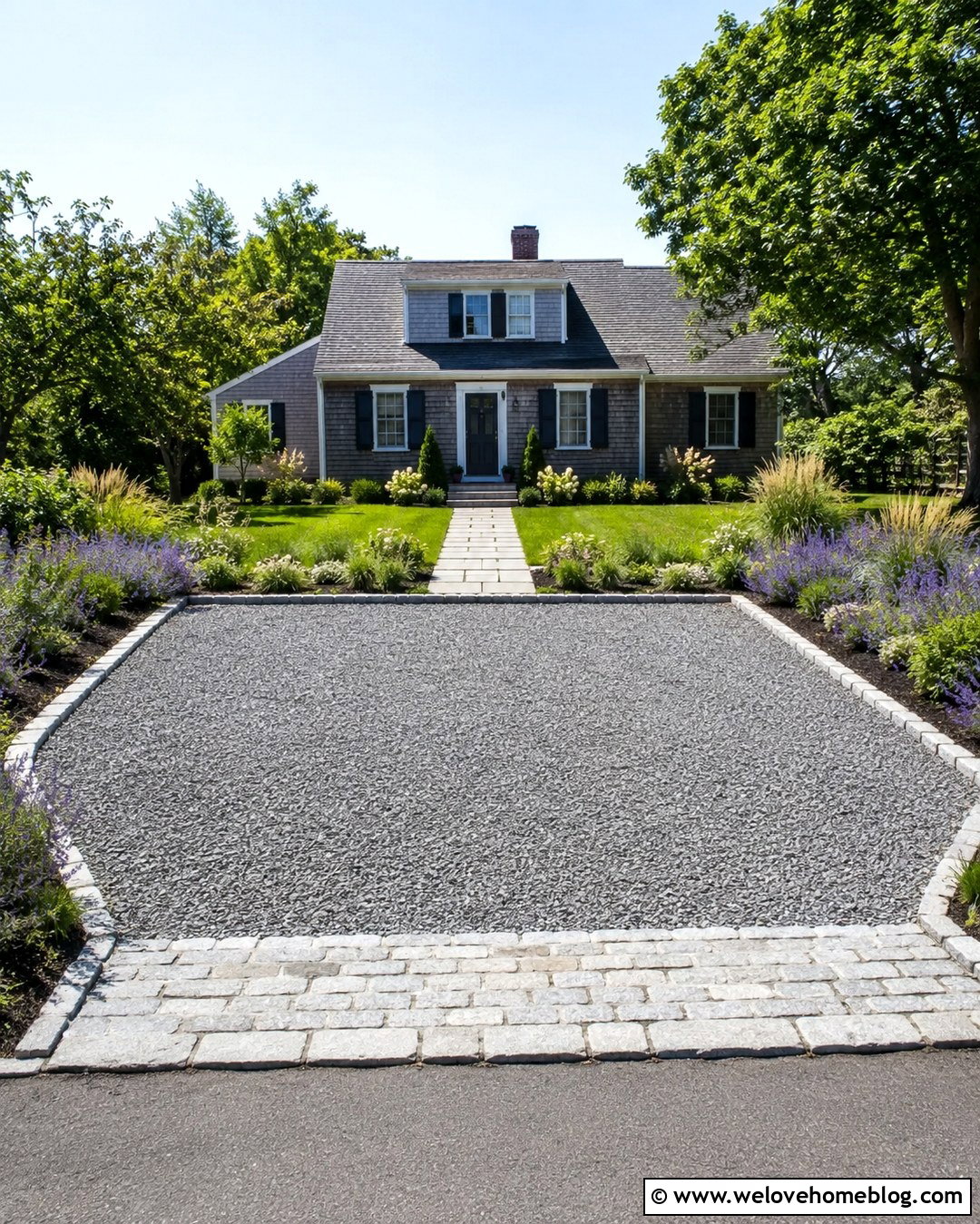
15. Farmhouse Gravel Driveway With Weathered Block Paving
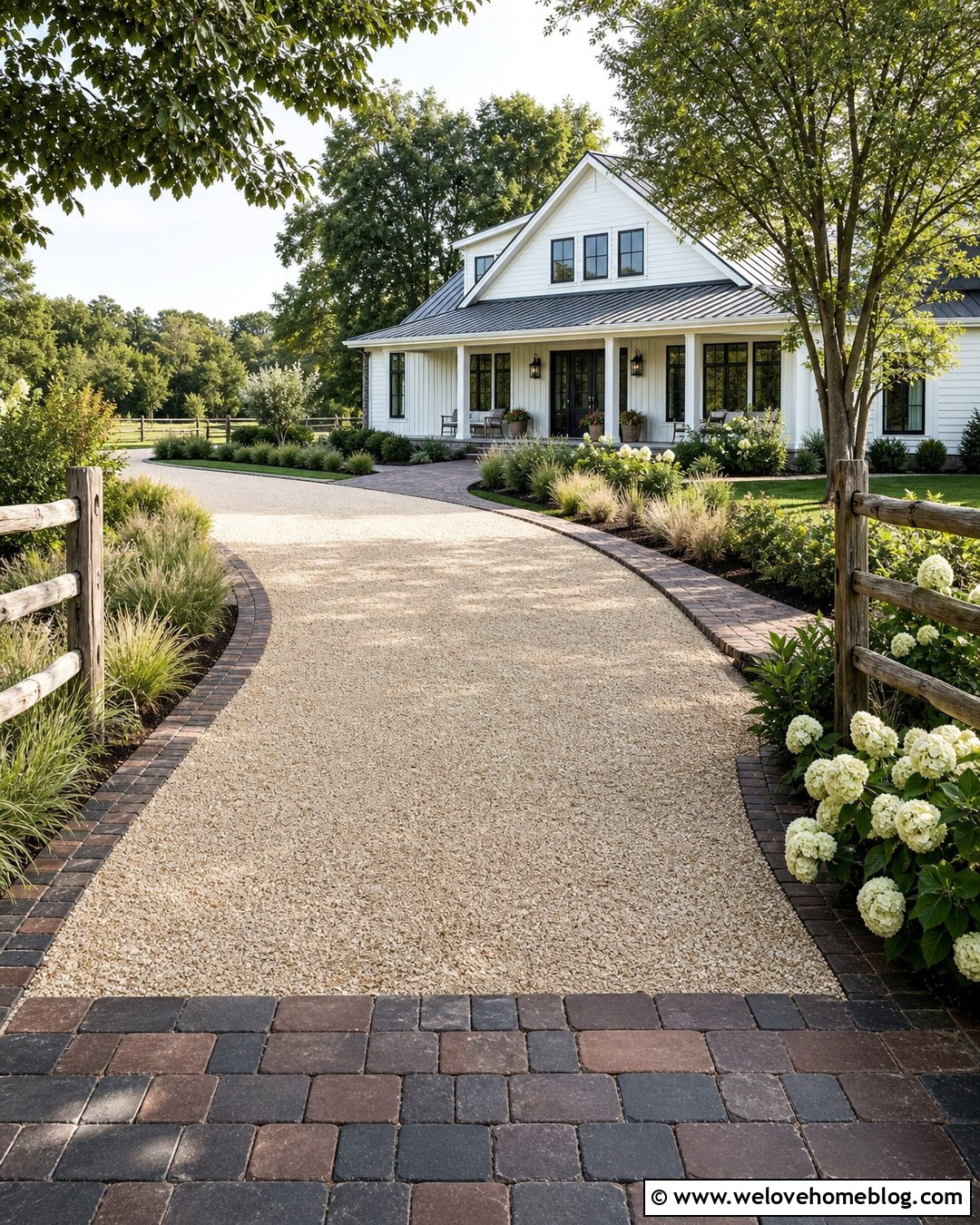
A farmhouse entrance benefits from materials that look established rather than overly perfect. Choose warm limestone gravel and weathered block pavers in blended brown, charcoal, and muted red tones. Use the blocks to form a softly curved entrance apron, irregular-looking edge bands, and a practical parking pad near the porch. Although the paving can have an aged appearance, the lines and foundation should still be carefully constructed. Frame the driveway with split-rail fencing, native grasses, hydrangeas, and a few shade trees. A block-paved walkway leading to wide porch steps will strengthen the connection between the driveway and house. Keep ornamental features simple. The mix of loose stone, gently varied paving, and informal planting should create a comfortable rural setting rather than a highly decorated themed entrance.
16. Modern Gravel Driveway With Large Block Paving Sections
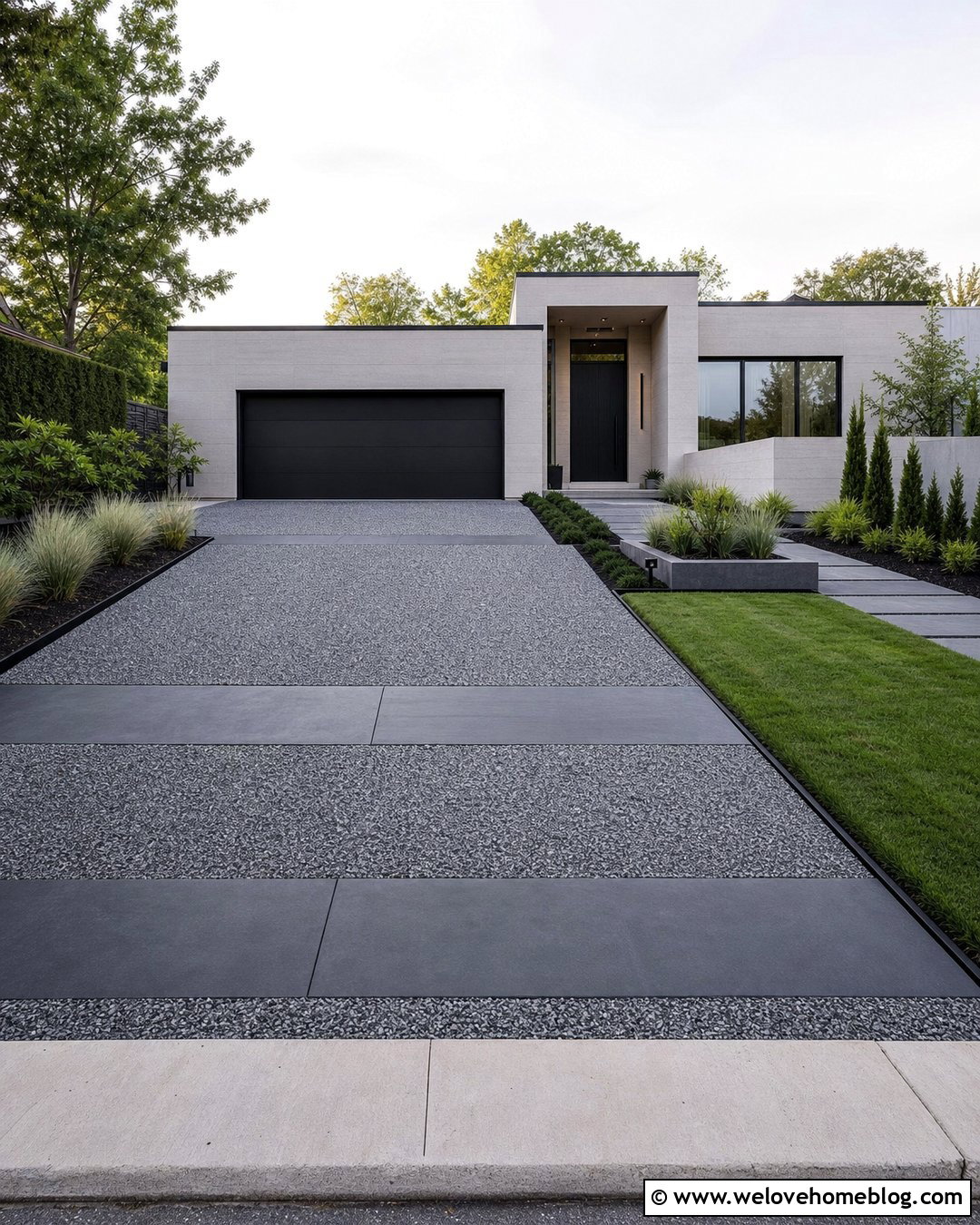
Large rectangular paving sections can bring modern geometry to a gravel driveway without replacing the entire surface. Use smooth charcoal or mid-gray concrete blocks to create broad crossing bands, a garage pad, and a straight walkway. Fill the remaining areas with fine angular granite gravel in a closely related color. The low-contrast palette gives the driveway a calm, continuous appearance, while differences in texture make the layout visible. Pair this design with rectangular lawn panels, linear planting beds, and sculptural grasses. Black steel edging can create clean transitions where the driveway meets the landscaping. Avoid curved borders or highly mixed paving colors, since they may compete with the home’s architecture. This approach works particularly well with flat-roofed, minimalist, and midcentury-inspired houses.
17. Cottage Gravel Driveway With Tumbled Block Paving
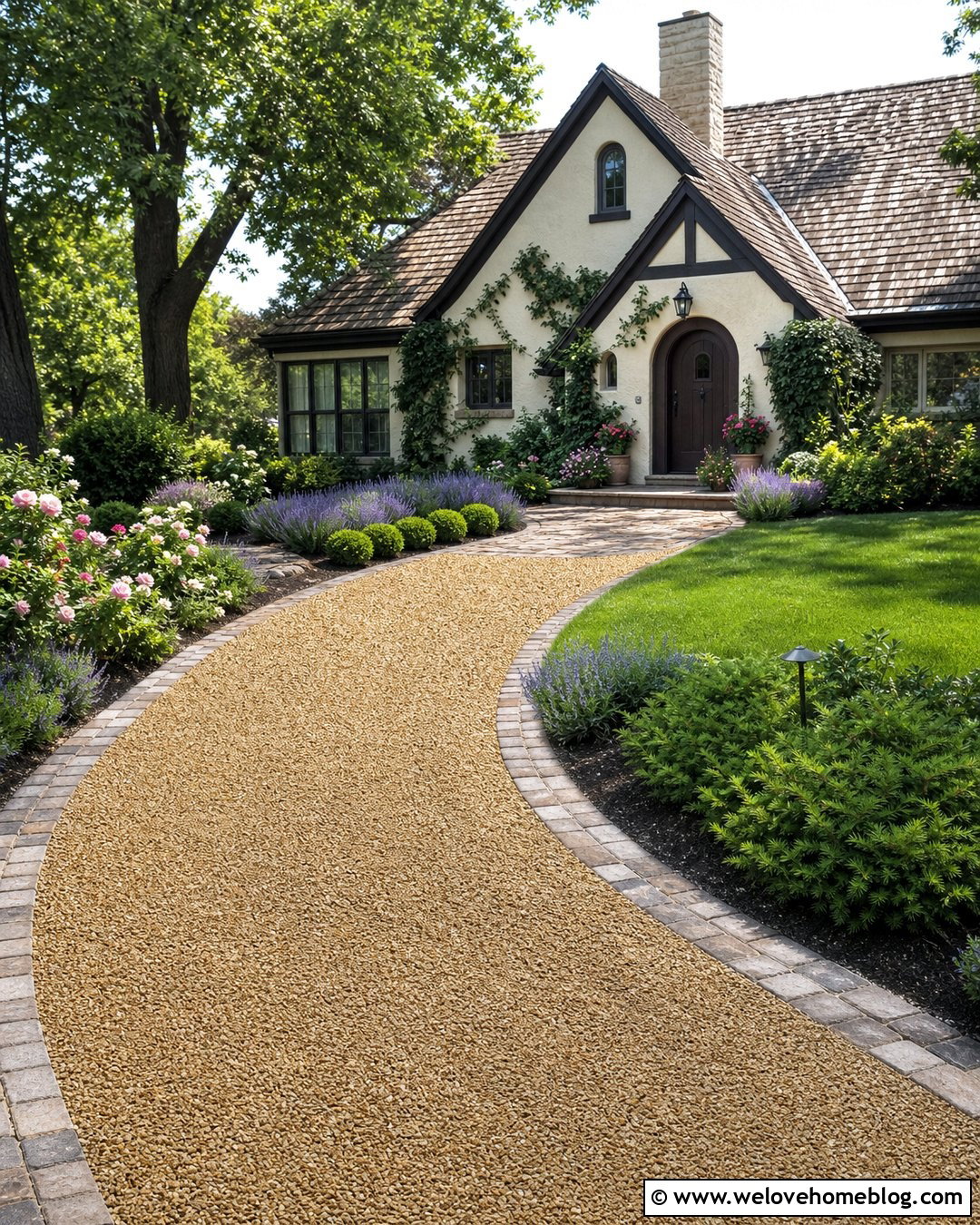
Soft colors and gently aged materials are natural choices for a cottage driveway. Use honey-toned gravel across a short curved or flared parking area, then contain it with tumbled block paving in warm gray and faded brown. Continue the pavers into a winding walkway that leads through the planting beds to the front door. Curved edges will feel more relaxed than strict rectangular corners, but the driveway should still provide a clear and practical parking shape. Surround it with lavender, salvia, roses, and low evergreen shrubs, leaving enough clearance to prevent plants from leaning over vehicles. A small block-paved landing near the entrance can accommodate bins or deliveries discreetly. The finished space should feel garden-focused while retaining durable boundaries and an easy-to-follow route.
18. Colonial Gravel Driveway With Red Block Paving
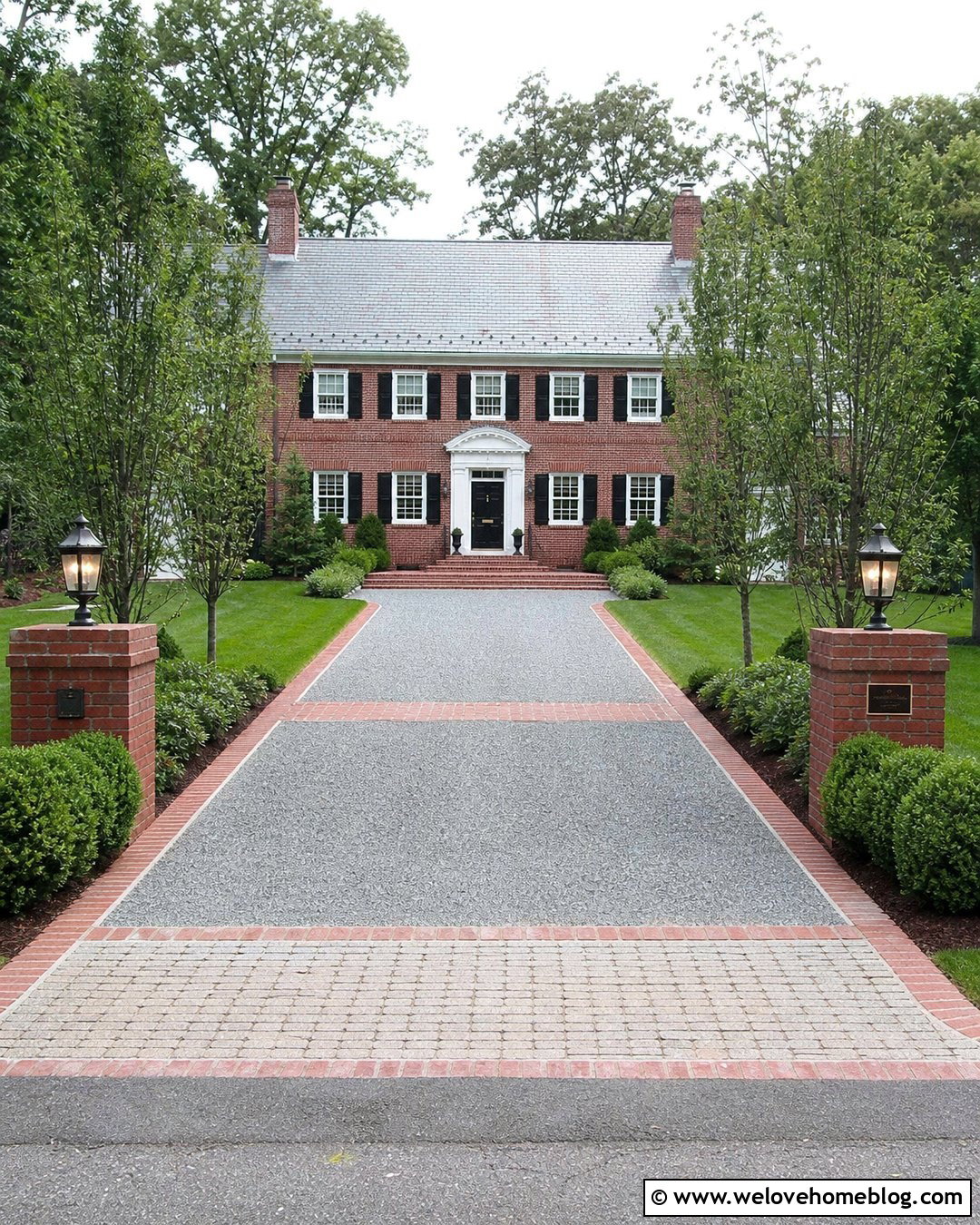
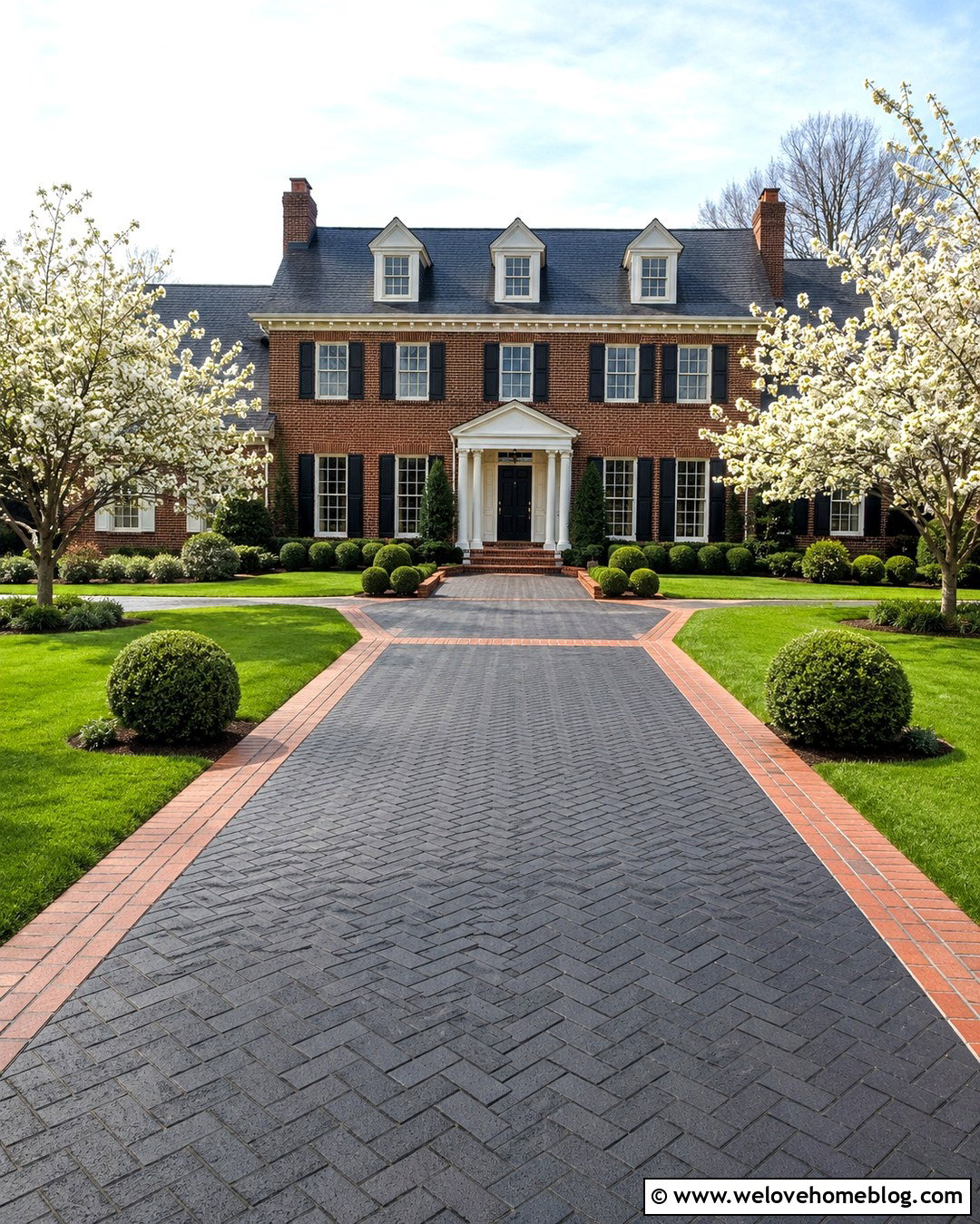
A symmetrical colonial home pairs well with a balanced driveway design. Use medium-gray gravel for the central surface and traditional red block paving for a double border, street apron, and walkway intersection. A straight driveway reinforces the formal architecture, while identical planting beds on both sides create a composed approach. Place clipped evergreen shrubs near the house and repeat small deciduous trees farther toward the street. The red paving should relate to brick chimneys, steps, or facade details without becoming an exact color match. Consider a rectangular paved landing where the front walk crosses the driveway, giving pedestrians a stable and clearly defined route. Simple lantern-style fixtures on low brick pillars can complete the entrance while preserving a bright, uncluttered view of the house.
19. Gravel Driveway With Block Paving And Grass Strip
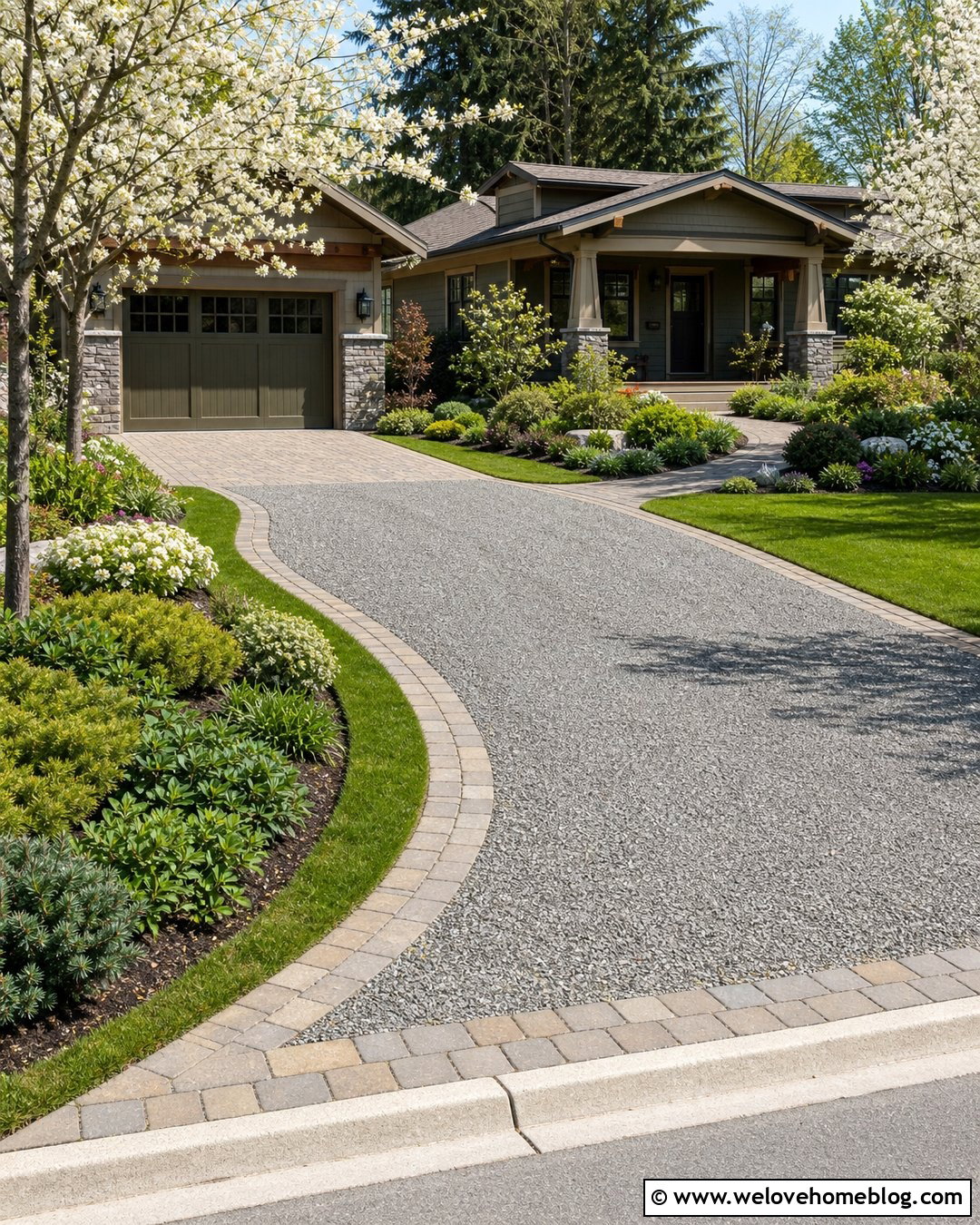
A narrow grass strip can soften the meeting point between a gravel driveway and a large lawn. Frame the gravel with a sturdy block paving border, then leave a maintained band of turf before the surrounding planting beds. The blocks keep aggregate from spreading into the grass, making the edge easier to mow and maintain. This detail works best on a straight or gently curved driveway with enough yard space to avoid a crowded appearance. Choose natural gray gravel and earth-toned pavers for a relaxed transition. Add flowering trees near the entrance and layered shrubs closer to the house. Where the driveway meets the garage, expand the block paving into a practical parking pad. The resulting design balances crisp construction with the fresh color and softness of living landscape.
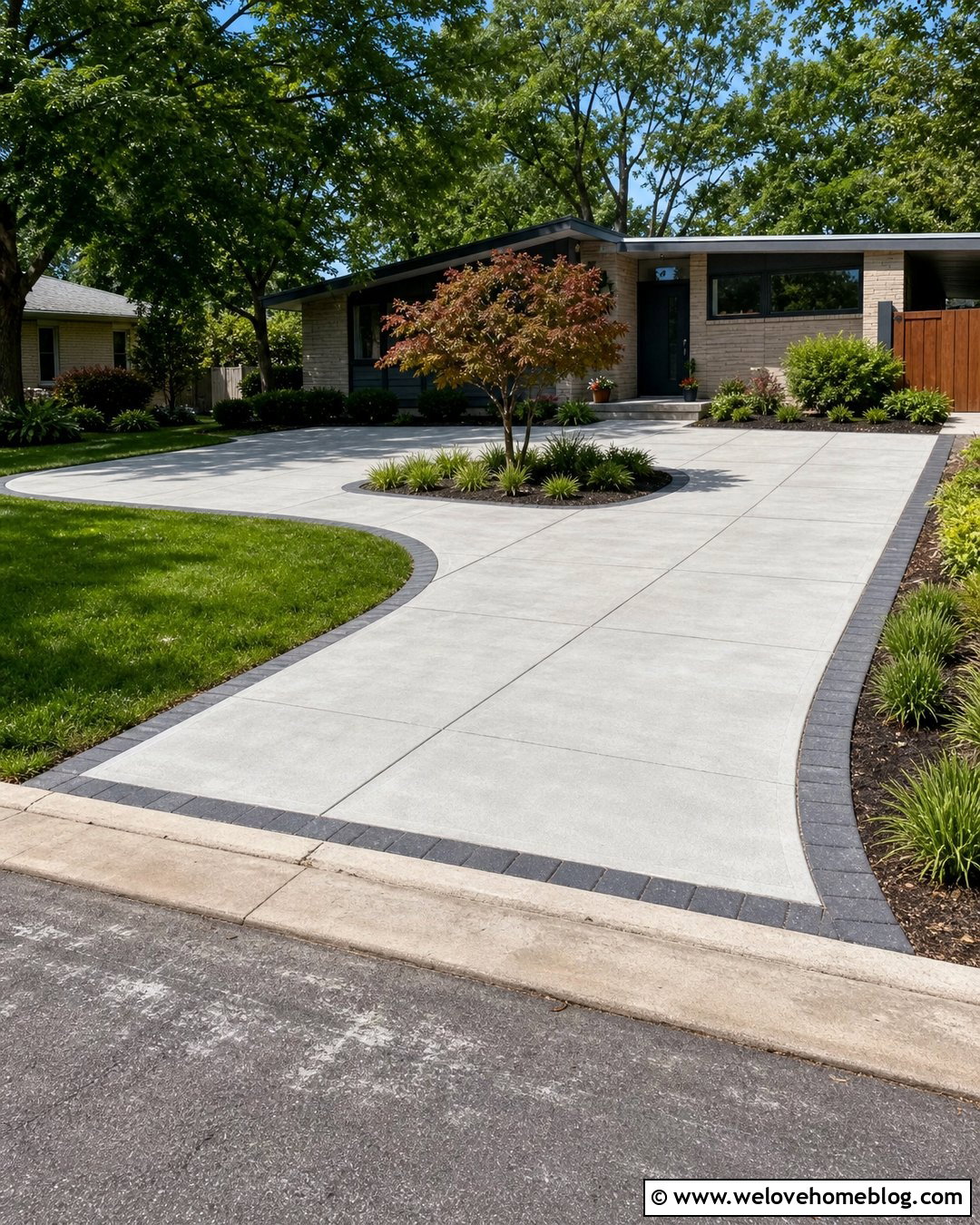
20. Gravel Driveway With Block Paving And Stone Pillars
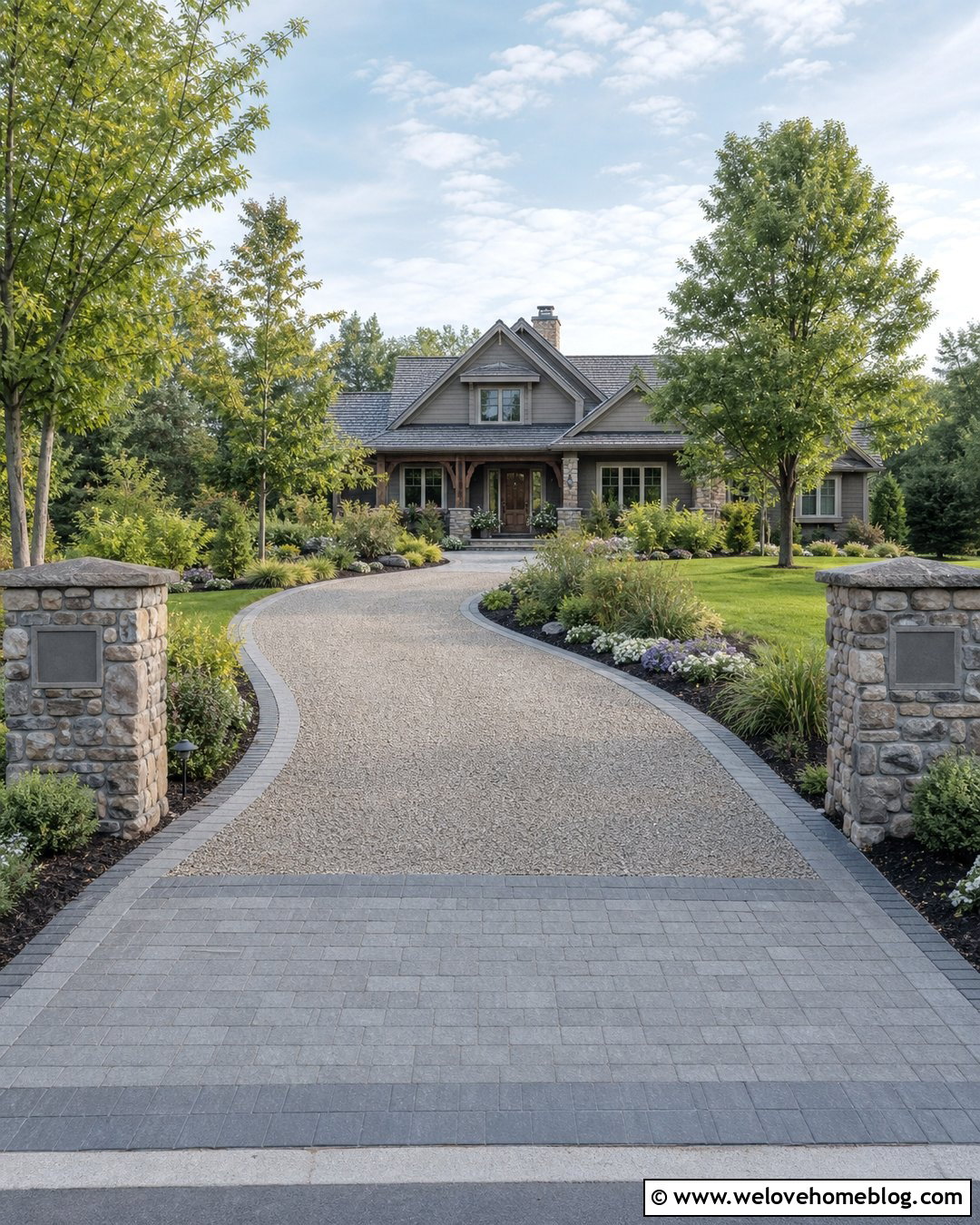
Stone entrance pillars give a gravel and block paving driveway a strong sense of arrival. Build the pillars outside the required vehicle clearance, then connect them visually with a full-width block-paved apron. Continue matching blocks along the gravel edges so the entrance does not feel like an isolated feature. Warm gray gravel, charcoal paving, and natural fieldstone pillars create a versatile palette for craftsman, country, and traditional homes. Add low lights or understated address plaques to the pillars, but keep the arrangement uncluttered. Curved planting beds with evergreen shrubs can anchor each side without restricting visibility. For a gated entrance, allow enough level space for vehicles to wait safely. Every material should repeat a color found in the house, roof, walkway, or surrounding landscape.
Conclusion:
The strongest **20 Gravel And Block Paving Driveway Ideas** treat the entrance as one complete landscape rather than two unrelated surfaces. Gravel can cover broad areas with attractive texture, while block paving defines borders, parking pads, aprons, walkways, and high-use zones. Choose colors that connect naturally with the house, then use planting to soften the harder lines. Driveway shape, drainage, vehicle movement, maintenance, and pedestrian access should guide the final layout. Angular gravel, a properly prepared base, secure edging, and correctly installed paving will help the design perform as well as it looks. Whether your property is compact, sloped, rural, or contemporary, this material combination offers plenty of flexibility for creating welcoming curb appeal.

Related posts:
Leave a Reply