
A gravel driveway can be affordable, practical, and full of curb appeal when every detail works together. The stone color should complement the house, while the layout, edging, planting, and entrance create a finished look. Proper grading, a compacted base, durable borders, and suitable surface gravel also help reduce ruts, weeds, and scattered stones. () Whether you have a small suburban yard or a long country approach, there is room to personalize the design. You can add brick ribbons, natural stone walls, drought-tolerant beds, lighting, or a welcoming turnaround. If you searched for 20 top 60 best gravel driveway ideas, the complete designs below offer practical inspiration for different homes, budgets, and property sizes.

1. Pea Gravel Driveway With Brick Edging
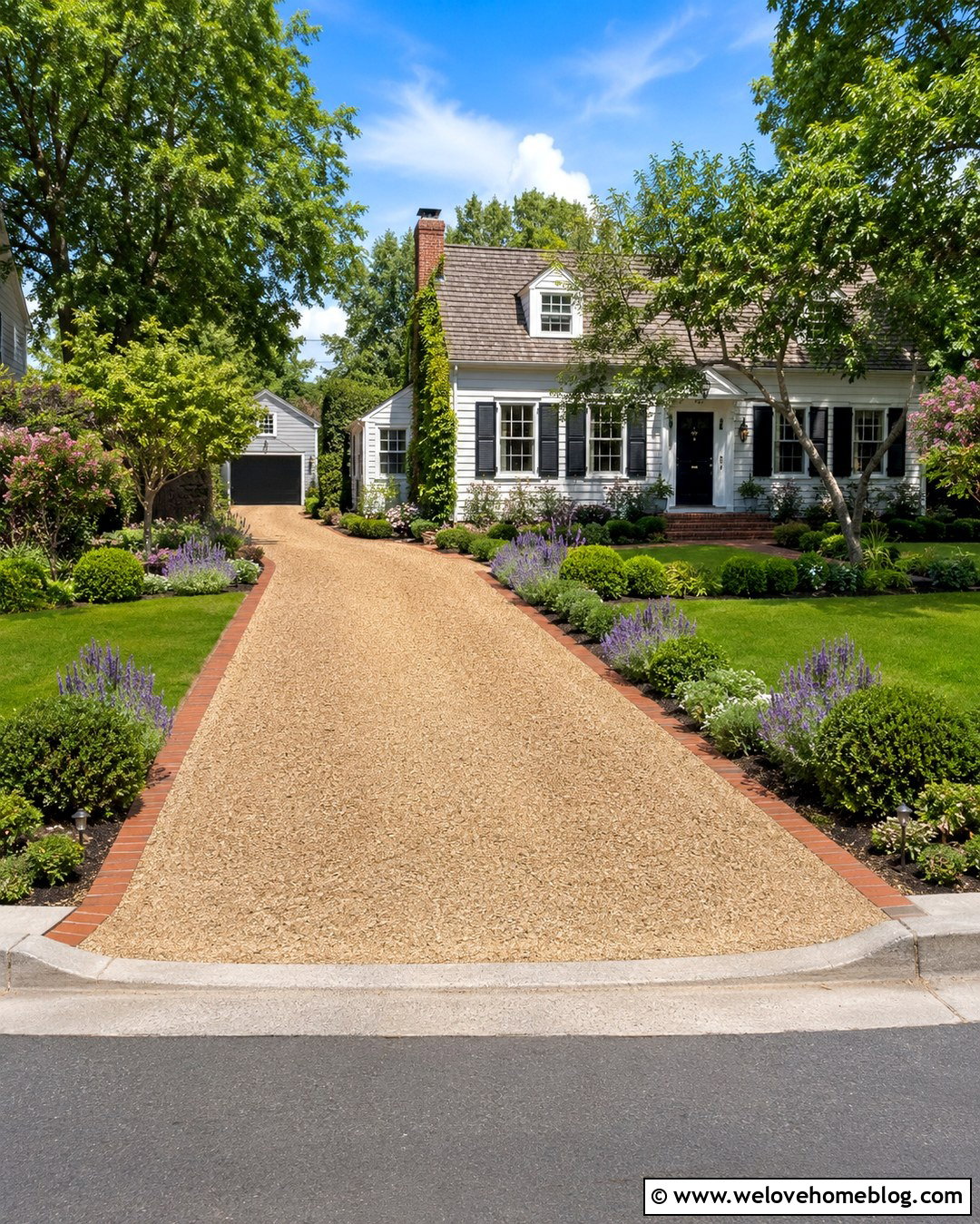
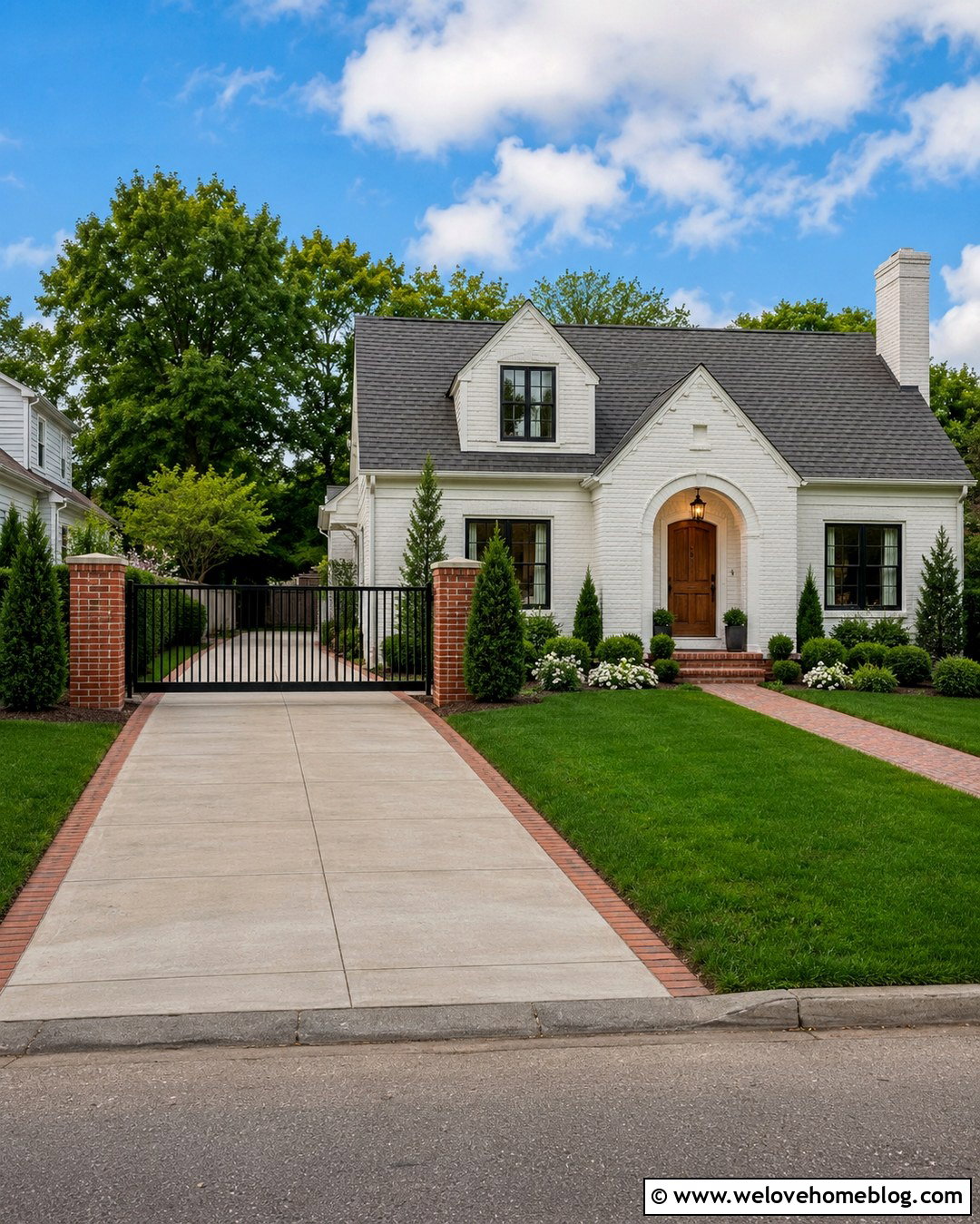
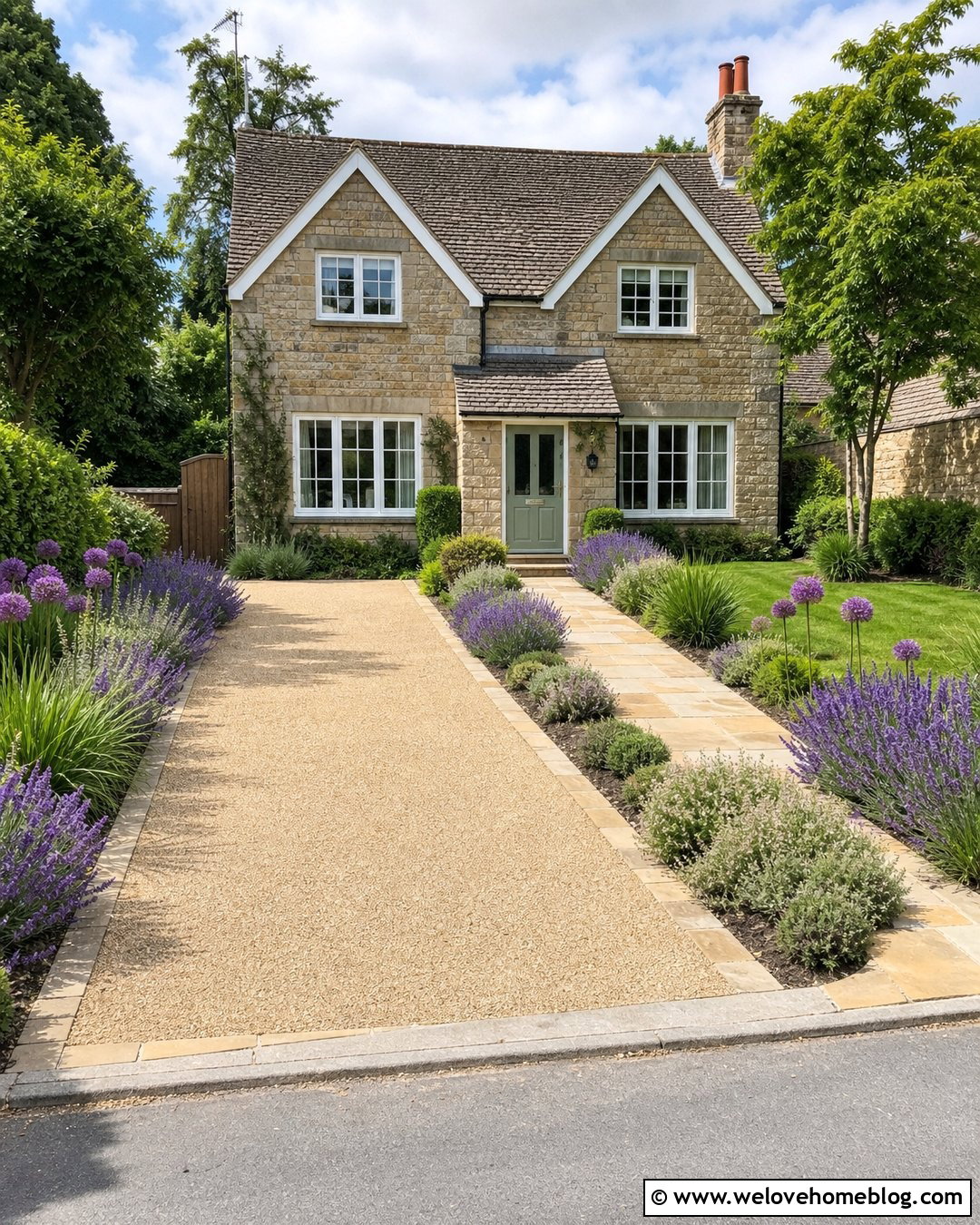
Warm pea gravel and traditional red brick create an inviting driveway for a cottage, Cape Cod, or older suburban home. Install the pea gravel over a properly prepared, compacted angular-stone base rather than placing it directly on soil. A stabilization grid can help reduce movement beneath vehicle tires. Lay bricks lengthwise along both sides to contain loose gravel and provide a clean mowing edge. Continue the brick around curved planting beds near the house for a connected appearance. Lavender, catmint, boxwood, and compact ornamental grasses soften the driveway without blocking sightlines. A matching brick walkway leading to the front door completes the design and makes the driveway feel like an intentional part of the landscape.
2. Crushed Stone Driveway With Timber Edging
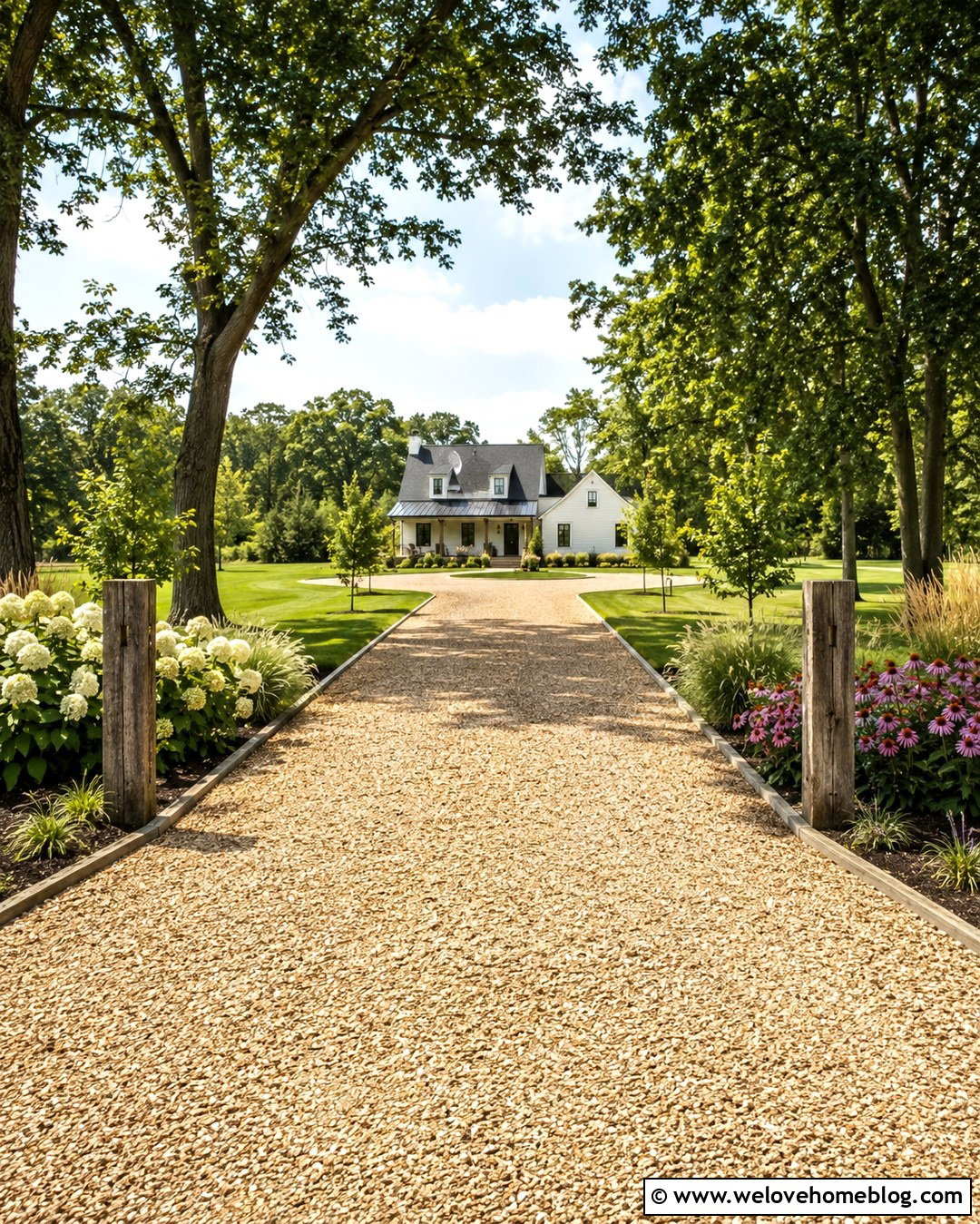
A crushed stone driveway bordered by landscape timbers suits a farmhouse, log home, cabin, or relaxed country property. Choose tan or warm gray angular stone that compacts more firmly than rounded gravel. Pressure-treated timbers can define straight edges and stop the driving surface from gradually spreading into the lawn. Secure the timbers correctly and keep their tops close to the finished gravel level to reduce tripping and mowing problems. Add broad beds of hydrangeas, native grasses, coneflowers, or evergreen shrubs beyond the timber border. At the entrance, simple timber posts and a gravel turnaround reinforce the rustic character. This complete look is especially effective on long driveways surrounded by open lawn, mature trees, or informal meadow planting.
3. Gray Gravel Driveway With Steel Edging
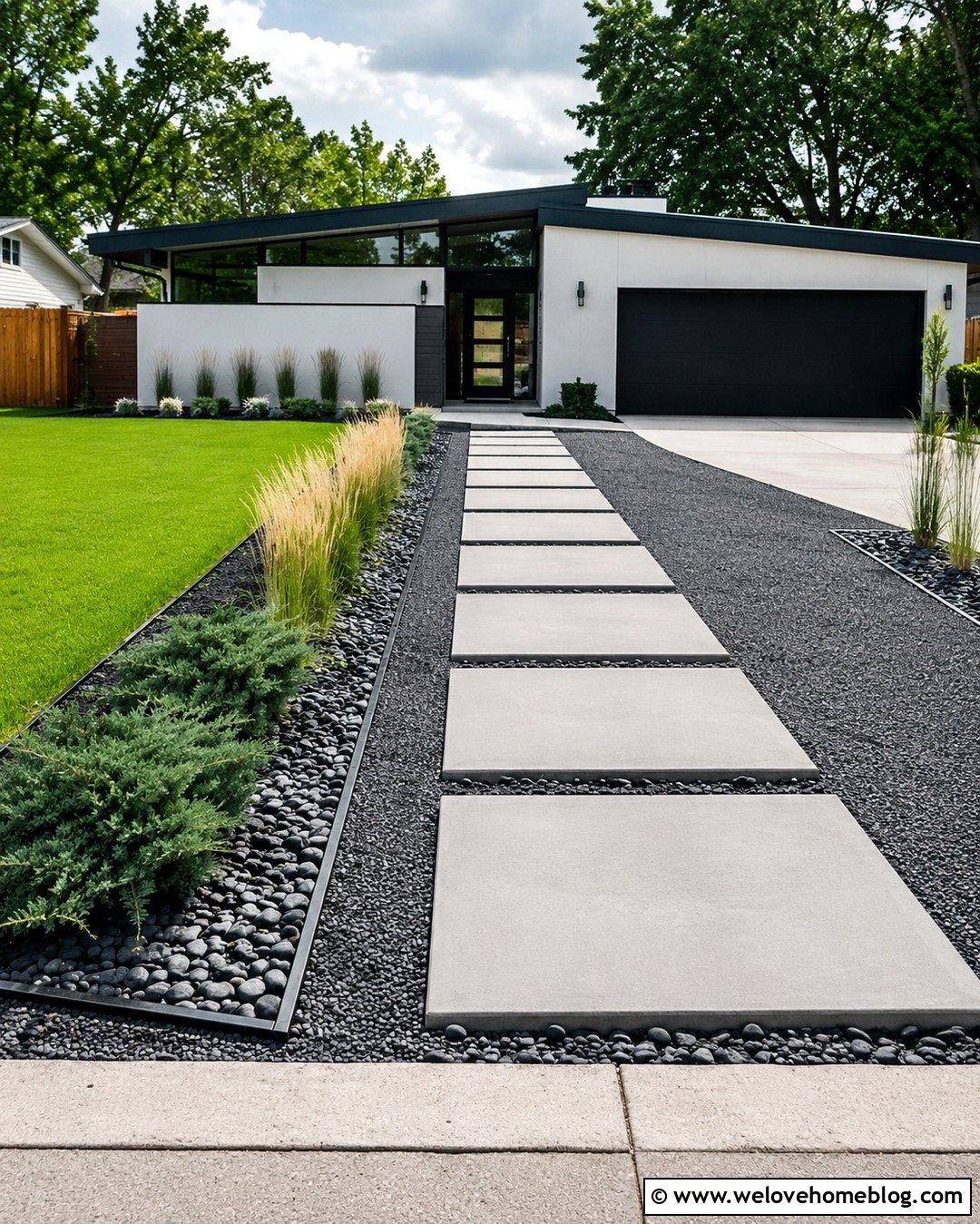
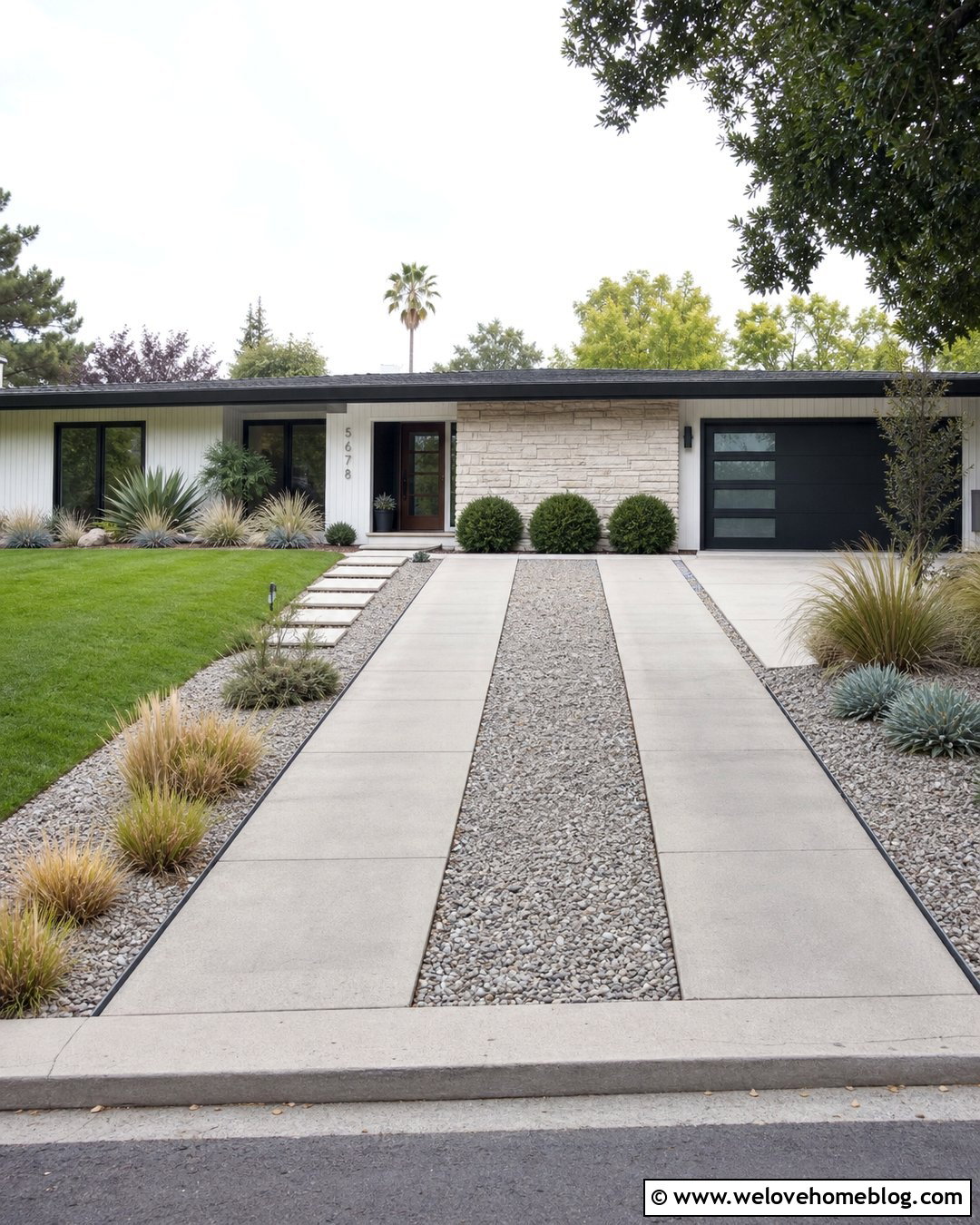
Clean lines can make a gravel driveway feel appropriate beside a modern or midcentury home. Use charcoal-gray angular gravel in a straight or gently angled layout, then contain it with slim black steel edging. The dark edge visually connects the driveway to black window frames, exterior lights, or a metal roof. Large rectangular concrete stepping pads can create a defined pedestrian route without covering the entire gravel surface. Keep the planting simple with repeated groups of feather reed grass, blue fescue, low juniper, and compact evergreen shrubs. A narrow strip of dark river rock between the steel edge and planting beds adds another controlled texture. The finished driveway looks modern and uncluttered while remaining softer than a continuous concrete slab.
4. Curved Gravel Driveway With Stone Borders
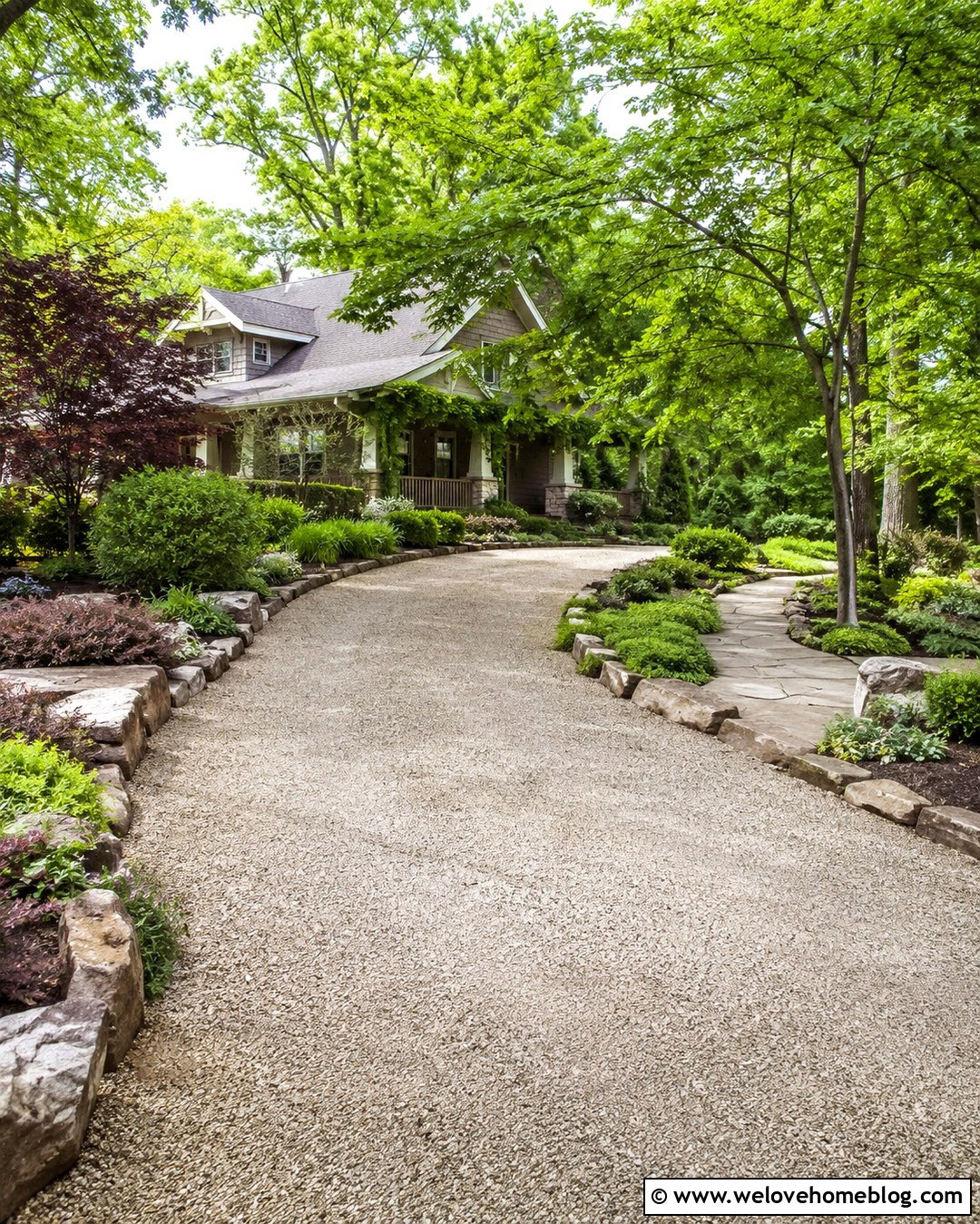
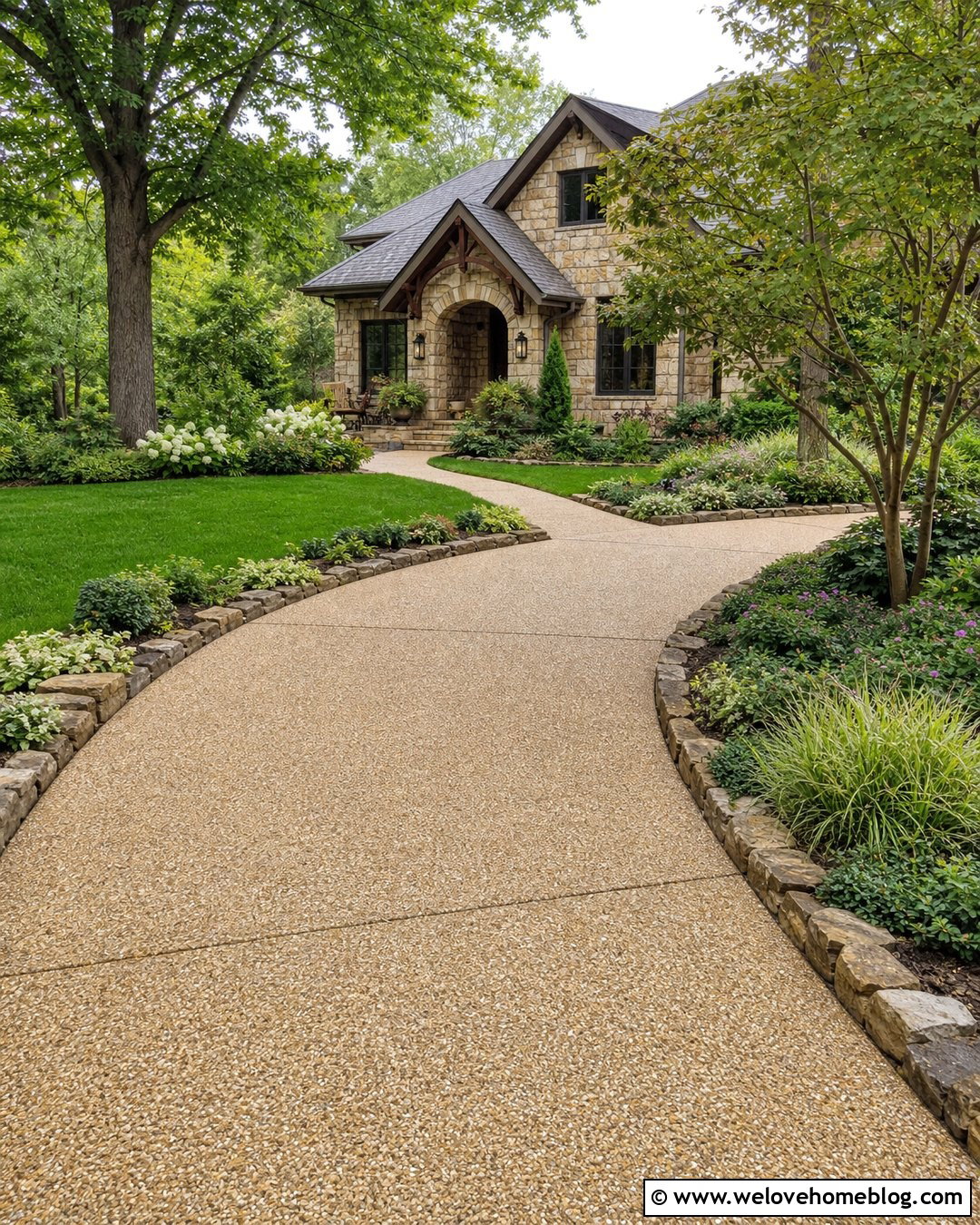
A curved gravel driveway can guide the eye through a large front yard and reveal the house gradually. This layout works especially well where existing trees, slopes, or planting beds make a straight approach feel forced. Use buff or gray crushed gravel with substantial natural stone edging that follows the curve smoothly. Curved layouts blend naturally with gardens, but the driving lane should remain wide enough for comfortable turns and clear visibility. () Plant low shrubs and ground covers along the inside curve, reserving taller trees for areas where they will not hide approaching vehicles. A flagstone walkway can branch from the driveway near the parking area. Repeating the same stone on porch steps or retaining walls gives the entire entrance a unified appearance.
5. Circular Gravel Driveway With a Garden Island
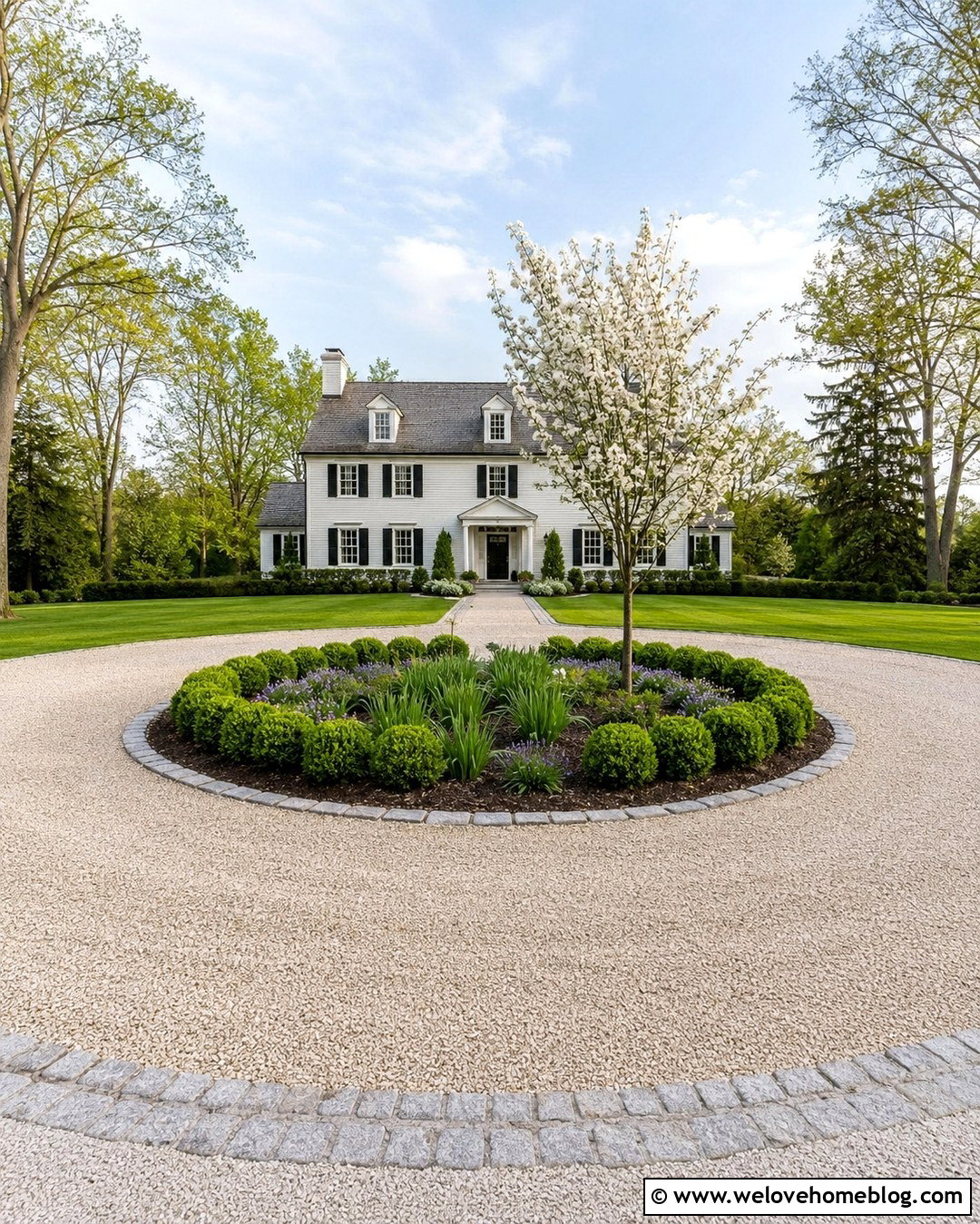
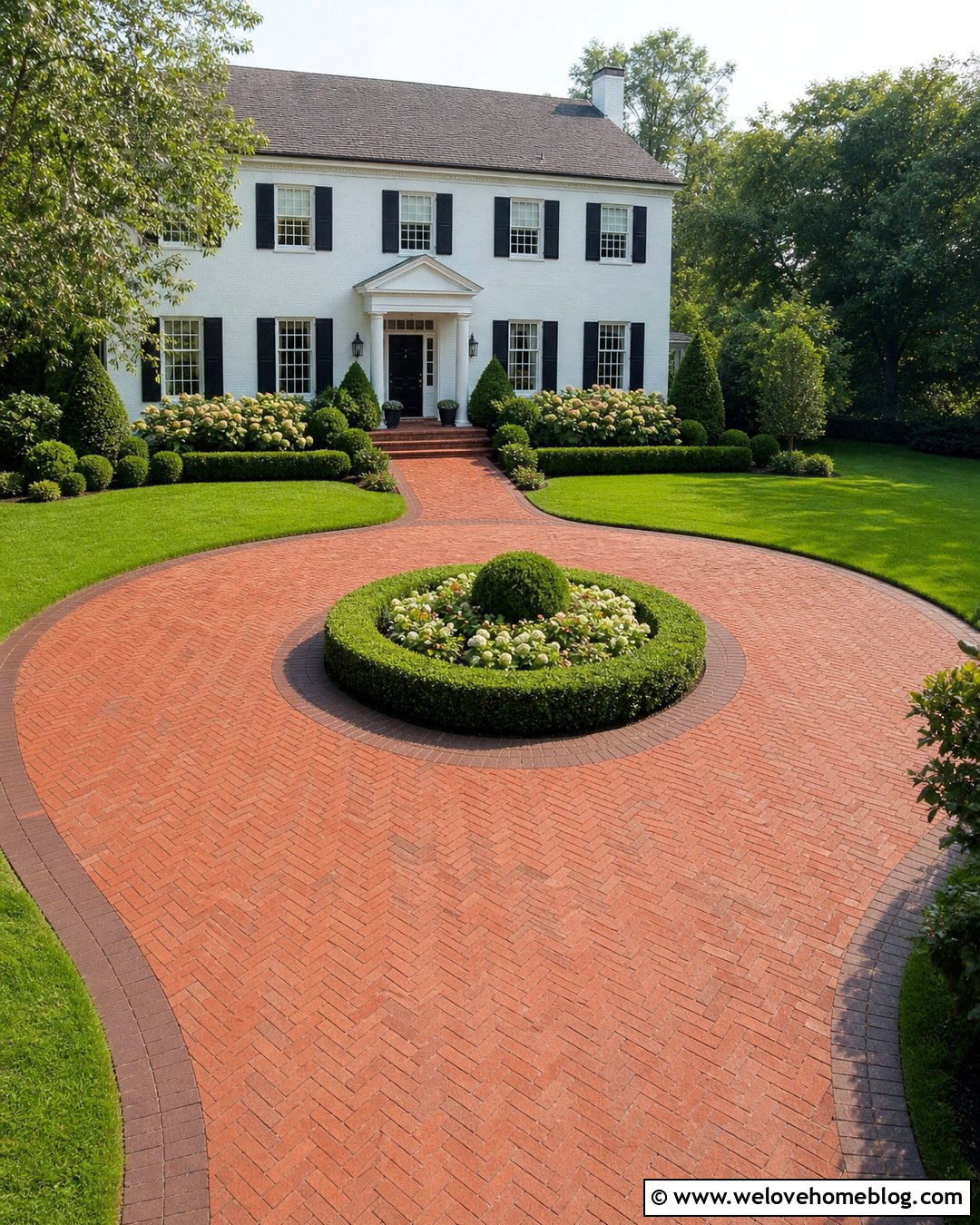
A circular gravel driveway provides an impressive approach and allows vehicles to move toward the street without backing down a long lane. Place a landscaped island at the center, leaving a comfortable driving loop around it. Pale limestone gravel gives the circle a bright, formal appearance, while cobblestone edging keeps the perimeter crisp. Design the island around one small ornamental tree, such as a serviceberry or redbud, with low shrubs and seasonal perennials beneath it. Avoid dense planting that could obstruct the view across the circle. Carry a straight stone walkway from the inner edge to the front entrance. This layout works beautifully with Colonial, Georgian, and traditional homes, especially when balanced by symmetrical foundation beds and matching entrance pillars.
6. White Gravel Driveway With Coastal Landscaping
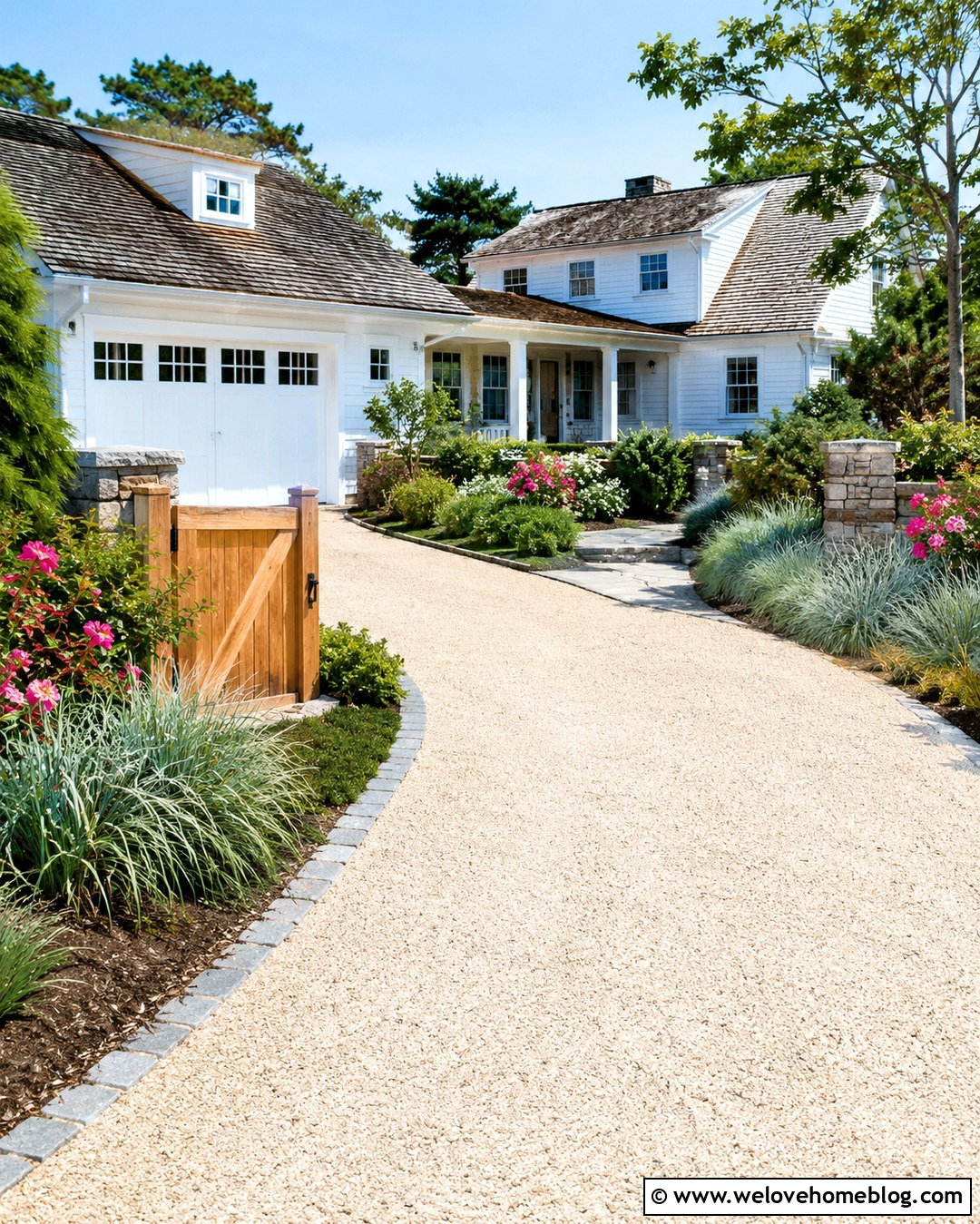
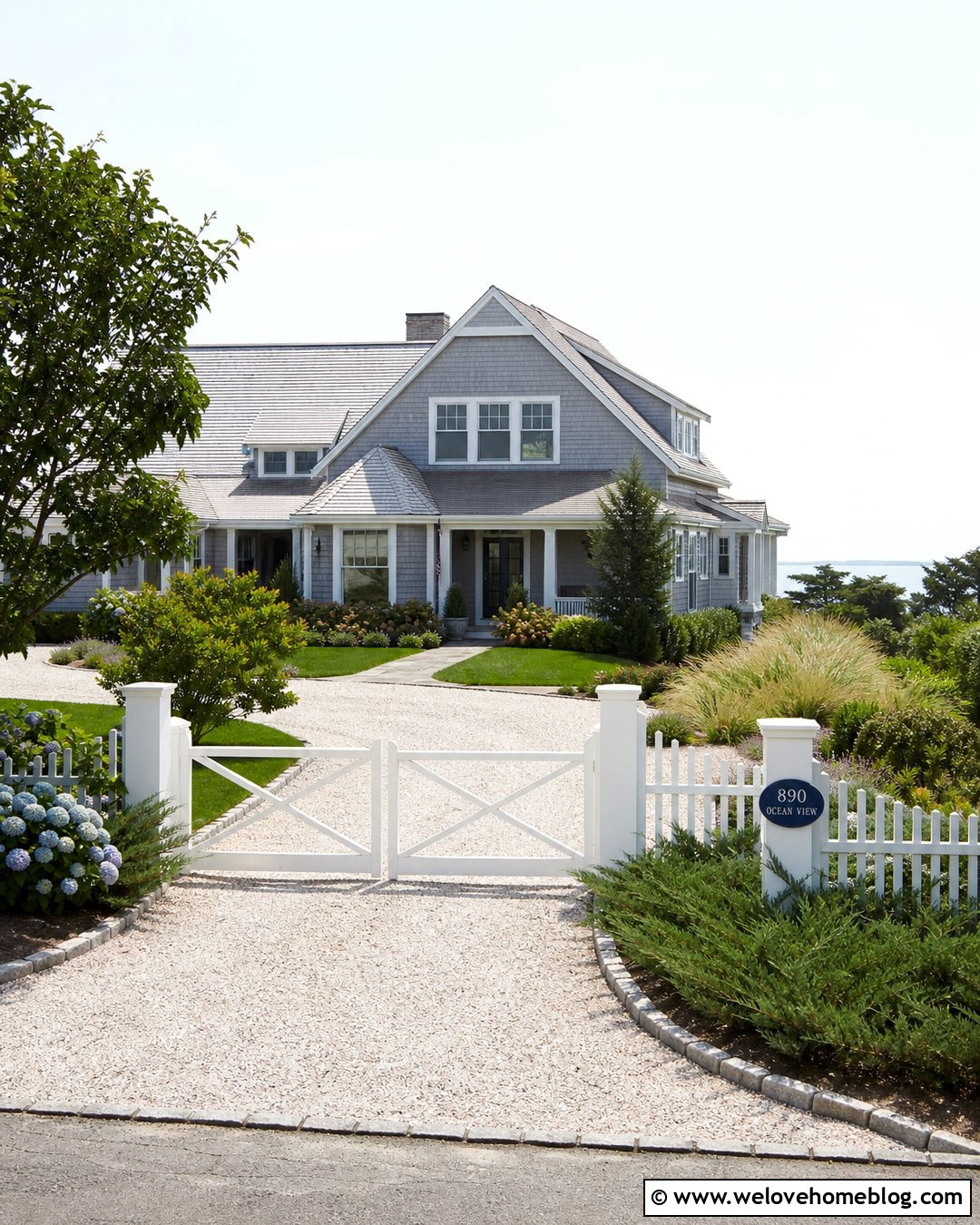
Pale limestone gravel brings a light, relaxed quality to a coastal, beach-inspired, or white-sided home. A softly curved driveway prevents the bright surface from looking too rigid and allows planting beds to flow around it. Edge the gravel with light gray cobblestones or weathered granite set low enough to create a tidy transition. Use salt-tolerant or regionally suitable plants where coastal exposure is a concern. Ornamental grasses, rugosa roses, low evergreens, and blue-green foliage complement the stone without creating a fussy landscape. A bluestone walkway and natural wood gate add subtle contrast. Because very light gravel can show leaves and soil, keep nearby planting slightly set back and include a practical maintenance strip along the most heavily planted edges.
7. Black Gravel Driveway With Concrete Bands
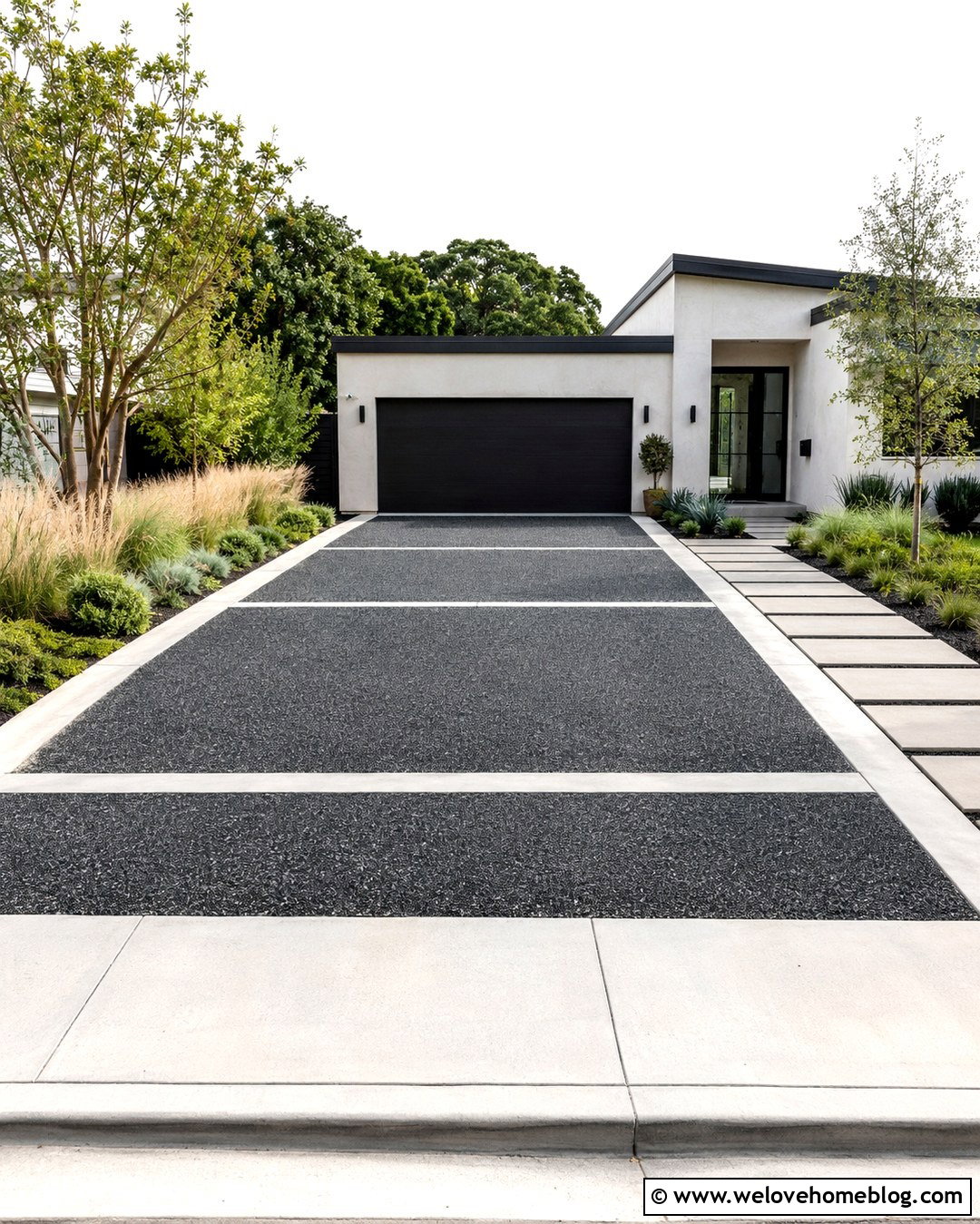
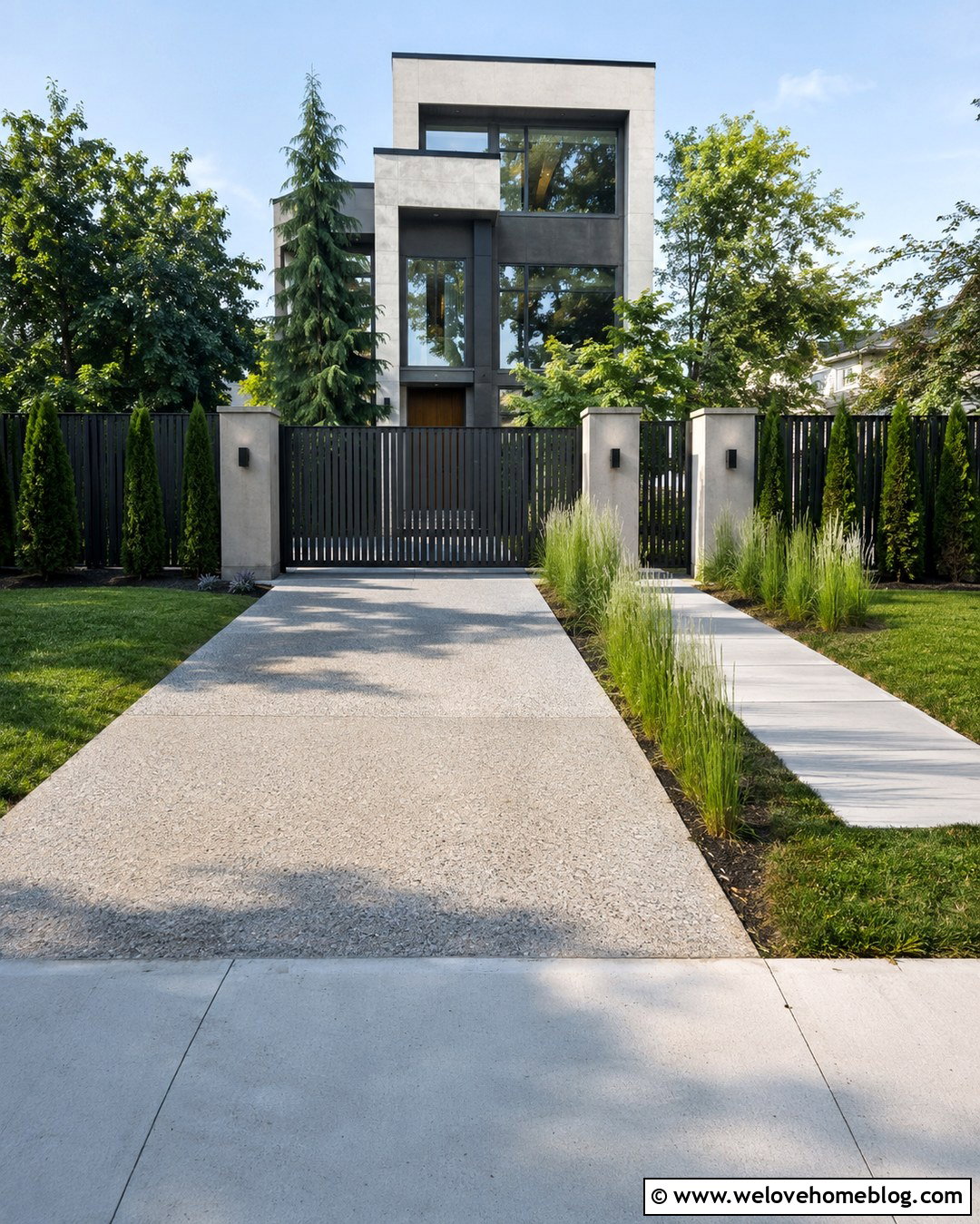
Black gravel creates a dramatic foreground for a contemporary home with pale stucco, light brick, or natural wood siding. Select dark angular gravel and divide the driveway with narrow poured-concrete bands. The bands can mark parking spaces, strengthen transitions, and repeat the geometry of the facade. Frame the straight driveway with flush concrete curbs that contain the gravel without introducing decorative detail. For landscaping, use broad masses of green plants rather than many flower colors. Boxwood alternatives, ornamental grasses, agave in suitable climates, and low spreading junipers can deliver a structured appearance. Large concrete pavers should form a separate path to the entrance. The strong contrast among black gravel, light concrete, and simple greenery produces a distinctive driveway without relying on excessive ornament.
8. Gravel Driveway With a Brick Ribbon
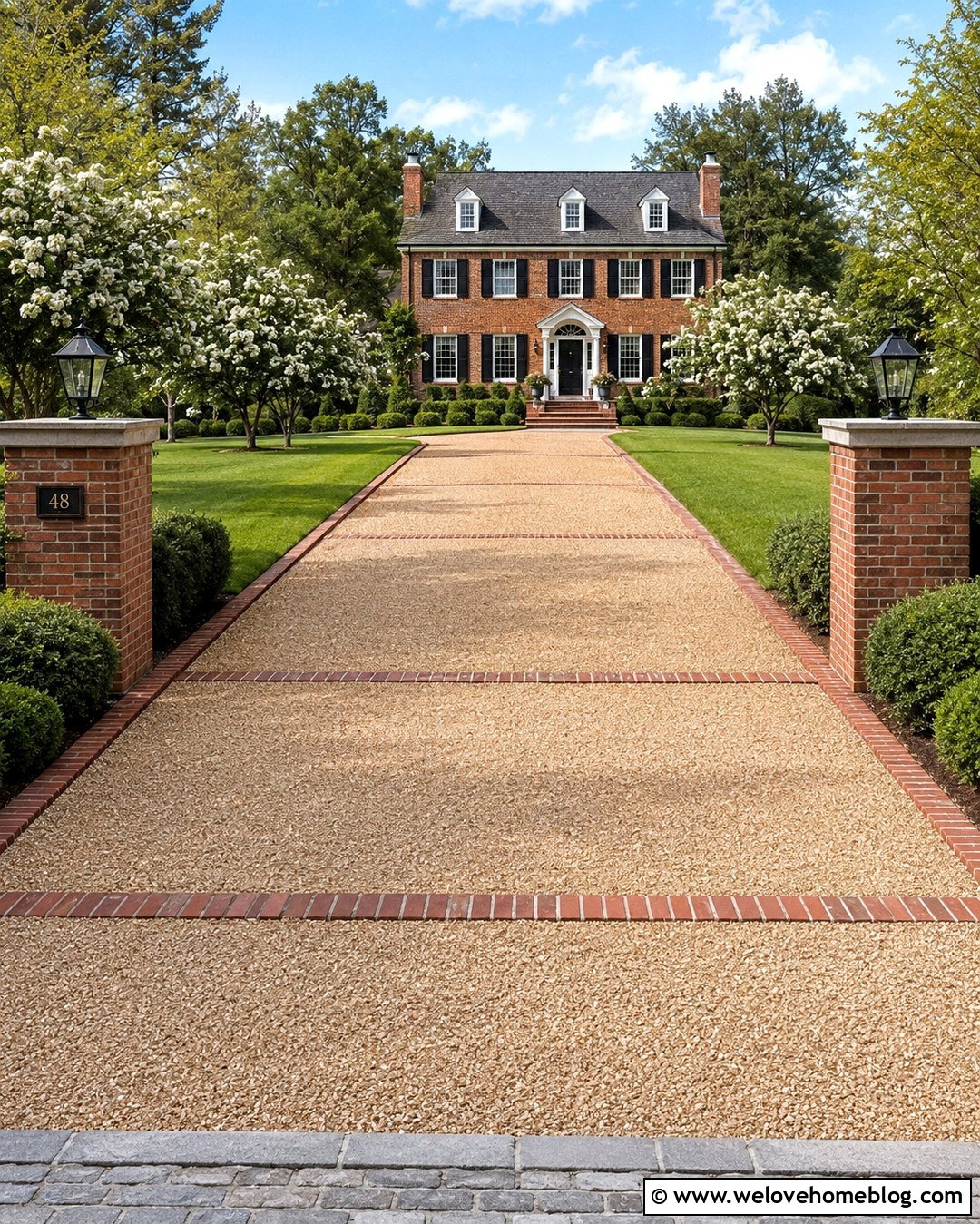
A brick ribbon adds color and structure to a gravel driveway while using less masonry than a fully paved surface. Start with compacted beige or gray gravel, then install a band of clay brick across the entrance, near the garage, or along both edges. Another brick strip can separate the parking area from the main driving lane. Choose a brick color that repeats the chimney, porch steps, or home facade. For a Colonial or traditional house, use a straight driveway framed by symmetrical lawns and evergreen foundation planting. Rounded shrubs, small flowering trees, and brick entrance pillars strengthen the formal arrangement. Make the brick bands wide and stable enough to remain visually clear after gravel is raked back into place during routine maintenance.
9. Gravel Driveway With Paver Tracks
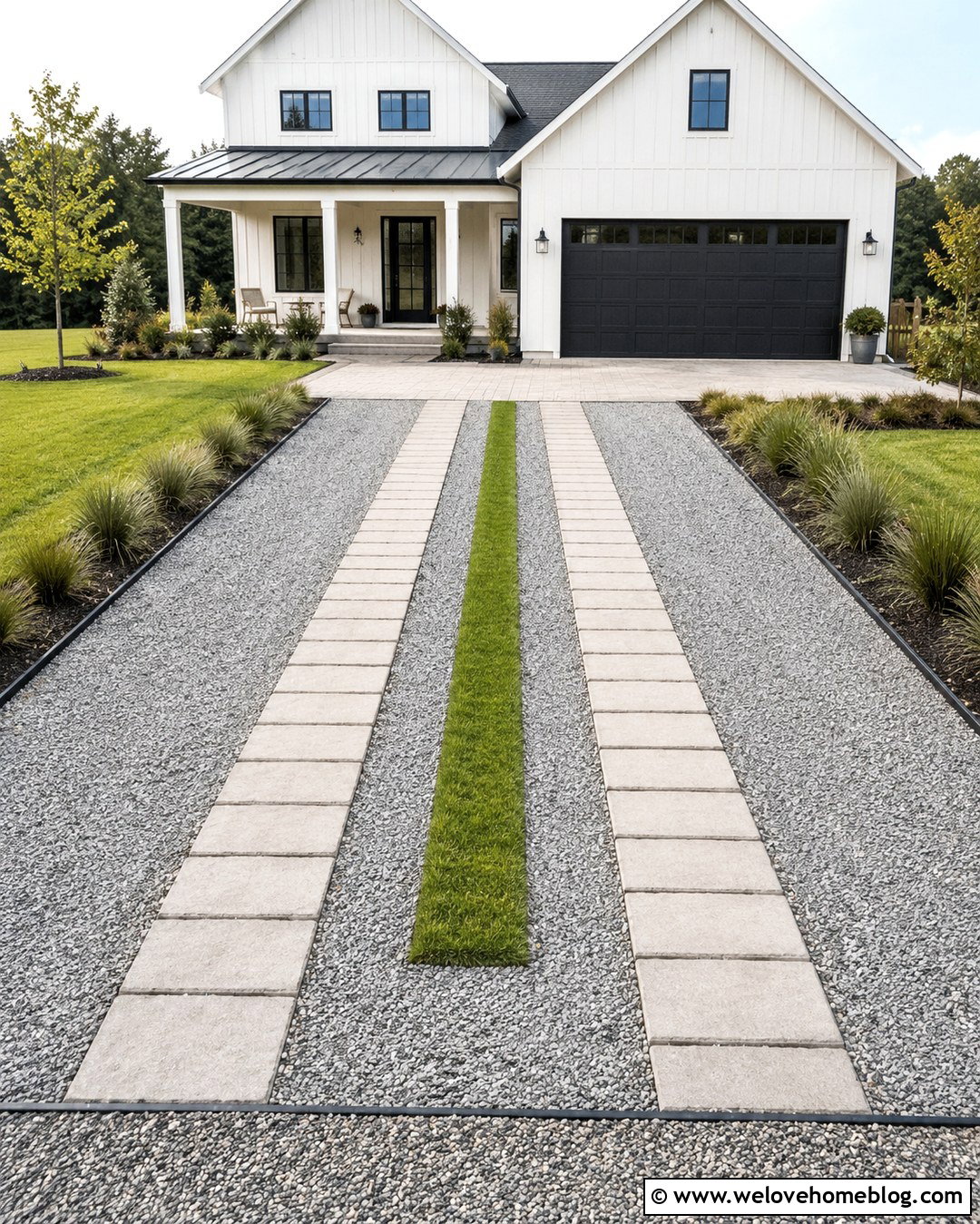
Paver tracks create a clear path for vehicle tires while preserving the natural texture and permeability associated with gravel. Build two parallel tracks from concrete or stone pavers and fill the center and outer areas with compacted gravel. Accurate spacing is important, so plan the tracks around the vehicles that regularly use the driveway. A straight layout looks especially neat beside a ranch or contemporary farmhouse. Add steel edging to the outer sides and a narrow grass or low-ground-cover strip between the tracks where growing conditions permit. Near the garage, transition to a full-width paver apron that makes turning and parking easier. Repeating the pavers in the front walkway connects the driveway to the house and prevents the mixed materials from appearing accidental.
10. Long Gravel Driveway With Trees
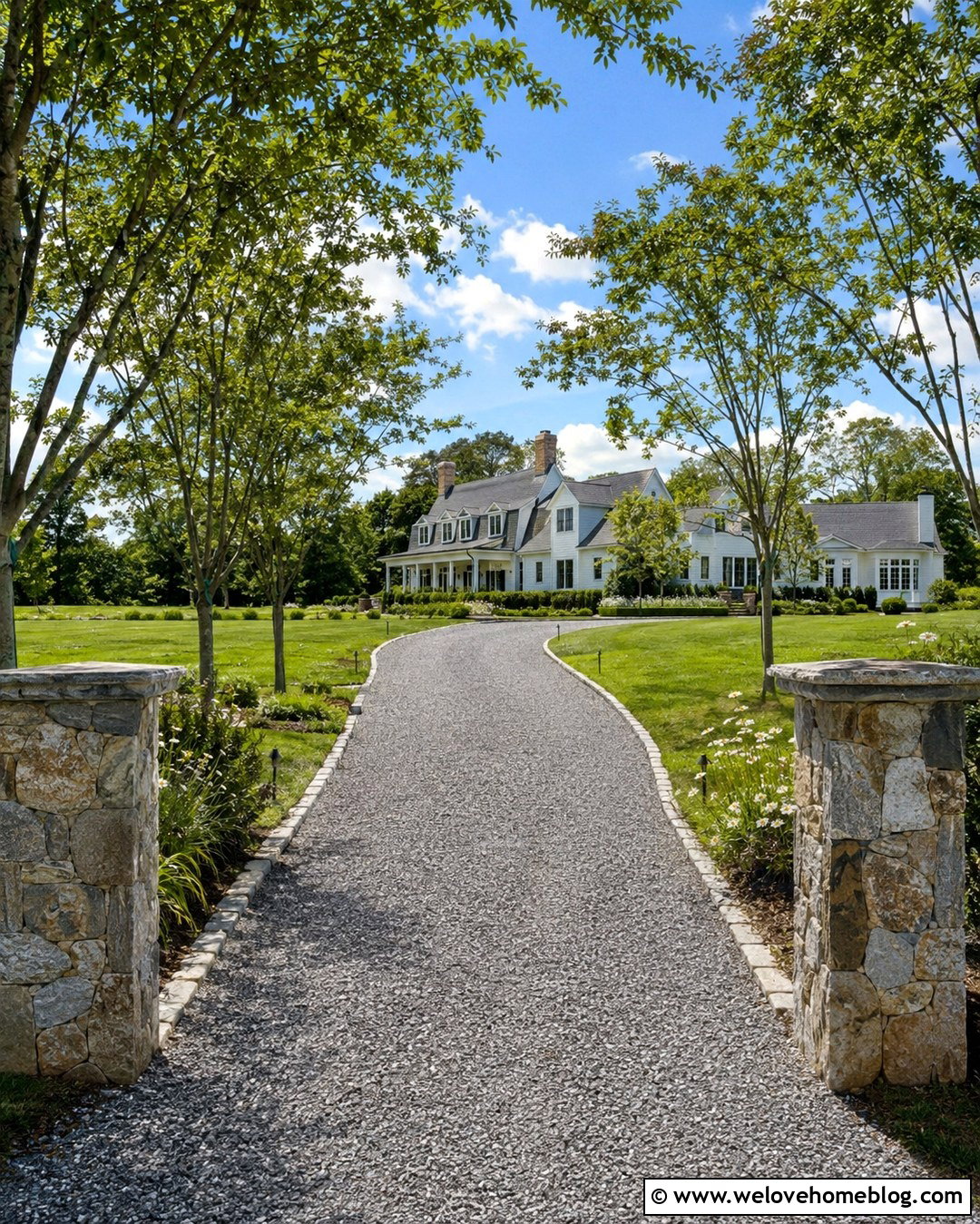
Few entrances feel as established as a long gravel driveway framed by trees. Use medium-gray crushed gravel in a straight or gently curving lane that leads toward a farmhouse, Colonial home, or country estate. Plant evenly spaced deciduous trees outside the driveway’s drainage and utility zones, allowing enough room for mature trunks, roots, and canopies. A low fieldstone edge can define key areas without lining every foot of the drive. Underplant the trees with grass, meadow flowers, or simple ground cover suited to local conditions. At the house, widen the lane into a gravel parking court or turnaround. Matching stone pillars at the roadside entrance create a clear starting point, while restrained landscape lighting can improve orientation without overpowering the natural setting.
11. Narrow Gravel Driveway With Low Borders
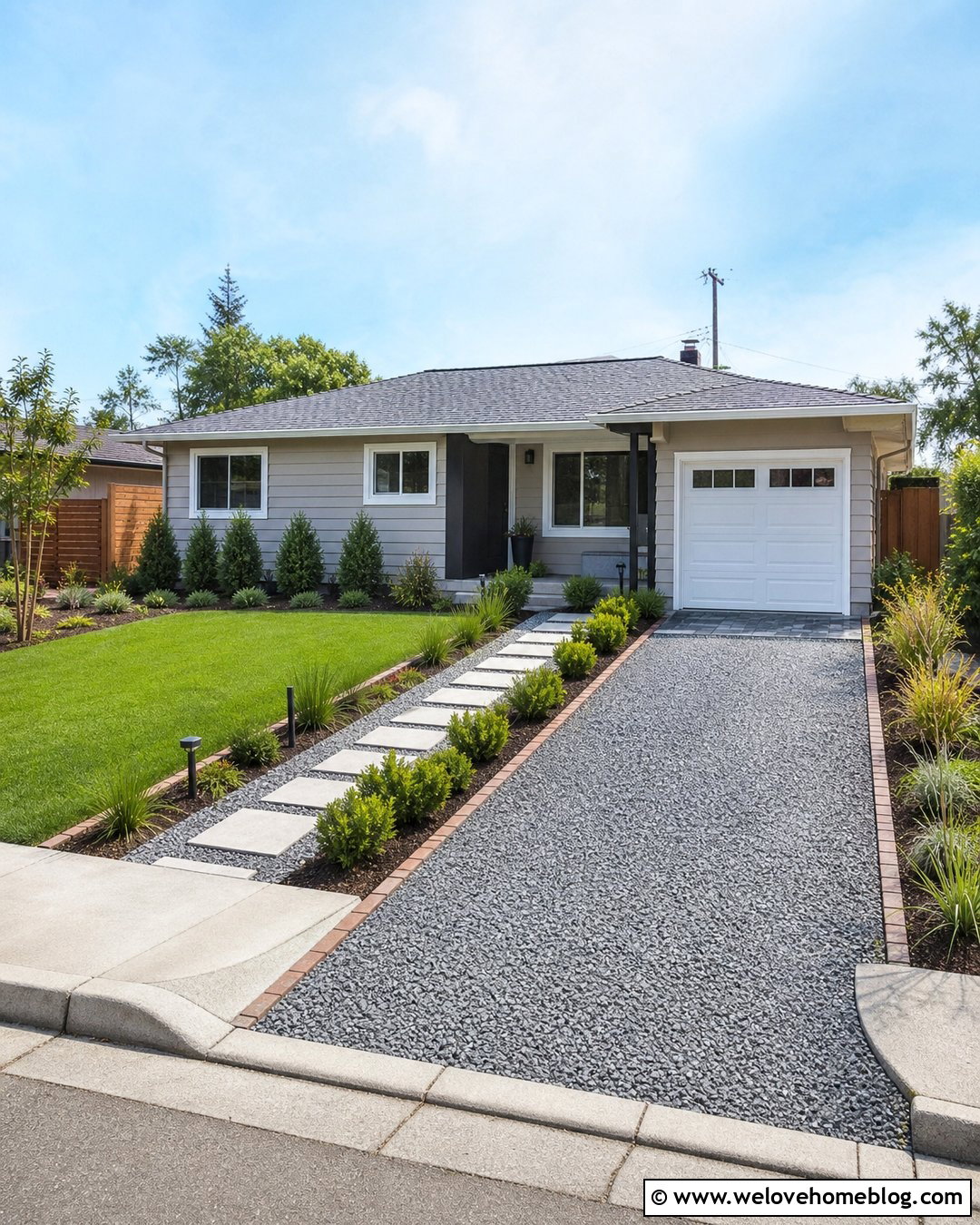
A narrow side-yard or suburban driveway needs crisp boundaries and uncomplicated landscaping. Choose small angular gravel in a medium tone that will not create harsh contrast with the home. A straight shape maximizes usable width, while flush concrete or brick borders prevent the surface from spilling into nearby beds. Keep shrubs low and place them far enough back that branches will not scratch vehicles or restrict door clearance. A slim planting strip can contain dwarf ornamental grasses, creeping ground cover, or compact evergreen plants. Where space allows, add a separate stepping-stone path along one side so pedestrians do not have to walk through loose gravel. Finish the garage transition with a durable paver apron, which visually anchors the narrow lane and simplifies the change between surfaces.
12. Sloped Gravel Driveway With Stabilization Grids
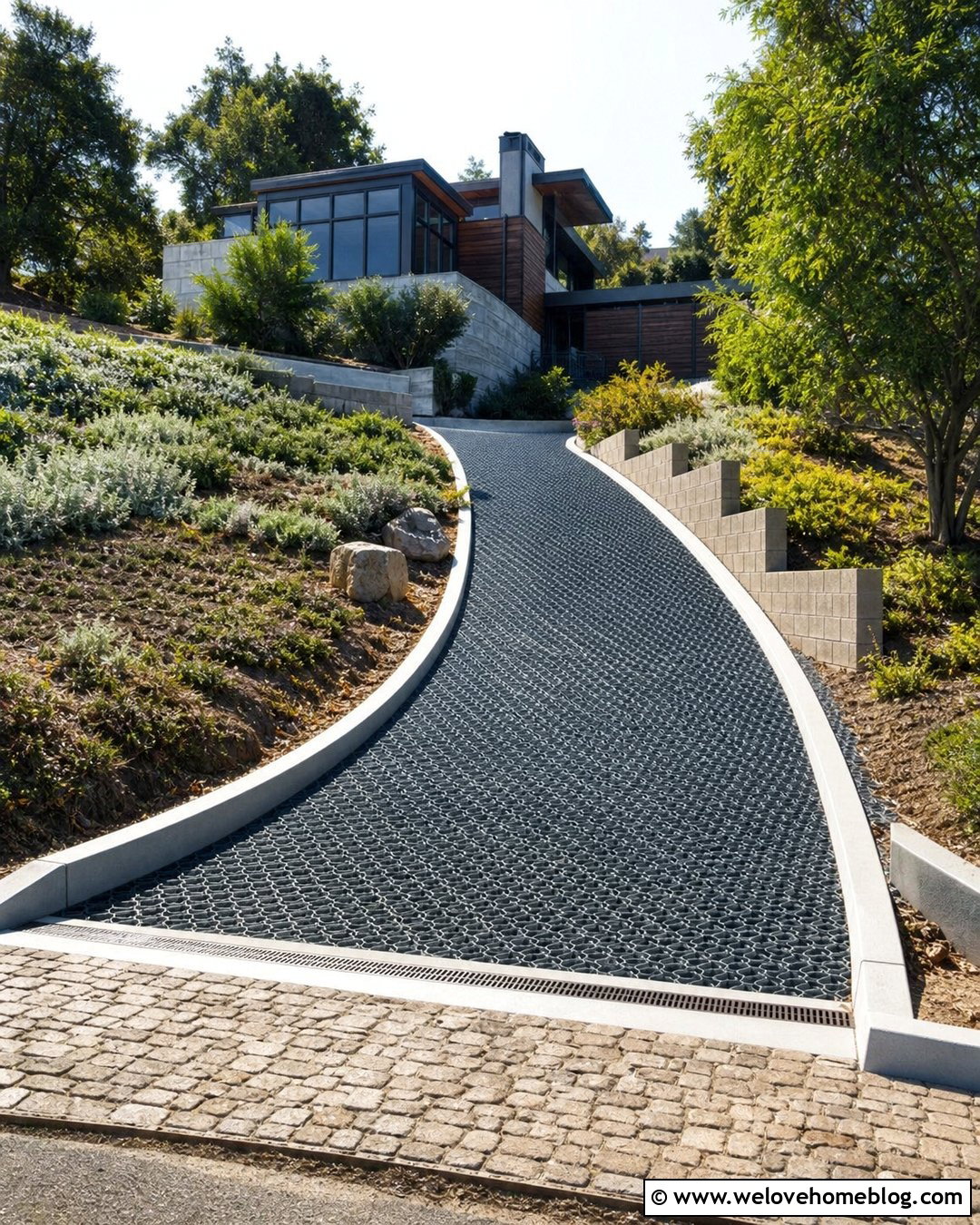
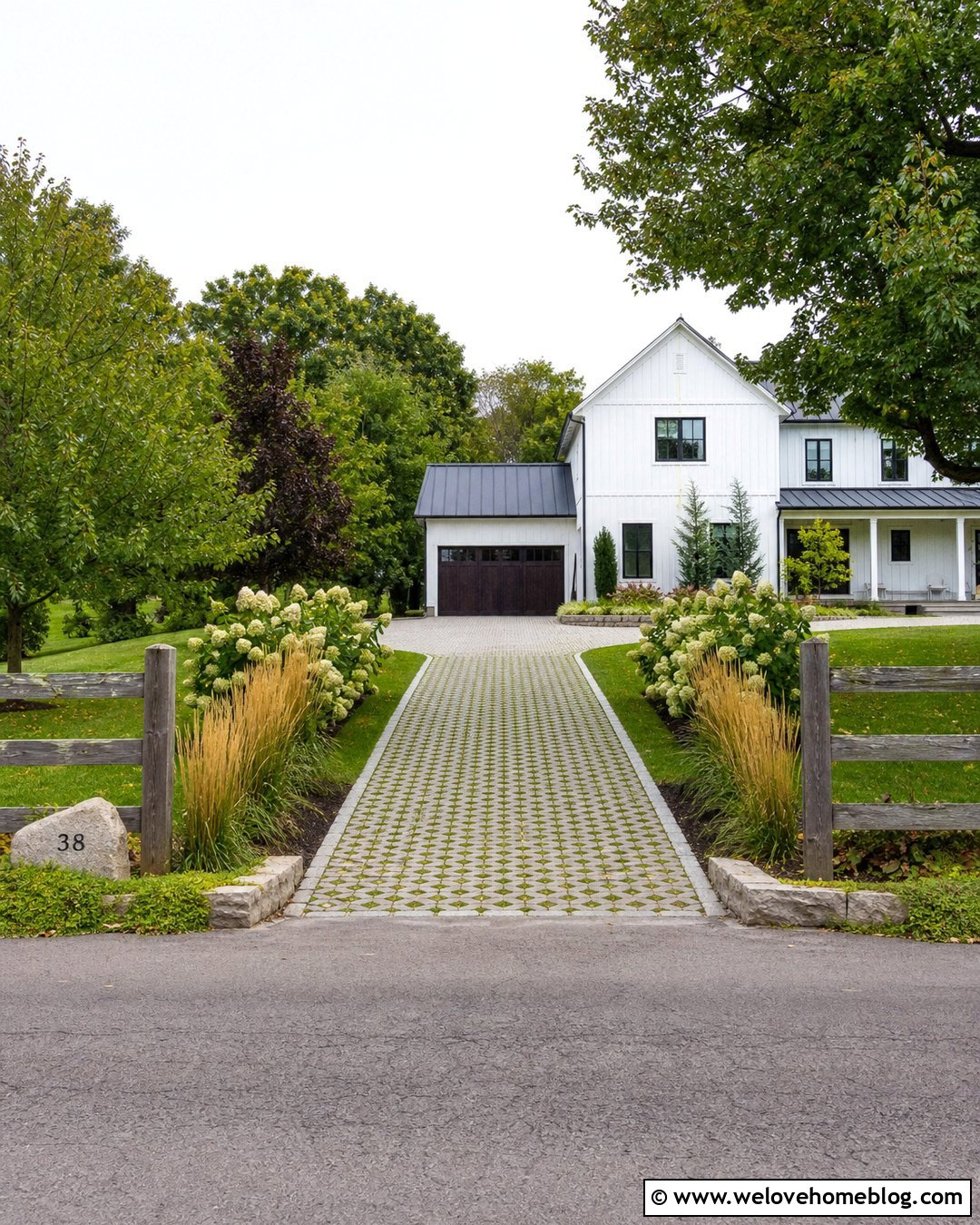
Sloped gravel driveways require more control than flat installations. Use angular crushed stone in a cellular stabilization grid to help limit displacement, washouts, and tire ruts. Rounded pea gravel is generally better reserved for flatter decorative areas unless it is securely contained. Install sturdy concrete, stone, or masonry curbs along the sides, and direct runoff toward an appropriate drainage system rather than neighboring property or building foundations. The driveway can follow a gentle curve to reduce the visual severity of the slope, provided the layout remains safe and practical. Plant erosion-resistant ground covers and low native shrubs beyond the curbs. At the bottom, use a contrasting cobblestone or concrete apron to create a durable entrance where gravel would otherwise meet the road.
13. Budget Gravel Driveway With Crusher Run
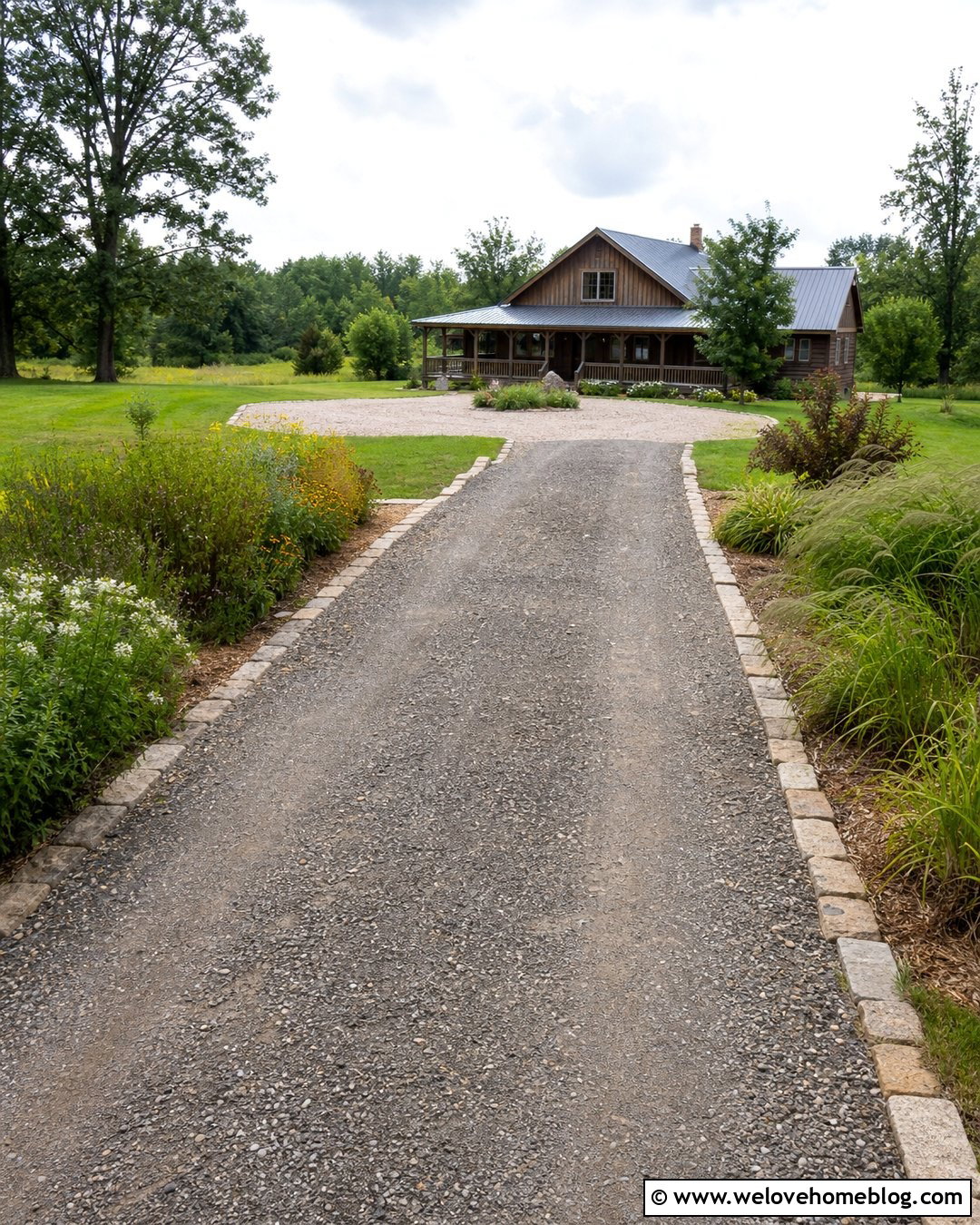
Crusher run offers a straightforward option for a practical rural or backyard driveway. Its mixture of crushed stone and fines compacts into a firmer surface than decorative rounded gravel. Keep the layout straight and simple to reduce excavation, edging, and material costs. Pressure-treated timber, reclaimed granite blocks, or a carefully cut lawn edge can contain the surface, depending on the expected traffic and desired finish. Add a slightly more decorative top layer near the house if the budget allows, while retaining crusher run along the longer approach. Native shrubs and informal meadow planting can make the economical material feel appropriate rather than unfinished. Spending first on grading, drainage, and a stable base is generally more valuable than adding elaborate decorative details to a poorly prepared driveway. ()
14. Gravel Driveway With a Cobblestone Apron
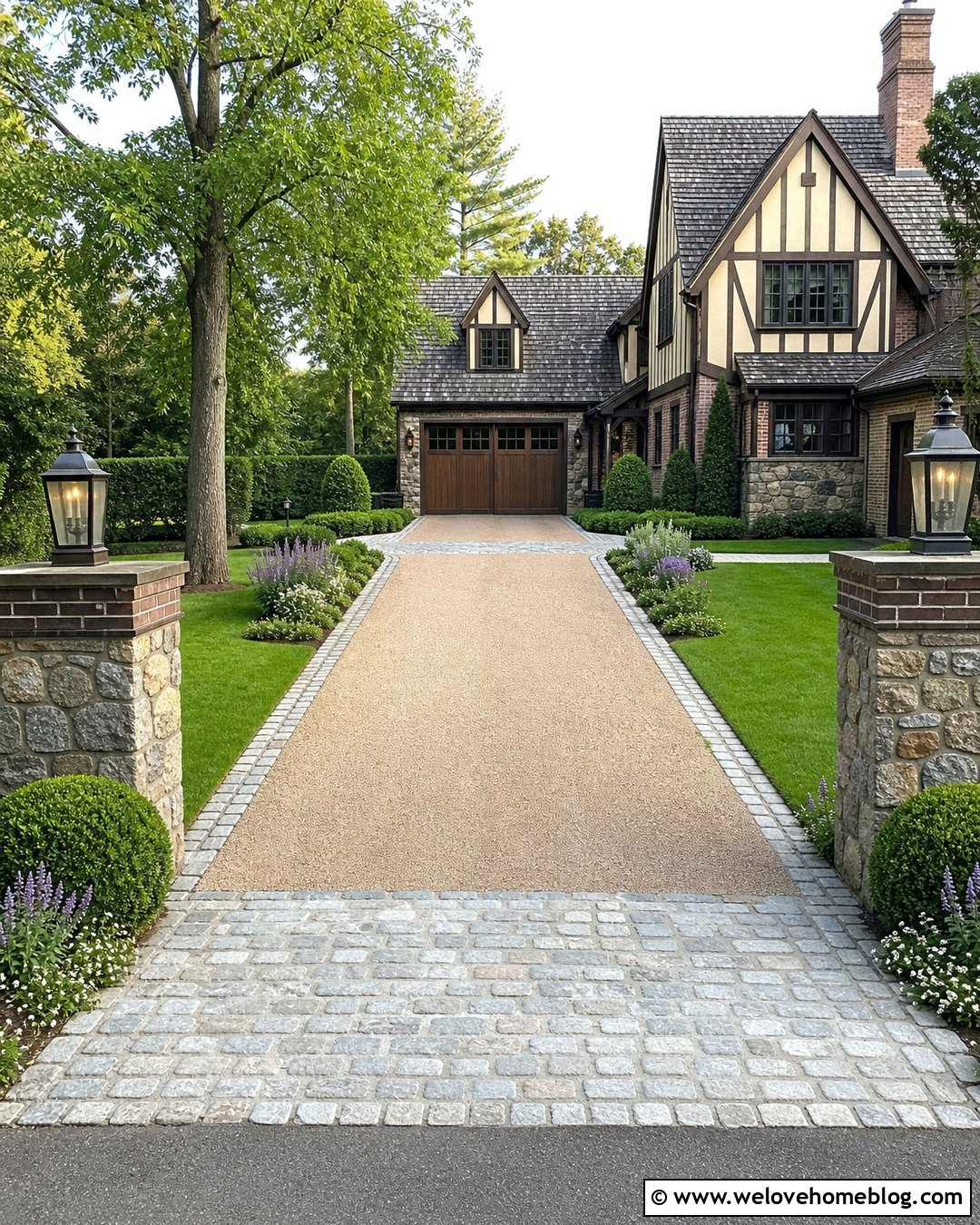
A cobblestone apron gives a gravel driveway a strong, polished entrance. Install the stones across the full driveway width where the gravel meets the street, using a stable base and properly restrained edges. The apron catches attention at the curb and helps define the point where the private driveway begins. Continue a single row of cobblestones along the gravel edges or repeat the material around nearby planting beds. Warm beige gravel pairs well with weathered gray and brown cobbles, especially beside Tudor, Craftsman, and traditional brick homes. Add simple entrance columns, clipped shrubs, and low flowering perennials on both sides. A second cobblestone threshold near the garage can visually bookend the driveway and make the complete approach feel more thoughtfully constructed.
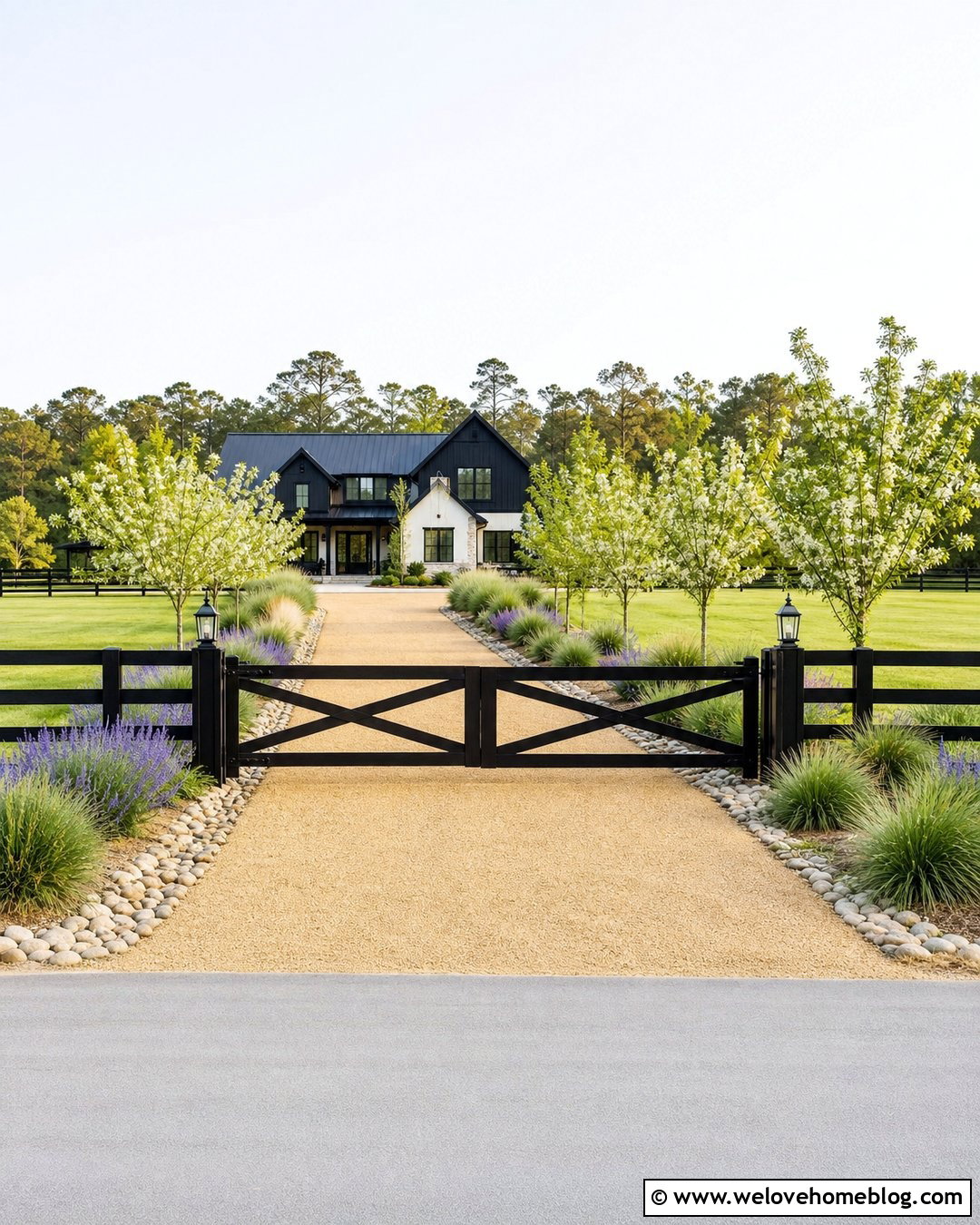
15. Horseshoe Gravel Driveway With Two Entrances
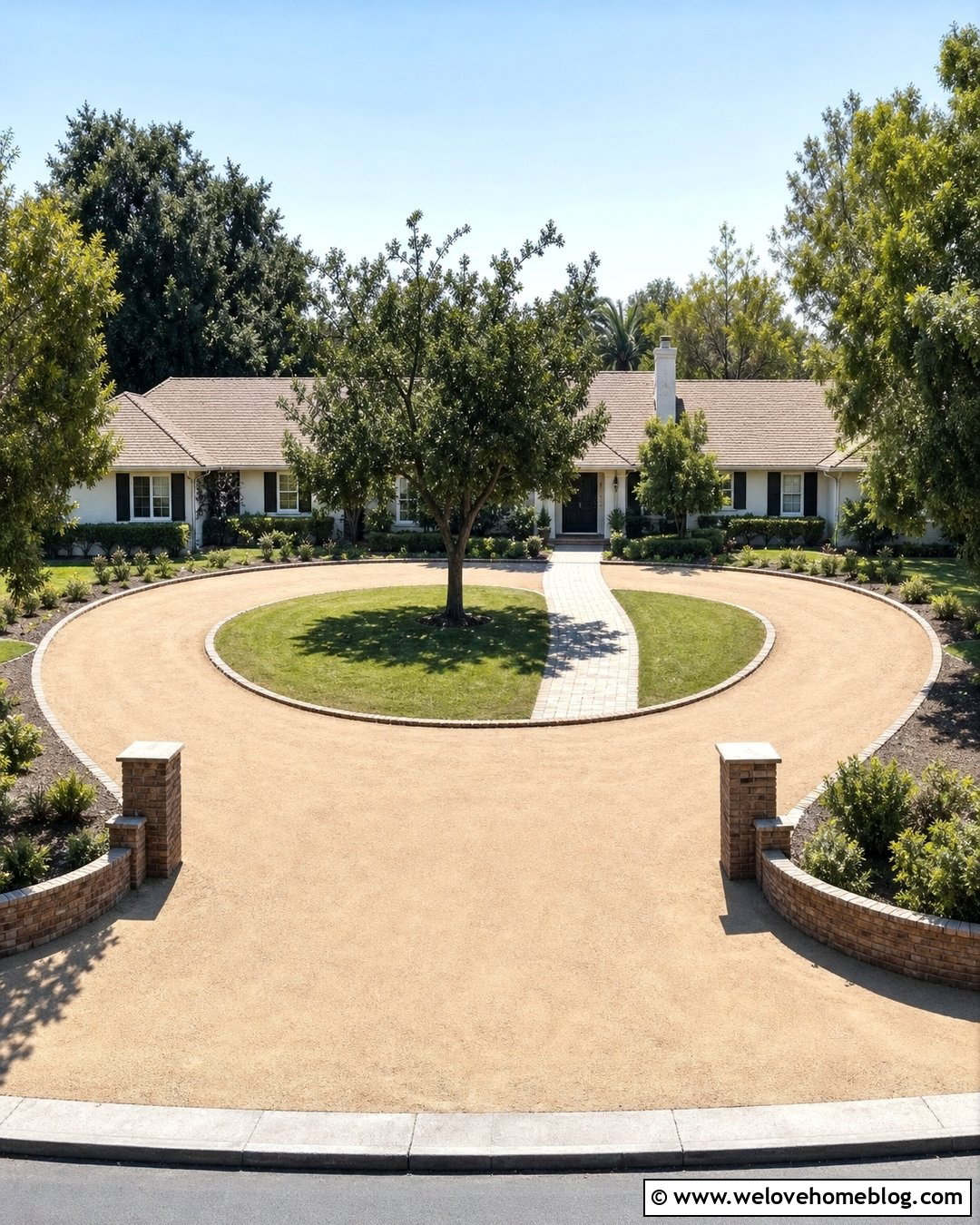
A horseshoe driveway creates a convenient in-and-out route across a wide front yard. Cover the sweeping U-shaped layout with compacted tan gravel and use brick or natural stone edging to hold its curves. Keep the two street entrances visually balanced with matching pillars, low walls, or planting beds. The central lawn becomes the main landscape feature, so shape it carefully and add one ornamental tree or a layered shrub border without blocking views. Connect the front door to the inner curve with a broad walkway that is clearly separate from the driving surface. A horseshoe design can suit ranch, farmhouse, and traditional homes. Before construction, confirm local requirements for driveway openings, sight distance, drainage, and work near the public right-of-way.
16. Rustic Gravel Driveway With Fieldstone Walls
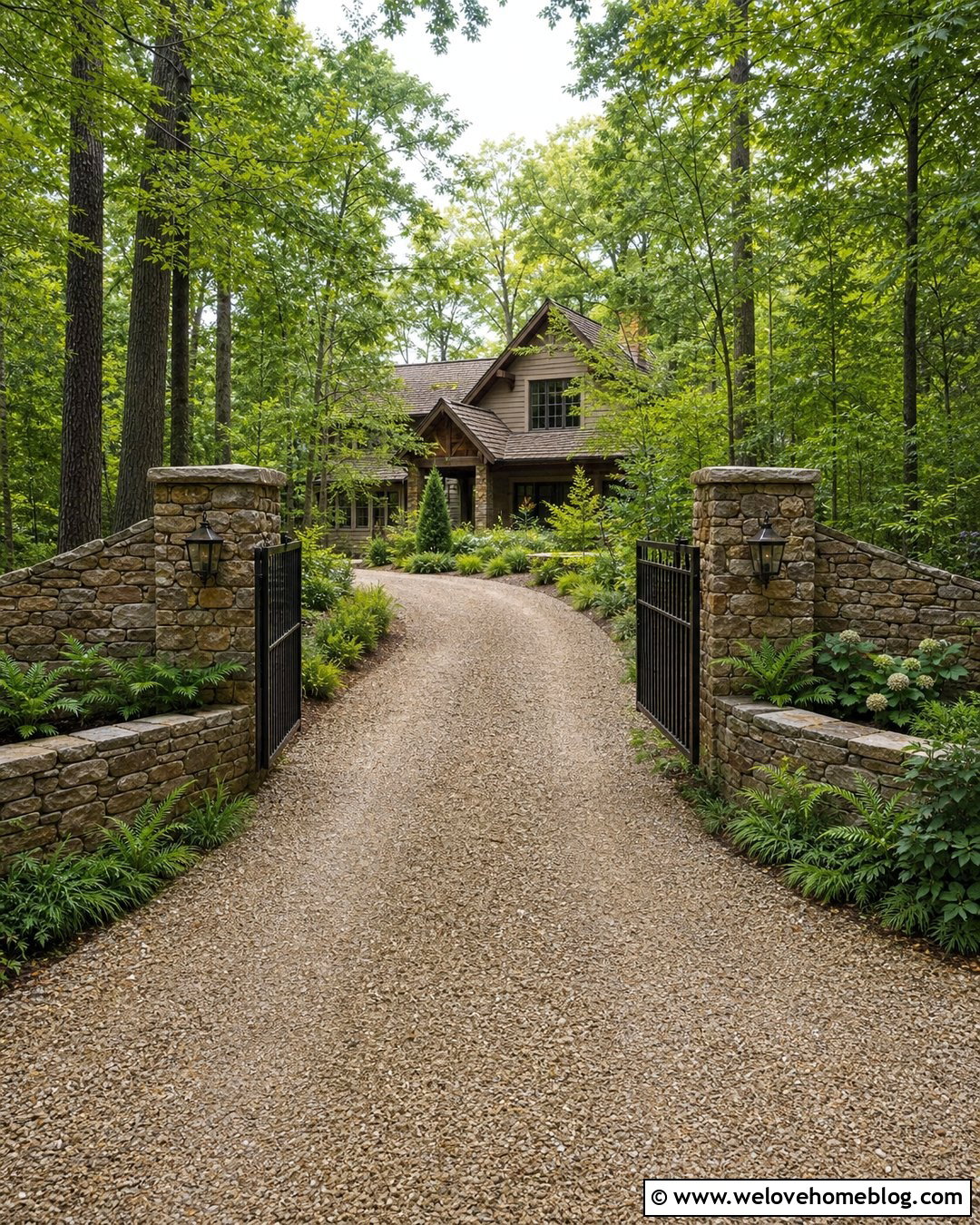
A rustic gravel driveway feels most convincing when its materials look connected to the surrounding land. Choose warm, irregular crushed gravel and form a gently curved approach through lawn or mature woodland. Low dry-stacked fieldstone walls can mark the entrance and continue along selected sections where the ground changes elevation. Avoid enclosing the entire driveway if that would make the landscape feel heavy. Install a simple wood or black metal gate between substantial stone pillars, leaving adequate space for vehicles to wait safely away from the road. Ferns, native grasses, hydrangeas, and informal evergreen shrubs soften the masonry. Repeat the fieldstone around porch foundations or garden beds so the walls appear integrated with the property rather than added as an isolated decoration.
17. Gravel Driveway With Drought-Tolerant Landscaping
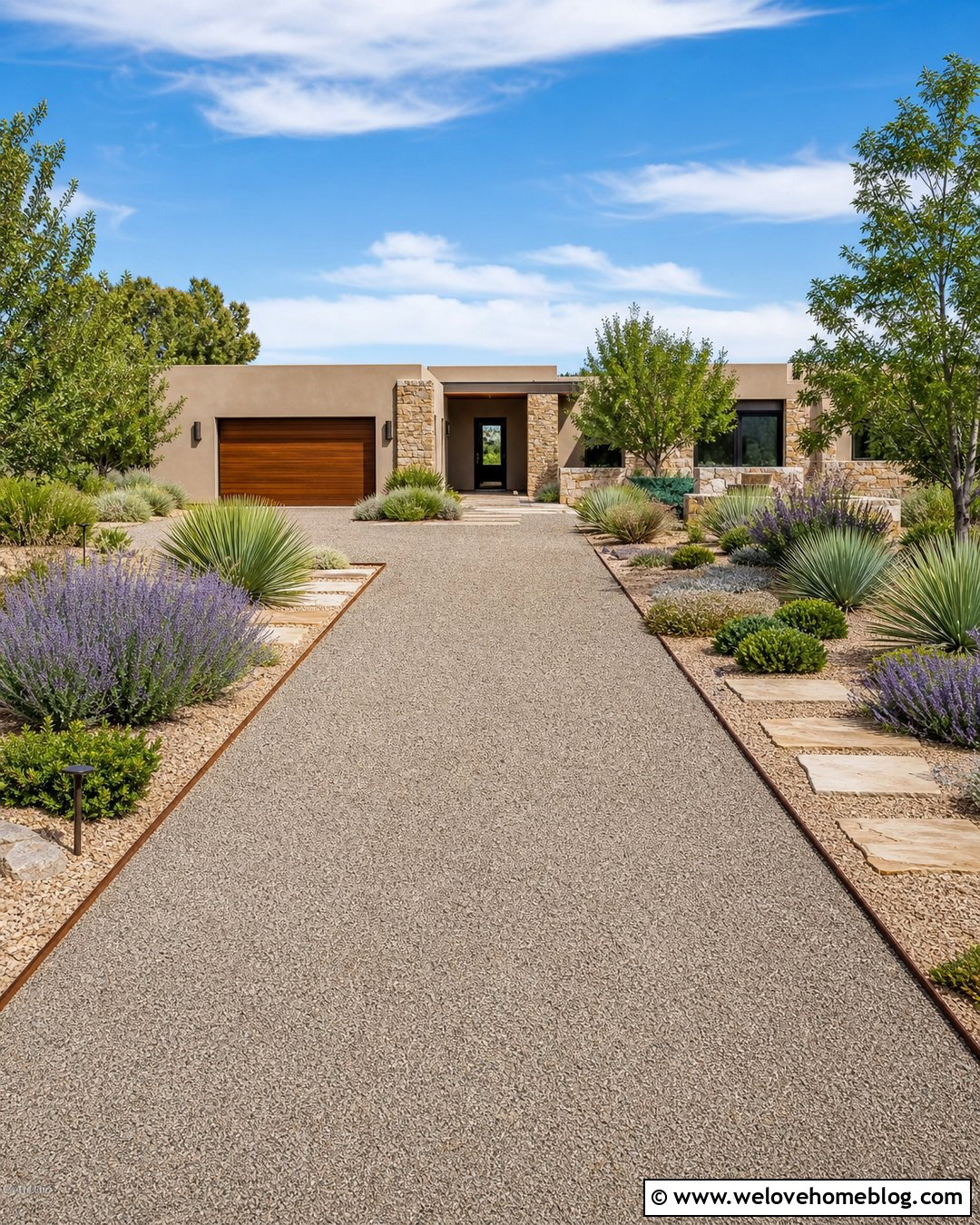
Gravel and water-wise planting can create a low-maintenance front yard with strong texture and year-round structure. Use warm gray or sandy angular gravel in a straight driveway with weathered steel edging. Beyond the edge, create wide planting beds topped with a contrasting fine gravel mulch. Select drought-tolerant plants that are appropriate for the local climate, soil, and winter temperatures. Lavender, salvia, yucca, agave, rosemary, ornamental grasses, and compact evergreens are possible choices in suitable regions. Arrange plants in repeated groups rather than scattered singles to give the driveway a deliberate rhythm. Large stepping stones can lead through the beds to the front door. Keep thorny or sharply pointed plants away from parking areas, pedestrian paths, and places where vehicle doors open.
18. Gravel Driveway With a Grass Median
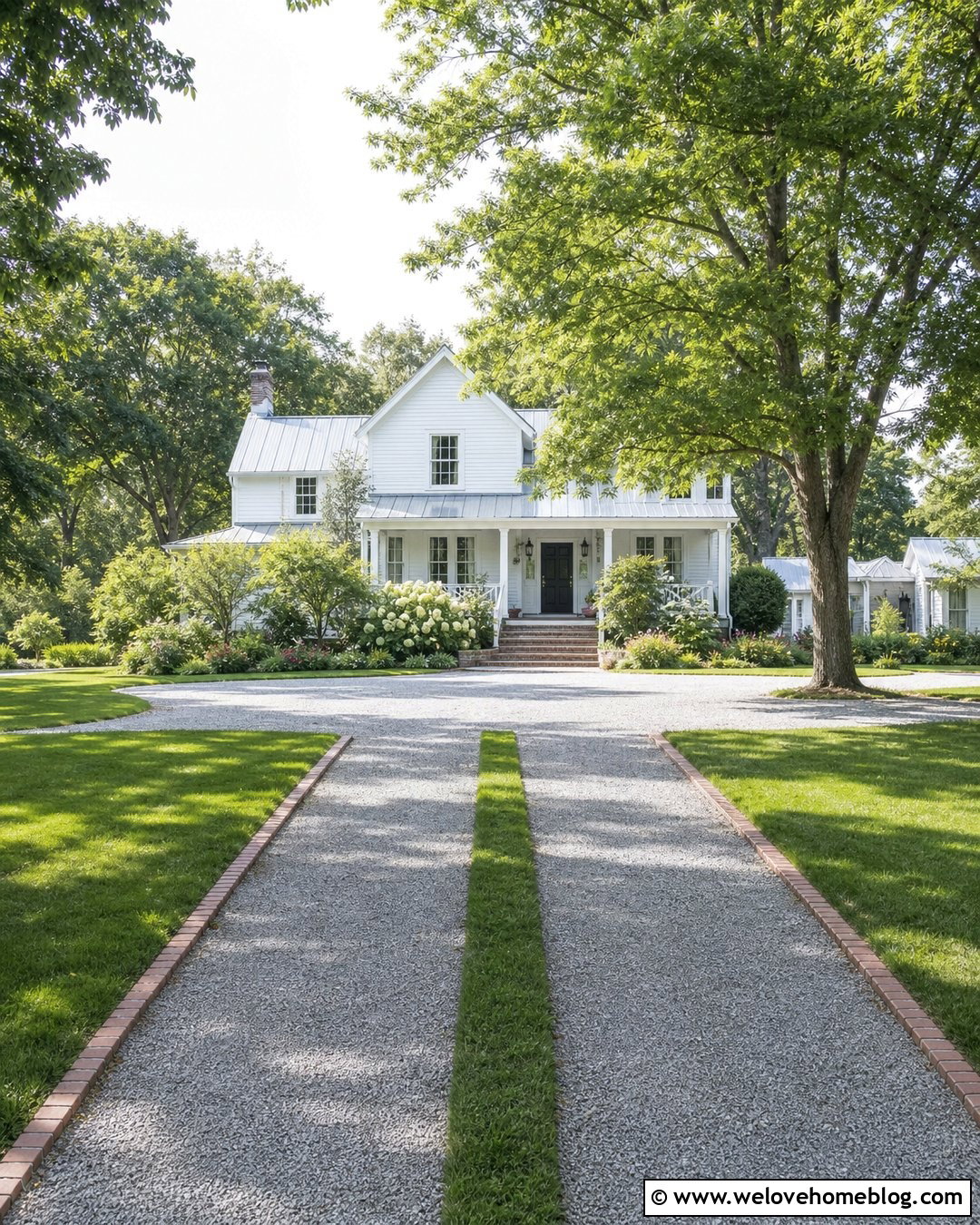
A grass median breaks up a broad gravel surface and gives the driveway the refined appearance of two wheel lanes. This design works best on a straight approach where vehicles can follow a predictable path. Use compacted gray gravel for the tire lanes and define the central grass strip with low steel, brick, or stone edging. Make the gravel lanes wide enough for comfortable driving, and ensure the median will not interfere with low-clearance vehicles. If lawn maintenance is impractical, replace turf with tough ground cover or a planted gravel strip. Continue both lanes into a full-width parking court near the house. This arrangement pairs naturally with ranch, cottage, and farmhouse architecture, particularly when the median aligns with a centered front door or entry walkway.
19. Gravel Driveway With Landscape Lighting
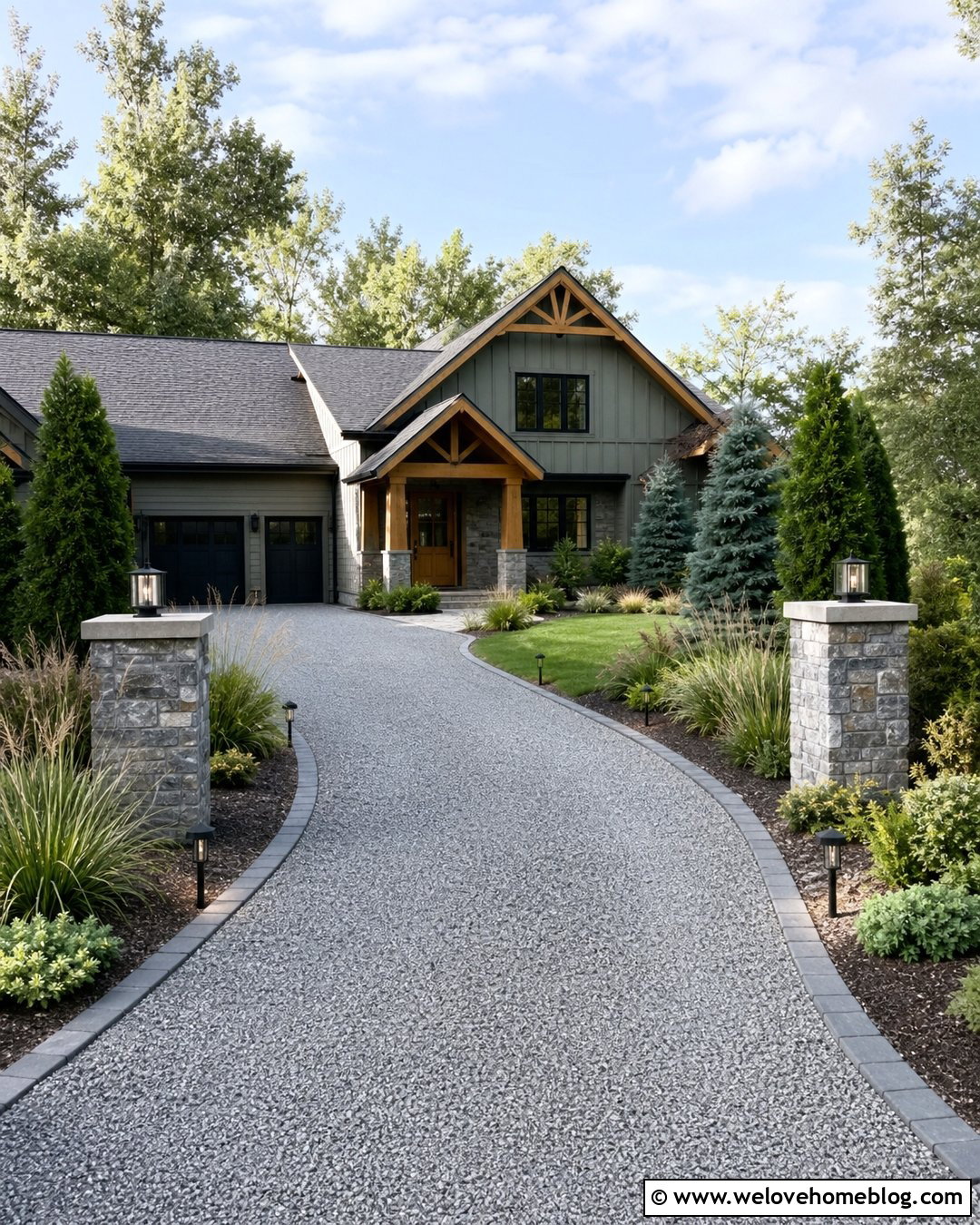
Thoughtful lighting makes a gravel driveway easier to navigate while adding structure to the front landscape. Begin with a gently curved gray gravel lane edged in dark granite setts. Install low, shielded fixtures at important points, such as the street entrance, changes in direction, walkways, steps, and parking areas. Space the lights consistently, but avoid creating an airport-runway effect. During the day, the fixtures should blend into planting beds filled with low shrubs, ornamental grasses, and ground covers. Matching wall lights on the garage or entrance pillars help connect the driveway lighting to the house. Although nighttime performance matters, the complete design should remain attractive in daylight, with visible borders, healthy planting, and a clear pedestrian route from the parking area to the front door.

20. Gravel Parking Court With a Stone Walkway
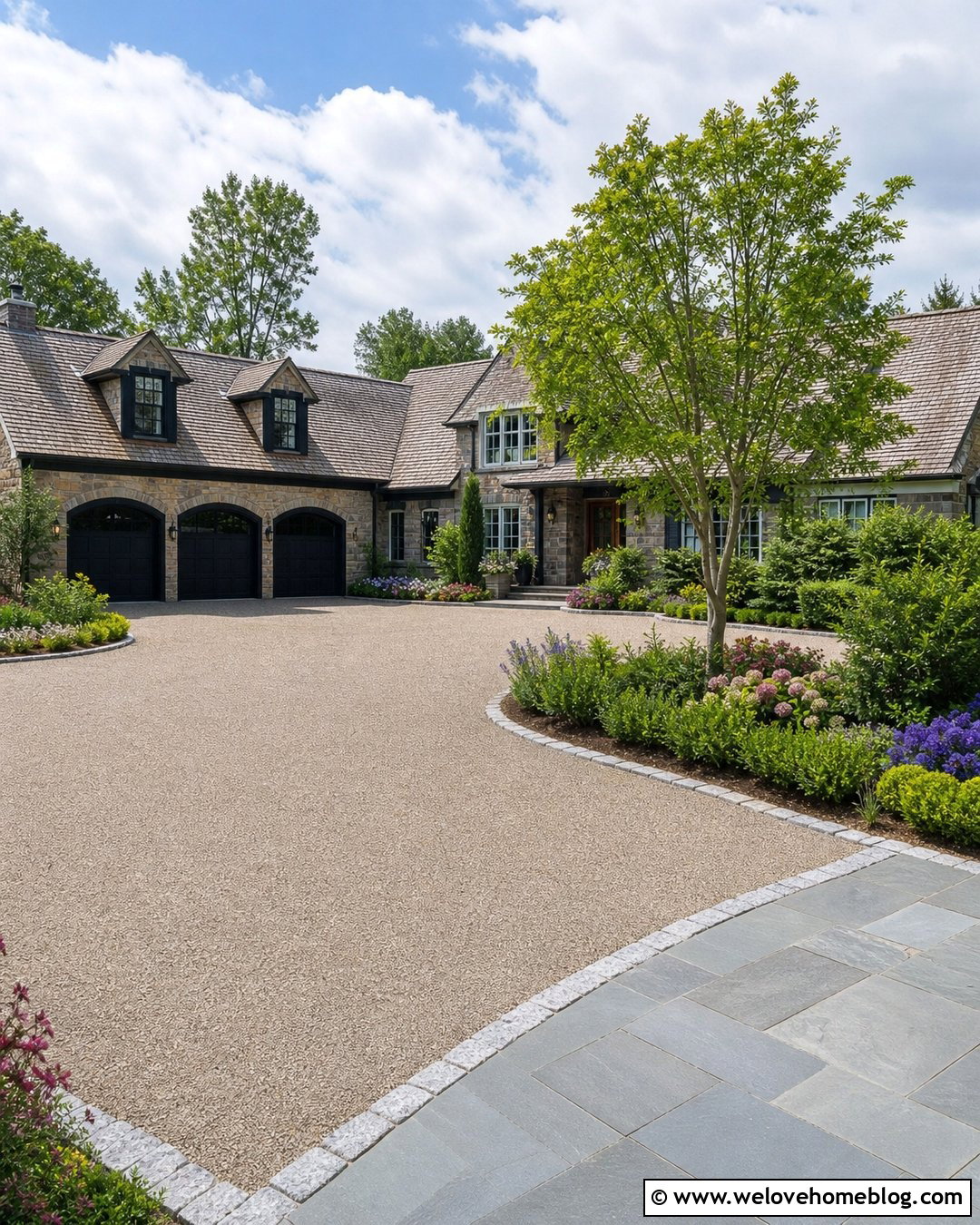
A wide gravel parking court can look attractive when it is divided into clear functional zones. Use compacted buff gravel in a rectangular or softly curved court near the garage, leaving enough open area for turning and parking. Define the outer edge with granite blocks and place planting islands at corners where they will not obstruct vehicle movement. A broad flagstone walkway should lead directly from the parking area to the front entrance, giving guests an obvious route that does not cross active parking spaces. Add one shade tree, layered evergreen shrubs, and seasonal flowers to soften the open gravel. This design is useful for larger households and country properties because it combines capacity with a landscaped, welcoming approach instead of resembling an undefined expanse of stone.
Conclusion:
The best gravel driveways combine a dependable structure with thoughtful curb appeal. Start by choosing gravel that fits the traffic level, house color, climate, and maintenance expectations. Then give the surface a clear shape with brick, stone, timber, concrete, or steel edging. Landscaping should soften the driveway without narrowing sightlines, blocking doors, or interfering with drainage. Curves, circular layouts, parking courts, paver tracks, and decorative aprons can make even an affordable material feel custom. Always prioritize grading, base preparation, and water management before spending on ornamental details. This collection of 20 top 60 best gravel driveway ideas shows how practical planning and coordinated materials can transform an everyday entrance into a complete landscape feature.

Related posts:

Leave a Reply