
Gravel can make a driveway feel relaxed, polished, rustic, or surprisingly modern depending on the stone, layout, edging, and surrounding landscape. These 25 Gravel Driveways Ideas focus on complete designs rather than isolated details. Each look combines a specific gravel color or texture with practical borders, planting, drainage, and a house style that makes sense. Before choosing a design, consider how vehicles will turn, where rainwater will move, and how much routine raking you are willing to do. A compacted base, suitable driveway gravel, and sturdy edging are essential for a surface that looks neat and performs well. Whether you have a narrow suburban lot or a spacious country property, you can find useful inspiration in these 25 Gravel Driveways Ideas.

1. Pea Gravel Driveway With Cobblestone Edging
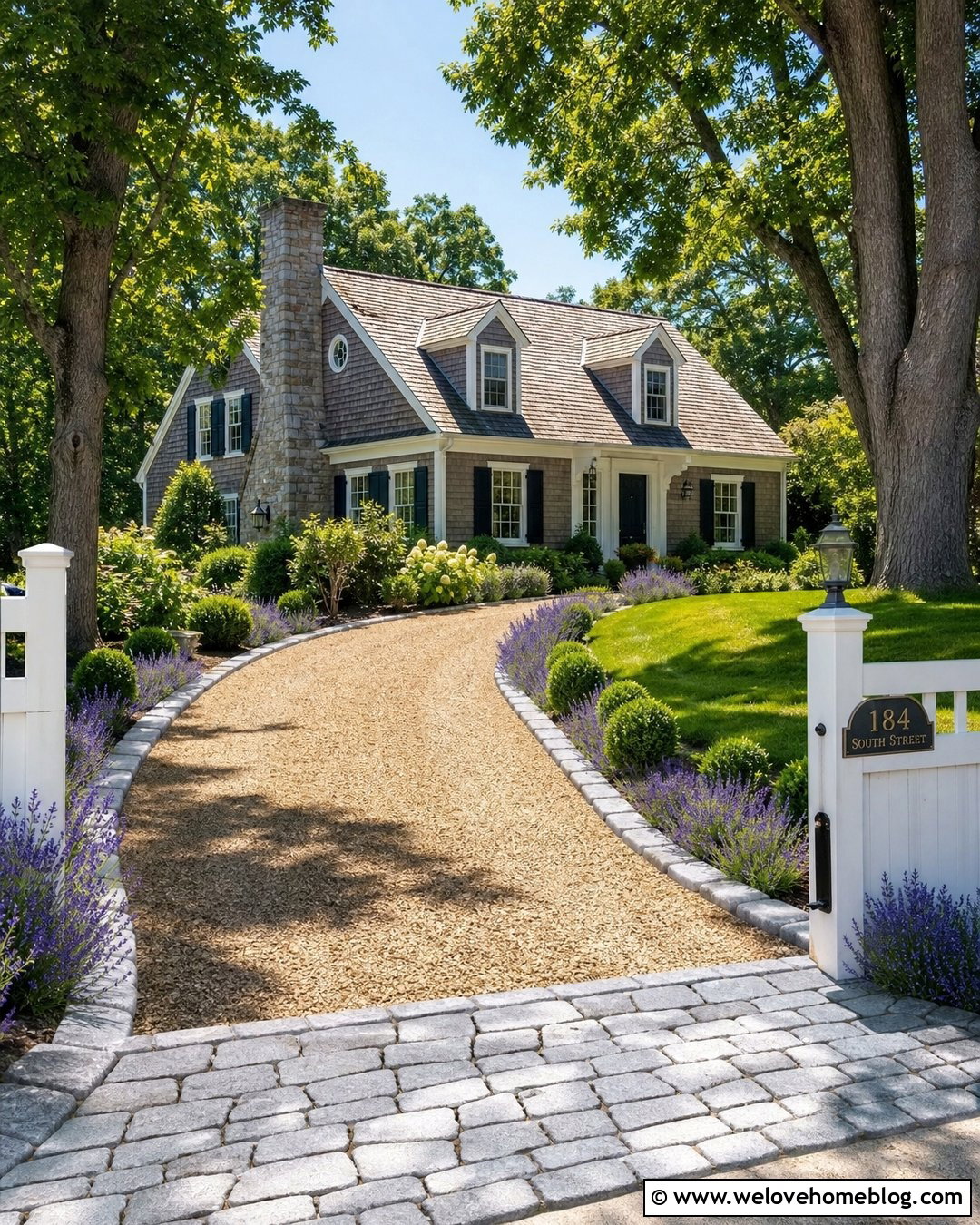
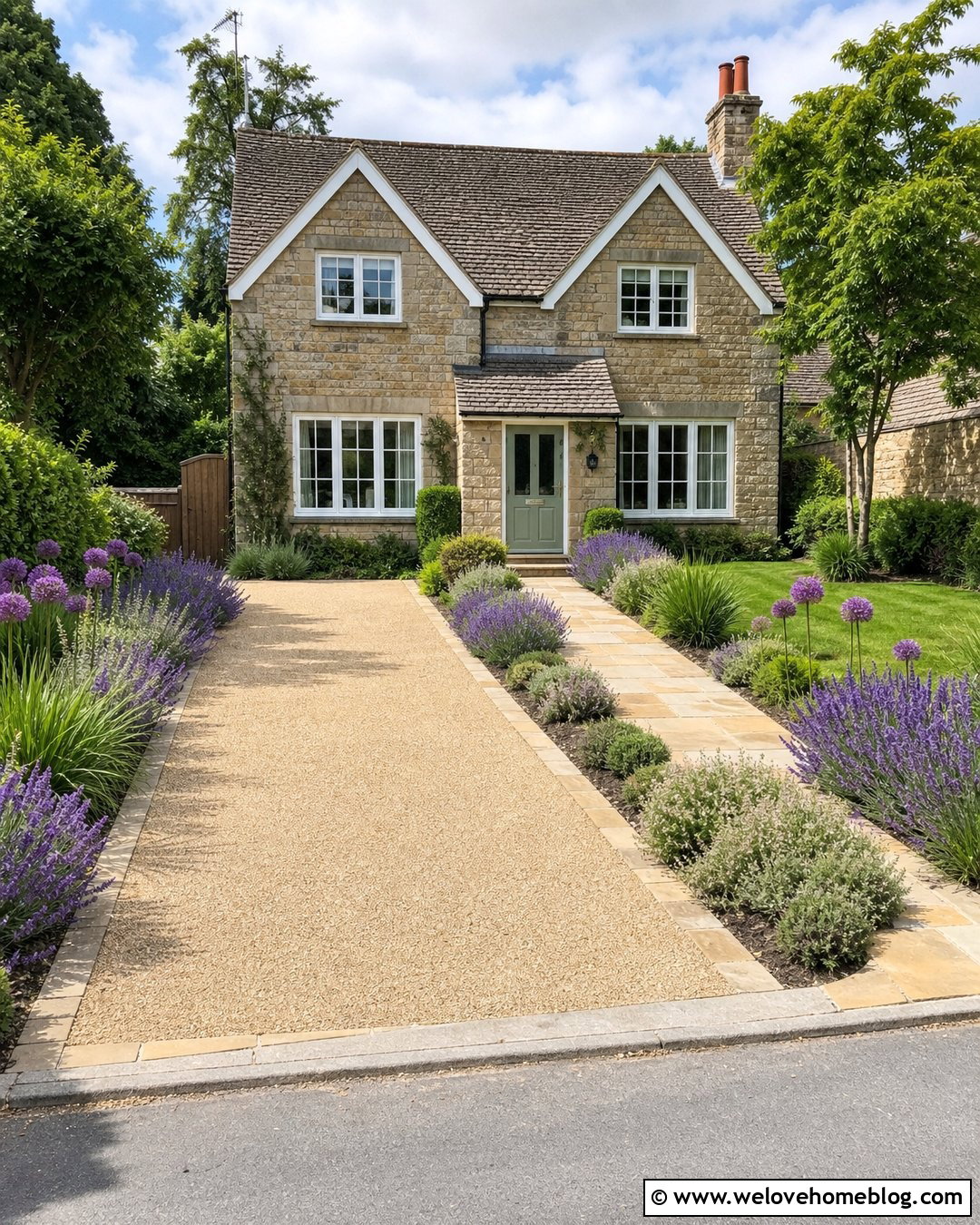
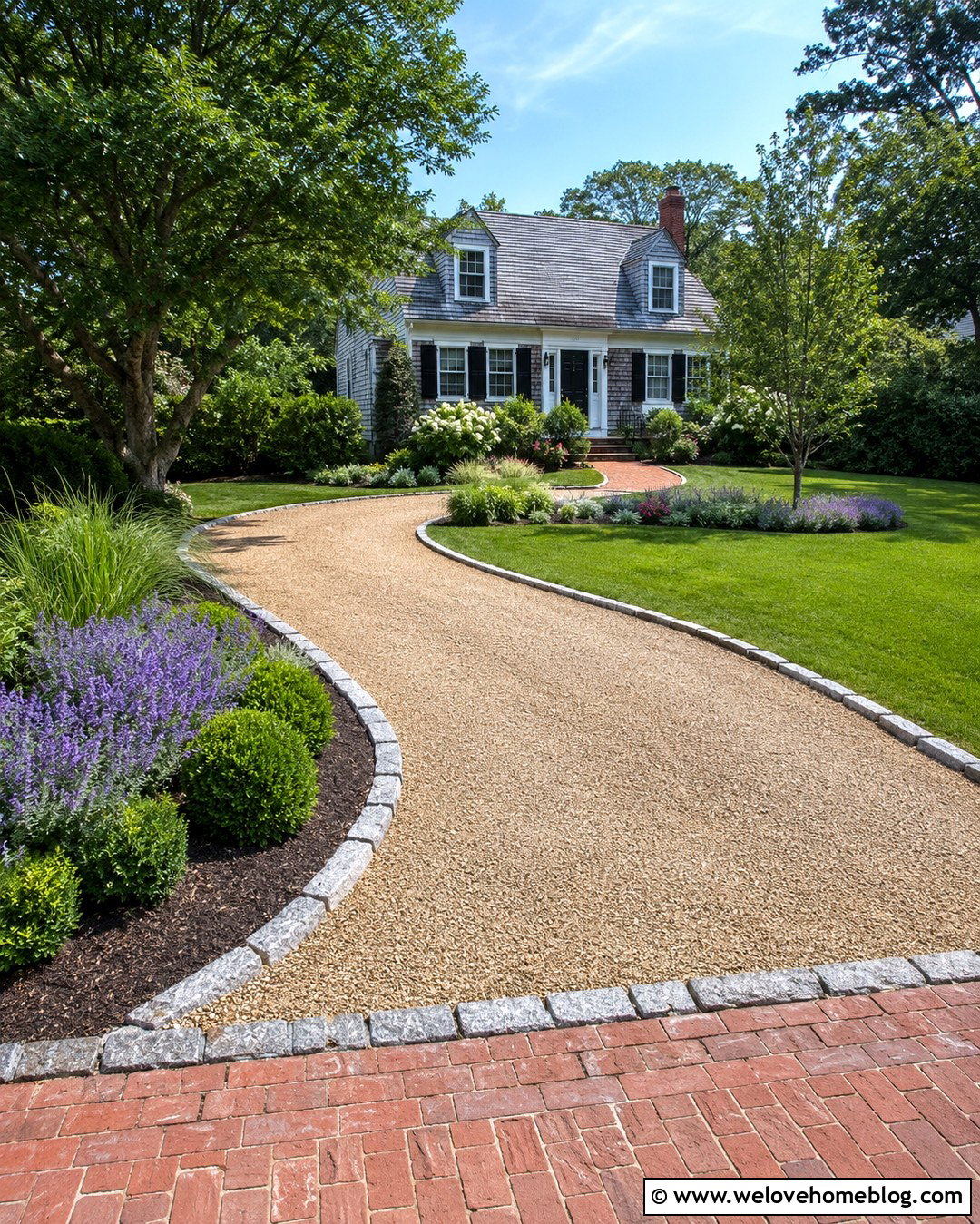
A warm pea gravel driveway framed with cobblestones creates a welcoming approach to a cottage or traditional home. Use buff, cream, and light brown gravel to soften the view, then install a slightly raised cobblestone border along both sides. Because rounded pea gravel can shift under tires, a stabilizing grid and well-compacted base can help keep the surface more secure. Shape the driveway with a gentle curve rather than a rigid straight line. Plant lavender, catmint, boxwood, or ornamental grasses beyond the cobblestones to add color without crowding vehicles. A matching cobblestone apron at the street creates a stronger entrance. This complete design feels established and attractive while giving loose gravel a clearly defined edge.
2. Gray Gravel Driveway With Brick Borders
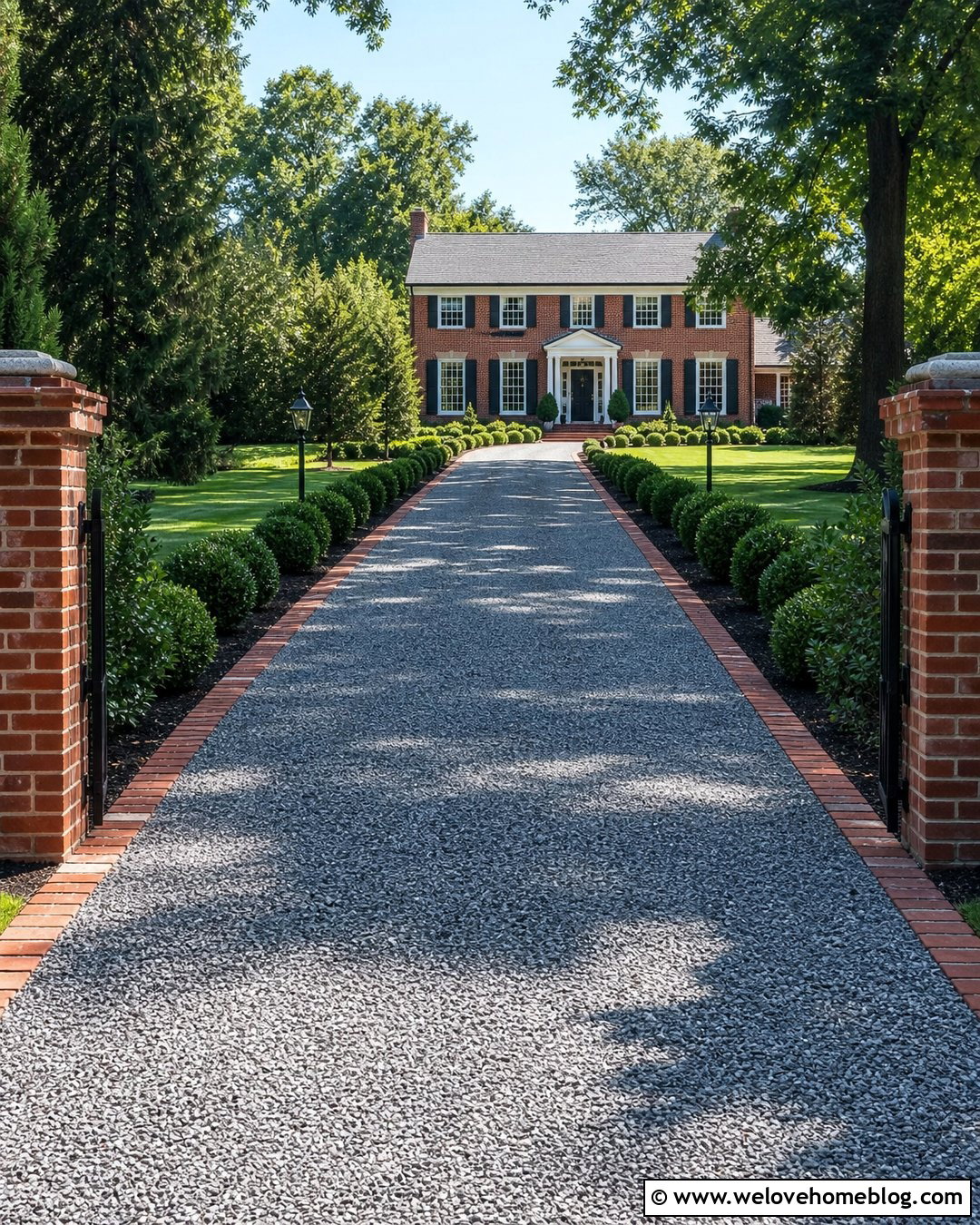
Crisp red brick can bring structure and color to an otherwise neutral gray gravel driveway. This combination works especially well with Colonial, Georgian, and traditional brick houses because the border connects the driveway to the architecture. Choose angular gray crushed stone that compacts more firmly than rounded gravel. Lay the driveway in a straight or slightly flared shape, with brick borders installed level enough to avoid becoming a tire obstacle. A brick walkway leading from the driveway to the front door can make the entire front yard feel coordinated. Finish the look with clipped evergreen shrubs, green lawn, and simple foundation beds. The contrast between cool gravel and warm brick creates a polished driveway without making the landscape appear overly formal.
3. White Gravel Driveway With Black Steel Edging
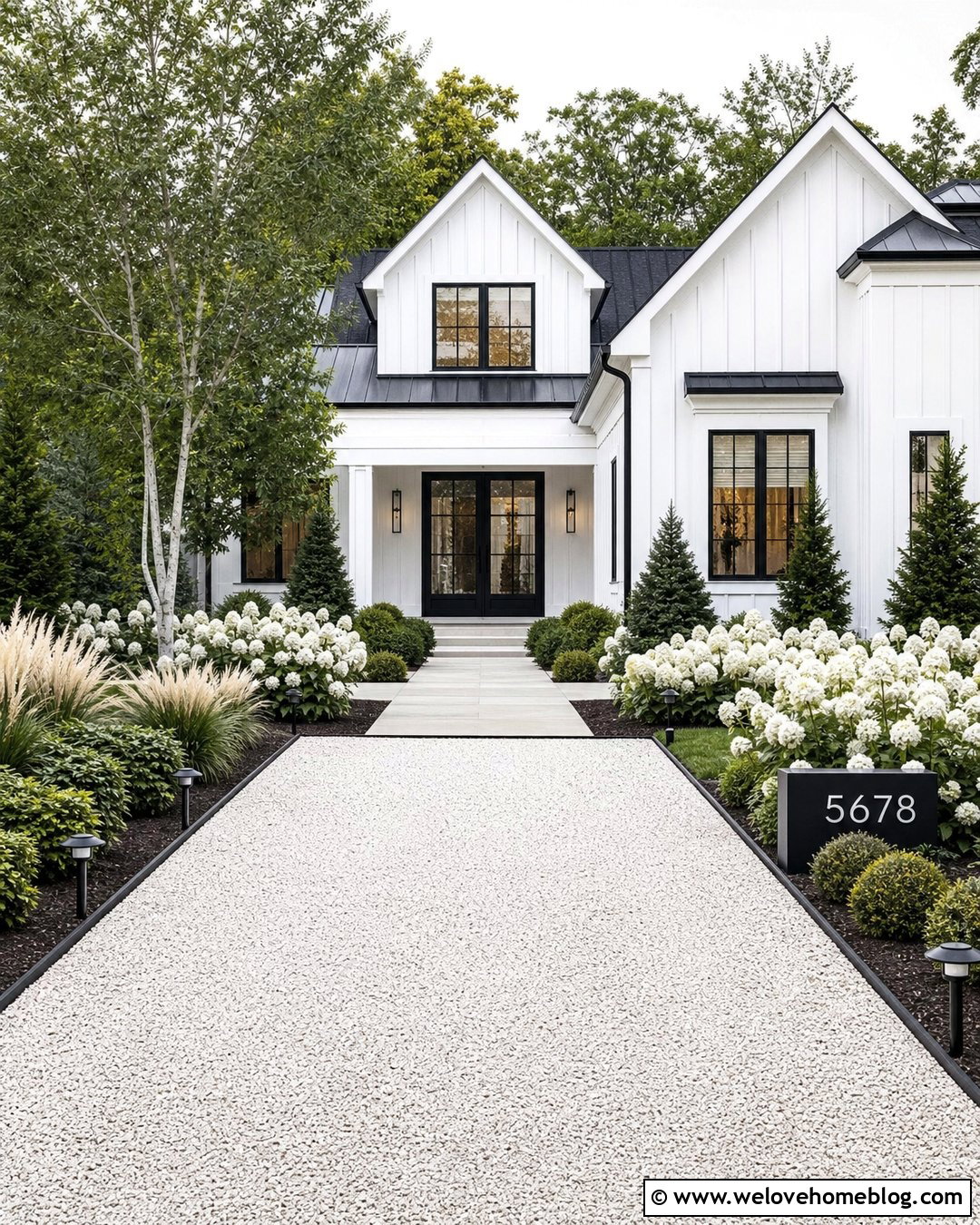
Bright white limestone gravel and slim black steel edging create a clean driveway for a modern farmhouse or contemporary home. Keep the layout straight and simple, allowing the pale stone to emphasize the strong lines of the building. Dark edging provides contrast while helping separate the gravel from lawn and planting beds. Use larger crushed limestone made for vehicle traffic rather than decorative garden pebbles. Along the sides, repeat black details through modern path lights, planters, or a simple address sign. Masses of ornamental grass, hydrangeas, and low evergreen shrubs can soften the sharp color palette. Since white gravel displays leaves and soil easily, this design looks best where regular blowing, raking, and occasional stone replenishment fit comfortably into the maintenance plan.
4. Decomposed Granite Driveway With Timber Edging
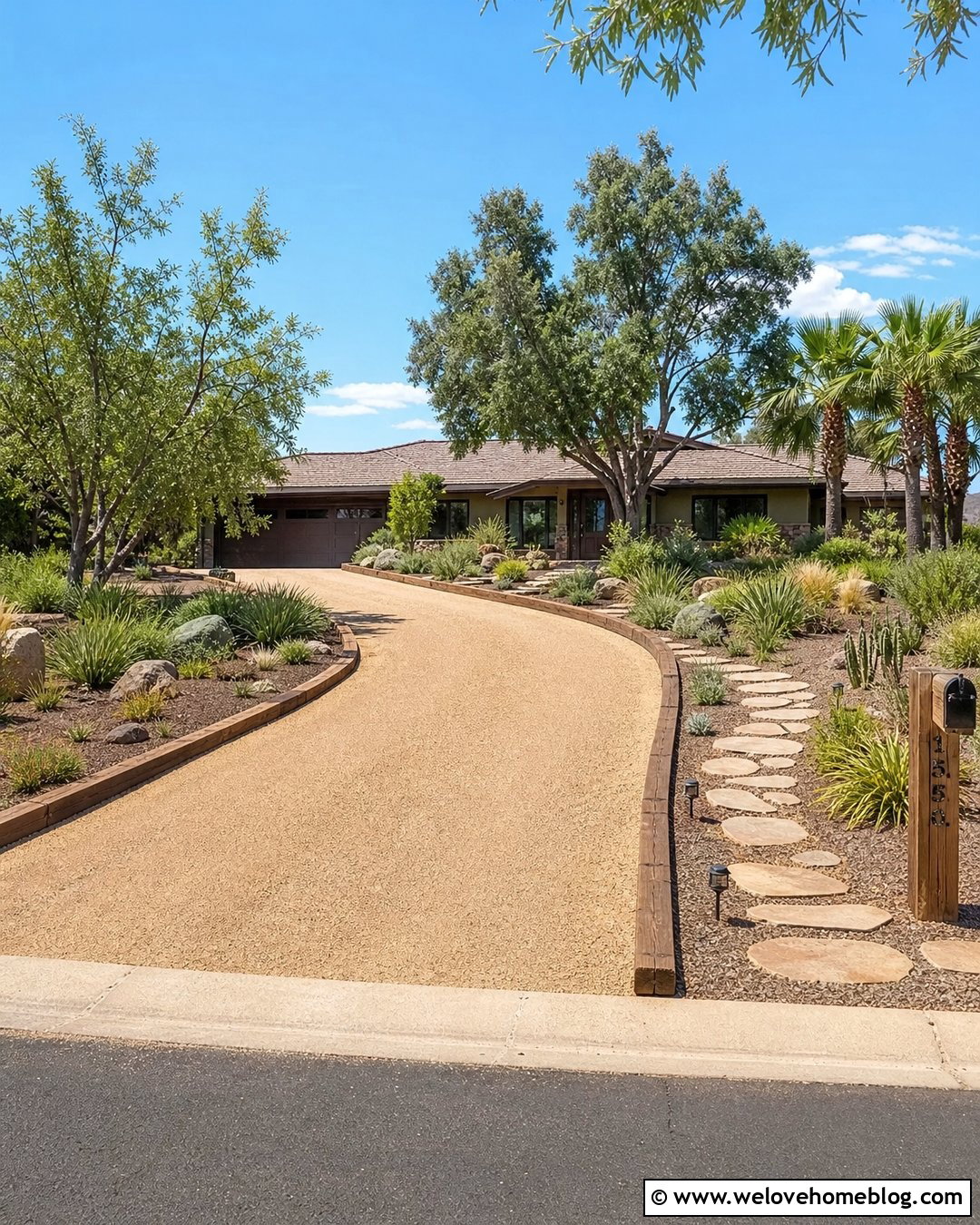
For a casual ranch or Southwestern home, a decomposed granite driveway with heavy timber edging feels natural and understated. Choose stabilized or compactable decomposed granite in a warm tan, rust, or golden shade. Its fine texture creates a smoother appearance than chunky gravel, while pressure-treated landscape timbers hold the edges in place. A wide, gently curved layout fits low-profile architecture and spacious front yards. Surround the driveway with native grasses, drought-tolerant shrubs, and scattered boulders instead of narrow formal beds. Set the timbers close to grade so tires and drainage are not obstructed. This complete look blends into dry landscapes beautifully, but the driveway still needs a properly prepared base and enough slope to prevent standing water and surface erosion.
5. Curved Gravel Driveway With Stone Walls
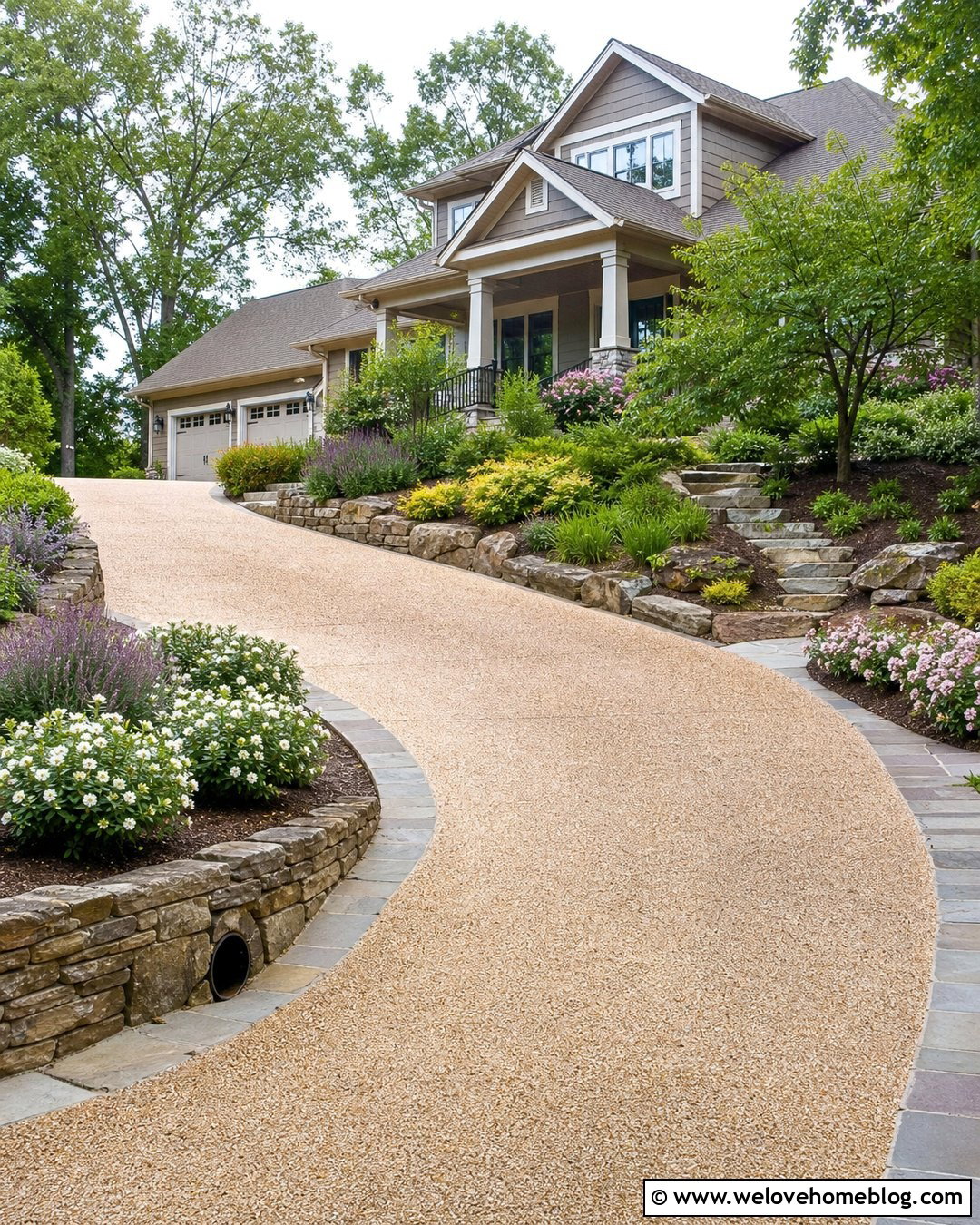
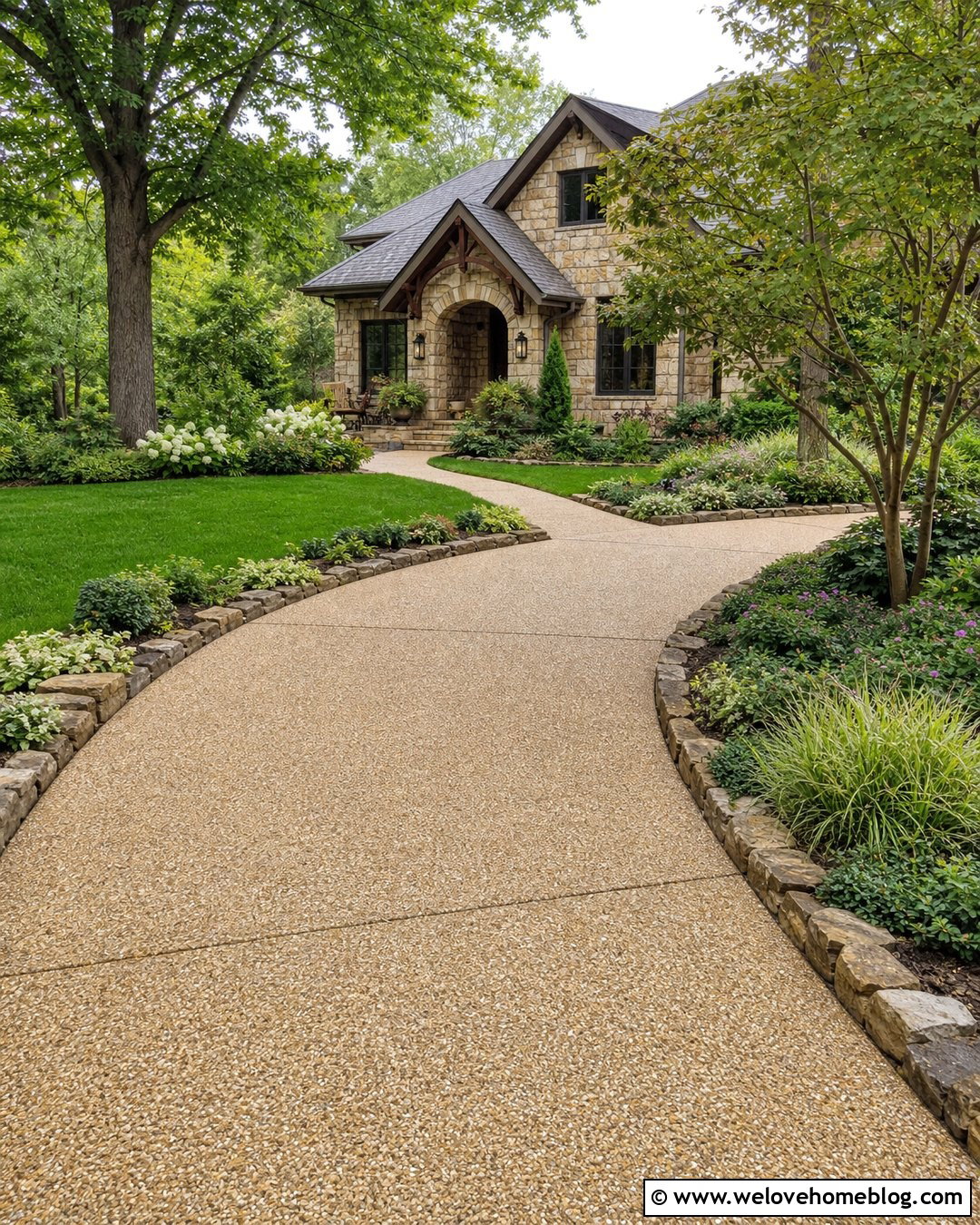
A sweeping gravel driveway bordered by low stone walls can turn a sloped front yard into an inviting entrance. Select tan or warm gray crushed gravel that coordinates with the local stone used for the walls. The curves should feel broad and gradual, giving vehicles comfortable turning space while following the natural grade. Keep the walls low near the road for visibility, then allow them to rise slightly where they retain planting beds. Fill those beds with layered shrubs, flowering perennials, and small trees. Drainage openings or gravel-lined channels may be needed where runoff collects against the wall. This design works beautifully with Craftsman, Tudor, and country houses because the rugged materials make the driveway feel connected to the surrounding land.
6. Circular Gravel Driveway With A Planted Island
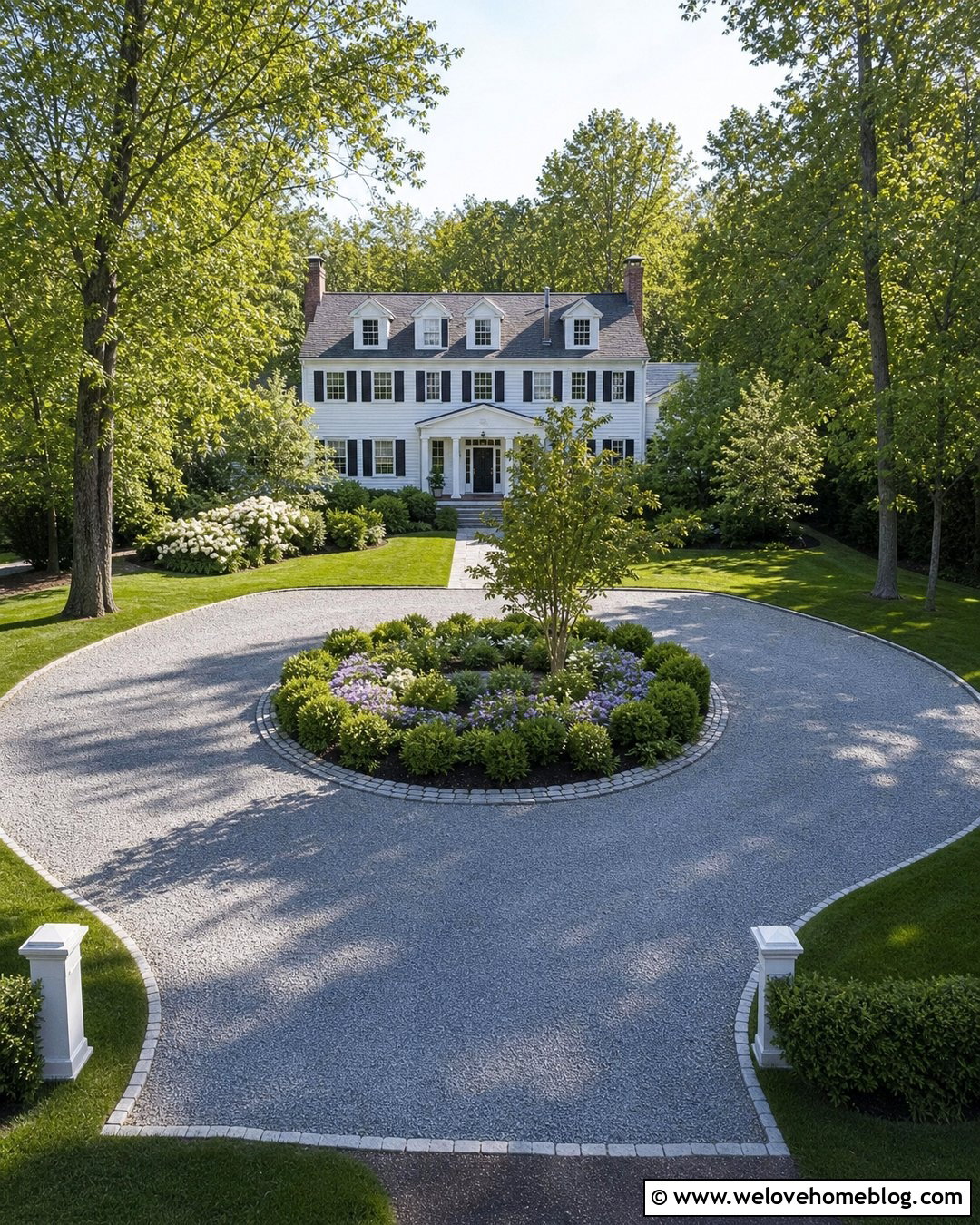
A circular gravel driveway offers an elegant layout while allowing vehicles to approach and leave without backing toward the street. Use compacted gray crushed stone for the main surface and define both edges with granite cobbles or concrete curbing. At the center, create a generous planted island containing one ornamental tree, low shrubs, and groundcover that will not block sightlines. The circle should be planned around realistic vehicle turning needs rather than fitted into an undersized yard. A straight walkway from the inner curve to the front entrance keeps pedestrian movement clear. This complete design suits Colonial, European-inspired, and large traditional houses. Repeating the same border material around the island and outer driveway helps the broad layout appear organized rather than visually busy.
7. Long Gravel Driveway With Tree-Lined Landscaping
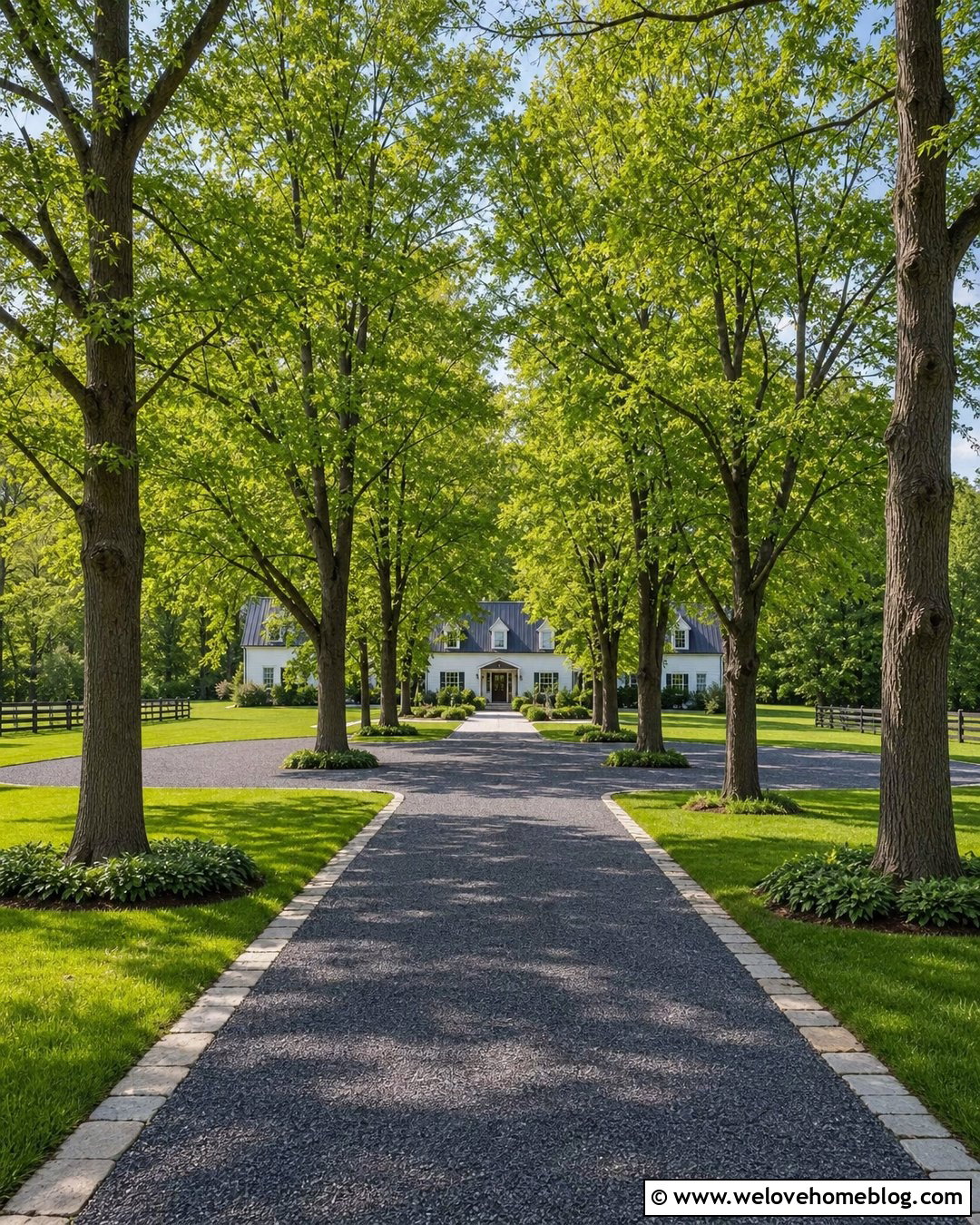
Few entrances feel more established than a long gravel driveway framed by evenly spaced trees. Choose dark gray or brown angular gravel for a durable, natural-looking surface, then use flush stone edging to keep it separated from grass. A straight layout creates a formal approach, while a slight bend can slowly reveal the house. Plant trees far enough from the driving area to allow for mature trunks, branches, and roots. Oaks, maples, or upright evergreens can create structure depending on the region and property style. Beneath them, maintain simple lawn or low groundcover for clear visibility. Add a wider turning court near the house so delivery vehicles and guests can maneuver. The result is especially effective for farmhouses, country homes, and estate-style properties.
8. Gravel Driveway With Concrete Tire Ribbons
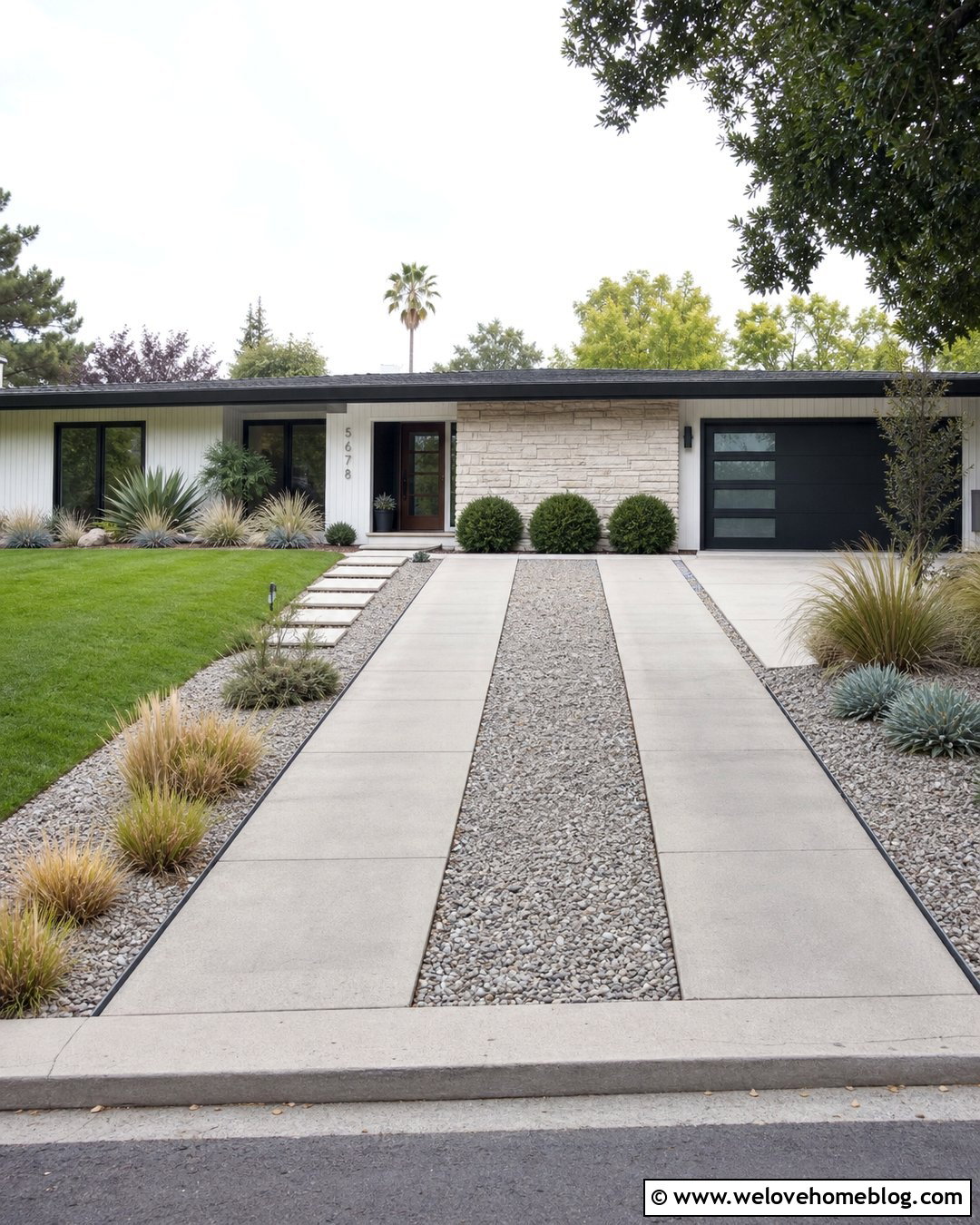
Concrete tire ribbons can give a gravel driveway more stability while preserving a soft, landscaped appearance. Two narrow strips of light gray poured concrete follow the main wheel paths, with compacted gravel filling the center and outer sections. This layout works best on a straight driveway where vehicle movement is predictable. Use steel or concrete edging along the sides so the gravel remains contained. A walkway can branch from one ribbon and lead to a modern ranch or midcentury home. Frame the driveway with broad areas of lawn, sculptural shrubs, and low ornamental grasses. Careful measurements are important because ribbons that are too close or too far apart can be awkward for different vehicles. Done correctly, the mixed surface feels practical, distinctive, and visually lighter than solid concrete.
9. Gravel Grid Driveway With Modern Landscaping
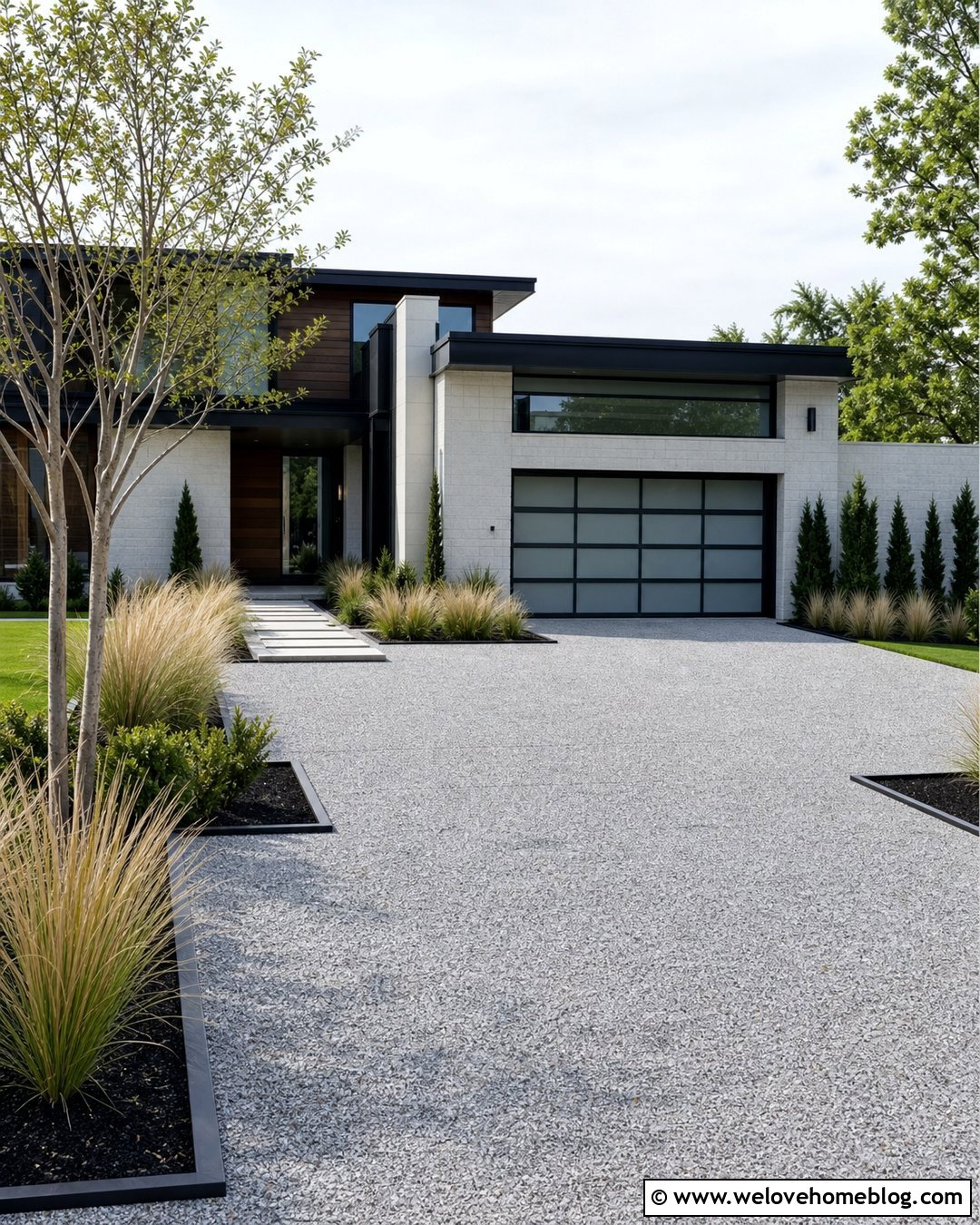
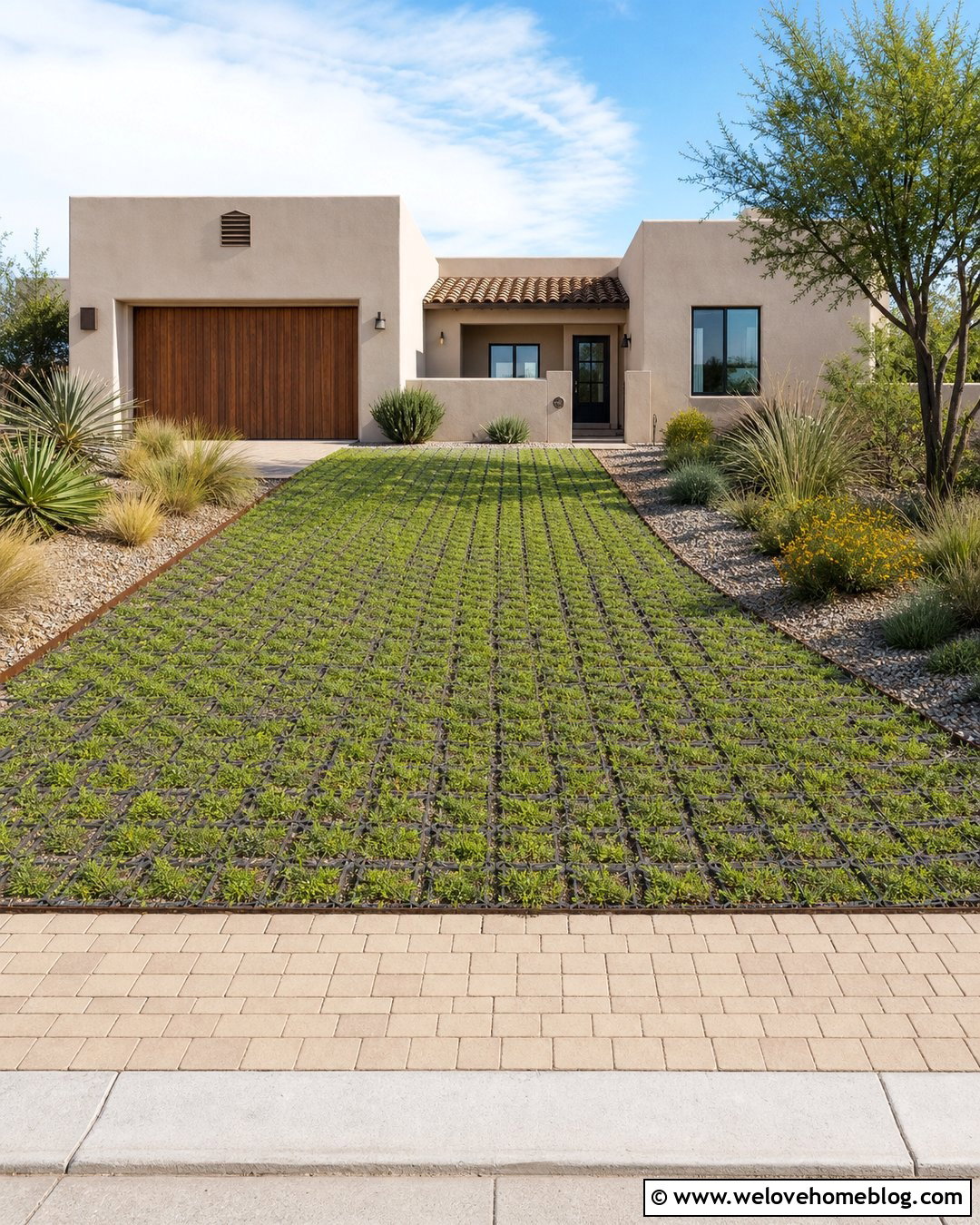
A cellular gravel grid can help create a firmer, cleaner surface for a contemporary driveway. Fill the grid with angular light gray gravel, keeping the cells covered so the plastic or concrete structure does not dominate the view. Use a straight driveway with crisp edges and a broad parking pad near the garage. Thin steel edging, rectangular concrete stepping pads, and geometric planting beds reinforce the modern layout. Choose restrained landscaping, such as feather reed grass, compact evergreens, and one sculptural tree. The grid should be installed over a properly prepared and drained base rather than placed directly over soft soil. This complete design is useful where homeowners want the texture of gravel but prefer less rutting, migration, and unevenness around frequently used parking and turning areas.
10. Black Gravel Driveway With Concrete Curbs
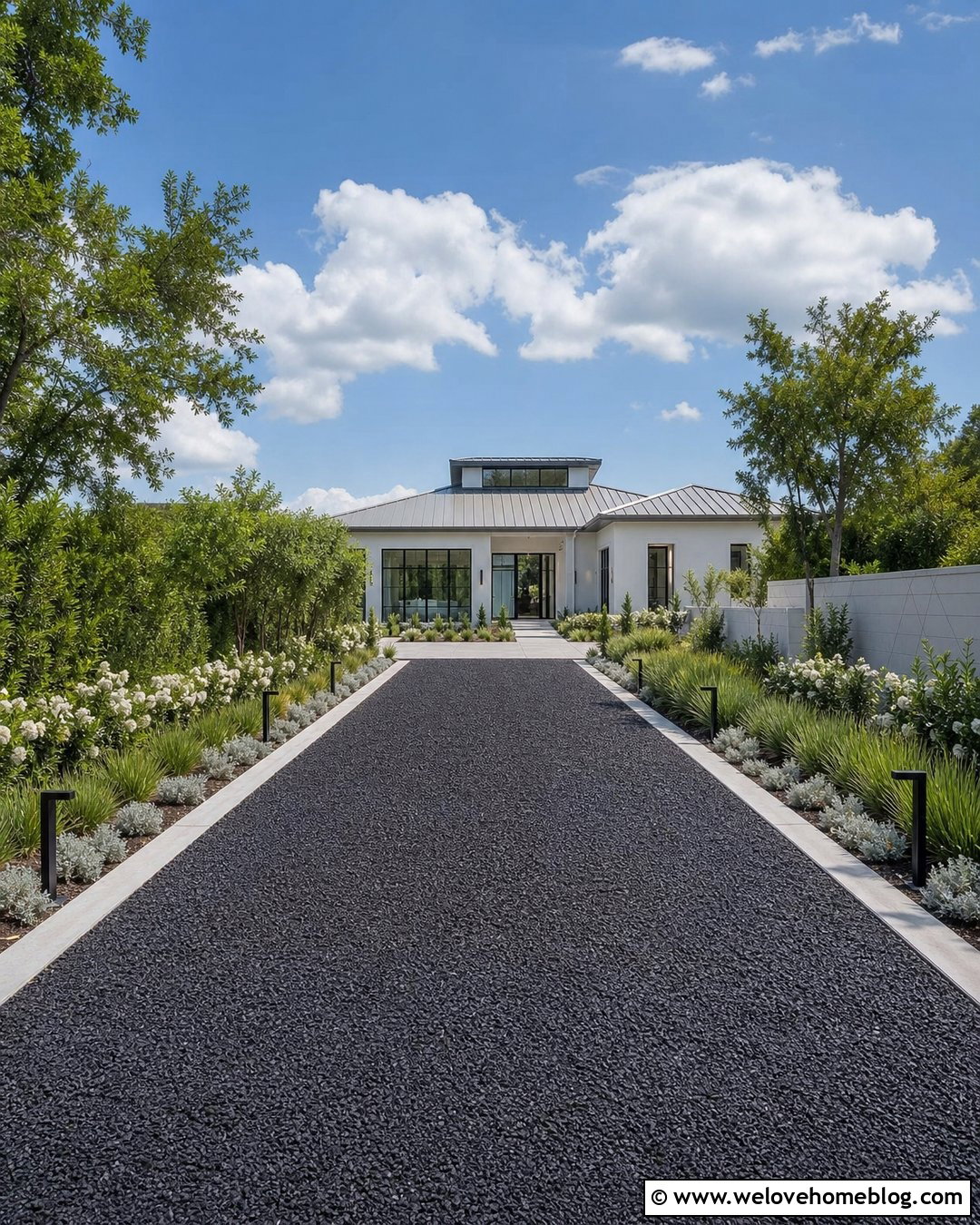
Black basalt or dark charcoal gravel can make a dramatic driveway without relying on complicated patterns. Pair the stone with smooth light gray concrete curbs to create a strong outline and prevent dark gravel from spreading into the lawn. A straight layout with a rectangular parking court suits modern, industrial, and minimalist houses. Repeat the driveway colors in concrete walkways, black metal lighting, and dark window frames. Keep the planting simple but not sparse. White flowering shrubs, silver foliage, and fresh green grasses will stand out against the deep surface. Dark stone may become noticeably warm in direct summer sun, so consider local climate and exposure. Regular leaf removal also matters because pale debris is easy to see on a nearly black driveway.
11. Crushed Shell Gravel Driveway With Coastal Planting
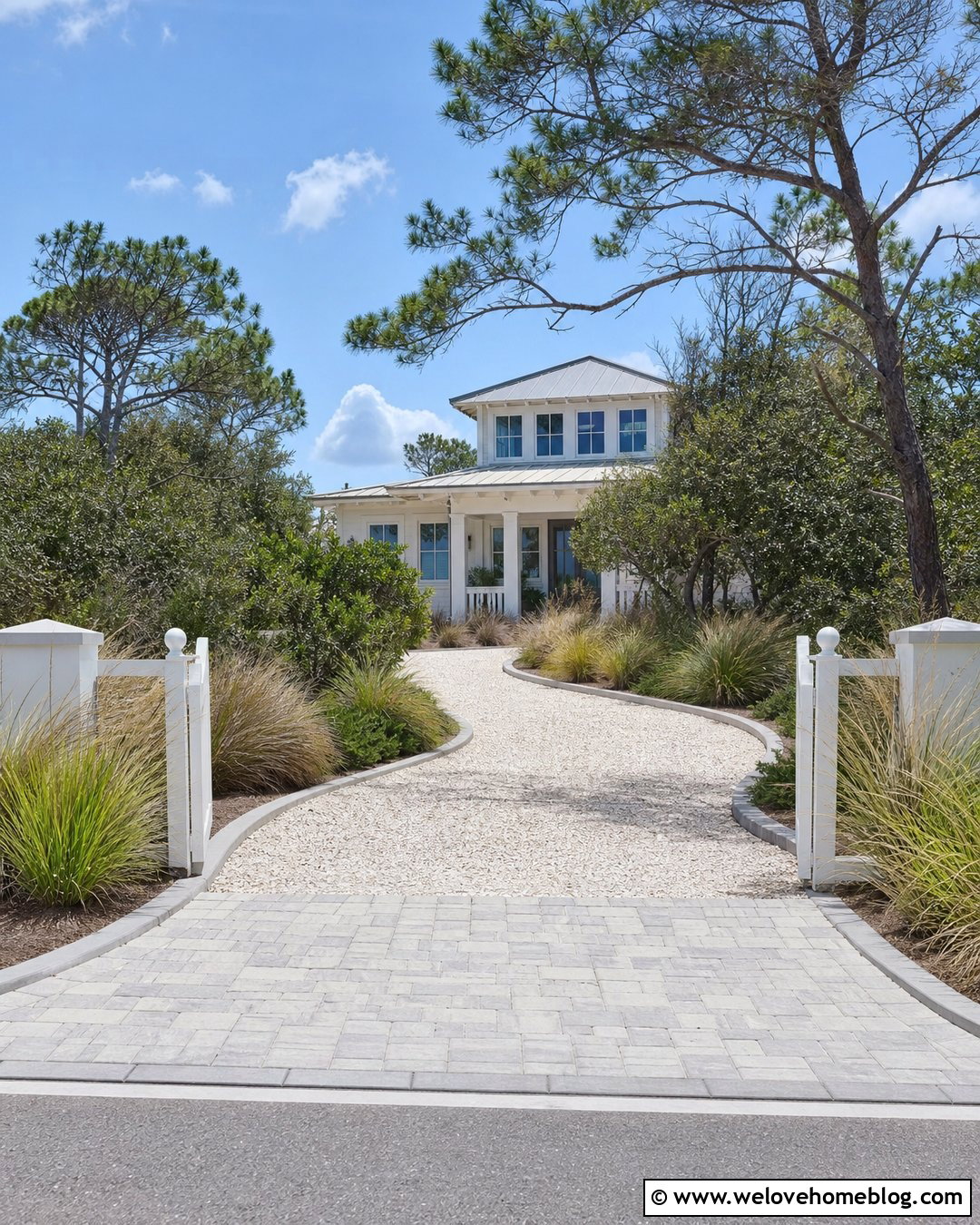
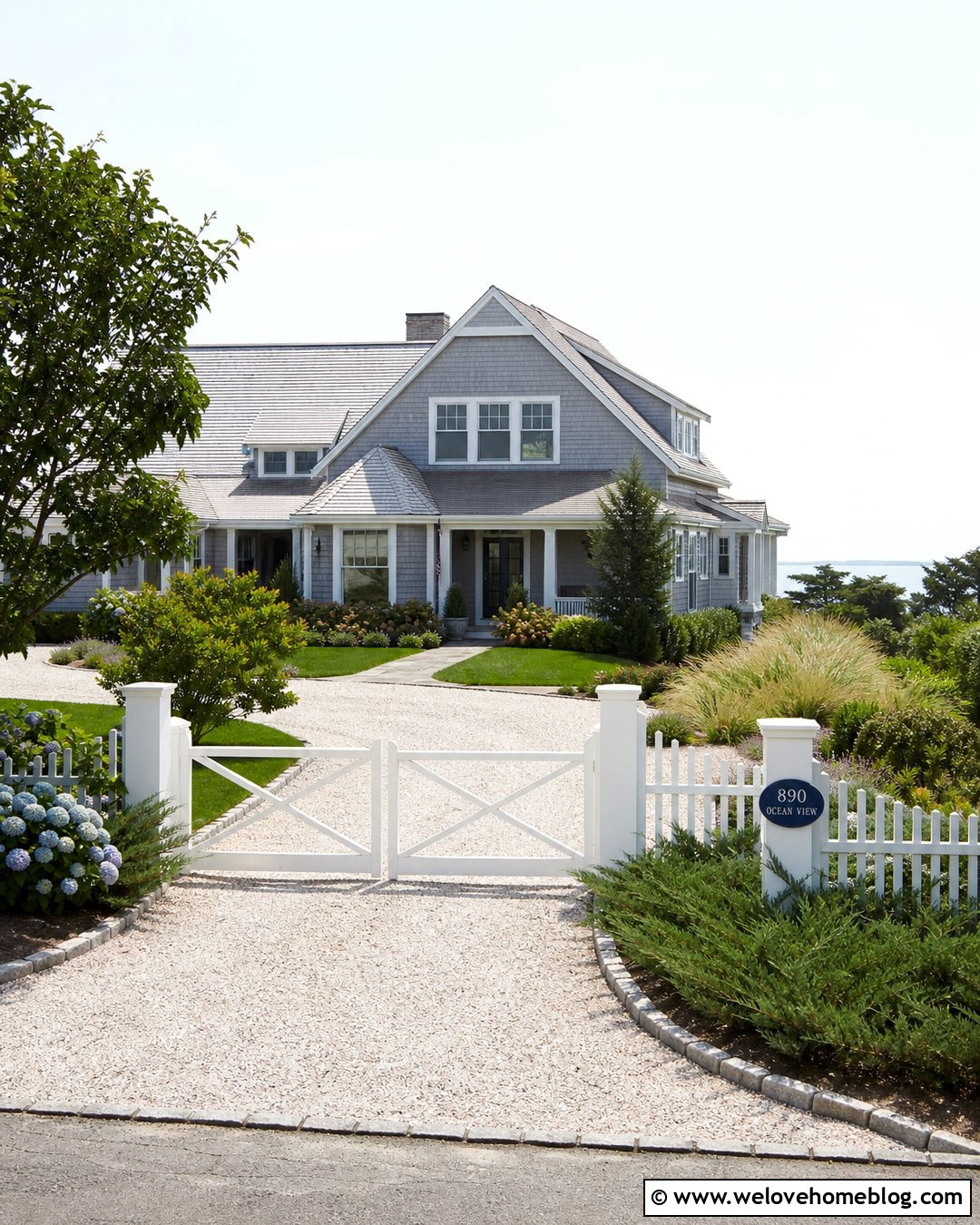
Pale crushed shell creates a breezy driveway that feels at home beside a coastal cottage or relaxed beach house. Use a straight or gently curved layout with low concrete, stone, or recycled-plastic edging to contain the lightweight material. Near the road, install a sturdier paver apron that reduces shell movement at the busiest transition. Surround the driveway with salt-tolerant ornamental grasses, wax myrtle, low juniper, or other plants suited to local coastal conditions. A shell-colored walkway and simple white gate can continue the light palette toward the house. Crushed shell can break down and compact over time, so occasional topdressing may be necessary. Local availability, neighborhood rules, and environmental restrictions should also be checked before selecting this regionally distinctive driveway material.
12. Pea Gravel Driveway With Lavender Borders
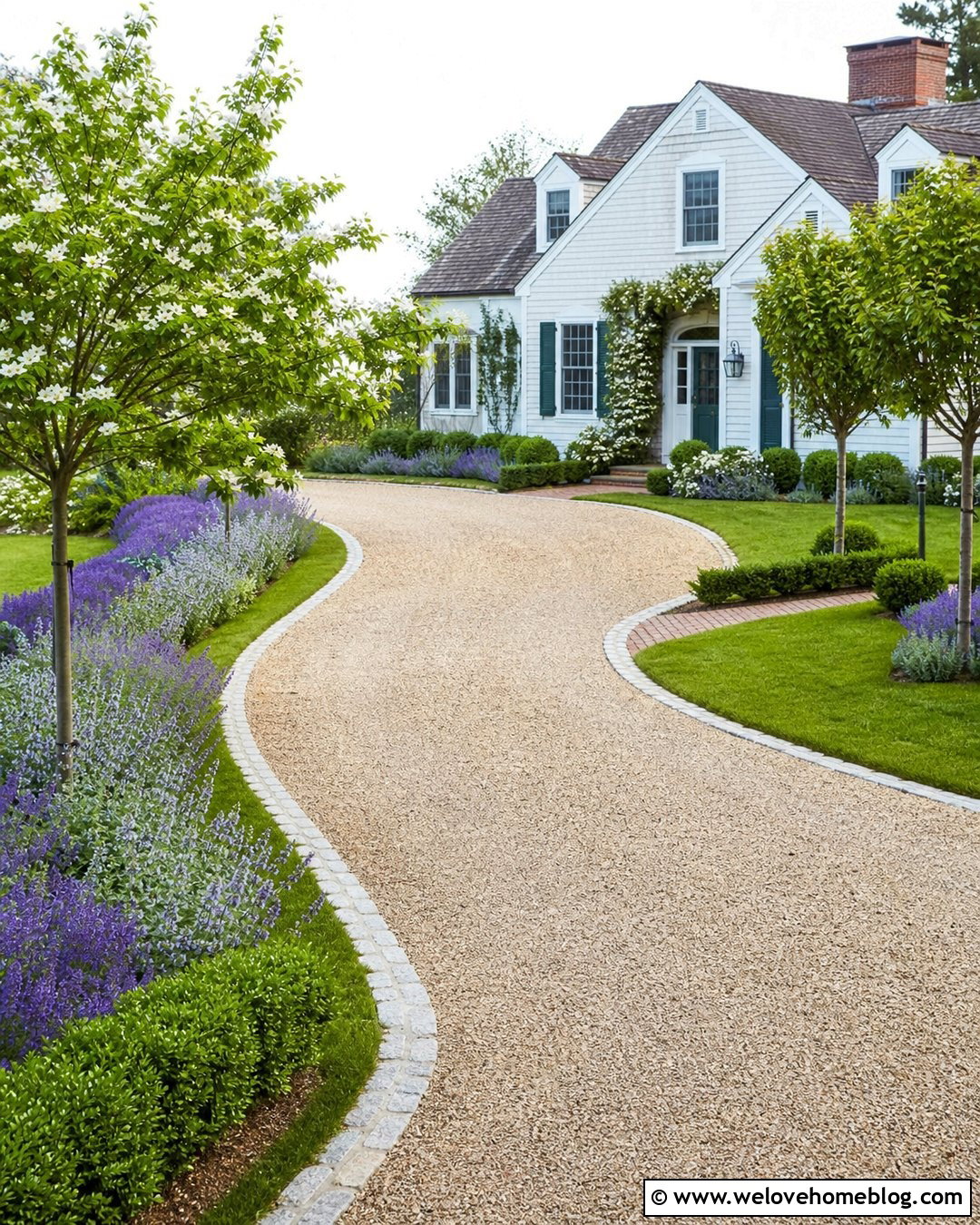
Imagine stepping outside to a soft ribbon of purple flowers framing a warm beige driveway. A pea gravel surface with lavender borders creates a romantic but orderly approach to a cottage, Cape Cod, or French-inspired home. Install cobblestone or brick edging between the gravel and planting beds so stems do not spill into vehicle space. A stabilizing grid is useful in parking and turning areas where rounded stones tend to move. Keep the driveway gently curved, with wider beds near the house and narrower planting along the entrance. Lavender needs suitable sun, soil, and drainage, so substitute catmint, salvia, or another regional plant if necessary. Repeating the same plant in generous groups makes the complete driveway feel calm, fragrant, and intentionally designed.
13. Gravel Driveway With A Grass Center Strip
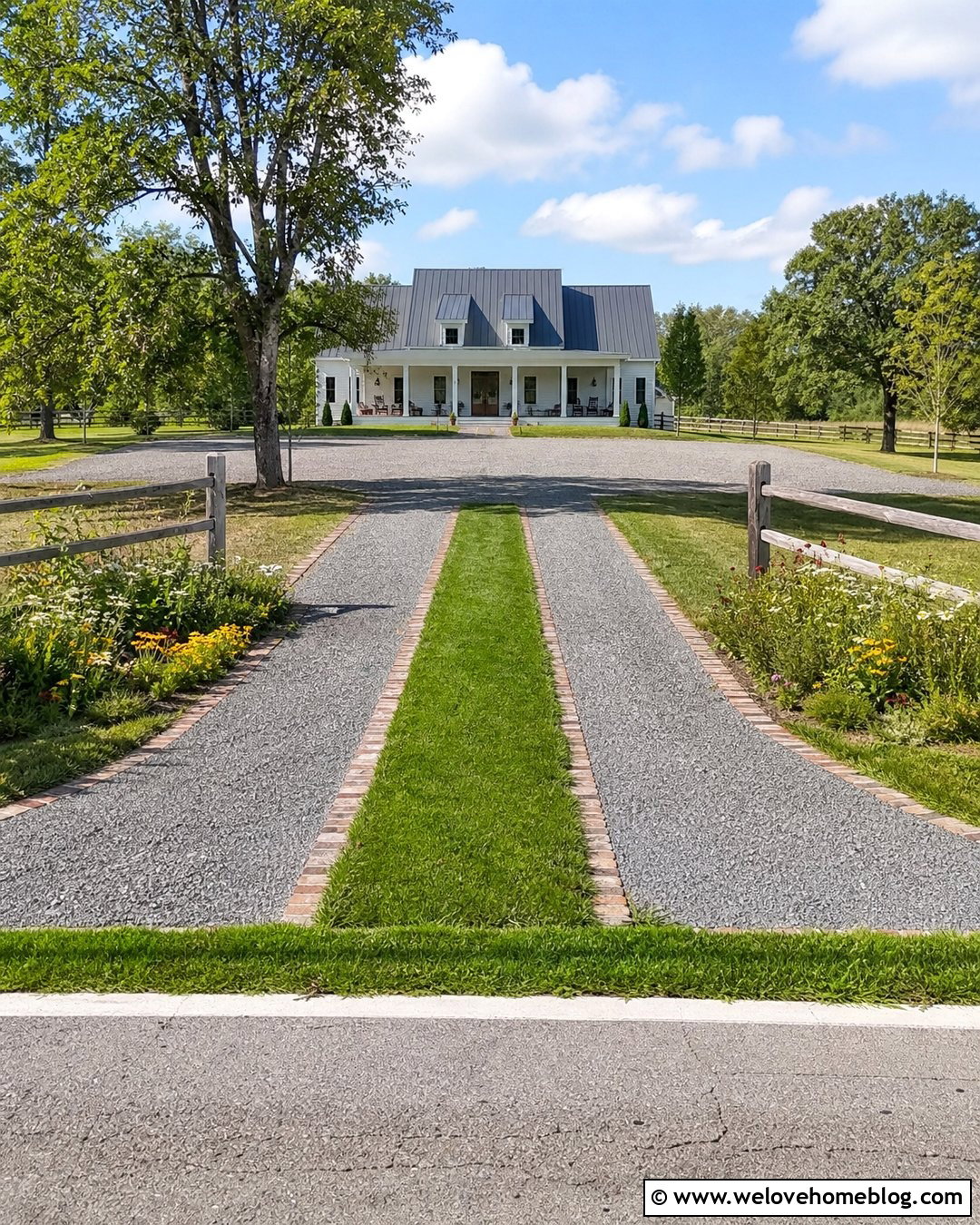
A gravel driveway with a green center strip reduces the visual width of the hardscape and can complement a casual country home. Build two compacted lanes using angular gray or tan gravel, leaving a broad strip between them for grass or tough low-growing groundcover. The design works best on straight driveways with predictable wheel paths and limited turning. Flush brick or metal edging can define the center without creating a hazard. Near the garage or parking area, transition to a full-width gravel surface so vehicles have room to maneuver. Continue the relaxed appearance with meadow planting, split-rail fencing, and shade trees set back from the drive. The center strip will require mowing, trimming, irrigation, or plant replacement, so include that care in the overall maintenance plan.
14. Horseshoe Gravel Driveway With Brick Pillars
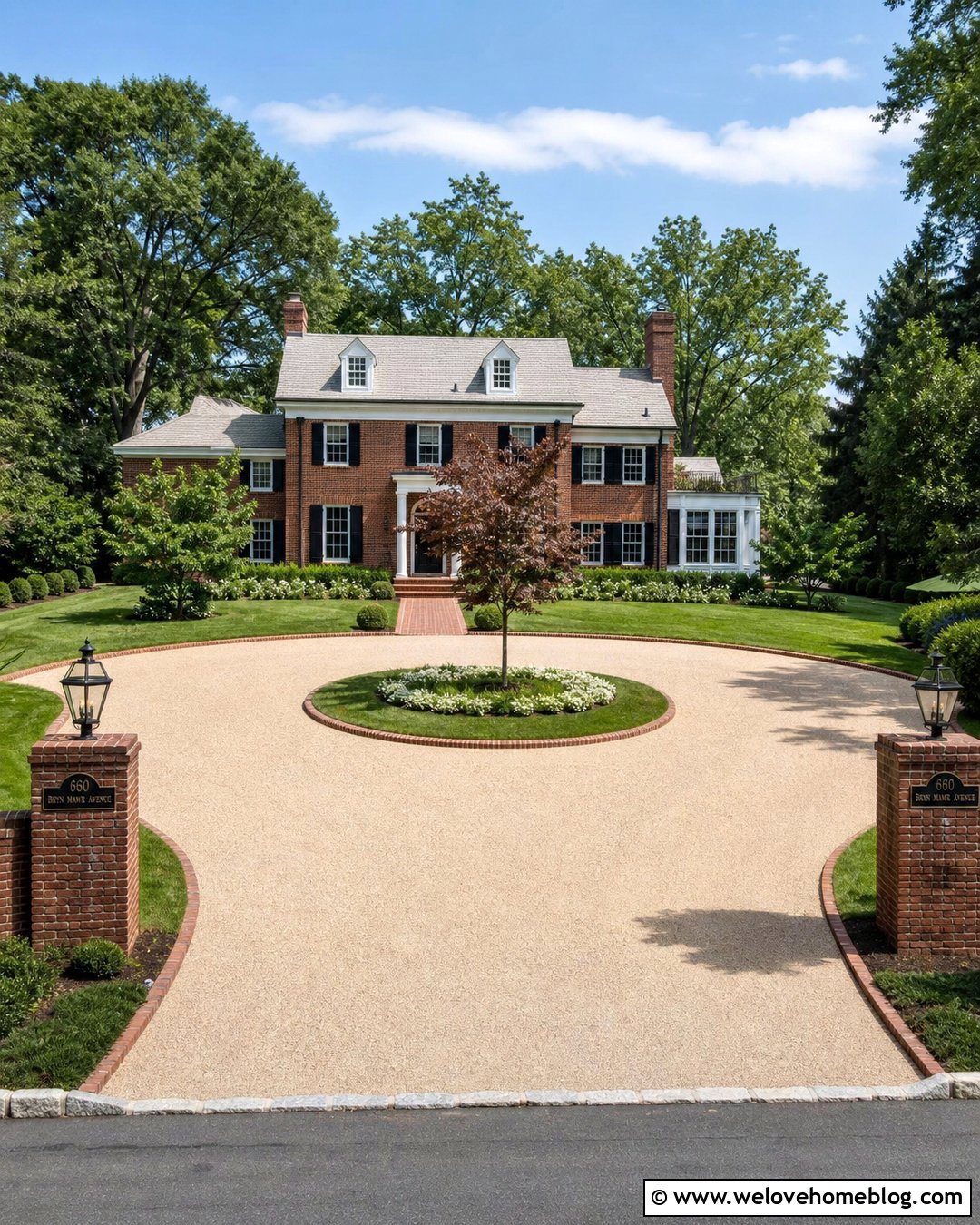
A horseshoe gravel driveway creates two clear entrances and an impressive sense of arrival. Use compacted buff gravel for the curved surface, then mark each opening with red brick pillars that coordinate with the house. Low brick edging can continue along the drive, visually connecting the entrance features without enclosing the entire yard. Keep pillars, gates, shrubs, and signs positioned where they will not interfere with street visibility. In the center lawn, plant a small ornamental tree surrounded by simple flowering beds. A direct walkway from the inner curve to the front door helps guests understand where to go. This layout works particularly well for brick Colonial and traditional homes on wide lots. Plan the turning radius carefully so the driveway remains functional for everyday vehicles.

15. Gravel Driveway With A Paver Entrance Apron
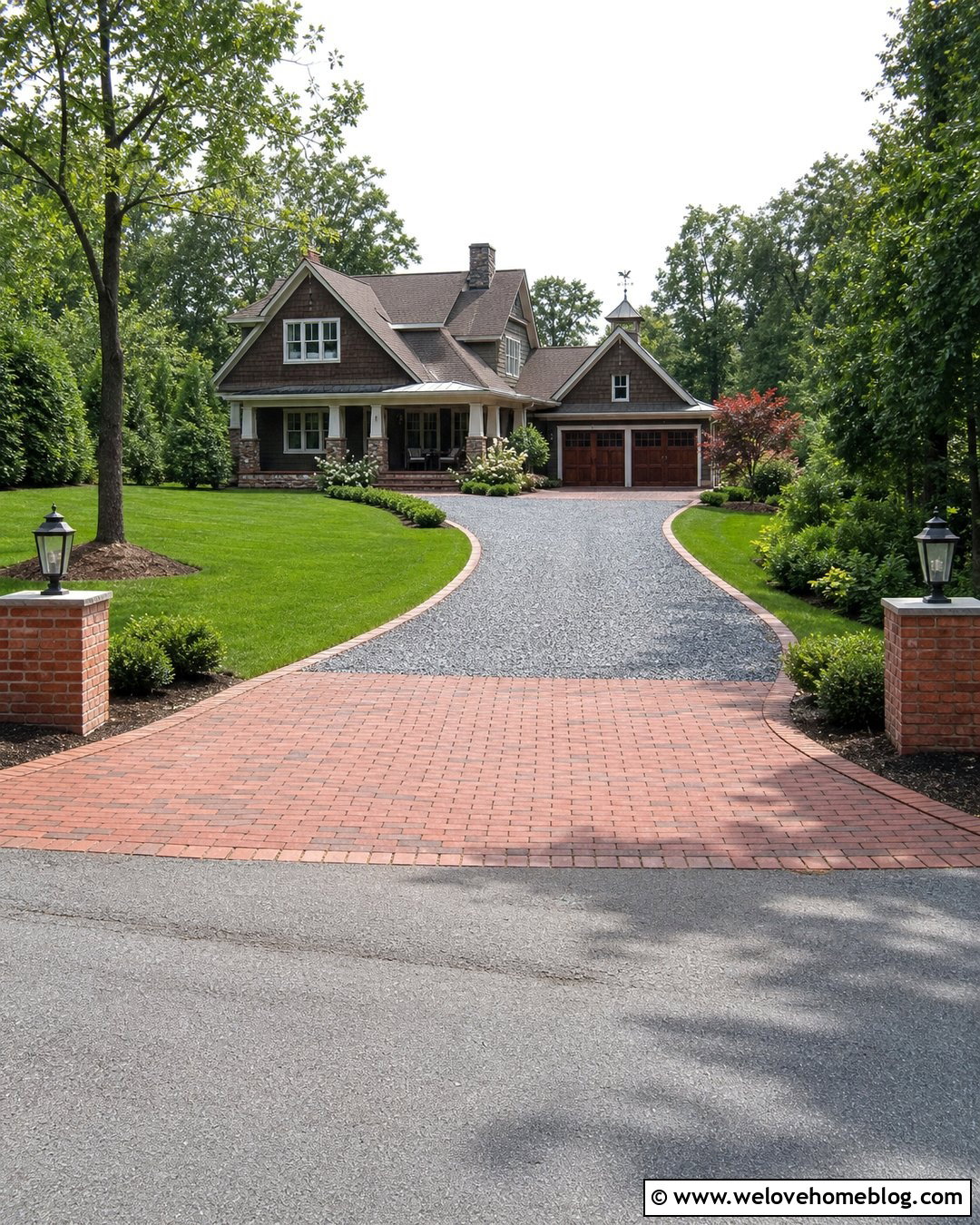
A paver apron gives a gravel driveway a finished transition at the street and helps define the property entrance. Choose angular gray gravel for the main drive and install clay brick, concrete, or granite pavers across the first several feet. The paver color should repeat tones found in the house facade, walkway, or garden walls. Continue the gravel in a straight or gently curved layout, framed by flush metal or matching paver borders. Low shrubs and ornamental trees can emphasize the entrance without reducing visibility. Because braking, turning, and snow removal can disturb loose material near the road, the solid apron also provides a useful high-traffic surface. A second paver band near the garage can bookend the design and make the mixed materials feel purposeful.
16. Sloped Gravel Driveway With Drainage Swales
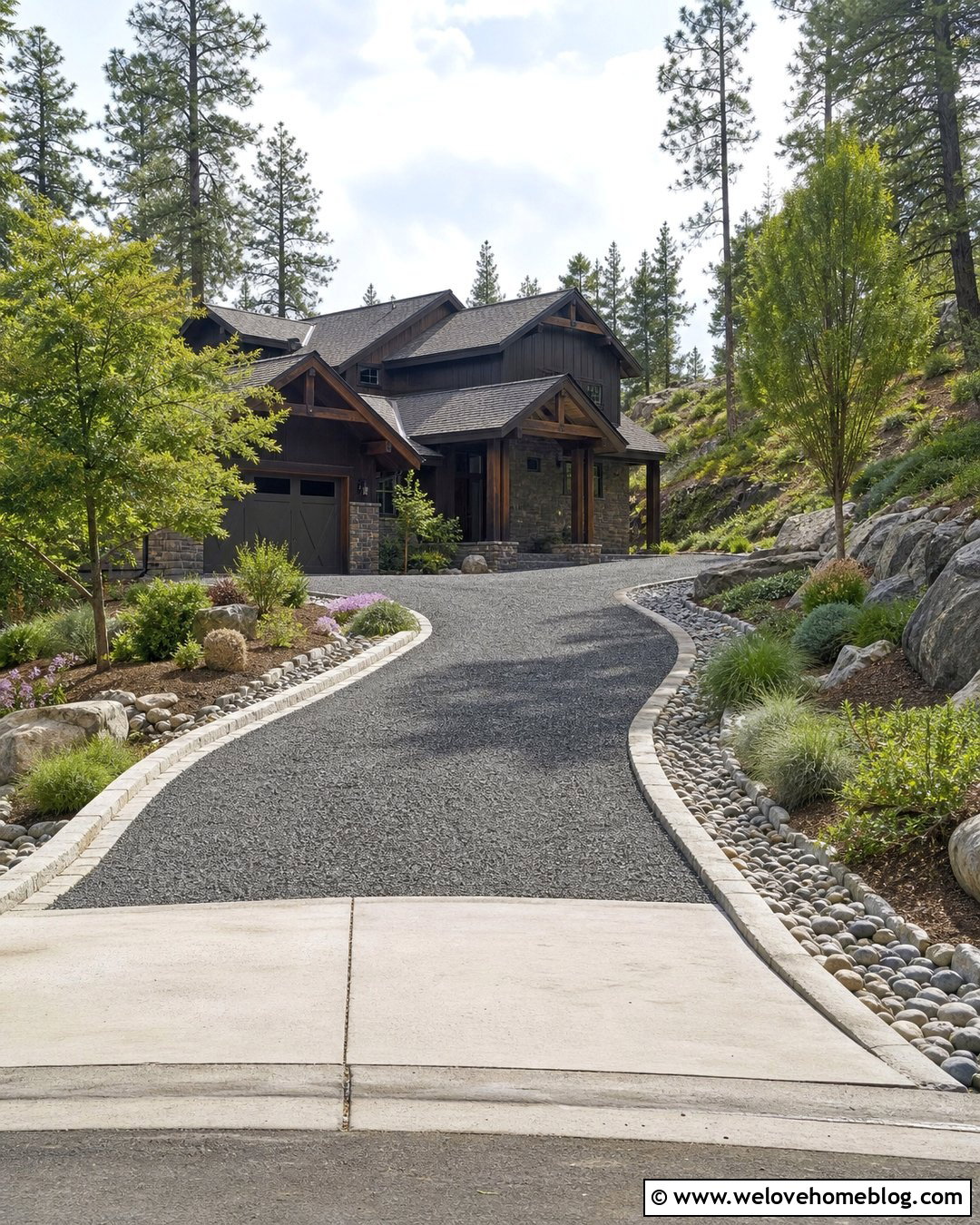
Water management should shape every detail of a sloped gravel driveway. Use compactable angular crushed stone rather than loose rounded gravel, and create a gently crowned or appropriately pitched surface that directs runoff toward planned drainage areas. Line the drive with stone-edged swales filled with river rock, moisture-tolerant grasses, and erosion-resistant planting. Concrete or granite curbs can protect vulnerable edges, especially around bends. A paver or concrete apron at the bottom may reduce gravel migration toward the street. Avoid placing soil or dense planting where it blocks water from leaving the surface. This practical design can still look attractive beside a mountain, Craftsman, or wooded home. Since slope, soil, rainfall, and local drainage rules vary, professional site planning may be worthwhile.
17. Small Gravel Driveway With Narrow Planting Beds
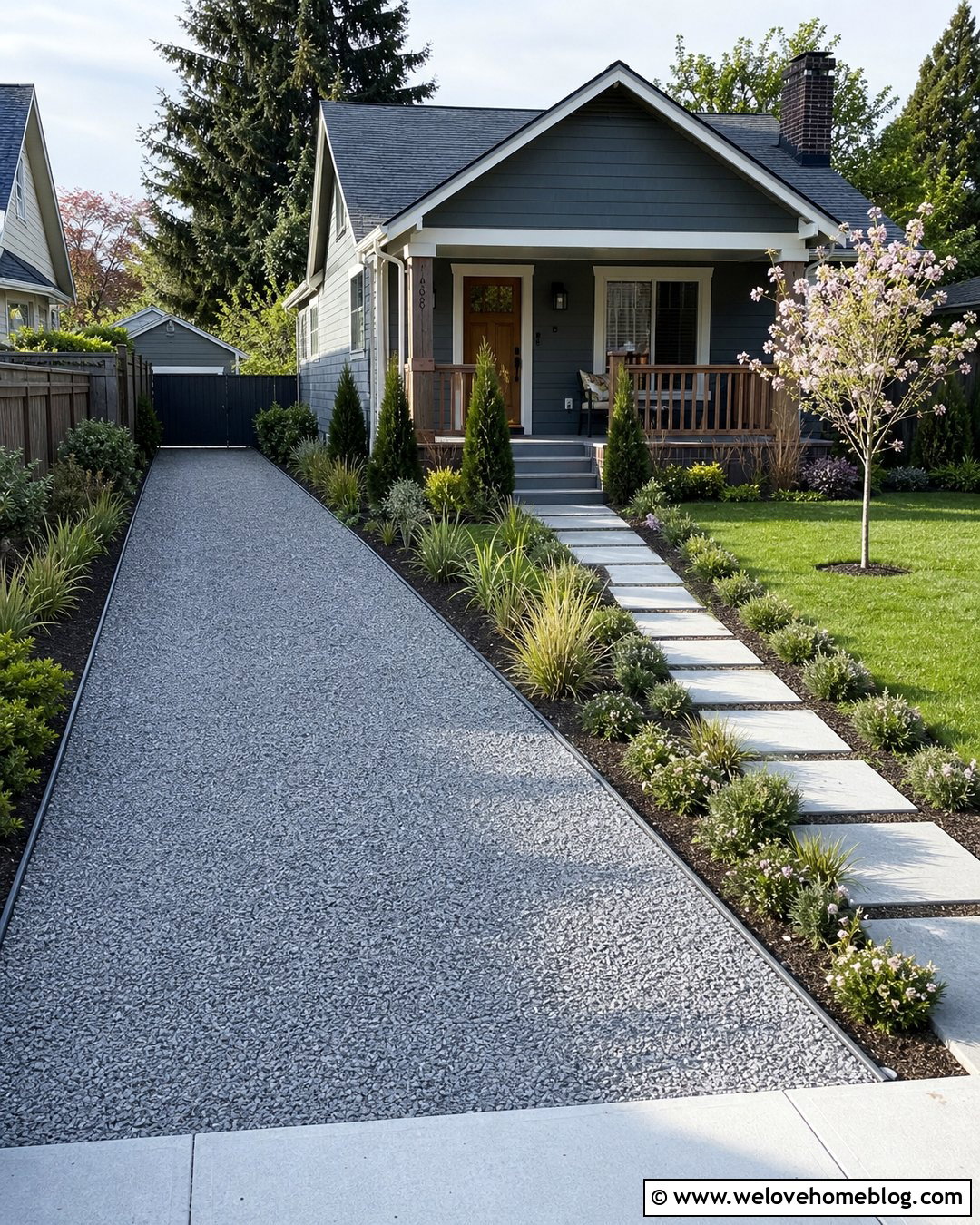
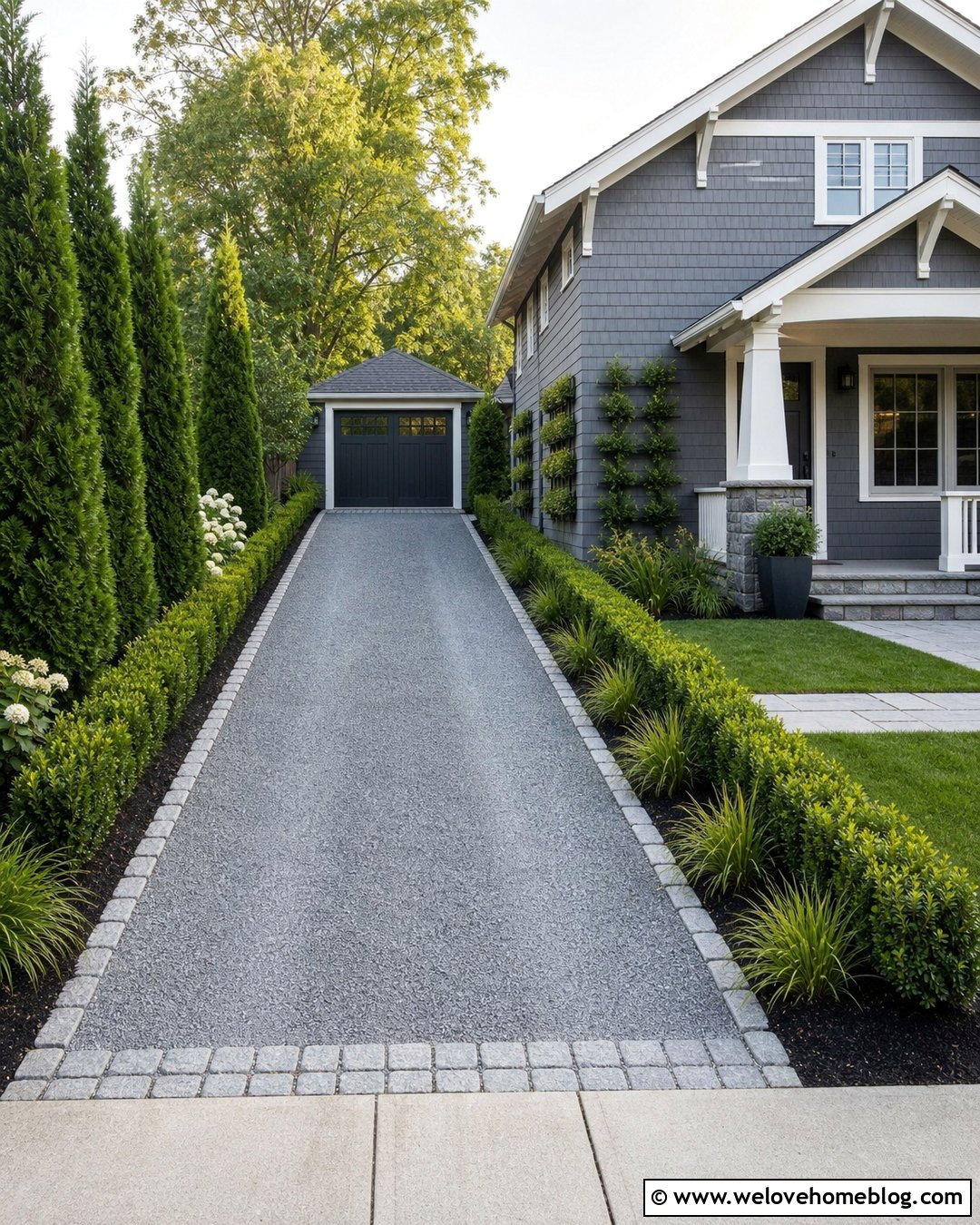
A compact front yard can still support a functional gravel driveway and meaningful landscaping. Choose fine gray crushed gravel and keep the layout straight, with enough width for parking but no unnecessary paved area. Slim brick or steel edging creates a clean boundary without consuming valuable space. On one side, add a narrow walkway leading to the front door. On the other, use a layered planting bed with upright shrubs, ornamental grasses, and groundcover that remains within its mature width. A small tree near the house can provide height without crowding the driveway entrance. Light-colored gravel makes the area feel more open, while darker borders add definition. This design suits bungalows, town cottages, and small suburban homes where every square foot must serve a clear purpose.
18. Wide Gravel Driveway With A Parking Court
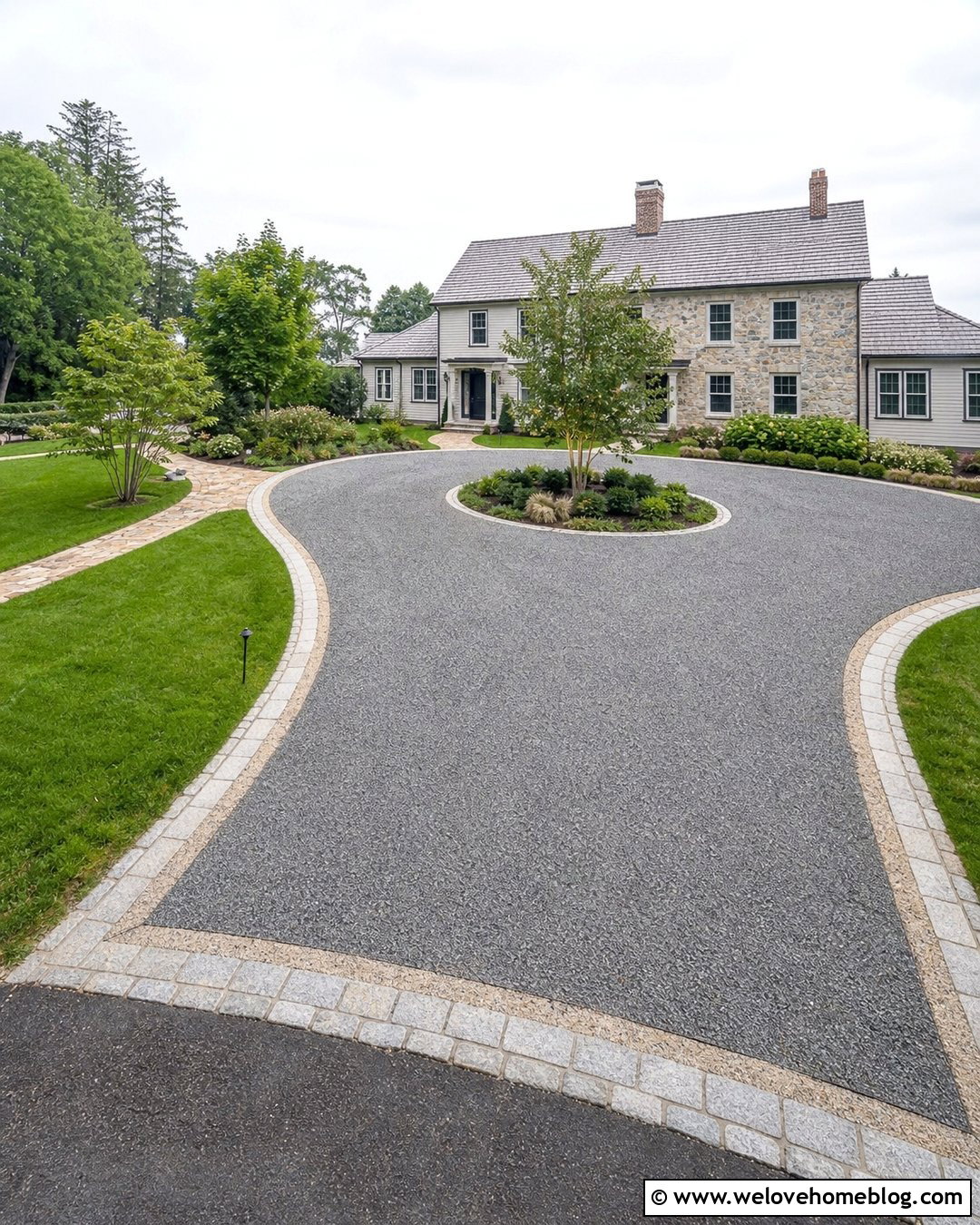
Large households and rural properties often need more parking than a narrow drive can provide. A wide gravel driveway with a clearly shaped parking court solves that problem without turning the entire front yard into an undefined stone area. Use compacted gray crushed gravel and outline the parking court with granite cobbles, concrete curbing, or a contrasting gravel band. A curved approach can lead naturally into the wider space near the garage. Separate parking from the main entrance walkway with a landscaped island containing a small tree and low shrubs. Make the court large enough for turning but avoid oversized corners that invite gravel migration. With clear edges, balanced planting, and intentional geometry, this complete design feels like part of the landscape rather than an improvised parking lot.
19. Rustic Gravel Driveway With A Farm Gate
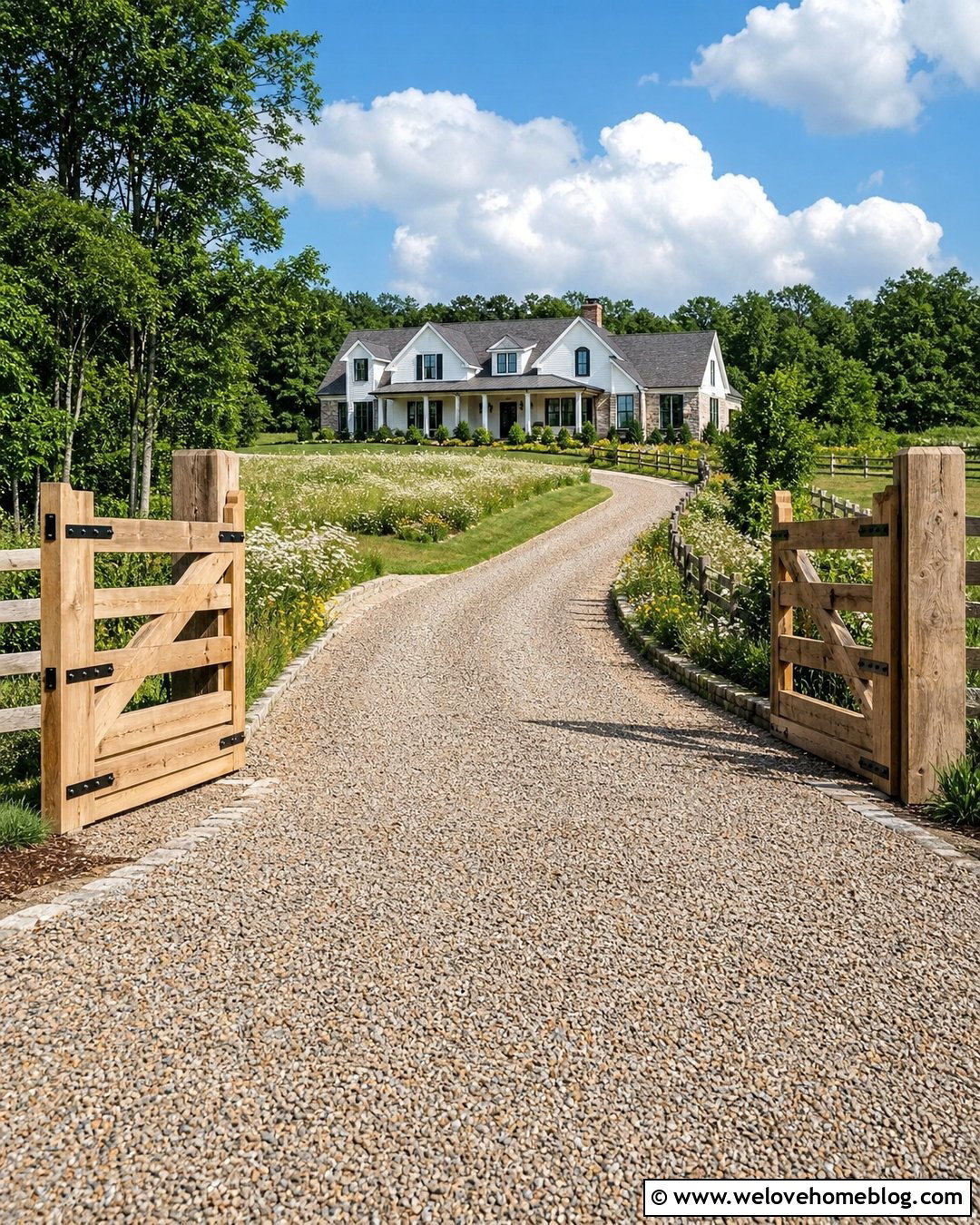
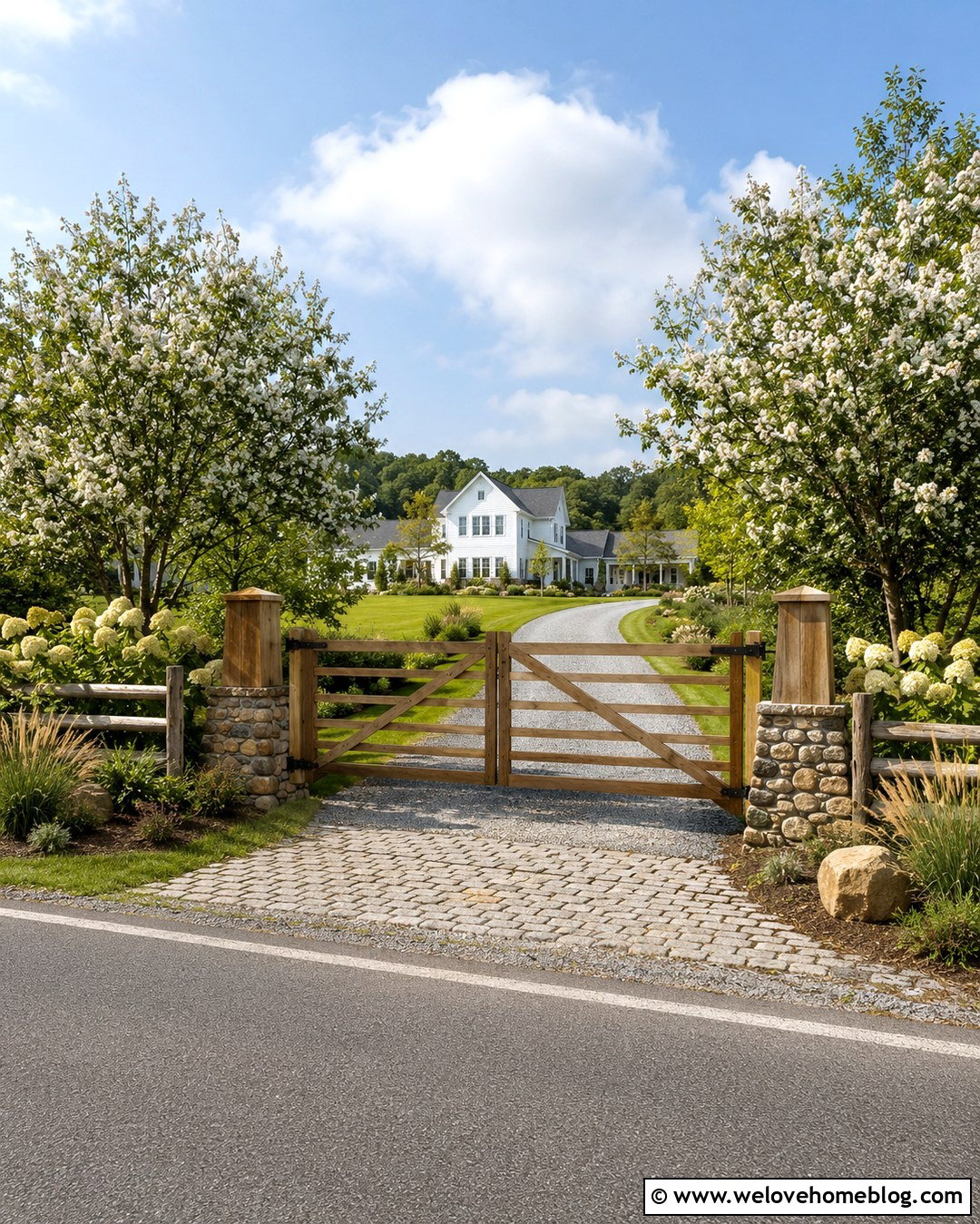
A timber farm gate and gravel driveway create a warm entrance for a rural home, modern farmhouse, or small homestead. Use brown or gray crushed stone in a long, slightly curved layout that follows the land. Frame the entrance with heavy wood posts, split-rail fencing, and wide planting beds filled with native grasses and flowering shrubs. Install stone or timber edging along sections where the driveway meets cultivated lawn, while allowing a softer transition near meadows. The gate should be positioned far enough inside the property for a vehicle to leave the road safely before stopping. Add a simple gravel turnout or widened area near the entrance if guests need space. The finished look should feel relaxed and practical, with materials that weather naturally together.
20. Gravel Driveway With Corten Steel Edging
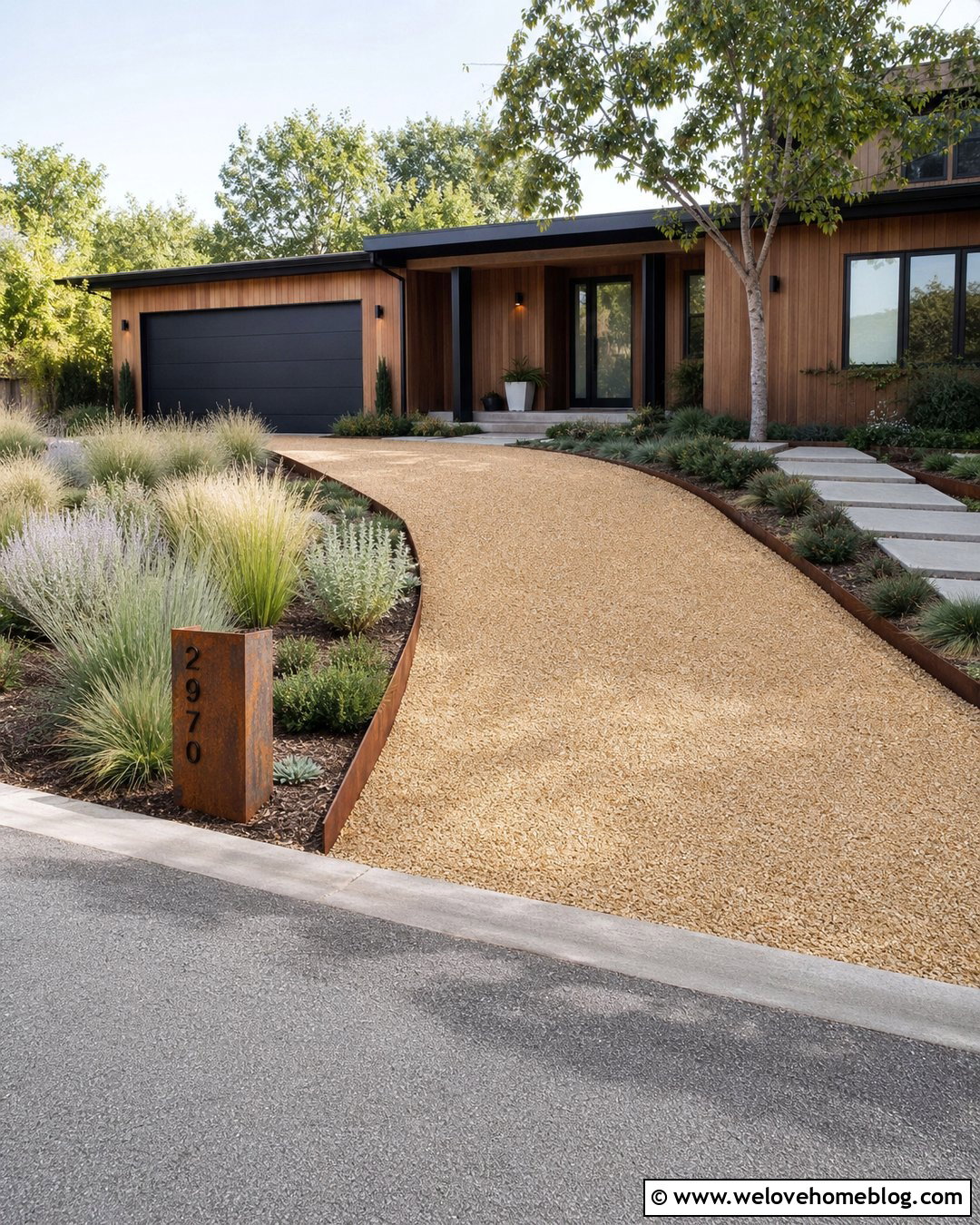
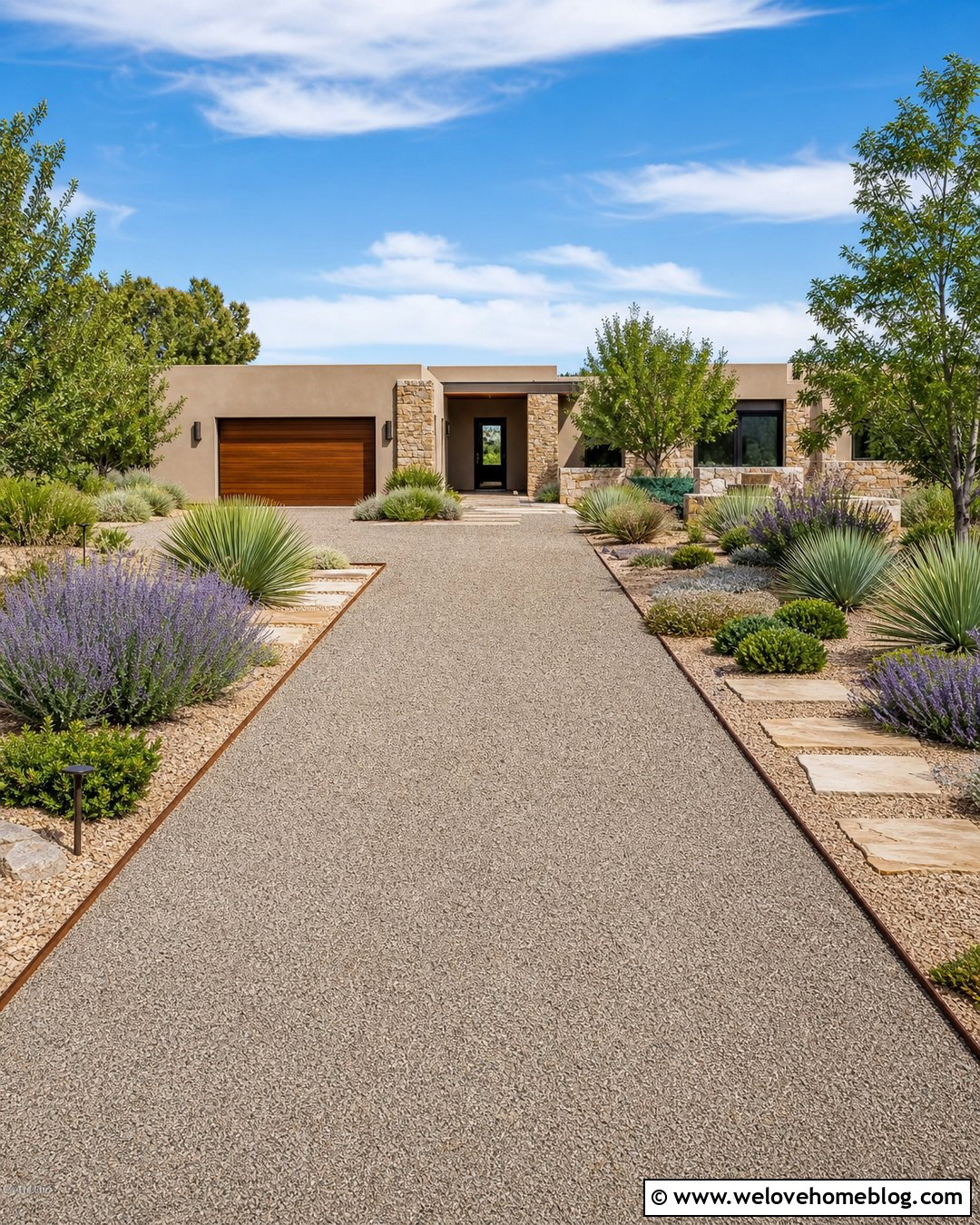
Weathered steel edging brings a contemporary touch to warm-toned gravel without looking cold or overly polished. Choose golden crushed granite or tan angular gravel, then frame a straight or gently curved driveway with sturdy Corten steel strips. The rust-colored finish pairs beautifully with modern wood siding, dark metal roofs, and concrete walkways. Extend the edging around geometric planting beds containing grasses, agave where appropriate, compact shrubs, or low groundcovers. A rectangular address marker in matching steel can reinforce the entrance design. Keep the edging height modest along vehicle areas and account for drainage before installation. As the metal develops its characteristic patina, it may release staining runoff, so thoughtful placement beside pale concrete and masonry is important for a clean finished appearance.
21. Woodland Gravel Driveway With Natural Boulders
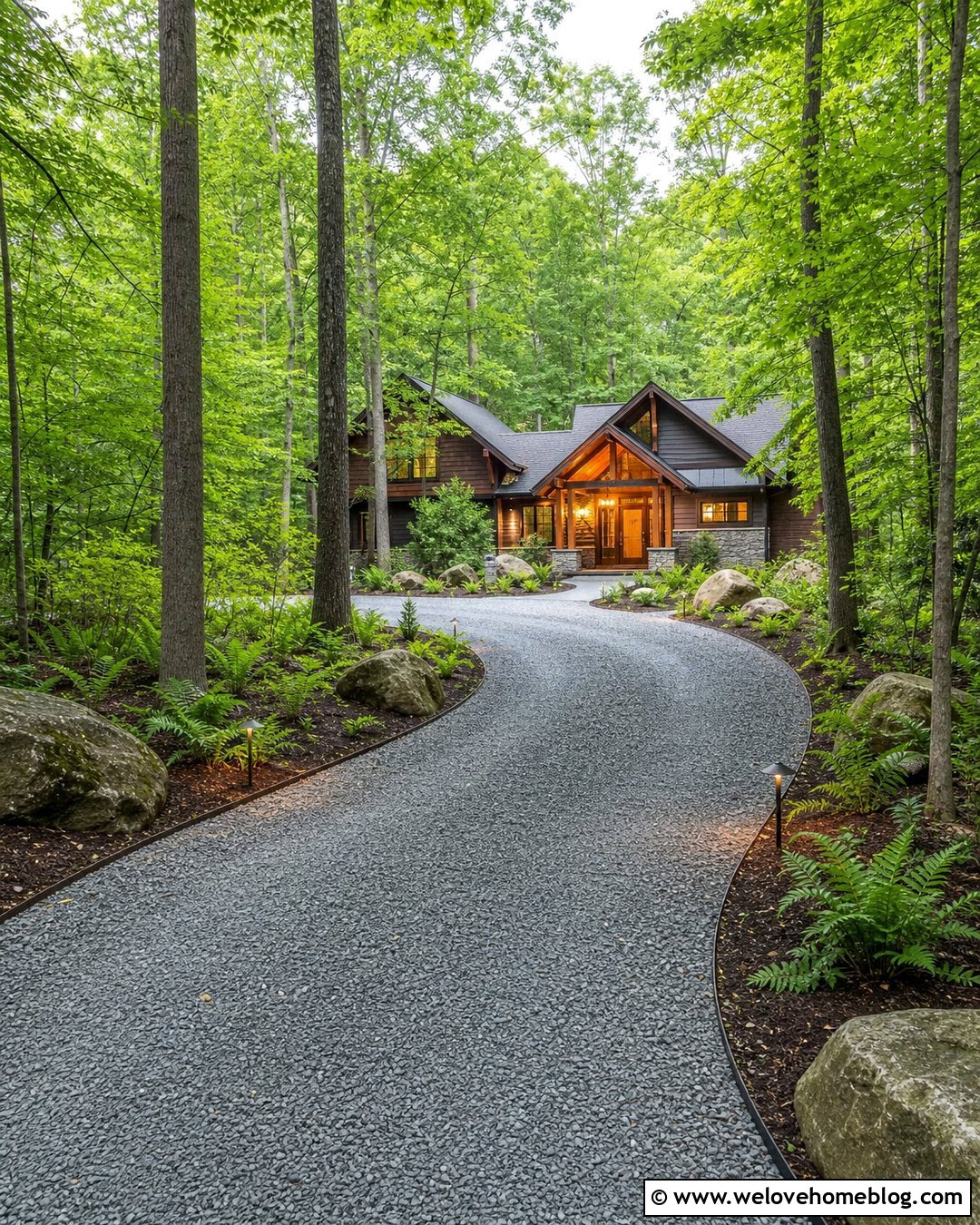
In a wooded yard, a gravel driveway should follow the landscape rather than compete with it. Use medium gray crushed stone for a gently curving route between existing trees, keeping construction away from important root zones whenever possible. Large local boulders can define selected corners and prevent tires from entering soft planting beds. Fill the surrounding landscape with ferns, woodland grasses, shade-tolerant shrubs, and natural leaf mulch. Instead of edging every foot, use subtle steel edging where containment is necessary and allow broader planted areas to create softer boundaries elsewhere. Low, downward-facing path lights can mark the route without overwhelming the setting. This complete driveway works well with cabins, Craftsman houses, and rustic contemporary homes, creating an approach that feels immersed in nature.
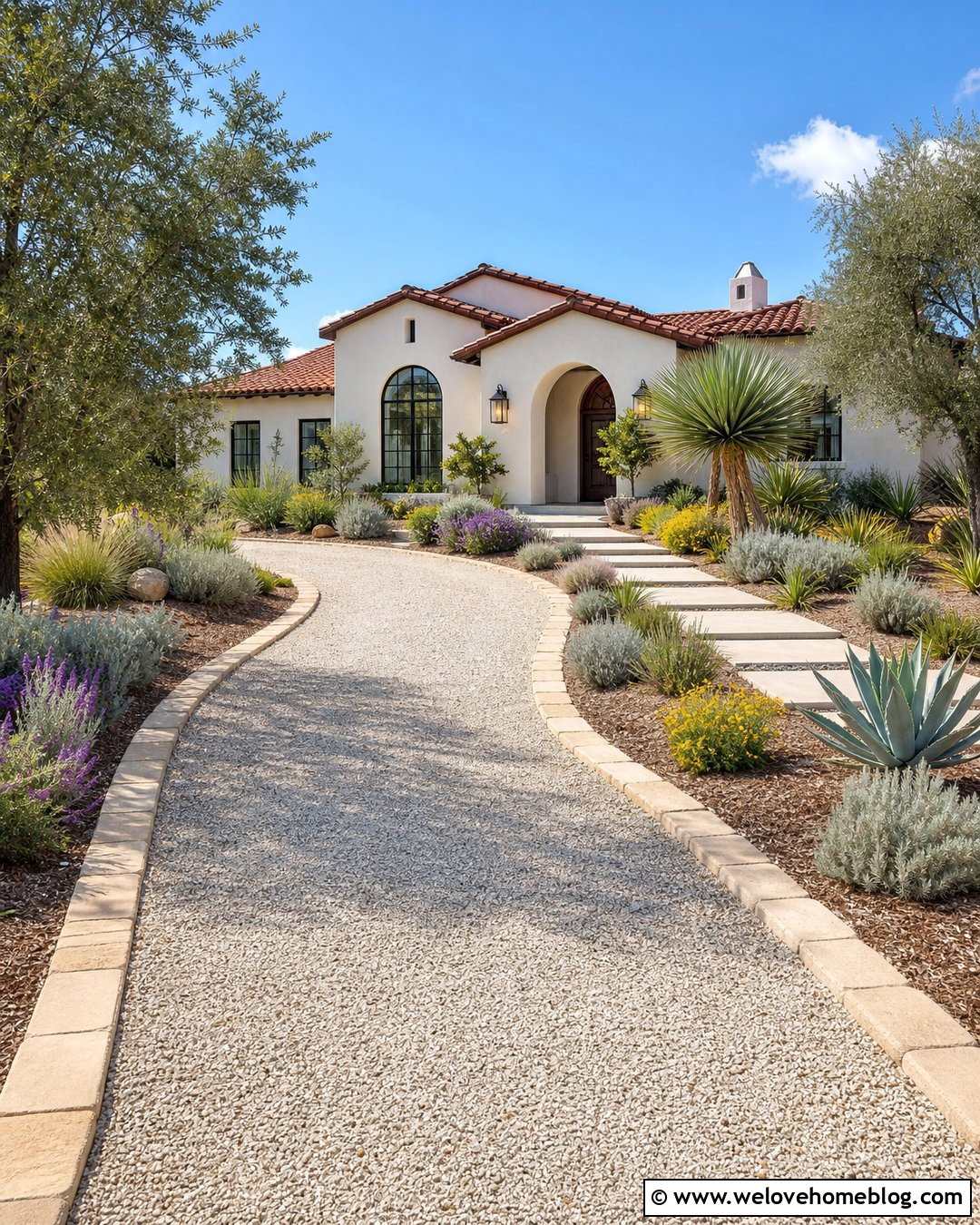
22. Desert Gravel Driveway With Xeriscaping
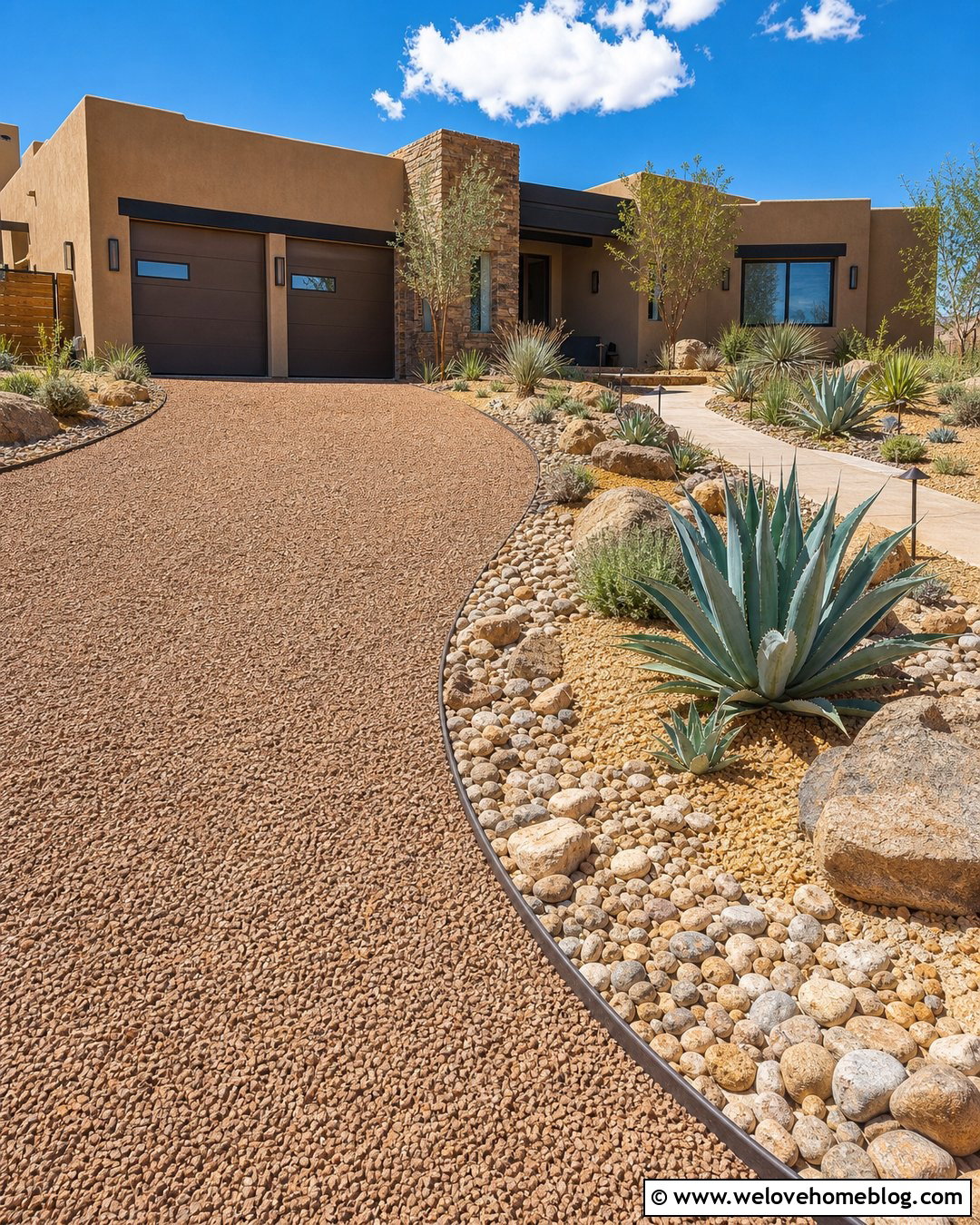
A desert gravel driveway can look sophisticated while fitting naturally into a water-conscious landscape. Select compacted tan, red, or warm gray crushed stone that complements the surrounding soil and house exterior. Use a broad, slightly curved layout with steel edging or a contrasting band of larger rock. Frame the approach with agave, yucca, desert spoon, ornamental grasses, and carefully placed boulders, choosing plants suited to the local climate. Leave generous open space around mature forms so the planting does not become crowded. A concrete walkway and simple stucco entry wall can guide visitors toward a Southwestern or contemporary home. Keep loose decorative rock outside the driving surface visibly different in size or color, preventing the driveway from blending into one unstructured gravel field.
23. Country Gravel Driveway With Hydrangea Borders
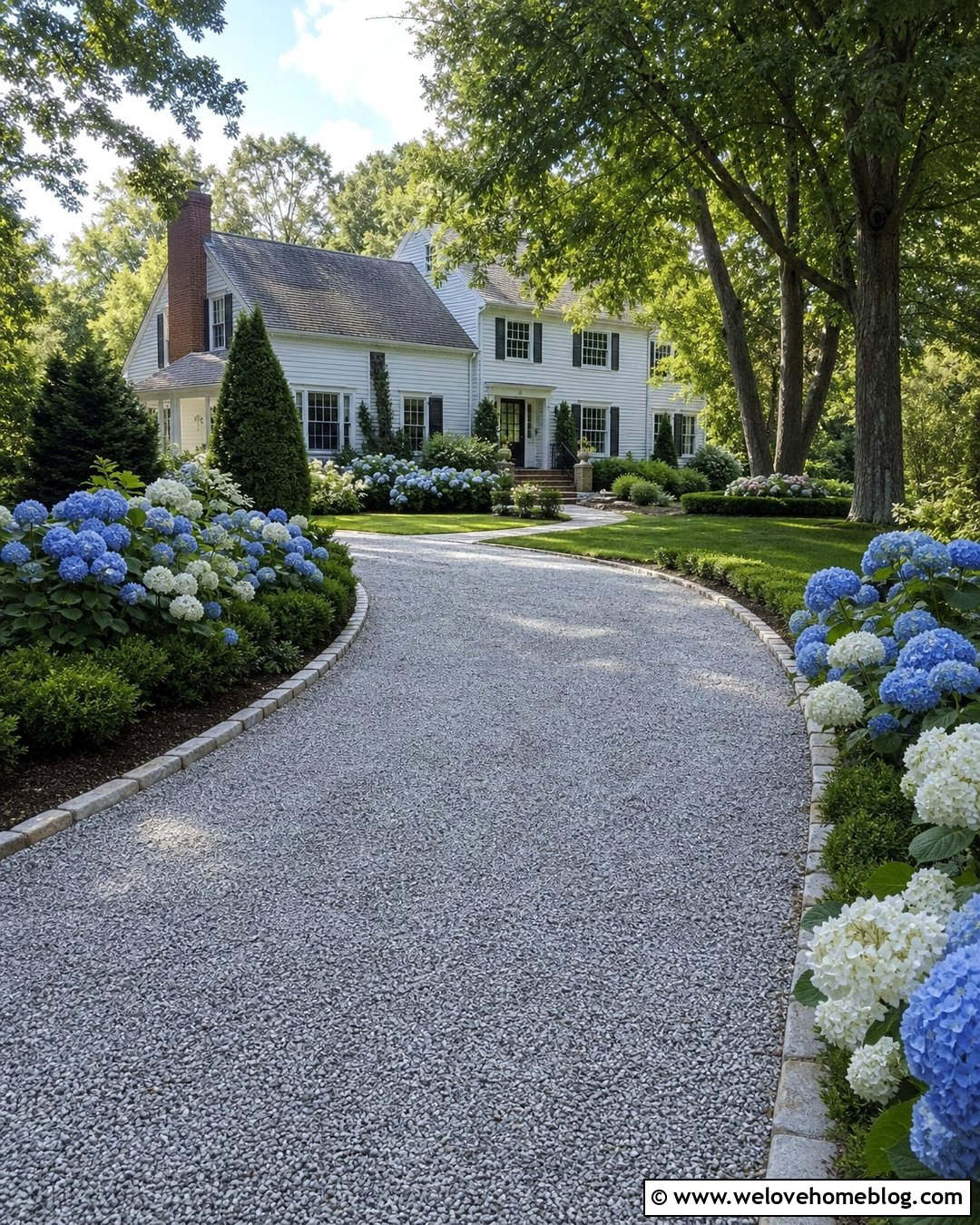
Full hydrangea borders can transform a simple gravel driveway into a lush country entrance. Use soft gray crushed gravel in a straight or sweeping layout, bordered with low brick or granite cobbles. Set hydrangeas beyond the hard edge so mature branches do not scrape vehicles or hide the driveway. Combine them with evergreen shrubs, shade trees, and groundcover to maintain structure outside the flowering season. Blue, white, or pink blooms can be selected to complement a farmhouse, Cape Cod, or traditional clapboard home. In hot or dry regions, choose varieties and planting locations suited to local conditions, or replace hydrangeas with a better-adapted flowering shrub. The repeated planting creates a strong visual rhythm, while the restrained gravel surface keeps the complete scene from feeling overly decorative.
24. Budget Gravel Driveway With Crusher Run
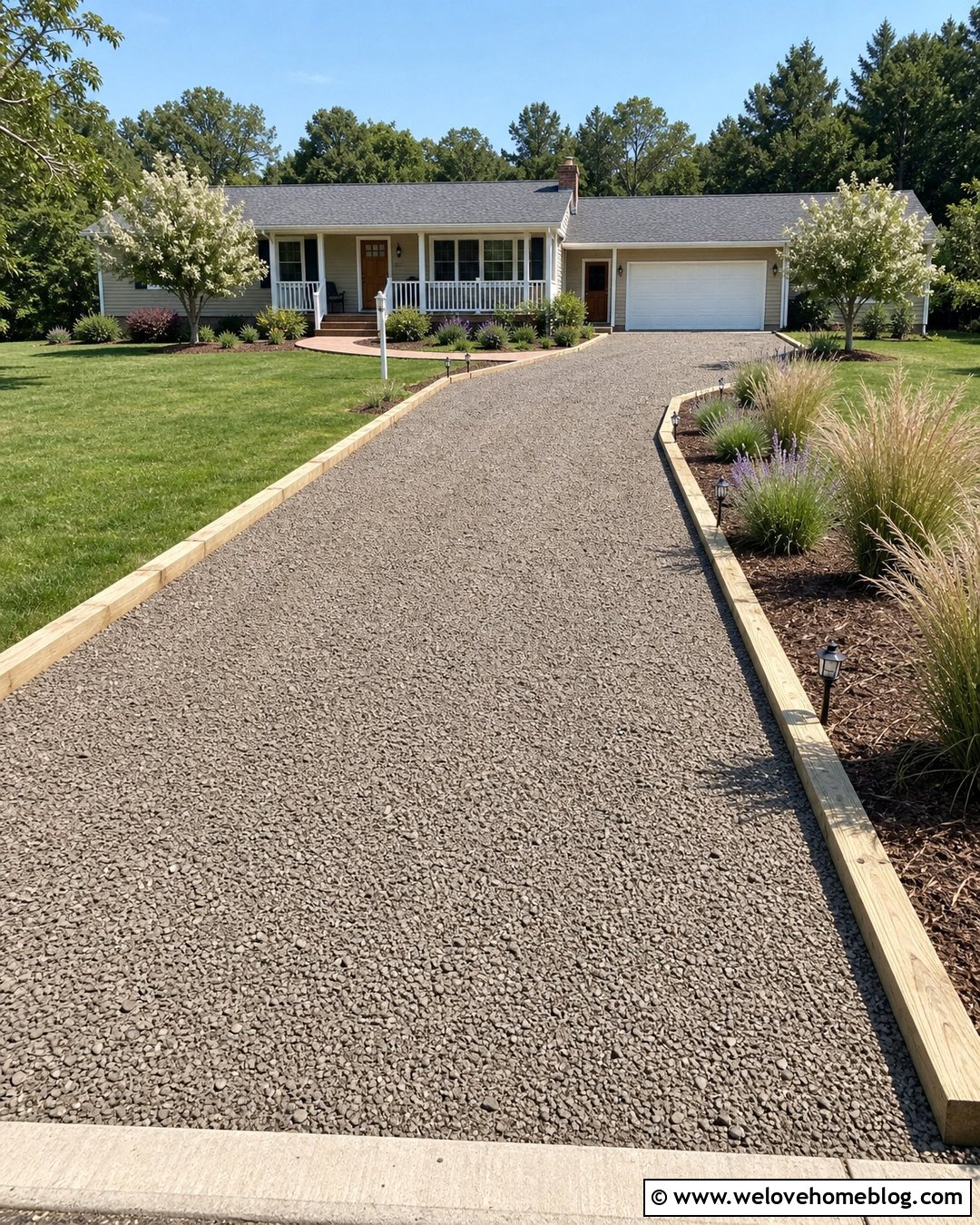
Crusher run offers a practical, straightforward surface for homeowners who prioritize function and affordability. Its mixture of angular stone and fine particles compacts into a relatively firm driveway when installed over a prepared base. Use it in a straight layout with pressure-treated timber, heavy steel, or simple stone edging where the surface meets lawn. A wider section near the house can provide basic parking and turning space. Improve curb appeal with inexpensive native grasses, mulch beds, and one or two small flowering trees rather than numerous decorative features. A brick or concrete walkway can create a cleaner route to the door. Although the surface is economical, proper excavation, grading, compaction, and drainage should not be skipped. Those hidden steps determine how well the driveway performs over time.
25. Gravel Driveway With Lighting And An Address Sign
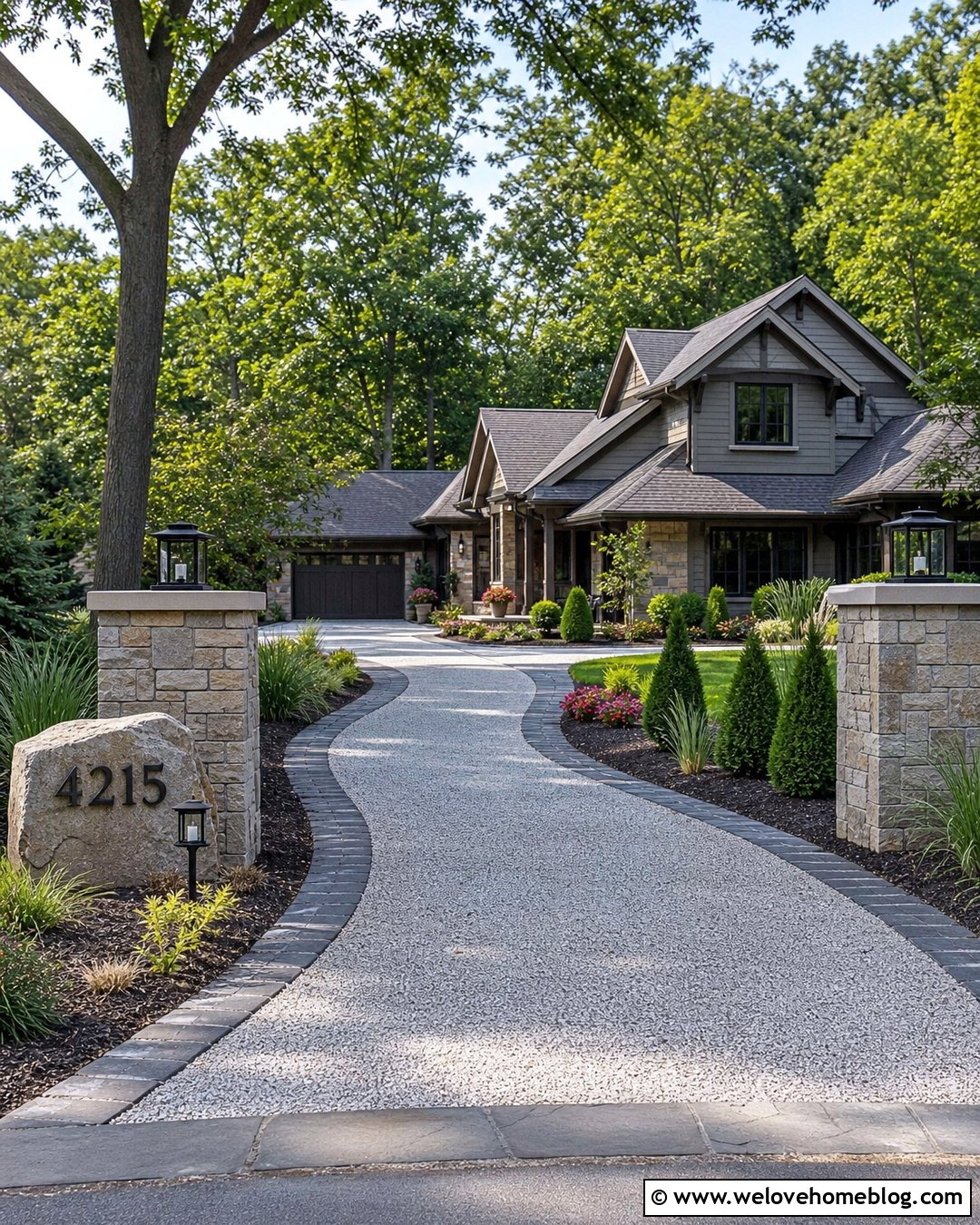
A well-marked entrance makes a gravel driveway easier to recognize while creating a polished first impression. Use light gray angular gravel in a gently curved layout, with dark cobblestone or metal edging along both sides. At the road, place a clear address sign beside low masonry pillars or a simple landscaped bed. Repeat understated path lights at wide intervals so they define the route without cluttering the lawn. Daytime appearance matters as much as nighttime visibility, so choose fixtures that coordinate with the house facade and gate hardware. Surround the entrance with compact evergreens and low ornamental grasses that will not cover the numbers. Properly planned lighting, visible addressing, strong edging, and coordinated landscaping turn an ordinary gravel surface into a complete and practical driveway design.
Conclusion:
The best gravel driveway is more than a layer of loose stone. It combines suitable driveway gravel, a stable base, effective drainage, defined borders, safe vehicle movement, and landscaping that complements the house. These 25 Gravel Driveways Ideas demonstrate how the same basic material can support cottage, farmhouse, coastal, modern, woodland, and traditional designs. Before construction, evaluate the slope, soil, turning space, street entrance, maintenance needs, and local requirements. Select angular, compactable stone for heavily traveled areas, and reserve more mobile decorative gravel for stabilized or lightly used settings. With thoughtful planning, durable edging, and balanced planting, a gravel driveway can remain practical while making the entire property feel more welcoming and complete.

Related posts:
Leave a Reply