
Cobblestone brings structure and historic character to loose gravel, creating a driveway that feels polished without losing its natural texture. It can frame the perimeter, reinforce curves, form decorative bands, or create a durable apron where the driveway meets the street. Gravel color also changes the mood. Pale limestone looks bright and relaxed, gray crushed stone feels traditional, and black gravel creates a sharper modern contrast. Beyond appearance, a properly installed cobblestone edge can help contain loose aggregate, while a defined entrance apron creates a practical transition at the curb. () The following **20 Cobblestone And Gravel Driveway Ideas** explore complete layouts for different homes, lot sizes, landscapes, and curb-appeal goals.
1. Pea Gravel Driveway With Granite Cobblestone Edging
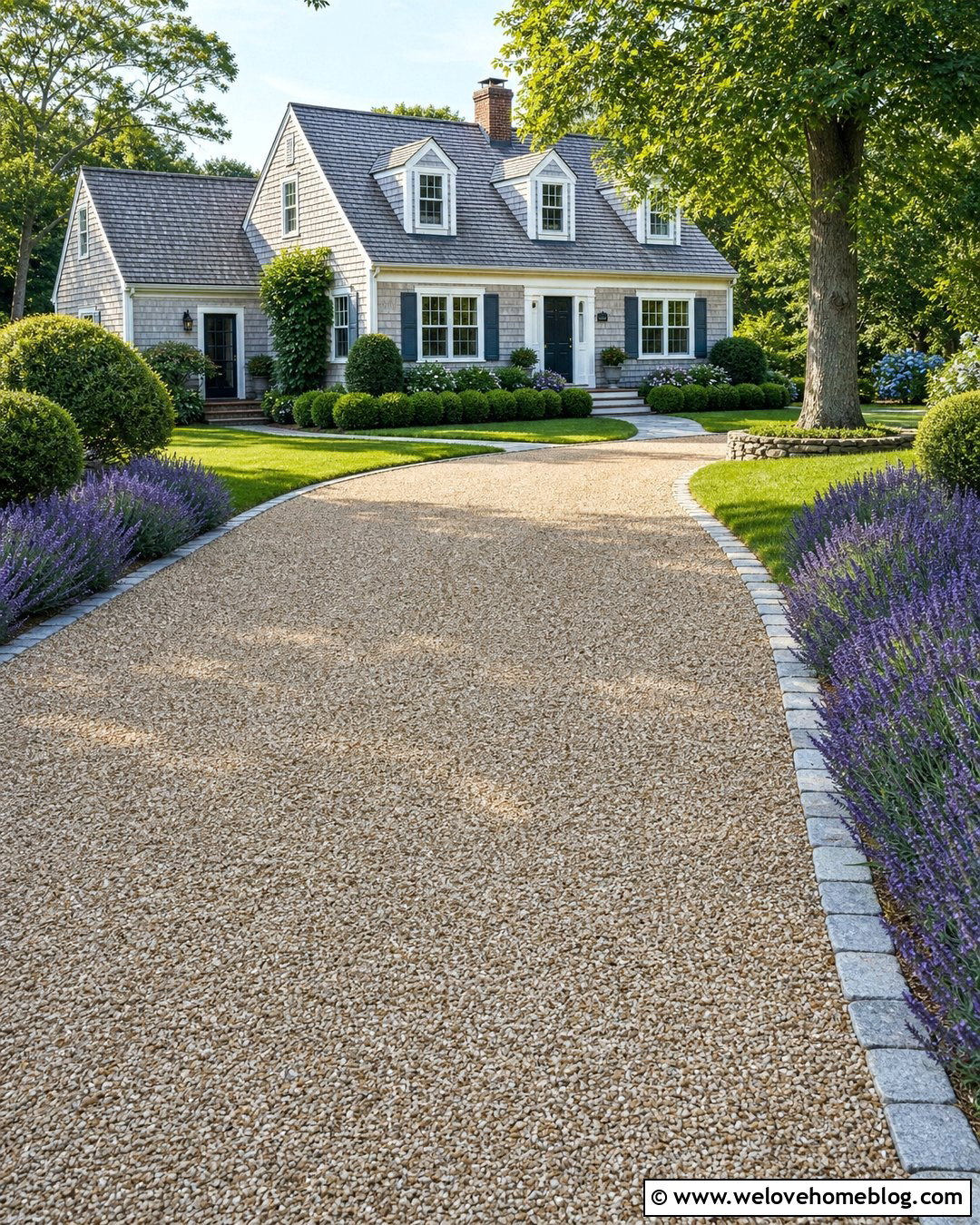
Smooth pea gravel and rugged granite cobblestones create a balanced driveway that feels informal yet carefully finished. Choose warm beige or mixed brown pea gravel for a welcoming surface, then install gray granite cobblestones along both sides. The darker border clearly separates the driveway from lawn and planting beds. A gently curved layout works especially well because the cobblestones emphasize the shape without making it feel rigid. Add lavender, catmint, boxwood, or ornamental grasses behind the edging for layered color and movement. Near the garage, repeat the stone in a narrow cobblestone threshold. This connects the entire design and helps the transition feel intentional. The combination suits cottages, Cape Cod homes, traditional brick houses, and relaxed suburban landscapes.
2. Gray Gravel Driveway With Cobblestone Apron
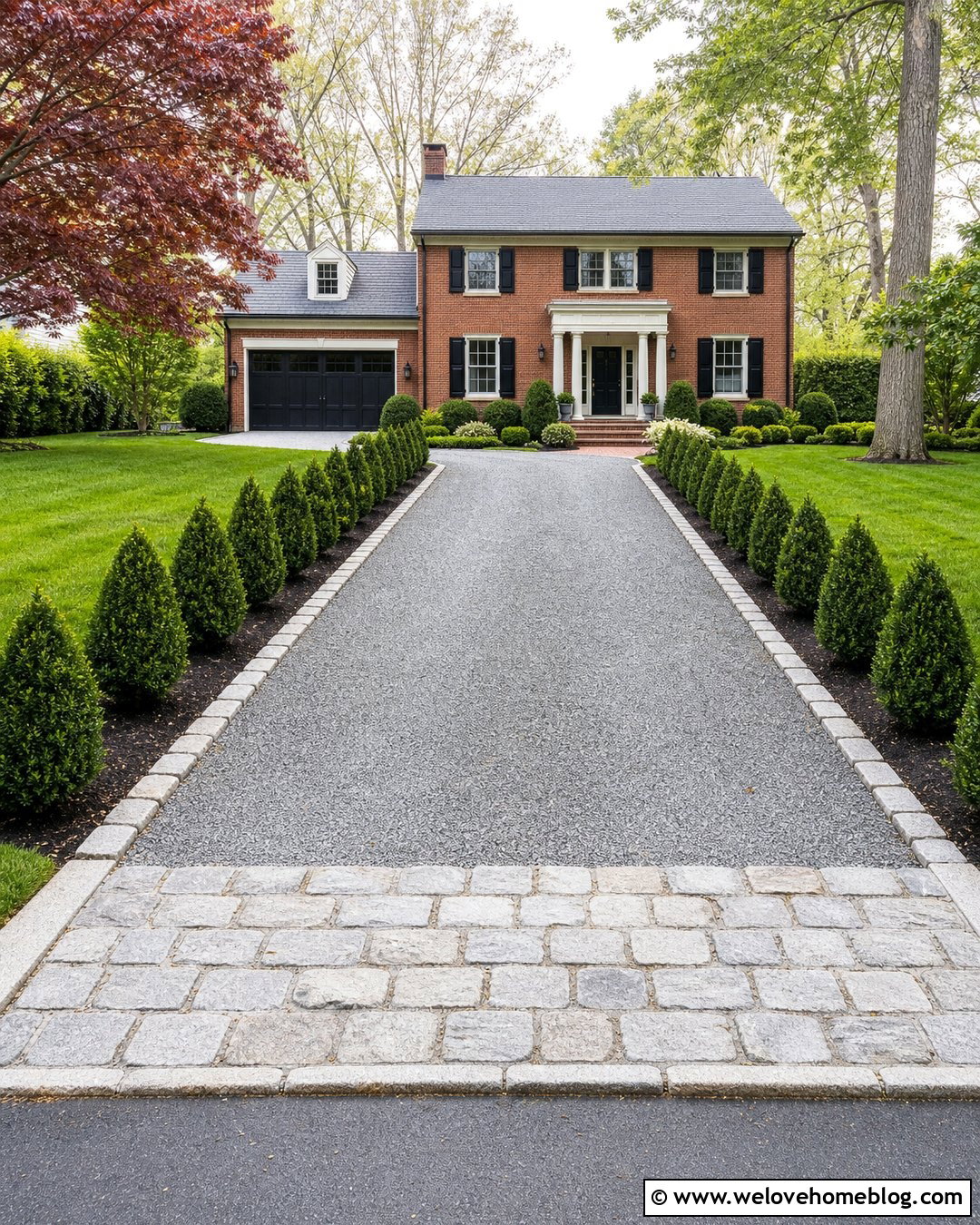
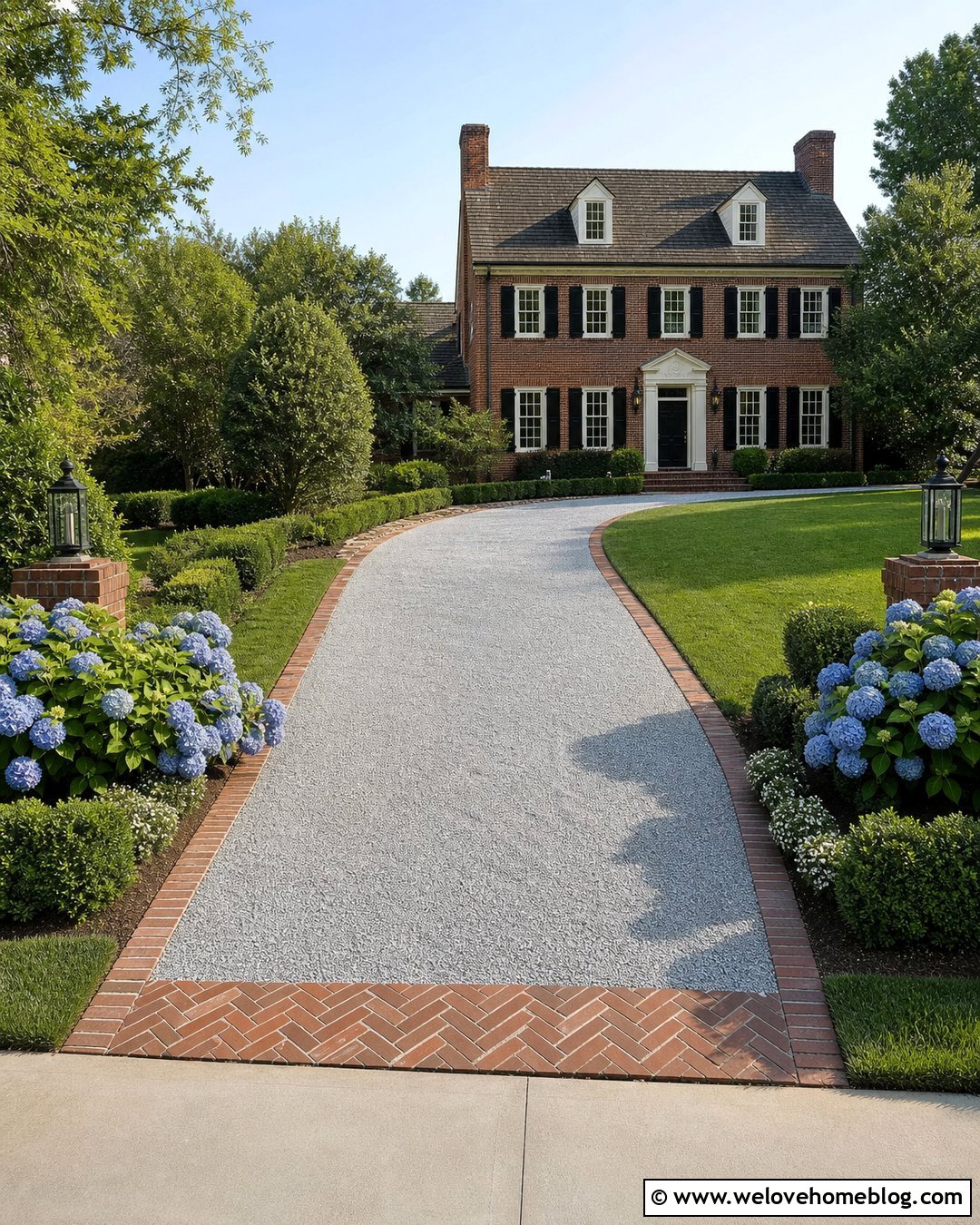
A cobblestone apron gives a simple gray gravel driveway a strong and attractive entrance. Lay several rows of charcoal or weathered granite cobblestones where the driveway meets the street, then continue with compacted angular gray gravel toward the house. The apron acts as a visual gateway and creates a stable transition at a heavily traveled point. Border the remaining driveway with a single matching cobblestone row for consistency. Low evergreen shrubs and neatly cut lawn can keep the overall look clean without competing with the stonework. Before changing an apron near a public street, confirm right-of-way boundaries, drainage requirements, and permit rules with the local municipality. () This layout particularly complements Colonial, Georgian, and traditional two-story homes.
3. Curved Gravel Driveway With Double Cobblestone Border
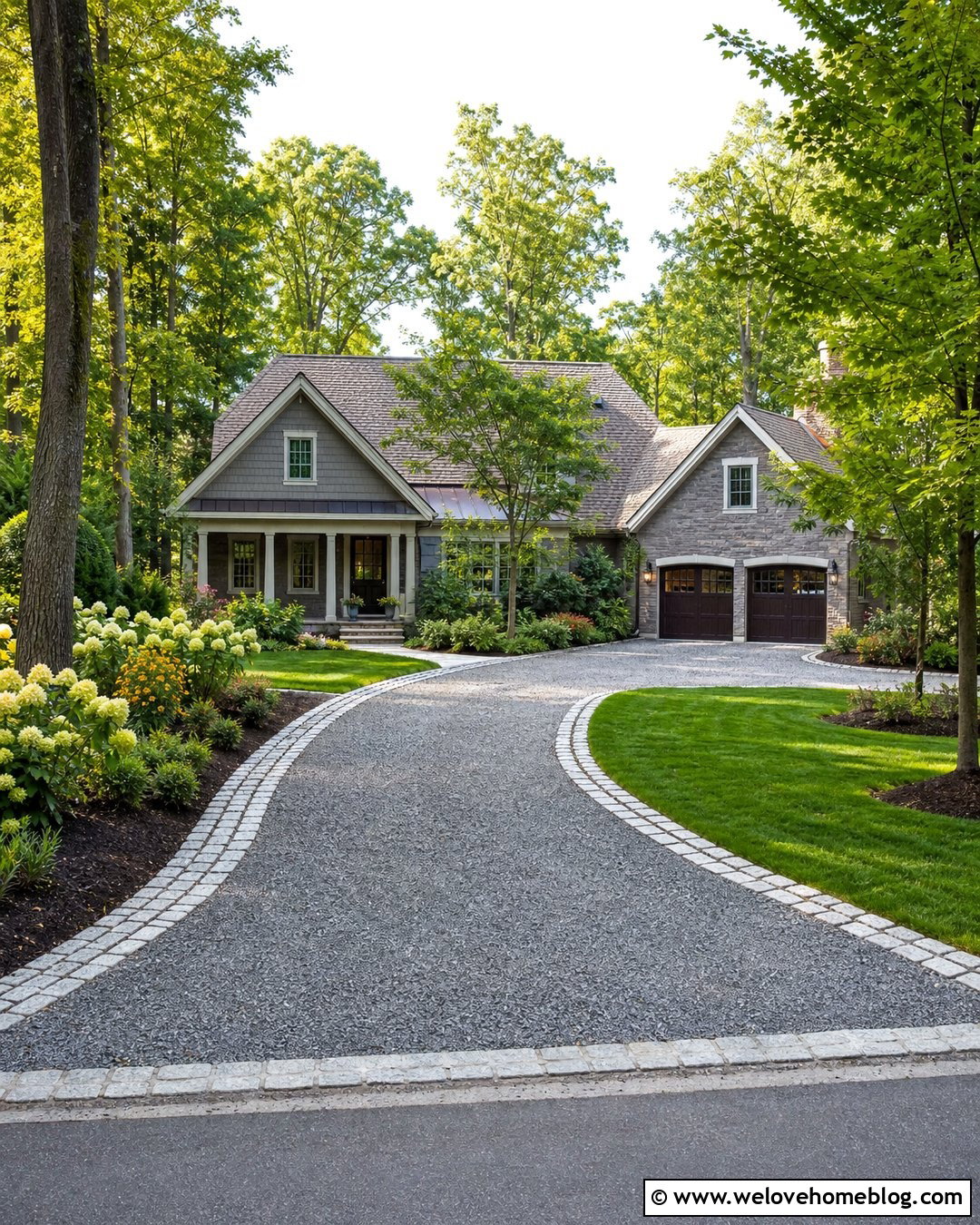
Can a practical driveway also become part of the landscape? A sweeping gravel drive with two rows of cobblestones along each side makes the route feel graceful and established. Use medium-gray crushed gravel for a firm-looking surface and mottled granite cobblestones for a subtle color shift. The wider border gives curves more definition and offers enough visual weight for a large front yard. Place clusters of flowering shrubs along the outside bend and preserve open lawn on the inside to maintain visibility. Small ornamental trees can mark the approach without crowding vehicles. At the house, widen the gravel into a simple parking court while carrying the double border around its perimeter. This complete look suits Craftsman houses, wooded properties, and country homes with deeper setbacks.
4. Circular Gravel Driveway With Cobblestone Center Island
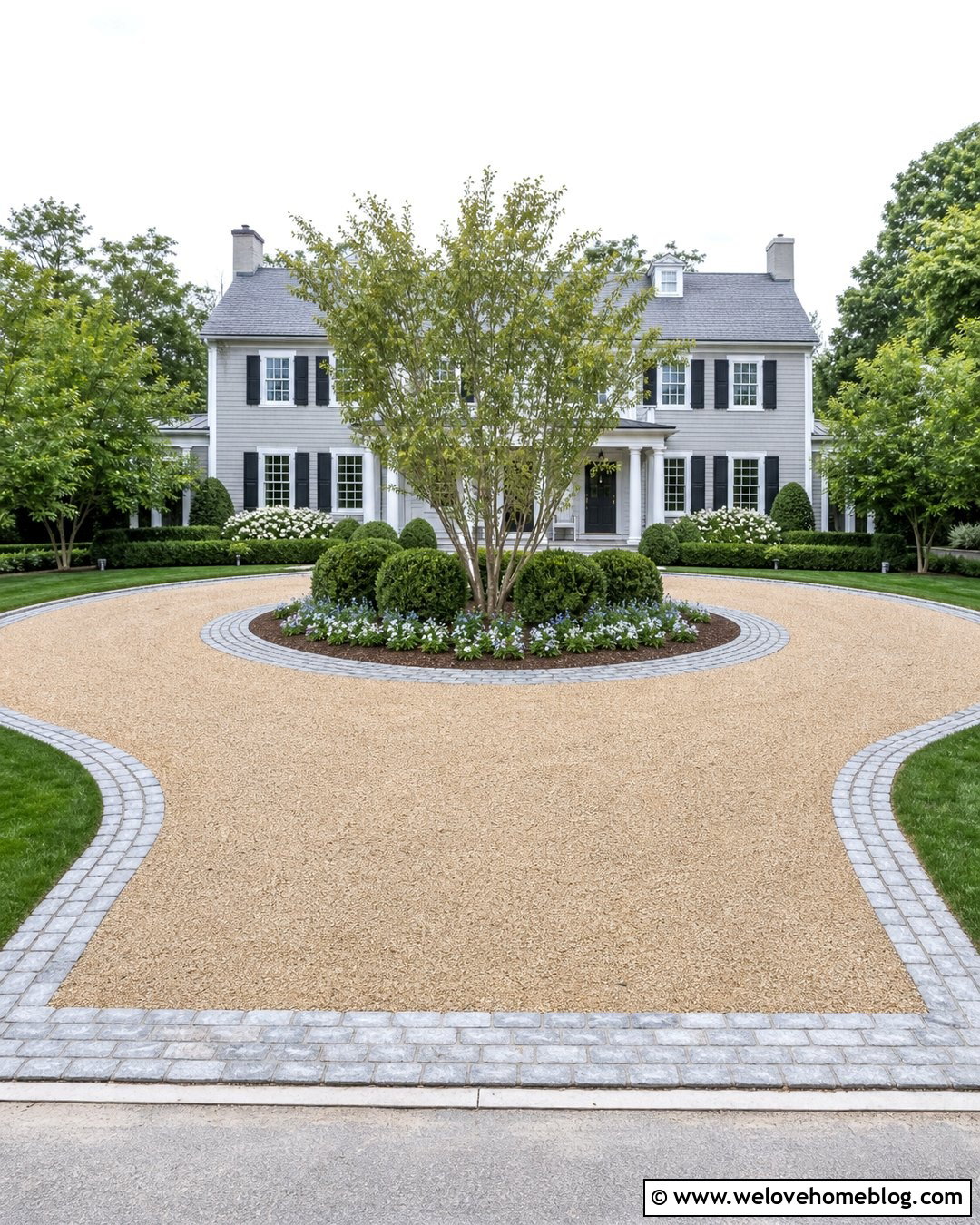
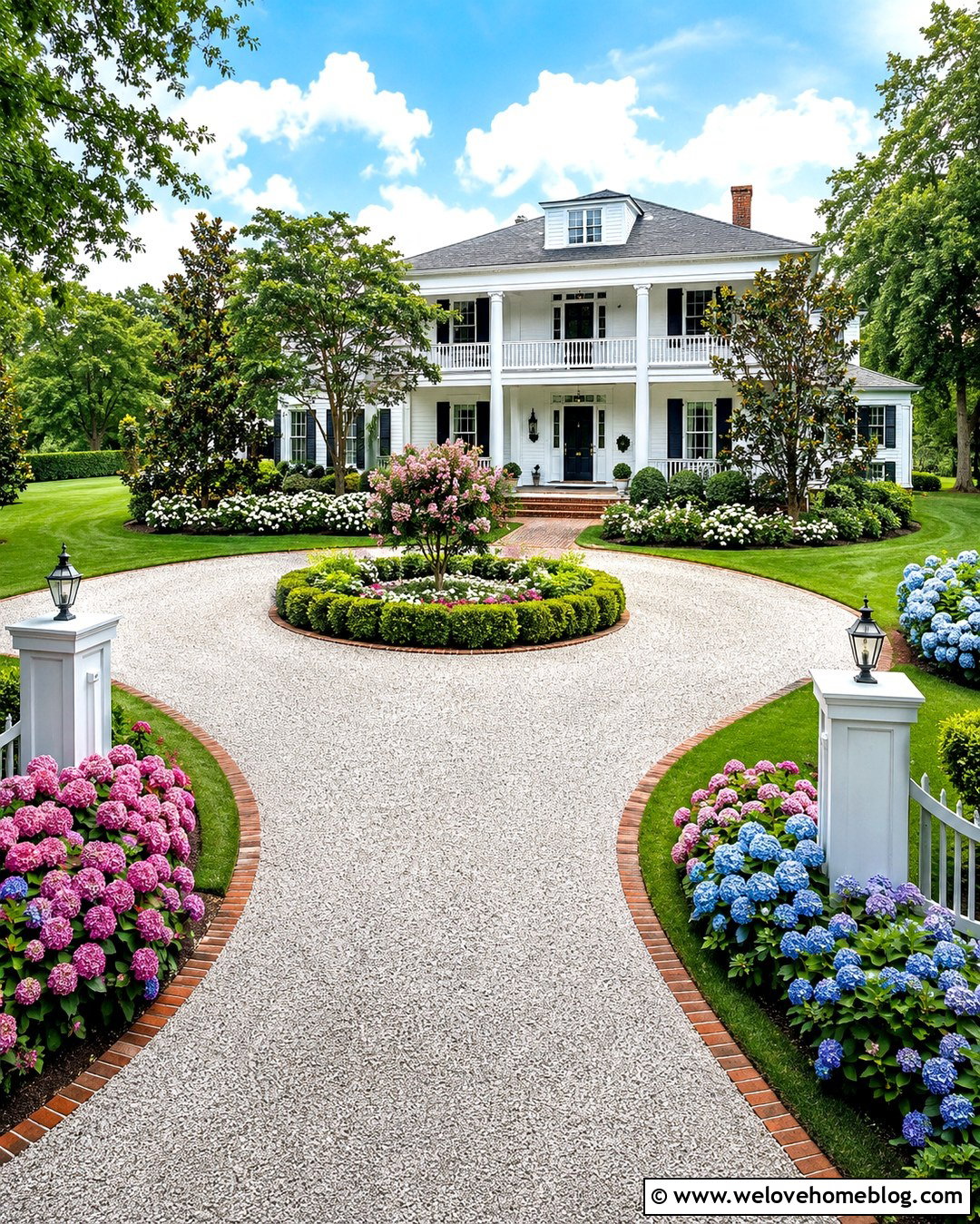
A circular driveway becomes far more memorable when gravel, cobblestone, and landscaping form one connected composition. Cover the driving lane with warm buff gravel and edge both sides with gray granite cobblestones. In the center, create a round planting island outlined by two or three cobblestone rows. A small multi-stem tree, clipped evergreen shrubs, and seasonal ground cover will provide height without blocking views of the house. Keep the island planting simple so drivers can comfortably navigate the circle. Matching cobblestone bands at both street entrances visually anchor the design. This arrangement works best on wider properties where turning space is generous. It creates an elegant arrival for symmetrical Colonial homes, larger ranch houses, and traditional residences with centered front doors.
5. White Gravel Driveway With Dark Cobblestone Edging
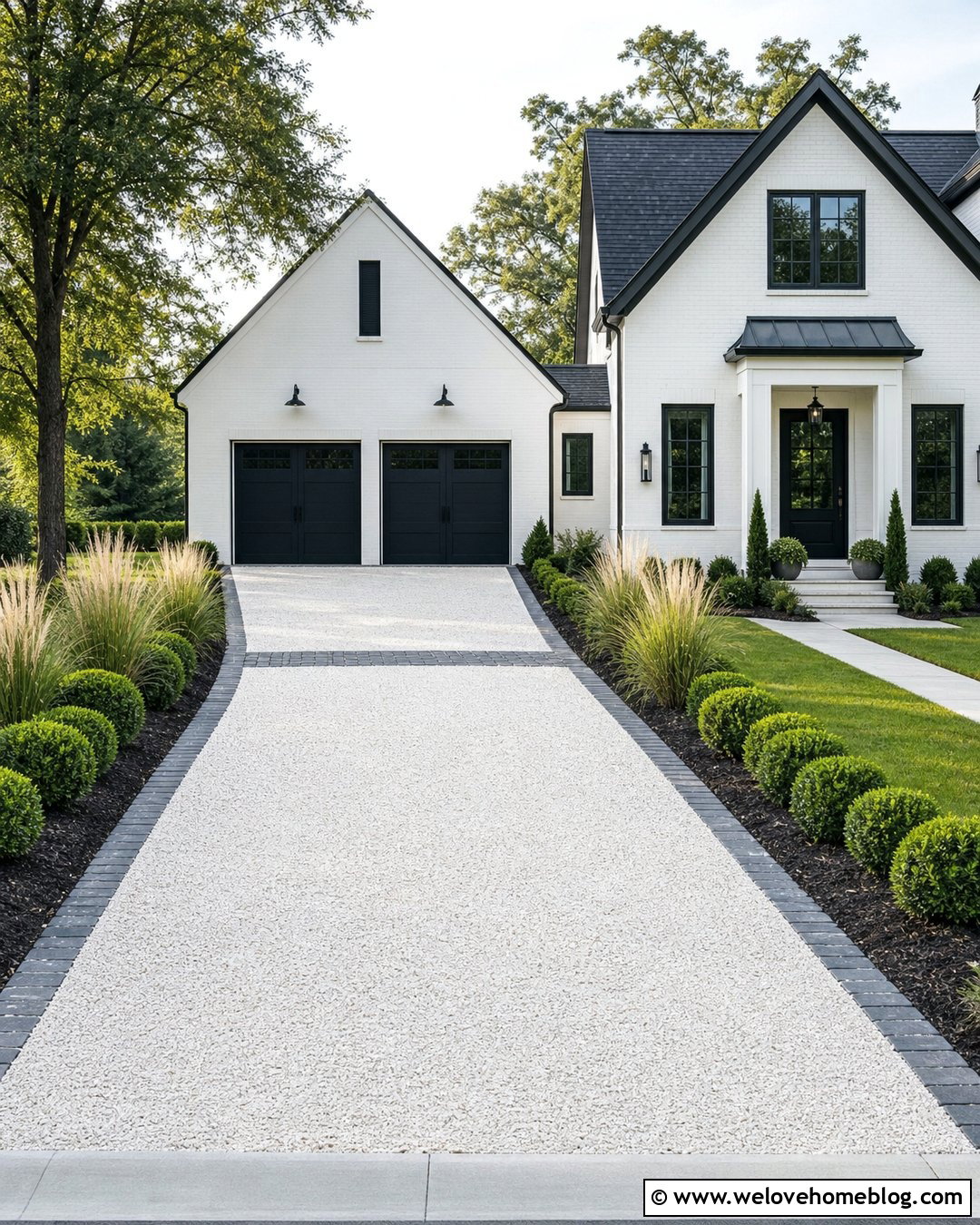
Bright white gravel against dark cobblestone produces crisp contrast that can make a compact front yard look more orderly. Use white marble chips or pale crushed limestone for the main driveway, depending on local availability and the amount of brightness you want. Frame it with charcoal granite cobblestones laid in a straight, single-row border. Repeat the dark material in a band near the garage and at the sidewalk transition. Simple planting keeps this high-contrast combination from becoming visually busy. Consider deep green boxwood, upright grasses, or a narrow hedge beside the drive. A straight layout emphasizes clean geometry and makes the parking area easy to understand. This design works especially well with white-painted brick, gray siding, black trim, or a modern farmhouse facade.
6. Crushed Limestone Driveway With Cobblestone Bands
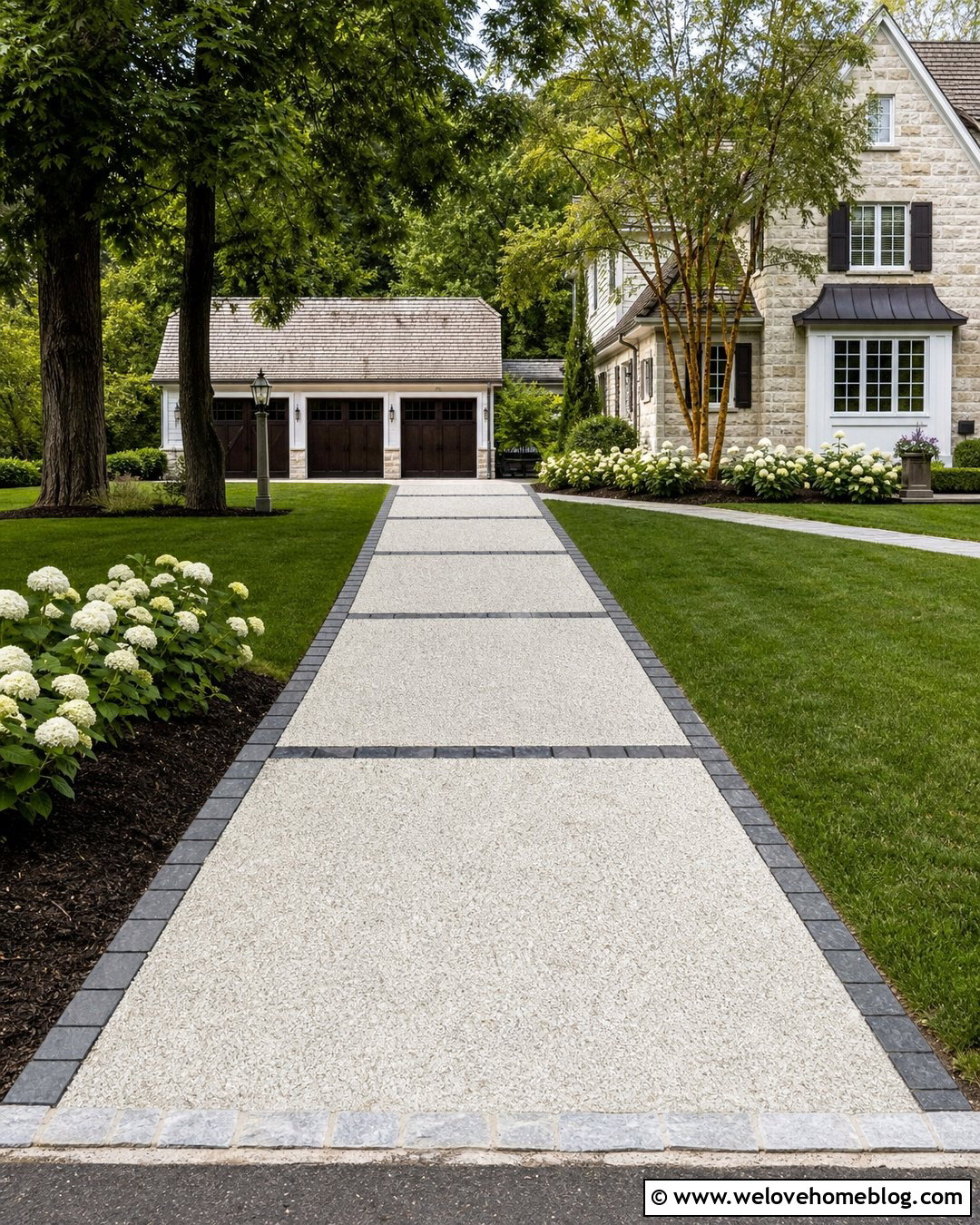
Pale crushed limestone can feel expansive, so crossing the surface with cobblestone bands adds welcome rhythm and scale. Install narrow granite cobblestone strips across the driveway at regular intervals, similar to decorative joints. Continue the same stone around the perimeter to contain the limestone and unify the pattern. The bands should follow the driveway’s width cleanly rather than appearing randomly placed. Beside the drive, use broad lawn panels and uncomplicated beds filled with hydrangeas, hollies, or native grasses. A straight approach leading to a side-facing garage helps the crossbands stand out without dominating the front elevation. The pale gravel reflects light around the property, while the darker cobblestones visually connect the driveway to stone foundations, gray roofs, and traditional masonry details.
7. Tan Gravel Driveway With Rustic Cobblestone Border
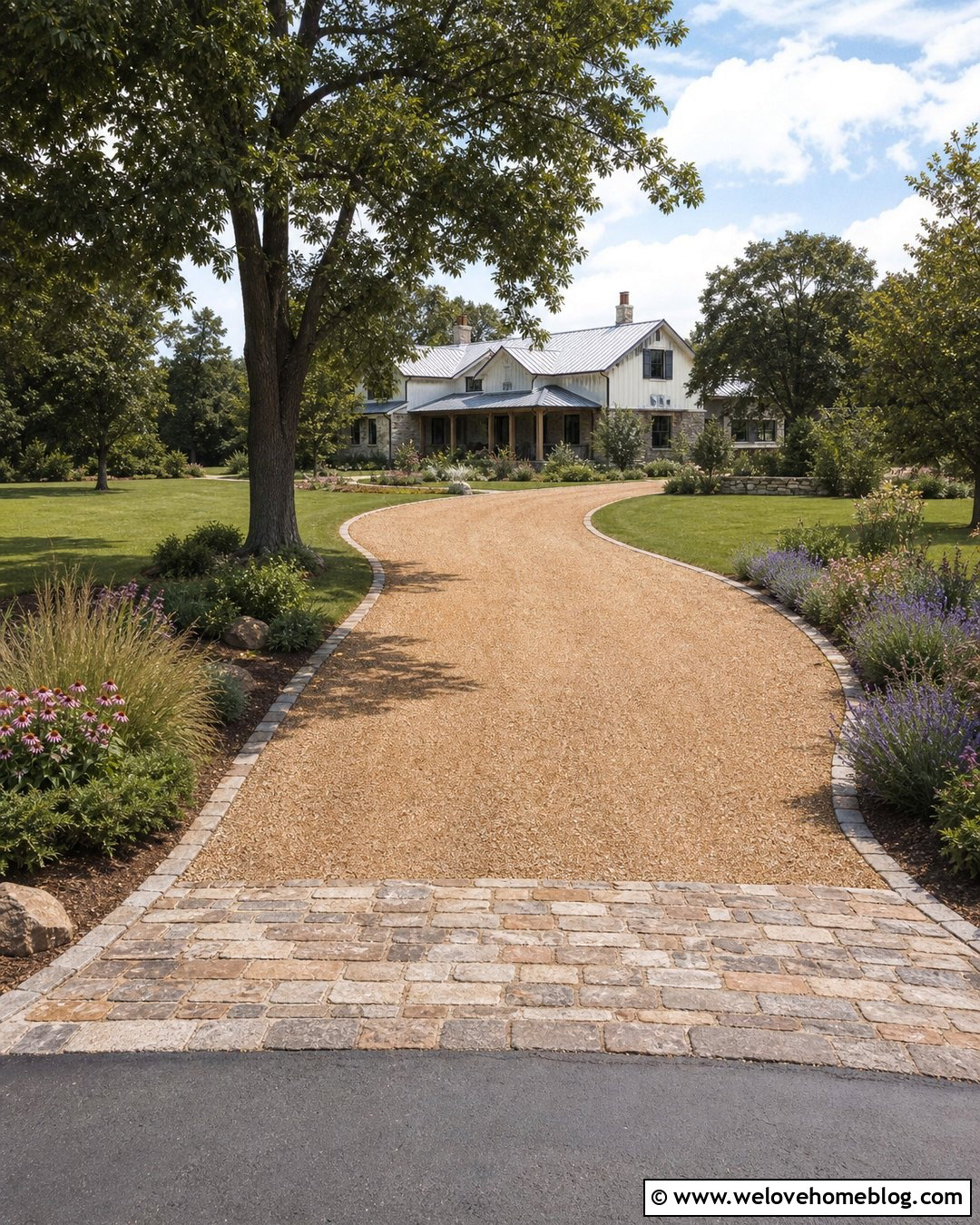
Warm tan gravel is a natural companion for weathered cobblestones with brown, gray, and charcoal tones. Together, they create a relaxed driveway that looks appropriate beside timber, stone, or painted siding. Shape the drive with a soft curve and use irregular-looking rectangular cobblestones as a solid perimeter border. Plant native grasses, coneflowers, salvia, and low junipers beyond the stones for a landscape that feels full but manageable. At the street, widen the cobblestone border into a shallow apron that clearly marks the entrance. A flagstone walkway can branch from the driveway and lead toward the front porch. This complete combination is especially suitable for farmhouses, rustic Craftsman homes, wooded lots, and properties where highly formal paving would feel out of place.
8. Black Gravel Driveway With Light Cobblestone Edging
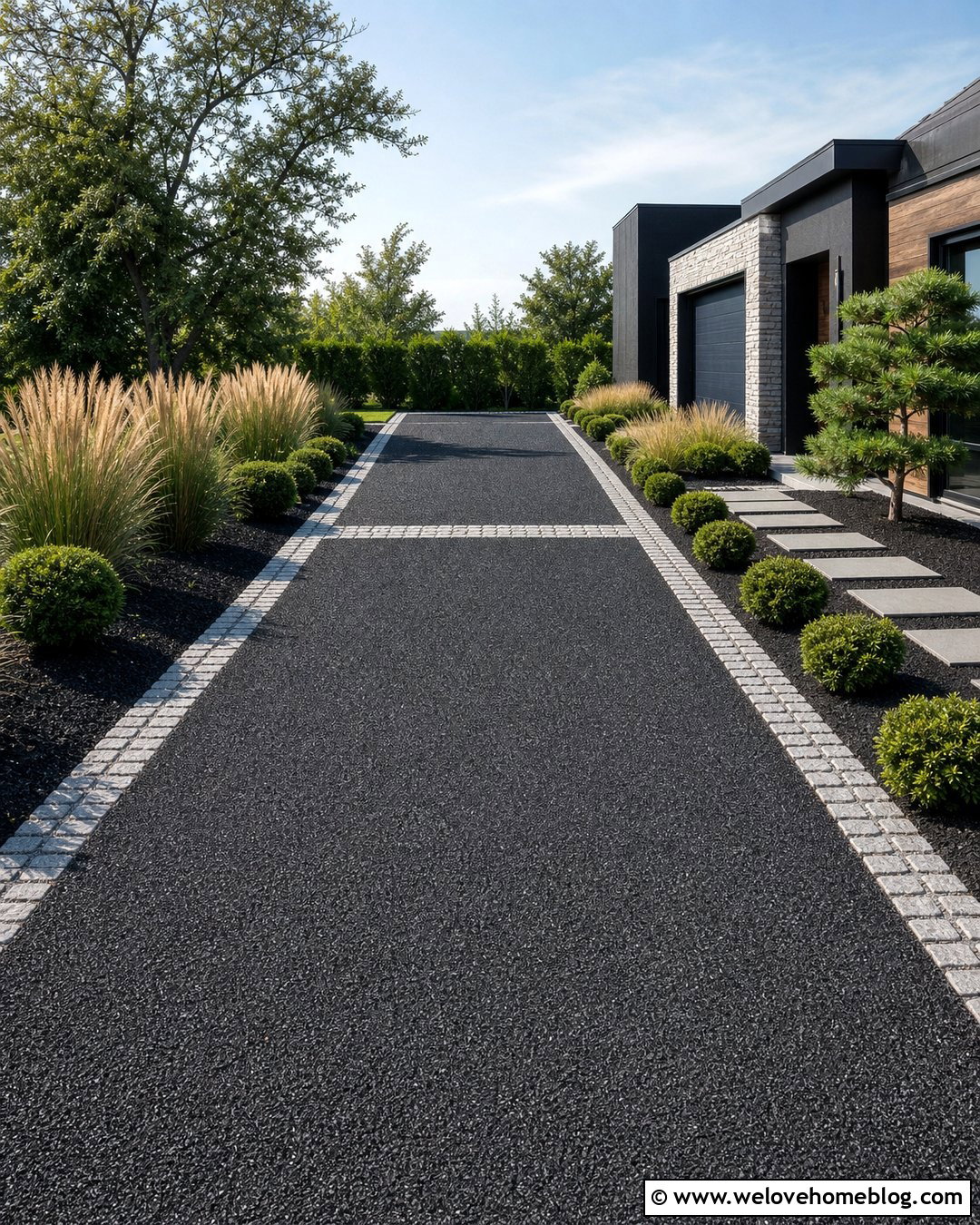
For a bolder approach, pair black basalt gravel with light gray granite cobblestones. The contrasting materials create a graphic outline that looks clean from the curb and helps define every turn in the driveway. Use a straight or subtly angled layout leading to a contemporary garage. Keep the cobblestone border narrow, then repeat it as a rectangular band near the entrance to the parking area. Architectural landscaping strengthens the modern appearance. Plant upright ornamental grasses, clipped shrubs, and one sculptural tree in beds covered with matching dark gravel. Concrete stepping pads can form a separate path to the front door. This driveway works best when its colors repeat exterior details such as black window frames, pale stone cladding, gray stucco, or a light concrete walkway.
9. Gravel Driveway With Cobblestone Tire Tracks
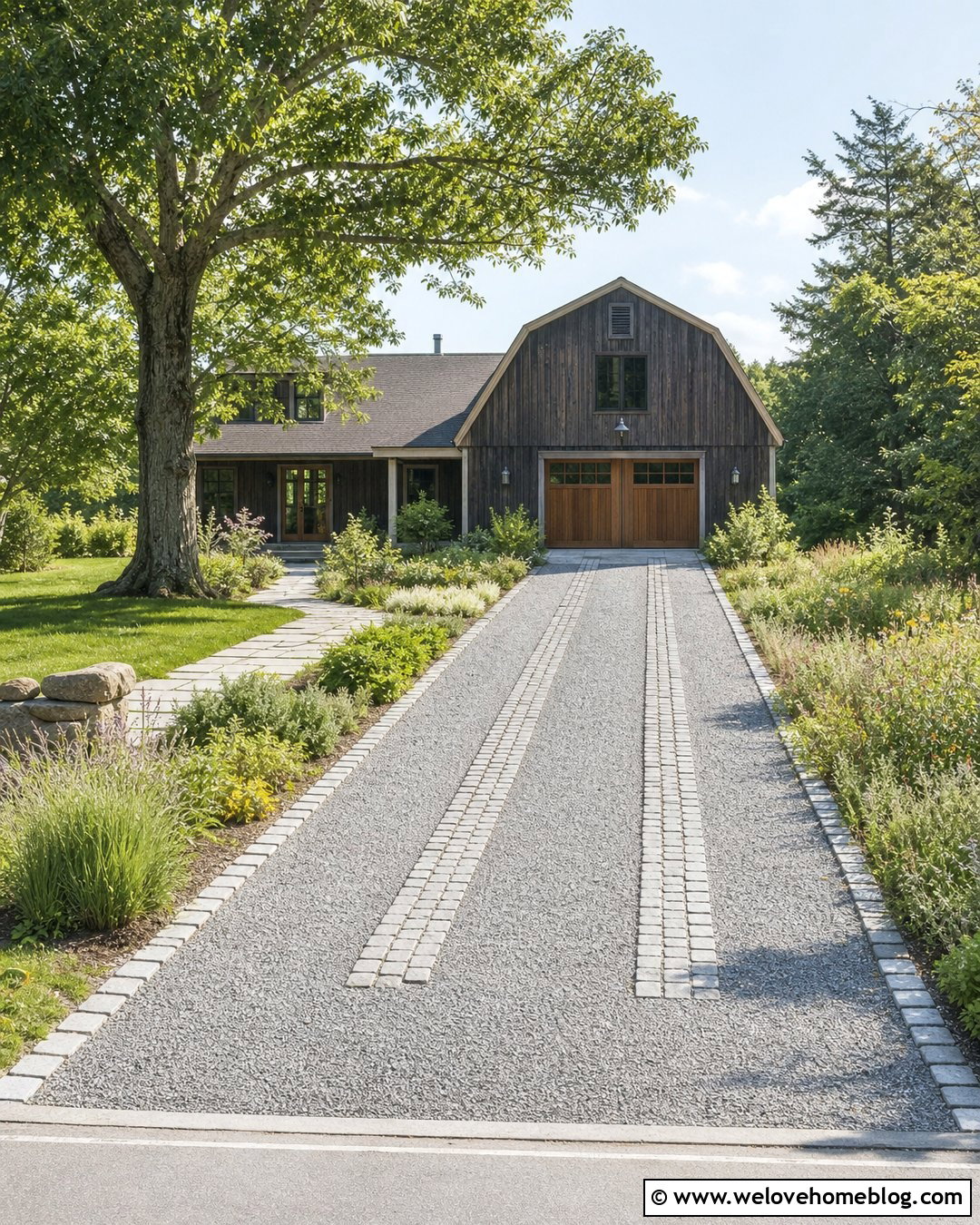
Cobblestone tire tracks offer a creative way to introduce more permanent stone without covering the entire driveway. Construct two parallel tracks from rectangular granite cobblestones, then fill the center and outside areas with compacted gray or buff gravel. The cobbled strips should align with normal vehicle paths and continue toward the garage or parking court. Use matching cobblestones along the outer edges to give the loose material additional definition. Grass between the tracks may look attractive in low-use areas, but gravel is generally simpler where turning and frequent traffic occur. Surround the driveway with informal shrubs, lawn, and shade trees to soften its linear pattern. This hybrid look fits cottages, converted barns, carriage houses, and traditional homes seeking distinctive country character.
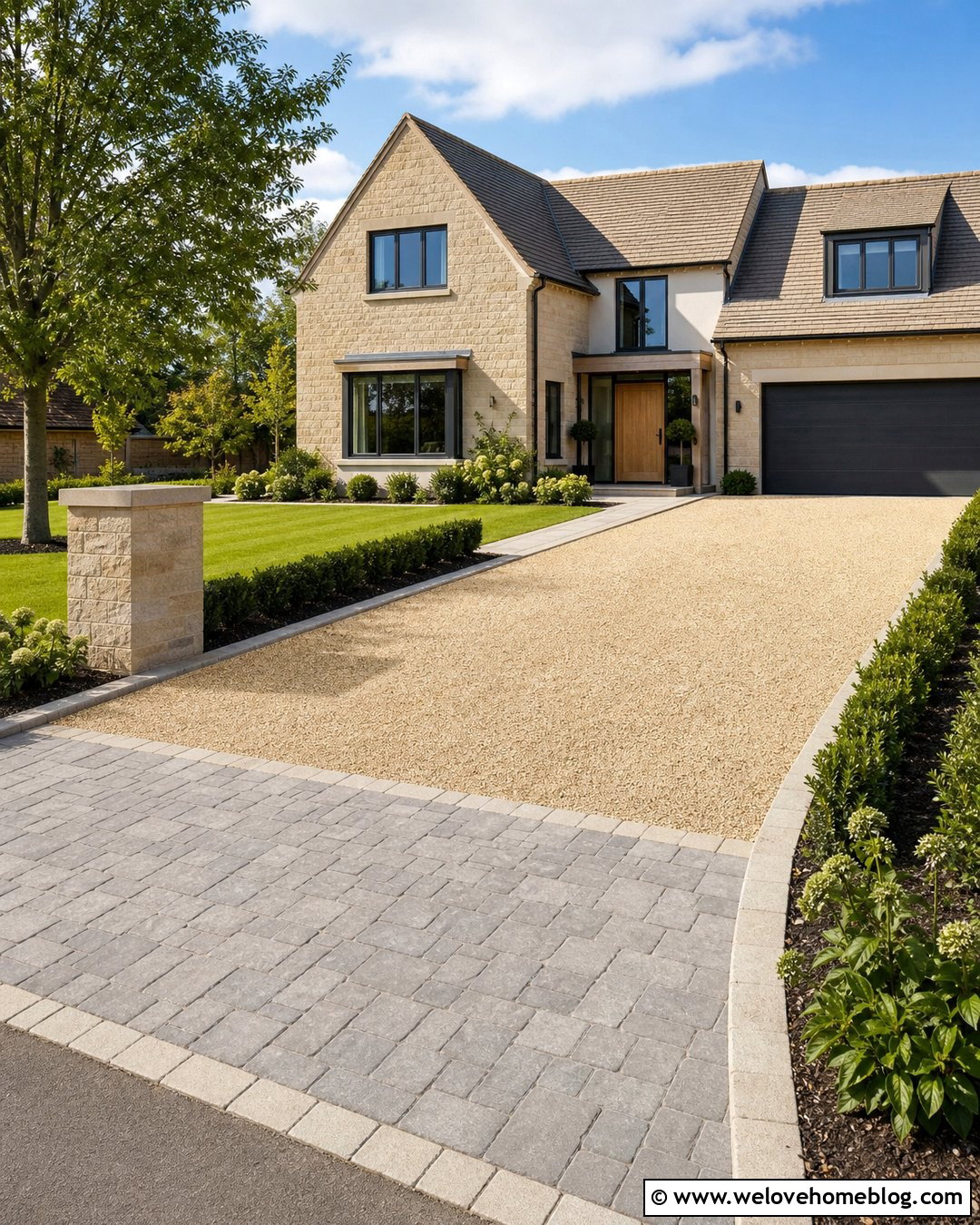
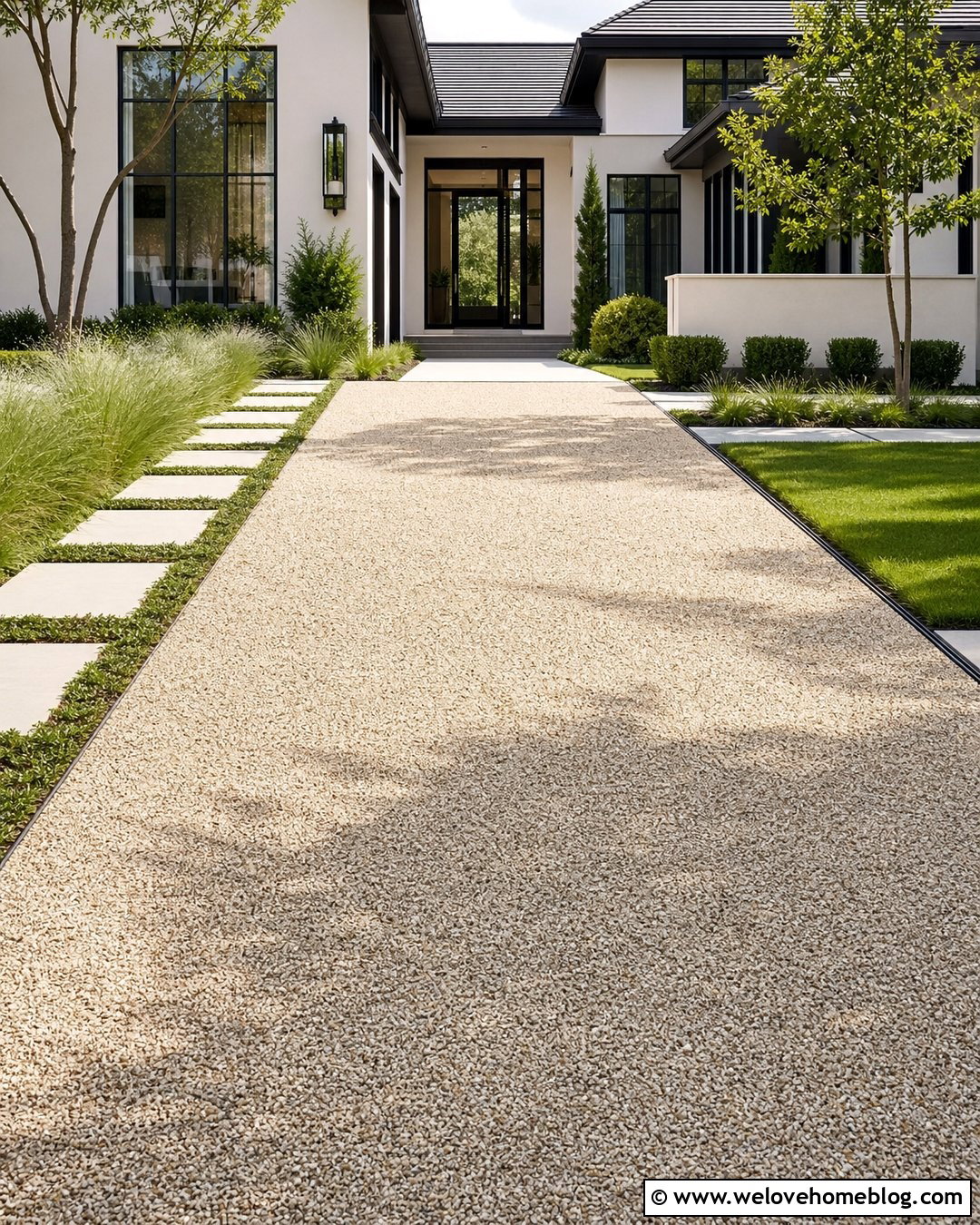
10. Two-Tone Gravel Driveway With Cobblestone Divider
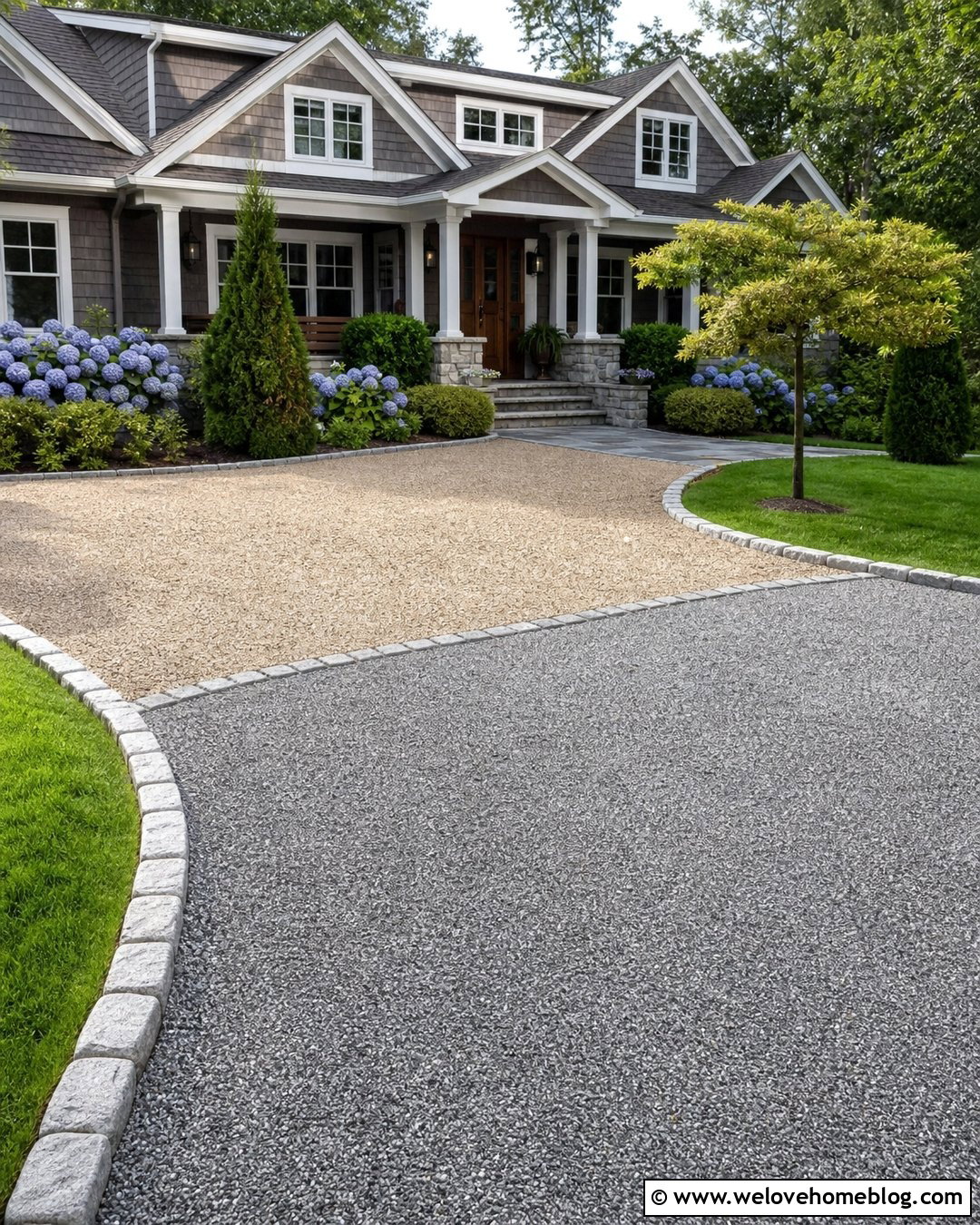
Two gravel colors can separate driving and parking areas without introducing an unrelated paving material. Use medium-gray crushed gravel for the main approach and warmer beige gravel for a widened parking court near the house. Divide the two surfaces with a curved band of granite cobblestones. Continue cobblestone edging around the entire layout so the color change looks planned rather than patched together. A matching walkway can lead from the parking court to the porch, creating a clear pedestrian route. Frame the wider area with low hydrangeas, compact evergreens, and one small shade tree. This design is useful for broad suburban lots where several vehicles need space but a large uninterrupted gravel field would look plain. The contrasting zones add detail while preserving a cohesive natural-stone palette.
11. Gravel Parking Court With Cobblestone Perimeter
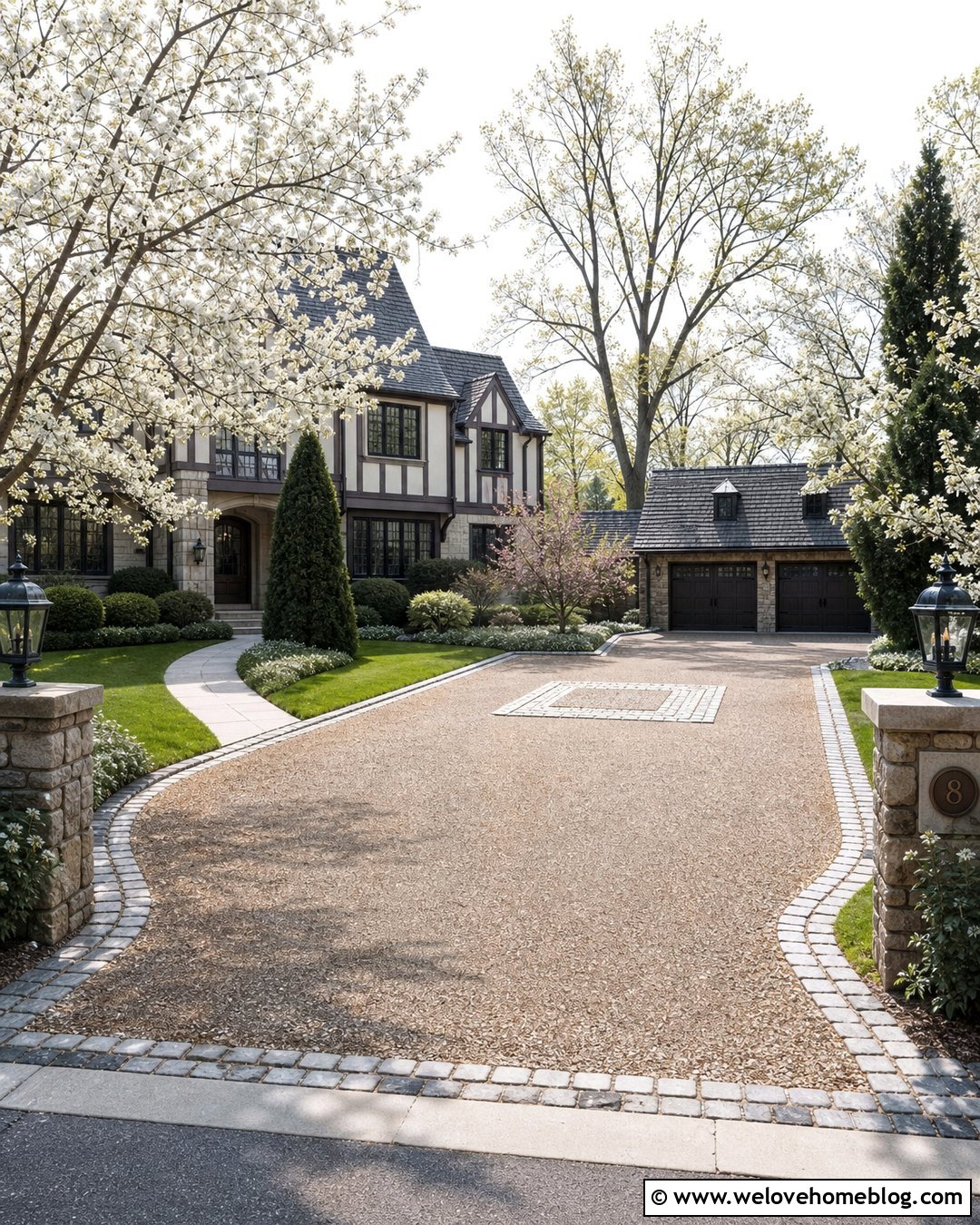
A gravel parking court can feel like an attractive courtyard when its dimensions and borders are clearly organized. Choose compacted brown-gray gravel and surround the complete parking area with two rows of granite cobblestones. A straight gravel driveway can enter the court from one side, leaving the main house visible at the end of the approach. Add a cobblestone medallion or simple rectangular inset at the center, but keep the pattern restrained so vehicles can maneuver comfortably. Planting beds at the outer corners will soften the broad surface. Use small flowering trees, evergreen anchors, and low ground cover that will not spill into parking space. This layout complements larger Craftsman, Tudor, and country homes with detached garages or multiple parking needs.
12. Narrow Gravel Driveway With Flush Cobblestone Edging
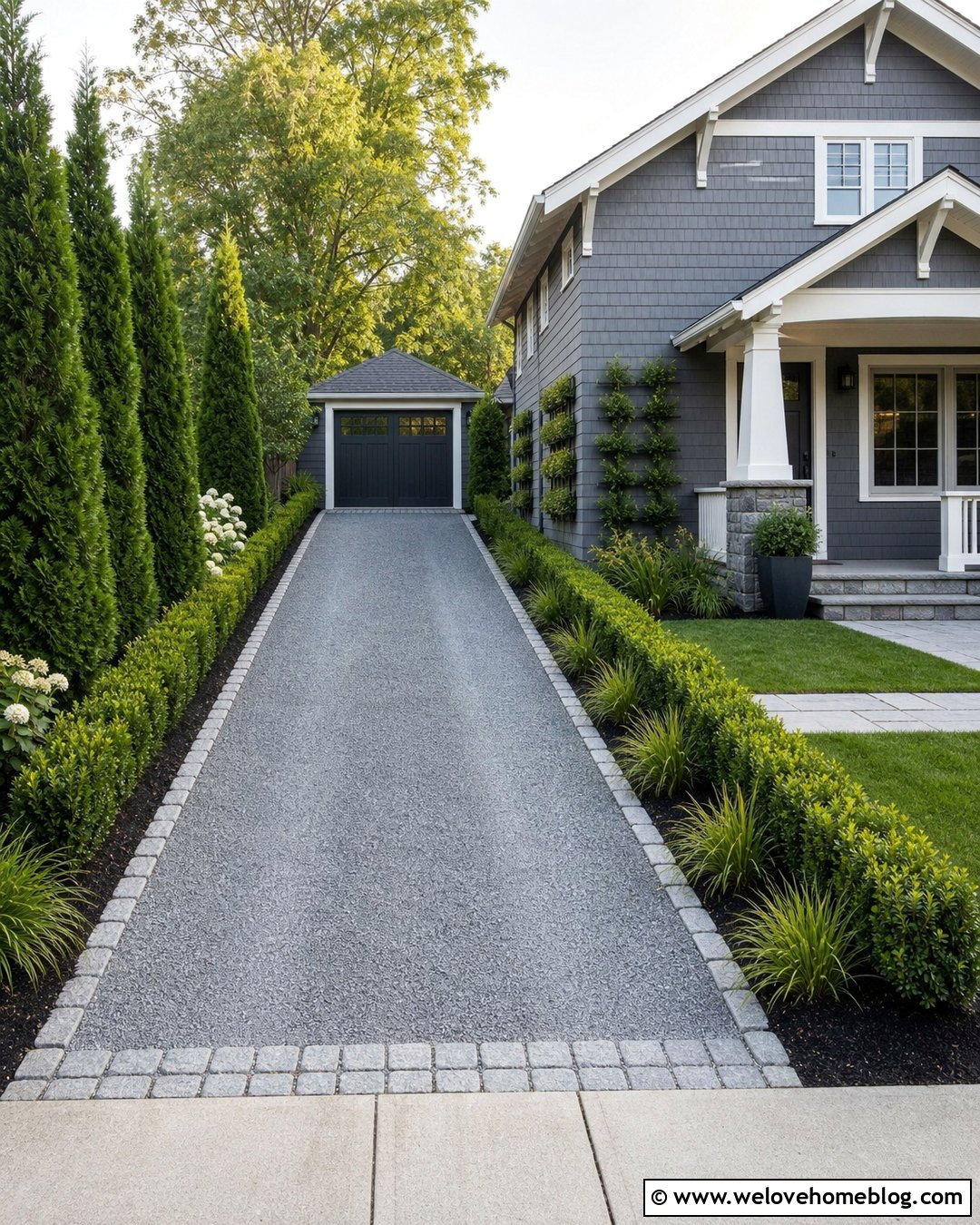
When space is limited, a narrow gravel driveway needs crisp edges and uncluttered landscaping. Use compacted angular gravel in a medium neutral tone, then install cobblestones nearly flush with the surface. The low border defines the driveway without creating a raised obstacle near tires, gates, or walkways. A straight layout usually makes the best use of a small side yard. Keep planting narrow as well. Columnar evergreens, clipped hedges, ornamental grasses, and espaliered shrubs provide greenery without reducing vehicle clearance. Near the garage, expand the cobblestones into a full-width threshold that visually completes the drive. Select gravel and stone colors that coordinate with the home’s foundation and roof. This practical arrangement works well beside bungalows, urban cottages, duplexes, and small Craftsman houses.
13. Long Gravel Driveway With Cobblestone Entrance
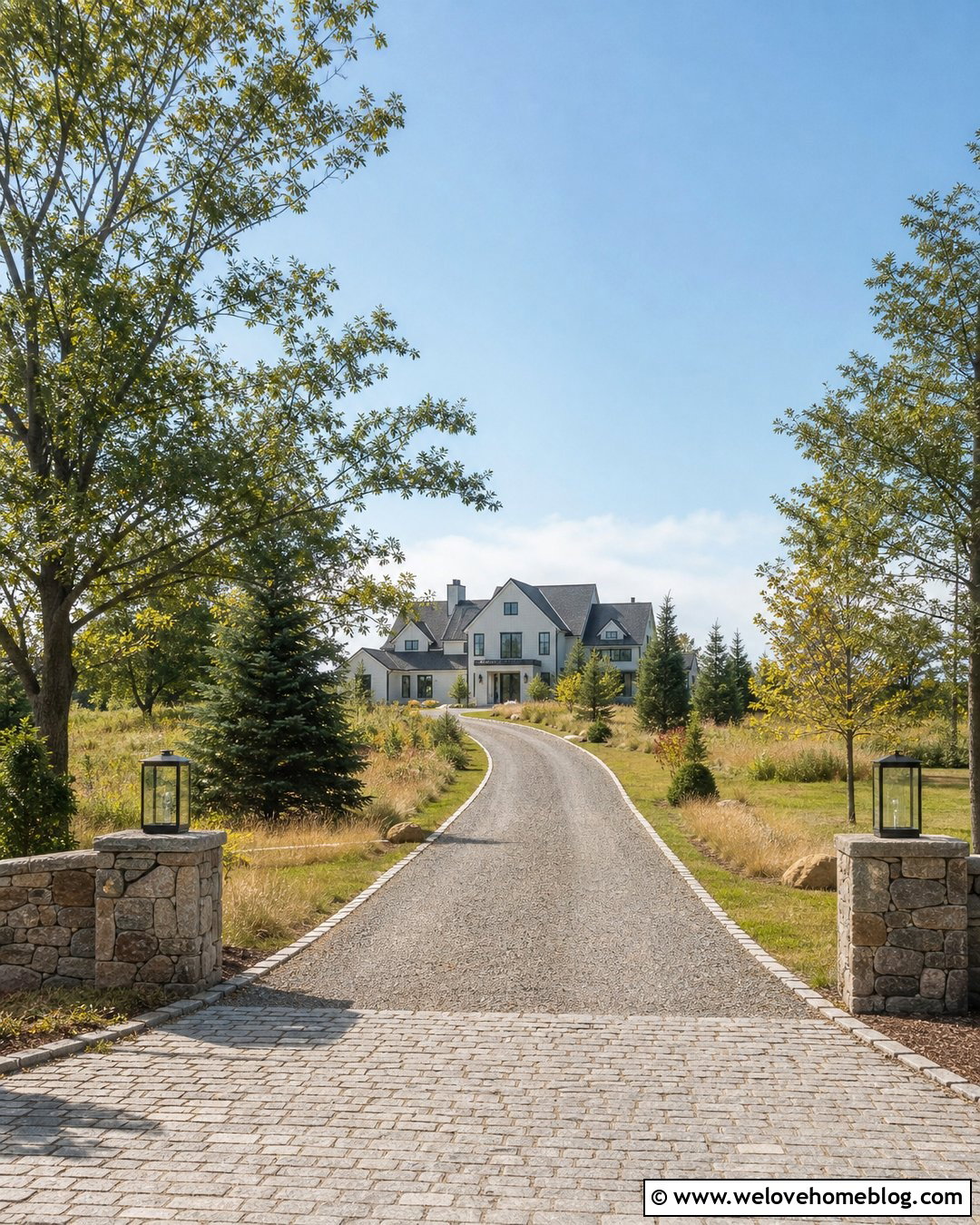
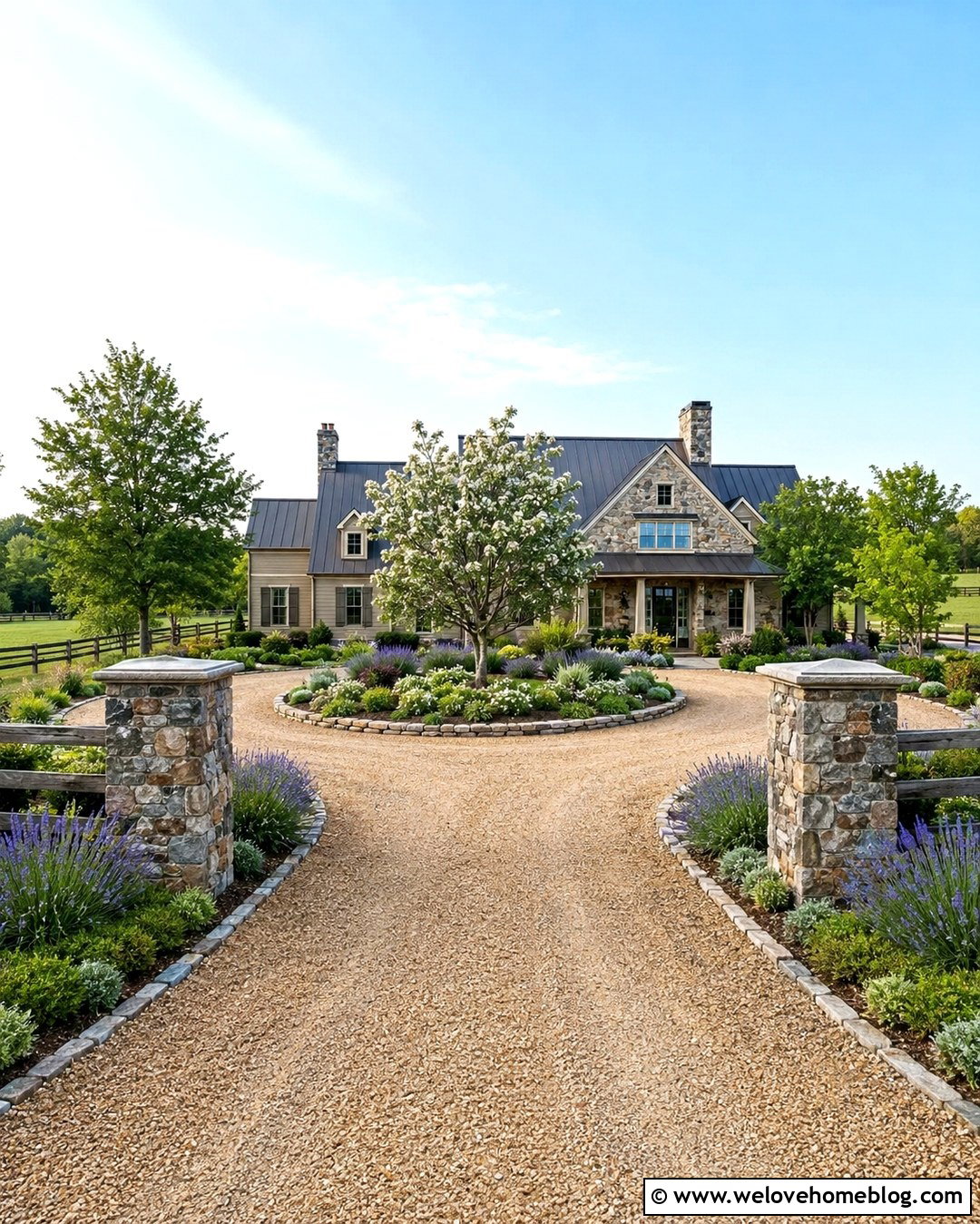
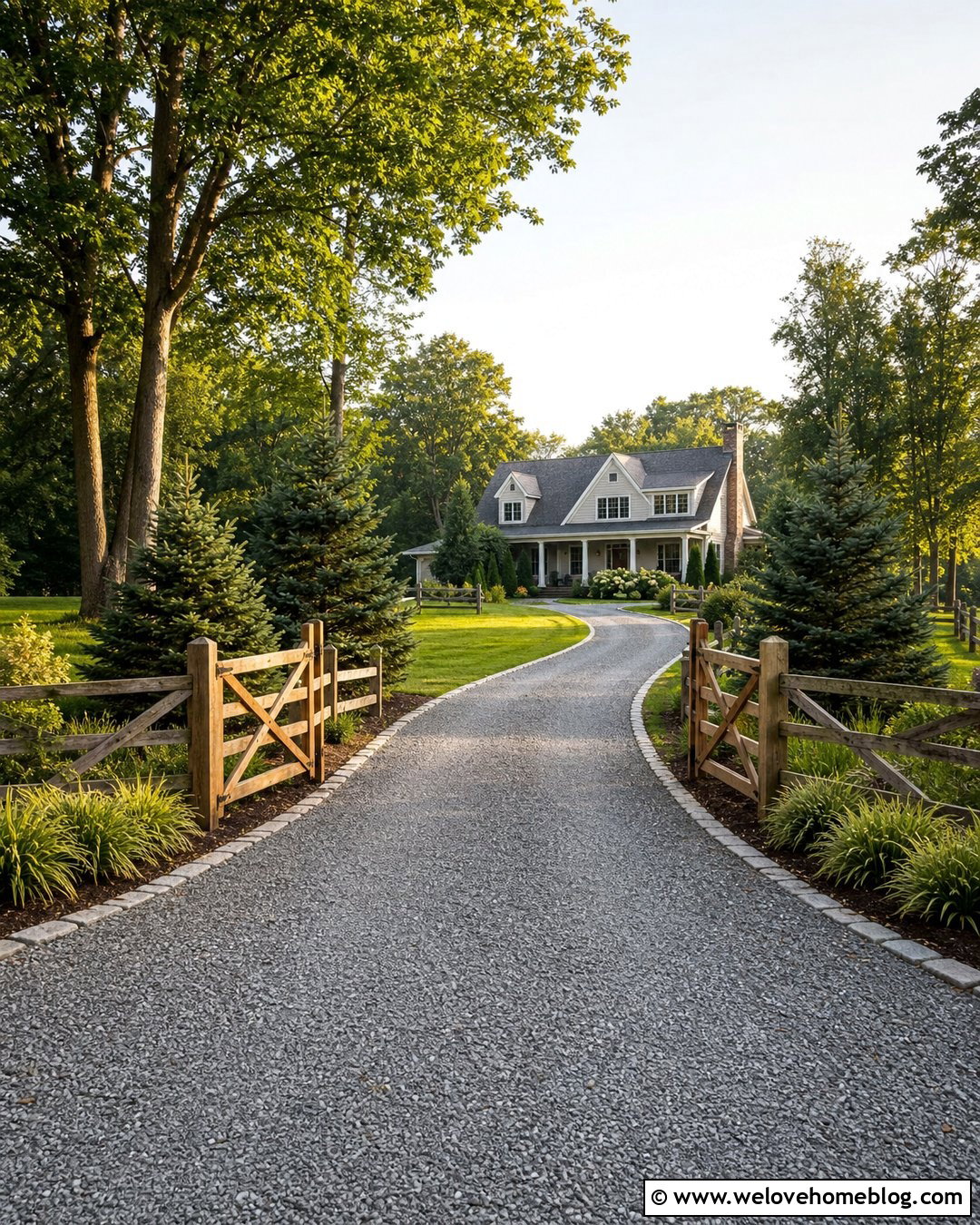
A long driveway benefits from a noticeable entrance that signals where the property begins. Create a broad granite cobblestone apron at the road and connect it to low stone pillars or simple timber fencing. Beyond the apron, use warm gray gravel for a gently curving route toward the house. A single cobblestone edge can continue along both sides, preventing the entrance from looking disconnected. Space deciduous trees or evergreens along the drive rather than planting an unbroken wall. This preserves views and creates a changing sequence as visitors approach. Native grasses and low shrubs can fill the spaces between trees. Near the house, repeat the entrance stone in a parking court border. The result suits rural properties, equestrian homes, wooded estates, and modern farmhouses on deep lots.
14. Sloped Gravel Driveway With Cobblestone Drainage Border
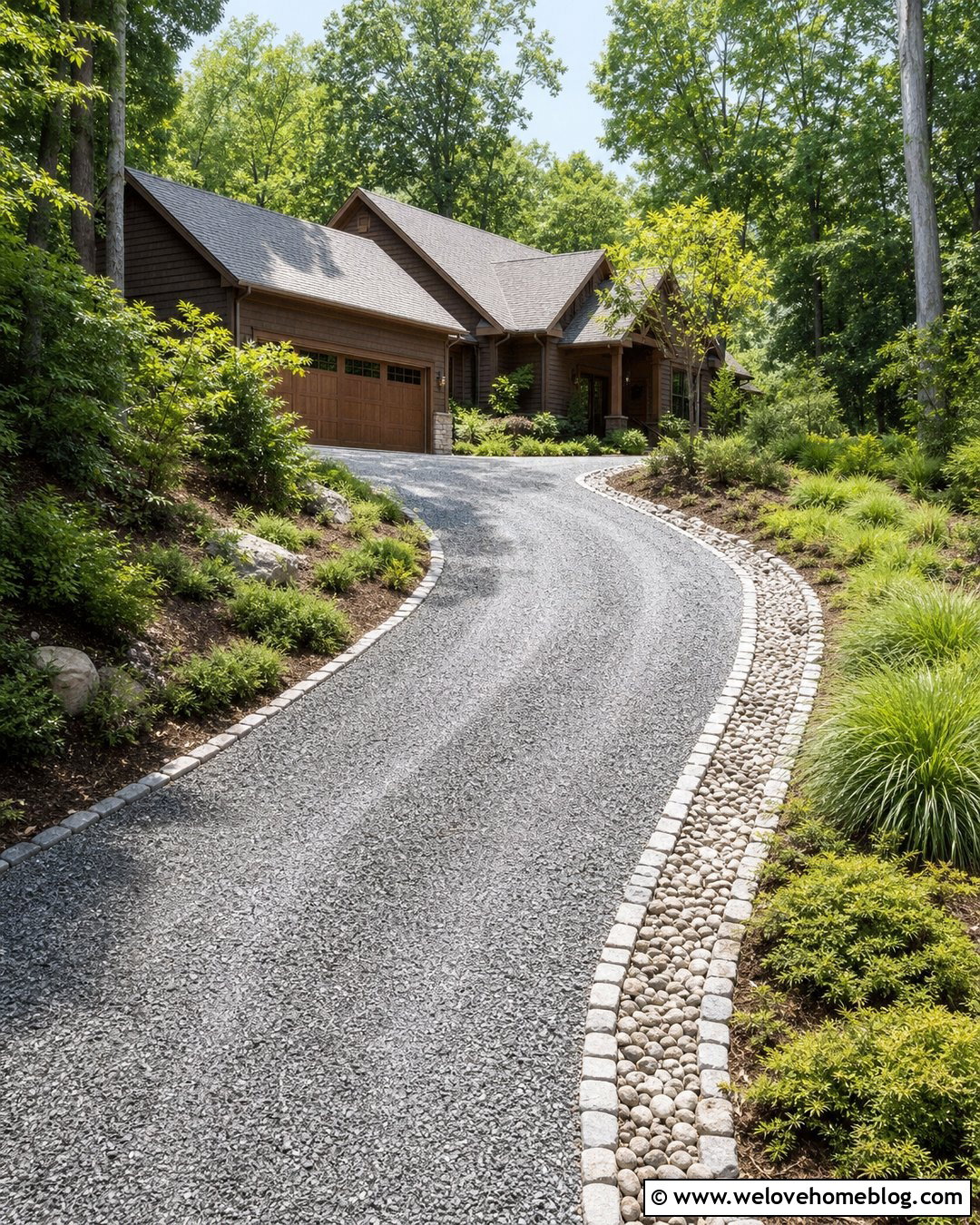
Rainwater deserves special attention when a gravel driveway follows a noticeable slope. Use compactable angular gravel rather than very round stones, and define the downhill edges with securely installed granite cobblestones. A cobblestone-lined drainage strip or gravel-filled swale can run beside the drive, directing runoff toward an appropriate outlet instead of nearby planting beds or the garage. Cross-drainage may also be needed where water naturally moves across the route. Drainage solutions should follow local requirements and actual site grades rather than appearance alone. () Visually, soften the functional edges with deep-rooted grasses, low shrubs, and erosion-resistant ground cover. A gentle curve and wider landing near the house make the complete approach feel welcoming instead of purely utilitarian.

15. Cottage Gravel Driveway With Tumbled Cobblestones
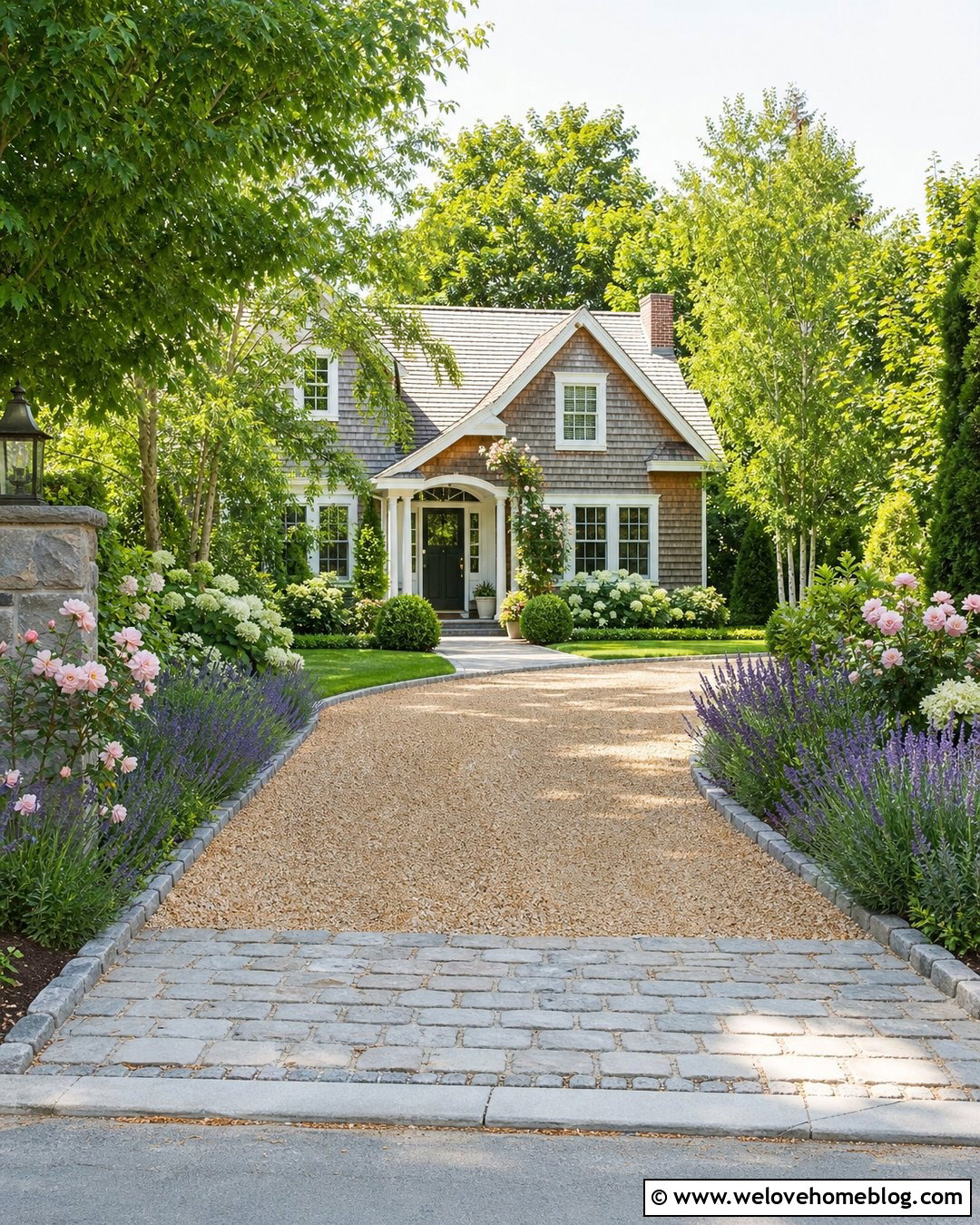
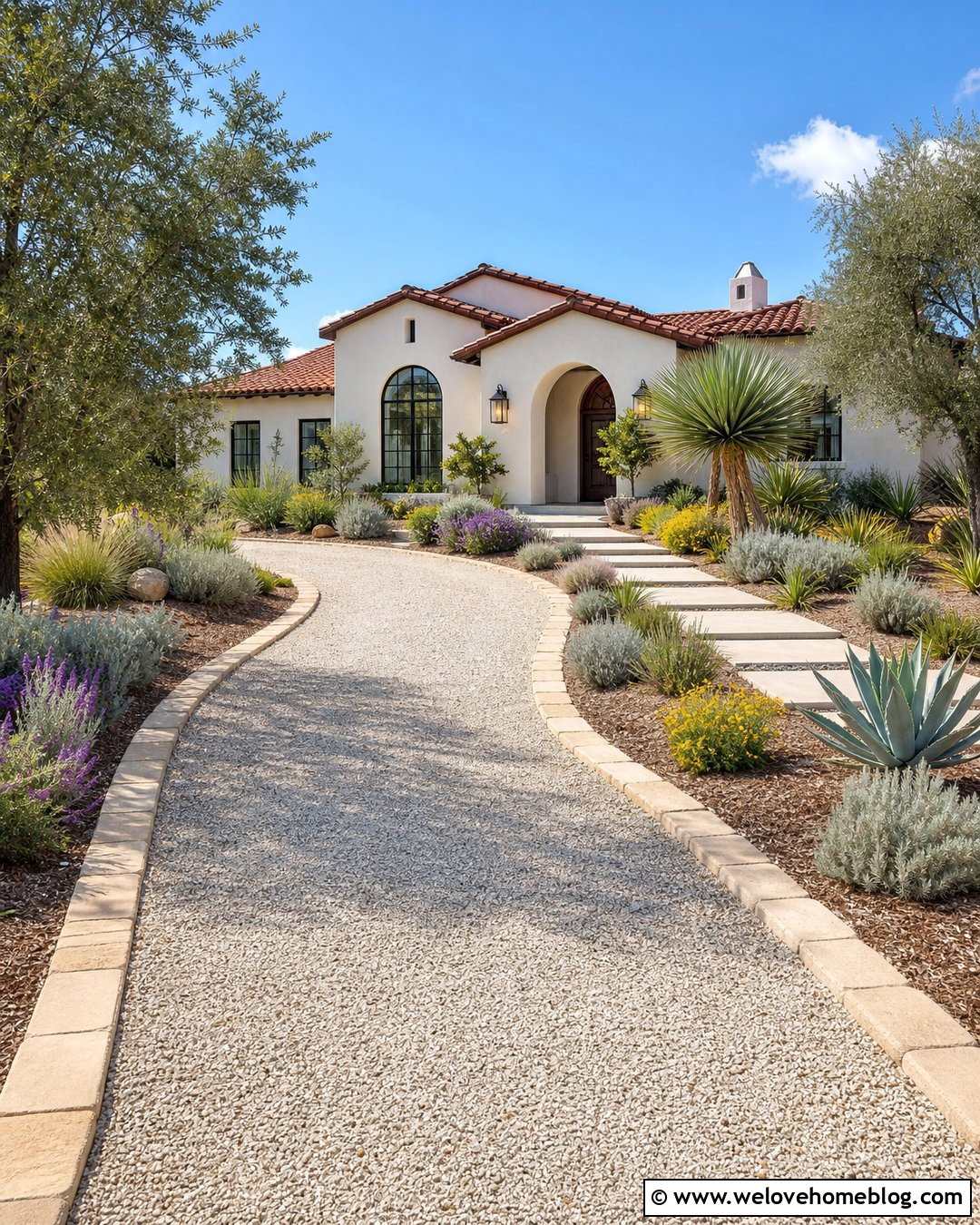
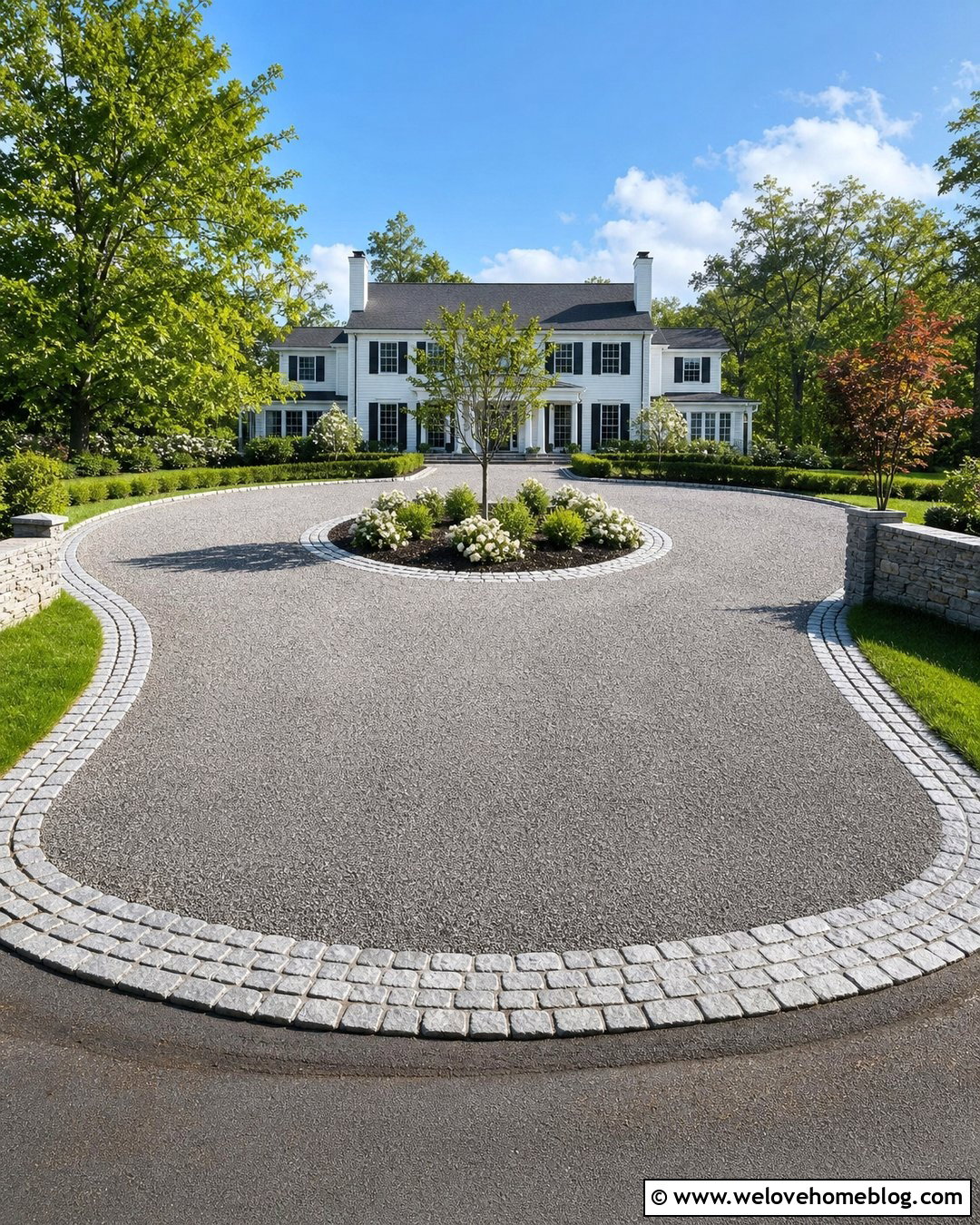
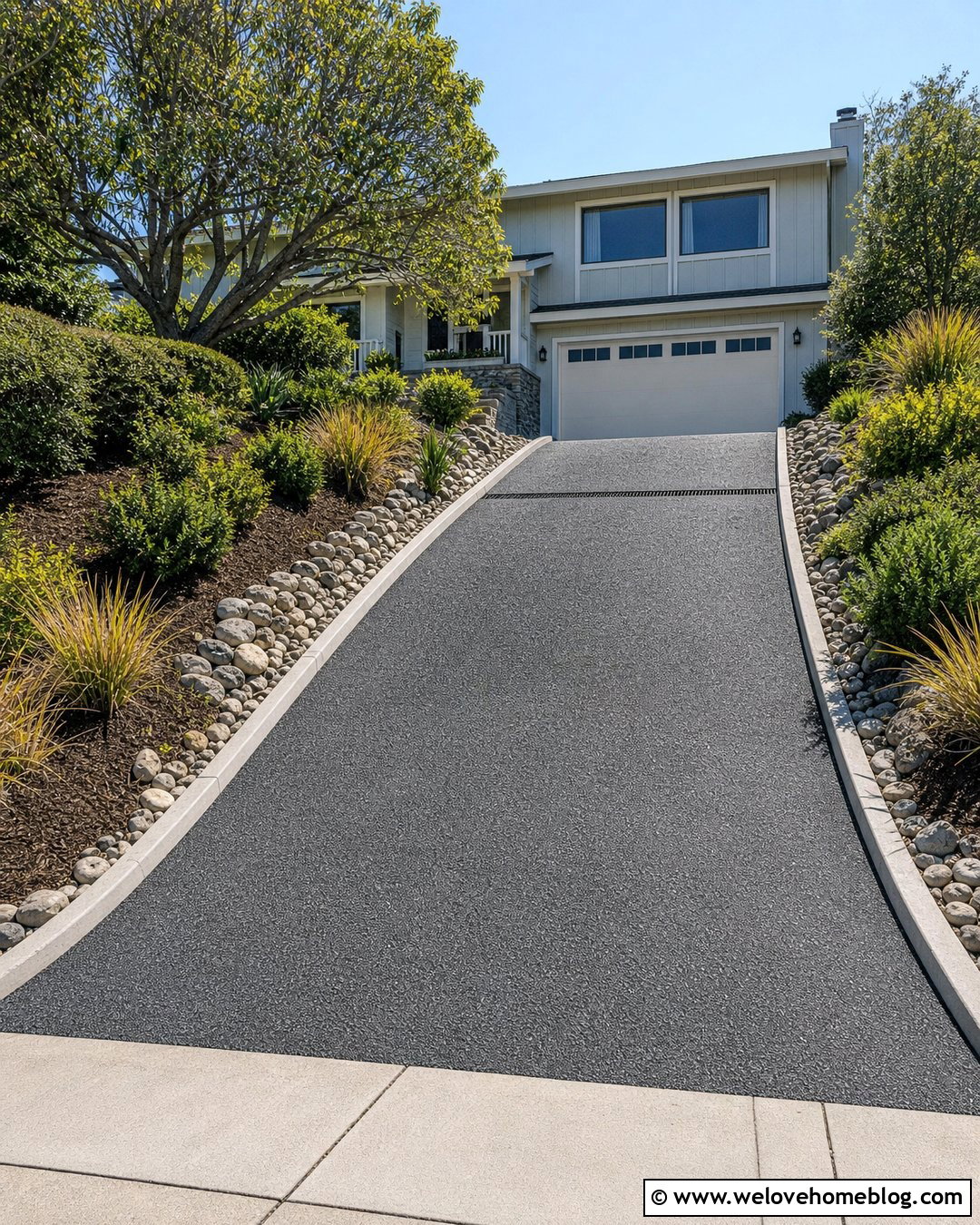
Soft texture makes a cottage driveway feel as though it has belonged to the home for years. Choose honey-colored gravel and edge it with tumbled gray cobblestones that have rounded corners and varied surface tones. A slightly curved driveway is more natural than a severe straight line, especially when it passes flowering beds. Plant roses, catmint, hydrangeas, lavender, and compact evergreen shrubs behind the border. Leave enough setback so mature plants will not block vehicle doors or spread gravel onto the lawn. At the front path, create a small cobblestone crossing that guides visitors toward the porch. The same stones can form a shallow apron at the road. This inviting arrangement pairs beautifully with shingle cottages, Cape Cod homes, English-inspired facades, and small houses with prominent gardens.
16. Colonial Gravel Driveway With Straight Cobblestone Lines
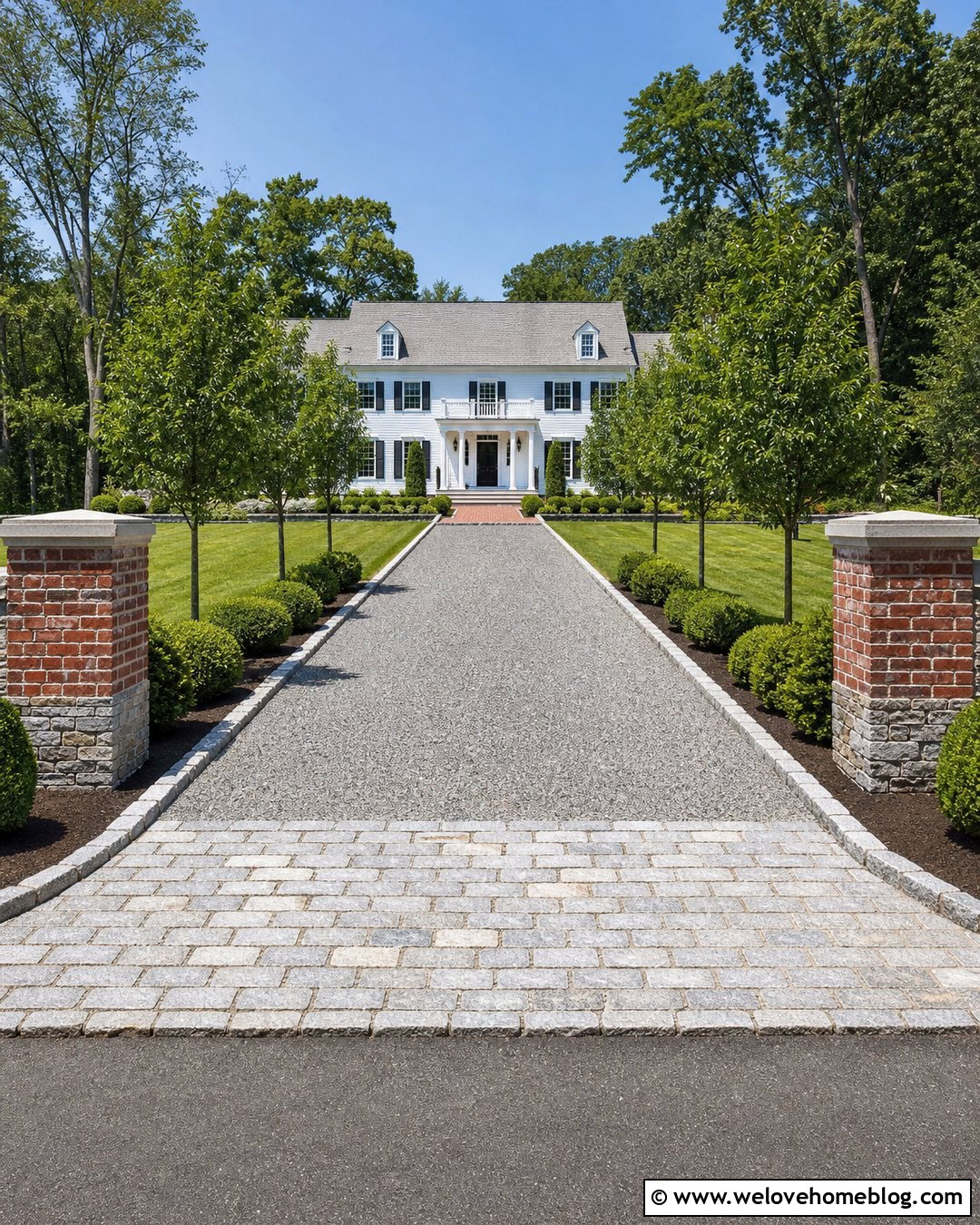
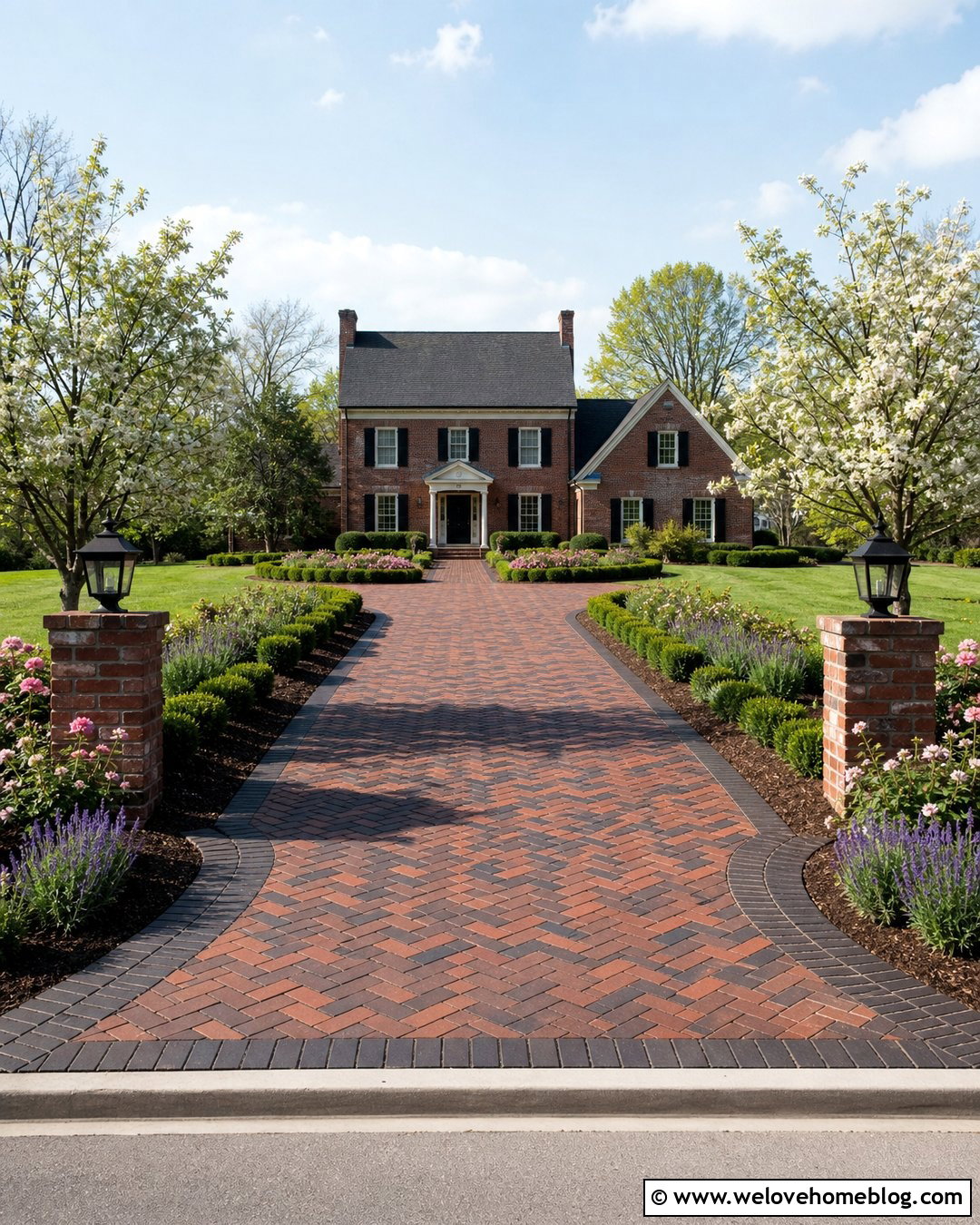
Symmetry is the key to a gravel driveway that complements a Colonial home. Begin with a straight central approach made from fine gray crushed gravel. Frame both sides with evenly installed granite cobblestones, then finish the street entrance with a rectangular cobblestone apron. If the driveway widens near the house, mirror the expansion on both sides whenever the site allows. Balanced planting reinforces the formal layout. Use matching boxwood groups, identical small trees, and simple lawn panels along the drive. Brick or stone pillars can mark the entrance, provided their color relates to the house facade. Avoid too many decorative patterns in the gravel because the strong architecture already provides visual interest. The finished driveway should appear orderly, substantial, and aligned with the front door or central portion of the residence.
17. Ranch House Gravel Driveway With Cobblestone Curves
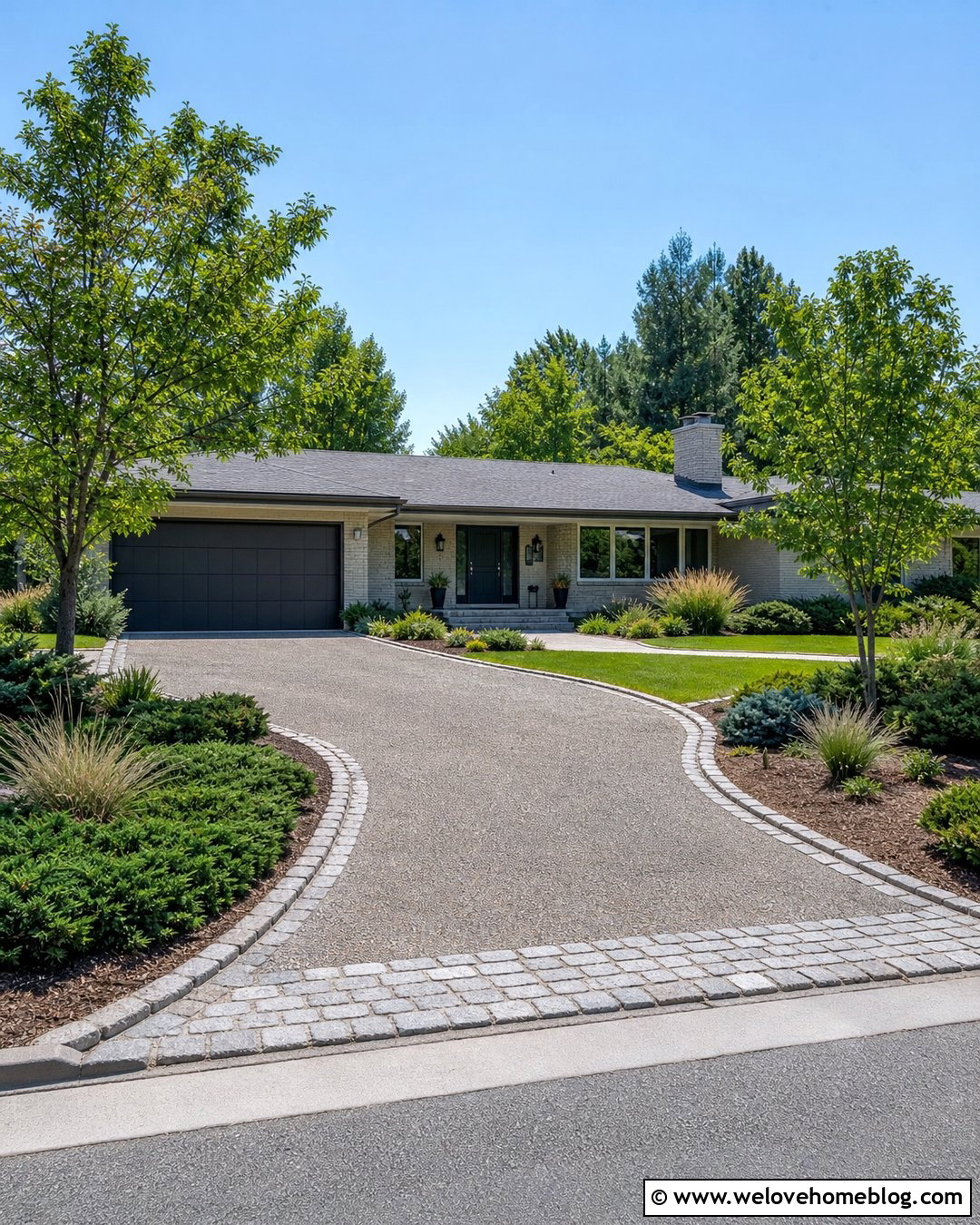
A low, wide ranch house calls for a driveway that follows its horizontal proportions. Use a broad curved layout with mixed gray and tan gravel, allowing the drive to widen naturally near the garage. Outline the shape with chunky granite cobblestones that remain visible from the street. Instead of tall formal hedges, choose low foundation shrubs, ornamental grasses, spreading junipers, and one or two small trees. These plants frame the drive without hiding the house. A cobblestone band across the garage entrance can break up the gravel expanse and connect it to the perimeter edging. On a corner property, the curve may follow the lawn’s shape for a more integrated appearance. This design updates a ranch exterior while preserving the simple, practical character of the architecture.
18. Coastal Gravel Driveway With Granite Cobblestone Apron
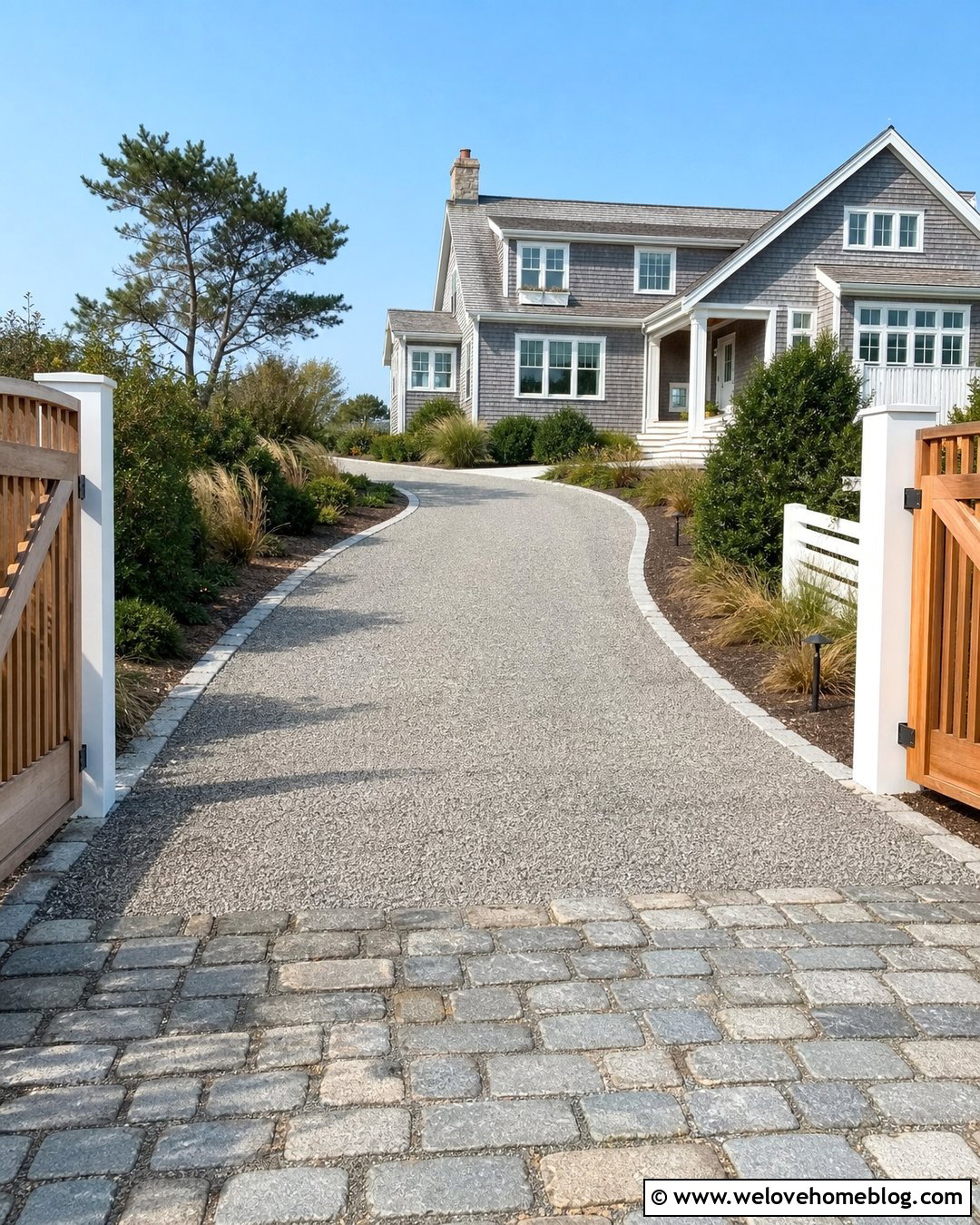
A coastal-inspired driveway looks best with pale, sun-washed colors and durable natural textures. Cover the main surface with light gray crushed gravel or clean seashell-toned aggregate. Add a weathered granite cobblestone apron at the entrance and continue a single cobblestone row along each side. The combination feels casual but still provides a defined route through the front yard. Choose salt-tolerant or regionally appropriate plants where coastal exposure is a concern. Ornamental grasses, inkberry, bayberry, and low evergreen ground cover can create movement without overwhelming the driveway. A white fence or natural cedar gate adds another useful boundary. This look pairs naturally with cedar-shingle houses, coastal cottages, pale siding, blue-gray shutters, and relaxed landscapes where polished formal paving might seem too heavy.
19. Gated Gravel Driveway With Cobblestone Threshold
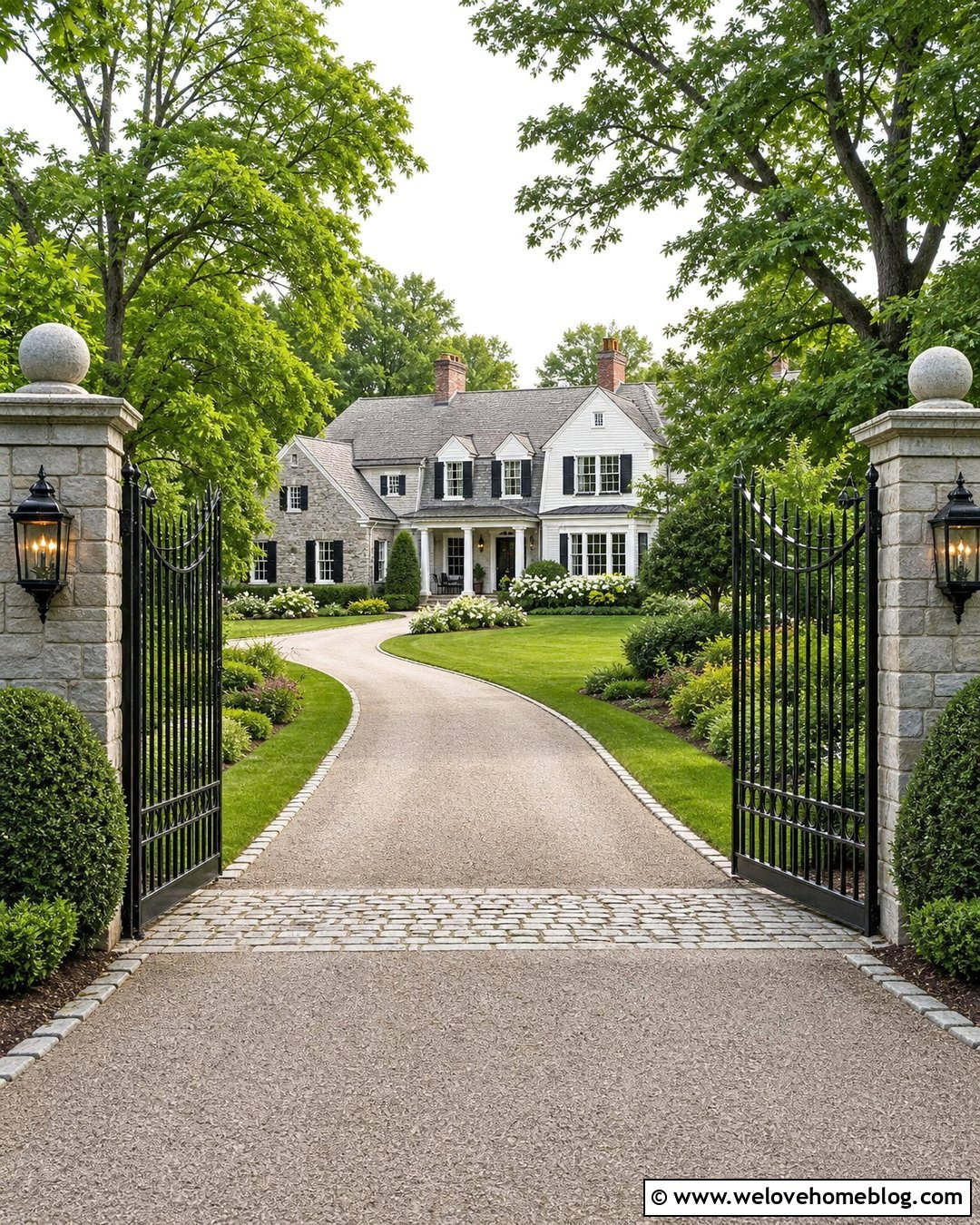
A gate needs a strong visual foundation, and a cobblestone threshold can provide it. Place a full-width granite cobblestone band beneath or immediately behind the gate, then continue with compacted gravel toward the house. Stone or brick pillars should coordinate with the cobblestones rather than introducing several competing colors. Beyond the entrance, edge the driveway with a single matching stone row and use a gentle curve to reveal the house gradually. Plant low shrubs around the pillars so controls, hinges, and sightlines remain clear. Trees can be positioned farther back to frame the approach. Whether the gate is black metal, painted wood, or natural timber, the stone threshold helps it feel integrated into the driveway. This formal layout works for estates, rural homes, and larger suburban properties.
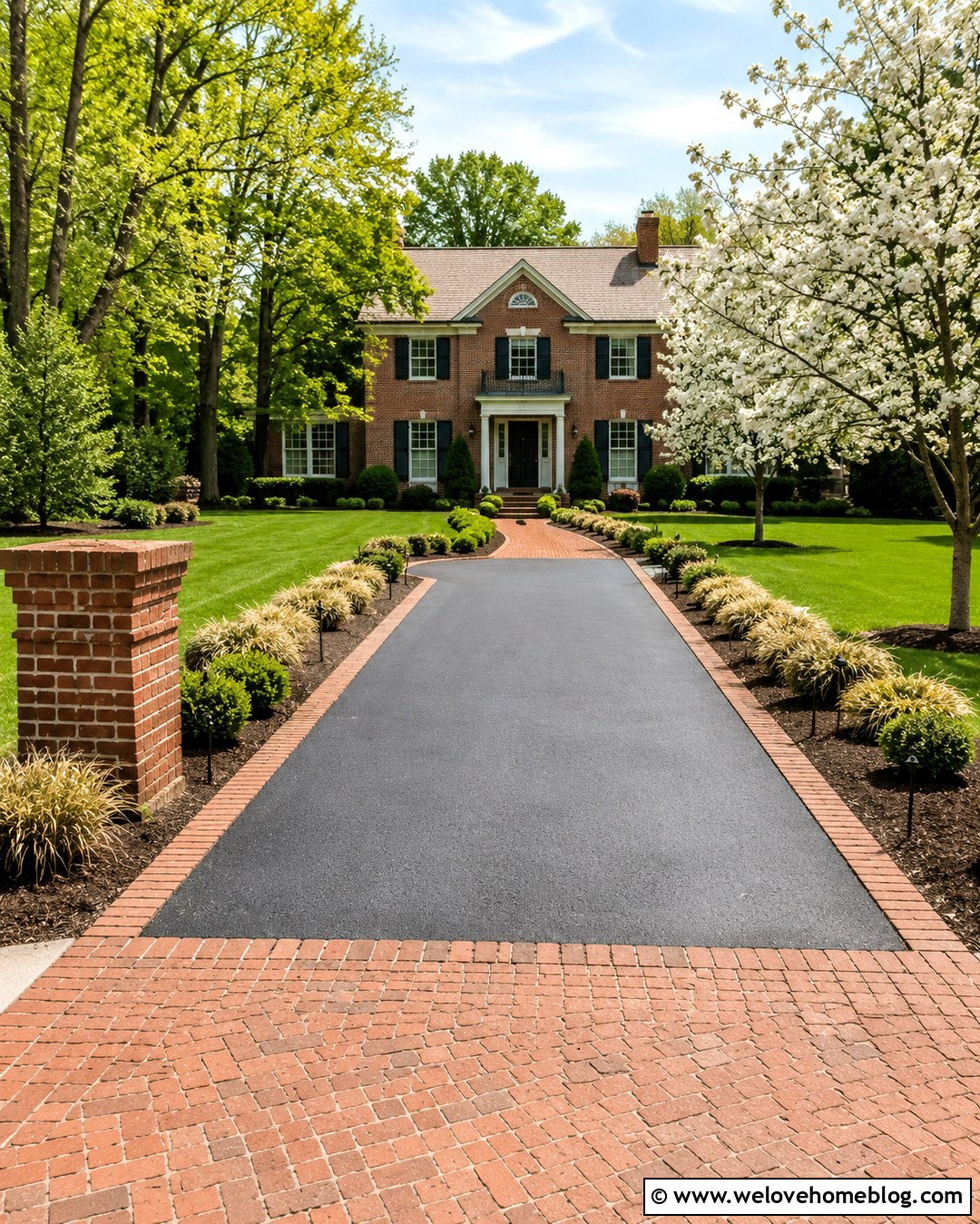
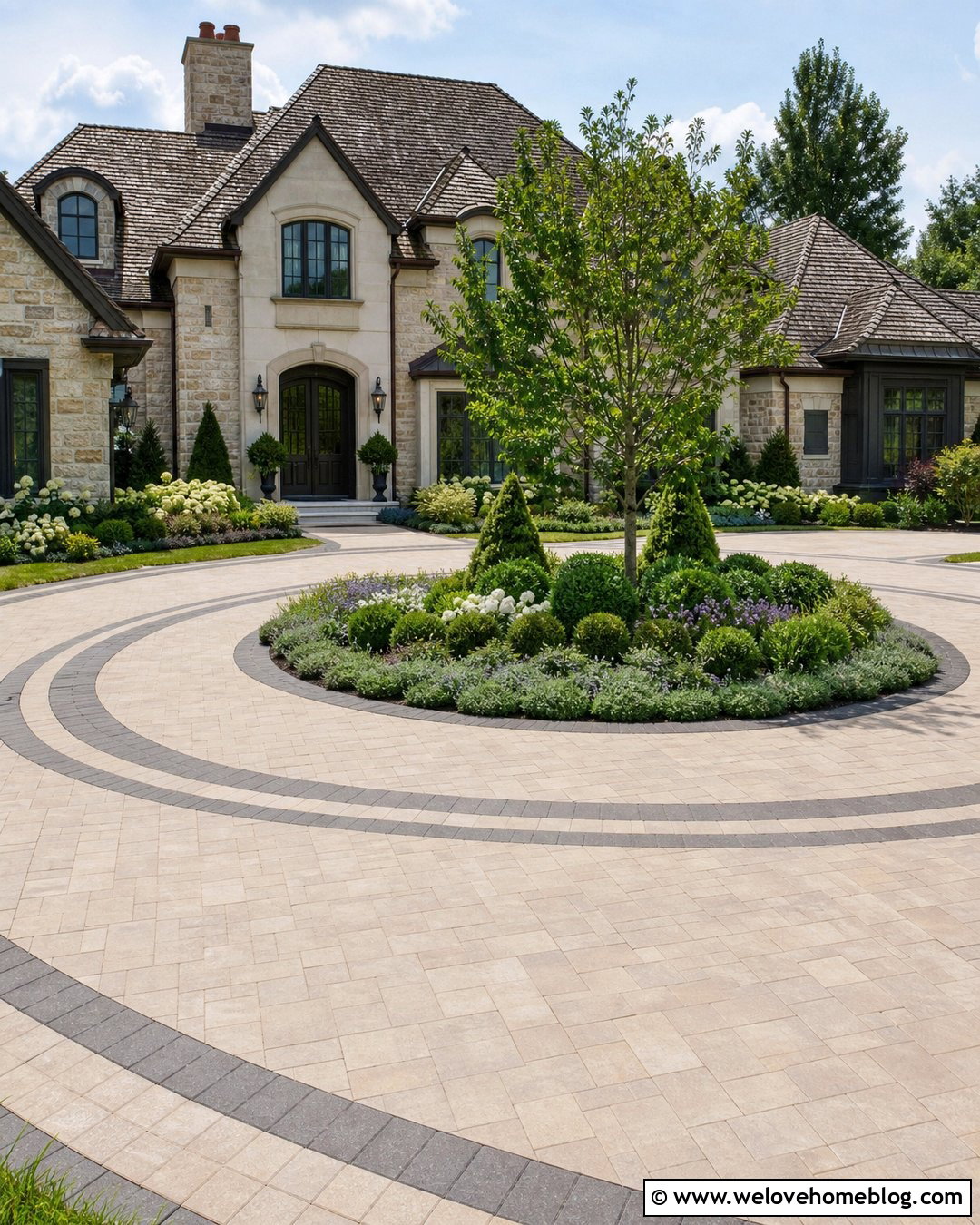
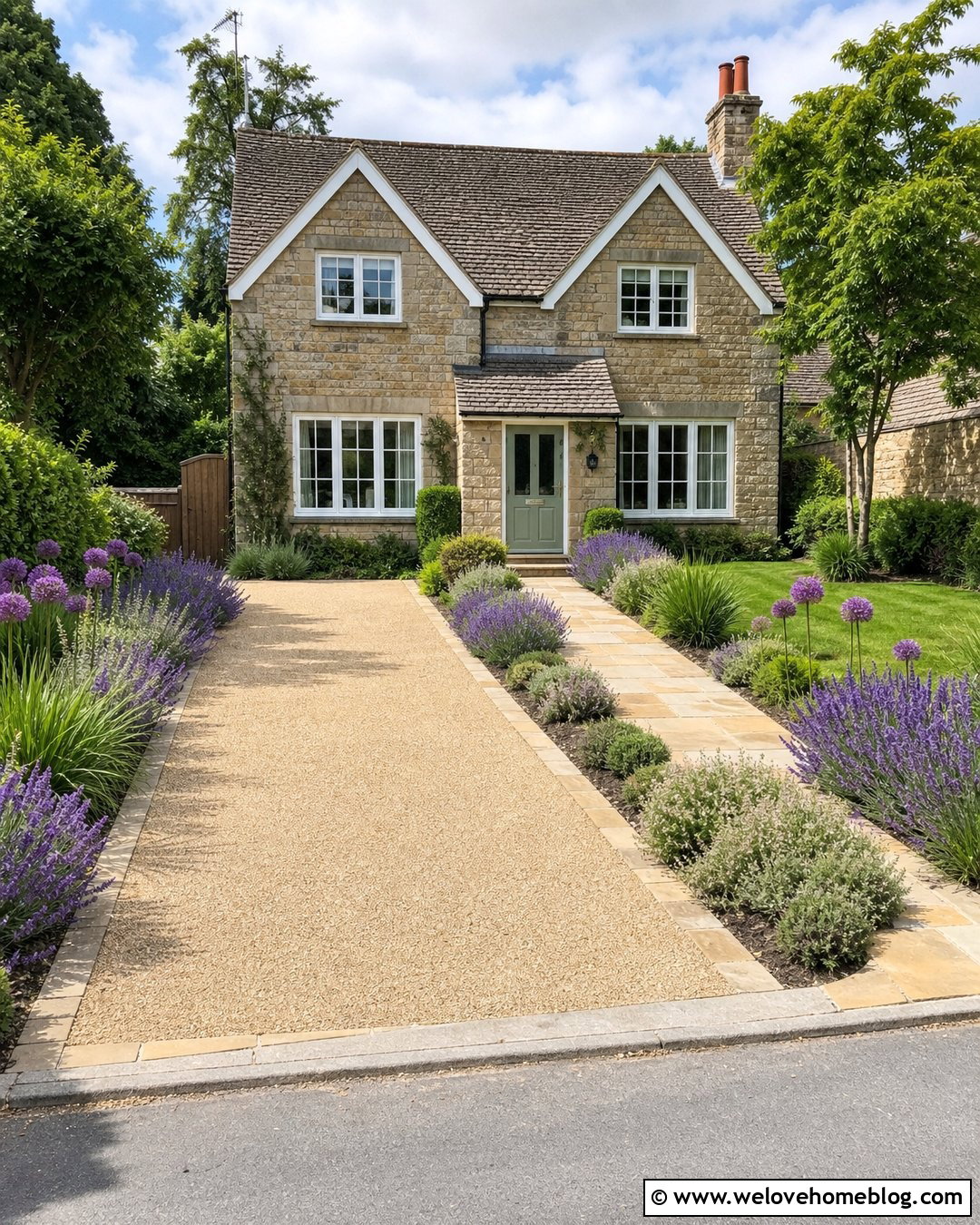
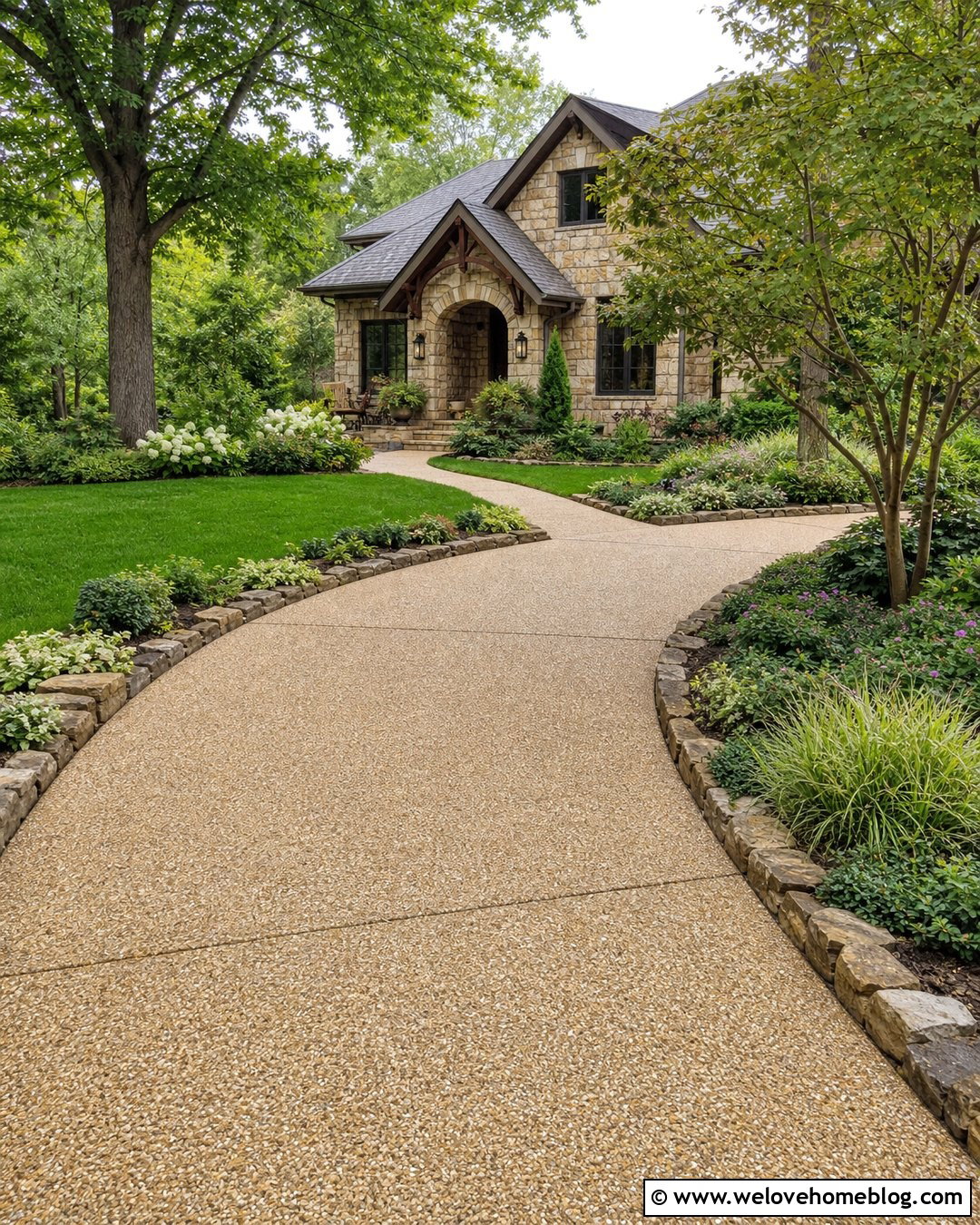
20. Stabilized Gravel Driveway With Cobblestone Border
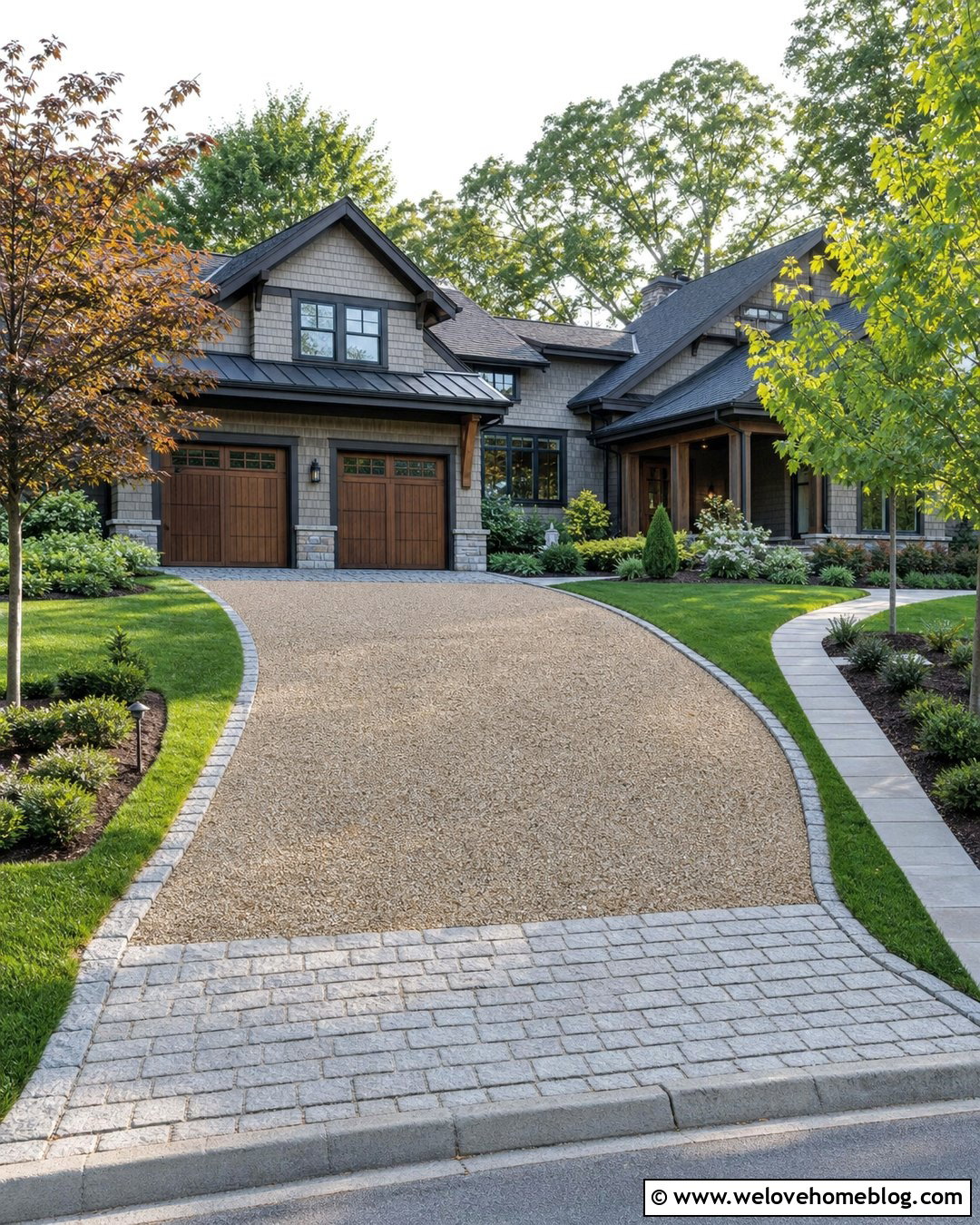
Stabilized gravel provides a tidy option for homeowners who like loose stone but want a more controlled-looking surface. Install a gravel stabilization grid over a properly prepared base, then fill it with angular gray, buff, or mixed natural gravel. Surround the driveway with granite cobblestones set at a consistent height. The defined border conceals the edge of the stabilization system and connects the surface to the landscape. Use a straight drive for a modern home or a gradual curve for a traditional setting. Low planting beds, lawn, and a separate paved walkway will keep the arrival area easy to navigate. Add a cobblestone apron and garage threshold for continuity. From the curb, the driveway retains gravel’s texture while appearing neat, structured, and thoughtfully planned.
Conclusion:
The best cobblestone and gravel driveway combines attractive materials with a layout that fits the property. Cobblestones can outline curves, reinforce entrances, divide gravel colors, frame parking courts, or create decorative thresholds. Meanwhile, gravel brings texture and offers many choices in color, size, and character. Before building, consider vehicle movement, base preparation, drainage, snow removal, edging stability, and local apron regulations. Then match the complete design to the home’s architecture and surrounding landscape. Pale gravel and dark stone create contrast, while similar tones produce a softer appearance. These **20 Cobblestone And Gravel Driveway Ideas** offer practical starting points for creating an entrance that feels distinctive, cohesive, and welcoming.

Related posts:
Leave a Reply