
Circular gravel driveways combine an easy-flowing layout with the relaxed character of loose stone. They can suit compact suburban yards, broad country properties, traditional homes, and clean modern facades. The strongest designs treat the driveway as one complete landscape. Gravel color should complement the house, edging should reinforce the curves, and the center island should create a clear focal point without blocking sightlines. Practical details matter too. A properly prepared base, dependable drainage, durable edge restraints, and a well-planned entrance help the surface remain attractive and manageable. Whether you prefer formal hedges, native grasses, flowering trees, or simple lawn, the following complete looks offer adaptable **20 Circular Gravel Driveway Ideas**.

1. Circular Pea Gravel Driveway With Cobblestone Edging
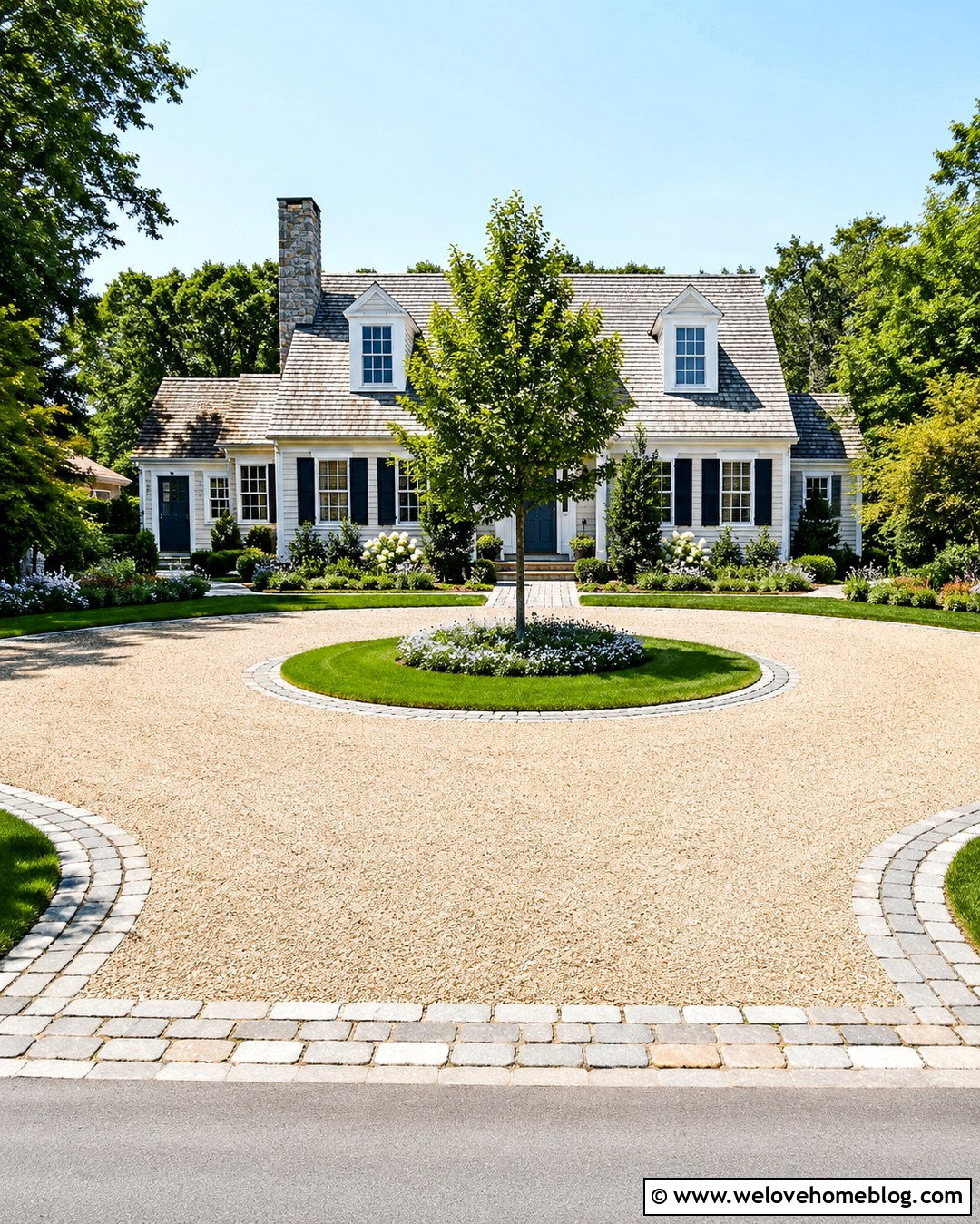
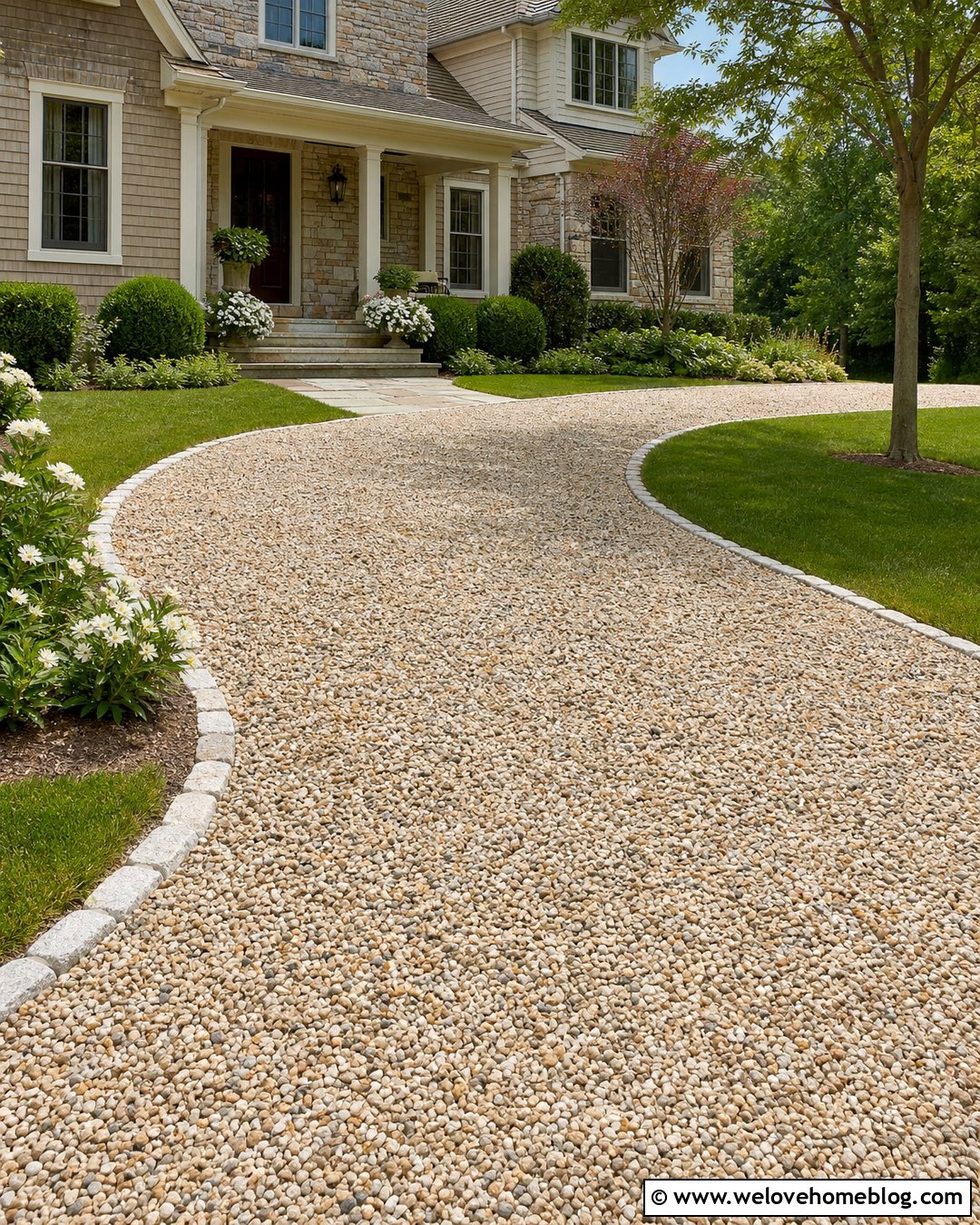
Soft beige pea gravel creates a welcoming surface around a simple round lawn island. Use stabilized gravel grids beneath the driving area to reduce movement, especially where vehicles turn most often. A double row of reclaimed cobblestones can define both sides of the loop while giving the rounded layout a crisp, traditional finish. In the center, keep the landscaping restrained with healthy turf, one small ornamental tree, and a narrow ring of low ground cover. Matching cobblestones can also form a walkway from the inner loop to the front porch. This complete design feels especially natural beside a Cape Cod or cottage-style home with light siding, dark shutters, and symmetrical foundation beds.
2. Circular Crushed Granite Driveway With Brick Border
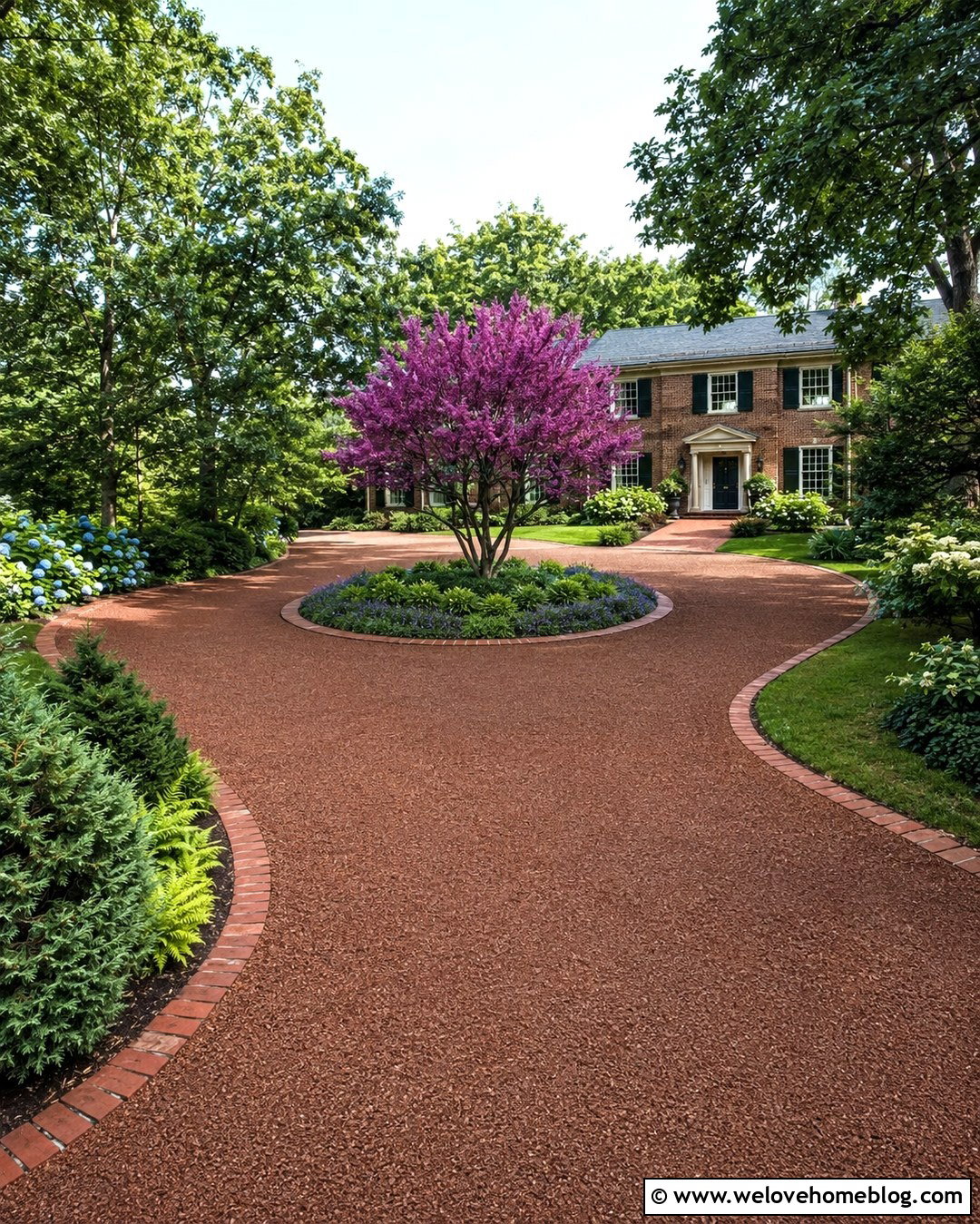
Warm crushed granite looks beautifully coordinated with red brick homes and wooded residential settings. Shape the driveway as a broad horseshoe with two clearly defined entrances and enough space near the house for comfortable turning. A flush clay brick border contains the gravel without creating a high edge beside tires. Repeat the same brick around a central planting bed to connect the landscape visually. A flowering dogwood or redbud can anchor the island, with shade-tolerant ground cover filling the lower layer. Along the outer curves, use sweeping beds of hydrangeas, ferns, and compact evergreens. The reddish gravel, brick ribbons, and layered planting create a unified entrance rather than an oversized parking area.
3. Circular Gray Gravel Driveway With Boxwood Island
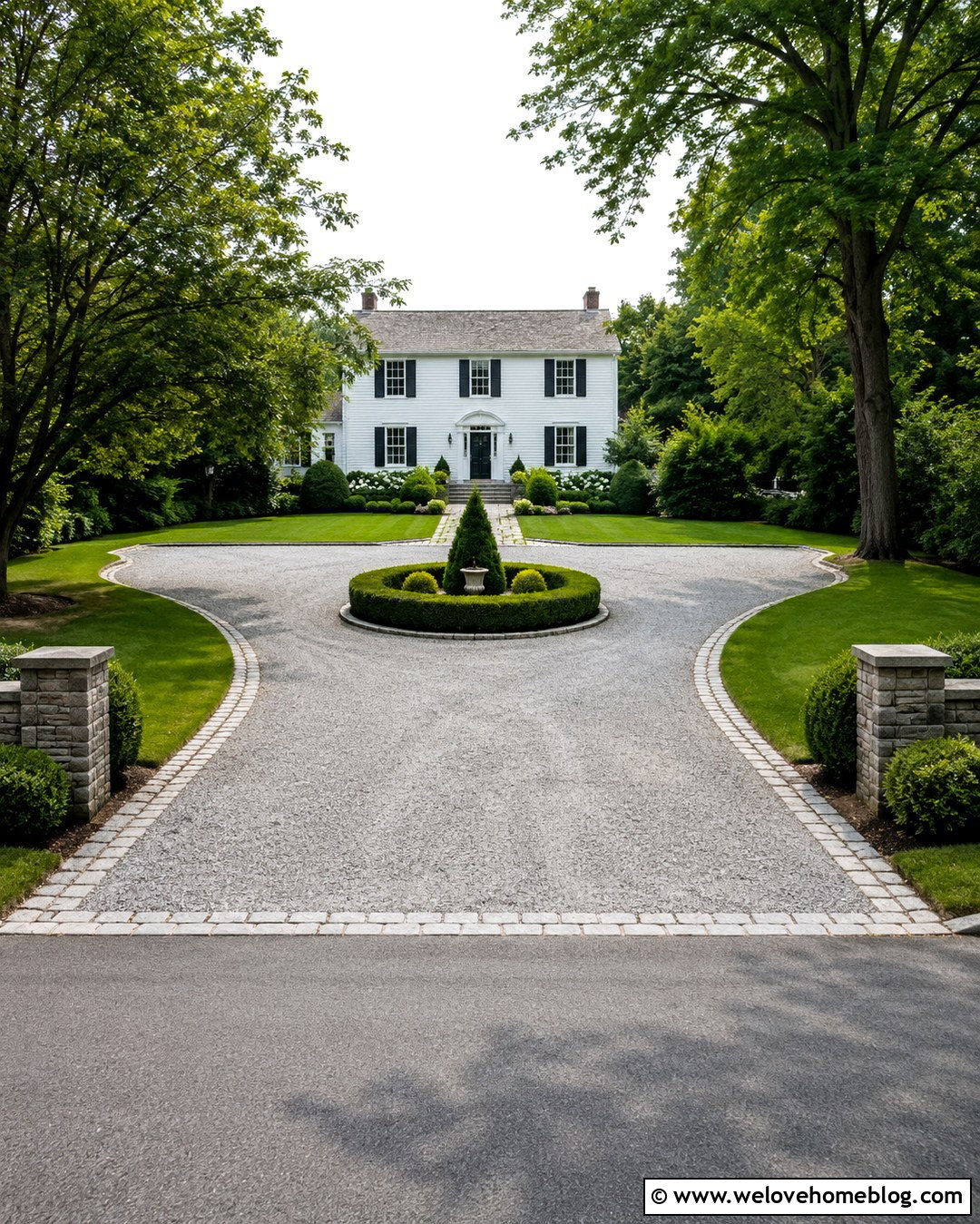
For a formal colonial home, consider a symmetrical circular driveway surfaced with compacted gray limestone gravel. Clean curves and evenly spaced entrances give the front yard a balanced appearance. Edge the loop with narrow granite setts that match the cool color of the gravel while preventing the lawn from spreading into the driving surface. At the center, arrange clipped boxwoods in a low ring around a single upright evergreen or classic stone urn. Keep taller plants away from the entrance openings so drivers retain clear views of the street. Straight walkways can connect the circle to the front door and side parking area. This organized combination of gray stone, geometric planting, and traditional architecture feels polished without looking overly elaborate.
4. Circular White Gravel Driveway With Steel Edging
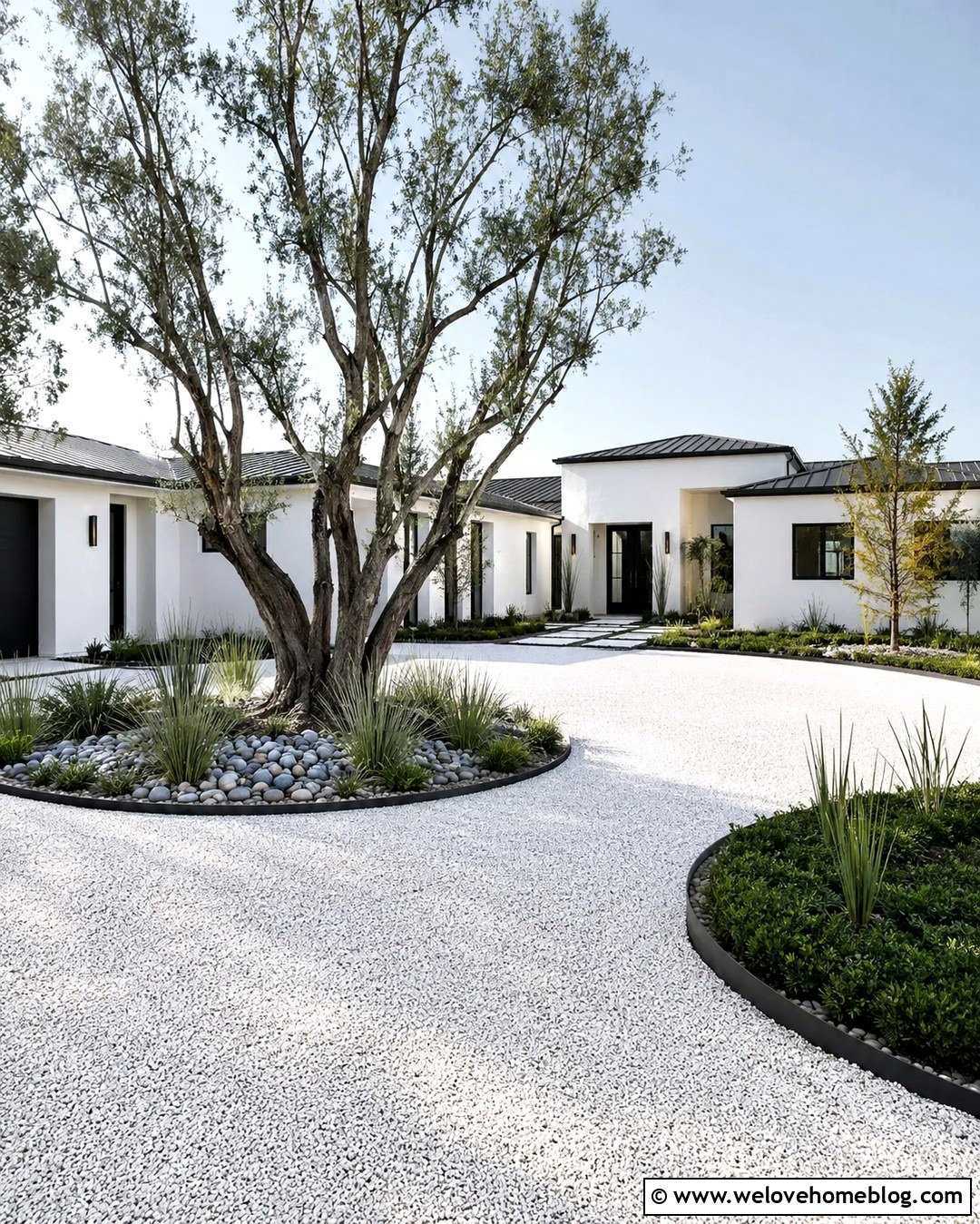
Bright white marble gravel can give a circular driveway a striking modern appearance when used with a stable, carefully prepared base. Create a wide loop with simple geometry and install dark steel edging along the inner and outer curves for sharp contrast. The center island can feature a sculptural multi-trunk tree surrounded by pale river rocks, upright ornamental grasses, and low evergreen ground cover. Limit the planting palette so the entrance remains calm and uncluttered. Large rectangular stepping stones can cross the inner edge and lead toward a flat-roofed home with white stucco, charcoal siding, or natural wood accents. This driveway works best when every transition is intentional, from the road apron to the walkway and minimalist foundation beds.
5. Circular Tan Gravel Driveway With Timber Edging
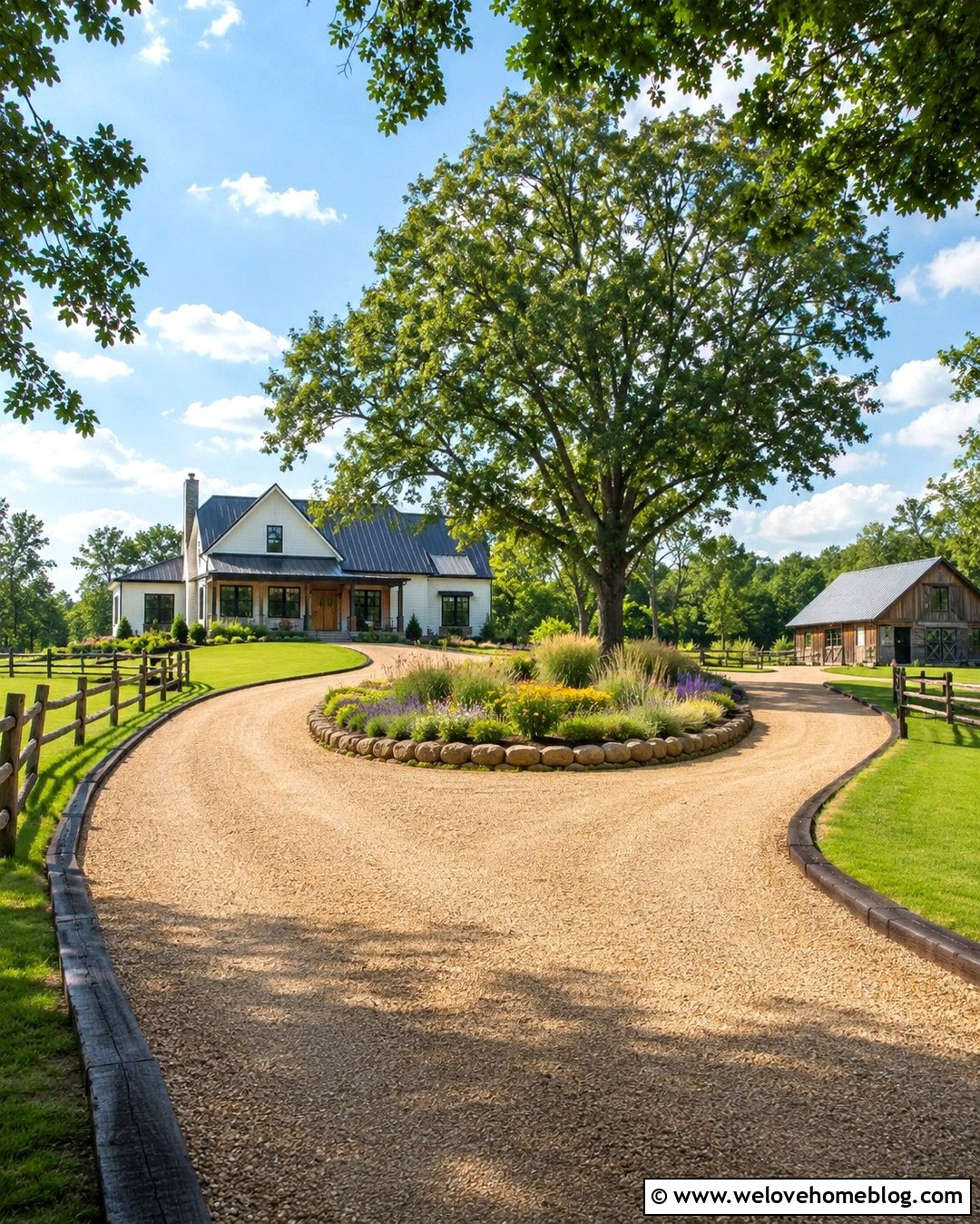
A country home calls for a softer circular driveway that blends naturally into the surrounding acreage. Choose compacted tan crushed stone and shape it into a generous horseshoe that follows the existing grade. Heavy landscape timbers can define the outer curves, while local fieldstone creates a more decorative border around the center island. Plant the island with a shade tree, native grasses, and seasonal wildflowers arranged in broad, informal groups. Post-and-rail fencing near both entrances can guide the eye without closing off the property. Continue the gravel toward a detached garage or barn using a narrower side lane. The combination of warm stone, weathered wood, open lawn, and natural planting complements ranch houses, farmhouses, and rustic homes.
6. Circular Gravel Driveway With Lavender Borders
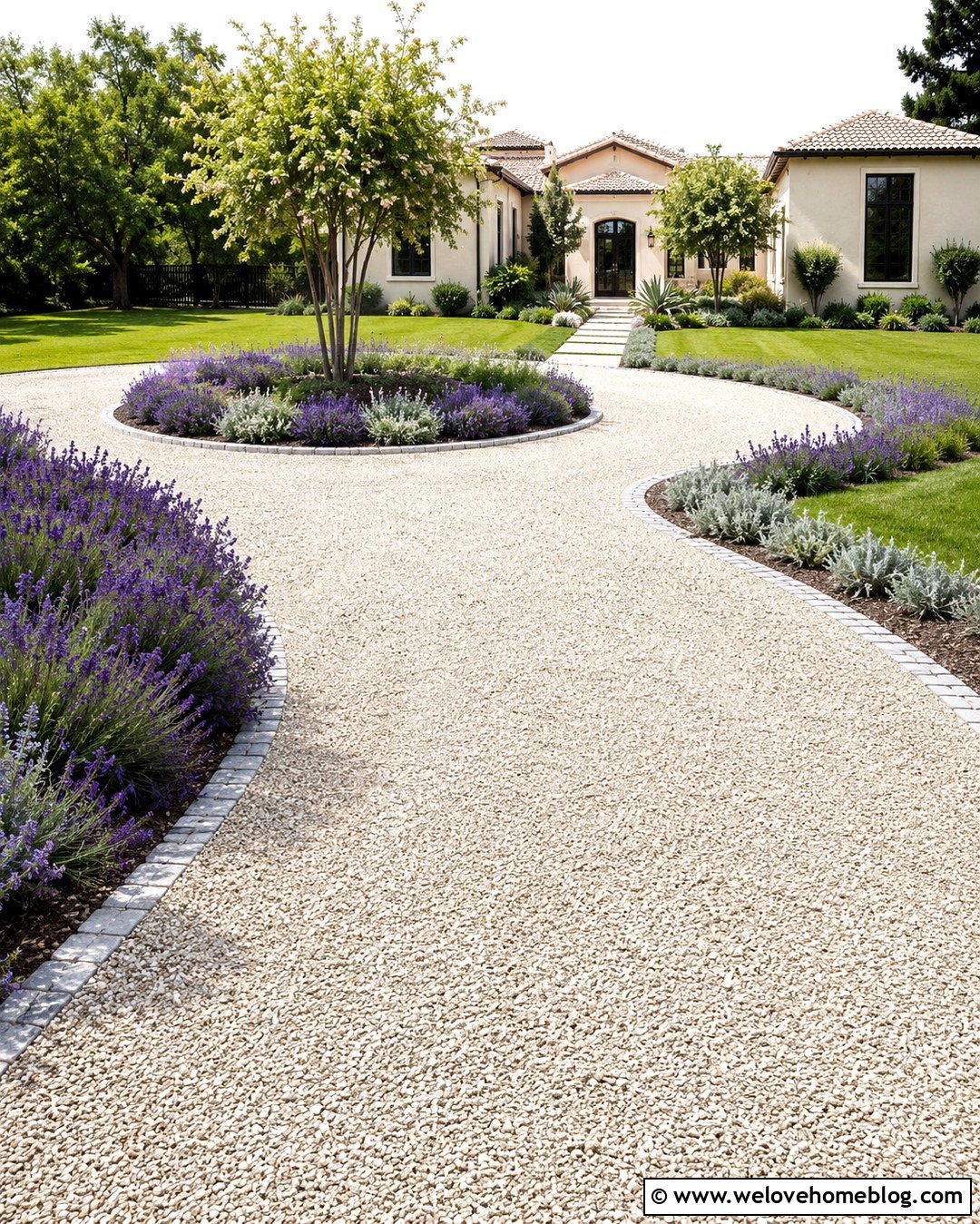
Imagine arriving through curved bands of fragrant color surrounding a pale limestone gravel loop. This complete look pairs a circular driveway with flush cobblestone edging and wide planting beds filled with lavender, catmint, and silvery lamb’s ear. A small olive-like ornamental tree or drought-tolerant flowering tree can stand in the center island, depending on the local climate. Keep the plants set back from the driving edge so stems do not spill into vehicle space. Light gravel makes the purple flowers more noticeable and coordinates well with cream stucco or pale stone facades. Add a stepping-stone walkway through the island only if it follows a natural route to the entrance. The result feels relaxed, colorful, and carefully planned.
7. Circular Black Gravel Driveway With Concrete Curb
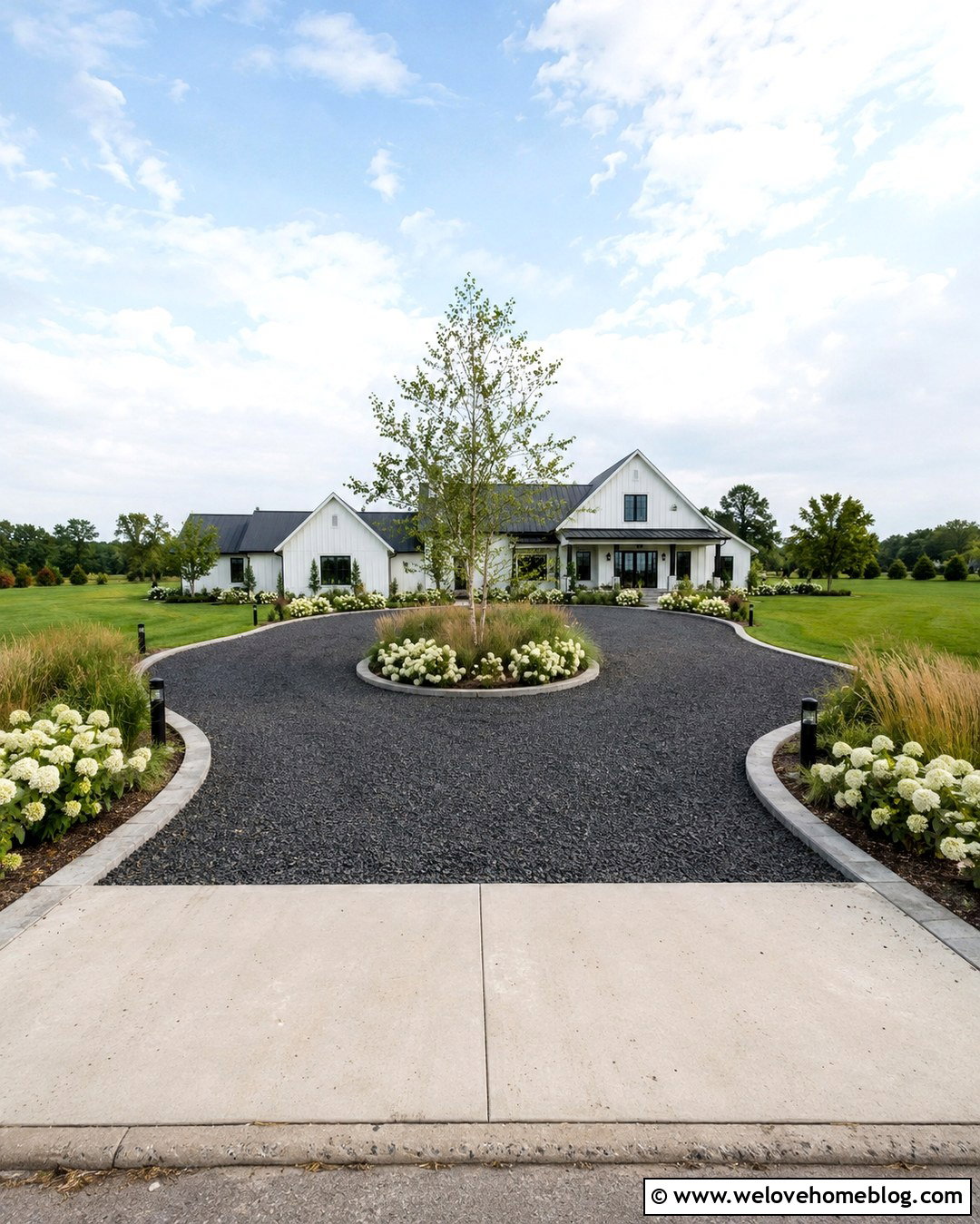
Dark crushed basalt delivers bold contrast around a light modern farmhouse or contemporary ranch home. A low poured-concrete curb can trace the inner circle and outer horseshoe, creating a durable visual boundary between black gravel, green lawn, and planting beds. Fill the central island with white-blooming hydrangeas, feather reed grass, and one carefully positioned birch tree. Their lighter colors help balance the deep driveway surface. At the road, use a wider concrete apron to create a clean transition and reduce loose gravel near the street. Simple black bollard lights can follow the outer curve without dominating the daytime view. Repeating charcoal accents on the roof, windows, and planters ties the dramatic driveway into the architecture.
8. Circular Gravel Driveway With Flagstone Center Island
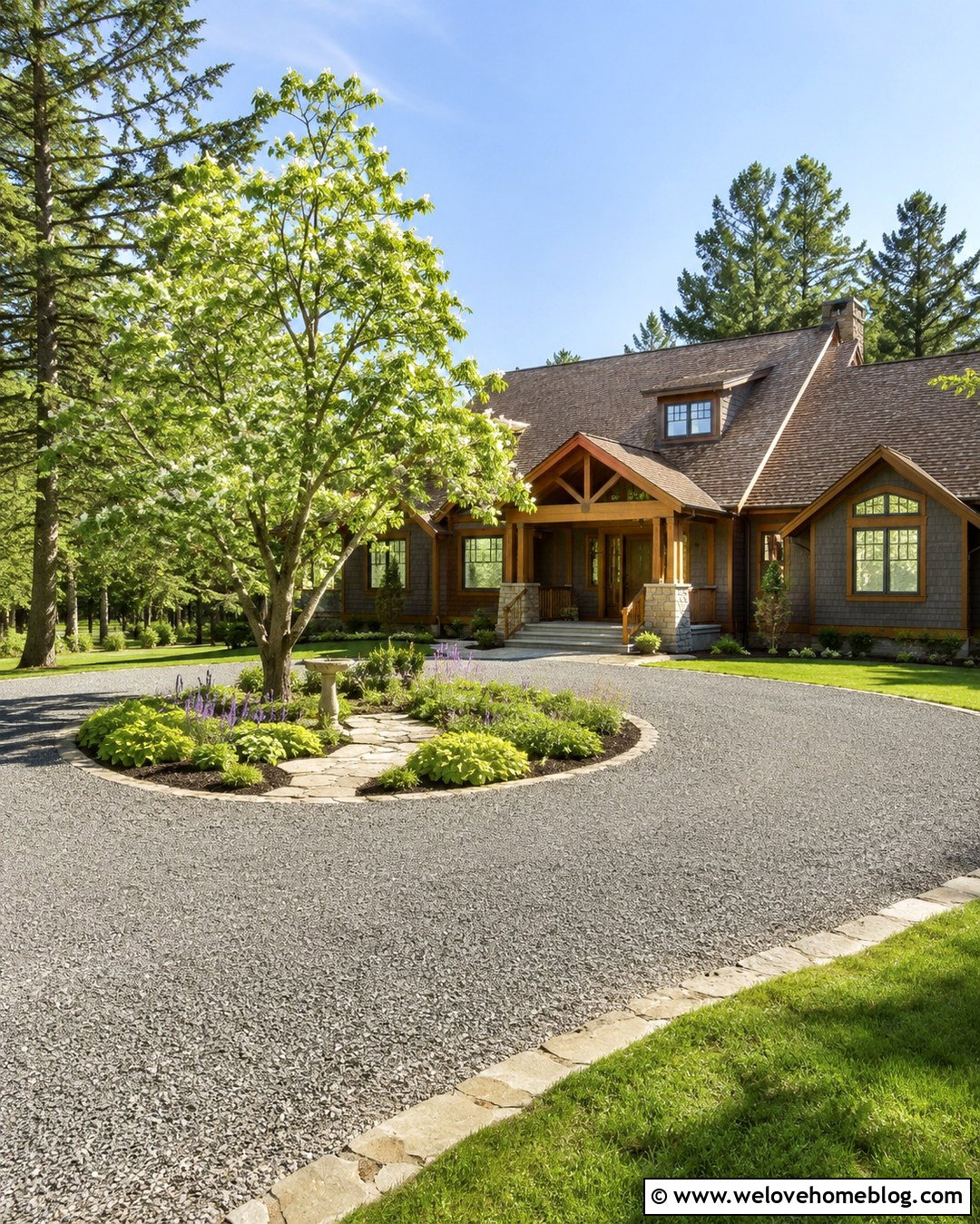
Natural flagstone can turn the middle of a circular gravel driveway into a usable garden feature rather than an empty patch of lawn. Surface the loop with warm gray crushed gravel and edge it with irregular stones that coordinate with the central paving. Within the island, create a small flagstone path leading to a specimen tree, birdbath, or understated garden bench. Surround the hardscape with low flowering perennials and spreading ground covers, leaving open space around the tree trunk. The outer side of the driveway can remain mostly lawn to prevent the composition from feeling crowded. This layered design works well with Craftsman homes because the gravel, stone, wood details, and informal planting all share an earthy, handcrafted character.
9. Circular Gravel Driveway With Native Grass Landscaping
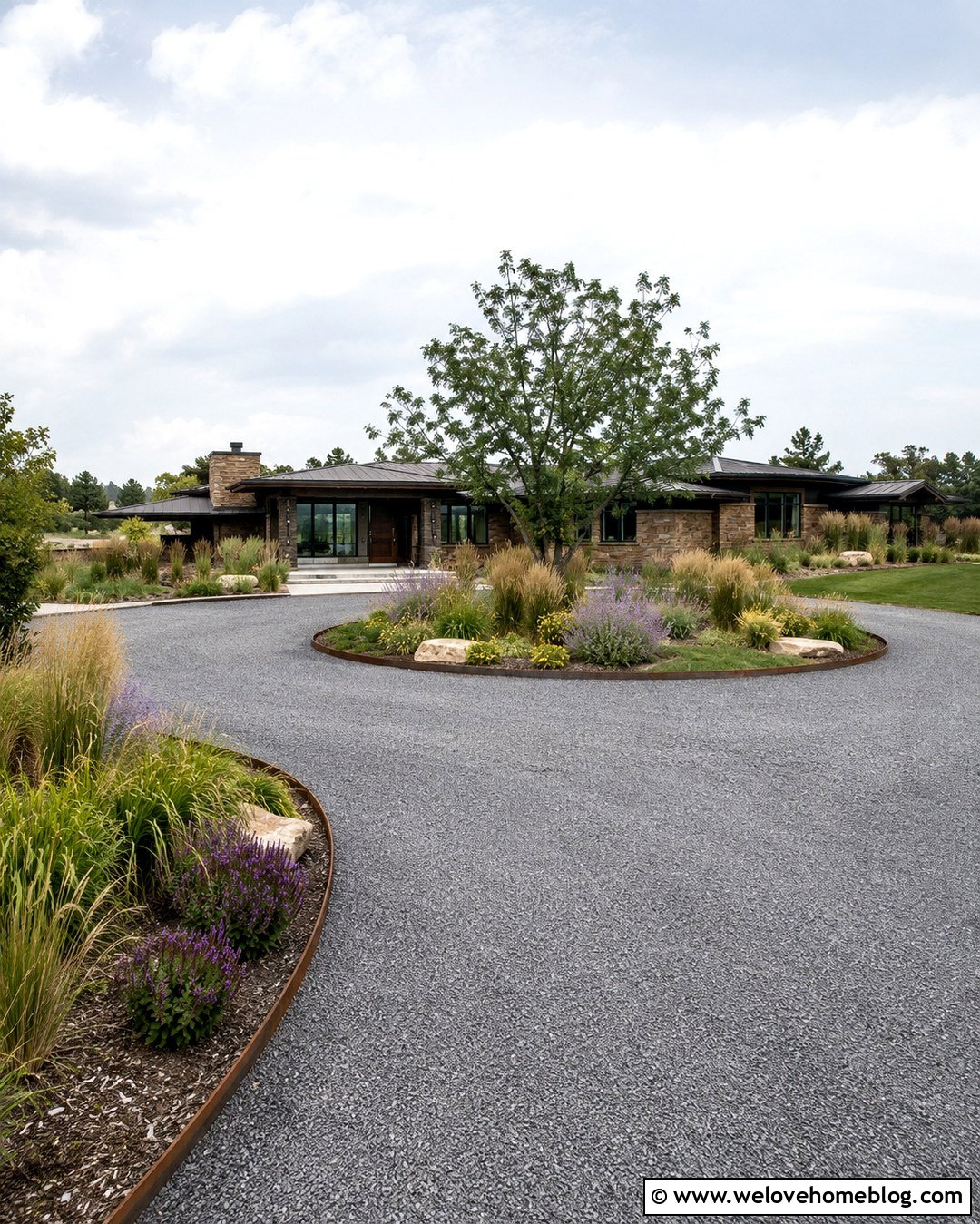
A circular driveway can feel at home in a natural landscape when the planting follows broad, flowing shapes. Use medium-gray crushed gravel with slim weathered-steel edging that nearly disappears beside the surface. Fill the center island with a small native tree and sweeping groups of ornamental grasses, flowering perennials, and low ground cover suited to local conditions. Repeat several of those plants along the outer driveway curves to make the island feel connected to the yard. Avoid tall growth beside the street entrances, where open visibility is important. A modern ranch or prairie-style house provides an ideal background for this look. The restrained material palette and layered native planting create curb appeal without requiring formal hedges or perfectly clipped beds.
10. Circular Gravel Driveway With Stone Entrance Pillars
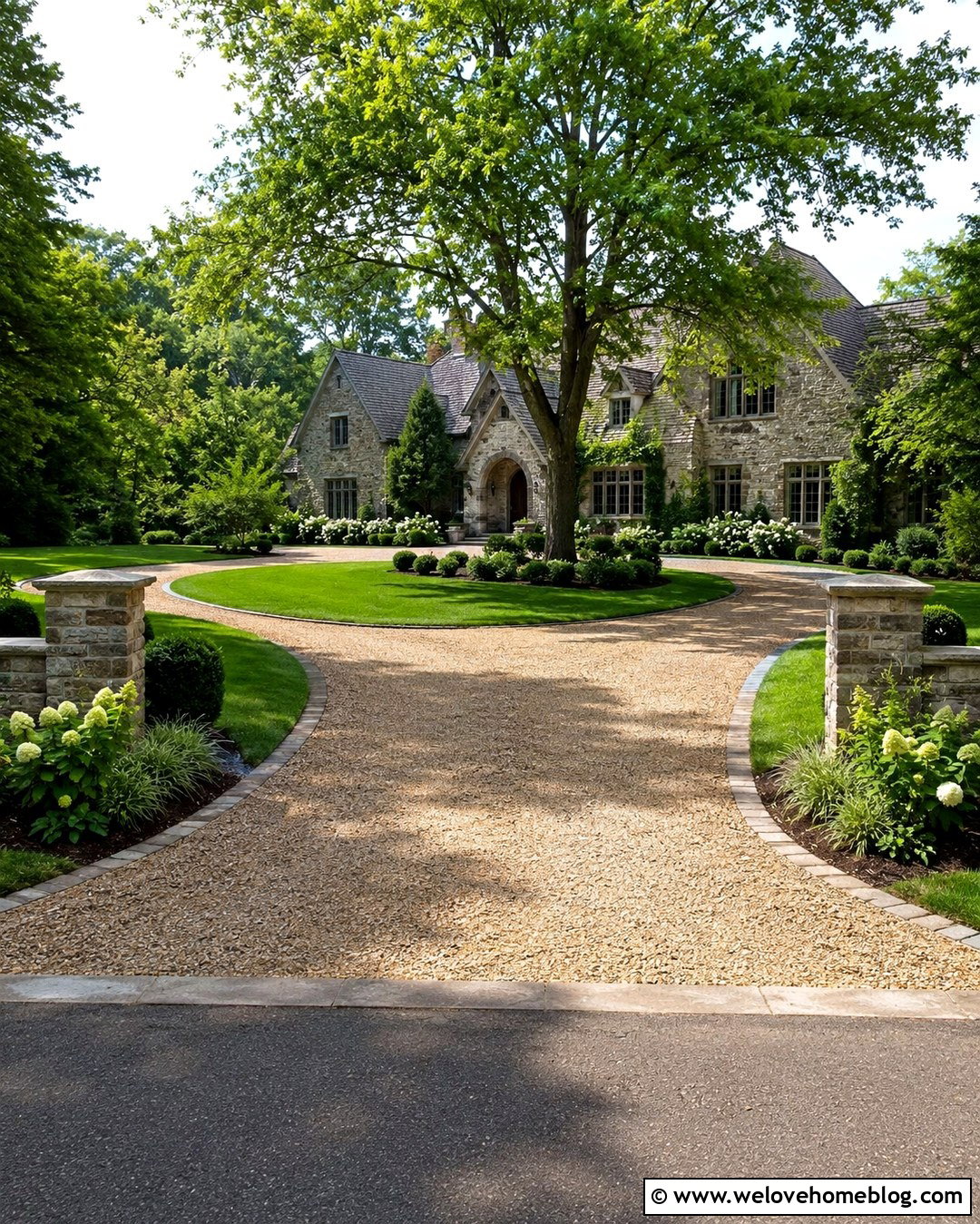
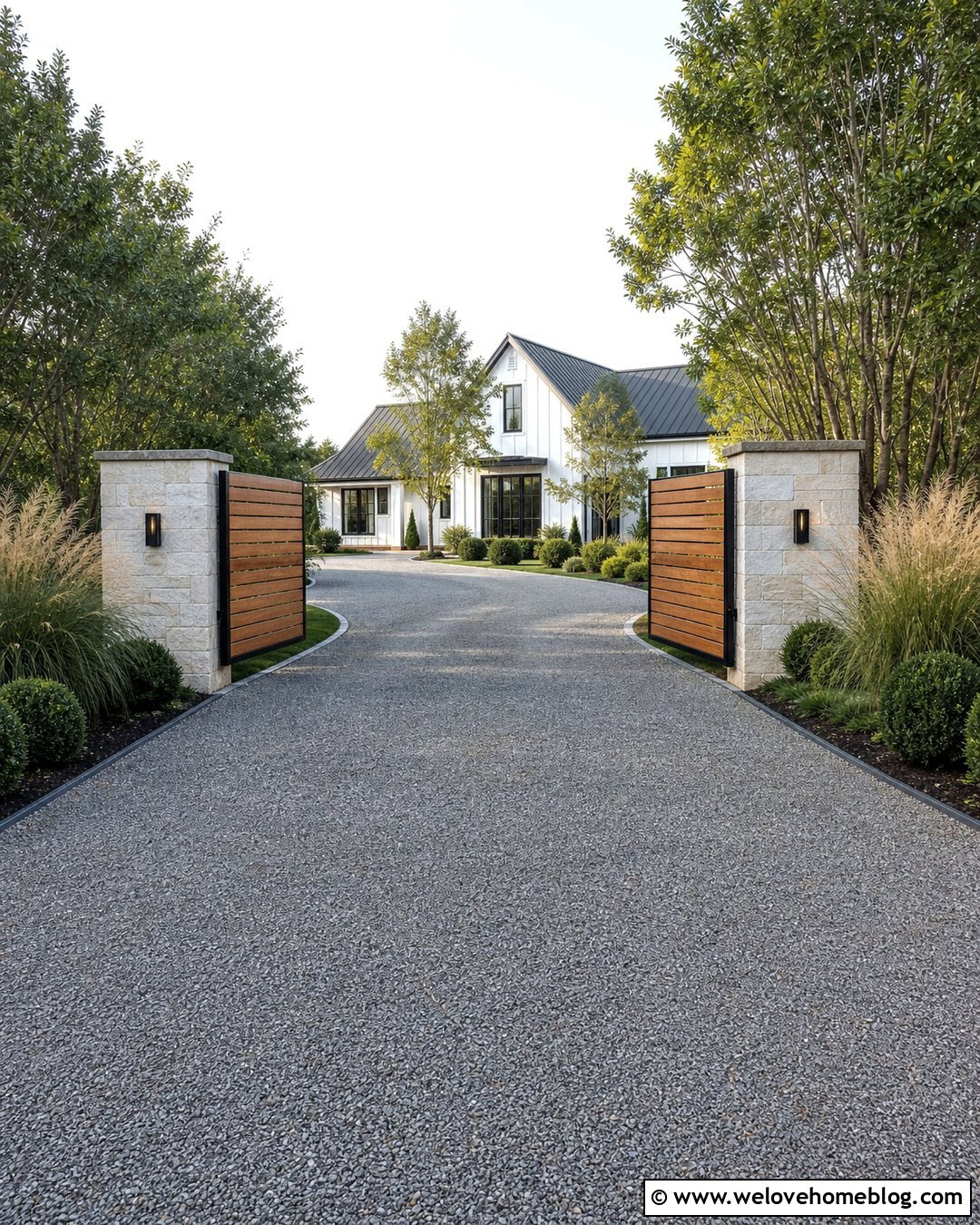
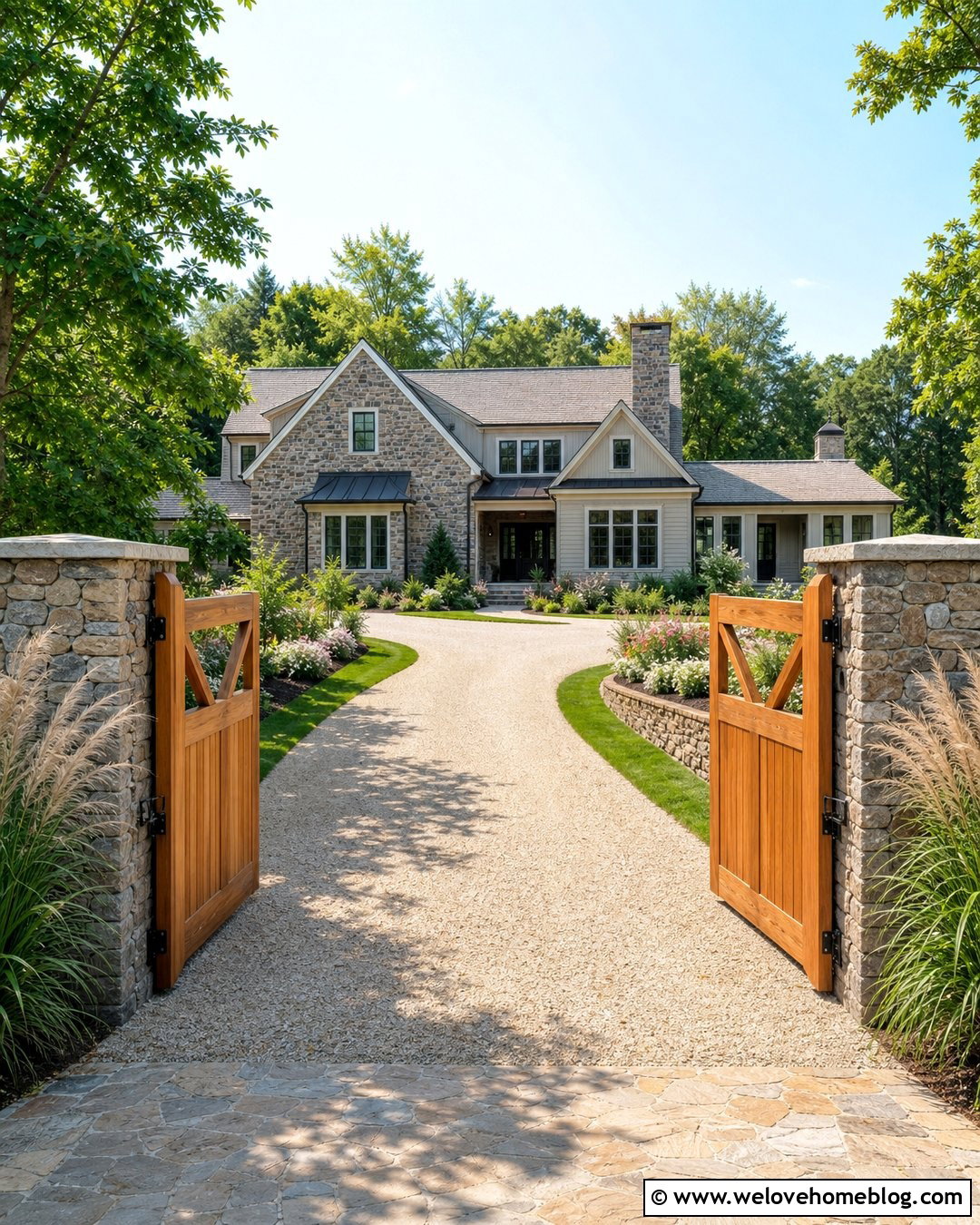
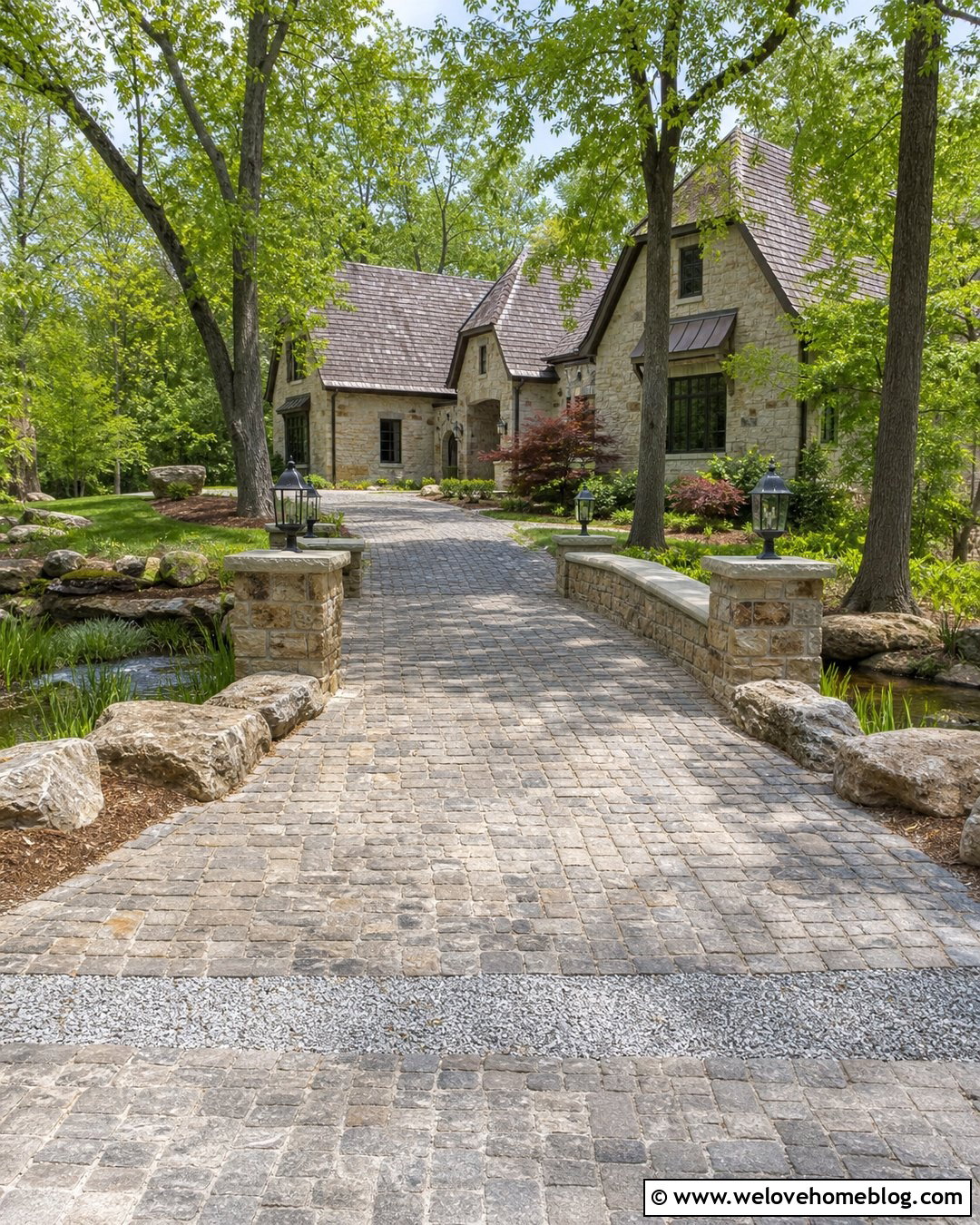
Substantial entrance pillars can bring definition to a wide circular driveway, particularly on a large rural or estate-style property. Select golden crushed gravel and border the curves with matching natural stone setts. Build a pair of low, well-proportioned pillars at each entrance rather than creating an overly tall gateway. Their stone should relate to the house facade, retaining walls, or front steps. Inside the loop, a broad lawn island with one mature canopy tree keeps the center open and balanced. Layer compact shrubs and flowering perennials around the tree without hiding its trunk. Curved beds beside the pillars can soften the transition from masonry to lawn. This coordinated design makes the entire approach feel established, readable, and connected to the home.
11. Circular Gravel Driveway With Brick Ribbon Detail
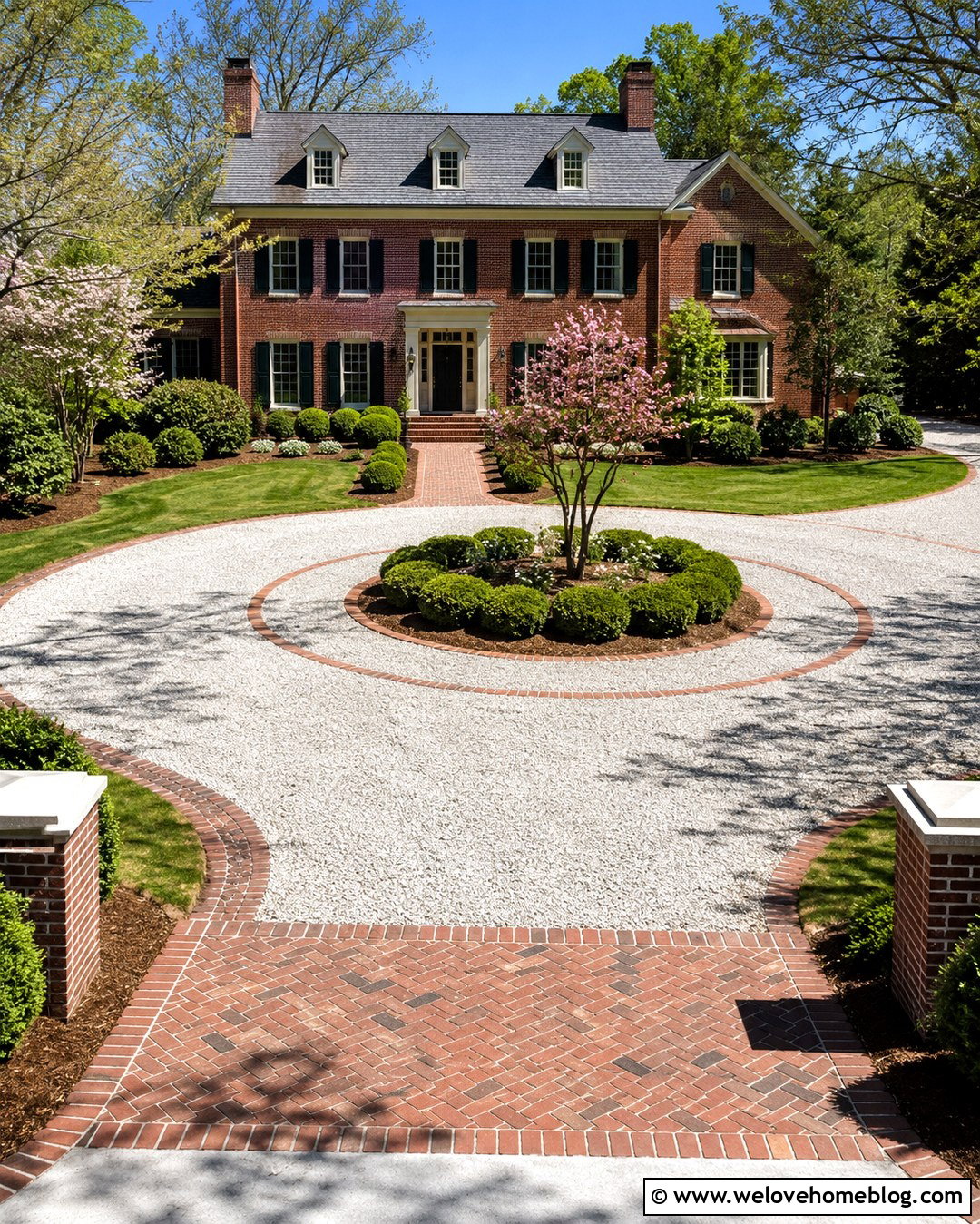
A brick ribbon adds pattern to a gravel surface while reinforcing the graceful curve of the driveway. Begin with buff-colored crushed limestone, then install one or two flush bands of clay brick around the inner loop. Continue the same brick along the outer edges and front walkway for a consistent design. The center island can hold a flowering crabapple surrounded by clipped shrubs and a simple mulch bed. Choose brick tones that repeat the chimney, porch floor, or exterior masonry of the house. Near the street, a full-width brick apron can create a deliberate entrance before the gravel begins. This approach fits traditional suburban homes where plain gravel might feel too casual, yet a fully paved circular driveway would appear overly formal or visually heavy.
12. Small Circular Gravel Driveway With Simple Lawn
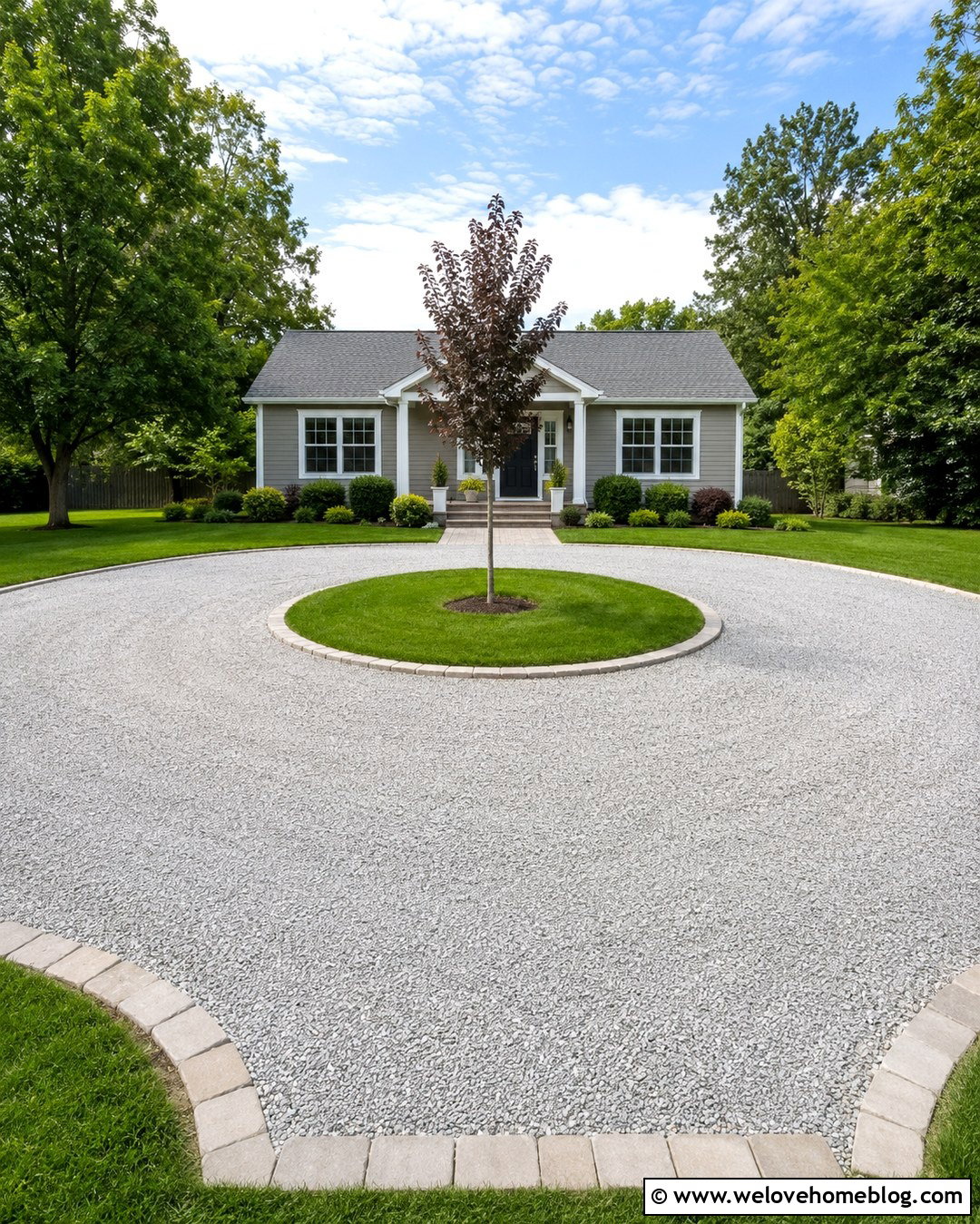
Not every circular driveway requires a large estate-sized front yard. A compact loop of stabilized fine gravel can work in a modest suburban setting when the layout remains simple. Reduce the center island to a neat oval of lawn with one narrow ornamental tree, leaving sufficient driving width around it. Flush concrete pavers can contain the gravel without taking up valuable space or creating bulky borders. Keep outer landscaping close to the house rather than filling every driveway edge with planting. A direct walkway from the inner curve to the porch makes the entrance easy to understand. Pale gray gravel and understated edging suit a small ranch, bungalow, or split-level home. The restrained design preserves greenery while avoiding a crowded, overdecorated appearance.
13. Circular Gravel Driveway With Evergreen Landscaping
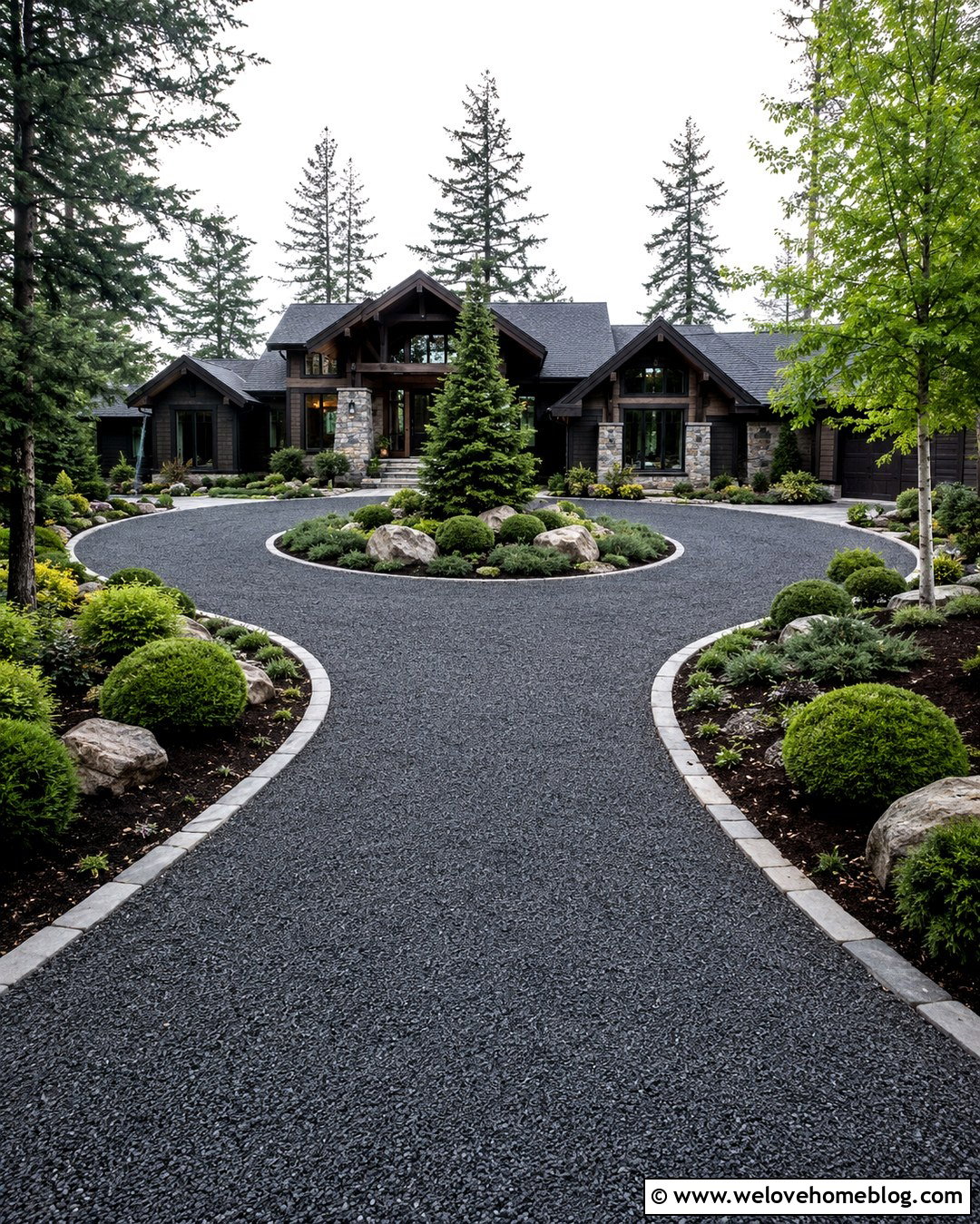
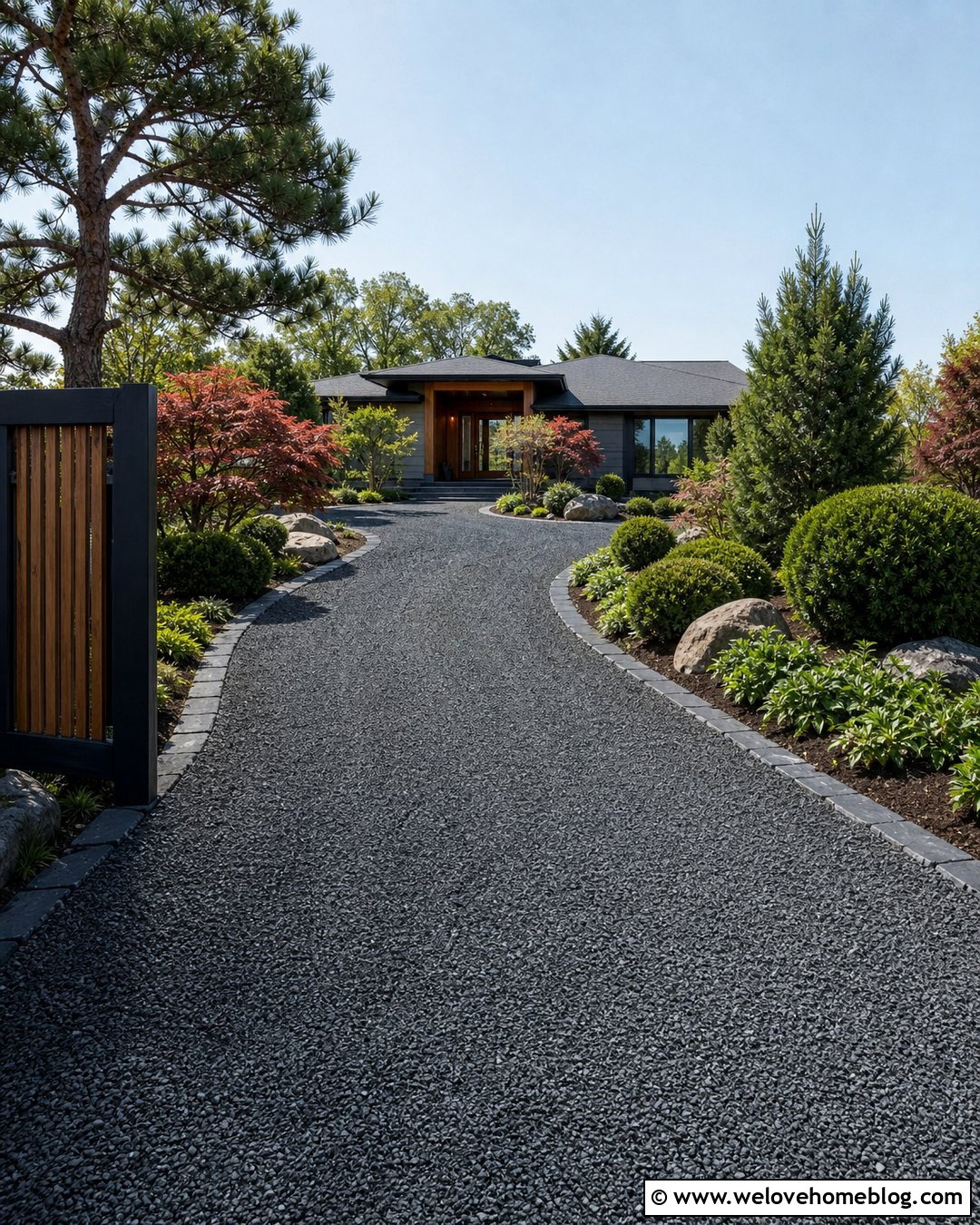
Evergreen planting gives a circular driveway structure through every season. Cover the loop with charcoal-gray crushed granite and frame it with low granite curbing. In the central island, combine one upright evergreen with rounded dwarf conifers and a carpet of spreading juniper or another locally appropriate ground cover. Vary plant forms and shades of green so the island has depth without depending on flowers. Repeat a few compact evergreens near the house, but leave the entrance curves open and uncluttered. The dark gravel can complement stone veneer, stained wood, or deep exterior colors on a mountain-style or contemporary home. Small boulders placed within the beds provide a natural transition between the driveway surface and the layered evergreen landscape.
14. Circular Gravel Driveway With Hydrangea Beds
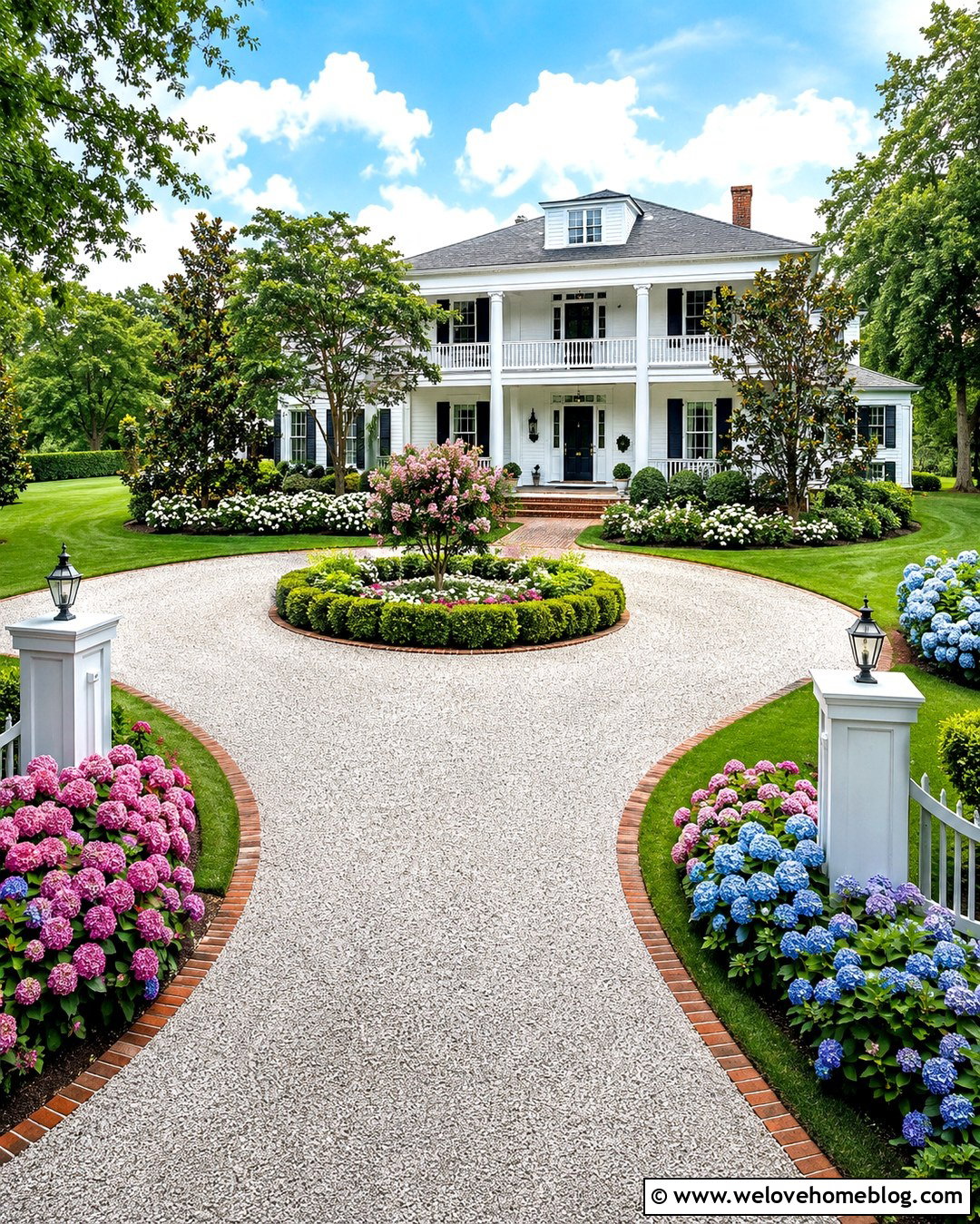
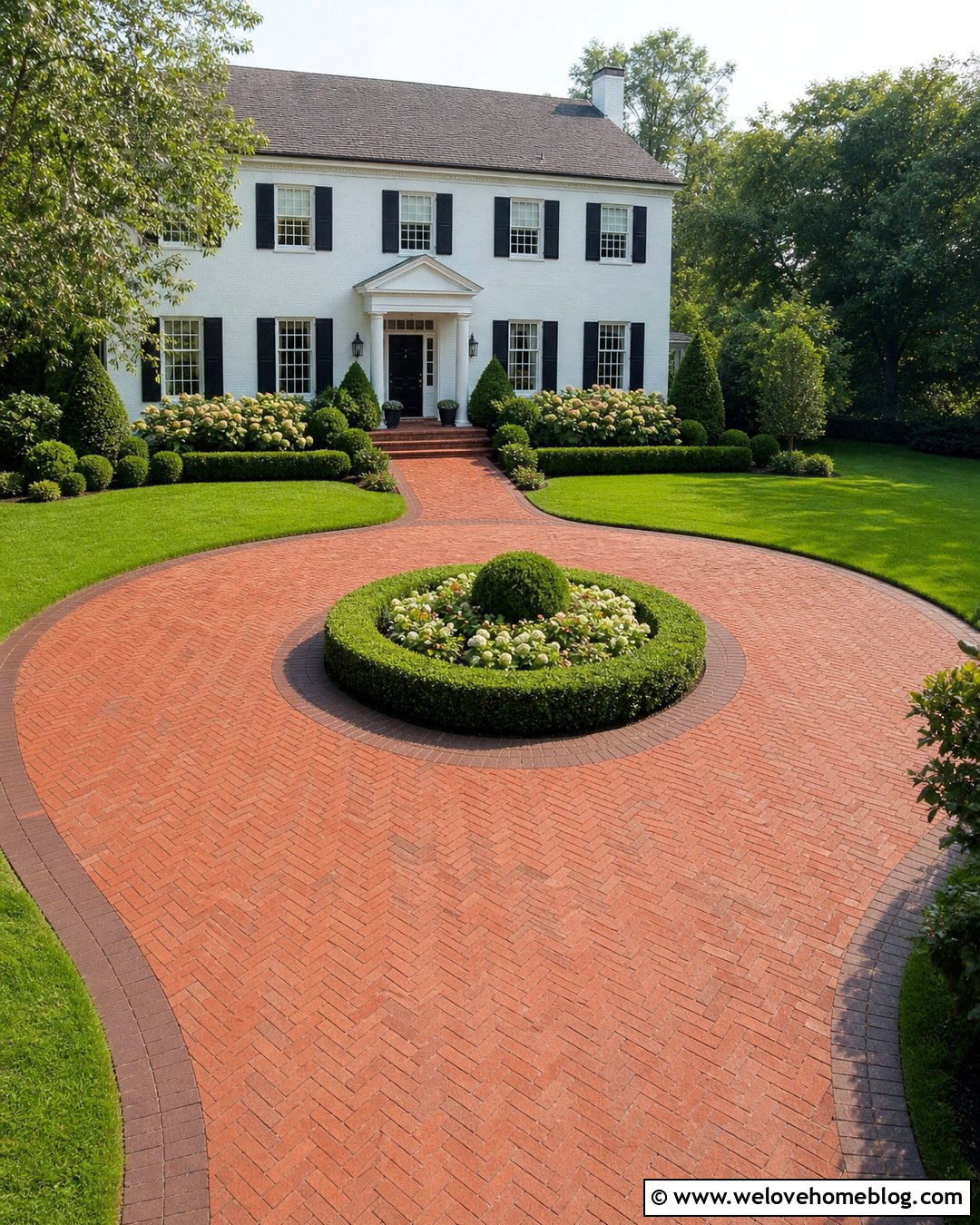
Clouds of hydrangea blooms can soften the broad shape of a circular gravel driveway and make a traditional home feel more welcoming. Choose light gray limestone gravel with a narrow brick edge to create a refined foundation for the planting. Place hydrangeas in curved beds along the outer loop, where they frame the approach without filling the center with excessive height. A low boxwood ring and a single flowering tree can occupy the island. Allow generous space based on the mature size of each shrub so branches remain clear of vehicles. Coordinate flower colors with the house facade, shutters, and front door. This layered combination looks especially attractive beside white colonial, shingle-style, and classic Southern homes with balanced windows and prominent porches.
15. Circular Gravel Driveway With Split Garage Access
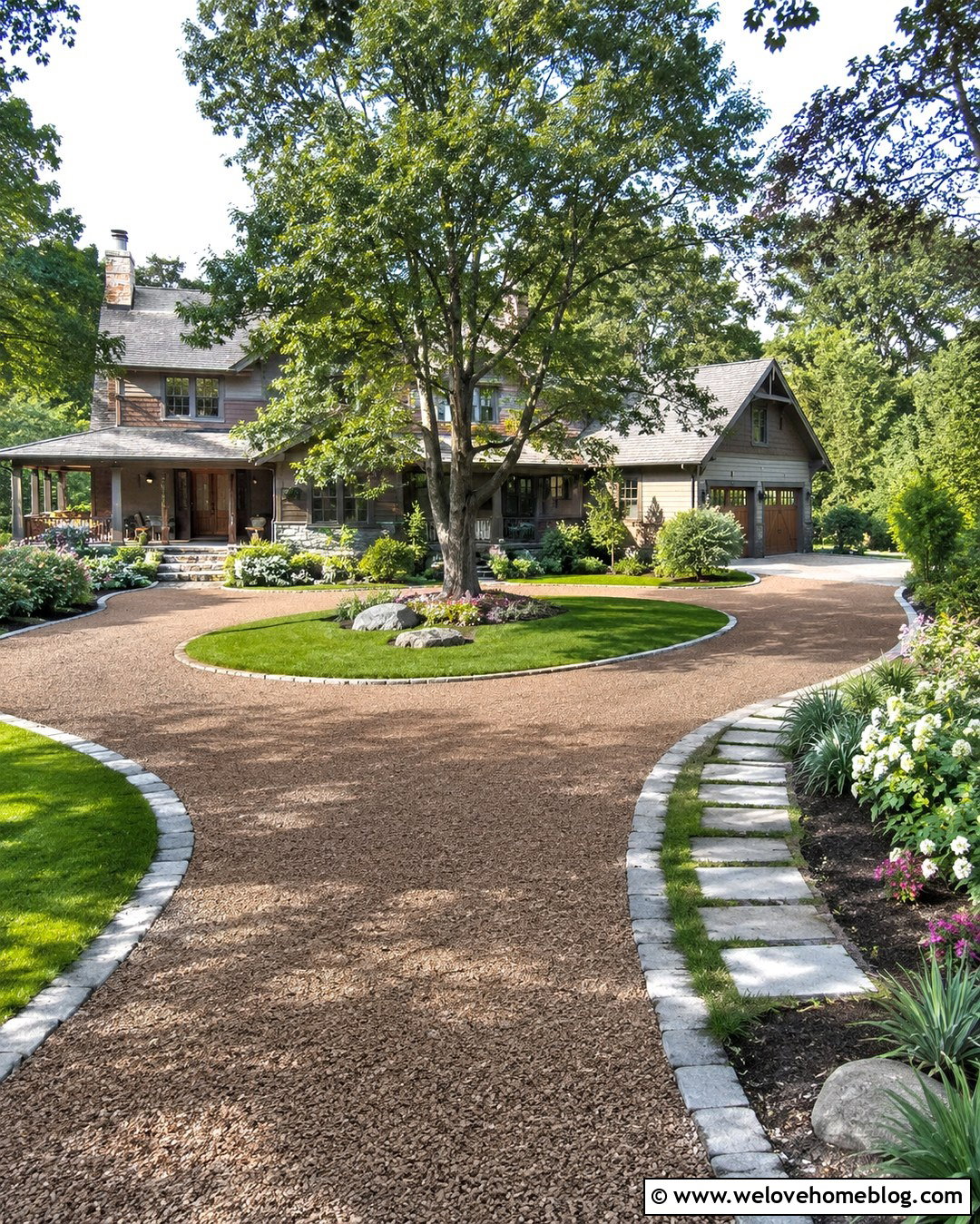
A split layout helps a circular driveway serve both the front entrance and a side-facing garage. Use compacted brown crushed stone for the main horseshoe, then branch one side into a short, slightly wider parking lane. Continuous stone edging should follow every curve so the additional section appears intentional. Keep the center island simple with lawn, one shade tree, and a low ring of seasonal flowers. Near the house, use larger stone pavers to mark the transition from the gravel loop to the garage apron and front walkway. Shrubs can screen the parking area without blocking turning space. This practical arrangement suits farmhouse, ranch, and Craftsman properties where drivers need a clear route to the garage without losing the attractive circular approach.
16. Circular Gravel Driveway With Paver Aprons
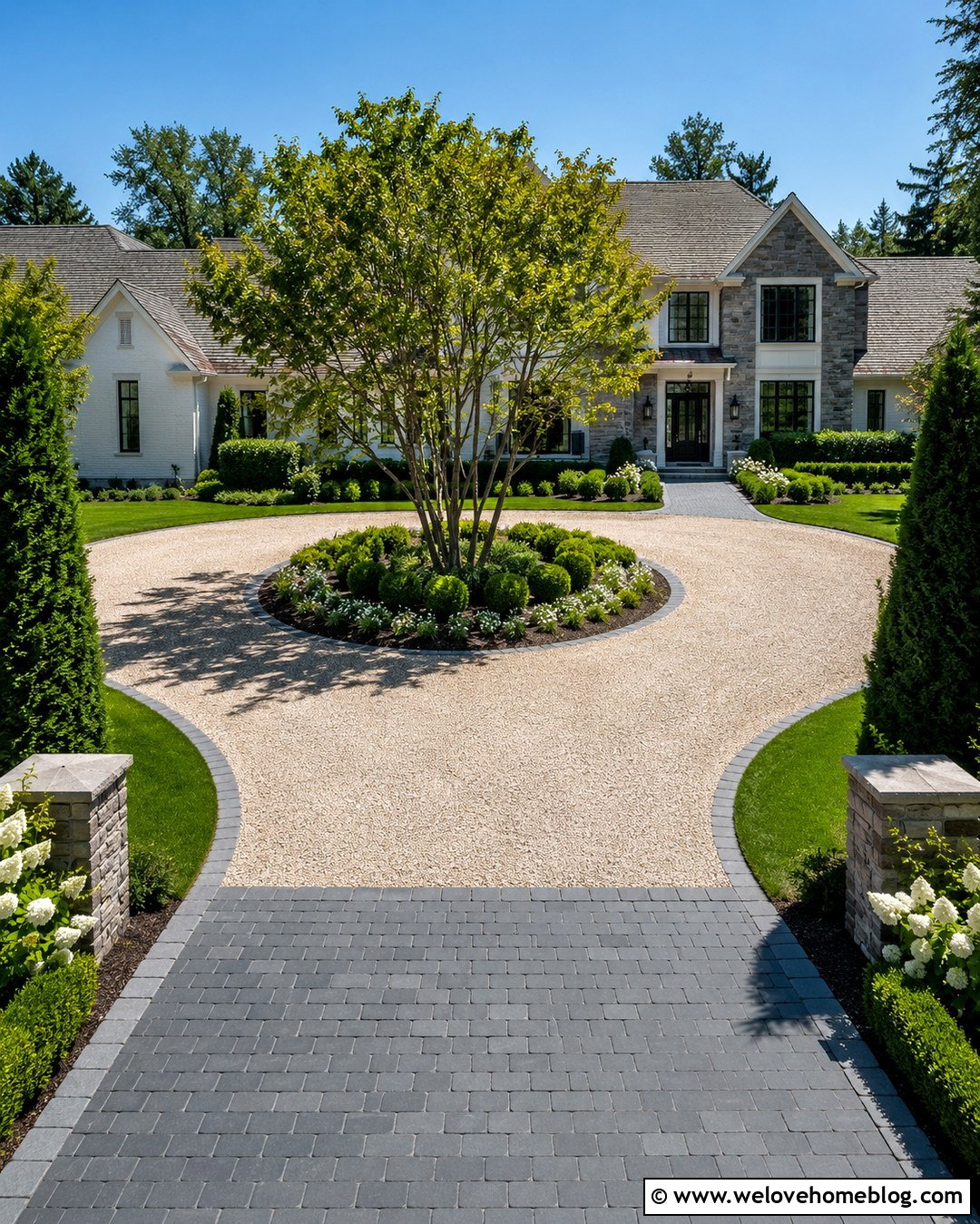
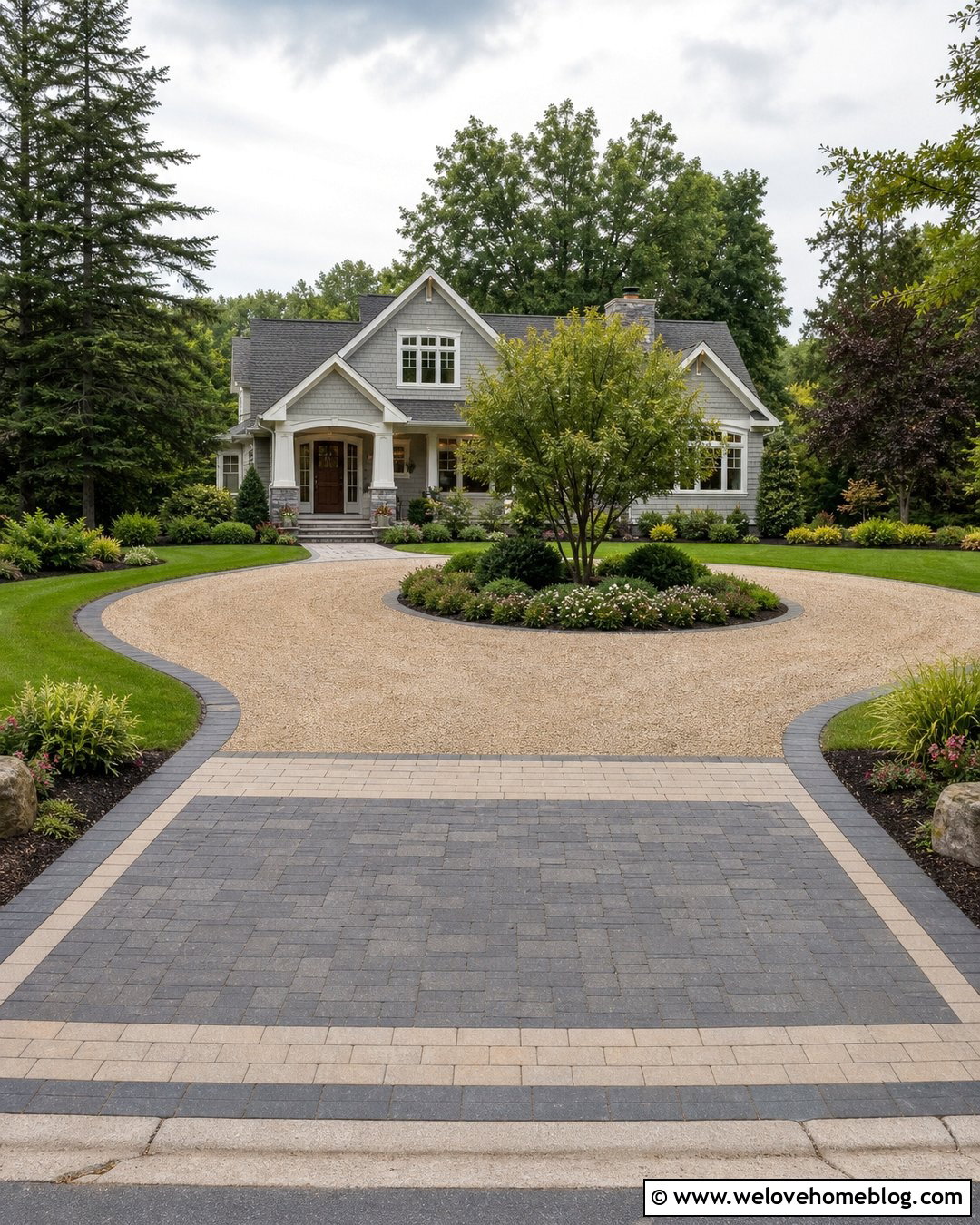
Paver aprons can strengthen the visual importance of both entrances while giving loose gravel a clean stopping point. Surface the circular loop with pale tan angular gravel and use charcoal concrete pavers at the road, garage, and front walkway transitions. A single row of matching pavers can continue along the inner and outer curves. In the middle, design a broad oval bed with a multi-stem tree, rounded shrubs, and low flowering ground cover. Repeat charcoal tones in exterior light fixtures, window frames, or the roof to connect the hardscape with the house. This mixed-material treatment adds detail without replacing the relaxed gravel character. It works particularly well with transitional homes that combine traditional rooflines and cleaner contemporary finishes.
17. Circular Gravel Driveway With Raised Stone Island
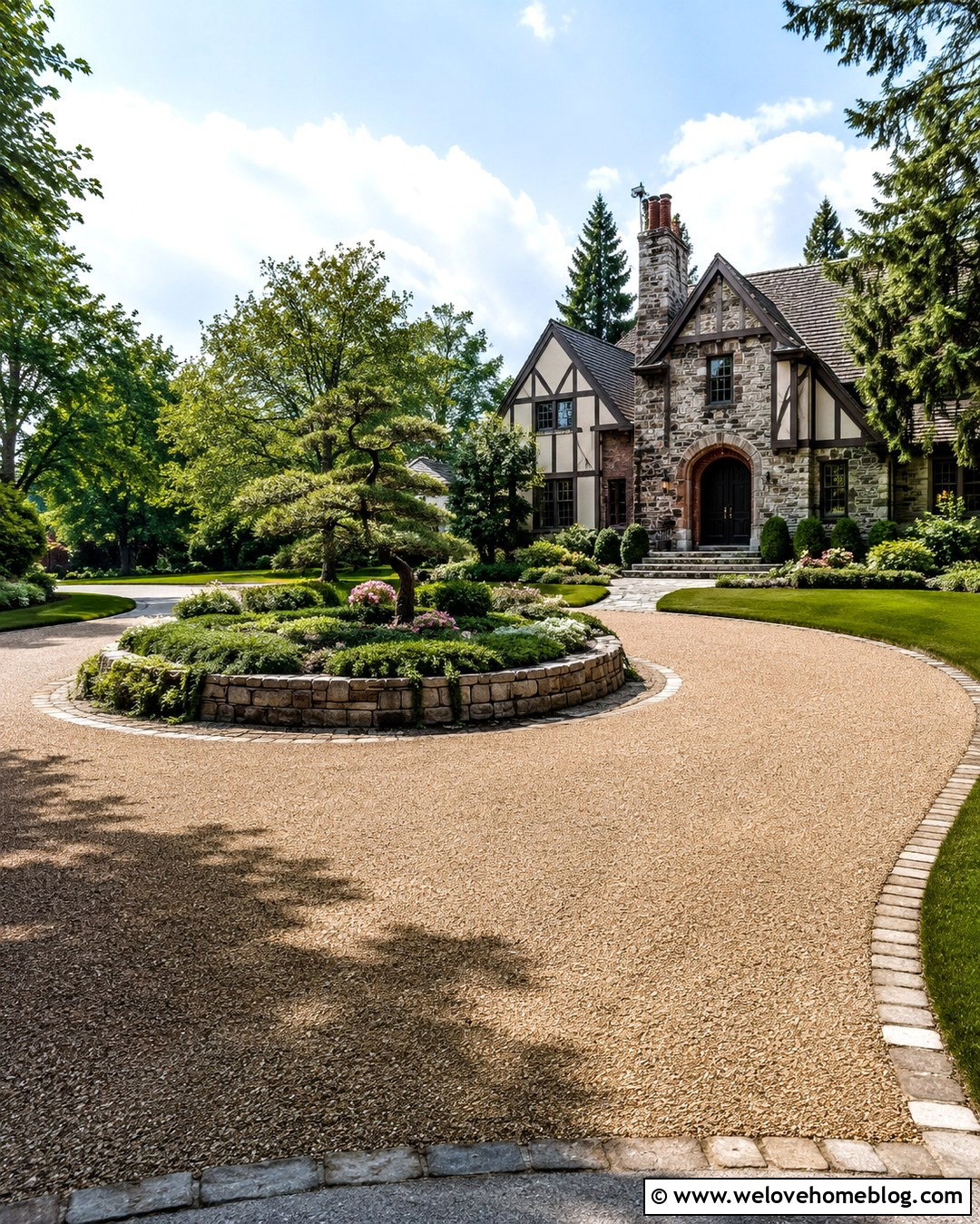
A slightly raised center island gives a large circular driveway a strong focal point and clearer definition. Choose compacted honey-colored gravel and surround the island with a low retaining ring built from stacked natural stone. Keep the wall short enough to preserve open views across the driveway. Behind it, layer cascading ground cover, compact flowering shrubs, and one sculptural tree. The outer driveway edge can use flush stone setts in the same color family, preventing the design from becoming visually busy. Add a broad walkway that connects the inner loop to the front steps without cutting awkwardly through the planting. This complete look pairs naturally with Tudor, European-inspired, and stone-front homes, especially when the island masonry repeats materials already found on the facade.
18. Circular Gravel Driveway With Coastal Landscaping
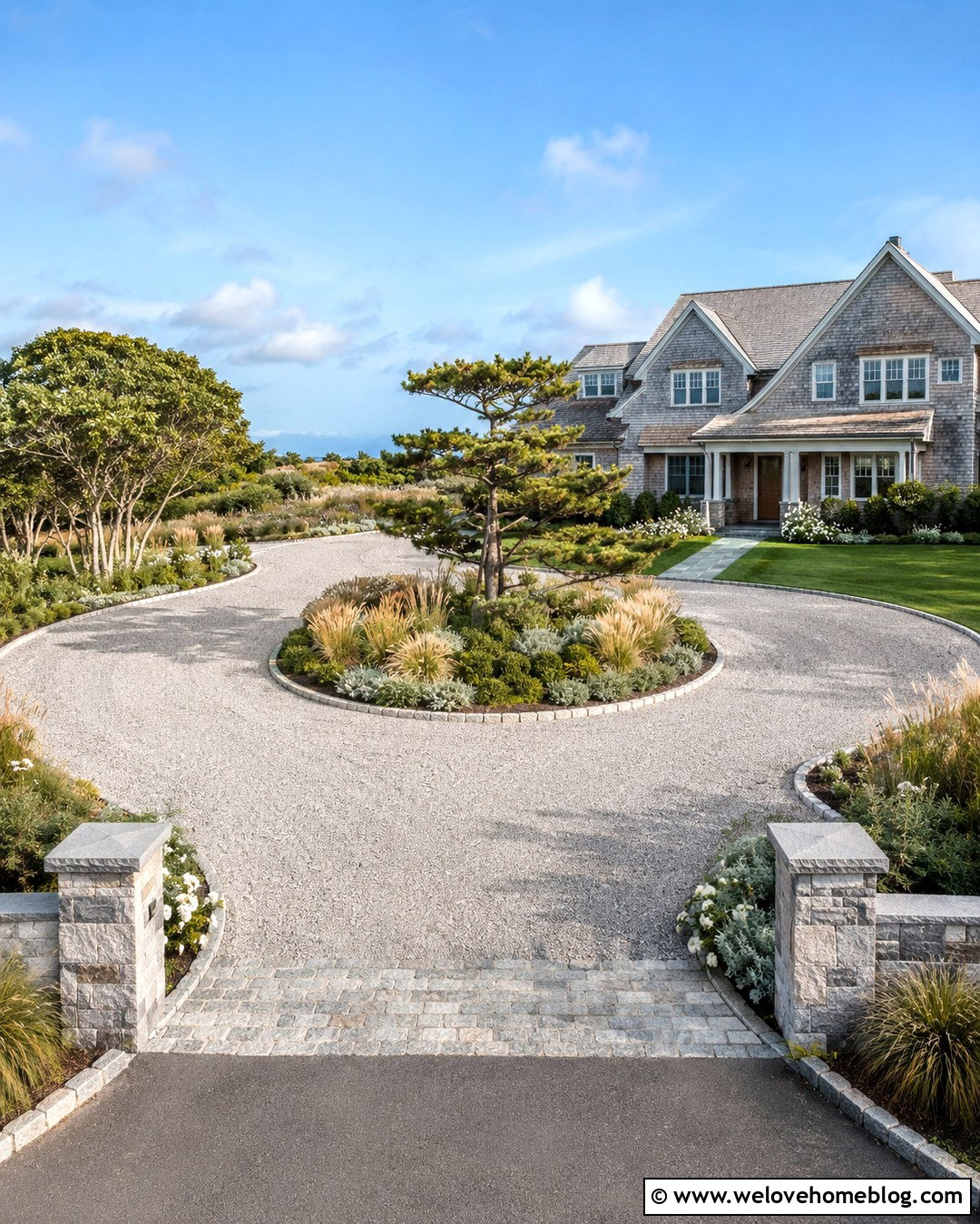
Pale gravel, airy grasses, and weathered details create a relaxed coastal version of the circular driveway. Use stabilized light-gray granite gravel rather than an overly loose surface, then define the loop with reclaimed granite blocks. Fill the center island with salt-tolerant ornamental grasses, low evergreen shrubs, and a wind-shaped ornamental tree suited to the region. Along the outer curves, repeat grasses in wider drifts and leave open lawn between planting groups. A short boardwalk-style path or large bluestone slabs can connect the driveway to a shingle-sided house. Keep the palette cool and natural, using silvery foliage, blue-green plants, and soft white flowers. The complete entrance should feel breezy and informal while maintaining clearly controlled edges and transitions.
19. Circular Gravel Driveway With Low Landscape Lighting
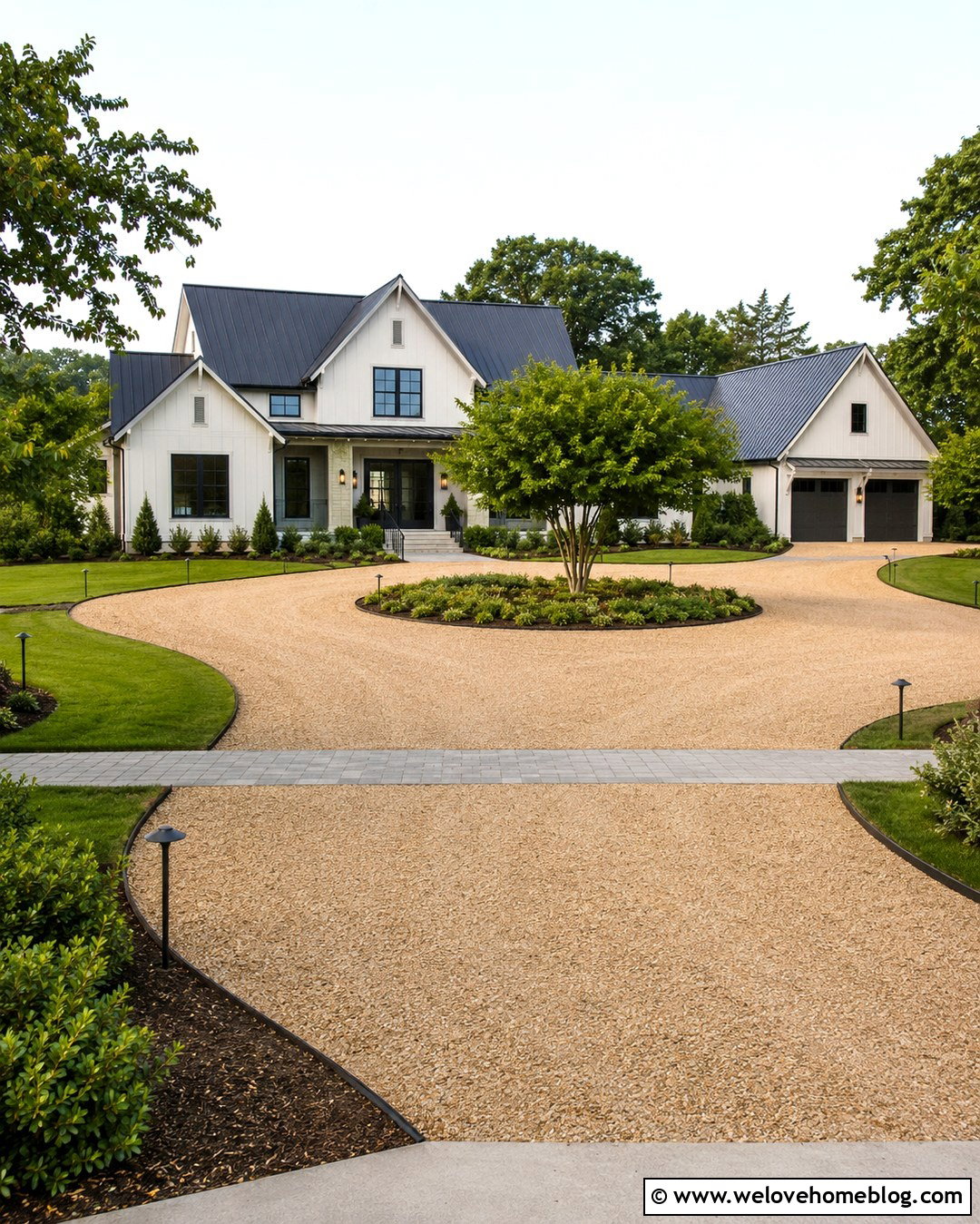
Well-placed lighting can define a circular driveway without turning the front yard into a line of oversized fixtures. Start with warm beige crushed gravel, dark metal edging, and a center island containing one ornamental tree with low planting beneath it. Install compact shielded path lights at key points along the outer curve, such as the entrances, walkway crossing, and approach to the house. Space fixtures generously rather than outlining every foot of the loop. Low uplighting within the island can highlight the tree while remaining hidden among the ground cover. During the day, the dark fixtures blend with the edging and window trim. This streamlined design works with modern farmhouse, transitional, and contemporary homes where attractive nighttime guidance should not compromise daytime curb appeal.
20. Circular Gravel Driveway With Flowering Tree Island
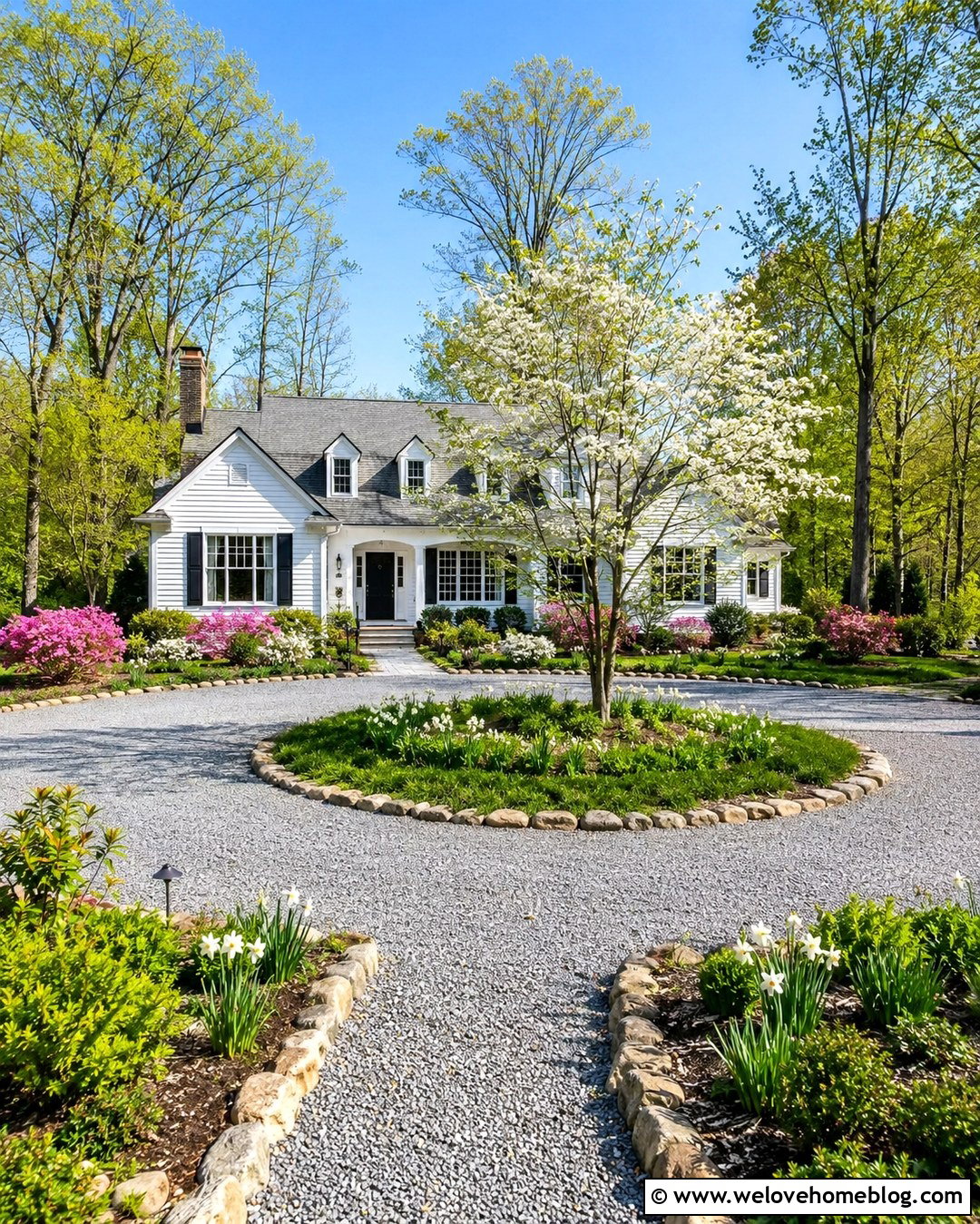
A single flowering tree can provide all the focal interest a circular gravel driveway needs. Select neutral gray crushed stone and shape the driveway into a balanced horseshoe with natural fieldstone edging. In the island, position a redbud, dogwood, magnolia, or another tree suited to the local climate and available space. Surround it with a broad bed of low ground cover and spring bulbs instead of competing shrubs. This keeps the tree visible and leaves open views beneath its canopy. Continue the fieldstone around nearby foundation beds and use the same gray gravel for a short garden path. The restrained palette suits cottages, bungalows, and traditional homes, allowing seasonal flowers and the architecture to stand out against a calm, practical driveway surface.
Conclusion:
The best circular gravel driveway feels like a natural extension of the home and front yard. Start with a gravel color that complements the facade, then select edging strong enough to define the curves and contain the surface. Plan the center island as a focal point, but keep plants clear of important sightlines and turning areas. Walkways, entrance aprons, lighting, and garage connections should also fit into the overall layout rather than appearing added later. From formal boxwood circles to relaxed native planting, these **20 Circular Gravel Driveway Ideas** show how varied the same basic shape can become. Thoughtful materials and balanced landscaping can turn an everyday vehicle route into a memorable, welcoming entrance.

Related posts:
Leave a Reply