
A well-designed driveway bridge can turn a necessary creek, swale, or drainage crossing into a memorable part of your home’s entrance. These 30 Driveway Bridge Ideas explore complete looks that combine structural form, driveway material, railings, abutments, planting, lighting, and architecture. Options range from rustic timber crossings and stone-faced culverts to modern steel spans and elegant concrete bridges. Before selecting a design, have the site evaluated for water flow, soil conditions, vehicle loads, bridge width, and emergency access. Local permits and professional engineering may also be required, especially when crossing an active stream or flood-prone channel. () Use the following 30 Driveway Bridge Ideas to create a safe, practical entrance with lasting curb appeal.
1. Stone Driveway Bridge With Arched Openings
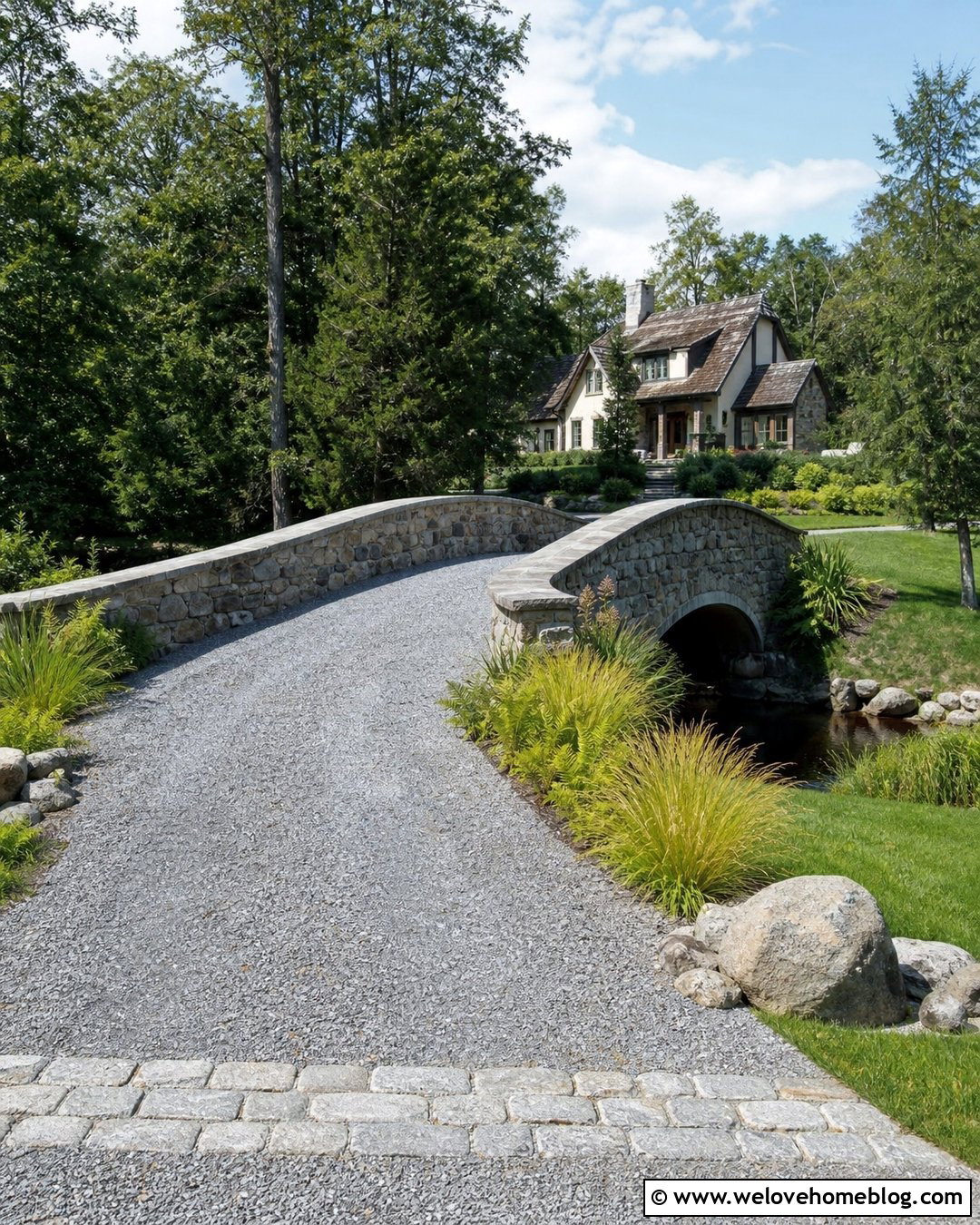
An arched stone driveway bridge gives a country property a substantial, established entrance. Cover the driving surface with compacted gray gravel or exposed aggregate concrete so it coordinates with the natural stonework below. A shallow arch can frame a small creek, while matching stone parapets define both sides of the crossing. Continue those walls slightly beyond the bridge to make the approach feel intentional. Low ornamental grasses, ferns, and moisture-tolerant shrubs help connect the masonry to the stream banks. For a wider property, curve the driveway gently before and after the bridge. Choose stone colors already present on the house, retaining walls, or landscape. This creates visual continuity instead of making the bridge look like a separate feature.
2. Timber Driveway Bridge With Wood Railings
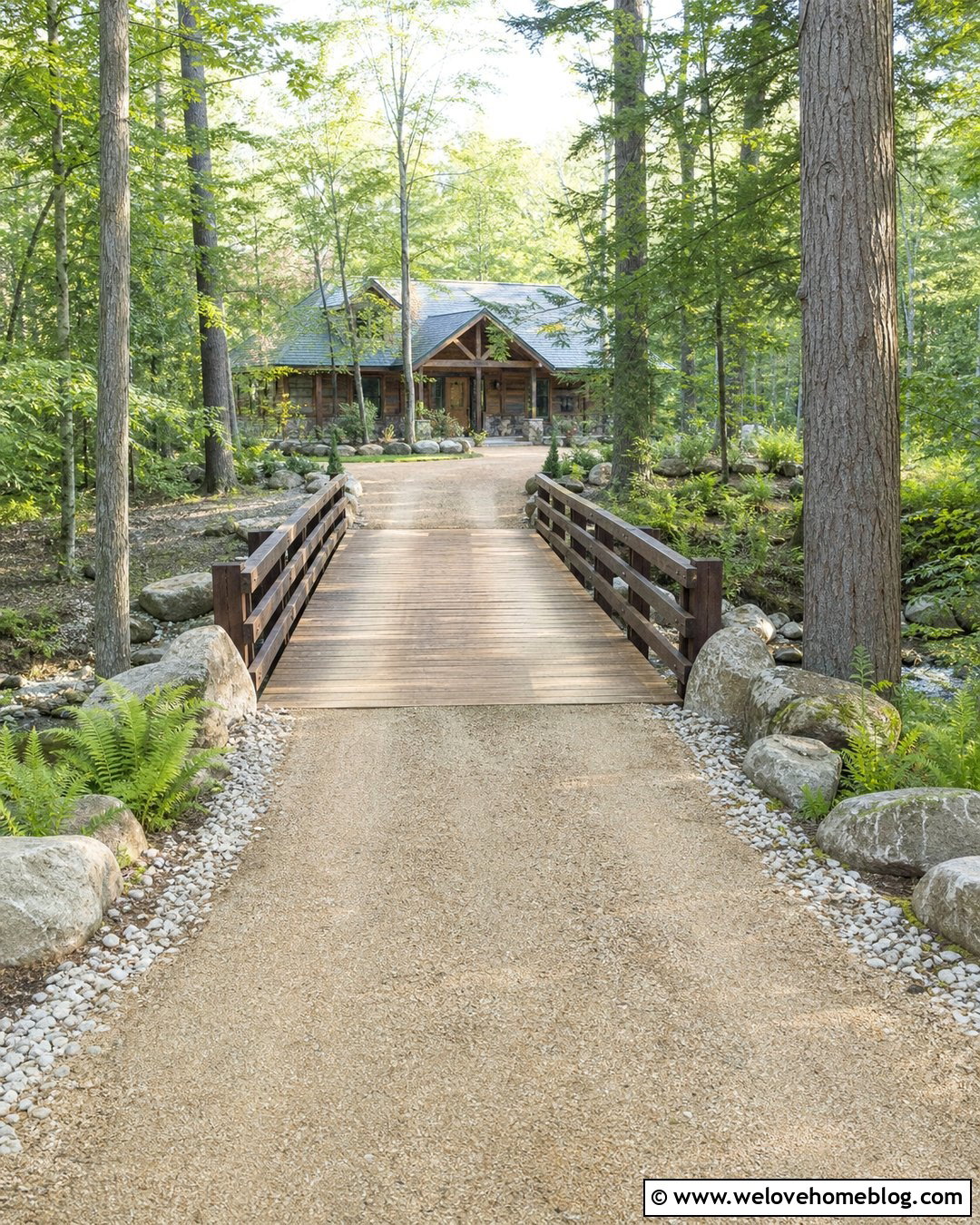
Warm timber gives a driveway bridge a relaxed look that works especially well beside cabins, ranch homes, and wooded properties. Use engineered structural beams beneath a durable timber deck, then add simple horizontal wood railings that keep the crossing visually open. A straight gravel driveway can transition onto the bridge through broad crushed-stone approaches. Large boulders placed around the abutments help stabilize the visual edges and blend the structure into the landscape. Plant native ferns, sedges, and shade-tolerant ground covers along the water without crowding the opening. Dark brown stain creates a traditional appearance, while a weathered gray finish feels more understated. Keep the railing pattern clean so the entire bridge remains practical, natural, and easy to maintain.
3. Modern Steel Driveway Bridge With Cable Railings
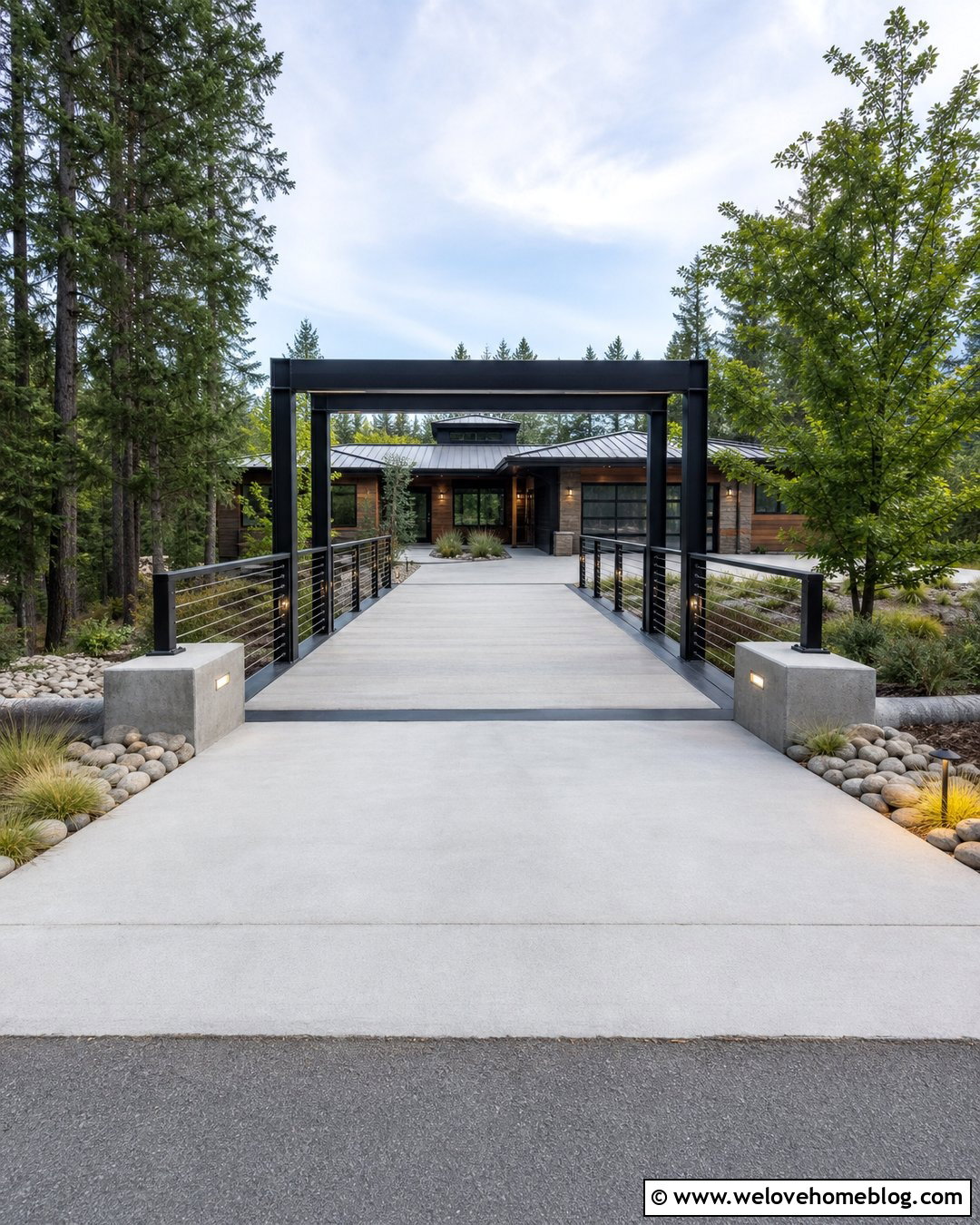
Clean steel beams and slender cable railings can transform a simple crossing into a modern architectural entrance. Pair the structure with a smooth gray concrete driveway that runs straight toward a contemporary house. Black powder-coated steel creates a sharp frame without overwhelming the creek or surrounding yard. Horizontal stainless-steel cables preserve open views and make the bridge feel wider. Use poured concrete abutments with crisp edges, then soften them with layered grasses, low evergreens, and river rock. Recessed lighting can be integrated into the railing posts or low approach walls. Keep the planting palette restrained and repeat materials from the home’s facade. The finished driveway bridge should feel structurally confident but visually light, with every detail aligned and uncluttered.
4. Concrete Driveway Bridge With Stone Veneer
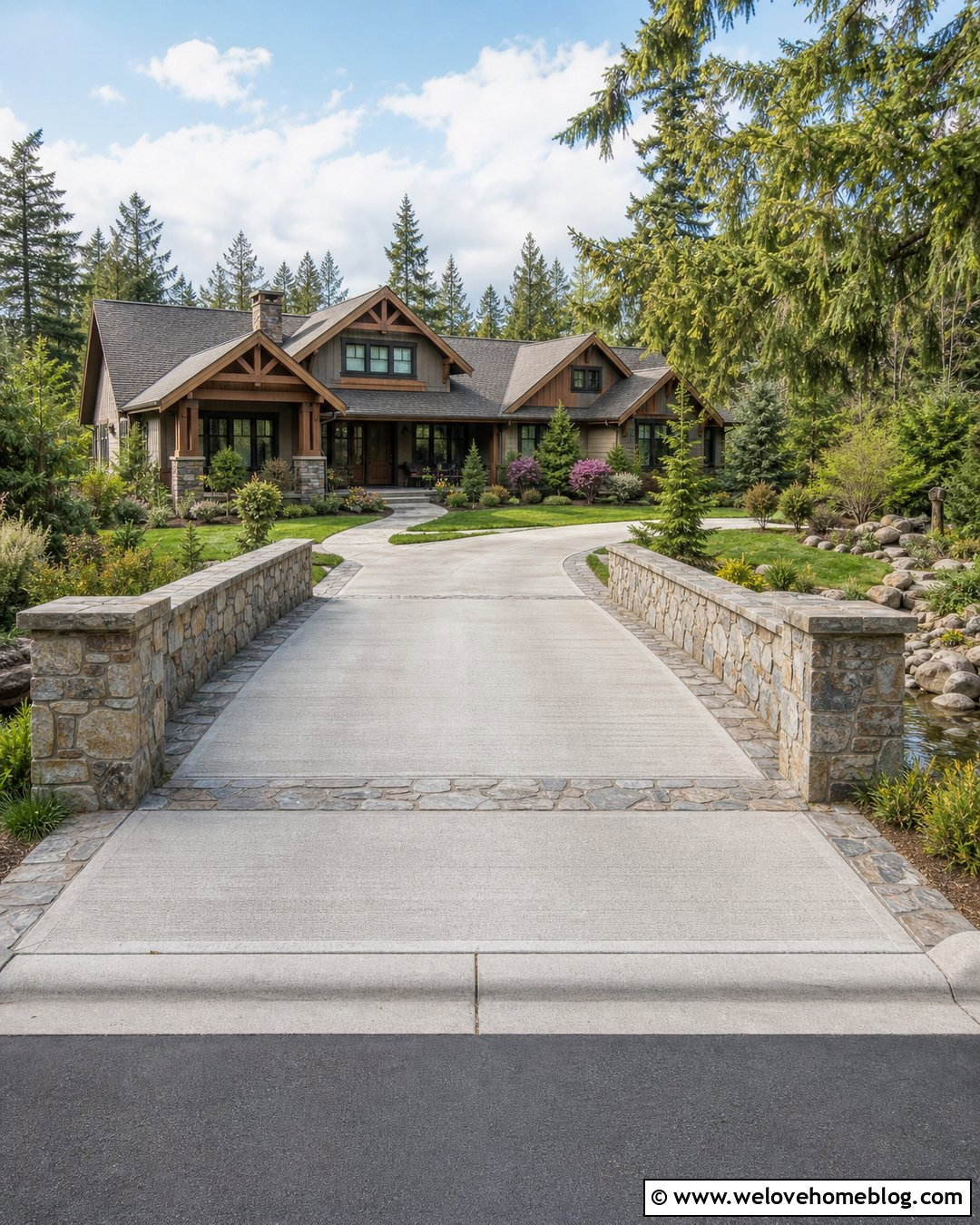
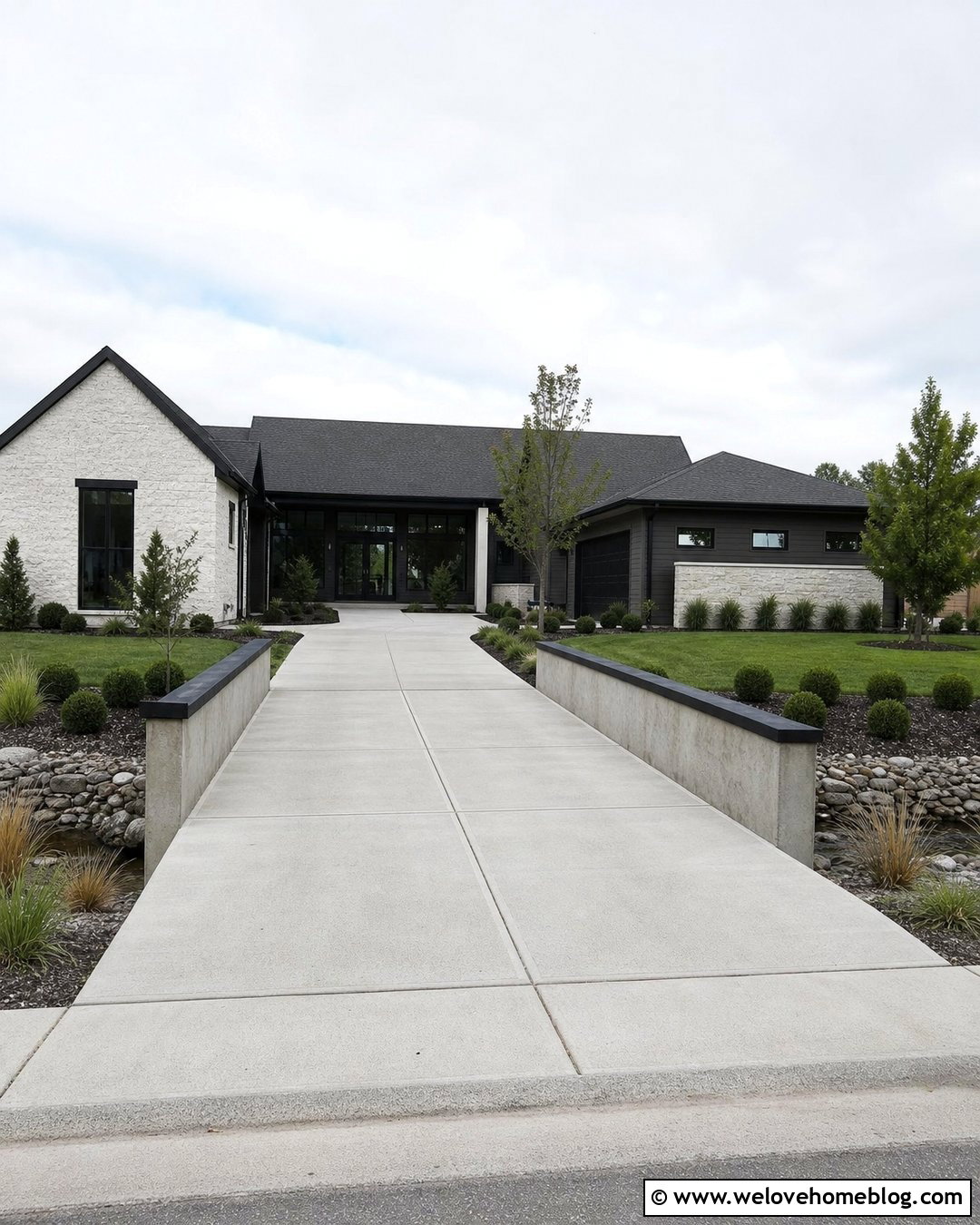
A reinforced concrete bridge can provide a clean driving surface while stone veneer adds residential character. This combination suits a wide range of homes because the visible finish can be matched to brick, siding, or existing hardscape. Use broom-finished concrete across the bridge for traction, followed by low parapet walls faced with irregular fieldstone. The approach may be asphalt, concrete, or pavers, but a stone ribbon at each transition will make the materials feel connected. Add spreading evergreens and flowering shrubs near the ends while leaving the drainage channel open. If the bridge crosses a deep ditch, extend the stone facing over the abutments. This disguises exposed structural concrete and creates a polished, cohesive entrance from the street.
5. Covered Driveway Bridge With Metal Roofing
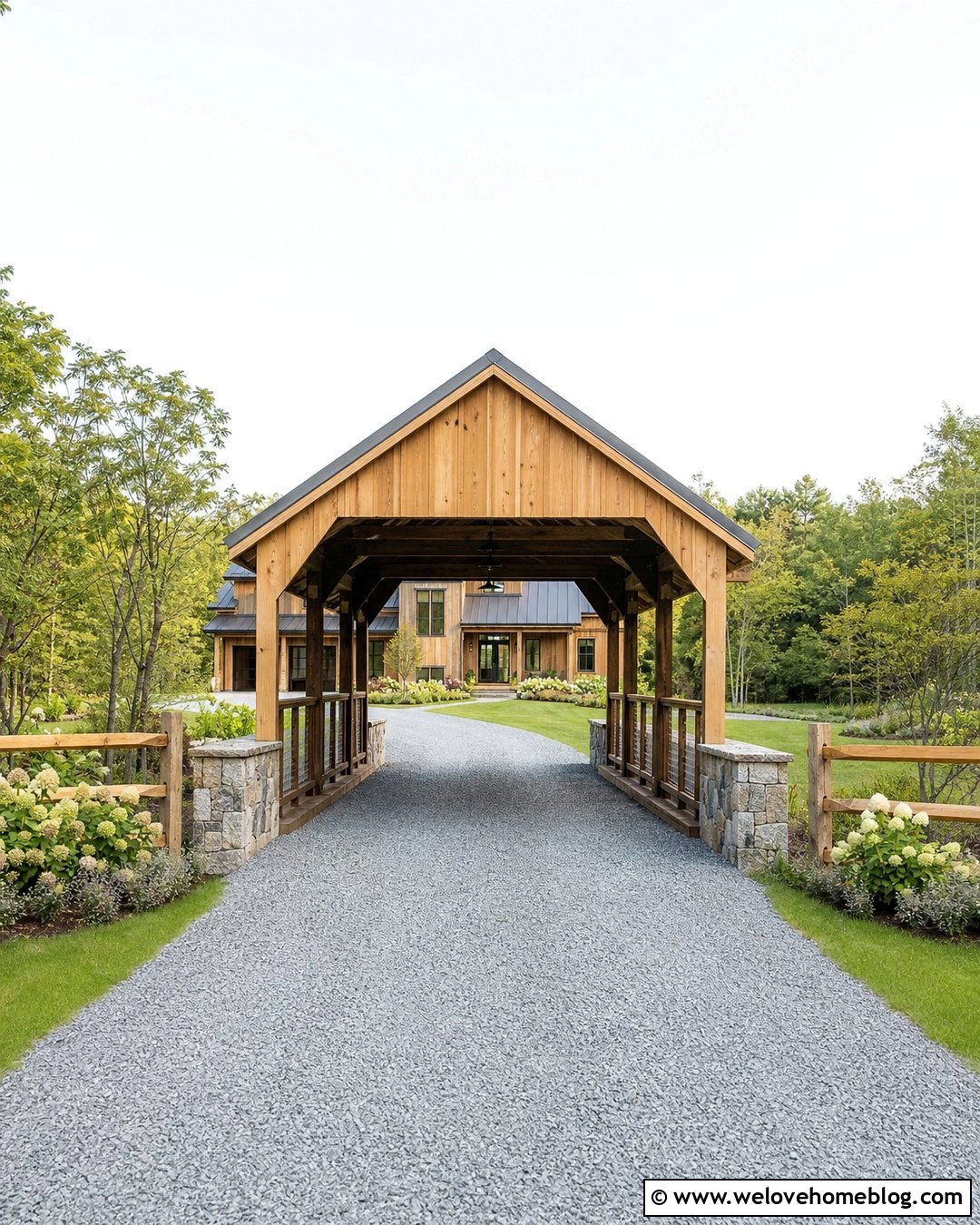
A covered driveway bridge can make a large rural entrance feel distinctive while protecting the deck from direct sun and precipitation. Use a timber frame with an engineered driving surface, open side panels, and a lightweight standing-seam metal roof. Dark red siding creates a traditional covered-bridge appearance, while natural cedar or charcoal boards feel more contemporary. Continue a compacted gravel driveway through the structure so the transition remains simple. Stone abutments, native trees, and broad grass shoulders help the bridge settle into the landscape. Include generous interior clearance, bright daytime visibility, and an opening wide enough for expected vehicles. Repeat the roofing material on the house, barn, or entrance gate to make the bridge part of a unified property design.
6. Brick Driveway Bridge With Low Parapet Walls
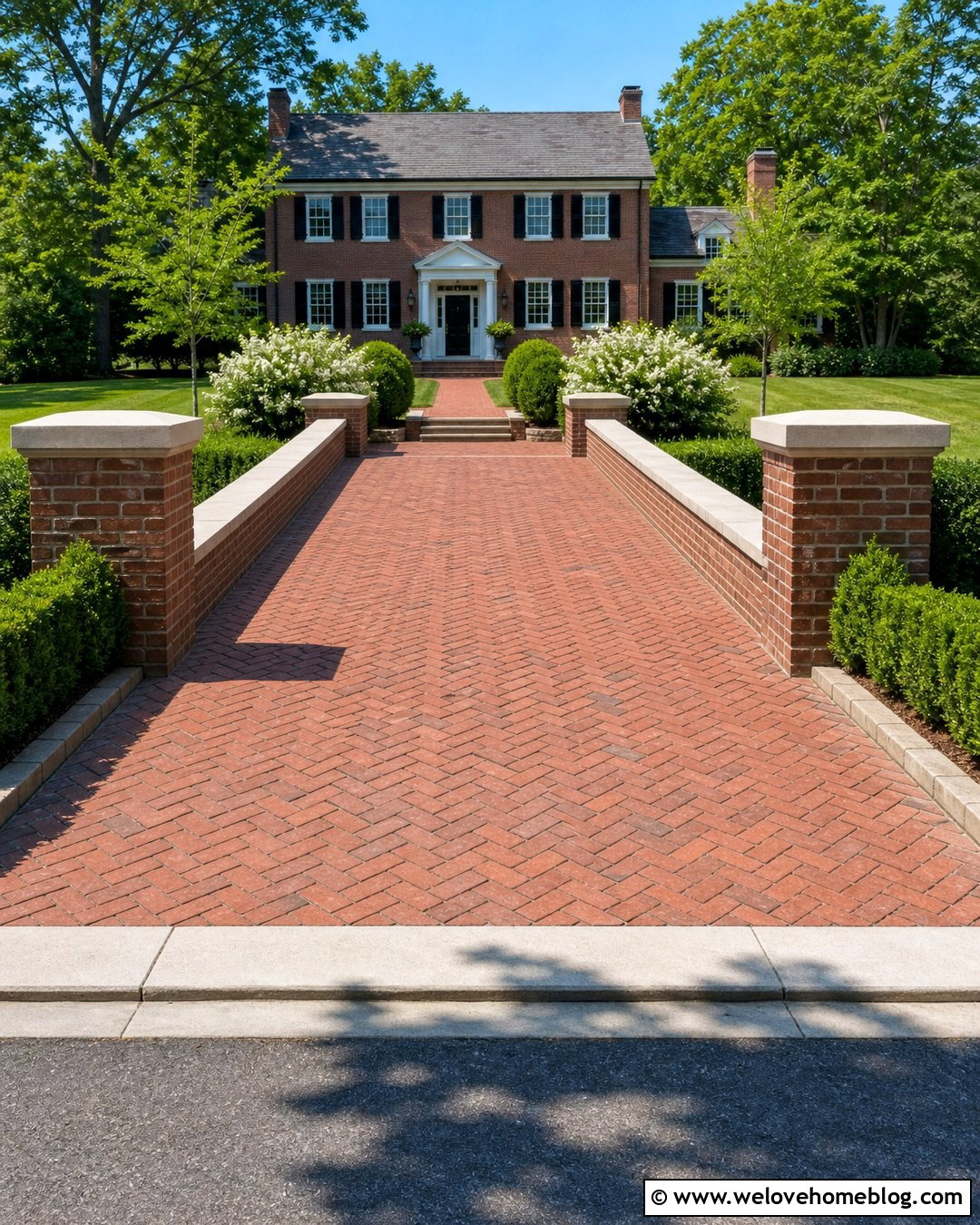
Brick creates a welcoming driveway bridge that pairs naturally with Colonial, Georgian, and traditional homes. Use clay brick pavers in a herringbone pattern across the driving surface, supported by a properly engineered bridge structure beneath. Low brick parapet walls can frame the crossing without blocking views of the front yard. Cap the walls with smooth limestone or precast concrete to protect the masonry and create a finished edge. Continue a narrow brick ribbon along the driveway approaches for visual consistency. Neatly trimmed boxwoods, lawn, and white flowering shrubs reinforce the formal appearance. Slightly flared bridge entrances will make turning easier and give the structure more presence. Select brick tones that complement the house rather than matching every facade color exactly.
7. Cobblestone Driveway Bridge Over a Creek
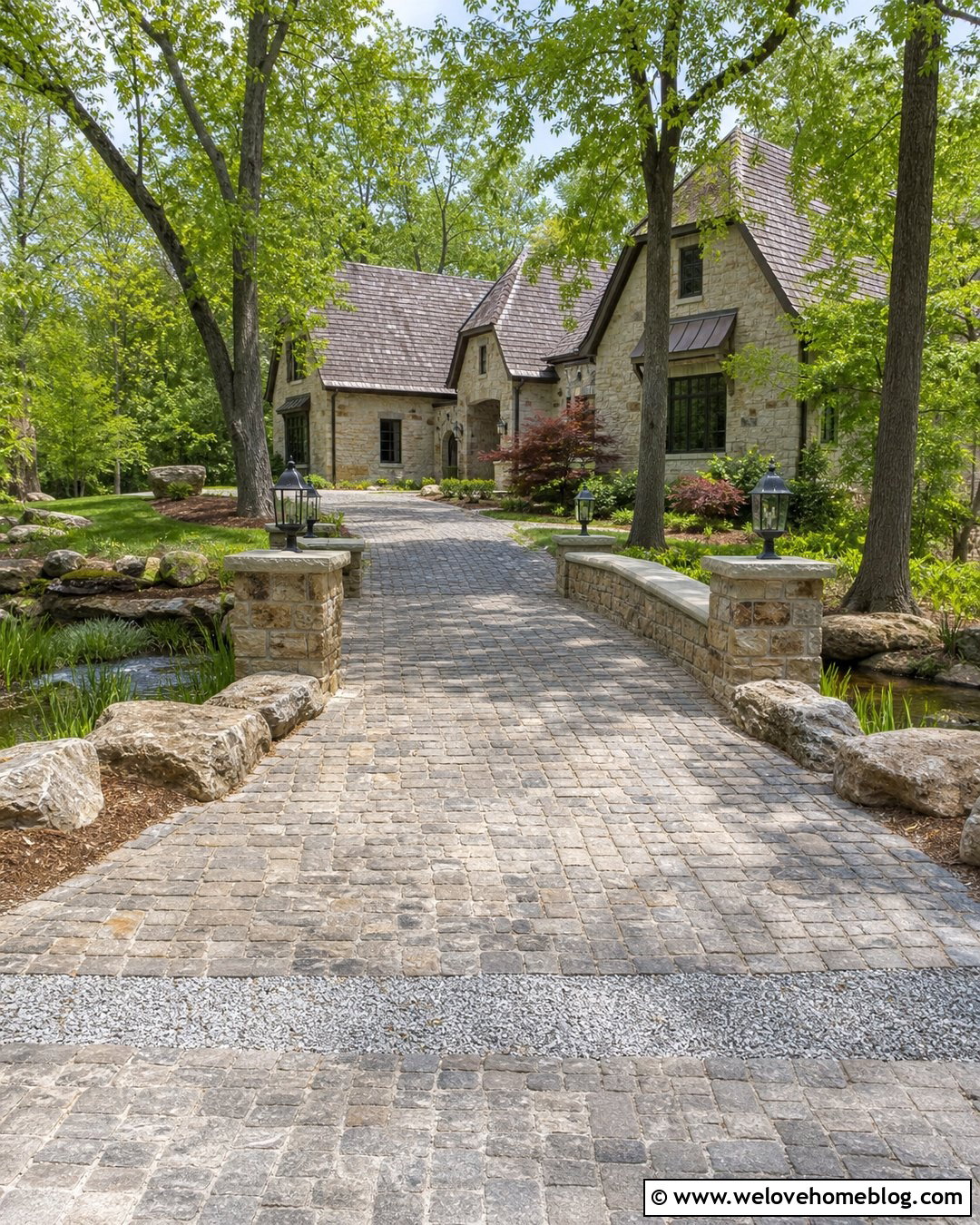
Cobblestone works beautifully when the goal is an old-world driveway bridge with visible texture. Lay gray and brown cobblestone across a gently crowned crossing, then frame it with thick stone parapets or low masonry curbs. A curved approach creates a natural sense of arrival and reveals the bridge gradually from the road. Continue crushed stone or matching cobbles beyond the span, depending on the property’s budget and maintenance needs. Around the creek, use mossy boulders, native grasses, and shade trees to soften the construction. Small stone columns at each corner can support subtle lanterns or simple metal reflectors. Because cobblestone has a strong visual pattern, keep nearby planting relaxed. The result feels permanent, handcrafted, and connected to the landscape.
8. Farmhouse Driveway Bridge With White Railings
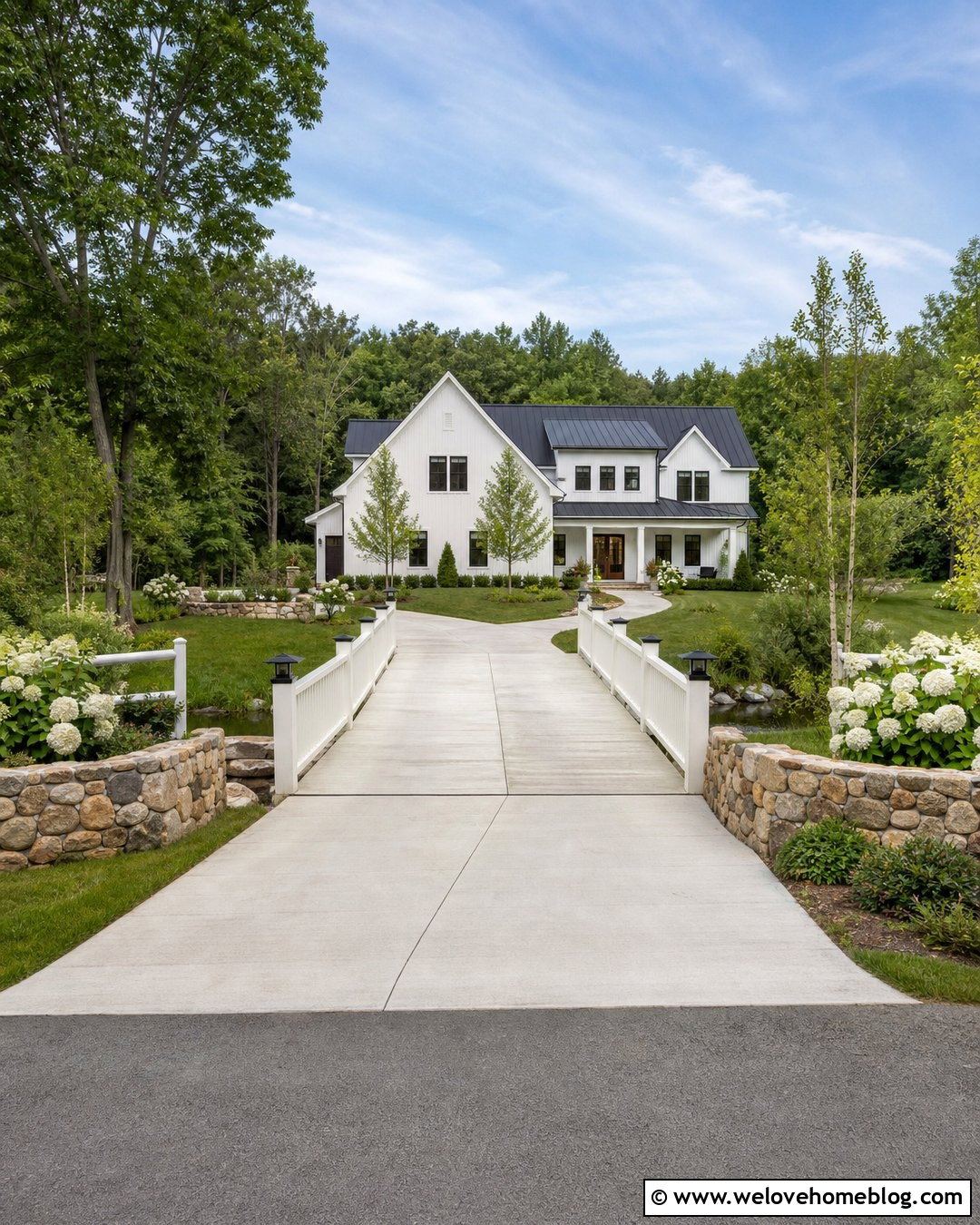
A white-railed driveway bridge offers a fresh farmhouse look without requiring an overly decorative structure. Begin with a light gray poured-concrete deck or a compacted limestone driveway. Add simple white vertical railings with slightly wider posts at the four corners. Black post caps, small lanterns, or understated reflectors can create contrast. Frame the approaches with split-rail fencing, hydrangeas, and clipped lawn, allowing the stream banks to remain more natural. A straight layout works well when the bridge aligns with the front porch, barn, or garage doors. For a stronger sense of entry, install short stone walls where the driveway meets the bridge. The combination of white rails, pale paving, and informal planting produces bright curb appeal suited to modern and traditional farmhouses.
9. Rustic Driveway Bridge With Boulder Abutments
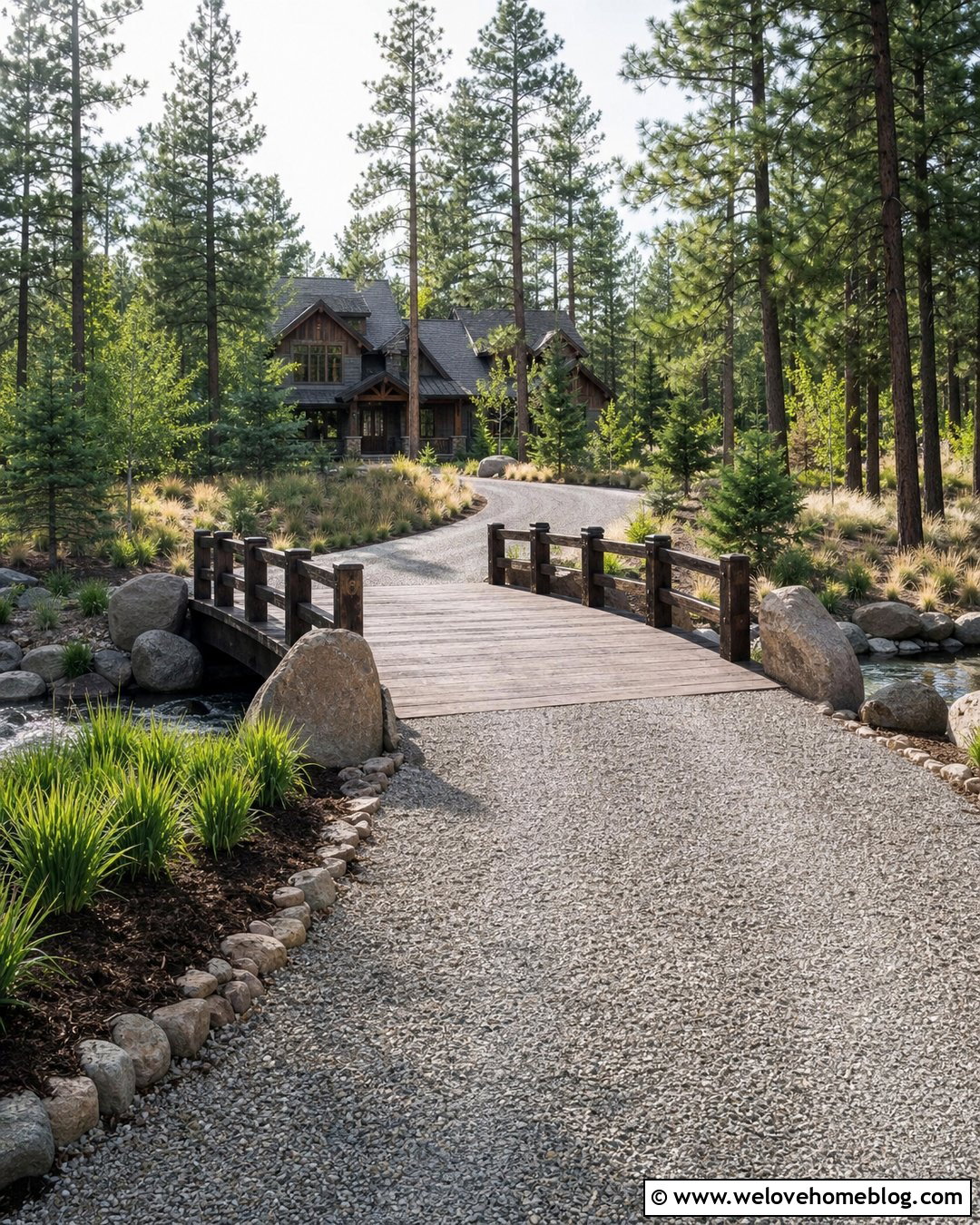
Large boulders can make a short driveway bridge appear naturally anchored within a rugged site. Use a brown timber deck or tan gravel surface supported by an engineered structure, then group native stones around each abutment. Avoid placing isolated rocks in straight lines. Instead, vary their size and partially settle them into the ground so they resemble the surrounding terrain. Heavy wood rails or low steel rails can provide definition without competing with the stone. Continue mixed gravel along the approach and edge it with smaller fieldstones. Native shrubs, meadow grasses, and existing trees should frame the crossing. This design works particularly well for mountain homes, cabins, and woodland retreats where formal brick or smooth concrete might look out of place.
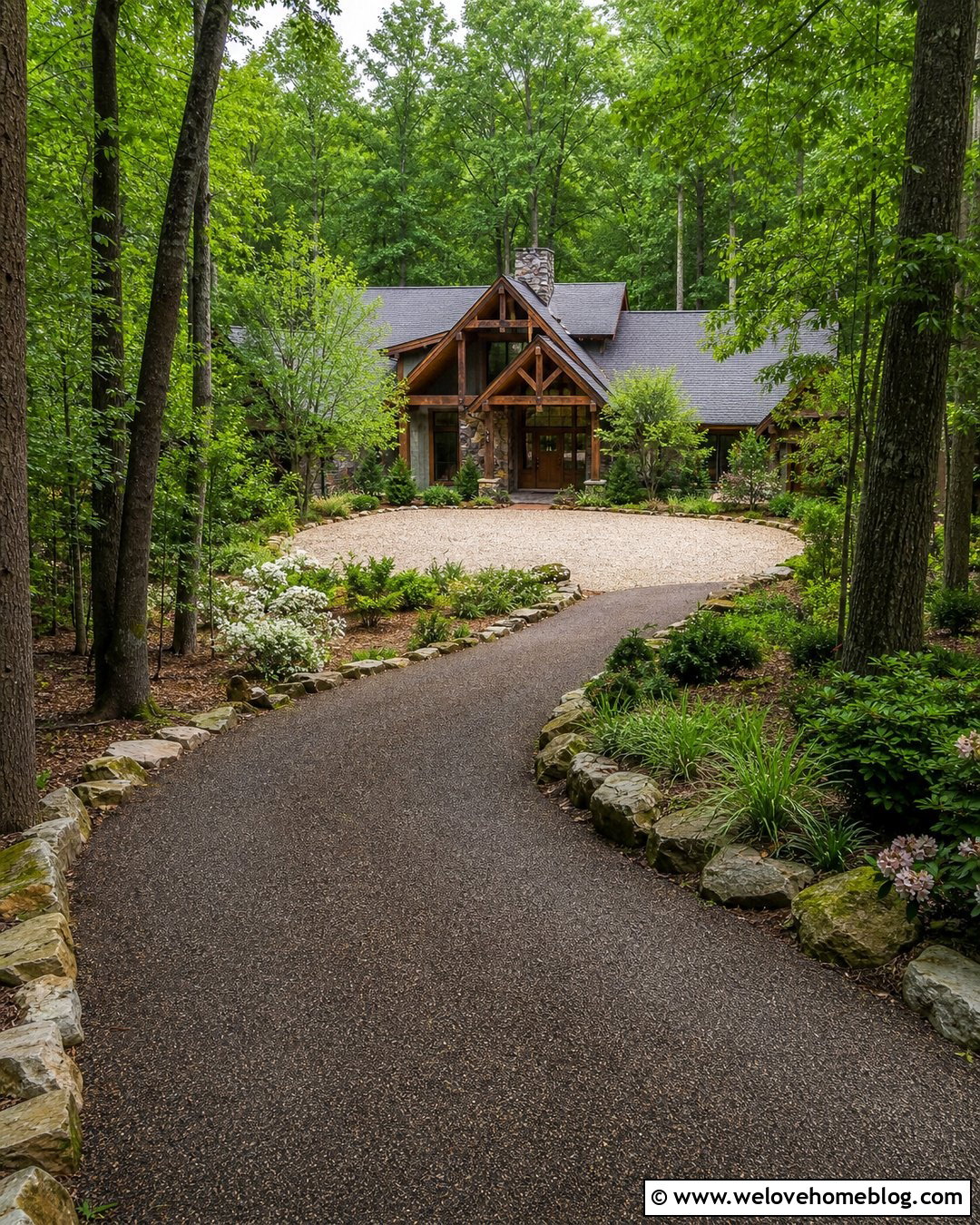
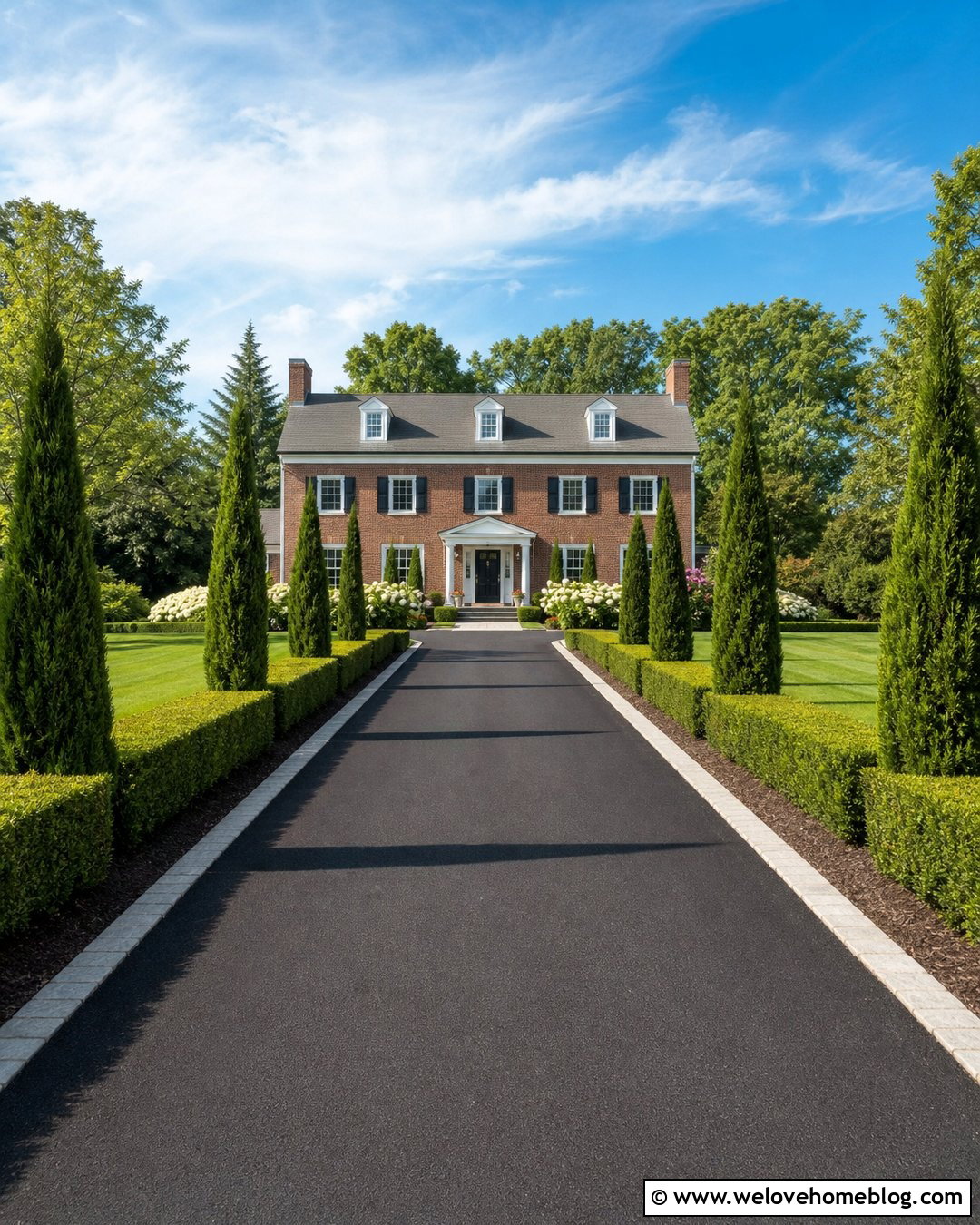
10. Black Asphalt Driveway Bridge With Metal Railings
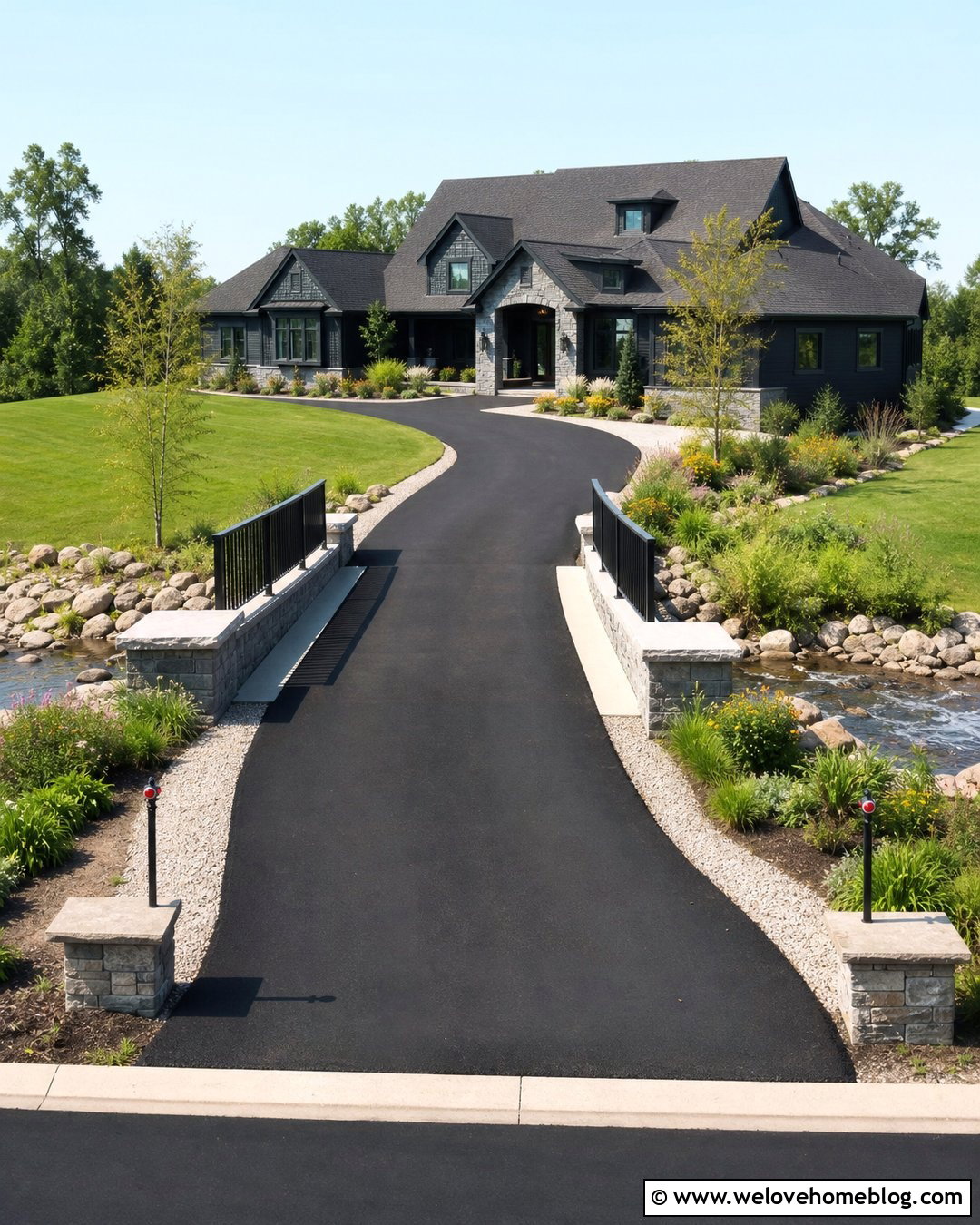
Black asphalt creates a smooth, continuous approach when the bridge connects to a long paved driveway. Keep the bridge surface level with the surrounding asphalt, then use black steel railings to maintain a consistent color palette. Vertical pickets offer a traditional appearance, while horizontal rails complement modern homes. Stone-faced abutments can keep the dark materials from feeling too industrial. Add pale gravel shoulders, ornamental grasses, and flowering perennials around the bridge ends for contrast. A gently curved approach helps slow vehicles before the crossing and improves the view of the railing design. Place low markers or shielded lights near each entrance rather than crowding the rails. This practical combination suits suburban properties, wooded lots, and homes with dark roofing or trim.
11. Gravel Driveway Bridge With Timber Curbs
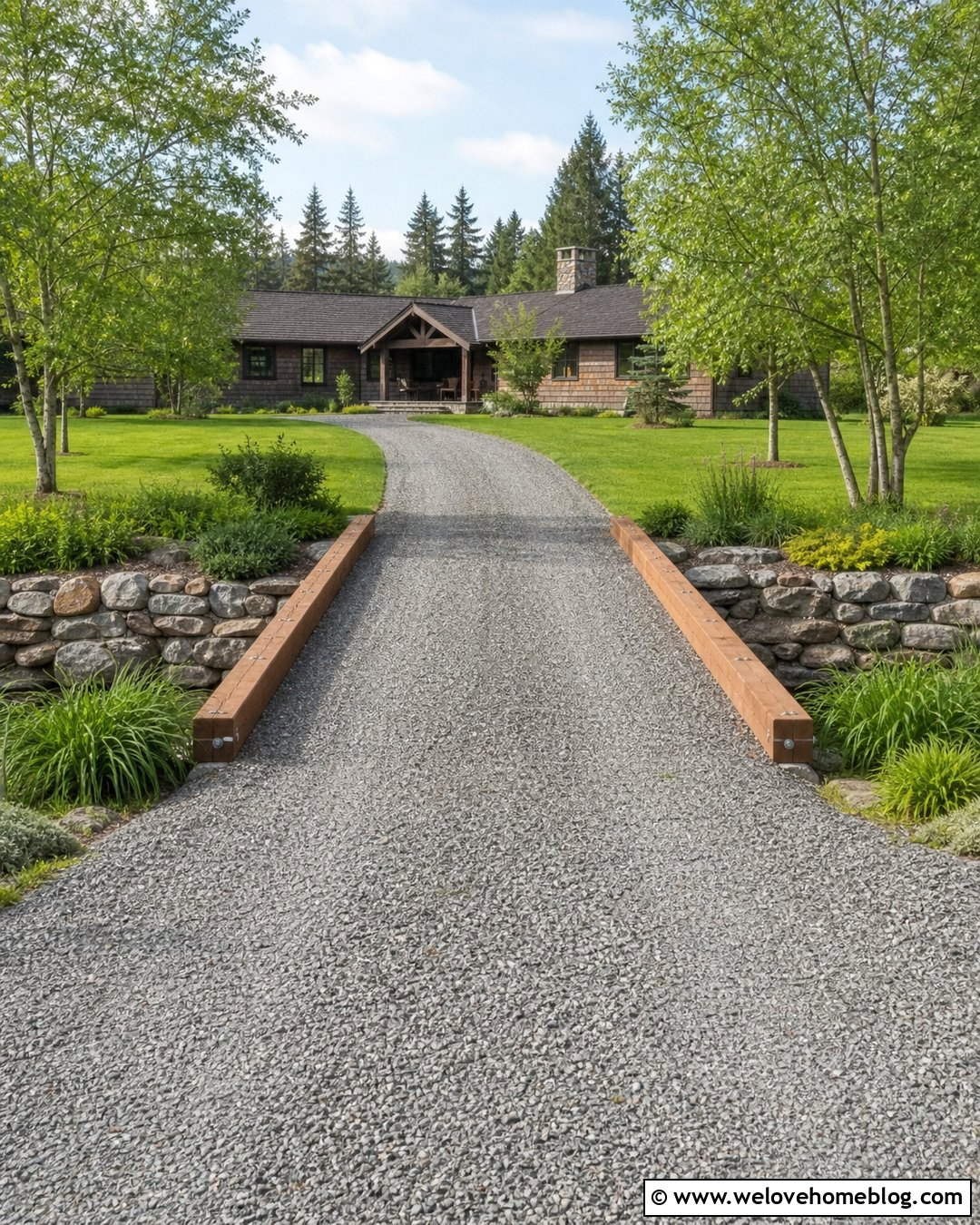
A gravel driveway can cross a narrow drainage channel without losing its casual, rural character. Use well-compacted crushed gray stone across the engineered bridge deck and install substantial timber curbs along both edges. The curbs clearly mark the usable width while remaining lower and less visually dominant than full railings. Continue the same gravel along straight or gently curved approaches to create one uninterrupted surface. At the abutments, use stacked fieldstone and erosion-resistant planting to finish the banks. Native grasses, creeping ground covers, and low shrubs help filter runoff while maintaining open sightlines. This driveway bridge works well for farms, cabins, and large country lots. Choose angular crushed aggregate rather than loose decorative pebbles where stability and regular vehicle use are priorities.
12. Driveway Bridge With Wrought Iron Railings
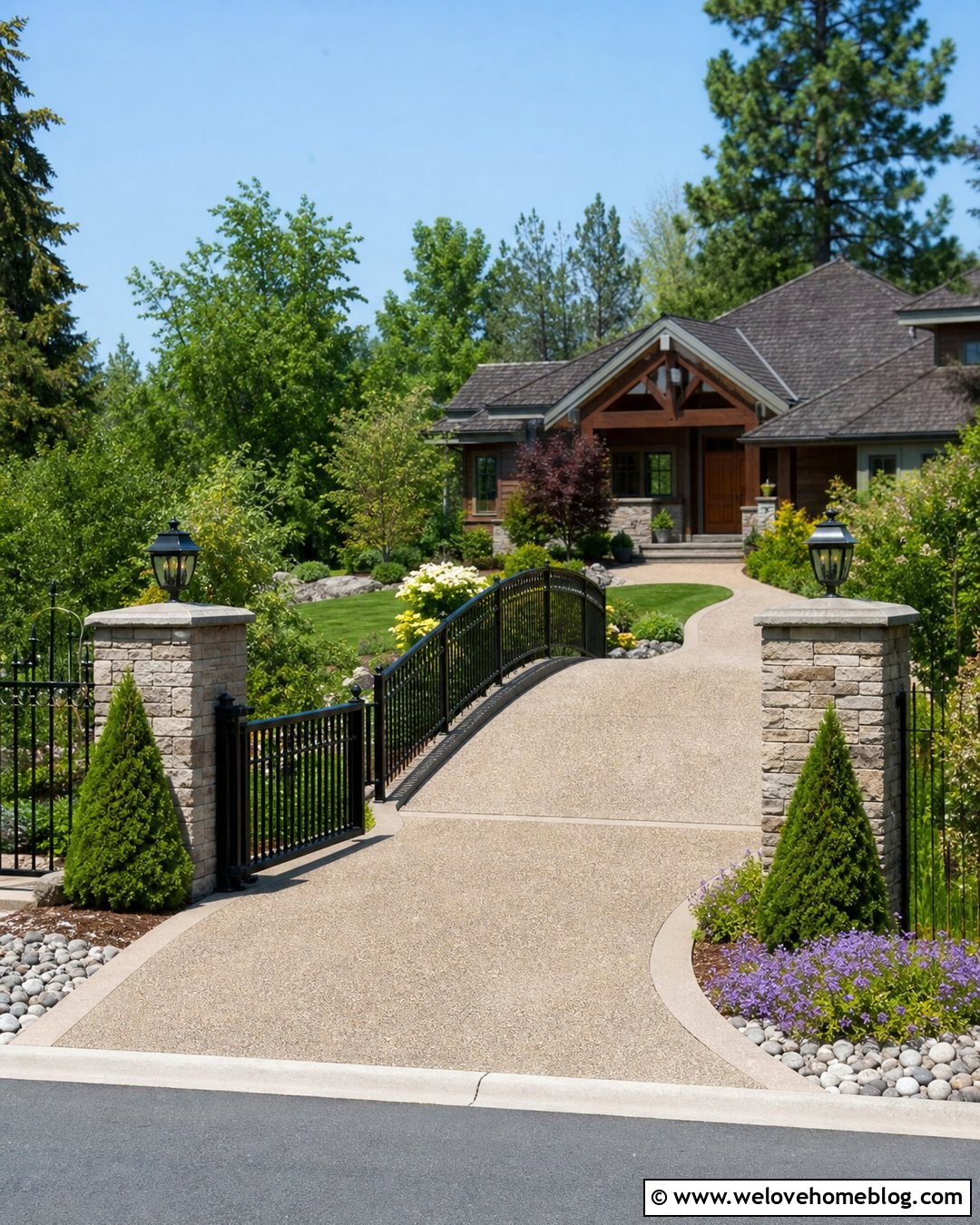
Decorative wrought iron can give a driveway bridge a refined appearance without hiding the creek below. Pair black railings with a warm brick-paver or exposed aggregate concrete surface. A shallow arch in the top rail introduces traditional character, while evenly spaced vertical pickets keep the design orderly. Build stone or brick pillars at each end to create sturdy visual anchors. The approach can be straight for a formal home or gently curved for a larger landscaped estate. Use clipped evergreen shrubs near the pillars and softer perennials closer to the water. Avoid excessive ornament when the house already has detailed masonry or trim. Repeating the same ironwork on a nearby pedestrian gate or porch railing will help the crossing feel integrated with the property.
13. Driveway Bridge With Stone Pillars and Lanterns
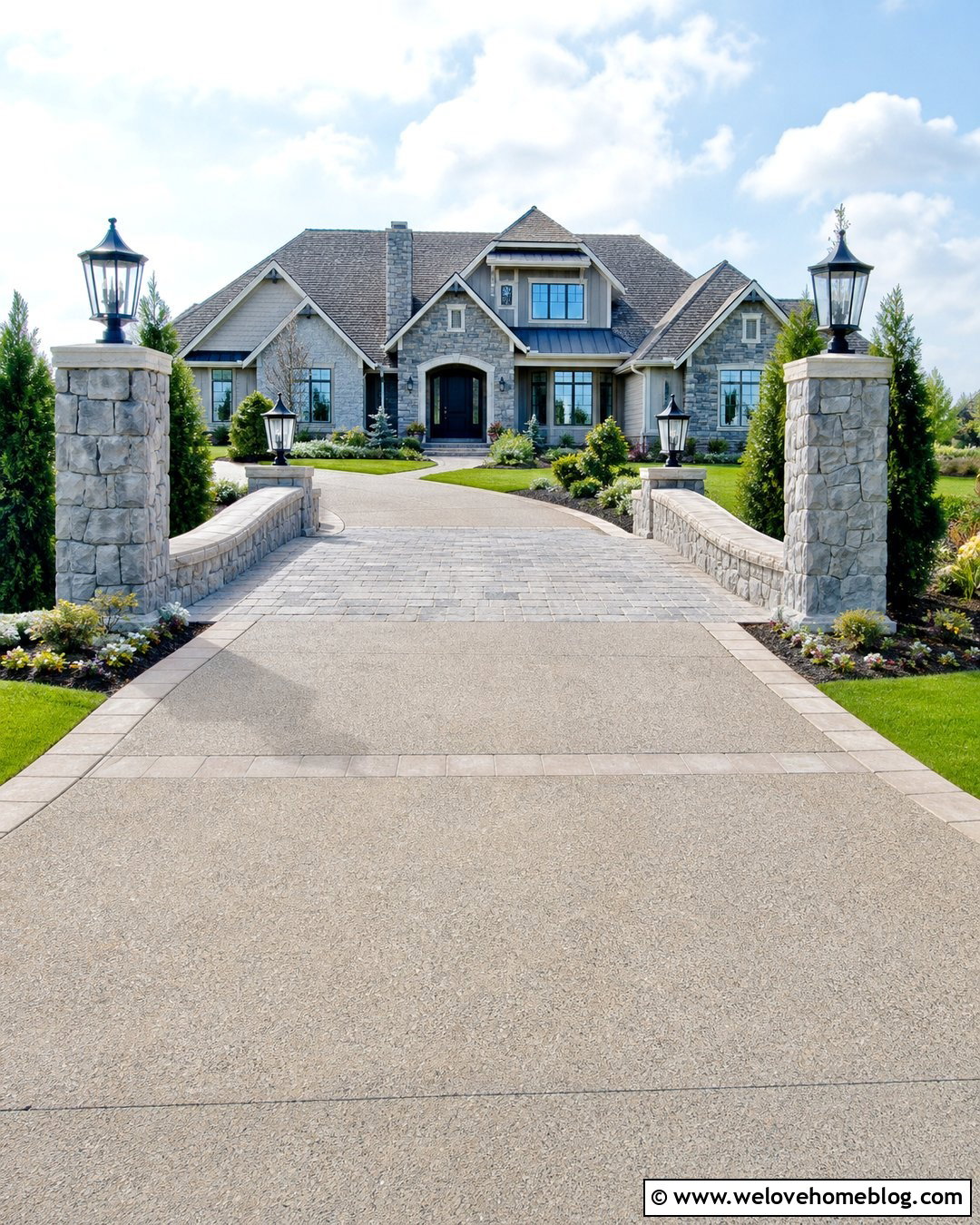
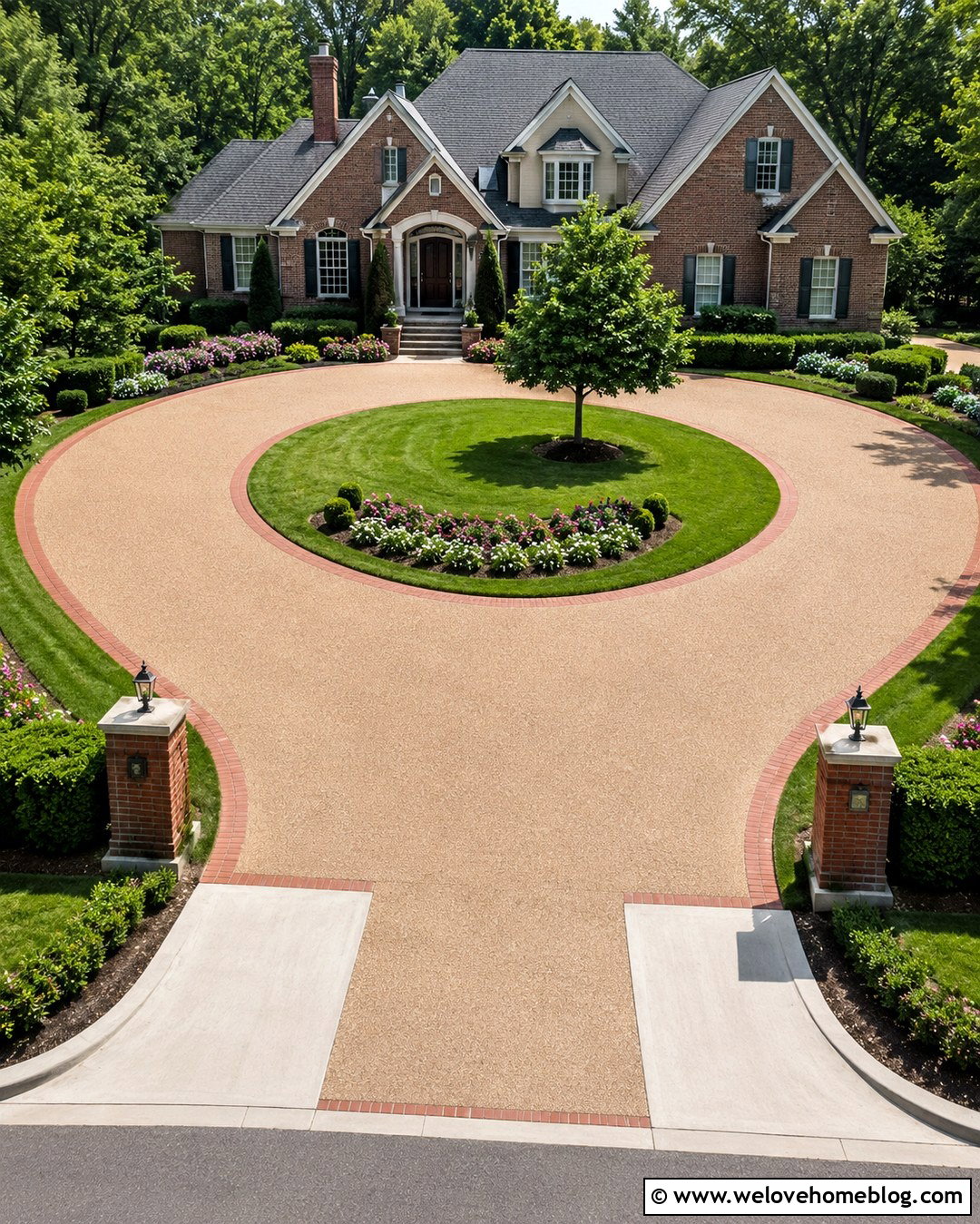
Stone pillars can turn an ordinary driveway bridge into a clearly defined property entrance. Position one pillar at each corner and connect them with low parapet walls or simple metal railings. Use exposed aggregate concrete across the bridge so the surface offers subtle texture without competing with the masonry. Large black lanterns can sit on the inner pillars, while smaller caps finish the outer pair. Select stone that relates to the home’s foundation, chimney, or retaining walls. Layer low evergreens and flowering ground covers around the approaches, keeping mature plants away from the driving area. A slight flare at both ends makes the crossing appear generous. During daylight, the pillars frame the view toward the house and create a strong, balanced transition over the water.
14. Driveway Bridge With Horizontal Wood Railings
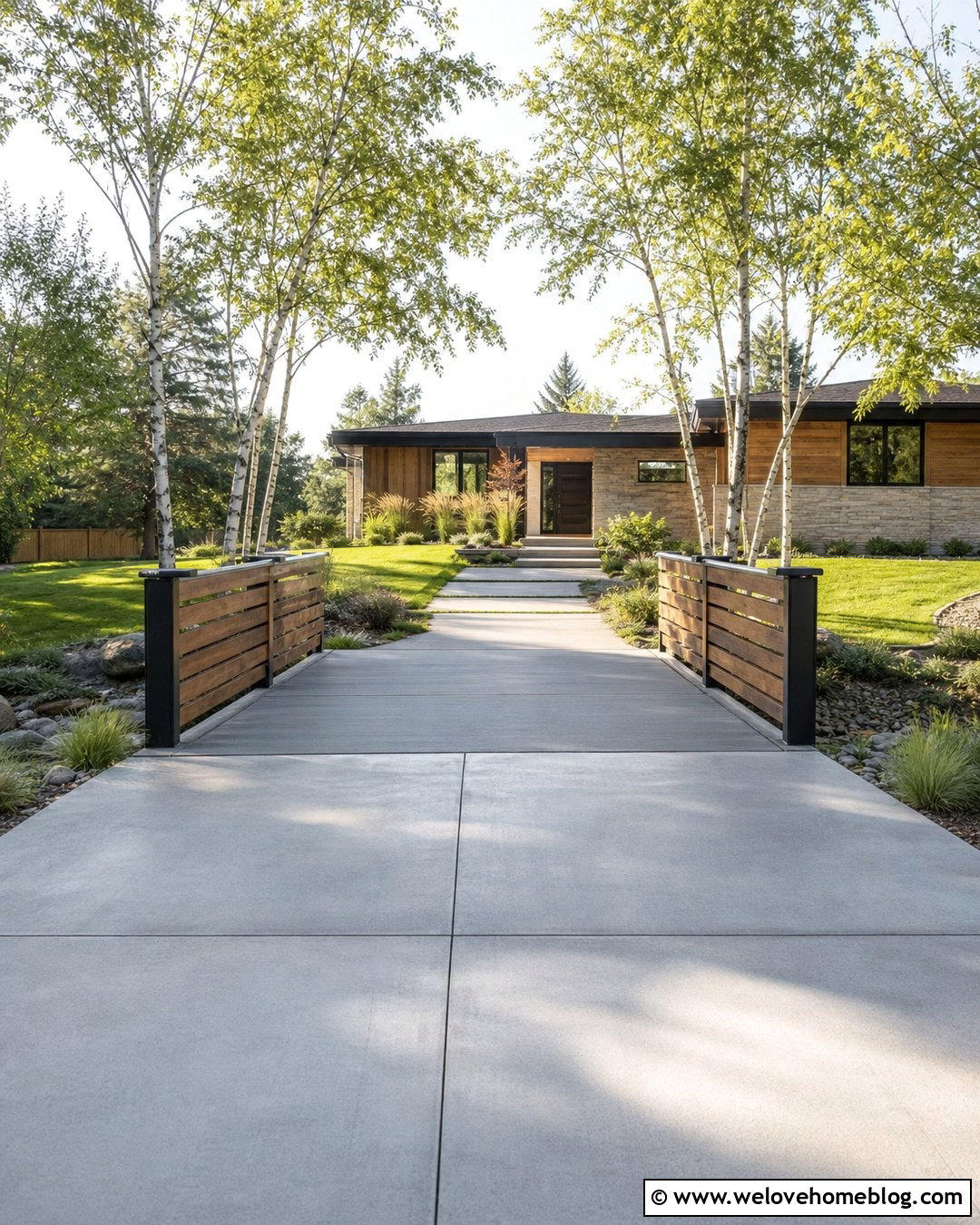
Horizontal wood railings bring a streamlined look to a driveway bridge while retaining the warmth of natural material. Use evenly spaced cedar or redwood boards secured to substantial posts, leaving enough open space to preserve views. Pair the railing with a smooth concrete deck or dark asphalt approach for modern contrast. A straight bridge leading to a contemporary ranch or midcentury home will reinforce the low horizontal lines. Plant ornamental grasses, low junipers, and river birches near the creek to echo the relaxed geometry. Black metal post caps can add a crisp finishing detail. Stain the wood in a medium brown or muted charcoal tone that complements the house. This complete look feels modern, approachable, and suitable for wooded or suburban residential settings.
15. Driveway Bridge With Arched Steel Railings
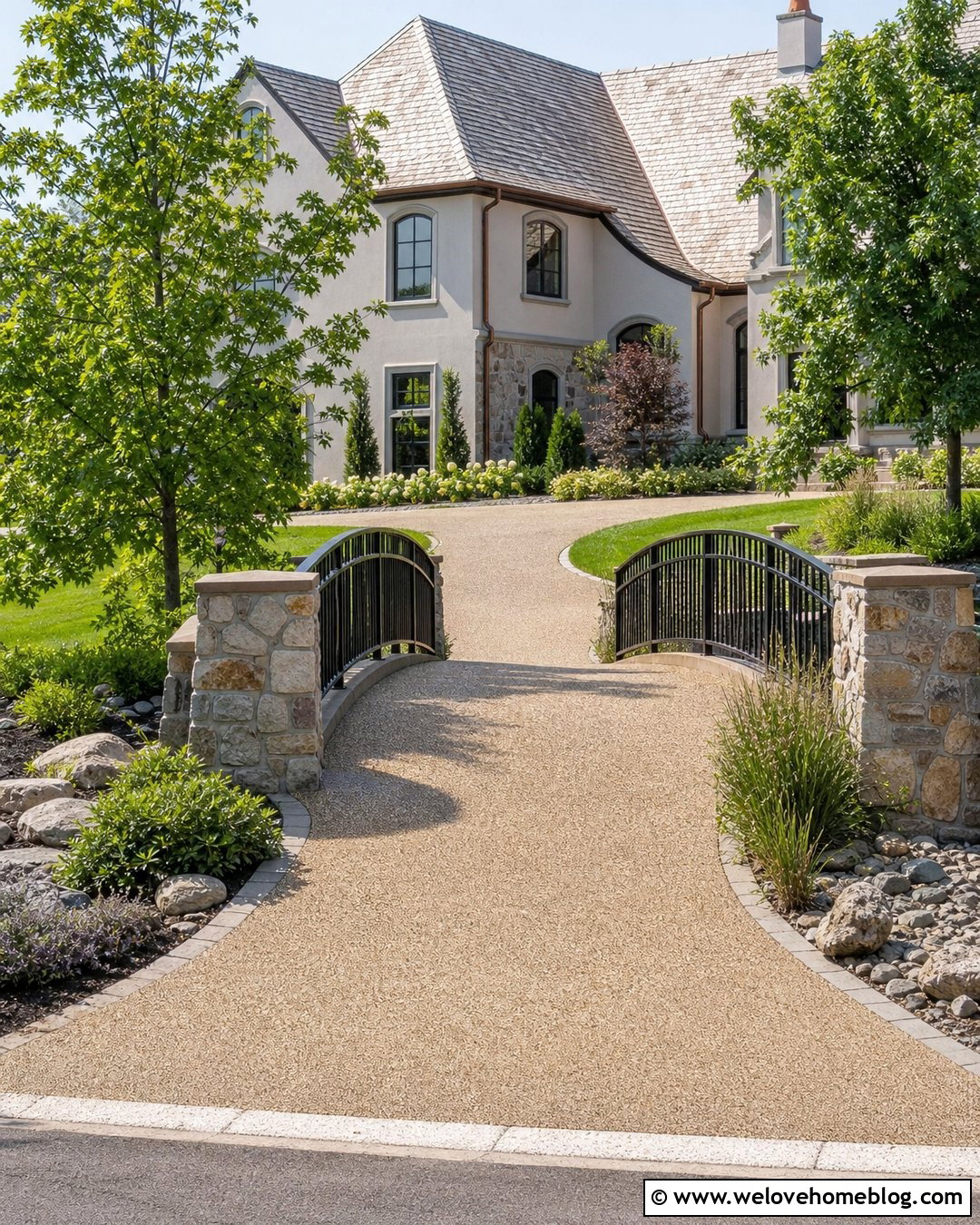
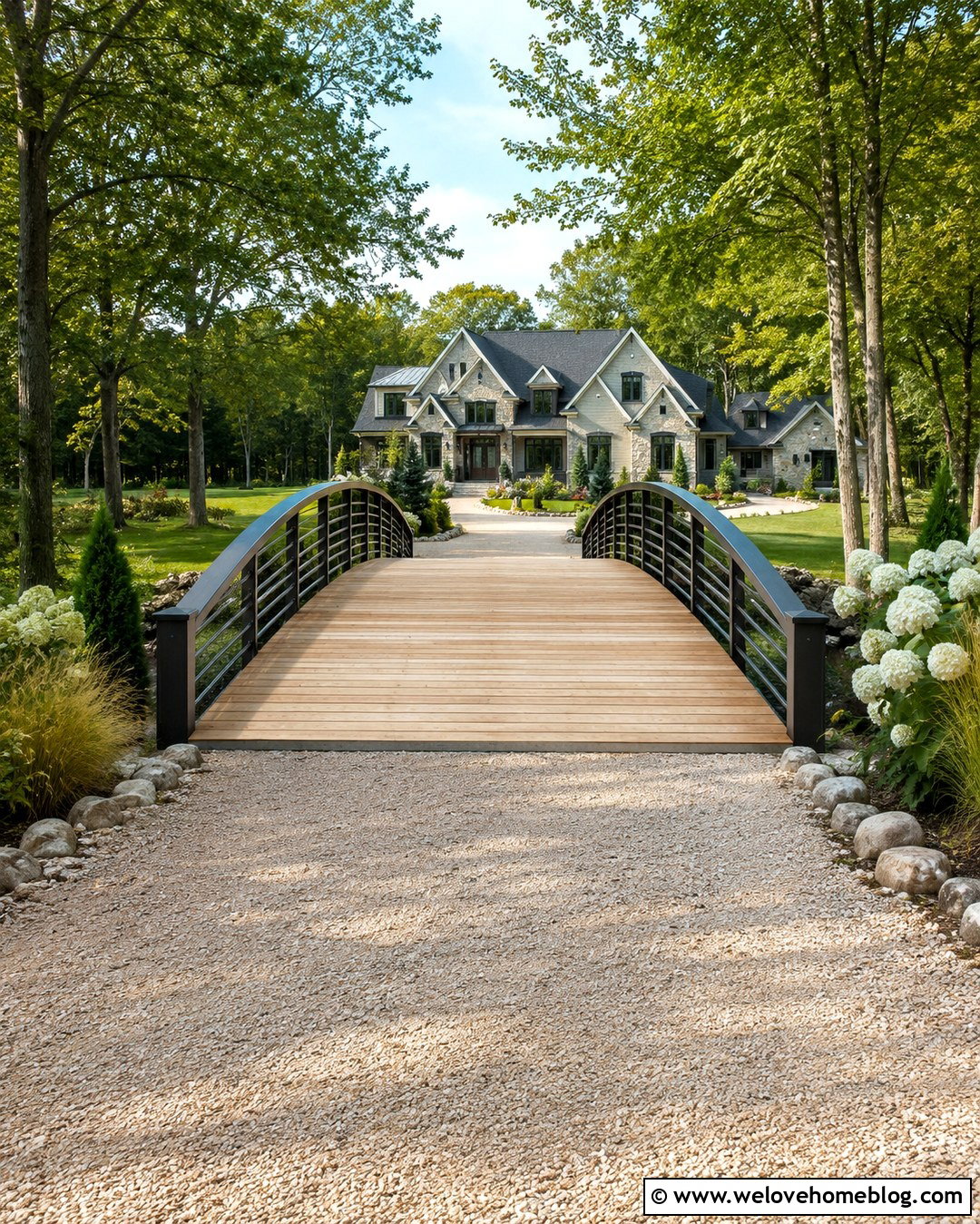
Arched steel railings can add graceful shape to a practical residential bridge. The rails may rise gently toward the center, visually echoing the opening or stream below. Pair them with a tan resin-bound gravel surface or light exposed aggregate concrete to create contrast against black steel. Stone-faced abutments will soften the metal and help the bridge connect to surrounding planting. Position upright grasses and compact shrubs near the approaches, but leave the center view open. If the driveway curves, align the railing sweep with the movement of the approach. Simple corner posts are usually more versatile than highly ornamental ones. The completed bridge works well with Craftsman, European-inspired, and transitional homes because it combines traditional curves with a clean, durable material palette.
16. Driveway Culvert Bridge With Stone Headwalls
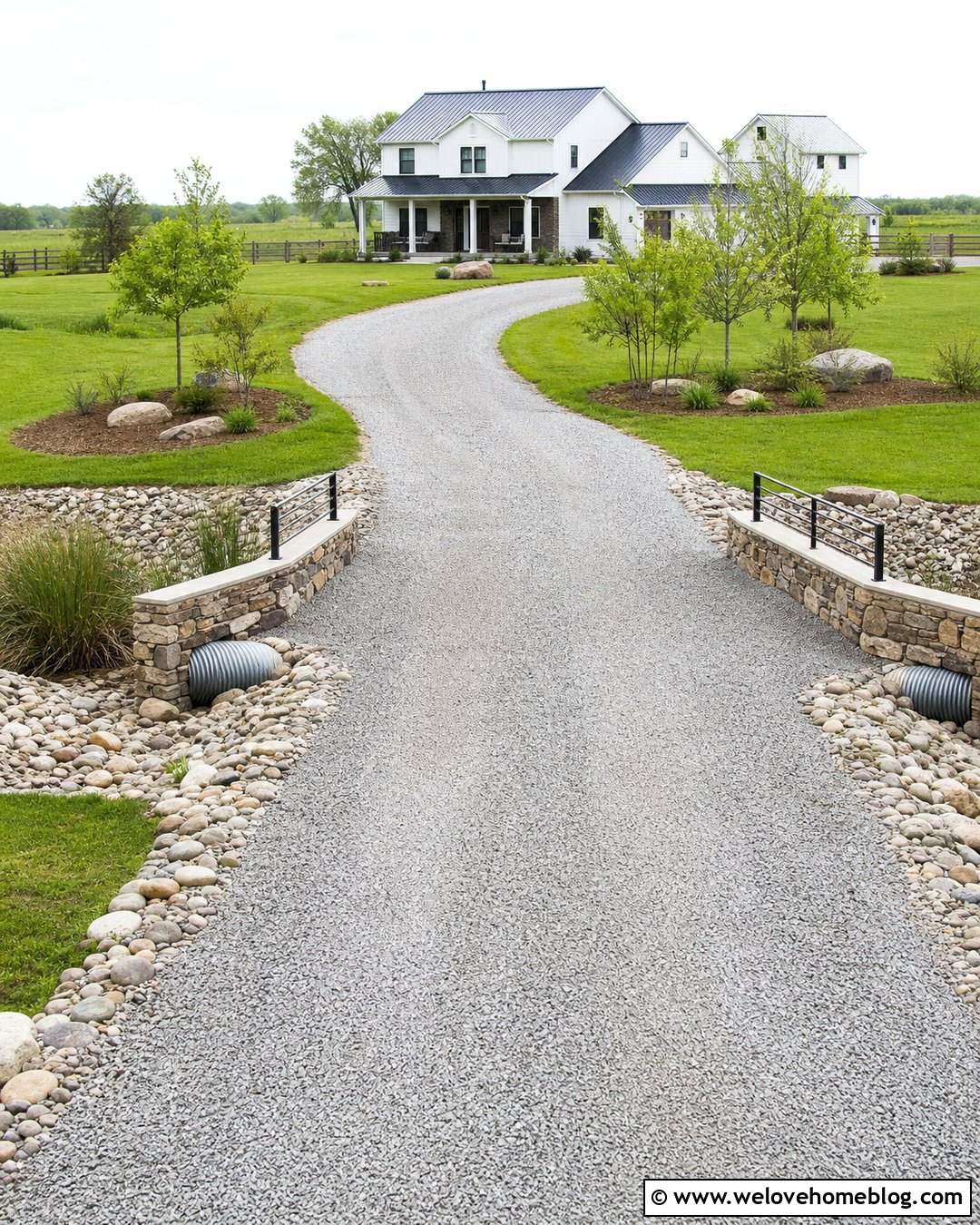
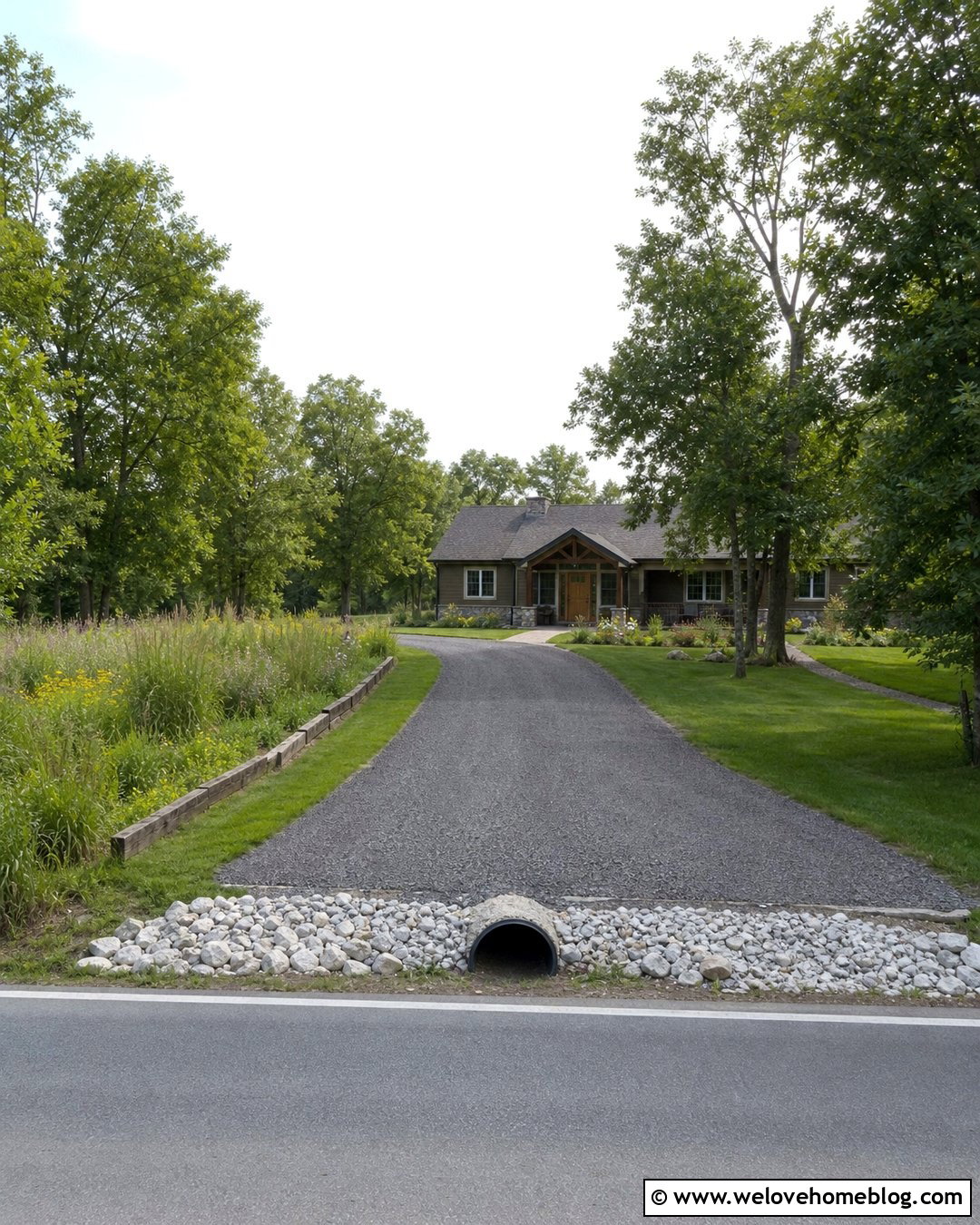
A culvert crossing can look like a finished bridge when the exposed ends are framed with well-designed stone headwalls. Cover the driveway with compacted gravel, asphalt, or concrete, then build stonework around each culvert opening to contain the embankment visually. Slightly curved wing walls can guide the eye outward and blend into the banks. Use larger stones near the base and smaller pieces toward the top for a grounded appearance. A low timber or metal railing may be added where the drop requires a defined edge. Finish the shoulders with river rock, moisture-tolerant grasses, and low native shrubs. Keep plants and decorative materials from restricting water movement. This solution is particularly suitable for shallow roadside ditches and modest residential drainage channels.
17. Driveway Bridge With Gabion Walls
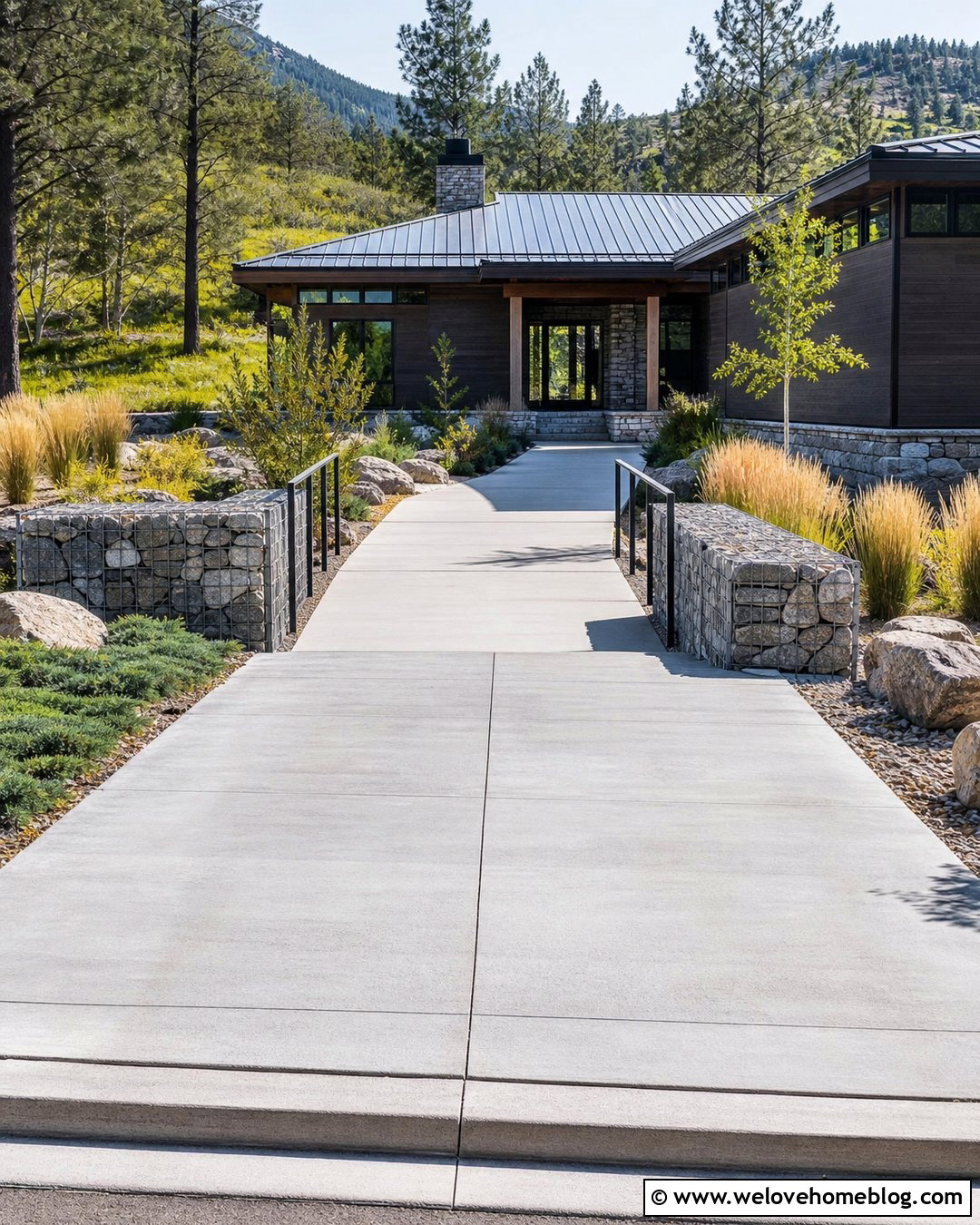
Gabion walls give a driveway bridge a modern, rugged finish while highlighting natural stone. Use galvanized or dark-coated wire baskets filled with angular local rock to form visible abutment faces or low side walls. Pair them with a gray poured-concrete bridge surface and simple black railings. The contrast between smooth paving, metal mesh, and irregular stone creates strong visual interest. Continue narrow bands of matching rock along the approaches so the gabions do not appear isolated. Ornamental grasses, creeping juniper, and native shrubs can soften the edges without covering the baskets. This complete look works particularly well beside contemporary homes, industrial-inspired cabins, and sloped properties. Keep the wall lines clean and use a consistent stone blend for a deliberate, uncluttered result.
18. Driveway Bridge With Dry-Stacked Stone Walls
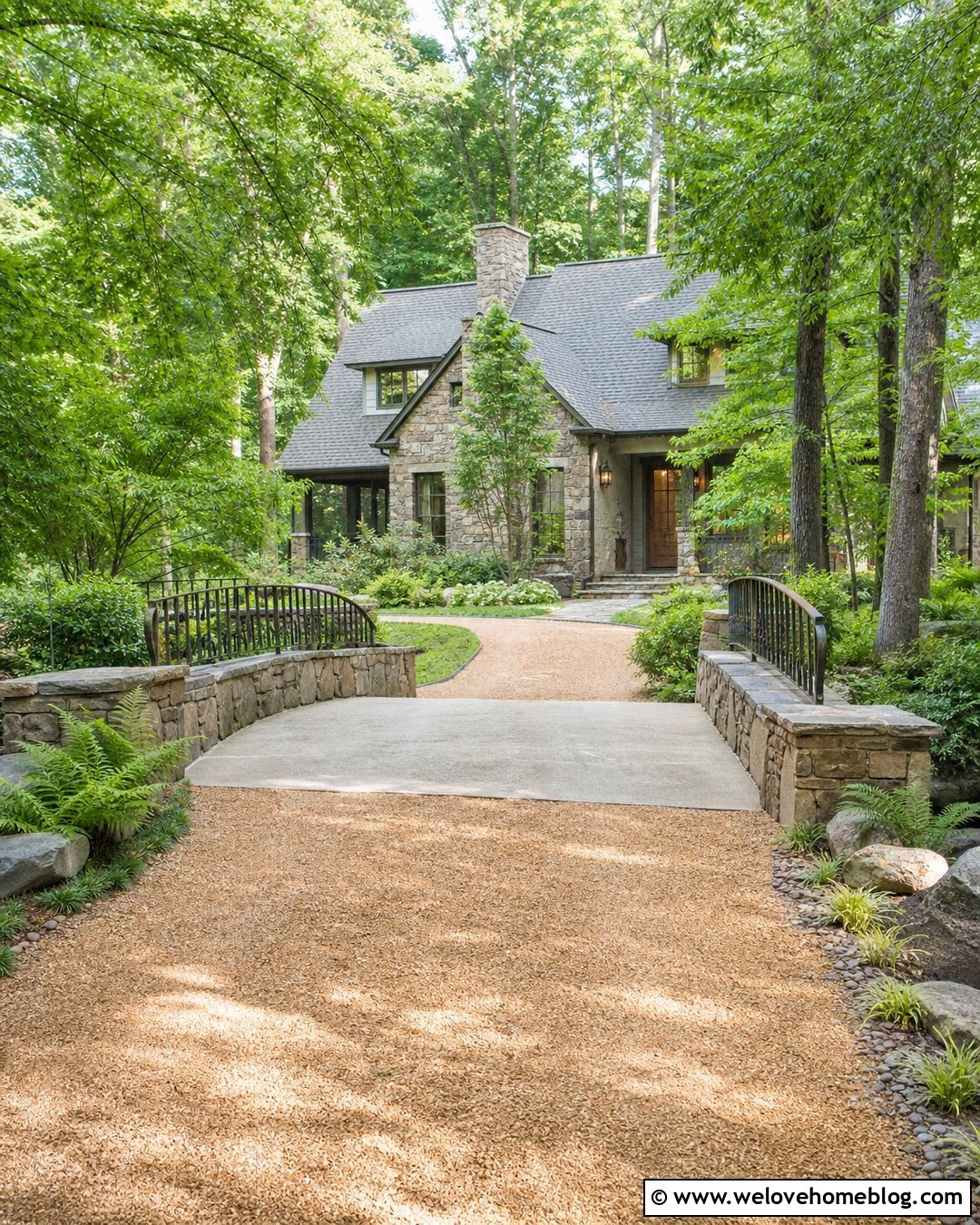
Dry-stacked stone walls can create a natural-looking bridge entrance with rich texture and regional character. Use flat fieldstone to build low visible walls along the approaches and around the crossing, while relying on a professionally designed structure for vehicle support. A warm beige gravel driveway or textured concrete deck will complement the irregular masonry. Let the walls curve gently into the stream banks instead of ending abruptly. Tuck low sedges, ferns, and creeping plants into nearby beds, but keep roots and soil away from critical drainage areas. Natural stone caps can provide a neater top edge without making the walls look overly formal. This driveway bridge pairs well with stone cottages, Craftsman homes, mountain cabins, and properties surrounded by mature woodland.
19. Driveway Bridge With Brick and Stone Borders
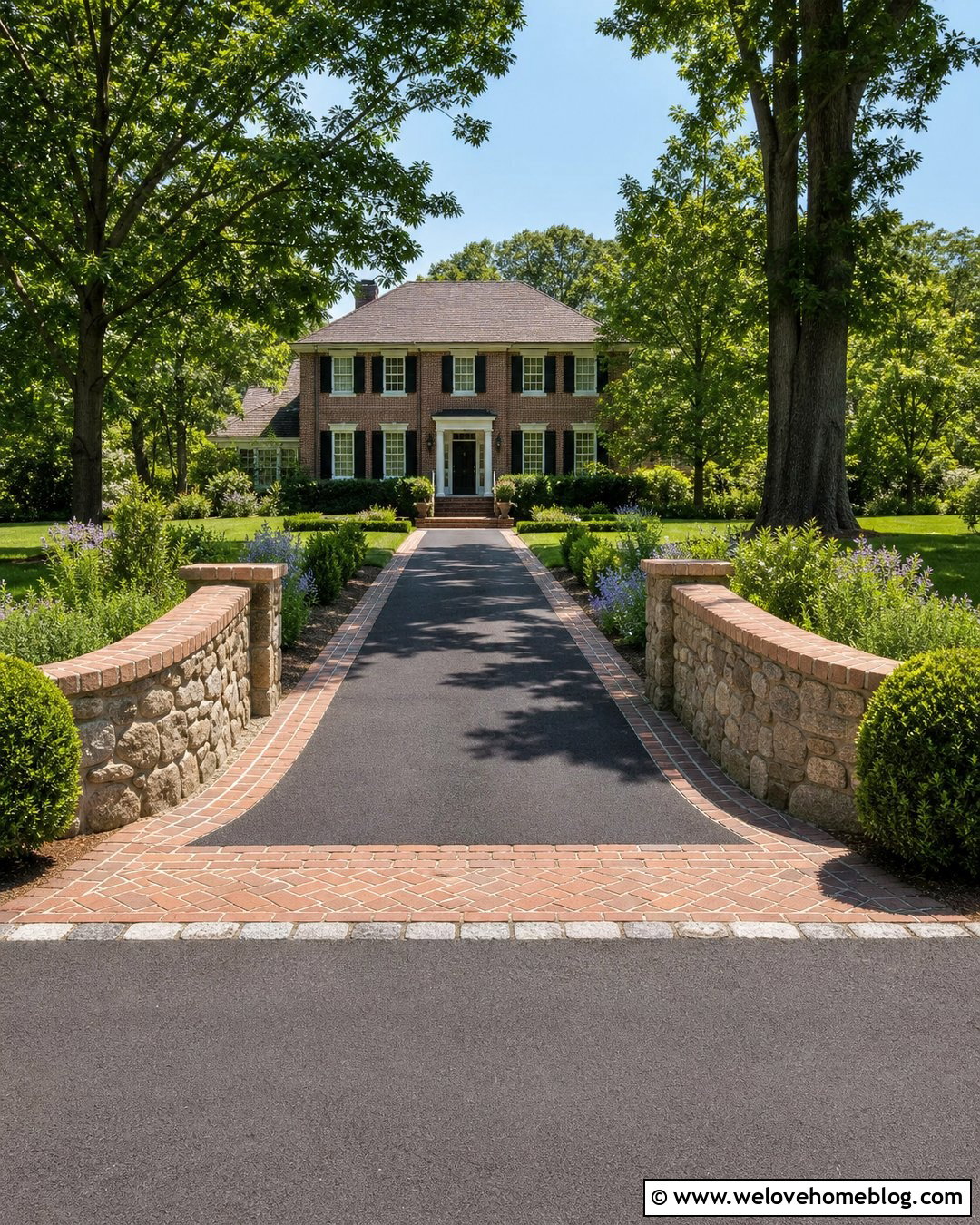
Combining brick and stone can help a driveway bridge connect with a home that uses several exterior materials. Start with a gray concrete or asphalt driving surface, then add a clay brick ribbon along both sides. Build low fieldstone parapets with brick caps to repeat the border color vertically. At each end, flare the brick ribbons into small apron details that clearly mark the bridge transition. Plant compact boxwoods, flowering perennials, and ground covers beyond the walls for a layered but controlled entrance. This approach works especially well with brick Colonial homes, stone-fronted suburban houses, and traditional Craftsman architecture. Limit the palette to two or three coordinated tones. Too many masonry colors can make a relatively small bridge look visually busy.

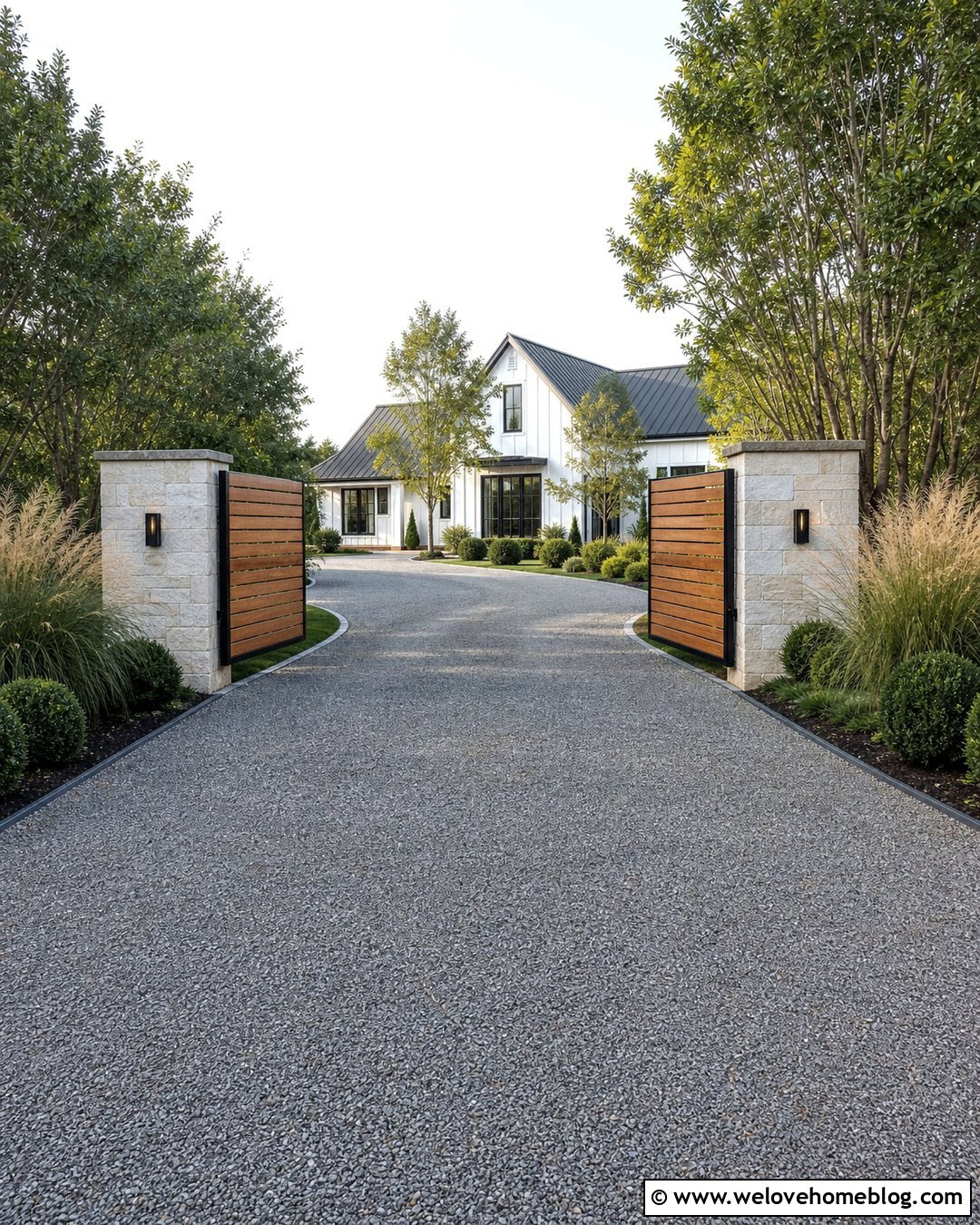
20. Driveway Bridge With Native Plant Landscaping
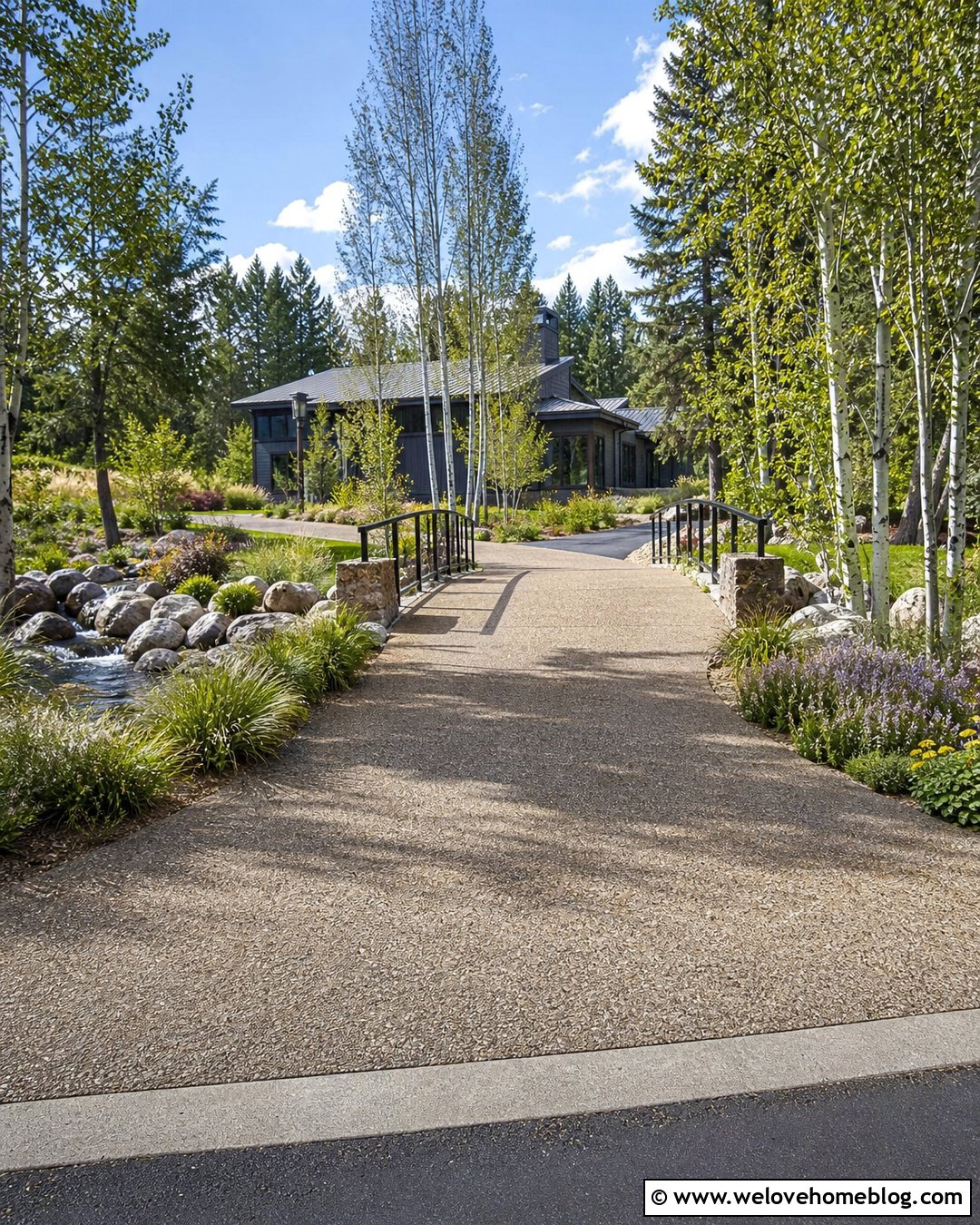
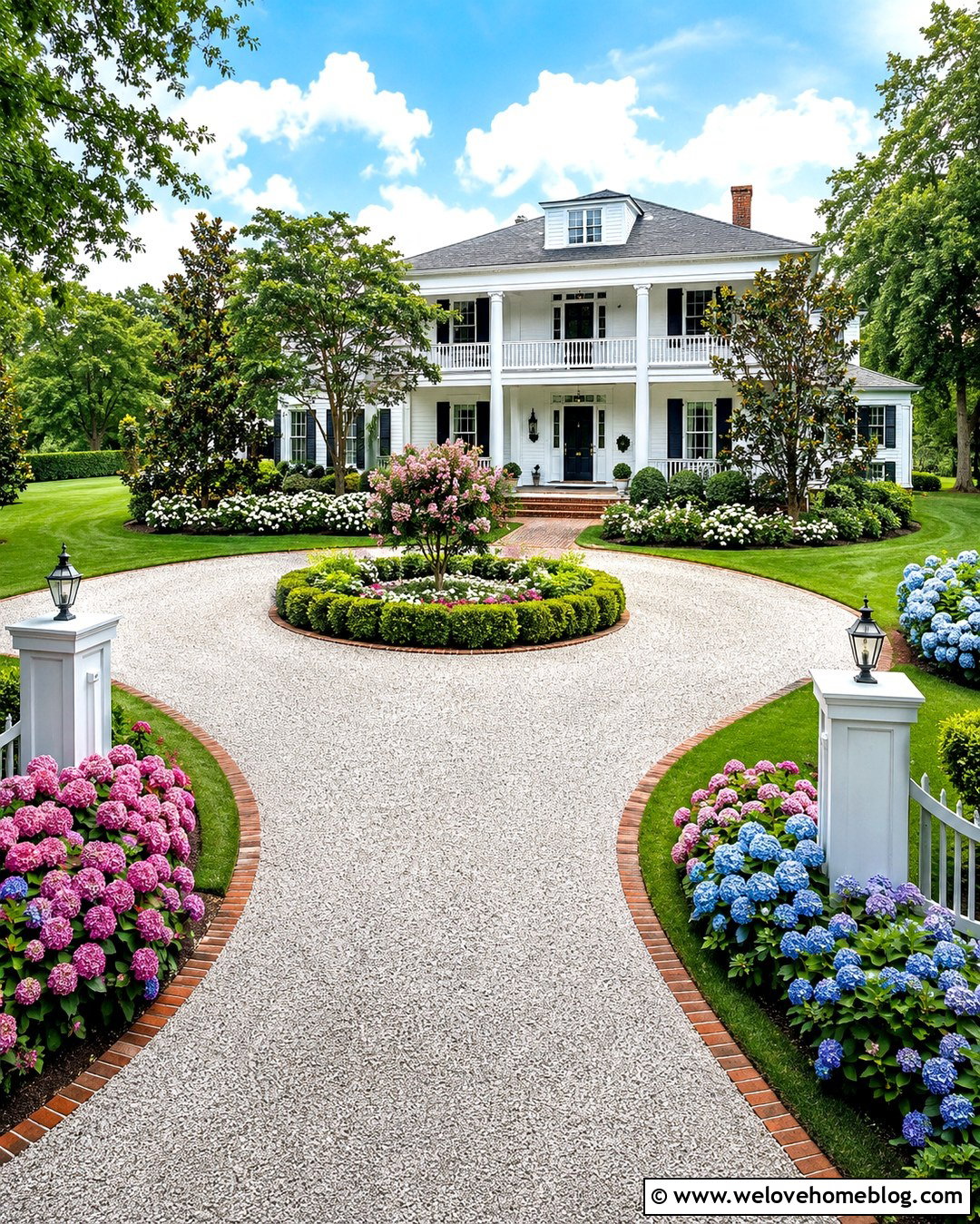
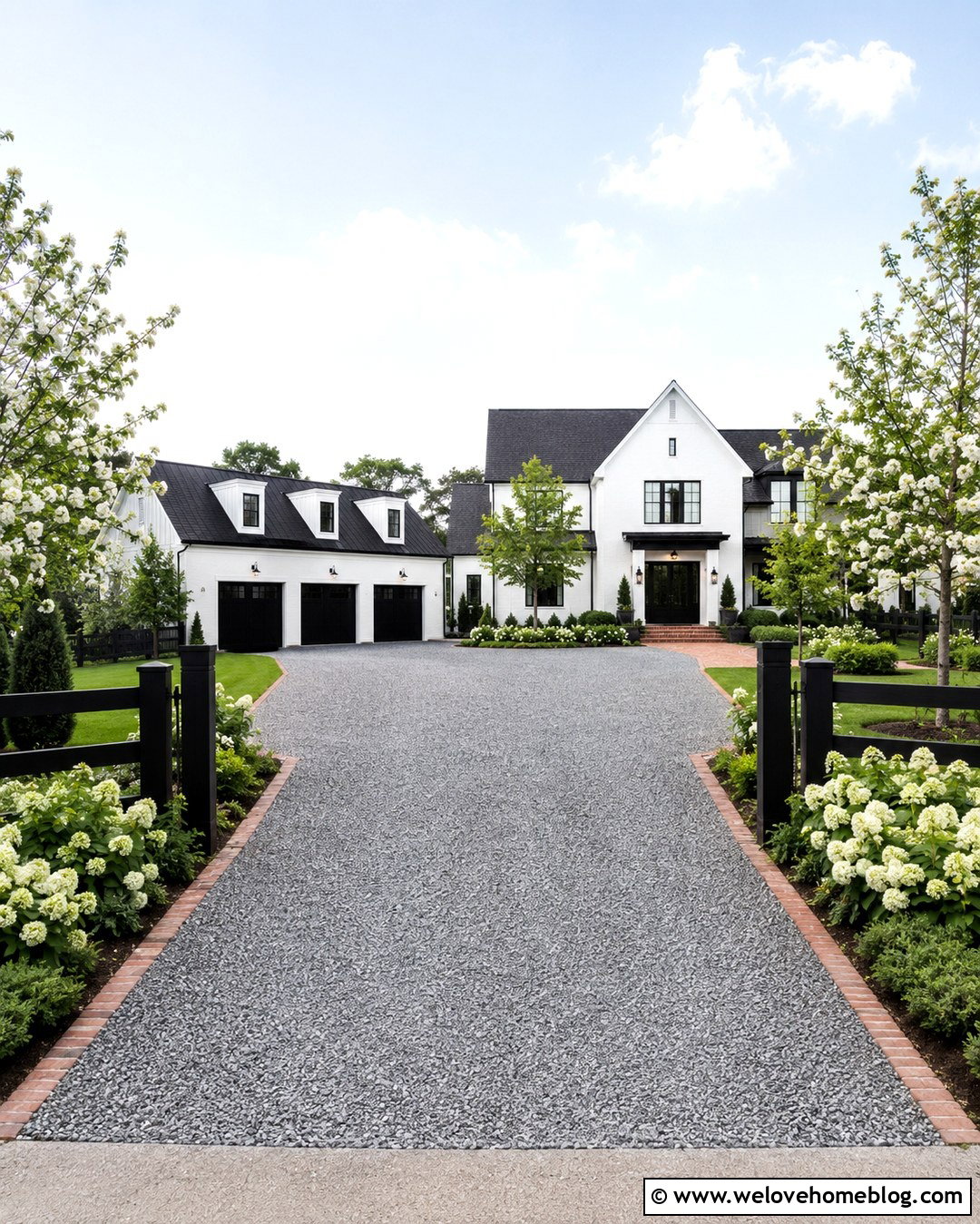
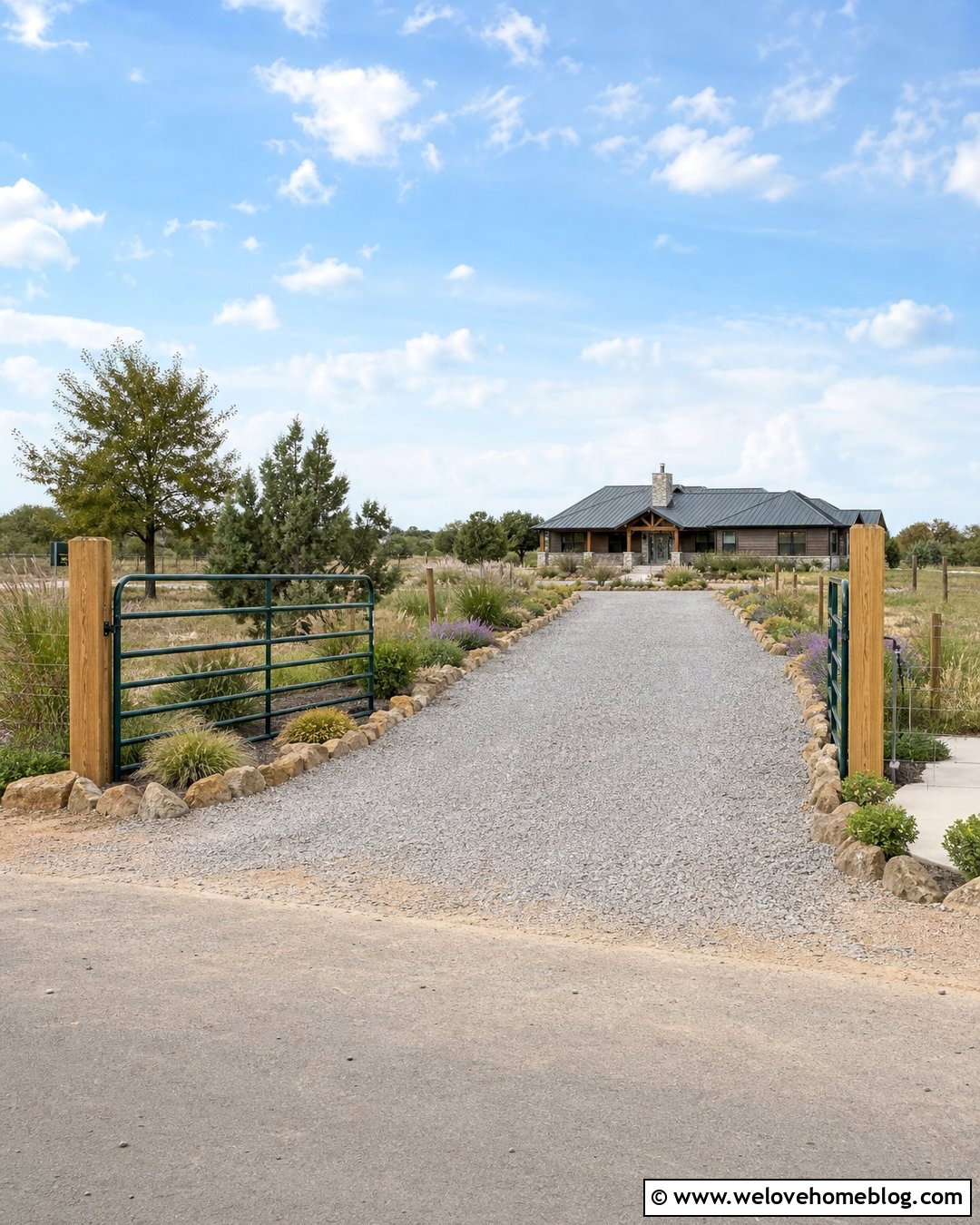
Native planting allows a driveway bridge to fit comfortably into its ecological setting rather than appearing heavily landscaped. Choose an exposed aggregate or compacted gravel surface, stone abutments, and simple dark metal railings. Around the approaches, layer locally appropriate sedges, rushes, flowering perennials, shrubs, and small trees according to moisture and sunlight conditions. Keep low plants nearest the driving edge to preserve visibility. Taller species can occupy the outer banks where they frame the crossing without narrowing it. A curved driveway will enhance the natural composition, especially on a wooded or meadow property. Use river rock only where it suits the site rather than covering every open area. The finished entrance should appear relaxed, seasonal, and connected to the surrounding landscape.
21. Driveway Bridge With River Rock Landscaping
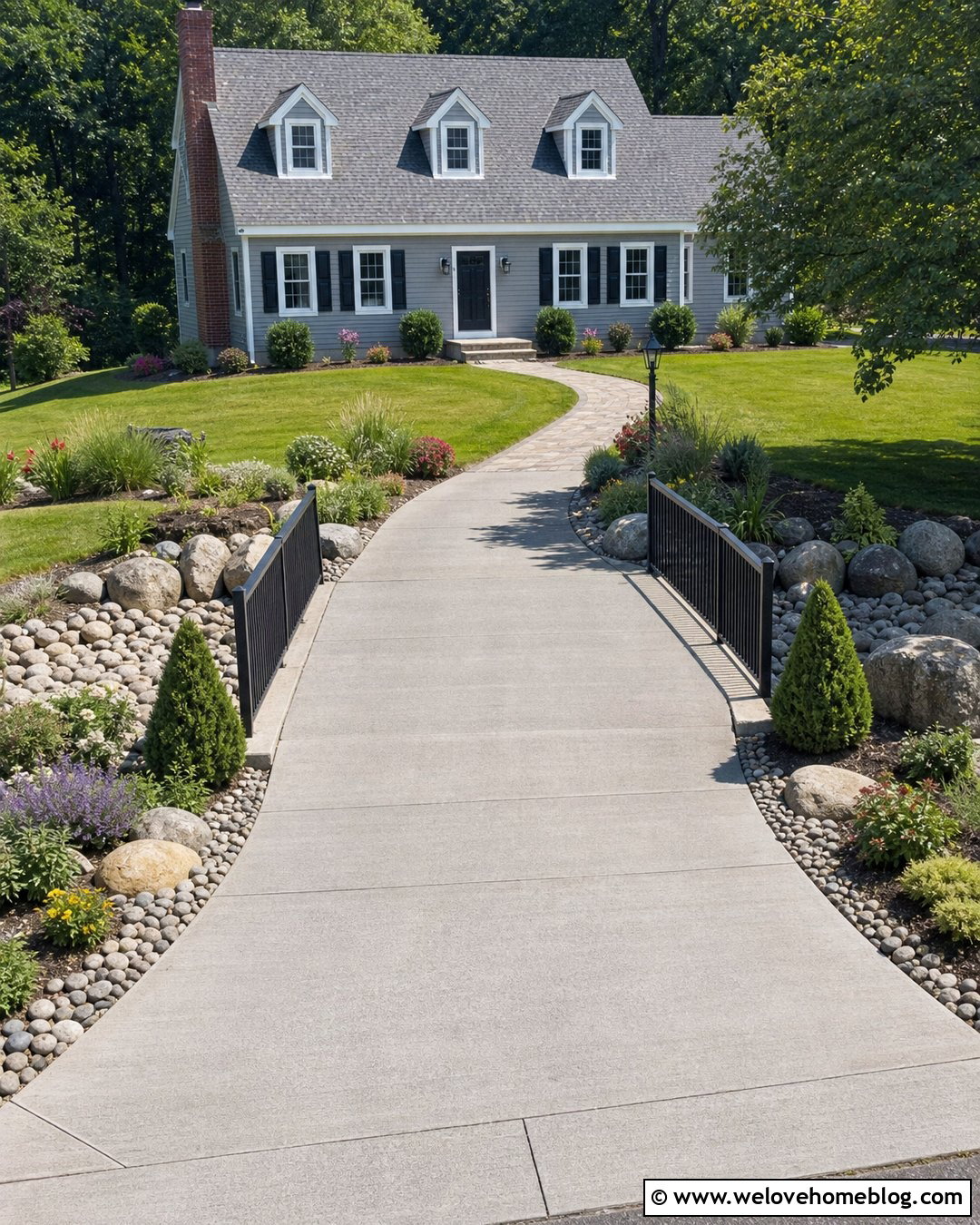
River rock can visually extend the water channel and create a clean transition between the driveway bridge and its surroundings. Pair smooth gray and tan stones with a broom-finished concrete bridge deck and low black railings. Use larger rocks near the abutments, then blend smaller material into shallow planting beds along the approaches. Clumps of ornamental grass, dwarf evergreens, and a few moisture-tolerant perennials will prevent the stone from looking bare. Curved bed lines usually feel more natural around a creek, while straight edges suit modern houses and formal drainage swales. Keep loose rock separated from the driveway with steel edging or a concrete curb. This complete design is attractive, relatively restrained, and suitable for both suburban and rural properties.
22. Driveway Bridge With Stone Retaining Walls
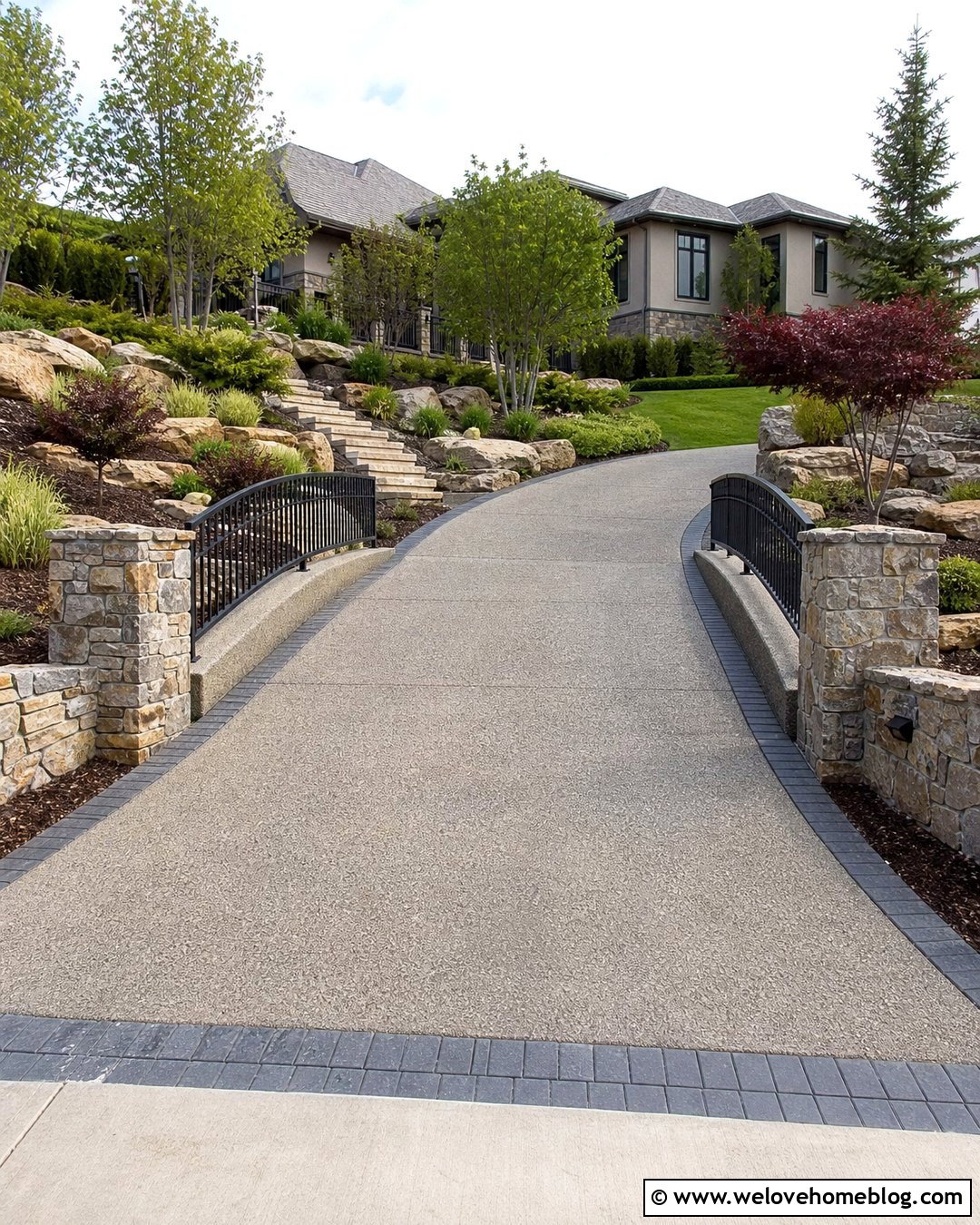
Sloped properties often need retaining walls around a driveway bridge to manage elevation changes and create usable approaches. Use large-format natural stone or modular concrete block selected to coordinate with the house. The walls can taper downward as they move away from the bridge, preventing the entrance from feeling enclosed. Cover the driving surface with asphalt or textured poured concrete, then add a contrasting paver border to define the edges. Low metal railings across the span can provide an open view of the drainage channel. Plant spreading junipers, ornamental grasses, and compact shrubs above the retaining walls. Include clear transitions between walls, abutments, and driveway shoulders. A well-integrated design makes the crossing look like part of the overall grading plan instead of a later addition.
23. Driveway Bridge With Split-Rail Fencing
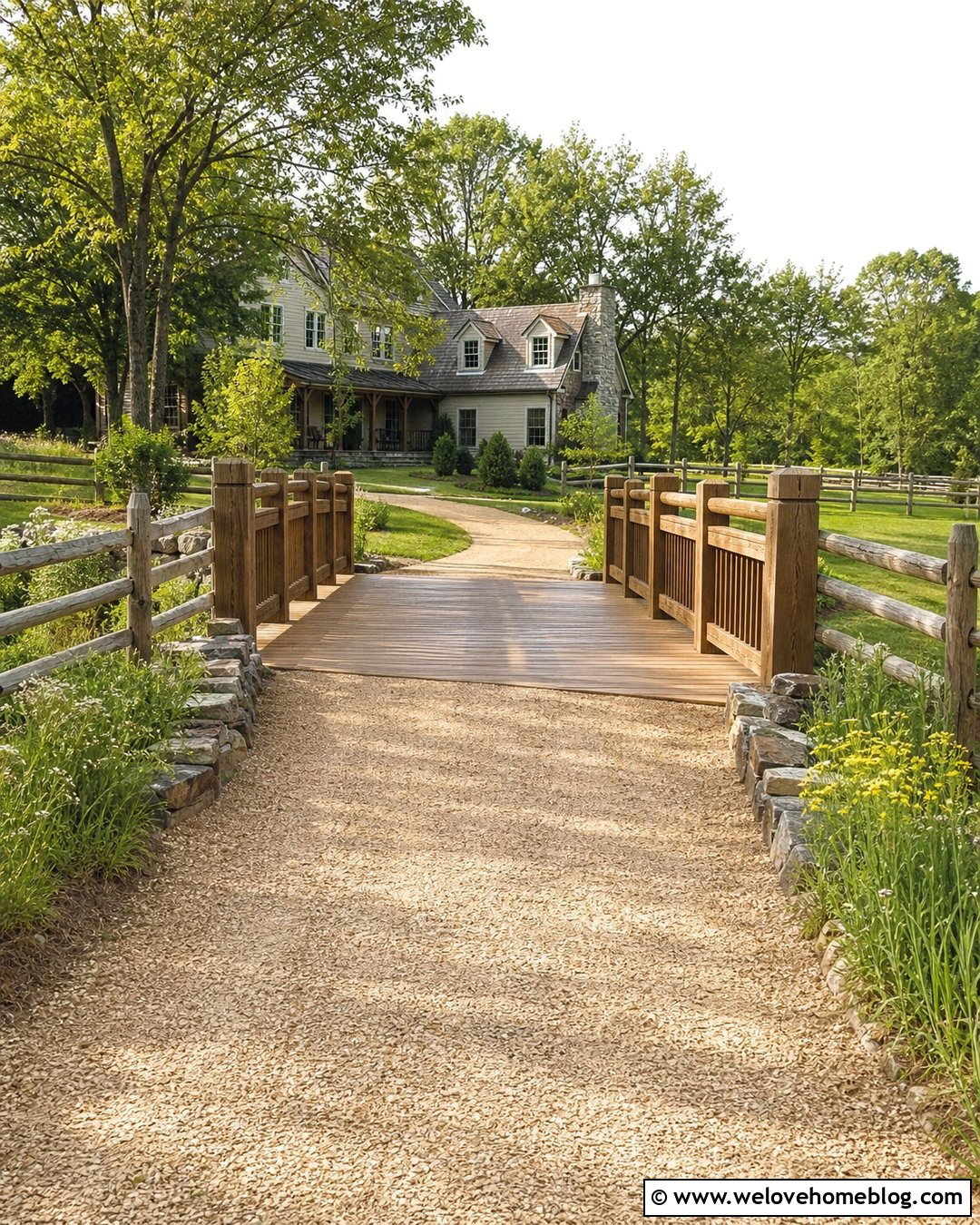
Split-rail fencing creates a relaxed country approach when it continues naturally toward a driveway bridge. Use a tan gravel driveway and a timber-decked crossing with substantial wood railings. Begin the fencing beyond the bridge corners so it guides the entrance without creating a crowded intersection of posts. Fieldstone around the abutments will connect the woodwork with the stream banks. Surround the crossing with meadow grasses, native wildflowers, and scattered deciduous trees. A gentle curve before the bridge can reveal the house gradually and reduce the appearance of a long, rigid driveway. Keep the wood finish consistent across the bridge and fence, whether natural cedar, dark brown stain, or weathered gray. The complete look suits farmhouses, barns, ranch homes, and equestrian properties.
24. Driveway Bridge With Concrete Balustrades
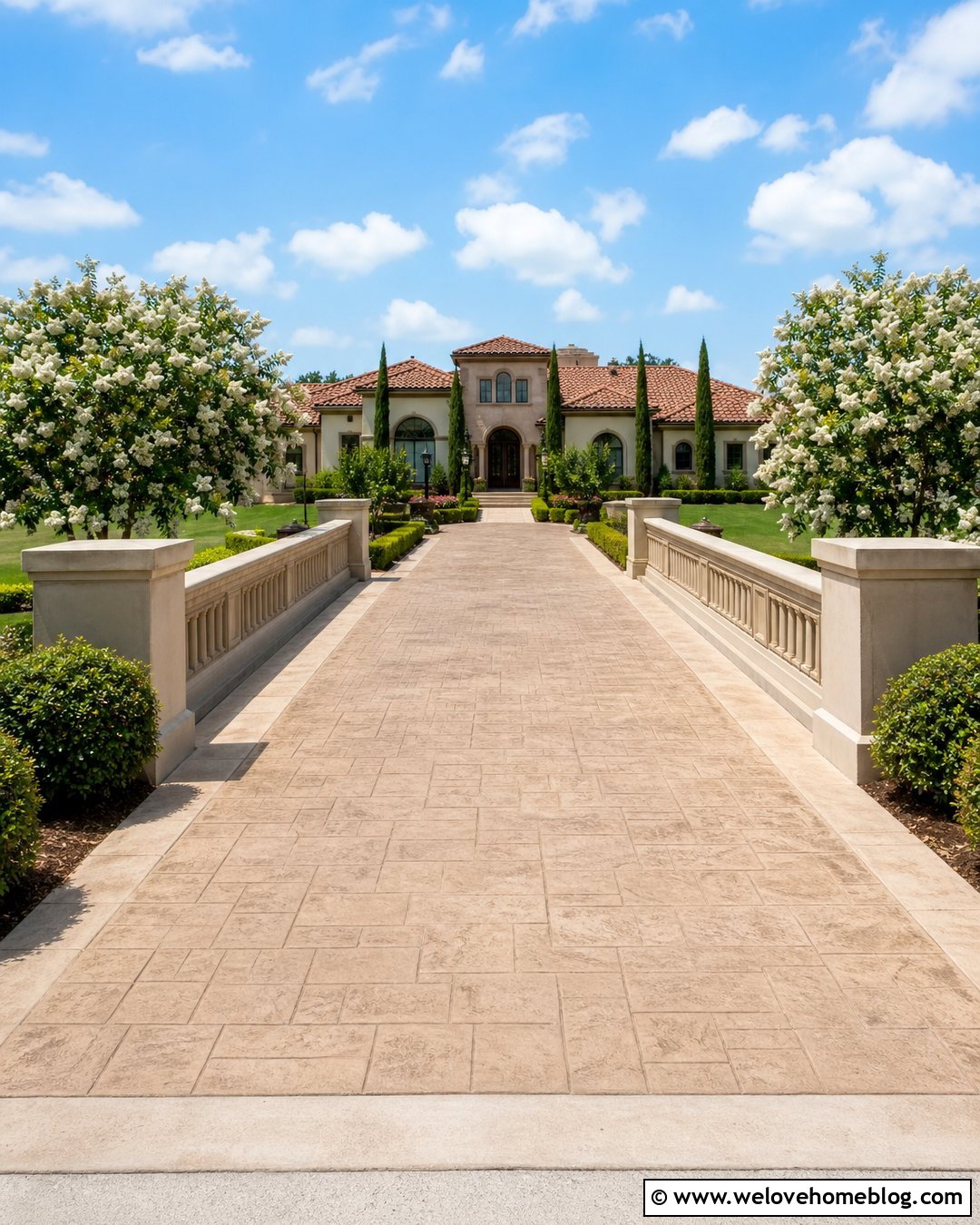
Concrete balustrades give a driveway bridge a formal presence suited to traditional estates and Mediterranean-inspired homes. Use pale concrete pavers or warm-toned stamped concrete across the bridge, framed by symmetrical balustrade sections. Broad square piers at each corner can support simple stone caps or restrained lanterns. Extend low walls beyond the crossing to create a graceful transition into the landscaped approach. Clipped hedges, small flowering trees, and balanced planting beds will reinforce the architecture. A straight driveway or broad circular layout works best because it maintains clear sightlines through the entrance. Keep the balustrades proportionate to the span and avoid overly heavy details on a narrow crossing. Coordinated materials can make the bridge feel like an original part of the home.
25. Driveway Bridge With Corten Steel Railings
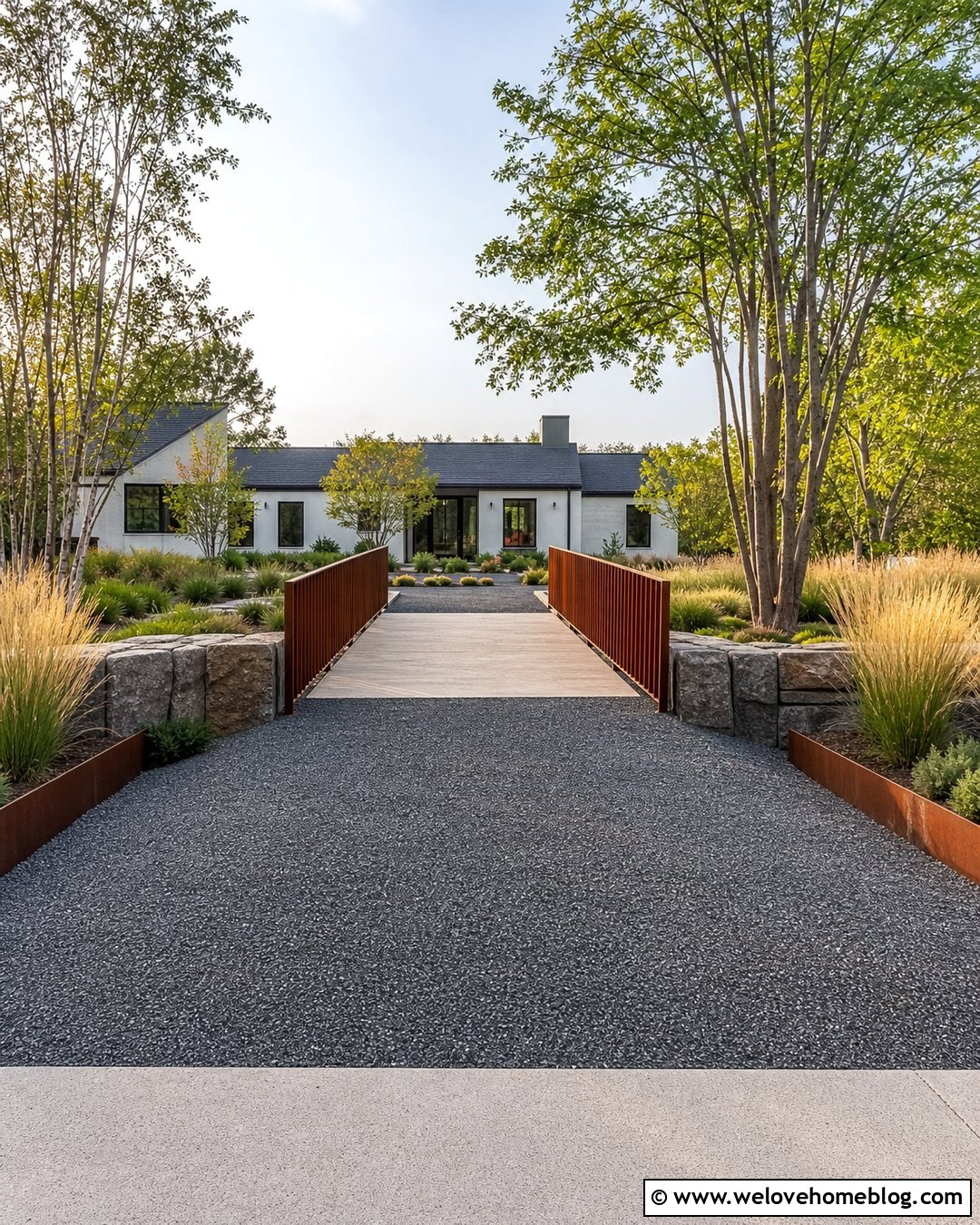
Corten steel railings bring warm rust-colored tones to a modern driveway bridge and blend especially well with wooded or meadow settings. Pair the steel with a charcoal resin-bound gravel deck or smooth gray concrete surface. Use simple solid panels with carefully placed openings, or choose slender vertical rails for a lighter appearance. Dark stone abutments will ground the structure and complement the weathered metal. Around the bridge, plant blonde grasses, low evergreens, and multi-stem trees that repeat its earthy colors. Continue narrow Corten edging along the driveway approach to connect the bridge with nearby beds. This design works with contemporary homes, modern cabins, and minimalist farmhouses. Keep surrounding details simple so the steel remains a clear architectural accent rather than visual clutter.
26. Driveway Bridge With Paver Aprons
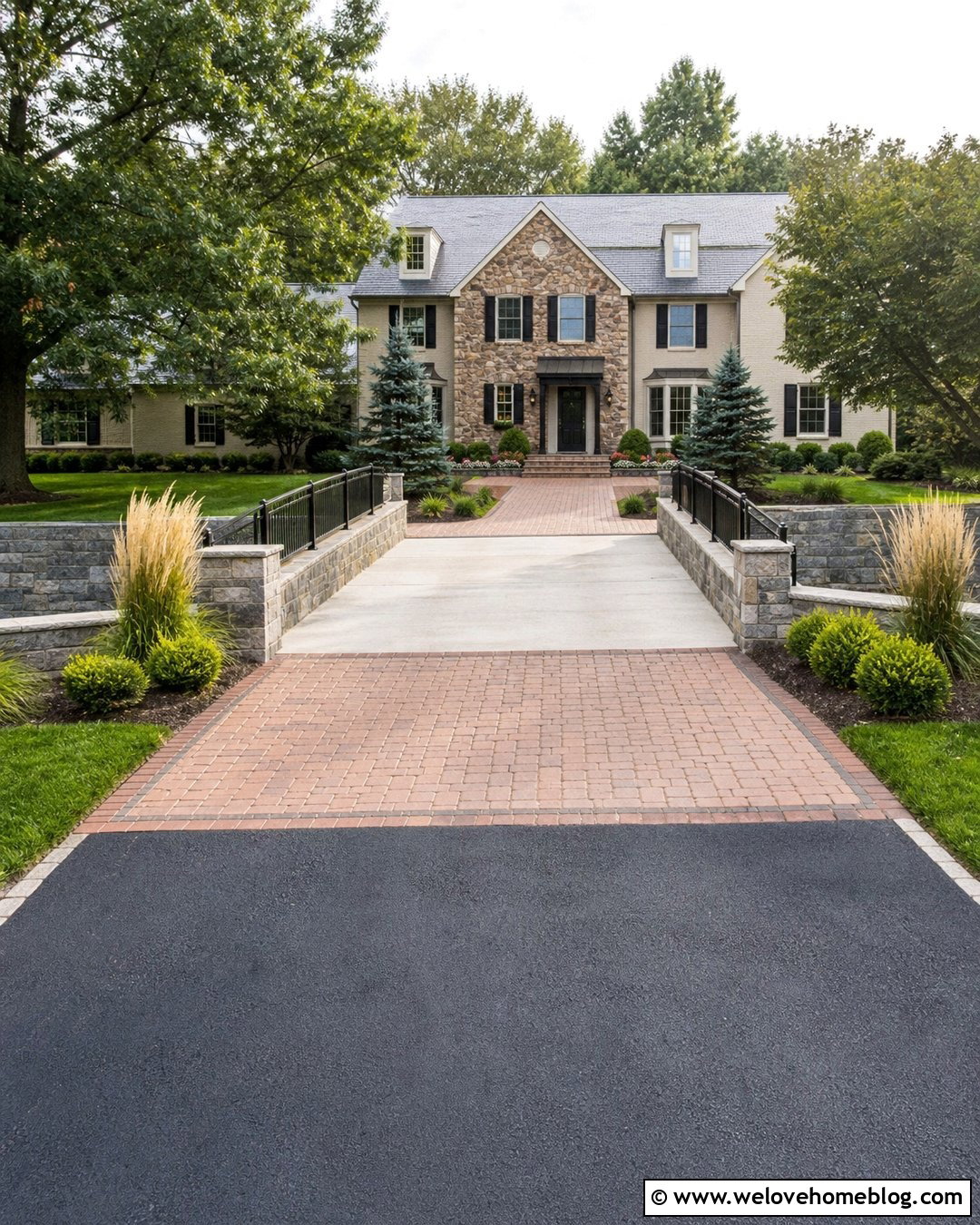
Paver aprons can highlight both ends of a driveway bridge and create polished transitions between different surfaces. Use black asphalt or light poured concrete for the main driveway, then install clay brick or concrete pavers across broad entrance bands. The bridge deck can continue the primary material, while the pavers mark where the crossing begins and ends. Add low stone walls or simple black railings to frame the span. Repeat the paver color in the walkway, front steps, or house facade for continuity. Compact shrubs and ornamental grasses should sit beyond the flared aprons where they will not restrict turning space. This approach delivers a customized look without covering the entire driveway in premium paving, making it practical for long residential entrances.
27. Driveway Bridge With Integrated Lighting
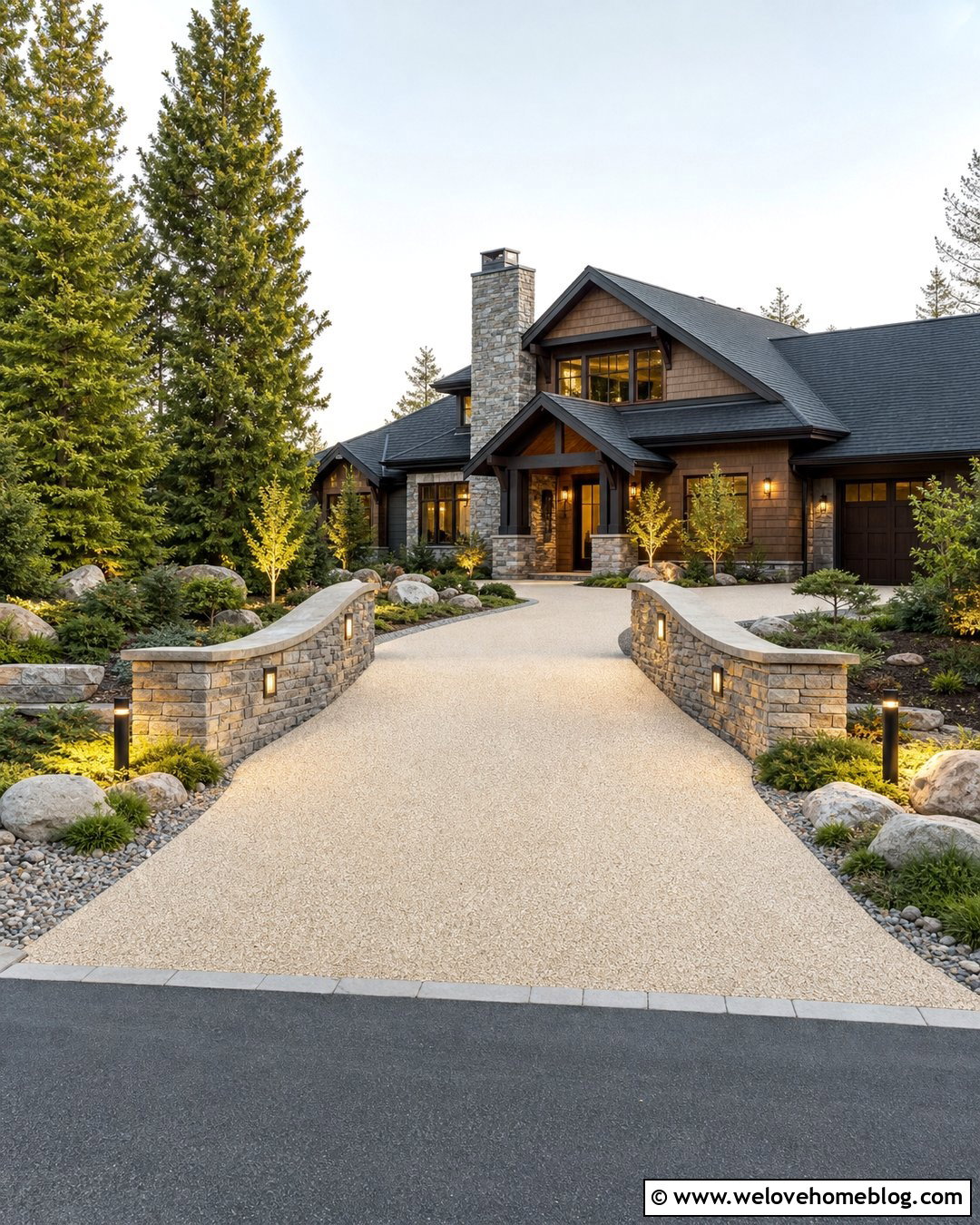
Integrated lighting improves the nighttime readability of a driveway bridge while preserving a clean daytime appearance. Select a smooth concrete or resin-bound gravel deck with stone parapet walls. Recess small, shielded fixtures into the wall faces or place compact lights beneath the railing caps. The goal is to reveal the bridge edges and approaches rather than flood the creek with harsh light. During the day, black or bronze fixtures should blend into the masonry. Add low grasses, evergreen ground covers, and river rock around the abutments so the lighting softly defines the landscape. A curved driveway may benefit from additional low markers before the bridge. Coordinate fixture shape and finish with the home’s exterior lights for a consistent entrance from the street to the garage.
28. Driveway Bridge With Address Pillars
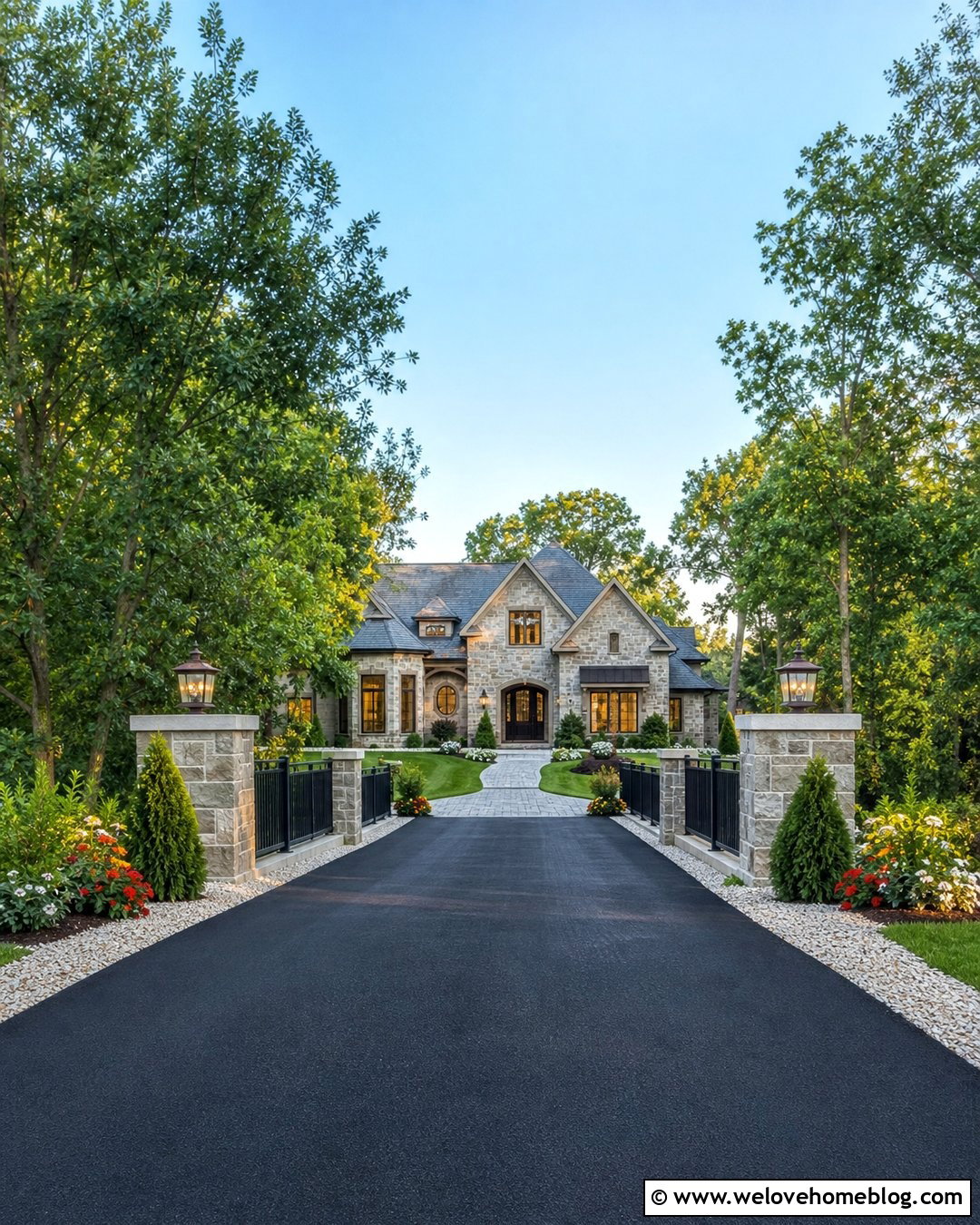
Address pillars make a bridge easier to identify as the formal beginning of a private driveway. Build masonry columns at the street-facing corners and use the opposite pair as simpler railing anchors. Pair the pillars with a dark asphalt driveway, stone veneer, and black metal rails for a balanced residential look. The address area should remain clear and easy to read from the road without dominating the stonework. Low landscape lighting can illuminate the pillar face while keeping glare away from drivers. Plant compact evergreens and seasonal flowers around the outer edges, leaving wide gravel or paved shoulders near the bridge. Match the masonry to the home’s foundation or chimney. This creates a practical entrance feature that also strengthens the bridge’s architectural connection to the house.
29. Curved Driveway Bridge With Stone Railings
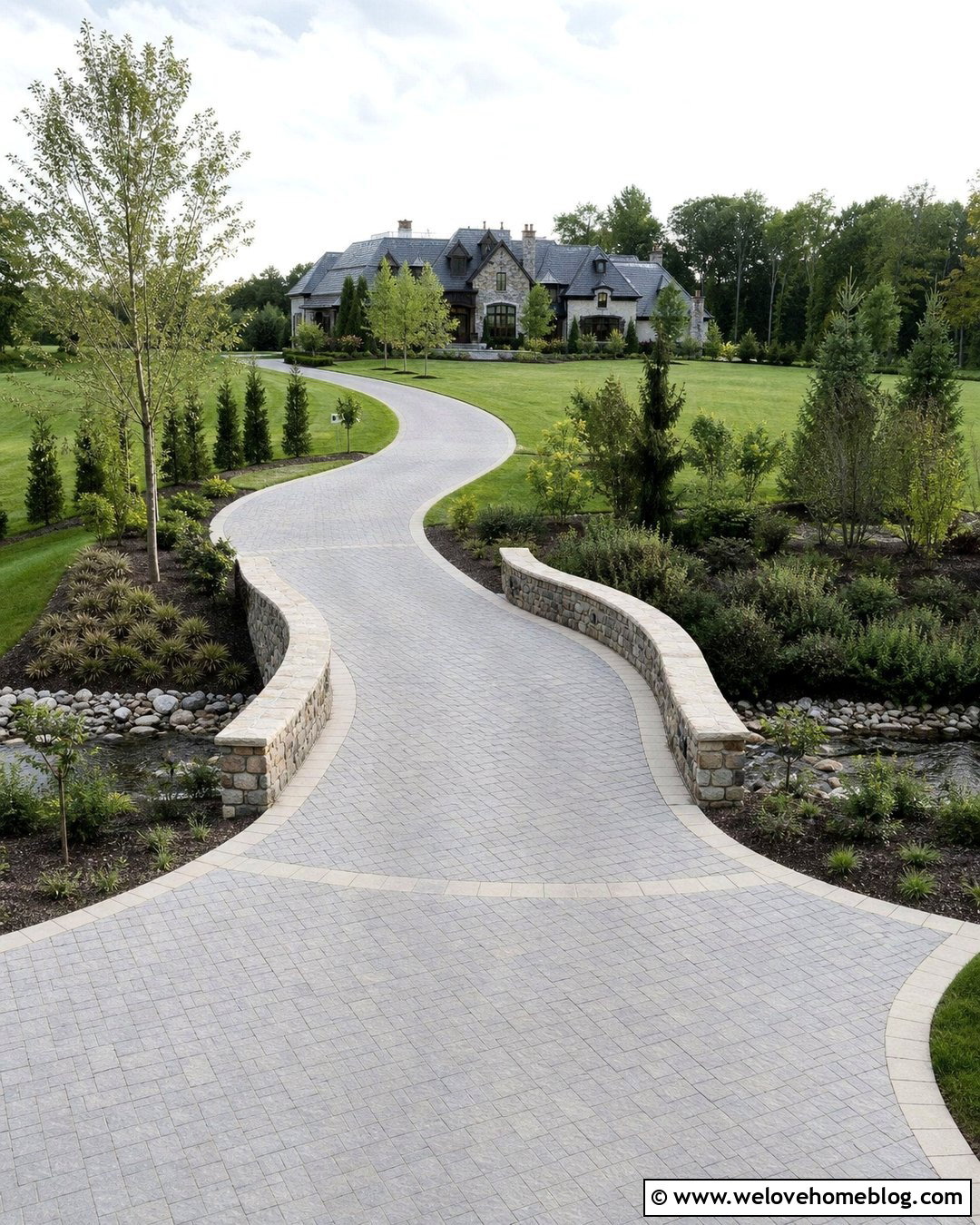
A curved driveway bridge can follow natural topography and create a softer approach to a house set away from the road. Use textured concrete pavers or exposed aggregate across the deck, carefully carrying the curve through the driving edges. Low stone railings should follow the same radius rather than forming a straight barrier. Widen the inside approach where needed to make the layout feel comfortable and visually balanced. Plant low ground covers on the inner curve and taller shrubs or small trees on the outside, preserving important sightlines. Stone paving bands can emphasize the bridge’s shape without introducing too many materials. This complete look works well on large suburban lots, country estates, and wooded properties where a straight crossing would feel too rigid.
30. Minimalist Driveway Bridge With Frameless Glass Railings
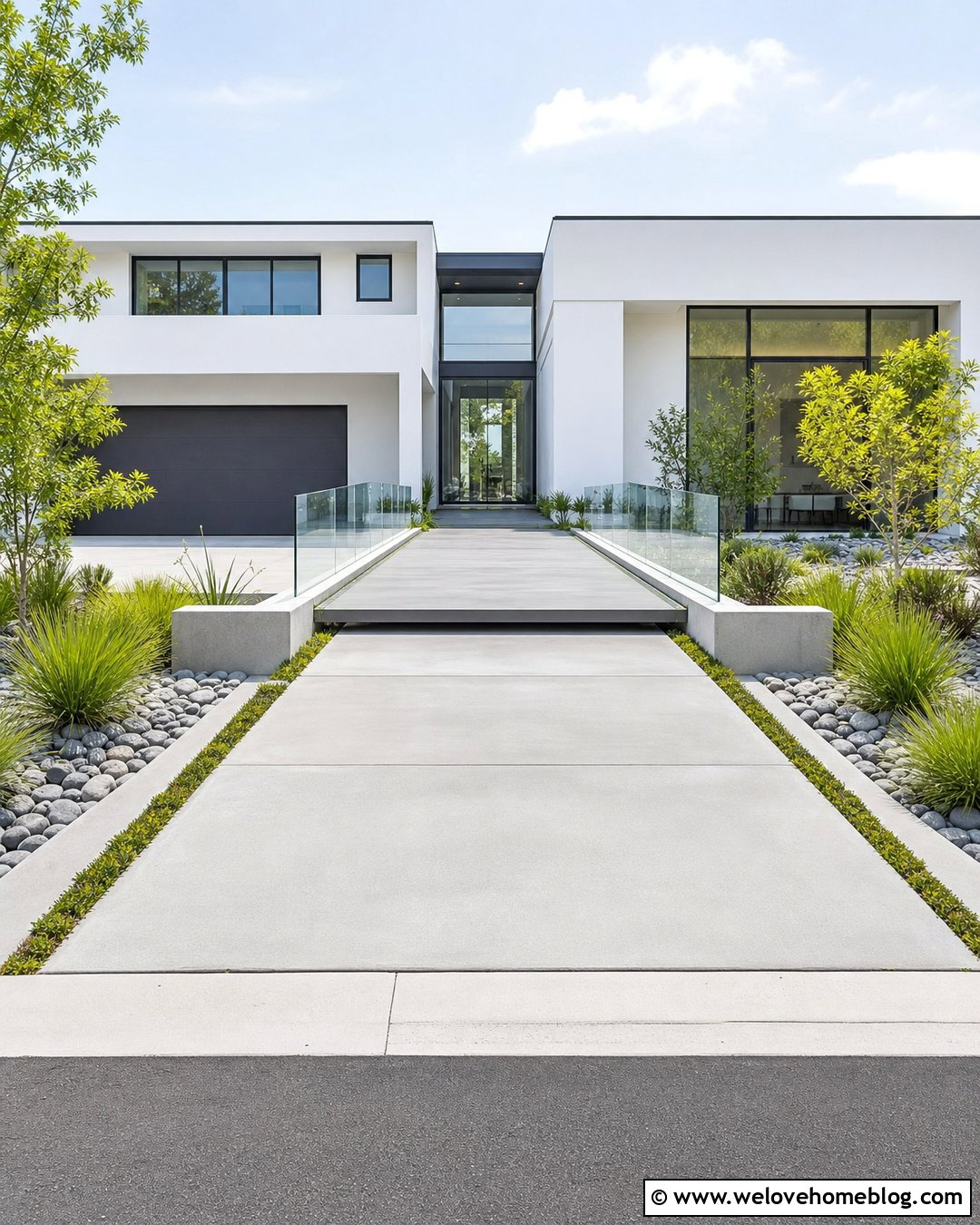
Frameless glass railings can give a driveway bridge an exceptionally open appearance while maintaining uninterrupted views of water and landscaping. Pair clear panels with a smooth light-gray concrete deck and concealed stainless-steel fittings. Keep the bridge straight and align it with a modern home’s garage or central entrance. Poured concrete abutments should have crisp edges, softened by restrained grasses, river rock, and small architectural trees. Continue narrow grass strips or concrete borders along the driveway approaches to reinforce the clean geometry. Because glass prominently shows water spots and debris, this design is best where routine cleaning is realistic. The completed bridge should feel bright and understated, allowing the creek, house, and precisely organized landscape to remain the dominant visual features.
Conclusion:
The best driveway bridge balances engineering needs with the character of the house and landscape. Stone, timber, steel, brick, concrete, and mixed-material designs can each create a distinctive entrance when the surface, railings, approaches, and planting are planned together. Begin by understanding the crossing width, water behavior, soil, expected vehicle loads, and maintenance demands. Then choose a visual direction that repeats materials already found around the property. Thoughtful lighting, durable borders, open sightlines, and well-placed landscaping can further improve the finished approach. Whether your property feels rustic, traditional, or contemporary, these 30 Driveway Bridge Ideas offer practical inspiration for turning a functional crossing into a cohesive feature with memorable curb appeal.

Related posts:

Leave a Reply