
A long driveway should feel like a welcoming journey, not an empty strip leading to the garage. The best landscape plan connects the entrance, driving surface, borders, planting beds, lighting, and house into one balanced scene. Repeating trees or shrubs can create rhythm, while curved beds, stone edging, and layered greenery soften the driveway’s length. Practical details matter too. Plants need room away from vehicle doors, roots should not threaten the pavement, and drainage must be considered before adding beds or walls. Long approaches also offer enough space for focal points, privacy screens, and seasonal color that would overwhelm a shorter drive. () The complete designs below offer 20 landscaping a long driveway ideas.

1. Tree Lined Long Driveway
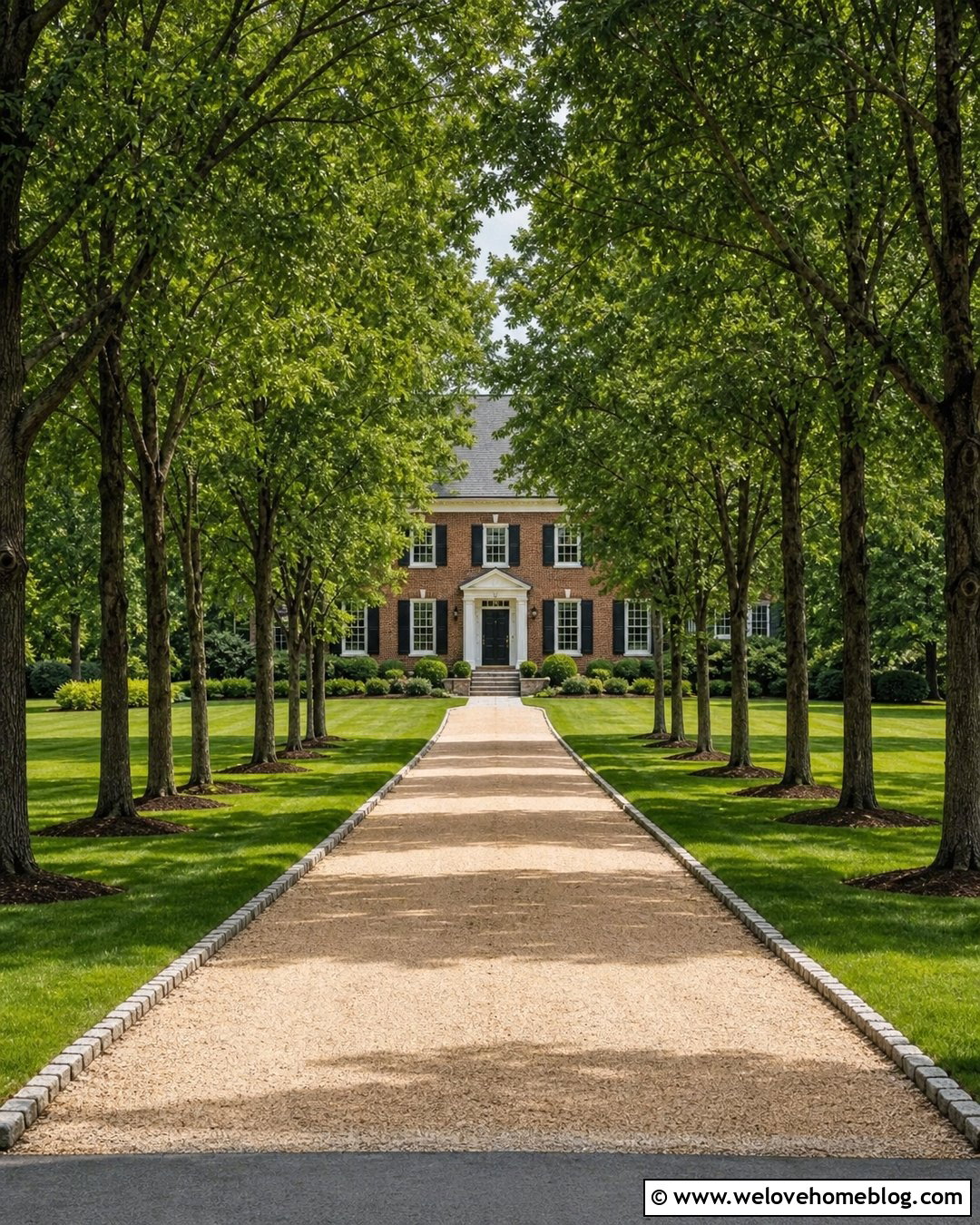
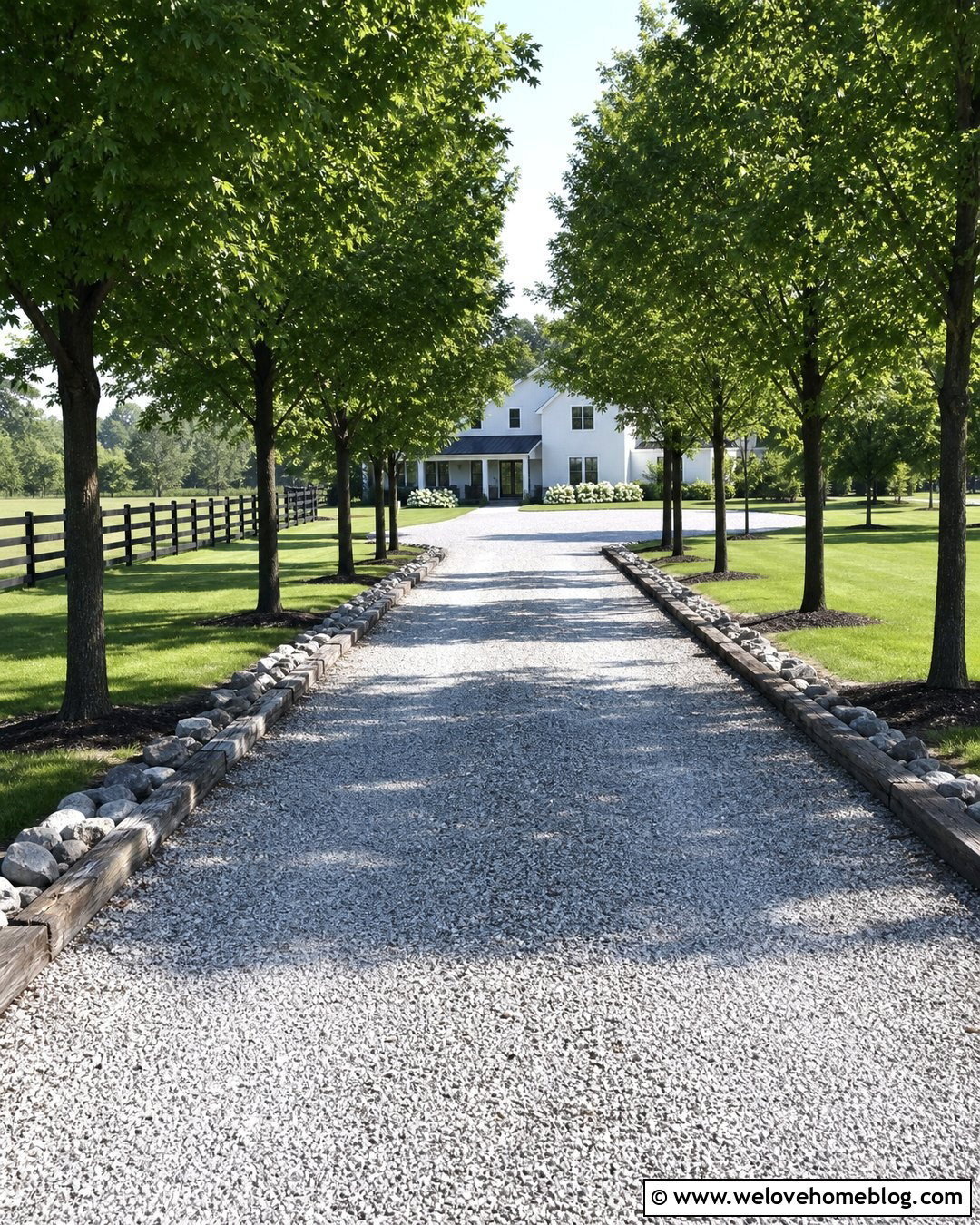
A tree-lined approach gives a long driveway structure without filling every open space. Start with a straight gravel or asphalt surface and plant matching deciduous trees at even intervals on both sides. Keep them far enough from the pavement for mature trunks, roots, and branches. A wide lawn strip between the trees and driveway makes mowing easier and prevents the planting from feeling cramped. Finish the edges with a narrow cobblestone border that keeps gravel contained or protects asphalt corners. Near the house, transition into deeper beds containing evergreen shrubs and low perennials. The repeated trees create a strong sightline toward a Colonial, Georgian, or modern farmhouse facade. Choose a species suited to your climate, soil, overhead utilities, and available mature width.
2. Curved Gravel Long Driveway

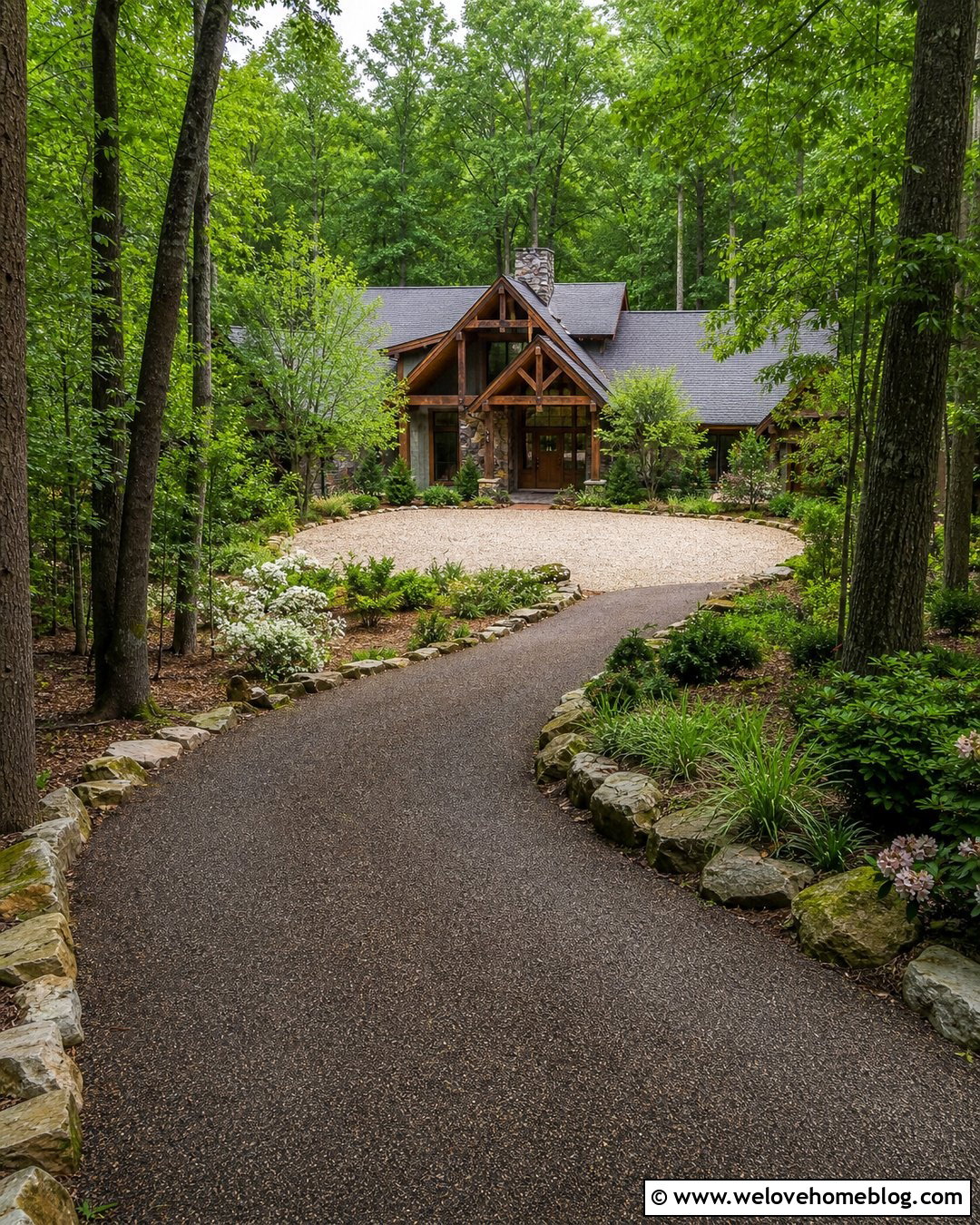
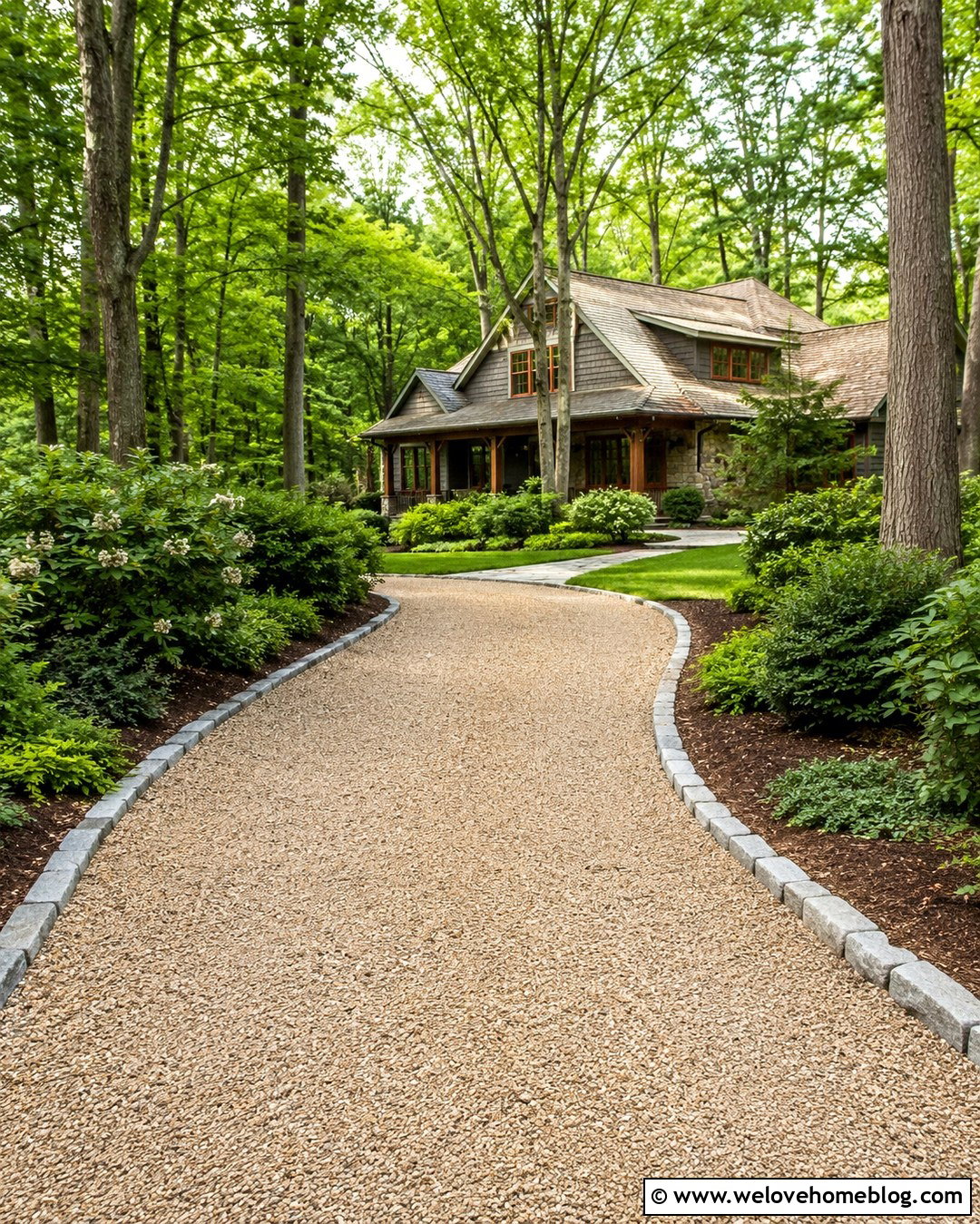
Soft bends can make a long driveway feel more natural while revealing the house gradually. Use warm tan crushed gravel for the driving surface, then contain it with sturdy steel edging or larger fieldstones. On the outside of each curve, create broad planting beds with small flowering trees, rounded evergreen shrubs, and drifts of low groundcover. Leave the inside curves simpler with open lawn so drivers have clear visibility. Repeating the same three or four plants along the route will keep the landscaping connected rather than visually busy. At the garage, widen the gravel into a practical parking and turning area framed by a paver apron. This complete look works especially well with country homes, cottages, wooded lots, and relaxed farmhouse properties.
3. Long Driveway With Flower Borders
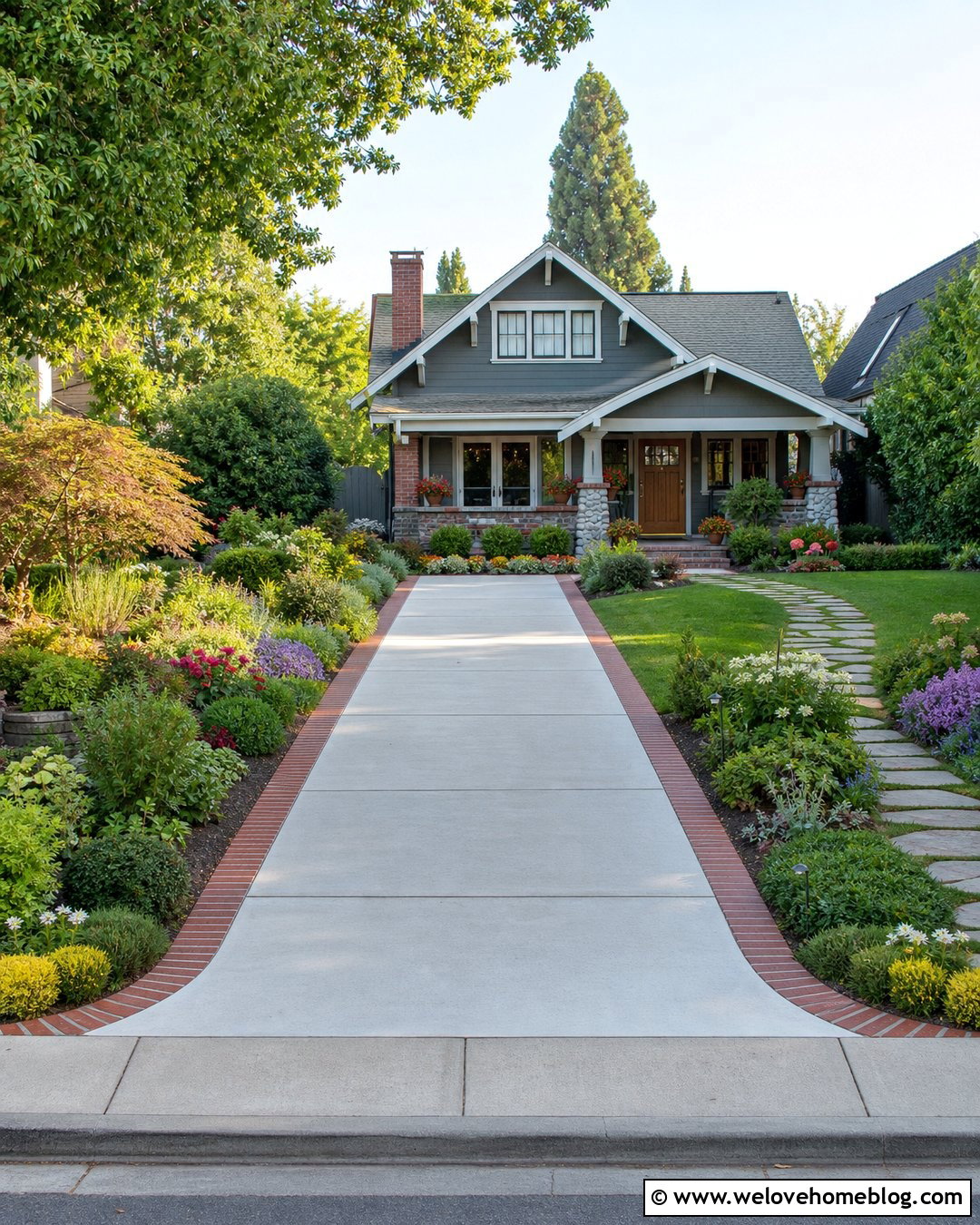
Colorful borders can turn a plain concrete driveway into an inviting garden approach. Create beds that are wide enough for layered planting rather than squeezing flowers into a narrow strip. Place compact shrubs at the back, sturdy perennials through the middle, and low groundcovers near the pavement. Repeat plant groupings down the driveway instead of using a different flower every few feet. This creates rhythm and makes maintenance more predictable. A brick mowing edge gives the beds a finished boundary and helps protect flowers from tires. Include gaps where passengers commonly exit vehicles, especially near the garage and front walk. Select plants that tolerate reflected heat, occasional road salt, and your local rainfall. The result suits Craftsman homes, Cape Cod houses, and traditional suburban properties.
4. Long Driveway With Evergreen Hedges
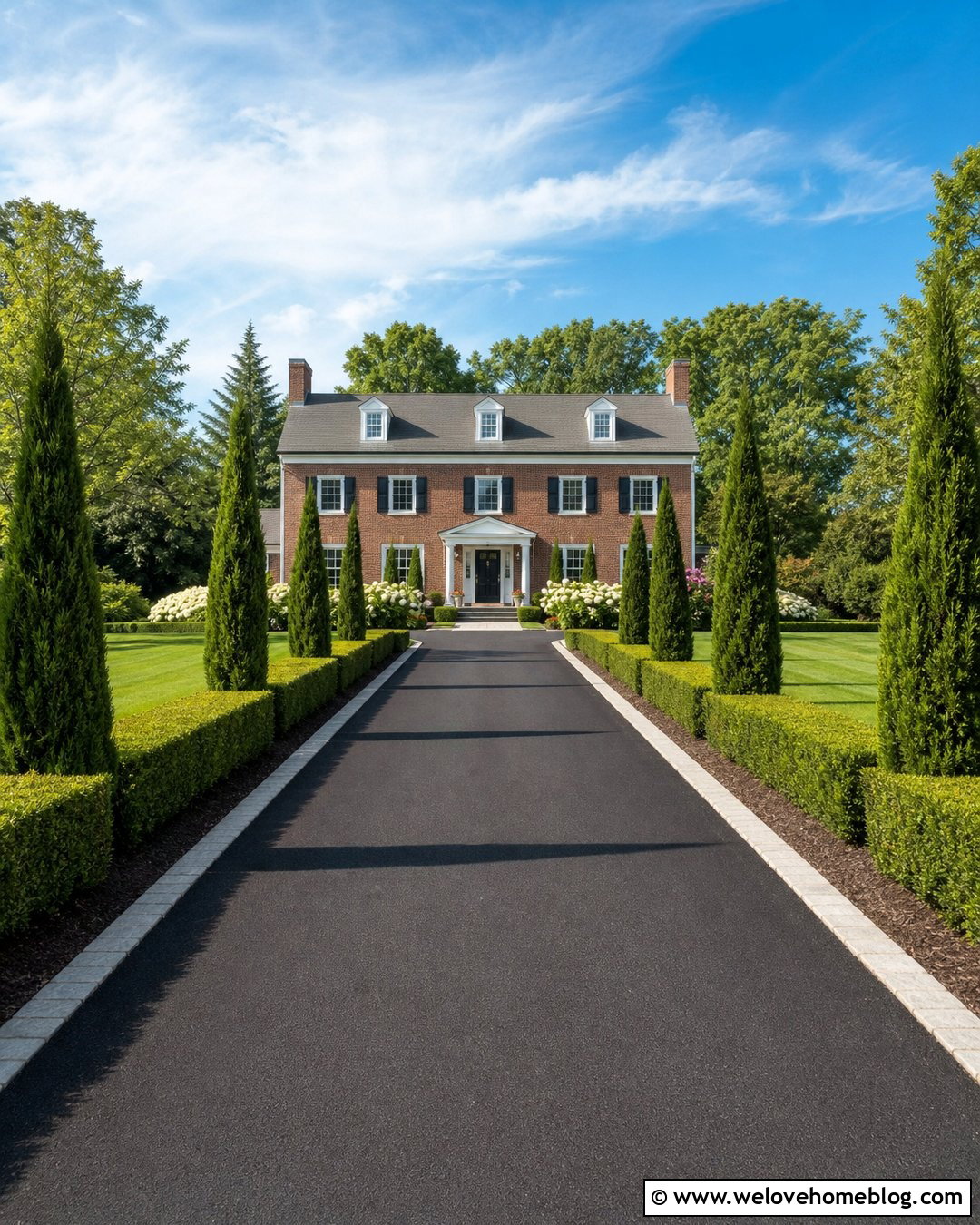
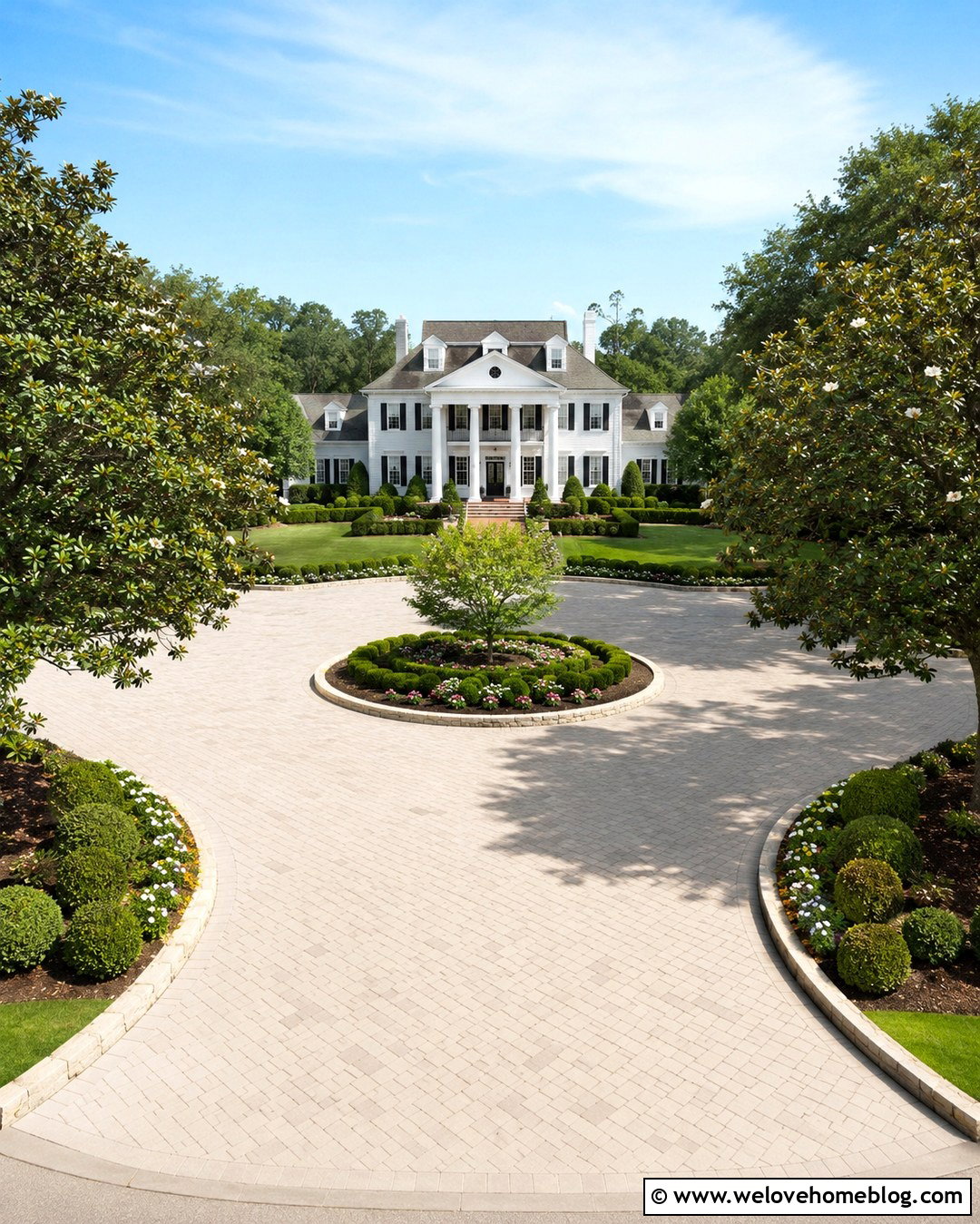
Neatly clipped evergreen hedges give a long driveway a formal, year-round framework. Pair a dark asphalt surface with pale concrete curbs or a slim brick border for a crisp contrast. Run the hedges along both sides, but set them back from the pavement so their mature growth does not reduce driving width. Break the continuous planting near the entrance, front walkway, utility access points, and parking spaces. Behind the hedge, add occasional flowering trees or taller columnar evergreens to create height without clutter. A straight layout emphasizes symmetry and directs attention toward a brick Colonial or classically styled house. Choose an evergreen that performs reliably in your region. Plan for its mature dimensions and pruning needs before committing to hundreds of feet of repeated planting.
5. Long Driveway With Ornamental Grasses
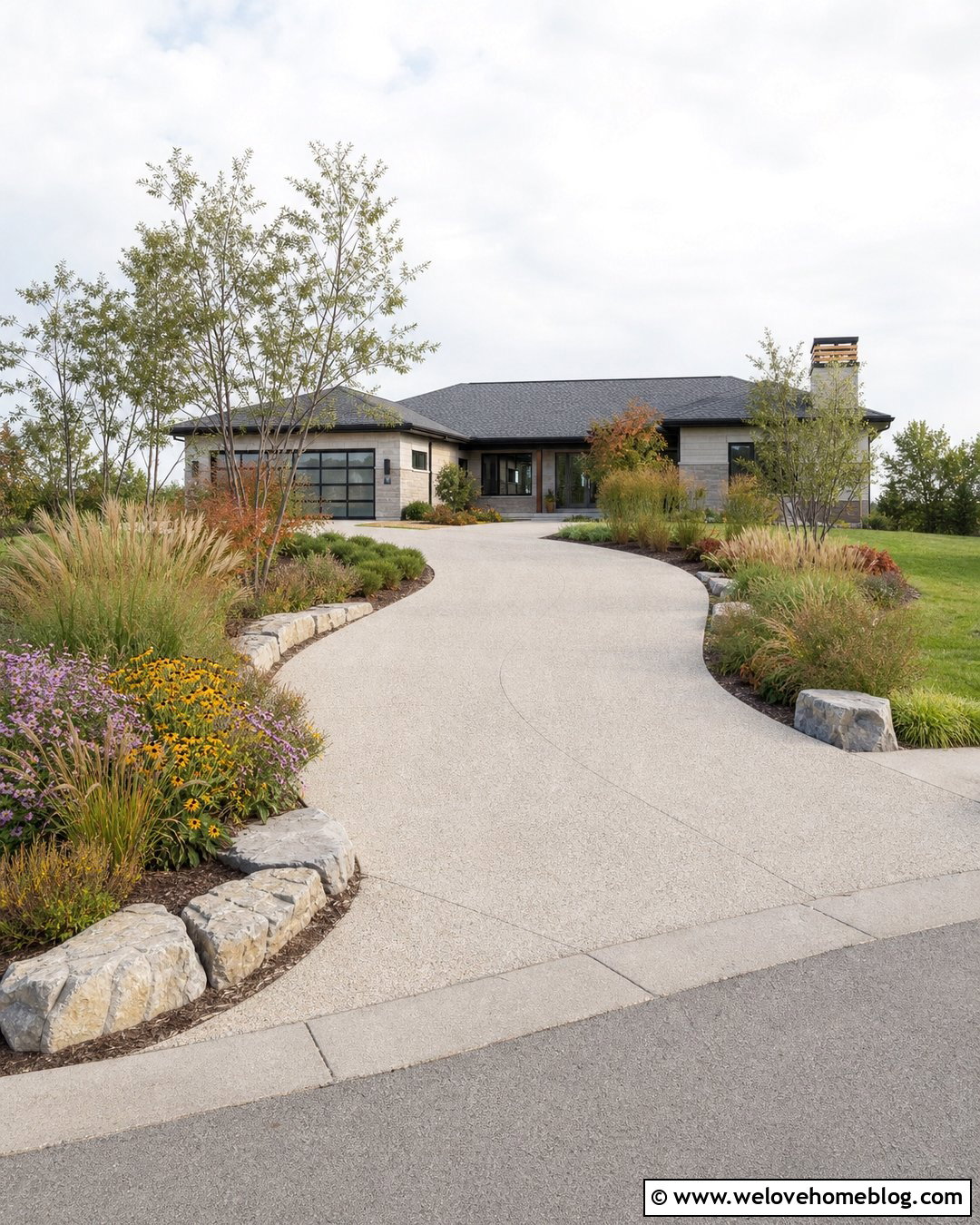
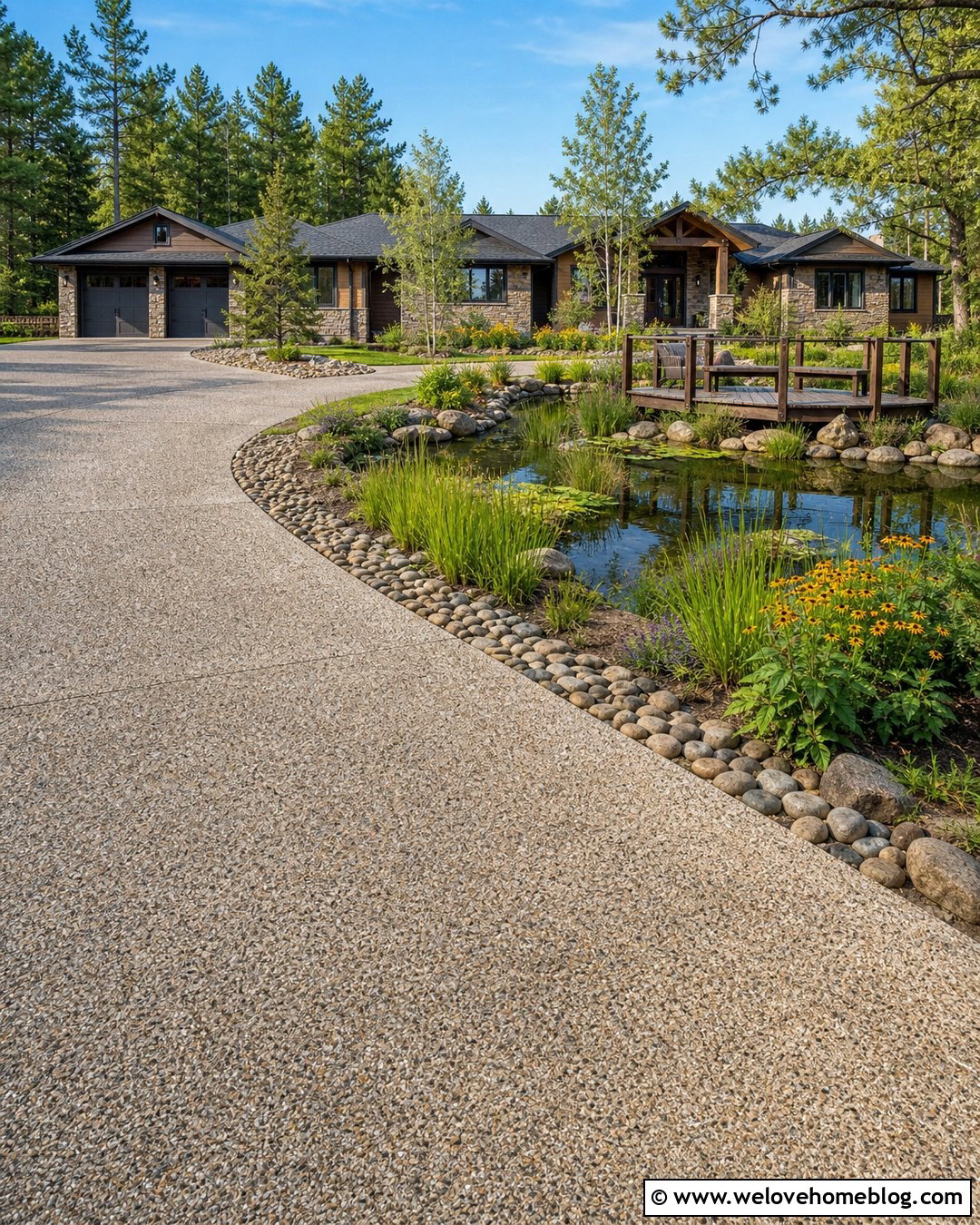
Ornamental grasses bring movement and texture to a long driveway without creating a rigid, overly formal border. A light exposed-aggregate concrete surface works beautifully with broad beds of switchgrass, little bluestem, sedges, and flowering perennials. Arrange the plants in generous drifts rather than single-file rows. Keep shorter selections near the pavement for visibility, then layer taller grasses farther back. Natural stone edging provides a clean transition while preserving the relaxed appearance. Add small multi-stem trees at key bends and near the house to interrupt the long horizontal line. This design complements modern ranch homes, prairie-inspired architecture, and contemporary farmhouses. Select noninvasive grasses suited to the local climate, and cut them back according to their seasonal requirements to preserve a fresh, intentional look.
6. Long Driveway With Stone Walls
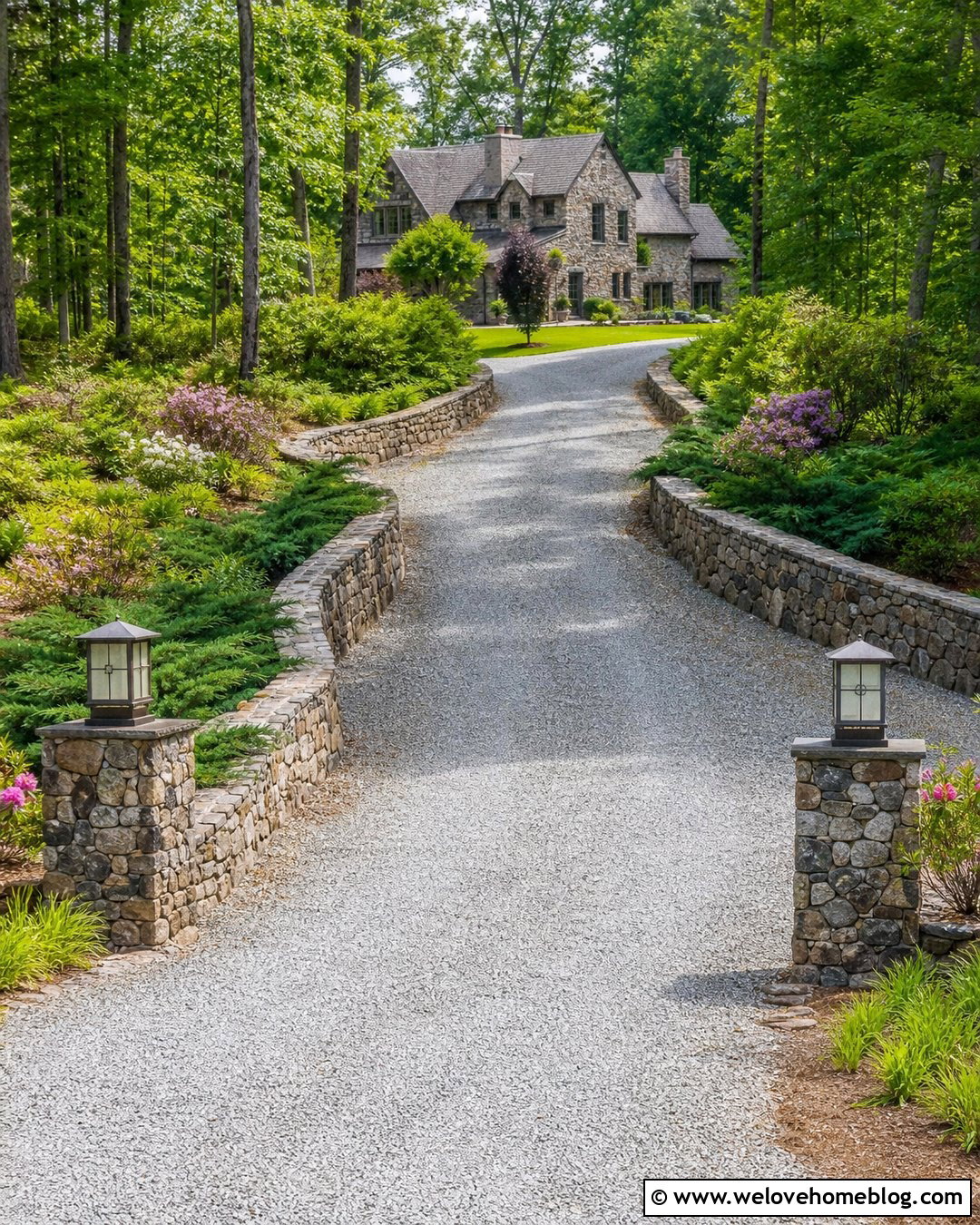
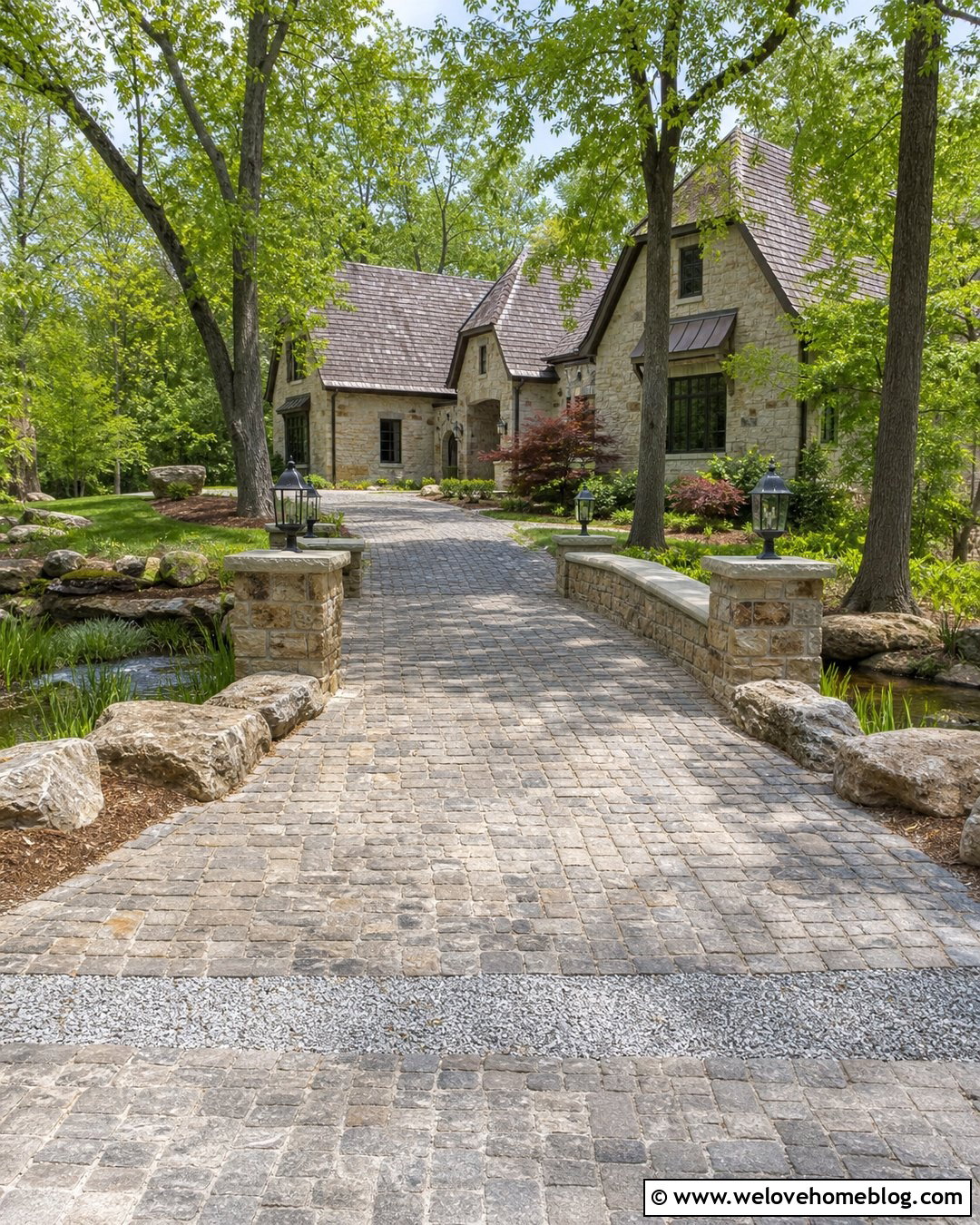
Low stone walls can define a long driveway while connecting it to a rural or traditional landscape. Pair a gray crushed-stone driveway with walls built from locally appropriate fieldstone. Keep the walls low enough to preserve visibility and set them beyond a usable gravel shoulder. Rather than lining every foot, place wall sections near the road entrance, along slopes, and beside important curves. Fill the spaces behind them with spreading junipers, flowering shrubs, ferns, or drought-tolerant perennials suited to the site. Allow selected sections to open into lawn or woodland so the design does not feel enclosed. Matching stone pillars near the house can repeat the material and complete the approach. This rugged combination looks especially natural beside cabins, country houses, and stone-front homes.
7. Long Driveway With Landscape Lighting
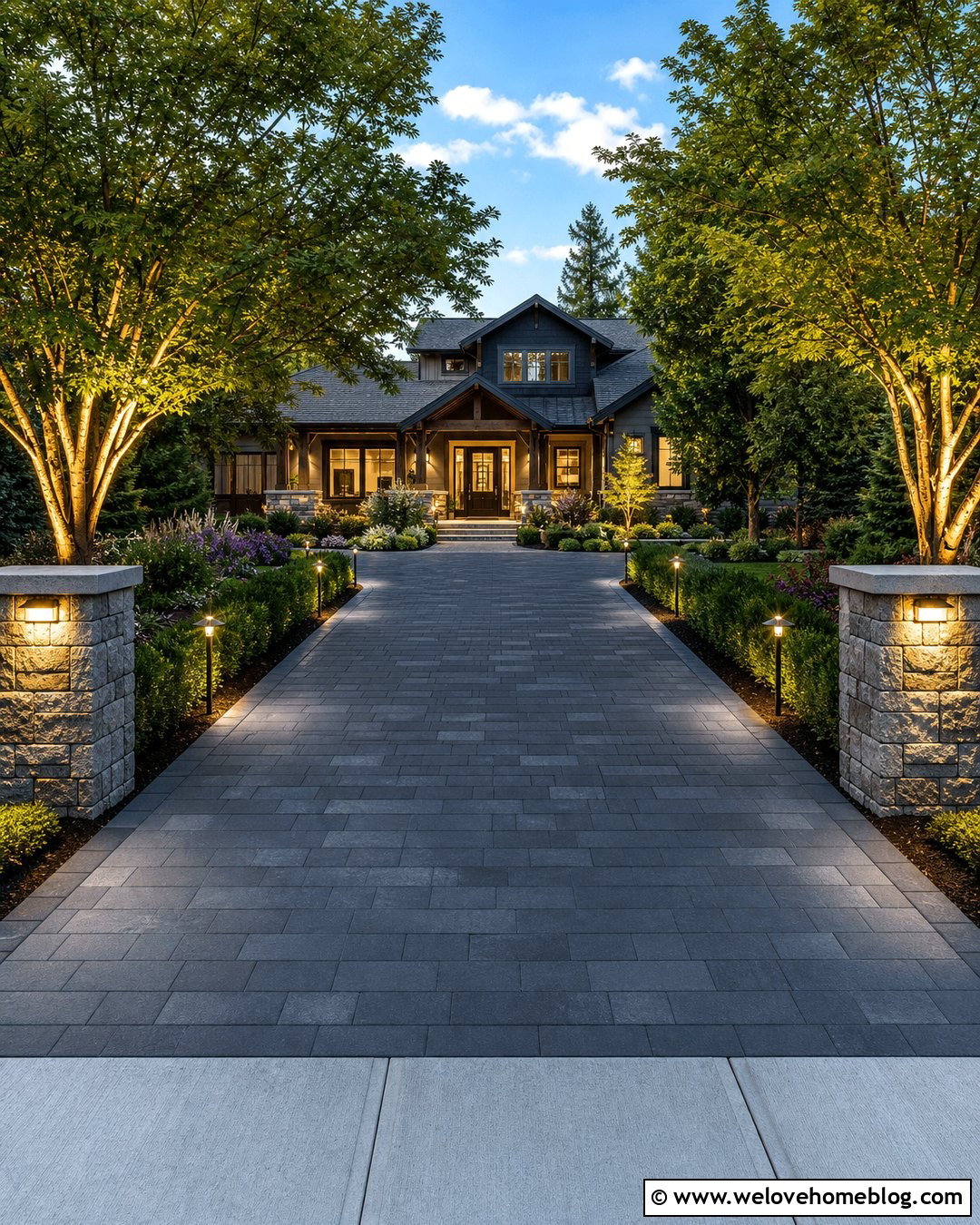
Thoughtful lighting makes a long driveway easier to follow while giving the landscaping a polished appearance. Begin with a charcoal paver driveway bordered by low evergreen shrubs, flowering perennials, and evenly spaced ornamental trees. Install shielded, low-voltage fixtures along important curves, grade changes, intersections, and the final approach to the garage. Rather than creating an airport-runway effect, alternate subtle path lights with carefully aimed uplights beneath selected trees. Keep fixtures away from tire paths and mowing zones. Warm but clear illumination should guide movement without shining toward the road, neighboring homes, or drivers’ eyes. During daylight, dark bronze fixtures disappear into mulch beds and foliage. At the entrance, matching masonry pillars and understated gate lights connect the long illuminated approach to a modern Craftsman house.
8. Long Driveway With Rain Gardens
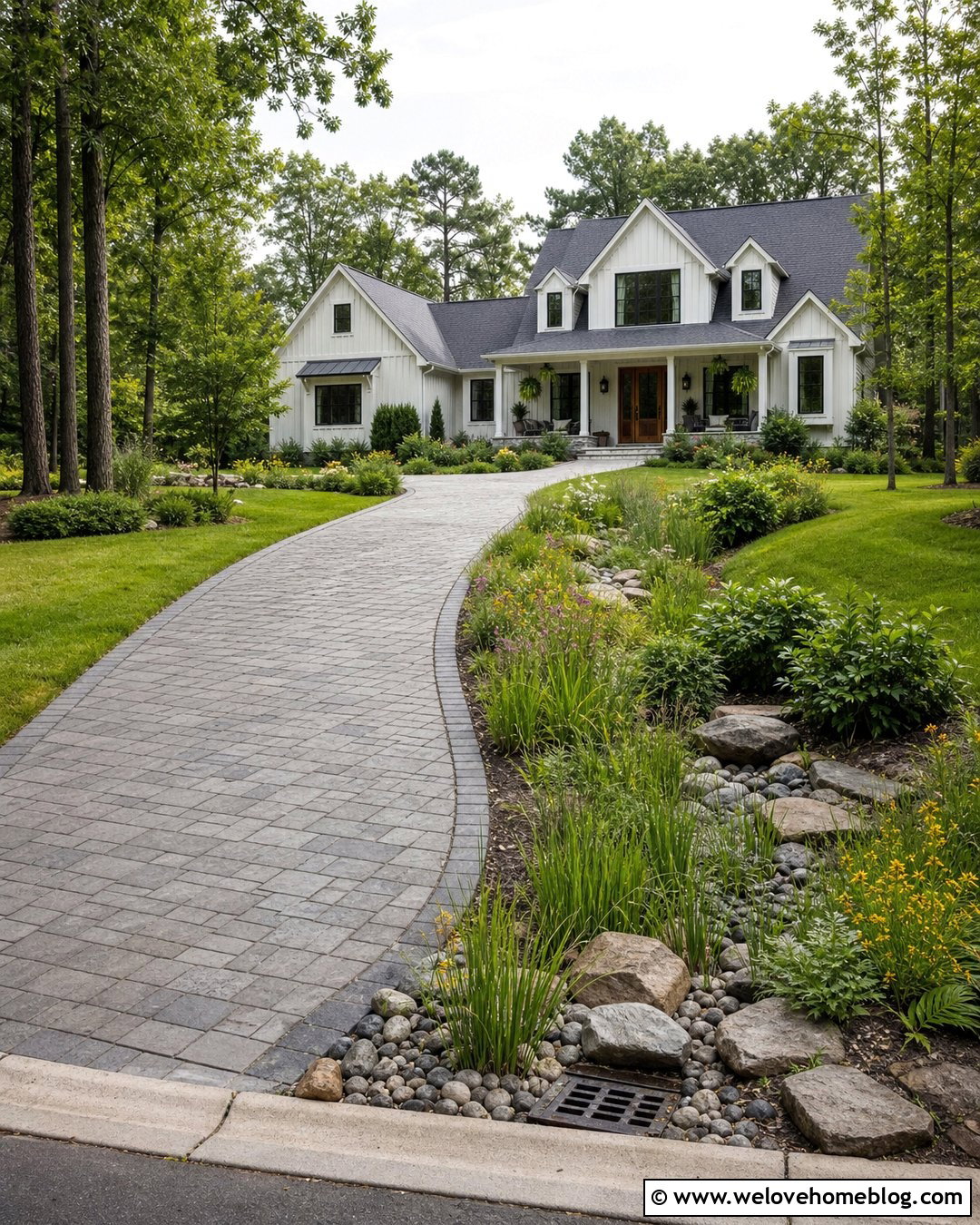
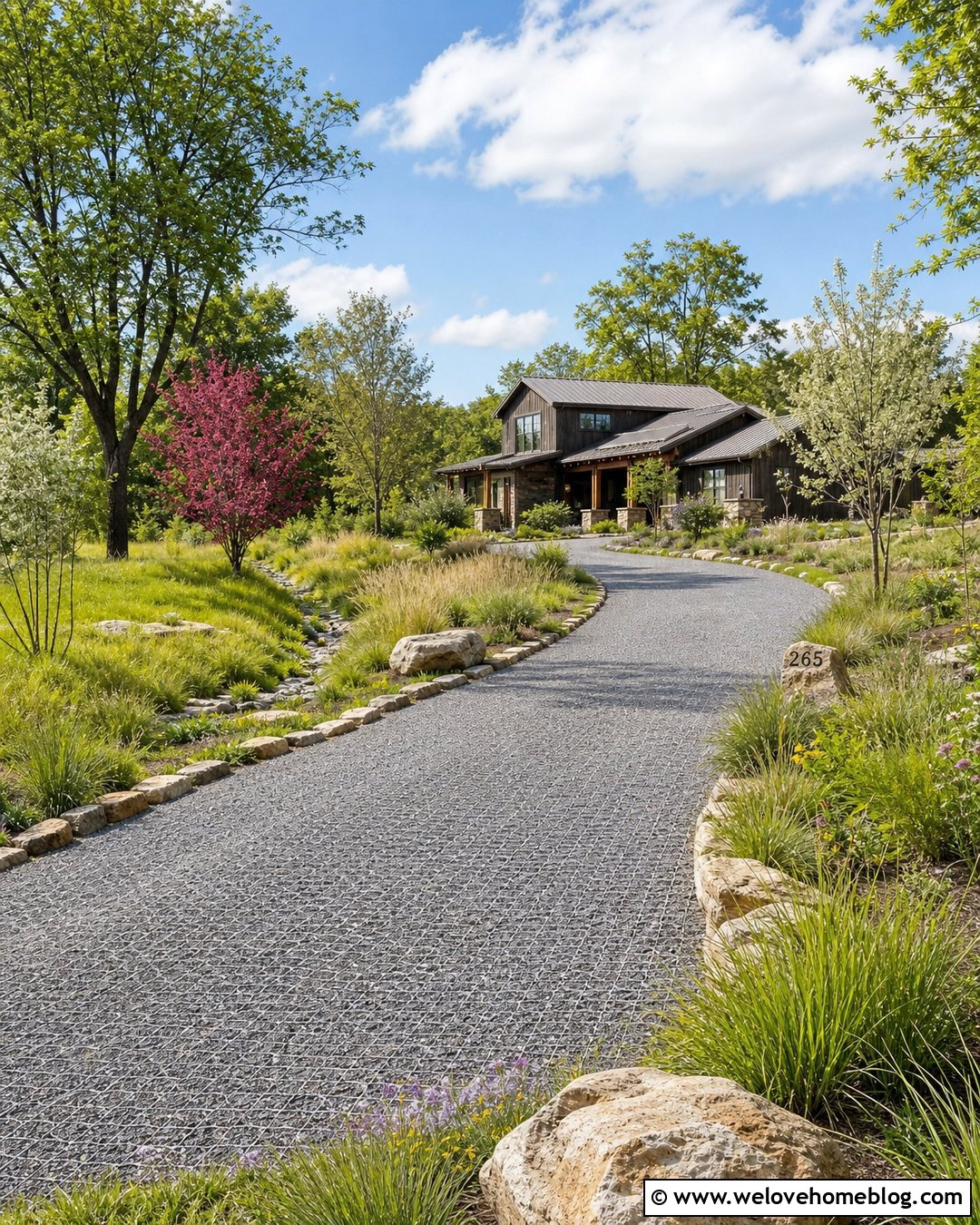
A rain-garden design can make drainage part of the landscape instead of treating it as an afterthought. Use a permeable paver driveway with shallow planted basins positioned on the downhill side of the pavement. Direct runoff only where the grading and drainage plan safely allow it, keeping water away from foundations and neighboring property. Fill each basin with regionally suitable plants that tolerate temporary moisture as well as drier periods. Decorative river rock can define inlet areas, while sedges, flowering perennials, and compact shrubs soften the edges. Repeat smaller basins along the route rather than constructing one oversized ditch. A grass or stone buffer beside the pavers keeps soil off the driving surface. Proper grading and stormwater planning are especially important on long paved runs. ()
9. Long Driveway With Native Plants
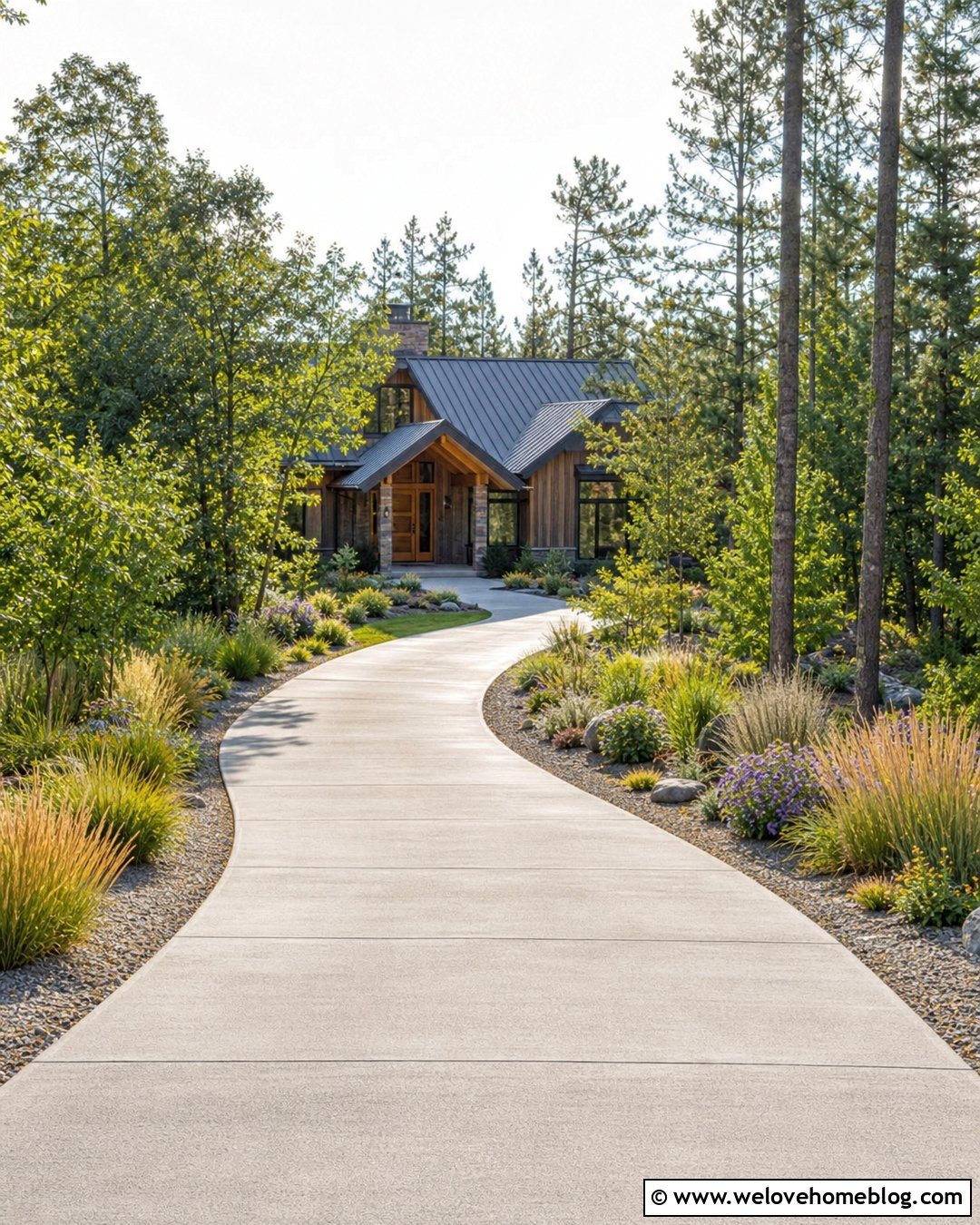
Native planting can help a long driveway blend naturally into the surrounding property. Choose a warm gray concrete surface with a narrow gravel shoulder, then build irregular beds that follow the driveway’s curves. Use locally native grasses, flowering perennials, shrubs, and small trees in repeating communities. Plant lower species near the pavement and taller material farther back to maintain visibility. Mulch young beds carefully until plants fill in and suppress open soil. Include occasional mown lawn paths so the landscape remains accessible for maintenance. Near the house, make the arrangement slightly more structured with defined stone edging and evergreen foundation plants. This gradual change from loose roadside planting to refined home landscaping creates a convincing arrival. Always match selections to local soil, rainfall, sunlight, and winter conditions.

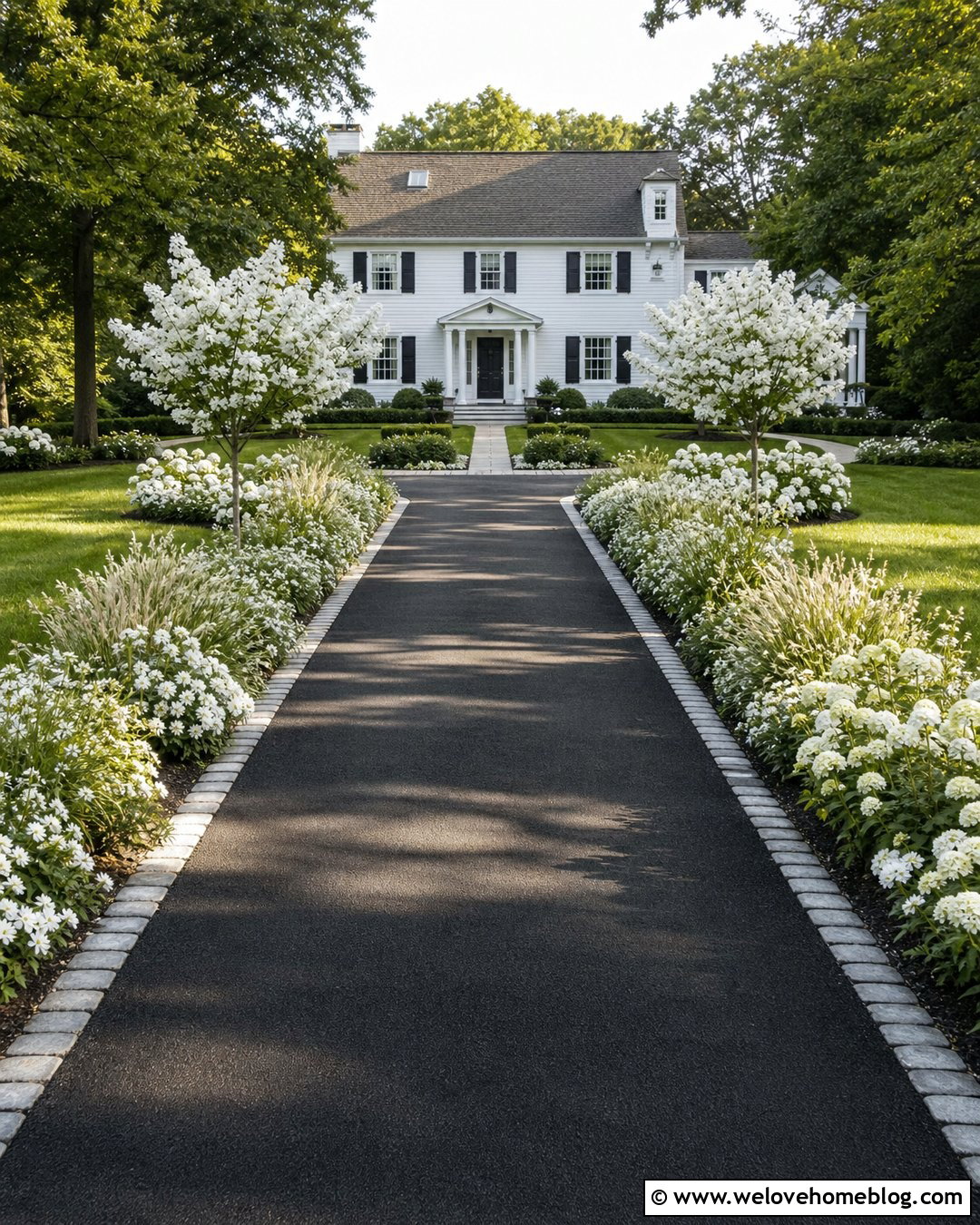
10. Long Driveway With Lavender Borders
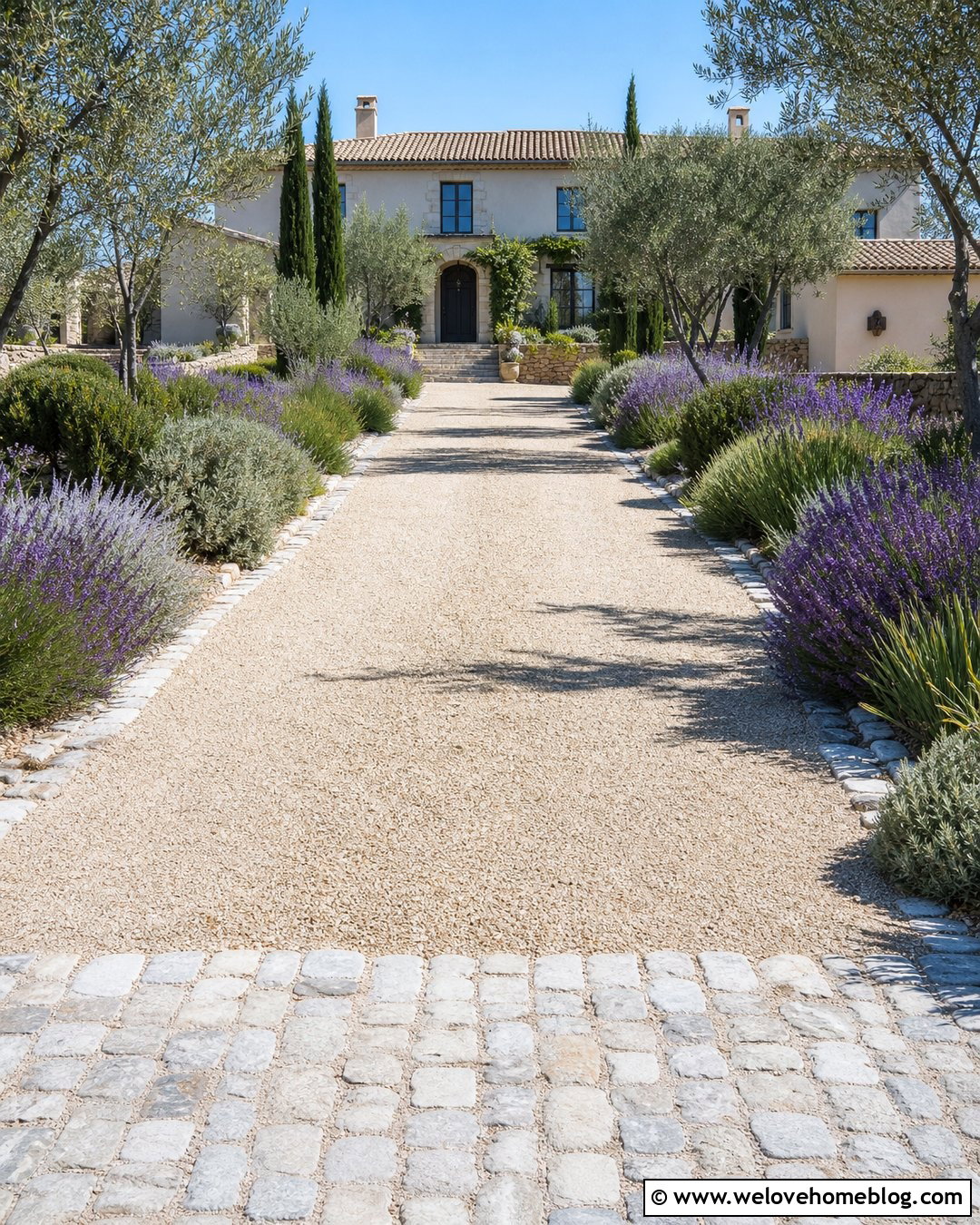
Lavender borders give a sunny long driveway a simple Mediterranean or cottage character. Pair pale pea gravel with cobblestone edging and plant broad lavender drifts along selected sections rather than forcing them down the entire route. The planting needs excellent drainage, generous sunlight, and enough setback to avoid tires and snow-removal damage. Mix lavender with silver-foliaged perennials, compact ornamental grasses, and low evergreen shrubs to extend the display beyond its flowering season. Add small olive-like ornamental trees where the climate permits, or substitute drought-tolerant native trees with similar airy forms. Near the house, continue the cobblestone into a matching walkway and parking apron. This complete design looks especially attractive with stucco, stone, cottage, and European-inspired facades in bright, open landscapes.
11. Long Driveway With Split Rail Fence

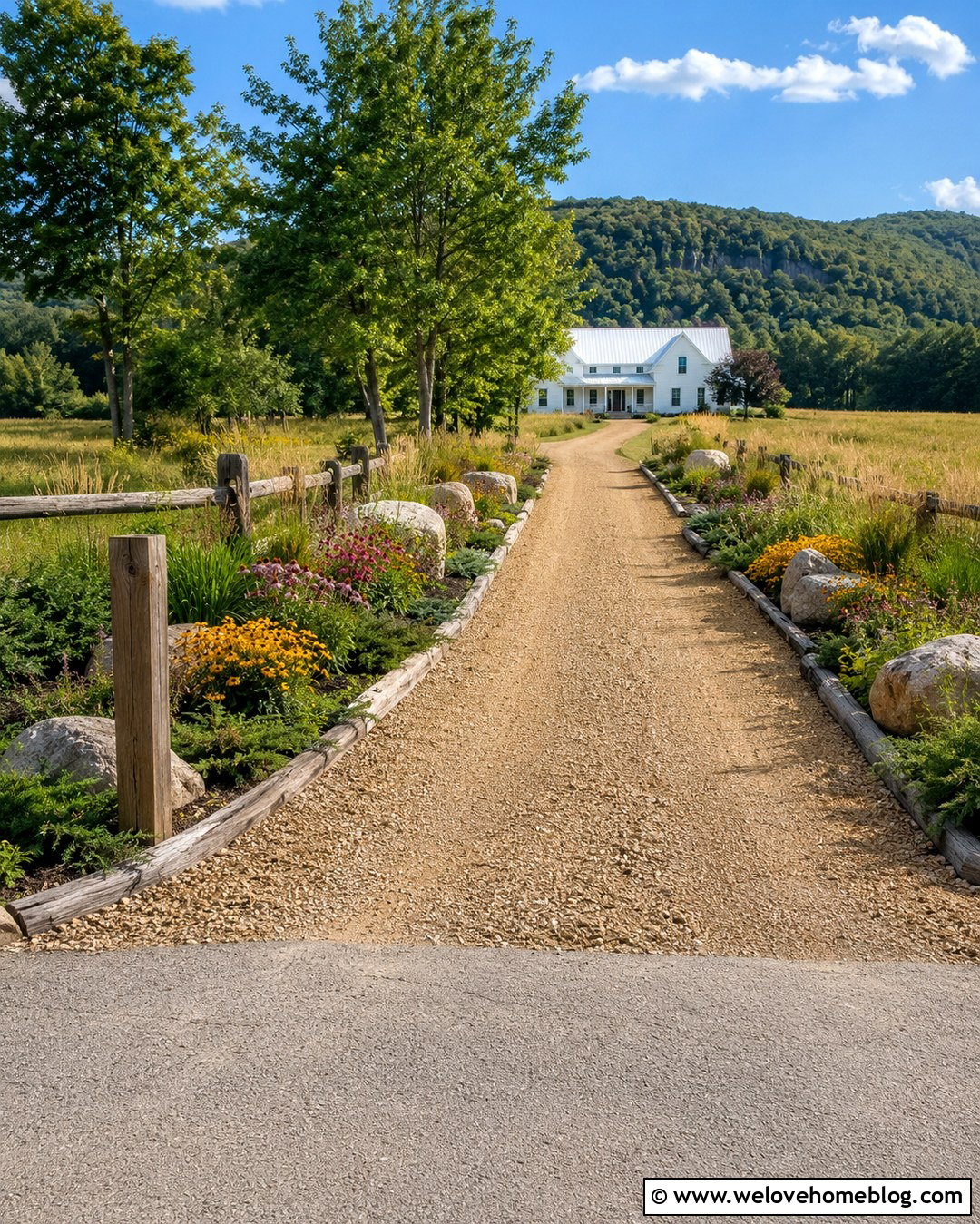
A split rail fence creates a relaxed boundary for a long rural driveway without blocking views. Use a gently curving tan gravel surface with a dark steel edge, then position the fence several feet beyond a simple grass shoulder. Plant informal clusters of native shrubs, ornamental grasses, and wildflowers around selected fence sections. Avoid covering the entire fence with vines because the open rails are part of its appeal. At the road, widen the planting into two balanced entrance beds with sturdy evergreens and a clear address marker. Near the house, transition from meadow-like growth to mown lawn and more organized foundation beds. The repeated wood tone ties naturally to a farmhouse porch, barn-inspired garage, or rustic Craftsman exterior. Maintain clear sightlines wherever the driveway meets the public road.
12. Long Driveway With Brick Edging
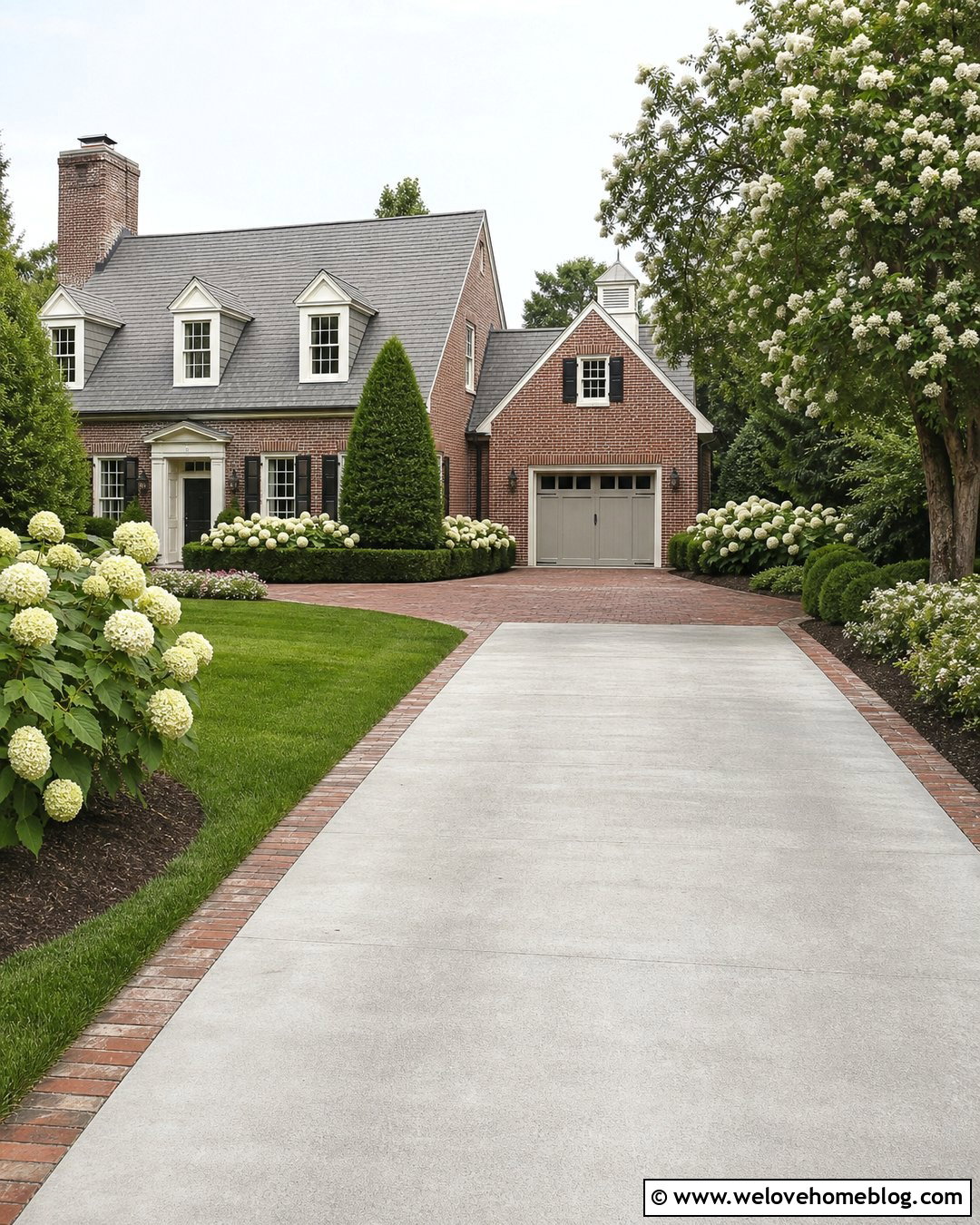
Brick edging brings warmth and definition to a long poured-concrete driveway. Choose a red or weathered clay brick that coordinates with the house, then install it as a flush soldier-course border along both sides. The edging should follow gentle driveway curves and widen into a decorative apron near the garage. Beyond the brick, use clean lawn panels interrupted by sweeping beds of hydrangeas, compact evergreens, and small flowering trees. A few repeated brick walkways can connect the driveway to the front door, side yard, and garden without introducing another material. Keep planting beds set back near parking areas so doors can open freely. This polished combination works with Colonial, Tudor, Cape Cod, and traditional brick homes. Proper base preparation helps the edging remain even under seasonal movement and vehicle pressure.
13. Long Driveway With Wildflower Meadows
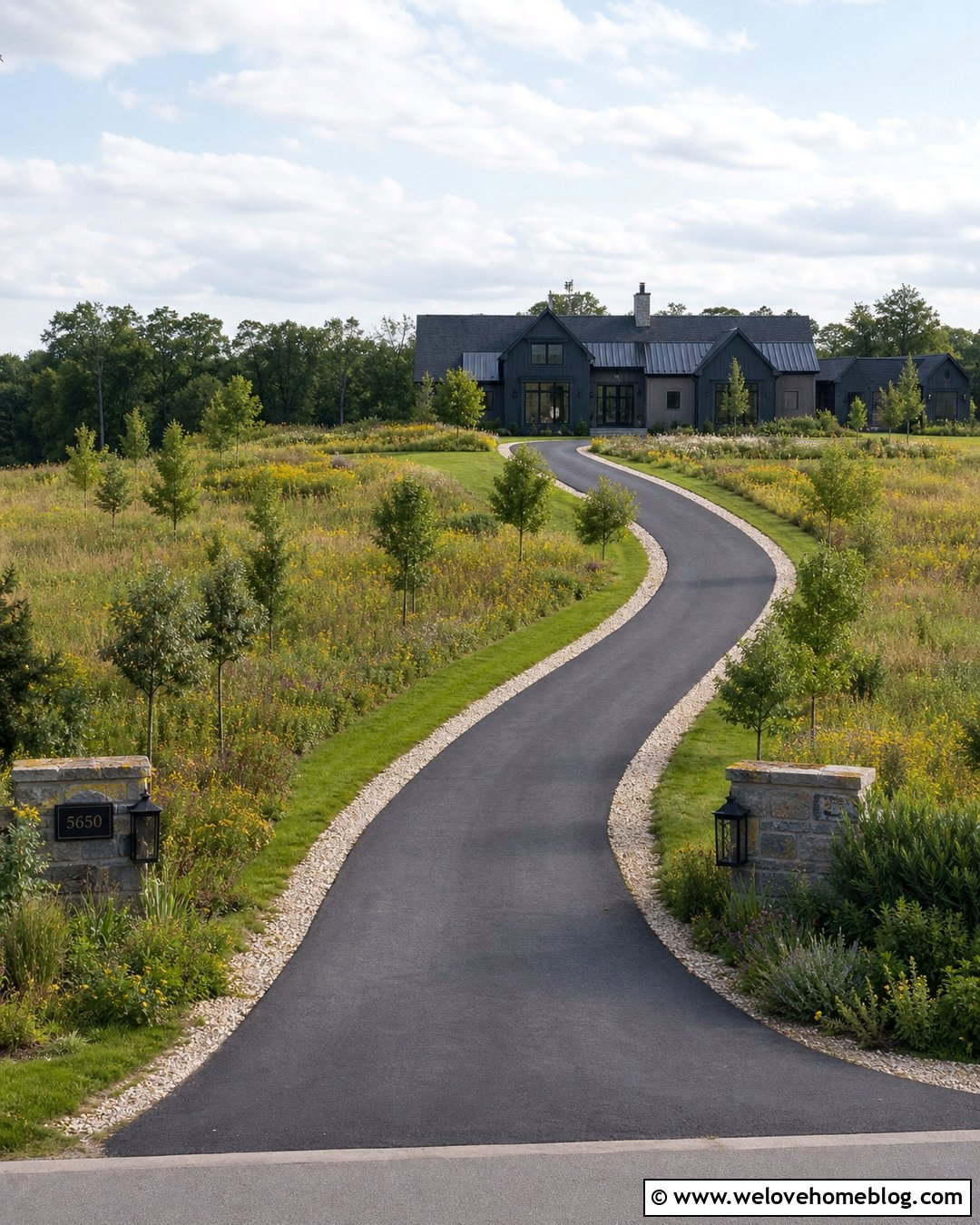
A wildflower meadow can soften a long driveway across a large country property while reducing the amount of closely mown lawn. Use a narrow black asphalt surface with crushed-stone shoulders, then establish meadow planting beyond a clearly maintained edge. Include native grasses and flowers selected for the site rather than relying on a generic seed mixture. A mown strip beside the driveway creates a tidy frame and improves visibility. Repeat clusters of small native trees at broad intervals to give the route structure. Near the entrance and house, use shorter plants and more defined beds so the landscape feels intentional. A curved or gently winding driveway strengthens the natural effect. This look works particularly well with country houses, contemporary cabins, converted barns, and modern farmhouses surrounded by open acreage.
14. Long Driveway With Entry Pillars
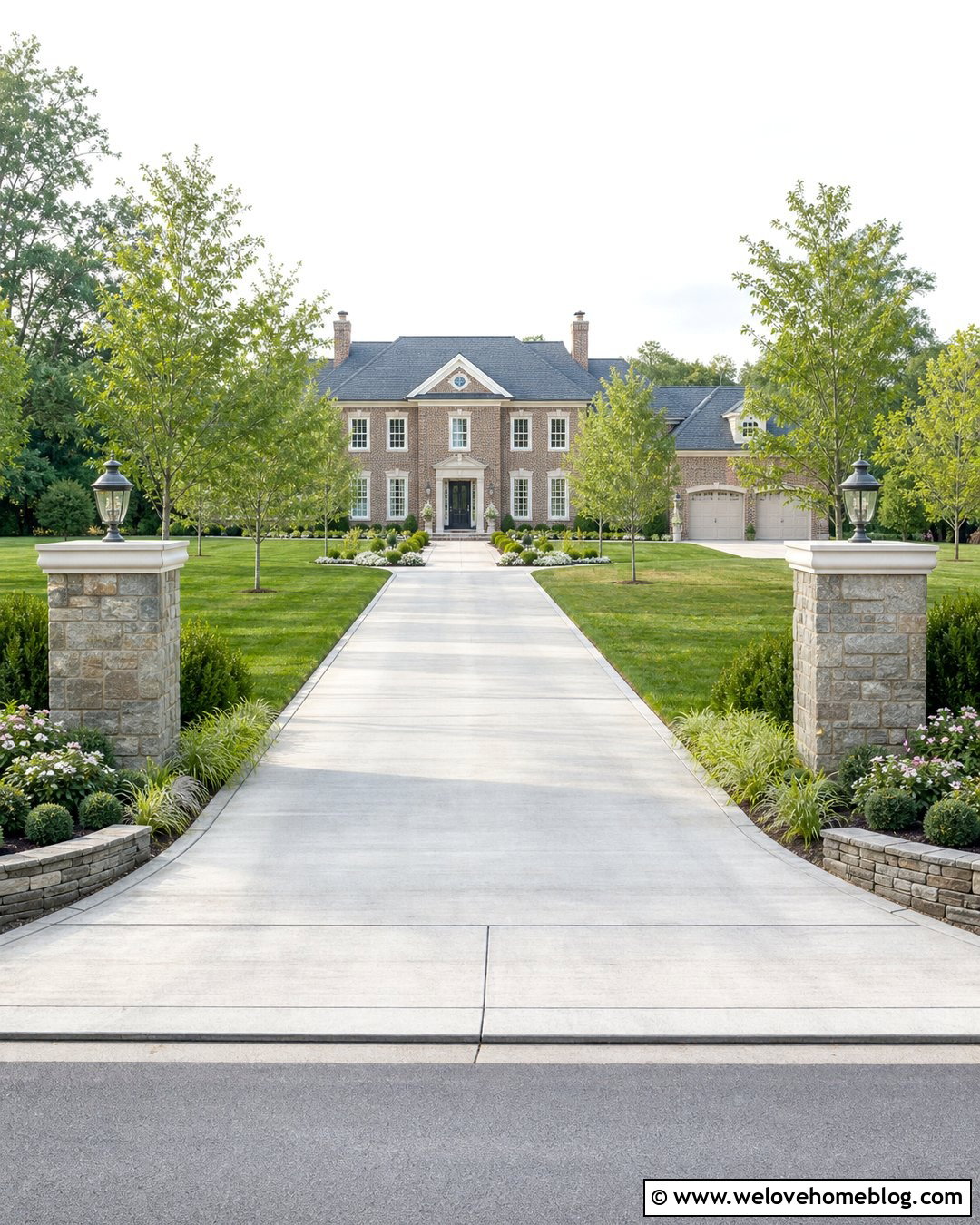
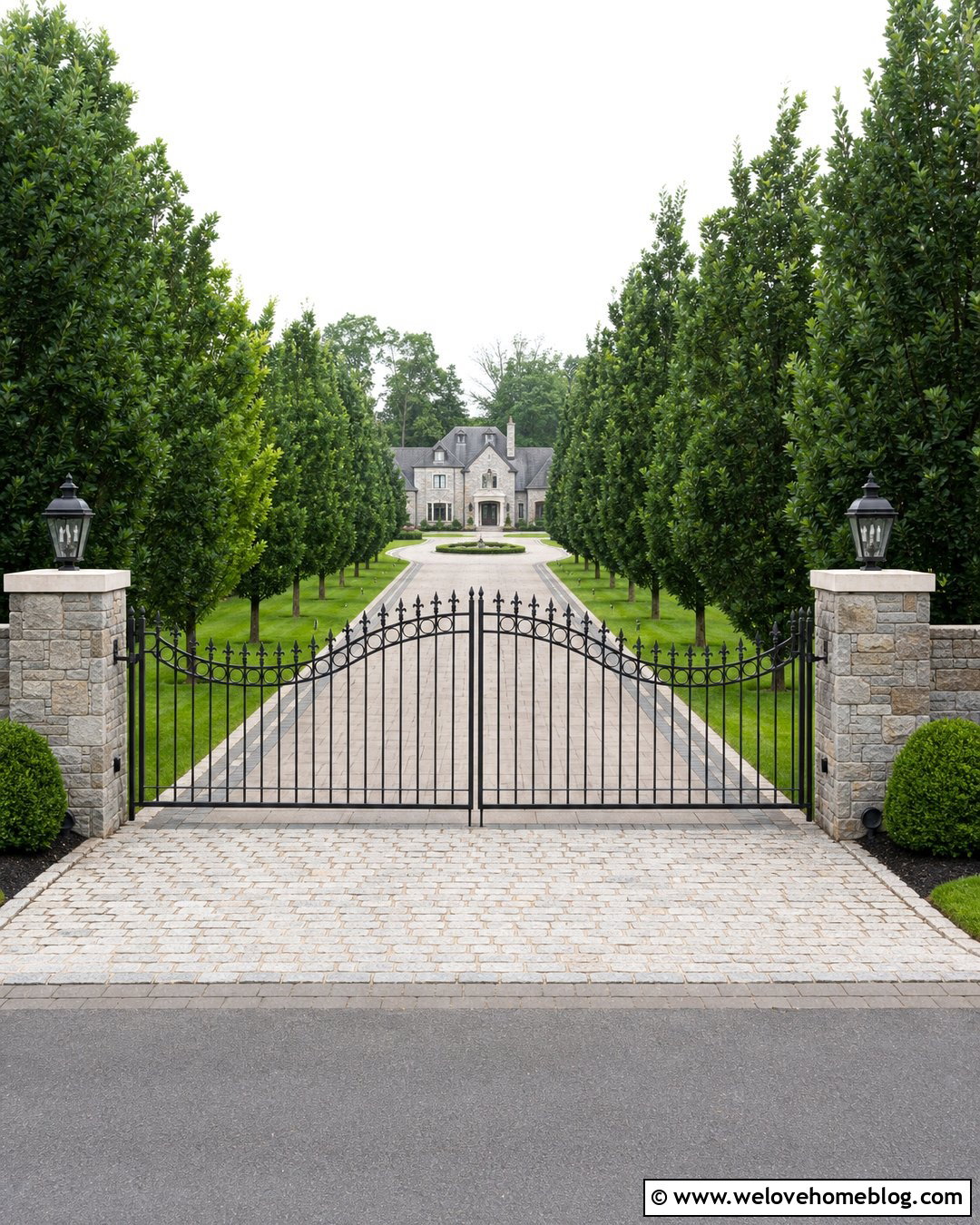
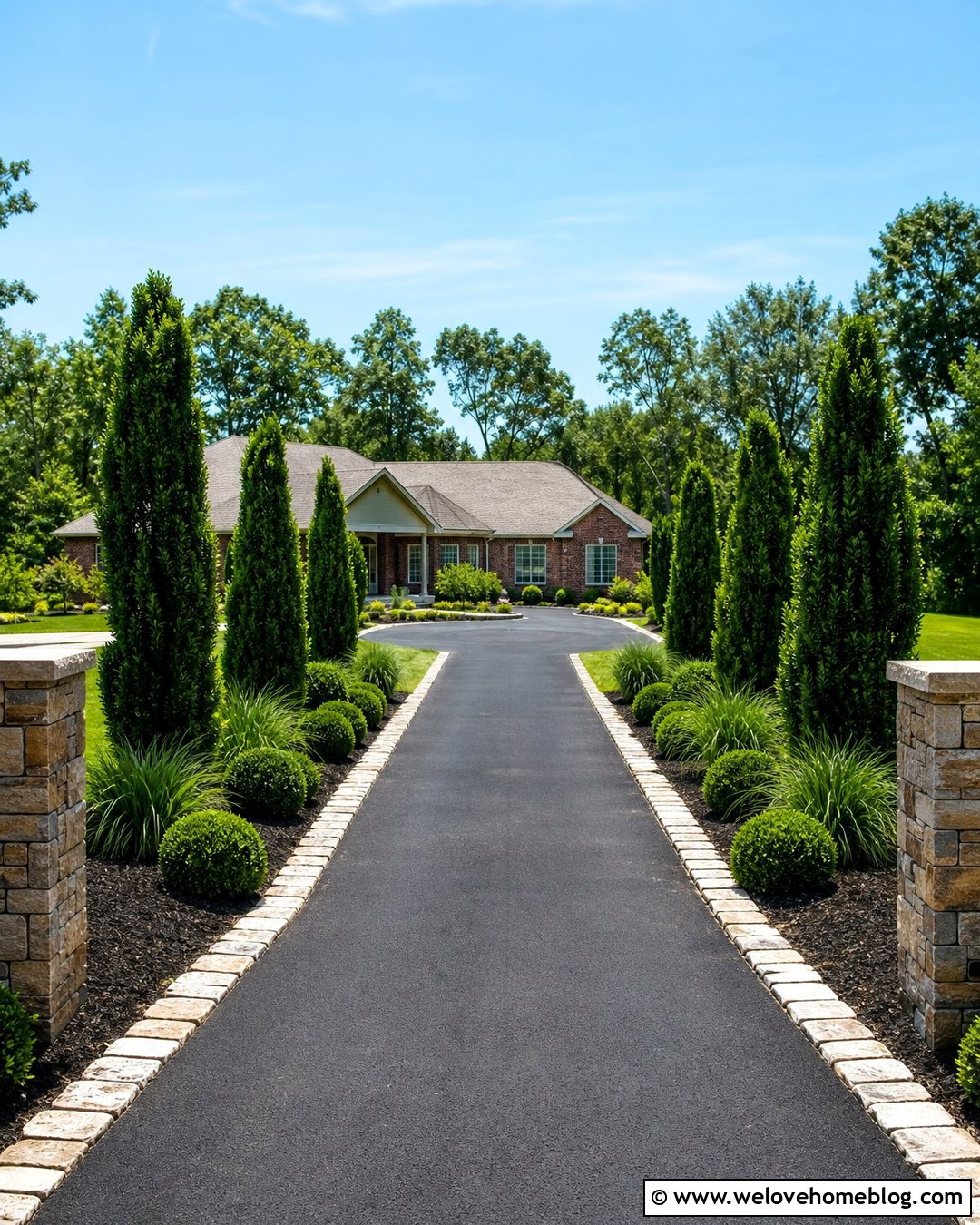
Strong entry pillars establish the beginning of a long driveway and introduce materials used near the house. Frame a straight light-gray concrete driveway with substantial brick or natural-stone pillars placed outside required vehicle clearance and road visibility areas. Add curved planting beds around their bases using compact evergreens, ornamental grasses, and low seasonal flowers. Continue a matching masonry edge for a short distance before transitioning into open lawn and repeated trees. This prevents the entrance from looking disconnected from the rest of the route. An address plaque can be integrated clearly without overcrowding the pillars. Farther along, use fewer formal elements so attention remains on the entrance and distant house. Matching garage details, walkway pavers, or porch columns will make the complete property feel coordinated rather than pieced together.
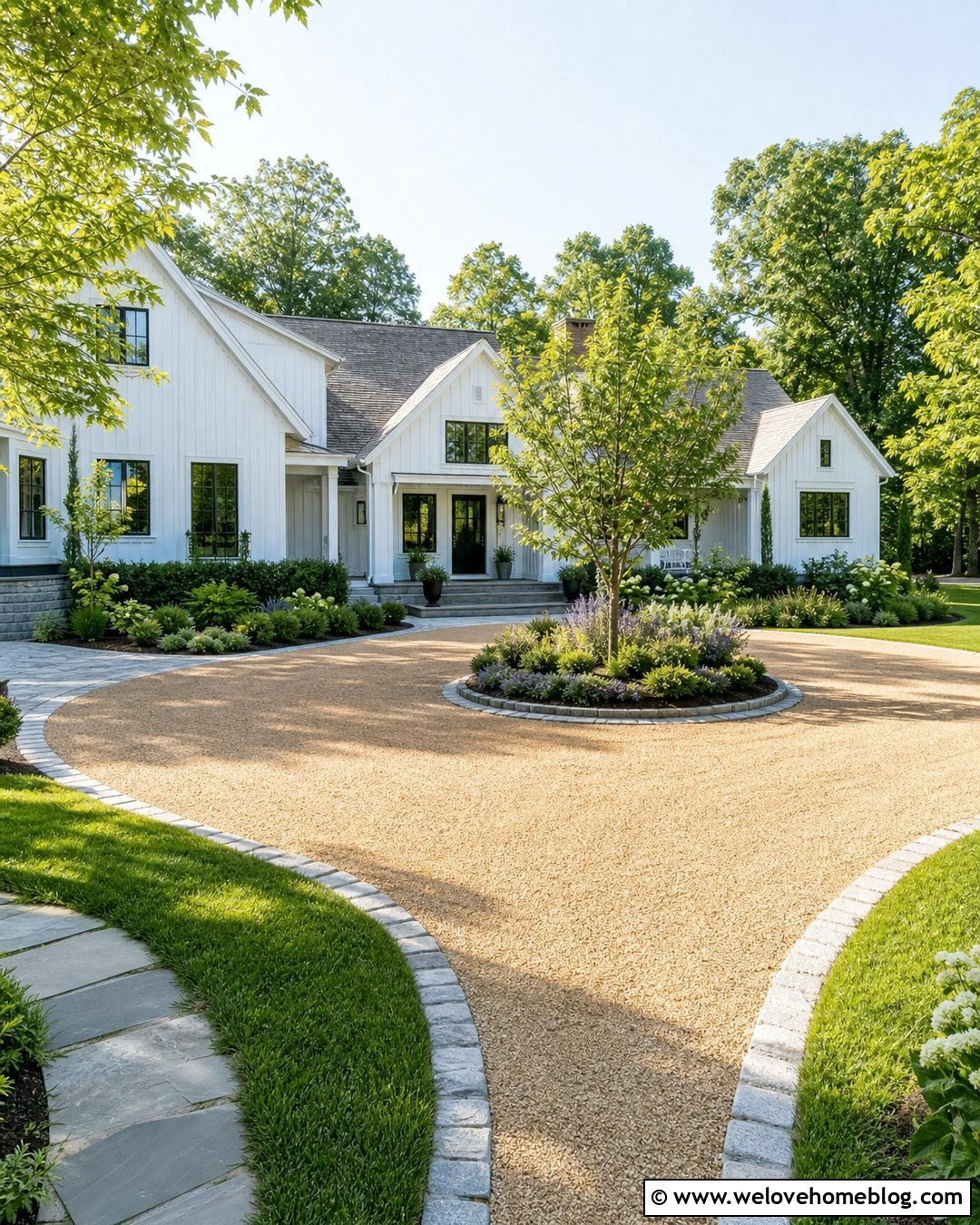
15. Long Driveway With Privacy Screening
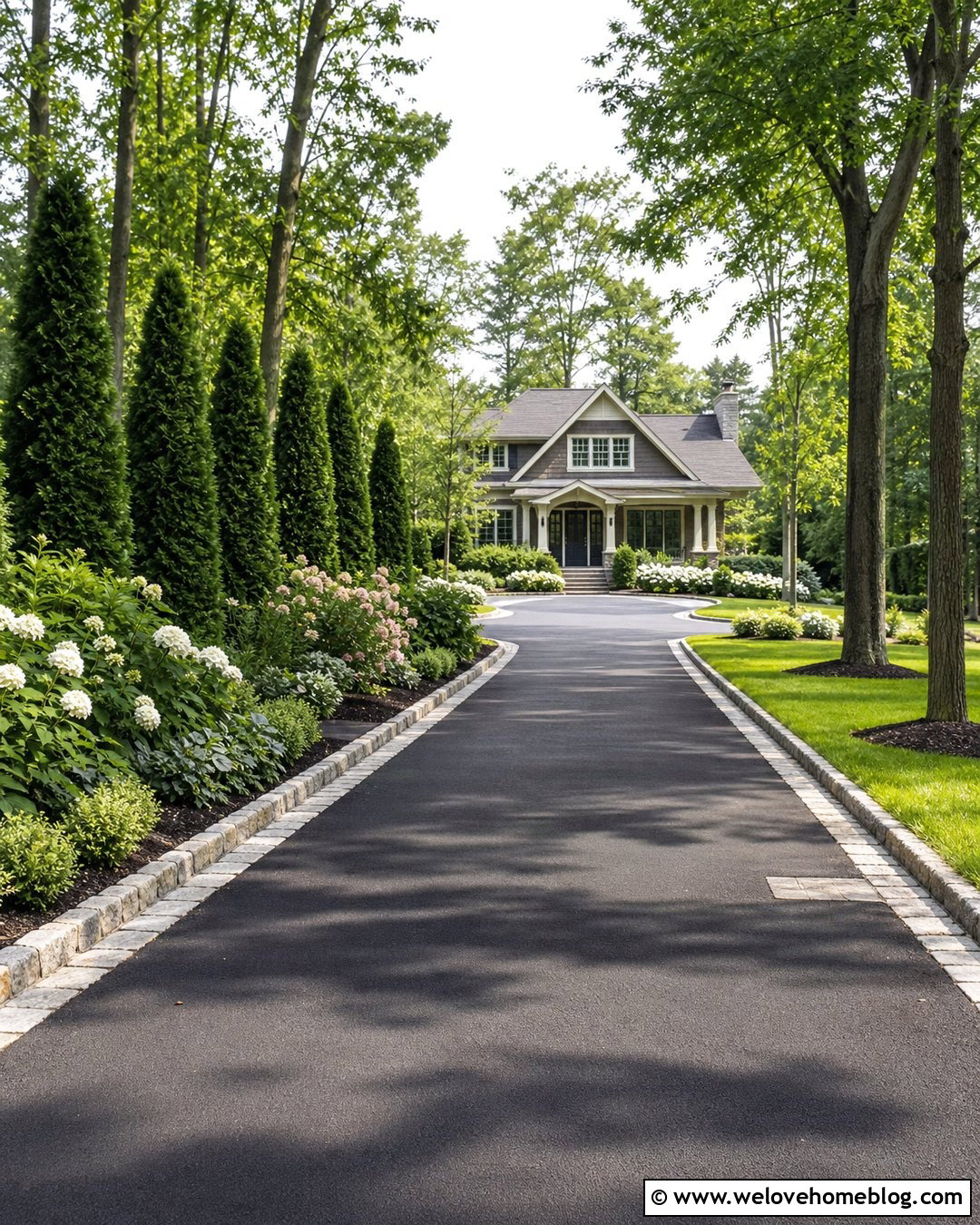
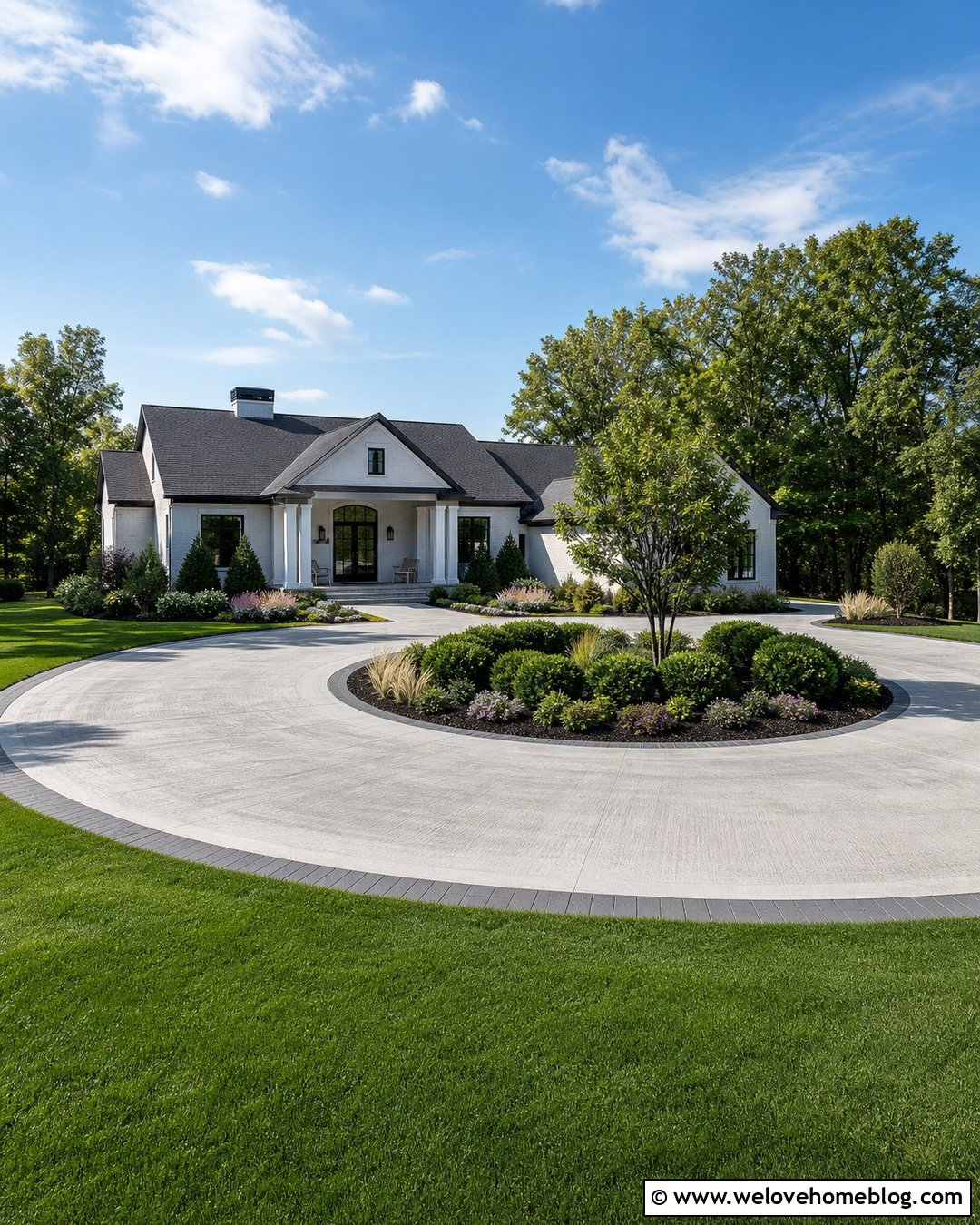
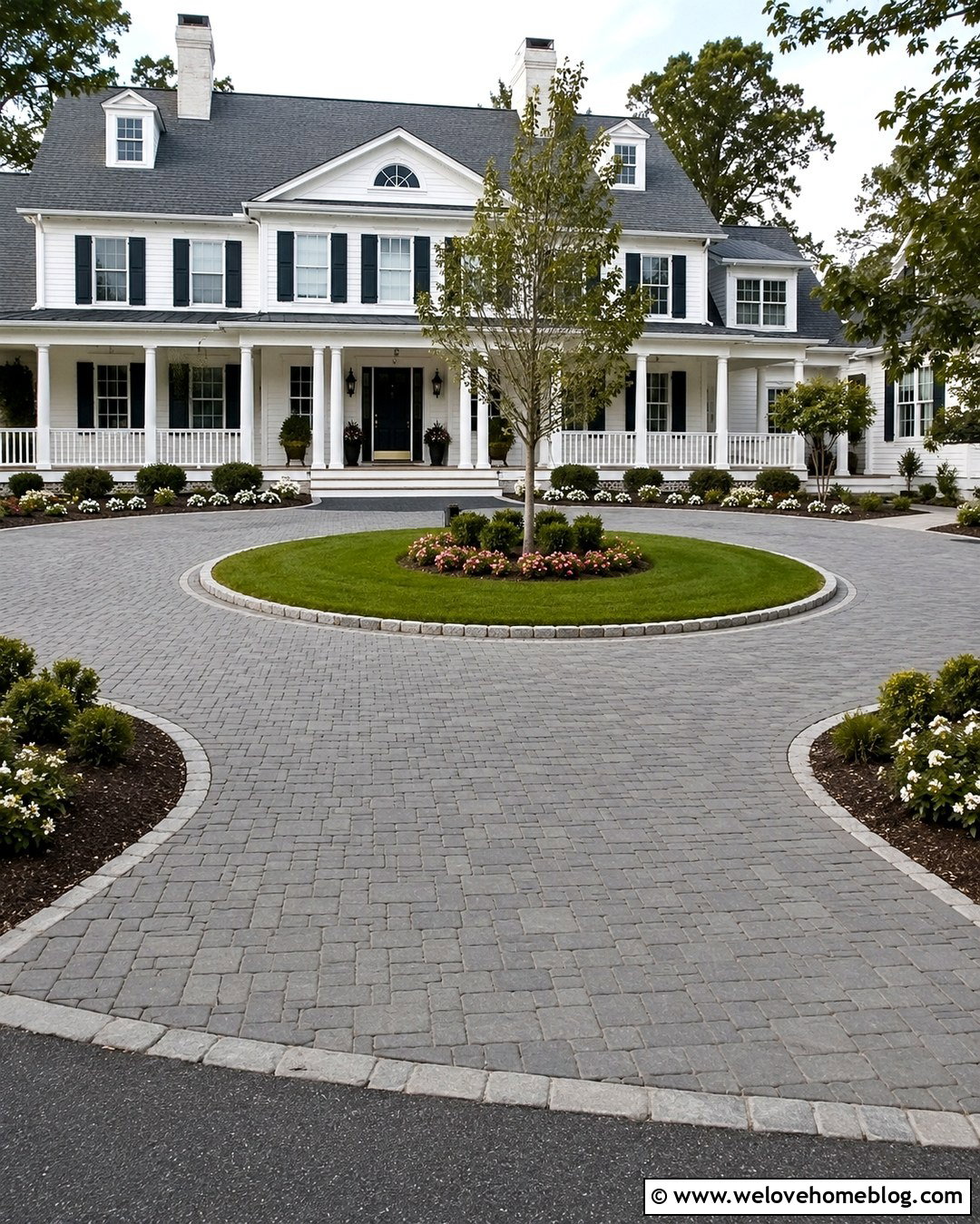
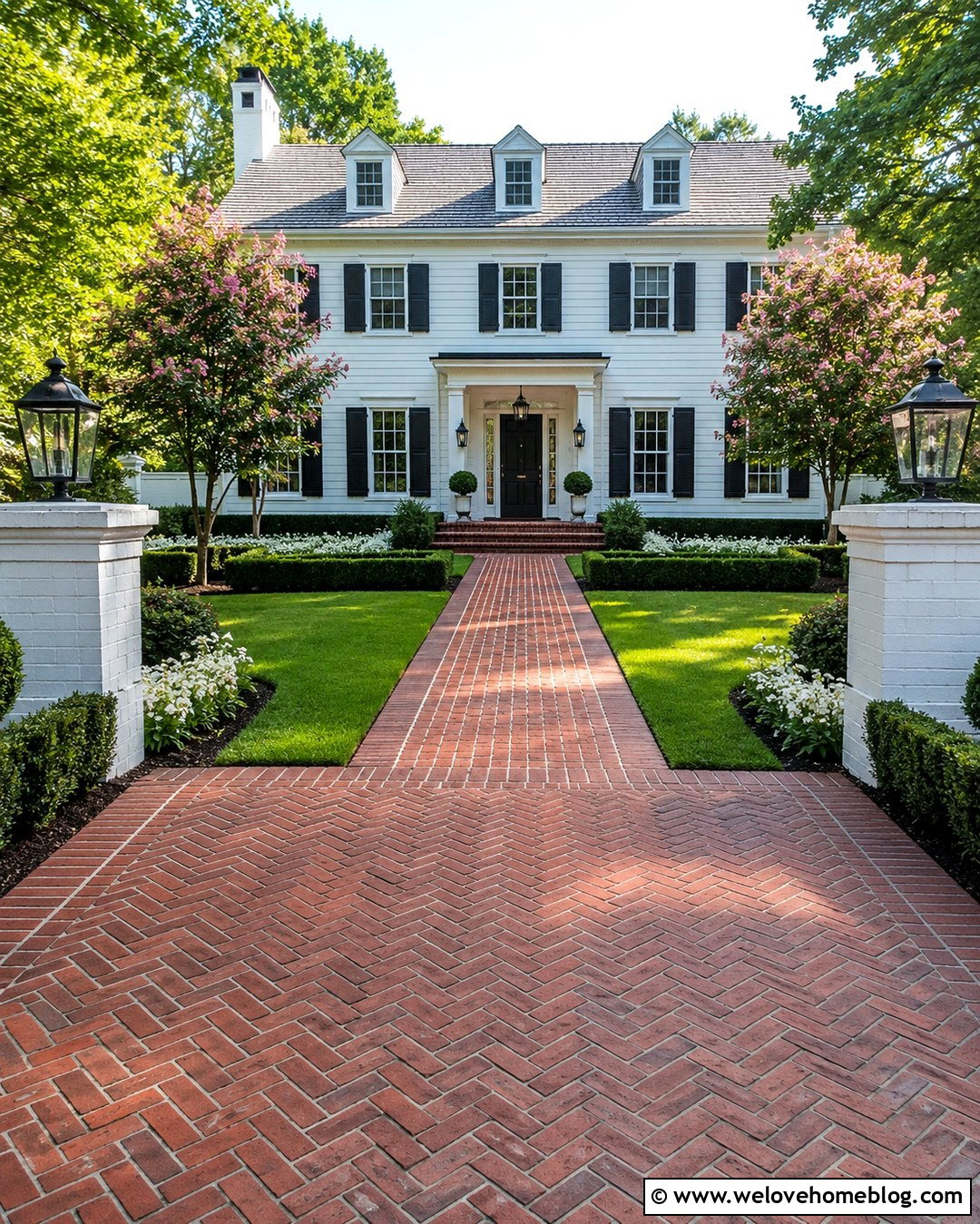
A long driveway beside neighboring property can gain privacy without becoming a narrow green tunnel. Pair a smooth black asphalt drive with mixed evergreen screening on the exposed side and more open landscaping on the opposite side. Layer columnar evergreens, medium flowering shrubs, and low groundcovers instead of planting one dense wall. Stagger the plants to create depth and allow healthy mature growth. On the open side, use lawn, widely spaced shade trees, or informal perennial beds to balance the visual weight. A natural-stone border protects the pavement edge and gives the mixed planting a clean base. Leave breaks around utility lines, drainage routes, gates, and turnaround areas. This approach suits suburban homes, flag lots, and rural properties where screening is needed along only part of the driveway.
16. Long Driveway With a Midway Focal Point
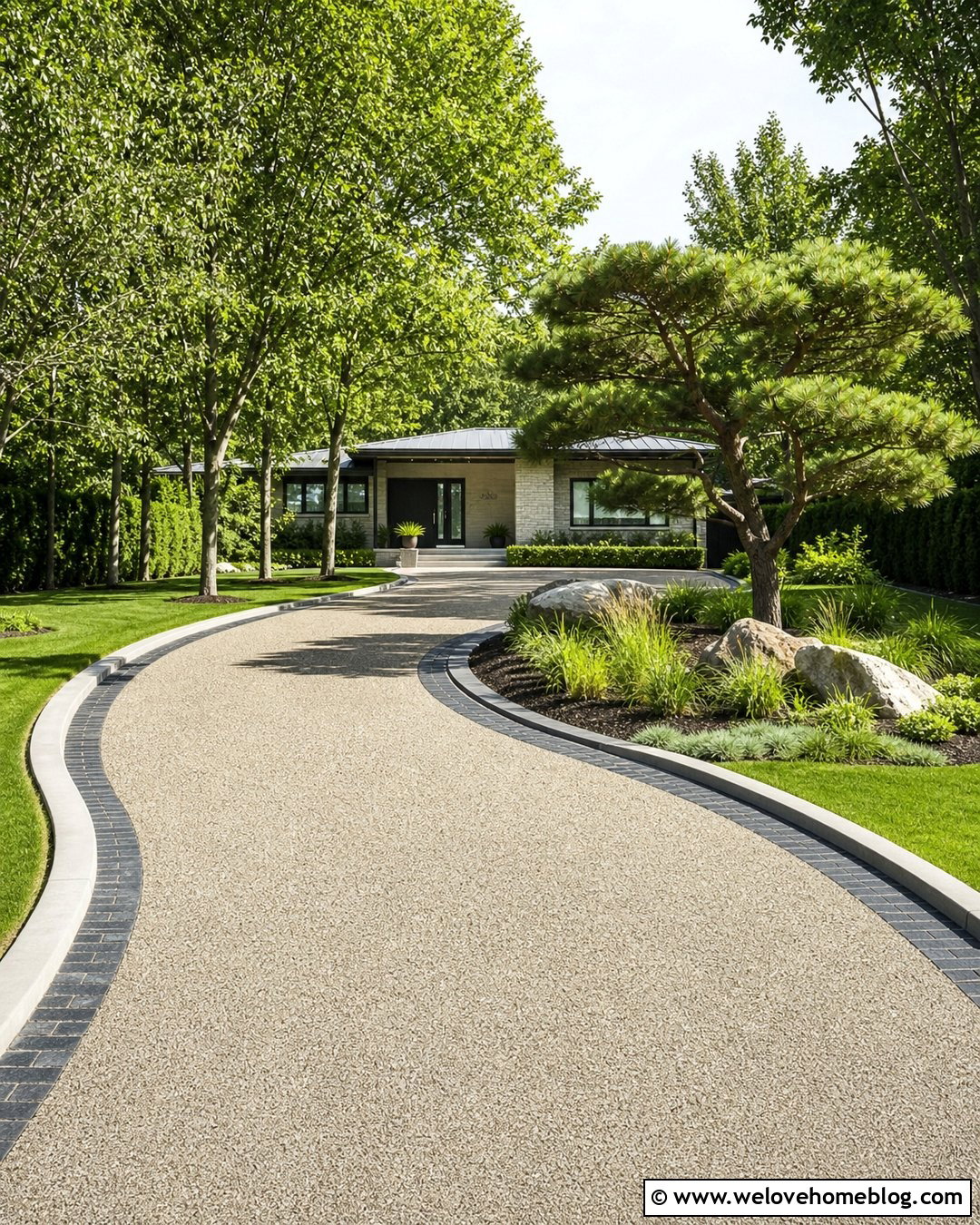
Breaking up a long approach with one strong focal point can make the route feel more purposeful. Use a curved resin-bound gravel driveway and create a broad landscaped bay at the midpoint. Center it on a specimen tree, large boulder grouping, or simple sculptural planter that is visible from both directions. Surround the feature with low ornamental grasses and groundcover so drivers retain clear sightlines. A contrasting paver ribbon can sweep around the bay and reconnect with the main driveway, visually marking the moment without narrowing the route. Repeat a smaller version of the planting near the house for continuity. The remaining driveway edges can stay simple with lawn and occasional trees. This layout complements contemporary, midcentury, and modern farmhouse homes on deep residential lots.
17. Long Driveway With a Grass Center Strip
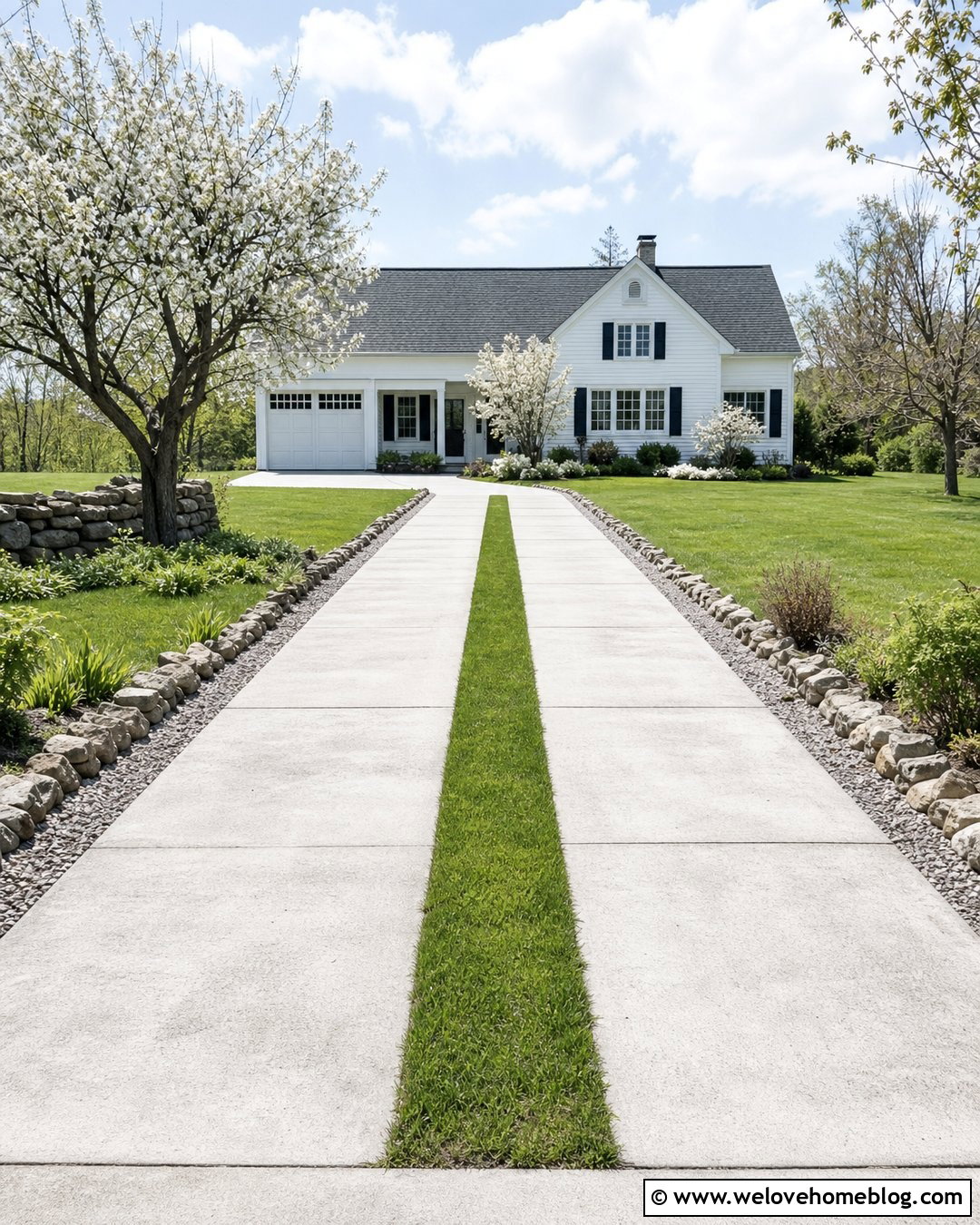
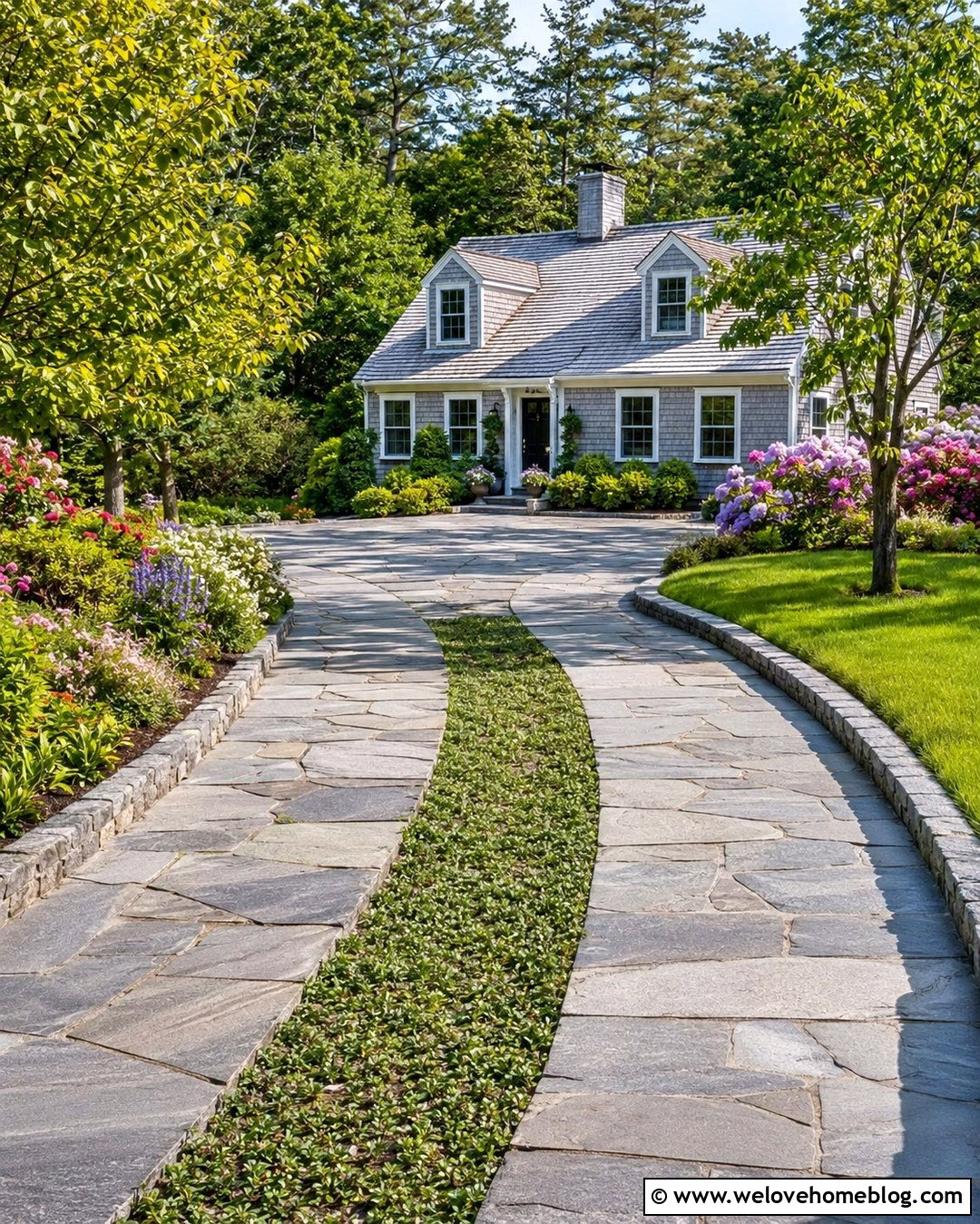
A grass center strip gives a long driveway an established country character while reducing the amount of solid paving. Build two durable concrete, brick, or gravel tire tracks with a well-drained strip of turf between them. The layout works best on a relatively straight private driveway where vehicles can remain aligned. Border the outer edges with fieldstone and simple perennial beds, leaving wider lawn areas at passing, parking, and turning points. Rows of small flowering trees can frame the route without making it overly formal. Near the garage, transition into a full-width paved apron that supports easier maneuvering. The center turf will need suitable soil, sunlight, and access for mowing. This complete look pairs naturally with cottages, farmhouses, historic homes, and relaxed wooded properties. ()
18. Long Driveway With Drought Tolerant Landscaping
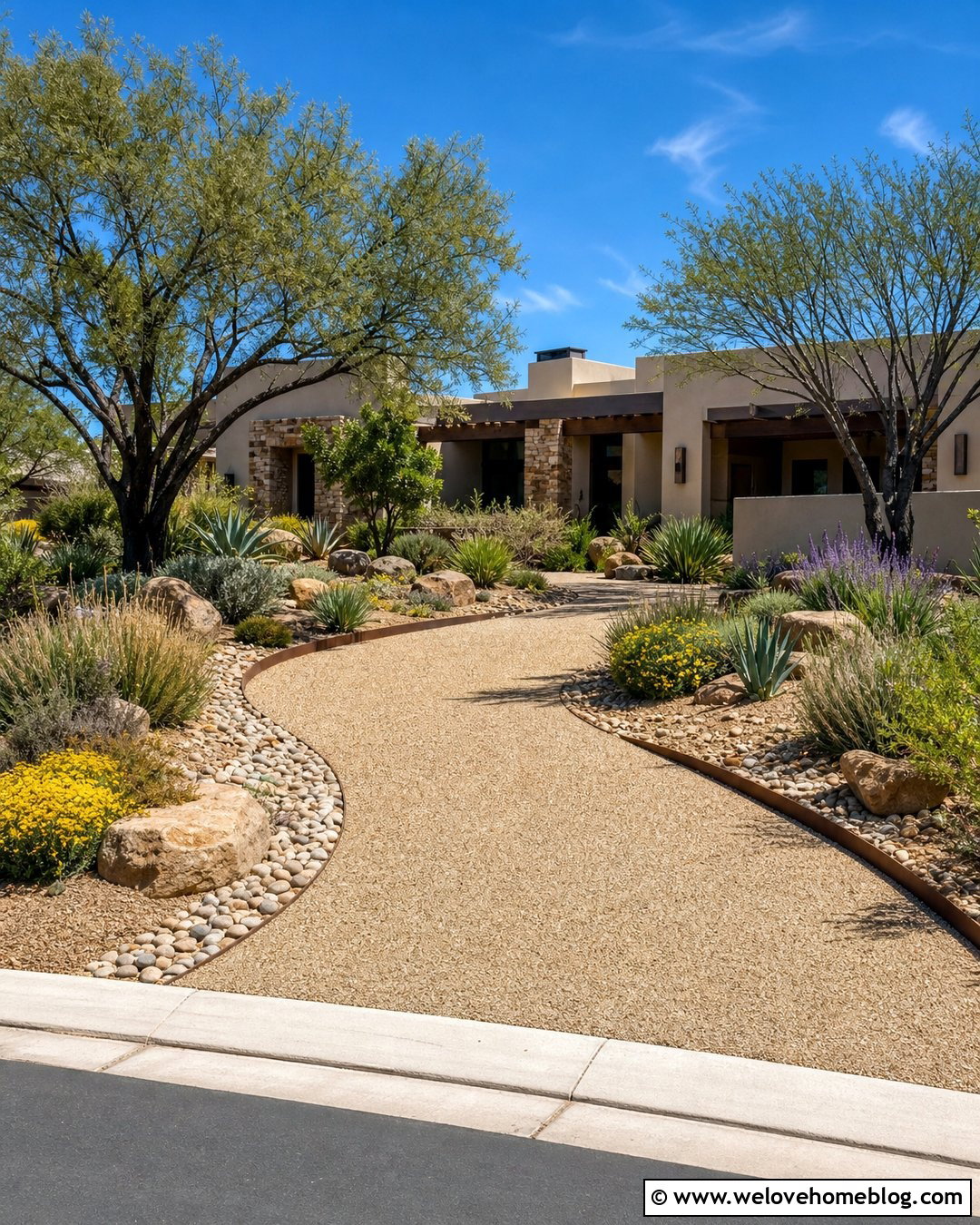
A water-conscious landscape can give a long driveway strong color and texture without relying on continuous lawn. Start with a sand-colored resin-bound gravel surface framed by steel edging and bands of decorative rock. Arrange drought-tolerant shrubs, native grasses, succulents where climate-appropriate, and flowering perennials in large repeating groups. Add well-spaced shade trees selected for dry conditions and provide efficient establishment watering around their root zones. Use boulders sparingly to anchor broad curves and protect vulnerable corners. Keep rock mulch away from areas where it may spill onto the driveway or increase reflected heat around sensitive plants. Near the house, repeat the same palette in denser, more formal beds. This cohesive design suits Southwestern, modern ranch, desert contemporary, and low-water suburban homes.
19. Sloped Long Driveway Landscaping
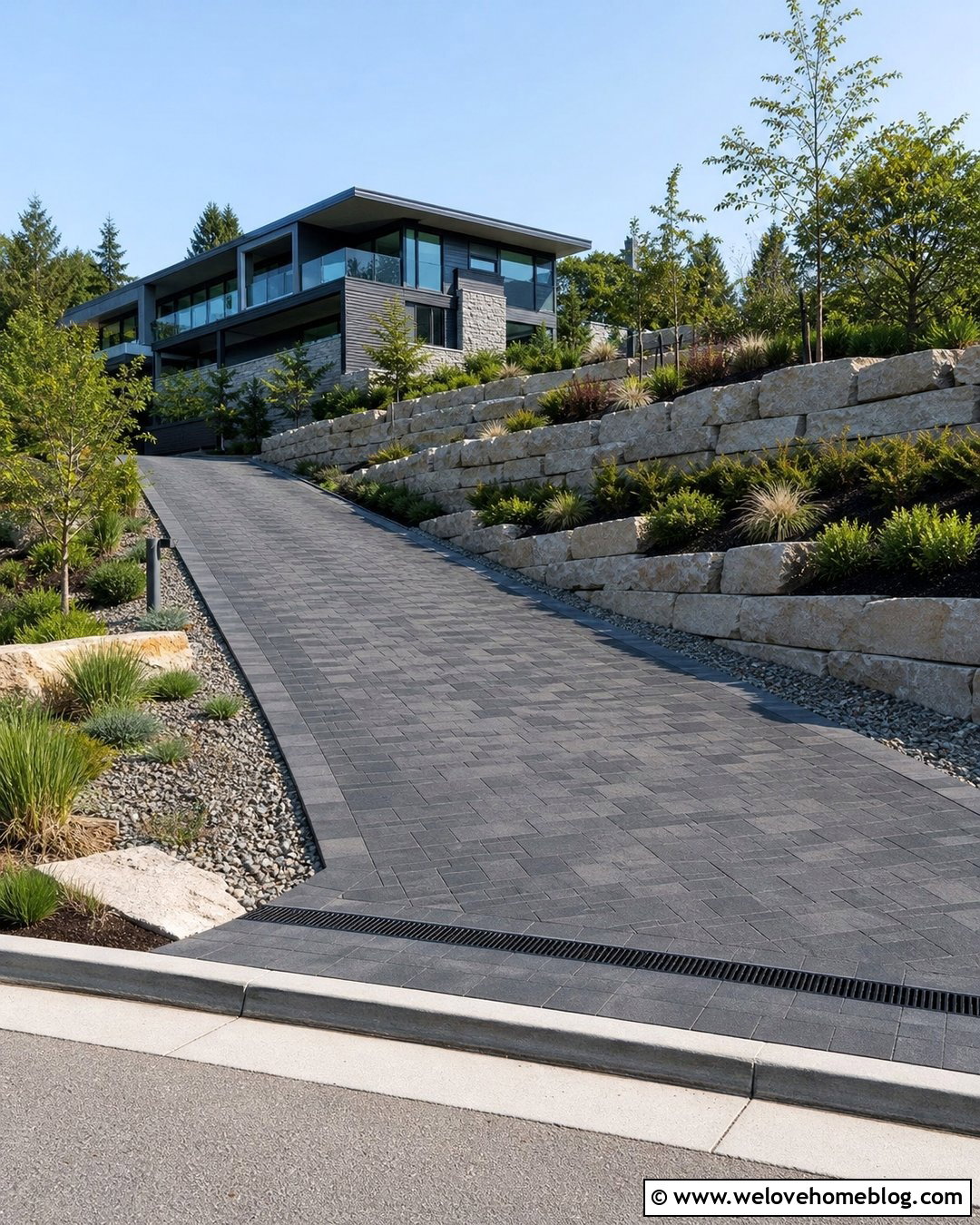
A sloped long driveway needs landscaping that manages elevation without sending soil and mulch onto the driving surface. Use textured concrete or interlocking concrete pavers for the driveway and create stepped planting beds on the uphill side. Low retaining walls built from natural stone can hold soil while following the grade in manageable sections. On the downhill side, use deep-rooted shrubs, spreading groundcovers, and ornamental grasses suited to erosion-prone conditions. Keep plants low around bends so drivers can see approaching vehicles and pedestrians. Flush drainage channels may be needed at carefully planned points to intercept runoff. Finish the lower entrance with wider beds and stable stone mulch rather than loose bark. A terraced design can transform a difficult slope into a structured approach to a hillside home. ()
20. Low Maintenance Long Driveway Landscaping
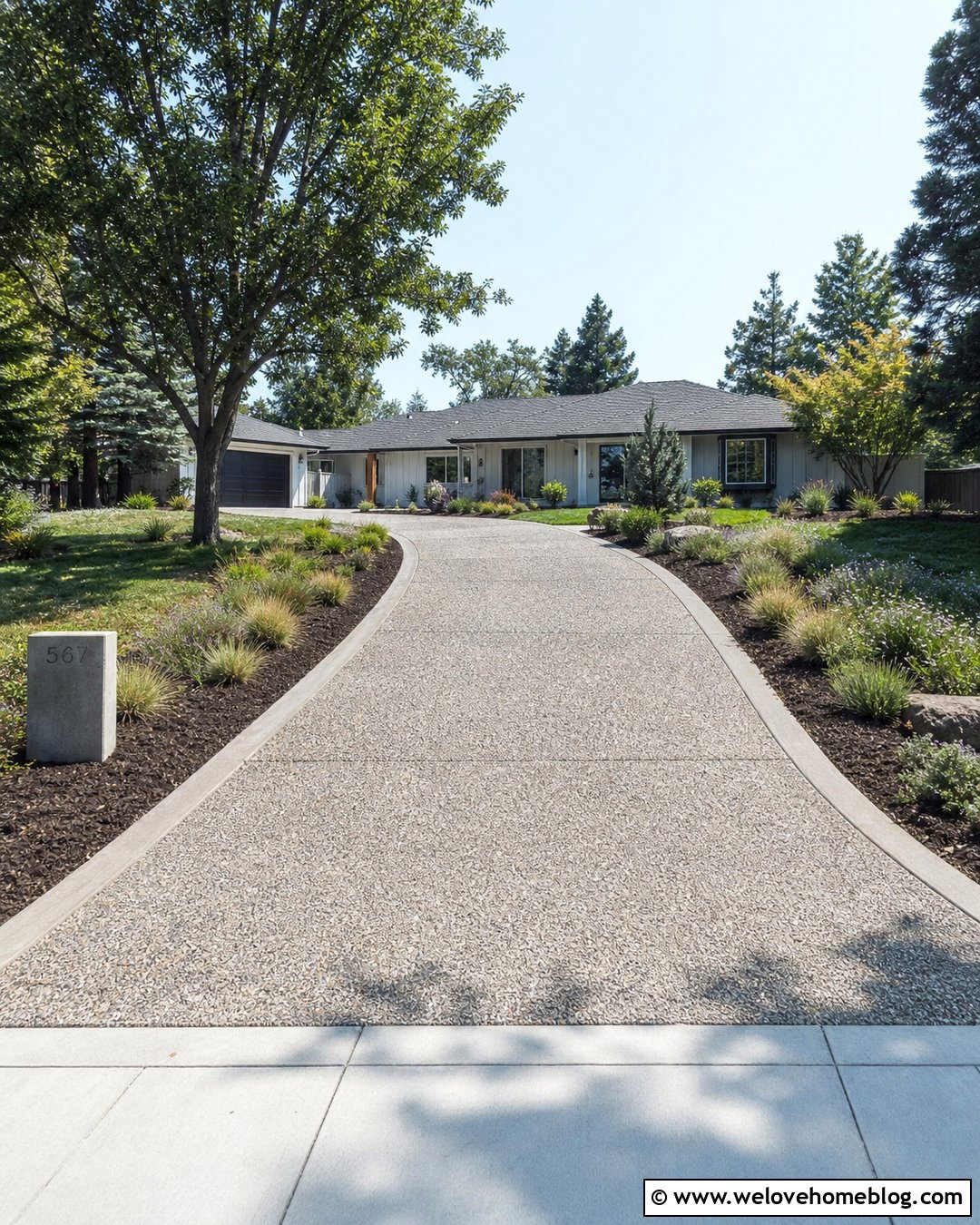
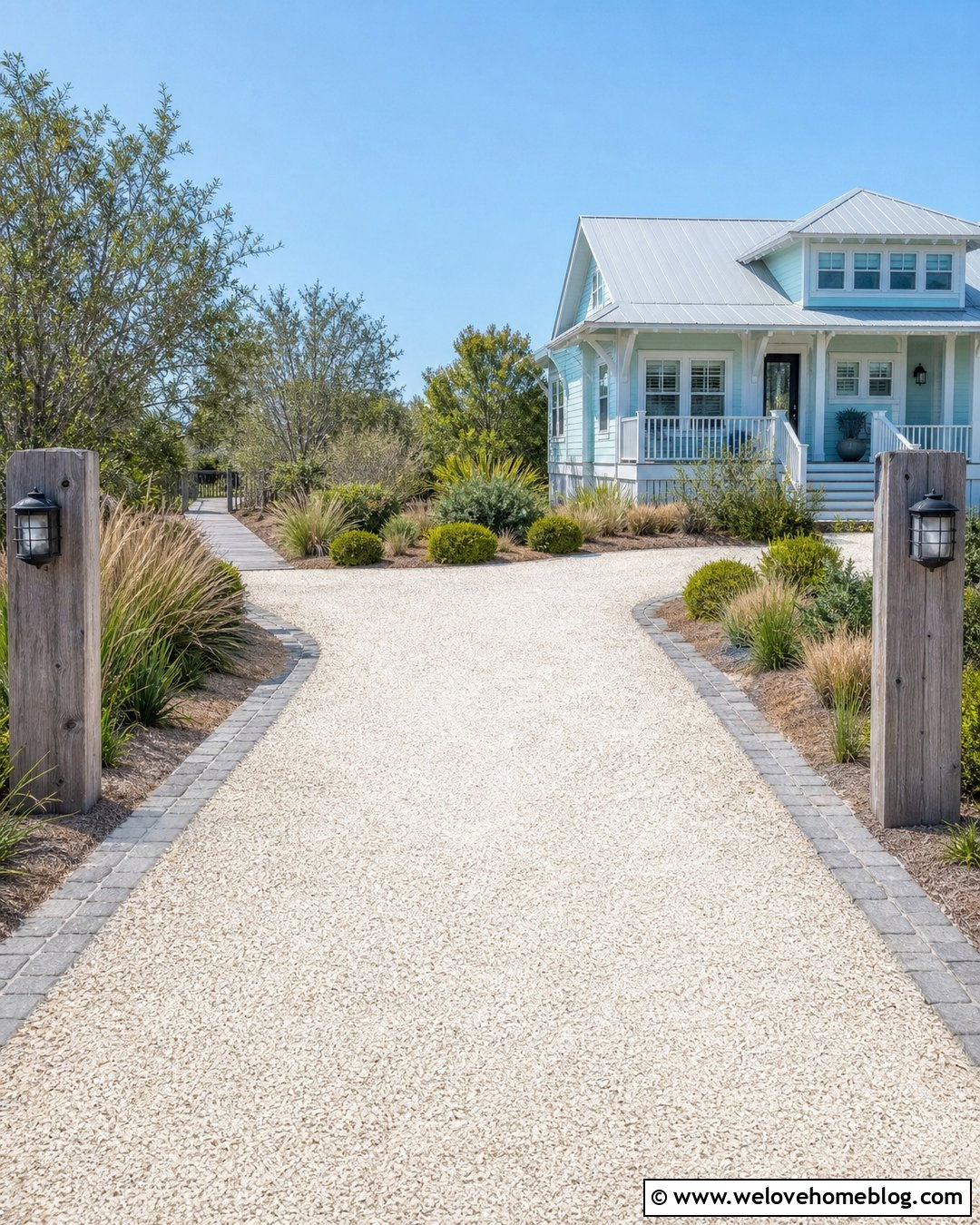
Low-maintenance landscaping works best when the plant palette is limited and every edge has a clear purpose. Pair a durable exposed-aggregate driveway with a flush concrete curb that separates the pavement from broad mulched beds. Use repeating groups of dependable evergreen shrubs, compact ornamental grasses, and long-lived perennials suited to local conditions. Space plants according to mature width so constant pruning is not necessary. Add shade trees only where fallen leaves, roots, and branches can be managed without affecting the driveway. Large lawn areas may look simple, but mowing hundreds of feet can become demanding, so use meadow planting or groundcover where appropriate. Finish with a straightforward entrance bed, an address marker, and a wider landscaped area near the house for a clean but welcoming result.
Conclusion:
Successful long driveway landscaping balances appearance, safety, maintenance, and the character of the home. Begin by studying the driveway’s width, curves, sunlight, soil, drainage, and views from the road. Then select one clear design language and repeat a limited palette of trees, shrubs, edging, and surface materials along the route. Keep mature plant sizes in mind, preserve driving visibility, and leave practical space around parking and turnaround areas. You do not need to decorate every foot. Open lawn, woodland, or meadow sections can make featured beds feel more important. Whether you prefer formal trees, relaxed flowers, stone walls, or native planting, these landscaping a long driveway ideas can create a more attractive arrival.

Related posts:
Leave a Reply