
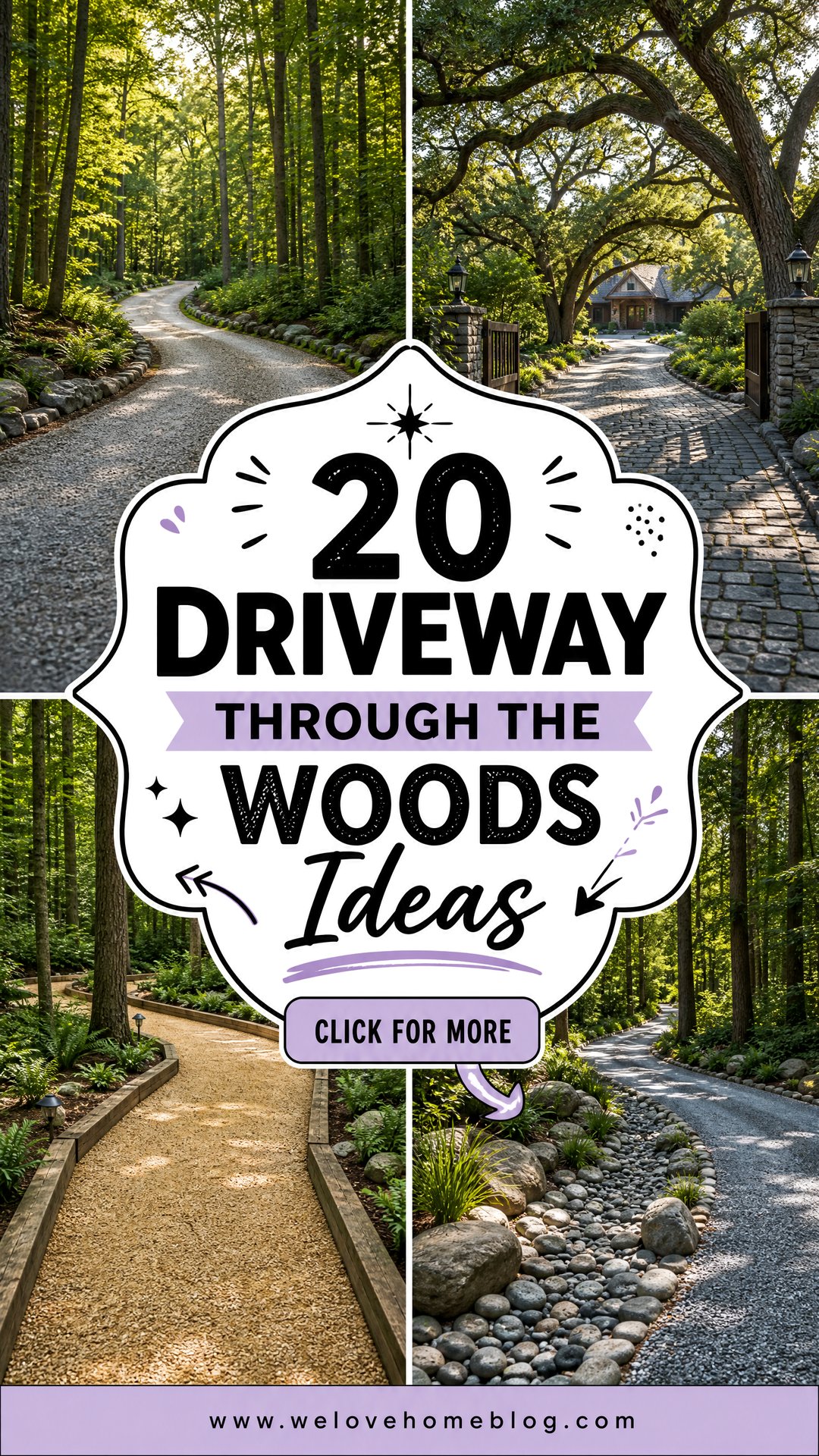
A driveway through the woods should feel like a natural part of the landscape while still providing a stable, practical route to your home. The best designs preserve mature trees, follow the land’s existing contours, and use surfaces that complement the forest colors. Gravel, asphalt, pavers, cobblestone, and permeable materials can all work beautifully when paired with thoughtful drainage, defined borders, and shade-tolerant planting. Curves can create a slower, more scenic arrival, while lighting and entrance markers improve visibility without making the setting feel overbuilt. Proper water management is especially important because wooded properties often have slopes, roots, and concentrated runoff. () Explore these complete and practical 20 driveway through the woods ideas.
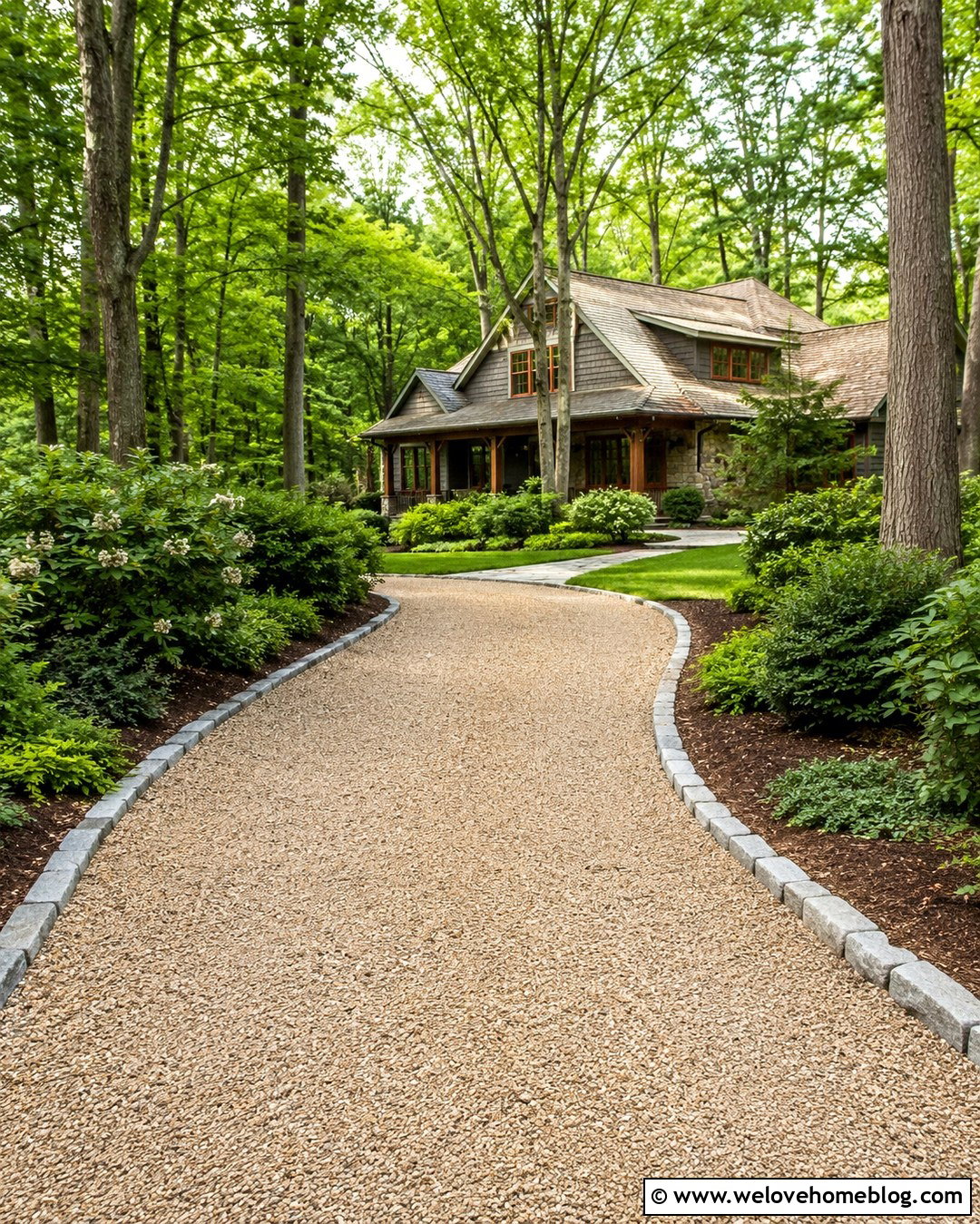
1. Curved Gravel Driveway Through The Woods
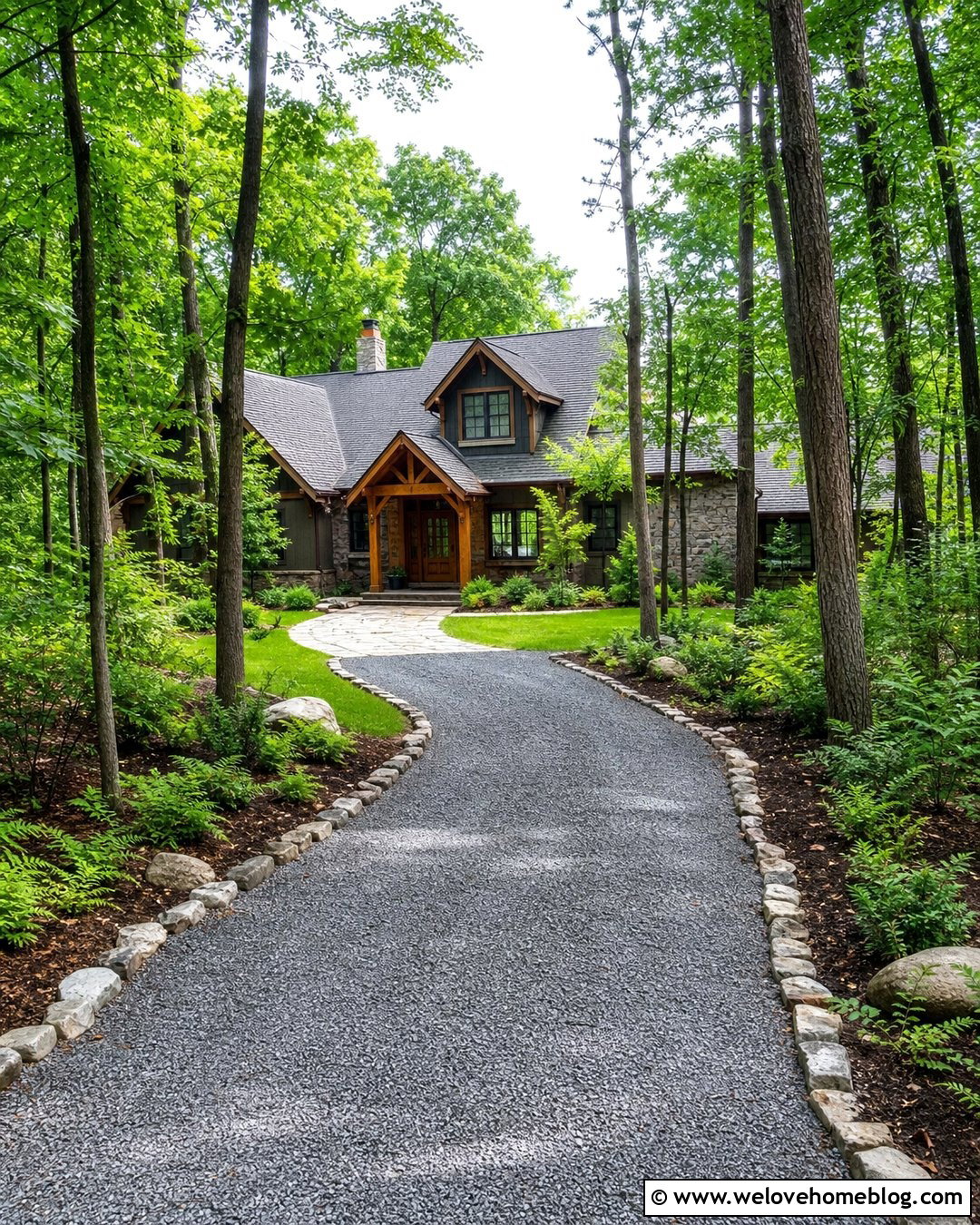
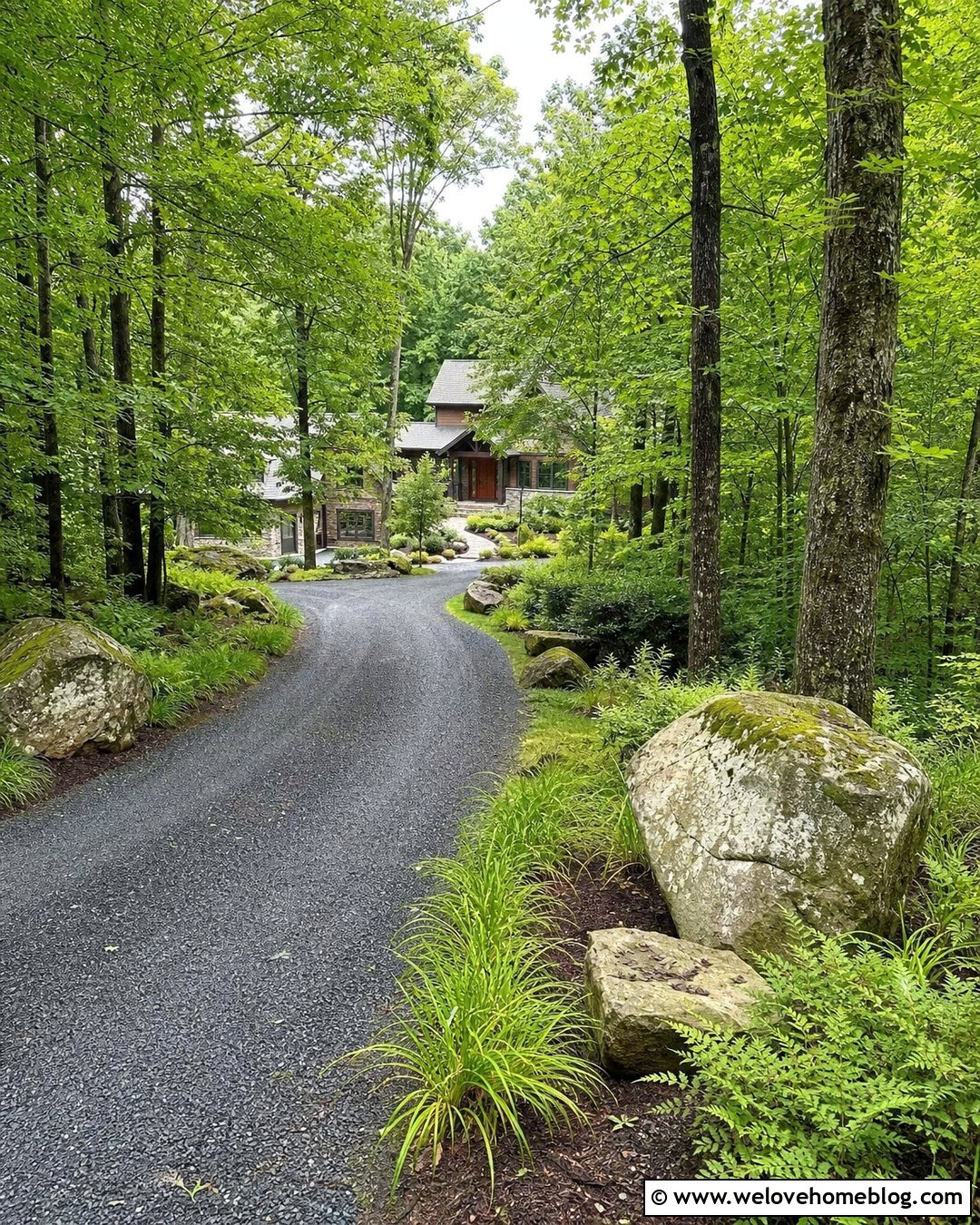
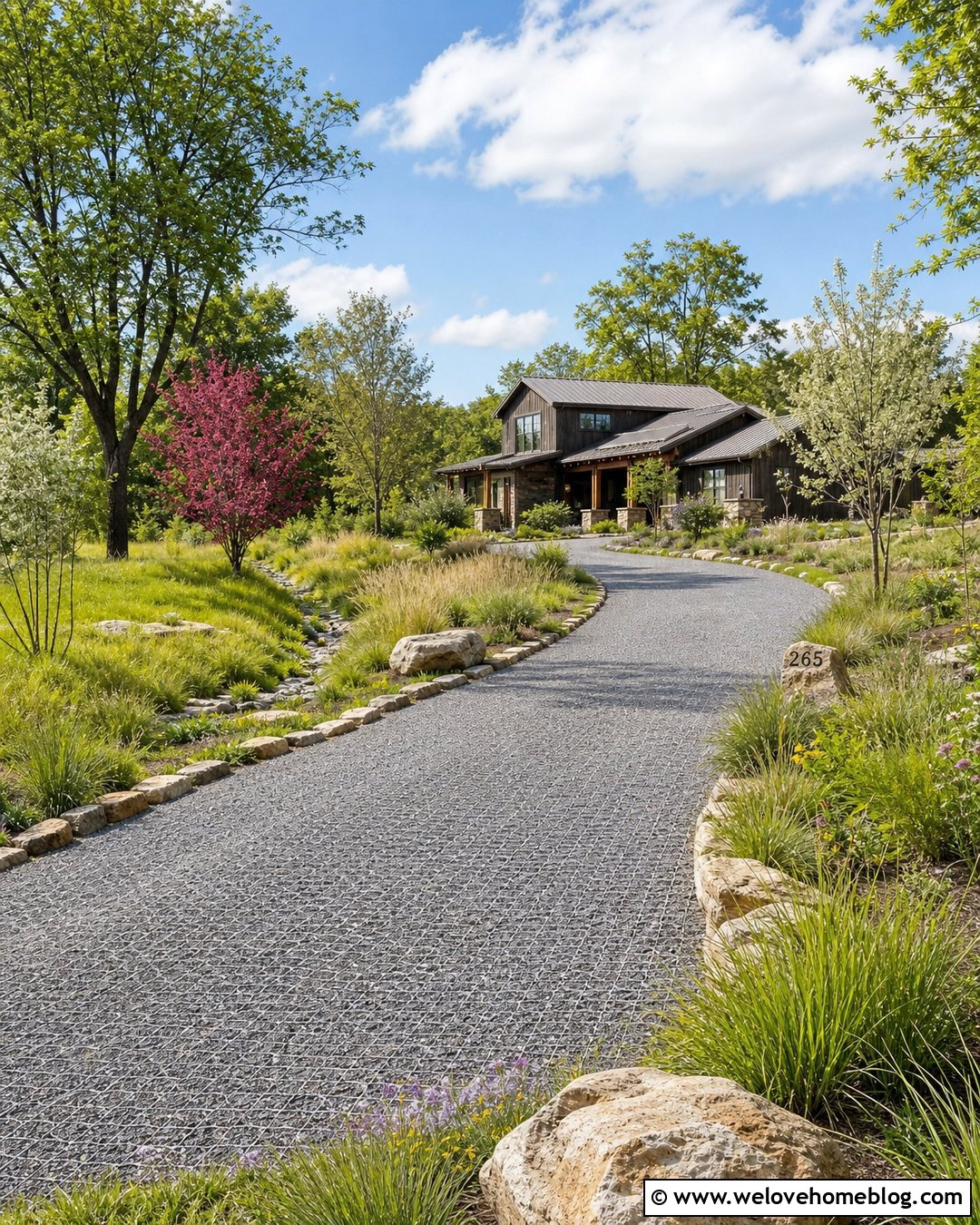
A curved gravel driveway can follow the natural openings between mature trees instead of cutting a harsh, straight line through the property. Choose compactable gray crushed stone for the main surface, then add larger fieldstone edging to keep gravel from spreading into the forest floor. Gentle curves reveal the house gradually and encourage drivers to move slowly. Ferns, woodland sedges, and low native shrubs can soften the edges without narrowing the driving area. Keep planting several feet away from inside curves to maintain clear visibility. A properly prepared aggregate base will also help prevent deep ruts and muddy patches. Finish the design with a wider gravel arrival court near a rustic ranch or craftsman home.
2. Straight Crushed Stone Driveway Through Pine Trees
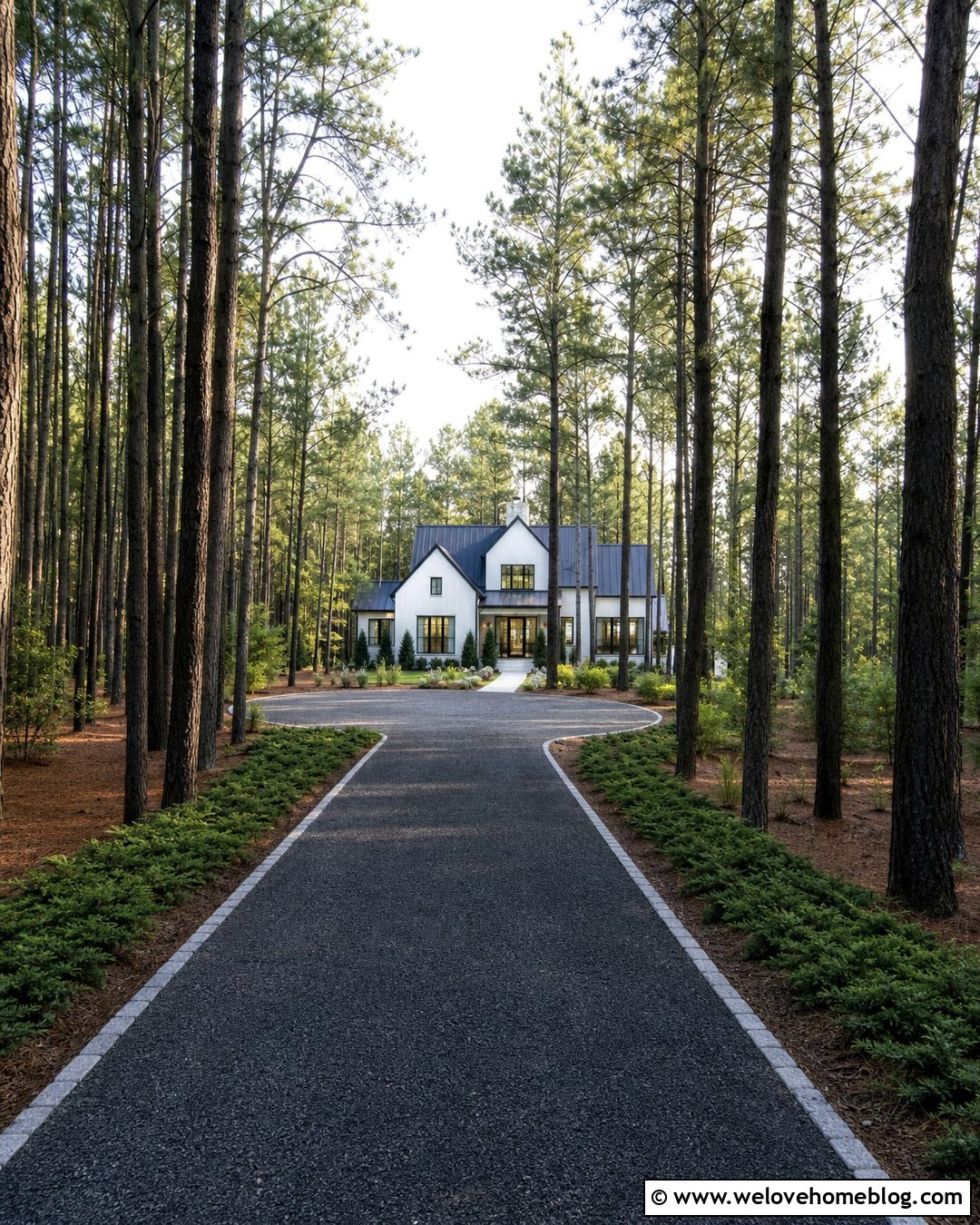
Tall pine trees create a strong natural frame for a long, straight crushed stone driveway. Use charcoal or blue-gray angular stone to contrast with the warm pine needles and reddish tree trunks. A narrow stone border can define both sides without making the route look formal. Leave the surrounding forest floor mostly natural, but remove weak branches, invasive growth, and plants that obstruct visibility. Low evergreen ground cover can fill disturbed areas near the entrance. Because a straight wooded driveway offers a direct view toward the house, place the home, garage, or a simple focal tree at the end of the sightline. This layout works especially well for cabins, modern farmhouses, and understated contemporary homes on deep rural lots.
3. Black Asphalt Driveway With Birch Trees
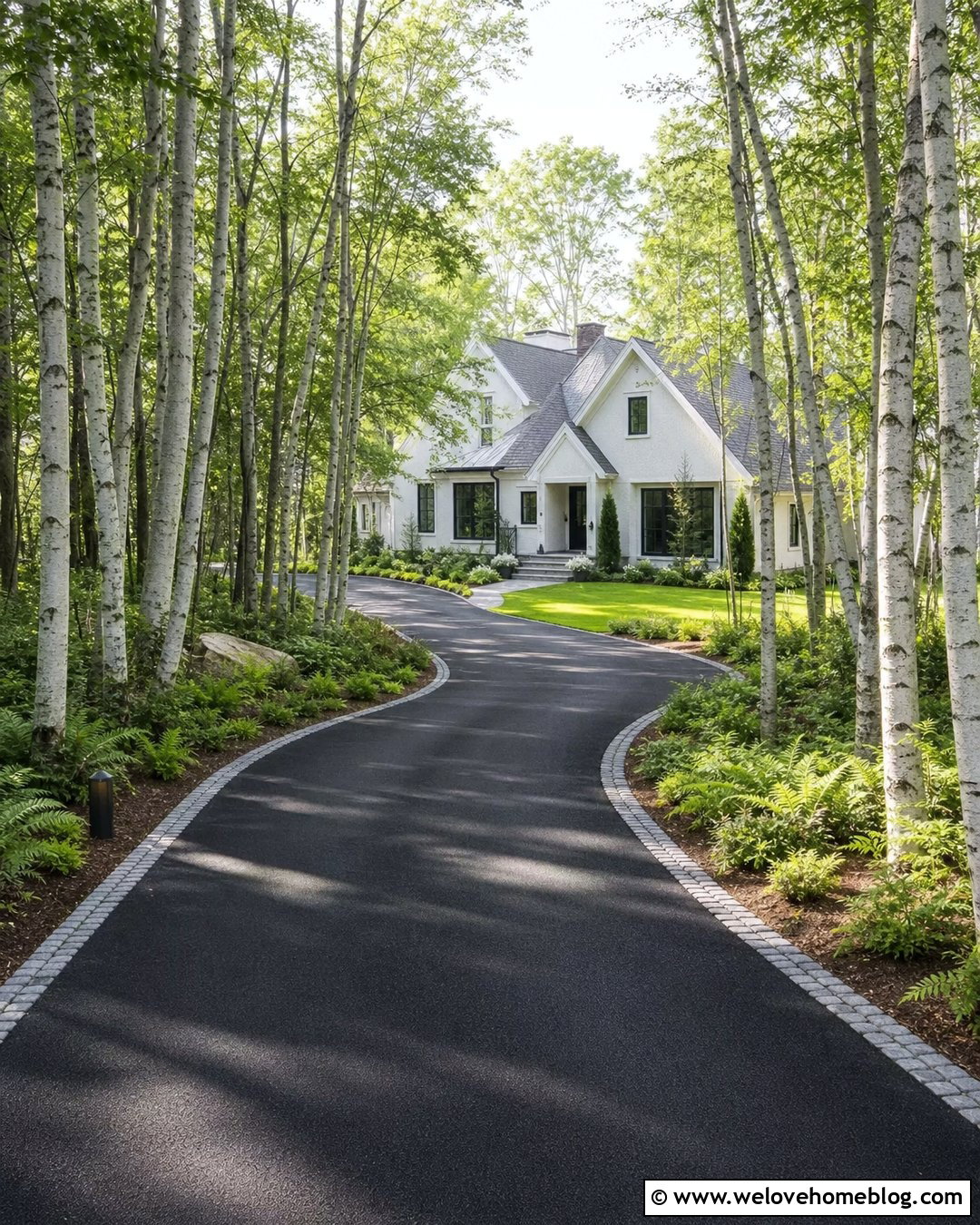
Smooth black asphalt creates a clean, reliable route through a bright grove of white-barked birch trees. Give the driveway a gentle S-curve so it feels integrated with the landscape rather than laid over it. Narrow cobblestone borders can protect the asphalt edges and introduce a natural gray tone. On each side, use drifts of ferns, woodland grasses, and low shrubs that tolerate filtered light. A light-colored modern or Scandinavian-inspired house at the end will stand out beautifully against the dark paving. Asphalt is also easier to clear than loose gravel in snowy regions. However, the base, grading, and drainage should be planned carefully, particularly where runoff crosses a slope or mature roots are close to the route.
4. Chip Seal Driveway With Rustic Stone Borders
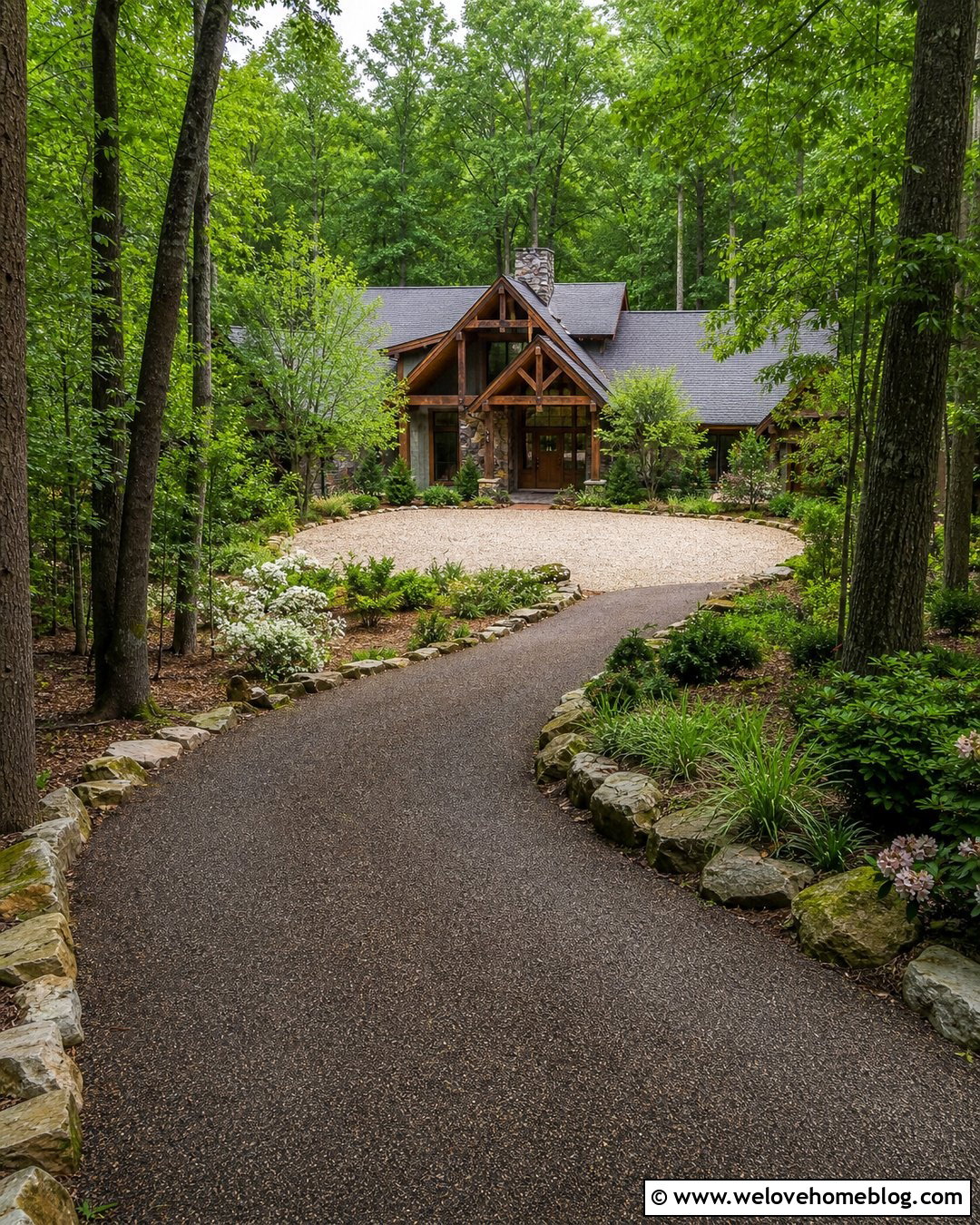
Chip seal provides the informal appearance of loose stone with a more consolidated driving surface. It is especially suitable for a long woodland route where plain asphalt might look too urban. Select brown, tan, or muted gray aggregate that echoes the colors of bark, exposed rock, and fallen leaves. Follow the terrain with broad curves, then frame the pavement with irregular local stone borders. Native serviceberry, mountain laurel, and shade-tolerant grasses can create a layered transition into the woods. Near the house, widen the driveway into a simple turnaround or parking court. The finished design feels appropriate beside a timber-frame home, lodge, or country cottage while remaining practical enough for regular traffic and seasonal property maintenance.
5. Permeable Paver Driveway With Rain Gardens
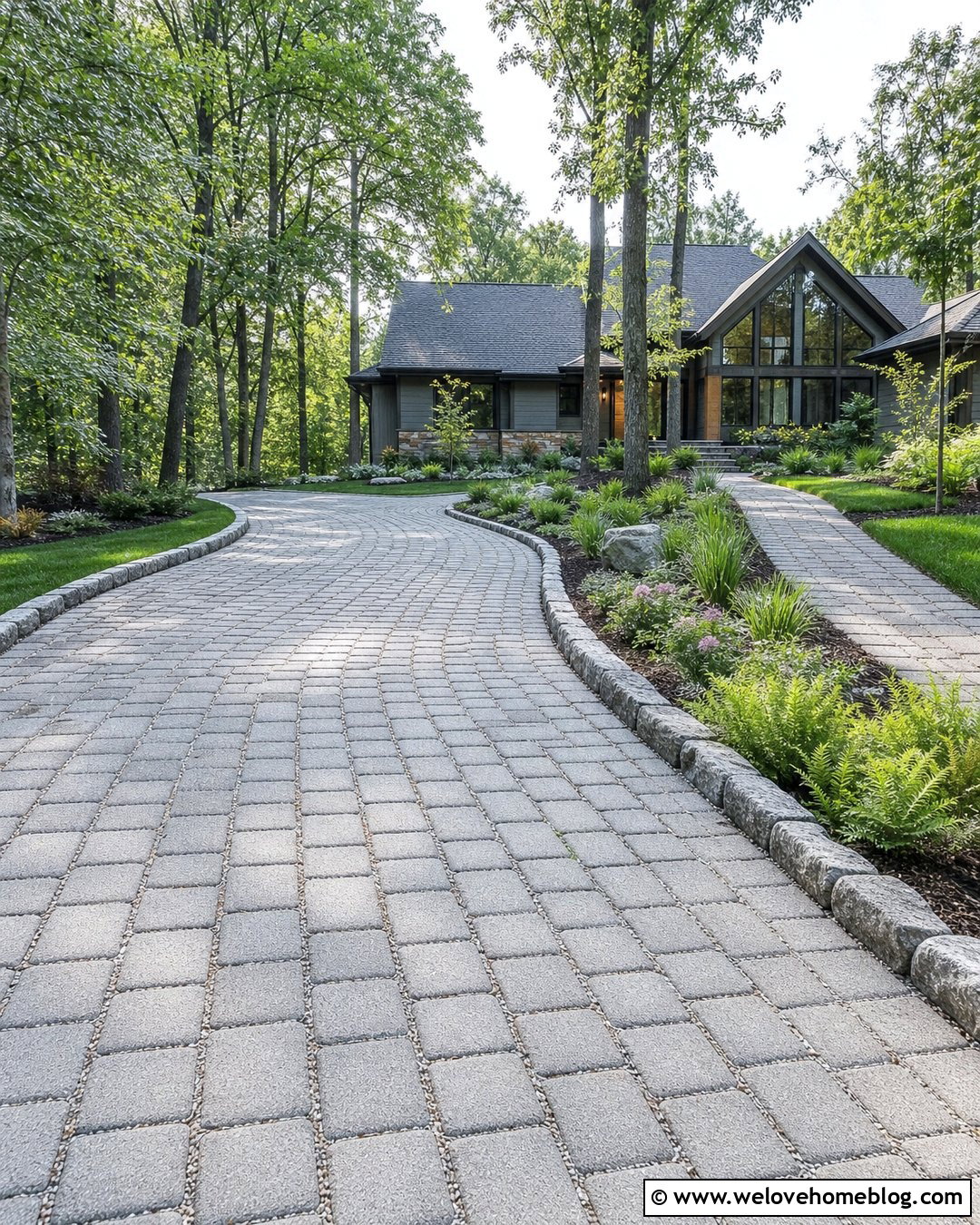
A permeable paver driveway can create an organized woodland entrance while helping rain move through the surface and underlying aggregate. Choose textured concrete pavers in soft gray or earthy brown, with wider joints filled by small drainage stone. A gently curving layout will reduce the rigid appearance of the paving. Along low sections, add shallow rain gardens filled with moisture-tolerant sedges, ferns, and native flowering plants. These planted areas should remain separate from the structural driveway base and should not interfere with vehicle clearance. Permeable systems require carefully prepared layers to perform correctly, so professional site and soil evaluation is worthwhile. () This complete look suits a contemporary woodland home that prioritizes clean design and natural stormwater management.
6. Cobblestone Driveway Through Mature Oak Trees
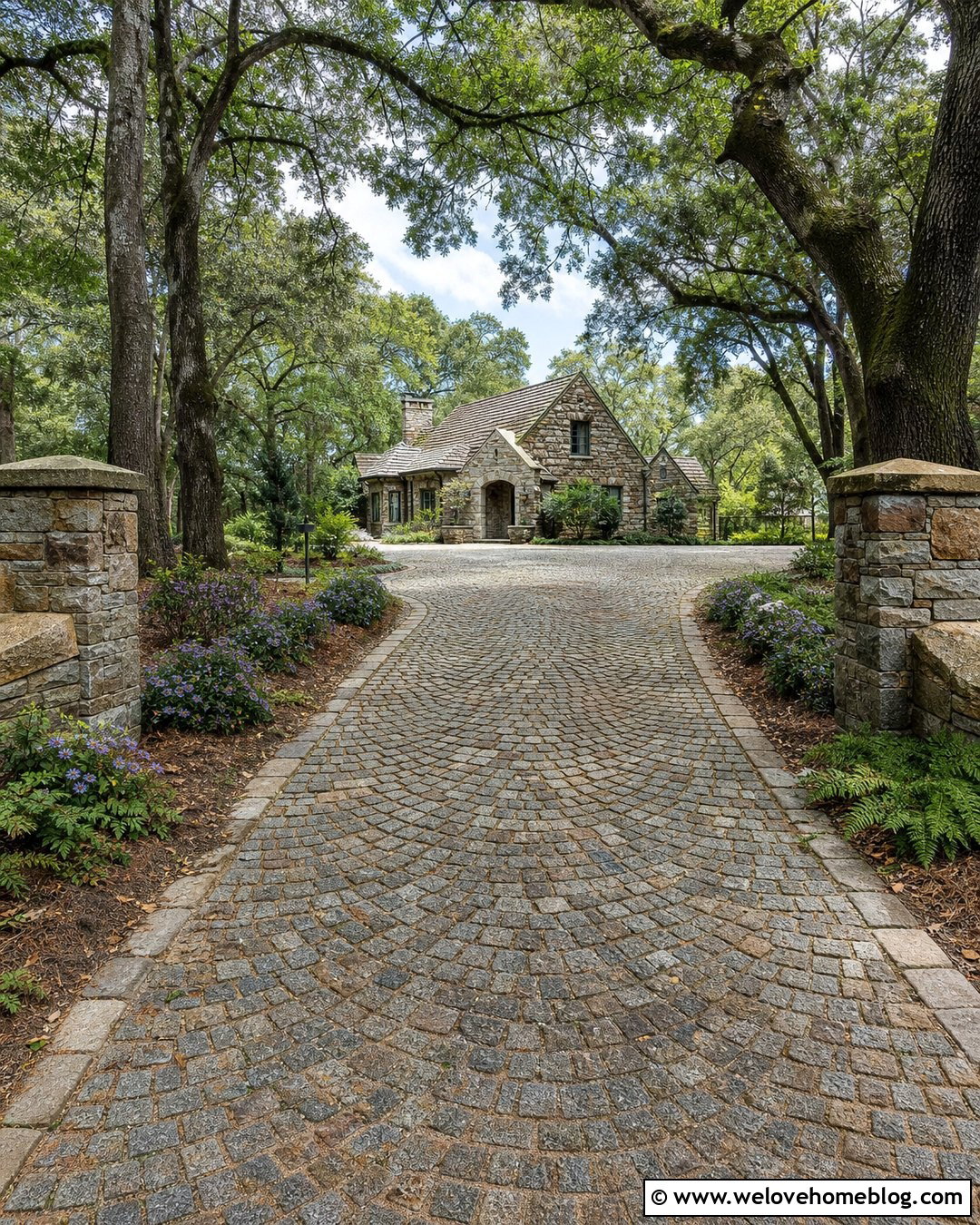
Cobblestone gives a wooded driveway a substantial, old-world character that works beautifully beneath broad oak canopies. Use weathered granite cobbles in mixed gray and brown tones, arranged in gentle arcs across a curved driveway. Flush stone edging will contain the pattern without creating a tripping point or abrupt shoulder. Preserve the natural leaf-covered ground beyond the border, adding woodland asters, ferns, and low native shrubs only where the soil has been disturbed. A wider cobblestone apron near the house can provide comfortable turning and parking space. This material works best when installed over a properly engineered base because settlement can make the surface uneven. Pair it with a stone cottage, Tudor home, or traditional country residence for a cohesive arrival.
7. Brick Paver Driveway With Woodland Planting
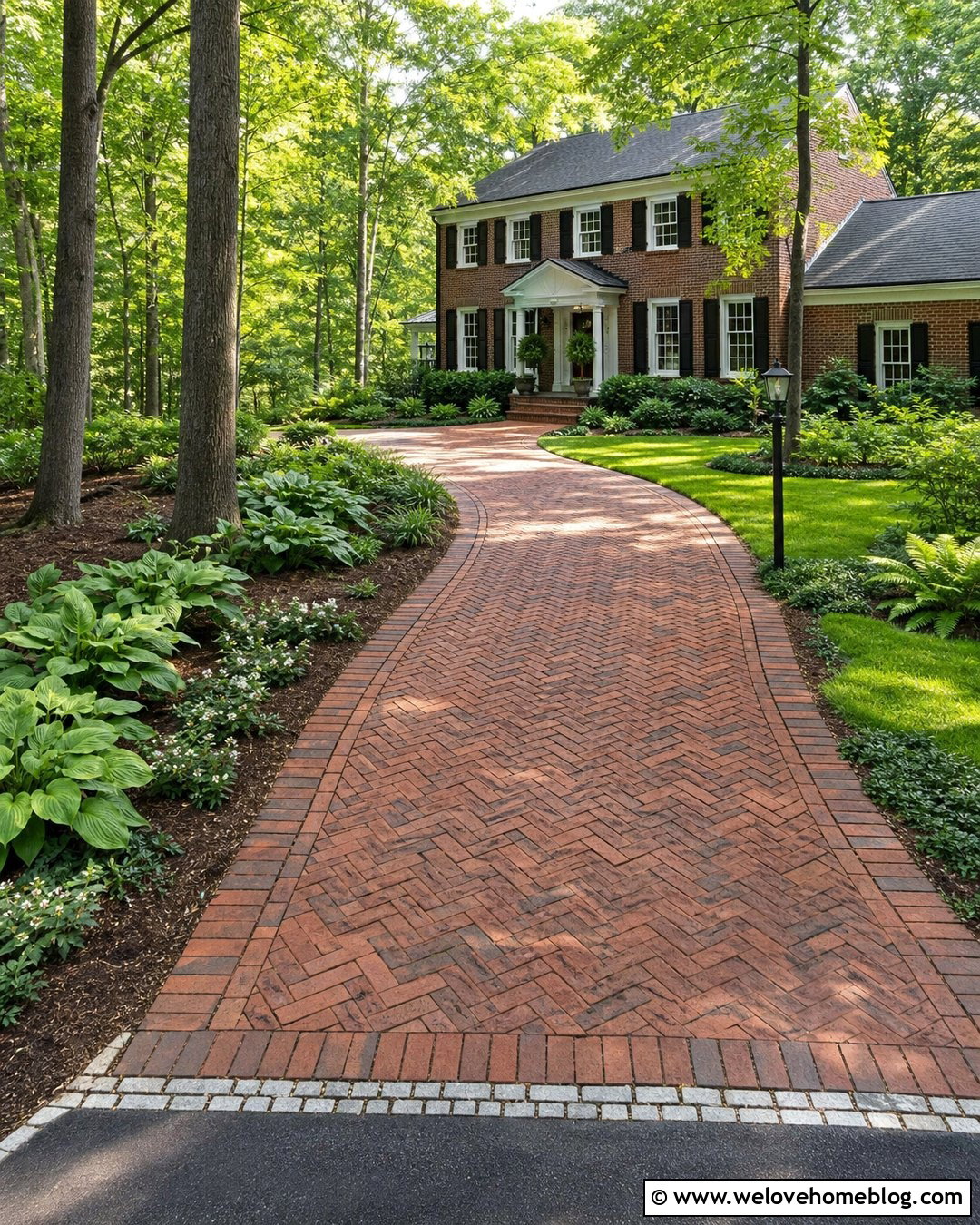
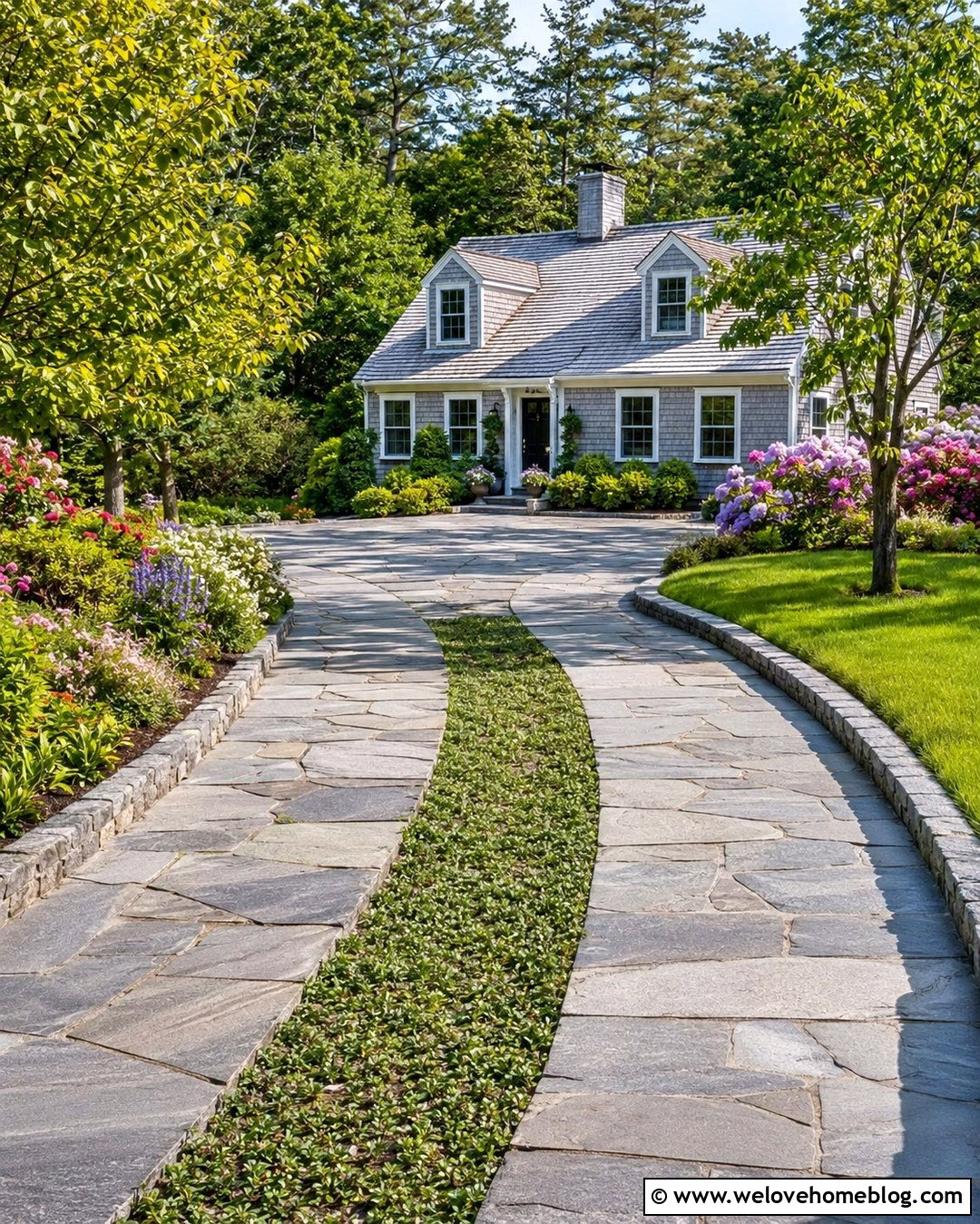
Warm clay brick pavers can bring rich color to a shaded forest setting. Lay the bricks in a herringbone pattern for the main driving surface, then use a straight soldier-course border to define the curved edges. Deep red and brown shades coordinate naturally with tree bark, autumn leaves, and a traditional brick or colonial home. Plant broad sweeps of hostas, ferns, foamflower, and shade-tolerant shrubs beyond the edging. Keep the planting low near turns and driveway intersections so drivers have a clear view. A narrow brick walkway can branch toward the front entrance, visually connecting the driveway with the house. The overall look feels detailed and established, yet the surrounding woodland prevents the brick surface from becoming overly formal or visually heavy.
8. Exposed Aggregate Driveway With Natural Rock Outcrops
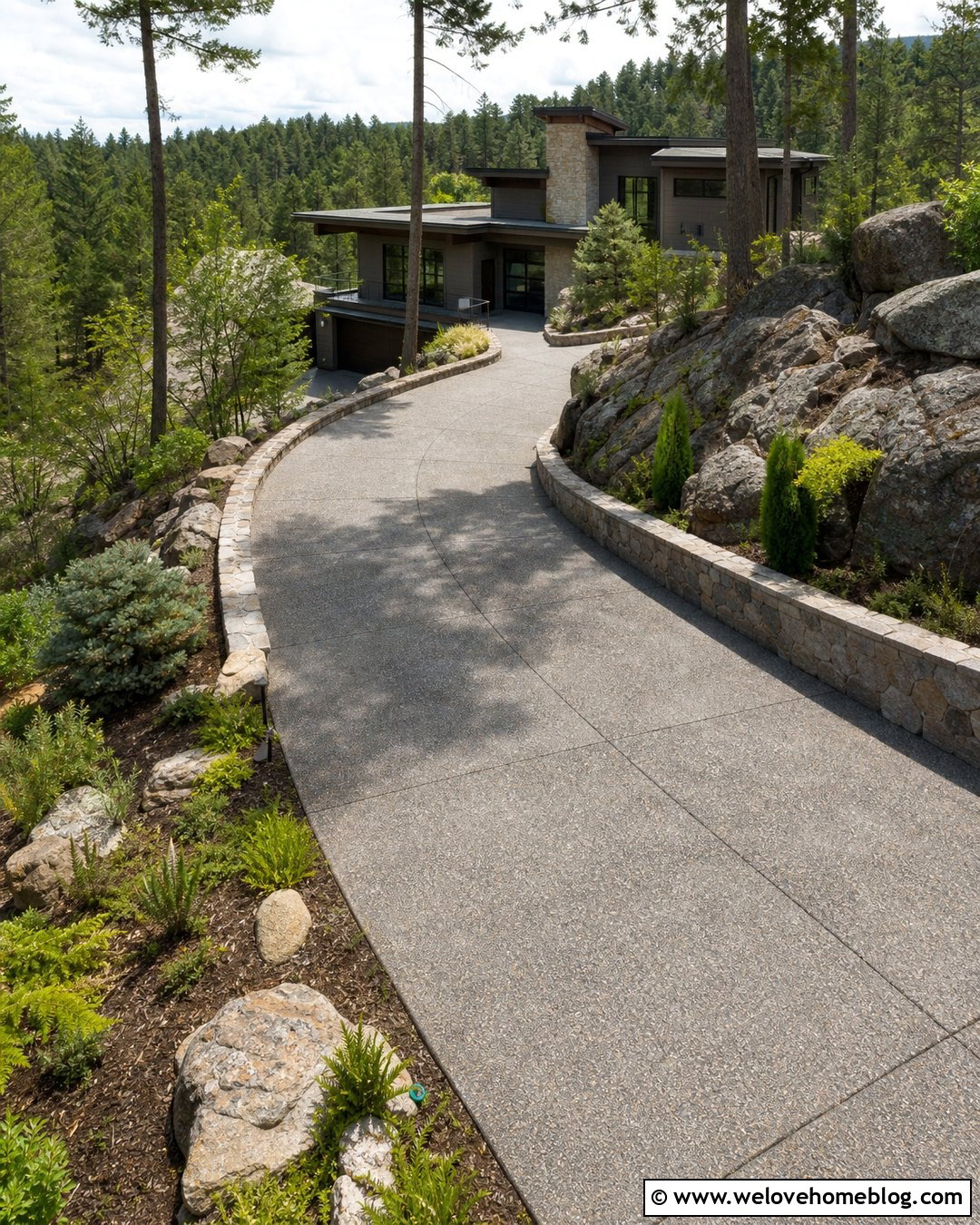
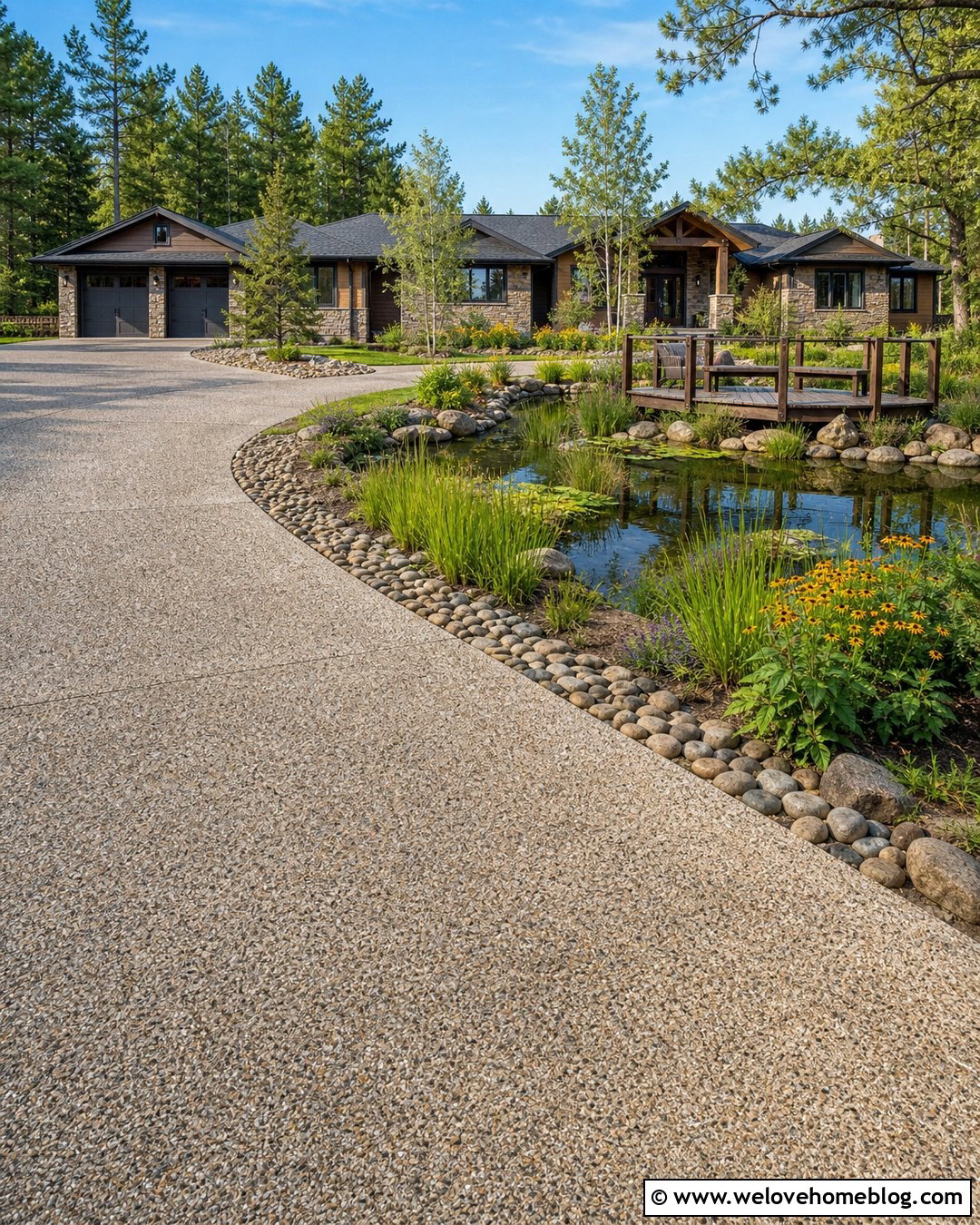
If the property contains visible rock ledges, an exposed aggregate concrete driveway can connect the home to that rugged terrain. Choose a medium-gray concrete mix with small tan and charcoal stones exposed across the surface. Shape the driveway around existing outcrops rather than removing every natural feature. A low retaining edge may be needed where the driveway passes a hillside, but it should use stone that matches the site. Juniper, ferns, mossy ground cover, and ornamental grasses can soften the transition between concrete and forest. Saw-cut joints should follow a simple, consistent pattern that does not compete with the landscape. This design creates an appealing contrast beside a modern mountain house, contemporary cabin, or low-profile home with stone and wood siding.
9. Resin-Bound Gravel Driveway Under A Tree Canopy
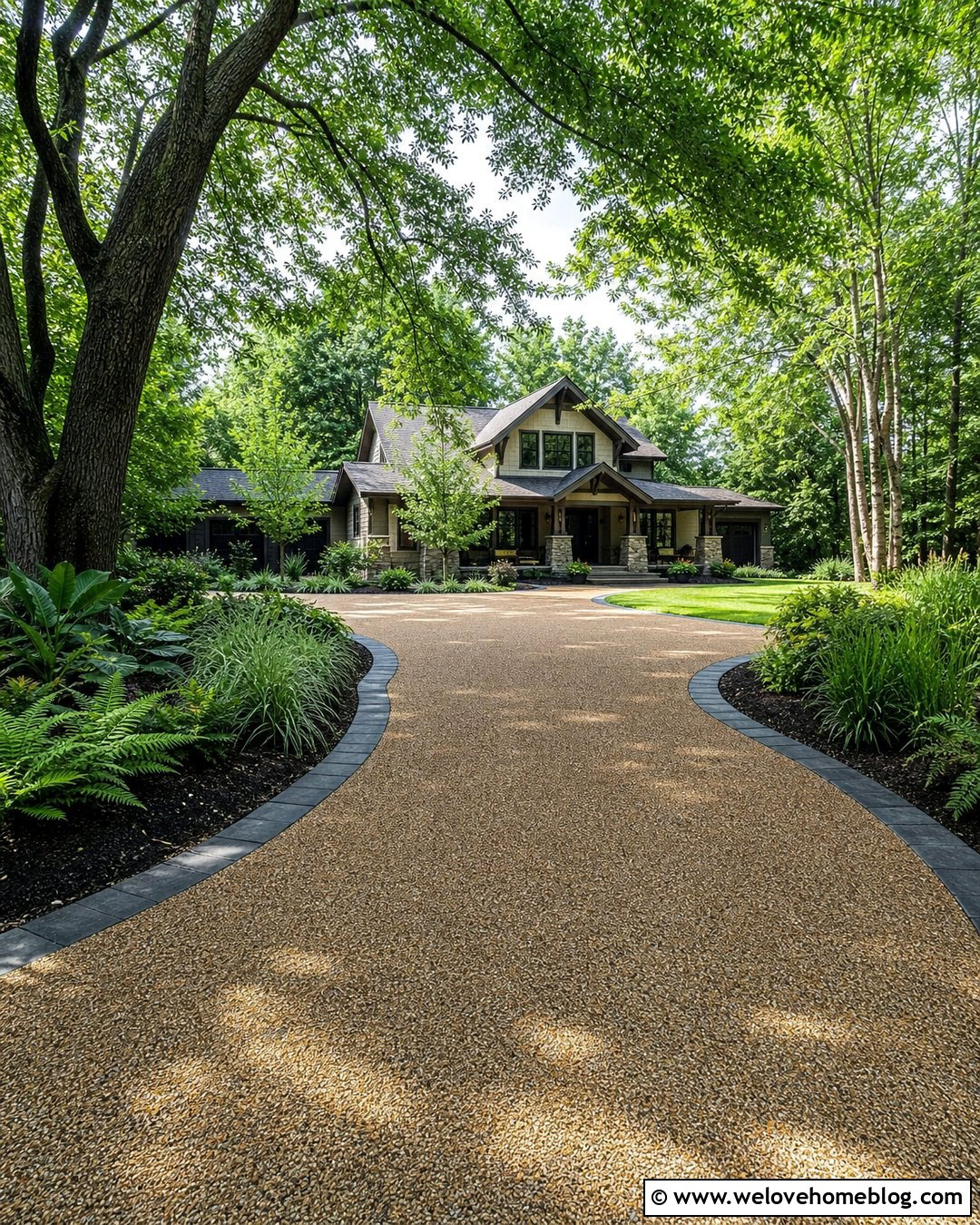
Resin-bound gravel offers a neat, uniform appearance while preserving the visual warmth of small natural stones. Choose golden-brown or gray aggregate that relates to the surrounding forest floor. A sweeping driveway with dark granite edging can lead through the trees toward a craftsman or contemporary country home. Keep the border mostly open, using ferns, native grasses, and evergreen shrubs in carefully spaced groups instead of dense flower beds. The clean surface gives the setting a refined quality without looking as stark as plain concrete. Drainage suitability, installation specifications, climate, and the condition of the supporting base should all be evaluated before selecting this finish. At the house, continue the same material into a rounded parking court to make the complete approach feel consistent.

10. Grass Paver Driveway To A Woodland Cabin
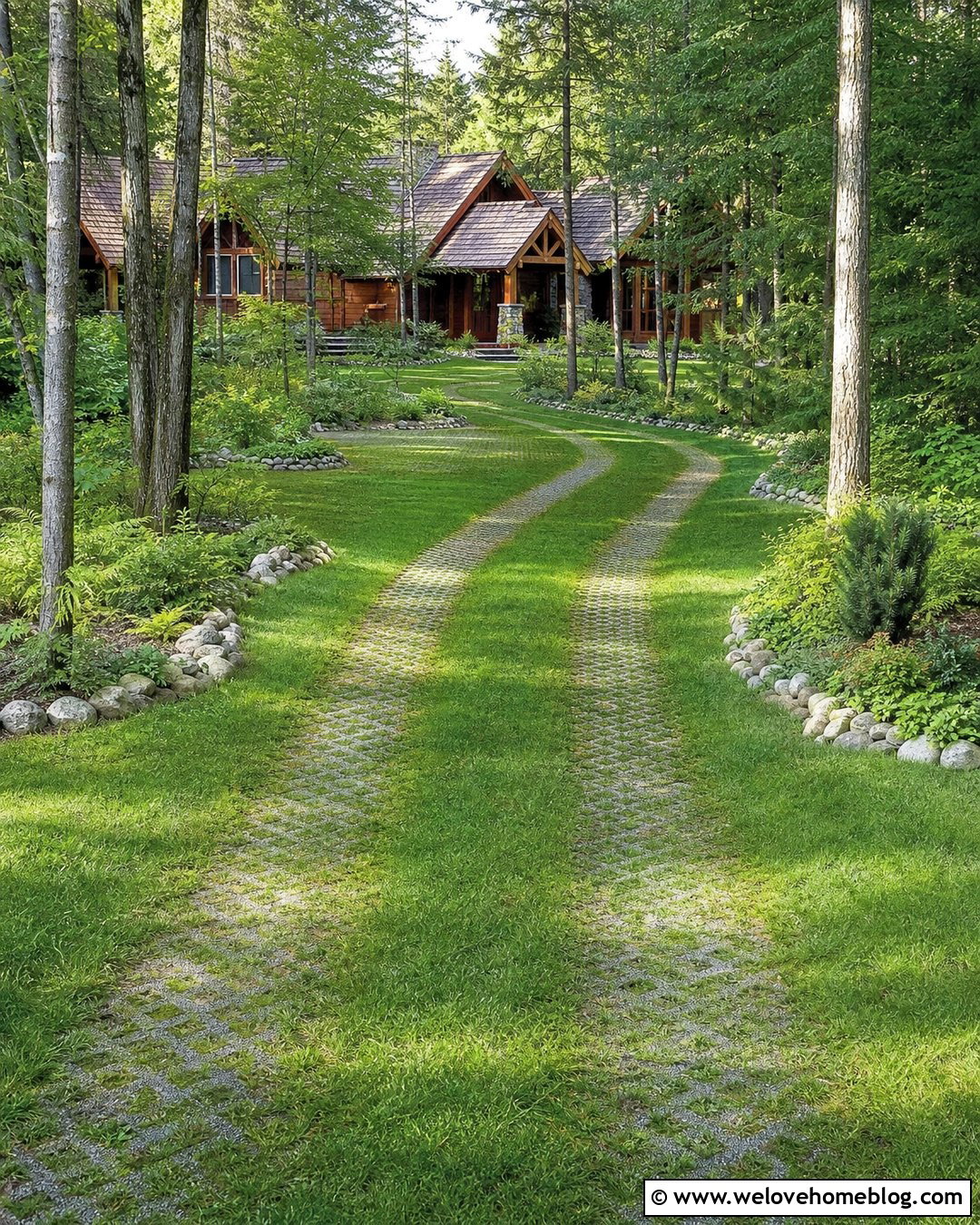
Grass pavers can make a lightly used driveway appear more like a green lane through the forest. Use load-rated concrete or plastic cellular pavers filled with a durable grass blend suited to the local shade level. Create two broad driving lanes or cover the full driveway, depending on traffic and maintenance needs. Frame the route with natural stone and simple sweeps of woodland ground cover. The driveway should lead gently toward a small cabin, cottage, or guesthouse without competing with the building. This surface needs enough light, suitable soil, and regular care to stay green, so it may not work beneath an extremely dense canopy. Grass pavers are permeable and can visually integrate vehicle access with the surrounding landscape. ()
11. Decomposed Granite Driveway With Timber Edging
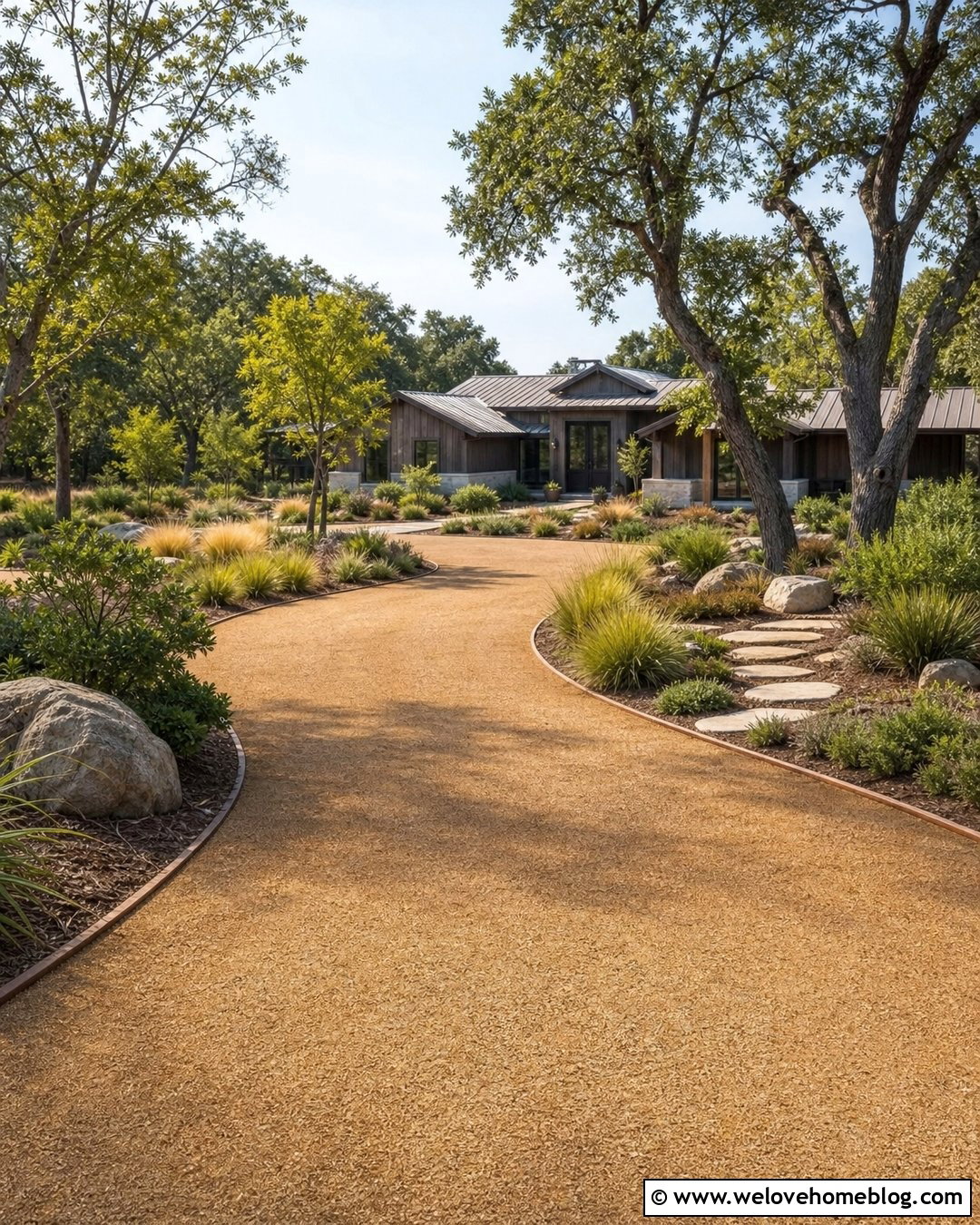
A compacted decomposed granite driveway creates a soft, earthy route through dry woodland. Select a stabilized golden tan, reddish brown, or muted gray finish based on the local soil and stone colors. Broad curves will make a long approach feel relaxed, while pressure-treated or naturally durable timber edging provides simple definition. Place the timber flush or nearly flush with the surface to reduce visual clutter and simplify maintenance. Drought-tolerant native grasses, low manzanita, woodland sage, and scattered boulders can connect the driveway to the surrounding terrain. This design is particularly suitable for ranch homes, rustic modern houses, and Western cabins. Good compaction, drainage, and periodic surface renewal are important because water movement and turning vehicles may loosen poorly installed material.
12. Gray Gravel Driveway With River Rock Swales
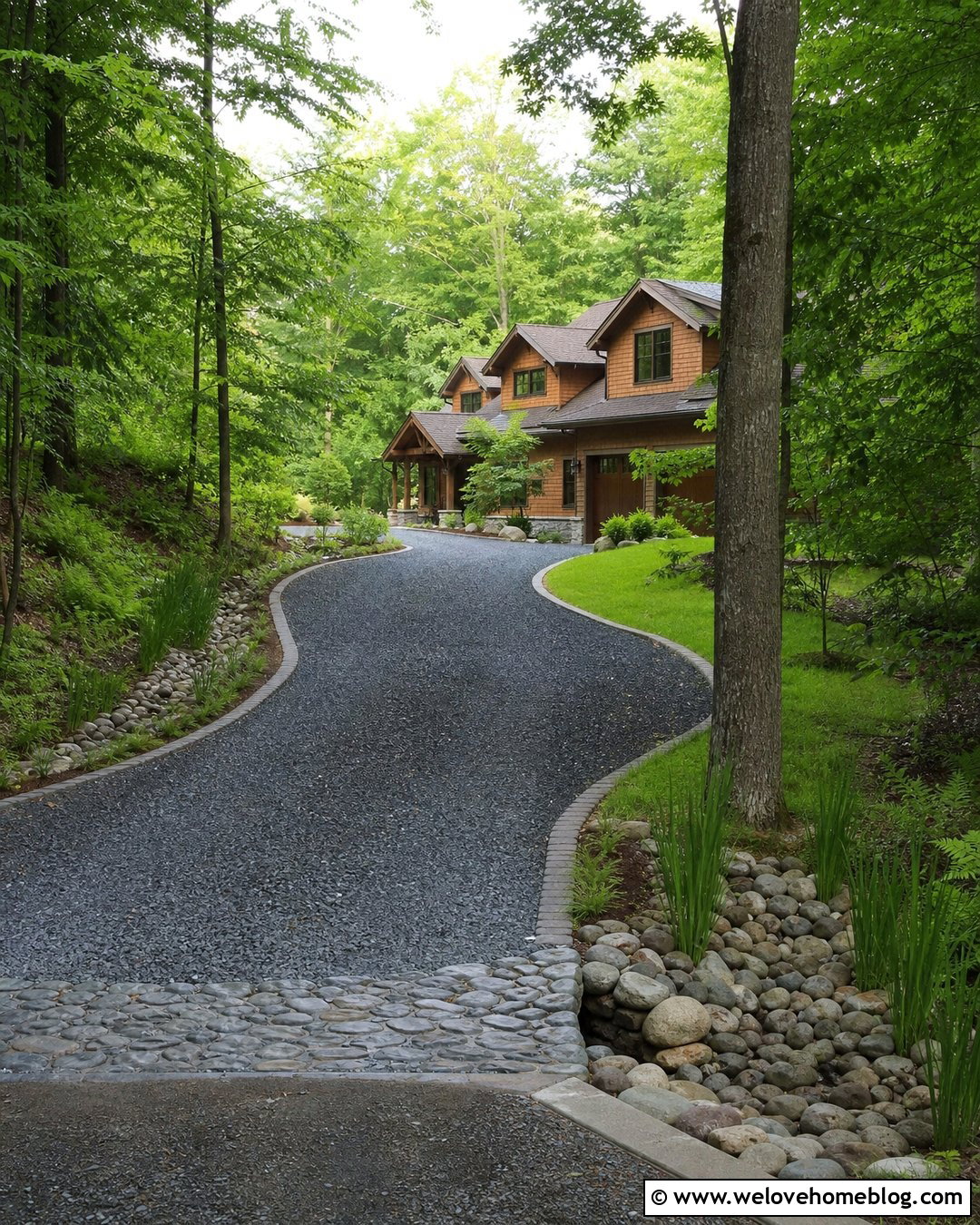
A gray gravel driveway bordered by river rock drainage swales can handle a wet woodland setting without looking heavily engineered. Use angular crushed gravel on the driving surface because it compacts more effectively than smooth decorative stones. Along one or both sides, create shallow swales lined with rounded river rock, cobbles, moisture-loving sedges, rushes, and ferns. The driveway can curve gently across the property and cross each swale only where a properly sized culvert or reinforced transition is provided. Stone edging between the driving lane and swale will keep the materials separate. This practical composition turns drainage into part of the landscape. It works well with a cedar-sided craftsman, lakeside cottage, or woodland ranch surrounded by mature deciduous trees.
13. Circular Gravel Driveway Around A Woodland Island
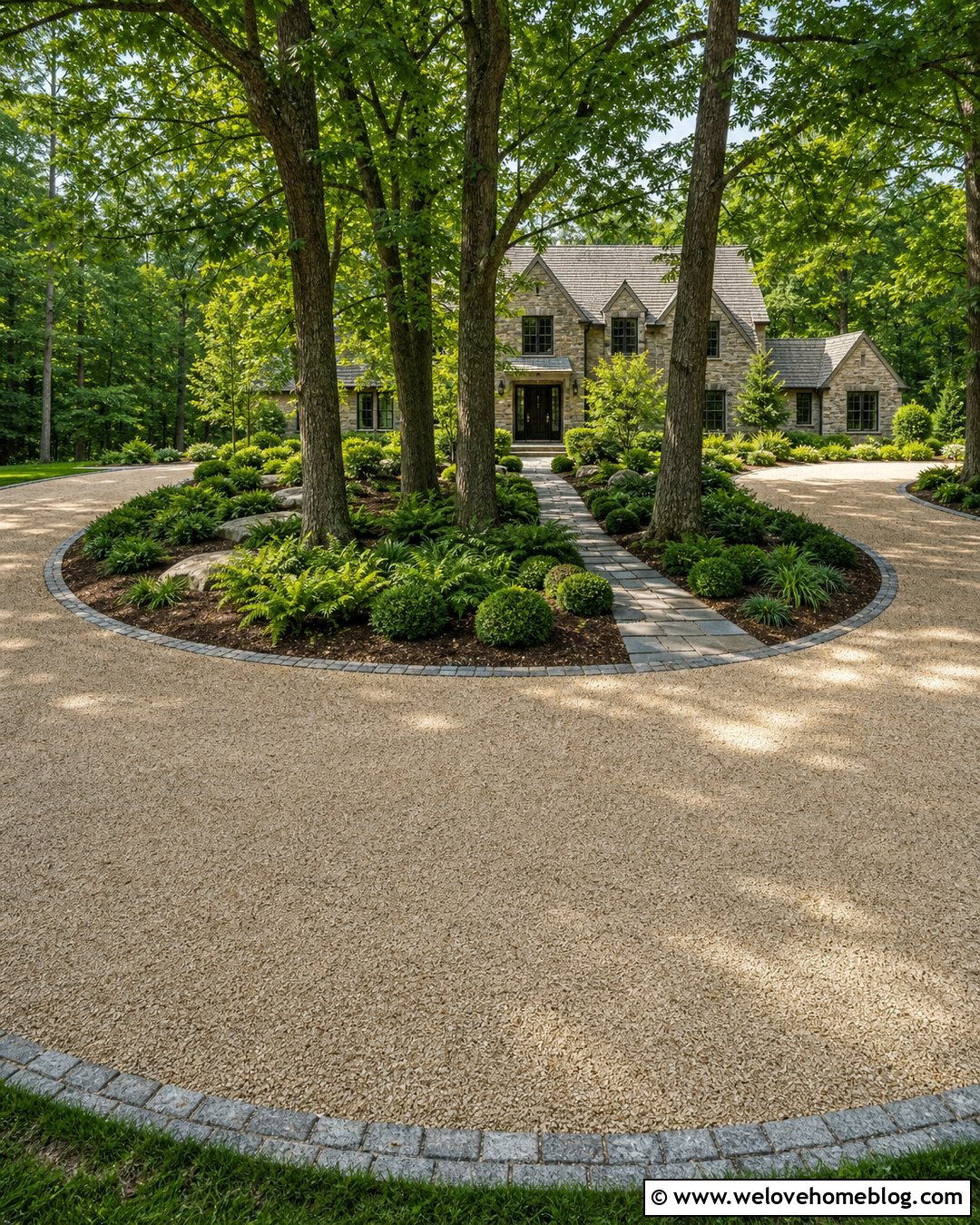
A circular gravel driveway creates an easy turnaround while preserving a central group of mature trees. Use compacted buff or gray crushed stone, contained by cobblestone edging around both the outside boundary and the center island. The island can feature existing oaks, maples, or pines underplanted with ferns, native sedges, and low evergreen shrubs. Avoid piling new soil or mulch deeply around established trunks. The circular layout should provide enough width for comfortable vehicle movement without consuming more woodland than necessary. Position the home’s front entrance where it can be seen across the island, then connect it with a stone walkway. This complete arrangement suits a large craftsman, colonial, lodge, or traditional country house on a spacious wooded property.
14. Split Gravel Driveway With A Forest Median
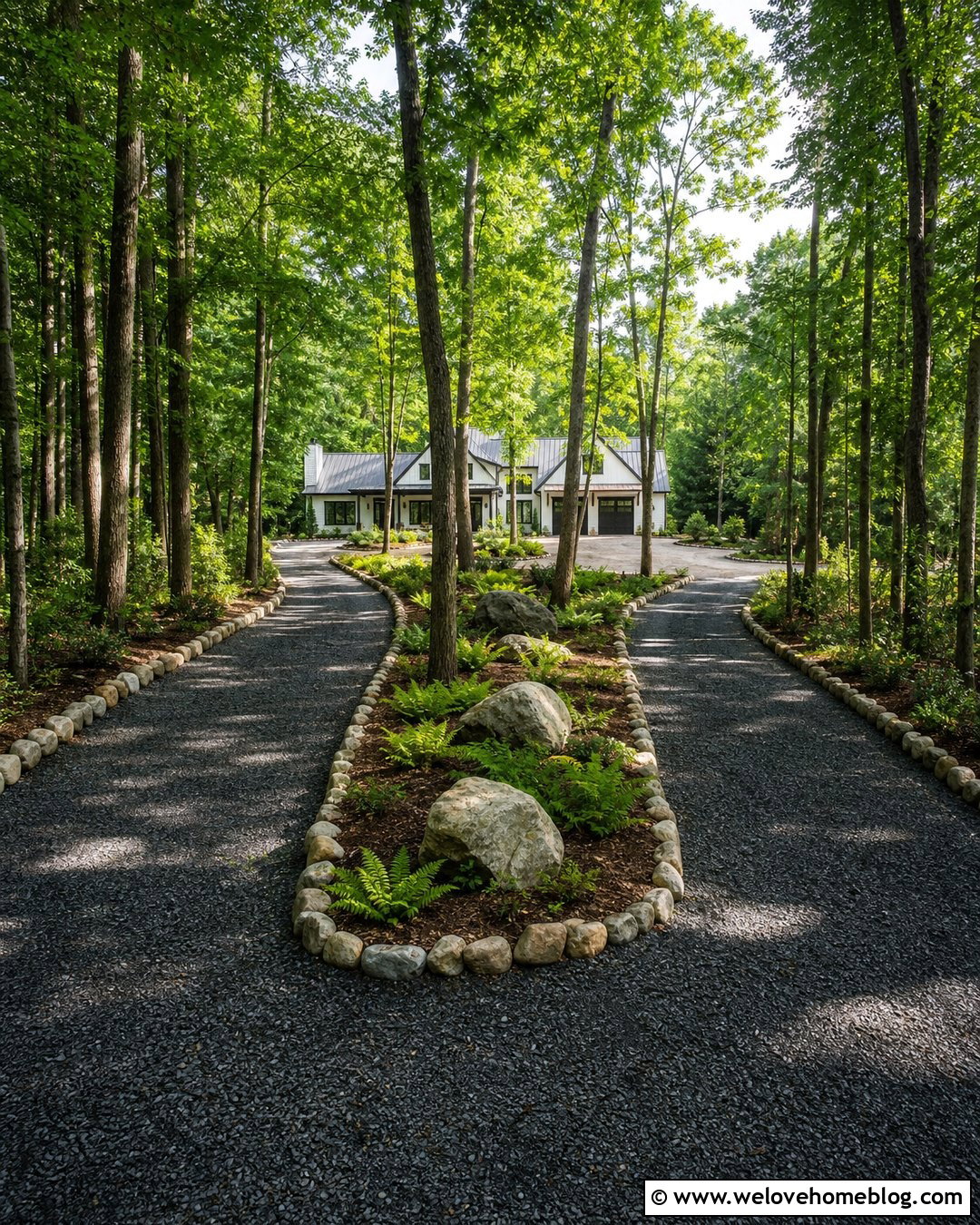
A split driveway can preserve a long natural median filled with existing trees and woodland plants. Two narrow lanes of compacted charcoal gravel curve around the planted center before meeting near the house. Fieldstone edging helps maintain clean boundaries and protects the median from gradually becoming part of the driving surface. This design can work as a divided entrance, a looped turnaround, or separate arrival and departure lanes. Keep plants near merging points low enough to maintain visibility. Inside the median, retain healthy trees and add ferns, native ground cover, and a few large boulders instead of formal flower beds. A modern farmhouse or rustic contemporary home provides a strong destination beyond the trees while the divided layout creates a memorable approach.
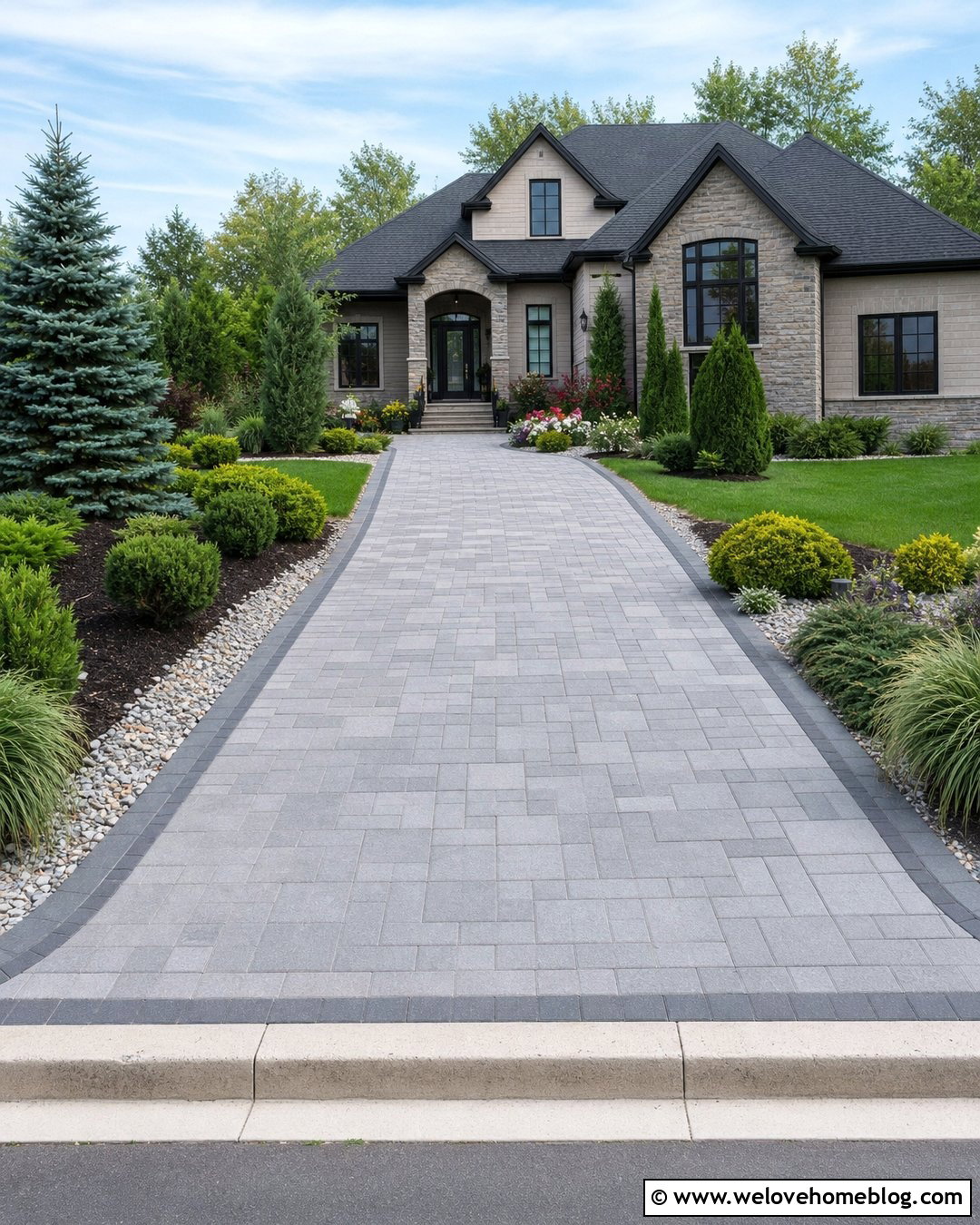
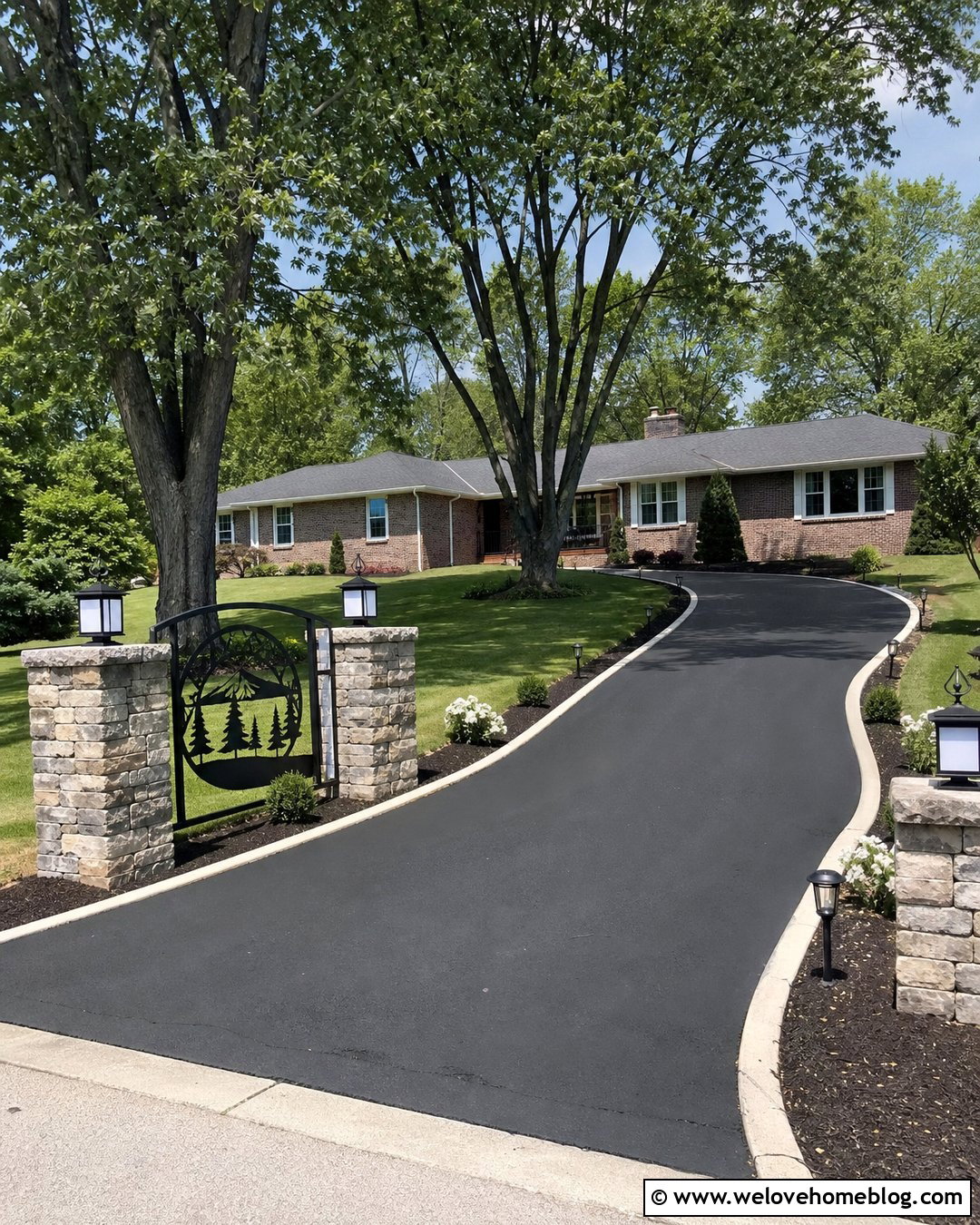
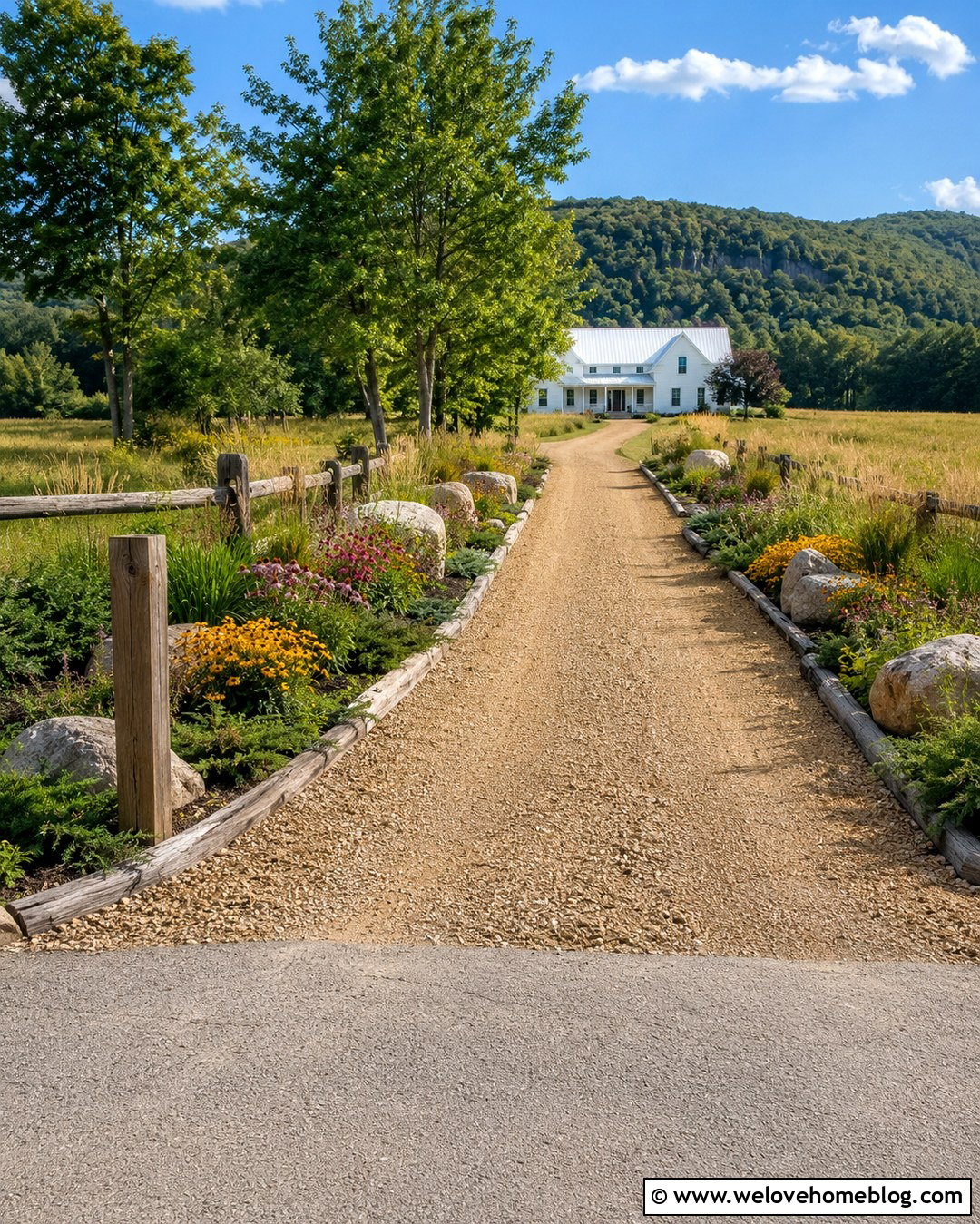
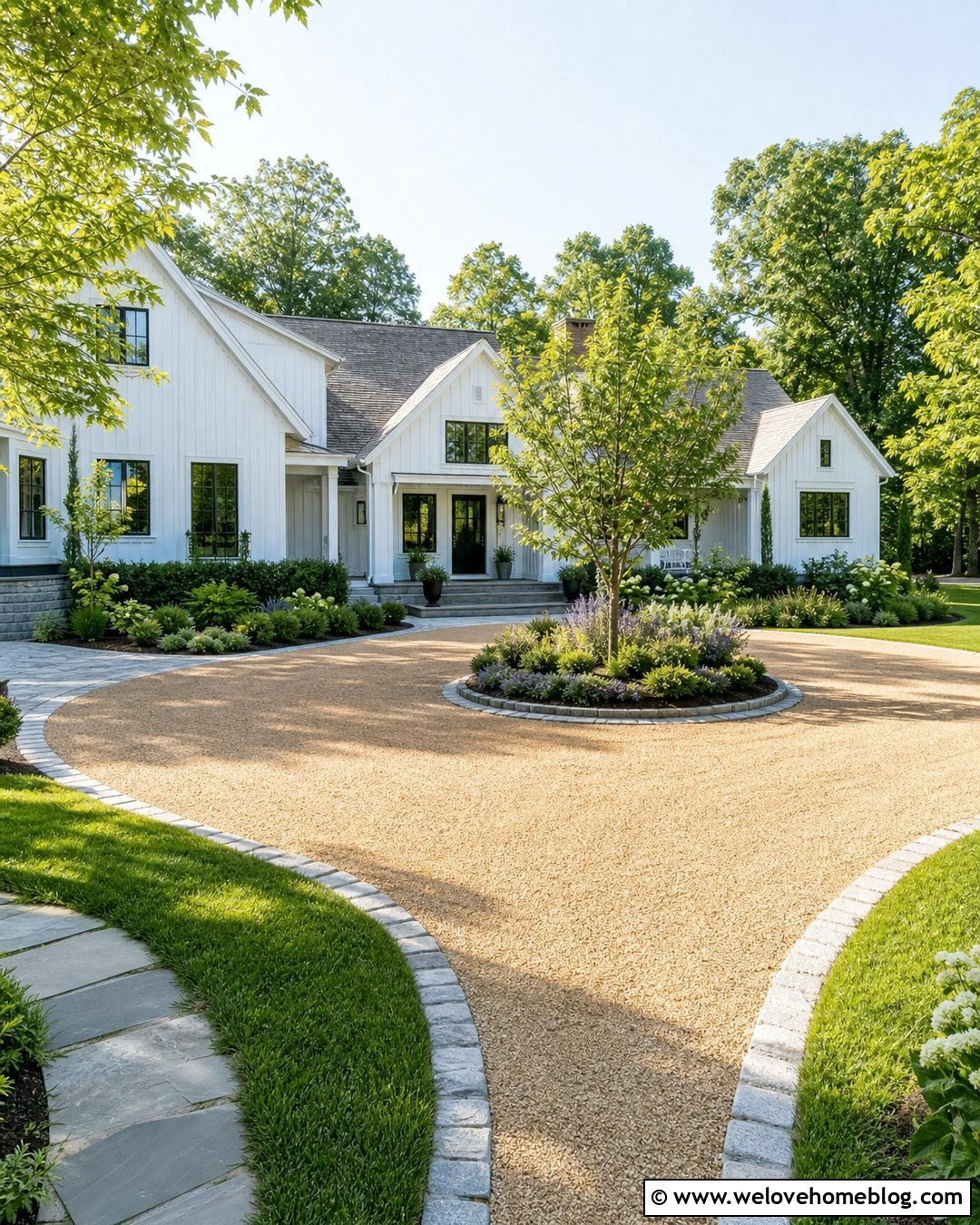
15. Steep Asphalt Driveway With Stone Retaining Walls
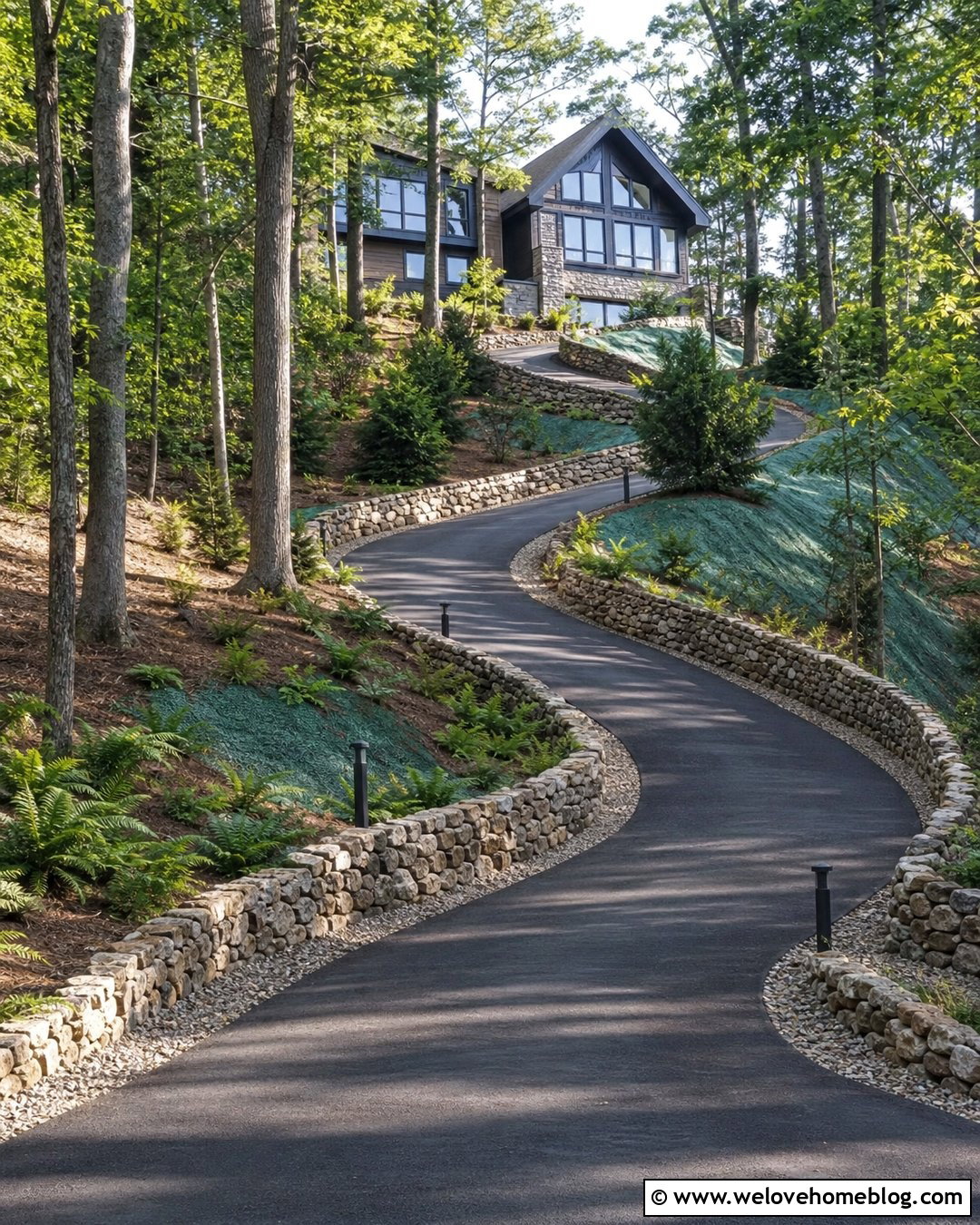
A steep wooded lot needs a driveway that looks attractive but puts stability and water control first. Smooth black asphalt provides a consistent surface, while low natural stone retaining walls can support cut slopes along the uphill side. On the lower side, a reinforced shoulder and planted drainage area help define the route. Use broad switchback-style curves where the property allows, avoiding unnecessarily sharp turns. Ferns, low evergreen shrubs, and erosion-conscious native ground cover can soften the walls without blocking sightlines. Install lighting near curves, grade changes, and the final approach to the house. Because steep driveways involve complex grading, runoff, winter conditions, and emergency access, the design should be reviewed by qualified local professionals before construction begins.
16. Narrow Gravel Driveway With A Woodland Pullout
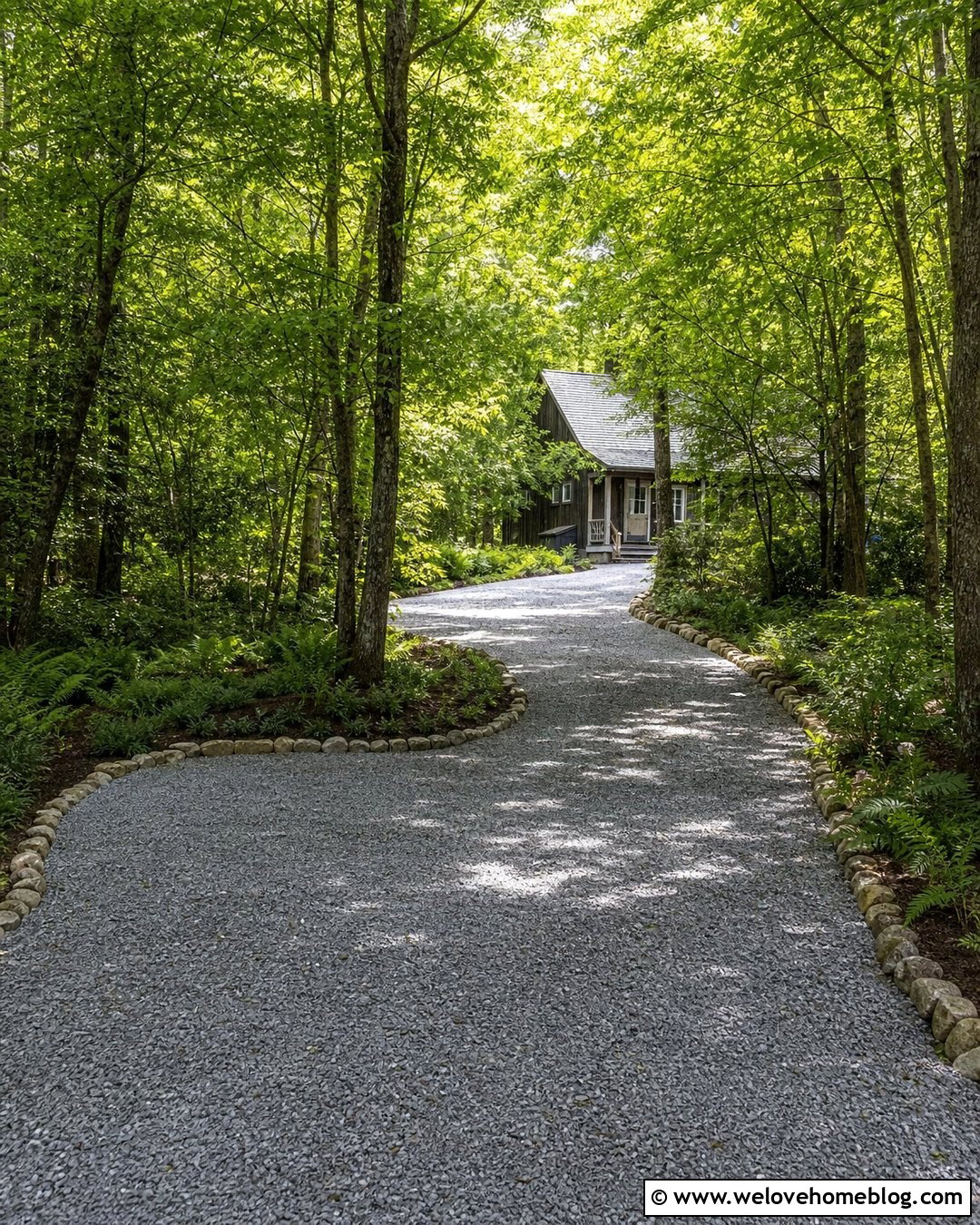
A narrow gravel driveway can reduce tree removal and ground disturbance when it includes a well-placed passing or parking pullout. Use compacted gray crushed stone for the lane and widen it at a natural clearing halfway to the house. Define both the driveway and pullout with low fieldstone edging that blends into the woods. Shade-tolerant sedges, ferns, and native shrubs can stabilize disturbed shoulders while maintaining a relaxed forest appearance. The pullout may also provide space for guests, deliveries, or vehicles to pass safely on a long approach. Keep branches trimmed to provide adequate vertical clearance. A small cottage, cabin, or ranch home at the end reinforces the modest scale and practical character of this space-saving woodland driveway.
17. Gated Gravel Driveway With Stone Pillars
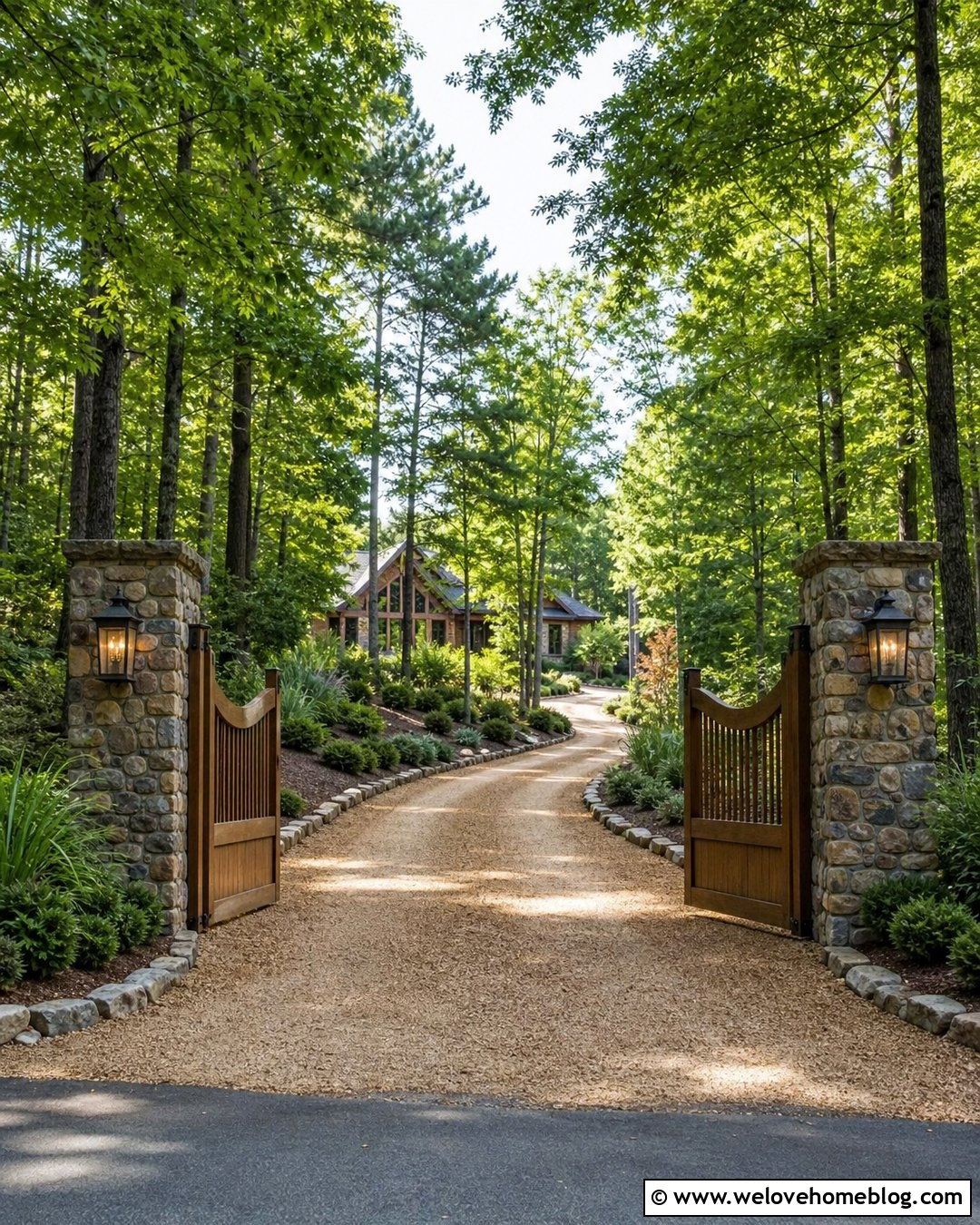
A gated woodland driveway can feel welcoming when the entrance uses natural materials and generous proportions. Start with a flared apron of compacted tan gravel, then place simple timber gates between substantial fieldstone pillars. Continue the gravel in a gentle curve through mature trees so the house remains partially hidden from the road. Add low native shrubs, ornamental grasses, and woodland ground cover around the pillars rather than formal rows of flowers. The gate should have enough setback from the road for safe vehicle access, subject to local requirements. Discreet lighting can be integrated into or beside the pillars. This complete entrance pairs especially well with a timber-frame home, modern farmhouse, lodge, or stone-clad craftsman residence.
18. Paver Driveway With Low Woodland Lighting
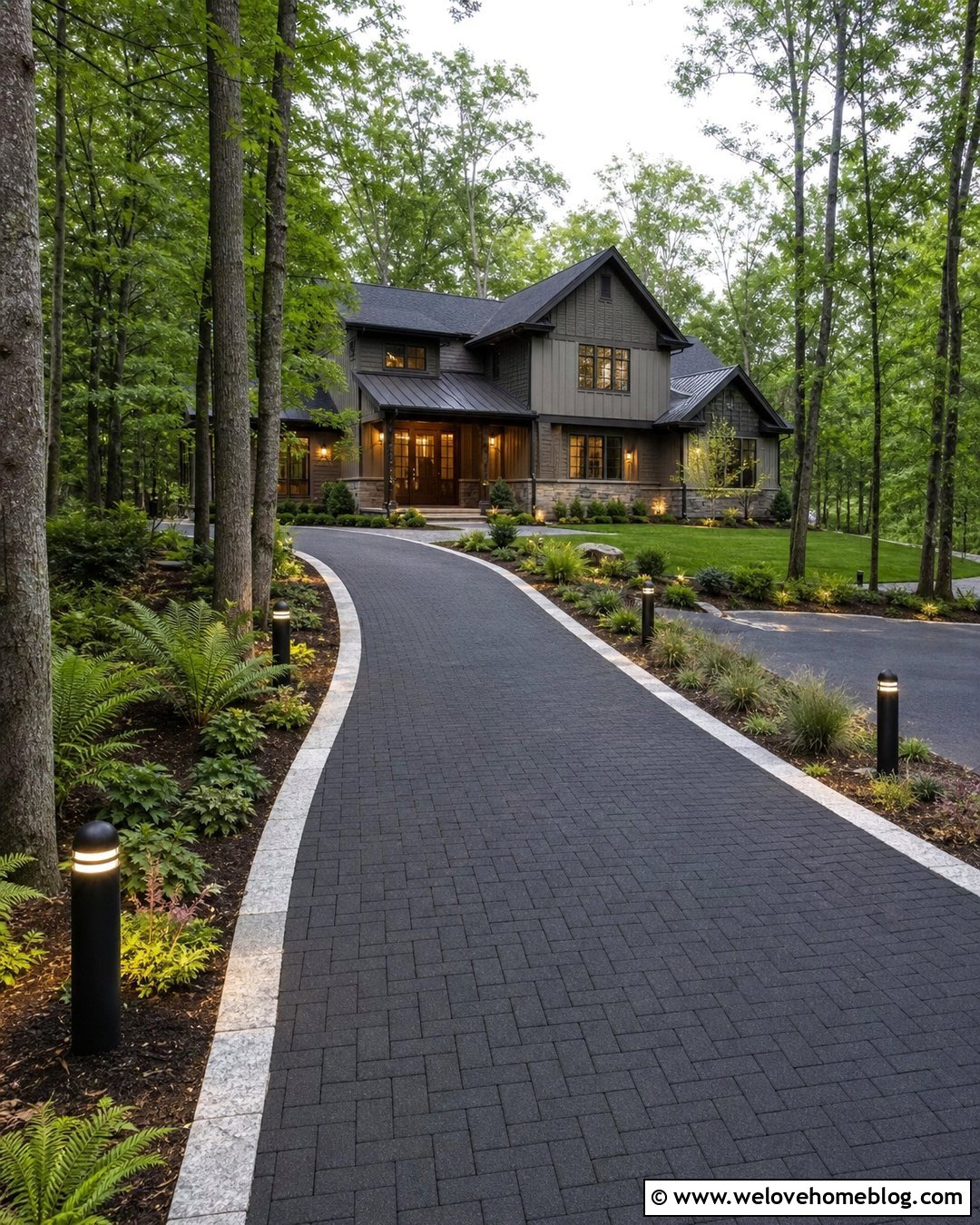
Low landscape lighting can improve navigation without overwhelming the peaceful character of a wooded property. Use charcoal permeable concrete pavers for a curved driveway, bordered by a narrow band of lighter granite setts. Place shielded, downward-facing bollards at curves, intersections, and changes in grade rather than lining every foot of the route. During the day, dark bronze or black fixtures will recede against tree trunks and forest shadows. Ferns, coral bells, sedges, and low shrubs can surround the lights without hiding them. The driveway should open into a clean paver parking area beside a contemporary craftsman home. Plan wiring, drainage, snow removal, and fixture placement together so the lighting remains practical and the surface stays visually uncluttered.
19. Gravel Driveway With A Stone Culvert Crossing
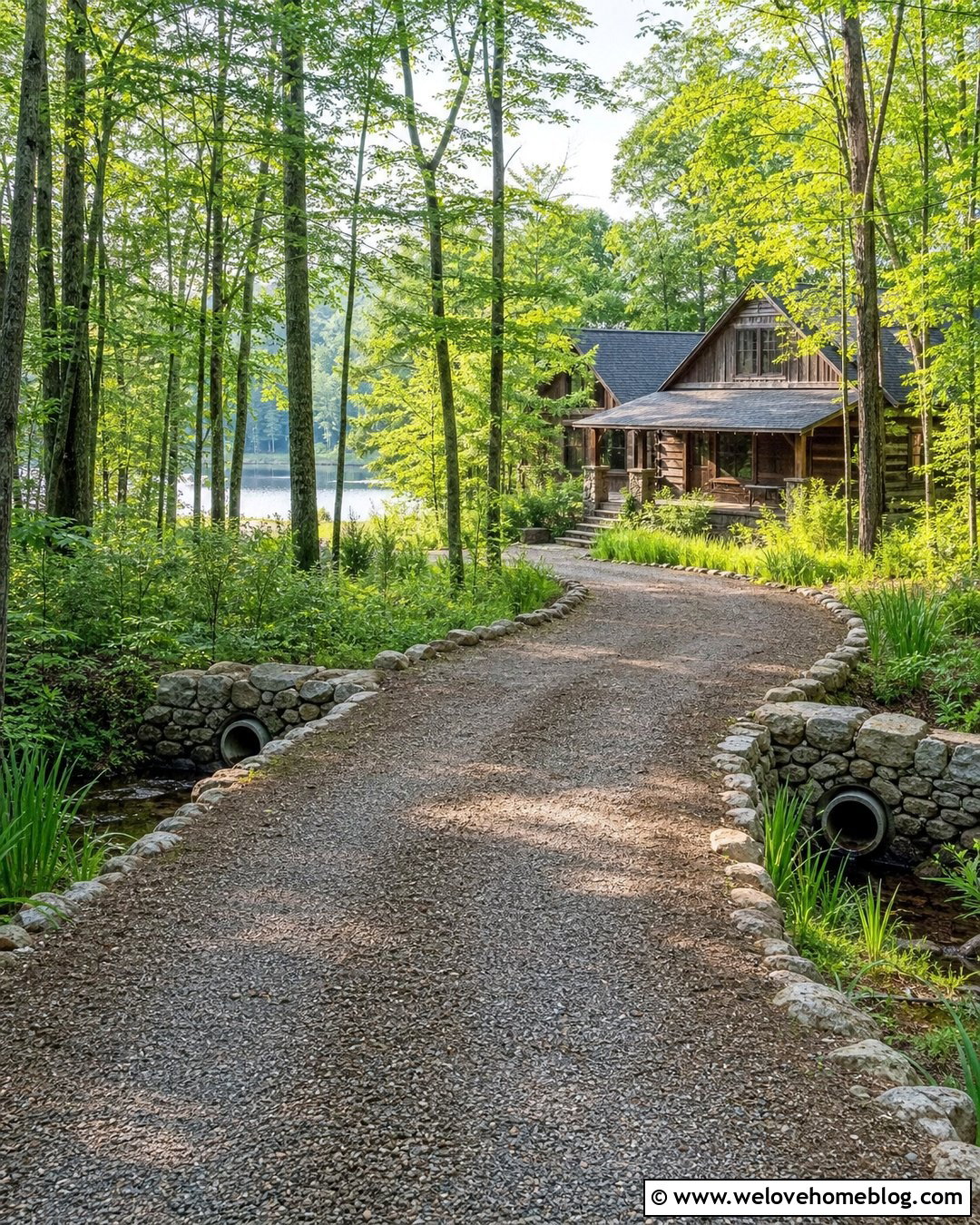
Where runoff or a seasonal stream crosses the route, a stone-faced culvert can become a distinctive part of the woodland driveway. Use compacted brown-gray gravel for a gently curved approach and build low stone headwalls at the crossing. The culvert, base, load capacity, erosion protection, and water flow must be professionally sized for site conditions. Plant native ferns, sedges, rushes, and moisture-tolerant shrubs near the banks, keeping roots and debris away from the opening. A subtle widening near the crossing can improve visibility and make the feature feel intentional. Beyond it, the driveway can continue toward a cabin, rustic ranch, or lakeside home. Matching fieldstone edging helps visually connect the crossing with the full driveway.
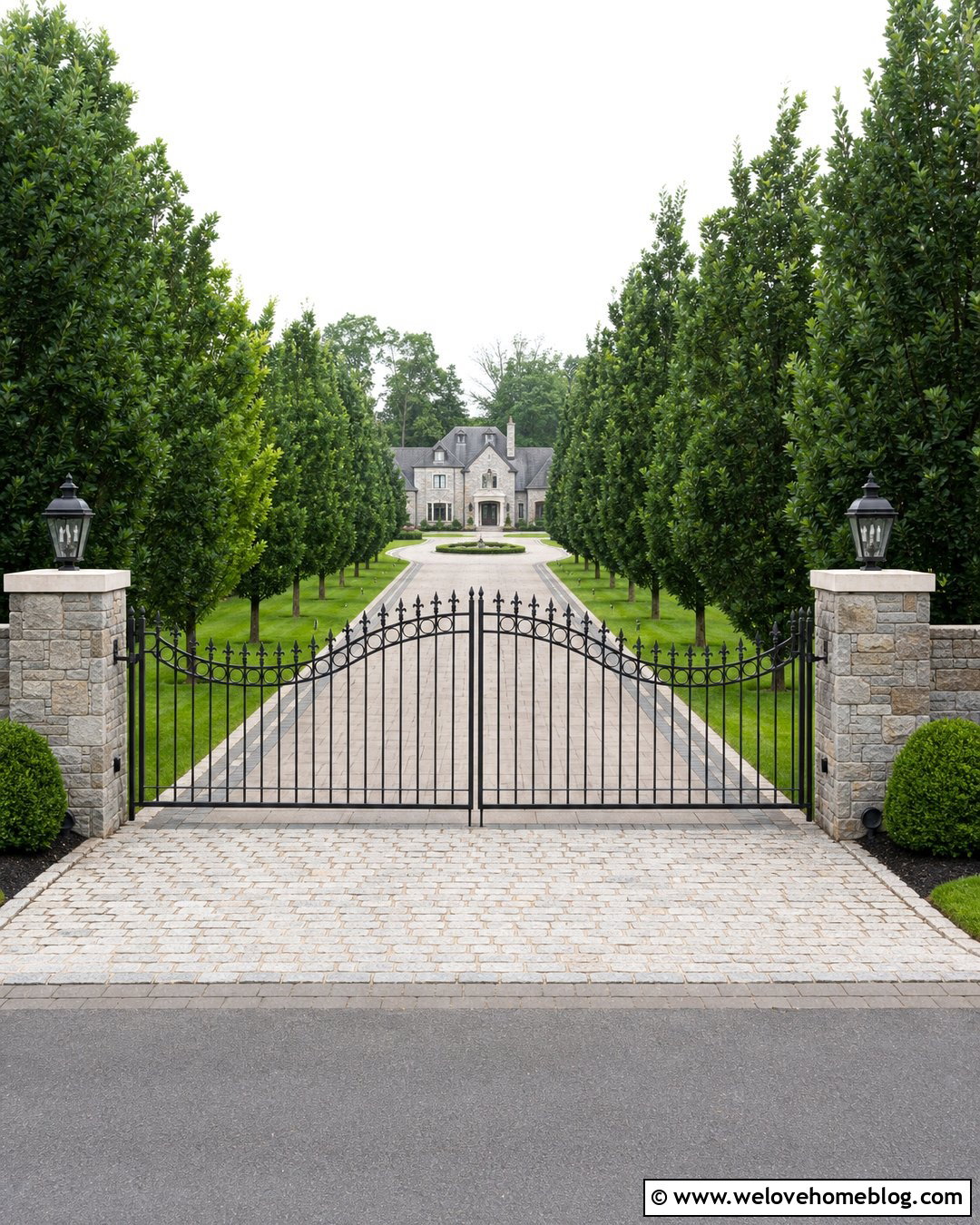
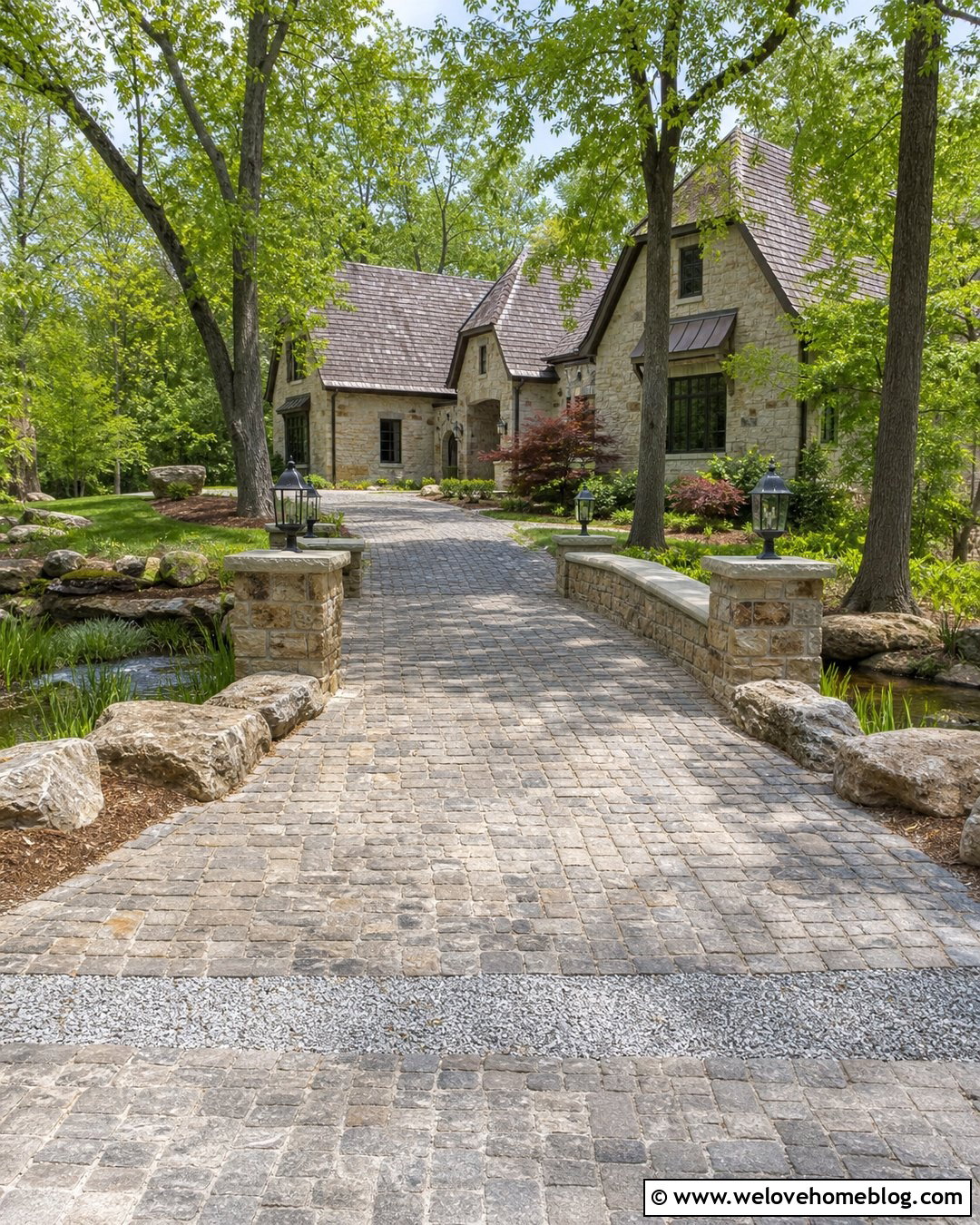
20. Mixed Material Driveway With A Paver Arrival Court
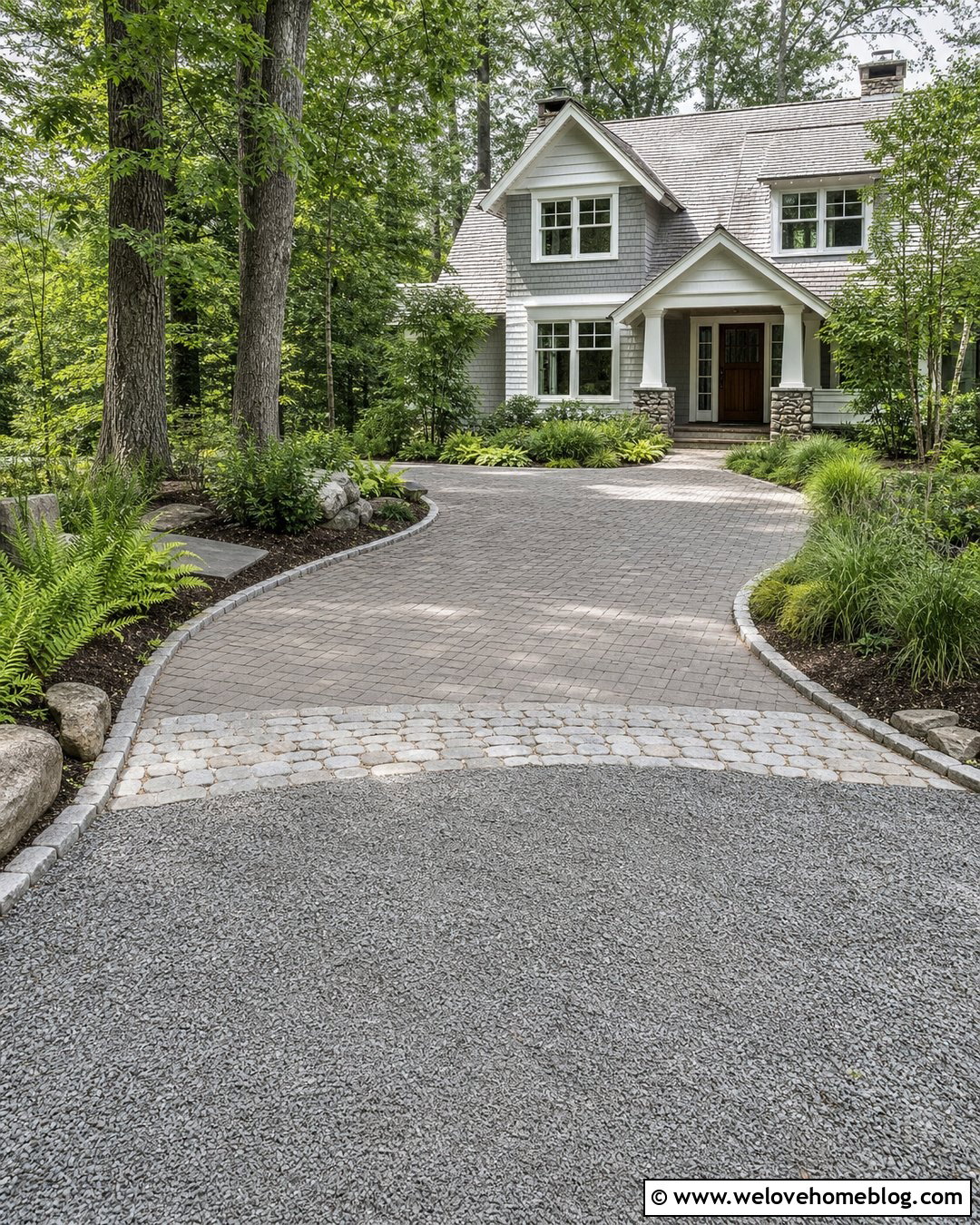
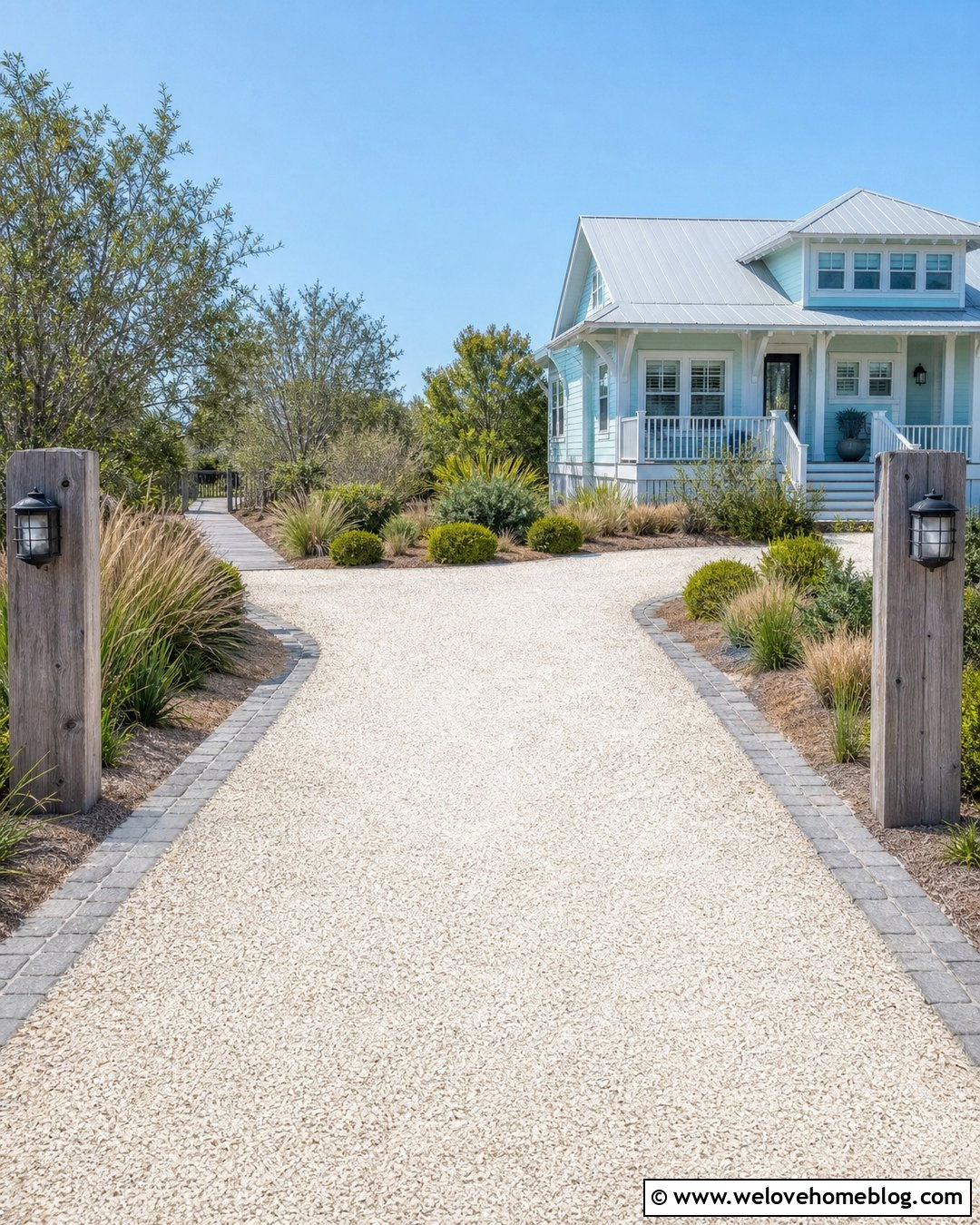
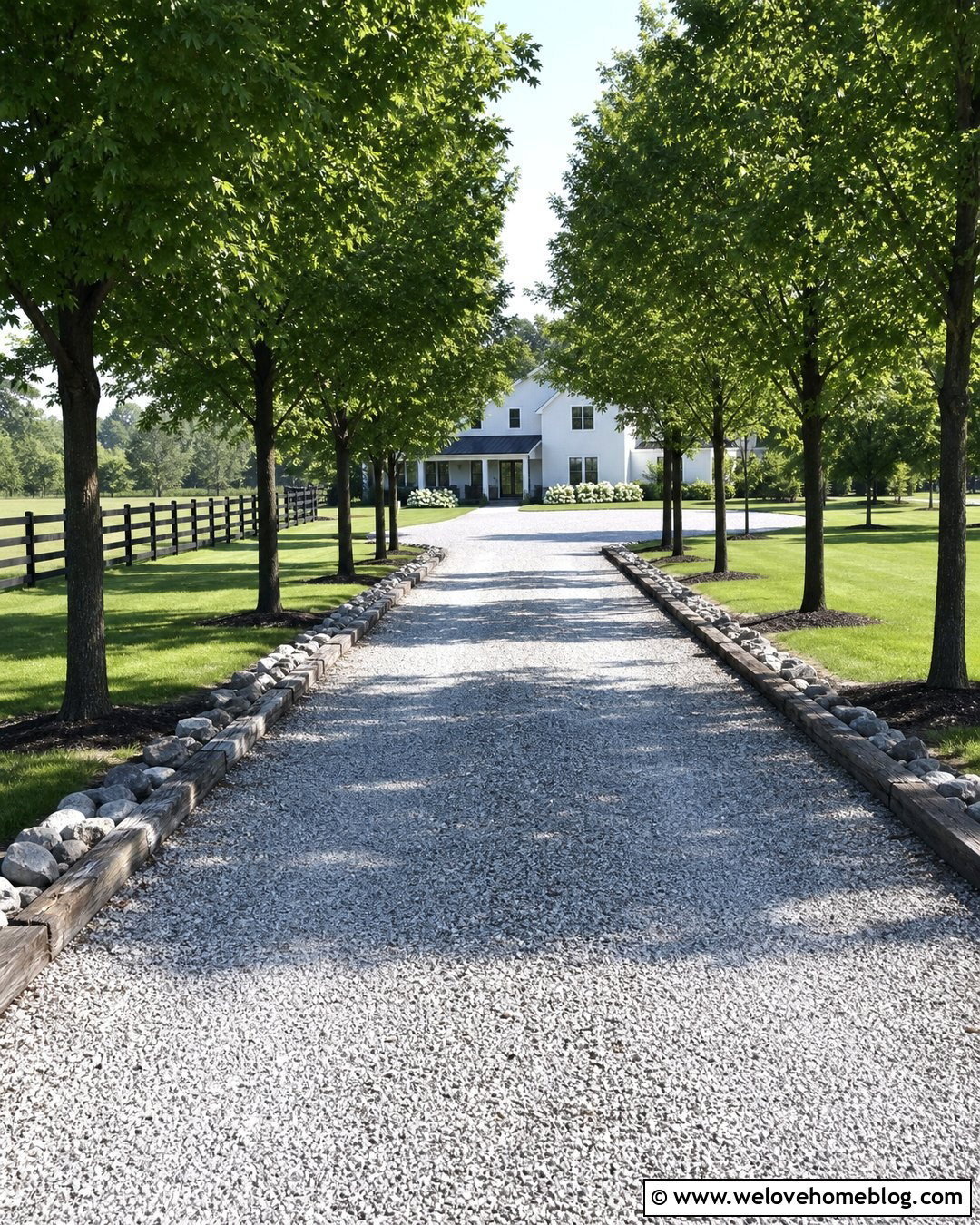
A mixed-material layout can make a long woodland driveway affordable while giving the area near the house a polished finish. Use compacted gray gravel along the main curved route through the trees, contained by simple steel or stone edging. About 30 feet from the house, transition through a granite cobblestone band into a warm gray concrete paver arrival court. Repeat a small amount of gravel between nearby planting beds to tie both surfaces together. Ferns, native shrubs, woodland grasses, and a broad stepping-stone walkway can frame the parking area. This combination places the more decorative material where it has the greatest visual effect. It works with contemporary, craftsman, farmhouse, and transitional homes while preserving a relaxed forest approach.
Conclusion:
The most successful wooded driveway feels carefully planned but not overly controlled. Its surface, curves, borders, drainage, planting, and final approach should function as one complete design. Start by studying the slope, healthy trees, wet areas, soil, and the way vehicles will move through the property. Then choose a material that suits your climate, maintenance expectations, and home architecture. Gravel provides a relaxed appearance, while asphalt, pavers, cobblestone, and stabilized surfaces offer different levels of structure. Preserve useful vegetation, maintain clear sightlines, and seek professional guidance for steep grades, culverts, retaining walls, and major drainage work. Use these 20 driveway through the woods ideas to create a practical and naturally beautiful entrance.

Related posts:
Leave a Reply