
Landscaping beside a driveway can turn a plain parking surface into a polished part of the front yard. This guide to **20 along driveway landscaping ideas** explores complete looks that coordinate the driveway material, shape, edging, plants, lighting, and home exterior. The best layout should improve curb appeal without narrowing the driving area, blocking visibility, or creating constant maintenance. Low shrubs, flowering perennials, ornamental grasses, trees, stone borders, and gravel beds can all work when they suit the available sunlight and local climate. You can also repeat colors and materials from the house to create a more connected design. Whether your driveway is short, long, straight, or curved, you will find practical inspiration in these **20 along driveway landscaping ideas**.

1. Concrete Driveway With Boxwood Borders
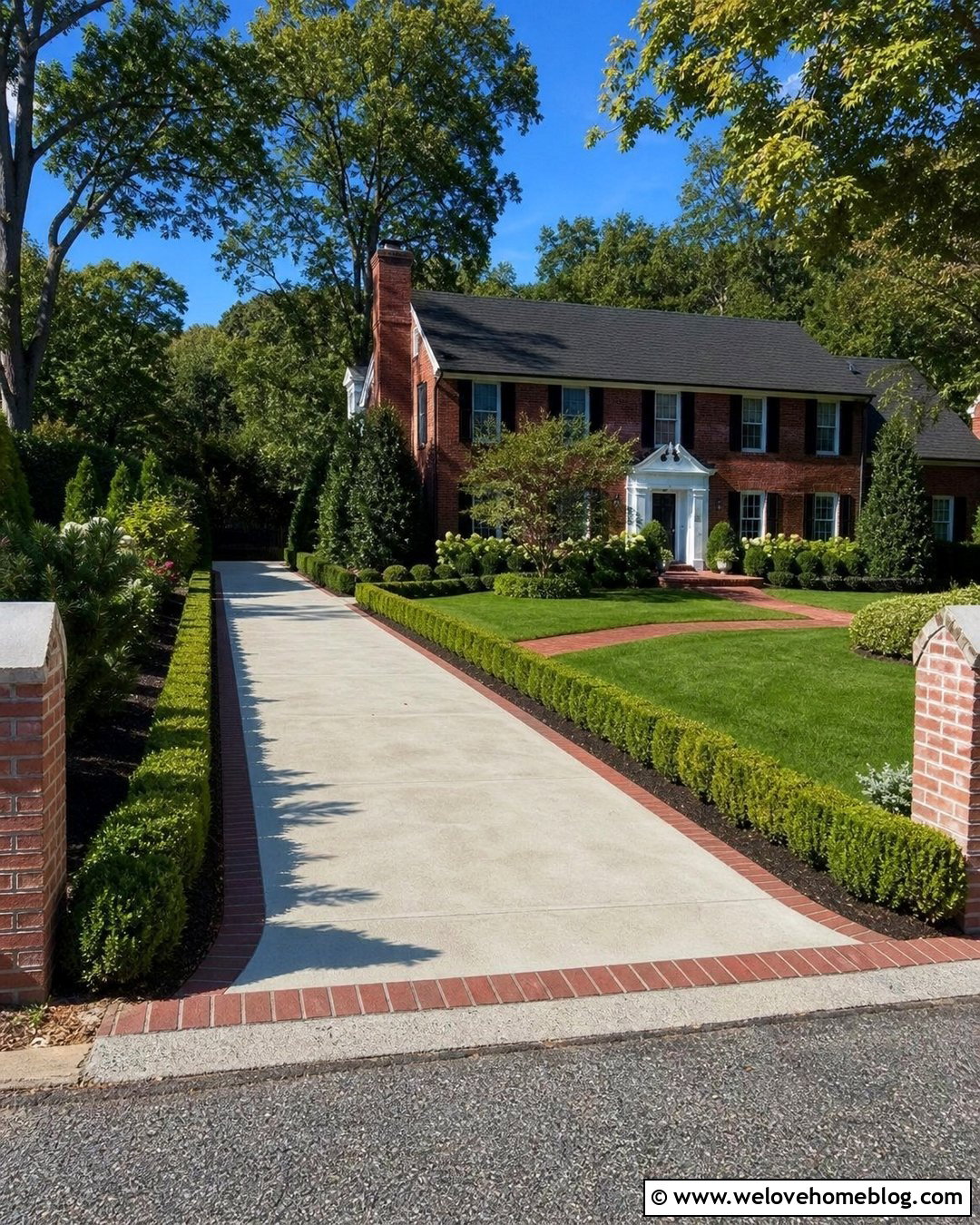
A straight poured concrete driveway gains a clean, traditional appearance when low boxwood borders run along both sides. Add brick edging between the concrete and planting beds to connect the driveway with a brick Colonial or Cape Cod home. Keep the shrubs low enough that car doors can open comfortably and drivers can see pedestrians near the sidewalk. Behind the boxwoods, place a few taller evergreens near the house to create gradual layers. Dark mulch will provide contrast against the pale concrete while helping the beds look finished. Use a matching brick walkway leading from the driveway to the front porch. This complete design feels formal without requiring elaborate planting, making it especially suitable for a tidy suburban front yard.
2. Gravel Driveway With Lavender Borders
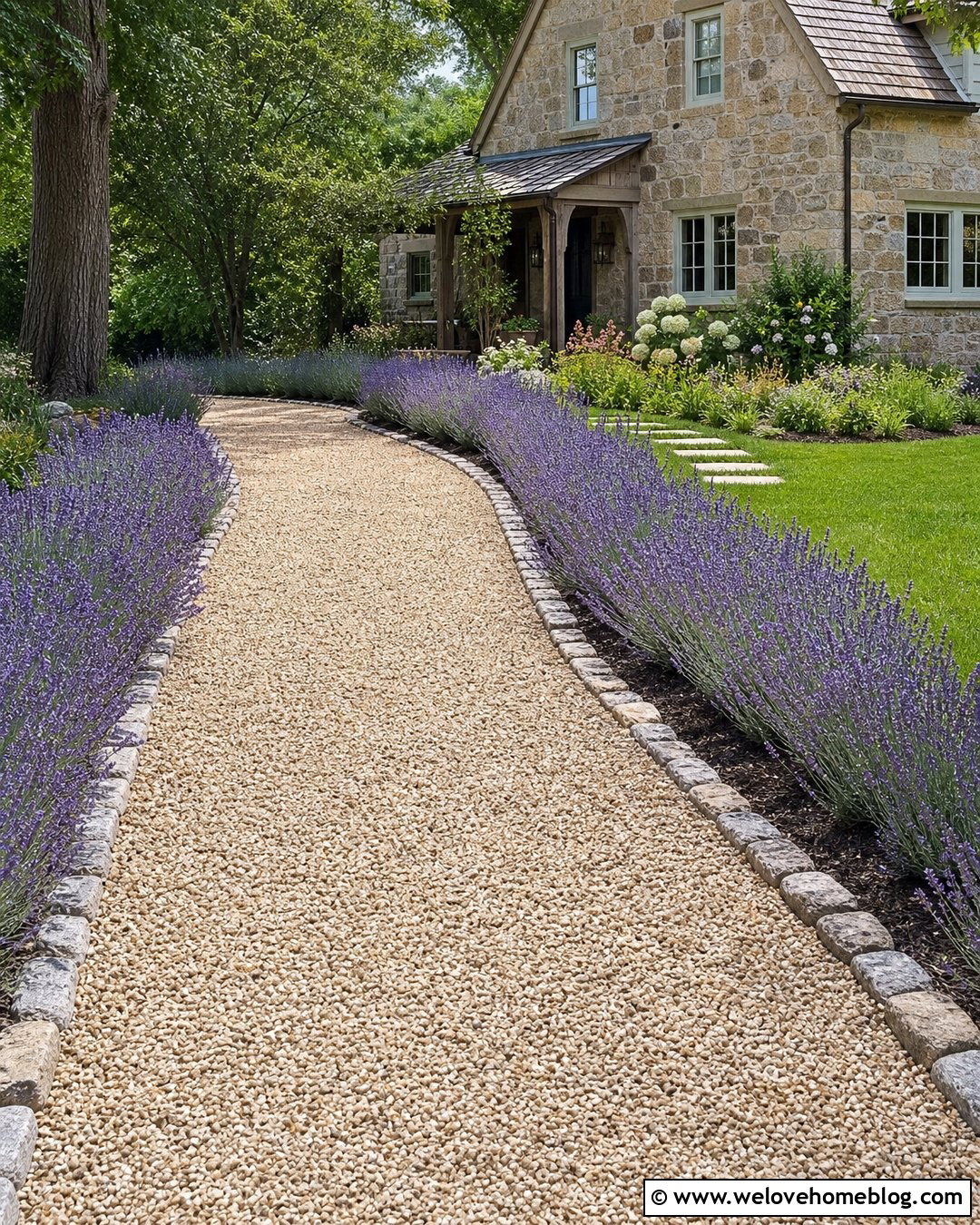
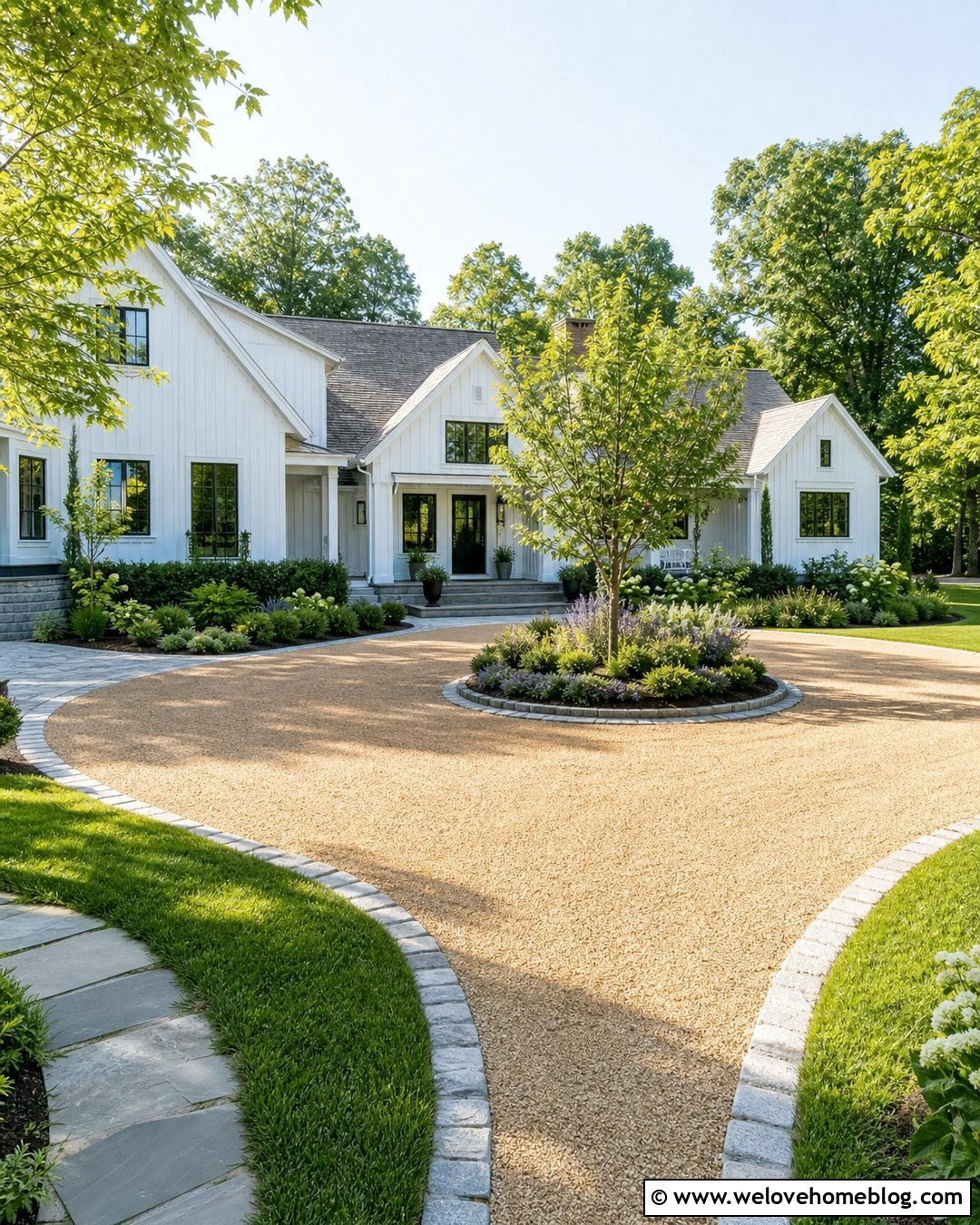
Imagine a gently curved pea gravel driveway bordered by soft rows of lavender and natural cobblestone. This combination creates a relaxed country look that works beautifully with a cottage, farmhouse, or stone-front home. Choose gravel in warm beige and gray tones that coordinate with the facade. A sturdy cobblestone edge will help define the driving surface and reduce gravel movement into the beds. Plant the lavender far enough back to prevent branches from brushing against vehicles. You can repeat the same plants near the porch for a connected landscape. A simple stepping-stone walkway through the border creates convenient access to the lawn. The resulting driveway feels colorful and welcoming while maintaining an open, uncluttered route from the street to the house.
3. Asphalt Driveway With Ornamental Grass
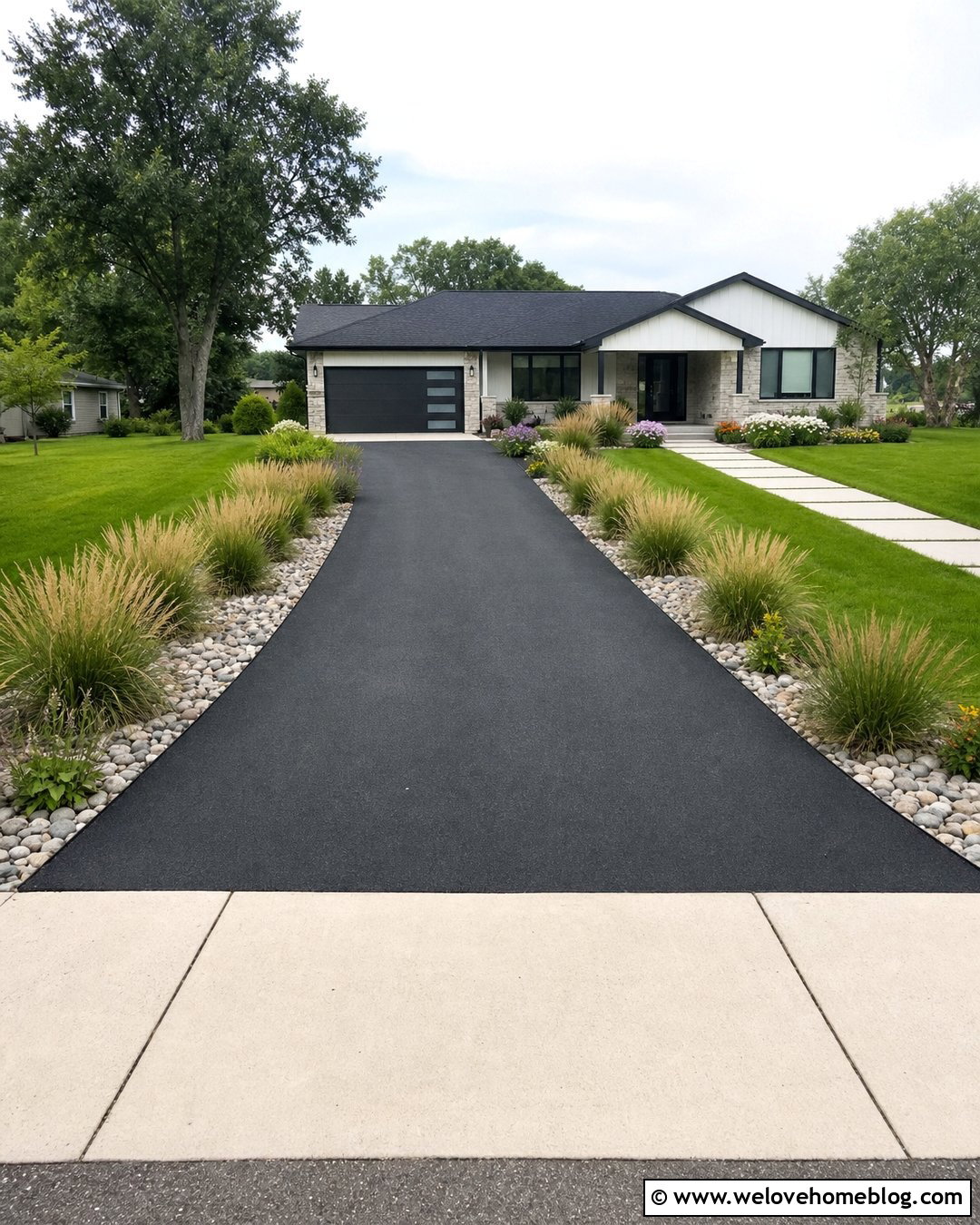
Could a basic asphalt driveway become a modern landscape feature? A wide black asphalt surface looks more intentional when framed with pale river rock, steel edging, and repeating clumps of ornamental grass. Use a straight or slightly angled driveway leading toward a modern ranch house. The grasses soften the dark pavement without creating a fussy border. Space them evenly for a calm rhythm, leaving open areas near the sidewalk and garage for visibility. Include a few low flowering perennials between the grasses to add seasonal color. A concrete slab walkway can cross the rock bed and lead toward the entrance. This complete look balances hard and soft textures, making the driveway feel integrated with the yard rather than separated from it.
4. Brick Driveway With Mixed Flower Beds
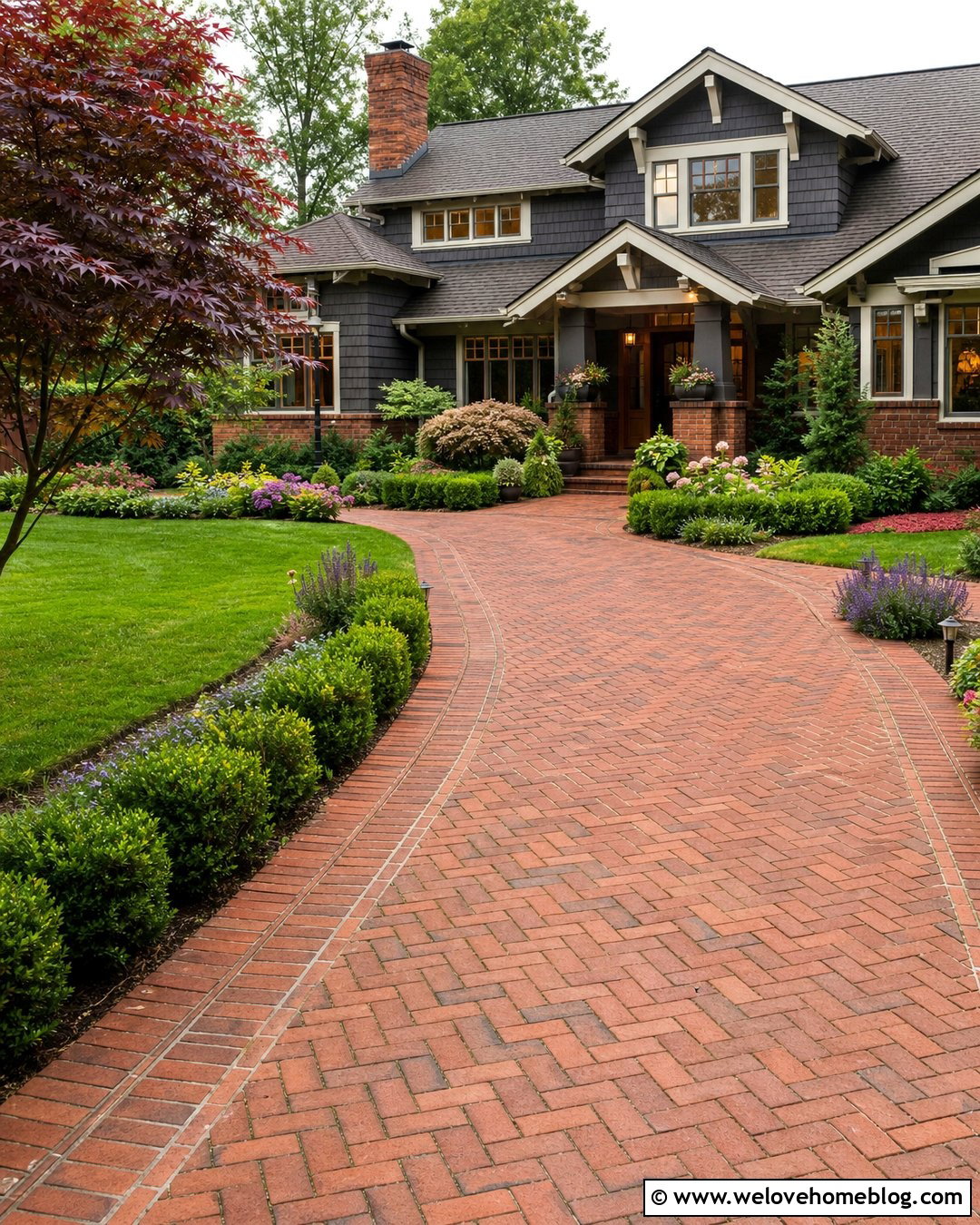
Warm clay brick pavers laid in a herringbone pattern provide a rich base for generous flower beds along the driveway. Use a curved bed line instead of a rigid strip to soften the rectangular pavers. A combination of compact evergreen shrubs, flowering perennials, and ground covers creates interest at several heights. Repeat just a few plant varieties down the driveway so the border remains organized. Brick soldier-course edging can contain the planting soil while matching the driving surface. Near the house, widen the beds and add a small ornamental tree as a transition to the front foundation landscaping. This approach suits a Craftsman, Tudor, or traditional brick home. The coordinated colors make the driveway and garden appear established, thoughtful, and comfortably welcoming.
5. Paver Driveway With Hydrangea Borders
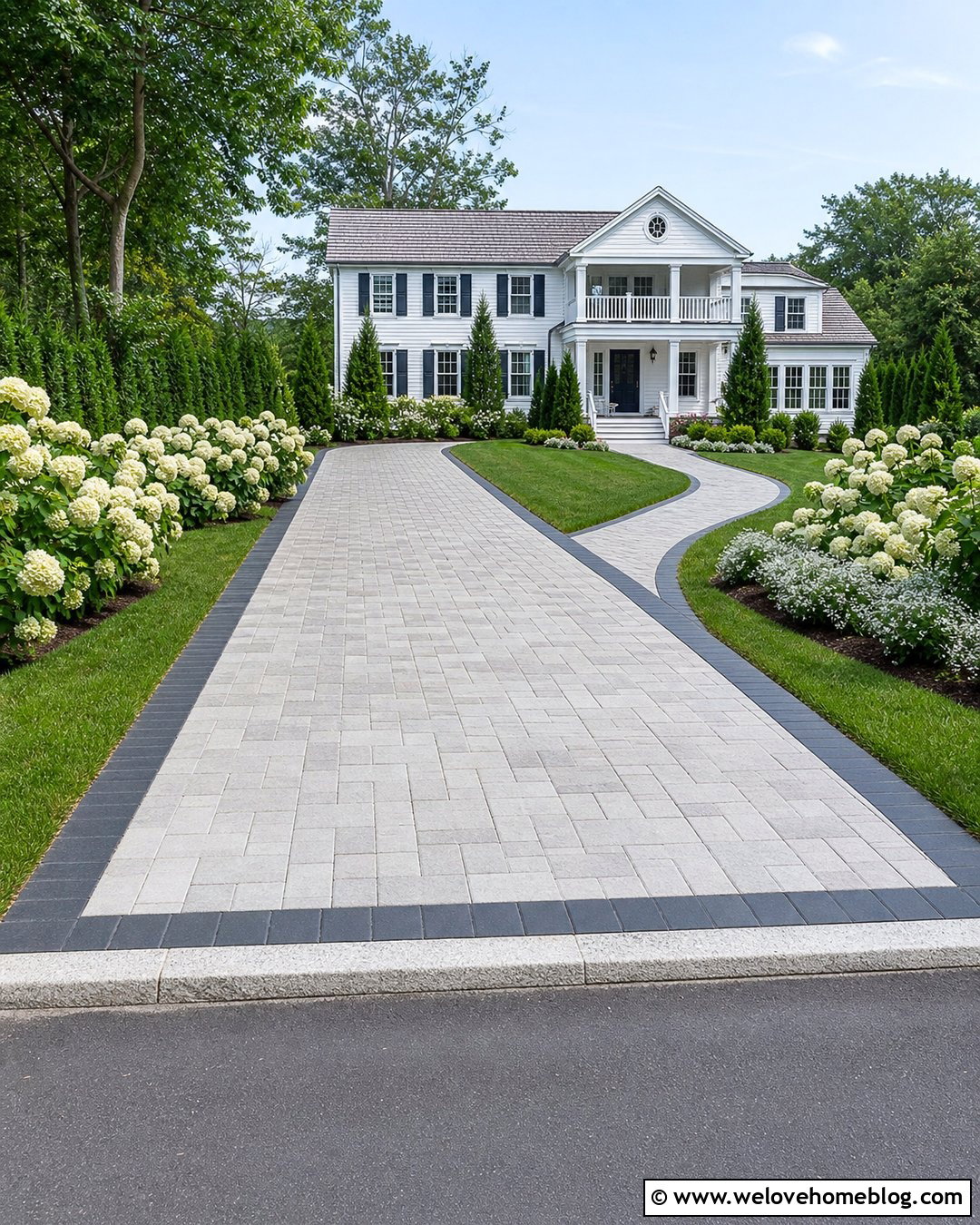
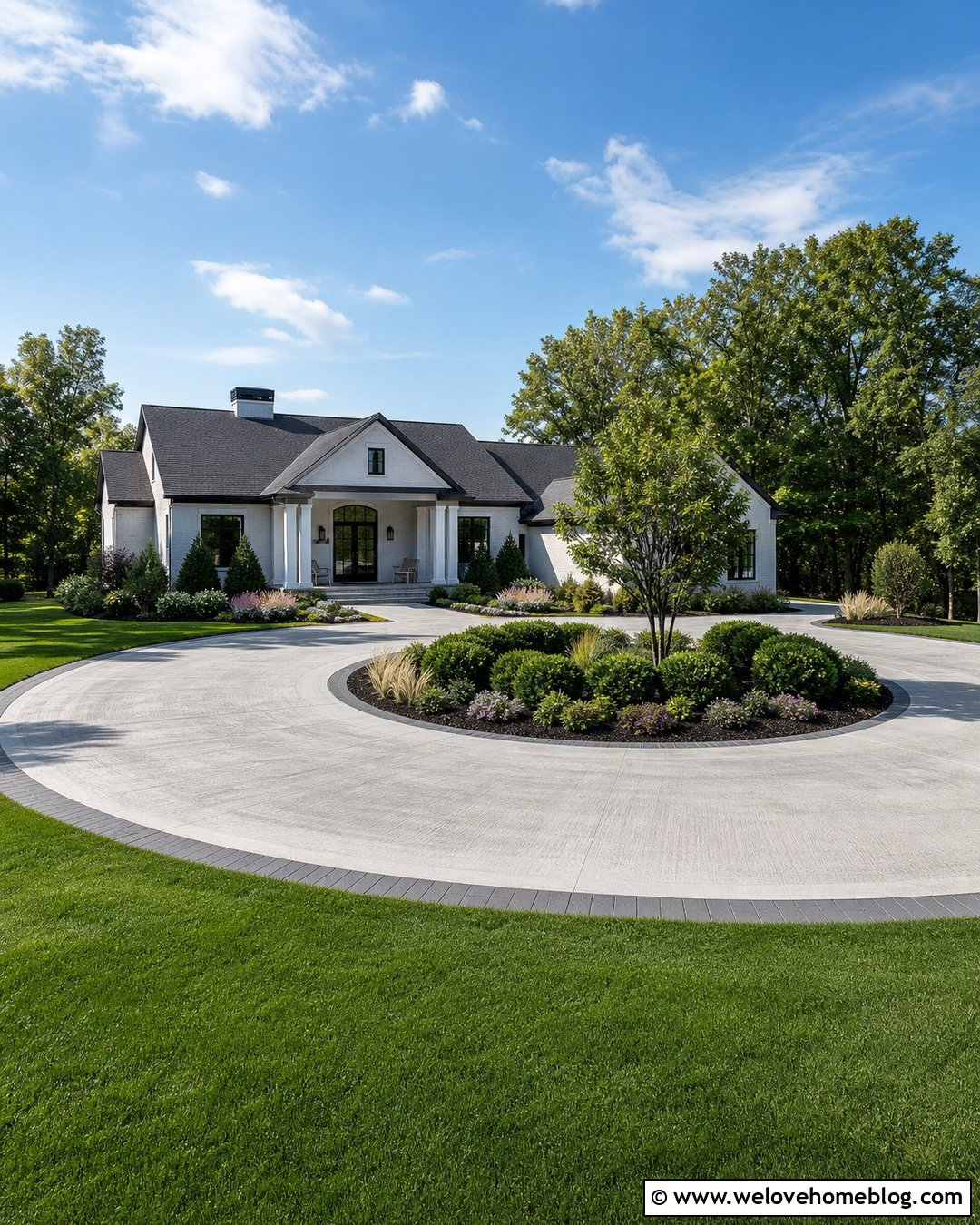
A broad paver driveway can feel softer when rounded hydrangeas fill generous beds along its outer edges. Select light gray concrete pavers with a darker charcoal border to give the driving surface a crisp outline. Keep the planting beds curved and slightly set back, allowing enough clearance for doors, mirrors, and snow removal equipment where needed. Hydrangeas can form the main visual mass, while lower ground covers fill the front edge of each bed. Add upright evergreens closer to the house for winter structure and stronger height variation. A paver walkway in the same color family should connect the driveway to the porch. This coordinated look works especially well with Colonial, coastal, and farmhouse exteriors because it combines orderly hardscaping with lush, relaxed planting.
6. Curved Driveway With Tree Lined Landscaping
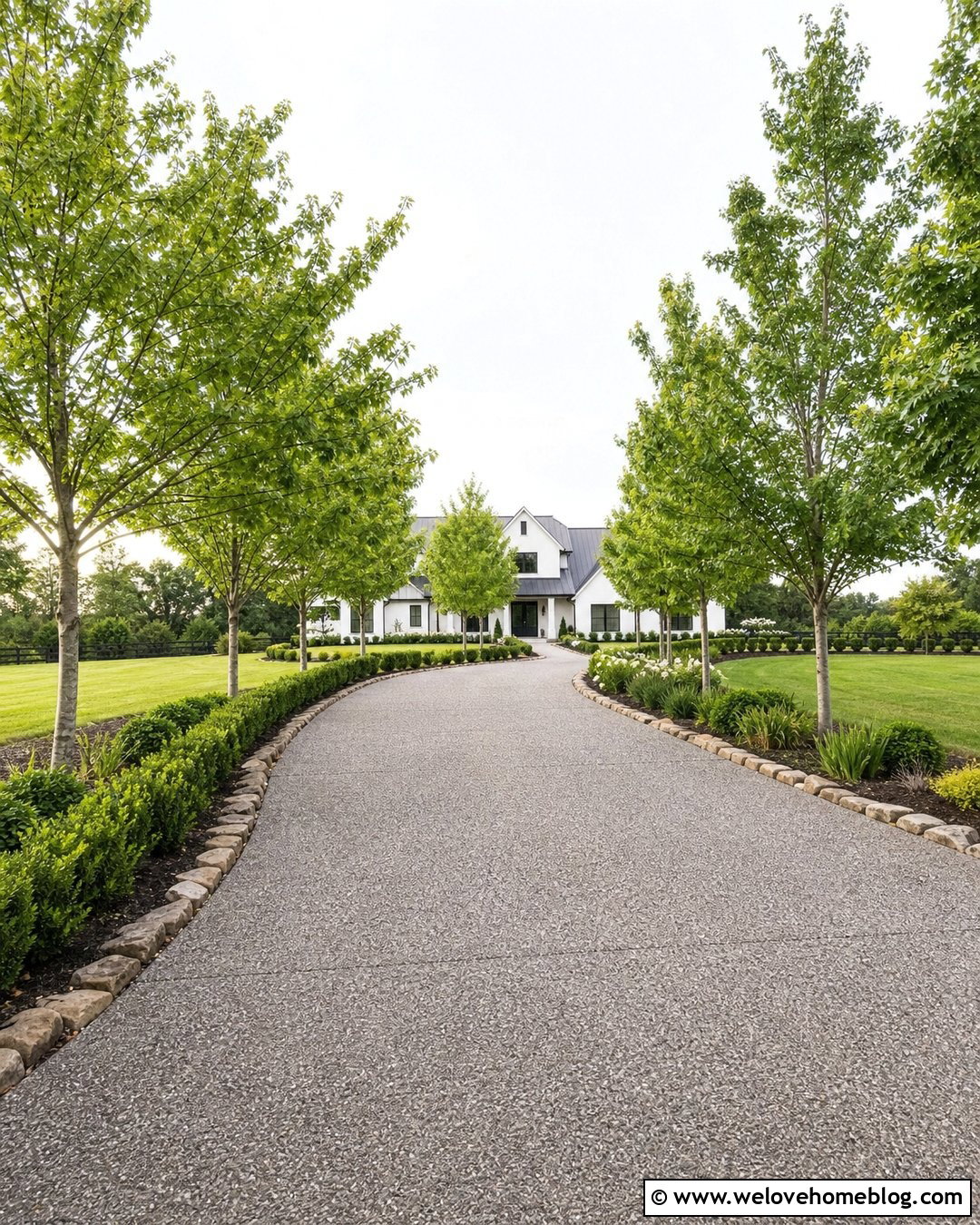
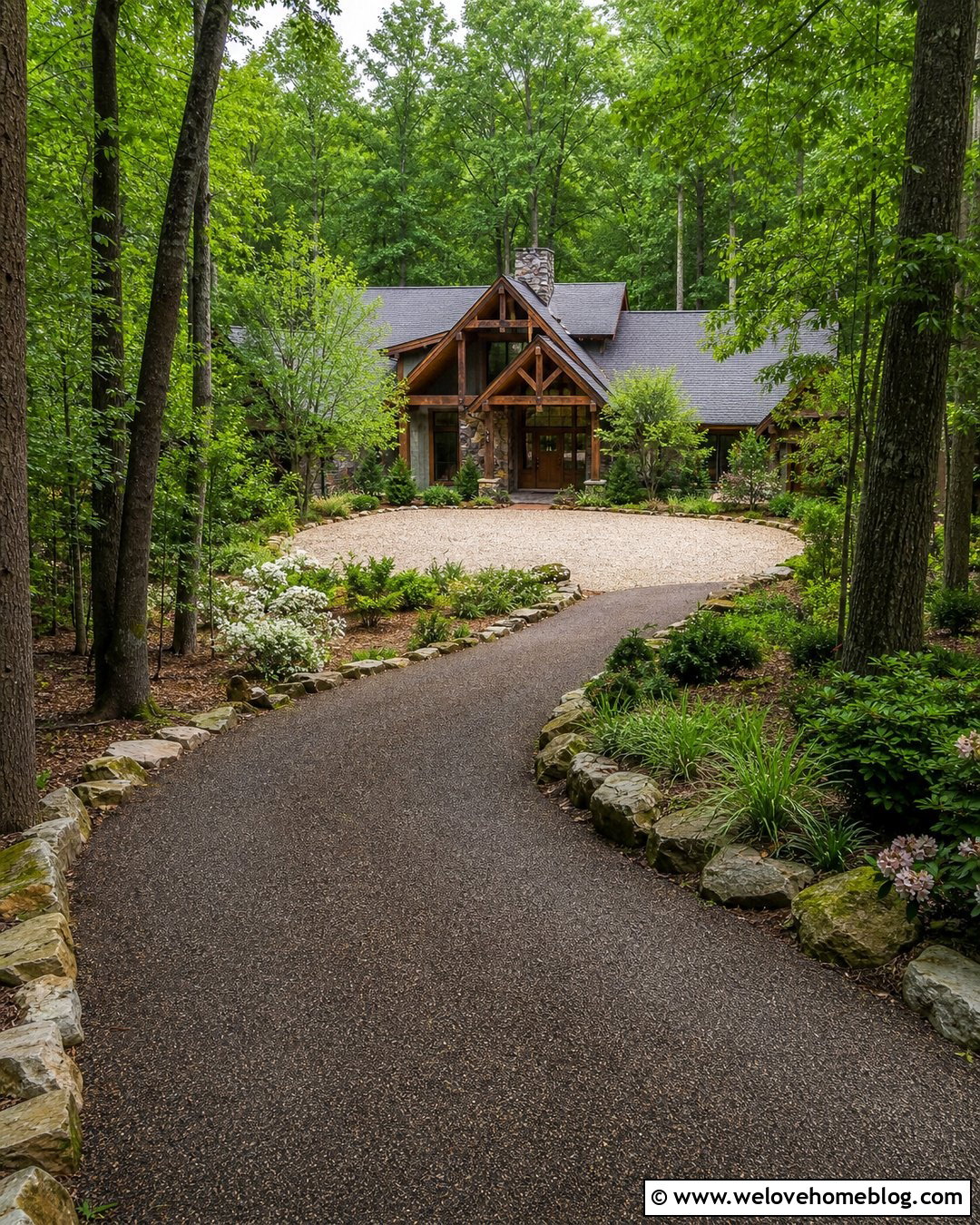
A curved exposed aggregate driveway becomes an impressive approach when evenly spaced trees guide the view toward the house. Position trees beyond the door-opening zone and account for their mature canopy and root spread. A low hedge or repeated ground cover planted beneath them creates continuity without hiding the driveway edge. Install a narrow natural stone border to separate the planting area from the textured concrete. The inside curve can feature a wider lawn or layered garden bed, while the outside curve stays more open for better visibility. This arrangement works best on a larger property with a country, traditional, or modern farmhouse home. The repeated trees create structure, and the sweeping driveway keeps the overall design from feeling overly rigid or formal.
7. Driveway With Native Plant Borders
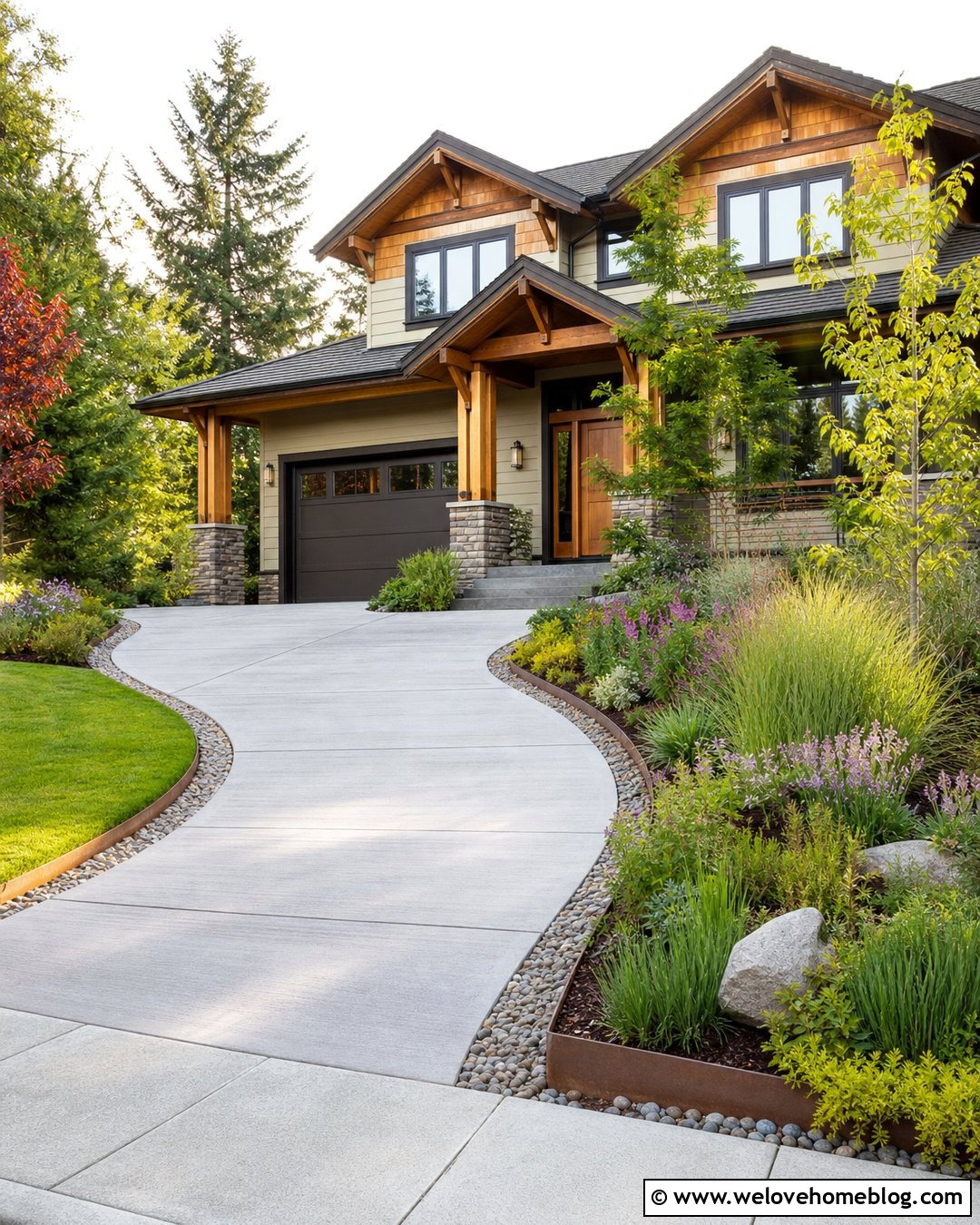
For a relaxed landscape with a strong sense of place, frame a light gray concrete driveway with broad beds of regionally appropriate native plants. Mix flowering perennials, compact shrubs, grasses, and ground covers in repeating groups rather than scattering individual plants. A weathered steel edge can hold the soil while giving the border a subtle modern finish. Leave a narrow gravel maintenance strip beside the pavement to reduce crowding and create a clean transition. Allow the planting beds to widen near the street and house, then narrow through the middle. This creates a natural flow without taking away too much lawn. Paired with a contemporary Craftsman home, the varied planting can soften the concrete and make the driveway feel connected to the surrounding landscape.
8. Driveway With River Rock Landscaping
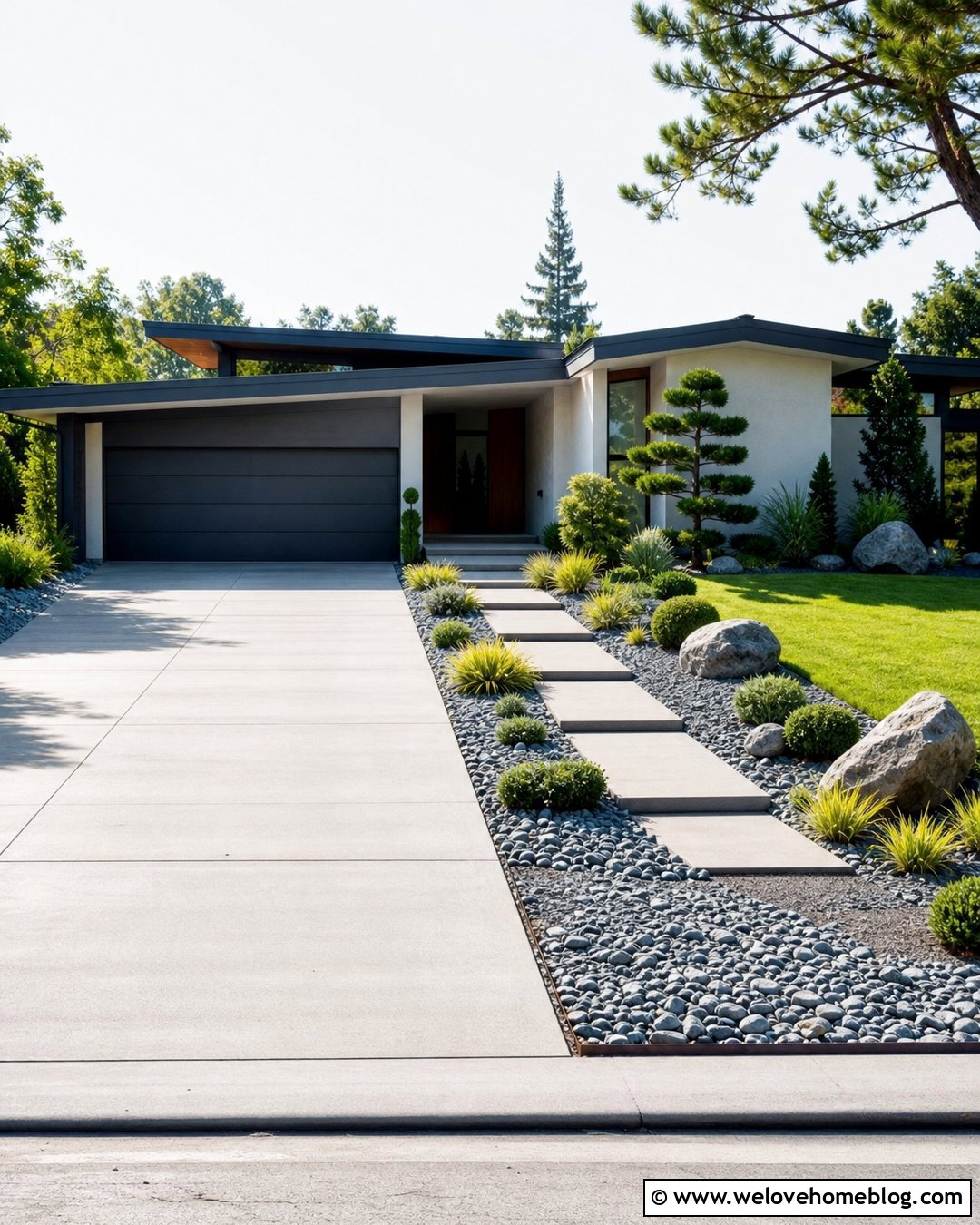
River rock offers a tidy solution for narrow areas where a traditional flower bed may feel crowded. Pair a straight broom-finished concrete driveway with bands of mixed gray river rock along both sides. Use dark metal edging to keep the stones separated from the lawn and pavement. Add small groupings of architectural shrubs, compact grasses, and a few accent boulders so the rock does not resemble an empty drainage strip. Near the garage, widen the beds and repeat materials used around the front walkway. This design is especially effective beside a low modern or midcentury house. The neutral stone complements concrete while reducing visual clutter. Keep the final layout balanced, with open sightlines and enough space for comfortable movement around parked vehicles.
9. Driveway With Low Maintenance Evergreen Beds
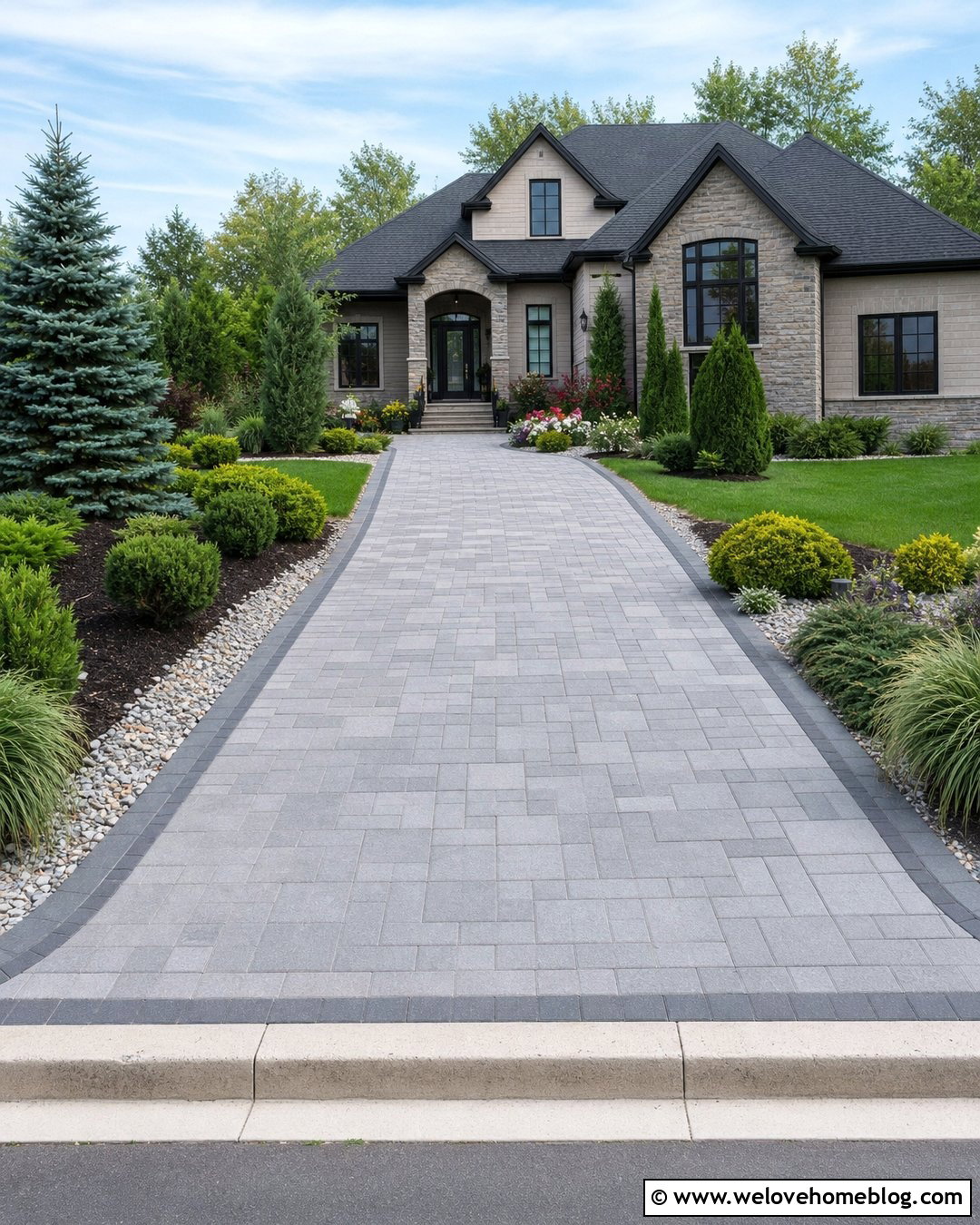
When year-round structure is the priority, surround a gray interlocking paver driveway with layered evergreen beds. Use compact spreading shrubs along the pavement, rounded evergreens through the middle, and a few upright forms near the house. The changes in shape and height will create interest even with a limited color palette. A dark paver ribbon can outline the driveway and visually connect it with the roof, shutters, or garage doors. Cover exposed soil with shredded bark or decorative gravel for a finished appearance. Avoid placing large shrubs where they could eventually narrow the driveway or cover lighting. This complete arrangement suits a wide range of suburban homes and provides a dependable framework that can be accented with seasonal flowers near the entrance.
10. Driveway With Raised Stone Flower Beds
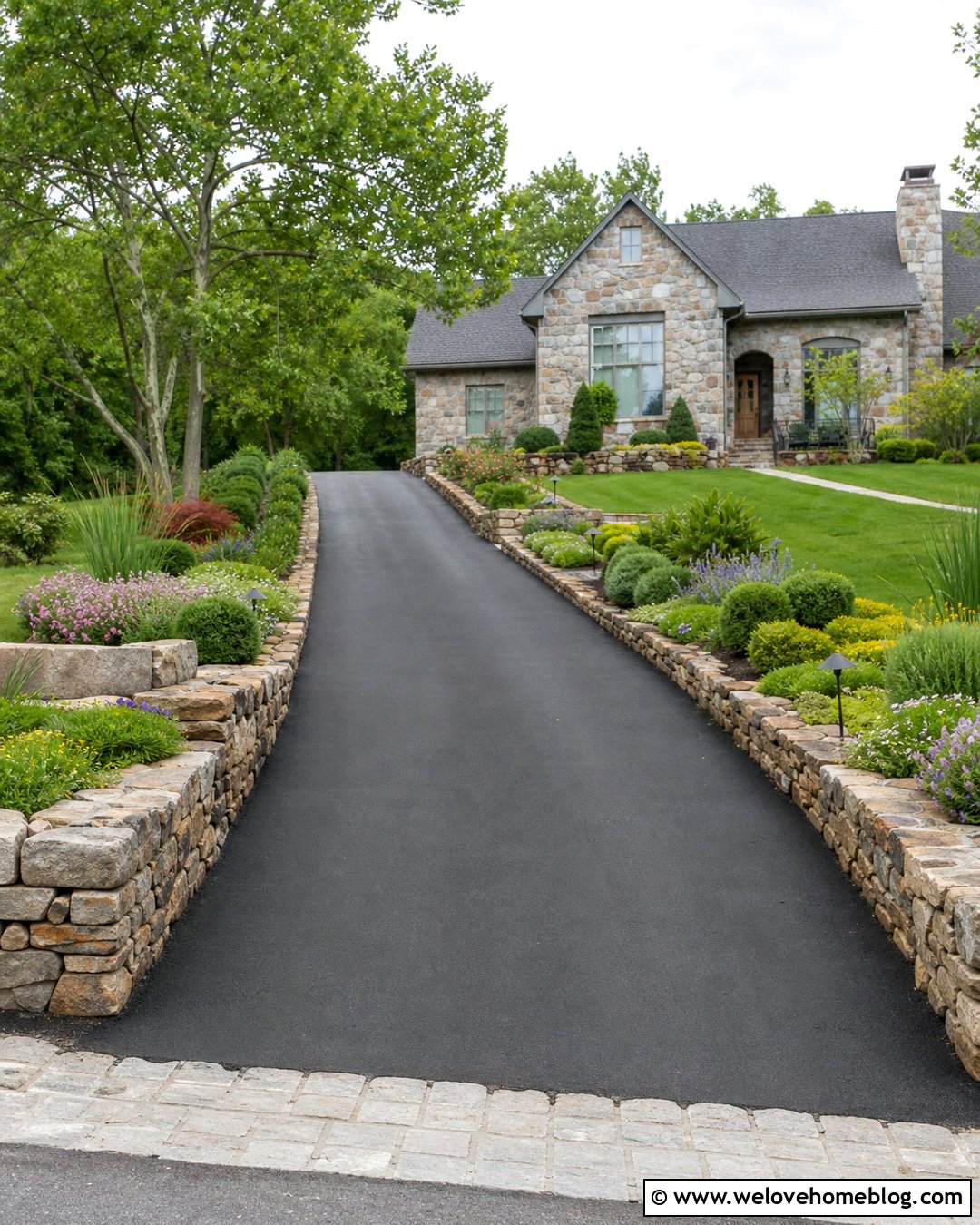
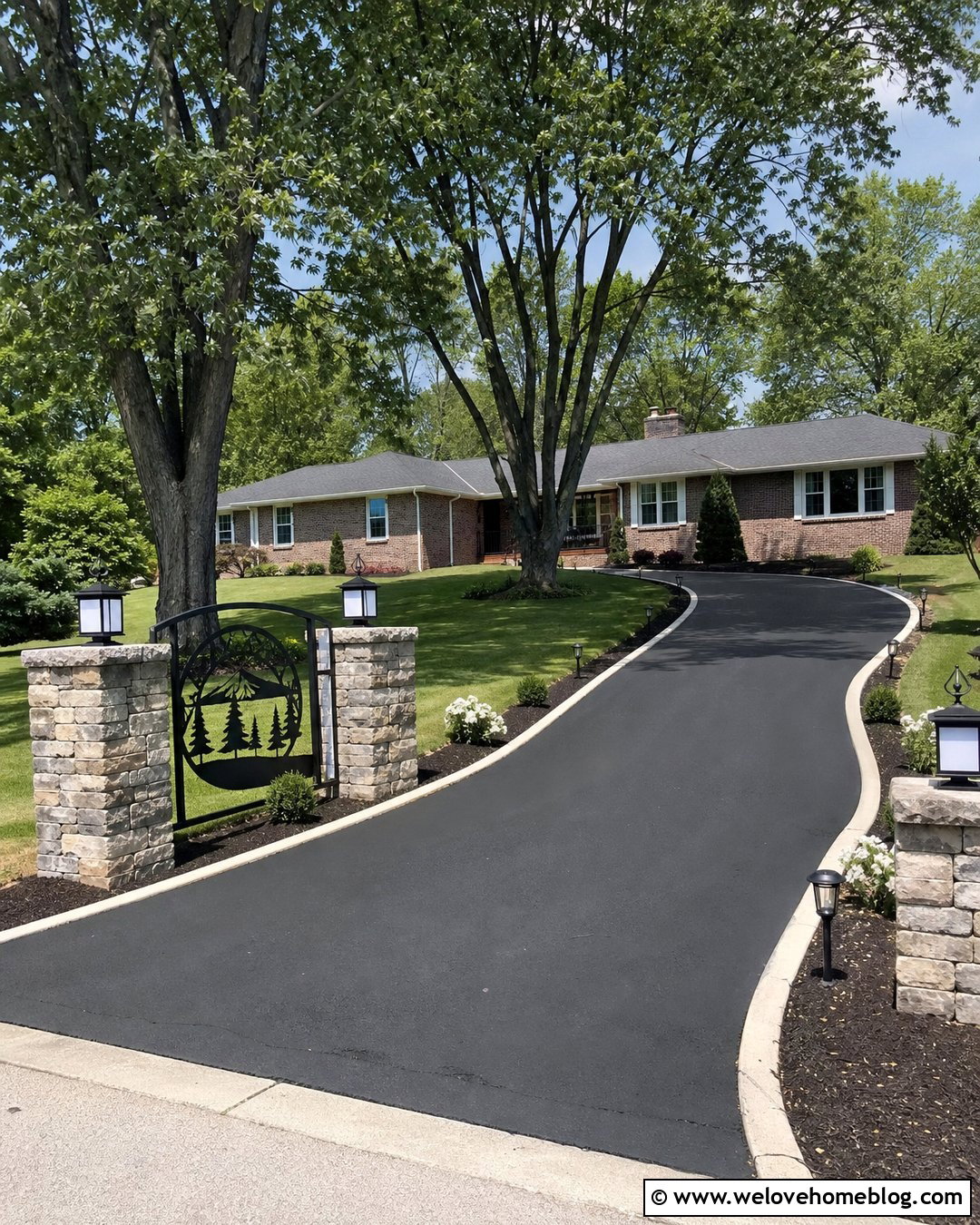
A sloped driveway often needs a stronger transition between the pavement and elevated lawn. Frame a straight black asphalt driveway with low, dry-stacked stone retaining beds that follow the grade toward the house. Fill the raised areas with compact flowering shrubs, perennials, and trailing ground covers that soften the wall edges. Match the stone to the home’s foundation, porch columns, or chimney for a unified result. Keep the walls modest near the street so they do not interfere with visibility. Low path lights installed behind the wall can define the route without cluttering the pavement. This complete look turns a challenging change in elevation into an attractive feature while helping the driveway, planting beds, and house feel like parts of one planned landscape.
11. Driveway With Mulch And Shrub Borders
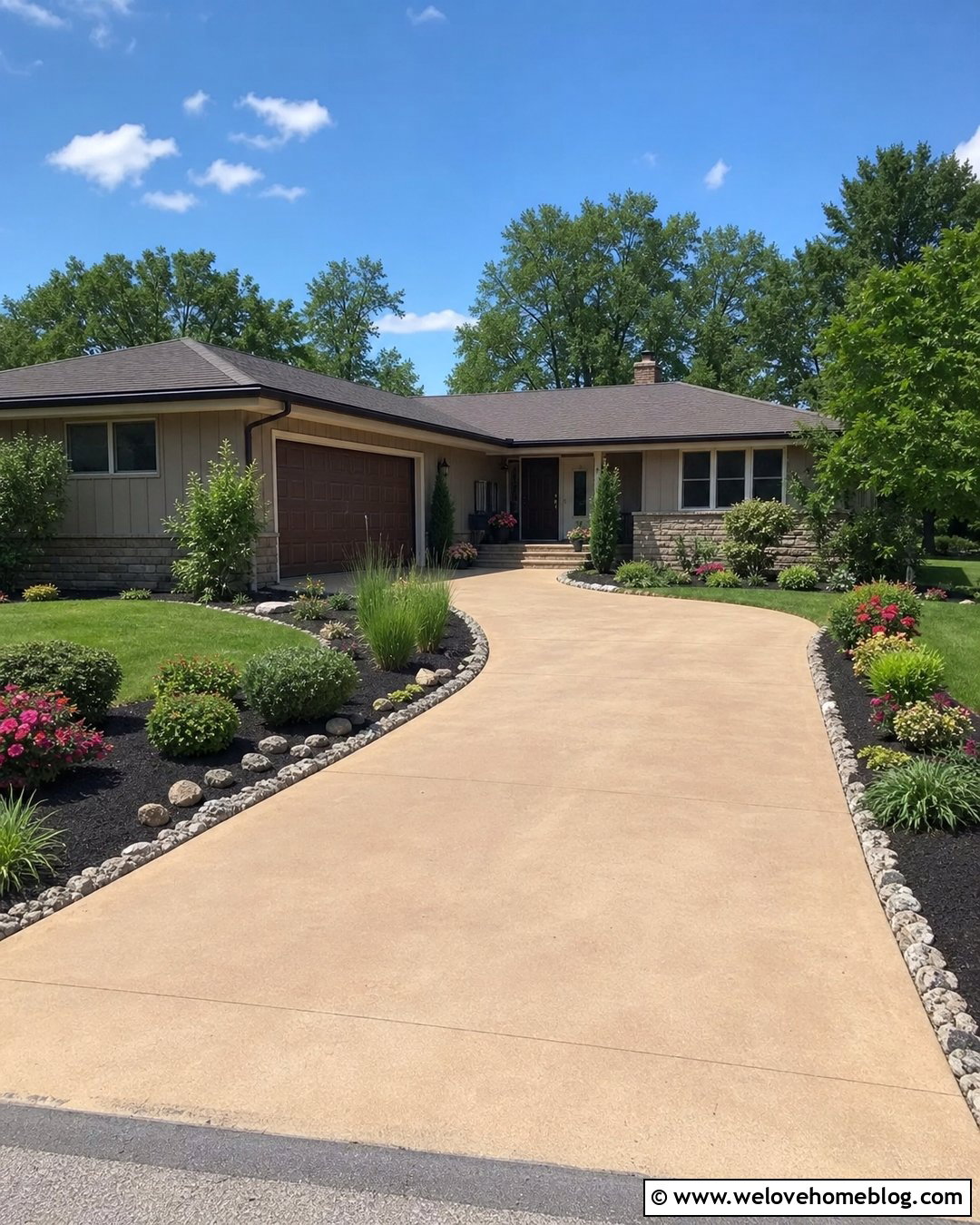
A practical landscape does not need to look plain. Along a tan concrete driveway, create gently curved mulch beds filled with repeating groups of compact shrubs and easy-care perennials. Use concrete or stone edging to prevent mulch from washing onto the driving surface. Place lower plants near the pavement, medium shrubs behind them, and one or two taller accents near the garage. This arrangement provides depth while preserving visibility. Instead of running an identical bed down the entire driveway, let it widen near the entrance and front walkway. Add a small lawn break between major planting groups to keep the design open. The warm mulch, green foliage, and neutral concrete create an approachable look for a ranch or traditional suburban home.
12. Driveway With Decorative Boulder Borders
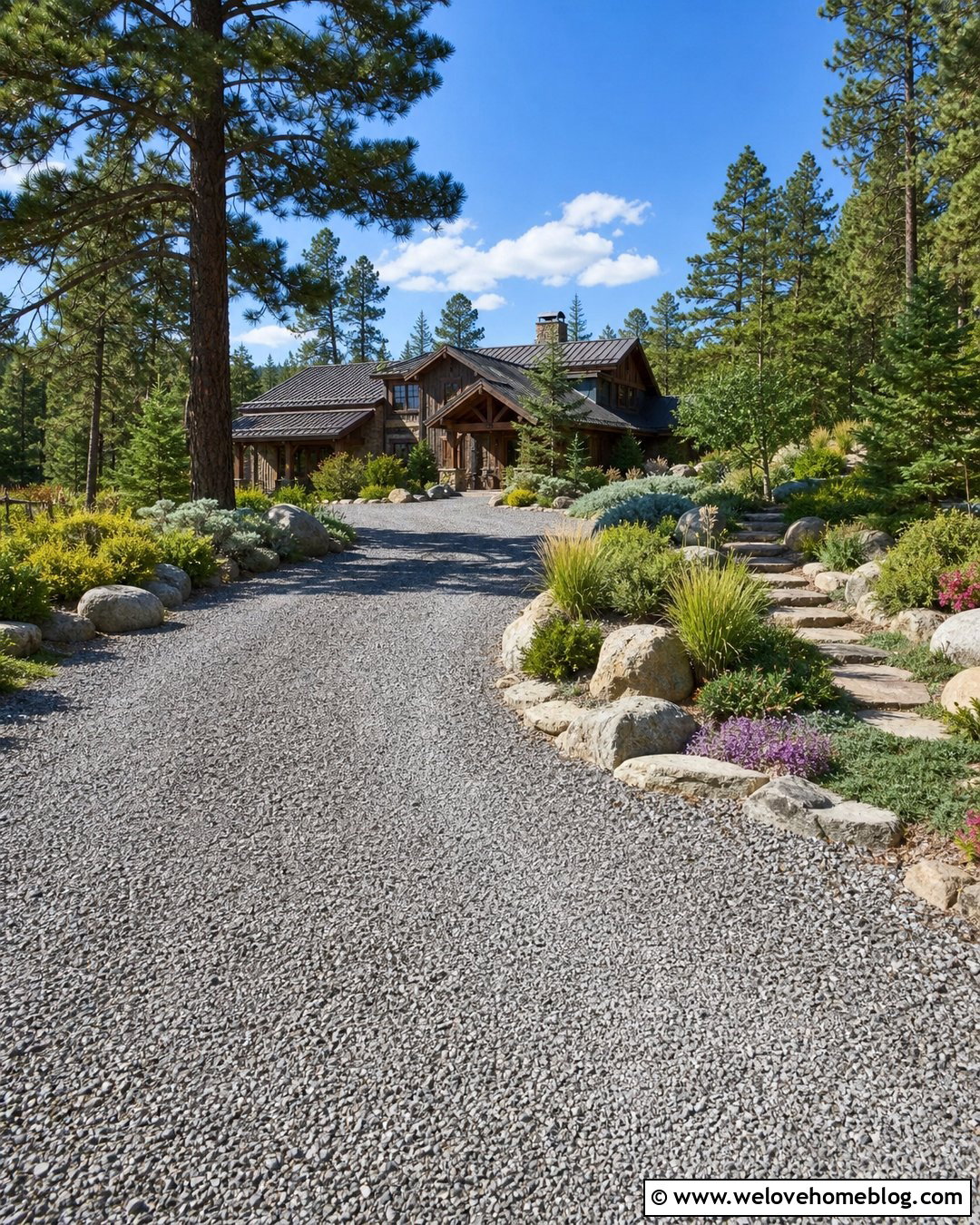
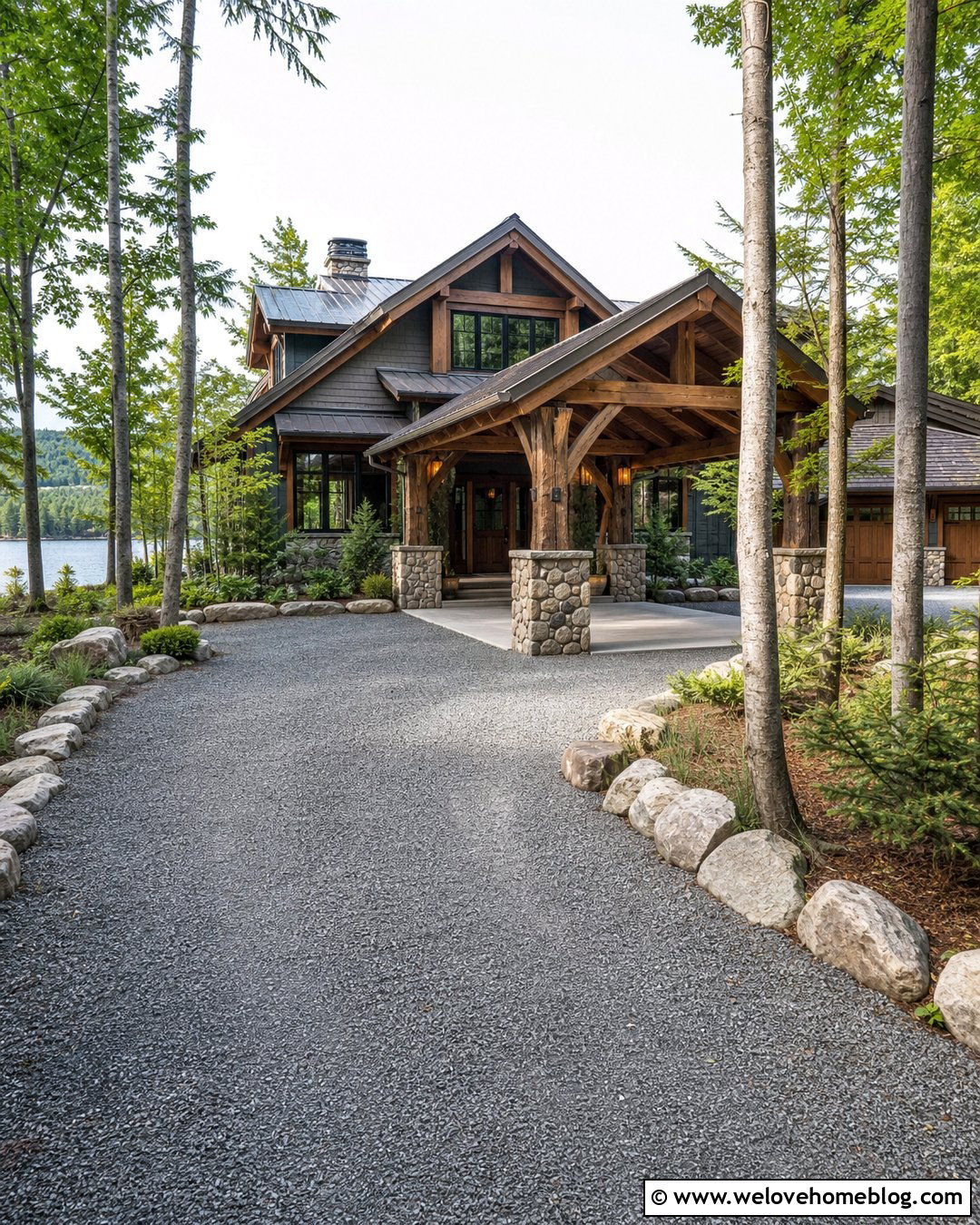
Large natural boulders can make a driveway feel grounded when they are incorporated into planting beds rather than lined up like barriers. Start with a curved gray gravel driveway and install irregular beds along the outside edge. Group several boulders with ornamental grasses, spreading evergreens, and flowering ground covers. Use smaller stones to create a gradual transition between the large rocks and gravel surface. Keep every boulder safely outside the vehicle clearance area, especially near turns and the street entrance. This rugged design complements mountain homes, rustic ranch houses, and wooded properties. The key is restraint. A few carefully positioned stones look more natural than an uninterrupted row, while repeated plants connect the separate groupings into one cohesive driveway landscape.
13. Driveway With White Flower Borders
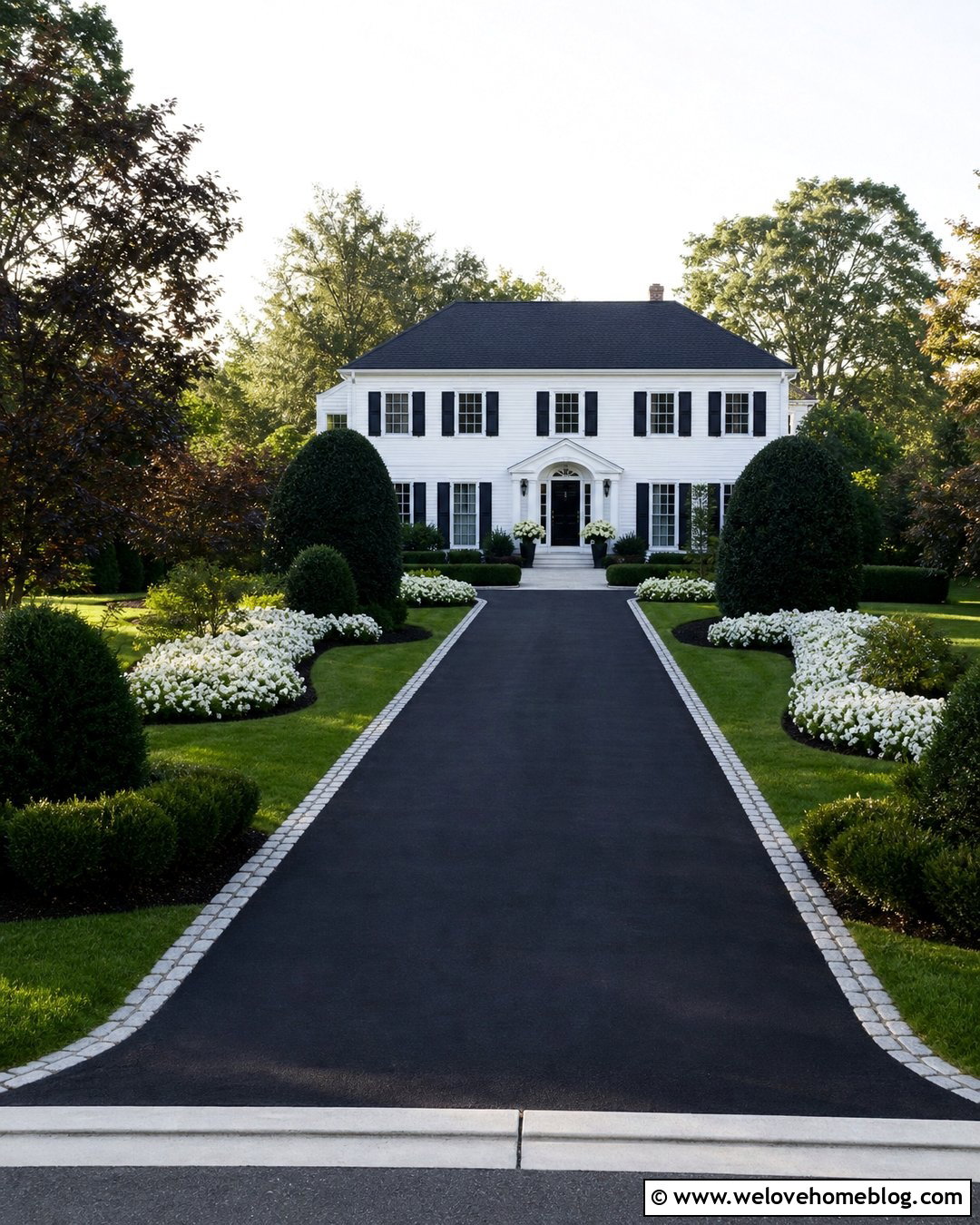
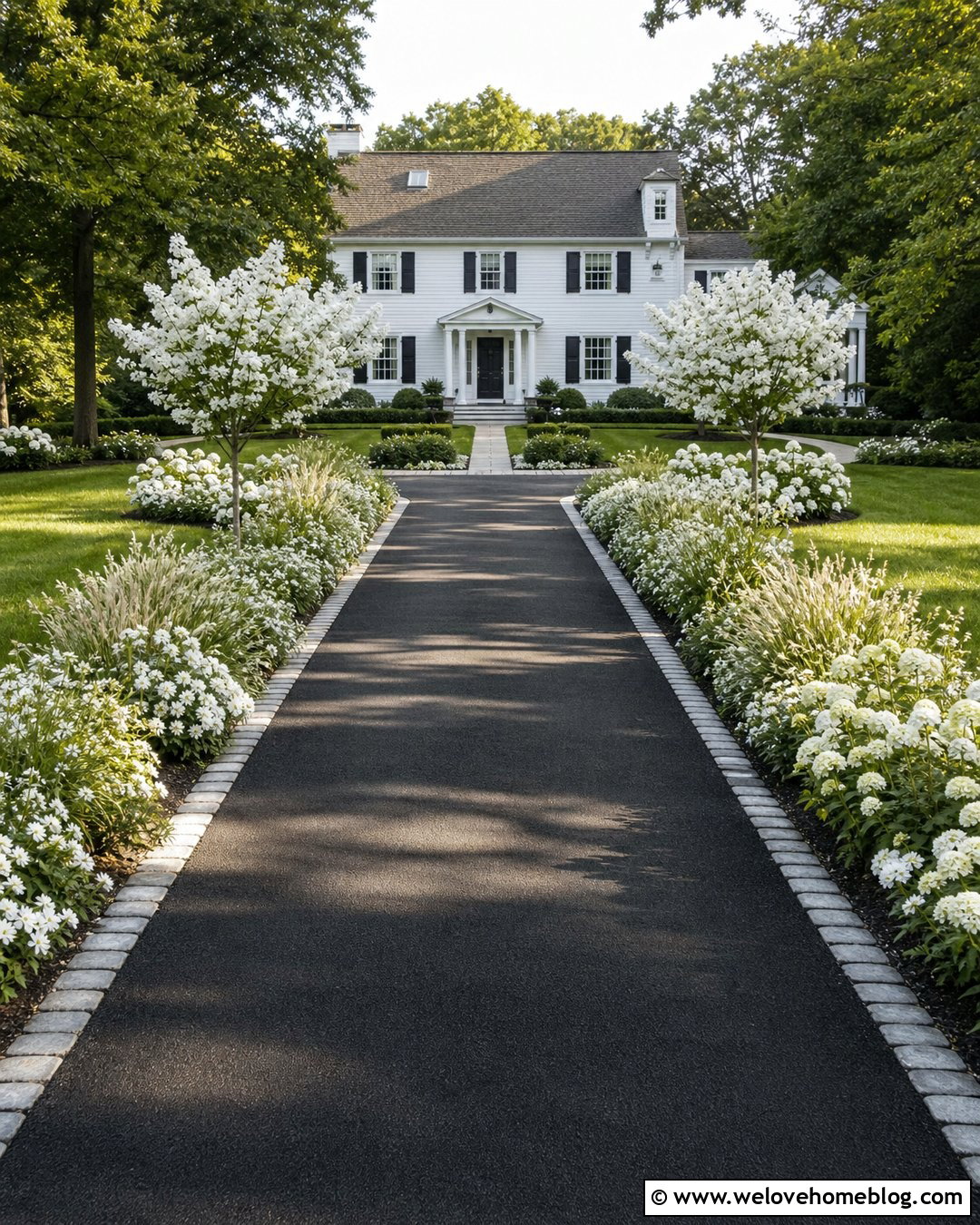
A dark driveway becomes an elegant backdrop for a simple white-and-green planting scheme. Border a smooth black asphalt driveway with pale granite cobbles and layered beds containing white flowering perennials, compact shrubs, and rounded evergreens. Repeat the white blooms near the porch to draw the eye toward the entrance. Curved bed lines will soften the straight driveway, while a narrow grass strip can provide breathing room between larger planting groups. Add a matching light-colored walkway that crosses from the parking area to the front door. This high-contrast arrangement works beautifully with a white Colonial, black modern farmhouse, or classic brick house. Limiting the plant colors creates a calm appearance and lets variations in foliage, texture, and height provide visual interest.
14. Driveway With Tropical Planting Borders

In a warm-climate yard, a pale concrete paver driveway can be framed with bold tropical foliage. Build broad planting beds with palms, cycads, flowering shrubs, and low ground covers arranged in clear layers. Choose a restrained range of foliage shapes so the landscape looks lush without becoming chaotic. A warm limestone border can complement both the pavers and a stucco home. Keep tall plants away from the driveway entrance, and place lower varieties beside tight curves for better visibility. A wide walkway through the planting should lead directly to the front door. Decorative gravel beneath selected plants can reduce the amount of exposed mulch. Together, the bright driveway, sculptural greenery, and simple borders create a resort-inspired approach that still feels practical for everyday use.
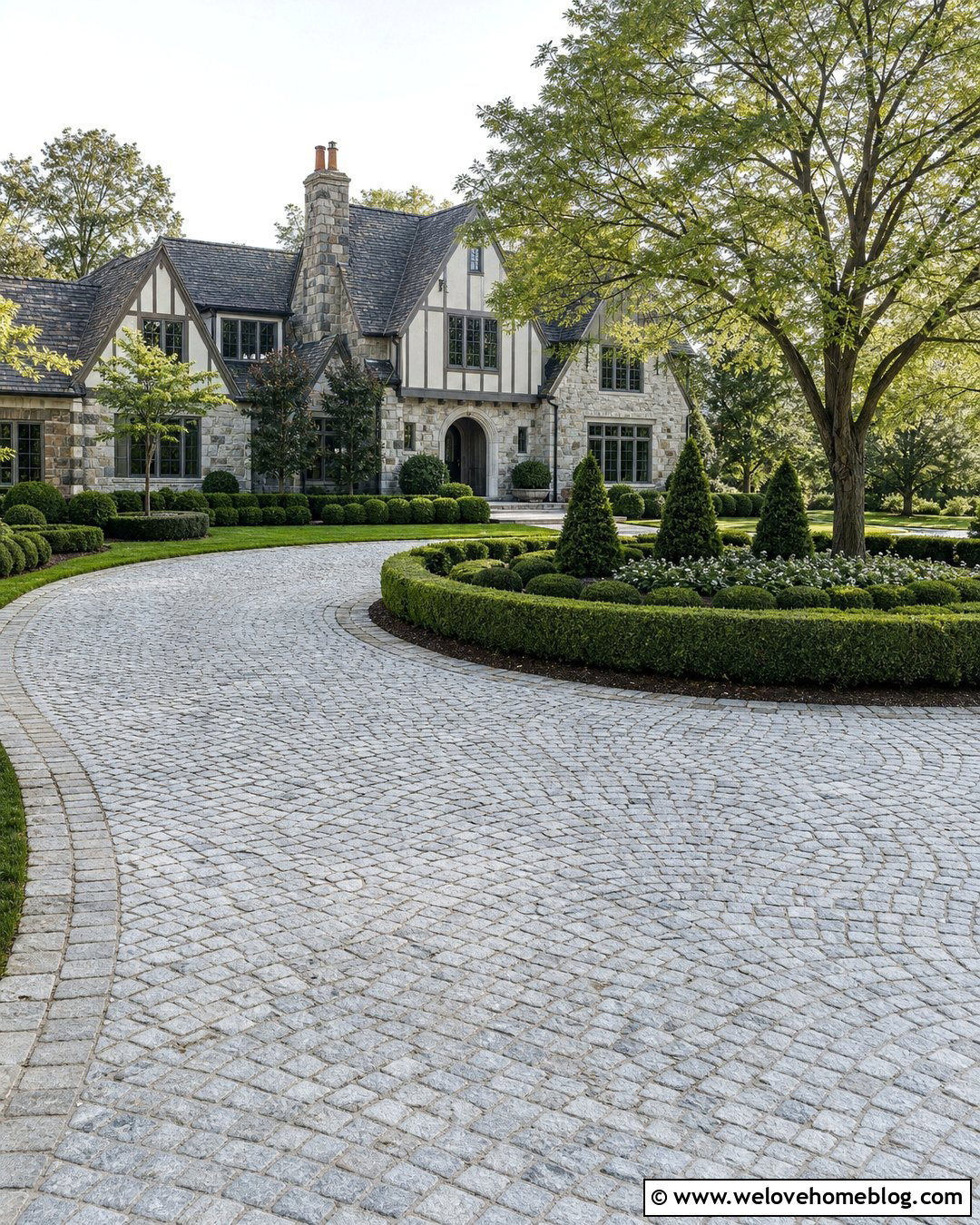
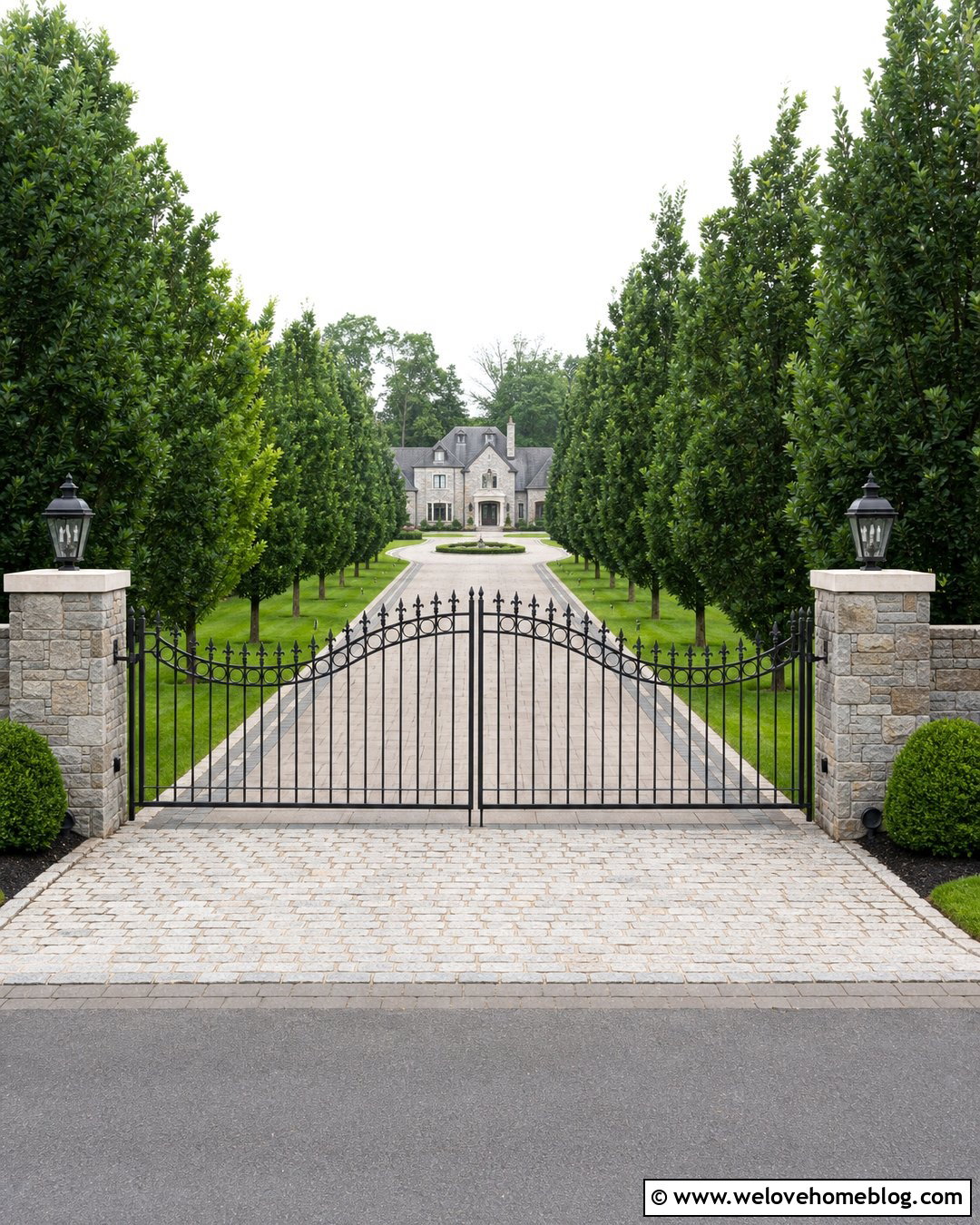
15. Driveway With Desert Landscaping
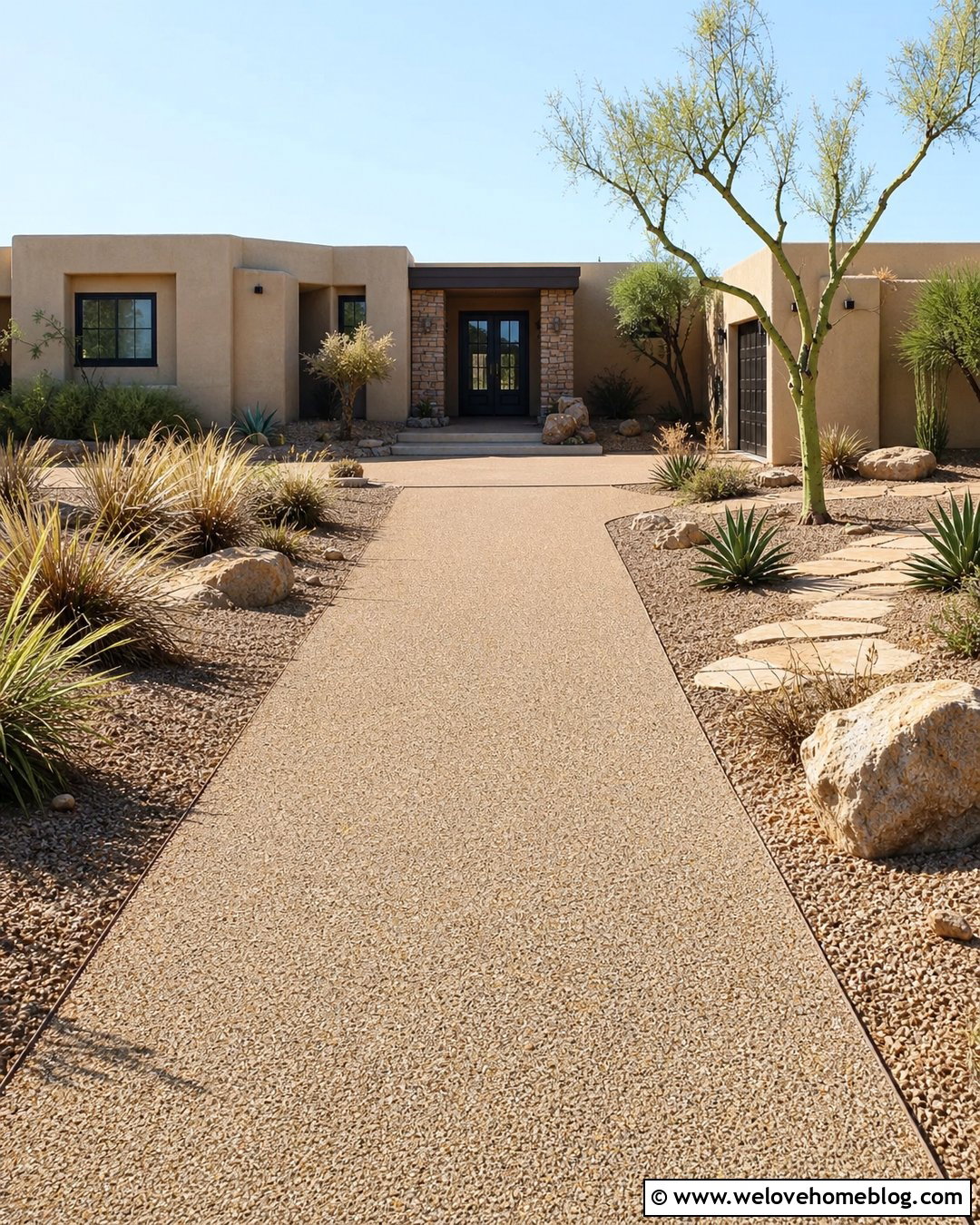
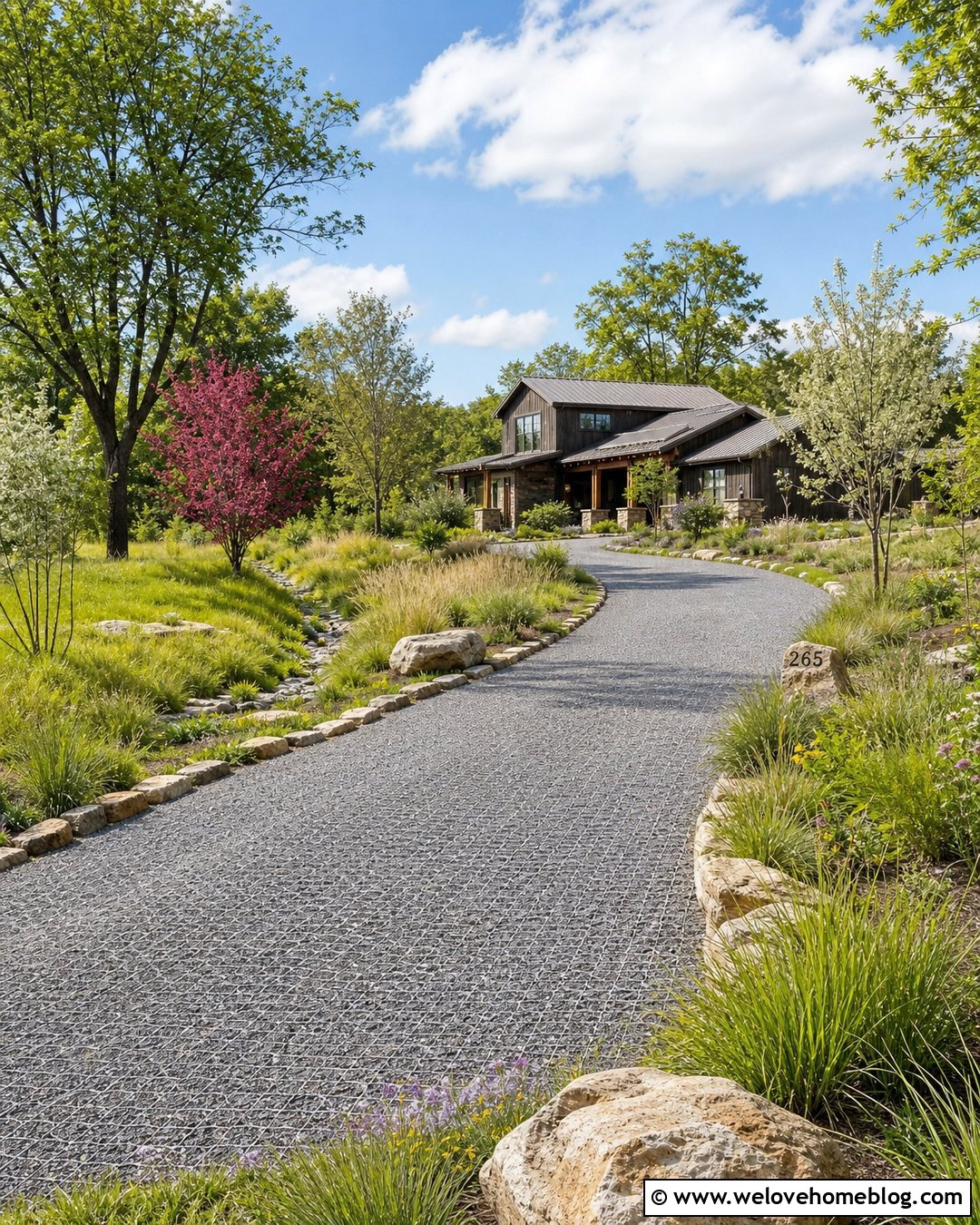
A desert landscape can bring warmth and definition to a driveway without relying on a traditional lawn. Pair a tan resin-bound gravel driveway with wide beds of decomposed granite, sculptural succulents, native grasses, and carefully placed boulders. Use rust-colored steel edging to separate the two gravel textures. Arrange plants in uneven groups, leaving open stone areas that highlight each shape. Taller specimens should sit near the house or deeper inside the beds, while low plants maintain clear sightlines along the pavement. A flagstone walkway can connect the driveway to a modern stucco entrance. Choose gravel and stone colors that echo the home’s exterior. This complete design feels clean and spacious while allowing the driveway to blend naturally with an arid residential setting.
16. Driveway With Cottage Garden Borders
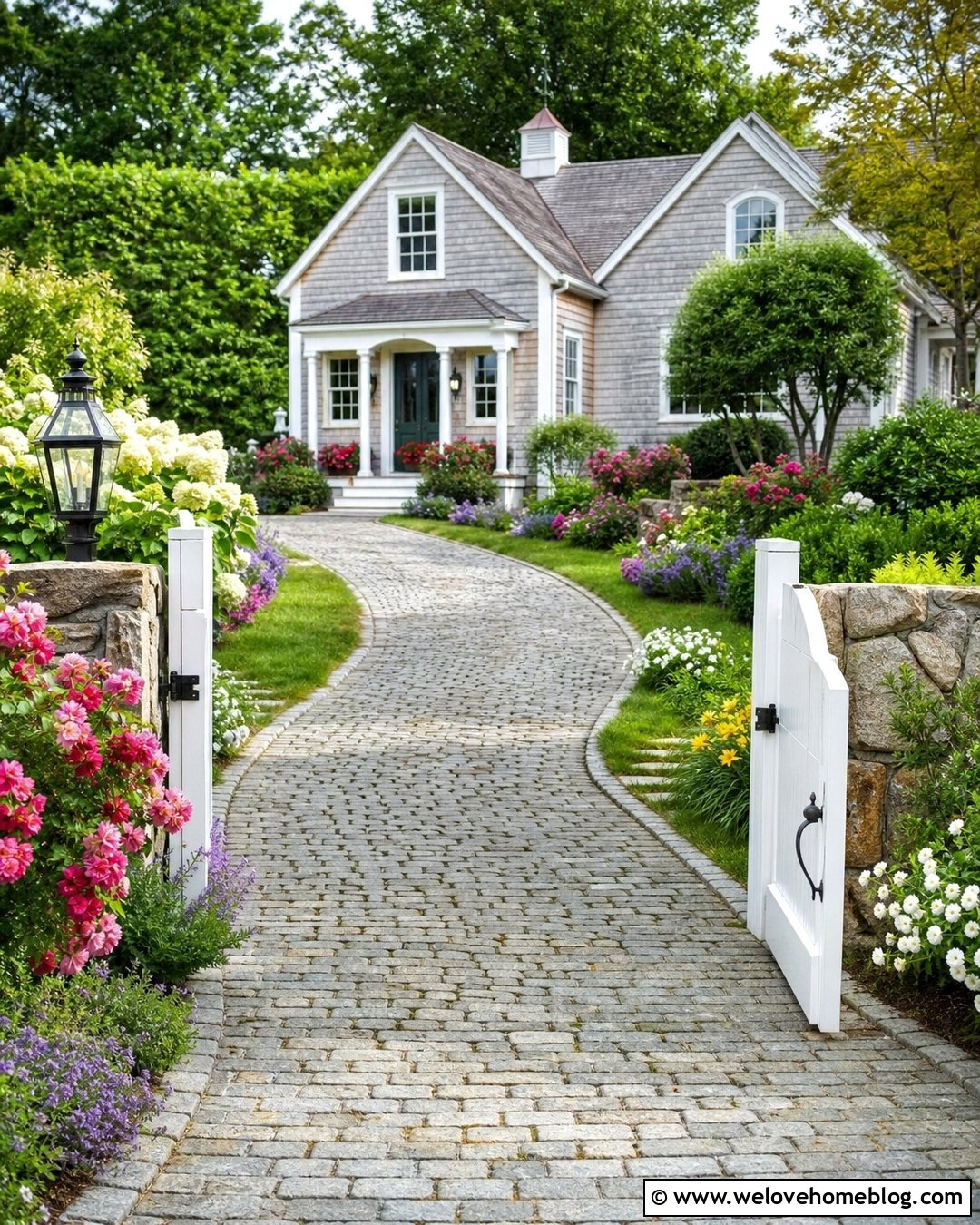
A narrow cobblestone driveway can become part of a cheerful cottage landscape when informal flower beds gently spill toward its edges. Use brick or stone curbing to protect the planting soil and keep the driving route clearly defined. Combine flowering perennials, compact roses, soft grasses, and clipped evergreen shapes in repeated groups. Leave small openings where stepping stones connect the driveway with the lawn and front walkway. Plants should be low near parking areas so doors can open without damaging blooms. Allow beds to grow wider toward a porch or garden gate, creating an inviting destination. This layered design looks especially natural beside a Cape Cod, cottage, or small Craftsman house. The varied flowers add personality, while the repeated plants and durable edging prevent visual disorder.
17. Driveway With Modern Grass Strips
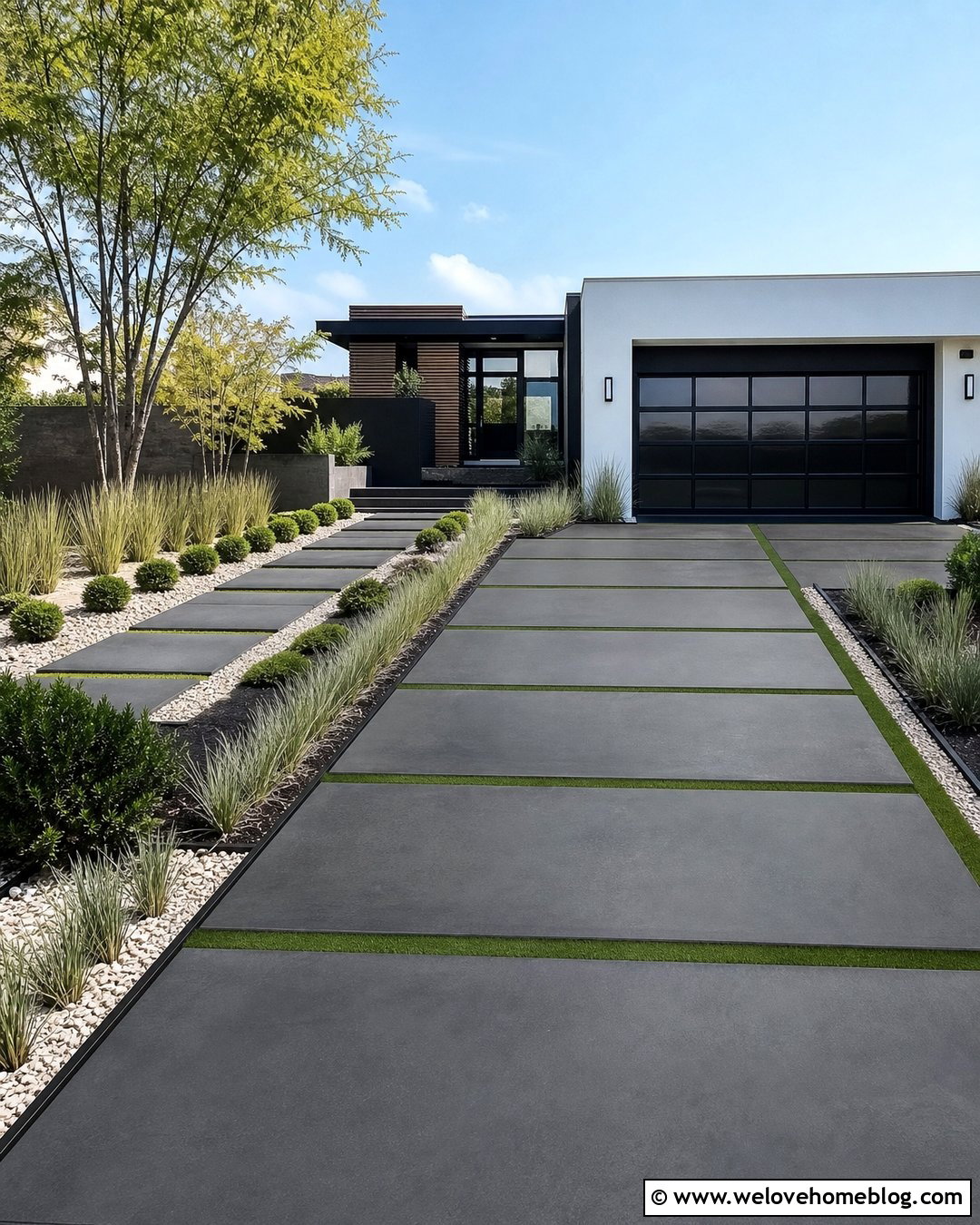
Strong geometric lines can make a modern driveway feel lighter and more connected to the lawn. Use large charcoal concrete slabs separated by narrow grass or ground-cover joints, then continue the linear theme with planting beds along each side. Fill the beds with evenly spaced ornamental grasses, clipped shrubs, and pale decorative gravel. Black steel edging will maintain crisp boundaries between the different materials. A straight slab walkway can branch from the driveway and lead to a flat-roof or contemporary home. Keep the planting palette limited so the patterned surface remains the main feature. This layout works best where the grass joints can receive suitable sunlight and routine care. The combination of greenery and concrete creates a clean residential entrance without presenting one uninterrupted paved expanse.
18. Long Driveway With Repeating Planting Beds
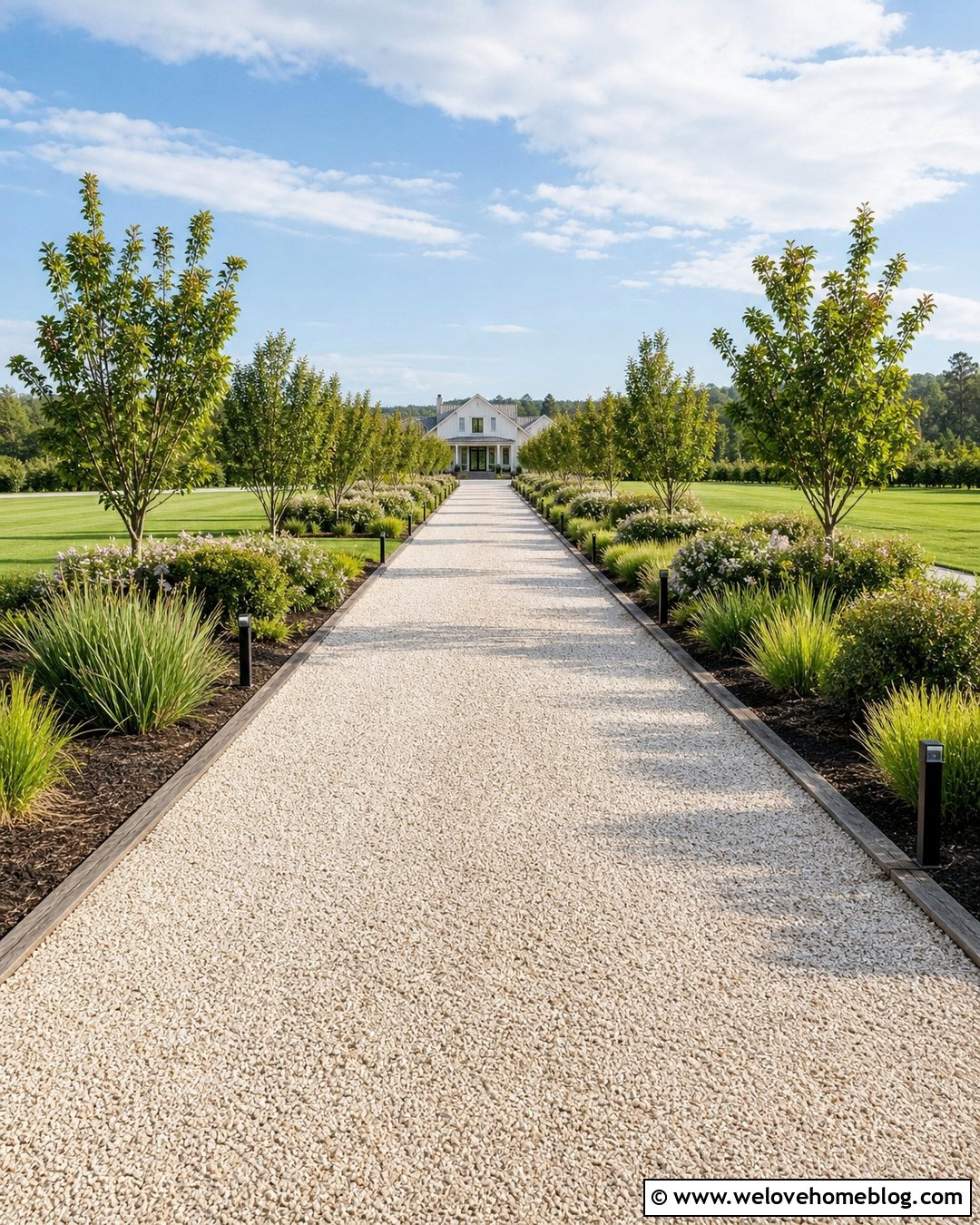
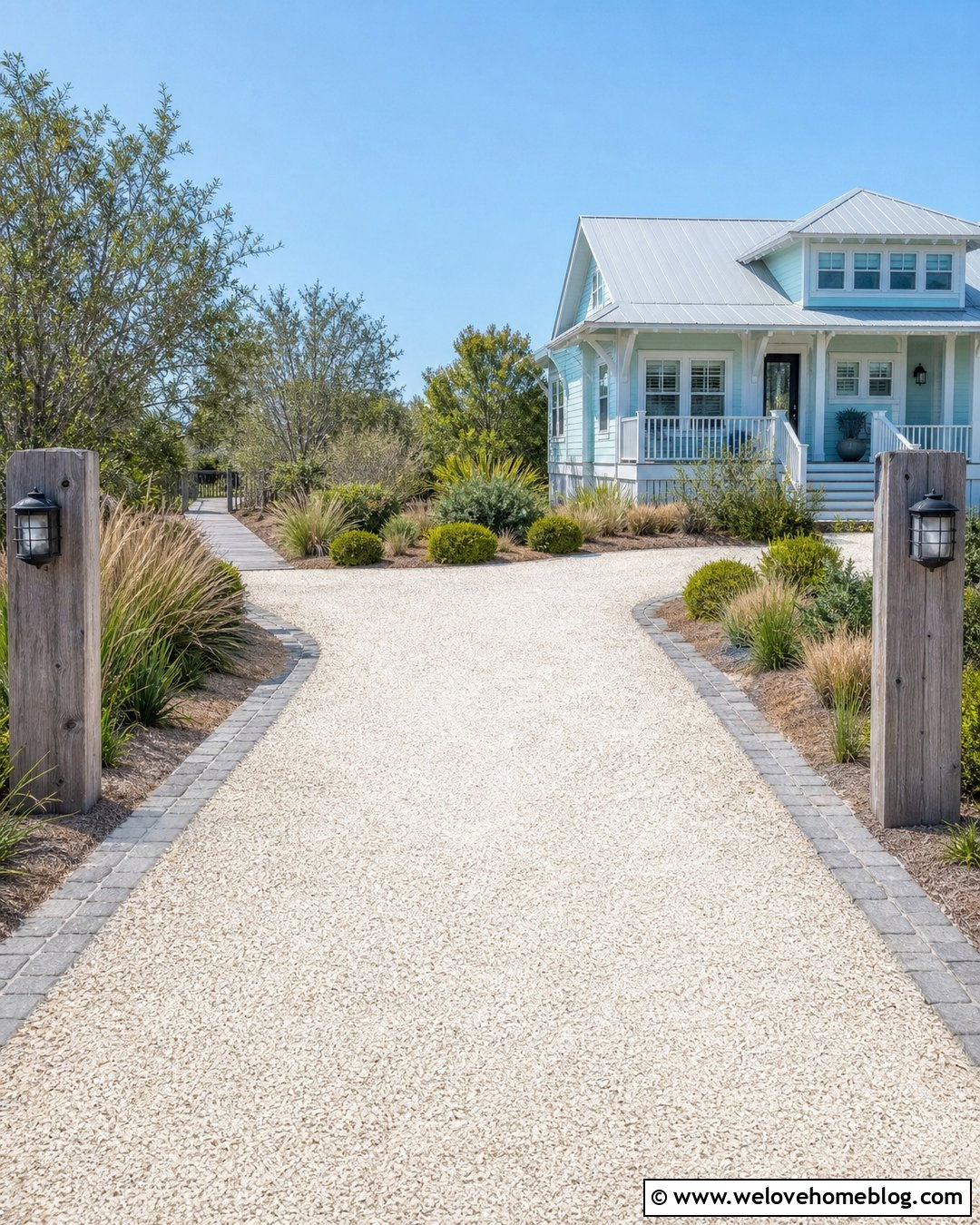
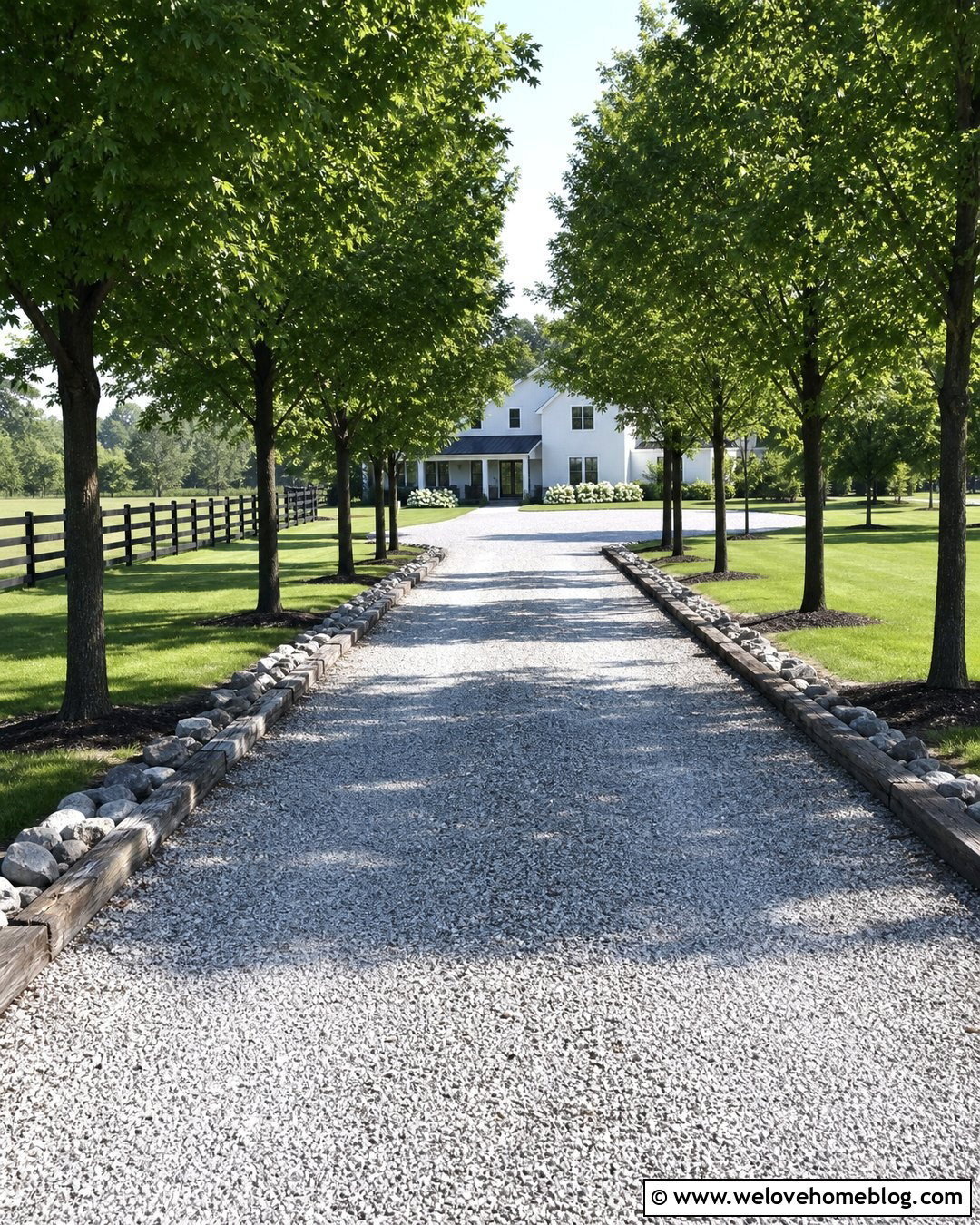
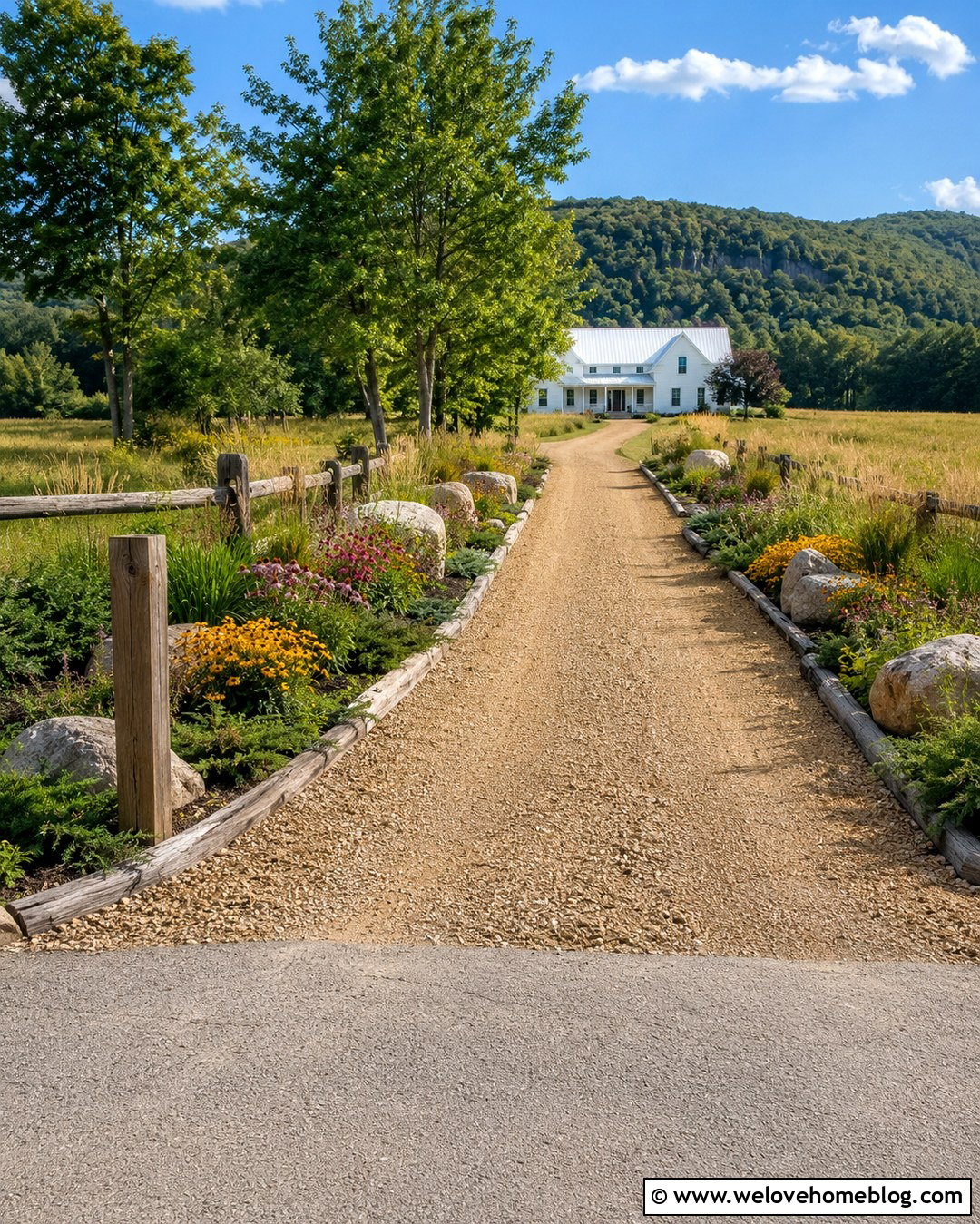
Long driveways need rhythm so the journey toward the house does not feel empty or monotonous. Along a light crushed-stone driveway, alternate short planting beds with sections of neatly maintained lawn. Repeat the same small trees, flowering shrubs, and ornamental grasses in each bed to create visual continuity. Timber or steel edging can hold the gravel in place while maintaining a simple country appearance. Near the street, keep plants low and open. Gradually introduce taller trees and fuller beds as the driveway approaches the home. Low marker lights can repeat between planting groups and clarify the route. This complete look is well suited to acreage, farmhouse, and wooded properties because it breaks up the distance while preserving spacious views across the surrounding yard.
19. Narrow Driveway With Vertical Landscaping
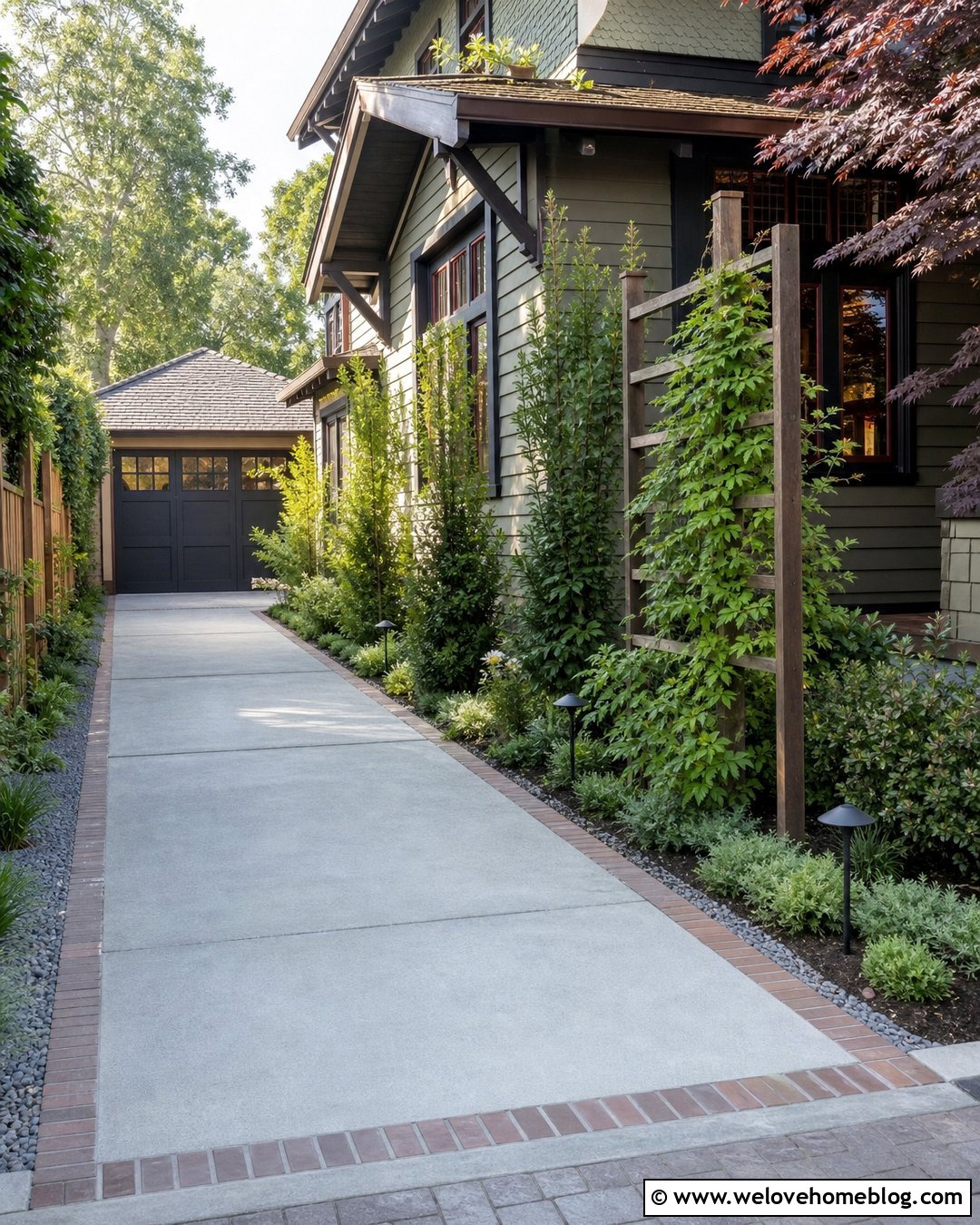
Limited side space requires a landscape that adds greenery without reducing usable driveway width. Frame a narrow poured concrete driveway with slim gravel strips, low ground covers, and upright shrubs placed against a fence or house wall. Where appropriate, add climbing plants to a simple trellis, but keep growth controlled and away from vehicle mirrors. A flush brick border can define the pavement without becoming a tripping hazard. Use wall-mounted or low-profile lighting instead of bulky fixtures. Near the garage, a small pocket bed can introduce a compact ornamental tree or a cluster of taller grasses. This layered vertical approach works well for urban homes, side driveways, and small lots. It provides softness and privacy while leaving the essential driving and walking zones open.
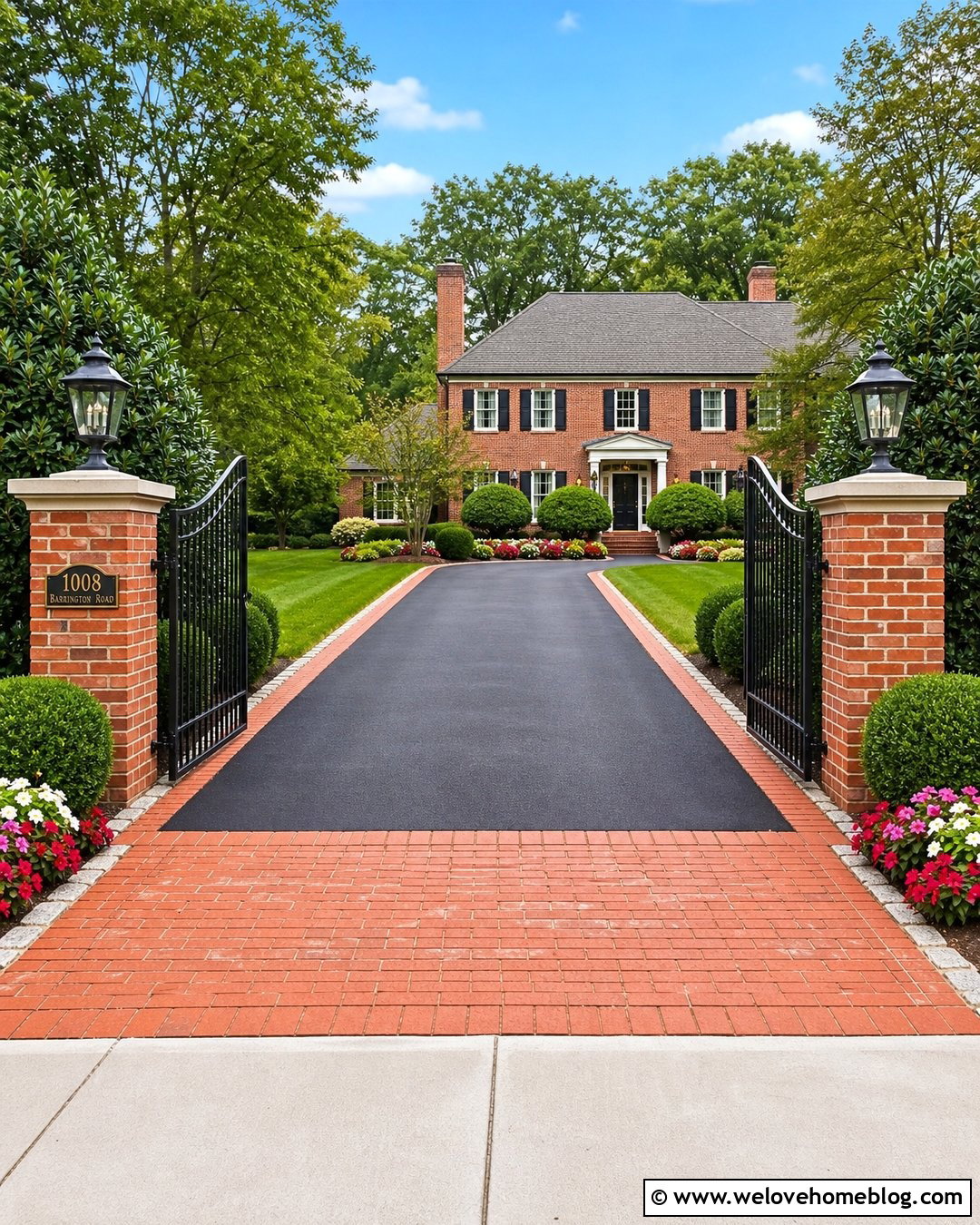
20. Driveway With Landscape Lighting And Mixed Borders
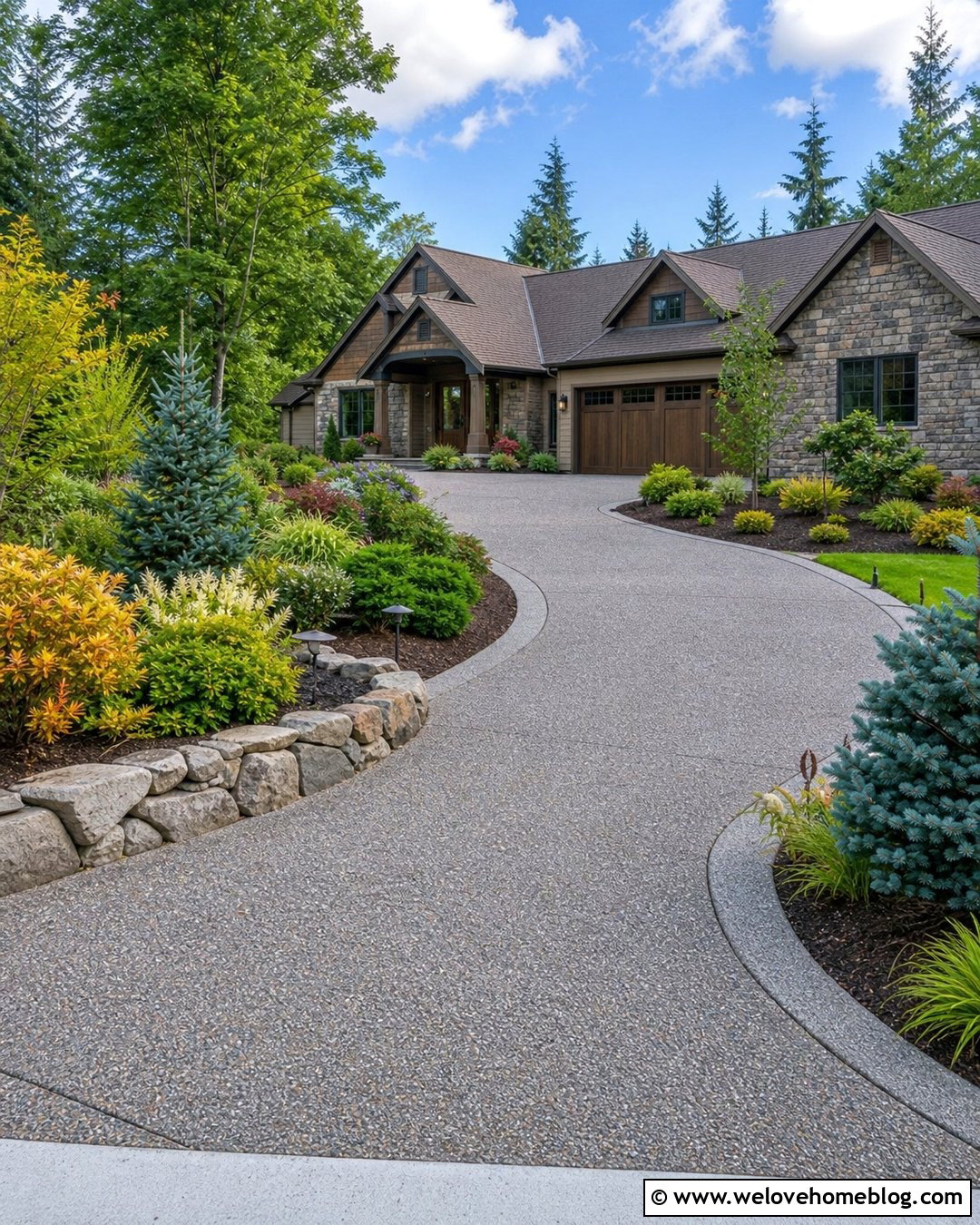
A well-lit driveway should look attractive during the day as well as after sunset. Pair a curved exposed aggregate surface with low stone edging and mixed beds of evergreen shrubs, flowering perennials, and ornamental grasses. Place compact fixtures at wider intervals rather than creating an excessive line of lights. Aim illumination toward the pavement edge, planting texture, and key turns without directing glare toward drivers or neighboring windows. Repeat the same stone around the front walkway and porch beds to connect the entire entrance. Small trees can frame the approach near the house, while low plants preserve visibility at the street. This complete design combines navigation, curb appeal, and layered landscaping, giving a Craftsman or contemporary home a polished and welcoming approach.
Conclusion:
These **20 along driveway landscaping ideas** show how pavement, plants, borders, lighting, and the house can work together as one complete design. Start by considering driveway width, sunlight, drainage, visibility, vehicle clearance, and the amount of maintenance you can comfortably manage. Then select a limited group of materials and plants that complement your home. Repeating those elements along the route will create a more organized appearance. Low planting near the street improves sightlines, while taller layers closer to the house add depth and privacy. Whether you prefer clipped evergreens, cottage flowers, native plants, river rock, or modern grasses, thoughtful driveway landscaping can make your entire front yard feel more finished and welcoming.

Related posts:
Leave a Reply