
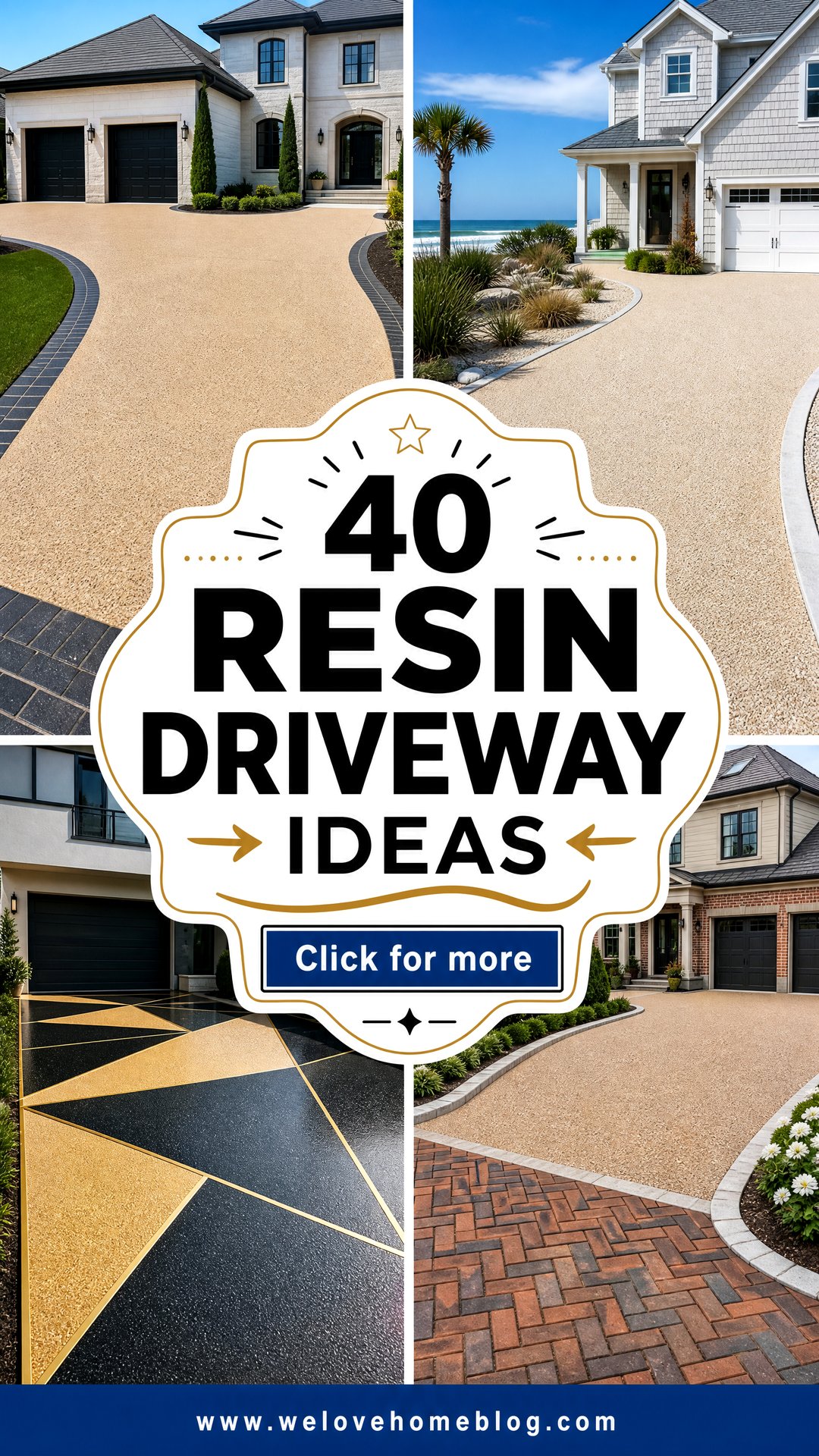
A resin-bound surface can make a practical driveway feel polished, cohesive, and closely connected to the home. The best 40 resin driveway ideas go beyond choosing an aggregate color. They combine the surface with a suitable layout, durable edging, attractive planting, and a well-planned entrance. Light stone blends can brighten compact front yards, while charcoal, bronze, and warm gold finishes create stronger definition. Curves soften large spaces, contrasting borders sharpen modern designs, and brick or cobblestone details help resin complement traditional architecture. Before settling on a look, compare physical samples outdoors and discuss the base, drainage, slope, edging, and vehicle use with an experienced installer. Explore the complete driveway designs below with these **40 resin driveway ideas**.
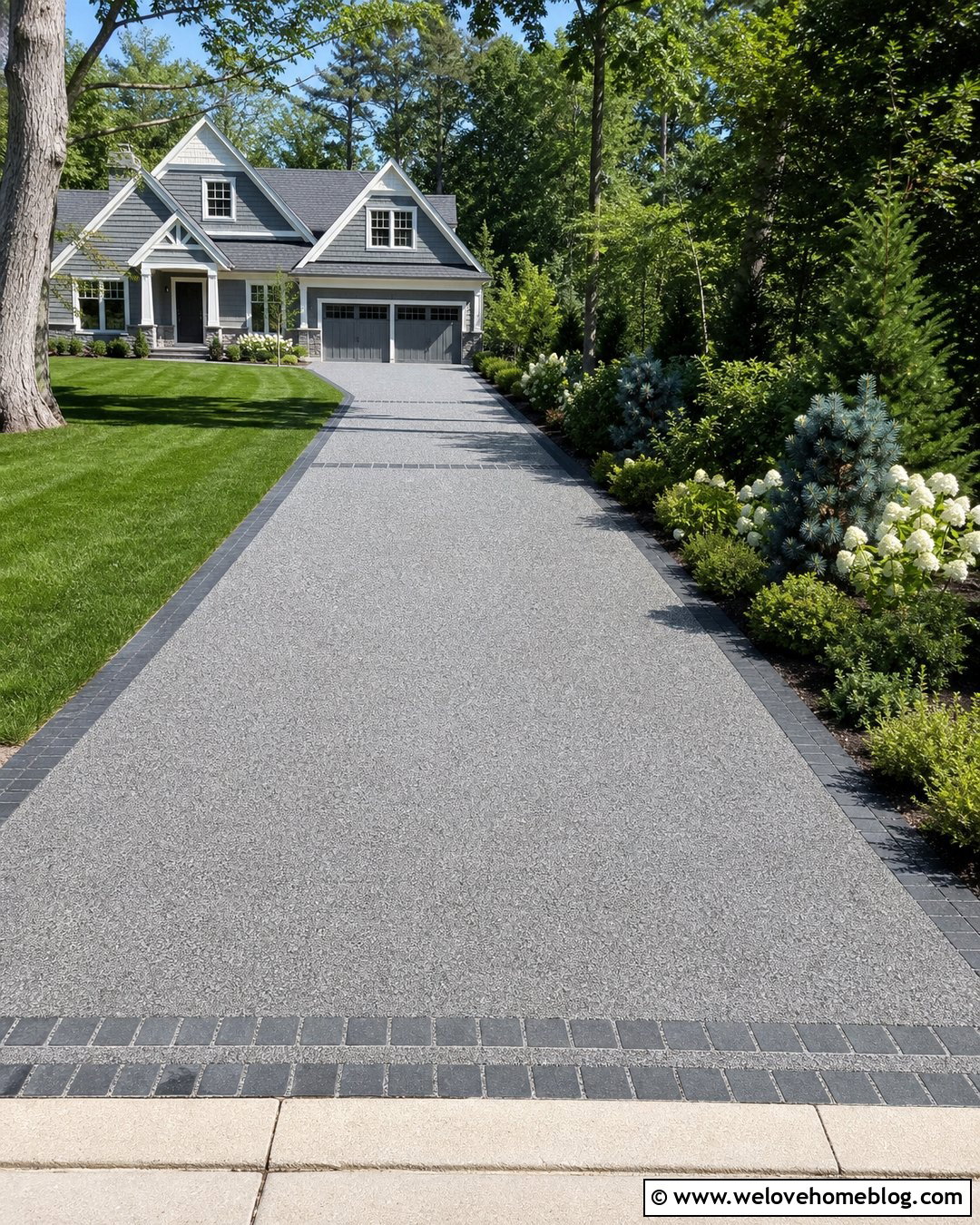
1. Light Gray Resin Driveway With Black Edging
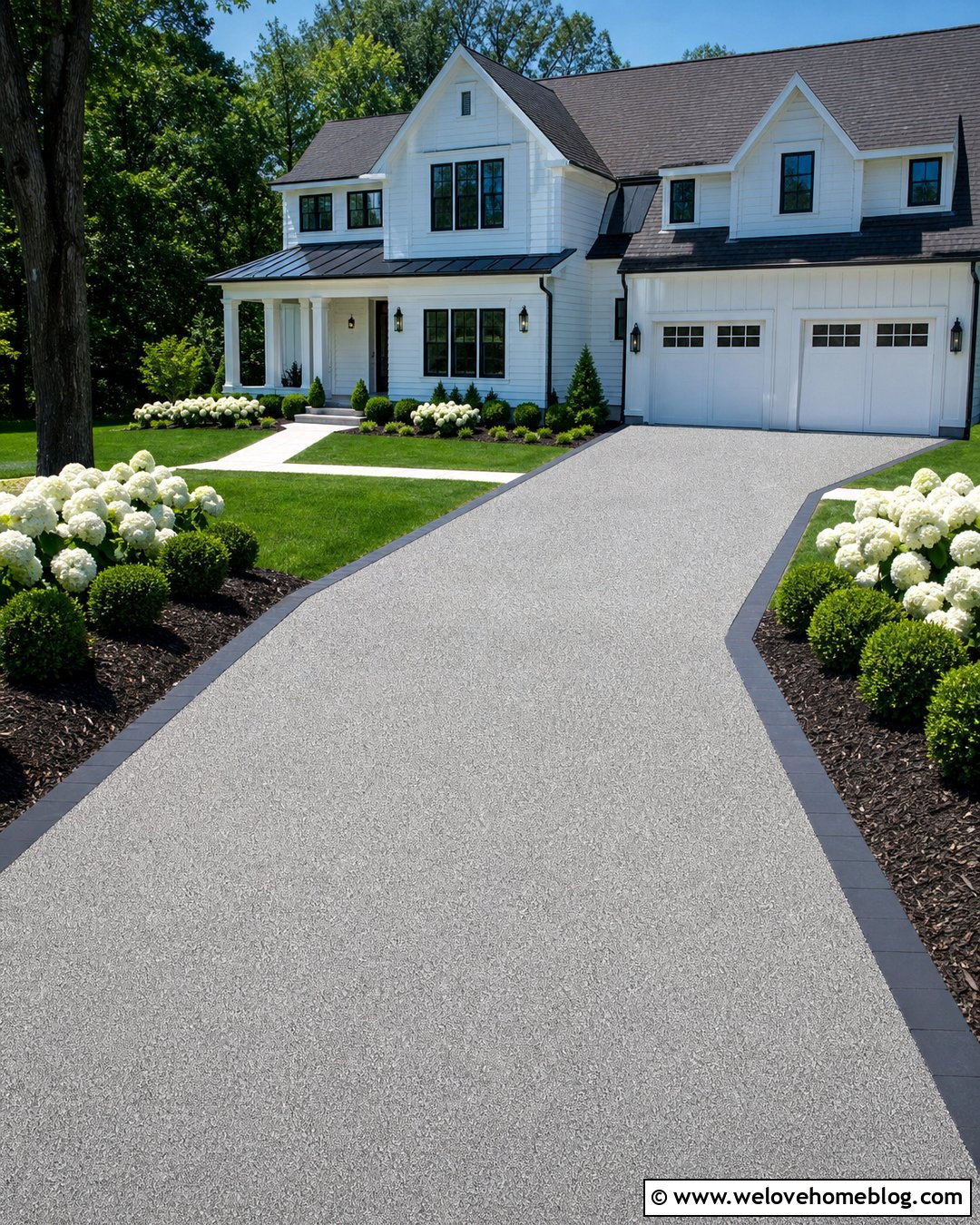
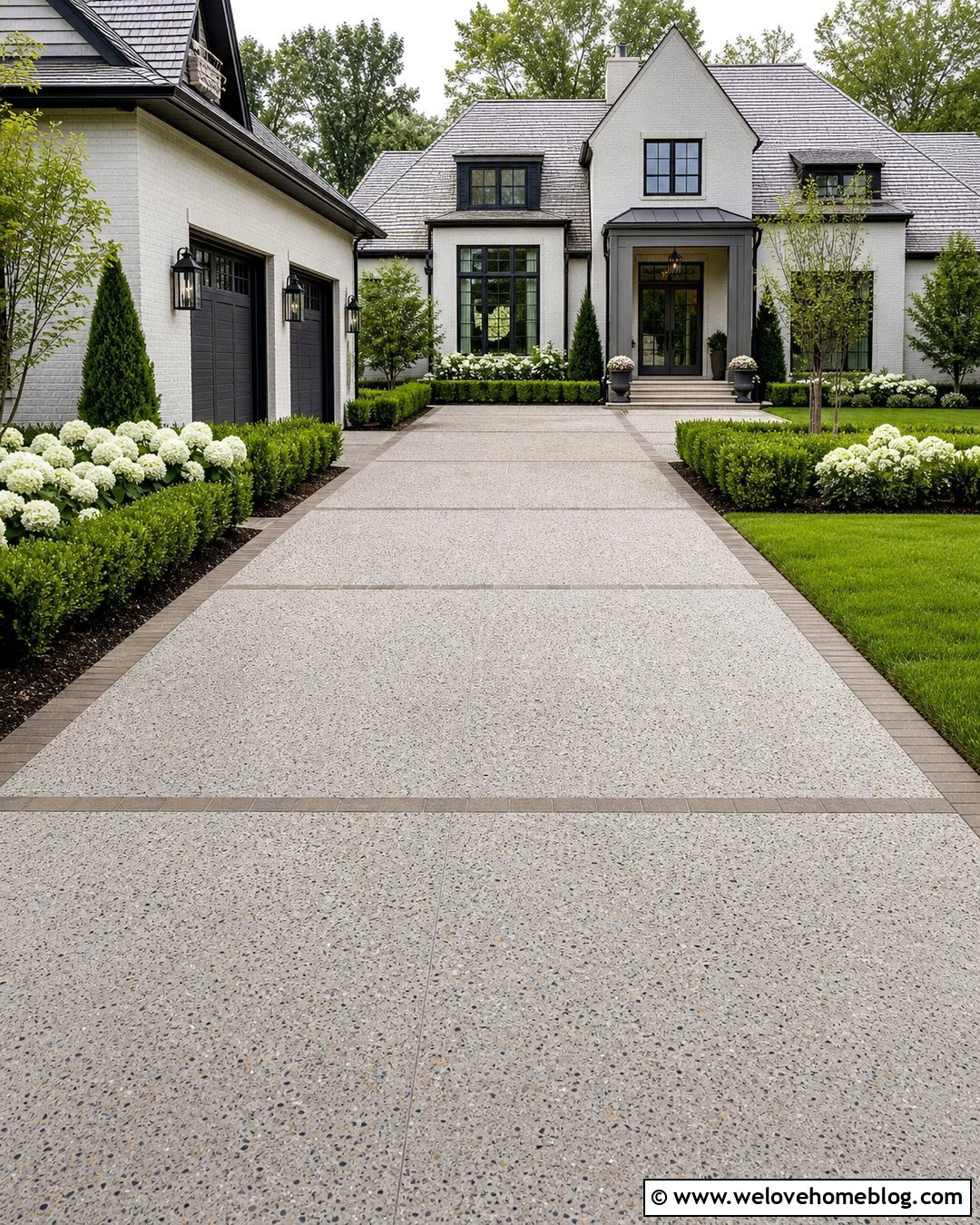
Light gray resin-bound gravel creates a clean foundation for a modern suburban home. Use a straight, double-width layout so the driveway feels spacious and easy to navigate. A slim border of black concrete pavers gives the pale aggregate a crisp outline without making the design overly decorative. Continue the dark color through porch railings, window frames, or garage hardware for a connected exterior palette. Narrow planting beds filled with clipped boxwood, white hydrangeas, and dark mulch can soften both sides. A simple concrete walkway should branch from the driveway near the garage rather than interrupting the main surface. This complete look works especially well with white, cream, or pale gray facades.
2. Charcoal Resin Driveway With White Stone Borders
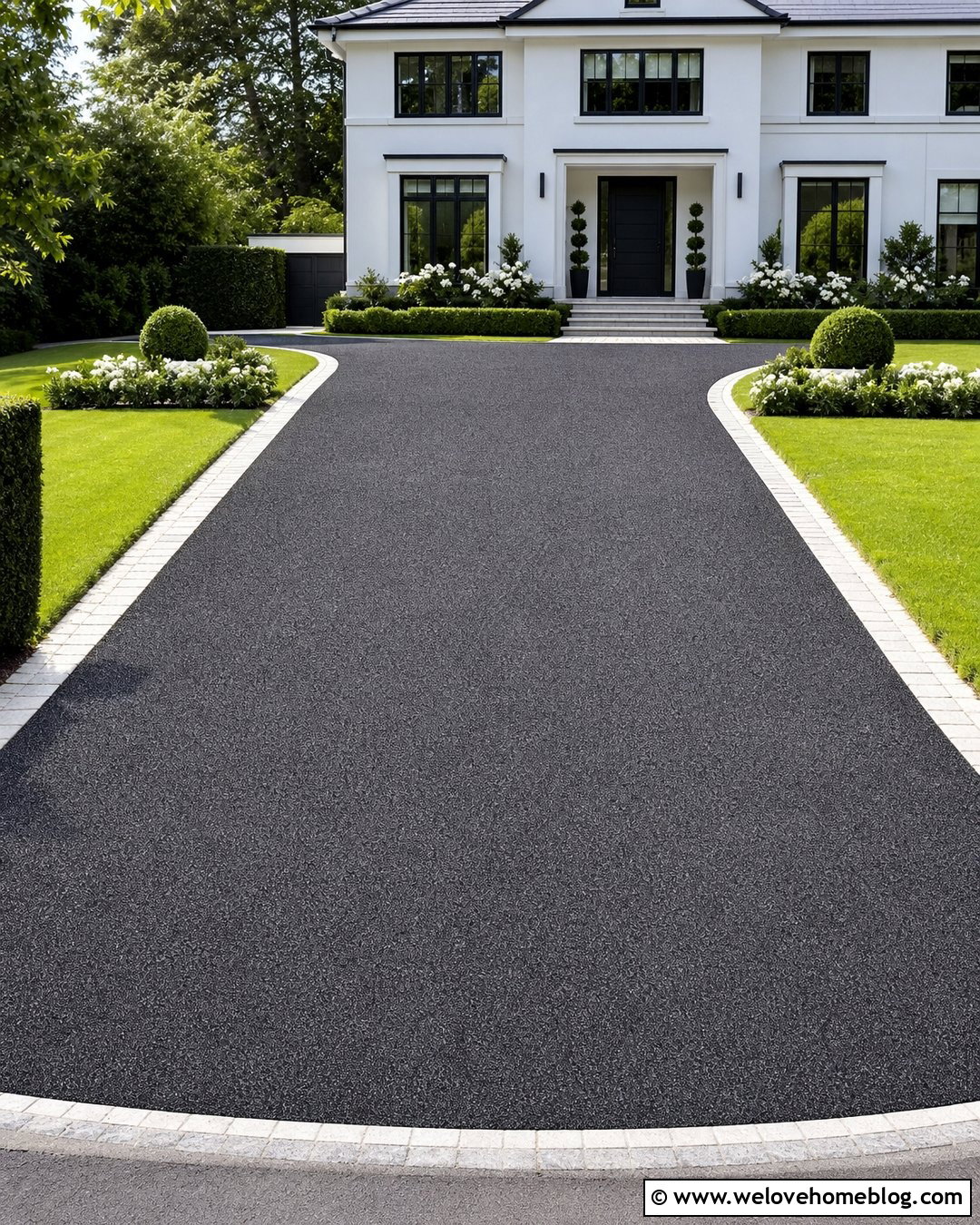
Deep charcoal resin-bound gravel can give a light-colored house a bold and contemporary entrance. Frame the surface with narrow white limestone or pale granite borders to create a strong contrast that remains visible from the curb. A gently flared entrance makes the driveway feel more welcoming while providing a smoother transition from the street. Keep the surrounding landscape simple with a level lawn, rounded evergreen shrubs, and a few white flowering plants. Avoid using too many additional colors because the dark surface and pale edging already create a clear focal point. This design suits modern homes with black windows, flat garage doors, and minimal exterior detailing. Regular cleaning will help the dark finish retain its sharp appearance.
3. Golden Resin Driveway With Brick Edging
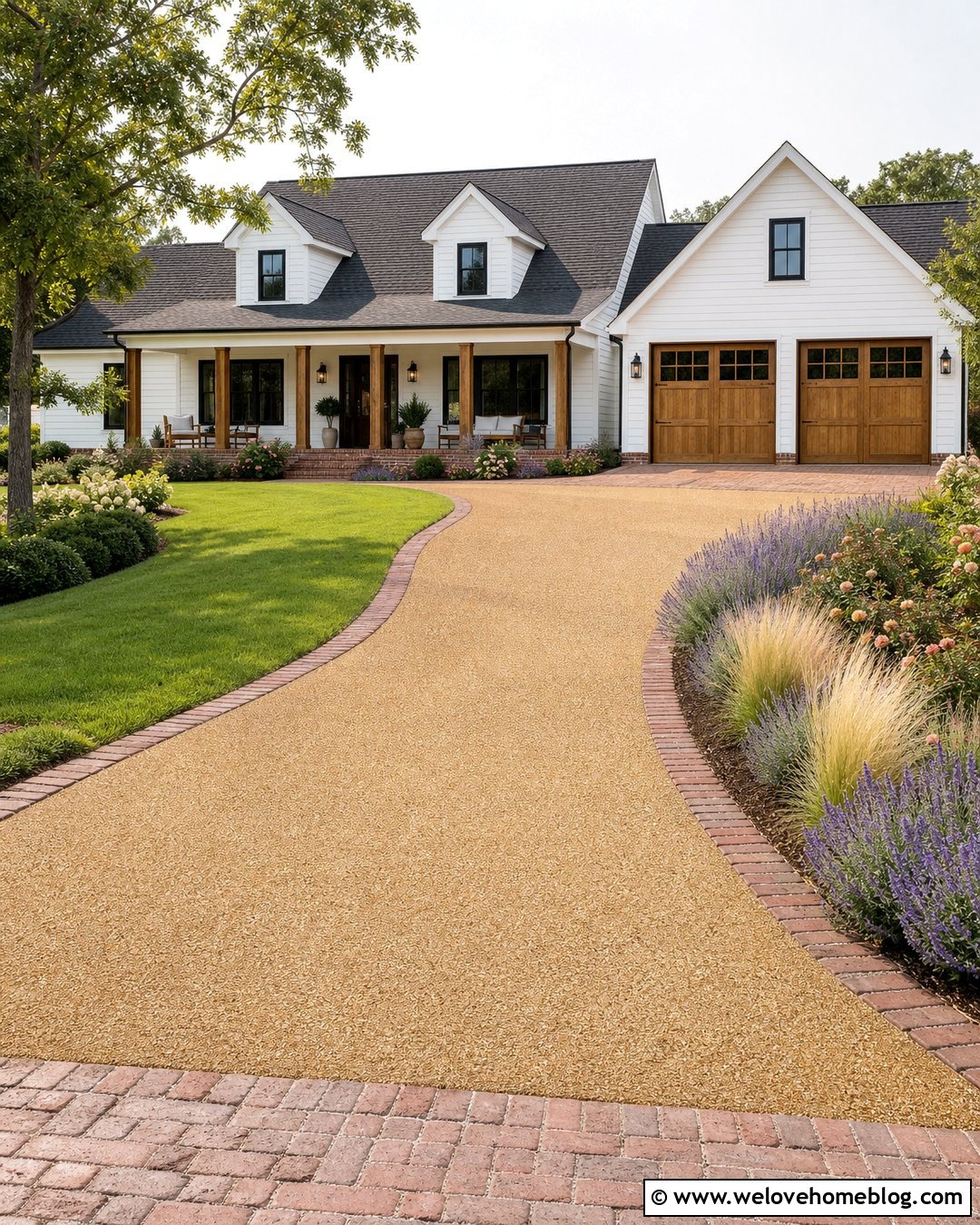
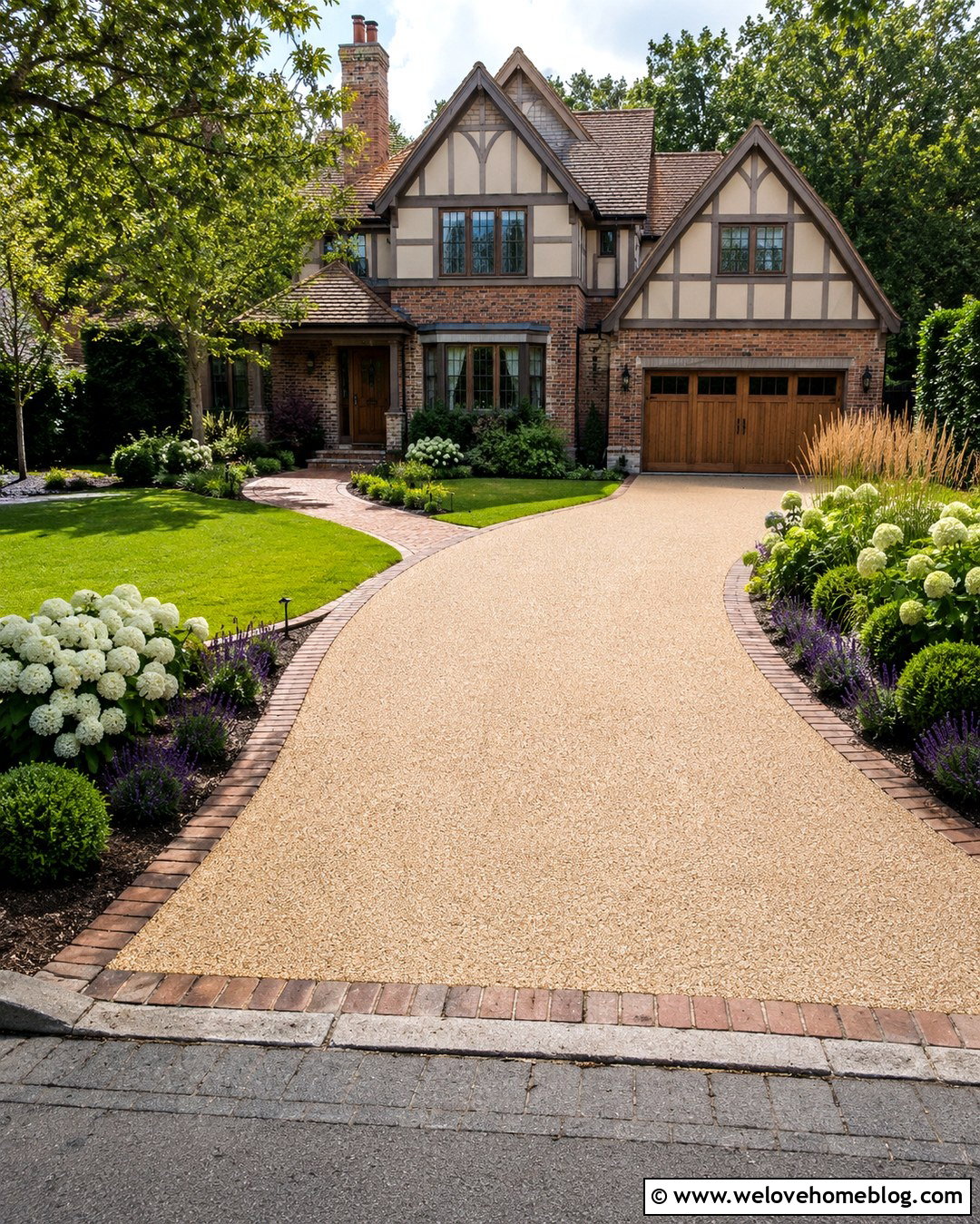
Warm golden resin-bound gravel brings the appearance of traditional loose stone to a tidy, unified surface. Pair it with reclaimed-look red brick edging to complement a farmhouse, cottage, or colonial house. A slightly curved driveway can follow the natural line of the front yard and make the approach feel relaxed. Use a brick apron near the garage to strengthen the transition between the resin and the building. Plant lavender, catmint, ornamental grasses, or compact roses along the outer curve for seasonal color and texture. The aggregate should contain several related tan, honey, and brown tones rather than one flat color. This variation feels established and inviting, especially when the garage doors or porch columns include natural wood.
4. Silver Resin Driveway With Granite Setts
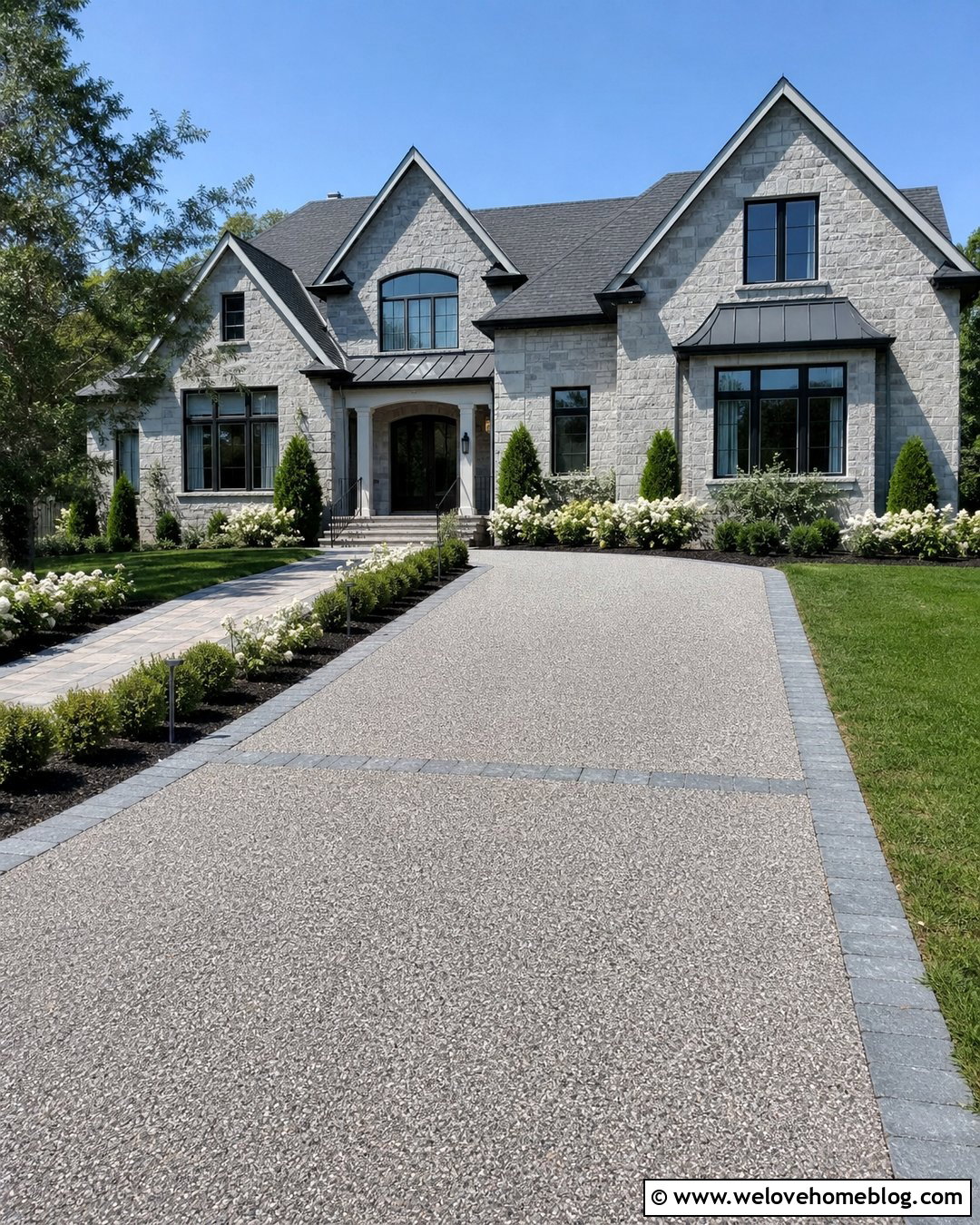
Silver-gray resin-bound gravel and granite setts make a refined combination for both renovated and newer homes. Lay the resin in a broad straight driveway, then install medium-gray granite setts around the perimeter. The setts can also form a narrow dividing ribbon between parking spaces, helping organize a wide surface without adding painted markings. Bring the same granite into the front walkway or porch steps for visual continuity. Structured planting beds with dwarf evergreens, low grasses, and white flowering perennials keep the setting sophisticated. Choose an aggregate blend containing silver, pale gray, and small charcoal stones so minor debris is less noticeable. The finished driveway should look tailored but still natural enough for everyday residential surroundings.
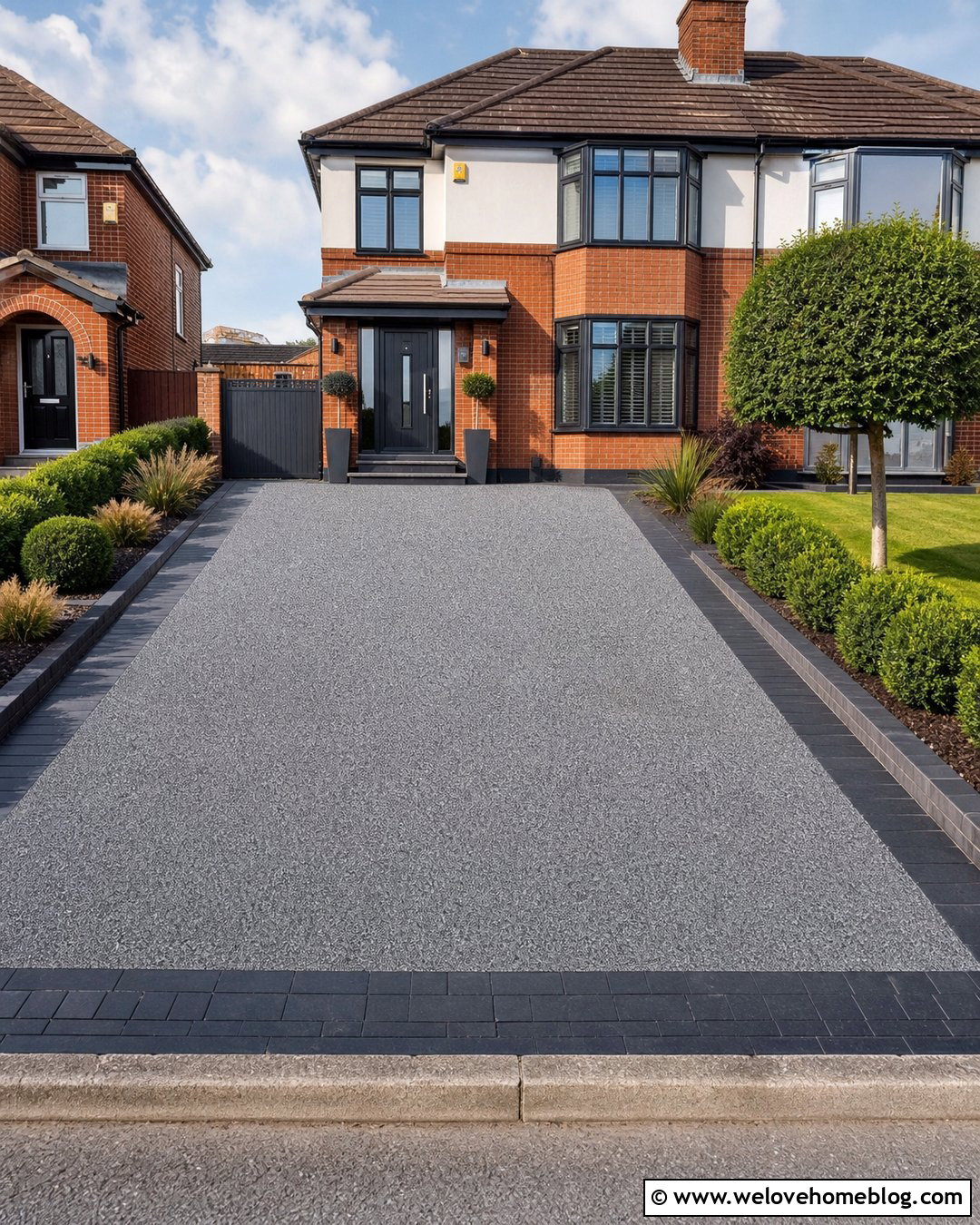
5. Beige Resin Driveway With Dark Brick Border
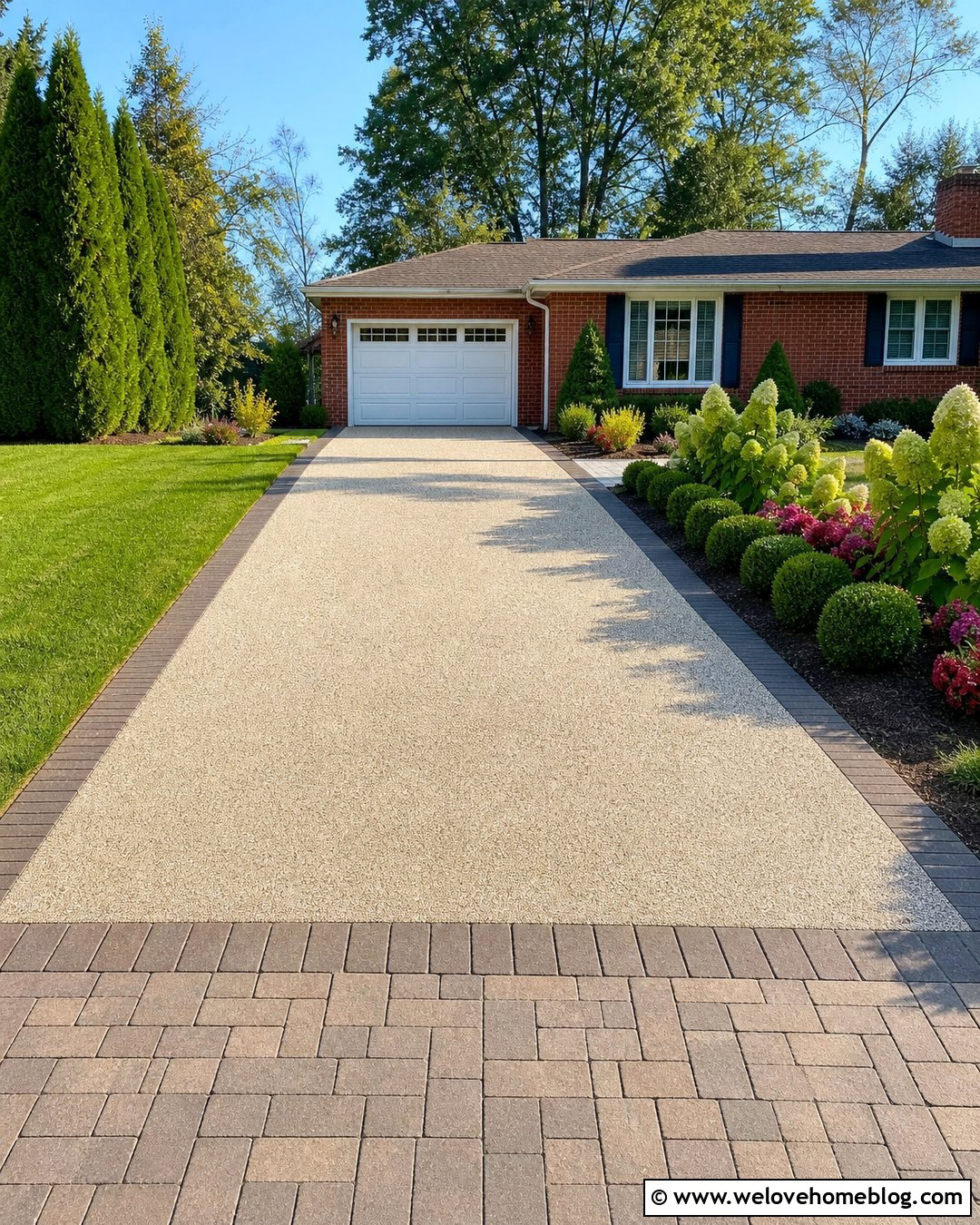
Soft beige resin-bound gravel can warm up a red brick house without competing with the facade. Give the driveway a simple rectangular layout and outline it with dark brown or charcoal brick pavers. The darker frame clearly separates the driving surface from lawn and garden beds. At the street, widen the brick border into an apron that visually anchors the entrance. A foundation bed of boxwood, panicle hydrangeas, and seasonal flowers can balance the hardscape with softer shapes. Select a beige blend with cream, tan, and muted brown aggregate rather than a very yellow finish. This understated combination works beautifully for ranch, craftsman, and traditional suburban homes where calm colors and practical details are more suitable than dramatic patterns.
6. Black Resin Driveway With Modern Landscaping
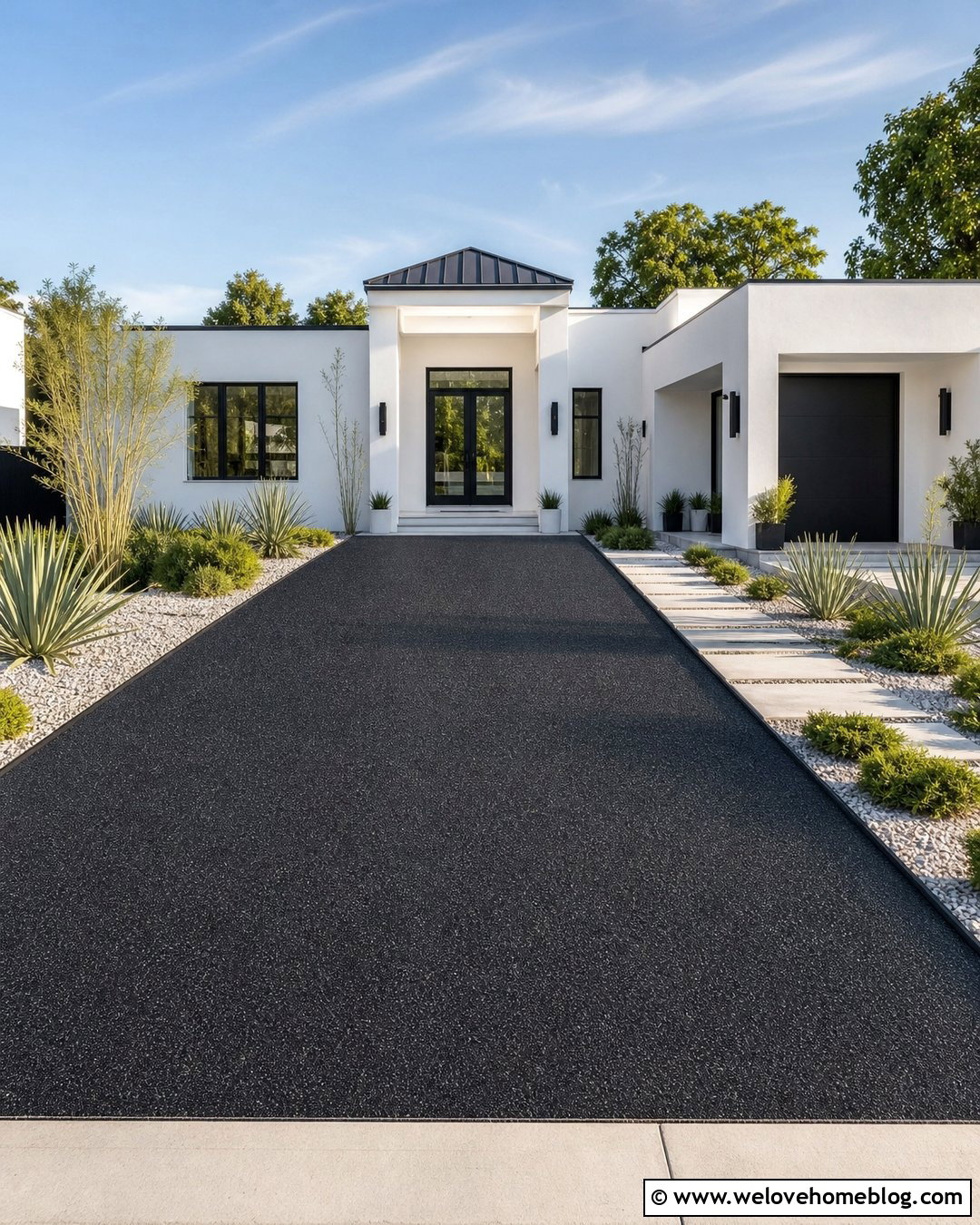
A black resin-bound gravel driveway makes a confident statement beside a white contemporary house. Keep the layout wide, straight, and uncluttered, with thin steel edging or matching black pavers defining the perimeter. Large rectangular planting beds can hold sculptural grasses, low junipers, and pale decorative stone. Add a concrete walkway composed of oversized slabs, leaving narrow planted joints between them to contrast with the continuous resin surface. Because a very dark driveway can dominate a small property, reserve this treatment for an open frontage with strong architectural lines. White garage doors, natural wood siding, and black exterior fixtures complete the palette. The result feels deliberate when every surrounding material repeats either the dark surface or the lighter facade.
7. Two Tone Resin Driveway With Parking Zones
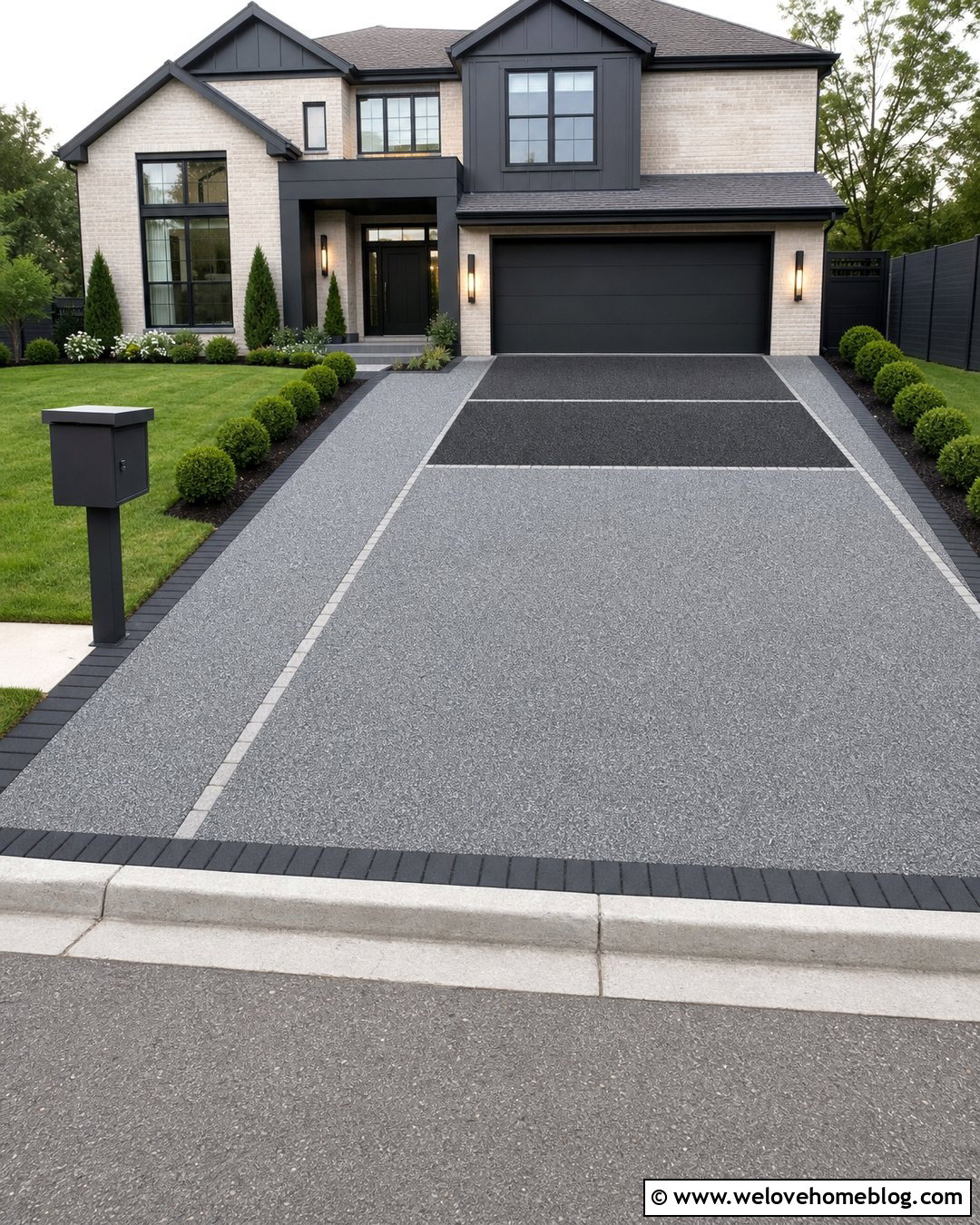
Two complementary resin colors can make a wide driveway easier to understand visually. Use a medium-gray resin-bound blend across the main approach and a darker charcoal blend within two parking zones beside the garage. Separate the colors with slim aluminum profiles or a single row of granite setts for clean transitions. Keep both resin mixes similar in stone size so the complete surface still feels unified. A straight driveway works best because its simple outline balances the extra color detail. Repeat the darker tone in the walkway border, mailbox post, and planting-bed edging. This approach is particularly useful for a large modern or transitional home where one uninterrupted color might look empty, but a complex decorative pattern would feel too busy.
8. Curved Resin Driveway With Natural Stone Edging
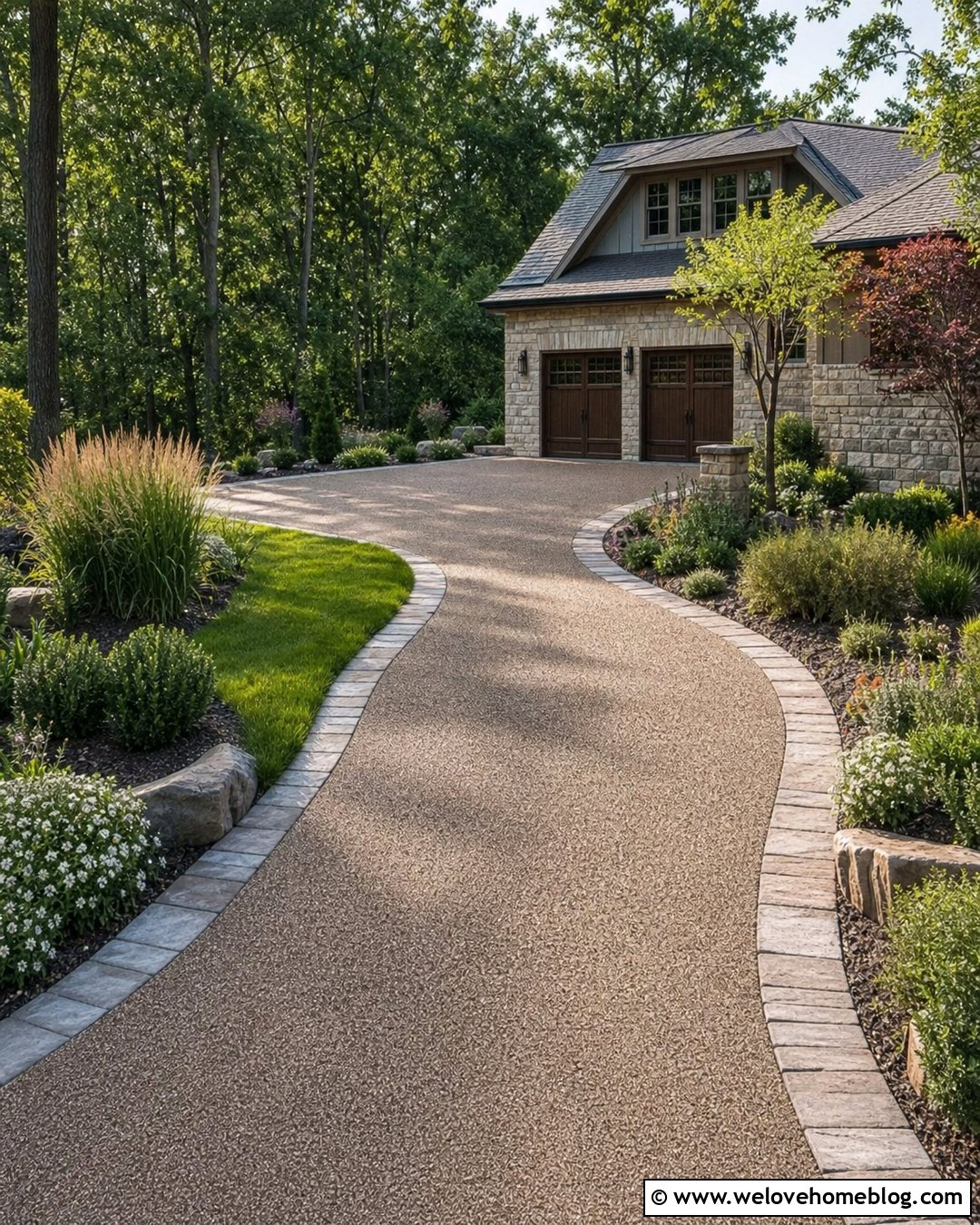
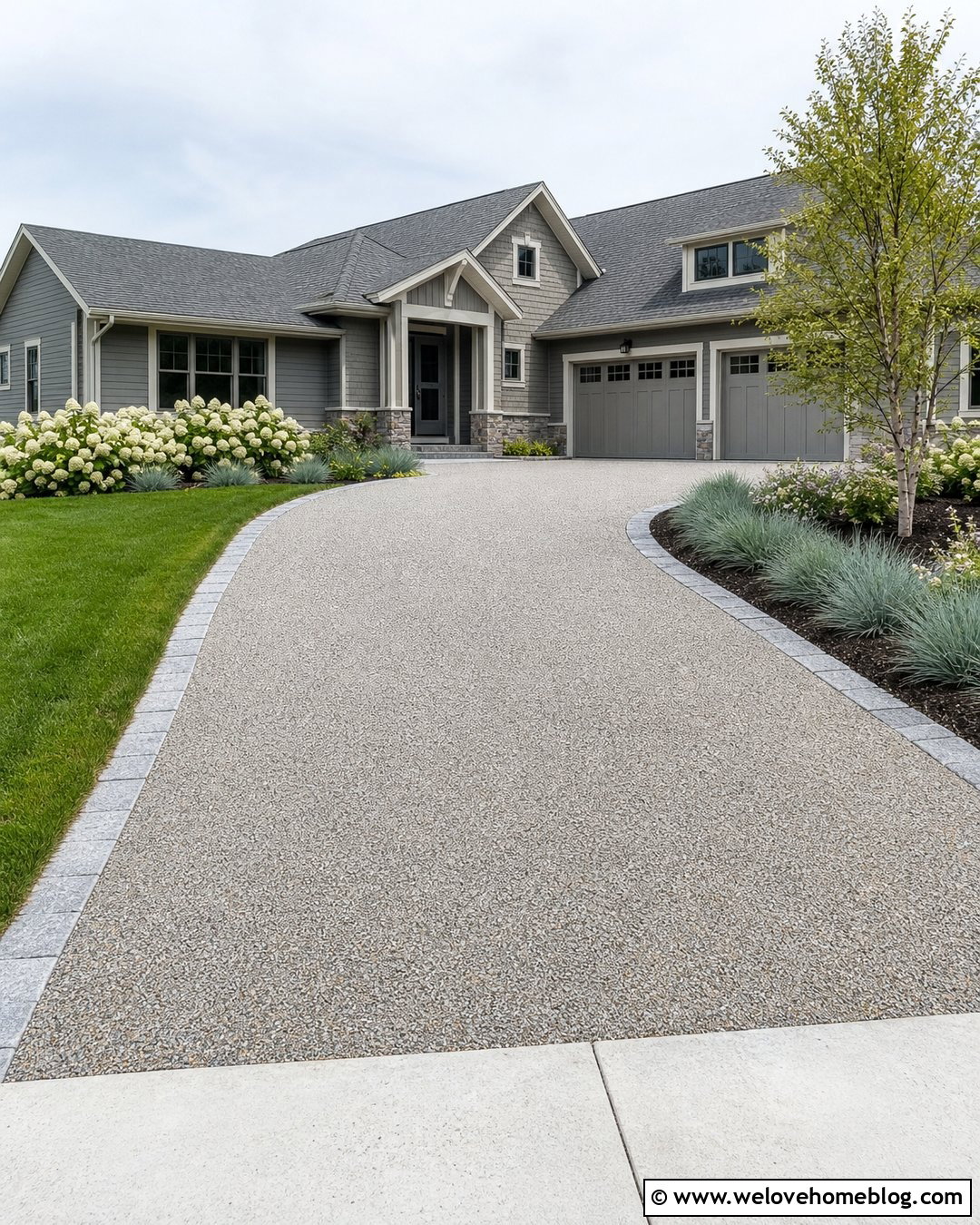
A sweeping resin-bound driveway can follow the shape of a sloped lawn, mature tree line, or irregular property boundary. Choose a warm gray or taupe aggregate that blends naturally with the landscape. Edge the curve with rough-faced fieldstone or cut limestone set low enough to create a tidy boundary without resembling a wall. On the outer side, layer ornamental grasses, flowering shrubs, and ground covers to emphasize the flowing route. Keep the inner curve more open so drivers have a clear view toward the house. A wider turning area near the garage will make the curved layout more practical. This complete design suits craftsman, country, and stone-front homes because the smooth resin surface balances the rustic character of the border.
9. Circular Resin Driveway With Planted Center Island
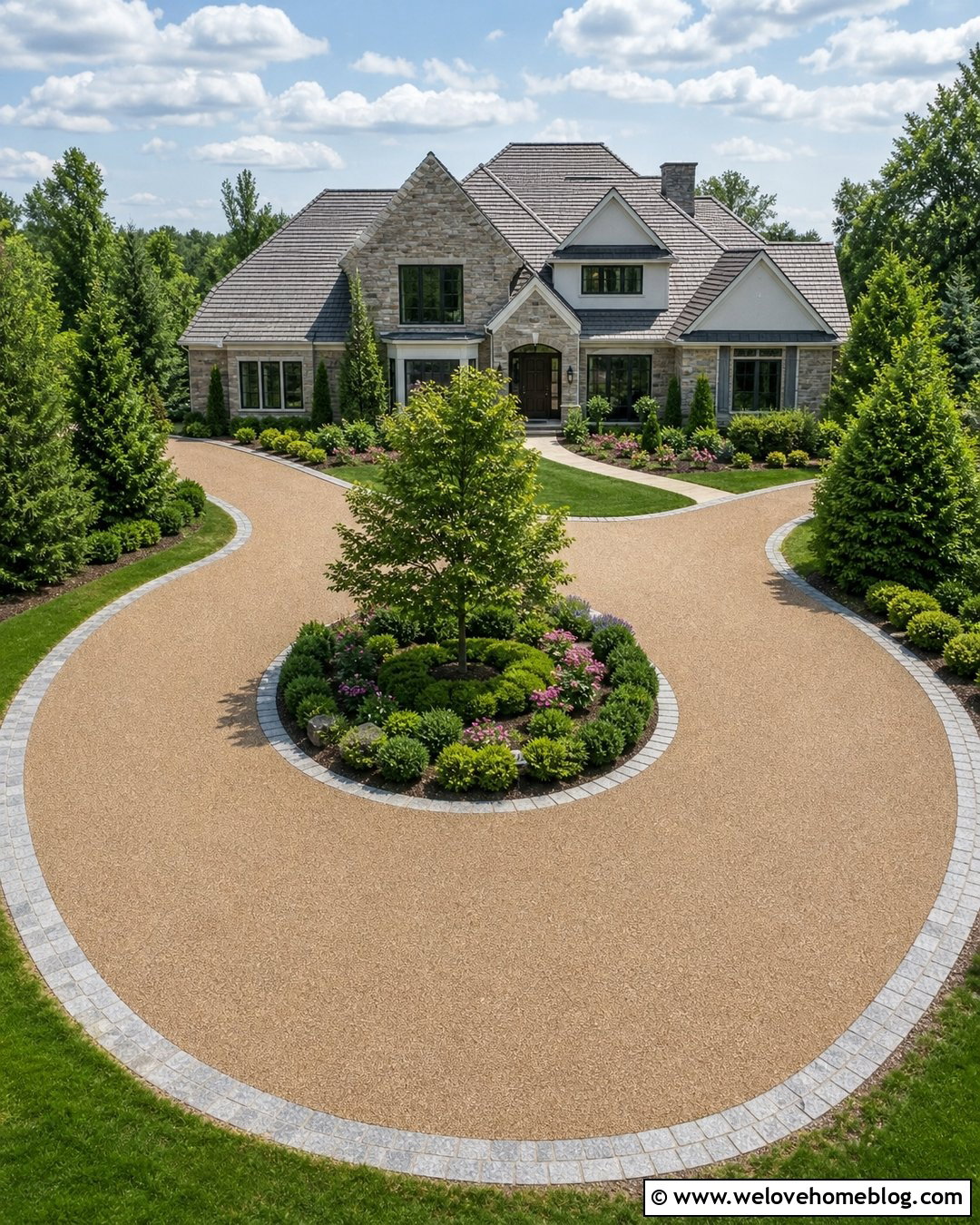
A circular resin-bound driveway creates an impressive entrance while allowing vehicles to move through the property without reversing along the full approach. Use a neutral buff or silver-gray aggregate for the main loop and define both edges with contrasting granite pavers. The center island should be large enough to look intentional rather than like a leftover patch of lawn. Plant it with one small ornamental tree, a low evergreen framework, and bands of flowering perennials that will not block views. Connect a curved walkway from the loop to the front door using matching resin or complementary stone. This design is most successful on a wide property where the complete circle can sit comfortably in front of the house without overwhelming the yard.
10. Horseshoe Resin Driveway With Entrance Gates
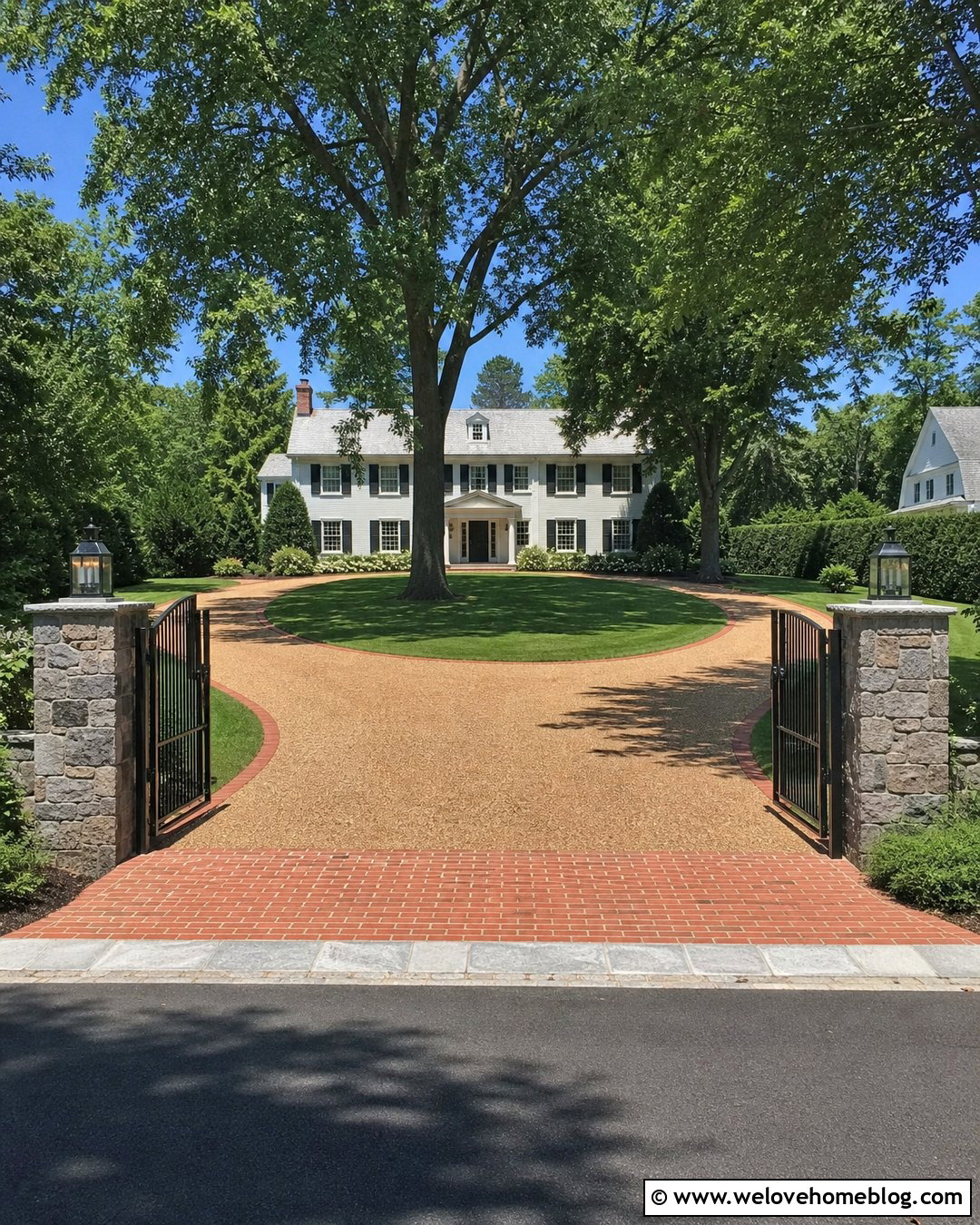
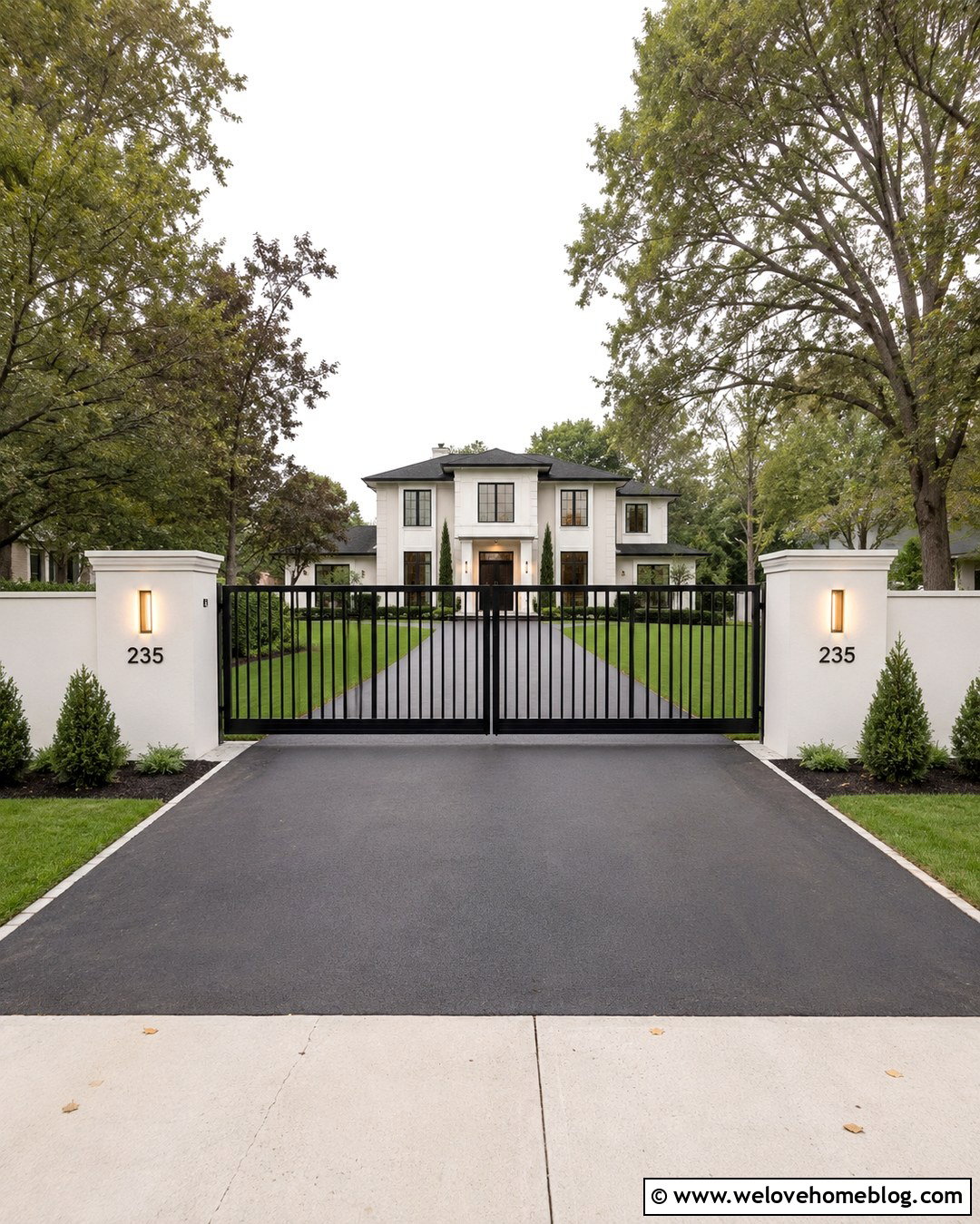
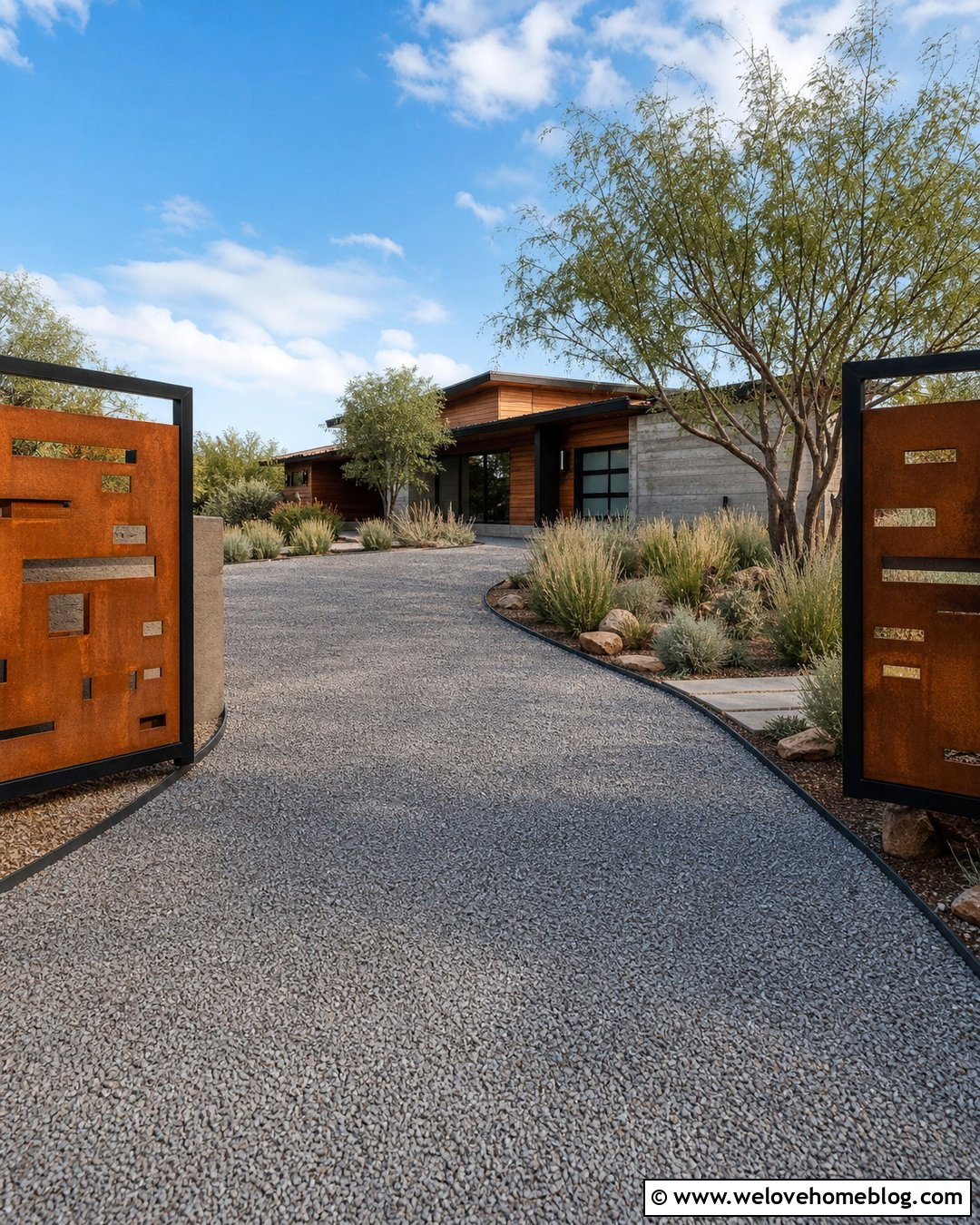
A horseshoe resin-bound driveway offers two clear access points and a graceful approach to a large traditional home. A warm bronze or golden-brown aggregate can soften the expansive paved area. Mark each entrance with brick or stone pillars and simple black metal gates, keeping both sides visually balanced. Use matching brick pavers around the resin perimeter and beneath the gates where the surface meets the street. Between the two driveway arms, create a broad lawn with a central planting bed or mature shade tree. Foundation shrubs and a direct walkway guide attention toward the house. Before finalizing the curves, allow generous turning space and consider how open gates, delivery vehicles, and snow removal will interact with the complete layout.
11. Small Resin Driveway With Built In Planting Beds
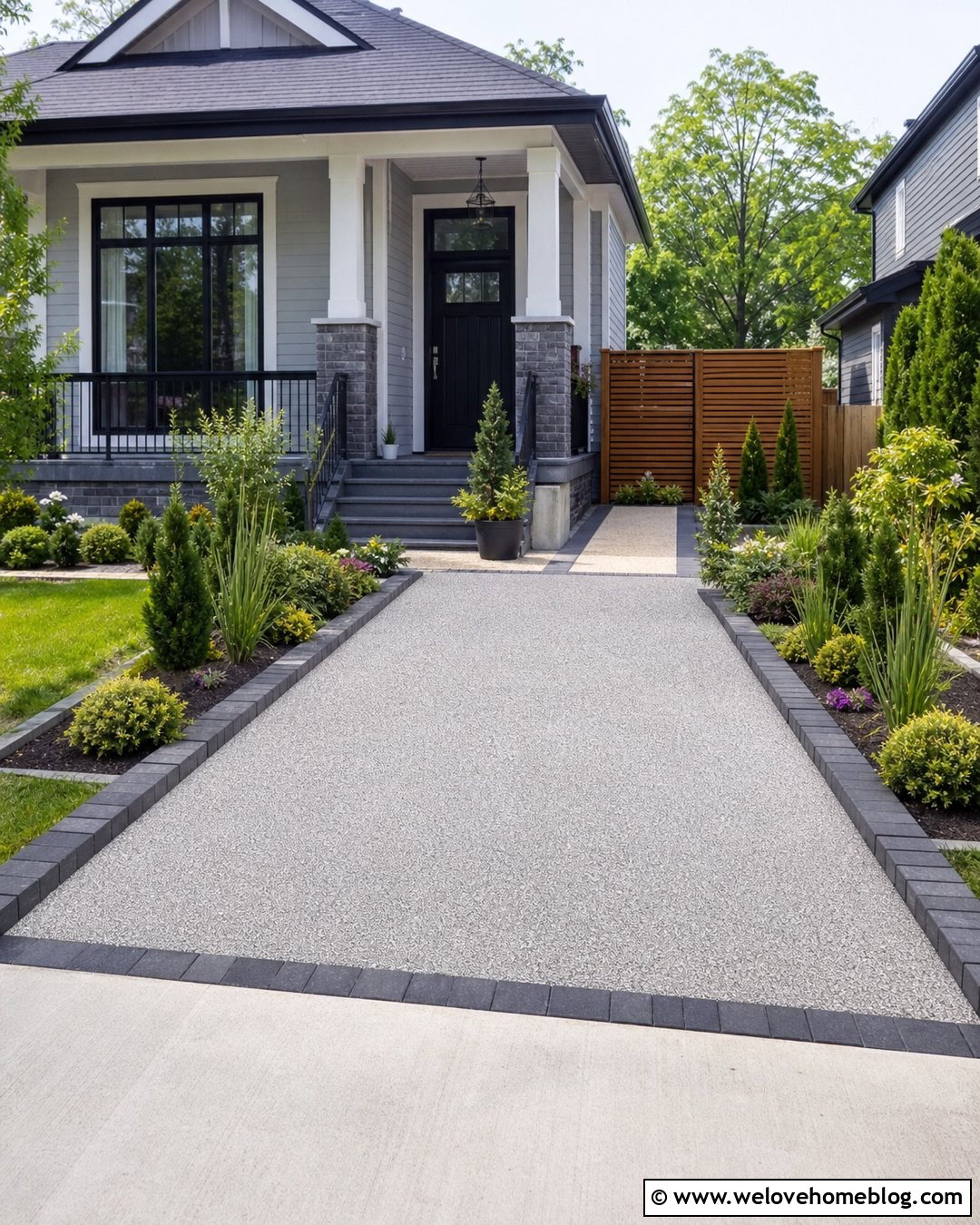
A compact front yard does not need to become one solid area of paving. Use a pale gray resin-bound driveway with a straight, single-car layout and retain narrow planting beds along the house and property boundary. Dark block edging can hold the resin neatly while providing clear separation from soil. Choose upright plants such as dwarf evergreens, compact grasses, and narrow flowering shrubs that will not spread into the parking space. A small resin walkway can branch toward the front door, using a slightly lighter aggregate to distinguish pedestrian movement. Keep trash storage, utility boxes, and hoses screened behind simple wood panels. By carefully assigning every section a purpose, this complete driveway can provide parking, greenery, and attractive curb appeal within limited space.
12. Narrow Resin Driveway With Light Borders
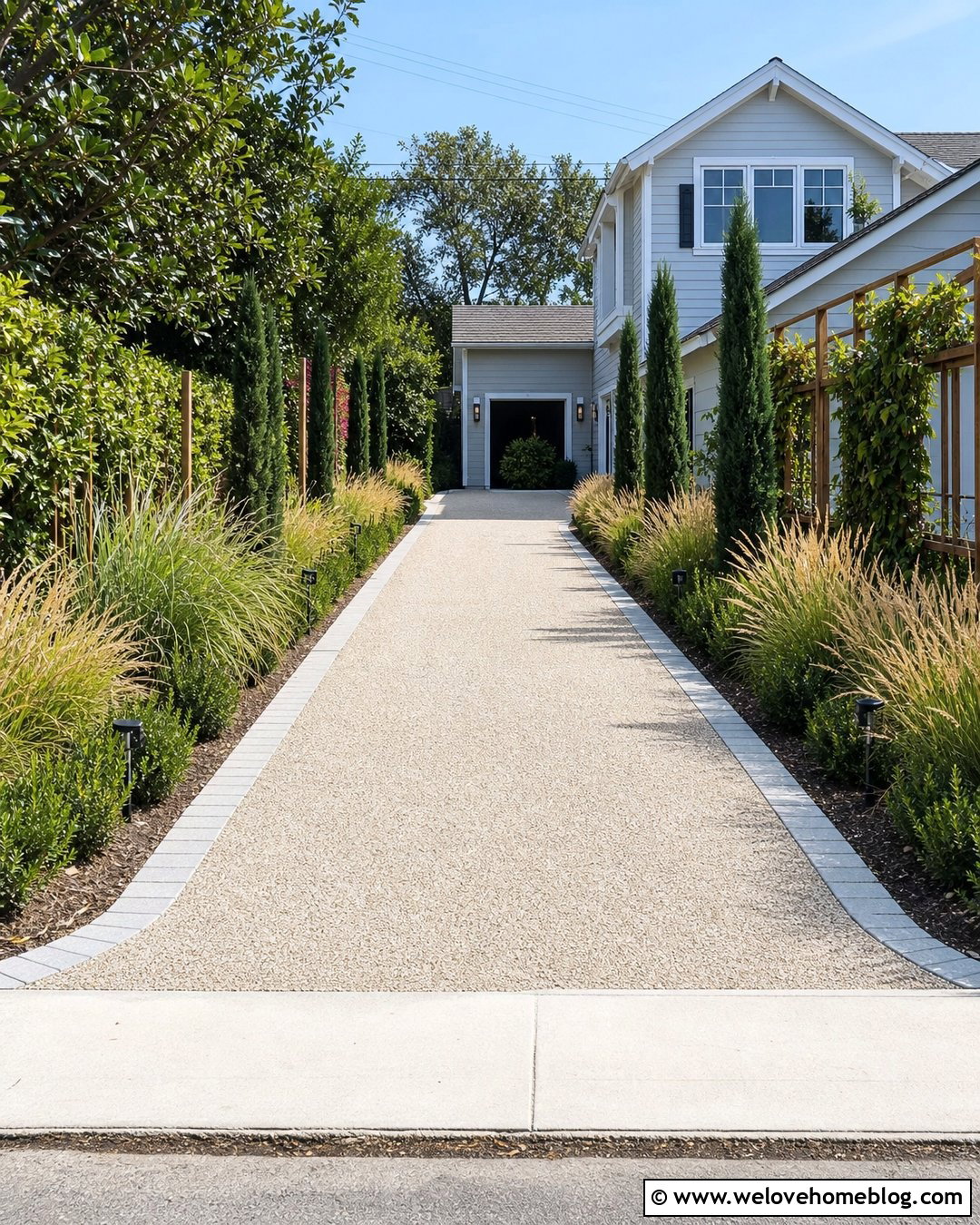
A narrow driveway can feel more generous when its color palette stays light and consistent. Choose cream or pale silver resin-bound gravel and frame it with slim, similarly colored concrete pavers. Avoid wide, high-contrast borders because they may visually reduce the usable center. Run the driveway straight toward the garage, with a small flare near the street and an expanded turning or parking pad near the house if space permits. Vertical planting works well along the sides. Consider columnar evergreens, trellised vines, or tall grasses contained within narrow beds. Low pathway lighting can define the edges without occupying valuable width. A light garage door and uncluttered facade will complete the effect, helping the entire entrance appear open rather than confined.
13. Wide Resin Driveway With Center Paver Ribbon
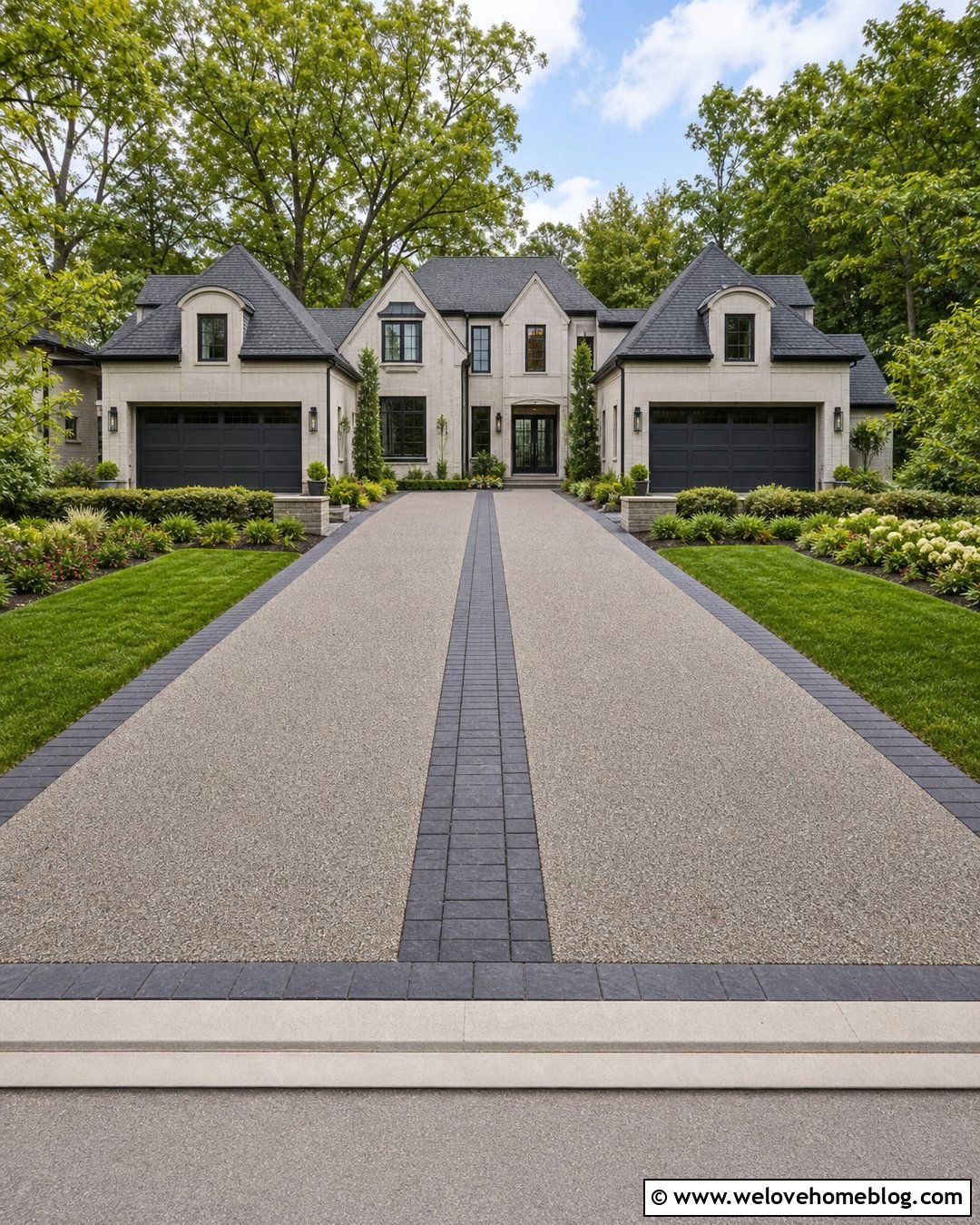
Break up a large resin-bound driveway with a simple center ribbon instead of covering the surface in several patterns. A warm gray resin blend can fill the main area, while a double row of charcoal concrete pavers runs from the street toward the garage. The ribbon should align with an architectural feature, such as the space between two garage doors, so it appears purposeful. Use the same pavers around the outer edge and across the street apron. Broad planting beds with layered shrubs can balance the scale of the paved frontage. Leave enough clear space beside the driveway for lawn and trees whenever possible. This structured layout complements large transitional homes and gives the approach definition while preserving the resin’s smooth, continuous appearance.
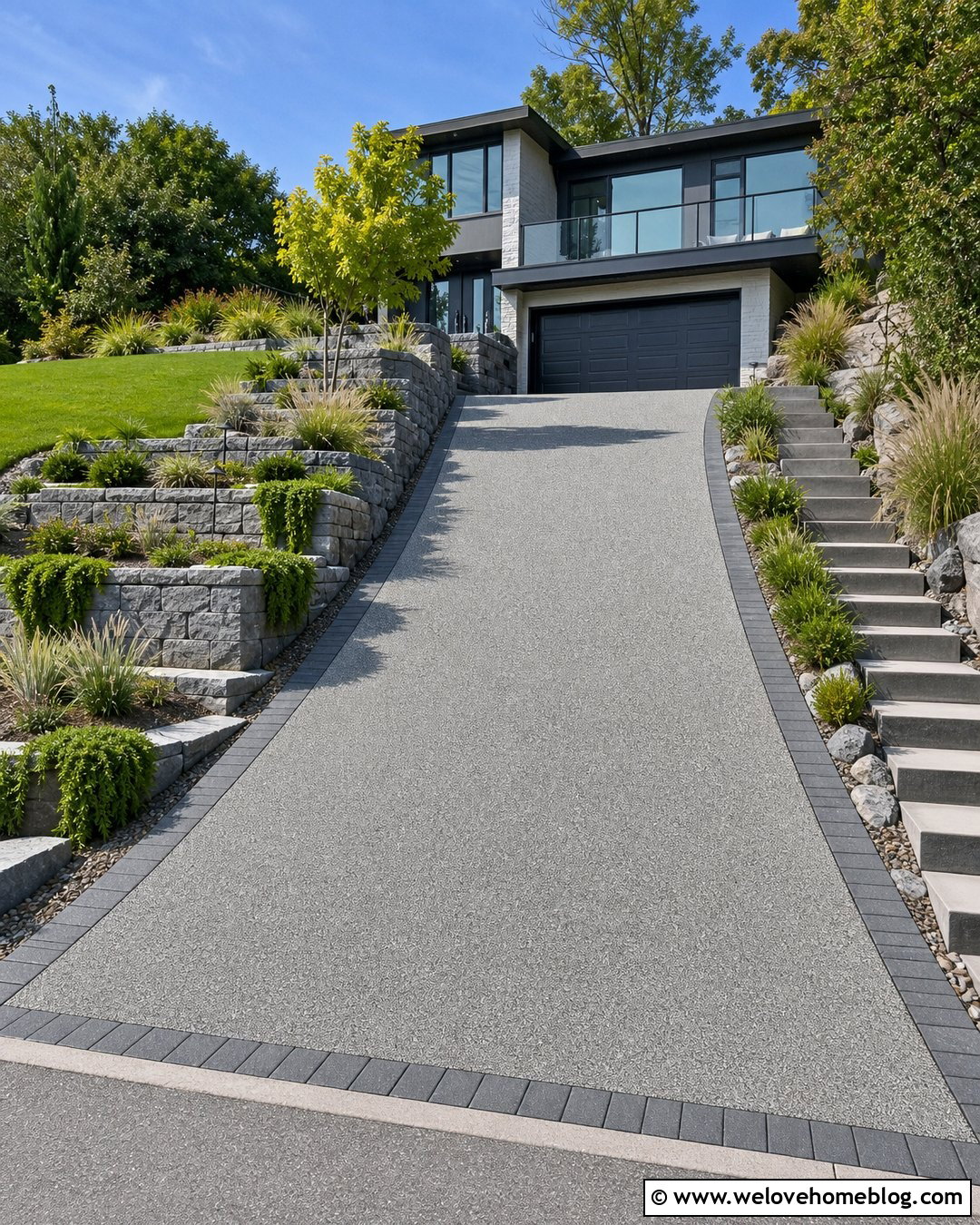
14. Sloped Resin Driveway With Textured Aggregate
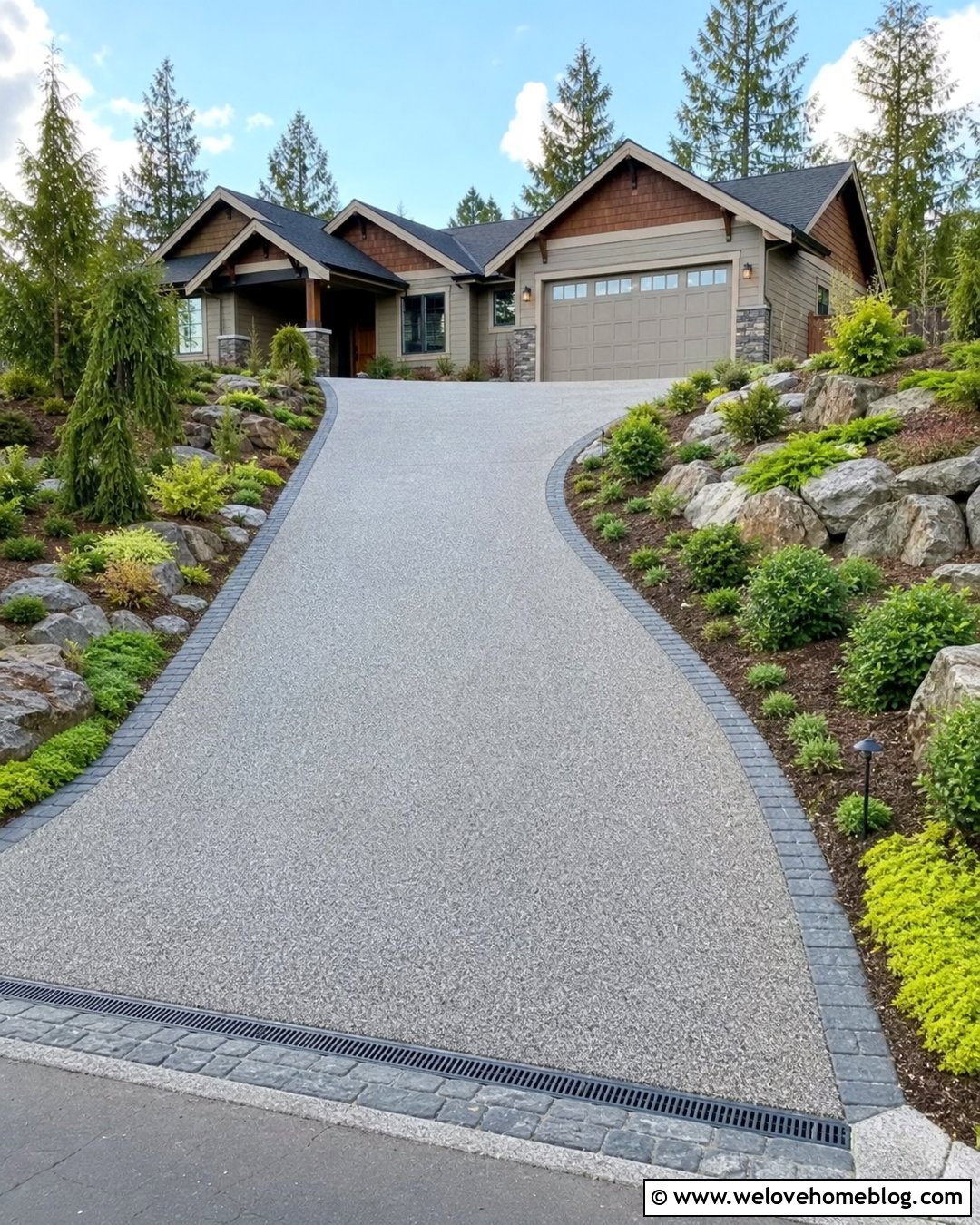
On a sloped property, the complete driveway design should prioritize a clear route, firm edges, and thoughtful water management. A medium-tone resin-bound gravel blend with visible angular stone creates a more grounded appearance than an extremely pale, polished-looking surface. Use dark granite setts along both sides and install drainage components wherever the site plan requires them. A gentle curve can reduce the visual severity of a steep, straight climb when the lot provides enough width. Plant low ground covers and deeply rooted shrubs on the adjoining banks to frame the route without obstructing visibility. At the top, provide a level parking or turning area near the garage. Ask the installer to specify the surface texture and complete base for the property’s actual slope and vehicle demands.
15. Sandy Resin Driveway For A Coastal House
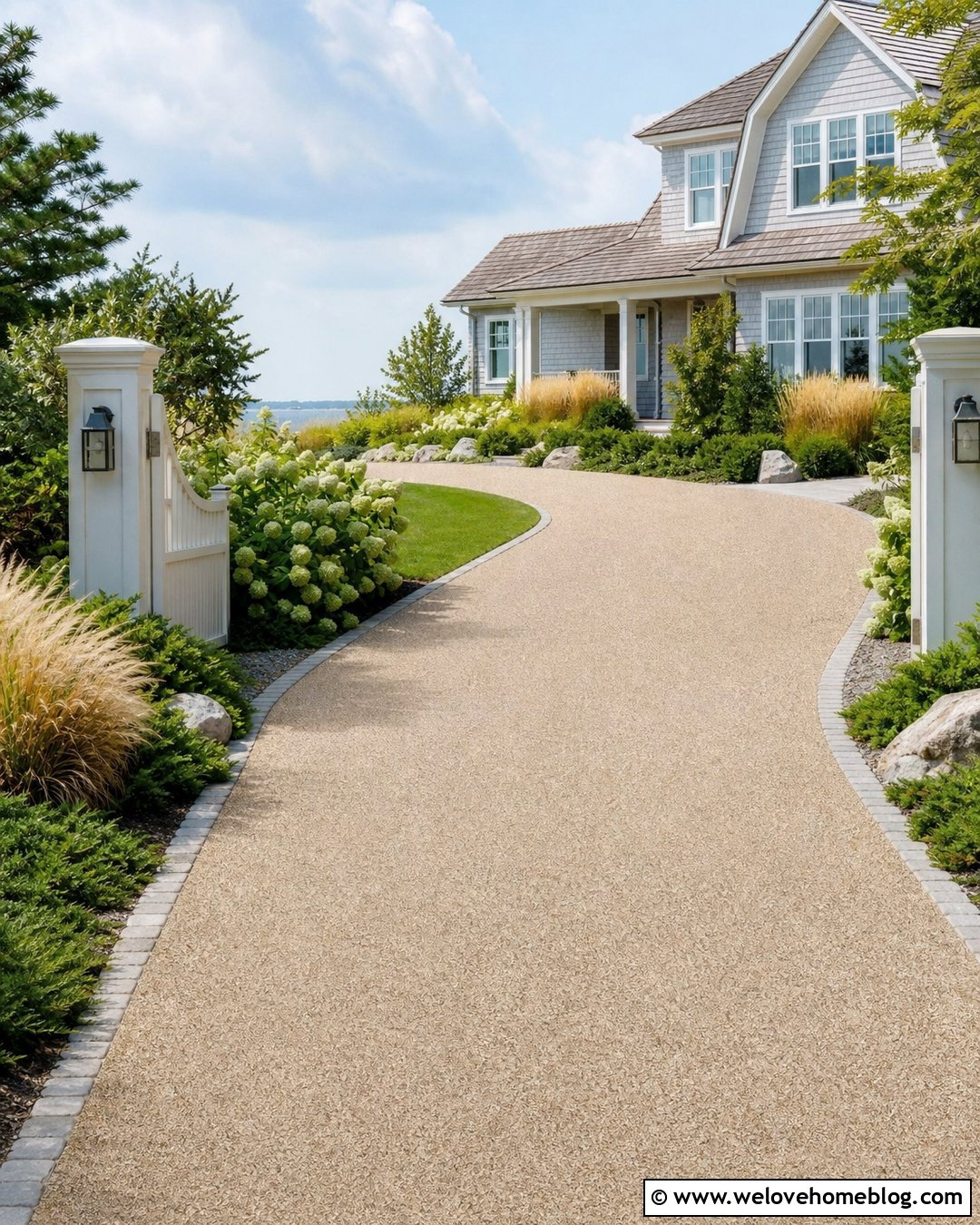
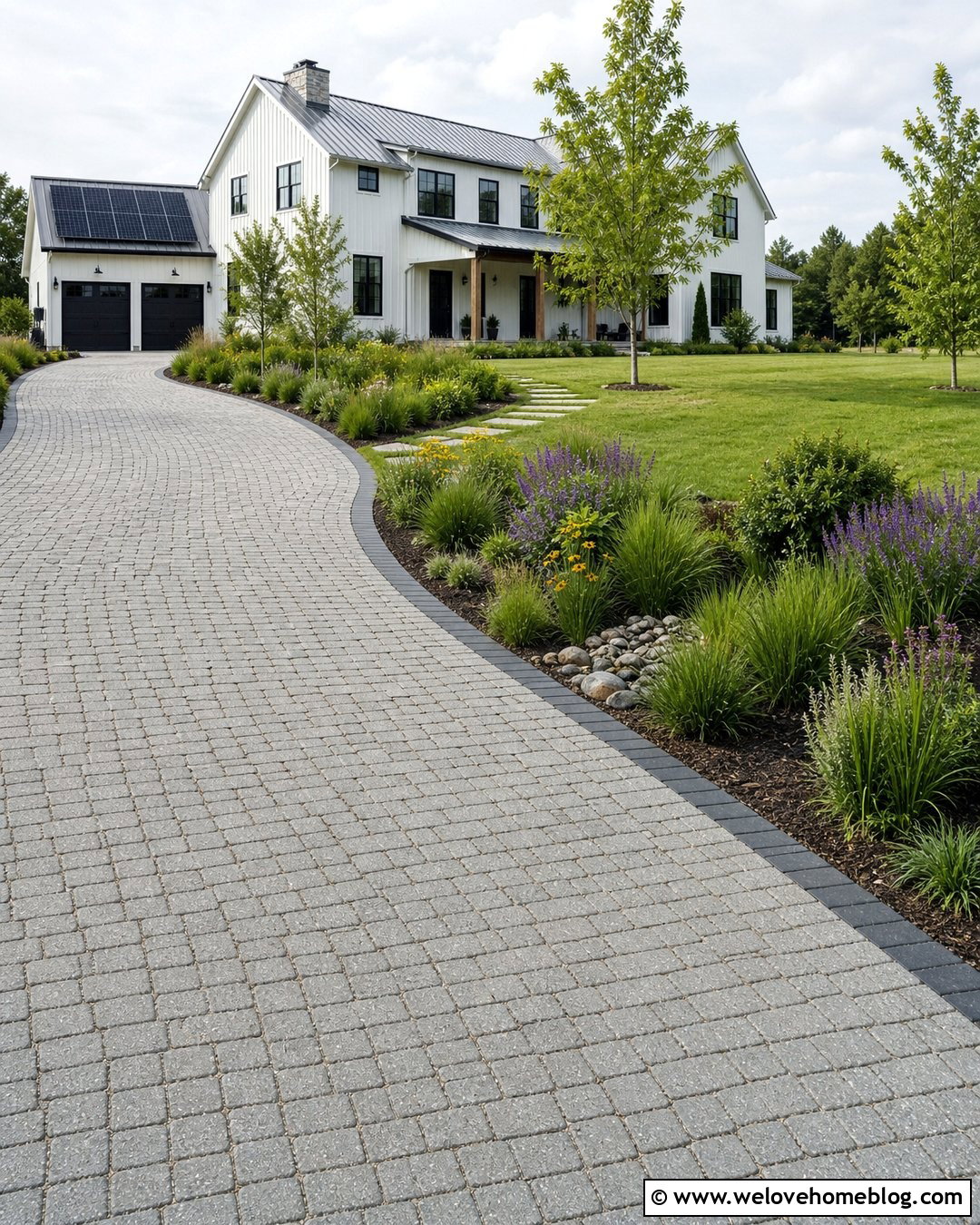
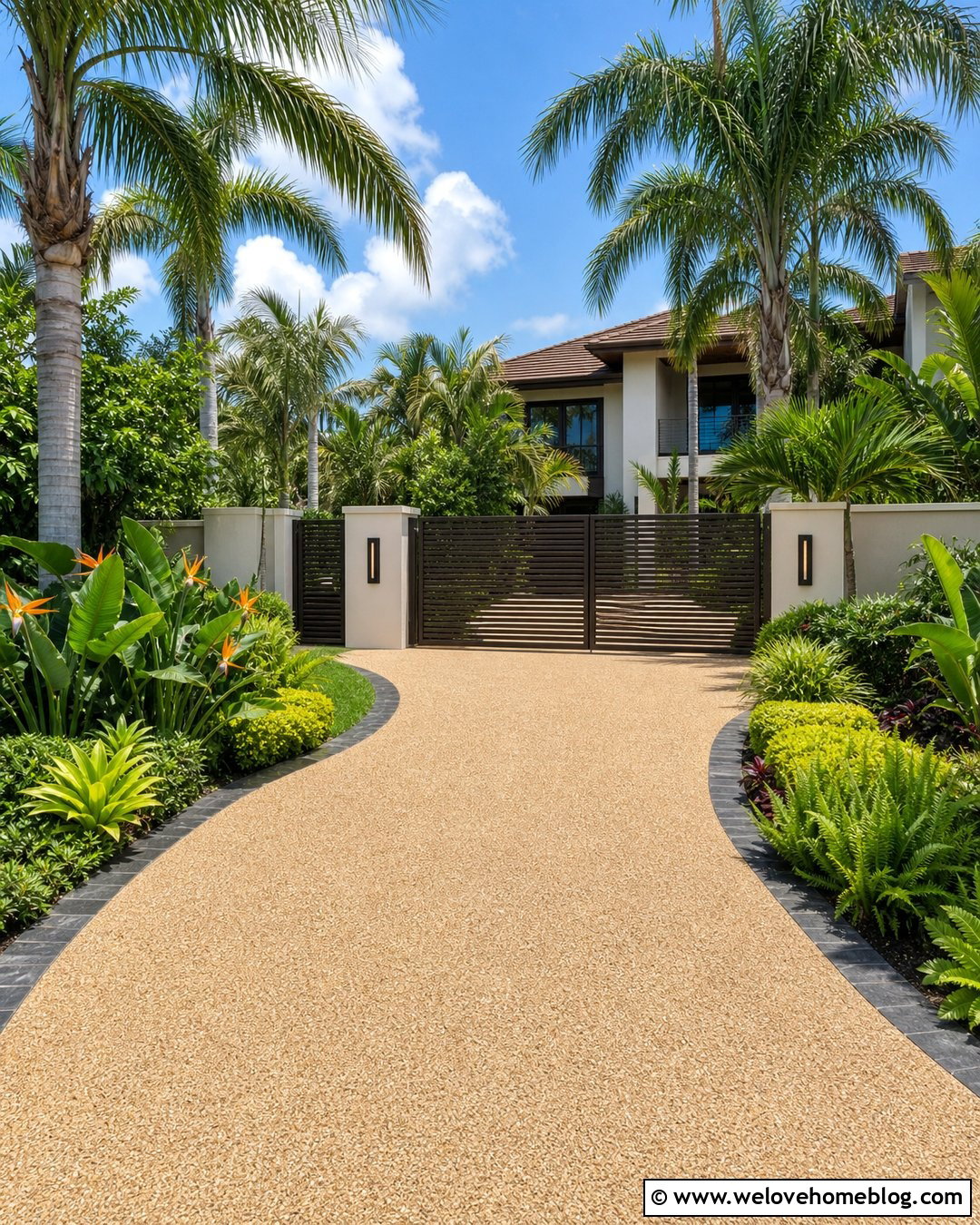
A sandy beige resin-bound driveway feels natural beside a coastal, Cape Cod, or shingle-style home. Select an aggregate blend containing cream, light tan, and subtle gray stones rather than a strong golden yellow. A relaxed curved layout can lead toward the garage while leaving room for wind-tolerant planting beds. Edge the surface with weathered-gray pavers that echo the house siding and nearby walkways. Ornamental grasses, compact hydrangeas, creeping juniper, and pale decorative stones reinforce the coastal palette without relying on themed accessories. Keep the entrance open and simple, using low stone markers instead of tall pillars. The resin, muted edging, breezy planting, and light facade should work together to create a bright residential approach that feels calm throughout the year.
16. Red Resin Driveway For A Brick Colonial House
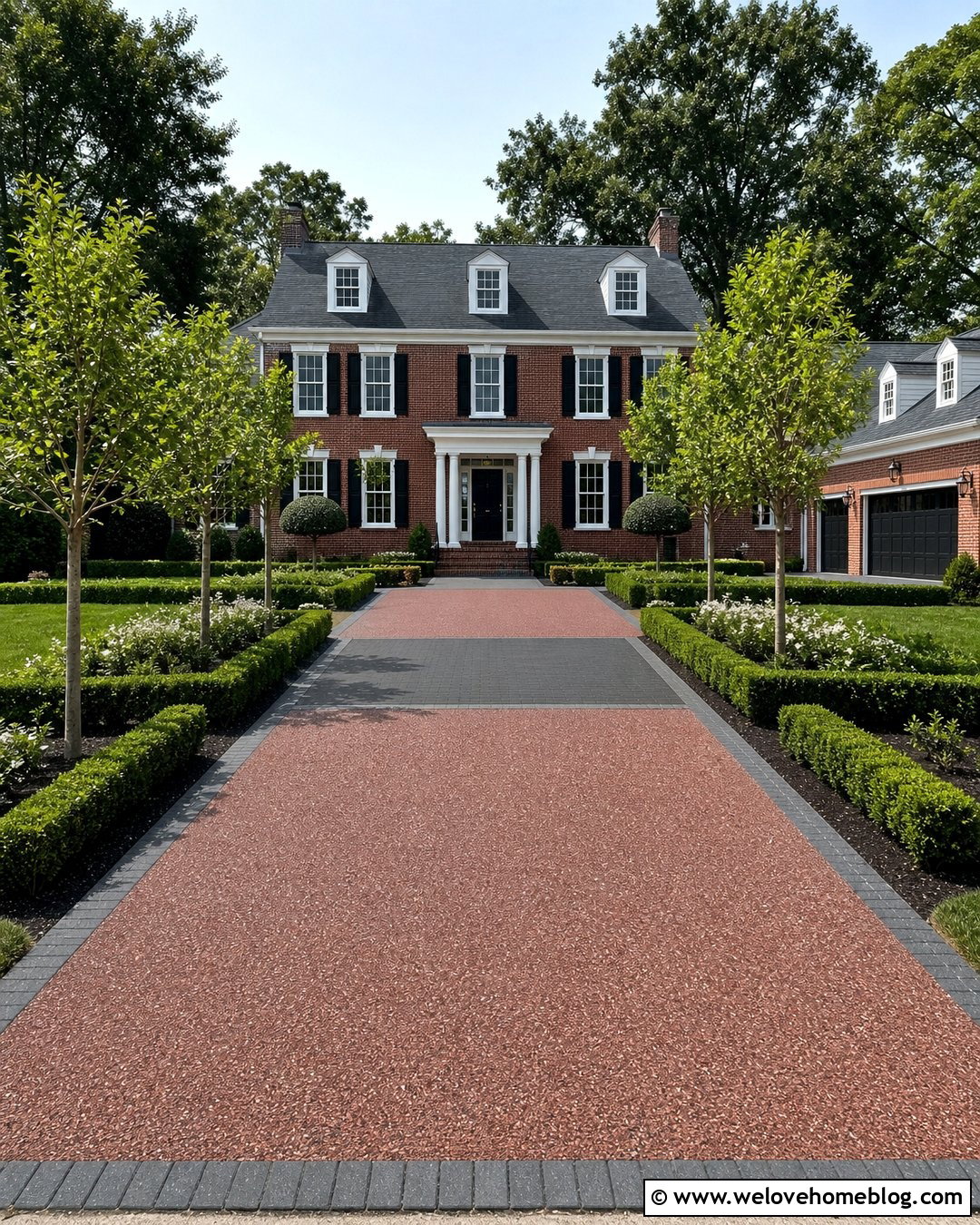
A muted red resin-bound gravel surface can complement a colonial house when the shade is chosen carefully. Look for a blended finish containing brick red, brown, charcoal, and small neutral stones instead of a bright solid red. Use a straight driveway and border it with charcoal brick pavers to prevent the surface from blending completely into the facade. Near the garage, a rectangular paver apron can provide an attractive transition. Symmetrical boxwood beds, small ornamental trees, and a centered walkway reinforce the balanced architecture. Black shutters, lantern-style fixtures, and dark garage hardware connect naturally with the border. This complete scheme respects the home’s traditional character while giving the driveway a more uniform and updated finish than loose red stone.
17. Brown Resin Driveway For A Woodland Home
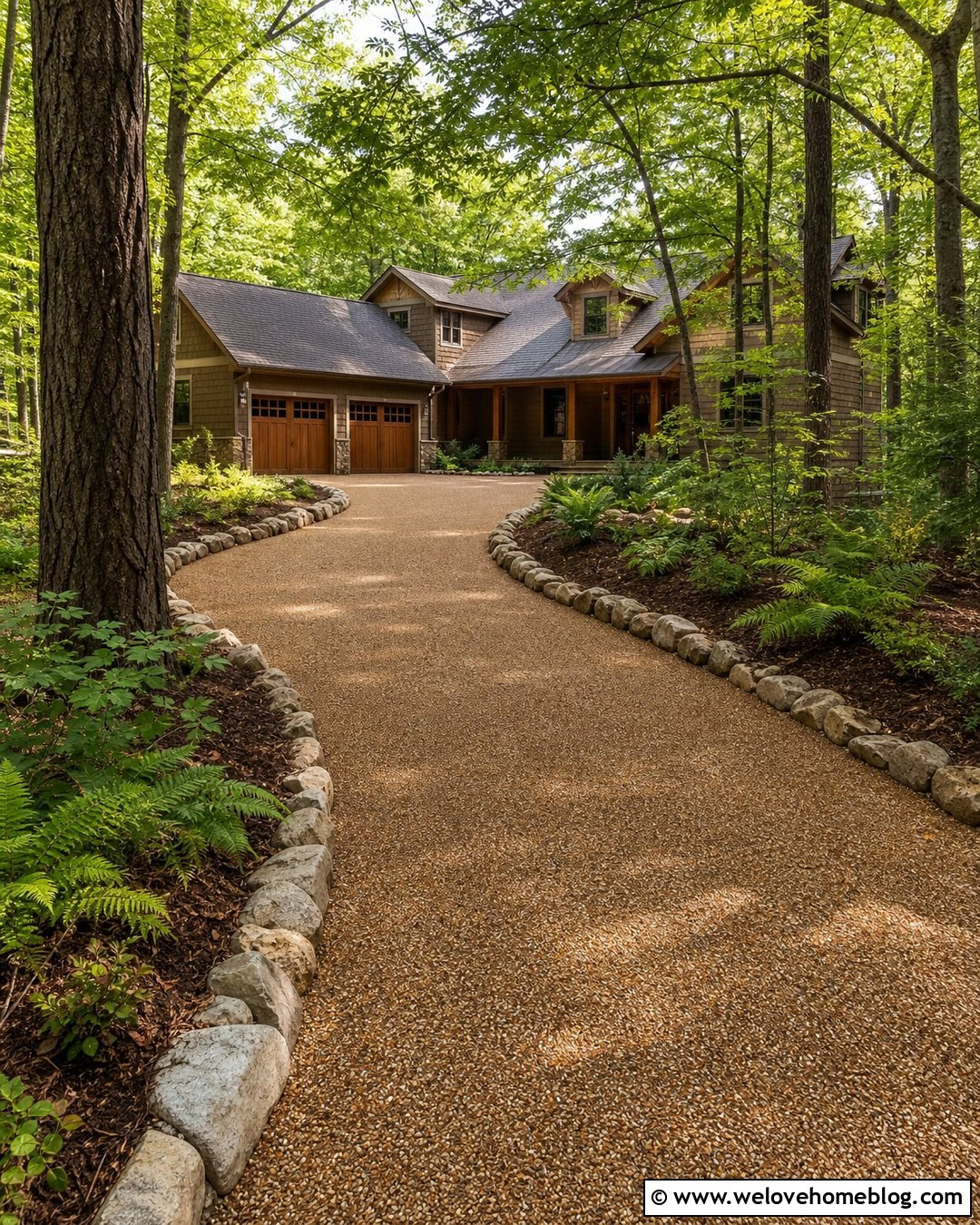
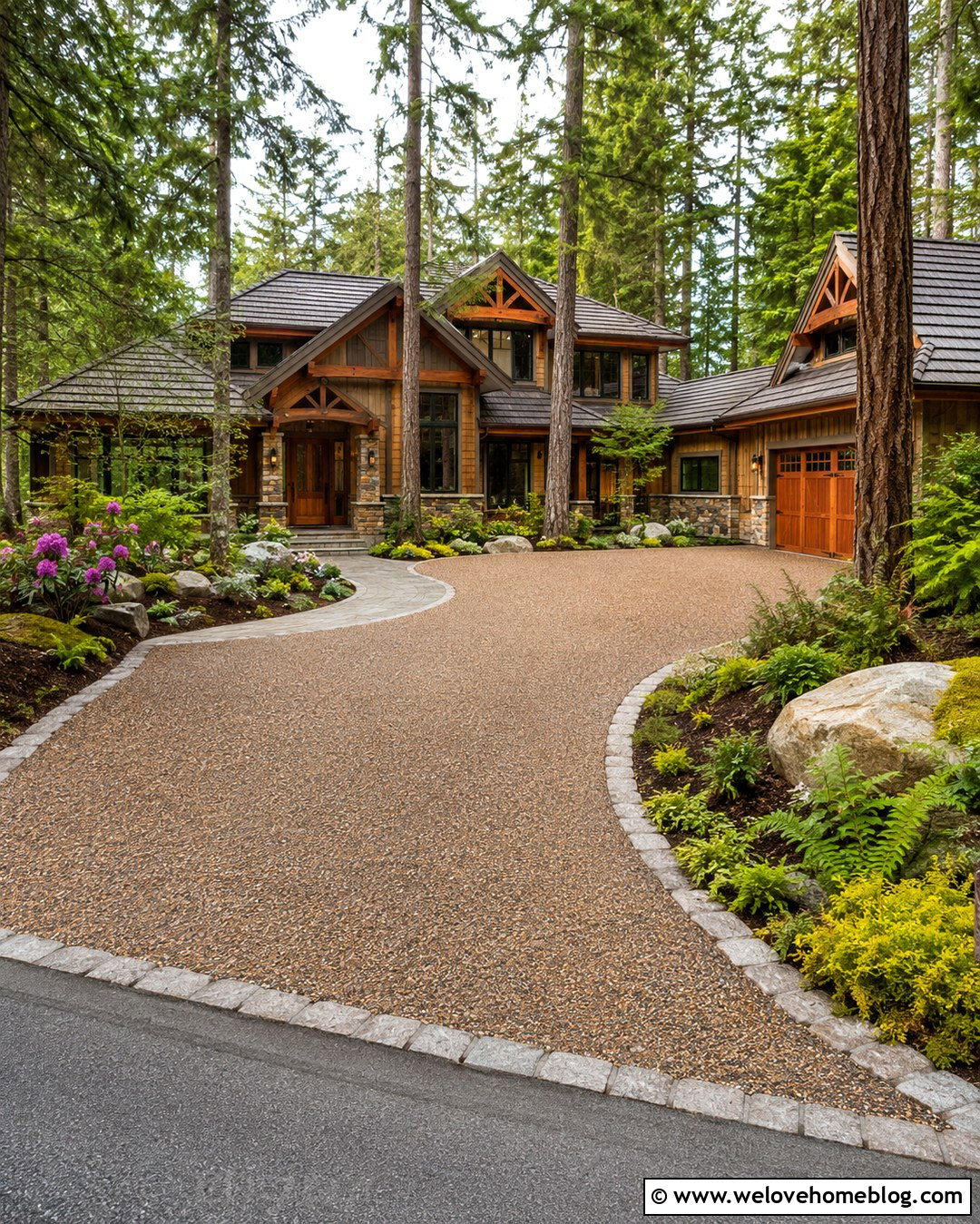
Earthy brown resin-bound gravel can settle comfortably into a wooded property surrounded by mature trees. Choose a mixed aggregate containing chestnut, bronze, tan, and charcoal tones so fallen leaves and natural debris are less visually disruptive. A curved layout should move around established trees rather than forcing a rigid line through the landscape. Use rugged stone edging and broad mulched beds filled with ferns, native shrubs, and shade-tolerant ground covers. Keep planting low near the road and along bends to maintain clear views. Warm wood garage doors or cedar siding will repeat the aggregate’s natural tones. The final result should feel integrated with the site, combining a defined vehicle surface with the softer, layered appearance expected around a craftsman or woodland house.
18. Cream Resin Driveway With Limestone Details
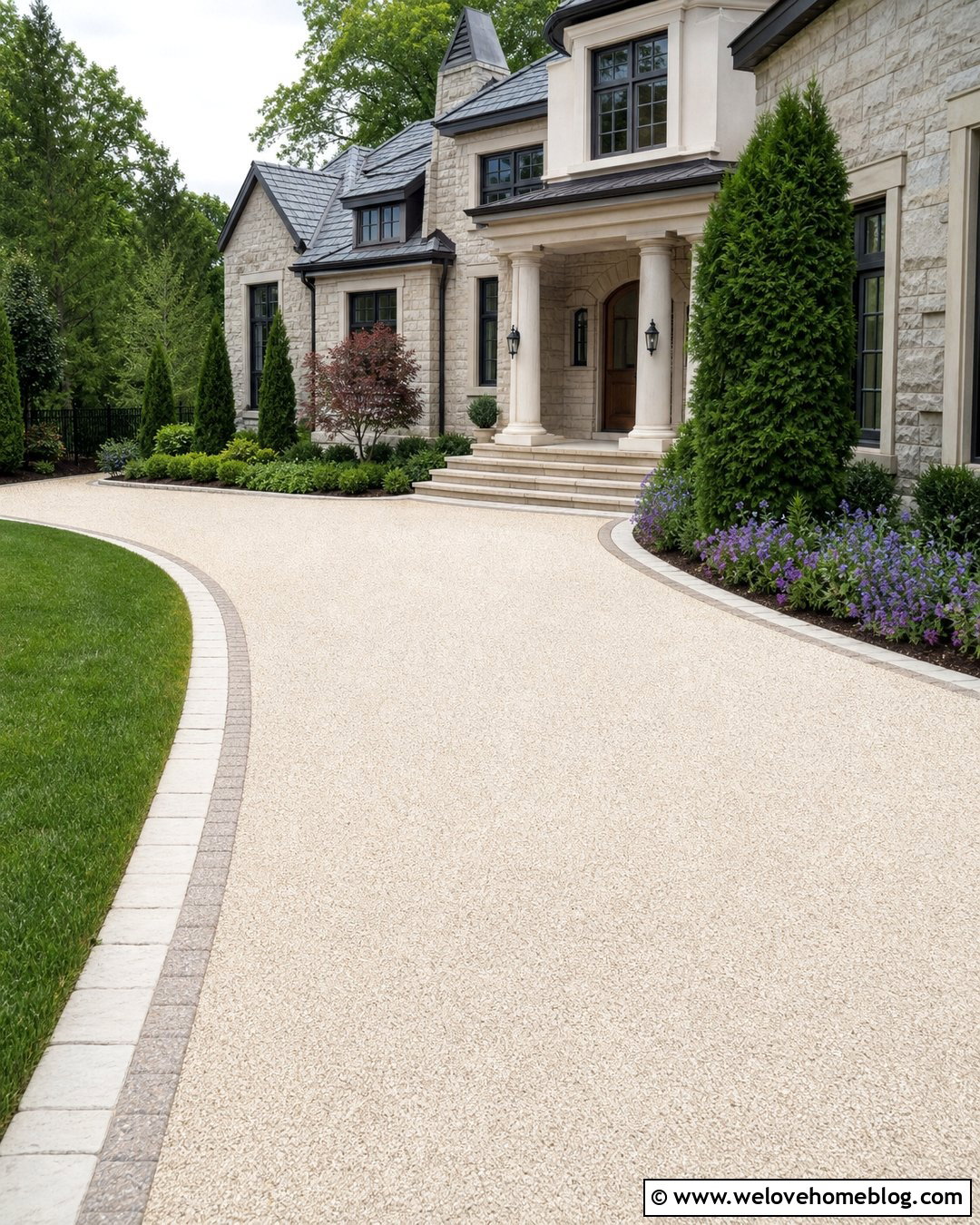
Cream resin-bound gravel can brighten a shaded frontage and create an elegant setting for a stone or stucco house. Border the driveway with pale limestone setts, but add a thin taupe resin line inside the stone to prevent the design from appearing washed out. A broad, gently curved layout works well for an upscale traditional property. Continue limestone through the front steps, retaining walls, or walkway so the materials feel connected. Use deep green evergreens and purple or blue flowers to provide contrast against the light hardscape. Avoid placing very white decorative stone directly beside the resin, as a range of soft neutrals generally creates a more layered look. Physical samples should be viewed in sun, shade, and wet conditions before making a final color decision.
19. Terracotta Resin Driveway With Mediterranean Planting
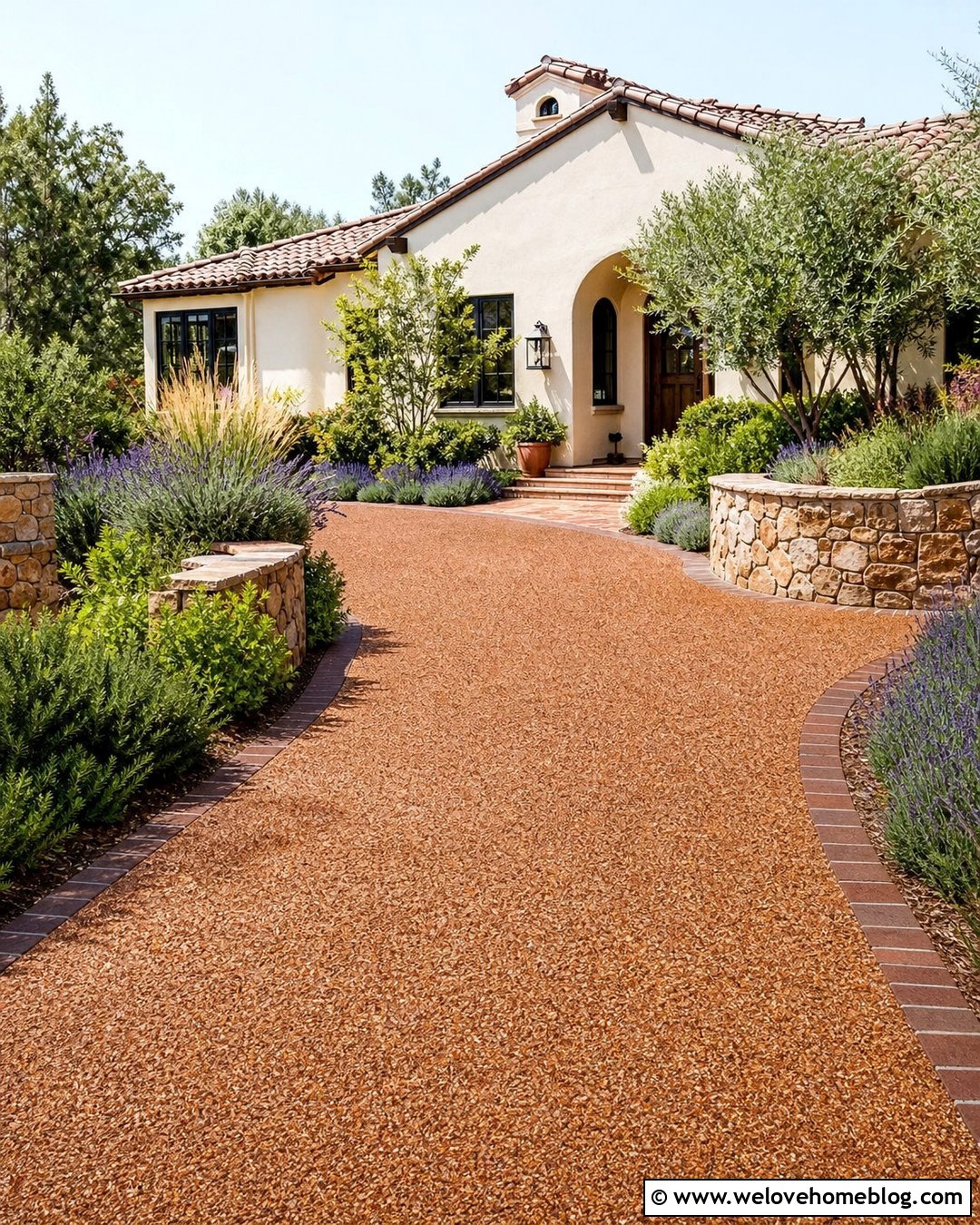
Terracotta-toned resin-bound gravel creates a warm entrance for a stucco, Spanish revival, or Mediterranean-influenced home. Combine rust, muted red, tan, and brown aggregate rather than choosing a flat orange surface. A curved driveway with a wide approach suits the relaxed architecture and can be framed by dark clay brick pavers. Use drought-conscious planting such as lavender, rosemary, upright grasses, and sculptural evergreen shrubs where locally appropriate. Natural stone walls and large plain planters can reinforce the warm palette without making the yard feel themed. Keep the walkway simple and connect it to the driveway with a small clay-paver landing. Against cream stucco, dark wood garage doors, and a tile roof, the resin becomes part of a balanced and welcoming exterior composition.

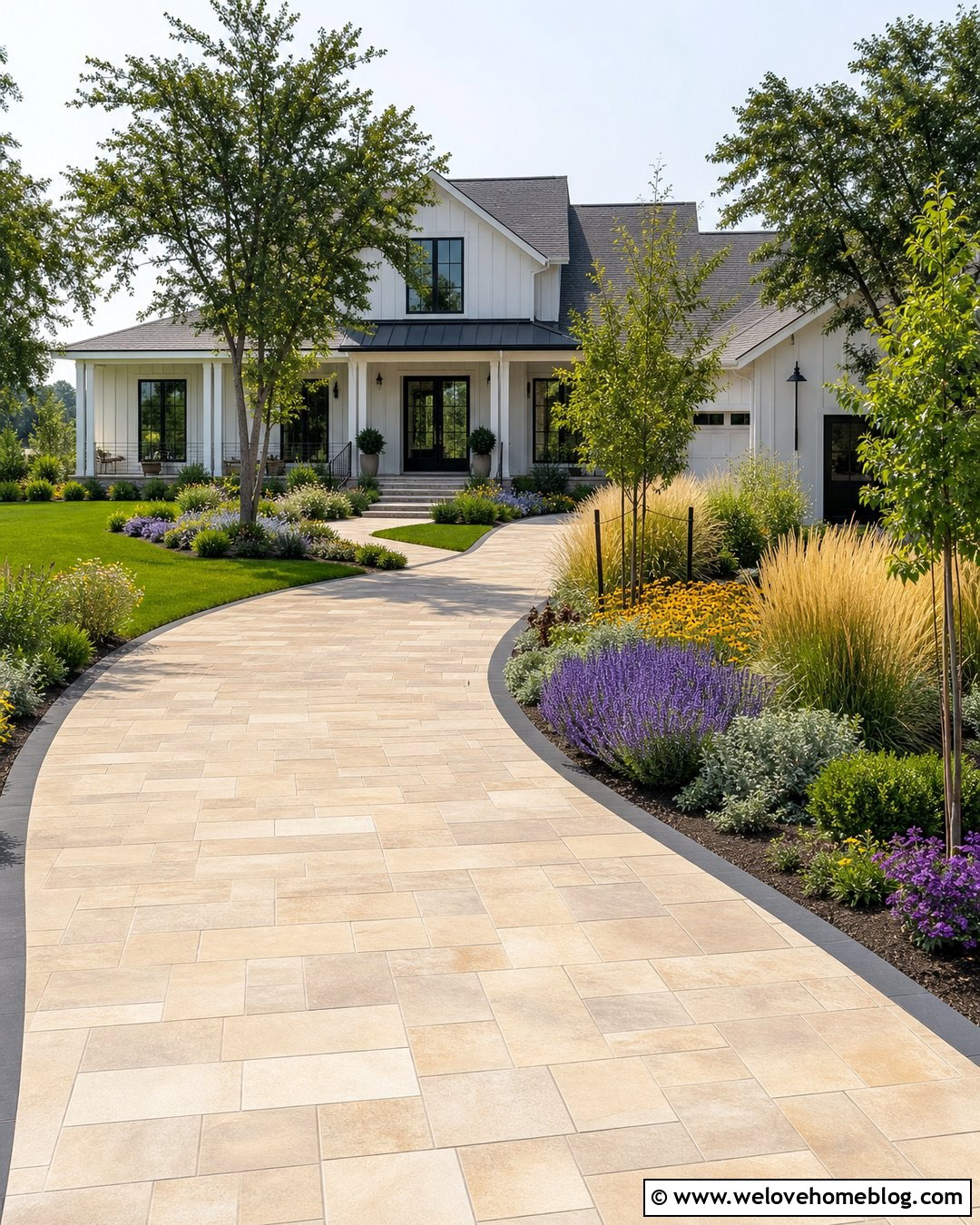


20. Blue Gray Resin Driveway For A Cape Cod House
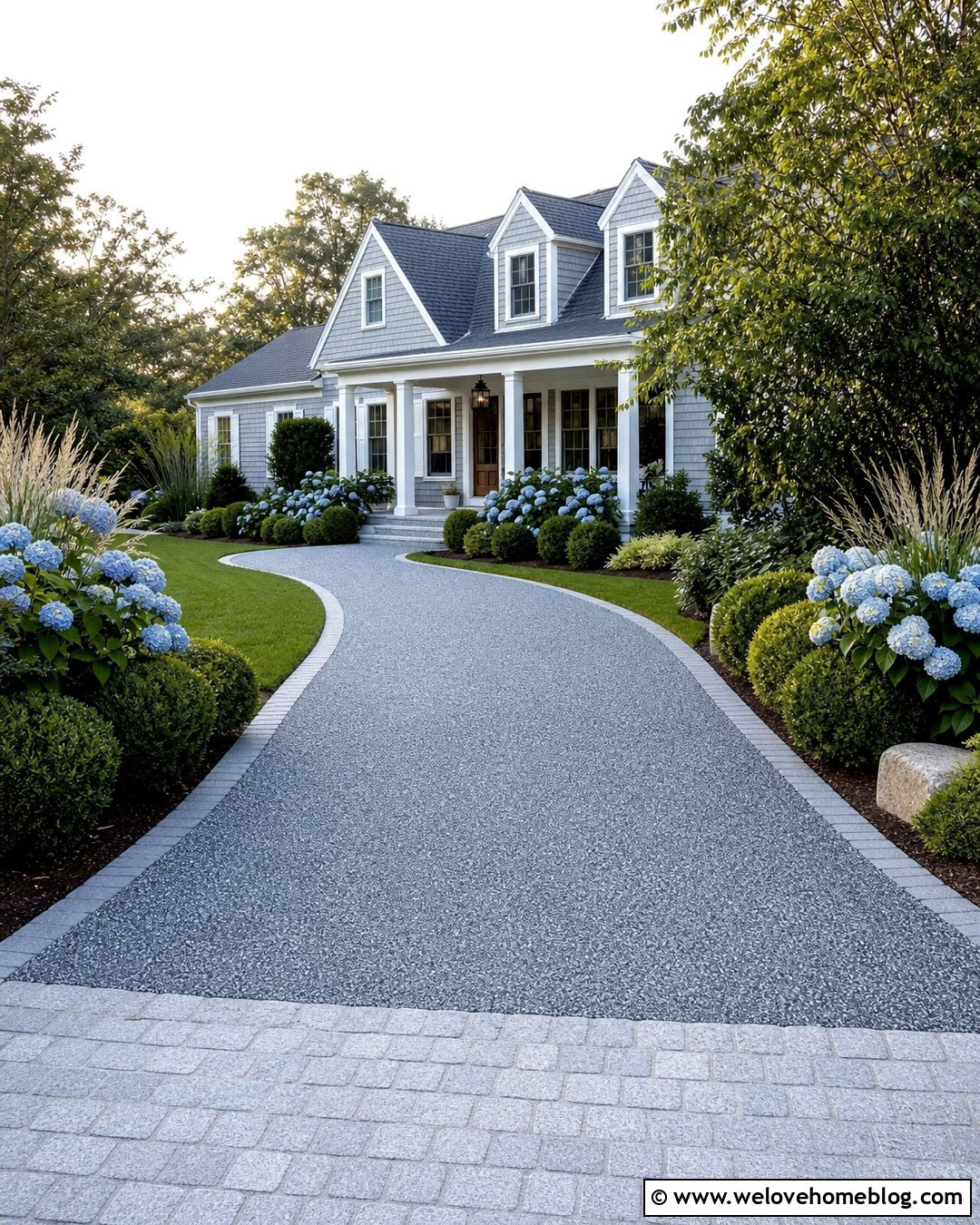
Blue-gray resin-bound gravel is an attractive partner for white trim, weathered siding, and a classic Cape Cod facade. Use a straight or gently curved driveway outlined by medium-gray granite setts. Near the street, add a shallow granite apron that protects and visually strengthens the entrance. A matching resin walkway can lead to the porch, separated from the vehicle area by a narrow planting bed. Hydrangeas, clipped evergreens, ornamental grasses, and a healthy lawn bring color without overpowering the cool surface. Choose an aggregate mixture with silver and charcoal flecks so it has natural variation at close range. The finished design should feel crisp but not stark, balancing traditional architecture with a smooth, well-organized driveway and understated coastal landscaping.
21. Geometric Resin Driveway With Black And Gold Sections
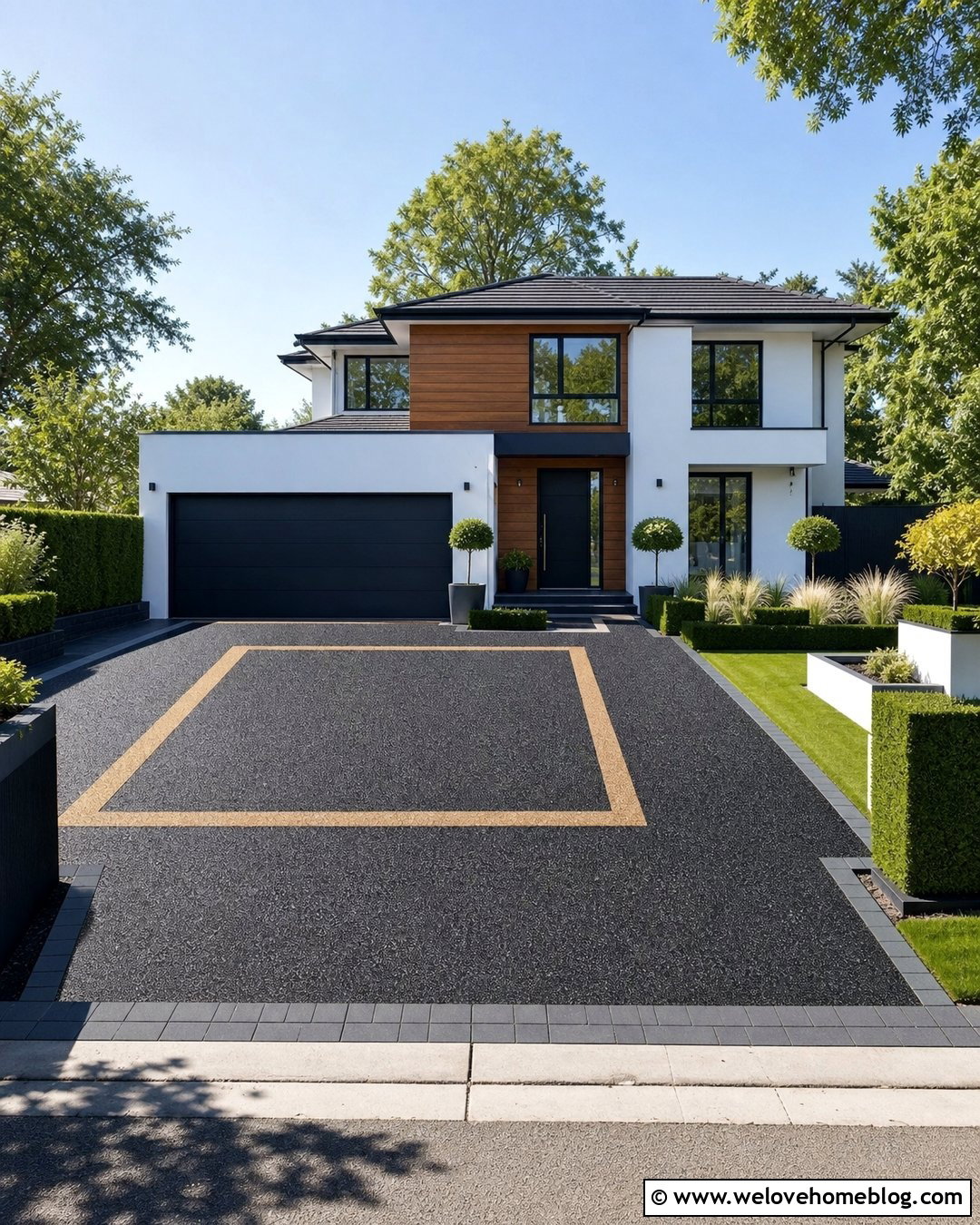
Geometric detailing can turn a broad resin-bound driveway into a focal feature, but restraint keeps the design suitable for a home. Use a charcoal main surface with a warm gold rectangular inset near the center or garage approach. Slim metal profiles or black paver lines can define the shapes cleanly. Align every section with the garage doors, walkway, or facade so the pattern relates to the architecture. Keep the outer driveway rectangular and surround it with simple lawn panels, clipped hedges, and a few architectural grasses. Avoid combining triangles, circles, and multiple border colors in the same design. One strong geometric arrangement provides enough interest. This complete look works best beside a modern house with flat planes, dark windows, and warm wood accents.
22. Resin Driveway With Herringbone Brick Apron
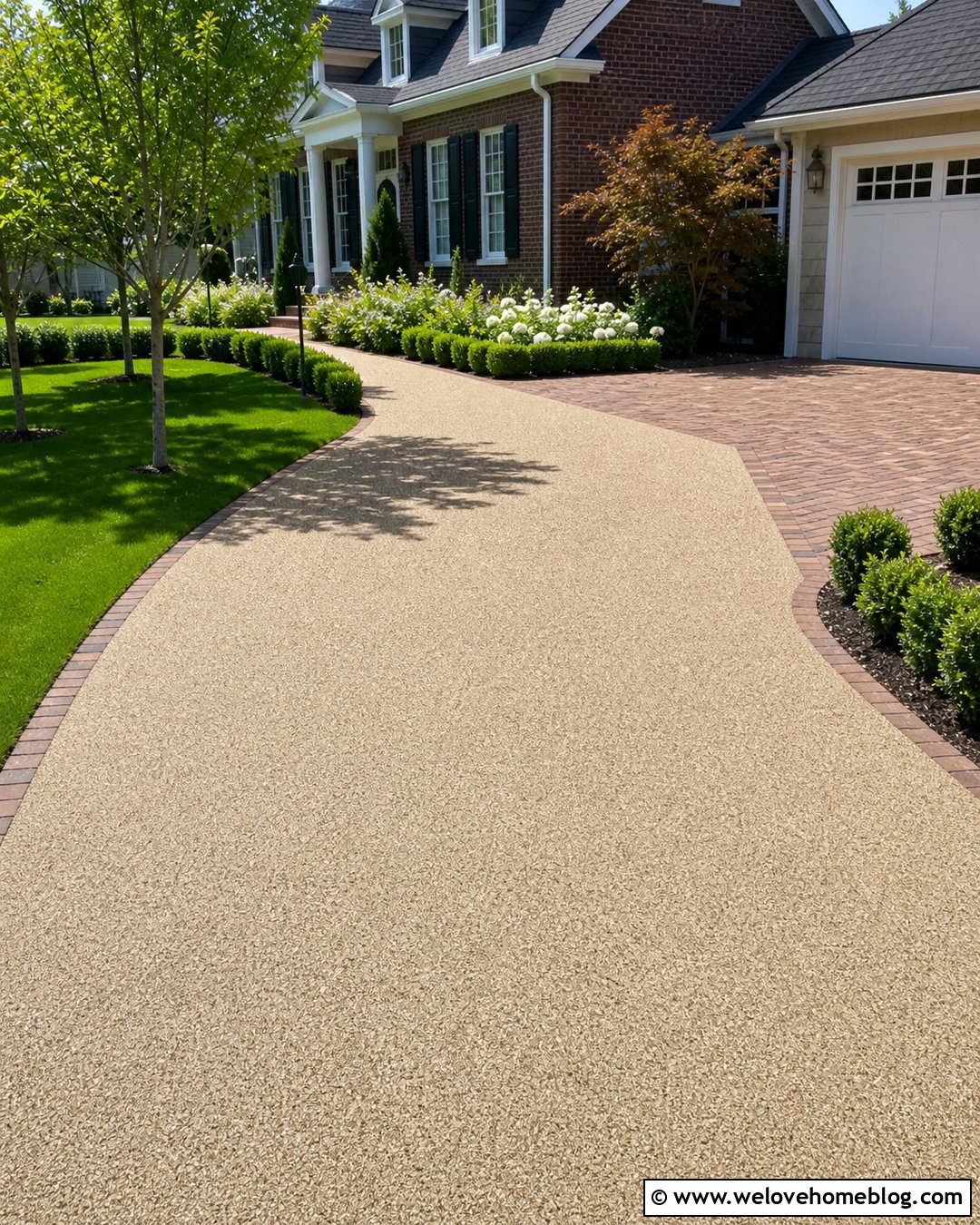
A herringbone brick apron adds traditional detail exactly where a resin-bound driveway meets the garage or street. Fill the main driveway with warm buff aggregate, then use red and brown clay brick pavers across the final few feet near the garage doors. A matching single-brick border can continue around the resin surface, visually connecting the apron to the complete layout. Choose a straight or gently widening shape to keep the combination orderly. Plant boxwood, white roses, and small ornamental trees around the edges for a classic garden effect. This pairing is particularly attractive beside colonial, craftsman, and cottage architecture. The smooth resin field prevents the brick pattern from becoming overwhelming, while the masonry provides color, structure, and a familiar residential character.
23. Resin Driveway With Cobblestone Entrance Apron
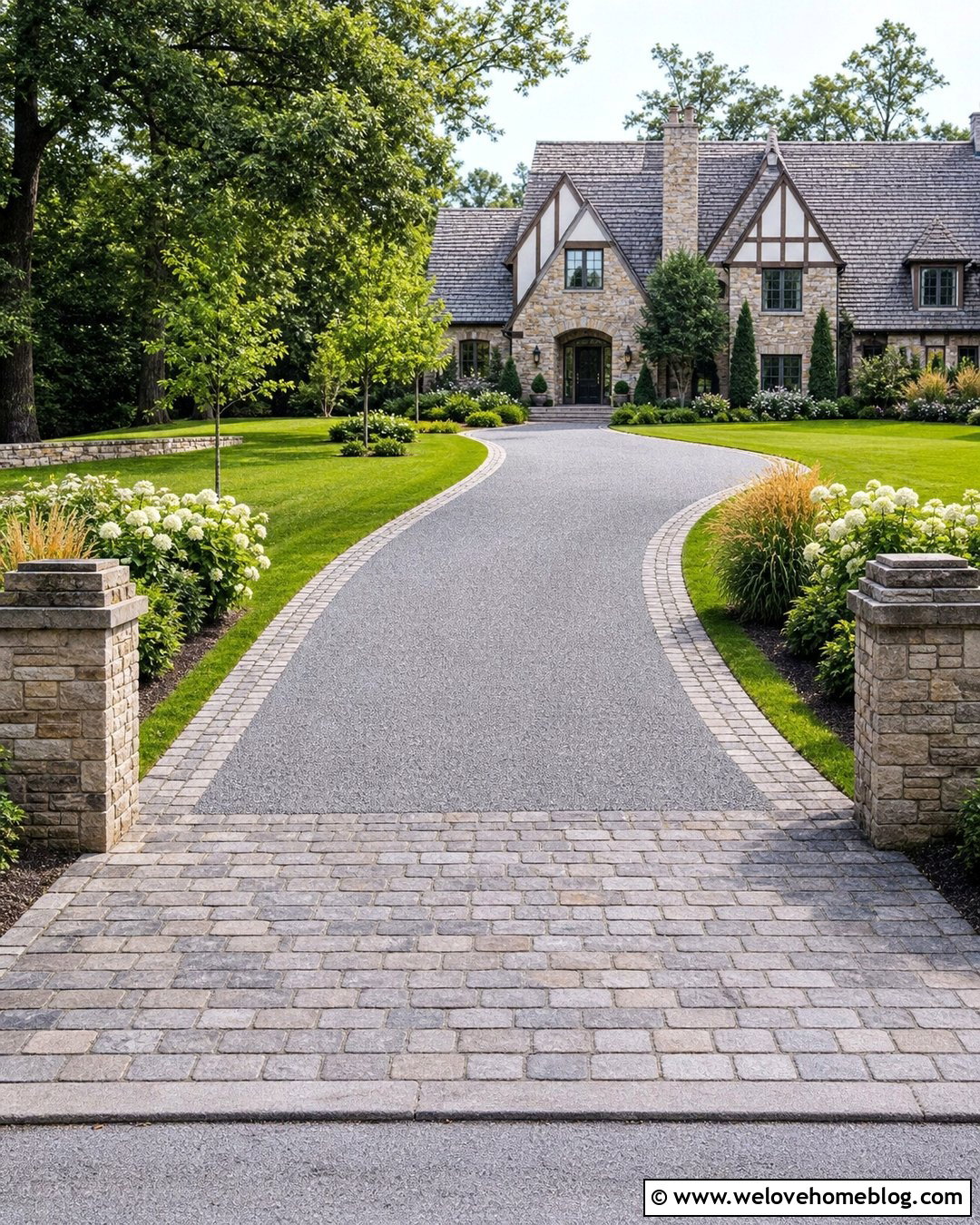
Cobblestone at the curb gives a resin-bound driveway a durable-looking and highly defined entrance. Use medium-gray resin across a long, slightly curved approach, then place a broad apron of gray and brown cobblestones where the driveway meets the street. Repeat one or two rows of cobblestone around the perimeter to make the transition feel intentional. Low stone walls or simple masonry pillars can frame the opening without blocking sightlines. Along the driveway, combine lawn with informal beds of grasses, flowering shrubs, and small trees. The varied cobblestone texture provides contrast against the consistent resin surface. This complete design works especially well for stone-front, Tudor, craftsman, and country homes where a plain modern border might appear disconnected from the architecture.
24. Resin Driveway With Paver Parking Bays
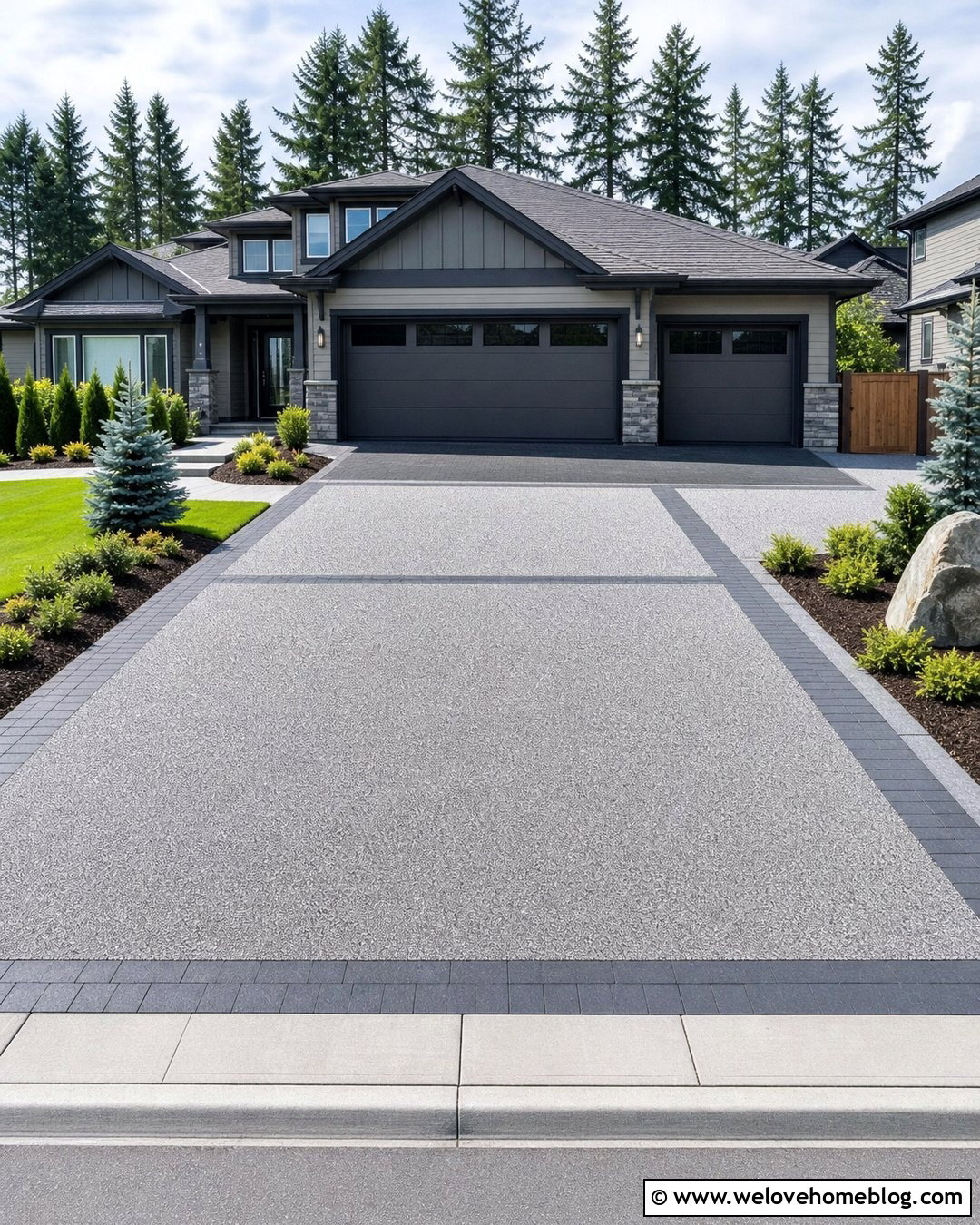
Defined parking bays can organize a large driveway without making it look like a commercial lot. Use silver-gray resin-bound gravel across the complete surface, then outline each residential parking space with a single row of charcoal pavers. Rather than adding bright markings, allow the subtle paver lines to create structure. A darker block apron near the garage can repeat the same material. Place planting islands at the outer corners, where they will not interfere with doors or turning movements. Low evergreens and ornamental grasses keep these beds tidy throughout the year. This approach suits a multi-car household or a wide suburban property. Careful dimensions are important, so plan the layout around actual vehicle sizes, garage access, walkways, and the space required for comfortable movement.
25. Resin Driveway With Matching Front Walkway
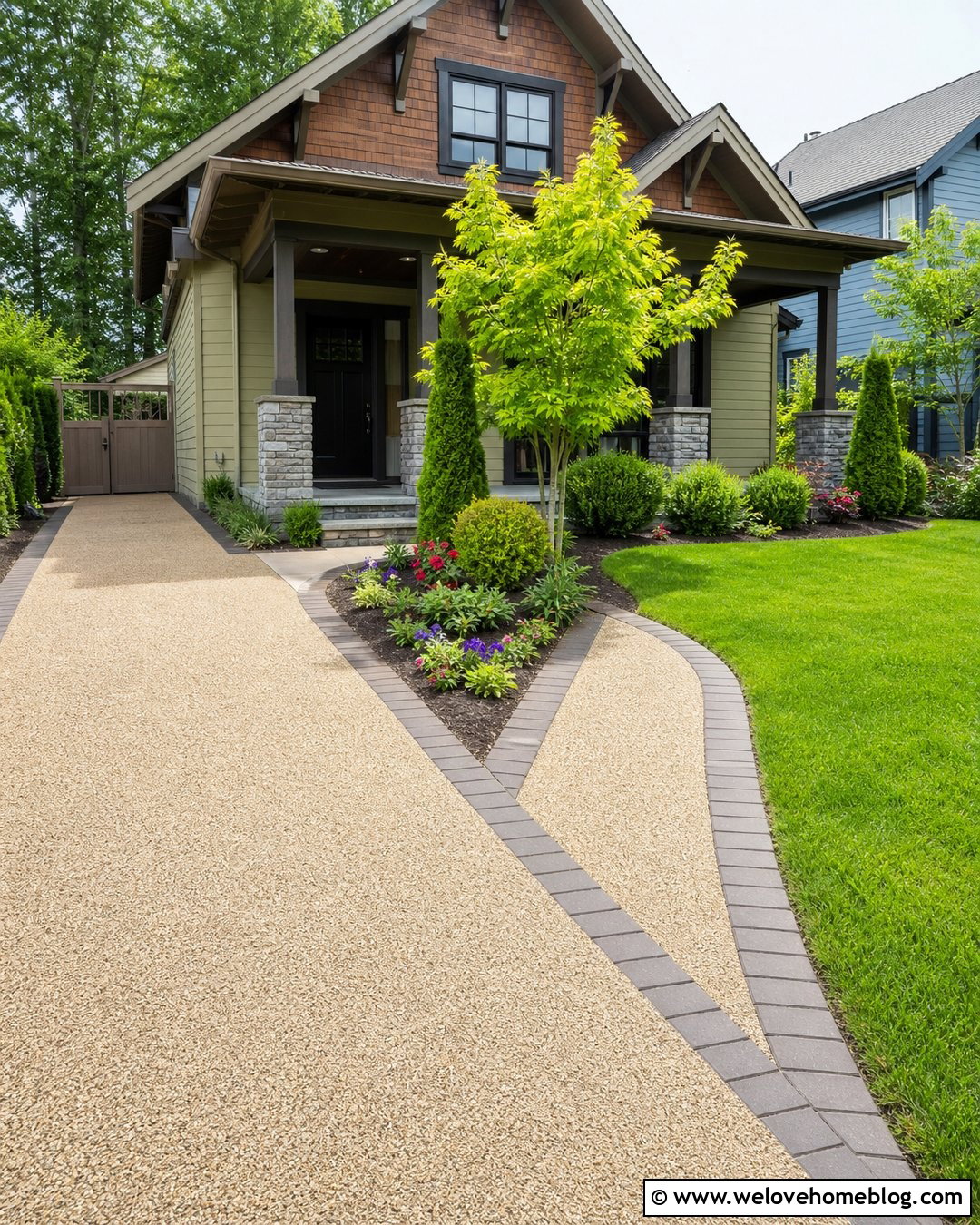
Using the same resin-bound aggregate on the driveway and front walkway can make a modest property feel more cohesive. Choose a warm silver or beige blend that suits both vehicle and pedestrian areas. Keep the driveway straight, then curve the walkway gently toward the front porch. A continuous dark paver border can outline both surfaces and clearly show where the path branches away. Between them, create a triangular planting bed with one compact ornamental tree, evergreen structure, and seasonal flowers. The shared material connects the garage, parking area, and main entrance, while the landscaped separation prevents everything from resembling one large paved slab. This complete design is useful for ranch, craftsman, and suburban homes with a front door positioned away from the garage.
26. Resin Driveway With Grass Center Strip
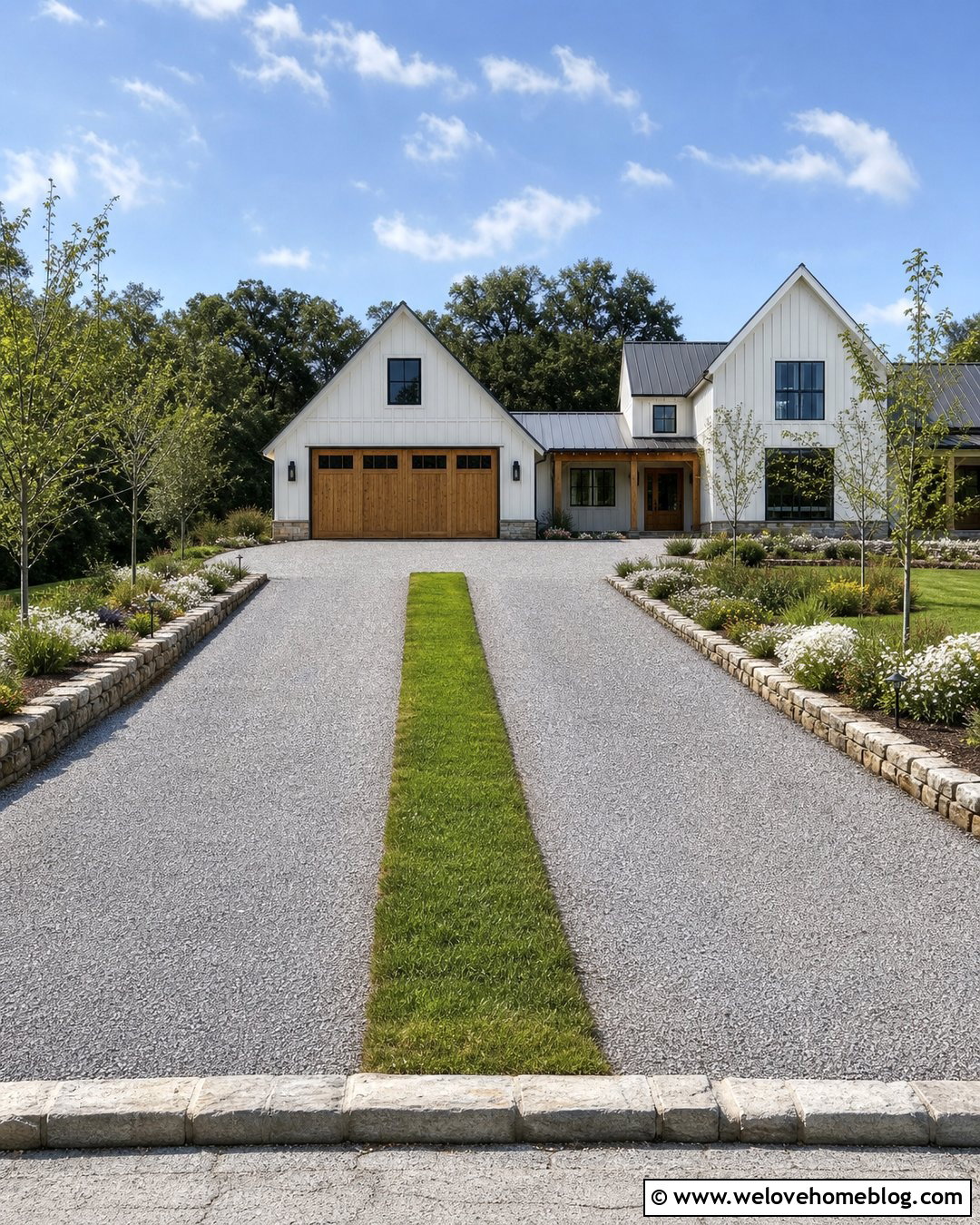
A grass center strip can soften a wide resin-bound driveway and reduce the visual weight of the hardscape. Divide the surface into two broad wheel lanes using a durable silver-gray aggregate, then install a generous central band of lawn or low ground cover. The strip should be designed around vehicle widths and turning needs rather than treated as a narrow decorative seam. Frame its ends with stone or pavers so the soil remains contained. Continue resin across the garage apron to provide one uninterrupted maneuvering area. Low planting beds along the outer edges can repeat the green center without making maintenance difficult. This design is most appropriate for a straight private driveway where regular traffic patterns are predictable and the center planting can receive suitable light and care.
27. Resin Driveway With A Rain Garden Border
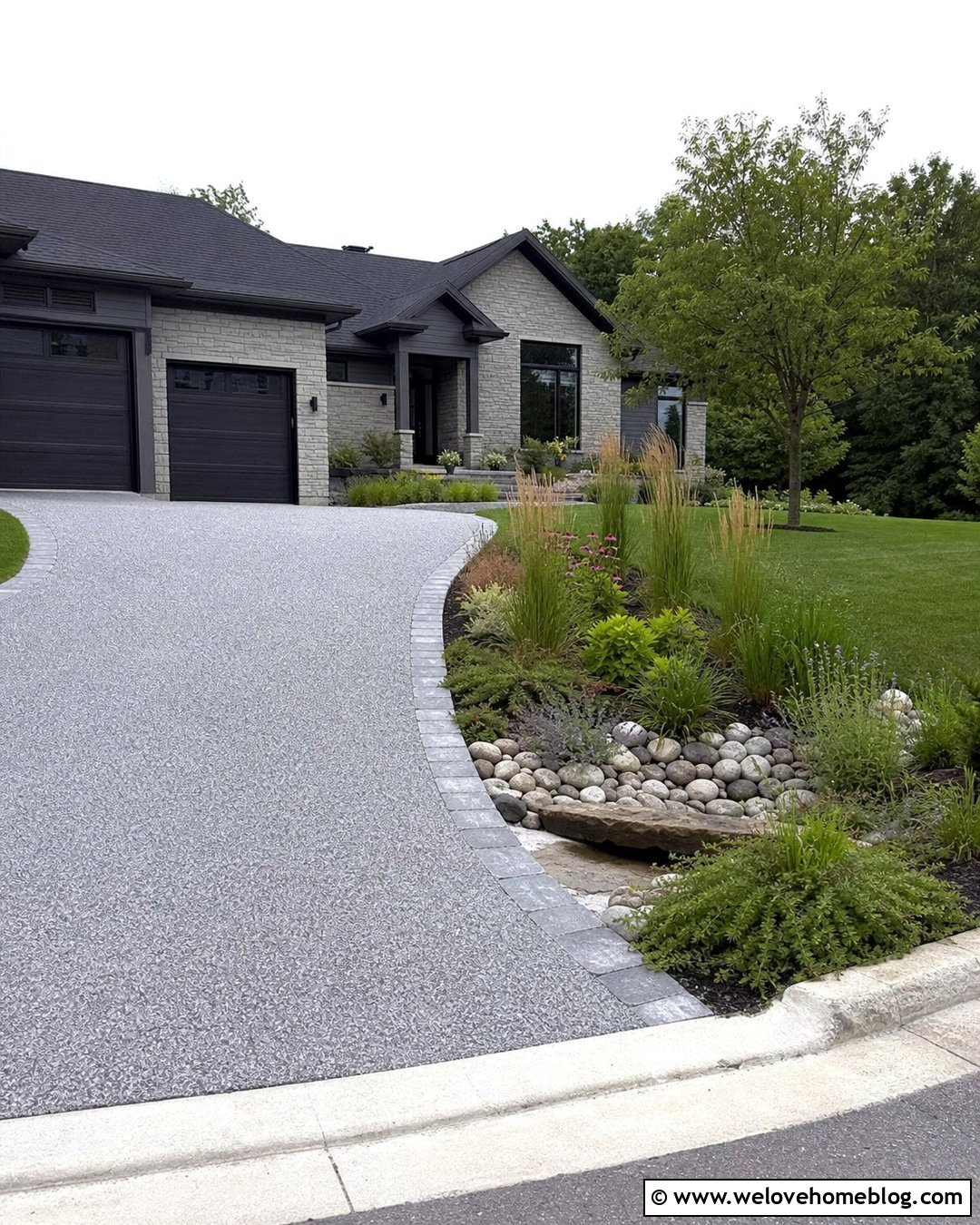
A planted rain garden can turn one edge of a resin-bound driveway into a useful landscape feature. Use a medium-gray aggregate in a straight or gently sloped layout and frame the opposite side with granite setts. Along the lower landscape edge, create a shallow planted basin sized and engineered for the property. Fill it with moisture-tolerant grasses, flowering perennials, and compact shrubs suited to the local climate. A stone overflow area can become an attractive transition between the driveway and planting. Keep the street entrance open and provide a clear walkway to the house. The resin surface, drainage plan, grading, and rain garden should be designed together by qualified professionals. When coordinated correctly, the complete frontage can appear lush, intentional, and less dominated by paving.
28. Resin Driveway With Lavender Borders
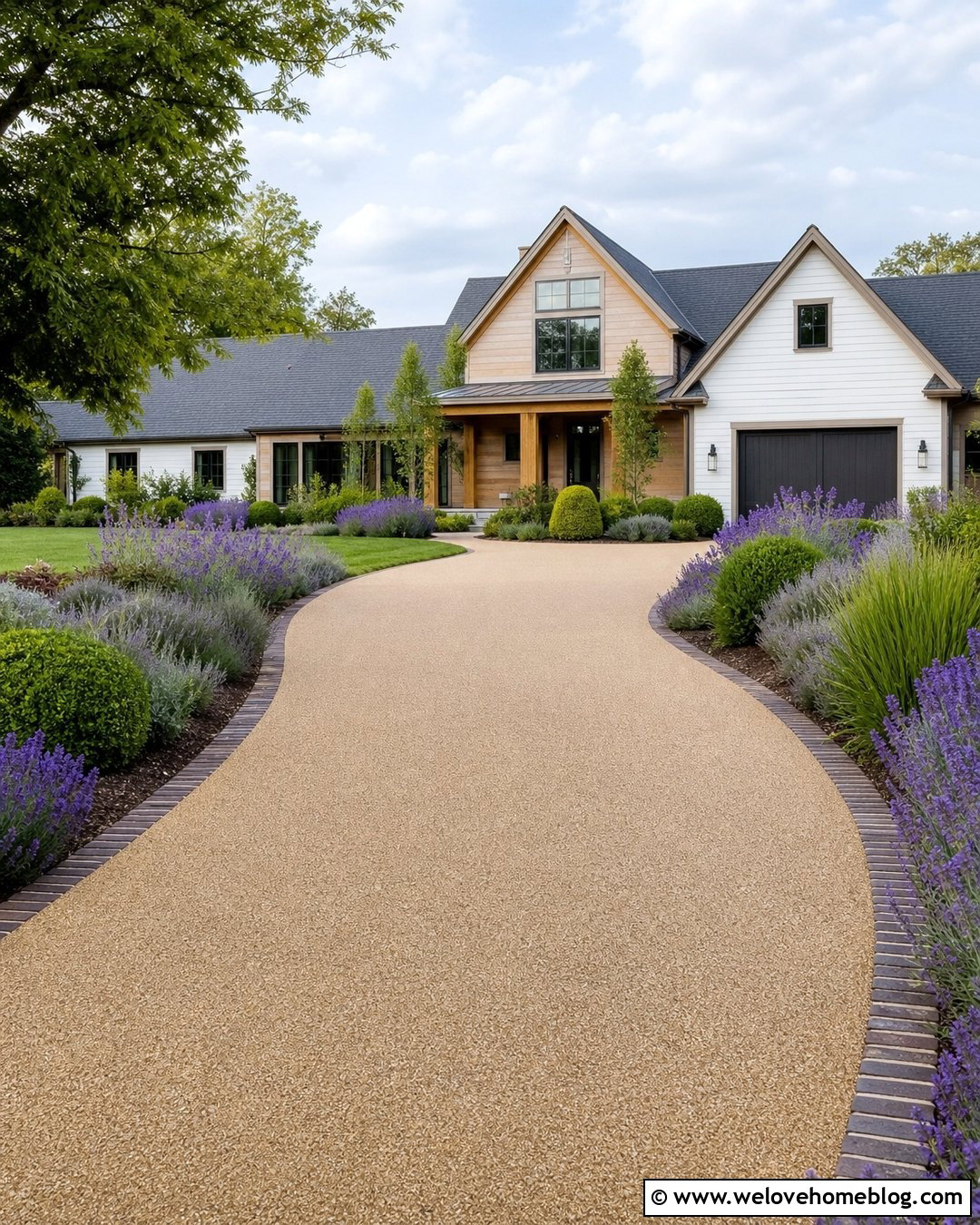
Lavender borders bring fragrance, color, and a relaxed garden character to a warm beige resin-bound driveway. A gently curved layout provides enough planting depth for repeated groups along both sides. Use weathered brick or light natural stone edging to keep soil away from the resin and give the plants a tidy framework. Mix lavender with catmint, compact grasses, and evergreen mounds so the beds retain structure outside the main flowering season. Leave additional clearance near the street and parking areas where plants could be damaged by tires or snow. Golden, tan, and cream aggregate works particularly well with purple flowers and gray-green foliage. This complete look suits cottages, modern farmhouses, and casual country homes with light siding, brick accents, or natural wood details.
29. Resin Driveway With Ornamental Grass Landscaping
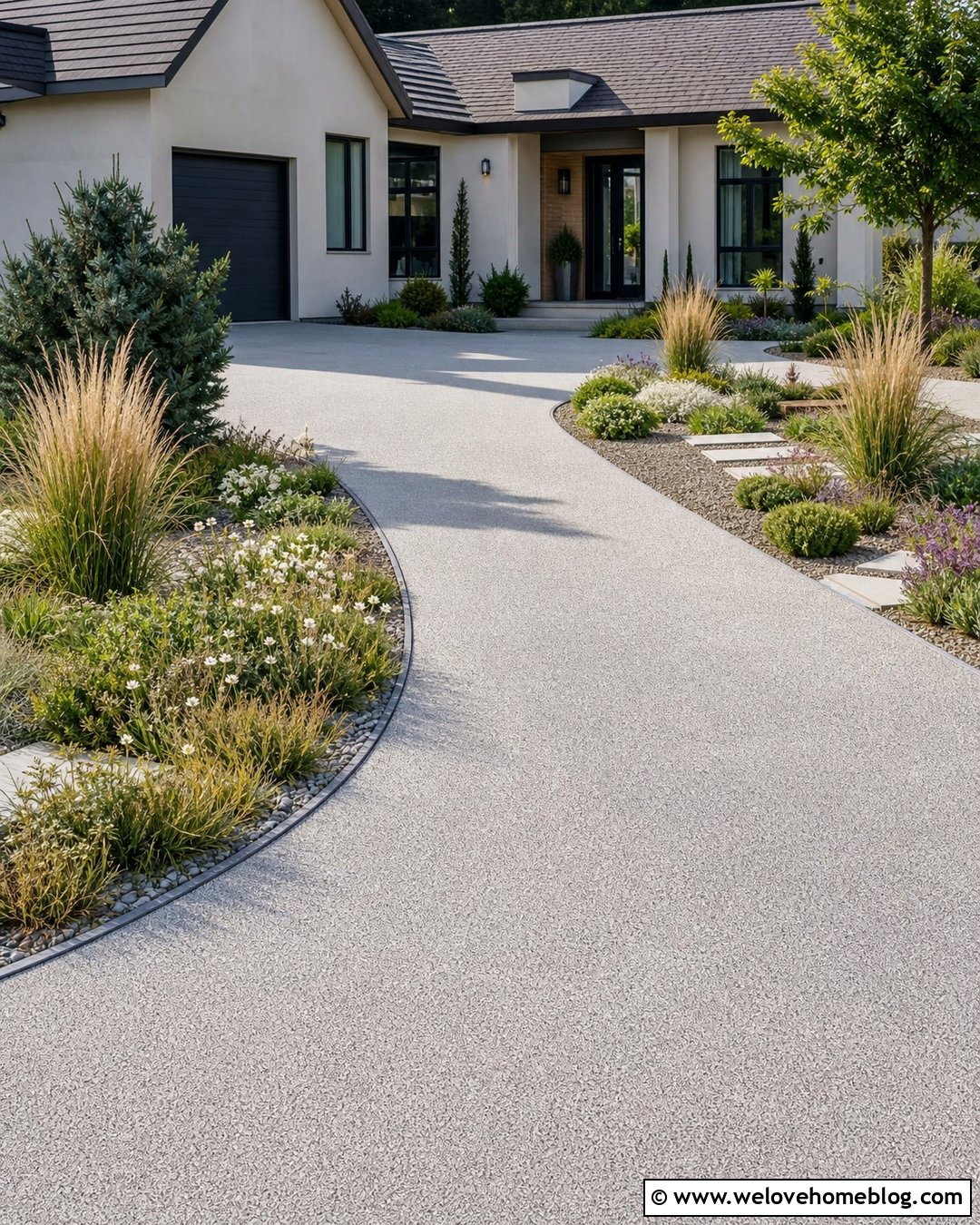
Fine ornamental grasses can soften the smooth outline of a contemporary resin-bound driveway. Select a pale gray or charcoal aggregate and use a clean, slightly curved layout leading toward a modern home. Narrow steel edging provides a crisp transition into gravel-mulched planting beds. Arrange grasses in repeated groups rather than a dense continuous row, leaving open areas for low evergreens and flowering ground covers. Choose varieties that remain appropriately sized and will not lean across the driving surface. Large concrete stepping stones can form the front walk through the planting. The movement and texture of the grasses balance the driveway’s uniform finish, while the limited plant palette maintains a modern appearance. This design looks strongest when the house repeats the same gray, black, and green tones.
30. Resin Driveway With Evergreen Hedge Borders
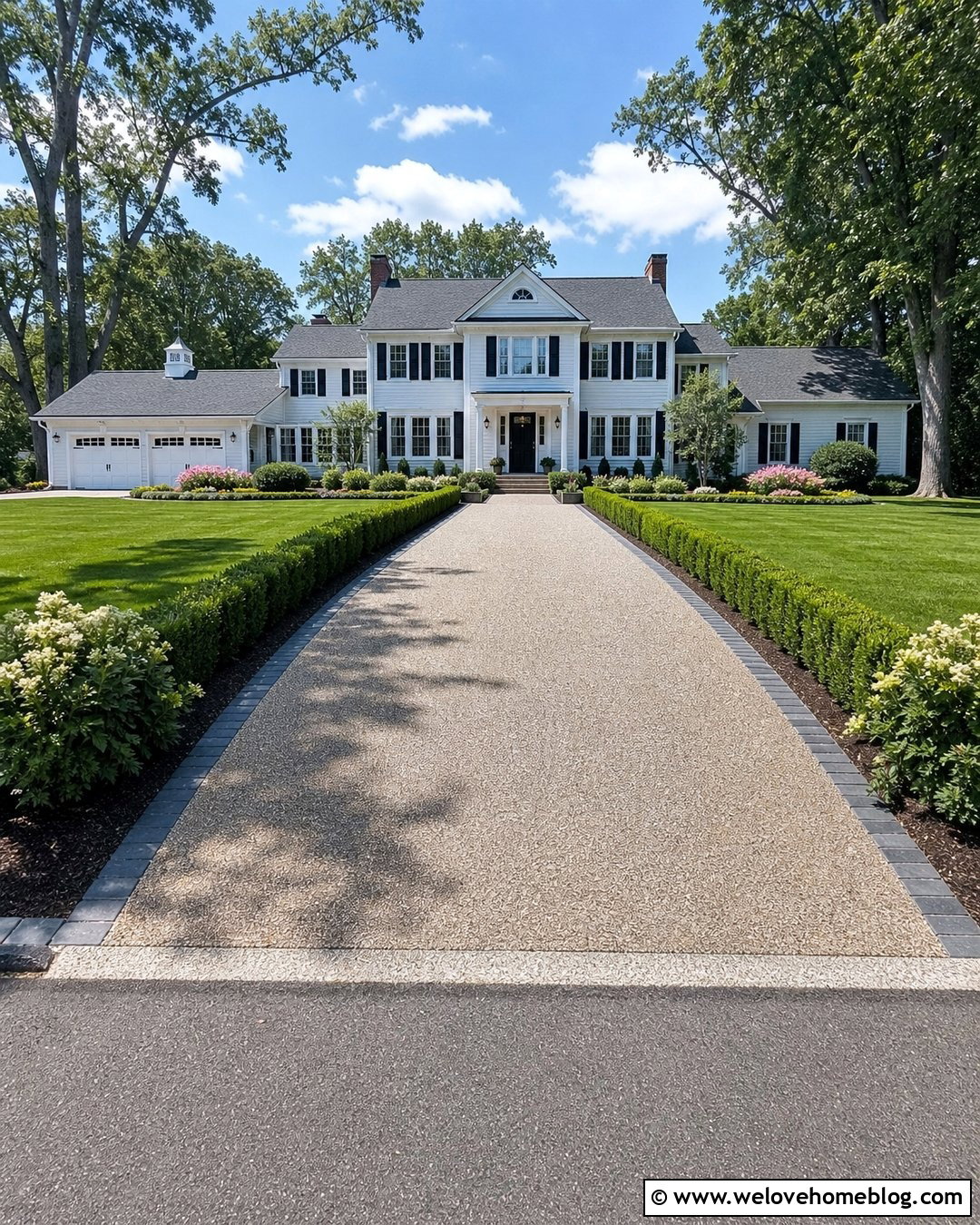
Evergreen hedges can frame a resin-bound driveway and create a strong sense of arrival throughout the year. Use a warm silver aggregate on a straight approach and contain it with charcoal block edging. Plant the hedges behind a narrow maintenance strip so foliage does not immediately spill across the surface. Keep them lower near the street and driveway bends to preserve visibility, then allow slightly more height closer to the house where privacy is helpful. A pair of wider planting beds near the garage can include flowering shrubs for seasonal variation. The formal green lines work well beside colonial, Georgian-inspired, and large traditional homes. Regular trimming will keep the complete design proportional and prevent the landscaping from making the driveway feel like a narrow corridor.
31. Tree Lined Resin Driveway With Stone Borders
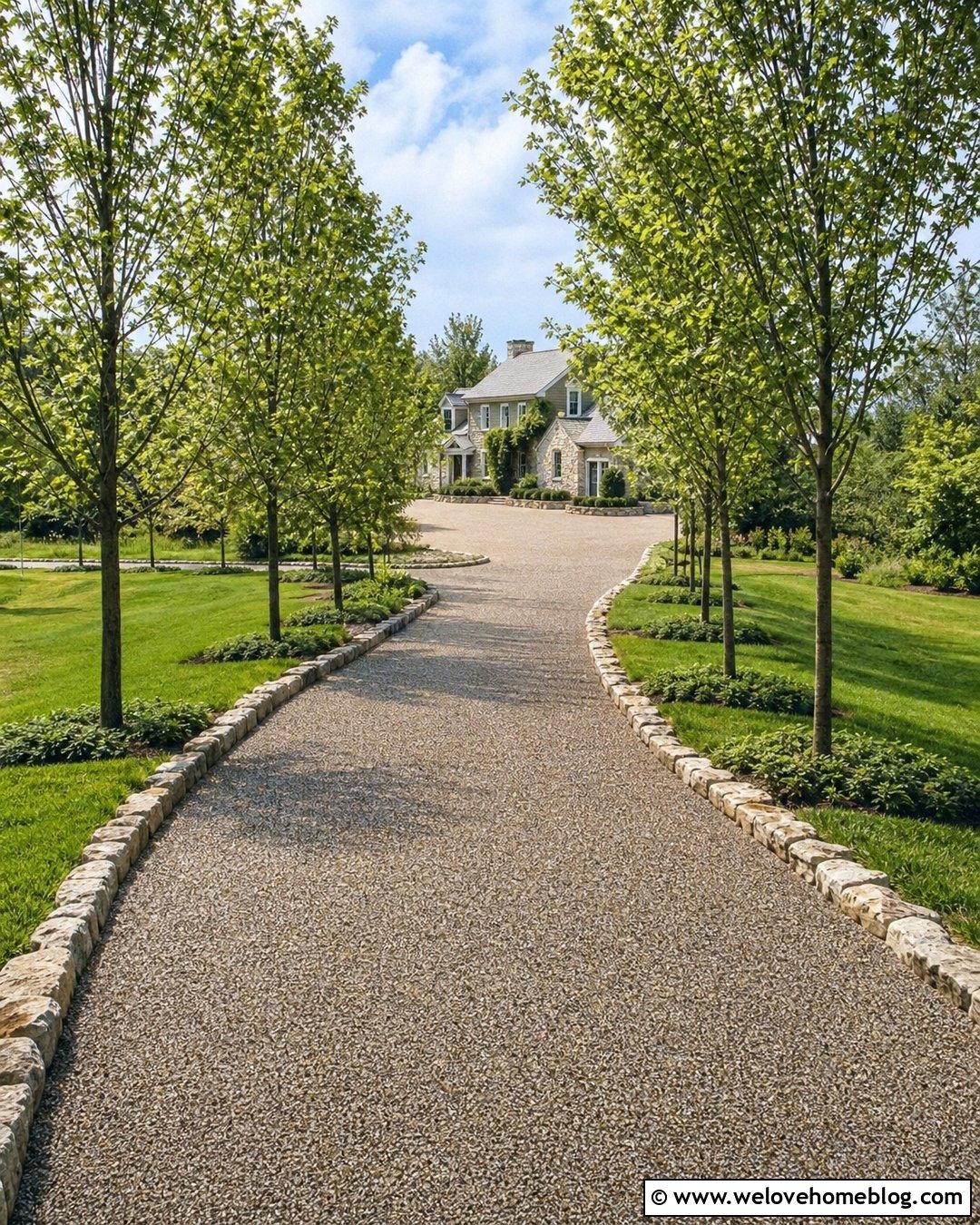
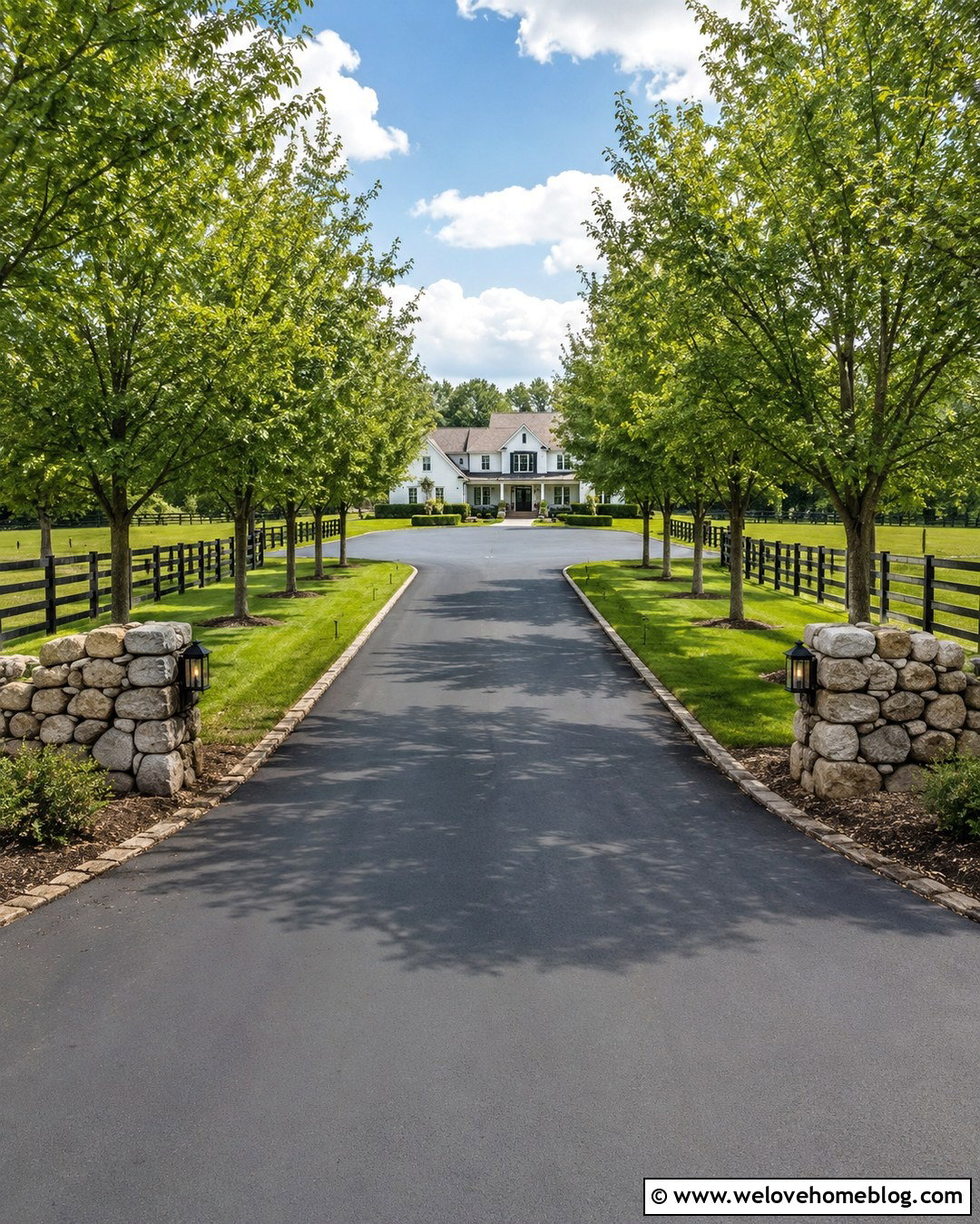
A long resin-bound driveway becomes a memorable approach when small trees are repeated along both sides. Choose a natural brown-gray aggregate and a gentle curve that reveals the house gradually. Low fieldstone edging can separate the surface from broad planting strips filled with grass, ground covers, and evenly spaced trees. Select species with suitable mature size, root behavior, and local climate performance. Place trunks far enough from the driving area to protect both vehicles and plants. At the house, widen the resin into a comfortable parking court and repeat the same stone around nearby walkways. This complete design fits country, farmhouse, and estate-style properties. The consistent aggregate and border unify the route, while the trees provide rhythm, shade, and a clear connection to the wider landscape.
32. Resin Driveway With Low Maintenance Rock Gardens
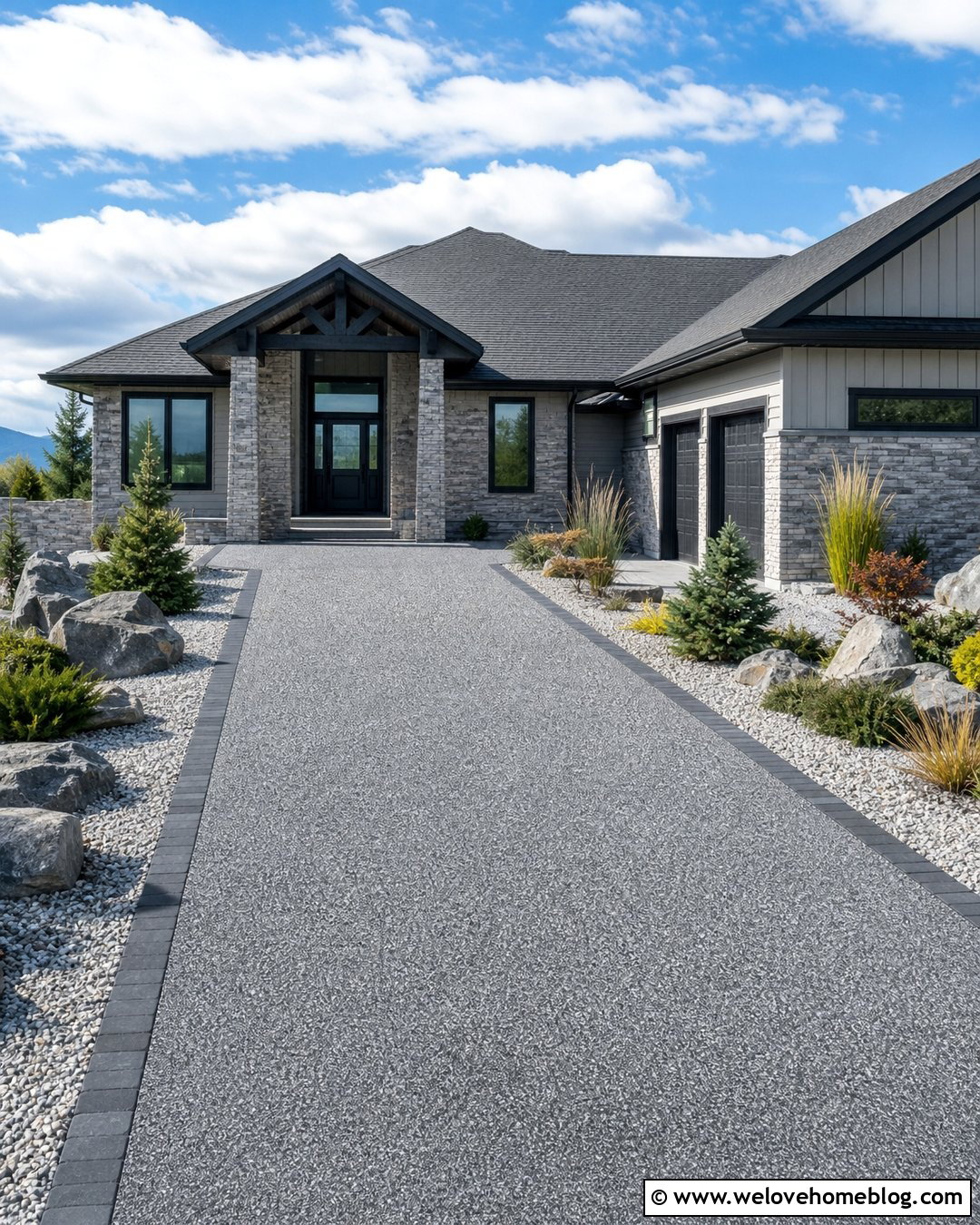
A rock garden is a practical visual partner for a resin-bound driveway when planting space or maintenance time is limited. Use a charcoal-silver aggregate in a straight, modern layout with narrow black paver borders. Along one or both sides, arrange groups of locally suitable boulders, pale decorative gravel, dwarf evergreens, and drought-conscious plants. Vary the stone sizes and leave open gravel areas so the garden does not appear crowded. A few upright grasses can add movement without requiring a dense planting scheme. Keep loose decorative gravel contained behind edging so it cannot migrate onto the resin. This complete frontage works well with ranch and contemporary homes, particularly when the facade includes stone veneer, dark metal details, or natural wood that repeats the landscape materials.
33. Resin Driveway With Raised Planting Beds
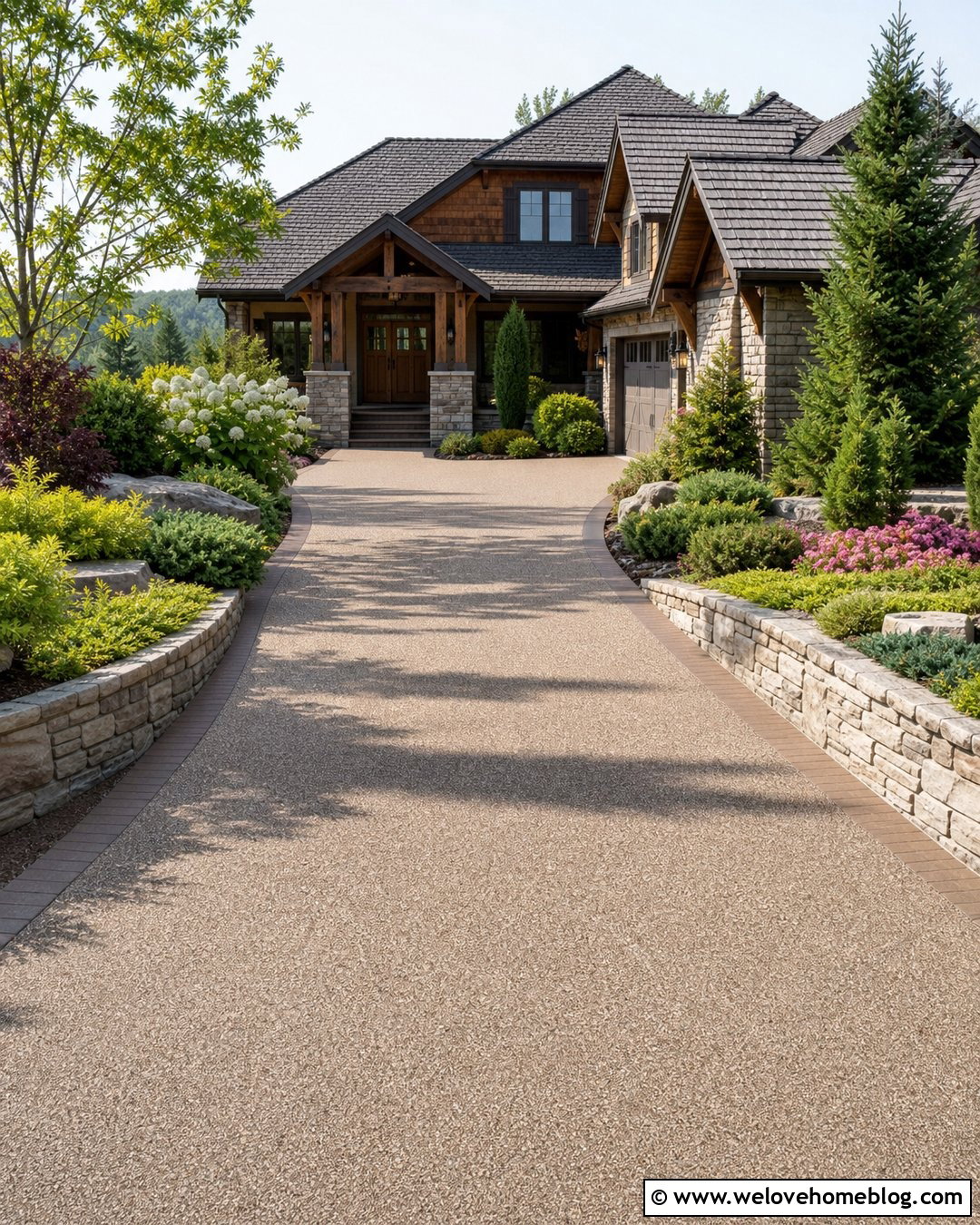
Raised beds can add height and definition where a resin-bound driveway sits beside a sloped yard or blank garage wall. Choose a warm taupe aggregate and outline the driveway with matching brown pavers. Build low retaining beds from natural stone or brick that relates to the house facade. Position the walls outside door-swing and turning zones, and keep their corners easy to see from a vehicle. Fill the beds with layered evergreens, flowering shrubs, and trailing ground covers that soften the masonry. A wide resin walkway can pass between the beds toward the porch. This complete design makes a functional parking area feel connected to the garden, but drainage behind the walls and beneath the driveway should be coordinated during the planning stage rather than addressed separately afterward.
34. Resin Driveway With Timber Edging
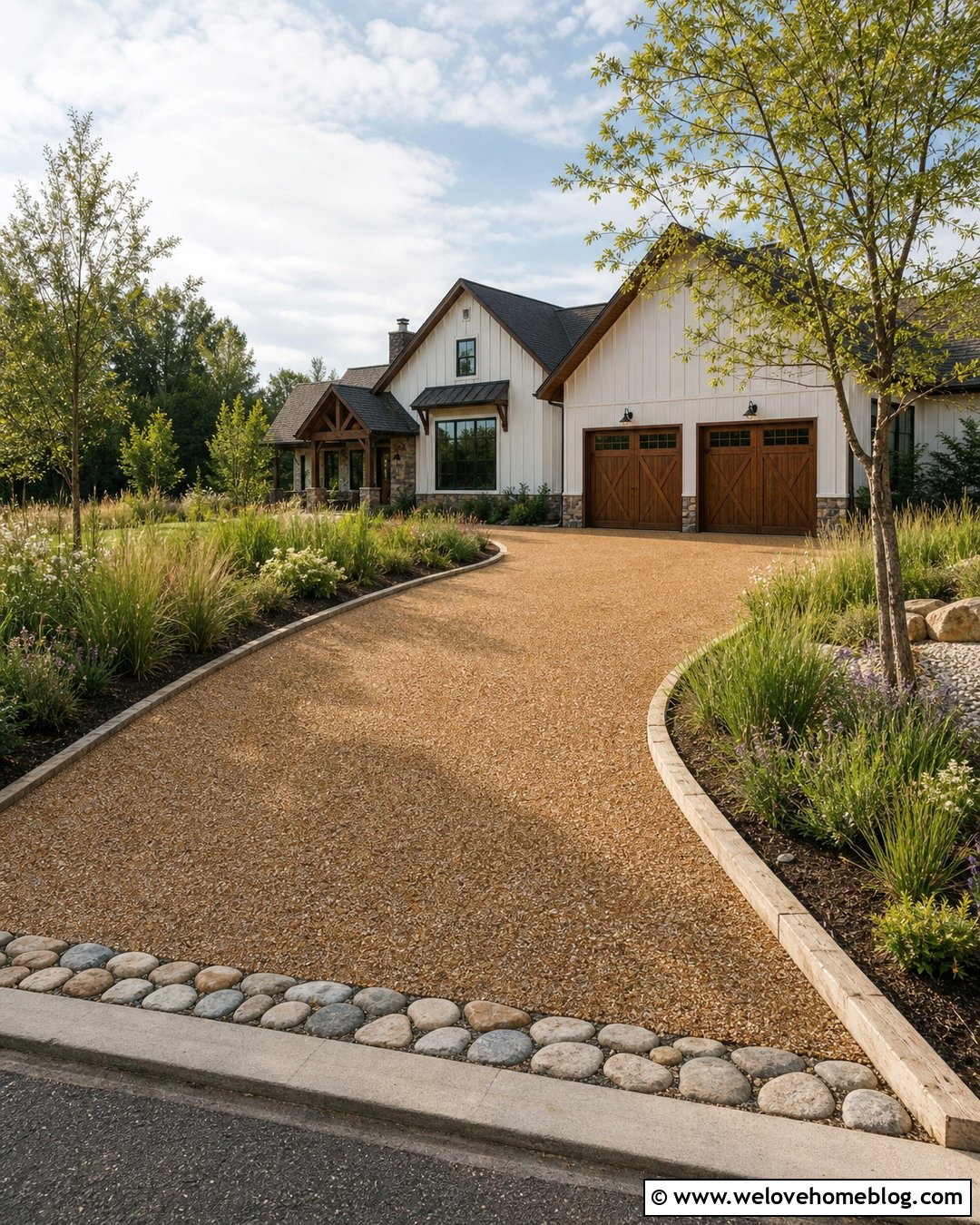
Timber edging can give a resin-bound driveway a relaxed, rustic finish when it is detailed appropriately for outdoor use. Choose a golden-brown aggregate and a curved layout leading to a modern farmhouse, cabin-inspired home, or country cottage. Use substantial treated timbers along garden-facing edges, while selecting stone or pavers for high-impact areas near the street and garage. This combination preserves the warm look without relying on wood in every transition. Surround the driveway with meadow-like grasses, compact flowering shrubs, and a few native trees. A gravel-mulched walkway can connect the parking area to the porch. The resin’s tidy surface balances the informal landscaping, creating a complete rural look that feels maintained rather than rough or unfinished.
35. Resin Driveway With Steel Landscape Edging
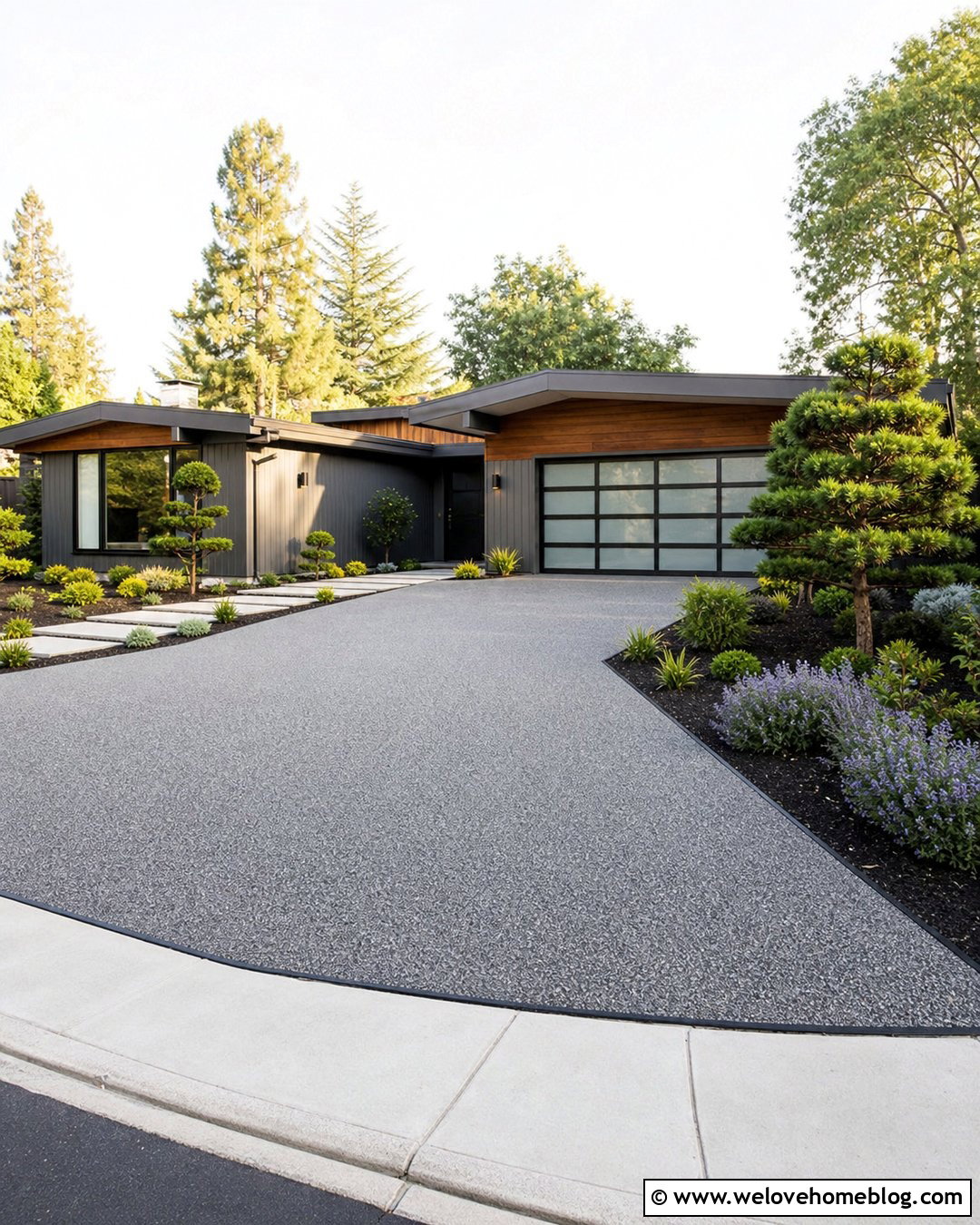
Slim steel edging creates one of the cleanest transitions between resin-bound gravel and modern landscaping. Use a cool gray aggregate in a wide rectangular driveway, with the metal forming straight lines and a few controlled curves around planting beds. Keep the steel nearly flush with the finished surface so it defines the shape without becoming visually heavy. Fill adjacent beds with dark mulch, sculptural evergreens, grasses, and low flowering plants. Oversized concrete slabs can create a walkway through the landscape toward a flat-roofed or mid-century modern house. Repeat blackened steel in the mailbox, porch railings, or exterior lights. This coordinated material palette allows the resin, architecture, and planting to read as one complete design rather than a collection of unrelated improvements.
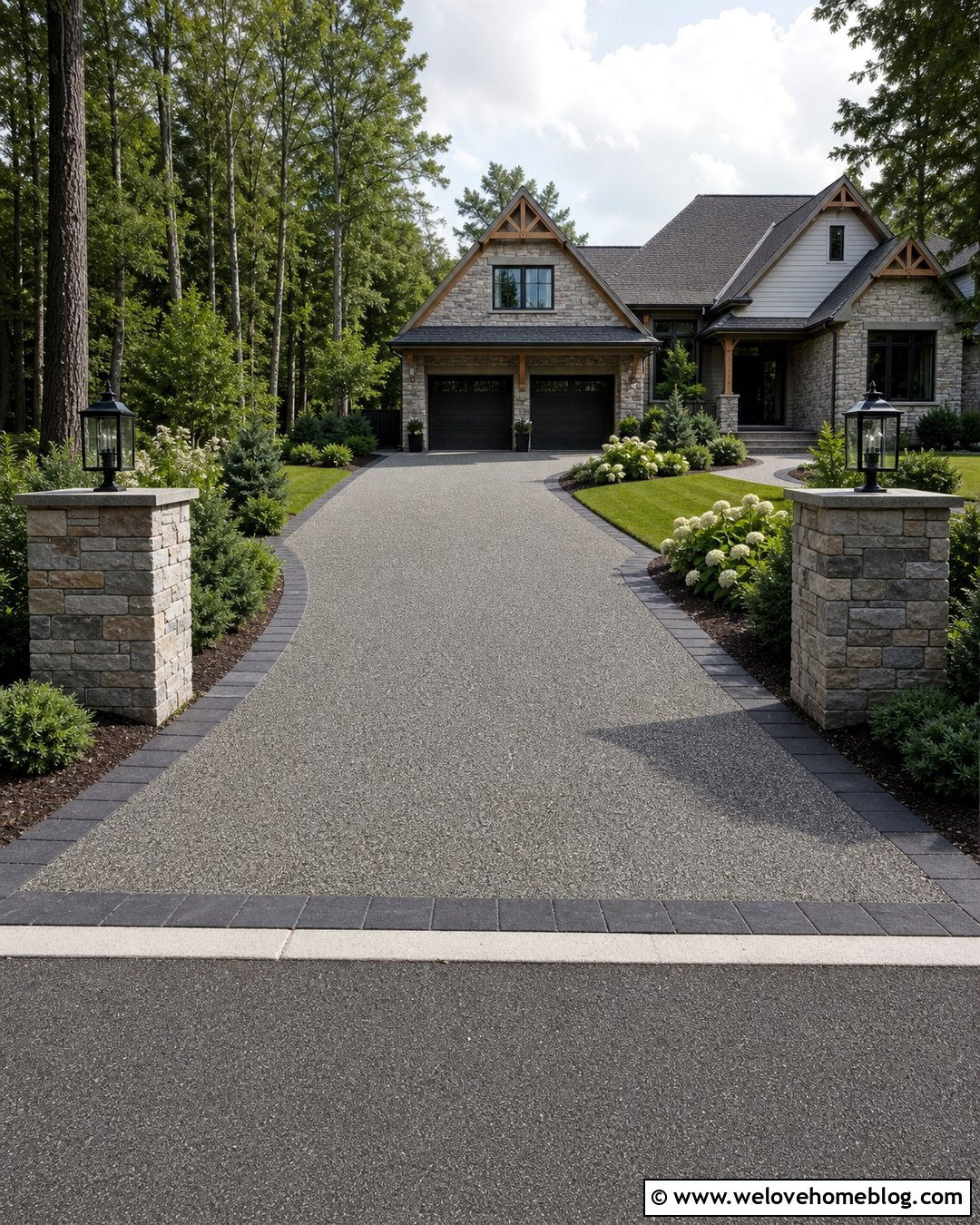
36. Resin Driveway With Stone Pillars And Metal Gates
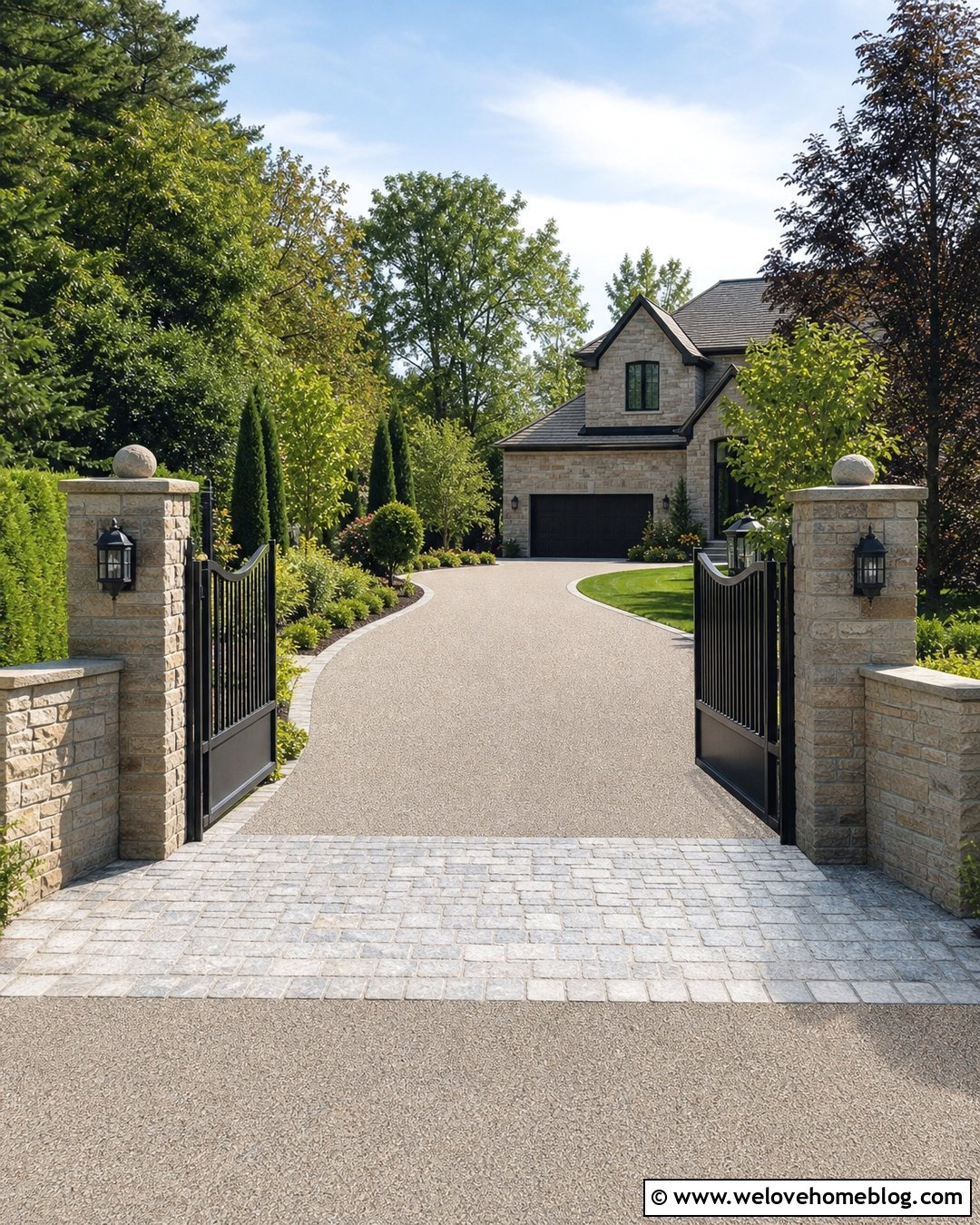
Stone pillars and black metal gates can give a resin-bound driveway a substantial entrance without hiding the house. Use a warm gray aggregate on a gently curving approach and install a granite-sett apron beneath the gates. Build the pillars from stone that matches the facade, retaining walls, or front steps. Keep their scale proportional to the residential property and preserve clear sightlines toward the street. Low walls can extend briefly from each pillar before transitioning into hedges or open lawn. Inside the entrance, use layered shrubs and small trees to guide attention along the curve. The gate swing, access controls, lighting, drainage, and vehicle clearance should be planned together. A coordinated design will feel secure and welcoming instead of crowded or excessively formal.
37. Resin Driveway With A Wood Entrance Gate
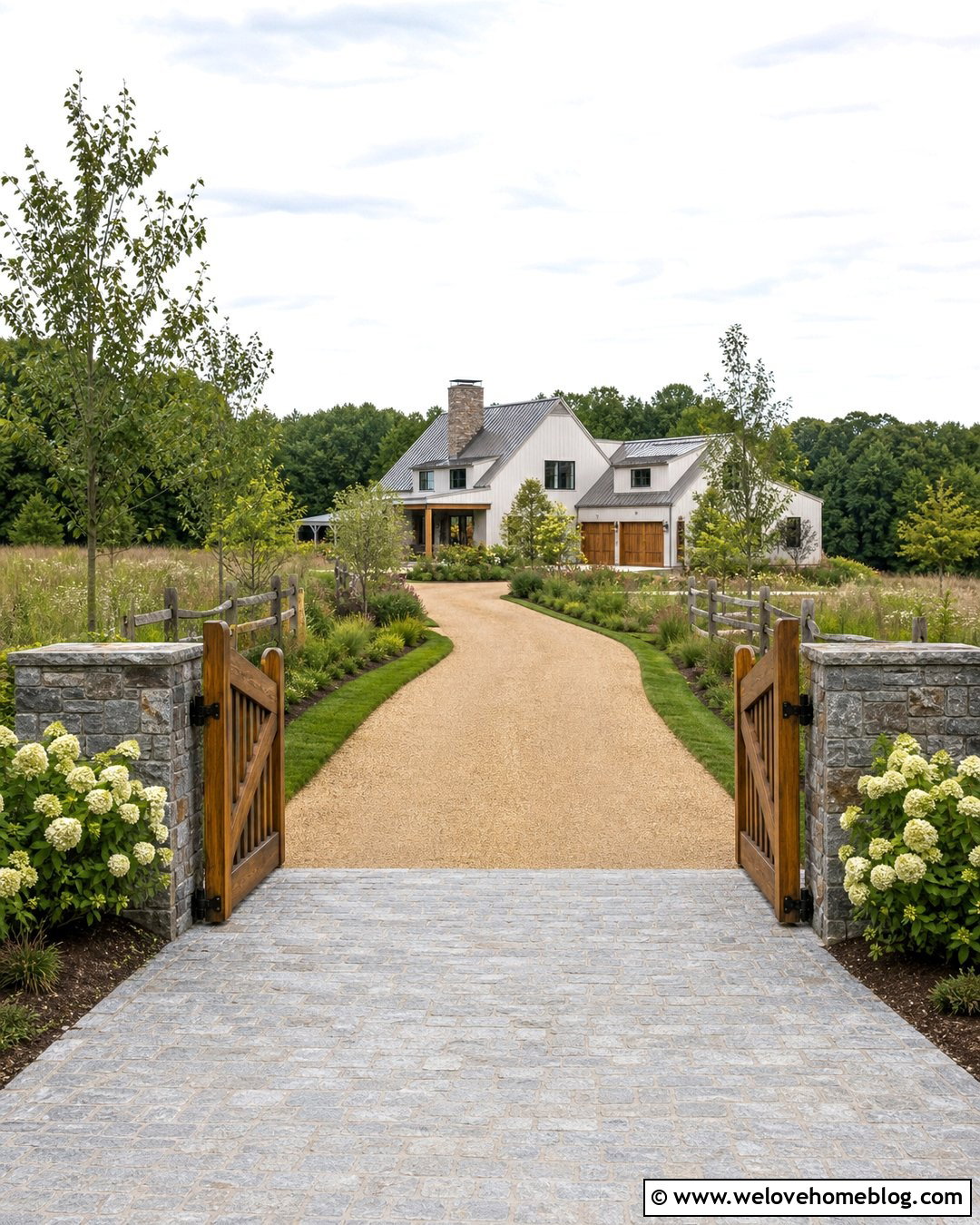
A natural wood gate creates a warmer entrance than metal and pairs beautifully with golden or bronze resin-bound gravel. Set the gate between simple stone pillars and place a brick or granite apron beneath it to define the threshold. Beyond the entrance, let the driveway curve gently toward a modern farmhouse or country home. Use split-rail fencing, meadow grasses, hydrangeas, and groups of native shrubs along the route. The wood tone can be repeated on the garage doors, porch ceiling, or shutters for a cohesive exterior. Choose a gate design with enough open spacing to maintain visibility and avoid making the property feel closed off. This complete look combines a neat resin surface with relaxed materials and planting suited to a rural residential setting.
38. Resin Driveway With An Address Sign And Lighting
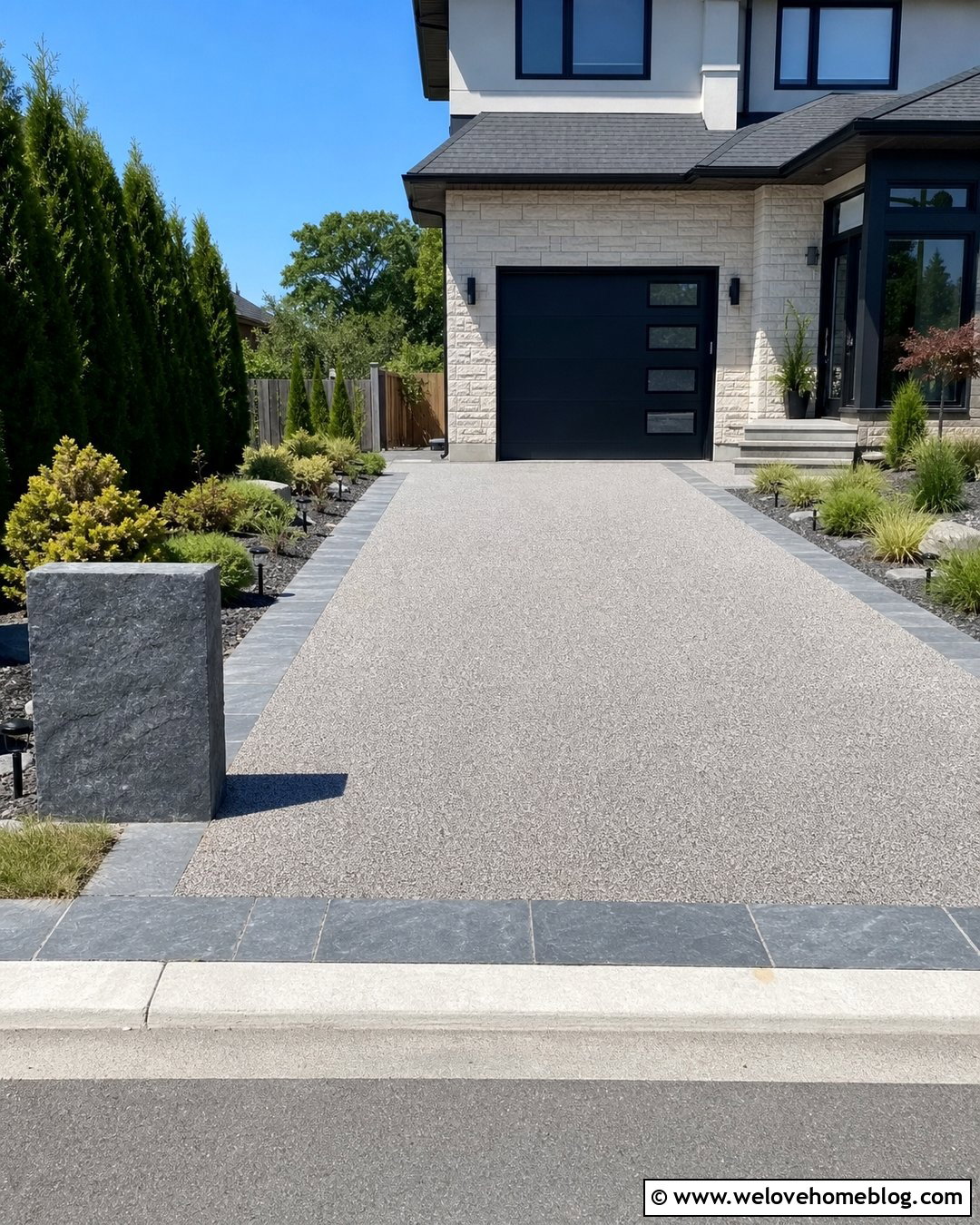
A well-positioned address marker can become part of a complete resin-bound driveway entrance instead of an isolated accessory. Use a silver-gray aggregate with a straight layout and a dark granite apron at the curb. Place a simple stone or metal address monument within a planted bed beside the entrance, safely outside the vehicle path. Add low-voltage fixtures that illuminate the sign, border, and approach without producing glare toward drivers or neighboring homes. Repeat the marker’s material in the edging or house facade. Low grasses and compact evergreen shrubs will keep the numbers visible throughout the year. During daylight, the driveway should still appear balanced and attractive. The lighting adds function after dark, while the resin, entrance sign, planting, and borders create consistent curb appeal.
39. Resin Driveway With Bollard Lighting
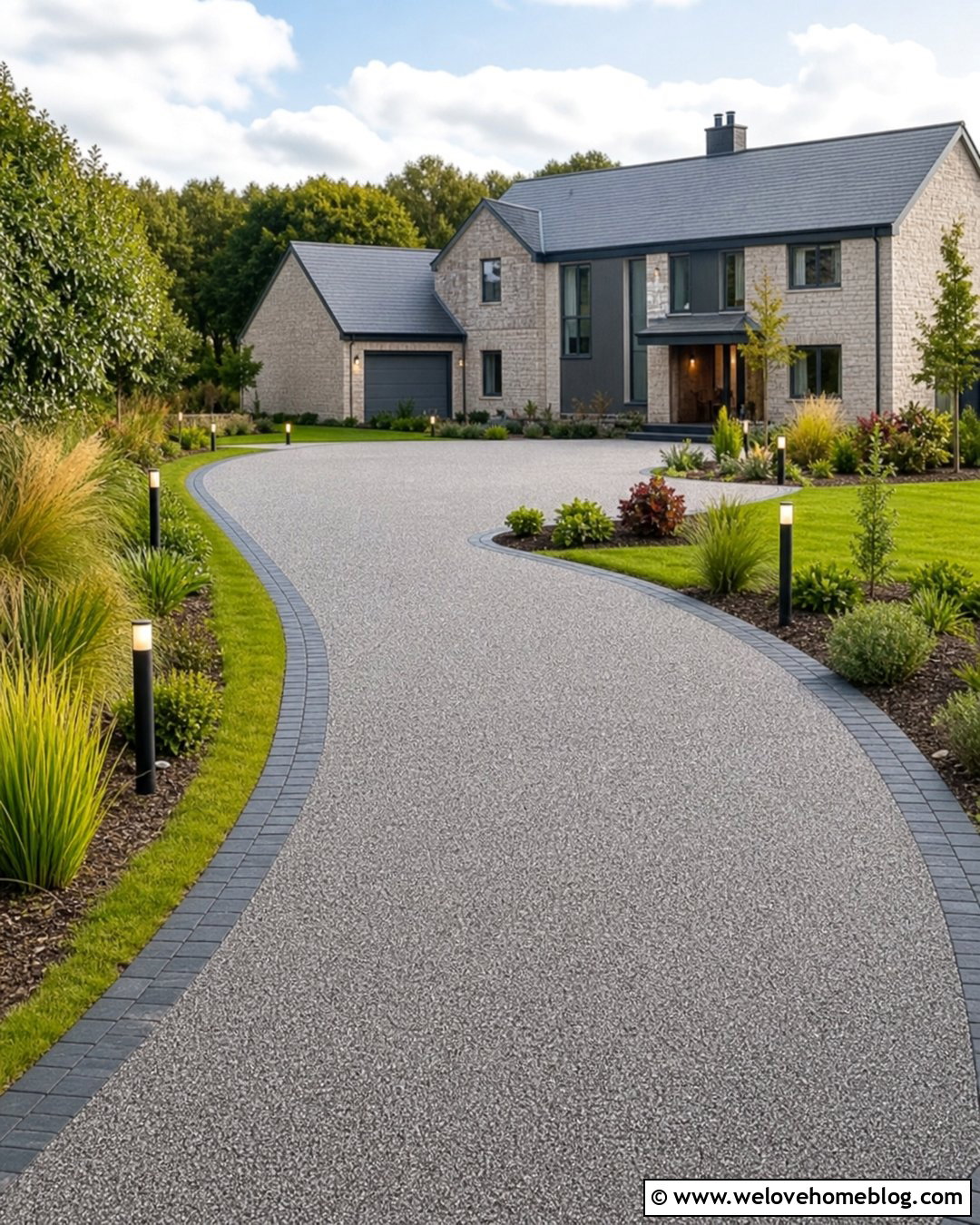
Bollard lights can define a long resin-bound driveway when they are spaced carefully and integrated into the surrounding landscape. Choose a medium-gray aggregate and a soft curved layout bordered by dark granite setts. Install short, simple bollards within planting beds rather than directly on the driving surface. Alternate them with ornamental grasses and low shrubs so the fixtures do not resemble a rigid line of posts. Keep the entrance open, then use closer spacing near a walkway junction or parking court where guidance is most helpful. Select fixtures that coordinate with the home’s exterior hardware and direct light downward. Even in daytime, their size, color, and placement should complement the driveway. The complete design will feel organized without allowing lighting equipment to dominate the approach.
40. Resin Driveway With A Custom Compass Pattern
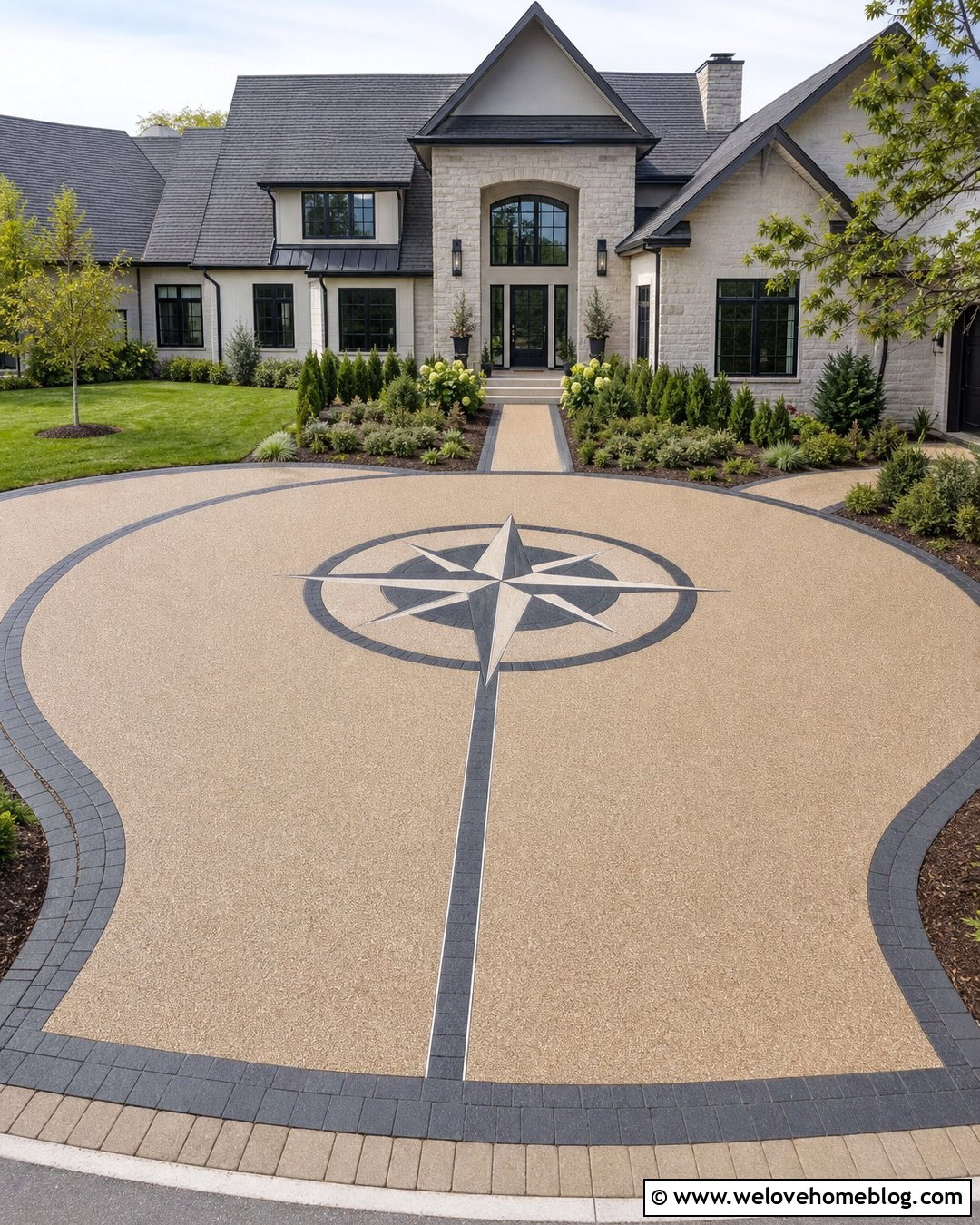
A custom compass pattern can personalize a large resin-bound driveway while keeping the overall design sophisticated. Use warm beige resin for the main surface and create the compass in charcoal and cream aggregate at the center of a circular parking court. Outline the motif with slim metal profiles so its points and rings remain clearly defined. Surround the court with a dark paver border, structured evergreen beds, and a walkway leading directly to the front entrance. Keep other decorative details restrained because the central design already provides a strong focal point. This treatment suits an expansive traditional, coastal, or transitional home. Ask for a scaled drawing and physical color samples before installation so the motif, driveway proportions, and architecture work together successfully.
Conclusion:
These **40 resin driveway ideas** show how color, shape, borders, landscaping, and entrance features can turn one surface material into many distinct designs. Pale blends can open up small or shaded spaces, while charcoal and bronze finishes give larger driveways stronger definition. Brick, granite, cobblestone, steel, timber, and planting can each change the character of the complete approach. Before choosing a design, view aggregate samples beside the house and consider how the driveway will look from both the street and front door. An experienced installer should also evaluate the existing base, drainage, slope, edging, traffic, and local requirements. Careful planning will help the finished driveway feel attractive, practical, and naturally connected to the property.

Related posts:
Leave a Reply