
Porcelain pavers can give an everyday driveway the crisp appearance of natural stone without limiting you to one color, pattern, or architectural mood. These 20 Porcelain Driveway Ideas explore complete designs, including straight approaches, curved layouts, circular entrances, contrasting borders, coordinated walkways, and practical landscaping. For vehicle areas, choose exterior pavers and an installation system specifically rated for driveway loads rather than standard indoor porcelain tile. Some manufacturers offer 3-centimeter porcelain products and installation details developed for vehicular applications. () Color samples should also be viewed beside the house, roof, and existing hardscape before ordering. Whether your home is modern, traditional, coastal, or rustic, the following 20 Porcelain Driveway Ideas offer plenty of ways to create a polished entrance.

1. Large Gray Porcelain Driveway
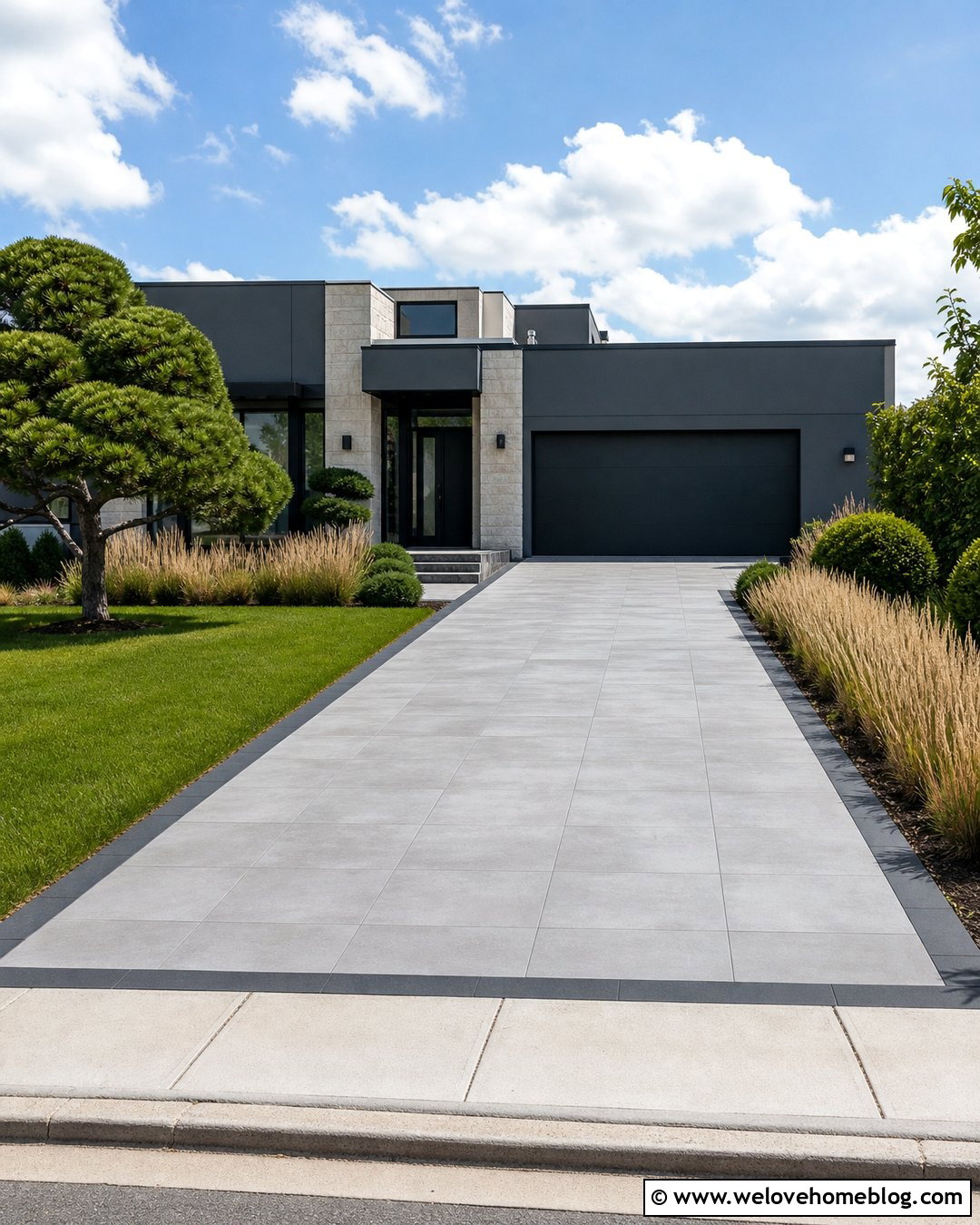
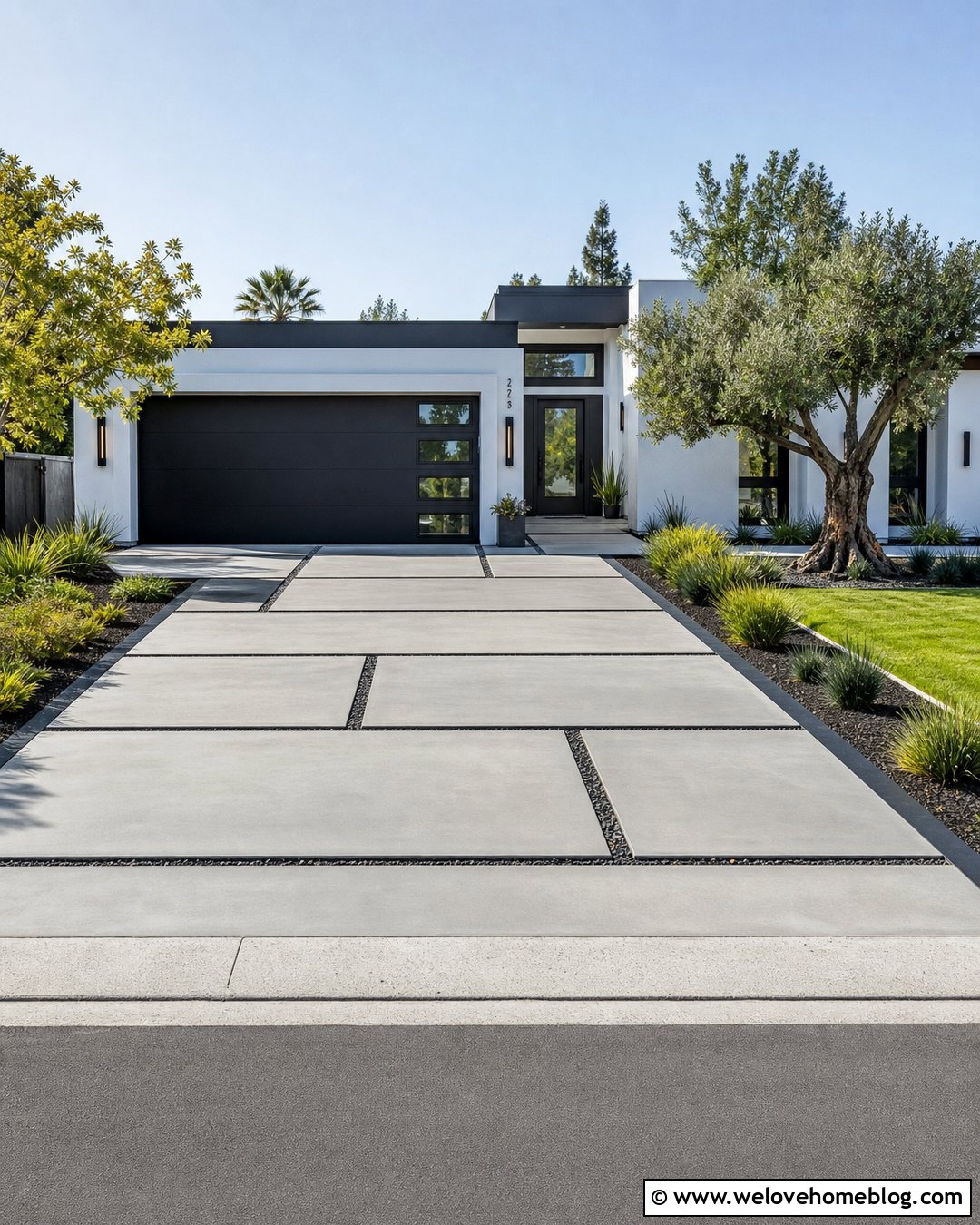
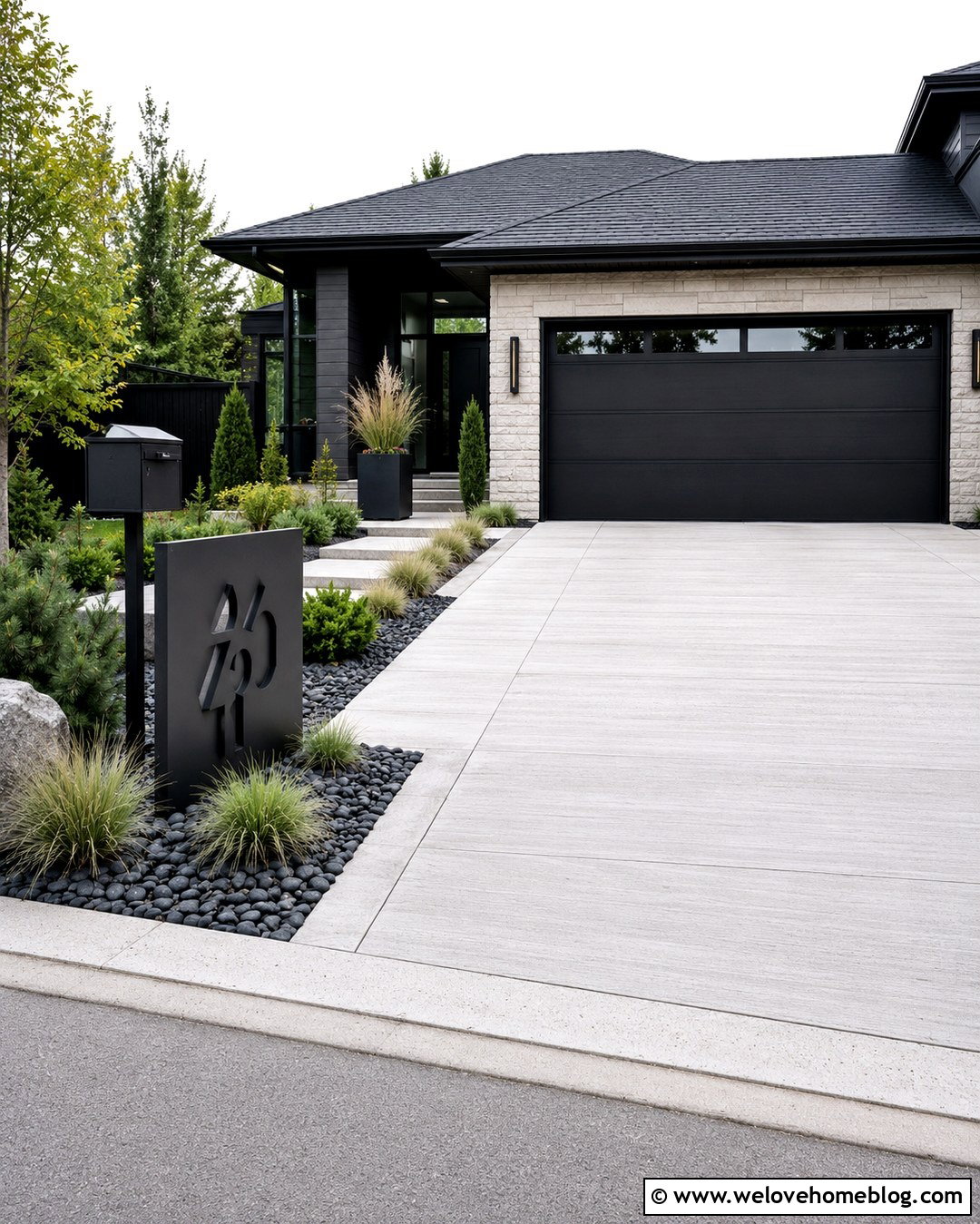
Large-format gray porcelain pavers create a calm, uncluttered entrance that works especially well with modern architecture. Choose a soft cement-look finish rather than a flat industrial gray, so subtle tonal movement keeps the driveway from appearing plain. A straight layout with aligned joints will reinforce the clean geometry of a boxy home or low-profile ranch. Frame the pavers with narrow charcoal borders to sharpen the edges and separate the driveway from the lawn. Near the house, repeat the porcelain on a wide front walkway for a connected design. Ornamental grasses, rounded evergreen shrubs, and one sculptural tree provide enough softness without hiding the paving. Keep grout or joint material close to the paver color for a smooth, nearly continuous appearance.
2. Beige Limestone Look Porcelain Driveway
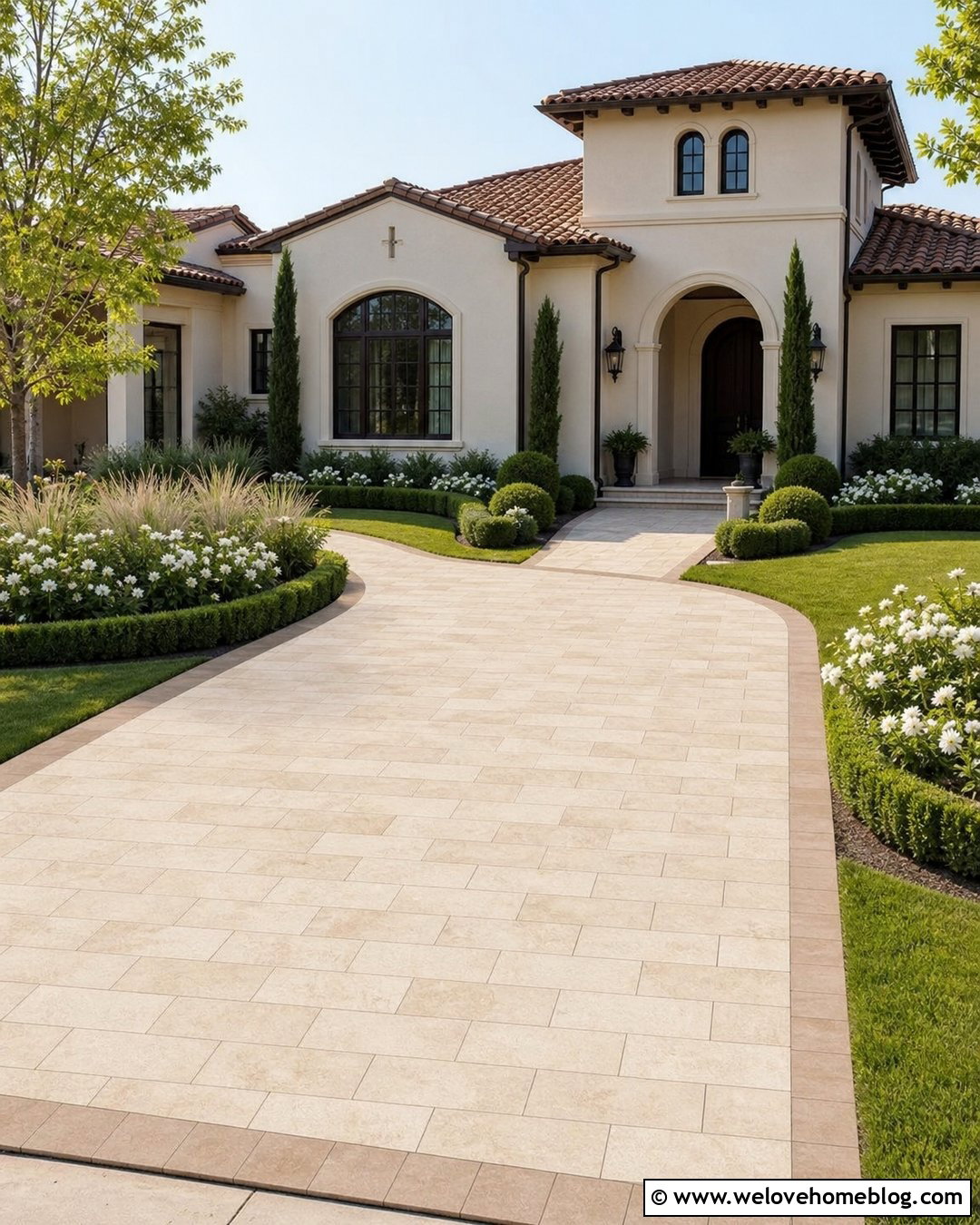
Warm beige porcelain with a limestone appearance can make a driveway feel welcoming without becoming overly rustic. Use rectangular pavers in a running bond pattern to give the surface gentle movement and make a long, straight approach feel less rigid. A slightly darker tan porcelain border will define the perimeter while maintaining a quiet, coordinated palette. This look complements cream stucco, tan brick, natural wood, and warm white siding. Add curved planting beds filled with boxwood, white flowering shrubs, and soft ornamental grasses. A matching pathway can branch toward the porch using the same pavers in a narrower format. Select a matte, textured exterior finish so the surface looks natural in bright daylight. The result is an elegant driveway that supports Mediterranean, transitional, and traditional homes.
3. Black Porcelain Driveway With Light Border
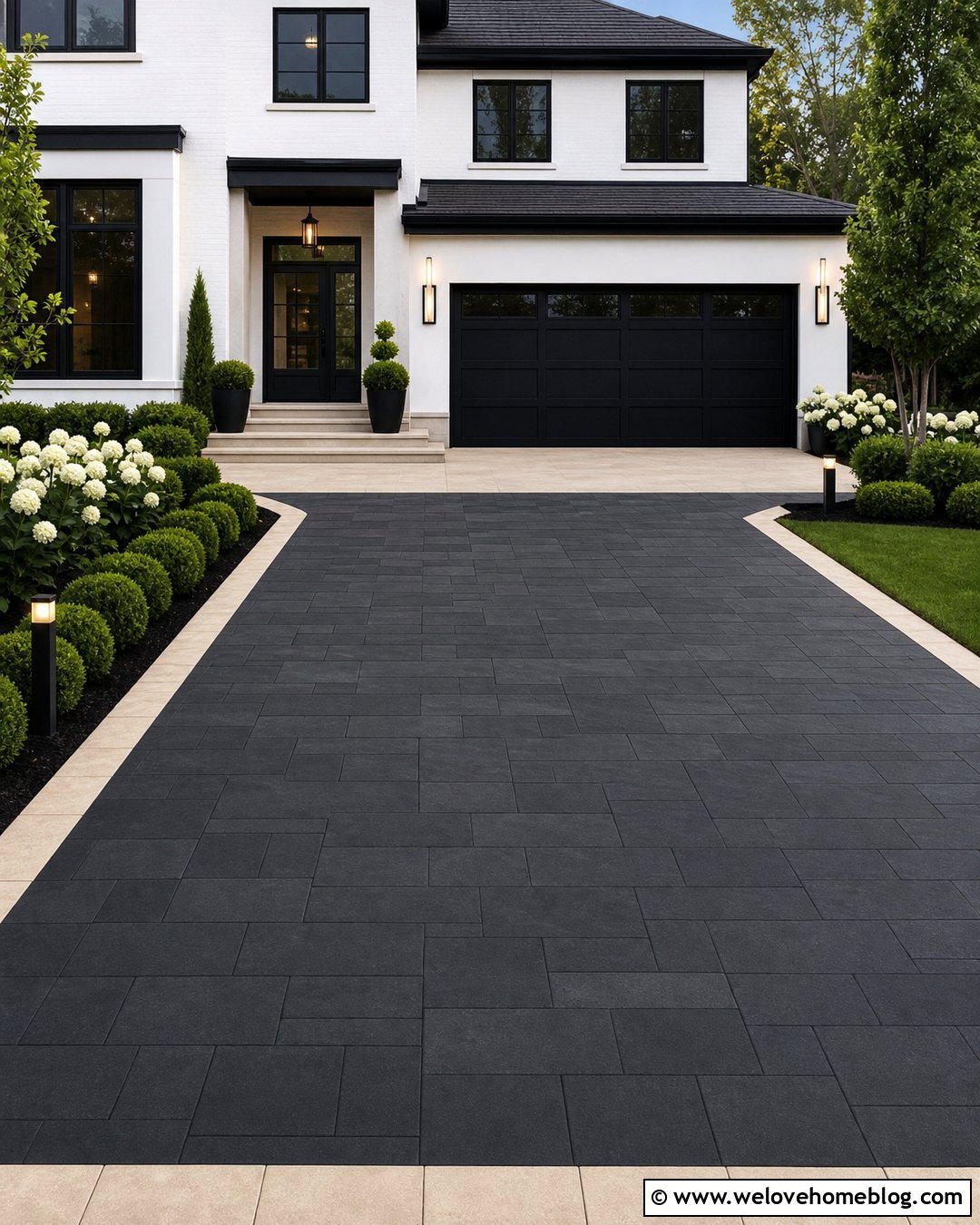
A dark porcelain driveway makes a strong architectural statement, particularly when paired with a pale house facade. Choose charcoal or basalt-look porcelain rather than solid jet black, since slight color variation can soften dust and everyday marks. Lay large rectangular pavers in a staggered pattern, then surround them with an ivory or light gray porcelain border. The contrast outlines the complete driveway and makes its shape easy to read from the street. Keep the surrounding landscaping restrained with clipped green shrubs, white flowers, and neat sections of lawn. Black metal planters or simple bollard lights can repeat the darker tone near the entrance. For balance, use the light border material on the front walkway, porch steps, or a small apron where the driveway meets the sidewalk.
4. White Porcelain Driveway With Grass Joints
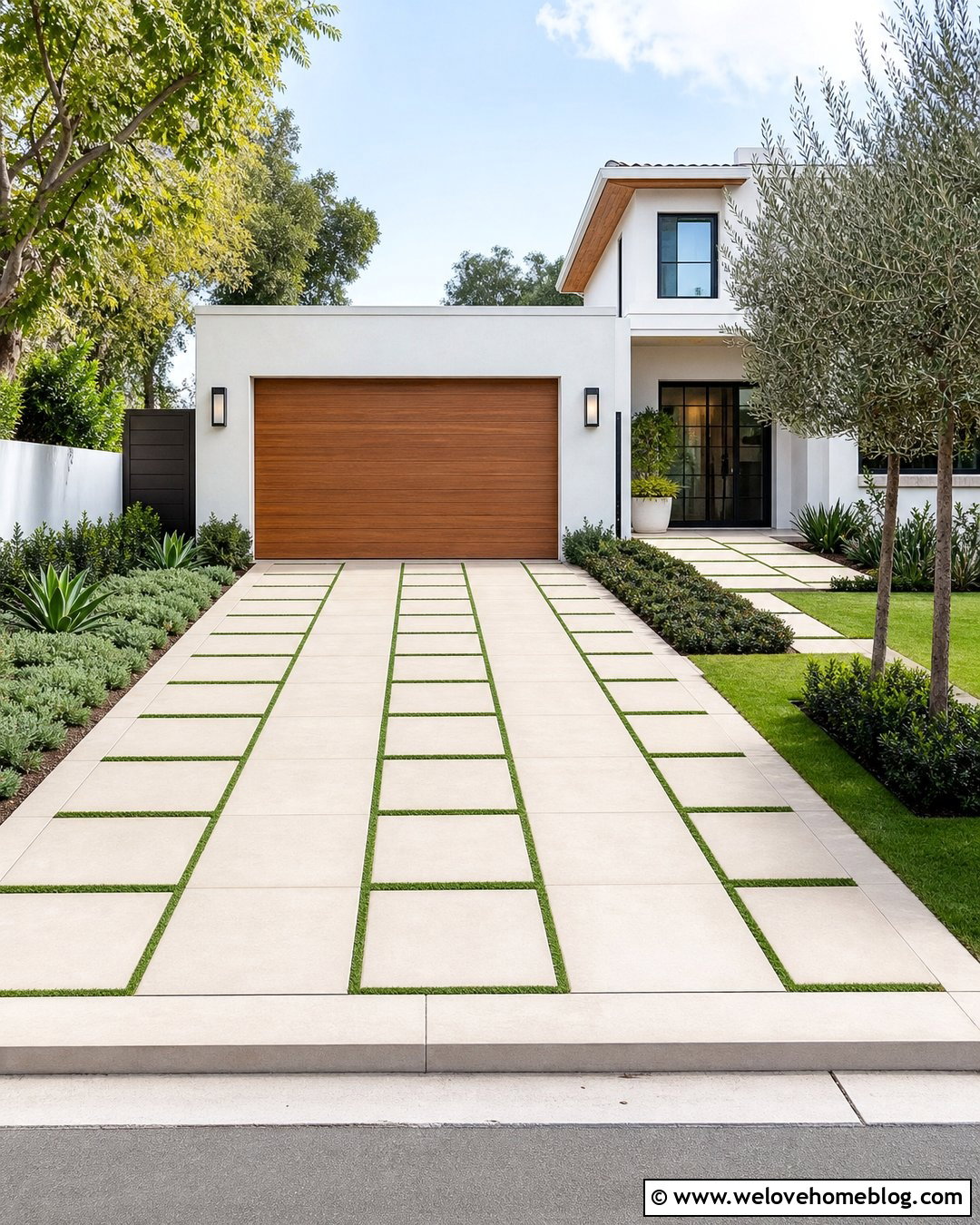
Light porcelain pavers separated by narrow grass strips create an airy driveway with a softer visual footprint. This design works best when large ivory or pale stone-look slabs are arranged in orderly rows, with consistent green joints running between them. Use driveway-rated porcelain and have the entire assembly designed for vehicle traffic, since the base and edge restraint are essential parts of the finished surface. Continue solid pavers along the tire paths and turning areas where practical. A flush porcelain border can keep the outer edges neat while preventing the lawn from creeping into the layout. Pair the driveway with a white contemporary house, warm wood garage door, and simple foundation planting. Drought-tolerant groundcover may replace turf in hot regions where maintaining narrow grass joints would be difficult.
5. Bluestone Look Porcelain Driveway
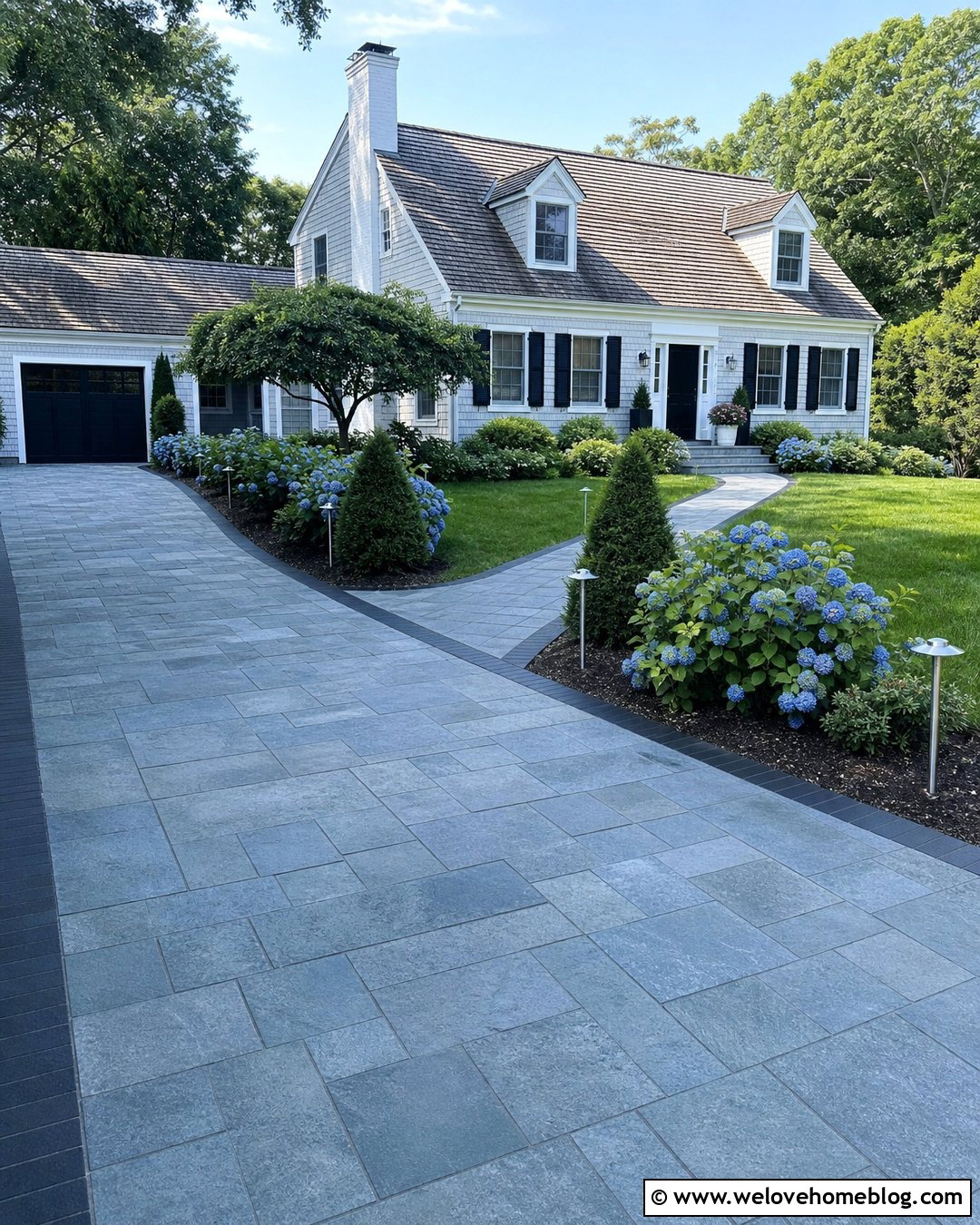
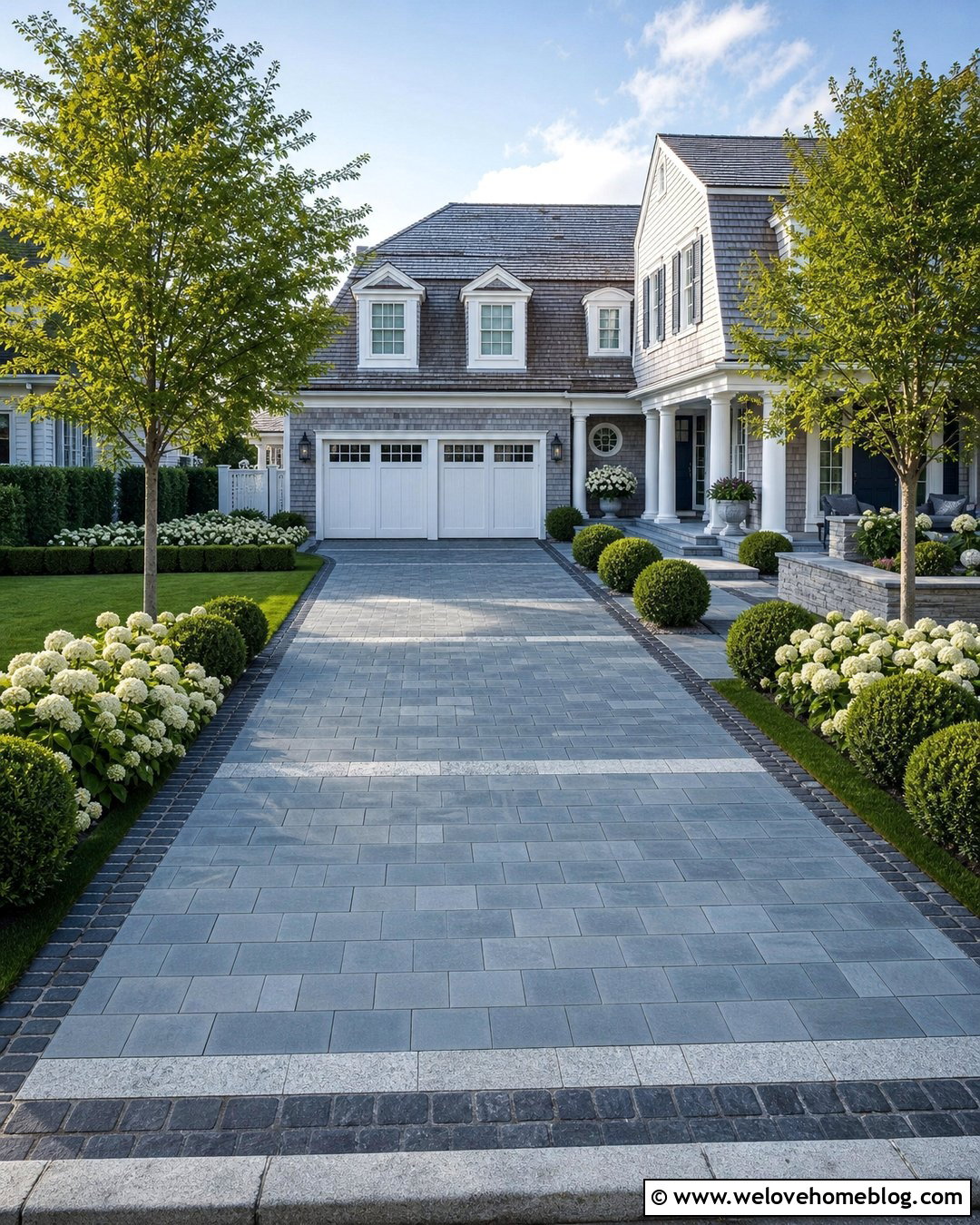
Bluestone-look porcelain delivers the layered blue-gray character of natural stone in a more controlled color range. A mixed-size ashlar layout enhances that stone-inspired effect and suits craftsman, colonial, and Cape Cod homes. Use medium and large rectangles rather than tiny pieces, allowing the veining and tonal variation to remain visible from the curb. A charcoal porcelain soldier-course border can hold the composition together and create a clean transition to planting beds. Surround the driveway with hydrangeas, compact evergreens, and a broad lawn for a classic residential setting. If the entrance includes steps, repeat the blue-gray tone on the walkway but change the laying direction to distinguish pedestrian space. Silver metal lighting and a dark garage door will complement the cooler colors without making the overall approach feel overly formal.
6. Herringbone Porcelain Driveway
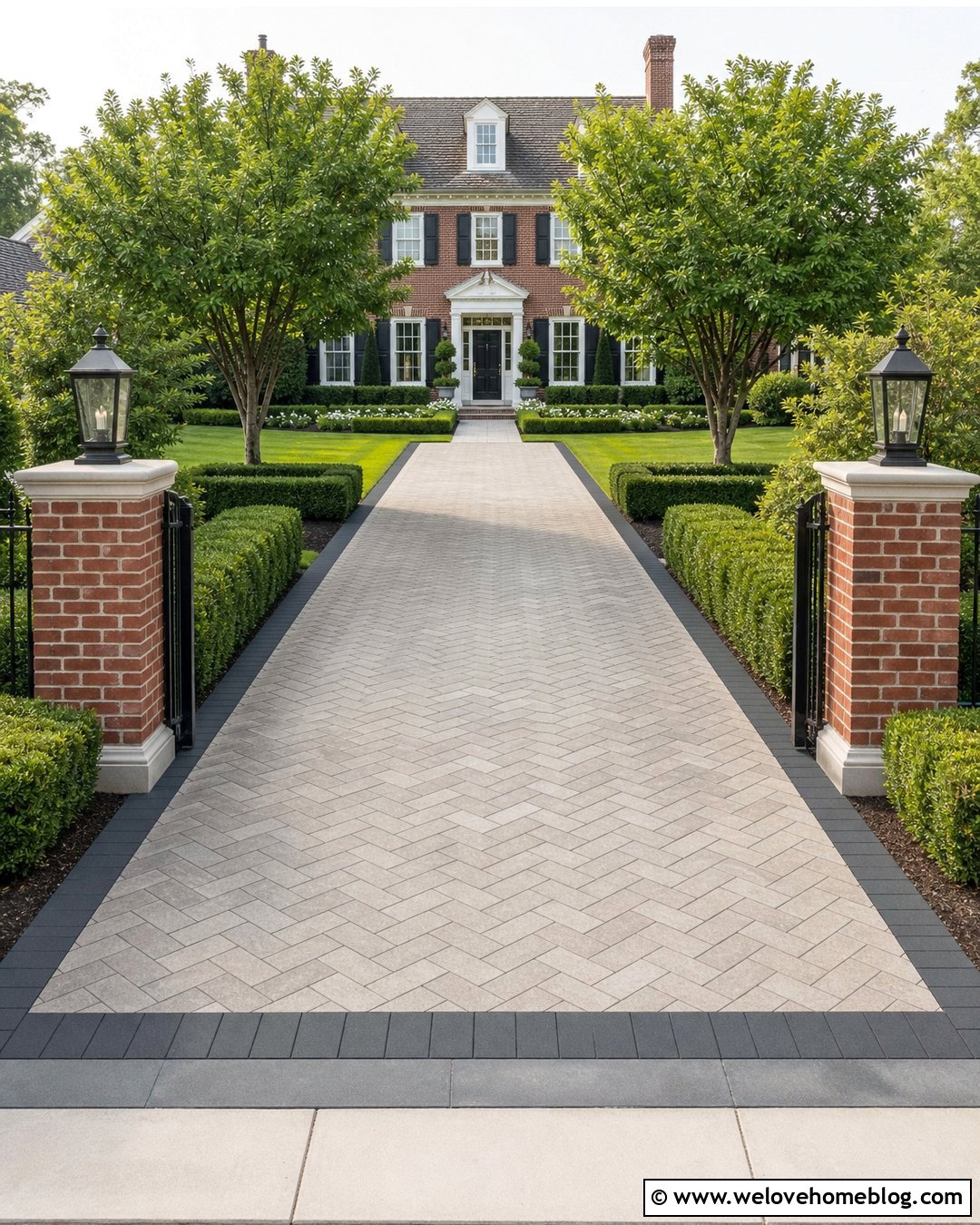
A herringbone layout brings noticeable pattern and energy to a porcelain driveway, even when the color palette remains neutral. Use narrow, driveway-rated porcelain units with a stone or brick appearance and frame the field with a firmly restrained border. Some vehicular porcelain systems specifically call for interlocking patterns and carefully installed perimeter restraints, so the selected manufacturer’s installation instructions should guide the final specification. () Warm gray pavers can suit a traditional brick house, while charcoal pieces create a sharper contemporary result. Keep the herringbone pattern inside a rectangular driveway and use straight border courses to prevent the surface from looking busy. Low hedges, symmetrical trees, and a centered walkway will reinforce the orderly design. Consider a contrasting apron to clearly mark the street entrance.
7. Porcelain Driveway With Cobblestone Border
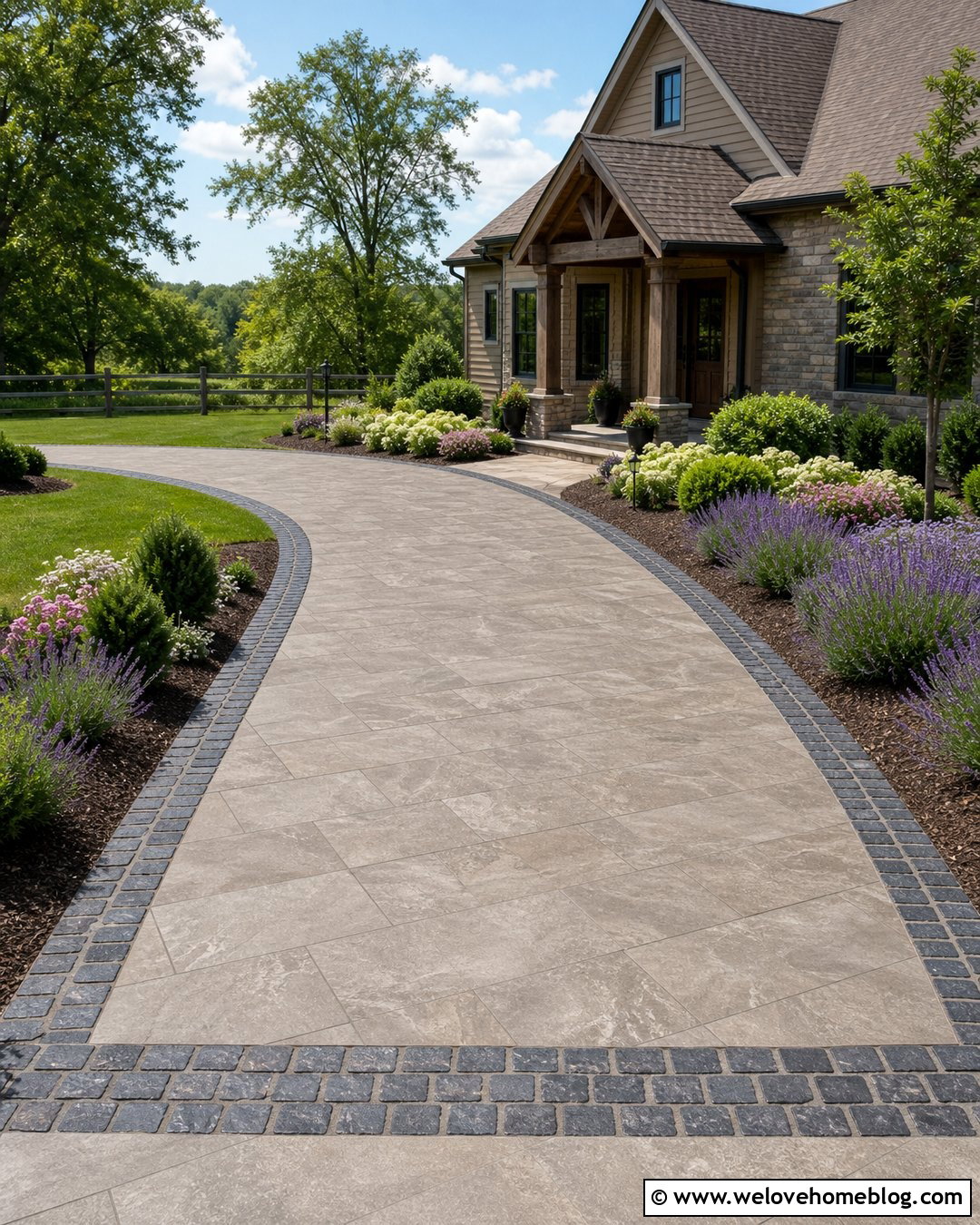
Combining smooth porcelain with a cobblestone border creates a driveway that feels refined but not overly modern. Select large taupe or gray stone-look porcelain pavers for the main surface, then frame them with small granite cobbles in mixed charcoal tones. The difference in scale gives the driveway depth and makes the perimeter more visible. Use the cobblestones again as a narrow ribbon across the entrance or beside the garage to make the border feel intentional. A gently curved edge can help the design settle naturally into a traditional or country-style yard. Plant lavender, dwarf evergreens, and flowering perennials behind the cobble line, leaving enough open space to protect vehicle clearance. Matching porcelain porch paths will connect the driveway to the house while allowing the textured border to remain the defining feature.
8. Curved Porcelain Driveway
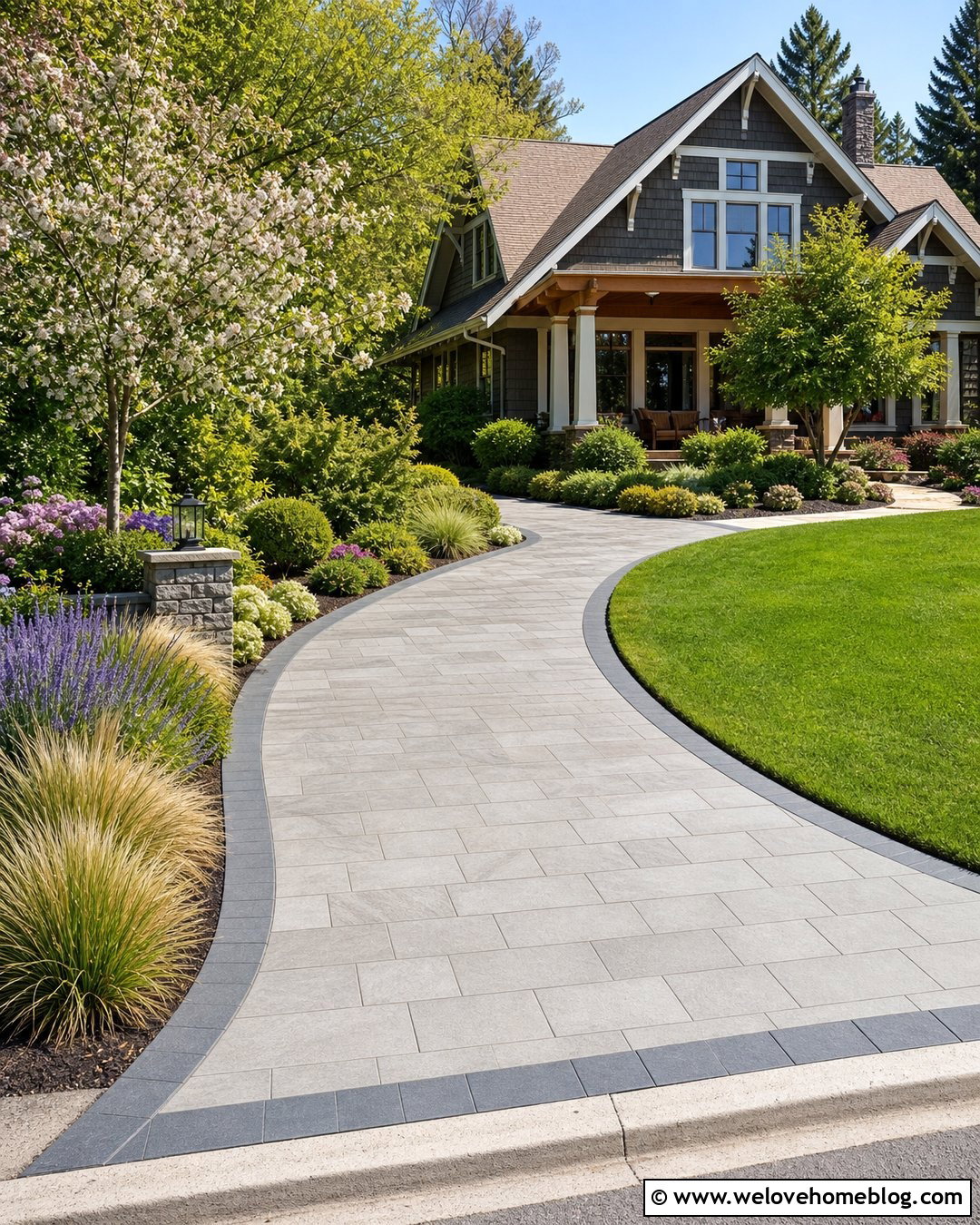
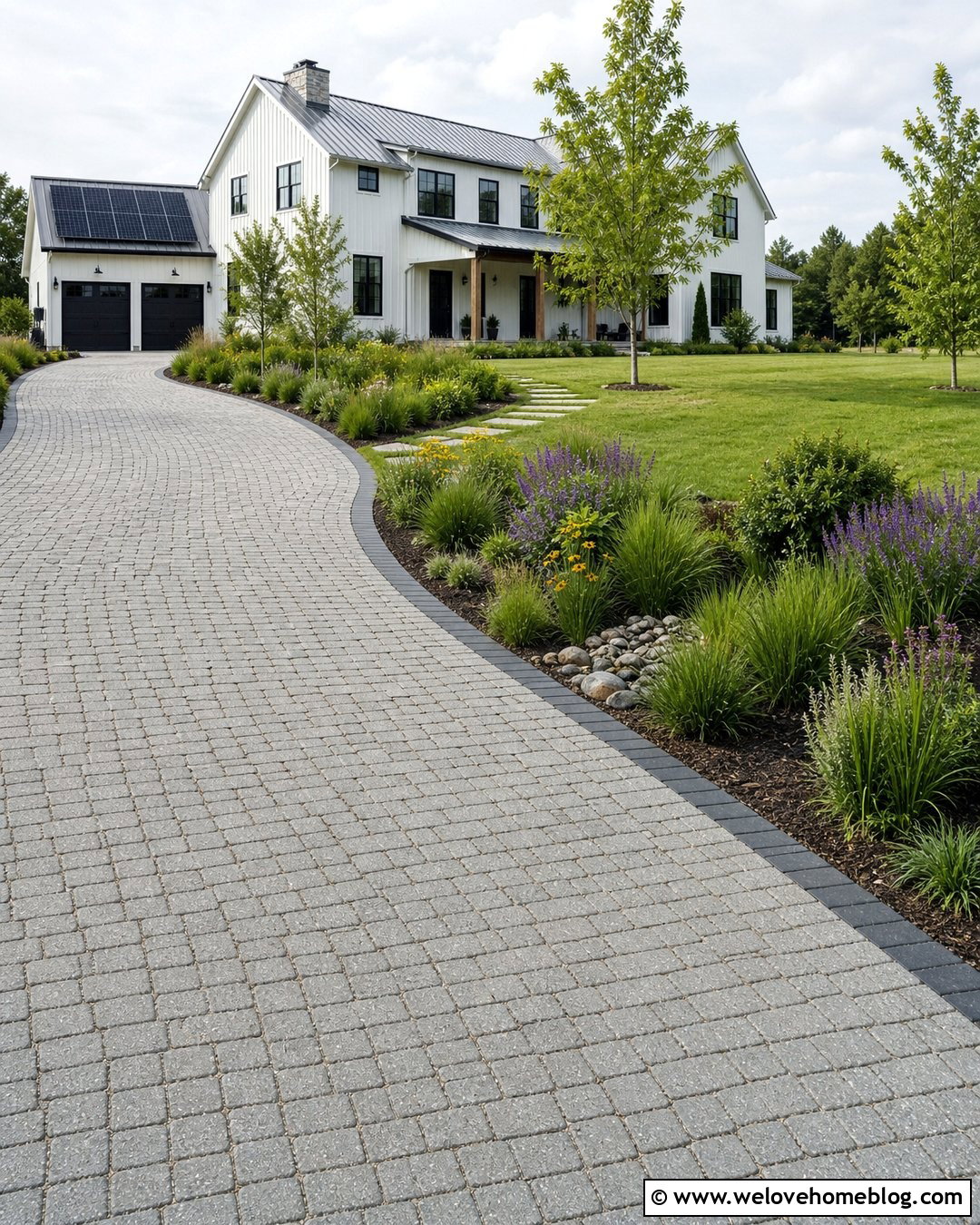
A curved porcelain driveway can guide visitors toward the house while revealing the landscape gradually. Choose medium-size rectangular porcelain pavers with a warm gray stone finish, since this scale handles sweeping curves more naturally than oversized slabs. Arrange the units in staggered rows and use a darker porcelain border to create a smooth, clearly defined edge. On the outside of the curve, build a generous planting bed with layered shrubs, flowering trees, and ornamental grasses. Keep the inside curve lower with lawn or groundcover so drivers retain an open view. The layout is especially effective for craftsman houses, wooded properties, and homes positioned away from the street. Coordinate the driveway color with the roof or masonry, then repeat the border tone on steps, planters, or the garage facade.
9. Circular Porcelain Driveway
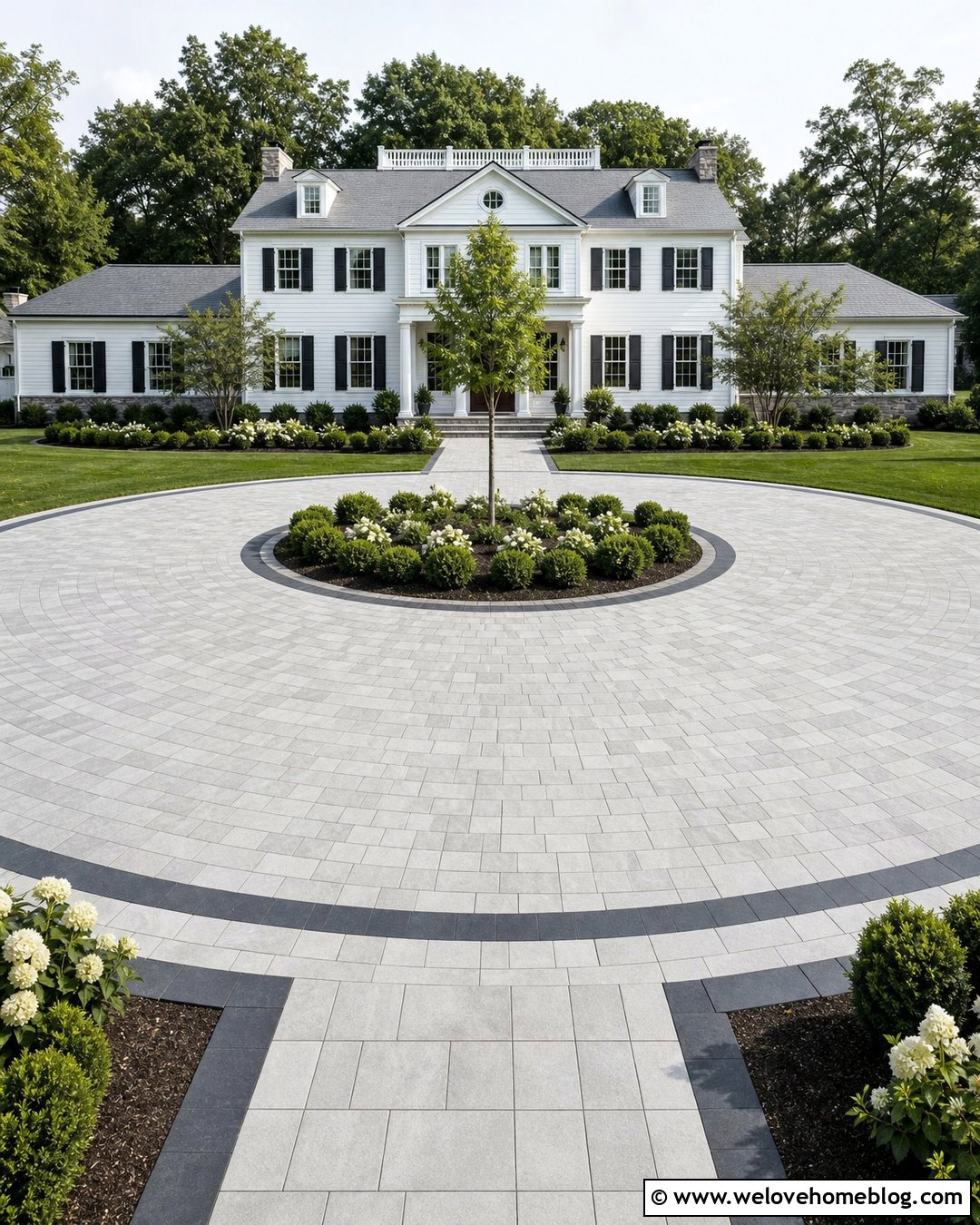
A circular porcelain driveway creates a practical arrival area while giving the front yard a strong focal point. Use large stone-look porcelain pavers in a fan, segmented, or carefully planned radial layout around a landscaped center island. A soft beige or silver-gray surface can prevent the broad paved area from visually overwhelming the house. Define both edges with a darker porcelain or natural stone border. In the island, combine a small ornamental tree with low shrubs and seasonal flowers that will not block sightlines. Add a direct matching walkway from the drop-off area to the front door. This arrangement works beautifully with colonial, Georgian, and large modern farmhouse homes. Keep the joint pattern balanced around the circle so narrow cuts do not become the most noticeable feature.
10. Modern Porcelain Driveway With Concrete Bands
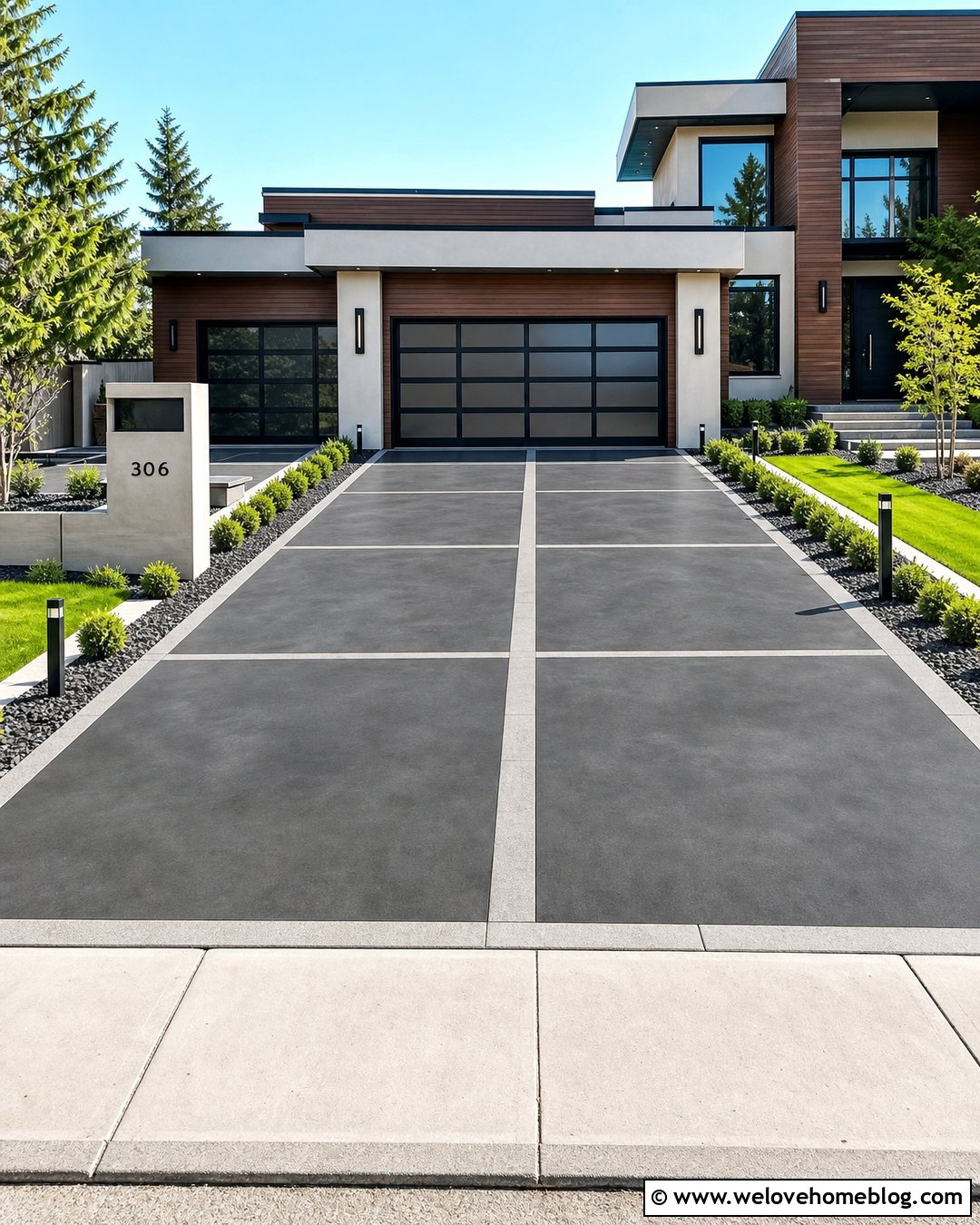
Concrete bands can divide a broad porcelain driveway into clear geometric sections. Start with large charcoal or medium-gray porcelain pavers laid in rectangular panels. Separate those panels with narrow poured-concrete strips that align with the garage doors, front walkway, or architectural lines of the house. The contrasting materials break up the paved area and make a wide driveway feel more carefully proportioned. Keep the concrete a warm light gray rather than bright white for a balanced transition. Along the edges, use linear planting beds filled with ornamental grasses, compact shrubs, and dark mulch or decorative stone. This design pairs naturally with flat-roof houses, mixed wood-and-stucco facades, and oversized garage doors. Simple black lighting and a minimal address marker can complete the streamlined curb view without introducing unnecessary decoration.
11. Porcelain Driveway With Brick Border
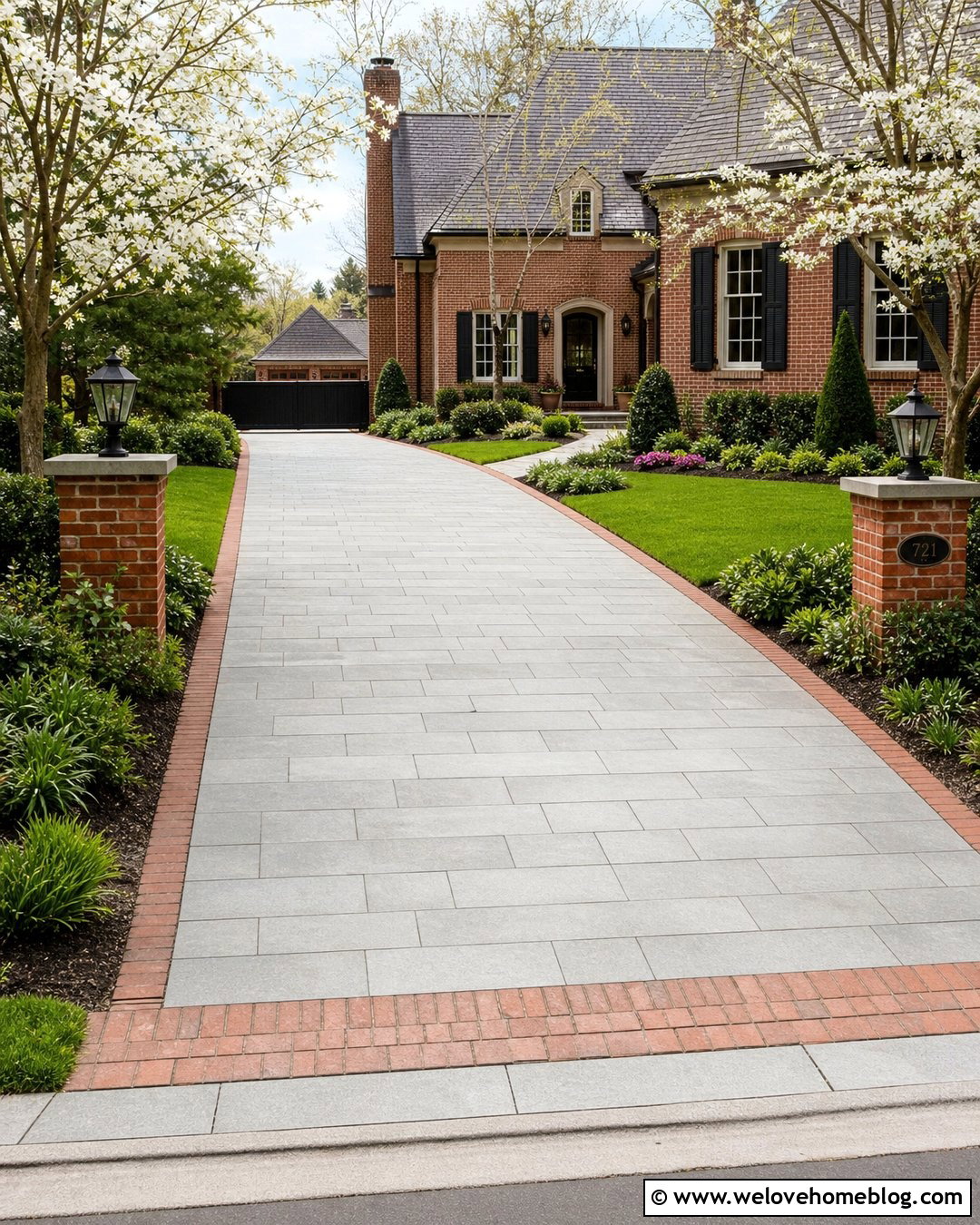
A brick border helps contemporary porcelain pavers blend with an older or more traditional home. Choose muted gray, cream, or limestone-look porcelain for the main driveway and frame it with clay brick pavers that relate to the facade. Running the bricks lengthwise along the edges creates a simple outline, while a double border feels more substantial on a wide approach. Add one matching brick ribbon across the driveway near the street to establish a clear entrance. The field pavers can be installed in a straightforward running bond, keeping the focus on the warm border. Use foundation shrubs, flowering trees, and a brick-edged walkway to connect the whole front yard. Avoid introducing too many additional colors; two paving tones and a restrained planting palette will produce a more convincing, cohesive design.
12. Wood Look Porcelain Driveway
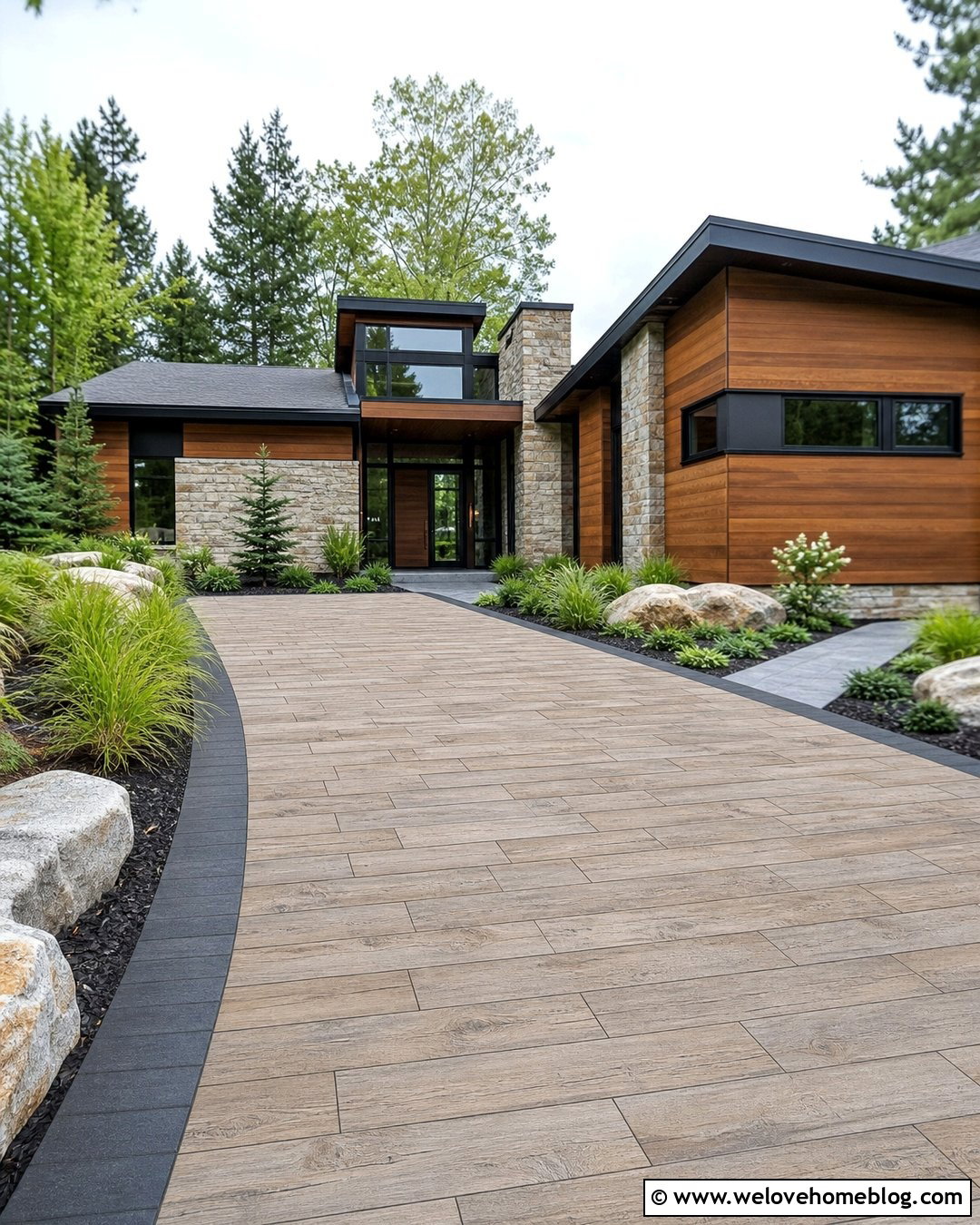
Wood-look porcelain can bring warmth to a driveway while preserving the clean surface and defined joints of a paver installation. Choose driveway-rated planks in weathered oak, ash, or dark walnut tones and arrange them in short staggered rows rather than extremely long uninterrupted lines. A charcoal porcelain border will ground the wood pattern and distinguish it from surrounding planting beds. This surface works particularly well with contemporary homes featuring timber siding, black windows, or natural stone walls. Add evergreen grasses, boulders, and low groundcover for an organic but controlled landscape. Keep the front walkway in a coordinating stone-look porcelain so the entrance does not become dominated by the wood effect. Carefully vary plank tones across the driveway to prevent obvious repeated prints or large patches of one color.
13. Porcelain Driveway With Gravel Border
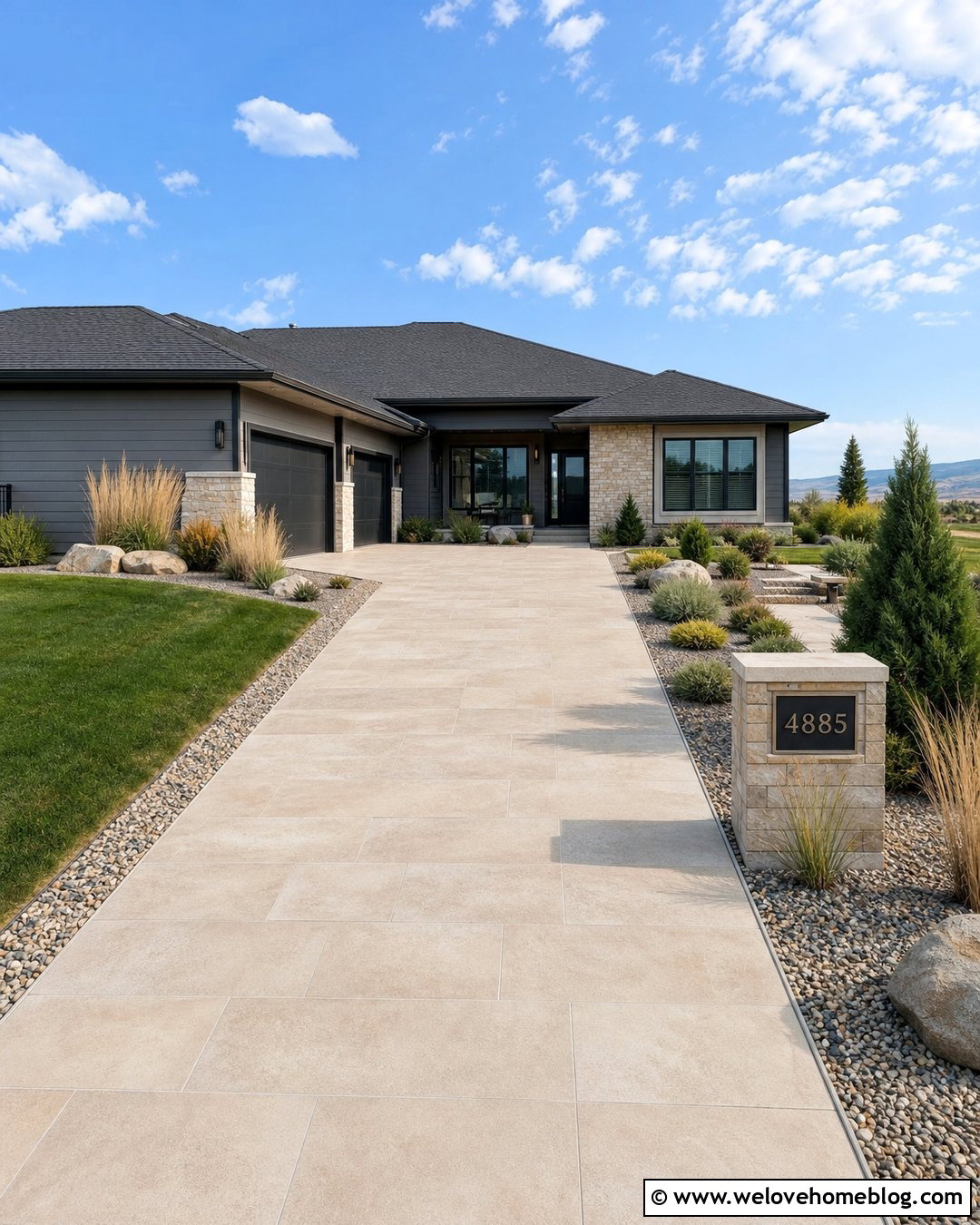
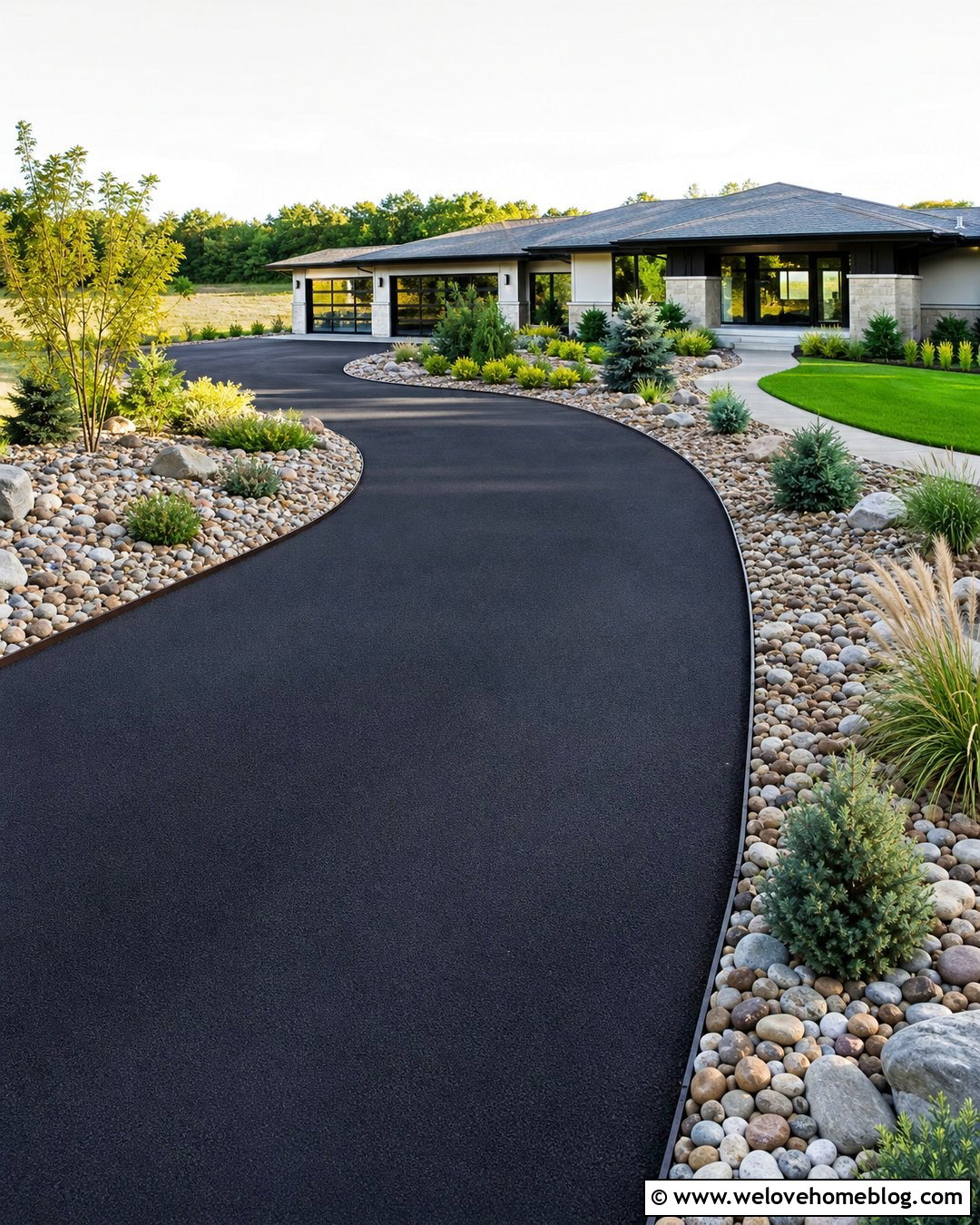
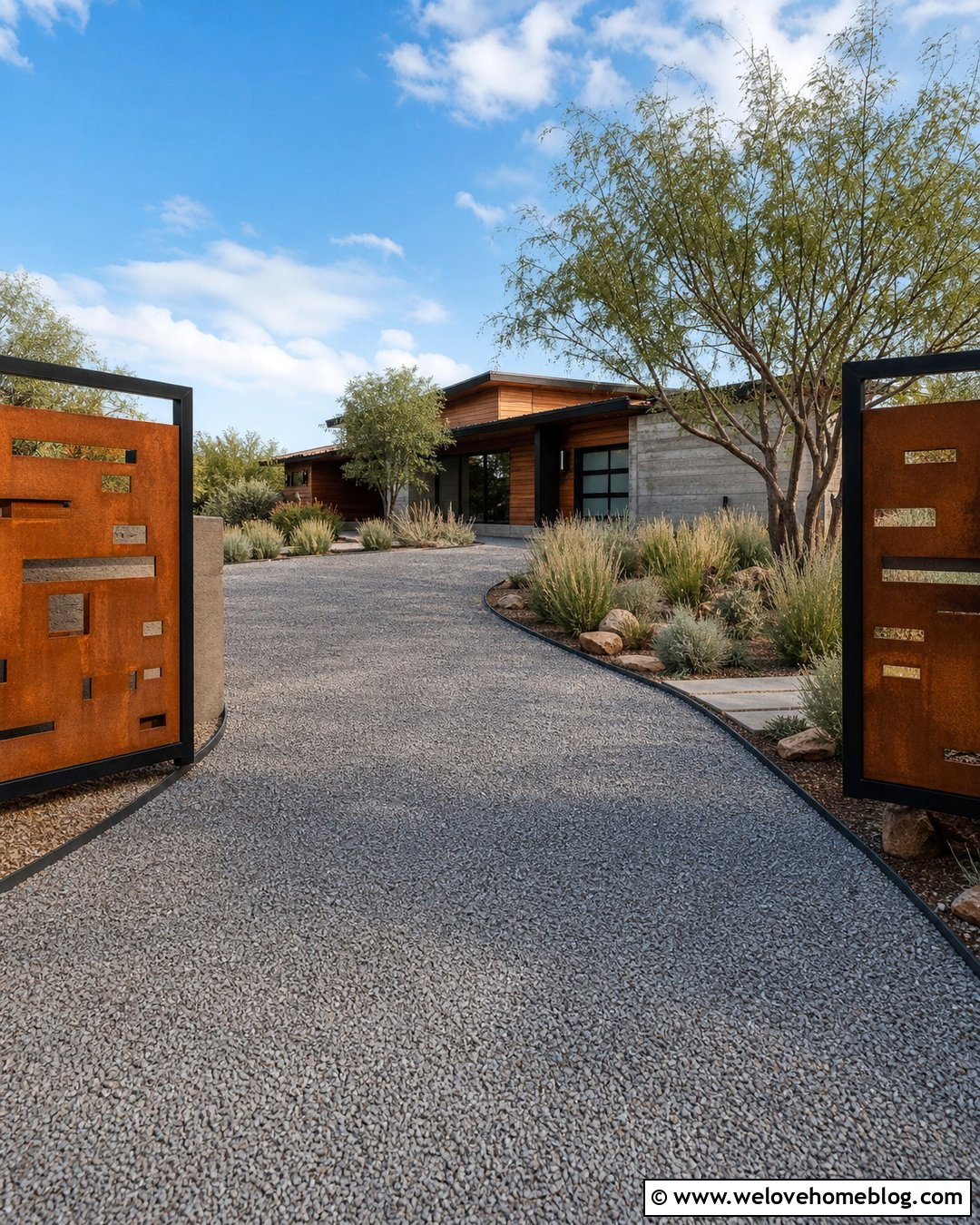
A gravel border can soften the precise edges of porcelain while providing a relaxed transition into the landscape. Use square or rectangular sandstone-look porcelain pavers in a straight driveway, then add shallow bands of washed river gravel along both sides. Contain the gravel with concealed metal edging or a flush stone restraint so it stays separate from the lawn. Larger decorative rocks can be placed occasionally within the border, but avoid crowding the vehicle area. This combination suits modern ranch houses, desert-inspired homes, and simple suburban facades. Fill nearby beds with ornamental grasses, compact junipers, succulents where climate allows, or other regionally appropriate plants. Repeat the gravel beside the front walkway and around a small address monument. The coordinated materials create a complete landscape rather than an isolated paved surface.
14. Porcelain Driveway With Drainage Channel
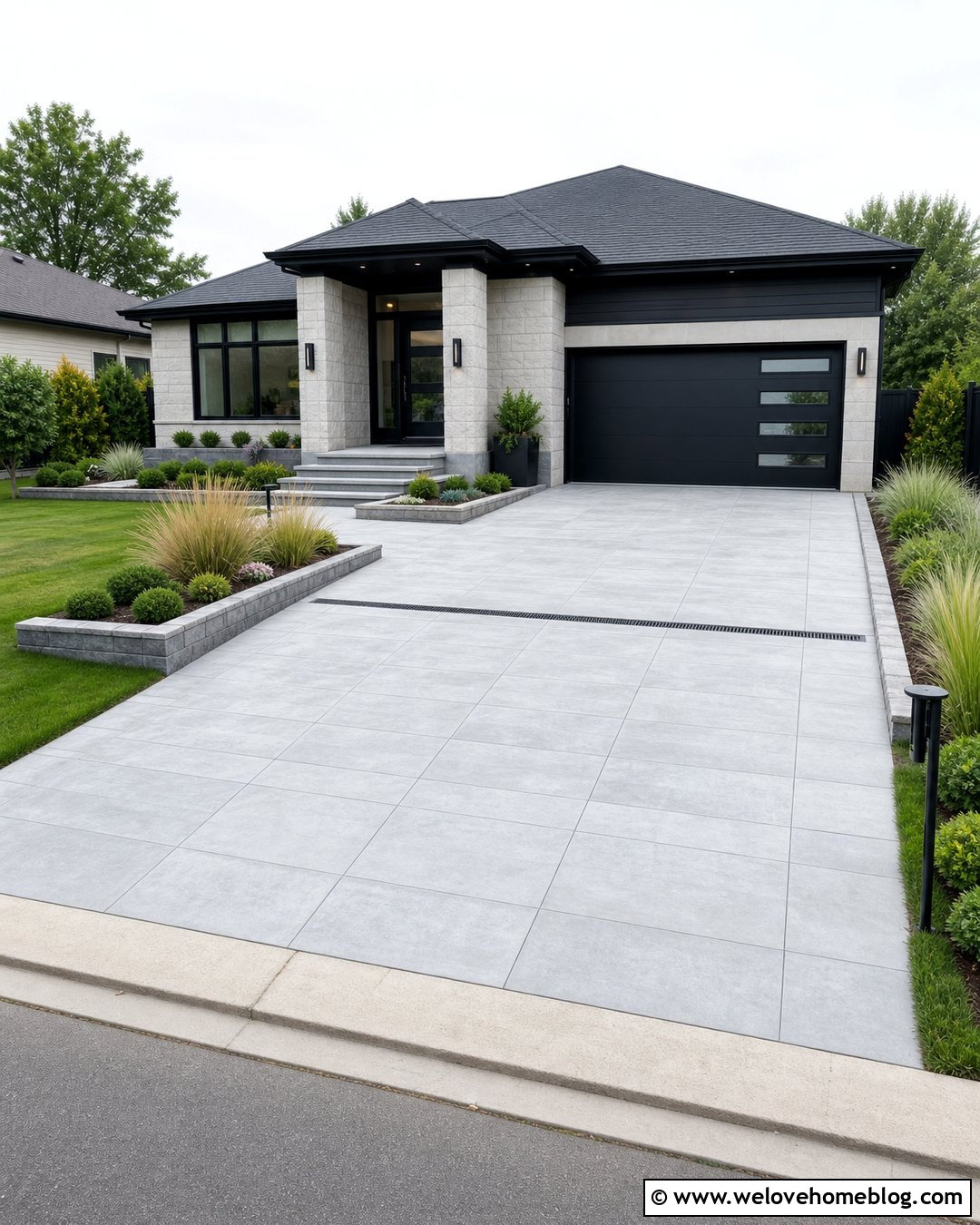
A visible drainage channel can become an orderly design detail instead of an afterthought. Lay light gray concrete-look porcelain pavers on a subtle slope toward a slim linear drain positioned across the driveway near the garage or along its lowest edge. Align the paver joints with the channel whenever possible for a precise finish. A dark metal grate can relate to black windows, lighting, and garage hardware. On both sides, use slightly raised planting beds with stone edging to keep soil and mulch away from the paving. Rain-tolerant grasses and shrubs can help the landscape feel connected to the drainage plan. Because site grades, rainfall, and local requirements differ, have the system sized professionally. The final driveway should look level and polished from the curb while still directing water toward an appropriate outlet.

15. Porcelain Driveway With Matching Walkway
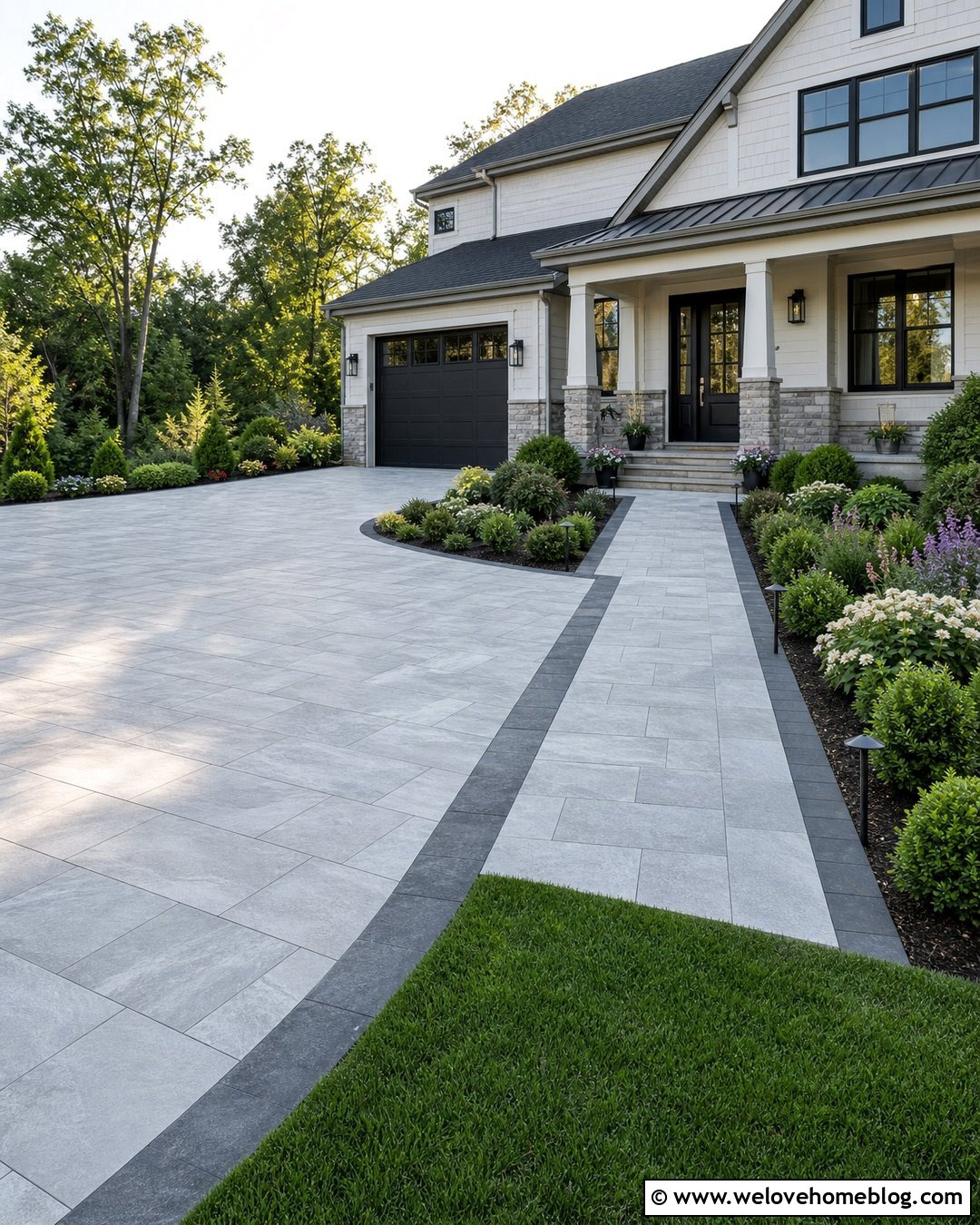
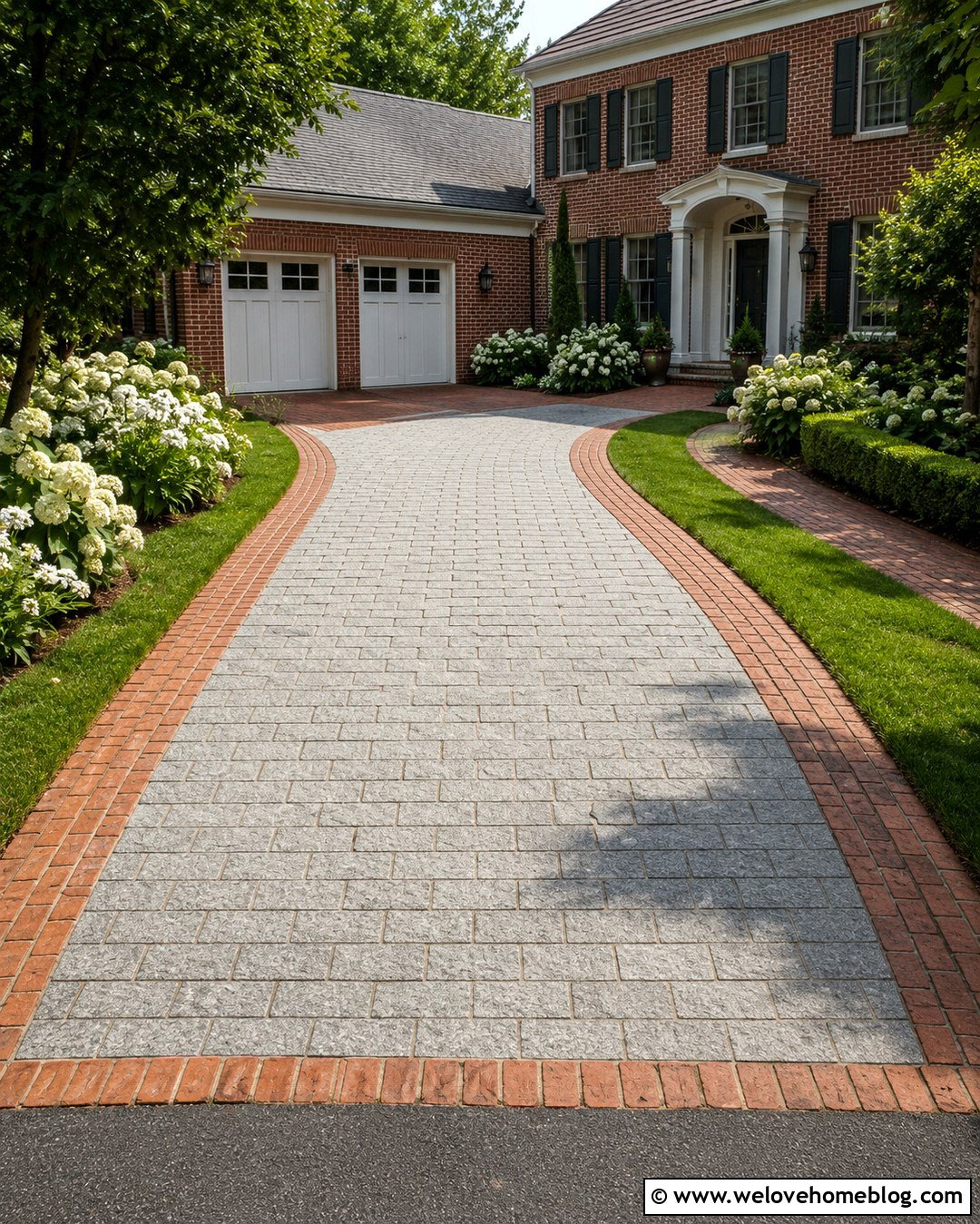
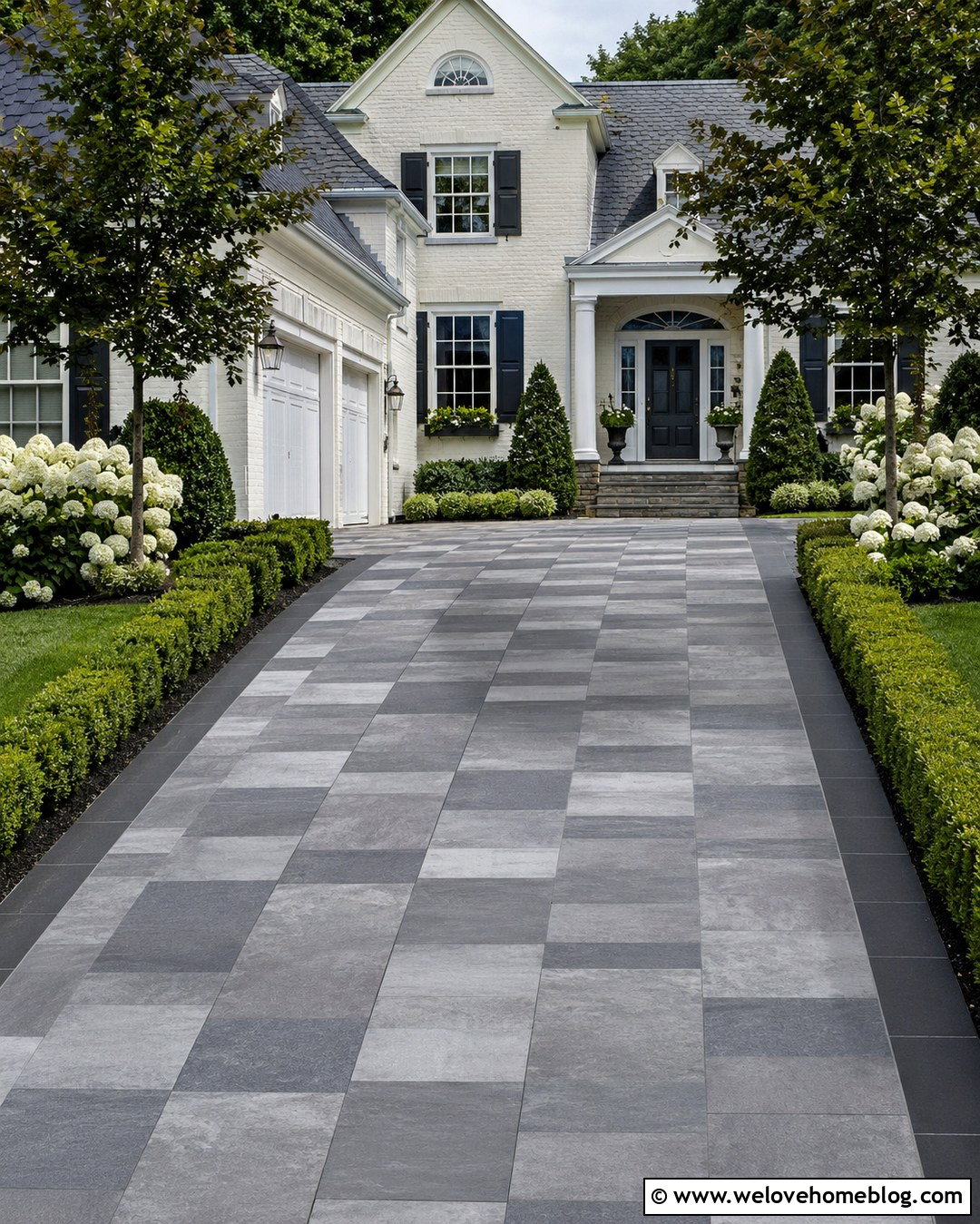
Repeating porcelain from the driveway onto the front walkway creates a smooth visual route to the entrance. Use the same stone-look finish in both areas but change the paver size or laying direction to distinguish walking space. For example, large silver-gray rectangles can cover the driveway, while narrower matching pieces form a straight path to the porch. Add a darker border where the walkway crosses or meets the vehicle area, making the transition easy to recognize. Frame the path with layered shrubs, flowering perennials, and low-voltage fixtures that do not clutter the edges. This connected layout works for homes with side-facing garages or front doors that are not immediately visible from the street. Matching porch steps or landings can extend the coordinated design all the way to the facade.
16. Porcelain Driveway With Gate And Pillars

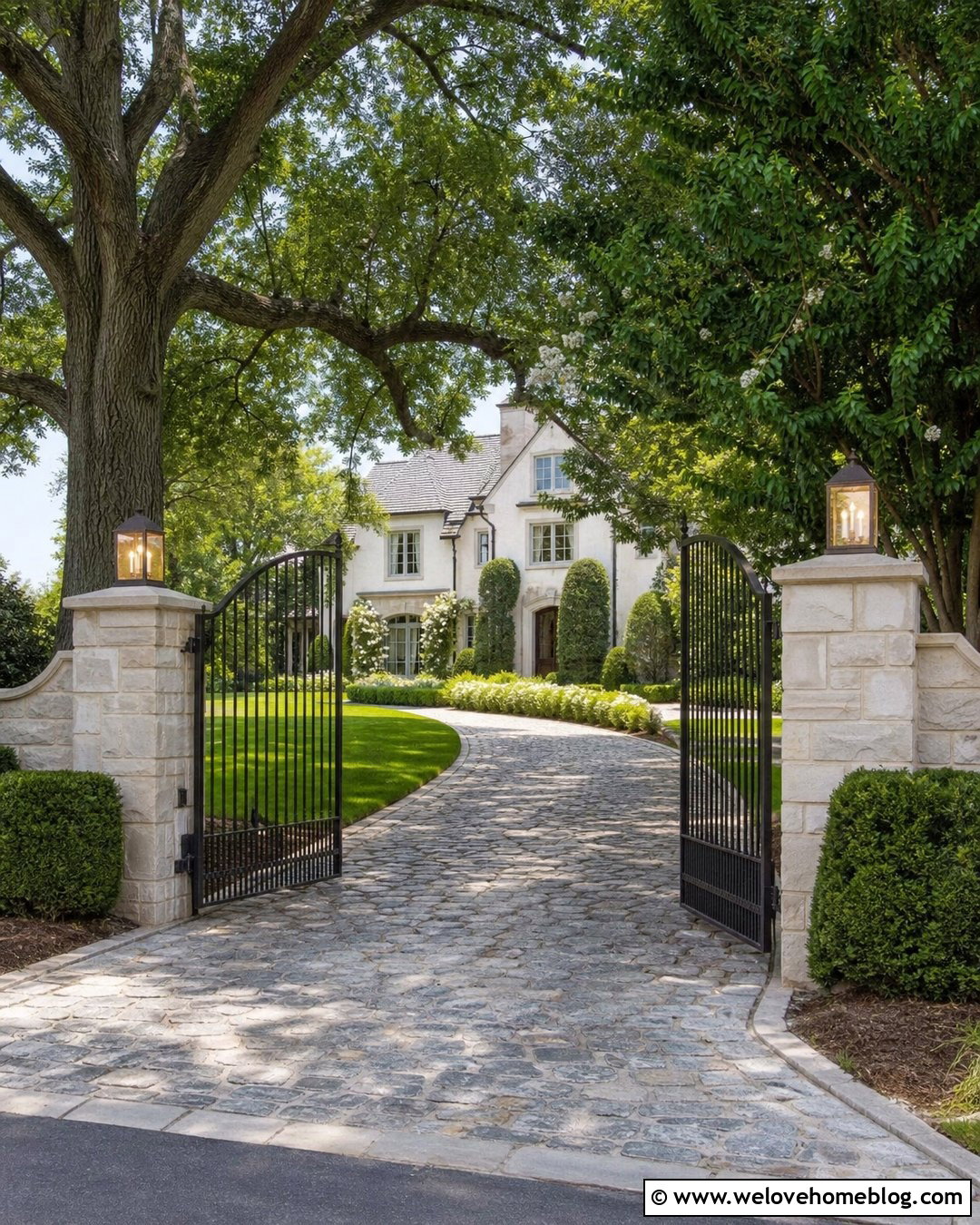
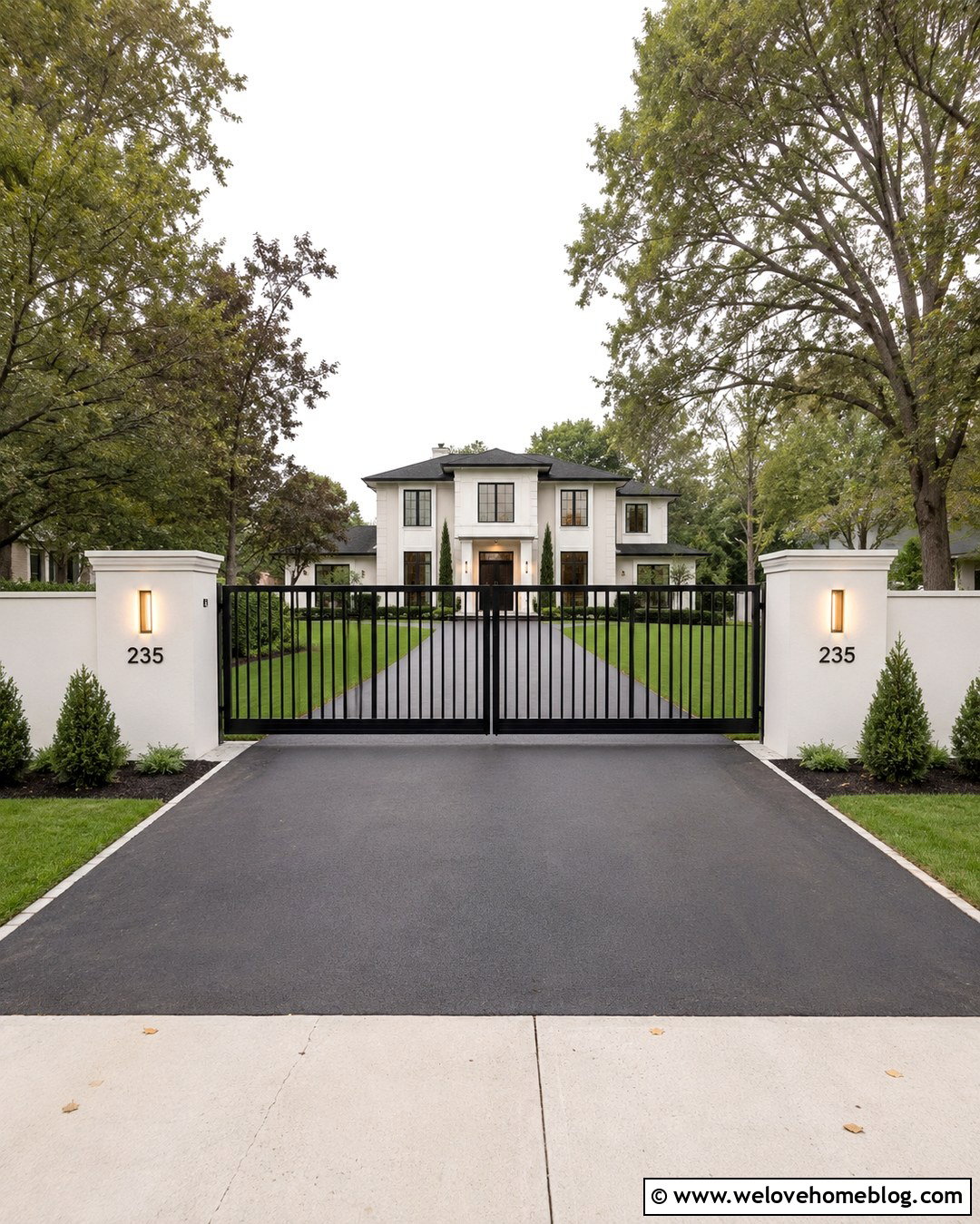
An entrance gate and pillars can give a porcelain driveway a clear beginning without making the property feel closed off. Select warm gray or limestone-look porcelain pavers for a straight or gently curved approach. At the street, install stone or stucco pillars that coordinate with the house, then place a simple metal gate between them. A darker porcelain apron beneath the gate will visually anchor the entrance and disguise the transition between public pavement and private driveway. Continue low planting beds around the pillars using evergreen shrubs, ornamental grasses, and groundcover that will not interfere with moving gate components. Lanterns or modern downlights can be incorporated into the pillars, depending on the architecture. Keep the gate visually open so the porcelain surface and house remain part of the complete curb view.
17. Small Porcelain Driveway
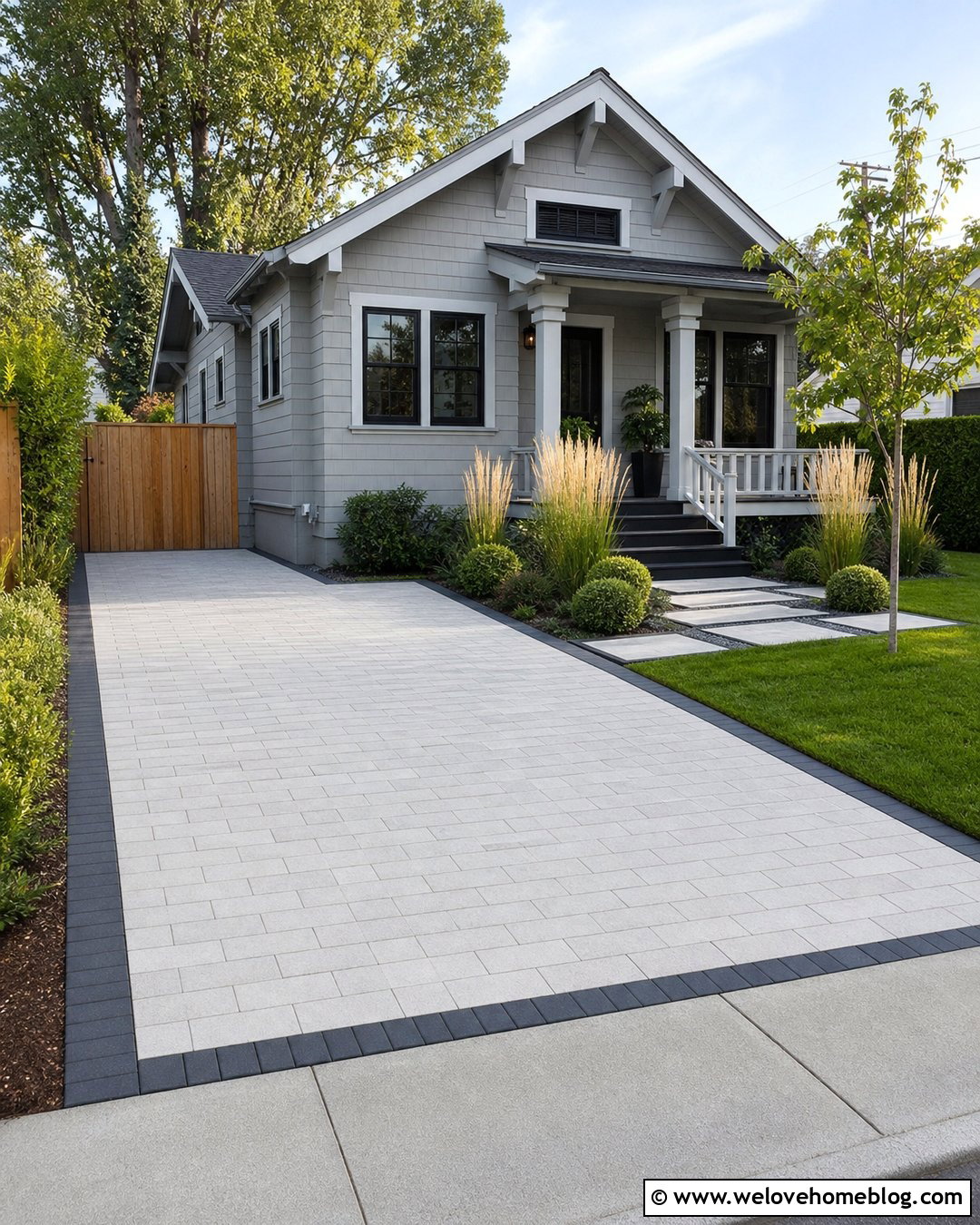
A small porcelain driveway benefits from simple lines, limited colors, and careful transitions. Use medium-size ivory or pale gray porcelain pavers in a running bond to make a compact parking space appear longer and less fragmented. A narrow charcoal border can outline the driveway without consuming valuable width. Where space allows, add a matching stepping-stone walkway along one side instead of cutting through the center of the parking area. Slim planting beds with upright grasses, compact shrubs, and one small tree will provide greenery without crowding doors or mirrors. Choose a light paving color that complements the facade but offers enough contrast with the sidewalk. Avoid complicated medallions or multiple patterns. One porcelain finish, one border material, and neatly scaled landscaping will give the modest space a more generous and organized appearance.
18. Porcelain Driveway With Mixed Sizes
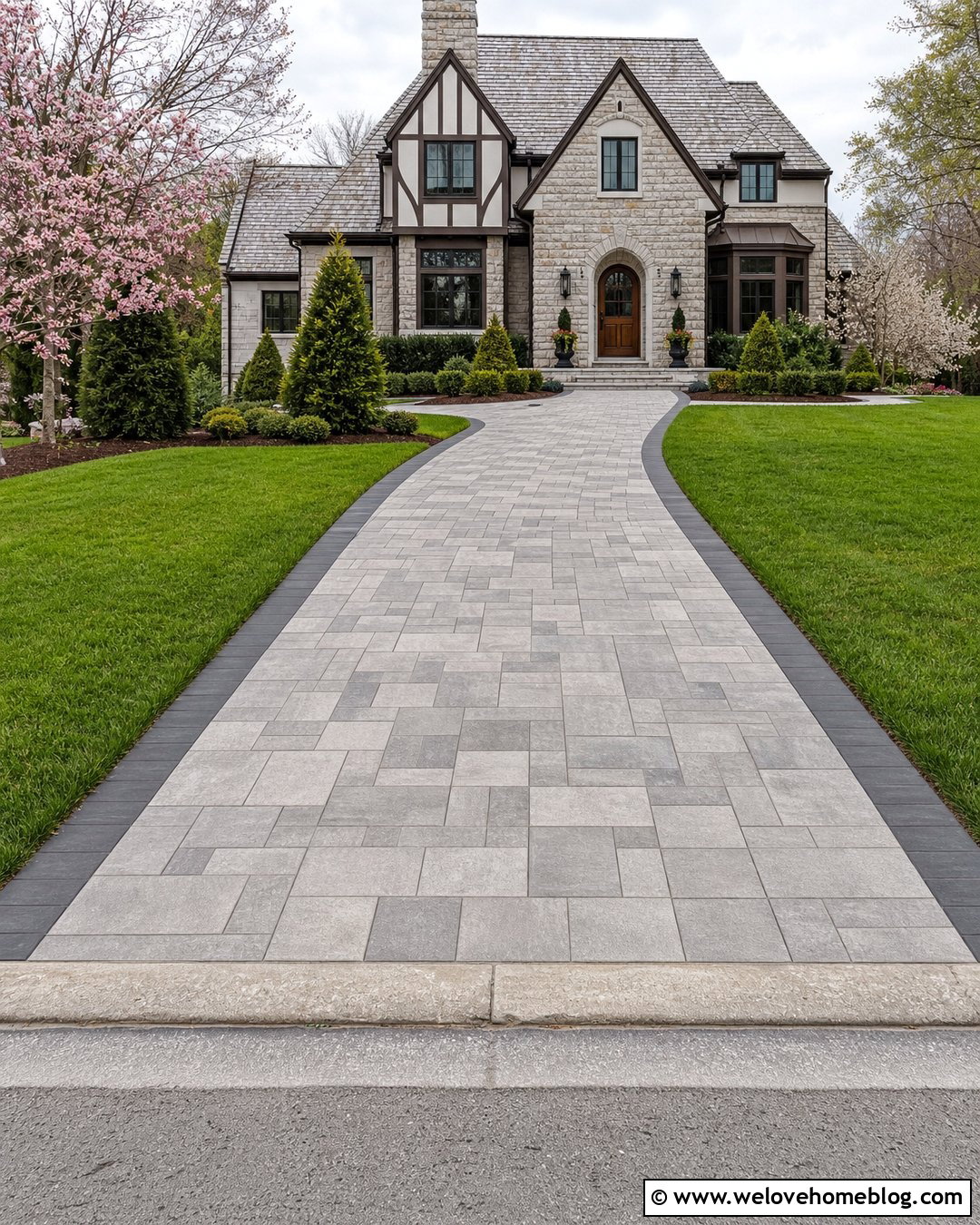
Mixed-size porcelain pavers can reproduce the character of an ashlar stone driveway while keeping the palette consistent. Combine squares and rectangles from the same porcelain collection, using a planned repeating module rather than placing pieces randomly. Mid-gray, taupe, or blended limestone tones work well because the varying shapes already provide plenty of visual interest. Frame the layout with a single straight border course that calms the pattern at the edges. For a balanced front yard, surround the driveway with simple lawn panels and broad beds containing groups of the same shrubs. A craftsman, Tudor, or stone-front home can carry this layered surface particularly well. Before installation, map the complete module around drains, curves, and garage thresholds so awkward cuts do not interrupt the intended rhythm near prominent viewing points.
19. Porcelain Driveway With Geometric Inlay
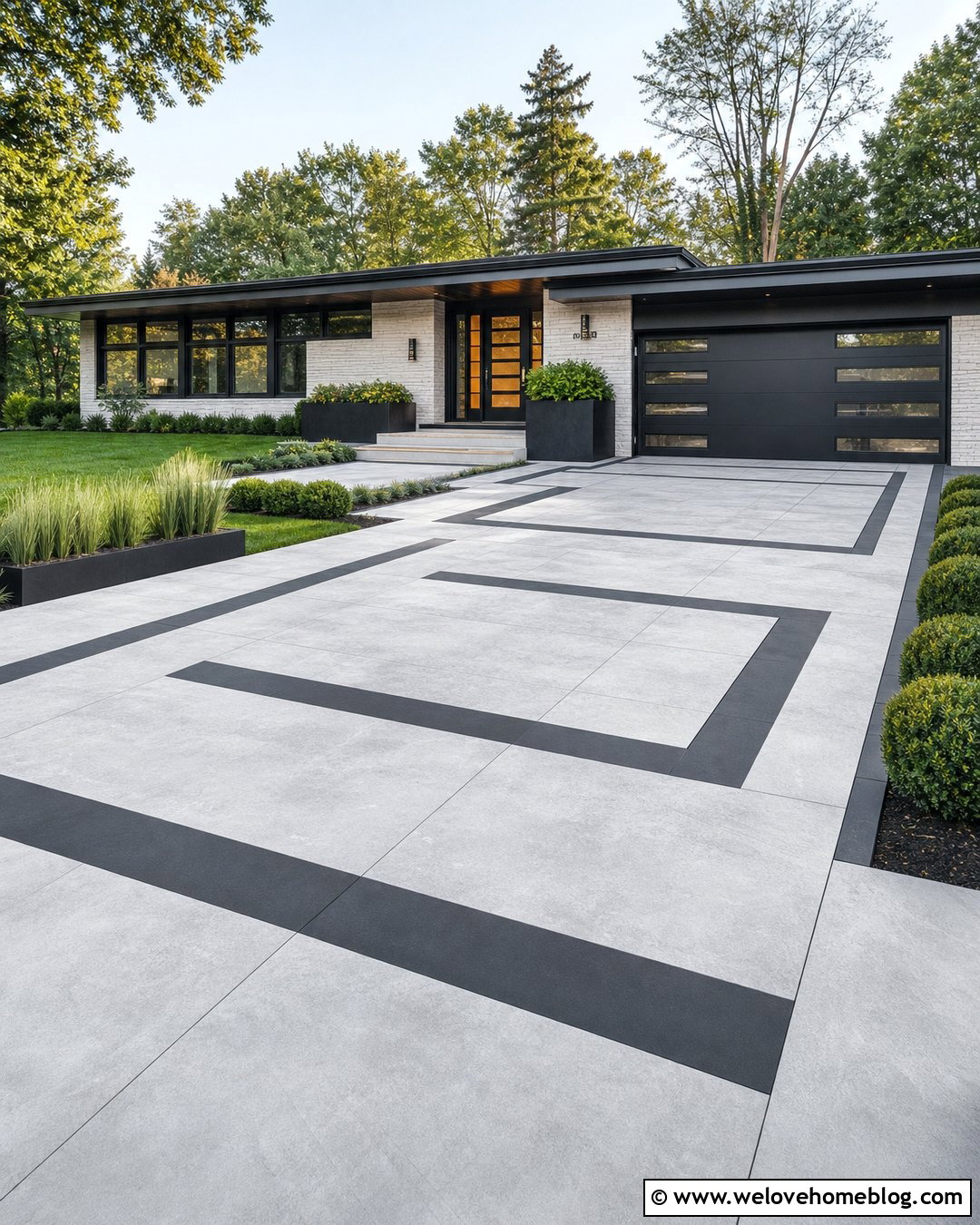
A geometric inlay can personalize a porcelain driveway without covering the entire surface in a complicated pattern. Begin with large light gray porcelain pavers laid in straight rows. Near the entrance or turning area, insert a wide charcoal band, rectangular frame, or simple offset grid using a contrasting porcelain finish. Keep the inlay large enough to read from the curb and simple enough to align with vehicle paths. Repeating one dark line along the outer edge will connect the feature to the rest of the driveway. This approach complements modern and midcentury homes with strong window grids or angular rooflines. Use structured landscaping, such as clipped shrubs, linear grasses, and rectangular planters. The inlay should echo the architecture while allowing the primary porcelain field to remain calm and spacious.
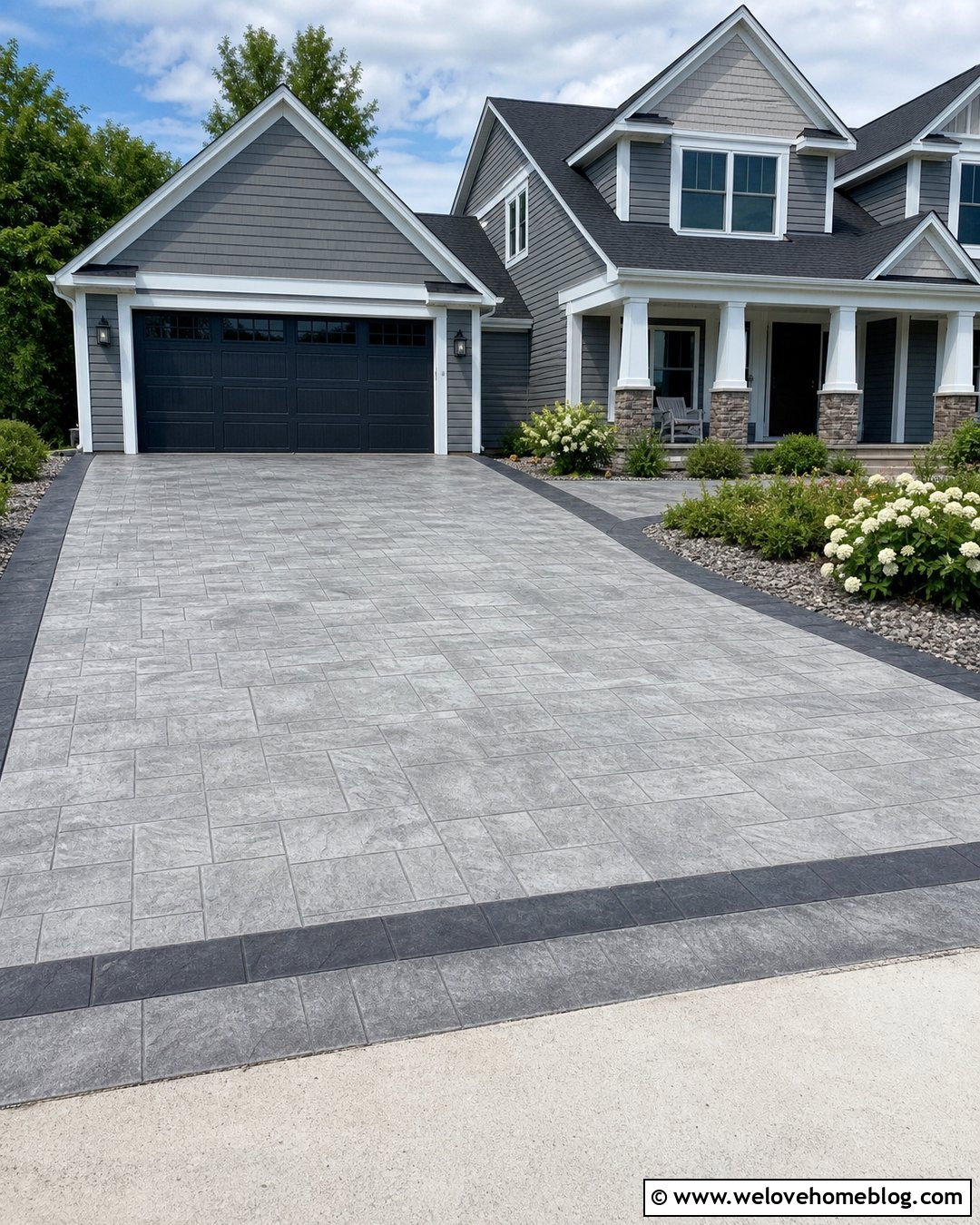
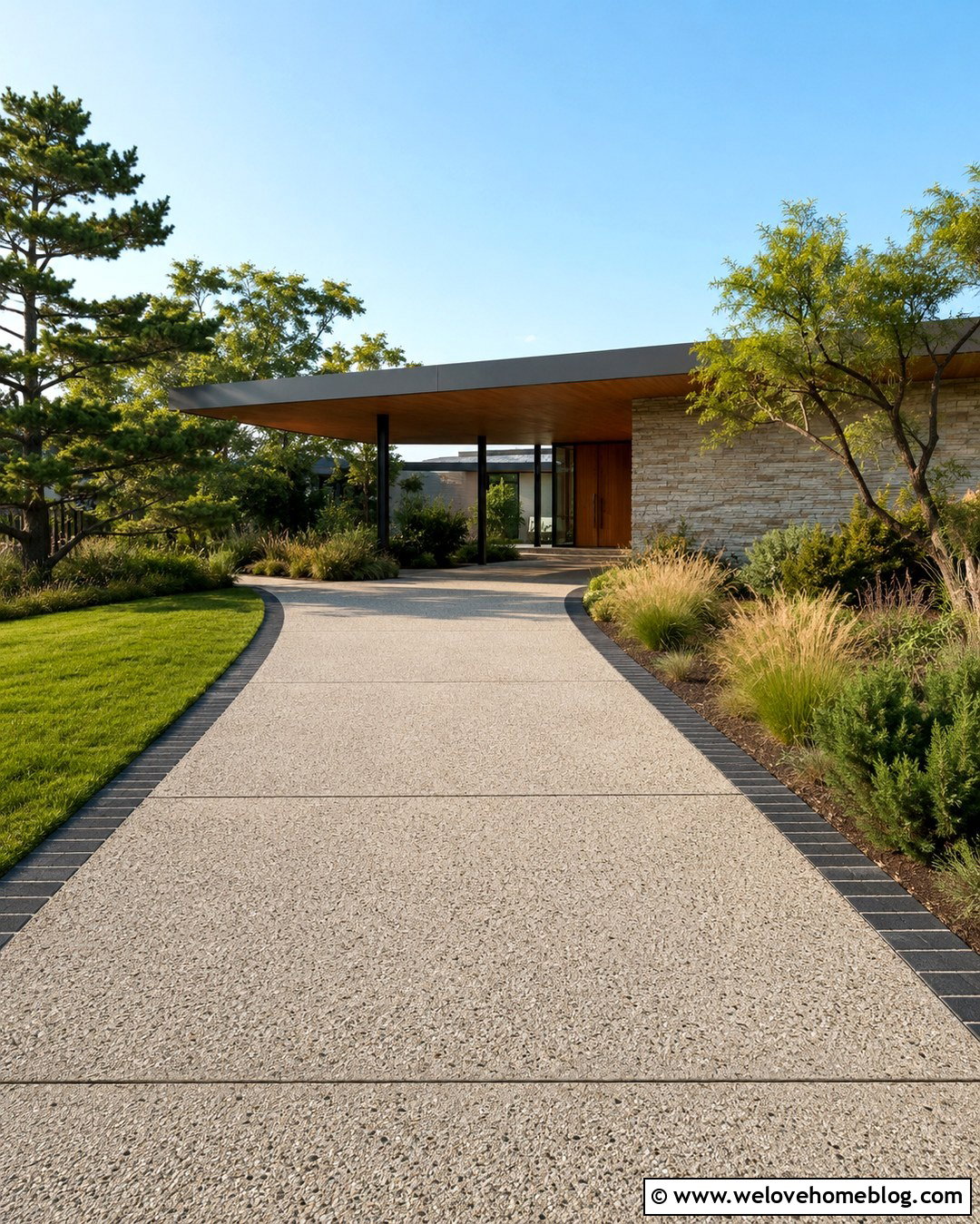
20. Porcelain Driveway With Native Landscaping
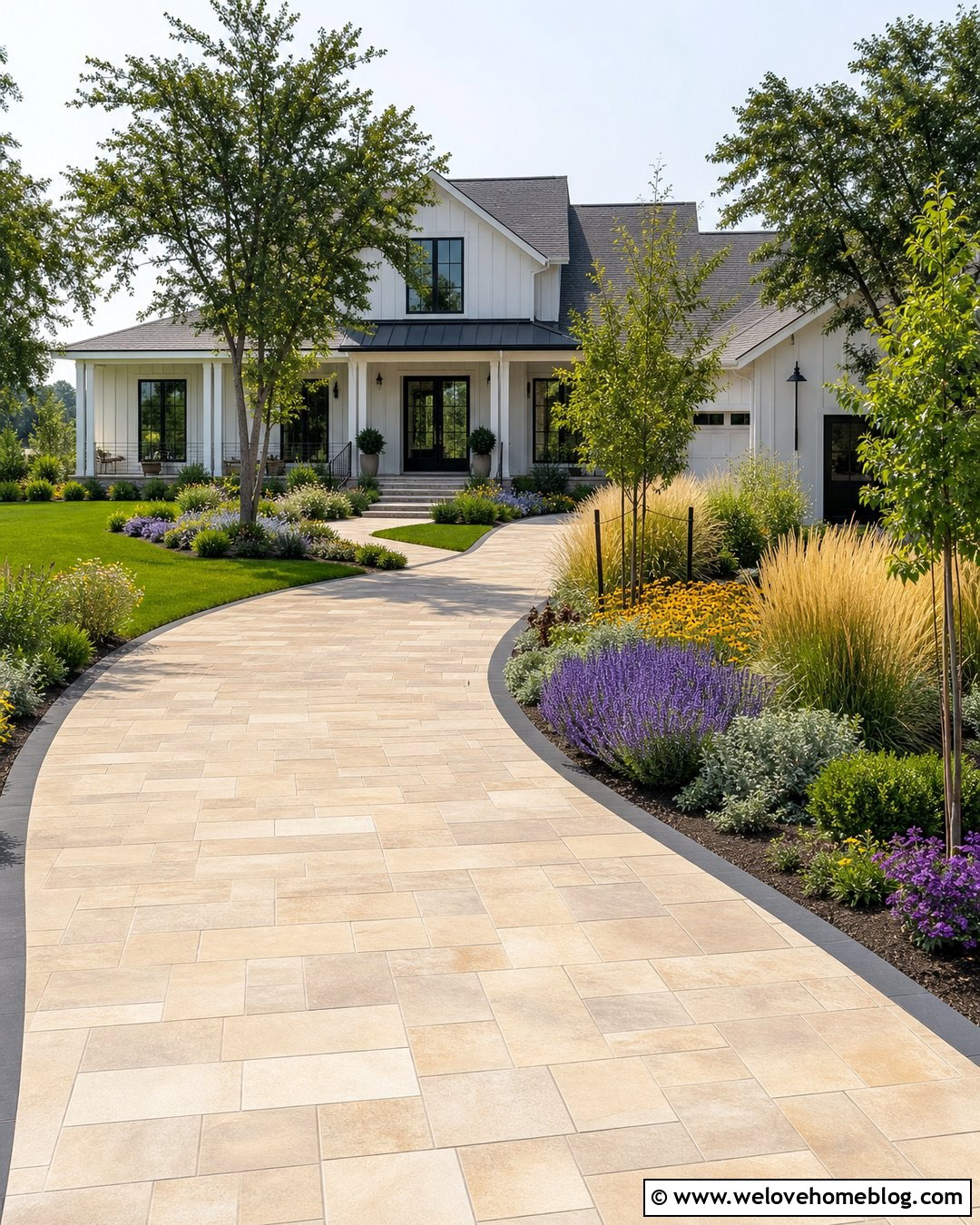
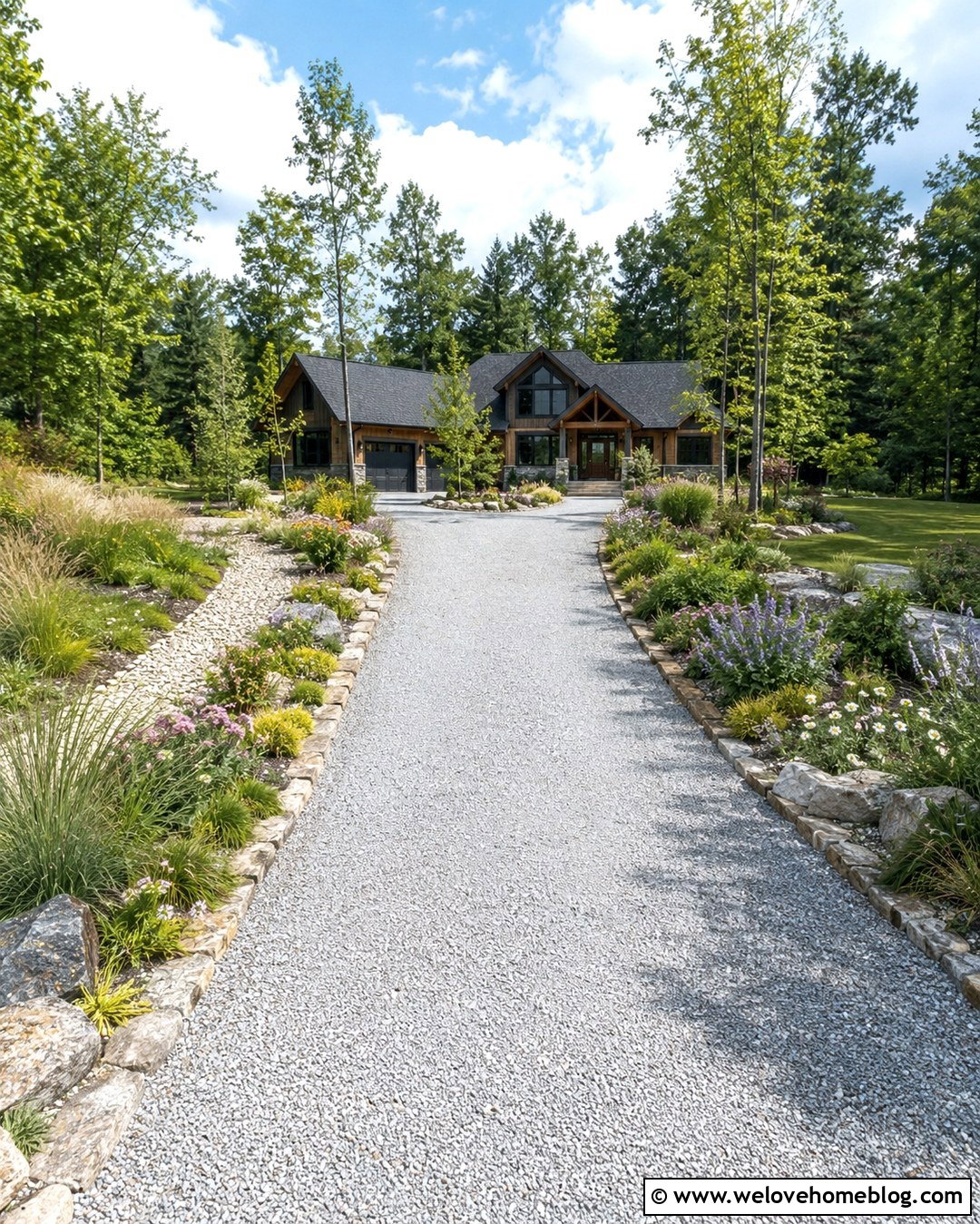
Porcelain can feel less formal when it is surrounded by naturalistic, regionally appropriate planting. Choose warm stone-look pavers in a straight or softly curved layout, then use irregular planting beds to contrast with the precise paved edges. A narrow weathered-stone or dark porcelain border will prevent grasses and groundcover from spreading into the driveway. Fill the beds with native ornamental grasses, flowering perennials, compact shrubs, and small trees suited to local sun, soil, and rainfall. Arrange plants in repeated groups rather than scattering many unrelated varieties. The surface can continue into a simple matching walkway that passes through the planting toward the porch. This complete look suits modern farmhouse, ranch, cottage, and contemporary homes, offering crisp paving close to the house and a softer landscape toward the street.
Conclusion:
The best porcelain driveway brings the surface, border, layout, house, and landscaping together instead of treating them as separate decisions. Large gray slabs create modern simplicity, while limestone effects, brick borders, mixed formats, and curved arrangements support more traditional settings. Contrasting bands, coordinated walkways, entrance gates, and naturalistic planting can make the finished approach feel distinctly personal. When comparing 20 Porcelain Driveway Ideas, always look beyond color alone. Confirm that the chosen porcelain product and complete installation system are approved for vehicular use, local weather, drainage conditions, and the planned layout. Request physical samples and view them outdoors throughout the day. Thoughtful planning will help the driveway remain practical while delivering the polished curb appeal that makes porcelain so attractive.

Related posts:
Leave a Reply